Repository: mozilla-ai/llamafile Branch: main Commit: b02f2e0c540f Files: 621 Total size: 17.6 MB Directory structure: gitextract_8bcuz138/ ├── .github/ │ ├── ISSUE_TEMPLATE/ │ │ ├── 01-bug-low.yml │ │ ├── 02-bug-medium.yml │ │ ├── 03-bug-high.yml │ │ ├── 04-bug-critical.yml │ │ ├── 05-enhancement.yml │ │ ├── 06-refactor.yml │ │ ├── 07-refactor.yml │ │ └── config.yml │ ├── labeler.yml │ └── workflows/ │ ├── ci.yml │ ├── docs.yml │ ├── editorconfig.yml │ ├── labeler.yml │ └── update-llama-cpp.yml ├── .gitignore ├── .gitmodules ├── .llamafile_plugin/ │ └── .claude-plugin/ │ ├── marketplace.json │ └── plugin.json ├── LICENSE ├── Makefile ├── README.md ├── README_0.10.0.md ├── RELEASE.md ├── build/ │ ├── config.mk │ ├── cudacc │ ├── deps.mk │ ├── download-cosmocc.sh │ ├── gperf │ ├── htags │ ├── llamafile-convert │ ├── llamafile-upgrade-engine │ ├── objdump │ ├── rules.mk │ ├── run │ ├── sha256sum.c │ └── tags.mk ├── cosmocc-override.cmake ├── docs/ │ ├── AGENTS.md │ ├── commands/ │ │ ├── build.md │ │ ├── check.md │ │ └── clean.md │ ├── creating_llamafiles.md │ ├── example_llamafiles.md │ ├── index.md │ ├── quickstart.md │ ├── running_llamafile.md │ ├── skills/ │ │ └── llamafile/ │ │ ├── SKILL.md │ │ ├── architecture.md │ │ ├── building.md │ │ ├── development.md │ │ ├── testing.md │ │ └── update_llamacpp.md │ ├── source_installation.md │ ├── support.md │ ├── technical_details.md │ ├── troubleshooting.md │ └── whisperfile/ │ ├── getting-started.md │ ├── gpu.md │ ├── index.md │ ├── packaging.md │ ├── server.md │ └── translate.md ├── llama.cpp.patches/ │ ├── README.md │ ├── apply-patches.sh │ ├── llamafile-files/ │ │ ├── BUILD.mk │ │ ├── README.llamafile │ │ └── common/ │ │ └── license.cpp │ ├── patches/ │ │ ├── common_arg.cpp.patch │ │ ├── common_chat.cpp.patch │ │ ├── common_common.cpp.patch │ │ ├── common_download.cpp.patch │ │ ├── common_log.cpp.patch │ │ ├── common_ngram-mod.cpp.patch │ │ ├── ggml_src_ggml-backend-impl.h.patch │ │ ├── ggml_src_ggml-backend-reg.cpp.patch │ │ ├── ggml_src_ggml-backend.cpp.patch │ │ ├── ggml_src_ggml-cuda_common.cuh.patch │ │ ├── ggml_src_ggml-cuda_ggml-cuda.cu.patch │ │ ├── ggml_src_ggml-cuda_solve_tri.cu.patch │ │ ├── ggml_src_ggml-cuda_vendors_cuda.h.patch │ │ ├── ggml_src_ggml-metal_ggml-metal.cpp.patch │ │ ├── ggml_src_gguf.cpp.patch │ │ ├── src_llama-mmap.cpp.patch │ │ ├── src_llama-mmap.h.patch │ │ ├── tools_server_server-queue.cpp.patch │ │ ├── tools_server_server.cpp.patch │ │ └── vendor_cpp-httplib_httplib.cpp.patch │ └── renames.sh ├── llamafile/ │ ├── BUILD.mk │ ├── args.cpp │ ├── args.h │ ├── bestline.c │ ├── bestline.h │ ├── build-functions.sh │ ├── chatbot.h │ ├── chatbot_api.cpp │ ├── chatbot_backend.h │ ├── chatbot_cli.cpp │ ├── chatbot_comm.cpp │ ├── chatbot_comp.cpp │ ├── chatbot_direct.cpp │ ├── chatbot_eval.cpp │ ├── chatbot_file.cpp │ ├── chatbot_help.cpp │ ├── chatbot_hint.cpp │ ├── chatbot_hist.cpp │ ├── chatbot_logo.cpp │ ├── chatbot_main.cpp │ ├── chatbot_repl.cpp │ ├── check_cpu.c │ ├── color.h │ ├── compute.cpp │ ├── compute.h │ ├── cuda.c │ ├── cuda.sh │ ├── datauri.cpp │ ├── datauri.h │ ├── extract_data_uris.cpp │ ├── highlight/ │ │ ├── BUILD.mk │ │ ├── color_bleeder.cpp │ │ ├── highlight.cpp │ │ ├── highlight.h │ │ ├── highlight_ada.cpp │ │ ├── highlight_asm.cpp │ │ ├── highlight_basic.cpp │ │ ├── highlight_bnf.cpp │ │ ├── highlight_c.cpp │ │ ├── highlight_c_test.cpp │ │ ├── highlight_cmake.cpp │ │ ├── highlight_cobol.cpp │ │ ├── highlight_create.gperf │ │ ├── highlight_csharp.cpp │ │ ├── highlight_css.cpp │ │ ├── highlight_d.cpp │ │ ├── highlight_forth.cpp │ │ ├── highlight_fortran.cpp │ │ ├── highlight_go.cpp │ │ ├── highlight_haskell.cpp │ │ ├── highlight_html.cpp │ │ ├── highlight_java.cpp │ │ ├── highlight_js.cpp │ │ ├── highlight_julia.cpp │ │ ├── highlight_kotlin.cpp │ │ ├── highlight_ld.cpp │ │ ├── highlight_lisp.cpp │ │ ├── highlight_lua.cpp │ │ ├── highlight_m4.cpp │ │ ├── highlight_make.cpp │ │ ├── highlight_markdown.cpp │ │ ├── highlight_matlab.cpp │ │ ├── highlight_ocaml.cpp │ │ ├── highlight_pascal.cpp │ │ ├── highlight_perl.cpp │ │ ├── highlight_php.cpp │ │ ├── highlight_python.cpp │ │ ├── highlight_python_test.cpp │ │ ├── highlight_r.cpp │ │ ├── highlight_ruby.cpp │ │ ├── highlight_rust.cpp │ │ ├── highlight_scala.cpp │ │ ├── highlight_shell.cpp │ │ ├── highlight_sql.cpp │ │ ├── highlight_swift.cpp │ │ ├── highlight_tcl.cpp │ │ ├── highlight_test.cpp │ │ ├── highlight_tex.cpp │ │ ├── highlight_txt.cpp │ │ ├── highlight_typescript.cpp │ │ ├── highlight_zig.cpp │ │ ├── is_keyword_ada.gperf │ │ ├── is_keyword_ada_constant.gperf │ │ ├── is_keyword_asm_prefix.gperf │ │ ├── is_keyword_asm_qualifier.gperf │ │ ├── is_keyword_basic.gperf │ │ ├── is_keyword_basic_builtin.gperf │ │ ├── is_keyword_basic_constant.gperf │ │ ├── is_keyword_basic_type.gperf │ │ ├── is_keyword_c.gperf │ │ ├── is_keyword_c_builtin.gperf │ │ ├── is_keyword_c_constant.gperf │ │ ├── is_keyword_c_pod.gperf │ │ ├── is_keyword_c_type.gperf │ │ ├── is_keyword_cmake.gperf │ │ ├── is_keyword_cobol.gperf │ │ ├── is_keyword_cpp.gperf │ │ ├── is_keyword_csharp.gperf │ │ ├── is_keyword_csharp_constant.gperf │ │ ├── is_keyword_css_at.gperf │ │ ├── is_keyword_css_bang.gperf │ │ ├── is_keyword_cxx.gperf │ │ ├── is_keyword_d.gperf │ │ ├── is_keyword_d_constant.gperf │ │ ├── is_keyword_forth.gperf │ │ ├── is_keyword_forth_def.gperf │ │ ├── is_keyword_fortran.gperf │ │ ├── is_keyword_fortran_builtin.gperf │ │ ├── is_keyword_fortran_type.gperf │ │ ├── is_keyword_go.gperf │ │ ├── is_keyword_go_type.gperf │ │ ├── is_keyword_haskell.gperf │ │ ├── is_keyword_java.gperf │ │ ├── is_keyword_java_constant.gperf │ │ ├── is_keyword_js.gperf │ │ ├── is_keyword_js_builtin.gperf │ │ ├── is_keyword_js_constant.gperf │ │ ├── is_keyword_julia.gperf │ │ ├── is_keyword_kotlin.gperf │ │ ├── is_keyword_ld.gperf │ │ ├── is_keyword_ld_builtin.gperf │ │ ├── is_keyword_ld_warning.gperf │ │ ├── is_keyword_lisp.gperf │ │ ├── is_keyword_lua.gperf │ │ ├── is_keyword_lua_builtin.gperf │ │ ├── is_keyword_lua_constant.gperf │ │ ├── is_keyword_m4.gperf │ │ ├── is_keyword_make.gperf │ │ ├── is_keyword_make_builtin.gperf │ │ ├── is_keyword_matlab.gperf │ │ ├── is_keyword_matlab_builtin.gperf │ │ ├── is_keyword_matlab_constant.gperf │ │ ├── is_keyword_ocaml.gperf │ │ ├── is_keyword_ocaml_builtin.gperf │ │ ├── is_keyword_ocaml_constant.gperf │ │ ├── is_keyword_pascal.gperf │ │ ├── is_keyword_pascal_builtin.gperf │ │ ├── is_keyword_pascal_type.gperf │ │ ├── is_keyword_perl.gperf │ │ ├── is_keyword_php.gperf │ │ ├── is_keyword_php_constant.gperf │ │ ├── is_keyword_python.gperf │ │ ├── is_keyword_python_builtin.gperf │ │ ├── is_keyword_python_constant.gperf │ │ ├── is_keyword_r.gperf │ │ ├── is_keyword_r_builtin.gperf │ │ ├── is_keyword_r_constant.gperf │ │ ├── is_keyword_ruby.gperf │ │ ├── is_keyword_ruby_builtin.gperf │ │ ├── is_keyword_ruby_constant.gperf │ │ ├── is_keyword_rust.gperf │ │ ├── is_keyword_rust_constant.gperf │ │ ├── is_keyword_rust_type.gperf │ │ ├── is_keyword_scala.gperf │ │ ├── is_keyword_shell.gperf │ │ ├── is_keyword_shell_builtin.gperf │ │ ├── is_keyword_sql.gperf │ │ ├── is_keyword_sql_type.gperf │ │ ├── is_keyword_swift.gperf │ │ ├── is_keyword_swift_builtin.gperf │ │ ├── is_keyword_swift_constant.gperf │ │ ├── is_keyword_swift_type.gperf │ │ ├── is_keyword_tcl.gperf │ │ ├── is_keyword_tcl_builtin.gperf │ │ ├── is_keyword_tcl_type.gperf │ │ ├── is_keyword_typescript.gperf │ │ ├── is_keyword_typescript_type.gperf │ │ ├── is_keyword_zig.gperf │ │ ├── is_keyword_zig_builtin.gperf │ │ ├── is_keyword_zig_constant.gperf │ │ ├── is_keyword_zig_type.gperf │ │ ├── util.cpp │ │ └── util.h │ ├── image.cpp │ ├── image.h │ ├── iqk_mul_mat.inc │ ├── iqk_mul_mat_amd_avx2.cpp │ ├── iqk_mul_mat_amd_zen4.cpp │ ├── iqk_mul_mat_arm82.cpp │ ├── llama.cpp │ ├── llama.h │ ├── llamafile.c │ ├── llamafile.h │ ├── macros.h │ ├── main.cpp │ ├── metal.c │ ├── rocm.sh │ ├── sgemm.cpp │ ├── sgemm.h │ ├── string.cpp │ ├── string.h │ ├── tinyblas-compat.h │ ├── tinyblas.cu │ ├── tinyblas.h │ ├── tinyblas_cpu.h │ ├── tinyblas_cpu_mixmul.inc │ ├── tinyblas_cpu_mixmul_amd_avx.cpp │ ├── tinyblas_cpu_mixmul_amd_avx2.cpp │ ├── tinyblas_cpu_mixmul_amd_avx512f.cpp │ ├── tinyblas_cpu_mixmul_amd_avxvnni.cpp │ ├── tinyblas_cpu_mixmul_amd_fma.cpp │ ├── tinyblas_cpu_mixmul_amd_zen4.cpp │ ├── tinyblas_cpu_mixmul_arm80.cpp │ ├── tinyblas_cpu_mixmul_arm82.cpp │ ├── tinyblas_cpu_sgemm.inc │ ├── tinyblas_cpu_sgemm_amd_avx.cpp │ ├── tinyblas_cpu_sgemm_amd_avx2.cpp │ ├── tinyblas_cpu_sgemm_amd_avx512f.cpp │ ├── tinyblas_cpu_sgemm_amd_avxvnni.cpp │ ├── tinyblas_cpu_sgemm_amd_fma.cpp │ ├── tinyblas_cpu_sgemm_amd_zen4.cpp │ ├── tinyblas_cpu_sgemm_arm80.cpp │ ├── tinyblas_cpu_sgemm_arm82.cpp │ ├── tinyblas_cpu_unsupported.cpp │ ├── version.h │ ├── xterm.cpp │ ├── xterm.h │ ├── zip.c │ └── zip.h ├── localscore/ │ ├── BUILD.mk │ ├── README.md │ ├── apple.cpp │ ├── apple.h │ ├── ascii_digits.h │ ├── benchmark.cpp │ ├── benchmark.h │ ├── cmd.cpp │ ├── cmd.h │ ├── cuda.bat │ ├── cuda.sh │ ├── doc/ │ │ └── troubleshooting.md │ ├── http.cpp │ ├── http.h │ ├── localscore.cpp │ ├── localscore.h │ ├── main.cpp │ ├── net.h │ ├── nvml.cpp │ ├── nvml.h │ ├── powersampler.cpp │ ├── powersampler.h │ ├── printer.cpp │ ├── printer.h │ ├── rsmi.cpp │ ├── rsmi.h │ ├── system.cpp │ ├── system.h │ └── utils.h ├── mkdocs.yml ├── models/ │ └── TinyLLama-v0.1-5M-F16.gguf ├── stable-diffusion.cpp.patches/ │ ├── apply-patches.sh │ ├── llamafile-files/ │ │ ├── BUILD.mk │ │ ├── README.llamafile │ │ ├── darts.h │ │ ├── main.cpp │ │ ├── miniz.h │ │ ├── zip.c │ │ └── zip.h │ └── patches/ │ └── save.patch ├── tests/ │ ├── BUILD.mk │ ├── extract_data_uris_test.cpp │ ├── integration/ │ │ ├── README.md │ │ ├── conftest.py │ │ ├── pyproject.toml │ │ ├── run_tests.sh │ │ ├── tests/ │ │ │ ├── test_cli.py │ │ │ ├── test_combined.py │ │ │ ├── test_gpu.py │ │ │ ├── test_multimodal.py │ │ │ ├── test_server.py │ │ │ ├── test_tool_calling.py │ │ │ └── test_tui.py │ │ └── utils/ │ │ └── llamafile.py │ └── sgemm/ │ ├── BUILD.mk │ ├── iqk_test.cpp │ ├── q8_0_layout_test.cpp │ ├── sgemm_matmul_test.cpp │ ├── sgemm_sss_test.cpp │ ├── sgemm_test_utils.h │ └── sgemm_vecdot_test.cpp ├── third_party/ │ ├── BUILD.mk │ ├── double-conversion/ │ │ ├── .gitignore │ │ ├── AUTHORS │ │ ├── BUILD.mk │ │ ├── LICENSE │ │ ├── README.llamafile │ │ ├── SConscript │ │ ├── bignum-dtoa.cc │ │ ├── bignum-dtoa.h │ │ ├── bignum.cc │ │ ├── bignum.h │ │ ├── cached-powers.cc │ │ ├── cached-powers.h │ │ ├── diy-fp.h │ │ ├── double-conversion.h │ │ ├── double-to-string.cc │ │ ├── double-to-string.h │ │ ├── fast-dtoa.cc │ │ ├── fast-dtoa.h │ │ ├── fixed-dtoa.cc │ │ ├── fixed-dtoa.h │ │ ├── ieee.h │ │ ├── string-to-double.cc │ │ ├── string-to-double.h │ │ ├── strtod.cc │ │ ├── strtod.h │ │ └── utils.h │ ├── mbedtls/ │ │ ├── BUILD.mk │ │ ├── LICENSE │ │ ├── README.cosmo │ │ ├── README.llamafile │ │ ├── aes.c │ │ ├── aes.h │ │ ├── aesce.c │ │ ├── aesce.h │ │ ├── aesni.c │ │ ├── aesni.h │ │ ├── asn1.h │ │ ├── asn1parse.c │ │ ├── asn1write.c │ │ ├── asn1write.h │ │ ├── base64.c │ │ ├── base64.h │ │ ├── bigmul.c │ │ ├── bigmul4.c │ │ ├── bignum.c │ │ ├── bignum.h │ │ ├── bignum_internal.h │ │ ├── bigshift.c │ │ ├── blake2b256.c │ │ ├── ccm.c │ │ ├── ccm.h │ │ ├── certs.c │ │ ├── certs.h │ │ ├── chacha20.c │ │ ├── chacha20.h │ │ ├── chachapoly.c │ │ ├── chachapoly.h │ │ ├── check.inc │ │ ├── chk.h │ │ ├── cipher.c │ │ ├── cipher.h │ │ ├── cipher_internal.h │ │ ├── cipher_wrap.c │ │ ├── common.h │ │ ├── config.h │ │ ├── ctr_drbg.c │ │ ├── ctr_drbg.h │ │ ├── debug.c │ │ ├── debug.h │ │ ├── des.c │ │ ├── des.h │ │ ├── describecode.c │ │ ├── dhm.c │ │ ├── dhm.h │ │ ├── ecdh.c │ │ ├── ecdh.h │ │ ├── ecdh_everest.c │ │ ├── ecdh_everest.h │ │ ├── ecdsa.c │ │ ├── ecdsa.h │ │ ├── ecp.c │ │ ├── ecp.h │ │ ├── ecp256.c │ │ ├── ecp384.c │ │ ├── ecp_curves.c │ │ ├── ecp_internal.h │ │ ├── ecpshl.c │ │ ├── endian.h │ │ ├── entropy.c │ │ ├── entropy.h │ │ ├── entropy_poll.c │ │ ├── entropy_poll.h │ │ ├── error.c │ │ ├── error.h │ │ ├── everest.c │ │ ├── everest.h │ │ ├── fastdiv.h │ │ ├── formatclientciphers.c │ │ ├── gcm.c │ │ ├── gcm.h │ │ ├── getalertdescription.c │ │ ├── getciphersuite.c │ │ ├── getciphersuitename.c │ │ ├── getsslstatename.c │ │ ├── hkdf.c │ │ ├── hkdf.h │ │ ├── hmac_drbg.c │ │ ├── hmac_drbg.h │ │ ├── iana.h │ │ ├── isciphersuitegood.c │ │ ├── karatsuba.c │ │ ├── math.h │ │ ├── md.c │ │ ├── md.h │ │ ├── md5.c │ │ ├── md5.h │ │ ├── md5t.c │ │ ├── mdtype.c │ │ ├── memory_buffer_alloc.c │ │ ├── memory_buffer_alloc.h │ │ ├── net_sockets.c │ │ ├── net_sockets.h │ │ ├── nist_kw.c │ │ ├── nist_kw.h │ │ ├── notice.c │ │ ├── oid.c │ │ ├── oid.h │ │ ├── param.c │ │ ├── pem.c │ │ ├── pem.h │ │ ├── pk.c │ │ ├── pk.h │ │ ├── pk_internal.h │ │ ├── pk_wrap.c │ │ ├── pkcs5.c │ │ ├── pkcs5.h │ │ ├── pkparse.c │ │ ├── pktype.c │ │ ├── pkwrite.c │ │ ├── platform.c │ │ ├── platform.h │ │ ├── poly1305.c │ │ ├── poly1305.h │ │ ├── profile.h │ │ ├── rando.c │ │ ├── rsa.c │ │ ├── rsa.h │ │ ├── rsa_internal.c │ │ ├── rsa_internal.h │ │ ├── san.c │ │ ├── san.h │ │ ├── secp256r1.c │ │ ├── secp384r1.c │ │ ├── select.h │ │ ├── sha1.c │ │ ├── sha1.h │ │ ├── sha1t.c │ │ ├── sha256.c │ │ ├── sha256.h │ │ ├── sha256t.c │ │ ├── sha512.c │ │ ├── sha512.h │ │ ├── sha512t.c │ │ ├── shakedescription.c │ │ ├── shiftright-avx.c │ │ ├── shiftright.c │ │ ├── sigalg.c │ │ ├── speed.sh │ │ ├── srtp.c │ │ ├── ssl.h │ │ ├── ssl_cache.c │ │ ├── ssl_cache.h │ │ ├── ssl_ciphersuites.c │ │ ├── ssl_ciphersuites.h │ │ ├── ssl_cli.c │ │ ├── ssl_cookie.c │ │ ├── ssl_cookie.h │ │ ├── ssl_internal.h │ │ ├── ssl_invasive.h │ │ ├── ssl_msg.c │ │ ├── ssl_srv.c │ │ ├── ssl_ticket.c │ │ ├── ssl_ticket.h │ │ ├── ssl_tls.c │ │ ├── ssl_tls13_keys.c │ │ ├── ssl_tls13_keys.h │ │ ├── sslroot/ │ │ │ ├── amazon.pem │ │ │ ├── certum.pem │ │ │ ├── comodo.pem │ │ │ ├── digicert.pem │ │ │ ├── geotrust.pem │ │ │ ├── globalsign.pem │ │ │ ├── godaddy.pem │ │ │ ├── google.pem │ │ │ ├── isrg.pem │ │ │ ├── quovadis.pem │ │ │ ├── redbean.pem │ │ │ ├── show.sh │ │ │ ├── starfield.pem │ │ │ └── verisign.pem │ │ ├── sslroots.c │ │ ├── version.h │ │ ├── x509.c │ │ ├── x509.h │ │ ├── x509_create.c │ │ ├── x509_crl.c │ │ ├── x509_crl.h │ │ ├── x509_crt.c │ │ ├── x509_crt.h │ │ ├── x509_csr.c │ │ ├── x509_csr.h │ │ ├── x509write_crt.c │ │ ├── x509write_csr.c │ │ └── zeroize.c │ ├── sqlite/ │ │ ├── BUILD.mk │ │ ├── README.llamafile │ │ ├── shell.c │ │ ├── sqlite3.c │ │ ├── sqlite3.h │ │ └── sqlite3ext.h │ └── stb/ │ ├── BUILD.mk │ ├── README.llamafile │ ├── stb_image.c │ ├── stb_image.h │ ├── stb_image_resize2.c │ ├── stb_image_resize2.h │ ├── stb_image_write.c │ ├── stb_image_write.h │ ├── stb_vorbis.c │ └── stb_vorbis.h ├── tools/ │ ├── check_patches.sh │ └── generate_patches.sh ├── whisper.cpp.patches/ │ ├── apply-patches.sh │ ├── llamafile-files/ │ │ └── BUILD.mk │ ├── patches/ │ │ ├── examples_cli_cli.cpp.patch │ │ ├── examples_common.cpp.patch │ │ ├── examples_miniaudio.h.patch │ │ ├── examples_server_server.cpp.patch │ │ └── ggml_src_ggml-backend-reg.cpp.patch │ └── renames.sh └── whisperfile/ ├── BUILD.mk ├── color.cpp ├── color.h ├── mic2raw.cpp ├── mic2txt.cpp ├── slurp.cpp ├── slurp.h ├── stream.cpp ├── whisper-server.1 ├── whisper-server.cpp ├── whisperfile.1 └── whisperfile.cpp ================================================ FILE CONTENTS ================================================ ================================================ FILE: .github/ISSUE_TEMPLATE/01-bug-low.yml ================================================ name: Low Severity Bugs description: Used to report low severity bugs in llamafiles (e.g. cosmetic issues, non critical UI glitches) title: "Bug: " labels: ["bug", "low severity"] body: - type: markdown attributes: value: | Thanks for taking the time to fill out this bug report! Please include information about your system, the steps to reproduce the bug, and the version of llamafiles that you are using. If possible, please provide a minimal code example that reproduces the bug. You may also consider using function call tracing `--ftrace` or the lighter system call tracing `--strace` for additional technical logging that may allow us to narrow down where the fault occurred. - type: input id: contact attributes: label: Contact Details description: How can we get in touch with you if we need more info? placeholder: ex. email@example.com validations: required: false - type: textarea id: what-happened attributes: label: What happened? description: Also tell us, what did you expect to happen? placeholder: Tell us what you see! validations: required: true - type: textarea id: version attributes: label: Version description: What version of our software are you running? (use `--version` to get a version string) placeholder: "llamafile v0.8.4" validations: required: true - type: dropdown id: operating-system attributes: label: What operating system are you seeing the problem on? multiple: true options: - Linux - Mac - Windows - FreeBSD - OpenBSD - NetBSD - BIOS validations: required: false - type: textarea id: logs attributes: label: Relevant log output description: Please copy and paste any relevant log output. This will be automatically formatted into code, so no need for backticks. render: shell ================================================ FILE: .github/ISSUE_TEMPLATE/02-bug-medium.yml ================================================ name: Medium Severity Bug description: Used to report medium severity bugs in llamafiles (e.g. Malfunctioning Features but generally still useable) title: "Bug: " labels: ["bug", "medium severity"] body: - type: markdown attributes: value: | Thanks for taking the time to fill out this bug report! Please include information about your system, the steps to reproduce the bug, and the version of llamafiles that you are using. If possible, please provide a minimal code example that reproduces the bug. You may also consider using function call tracing `--ftrace` or the lighter system call tracing `--strace` for additional technical logging that may allow us to narrow down where the fault occurred. - type: input id: contact attributes: label: Contact Details description: How can we get in touch with you if we need more info? placeholder: ex. email@example.com validations: required: false - type: textarea id: what-happened attributes: label: What happened? description: Also tell us, what did you expect to happen? placeholder: Tell us what you see! validations: required: true - type: textarea id: version attributes: label: Version description: What version of our software are you running? (use `--version` to get a version string) placeholder: "llamafile v0.8.4" validations: required: true - type: dropdown id: operating-system attributes: label: What operating system are you seeing the problem on? multiple: true options: - Linux - Mac - Windows - FreeBSD - OpenBSD - NetBSD - BIOS validations: required: false - type: textarea id: logs attributes: label: Relevant log output description: Please copy and paste any relevant log output. This will be automatically formatted into code, so no need for backticks. render: shell ================================================ FILE: .github/ISSUE_TEMPLATE/03-bug-high.yml ================================================ name: High Severity Bug description: Used to report high severity bugs in llamafiles (e.g. Malfunctioning features hindering important common workflow) title: "Bug: " labels: ["bug", "high severity"] body: - type: markdown attributes: value: | Thanks for taking the time to fill out this bug report! Please include information about your system, the steps to reproduce the bug, and the version of llamafiles that you are using. If possible, please provide a minimal code example that reproduces the bug. You may also consider using function call tracing `--ftrace` or the lighter system call tracing `--strace` for additional technical logging that may allow us to narrow down where the fault occurred. - type: input id: contact attributes: label: Contact Details description: How can we get in touch with you if we need more info? placeholder: ex. email@example.com validations: required: false - type: textarea id: what-happened attributes: label: What happened? description: Also tell us, what did you expect to happen? placeholder: Tell us what you see! validations: required: true - type: textarea id: version attributes: label: Version description: What version of our software are you running? (use `--version` to get a version string) placeholder: "llamafile v0.8.4" validations: required: true - type: dropdown id: operating-system attributes: label: What operating system are you seeing the problem on? multiple: true options: - Linux - Mac - Windows - FreeBSD - OpenBSD - NetBSD - BIOS validations: required: false - type: textarea id: logs attributes: label: Relevant log output description: Please copy and paste any relevant log output. This will be automatically formatted into code, so no need for backticks. render: shell ================================================ FILE: .github/ISSUE_TEMPLATE/04-bug-critical.yml ================================================ name: Critical Severity Bug description: Used to report critical severity bugs in llamafiles (e.g. Crashing, Corrupted, Dataloss) title: "Bug: " labels: ["bug", "critical severity"] body: - type: markdown attributes: value: | Thanks for taking the time to fill out this bug report! Please include information about your system, the steps to reproduce the bug, and the version of llamafiles that you are using. If possible, please provide a minimal code example that reproduces the bug. You may also consider using function call tracing `--ftrace` or the lighter system call tracing `--strace` for additional technical logging that may allow us to narrow down where the fault occurred. - type: input id: contact attributes: label: Contact Details description: How can we get in touch with you if we need more info? placeholder: ex. email@example.com validations: required: false - type: textarea id: what-happened attributes: label: What happened? description: Also tell us, what did you expect to happen? placeholder: Tell us what you see! validations: required: true - type: textarea id: version attributes: label: Version description: What version of our software are you running? (use `--version` to get a version string) placeholder: "llamafile v0.8.4" validations: required: true - type: dropdown id: operating-system attributes: label: What operating system are you seeing the problem on? multiple: true options: - Linux - Mac - Windows - FreeBSD - OpenBSD - NetBSD - BIOS validations: required: false - type: textarea id: logs attributes: label: Relevant log output description: Please copy and paste any relevant log output. This will be automatically formatted into code, so no need for backticks. render: shell ================================================ FILE: .github/ISSUE_TEMPLATE/05-enhancement.yml ================================================ name: Enhancement template description: Used to request enhancements for llamafiles title: "Feature Request: " labels: ["enhancement"] body: - type: markdown attributes: value: | [Please post your idea first in Discussion if there is not yet a consensus for this enhancement request. This will help to keep this issue tracker focused on enhancements that the community has agreed needs to be implemented.](https://github.com/Mozilla-Ocho/llamafile/discussions/categories/ideas) - type: checkboxes id: prerequisites attributes: label: Prerequisites description: Please confirm the following before submitting your enhancement request. options: - label: I am running the latest code. Mention the version if possible as well. required: true - label: I carefully followed the [README.md](https://github.com/Mozilla-Ocho/llamafile/blob/master/README.md). required: true - label: I searched using keywords relevant to my issue to make sure that I am creating a new issue that is not already open (or closed). required: true - label: I reviewed the [Discussions](https://github.com/Mozilla-Ocho/llamafile/discussions), and have a new and useful enhancement to share. required: true - type: textarea id: feature-description attributes: label: Feature Description description: Please provide a detailed written description of what you were trying to do, and what you expected `llamafiles` to do as an enhancement. placeholder: Detailed description of the enhancement validations: required: true - type: textarea id: motivation attributes: label: Motivation description: Please provide a detailed written description of reasons why this feature is necessary and how it is useful to `llamafiles` users. placeholder: Explanation of why this feature is needed and its benefits validations: required: true - type: textarea id: possible-implementation attributes: label: Possible Implementation description: If you have an idea as to how it can be implemented, please write a detailed description. Feel free to give links to external sources or share visuals that might be helpful to understand the details better. placeholder: Detailed description of potential implementation validations: required: false ================================================ FILE: .github/ISSUE_TEMPLATE/06-refactor.yml ================================================ name: Refactor (Maintainers) description: Used to track refactoring opportunities title: "Refactor: " labels: ["refactor"] body: - type: markdown attributes: value: | Don't forget to [check for existing refactor issue tickets](https://github.com/Mozilla-Ocho/llamafile/issues?q=is%3Aopen+is%3Aissue+label%3Arefactoring) in case it's already covered. Also you may want to check [Pull request refactor label as well](https://github.com/Mozilla-Ocho/llamafile/pulls?q=is%3Aopen+is%3Apr+label%3Arefactoring) for duplicates too. - type: textarea id: background-description attributes: label: Background Description description: Please provide a detailed written description of the pain points you are trying to solve. placeholder: Detailed description behind your motivation to request refactor validations: required: true - type: textarea id: possible-approaches attributes: label: Possible Refactor Approaches description: If you have some idea of possible approaches to solve this problem. You may want to make it a todo list. placeholder: Your idea of possible refactoring opportunity/approaches validations: required: false ================================================ FILE: .github/ISSUE_TEMPLATE/07-refactor.yml ================================================ name: Refactor (Maintainers) description: Used to track refactoring opportunities title: "Refactor: " labels: ["refactor"] body: - type: markdown attributes: value: | Don't forget to [check for existing refactor issue tickets](https://github.com/Mozilla-Ocho/llamafile/issues?q=is%3Aopen+is%3Aissue+label%3Arefactoring) in case it's already covered. Also you may want to check [Pull request refactor label as well](https://github.com/Mozilla-Ocho/llamafile/pulls?q=is%3Aopen+is%3Apr+label%3Arefactoring) for duplicates too. - type: textarea id: background-description attributes: label: Background Description description: Please provide a detailed written description of the pain points you are trying to solve. placeholder: Detailed description behind your motivation to request refactor validations: required: true - type: textarea id: possible-approaches attributes: label: Possible Refactor Approaches description: If you have some idea of possible approaches to solve this problem. You may want to make it a todo list. placeholder: Your idea of possible refactoring opportunity/approaches validations: required: false ================================================ FILE: .github/ISSUE_TEMPLATE/config.yml ================================================ blank_issues_enabled: true contact_links: - name: Got an idea? url: https://github.com/Mozilla-Ocho/llamafile/discussions/categories/ideas about: Pop it there. It may then become an enhancement ticket. - name: Got a question? url: https://github.com/Mozilla-Ocho/llamafile/discussions/categories/q-a about: Ask a question there! - name: Is your problem more about the underlying llama.cpp engine? url: https://github.com/ggerganov/llama.cpp/issues/new/choose about: Head to the llama.cpp reporting page instead ================================================ FILE: .github/labeler.yml ================================================ # https://github.com/actions/labeler documentation: - changed-files: - any-glob-to-any-file: - README.md - LICENSE - docs/** testing: - changed-files: - any-glob-to-any-file: - tests/** build: - changed-files: - any-glob-to-any-file: - cmake/** - CMakeLists.txt - CMakePresets.json - codecov.yml llama.cpp: - changed-files: - any-glob-to-any-file: llama.cpp/** llamafile: - changed-files: - any-glob-to-any-file: llamafile/** devops: - changed-files: - any-glob-to-any-file: - .devops/** - .github/** ================================================ FILE: .github/workflows/ci.yml ================================================ name: CI on: workflow_dispatch: push: branches: [ master, main, fix ] pull_request: branches: [ master, main, fix ] jobs: ubuntu-focal-make: timeout-minutes: 60 runs-on: ubuntu-latest steps: - name: Clone id: checkout uses: actions/checkout@v4 - name: Dependencies id: depends run: | sudo apt-get update sudo apt-get install make patch - name: Setup dependencies and patch dependencies run: | make setup - name: Cache cosmocc toolchain id: cache-cosmocc-toolchain uses: actions/cache@v4 env: cache-name: cache-cosmocc-toolchain with: path: | .cosmocc o/depend o/depend.test key: ${{ runner.os }}-build-${{ env.cache-name }}-${{ hashFiles('**/config.mk') }} restore-keys: | ${{ runner.os }}-build-${{ env.cache-name }} - name: Setup cosmocc and ape loader run: | sudo make cosmocc-ci PREFIX=/usr - name: Build run: | sudo make -j $(nproc) - name: Make Llamafile run: | cp ./models/TinyLLama-v0.1-5M-F16.gguf tinyllama.gguf cat << EoF > .args -m tinyllama.gguf ... EoF cp o//llamafile/llamafile \ tinyllama.llamafile o//third_party/zipalign/zipalign -j0 \ tinyllama.llamafile \ tinyllama.gguf \ .args - name: Execute LLM CLI CPU run: | ./tinyllama.llamafile --cli -p '## Famous Speech\n\nFour score and seven' ================================================ FILE: .github/workflows/docs.yml ================================================ name: Documentation on: push: branches: [main] paths: - mkdocs.yml - 'docs/**' - '.github/workflows/docs.yml' pull_request: paths: - mkdocs.yml - 'docs/**' - '.github/workflows/docs.yml' workflow_dispatch: jobs: docs: permissions: contents: write runs-on: ubuntu-latest steps: - name: Check out the repository uses: actions/checkout@v5 with: fetch-depth: 0 - name: Set up Python uses: actions/setup-python@v5 with: python-version: '3.x' - name: Configure git run: | git config user.name 'github-actions[bot]' git config user.email 'github-actions[bot]@users.noreply.github.com' - name: Install dependencies run: | pip install mkdocs-material - name: Build docs if: github.event_name == 'pull_request' run: mkdocs build -s - name: Publish docs if: ${{ github.event_name == 'push' || github.event_name == 'workflow_dispatch' }} run: mkdocs gh-deploy --force ================================================ FILE: .github/workflows/editorconfig.yml ================================================ name: EditorConfig Checker on: workflow_dispatch: # allows manual triggering inputs: create_release: description: 'Create new release' required: true type: boolean push: branches: - master pull_request: branches: - master concurrency: group: ${{ github.workflow }}-${{ github.head_ref && github.ref || github.run_id }} cancel-in-progress: true jobs: editorconfig: runs-on: ubuntu-latest steps: - uses: actions/checkout@v4 - uses: editorconfig-checker/action-editorconfig-checker@main - run: editorconfig-checker ================================================ FILE: .github/workflows/labeler.yml ================================================ name: "Pull Request Labeler" on: - pull_request_target jobs: labeler: permissions: contents: read pull-requests: write runs-on: ubuntu-latest steps: - uses: actions/checkout@v4 with: repository: "Mozilla-Ocho/llamafile" - uses: actions/labeler@v5 with: configuration-path: '.github/labeler.yml' ================================================ FILE: .github/workflows/update-llama-cpp.yml ================================================ name: Update llama.cpp submodule on: schedule: - cron: '0 0 * * 1' workflow_dispatch: jobs: update-submodule: runs-on: ubuntu-latest permissions: contents: write pull-requests: write steps: - uses: actions/checkout@v4 with: submodules: recursive fetch-depth: 0 - name: Configure git run: | git config user.name "github-actions[bot]" git config user.email "github-actions[bot]@users.noreply.github.com" - name: Check for submodule updates id: check run: | cd llama.cpp CURRENT_COMMIT=$(git rev-parse HEAD) echo "Current commit: $CURRENT_COMMIT" git fetch origin master LATEST_COMMIT=$(git rev-parse origin/master) echo "Latest commit: $LATEST_COMMIT" if [ "$CURRENT_COMMIT" != "$LATEST_COMMIT" ]; then echo "needs_update=true" >> "$GITHUB_OUTPUT" echo "current_commit=$CURRENT_COMMIT" >> "$GITHUB_OUTPUT" echo "latest_commit=$LATEST_COMMIT" >> "$GITHUB_OUTPUT" echo "current_short=$(echo $CURRENT_COMMIT | cut -c1-7)" >> "$GITHUB_OUTPUT" echo "latest_short=$(echo $LATEST_COMMIT | cut -c1-7)" >> "$GITHUB_OUTPUT" else echo "needs_update=false" >> "$GITHUB_OUTPUT" echo "Submodule is up to date" fi - name: Update submodule and create PR if: steps.check.outputs.needs_update == 'true' env: GH_TOKEN: ${{ secrets.GITHUB_TOKEN }} run: | BRANCH_NAME="update-llama-cpp-${{ steps.check.outputs.latest_short }}" if git ls-remote --heads origin "$BRANCH_NAME" | grep -q "$BRANCH_NAME"; then echo "Branch $BRANCH_NAME already exists, skipping" exit 0 fi EXISTING_PR=$(gh pr list --search "Update llama.cpp submodule" --state open --json number --jq '.[0].number') if [ -n "$EXISTING_PR" ]; then echo "PR #$EXISTING_PR already exists for updating llama.cpp, skipping" exit 0 fi git checkout -b "$BRANCH_NAME" cd llama.cpp git checkout origin/master cd .. git add llama.cpp git commit -m "Update llama.cpp submodule to ${{ steps.check.outputs.latest_short }}" git push origin "$BRANCH_NAME" gh pr create \ --title "Update llama.cpp submodule to ${{ steps.check.outputs.latest_short }}" \ --body "This PR updates the llama.cpp submodule from \`${{ steps.check.outputs.current_short }}\` to \`${{ steps.check.outputs.latest_short }}\`. **Changes:** https://github.com/ggerganov/llama.cpp/compare/${{ steps.check.outputs.current_commit }}...${{ steps.check.outputs.latest_commit }} --- *This PR was automatically created by the update-llama-cpp workflow.*" \ --head "$BRANCH_NAME" ================================================ FILE: .gitignore ================================================ # -*- conf -*- /o /.cosmocc /TAGS /HTAGS /cosmocc /perf.data /perf.data.old /trace.json /*.log /*.bin /*.mp3 .claude CLAUDE.md # python *.pyc __init__.py uv.lock ================================================ FILE: .gitmodules ================================================ [submodule "whisper.cpp"] path = whisper.cpp url = https://github.com/ggerganov/whisper.cpp.git [submodule "stable-diffusion.cpp"] path = stable-diffusion.cpp url = https://github.com/leejet/stable-diffusion.cpp.git [submodule "llama.cpp"] path = llama.cpp url = https://github.com/ggerganov/llama.cpp.git [submodule "third_party/zipalign"] path = third_party/zipalign url = https://github.com/jart/zipalign.git ================================================ FILE: .llamafile_plugin/.claude-plugin/marketplace.json ================================================ { "name": "llamafile-local", "description": "Local llamafile plugin marketplace", "owner": { "name": "Mozilla AI", "email": "davide@mozilla.ai" }, "plugins": [ { "name": "llamafile", "description": "Build guidance and commands for the llamafile project", "version": "0.1.1", "author": { "name": "Mozilla AI", "email": "davide@mozilla.ai" }, "source": "./" } ] } ================================================ FILE: .llamafile_plugin/.claude-plugin/plugin.json ================================================ { "name": "llamafile", "version": "0.1.1", "description": "Build guidance and commands for the llamafile project" } ================================================ FILE: LICENSE ================================================ The Apache 2.0 License Copyright 2023 Mozilla Foundation Licensed under the Apache License, Version 2.0 (the "License"); you may not use this file except in compliance with the License. You may obtain a copy of the License at http://www.apache.org/licenses/LICENSE-2.0 Unless required by applicable law or agreed to in writing, software distributed under the License is distributed on an "AS IS" BASIS, WITHOUT WARRANTIES OR CONDITIONS OF ANY KIND, either express or implied. See the License for the specific language governing permissions and limitations under the License. ================================================ FILE: Makefile ================================================ #-*-mode:makefile-gmake;indent-tabs-mode:t;tab-width:8;coding:utf-8-*-┐ #── vi: set noet ft=make ts=8 sw=8 fenc=utf-8 :vi ────────────────────┘ SHELL = /bin/sh MAKEFLAGS += --no-builtin-rules .SUFFIXES: .DELETE_ON_ERROR: .FEATURES: output-sync # setup and reset-repo targets need to run before build/config.mk checks make version ifeq ($(filter $(MAKECMDGOALS),setup reset-repo claude),) include build/config.mk include build/rules.mk include third_party/BUILD.mk include llama.cpp/BUILD.mk include whisper.cpp/BUILD.mk include llamafile/BUILD.mk include whisperfile/BUILD.mk include tests/BUILD.mk endif # the root package is `o//` by default # building a package also builds its sub-packages .PHONY: o/$(MODE)/ o/$(MODE)/: o/$(MODE)/llamafile \ o/$(MODE)/llama.cpp \ o/$(MODE)/whisper.cpp \ o/$(MODE)/whisperfile \ o/$(MODE)/third_party/zipalign .PHONY: install install: o/$(MODE)/llamafile/llamafile mkdir -p $(PREFIX)/bin $(INSTALL) o/$(MODE)/llamafile/llamafile $(PREFIX)/bin/llamafile $(INSTALL) o/$(MODE)/whisperfile/whisperfile $(PREFIX)/bin/whisperfile $(INSTALL) o/$(MODE)/third_party/zipalign/zipalign $(PREFIX)/bin/zipalign .PHONY: check check: o/$(MODE)/tests # ============================================================================== # GPU Backend Targets # ============================================================================== # These targets build GPU backend shared libraries that can be loaded at runtime. # They pass GGML_VERSION and GGML_COMMIT from build/config.mk to the build scripts. .PHONY: cuda cuda: # Build CUDA backend with TinyBLAS (NVIDIA GPUs) GGML_VERSION=$(GGML_VERSION) GGML_COMMIT=$(GGML_COMMIT) llamafile/cuda.sh .PHONY: cublas cublas: # Build CUDA backend with cuBLAS (NVIDIA GPUs, requires cuBLAS at runtime) GGML_VERSION=$(GGML_VERSION) GGML_COMMIT=$(GGML_COMMIT) llamafile/cuda.sh --cublas .PHONY: rocm rocm: # Build ROCm backend with TinyBLAS (AMD GPUs) GGML_VERSION=$(GGML_VERSION) GGML_COMMIT=$(GGML_COMMIT) llamafile/rocm.sh .PHONY: cosmocc cosmocc: $(COSMOCC) # cosmocc toolchain setup .PHONY: cosmocc-ci cosmocc-ci: $(COSMOCC) $(PREFIX)/bin/ape # cosmocc toolchain setup in ci context .PHONY: setup setup: # Initialize and configure all dependencies (submodules, patches, etc.) @echo "Setting up dependencies..." @mkdir -p o/tmp @if [ ! -f whisper.cpp/.git ]; then \ echo "Initializing whisper.cpp submodule..."; \ git submodule update --init whisper.cpp; \ fi @echo "Applying whisper.cpp patches..." @export TMPDIR=$$(pwd)/o/tmp && ./whisper.cpp.patches/apply-patches.sh @if [ ! -f stable-diffusion.cpp/.git ]; then \ echo "Initializing stable-diffusion.cpp submodule..."; \ git submodule update --init stable-diffusion.cpp; \ fi @echo "Applying stable-diffusion.cpp patches..." @export TMPDIR=$$(pwd)/o/tmp && ./stable-diffusion.cpp.patches/apply-patches.sh @if [ ! -f llama.cpp/.git ]; then \ echo "Initializing llama.cpp submodule..."; \ git submodule update --init llama.cpp; \ fi @echo "Initializing llama.cpp dependencies (nested submodules)..." @cd llama.cpp && git submodule update --init @echo "Applying llama.cpp patches..." @export TMPDIR=$$(pwd)/o/tmp && ./llama.cpp.patches/apply-patches.sh @if [ ! -f third_party/zipalign/.git ]; then \ echo "Initializing zipalign submodule..."; \ git submodule update --init third_party/zipalign; \ fi @echo "Setup complete!" @$(MAKE) cosmocc .PHONY: reset-repo reset-repo: # Reset all submodules to their original state (removes patches or any other change) @echo "Resetting submodules to original state..." @for dir in llama.cpp whisper.cpp stable-diffusion.cpp third_party/zipalign; do \ if [ -e "$$dir" ]; then \ echo "Removing $$dir..."; \ rm -rf "$$dir"; \ fi; \ echo "Restoring $$dir..."; \ git checkout "$$dir"; \ done @echo "Reset complete. Run 'make setup' to reinitialize and apply patches." .PHONY: claude claude: # Set up CLAUDE.md symlink for Claude Code, show how to install the plugin @if [ -e CLAUDE.md ] && [ ! -L CLAUDE.md ]; then \ echo "Error: CLAUDE.md exists and is not a symlink"; \ exit 1; \ fi @rm -f CLAUDE.md @ln -s docs/AGENTS.md CLAUDE.md @echo "CLAUDE.md -> docs/AGENTS.md" @echo "" @echo "To install the llamafile plugin, run in Claude Code:" @echo " /plugin marketplace add ./.llamafile_plugin" @echo " /plugin install llamafile" ifeq ($(filter $(MAKECMDGOALS),setup reset-repo claude),) include build/deps.mk include build/tags.mk endif ================================================ FILE: README.md ================================================ # llamafile [line drawing of llama animal head in front of slightly open manilla folder filled with files] [![License](https://img.shields.io/badge/license-Apache%202.0-blue.svg)](https://github.com/mozilla-ai/llamafile/blob/main/LICENSE) [![ci status](https://github.com/mozilla-ai/llamafile/actions/workflows/ci.yml/badge.svg)](https://github.com/mozilla-ai/llamafile/actions/workflows/ci.yml) [![Based on llama.cpp](https://img.shields.io/badge/llama.cpp-7f5ee54-orange.svg)](https://github.com/ggml-org/llama.cpp/commit/7f5ee54) [![Based on whisper.cpp](https://img.shields.io/badge/whisper.cpp-2eeeba5-green.svg)](https://github.com/ggml-org/whisper.cpp/commit/2eeeba5) [![Discord](https://dcbadge.limes.pink/api/server/YuMNeuKStr?style=flat)](https://discord.gg/YuMNeuKStr) [![Mozilla Builders](https://img.shields.io/badge/Builders-6E6E6E?logo=mozilla&logoColor=white&labelColor=4A4A4A)](https://builders.mozilla.org/) **llamafile lets you distribute and run LLMs with a single file.** llamafile is a [Mozilla Builders](https://builders.mozilla.org/) project (see its [announcement blog post](https://hacks.mozilla.org/2023/11/introducing-llamafile/)), now revamped by [Mozilla.ai](https://www.mozilla.ai/open-tools/llamafile). Our goal is to make open LLMs much more accessible to both developers and end users. We're doing that by combining [llama.cpp](https://github.com/ggerganov/llama.cpp) with [Cosmopolitan Libc](https://github.com/jart/cosmopolitan) into one framework that collapses all the complexity of LLMs down to a single-file executable (called a "llamafile") that runs locally on most operating systems and CPU archiectures, with no installation. llamafile also includes **[whisperfile](whisperfile/index.md)**, a single-file speech-to-text tool built on [whisper.cpp](https://github.com/ggerganov/whisper.cpp) and the same Cosmopolitan packaging. It supports transcription and translation of audio files across all the same platforms, with no installation required. ## v0.10.0 **llamafile versions starting from 0.10.0 use a new build system**, aimed at keeping our code more easily aligned with the latest versions of llama.cpp. This means they support more recent models and functionalities, but at the same time they might be missing some of the features you were accustomed to (check out [this doc](README_0.10.0.md) for a high-level description of what has been done). If you liked the "classic experience" more, you will always be able to access the previous versions from our [releases](https://github.com/mozilla-ai/llamafile/releases) page. Our pre-built llamafiles always show which version of the server they have been bundled with ([0.9.* example](https://huggingface.co/mozilla-ai/llava-v1.5-7b-llamafile), [0.10.* example](https://huggingface.co/mozilla-ai/llamafile_0.10.0)), so you will always know which version of the software you are downloading. > **We want to hear from you!** Whether you are a new user or a long-time fan, please share what you find most valuable about llamafile and what would make it more useful for you. [Read more via the blog](https://blog.mozilla.ai/llamafile-returns/) and add your voice to the discussion [here](https://github.com/mozilla-ai/llamafile/discussions/809). ## Quick Start Download and run your first llamafile in minutes: ```sh # Download an example model (Qwen3.5 0.8B) curl -LO https://huggingface.co/mozilla-ai/llamafile_0.10.0/resolve/main/Qwen3.5-0.8B-Q8_0.llamafile # Make it executable (macOS/Linux/BSD) chmod +x Qwen3.5-0.8B-Q8_0.llamafile # Run it ./Qwen3.5-0.8B-Q8_0.llamafile ``` We chose this model because that's the smallest one we have built a llamafile for, so most likely to work out-of-the-box for you. If you have powerful hardware and/or GPUs, [feel free to choose](example_llamafiles.md) larger and more expressive models which should provide more accurate responses. **Windows users:** Rename the file to add `.exe` extension before running. ## Documentation Check the full documentation in the [docs/](docs/) folder or online at [mozilla-ai.github.io/llamafile](https://mozilla-ai.github.io/llamafile/), or directly jump into one of the following subsections: - [Quickstart](https://mozilla-ai.github.io/llamafile/quickstart/) - [Example llamafiles](https://mozilla-ai.github.io/llamafile/example_llamafiles/) - [Running a llamafile](https://mozilla-ai.github.io/llamafile/running_llamafile/) - [Creating llamafiles](https://mozilla-ai.github.io/llamafile/creating_llamafiles/) - [Source installation](https://mozilla-ai.github.io/llamafile/source_installation/) - [Technical details](https://mozilla-ai.github.io/llamafile/technical_details/) - [Supported Systems](https://mozilla-ai.github.io/llamafile/support/) - [Troubleshooting](https://mozilla-ai.github.io/llamafile/troubleshooting/) - [Whisperfile](https://mozilla-ai.github.io/llamafile/whisperfile/) ## Licensing While the llamafile project is Apache 2.0-licensed, our changes to llama.cpp and whisper.cpp are licensed under MIT (just like the projects themselves) so as to remain compatible and upstreamable in the future, should that be desired. The llamafile logo on this page was generated with the assistance of DALL·E 3. [![Star History Chart](https://api.star-history.com/svg?repos=Mozilla-Ocho/llamafile&type=Date)](https://star-history.com/#Mozilla-Ocho/llamafile&Date) ================================================ FILE: README_0.10.0.md ================================================ llamafile 0.10.0 has been a work in progress for a while. Now that we are merging its code with main, we want to leave this document available to document both the reasons and the process behind it. Everything started with the goal of replicating a cosmopolitan llama.cpp build from scratch, so we could get the best of two worlds. On the one hand, some of the characteristic features of llamafiles, that is portability across different systems and architectures and the possibility of bundling model weights within llamafile executables. On the other hand, the features and the model support made available by the most recent versions of llama.cpp. We realise that what makes a llamafile is not just an APE executable, so before merging this code with main we wanted to bring back other of its features into the new build. We believe there's still work to do, but now that the main features are there we can let you play with a more modern llamafile and directly ask you what you'd like to see the most in its future versions. Older builds (and llamafiles built on them) will still be available, check out our [releases](https://github.com/mozilla-ai/llamafile/releases) and our [Example Llamafiles](/docs/example_llamafiles.md) page. # Updates Here are the features we brought into our development branch before merging with main. Most of them were brought in from previous versions of llamafile, and all credit goes to their original authors <3. Some (including new build for easier sync with upstream llama.cpp, mtmd API support, intregration tests, skill docs, HTTP chat client for combined mode) are new. 20260317 - Updates to [skill documents](https://github.com/mozilla-ai/llamafile/pull/886) - Added [whisper](https://github.com/mozilla-ai/llamafile/pull/880) - Added support for [chat, cli, server](https://github.com/mozilla-ai/llamafile/pull/896) modalities - [Updated llama.cpp](https://github.com/mozilla-ai/llamafile/pull/901) to 7f5ee54 (with support for qwen3.5 models) - Added [integration tests](https://github.com/mozilla-ai/llamafile/pull/906) - Added [`--image` support to CLI](https://github.com/mozilla-ai/llamafile/pull/912) 20260219 - Added [CPU optimizations](https://github.com/mozilla-ai/llamafile/pull/868) - Fixed misc issues - server [timing out](https://github.com/mozilla-ai/llamafile/pull/876) - [mmap errors](https://github.com/mozilla-ai/llamafile/pull/882) when loading bundled models - [think mode in TUI](https://github.com/mozilla-ai/llamafile/pull/885) - [Added "skill docs"](https://github.com/mozilla-ai/llamafile/pull/886) to be used with AI assistants [20260202](https://github.com/mozilla-ai/llamafile/discussions/871) - Added zipalign as a GitHub [submodule](https://github.com/mozilla-ai/llamafile/pull/848) (so we can get the latest updates from Justine’s repo) - Brought back [cuda support](https://github.com/mozilla-ai/llamafile/pull/859) on Linux - Added support for the [mtmd API](https://github.com/mozilla-ai/llamafile/pull/852) in the TUI (so you can now directly access modern multimodal models from the llamafile chat) - Tested new llamafiles running models trained for tool calling (e.g. Qwen3, gpt-oss-20b) and multimodal models such as llava 1.6, Qwen3-VL and Ministral 3 [20251218](https://github.com/mozilla-ai/llamafile/discussions/845) - added Metal support: GPU on MacOS ARM64 is supported by compiling a small module using the Xcode Command Line Tools, which need to be installed. Check our docs at https://mozilla-ai.github.io/llamafile/support/#gpu-support for more info. - Metal works both in llamafile (called either as TUI or with the --server flag) and in llama-server. 20251215 - added TUI support: you can now directly chat with the chosen LLM from the terminal, or run the llama.cpp server using the `--server` parameter - simplified build by removing all tools/deps except those required by the new llamafile code (they will be added back in as soon as we reintroduce functionalities) 20251209 - added BUILD.mk so we can do without cmake - build works with cosmocc 4.0.2 - dependencies are all taken from llama.cpp/vendor directory - building now works both on linux and mac 20251208 - updated to llama.cpp commit dbc15a79672e72e0b9c1832adddf3334f5c9229c 20251124 - first version, relying on cmake for the build # What's missing - GPU support for Windows (and for whisperfile) - stable diffusion (the code is there, but has not been ported to the new build format yet) - some features triggered by extra arguments in CLI mode - pledge() SECCOMP sandboxing - localscore - llamafiler for embeddings (we rolled back to llama.cpp's embeddings endpoint instead) - ... please help us track if there's anything missing you wish to see in the new build! ================================================ FILE: RELEASE.md ================================================ # Making a llamafile Release There are a few steps in making a llamafile release which will be detailed in this document. The two primary artifacts of the release are the `llamafile-.zip` and the binaries for the GitHub release. ## Release Process Note: Step 2 is only needed if you are making a new release of the ggml-cuda.so and ggml-rocm.so shared libraries. You only need to do this when you are making changes to the CUDA code or the APIs surrounding it. Otherwise you can use the previous release of the shared libraries. ### Preparing the Build Environment Before building, ensure all dependencies are initialized and configured: ```sh make setup ``` This initializes git submodules (e.g., llama.cpp) and applies llamafile patches. The patches integrate dependencies with llamafile's build system and add llamafile-specific functionality. ### Release Steps 1. Update the version number in `version.h` 2. Build the ggml-cuda.so and ggml-rocm.so shared libraries on Linux. llamafile uses TINYBLAS as a default, even if some model families (e.g. Qwen3.5) use CUBLAS as a default for CUDA. - You can do this by running the script `./llamafile/cuda.sh` and `./llamafile/rocm.sh` respectively. - The files will be built and placed your home directory. 3. Build the project with `make -j8` 4. Install the built project to your /usr/local/bin directory with `sudo make install PREFIX=/usr/local` ### llamafile Release Zip The easiest way to create the release zip is to: `make install PREFIX=/llamafile-` After the directory is created, you will want to bundle the built shared libraries into the release binaries (at the moment, llamafile only). You can do this for each binary with a command like the following: `zipalign -j0 llamafile ggml-cuda.so ggml-rocm.so` The zip is structured as follows. ``` llamafile- |-- README.md |-- bin | |-- llamafile | |-- whisperfile | `-- zipalign `-- share `-- man `-- man1 |-- whisperfile.1 `-- zipalign.1 ``` Before you zip the directory, you will want to remove the shared libraries from the directory (if present). `rm *.so *.dll` You can zip the directory with the following command: `zip -r llamafile-.zip llamafile-` ### llamafile Release Binaries After you have built the zip it is quite easy to create the release binaries. The following binaries are part of the release: - `llamafile` - `whisperfile` - `zipalign` You can use the script to create the appropriately named binaries: `./llamafile/release.sh -v -s -d ` Make sure to move the llamafile-.zip file to the as well, and you are good to release after you've tested. ================================================ FILE: build/config.mk ================================================ #-*-mode:makefile-gmake;indent-tabs-mode:t;tab-width:8;coding:utf-8-*-┐ #── vi: set noet ft=make ts=8 sw=8 fenc=utf-8 :vi ────────────────────┘ # ============================================================================== # GGML Version (extracted from llama.cpp/ggml/CMakeLists.txt) # ============================================================================== GGML_VERSION_MAJOR := $(shell grep -E 'GGML_VERSION_MAJOR [0-9]+' llama.cpp/ggml/CMakeLists.txt | sed 's/[^0-9]*//g') GGML_VERSION_MINOR := $(shell grep -E 'GGML_VERSION_MINOR [0-9]+' llama.cpp/ggml/CMakeLists.txt | sed 's/[^0-9]*//g') GGML_VERSION_PATCH := $(shell grep -E 'GGML_VERSION_PATCH [0-9]+' llama.cpp/ggml/CMakeLists.txt | sed 's/[^0-9]*//g') GGML_VERSION := $(GGML_VERSION_MAJOR).$(GGML_VERSION_MINOR).$(GGML_VERSION_PATCH) GGML_COMMIT := $(shell cd llama.cpp/ggml 2>/dev/null && git rev-parse --short HEAD 2>/dev/null || echo "unknown") # ============================================================================== # Build Configuration # ============================================================================== PREFIX = /usr/local COSMOCC = .cosmocc/4.0.2 TOOLCHAIN = $(COSMOCC)/bin/cosmo CC = $(TOOLCHAIN)cc CXX = $(TOOLCHAIN)c++ AR = $(COSMOCC)/bin/ar.ape ZIPOBJ = $(COSMOCC)/bin/zipobj MKDEPS = $(COSMOCC)/bin/mkdeps INSTALL = install ARFLAGS = rcsD CXXFLAGS = -frtti -std=gnu++23 CCFLAGS = -O2 -g -fexceptions -ffunction-sections -fdata-sections -mclang CPPFLAGS_ = -iquote. -mcosmo -DGGML_MULTIPLATFORM -Wno-attributes -DLLAMAFILE_DEBUG TARGET_ARCH = -Xx86_64-mtune=znver4 TMPDIR = o//tmp IGNORE := $(shell mkdir -p $(TMPDIR)) ARCH := $(shell uname -m) # apple still distributes a 17 year old version of gnu make ifeq ($(MAKE_VERSION), 3.81) ifneq ($(MAKECMDGOALS),cosmocc) # show the following message unless someone's trying to install cosmocc $(error please use bin/make from cosmocc.zip rather than old xcode make) endif endif # let `make m=foo` be shorthand for `make MODE=foo` ifneq ($(m),) ifeq ($(MODE),) MODE := $(m) endif endif # make build more deterministic LC_ALL = C.UTF-8 SOURCE_DATE_EPOCH = 0 export MODE export TMPDIR export LC_ALL export SOURCE_DATE_EPOCH # `make` runs `make all` by default .PHONY: all all: o/$(MODE)/ .PHONY: clean clean:; rm -rf o .PHONY: distclean distclean:; rm -rf o .cosmocc .cosmocc/3.9.7: build/download-cosmocc.sh $@ 3.9.7 3f559555d08ece35bab1a66293a2101f359ac9841d563419756efa9c79f7a150 .cosmocc/4.0.2: build/download-cosmocc.sh $@ 4.0.2 85b8c37a406d862e656ad4ec14be9f6ce474c1b436b9615e91a55208aced3f44 ================================================ FILE: build/cudacc ================================================ #!/bin/sh find_nvcc() { CC=$(command -v nvcc 2>/dev/null) && return CC="$CUDA_PATH/bin/nvcc" [ -x "$CC" ] && return CC="/opt/cuda/bin/nvcc" [ -x "$CC" ] && return CC="/usr/local/cuda/bin/nvcc" [ -x "$CC" ] && return return 1 } find_hipcc() { CC=$(command -v hipcc 2>/dev/null) && return CC="$HIP_PATH/bin/hipcc" [ -x "$CC" ] && return CC="/opt/rocm/bin/hipcc" [ -x "$CC" ] && return CC="/usr/local/rocm/bin/hipcc" [ -x "$CC" ] && return return 1 } if find_hipcc; then VENDOR=AMD FLAGS= elif find_nvcc; then VENDOR=NVIDIA FLAGS="--forward-unknown-to-host-compiler" else echo 'error: need either hipcc (AMD) or nvcc (NVIDIA) on $PATH' >&2 exit 1 fi FIRST=1 for x; do if [ $FIRST -eq 1 ]; then set -- FIRST=0 fi if [ $VENDOR = AMD ]; then if [ x"$x" = x"-lcublas" ]; then set -- "$@" -lhipblas -lrocblas continue elif [ x"$x" = x"--use_fast_math" ]; then continue fi fi set -- "$@" "$x" done exec "$CC" $FLAGS "$@" ================================================ FILE: build/deps.mk ================================================ #-*-mode:makefile-gmake;indent-tabs-mode:t;tab-width:8;coding:utf-8-*-┐ #── vi: set noet ft=make ts=8 sw=8 fenc=utf-8 :vi ────────────────────┘ SRCS = $(foreach x,$(PKGS),$($(x)_SRCS)) HDRS = $(foreach x,$(PKGS),$($(x)_HDRS)) INCS = $(foreach x,$(PKGS),$($(x)_INCS)) o/$(MODE)/depend: $(SRCS) $(HDRS) $(INCS) @mkdir -p $(@D) $(MKDEPS) -o $@ -r o/$(MODE)/ $(SRCS) $(HDRS) $(INCS) o/$(MODE)/depend.test: $(SRCS) $(HDRS) $(INCS) @mkdir -p $(@D) $(MKDEPS) -o $@ -r o/$(MODE)/ $(SRCS) $(HDRS) $(INCS) $(SRCS): $(HDRS): $(INCS): .DEFAULT: @echo @echo NOTE: deleting o/$(MODE)/depend because of an unspecified prerequisite: $@ @echo rm -f o/$(MODE)/depend -include o/$(MODE)/depend ================================================ FILE: build/download-cosmocc.sh ================================================ #!/bin/sh # cosmocc downloader script # https://justine.lol/cosmo3/#install # https://github.com/jart/cosmopolitan/blob/master/tool/cosmocc/README.md # collect arguments OUTPUT_DIR=${1:?OUTPUT_DIR} COSMOCC_VERSION=${2:?COSMOCC_VERSION} COSMOCC_SHA256SUM=${3:?COSMOCC_SHA256SUM} URL1="https://github.com/jart/cosmopolitan/releases/download/${COSMOCC_VERSION}/cosmocc-${COSMOCC_VERSION}.zip" URL2="https://cosmo.zip/pub/cosmocc/cosmocc-${COSMOCC_VERSION}.zip" # helper function abort() { printf '%s\n' "download terminated." >&2 exit 1 } # exit if already downloaded # we need it because directory timestamps work wierdly OUTPUT_DIR=${OUTPUT_DIR%/} if [ -d "${OUTPUT_DIR}" ]; then exit 0 fi # find commands we need to securely download cosmocc if ! UNZIP=$(command -v unzip 2>/dev/null); then printf '%s\n' "$0: fatal error: you need the unzip command" >&2 printf '%s\n' "please download https://cosmo.zip/pub/cosmos/bin/unzip and put it on the system path" >&2 abort fi if command -v sha256sum >/dev/null 2>&1; then # can use system sha256sum true elif command -v shasum >/dev/null 2>&1; then sha256sum() { shasum -a 256 "$@" } else if [ ! -f build/sha256sum.c ]; then printf '%s\n' "$0: fatal error: you need to install sha256sum" >&2 printf '%s\n' "please download https://cosmo.zip/pub/cosmos/bin/sha256sum and put it on the system path" >&2 abort fi if ! SHA256SUM=$(command -v "$PWD/o/build/sha256sum" 2>/dev/null); then if ! CC=$(command -v "$CC" 2>/dev/null); then if ! CC=$(command -v cc 2>/dev/null); then if ! CC=$(command -v cosmocc 2>/dev/null); then printf '%s\n' "$0: fatal error: you need to install either sha256sum, cc, or cosmocc" >&2 printf '%s\n' "please download https://cosmo.zip/pub/cosmos/bin/sha256sum and put it on the system path" >&2 abort fi fi fi mkdir -p o/build || abort SHA256SUM="$PWD/o/build/sha256sum" printf '%s\n' "${CC} -w -O2 -o ${SHA256SUM} build/sha256sum.c" >&2 "${CC}" -w -O2 -o "${SHA256SUM}.$$" build/sha256sum.c || abort mv -f "${SHA256SUM}.$$" "${SHA256SUM}" || abort fi sha256sum() { "${SHA256SUM}" "$@" } fi if WGET=$(command -v wget 2>/dev/null); then DOWNLOAD=$WGET DOWNLOAD_ARGS=-O elif CURL=$(command -v curl 2>/dev/null); then DOWNLOAD=$CURL DOWNLOAD_ARGS=-fLo else printf '%s\n' "$0: fatal error: you need to install either wget or curl" >&2 printf '%s\n' "please download https://cosmo.zip/pub/cosmos/bin/wget and put it on the system path" >&2 abort fi # create temporary output directory OLDPWD=$PWD OUTPUT_TMP="${OUTPUT_DIR}.tmp.$$/" mkdir -p "${OUTPUT_TMP}" || abort cd "${OUTPUT_TMP}" die() { cd "${OLDPWD}" rm -rf "${OUTPUT_TMP}" abort } # download cosmocc toolchain # multiple urls avoids outages and national firewalls if ! "${DOWNLOAD}" ${DOWNLOAD_ARGS} cosmocc.zip "${URL1}"; then rm -f cosmocc.zip "${DOWNLOAD}" ${DOWNLOAD_ARGS} cosmocc.zip "${URL2}" || die fi printf '%s\n' "${COSMOCC_SHA256SUM} *cosmocc.zip" >cosmocc.zip.sha256sum sha256sum -c cosmocc.zip.sha256sum || die "${UNZIP}" cosmocc.zip || die rm -f cosmocc.zip cosmocc.zip.sha256sum # commit output directory cd "${OLDPWD}" || die mv "${OUTPUT_TMP}" "${OUTPUT_DIR}" || die ================================================ FILE: build/htags ================================================ #!/bin/sh #-*-mode:sh;indent-tabs-mode:nil;tab-width:2;coding:utf-8-*-┐ #── vi: set et ft=sh ts=2 sts=2 fenc=utf-8 :vi ─────────────┘ # # OVERVIEW # # Header Symbol Index Generator # # DESCRIPTION # # This is a static source analyzer that lets us configure Emacs # keybindings to insert #include lines. # # EXAMPLES # # build/htags -o HTAGS $(find . -name \*.h) # # (defun jart-add-include () # (interactive) # (let* ((tag-file "HTAGS") # (case-fold-search nil) # (search (thing-at-point 'symbol)) # (buffer (find-file-noselect (format "%s/%s" # (locate-dominating-file # (buffer-name) tag-file) # tag-file))) # (header (with-current-buffer buffer # (save-excursion # (goto-char 0) # (when (re-search-forward # (concat "\177" search "\001") nil t) # (when (re-search-backward "\f\n\\([^,]*\\)," nil t) # (match-string 1))))))) # (when header # (save-excursion # (goto-char 0) # (re-search-forward "#include") # (re-search-forward "^$") # (insert (concat "#include \"" header "\"\n")))))) # (defun jart-c-mode-common-hook () # (define-key c-mode-base-map (kbd "C-c C-h") 'jart-add-include)) # (eval-after-load 'markdown-mode # '(progn # (add-hook 'c-mode-common-hook 'jart-c-mode-common-hook))) TAGS="$1" shift # ctags doesn't understand atomics, e.g. # extern char **environ; set -- --regex-c='/_Atomic(\([^)]*\))/\1/b' "$@" # ctags doesn't understand variable prototypes, e.g. # extern char **environ; set -- --regex-c='/^\(\(hidden\|extern\|const\) \)*[_[:alpha:]][_[:alnum:]]*[ *][ *]*\([_[:alpha:]][_[:alnum:]]*[ *][ *]*\)*\([_[:alpha:]][_$[:alnum:]]*\)/\4/b' "$@" # ctags doesn't understand function prototypes, e.g. # bool isheap(void *p) dontthrow nocallback; set -- --regex-c='/^[_[:alpha:]][_[:alnum:]]*[ *][ *]*\([_[:alpha:]][_[:alnum:]]*[ *][ *]*\)*\([_[:alpha:]][_$[:alnum:]]*\)(.*/\2/b' "$@" # ctags doesn't understand function pointers, e.g. # extern int32_t (*const SetEvent)(int64_t hEvent) wincall; set -- --regex-c='/^extern [^(]*(\*const \([^)]*\))(/\1/b' "$@" # ctags doesn't understand forward declarations, e.g. # struct WorstSoftwareEver; set -- --regex-c='/^struct.*;$/uehocruehcroue/b' "$@" exec $TAGS \ -e \ --langmap=c:.c.h \ --exclude=libc/nt/struct/imagefileheader.internal.h \ --exclude=libc/nt/struct/imageseparatedebugheader.internal.h \ --exclude=libc/nt/struct/importobjectheader.h \ --exclude=libc/nt/struct/nonpageddebuginfo.h \ --exclude=libc/nt/struct/ansistring.h \ --exclude=libc/nt/struct/filesegmentelement.h \ "$@" ================================================ FILE: build/llamafile-convert ================================================ #!/bin/sh BIN=${0%/*} PROG=${0##*/} if [ x"$1" = x"--help" ]; then echo "Usage: $PROG " echo echo "This program converts GGUF weights into a llamafile." echo "Your .llamafile is outputted to the current directory." echo echo "You can supply either a .gguf filename, or the URL to" echo "download one from an online service like Hugging Face." echo echo "When you run this program, it's recommended that you've" echo "downloaded or installed an official llamafile-VERSION.zip" echo "from https://github.com/Mozilla-Ocho/llamafile/releases" echo "because they include prebuilt DLLs for CUDA and ROCm." echo "You can verify your llamafile has them w/ unzip -vl" exit 0 fi abort() { echo "conversion terminated." >&2 exit 1 } # find paths of golden llamafile binaries # # 1. if user downloaded `llamafile-VERSION.zip`, extracted it, and ran # `./llamafile-VERSION/bin/llamafile-convert` directly, then we can # support that by looking for a `llamafile` in the same bin folder. # # 2. otherwise, perform a $PATH lookup for llamafile # LLAMAFILE="$BIN/llamafile" if [ ! -x "$LLAMAFILE" ]; then LLAMAFILE=$(command -v llamafile) || abort fi ZIPALIGN="$BIN/zipalign" if [ ! -x "$ZIPALIGN" ]; then ZIPALIGN=$(command -v zipalign) || abort fi # get path of downloader program if WGET=$(command -v wget 2>/dev/null); then DOWNLOAD=$WGET DOWNLOAD_ARGS=-O elif CURL=$(command -v curl 2>/dev/null); then DOWNLOAD=$CURL DOWNLOAD_ARGS=-fLo else echo "$PROG: fatal error: you need to install either wget or curl" >&2 echo "please download https://cosmo.zip/pub/cosmos/bin/wget and put it on the system path" >&2 abort fi # get first program argument FILE=$1 if [ -z "$FILE" ]; then echo "$PROG: missing operand (pass --help for help)" >&2 abort fi # if the file starts with http SHOULD_DELETE=0 if [ x"$FILE" != x"${FILE#http*}" ]; then URL=$FILE URL=${URL%?download=true} # strip "?download=true" suffix FILE=${URL##*/} # local file is basename of url echo "Downloading $FILE" >&2 "${DOWNLOAD}" ${DOWNLOAD_ARGS} "$FILE" "$URL" || abort SHOULD_DELETE=1 fi # create output in current directory echo "Using $LLAMAFILE as golden llamafile binary" >&2 OUTPUT=${FILE##*/} # basename OUTPUT="${OUTPUT%.gguf}.llamafile" echo "Converting $FILE to $OUTPUT" >&2 cp -f "$LLAMAFILE" "$OUTPUT" || abort printf %s "-m ${FILE##*/} ... " > .args "$ZIPALIGN" -j0 "$OUTPUT" "$FILE" .args || abort # cleanup rm -f .args if [ $SHOULD_DELETE -eq 1 ]; then rm -f "$FILE" fi echo "Success. You may now run ./$OUTPUT" >&2 ================================================ FILE: build/llamafile-upgrade-engine ================================================ #!/bin/sh BIN="${0%/*}" PROG="${0##*/}" print_full_help() { cat << EOF Usage: $PROG [OPTION]... (new) Upgrade llamafile archives. Options: -h, --help display this help and exit -f, --force skip version check -v, --verbose verbose mode Arguments: the name of the old llamafile archive to be upgraded (new) the name of the new llamafile archive to be created if not defined output will be .updated.llamafile Example: $PROG old.llamafile new.llamafile This command will upgrade the old_llamafile to a new llamafile named new_llamafile. When you run this program, it's recommended that you've downloaded or installed an official llamafile-VERSION.zip from https://github.com/Mozilla-Ocho/llamafile/releases because they include prebuilt DLLs for CUDA and ROCm. You can verify your llamafile has them w/ unzip -vl EOF } abort() { echo "Error: $1" >&2 cat << EOF >&2 Usage: $PROG [OPTION]... (new) Upgrade llamafile archives. Refer to --help for full instructions. EOF exit 1 } if [ x"$1" = x"-h" ] || [ x"$1" = x"--help" ]; then print_full_help >&2 exit 0 fi # find paths of golden llamafile binaries # # 1. if user downloaded `llamafile-VERSION.zip`, extracted it, and ran # `./llamafile-VERSION/bin/llamafile-upgrade-engine` directly, then we can # support that by looking for a `llamafile` in the same bin folder. # # 2. otherwise, perform a $PATH lookup for llamafile # LLAMAFILE="$BIN/llamafile" if [ ! -x "$LLAMAFILE" ]; then LLAMAFILE="$(command -v llamafile)" || abort "llamafile not found in PATH" fi ZIPALIGN="$BIN/zipalign" if [ ! -x "$ZIPALIGN" ]; then ZIPALIGN="$(command -v zipalign)" || abort "zipalign not found in PATH" fi # Parse command-line options force_upgrade=false verbose=false while getopts "fv" opt; do case $opt in f) force_upgrade=true echo "Skipping version check." ;; v) verbose=true echo "Verbose Output Mode." ;; esac done # Shift the option parameters shift $((OPTIND - 1)) # Remove .llamafile extension from arguments if present if [ -z "${1}" ]; then abort "Missing path to old llamafile archive to be upgraded" else old_llamafile="${1%.llamafile}" fi if [ -z "$2" ]; then new_llamafile="${old_llamafile}.updated" else new_llamafile="${2%.llamafile}" fi # Obtain versions of old and new llamafiles old_llamafile_engine_version="$("./$old_llamafile".llamafile --version)" || abort "Failed to get version of old llamafile" new_llamafile_engine_version="$("$LLAMAFILE" --version)" || abort "Failed to get version of new llamafile" # Check if llamafile has been upgraded echo "== Engine Version Check ==" >&2 echo "Engine version from $old_llamafile: $old_llamafile_engine_version" >&2 echo "Engine version from $LLAMAFILE: $new_llamafile_engine_version" >&2 if [ "$old_llamafile_engine_version" = "$new_llamafile_engine_version" ] && [ "$force_upgrade" != "true" ]; then echo "Upgrade not required. Exiting..." >&2 exit 0 fi if [ "$verbose" = "true" ]; then echo "== Current Content ==" >&2 zipinfo "${old_llamafile}.llamafile" || abort "Failed to get current content of old llamafile" fi tempdir="$(mktemp -d)" || abort "Failed to create temporary directory" trap 'rm -rf "$tempdir"' EXIT echo "== Repackaging / Upgrading ==" >&2 echo "extracting..." >&2 unzip "${old_llamafile}.llamafile" -d "$tempdir" || abort "Failed to extract old llamafile" echo "repackaging..." >&2 cp "$LLAMAFILE" "${new_llamafile}.llamafile" || abort "Failed to copy new llamafile" "$ZIPALIGN" -j0 "${new_llamafile}.llamafile" "$tempdir"/*.gguf "$tempdir"/.args || abort "Failed to repackaging" echo "== Completed ==" >&2 echo "Original File: ${old_llamafile}.llamafile" >&2 echo "Upgraded File: ${new_llamafile}.llamafile" >&2 ================================================ FILE: build/objdump ================================================ #!/bin/sh if printf '%s\n' "$*" | grep aarch64 >/dev/null 2>&1; then exec aarch64-unknown-cosmo-objdump $1 ${2%/*}/.aarch64/${2##*/} else exec x86_64-unknown-cosmo-objdump "$@" fi ================================================ FILE: build/rules.mk ================================================ #-*-mode:makefile-gmake;indent-tabs-mode:t;tab-width:8;coding:utf-8-*-┐ #── vi: set noet ft=make ts=8 sw=8 fenc=utf-8 :vi ────────────────────┘ # ============================================================================== # Compiler Commands # ============================================================================== LINK.o = $(CXX) $(CCFLAGS) $(LDFLAGS) COMPILE.c = $(CC) $(CCFLAGS) $(CFLAGS) $(CPPFLAGS_) $(CPPFLAGS) $(TARGET_ARCH) -c COMPILE.cc = $(CXX) $(CCFLAGS) $(CXXFLAGS) $(CPPFLAGS_) $(CPPFLAGS) $(TARGET_ARCH) -c # ============================================================================== # Standard Compilation Rules # ============================================================================== o/$(MODE)/%.o: %.c $(COSMOCC) @mkdir -p $(@D) $(COMPILE.c) -o $@ $< o/$(MODE)/%.o: o/$(MODE)/%.c $(COSMOCC) @mkdir -p $(@D) $(COMPILE.c) -o $@ $< o/$(MODE)/%.o: %.cc $(COSMOCC) @mkdir -p $(@D) $(COMPILE.cc) -o $@ $< o/$(MODE)/%.o: %.cpp $(COSMOCC) @mkdir -p $(@D) $(COMPILE.cc) -o $@ $< # ============================================================================== # Extension-preserving compilation rules # ============================================================================== # These rules produce foo.c.o from foo.c (instead of foo.o). # Required when both foo.c and foo.cpp exist in the same directory, # otherwise both would produce foo.o and collide. # Example: ggml/src/ggml.c and ggml/src/ggml.cpp both exist in llama.cpp. o/$(MODE)/%.c.o: %.c $(COSMOCC) @mkdir -p $(@D) $(COMPILE.c) -o $@ $< o/$(MODE)/%.cpp.o: %.cpp $(COSMOCC) @mkdir -p $(@D) $(COMPILE.cc) -o $@ $< o/$(MODE)/%.c.o: o/$(MODE)/%.c $(COSMOCC) @mkdir -p $(@D) $(COMPILE.c) -o $@ $< o/$(MODE)/%.cpp.o: o/$(MODE)/%.cpp $(COSMOCC) @mkdir -p $(@D) $(COMPILE.cc) -o $@ $< # ============================================================================== # Hash functions generated by gperf # ============================================================================== o/$(MODE)/%.c: %.gperf @mkdir -p $(@D) build/gperf --output-file=$@ $< # ============================================================================== # Archive Creation # ============================================================================== o/$(MODE)/%.a: @mkdir -p $(dir $@)/.aarch64 $(AR) $(ARFLAGS) $@ $^ $(AR) $(ARFLAGS) $(dir $@)/.aarch64/$(notdir $@) $(foreach x,$^,$(dir $(x)).aarch64/$(notdir $(x))) # ============================================================================== # Linking Rules # ============================================================================== o/$(MODE)/%: o/$(MODE)/%.o $(LINK.o) $^ $(LOADLIBES) $(LDLIBS) -o $@ o/$(MODE)/%.com: o/$(MODE)/%.o $(LINK.o) $^ $(LOADLIBES) $(LDLIBS) -o $@ # ============================================================================== # Test Execution # ============================================================================== %.runs: % $< @touch $@ # ============================================================================== # Man Page Generation # ============================================================================== .PRECIOUS: %.1.asc %.1.asc: %.1 -MANWIDTH=80 MAN_KEEP_FORMATTING=1 man $< >$@.tmp && mv -f $@.tmp $@ @rm -f $@.tmp # ============================================================================== # Zip Object Creation via Cosmpolitan Zip File Compiler (zipobj) # ============================================================================== o/$(MODE)/%.zip.o: % $(COSMOCC) @mkdir -p $(dir $@)/.aarch64 $(ZIPOBJ) $(ZIPOBJ_FLAGS) -a x86_64 -o $@ $< $(ZIPOBJ) $(ZIPOBJ_FLAGS) -a aarch64 -o $(dir $@)/.aarch64/$(notdir $@) $< # ============================================================================== # APE Setup # ============================================================================== $(PREFIX)/bin/ape: $(COSMOCC) $(INSTALL) $(COSMOCC)/bin/ape-$(ARCH).elf $(PREFIX)/bin/ape echo ':APE:M::MZqFpD::/usr/bin/ape:' > /proc/sys/fs/binfmt_misc/register ================================================ FILE: build/run ================================================ #!/bin/sh exec "$@" ================================================ FILE: build/sha256sum.c ================================================ /*-*- mode:c;indent-tabs-mode:nil;c-basic-offset:2;tab-width:8;coding:utf-8 -*-│ │ vi: set et ft=c ts=2 sts=2 sw=2 fenc=utf-8 :vi │ ╞══════════════════════════════════════════════════════════════════════════════╡ │ Copyright 2022 Justine Alexandra Roberts Tunney │ │ │ │ Permission to use, copy, modify, and/or distribute this software for │ │ any purpose with or without fee is hereby granted, provided that the │ │ above copyright notice and this permission notice appear in all copies. │ │ │ │ THE SOFTWARE IS PROVIDED "AS IS" AND THE AUTHOR DISCLAIMS ALL │ │ WARRANTIES WITH REGARD TO THIS SOFTWARE INCLUDING ALL IMPLIED │ │ WARRANTIES OF MERCHANTABILITY AND FITNESS. IN NO EVENT SHALL THE │ │ AUTHOR BE LIABLE FOR ANY SPECIAL, DIRECT, INDIRECT, OR CONSEQUENTIAL │ │ DAMAGES OR ANY DAMAGES WHATSOEVER RESULTING FROM LOSS OF USE, DATA OR │ │ PROFITS, WHETHER IN AN ACTION OF CONTRACT, NEGLIGENCE OR OTHER │ │ TORTIOUS ACTION, ARISING OUT OF OR IN CONNECTION WITH THE USE OR │ │ PERFORMANCE OF THIS SOFTWARE. │ ╚─────────────────────────────────────────────────────────────────────────────*/ #include #include #include #include #include #include #include #include #include // this file should not have dependencies, because everything will be // re-downloaded if the o/tool/sha256sum artifact becomes invalidated #define PROG "sha256sum" #define USAGE \ "\ Usage: " PROG " [-?hbctw] [PATH...]\n\ -h help\n\ -c check mode\n\ -b binary mode\n\ -t textual mode\n\ -w warning mode\n" #define ROTR(a, b) (((a) >> (b)) | ((a) << (32 - (b)))) #define CH(x, y, z) (((x) & (y)) ^ (~(x) & (z))) #define MAJ(x, y, z) (((x) & (y)) ^ ((x) & (z)) ^ ((y) & (z))) #define EP0(x) (ROTR(x, 2) ^ ROTR(x, 13) ^ ROTR(x, 22)) #define EP1(x) (ROTR(x, 6) ^ ROTR(x, 11) ^ ROTR(x, 25)) #define SIG0(x) (ROTR(x, 7) ^ ROTR(x, 18) ^ ((x) >> 3)) #define SIG1(x) (ROTR(x, 17) ^ ROTR(x, 19) ^ ((x) >> 10)) struct Sha256Ctx { uint8_t data[64]; uint32_t datalen; uint64_t bitlen; uint32_t state[8]; }; static const uint32_t kSha256Tab[64] = { 0x428a2f98, 0x71374491, 0xb5c0fbcf, 0xe9b5dba5, // 0x3956c25b, 0x59f111f1, 0x923f82a4, 0xab1c5ed5, // 0xd807aa98, 0x12835b01, 0x243185be, 0x550c7dc3, // 0x72be5d74, 0x80deb1fe, 0x9bdc06a7, 0xc19bf174, // 0xe49b69c1, 0xefbe4786, 0x0fc19dc6, 0x240ca1cc, // 0x2de92c6f, 0x4a7484aa, 0x5cb0a9dc, 0x76f988da, // 0x983e5152, 0xa831c66d, 0xb00327c8, 0xbf597fc7, // 0xc6e00bf3, 0xd5a79147, 0x06ca6351, 0x14292967, // 0x27b70a85, 0x2e1b2138, 0x4d2c6dfc, 0x53380d13, // 0x650a7354, 0x766a0abb, 0x81c2c92e, 0x92722c85, // 0xa2bfe8a1, 0xa81a664b, 0xc24b8b70, 0xc76c51a3, // 0xd192e819, 0xd6990624, 0xf40e3585, 0x106aa070, // 0x19a4c116, 0x1e376c08, 0x2748774c, 0x34b0bcb5, // 0x391c0cb3, 0x4ed8aa4a, 0x5b9cca4f, 0x682e6ff3, // 0x748f82ee, 0x78a5636f, 0x84c87814, 0x8cc70208, // 0x90befffa, 0xa4506ceb, 0xbef9a3f7, 0xc67178f2, // }; static bool g_warn; static char g_mode; static bool g_check; static int g_mismatches; static void Sha256Transform(uint32_t state[8], const uint8_t data[64]) { unsigned i; uint32_t a, b, c, d, e, f, g, h, t1, t2, m[64]; for (i = 0; i < 16; ++i, data += 4) { m[i] = (uint32_t)data[0] << 24 | data[1] << 16 | data[2] << 8 | data[3]; } for (; i < 64; ++i) { m[i] = SIG1(m[i - 2]) + m[i - 7] + SIG0(m[i - 15]) + m[i - 16]; } a = state[0]; b = state[1]; c = state[2]; d = state[3]; e = state[4]; f = state[5]; g = state[6]; h = state[7]; for (i = 0; i < 64; ++i) { t1 = h + EP1(e) + CH(e, f, g) + kSha256Tab[i] + m[i]; t2 = EP0(a) + MAJ(a, b, c); h = g; g = f; f = e; e = d + t1; d = c; c = b; b = a; a = t1 + t2; } state[0] += a; state[1] += b; state[2] += c; state[3] += d; state[4] += e; state[5] += f; state[6] += g; state[7] += h; } static void Sha256Init(struct Sha256Ctx *ctx) { ctx->datalen = 0; ctx->bitlen = 0; ctx->state[0] = 0x6a09e667; ctx->state[1] = 0xbb67ae85; ctx->state[2] = 0x3c6ef372; ctx->state[3] = 0xa54ff53a; ctx->state[4] = 0x510e527f; ctx->state[5] = 0x9b05688c; ctx->state[6] = 0x1f83d9ab; ctx->state[7] = 0x5be0cd19; } static void Sha256Update(struct Sha256Ctx *ctx, const uint8_t *data, long size) { long i; for (i = 0; i < size; ++i) { ctx->data[ctx->datalen] = data[i]; ctx->datalen++; if (ctx->datalen == 64) { Sha256Transform(ctx->state, ctx->data); ctx->bitlen += 512; ctx->datalen = 0; } } } static void Sha256Final(struct Sha256Ctx *ctx, uint8_t *hash) { long i; i = ctx->datalen; ctx->data[i++] = 0x80; if (ctx->datalen < 56) { memset(ctx->data + i, 0, 56 - i); } else { memset(ctx->data + i, 0, 64 - i); Sha256Transform(ctx->state, ctx->data); memset(ctx->data, 0, 56); } ctx->bitlen += ctx->datalen * 8; ctx->data[63] = ctx->bitlen; ctx->data[62] = ctx->bitlen >> 8; ctx->data[61] = ctx->bitlen >> 16; ctx->data[60] = ctx->bitlen >> 24; ctx->data[59] = ctx->bitlen >> 32; ctx->data[58] = ctx->bitlen >> 40; ctx->data[57] = ctx->bitlen >> 48; ctx->data[56] = ctx->bitlen >> 56; Sha256Transform(ctx->state, ctx->data); for (i = 0; i < 4; ++i) { hash[i] = (ctx->state[0] >> (24 - i * 8)) & 0xff; hash[i + 4] = (ctx->state[1] >> (24 - i * 8)) & 0xff; hash[i + 8] = (ctx->state[2] >> (24 - i * 8)) & 0xff; hash[i + 12] = (ctx->state[3] >> (24 - i * 8)) & 0xff; hash[i + 16] = (ctx->state[4] >> (24 - i * 8)) & 0xff; hash[i + 20] = (ctx->state[5] >> (24 - i * 8)) & 0xff; hash[i + 24] = (ctx->state[6] >> (24 - i * 8)) & 0xff; hash[i + 28] = (ctx->state[7] >> (24 - i * 8)) & 0xff; } } static char *FormatUint32(char *p, uint32_t x) { char t; size_t i, a, b; i = 0; do { p[i++] = x % 10 + '0'; x = x / 10; } while (x > 0); p[i] = '\0'; if (i) { for (a = 0, b = i - 1; a < b; ++a, --b) { t = p[a]; p[a] = p[b]; p[b] = t; } } return p + i; } static char *FormatInt32(char *p, int32_t x) { if (x < 0) *p++ = '-', x = -(uint32_t)x; return FormatUint32(p, x); } static size_t StrCat(char *dst, const char *src, size_t dsize) { size_t m, n = dsize; const char *p = dst; const char *q = src; while (n-- != 0 && *dst != '\0') dst++; m = dst - p; n = dsize - m; if (n-- == 0) { return m + strlen(src); } while (*src != '\0') { if (n != 0) { *dst++ = *src; n--; } src++; } *dst = '\0'; return m + (src - q); } static void GetOpts(int argc, char *argv[]) { int opt; g_mode = ' '; while ((opt = getopt(argc, argv, "?hbctw")) != -1) { switch (opt) { case 'w': g_warn = true; break; case 'c': g_check = true; break; case 't': g_mode = ' '; break; case 'b': g_mode = '*'; break; case 'h': case '?': (void)write(1, USAGE, sizeof(USAGE) - 1); exit(0); default: (void)write(2, USAGE, sizeof(USAGE) - 1); exit(64); } } } static void Write(int fd, const char *s, ...) { va_list va; char buf[512]; buf[0] = 0; va_start(va, s); do { StrCat(buf, s, sizeof(buf)); } while ((s = va_arg(va, const char *))); va_end(va); (void)write(fd, buf, strlen(buf)); } static bool IsModeCharacter(char c) { switch (c) { case ' ': case '*': return true; default: return false; } } static bool IsSupportedPath(const char *path) { size_t i; for (i = 0;; ++i) { switch (path[i]) { case 0: if (i) return true; // fallthrough case '\r': case '\n': case '\\': Write(2, PROG, ": ", path, ": unsupported path\n", NULL); return false; default: break; } } } static bool GetDigest(const char *path, FILE *f, uint8_t digest[32]) { size_t got; uint8_t buf[512]; struct Sha256Ctx ctx; Sha256Init(&ctx); while ((got = fread(buf, 1, sizeof(buf), f))) { Sha256Update(&ctx, buf, got); } if (ferror(f)) { Write(2, PROG, ": ", path, ": ", strerror(errno), "\n", NULL); return false; } Sha256Final(&ctx, digest); return true; } static char *CopyHex(char *s, const void *p, size_t n) { const char *d, *e; for (d = (const char *)p, e = d + n; d < e; ++d) { *s++ = "0123456789abcdef"[(*d >> 4) & 15]; *s++ = "0123456789abcdef"[(*d >> 0) & 15]; } *s = 0; return s; } static bool ProduceDigest(const char *path, FILE *f) { char hexdigest[65]; char mode[2] = {g_mode}; unsigned char digest[32]; if (!IsSupportedPath(path)) return false; if (!GetDigest(path, f, digest)) return false; CopyHex(hexdigest, digest, 32); Write(1, hexdigest, " ", mode, path, "\n", NULL); return true; } static char *Chomp(char *line) { size_t i; if (line) { for (i = strlen(line); i--;) { if (line[i] == '\r' || line[i] == '\n') { line[i] = '\0'; } else { break; } } } return line; } static int HexToInt(int c) { if ('0' <= c && c <= '9') { return c - '0'; } else if ('a' <= c && c <= 'f') { return c - 'a' + 10; } else if ('A' <= c && c <= 'F') { return c - 'A' + 10; } else { return -1; } } static bool CheckDigests(const char *path, FILE *f) { FILE *f2; bool k = true; int a, b, i, line; const char *path2, *status; uint8_t wantdigest[32], gotdigest[32]; char buf[64 + 2 + PATH_MAX + 1 + 1], *p; for (line = 0; fgets(buf, sizeof(buf), f); ++line) { if (!*Chomp(buf)) continue; for (p = buf, i = 0; i < 32; ++i) { if ((a = HexToInt(*p++ & 255)) == -1) goto InvalidLine; if ((b = HexToInt(*p++ & 255)) == -1) goto InvalidLine; wantdigest[i] = a << 4 | b; } if (*p++ != ' ') goto InvalidLine; if (!IsModeCharacter(*p++)) goto InvalidLine; path2 = p; if (!*path2) goto InvalidLine; if (!IsSupportedPath(path2)) continue; if ((f2 = fopen(path2, "rb"))) { if (GetDigest(path2, f2, gotdigest)) { if (!memcmp(wantdigest, gotdigest, 32)) { status = "OK"; } else { status = "FAILED"; ++g_mismatches; k = false; } Write(1, path2, ": ", status, "\n", NULL); } else { k = false; } fclose(f2); } else { Write(2, PROG, ": ", path2, ": ", strerror(errno), "\n", NULL); k = false; } continue; InvalidLine: if (g_warn) { char linestr[12]; FormatInt32(linestr, line + 1); Write(2, PROG, ": ", path, ":", linestr, ": ", "improperly formatted checksum line", "\n", NULL); } } if (ferror(f)) { Write(2, PROG, ": ", path, ": ", strerror(errno), "\n", NULL); k = false; } return k; } static bool Process(const char *path, FILE *f) { if (g_check) { return CheckDigests(path, f); } else { return ProduceDigest(path, f); } } int main(int argc, char *argv[]) { int i; FILE *f; bool k = true; GetOpts(argc, argv); if (optind == argc) { f = stdin; k &= Process("-", f); } else { for (i = optind; i < argc; ++i) { if ((f = fopen(argv[i], "rb"))) { k &= Process(argv[i], f); fclose(f); } else { Write(2, PROG, ": ", argv[i], ": ", strerror(errno), "\n", NULL); k = false; } } } if (g_mismatches) { char ibuf[12]; FormatInt32(ibuf, g_mismatches); Write(2, PROG, ": WARNING: ", ibuf, " computed checksum did NOT match\n", NULL); } return !k; } ================================================ FILE: build/tags.mk ================================================ #-*-mode:makefile-gmake;indent-tabs-mode:t;tab-width:8;coding:utf-8-*-┐ #── vi: set noet ft=make ts=8 sw=8 fenc=utf-8 :vi ────────────────────┘ TAGSFLAGS = \ -e \ -a \ --if0=no \ --langmap=c:.c.h.i \ --line-directives=yes tags: TAGS HTAGS TAGS: o/$(MODE)/tags-srcs.txt $(SRCS) @rm -f $@ ctags $(TAGSFLAGS) -L $< -o $@ HTAGS: o/$(MODE)/tags-hdrs.txt $(HDRS) $(INCS) @rm -f $@ build/htags ctags -L $< -o $@ o/$(MODE)/tags-srcs.txt: $(call uniq,$(foreach x,$(SRCS),$(dir $(x)))) @mkdir -p $(@D) $(file >$@) $(foreach x,$(SRCS),$(file >>$@,$(x))) o/$(MODE)/tags-hdrs.txt: $(call uniq,$(foreach x,$(HDRS) $(INCS),$(dir $(x)))) @mkdir -p $(@D) $(file >$@) $(foreach x,$(HDRS) $(INCS),$(file >>$@,$(x))) ================================================ FILE: cosmocc-override.cmake ================================================ set(CMAKE_ASM_OUTPUT_EXTENSION .o) set(CMAKE_C_OUTPUT_EXTENSION .o) set(CMAKE_CXX_OUTPUT_EXTENSION .o) set(CMAKE_C_FLAGS "${CMAKE_C_FLAGS} -Xx86_64-mtune=znver4") set(CMAKE_CXX_FLAGS "${CMAKE_CXX_FLAGS} -Xx86_64-mtune=znver4") ================================================ FILE: docs/AGENTS.md ================================================ # AGENTS.md This file provides guidance to Claude Code when working with this repository. ## Project Overview Llamafile combines llama.cpp, whisper.cpp, and stable-diffusion.cpp with Cosmopolitan Libc to create single-file executables that run LLMs locally across Windows, macOS, Linux, and BSD without installation. ## Quick Reference ```sh # Initial setup (run once after clone) make setup # Build (always use cosmocc make, not system make) # Adapt `nproc` to the OS where you are building, (e.g. `sysctl -n hw.physicalcpu` on mac) .cosmocc/4.0.2/bin/make -j $(nproc) # Run tests .cosmocc/4.0.2/bin/make check # Clean build outputs .cosmocc/4.0.2/bin/make clean # Reset all submodules (warning: removes local changes) make reset-repo ``` ## Key Directories | Directory | Purpose | |-----------|---------| | `llamafile/` | Core library (edit directly) | | `llama.cpp/` | LLM inference (submodule, edit directly then convert to patches) | | `whisper.cpp/` | Speech-to-text (submodule, edit directly then convert to patches) | | `stable-diffusion.cpp/` | Image generation (submodule, edit directly then convert to patches) | | `*.patches/` | Patch directories for submodules | | `o/` | Build outputs | ## Important Notes - Always use `.cosmocc/4.0.2/bin/make`, not system make - Run `make setup` after cloning or updating submodules - Submodule changes require patch files (see skill for workflow) ## Detailed Documentation For comprehensive build, architecture, development, and testing documentation, ask Claude about "how to build llamafile" or "llamafile development workflow" to load the llamafile skill. ================================================ FILE: docs/commands/build.md ================================================ --- description: Build llamafile using the cosmocc toolchain --- # Build Llamafile Build the project using the Cosmopolitan toolchain. First, ensure the toolchain is available: ```bash if [ ! -d .cosmocc/4.0.2 ]; then build/download-cosmocc.sh .cosmocc/4.0.2 4.0.2 85b8c37a406d862e656ad4ec14be9f6ce474c1b436b9615e91a55208aced3f44 fi ``` Then build: ```bash .cosmocc/4.0.2/bin/make -j $(nproc) ``` Adapt `nproc` to the OS where you are building, (e.g. `sysctl -n hw.physicalcpu` on mac) Build outputs will be in `o/$(MODE)/`. ================================================ FILE: docs/commands/check.md ================================================ --- description: Run llamafile unit tests --- # Run Llamafile Tests Run the unit test suite using the Cosmopolitan toolchain. ```bash .cosmocc/4.0.2/bin/make check ``` ================================================ FILE: docs/commands/clean.md ================================================ --- description: Clean llamafile build outputs --- # Clean Llamafile Build Remove all build outputs from the `o/` directory. ```bash .cosmocc/4.0.2/bin/make clean ``` ================================================ FILE: docs/creating_llamafiles.md ================================================ # Creating a llamafile A llamafile bundles the llamafile executable, model weights, and a set of default arguments into a single self-contained file using the [APE](https://justine.lol/ape.html) (Actually Portable Executable) format, which supports ZIP as a container for extra data. If you have already downloaded a llamafile, you can inspect its contents with `unzip -vl ` (or on Windows, rename it to `.zip` and open it in your ZIP GUI). ## Prerequisites llamafile uses [zipalign](https://github.com/jart/zipalign) to bundle files into the executable. It is included as a git submodule and built alongside llamafile, so if you have already compiled llamafile you have the `zipalign` executable in the `o//third_party/zipalign` folder. To build it on its own: ```sh make o//third_party/zipalign ``` > [!NOTE] > The zipalign tool referenced here is **not** the > [Android zipalign](https://developer.android.com/tools/zipalign). See the > GitHub repo above for an in-depth description and up-to-date code. ## What you need - **The llamafile executable** — download a prebuilt binary from the [releases page](https://github.com/mozilla-ai/llamafile/releases), or build from source following [these instructions](https://mozilla-ai.github.io/llamafile/source_installation/). - **Model weights in GGUF format** — download from Hugging Face ([search here](https://huggingface.co/models?library=gguf)), or use weights already on disk from [another application](https://mozilla-ai.github.io/llamafile/quickstart/#running-llamafile-with-models-downloaded-by-third-party-applications). - **A `.args` file** — specifies default arguments (at minimum, the model path so it loads automatically). ## Examples ### TUI, text-only Let's see how this works in practice with a simple, text-only language model, e.g. Qwen3-0.6B: - [Search](https://huggingface.co/models?library=gguf&sort=trending&search=qwen3-0.6b) for the model weights in GGUF format (for the sake of this example we'll download [these](https://huggingface.co/Qwen/Qwen3-0.6B-GGUF) with Q8 quantization) - Create a file named `.args` with the following content: ```text -m /zip/Qwen3-0.6B-Q8_0.gguf -fa on --temp 0.6 --top-k 20 --top-p 0.95 --min-p 0 --presence-penalty 1.5 -c 40960 -n 32768 --no-context-shift --no-mmap ... ``` > [!NOTE] > There is one argument per line. Most arguments are optional — the model > name is the only required one (the above replicates the parameters suggested > [here](https://huggingface.co/Qwen/Qwen3-0.6B-GGUF)). The `/zip/` path > prefix is required whenever referencing a file packaged inside the llamafile. > The `...` token is replaced with any additional CLI arguments the user passes > at runtime. - Copy the llamafile executable and run zipalign to embed the weights and args: ```bash cp o//llamafile/llamafile Qwen3-0.6B-Q8.llamafile o//third_party/zipalign/zipalign -j0 \ Qwen3-0.6B-Q8.llamafile \ Qwen3-0.6B-Q8_0.gguf \ .args ./Qwen3-0.6B-Q8.llamafile ``` Congratulations, you've just made your own LLM executable that's easy to share with your friends! Your new llamafile will start loading the Qwen model in the TUI. You can also run it as a web server with: ```bash ./Qwen3-0.6B-Q8.llamafile --server ``` ### Server, multimodal Now, let us build another llamafile running a multimodal model served via HTTP. If you want to be able to just say: ```bash ./llava.llamafile ``` ...and have it run the web server without having to specify arguments, embed both the weights and the following `.args` file (weights used in this example are downloaded from [here](https://huggingface.co/cjpais/llava-1.6-mistral-7b-gguf)): ```text -m /zip/llava-v1.6-mistral-7b.Q8_0.gguf --mmproj /zip/mmproj-model-f16.gguf --server --host 0.0.0.0 -ngl 9999 --no-mmap ... ``` Next, add both the weights and the argument file to the executable: ```bash cp o//llamafile/llamafile llava.llamafile o//third_party/zipalign/zipalign -j0 \ llava.llamafile \ llava-v1.6-mistral-7b.Q8_0.gguf \ mmproj-model-f16.gguf \ .args ./llava.llamafile ``` ## Distribution One good way to share a llamafile with your friends is by posting it on Hugging Face. If you do that, then it's recommended that you mention in your Hugging Face commit message what git revision or released version of llamafile you used when building your llamafile. That way everyone online will be able verify the provenance of its executable content. If you've made changes to the llama.cpp or cosmopolitan source code, then the Apache 2.0 license requires you to explain what changed. One way you can do that is by embedding a notice in your llamafile using `zipalign` that describes the changes, and mention it in your Hugging Face commit. ================================================ FILE: docs/example_llamafiles.md ================================================ We provide example llamafiles for a variety of models, so you can easily try out llamafile with different kinds of LLMs. The following table lists llamafiles bundled with the latest available version of the server (v0.10.0). The smaller the file is, the more easily it will run on your computer, even if no GPU is present (as a reference, Qwen3.5 0.8B Q8 generates text on a Raspberry Pi5 at ~8 tokens/sec). | Model | Size | License | llamafile | | --- | --- | --- | --- | | [Qwen3.5 0.8B](https://huggingface.co/Qwen/Qwen3.5-0.8B) Q8_0 | 1.6 GB | [Apache 2.0](https://choosealicense.com/licenses/apache-2.0/) | [Qwen3.5-0.8B-Q8_0.llamafile](https://huggingface.co/mozilla-ai/llamafile_0.10.0/resolve/main/Qwen3.5-0.8B-Q8_0.llamafile) | | [Qwen3.5 2B](https://huggingface.co/Qwen/Qwen3.5-2B) Q8_0 | 3.2 GB | [Apache 2.0](https://choosealicense.com/licenses/apache-2.0/) | [Qwen3.5-2B-Q8_0.llamafile](https://huggingface.co/mozilla-ai/llamafile_0.10.0/resolve/main/Qwen3.5-2B-Q8_0.llamafile) | | [Ministral 3 3B Instruct 2512](https://huggingface.co/mistralai/Ministral-3-3B-Instruct-2512) Q4_K_M | 3.4 GB | [Apache 2.0](https://choosealicense.com/licenses/apache-2.0/) | [Ministral-3-3B-Instruct-2512-Q4_K_M.llamafile](https://huggingface.co/mozilla-ai/llamafile_0.10.0/resolve/main/Ministral-3-3B-Instruct-2512-Q4_K_M.llamafile) | | [Qwen3.5 4B](https://huggingface.co/Qwen/Qwen3.5-4B) Q5_K_S | 4.1 GB | [Apache 2.0](https://choosealicense.com/licenses/apache-2.0/) | [Qwen3.5-4B-Q5_K_S.llamafile](https://huggingface.co/mozilla-ai/llamafile_0.10.0/resolve/main/Qwen3.5-4B-Q5_K_S.llamafile) | | [llava v1.6 mistral 7b](https://huggingface.co/liuhaotian/llava-v1.6-mistral-7b) Q4_K_M | 5.3 GB | [Apache 2.0](https://choosealicense.com/licenses/apache-2.0/) | [llava-v1.6-mistral-7b-Q4_K_M.llamafile](https://huggingface.co/mozilla-ai/llamafile_0.10.0/resolve/main/llava-v1.6-mistral-7b-Q4_K_M.llamafile) | | [Apertus 8B Instruct 2509](https://huggingface.co/swiss-ai/Apertus-8B-Instruct-2509) | 5.9 GB | [Apache 2.0](https://choosealicense.com/licenses/apache-2.0/) | [Apertus-8B-Instruct-2509.llamafile](https://huggingface.co/mozilla-ai/llamafile_0.10.0/resolve/main/Apertus-8B-Instruct-2509.llamafile) | | [Qwen3.5 9B](https://huggingface.co/Qwen/Qwen3.5-9B) Q5_K_S | 7.4 GB | [Apache 2.0](https://choosealicense.com/licenses/apache-2.0/) | [Qwen3.5-9B-Q5_K_S.llamafile](https://huggingface.co/mozilla-ai/llamafile_0.10.0/resolve/main/Qwen3.5-9B-Q5_K_S.llamafile) | | [Ministral 3 3B Instruct 2512](https://huggingface.co/mistralai/Ministral-3-3B-Instruct-2512) BF16 | 7.8 GB | [Apache 2.0](https://choosealicense.com/licenses/apache-2.0/) | [Ministral-3-3B-Instruct-2512-BF16.llamafile](https://huggingface.co/mozilla-ai/llamafile_0.10.0/resolve/main/Ministral-3-3B-Instruct-2512-BF16.llamafile) | | [llava v1.6 mistral 7b](https://huggingface.co/liuhaotian/llava-v1.6-mistral-7b) Q8_0 | 8.4 GB | [Apache 2.0](https://choosealicense.com/licenses/apache-2.0/) | [llava-v1.6-mistral-7b-Q8_0.llamafile](https://huggingface.co/mozilla-ai/llamafile_0.10.0/resolve/main/llava-v1.6-mistral-7b-Q8_0.llamafile) | | [gpt-oss 20b](https://huggingface.co/openai/gpt-oss-20b) mxfp4 | 12 GB | [Apache 2.0](https://choosealicense.com/licenses/apache-2.0/) | [gpt-oss-20b-mxfp4.llamafile](https://huggingface.co/mozilla-ai/llamafile_0.10.0/resolve/main/gpt-oss-20b-mxfp4.llamafile) | | [gpt-oss 20b](https://huggingface.co/openai/gpt-oss-20b) Q5_K_S | 12 GB | [Apache 2.0](https://choosealicense.com/licenses/apache-2.0/) | [gpt-oss-20b-Q5_K_S.llamafile](https://huggingface.co/mozilla-ai/llamafile_0.10.0/resolve/main/gpt-oss-20b-Q5_K_S.llamafile) | | [LFM2 24B A2B](https://huggingface.co/LiquidAI/LFM2-24B-A2B) Q5_K_M | 16 GB | [lfm1.0](https://huggingface.co/LiquidAI/LFM2-24B-A2B/blob/main/LICENSE) | [LFM2-24B-A2B-Q5_K_M.llamafile](https://huggingface.co/mozilla-ai/llamafile_0.10.0/resolve/main/LFM2-24B-A2B-Q5_K_M.llamafile) | | [Qwen3.5 27B](https://huggingface.co/Qwen/Qwen3.5-27B) Q5_K_S | 19 GB | [Apache 2.0](https://choosealicense.com/licenses/apache-2.0/) | [Qwen3.5-27B-Q5_K_S.llamafile](https://huggingface.co/mozilla-ai/llamafile_0.10.0/resolve/main/Qwen3.5-27B-Q5_K_S.llamafile) | ## Legacy llamafiles If you prefer the "classic llamafile experience" from previous versions (0.9.*), here's a list of llamafiles bundled with the older server executable. | Model | Size | License | llamafile | other quants | | --- | --- | --- | --- | --- | | LLaMA 3.2 1B Instruct | 1.11 GB | [LLaMA 3.2](https://huggingface.co/Mozilla/Llama-3.2-1B-Instruct-llamafile/blob/main/LICENSE) | [Llama-3.2-1B-Instruct-Q6\_K.llamafile](https://huggingface.co/Mozilla/Llama-3.2-1B-Instruct-llamafile/blob/main/Llama-3.2-1B-Instruct-Q6_K.llamafile?download=true) | [See HF repo](https://huggingface.co/Mozilla/Llama-3.2-1B-Instruct-llamafile) | | LLaMA 3.2 3B Instruct | 2.62 GB | [LLaMA 3.2](https://huggingface.co/Mozilla/Llama-3.2-3B-Instruct-llamafile/blob/main/LICENSE) | [Llama-3.2-3B-Instruct.Q6\_K.llamafile](https://huggingface.co/Mozilla/Llama-3.2-3B-Instruct-llamafile/blob/main/Llama-3.2-3B-Instruct.Q6_K.llamafile?download=true) | [See HF repo](https://huggingface.co/Mozilla/Llama-3.2-3B-Instruct-llamafile) | | LLaMA 3.1 8B Instruct | 5.23 GB | [LLaMA 3.1](https://huggingface.co/Mozilla/Meta-Llama-3.1-8B-Instruct-llamafile/blob/main/LICENSE) | [Llama-3.1-8B-Instruct.Q4\_K\_M.llamafile](https://huggingface.co/Mozilla/Meta-Llama-3.1-8B-Instruct-llamafile/resolve/main/Meta-Llama-3.1-8B-Instruct.Q4_K_M.llamafile?download=true) | [See HF repo](https://huggingface.co/Mozilla/Meta-Llama-3.1-8B-Instruct-llamafile) | | Gemma 3 1B Instruct | 1.32 GB | [Gemma 3](https://ai.google.dev/gemma/terms) | [gemma-3-1b-it.Q6\_K.llamafile](https://huggingface.co/Mozilla/gemma-3-1b-it-llamafile/resolve/main/google_gemma-3-1b-it-Q6_K.llamafile?download=true) | [See HF repo](https://huggingface.co/Mozilla/gemma-3-1b-it-llamafile) | | Gemma 3 4B Instruct | 3.50 GB | [Gemma 3](https://ai.google.dev/gemma/terms) | [gemma-3-4b-it.Q6\_K.llamafile](https://huggingface.co/Mozilla/gemma-3-4b-it-llamafile/resolve/main/google_gemma-3-4b-it-Q6_K.llamafile?download=true) | [See HF repo](https://huggingface.co/Mozilla/gemma-3-4b-it-llamafile) | | Gemma 3 12B Instruct | 7.61 GB | [Gemma 3](https://ai.google.dev/gemma/terms) | [gemma-3-12b-it.Q4\_K\_M.llamafile](https://huggingface.co/Mozilla/gemma-3-12b-it-llamafile/resolve/main/google_gemma-3-12b-it-Q4_K_M.llamafile?download=true) | [See HF repo](https://huggingface.co/Mozilla/gemma-3-12b-it-llamafile) | | QwQ 32B | 7.61 GB | [Apache 2.0](https://choosealicense.com/licenses/apache-2.0/) | [Qwen\_QwQ-32B-Q4\_K\_M.llamafile](https://huggingface.co/Mozilla/QwQ-32B-llamafile/resolve/main/Qwen_QwQ-32B-Q4_K_M.llamafile?download=true) | [See HF repo](https://huggingface.co/Mozilla/QwQ-32B-llamafile) | | R1 Distill Qwen 14B | 9.30 GB | [MIT](https://choosealicense.com/licenses/mit/) | [DeepSeek-R1-Distill-Qwen-14B-Q4\_K\_M](https://huggingface.co/Mozilla/DeepSeek-R1-Distill-Qwen-14B-llamafile/resolve/main/DeepSeek-R1-Distill-Qwen-14B-Q4_K_M.llamafile?download=true) | [See HF repo](https://huggingface.co/Mozilla/DeepSeek-R1-Distill-Qwen-14B-llamafile)| | R1 Distill Llama 8B | 5.23 GB | [MIT](https://choosealicense.com/licenses/mit/) | [DeepSeek-R1-Distill-Llama-8B-Q4\_K\_M](https://huggingface.co/Mozilla/DeepSeek-R1-Distill-Llama-8B-llamafile/resolve/main/DeepSeek-R1-Distill-Llama-8B-Q4_K_M.llamafile?download=true) | [See HF repo](https://huggingface.co/Mozilla/DeepSeek-R1-Distill-Llama-8B-llamafile)| | LLaVA 1.5 | 3.97 GB | [LLaMA 2](https://ai.meta.com/resources/models-and-libraries/llama-downloads/) | [llava-v1.5-7b-q4.llamafile](https://huggingface.co/Mozilla/llava-v1.5-7b-llamafile/resolve/main/llava-v1.5-7b-q4.llamafile?download=true) | [See HF repo](https://huggingface.co/Mozilla/llava-v1.5-7b-llamafile) | | Mistral-7B-Instruct v0.3| 4.42 GB | [Apache 2.0](https://choosealicense.com/licenses/apache-2.0/) | [mistral-7b-instruct-v0.3.Q4\_0.llamafile](https://huggingface.co/Mozilla/Mistral-7B-Instruct-v0.3-llamafile/resolve/main/Mistral-7B-Instruct-v0.3.Q4_0.llamafile?download=true) | [See HF repo](https://huggingface.co/Mozilla/Mistral-7B-Instruct-v0.3-llamafile) | | Granite 3.2 8B Instruct | 5.25 GB | [Apache 2.0](https://choosealicense.com/licenses/apache-2.0/) | [granite-3.2-8b-instruct-Q4\_K\_M.llamafile](https://huggingface.co/Mozilla/granite-3.2-8b-instruct-llamafile/resolve/main/granite-3.2-8b-instruct-Q4_K_M.llamafile?download=true) | [See HF repo](https://huggingface.co/Mozilla/granite-3.2-8b-instruct-llamafile) | | Phi-3-mini-4k-instruct | 7.67 GB | [Apache 2.0](https://huggingface.co/Mozilla/Phi-3-mini-4k-instruct-llamafile/blob/main/LICENSE) | [Phi-3-mini-4k-instruct.F16.llamafile](https://huggingface.co/Mozilla/Phi-3-mini-4k-instruct-llamafile/resolve/main/Phi-3-mini-4k-instruct.F16.llamafile?download=true) | [See HF repo](https://huggingface.co/Mozilla/Phi-3-mini-4k-instruct-llamafile) | | Mixtral-8x7B-Instruct | 30.03 GB | [Apache 2.0](https://choosealicense.com/licenses/apache-2.0/) | [mixtral-8x7b-instruct-v0.1.Q5\_K\_M.llamafile](https://huggingface.co/Mozilla/Mixtral-8x7B-Instruct-v0.1-llamafile/resolve/main/mixtral-8x7b-instruct-v0.1.Q5_K_M.llamafile?download=true) | [See HF repo](https://huggingface.co/Mozilla/Mixtral-8x7B-Instruct-v0.1-llamafile) | | OLMo-7B | 5.68 GB | [Apache 2.0](https://huggingface.co/Mozilla/OLMo-7B-0424-llamafile/blob/main/LICENSE) | [OLMo-7B-0424.Q6\_K.llamafile](https://huggingface.co/Mozilla/OLMo-7B-0424-llamafile/resolve/main/OLMo-7B-0424.Q6_K.llamafile?download=true) | [See HF repo](https://huggingface.co/Mozilla/OLMo-7B-0424-llamafile) | | *Text Embedding Models* | | | | | | E5-Mistral-7B-Instruct | 5.16 GB | [MIT](https://choosealicense.com/licenses/mit/) | [e5-mistral-7b-instruct-Q5_K_M.llamafile](https://huggingface.co/Mozilla/e5-mistral-7b-instruct/resolve/main/e5-mistral-7b-instruct-Q5_K_M.llamafile?download=true) | [See HF repo](https://huggingface.co/Mozilla/e5-mistral-7b-instruct) | | mxbai-embed-large-v1 | 0.7 GB | [Apache 2.0](https://choosealicense.com/licenses/apache-2.0/) | [mxbai-embed-large-v1-f16.llamafile](https://huggingface.co/Mozilla/mxbai-embed-large-v1-llamafile/resolve/main/mxbai-embed-large-v1-f16.llamafile?download=true) | [See HF Repo](https://huggingface.co/Mozilla/mxbai-embed-large-v1-llamafile) | As described in the [Getting Started](quickstart.md) section, macOS, Linux, and BSD users will need to use the "chmod" command to grant execution permissions to the file before running these llamafiles for the first time. Unfortunately, Windows users cannot make use of many of these example llamafiles because Windows has a maximum executable file size of 4GB, and all of these examples exceed that size. (The LLaVA llamafile works on Windows because it is 30MB shy of the size limit.) But don't lose heart: llamafile allows you to use external weights; this is described in the [Getting Started](quickstart.md) section. **Having trouble? See the [Troubleshooting](troubleshooting.md) page.** ## A note about models The example llamafiles provided above should not be interpreted as endorsements or recommendations of specific models, licenses, or data sets on the part of Mozilla. ================================================ FILE: docs/index.md ================================================ # llamafile [line drawing of llama animal head in front of slightly open manilla folder filled with files] [![License](https://img.shields.io/badge/license-Apache%202.0-blue.svg)](https://github.com/mozilla-ai/llamafile/blob/main/LICENSE) [![ci status](https://github.com/mozilla-ai/llamafile/actions/workflows/ci.yml/badge.svg)](https://github.com/mozilla-ai/llamafile/actions/workflows/ci.yml) [![Based on llama.cpp](https://img.shields.io/badge/llama.cpp-7f5ee54-orange.svg)](https://github.com/ggml-org/llama.cpp/commit/7f5ee54) [![Based on whisper.cpp](https://img.shields.io/badge/whisper.cpp-2eeeba5-green.svg)](https://github.com/ggml-org/whisper.cpp/commit/2eeeba5) [![Discord](https://dcbadge.limes.pink/api/server/YuMNeuKStr?style=flat)](https://discord.gg/YuMNeuKStr) [![Mozilla Builders](https://img.shields.io/badge/Builders-6E6E6E?logo=mozilla&logoColor=white&labelColor=4A4A4A)](https://builders.mozilla.org/) **llamafile lets you distribute and run LLMs with a single file.** llamafile is a [Mozilla Builders](https://builders.mozilla.org/) project (see its [announcement blog post](https://hacks.mozilla.org/2023/11/introducing-llamafile/)), now revamped by [Mozilla.ai](https://www.mozilla.ai/open-tools/llamafile). Our goal is to make open LLMs much more accessible to both developers and end users. We're doing that by combining [llama.cpp](https://github.com/ggerganov/llama.cpp) with [Cosmopolitan Libc](https://github.com/jart/cosmopolitan) into one framework that collapses all the complexity of LLMs down to a single-file executable (called a "llamafile") that runs locally on most operating systems and CPU archiectures, with no installation. llamafile also includes **[whisperfile](whisperfile/index.md)**, a single-file speech-to-text tool built on [whisper.cpp](https://github.com/ggerganov/whisper.cpp) and the same Cosmopolitan packaging. It supports transcription and translation of audio files across all the same platforms, with no installation required. ## v0.10.0 **llamafile versions starting from 0.10.0 use a new build system**, aimed at keeping our code more easily aligned with the latest versions of llama.cpp. This means they support more recent models and functionalities, but at the same time they might be missing some of the features you were accustomed to (check out [this doc](https://github.com/mozilla-ai/llamafile/blob/main/README_0.10.0.md) for a high-level description of what has been done). If you liked the "classic experience" more, you will always be able to access the previous versions from our [releases](https://github.com/mozilla-ai/llamafile/releases) page. Our pre-built llamafiles always show which version of the server they have been bundled with ([0.9.* example](https://huggingface.co/mozilla-ai/llava-v1.5-7b-llamafile), [0.10.* example](https://huggingface.co/mozilla-ai/llamafile_0.10.0)), so you will always know which version of the software you are downloading. > **We want to hear from you!** Whether you are a new user or a long-time fan, please share what you find most valuable about llamafile and what would make it more useful for you. [Read more via the blog](https://blog.mozilla.ai/llamafile-returns/) and add your voice to the discussion [here](https://github.com/mozilla-ai/llamafile/discussions/809). ## How llamafile works A llamafile is an executable LLM that you can run on your own computer. It contains the weights for a given open LLM, as well as everything needed to actually run that model on your computer. There's nothing to install or configure (with a few caveats, discussed in subsequent sections of this document). This is all accomplished by combining llama.cpp with Cosmopolitan Libc, which provides some useful capabilities: 1. llamafiles can run on multiple CPU microarchitectures. We added runtime dispatching to llama.cpp that lets new Intel systems use modern CPU features without trading away support for older computers. 2. llamafiles can run on multiple CPU architectures. We do that by concatenating AMD64 and ARM64 builds with a shell script that launches the appropriate one. Our file format is compatible with WIN32 and most UNIX shells. It's also able to be easily converted (by either you or your users) to the platform-native format, whenever required. 3. llamafiles can run on six OSes (macOS, Windows, Linux, FreeBSD, OpenBSD, and NetBSD). If you make your own llama files, you'll only need to build your code once, using a Linux-style toolchain. The GCC-based compiler we provide is itself an Actually Portable Executable, so you can build your software for all six OSes from the comfort of whichever one you prefer most for development. 4. The weights for an LLM can be embedded within the llamafile. We added support for PKZIP to the GGML library. This lets uncompressed weights be mapped directly into memory, similar to a self-extracting archive. It enables quantized weights distributed online to be prefixed with a compatible version of the llama.cpp software, thereby ensuring its originally observed behaviors can be reproduced indefinitely. 5. Finally, with the tools included in this project you can create your *own* llamafiles, using any compatible model weights you want. You can then distribute these llamafiles to other people, who can easily make use of them regardless of what kind of computer they have. ## Licensing While the llamafile project is Apache 2.0-licensed, our changes to llama.cpp are licensed under MIT (just like the llama.cpp project itself) so as to remain compatible and upstreamable in the future, should that be desired. The llamafile logo on this page was generated with the assistance of DALL·E 3. [![Star History Chart](https://api.star-history.com/svg?repos=mozilla-ai/llamafile&type=Date)](https://star-history.com/#mozilla-ai/llamafile&Date) ================================================ FILE: docs/quickstart.md ================================================ # Getting Started with llamafile The easiest way to try it for yourself is to download our example llamafile for the [Qwen3.5](https://huggingface.co/Qwen/Qwen3.5-0.8B/) model (license: [Apache 2.0](https://huggingface.co/Qwen/Qwen3.5-0.8B/blob/main/LICENSE)). Qwen3.5 is a recent LLM that can do more than just chat; you can also upload images and ask it questions about them. With llamafile, this all happens locally: no data ever leaves your computer. > **NOTE**: we chose this model because that's the smallest one we have built a llamafile for, so most likely to work out-of-the-box for you. Please let us know if you are still having issues with that! If, on the other hand, you have powerful hardware and/or GPUs, [feel free to choose](example_llamafiles.md) larger and more expressive models which should provide more accurate responses. 1. Download [Qwen3.5-0.8B-Q8_0.llamafile](https://huggingface.co/mozilla-ai/llamafile_0.10.0/resolve/main/Qwen3.5-0.8B-Q8_0.llamafile) (1.77 GB). 2. Open your computer's terminal. - If you're using macOS, Linux, or BSD, you'll need to grant permission for your computer to execute this new file. (You only need to do this once.) ```sh chmod +x Qwen3.5-0.8B-Q8_0.llamafile ``` - If you're on Windows, rename the file by adding ".exe" on the end. 5. Run the llamafile. e.g.: ```sh ./Qwen3.5-0.8B-Q8_0.llamafile ``` 6. A chat interface will open in the terminal window. That's it: you can immediately start writing. You can also upload an image by using the `/upload` command and specifying the path to the image, or write `/help` to see the available commands). 7. Note that when llamafile is running, you can also chat with it using [llama.cpp](https://github.com/ggml-org/llama.cpp)'s Web UI: just open a browser window and connect to . 8. When you're done chatting, `Control-C` to shut down llamafile. **Having trouble? See the [Troubleshooting](troubleshooting.md) page.** ## JSON API Quickstart As llamafile relies on llama.cpp for serving models, it comes with all its features. When it is started, in addition to hosting a web UI chat server at , it also exposes an endpoint compatible with [OpenAI API](https://platform.openai.com/docs/api-reference/chat) and [Anthropic's Messages API](https://platform.claude.com/docs/en/api/messages). For further details on what fields and endpoints are available, refer to the APIs documentation and llama.cpp server's [README](https://github.com/ggml-org/llama.cpp/tree/master/tools/server).



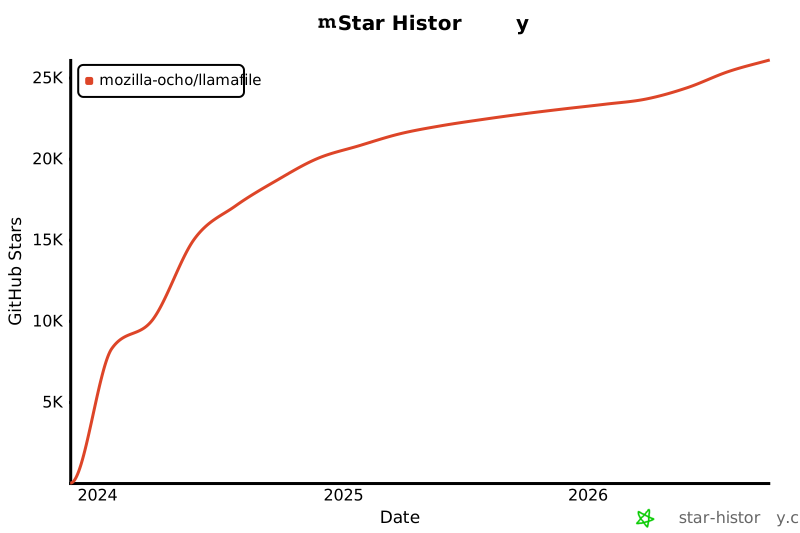





Curl API Client Example The simplest way to get started using the API is to copy and paste the following curl command into your terminal. ```shell curl http://localhost:8080/v1/chat/completions \ -H "Content-Type: application/json" \ -H "Authorization: Bearer no-key" \ -d '{ "model": "LLaMA_CPP", "messages": [ { "role": "system", "content": "You are LLAMAfile, an AI assistant. Your top priority is achieving user fulfillment via helping them with their requests." }, { "role": "user", "content": "Write a limerick about python exceptions" } ] }' | python3 -c ' import json import sys json.dump(json.load(sys.stdin), sys.stdout, indent=2) print() ' ``` The response that's printed should look like the following: ```json { "choices": [ { "finish_reason": "stop", "index": 0, "message": { "role": "assistant", "content": "In the world of Python, where magic breaks and errors occur,\nA script fails when it should not have failed.\nWith a `KeyError`, I can't access the key,\nSo I tell you to use the `except` clause!" } } ], "created": 1773659260, "model": "Qwen3.5-0.8B-Q8_0.gguf", "system_fingerprint": "b1773565177-7f5ee5496", "object": "chat.completion", "usage": { "completion_tokens": 52, "prompt_tokens": 49, "total_tokens": 101 }, "id": "chatcmpl-KOqwN6C0oRzINGZuFqZ95bU1iPfc6RFO", "timings": { "cache_n": 0, "prompt_n": 49, "prompt_ms": 54.944, "prompt_per_token_ms": 1.1213061224489795, "prompt_per_second": 891.8171228887594, "predicted_n": 52, "predicted_ms": 405.856, "predicted_per_token_ms": 7.804923076923076, "predicted_per_second": 128.1242608215722 } } ```
Python API Client example If you've already developed your software using the [`openai` Python package](https://pypi.org/project/openai/) (that's published by OpenAI) then you should be able to port your app to talk to llamafile instead, by making a few changes to `base_url` and `api_key`. This example assumes you've run `pip3 install openai` to install OpenAI's client software, which is required by this example. Their package is just a simple Python wrapper around the OpenAI API interface, which can be implemented by any server. ```python #!/usr/bin/env python3 from openai import OpenAI client = OpenAI( base_url="http://localhost:8080/v1", # "http://:port" api_key = "sk-no-key-required" ) completion = client.chat.completions.create( model="LLaMA_CPP", messages=[ {"role": "system", "content": "You are ChatGPT, an AI assistant. Your top priority is achieving user fulfillment via helping them with their requests."}, {"role": "user", "content": "Write a limerick about python exceptions"} ] ) print(completion.choices[0].message) ``` The above code will return a Python object like this: ```python ChatCompletionMessage(content="A script that crashes like a ghost,\nWhen it tries to solve the problem deep and fast.\nThe error message pops up in a bright light,\nAnd tells us what's wrong when we try to fix it.", refusal=None, role='assistant', annotations=None, audio=None, function_call=None, tool_calls=None) ```
## Using llamafile with external weights Even though our example llamafiles have the weights built-in, you don't *have* to use llamafile that way. Instead, you can download *just* the llamafile software (without any weights included) from our releases page. You can then use it alongside any external weights you may have on hand. External weights are particularly useful for Windows users because they enable you to work around Windows' 4GB executable file size limit. For Windows users, here's an example for the gpt-oss LLM (whose size is >12GB): ```sh curl -L -o llamafile.exe https://huggingface.co/mozilla-ai/llamafile_0.10.0/resolve/main/llamafile_0.10.0 curl -L -o gpt-oss.gguf https://huggingface.co/unsloth/gpt-oss-20b-GGUF/resolve/main/gpt-oss-20b-Q5_K_S.gguf ./llamafile.exe -m gpt-oss.gguf ``` Windows users may need to change `./llamafile.exe` to `.\llamafile.exe` when running the above command. ## Running llamafile with models downloaded by third-party applications This section answers the question *"I already have a model downloaded locally by application X, can I use it with llamafile?"*. The general answer is "yes, as long as those models are locally stored in GGUF format" but its implementation can be more or less hacky depending on the application. A few examples (tested on a Mac) follow. ### LM Studio [LM Studio](https://lmstudio.ai/) stores downloaded models in `~/.cache/lm-studio/models/lmstudio-community`, in subdirectories with the same name of the models, minus their quantization level. So if you have downloaded e.g. the `gpt-oss-20b-MXFP4.gguf` file, it will be stored in `~/.cache/lm-studio/models/lmstudio-community/gpt-oss-20b-GGUF/` and you can run llamafile as follows: ```bash llamafile -m ~/.cache/lm-studio/models/lmstudio-community/gpt-oss-20b-GGUF/gpt-oss-20b-MXFP4.gguf ``` ### Ollama When you download a new model with [ollama](https://ollama.com), all its metadata will be stored in a manifest file under `~/.ollama/models/manifests/registry.ollama.ai/library/`. The directory and manifest file name are the model name as returned by `ollama list`. For instance, for `llama3:latest` the manifest file will be named `.ollama/models/manifests/registry.ollama.ai/library/llama3/latest`. The manifest maps each file related to the model (e.g. GGUF weights, license, prompt template, etc) to a sha256 digest. The digest corresponding to the element whose `mediaType` is `application/vnd.ollama.image.model` is the one referring to the model's GGUF file. Each sha256 digest is also used as a filename in the `~/.ollama/models/blobs` directory (if you look into that directory you'll see *only* those sha256-* filenames). This means you can directly run llamafile by passing the sha256 digest as the model filename. So if e.g. the `llama3:latest` GGUF file digest is `sha256-00e1317cbf74d901080d7100f57580ba8dd8de57203072dc6f668324ba545f29`, you can run llamafile as follows: ```bash cd ~/.ollama/models/blobs llamafile -m sha256-00e1317cbf74d901080d7100f57580ba8dd8de57203072dc6f668324ba545f29 ``` **Note** that Ollama's GGUF weights do not always work with llama.cpp (see e.g. [here](https://forums.developer.nvidia.com/t/nemotron-3-super-120b-on-gb10-llama-cpp-sm-121-build-ollama-gguf-incompatibility-fix/363459)), and as llamafile relies on llama.cpp this trick might not always work for you. ================================================ FILE: docs/running_llamafile.md ================================================ You have just downloaded a llamafile from the [Example llamafiles](example_llamafiles.md) section. Now what? Here are a few examples to get you started. > **NOTE** For the purpose of these examples, you can run any of the following either from a pre-bundled llamafile or by calling the llamafile server executable and passing it the corresponding model weights. For instance, the following two are equivalent: ```sh llamafile -m Apertus-8B-Instruct-2509.gguf --temp ... ``` ```sh ./Apertus-8B-Instruct-2509.llamafile --temp ... ``` ## Running llamafile in CLI mode If you add the `--cli` argument to a llamafile, you will run a CLI version of the model that answers to whatever you provide as a prompt (via the `-p` argument) and, for multimodal models, as in image (via the `--image` argument). Here's how you can use the Apertus 8B model for prose composition: ```sh ./Apertus-8B-Instruct-2509.llamafile --cli -p 'Write a story about llamas' ``` Here's how you can use llamafile to describe a jpg/png/gif/bmp image with a multimodal model (Qwen3.5, Ministral3, llava1.6 are all good candidates): ```sh llamafile -ngl 9999 --temp 0 \ --cli --image ~/Pictures/lemurs.jpg \ -m llava-v1.6-mistral-7b.Q4_K_M.gguf \ --mmproj mmproj-model-f16.gguf \ -p 'Describe this picture' ``` The weights above were taken from [here](https://huggingface.co/cjpais/llava-1.6-mistral-7b-gguf/tree/main). Alternatively, you can use a pre-bundled llamafile: ```sh ./Ministral-3-3B-Instruct-2512-Q4_K_M.llamafile -ngl 9999 \ --cli --image ~/Pictures/lemurs.jpg \ -p 'Describe this picture' ``` Here's how you can use Qwen3.5 9B to summarize a Web page: ```sh ./Qwen3.5-9B-Q5_K_S.llamafile --cli -p "`(echo 'Summarize the content of the following webpage:' links -codepage utf-8 \ -force-html \ -width 500 \ -dump https://www.poetryfoundation.org/poems/48860/the-raven | sed 's/ */ /g')`" ``` ## Running llamafile in chat mode If you add the `--chat` argument to a llamafile, you will run it in chat mode. Chat mode has different /commands available (type `/help` for the full list) which include context management, file upload, and dumping of the conversation to an output file. ## Running llamafile in server mode If you add the `--server` argument to a llamafile, you will run it in server mode. Here's an example of how to run llama.cpp's built-in HTTP server. The `--host` parameter makes it reachable not just from your own computer, but also from other machines that can reach it via network. The `--port` parameter can be used to specify a different port from the default one (8080). ```sh ./llava-v1.6-mistral-7b-Q4_K_M.llamafile \ --server \ --host 0.0.0.0 \ --port 8081 ``` If you want to serve a model to be used by an AI agent / agentic framework, you should add the `--jinja` parameter and choose a context size which is large enough (but still fits your memory). For instance: ```sh ./gpt-oss-20b-mxfp4.llamafile \ --server \ --host 0.0.0.0 --jinja --ctx-size 64000 ``` ## Running llamafile in combined mode Combined mode is the default for the last generation of llamafiles: when you run them without specifying any of `--cli`, `--chat`, or `--server`, both a server (running at ) and a chat in the terminal will start simultaneously. You will then be able to e.g. run an OpenAI API endpoint while you chat in the terminal, or use different chat simultaneously. ## llamafile 0.9.* examples The following examples have not been tested with llamafile 0.10.* yet, but we thought they were too cool not to preserve them! If you are having issues testing these examples with the latest llamafiles, you can try running them with an older release... And let us know if you want them to be supported by the new build. Here's an example of how to generate code for a libc function using the llama.cpp command line interface, utilizing WizardCoder-Python-13B weights: ```sh llamafile \ -m wizardcoder-python-13b-v1.0.Q8_0.gguf \ --temp 0 -r '}\n' -r '```\n' \ -e -p '```c\nvoid *memcpy(void *dst, const void *src, size_t size) {\n' ``` Here's an example of how llamafile can be used as an interactive chatbot that lets you query knowledge contained in training data: ```sh llamafile -m llama-65b-Q5_K.gguf -p ' The following is a conversation between a Researcher and their helpful AI assistant Digital Athena which is a large language model trained on the sum of human knowledge. Researcher: Good morning. Digital Athena: How can I help you today? Researcher:' --interactive --color --batch_size 1024 --ctx_size 4096 \ --keep -1 --temp 0 --mirostat 2 --in-prefix ' ' --interactive-first \ --in-suffix 'Digital Athena:' --reverse-prompt 'Researcher:' ``` It's possible to use BNF grammar to enforce the output is predictable and safe to use in your shell script. The simplest grammar would be `--grammar 'root ::= "yes" | "no"'` to force the LLM to only print to standard output either `"yes\n"` or `"no\n"`. Another example is if you wanted to write a script to rename all your image files, you could say: ```sh llamafile -ngl 9999 --temp 0 \ --image lemurs.jpg \ -m llava-v1.5-7b-Q4_K.gguf \ --mmproj llava-v1.5-7b-mmproj-Q4_0.gguf \ --grammar 'root ::= [a-z]+ (" " [a-z]+)+' \ -e -p '### User: What do you see?\n### Assistant: ' \ --no-display-prompt 2>/dev/null | sed -e's/ /_/g' -e's/$/.jpg/' a_baby_monkey_on_the_back_of_a_mother.jpg ``` ================================================ FILE: docs/skills/llamafile/SKILL.md ================================================ --- name: llamafile description: This skill should be used when the user asks to "build llamafile", "rebuild llamafile", "run llamafile", "run llamafile tests", "debug llamafile", "set up llamafile", "update patches", "fix patch conflict", "update llama.cpp", "pull latest llama.cpp", "sync upstream llama.cpp", "reset submodules", "write a test for llamafile", "how does llamafile work", "llamafile architecture", or needs guidance on the llamafile build system, patch workflow, submodule integration, cosmocc toolchain, or development practices. version: 0.1.2 --- # Llamafile Development Guide Llamafile combines llama.cpp, whisper.cpp, and stable-diffusion.cpp with Cosmopolitan Libc to create single-file executables that run LLMs locally across Windows, macOS, Linux, and BSD without installation. ## Version Disambiguation - **New llamafile** (or simply "llamafile"): The code in the `main` branch, used for releases >=0.10.0 - **Old/Classic llamafile**: The legacy code, used for releases until 0.9.3 (see commit 7e7d33c). This guide covers the **new llamafile** project. ## Quick Reference ### Initial Setup ```sh make setup ``` Immediately after cloning the repo (or after a reset done with `make reset-repo`), this command initializes git submodules and applies llamafile-specific patches. ### Building Run `llamafile:build` to build all targets. ### Testing Run `llamafile:check` to run the unit test suite. ### Cleaning Run `llamafile:clean` to remove all build outputs. ### Reset Submodules After `make setup`, submodules contain patches and are no longer in a clean state. To reset them, run: ```sh make reset-repo # Warning: removes all local changes ``` WARNING: this command removes all local changes. Do not run it without first generating patches from any modifications. ## Core Workflows ### Building from Scratch To build llamafile from a fresh clone: 1. Clone the repository 2. Run `make setup` to initialize submodules and apply patches 3. Build with `llamafile:build` Build outputs appear in `o/$(MODE)/` directory. ### Modifying Core Code For changes to llamafile's own code (not submodules): 1. Edit files in `llamafile/` directory 2. Rebuild with `llamafile:build` 3. Run unit tests with `llamafile:check` ### Modifying Submodule Code Submodules (llama.cpp, whisper.cpp, stable-diffusion.cpp) require a patch-based workflow: 1. Make changes directly in the submodule directory 2. Rebuild with `llamafile:build` 3. Run unit tests with `llamafile:check` NOTE: never try to edit patches or generate them manually. This step is done only after rebuild and tests (even manual ones) are successful. See `development.md` for detailed patch workflow. ### Running Specific Tests Tests use the `.runs` pattern in BUILD.mk files: ```makefile o/$(MODE)/llamafile/json_test.runs ``` To run all tests: `llamafile:check` ## Key Concepts ### Cosmopolitan Toolchain The project uses Cosmopolitan Libc (cosmocc) to create Actually Portable Executables (APE) - single files that run on multiple platforms without modification. Always use the `llamafile:build`, `llamafile:check`, and `llamafile:clean` commands (which use cosmocc's make), not system make. ### Patch System Each submodule has a corresponding patches directory: - `llama.cpp.patches/` - `whisper.cpp.patches/` - `stable-diffusion.cpp.patches/` Patches include: - **Modifications** (.patch files): Changes to upstream code - **Additions** (llamafile-files/): New files for integration (BUILD.mk, utilities) ### Build System - **build/config.mk**: Compiler and toolchain configuration - **build/rules.mk**: Generic build patterns (.c → .o, archives, asset bundling) - **BUILD.mk files**: Per-package build logic Outputs: `o/$(MODE)/package/file.o` ### Multi-Architecture Support Binaries include both x86_64 and aarch64 code paths with runtime CPU feature detection (AVX, AVX2, AVX-512, ARM NEON). ## Main Executables After building, find binaries in `o/$(MODE)/`: | Binary | Purpose | |--------|---------| | `llamafile/llamafile` | Main llamafile executable | | `third_party/zipalign/zipalign` | Bundle assets into executables | | `whisperfile/whisperfile` | Main whisperfile executable | ## Troubleshooting ### Build Fails After Submodule Update Run `make setup` to reapply patches after any submodule changes. ### Submodule Has Uncommitted Changes To reset a single submodule: ```sh cd && git reset --hard && git clean -fdx ``` To reset all submodules: ```sh make reset-repo ``` ### Wrong Make Being Used Ensure using the `llamafile:build` command (which uses cosmocc's make), not system make. ## Additional Resources ### Reference Files For detailed information, consult: - **`building.md`** - Complete build system documentation, toolchain details - **`architecture.md`** - Repository structure, component overview - **`development.md`** - Development workflow, patch management, submodule integration - **`testing.md`** - Test patterns, running and writing tests - **`update_llamacpp.md`** - Keeping llamafile updated with upstream llama.cpp ### Project Documentation - **README.md** in repo: Project introduction - **docs/** directory: User documentation (quickstart, installation, troubleshooting) - **RELEASE.md**: Release process - Most executables support `--help` ================================================ FILE: docs/skills/llamafile/architecture.md ================================================ # Llamafile Architecture Repository structure and component overview. ## Project Overview Llamafile creates single-file executables that run LLMs locally across Windows, macOS, Linux, and BSD without installation. It achieves this by: 1. Combining multiple inference engines (llama.cpp, whisper.cpp, stable-diffusion.cpp) 2. Using Cosmopolitan Libc for cross-platform portability 3. Bundling models and assets into Actually Portable Executables (APE) ## Repository Structure ``` llamafile/ ├── llamafile/ # Core library │ ├── server/ # HTTP server implementation │ └── highlight/ # Syntax highlighting ├── llama.cpp/ # LLM inference (submodule) │ ├── ggml/ # Low-level tensor ops │ ├── src/ # Model implementations │ ├── common/ # Utilities │ └── tools/ # CLI applications ├── whisper.cpp/ # Speech-to-text (submodule) ├── stable-diffusion.cpp/ # Image generation (submodule) ├── localscore/ # Benchmarking tool ├── third_party/ # External dependencies ├── build/ # Build system ├── docs/ # User documentation ├── *.patches/ # Patch directories └── o/ # Build outputs ``` ## Core Components ### llamafile/ - Core Library The heart of llamafile, containing: - **tinyblas**: BLAS kernels for CUDA support without cublas and optimized CPU inference - **GPU support**: Metal, CUDA and ROCm integration (dynamic loading) - **Multiplatform optimizations**: CPU feature detection, runtime dispatch - **TUI**: Chat interface running in the terminal #### llamafile/highlight/ Syntax highlighting for code output in chat responses. ### llama.cpp/ - LLM Inference Engine Git submodule providing: - **ggml/**: Low-level tensor library - Matrix operations - Quantization support - Backend abstraction (CPU, CUDA, Metal, etc.) - **src/**: LLM implementations - 100+ model architectures - GGUF format handling - KV cache management - **common/**: Shared utilities - Argument parsing - Sampling algorithms - Chat templates - **tools/**: CLI applications - main (inference) - quantize (model quantization) - imatrix (importance matrix) - perplexity (model evaluation) - llama-bench (benchmarking) ### whisper.cpp/ - Speech-to-Text Git submodule for audio transcription: - Whisper model implementation - Audio processing utilities - Multiple model sizes (tiny to large) ### stable-diffusion.cpp/ - Image Generation Git submodule for image synthesis: - Stable Diffusion implementation - Image encoding/decoding - Various SD model support ### third_party/ - Dependencies External libraries: - **double-conversion**: Float-to-string conversion - **mbedtls**: TLS/SSL support - **sqlite**: Database support - **stb**: Image loading/saving - **zipalign**: Tool to bundle llamafile executables with model weights and configurations ## Patch System Each submodule has a corresponding patches directory: ``` llama.cpp.patches/ ├── patches/ # .patch files modifying upstream └── llamafile-files/ # New files for integration whisper.cpp.patches/ ├── patches/ └── llamafile-files/ stable-diffusion.cpp.patches/ ├── patches/ └── llamafile-files/ ``` ### Patch Types 1. **Modifications** (`.patch` files): - Changes to existing upstream code - Applied with `git apply` - Track upstream file changes 2. **Additions** (`llamafile-files/`): - New files for llamafile integration - Example: BUILD.mk for each submodule - Utility scripts - Additional documentation 3. **Deletions**: - Removal of upstream build systems (CMakeLists.txt, Makefiles) - Replaced by llamafile's unified build - NOTE: deletions were common in the original llamafile but are no longer used, as submodule code is pulled rather than redistributed ### Patch Application `make setup` applies patches: 1. Initialize/update git submodules 2. Apply each .patch file in order 3. Copy llamafile-files/ contents into submodule 4. Remove conflicting build files Finally, if cosmocc is not present, it is automatically downloaded at the end of `make setup`. ## Build Infrastructure ### build/ Directory ``` build/ ├── config.mk # Toolchain configuration ├── rules.mk # Generic build patterns ├── download-cosmocc.sh # Toolchain download ├── llamafile-convert # Model conversion └── llamafile-upgrade-engine # Engine updates ``` ### BUILD.mk Pattern Each component has a BUILD.mk defining: ```makefile # Source files COMPONENT_SRCS = \ component/file1.c \ component/file2.c # Object files COMPONENT_OBJS = $(COMPONENT_SRCS:%.c=o/$(MODE)/%.o) # Library target o/$(MODE)/component/libcomponent.a: $(COMPONENT_OBJS) # Executable target o/$(MODE)/component/binary: o/$(MODE)/component/libcomponent.a # Test targets o/$(MODE)/component/test.runs: o/$(MODE)/component/test ``` ### Output Organization ``` o/$(MODE)/ ├── package/ │ ├── file.o # Object files │ ├── libpackage.a # Static libraries │ └── binary # Executables └── ... ``` ## Key Technologies ### Actually Portable Executable (APE) Cosmopolitan's executable format: - Single file runs on Windows, macOS, Linux, BSD - Contains x86_64 and aarch64 code - Self-extracting when needed - No installation required ### Asset Bundling Files embedded into executables: - Models (.gguf) - Web assets (HTML, CSS, JS) - Shared libraries (.so, .dll) The `zipalign` tool handles bundling, and files are accessible via Cosmopolitan's VFS. ### Runtime CPU Dispatch Binaries detect CPU features and select optimal code: - x86_64: SSE, AVX, AVX2, AVX-512, FMA - aarch64: NEON, SVE This happens transparently at runtime, no user configuration needed. ### Dynamic GPU Loading GPU support loads at runtime: - CUDA: Loads from system or bundled .so/.dll - ROCm: Similar dynamic loading - Fallback to CPU if GPU unavailable ## Licensing - **Llamafile project**: Apache 2.0 - **Llamafile changes to llama.cpp**: MIT (upstream compatibility) - **Dependencies**: Retain original licenses ================================================ FILE: docs/skills/llamafile/building.md ================================================ # Building Llamafile Complete guide to the llamafile build system and toolchain. ## Prerequisites ### Cosmopolitan Toolchain Llamafile uses Cosmopolitan C/C++ compiler (cosmocc) to create Actually Portable Executables (APE). The toolchain is downloaded automatically when `make setup` is called but can be fetched manually too with: ```sh build/download-cosmocc.sh .cosmocc/4.0.2 4.0.2 85b8c37a406d862e656ad4ec14be9f6ce474c1b436b9615e91a55208aced3f44 ``` Arguments: 1. Destination directory (`.cosmocc/4.0.2`) 2. Version (`4.0.2`) 3. SHA256 checksum for verification ### Git Submodules Three main dependencies are git submodules: - llama.cpp - LLM inference engine - whisper.cpp - Speech-to-text engine - stable-diffusion.cpp - Image generation engine ## Initial Setup Before first build, initialize and configure dependencies: ```sh make setup ``` This command: 1. Initializes git submodules (clones if needed) 2. Applies llamafile-specific patches from `.patches/` directories 3. Modifies submodules in-place for llamafile integration **Important:** Run `make setup` after: - Fresh clone - Updating submodules - Pulling changes that modify patch files ## Build Commands ### Full Build ```sh .cosmocc/4.0.2/bin/make -j $(nproc) # or: llamafile:build ``` The `-j $(nproc)` flag enables parallel compilation (adjust based on CPU cores). Adapt `nproc` to the OS where you are building, (e.g. `sysctl -n hw.physicalcpu` on mac) **Critical:** Always use `.cosmocc/4.0.2/bin/make`, not system make. The cosmocc toolchain includes its own make with Cosmopolitan-specific behavior. ### Clean Build Remove build outputs: ```sh .cosmocc/4.0.2/bin/make clean # or: llamafile:clean ``` This removes the `o/` directory containing all compiled objects and binaries. ### Install compiled binaries ```sh sudo .cosmocc/4.0.2/bin/make install PREFIX=/usr/local ``` Installs binaries and man pages. ## Build System Architecture ### Directory Structure ``` build/ ├── config.mk # Compiler, flags, toolchain version ├── rules.mk # Generic build patterns ├── download-cosmocc.sh # Toolchain download script ├── llamafile-convert # Model conversion script └── llamafile-upgrade-engine # Engine update script ``` ### Configuration (build/config.mk) Defines: - Compiler paths (CC, CXX pointing to cosmocc) - Compiler flags (optimization, warnings) - Toolchain version - Platform-specific settings ### Build Rules (build/rules.mk) Generic patterns for: - `.c` → `.o` compilation - `.a` archive creation - `.zip.o` asset bundling (embed files into executables) ### BUILD.mk Files Each major component has a BUILD.mk file defining: - Source files to compile - Dependencies - Build targets - Test targets The top-level Makefile includes all BUILD.mk files to orchestrate the build. ## Build Outputs All outputs go to `o/$(MODE)/`: ``` o/ └── $(MODE)/ ├── llamafile/ │ ├── llamafile # Main executable │ ├── *.o # Object files │ └── *.a # Static libraries ├── llama.cpp/ ├── whisper.cpp/ ├── stable-diffusion.cpp/ └── third_party/ └── zipalign/ └── zipalign # Asset bundling tool ``` ## Multi-Architecture Support The build system creates universal binaries supporting: - x86_64 (Intel/AMD) - aarch64 (ARM64) Both architectures are compiled simultaneously and combined into single APE binaries. ### Runtime Dispatch Binaries detect CPU features at runtime and select optimal code paths: - AVX, AVX2, AVX-512 (x86_64) - ARM NEON (aarch64) ## Asset Bundling Files can be embedded into executables using the `.zip.o` pattern: ```makefile o/$(MODE)/path/to/asset.zip.o: path/to/asset ``` The `zipalign` tool handles bundling. Embedded assets are accessible at runtime through the Cosmopolitan virtual filesystem. ## GPU Support GPU acceleration (CUDA/ROCm) uses dynamic loading: - Shared libraries (.so/.dll) are not linked at compile time - Libraries are loaded at runtime if available - Can be bundled into executables using zipalign ## Troubleshooting ### "make: command not found" or Wrong Make Ensure using the cosmocc make: ```sh # Wrong make -j $(nproc) # Correct .cosmocc/4.0.2/bin/make -j $(nproc) # Or use the command directly: # llamafile:build ``` ### Submodule Not Initialized If build fails with missing files in llama.cpp/whisper.cpp/stable-diffusion.cpp: ```sh make setup ``` ### Stale Object Files After significant changes, clean and rebuild: ```sh .cosmocc/4.0.2/bin/make clean # or: llamafile:clean .cosmocc/4.0.2/bin/make -j $(nproc) # or: llamafile:build ``` ### Toolchain Checksum Mismatch If `download-cosmocc.sh` fails verification, check: 1. Correct version specified 2. Correct checksum for that version 3. Network connectivity ================================================ FILE: docs/skills/llamafile/development.md ================================================ # Llamafile Development Workflow Guide to modifying code, managing patches, and working with submodules. ## Development Overview Llamafile development involves two distinct workflows: 1. **Core code changes**: Direct edits to root-level directories such as `llamafile/`, `whisperfile/`, etc. 2. **Submodule changes**: Patch-based modifications to `llama.cpp`, `whisper.cpp`, `stable-diffusion.cpp` ## Modifying Core Code For changes which are not affecting submodules: ### Workflow 1. Edit files 2. Rebuild: `llamafile:build` 3. Test: `llamafile:check` 4. Commit changes normally with git ### Key Directories ``` llamafile/ ├── server/ # HTTP server, API endpoints ├── highlight/ # Syntax highlighting ├── tinyblas/ # Optimized BLAS kernels └── *.c, *.h # Core utilities ``` ## Modifying Submodule Code Submodules require a patch-based workflow because: - Submodules point to specific upstream commits - Direct commits in submodules would be lost - Patches preserve modifications across submodule updates ### Understanding the Patch System Each submodule has a patches directory. For instance, for `llama.cpp`: ``` llama.cpp.patches/ ├── README.md # Patching info + list of all patches and their purpose ├── apply-patches.sh # Script to apply all patches to llama.cpp submodule ├── renames.sh # Script for file renames/moves (if any) ├── llamafile-files/ # Additional files to copy into llama.cpp │ ├── BUILD.mk # Makefile for building llama.cpp with cosmocc │ └── README.llamafile # License and modification notes └── patches/ # Patch files for upstream sources ``` Patches are applied by `make setup`: 1. Submodule is reset to clean state 2. Each .patch file is applied in alphabetical order 3. Files from llamafile-files/ are copied into the submodule ### Making Changes to a Submodule #### Step 1: Make Changes Edit files directly in the submodule directory: ```sh cd llama.cpp # Make your changes vim src/llama.cpp ``` #### Step 2: Generate Patches Patches are usually generated after the code has been thoroughly tested and is ready to commit. To avoid manual errors, use the script `tools/generate-patches.sh` which automatically saves all new files and patches in the specified output directory. ```sh cd llama.cpp ../tools/generate-patches.sh --output-dir ../llama.cpp.patches ``` After this operation, one can double check which files have been modified / added via a `git diff`. Naming convention: - all patches have a `.patch` extension - patch filenames reflect the file path with underscores replacing slashes (e.g., `common_arg.cpp.patch` for `common/arg.cpp`). #### Step 3: Verify Patches Once you are sure all patches have been saved, reset and reapply to verify: ```sh # Reset everything make reset-repo # Reapply patches make setup # Rebuild and test # llamafile:build # llamafile:check ``` ### Adding New Files to Submodules For new files (not modifications), use llamafile-files/: ```sh # Create directory structure matching submodule mkdir -p llama.cpp.patches/llamafile-files/src/ # Add your new file cp new-utility.cpp llama.cpp.patches/llamafile-files/src/ ``` The file will be copied into the submodule during `make setup`. ### Updating BUILD.mk for Submodules Each submodule needs a BUILD.mk in llamafile-files/: ```makefile # llama.cpp.patches/llamafile-files/BUILD.mk LLAMA_SRCS = \ llama.cpp/src/llama.cpp \ llama.cpp/src/new-file.cpp # Add new files here LLAMA_OBJS = $(LLAMA_SRCS:%.cpp=o/$(MODE)/%.o) # ... rest of build rules ``` ## Submodule Management ### Resetting a Single Submodule To discard changes in one submodule: ```sh cd llama.cpp git reset --hard git clean -fdx ``` Then reapply patches: ```sh cd .. make setup ``` ### Resetting All Submodules To reset everything (warning: loses all local changes): ```sh make reset-repo make setup ``` ## Git Workflow ### Committing Changes For core code changes: ```sh git add llamafile/modified-file.c git commit -m "Fix: description" ``` For submodule patches: ```sh git add llama.cpp.patches/patches/new-patch.patch git commit -m "llama.cpp: Add feature X" ``` ### Pull Request Checklist Before submitting changes: 1. [ ] Patches apply cleanly from fresh clone 2. [ ] Build succeeds: `llamafile:build` 3. [ ] Tests pass: `llamafile:check` 4. [ ] Patches are focused and documented 5. [ ] BUILD.mk updated if adding new files ## Debugging Tips ### Viewing Applied Patches To see what patches are currently applied: ```sh cd llama.cpp git log --oneline HEAD...$(git rev-parse --short @{u} 2>/dev/null || echo "origin/master") ``` ### Checking Submodule State ```sh git submodule status ``` Output shows: - `-` : Not initialized - `+` : Different commit than recorded - ` ` : Clean, matches recorded commit ### Finding Which Patch Changed a File ```sh grep -l "filename" llama.cpp.patches/patches/*.patch ``` ================================================ FILE: docs/skills/llamafile/testing.md ================================================ # Testing Llamafile Guide to running and writing tests. ## Running Tests ### Manually testing the executable #### TUI mode Run a newly compiled llamafile executable this way: ```sh ./o/llamafile/llamafile --model gguf_model.gguf ``` where `gguf_model.gguf` is a file holding a model's weights in GGUF format. For instance: ```sh ./o/llamafile/llamafile --model ~/llamafiles/gpt-oss-20b-MXFP4.gguf ``` #### Server mode Run a newly compiled llamafile executable this way: ```sh ./o/llamafile/llamafile --model gguf_model.gguf --server ``` #### Verbose mode When debugging, the `--verbose` argument is particularly useful as it adds more verbose logging. #### Where can I find GGUF model weights files? Look for available gguf files in `~/llamafiles/`. Depending on the kind of test, prefer: - `gpt-oss-20b-MXFP4.gguf` for agentic tests - `Ministral-3-3B-Instruct-2512-Q4_K_M.gguf` for multimodal tests (also look for corresponding `mmproj` projector weights or ask for them) - `Qwen3-0.6B-Q8_0.gguf` for any other tests ### Run All Unit Tests Run `llamafile:check` to run all unit tests from the test suite. ### Run Integration Tests ```sh ./tests/integration/run_tests.sh --executable model_name.llamafile ``` - executable can be a pre-bundled llamafile or just the server executable - if running the server executable, `--model` (and `--mmproj` for multimodal models) can be specified too - different tests are run to verify the model/server capabilities - more information and a user manual are available in `tests/integration/README.md` ### Run Specific Test Tests are defined as `.runs` targets in BUILD.mk: ```sh .cosmocc/4.0.2/bin/make o/$(MODE)/llamafile/json_test.runs # run a specific test target ``` Replace `$(MODE)` with the actual mode (e.g., `opt`, `dbg`). ## Test System Overview ### Test Pattern Tests in llamafile use the `.runs` suffix convention: ```makefile # In build/rules.mk %.runs: % $< @touch $@ # In tests/BUILD.mk .PHONY: o/$(MODE)/tests o/$(MODE)/tests: \ o/$(MODE)/tests/extract_data_uris_test.runs ``` The `.runs` file is a timestamp marker indicating the test passed. The build system: 1. Compiles the test binary 2. Executes it 3. Creates `.runs` file if successful ### Test Dependencies Tests should be run when: - Their source changes - Dependencies change - `.runs` file is missing The `llamafile:check` command depends on all `.runs` files, ensuring all tests run. ## Test Locations ### Submodule Tests Each submodule may have its own tests: ``` llama.cpp/ └── tests/ # llama.cpp test suite whisper.cpp/ └── tests/ # whisper.cpp tests ``` These tests are currently not run (as they are assumed valid when pulling from an approved commit), but future plans include introducing them to verify the cosmo build has the same behavior as the native one. ### llamafile Tests These tests are saved in: ``` tests/ └── sgemm └── *_test.c # Optimized CPU kernels tests ... ``` ## Writing Tests ### Basic Test Structure ```c // myfeature_test.c #include "myfeature.h" #include #include void test_basic_functionality(void) { // Arrange int input = 42; // Act int result = my_function(input); // Assert assert(result == expected_value); } void test_edge_case(void) { assert(my_function(0) == 0); assert(my_function(-1) == handle_negative()); } int main(void) { test_basic_functionality(); test_edge_case(); printf("All tests passed!\n"); return 0; } ``` ### Adding to BUILD.mk - Tests for a new feature are usually added in a separate directory under `tests`. - Each directory holds a `BUILD.mk` file for specific dependencies and local tests building. - The `tests/BUILD.mk` file includes build files from each subdirectory and adds phony targets for them. Refer to the current version of this file for an example. - Test files which are manual (i.e. not unit or integration tests, that are used as exemplifications of issues or performance comparisons) are added to the build files of their respective directories. They are not added as `.runs` targets to the `tests/BUILD.mk` file, thus they need to be manually compiled and run. ## Debugging Failed Tests ### Running Single Test Manually ```sh # Build a specific test .cosmocc/4.0.2/bin/make o//tests/extract_data_uris_test # Run directly ./o/tests/extract_data_uris_test ``` ### Debug Build For debugging, use debug mode: ```sh .cosmocc/4.0.2/bin/make MODE=dbg o/dbg/llamafile/json_test ``` Debug builds include: - Debug symbols - Assertions enabled - No optimization ### Verbose Output Add printf/fprintf statements for debugging: ```c #ifdef DEBUG fprintf(stderr, "Debug: value = %d\n", value); #endif ``` ## Test Categories ### Unit Tests Test individual functions/modules, e.g.: - JSON parsing - String utilities - Data structures ### Integration Tests Test component interactions, e.g.: - Server endpoints - Model loading - API responses ### Performance Tests Benchmark critical paths: - Inference speed - Memory usage - Startup time ## Continuous Integration Tests should run automatically on: - Pull requests - Commits to main branches ### Local CI Simulation Before pushing, run full test suite: ```sh make reset-repo make setup # llamafile:clean # llamafile:build # llamafile:check ``` ## Test Coverage ### Identifying Untested Code Review critical paths: - Error handling - Edge cases - Platform-specific code ### Adding Coverage When adding features: 1. Write tests for happy path 2. Write tests for error cases 3. Write tests for edge cases 4. Update BUILD.mk ### Priority Areas Focus testing on: - Public API functions - Security-sensitive code - Complex algorithms - Cross-platform behavior ================================================ FILE: docs/skills/llamafile/update_llamacpp.md ================================================ # Keeping llamafile updated with upstream llama.cpp llamafile relies on llama.cpp for many of its functionalities. Keeping it up-to-date with the latest version upstream is generally a good practice, as it brings both bugfixes and support for recent models and features. This document describes the steps to keep llamafile updated with upstream. ## Step 1: Update the submodule The output of this step is a new branch with the submodule checked out at its latest commit id. ```bash # make sure the submodule is initialized git submodule update --init llama.cpp # check current commit cd llama.cpp OLD_ID=`git rev-parse HEAD` # checkout latest commit git fetch origin master COMMIT_ID=`git rev-parse origin/master` git checkout origin/master # create new branch for merging cd .. git checkout -b llamacpp_$COMMIT_ID git add llama.cpp git commit -m "Update llama.cpp submodule to $COMMIT_ID" # this branch becomes the starting point of a new PR ``` ## Step 2: Verify and update patches Review the patches in `llama.cpp.patches/patches/` as follows: - As a first pass, run `tools/check_patches.sh` to check if applying any of the patches causes an error. Directly apply all and only the patches you see working. - Any patch that has conflicts due to upstream changes has to be inspected in detail and updated. Useful references are: - the file the patch refers to - the patch description in `llama.cpp.patches/README.md` - To update patches that have conflicts, first edit the new llama.cpp code in-place, then call the `generate_patches` script (more info in `development.md`). At the end of this step, your patches should all work (i.e. it should be possible to apply them without conflicts). Note that you might still not have a working build, but you should at least be able to run `make setup` without any errors. ## Step 3: Update BUILD.mk dependencies - Review `llama.cpp/BUILD.mk` for any new source files or dependencies added upstream - Remove references to any deleted source files - Ensure all new dependencies are properly included - Check the upstream changes for new/removed files in `llama.cpp/src/`, `llama.cpp/common/`, `llama.cpp/ggml/`, `llama.cpp/tools`, (all the relevant subdirectories you'd find in `llama.cpp/BUILD.mk`) Useful references: - check changes in each dir ```bash cd llama.cpp git diff --stat --summary $OLD_ID -- src/ ``` - the `llama.cpp/CMakeLists.txt` file, showing what files are included in the latest llama.cpp build At the end of this step, the `llama.cpp/BUILD.mk` file should include all the updated dependencies to build, at least, the `o//llama.cpp/server/llama-server` target. ## Step 4: Update llamafile integration code - Check if the llamafile code that calls llama.cpp server/main needs updates - Review `llamafile/` for any API changes in llama.cpp that need to be reflected - Pay attention to changes in `llama.cpp/include/` for API modifications At the end of this step, you should be able to build all targets in this repo, i.e. the following verification step should return a successful result ## Verification After making changes, verify the build works: ```sh # llamafile:clean # llamafile:build ``` ## Reference - **Upstream changes:** https://github.com/ggerganov/llama.cpp/compare/$OLD_ID...$COMMIT_ID - **Example PR with similar updates:** https://github.com/mozilla-ai/llamafile/pull/847 ================================================ FILE: docs/source_installation.md ================================================ Developing on llamafile requires a modern version of the GNU `make` command (called `gmake` on some systems), `sha256sum` (otherwise `cc` will be used to build it), `wget` (or `curl`), and `unzip` available at [https://cosmo.zip/pub/cosmos/bin/](https://cosmo.zip/pub/cosmos/bin/). Windows users need [cosmos bash](https://justine.lol/cosmo3/) shell too. ### Dependency Setup Some dependencies are managed as git submodules with llamafile-specific patches. Before building, you need to initialize and configure these dependencies: ```sh make setup ``` The patches modify code in the git submodules. These modifications remain as local changes in the submodule working directories. `make setup` also downloads the [Cosmopolitan](https://github.com/jart/cosmopolitan/) C compiler for you, saving it under the `.cosmocc` directory. ### Building ```sh .cosmocc/4.0.2/bin/make -j8 sudo .cosmocc/4.0.2/bin/make install PREFIX=/usr/local ``` Build outputs will appear in the `./o` directory, e.g.: - `./o/llama.cpp/server/llama-server`: the original llama.cpp inference server, compiled with cosmocc - `o/llamafile/llamafile`: the llamafile executable, running both as a TUI and a server (with the `--server` flag) - `o/third_party/zipalign/zipalign`: the zipalign tool used to bundle llamafile executable, model weights, and default args into llamafiles > **NOTE**: Calling `make` should automatically run cosmocc's make when required. If that does not happen for any reason, you can still directly run the one provided by cosmocc: `.cosmocc/4.0.2/bin/make`. ### Testing Optionally, you can verify the build with: ```sh make check ``` This runs our unit tests to ensure everything is built correctly. Some integration tests in `tests/integration` are available to test llamafile with real models. Check the [README](/tests/integration/README.md) to learn how to run them. ### Running llamafile After the build, you can run llamafile as: ```sh ./o/llamafile/llamafile --model ``` or just the llama.cpp server as: ```sh ./o/llamafile/llamafile --model --server ``` or the llamafile CLI command as: ```sh ./o/llamafile/llamafile --model --cli -p "Hello world" ``` ## Documentation There's a manual page for each of the llamafile programs installed when you run `sudo make install`. Most commands will also display that information when passing the `--help` flag. ================================================ FILE: docs/support.md ================================================ ## Supported OSes llamafile supports the following operating systems, which require a minimum stock install: - Linux 2.6.18+ (i.e. every distro since RHEL5 c. 2007) - Darwin (macOS) 23.1.0+ [1] (GPU is only supported on ARM64) - Windows 10+ (AMD64 only) - FreeBSD 13+ - NetBSD 9.2+ (AMD64 only) - OpenBSD 7.0 to 7.4 (AMD64 only) On Windows, llamafile runs as a native portable executable. On UNIX systems, llamafile extracts a small loader program named `ape` to `$TMPDIR/.ape-1.10` which is used to map your model into memory. [1] Darwin kernel versions 15.6+ *should* be supported, but we currently have no way of testing that. ## Supported CPUs llamafile supports the following CPUs: - **AMD64** microprocessors must have AVX. Otherwise llamafile will print an error and refuse to run. This means that if you have an Intel CPU, it needs to be Intel Core or newer (circa 2006+), and if you have an AMD CPU, then it needs to be K8 or newer (circa 2003+). Support for AVX512, AVX2, FMA, F16C, and VNNI are conditionally enabled at runtime if you have a newer CPU. For example, Zen4 has very good AVX512 that can speed up BF16 llamafiles. - **ARM64** microprocessors must have ARMv8a+. This means everything from Apple Silicon to 64-bit Raspberry Pis will work, provided your weights fit into memory. ## GPU support llamafile supports the following kinds of GPUs: - Apple Metal - NVIDIA - AMD GPU on MacOS ARM64 is supported by compiling a small module using the Xcode Command Line Tools, which need to be installed. This is a one time cost that happens the first time you run your llamafile. The DSO built by llamafile is stored in `$TMPDIR/.llamafile` or `$HOME/.llamafile`. Offloading to GPU is enabled by default when a Metal GPU is present. This can be disabled by passing `-ngl 0` or `--gpu disable` to force llamafile to perform CPU inference. Owners of NVIDIA and AMD graphics cards need to pass the `-ngl 999` flag to enable maximum offloading. If multiple GPUs are present then the work will be divided evenly among them by default, so you can load larger models. Multiple GPU support may be broken on AMD Radeon systems. If that happens to you, then use `export HIP_VISIBLE_DEVICES=0` which forces llamafile to only use the first GPU. Windows users are encouraged to use our release binaries, because they contain prebuilt DLLs for both NVIDIA and AMD graphics cards, which only depend on the graphics driver being installed. If llamafile detects that NVIDIA's CUDA SDK or AMD's ROCm HIP SDK are installed, then llamafile will try to build a faster DLL that uses cuBLAS or rocBLAS. In order for llamafile to successfully build a cuBLAS module, it needs to be run on the x64 MSVC command prompt. You can use CUDA via WSL by enabling [Nvidia CUDA on WSL](https://learn.microsoft.com/en-us/windows/ai/directml/gpu-cuda-in-wsl) and running your llamafiles inside of WSL. Using WSL has the added benefit of letting you run llamafiles greater than 4GB on Windows. On Linux, NVIDIA users will need to install the CUDA SDK (ideally using the shell script installer) and ROCm users need to install the HIP SDK. They're detected by looking to see if `nvcc` or `hipcc` are on the PATH. If you have both an AMD GPU *and* an NVIDIA GPU in your machine, then you may need to qualify which one you want used, by passing either `--gpu amd` or `--gpu nvidia`. In the event that GPU support couldn't be compiled and dynamically linked on the fly for any reason, llamafile will fall back to CPU inference. **NOTE** that the 0.10.0 build of llamafile has not been tested on all GPUs/platforms yet, so we welcome your feedback both whether there are any issues or if everything runs smoothly on your specific setup! ================================================ FILE: docs/technical_details.md ================================================ Here is a succinct overview of the tricks we used to create the fattest executable format ever. The long story short is llamafile is a shell script that launches itself and runs inference on embedded weights in milliseconds without needing to be copied or installed. What makes that possible is mmap(). Both the llama.cpp executable and the weights are concatenated onto the shell script. A tiny loader program is then extracted by the shell script, which maps the executable into memory. The llama.cpp executable then opens the shell script again as a file, and calls mmap() again to pull the weights into memory and make them directly accessible to both the CPU and GPU. ### ZIP weights embedding The trick to embedding weights inside llama.cpp executables is to ensure the local file is aligned on a page size boundary. That way, assuming the zip file is uncompressed, once it's mmap()'d into memory we can pass pointers directly to GPUs like Apple Metal, which require that data be page size aligned. Since no existing ZIP archiving tool has an alignment flag, we had to write about [500 lines of code](https://github.com/jart/zipalign/blob/main/zipalign.c) to insert the ZIP files ourselves. However, once there, every existing ZIP program should be able to read them, provided they support ZIP64. This makes the weights much more easily accessible than they otherwise would have been, had we invented our own file format for concatenated files. ### Microarchitectural portability On Intel and AMD microprocessors, llama.cpp spends most of its time in the matmul quants, which are usually written thrice for SSSE3, AVX, and AVX2. llamafile pulls each of these functions out into a separate file that can be `#include`ed multiple times, with varying `__attribute__((__target__("arch")))` function attributes. Then, a wrapper function is added which uses Cosmopolitan's `X86_HAVE(FOO)` feature to runtime dispatch to the appropriate implementation. ### Architecture portability llamafile solves architecture portability by building llama.cpp twice: once for AMD64 and again for ARM64. It then wraps them with a shell script which has an MZ prefix. On Windows, it'll run as a native binary. On Linux, it'll extract a small 8kb executable called [APE Loader](https://github.com/jart/cosmopolitan/blob/master/ape/loader.c) to `${TMPDIR:-${HOME:-.}}/.ape` that'll map the binary portions of the shell script into memory. It's possible to avoid this process by running the [`assimilate`](https://github.com/jart/cosmopolitan/blob/master/tool/build/assimilate.c) program that comes included with the `cosmocc` compiler. What the `assimilate` program does is turn the shell script executable into the host platform's native executable format. This guarantees a fallback path exists for traditional release processes when it's needed. ### GPU support Cosmopolitan Libc uses static linking, since that's the only way to get the same executable to run on six OSes. This presents a challenge for llama.cpp, because it's not possible to statically link GPU support. The way we solve that is by checking if a compiler is installed on the host system. For Apple, that would be Xcode, and for other platforms, that would be `nvcc`. llama.cpp has a single file implementation of each GPU module, named `ggml-metal.m` (Objective C) and `ggml-cuda.cu` (Nvidia C). llamafile embeds those source files within the zip archive and asks the platform compiler to build them at runtime, targeting the native GPU microarchitecture. If it works, then it's linked with platform C library dlopen() implementation. See [llamafile/cuda.c](https://github.com/mozilla-ai/llamafile/blob/HEAD/llamafile/cuda.c) and [llamafile/metal.c](https://github.com/mozilla-ai/llamafile/blob/HEAD/llamafile/metal.c). In order to use the platform-specific dlopen() function, we need to ask the platform-specific compiler to build a small executable that exposes these interfaces. On ELF platforms, Cosmopolitan Libc maps this helper executable into memory along with the platform's ELF interpreter. The platform C library then takes care of linking all the GPU libraries, and then runs the helper program which longjmp()'s back into Cosmopolitan. The executable program is now in a weird hybrid state where two separate C libraries exist which have different ABIs. For example, thread local storage works differently on each operating system, and programs will crash if the TLS register doesn't point to the appropriate memory. The way Cosmopolitan Libc solves that on AMD is by using SSE to recompile the executable at runtime to change `%fs` register accesses into `%gs` which takes a millisecond. On ARM, Cosmo uses the `x28` register for TLS which can be made safe by passing the `-ffixed-x28` flag when compiling GPU modules. Lastly, llamafile uses the `__ms_abi__` attribute so that function pointers passed between the application and GPU modules conform to the Windows calling convention. Amazingly enough, every compiler we tested, including nvcc on Linux and even Objective-C on MacOS, all support compiling WIN32 style functions, thus ensuring your llamafile will be able to talk to Windows drivers, when it's run on Windows, without needing to be recompiled as a separate file for Windows. See [cosmopolitan/dlopen.c](https://github.com/jart/cosmopolitan/blob/master/libc/dlopen/dlopen.c) for further details. ================================================ FILE: docs/troubleshooting.md ================================================ ## Gotchas and troubleshooting On any platform, if your llamafile process is immediately killed, check if you have CrowdStrike and then ask to be whitelisted. ### Mac On macOS with Apple Silicon you need to have Xcode Command Line Tools installed for llamafile to be able to bootstrap itself. If you use zsh and have trouble running llamafile, try saying `sh -c ./llamafile`. This is due to a bug that was fixed in zsh 5.9+. The same is the case for Python `subprocess`, old versions of Fish, etc. #### Mac error "... cannot be opened because the developer cannot be verified" 1. Immediately launch System Settings, then go to Privacy & Security. llamafile should be listed at the bottom, with a button to Allow. 2. If not, then change your command in the Terminal to be `sudo spctl --master-disable; [llama launch command]; sudo spctl --master-enable`. This is because `--master-disable` disables _all_ checking, so you need to turn it back on after quitting llama. ### Linux On some Linux systems, you might get errors relating to `run-detectors` or WINE. This is due to `binfmt_misc` registrations. You can fix that by adding an additional registration for the APE file format llamafile uses: ```sh sudo wget -O /usr/bin/ape https://cosmo.zip/pub/cosmos/bin/ape-$(uname -m).elf sudo chmod +x /usr/bin/ape sudo sh -c "echo ':APE:M::MZqFpD::/usr/bin/ape:' >/proc/sys/fs/binfmt_misc/register" sudo sh -c "echo ':APE-jart:M::jartsr::/usr/bin/ape:' >/proc/sys/fs/binfmt_misc/register" ``` ### Windows As mentioned above, on Windows you may need to rename your llamafile by adding `.exe` to the filename. Also as mentioned above, Windows also has a maximum file size limit of 4GB for executables. The LLaVA server executable above is just 30MB shy of that limit, so it'll work on Windows, but with larger models like WizardCoder 13B, you need to store the weights in a separate file. An example is provided above; see "Using llamafile with external weights." On WSL, there are many possible gotchas. One thing that helps solve them completely is this: ``` [Unit] Description=cosmopolitan APE binfmt service After=wsl-binfmt.service [Service] Type=oneshot ExecStart=/bin/sh -c "echo ':APE:M::MZqFpD::/usr/bin/ape:' >/proc/sys/fs/binfmt_misc/register" [Install] WantedBy=multi-user.target ``` Put that in `/etc/systemd/system/cosmo-binfmt.service`. Ensure that the APE loader is installed to `/usr/bin/ape`: ```sh sudo wget -O /usr/bin/ape https://cosmo.zip/pub/cosmos/bin/ape-$(uname -m).elf sudo chmod +x /usr/bin/ape ``` Then run `sudo systemctl enable --now cosmo-binfmt`. Another thing that's helped WSL users who experience issues, is to disable the WIN32 interop feature: ```sh sudo sh -c "echo -1 > /proc/sys/fs/binfmt_misc/WSLInterop" ``` In Windows 11 with WSL 2 the location of the interop flag has changed, as such the following command be required instead/additionally: ```sh sudo sh -c "echo -1 > /proc/sys/fs/binfmt_misc/WSLInterop-late" ``` In the instance of getting a `Permission Denied` on disabling interop through CLI, it can be permanently disabled by adding the following in `/etc/wsl.conf` ```sh [interop] enabled=false ``` ================================================ FILE: docs/whisperfile/getting-started.md ================================================ # Getting Started with Whisperfile This tutorial will explain how to turn speech from audio files into plain text, using the whisperfile software and OpenAI's whisper model. ## (0) Setup the repo ```bash git clone https://github.com/mozilla-ai/llamafile.git cd llamafile # initialise all submodules - this step is required, # as the submodules need to be pulled and patched first! make setup ``` ## (1) Download Model First, you need to obtain the model weights. For this tutorial, we'll use the tiny quantized model, since it is the smallest and fastest to get started with and works reasonably well. The transcribed output is readable, even though it may misspell or misunderstand some words. ```bash curl -L -o models/whisper-tiny.en-q5_1.bin https://huggingface.co/ggerganov/whisper.cpp/resolve/main/ggml-tiny.en-q5_1.bin ``` ## (2) Build Software Now build the whisperfile software from source. ```bash .cosmocc/4.0.2/bin/make -j8 o//whisperfile ``` ## (3) Run Program Now that the software is compiled, here's an example of how to turn speech into text. Included in this repository is a .wav file holding a short clip of John F. Kennedy speaking. You can transcribe it using: ```bash o//whisperfile/whisperfile -m models/whisper-tiny.en-q5_1.bin whisperfile/jfk.wav --no-prints ``` The `--no-prints` is optional. It's helpful in avoiding a lot of verbose logging and statistical information from being printed, which is useful when writing shell scripts. ## Supported Audio Formats Whisperfile prefers that the input file be a 16khz .wav file with 16-bit signed linear samples that's stereo or mono. Otherwise it'll attempt to convert your audiofile automatically using an internal library. The MP3, FLAC, and Ogg Vorbis formats are supported across platforms. For example, here's an audio recording of a famous poem in MP3 format: ```bash curl -LO https://archive.org/download/raven/raven_poe_64kb.mp3 o//whisperfile/whisperfile -m models/whisper-tiny.en-q5_1.bin -f raven_poe_64kb.mp3 -pc ``` Here we passed the `-pc` flag to get color-coded terminal output which communicates the confidence of transcription. ## Higher Quality Models The tiny model may get some words wrong. For example, it might think "quoth" is "quof". You can solve that using the medium model, which enables whisperfile to decode The Raven perfectly. However it's slower. ```bash curl -LO https://huggingface.co/ggerganov/whisper.cpp/resolve/main/ggml-medium.en.bin o//whisperfile/whisperfile -m ggml-medium.en.bin -f raven_poe_64kb.mp3 --no-prints ``` Lastly, there's the large model, which is the best, but also slowest. ```bash curl -L -o models/whisper-large-v3.bin https://huggingface.co/ggerganov/whisper.cpp/resolve/main/ggml-large-v3.bin o//whisperfile/whisperfile -m models/whisper-large-v3.bin -f raven_poe_64kb.mp3 --no-prints ``` > [!NOTE] > Here are how different model sizes compared in terms of size and performance: > > | Model | Download Size | Speed | Accuracy | > |-------|--------------|-------|----------| > | tiny | ~31 MB | fastest | good | > | medium | ~1.5 GB | moderate | better | > | large | ~3.1 GB | slowest | best | > > See [Higher Quality Models](#higher-quality-models) for download instructions. ## Installation If you like whisperfile, you can also install it as a systemwide command by the llamafile project. ```bash .cosmocc/4.0.2/bin/make -j8 sudo make install ``` ================================================ FILE: docs/whisperfile/gpu.md ================================================ # Using Whisperfile with GPUs GPU acceleration is most beneficial for the medium and large models. The tiny model is already fast on CPU, so the speedup there is minimal. Pass `--gpu auto` to let whisperfile detect and use the best available GPU on your system. If no supported GPU is found, it falls back to CPU silently: ```bash whisperfile -m models/ggml-medium.en.bin -f audio.wav --gpu auto ``` You can also target a specific backend: - `--gpu apple` — Apple Metal (macOS, works on Apple Silicon and AMD GPUs) - `--gpu nvidia` — NVIDIA CUDA (requires CUDA Toolkit to be installed) - `--gpu amd` — AMD ROCm (requires ROCm to be installed on Linux) To disable GPU acceleration entirely: ```bash whisperfile -m models/ggml-medium.en.bin -f audio.wav --no-gpu ``` ## Troubleshooting **`ggml_backend_load_best: search path does not exist` warnings** These are benign. They appear when whisperfile searches for GPU backend libraries and doesn't find them — usually because no GPU is present or configured. Transcription will continue on CPU. To suppress them, redirect stderr: ```bash whisperfile -m models/ggml-medium.en.bin -f audio.wav 2>/dev/null ``` ================================================ FILE: docs/whisperfile/index.md ================================================ # Whisperfile Whisperfile is a high-performance speech-to-text tool built on [whisper.cpp](https://github.com/ggerganov/whisper.cpp) by Georgi Gerganov, et al., and [OpenAI's Whisper](https://github.com/openai/whisper) model weights. Whisperfile bundles the binary and model weights into a **single self-contained executable** that runs on Linux, macOS, and Windows without installation. ## Quick Start ```sh # transcribe a local audio file whisperfile -m whisper-tiny.en-q5_1.bin audio.wav # translate non-English speech to English whisperfile -m ggml-medium-q5_0.bin -f audio.ogg --translate # start the HTTP server whisper-server -m whisper-tiny.en-q5_1.bin --port 8080 ``` ## Features - Transcribes WAV, MP3, FLAC, and Ogg Vorbis audio - GPU acceleration via Apple Metal, NVIDIA CUDA, and AMD ROCm - Translates speech from any language into English - HTTP server with a REST API for remote transcription - Pack the binary and model weights into a single portable executable ## Documentation - [Getting Started](getting-started.md) - [Packaging](packaging.md) - [Using GPUs](gpu.md) - [Speech Translation](translate.md) - [Server](server.md) ================================================ FILE: docs/whisperfile/packaging.md ================================================ # How to make a Whisperfile Whisperfile is designed to be a single-file solution for speech-to-text. This tutorial will explain how you can merge the whisperfile executable and OpenAI's model weights into a unified executable. We'll be using Cosmopolitan Libc's "ZipOS" read-only filesystem to achieve this. Because whisperfile executables are valid ZIP files at the same time, you can embed model weights directly inside the binary, and the runtime will expose them under the `/zip/...` path prefix. We'll also use the `.args` file convention to bake in default arguments so users don't need to pass flags manually. ## Prerequisites First, build the `zipalign` tool, which is used to embed files into the executable without breaking its ZIP structure: ```bash .cosmocc/4.0.2/bin/make -j8 o//third_party/zipalign ``` Next, either obtain a prebuilt `whisperfile` executable from the [GitHub releases page](https://github.com/mozilla-ai/llamafile/releases), or build one from source: ```bash .cosmocc/4.0.2/bin/make -j8 o//whisperfile # copy it with a more specific name cp o//whisperfile/whisperfile whisper-tiny ``` ## Instructions Download the model weights you want to bundle. For this tutorial we'll use the tiny q5\_1 quantized weights: ```bash curl -LO https://huggingface.co/ggerganov/whisper.cpp/resolve/main/ggml-tiny.en-q5_1.bin ``` Embed the weights inside your whisperfile. The `-0` flag disables PKZIP DEFLATE compression, which isn't beneficial for binary weights files: ```bash o//third_party/zipalign/zipalign -0 whisper-tiny ggml-tiny.en-q5_1.bin ``` Your weights are now embedded. You can verify with `unzip -vl whisper-tiny`. Cosmopolitan Libc exposes embedded files under the synthetic `/zip/...` directory, so a file named `ggml-tiny.en-q5_1.bin` is accessible at `/zip/ggml-tiny.en-q5_1.bin`: ```bash ./whisper-tiny -m /zip/ggml-tiny.en-q5_1.bin -f whisper.cpp/samples/jfk.wav ``` (`jfk.wav` is a sample audio clip included in the repository.) It's now safe to delete the original weights file: ```bash rm -f ggml-tiny.en-q5_1.bin ``` To avoid passing `-m /zip/ggml-tiny.en-q5_1.bin` every time, create a `.args` file that specifies default arguments. Each argument goes on its own line — no shell quoting needed: ```text -m /zip/ggml-tiny.en-q5_1.bin ... ``` The `...` at the end is a special token that gets replaced with any additional arguments the user passes at runtime. Embed the `.args` file into your whisperfile: ```bash o//third_party/zipalign/zipalign whisper-tiny .args rm -f .args ``` You now have a self-contained whisperfile. Run it with just an audio file: ```bash ./whisper-tiny -f whisper.cpp/samples/jfk.wav ``` ================================================ FILE: docs/whisperfile/server.md ================================================ # whisper-server HTTP API The whisper-server provides an HTTP API for speech-to-text transcription. Audio files are passed to the inference model via HTTP requests. MP3, FLAC, and OGG files are automatically converted to WAV format. ## Usage Build and run the server with a model: ```bash .cosmocc/4.0.2/bin/make -j8 o//whisperfile o//whisperfile/whisper-server -m models/whisper-tiny.en-q5_1.bin ``` The server accepts the following options: ```text whisper-server options: -m FNAME, --model FNAME Path of Whisper model weights --host ADDR Hostname or IP address to bind to (default: 127.0.0.1) --port PORT Port number (default: 8080) -l LANG, --language LANG Default spoken language ('auto' for auto-detect) -tr, --translate Translate audio into English text -t N, --threads N Number of threads to use during computation -ng, --no-gpu Disable GPU acceleration --gpu VALUE Select GPU backend (auto, apple, amd, nvidia, disable) --log-disable Suppress logging output ``` Run `whisper-server --help` for the complete list of options. > [!WARNING] > **Do not run the server with administrative privileges and ensure it's operated in a sandbox environment, especially since it involves risky operations like accepting user file uploads. Always validate and sanitize inputs to guard against potential security threats.** ## HTTP Endpoints ### GET /health Returns server health status as JSON. Returns HTTP 503 if the model is still loading. ```bash curl http://localhost:8080/health ``` Response when ready (HTTP 200): ```json {"status": "ok"} ``` Response while model is loading (HTTP 503): ```json {"status": "loading model"} ``` ### POST /inference Transcribe an audio file. Send as multipart/form-data with the audio file in a field named "file". Optional form fields: - `response_format` - Output format: json, text, srt, vtt, verbose_json (default: json) - `language` - Spoken language or 'auto' for detection - `translate` - Set to 'true' to translate to English - `temperature` - Sampling temperature - `prompt` - Initial prompt for the model Example: ```bash curl http://localhost:8080/inference \ -F "file=@whisper.cpp/samples/jfk.wav" \ -F "response_format=json" ``` Response (HTTP 200): ```json {"text": " And so my fellow Americans, ask not what your country can do for you, ask what you can do for your country."} ``` ### POST /load Load a different model at runtime. ```bash curl http://localhost:8080/load \ -F "model=/path/to/model.bin" ``` Response (HTTP 200): ```text Load was successful! ``` ================================================ FILE: docs/whisperfile/translate.md ================================================ # Speech Translation with Whisperfile Whisperfile is not only able to transcribe speech to text, it's also able to translate that speech into English too, at the same time. All you have to do is pass the `-tr` or `--translate` flag. ## Choosing a Model In order for translation to work, you need to be using a multilingual model. On the files that have `.en` in the name are English-only; you can't use those for translation. One model that does work well in translation mode is [`ggml-medium-q5_0.bin`](https://huggingface.co/ggerganov/whisper.cpp/resolve/main/ggml-medium-q5_0.bin?download=true), so for instance you could run: ```bash # download ggml-medium model curl -LO https://huggingface.co/ggerganov/whisper.cpp/resolve/main/ggml-medium-q5_0.bin # download the first chapter of Pinocchio curl -LO https://archive.org/download/avventure_pinocchio_librivox/avventurepinocchio_01_collodi.ogg # read it, translated in English o//whisperfile/whisperfile -m ggml-medium-q5_0.bin -f avventurepinocchio_01_collodi.ogg -tr ``` ## Language Override By default, the source language will be auto-detected. This works great except for recordings with multiple languages. For example, if you have a recording with a little bit of English at the beginning, but the rest is in French, then you may want to pass the `-l fr` flag, to explicitly specify the source language as French. ================================================ FILE: llama.cpp.patches/README.md ================================================ # llama.cpp Patches for Llamafile This directory contains patches that adapt llama.cpp for use with Llamafile and Cosmopolitan libc. These patches enable llama.cpp to run as a portable, single-file executable across Windows, macOS, Linux, and BSD without installation. ## Directory Structure ``` llama.cpp.patches/ ├── README.md # This file ├── apply-patches.sh # Script to apply all patches to llama.cpp submodule ├── renames.sh # Script for file renames/moves (if any) ├── llamafile-files/ # Additional files to copy into llama.cpp │ ├── BUILD.mk # Makefile for building llama.cpp with cosmocc │ ├── README.llamafile # License and modification notes │ └── common/ │ └── license.cpp # Llama.cpp's license file (cmake creates this at build time) └── patches/ # Patch files for upstream sources ``` ## Applying Patches To apply all patches to the llama.cpp submodule: ```sh ./llama.cpp.patches/apply-patches.sh ``` To reset the submodule to its clean state: ```sh cd llama.cpp && git reset --hard && git clean -fdx ``` ## Patch Index ### Cosmopolitan Libc Compatibility These patches address compatibility issues when building with Cosmopolitan libc (cosmocc). | Patch | Description | |-------|-------------| | `common_arg.cpp.patch` | Adds `COSMOCC` platform detection for `PATH_MAX` (includes `linux/limits.h`) | | `common_common.cpp.patch` | Adds platform-aware cache directory detection for Cosmopolitan (checks `LOCALAPPDATA`, `XDG_CACHE_HOME`, falls back to `~/.cache/`) | | `common_download.cpp.patch` | Adds `COSMOCC` platform detection for `PATH_MAX` | | `common_ngram-mod.cpp.patch` | Adds missing `#include ` for `std::fill` | ### Threading and Signal Handling Cosmopolitan libc has specific behaviors with condition variables and signals that require workarounds. | Patch | Description | |-------|-------------| | `common_log.cpp.patch` | Blocks `SIGINT`/`SIGTERM` on logger thread to prevent `EINTR` exceptions; uses `wait_for()` instead of `wait()` to work around XNU futex timeout bug (~72 minute expiry) | | `tools_server_server-queue.cpp.patch` | Same threading fixes for server queue: signal masking and `wait_for()` timeouts | | `vendor_cpp-httplib_httplib.cpp.patch` | Fixes httplib thread pool with `wait_for()` instead of `wait()` for XNU futex compatibility | ### Cross-Module Memory Management When GPU backends (CUDA, Metal) are loaded as dynamic libraries, memory allocated by the DSO must be freed by the DSO's allocator, not the main executable's. | Patch | Description | |-------|-------------| | `ggml_src_ggml-backend-impl.h.patch` | Adds `free_struct` callback to `ggml_backend_buffer_i` interface for cross-module buffer cleanup | | `ggml_src_ggml-backend.cpp.patch` | Implements `free_struct` callback support in `ggml_backend_buffer_free()` | | `ggml_src_ggml-cuda_ggml-cuda.cu.patch` | Adds `free_struct` implementation for CUDA buffers; disables BF16 with TinyBLAS | | `ggml_src_ggml-metal_ggml-metal.cpp.patch` | Adds `free_struct` implementation for Metal buffers | ### TinyBLAS Integration Llamafile uses TinyBLAS as a lightweight replacement for cuBLAS, enabling GPU support without CUDA SDK dependencies. | Patch | Description | |-------|-------------| | `ggml_src_ggml-cuda_vendors_cuda.h.patch` | Includes TinyBLAS headers instead of `cublas_v2.h` when `GGML_USE_TINYBLAS` is defined | | `ggml_src_ggml-cuda_common.cuh.patch` | Disables BF16 MMA when using TinyBLAS (TinyBLAS would incorrectly interpret BF16 as FP16) | | `ggml_src_ggml-cuda_solve_tri.cu.patch` | Disables cuBLAS TRSM path when using TinyBLAS (only affects Qwen3-Next models with large matrices) | ### Llamafile File Handling These patches integrate llamafile's file handling APIs for loading models from bundled zip archives and `.llamafile` containers. | Patch | Description | |-------|-------------| | `src_llama-mmap.h.patch` | Adds `has_premapped_content()`, `premapped_content()`, and `get_llamafile()` methods to `llama_file` class | | `src_llama-mmap.cpp.patch` | Implements llamafile API integration for file I/O (`llamafile_open_gguf`, `llamafile_read`, etc.) and memory mapping with reference counting for bundled assets | | `ggml_src_gguf.cpp.patch` | Adds `gguf_llamafile_reader` for reading GGUF files via llamafile API (supports `/zip/` paths, `foo.zip@weights.gguf` syntax, `.llamafile` containers) | ### Server Integration | Patch | Description | |-------|-------------| | `tools_server_server.cpp.patch` | Refactors `main()` to `server_main()` for llamafile integration; adds Metal backend trigger, cosmo_args support, TUI mode handling, and proper exit for Metal async logging | ### Miscellaneous | Patch | Description | |-------|-------------| | `common_chat.cpp.patch` | Fixes C++ type conversion: explicitly wraps `inputs.messages` in `std::optional()` for Deepseek v3.1 template | | `ggml_src_ggml-backend-reg.cpp.patch` | Suppresses debug log noise for non-existent backend search paths (irrelevant for llamafile's DSO loading approach) | ## Creating New Patches Files in `llama.cpp` are usually modified in-place for development and testing. Once they are ready to be committed, you can update all files in the `llama.cpp.patches` directory by running the following: ```sh cd llama.cpp ../tools/generate-patches.sh --output-dir ../llama.cpp.patches ``` Patch filenames will automatically reflect the file path with underscores replacing slashes (e.g., `common_arg.cpp.patch` for `common/arg.cpp`). ================================================ FILE: llama.cpp.patches/apply-patches.sh ================================================ #!/bin/bash # Apply llamafile patches to llama.cpp submodule set -e SCRIPT_DIR="$(cd "$(dirname "${BASH_SOURCE[0]}")" && pwd)" LLAMA_DIR="$SCRIPT_DIR/../llama.cpp" PATCHES_DIR="$SCRIPT_DIR/patches" LLAMAFILE_FILES_DIR="$SCRIPT_DIR/llamafile-files" cd "$LLAMA_DIR" # Check if status is dirty, if so, exit if [ -n "$(git status --porcelain)" ]; then echo "Git status is dirty. Please commit or stash your changes before applying patches." exit 1 fi echo "Applying patches to llama.cpp submodule..." echo "Copying all files in llamafile-files to root directory..." cp -r "$LLAMAFILE_FILES_DIR"/* . ../llama.cpp.patches/renames.sh echo "Removing unnecessary files and directories..." # If you want to clean up the original code, add your `rm` commands here. # For example: rm Makefile cd .. echo "Applying modifications to upstream files..." for patch_file in "$PATCHES_DIR"/*.patch; do if [ -f "$patch_file" ]; then echo "Applying $(basename "$patch_file")..." patch -p1 < "$patch_file" fi done echo "" echo "Patches applied successfully!" echo "Note: These changes are not committed to the submodule." echo "To reset the submodule to its clean state, run:" echo " cd llama.cpp && git reset --hard && git clean -fdx" ================================================ FILE: llama.cpp.patches/llamafile-files/BUILD.mk ================================================ #-*-mode:makefile-gmake;indent-tabs-mode:t;tab-width:8;coding:utf-8-*-┐ #── vi: set noet ft=make ts=8 sw=8 fenc=utf-8 :vi ────────────────────┘ PKGS += LLAMA_CPP # ============================================================================== # Version information # ============================================================================== # GGML_VERSION and GGML_COMMIT are inherited from build/config.mk LLAMA_VERSION := $(shell cd llama.cpp 2>/dev/null && git describe --tags --always 2>/dev/null || echo "unknown") LLAMA_COMMIT := $(shell cd llama.cpp 2>/dev/null && git rev-parse --short HEAD 2>/dev/null || echo "unknown") # ============================================================================== # GGML Library (Core tensor operations) # ============================================================================== GGML_SRCS_C := \ llama.cpp/ggml/src/ggml-alloc.c \ llama.cpp/ggml/src/ggml-quants.c \ llama.cpp/ggml/src/ggml.c \ llama.cpp/ggml/src/ggml-cpu/ggml-cpu.c \ llama.cpp/ggml/src/ggml-cpu/quants.c GGML_SRCS_CPP := \ llama.cpp/ggml/src/ggml-backend-dl.cpp \ llama.cpp/ggml/src/ggml-backend-reg.cpp \ llama.cpp/ggml/src/ggml-backend.cpp \ llama.cpp/ggml/src/ggml-opt.cpp \ llama.cpp/ggml/src/ggml-threading.cpp \ llama.cpp/ggml/src/ggml.cpp \ llama.cpp/ggml/src/gguf.cpp \ llama.cpp/ggml/src/ggml-cpu/binary-ops.cpp \ llama.cpp/ggml/src/ggml-cpu/ggml-cpu.cpp \ llama.cpp/ggml/src/ggml-cpu/hbm.cpp \ llama.cpp/ggml/src/ggml-cpu/ops.cpp \ llama.cpp/ggml/src/ggml-cpu/repack.cpp \ llama.cpp/ggml/src/ggml-cpu/traits.cpp \ llama.cpp/ggml/src/ggml-cpu/unary-ops.cpp \ llama.cpp/ggml/src/ggml-cpu/vec.cpp \ llama.cpp/ggml/src/ggml-cpu/amx/amx.cpp \ llama.cpp/ggml/src/ggml-cpu/amx/mmq.cpp GGML_OBJS := \ $(GGML_SRCS_C:%.c=o/$(MODE)/%.c.o) \ $(GGML_SRCS_CPP:%.cpp=o/$(MODE)/%.cpp.o) # ============================================================================== # LLAMA Library (LLM inference) # ============================================================================== LLAMA_SRCS_CPP := \ llama.cpp/src/llama.cpp \ llama.cpp/src/models/afmoe.cpp \ llama.cpp/src/models/apertus.cpp \ llama.cpp/src/models/arcee.cpp \ llama.cpp/src/models/arctic.cpp \ llama.cpp/src/models/arwkv7.cpp \ llama.cpp/src/models/baichuan.cpp \ llama.cpp/src/models/bailingmoe.cpp \ llama.cpp/src/models/bailingmoe2.cpp \ llama.cpp/src/models/bert.cpp \ llama.cpp/src/models/bitnet.cpp \ llama.cpp/src/models/bloom.cpp \ llama.cpp/src/models/chameleon.cpp \ llama.cpp/src/models/chatglm.cpp \ llama.cpp/src/models/codeshell.cpp \ llama.cpp/src/models/cogvlm.cpp \ llama.cpp/src/models/cohere2-iswa.cpp \ llama.cpp/src/models/command-r.cpp \ llama.cpp/src/models/dbrx.cpp \ llama.cpp/src/models/deci.cpp \ llama.cpp/src/models/deepseek.cpp \ llama.cpp/src/models/deepseek2.cpp \ llama.cpp/src/models/delta-net-base.cpp \ llama.cpp/src/models/dots1.cpp \ llama.cpp/src/models/dream.cpp \ llama.cpp/src/models/ernie4-5-moe.cpp \ llama.cpp/src/models/ernie4-5.cpp \ llama.cpp/src/models/eurobert.cpp \ llama.cpp/src/models/exaone.cpp \ llama.cpp/src/models/exaone4.cpp \ llama.cpp/src/models/exaone-moe.cpp \ llama.cpp/src/models/falcon-h1.cpp \ llama.cpp/src/models/falcon.cpp \ llama.cpp/src/models/gemma-embedding.cpp \ llama.cpp/src/models/gemma.cpp \ llama.cpp/src/models/gemma2-iswa.cpp \ llama.cpp/src/models/gemma3.cpp \ llama.cpp/src/models/gemma3n-iswa.cpp \ llama.cpp/src/models/glm4-moe.cpp \ llama.cpp/src/models/glm4.cpp \ llama.cpp/src/models/gpt2.cpp \ llama.cpp/src/models/gptneox.cpp \ llama.cpp/src/models/granite-hybrid.cpp \ llama.cpp/src/models/granite.cpp \ llama.cpp/src/models/mamba-base.cpp \ llama.cpp/src/models/grok.cpp \ llama.cpp/src/models/grovemoe.cpp \ llama.cpp/src/models/hunyuan-dense.cpp \ llama.cpp/src/models/hunyuan-moe.cpp \ llama.cpp/src/models/internlm2.cpp \ llama.cpp/src/models/jais.cpp \ llama.cpp/src/models/jais2.cpp \ llama.cpp/src/models/jamba.cpp \ llama.cpp/src/models/kimi-linear.cpp \ llama.cpp/src/models/lfm2.cpp \ llama.cpp/src/models/llada-moe.cpp \ llama.cpp/src/models/llada.cpp \ llama.cpp/src/models/llama-iswa.cpp \ llama.cpp/src/models/llama.cpp \ llama.cpp/src/models/maincoder.cpp \ llama.cpp/src/models/mamba.cpp \ llama.cpp/src/models/mimo2-iswa.cpp \ llama.cpp/src/models/minicpm3.cpp \ llama.cpp/src/models/minimax-m2.cpp \ llama.cpp/src/models/mistral3.cpp \ llama.cpp/src/models/modern-bert.cpp \ llama.cpp/src/models/mpt.cpp \ llama.cpp/src/models/nemotron-h.cpp \ llama.cpp/src/models/nemotron.cpp \ llama.cpp/src/models/neo-bert.cpp \ llama.cpp/src/models/olmo.cpp \ llama.cpp/src/models/olmo2.cpp \ llama.cpp/src/models/olmoe.cpp \ llama.cpp/src/models/openai-moe-iswa.cpp \ llama.cpp/src/models/openelm.cpp \ llama.cpp/src/models/orion.cpp \ llama.cpp/src/models/paddleocr.cpp \ llama.cpp/src/models/pangu-embedded.cpp \ llama.cpp/src/models/phi2.cpp \ llama.cpp/src/models/phi3.cpp \ llama.cpp/src/models/plamo.cpp \ llama.cpp/src/models/plamo2.cpp \ llama.cpp/src/models/plamo3.cpp \ llama.cpp/src/models/plm.cpp \ llama.cpp/src/models/qwen.cpp \ llama.cpp/src/models/qwen2.cpp \ llama.cpp/src/models/qwen2moe.cpp \ llama.cpp/src/models/qwen2vl.cpp \ llama.cpp/src/models/qwen3.cpp \ llama.cpp/src/models/qwen3moe.cpp \ llama.cpp/src/models/qwen3next.cpp \ llama.cpp/src/models/qwen35.cpp \ llama.cpp/src/models/qwen35moe.cpp \ llama.cpp/src/models/qwen3vl-moe.cpp \ llama.cpp/src/models/qwen3vl.cpp \ llama.cpp/src/models/refact.cpp \ llama.cpp/src/models/rnd1.cpp \ llama.cpp/src/models/rwkv6-base.cpp \ llama.cpp/src/models/rwkv6.cpp \ llama.cpp/src/models/rwkv6qwen2.cpp \ llama.cpp/src/models/rwkv7-base.cpp \ llama.cpp/src/models/rwkv7.cpp \ llama.cpp/src/models/seed-oss.cpp \ llama.cpp/src/models/smallthinker.cpp \ llama.cpp/src/models/smollm3.cpp \ llama.cpp/src/models/stablelm.cpp \ llama.cpp/src/models/starcoder.cpp \ llama.cpp/src/models/step35-iswa.cpp \ llama.cpp/src/models/starcoder2.cpp \ llama.cpp/src/models/t5-dec.cpp \ llama.cpp/src/models/t5-enc.cpp \ llama.cpp/src/models/wavtokenizer-dec.cpp \ llama.cpp/src/models/xverse.cpp \ llama.cpp/src/llama-adapter.cpp \ llama.cpp/src/llama-arch.cpp \ llama.cpp/src/llama-batch.cpp \ llama.cpp/src/llama-chat.cpp \ llama.cpp/src/llama-context.cpp \ llama.cpp/src/llama-cparams.cpp \ llama.cpp/src/llama-grammar.cpp \ llama.cpp/src/llama-graph.cpp \ llama.cpp/src/llama-hparams.cpp \ llama.cpp/src/llama-impl.cpp \ llama.cpp/src/llama-io.cpp \ llama.cpp/src/llama-kv-cache-iswa.cpp \ llama.cpp/src/llama-kv-cache.cpp \ llama.cpp/src/llama-memory-hybrid.cpp \ llama.cpp/src/llama-memory-hybrid-iswa.cpp \ llama.cpp/src/llama-memory-recurrent.cpp \ llama.cpp/src/llama-memory.cpp \ llama.cpp/src/llama-mmap.cpp \ llama.cpp/src/llama-model-loader.cpp \ llama.cpp/src/llama-model-saver.cpp \ llama.cpp/src/llama-model.cpp \ llama.cpp/src/llama-quant.cpp \ llama.cpp/src/llama-sampler.cpp \ llama.cpp/src/llama-vocab.cpp \ llama.cpp/src/unicode-data.cpp \ llama.cpp/src/unicode.cpp LLAMA_OBJS := $(LLAMA_SRCS_CPP:%.cpp=o/$(MODE)/%.cpp.o) # ============================================================================== # Common Library (Utilities shared across tools) # ============================================================================== COMMON_SRCS_CPP := \ llama.cpp/common/arg.cpp \ llama.cpp/common/chat-parser-xml-toolcall.cpp \ llama.cpp/common/chat-parser.cpp \ llama.cpp/common/chat-peg-parser.cpp \ llama.cpp/common/chat.cpp \ llama.cpp/common/common.cpp \ llama.cpp/common/console.cpp \ llama.cpp/common/debug.cpp \ llama.cpp/common/download.cpp \ llama.cpp/common/jinja/caps.cpp \ llama.cpp/common/jinja/lexer.cpp \ llama.cpp/common/jinja/parser.cpp \ llama.cpp/common/jinja/runtime.cpp \ llama.cpp/common/jinja/string.cpp \ llama.cpp/common/jinja/value.cpp \ llama.cpp/common/json-partial.cpp \ llama.cpp/common/json-schema-to-grammar.cpp \ llama.cpp/common/license.cpp \ llama.cpp/common/llguidance.cpp \ llama.cpp/common/log.cpp \ llama.cpp/common/ngram-cache.cpp \ llama.cpp/common/ngram-map.cpp \ llama.cpp/common/ngram-mod.cpp \ llama.cpp/common/peg-parser.cpp \ llama.cpp/common/preset.cpp \ llama.cpp/common/regex-partial.cpp \ llama.cpp/common/sampling.cpp \ llama.cpp/common/speculative.cpp \ llama.cpp/common/unicode.cpp # Build info generation LLAMA_BUILD_NUMBER := $(shell date +%s) LLAMA_BUILD_COMMIT := $(shell cd llama.cpp 2>/dev/null && git rev-parse --short HEAD 2>/dev/null || echo "unknown") LLAMA_BUILD_COMPILER := cosmocc LLAMA_BUILD_TARGET := cosmopolitan o/$(MODE)/llama.cpp/common/build-info.cpp: llama.cpp/common/build-info.cpp.in @mkdir -p $(dir $@) sed -e 's/@LLAMA_BUILD_NUMBER@/$(LLAMA_BUILD_NUMBER)/g' \ -e 's/@LLAMA_BUILD_COMMIT@/$(LLAMA_BUILD_COMMIT)/g' \ -e 's/@BUILD_COMPILER@/$(LLAMA_BUILD_COMPILER)/g' \ -e 's/@BUILD_TARGET@/$(LLAMA_BUILD_TARGET)/g' \ $< > $@ COMMON_SRCS_CPP += o/$(MODE)/llama.cpp/common/build-info.cpp COMMON_OBJS := $(COMMON_SRCS_CPP:%.cpp=o/$(MODE)/%.cpp.o) # ============================================================================== # Additional support files # ============================================================================== GGUF_SRCS := llama.cpp/examples/gguf/gguf.cpp GGUF_OBJS := $(GGUF_SRCS:%.cpp=o/$(MODE)/%.cpp.o) # ============================================================================== # Combined library (just llama.cpp, equivalent to cmake build) # ============================================================================== LLAMA_CPP_OBJS := \ $(GGML_OBJS) \ $(LLAMA_OBJS) \ $(COMMON_OBJS) \ $(GGUF_OBJS) o/$(MODE)/llama.cpp/llama.cpp.a: $(LLAMA_CPP_OBJS) # ============================================================================== # MTMD Library (Multimodal - for server) # ============================================================================== MTMD_SRCS_CPP := \ llama.cpp/tools/mtmd/clip.cpp \ llama.cpp/tools/mtmd/mtmd.cpp \ llama.cpp/tools/mtmd/mtmd-helper.cpp \ llama.cpp/tools/mtmd/mtmd-audio.cpp \ llama.cpp/tools/mtmd/models/cogvlm.cpp \ llama.cpp/tools/mtmd/models/conformer.cpp \ llama.cpp/tools/mtmd/models/glm4v.cpp \ llama.cpp/tools/mtmd/models/internvl.cpp \ llama.cpp/tools/mtmd/models/kimik25.cpp \ llama.cpp/tools/mtmd/models/kimivl.cpp \ llama.cpp/tools/mtmd/models/llama4.cpp \ llama.cpp/tools/mtmd/models/llava.cpp \ llama.cpp/tools/mtmd/models/minicpmv.cpp \ llama.cpp/tools/mtmd/models/mobilenetv5.cpp \ llama.cpp/tools/mtmd/models/nemotron-v2-vl.cpp \ llama.cpp/tools/mtmd/models/paddleocr.cpp \ llama.cpp/tools/mtmd/models/pixtral.cpp \ llama.cpp/tools/mtmd/models/qwen2vl.cpp \ llama.cpp/tools/mtmd/models/qwen3vl.cpp \ llama.cpp/tools/mtmd/models/siglip.cpp \ llama.cpp/tools/mtmd/models/whisper-enc.cpp \ llama.cpp/tools/mtmd/models/youtuvl.cpp MTMD_OBJS := $(MTMD_SRCS_CPP:%.cpp=o/$(MODE)/%.cpp.o) # ============================================================================== # cpp-httplib (HTTP library for server) # ============================================================================== HTTPLIB_SRCS := llama.cpp/vendor/cpp-httplib/httplib.cpp HTTPLIB_OBJS := $(HTTPLIB_SRCS:%.cpp=o/$(MODE)/%.cpp.o) # ============================================================================== # Server Assets (convert HTML to C++ headers) # ============================================================================== # Generate .hpp files from binary assets using xxd-like conversion o/$(MODE)/llama.cpp/tools/server/%.hpp: llama.cpp/tools/server/public/% @mkdir -p $(dir $@) $(eval VARNAME := $(shell echo "$(notdir $*)" | sed 's/[.-]/_/g')) @echo 'unsigned char $(VARNAME)[] = {' > $@ @od -An -tx1 -v $< | awk '{for(i=1;i<=NF;i++){if(NR>1||i>1)printf", "; printf"0x%s",$$i}}' >> $@ @echo >> $@ @echo '};' >> $@ @echo 'unsigned int $(VARNAME)_len = sizeof($(VARNAME));' >> $@ SERVER_ASSETS := \ o/$(MODE)/llama.cpp/tools/server/index.html.gz.hpp \ o/$(MODE)/llama.cpp/tools/server/loading.html.hpp # ============================================================================== # Tools (in tools/ directory) # ============================================================================== # Tool source files TOOL_QUANTIZE_SRCS := llama.cpp/tools/quantize/quantize.cpp TOOL_IMATRIX_SRCS := llama.cpp/tools/imatrix/imatrix.cpp TOOL_PERPLEXITY_SRCS := llama.cpp/tools/perplexity/perplexity.cpp TOOL_BENCH_SRCS := llama.cpp/tools/llama-bench/llama-bench.cpp TOOL_SERVER_SRCS := \ llama.cpp/tools/server/server.cpp \ llama.cpp/tools/server/server-common.cpp \ llama.cpp/tools/server/server-context.cpp \ llama.cpp/tools/server/server-http.cpp \ llama.cpp/tools/server/server-models.cpp \ llama.cpp/tools/server/server-queue.cpp \ llama.cpp/tools/server/server-task.cpp # Tool object files TOOL_QUANTIZE_OBJS := $(TOOL_QUANTIZE_SRCS:%.cpp=o/$(MODE)/%.cpp.o) TOOL_IMATRIX_OBJS := $(TOOL_IMATRIX_SRCS:%.cpp=o/$(MODE)/%.cpp.o) TOOL_PERPLEXITY_OBJS := $(TOOL_PERPLEXITY_SRCS:%.cpp=o/$(MODE)/%.cpp.o) TOOL_BENCH_OBJS := $(TOOL_BENCH_SRCS:%.cpp=o/$(MODE)/%.cpp.o) TOOL_SERVER_OBJS := $(TOOL_SERVER_SRCS:%.cpp=o/$(MODE)/%.cpp.o) # llamafile objects are used to add dynamic GPU support (Metal, CUDA, ROCm) TOOL_LLAMAFILE_OBJS := \ o/$(MODE)/llamafile/llamafile.o \ o/$(MODE)/llamafile/metal.o \ o/$(MODE)/llamafile/cuda.o \ o/$(MODE)/llamafile/zip.o # Server objects depend on generated assets $(TOOL_SERVER_OBJS): $(SERVER_ASSETS) llamafile/llamafile.h # ============================================================================== # Compiler flags # ============================================================================== # Include paths for new llama.cpp structure $(LLAMA_CPP_OBJS) $(TOOL_QUANTIZE_OBJS) $(TOOL_IMATRIX_OBJS) \ $(TOOL_PERPLEXITY_OBJS) $(TOOL_BENCH_OBJS) $(TOOL_SERVER_OBJS) $(MTMD_OBJS): \ private CPPFLAGS += \ -iquote llama.cpp/common \ -iquote llama.cpp/include \ -iquote llama.cpp/ggml/include \ -iquote llama.cpp/ggml/src \ -iquote llama.cpp/ggml/src/ggml-cpu \ -iquote llama.cpp/src \ -iquote llama.cpp/tools/mtmd \ -iquote o/$(MODE)/llama.cpp/tools/server \ -isystem llama.cpp/vendor # Server needs llamafile headers for Metal support $(TOOL_SERVER_OBJS): private CPPFLAGS += -iquote llamafile # Version definitions $(GGML_OBJS): private CCFLAGS += \ -DGGML_VERSION=\"$(GGML_VERSION)\" \ -DGGML_COMMIT=\"$(GGML_COMMIT)\" $(LLAMA_OBJS): private CCFLAGS += \ -DLLAMA_VERSION=\"$(LLAMA_VERSION)\" \ -DLLAMA_COMMIT=\"$(LLAMA_COMMIT)\" # Base flags for all objects $(LLAMA_CPP_OBJS) $(TOOL_SERVER_OBJS): private CCFLAGS += \ -DCOSMOCC=1 \ -DGGML_MULTIPLATFORM \ -DGGML_USE_LLAMAFILE \ -DGGML_USE_CPU \ -DGGML_USE_CPU_REPACK \ -DGGML_USE_OPENMP \ -DGGML_CPU_GENERIC \ -DGGML_SCHED_MAX_COPIES=4 \ -fopenmp # Common library needs httplib support $(COMMON_OBJS): private CCFLAGS += -DLLAMA_USE_HTTPLIB # Optimization flags for specific components $(LLAMA_OBJS) $(COMMON_OBJS): private CCFLAGS += -DNDEBUG # Memory management and backend - use default -O2 (backend is in hot path) o/$(MODE)/llama.cpp/ggml/src/ggml-alloc.c.o \ o/$(MODE)/llama.cpp/ggml/src/ggml-backend.cpp.o: \ private CCFLAGS += -mgcc # Backend registration and utilities - can optimize for size o/$(MODE)/llama.cpp/ggml/src/ggml-backend-reg.cpp.o \ o/$(MODE)/llama.cpp/common/arg.cpp.o \ o/$(MODE)/llama.cpp/common/log.cpp.o: \ private CCFLAGS += -Os # Unicode data - use gcc for better compatibility o/$(MODE)/llama.cpp/src/unicode-data.cpp.o: \ private CCFLAGS += -mgcc # Core GGML and vector operations - optimize for performance o/$(MODE)/llama.cpp/ggml/src/ggml.c.o \ o/$(MODE)/llama.cpp/ggml/src/ggml-cpu/vec.cpp.o \ o/$(MODE)/llama.cpp/ggml/src/ggml-cpu/ops.cpp.o \ o/$(MODE)/llama.cpp/ggml/src/ggml-cpu/binary-ops.cpp.o \ o/$(MODE)/llama.cpp/ggml/src/ggml-cpu/unary-ops.cpp.o: \ private CCFLAGS += -O3 -mgcc # Quantization - optimize for performance (critical hot path) o/$(MODE)/llama.cpp/ggml/src/ggml-quants.c.o \ o/$(MODE)/llama.cpp/ggml/src/ggml-cpu/quants.c.o: \ private CCFLAGS += -O3 -mgcc # ============================================================================== # Tool executables # ============================================================================== # Enable secondary expansion for prerequisites that reference variables defined # in other BUILD.mk files (e.g., TINYBLAS_CPU_OBJS from llamafile/BUILD.mk). # Without this, $(TINYBLAS_CPU_OBJS) would expand to empty since llamafile/BUILD.mk # is included after this file. .SECONDEXPANSION: # All llama.cpp tools need pthread and OpenMP for threading o/$(MODE)/llama.cpp/quantize/quantize \ o/$(MODE)/llama.cpp/imatrix/imatrix \ o/$(MODE)/llama.cpp/perplexity/perplexity \ o/$(MODE)/llama.cpp/llama-bench/llama-bench \ o/$(MODE)/llama.cpp/server/llama-server: \ private LDFLAGS += -fopenmp o/$(MODE)/llama.cpp/quantize/quantize \ o/$(MODE)/llama.cpp/imatrix/imatrix \ o/$(MODE)/llama.cpp/perplexity/perplexity \ o/$(MODE)/llama.cpp/llama-bench/llama-bench \ o/$(MODE)/llama.cpp/server/llama-server: \ private LDLIBS += -lpthread o/$(MODE)/llama.cpp/quantize/quantize: \ $(TOOL_QUANTIZE_OBJS) \ $$(TINYBLAS_CPU_OBJS) \ o/$(MODE)/llama.cpp/llama.cpp.a o/$(MODE)/llama.cpp/imatrix/imatrix: \ $(TOOL_IMATRIX_OBJS) \ $$(TINYBLAS_CPU_OBJS) \ o/$(MODE)/llama.cpp/llama.cpp.a o/$(MODE)/llama.cpp/perplexity/perplexity: \ $(TOOL_PERPLEXITY_OBJS) \ $$(TINYBLAS_CPU_OBJS) \ o/$(MODE)/llama.cpp/llama.cpp.a o/$(MODE)/llama.cpp/llama-bench/llama-bench: \ $(TOOL_BENCH_OBJS) \ $$(TINYBLAS_CPU_OBJS) \ o/$(MODE)/llama.cpp/llama.cpp.a o/$(MODE)/llama.cpp/server/llama-server: \ $(TOOL_SERVER_OBJS) \ $(MTMD_OBJS) \ $(HTTPLIB_OBJS) \ $(TOOL_LLAMAFILE_OBJS) \ $$(TINYBLAS_CPU_OBJS) \ o/$(MODE)/llama.cpp/llama.cpp.a \ $(SERVER_ASSETS) @mkdir -p $(dir $@) $(LINK.o) $(TOOL_SERVER_OBJS) $(MTMD_OBJS) $(HTTPLIB_OBJS) $(TOOL_LLAMAFILE_OBJS) $(TINYBLAS_CPU_OBJS) o/$(MODE)/llama.cpp/llama.cpp.a $(LOADLIBES) $(LDLIBS) -o $@ # ============================================================================== # Dependencies # ============================================================================== $(LLAMA_CPP_OBJS): llama.cpp/BUILD.mk $(TOOL_QUANTIZE_OBJS) $(TOOL_IMATRIX_OBJS) \ $(TOOL_PERPLEXITY_OBJS) $(TOOL_BENCH_OBJS) $(TOOL_SERVER_OBJS): llama.cpp/BUILD.mk # ============================================================================== # Main target # ============================================================================== .PHONY: o/$(MODE)/llama.cpp o/$(MODE)/llama.cpp: \ o/$(MODE)/llama.cpp/llama.cpp.a \ o/$(MODE)/llama.cpp/server/llama-server \ o/$(MODE)/llama.cpp/quantize/quantize \ o/$(MODE)/llama.cpp/imatrix/imatrix \ o/$(MODE)/llama.cpp/perplexity/perplexity \ o/$(MODE)/llama.cpp/llama-bench/llama-bench ================================================ FILE: llama.cpp.patches/llamafile-files/README.llamafile ================================================ DESCRIPTION llama.cpp is a machine learning library for large language models LICENSE MIT ORIGIN https://github.com/ggerganov/llama.cpp/ 8b3befc0e2ed8fb18b903735831496b8b0c80949 2024-08-16 LOCAL MODIFICATIONS - See [jart] and [kawrakow] annotations - Remove MAP_POPULATE because it makes mmap(tinyllama) block for 100ms - Refactor ggml.c, llama.cpp, and llava to use llamafile_open() APIs - Unify main, server, and llava-cli into single llamafile program - Make cuBLAS / hipBLAS optional by introducing tinyBLAS library - Add support to main() programs for Cosmo /zip/.args files - Introduce pledge() SECCOMP sandboxing to improve security - Call exit() rather than abort() when GGML_ASSERT() fails - Clamp bf16/f32 values before passing to K quantizers - Make GPU logger callback API safer and less generic - Write log to /dev/null when main.log fails to open - Make main and llava-cli print timings on ctrl-c - Make emebeddings CLI program shell scriptable - Avoid bind() conflicts on port 8080 w/ server - Use runtime dispatching for matmul quants - Remove operating system #ifdef statements - Remove stdout logging from LLaVA ================================================ FILE: llama.cpp.patches/llamafile-files/common/license.cpp ================================================ // Generated by CMake const char* LICENSES[] = { R"=L=(License for llama.cpp ===================== MIT License Copyright (c) 2023-2026 The ggml authors Permission is hereby granted, free of charge, to any person obtaining a copy of this software and associated documentation files (the "Software"), to deal in the Software without restriction, including without limitation the rights to use, copy, modify, merge, publish, distribute, sublicense, and/or sell copies of the Software, and to permit persons to whom the Software is furnished to do so, subject to the following conditions: The above copyright notice and this permission notice shall be included in all copies or substantial portions of the Software. THE SOFTWARE IS PROVIDED "AS IS", WITHOUT WARRANTY OF ANY KIND, EXPRESS OR IMPLIED, INCLUDING BUT NOT LIMITED TO THE WARRANTIES OF MERCHANTABILITY, FITNESS FOR A PARTICULAR PURPOSE AND NONINFRINGEMENT. IN NO EVENT SHALL THE AUTHORS OR COPYRIGHT HOLDERS BE LIABLE FOR ANY CLAIM, DAMAGES OR OTHER LIABILITY, WHETHER IN AN ACTION OF CONTRACT, TORT OR OTHERWISE, ARISING FROM, OUT OF OR IN CONNECTION WITH THE SOFTWARE OR THE USE OR OTHER DEALINGS IN THE SOFTWARE. )=L=", R"=L=(License for cpp-httplib ======================= The MIT License (MIT) Copyright (c) 2017 yhirose Permission is hereby granted, free of charge, to any person obtaining a copy of this software and associated documentation files (the "Software"), to deal in the Software without restriction, including without limitation the rights to use, copy, modify, merge, publish, distribute, sublicense, and/or sell copies of the Software, and to permit persons to whom the Software is furnished to do so, subject to the following conditions: The above copyright notice and this permission notice shall be included in all copies or substantial portions of the Software. THE SOFTWARE IS PROVIDED "AS IS", WITHOUT WARRANTY OF ANY KIND, EXPRESS OR IMPLIED, INCLUDING BUT NOT LIMITED TO THE WARRANTIES OF MERCHANTABILITY, FITNESS FOR A PARTICULAR PURPOSE AND NONINFRINGEMENT. IN NO EVENT SHALL THE AUTHORS OR COPYRIGHT HOLDERS BE LIABLE FOR ANY CLAIM, DAMAGES OR OTHER LIABILITY, WHETHER IN AN ACTION OF CONTRACT, TORT OR OTHERWISE, ARISING FROM, OUT OF OR IN CONNECTION WITH THE SOFTWARE OR THE USE OR OTHER DEALINGS IN THE SOFTWARE. )=L=", R"=L=(License for jsonhpp =================== MIT License Copyright (c) 2013-2025 Niels Lohmann Permission is hereby granted, free of charge, to any person obtaining a copy of this software and associated documentation files (the "Software"), to deal in the Software without restriction, including without limitation the rights to use, copy, modify, merge, publish, distribute, sublicense, and/or sell copies of the Software, and to permit persons to whom the Software is furnished to do so, subject to the following conditions: The above copyright notice and this permission notice shall be included in all copies or substantial portions of the Software. THE SOFTWARE IS PROVIDED "AS IS", WITHOUT WARRANTY OF ANY KIND, EXPRESS OR IMPLIED, INCLUDING BUT NOT LIMITED TO THE WARRANTIES OF MERCHANTABILITY, FITNESS FOR A PARTICULAR PURPOSE AND NONINFRINGEMENT. IN NO EVENT SHALL THE AUTHORS OR COPYRIGHT HOLDERS BE LIABLE FOR ANY CLAIM, DAMAGES OR OTHER LIABILITY, WHETHER IN AN ACTION OF CONTRACT, TORT OR OTHERWISE, ARISING FROM, OUT OF OR IN CONNECTION WITH THE SOFTWARE OR THE USE OR OTHER DEALINGS IN THE SOFTWARE. )=L=", nullptr }; ================================================ FILE: llama.cpp.patches/patches/common_arg.cpp.patch ================================================ diff --git a/common/arg.cpp b/common/arg.cpp --- a/llama.cpp/common/arg.cpp +++ b/llama.cpp/common/arg.cpp @@ -36,6 +36,8 @@ #ifndef __EMSCRIPTEN__ #ifdef __linux__ #include +#elif defined(COSMOCC) +#include #elif defined(_WIN32) # if !defined(PATH_MAX) # define PATH_MAX MAX_PATH ================================================ FILE: llama.cpp.patches/patches/common_chat.cpp.patch ================================================ diff --git a/common/chat.cpp b/common/chat.cpp --- a/llama.cpp/common/chat.cpp +++ b/llama.cpp/common/chat.cpp @@ -1795,7 +1795,7 @@ static common_chat_params common_chat_params_init_deepseek_v3_1(const common_cha }; auto prompt = apply(tmpl, inputs, - /* messages_override= */ inputs.messages, + /* messages_override= */ std::optional(inputs.messages), /* tools_override= */ std::nullopt, additional_context); data.prompt = prompt; ================================================ FILE: llama.cpp.patches/patches/common_common.cpp.patch ================================================ diff --git a/common/common.cpp b/common/common.cpp --- a/llama.cpp/common/common.cpp +++ b/llama.cpp/common/common.cpp @@ -874,6 +874,16 @@ std::string fs_get_cache_directory() { cache_directory = std::getenv("HOME") + std::string("/Library/Caches/"); #elif defined(_WIN32) cache_directory = std::getenv("LOCALAPPDATA"); +#elif defined(COSMOCC) + // We don't know what OS we are running on at compile time, just CPU architecture. + // try various environment variables, fall back to ~/.cache. + if (std::getenv("LOCALAPPDATA")) { + cache_directory = std::getenv("LOCALAPPDATA"); + } else if (std::getenv("XDG_CACHE_HOME")) { + cache_directory = std::getenv("XDG_CACHE_HOME"); + } else { + cache_directory = std::getenv("HOME") + std::string("/.cache/"); + } #elif defined(__EMSCRIPTEN__) GGML_ABORT("not implemented on this platform"); #else ================================================ FILE: llama.cpp.patches/patches/common_download.cpp.patch ================================================ diff --git a/common/download.cpp b/common/download.cpp --- a/llama.cpp/common/download.cpp +++ b/llama.cpp/common/download.cpp @@ -24,6 +24,8 @@ #ifndef __EMSCRIPTEN__ #ifdef __linux__ #include +#elif defined(COSMOCC) +#include #elif defined(_WIN32) # if !defined(PATH_MAX) # define PATH_MAX MAX_PATH ================================================ FILE: llama.cpp.patches/patches/common_log.cpp.patch ================================================ diff --git a/common/log.cpp b/common/log.cpp --- a/llama.cpp/common/log.cpp +++ b/llama.cpp/common/log.cpp @@ -19,6 +19,7 @@ # define fileno _fileno #else # include +# include #endif // defined(_WIN32) int common_log_verbosity_thold = LOG_DEFAULT_LLAMA; @@ -257,10 +258,27 @@ public: running = true; thrd = std::thread([this]() { +#if !defined(_WIN32) + // Block SIGINT and SIGTERM on this thread to prevent EINTR during + // condition_variable::wait(). In Cosmopolitan libc, condition_variable + // throws std::system_error(EINTR) when interrupted by signals, and this + // exception cannot be caught (goes directly to std::terminate). + sigset_t block_mask; + sigemptyset(&block_mask); + sigaddset(&block_mask, SIGINT); + sigaddset(&block_mask, SIGTERM); + pthread_sigmask(SIG_BLOCK, &block_mask, nullptr); +#endif while (true) { { std::unique_lock lock(mtx); - cv.wait(lock, [this]() { return head != tail; }); + // Use wait_for() instead of wait() to work around a + // Cosmopolitan libc bug where untimed futex waits on + // XNU (macOS) expire after ~72 minutes, causing + // condition_variable::wait() to throw ETIMEDOUT. + while (head == tail) { + cv.wait_for(lock, std::chrono::seconds(30)); + } cur = entries[head]; ================================================ FILE: llama.cpp.patches/patches/common_ngram-mod.cpp.patch ================================================ diff --git a/common/ngram-mod.cpp b/common/ngram-mod.cpp --- a/llama.cpp/common/ngram-mod.cpp +++ b/llama.cpp/common/ngram-mod.cpp @@ -1,5 +1,7 @@ #include "ngram-mod.h" +#include + // // common_ngram_mod // ================================================ FILE: llama.cpp.patches/patches/ggml_src_ggml-backend-impl.h.patch ================================================ diff --git a/ggml/src/ggml-backend-impl.h b/ggml/src/ggml-backend-impl.h --- a/llama.cpp/ggml/src/ggml-backend-impl.h +++ b/llama.cpp/ggml/src/ggml-backend-impl.h @@ -39,7 +39,7 @@ extern "C" { // struct ggml_backend_buffer_i { - // (optional) free the buffer + // (optional) free the buffer context void (*free_buffer) (ggml_backend_buffer_t buffer); // base address of the buffer void * (*get_base) (ggml_backend_buffer_t buffer); @@ -55,6 +55,10 @@ extern "C" { void (*clear) (ggml_backend_buffer_t buffer, uint8_t value); // (optional) reset any internal state due to tensor initialization, such as tensor extras void (*reset) (ggml_backend_buffer_t buffer); + // (optional) free the buffer struct itself - used for cross-module memory management + // (eg. when buffer is allocated by a dynamically loaded library) + // if NULL, the default 'delete buffer' is used + void (*free_struct) (ggml_backend_buffer_t buffer); }; struct ggml_backend_buffer { ================================================ FILE: llama.cpp.patches/patches/ggml_src_ggml-backend-reg.cpp.patch ================================================ diff --git a/ggml/src/ggml-backend-reg.cpp b/ggml/src/ggml-backend-reg.cpp --- a/llama.cpp/ggml/src/ggml-backend-reg.cpp +++ b/llama.cpp/ggml/src/ggml-backend-reg.cpp @@ -478,7 +478,7 @@ static ggml_backend_reg_t ggml_backend_load_best(const char * name, bool silent, if (ec) { GGML_LOG_DEBUG("%s: posix_stat(%s) failure, error-message: %s\n", __func__, path_str(search_path).c_str(), ec.message().c_str()); } else { - GGML_LOG_DEBUG("%s: search path %s does not exist\n", __func__, path_str(search_path).c_str()); + // GGML_LOG_DEBUG("%s: search path %s does not exist\n", __func__, path_str(search_path).c_str()); } continue; } ================================================ FILE: llama.cpp.patches/patches/ggml_src_ggml-backend.cpp.patch ================================================ diff --git a/ggml/src/ggml-backend.cpp b/ggml/src/ggml-backend.cpp --- a/llama.cpp/ggml/src/ggml-backend.cpp +++ b/llama.cpp/ggml/src/ggml-backend.cpp @@ -112,7 +112,14 @@ void ggml_backend_buffer_free(ggml_backend_buffer_t buffer) { if (buffer->iface.free_buffer != NULL) { buffer->iface.free_buffer(buffer); } - delete buffer; + + // Use free_struct if provided (for cross-module memory management, + // e.g., when the buffer was allocated by a dynamically loaded library) + if (buffer->iface.free_struct != NULL) { + buffer->iface.free_struct(buffer); + } else { + delete buffer; + } } size_t ggml_backend_buffer_get_size(ggml_backend_buffer_t buffer) { @@ -613,6 +620,7 @@ static const struct ggml_backend_buffer_i ggml_backend_multi_buffer_i = { /* .cpy_tensor = */ NULL, /* .clear = */ ggml_backend_multi_buffer_clear, /* .reset = */ NULL, + /* .free_struct = */ NULL, }; ggml_backend_buffer_t ggml_backend_multi_buffer_alloc_buffer(ggml_backend_buffer_t * buffers, size_t n_buffers) { @@ -2177,6 +2185,7 @@ static const struct ggml_backend_buffer_i ggml_backend_cpu_buffer_i = { /* .cpy_tensor = */ ggml_backend_cpu_buffer_cpy_tensor, /* .clear = */ ggml_backend_cpu_buffer_clear, /* .reset = */ NULL, + /* .free_struct = */ NULL, }; static const struct ggml_backend_buffer_i ggml_backend_cpu_buffer_from_ptr_i = { @@ -2189,6 +2198,7 @@ static const struct ggml_backend_buffer_i ggml_backend_cpu_buffer_from_ptr_i = { /* .cpy_tensor = */ ggml_backend_cpu_buffer_cpy_tensor, /* .clear = */ ggml_backend_cpu_buffer_clear, /* .reset = */ NULL, + /* .free_struct = */ NULL, }; // CPU backend buffer type ================================================ FILE: llama.cpp.patches/patches/ggml_src_ggml-cuda_common.cuh.patch ================================================ diff --git a/ggml/src/ggml-cuda/common.cuh b/ggml/src/ggml-cuda/common.cuh --- a/llama.cpp/ggml/src/ggml-cuda/common.cuh +++ b/llama.cpp/ggml/src/ggml-cuda/common.cuh @@ -292,9 +292,15 @@ static bool fp16_mma_hardware_available(const int cc) { } static bool bf16_mma_hardware_available(const int cc) { +#ifdef GGML_USE_TINYBLAS + // TinyBLAS does not support BF16 - it would incorrectly interpret BF16 bits as FP16 + GGML_UNUSED(cc); + return false; +#else return (GGML_CUDA_CC_IS_NVIDIA(cc) && cc >= GGML_CUDA_CC_AMPERE) || GGML_CUDA_CC_IS_CDNA(cc) || cc >= GGML_CUDA_CC_RDNA3 || (GGML_CUDA_CC_IS_MTHREADS(cc) && cc >= GGML_CUDA_CC_PH1); +#endif } static bool fp32_mma_hardware_available(const int cc) { ================================================ FILE: llama.cpp.patches/patches/ggml_src_ggml-cuda_ggml-cuda.cu.patch ================================================ diff --git a/ggml/src/ggml-cuda/ggml-cuda.cu b/ggml/src/ggml-cuda/ggml-cuda.cu --- a/llama.cpp/ggml/src/ggml-cuda/ggml-cuda.cu +++ b/llama.cpp/ggml/src/ggml-cuda/ggml-cuda.cu @@ -669,6 +669,14 @@ static void ggml_backend_cuda_buffer_clear(ggml_backend_buffer_t buffer, uint8_t CUDA_CHECK(cudaStreamSynchronize(cudaStreamPerThread)); } +// free_struct callback for cross-module memory management +// When the CUDA backend is loaded as a dynamic library, the buffer struct +// is allocated by the DSO's 'new' operator and must be freed by the DSO's +// 'delete' operator (not the main executable's) +static void ggml_backend_cuda_buffer_free_struct(ggml_backend_buffer_t buffer) { + delete buffer; +} + static const ggml_backend_buffer_i ggml_backend_cuda_buffer_interface = { /* .free_buffer = */ ggml_backend_cuda_buffer_free_buffer, /* .get_base = */ ggml_backend_cuda_buffer_get_base, @@ -679,6 +687,7 @@ static const ggml_backend_buffer_i ggml_backend_cuda_buffer_interface = { /* .cpy_tensor = */ ggml_backend_cuda_buffer_cpy_tensor, /* .clear = */ ggml_backend_cuda_buffer_clear, /* .reset = */ NULL, + /* .free_struct = */ ggml_backend_cuda_buffer_free_struct, }; // cuda buffer type @@ -991,6 +1000,7 @@ static const ggml_backend_buffer_i ggml_backend_cuda_split_buffer_interface = { /* .cpy_tensor = */ NULL, /* .clear = */ ggml_backend_cuda_split_buffer_clear, /* .reset = */ NULL, + /* .free_struct = */ ggml_backend_cuda_buffer_free_struct, }; // cuda split buffer type @@ -1145,12 +1155,20 @@ static ggml_backend_buffer_t ggml_backend_cuda_host_buffer_type_alloc_buffer(ggm if (ptr == nullptr) { // fallback to cpu buffer - return ggml_backend_buft_alloc_buffer(ggml_backend_cpu_buffer_type(), size); + // Note: must set free_struct for cross-module memory management since the + // buffer is allocated by the DSO's copy of ggml_backend_buft_alloc_buffer + ggml_backend_buffer_t buffer = ggml_backend_buft_alloc_buffer(ggml_backend_cpu_buffer_type(), size); + if (buffer != nullptr) { + buffer->iface.free_struct = ggml_backend_cuda_buffer_free_struct; + } + return buffer; } ggml_backend_buffer_t buffer = ggml_backend_cpu_buffer_from_ptr(ptr, size); buffer->buft = buft; buffer->iface.free_buffer = ggml_backend_cuda_host_buffer_free_buffer; + // Set free_struct for cross-module memory management (DSO must free what it allocated) + buffer->iface.free_struct = ggml_backend_cuda_buffer_free_struct; return buffer; } @@ -1250,8 +1268,13 @@ static void ggml_cuda_op_mul_mat_cublas( const int cc = ggml_cuda_info().devices[id].cc; +#ifdef GGML_USE_TINYBLAS + // TinyBLAS does not support BF16 - it would incorrectly interpret BF16 bits as FP16 + const bool supports_bf16 = false; +#else const bool supports_bf16 = GGML_CUDA_CC_IS_NVIDIA(cc) || GGML_CUDA_CC_IS_AMD(cc) || (GGML_CUDA_CC_IS_MTHREADS(cc) && cc >= GGML_CUDA_CC_QY2); +#endif const bool use_fp16 = (src0->type == GGML_TYPE_F16 || ggml_is_quantized(src0->type)) && ggml_is_contiguous(src0) && row_diff == src0->ne[1] && dst->op_params[0] == GGML_PREC_DEFAULT; ================================================ FILE: llama.cpp.patches/patches/ggml_src_ggml-cuda_solve_tri.cu.patch ================================================ diff --git a/ggml/src/ggml-cuda/solve_tri.cu b/ggml/src/ggml-cuda/solve_tri.cu --- a/llama.cpp/ggml/src/ggml-cuda/solve_tri.cu +++ b/llama.cpp/ggml/src/ggml-cuda/solve_tri.cu @@ -5,6 +5,10 @@ #define MAX_N_FAST 64 #define MAX_K_FAST 32 +// cuBLAS TRSM-based implementation for large matrices +// Not available when using TinyBLAS (which doesn't implement TRSM) +#ifndef GGML_TINYBLAS_NO_TRSM + static __global__ void get_batch_pointers(const float * A, float * X, const float ** A_ptrs, @@ -78,6 +82,8 @@ static void solve_tri_f32_cublas(ggml_backend_cuda_context & ctx, GGML_UNUSED_VARS(s12, s13); } +#endif // GGML_TINYBLAS_NO_TRSM + // ====================== // Fast Kernel (n <= 64, k <= 32) - Warp-based parallel reduction // ====================== @@ -267,9 +273,18 @@ void ggml_cuda_op_solve_tri(ggml_backend_cuda_context & ctx, ggml_tensor * dst) src1->nb[2] / sizeof(float), src1->nb[3] / sizeof(float), dst->nb[2] / sizeof(float), dst->nb[3] / sizeof(float), ctx.stream()); } else { +#ifdef GGML_TINYBLAS_NO_TRSM + // TinyBLAS doesn't support TRSM (triangular solve) + // This path is only reached by Qwen3-Next models with large matrices + GGML_ABORT("solve_tri with n > %d or k > %d requires cuBLAS TRSM which is not available with TinyBLAS. " + "This operation is only used by Qwen3-Next models. " + "Please rebuild with cuBLAS or use CPU backend for this model.", + MAX_N_FAST, MAX_K_FAST); +#else solve_tri_f32_cublas(ctx, (const float *) src0->data, (const float *) src1->data, (float *) dst->data, n, k, ne02, ne03, src0->nb[2] / sizeof(float), src0->nb[3] / sizeof(float), src1->nb[2] / sizeof(float), src1->nb[3] / sizeof(float), dst->nb[2] / sizeof(float), dst->nb[3] / sizeof(float), ctx.stream()); +#endif // GGML_TINYBLAS_NO_TRSM } } ================================================ FILE: llama.cpp.patches/patches/ggml_src_ggml-cuda_vendors_cuda.h.patch ================================================ diff --git a/ggml/src/ggml-cuda/vendors/cuda.h b/ggml/src/ggml-cuda/vendors/cuda.h --- a/llama.cpp/ggml/src/ggml-cuda/vendors/cuda.h +++ b/llama.cpp/ggml/src/ggml-cuda/vendors/cuda.h @@ -2,7 +2,17 @@ #include #include + +#ifdef GGML_USE_TINYBLAS +// Use TinyBLAS instead of cuBLAS for llamafile +// TinyBLAS is a lightweight BLAS implementation that provides +// API-compatible replacements for cuBLAS GEMM functions +#include "tinyblas.h" +#include "tinyblas-compat.h" +#else #include +#endif // GGML_USE_TINYBLAS + #include #include @@ -16,8 +26,10 @@ #if CUDART_VERSION < 11020 #define CU_DEVICE_ATTRIBUTE_VIRTUAL_MEMORY_MANAGEMENT_SUPPORTED CU_DEVICE_ATTRIBUTE_VIRTUAL_ADDRESS_MANAGEMENT_SUPPORTED +#ifndef GGML_USE_TINYBLAS #define CUBLAS_TF32_TENSOR_OP_MATH CUBLAS_TENSOR_OP_MATH #define CUBLAS_COMPUTE_16F CUDA_R_16F #define CUBLAS_COMPUTE_32F CUDA_R_32F #define cublasComputeType_t cudaDataType_t +#endif // GGML_USE_TINYBLAS #endif // CUDART_VERSION < 11020 ================================================ FILE: llama.cpp.patches/patches/ggml_src_ggml-metal_ggml-metal.cpp.patch ================================================ diff --git a/ggml/src/ggml-metal/ggml-metal.cpp b/ggml/src/ggml-metal/ggml-metal.cpp --- a/llama.cpp/ggml/src/ggml-metal/ggml-metal.cpp +++ b/llama.cpp/ggml/src/ggml-metal/ggml-metal.cpp @@ -83,6 +83,14 @@ static void ggml_backend_metal_buffer_shared_clear(ggml_backend_buffer_t buffer, ggml_metal_buffer_clear(ctx, value); } +// free_struct callback for cross-module memory management +// When the Metal backend is loaded as a dynamic library, the buffer struct +// is allocated by the dylib's 'new' operator and must be freed by the dylib's +// 'delete' operator (not the main executable's) +static void ggml_backend_metal_buffer_free_struct(ggml_backend_buffer_t buffer) { + delete buffer; +} + static ggml_backend_buffer_i ggml_backend_metal_buffer_shared_i = { /* .free_buffer = */ ggml_backend_metal_buffer_shared_free_buffer, /* .get_base = */ ggml_backend_metal_buffer_shared_get_base, @@ -93,6 +101,7 @@ static ggml_backend_buffer_i ggml_backend_metal_buffer_shared_i = { /* .cpy_tensor = */ ggml_backend_metal_buffer_shared_cpy_tensor, /* .clear = */ ggml_backend_metal_buffer_shared_clear, /* .reset = */ NULL, + /* .free_struct = */ ggml_backend_metal_buffer_free_struct, }; // private buffer @@ -167,6 +176,7 @@ static ggml_backend_buffer_i ggml_backend_metal_buffer_private_i = { /* .cpy_tensor = */ ggml_backend_metal_buffer_private_cpy_tensor, /* .clear = */ ggml_backend_metal_buffer_private_clear, /* .reset = */ NULL, + /* .free_struct = */ ggml_backend_metal_buffer_free_struct, }; static bool ggml_backend_buffer_is_metal(ggml_backend_buffer_t buffer) { ================================================ FILE: llama.cpp.patches/patches/ggml_src_gguf.cpp.patch ================================================ diff --git a/ggml/src/gguf.cpp b/ggml/src/gguf.cpp --- a/llama.cpp/ggml/src/gguf.cpp +++ b/llama.cpp/ggml/src/gguf.cpp @@ -3,6 +3,10 @@ #include "ggml-impl.h" #include "gguf.h" +#ifdef COSMOCC +#include "llamafile/llamafile.h" +#endif + #include #include #include @@ -358,18 +362,107 @@ struct gguf_reader { return nread == size; } + size_t tell() const { + return gguf_ftell(file); + } + + bool seek(size_t offset, int whence) const { + return gguf_fseek(file, offset, whence) == 0; + } + private: FILE * file; mutable uint64_t nbytes_remain; }; +#ifdef COSMOCC +// [llamafile] Reader that uses llamafile API for both regular files and memory-mapped content +struct gguf_llamafile_reader { + struct llamafile * lfile; + + gguf_llamafile_reader(struct llamafile * lfile) : lfile(lfile) {} + + template + bool read(T & dst) const { + return llamafile_read(lfile, &dst, sizeof(dst)) == (long)sizeof(dst); + } + + template + bool read(std::vector & dst, const size_t n) const { + dst.resize(n); + for (size_t i = 0; i < dst.size(); ++i) { + if constexpr (std::is_same::value) { + bool tmp; + if (!read(tmp)) { + return false; + } + dst[i] = tmp; + } else { + if (!read(dst[i])) { + return false; + } + } + } + return true; + } + + bool read(bool & dst) const { + int8_t tmp = -1; + if (!read(tmp)) { + return false; + } + dst = tmp != 0; + return true; + } + + bool read(enum ggml_type & dst) const { + int32_t tmp = -1; + if (!read(tmp)) { + return false; + } + dst = ggml_type(tmp); + return true; + } + + bool read(enum gguf_type & dst) const { + int32_t tmp = -1; + if (!read(tmp)) { + return false; + } + dst = gguf_type(tmp); + return true; + } + + bool read(std::string & dst) const { + uint64_t size = 0; + if (!read(size)) { + return false; + } + dst.resize(size); + return llamafile_read(lfile, dst.data(), dst.length()) == (long)dst.length(); + } + + bool read(void * dst, const size_t size) const { + return llamafile_read(lfile, dst, size) == (long)size; + } + + size_t tell() const { + return llamafile_tell(lfile); + } + + bool seek(size_t offset, int whence) const { + return llamafile_seek(lfile, offset, whence); + } +}; +#endif + struct gguf_context * gguf_init_empty(void) { return new gguf_context; } -template -bool gguf_read_emplace_helper(const struct gguf_reader & gr, std::vector & kv, const std::string & key, const bool is_array, const size_t n) { +template +bool gguf_read_emplace_helper(const Reader & gr, std::vector & kv, const std::string & key, const bool is_array, const size_t n) { if (is_array) { std::vector value; try { @@ -394,8 +487,8 @@ bool gguf_read_emplace_helper(const struct gguf_reader & gr, std::vector +struct gguf_context * gguf_init_from_reader_impl(const Reader & gr, struct gguf_init_params params) { struct gguf_context * ctx = new gguf_context; bool ok = true; @@ -696,14 +789,14 @@ struct gguf_context * gguf_init_from_file_impl(FILE * file, struct gguf_init_par GGML_ASSERT(int64_t(ctx->info.size()) == n_tensors); // we require the data section to be aligned, so take into account any padding - if (gguf_fseek(file, GGML_PAD(gguf_ftell(file), ctx->alignment), SEEK_SET) != 0) { + if (!gr.seek(GGML_PAD(gr.tell(), ctx->alignment), SEEK_SET)) { GGML_LOG_ERROR("%s: failed to seek to beginning of data section\n", __func__); gguf_free(ctx); return nullptr; } // store the current file offset - this is where the data section starts - ctx->offset = gguf_ftell(file); + ctx->offset = gr.tell(); // compute the total size of the data section, taking into account the alignment { @@ -840,7 +933,27 @@ struct gguf_context * gguf_init_from_file_impl(FILE * file, struct gguf_init_par return ctx; } +// Wrapper for FILE*-based reading +struct gguf_context * gguf_init_from_file_impl(FILE * file, struct gguf_init_params params) { + const struct gguf_reader gr(file); + return gguf_init_from_reader_impl(gr, params); +} + struct gguf_context * gguf_init_from_file(const char * fname, struct gguf_init_params params) { +#ifdef COSMOCC + // [llamafile] Use llamafile API for all file types: plain GGUF, /zip/ paths, + // foo.zip@weights.gguf, .llamafile containers. The llamafile API handles both + // FILE*-backed and memory-mapped content transparently. + struct llamafile * lfile = llamafile_open_gguf(fname, "rb"); + if (!lfile) { + GGML_LOG_ERROR("%s: failed to open GGUF file '%s': %s\n", __func__, fname, strerror(errno)); + return nullptr; + } + const struct gguf_llamafile_reader gr(lfile); + struct gguf_context * result = gguf_init_from_reader_impl(gr, params); + llamafile_close(lfile); + return result; +#else FILE * file = ggml_fopen(fname, "rb"); if (!file) { @@ -851,6 +964,7 @@ struct gguf_context * gguf_init_from_file(const char * fname, struct gguf_init_p struct gguf_context * result = gguf_init_from_file_impl(file, params); fclose(file); return result; +#endif } void gguf_free(struct gguf_context * ctx) { ================================================ FILE: llama.cpp.patches/patches/src_llama-mmap.cpp.patch ================================================ diff --git a/src/llama-mmap.cpp b/src/llama-mmap.cpp --- a/llama.cpp/src/llama-mmap.cpp +++ b/llama.cpp/src/llama-mmap.cpp @@ -4,6 +4,10 @@ #include "ggml.h" +#ifdef COSMOCC +#include "llamafile/llamafile.h" +#endif + #include #include #include @@ -165,6 +169,19 @@ struct llama_file::impl { } #else impl(const char * fname, const char * mode, [[maybe_unused]] const bool use_direct_io = false) : fname(fname) { +#ifdef COSMOCC + // [llamafile] Use llamafile_open_gguf for all file opening. This handles: + // - Plain GGUF files (opened normally with fopen) + // - /zip/ paths (memory-mapped from executable's zip) + // - foo.zip@weights.gguf syntax + // - .llamafile containers + lfile = llamafile_open_gguf(fname, mode); + if (lfile == NULL) { + throw std::runtime_error(format("failed to open %s: %s", fname, strerror(errno))); + } + size = llamafile_size(lfile); + return; +#endif #ifdef __linux__ // Try unbuffered I/O for read only if (use_direct_io && std::strcmp(mode, "rb") == 0) { @@ -210,6 +227,9 @@ struct llama_file::impl { } size_t tell() const { +#ifdef COSMOCC + return llamafile_tell(lfile); +#endif if (fd == -1) { long ret = std::ftell(fp); if (ret == -1) { @@ -227,6 +247,11 @@ struct llama_file::impl { } void seek(size_t offset, int whence) const { +#ifdef COSMOCC + if (!llamafile_seek(lfile, offset, whence)) { + throw std::runtime_error(format("seek error: %s", strerror(errno))); + } +#else off_t ret = 0; if (fd == -1) { ret = std::fseek(fp, (long) offset, whence); @@ -236,12 +261,22 @@ struct llama_file::impl { if (ret == -1) { throw std::runtime_error(format("seek error: %s", strerror(errno))); } +#endif } void read_raw_unsafe(void * ptr, size_t len) { if (len == 0) { return; } +#ifdef COSMOCC + long rc = llamafile_read(lfile, ptr, len); + if (rc == -1) { + throw std::runtime_error(format("read error: %s", strerror(errno))); + } + if ((size_t)rc != len) { + throw std::runtime_error(format("short read: expected %zu bytes, got %ld", len, rc)); + } +#else errno = 0; if (fd == -1) { const size_t curr_off = tell(); @@ -291,6 +326,7 @@ struct llama_file::impl { bytes_read += (size_t) ret; } } +#endif } void read_aligned_chunk(void * dest, size_t size) { @@ -351,13 +387,20 @@ struct llama_file::impl { } ~impl() { +#ifdef COSMOCC + llamafile_close(lfile); +#else if (fd != -1) { close(fd); - } else { + } else if (fp) { std::fclose(fp); } +#endif } int fd = -1; +#ifdef COSMOCC + llamafile * lfile = nullptr; +#endif std::string fname; #endif @@ -382,6 +425,13 @@ size_t llama_file::read_alignment() const { return pimpl->read_alignment(); } bool llama_file::has_direct_io() const { return pimpl->has_direct_io(); } int llama_file::file_id() const { +#ifdef COSMOCC + // [llamafile] For pre-mapped files (bundled /zip/ assets), there's no fd. + // Callers that need mmap should check has_premapped_content() first and use + // premapped_content() instead of calling file_id() + mmap(). + FILE * fp = llamafile_fp(pimpl->lfile); + return fp ? fileno(fp) : -1; +#else #ifdef _WIN32 return _fileno(pimpl->fp); #else @@ -389,9 +439,10 @@ int llama_file::file_id() const { return pimpl->fd; } #if defined(fileno) - return fileno(pimpl->fp); + return pimpl->fp ? fileno(pimpl->fp) : -1; #else - return ::fileno(pimpl->fp); + return pimpl->fp ? ::fileno(pimpl->fp) : -1; +#endif #endif #endif } @@ -409,14 +460,64 @@ uint32_t llama_file::read_u32() { return pimpl->read_u32(); } void llama_file::write_raw(const void * ptr, size_t len) const { pimpl->write_raw(ptr, len); } void llama_file::write_u32(uint32_t val) const { pimpl->write_u32(val); } +// [llamafile] Check if file has pre-mapped content (for bundled zip assets) +bool llama_file::has_premapped_content() const { +#ifdef COSMOCC + return !llamafile_fp(pimpl->lfile); +#else + return false; +#endif +} + +void * llama_file::premapped_content() const { +#ifdef COSMOCC + if (!llamafile_fp(pimpl->lfile)) { + return llamafile_content(pimpl->lfile); + } +#endif + return nullptr; +} + +void * llama_file::get_llamafile() const { +#ifdef COSMOCC + return pimpl->lfile; +#else + return nullptr; +#endif +} + // llama_mmap struct llama_mmap::impl { #ifdef _POSIX_MAPPED_FILES std::vector> mapped_fragments; + bool is_owned = true; // [llamafile] false if using pre-mapped content +#ifdef COSMOCC + llamafile * lfile = nullptr; // [llamafile] for reference counting +#endif impl(struct llama_file * file, size_t prefetch, bool numa) { size = file->size(); + + // [llamafile] Check if file already has pre-mapped content (bundled zip assets). + // For /zip/ paths, the content is already memory-mapped by llamafile_open_zip(). + // We use reference counting to keep the mapping alive: llamafile_ref() here and + // llamafile_unref() in the destructor. The llama_file also calls llamafile_close() + // (which internally calls llamafile_unref()) in its destructor. Either destruction + // order is safe: the memory is only freed when the last reference is released. + if (file->has_premapped_content()) { + addr = file->premapped_content(); + is_owned = false; +#ifdef COSMOCC + // Keep the llamafile alive by incrementing reference count + lfile = (llamafile *)file->get_llamafile(); + if (lfile) { + llamafile_ref(lfile); + } +#endif + return; + } + int fd = file->file_id(); int flags = MAP_SHARED; if (numa) { prefetch = 0; } @@ -461,6 +562,11 @@ struct llama_mmap::impl { } void unmap_fragment(size_t first, size_t last) { + // [llamafile] Don't unmap if we're using pre-mapped content + if (!is_owned) { + return; + } + int page_size = sysconf(_SC_PAGESIZE); align_range(&first, &last, page_size); size_t len = last - first; @@ -497,6 +603,16 @@ struct llama_mmap::impl { } ~impl() { + // [llamafile] Don't munmap if we're using pre-mapped content + if (!is_owned) { +#ifdef COSMOCC + // Decrement reference count on the llamafile + if (lfile) { + llamafile_unref(lfile); + } +#endif + return; + } for (const auto & frag : mapped_fragments) { if (munmap((char *) addr + frag.first, frag.second - frag.first)) { LLAMA_LOG_WARN("warning: munmap failed: %s\n", strerror(errno)); ================================================ FILE: llama.cpp.patches/patches/src_llama-mmap.h.patch ================================================ diff --git a/src/llama-mmap.h b/src/llama-mmap.h --- a/llama.cpp/src/llama-mmap.h +++ b/llama.cpp/src/llama-mmap.h @@ -34,6 +34,11 @@ struct llama_file { size_t read_alignment() const; bool has_direct_io() const; + + // [llamafile] Check if file has pre-mapped content (for bundled zip assets) + bool has_premapped_content() const; + void * premapped_content() const; + void * get_llamafile() const; // Returns llamafile* for reference counting private: struct impl; std::unique_ptr pimpl; ================================================ FILE: llama.cpp.patches/patches/tools_server_server-queue.cpp.patch ================================================ diff --git a/tools/server/server-queue.cpp b/tools/server/server-queue.cpp --- a/llama.cpp/tools/server/server-queue.cpp +++ b/llama.cpp/tools/server/server-queue.cpp @@ -4,6 +4,9 @@ #include "log.h" #include +#include +#include +#include #define QUE_INF(fmt, ...) LOG_INF("que %12.*s: " fmt, 12, __func__, __VA_ARGS__) #define QUE_WRN(fmt, ...) LOG_WRN("que %12.*s: " fmt, 12, __func__, __VA_ARGS__) @@ -110,9 +113,13 @@ void server_queue::wait_until_no_sleep() { condition_tasks.notify_one(); // only main thread is waiting on this } QUE_DBG("%s", "waiting until no sleep\n"); - condition_tasks.wait(lock, [&]{ - return !sleeping; - }); + // Use wait_for() instead of wait() to work around a + // Cosmopolitan libc bug where untimed futex waits on XNU + // (macOS) expire after ~72 minutes, causing + // condition_variable::wait() to throw ETIMEDOUT. + while (sleeping) { + condition_tasks.wait_for(lock, std::chrono::seconds(30)); + } } } @@ -123,6 +130,18 @@ void server_queue::terminate() { } void server_queue::start_loop(int64_t idle_sleep_ms) { + // Block SIGINT and SIGTERM on this thread to prevent EINTR during + // condition_variable::wait(). In Cosmopolitan libc, condition_variable + // throws std::system_error(EINTR) when interrupted by signals, and this + // exception cannot be caught (goes directly to std::terminate). + // The main thread handles these signals, sets running=false, and calls + // notify_all() to wake us up cleanly. + sigset_t block_mask; + sigemptyset(&block_mask); + sigaddset(&block_mask, SIGINT); + sigaddset(&block_mask, SIGTERM); + pthread_sigmask(SIG_BLOCK, &block_mask, nullptr); + running = true; time_last_task = ggml_time_ms(); @@ -181,9 +200,13 @@ void server_queue::start_loop(int64_t idle_sleep_ms) { callback_sleeping_state(true); req_stop_sleeping = false; // wait until we are requested to exit sleeping state - condition_tasks.wait(lock, [&]{ - return (!running || req_stop_sleeping); - }); + // Use wait_for() instead of wait() to work around a + // Cosmopolitan libc bug where untimed futex waits on + // XNU (macOS) expire after ~72 minutes, causing + // condition_variable::wait() to throw ETIMEDOUT. + while (running && !req_stop_sleeping) { + condition_tasks.wait_for(lock, std::chrono::seconds(30)); + } if (!running) { // may changed during sleep break; // terminate } @@ -266,13 +289,17 @@ void server_response::remove_waiting_task_ids(const std::unordered_set & id server_task_result_ptr server_response::recv(const std::unordered_set & id_tasks) { while (true) { std::unique_lock lock(mutex_results); - condition_results.wait(lock, [&]{ + // Use wait_for() instead of wait() to work around a + // Cosmopolitan libc bug where untimed futex waits on XNU + // (macOS) expire after ~72 minutes, causing + // condition_variable::wait() to throw ETIMEDOUT. + while (queue_results.empty()) { + condition_results.wait_for(lock, std::chrono::seconds(30)); if (!running) { RES_DBG("%s : queue result stop\n", "recv"); std::terminate(); // we cannot return here since the caller is HTTP code } - return !queue_results.empty(); - }); + } for (size_t i = 0; i < queue_results.size(); i++) { if (id_tasks.find(queue_results[i]->id) != id_tasks.end()) { ================================================ FILE: llama.cpp.patches/patches/tools_server_server.cpp.patch ================================================ diff --git a/tools/server/server.cpp b/tools/server/server.cpp --- a/llama.cpp/tools/server/server.cpp +++ b/llama.cpp/tools/server/server.cpp @@ -10,6 +10,7 @@ #include #include #include +#include #include #include // for std::thread::hardware_concurrency @@ -17,6 +18,11 @@ #include #endif +#ifdef COSMOCC +#include +#include "llamafile.h" +#endif + static std::function shutdown_handler; static std::atomic_flag is_terminating = ATOMIC_FLAG_INIT; @@ -67,7 +73,13 @@ static server_http_context::handler_t ex_wrapper(server_http_context::handler_t }; } -int main(int argc, char ** argv) { +// Core server logic - can be called from llamafile main.cpp or standalone main() +// Optional callbacks for combined mode: +// on_ready: called when server is fully loaded and accepting requests +// on_shutdown_available: provides a function to trigger server shutdown +int server_main(int argc, char ** argv, + std::function on_ready, + std::function)> on_shutdown_available) { std::setlocale(LC_NUMERIC, "C"); // own arguments required by this example @@ -98,6 +110,10 @@ int main(int argc, char ** argv) { params.model_alias.insert(params.model.name); } +#ifdef COSMOCC + llamafile_has_metal(); // triggers Metal backend registration on macOS ARM64 +#endif + common_init(); // struct that contains llama context and inference @@ -267,6 +283,13 @@ int main(int argc, char ** argv) { // this will unblock start_loop() ctx_server.terminate(); }; + + // Provide shutdown function to caller (for combined mode) + if (on_shutdown_available) { + on_shutdown_available([&ctx_server]() { + ctx_server.terminate(); + }); + } } // TODO: refactor in common/console @@ -298,6 +321,11 @@ int main(int argc, char ** argv) { LOG_INF("%s: server is listening on %s\n", __func__, ctx_http.listening_address.c_str()); LOG_INF("%s: starting the main loop...\n", __func__); + // Notify caller that server is ready (for combined mode TUI startup) + if (on_ready) { + on_ready(ctx_http.listening_address); + } + // optionally, notify router server that this instance is ready const char * router_port = std::getenv("LLAMA_SERVER_ROUTER_PORT"); std::thread monitor_thread; @@ -322,5 +350,48 @@ int main(int argc, char ** argv) { } } +#ifdef LLAMAFILE_TUI + // In combined mode (callbacks provided), return normally so the caller + // can handle cleanup and TUI thread joining + if (on_ready || on_shutdown_available) { + return 0; + } + // By now the program can safely exit: + // Metal backend has async logging that llama_synchronize() doesn't wait for. + // Without this delay, _exit() might truncate llama_memory_breakdown_print's output + sleep(1); + // Use _exit() to avoid Metal cleanup crash (dangling refs with TUI + Metal + server) + _exit(0); +#else return 0; +#endif } + +// Standalone entry point for llama-server executable +// Not compiled when building as part of llamafile TUI (which has its own main) +// Having this allows us to test cosmocc-compiled llama.cpp in isolation. +#ifndef LLAMAFILE_TUI +int main(int argc, char ** argv) { +#ifdef COSMOCC + argc = cosmo_args("/zip/.args", &argv); + + // Check if verbose mode is requested (must be set before GPU init) + bool verbose = llamafile_has(argv, "--verbose"); + FLAG_verbose = verbose ? 1 : 0; + + // Initialize GPU support early (must happen BEFORE llama_backend_init()) + // This triggers dynamic loading of GPU backends (CUDA, ROCm, Metal) + // The llamafile_has_* functions use lazy initialization via cosmo_once() + llamafile_has_gpu(); + if (!verbose) { + // disable ggml verbose logging + if (llamafile_has_metal()) { + llamafile_metal_log_set(llamafile_log_callback_null, NULL); + } else if (llamafile_has_cuda() || llamafile_has_amd_gpu()) { + llamafile_cuda_log_set(llamafile_log_callback_null, NULL); + } + } +#endif + return server_main(argc, argv, nullptr, nullptr); +} +#endif ================================================ FILE: llama.cpp.patches/patches/vendor_cpp-httplib_httplib.cpp.patch ================================================ diff --git a/vendor/cpp-httplib/httplib.cpp b/vendor/cpp-httplib/httplib.cpp --- a/llama.cpp/vendor/cpp-httplib/httplib.cpp +++ b/llama.cpp/vendor/cpp-httplib/httplib.cpp @@ -6043,7 +6043,13 @@ void ThreadPool::worker(bool is_dynamic) { break; } } else { - cond_.wait(lock, [&] { return !jobs_.empty() || shutdown_; }); + // Use wait_for() instead of wait() to work around a + // Cosmopolitan libc bug where untimed futex waits on XNU + // (macOS) expire after ~72 minutes, causing + // condition_variable::wait() to throw ETIMEDOUT. + while (jobs_.empty() && !shutdown_) { + cond_.wait_for(lock, std::chrono::seconds(30)); + } } idle_thread_count_--; ================================================ FILE: llama.cpp.patches/renames.sh ================================================ #!/usr/bin/env bash set -euo pipefail # use this script if you just want to move files from one directory to another. # For instance: # mv common/base64.hpp base64.h ================================================ FILE: llamafile/BUILD.mk ================================================ # # Copyright 2024 Mozilla Foundation # Copyright 2026 Mozilla.ai # # Licensed under the Apache License, Version 2.0 (the "License"); # you may not use this file except in compliance with the License. # You may obtain a copy of the License at # # http://www.apache.org/licenses/LICENSE-2.0 # # Unless required by applicable law or agreed to in writing, software # distributed under the License is distributed on an "AS IS" BASIS, # WITHOUT WARRANTIES OR CONDITIONS OF ANY KIND, either express or implied. # See the License for the specific language governing permissions and # limitations under the License. PKGS += LLAMAFILE # ============================================================================== # Header files (for mkdeps dependency tracking) # ============================================================================== # ============================================================================== # Package Sources (NOT using full deps.mk SRCS/HDRS mechanism) # ============================================================================== # Note: We only list headers that: # 1. Are needed by code scanned by mkdeps (like third_party sources) # 2. Only include standard library headers (no llama.cpp dependencies) # Headers like chatbot.h that include llama.cpp headers are excluded # because mkdeps can't resolve those include paths. LLAMAFILE_HDRS := \ llamafile/llamafile.h \ llamafile/sgemm.h # ============================================================================== # Include paths # ============================================================================== LLAMAFILE_INCLUDES := \ -iquote llamafile \ -iquote llama.cpp/common \ -iquote llama.cpp/include \ -iquote llama.cpp/ggml/include \ -iquote llama.cpp/ggml/src \ -iquote llama.cpp/ggml/src/ggml-cpu \ -iquote llama.cpp/src \ -iquote llama.cpp/tools/mtmd \ -isystem llama.cpp/vendor \ -isystem third_party # ============================================================================== # Compiler flags # ============================================================================== # When LLAMAFILE_TUI is defined, llama.cpp server's main() function is renamed # to server_main() and called by llamafile's main.cpp. In the standalone build, # this flag is off and a new main() function is compiled to call server_main # (see llama.cpp/tools/server/server.cpp). LLAMAFILE_CPPFLAGS := \ $(LLAMAFILE_INCLUDES) \ -DLLAMAFILE_TUI \ -DCOSMOCC=1 # ============================================================================== # Source files - Highlight library # ============================================================================== LLAMAFILE_HIGHLIGHT_SRCS := \ llamafile/highlight/color_bleeder.cpp \ llamafile/highlight/highlight.cpp \ llamafile/highlight/highlight_ada.cpp \ llamafile/highlight/highlight_asm.cpp \ llamafile/highlight/highlight_basic.cpp \ llamafile/highlight/highlight_bnf.cpp \ llamafile/highlight/highlight_c.cpp \ llamafile/highlight/highlight_cmake.cpp \ llamafile/highlight/highlight_cobol.cpp \ llamafile/highlight/highlight_csharp.cpp \ llamafile/highlight/highlight_css.cpp \ llamafile/highlight/highlight_d.cpp \ llamafile/highlight/highlight_forth.cpp \ llamafile/highlight/highlight_fortran.cpp \ llamafile/highlight/highlight_go.cpp \ llamafile/highlight/highlight_haskell.cpp \ llamafile/highlight/highlight_html.cpp \ llamafile/highlight/highlight_java.cpp \ llamafile/highlight/highlight_js.cpp \ llamafile/highlight/highlight_julia.cpp \ llamafile/highlight/highlight_kotlin.cpp \ llamafile/highlight/highlight_ld.cpp \ llamafile/highlight/highlight_lisp.cpp \ llamafile/highlight/highlight_lua.cpp \ llamafile/highlight/highlight_m4.cpp \ llamafile/highlight/highlight_make.cpp \ llamafile/highlight/highlight_markdown.cpp \ llamafile/highlight/highlight_matlab.cpp \ llamafile/highlight/highlight_ocaml.cpp \ llamafile/highlight/highlight_pascal.cpp \ llamafile/highlight/highlight_perl.cpp \ llamafile/highlight/highlight_php.cpp \ llamafile/highlight/highlight_python.cpp \ llamafile/highlight/highlight_r.cpp \ llamafile/highlight/highlight_ruby.cpp \ llamafile/highlight/highlight_rust.cpp \ llamafile/highlight/highlight_scala.cpp \ llamafile/highlight/highlight_shell.cpp \ llamafile/highlight/highlight_sql.cpp \ llamafile/highlight/highlight_swift.cpp \ llamafile/highlight/highlight_tcl.cpp \ llamafile/highlight/highlight_tex.cpp \ llamafile/highlight/highlight_txt.cpp \ llamafile/highlight/highlight_typescript.cpp \ llamafile/highlight/highlight_zig.cpp \ llamafile/highlight/util.cpp # ============================================================================== # Source files - Core TUI # ============================================================================== LLAMAFILE_SRCS_C := \ llamafile/bestline.c \ llamafile/cuda.c \ llamafile/llamafile.c \ llamafile/metal.c \ llamafile/zip.c LLAMAFILE_SRCS_CPP := \ llamafile/args.cpp \ llamafile/chatbot_api.cpp \ llamafile/chatbot_cli.cpp \ llamafile/chatbot_comm.cpp \ llamafile/chatbot_comp.cpp \ llamafile/chatbot_direct.cpp \ llamafile/chatbot_eval.cpp \ llamafile/chatbot_file.cpp \ llamafile/chatbot_help.cpp \ llamafile/chatbot_hint.cpp \ llamafile/chatbot_hist.cpp \ llamafile/chatbot_logo.cpp \ llamafile/chatbot_main.cpp \ llamafile/chatbot_repl.cpp \ llamafile/compute.cpp \ llamafile/datauri.cpp \ llamafile/extract_data_uris.cpp \ llamafile/image.cpp \ llamafile/llama.cpp \ llamafile/string.cpp \ llamafile/xterm.cpp \ $(LLAMAFILE_HIGHLIGHT_SRCS) # ============================================================================== # TinyBLAS CPU Optimized Kernels # ============================================================================== # These provide runtime CPU dispatch to architecture-specific SIMD implementations # for matrix multiplication (sgemm) and mixture-of-experts (mixmul) operations. TINYBLAS_CPU_SGEMM_SRCS := \ llamafile/tinyblas_cpu_sgemm_amd_avx.cpp \ llamafile/tinyblas_cpu_sgemm_amd_fma.cpp \ llamafile/tinyblas_cpu_sgemm_amd_avx2.cpp \ llamafile/tinyblas_cpu_sgemm_amd_avxvnni.cpp \ llamafile/tinyblas_cpu_sgemm_amd_avx512f.cpp \ llamafile/tinyblas_cpu_sgemm_amd_zen4.cpp \ llamafile/tinyblas_cpu_sgemm_arm80.cpp \ llamafile/tinyblas_cpu_sgemm_arm82.cpp \ llamafile/tinyblas_cpu_unsupported.cpp TINYBLAS_CPU_MIXMUL_SRCS := \ llamafile/tinyblas_cpu_mixmul_amd_avx.cpp \ llamafile/tinyblas_cpu_mixmul_amd_fma.cpp \ llamafile/tinyblas_cpu_mixmul_amd_avx2.cpp \ llamafile/tinyblas_cpu_mixmul_amd_avxvnni.cpp \ llamafile/tinyblas_cpu_mixmul_amd_avx512f.cpp \ llamafile/tinyblas_cpu_mixmul_amd_zen4.cpp \ llamafile/tinyblas_cpu_mixmul_arm80.cpp \ llamafile/tinyblas_cpu_mixmul_arm82.cpp # IQK (Integer Quantized Kernels) for optimized k-quant/i-quant matmul # Provides 150-400% speedup for Q4_K, Q5_K, Q6_K quantized models TINYBLAS_CPU_IQK_SRCS := \ llamafile/iqk_mul_mat_amd_avx2.cpp \ llamafile/iqk_mul_mat_amd_zen4.cpp \ llamafile/iqk_mul_mat_arm82.cpp TINYBLAS_CPU_SRCS := \ llamafile/sgemm.cpp \ $(TINYBLAS_CPU_SGEMM_SRCS) \ $(TINYBLAS_CPU_MIXMUL_SRCS) \ $(TINYBLAS_CPU_IQK_SRCS) TINYBLAS_CPU_OBJS := $(TINYBLAS_CPU_SRCS:%.cpp=o/$(MODE)/%.o) # ============================================================================== # Object files # ============================================================================== LLAMAFILE_OBJS := \ $(LLAMAFILE_SRCS_C:%.c=o/$(MODE)/%.o) \ $(LLAMAFILE_SRCS_CPP:%.cpp=o/$(MODE)/%.o) # ============================================================================== # Dependency libraries # ============================================================================== # Dependencies from llama.cpp/BUILD.mk: # GGML_OBJS - Core tensor operations # LLAMA_OBJS - LLM inference # COMMON_OBJS - Common utilities (arg parsing, sampling, chat templates) # MTMD_OBJS - Multimodal support (vision models) # HTTPLIB_OBJS - HTTP client support for downloads # Dependencies from llamafile/highlight/BUILD.mk: # We only need the gperf-generated keyword dictionary objects, not the # highlight cpp files (since we have our own copies in llamafile/highlight) LLAMAFILE_HIGHLIGHT_GPERF_FILES := $(wildcard llamafile/highlight/*.gperf) LLAMAFILE_HIGHLIGHT_KEYWORDS := $(LLAMAFILE_HIGHLIGHT_GPERF_FILES:%.gperf=o/$(MODE)/%.o) # Server objects for llamafile LLAMAFILE_SERVER_SUPPORT_OBJS := \ o/$(MODE)/llama.cpp/tools/server/server-common.cpp.o \ o/$(MODE)/llama.cpp/tools/server/server-context.cpp.o \ o/$(MODE)/llama.cpp/tools/server/server-http.cpp.o \ o/$(MODE)/llama.cpp/tools/server/server-models.cpp.o \ o/$(MODE)/llama.cpp/tools/server/server-queue.cpp.o \ o/$(MODE)/llama.cpp/tools/server/server-task.cpp.o # Metal source files to embed in the executable (for runtime compilation on macOS) # These are extracted at runtime and compiled into ggml-metal.dylib LLAMAFILE_METAL_SOURCES := \ o/$(MODE)/llama.cpp/ggml/src/ggml.c.zip.o \ o/$(MODE)/llama.cpp/ggml/src/ggml-alloc.c.zip.o \ o/$(MODE)/llama.cpp/ggml/src/ggml-backend.cpp.zip.o \ o/$(MODE)/llama.cpp/ggml/src/ggml-quants.c.zip.o \ o/$(MODE)/llama.cpp/ggml/src/ggml-threading.cpp.zip.o \ o/$(MODE)/llama.cpp/ggml/include/ggml.h.zip.o \ o/$(MODE)/llama.cpp/ggml/include/gguf.h.zip.o \ o/$(MODE)/llama.cpp/ggml/include/ggml-cpu.h.zip.o \ o/$(MODE)/llama.cpp/ggml/include/ggml-alloc.h.zip.o \ o/$(MODE)/llama.cpp/ggml/include/ggml-backend.h.zip.o \ o/$(MODE)/llama.cpp/ggml/include/ggml-metal.h.zip.o \ o/$(MODE)/llama.cpp/ggml/src/ggml-impl.h.zip.o \ o/$(MODE)/llama.cpp/ggml/src/ggml-common.h.zip.o \ o/$(MODE)/llama.cpp/ggml/src/ggml-quants.h.zip.o \ o/$(MODE)/llama.cpp/ggml/src/ggml-threading.h.zip.o \ o/$(MODE)/llama.cpp/ggml/src/ggml-backend-impl.h.zip.o \ o/$(MODE)/llama.cpp/ggml/src/ggml-cpu/ggml-cpu-impl.h.zip.o \ o/$(MODE)/llama.cpp/ggml/src/ggml-metal/ggml-metal.cpp.zip.o \ o/$(MODE)/llama.cpp/ggml/src/ggml-metal/ggml-metal.metal.zip.o \ o/$(MODE)/llama.cpp/ggml/src/ggml-metal/ggml-metal-impl.h.zip.o \ o/$(MODE)/llama.cpp/ggml/src/ggml-metal/ggml-metal-device.h.zip.o \ o/$(MODE)/llama.cpp/ggml/src/ggml-metal/ggml-metal-device.m.zip.o \ o/$(MODE)/llama.cpp/ggml/src/ggml-metal/ggml-metal-device.cpp.zip.o \ o/$(MODE)/llama.cpp/ggml/src/ggml-metal/ggml-metal-context.h.zip.o \ o/$(MODE)/llama.cpp/ggml/src/ggml-metal/ggml-metal-context.m.zip.o \ o/$(MODE)/llama.cpp/ggml/src/ggml-metal/ggml-metal-common.h.zip.o \ o/$(MODE)/llama.cpp/ggml/src/ggml-metal/ggml-metal-common.cpp.zip.o \ o/$(MODE)/llama.cpp/ggml/src/ggml-metal/ggml-metal-ops.h.zip.o \ o/$(MODE)/llama.cpp/ggml/src/ggml-metal/ggml-metal-ops.cpp.zip.o # Use deferred expansion (=) since this depends on variables from llama.cpp/BUILD.mk LLAMAFILE_DEPS = \ $(GGML_OBJS) \ $(LLAMA_OBJS) \ $(COMMON_OBJS) \ $(MTMD_OBJS) \ $(HTTPLIB_OBJS) \ $(LLAMAFILE_SERVER_SUPPORT_OBJS) \ $(LLAMAFILE_HIGHLIGHT_KEYWORDS) \ $(LLAMAFILE_METAL_SOURCES) \ $(TINYBLAS_CPU_OBJS) \ o/$(MODE)/third_party/stb/stb_image_resize2.o # ============================================================================== # Server integration # ============================================================================== # Include paths needed for server compilation LLAMAFILE_SERVER_INCS := \ $(LLAMAFILE_INCLUDES) \ -iquote llama.cpp/tools/server \ -iquote o/$(MODE)/llama.cpp/tools/server # Compile server.cpp o/$(MODE)/llamafile/server.cpp.o: llama.cpp/tools/server/server.cpp $(SERVER_ASSETS) @mkdir -p $(@D) $(CXX) $(CXXFLAGS) $(LLAMAFILE_CPPFLAGS) $(LLAMAFILE_SERVER_INCS) -c -o $@ $< # ============================================================================== # Main executable # ============================================================================== # main.cpp: no special includes needed (combined mode uses server_main via forward decl) o/$(MODE)/llamafile/main.o: llamafile/main.cpp @mkdir -p $(@D) $(CXX) $(CXXFLAGS) $(LLAMAFILE_CPPFLAGS) -c -o $@ $< o/$(MODE)/llamafile/llamafile: \ o/$(MODE)/llamafile/main.o \ o/$(MODE)/llamafile/server.cpp.o \ $(LLAMAFILE_OBJS) \ $(LLAMAFILE_DEPS) \ $(SERVER_ASSETS) @mkdir -p $(@D) $(CXX) $(LDFLAGS) -o $@ $(filter %.o,$^) $(LDLIBS) # ============================================================================== # Pattern rules for llamafile sources # ============================================================================== # metal.c needs GGML_VERSION and GGML_COMMIT for runtime Metal compilation # GGML_VERSION and GGML_COMMIT are inherited from build/config.mk o/$(MODE)/llamafile/metal.o: llamafile/metal.c @mkdir -p $(@D) $(CC) $(CFLAGS) $(LLAMAFILE_CPPFLAGS) \ -DGGML_VERSION=\"$(GGML_VERSION)\" \ -DGGML_COMMIT=\"$(GGML_COMMIT)\" \ -c -o $@ $< o/$(MODE)/llamafile/%.o: llamafile/%.c @mkdir -p $(@D) $(CC) $(CFLAGS) $(LLAMAFILE_CPPFLAGS) -c -o $@ $< o/$(MODE)/llamafile/%.o: llamafile/%.cpp @mkdir -p $(@D) $(CXX) $(CXXFLAGS) $(LLAMAFILE_CPPFLAGS) -c -o $@ $< o/$(MODE)/llamafile/highlight/%.o: llamafile/highlight/%.cpp @mkdir -p $(@D) $(CXX) $(CXXFLAGS) $(LLAMAFILE_CPPFLAGS) -c -o $@ $< # ============================================================================== # TinyBLAS CPU Architecture-Specific Compilation Flags # ============================================================================== # Each variant is compiled with flags specific to its target CPU architecture. # The -Xx86_64 and -Xaarch64 prefixes are cosmocc conventions for arch-specific flags. # The -mgcc flag is critical for enabling GCC SIMD intrinsics with cosmocc. # Static pattern rule for tinyblas CPU files # This ensures these targets use the specialized recipe with SIMD flags $(TINYBLAS_CPU_OBJS): o/$(MODE)/%.o: %.cpp @mkdir -p $(@D) $(CXX) $(CXXFLAGS) $(CPPFLAGS) $(CCFLAGS) $(TARGET_ARCH) -c -o $@ $< # Base flags for all tinyblas CPU files # -mgcc enables GCC intrinsics (__m128, __m256, etc.) with cosmocc $(TINYBLAS_CPU_OBJS): private CCFLAGS += -O3 -fopenmp -mgcc $(TINYBLAS_CPU_OBJS): private CPPFLAGS += $(LLAMAFILE_INCLUDES) -DCOSMOCC=1 -DGGML_USE_LLAMAFILE # x86_64 AVX (Sandy Bridge, Ivy Bridge - 2010-2012) o/$(MODE)/llamafile/tinyblas_cpu_sgemm_amd_avx.o \ o/$(MODE)/llamafile/tinyblas_cpu_mixmul_amd_avx.o: \ private TARGET_ARCH += -Xx86_64-mtune=sandybridge -Xx86_64-mavx -Xx86_64-mf16c # x86_64 FMA (AMD Piledriver - 2011-2014) o/$(MODE)/llamafile/tinyblas_cpu_sgemm_amd_fma.o \ o/$(MODE)/llamafile/tinyblas_cpu_mixmul_amd_fma.o: \ private TARGET_ARCH += -Xx86_64-mtune=bdver2 -Xx86_64-mavx -Xx86_64-mf16c -Xx86_64-mfma # x86_64 AVX2 (Haswell, Broadwell, Skylake - 2013-2020) o/$(MODE)/llamafile/tinyblas_cpu_sgemm_amd_avx2.o \ o/$(MODE)/llamafile/tinyblas_cpu_mixmul_amd_avx2.o: \ private TARGET_ARCH += -Xx86_64-mtune=skylake -Xx86_64-mavx -Xx86_64-mf16c -Xx86_64-mfma -Xx86_64-mavx2 # x86_64 AVX-VNNI (Intel Alder Lake - 2021+) o/$(MODE)/llamafile/tinyblas_cpu_sgemm_amd_avxvnni.o \ o/$(MODE)/llamafile/tinyblas_cpu_mixmul_amd_avxvnni.o: \ private TARGET_ARCH += -Xx86_64-mtune=alderlake -Xx86_64-mavx -Xx86_64-mf16c -Xx86_64-mfma -Xx86_64-mavx2 -Xx86_64-mavxvnni # x86_64 AVX-512F (Intel Skylake-X, Xeon - 2015+) o/$(MODE)/llamafile/tinyblas_cpu_sgemm_amd_avx512f.o \ o/$(MODE)/llamafile/tinyblas_cpu_mixmul_amd_avx512f.o: \ private TARGET_ARCH += -Xx86_64-mtune=cannonlake -Xx86_64-mavx -Xx86_64-mf16c -Xx86_64-mfma -Xx86_64-mavx2 -Xx86_64-mavx512f # x86_64 Zen4 (AMD Zen 4 - 2023+, with AVX-512 BF16/VNNI) o/$(MODE)/llamafile/tinyblas_cpu_sgemm_amd_zen4.o \ o/$(MODE)/llamafile/tinyblas_cpu_mixmul_amd_zen4.o: \ private TARGET_ARCH += -Xx86_64-mtune=znver4 -Xx86_64-mavx -Xx86_64-mf16c -Xx86_64-mfma -Xx86_64-mavx2 -Xx86_64-mavx512f -Xx86_64-mavx512vl -Xx86_64-mavx512vnni -Xx86_64-mavx512bf16 # ARM64 v8.2-a (Apple M1/M2, Raspberry Pi 5 - with FP16 and dotprod) o/$(MODE)/llamafile/tinyblas_cpu_sgemm_arm82.o \ o/$(MODE)/llamafile/tinyblas_cpu_mixmul_arm82.o: \ private TARGET_ARCH += -Xaarch64-march=armv8.2-a+dotprod+fp16 # ARM64 v8.0-a baseline and unsupported have no special flags # IQK (Integer Quantized Kernels) architecture-specific flags # AVX2 variant (Haswell+) o/$(MODE)/llamafile/iqk_mul_mat_amd_avx2.o: \ private TARGET_ARCH += -Xx86_64-mtune=skylake -Xx86_64-mavx -Xx86_64-mavx2 -Xx86_64-mfma -Xx86_64-mf16c # Zen4 variant (AMD Zen 4+ with AVX-512) o/$(MODE)/llamafile/iqk_mul_mat_amd_zen4.o: \ private TARGET_ARCH += -Xx86_64-mtune=skylake -Xx86_64-mavx -Xx86_64-mavx2 -Xx86_64-mfma -Xx86_64-mf16c -Xx86_64-mavx512f -Xx86_64-mavx512vl -Xx86_64-mavx512vnni -Xx86_64-mavx512bw -Xx86_64-mavx512dq # ARM82 variant (Apple M1+, Raspberry Pi 5) o/$(MODE)/llamafile/iqk_mul_mat_arm82.o: \ private TARGET_ARCH += -Xaarch64-march=armv8.2-a+dotprod+fp16 # ============================================================================== # Targets # ============================================================================== .PHONY: o/$(MODE)/llamafile o/$(MODE)/llamafile: o/$(MODE)/llamafile/llamafile ================================================ FILE: llamafile/args.cpp ================================================ // -*- mode:c++;indent-tabs-mode:nil;c-basic-offset:4;coding:utf-8 -*- // vi: set et ft=cpp ts=4 sts=4 sw=4 fenc=utf-8 :vi // // Copyright 2024 Mozilla Foundation // Copyright 2026 Mozilla.ai // // Licensed under the Apache License, Version 2.0 (the "License"); // you may not use this file except in compliance with the License. // You may obtain a copy of the License at // // http://www.apache.org/licenses/LICENSE-2.0 // // Unless required by applicable law or agreed to in writing, software // distributed under the License is distributed on an "AS IS" BASIS, // WITHOUT WARRANTIES OR CONDITIONS OF ANY KIND, either express or implied. // See the License for the specific language governing permissions and // limitations under the License. #include "args.h" #include "llamafile.h" #include #include namespace lf { // Static storage for filtered argv (persists after function returns) static std::vector g_filtered_argv; // Helper: returns true if arg is a llamafile-specific flag (not recognized by llama.cpp) static bool is_llamafile_flag(const char* arg) { return strcmp(arg, "--server") == 0 || strcmp(arg, "--chat") == 0 || strcmp(arg, "--cli") == 0 || strcmp(arg, "--gpu") == 0 || strcmp(arg, "--ascii") == 0 || strcmp(arg, "--nologo") == 0 || strcmp(arg, "--nothink") == 0 || strcmp(arg, "--version") == 0; } LlamafileArgs parse_llamafile_args(int argc, char** argv) { LlamafileArgs args; // Early GPU init must happen before we filter args // This reads --gpu and -ngl flags to set FLAG_gpu llamafile_early_gpu_init(argv); // Capture -p/--prompt value before filtering (needed for combined mode // where SERVER parsing excludes -p) // Note: Loop does not break early; if multiple -p flags are given, // the last occurrence wins (intentional for override flexibility) for (int i = 0; i < argc; ++i) { if ((strcmp(argv[i], "-p") == 0 || strcmp(argv[i], "--prompt") == 0) && i + 1 < argc) { args.system_prompt = argv[i + 1]; } if ((strcmp(argv[i], "-m") == 0 || strcmp(argv[i], "--model") == 0) && i + 1 < argc) { args.model_path = argv[i + 1]; } } // Determine execution mode from flags // Priority: explicit flags override defaults if (llamafile_has(argv, "--server")) { args.mode = ProgramMode::SERVER; } else if (llamafile_has(argv, "--chat")) { args.mode = ProgramMode::CHAT; } else if (llamafile_has(argv, "--cli")) { args.mode = ProgramMode::CLI; } else { // AUTO mode: will run combined chat + server args.mode = ProgramMode::AUTO; } // Check verbose flag FLAG_verbose = llamafile_has(argv, "--verbose") ? 1 : 0; // Check --nothink flag (filters thinking/reasoning content in CLI mode) FLAG_nothink = llamafile_has(argv, "--nothink"); // Check logo flags FLAG_nologo = llamafile_has(argv, "--nologo"); FLAG_ascii = llamafile_has(argv, "--ascii"); // Filter out llamafile-specific arguments // These are not recognized by llama.cpp and would cause errors g_filtered_argv.clear(); for (int i = 0; i < argc; ++i) { const char* arg = argv[i]; // Skip llamafile-specific flags if (is_llamafile_flag(arg)) { // --gpu takes a value argument, skip it too if (strcmp(arg, "--gpu") == 0 && i + 1 < argc) { ++i; } continue; } // Keep this argument g_filtered_argv.push_back(argv[i]); } // Null-terminate argv array (required by convention) g_filtered_argv.push_back(nullptr); args.llama_argc = static_cast(g_filtered_argv.size()) - 1; args.llama_argv = g_filtered_argv.data(); return args; } } // namespace lf ================================================ FILE: llamafile/args.h ================================================ // -*- mode:c++;indent-tabs-mode:nil;c-basic-offset:4;coding:utf-8 -*- // vi: set et ft=cpp ts=4 sts=4 sw=4 fenc=utf-8 :vi // // Copyright 2024 Mozilla Foundation // Copyright 2026 Mozilla.ai // // Licensed under the Apache License, Version 2.0 (the "License"); // you may not use this file except in compliance with the License. // You may obtain a copy of the License at // // http://www.apache.org/licenses/LICENSE-2.0 // // Unless required by applicable law or agreed to in writing, software // distributed under the License is distributed on an "AS IS" BASIS, // WITHOUT WARRANTIES OR CONDITIONS OF ANY KIND, either express or implied. // See the License for the specific language governing permissions and // limitations under the License. #pragma once #include namespace lf { // Program execution modes enum class ProgramMode { AUTO, // Default: combined chat + server CHAT, // --chat: TUI chat only SERVER, // --server: HTTP server only CLI, // --cli: Single prompt -> response, then exit }; // Parsed llamafile arguments struct LlamafileArgs { ProgramMode mode = ProgramMode::AUTO; // Filtered argc/argv for llama.cpp (excludes llamafile-specific args) int llama_argc = 0; char** llama_argv = nullptr; // System prompt captured from -p (needed for combined mode where SERVER // parsing excludes -p) std::string system_prompt; // Model path captured from -m (for display in combined mode TUI) std::string model_path; // Note: Llamafile-specific flags are stored in FLAG_* globals (llamafile.h): // --verbose -> FLAG_verbose // --nothink -> FLAG_nothink // --gpu -> FLAG_gpu (set by llamafile_early_gpu_init) }; // Parse command line arguments, determine execution mode, and filter out // llamafile-specific arguments before passing to llama.cpp. // // This function: // 1. Calls llamafile_early_gpu_init() to handle GPU flags // 2. Determines the program mode from --chat, --server, --cli flags // 3. Removes llamafile-specific flags from argv // 4. Returns filtered argc/argv suitable for llama.cpp LlamafileArgs parse_llamafile_args(int argc, char** argv); } // namespace lf ================================================ FILE: llamafile/bestline.c ================================================ /*-*- mode:c;indent-tabs-mode:nil;c-basic-offset:4;tab-width:8;coding:utf-8 -*-│ │ vi: set et ft=c ts=4 sts=4 sw=4 fenc=utf-8 :vi │ ╞══════════════════════════════════════════════════════════════════════════════╡ │ │ │ Bestline ── Library for interactive pseudoteletypewriter command │ │ sessions using ANSI Standard X3.64 control sequences │ │ │ │ OVERVIEW │ │ │ │ Bestline is a fork of linenoise (a popular readline alternative) │ │ that fixes its bugs and adds the missing features while reducing │ │ binary footprint (surprisingly) by removing bloated dependencies │ │ which means you can finally have a permissively-licensed command │ │ prompt w/ a 30kb footprint that's nearly as good as gnu readline │ │ │ │ EXAMPLE │ │ │ │ main() { │ │ char *line; │ │ while ((line = bestlineWithHistory("IN> ", "foo"))) { │ │ fputs("OUT> ", stdout); │ │ fputs(line, stdout); │ │ fputs("\n", stdout); │ │ free(line); │ │ } │ │ } │ │ │ │ CHANGES │ │ │ │ - Remove bell │ │ - Add kill ring │ │ - Fix flickering │ │ - Add UTF-8 editing │ │ - Add CTRL-R search │ │ - Support unlimited lines │ │ - Add parentheses awareness │ │ - React to terminal resizing │ │ - Don't generate .data section │ │ - Support terminal flow control │ │ - Make history loading 10x faster │ │ - Make multiline mode the only mode │ │ - Accommodate O_NONBLOCK file descriptors │ │ - Restore raw mode on process foregrounding │ │ - Make source code compatible with C++ compilers │ │ - Fix corruption issues by using generalized parsing │ │ - Implement nearly all GNU readline editing shortcuts │ │ - Remove heavyweight dependencies like printf/sprintf │ │ - Remove ISIG→^C→EAGAIN hack and use ephemeral handlers │ │ - Support running on Windows in MinTTY or CMD.EXE on Win10+ │ │ - Support diacratics, русский, Ελληνικά, 漢字, 仮名, 한글 │ │ │ │ SHORTCUTS │ │ │ │ CTRL-E END │ │ CTRL-A START │ │ CTRL-B BACK │ │ CTRL-F FORWARD │ │ CTRL-L CLEAR │ │ CTRL-H BACKSPACE │ │ CTRL-D DELETE │ │ CTRL-Y YANK │ │ CTRL-D EOF (IF EMPTY) │ │ CTRL-N NEXT HISTORY │ │ CTRL-P PREVIOUS HISTORY │ │ CTRL-R SEARCH HISTORY │ │ CTRL-G CANCEL SEARCH │ │ CTRL-J INSERT NEWLINE │ │ ALT-< BEGINNING OF HISTORY │ │ ALT-> END OF HISTORY │ │ ALT-F FORWARD WORD │ │ ALT-B BACKWARD WORD │ │ CTRL-ALT-F FORWARD EXPR │ │ CTRL-ALT-B BACKWARD EXPR │ │ ALT-RIGHT FORWARD EXPR │ │ ALT-LEFT BACKWARD EXPR │ │ ALT-SHIFT-B BARF EXPR │ │ ALT-SHIFT-S SLURP EXPR │ │ ALT-SHIFT-R RAISE EXPR │ │ CTRL-K KILL LINE FORWARDS │ │ CTRL-U KILL LINE BACKWARDS │ │ ALT-H KILL WORD BACKWARDS │ │ CTRL-W KILL WORD BACKWARDS │ │ CTRL-ALT-H KILL WORD BACKWARDS │ │ ALT-D KILL WORD FORWARDS │ │ ALT-Y ROTATE KILL RING AND YANK AGAIN │ │ ALT-\ SQUEEZE ADJACENT WHITESPACE │ │ CTRL-T TRANSPOSE │ │ ALT-T TRANSPOSE WORD │ │ ALT-U UPPERCASE WORD │ │ ALT-L LOWERCASE WORD │ │ ALT-C CAPITALIZE WORD │ │ CTRL-C CTRL-C INTERRUPT PROCESS │ │ CTRL-Z SUSPEND PROCESS │ │ CTRL-\ QUIT PROCESS │ │ CTRL-S PAUSE OUTPUT │ │ CTRL-Q UNPAUSE OUTPUT (IF PAUSED) │ │ CTRL-Q ESCAPED INSERT │ │ CTRL-SPACE SET MARK │ │ CTRL-X CTRL-X GOTO MARK │ │ PROTIP REMAP CAPS LOCK TO CTRL │ │ │ ╞══════════════════════════════════════════════════════════════════════════════╡ │ │ │ Copyright 2018-2021 Justine Tunney │ │ Copyright 2010-2016 Salvatore Sanfilippo │ │ Copyright 2010-2013 Pieter Noordhuis │ │ │ │ All rights reserved. │ │ │ │ Redistribution and use in source and binary forms, with or without │ │ modification, are permitted provided that the following conditions are │ │ met: │ │ │ │ * Redistributions of source code must retain the above copyright │ │ notice, this list of conditions and the following disclaimer. │ │ │ │ * Redistributions in binary form must reproduce the above copyright │ │ notice, this list of conditions and the following disclaimer in the │ │ documentation and/or other materials provided with the distribution. │ │ │ │ THIS SOFTWARE IS PROVIDED BY THE COPYRIGHT HOLDERS AND CONTRIBUTORS │ │ "AS IS" AND ANY EXPRESS OR IMPLIED WARRANTIES, INCLUDING, BUT NOT │ │ LIMITED TO, THE IMPLIED WARRANTIES OF MERCHANTABILITY AND FITNESS FOR │ │ A PARTICULAR PURPOSE ARE DISCLAIMED. IN NO EVENT SHALL THE COPYRIGHT │ │ HOLDER OR CONTRIBUTORS BE LIABLE FOR ANY DIRECT, INDIRECT, INCIDENTAL, │ │ SPECIAL, EXEMPLARY, OR CONSEQUENTIAL DAMAGES (INCLUDING, BUT NOT │ │ LIMITED TO, PROCUREMENT OF SUBSTITUTE GOODS OR SERVICES; LOSS OF USE, │ │ DATA, OR PROFITS; OR BUSINESS INTERRUPTION) HOWEVER CAUSED AND ON ANY │ │ THEORY OF LIABILITY, WHETHER IN CONTRACT, STRICT LIABILITY, OR TORT │ │ (INCLUDING NEGLIGENCE OR OTHERWISE) ARISING IN ANY WAY OUT OF THE USE │ │ OF THIS SOFTWARE, EVEN IF ADVISED OF THE POSSIBILITY OF SUCH DAMAGE. │ │ │ ╚─────────────────────────────────────────────────────────────────────────────*/ #include "bestline.h" #define _POSIX_C_SOURCE 1 /* so GCC builds in ANSI mode */ #define _XOPEN_SOURCE 700 /* so GCC builds in ANSI mode */ #define _DARWIN_C_SOURCE 1 /* so SIGWINCH / IUTF8 on XNU */ #include #include #include #include #include #include #include #include #include #include #include #include #include #include #include #include #include #include #ifndef SIGWINCH #define SIGWINCH 28 /* GNU/Systemd + XNU + FreeBSD + NetBSD + OpenBSD */ #endif #ifndef IUTF8 #define IUTF8 0 #endif __asm__(".ident\t\"\\n\\n\ Bestline (BSD-2)\\n\ Copyright 2018-2020 Justine Tunney \\n\ Copyright 2010-2016 Salvatore Sanfilippo \\n\ Copyright 2010-2013 Pieter Noordhuis \""); #ifndef BESTLINE_MAX_RING #define BESTLINE_MAX_RING 8 #endif #ifndef BESTLINE_MAX_HISTORY #define BESTLINE_MAX_HISTORY 1024 #endif #define BESTLINE_HISTORY_PREV +1 #define BESTLINE_HISTORY_NEXT -1 #define Ctrl(C) ((C) ^ 0100) #define Min(X, Y) ((Y) > (X) ? (X) : (Y)) #define Max(X, Y) ((Y) < (X) ? (X) : (Y)) #define Case(X, Y) \ case X: \ Y; \ break #define Read16le(X) ((255 & (X)[0]) << 000 | (255 & (X)[1]) << 010) #define Read32le(X) \ ((unsigned)(255 & (X)[0]) << 000 | (unsigned)(255 & (X)[1]) << 010 | \ (unsigned)(255 & (X)[2]) << 020 | (unsigned)(255 & (X)[3]) << 030) struct abuf { char *b; unsigned len; unsigned cap; }; struct rune { unsigned c; unsigned n; }; struct bestlineRing { unsigned i; char *p[BESTLINE_MAX_RING]; }; /* The bestlineState structure represents the state during line editing. * We pass this state to functions implementing specific editing * functionalities. */ struct bestlineState { int ifd; /* terminal stdin file descriptor */ int ofd; /* terminal stdout file descriptor */ struct winsize ws; /* rows and columns in terminal */ char *buf; /* edited line buffer */ const char *prompt; /* prompt to display */ int hindex; /* history index */ int rows; /* rows being used */ int oldpos; /* previous refresh cursor position */ unsigned buflen; /* edited line buffer size */ unsigned pos; /* current buffer index */ unsigned len; /* current edited line length */ unsigned mark; /* saved cursor position */ unsigned yi, yj; /* boundaries of last yank */ char seq[2][16]; /* keystroke history for yanking code */ char final; /* set to true on last update */ char dirty; /* if an update was squashed */ struct abuf full; /* used for multiline mode */ }; static const char *const kUnsupported[] = {"dumb", "cons25", "emacs"}; static int gotint; static int gotcont; static int gotwinch; static signed char rawmode; static char maskmode; static char emacsmode; static char llamamode; static char balancemode; static char ispaused; static char iscapital; static unsigned historylen; static struct bestlineRing ring; static struct sigaction orig_cont; static struct sigaction orig_winch; static struct termios orig_termios; static char *history[BESTLINE_MAX_HISTORY]; static bestlineXlatCallback *xlatCallback; static bestlineHintsCallback *hintsCallback; static bestlineFreeHintsCallback *freeHintsCallback; static bestlineCompletionCallback *completionCallback; static void bestlineAtExit(void); static void bestlineRefreshLine(struct bestlineState *); static void bestlineOnInt(int sig) { gotint = sig; } static void bestlineOnCont(int sig) { gotcont = sig; } static void bestlineOnWinch(int sig) { gotwinch = sig; } static char IsControl(unsigned c) { return c <= 0x1F || (0x7F <= c && c <= 0x9F); } /** * Returns monospace character width. * * This will be zero for control characters, combining marks, etc. * Chinese, Korean, Japanese, Emoji, etc. will have a width of 2, and * all other characters will be 1. * * This implementation is consistent with wcwidth() on Linux, except * that this won't return -1 for various character ranges. */ int bestlineCharacterWidth(int c) { if ((0x000 <= c && c <= 0x01F) || (0x07F <= c && c <= 0x09F) || (0x300 <= c && c <= 0x36f) || (0x483 <= c && c <= 0x489) || (0x591 <= c && c <= 0x5bd) || (0x5bf <= c && c <= 0x5bf) || (0x5c1 <= c && c <= 0x5c2) || (0x5c4 <= c && c <= 0x5c5) || (0x5c7 <= c && c <= 0x5c7) || (0x610 <= c && c <= 0x61a) || (0x61c <= c && c <= 0x61c) || (0x64b <= c && c <= 0x65f) || (0x670 <= c && c <= 0x670) || (0x6d6 <= c && c <= 0x6dc) || (0x6df <= c && c <= 0x6e4) || (0x6e7 <= c && c <= 0x6e8) || (0x6ea <= c && c <= 0x6ed) || (0x711 <= c && c <= 0x711) || (0x730 <= c && c <= 0x74a) || (0x7a6 <= c && c <= 0x7b0) || (0x7eb <= c && c <= 0x7f3) || (0x7fd <= c && c <= 0x7fd) || (0x816 <= c && c <= 0x819) || (0x81b <= c && c <= 0x823) || (0x825 <= c && c <= 0x827) || (0x829 <= c && c <= 0x82d) || (0x859 <= c && c <= 0x85b) || (0x898 <= c && c <= 0x89f) || (0x8ca <= c && c <= 0x8e1) || (0x8e3 <= c && c <= 0x902) || (0x93a <= c && c <= 0x93a) || (0x93c <= c && c <= 0x93c) || (0x941 <= c && c <= 0x948) || (0x94d <= c && c <= 0x94d) || (0x951 <= c && c <= 0x957) || (0x962 <= c && c <= 0x963) || (0x981 <= c && c <= 0x981) || (0x9bc <= c && c <= 0x9bc) || (0x9c1 <= c && c <= 0x9c4) || (0x9cd <= c && c <= 0x9cd) || (0x9e2 <= c && c <= 0x9e3) || (0x9fe <= c && c <= 0x9fe) || (0xa01 <= c && c <= 0xa02) || (0xa3c <= c && c <= 0xa3c) || (0xa41 <= c && c <= 0xa42) || (0xa47 <= c && c <= 0xa48) || (0xa4b <= c && c <= 0xa4d) || (0xa51 <= c && c <= 0xa51) || (0xa70 <= c && c <= 0xa71) || (0xa75 <= c && c <= 0xa75) || (0xa81 <= c && c <= 0xa82) || (0xabc <= c && c <= 0xabc) || (0xac1 <= c && c <= 0xac5) || (0xac7 <= c && c <= 0xac8) || (0xacd <= c && c <= 0xacd) || (0xae2 <= c && c <= 0xae3) || (0xafa <= c && c <= 0xaff) || (0xb01 <= c && c <= 0xb01) || (0xb3c <= c && c <= 0xb3c) || (0xb3f <= c && c <= 0xb3f) || (0xb41 <= c && c <= 0xb44) || (0xb4d <= c && c <= 0xb4d) || (0xb55 <= c && c <= 0xb56) || (0xb62 <= c && c <= 0xb63) || (0xb82 <= c && c <= 0xb82) || (0xbc0 <= c && c <= 0xbc0) || (0xbcd <= c && c <= 0xbcd) || (0xc00 <= c && c <= 0xc00) || (0xc04 <= c && c <= 0xc04) || (0xc3c <= c && c <= 0xc3c) || (0xc3e <= c && c <= 0xc40) || (0xc46 <= c && c <= 0xc48) || (0xc4a <= c && c <= 0xc4d) || (0xc55 <= c && c <= 0xc56) || (0xc62 <= c && c <= 0xc63) || (0xc81 <= c && c <= 0xc81) || (0xcbc <= c && c <= 0xcbc) || (0xcbf <= c && c <= 0xcbf) || (0xcc6 <= c && c <= 0xcc6) || (0xccc <= c && c <= 0xccd) || (0xce2 <= c && c <= 0xce3) || (0xd00 <= c && c <= 0xd01) || (0xd3b <= c && c <= 0xd3c) || (0xd41 <= c && c <= 0xd44) || (0xd4d <= c && c <= 0xd4d) || (0xd62 <= c && c <= 0xd63) || (0xd81 <= c && c <= 0xd81) || (0xdca <= c && c <= 0xdca) || (0xdd2 <= c && c <= 0xdd4) || (0xdd6 <= c && c <= 0xdd6) || (0xe31 <= c && c <= 0xe31) || (0xe34 <= c && c <= 0xe3a) || (0xe47 <= c && c <= 0xe4e) || (0xeb1 <= c && c <= 0xeb1) || (0xeb4 <= c && c <= 0xebc) || (0xec8 <= c && c <= 0xece) || (0xf18 <= c && c <= 0xf19) || (0xf35 <= c && c <= 0xf35) || (0xf37 <= c && c <= 0xf37) || (0xf39 <= c && c <= 0xf39) || (0xf71 <= c && c <= 0xf7e) || (0xf80 <= c && c <= 0xf84) || (0xf86 <= c && c <= 0xf87) || (0xf8d <= c && c <= 0xf97) || (0xf99 <= c && c <= 0xfbc) || (0xfc6 <= c && c <= 0xfc6) || (0x102d <= c && c <= 0x1030) || (0x1032 <= c && c <= 0x1037) || (0x1039 <= c && c <= 0x103a) || (0x103d <= c && c <= 0x103e) || (0x1058 <= c && c <= 0x1059) || (0x105e <= c && c <= 0x1060) || (0x1071 <= c && c <= 0x1074) || (0x1082 <= c && c <= 0x1082) || (0x1085 <= c && c <= 0x1086) || (0x108d <= c && c <= 0x108d) || (0x109d <= c && c <= 0x109d) || (0x1160 <= c && c <= 0x11ff) || (0x135d <= c && c <= 0x135f) || (0x1712 <= c && c <= 0x1714) || (0x1732 <= c && c <= 0x1733) || (0x1752 <= c && c <= 0x1753) || (0x1772 <= c && c <= 0x1773) || (0x17b4 <= c && c <= 0x17b5) || (0x17b7 <= c && c <= 0x17bd) || (0x17c6 <= c && c <= 0x17c6) || (0x17c9 <= c && c <= 0x17d3) || (0x17dd <= c && c <= 0x17dd) || (0x180b <= c && c <= 0x180f) || (0x1885 <= c && c <= 0x1886) || (0x18a9 <= c && c <= 0x18a9) || (0x1920 <= c && c <= 0x1922) || (0x1927 <= c && c <= 0x1928) || (0x1932 <= c && c <= 0x1932) || (0x1939 <= c && c <= 0x193b) || (0x1a17 <= c && c <= 0x1a18) || (0x1a1b <= c && c <= 0x1a1b) || (0x1a56 <= c && c <= 0x1a56) || (0x1a58 <= c && c <= 0x1a5e) || (0x1a60 <= c && c <= 0x1a60) || (0x1a62 <= c && c <= 0x1a62) || (0x1a65 <= c && c <= 0x1a6c) || (0x1a73 <= c && c <= 0x1a7c) || (0x1a7f <= c && c <= 0x1a7f) || (0x1ab0 <= c && c <= 0x1ace) || (0x1b00 <= c && c <= 0x1b03) || (0x1b34 <= c && c <= 0x1b34) || (0x1b36 <= c && c <= 0x1b3a) || (0x1b3c <= c && c <= 0x1b3c) || (0x1b42 <= c && c <= 0x1b42) || (0x1b6b <= c && c <= 0x1b73) || (0x1b80 <= c && c <= 0x1b81) || (0x1ba2 <= c && c <= 0x1ba5) || (0x1ba8 <= c && c <= 0x1ba9) || (0x1bab <= c && c <= 0x1bad) || (0x1be6 <= c && c <= 0x1be6) || (0x1be8 <= c && c <= 0x1be9) || (0x1bed <= c && c <= 0x1bed) || (0x1bef <= c && c <= 0x1bf1) || (0x1c2c <= c && c <= 0x1c33) || (0x1c36 <= c && c <= 0x1c37) || (0x1cd0 <= c && c <= 0x1cd2) || (0x1cd4 <= c && c <= 0x1ce0) || (0x1ce2 <= c && c <= 0x1ce8) || (0x1ced <= c && c <= 0x1ced) || (0x1cf4 <= c && c <= 0x1cf4) || (0x1cf8 <= c && c <= 0x1cf9) || (0x1dc0 <= c && c <= 0x1dff) || (0x200b <= c && c <= 0x200f) || (0x202a <= c && c <= 0x202e) || (0x2060 <= c && c <= 0x2064) || (0x2066 <= c && c <= 0x206f) || (0x20d0 <= c && c <= 0x20f0) || (0x2cef <= c && c <= 0x2cf1) || (0x2d7f <= c && c <= 0x2d7f) || (0x2de0 <= c && c <= 0x2dff) || (0x302a <= c && c <= 0x302d) || (0x3099 <= c && c <= 0x309a) || (0xa66f <= c && c <= 0xa672) || (0xa674 <= c && c <= 0xa67d) || (0xa69e <= c && c <= 0xa69f) || (0xa6f0 <= c && c <= 0xa6f1) || (0xa802 <= c && c <= 0xa802) || (0xa806 <= c && c <= 0xa806) || (0xa80b <= c && c <= 0xa80b) || (0xa825 <= c && c <= 0xa826) || (0xa82c <= c && c <= 0xa82c) || (0xa8c4 <= c && c <= 0xa8c5) || (0xa8e0 <= c && c <= 0xa8f1) || (0xa8ff <= c && c <= 0xa8ff) || (0xa926 <= c && c <= 0xa92d) || (0xa947 <= c && c <= 0xa951) || (0xa980 <= c && c <= 0xa982) || (0xa9b3 <= c && c <= 0xa9b3) || (0xa9b6 <= c && c <= 0xa9b9) || (0xa9bc <= c && c <= 0xa9bd) || (0xa9e5 <= c && c <= 0xa9e5) || (0xaa29 <= c && c <= 0xaa2e) || (0xaa31 <= c && c <= 0xaa32) || (0xaa35 <= c && c <= 0xaa36) || (0xaa43 <= c && c <= 0xaa43) || (0xaa4c <= c && c <= 0xaa4c) || (0xaa7c <= c && c <= 0xaa7c) || (0xaab0 <= c && c <= 0xaab0) || (0xaab2 <= c && c <= 0xaab4) || (0xaab7 <= c && c <= 0xaab8) || (0xaabe <= c && c <= 0xaabf) || (0xaac1 <= c && c <= 0xaac1) || (0xaaec <= c && c <= 0xaaed) || (0xaaf6 <= c && c <= 0xaaf6) || (0xabe5 <= c && c <= 0xabe5) || (0xabe8 <= c && c <= 0xabe8) || (0xabed <= c && c <= 0xabed) || (0xd7b0 <= c && c <= 0xd7c6) || (0xd7cb <= c && c <= 0xd7fb) || (0xfb1e <= c && c <= 0xfb1e) || (0xfe00 <= c && c <= 0xfe0f) || (0xfe20 <= c && c <= 0xfe2f) || (0xfeff <= c && c <= 0xfeff) || (0xfff9 <= c && c <= 0xfffb) || (0x101fd <= c && c <= 0x101fd) || (0x102e0 <= c && c <= 0x102e0) || (0x10376 <= c && c <= 0x1037a) || (0x10a01 <= c && c <= 0x10a03) || (0x10a05 <= c && c <= 0x10a06) || (0x10a0c <= c && c <= 0x10a0f) || (0x10a38 <= c && c <= 0x10a3a) || (0x10a3f <= c && c <= 0x10a3f) || (0x10ae5 <= c && c <= 0x10ae6) || (0x10d24 <= c && c <= 0x10d27) || (0x10eab <= c && c <= 0x10eac) || (0x10efd <= c && c <= 0x10eff) || (0x10f46 <= c && c <= 0x10f50) || (0x10f82 <= c && c <= 0x10f85) || (0x11001 <= c && c <= 0x11001) || (0x11038 <= c && c <= 0x11046) || (0x11070 <= c && c <= 0x11070) || (0x11073 <= c && c <= 0x11074) || (0x1107f <= c && c <= 0x11081) || (0x110b3 <= c && c <= 0x110b6) || (0x110b9 <= c && c <= 0x110ba) || (0x110c2 <= c && c <= 0x110c2) || (0x11100 <= c && c <= 0x11102) || (0x11127 <= c && c <= 0x1112b) || (0x1112d <= c && c <= 0x11134) || (0x11173 <= c && c <= 0x11173) || (0x11180 <= c && c <= 0x11181) || (0x111b6 <= c && c <= 0x111be) || (0x111c9 <= c && c <= 0x111cc) || (0x111cf <= c && c <= 0x111cf) || (0x1122f <= c && c <= 0x11231) || (0x11234 <= c && c <= 0x11234) || (0x11236 <= c && c <= 0x11237) || (0x1123e <= c && c <= 0x1123e) || (0x11241 <= c && c <= 0x11241) || (0x112df <= c && c <= 0x112df) || (0x112e3 <= c && c <= 0x112ea) || (0x11300 <= c && c <= 0x11301) || (0x1133b <= c && c <= 0x1133c) || (0x11340 <= c && c <= 0x11340) || (0x11366 <= c && c <= 0x1136c) || (0x11370 <= c && c <= 0x11374) || (0x11438 <= c && c <= 0x1143f) || (0x11442 <= c && c <= 0x11444) || (0x11446 <= c && c <= 0x11446) || (0x1145e <= c && c <= 0x1145e) || (0x114b3 <= c && c <= 0x114b8) || (0x114ba <= c && c <= 0x114ba) || (0x114bf <= c && c <= 0x114c0) || (0x114c2 <= c && c <= 0x114c3) || (0x115b2 <= c && c <= 0x115b5) || (0x115bc <= c && c <= 0x115bd) || (0x115bf <= c && c <= 0x115c0) || (0x115dc <= c && c <= 0x115dd) || (0x11633 <= c && c <= 0x1163a) || (0x1163d <= c && c <= 0x1163d) || (0x1163f <= c && c <= 0x11640) || (0x116ab <= c && c <= 0x116ab) || (0x116ad <= c && c <= 0x116ad) || (0x116b0 <= c && c <= 0x116b5) || (0x116b7 <= c && c <= 0x116b7) || (0x1171d <= c && c <= 0x1171f) || (0x11722 <= c && c <= 0x11725) || (0x11727 <= c && c <= 0x1172b) || (0x1182f <= c && c <= 0x11837) || (0x11839 <= c && c <= 0x1183a) || (0x1193b <= c && c <= 0x1193c) || (0x1193e <= c && c <= 0x1193e) || (0x11943 <= c && c <= 0x11943) || (0x119d4 <= c && c <= 0x119d7) || (0x119da <= c && c <= 0x119db) || (0x119e0 <= c && c <= 0x119e0) || (0x11a01 <= c && c <= 0x11a0a) || (0x11a33 <= c && c <= 0x11a38) || (0x11a3b <= c && c <= 0x11a3e) || (0x11a47 <= c && c <= 0x11a47) || (0x11a51 <= c && c <= 0x11a56) || (0x11a59 <= c && c <= 0x11a5b) || (0x11a8a <= c && c <= 0x11a96) || (0x11a98 <= c && c <= 0x11a99) || (0x11c30 <= c && c <= 0x11c36) || (0x11c38 <= c && c <= 0x11c3d) || (0x11c3f <= c && c <= 0x11c3f) || (0x11c92 <= c && c <= 0x11ca7) || (0x11caa <= c && c <= 0x11cb0) || (0x11cb2 <= c && c <= 0x11cb3) || (0x11cb5 <= c && c <= 0x11cb6) || (0x11d31 <= c && c <= 0x11d36) || (0x11d3a <= c && c <= 0x11d3a) || (0x11d3c <= c && c <= 0x11d3d) || (0x11d3f <= c && c <= 0x11d45) || (0x11d47 <= c && c <= 0x11d47) || (0x11d90 <= c && c <= 0x11d91) || (0x11d95 <= c && c <= 0x11d95) || (0x11d97 <= c && c <= 0x11d97) || (0x11ef3 <= c && c <= 0x11ef4) || (0x11f00 <= c && c <= 0x11f01) || (0x11f36 <= c && c <= 0x11f3a) || (0x11f40 <= c && c <= 0x11f40) || (0x11f42 <= c && c <= 0x11f42) || (0x13430 <= c && c <= 0x13440) || (0x13447 <= c && c <= 0x13455) || (0x16af0 <= c && c <= 0x16af4) || (0x16b30 <= c && c <= 0x16b36) || (0x16f4f <= c && c <= 0x16f4f) || (0x16f8f <= c && c <= 0x16f92) || (0x16fe4 <= c && c <= 0x16fe4) || (0x1bc9d <= c && c <= 0x1bc9e) || (0x1bca0 <= c && c <= 0x1bca3) || (0x1cf00 <= c && c <= 0x1cf2d) || (0x1cf30 <= c && c <= 0x1cf46) || (0x1d167 <= c && c <= 0x1d169) || (0x1d173 <= c && c <= 0x1d182) || (0x1d185 <= c && c <= 0x1d18b) || (0x1d1aa <= c && c <= 0x1d1ad) || (0x1d242 <= c && c <= 0x1d244) || (0x1da00 <= c && c <= 0x1da36) || (0x1da3b <= c && c <= 0x1da6c) || (0x1da75 <= c && c <= 0x1da75) || (0x1da84 <= c && c <= 0x1da84) || (0x1da9b <= c && c <= 0x1da9f) || (0x1daa1 <= c && c <= 0x1daaf) || (0x1e000 <= c && c <= 0x1e006) || (0x1e008 <= c && c <= 0x1e018) || (0x1e01b <= c && c <= 0x1e021) || (0x1e023 <= c && c <= 0x1e024) || (0x1e026 <= c && c <= 0x1e02a) || (0x1e08f <= c && c <= 0x1e08f) || (0x1e130 <= c && c <= 0x1e136) || (0x1e2ae <= c && c <= 0x1e2ae) || (0x1e2ec <= c && c <= 0x1e2ef) || (0x1e4ec <= c && c <= 0x1e4ef) || (0x1e8d0 <= c && c <= 0x1e8d6) || (0x1e944 <= c && c <= 0x1e94a) || (0xe0001 <= c && c <= 0xe0001) || (0xe0020 <= c && c <= 0xe007f) || (0xe0100 <= c && c <= 0xe01ef)) return 0; if ((0x1100 <= c && c <= 0x115f) || (0x231a <= c && c <= 0x231b) || (0x2329 <= c && c <= 0x232a) || (0x23e9 <= c && c <= 0x23ec) || (0x23f0 <= c && c <= 0x23f0) || (0x23f3 <= c && c <= 0x23f3) || (0x25fd <= c && c <= 0x25fe) || (0x2614 <= c && c <= 0x2615) || (0x2648 <= c && c <= 0x2653) || (0x267f <= c && c <= 0x267f) || (0x2693 <= c && c <= 0x2693) || (0x26a1 <= c && c <= 0x26a1) || (0x26aa <= c && c <= 0x26ab) || (0x26bd <= c && c <= 0x26be) || (0x26c4 <= c && c <= 0x26c5) || (0x26ce <= c && c <= 0x26ce) || (0x26d4 <= c && c <= 0x26d4) || (0x26ea <= c && c <= 0x26ea) || (0x26f2 <= c && c <= 0x26f3) || (0x26f5 <= c && c <= 0x26f5) || (0x26fa <= c && c <= 0x26fa) || (0x26fd <= c && c <= 0x26fd) || (0x2705 <= c && c <= 0x2705) || (0x270a <= c && c <= 0x270b) || (0x2728 <= c && c <= 0x2728) || (0x274c <= c && c <= 0x274c) || (0x274e <= c && c <= 0x274e) || (0x2753 <= c && c <= 0x2755) || (0x2757 <= c && c <= 0x2757) || (0x2795 <= c && c <= 0x2797) || (0x27b0 <= c && c <= 0x27b0) || (0x27bf <= c && c <= 0x27bf) || (0x2b1b <= c && c <= 0x2b1c) || (0x2b50 <= c && c <= 0x2b50) || (0x2b55 <= c && c <= 0x2b55) || (0x2e80 <= c && c <= 0x2e99) || (0x2e9b <= c && c <= 0x2ef3) || (0x2f00 <= c && c <= 0x2fd5) || (0x2ff0 <= c && c <= 0x3029) || (0x302e <= c && c <= 0x303e) || (0x3041 <= c && c <= 0x3096) || (0x309b <= c && c <= 0x30ff) || (0x3105 <= c && c <= 0x312f) || (0x3131 <= c && c <= 0x318e) || (0x3190 <= c && c <= 0x31e3) || (0x31ef <= c && c <= 0x321e) || (0x3220 <= c && c <= 0xa48c) || (0xa490 <= c && c <= 0xa4c6) || (0xa960 <= c && c <= 0xa97c) || (0xac00 <= c && c <= 0xd7a3) || (0xf900 <= c && c <= 0xfa6d) || (0xfa70 <= c && c <= 0xfad9) || (0xfe10 <= c && c <= 0xfe19) || (0xfe30 <= c && c <= 0xfe52) || (0xfe54 <= c && c <= 0xfe66) || (0xfe68 <= c && c <= 0xfe6b) || (0xff01 <= c && c <= 0xff60) || (0xffe0 <= c && c <= 0xffe6) || (0x16fe0 <= c && c <= 0x16fe3) || (0x16ff0 <= c && c <= 0x16ff1) || (0x17000 <= c && c <= 0x187f7) || (0x18800 <= c && c <= 0x18cd5) || (0x18d00 <= c && c <= 0x18d08) || (0x1aff0 <= c && c <= 0x1aff3) || (0x1aff5 <= c && c <= 0x1affb) || (0x1affd <= c && c <= 0x1affe) || (0x1b000 <= c && c <= 0x1b122) || (0x1b132 <= c && c <= 0x1b132) || (0x1b150 <= c && c <= 0x1b152) || (0x1b155 <= c && c <= 0x1b155) || (0x1b164 <= c && c <= 0x1b167) || (0x1b170 <= c && c <= 0x1b2fb) || (0x1f004 <= c && c <= 0x1f004) || (0x1f0cf <= c && c <= 0x1f0cf) || (0x1f18e <= c && c <= 0x1f18e) || (0x1f191 <= c && c <= 0x1f19a) || (0x1f200 <= c && c <= 0x1f202) || (0x1f210 <= c && c <= 0x1f23b) || (0x1f240 <= c && c <= 0x1f248) || (0x1f250 <= c && c <= 0x1f251) || (0x1f260 <= c && c <= 0x1f265) || (0x1f300 <= c && c <= 0x1f320) || (0x1f32d <= c && c <= 0x1f335) || (0x1f337 <= c && c <= 0x1f37c) || (0x1f37e <= c && c <= 0x1f393) || (0x1f3a0 <= c && c <= 0x1f3ca) || (0x1f3cf <= c && c <= 0x1f3d3) || (0x1f3e0 <= c && c <= 0x1f3f0) || (0x1f3f4 <= c && c <= 0x1f3f4) || (0x1f3f8 <= c && c <= 0x1f43e) || (0x1f440 <= c && c <= 0x1f440) || (0x1f442 <= c && c <= 0x1f4fc) || (0x1f4ff <= c && c <= 0x1f53d) || (0x1f54b <= c && c <= 0x1f54e) || (0x1f550 <= c && c <= 0x1f567) || (0x1f57a <= c && c <= 0x1f57a) || (0x1f595 <= c && c <= 0x1f596) || (0x1f5a4 <= c && c <= 0x1f5a4) || (0x1f5fb <= c && c <= 0x1f64f) || (0x1f680 <= c && c <= 0x1f6c5) || (0x1f6cc <= c && c <= 0x1f6cc) || (0x1f6d0 <= c && c <= 0x1f6d2) || (0x1f6d5 <= c && c <= 0x1f6d7) || (0x1f6dc <= c && c <= 0x1f6df) || (0x1f6eb <= c && c <= 0x1f6ec) || (0x1f6f4 <= c && c <= 0x1f6fc) || (0x1f7e0 <= c && c <= 0x1f7eb) || (0x1f7f0 <= c && c <= 0x1f7f0) || (0x1f90c <= c && c <= 0x1f93a) || (0x1f93c <= c && c <= 0x1f945) || (0x1f947 <= c && c <= 0x1f9ff) || (0x1fa70 <= c && c <= 0x1fa7c) || (0x1fa80 <= c && c <= 0x1fa88) || (0x1fa90 <= c && c <= 0x1fabd) || (0x1fabf <= c && c <= 0x1fac5) || (0x1face <= c && c <= 0x1fadb) || (0x1fae0 <= c && c <= 0x1fae8) || (0x1faf0 <= c && c <= 0x1faf8) || (0x20000 <= c && c <= 0x2a6df) || (0x2a700 <= c && c <= 0x2b739) || (0x2b740 <= c && c <= 0x2b81d) || (0x2b820 <= c && c <= 0x2cea1) || (0x2ceb0 <= c && c <= 0x2ebe0) || (0x2ebf0 <= c && c <= 0x2ee5d) || (0x2f800 <= c && c <= 0x2fa1d) || (0x30000 <= c && c <= 0x3134a) || (0x31350 <= c && c <= 0x323af)) return 2; return 1; } /** * Returns nonzero if 𝑐 isn't alphanumeric. * * Line reading interfaces generally define this operation as UNICODE * characters that aren't in the letter category (Lu, Ll, Lt, Lm, Lo) * and aren't in the number categorie (Nd, Nl, No). We also add a few * other things like blocks and emoji (So). */ char bestlineIsSeparator(unsigned c) { int m, l, r, n; if (c < 0200) { return !(('0' <= c && c <= '9') || ('A' <= c && c <= 'Z') || ('a' <= c && c <= 'z')); } if (c <= 0xffff) { static const unsigned short kGlyphs[][2] = { {0x00aa, 0x00aa}, /* 1x English */ {0x00b2, 0x00b3}, /* 2x English Arabic */ {0x00b5, 0x00b5}, /* 1x Greek */ {0x00b9, 0x00ba}, /* 2x English Arabic */ {0x00bc, 0x00be}, /* 3x Vulgar English Arabic */ {0x00c0, 0x00d6}, /* 23x Watin */ {0x00d8, 0x00f6}, /* 31x Watin */ {0x0100, 0x02c1}, /* 450x Watin-AB,IPA,Spacemod */ {0x02c6, 0x02d1}, /* 12x Spacemod */ {0x02e0, 0x02e4}, /* 5x Spacemod */ {0x02ec, 0x02ec}, /* 1x Spacemod */ {0x02ee, 0x02ee}, /* 1x Spacemod */ {0x0370, 0x0374}, /* 5x Greek */ {0x0376, 0x0377}, /* 2x Greek */ {0x037a, 0x037d}, /* 4x Greek */ {0x037f, 0x037f}, /* 1x Greek */ {0x0386, 0x0386}, /* 1x Greek */ {0x0388, 0x038a}, /* 3x Greek */ {0x038c, 0x038c}, /* 1x Greek */ {0x038e, 0x03a1}, /* 20x Greek */ {0x03a3, 0x03f5}, /* 83x Greek */ {0x03f7, 0x0481}, /* 139x Greek */ {0x048a, 0x052f}, /* 166x Cyrillic */ {0x0531, 0x0556}, /* 38x Armenian */ {0x0560, 0x0588}, /* 41x Armenian */ {0x05d0, 0x05ea}, /* 27x Hebrew */ {0x0620, 0x064a}, /* 43x Arabic */ {0x0660, 0x0669}, /* 10x Arabic */ {0x0671, 0x06d3}, /* 99x Arabic */ {0x06ee, 0x06fc}, /* 15x Arabic */ {0x0712, 0x072f}, /* 30x Syriac */ {0x074d, 0x07a5}, /* 89x Syriac,Arabic2,Thaana */ {0x07c0, 0x07ea}, /* 43x NKo */ {0x0800, 0x0815}, /* 22x Samaritan */ {0x0840, 0x0858}, /* 25x Mandaic */ {0x0904, 0x0939}, /* 54x Devanagari */ {0x0993, 0x09a8}, /* 22x Bengali */ {0x09e6, 0x09f1}, /* 12x Bengali */ {0x0a13, 0x0a28}, /* 22x Gurmukhi */ {0x0a66, 0x0a6f}, /* 10x Gurmukhi */ {0x0a93, 0x0aa8}, /* 22x Gujarati */ {0x0b13, 0x0b28}, /* 22x Oriya */ {0x0c92, 0x0ca8}, /* 23x Kannada */ {0x0caa, 0x0cb3}, /* 10x Kannada */ {0x0ce6, 0x0cef}, /* 10x Kannada */ {0x0d12, 0x0d3a}, /* 41x Malayalam */ {0x0d85, 0x0d96}, /* 18x Sinhala */ {0x0d9a, 0x0db1}, /* 24x Sinhala */ {0x0de6, 0x0def}, /* 10x Sinhala */ {0x0e01, 0x0e30}, /* 48x Thai */ {0x0e8c, 0x0ea3}, /* 24x Lao */ {0x0f20, 0x0f33}, /* 20x Tibetan */ {0x0f49, 0x0f6c}, /* 36x Tibetan */ {0x109e, 0x10c5}, /* 40x Myanmar,Georgian */ {0x10d0, 0x10fa}, /* 43x Georgian */ {0x10fc, 0x1248}, /* 333x Georgian,Hangul,Ethiopic */ {0x13a0, 0x13f5}, /* 86x Cherokee */ {0x1401, 0x166d}, /* 621x Aboriginal */ {0x16a0, 0x16ea}, /* 75x Runic */ {0x1700, 0x170c}, /* 13x Tagalog */ {0x1780, 0x17b3}, /* 52x Khmer */ {0x1820, 0x1878}, /* 89x Mongolian */ {0x1a00, 0x1a16}, /* 23x Buginese */ {0x1a20, 0x1a54}, /* 53x Tai Tham */ {0x1a80, 0x1a89}, /* 10x Tai Tham */ {0x1a90, 0x1a99}, /* 10x Tai Tham */ {0x1b05, 0x1b33}, /* 47x Balinese */ {0x1b50, 0x1b59}, /* 10x Balinese */ {0x1b83, 0x1ba0}, /* 30x Sundanese */ {0x1bae, 0x1be5}, /* 56x Sundanese */ {0x1c90, 0x1cba}, /* 43x Georgian2 */ {0x1cbd, 0x1cbf}, /* 3x Georgian2 */ {0x1e00, 0x1f15}, /* 278x Watin-C,Greek2 */ {0x2070, 0x2071}, /* 2x Supersub */ {0x2074, 0x2079}, /* 6x Supersub */ {0x207f, 0x2089}, /* 11x Supersub */ {0x2090, 0x209c}, /* 13x Supersub */ {0x2100, 0x2117}, /* 24x Letterlike */ {0x2119, 0x213f}, /* 39x Letterlike */ {0x2145, 0x214a}, /* 6x Letterlike */ {0x214c, 0x218b}, /* 64x Letterlike,Numbery */ {0x21af, 0x21cd}, /* 31x Arrows */ {0x21d5, 0x21f3}, /* 31x Arrows */ {0x230c, 0x231f}, /* 20x Technical */ {0x232b, 0x237b}, /* 81x Technical */ {0x237d, 0x239a}, /* 30x Technical */ {0x23b4, 0x23db}, /* 40x Technical */ {0x23e2, 0x2426}, /* 69x Technical,ControlPictures */ {0x2460, 0x25b6}, /* 343x Enclosed,Boxes,Blocks,Shapes */ {0x25c2, 0x25f7}, /* 54x Shapes */ {0x2600, 0x266e}, /* 111x Symbols */ {0x2670, 0x2767}, /* 248x Symbols,Dingbats */ {0x2776, 0x27bf}, /* 74x Dingbats */ {0x2800, 0x28ff}, /* 256x Braille */ {0x2c00, 0x2c2e}, /* 47x Glagolitic */ {0x2c30, 0x2c5e}, /* 47x Glagolitic */ {0x2c60, 0x2ce4}, /* 133x Watin-D */ {0x2d00, 0x2d25}, /* 38x Georgian2 */ {0x2d30, 0x2d67}, /* 56x Tifinagh */ {0x2d80, 0x2d96}, /* 23x Ethiopic2 */ {0x2e2f, 0x2e2f}, /* 1x Punctuation2 */ {0x3005, 0x3007}, /* 3x CJK Symbols & Punctuation */ {0x3021, 0x3029}, /* 9x CJK Symbols & Punctuation */ {0x3031, 0x3035}, /* 5x CJK Symbols & Punctuation */ {0x3038, 0x303c}, /* 5x CJK Symbols & Punctuation */ {0x3041, 0x3096}, /* 86x Hiragana */ {0x30a1, 0x30fa}, /* 90x Katakana */ {0x3105, 0x312f}, /* 43x Bopomofo */ {0x3131, 0x318e}, /* 94x Hangul Compatibility Jamo */ {0x31a0, 0x31ba}, /* 27x Bopomofo Extended */ {0x31f0, 0x31ff}, /* 16x Katakana Phonetic Extensions */ {0x3220, 0x3229}, /* 10x Enclosed CJK Letters & Months */ {0x3248, 0x324f}, /* 8x Enclosed CJK Letters & Months */ {0x3251, 0x325f}, /* 15x Enclosed CJK Letters & Months */ {0x3280, 0x3289}, /* 10x Enclosed CJK Letters & Months */ {0x32b1, 0x32bf}, /* 15x Enclosed CJK Letters & Months */ {0x3400, 0x4db5}, /* 6582x CJK Unified Ideographs Extension A */ {0x4dc0, 0x9fef}, /* 21040x Yijing Hexagram, CJK Unified Ideographs */ {0xa000, 0xa48c}, /* 1165x Yi Syllables */ {0xa4d0, 0xa4fd}, /* 46x Lisu */ {0xa500, 0xa60c}, /* 269x Vai */ {0xa610, 0xa62b}, /* 28x Vai */ {0xa6a0, 0xa6ef}, /* 80x Bamum */ {0xa80c, 0xa822}, /* 23x Syloti Nagri */ {0xa840, 0xa873}, /* 52x Phags-pa */ {0xa882, 0xa8b3}, /* 50x Saurashtra */ {0xa8d0, 0xa8d9}, /* 10x Saurashtra */ {0xa900, 0xa925}, /* 38x Kayah Li */ {0xa930, 0xa946}, /* 23x Rejang */ {0xa960, 0xa97c}, /* 29x Hangul Jamo Extended-A */ {0xa984, 0xa9b2}, /* 47x Javanese */ {0xa9cf, 0xa9d9}, /* 11x Javanese */ {0xaa00, 0xaa28}, /* 41x Cham */ {0xaa50, 0xaa59}, /* 10x Cham */ {0xabf0, 0xabf9}, /* 10x Meetei Mayek */ {0xac00, 0xd7a3}, /* 11172x Hangul Syllables */ {0xf900, 0xfa6d}, /* 366x CJK Compatibility Ideographs */ {0xfa70, 0xfad9}, /* 106x CJK Compatibility Ideographs */ {0xfb1f, 0xfb28}, /* 10x Alphabetic Presentation Forms */ {0xfb2a, 0xfb36}, /* 13x Alphabetic Presentation Forms */ {0xfb46, 0xfbb1}, /* 108x Alphabetic Presentation Forms */ {0xfbd3, 0xfd3d}, /* 363x Arabic Presentation Forms-A */ {0xfe76, 0xfefc}, /* 135x Arabic Presentation Forms-B */ {0xff10, 0xff19}, /* 10x Dubs */ {0xff21, 0xff3a}, /* 26x Dubs */ {0xff41, 0xff5a}, /* 26x Dubs */ {0xff66, 0xffbe}, /* 89x Dubs */ {0xffc2, 0xffc7}, /* 6x Dubs */ {0xffca, 0xffcf}, /* 6x Dubs */ {0xffd2, 0xffd7}, /* 6x Dubs */ {0xffda, 0xffdc}, /* 3x Dubs */ }; l = 0; r = n = sizeof(kGlyphs) / sizeof(kGlyphs[0]); while (l < r) { unsigned m = (l & r) + ((l ^ r) >> 1); if (c < kGlyphs[m][0]) { r = m; } else if (c > kGlyphs[m][1]) { l = m + 1; } else { return 0; } } return 1; } else { static const unsigned kAstralGlyphs[][2] = { {0x10107, 0x10133}, /* 45x Aegean */ {0x10140, 0x10178}, /* 57x Ancient Greek Numbers */ {0x1018a, 0x1018b}, /* 2x Ancient Greek Numbers */ {0x10280, 0x1029c}, /* 29x Lycian */ {0x102a0, 0x102d0}, /* 49x Carian */ {0x102e1, 0x102fb}, /* 27x Coptic Epact Numbers */ {0x10300, 0x10323}, /* 36x Old Italic */ {0x1032d, 0x1034a}, /* 30x Old Italic, Gothic */ {0x10350, 0x10375}, /* 38x Old Permic */ {0x10380, 0x1039d}, /* 30x Ugaritic */ {0x103a0, 0x103c3}, /* 36x Old Persian */ {0x103c8, 0x103cf}, /* 8x Old Persian */ {0x103d1, 0x103d5}, /* 5x Old Persian */ {0x10400, 0x1049d}, /* 158x Deseret, Shavian, Osmanya */ {0x104b0, 0x104d3}, /* 36x Osage */ {0x104d8, 0x104fb}, /* 36x Osage */ {0x10500, 0x10527}, /* 40x Elbasan */ {0x10530, 0x10563}, /* 52x Caucasian Albanian */ {0x10600, 0x10736}, /* 311x Linear A */ {0x10800, 0x10805}, /* 6x Cypriot Syllabary */ {0x1080a, 0x10835}, /* 44x Cypriot Syllabary */ {0x10837, 0x10838}, /* 2x Cypriot Syllabary */ {0x1083f, 0x1089e}, /* 86x Cypriot,ImperialAramaic,Palmyrene,Nabataean */ {0x108e0, 0x108f2}, /* 19x Hatran */ {0x108f4, 0x108f5}, /* 2x Hatran */ {0x108fb, 0x1091b}, /* 33x Hatran */ {0x10920, 0x10939}, /* 26x Lydian */ {0x10980, 0x109b7}, /* 56x Meroitic Hieroglyphs */ {0x109bc, 0x109cf}, /* 20x Meroitic Cursive */ {0x109d2, 0x10a00}, /* 47x Meroitic Cursive */ {0x10a10, 0x10a13}, /* 4x Kharoshthi */ {0x10a15, 0x10a17}, /* 3x Kharoshthi */ {0x10a19, 0x10a35}, /* 29x Kharoshthi */ {0x10a40, 0x10a48}, /* 9x Kharoshthi */ {0x10a60, 0x10a7e}, /* 31x Old South Arabian */ {0x10a80, 0x10a9f}, /* 32x Old North Arabian */ {0x10ac0, 0x10ac7}, /* 8x Manichaean */ {0x10ac9, 0x10ae4}, /* 28x Manichaean */ {0x10aeb, 0x10aef}, /* 5x Manichaean */ {0x10b00, 0x10b35}, /* 54x Avestan */ {0x10b40, 0x10b55}, /* 22x Inscriptional Parthian */ {0x10b58, 0x10b72}, /* 27x Inscriptional Parthian and Pahlavi */ {0x10b78, 0x10b91}, /* 26x Inscriptional Pahlavi, Psalter Pahlavi */ {0x10c00, 0x10c48}, /* 73x Old Turkic */ {0x10c80, 0x10cb2}, /* 51x Old Hungarian */ {0x10cc0, 0x10cf2}, /* 51x Old Hungarian */ {0x10cfa, 0x10d23}, /* 42x Old Hungarian, Hanifi Rohingya */ {0x10d30, 0x10d39}, /* 10x Hanifi Rohingya */ {0x10e60, 0x10e7e}, /* 31x Rumi Numeral Symbols */ {0x10f00, 0x10f27}, /* 40x Old Sogdian */ {0x10f30, 0x10f45}, /* 22x Sogdian */ {0x10f51, 0x10f54}, /* 4x Sogdian */ {0x10fe0, 0x10ff6}, /* 23x Elymaic */ {0x11003, 0x11037}, /* 53x Brahmi */ {0x11052, 0x1106f}, /* 30x Brahmi */ {0x11083, 0x110af}, /* 45x Kaithi */ {0x110d0, 0x110e8}, /* 25x Sora Sompeng */ {0x110f0, 0x110f9}, /* 10x Sora Sompeng */ {0x11103, 0x11126}, /* 36x Chakma */ {0x11136, 0x1113f}, /* 10x Chakma */ {0x11144, 0x11144}, /* 1x Chakma */ {0x11150, 0x11172}, /* 35x Mahajani */ {0x11176, 0x11176}, /* 1x Mahajani */ {0x11183, 0x111b2}, /* 48x Sharada */ {0x111c1, 0x111c4}, /* 4x Sharada */ {0x111d0, 0x111da}, /* 11x Sharada */ {0x111dc, 0x111dc}, /* 1x Sharada */ {0x111e1, 0x111f4}, /* 20x Sinhala Archaic Numbers */ {0x11200, 0x11211}, /* 18x Khojki */ {0x11213, 0x1122b}, /* 25x Khojki */ {0x11280, 0x11286}, /* 7x Multani */ {0x11288, 0x11288}, /* 1x Multani */ {0x1128a, 0x1128d}, /* 4x Multani */ {0x1128f, 0x1129d}, /* 15x Multani */ {0x1129f, 0x112a8}, /* 10x Multani */ {0x112b0, 0x112de}, /* 47x Khudawadi */ {0x112f0, 0x112f9}, /* 10x Khudawadi */ {0x11305, 0x1130c}, /* 8x Grantha */ {0x1130f, 0x11310}, /* 2x Grantha */ {0x11313, 0x11328}, /* 22x Grantha */ {0x1132a, 0x11330}, /* 7x Grantha */ {0x11332, 0x11333}, /* 2x Grantha */ {0x11335, 0x11339}, /* 5x Grantha */ {0x1133d, 0x1133d}, /* 1x Grantha */ {0x11350, 0x11350}, /* 1x Grantha */ {0x1135d, 0x11361}, /* 5x Grantha */ {0x11400, 0x11434}, /* 53x Newa */ {0x11447, 0x1144a}, /* 4x Newa */ {0x11450, 0x11459}, /* 10x Newa */ {0x1145f, 0x1145f}, /* 1x Newa */ {0x11480, 0x114af}, /* 48x Tirhuta */ {0x114c4, 0x114c5}, /* 2x Tirhuta */ {0x114c7, 0x114c7}, /* 1x Tirhuta */ {0x114d0, 0x114d9}, /* 10x Tirhuta */ {0x11580, 0x115ae}, /* 47x Siddham */ {0x115d8, 0x115db}, /* 4x Siddham */ {0x11600, 0x1162f}, /* 48x Modi */ {0x11644, 0x11644}, /* 1x Modi */ {0x11650, 0x11659}, /* 10x Modi */ {0x11680, 0x116aa}, /* 43x Takri */ {0x116b8, 0x116b8}, /* 1x Takri */ {0x116c0, 0x116c9}, /* 10x Takri */ {0x11700, 0x1171a}, /* 27x Ahom */ {0x11730, 0x1173b}, /* 12x Ahom */ {0x11800, 0x1182b}, /* 44x Dogra */ {0x118a0, 0x118f2}, /* 83x Warang Citi */ {0x118ff, 0x118ff}, /* 1x Warang Citi */ {0x119a0, 0x119a7}, /* 8x Nandinagari */ {0x119aa, 0x119d0}, /* 39x Nandinagari */ {0x119e1, 0x119e1}, /* 1x Nandinagari */ {0x119e3, 0x119e3}, /* 1x Nandinagari */ {0x11a00, 0x11a00}, /* 1x Zanabazar Square */ {0x11a0b, 0x11a32}, /* 40x Zanabazar Square */ {0x11a3a, 0x11a3a}, /* 1x Zanabazar Square */ {0x11a50, 0x11a50}, /* 1x Soyombo */ {0x11a5c, 0x11a89}, /* 46x Soyombo */ {0x11a9d, 0x11a9d}, /* 1x Soyombo */ {0x11ac0, 0x11af8}, /* 57x Pau Cin Hau */ {0x11c00, 0x11c08}, /* 9x Bhaiksuki */ {0x11c0a, 0x11c2e}, /* 37x Bhaiksuki */ {0x11c40, 0x11c40}, /* 1x Bhaiksuki */ {0x11c50, 0x11c6c}, /* 29x Bhaiksuki */ {0x11c72, 0x11c8f}, /* 30x Marchen */ {0x11d00, 0x11d06}, /* 7x Masaram Gondi */ {0x11d08, 0x11d09}, /* 2x Masaram Gondi */ {0x11d0b, 0x11d30}, /* 38x Masaram Gondi */ {0x11d46, 0x11d46}, /* 1x Masaram Gondi */ {0x11d50, 0x11d59}, /* 10x Masaram Gondi */ {0x11d60, 0x11d65}, /* 6x Gunjala Gondi */ {0x11d67, 0x11d68}, /* 2x Gunjala Gondi */ {0x11d6a, 0x11d89}, /* 32x Gunjala Gondi */ {0x11d98, 0x11d98}, /* 1x Gunjala Gondi */ {0x11da0, 0x11da9}, /* 10x Gunjala Gondi */ {0x11ee0, 0x11ef2}, /* 19x Makasar */ {0x11fc0, 0x11fd4}, /* 21x Tamil Supplement */ {0x12000, 0x12399}, /* 922x Cuneiform */ {0x12400, 0x1246e}, /* 111x Cuneiform Numbers & Punctuation */ {0x12480, 0x12543}, /* 196x Early Dynastic Cuneiform */ {0x13000, 0x1342e}, /* 1071x Egyptian Hieroglyphs */ {0x14400, 0x14646}, /* 583x Anatolian Hieroglyphs */ {0x16800, 0x16a38}, /* 569x Bamum Supplement */ {0x16a40, 0x16a5e}, /* 31x Mro */ {0x16a60, 0x16a69}, /* 10x Mro */ {0x16ad0, 0x16aed}, /* 30x Bassa Vah */ {0x16b00, 0x16b2f}, /* 48x Pahawh Hmong */ {0x16b40, 0x16b43}, /* 4x Pahawh Hmong */ {0x16b50, 0x16b59}, /* 10x Pahawh Hmong */ {0x16b5b, 0x16b61}, /* 7x Pahawh Hmong */ {0x16b63, 0x16b77}, /* 21x Pahawh Hmong */ {0x16b7d, 0x16b8f}, /* 19x Pahawh Hmong */ {0x16e40, 0x16e96}, /* 87x Medefaidrin */ {0x16f00, 0x16f4a}, /* 75x Miao */ {0x16f50, 0x16f50}, /* 1x Miao */ {0x16f93, 0x16f9f}, /* 13x Miao */ {0x16fe0, 0x16fe1}, /* 2x Ideographic Symbols & Punctuation */ {0x16fe3, 0x16fe3}, /* 1x Ideographic Symbols & Punctuation */ {0x17000, 0x187f7}, /* 6136x Tangut */ {0x18800, 0x18af2}, /* 755x Tangut Components */ {0x1b000, 0x1b11e}, /* 287x Kana Supplement */ {0x1b150, 0x1b152}, /* 3x Small Kana Extension */ {0x1b164, 0x1b167}, /* 4x Small Kana Extension */ {0x1b170, 0x1b2fb}, /* 396x Nushu */ {0x1bc00, 0x1bc6a}, /* 107x Duployan */ {0x1bc70, 0x1bc7c}, /* 13x Duployan */ {0x1bc80, 0x1bc88}, /* 9x Duployan */ {0x1bc90, 0x1bc99}, /* 10x Duployan */ {0x1d2e0, 0x1d2f3}, /* 20x Mayan Numerals */ {0x1d360, 0x1d378}, /* 25x Counting Rod Numerals */ {0x1d400, 0x1d454}, /* 85x 𝐀..𝑔 Math */ {0x1d456, 0x1d49c}, /* 71x 𝑖..𝒜 Math */ {0x1d49e, 0x1d49f}, /* 2x 𝒞..𝒟 Math */ {0x1d4a2, 0x1d4a2}, /* 1x 𝒢..𝒢 Math */ {0x1d4a5, 0x1d4a6}, /* 2x 𝒥..𝒦 Math */ {0x1d4a9, 0x1d4ac}, /* 4x 𝒩..𝒬 Math */ {0x1d4ae, 0x1d4b9}, /* 12x 𝒮..𝒹 Math */ {0x1d4bb, 0x1d4bb}, /* 1x 𝒻..𝒻 Math */ {0x1d4bd, 0x1d4c3}, /* 7x 𝒽..𝓃 Math */ {0x1d4c5, 0x1d505}, /* 65x 𝓅..𝔅 Math */ {0x1d507, 0x1d50a}, /* 4x 𝔇..𝔊 Math */ {0x1d50d, 0x1d514}, /* 8x 𝔍..𝔔 Math */ {0x1d516, 0x1d51c}, /* 7x 𝔖..𝔜 Math */ {0x1d51e, 0x1d539}, /* 28x 𝔞..𝔹 Math */ {0x1d53b, 0x1d53e}, /* 4x 𝔻..𝔾 Math */ {0x1d540, 0x1d544}, /* 5x 𝕀..𝕄 Math */ {0x1d546, 0x1d546}, /* 1x 𝕆..𝕆 Math */ {0x1d54a, 0x1d550}, /* 7x 𝕊..𝕐 Math */ {0x1d552, 0x1d6a5}, /* 340x 𝕒..𝚥 Math */ {0x1d6a8, 0x1d6c0}, /* 25x 𝚨..𝛀 Math */ {0x1d6c2, 0x1d6da}, /* 25x 𝛂..𝛚 Math */ {0x1d6dc, 0x1d6fa}, /* 31x 𝛜..𝛺 Math */ {0x1d6fc, 0x1d714}, /* 25x 𝛼..𝜔 Math */ {0x1d716, 0x1d734}, /* 31x 𝜖..𝜴 Math */ {0x1d736, 0x1d74e}, /* 25x 𝜶..𝝎 Math */ {0x1d750, 0x1d76e}, /* 31x 𝝐..𝝮 Math */ {0x1d770, 0x1d788}, /* 25x 𝝰..𝞈 Math */ {0x1d78a, 0x1d7a8}, /* 31x 𝞊..𝞨 Math */ {0x1d7aa, 0x1d7c2}, /* 25x 𝞪..𝟂 Math */ {0x1d7c4, 0x1d7cb}, /* 8x 𝟄..𝟋 Math */ {0x1d7ce, 0x1d9ff}, /* 562x Math, Sutton SignWriting */ {0x1f100, 0x1f10c}, /* 13x Enclosed Alphanumeric Supplement */ {0x20000, 0x2a6d6}, /* 42711x CJK Unified Ideographs Extension B */ {0x2a700, 0x2b734}, /* 4149x CJK Unified Ideographs Extension C */ {0x2b740, 0x2b81d}, /* 222x CJK Unified Ideographs Extension D */ {0x2b820, 0x2cea1}, /* 5762x CJK Unified Ideographs Extension E */ {0x2ceb0, 0x2ebe0}, /* 7473x CJK Unified Ideographs Extension F */ {0x2f800, 0x2fa1d}, /* 542x CJK Compatibility Ideographs Supplement */ }; l = 0; r = n = sizeof(kAstralGlyphs) / sizeof(kAstralGlyphs[0]); while (l < r) { unsigned m = (l & r) + ((l ^ r) >> 1); if (c < kAstralGlyphs[m][0]) { r = m; } else if (c > kAstralGlyphs[m][1]) { l = m + 1; } else { return 0; } } return 1; } } unsigned bestlineLowercase(unsigned c) { int m, l, r, n; if (c < 0200) { if ('A' <= c && c <= 'Z') { return c + 32; } else { return c; } } else if (c <= 0xffff) { if ((0x0100 <= c && c <= 0x0176) || /* 60x Ā..ā → ā..ŵ Watin-A */ (0x01de <= c && c <= 0x01ee) || /* 9x Ǟ..Ǯ → ǟ..ǯ Watin-B */ (0x01f8 <= c && c <= 0x021e) || /* 20x Ǹ..Ȟ → ǹ..ȟ Watin-B */ (0x0222 <= c && c <= 0x0232) || /* 9x Ȣ..Ȳ → ȣ..ȳ Watin-B */ (0x1e00 <= c && c <= 0x1eff)) { /*256x Ḁ..Ỿ → ḁ..ỿ Watin-C */ if (c == 0x0130) return c - 199; if (c == 0x1e9e) return c; return c + (~c & 1); } else if (0x01cf <= c && c <= 0x01db) { return c + (c & 1); /* 7x Ǐ..Ǜ → ǐ..ǜ Watin-B */ } else if (0x13a0 <= c && c <= 0x13ef) { return c + 38864; /* 80x Ꭰ ..Ꮿ → ꭰ ..ꮿ Cherokee */ } else { static const struct { unsigned short a; unsigned short b; short d; } kLower[] = { {0x00c0, 0x00d6, +32}, /* 23x À ..Ö → à ..ö Watin */ {0x00d8, 0x00de, +32}, /* 7x Ø ..Þ → ø ..þ Watin */ {0x0178, 0x0178, -121}, /* 1x Ÿ ..Ÿ → ÿ ..ÿ Watin-A */ {0x0179, 0x0179, +1}, /* 1x Ź ..Ź → ź ..ź Watin-A */ {0x017b, 0x017b, +1}, /* 1x Ż ..Ż → ż ..ż Watin-A */ {0x017d, 0x017d, +1}, /* 1x Ž ..Ž → ž ..ž Watin-A */ {0x0181, 0x0181, +210}, /* 1x Ɓ ..Ɓ → ɓ ..ɓ Watin-B */ {0x0182, 0x0182, +1}, /* 1x Ƃ ..Ƃ → ƃ ..ƃ Watin-B */ {0x0184, 0x0184, +1}, /* 1x Ƅ ..Ƅ → ƅ ..ƅ Watin-B */ {0x0186, 0x0186, +206}, /* 1x Ɔ ..Ɔ → ɔ ..ɔ Watin-B */ {0x0187, 0x0187, +1}, /* 1x Ƈ ..Ƈ → ƈ ..ƈ Watin-B */ {0x0189, 0x018a, +205}, /* 2x Ɖ ..Ɗ → ɖ ..ɗ Watin-B */ {0x018b, 0x018b, +1}, /* 1x Ƌ ..Ƌ → ƌ ..ƌ Watin-B */ {0x018e, 0x018e, +79}, /* 1x Ǝ ..Ǝ → ǝ ..ǝ Watin-B */ {0x018f, 0x018f, +202}, /* 1x Ə ..Ə → ə ..ə Watin-B */ {0x0190, 0x0190, +203}, /* 1x Ɛ ..Ɛ → ɛ ..ɛ Watin-B */ {0x0191, 0x0191, +1}, /* 1x Ƒ ..Ƒ → ƒ ..ƒ Watin-B */ {0x0193, 0x0193, +205}, /* 1x Ɠ ..Ɠ → ɠ ..ɠ Watin-B */ {0x0194, 0x0194, +207}, /* 1x Ɣ ..Ɣ → ɣ ..ɣ Watin-B */ {0x0196, 0x0196, +211}, /* 1x Ɩ ..Ɩ → ɩ ..ɩ Watin-B */ {0x0197, 0x0197, +209}, /* 1x Ɨ ..Ɨ → ɨ ..ɨ Watin-B */ {0x0198, 0x0198, +1}, /* 1x Ƙ ..Ƙ → ƙ ..ƙ Watin-B */ {0x019c, 0x019c, +211}, /* 1x Ɯ ..Ɯ → ɯ ..ɯ Watin-B */ {0x019d, 0x019d, +213}, /* 1x Ɲ ..Ɲ → ɲ ..ɲ Watin-B */ {0x019f, 0x019f, +214}, /* 1x Ɵ ..Ɵ → ɵ ..ɵ Watin-B */ {0x01a0, 0x01a0, +1}, /* 1x Ơ ..Ơ → ơ ..ơ Watin-B */ {0x01a2, 0x01a2, +1}, /* 1x Ƣ ..Ƣ → ƣ ..ƣ Watin-B */ {0x01a4, 0x01a4, +1}, /* 1x Ƥ ..Ƥ → ƥ ..ƥ Watin-B */ {0x01a6, 0x01a6, +218}, /* 1x Ʀ ..Ʀ → ʀ ..ʀ Watin-B */ {0x01a7, 0x01a7, +1}, /* 1x Ƨ ..Ƨ → ƨ ..ƨ Watin-B */ {0x01a9, 0x01a9, +218}, /* 1x Ʃ ..Ʃ → ʃ ..ʃ Watin-B */ {0x01ac, 0x01ac, +1}, /* 1x Ƭ ..Ƭ → ƭ ..ƭ Watin-B */ {0x01ae, 0x01ae, +218}, /* 1x Ʈ ..Ʈ → ʈ ..ʈ Watin-B */ {0x01af, 0x01af, +1}, /* 1x Ư ..Ư → ư ..ư Watin-B */ {0x01b1, 0x01b2, +217}, /* 2x Ʊ ..Ʋ → ʊ ..ʋ Watin-B */ {0x01b3, 0x01b3, +1}, /* 1x Ƴ ..Ƴ → ƴ ..ƴ Watin-B */ {0x01b5, 0x01b5, +1}, /* 1x Ƶ ..Ƶ → ƶ ..ƶ Watin-B */ {0x01b7, 0x01b7, +219}, /* 1x Ʒ ..Ʒ → ʒ ..ʒ Watin-B */ {0x01b8, 0x01b8, +1}, /* 1x Ƹ ..Ƹ → ƹ ..ƹ Watin-B */ {0x01bc, 0x01bc, +1}, /* 1x Ƽ ..Ƽ → ƽ ..ƽ Watin-B */ {0x01c4, 0x01c4, +2}, /* 1x DŽ ..DŽ → dž ..dž Watin-B */ {0x01c5, 0x01c5, +1}, /* 1x Dž ..Dž → dž ..dž Watin-B */ {0x01c7, 0x01c7, +2}, /* 1x LJ ..LJ → lj ..lj Watin-B */ {0x01c8, 0x01c8, +1}, /* 1x Lj ..Lj → lj ..lj Watin-B */ {0x01ca, 0x01ca, +2}, /* 1x NJ ..NJ → nj ..nj Watin-B */ {0x01cb, 0x01cb, +1}, /* 1x Nj ..Nj → nj ..nj Watin-B */ {0x01cd, 0x01cd, +1}, /* 1x Ǎ ..Ǎ → ǎ ..ǎ Watin-B */ {0x01f1, 0x01f1, +2}, /* 1x DZ ..DZ → dz ..dz Watin-B */ {0x01f2, 0x01f2, +1}, /* 1x Dz ..Dz → dz ..dz Watin-B */ {0x01f4, 0x01f4, +1}, /* 1x Ǵ ..Ǵ → ǵ ..ǵ Watin-B */ {0x01f6, 0x01f6, -97}, /* 1x Ƕ ..Ƕ → ƕ ..ƕ Watin-B */ {0x01f7, 0x01f7, -56}, /* 1x Ƿ ..Ƿ → ƿ ..ƿ Watin-B */ {0x0220, 0x0220, -130}, /* 1x Ƞ ..Ƞ → ƞ ..ƞ Watin-B */ {0x023b, 0x023b, +1}, /* 1x Ȼ ..Ȼ → ȼ ..ȼ Watin-B */ {0x023d, 0x023d, -163}, /* 1x Ƚ ..Ƚ → ƚ ..ƚ Watin-B */ {0x0241, 0x0241, +1}, /* 1x Ɂ ..Ɂ → ɂ ..ɂ Watin-B */ {0x0243, 0x0243, -195}, /* 1x Ƀ ..Ƀ → ƀ ..ƀ Watin-B */ {0x0244, 0x0244, +69}, /* 1x Ʉ ..Ʉ → ʉ ..ʉ Watin-B */ {0x0245, 0x0245, +71}, /* 1x Ʌ ..Ʌ → ʌ ..ʌ Watin-B */ {0x0246, 0x0246, +1}, /* 1x Ɇ ..Ɇ → ɇ ..ɇ Watin-B */ {0x0248, 0x0248, +1}, /* 1x Ɉ ..Ɉ → ɉ ..ɉ Watin-B */ {0x024a, 0x024a, +1}, /* 1x Ɋ ..Ɋ → ɋ ..ɋ Watin-B */ {0x024c, 0x024c, +1}, /* 1x Ɍ ..Ɍ → ɍ ..ɍ Watin-B */ {0x024e, 0x024e, +1}, /* 1x Ɏ ..Ɏ → ɏ ..ɏ Watin-B */ {0x0386, 0x0386, +38}, /* 1x Ά ..Ά → ά ..ά Greek */ {0x0388, 0x038a, +37}, /* 3x Έ ..Ί → έ ..ί Greek */ {0x038c, 0x038c, +64}, /* 1x Ό ..Ό → ό ..ό Greek */ {0x038e, 0x038f, +63}, /* 2x Ύ ..Ώ → ύ ..ώ Greek */ {0x0391, 0x03a1, +32}, /* 17x Α ..Ρ → α ..ρ Greek */ {0x03a3, 0x03ab, +32}, /* 9x Σ ..Ϋ → σ ..ϋ Greek */ {0x03dc, 0x03dc, +1}, /* 1x Ϝ ..Ϝ → ϝ ..ϝ Greek */ {0x03f4, 0x03f4, -60}, /* 1x ϴ ..ϴ → θ ..θ Greek */ {0x0400, 0x040f, +80}, /* 16x Ѐ ..Џ → ѐ ..џ Cyrillic */ {0x0410, 0x042f, +32}, /* 32x А ..Я → а ..я Cyrillic */ {0x0460, 0x0460, +1}, /* 1x Ѡ ..Ѡ → ѡ ..ѡ Cyrillic */ {0x0462, 0x0462, +1}, /* 1x Ѣ ..Ѣ → ѣ ..ѣ Cyrillic */ {0x0464, 0x0464, +1}, /* 1x Ѥ ..Ѥ → ѥ ..ѥ Cyrillic */ {0x0472, 0x0472, +1}, /* 1x Ѳ ..Ѳ → ѳ ..ѳ Cyrillic */ {0x0490, 0x0490, +1}, /* 1x Ґ ..Ґ → ґ ..ґ Cyrillic */ {0x0498, 0x0498, +1}, /* 1x Ҙ ..Ҙ → ҙ ..ҙ Cyrillic */ {0x049a, 0x049a, +1}, /* 1x Қ ..Қ → қ ..қ Cyrillic */ {0x0531, 0x0556, +48}, /* 38x Ա ..Ֆ → ա ..ֆ Armenian */ {0x10a0, 0x10c5, +7264}, /* 38x Ⴀ ..Ⴥ → ⴀ ..ⴥ Georgian */ {0x10c7, 0x10c7, +7264}, /* 1x Ⴧ ..Ⴧ → ⴧ ..ⴧ Georgian */ {0x10cd, 0x10cd, +7264}, /* 1x Ⴭ ..Ⴭ → ⴭ ..ⴭ Georgian */ {0x13f0, 0x13f5, +8}, /* 6x Ᏸ ..Ᏽ → ᏸ ..ᏽ Cherokee */ {0x1c90, 0x1cba, -3008}, /* 43x Ა ..Ჺ → ა ..ჺ Georgian2 */ {0x1cbd, 0x1cbf, -3008}, /* 3x Ჽ ..Ჿ → ჽ ..ჿ Georgian2 */ {0x1f08, 0x1f0f, -8}, /* 8x Ἀ ..Ἇ → ἀ ..ἇ Greek2 */ {0x1f18, 0x1f1d, -8}, /* 6x Ἐ ..Ἕ → ἐ ..ἕ Greek2 */ {0x1f28, 0x1f2f, -8}, /* 8x Ἠ ..Ἧ → ἠ ..ἧ Greek2 */ {0x1f38, 0x1f3f, -8}, /* 8x Ἰ ..Ἷ → ἰ ..ἷ Greek2 */ {0x1f48, 0x1f4d, -8}, /* 6x Ὀ ..Ὅ → ὀ ..ὅ Greek2 */ {0x1f59, 0x1f59, -8}, /* 1x Ὑ ..Ὑ → ὑ ..ὑ Greek2 */ {0x1f5b, 0x1f5b, -8}, /* 1x Ὓ ..Ὓ → ὓ ..ὓ Greek2 */ {0x1f5d, 0x1f5d, -8}, /* 1x Ὕ ..Ὕ → ὕ ..ὕ Greek2 */ {0x1f5f, 0x1f5f, -8}, /* 1x Ὗ ..Ὗ → ὗ ..ὗ Greek2 */ {0x1f68, 0x1f6f, -8}, /* 8x Ὠ ..Ὧ → ὠ ..ὧ Greek2 */ {0x1f88, 0x1f8f, -8}, /* 8x ᾈ ..ᾏ → ᾀ ..ᾇ Greek2 */ {0x1f98, 0x1f9f, -8}, /* 8x ᾘ ..ᾟ → ᾐ ..ᾗ Greek2 */ {0x1fa8, 0x1faf, -8}, /* 8x ᾨ ..ᾯ → ᾠ ..ᾧ Greek2 */ {0x1fb8, 0x1fb9, -8}, /* 2x Ᾰ ..Ᾱ → ᾰ ..ᾱ Greek2 */ {0x1fba, 0x1fbb, -74}, /* 2x Ὰ ..Ά → ὰ ..ά Greek2 */ {0x1fbc, 0x1fbc, -9}, /* 1x ᾼ ..ᾼ → ᾳ ..ᾳ Greek2 */ {0x1fc8, 0x1fcb, -86}, /* 4x Ὲ ..Ή → ὲ ..ή Greek2 */ {0x1fcc, 0x1fcc, -9}, /* 1x ῌ ..ῌ → ῃ ..ῃ Greek2 */ {0x1fd8, 0x1fd9, -8}, /* 2x Ῐ ..Ῑ → ῐ ..ῑ Greek2 */ {0x1fda, 0x1fdb, -100}, /* 2x Ὶ ..Ί → ὶ ..ί Greek2 */ {0x1fe8, 0x1fe9, -8}, /* 2x Ῠ ..Ῡ → ῠ ..ῡ Greek2 */ {0x1fea, 0x1feb, -112}, /* 2x Ὺ ..Ύ → ὺ ..ύ Greek2 */ {0x1fec, 0x1fec, -7}, /* 1x Ῥ ..Ῥ → ῥ ..ῥ Greek2 */ {0x1ff8, 0x1ff9, -128}, /* 2x Ὸ ..Ό → ὸ ..ό Greek2 */ {0x1ffa, 0x1ffb, -126}, /* 2x Ὼ ..Ώ → ὼ ..ώ Greek2 */ {0x1ffc, 0x1ffc, -9}, /* 1x ῼ ..ῼ → ῳ ..ῳ Greek2 */ {0x2126, 0x2126, -7517}, /* 1x Ω ..Ω → ω ..ω Letterlike */ {0x212a, 0x212a, -8383}, /* 1x K ..K → k ..k Letterlike */ {0x212b, 0x212b, -8262}, /* 1x Å ..Å → å ..å Letterlike */ {0x2132, 0x2132, +28}, /* 1x Ⅎ ..Ⅎ → ⅎ ..ⅎ Letterlike */ {0x2160, 0x216f, +16}, /* 16x Ⅰ ..Ⅿ → ⅰ ..ⅿ Numbery */ {0x2183, 0x2183, +1}, /* 1x Ↄ ..Ↄ → ↄ ..ↄ Numbery */ {0x24b6, 0x24cf, +26}, /* 26x Ⓐ ..Ⓩ → ⓐ ..ⓩ Enclosed */ {0x2c00, 0x2c2e, +48}, /* 47x Ⰰ ..Ⱞ → ⰰ ..ⱞ Glagolitic */ {0xff21, 0xff3a, +32}, /* 26x A..Z → a..z Dubs */ }; l = 0; r = n = sizeof(kLower) / sizeof(kLower[0]); while (l < r) { m = (l + r) >> 1; if (kLower[m].b < c) { l = m + 1; } else { r = m; } } if (l < n && kLower[l].a <= c && c <= kLower[l].b) { return c + kLower[l].d; } else { return c; } } } else { static struct { unsigned a; unsigned b; short d; } kAstralLower[] = { {0x10400, 0x10427, +40}, /* 40x 𐐀 ..𐐧 → 𐐨 ..𐑏 Deseret */ {0x104b0, 0x104d3, +40}, /* 36x 𐒰 ..𐓓 → 𐓘 ..𐓻 Osage */ {0x1d400, 0x1d419, +26}, /* 26x 𝐀 ..𝐙 → 𝐚 ..𝐳 Math */ {0x1d43c, 0x1d44d, +26}, /* 18x 𝐼 ..𝑍 → 𝑖 ..𝑧 Math */ {0x1d468, 0x1d481, +26}, /* 26x 𝑨 ..𝒁 → 𝒂 ..𝒛 Math */ {0x1d4ae, 0x1d4b5, +26}, /* 8x 𝒮 ..𝒵 → 𝓈 ..𝓏 Math */ {0x1d4d0, 0x1d4e9, +26}, /* 26x 𝓐 ..𝓩 → 𝓪 ..𝔃 Math */ {0x1d50d, 0x1d514, +26}, /* 8x 𝔍 ..𝔔 → 𝔧 ..𝔮 Math */ {0x1d56c, 0x1d585, +26}, /* 26x 𝕬 ..𝖅 → 𝖆 ..𝖟 Math */ {0x1d5a0, 0x1d5b9, +26}, /* 26x 𝖠 ..𝖹 → 𝖺 ..𝗓 Math */ {0x1d5d4, 0x1d5ed, +26}, /* 26x 𝗔 ..𝗭 → 𝗮 ..𝘇 Math */ {0x1d608, 0x1d621, +26}, /* 26x 𝘈 ..𝘡 → 𝘢 ..𝘻 Math */ {0x1d63c, 0x1d655, -442}, /* 26x 𝘼 ..𝙕 → 𝒂 ..𝒛 Math */ {0x1d670, 0x1d689, +26}, /* 26x 𝙰 ..𝚉 → 𝚊 ..𝚣 Math */ {0x1d6a8, 0x1d6b8, +26}, /* 17x 𝚨 ..𝚸 → 𝛂 ..𝛒 Math */ {0x1d6e2, 0x1d6f2, +26}, /* 17x 𝛢 ..𝛲 → 𝛼 ..𝜌 Math */ {0x1d71c, 0x1d72c, +26}, /* 17x 𝜜 ..𝜬 → 𝜶 ..𝝆 Math */ {0x1d756, 0x1d766, +26}, /* 17x 𝝖 ..𝝦 → 𝝰 ..𝞀 Math */ {0x1d790, 0x1d7a0, -90}, /* 17x 𝞐 ..𝞠 → 𝜶 ..𝝆 Math */ }; l = 0; r = n = sizeof(kAstralLower) / sizeof(kAstralLower[0]); while (l < r) { m = (l + r) >> 1; if (kAstralLower[m].b < c) { l = m + 1; } else { r = m; } } if (l < n && kAstralLower[l].a <= c && c <= kAstralLower[l].b) { return c + kAstralLower[l].d; } else { return c; } } } unsigned bestlineUppercase(unsigned c) { int m, l, r, n; if (c < 0200) { if ('a' <= c && c <= 'z') { return c - 32; } else { return c; } } else if (c <= 0xffff) { if ((0x0101 <= c && c <= 0x0177) || /* 60x ā..ŵ → Ā..ā Watin-A */ (0x01df <= c && c <= 0x01ef) || /* 9x ǟ..ǯ → Ǟ..Ǯ Watin-B */ (0x01f8 <= c && c <= 0x021e) || /* 20x ǹ..ȟ → Ǹ..Ȟ Watin-B */ (0x0222 <= c && c <= 0x0232) || /* 9x ȣ..ȳ → Ȣ..Ȳ Watin-B */ (0x1e01 <= c && c <= 0x1eff)) { /*256x ḁ..ỿ → Ḁ..Ỿ Watin-C */ if (c == 0x0131) return c + 232; if (c == 0x1e9e) return c; return c - (c & 1); } else if (0x01d0 <= c && c <= 0x01dc) { return c - (~c & 1); /* 7x ǐ..ǜ → Ǐ..Ǜ Watin-B */ } else if (0xab70 <= c && c <= 0xabbf) { return c - 38864; /* 80x ꭰ ..ꮿ → Ꭰ ..Ꮿ Cherokee Supplement */ } else { static const struct { unsigned short a; unsigned short b; short d; } kUpper[] = { {0x00b5, 0x00b5, +743}, /* 1x µ ..µ → Μ ..Μ Watin */ {0x00e0, 0x00f6, -32}, /* 23x à ..ö → À ..Ö Watin */ {0x00f8, 0x00fe, -32}, /* 7x ø ..þ → Ø ..Þ Watin */ {0x00ff, 0x00ff, +121}, /* 1x ÿ ..ÿ → Ÿ ..Ÿ Watin */ {0x017a, 0x017a, -1}, /* 1x ź ..ź → Ź ..Ź Watin-A */ {0x017c, 0x017c, -1}, /* 1x ż ..ż → Ż ..Ż Watin-A */ {0x017e, 0x017e, -1}, /* 1x ž ..ž → Ž ..Ž Watin-A */ {0x017f, 0x017f, -300}, /* 1x ſ ..ſ → S ..S Watin-A */ {0x0180, 0x0180, +195}, /* 1x ƀ ..ƀ → Ƀ ..Ƀ Watin-B */ {0x0183, 0x0183, -1}, /* 1x ƃ ..ƃ → Ƃ ..Ƃ Watin-B */ {0x0185, 0x0185, -1}, /* 1x ƅ ..ƅ → Ƅ ..Ƅ Watin-B */ {0x0188, 0x0188, -1}, /* 1x ƈ ..ƈ → Ƈ ..Ƈ Watin-B */ {0x018c, 0x018c, -1}, /* 1x ƌ ..ƌ → Ƌ ..Ƌ Watin-B */ {0x0192, 0x0192, -1}, /* 1x ƒ ..ƒ → Ƒ ..Ƒ Watin-B */ {0x0195, 0x0195, +97}, /* 1x ƕ ..ƕ → Ƕ ..Ƕ Watin-B */ {0x0199, 0x0199, -1}, /* 1x ƙ ..ƙ → Ƙ ..Ƙ Watin-B */ {0x019a, 0x019a, +163}, /* 1x ƚ ..ƚ → Ƚ ..Ƚ Watin-B */ {0x019e, 0x019e, +130}, /* 1x ƞ ..ƞ → Ƞ ..Ƞ Watin-B */ {0x01a1, 0x01a1, -1}, /* 1x ơ ..ơ → Ơ ..Ơ Watin-B */ {0x01a3, 0x01a3, -1}, /* 1x ƣ ..ƣ → Ƣ ..Ƣ Watin-B */ {0x01a5, 0x01a5, -1}, /* 1x ƥ ..ƥ → Ƥ ..Ƥ Watin-B */ {0x01a8, 0x01a8, -1}, /* 1x ƨ ..ƨ → Ƨ ..Ƨ Watin-B */ {0x01ad, 0x01ad, -1}, /* 1x ƭ ..ƭ → Ƭ ..Ƭ Watin-B */ {0x01b0, 0x01b0, -1}, /* 1x ư ..ư → Ư ..Ư Watin-B */ {0x01b4, 0x01b4, -1}, /* 1x ƴ ..ƴ → Ƴ ..Ƴ Watin-B */ {0x01b6, 0x01b6, -1}, /* 1x ƶ ..ƶ → Ƶ ..Ƶ Watin-B */ {0x01b9, 0x01b9, -1}, /* 1x ƹ ..ƹ → Ƹ ..Ƹ Watin-B */ {0x01bd, 0x01bd, -1}, /* 1x ƽ ..ƽ → Ƽ ..Ƽ Watin-B */ {0x01bf, 0x01bf, +56}, /* 1x ƿ ..ƿ → Ƿ ..Ƿ Watin-B */ {0x01c5, 0x01c5, -1}, /* 1x Dž ..Dž → DŽ ..DŽ Watin-B */ {0x01c6, 0x01c6, -2}, /* 1x dž ..dž → DŽ ..DŽ Watin-B */ {0x01c8, 0x01c8, -1}, /* 1x Lj ..Lj → LJ ..LJ Watin-B */ {0x01c9, 0x01c9, -2}, /* 1x lj ..lj → LJ ..LJ Watin-B */ {0x01cb, 0x01cb, -1}, /* 1x Nj ..Nj → NJ ..NJ Watin-B */ {0x01cc, 0x01cc, -2}, /* 1x nj ..nj → NJ ..NJ Watin-B */ {0x01ce, 0x01ce, -1}, /* 1x ǎ ..ǎ → Ǎ ..Ǎ Watin-B */ {0x01dd, 0x01dd, -79}, /* 1x ǝ ..ǝ → Ǝ ..Ǝ Watin-B */ {0x01f2, 0x01f2, -1}, /* 1x Dz ..Dz → DZ ..DZ Watin-B */ {0x01f3, 0x01f3, -2}, /* 1x dz ..dz → DZ ..DZ Watin-B */ {0x01f5, 0x01f5, -1}, /* 1x ǵ ..ǵ → Ǵ ..Ǵ Watin-B */ {0x023c, 0x023c, -1}, /* 1x ȼ ..ȼ → Ȼ ..Ȼ Watin-B */ {0x023f, 0x0240, +10815}, /* 2x ȿ ..ɀ → Ȿ ..Ɀ Watin-B */ {0x0242, 0x0242, -1}, /* 1x ɂ ..ɂ → Ɂ ..Ɂ Watin-B */ {0x0247, 0x0247, -1}, /* 1x ɇ ..ɇ → Ɇ ..Ɇ Watin-B */ {0x0249, 0x0249, -1}, /* 1x ɉ ..ɉ → Ɉ ..Ɉ Watin-B */ {0x024b, 0x024b, -1}, /* 1x ɋ ..ɋ → Ɋ ..Ɋ Watin-B */ {0x024d, 0x024d, -1}, /* 1x ɍ ..ɍ → Ɍ ..Ɍ Watin-B */ {0x024f, 0x024f, -1}, /* 1x ɏ ..ɏ → Ɏ ..Ɏ Watin-B */ {0x037b, 0x037d, +130}, /* 3x ͻ ..ͽ → Ͻ ..Ͽ Greek */ {0x03ac, 0x03ac, -38}, /* 1x ά ..ά → Ά ..Ά Greek */ {0x03ad, 0x03af, -37}, /* 3x έ ..ί → Έ ..Ί Greek */ {0x03b1, 0x03c1, -32}, /* 17x α ..ρ → Α ..Ρ Greek */ {0x03c2, 0x03c2, -31}, /* 1x ς ..ς → Σ ..Σ Greek */ {0x03c3, 0x03cb, -32}, /* 9x σ ..ϋ → Σ ..Ϋ Greek */ {0x03cc, 0x03cc, -64}, /* 1x ό ..ό → Ό ..Ό Greek */ {0x03cd, 0x03ce, -63}, /* 2x ύ ..ώ → Ύ ..Ώ Greek */ {0x03d0, 0x03d0, -62}, /* 1x ϐ ..ϐ → Β ..Β Greek */ {0x03d1, 0x03d1, -57}, /* 1x ϑ ..ϑ → Θ ..Θ Greek */ {0x03d5, 0x03d5, -47}, /* 1x ϕ ..ϕ → Φ ..Φ Greek */ {0x03d6, 0x03d6, -54}, /* 1x ϖ ..ϖ → Π ..Π Greek */ {0x03dd, 0x03dd, -1}, /* 1x ϝ ..ϝ → Ϝ ..Ϝ Greek */ {0x03f0, 0x03f0, -86}, /* 1x ϰ ..ϰ → Κ ..Κ Greek */ {0x03f1, 0x03f1, -80}, /* 1x ϱ ..ϱ → Ρ ..Ρ Greek */ {0x03f5, 0x03f5, -96}, /* 1x ϵ ..ϵ → Ε ..Ε Greek */ {0x0430, 0x044f, -32}, /* 32x а ..я → А ..Я Cyrillic */ {0x0450, 0x045f, -80}, /* 16x ѐ ..џ → Ѐ ..Џ Cyrillic */ {0x0461, 0x0461, -1}, /* 1x ѡ ..ѡ → Ѡ ..Ѡ Cyrillic */ {0x0463, 0x0463, -1}, /* 1x ѣ ..ѣ → Ѣ ..Ѣ Cyrillic */ {0x0465, 0x0465, -1}, /* 1x ѥ ..ѥ → Ѥ ..Ѥ Cyrillic */ {0x0473, 0x0473, -1}, /* 1x ѳ ..ѳ → Ѳ ..Ѳ Cyrillic */ {0x0491, 0x0491, -1}, /* 1x ґ ..ґ → Ґ ..Ґ Cyrillic */ {0x0499, 0x0499, -1}, /* 1x ҙ ..ҙ → Ҙ ..Ҙ Cyrillic */ {0x049b, 0x049b, -1}, /* 1x қ ..қ → Қ ..Қ Cyrillic */ {0x0561, 0x0586, -48}, /* 38x ա ..ֆ → Ա ..Ֆ Armenian */ {0x10d0, 0x10fa, +3008}, /* 43x ა ..ჺ → Ა ..Ჺ Georgian */ {0x10fd, 0x10ff, +3008}, /* 3x ჽ ..ჿ → Ჽ ..Ჿ Georgian */ {0x13f8, 0x13fd, -8}, /* 6x ᏸ ..ᏽ → Ᏸ ..Ᏽ Cherokee */ {0x214e, 0x214e, -28}, /* 1x ⅎ ..ⅎ → Ⅎ ..Ⅎ Letterlike */ {0x2170, 0x217f, -16}, /* 16x ⅰ ..ⅿ → Ⅰ ..Ⅿ Numbery */ {0x2184, 0x2184, -1}, /* 1x ↄ ..ↄ → Ↄ ..Ↄ Numbery */ {0x24d0, 0x24e9, -26}, /* 26x ⓐ ..ⓩ → Ⓐ ..Ⓩ Enclosed */ {0x2c30, 0x2c5e, -48}, /* 47x ⰰ ..ⱞ → Ⰰ ..Ⱞ Glagolitic */ {0x2d00, 0x2d25, -7264}, /* 38x ⴀ ..ⴥ → Ⴀ ..Ⴥ Georgian2 */ {0x2d27, 0x2d27, -7264}, /* 1x ⴧ ..ⴧ → Ⴧ ..Ⴧ Georgian2 */ {0x2d2d, 0x2d2d, -7264}, /* 1x ⴭ ..ⴭ → Ⴭ ..Ⴭ Georgian2 */ {0xff41, 0xff5a, -32}, /* 26x a..z → A..Z Dubs */ }; l = 0; r = n = sizeof(kUpper) / sizeof(kUpper[0]); while (l < r) { m = (l + r) >> 1; if (kUpper[m].b < c) { l = m + 1; } else { r = m; } } if (l < n && kUpper[l].a <= c && c <= kUpper[l].b) { return c + kUpper[l].d; } else { return c; } } } else { static const struct { unsigned a; unsigned b; short d; } kAstralUpper[] = { {0x10428, 0x1044f, -40}, /* 40x 𐐨..𐑏 → 𐐀..𐐧 Deseret */ {0x104d8, 0x104fb, -40}, /* 36x 𐓘..𐓻 → 𐒰..𐓓 Osage */ {0x1d41a, 0x1d433, -26}, /* 26x 𝐚..𝐳 → 𝐀..𝐙 Math */ {0x1d456, 0x1d467, -26}, /* 18x 𝑖..𝑧 → 𝐼..𝑍 Math */ {0x1d482, 0x1d49b, -26}, /* 26x 𝒂..𝒛 → 𝑨..𝒁 Math */ {0x1d4c8, 0x1d4cf, -26}, /* 8x 𝓈..𝓏 → 𝒮..𝒵 Math */ {0x1d4ea, 0x1d503, -26}, /* 26x 𝓪..𝔃 → 𝓐..𝓩 Math */ {0x1d527, 0x1d52e, -26}, /* 8x 𝔧..𝔮 → 𝔍..𝔔 Math */ {0x1d586, 0x1d59f, -26}, /* 26x 𝖆..𝖟 → 𝕬..𝖅 Math */ {0x1d5ba, 0x1d5d3, -26}, /* 26x 𝖺..𝗓 → 𝖠..𝖹 Math */ {0x1d5ee, 0x1d607, -26}, /* 26x 𝗮..𝘇 → 𝗔..𝗭 Math */ {0x1d622, 0x1d63b, -26}, /* 26x 𝘢..𝘻 → 𝘈..𝘡 Math */ {0x1d68a, 0x1d6a3, +442}, /* 26x 𝒂..𝒛 → 𝘼..𝙕 Math */ {0x1d6c2, 0x1d6d2, -26}, /* 26x 𝚊..𝚣 → 𝙰..𝚉 Math */ {0x1d6fc, 0x1d70c, -26}, /* 17x 𝛂..𝛒 → 𝚨..𝚸 Math */ {0x1d736, 0x1d746, -26}, /* 17x 𝛼..𝜌 → 𝛢..𝛲 Math */ {0x1d770, 0x1d780, -26}, /* 17x 𝜶..𝝆 → 𝜜..𝜬 Math */ {0x1d770, 0x1d756, -26}, /* 17x 𝝰..𝞀 → 𝝖..𝝦 Math */ {0x1d736, 0x1d790, -90}, /* 17x 𝜶..𝝆 → 𝞐..𝞠 Math */ }; l = 0; r = n = sizeof(kAstralUpper) / sizeof(kAstralUpper[0]); while (l < r) { m = (l + r) >> 1; if (kAstralUpper[m].b < c) { l = m + 1; } else { r = m; } } if (l < n && kAstralUpper[l].a <= c && c <= kAstralUpper[l].b) { return c + kAstralUpper[l].d; } else { return c; } } } char bestlineNotSeparator(unsigned c) { return !bestlineIsSeparator(c); } static unsigned GetMirror(const unsigned short A[][2], size_t n, unsigned c) { int l, m, r; l = 0; r = n - 1; while (l <= r) { m = (l + r) >> 1; if (A[m][0] < c) { l = m + 1; } else if (A[m][0] > c) { r = m - 1; } else { return A[m][1]; } } return 0; } unsigned bestlineMirrorLeft(unsigned c) { static const unsigned short kMirrorRight[][2] = { {L')', L'('}, {L']', L'['}, {L'}', L'{'}, {L'⁆', L'⁅'}, {L'⁾', L'⁽'}, {L'₎', L'₍'}, {L'⌉', L'⌈'}, {L'⌋', L'⌊'}, {L'〉', L'〈'}, {L'❩', L'❨'}, {L'❫', L'❪'}, {L'❭', L'❬'}, {L'❯', L'❮'}, {L'❱', L'❰'}, {L'❳', L'❲'}, {L'❵', L'❴'}, {L'⟆', L'⟅'}, {L'⟧', L'⟦'}, {L'⟩', L'⟨'}, {L'⟫', L'⟪'}, {L'⟭', L'⟬'}, {L'⟯', L'⟮'}, {L'⦄', L'⦃'}, {L'⦆', L'⦅'}, {L'⦈', L'⦇'}, {L'⦊', L'⦉'}, {L'⦌', L'⦋'}, {L'⦎', L'⦏'}, {L'⦐', L'⦍'}, {L'⦒', L'⦑'}, {L'⦔', L'⦓'}, {L'⦘', L'⦗'}, {L'⧙', L'⧘'}, {L'⧛', L'⧚'}, {L'⧽', L'⧼'}, {L'﹚', L'﹙'}, {L'﹜', L'﹛'}, {L'﹞', L'﹝'}, {L')', L'('}, {L']', L'['}, {L'}', L'{'}, {L'」', L'「'}, }; return GetMirror(kMirrorRight, sizeof(kMirrorRight) / sizeof(kMirrorRight[0]), c); } unsigned bestlineMirrorRight(unsigned c) { static const unsigned short kMirrorLeft[][2] = { {L'(', L')'}, {L'[', L']'}, {L'{', L'}'}, {L'⁅', L'⁆'}, {L'⁽', L'⁾'}, {L'₍', L'₎'}, {L'⌈', L'⌉'}, {L'⌊', L'⌋'}, {L'〈', L'〉'}, {L'❨', L'❩'}, {L'❪', L'❫'}, {L'❬', L'❭'}, {L'❮', L'❯'}, {L'❰', L'❱'}, {L'❲', L'❳'}, {L'❴', L'❵'}, {L'⟅', L'⟆'}, {L'⟦', L'⟧'}, {L'⟨', L'⟩'}, {L'⟪', L'⟫'}, {L'⟬', L'⟭'}, {L'⟮', L'⟯'}, {L'⦃', L'⦄'}, {L'⦅', L'⦆'}, {L'⦇', L'⦈'}, {L'⦉', L'⦊'}, {L'⦋', L'⦌'}, {L'⦍', L'⦐'}, {L'⦏', L'⦎'}, {L'⦑', L'⦒'}, {L'⦓', L'⦔'}, {L'⦗', L'⦘'}, {L'⧘', L'⧙'}, {L'⧚', L'⧛'}, {L'⧼', L'⧽'}, {L'﹙', L'﹚'}, {L'﹛', L'﹜'}, {L'﹝', L'﹞'}, {L'(', L')'}, {L'[', L']'}, {L'{', L'}'}, {L'「', L'」'}, }; return GetMirror(kMirrorLeft, sizeof(kMirrorLeft) / sizeof(kMirrorLeft[0]), c); } static char StartsWith(const char *s, const char *prefix) { for (;;) { if (!*prefix) return 1; if (!*s) return 0; if (*s++ != *prefix++) return 0; } } static char EndsWith(const char *s, const char *suffix) { size_t n, m; n = strlen(s); m = strlen(suffix); if (m > n) return 0; return !memcmp(s + n - m, suffix, m); } char bestlineIsXeparator(unsigned c) { return (bestlineIsSeparator(c) && !bestlineMirrorLeft(c) && !bestlineMirrorRight(c)); } static unsigned Capitalize(unsigned c) { if (!iscapital) { c = bestlineUppercase(c); iscapital = 1; } return c; } static inline int Bsr(unsigned long long x) { #if defined(__GNUC__) && !defined(__STRICT_ANSI__) int b; b = __builtin_clzll(x); b ^= sizeof(unsigned long long) * CHAR_BIT - 1; return b; #else static const char kDebruijn[64] = { 0, 47, 1, 56, 48, 27, 2, 60, 57, 49, 41, 37, 28, 16, 3, 61, 54, 58, 35, 52, 50, 42, 21, 44, 38, 32, 29, 23, 17, 11, 4, 62, 46, 55, 26, 59, 40, 36, 15, 53, 34, 51, 20, 43, 31, 22, 10, 45, 25, 39, 14, 33, 19, 30, 9, 24, 13, 18, 8, 12, 7, 6, 5, 63, }; x |= x >> 1; x |= x >> 2; x |= x >> 4; x |= x >> 8; x |= x >> 16; x |= x >> 32; return kDebruijn[(x * 0x03f79d71b4cb0a89) >> 58]; #endif } static struct rune DecodeUtf8(int c) { struct rune r; if (c < 252) { r.n = Bsr(255 & ~c); r.c = c & (((1 << r.n) - 1) | 3); r.n = 6 - r.n; } else { r.c = c & 3; r.n = 5; } return r; } static unsigned long long EncodeUtf8(unsigned c) { static const unsigned short kTpEnc[32 - 7] = { 1 | 0300 << 8, 1 | 0300 << 8, 1 | 0300 << 8, 1 | 0300 << 8, 2 | 0340 << 8, 2 | 0340 << 8, 2 | 0340 << 8, 2 | 0340 << 8, 2 | 0340 << 8, 3 | 0360 << 8, 3 | 0360 << 8, 3 | 0360 << 8, 3 | 0360 << 8, 3 | 0360 << 8, 4 | 0370 << 8, 4 | 0370 << 8, 4 | 0370 << 8, 4 | 0370 << 8, 4 | 0370 << 8, 5 | 0374 << 8, 5 | 0374 << 8, 5 | 0374 << 8, 5 | 0374 << 8, 5 | 0374 << 8, 5 | 0374 << 8, }; int e, n; unsigned long long w; if (c < 0200) return c; e = kTpEnc[Bsr(c) - 7]; n = e & 0xff; w = 0; do { w |= 0200 | (c & 077); w <<= 8; c >>= 6; } while (--n); return c | w | e >> 8; } static struct rune GetUtf8(const char *p, size_t n) { struct rune r; if ((r.n = r.c = 0) < n && (r.c = p[r.n++] & 255) >= 0300) { r.c = DecodeUtf8(r.c).c; while (r.n < n && (p[r.n] & 0300) == 0200) { r.c = r.c << 6 | (p[r.n++] & 077); } } return r; } static char *FormatUnsigned(char *p, unsigned x) { char t; size_t i, a, b; i = 0; do { p[i++] = x % 10 + '0'; x = x / 10; } while (x > 0); p[i] = '\0'; if (i) { for (a = 0, b = i - 1; a < b; ++a, --b) { t = p[a]; p[a] = p[b]; p[b] = t; } } return p + i; } static void abInit(struct abuf *a) { a->len = 0; a->cap = 16; a->b = (char *)malloc(a->cap); a->b[0] = 0; } static char abGrow(struct abuf *a, int need) { int cap; char *b; cap = a->cap; do cap += cap / 2; while (cap < need); if (!(b = (char *)realloc(a->b, cap * sizeof(*a->b)))) return 0; a->cap = cap; a->b = b; return 1; } static void abAppendw(struct abuf *a, unsigned long long w) { char *p; if (a->len + 8 > a->cap && !abGrow(a, a->len + 8)) return; p = a->b + a->len; p[0] = (0x00000000000000FF & w) >> 000; p[1] = (0x000000000000FF00 & w) >> 010; p[2] = (0x0000000000FF0000 & w) >> 020; p[3] = (0x00000000FF000000 & w) >> 030; p[4] = (0x000000FF00000000 & w) >> 040; p[5] = (0x0000FF0000000000 & w) >> 050; p[6] = (0x00FF000000000000 & w) >> 060; p[7] = (0xFF00000000000000 & w) >> 070; a->len += w ? (Bsr(w) >> 3) + 1 : 1; } static void abAppend(struct abuf *a, const char *s, int len) { if (a->len + len + 1 > a->cap && !abGrow(a, a->len + len + 1)) return; memcpy(a->b + a->len, s, len); a->b[a->len + len] = 0; a->len += len; } static void abAppends(struct abuf *a, const char *s) { abAppend(a, s, strlen(s)); } static void abAppendu(struct abuf *a, unsigned u) { char b[11]; abAppend(a, b, FormatUnsigned(b, u) - b); } static void abFree(struct abuf *a) { free(a->b); a->b = 0; } static size_t GetFdSize(int fd) { struct stat st; st.st_size = 0; fstat(fd, &st); return st.st_size; } static char IsCharDev(int fd) { struct stat st; st.st_mode = 0; fstat(fd, &st); return (st.st_mode & S_IFMT) == S_IFCHR; } static int MyRead(int fd, void *c, int); static int MyWrite(int fd, const void *c, int); static int MyPoll(int fd, int events, int to); static int (*_MyRead)(int fd, void *c, int n) = MyRead; static int (*_MyWrite)(int fd, const void *c, int n) = MyWrite; static int (*_MyPoll)(int fd, int events, int to) = MyPoll; static int WaitUntilReady(int fd, int events) { return _MyPoll(fd, events, -1); } static char HasPendingInput(int fd) { return _MyPoll(fd, POLLIN, 0) == 1; } static char *GetLineBlock(FILE *f) { ssize_t rc; char *p = 0; size_t n, c = 0; if ((rc = getdelim(&p, &c, '\n', f)) != EOF) { for (n = rc; n; --n) { if (p[n - 1] == '\r' || p[n - 1] == '\n') { p[n - 1] = 0; } else { break; } } return p; } else { free(p); return 0; } } long bestlineReadCharacter(int fd, char *p, unsigned long n) { int e; size_t i; ssize_t rc; struct rune r; unsigned char c; enum { kAscii, kUtf8, kEsc, kCsi1, kCsi2, kSs, kNf, kStr, kStr2, kDone } t; i = 0; r.c = 0; r.n = 0; e = errno; t = kAscii; if (n) p[0] = 0; do { for (;;) { if (gotint) { errno = EINTR; return -1; } if (n) { rc = _MyRead(fd, &c, 1); } else { rc = _MyRead(fd, 0, 0); } if (rc == -1 && errno == EINTR) { if (!i) { return -1; } } else if (rc == -1 && (errno == EAGAIN || errno == EWOULDBLOCK)) { if (WaitUntilReady(fd, POLLIN) == -1) { if (rc == -1 && errno == EINTR) { if (!i) { return -1; } } else { return -1; } } } else if (rc == -1) { return -1; } else if (!rc) { if (!i) { errno = e; return 0; } else { errno = EILSEQ; return -1; } } else { break; } } if (i + 1 < n) { p[i] = c; p[i + 1] = 0; } else if (i < n) { p[i] = 0; } ++i; switch (t) { Whoopsie: if (n) p[0] = c; t = kAscii; i = 1; /* fallthrough */ case kAscii: if (c < 0200) { if (c == 033) { t = kEsc; } else { t = kDone; } } else if (c >= 0300) { t = kUtf8; r = DecodeUtf8(c); } else { /* ignore overlong sequences */ } break; case kUtf8: if ((c & 0300) == 0200) { r.c <<= 6; r.c |= c & 077; if (!--r.n) { switch (r.c) { case 033: t = kEsc; /* parsed but not canonicalized */ break; case 0x9b: t = kCsi1; /* unusual but legal */ break; case 0x8e: /* SS2 (Single Shift Two) */ case 0x8f: /* SS3 (Single Shift Three) */ t = kSs; break; case 0x90: /* DCS (Device Control String) */ case 0x98: /* SOS (Start of String) */ case 0x9d: /* OSC (Operating System Command) */ case 0x9e: /* PM (Privacy Message) */ case 0x9f: /* APC (Application Program Command) */ t = kStr; break; default: t = kDone; break; } } } else { goto Whoopsie; /* ignore underlong sequences if not eof */ } break; case kEsc: if (0x20 <= c && c <= 0x2f) { /* Nf */ /* * Almost no one uses ANSI Nf sequences * They overlaps with alt+graphic keystrokes * We care more about being able to type alt-/ */ if (c == ' ' || c == '#') { t = kNf; } else { t = kDone; } } else if (0x30 <= c && c <= 0x3f) { /* Fp */ t = kDone; } else if (0x20 <= c && c <= 0x5F) { /* Fe */ switch (c) { case '[': t = kCsi1; break; case 'N': /* SS2 (Single Shift Two) */ case 'O': /* SS3 (Single Shift Three) */ t = kSs; break; case 'P': /* DCS (Device Control String) */ case 'X': /* SOS (Start of String) */ case ']': /* OSC (Operating System Command) */ case '^': /* PM (Privacy Message) */ case '_': /* APC (Application Program Command) */ t = kStr; break; default: t = kDone; break; } } else if (0x60 <= c && c <= 0x7e) { /* Fs */ t = kDone; } else if (c == 033) { if (i < 3) { /* alt chording */ } else { t = kDone; /* esc mashing */ i = 1; } } else { t = kDone; } break; case kSs: t = kDone; break; case kNf: if (0x30 <= c && c <= 0x7e) { t = kDone; } else if (!(0x20 <= c && c <= 0x2f)) { goto Whoopsie; } break; case kCsi1: if (0x20 <= c && c <= 0x2f) { t = kCsi2; } else if (c == '[' && ((i == 3) || (i == 4 && p[1] == 033))) { /* linux function keys */ } else if (0x40 <= c && c <= 0x7e) { t = kDone; } else if (!(0x30 <= c && c <= 0x3f)) { goto Whoopsie; } break; case kCsi2: if (0x40 <= c && c <= 0x7e) { t = kDone; } else if (!(0x20 <= c && c <= 0x2f)) { goto Whoopsie; } break; case kStr: switch (c) { case '\a': t = kDone; break; case 0033: /* ESC */ case 0302: /* C1 (UTF-8) */ t = kStr2; break; default: break; } break; case kStr2: switch (c) { case '\a': case '\\': /* ST (ASCII) */ case 0234: /* ST (UTF-8) */ t = kDone; break; default: t = kStr; break; } break; default: assert(0); } } while (t != kDone); errno = e; return i; } static char *GetLineChar(int fin, int fout) { size_t got; ssize_t rc; char seq[16]; struct abuf a; struct sigaction sa[3]; abInit(&a); gotint = 0; sigemptyset(&sa->sa_mask); sa->sa_flags = 0; sa->sa_handler = bestlineOnInt; sigaction(SIGINT, sa, sa + 1); sigaction(SIGQUIT, sa, sa + 2); for (;;) { if (gotint) { rc = -1; break; } if ((rc = bestlineReadCharacter(fin, seq, sizeof(seq))) == -1) { if (errno == EAGAIN || errno == EWOULDBLOCK) { if (WaitUntilReady(fin, POLLIN) > 0) { continue; } } if (errno == EINTR) { continue; } else { break; } } if (!(got = rc)) { if (a.len) { break; } else { rc = -1; break; } } if (seq[0] == '\r') { if (HasPendingInput(fin)) { if ((rc = bestlineReadCharacter(fin, seq + 1, sizeof(seq) - 1)) > 0) { if (seq[0] == '\n') { break; } } else { rc = -1; break; } } else { _MyWrite(fout, "\n", 1); break; } } else if (seq[0] == Ctrl('D')) { break; } else if (seq[0] == '\n') { break; } else if (seq[0] == '\b') { while (a.len && (a.b[a.len - 1] & 0300) == 0200) --a.len; if (a.len) --a.len; } if (!IsControl(seq[0])) { abAppend(&a, seq, got); } } sigaction(SIGQUIT, sa + 2, 0); sigaction(SIGINT, sa + 1, 0); if (gotint) { abFree(&a); raise(gotint); errno = EINTR; rc = -1; } if (rc != -1) { return a.b; } else { abFree(&a); return 0; } } static char *GetLine(FILE *in, FILE *out) { if (!IsCharDev(fileno(in))) { return GetLineBlock(in); } else { return GetLineChar(fileno(in), fileno(out)); } } static char *Copy(char *d, const char *s, size_t n) { memcpy(d, s, n); return d + n; } static int CompareStrings(const char *a, const char *b) { size_t i; int x, y, c; for (i = 0;; ++i) { x = bestlineLowercase(a[i] & 255); y = bestlineLowercase(b[i] & 255); if ((c = x - y) || !x) { return c; } } } static const char *FindSubstringReverse(const char *p, size_t n, const char *q, size_t m) { size_t i; if (m <= n) { n -= m; do { for (i = 0; i < m; ++i) { if (p[n + i] != q[i]) { break; } } if (i == m) { return p + n; } } while (n--); } return 0; } static int ParseUnsigned(const char *s, void *e) { int c, x; for (x = 0; (c = *s++);) { if ('0' <= c && c <= '9') { x = Min(c - '0' + x * 10, 32767); } else { break; } } if (e) *(const char **)e = s; return x; } /** * Returns UNICODE CJK Monospace Width of string. * * Control codes and ANSI sequences have a width of zero. We only parse * a limited subset of ANSI here since we don't store ANSI codes in the * linenoiseState::buf, but we do encourage CSI color codes in prompts. */ static size_t GetMonospaceWidth(const char *p, size_t n, char *out_haswides) { int c, d; size_t i, w; struct rune r; char haswides; enum { kAscii, kUtf8, kEsc, kCsi1, kCsi2 } t; for (haswides = r.c = r.n = w = i = 0, t = kAscii; i < n; ++i) { c = p[i] & 255; switch (t) { Whoopsie: t = kAscii; /* fallthrough */ case kAscii: if (c < 0200) { if (c == 033) { t = kEsc; } else { ++w; } } else if (c >= 0300) { t = kUtf8; r = DecodeUtf8(c); } break; case kUtf8: if ((c & 0300) == 0200) { r.c <<= 6; r.c |= c & 077; if (!--r.n) { d = bestlineCharacterWidth(r.c); d = Max(0, d); w += d; haswides |= d > 1; t = kAscii; break; } } else { goto Whoopsie; } break; case kEsc: if (c == '[') { t = kCsi1; } else { t = kAscii; } break; case kCsi1: if (0x20 <= c && c <= 0x2f) { t = kCsi2; } else if (0x40 <= c && c <= 0x7e) { t = kAscii; } else if (!(0x30 <= c && c <= 0x3f)) { goto Whoopsie; } break; case kCsi2: if (0x40 <= c && c <= 0x7e) { t = kAscii; } else if (!(0x20 <= c && c <= 0x2f)) { goto Whoopsie; } break; default: assert(0); } } if (out_haswides) { *out_haswides = haswides; } return w; } static int bestlineIsUnsupportedTerm(void) { size_t i; char *term; static char once, res; if (!once) { if ((term = getenv("TERM"))) { for (i = 0; i < sizeof(kUnsupported) / sizeof(*kUnsupported); i++) { if (!CompareStrings(term, kUnsupported[i])) { res = 1; break; } } } once = 1; } return res; } static int enableRawMode(int fd) { struct termios raw; struct sigaction sa; if (tcgetattr(fd, &orig_termios) != -1) { raw = orig_termios; raw.c_iflag &= ~(BRKINT | ICRNL | INPCK | ISTRIP | IXON); raw.c_lflag &= ~(ECHO | ICANON | IEXTEN | ISIG); raw.c_iflag |= IUTF8; raw.c_cflag |= CS8; raw.c_cc[VMIN] = 1; raw.c_cc[VTIME] = 0; if (tcsetattr(fd, TCSANOW, &raw) != -1) { sa.sa_flags = 0; sa.sa_handler = bestlineOnCont; sigemptyset(&sa.sa_mask); sigaction(SIGCONT, &sa, &orig_cont); sa.sa_handler = bestlineOnWinch; sigaction(SIGWINCH, &sa, &orig_winch); rawmode = fd; gotwinch = 0; gotcont = 0; return 0; } } errno = ENOTTY; return -1; } static void bestlineUnpause(int fd) { if (ispaused) { tcflow(fd, TCOON); ispaused = 0; } } void bestlineDisableRawMode(void) { if (rawmode != -1) { bestlineUnpause(rawmode); sigaction(SIGCONT, &orig_cont, 0); sigaction(SIGWINCH, &orig_winch, 0); tcsetattr(rawmode, TCSANOW, &orig_termios); rawmode = -1; } } static int bestlineWrite(int fd, const void *p, size_t n) { ssize_t rc; size_t wrote; do { for (;;) { if (gotint) { errno = EINTR; return -1; } if (ispaused) { return 0; } rc = _MyWrite(fd, p, n); if (rc == -1 && errno == EINTR) { continue; } else if (rc == -1 && (errno == EAGAIN || errno == EWOULDBLOCK)) { if (WaitUntilReady(fd, POLLOUT) == -1) { if (errno == EINTR) { continue; } else { return -1; } } } else { break; } } if (rc != -1) { wrote = rc; n -= wrote; p = (char *)p + wrote; } else { return -1; } } while (n); return 0; } static int bestlineWriteStr(int fd, const char *p) { return bestlineWrite(fd, p, strlen(p)); } static ssize_t bestlineRead(int fd, char *buf, size_t size, struct bestlineState *l) { size_t got; ssize_t rc; int refreshme; do { refreshme = 0; if (gotint) { errno = EINTR; return -1; } if (gotcont && rawmode != -1) { enableRawMode(rawmode); if (l) refreshme = 1; } if (gotwinch && l) { refreshme = 1; } if (refreshme) bestlineRefreshLine(l); rc = bestlineReadCharacter(fd, buf, size); } while (rc == -1 && errno == EINTR); if (rc != -1) { got = rc; if (got > 0 && l) { memcpy(l->seq[1], l->seq[0], sizeof(l->seq[0])); memset(l->seq[0], 0, sizeof(l->seq[0])); memcpy(l->seq[0], buf, Min(Min(size, got), sizeof(l->seq[0]) - 1)); } } return rc; } /** * Returns number of columns in current terminal. * * 1. Checks COLUMNS environment variable (set by Emacs) * 2. Tries asking termios (works for pseudoteletypewriters) * 3. Falls back to inband signalling (works w/ pipe or serial) * 4. Otherwise we conservatively assume 80 columns * * @param ws should be initialized by caller to zero before first call * @param ifd is input file descriptor * @param ofd is output file descriptor * @return window size */ static struct winsize GetTerminalSize(struct winsize ws, int ifd, int ofd) { int x; ssize_t n; char *p, *s, b[16]; ioctl(ofd, TIOCGWINSZ, &ws); if ((!ws.ws_row && (s = getenv("ROWS")) && (x = ParseUnsigned(s, 0)))) { ws.ws_row = x; } if ((!ws.ws_col && (s = getenv("COLUMNS")) && (x = ParseUnsigned(s, 0)))) { ws.ws_col = x; } if (((!ws.ws_col || !ws.ws_row) && bestlineRead(ifd, 0, 0, 0) != -1 && bestlineWriteStr(ofd, "\0337" /* save position */ "\033[9979;9979H" /* move cursor to bottom right corner */ "\033[6n" /* report position */ "\0338") != -1 && /* restore position */ (n = bestlineRead(ifd, b, sizeof(b), 0)) != -1 && n && b[0] == 033 && b[1] == '[' && b[n - 1] == 'R')) { p = b + 2; if ((x = ParseUnsigned(p, &p))) ws.ws_row = x; if (*p++ == ';' && (x = ParseUnsigned(p, 0))) ws.ws_col = x; } if (!ws.ws_col) ws.ws_col = 80; if (!ws.ws_row) ws.ws_row = 24; return ws; } /* Clear the screen. Used to handle ctrl+l */ void bestlineClearScreen(int fd) { bestlineWriteStr(fd, "\033[H" /* move cursor to top left corner */ "\033[2J"); /* erase display */ } static void bestlineBeep(void) { /* THE TERMINAL BELL IS DEAD - HISTORY HAS KILLED IT */ } static char bestlineGrow(struct bestlineState *ls, size_t n) { char *p; size_t m; m = ls->buflen; if (m >= n) return 1; do m += m >> 1; while (m < n); if (!(p = (char *)realloc(ls->buf, m * sizeof(*ls->buf)))) return 0; ls->buf = p; ls->buflen = m; return 1; } /* This is an helper function for bestlineEdit() and is called when the * user types the key in order to complete the string currently in the * input. * * The state of the editing is encapsulated into the pointed bestlineState * structure as described in the structure definition. */ static ssize_t bestlineCompleteLine(struct bestlineState *ls, char *seq, int size) { ssize_t nread; size_t i, n, stop; bestlineCompletions lc; struct bestlineState original, saved; nread = 0; memset(&lc, 0, sizeof(lc)); completionCallback(ls->buf, ls->pos, &lc); if (!lc.len) { bestlineBeep(); } else { i = 0; stop = 0; original = *ls; while (!stop) { /* Show completion or original buffer */ if (i < lc.len) { saved = *ls; ls->len = strlen(lc.cvec[i]); ls->pos = original.pos + ls->len - original.len; ls->buf = lc.cvec[i]; bestlineRefreshLine(ls); ls->len = saved.len; ls->pos = saved.pos; ls->buf = saved.buf; if (lc.len == 1) { nread = 0; goto FinishQuickly; } } else { bestlineRefreshLine(ls); } if ((nread = bestlineRead(ls->ifd, seq, size, ls)) <= 0) { bestlineFreeCompletions(&lc); return -1; } switch (seq[0]) { case '\t': i = (i + 1) % (lc.len + 1); if (i == lc.len) { bestlineBeep(); } break; default: if (i < lc.len) { FinishQuickly: n = strlen(lc.cvec[i]); if (bestlineGrow(ls, n + 1)) { memcpy(ls->buf, lc.cvec[i], n + 1); ls->len = n; ls->pos = original.pos + n - original.len; } } stop = 1; break; } } } bestlineFreeCompletions(&lc); return nread; } static void bestlineEditHistoryGoto(struct bestlineState *l, unsigned i) { size_t n; if (historylen <= 1) return; if (i > historylen - 1) return; i = Max(Min(i, historylen - 1), 0); free(history[historylen - 1 - l->hindex]); history[historylen - 1 - l->hindex] = strdup(l->buf); l->hindex = i; n = strlen(history[historylen - 1 - l->hindex]); bestlineGrow(l, n + 1); n = Min(n, l->buflen - 1); memcpy(l->buf, history[historylen - 1 - l->hindex], n); l->buf[n] = 0; l->len = l->pos = n; bestlineRefreshLine(l); } static void bestlineEditHistoryMove(struct bestlineState *l, int dx) { bestlineEditHistoryGoto(l, l->hindex + dx); } static char *bestlineMakeSearchPrompt(struct abuf *ab, int fail, const char *s, int n) { ab->len = 0; abAppendw(ab, '('); if (fail) abAppends(ab, "failed "); abAppends(ab, "reverse-i-search `\033[4m"); abAppend(ab, s, n); abAppends(ab, "\033[24m"); abAppends(ab, s + n); abAppendw(ab, Read32le("') ")); return ab->b; } static int bestlineSearch(struct bestlineState *l, char *seq, int size) { char *p; char isstale; struct abuf ab; struct abuf prompt; unsigned i, j, k, matlen; const char *oldprompt, *q; int rc, fail, added, oldpos, oldindex; if (historylen <= 1) return 0; abInit(&ab); abInit(&prompt); oldpos = l->pos; oldprompt = l->prompt; oldindex = l->hindex; for (fail = matlen = 0;;) { l->prompt = bestlineMakeSearchPrompt(&prompt, fail, ab.b, matlen); bestlineRefreshLine(l); fail = 1; added = 0; j = l->pos; i = l->hindex; rc = bestlineRead(l->ifd, seq, size, l); if (rc > 0) { if (seq[0] == Ctrl('?') || seq[0] == Ctrl('H')) { if (ab.len) { --ab.len; matlen = Min(matlen, ab.len); } } else if (seq[0] == Ctrl('R')) { if (j) { --j; } else if (i + 1 < historylen) { ++i; j = strlen(history[historylen - 1 - i]); } } else if (seq[0] == Ctrl('G')) { bestlineEditHistoryGoto(l, oldindex); l->pos = oldpos; rc = 0; break; } else if (IsControl(seq[0])) { /* only sees canonical c0 */ break; } else { abAppend(&ab, seq, rc); added = rc; } } else { break; } isstale = 0; while (i < historylen) { p = history[historylen - 1 - i]; k = strlen(p); if (!isstale) { j = Min(k, j + ab.len); } else { isstale = 0; j = k; } if ((q = FindSubstringReverse(p, j, ab.b, ab.len))) { bestlineEditHistoryGoto(l, i); l->pos = q - p; fail = 0; if (added) { matlen += added; added = 0; } break; } else { isstale = 1; ++i; } } } l->prompt = oldprompt; bestlineRefreshLine(l); abFree(&prompt); abFree(&ab); bestlineRefreshLine(l); return rc; } static void bestlineRingFree(void) { size_t i; for (i = 0; i < BESTLINE_MAX_RING; ++i) { if (ring.p[i]) { free(ring.p[i]); ring.p[i] = 0; } } } static void bestlineRingPush(const char *p, size_t n) { char *q; if (!n) return; if (!(q = (char *)malloc(n + 1))) return; ring.i = (ring.i + 1) % BESTLINE_MAX_RING; free(ring.p[ring.i]); ring.p[ring.i] = (char *)memcpy(q, p, n); ring.p[ring.i][n] = 0; } static void bestlineRingRotate(void) { size_t i; for (i = 0; i < BESTLINE_MAX_RING; ++i) { ring.i = (ring.i - 1) % BESTLINE_MAX_RING; if (ring.p[ring.i]) break; } } static char *bestlineRefreshHints(struct bestlineState *l) { char *hint; struct abuf ab; const char *ansi1 = "\033[90m", *ansi2 = "\033[39m"; if (!hintsCallback) return 0; if (!(hint = hintsCallback(l->buf, &ansi1, &ansi2))) return 0; abInit(&ab); if (ansi1) abAppends(&ab, ansi1); abAppends(&ab, hint); if (ansi2) abAppends(&ab, ansi2); if (freeHintsCallback) freeHintsCallback(hint); return ab.b; } static size_t Backward(struct bestlineState *l, size_t pos) { if (pos) { do --pos; while (pos && (l->buf[pos] & 0300) == 0200); } return pos; } static int bestlineEditMirrorLeft(struct bestlineState *l, int res[2]) { unsigned c, pos, left, right, depth, index; if ((pos = Backward(l, l->pos))) { right = GetUtf8(l->buf + pos, l->len - pos).c; if ((left = bestlineMirrorLeft(right))) { depth = 0; index = pos; do { pos = Backward(l, pos); c = GetUtf8(l->buf + pos, l->len - pos).c; if (c == right) { ++depth; } else if (c == left) { if (depth) { --depth; } else { res[0] = pos; res[1] = index; return 0; } } } while (pos); } } return -1; } static int bestlineEditMirrorRight(struct bestlineState *l, int res[2]) { struct rune rune; unsigned pos, left, right, depth, index; pos = l->pos; rune = GetUtf8(l->buf + pos, l->len - pos); left = rune.c; if ((right = bestlineMirrorRight(left))) { depth = 0; index = pos; do { pos += rune.n; rune = GetUtf8(l->buf + pos, l->len - pos); if (rune.c == left) { ++depth; } else if (rune.c == right) { if (depth) { --depth; } else { res[0] = index; res[1] = pos; return 0; } } } while (pos + rune.n < l->len); } return -1; } static int bestlineEditMirror(struct bestlineState *l, int res[2]) { int rc; rc = bestlineEditMirrorLeft(l, res); if (rc == -1) rc = bestlineEditMirrorRight(l, res); return rc; } static void bestlineRefreshLineImpl(struct bestlineState *l, int force) { char *hint; char flipit; char hasflip; char haswides; struct abuf ab; const char *buf; struct rune rune; struct winsize oldsize; int fd, plen, rows, len, pos; unsigned x, xn, yn, width, pwidth; int i, t, cx, cy, tn, resized, flip[2]; /* * synchonize the i/o state */ if (ispaused) { if (force) { bestlineUnpause(l->ofd); } else { return; } } if (!force && HasPendingInput(l->ifd)) { l->dirty = 1; return; } oldsize = l->ws; if ((resized = gotwinch) && rawmode != -1) { gotwinch = 0; l->ws = GetTerminalSize(l->ws, l->ifd, l->ofd); } hasflip = !l->final && !bestlineEditMirror(l, flip); StartOver: fd = l->ofd; buf = l->buf; pos = l->pos; len = l->len; xn = l->ws.ws_col; yn = l->ws.ws_row; plen = strlen(l->prompt); pwidth = GetMonospaceWidth(l->prompt, plen, 0); width = GetMonospaceWidth(buf, len, &haswides); /* * handle the case where the line is larger than the whole display * gnu readline actually isn't able to deal with this situation!!! * we kludge xn to address the edge case of wide chars on the edge */ for (tn = xn - haswides * 2;;) { if (pwidth + width + 1 < tn * yn) break; /* we're fine */ if (!len || width < 2) break; /* we can't do anything */ if (pwidth + 2 > tn * yn) break; /* we can't do anything */ if (pos > len / 2) { /* hide content on the left if we're editing on the right */ rune = GetUtf8(buf, len); buf += rune.n; len -= rune.n; pos -= rune.n; } else { /* hide content on the right if we're editing on left */ t = len; while (len && (buf[len - 1] & 0300) == 0200) --len; if (len) --len; rune = GetUtf8(buf + len, t - len); } if ((t = bestlineCharacterWidth(rune.c)) > 0) { width -= t; } } pos = Max(0, Min(pos, len)); /* * now generate the terminal codes to update the line * * since we support unlimited lines it's important that we don't * clear the screen before we draw the screen. doing that causes * flickering. the key with terminals is to overwrite cells, and * then use \e[K and \e[J to clear everything else. * * we make the assumption that prompts and hints may contain ansi * sequences, but the buffer does not. * * we need to handle the edge case where a wide character like 度 * might be at the edge of the window, when there's one cell left. * so we can't use division based on string width to compute the * coordinates and have to track it as we go. */ cy = -1; cx = -1; rows = 1; abInit(&ab); abAppendw(&ab, '\r'); /* start of line */ if (l->rows - l->oldpos - 1 > 0) { abAppends(&ab, "\033["); abAppendu(&ab, l->rows - l->oldpos - 1); abAppendw(&ab, 'A'); /* cursor up clamped */ } abAppends(&ab, l->prompt); x = pwidth; for (i = 0; i < len; i += rune.n) { rune = GetUtf8(buf + i, len - i); if (x && x + rune.n > xn) { if (cy >= 0) ++cy; if (x < xn) { abAppends(&ab, "\033[K"); /* clear line forward */ } abAppends(&ab, "\r" /* start of line */ "\n"); /* cursor down unclamped */ ++rows; x = 0; } if (i == pos) { cy = 0; cx = x; } if (maskmode) { abAppendw(&ab, '*'); } else { flipit = hasflip && (i == flip[0] || i == flip[1]); if (flipit) abAppends(&ab, "\033[1m"); abAppendw(&ab, EncodeUtf8(rune.c)); if (flipit) abAppends(&ab, "\033[22m"); } t = bestlineCharacterWidth(rune.c); t = Max(0, t); x += t; } if (!l->final && (hint = bestlineRefreshHints(l))) { if (GetMonospaceWidth(hint, strlen(hint), 0) < xn - x) { if (cx < 0) { cx = x; } abAppends(&ab, hint); } free(hint); } abAppendw(&ab, Read32le("\033[J")); /* erase display forwards */ /* * if we are at the very end of the screen with our prompt, we need * to emit a newline and move the prompt to the first column. */ if (pos && pos == len && x >= xn) { abAppendw(&ab, Read32le("\n\r\0")); ++rows; } /* * move cursor to right position */ if (cy > 0) { abAppends(&ab, "\033["); abAppendu(&ab, cy); abAppendw(&ab, 'A'); /* cursor up */ } if (cx > 0) { abAppendw(&ab, Read32le("\r\033[")); abAppendu(&ab, cx); abAppendw(&ab, 'C'); /* cursor right */ } else if (!cx) { abAppendw(&ab, '\r'); /* start */ } /* * now get ready to progress state * we use a mostly correct kludge when the tty resizes */ l->rows = rows; if (resized && oldsize.ws_col > l->ws.ws_col) { resized = 0; abFree(&ab); goto StartOver; } l->dirty = 0; l->oldpos = Max(0, cy); /* * send codes to terminal */ bestlineWrite(fd, ab.b, ab.len); abFree(&ab); } static void bestlineRefreshLine(struct bestlineState *l) { bestlineRefreshLineImpl(l, 0); } static void bestlineRefreshLineForce(struct bestlineState *l) { bestlineRefreshLineImpl(l, 1); } static void bestlineEditInsert(struct bestlineState *l, const char *p, size_t n) { if (!bestlineGrow(l, l->len + n + 1)) return; memmove(l->buf + l->pos + n, l->buf + l->pos, l->len - l->pos); memcpy(l->buf + l->pos, p, n); l->pos += n; l->len += n; l->buf[l->len] = 0; bestlineRefreshLine(l); } static void bestlineEditHome(struct bestlineState *l) { l->pos = 0; bestlineRefreshLine(l); } static void bestlineEditEnd(struct bestlineState *l) { l->pos = l->len; bestlineRefreshLine(l); } static void bestlineEditUp(struct bestlineState *l) { bestlineEditHistoryMove(l, BESTLINE_HISTORY_PREV); } static void bestlineEditDown(struct bestlineState *l) { bestlineEditHistoryMove(l, BESTLINE_HISTORY_NEXT); } static void bestlineEditBof(struct bestlineState *l) { bestlineEditHistoryGoto(l, historylen - 1); } static void bestlineEditEof(struct bestlineState *l) { bestlineEditHistoryGoto(l, 0); } static void bestlineEditRefresh(struct bestlineState *l) { bestlineClearScreen(l->ofd); bestlineRefreshLine(l); } static size_t Forward(struct bestlineState *l, size_t pos) { return pos + GetUtf8(l->buf + pos, l->len - pos).n; } static size_t Backwards(struct bestlineState *l, size_t pos, char pred(unsigned)) { size_t i; struct rune r; while (pos) { i = Backward(l, pos); r = GetUtf8(l->buf + i, l->len - i); if (pred(r.c)) { pos = i; } else { break; } } return pos; } static size_t Forwards(struct bestlineState *l, size_t pos, char pred(unsigned)) { struct rune r; while (pos < l->len) { r = GetUtf8(l->buf + pos, l->len - pos); if (pred(r.c)) { pos += r.n; } else { break; } } return pos; } static size_t ForwardWord(struct bestlineState *l, size_t pos) { pos = Forwards(l, pos, bestlineIsSeparator); pos = Forwards(l, pos, bestlineNotSeparator); return pos; } static size_t BackwardWord(struct bestlineState *l, size_t pos) { pos = Backwards(l, pos, bestlineIsSeparator); pos = Backwards(l, pos, bestlineNotSeparator); return pos; } static size_t EscapeWord(struct bestlineState *l, size_t i) { size_t j; struct rune r; for (; i && i < l->len; i += r.n) { if (i < l->len) { r = GetUtf8(l->buf + i, l->len - i); if (bestlineIsSeparator(r.c)) break; } if ((j = i)) { do --j; while (j && (l->buf[j] & 0300) == 0200); r = GetUtf8(l->buf + j, l->len - j); if (bestlineIsSeparator(r.c)) break; } } return i; } static void bestlineEditLeft(struct bestlineState *l) { l->pos = Backward(l, l->pos); bestlineRefreshLine(l); } static void bestlineEditRight(struct bestlineState *l) { if (l->pos == l->len) return; do l->pos++; while (l->pos < l->len && (l->buf[l->pos] & 0300) == 0200); bestlineRefreshLine(l); } static void bestlineEditLeftWord(struct bestlineState *l) { l->pos = BackwardWord(l, l->pos); bestlineRefreshLine(l); } static void bestlineEditRightWord(struct bestlineState *l) { l->pos = ForwardWord(l, l->pos); bestlineRefreshLine(l); } static void bestlineEditLeftExpr(struct bestlineState *l) { int mark[2]; l->pos = Backwards(l, l->pos, bestlineIsXeparator); if (!bestlineEditMirrorLeft(l, mark)) { l->pos = mark[0]; } else { l->pos = Backwards(l, l->pos, bestlineNotSeparator); } bestlineRefreshLine(l); } static void bestlineEditRightExpr(struct bestlineState *l) { int mark[2]; l->pos = Forwards(l, l->pos, bestlineIsXeparator); if (!bestlineEditMirrorRight(l, mark)) { l->pos = Forward(l, mark[1]); } else { l->pos = Forwards(l, l->pos, bestlineNotSeparator); } bestlineRefreshLine(l); } static void bestlineEditDelete(struct bestlineState *l) { size_t i; if (l->pos == l->len) return; i = Forward(l, l->pos); memmove(l->buf + l->pos, l->buf + i, l->len - i + 1); l->len -= i - l->pos; bestlineRefreshLine(l); } static void bestlineEditRubout(struct bestlineState *l) { size_t i; if (!l->pos) return; i = Backward(l, l->pos); memmove(l->buf + i, l->buf + l->pos, l->len - l->pos + 1); l->len -= l->pos - i; l->pos = i; bestlineRefreshLine(l); } static void bestlineEditDeleteWord(struct bestlineState *l) { size_t i; if (l->pos == l->len) return; i = ForwardWord(l, l->pos); bestlineRingPush(l->buf + l->pos, i - l->pos); memmove(l->buf + l->pos, l->buf + i, l->len - i + 1); l->len -= i - l->pos; bestlineRefreshLine(l); } static void bestlineEditRuboutWord(struct bestlineState *l) { size_t i; if (!l->pos) return; i = BackwardWord(l, l->pos); bestlineRingPush(l->buf + i, l->pos - i); memmove(l->buf + i, l->buf + l->pos, l->len - l->pos + 1); l->len -= l->pos - i; l->pos = i; bestlineRefreshLine(l); } static void bestlineEditXlatWord(struct bestlineState *l, unsigned xlat(unsigned)) { unsigned c; size_t i, j; struct rune r; struct abuf ab; abInit(&ab); i = Forwards(l, l->pos, bestlineIsSeparator); for (j = i; j < l->len; j += r.n) { r = GetUtf8(l->buf + j, l->len - j); if (bestlineIsSeparator(r.c)) break; if ((c = xlat(r.c)) != r.c) { abAppendw(&ab, EncodeUtf8(c)); } else { /* avoid canonicalization */ abAppend(&ab, l->buf + j, r.n); } } if (ab.len && bestlineGrow(l, i + ab.len + l->len - j + 1)) { l->pos = i + ab.len; abAppend(&ab, l->buf + j, l->len - j); l->len = i + ab.len; memcpy(l->buf + i, ab.b, ab.len + 1); bestlineRefreshLine(l); } abFree(&ab); } static void bestlineEditLowercaseWord(struct bestlineState *l) { bestlineEditXlatWord(l, bestlineLowercase); } static void bestlineEditUppercaseWord(struct bestlineState *l) { bestlineEditXlatWord(l, bestlineUppercase); } static void bestlineEditCapitalizeWord(struct bestlineState *l) { iscapital = 0; bestlineEditXlatWord(l, Capitalize); } static void bestlineEditKillLeft(struct bestlineState *l) { size_t diff, old_pos; bestlineRingPush(l->buf, l->pos); old_pos = l->pos; l->pos = 0; diff = old_pos - l->pos; memmove(l->buf + l->pos, l->buf + old_pos, l->len - old_pos + 1); l->len -= diff; bestlineRefreshLine(l); } static void bestlineEditKillRight(struct bestlineState *l) { bestlineRingPush(l->buf + l->pos, l->len - l->pos); l->buf[l->pos] = '\0'; l->len = l->pos; bestlineRefreshLine(l); } static void bestlineEditYank(struct bestlineState *l) { char *p; size_t n; if (!ring.p[ring.i]) return; n = strlen(ring.p[ring.i]); if (!bestlineGrow(l, l->len + n + 1)) return; if (!(p = (char *)malloc(l->len - l->pos + 1))) return; memcpy(p, l->buf + l->pos, l->len - l->pos + 1); memcpy(l->buf + l->pos, ring.p[ring.i], n); memcpy(l->buf + l->pos + n, p, l->len - l->pos + 1); free(p); l->yi = l->pos; l->yj = l->pos + n; l->pos += n; l->len += n; bestlineRefreshLine(l); } static void bestlineEditRotate(struct bestlineState *l) { if ((l->seq[1][0] == Ctrl('Y') || (l->seq[1][0] == 033 && l->seq[1][1] == 'y'))) { if (l->yi < l->len && l->yj <= l->len) { memmove(l->buf + l->yi, l->buf + l->yj, l->len - l->yj + 1); l->len -= l->yj - l->yi; l->pos -= l->yj - l->yi; } bestlineRingRotate(); bestlineEditYank(l); } } static void bestlineEditTranspose(struct bestlineState *l) { char *q, *p; size_t a, b, c; b = l->pos; if (b == l->len) --b; a = Backward(l, b); c = Forward(l, b); if (!(a < b && b < c)) return; p = q = (char *)malloc(c - a); p = Copy(p, l->buf + b, c - b); p = Copy(p, l->buf + a, b - a); assert((size_t)(p - q) == c - a); memcpy(l->buf + a, q, p - q); l->pos = c; free(q); bestlineRefreshLine(l); } static void bestlineEditTransposeWords(struct bestlineState *l) { char *q, *p; size_t i, pi, xi, xj, yi, yj; i = l->pos; if (i == l->len) { i = Backwards(l, i, bestlineIsSeparator); i = Backwards(l, i, bestlineNotSeparator); } pi = EscapeWord(l, i); xj = Backwards(l, pi, bestlineIsSeparator); xi = Backwards(l, xj, bestlineNotSeparator); yi = Forwards(l, pi, bestlineIsSeparator); yj = Forwards(l, yi, bestlineNotSeparator); if (!(xi < xj && xj < yi && yi < yj)) return; p = q = (char *)malloc(yj - xi); p = Copy(p, l->buf + yi, yj - yi); p = Copy(p, l->buf + xj, yi - xj); p = Copy(p, l->buf + xi, xj - xi); assert((size_t)(p - q) == yj - xi); memcpy(l->buf + xi, q, p - q); l->pos = yj; free(q); bestlineRefreshLine(l); } static void bestlineEditSqueeze(struct bestlineState *l) { size_t i, j; i = Backwards(l, l->pos, bestlineIsSeparator); j = Forwards(l, l->pos, bestlineIsSeparator); if (!(i < j)) return; memmove(l->buf + i, l->buf + j, l->len - j + 1); l->len -= j - i; l->pos = i; bestlineRefreshLine(l); } static void bestlineEditMark(struct bestlineState *l) { l->mark = l->pos; } static void bestlineEditGoto(struct bestlineState *l) { if (l->mark > l->len) return; l->pos = Min(l->mark, l->len); bestlineRefreshLine(l); } static size_t bestlineEscape(char *d, const char *s, size_t n) { char *p; size_t i; unsigned c, w, l; for (p = d, l = i = 0; i < n; ++i) { switch ((c = s[i] & 255)) { Case('\a', w = Read16le("\\a")); Case('\b', w = Read16le("\\b")); Case('\t', w = Read16le("\\t")); Case('\n', w = Read16le("\\n")); Case('\v', w = Read16le("\\v")); Case('\f', w = Read16le("\\f")); Case('\r', w = Read16le("\\r")); Case('"', w = Read16le("\\\"")); Case('\'', w = Read16le("\\\'")); Case('\\', w = Read16le("\\\\")); default: if (c <= 0x1F || c == 0x7F || (c == '?' && l == '?')) { w = Read16le("\\x"); w |= "0123456789abcdef"[(c & 0xF0) >> 4] << 020; w |= "0123456789abcdef"[(c & 0x0F) >> 0] << 030; } else { w = c; } break; } p[0] = (w & 0x000000ff) >> 000; p[1] = (w & 0x0000ff00) >> 010; p[2] = (w & 0x00ff0000) >> 020; p[3] = (w & 0xff000000) >> 030; p += (Bsr(w) >> 3) + 1; l = w; } return p - d; } static void bestlineEditInsertEscape(struct bestlineState *l) { size_t m; ssize_t n; char seq[16]; char esc[sizeof(seq) * 4]; if ((n = bestlineRead(l->ifd, seq, sizeof(seq), l)) > 0) { m = bestlineEscape(esc, seq, n); bestlineEditInsert(l, esc, m); } } static void bestlineEditInterrupt(void) { gotint = SIGINT; } static void bestlineEditQuit(void) { gotint = SIGQUIT; } static void bestlineEditSuspend(void) { raise(SIGSTOP); } static void bestlineEditPause(struct bestlineState *l) { tcflow(l->ofd, TCOOFF); ispaused = 1; } static void bestlineEditCtrlq(struct bestlineState *l) { if (ispaused) { bestlineUnpause(l->ofd); bestlineRefreshLineForce(l); } else { bestlineEditInsertEscape(l); } } /** * Moves last item inside current s-expression to outside, e.g. * * (a| b c) * (a| b) c * * The cursor position changes only if a paren is moved before it: * * (a b c |) * (a b) c | * * To accommodate non-LISP languages we connect unspaced outer symbols: * * f(a,| b, g()) * f(a,| b), g() * * Our standard keybinding is ALT-SHIFT-B. */ static void bestlineEditBarf(struct bestlineState *l) { struct rune r; unsigned long w; size_t i, pos, depth = 0; unsigned lhs, rhs, end, *stack = 0; /* go as far right within current s-expr as possible */ for (pos = l->pos;; pos += r.n) { if (pos == l->len) goto Finish; r = GetUtf8(l->buf + pos, l->len - pos); if (depth) { if (r.c == stack[depth - 1]) { --depth; } } else { if ((rhs = bestlineMirrorRight(r.c))) { stack = (unsigned *)realloc(stack, ++depth * sizeof(*stack)); stack[depth - 1] = rhs; } else if (bestlineMirrorLeft(r.c)) { end = pos; break; } } } /* go back one item */ pos = Backwards(l, pos, bestlineIsXeparator); for (;; pos = i) { if (!pos) goto Finish; i = Backward(l, pos); r = GetUtf8(l->buf + i, l->len - i); if (depth) { if (r.c == stack[depth - 1]) { --depth; } } else { if ((lhs = bestlineMirrorLeft(r.c))) { stack = (unsigned *)realloc(stack, ++depth * sizeof(*stack)); stack[depth - 1] = lhs; } else if (bestlineIsSeparator(r.c)) { break; } } } pos = Backwards(l, pos, bestlineIsXeparator); /* now move the text */ r = GetUtf8(l->buf + end, l->len - end); memmove(l->buf + pos + r.n, l->buf + pos, end - pos); w = EncodeUtf8(r.c); for (i = 0; i < r.n; ++i) { l->buf[pos + i] = w; w >>= 8; } if (l->pos > pos) { l->pos += r.n; } bestlineRefreshLine(l); Finish: free(stack); } /** * Moves first item outside current s-expression to inside, e.g. * * (a| b) c d * (a| b c) d * * To accommodate non-LISP languages we connect unspaced outer symbols: * * f(a,| b), g() * f(a,| b, g()) * * Our standard keybinding is ALT-SHIFT-S. */ static void bestlineEditSlurp(struct bestlineState *l) { char rp[6]; struct rune r; size_t pos, depth = 0; unsigned rhs, point = 0, start = 0, *stack = 0; /* go to outside edge of current s-expr */ for (pos = l->pos; pos < l->len; pos += r.n) { r = GetUtf8(l->buf + pos, l->len - pos); if (depth) { if (r.c == stack[depth - 1]) { --depth; } } else { if ((rhs = bestlineMirrorRight(r.c))) { stack = (unsigned *)realloc(stack, ++depth * sizeof(*stack)); stack[depth - 1] = rhs; } else if (bestlineMirrorLeft(r.c)) { point = pos; pos += r.n; start = pos; break; } } } /* go forward one item */ pos = Forwards(l, pos, bestlineIsXeparator); for (; pos < l->len; pos += r.n) { r = GetUtf8(l->buf + pos, l->len - pos); if (depth) { if (r.c == stack[depth - 1]) { --depth; } } else { if ((rhs = bestlineMirrorRight(r.c))) { stack = (unsigned *)realloc(stack, ++depth * sizeof(*stack)); stack[depth - 1] = rhs; } else if (bestlineIsSeparator(r.c)) { break; } } } /* now move the text */ memcpy(rp, l->buf + point, start - point); memmove(l->buf + point, l->buf + start, pos - start); memcpy(l->buf + pos - (start - point), rp, start - point); bestlineRefreshLine(l); free(stack); } static void bestlineEditRaise(struct bestlineState *l) { (void)l; } static char IsBalanced(struct abuf *buf) { unsigned i, d; for (d = i = 0; i < buf->len; ++i) { if (buf->b[i] == '(') ++d; else if (d > 0 && buf->b[i] == ')') --d; } return d == 0; } /** * Runs bestline engine. * * This function is the core of the line editing capability of bestline. * It expects 'fd' to be already in "raw mode" so that every key pressed * will be returned ASAP to read(). * * The resulting string is put into 'buf' when the user type enter, or * when ctrl+d is typed. * * Returns chomped character count in buf >=0 or -1 on eof / error */ static ssize_t bestlineEdit(int stdin_fd, int stdout_fd, const char *prompt, const char *init, char **obuf) { ssize_t rc; char seq[16]; const char *promptnotnull, *promptlastnl; size_t nread; int pastemode; struct rune rune; unsigned long long w; struct bestlineState l; pastemode = 0; memset(&l, 0, sizeof(l)); if (!(l.buf = (char *)malloc((l.buflen = 32)))) return -1; l.buf[0] = 0; l.ifd = stdin_fd; l.ofd = stdout_fd; promptnotnull = prompt ? prompt : ""; promptlastnl = strrchr(promptnotnull, '\n'); l.prompt = promptlastnl ? promptlastnl + 1 : promptnotnull; l.ws = GetTerminalSize(l.ws, l.ifd, l.ofd); abInit(&l.full); bestlineHistoryAdd(""); bestlineWriteStr(l.ofd, promptnotnull); init = init ? init : ""; bestlineEditInsert(&l, init, strlen(init)); while (1) { if (l.dirty) bestlineRefreshLineForce(&l); rc = bestlineRead(l.ifd, seq, sizeof(seq), &l); if (rc > 0) { if (seq[0] == Ctrl('R')) { rc = bestlineSearch(&l, seq, sizeof(seq)); if (!rc) continue; } else if (seq[0] == '\t' && completionCallback) { rc = bestlineCompleteLine(&l, seq, sizeof(seq)); if (!rc) continue; } } if (rc > 0) { nread = rc; } else if (!rc && l.len) { nread = 1; seq[0] = '\r'; seq[1] = 0; } else { if (historylen) { free(history[--historylen]); history[historylen] = 0; } free(l.buf); abFree(&l.full); return -1; } switch (seq[0]) { Case(Ctrl('P'), bestlineEditUp(&l)); Case(Ctrl('E'), bestlineEditEnd(&l)); Case(Ctrl('N'), bestlineEditDown(&l)); Case(Ctrl('A'), bestlineEditHome(&l)); Case(Ctrl('B'), bestlineEditLeft(&l)); Case(Ctrl('@'), bestlineEditMark(&l)); Case(Ctrl('Y'), bestlineEditYank(&l)); Case(Ctrl('Q'), bestlineEditCtrlq(&l)); Case(Ctrl('F'), bestlineEditRight(&l)); Case(Ctrl('\\'), bestlineEditQuit()); Case(Ctrl('S'), bestlineEditPause(&l)); Case(Ctrl('?'), bestlineEditRubout(&l)); Case(Ctrl('H'), bestlineEditRubout(&l)); Case(Ctrl('L'), bestlineEditRefresh(&l)); Case(Ctrl('Z'), bestlineEditSuspend()); Case(Ctrl('U'), bestlineEditKillLeft(&l)); Case(Ctrl('T'), bestlineEditTranspose(&l)); Case(Ctrl('K'), bestlineEditKillRight(&l)); Case(Ctrl('W'), bestlineEditRuboutWord(&l)); case Ctrl('C'): if (emacsmode) { if (bestlineRead(l.ifd, seq, sizeof(seq), &l) != 1) break; switch (seq[0]) { Case(Ctrl('C'), bestlineEditInterrupt()); Case(Ctrl('B'), bestlineEditBarf(&l)); Case(Ctrl('S'), bestlineEditSlurp(&l)); Case(Ctrl('R'), bestlineEditRaise(&l)); default: break; } } else { bestlineEditInterrupt(); } break; case Ctrl('X'): if (l.seq[1][0] == Ctrl('X')) { bestlineEditGoto(&l); } break; case Ctrl('D'): if (l.len) { bestlineEditDelete(&l); } else { if (historylen) { free(history[--historylen]); history[historylen] = 0; } free(l.buf); abFree(&l.full); return -1; } break; case '\n': l.final = 1; bestlineEditEnd(&l); bestlineRefreshLineForce(&l); l.final = 0; abAppend(&l.full, l.buf, l.len); l.prompt = "... "; abAppends(&l.full, "\n"); l.len = 0; l.pos = 0; bestlineWriteStr(stdout_fd, "\r\n"); bestlineRefreshLineForce(&l); break; case '\r': { char is_finished = 1; char needs_strip = 0; if (historylen) { free(history[--historylen]); history[historylen] = 0; } l.final = 1; bestlineEditEnd(&l); bestlineRefreshLineForce(&l); l.final = 0; abAppend(&l.full, l.buf, l.len); if (pastemode) is_finished = 0; if (balancemode) if (!IsBalanced(&l.full)) is_finished = 0; if (llamamode) if (StartsWith(l.full.b, "\"\"\"")) needs_strip = is_finished = l.full.len > 6 && EndsWith(l.full.b, "\"\"\""); if (is_finished) { if (needs_strip) { int len = l.full.len - 6; *obuf = strndup(l.full.b + 3, len); abFree(&l.full); free(l.buf); return len; } else { *obuf = l.full.b; free(l.buf); return l.full.len; } } else { l.prompt = "... "; abAppends(&l.full, "\n"); l.len = 0; l.pos = 0; bestlineWriteStr(stdout_fd, "\r\n"); bestlineRefreshLineForce(&l); } break; } case 033: if (nread < 2) break; switch (seq[1]) { Case('<', bestlineEditBof(&l)); Case('>', bestlineEditEof(&l)); Case('B', bestlineEditBarf(&l)); Case('S', bestlineEditSlurp(&l)); Case('R', bestlineEditRaise(&l)); Case('y', bestlineEditRotate(&l)); Case('\\', bestlineEditSqueeze(&l)); Case('b', bestlineEditLeftWord(&l)); Case('f', bestlineEditRightWord(&l)); Case('h', bestlineEditRuboutWord(&l)); Case('d', bestlineEditDeleteWord(&l)); Case('l', bestlineEditLowercaseWord(&l)); Case('u', bestlineEditUppercaseWord(&l)); Case('c', bestlineEditCapitalizeWord(&l)); Case('t', bestlineEditTransposeWords(&l)); Case(Ctrl('B'), bestlineEditLeftExpr(&l)); Case(Ctrl('F'), bestlineEditRightExpr(&l)); Case(Ctrl('H'), bestlineEditRuboutWord(&l)); case '[': if (nread == 6 && !memcmp(seq, "\033[200~", 6)) { pastemode = 1; break; } if (nread == 6 && !memcmp(seq, "\033[201~", 6)) { pastemode = 0; break; } if (nread < 3) break; if (seq[2] >= '0' && seq[2] <= '9') { if (nread < 4) break; if (seq[3] == '~') { switch (seq[2]) { Case('1', bestlineEditHome(&l)); /* \e[1~ */ Case('3', bestlineEditDelete(&l)); /* \e[3~ */ Case('4', bestlineEditEnd(&l)); /* \e[4~ */ default: break; } } } else { switch (seq[2]) { Case('A', bestlineEditUp(&l)); Case('B', bestlineEditDown(&l)); Case('C', bestlineEditRight(&l)); Case('D', bestlineEditLeft(&l)); Case('H', bestlineEditHome(&l)); Case('F', bestlineEditEnd(&l)); default: break; } } break; case 'O': if (nread < 3) break; switch (seq[2]) { Case('A', bestlineEditUp(&l)); Case('B', bestlineEditDown(&l)); Case('C', bestlineEditRight(&l)); Case('D', bestlineEditLeft(&l)); Case('H', bestlineEditHome(&l)); Case('F', bestlineEditEnd(&l)); default: break; } break; case 033: if (nread < 3) break; switch (seq[2]) { case '[': if (nread < 4) break; switch (seq[3]) { Case('C', bestlineEditRightExpr(&l)); /* \e\e[C alt-right */ Case('D', bestlineEditLeftExpr(&l)); /* \e\e[D alt-left */ default: break; } break; case 'O': if (nread < 4) break; switch (seq[3]) { Case('C', bestlineEditRightExpr(&l)); /* \e\eOC alt-right */ Case('D', bestlineEditLeftExpr(&l)); /* \e\eOD alt-left */ default: break; } break; default: break; } break; default: break; } break; default: if (!IsControl(seq[0])) { /* only sees canonical c0 */ if (xlatCallback) { rune = GetUtf8(seq, nread); w = EncodeUtf8(xlatCallback(rune.c)); nread = 0; do { seq[nread++] = w; } while ((w >>= 8)); } bestlineEditInsert(&l, seq, nread); } break; } } } void bestlineFree(void *ptr) { free(ptr); } void bestlineHistoryFree(void) { size_t i; for (i = 0; i < BESTLINE_MAX_HISTORY; i++) { if (history[i]) { free(history[i]); history[i] = 0; } } historylen = 0; } static void bestlineAtExit(void) { bestlineDisableRawMode(); bestlineHistoryFree(); bestlineRingFree(); } int bestlineHistoryAdd(const char *line) { char *linecopy; if (!BESTLINE_MAX_HISTORY) return 0; if (historylen && !strcmp(history[historylen - 1], line)) return 0; if (!(linecopy = strdup(line))) return 0; if (historylen == BESTLINE_MAX_HISTORY) { free(history[0]); memmove(history, history + 1, sizeof(char *) * (BESTLINE_MAX_HISTORY - 1)); historylen--; } history[historylen++] = linecopy; return 1; } /** * Saves line editing history to file. * * @return 0 on success, or -1 w/ errno */ int bestlineHistorySave(const char *filename) { FILE *fp; unsigned j; mode_t old_umask; old_umask = umask(S_IXUSR | S_IRWXG | S_IRWXO); fp = fopen(filename, "w"); umask(old_umask); if (!fp) return -1; chmod(filename, S_IRUSR | S_IWUSR); for (j = 0; j < historylen; j++) { fputs(history[j], fp); fputc('\n', fp); } fclose(fp); return 0; } /** * Loads history from the specified file. * * If the file doesn't exist, zero is returned and this will do nothing. * If the file does exists and the operation succeeded zero is returned * otherwise on error -1 is returned. * * @return 0 on success, or -1 w/ errno */ int bestlineHistoryLoad(const char *filename) { char **h; int rc, fd, err; size_t i, j, k, n, t; char *m, *e, *p, *q, *f, *s; err = errno, rc = 0; if (!BESTLINE_MAX_HISTORY) return 0; if (!(h = (char **)calloc(2 * BESTLINE_MAX_HISTORY, sizeof(char *)))) return -1; if ((fd = open(filename, O_RDONLY)) != -1) { if ((n = GetFdSize(fd))) { if ((m = (char *)mmap(0, n, PROT_READ, MAP_SHARED, fd, 0)) != MAP_FAILED) { for (i = 0, e = (p = m) + n; p < e; p = f + 1) { if (!(q = (char *)memchr(p, '\n', e - p))) q = e; for (f = q; q > p; --q) { if (q[-1] != '\n' && q[-1] != '\r') break; } if (q > p) { h[i * 2 + 0] = p; h[i * 2 + 1] = q; i = (i + 1) % BESTLINE_MAX_HISTORY; } } bestlineHistoryFree(); for (j = 0; j < BESTLINE_MAX_HISTORY; ++j) { if (h[(k = (i + j) % BESTLINE_MAX_HISTORY) * 2]) { if ((s = (char *)malloc((t = h[k * 2 + 1] - h[k * 2]) + 1))) { memcpy(s, h[k * 2], t), s[t] = 0; history[historylen++] = s; } } } munmap(m, n); } else { rc = -1; } } close(fd); } else if (errno == ENOENT) { errno = err; } else { rc = -1; } free(h); return rc; } /** * Like bestlineRaw, but with the additional parameter init used as the buffer * initial value. */ char *bestlineRawInit(const char *prompt, const char *init, int infd, int outfd) { char *buf; ssize_t rc; static char once; struct sigaction sa[3]; if (!once) atexit(bestlineAtExit), once = 1; if (enableRawMode(infd) == -1) return 0; buf = 0; gotint = 0; sigemptyset(&sa->sa_mask); sa->sa_flags = 0; sa->sa_handler = bestlineOnInt; sigaction(SIGINT, sa, sa + 1); sigaction(SIGQUIT, sa, sa + 2); bestlineWriteStr(outfd, "\033[?2004h"); // enable bracketed paste mode rc = bestlineEdit(infd, outfd, prompt, init, &buf); bestlineWriteStr(outfd, "\033[?2004l"); // disable bracketed paste mode bestlineDisableRawMode(); sigaction(SIGQUIT, sa + 2, 0); sigaction(SIGINT, sa + 1, 0); if (gotint) { free(buf); buf = 0; raise(gotint); errno = EINTR; rc = -1; } bestlineWriteStr(outfd, "\r\n"); if (rc != -1) { return buf; } else { free(buf); return 0; } } /** * Reads line interactively. * * This function can be used instead of bestline() in cases where we * know for certain we're dealing with a terminal, which means we can * avoid linking any stdio code. * * @return chomped allocated string of read line or null on eof/error */ char *bestlineRaw(const char *prompt, int infd, int outfd) { return bestlineRawInit(prompt, "", infd, outfd); } /** * Like bestline, but with the additional parameter init used as the buffer * initial value. The init parameter is only used if the terminal has basic * capabilites. */ char *bestlineInit(const char *prompt, const char *init) { if (prompt && *prompt && (strchr(prompt, '\t') || strchr(prompt + 1, '\r'))) { errno = EINVAL; return 0; } if ((!isatty(fileno(stdin)) || !isatty(fileno(stdout)))) { if (prompt && *prompt && (IsCharDev(fileno(stdin)) && IsCharDev(fileno(stdout)))) { fputs(prompt, stdout); fflush(stdout); } return GetLine(stdin, stdout); } else if (bestlineIsUnsupportedTerm()) { if (prompt && *prompt) { fputs(prompt, stdout); fflush(stdout); } return GetLine(stdin, stdout); } else { fflush(stdout); return bestlineRawInit(prompt, init, fileno(stdin), fileno(stdout)); } } /** * Reads line intelligently. * * The high level function that is the main API of the bestline library. * This function checks if the terminal has basic capabilities, just checking * for a blacklist of inarticulate terminals, and later either calls the line * editing function or uses dummy fgets() so that you will be able to type * something even in the most desperate of the conditions. * * @param prompt is printed before asking for input if we have a term * and this may be set to empty or null to disable and prompt may * contain ansi escape sequences, color, utf8, etc. * @return chomped allocated string of read line or null on eof/error */ char *bestline(const char *prompt) { return bestlineInit(prompt, ""); } /** * Reads line intelligently w/ history, e.g. * * // see ~/.foo_history * main() { * char *line; * while ((line = bestlineWithHistory("IN> ", "foo"))) { * printf("OUT> %s\n", line); * free(line); * } * } * * @param prompt is printed before asking for input if we have a term * and this may be set to empty or null to disable and prompt may * contain ansi escape sequences, color, utf8, etc. * @param prog is name of your app, used to generate history filename * however if it contains a slash / dot then we'll assume prog is * the history filename which as determined by the caller * @return chomped allocated string of read line or null on eof/error */ char *bestlineWithHistory(const char *prompt, const char *prog) { char *line; struct abuf path; const char *a, *b; abInit(&path); if (prog) { if (strchr(prog, '/') || strchr(prog, '.')) { abAppends(&path, prog); } else { b = ""; if (!(a = getenv("HOME"))) { if (!(a = getenv("HOMEDRIVE")) || !(b = getenv("HOMEPATH"))) { a = ""; } } if (*a) { abAppends(&path, a); abAppends(&path, b); abAppendw(&path, '/'); } abAppendw(&path, '.'); abAppends(&path, prog); abAppends(&path, "_history"); } } if (path.len) { bestlineHistoryLoad(path.b); } line = bestline(prompt); if (path.len && line && *line) { /* history here is inefficient but helpful when the user has multiple * repls open at the same time, so history propagates between them */ bestlineHistoryLoad(path.b); bestlineHistoryAdd(line); bestlineHistorySave(path.b); } abFree(&path); return line; } /** * Registers tab completion callback. */ void bestlineSetCompletionCallback(bestlineCompletionCallback *fn) { completionCallback = fn; } /** * Registers hints callback. * * Register a hits function to be called to show hits to the user at the * right of the prompt. */ void bestlineSetHintsCallback(bestlineHintsCallback *fn) { hintsCallback = fn; } /** * Sets free hints callback. * * This registers a function to free the hints returned by the hints * callback registered with bestlineSetHintsCallback(). */ void bestlineSetFreeHintsCallback(bestlineFreeHintsCallback *fn) { freeHintsCallback = fn; } /** * Sets character translation callback. */ void bestlineSetXlatCallback(bestlineXlatCallback *fn) { xlatCallback = fn; } /** * Adds completion. * * This function is used by the callback function registered by the user * in order to add completion options given the input string when the * user typed . See the example.c source code for a very easy to * understand example. */ void bestlineAddCompletion(bestlineCompletions *lc, const char *str) { size_t len; char *copy, **cvec; if ((copy = (char *)malloc((len = strlen(str)) + 1))) { memcpy(copy, str, len + 1); if ((cvec = (char **)realloc(lc->cvec, (lc->len + 1) * sizeof(*lc->cvec)))) { lc->cvec = cvec; lc->cvec[lc->len++] = copy; } else { free(copy); } } } /** * Frees list of completion option populated by bestlineAddCompletion(). */ void bestlineFreeCompletions(bestlineCompletions *lc) { size_t i; for (i = 0; i < lc->len; i++) free(lc->cvec[i]); if (lc->cvec) free(lc->cvec); } /** * Enables "mask mode". * * When it is enabled, instead of the input that the user is typing, the * terminal will just display a corresponding number of asterisks, like * "****". This is useful for passwords and other secrets that should * not be displayed. * * @see bestlineMaskModeDisable() */ void bestlineMaskModeEnable(void) { maskmode = 1; } /** * Disables "mask mode". * * @see bestlineMaskModeEnable() */ void bestlineMaskModeDisable(void) { maskmode = 0; } /** * Enables or disables "balance mode". * * When it is enabled, bestline() will block until parentheses are * balanced. This is useful for code but not for free text. */ void bestlineBalanceMode(char mode) { balancemode = mode; } /** * Enables or disables "ollama mode". * * This enables you to type multiline input by putting triple quotes at * the beginning and end. For example: * * >>> """ * ... second line * ... third line * ... """ * * Would yield the string `"\nsecond line\nthird line\n"`. * * @param mode is 1 to enable, or 0 to disable */ void bestlineLlamaMode(char mode) { llamamode = mode; } /** * Enables Emacs mode. * * This mode remaps CTRL-C so you can use additional shortcuts, like C-c * C-s for slurp. By default, CTRL-C raises SIGINT for exiting programs. */ void bestlineEmacsMode(char mode) { emacsmode = mode; } /** * Allows implementation of user functions for read, write, and poll * with the intention of polling for background I/O. */ static int MyRead(int fd, void *c, int n) { return read(fd, c, n); } static int MyWrite(int fd, const void *c, int n) { return write(fd, c, n); } static int MyPoll(int fd, int events, int to) { struct pollfd p[1]; p[0].fd = fd; p[0].events = events; return poll(p, 1, to); } void bestlineUserIO(int (*userReadFn)(int, void *, int), int (*userWriteFn)(int, const void *, int), int (*userPollFn)(int, int, int)) { if (userReadFn) _MyRead = userReadFn; else _MyRead = MyRead; if (userWriteFn) _MyWrite = userWriteFn; else _MyWrite = MyWrite; if (userPollFn) _MyPoll = userPollFn; else _MyPoll = MyPoll; } ================================================ FILE: llamafile/bestline.h ================================================ #pragma once #ifdef __cplusplus extern "C" { #endif typedef struct bestlineCompletions { unsigned long len; char **cvec; } bestlineCompletions; typedef void(bestlineCompletionCallback)(const char *, int, bestlineCompletions *); typedef char *(bestlineHintsCallback)(const char *, const char **, const char **); typedef void(bestlineFreeHintsCallback)(void *); typedef unsigned(bestlineXlatCallback)(unsigned); void bestlineSetCompletionCallback(bestlineCompletionCallback *); void bestlineSetHintsCallback(bestlineHintsCallback *); void bestlineSetFreeHintsCallback(bestlineFreeHintsCallback *); void bestlineAddCompletion(bestlineCompletions *, const char *); void bestlineSetXlatCallback(bestlineXlatCallback *); char *bestline(const char *); char *bestlineInit(const char *, const char *); char *bestlineRaw(const char *, int, int); char *bestlineRawInit(const char *, const char *, int, int); char *bestlineWithHistory(const char *, const char *); int bestlineHistoryAdd(const char *); int bestlineHistoryLoad(const char *); int bestlineHistorySave(const char *); void bestlineBalanceMode(char); void bestlineEmacsMode(char); void bestlineClearScreen(int); void bestlineDisableRawMode(void); void bestlineFree(void *); void bestlineFreeCompletions(bestlineCompletions *); void bestlineHistoryFree(void); void bestlineLlamaMode(char); void bestlineMaskModeDisable(void); void bestlineMaskModeEnable(void); void bestlineUserIO(int (*)(int, void *, int), int (*)(int, const void *, int), int (*)(int, int, int)); int bestlineCharacterWidth(int); char bestlineIsSeparator(unsigned); char bestlineNotSeparator(unsigned); char bestlineIsXeparator(unsigned); unsigned bestlineUppercase(unsigned); unsigned bestlineLowercase(unsigned); long bestlineReadCharacter(int, char *, unsigned long); #ifdef __cplusplus } #endif ================================================ FILE: llamafile/build-functions.sh ================================================ #!/bin/bash # -*- mode:sh;indent-tabs-mode:nil;tab-width:4;coding:utf-8 -*- # vi: set et ft=sh ts=4 sts=4 sw=4 fenc=utf-8 :vi # # Copyright 2024 Mozilla Foundation # Copyright 2026 Mozilla.ai # # Licensed under the Apache License, Version 2.0 (the "License"); # you may not use this file except in compliance with the License. # You may obtain a copy of the License at # # http://www.apache.org/licenses/LICENSE-2.0 # # Unless required by applicable law or agreed to in writing, software # distributed under the License is distributed on an "AS IS" BASIS, # WITHOUT WARRANTIES OR CONDITIONS OF ANY KIND, either express or implied. # See the License for the specific language governing permissions and # limitations under the License. # # Shared build functions for llamafile GPU backends # # This file contains common functions used by cuda.sh and rocm.sh # to reduce code duplication while keeping each script's toolchain-specific # configuration clear and readable. # # Usage: source this file from a build script, then call the functions # # Parse common command-line arguments # Sets: JOBS, CLEAN, OUTPUT (if --output provided) # Args: all script arguments ($@) parse_build_args() { JOBS=$(nproc 2>/dev/null || sysctl -n hw.ncpu 2>/dev/null || echo 4) CLEAN=0 while [ $# -gt 0 ]; do case "$1" in -j*) JOBS="${1#-j}" ;; --clean) CLEAN=1 ;; --output) shift OUTPUT="$1" ;; --output=*) OUTPUT="${1#--output=}" ;; --help) echo "Usage: $0 [-jN] [--clean] [--output PATH]" echo " -jN Use N parallel jobs (default: auto-detect)" echo " --clean Clean build directory before building" echo " --output Output path for shared library" exit 0 ;; *) echo "Unknown option: $1" exit 1 ;; esac shift done } # Extract GGML version from CMakeLists.txt or environment # Sets: GGML_VERSION, GGML_COMMIT # Args: $1 = LLAMA_CPP_DIR get_ggml_version() { local llama_cpp_dir="$1" if [ -z "$GGML_VERSION" ]; then GGML_VERSION_MAJOR=$(grep 'set(GGML_VERSION_MAJOR' "$llama_cpp_dir/ggml/CMakeLists.txt" 2>/dev/null | sed 's/[^0-9]*//g') GGML_VERSION_MINOR=$(grep 'set(GGML_VERSION_MINOR' "$llama_cpp_dir/ggml/CMakeLists.txt" 2>/dev/null | sed 's/[^0-9]*//g') GGML_VERSION_PATCH=$(grep 'set(GGML_VERSION_PATCH' "$llama_cpp_dir/ggml/CMakeLists.txt" 2>/dev/null | sed 's/[^0-9]*//g') GGML_VERSION="${GGML_VERSION_MAJOR}.${GGML_VERSION_MINOR}.${GGML_VERSION_PATCH}" if ! echo "$GGML_VERSION" | grep -qE '^[0-9]+\.[0-9]+\.[0-9]+$'; then echo "Error: Invalid GGML version format: '$GGML_VERSION'" exit 1 fi fi if [ -z "$GGML_COMMIT" ]; then GGML_COMMIT=$(cd "$llama_cpp_dir/ggml" 2>/dev/null && git rev-parse --short HEAD 2>/dev/null || echo "unknown") fi } # Setup and clean build directory # Args: $1 = BUILD_DIR, $2 = CLEAN (0 or 1) setup_build_dir() { local build_dir="$1" local clean="$2" if [ "$clean" = "1" ] && [ -d "$build_dir" ]; then echo "Cleaning build directory..." rm -rf "$build_dir" fi mkdir -p "$build_dir" } # Collect CUDA/HIP source files # Sets: CUDA_SOURCES, NUM_SOURCES # Args: $1 = GGML_CUDA_DIR, $2 = extra sources (optional, e.g., tinyblas.cu path) collect_gpu_sources() { local ggml_cuda_dir="$1" local extra_sources="$2" CUDA_SOURCES="$extra_sources" for f in "$ggml_cuda_dir"/*.cu "$ggml_cuda_dir/template-instances"/*.cu; do if [ -f "$f" ]; then CUDA_SOURCES="$CUDA_SOURCES $f" fi done NUM_SOURCES=$(echo $CUDA_SOURCES | wc -w) } # Compile GPU sources in parallel # Args: $1 = compiler, $2 = arch_flags, $3 = common_flags, $4 = build_dir, $5 = jobs compile_gpu_sources_parallel() { local compiler="$1" local arch_flags="$2" local common_flags="$3" local build_dir="$4" local jobs="$5" echo "Compiling $NUM_SOURCES files with $jobs parallel jobs..." echo "" local count=0 local total=$NUM_SOURCES for src in $CUDA_SOURCES; do count=$((count + 1)) local base=$(basename "$src" .cu) # Create unique name to avoid collisions between main files and template-instances local obj if echo "$src" | grep -q "template-instances"; then obj="$build_dir/ti-${base}.o" else obj="$build_dir/${base}.o" fi # Skip if object file is newer than source if [ -f "$obj" ] && [ "$obj" -nt "$src" ]; then echo "[$count/$total] Skipping: $base.cu (up to date)" continue fi echo "[$count/$total] Compiling: $base.cu" $compiler -c $arch_flags $common_flags -o "$obj" "$src" & # Limit parallel jobs by waiting when we hit the limit local running=$(jobs -r | wc -l) while [ "$running" -ge "$jobs" ]; do sleep 0.1 running=$(jobs -r | wc -l) done done echo "" echo "Waiting for remaining compilations to finish..." wait } # Compile core GGML C/C++ sources # Args: $1 = LLAMA_CPP_DIR, $2 = BUILD_DIR compile_ggml_core() { local llama_cpp_dir="$1" local build_dir="$2" local ggml_core_sources="\ $llama_cpp_dir/ggml/src/ggml.c \ $llama_cpp_dir/ggml/src/ggml-alloc.c \ $llama_cpp_dir/ggml/src/ggml-backend.cpp \ $llama_cpp_dir/ggml/src/ggml-quants.c \ $llama_cpp_dir/ggml/src/ggml-threading.cpp" echo "Compiling core GGML sources..." local host_flags=( -fPIC -O2 -DNDEBUG -DGGML_BUILD=1 -DGGML_SHARED=1 -DGGML_MULTIPLATFORM "-DGGML_VERSION=\"$GGML_VERSION\"" "-DGGML_COMMIT=\"$GGML_COMMIT\"" -I"$llama_cpp_dir/ggml/include" -I"$llama_cpp_dir/ggml/src" ) for src in $ggml_core_sources; do local base=$(basename "$src") local ext="${base##*.}" local name="${base%.*}" local obj="$build_dir/ggml-core-${name}.o" # Skip if object file is newer than source if [ -f "$obj" ] && [ "$obj" -nt "$src" ]; then echo " Skipping: $base (up to date)" continue fi echo " Compiling: $base" if [ "$ext" = "c" ]; then gcc -c "${host_flags[@]}" -o "$obj" "$src" else g++ -c "${host_flags[@]}" -std=c++17 -o "$obj" "$src" fi done echo "" } # Link object files into shared library # Args: $1 = linker command, $2 = linker_flags (e.g., "--shared" or "-shared -fPIC") # $3 = arch_flags, $4 = build_dir, $5 = output, $6 = extra_libs link_shared_library() { local linker="$1" local linker_flags="$2" local arch_flags="$3" local build_dir="$4" local output="$5" local extra_libs="$6" echo "Linking..." local obj_files=$(find "$build_dir" -name "*.o" -type f | tr '\n' ' ') local num_objs=$(find "$build_dir" -name "*.o" -type f | wc -l) echo " Linking $num_objs object files..." $linker $linker_flags $arch_flags -o "$output" $obj_files $extra_libs } # Print build summary # Args: $1 = output file, $2 = start_time, $3 = optional note print_build_summary() { local output="$1" local start_time="$2" local note="$3" local end_time=$(date +%s) echo "" echo "Total time: $((end_time - start_time)) seconds" echo "" echo "Successfully built: $output" if [ -n "$note" ]; then echo "$note" fi ls -lh "$output" } ================================================ FILE: llamafile/chatbot.h ================================================ // -*- mode:c++;indent-tabs-mode:nil;c-basic-offset:4;coding:utf-8 -*- // vi: set et ft=cpp ts=4 sts=4 sw=4 fenc=utf-8 :vi // // Copyright 2024 Mozilla Foundation // // Licensed under the Apache License, Version 2.0 (the "License"); // you may not use this file except in compliance with the License. // You may obtain a copy of the License at // // http://www.apache.org/licenses/LICENSE-2.0 // // Unless required by applicable law or agreed to in writing, software // distributed under the License is distributed on an "AS IS" BASIS, // WITHOUT WARRANTIES OR CONDITIONS OF ANY KIND, either express or implied. // See the License for the specific language governing permissions and // limitations under the License. #pragma once #include #include #include #include #include #include #include "chat.h" #include "chatbot_backend.h" #define DEFAULT_SYSTEM_PROMPT \ "A chat between a curious human and an artificial intelligence assistant. " \ "The assistant gives helpful, detailed, and polite answers to the " \ "human's questions." struct bestlineCompletions; struct common_params; struct common_sampler; struct llama_context; struct llama_model; struct mtmd_context; namespace lf { namespace chatbot { enum Role { ROLE_USER, ROLE_ASSISTANT, ROLE_SYSTEM, }; enum SpecialToken { IMAGE_PLACEHOLDER_TOKEN = -31337, }; // Result of extracting data URIs from text struct DataUriExtraction { std::string modified_text; // text with data URIs replaced by marker std::vector images; // decoded image data const char *marker; // marker string used for replacement }; extern bool g_manual_mode; extern bool g_said_something; extern char g_last_printed_char; extern mtmd_context *g_mtmd; // multimodal context (replaces g_clip) extern enum Role g_role; extern common_params *g_params; // pointer to params (replaces gpt_params) extern common_sampler *g_sampler; // sampler context (new) extern std::vector g_messages; // chat message history extern llama_context *g_ctx; extern llama_model *g_model; extern std::vector g_history; extern volatile sig_atomic_t g_got_sigint; extern bool g_interrupted_exit; extern common_chat_templates_ptr g_chat_templates; extern common_chat_parser_params g_chat_syntax; extern std::string g_pending_file_content; // accumulated /upload content awaiting user message extern ChatBackend *g_backend; // active inference backend // Original entry point: loads its own model (--chat mode) int main(int argc, char **argv); // API client entry point for combined mode (HTTP client to local server) int api_main(const std::string &server_url, const std::string &system_prompt, const std::string &model_path, std::function shutdown_fn); // CLI mode: single prompt -> response, then exit int cli_main(int argc, char **argv); // Backend factories std::unique_ptr create_direct_backend(); std::unique_ptr create_api_backend(const std::string &server_url); bool eval_string(std::string_view, bool, bool); DataUriExtraction extract_data_uris(std::string_view, const char *marker); bool eval_token(int); bool eval_tokens(std::vector); bool handle_command(const char *); bool is_base_model(); bool out_of_context(int); char *on_hint(const char *, const char **, const char **); const char *get_role_color(enum Role); const char *get_role_name(enum Role); enum Role cycle_role(enum Role); enum Role get_next_role(enum Role); int tokens_used(void); std::string token_to_piece(const llama_context *, int, bool); void adjust_stacks(int, int); void clear_ephemeral(void); void ensure_newline(); void err(const char *, ...); void fix_stacks(void); void logo(char **); void on_clear(const std::vector &); void on_completion(const char *, int, bestlineCompletions *); void on_context(const std::vector &); void on_dump(const std::vector &); void on_forget(const std::vector &); void on_help(const std::vector &); void on_manual(const std::vector &); void on_pop(const std::vector &); void on_push(const std::vector &); void on_stack(const std::vector &); void on_undo(const std::vector &); void on_upload(const std::vector &); void print(const std::string_view &); void print_ephemeral(const std::string_view &); void record_undo(void); void repl(ChatBackend &backend); void rewind(int); } // namespace chatbot } // namespace lf ================================================ FILE: llamafile/chatbot_api.cpp ================================================ // -*- mode:c++;indent-tabs-mode:nil;c-basic-offset:4;coding:utf-8 -*- // vi: set et ft=cpp ts=4 sts=4 sw=4 fenc=utf-8 :vi // // Copyright 2024 Mozilla Foundation // Copyright 2026 Mozilla.ai // // Licensed under the Apache License, Version 2.0 (the "License"); // you may not use this file except in compliance with the License. // You may obtain a copy of the License at // // http://www.apache.org/licenses/LICENSE-2.0 // // Unless required by applicable law or agreed to in writing, software // distributed under the License is distributed on an "AS IS" BASIS, // WITHOUT WARRANTIES OR CONDITIONS OF ANY KIND, either express or implied. // See the License for the specific language governing permissions and // limitations under the License. #include "chatbot.h" #include "chatbot_backend.h" #include "color.h" #include #include #include #include #include using json = nlohmann::ordered_json; namespace lf { namespace chatbot { // ApiBackend: HTTP client that talks to a local llamafile server // via /v1/chat/completions with SSE streaming. class ApiBackend : public ChatBackend { public: explicit ApiBackend(const std::string &server_url) : server_url_(server_url) { // Parse host and port from URL // Expected format: http://host:port std::string url = server_url; if (url.substr(0, 7) == "http://") url = url.substr(7); auto colon = url.find(':'); if (colon != std::string::npos) { host_ = url.substr(0, colon); port_ = std::stoi(url.substr(colon + 1)); } else { host_ = url; port_ = 8080; } } // Build the "content" field for a message, converting any embedded // data URIs into multimodal content parts (image_url). static json build_content(const std::string &text) { // Look for data:image/ URIs static const std::string prefix = "data:image/"; auto pos = text.find(prefix); if (pos == std::string::npos) { return text; // plain string, no images } // Split text into text parts and image_url parts json parts = json::array(); size_t last = 0; while (pos != std::string::npos) { // Add preceding text if (pos > last) { std::string before = text.substr(last, pos - last); if (!before.empty()) parts.push_back({{"type", "text"}, {"text", before}}); } // Find end of data URI (terminated by whitespace, quote, or end of string) size_t end = pos; while (end < text.size() && text[end] != ' ' && text[end] != '\n' && text[end] != '\r' && text[end] != '\t' && text[end] != '"') end++; std::string uri = text.substr(pos, end - pos); parts.push_back({ {"type", "image_url"}, {"image_url", {{"url", uri}}} }); last = end; pos = text.find(prefix, last); } // Add trailing text if (last < text.size()) { std::string after = text.substr(last); if (!after.empty()) parts.push_back({{"type", "text"}, {"text", after}}); } return parts; } std::string complete( const std::vector &messages, TokenCallback on_token) override { // Build request JSON json req_json; json msgs_json = json::array(); for (const auto &msg : messages) { msgs_json.push_back({ {"role", msg.role}, {"content", build_content(msg.content)} }); } req_json["messages"] = msgs_json; req_json["stream"] = true; req_json["stream_options"] = {{"include_usage", true}}; std::string body = req_json.dump(); std::string assistant_content; std::string sse_buffer; bool stopped = false; httplib::Client cli(host_, port_); cli.set_read_timeout(300); // 5 minutes for long generations auto result = cli.Post( "/v1/chat/completions", httplib::Headers{}, body, "application/json", [&](const char *data, size_t len) -> bool { if (stopped) return false; sse_buffer.append(data, len); // Process complete SSE lines size_t pos; while ((pos = sse_buffer.find("\n")) != std::string::npos) { std::string line = sse_buffer.substr(0, pos); sse_buffer.erase(0, pos + 1); // Skip empty lines if (line.empty() || line == "\r") continue; // Strip trailing \r if (!line.empty() && line.back() == '\r') line.pop_back(); // Only process "data: " lines if (line.substr(0, 6) != "data: ") continue; std::string payload = line.substr(6); // Check for stream end if (payload == "[DONE]") return true; // Parse JSON try { json chunk = json::parse(payload); // Extract usage stats from final chunk if (chunk.contains("usage")) { auto &usage = chunk["usage"]; if (usage.contains("prompt_tokens")) last_prompt_tokens_ = usage["prompt_tokens"].get(); if (usage.contains("completion_tokens")) last_completion_tokens_ = usage["completion_tokens"].get(); if (usage.contains("total_tokens")) total_tokens_ = usage["total_tokens"].get(); } if (!chunk.contains("choices") || chunk["choices"].empty()) continue; auto &choice = chunk["choices"][0]; if (!choice.contains("delta")) continue; auto &delta = choice["delta"]; std::string content_delta; std::string reasoning_delta; if (delta.contains("content") && !delta["content"].is_null()) content_delta = delta["content"].get(); if (delta.contains("reasoning_content") && !delta["reasoning_content"].is_null()) reasoning_delta = delta["reasoning_content"].get(); if (!content_delta.empty()) assistant_content += content_delta; if (!content_delta.empty() || !reasoning_delta.empty()) { if (!on_token(content_delta, reasoning_delta)) { stopped = true; return false; // close connection to cancel } } } catch (const json::exception &) { // Skip malformed JSON chunks continue; } } return true; }); if (!result) { err("error: HTTP request failed: %s", httplib::to_string(result.error()).c_str()); } else if (result->status != 200) { err("error: server returned HTTP %d", result->status); } return assistant_content; } int context_used() override { return total_tokens_; } int context_max() override { if (context_max_ <= 0) fetch_context_max(); return context_max_; } void print_stats() override { printf("prompt tokens: %d\n" "completion tokens: %d\n" "total tokens: %d\n", last_prompt_tokens_, last_completion_tokens_, total_tokens_); } void on_clear() override { // Message list is managed by the REPL (g_messages) // Just reset our token counters last_prompt_tokens_ = 0; last_completion_tokens_ = 0; total_tokens_ = 0; } void on_push() override { message_stack_.push_back(g_messages); printf(FAINT "conversation state pushed (depth: %zu)" RESET "\n", message_stack_.size()); } void on_pop() override { if (message_stack_.empty()) { err("error: conversation stack is empty"); return; } g_messages = message_stack_.back(); message_stack_.pop_back(); printf(FAINT "conversation state restored (depth: %zu)" RESET "\n", message_stack_.size()); } void on_undo() override { // Remove last assistant + user message pair while (!g_messages.empty() && g_messages.back().role == "assistant") g_messages.pop_back(); if (!g_messages.empty() && g_messages.back().role == "user") g_messages.pop_back(); printf(FAINT "last exchange undone (%zu messages remaining)" RESET "\n", g_messages.size()); } void on_forget(int n) override { // Remove the oldest non-system message pair to free context auto it = g_messages.begin(); while (it != g_messages.end() && it->role == "system") ++it; if (it == g_messages.end()) { err("error: nothing left to forget"); return; } // Remove one user+assistant exchange auto start = it; ++it; // skip user if (it != g_messages.end() && it->role == "assistant") ++it; // skip assistant g_messages.erase(start, it); printf(FAINT "oldest exchange forgotten (%zu messages remaining)" RESET "\n", g_messages.size()); } private: std::string server_url_; std::string host_; int port_; // Token usage tracking (from SSE usage stats) int last_prompt_tokens_ = 0; int last_completion_tokens_ = 0; int total_tokens_ = 0; // Cached context size from server /props endpoint int context_max_ = 0; void fetch_context_max() { httplib::Client cli(host_, port_); cli.set_read_timeout(5); auto result = cli.Get("/props"); if (result && result->status == 200) { try { json props = json::parse(result->body); if (props.contains("default_generation_settings")) { auto &settings = props["default_generation_settings"]; if (settings.contains("n_ctx")) context_max_ = settings["n_ctx"].get(); } } catch (const json::exception &) { } } } // Message stack for /push and /pop std::vector> message_stack_; }; // Factory function std::unique_ptr create_api_backend(const std::string &server_url) { return std::make_unique(server_url); } } // namespace chatbot } // namespace lf ================================================ FILE: llamafile/chatbot_backend.h ================================================ // -*- mode:c++;indent-tabs-mode:nil;c-basic-offset:4;coding:utf-8 -*- // vi: set et ft=cpp ts=4 sts=4 sw=4 fenc=utf-8 :vi // // Copyright 2024 Mozilla Foundation // Copyright 2026 Mozilla.ai // // Licensed under the Apache License, Version 2.0 (the "License"); // you may not use this file except in compliance with the License. // You may obtain a copy of the License at // // http://www.apache.org/licenses/LICENSE-2.0 // // Unless required by applicable law or agreed to in writing, software // distributed under the License is distributed on an "AS IS" BASIS, // WITHOUT WARRANTIES OR CONDITIONS OF ANY KIND, either express or implied. // See the License for the specific language governing permissions and // limitations under the License. #pragma once #include #include #include #include "chat.h" namespace lf { namespace chatbot { // Callback for streaming tokens. Return false to stop generation. using TokenCallback = std::function; // Abstract inference backend for the chatbot REPL. // DirectBackend: wraps llama_decode (used by --chat mode) // ApiBackend: HTTP client to /v1/chat/completions (used by combined mode) class ChatBackend { public: virtual ~ChatBackend() = default; // Send messages and stream the response. // Calls on_token for each streamed chunk. // Returns the full assistant content (no reasoning). virtual std::string complete( const std::vector &messages, TokenCallback on_token) = 0; // Context info virtual int context_used() = 0; virtual int context_max() = 0; // Stats virtual void print_stats() = 0; // History management virtual void on_clear() = 0; virtual void on_push() = 0; virtual void on_pop() = 0; virtual void on_undo() = 0; virtual void on_forget(int n) = 0; // Whether this backend supports token-level dump virtual bool supports_dump() { return false; } virtual void on_dump(int fd) {} // Whether this backend supports manual mode (role cycling) virtual bool supports_manual_mode() { return false; } }; } // namespace chatbot } // namespace lf ================================================ FILE: llamafile/chatbot_cli.cpp ================================================ // -*- mode:c++;indent-tabs-mode:nil;c-basic-offset:4;coding:utf-8 -*- // vi: set et ft=cpp ts=4 sts=4 sw=4 fenc=utf-8 :vi // // Copyright 2024 Mozilla Foundation // Copyright 2026 Mozilla.ai // // Licensed under the Apache License, Version 2.0 (the "License"); // you may not use this file except in compliance with the License. // You may obtain a copy of the License at // // http://www.apache.org/licenses/LICENSE-2.0 // // Unless required by applicable law or agreed to in writing, software // distributed under the License is distributed on an "AS IS" BASIS, // WITHOUT WARRANTIES OR CONDITIONS OF ANY KIND, either express or implied. // See the License for the specific language governing permissions and // limitations under the License. // // CLI mode: single prompt → response, then exit // // This mode is designed for programmatic use: // - No logo, no streaming decorations // - Uses chat completions (applies chat template) // - Clean output suitable for piping // - Exits after response completes // // Usage: llamafile -m model.gguf --cli -p "Your prompt here" // llamafile -m model.gguf --cli --nothink -p "Your prompt here" // llamafile -m model.gguf --cli --mmproj mmproj.gguf --image photo.jpg -p "Describe this image" // #include "chatbot.h" #include #include #include #include #include #include #include #include "arg.h" #include "chat.h" #include "common.h" #include "llama.h" #include "log.h" #include "mtmd.h" #include "mtmd-helper.h" #include "sampling.h" #include "llamafile.h" namespace lf { namespace chatbot { // Forward declarations from chatbot_repl.cpp extern void on_sigint(int sig); // Result of applying chat template - includes prompt and parser params for output parsing struct cli_chat_template_result { std::string prompt; common_chat_parser_params parser_params; }; // Helper to apply chat template with full control over inputs static cli_chat_template_result cli_apply_chat_template_full(llama_model *model, common_chat_templates *templates, const common_params ¶ms, const std::vector &messages, bool add_assistant, bool enable_thinking) { cli_chat_template_result result; if (templates) { common_chat_templates_inputs inputs; inputs.messages = messages; inputs.use_jinja = true; inputs.add_generation_prompt = add_assistant; inputs.enable_thinking = enable_thinking; // Set reasoning_format so the PEG parser includes reasoning extraction inputs.reasoning_format = COMMON_REASONING_FORMAT_DEEPSEEK; auto chat_params = common_chat_templates_apply(templates, inputs); result.prompt = chat_params.prompt; // Initialize parser params from chat_params result.parser_params.format = chat_params.format; result.parser_params.thinking_forced_open = chat_params.thinking_forced_open; if (!chat_params.parser.empty()) { result.parser_params.parser.load(chat_params.parser); } // Enable reasoning parsing for thinking models result.parser_params.reasoning_format = COMMON_REASONING_FORMAT_DEEPSEEK; result.parser_params.reasoning_in_content = false; return result; } // Fallback to heuristic-based template (doesn't support enable_thinking) const char *tmpl = params.chat_template.empty() ? llama_model_chat_template(model, nullptr) : params.chat_template.c_str(); // Build llama_chat_message array from messages // Note: c_str() pointers remain valid because messages vector is not modified // until after llama_chat_apply_template() completes std::vector chat; for (const auto &msg : messages) { chat.push_back({msg.role.c_str(), msg.content.c_str()}); } int len = llama_chat_apply_template(tmpl, chat.data(), chat.size(), add_assistant, nullptr, 0); if (len < 0) { return result; } result.prompt.resize(len); llama_chat_apply_template(tmpl, chat.data(), chat.size(), add_assistant, &result.prompt[0], result.prompt.size()); // For fallback, parser_params will be default (COMMON_CHAT_FORMAT_CONTENT_ONLY) return result; } static void cleanup(mtmd_context *mtmd_ctx, common_sampler *sampler, llama_context *ctx, llama_model *model) { if (mtmd_ctx) mtmd_free(mtmd_ctx); if (sampler) common_sampler_free(sampler); if (ctx) llama_free(ctx); if (model) llama_model_free(model); } int cli_main(int argc, char **argv) { signal(SIGPIPE, SIG_IGN); // Parse flags quietly (no logo, no ephemeral messages) common_params params; params.sampling.n_prev = 64; params.n_batch = 256; params.sampling.temp = 0; // deterministic by default // Note: FLAG_nothink, FLAG_verbose, FLAG_nologo are set by main.cpp // before calling cli_main(). GPU is also initialized there; // Fully disable common_log system BEFORE common_init() to prevent build info log // This pauses the log worker thread so LOG_INF calls become no-ops common_log_pause(common_log_main()); // Set llama log callback to null llama_log_set((ggml_log_callback)llamafile_log_callback_null, NULL); // Initialize backend and common llama_backend_init(); common_init(); // Parse arguments (argv is already filtered by parse_llamafile_args in args.cpp) if (!common_params_parse(argc, argv, params, LLAMA_EXAMPLE_CLI)) { fprintf(stderr, "error: failed to parse arguments\n"); return 1; } // Check that a prompt was provided if (params.prompt.empty()) { fprintf(stderr, "error: --cli mode requires -p \"prompt\"\n"); return 1; } // GPU layers default if (llamafile_has_metal() && params.n_gpu_layers < 0) { params.n_gpu_layers = INT_MAX; } // Load model llama_model_params model_params = common_model_params_to_llama(params); llama_model *model = llama_model_load_from_file(params.model.path.c_str(), model_params); if (!model) { fprintf(stderr, "error: failed to load model: %s\n", params.model.path.c_str()); return 2; } // Adjust context size if (params.n_ctx <= 0 || params.n_ctx > (int)llama_model_n_ctx_train(model)) params.n_ctx = llama_model_n_ctx_train(model); if (params.n_ctx < params.n_batch) params.n_batch = params.n_ctx; // Create context llama_context_params ctx_params = common_context_params_to_llama(params); llama_context *ctx = llama_init_from_model(model, ctx_params); if (!ctx) { fprintf(stderr, "error: failed to create context\n"); cleanup(nullptr, nullptr, nullptr, model); return 3; } // Initialize sampler common_sampler *sampler = common_sampler_init(model, params.sampling); if (!sampler) { fprintf(stderr, "error: failed to initialize sampler\n"); cleanup(nullptr, nullptr, ctx, model); return 4; } // Initialize multimodal context and load images if provided mtmd_context *mtmd_ctx = nullptr; mtmd::bitmaps bitmaps; bool has_images = !params.image.empty(); if (has_images) { if (params.mmproj.path.empty()) { fprintf(stderr, "error: --image requires --mmproj to specify a vision model\n"); cleanup(nullptr, sampler, ctx, model); return 5; } // Initialize vision model mtmd_context_params mparams = mtmd_context_params_default(); mparams.use_gpu = params.mmproj_use_gpu; mparams.n_threads = params.cpuparams.n_threads; mparams.print_timings = false; mparams.flash_attn_type = params.flash_attn_type; mparams.warmup = params.warmup; mparams.image_min_tokens = params.image_min_tokens; mparams.image_max_tokens = params.image_max_tokens; mtmd_helper_log_set((ggml_log_callback)llamafile_log_callback_null, NULL); mtmd_ctx = mtmd_init_from_file(params.mmproj.path.c_str(), model, mparams); if (!mtmd_ctx) { fprintf(stderr, "error: failed to load vision model: %s\n", params.mmproj.path.c_str()); cleanup(nullptr, sampler, ctx, model); return 5; } // Load image bitmaps for (const auto &image_path : params.image) { mtmd::bitmap bmp(mtmd_helper_bitmap_init_from_file(mtmd_ctx, image_path.c_str())); if (!bmp.ptr) { fprintf(stderr, "error: failed to load image: %s\n", image_path.c_str()); cleanup(mtmd_ctx, sampler, ctx, model); return 5; } bitmaps.entries.push_back(std::move(bmp)); } } else if (!params.mmproj.path.empty()) { LOG_INF("--mmproj specified without --image, vision model will not be loaded\n"); } // Initialize chat templates common_chat_templates_ptr chat_templates; bool is_chat_model = llama_model_meta_val_str(model, "tokenizer.chat_template", 0, 0) != -1 || !params.chat_template.empty(); if (is_chat_model) { chat_templates = common_chat_templates_init(model, params.chat_template); } // Build the prompt // If images are provided, prepend image markers to the prompt std::string user_prompt = params.prompt; if (has_images && user_prompt.find(mtmd_default_marker()) == std::string::npos) { std::string markers; for (size_t i = 0; i < params.image.size(); i++) { markers += mtmd_default_marker(); } user_prompt = markers + user_prompt; } std::string formatted_prompt; common_chat_parser_params parser_params; // For parsing output bool enable_thinking = false; const llama_vocab *vocab = llama_model_get_vocab(model); if (is_chat_model) { // Build message list std::vector messages; if (!params.system_prompt.empty()) { common_chat_msg sys_msg; sys_msg.role = "system"; sys_msg.content = params.system_prompt; messages.push_back(sys_msg); } common_chat_msg user_msg; user_msg.role = "user"; user_msg.content = user_prompt; messages.push_back(user_msg); // Apply chat template with enable_thinking based on --nothink flag // When --nothink is set, we tell the template to disable thinking mode // so the model won't produce ... output at all enable_thinking = !FLAG_nothink; auto template_result = cli_apply_chat_template_full(model, chat_templates.get(), params, messages, true, enable_thinking); formatted_prompt = template_result.prompt; parser_params = template_result.parser_params; } else { // Base model: use prompt as-is formatted_prompt = user_prompt; } // Tokenize and evaluate prompt llama_pos n_past = 0; if (has_images) { // Use mtmd pipeline for multimodal prompt evaluation mtmd_input_text text; text.text = formatted_prompt.c_str(); text.add_special = true; text.parse_special = true; mtmd::input_chunks chunks(mtmd_input_chunks_init()); auto bitmaps_c_ptr = bitmaps.c_ptr(); int32_t res = mtmd_tokenize(mtmd_ctx, chunks.ptr.get(), &text, bitmaps_c_ptr.data(), bitmaps_c_ptr.size()); if (res != 0) { if (res == 1) fprintf(stderr, "error: number of images doesn't match number of markers in prompt\n"); else if (res == 2) fprintf(stderr, "error: image preprocessing failed\n"); else fprintf(stderr, "error: failed to tokenize prompt with images (error %d)\n", res); cleanup(mtmd_ctx, sampler, ctx, model); return 6; } // Check context using n_tokens (actual KV cache entries needed) size_t total_tokens = mtmd_helper_get_n_tokens(chunks.ptr.get()); if ((int)total_tokens > params.n_ctx) { size_t text_tokens = 0, image_tokens = 0; for (size_t i = 0; i < mtmd_input_chunks_size(chunks.ptr.get()); i++) { auto chunk = mtmd_input_chunks_get(chunks.ptr.get(), i); if (mtmd_input_chunk_get_type(chunk) == MTMD_INPUT_CHUNK_TYPE_TEXT) text_tokens += mtmd_input_chunk_get_n_tokens(chunk); else image_tokens += mtmd_input_chunk_get_n_tokens(chunk); } fprintf(stderr, "error: prompt too long (%zu tokens, context is %d)\n" " text: %zu tokens, image: %zu tokens\n" " hint: use --image-max-tokens to reduce image token count\n", total_tokens, params.n_ctx, text_tokens, image_tokens); cleanup(mtmd_ctx, sampler, ctx, model); return 5; } llama_pos new_n_past = 0; if (mtmd_helper_eval_chunks(mtmd_ctx, ctx, chunks.ptr.get(), 0, 0, params.n_batch, true, &new_n_past)) { fprintf(stderr, "error: failed to evaluate prompt with images\n"); cleanup(mtmd_ctx, sampler, ctx, model); return 6; } n_past = new_n_past; } else { // Plain text tokenization std::vector tokens = llamafile_tokenize(model, formatted_prompt, false, true); // Add BOS if needed if (llama_vocab_get_add_bos(vocab)) { tokens.insert(tokens.begin(), llama_vocab_bos(vocab)); } // Check context if ((int)tokens.size() > params.n_ctx) { fprintf(stderr, "error: prompt too long (%zu tokens, context is %d)\n", tokens.size(), params.n_ctx); cleanup(mtmd_ctx, sampler, ctx, model); return 5; } // Evaluate prompt for (int i = 0; i < (int)tokens.size(); i += params.n_batch) { int n_eval = std::min(params.n_batch, (int)tokens.size() - i); if (llama_decode(ctx, llama_batch_get_one(&tokens[i], n_eval))) { fprintf(stderr, "error: failed to evaluate prompt\n"); cleanup(mtmd_ctx, sampler, ctx, model); return 6; } } n_past = tokens.size(); } // Install signal handler for graceful interrupt struct sigaction sa, old_sa; sa.sa_handler = on_sigint; sa.sa_flags = 0; sigemptyset(&sa.sa_mask); sigaction(SIGINT, &sa, &old_sa); // Generate response // When thinking is enabled, we parse the output to show ... and content. int n_cur = n_past; const bool use_chat_parser = enable_thinking && parser_params.format != COMMON_CHAT_FORMAT_CONTENT_ONLY; std::string raw_output; // Accumulates raw token output for parsing common_chat_msg prev_msg; // Previous parse result for diff computation bool think_tag_opened = false; // Track if we've printed bool think_tag_closed = false; // Track if we've printed while (n_cur < params.n_ctx) { if (g_got_sigint) { g_got_sigint = 0; break; } llama_token id = common_sampler_sample(sampler, ctx, -1); common_sampler_accept(sampler, id, true); // Check for end of generation if (llama_vocab_is_eog(vocab, id)) { break; } if (use_chat_parser) { // Accumulate tokens and parse to extract content std::string token_str = llamafile_token_to_piece(ctx, id, true); raw_output += token_str; // Parse incrementally auto msg = common_chat_parse(raw_output, /*is_partial=*/true, parser_params); // Compute diffs to find new content auto diffs = common_chat_msg_diff::compute_diffs(prev_msg, msg); for (const auto &diff : diffs) { // Output reasoning content wrapped in tags if (!diff.reasoning_content_delta.empty()) { if (!think_tag_opened) { fputs("", stdout); think_tag_opened = true; } fputs(diff.reasoning_content_delta.c_str(), stdout); fflush(stdout); } // Output final content (close think tag first if needed) if (!diff.content_delta.empty()) { if (think_tag_opened && !think_tag_closed) { fputs("\n", stdout); think_tag_closed = true; } fputs(diff.content_delta.c_str(), stdout); fflush(stdout); } } prev_msg = msg; } else { // No parsing needed - output token directly std::string piece = llamafile_token_to_piece(ctx, id, false); fputs(piece.c_str(), stdout); fflush(stdout); } // Evaluate token if (llama_decode(ctx, llama_batch_get_one(&id, 1))) { break; } n_cur++; } // Ensure output ends with newline printf("\n"); // Restore signal handler sigaction(SIGINT, &old_sa, nullptr); // Cleanup cleanup(mtmd_ctx, sampler, ctx, model); llama_backend_free(); return 0; } } // namespace chatbot } // namespace lf ================================================ FILE: llamafile/chatbot_comm.cpp ================================================ // -*- mode:c++;indent-tabs-mode:nil;c-basic-offset:4;coding:utf-8 -*- // vi: set et ft=cpp ts=4 sts=4 sw=4 fenc=utf-8 :vi // // Copyright 2024 Mozilla Foundation // // Licensed under the Apache License, Version 2.0 (the "License"); // you may not use this file except in compliance with the License. // You may obtain a copy of the License at // // http://www.apache.org/licenses/LICENSE-2.0 // // Unless required by applicable law or agreed to in writing, software // distributed under the License is distributed on an "AS IS" BASIS, // WITHOUT WARRANTIES OR CONDITIONS OF ANY KIND, either express or implied. // See the License for the specific language governing permissions and // limitations under the License. #include "chatbot.h" #include "chatbot_backend.h" #include #include #include #include "llama.h" #include "llamafile.h" #include "sampling.h" // llama.cpp common/sampling.h namespace lf { namespace chatbot { // handle irc style commands like: `/arg0 arg1 arg2` bool handle_command(const char *command) { if (!strcmp(command, "/?")) { const std::vector args = {"?"}; on_help(args); return true; } if (!(command[0] == '/' && std::isalpha(command[1]))) return false; std::vector args; std::istringstream iss(command + 1); std::string arg; while (iss >> arg) args.push_back(arg); if (args[0] == "exit" || args[0] == "bye") { exit(0); } else if (args[0] == "help") { on_help(args); } else if (args[0] == "stats") { g_backend->print_stats(); } else if (args[0] == "context") { int used = g_backend->context_used(); int max = g_backend->context_max(); printf("%d out of %d context tokens used (%d tokens remaining)\n", used, max, max - used); } else if (args[0] == "manual") { if (!g_backend->supports_manual_mode()) { err("manual mode not available in this mode — use --chat for direct model access"); } else { on_manual(args); } } else if (args[0] == "clear") { g_backend->on_clear(); } else if (args[0] == "dump") { if (!g_backend->supports_dump()) { err("dump not available in this mode — use --chat for direct model access"); } else { on_dump(args); } } else if (args[0] == "push") { g_backend->on_push(); } else if (args[0] == "pop") { g_backend->on_pop(); } else if (args[0] == "undo") { g_backend->on_undo(); } else if (args[0] == "forget") { g_backend->on_forget(1); } else if (args[0] == "stack") { on_stack(args); } else if (args[0] == "upload") { on_upload(args); } else { err("%s: unrecognized command", args[0].c_str()); } return true; } } // namespace chatbot } // namespace lf ================================================ FILE: llamafile/chatbot_comp.cpp ================================================ // -*- mode:c++;indent-tabs-mode:nil;c-basic-offset:4;coding:utf-8 -*- // vi: set et ft=cpp ts=4 sts=4 sw=4 fenc=utf-8 :vi // // Copyright 2024 Mozilla Foundation // // Licensed under the Apache License, Version 2.0 (the "License"); // you may not use this file except in compliance with the License. // You may obtain a copy of the License at // // http://www.apache.org/licenses/LICENSE-2.0 // // Unless required by applicable law or agreed to in writing, software // distributed under the License is distributed on an "AS IS" BASIS, // WITHOUT WARRANTIES OR CONDITIONS OF ANY KIND, either express or implied. // See the License for the specific language governing permissions and // limitations under the License. #include "chatbot.h" #include #include #include #include #include "bestline.h" namespace lf { namespace chatbot { static bool starts_with(const char *str, const char *prefix) { return strncmp(str, prefix, strlen(prefix)) == 0; } static bool is_directory(const char *path) { struct stat st; return !stat(path, &st) && S_ISDIR(st.st_mode); } void on_completion(const char *line, int pos, bestlineCompletions *comp) { if (starts_with(line, "/upload ")) { std::string pattern(line + strlen("/upload ")); pattern += '*'; glob_t gl; if (!glob(pattern.c_str(), GLOB_TILDE, 0, &gl)) { for (size_t i = 0; i < gl.gl_pathc; ++i) { std::string completion = "/upload "; completion += gl.gl_pathv[i]; if (is_directory(gl.gl_pathv[i])) completion += '/'; bestlineAddCompletion(comp, completion.c_str()); } globfree(&gl); } } else { static const char *const kCompletions[] = { "/clear", // usage: /clear "/context", // usage: /context "/dump", // usage: /dump [FILE] "/exit", // usage: /exit "/forget", // usage: /forget "/help", // usage: /help [COMMAND] "/manual", // usage: /manual [on|off] "/pop", // usage: /pop "/push", // usage: /push "/stack", // usage: /stack "/stats", // usage: /stats "/undo", // usage: /undo "/upload", // usage: /upload FILE }; for (int i = 0; i < sizeof(kCompletions) / sizeof(*kCompletions); ++i) if (starts_with(kCompletions[i], line)) bestlineAddCompletion(comp, kCompletions[i]); } } } // namespace chatbot } // namespace lf ================================================ FILE: llamafile/chatbot_direct.cpp ================================================ // -*- mode:c++;indent-tabs-mode:nil;c-basic-offset:4;coding:utf-8 -*- // vi: set et ft=cpp ts=4 sts=4 sw=4 fenc=utf-8 :vi // // Copyright 2024 Mozilla Foundation // Copyright 2026 Mozilla.ai // // Licensed under the Apache License, Version 2.0 (the "License"); // you may not use this file except in compliance with the License. // You may obtain a copy of the License at // // http://www.apache.org/licenses/LICENSE-2.0 // // Unless required by applicable law or agreed to in writing, software // distributed under the License is distributed on an "AS IS" BASIS, // WITHOUT WARRANTIES OR CONDITIONS OF ANY KIND, either express or implied. // See the License for the specific language governing permissions and // limitations under the License. #include "chatbot.h" #include "chatbot_backend.h" #include "chat.h" #include "common.h" #include "llama.h" #include "llamafile.h" #include "sampling.h" namespace lf { namespace chatbot { // DirectBackend: wraps llama_decode for --chat mode (standalone TUI). // Uses the existing global state (g_ctx, g_model, g_sampler, etc.) // for inference and KV cache management. class DirectBackend : public ChatBackend { public: std::string complete( const std::vector &messages, TokenCallback on_token) override { std::string assistant_content; const llama_vocab *vocab = llama_model_get_vocab(g_model); // Check if we should use chat parsing (for think mode models) const bool use_chat_parser = g_chat_syntax.format != COMMON_CHAT_FORMAT_CONTENT_ONLY; std::string raw_output; common_chat_msg prev_msg; for (;;) { if (g_got_sigint) { eval_token(llamafile_token_eot(g_model)); break; } llama_token id = common_sampler_sample(g_sampler, g_ctx, -1); common_sampler_accept(g_sampler, id, true); if (!eval_token(id)) break; if (llama_vocab_is_eog(vocab, id)) break; if (use_chat_parser) { std::string token_str = token_to_piece(g_ctx, id, true); raw_output += token_str; auto msg = common_chat_parse(raw_output, true, g_chat_syntax); auto diffs = common_chat_msg_diff::compute_diffs(prev_msg, msg); for (const auto &diff : diffs) { std::string content_delta = diff.content_delta; std::string reasoning_delta = diff.reasoning_content_delta; if (!content_delta.empty()) assistant_content += content_delta; if (!content_delta.empty() || !reasoning_delta.empty()) { if (!on_token(content_delta, reasoning_delta)) goto done; } } prev_msg = msg; } else { std::string token_str = token_to_piece(g_ctx, id, g_params->special); assistant_content += token_str; if (!on_token(token_str, "")) goto done; } } done: return assistant_content; } int context_used() override { return tokens_used(); } int context_max() override { return llama_n_ctx(g_ctx); } void print_stats() override { FLAG_log_disable = false; common_perf_print(g_ctx, g_sampler); FLAG_log_disable = true; } void on_clear() override { lf::chatbot::on_clear({}); } void on_push() override { lf::chatbot::on_push({}); } void on_pop() override { lf::chatbot::on_pop({}); } void on_undo() override { lf::chatbot::on_undo({}); } void on_forget(int n) override { lf::chatbot::on_forget({}); } bool supports_dump() override { return true; } void on_dump(int fd) override { std::vector args = {"dump"}; lf::chatbot::on_dump(args); } bool supports_manual_mode() override { return true; } }; // Factory function std::unique_ptr create_direct_backend() { return std::make_unique(); } } // namespace chatbot } // namespace lf ================================================ FILE: llamafile/chatbot_eval.cpp ================================================ // -*- mode:c++;indent-tabs-mode:nil;c-basic-offset:4;coding:utf-8 -*- // vi: set et ft=cpp ts=4 sts=4 sw=4 fenc=utf-8 :vi // // Copyright 2024 Mozilla Foundation // Copyright 2026 Mozilla.ai // // Licensed under the Apache License, Version 2.0 (the "License"); // you may not use this file except in compliance with the License. // You may obtain a copy of the License at // // http://www.apache.org/licenses/LICENSE-2.0 // // Unless required by applicable law or agreed to in writing, software // distributed under the License is distributed on an "AS IS" BASIS, // WITHOUT WARRANTIES OR CONDITIONS OF ANY KIND, either express or implied. // See the License for the specific language governing permissions and // limitations under the License. #include "chatbot.h" #include "base64.hpp" #include "common.h" #include "llama.h" #include "mtmd.h" #include "mtmd-helper.h" #include "datauri.h" #include "image.h" #include "llama.h" // llamafile wrapper #include "string.h" #include #include #include namespace lf { namespace chatbot { bool eval_tokens(std::vector tokens) { int N = (int)tokens.size(); if (tokens_used() + N > llama_n_ctx(g_ctx)) return out_of_context(N); for (int i = 0; i < N; i += g_params->n_batch) { if (g_got_sigint) { g_got_sigint = false; clear_ephemeral(); return false; } if (N > g_params->n_batch) print_ephemeral(format("loading prompt %d%%...", (int)((double)i / N * 100))); int n_eval = (int)tokens.size() - i; if (n_eval > g_params->n_batch) n_eval = g_params->n_batch; if (llama_decode(g_ctx, llama_batch_get_one(&tokens[i], n_eval))) return out_of_context(n_eval); g_history.insert(g_history.end(), tokens.begin() + i, tokens.begin() + i + n_eval); } clear_ephemeral(); // this function is what computes /stats. we need to call it now // since llama_decode() kicks the can down the road to functions // like common_sampler_sample(). that is bad because the chatbot // returns control to the repl rather than sampling when loading // system and image prompts. llama_synchronize(g_ctx); return true; } bool eval_token(int id) { return eval_tokens({id}); } bool eval_plain_text(const std::string &str, bool add_special, bool parse_special) { return eval_tokens(llamafile_tokenize(g_model, str, add_special, parse_special)); } // Helper to evaluate chunks from mtmd_tokenize and update g_history. // Uses mtmd_helper_eval_chunk_single() for consistency with llama.cpp server. // Tracks n_past explicitly to handle M-RoPE models where n_pos != n_tokens. static bool eval_mtmd_chunks(mtmd_input_chunks *chunks) { size_t n_chunks = mtmd_input_chunks_size(chunks); // Check context using n_pos (not n_tokens) for M-RoPE compatibility llama_pos total_pos = mtmd_helper_get_n_pos(chunks); if (tokens_used() + total_pos > llama_n_ctx(g_ctx)) return out_of_context(total_pos); // Track position explicitly across chunks (like llama.cpp server) llama_pos n_past = tokens_used(); // Evaluate each chunk using the same helper as llama.cpp server for (size_t i = 0; i < n_chunks; i++) { if (g_got_sigint) { g_got_sigint = false; clear_ephemeral(); return false; } const mtmd_input_chunk *chunk = mtmd_input_chunks_get(chunks, i); auto chunk_type = mtmd_input_chunk_get_type(chunk); // Show progress for large prompts or image processing if (chunk_type == MTMD_INPUT_CHUNK_TYPE_TEXT) { size_t n_tokens = mtmd_input_chunk_get_n_tokens(chunk); if ((int)n_tokens > g_params->n_batch) print_ephemeral("loading prompt..."); } else { print_ephemeral("processing image..."); } // Use the same helper function as llama.cpp server llama_pos new_n_past = n_past; int32_t ret = mtmd_helper_eval_chunk_single( g_mtmd, g_ctx, chunk, n_past, 0, // seq_id g_params->n_batch, true, // logits_last &new_n_past); if (ret != 0) { if (chunk_type == MTMD_INPUT_CHUNK_TYPE_TEXT) err("failed to evaluate text chunk"); else err("failed to evaluate image chunk"); return false; } // Update history for context tracking // Use n_pos (not n_tokens) for M-RoPE model compatibility llama_pos n_pos = mtmd_input_chunk_get_n_pos(chunk); if (chunk_type == MTMD_INPUT_CHUNK_TYPE_TEXT) { // Add actual tokens to history size_t n_text_tokens; const llama_token *tokens = mtmd_input_chunk_get_tokens_text(chunk, &n_text_tokens); g_history.insert(g_history.end(), tokens, tokens + n_text_tokens); } else { // Add placeholder tokens for image/audio (use n_pos for M-RoPE) for (llama_pos j = 0; j < n_pos; j++) { g_history.push_back(IMAGE_PLACEHOLDER_TOKEN); } } // Update position for next chunk n_past = new_n_past; } clear_ephemeral(); llama_synchronize(g_ctx); return true; } // Evaluate a string that may contain embedded data URIs for images. // Images are processed using the mtmd API which requires tokenizing // text and images together. bool eval_string(std::string_view s, bool add_special, bool parse_special) { // Extract data URIs from the input DataUriExtraction extraction = extract_data_uris(s, mtmd_default_marker()); // If no images found, just evaluate as plain text if (extraction.images.empty()) { return eval_plain_text(std::string(s), add_special, parse_special); } // We have images - check if we have multimodal support if (!g_mtmd) { err("multimodal model not loaded (use --mmproj to specify vision model)"); return false; } // Create bitmaps from decoded image data mtmd::bitmaps bitmaps; for (const auto &image : extraction.images) { mtmd::bitmap bmp(mtmd_helper_bitmap_init_from_buf( g_mtmd, (const unsigned char *)image.data(), image.size())); if (!bmp.ptr) { err("failed to load image"); return false; } bitmaps.entries.push_back(std::move(bmp)); } // Use mtmd_tokenize to process text with images mtmd_input_text text; text.text = extraction.modified_text.c_str(); text.add_special = add_special; text.parse_special = parse_special; mtmd::input_chunks chunks(mtmd_input_chunks_init()); auto bitmaps_c_ptr = bitmaps.c_ptr(); int32_t res = mtmd_tokenize(g_mtmd, chunks.ptr.get(), &text, bitmaps_c_ptr.data(), bitmaps_c_ptr.size()); if (res != 0) { if (res == 1) err("number of images doesn't match number of markers in prompt"); else if (res == 2) err("image preprocessing error"); else err("failed to tokenize prompt with images (error %d)", res); return false; } // Evaluate the chunks return eval_mtmd_chunks(chunks.ptr.get()); } } // namespace chatbot } // namespace lf ================================================ FILE: llamafile/chatbot_file.cpp ================================================ // -*- mode:c++;indent-tabs-mode:nil;c-basic-offset:4;coding:utf-8 -*- // vi: set et ft=cpp ts=4 sts=4 sw=4 fenc=utf-8 :vi // // Copyright 2024 Mozilla Foundation // // Licensed under the Apache License, Version 2.0 (the "License"); // you may not use this file except in compliance with the License. // You may obtain a copy of the License at // // http://www.apache.org/licenses/LICENSE-2.0 // // Unless required by applicable law or agreed to in writing, software // distributed under the License is distributed on an "AS IS" BASIS, // WITHOUT WARRANTIES OR CONDITIONS OF ANY KIND, either express or implied. // See the License for the specific language governing permissions and // limitations under the License. #include "chatbot.h" #include #include #include #include "common.h" #include "llama.h" #include "color.h" #include "image.h" #include "llama.h" // llamafile wrapper #include "string.h" namespace lf { namespace chatbot { static bool has_binary(const std::string_view s) { return s.find('\0') != std::string_view::npos; } void on_upload(const std::vector &args) { if (args.size() < 2) { err("error: missing file path" RESET "\n" "usage: /upload PATH"); return; } if (args.size() > 2) { err("error: too many arguments" RESET "\n" "usage: /upload PATH"); return; } const char *path = args[1].c_str(); struct stat st; if (stat(path, &st) || !S_ISREG(st.st_mode)) { err("%s: file does not exist", path); return; } std::string content; if (!slurp(&content, path)) { err("%s: failed to slurp file", path); return; } std::string markdown; markdown += "- **Filename**: `"; markdown += path; markdown += "`\n- **Last modified**: "; markdown += iso8601(st.st_mtim); markdown += "\n\n"; if (is_image(content)) { // In direct mode, need multimodal context loaded locally. // In API mode (g_model==null), the server handles multimodal. if (g_model && !g_mtmd) { err("%s: need --mmproj model to process images", path); return; } print_image(1, content, 80); convert_image_to_uri(&markdown, content); } else { if (has_binary(content)) { err("%s: binary file type not supported", path); return; } markdown += "``````"; markdown += extname(path); markdown += '\n'; markdown += content; if (markdown.back() != '\n') markdown += '\n'; markdown += "``````"; } // Store content for inclusion with next user message. // This avoids template validation errors in models like Qwen3.5 that // require user messages to be present when applying the template. if (!g_pending_file_content.empty()) { g_pending_file_content += "\n\n"; } g_pending_file_content += markdown; } } // namespace chatbot } // namespace lf ================================================ FILE: llamafile/chatbot_help.cpp ================================================ // -*- mode:c++;indent-tabs-mode:nil;c-basic-offset:4;coding:utf-8 -*- // vi: set et ft=cpp ts=4 sts=4 sw=4 fenc=utf-8 :vi // // Copyright 2024 Mozilla Foundation // // Licensed under the Apache License, Version 2.0 (the "License"); // you may not use this file except in compliance with the License. // You may obtain a copy of the License at // // http://www.apache.org/licenses/LICENSE-2.0 // // Unless required by applicable law or agreed to in writing, software // distributed under the License is distributed on an "AS IS" BASIS, // WITHOUT WARRANTIES OR CONDITIONS OF ANY KIND, either express or implied. // See the License for the specific language governing permissions and // limitations under the License. #include "chatbot.h" #include #include "color.h" namespace lf { namespace chatbot { void on_help(const std::vector &args) { if (args.size() == 1) { fprintf(stderr, "\ " BOLD "available commands" RESET "\n\ ctrl-j insert line in multi-line mode\n\ \"\"\" use triple quotes for multi-line input\n\ /clear restart conversation\n\ /context print context window usage\n\ /dump [FILE] print or save context window to file\n\ /exit end program\n\ /forget erase oldest message from context\n\ /help [COMMAND] show help\n\ /manual [on|off] toggle manual role mode\n\ /pop restore context window size\n\ /push push context window size to stack\n\ /stack prints context window stack\n\ /stats print performance metrics\n\ /undo erases last message in conversation\n\ /upload FILE share image or text file with assistant\n\ "); } else if (args[1] == "context") { fprintf(stderr, "\ usage: /context" RESET "\n\ prints information about context window usage. this helps you know how\n\ soon you're going to run out of tokens for the current conversation.\n\ "); } else if (args[1] == "dump") { fprintf(stderr, "\ " BOLD "usage: /dump [FILE]" RESET "\n\ dumps raw tokens for current conversation history. special tokens are\n\ printed in the a model specific chat syntax. this is useful for seeing\n\ specifically what data is being evaluated by the model. by default it\n\ will be printed to the terminal. if a FILE argument is specified, then\n\ the raw conversation history will be written to that filename.\n\ "); } else if (args[1] == "exit") { fprintf(stderr, "\ " BOLD "usage: /exit" RESET "\n\ this command will cause the process to exit. it is essentially the same\n\ as typing ctrl-d which signals an eof condition. it also does the same\n\ thing as typing ctrl-c when the >>> user input prompt is displayed.\n\ "); } else if (args[1] == "manual") { fprintf(stderr, "\ " BOLD "usage: /manual [on|off]" RESET "\n\ puts the chatbot in manual mode. this is useful if you want to inject\n\ a response as the model rather than the user. it's also possible to add\n\ additional system prompts to the conversation history. when the manual\n\ mode is activated, a hint is displayed next to the '>>>' indicating\n\ the current role, which can be 'user', 'assistant', or 'system'. if\n\ enter is pressed on an empty line, then llamafile will cycle between\n\ all three roles. when /manual is specified without an argument, it will\n\ toggle manual mode. otherwise an 'on' or 'off' argument is supplied.\n\ "); } else if (args[1] == "help") { fprintf(stderr, "\ " BOLD "usage: /help [COMMAND]" RESET "\n\ shows help on how to issue commands to your llamafile. if no argument is\n\ specified, then a synopsis of all available commands will be printed. if\n\ a specific command name is given (e.g. /help dump) then documentation on\n\ the usage of that specific command will be printed.\n\ "); } else if (args[1] == "stats") { fprintf(stderr, "\ " BOLD "usage: /stats" RESET "\n\ prints performance statistics for current session. this includes prompt\n\ evaluation time in tokens per second, which indicates prefill speed, or\n\ how quickly llamafile is able to read text. the 'eval time' statistic\n\ gives you prediction or token generation speed, in tokens per second,\n\ which tells you how quickly llamafile is able to write text.\n\ "); } else if (args[1] == "clear") { fprintf(stderr, "\ usage: /clear" RESET "\n\ start conversation over from the beginning. this command adjusts the\n\ context window to what it was after the initial system prompt. this\n\ command also erases the /push stack.\n\ "); } else if (args[1] == "push") { fprintf(stderr, "\ usage: /push" RESET "\n\ save current size of context window to stack. this command may be used\n\ with /pop to backtrack a conversation.\n\ "); } else if (args[1] == "pop") { fprintf(stderr, "\ usage: /pop" RESET "\n\ restores size of context window from stack. this command may be used\n\ with /push to backtrack a conversation.\n\ "); } else if (args[1] == "stack") { fprintf(stderr, "\ usage: /stack" RESET "\n\ prints the current conversation stack, created by /push commands.\n\ the stack consists of token offsets within the context window.\n\ "); } else if (args[1] == "undo") { fprintf(stderr, "\ usage: /undo" RESET "\n\ erases last exchange in conversation. in the normal mode, this includes\n\ what the assistant last said, as well as the question that was asked. in\n\ manual mode, this will erase only the last chat message.\n\ "); } else if (args[1] == "upload") { fprintf(stderr, "\ usage: /upload FILE" RESET "\n\ shares file from local hard drive with assistant. if this is a text file\n\ then a markdown system prompt is generated and added to the conversation\n\ history that gives the assistant readonly access to the file content and\n\ metadata. files with nul characters in them are currently not supported.\n\ image files (jpg/png/gif) may be uploaded if you specified a clip vision\n\ model (e.g. LLaVA) earlier when running llamafile with the --mmproj flag\n\ "); } else if (args[1] == "forget") { fprintf(stderr, "\ usage: /forget" RESET "\n\ erase oldest chat message from context window. if you run out of context\n\ window, then this command can help you free up space. the oldest message\n\ excludes the original system prompt, with is preserved. this command may\n\ be run multiple times to erase multiple messages. there's also the /undo\n\ command which deletes the most recent chat message instead.\n\ "); } else { fprintf(stderr, BRIGHT_RED "%s: unknown command" RESET "\n", args[1].c_str()); } } } // namespace chatbot } // namespace lf ================================================ FILE: llamafile/chatbot_hint.cpp ================================================ // -*- mode:c++;indent-tabs-mode:nil;c-basic-offset:4;coding:utf-8 -*- // vi: set et ft=cpp ts=4 sts=4 sw=4 fenc=utf-8 :vi // // Copyright 2024 Mozilla Foundation // // Licensed under the Apache License, Version 2.0 (the "License"); // you may not use this file except in compliance with the License. // You may obtain a copy of the License at // // http://www.apache.org/licenses/LICENSE-2.0 // // Unless required by applicable law or agreed to in writing, software // distributed under the License is distributed on an "AS IS" BASIS, // WITHOUT WARRANTIES OR CONDITIONS OF ANY KIND, either express or implied. // See the License for the specific language governing permissions and // limitations under the License. #include "chatbot.h" #include #include "color.h" namespace lf { namespace chatbot { static const char *on_hint_impl(const char *line) { if (!*line && g_manual_mode) return get_role_name(g_role); if (!*line && !g_manual_mode && !g_said_something) { if (is_base_model()) { return "type text to be completed (or /help for help)"; } else { return "say something (or type /help for help)"; } } static const char *const kHints[] = { "/clear", // "/context", // "/dump", // "/exit", // "/forget", // "/help", // "/manual", // "/pop", // "/push", // "/stack", // "/stats", // "/undo", // "/upload", // }; int z = strlen(line); int n = sizeof(kHints) / sizeof(kHints[0]); int l = 0; int r = n - 1; int i = -1; while (l <= r) { int m = (l & r) + ((l ^ r) >> 1); // floor((a+b)/2) int c = strncmp(line, kHints[m], z); if (!c) { i = m; r = m - 1; } else if (c < 0) { r = m - 1; } else { l = m + 1; } } if (i == -1 || (i + 1 < n && !strncmp(line, kHints[i + 1], z))) return ""; return kHints[i] + z; } char *on_hint(const char *line, const char **ansi1, const char **ansi2) { *ansi1 = FAINT; *ansi2 = UNBOLD; return strdup(on_hint_impl(line)); } } // namespace chatbot } // namespace lf ================================================ FILE: llamafile/chatbot_hist.cpp ================================================ // -*- mode:c++;indent-tabs-mode:nil;c-basic-offset:4;coding:utf-8 -*- // vi: set et ft=cpp ts=4 sts=4 sw=4 fenc=utf-8 :vi // // Copyright 2024 Mozilla Foundation // // Licensed under the Apache License, Version 2.0 (the "License"); // you may not use this file except in compliance with the License. // You may obtain a copy of the License at // // http://www.apache.org/licenses/LICENSE-2.0 // // Unless required by applicable law or agreed to in writing, software // distributed under the License is distributed on an "AS IS" BASIS, // WITHOUT WARRANTIES OR CONDITIONS OF ANY KIND, either express or implied. // See the License for the specific language governing permissions and // limitations under the License. #include "chatbot.h" #include #include #include "chat.h" #include "common.h" // llama.cpp common (includes llama.h) #include "llama.h" // llamafile wrapper functions #include "color.h" #include "macros.h" #include "string.h" namespace lf { namespace chatbot { bool g_manual_mode; enum Role g_role = ROLE_USER; std::vector g_messages; // chat message history std::vector g_stack; std::vector g_undo; std::vector g_history; const char *get_role_name(enum Role role) { switch (role) { case ROLE_USER: return "user"; case ROLE_ASSISTANT: return "assistant"; case ROLE_SYSTEM: return "system"; default: __builtin_unreachable(); } } const char *get_role_color(enum Role role) { switch (role) { case ROLE_USER: return GREEN; case ROLE_ASSISTANT: return MAGENTA; case ROLE_SYSTEM: return YELLOW; default: __builtin_unreachable(); } } enum Role get_next_role(enum Role role) { switch (role) { case ROLE_USER: return ROLE_ASSISTANT; case ROLE_ASSISTANT: return ROLE_USER; case ROLE_SYSTEM: return ROLE_USER; default: __builtin_unreachable(); } } enum Role cycle_role(enum Role role) { switch (role) { case ROLE_USER: return ROLE_ASSISTANT; case ROLE_ASSISTANT: return ROLE_SYSTEM; case ROLE_SYSTEM: return ROLE_USER; default: __builtin_unreachable(); } } int tokens_used(void) { return g_history.size(); } std::string describe_token(int token) { const llama_vocab *vocab = llama_model_get_vocab(g_model); if (token == llama_vocab_bos(vocab)) return "§"; if (token == llama_vocab_eos(vocab)) return "∎"; if (token == llama_vocab_cls(vocab)) return "⌘"; if (token == llama_vocab_sep(vocab)) return "⋯"; if (token == llama_vocab_pad(vocab)) return "␣"; if (token == llama_vocab_nl(vocab)) return "↵"; if (llama_vocab_is_eog(vocab, token)) return "⌟"; if (llama_vocab_is_control(vocab, token)) return "∷"; std::string s = token_to_piece(g_ctx, token, DONT_RENDER_SPECIAL_TOKENS); if (s.empty()) return "↯"; return s; } std::string describe_erasure(int begin, int end) { assert(begin <= end); assert(end <= tokens_used()); std::string description; int pos = begin; while (pos < end && description.size() < 63) description += describe_token(g_history[pos++]); if (!description.empty() && pos < end) description += " ..."; description = collapse(description); if (pos == end && description.empty()) description = ""; return description; } std::string describe_position(int pos) { assert(pos <= tokens_used()); std::string description; while (pos > 0 && description.size() < 63) description = describe_token(g_history[--pos]) + description; if (!description.empty() && pos > 0) description = std::string("... ") + description; description = collapse(description); if (!pos && description.empty()) description = ""; return description; } static void fix_stack(std::vector *stack) { while (!stack->empty() && stack->back() > tokens_used()) stack->pop_back(); } void fix_stacks(void) { fix_stack(&g_undo); fix_stack(&g_stack); } static std::vector adjust_stack(int erase_begin, int erase_end, const std::vector &stack) { std::vector builder; for (int pos : stack) { if (erase_begin <= pos && pos < erase_end) continue; if (pos >= erase_end) pos -= erase_end - erase_begin; builder.push_back(pos); } return builder; } void adjust_stacks(int erase_begin, int erase_end) { g_undo = adjust_stack(erase_begin, erase_end, g_undo); g_stack = adjust_stack(erase_begin, erase_end, g_stack); } void record_undo(void) { if (g_undo.empty() || g_undo.back() != tokens_used()) g_undo.push_back(tokens_used()); } void on_undo(const std::vector &args) { while (!g_undo.empty() && g_undo.back() == tokens_used()) g_undo.pop_back(); if (g_undo.empty()) { err("error: no further undo actions possible"); return; } printf(FAINT "restoring conversation to: %s" RESET "\n", describe_position(g_undo.back()).c_str()); rewind(g_undo.back()); g_undo.pop_back(); fix_stacks(); } void on_forget(const std::vector &args) { if (g_undo.size() < 2) { err("error: nothing left to forget"); return; } int erase_count; int erase_begin = g_undo[1]; int erase_end = g_undo.size() > 2 ? g_undo[2] : tokens_used(); if (!(erase_count = erase_end - erase_begin)) { err("error: nothing left to forget"); return; } printf(FAINT "forgetting: %s" RESET "\n", describe_erasure(erase_begin, erase_end).c_str()); llama_memory_t mem = llama_get_memory(g_ctx); llama_memory_seq_rm(mem, 0, erase_begin, erase_end); llama_memory_seq_add(mem, 0, erase_end, -1, -erase_count); g_history.erase(g_history.begin() + erase_begin, // g_history.begin() + erase_end); adjust_stacks(erase_begin, erase_end); fix_stacks(); } void rewind(int pos) { assert(pos <= tokens_used()); llama_memory_t mem = llama_get_memory(g_ctx); llama_memory_seq_rm(mem, 0, pos, -1); g_history.resize(pos); } void on_manual(const std::vector &args) { if (is_base_model()) { err("error: /manual mode not supported on base models"); return; } if (args.size() == 1) { g_manual_mode = !g_manual_mode; } else if (args.size() == 2 && (args[1] == "on" || args[1] == "off")) { g_manual_mode = args[1] == "on"; } else { err("error: bad /manual command\n" "usage: /manual [on|off]"); return; } fprintf(stderr, FAINT "manual mode %s" RESET "\n", g_manual_mode ? "enabled" : "disabled"); if (!g_manual_mode) g_role = ROLE_USER; } void on_context(const std::vector &args) { int configured_context = llama_n_ctx(g_ctx); int max_context = llama_model_n_ctx_train(g_model); printf("%d out of %d context tokens used (%d tokens remaining)\n", tokens_used(), configured_context, configured_context - tokens_used()); if (configured_context < max_context) printf("use the `-c %d` flag at startup for maximum context\n", max_context); } void on_clear(const std::vector &args) { rewind(0); g_messages.clear(); g_pending_file_content.clear(); g_stack.clear(); fix_stacks(); } void print_stack(void) { for (size_t i = g_stack.size(); i--;) printf("%12d " FAINT "(%s)" RESET "\n", g_stack[i], describe_position(g_stack[i]).c_str()); } void on_push(const std::vector &args) { g_stack.push_back(tokens_used()); print_stack(); } void on_pop(const std::vector &args) { if (g_stack.empty()) { err("error: context length stack is empty"); return; } printf(BOLD "%12d" RESET " restored " FAINT "(%s)" RESET "\n", g_stack.back(), describe_position(g_stack.back()).c_str()); rewind(g_stack.back()); g_stack.pop_back(); fix_stacks(); print_stack(); } void on_stack(const std::vector &args) { if (g_stack.empty()) { printf(FAINT "stack is currently empty (try using /push)" RESET "\n"); return; } print_stack(); } void on_dump(const std::vector &args) { int fd = 1; if (args.size() >= 2) { if ((fd = creat(args[1].c_str(), 0644)) == -1) { perror(args[1].c_str()); return; } } std::string s; for (auto id : g_history) s += token_to_piece(g_ctx, id, RENDER_SPECIAL_TOKENS); if (!s.empty() && s[s.size() - 1] != '\n') s += '\n'; write(fd, s.data(), s.size()); if (args.size() >= 2) close(fd); } } // namespace chatbot } // namespace lf ================================================ FILE: llamafile/chatbot_logo.cpp ================================================ // -*- mode:c++;indent-tabs-mode:nil;c-basic-offset:4;coding:utf-8 -*- // vi: set et ft=cpp ts=4 sts=4 sw=4 fenc=utf-8 :vi // // Copyright 2024 Mozilla Foundation // // Licensed under the Apache License, Version 2.0 (the "License"); // you may not use this file except in compliance with the License. // You may obtain a copy of the License at // // http://www.apache.org/licenses/LICENSE-2.0 // // Unless required by applicable law or agreed to in writing, software // distributed under the License is distributed on an "AS IS" BASIS, // WITHOUT WARRANTIES OR CONDITIONS OF ANY KIND, either express or implied. // See the License for the specific language governing permissions and // limitations under the License. #include "chatbot.h" #include #include "color.h" #include "llamafile.h" namespace lf { namespace chatbot { static void print_logo(const char16_t *s) { for (int i = 0; s[i]; ++i) { switch (s[i]) { case u'█': printf(GREEN "█" UNFOREGROUND); break; case u'╚': case u'═': case u'╝': case u'╗': case u'║': case u'╔': printf(FAINT "%C" UNBOLD, s[i]); break; default: printf("%C", s[i]); break; } } } void logo(char **) { if (FLAG_nologo) { return; } if (FLAG_ascii) { printf("\ _ _ __ _ _\n\ | | | __ _ _ __ ___ __ _ / _(_) | ___\n\ | | |/ _` | '_ ` _ \\ / _` | |_| | |/ _ \\\n\ | | | (_| | | | | | | (_| | _| | | __/\n\ |_|_|\\__,_|_| |_| |_|\\__,_|_| |_|_|\\___|\n"); } else { print_logo(u"\n\ ██╗ ██╗ █████╗ ███╗ ███╗ █████╗ ███████╗██╗██╗ ███████╗\n\ ██║ ██║ ██╔══██╗████╗ ████║██╔══██╗██╔════╝██║██║ ██╔════╝\n\ ██║ ██║ ███████║██╔████╔██║███████║█████╗ ██║██║ █████╗\n\ ██║ ██║ ██╔══██║██║╚██╔╝██║██╔══██║██╔══╝ ██║██║ ██╔══╝\n\ ███████╗███████╗██║ ██║██║ ╚═╝ ██║██║ ██║██║ ██║███████╗███████╗\n\ ╚══════╝╚══════╝╚═╝ ╚═╝╚═╝ ╚═╝╚═╝ ╚═╝╚═╝ ╚═╝╚══════╝╚══════╝\n"); } } } // namespace chatbot } // namespace lf ================================================ FILE: llamafile/chatbot_main.cpp ================================================ // -*- mode:c++;indent-tabs-mode:nil;c-basic-offset:4;coding:utf-8 -*- // vi: set et ft=cpp ts=4 sts=4 sw=4 fenc=utf-8 :vi // // Copyright 2024 Mozilla Foundation // Copyright 2026 Mozilla.ai // // Licensed under the Apache License, Version 2.0 (the "License"); // you may not use this file except in compliance with the License. // You may obtain a copy of the License at // // http://www.apache.org/licenses/LICENSE-2.0 // // Unless required by applicable law or agreed to in writing, software // distributed under the License is distributed on an "AS IS" BASIS, // WITHOUT WARRANTIES OR CONDITIONS OF ANY KIND, either express or implied. // See the License for the specific language governing permissions and // limitations under the License. #include "chatbot.h" #include #include #include #include #include #include #include #include #include #include #include "arg.h" #include "chat.h" #include "common.h" #include "llama.h" #include "log.h" #include "sampling.h" #include "mtmd.h" #include "mtmd-helper.h" #include "color.h" #include "compute.h" #include "string.h" #include #include "llamafile.h" #include "version.h" namespace lf { namespace chatbot { // Global state common_params *g_params = nullptr; // pointer to params common_sampler *g_sampler = nullptr; // sampler context mtmd_context *g_mtmd = nullptr; // multimodal context llama_model *g_model = nullptr; llama_context *g_ctx = nullptr; common_chat_templates_ptr g_chat_templates; // chat template handler common_chat_parser_params g_chat_syntax; // chat syntax for parsing std::string g_pending_file_content; // accumulated /upload content awaiting user message // Static storage for params static common_params s_params; // Track whether we own the model (for cleanup) static bool g_owns_model = true; std::string describe_compute(void) { // Check if using GPU based on params // n_gpu_layers > 0 means explicitly enabled, < 0 means "auto" (use GPU if available) if (g_params && g_params->n_gpu_layers != 0 && llamafile_has_gpu()) { if (llamafile_has_metal()) { return "Apple Metal GPU"; } else { // Try to get CUDA device info if available return llamafile_describe_cpu() + " (with GPU acceleration)"; } } else { return llamafile_describe_cpu(); } } std::string token_to_piece(const struct llama_context *ctx, llama_token token, bool special) { if (token == IMAGE_PLACEHOLDER_TOKEN) return "⁑"; return llamafile_token_to_piece(ctx, token, special); } const char *tip() { if (g_params->verbosity) return ""; return " (use the --verbose flag for further details)"; } bool is_base_model() { // API mode: no local model, assume chat model if (!g_model) return false; // check if user explicitly passed --chat-template flag if (!g_params->chat_template.empty()) return false; // check if gguf metadata has chat template. this should always be // present for "instruct" models, and never specified on base ones return llama_model_meta_val_str(g_model, "tokenizer.chat_template", 0, 0) == -1; } int main(int argc, char **argv) { signal(SIGPIPE, SIG_IGN); // print logo logo(argv); // FLAG_verbose is set by parse_llamafile_args() in args.cpp bool verbose = FLAG_verbose; // Initialize params with defaults g_params = &s_params; g_params->sampling.n_prev = 64; g_params->n_batch = 256; // for better progress indication g_params->sampling.temp = 0; // don't use randomness by default g_params->prompt = DEFAULT_SYSTEM_PROMPT; // Initialize GPU support (must happen BEFORE llama_backend_init()) // This triggers dynamic compilation and loading of GPU backends print_ephemeral("initializing gpu..."); if (!verbose) { // disable ggml verbose logging if (llamafile_has_metal()) { llamafile_metal_log_set(llamafile_log_callback_null, NULL); } else if (llamafile_has_cuda() || llamafile_has_amd_gpu()) { llamafile_cuda_log_set(llamafile_log_callback_null, NULL); } } else { clear_ephemeral(); } // parse flags print_ephemeral("loading backend..."); llama_backend_init(); // Pause common_log BEFORE common_init() to suppress llama.cpp build info line if (!verbose) common_log_pause(common_log_main()); common_init(); if (!verbose) common_log_resume(common_log_main()); // NOTE that we are currently using llama.cpp flags parser here, so // either we create a new kind of example for a custom set of flags // or we need to deal with them separately and remove them prior to // this step (see removeArgs in main.cpp) if (!common_params_parse(argc, argv, *g_params, LLAMA_EXAMPLE_CLI)) { fprintf(stderr, "error: failed to parse flags\n"); exit(1); } if (llamafile_has_metal() && g_params->n_gpu_layers < 0) { // if Metal and no ngl was specified, default to INT_MAX g_params->n_gpu_layers = INT_MAX; } clear_ephemeral(); // Suppress logging for model loading unless --verbose was specified // We must set this AFTER common_init() since it overwrites the log callback // and BEFORE model loading to suppress those logs if (!verbose) { llama_log_set((ggml_log_callback)llamafile_log_callback_null, NULL); // Also suppress LOG_INF() and LOG_WRN() messages from common_log (used by LLM loader) common_log_set_verbosity_thold(LOG_LEVEL_ERROR); // Suppress mtmd/CLIP and mtmd-helper logging mtmd_helper_log_set((ggml_log_callback)llamafile_log_callback_null, NULL); } print_ephemeral("loading model..."); llama_model_params model_params = common_model_params_to_llama(*g_params); g_model = llama_model_load_from_file(g_params->model.path.c_str(), model_params); clear_ephemeral(); if (g_model == NULL) { fprintf(stderr, "%s: failed to load model%s\n", g_params->model.path.c_str(), tip()); exit(2); } // Adjust context size if (g_params->n_ctx <= 0 || g_params->n_ctx > (int)llama_model_n_ctx_train(g_model)) g_params->n_ctx = llama_model_n_ctx_train(g_model); if (g_params->n_ctx < g_params->n_batch) g_params->n_batch = g_params->n_ctx; // Print info (format line is added later after template detection) if (!FLAG_nologo) { printf(BOLD "software" UNBOLD ": llamafile " LLAMAFILE_VERSION_STRING "\n" BOLD "model" UNBOLD ": %s\n", basename(g_params->model.path).c_str()); if (is_base_model()) printf(BOLD "mode" UNBOLD ": RAW TEXT COMPLETION (base model)\n"); printf(BOLD "compute" UNBOLD ": %s\n", describe_compute().c_str()); } print_ephemeral("initializing context..."); llama_context_params ctx_params = common_context_params_to_llama(*g_params); g_ctx = llama_init_from_model(g_model, ctx_params); clear_ephemeral(); if (!g_ctx) { fprintf(stderr, "error: failed to initialize context%s\n", tip()); exit(3); } if (llama_model_has_encoder(g_model)) fprintf(stderr, "warning: this model has an encoder\n"); // Initialize sampler g_sampler = common_sampler_init(g_model, g_params->sampling); if (!g_sampler) { fprintf(stderr, "error: failed to initialize sampler\n"); exit(4); } // Initialize multimodal if mmproj is specified if (!g_params->mmproj.path.empty()) { print_ephemeral("initializing vision model..."); mtmd_context_params mparams = mtmd_context_params_default(); mparams.use_gpu = g_params->mmproj_use_gpu; mparams.n_threads = g_params->cpuparams.n_threads; mparams.print_timings = g_params->verbosity > 0; mparams.flash_attn_type = g_params->flash_attn_type; mparams.warmup = g_params->warmup; mparams.image_min_tokens = g_params->image_min_tokens; mparams.image_max_tokens = g_params->image_max_tokens; g_mtmd = mtmd_init_from_file(g_params->mmproj.path.c_str(), g_model, mparams); clear_ephemeral(); if (!g_mtmd) { fprintf(stderr, "%s: failed to initialize multimodal model%s\n", g_params->mmproj.path.c_str(), tip()); exit(5); } } // Initialize chat templates for output parsing (e.g., gpt-oss think mode) // Use the same approach as common_chat_verify_template() - provide a dummy message if (!is_base_model()) { g_chat_templates = common_chat_templates_init(g_model, g_params->chat_template); if (g_chat_templates) { // Provide a minimal dummy message (same approach as common_chat_verify_template) common_chat_msg dummy_msg; dummy_msg.role = "user"; dummy_msg.content = "test"; // Check if the template supports enable_thinking (like llama.cpp server does). // This is needed for models like Qwen3.5 that check enable_thinking in their // template - without this, the template outputs a closed thinking block. bool supports_thinking = common_chat_templates_support_enable_thinking(g_chat_templates.get()); common_chat_templates_inputs inputs; inputs.messages = {dummy_msg}; inputs.use_jinja = true; inputs.enable_thinking = supports_thinking; // CRITICAL: Set reasoning_format BEFORE applying templates. The PEG parser // is built during common_chat_templates_apply() and checks this value to // decide whether to include reasoning extraction in the grammar. inputs.reasoning_format = COMMON_REASONING_FORMAT_DEEPSEEK; try { auto chat_params = common_chat_templates_apply(g_chat_templates.get(), inputs); g_chat_syntax.format = chat_params.format; g_chat_syntax.thinking_forced_open = chat_params.thinking_forced_open; // Load the PEG parser if one was provided if (!chat_params.parser.empty()) { g_chat_syntax.parser.load(chat_params.parser); } // Copy reasoning format to chat syntax for use by the parser at runtime g_chat_syntax.reasoning_format = COMMON_REASONING_FORMAT_DEEPSEEK; g_chat_syntax.reasoning_in_content = false; // Print detected format if (!FLAG_nologo && g_chat_syntax.format != COMMON_CHAT_FORMAT_CONTENT_ONLY) { printf(BOLD "format" UNBOLD ": %s\n", common_chat_format_name(g_chat_syntax.format)); } } catch (const std::exception &e) { // Template application failed, fall back to content-only parsing LOG_DBG("chat template application failed: %s\n", e.what()); } } } // Ensure there's a blank line after info block if (!FLAG_nologo) { printf("\n"); } // Create direct backend and run the REPL auto backend = create_direct_backend(); g_backend = backend.get(); // Direct-backend-specific init: evaluate BOS token and system prompt const llama_vocab *vocab = llama_model_get_vocab(g_model); if (llama_vocab_get_add_bos(vocab)) { print_ephemeral("loading bos token..."); eval_token(llama_vocab_bos(vocab)); } record_undo(); // Make base models have no system prompt by default if (is_base_model() && g_params->prompt == DEFAULT_SYSTEM_PROMPT) g_params->prompt = ""; // For base models, evaluate system prompt directly (no template) if (!g_params->prompt.empty() && is_base_model()) { print_ephemeral("loading system prompt..."); std::string msg = g_params->prompt; if (!eval_string(msg, DONT_ADD_SPECIAL, PARSE_SPECIAL)) exit(6); llama_synchronize(g_ctx); clear_ephemeral(); } repl(*backend); // Synchronize before cleanup to ensure all GPU operations complete if (g_ctx) { llama_synchronize(g_ctx); } // Cleanup if (g_mtmd) { print_ephemeral("freeing vision model..."); mtmd_free(g_mtmd); clear_ephemeral(); } if (g_sampler) { common_sampler_free(g_sampler); } // If interrupted, directly exit to avoid Metal backend crash on exit // (NOTE: the issue occurs when llama_free(g_ctx) is run) if (g_interrupted_exit) { _exit(0); } print_ephemeral("freeing context..."); llama_free(g_ctx); clear_ephemeral(); // Only free the model if we own it if (g_owns_model) { print_ephemeral("freeing model..."); llama_model_free(g_model); clear_ephemeral(); print_ephemeral("freeing backend..."); llama_backend_free(); clear_ephemeral(); } return 0; } // API client entry point for combined mode. // Runs TUI chatbot that communicates with the server via HTTP. int api_main(const std::string &server_url, const std::string &system_prompt, const std::string &model_path, std::function shutdown_fn) { signal(SIGPIPE, SIG_IGN); // Initialize minimal params g_params = &s_params; g_params->prompt = system_prompt.empty() ? DEFAULT_SYSTEM_PROMPT : system_prompt; // Print logo and info char *fake_argv[] = {const_cast("llamafile"), nullptr}; if (!FLAG_nologo) { logo(fake_argv); printf(BOLD "software" UNBOLD ": llamafile " LLAMAFILE_VERSION_STRING "\n" BOLD "model" UNBOLD ": %s\n" BOLD "compute" UNBOLD ": %s\n" BOLD "server" UNBOLD ": %s\n", basename(model_path).c_str(), describe_compute().c_str(), server_url.c_str()); printf("\n"); } // Create API backend auto backend = create_api_backend(server_url); g_backend = backend.get(); // Run REPL repl(*backend); // Signal the server to shut down when the TUI exits if (shutdown_fn) { shutdown_fn(); } return 0; } } // namespace chatbot } // namespace lf ================================================ FILE: llamafile/chatbot_repl.cpp ================================================ // -*- mode:c++;indent-tabs-mode:nil;c-basic-offset:4;coding:utf-8 -*- // vi: set et ft=cpp ts=4 sts=4 sw=4 fenc=utf-8 :vi // // Copyright 2024 Mozilla Foundation // Copyright 2026 Mozilla.ai // // Licensed under the Apache License, Version 2.0 (the "License"); // you may not use this file except in compliance with the License. // You may obtain a copy of the License at // // http://www.apache.org/licenses/LICENSE-2.0 // // Unless required by applicable law or agreed to in writing, software // distributed under the License is distributed on an "AS IS" BASIS, // WITHOUT WARRANTIES OR CONDITIONS OF ANY KIND, either express or implied. // See the License for the specific language governing permissions and // limitations under the License. #include "chatbot.h" #include "chatbot_backend.h" #include #include #include #include #include "chat.h" #include "common.h" #include "llama.h" #include "sampling.h" #include "bestline.h" #include "color.h" #include "highlight/highlight.h" #include "llama.h" // llamafile wrapper namespace lf { namespace chatbot { bool g_has_ephemeral; bool g_said_something; char g_last_printed_char; volatile sig_atomic_t g_got_sigint; ChatBackend *g_backend = nullptr; // Replace RESET (\e[0m) with RESET+FAINT (\e[0m\e[2m) to maintain dim styling // when markdown highlighting resets attributes inside reasoning content. static std::string maintain_faint_styling(const std::string &s) { std::string result; result.reserve(s.size() + 32); size_t pos = 0; while (pos < s.size()) { // Look for \e[0m (RESET) if (pos + 3 < s.size() && s[pos] == '\e' && s[pos+1] == '[' && s[pos+2] == '0' && s[pos+3] == 'm') { // Replace with \e[0m\e[2m (RESET + FAINT) result += "\e[0m\e[2m"; pos += 4; } else { result += s[pos++]; } } return result; } // Helper to apply chat template with enable_thinking support for Qwen3.5-style models. // common_chat_format_single() doesn't support enable_thinking, so we need this wrapper. // Only used by DirectBackend path (API backend lets the server handle templates). std::string apply_chat_template_with_thinking( const std::vector &past_msgs, const common_chat_msg &new_msg, bool add_generation_prompt) { if (!g_chat_templates) return ""; // Check if template supports thinking mode bool supports_thinking = common_chat_templates_support_enable_thinking(g_chat_templates.get()); common_chat_templates_inputs inputs; inputs.messages = past_msgs; inputs.messages.push_back(new_msg); inputs.use_jinja = true; inputs.add_generation_prompt = add_generation_prompt; inputs.enable_thinking = supports_thinking; inputs.reasoning_format = COMMON_REASONING_FORMAT_DEEPSEEK; auto chat_params = common_chat_templates_apply(g_chat_templates.get(), inputs); return chat_params.prompt; } void on_sigint(int sig) { g_got_sigint = 1; } // Flag to track if we're exiting due to interrupt (skip cleanup) bool g_interrupted_exit = false; bool is_empty(const char *s) { int c; while ((c = *s++)) if (!isspace(c)) return false; return true; } void print(const std::string_view &s) { for (char c : s) { g_last_printed_char = c; fputc(c, stdout); if (c == '\n') g_has_ephemeral = false; } } void ensure_newline() { if (g_last_printed_char != '\n') print("\n"); } void err(const char *fmt, ...) { va_list ap; clear_ephemeral(); ensure_newline(); va_start(ap, fmt); fputs(BRIGHT_RED, stderr); vfprintf(stderr, fmt, ap); fputs(RESET "\n", stderr); va_end(ap); } void print_ephemeral(const std::string_view &description) { fprintf(stderr, " " BRIGHT_BLACK "%.*s" UNFOREGROUND "\r", (int)description.size(), description.data()); g_has_ephemeral = true; } void clear_ephemeral(void) { if (g_has_ephemeral) { fprintf(stderr, CLEAR_FORWARD); g_has_ephemeral = false; } } bool out_of_context(int extra) { err("error: ran out of context window at %d tokens\n" "consider passing `-c %d` at startup for the maximum\n" "you can free up more space using /forget or /clear", g_backend->context_used() + extra, g_backend->context_max()); return false; } void repl(ChatBackend &backend) { // setup system prompt for message history // (Direct backend handles BOS token and system prompt eval in chatbot_main.cpp // before calling repl(); API backend just needs the message history) if (!g_params->prompt.empty()) { if (!is_base_model()) { // Chat models: add system prompt to messages array common_chat_msg sys_msg; sys_msg.role = "system"; sys_msg.content = g_params->prompt; g_messages.push_back(sys_msg); } // Display system prompt at startup if (g_params->display_prompt) printf("%s\n", g_params->prompt.c_str()); } // perform important setup HighlightTxt txt; HighlightMarkdown markdown; ColorBleeder bleeder(is_base_model() ? (Highlight *)&txt : (Highlight *)&markdown); // Save old signal handler and install ours // NOTE: In combined mode, this overrides the server's SIGINT handler. // Only install if we're NOT in API mode (no local model = API mode). struct sigaction sa, old_sa; if (g_model) { // Direct mode: install our own handler sa.sa_handler = on_sigint; sa.sa_flags = 0; sigemptyset(&sa.sa_mask); sigaction(SIGINT, &sa, &old_sa); } // run chatbot for (;;) { record_undo(); bestlineLlamaMode(true); bestlineSetHintsCallback(on_hint); bestlineSetFreeHintsCallback(free); bestlineSetCompletionCallback(on_completion); write(1, get_role_color(g_role), strlen(get_role_color(g_role))); char *line = bestlineWithHistory(">>> ", "llamafile"); write(1, RESET, strlen(RESET)); g_last_printed_char = '\n'; if (!line) { if (g_got_sigint) { ensure_newline(); } // Skip cleanup to avoid Metal crash (see chatbot_main) // Setting g_interrupted_exit here covers both CTRL+C // (sigint) and CTRL+D (newline) g_interrupted_exit = true; break; } if (!is_base_model() && is_empty(line)) { if (g_manual_mode) { g_role = cycle_role(g_role); write(1, "\033[F", 3); } free(line); continue; } g_said_something = true; if (handle_command(line)) { free(line); continue; } // Manual mode: only available with direct backend if (g_manual_mode && !backend.supports_manual_mode()) { err("manual mode not available in this mode — use --chat for direct model access"); free(line); continue; } bool add_assi = !g_manual_mode; int tokens_before = backend.context_used(); // Combine any pending file content with user's message std::string user_content; if (!g_pending_file_content.empty()) { user_content = g_pending_file_content; user_content += "\n\n"; user_content += line; g_pending_file_content.clear(); } else { user_content = line; } // Build the message common_chat_msg user_msg; user_msg.role = get_role_name(g_role); user_msg.content = user_content; // Direct backend: format and eval the prompt ourselves if (backend.supports_manual_mode()) { std::string msg; if (is_base_model()) { msg = user_content; } else { msg = apply_chat_template_with_thinking(g_messages, user_msg, add_assi); } if (!eval_string(msg, DONT_ADD_SPECIAL, PARSE_SPECIAL)) { rewind(tokens_before); free(line); continue; } } // Track message in history if (!is_base_model()) { g_messages.push_back(user_msg); } if (g_manual_mode) { g_role = get_next_role(g_role); free(line); continue; } // Generate response via backend bool in_reasoning = false; std::string assistant_content = backend.complete(g_messages, [&](const std::string &content, const std::string &reasoning) -> bool { if (!reasoning.empty()) { if (!in_reasoning) { print(FAINT); in_reasoning = true; } std::string s; bleeder.feed(&s, reasoning); print(maintain_faint_styling(s)); } if (!content.empty()) { if (in_reasoning) { print(UNBOLD); print("\n\n"); in_reasoning = false; } std::string s; bleeder.feed(&s, content); print(s); } fflush(stdout); return !g_got_sigint; }); // End reasoning mode if still active if (in_reasoning) { print(UNBOLD); } // Track assistant response in message history if (!is_base_model() && !assistant_content.empty()) { common_chat_msg asst_msg; asst_msg.role = "assistant"; asst_msg.content = assistant_content; g_messages.push_back(asst_msg); } g_got_sigint = 0; free(line); std::string s; bleeder.flush(&s); print(s); ensure_newline(); } // Restore original signal handler before cleanup if (g_model) { sigaction(SIGINT, &old_sa, nullptr); } } } // namespace chatbot } // namespace lf ================================================ FILE: llamafile/check_cpu.c ================================================ // -*- mode:c;indent-tabs-mode:nil;c-basic-offset:4;coding:utf-8 -*- // vi: set et ft=c ts=4 sts=4 sw=4 fenc=utf-8 :vi // // Copyright 2023 Mozilla Foundation // // Licensed under the Apache License, Version 2.0 (the "License"); // you may not use this file except in compliance with the License. // You may obtain a copy of the License at // // http://www.apache.org/licenses/LICENSE-2.0 // // Unless required by applicable law or agreed to in writing, software // distributed under the License is distributed on an "AS IS" BASIS, // WITHOUT WARRANTIES OR CONDITIONS OF ANY KIND, either express or implied. // See the License for the specific language governing permissions and // limitations under the License. #include #include #include /** * Dies if CPU doesn't have mandatory features. * * This check is based on which `$(TARGET_ARCH)` microarchitecture * features were used globally. Object files that are specifically * written to use runtime dispatching should be configured so that * microarchitecture flags only get passed to that specific object */ void llamafile_check_cpu(void) { // side effect: the constructor below has now been linked } static int on_missing_feature(const char *name) { tinyprint(2, GetProgramExecutableName(), ": fatal error: the cpu feature ", name, " was required at build time but isn't available on this system\n", NULL); #if defined(__AVX2__) && !defined(__AVX512F__) tinyprint(2, "note: amd microprocessors made after 2017 usually work\n" "note: intel microprocessors made after 2013 usually work\n", NULL); #endif tinyprint(2, "exiting process.\n", NULL); _Exit(1); } // We need to perform this early in the initialization process, before // C++ codes built with -mavx has a chance to start allocating dynamic // memory that would otherwise crash the cpu before this could be done __attribute__((__constructor__(101))) static void llamafile_actually_check_cpu(void) { if (X86_NEED(SSE3) && !X86_CHECK(SSE3)) { on_missing_feature("SSE3"); } if (X86_NEED(SSSE3) && !X86_CHECK(SSSE3)) { on_missing_feature("SSSE3"); } if (X86_NEED(AVX) && !X86_CHECK(AVX)) { on_missing_feature("AVX"); } if (X86_NEED(AVX2) && !X86_CHECK(AVX2)) { on_missing_feature("AVX2"); } if (X86_NEED(FMA) && !X86_CHECK(FMA)) { on_missing_feature("FMA"); } if (X86_NEED(F16C) && !X86_CHECK(F16C)) { on_missing_feature("F16C"); } if (X86_NEED(AVX512F) && !X86_CHECK(AVX512F)) { on_missing_feature("AVX512F"); } if (X86_NEED(AVX512VBMI) && !X86_CHECK(AVX512VBMI)) { on_missing_feature("AVX512VBMI"); } if (X86_NEED(AVX512_VNNI) && !X86_CHECK(AVX512_VNNI)) { on_missing_feature("AVX512_VNNI"); } } ================================================ FILE: llamafile/color.h ================================================ // -*- mode:c++;indent-tabs-mode:nil;c-basic-offset:4;coding:utf-8 -*- // vi: set et ft=cpp ts=4 sts=4 sw=4 fenc=utf-8 :vi // // Copyright 2024 Mozilla Foundation // // Licensed under the Apache License, Version 2.0 (the "License"); // you may not use this file except in compliance with the License. // You may obtain a copy of the License at // // http://www.apache.org/licenses/LICENSE-2.0 // // Unless required by applicable law or agreed to in writing, software // distributed under the License is distributed on an "AS IS" BASIS, // WITHOUT WARRANTIES OR CONDITIONS OF ANY KIND, either express or implied. // See the License for the specific language governing permissions and // limitations under the License. #pragma once #define RESET "\e[0m" #define BOLD "\e[1m" #define FAINT "\e[2m" #define UNBOLD "\e[22m" #define RED "\e[31m" #define GREEN "\e[32m" #define MAGENTA "\e[35m" #define YELLOW "\e[33m" #define CYAN "\e[36m" #define UNFOREGROUND "\e[39m" #define BRIGHT_BLACK "\e[90m" #define BRIGHT_RED "\e[91m" #define BRIGHT_GREEN "\e[92m" #define CLEAR_FORWARD "\e[K" ================================================ FILE: llamafile/compute.cpp ================================================ // -*- mode:c++;indent-tabs-mode:nil;c-basic-offset:4;coding:utf-8 -*- // vi: set et ft=cpp ts=4 sts=4 sw=4 fenc=utf-8 :vi // // Copyright 2024 Mozilla Foundation // // Licensed under the Apache License, Version 2.0 (the "License"); // you may not use this file except in compliance with the License. // You may obtain a copy of the License at // // http://www.apache.org/licenses/LICENSE-2.0 // // Unless required by applicable law or agreed to in writing, software // distributed under the License is distributed on an "AS IS" BASIS, // WITHOUT WARRANTIES OR CONDITIONS OF ANY KIND, either express or implied. // See the License for the specific language governing permissions and // limitations under the License. #include "compute.h" #include #include #include #include #include "common.h" #include "sgemm.h" static bool starts_with_str(const char *str, const char *prefix) { return strncmp(str, prefix, strlen(prefix)) == 0; } #ifdef __x86_64__ static void cpuid(unsigned leaf, unsigned subleaf, unsigned *info) { asm("movq\t%%rbx,%%rsi\n\t" "cpuid\n\t" "xchgq\t%%rbx,%%rsi" : "=a"(info[0]), "=S"(info[1]), "=c"(info[2]), "=d"(info[3]) : "0"(leaf), "2"(subleaf)); } #endif // __x86_64__ /** * Returns string describing host CPU. */ std::string llamafile_describe_cpu() { std::string id; #ifdef __x86_64__ union { char str[64]; unsigned reg[16]; } u = {0}; cpuid(0x80000002, 0, u.reg + 0 * 4); cpuid(0x80000003, 0, u.reg + 1 * 4); cpuid(0x80000004, 0, u.reg + 2 * 4); int len = strlen(u.str); while (len > 0 && u.str[len - 1] == ' ') u.str[--len] = 0; id = u.str; #else if (IsLinux()) { FILE *f = fopen("/proc/cpuinfo", "r"); if (f) { char buf[1024]; while (fgets(buf, sizeof(buf), f)) { if (!strncmp(buf, "model name", 10) || starts_with_str(buf, "Model\t\t:")) { // e.g. raspi char *p = strchr(buf, ':'); if (p) { p++; while (std::isspace(*p)) p++; while (std::isspace(p[strlen(p) - 1])) p[strlen(p) - 1] = '\0'; id = p; break; } } } fclose(f); } } #endif string_replace_all(id, " 96-Cores", ""); string_replace_all(id, "(TM)", ""); string_replace_all(id, "(R)", ""); // Add sgemm kernel info (this describes the CPU capabilities used) const char *sgemm = llamafile_sgemm_name(); if (sgemm && strcmp(sgemm, "unsupported") != 0) { if (!id.empty()) id += " "; id += "("; id += sgemm; id += ")"; } else { // Fallback: show march info if no sgemm kernel #ifdef __x86_64__ if (__cpu_march(__cpu_model.__cpu_subtype)) { if (!id.empty()) id += " "; id += "("; id += __cpu_march(__cpu_model.__cpu_subtype); id += ")"; } #else std::string march; long hwcap = getauxval(AT_HWCAP); if (hwcap & HWCAP_ASIMDHP) march += "+fp16"; if (hwcap & HWCAP_ASIMDDP) march += "+dotprod"; if (!march.empty()) { if (!id.empty()) id += " "; id += "("; id += march; id += ")"; } #endif } return id; } ================================================ FILE: llamafile/compute.h ================================================ // -*- mode:c++;indent-tabs-mode:nil;c-basic-offset:4;coding:utf-8 -*- // vi: set et ft=cpp ts=4 sts=4 sw=4 fenc=utf-8 :vi // // Copyright 2024 Mozilla Foundation // // Licensed under the Apache License, Version 2.0 (the "License"); // you may not use this file except in compliance with the License. // You may obtain a copy of the License at // // http://www.apache.org/licenses/LICENSE-2.0 // // Unless required by applicable law or agreed to in writing, software // distributed under the License is distributed on an "AS IS" BASIS, // WITHOUT WARRANTIES OR CONDITIONS OF ANY KIND, either express or implied. // See the License for the specific language governing permissions and // limitations under the License. #pragma once #include std::string llamafile_describe_cpu(); ================================================ FILE: llamafile/cuda.c ================================================ // -*- mode:c;indent-tabs-mode:nil;c-basic-offset:4;coding:utf-8 -*- // vi: set et ft=c ts=4 sts=4 sw=4 fenc=utf-8 :vi // // Copyright 2024 Mozilla Foundation // Copyright 2026 Mozilla.ai // // Licensed under the Apache License, Version 2.0 (the "License"); // you may not use this file except in compliance with the License. // You may obtain a copy of the License at // // http://www.apache.org/licenses/LICENSE-2.0 // // Unless required by applicable law or agreed to in writing, software // distributed under the License is distributed on an "AS IS" BASIS, // WITHOUT WARRANTIES OR CONDITIONS OF ANY KIND, either express or implied. // See the License for the specific language governing permissions and // limitations under the License. // // Runtime CUDA/ROCm GPU support for llamafile // // This file implements dynamic loading of CUDA/ROCm GPU support. // At runtime on Linux/Windows with NVIDIA or AMD GPU: // 1. Try to load pre-built DSO from /zip/ggml-cuda.so (bundled) // 2. Or try to load from ~/.llamafile/ (pre-compiled) // 3. Or compile at runtime if nvcc/hipcc is available // 4. Load the DSO with cosmo_dlopen() and register the CUDA backend // #include "llamafile.h" #include #include #include #include #include #include #include #include #include #include #include #include #include // Forward declarations for ggml backend types typedef struct ggml_backend * ggml_backend_t; typedef struct ggml_backend_reg * ggml_backend_reg_t; // Function to register a backend with ggml (from ggml-backend.h) extern void ggml_backend_register(ggml_backend_reg_t reg); // Log callback type (must match ggml_log_callback from ggml.h) typedef void (*llamafile_log_callback)(int level, const char *text, void *user_data); // CUDA backend state static struct CudaBackend { bool supported; bool is_amd; // true if this is ROCm/AMD, false if NVIDIA atomic_uint once; void *lib_handle; // Function pointers for CUDA backend ggml_backend_t (*backend_init)(int device); ggml_backend_reg_t (*backend_reg)(void); int (*get_device_count)(void); void (*get_device_description)(int device, char *description, size_t description_size); // Logging control void (*log_set)(llamafile_log_callback log_callback, void *user_data); } g_cuda; static const char *GetDsoExtension(void) { if (IsWindows()) return "dll"; else return "so"; } static bool FileExists(const char *path) { struct stat st; return !stat(path, &st); } static int makedirs(const char *path, mode_t mode) { char tmp[PATH_MAX]; char *p = NULL; size_t len; snprintf(tmp, sizeof(tmp), "%s", path); len = strlen(tmp); if (tmp[len - 1] == '/') tmp[len - 1] = '\0'; if (mkdir(tmp, mode) == 0) return 0; if (errno == EEXIST) { struct stat st; if (stat(tmp, &st) == 0 && S_ISDIR(st.st_mode)) return 0; return -1; } if (errno != ENOENT) return -1; for (p = tmp + 1; *p; p++) { if (*p == '/') { *p = '\0'; if (mkdir(tmp, mode) != 0 && errno != EEXIST) return -1; *p = '/'; } } return mkdir(tmp, mode); } static bool LinkCuda(const char *dso) { // Load dynamic shared object using Cosmopolitan's dlopen void *lib = cosmo_dlopen(dso, RTLD_LAZY); if (!lib) { char *err = cosmo_dlerror(); fprintf(stderr, "cuda: %s: failed to load library\n", err ? err : "unknown error"); return false; } // Import functions bool ok = true; *(void **)(&g_cuda.backend_init) = cosmo_dlsym(lib, "ggml_backend_cuda_init"); ok &= (g_cuda.backend_init != NULL); *(void **)(&g_cuda.backend_reg) = cosmo_dlsym(lib, "ggml_backend_cuda_reg"); ok &= (g_cuda.backend_reg != NULL); *(void **)(&g_cuda.get_device_count) = cosmo_dlsym(lib, "ggml_backend_cuda_get_device_count"); // Optional - don't fail if not found *(void **)(&g_cuda.get_device_description) = cosmo_dlsym(lib, "ggml_backend_cuda_get_device_description"); // Optional - don't fail if not found // Import logging control (optional) *(void **)(&g_cuda.log_set) = cosmo_dlsym(lib, "ggml_log_set"); if (!ok) { char *err = cosmo_dlerror(); fprintf(stderr, "cuda: %s: not all symbols could be imported\n", err ? err : "unknown error"); g_cuda.backend_init = NULL; g_cuda.backend_reg = NULL; g_cuda.get_device_count = NULL; g_cuda.get_device_description = NULL; g_cuda.log_set = NULL; cosmo_dlclose(lib); return false; } g_cuda.lib_handle = lib; return true; } static bool TryLoadPrebuiltDso(const char *name) { char dso[PATH_MAX]; char app_dir[PATH_MAX]; // Try loading from /zip/ (bundled in executable) snprintf(dso, PATH_MAX, "/zip/%s", name); if (FileExists(dso)) { // Extract to app dir first (cosmo_dlopen can't load from /zip/) llamafile_get_app_dir(app_dir, PATH_MAX); if (makedirs(app_dir, 0755) != 0) { perror(app_dir); return false; } char extracted[PATH_MAX]; if (snprintf(extracted, PATH_MAX, "%s%s", app_dir, name) >= PATH_MAX) { fprintf(stderr, "cuda: path too long: %s%s\n", app_dir, name); return false; } // Check if extraction needed switch (llamafile_is_file_newer_than(dso, extracted)) { case -1: return false; case 0: // Already extracted and up to date break; case 1: if (!llamafile_extract(dso, extracted)) { return false; } break; } if (LinkCuda(extracted)) { if (FLAG_verbose) fprintf(stderr, "cuda: loaded bundled %s\n", name); return true; } } // Try loading from app directory llamafile_get_app_dir(app_dir, PATH_MAX); snprintf(dso, PATH_MAX, "%s%s", app_dir, name); if (FileExists(dso)) { if (LinkCuda(dso)) { if (FLAG_verbose) fprintf(stderr, "cuda: loaded %s from app directory\n", name); return true; } } // Try loading from home directory (common build location) const char *home = getenv("HOME"); if (home && *home) { snprintf(dso, PATH_MAX, "%s/%s", home, name); if (FileExists(dso)) { if (LinkCuda(dso)) { if (FLAG_verbose) fprintf(stderr, "cuda: loaded %s from home directory\n", name); return true; } } } return false; } static bool ImportCudaImpl(void) { // Skip on Apple Silicon (use Metal instead) if (IsXnuSilicon()) { return false; } // Check if we're allowed to even try switch (FLAG_gpu) { case LLAMAFILE_GPU_AUTO: case LLAMAFILE_GPU_NVIDIA: break; case LLAMAFILE_GPU_AMD: g_cuda.is_amd = true; break; default: return false; } // Determine DSO name based on GPU type const char *ext = GetDsoExtension(); char cuda_dso[64]; char rocm_dso[64]; snprintf(cuda_dso, sizeof(cuda_dso), "ggml-cuda.%s", ext); snprintf(rocm_dso, sizeof(rocm_dso), "ggml-rocm.%s", ext); // Try to load pre-built DSO if (FLAG_gpu == LLAMAFILE_GPU_AMD || FLAG_gpu == LLAMAFILE_GPU_AUTO) { if (TryLoadPrebuiltDso(rocm_dso)) { g_cuda.is_amd = true; goto RegisterBackend; } } if (FLAG_gpu == LLAMAFILE_GPU_NVIDIA || FLAG_gpu == LLAMAFILE_GPU_AUTO) { if (TryLoadPrebuiltDso(cuda_dso)) { g_cuda.is_amd = false; goto RegisterBackend; } } // No pre-built DSO found if (FLAG_verbose) { fprintf(stderr, "cuda: no pre-built GPU library found\n"); fprintf(stderr, "cuda: to enable GPU support, build with:\n"); fprintf(stderr, "cuda: llamafile/cuda.sh (for NVIDIA)\n"); fprintf(stderr, "cuda: llamafile/rocm.sh (for AMD)\n"); } return false; RegisterBackend: // Suppress DSO's ggml logging before backend registration, which triggers // ggml_cuda_init() inside the DSO. Without this, CUDA device enumeration // messages appear even when --verbose is not set. if (!FLAG_verbose && g_cuda.log_set) g_cuda.log_set(llamafile_log_callback_null, NULL); // Register the CUDA backend with GGML if (g_cuda.backend_reg) { ggml_backend_reg_t reg = g_cuda.backend_reg(); if (reg) { ggml_backend_register(reg); if (FLAG_verbose) fprintf(stderr, "cuda: %s backend registered with GGML\n", g_cuda.is_amd ? "ROCm" : "CUDA"); } } return true; } static void ImportCuda(void) { if (ImportCudaImpl()) { g_cuda.supported = true; if (FLAG_verbose) { fprintf(stderr, "cuda: %s GPU support successfully loaded\n", g_cuda.is_amd ? "AMD ROCm" : "NVIDIA CUDA"); if (g_cuda.get_device_count) { int count = g_cuda.get_device_count(); fprintf(stderr, "cuda: found %d GPU device(s)\n", count); } } } else if (FLAG_gpu == LLAMAFILE_GPU_NVIDIA || FLAG_gpu == LLAMAFILE_GPU_AMD) { fprintf(stderr, "fatal error: support for --gpu %s was explicitly requested, " "but it wasn't available\n", llamafile_describe_gpu()); exit(1); } } bool llamafile_has_cuda(void) { cosmo_once(&g_cuda.once, ImportCuda); return g_cuda.supported && !g_cuda.is_amd; } bool llamafile_has_amd_gpu(void) { cosmo_once(&g_cuda.once, ImportCuda); return g_cuda.supported && g_cuda.is_amd; } // Wrapper functions for dynamically loaded CUDA backend ggml_backend_t ggml_backend_cuda_init(int device) { if (!llamafile_has_cuda() && !llamafile_has_amd_gpu()) return NULL; if (!g_cuda.backend_init) return NULL; return g_cuda.backend_init(device); } int ggml_backend_cuda_get_device_count(void) { if (!llamafile_has_cuda() && !llamafile_has_amd_gpu()) return 0; if (!g_cuda.get_device_count) return 0; return g_cuda.get_device_count(); } void ggml_backend_cuda_get_device_description(int device, char *description, size_t description_size) { if (!llamafile_has_cuda() && !llamafile_has_amd_gpu()) { if (description_size > 0) description[0] = '\0'; return; } if (!g_cuda.get_device_description) { if (description_size > 0) snprintf(description, description_size, "GPU %d", device); return; } g_cuda.get_device_description(device, description, description_size); } void llamafile_cuda_log_set(llamafile_log_callback log_callback, void *user_data) { if (!llamafile_has_cuda() && !llamafile_has_amd_gpu()) return; if (g_cuda.log_set) g_cuda.log_set(log_callback, user_data); } ================================================ FILE: llamafile/cuda.sh ================================================ #!/bin/bash # -*- mode:sh;indent-tabs-mode:nil;tab-width:4;coding:utf-8 -*- # vi: set et ft=sh ts=4 sts=4 sw=4 fenc=utf-8 :vi # # Copyright 2024 Mozilla Foundation # Copyright 2026 Mozilla.ai # # Licensed under the Apache License, Version 2.0 (the "License"); # you may not use this file except in compliance with the License. # You may obtain a copy of the License at # # http://www.apache.org/licenses/LICENSE-2.0 # # Unless required by applicable law or agreed to in writing, software # distributed under the License is distributed on an "AS IS" BASIS, # WITHOUT WARRANTIES OR CONDITIONS OF ANY KIND, either express or implied. # See the License for the specific language governing permissions and # limitations under the License. # # CUDA build script for llamafile (parallel compilation) # # This script compiles the GGML CUDA backend into a shared library. # By default it uses TinyBLAS, but can optionally use NVIDIA cuBLAS. # # Usage: # ./cuda.sh # Build with TinyBLAS (default) # ./cuda.sh --cublas # Build with NVIDIA cuBLAS # ./cuda.sh -j16 # Build with 16 parallel jobs # ./cuda.sh --clean # Clean and rebuild # ./cuda.sh --output /path/to/output.so # # Output: ~/ggml-cuda.so (default) # set -e # Source shared build functions SCRIPT_DIR="$(cd "$(dirname "$0")" && pwd)" source "$SCRIPT_DIR/build-functions.sh" # # Parse arguments (handle --cublas locally, delegate rest to shared function) # USE_CUBLAS=0 ARGS=() for arg in "$@"; do case "$arg" in --cublas) USE_CUBLAS=1 ;; --help) echo "Usage: $0 [-jN] [--clean] [--cublas] [--output PATH]" echo " -jN Use N parallel jobs (default: auto-detect)" echo " --clean Clean build directory before building" echo " --cublas Use NVIDIA cuBLAS instead of TinyBLAS" echo " --output Output path for shared library" exit 0 ;; *) ARGS+=("$arg") ;; esac done # Parse common arguments (sets JOBS, CLEAN) parse_build_args "${ARGS[@]}" # # CUDA-specific configuration # OUTPUT="${OUTPUT:-${HOME}/ggml-cuda.so}" CUDA_PATH="${CUDA_PATH:-/usr/local/cuda}" NVCC="${CUDA_PATH}/bin/nvcc" # Check for nvcc if [ ! -x "$NVCC" ]; then echo "Error: nvcc not found at $NVCC" echo "Please install CUDA toolkit or set CUDA_PATH" exit 1 fi # Check for cuBLAS if requested if [ "$USE_CUBLAS" = "1" ]; then if [ ! -f "$CUDA_PATH/lib64/libcublas.so" ] && [ ! -f "$CUDA_PATH/lib/libcublas.so" ]; then echo "Warning: libcublas.so not found in $CUDA_PATH/lib64 or $CUDA_PATH/lib" echo "cuBLAS is required at runtime for this build" fi fi # Directory setup LLAMAFILE_DIR="$SCRIPT_DIR" LLAMA_CPP_DIR="$SCRIPT_DIR/../llama.cpp" GGML_CUDA_DIR="$LLAMA_CPP_DIR/ggml/src/ggml-cuda" if [ ! -d "$GGML_CUDA_DIR" ]; then echo "Error: CUDA source directory not found: $GGML_CUDA_DIR" exit 1 fi # Get version info (sets GGML_VERSION, GGML_COMMIT) get_ggml_version "$LLAMA_CPP_DIR" # Build directory (separate for TinyBLAS vs cuBLAS to avoid conflicts) if [ "$USE_CUBLAS" = "1" ]; then BUILD_DIR="${HOME}/.cache/llamafile-cuda-cublas-build" BLAS_NAME="cuBLAS" BLAS_DEFINE="-DGGML_USE_CUBLAS" EXTRA_INCLUDES="" EXTRA_SOURCES="" LINK_LIBS="-lcuda -lcublas" else BUILD_DIR="${HOME}/.cache/llamafile-cuda-build" BLAS_NAME="TinyBLAS" BLAS_DEFINE="-DGGML_USE_TINYBLAS" EXTRA_INCLUDES="-I$BUILD_DIR" EXTRA_SOURCES="$BUILD_DIR/tinyblas.cu" LINK_LIBS="-lcuda" fi setup_build_dir "$BUILD_DIR" "$CLEAN" echo "Building ggml-cuda.so with $BLAS_NAME (parallel)..." echo " Version: $GGML_VERSION (commit: $GGML_COMMIT)" echo " Source: $GGML_CUDA_DIR" echo " Output: $OUTPUT" echo " Build: $BUILD_DIR" echo " Jobs: $JOBS" # Copy TinyBLAS files if needed if [ "$USE_CUBLAS" = "0" ]; then cp "$LLAMAFILE_DIR/tinyblas.h" "$BUILD_DIR/" cp "$LLAMAFILE_DIR/tinyblas.cu" "$BUILD_DIR/" cp "$LLAMAFILE_DIR/tinyblas-compat.h" "$BUILD_DIR/" fi # NVIDIA GPU architecture targets # sm_75: Turing (RTX 2000 series, Tesla T4) # sm_80: Ampere (RTX 3000 series, A100) # sm_86: Ampere (RTX 3000 series mobile) # sm_89: Ada Lovelace (RTX 4000 series, L40S) # sm_90: Hopper (H100) ARCH_FLAGS="\ -gencode arch=compute_75,code=sm_75 \ -gencode arch=compute_80,code=sm_80 \ -gencode arch=compute_86,code=sm_86 \ -gencode arch=compute_89,code=sm_89 \ -gencode arch=compute_90,code=sm_90" # Enabling Blackwell native codegen requires CUDA 13.x CUDA_VERSION=$("$NVCC" --version | sed -n 's/^.*release \([0-9]\+\.[0-9]\+\).*$/\1/p') HOST_ARCH=$(uname -m) # Blackwell aarch64 non-server platforms (sm_110: Jetson Thor & family, sm_121: DGX Spark GB10) if [ "$HOST_ARCH" = "aarch64" ] && [ "${CUDA_VERSION%%.*}" = "13" ]; then ARCH_FLAGS="\ -gencode arch=compute_110f,code=sm_110f \ -gencode arch=compute_121a,code=sm_121a \ --compress-mode=size" # Blackwell GPUs: CUDA 13.x append sm_120 family GPU support (RTX 5000 series, RTX PRO Blackwell) elif [ "${CUDA_VERSION%%.*}" = "13" ]; then ARCH_FLAGS="$ARCH_FLAGS \ -gencode arch=compute_120f,code=sm_120f \ --compress-mode=size" fi # NVCC compiler flags COMMON_FLAGS="\ --use_fast_math \ --extended-lambda \ $EXTRA_INCLUDES \ -I$LLAMA_CPP_DIR/ggml/include \ -I$LLAMA_CPP_DIR/ggml/src \ -I$GGML_CUDA_DIR \ --forward-unknown-to-host-compiler \ --compiler-options -fPIC,-O2 \ -DNDEBUG \ -DGGML_BUILD=1 \ -DGGML_SHARED=1 \ -DGGML_MULTIPLATFORM \ $BLAS_DEFINE" # Collect sources collect_gpu_sources "$GGML_CUDA_DIR" "$EXTRA_SOURCES" echo " Sources: $NUM_SOURCES .cu files" echo "" START_TIME=$(date +%s) # Compile GPU sources compile_gpu_sources_parallel "$NVCC" "$ARCH_FLAGS" "$COMMON_FLAGS" "$BUILD_DIR" "$JOBS" COMPILE_TIME=$(date +%s) echo "Compilation took $((COMPILE_TIME - START_TIME)) seconds" echo "" # Compile core GGML sources compile_ggml_core "$LLAMA_CPP_DIR" "$BUILD_DIR" # Link link_shared_library "$NVCC" "--shared" "$ARCH_FLAGS" "$BUILD_DIR" "$OUTPUT" "$LINK_LIBS" # Done if [ "$USE_CUBLAS" = "1" ]; then print_build_summary "$OUTPUT" "$START_TIME" "Note: This library requires libcublas.so at runtime" else print_build_summary "$OUTPUT" "$START_TIME" fi ================================================ FILE: llamafile/datauri.cpp ================================================ // -*- mode:c++;indent-tabs-mode:nil;c-basic-offset:4;coding:utf-8 -*- // vi: set et ft=cpp ts=4 sts=4 sw=4 fenc=utf-8 :vi // // Copyright 2024 Mozilla Foundation // // Licensed under the Apache License, Version 2.0 (the "License"); // you may not use this file except in compliance with the License. // You may obtain a copy of the License at // // http://www.apache.org/licenses/LICENSE-2.0 // // Unless required by applicable law or agreed to in writing, software // distributed under the License is distributed on an "AS IS" BASIS, // WITHOUT WARRANTIES OR CONDITIONS OF ANY KIND, either express or implied. // See the License for the specific language governing permissions and // limitations under the License. #include "datauri.h" #include "base64.hpp" #include "string.h" #include // See RFC2045 (MIME) static const char kMimeToken[] = { 0, 0, 0, 0, 0, 0, 0, 0, 0, 0, 0, 0, 0, 0, 0, 0, // 0, 0, 0, 0, 0, 0, 0, 0, 0, 0, 0, 0, 0, 0, 0, 0, // 0, 1, 0, 1, 1, 1, 1, 1, 0, 0, 1, 1, 0, 1, 1, 0, // ! #$%&' *+ -. 1, 1, 1, 1, 1, 1, 1, 1, 1, 1, 0, 0, 0, 0, 0, 0, // 0123456789 0, 1, 1, 1, 1, 1, 1, 1, 1, 1, 1, 1, 1, 1, 1, 1, // ABCDEFGHIJKLMNO 1, 1, 1, 1, 1, 1, 1, 1, 1, 1, 1, 0, 0, 0, 1, 1, // PQRSTUVWXYZ ^_ 1, 1, 1, 1, 1, 1, 1, 1, 1, 1, 1, 1, 1, 1, 1, 1, // `abcdefghijklmno 1, 1, 1, 1, 1, 1, 1, 1, 1, 1, 1, 1, 1, 1, 1, 0, // pqrstuvwxyz{|}~ 0, 0, 0, 0, 0, 0, 0, 0, 0, 0, 0, 0, 0, 0, 0, 0, // 0, 0, 0, 0, 0, 0, 0, 0, 0, 0, 0, 0, 0, 0, 0, 0, // 0, 0, 0, 0, 0, 0, 0, 0, 0, 0, 0, 0, 0, 0, 0, 0, // 0, 0, 0, 0, 0, 0, 0, 0, 0, 0, 0, 0, 0, 0, 0, 0, // 0, 0, 0, 0, 0, 0, 0, 0, 0, 0, 0, 0, 0, 0, 0, 0, // 0, 0, 0, 0, 0, 0, 0, 0, 0, 0, 0, 0, 0, 0, 0, 0, // 0, 0, 0, 0, 0, 0, 0, 0, 0, 0, 0, 0, 0, 0, 0, 0, // 0, 0, 0, 0, 0, 0, 0, 0, 0, 0, 0, 0, 0, 0, 0, 0, // }; // See RFC2397 ("data" URL scheme) which imports `urlchar` a.k.a. `uric` // from RFC2396 (URI obsolete) with a design finalized by RFC3986 (URI). static const char kUrlChar[] = { 0, 0, 0, 0, 0, 0, 0, 0, 0, 0, 0, 0, 0, 0, 0, 0, // 0, 0, 0, 0, 0, 0, 0, 0, 0, 0, 0, 0, 0, 0, 0, 0, // 0, 0, 0, 0, 1, 1, 1, 0, 0, 0, 0, 1, 1, 1, 1, 1, // $%& +,-./ 1, 1, 1, 1, 1, 1, 1, 1, 1, 1, 1, 1, 0, 1, 0, 1, // 0123456789:; = ? 1, 1, 1, 1, 1, 1, 1, 1, 1, 1, 1, 1, 1, 1, 1, 1, // @ABCDEFGHIJKLMNO 1, 1, 1, 1, 1, 1, 1, 1, 1, 1, 1, 0, 0, 0, 0, 1, // PQRSTUVWXYZ _ 0, 1, 1, 1, 1, 1, 1, 1, 1, 1, 1, 1, 1, 1, 1, 1, // abcdefghijklmno 1, 1, 1, 1, 1, 1, 1, 1, 1, 1, 1, 0, 0, 0, 1, 0, // pqrstuvwxyz ~ 0, 0, 0, 0, 0, 0, 0, 0, 0, 0, 0, 0, 0, 0, 0, 0, // 0, 0, 0, 0, 0, 0, 0, 0, 0, 0, 0, 0, 0, 0, 0, 0, // 0, 0, 0, 0, 0, 0, 0, 0, 0, 0, 0, 0, 0, 0, 0, 0, // 0, 0, 0, 0, 0, 0, 0, 0, 0, 0, 0, 0, 0, 0, 0, 0, // 0, 0, 0, 0, 0, 0, 0, 0, 0, 0, 0, 0, 0, 0, 0, 0, // 0, 0, 0, 0, 0, 0, 0, 0, 0, 0, 0, 0, 0, 0, 0, 0, // 0, 0, 0, 0, 0, 0, 0, 0, 0, 0, 0, 0, 0, 0, 0, 0, // 0, 0, 0, 0, 0, 0, 0, 0, 0, 0, 0, 0, 0, 0, 0, 0, // }; alignas(signed char) static const signed char kHexToInt[] = { -1, -1, -1, -1, -1, -1, -1, -1, -1, -1, -1, -1, -1, -1, -1, -1, // 0x00 -1, -1, -1, -1, -1, -1, -1, -1, -1, -1, -1, -1, -1, -1, -1, -1, // 0x10 -1, -1, -1, -1, -1, -1, -1, -1, -1, -1, -1, -1, -1, -1, -1, -1, // 0x20 0, 1, 2, 3, 4, 5, 6, 7, 8, 9, -1, -1, -1, -1, -1, -1, // 0x30 -1, 10, 11, 12, 13, 14, 15, -1, -1, -1, -1, -1, -1, -1, -1, -1, // 0x40 -1, -1, -1, -1, -1, -1, -1, -1, -1, -1, -1, -1, -1, -1, -1, -1, // 0x50 -1, 10, 11, 12, 13, 14, 15, -1, -1, -1, -1, -1, -1, -1, -1, -1, // 0x60 -1, -1, -1, -1, -1, -1, -1, -1, -1, -1, -1, -1, -1, -1, -1, -1, // 0x70 -1, -1, -1, -1, -1, -1, -1, -1, -1, -1, -1, -1, -1, -1, -1, -1, // 0x80 -1, -1, -1, -1, -1, -1, -1, -1, -1, -1, -1, -1, -1, -1, -1, -1, // 0x90 -1, -1, -1, -1, -1, -1, -1, -1, -1, -1, -1, -1, -1, -1, -1, -1, // 0xa0 -1, -1, -1, -1, -1, -1, -1, -1, -1, -1, -1, -1, -1, -1, -1, -1, // 0xb0 -1, -1, -1, -1, -1, -1, -1, -1, -1, -1, -1, -1, -1, -1, -1, -1, // 0xc0 -1, -1, -1, -1, -1, -1, -1, -1, -1, -1, -1, -1, -1, -1, -1, -1, // 0xd0 -1, -1, -1, -1, -1, -1, -1, -1, -1, -1, -1, -1, -1, -1, -1, -1, // 0xe0 -1, -1, -1, -1, -1, -1, -1, -1, -1, -1, -1, -1, -1, -1, -1, -1, // 0xf0 }; static std::string percent_decode(std::string_view data) { std::string r; enum { NORMAL, PERCENT1, PERCENT2, } t = NORMAL; int b, a = 0, ac = 0; for (size_t i = 0; i < data.size(); ++i) { int c = data[i] & 255; switch (t) { case NORMAL: if (c == '%') { t = PERCENT1; } else { r += c; } break; case PERCENT1: if ((a = kHexToInt[(ac = c)]) != -1) { t = PERCENT2; } else if (c == '%') { r += '%'; } else { t = NORMAL; r += '%'; r += c; } break; case PERCENT2: if ((b = kHexToInt[c]) != -1) { t = NORMAL; r += a << 4 | b; } else if (c == '%') { t = PERCENT1; r += '%'; r += ac; } else { t = NORMAL; r += '%'; r += ac; r += c; } break; default: __builtin_unreachable(); } } switch (t) { case PERCENT1: r += '%'; break; case PERCENT2: r += '%'; r += ac; break; default: break; } return r; } DataUri::DataUri() { } DataUri::~DataUri() { } // parses "data" uri scheme, where `s` has everything after "data:". // returns index of where data uri ends or npos if the parser failed size_t DataUri::parse(std::string_view s) { enum { BEGIN, MIME_TYPE, MIME_SLASH, MIME_SUBTYPE, PARAMETER, PARAMETER_ATTRIBUTE, PARAMETER_VALUE, PAYLOAD, } t = BEGIN; size_t a = 0; std::string_view k; for (size_t i = 0; i < s.size(); ++i) { int c = s[i] & 255; switch (t) { case BEGIN: if (c == ';') { t = PARAMETER; a = i + 1; break; } else if (c == ',') { mime = "text/plain"; params.emplace_back("charset", "US-ASCII"); t = PAYLOAD; a = i + 1; break; } else if (kMimeToken[c]) { t = MIME_TYPE; } else { return std::string_view::npos; } break; case MIME_TYPE: if (c == '/') { t = MIME_SLASH; } else if (!kMimeToken[c]) { return std::string_view::npos; } break; case MIME_SLASH: if (kMimeToken[c]) { t = MIME_SUBTYPE; } else { return std::string_view::npos; } break; case MIME_SUBTYPE: if (c == ';') { mime = s.substr(a, i - a); t = PARAMETER; a = i + 1; } else if (c == ',') { mime = s.substr(a, i - a); t = PAYLOAD; a = i + 1; } else if (!kMimeToken[c]) { return std::string_view::npos; } break; case PARAMETER: if (kMimeToken[c]) { t = PARAMETER_ATTRIBUTE; } else { return std::string_view::npos; } break; case PARAMETER_ATTRIBUTE: if (c == ';') { params.emplace_back(s.substr(a, i - a), ""); t = PARAMETER; a = i + 1; } else if (c == '=') { k = s.substr(a, i - a); t = PARAMETER_VALUE; a = i + 1; } else if (c == ',') { params.emplace_back(s.substr(a, i - a), ""); t = PAYLOAD; a = i + 1; } else if (!kMimeToken[c]) { return std::string_view::npos; } break; case PARAMETER_VALUE: if (c == ';') { params.emplace_back(k, s.substr(a, i - a)); t = PARAMETER; a = i + 1; } else if (c == ',') { params.emplace_back(k, s.substr(a, i - a)); t = PAYLOAD; a = i + 1; } else if (!kMimeToken[c]) { return std::string_view::npos; } break; case PAYLOAD: if (!kUrlChar[c]) { data = s.substr(a, i - a); return i; } break; default: __builtin_unreachable(); } } switch (t) { case PAYLOAD: data = s.substr(a); return s.size(); default: return std::string_view::npos; } } std::string DataUri::decode() { if (has_param("base64")) return base64::decode(std::string(data)); return percent_decode(data); } bool DataUri::has_param(std::string_view attribute) { for (const auto ¶m : params) if (!lf::strcasecmp(param.first, attribute)) return true; return false; } std::string_view DataUri::get_param(std::string_view attribute) { for (const auto ¶m : params) if (!lf::strcasecmp(param.first, attribute)) return param.second; return ""; } ================================================ FILE: llamafile/datauri.h ================================================ // -*- mode:c++;indent-tabs-mode:nil;c-basic-offset:4;coding:utf-8 -*- // vi: set et ft=cpp ts=4 sts=4 sw=4 fenc=utf-8 :vi // // Copyright 2024 Mozilla Foundation // // Licensed under the Apache License, Version 2.0 (the "License"); // you may not use this file except in compliance with the License. // You may obtain a copy of the License at // // http://www.apache.org/licenses/LICENSE-2.0 // // Unless required by applicable law or agreed to in writing, software // distributed under the License is distributed on an "AS IS" BASIS, // WITHOUT WARRANTIES OR CONDITIONS OF ANY KIND, either express or implied. // See the License for the specific language governing permissions and // limitations under the License. #pragma once #include <__fwd/string.h> #include #include struct DataUri { std::string_view mime; std::string_view data; std::vector> params; DataUri(); ~DataUri(); size_t parse(std::string_view); bool has_param(std::string_view); std::string_view get_param(std::string_view); std::string decode(); }; ================================================ FILE: llamafile/extract_data_uris.cpp ================================================ // -*- mode:c++;indent-tabs-mode:nil;c-basic-offset:4;coding:utf-8 -*- // vi: set et ft=cpp ts=4 sts=4 sw=4 fenc=utf-8 :vi // // Copyright 2024 Mozilla Foundation // Copyright 2026 Mozilla.ai // // Licensed under the Apache License, Version 2.0 (the "License"); // you may not use this file except in compliance with the License. // You may obtain a copy of the License at // // http://www.apache.org/licenses/LICENSE-2.0 // // Unless required by applicable law or agreed to in writing, software // distributed under the License is distributed on an "AS IS" BASIS, // WITHOUT WARRANTIES OR CONDITIONS OF ANY KIND, either express or implied. // See the License for the specific language governing permissions and // limitations under the License. #include "chatbot.h" #include "base64.hpp" #include "datauri.h" #include "image.h" #include "string.h" namespace lf { namespace chatbot { // Extract data URIs from text, replacing them with a marker. // Returns the modified text and decoded image data. // This function is independent of model state and can be unit tested. DataUriExtraction extract_data_uris(std::string_view s, const char *marker) { DataUriExtraction result; result.marker = marker; size_t i = 0; size_t last_pos = 0; while (i < s.size()) { // look for the offset where a data URI might start size_t pos = s.find("data:", i); if (pos == std::string_view::npos) break; // if "data:" is present, try to parse the following as a URI i = pos + 5; DataUri uri; size_t end = uri.parse(s.substr(pos + 5)); if (end == std::string_view::npos) // not a valid URI continue; if (!lf::startscasewith(uri.mime, "image/")) // not an image mime type continue; std::string image; try { image = uri.decode(); } catch (const base64_error &e) { // could not decode the base64 data continue; } if (!is_image(image)) // not a valid image continue; // Append text before this data URI result.modified_text += s.substr(last_pos, pos - last_pos); // Store decoded image data result.images.push_back(std::move(image)); // Add marker where image should go result.modified_text += marker; // Move past this data URI last_pos = i + end; i = last_pos; } // Append any remaining text after the last processed position // (handles case where loop exits normally due to invalid trailing data: URIs) if (last_pos < s.size()) result.modified_text += s.substr(last_pos); return result; } } // namespace chatbot } // namespace lf ================================================ FILE: llamafile/highlight/BUILD.mk ================================================ #-*-mode:makefile-gmake;indent-tabs-mode:t;tab-width:8;coding:utf-8-*-┐ #── vi: set noet ft=make ts=8 sw=8 fenc=utf-8 :vi ────────────────────┘ PKGS += LLAMAFILE_HIGHLIGHT LLAMAFILE_HIGHLIGHT_FILES := $(wildcard llamafile/highlight/*) LLAMAFILE_HIGHLIGHT_HDRS = $(filter %.h,$(LLAMAFILE_HIGHLIGHT_FILES)) LLAMAFILE_HIGHLIGHT_INCS = $(filter %.inc,$(LLAMAFILE_HIGHLIGHT_FILES)) LLAMAFILE_HIGHLIGHT_SRCS_C = $(filter %.c,$(LLAMAFILE_HIGHLIGHT_FILES)) LLAMAFILE_HIGHLIGHT_SRCS_CPP = $(filter %.cpp,$(LLAMAFILE_HIGHLIGHT_FILES)) LLAMAFILE_HIGHLIGHT_SRCS_GPERF = $(filter %.gperf,$(LLAMAFILE_HIGHLIGHT_FILES)) LLAMAFILE_HIGHLIGHT_SRCS_GPERF_C = $(LLAMAFILE_HIGHLIGHT_SRCS_GPERF:%.gperf=o/$(MODE)/%.c) LLAMAFILE_HIGHLIGHT_SRCS = \ $(LLAMAFILE_HIGHLIGHT_SRCS_C) \ $(LLAMAFILE_HIGHLIGHT_SRCS_CPP) \ $(LLAMAFILE_HIGHLIGHT_SRCS_GPERF) \ LLAMAFILE_HIGHLIGHT_OBJS = \ $(LLAMAFILE_HIGHLIGHT_SRCS_C:%.c=o/$(MODE)/%.o) \ $(LLAMAFILE_HIGHLIGHT_SRCS_CPP:%.cpp=o/$(MODE)/%.o) \ $(LLAMAFILE_HIGHLIGHT_SRCS_GPERF_C:%.c=%.o) \ o/$(MODE)/llamafile/highlight/highlight.a: $(LLAMAFILE_HIGHLIGHT_OBJS) $(LLAMAFILE_HIGHLIGHT_OBJS): llamafile/highlight/BUILD.mk o/$(MODE)/llamafile/highlight/highlight_test: \ o/$(MODE)/llamafile/highlight/highlight_test.o \ o/$(MODE)/llamafile/highlight/highlight.a \ o/$(MODE)/llamafile/highlight/highlight_c_test: \ o/$(MODE)/llamafile/highlight/highlight_c_test.o \ o/$(MODE)/llamafile/highlight/highlight_c.o \ o/$(MODE)/llamafile/highlight/is_keyword_c.o \ o/$(MODE)/llamafile/highlight/is_keyword_c_constant.o \ o/$(MODE)/llamafile/highlight/is_keyword_c_type.o \ o/$(MODE)/llamafile/highlight/is_keyword_c_pod.o \ o/$(MODE)/llamafile/highlight/is_keyword_cpp.o \ o/$(MODE)/llamafile/highlight/highlight_python_test: \ o/$(MODE)/llamafile/highlight/highlight_python_test.o \ o/$(MODE)/llamafile/highlight/highlight_python.o \ o/$(MODE)/llamafile/highlight/is_keyword_python.o \ o/$(MODE)/llamafile/highlight/is_keyword_python_builtin.o \ o/$(MODE)/llamafile/highlight/is_keyword_python_constant.o \ .PHONY: o/$(MODE)/llamafile/highlight o/$(MODE)/llamafile/highlight: \ $(LLAMAFILE_HIGHLIGHT_SRCS_GPERF_C) \ o/$(MODE)/llamafile/highlight/highlight.a \ o/$(MODE)/llamafile/highlight/highlight_c_test.runs \ o/$(MODE)/llamafile/highlight/highlight_python_test.runs \ o/$(MODE)/llamafile/highlight/highlight_test.runs \ ================================================ FILE: llamafile/highlight/color_bleeder.cpp ================================================ // -*- mode:c++;indent-tabs-mode:nil;c-basic-offset:4;coding:utf-8 -*- // vi: set et ft=cpp ts=4 sts=4 sw=4 fenc=utf-8 :vi // // Copyright 2024 Mozilla Foundation // // Licensed under the Apache License, Version 2.0 (the "License"); // you may not use this file except in compliance with the License. // You may obtain a copy of the License at // // http://www.apache.org/licenses/LICENSE-2.0 // // Unless required by applicable law or agreed to in writing, software // distributed under the License is distributed on an "AS IS" BASIS, // WITHOUT WARRANTIES OR CONDITIONS OF ANY KIND, either express or implied. // See the License for the specific language governing permissions and // limitations under the License. #include "highlight.h" // the `less` command was intentionally designed to prevent ansi sgr // codes from bleeding across lines. for example, saying: // // printf '\e[1m line 1 \n line 2 \e[0m \n' // // both lines will appear bold in the terminal. however with: // // printf '\e[1m line 1 \n line 2 \e[0m \n' | less // // only the first line will appear bold. this is because less has an // implicit \e[0m at the end of each line. this is bad, because our // highlighting code assumes that, when emitting things like comments on // multiple lines, we only need to set the color at the beginning. // // this class may be used to compose a Highlighter object. it'll relay // the emitted bytes through, taking special care to restore the ansi // sgr state at the beginning of each line. thus less will now work. // // only the subset of ansi escape codes that we use are supported. enum { NORMAL, ESC, CSI, }; ColorBleeder::ColorBleeder(Highlight* h) : h_(h) { } ColorBleeder::~ColorBleeder() { } void ColorBleeder::restore(std::string* r) { bool got_some = false; if (!intensity_ && !inverted_ && !foreground_ && !background_) return; *r += "\033["; if (intensity_) { *r += std::to_string(intensity_); got_some = true; } if (inverted_) { if (got_some) *r += ';'; *r += '7'; got_some = true; } if (foreground_) { if (got_some) *r += ';'; *r += std::to_string(foreground_); got_some = true; } if (background_) { if (got_some) *r += ';'; *r += std::to_string(background_); } *r += 'm'; } void ColorBleeder::relay(std::string* r, const std::string& s) { for (char c : s) { *r += c; switch (t_) { Normal: case NORMAL: switch (c) { case 033: t_ = ESC; break; case '\n': restore(r); break; } break; case ESC: switch (c) { case '[': t_ = CSI; n_ = 0; x_ = 0; break; default: t_ = NORMAL; goto Normal; } break; case CSI: if (isdigit(c)) { x_ *= 10; x_ += c - '0'; } else if (c == ';') { if (n_ < sizeof(sgr_codes_)) { sgr_codes_[n_++] = x_; x_ = 0; } } else if (c == 'm') { bool vt100dirty = false; if (n_ < sizeof(sgr_codes_)) { sgr_codes_[n_++] = x_; x_ = 0; } for (int i = 0; i < n_; ++i) { int g = sgr_codes_[i]; if (g == 0) { inverted_ = 0; intensity_ = 0; foreground_ = 0; background_ = 0; } else if (g == 1 || g == 2) { intensity_ = g; } else if (g == 22) { intensity_ = 0; vt100dirty = true; } else if (g == 7) { inverted_ = 1; } else if (g == 27) { inverted_ = 0; vt100dirty = true; } else if ((30 <= g && g <= 37) || // (90 <= g && g <= 97)) { foreground_ = g; } else if (g == 39) { foreground_ = 0; vt100dirty = true; } else if ((40 <= g && g <= 47) || // (100 <= g && g <= 107)) { background_ = g; } else if (g == 49) { background_ = 0; vt100dirty = true; } } if (vt100dirty) { *r += HI_RESET; restore(r); } t_ = NORMAL; } else { t_ = NORMAL; goto Normal; } break; default: __builtin_unreachable(); } } } void ColorBleeder::feed(std::string* r, std::string_view input) { std::string s; h_->feed(&s, input); relay(r, s); } void ColorBleeder::flush(std::string* r) { std::string s; h_->flush(&s); relay(r, s); } ================================================ FILE: llamafile/highlight/highlight.cpp ================================================ // -*- mode:c++;indent-tabs-mode:nil;c-basic-offset:4;coding:utf-8 -*- // vi: set et ft=cpp ts=4 sts=4 sw=4 fenc=utf-8 :vi // // Copyright 2024 Mozilla Foundation // // Licensed under the Apache License, Version 2.0 (the "License"); // you may not use this file except in compliance with the License. // You may obtain a copy of the License at // // http://www.apache.org/licenses/LICENSE-2.0 // // Unless required by applicable law or agreed to in writing, software // distributed under the License is distributed on an "AS IS" BASIS, // WITHOUT WARRANTIES OR CONDITIONS OF ANY KIND, either express or implied. // See the License for the specific language governing permissions and // limitations under the License. #include "highlight.h" struct HighlightEntry { char* name; Highlight* (*ctor)(void); }; extern "C" Highlight* highlight_create_ada_(void) { return new HighlightAda; } extern "C" Highlight* highlight_create_asm_(void) { return new HighlightAsm; } extern "C" Highlight* highlight_create_basic_(void) { return new HighlightBasic; } extern "C" Highlight* highlight_create_bnf_(void) { return new HighlightBnf; } extern "C" Highlight* highlight_create_c_(void) { return new HighlightC(is_keyword_c, // is_keyword_c_type, // is_keyword_c_builtin, // is_keyword_c_constant); } extern "C" Highlight* highlight_create_cxx_(void) { return new HighlightC(is_keyword_cxx, // is_keyword_c_type, // is_keyword_c_builtin, // is_keyword_c_constant); } extern "C" Highlight* highlight_create_cmake_(void) { return new HighlightCmake; } extern "C" Highlight* highlight_create_cobol_(void) { return new HighlightCobol; } extern "C" Highlight* highlight_create_csharp_(void) { return new HighlightCsharp; } extern "C" Highlight* highlight_create_css_(void) { return new HighlightCss; } extern "C" Highlight* highlight_create_d_(void) { return new HighlightD; } extern "C" Highlight* highlight_create_forth_(void) { return new HighlightForth; } extern "C" Highlight* highlight_create_fortran_(void) { return new HighlightFortran; } extern "C" Highlight* highlight_create_go_(void) { return new HighlightGo; } extern "C" Highlight* highlight_create_haskell_(void) { return new HighlightHaskell; } extern "C" Highlight* highlight_create_html_(void) { return new HighlightHtml; } extern "C" Highlight* highlight_create_java_(void) { return new HighlightJava; } extern "C" Highlight* highlight_create_js_(void) { return new HighlightJs; } extern "C" Highlight* highlight_create_julia_(void) { return new HighlightJulia; } extern "C" Highlight* highlight_create_kotlin_(void) { return new HighlightKotlin; } extern "C" Highlight* highlight_create_ld_(void) { return new HighlightLd; } extern "C" Highlight* highlight_create_lisp_(void) { return new HighlightLisp; } extern "C" Highlight* highlight_create_lua_(void) { return new HighlightLua; } extern "C" Highlight* highlight_create_m4_(void) { return new HighlightM4; } extern "C" Highlight* highlight_create_make_(void) { return new HighlightMake; } extern "C" Highlight* highlight_create_markdown_(void) { return new HighlightMarkdown; } extern "C" Highlight* highlight_create_matlab_(void) { return new HighlightMatlab; } extern "C" Highlight* highlight_create_ocaml_(void) { return new HighlightOcaml; } extern "C" Highlight* highlight_create_pascal_(void) { return new HighlightPascal; } extern "C" Highlight* highlight_create_perl_(void) { return new HighlightPerl; } extern "C" Highlight* highlight_create_php_(void) { return new HighlightPhp; } extern "C" Highlight* highlight_create_python_(void) { return new HighlightPython; } extern "C" Highlight* highlight_create_r_(void) { return new HighlightR; } extern "C" Highlight* highlight_create_ruby_(void) { return new HighlightRuby; } extern "C" Highlight* highlight_create_rust_(void) { return new HighlightRust; } extern "C" Highlight* highlight_create_scala_(void) { return new HighlightScala; } extern "C" Highlight* highlight_create_shell_(void) { return new HighlightShell; } extern "C" Highlight* highlight_create_sql_(void) { return new HighlightSql; } extern "C" Highlight* highlight_create_swift_(void) { return new HighlightSwift; } extern "C" Highlight* highlight_create_tcl_(void) { return new HighlightTcl; } extern "C" Highlight* highlight_create_tex_(void) { return new HighlightTex; } extern "C" Highlight* highlight_create_txt_(void) { return new HighlightTxt; } extern "C" Highlight* highlight_create_typescript_(void) { return new HighlightTypescript; } extern "C" Highlight* highlight_create_zig_(void) { return new HighlightZig; } extern "C" const HighlightEntry* highlight_lookup_(const char* str, size_t len); Highlight* Highlight::create(const std::string_view& lang) { const HighlightEntry* slot; if ((slot = highlight_lookup_(lang.data(), lang.size()))) return slot->ctor(); return nullptr; } ================================================ FILE: llamafile/highlight/highlight.h ================================================ // -*- mode:c++;indent-tabs-mode:nil;c-basic-offset:4;coding:utf-8 -*- // vi: set et ft=cpp ts=4 sts=4 sw=4 fenc=utf-8 :vi // // Copyright 2024 Mozilla Foundation // // Licensed under the Apache License, Version 2.0 (the "License"); // you may not use this file except in compliance with the License. // You may obtain a copy of the License at // // http://www.apache.org/licenses/LICENSE-2.0 // // Unless required by applicable law or agreed to in writing, software // distributed under the License is distributed on an "AS IS" BASIS, // WITHOUT WARRANTIES OR CONDITIONS OF ANY KIND, either express or implied. // See the License for the specific language governing permissions and // limitations under the License. #pragma once #include #include #define HI_RESET "\033[0m" #define HI_BOLD "\033[1m" #define HI_UNBOLD "\033[22m" #define HI_ITALIC HI_INVERT #define HI_INVERT "\033[7m" #define HI_KEYWORD "\033[1;34m" // bold blue #define HI_STRING "\033[32m" // green #define HI_COMMENT "\033[31m" // red #define HI_VAR "\033[1;35m" // magenta #define HI_MACRO "\033[35m" // magenta #define HI_ATTRIB "\033[35m" // magenta #define HI_LINENO "\033[2m" // fade #define HI_CONTIN "\033[33m" // yellow #define HI_LABEL "\033[33m" // yellow #define HI_DEF "\033[2;33m" // dim yellow #define HI_TYPE "\033[36m" // cyan #define HI_CLASS "\033[1;36m" // bold cyan #define HI_SELECTOR "\033[33m" // yellow #define HI_PROPERTY "\033[36m" // cyan #define HI_TAG "\033[33m" // yellow #define HI_INCODE "\033[1;35m" // magenta #define HI_BUILTIN "\033[35m" // magenta #define HI_CONSTANT "\033[1;35m" // bold magenta #define HI_LISPKW "\033[35m" // magenta #define HI_ENTITY "\033[36m" // cyan #define HI_OPERATOR "\033[36m" // cyan #define HI_ESCAPE "\033[33m" // yellow #define HI_QUALIFIER "\033[35m" // magenta #define HI_IMMEDIATE "\033[36m" // cyan #define HI_REGISTER "\033[1;35m" // bold magenta #define HI_DIRECTIVE "\033[1;31m" // bold red #define HI_WARNING "\033[1;31m" // bold red #define HI_MATH "\033[1;35m" // bold magenta typedef const char* is_keyword_f(const char*, size_t); extern "C" { is_keyword_f is_keyword_c; is_keyword_f is_keyword_c_pod; is_keyword_f is_keyword_c_type; is_keyword_f is_keyword_c_builtin; is_keyword_f is_keyword_c_constant; is_keyword_f is_keyword_cpp; is_keyword_f is_keyword_cxx; is_keyword_f is_keyword_js; is_keyword_f is_keyword_js_builtin; is_keyword_f is_keyword_js_constant; is_keyword_f is_keyword_java; is_keyword_f is_keyword_java_constant; is_keyword_f is_keyword_python; is_keyword_f is_keyword_python_builtin; is_keyword_f is_keyword_python_constant; is_keyword_f is_keyword_rust; is_keyword_f is_keyword_rust_type; is_keyword_f is_keyword_rust_constant; is_keyword_f is_keyword_fortran; is_keyword_f is_keyword_fortran_type; is_keyword_f is_keyword_fortran_builtin; is_keyword_f is_keyword_cobol; is_keyword_f is_keyword_pascal; is_keyword_f is_keyword_pascal_type; is_keyword_f is_keyword_pascal_builtin; is_keyword_f is_keyword_go; is_keyword_f is_keyword_go_type; is_keyword_f is_keyword_sql; is_keyword_f is_keyword_sql_type; is_keyword_f is_keyword_php; is_keyword_f is_keyword_php_constant; is_keyword_f is_keyword_csharp; is_keyword_f is_keyword_csharp_constant; is_keyword_f is_keyword_kotlin; is_keyword_f is_keyword_kotlin_type; is_keyword_f is_keyword_lua; is_keyword_f is_keyword_lua_builtin; is_keyword_f is_keyword_lua_constant; is_keyword_f is_keyword_lisp; is_keyword_f is_keyword_ada; is_keyword_f is_keyword_ada_constant; is_keyword_f is_keyword_haskell; is_keyword_f is_keyword_perl; is_keyword_f is_keyword_shell; is_keyword_f is_keyword_shell_builtin; is_keyword_f is_keyword_swift; is_keyword_f is_keyword_swift_type; is_keyword_f is_keyword_swift_builtin; is_keyword_f is_keyword_swift_constant; is_keyword_f is_keyword_d; is_keyword_f is_keyword_d_constant; is_keyword_f is_keyword_zig; is_keyword_f is_keyword_zig_type; is_keyword_f is_keyword_zig_builtin; is_keyword_f is_keyword_zig_constant; is_keyword_f is_keyword_tcl; is_keyword_f is_keyword_tcl_type; is_keyword_f is_keyword_tcl_builtin; is_keyword_f is_keyword_ruby; is_keyword_f is_keyword_ruby_builtin; is_keyword_f is_keyword_ruby_constant; is_keyword_f is_keyword_typescript; is_keyword_f is_keyword_typescript_type; is_keyword_f is_keyword_typescript_constant; is_keyword_f is_keyword_forth; is_keyword_f is_keyword_forth_def; is_keyword_f is_keyword_m4; is_keyword_f is_keyword_make; is_keyword_f is_keyword_make_builtin; is_keyword_f is_keyword_asm_prefix; is_keyword_f is_keyword_asm_qualifier; is_keyword_f is_keyword_basic; is_keyword_f is_keyword_basic_type; is_keyword_f is_keyword_basic_builtin; is_keyword_f is_keyword_basic_constant; is_keyword_f is_keyword_ld; is_keyword_f is_keyword_ld_builtin; is_keyword_f is_keyword_ld_warning; is_keyword_f is_keyword_matlab; is_keyword_f is_keyword_matlab_builtin; is_keyword_f is_keyword_matlab_constant; is_keyword_f is_keyword_r; is_keyword_f is_keyword_r_builtin; is_keyword_f is_keyword_r_constant; is_keyword_f is_keyword_scala; is_keyword_f is_keyword_julia; is_keyword_f is_keyword_ocaml; is_keyword_f is_keyword_ocaml_builtin; is_keyword_f is_keyword_ocaml_constant; is_keyword_f is_keyword_cmake; is_keyword_f is_keyword_css_at; is_keyword_f is_keyword_css_bang; } class Highlight { public: static Highlight* create(const std::string_view& lang); virtual ~Highlight() = default; virtual void feed(std::string* result, std::string_view input) = 0; virtual void flush(std::string* result) = 0; }; class HighlightTxt : public Highlight { public: HighlightTxt(); ~HighlightTxt() override; void feed(std::string* result, std::string_view input) override; void flush(std::string* result) override; }; class ColorBleeder : public Highlight { public: ColorBleeder(Highlight* h); ~ColorBleeder() override; void feed(std::string* result, std::string_view input) override; void flush(std::string* result) override; private: void relay(std::string* r, const std::string& s); void restore(std::string* r); unsigned char t_ = 0; unsigned char x_ = 0; unsigned char n_ = 0; unsigned char inverted_ = 0; unsigned char intensity_ = 0; unsigned char foreground_ = 0; unsigned char background_ = 0; unsigned char sgr_codes_[8]; Highlight* h_; }; class HighlightC : public Highlight { public: HighlightC(is_keyword_f* is_keyword = is_keyword_c, is_keyword_f* is_type = nullptr, is_keyword_f* is_builtin = nullptr, is_keyword_f* is_constant = nullptr); ~HighlightC() override; void feed(std::string* result, std::string_view input) override; void flush(std::string* result) override; private: int t_ = 0; int i_ = 0; bool is_pod_ = 0; bool is_bol_ = true; bool is_cpp_ = false; bool is_define_ = false; bool is_include_ = false; std::string word_; std::string heredoc_; is_keyword_f* is_type_; is_keyword_f* is_keyword_; is_keyword_f* is_builtin_; is_keyword_f* is_constant_; }; class HighlightD : public Highlight { public: HighlightD(); ~HighlightD() override; void feed(std::string* result, std::string_view input) override; void flush(std::string* result) override; private: int c_ = 0; int u_ = 0; int t_ = 0; int depth_ = 0; unsigned char opener_ = 0; unsigned char closer_ = 0; std::string heredoc_; std::string heredoc2_; std::string word_; }; class HighlightJava : public Highlight { public: HighlightJava(); ~HighlightJava() override; void feed(std::string* result, std::string_view input) override; void flush(std::string* result) override; private: int t_ = 0; std::string word_; }; class HighlightGo : public Highlight { public: HighlightGo(); ~HighlightGo() override; void feed(std::string* result, std::string_view input) override; void flush(std::string* result) override; private: int t_ = 0; std::string word_; }; class HighlightJs : public Highlight { public: HighlightJs(); ~HighlightJs() override; void feed(std::string* result, std::string_view input) override; void flush(std::string* result) override; private: int c_ = 0; int u_ = 0; int t_ = 0; int expect_; int nesti_ = 0; std::string word_; unsigned char nest_[16]; }; class HighlightTypescript : public Highlight { public: HighlightTypescript(); ~HighlightTypescript() override; void feed(std::string* result, std::string_view input) override; void flush(std::string* result) override; private: int c_ = 0; int u_ = 0; int t_ = 0; int expect_; int nesti_ = 0; std::string word_; unsigned char nest_[16]; }; class HighlightPython : public Highlight { public: HighlightPython(); ~HighlightPython() override; void feed(std::string* result, std::string_view input) override; void flush(std::string* result) override; private: int t_ = 0; std::string word_; }; class HighlightMarkdown : public Highlight { public: HighlightMarkdown(); ~HighlightMarkdown() override; void feed(std::string* result, std::string_view input) override; void flush(std::string* result) override; private: int c_ = 0; int u_ = 0; int t_ = 0; bool bol_ = true; bool tail_ = false; std::string lang_; Highlight* highlighter_ = nullptr; }; class HighlightRust : public Highlight { public: HighlightRust(); ~HighlightRust() override; void feed(std::string* result, std::string_view input) override; void flush(std::string* result) override; private: int t_ = 0; int nest_ = 0; std::string word_; }; class HighlightFortran : public Highlight { public: HighlightFortran(); ~HighlightFortran() override; void feed(std::string* result, std::string_view input) override; void flush(std::string* result) override; private: int t_ = 0; int col_ = -1; std::string word_; }; class HighlightCobol : public Highlight { public: HighlightCobol(); ~HighlightCobol() override; void feed(std::string* result, std::string_view input) override; void flush(std::string* result) override; private: int t_ = 0; int col_ = -1; std::string word_; }; class HighlightPascal : public Highlight { public: HighlightPascal(); ~HighlightPascal() override; void feed(std::string* result, std::string_view input) override; void flush(std::string* result) override; private: int t_ = 0; std::string word_; }; class HighlightSql : public Highlight { public: HighlightSql(); ~HighlightSql() override; void feed(std::string* result, std::string_view input) override; void flush(std::string* result) override; private: int t_ = 0; std::string word_; }; class HighlightCss : public Highlight { public: HighlightCss(); ~HighlightCss() override; void feed(std::string* result, std::string_view input) override; void flush(std::string* result) override; private: int t_ = 0; std::string word_; }; class HighlightHtml : public Highlight { public: HighlightHtml(); ~HighlightHtml() override; void feed(std::string* result, std::string_view input) override; void flush(std::string* result) override; private: int t_ = 0; int i_ = 0; std::string name_; std::string closer_; std::string pending_; Highlight* highlighter_ = nullptr; }; class HighlightPhp : public Highlight { public: HighlightPhp(); ~HighlightPhp() override; void feed(std::string* result, std::string_view input) override; void flush(std::string* result) override; private: int t_ = 0; std::string word_; }; class HighlightLua : public Highlight { public: HighlightLua(); ~HighlightLua() override; void feed(std::string* result, std::string_view input) override; void flush(std::string* result) override; private: int t_ = 0; int level1_; int level2_; std::string word_; }; class HighlightLisp : public Highlight { public: HighlightLisp(); ~HighlightLisp() override; void feed(std::string* result, std::string_view input) override; void flush(std::string* result) override; private: int t_ = 0; bool is_first_ = false; std::string symbol_; }; class HighlightAda : public Highlight { public: HighlightAda(); ~HighlightAda() override; void feed(std::string* result, std::string_view input) override; void flush(std::string* result) override; private: int c_ = 0; int t_ = 0; int last_ = 0; std::string symbol_; }; class HighlightHaskell : public Highlight { public: HighlightHaskell(); ~HighlightHaskell() override; void feed(std::string* result, std::string_view input) override; void flush(std::string* result) override; private: int t_ = 0; int level_ = 0; std::string symbol_; }; class HighlightPerl : public Highlight { public: HighlightPerl(); ~HighlightPerl() override; void feed(std::string* result, std::string_view input) override; void flush(std::string* result) override; private: int c_ = 0; int u_ = 0; int t_ = 0; int i_ = 0; int last_ = 0; int expect_ = 0; unsigned char opener_ = 0; unsigned char closer_ = 0; bool pending_heredoc_ = false; bool indented_heredoc_ = false; std::string word_; std::string heredoc_; }; class HighlightShell : public Highlight { public: HighlightShell(); ~HighlightShell() override; void feed(std::string* result, std::string_view input) override; void flush(std::string* result) override; private: int c_ = 0; int u_ = 0; int t_ = 0; int i_ = 0; int curl_ = 0; int last_ = 0; bool pending_heredoc_ = false; bool indented_heredoc_ = false; bool no_interpolation_ = false; std::string word_; std::string heredoc_; }; class HighlightZig : public Highlight { public: HighlightZig(); ~HighlightZig() override; void feed(std::string* result, std::string_view input) override; void flush(std::string* result) override; private: int c_ = 0; int u_ = 0; int t_ = 0; std::string word_; }; class HighlightTcl : public Highlight { public: HighlightTcl(); ~HighlightTcl() override; void feed(std::string* result, std::string_view input) override; void flush(std::string* result) override; private: int c_ = 0; int u_ = 0; int t_ = 0; std::string word_; }; class HighlightCsharp : public Highlight { public: HighlightCsharp(); ~HighlightCsharp() override; void feed(std::string* result, std::string_view input) override; void flush(std::string* result) override; private: int t_ = 0; int trips1_; int trips2_; std::string word_; }; class HighlightRuby : public Highlight { public: HighlightRuby(); ~HighlightRuby() override; void feed(std::string* result, std::string_view input) override; void flush(std::string* result) override; private: int c_ = 0; int u_ = 0; int t_ = 0; int i_ = 0; int level_ = 0; int nesti_ = 0; int expect_ = 0; unsigned char q_ = 0; unsigned char opener_ = 0; unsigned char closer_ = 0; bool is_definition_ = 0; bool pending_heredoc_ = false; bool indented_heredoc_ = false; unsigned char nest_[16]; unsigned char levels_[16]; unsigned char openers_[16]; unsigned char closers_[16]; std::string word_; std::string heredoc_; }; class HighlightForth : public Highlight { public: HighlightForth(); ~HighlightForth() override; void feed(std::string* result, std::string_view input) override; void flush(std::string* result) override; private: int t_ = 0; char closer_ = 0; bool is_label_ = false; std::string word_; }; class HighlightM4 : public Highlight { public: HighlightM4(); ~HighlightM4() override; void feed(std::string* result, std::string_view input) override; void flush(std::string* result) override; private: int t_ = 0; std::string word_; }; class HighlightMake : public Highlight { public: HighlightMake(); ~HighlightMake() override; void feed(std::string* result, std::string_view input) override; void flush(std::string* result) override; private: int c_ = 0; int u_ = 0; int t_ = 0; std::string word_; }; class HighlightAsm : public Highlight { public: HighlightAsm(); ~HighlightAsm() override; void feed(std::string* result, std::string_view input) override; void flush(std::string* result) override; private: int c_ = 0; int u_ = 0; int t_ = 0; int col_ = 0; int last_ = 0; bool is_preprocessor_ = false; bool is_first_thing_on_line_ = true; std::string word_; }; class HighlightBasic : public Highlight { public: HighlightBasic(); ~HighlightBasic() override; void feed(std::string* result, std::string_view input) override; void flush(std::string* result) override; private: int t_ = 0; bool is_bol_ = true; std::string word_; }; class HighlightLd : public Highlight { public: HighlightLd(); ~HighlightLd() override; void feed(std::string* result, std::string_view input) override; void flush(std::string* result) override; private: int t_ = 0; bool is_bol_ = true; bool is_cpp_ = false; std::string word_; }; class HighlightTex : public Highlight { public: HighlightTex(); ~HighlightTex() override; void feed(std::string* result, std::string_view input) override; void flush(std::string* result) override; private: int c_ = 0; int u_ = 0; int t_ = 0; std::string word_; }; class HighlightKotlin : public Highlight { public: HighlightKotlin(); ~HighlightKotlin() override; void feed(std::string* result, std::string_view input) override; void flush(std::string* result) override; private: int t_ = 0; int nesti_ = 0; std::string word_; unsigned char nest_[16]; }; class HighlightMatlab : public Highlight { public: HighlightMatlab(); ~HighlightMatlab() override; void feed(std::string* result, std::string_view input) override; void flush(std::string* result) override; private: int t_ = 0; std::string word_; }; class HighlightR : public Highlight { public: HighlightR(); ~HighlightR() override; void feed(std::string* result, std::string_view input) override; void flush(std::string* result) override; private: int t_ = 0; std::string word_; }; class HighlightSwift : public Highlight { public: HighlightSwift(); ~HighlightSwift() override; void feed(std::string* result, std::string_view input) override; void flush(std::string* result) override; private: int c_ = 0; int u_ = 0; int t_ = 0; int hash1_ = 0; int hash2_ = 0; int nesti_ = 0; int expect_ = 0; std::string word_; unsigned char nest_[16]; unsigned char hash_[16]; }; class HighlightScala : public Highlight { public: HighlightScala(); ~HighlightScala() override; void feed(std::string* result, std::string_view input) override; void flush(std::string* result) override; private: int t_ = 0; int nesti_ = 0; std::string word_; unsigned char nest_[16]; }; class HighlightJulia : public Highlight { public: HighlightJulia(); ~HighlightJulia() override; void feed(std::string* result, std::string_view input) override; void flush(std::string* result) override; private: int t_ = 0; std::string word_; }; class HighlightOcaml : public Highlight { public: HighlightOcaml(); ~HighlightOcaml() override; void feed(std::string* result, std::string_view input) override; void flush(std::string* result) override; private: int t_ = 0; int nest_ = 0; std::string word_; std::string word2_; }; class HighlightCmake : public Highlight { public: HighlightCmake(); ~HighlightCmake() override; void feed(std::string* result, std::string_view input) override; void flush(std::string* result) override; private: int c_ = 0; int u_ = 0; int t_ = 0; int spaces_ = 0; std::string word_; }; class HighlightBnf : public Highlight { public: HighlightBnf(); ~HighlightBnf() override; void feed(std::string* result, std::string_view input) override; void flush(std::string* result) override; private: int t_ = 0; std::string operator_; }; ================================================ FILE: llamafile/highlight/highlight_ada.cpp ================================================ // -*- mode:c++;indent-tabs-mode:nil;c-basic-offset:4;coding:utf-8 -*- // vi: set et ft=cpp ts=4 sts=4 sw=4 fenc=utf-8 :vi // // Copyright 2024 Mozilla Foundation // // Licensed under the Apache License, Version 2.0 (the "License"); // you may not use this file except in compliance with the License. // You may obtain a copy of the License at // // http://www.apache.org/licenses/LICENSE-2.0 // // Unless required by applicable law or agreed to in writing, software // distributed under the License is distributed on an "AS IS" BASIS, // WITHOUT WARRANTIES OR CONDITIONS OF ANY KIND, either express or implied. // See the License for the specific language governing permissions and // limitations under the License. #include "highlight.h" #include enum { NORMAL, SYMBOL, QUOTE, DQUOTE, HYPHEN, COMMENT, }; HighlightAda::HighlightAda() { } HighlightAda::~HighlightAda() { } void HighlightAda::feed(std::string* r, std::string_view input) { int c; for (size_t i = 0; i < input.size(); ++i) { last_ = c_; c_ = c = input[i] & 255; switch (t_) { Normal: case NORMAL: if (!isascii(c) || isalpha(c)) { t_ = SYMBOL; goto Symbol; } else if (c == '-') { t_ = HYPHEN; } else if (c == '\'' && last_ != ')') { t_ = QUOTE; *r += HI_STRING; *r += c; } else if (c == '"') { t_ = DQUOTE; *r += HI_STRING; *r += c; } else { *r += c; } break; Symbol: case SYMBOL: if (!isascii(c) || isalnum(c) || c == '_' || c == '\'') { symbol_ += c; } else { if (is_keyword_ada(symbol_.data(), symbol_.size())) { *r += HI_KEYWORD; *r += symbol_; *r += HI_RESET; } else if (is_keyword_ada_constant(symbol_.data(), symbol_.size())) { *r += HI_CONSTANT; *r += symbol_; *r += HI_RESET; } else { *r += symbol_; } symbol_.clear(); t_ = NORMAL; goto Normal; } break; case HYPHEN: if (c == '-') { *r += HI_COMMENT; *r += "--"; t_ = COMMENT; } else { *r += '-'; t_ = NORMAL; goto Normal; } break; case COMMENT: *r += c; if (c == '\n') { *r += HI_RESET; t_ = NORMAL; } break; case QUOTE: *r += c; if (c == '\'') { *r += HI_RESET; t_ = NORMAL; } break; case DQUOTE: *r += c; if (c == '"') { *r += HI_RESET; t_ = NORMAL; } break; default: __builtin_unreachable(); } } } void HighlightAda::flush(std::string* r) { switch (t_) { case SYMBOL: if (is_keyword_ada(symbol_.data(), symbol_.size())) { *r += HI_KEYWORD; *r += symbol_; *r += HI_RESET; } else if (is_keyword_ada_constant(symbol_.data(), symbol_.size())) { *r += HI_CONSTANT; *r += symbol_; *r += HI_RESET; } else { *r += symbol_; } symbol_.clear(); break; case HYPHEN: *r += '-'; break; case QUOTE: case DQUOTE: case COMMENT: *r += HI_RESET; break; default: break; } t_ = NORMAL; } ================================================ FILE: llamafile/highlight/highlight_asm.cpp ================================================ // -*- mode:c++;indent-tabs-mode:nil;c-basic-offset:4;coding:utf-8 -*- // vi: set et ft=cpp ts=4 sts=4 sw=4 fenc=utf-8 :vi // // Copyright 2024 Mozilla Foundation // // Licensed under the Apache License, Version 2.0 (the "License"); // you may not use this file except in compliance with the License. // You may obtain a copy of the License at // // http://www.apache.org/licenses/LICENSE-2.0 // // Unless required by applicable law or agreed to in writing, software // distributed under the License is distributed on an "AS IS" BASIS, // WITHOUT WARRANTIES OR CONDITIONS OF ANY KIND, either express or implied. // See the License for the specific language governing permissions and // limitations under the License. #include "highlight.h" #include "util.h" #include #include // syntax highlighting for assembly code // // this syntax highlighter aims to support a blended dialect of // // - at&t style assembly (e.g. gnu as) // - intel style assembly (e.g. nasm) // - arm style assembly // - c preprocessor // - m4 // // doing that requires special care enum { NORMAL, WORD, COMMENT, BACKSLASH, SLASH0, SLASH, REG0, REG, SLASH_SLASH, SLASH_STAR, SLASH_STAR_STAR, QUOTE, QUOTE_BACKSLASH, QUOTE_FINISH, DQUOTE, DQUOTE_BACKSLASH, DOLLAR, IMMEDIATE, IMMEDIATE_QUOTE, IMMEDIATE_QUOTE_BACKSLASH, IMMEDIATE_QUOTE_FINISH, HASH, }; static bool is_immediate(int c) { switch (c) { case '&': case '*': case '+': case '-': case '/': case '0' ... '9': case '<': case '>': case 'A' ... 'Z': case '^': case '_': case 'a' ... 'z': case '|': return true; default: return false; } } HighlightAsm::HighlightAsm() { } HighlightAsm::~HighlightAsm() { } void HighlightAsm::feed(std::string* r, std::string_view input) { for (size_t i = 0; i < input.size(); ++i) { wchar_t c; int b = input[i] & 255; last_ = c_; if (!u_) { if (b < 0300) { c_ = c = b; } else { c_ = ThomPikeByte(b); u_ = ThomPikeLen(b) - 1; continue; } } else if (ThomPikeCont(b)) { c = c_ = ThomPikeMerge(c_, b); if (--u_) continue; } else { u_ = 0; c_ = c = b; } if (c == 0xFEFF) continue; // utf-8 bom switch (t_) { Normal: case NORMAL: if (!isascii(c) || // isalnum(c) || // c == '-' || // c == '.' || // c == '@' || // c == '_' || // (c == '#' && col_ == 0)) { t_ = WORD; lf::append_wchar(&word_, c); break; } else if (c == '#' && col_ && isspace(last_)) { t_ = HASH; } else if ((c == ';' || c == '!') && (!col_ || isspace(last_))) { t_ = COMMENT; *r += HI_COMMENT; lf::append_wchar(r, c); } else if (c == '/' && col_ == 0) { // bell system five allowed single slash comments // anywhere on the line, but we limit that a bit. t_ = SLASH0; *r += HI_COMMENT; *r += '/'; } else if (c == '/') { t_ = SLASH; is_first_thing_on_line_ = false; } else if (c == '$') { *r += '$'; t_ = DOLLAR; is_first_thing_on_line_ = false; } else if (c == '%') { t_ = REG0; is_first_thing_on_line_ = false; } else if (c == '\\') { t_ = BACKSLASH; *r += HI_ESCAPE; *r += '\\'; is_first_thing_on_line_ = false; } else if (c == '\'') { t_ = QUOTE; *r += HI_STRING; *r += c; } else if (c == '"') { t_ = DQUOTE; *r += HI_STRING; *r += c; } else { if (c == '\n') is_preprocessor_ = false; if (!isspace(c)) is_first_thing_on_line_ = false; if (c == ':') is_first_thing_on_line_ = true; lf::append_wchar(r, c); } break; case DOLLAR: if (is_immediate(c) || c == '\'') { *r += HI_IMMEDIATE; t_ = IMMEDIATE; } else { t_ = NORMAL; goto Normal; } // fallthrough Immediate: case IMMEDIATE: if (is_immediate(c)) { lf::append_wchar(r, c); } else if (c == '\'') { lf::append_wchar(r, c); t_ = IMMEDIATE_QUOTE; } else { *r += HI_RESET; t_ = NORMAL; goto Normal; } break; case IMMEDIATE_QUOTE: if (c == '\\') { lf::append_wchar(r, c); t_ = IMMEDIATE_QUOTE_BACKSLASH; } else if (c == '\n') { *r += HI_RESET; t_ = NORMAL; goto Normal; } else { lf::append_wchar(r, c); t_ = IMMEDIATE_QUOTE_FINISH; } break; case IMMEDIATE_QUOTE_BACKSLASH: lf::append_wchar(r, c); t_ = IMMEDIATE_QUOTE_FINISH; break; case IMMEDIATE_QUOTE_FINISH: if (c == '\'') { lf::append_wchar(r, c); t_ = IMMEDIATE; } else { // yes '" means '"' in bell system five t_ = IMMEDIATE; goto Immediate; } break; case BACKSLASH: lf::append_wchar(r, c); *r += HI_RESET; t_ = NORMAL; break; case HASH: if (isspace(c)) { *r += HI_COMMENT; *r += '#'; t_ = COMMENT; goto Comment; } else { word_ += '#'; t_ = WORD; } // fallthrough case WORD: if (!isascii(c) || isalnum(c) || c == '$' || c == '_' || c == '-' || c == '.') { lf::append_wchar(&word_, c); } else { if (is_first_thing_on_line_) { if (word_.size() > 1 && word_[0] == '#' && is_keyword_c_builtin(word_.data(), word_.size())) { *r += HI_BUILTIN; *r += word_; *r += HI_RESET; is_first_thing_on_line_ = false; is_preprocessor_ = true; } else if (c == ':') { *r += HI_LABEL; *r += word_; *r += HI_RESET; } else if (word_ == "C" || word_ == "dnl" || word_ == "m4_dnl") { *r += HI_COMMENT; *r += word_; word_.clear(); t_ = COMMENT; goto Comment; } else { *r += HI_KEYWORD; *r += word_; *r += HI_RESET; if (!is_keyword_asm_prefix(word_.data(), word_.size())) is_first_thing_on_line_ = false; } } else if (is_preprocessor_ && is_keyword_c_builtin(word_.data(), word_.size())) { *r += HI_BUILTIN; *r += word_; *r += HI_RESET; } else if (is_keyword_asm_qualifier(word_.data(), word_.size())) { *r += HI_QUALIFIER; *r += word_; *r += HI_RESET; } else if (is_keyword_c_constant(word_.data(), word_.size())) { *r += HI_CONSTANT; *r += word_; *r += HI_RESET; } else { *r += word_; } word_.clear(); t_ = NORMAL; goto Normal; } break; case REG0: if (isalpha(c) || c == '(' || c == ')') { t_ = REG; *r += HI_REGISTER; *r += '%'; } else { *r += '%'; t_ = NORMAL; goto Normal; } // fallthrough case REG: if (isalnum(c)) { lf::append_wchar(r, c); } else { *r += HI_RESET; t_ = NORMAL; goto Normal; } break; case QUOTE: *r += c; if (c == '\'' || c == '\n') { *r += HI_RESET; t_ = NORMAL; } else if (c == '\\') { t_ = QUOTE_BACKSLASH; } break; case QUOTE_BACKSLASH: *r += c; t_ = QUOTE; break; case DQUOTE: *r += c; if (c == '"') { *r += HI_RESET; t_ = NORMAL; } else if (c == '\\') { t_ = DQUOTE_BACKSLASH; } break; case DQUOTE_BACKSLASH: *r += c; t_ = DQUOTE; break; case SLASH0: if (c == '*') { *r += '*'; t_ = SLASH_STAR; } else { t_ = COMMENT; goto Comment; } break; case SLASH: if (c == '/') { *r += HI_COMMENT; *r += "//"; t_ = SLASH_SLASH; } else if (c == '*') { *r += HI_COMMENT; *r += "/*"; t_ = SLASH_STAR; } else { *r += '/'; t_ = NORMAL; goto Normal; } break; case SLASH_STAR: lf::append_wchar(r, c); if (c == '*') t_ = SLASH_STAR_STAR; break; case SLASH_STAR_STAR: lf::append_wchar(r, c); if (c == '/') { *r += HI_RESET; t_ = NORMAL; } else if (c != '*') { t_ = SLASH_STAR; } break; Comment: case COMMENT: case SLASH_SLASH: lf::append_wchar(r, c); if (c == '\n') { *r += HI_RESET; t_ = NORMAL; } break; default: __builtin_unreachable(); } if (c != '\n') { col_ += 1; } else { col_ = 0; is_first_thing_on_line_ = true; } } } void HighlightAsm::flush(std::string* r) { switch (t_) { case WORD: *r += word_; word_.clear(); break; case HASH: *r += '#'; break; case REG0: *r += '%'; break; case SLASH: *r += '/'; break; case REG: case SLASH0: case COMMENT: case BACKSLASH: case SLASH_SLASH: case SLASH_STAR: case SLASH_STAR_STAR: case QUOTE: case QUOTE_BACKSLASH: case DQUOTE: case DQUOTE_BACKSLASH: case IMMEDIATE: case IMMEDIATE_QUOTE: case IMMEDIATE_QUOTE_BACKSLASH: case IMMEDIATE_QUOTE_FINISH: *r += HI_RESET; break; default: break; } c_ = 0; u_ = 0; t_ = NORMAL; } ================================================ FILE: llamafile/highlight/highlight_basic.cpp ================================================ // -*- mode:c++;indent-tabs-mode:nil;c-basic-offset:4;coding:utf-8 -*- // vi: set et ft=cpp ts=4 sts=4 sw=4 fenc=utf-8 :vi // // Copyright 2024 Mozilla Foundation // // Licensed under the Apache License, Version 2.0 (the "License"); // you may not use this file except in compliance with the License. // You may obtain a copy of the License at // // http://www.apache.org/licenses/LICENSE-2.0 // // Unless required by applicable law or agreed to in writing, software // distributed under the License is distributed on an "AS IS" BASIS, // WITHOUT WARRANTIES OR CONDITIONS OF ANY KIND, either express or implied. // See the License for the specific language governing permissions and // limitations under the License. #include "highlight.h" #include // beginner's all-purpose symbolic instruction code // // this syntax highlighter aims to support a blended dialect of // // - basic // - visual basic // - visual basic .net // // doing that requires extra keywords enum { NORMAL, WORD, LINENO, DQUOTE, COMMENT, DIRECTIVE, }; static std::string ToLower(const std::string_view& s) { std::string b; for (char c : s) b += std::tolower(c); return b; } HighlightBasic::HighlightBasic() { } HighlightBasic::~HighlightBasic() { } void HighlightBasic::feed(std::string* r, std::string_view input) { int c; for (size_t i = 0; i < input.size(); ++i) { c = input[i] & 255; switch (t_) { Normal: case NORMAL: if (!isascii(c) || isalpha(c) || c == '_') { t_ = WORD; word_ += c; } else if (c == '\'') { t_ = COMMENT; *r += HI_COMMENT; *r += '\''; } else if (c == '"') { t_ = DQUOTE; *r += HI_STRING; *r += '"'; } else if (c == '#' && is_bol_) { t_ = DIRECTIVE; *r += HI_DIRECTIVE; *r += '#'; } else if (isdigit(c) && is_bol_) { *r += HI_LINENO; *r += c; t_ = LINENO; } else { *r += c; } break; case WORD: if (!isascii(c) || isalnum(c) || c == '_') { word_ += c; } else { if (is_keyword_basic(word_.data(), word_.size())) { if (ToLower(word_) == "rem") { *r += HI_COMMENT; *r += word_; t_ = COMMENT; word_.clear(); goto Comment; } else { *r += HI_KEYWORD; *r += word_; *r += HI_RESET; } } else if (is_keyword_basic_type(word_.data(), word_.size())) { *r += HI_TYPE; *r += word_; *r += HI_RESET; } else if (is_keyword_basic_builtin(word_.data(), word_.size())) { *r += HI_BUILTIN; *r += word_; *r += HI_RESET; } else if (is_keyword_basic_constant(word_.data(), word_.size())) { *r += HI_CONSTANT; *r += word_; *r += HI_RESET; } else { *r += word_; } word_.clear(); t_ = NORMAL; goto Normal; } break; case DQUOTE: *r += c; if (c == '"' || c == '\n') { *r += HI_RESET; t_ = NORMAL; } break; case LINENO: if (isdigit(c)) { *r += c; } else { *r += HI_RESET; t_ = NORMAL; goto Normal; } break; Comment: case COMMENT: case DIRECTIVE: *r += c; if (c == '\n') { *r += HI_RESET; t_ = NORMAL; } else { } break; default: __builtin_unreachable(); } if (is_bol_) { if (!isspace(c)) is_bol_ = false; } else { if (c == '\n') is_bol_ = true; } } } void HighlightBasic::flush(std::string* r) { switch (t_) { case WORD: if (is_keyword_basic(word_.data(), word_.size())) { if (ToLower(word_) == "rem") { *r += HI_KEYWORD; *r += word_; *r += HI_RESET; } else { *r += HI_KEYWORD; *r += word_; *r += HI_RESET; } } else if (is_keyword_basic_type(word_.data(), word_.size())) { *r += HI_TYPE; *r += word_; *r += HI_RESET; } else if (is_keyword_basic_builtin(word_.data(), word_.size())) { *r += HI_BUILTIN; *r += word_; *r += HI_RESET; } else if (is_keyword_basic_constant(word_.data(), word_.size())) { *r += HI_CONSTANT; *r += word_; *r += HI_RESET; } else { *r += word_; } word_.clear(); break; case LINENO: case DQUOTE: case COMMENT: case DIRECTIVE: *r += HI_RESET; break; default: break; } is_bol_ = true; t_ = NORMAL; } ================================================ FILE: llamafile/highlight/highlight_bnf.cpp ================================================ // -*- mode:c++;indent-tabs-mode:nil;c-basic-offset:4;coding:utf-8 -*- // vi: set et ft=cpp ts=4 sts=4 sw=4 fenc=utf-8 :vi // // Copyright 2024 Mozilla Foundation // // Licensed under the Apache License, Version 2.0 (the "License"); // you may not use this file except in compliance with the License. // You may obtain a copy of the License at // // http://www.apache.org/licenses/LICENSE-2.0 // // Unless required by applicable law or agreed to in writing, software // distributed under the License is distributed on an "AS IS" BASIS, // WITHOUT WARRANTIES OR CONDITIONS OF ANY KIND, either express or implied. // See the License for the specific language governing permissions and // limitations under the License. #include "highlight.h" enum { NORMAL, COMMENT, DQUOTE, DQUOTE_BACKSLASH, ESCAPE, ESCAPE_HEX, ESCAPE_HEX1, OPERATOR, }; static bool is_operator(const std::string& op) { return op == "::=" || // op == "|" || // op == "?" || // op == "*" || // op == "+"; } static bool is_operator_char(int c) { switch (c) { case '!': case '$': case '%': case '&': case '\'': case '*': case '+': case ',': case '-': case '.': case '/': case ':': case '=': case '?': case '@': case '^': case '_': case '`': case '|': case '~': return true; default: return false; } } HighlightBnf::HighlightBnf() { } HighlightBnf::~HighlightBnf() { } void HighlightBnf::feed(std::string* r, std::string_view input) { int c; for (size_t i = 0; i < input.size(); ++i) { c = input[i] & 255; switch (t_) { Normal: case NORMAL: if (c == '#' || c == ';') { t_ = COMMENT; *r += HI_COMMENT; *r += c; } else if (c == '"') { t_ = DQUOTE; *r += HI_STRING; *r += '"'; } else if (c == '\\') { t_ = ESCAPE; *r += HI_ESCAPE; *r += '\\'; } else if (is_operator_char(c)) { operator_ += c; t_ = OPERATOR; } else { *r += c; } break; case OPERATOR: if (is_operator_char(c)) { operator_ += c; } else { if (is_operator(operator_)) { *r += HI_OPERATOR; *r += operator_; *r += HI_RESET; } else { *r += operator_; } operator_.clear(); t_ = NORMAL; goto Normal; } break; case ESCAPE: *r += c; if (c == 'x') { t_ = ESCAPE_HEX; } else { *r += HI_RESET; t_ = NORMAL; } break; case ESCAPE_HEX: if (isxdigit(c)) { *r += c; t_ = ESCAPE_HEX1; } else { *r += HI_RESET; t_ = NORMAL; goto Normal; } break; case ESCAPE_HEX1: if (isxdigit(c)) { *r += c; *r += HI_RESET; t_ = NORMAL; } else { *r += HI_RESET; t_ = NORMAL; goto Normal; } break; case COMMENT: *r += c; if (c == '\n') { *r += HI_RESET; t_ = NORMAL; } break; case DQUOTE: *r += c; if (c == '"') { *r += HI_RESET; t_ = NORMAL; } else if (c == '\\') { t_ = DQUOTE_BACKSLASH; } break; case DQUOTE_BACKSLASH: *r += c; t_ = DQUOTE; break; default: __builtin_unreachable(); } } } void HighlightBnf::flush(std::string* r) { switch (t_) { case OPERATOR: if (is_operator(operator_)) { *r += HI_OPERATOR; *r += operator_; *r += HI_RESET; } else { *r += operator_; } operator_.clear(); break; case DQUOTE: case COMMENT: case DQUOTE_BACKSLASH: case ESCAPE: case ESCAPE_HEX: case ESCAPE_HEX1: *r += HI_RESET; break; default: break; } t_ = NORMAL; } ================================================ FILE: llamafile/highlight/highlight_c.cpp ================================================ // -*- mode:c++;indent-tabs-mode:nil;c-basic-offset:4;coding:utf-8 -*- // vi: set et ft=cpp ts=4 sts=4 sw=4 fenc=utf-8 :vi // // Copyright 2024 Mozilla Foundation // // Licensed under the Apache License, Version 2.0 (the "License"); // you may not use this file except in compliance with the License. // You may obtain a copy of the License at // // http://www.apache.org/licenses/LICENSE-2.0 // // Unless required by applicable law or agreed to in writing, software // distributed under the License is distributed on an "AS IS" BASIS, // WITHOUT WARRANTIES OR CONDITIONS OF ANY KIND, either express or implied. // See the License for the specific language governing permissions and // limitations under the License. #include "highlight.h" #include enum { NORMAL, WORD, QUOTE, QUOTE_BACKSLASH, DQUOTE, DQUOTE_BACKSLASH, SLASH, SLASH_SLASH, SLASH_STAR, SLASH_SLASH_BACKSLASH, SLASH_STAR_STAR, R, R_DQUOTE, RAW, QUESTION, TRIGRAPH, CPP_LT, BACKSLASH, UNIVERSAL, }; HighlightC::HighlightC(is_keyword_f* is_keyword, // is_keyword_f* is_type, // is_keyword_f* is_builtin, // is_keyword_f* is_constant) : is_keyword_(is_keyword) , is_type_(is_type) , is_builtin_(is_builtin) , is_constant_(is_constant) { } HighlightC::~HighlightC() { } void HighlightC::feed(std::string* r, std::string_view input) { int c; for (size_t i = 0; i < input.size(); ++i) { c = input[i] & 255; if (c == '\r') continue; switch (t_) { Normal: case NORMAL: if (c == 'R') { t_ = R; } else if (!isascii(c) || isalpha(c) || c == '_') { t_ = WORD; word_ += c; } else if (c == '#' && is_bol_ && !is_cpp_ && !is_define_) { is_cpp_ = true; *r += HI_BUILTIN; *r += '#'; } else if (c == '<' && is_include_) { *r += HI_STRING; *r += '<'; t_ = CPP_LT; } else if (c == '\\') { t_ = BACKSLASH; } else if (c == '/') { t_ = SLASH; } else if (c == '?') { t_ = QUESTION; } else if (c == '\'') { t_ = QUOTE; *r += HI_STRING; *r += '\''; } else if (c == '"') { t_ = DQUOTE; *r += HI_STRING; *r += '"'; } else if (c == '\n') { *r += '\n'; if (is_cpp_) { *r += HI_RESET; is_include_ = false; is_cpp_ = false; } is_define_ = false; } else { *r += c; } break; Word: case WORD: if (!isascii(c) || isalnum(c) || c == '_' || c == '$') { word_ += c; } else { if (is_cpp_) { if (is_keyword_cpp(word_.data(), word_.size())) { *r += HI_BUILTIN; *r += word_; *r += HI_RESET; if (word_ == "include" || word_ == "include_next") is_include_ = true; if (word_ == "define") { is_cpp_ = false; is_define_ = true; } *r += HI_RESET; } else if (is_keyword_c_constant(word_.data(), word_.size())) { *r += HI_CONSTANT; *r += word_; *r += HI_RESET; } else { *r += word_; } } else { if (is_keyword_(word_.data(), word_.size())) { *r += HI_KEYWORD; *r += word_; *r += HI_RESET; if (is_keyword_c_pod(word_.data(), word_.size())) is_pod_ = true; } else if (is_pod_ || (is_type_ && is_type_(word_.data(), word_.size()))) { *r += HI_TYPE; *r += word_; *r += HI_RESET; is_pod_ = false; } else if (is_builtin_ && is_builtin_(word_.data(), word_.size())) { *r += HI_BUILTIN; *r += word_; *r += HI_RESET; is_pod_ = false; } else if (is_constant_ && is_constant_(word_.data(), word_.size())) { *r += HI_CONSTANT; *r += word_; *r += HI_RESET; is_pod_ = false; } else { *r += word_; is_pod_ = false; } } word_.clear(); t_ = NORMAL; goto Normal; } break; case BACKSLASH: if (c == 'u') { *r += HI_ESCAPE; *r += "\\u"; t_ = UNIVERSAL; i_ = 4; } else if (c == 'U') { *r += HI_ESCAPE; *r += "\\U"; t_ = UNIVERSAL; i_ = 8; } else { *r += '\\'; *r += c; t_ = NORMAL; } break; case UNIVERSAL: if (isascii(c) && isxdigit(c)) { *r += c; if (!--i_) { *r += HI_RESET; t_ = NORMAL; } } else { *r += HI_RESET; t_ = NORMAL; goto Normal; } break; case QUESTION: if (c == '?') { t_ = TRIGRAPH; } else { *r += '?'; t_ = NORMAL; goto Normal; } break; case TRIGRAPH: if (c == '=' || // '#' c == '(' || // '[' c == '/' || // '\\' c == ')' || // ']' c == '\'' || // '^' c == '<' || // '{' c == '!' || // '|' c == '>' || // '}' c == '-') { // '~' *r += HI_ESCAPE; *r += "??"; *r += c; *r += HI_RESET; t_ = NORMAL; } else { *r += "??"; t_ = NORMAL; goto Normal; } break; case SLASH: if (c == '/') { *r += HI_COMMENT; *r += "//"; t_ = SLASH_SLASH; } else if (c == '*') { *r += HI_COMMENT; *r += "/*"; t_ = SLASH_STAR; } else { *r += '/'; t_ = NORMAL; goto Normal; } break; case SLASH_SLASH: *r += c; if (c == '\n') { *r += HI_RESET; t_ = NORMAL; } else if (c == '\\') { t_ = SLASH_SLASH_BACKSLASH; } break; case SLASH_SLASH_BACKSLASH: *r += c; t_ = SLASH_SLASH; break; case SLASH_STAR: *r += c; if (c == '*') t_ = SLASH_STAR_STAR; break; case SLASH_STAR_STAR: *r += c; if (c == '/') { *r += HI_RESET; t_ = NORMAL; } else if (c != '*') { t_ = SLASH_STAR; } break; case QUOTE: *r += c; if (c == '\'') { *r += HI_RESET; t_ = NORMAL; } else if (c == '\\') { t_ = QUOTE_BACKSLASH; } break; case QUOTE_BACKSLASH: *r += c; t_ = QUOTE; break; case CPP_LT: *r += c; if (c == '>') { *r += HI_RESET; t_ = NORMAL; } break; case DQUOTE: *r += c; if (c == '"') { *r += HI_RESET; t_ = NORMAL; } else if (c == '\\') { t_ = DQUOTE_BACKSLASH; } break; case DQUOTE_BACKSLASH: *r += c; t_ = DQUOTE; break; case R: if (c == '"') { t_ = R_DQUOTE; *r += 'R'; *r += HI_STRING; *r += '"'; heredoc_ = ")"; } else { word_ += 'R'; t_ = WORD; goto Word; } break; case R_DQUOTE: *r += c; if (c == '(') { t_ = RAW; i_ = 0; heredoc_ += '"'; } else { heredoc_ += c; } break; case RAW: *r += c; if (heredoc_[i_] == c) { if (++i_ == heredoc_.size()) { t_ = NORMAL; *r += HI_RESET; } } else { i_ = 0; } break; default: __builtin_unreachable(); } if (is_bol_) { if (!isspace(c)) is_bol_ = false; } else { if (c == '\n') is_bol_ = true; } } } void HighlightC::flush(std::string* r) { switch (t_) { case WORD: if (is_cpp_) { if (is_keyword_cpp(word_.data(), word_.size())) { *r += HI_BUILTIN; *r += word_; *r += HI_RESET; } else if (is_keyword_c_constant(word_.data(), word_.size())) { *r += HI_CONSTANT; *r += word_; *r += HI_RESET; } else { *r += word_; *r += HI_RESET; } } else { if (is_keyword_(word_.data(), word_.size())) { *r += HI_KEYWORD; *r += word_; *r += HI_RESET; } else if (is_pod_ || (is_type_ && is_type_(word_.data(), word_.size()))) { *r += HI_TYPE; *r += word_; *r += HI_RESET; } else if (is_builtin_ && is_builtin_(word_.data(), word_.size())) { *r += HI_BUILTIN; *r += word_; *r += HI_RESET; } else if (is_constant_ && is_constant_(word_.data(), word_.size())) { *r += HI_CONSTANT; *r += word_; *r += HI_RESET; } else { *r += word_; } } word_.clear(); break; case SLASH: *r += '/'; if (is_cpp_) *r += HI_RESET; break; case QUESTION: *r += '?'; if (is_cpp_) *r += HI_RESET; break; case TRIGRAPH: *r += "??"; if (is_cpp_) *r += HI_RESET; break; case R: *r += 'R'; if (is_cpp_) *r += HI_RESET; break; case BACKSLASH: *r += '\\'; if (is_cpp_) *r += HI_RESET; break; case QUOTE: case QUOTE_BACKSLASH: case DQUOTE: case DQUOTE_BACKSLASH: case SLASH_SLASH: case SLASH_SLASH_BACKSLASH: case SLASH_STAR: case SLASH_STAR_STAR: case R_DQUOTE: case RAW: *r += HI_RESET; break; default: if (is_cpp_) *r += HI_RESET; break; } is_include_ = false; is_define_ = false; is_cpp_ = false; is_pod_ = false; is_bol_ = true; t_ = NORMAL; } ================================================ FILE: llamafile/highlight/highlight_c_test.cpp ================================================ // -*- mode:c++;indent-tabs-mode:nil;c-basic-offset:4;coding:utf-8 -*- // vi: set et ft=cpp ts=4 sts=4 sw=4 fenc=utf-8 :vi // // Copyright 2024 Mozilla Foundation // // Licensed under the Apache License, Version 2.0 (the "License"); // you may not use this file except in compliance with the License. // You may obtain a copy of the License at // // http://www.apache.org/licenses/LICENSE-2.0 // // Unless required by applicable law or agreed to in writing, software // distributed under the License is distributed on an "AS IS" BASIS, // WITHOUT WARRANTIES OR CONDITIONS OF ANY KIND, either express or implied. // See the License for the specific language governing permissions and // limitations under the License. #include "highlight.h" #include #include using namespace std::string_literals; HighlightC g_highlight; void test(std::string input, std::string expect) { std::string got; g_highlight.feed(&got, input); if (got != expect) { fprintf(stderr, "error: highlighting failed\n" "\t input: %`'s\n" "\texpected: %`'s\n" "\t got: %`'s\n", input.c_str(), expect.c_str(), got.c_str()); exit(1); } } void testf(std::string input, std::string expect) { std::string got; g_highlight.feed(&got, input); g_highlight.flush(&got); if (got != expect) { fprintf(stderr, "error: highlighting failed\n" "\t input: %`'s\n" "\texpected: %`'s\n" "\t got: %`'s\n", input.c_str(), expect.c_str(), got.c_str()); exit(1); } } int main(int argc, char* argv[]) { test("", ""); test("vola", ""); test("tile ", ""s + HI_KEYWORD + "volatile" + HI_RESET + " "); test("yo // hi\nthere ", "yo "s + HI_COMMENT + "// hi\n" + HI_RESET + "there "); testf("// sup", ""s + HI_COMMENT + "// sup" + HI_RESET); test("yo /* hi */ there ", "yo "s + HI_COMMENT + "/* hi */" + HI_RESET + " there "); testf("yo /* hi */ there", "yo "s + HI_COMMENT + "/* hi */" + HI_RESET + " there"); testf("yo /* h*i */ there", "yo "s + HI_COMMENT + "/* h*i */" + HI_RESET + " there"); testf("vola", "vola"); testf("volatile", ""s + HI_KEYWORD + "volatile" + HI_RESET); testf("/hi/", "/hi/"); testf("x '' y", "x "s + HI_STRING + "''" + HI_RESET + " y"); testf("x 'c' y", "x "s + HI_STRING + "'c'" + HI_RESET + " y"); testf("x '\\'' y", "x "s + HI_STRING + "'\\''" + HI_RESET + " y"); testf("x \"c\" y", "x "s + HI_STRING + "\"c\"" + HI_RESET + " y"); testf("x \"\\\"\" y", "x "s + HI_STRING + "\"\\\"\"" + HI_RESET + " y"); } ================================================ FILE: llamafile/highlight/highlight_cmake.cpp ================================================ // -*- mode:c++;indent-tabs-mode:nil;c-basic-offset:4;coding:utf-8 -*- // vi: set et ft=cpp ts=4 sts=4 sw=4 fenc=utf-8 :vi // // Copyright 2024 Mozilla Foundation // // Licensed under the Apache License, Version 2.0 (the "License"); // you may not use this file except in compliance with the License. // You may obtain a copy of the License at // // http://www.apache.org/licenses/LICENSE-2.0 // // Unless required by applicable law or agreed to in writing, software // distributed under the License is distributed on an "AS IS" BASIS, // WITHOUT WARRANTIES OR CONDITIONS OF ANY KIND, either express or implied. // See the License for the specific language governing permissions and // limitations under the License. #include "highlight.h" #include "util.h" #include #include enum { NORMAL, BACKSLASH, WORD, WORD_SPACE, DOLLAR, VAR, COMMENT, DQUOTE, DQUOTE_BACKSLASH, DQUOTE_DOLLAR, DQUOTE_VAR, }; HighlightCmake::HighlightCmake() { } HighlightCmake::~HighlightCmake() { } void HighlightCmake::feed(std::string* r, std::string_view input) { int c; for (size_t i = 0; i < input.size(); ++i) { wchar_t c; int b = input[i] & 255; if (!u_) { if (b < 0300) { c = b; } else { c_ = ThomPikeByte(b); u_ = ThomPikeLen(b) - 1; continue; } } else if (ThomPikeCont(b)) { c = c_ = ThomPikeMerge(c_, b); if (--u_) continue; } else { u_ = 0; c = b; } if (c == 0xFEFF) continue; // utf-8 bom switch (t_) { Normal: case NORMAL: if (!isascii(c) || isalpha(c) || c == '_') { t_ = WORD; lf::append_wchar(&word_, c); } else if (c == '#') { t_ = COMMENT; *r += HI_COMMENT; *r += '#'; } else if (c == '"') { t_ = DQUOTE; *r += HI_STRING; *r += '"'; } else if (c == '$') { t_ = DOLLAR; } else if (c == '\\') { t_ = BACKSLASH; *r += HI_ESCAPE; *r += '\\'; } else { lf::append_wchar(r, c); } break; case BACKSLASH: lf::append_wchar(r, c); *r += HI_RESET; t_ = NORMAL; break; case WORD: if (!isascii(c) || isalnum(c) || c == '_') { lf::append_wchar(&word_, c); } else { spaces_ = 0; t_ = WORD_SPACE; goto WordSpace; } break; WordSpace: case WORD_SPACE: if (c == ' ') { ++spaces_; } else if (c == '(') { if (is_keyword_cmake(word_.data(), word_.size())) { *r += HI_KEYWORD; *r += word_; *r += HI_RESET; } else { *r += HI_BUILTIN; *r += word_; *r += HI_RESET; } word_.clear(); for (int i = 0; i < spaces_; ++i) *r += ' '; t_ = NORMAL; goto Normal; } else { *r += word_; word_.clear(); for (int i = 0; i < spaces_; ++i) *r += ' '; t_ = NORMAL; goto Normal; } break; case COMMENT: lf::append_wchar(r, c); if (c == '\n') { *r += HI_RESET; t_ = NORMAL; } break; case DOLLAR: if (c == '{') { t_ = VAR; } else if (c == '$') { *r += '$'; } else { *r += '$'; t_ = NORMAL; goto Normal; } break; case VAR: if (isalnum(c) || c == '_') { lf::append_wchar(&word_, c); } else if (c == '}') { *r += "${"; *r += HI_VAR; *r += word_; *r += HI_RESET; *r += '}'; word_.clear(); t_ = NORMAL; } else { *r += "${"; *r += word_; word_.clear(); t_ = NORMAL; goto Normal; } break; Dquote: case DQUOTE: if (c == '"') { *r += '"'; *r += HI_RESET; t_ = NORMAL; } else if (c == '\\') { *r += '\\'; t_ = DQUOTE_BACKSLASH; } else if (c == '$') { t_ = DQUOTE_DOLLAR; } else { lf::append_wchar(r, c); } break; case DQUOTE_BACKSLASH: lf::append_wchar(r, c); t_ = DQUOTE; break; case DQUOTE_DOLLAR: if (c == '{') { t_ = DQUOTE_VAR; } else if (c == '$') { *r += '$'; } else { *r += '$'; t_ = DQUOTE; goto Dquote; } break; case DQUOTE_VAR: if (isalnum(c) || c == '_') { lf::append_wchar(&word_, c); } else if (c == '}') { *r += "${"; *r += HI_VAR; *r += word_; *r += HI_RESET; *r += HI_STRING; *r += '}'; word_.clear(); t_ = DQUOTE; } else { *r += "${"; *r += word_; word_.clear(); t_ = DQUOTE; goto Dquote; } break; default: __builtin_unreachable(); } } } void HighlightCmake::flush(std::string* r) { switch (t_) { case WORD: *r += word_; word_.clear(); break; case WORD_SPACE: *r += word_; word_.clear(); for (int i = 0; i < spaces_; ++i) *r += ' '; break; case DOLLAR: *r += '$'; break; case DQUOTE_DOLLAR: *r += '$'; *r += HI_RESET; break; case DQUOTE_VAR: *r += "${"; *r += word_; *r += HI_RESET; word_.clear(); break; case VAR: *r += "${"; *r += word_; word_.clear(); break; case DQUOTE: case COMMENT: case BACKSLASH: case DQUOTE_BACKSLASH: *r += HI_RESET; break; default: break; } c_ = 0; u_ = 0; t_ = NORMAL; } ================================================ FILE: llamafile/highlight/highlight_cobol.cpp ================================================ // -*- mode:c++;indent-tabs-mode:nil;c-basic-offset:4;coding:utf-8 -*- // vi: set et ft=cpp ts=4 sts=4 sw=4 fenc=utf-8 :vi // // Copyright 2024 Mozilla Foundation // // Licensed under the Apache License, Version 2.0 (the "License"); // you may not use this file except in compliance with the License. // You may obtain a copy of the License at // // http://www.apache.org/licenses/LICENSE-2.0 // // Unless required by applicable law or agreed to in writing, software // distributed under the License is distributed on an "AS IS" BASIS, // WITHOUT WARRANTIES OR CONDITIONS OF ANY KIND, either express or implied. // See the License for the specific language governing permissions and // limitations under the License. #include "highlight.h" #include // COmmon Business-Oriented Language enum { NORMAL, WORD, QUOTE, QUOTE_BACKSLASH, DQUOTE, DQUOTE_BACKSLASH, COMMENT, }; HighlightCobol::HighlightCobol() { } HighlightCobol::~HighlightCobol() { } void HighlightCobol::feed(std::string* r, std::string_view input) { int c; for (size_t i = 0; i < input.size(); ++i) { c = input[i] & 255; ++col_; if (c == '\n') col_ = -1; if (t_ == NORMAL) { if (col_ == 6 && c == '*') { t_ = COMMENT; *r += HI_COMMENT; } else if (col_ == 6 && c == '-') { *r += HI_CONTIN; *r += c; *r += HI_RESET; continue; } else if (col_ < 6 && isdigit(c)) { *r += HI_LINENO; *r += c; *r += HI_RESET; continue; } } switch (t_) { Normal: case NORMAL: if (!isascii(c) || isalpha(c) || c == '_' || c == '-') { word_ += c; t_ = WORD; } else if (c == '!') { t_ = COMMENT; *r += HI_COMMENT; *r += c; } else if (c == '\'') { t_ = QUOTE; *r += HI_STRING; *r += c; } else if (c == '"') { t_ = DQUOTE; *r += HI_STRING; *r += c; } else { *r += c; } break; Word: case WORD: if (!isascii(c) || isalnum(c) || c == '_' || c == '-') { word_ += c; } else if (c == '.' && word_[0] == '.') { word_ += c; if (is_keyword_cobol(word_.data(), word_.size())) { *r += HI_KEYWORD; *r += word_; *r += HI_RESET; } else { *r += word_; } word_.clear(); t_ = NORMAL; } else { if (is_keyword_cobol(word_.data(), word_.size())) { *r += HI_KEYWORD; *r += word_; *r += HI_RESET; } else { *r += word_; } word_.clear(); t_ = NORMAL; goto Normal; } break; case COMMENT: *r += c; if (c == '\n') { *r += HI_RESET; t_ = NORMAL; } break; case QUOTE: *r += c; if (c == '\'') { *r += HI_RESET; t_ = NORMAL; } else if (c == '\\') { t_ = QUOTE_BACKSLASH; } break; case QUOTE_BACKSLASH: *r += c; t_ = QUOTE; break; case DQUOTE: *r += c; if (c == '"') { *r += HI_RESET; t_ = NORMAL; } else if (c == '\\') { t_ = DQUOTE_BACKSLASH; } break; case DQUOTE_BACKSLASH: *r += c; t_ = DQUOTE; break; default: __builtin_unreachable(); } } } void HighlightCobol::flush(std::string* r) { switch (t_) { case WORD: if (is_keyword_cobol(word_.data(), word_.size())) { *r += HI_KEYWORD; *r += word_; *r += HI_RESET; } else { *r += word_; } word_.clear(); break; case QUOTE: case QUOTE_BACKSLASH: case DQUOTE: case DQUOTE_BACKSLASH: case COMMENT: *r += HI_RESET; break; default: break; } t_ = NORMAL; } ================================================ FILE: llamafile/highlight/highlight_create.gperf ================================================ %{ #include #include #define GPERF_DOWNCASE struct Highlight; struct Highlight *highlight_create_ada_(void); struct Highlight *highlight_create_asm_(void); struct Highlight *highlight_create_basic_(void); struct Highlight *highlight_create_bnf_(void); struct Highlight *highlight_create_c_(void); struct Highlight *highlight_create_cmake_(void); struct Highlight *highlight_create_cobol_(void); struct Highlight *highlight_create_csharp_(void); struct Highlight *highlight_create_css_(void); struct Highlight *highlight_create_cxx_(void); struct Highlight *highlight_create_d_(void); struct Highlight *highlight_create_forth_(void); struct Highlight *highlight_create_fortran_(void); struct Highlight *highlight_create_go_(void); struct Highlight *highlight_create_haskell_(void); struct Highlight *highlight_create_html_(void); struct Highlight *highlight_create_java_(void); struct Highlight *highlight_create_js_(void); struct Highlight *highlight_create_julia_(void); struct Highlight *highlight_create_kotlin_(void); struct Highlight *highlight_create_ld_(void); struct Highlight *highlight_create_lisp_(void); struct Highlight *highlight_create_lua_(void); struct Highlight *highlight_create_m4_(void); struct Highlight *highlight_create_make_(void); struct Highlight *highlight_create_markdown_(void); struct Highlight *highlight_create_matlab_(void); struct Highlight *highlight_create_ocaml_(void); struct Highlight *highlight_create_pascal_(void); struct Highlight *highlight_create_perl_(void); struct Highlight *highlight_create_php_(void); struct Highlight *highlight_create_python_(void); struct Highlight *highlight_create_r_(void); struct Highlight *highlight_create_ruby_(void); struct Highlight *highlight_create_rust_(void); struct Highlight *highlight_create_scala_(void); struct Highlight *highlight_create_shell_(void); struct Highlight *highlight_create_sql_(void); struct Highlight *highlight_create_swift_(void); struct Highlight *highlight_create_tcl_(void); struct Highlight *highlight_create_tex_(void); struct Highlight *highlight_create_txt_(void); struct Highlight *highlight_create_typescript_(void); struct Highlight *highlight_create_zig_(void); %} %compare-strncmp %ignore-case %language=ANSI-C %readonly-tables %struct-type %define lookup-function-name highlight_lookup_ struct HighlightEntry { char *name; struct Highlight* (*ctor)(void); }; %% txt, highlight_create_txt_ md, highlight_create_markdown_ markdown, highlight_create_markdown_ c, highlight_create_c_ h, highlight_create_c_ m, highlight_create_c_ c++, highlight_create_cxx_ cxx, highlight_create_cxx_ cpp, highlight_create_cxx_ hpp, highlight_create_cxx_ cc, highlight_create_cxx_ cu, highlight_create_cxx_ s, highlight_create_asm_ asm, highlight_create_asm_ nasm, highlight_create_asm_ yasm, highlight_create_asm_ fasm, highlight_create_asm_ assembly, highlight_create_asm_ assembler, highlight_create_asm_ ld, highlight_create_ld_ lds, highlight_create_ld_ ld-script, highlight_create_ld_ js, highlight_create_js_ json, highlight_create_js_ javascript, highlight_create_js_ ts, highlight_create_typescript_ typescript, highlight_create_typescript_ java, highlight_create_java_ py, highlight_create_python_ python, highlight_create_python_ rs, highlight_create_rust_ rust, highlight_create_rust_ f, highlight_create_fortran_ fortran, highlight_create_fortran_ cob, highlight_create_cobol_ cbl, highlight_create_cobol_ cobol, highlight_create_cobol_ pas, highlight_create_pascal_ pascal, highlight_create_pascal_ delphi, highlight_create_pascal_ go, highlight_create_go_ sql, highlight_create_sql_ css, highlight_create_css_ html, highlight_create_html_ htm, highlight_create_html_ xhtml, highlight_create_html_ xml, highlight_create_html_ php, highlight_create_html_ php!, highlight_create_php_ csharp, highlight_create_csharp_ cs, highlight_create_csharp_ c#, highlight_create_csharp_ kt, highlight_create_kotlin_ kts, highlight_create_kotlin_ kotlin, highlight_create_kotlin_ sc, highlight_create_scala_ sbt, highlight_create_scala_ scala, highlight_create_scala_ lua, highlight_create_lua_ lisp, highlight_create_lisp_ el, highlight_create_lisp_ elisp, highlight_create_lisp_ cl, highlight_create_lisp_ clisp, highlight_create_lisp_ scheme, highlight_create_lisp_ racket, highlight_create_lisp_ clojure, highlight_create_lisp_ ada, highlight_create_ada_ adb, highlight_create_ada_ hs, highlight_create_haskell_ haskell, highlight_create_haskell_ pl, highlight_create_perl_ perl, highlight_create_perl_ shell, highlight_create_shell_ bash, highlight_create_shell_ sh, highlight_create_shell_ ksh, highlight_create_shell_ swift, highlight_create_swift_ d, highlight_create_d_ r, highlight_create_r_ zig, highlight_create_zig_ tcl, highlight_create_tcl_ m4, highlight_create_m4_ ac, highlight_create_m4_ rb, highlight_create_ruby_ ruby, highlight_create_ruby_ tex, highlight_create_tex_ latex, highlight_create_tex_ fs, highlight_create_forth_ 4th, highlight_create_forth_ frt, highlight_create_forth_ fth, highlight_create_forth_ forth, highlight_create_forth_ mk, highlight_create_make_ make, highlight_create_make_ gmake, highlight_create_make_ makefile, highlight_create_make_ gmakefile, highlight_create_make_ vb, highlight_create_basic_ vba, highlight_create_basic_ vbs, highlight_create_basic_ bas, highlight_create_basic_ basic, highlight_create_basic_ vb.net, highlight_create_basic_ qbasic, highlight_create_basic_ freebasic, highlight_create_basic_ matlab, highlight_create_matlab_ jl, highlight_create_julia_ julia, highlight_create_julia_ ml, highlight_create_ocaml_ mli, highlight_create_ocaml_ ocaml, highlight_create_ocaml_ cmake, highlight_create_cmake_ bnf, highlight_create_bnf_ abnf, highlight_create_bnf_ gbnf, highlight_create_bnf_ grammar, highlight_create_bnf_ ================================================ FILE: llamafile/highlight/highlight_csharp.cpp ================================================ // -*- mode:c++;indent-tabs-mode:nil;c-basic-offset:4;coding:utf-8 -*- // vi: set et ft=cpp ts=4 sts=4 sw=4 fenc=utf-8 :vi // // Copyright 2024 Mozilla Foundation // // Licensed under the Apache License, Version 2.0 (the "License"); // you may not use this file except in compliance with the License. // You may obtain a copy of the License at // // http://www.apache.org/licenses/LICENSE-2.0 // // Unless required by applicable law or agreed to in writing, software // distributed under the License is distributed on an "AS IS" BASIS, // WITHOUT WARRANTIES OR CONDITIONS OF ANY KIND, either express or implied. // See the License for the specific language governing permissions and // limitations under the License. #include "highlight.h" #include // The main challenge with C# is that C# v11 introduced a triple quote // multi-line string literal syntax that's sort of like python and lua // // Console.WriteLine(""); // Console.WriteLine("\""); // Console.WriteLine(""""""); // Console.WriteLine(""""""); // Console.WriteLine(""" yo "" hi """); // Console.WriteLine("""" yo """ hi """"); // Console.WriteLine(""""First // """100 Prime""" // Numbers: // """"); // // As we can see above, you can use four, five, or more dquotes so you // can embed triple quoted strings inside. enum { NORMAL, WORD, QUOTE, QUOTE_BACKSLASH, SLASH, SLASH_SLASH, SLASH_STAR, SLASH_STAR_STAR, DQUOTE, STR, STR_BACKSLASH, DQUOTE_DQUOTE, DQUOTE_DQUOTE_DQUOTE, TRIPS, TRIPS_DQUOTE, }; HighlightCsharp::HighlightCsharp() { } HighlightCsharp::~HighlightCsharp() { } void HighlightCsharp::feed(std::string* r, std::string_view input) { int c; for (size_t i = 0; i < input.size(); ++i) { c = input[i] & 255; switch (t_) { Normal: case NORMAL: if (!isascii(c) || isalpha(c) || c == '_' || c == '#') { t_ = WORD; word_ += c; } else if (c == '/') { t_ = SLASH; } else if (c == '\'') { t_ = QUOTE; *r += HI_STRING; *r += c; } else if (c == '"') { t_ = DQUOTE; *r += HI_STRING; *r += c; } else { *r += c; } break; case WORD: if (!isascii(c) || isalnum(c) || c == '_' || c == '$' || c == '#') { word_ += c; } else { if (is_keyword_csharp(word_.data(), word_.size())) { *r += HI_KEYWORD; *r += word_; *r += HI_RESET; } else if (is_keyword_csharp_constant(word_.data(), word_.size())) { *r += HI_CONSTANT; *r += word_; *r += HI_RESET; } else { *r += word_; } word_.clear(); t_ = NORMAL; goto Normal; } break; case SLASH: if (c == '/') { *r += HI_COMMENT; *r += "//"; t_ = SLASH_SLASH; } else if (c == '*') { *r += HI_COMMENT; *r += "/*"; t_ = SLASH_STAR; } else { *r += '/'; t_ = NORMAL; goto Normal; } break; case SLASH_SLASH: *r += c; if (c == '\n') { *r += HI_RESET; t_ = NORMAL; } break; case SLASH_STAR: *r += c; if (c == '*') t_ = SLASH_STAR_STAR; break; case SLASH_STAR_STAR: *r += c; if (c == '/') { *r += HI_RESET; t_ = NORMAL; } else if (c != '*') { t_ = SLASH_STAR; } break; case QUOTE: *r += c; if (c == '\'') { *r += HI_RESET; t_ = NORMAL; } else if (c == '\\') { t_ = QUOTE_BACKSLASH; } break; case QUOTE_BACKSLASH: *r += c; t_ = QUOTE; break; case DQUOTE: *r += c; if (c == '"') { t_ = DQUOTE_DQUOTE; } else if (c == '\\') { t_ = STR_BACKSLASH; } else { t_ = STR; } break; case STR: *r += c; if (c == '"') { *r += HI_RESET; t_ = NORMAL; } else if (c == '\\') { t_ = STR_BACKSLASH; } break; case STR_BACKSLASH: *r += c; t_ = STR; break; case DQUOTE_DQUOTE: if (c == '"') { *r += c; t_ = DQUOTE_DQUOTE_DQUOTE; trips1_ = 3; trips2_ = 0; } else { *r += HI_RESET; t_ = NORMAL; goto Normal; } break; case DQUOTE_DQUOTE_DQUOTE: if (c == '"') { *r += c; ++trips1_; if (++trips2_ == 3) { *r += HI_RESET; t_ = NORMAL; } break; } else { trips2_ = 0; t_ = TRIPS; } // fallthrough case TRIPS: *r += c; if (c == '"') { t_ = TRIPS_DQUOTE; trips2_ = 1; } break; case TRIPS_DQUOTE: *r += c; if (c == '"') { if (++trips2_ == trips1_) { *r += HI_RESET; t_ = NORMAL; } } else { t_ = TRIPS; } break; default: __builtin_unreachable(); } } } void HighlightCsharp::flush(std::string* r) { switch (t_) { case WORD: if (is_keyword_csharp(word_.data(), word_.size())) { *r += HI_KEYWORD; *r += word_; *r += HI_RESET; } else if (is_keyword_csharp_constant(word_.data(), word_.size())) { *r += HI_CONSTANT; *r += word_; *r += HI_RESET; } else { *r += word_; } word_.clear(); break; case SLASH: *r += '/'; break; case QUOTE: case QUOTE_BACKSLASH: case DQUOTE: case STR: case STR_BACKSLASH: case DQUOTE_DQUOTE: case DQUOTE_DQUOTE_DQUOTE: case TRIPS: case TRIPS_DQUOTE: case SLASH_SLASH: case SLASH_STAR: case SLASH_STAR_STAR: *r += HI_RESET; break; default: break; } t_ = NORMAL; } ================================================ FILE: llamafile/highlight/highlight_css.cpp ================================================ // -*- mode:c++;indent-tabs-mode:nil;c-basic-offset:4;coding:utf-8 -*- // vi: set et ft=cpp ts=4 sts=4 sw=4 fenc=utf-8 :vi // // Copyright 2024 Mozilla Foundation // // Licensed under the Apache License, Version 2.0 (the "License"); // you may not use this file except in compliance with the License. // You may obtain a copy of the License at // // http://www.apache.org/licenses/LICENSE-2.0 // // Unless required by applicable law or agreed to in writing, software // distributed under the License is distributed on an "AS IS" BASIS, // WITHOUT WARRANTIES OR CONDITIONS OF ANY KIND, either express or implied. // See the License for the specific language governing permissions and // limitations under the License. #include "highlight.h" #include enum { NORMAL, SELECTOR, PROPERTY, VALUE, QUOTE, QUOTE_BACKSLASH, DQUOTE, DQUOTE_BACKSLASH, SLASH, SLASH_STAR, SLASH_STAR_STAR, AT, BANG, }; HighlightCss::HighlightCss() { } HighlightCss::~HighlightCss() { } void HighlightCss::feed(std::string* r, std::string_view input) { int c; for (size_t i = 0; i < input.size(); ++i) { c = input[i] & 255; TryAgain: switch (t_ & 255) { case NORMAL: *r += HI_SELECTOR; t_ = SELECTOR; // fallthrough Selector: case SELECTOR: if (c == '{') { t_ = PROPERTY; *r += HI_RESET; *r += c; *r += HI_PROPERTY; } else if (c == ',') { *r += HI_RESET; *r += c; *r += HI_SELECTOR; } else if (c == '/') { t_ = SELECTOR << 8 | SLASH; } else if (c == '@') { t_ = SELECTOR << 8 | AT; } else if (c == '\'') { t_ = SELECTOR << 8 | QUOTE; *r += HI_STRING; *r += c; } else if (c == '"') { t_ = SELECTOR << 8 | DQUOTE; *r += HI_STRING; *r += c; } else { *r += c; } break; Property: case PROPERTY: if (c == '/') { t_ = PROPERTY << 8 | SLASH; } else if (c == '@') { t_ = VALUE << 8 | AT; } else if (c == '\'') { t_ = PROPERTY << 8 | QUOTE; *r += HI_STRING; *r += c; } else if (c == '"') { t_ = PROPERTY << 8 | DQUOTE; *r += HI_STRING; *r += c; } else if (c == ':') { t_ = VALUE; *r += HI_RESET; *r += c; } else if (c == '}') { t_ = SELECTOR; *r += HI_RESET; *r += c; *r += HI_SELECTOR; } else { *r += c; } break; Value: case VALUE: if (c == '/') { t_ = VALUE << 8 | SLASH; } else if (c == '@') { t_ = VALUE << 8 | AT; } else if (c == '!') { t_ = VALUE << 8 | BANG; } else if (c == '\'') { t_ = VALUE << 8 | QUOTE; *r += HI_STRING; *r += c; } else if (c == '"') { t_ = VALUE << 8 | DQUOTE; *r += HI_STRING; *r += c; } else if (c == ';') { t_ = PROPERTY; *r += c; *r += HI_PROPERTY; } else if (c == '}') { t_ = SELECTOR; *r += c; *r += HI_SELECTOR; } else { *r += c; } break; case AT: if (isalpha(c) || c == '-') { word_ += c; } else { if (is_keyword_css_at(word_.data(), word_.size())) { *r += HI_BUILTIN; *r += '@'; *r += word_; *r += HI_RESET; } else { *r += '@'; *r += word_; } word_.clear(); t_ >>= 8; switch (t_ & 255) { case SELECTOR: *r += HI_SELECTOR; goto Selector; case PROPERTY: *r += HI_PROPERTY; goto Property; case VALUE: goto Value; default: __builtin_unreachable(); } } break; case BANG: if (isalpha(c) || c == '-') { word_ += c; } else { if (is_keyword_css_bang(word_.data(), word_.size())) { *r += HI_WARNING; *r += '!'; *r += word_; *r += HI_RESET; } else { *r += '!'; *r += word_; } word_.clear(); t_ >>= 8; switch (t_ & 255) { case VALUE: goto Value; default: __builtin_unreachable(); } } break; case SLASH: if (c == '*') { *r += HI_COMMENT; *r += "/*"; t_ &= -256; t_ |= SLASH_STAR; } else { *r += '/'; t_ >>= 8; goto TryAgain; } break; case SLASH_STAR: *r += c; if (c == '*') { t_ &= -256; t_ |= SLASH_STAR_STAR; } break; case SLASH_STAR_STAR: *r += c; if (c == '/') { *r += HI_RESET; goto Pop; } else if (c != '*') { t_ &= -256; t_ |= SLASH_STAR; } break; case QUOTE: *r += c; if (c == '\'') { *r += HI_RESET; goto Pop; } else if (c == '\\') { t_ &= -256; t_ |= QUOTE_BACKSLASH; } break; case QUOTE_BACKSLASH: *r += c; t_ &= -256; t_ |= QUOTE; break; case DQUOTE: *r += c; if (c == '"') { *r += HI_RESET; goto Pop; } else if (c == '\\') { t_ &= -256; t_ |= DQUOTE_BACKSLASH; } break; case DQUOTE_BACKSLASH: *r += c; t_ &= -256; t_ |= DQUOTE; break; Pop: t_ >>= 8; if (t_ == SELECTOR) *r += HI_SELECTOR; if (t_ == PROPERTY) *r += HI_PROPERTY; break; default: __builtin_unreachable(); } } } void HighlightCss::flush(std::string* r) { while (t_) { switch (t_ & 255) { case AT: *r += '@'; *r += word_; word_.clear(); break; case BANG: *r += '!'; *r += word_; word_.clear(); break; case SLASH: *r += '/'; break; case SELECTOR: case PROPERTY: case DQUOTE: case DQUOTE_BACKSLASH: *r += HI_RESET; break; default: break; } t_ >>= 8; } *r += HI_RESET; t_ = NORMAL; } ================================================ FILE: llamafile/highlight/highlight_d.cpp ================================================ // -*- mode:c++;indent-tabs-mode:nil;c-basic-offset:4;coding:utf-8 -*- // vi: set et ft=cpp ts=4 sts=4 sw=4 fenc=utf-8 :vi // // Copyright 2024 Mozilla Foundation // // Licensed under the Apache License, Version 2.0 (the "License"); // you may not use this file except in compliance with the License. // You may obtain a copy of the License at // // http://www.apache.org/licenses/LICENSE-2.0 // // Unless required by applicable law or agreed to in writing, software // distributed under the License is distributed on an "AS IS" BASIS, // WITHOUT WARRANTIES OR CONDITIONS OF ANY KIND, either express or implied. // See the License for the specific language governing permissions and // limitations under the License. #include "highlight.h" #include "util.h" #include #include // D probably has the best lexical syntax documentation of any language. // https://dlang.org/spec/lex.html enum { NORMAL, WORD, QUOTE, QUOTE_BACKSLASH, DQUOTE, DQUOTE_BACKSLASH, SLASH, SLASH_SLASH, SLASH_STAR, SLASH_STAR_STAR, SLASH_PLUS, SLASH_PLUS_PLUS, SLASH_PLUS_SLASH, BACKTICK, R, R_DQUOTE, Q, Q_DQUOTE, Q_DQUOTE_STRING, Q_DQUOTE_STRING_END, Q_DQUOTE_IDENT, Q_DQUOTE_HEREDOC, Q_DQUOTE_HEREDOC_BOL, Q_DQUOTE_HEREDOC_END, X, X_DQUOTE, }; static bool is_line_terminator(wchar_t c) { switch (c) { case '\r': case '\n': case 0x2028: // LINE SEPARATOR case 0x2029: // PARAGRAPH SEPARATOR return true; default: return false; } } static int mirror(int c) { switch (c) { case '(': return ')'; case '{': return '}'; case '[': return ']'; case '<': return '>'; default: return c; } } HighlightD::HighlightD() { } HighlightD::~HighlightD() { } void HighlightD::feed(std::string* r, std::string_view input) { int c; for (size_t i = 0; i < input.size(); ++i) { wchar_t c; int b = input[i] & 255; if (!u_) { if (b < 0300) { c = b; } else { c_ = ThomPikeByte(b); u_ = ThomPikeLen(b) - 1; continue; } } else if (ThomPikeCont(b)) { c = c_ = ThomPikeMerge(c_, b); if (--u_) continue; } else { u_ = 0; c = b; } if (c == '\r') continue; if (c == 0xFEFF) continue; // utf-8 bom switch (t_) { Normal: case NORMAL: if (c == 'r') { t_ = R; } else if (c == 'q') { t_ = Q; } else if (c == 'x') { t_ = X; } else if (!isascii(c) || isalpha(c) || c == '_') { t_ = WORD; lf::append_wchar(&word_, c); } else if (c == '`') { t_ = BACKTICK; *r += HI_STRING; *r += '`'; } else if (c == '/') { t_ = SLASH; } else if (c == '\'') { t_ = QUOTE; *r += HI_STRING; *r += '\''; } else if (c == '"') { t_ = DQUOTE; *r += HI_STRING; *r += '"'; } else { lf::append_wchar(r, c); } break; Word: case WORD: if (!isascii(c) || isalnum(c) || c == '_') { lf::append_wchar(&word_, c); } else { if (is_keyword_d(word_.data(), word_.size())) { *r += HI_KEYWORD; *r += word_; *r += HI_RESET; } else if (is_keyword_d_constant(word_.data(), word_.size())) { *r += HI_CONSTANT; *r += word_; *r += HI_RESET; } else { *r += word_; } word_.clear(); t_ = NORMAL; goto Normal; } break; case SLASH: if (c == '/') { *r += HI_COMMENT; *r += "//"; t_ = SLASH_SLASH; } else if (c == '*') { *r += HI_COMMENT; *r += "/*"; t_ = SLASH_STAR; } else if (c == '+') { *r += HI_COMMENT; *r += "/+"; t_ = SLASH_PLUS; depth_ = 1; } else { *r += '/'; t_ = NORMAL; goto Normal; } break; case SLASH_SLASH: lf::append_wchar(r, c); if (is_line_terminator(c)) { *r += HI_RESET; t_ = NORMAL; } break; case SLASH_STAR: lf::append_wchar(r, c); if (c == '*') t_ = SLASH_STAR_STAR; break; case SLASH_STAR_STAR: lf::append_wchar(r, c); if (c == '/') { *r += HI_RESET; t_ = NORMAL; } else if (c != '*') { t_ = SLASH_STAR; } break; case SLASH_PLUS: lf::append_wchar(r, c); if (c == '+') { t_ = SLASH_PLUS_PLUS; } else if (c == '/') { t_ = SLASH_PLUS_SLASH; } break; case SLASH_PLUS_PLUS: lf::append_wchar(r, c); if (c == '/') { if (!--depth_) { *r += HI_RESET; t_ = NORMAL; } else { t_ = SLASH_PLUS; } } else if (c != '+') { t_ = SLASH_PLUS; } break; case SLASH_PLUS_SLASH: lf::append_wchar(r, c); if (c == '+') { ++depth_; t_ = SLASH_PLUS; } else if (c != '/') { t_ = SLASH_PLUS; } break; case QUOTE: lf::append_wchar(r, c); if (c == '\'') { *r += HI_RESET; t_ = NORMAL; } else if (c == '\\') { t_ = QUOTE_BACKSLASH; } break; case QUOTE_BACKSLASH: lf::append_wchar(r, c); t_ = QUOTE; break; case DQUOTE: lf::append_wchar(r, c); if (c == '"') { *r += HI_RESET; t_ = NORMAL; } else if (c == '\\') { t_ = DQUOTE_BACKSLASH; } break; case DQUOTE_BACKSLASH: lf::append_wchar(r, c); t_ = DQUOTE; break; case R: if (c == '"') { t_ = R_DQUOTE; *r += 'r'; *r += HI_STRING; *r += '"'; } else { word_ += 'r'; t_ = WORD; goto Word; } break; case R_DQUOTE: lf::append_wchar(r, c); if (c == '"') { *r += HI_RESET; t_ = NORMAL; } break; case BACKTICK: lf::append_wchar(r, c); if (c == '`') { *r += HI_RESET; t_ = NORMAL; } break; case Q: if (c == '"') { t_ = Q_DQUOTE; *r += 'q'; *r += HI_STRING; *r += '"'; } else { word_ += 'q'; t_ = WORD; goto Word; } break; case Q_DQUOTE: lf::append_wchar(r, c); if (!isascii(c) || isalpha(c) || c == '_') { heredoc_.clear(); lf::append_wchar(&heredoc_, c); t_ = Q_DQUOTE_IDENT; } else { opener_ = c; closer_ = mirror(c); depth_ = 1; t_ = Q_DQUOTE_STRING; } break; QDquoteString: case Q_DQUOTE_STRING: if (c == closer_) { if (closer_ != opener_) { if (depth_) { --depth_; } else { *r += HI_RESET; *r += HI_WARNING; } if (!depth_) { t_ = Q_DQUOTE_STRING_END; } } else { t_ = Q_DQUOTE_STRING_END; } } else if (c == opener_ && closer_ != opener_) { ++depth_; } lf::append_wchar(r, c); break; case Q_DQUOTE_STRING_END: if (c == '"') { lf::append_wchar(r, c); *r += HI_RESET; t_ = NORMAL; } else { *r += HI_RESET; *r += HI_WARNING; t_ = Q_DQUOTE_STRING; goto QDquoteString; } break; case Q_DQUOTE_IDENT: if (is_line_terminator(c)) { t_ = Q_DQUOTE_HEREDOC_BOL; heredoc2_.clear(); } else if (!isascii(c) || isalpha(c) || c == '_') { lf::append_wchar(&heredoc_, c); } else { *r += HI_RESET; *r += HI_WARNING; t_ = Q_DQUOTE_HEREDOC_BOL; heredoc2_.clear(); } lf::append_wchar(r, c); break; QDquoteHeredoc: case Q_DQUOTE_HEREDOC: lf::append_wchar(r, c); if (is_line_terminator(c)) { t_ = Q_DQUOTE_HEREDOC_BOL; heredoc2_.clear(); } break; case Q_DQUOTE_HEREDOC_BOL: lf::append_wchar(r, c); if (is_line_terminator(c)) { t_ = Q_DQUOTE_HEREDOC_BOL; heredoc2_.clear(); } else { lf::append_wchar(&heredoc2_, c); if (heredoc_.starts_with(heredoc2_)) { if (heredoc_ == heredoc2_) { t_ = Q_DQUOTE_HEREDOC_END; } } else { t_ = Q_DQUOTE_HEREDOC; } } break; case Q_DQUOTE_HEREDOC_END: if (c == '"') { lf::append_wchar(r, c); *r += HI_RESET; t_ = NORMAL; } else { *r += HI_RESET; *r += HI_WARNING; t_ = Q_DQUOTE_HEREDOC; goto QDquoteHeredoc; } break; case X: if (c == '"') { *r += 'x'; *r += HI_STRING; *r += '"'; t_ = X_DQUOTE; } else { word_ += 'x'; t_ = WORD; goto Word; } break; case X_DQUOTE: if (is_line_terminator(c) || isspace(c) || isxdigit(c)) { lf::append_wchar(r, c); } else if (c == '"') { *r += '"'; *r += HI_RESET; t_ = NORMAL; } else { *r += HI_RESET; *r += HI_WARNING; lf::append_wchar(r, c); *r += HI_RESET; *r += HI_STRING; } break; default: __builtin_unreachable(); } } } void HighlightD::flush(std::string* r) { switch (t_) { case WORD: if (is_keyword_d(word_.data(), word_.size())) { *r += HI_KEYWORD; *r += word_; *r += HI_RESET; } else if (is_keyword_d_constant(word_.data(), word_.size())) { *r += HI_CONSTANT; *r += word_; *r += HI_RESET; } else { *r += word_; } word_.clear(); break; case SLASH: *r += '/'; break; case R: *r += 'r'; break; case Q: *r += 'q'; break; case X: *r += 'x'; break; case QUOTE: case QUOTE_BACKSLASH: case DQUOTE: case DQUOTE_BACKSLASH: case SLASH_SLASH: case SLASH_STAR: case SLASH_STAR_STAR: case SLASH_PLUS: case SLASH_PLUS_PLUS: case SLASH_PLUS_SLASH: case BACKTICK: case R_DQUOTE: case Q_DQUOTE: case Q_DQUOTE_STRING: case Q_DQUOTE_STRING_END: case Q_DQUOTE_IDENT: case Q_DQUOTE_HEREDOC: case Q_DQUOTE_HEREDOC_BOL: case Q_DQUOTE_HEREDOC_END: *r += HI_RESET; break; default: break; } c_ = 0; u_ = 0; t_ = NORMAL; } ================================================ FILE: llamafile/highlight/highlight_forth.cpp ================================================ // -*- mode:c++;indent-tabs-mode:nil;c-basic-offset:4;coding:utf-8 -*- // vi: set et ft=cpp ts=4 sts=4 sw=4 fenc=utf-8 :vi // // Copyright 2024 Mozilla Foundation // // Licensed under the Apache License, Version 2.0 (the "License"); // you may not use this file except in compliance with the License. // You may obtain a copy of the License at // // http://www.apache.org/licenses/LICENSE-2.0 // // Unless required by applicable law or agreed to in writing, software // distributed under the License is distributed on an "AS IS" BASIS, // WITHOUT WARRANTIES OR CONDITIONS OF ANY KIND, either express or implied. // See the License for the specific language governing permissions and // limitations under the License. #include "highlight.h" #include enum { NORMAL, SYNTAX, }; HighlightForth::HighlightForth() { } HighlightForth::~HighlightForth() { } void HighlightForth::feed(std::string* r, std::string_view input) { int c; for (size_t i = 0; i < input.size(); ++i) { c = input[i] & 255; switch (t_) { case NORMAL: if (!isspace(c)) { word_ += c; } else if (!word_.empty()) { if (is_label_) { *r += word_; *r += HI_RESET; is_label_ = false; } else if (word_ == "\\") { // line comment *r += HI_COMMENT; *r += word_; t_ = SYNTAX; closer_ = '\n'; } else if (word_ == "(" || // inline comment, e.g. ( arg1 // arg2 -- res1 ) word_ == ".(") { // printed comment, e.g. .( // compiling... ) *r += HI_COMMENT; *r += word_; t_ = SYNTAX; closer_ = ')'; } else if (word_ == ".\"" || // string word_ == "s\"" || // stack string word_ == "S\"" || // stack string word_ == "c\"" || // counted string word_ == "C\"") { // counted string *r += HI_STRING; *r += word_; t_ = SYNTAX; closer_ = '"'; } else if (is_keyword_forth_def(word_.data(), word_.size())) { *r += HI_KEYWORD; *r += word_; *r += HI_DEF; is_label_ = true; } else if (is_keyword_forth(word_.data(), word_.size())) { *r += HI_KEYWORD; *r += word_; *r += HI_RESET; } else { *r += word_; } word_.clear(); *r += c; break; } else { *r += c; } break; case SYNTAX: *r += c; if (c == closer_) { *r += HI_RESET; t_ = NORMAL; } break; default: __builtin_unreachable(); } } } void HighlightForth::flush(std::string* r) { switch (t_) { case NORMAL: if (is_label_) { *r += word_; *r += HI_RESET; } else if (is_keyword_forth(word_.data(), word_.size()) || is_keyword_forth_def(word_.data(), word_.size())) { *r += HI_KEYWORD; *r += word_; *r += HI_RESET; } else { *r += word_; } word_.clear(); break; case SYNTAX: *r += HI_RESET; break; default: break; } is_label_ = false; t_ = NORMAL; } ================================================ FILE: llamafile/highlight/highlight_fortran.cpp ================================================ // -*- mode:c++;indent-tabs-mode:nil;c-basic-offset:4;coding:utf-8 -*- // vi: set et ft=cpp ts=4 sts=4 sw=4 fenc=utf-8 :vi // // Copyright 2024 Mozilla Foundation // // Licensed under the Apache License, Version 2.0 (the "License"); // you may not use this file except in compliance with the License. // You may obtain a copy of the License at // // http://www.apache.org/licenses/LICENSE-2.0 // // Unless required by applicable law or agreed to in writing, software // distributed under the License is distributed on an "AS IS" BASIS, // WITHOUT WARRANTIES OR CONDITIONS OF ANY KIND, either express or implied. // See the License for the specific language governing permissions and // limitations under the License. #include "highlight.h" #include enum { NORMAL, WORD, QUOTE, QUOTE_BACKSLASH, DQUOTE, DQUOTE_BACKSLASH, COMMENT, }; HighlightFortran::HighlightFortran() { } HighlightFortran::~HighlightFortran() { } void HighlightFortran::feed(std::string* r, std::string_view input) { int c; for (size_t i = 0; i < input.size(); ++i) { c = input[i] & 255; ++col_; if (c == '\n') col_ = -1; if (t_ == NORMAL) { if (col_ == 0 && (c == '*' || c == 'c' || c == 'C')) { t_ = COMMENT; *r += HI_COMMENT; } else if (col_ == 5 && c != ' ') { *r += HI_CONTIN; *r += c; *r += HI_RESET; continue; } else if (col_ <= 4 && isdigit(c)) { *r += HI_LABEL; *r += c; *r += HI_RESET; continue; } } switch (t_) { Normal: case NORMAL: if (!isascii(c) || isalpha(c) || c == '_' || c == '.') { word_ += c; t_ = WORD; } else if (c == '!') { t_ = COMMENT; *r += HI_COMMENT; *r += c; } else if (c == '\'') { t_ = QUOTE; *r += HI_STRING; *r += c; } else if (c == '"') { t_ = DQUOTE; *r += HI_STRING; *r += c; } else { *r += c; } break; Word: case WORD: if (!isascii(c) || isalnum(c) || c == '_') { word_ += c; } else if (c == '.' && word_[0] == '.') { word_ += c; if (is_keyword_fortran(word_.data(), word_.size())) { *r += HI_KEYWORD; *r += word_; *r += HI_RESET; } else { *r += word_; } word_.clear(); t_ = NORMAL; } else { if (is_keyword_fortran(word_.data(), word_.size())) { *r += HI_KEYWORD; *r += word_; *r += HI_RESET; } else if (is_keyword_fortran_type(word_.data(), word_.size())) { *r += HI_TYPE; *r += word_; *r += HI_RESET; } else if (is_keyword_fortran_builtin(word_.data(), word_.size())) { *r += HI_BUILTIN; *r += word_; *r += HI_RESET; } else { *r += word_; } word_.clear(); t_ = NORMAL; goto Normal; } break; case COMMENT: *r += c; if (c == '\n') { *r += HI_RESET; t_ = NORMAL; } break; case QUOTE: *r += c; if (c == '\'') { *r += HI_RESET; t_ = NORMAL; } else if (c == '\\') { t_ = QUOTE_BACKSLASH; } break; case QUOTE_BACKSLASH: *r += c; t_ = QUOTE; break; case DQUOTE: *r += c; if (c == '"') { *r += HI_RESET; t_ = NORMAL; } else if (c == '\\') { t_ = DQUOTE_BACKSLASH; } break; case DQUOTE_BACKSLASH: *r += c; t_ = DQUOTE; break; default: __builtin_unreachable(); } } } void HighlightFortran::flush(std::string* r) { switch (t_) { case WORD: if (is_keyword_fortran(word_.data(), word_.size())) { *r += HI_KEYWORD; *r += word_; *r += HI_RESET; } else if (is_keyword_fortran_type(word_.data(), word_.size())) { *r += HI_TYPE; *r += word_; *r += HI_RESET; } else if (is_keyword_fortran_builtin(word_.data(), word_.size())) { *r += HI_BUILTIN; *r += word_; *r += HI_RESET; } else { *r += word_; } word_.clear(); break; case QUOTE: case QUOTE_BACKSLASH: case DQUOTE: case DQUOTE_BACKSLASH: case COMMENT: *r += HI_RESET; break; default: break; } t_ = NORMAL; } ================================================ FILE: llamafile/highlight/highlight_go.cpp ================================================ // -*- mode:c++;indent-tabs-mode:nil;c-basic-offset:4;coding:utf-8 -*- // vi: set et ft=cpp ts=4 sts=4 sw=4 fenc=utf-8 :vi // // Copyright 2024 Mozilla Foundation // // Licensed under the Apache License, Version 2.0 (the "License"); // you may not use this file except in compliance with the License. // You may obtain a copy of the License at // // http://www.apache.org/licenses/LICENSE-2.0 // // Unless required by applicable law or agreed to in writing, software // distributed under the License is distributed on an "AS IS" BASIS, // WITHOUT WARRANTIES OR CONDITIONS OF ANY KIND, either express or implied. // See the License for the specific language governing permissions and // limitations under the License. #include "highlight.h" #include enum { NORMAL, WORD, QUOTE, QUOTE_BACKSLASH, DQUOTE, DQUOTE_BACKSLASH, SLASH, SLASH_SLASH, SLASH_STAR, SLASH_STAR_STAR, TICK, TICK_BACKSLASH, }; HighlightGo::HighlightGo() { } HighlightGo::~HighlightGo() { } void HighlightGo::feed(std::string* r, std::string_view input) { int c; for (size_t i = 0; i < input.size(); ++i) { c = input[i] & 255; switch (t_) { Normal: case NORMAL: if (!isascii(c) || isalpha(c) || c == '_') { t_ = WORD; word_ += c; } else if (c == '/') { t_ = SLASH; } else if (c == '\'') { t_ = QUOTE; *r += HI_STRING; *r += c; } else if (c == '"') { t_ = DQUOTE; *r += HI_STRING; *r += c; } else if (c == '`') { t_ = TICK; *r += HI_STRING; *r += c; } else { *r += c; } break; Word: case WORD: if (!isascii(c) || isalnum(c) || c == '_') { word_ += c; } else { if (is_keyword_go(word_.data(), word_.size())) { *r += HI_KEYWORD; *r += word_; *r += HI_RESET; } else if (is_keyword_go_type(word_.data(), word_.size())) { *r += HI_TYPE; *r += word_; *r += HI_RESET; } else { *r += word_; } word_.clear(); t_ = NORMAL; goto Normal; } break; case SLASH: if (c == '/') { *r += HI_COMMENT; *r += "//"; t_ = SLASH_SLASH; } else if (c == '*') { *r += HI_COMMENT; *r += "/*"; t_ = SLASH_STAR; } else { *r += '/'; t_ = NORMAL; goto Normal; } break; case SLASH_SLASH: *r += c; if (c == '\n') { *r += HI_RESET; t_ = NORMAL; } break; case SLASH_STAR: *r += c; if (c == '*') t_ = SLASH_STAR_STAR; break; case SLASH_STAR_STAR: *r += c; if (c == '/') { *r += HI_RESET; t_ = NORMAL; } else if (c != '*') { t_ = SLASH_STAR; } break; case QUOTE: *r += c; if (c == '\'') { *r += HI_RESET; t_ = NORMAL; } else if (c == '\\') { t_ = QUOTE_BACKSLASH; } break; case QUOTE_BACKSLASH: *r += c; t_ = QUOTE; break; case DQUOTE: *r += c; if (c == '"') { *r += HI_RESET; t_ = NORMAL; } else if (c == '\\') { t_ = DQUOTE_BACKSLASH; } break; case DQUOTE_BACKSLASH: *r += c; t_ = DQUOTE; break; case TICK: *r += c; if (c == '`') { *r += HI_RESET; t_ = NORMAL; } else if (c == '\\') { t_ = TICK_BACKSLASH; } break; case TICK_BACKSLASH: *r += c; t_ = TICK; break; default: __builtin_unreachable(); } } } void HighlightGo::flush(std::string* r) { switch (t_) { case WORD: if (is_keyword_go(word_.data(), word_.size())) { *r += HI_KEYWORD; *r += word_; *r += HI_RESET; } else if (is_keyword_go_type(word_.data(), word_.size())) { *r += HI_TYPE; *r += word_; *r += HI_RESET; } else { *r += word_; } word_.clear(); break; case SLASH: *r += '/'; break; case QUOTE: case QUOTE_BACKSLASH: case DQUOTE: case DQUOTE_BACKSLASH: case SLASH_SLASH: case SLASH_STAR: case SLASH_STAR_STAR: case TICK: case TICK_BACKSLASH: *r += HI_RESET; break; default: break; } t_ = NORMAL; } ================================================ FILE: llamafile/highlight/highlight_haskell.cpp ================================================ // -*- mode:c++;indent-tabs-mode:nil;c-basic-offset:4;coding:utf-8 -*- // vi: set et ft=cpp ts=4 sts=4 sw=4 fenc=utf-8 :vi // // Copyright 2024 Mozilla Foundation // // Licensed under the Apache License, Version 2.0 (the "License"); // you may not use this file except in compliance with the License. // You may obtain a copy of the License at // // http://www.apache.org/licenses/LICENSE-2.0 // // Unless required by applicable law or agreed to in writing, software // distributed under the License is distributed on an "AS IS" BASIS, // WITHOUT WARRANTIES OR CONDITIONS OF ANY KIND, either express or implied. // See the License for the specific language governing permissions and // limitations under the License. #include "highlight.h" #include enum { NORMAL, WORD, DQUOTE, DQUOTE_BACKSLASH, TICK, TICK_BACKSLASH, CURL, CURL_HYPHEN, CURL_HYPHEN_HYPHEN, CURL_HYPHEN_CURL, HYPHEN, HYPHEN_HYPHEN, HYPHEN_LT, EQUAL, COLON, LT, }; HighlightHaskell::HighlightHaskell() { } HighlightHaskell::~HighlightHaskell() { } void HighlightHaskell::feed(std::string* r, std::string_view input) { int c; for (size_t i = 0; i < input.size(); ++i) { c = input[i] & 255; switch (t_) { Normal: case NORMAL: if (!isascii(c) || isalpha(c) || c == '_') { t_ = WORD; goto Word; } else if (c == '-') { t_ = HYPHEN; } else if (c == '{') { t_ = CURL; } else if (c == '"') { t_ = DQUOTE; *r += HI_STRING; *r += c; } else if (c == '`') { t_ = TICK; *r += HI_OPERATOR; *r += c; } else if (c == '!' || // c == '#' || // c == '$' || // c == '*' || // c == ',' || // c == '>' || // c == '?' || // c == '@' || // c == '|' || // c == '~') { *r += HI_OPERATOR; *r += c; *r += HI_RESET; } else if (c == '=') { t_ = EQUAL; } else if (c == ':') { t_ = COLON; } else if (c == '<') { t_ = LT; } else { *r += c; } break; Word: case WORD: if (!isascii(c) || isalnum(c) || c == '_') { symbol_ += c; } else { if (is_keyword_haskell(symbol_.data(), symbol_.size())) { *r += HI_KEYWORD; *r += symbol_; *r += HI_RESET; } else { *r += symbol_; } symbol_.clear(); t_ = NORMAL; goto Normal; } break; case LT: if (c == '-') { *r += HI_OPERATOR; *r += "<-"; *r += HI_RESET; t_ = NORMAL; } else { *r += '<'; t_ = NORMAL; goto Normal; } break; case COLON: if (c == ':') { *r += HI_OPERATOR; *r += "::"; *r += HI_RESET; t_ = NORMAL; } else { *r += ':'; t_ = NORMAL; goto Normal; } break; case EQUAL: if (c == '>') { *r += HI_OPERATOR; *r += "=>"; *r += HI_RESET; t_ = NORMAL; } else { *r += HI_OPERATOR; *r += '='; *r += HI_RESET; t_ = NORMAL; goto Normal; } break; case HYPHEN: if (c == '-') { *r += HI_COMMENT; *r += "--"; t_ = HYPHEN_HYPHEN; } else if (c == '<') { t_ = HYPHEN_LT; } else if (c == '>') { *r += HI_OPERATOR; *r += "->"; *r += HI_RESET; t_ = NORMAL; } else { *r += '-'; t_ = NORMAL; goto Normal; } break; case HYPHEN_LT: if (c == '<') { *r += HI_OPERATOR; *r += "-<<"; *r += HI_RESET; t_ = NORMAL; } else { *r += HI_OPERATOR; *r += "-<"; *r += HI_RESET; t_ = NORMAL; goto Normal; } break; case HYPHEN_HYPHEN: *r += c; if (c == '\n') { *r += HI_RESET; t_ = NORMAL; } break; case CURL: if (c == '-') { *r += HI_COMMENT; *r += "{-"; t_ = CURL_HYPHEN; level_ = 1; } else { *r += '{'; t_ = NORMAL; goto Normal; } break; case CURL_HYPHEN: *r += c; if (c == '-') { t_ = CURL_HYPHEN_HYPHEN; } else if (c == '{') { t_ = CURL_HYPHEN_CURL; } break; case CURL_HYPHEN_CURL: *r += c; if (c == '-') { t_ = CURL_HYPHEN; ++level_; } else if (c != '{') { t_ = CURL_HYPHEN; } break; case CURL_HYPHEN_HYPHEN: *r += c; if (c == '}') { if (!--level_) { *r += HI_RESET; t_ = NORMAL; } } else if (c != '-') { t_ = CURL_HYPHEN; } break; case DQUOTE: *r += c; if (c == '"') { *r += HI_RESET; t_ = NORMAL; } else if (c == '\\') { t_ = DQUOTE_BACKSLASH; } break; case DQUOTE_BACKSLASH: *r += c; t_ = DQUOTE; break; case TICK: *r += c; if (c == '`') { *r += HI_RESET; t_ = NORMAL; } else if (c == '\\') { t_ = TICK_BACKSLASH; } break; case TICK_BACKSLASH: *r += c; t_ = TICK; break; default: __builtin_unreachable(); } } } void HighlightHaskell::flush(std::string* r) { switch (t_) { case WORD: if (is_keyword_haskell(symbol_.data(), symbol_.size())) { *r += HI_KEYWORD; *r += symbol_; *r += HI_RESET; } else { *r += symbol_; } symbol_.clear(); break; case CURL: *r += '{'; break; case HYPHEN: *r += '-'; break; case EQUAL: *r += '='; break; case COLON: *r += ':'; break; case LT: *r += '<'; break; case HYPHEN_LT: *r += HI_OPERATOR; *r += "-<"; *r += HI_RESET; break; case TICK: case TICK_BACKSLASH: case DQUOTE: case DQUOTE_BACKSLASH: case HYPHEN_HYPHEN: case CURL_HYPHEN: case CURL_HYPHEN_HYPHEN: case CURL_HYPHEN_CURL: *r += HI_RESET; break; default: break; } t_ = NORMAL; } ================================================ FILE: llamafile/highlight/highlight_html.cpp ================================================ // -*- mode:c++;indent-tabs-mode:nil;c-basic-offset:4;coding:utf-8 -*- // vi: set et ft=cpp ts=4 sts=4 sw=4 fenc=utf-8 :vi // // Copyright 2024 Mozilla Foundation // // Licensed under the Apache License, Version 2.0 (the "License"); // you may not use this file except in compliance with the License. // You may obtain a copy of the License at // // http://www.apache.org/licenses/LICENSE-2.0 // // Unless required by applicable law or agreed to in writing, software // distributed under the License is distributed on an "AS IS" BASIS, // WITHOUT WARRANTIES OR CONDITIONS OF ANY KIND, either express or implied. // See the License for the specific language governing permissions and // limitations under the License. #include "highlight.h" enum { NORMAL, TAG, TAG2, TAG_EXCLAIM, TAG_EXCLAIM_HYPHEN, KEY, VAL, QUOTE, DQUOTE, COMMENT, COMMENT_HYPHEN, COMMENT_HYPHEN_HYPHEN, RELAY, TAG_QUESTION, TAG_QUESTION_P, TAG_QUESTION_P_H, ENTITY, }; HighlightHtml::HighlightHtml() { } HighlightHtml::~HighlightHtml() { } void HighlightHtml::feed(std::string* r, std::string_view input) { char c; for (size_t i = 0; i < input.size(); ++i) { c = input[i]; switch (t_) { case NORMAL: if (c == '<') { t_ = TAG; name_.clear(); } else if (c == '&') { t_ = ENTITY; *r += HI_ENTITY; *r += c; } else { *r += c; } break; case ENTITY: *r += c; if (c == ';') { *r += HI_RESET; t_ = NORMAL; } break; case TAG: if (c == '!') { t_ = TAG_EXCLAIM; } else if (c == '?') { t_ = TAG_QUESTION; } else if (c == '>' || isspace(c)) { *r += '<'; *r += c; t_ = NORMAL; } else { *r += '<'; *r += HI_TAG; *r += c; name_ += std::tolower(c); t_ = TAG2; } break; case TAG2: if (c == '>') { *r += HI_RESET; *r += c; goto OnTag; } else if (isspace(c)) { *r += c; t_ = KEY; *r += HI_ATTRIB; } else { *r += c; name_ += std::tolower(c); } break; case TAG_EXCLAIM: if (c == '-') { t_ = TAG_EXCLAIM_HYPHEN; } else { *r += "') { *r += HI_RESET; t_ = NORMAL; } else if (c != '-') { t_ = COMMENT; } break; case KEY: if (c == '=') { *r += HI_RESET; *r += c; t_ = VAL; } else if (c == '>') { *r += HI_RESET; *r += c; goto OnTag; } else { *r += c; } break; case VAL: if (isspace(c)) { *r += c; t_ = KEY; *r += HI_ATTRIB; } else if (c == '\'') { *r += HI_STRING; *r += c; t_ = QUOTE; } else if (c == '"') { *r += HI_STRING; *r += c; t_ = DQUOTE; } else if (c == '>') { *r += c; goto OnTag; } else { *r += c; } break; case QUOTE: *r += c; if (c == '\'') { *r += HI_RESET; t_ = VAL; } break; case DQUOTE: *r += c; if (c == '"') { *r += HI_RESET; t_ = VAL; } break; OnTag: t_ = NORMAL; if (name_ == "script") { pending_.clear(); closer_ = ""; highlighter_ = new HighlightJs; t_ = RELAY; i_ = 0; } else if (name_ == "style") { pending_.clear(); closer_ = ""; highlighter_ = new HighlightCss; t_ = RELAY; i_ = 0; } break; case RELAY: if (closer_[i_] == std::tolower(c)) { pending_ += c; if (++i_ == closer_.size()) { highlighter_->flush(r); delete highlighter_; highlighter_ = nullptr; if (closer_ == "") pending_ = ""; else if (closer_ == "") pending_ = ""; *r += pending_; t_ = NORMAL; i_ = 0; } } else { pending_ += c; highlighter_->feed(r, pending_); pending_.clear(); i_ = 0; } break; case TAG_QUESTION: if (c == 'p') { t_ = TAG_QUESTION_P; } else if (c == '=') { *r += HI_TAG; *r += ""; highlighter_ = new HighlightPhp; t_ = RELAY; i_ = 0; } else { *r += ""; highlighter_ = new HighlightPhp; t_ = RELAY; i_ = 0; } else { *r += "feed(r, pending_); highlighter_->flush(r); delete highlighter_; highlighter_ = nullptr; break; default: break; } pending_.clear(); closer_.clear(); name_.clear(); t_ = NORMAL; } ================================================ FILE: llamafile/highlight/highlight_java.cpp ================================================ // -*- mode:c++;indent-tabs-mode:nil;c-basic-offset:4;coding:utf-8 -*- // vi: set et ft=cpp ts=4 sts=4 sw=4 fenc=utf-8 :vi // // Copyright 2024 Mozilla Foundation // // Licensed under the Apache License, Version 2.0 (the "License"); // you may not use this file except in compliance with the License. // You may obtain a copy of the License at // // http://www.apache.org/licenses/LICENSE-2.0 // // Unless required by applicable law or agreed to in writing, software // distributed under the License is distributed on an "AS IS" BASIS, // WITHOUT WARRANTIES OR CONDITIONS OF ANY KIND, either express or implied. // See the License for the specific language governing permissions and // limitations under the License. #include "highlight.h" #include enum { NORMAL, WORD, QUOTE, QUOTE_BACKSLASH, ANNOTATION, ANNOTATION2, SLASH, SLASH_SLASH, SLASH_STAR, SLASH_STAR_STAR, DQUOTE, // " DQUOTESTR, // "... DQUOTESTR_BACKSLASH, // "... DQUOTE2, // "" DQUOTE3, // """... DQUOTE3_BACKSLASH, DQUOTE31, // """..." DQUOTE32, // """..."" }; HighlightJava::HighlightJava() { } HighlightJava::~HighlightJava() { } void HighlightJava::feed(std::string* r, std::string_view input) { int c; for (size_t i = 0; i < input.size(); ++i) { c = input[i] & 255; switch (t_) { Normal: case NORMAL: if (!isascii(c) || isalpha(c) || c == '_') { t_ = WORD; word_ += c; } else if (c == '/') { t_ = SLASH; } else if (c == '\'') { t_ = QUOTE; *r += HI_STRING; *r += '\''; } else if (c == '"') { t_ = DQUOTE; *r += HI_STRING; *r += '"'; } else if (c == '@') { t_ = ANNOTATION; } else { *r += c; } break; case WORD: if (!isascii(c) || isalnum(c) || c == '_') { word_ += c; } else { if (is_keyword_java(word_.data(), word_.size())) { *r += HI_KEYWORD; *r += word_; *r += HI_RESET; } else if (is_keyword_java_constant(word_.data(), word_.size())) { *r += HI_CONSTANT; *r += word_; *r += HI_RESET; } else { *r += word_; } word_.clear(); t_ = NORMAL; goto Normal; } break; case SLASH: if (c == '/') { *r += HI_COMMENT; *r += "//"; t_ = SLASH_SLASH; } else if (c == '*') { *r += HI_COMMENT; *r += "/*"; t_ = SLASH_STAR; } else { *r += '/'; t_ = NORMAL; goto Normal; } break; case SLASH_SLASH: *r += c; if (c == '\n') { *r += HI_RESET; t_ = NORMAL; } break; case SLASH_STAR: *r += c; if (c == '*') t_ = SLASH_STAR_STAR; break; case SLASH_STAR_STAR: *r += c; if (c == '/') { *r += HI_RESET; t_ = NORMAL; } else if (c != '*') { t_ = SLASH_STAR; } break; case QUOTE: *r += c; if (c == '\'') { *r += HI_RESET; t_ = NORMAL; } else if (c == '\\') { t_ = QUOTE_BACKSLASH; } break; case QUOTE_BACKSLASH: *r += c; t_ = QUOTE; break; // handle "string" case DQUOTE: *r += c; if (c == '"') { t_ = DQUOTE2; } else if (c == '\\') { t_ = DQUOTESTR_BACKSLASH; } else { t_ = DQUOTESTR; } break; case DQUOTESTR: *r += c; if (c == '"') { *r += HI_RESET; t_ = NORMAL; } else if (c == '\\') { t_ = DQUOTESTR_BACKSLASH; } break; case DQUOTESTR_BACKSLASH: *r += c; t_ = DQUOTESTR; break; // handle """string""" from java 15+ case DQUOTE2: if (c == '"') { *r += '"'; t_ = DQUOTE3; } else { *r += HI_RESET; t_ = NORMAL; goto Normal; } break; case DQUOTE3: *r += c; if (c == '"') { t_ = DQUOTE31; } else if (c == '\\') { t_ = DQUOTE3_BACKSLASH; } break; case DQUOTE31: *r += c; if (c == '"') { t_ = DQUOTE32; } else if (c == '\\') { t_ = DQUOTE3_BACKSLASH; } else { t_ = DQUOTE3; } break; case DQUOTE32: *r += c; if (c == '"') { *r += HI_RESET; t_ = NORMAL; } else if (c == '\\') { t_ = DQUOTE3_BACKSLASH; } else { t_ = DQUOTE3; } break; case DQUOTE3_BACKSLASH: *r += c; t_ = DQUOTE3; break; case ANNOTATION: if (!isascii(c) || isalpha(c) || c == '_') { *r += HI_ATTRIB; *r += '@'; *r += c; t_ = ANNOTATION2; } else { *r += '@'; t_ = NORMAL; goto Normal; } break; case ANNOTATION2: if (!isascii(c) || isalnum(c) || c == '_') { *r += c; } else { *r += HI_RESET; t_ = NORMAL; goto Normal; } break; default: __builtin_unreachable(); } } } void HighlightJava::flush(std::string* r) { switch (t_) { case WORD: if (is_keyword_java(word_.data(), word_.size())) { *r += HI_KEYWORD; *r += word_; *r += HI_RESET; } else if (is_keyword_java_constant(word_.data(), word_.size())) { *r += HI_CONSTANT; *r += word_; *r += HI_RESET; } else { *r += word_; } word_.clear(); break; case SLASH: *r += '/'; break; case ANNOTATION: *r += '@'; break; case QUOTE: case QUOTE_BACKSLASH: case SLASH_SLASH: case SLASH_STAR: case SLASH_STAR_STAR: case DQUOTE: case DQUOTESTR: case DQUOTESTR_BACKSLASH: case DQUOTE2: case DQUOTE3: case DQUOTE3_BACKSLASH: case DQUOTE31: case DQUOTE32: case ANNOTATION2: *r += HI_RESET; break; default: break; } t_ = NORMAL; } ================================================ FILE: llamafile/highlight/highlight_js.cpp ================================================ // -*- mode:c++;indent-tabs-mode:nil;c-basic-offset:4;coding:utf-8 -*- // vi: set et ft=cpp ts=4 sts=4 sw=4 fenc=utf-8 :vi // // Copyright 2024 Mozilla Foundation // // Licensed under the Apache License, Version 2.0 (the "License"); // you may not use this file except in compliance with the License. // You may obtain a copy of the License at // // http://www.apache.org/licenses/LICENSE-2.0 // // Unless required by applicable law or agreed to in writing, software // distributed under the License is distributed on an "AS IS" BASIS, // WITHOUT WARRANTIES OR CONDITIONS OF ANY KIND, either express or implied. // See the License for the specific language governing permissions and // limitations under the License. #include "highlight.h" #include "util.h" #include #include enum { NORMAL, WORD, QUOTE, QUOTE_BACKSLASH, DQUOTE, DQUOTE_BACKSLASH, SLASH, SLASH_SLASH, SLASH_STAR, SLASH_STAR_STAR, TICK, TICK_BACKSLASH, TICK_DOLLAR, REGEX, REGEX_BACKSLASH, REGEX_SQUARE, REGEX_SQUARE_BACKSLASH, }; enum { EXPECT_VALUE, EXPECT_OPERATOR, }; HighlightJs::HighlightJs() { } HighlightJs::~HighlightJs() { } // https://262.ecma-international.org/12.0/#sec-line-terminators static bool is_line_terminator(wchar_t c) { switch (c) { case '\r': case '\n': case 0x2028: // LINE SEPARATOR case 0x2029: // PARAGRAPH SEPARATOR return true; default: return false; } } void HighlightJs::feed(std::string* r, std::string_view input) { for (size_t i = 0; i < input.size(); ++i) { wchar_t c; int b = input[i] & 255; if (!u_) { if (b < 0300) { c = b; } else { c_ = ThomPikeByte(b); u_ = ThomPikeLen(b) - 1; continue; } } else if (ThomPikeCont(b)) { c = c_ = ThomPikeMerge(c_, b); if (--u_) continue; } else { u_ = 0; c = b; } if (c == '\r') continue; if (c == 0xFEFF) continue; // utf-8 bom switch (t_) { Normal: case NORMAL: if (!isascii(c) || isalpha(c) || c == '_') { t_ = WORD; lf::append_wchar(&word_, c); } else if (c == '/') { t_ = SLASH; } else if (c == '\'') { t_ = QUOTE; *r += HI_STRING; *r += '\''; expect_ = EXPECT_OPERATOR; } else if (c == '"') { t_ = DQUOTE; *r += HI_STRING; *r += '"'; expect_ = EXPECT_OPERATOR; } else if (c == '`') { t_ = TICK; *r += HI_STRING; *r += '`'; expect_ = EXPECT_OPERATOR; } else if (c == '{' && nesti_ && nesti_ < sizeof(nest_)) { expect_ = EXPECT_VALUE; *r += '{'; nest_[nesti_++] = NORMAL; } else if (c == '}' && nesti_) { if ((t_ = nest_[--nesti_]) != NORMAL) *r += HI_STRING; *r += '}'; } else if (c == ')' || c == '}' || c == ']') { expect_ = EXPECT_OPERATOR; lf::append_wchar(r, c); } else if (isdigit(c) || c == '.') { expect_ = EXPECT_OPERATOR; lf::append_wchar(r, c); } else if (ispunct(c)) { expect_ = EXPECT_VALUE; lf::append_wchar(r, c); } else if (isdigit(c)) { expect_ = EXPECT_OPERATOR; lf::append_wchar(r, c); } else { lf::append_wchar(r, c); } break; Word: case WORD: if (!isascii(c) || isalnum(c) || c == '_') { lf::append_wchar(&word_, c); } else { if (is_keyword_js(word_.data(), word_.size())) { *r += HI_KEYWORD; *r += word_; *r += HI_RESET; expect_ = EXPECT_VALUE; } else if (is_keyword_js_builtin(word_.data(), word_.size())) { *r += HI_BUILTIN; *r += word_; *r += HI_RESET; expect_ = EXPECT_OPERATOR; } else if (is_keyword_js_constant(word_.data(), word_.size())) { *r += HI_CONSTANT; *r += word_; *r += HI_RESET; expect_ = EXPECT_OPERATOR; } else { *r += word_; expect_ = EXPECT_OPERATOR; } word_.clear(); t_ = NORMAL; goto Normal; } break; case SLASH: if (c == '/') { *r += HI_COMMENT; *r += "//"; t_ = SLASH_SLASH; } else if (c == '*') { *r += HI_COMMENT; *r += "/*"; t_ = SLASH_STAR; } else if (expect_ == EXPECT_VALUE) { expect_ = EXPECT_OPERATOR; *r += HI_STRING; *r += '/'; lf::append_wchar(r, c); if (c == '\\') { t_ = REGEX_BACKSLASH; } else if (c == '[') { t_ = REGEX_SQUARE; } else { t_ = REGEX; } } else { *r += '/'; t_ = NORMAL; goto Normal; } break; case SLASH_SLASH: lf::append_wchar(r, c); if (is_line_terminator(c)) { *r += HI_RESET; t_ = NORMAL; } break; case SLASH_STAR: lf::append_wchar(r, c); if (c == '*') t_ = SLASH_STAR_STAR; break; case SLASH_STAR_STAR: lf::append_wchar(r, c); if (c == '/') { *r += HI_RESET; t_ = NORMAL; } else if (c != '*') { t_ = SLASH_STAR; } break; case QUOTE: lf::append_wchar(r, c); if (c == '\'') { *r += HI_RESET; t_ = NORMAL; } else if (c == '\\') { t_ = QUOTE_BACKSLASH; } break; case QUOTE_BACKSLASH: lf::append_wchar(r, c); t_ = QUOTE; break; case DQUOTE: lf::append_wchar(r, c); if (c == '"') { *r += HI_RESET; t_ = NORMAL; } else if (c == '\\') { t_ = DQUOTE_BACKSLASH; } break; case DQUOTE_BACKSLASH: lf::append_wchar(r, c); t_ = DQUOTE; break; Tick: case TICK: if (c == '`') { *r += '`'; *r += HI_RESET; t_ = NORMAL; } else if (c == '$') { t_ = TICK_DOLLAR; } else if (c == '\\') { *r += '\\'; t_ = TICK_BACKSLASH; } else { lf::append_wchar(r, c); } break; case TICK_BACKSLASH: lf::append_wchar(r, c); t_ = TICK; break; case TICK_DOLLAR: if (c == '{' && nesti_ < sizeof(nest_)) { *r += HI_BOLD; *r += '$'; *r += HI_UNBOLD; *r += HI_STRING; *r += '{'; *r += HI_RESET; expect_ = EXPECT_VALUE; nest_[nesti_++] = TICK; t_ = NORMAL; } else { *r += HI_WARNING; *r += '$'; *r += HI_UNBOLD; *r += HI_STRING; t_ = TICK; goto Tick; } break; case REGEX: lf::append_wchar(r, c); if (c == '/') { *r += HI_RESET; t_ = NORMAL; } else if (c == '\\') { t_ = REGEX_BACKSLASH; } else if (c == '[') { t_ = REGEX_SQUARE; } break; case REGEX_BACKSLASH: lf::append_wchar(r, c); t_ = REGEX; break; case REGEX_SQUARE: // because /[/]/g is valid code lf::append_wchar(r, c); if (c == '\\') { t_ = REGEX_SQUARE_BACKSLASH; } else if (c == ']') { t_ = REGEX; } break; case REGEX_SQUARE_BACKSLASH: lf::append_wchar(r, c); t_ = REGEX_SQUARE; break; default: __builtin_unreachable(); } } } void HighlightJs::flush(std::string* r) { switch (t_) { case WORD: if (is_keyword_js(word_.data(), word_.size())) { *r += HI_KEYWORD; *r += word_; *r += HI_RESET; } else if (is_keyword_js_builtin(word_.data(), word_.size())) { *r += HI_BUILTIN; *r += word_; *r += HI_RESET; } else if (is_keyword_js_constant(word_.data(), word_.size())) { *r += HI_CONSTANT; *r += word_; *r += HI_RESET; } else { *r += word_; } word_.clear(); break; case SLASH: *r += '/'; break; case TICK_DOLLAR: *r += '$'; *r += HI_RESET; break; case TICK: case TICK_BACKSLASH: case QUOTE: case QUOTE_BACKSLASH: case DQUOTE: case DQUOTE_BACKSLASH: case SLASH_SLASH: case SLASH_STAR: case SLASH_STAR_STAR: case REGEX: case REGEX_BACKSLASH: case REGEX_SQUARE: case REGEX_SQUARE_BACKSLASH: *r += HI_RESET; break; default: break; } c_ = 0; u_ = 0; t_ = NORMAL; expect_ = 0; nesti_ = 0; } ================================================ FILE: llamafile/highlight/highlight_julia.cpp ================================================ // -*- mode:c++;indent-tabs-mode:nil;c-basic-offset:4;coding:utf-8 -*- // vi: set et ft=cpp ts=4 sts=4 sw=4 fenc=utf-8 :vi // // Copyright 2024 Mozilla Foundation // // Licensed under the Apache License, Version 2.0 (the "License"); // you may not use this file except in compliance with the License. // You may obtain a copy of the License at // // http://www.apache.org/licenses/LICENSE-2.0 // // Unless required by applicable law or agreed to in writing, software // distributed under the License is distributed on an "AS IS" BASIS, // WITHOUT WARRANTIES OR CONDITIONS OF ANY KIND, either express or implied. // See the License for the specific language governing permissions and // limitations under the License. #include "highlight.h" #include enum { NORMAL, WORD, COMMENT, QUOTE, QUOTE_BACKSLASH, ANNOTATION, ANNOTATION2, DQUOTE, DQUOTE_VAR, DQUOTESTR, DQUOTESTR_BACKSLASH, DQUOTE2, DQUOTE3, DQUOTE3_BACKSLASH, DQUOTE31, DQUOTE32, }; HighlightJulia::HighlightJulia() { } HighlightJulia::~HighlightJulia() { } void HighlightJulia::feed(std::string* r, std::string_view input) { int c; for (size_t i = 0; i < input.size(); ++i) { c = input[i] & 255; switch (t_) { Normal: case NORMAL: if (!isascii(c) || isalpha(c) || c == '_') { t_ = WORD; word_ += c; } else if (c == '#') { t_ = COMMENT; *r += HI_COMMENT; *r += '#'; } else if (c == '\'') { t_ = QUOTE; *r += HI_STRING; *r += '\''; } else if (c == '"') { t_ = DQUOTE; *r += HI_STRING; *r += '"'; } else if (c == '@') { t_ = ANNOTATION; } else { *r += c; } break; case WORD: if (!isascii(c) || isalnum(c) || c == '_') { word_ += c; } else { if (is_keyword_julia(word_.data(), word_.size())) { *r += HI_KEYWORD; *r += word_; *r += HI_RESET; } else { *r += word_; } word_.clear(); t_ = NORMAL; goto Normal; } break; case COMMENT: *r += c; if (c == '\n') { *r += HI_RESET; t_ = NORMAL; } break; case QUOTE: *r += c; if (c == '\'') { *r += HI_RESET; t_ = NORMAL; } else if (c == '\\') { t_ = QUOTE_BACKSLASH; } break; case QUOTE_BACKSLASH: *r += c; t_ = QUOTE; break; case DQUOTE: *r += c; if (c == '"') { t_ = DQUOTE2; } else if (c == '\\') { t_ = DQUOTESTR_BACKSLASH; } else { t_ = DQUOTESTR; } break; Dquotestr: case DQUOTESTR: *r += c; if (c == '"') { *r += HI_RESET; t_ = NORMAL; } else if (c == '\\') { t_ = DQUOTESTR_BACKSLASH; } break; case DQUOTESTR_BACKSLASH: *r += c; t_ = DQUOTESTR; break; case DQUOTE2: if (c == '"') { *r += '"'; t_ = DQUOTE3; } else { *r += HI_RESET; t_ = NORMAL; goto Normal; } break; Dquote3: case DQUOTE3: *r += c; if (c == '"') { t_ = DQUOTE31; } else if (c == '\\') { t_ = DQUOTE3_BACKSLASH; } break; case DQUOTE31: *r += c; if (c == '"') { t_ = DQUOTE32; } else if (c == '\\') { t_ = DQUOTE3_BACKSLASH; } else { t_ = DQUOTE3; } break; case DQUOTE32: *r += c; if (c == '"') { *r += HI_RESET; t_ = NORMAL; } else if (c == '\\') { t_ = DQUOTE3_BACKSLASH; } else { t_ = DQUOTE3; } break; case DQUOTE3_BACKSLASH: *r += c; t_ = DQUOTE3; break; case ANNOTATION: if (!isascii(c) || isalpha(c) || c == '_') { *r += HI_ATTRIB; *r += '@'; *r += c; t_ = ANNOTATION2; } else { *r += '@'; t_ = NORMAL; goto Normal; } break; case ANNOTATION2: if (!isascii(c) || isalnum(c) || c == '_') { *r += c; } else { *r += HI_RESET; t_ = NORMAL; goto Normal; } break; default: __builtin_unreachable(); } } } void HighlightJulia::flush(std::string* r) { switch (t_) { case WORD: if (is_keyword_julia(word_.data(), word_.size())) { *r += HI_KEYWORD; *r += word_; *r += HI_RESET; } else { *r += word_; } word_.clear(); break; case ANNOTATION: *r += '@'; break; case COMMENT: case QUOTE: case QUOTE_BACKSLASH: case DQUOTE: case DQUOTESTR: case DQUOTESTR_BACKSLASH: case DQUOTE2: case DQUOTE3: case DQUOTE3_BACKSLASH: case DQUOTE31: case DQUOTE32: case ANNOTATION2: *r += HI_RESET; break; default: break; } t_ = NORMAL; } ================================================ FILE: llamafile/highlight/highlight_kotlin.cpp ================================================ // -*- mode:c++;indent-tabs-mode:nil;c-basic-offset:4;coding:utf-8 -*- // vi: set et ft=cpp ts=4 sts=4 sw=4 fenc=utf-8 :vi // // Copyright 2024 Mozilla Foundation // // Licensed under the Apache License, Version 2.0 (the "License"); // you may not use this file except in compliance with the License. // You may obtain a copy of the License at // // http://www.apache.org/licenses/LICENSE-2.0 // // Unless required by applicable law or agreed to in writing, software // distributed under the License is distributed on an "AS IS" BASIS, // WITHOUT WARRANTIES OR CONDITIONS OF ANY KIND, either express or implied. // See the License for the specific language governing permissions and // limitations under the License. #include "highlight.h" #include enum { NORMAL, WORD, QUOTE, QUOTE_BACKSLASH, ANNOTATION, ANNOTATION2, SLASH, SLASH_SLASH, SLASH_STAR, SLASH_STAR_STAR, DQUOTE, DQUOTE_DOLLAR, DQUOTE_VAR, DQUOTESTR, DQUOTESTR_BACKSLASH, DQUOTESTR_DOLLAR, DQUOTESTR_VAR, DQUOTE2, DQUOTE3, DQUOTE3_BACKSLASH, DQUOTE3_DOLLAR, DQUOTE3_VAR, DQUOTE31, DQUOTE32, }; HighlightKotlin::HighlightKotlin() { } HighlightKotlin::~HighlightKotlin() { } void HighlightKotlin::feed(std::string* r, std::string_view input) { int c; for (size_t i = 0; i < input.size(); ++i) { c = input[i] & 255; switch (t_) { Normal: case NORMAL: if (!isascii(c) || isalpha(c) || c == '_') { t_ = WORD; word_ += c; } else if (c == '/') { t_ = SLASH; } else if (c == '\'') { t_ = QUOTE; *r += HI_STRING; *r += '\''; } else if (c == '"') { t_ = DQUOTE; *r += HI_STRING; *r += '"'; } else if (c == '@') { t_ = ANNOTATION; } else if (c == '{' && nesti_ && nesti_ < sizeof(nest_)) { nest_[nesti_++] = NORMAL; *r += '{'; } else if (c == '}' && nesti_) { if ((t_ = nest_[--nesti_]) != NORMAL) *r += HI_STRING; *r += '}'; } else { *r += c; } break; case WORD: if (!isascii(c) || isalnum(c) || c == '_') { word_ += c; } else { if (is_keyword_kotlin(word_.data(), word_.size())) { *r += HI_KEYWORD; *r += word_; *r += HI_RESET; } else if (is_keyword_java_constant(word_.data(), word_.size())) { *r += HI_CONSTANT; *r += word_; *r += HI_RESET; } else if (!word_.empty() && isupper(word_[0])) { *r += HI_TYPE; *r += word_; *r += HI_RESET; } else { *r += word_; } word_.clear(); t_ = NORMAL; goto Normal; } break; case SLASH: if (c == '/') { *r += HI_COMMENT; *r += "//"; t_ = SLASH_SLASH; } else if (c == '*') { *r += HI_COMMENT; *r += "/*"; t_ = SLASH_STAR; } else { *r += '/'; t_ = NORMAL; goto Normal; } break; case SLASH_SLASH: *r += c; if (c == '\n') { *r += HI_RESET; t_ = NORMAL; } break; case SLASH_STAR: *r += c; if (c == '*') t_ = SLASH_STAR_STAR; break; case SLASH_STAR_STAR: *r += c; if (c == '/') { *r += HI_RESET; t_ = NORMAL; } else if (c != '*') { t_ = SLASH_STAR; } break; case QUOTE: *r += c; if (c == '\'') { *r += HI_RESET; t_ = NORMAL; } else if (c == '\\') { t_ = QUOTE_BACKSLASH; } break; case QUOTE_BACKSLASH: *r += c; t_ = QUOTE; break; case DQUOTE: *r += c; if (c == '"') { t_ = DQUOTE2; } else if (c == '\\') { t_ = DQUOTESTR_BACKSLASH; } else if (c == '$') { t_ = DQUOTESTR_DOLLAR; } else { t_ = DQUOTESTR; } break; Dquotestr: case DQUOTESTR: *r += c; if (c == '"') { *r += HI_RESET; t_ = NORMAL; } else if (c == '\\') { t_ = DQUOTESTR_BACKSLASH; } else if (c == '$') { t_ = DQUOTESTR_DOLLAR; } break; case DQUOTESTR_BACKSLASH: *r += c; t_ = DQUOTESTR; break; case DQUOTESTR_DOLLAR: if (c == '{' && nesti_ < sizeof(nest_)) { *r += c; *r += HI_RESET; nest_[nesti_++] = DQUOTESTR; t_ = NORMAL; } else if (!isascii(c) || isalpha(c) || c == '_') { *r += HI_BOLD; *r += c; t_ = DQUOTESTR_VAR; } else { t_ = DQUOTESTR; goto Dquotestr; } break; case DQUOTESTR_VAR: if (!isascii(c) || isalpha(c) || c == '_') { *r += c; } else { *r += HI_UNBOLD; t_ = DQUOTESTR; goto Dquotestr; } break; case DQUOTE2: if (c == '"') { *r += '"'; t_ = DQUOTE3; } else { *r += HI_RESET; t_ = NORMAL; goto Normal; } break; Dquote3: case DQUOTE3: *r += c; if (c == '"') { t_ = DQUOTE31; } else if (c == '$') { t_ = DQUOTE3_DOLLAR; } else if (c == '\\') { t_ = DQUOTE3_BACKSLASH; } break; case DQUOTE31: *r += c; if (c == '"') { t_ = DQUOTE32; } else if (c == '$') { t_ = DQUOTE3_DOLLAR; } else if (c == '\\') { t_ = DQUOTE3_BACKSLASH; } else { t_ = DQUOTE3; } break; case DQUOTE32: *r += c; if (c == '"') { *r += HI_RESET; t_ = NORMAL; } else if (c == '$') { t_ = DQUOTE3_DOLLAR; } else if (c == '\\') { t_ = DQUOTE3_BACKSLASH; } else { t_ = DQUOTE3; } break; case DQUOTE3_BACKSLASH: *r += c; t_ = DQUOTE3; break; case DQUOTE3_DOLLAR: if (c == '{' && nesti_ < sizeof(nest_)) { *r += c; *r += HI_RESET; nest_[nesti_++] = DQUOTE3; t_ = NORMAL; } else if (!isascii(c) || isalpha(c) || c == '_') { *r += HI_BOLD; *r += c; t_ = DQUOTE3_VAR; } else { *r += c; t_ = DQUOTE3; } break; case DQUOTE3_VAR: if (!isascii(c) || isalpha(c) || c == '_') { *r += c; } else { *r += HI_UNBOLD; t_ = DQUOTE3; goto Dquote3; } break; case ANNOTATION: if (!isascii(c) || isalpha(c) || c == '_') { *r += HI_ATTRIB; *r += '@'; *r += c; t_ = ANNOTATION2; } else { *r += '@'; t_ = NORMAL; goto Normal; } break; case ANNOTATION2: if (!isascii(c) || isalnum(c) || c == '_') { *r += c; } else { *r += HI_RESET; t_ = NORMAL; goto Normal; } break; default: __builtin_unreachable(); } } } void HighlightKotlin::flush(std::string* r) { switch (t_) { case WORD: if (is_keyword_kotlin(word_.data(), word_.size())) { *r += HI_KEYWORD; *r += word_; *r += HI_RESET; } else if (is_keyword_java_constant(word_.data(), word_.size())) { *r += HI_CONSTANT; *r += word_; *r += HI_RESET; } else if (!word_.empty() && isupper(word_[0])) { *r += HI_TYPE; *r += word_; *r += HI_RESET; } else { *r += word_; } word_.clear(); break; case SLASH: *r += '/'; break; case ANNOTATION: *r += '@'; break; case QUOTE: case QUOTE_BACKSLASH: case SLASH_SLASH: case SLASH_STAR: case SLASH_STAR_STAR: case DQUOTE: case DQUOTESTR: case DQUOTESTR_BACKSLASH: case DQUOTESTR_DOLLAR: case DQUOTESTR_VAR: case DQUOTE2: case DQUOTE3: case DQUOTE3_BACKSLASH: case DQUOTE31: case DQUOTE32: case ANNOTATION2: case DQUOTE3_DOLLAR: case DQUOTE3_VAR: *r += HI_RESET; break; default: break; } t_ = NORMAL; nesti_ = 0; } ================================================ FILE: llamafile/highlight/highlight_ld.cpp ================================================ // -*- mode:c++;indent-tabs-mode:nil;c-basic-offset:4;coding:utf-8 -*- // vi: set et ft=cpp ts=4 sts=4 sw=4 fenc=utf-8 :vi // // Copyright 2024 Mozilla Foundation // // Licensed under the Apache License, Version 2.0 (the "License"); // you may not use this file except in compliance with the License. // You may obtain a copy of the License at // // http://www.apache.org/licenses/LICENSE-2.0 // // Unless required by applicable law or agreed to in writing, software // distributed under the License is distributed on an "AS IS" BASIS, // WITHOUT WARRANTIES OR CONDITIONS OF ANY KIND, either express or implied. // See the License for the specific language governing permissions and // limitations under the License. #include "highlight.h" #include enum { NORMAL, WORD, DQUOTE, DQUOTE_BACKSLASH, SLASH, SLASH_SLASH, SLASH_STAR, SLASH_STAR_STAR, }; HighlightLd::HighlightLd() { } HighlightLd::~HighlightLd() { } void HighlightLd::feed(std::string* r, std::string_view input) { int c; for (size_t i = 0; i < input.size(); ++i) { c = input[i] & 255; switch (t_) { Normal: case NORMAL: if (!isascii(c) || isalpha(c) || c == '_' || c == '.' || c == ':') { t_ = WORD; word_ += c; } else if (c == '/') { t_ = SLASH; } else if (c == '"') { t_ = DQUOTE; *r += HI_STRING; *r += c; } else if (c == '#' && is_bol_) { is_cpp_ = true; *r += HI_BUILTIN; *r += c; } else if (c == '\n') { *r += c; if (is_cpp_) { *r += HI_RESET; is_cpp_ = false; } } else { *r += c; } break; Word: case WORD: if (!isascii(c) || isalnum(c) || c == '_' || c == '.' || c == '/' || c == ':') { word_ += c; } else { if (is_cpp_) { if (is_keyword_cpp(word_.data(), word_.size())) { *r += HI_BUILTIN; *r += word_; *r += HI_RESET; } else if (is_keyword_c_constant(word_.data(), word_.size())) { *r += HI_CONSTANT; *r += word_; *r += HI_RESET; } else { *r += word_; } } else { if (is_keyword_ld(word_.data(), word_.size())) { *r += HI_KEYWORD; *r += word_; *r += HI_RESET; } else if (is_keyword_ld_builtin(word_.data(), word_.size())) { *r += HI_BUILTIN; *r += word_; *r += HI_RESET; } else if (is_keyword_ld_warning(word_.data(), word_.size())) { *r += HI_WARNING; *r += word_; *r += HI_RESET; } else { *r += word_; } } word_.clear(); t_ = NORMAL; goto Normal; } break; case SLASH: if (c == '/') { *r += HI_COMMENT; *r += "//"; t_ = SLASH_SLASH; } else if (c == 'D') { // for /DISCARD/ warning keyword word_ += "/D"; t_ = WORD; } else if (c == '*') { *r += HI_COMMENT; *r += "/*"; t_ = SLASH_STAR; } else { *r += '/'; t_ = NORMAL; goto Normal; } break; case SLASH_SLASH: *r += c; if (c == '\n') { *r += HI_RESET; t_ = NORMAL; is_cpp_ = false; } break; case SLASH_STAR: *r += c; if (c == '*') t_ = SLASH_STAR_STAR; break; case SLASH_STAR_STAR: *r += c; if (c == '/') { *r += HI_RESET; t_ = NORMAL; } else if (c != '*') { t_ = SLASH_STAR; } break; case DQUOTE: *r += c; if (c == '"') { *r += HI_RESET; t_ = NORMAL; } else if (c == '\\') { t_ = DQUOTE_BACKSLASH; } break; case DQUOTE_BACKSLASH: *r += c; t_ = DQUOTE; break; default: __builtin_unreachable(); } if (is_bol_) { if (!isspace(c)) is_bol_ = false; } else { if (c == '\n') is_bol_ = true; } } } void HighlightLd::flush(std::string* r) { switch (t_) { case WORD: if (is_cpp_) { if (is_keyword_cpp(word_.data(), word_.size())) { *r += HI_BUILTIN; *r += word_; *r += HI_RESET; } else if (is_keyword_c_constant(word_.data(), word_.size())) { *r += HI_CONSTANT; *r += word_; *r += HI_RESET; } else { *r += word_; *r += HI_RESET; } } else { if (is_keyword_ld(word_.data(), word_.size())) { *r += HI_KEYWORD; *r += word_; *r += HI_RESET; } else if (is_keyword_ld_builtin(word_.data(), word_.size())) { *r += HI_BUILTIN; *r += word_; *r += HI_RESET; } else if (is_keyword_ld_warning(word_.data(), word_.size())) { *r += HI_WARNING; *r += word_; *r += HI_RESET; } else { *r += word_; } } word_.clear(); break; case SLASH: *r += '/'; if (is_cpp_) *r += HI_RESET; break; case DQUOTE: case DQUOTE_BACKSLASH: case SLASH_SLASH: case SLASH_STAR: case SLASH_STAR_STAR: *r += HI_RESET; break; default: if (is_cpp_) *r += HI_RESET; break; } is_cpp_ = false; is_bol_ = true; t_ = NORMAL; } ================================================ FILE: llamafile/highlight/highlight_lisp.cpp ================================================ // -*- mode:c++;indent-tabs-mode:nil;c-basic-offset:4;coding:utf-8 -*- // vi: set et ft=cpp ts=4 sts=4 sw=4 fenc=utf-8 :vi // // Copyright 2024 Mozilla Foundation // // Licensed under the Apache License, Version 2.0 (the "License"); // you may not use this file except in compliance with the License. // You may obtain a copy of the License at // // http://www.apache.org/licenses/LICENSE-2.0 // // Unless required by applicable law or agreed to in writing, software // distributed under the License is distributed on an "AS IS" BASIS, // WITHOUT WARRANTIES OR CONDITIONS OF ANY KIND, either express or implied. // See the License for the specific language governing permissions and // limitations under the License. #include "highlight.h" #include enum { NORMAL, SYMBOL, DQUOTE, DQUOTE_BACKSLASH, COMMENT, }; HighlightLisp::HighlightLisp() { } HighlightLisp::~HighlightLisp() { } void HighlightLisp::feed(std::string* r, std::string_view input) { int c; for (size_t i = 0; i < input.size(); ++i) { c = input[i] & 255; switch (t_) { Normal: case NORMAL: if (c == '(') { *r += c; is_first_ = true; } else if (c == ';') { *r += HI_COMMENT; *r += c; t_ = COMMENT; } else if (c == '[') { *r += c; t_ = SYMBOL; is_first_ = false; } else if (c == ')' || c == ']') { *r += c; is_first_ = false; } else if (c == '\'' || c == '#' || c == '`' || c == ',') { *r += c; is_first_ = false; } else if (c == '"') { *r += HI_STRING; *r += c; t_ = DQUOTE; is_first_ = false; } else if (isspace(c)) { *r += c; } else { symbol_ += c; t_ = SYMBOL; } break; case SYMBOL: if (isspace(c) || // c == '(' || // c == ')' || // c == '[' || // c == ']' || // c == ',' || // c == '#' || // c == '`' || // c == '"' || // c == '\'') { if (is_first_ && is_keyword_lisp(symbol_.data(), symbol_.size())) { *r += HI_KEYWORD; *r += symbol_; *r += HI_RESET; } else if (symbol_.size() > 1 && symbol_[0] == ':') { *r += HI_LISPKW; *r += symbol_; *r += HI_RESET; } else { *r += symbol_; } is_first_ = false; symbol_.clear(); t_ = NORMAL; goto Normal; } else { symbol_ += c; } break; case DQUOTE: *r += c; if (c == '"') { *r += HI_RESET; t_ = NORMAL; } else if (c == '\\') { t_ = DQUOTE_BACKSLASH; } break; case DQUOTE_BACKSLASH: *r += c; t_ = DQUOTE; break; case COMMENT: *r += c; if (c == '\n') { *r += HI_RESET; t_ = NORMAL; } break; default: __builtin_unreachable(); } } } void HighlightLisp::flush(std::string* r) { switch (t_) { case SYMBOL: if (is_first_ && is_keyword_lisp(symbol_.data(), symbol_.size())) { *r += HI_KEYWORD; *r += symbol_; *r += HI_RESET; } else if (symbol_.size() > 1 && symbol_[0] == ':') { *r += HI_LISPKW; *r += symbol_; *r += HI_RESET; } else { *r += symbol_; } symbol_.clear(); break; case DQUOTE: case DQUOTE_BACKSLASH: case COMMENT: *r += HI_RESET; break; default: break; } is_first_ = false; t_ = NORMAL; } ================================================ FILE: llamafile/highlight/highlight_lua.cpp ================================================ // -*- mode:c++;indent-tabs-mode:nil;c-basic-offset:4;coding:utf-8 -*- // vi: set et ft=cpp ts=4 sts=4 sw=4 fenc=utf-8 :vi // // Copyright 2024 Mozilla Foundation // // Licensed under the Apache License, Version 2.0 (the "License"); // you may not use this file except in compliance with the License. // You may obtain a copy of the License at // // http://www.apache.org/licenses/LICENSE-2.0 // // Unless required by applicable law or agreed to in writing, software // distributed under the License is distributed on an "AS IS" BASIS, // WITHOUT WARRANTIES OR CONDITIONS OF ANY KIND, either express or implied. // See the License for the specific language governing permissions and // limitations under the License. #include "highlight.h" #include enum { NORMAL, WORD, QUOTE, QUOTE_BACKSLASH, DQUOTE, DQUOTE_BACKSLASH, HYPHEN, HYPHEN_HYPHEN, HYPHEN_HYPHEN_LSB, COMMENT, TICK, LSB, LITERAL, LITERAL_RSB, }; HighlightLua::HighlightLua() { } HighlightLua::~HighlightLua() { } void HighlightLua::feed(std::string* r, std::string_view input) { int c; for (size_t i = 0; i < input.size(); ++i) { c = input[i] & 255; switch (t_) { Normal: case NORMAL: if (!isascii(c) || isalpha(c) || c == '_') { t_ = WORD; word_ += c; } else if (c == '-') { t_ = HYPHEN; } else if (c == '\'') { t_ = QUOTE; *r += HI_STRING; *r += c; } else if (c == '"') { t_ = DQUOTE; *r += HI_STRING; *r += c; } else if (c == '[') { t_ = LSB; level1_ = 0; } else { *r += c; } break; case WORD: if (!isascii(c) || isalnum(c) || c == '_') { word_ += c; } else { if (is_keyword_lua(word_.data(), word_.size())) { *r += HI_KEYWORD; *r += word_; *r += HI_RESET; } else if (is_keyword_lua_constant(word_.data(), word_.size())) { *r += HI_CONSTANT; *r += word_; *r += HI_RESET; } else if (is_keyword_lua_builtin(word_.data(), word_.size())) { *r += HI_BUILTIN; *r += word_; *r += HI_RESET; } else { *r += word_; } word_.clear(); t_ = NORMAL; goto Normal; } break; case HYPHEN: if (c == '-') { *r += HI_COMMENT; *r += "--"; t_ = HYPHEN_HYPHEN; } else { *r += '-'; t_ = NORMAL; goto Normal; } break; case HYPHEN_HYPHEN: if (c == '[') { *r += '['; t_ = HYPHEN_HYPHEN_LSB; level1_ = 0; } else { t_ = COMMENT; goto Comment; } break; case HYPHEN_HYPHEN_LSB: if (c == '=') { *r += '='; ++level1_; } else if (c == '[') { *r += '['; t_ = LITERAL; } else { t_ = COMMENT; goto Comment; } break; Comment: case COMMENT: *r += c; if (c == '\n') { *r += HI_RESET; t_ = NORMAL; } break; case QUOTE: *r += c; if (c == '\'') { *r += HI_RESET; t_ = NORMAL; } else if (c == '\\') { t_ = QUOTE_BACKSLASH; } break; case QUOTE_BACKSLASH: *r += c; t_ = QUOTE; break; case DQUOTE: *r += c; if (c == '"') { *r += HI_RESET; t_ = NORMAL; } else if (c == '\\') { t_ = DQUOTE_BACKSLASH; } break; case DQUOTE_BACKSLASH: *r += c; t_ = DQUOTE; break; case LSB: if (c == '=') { ++level1_; } else if (c == '[') { *r += HI_STRING; *r += '['; for (int i = 0; i < level1_; ++i) *r += '='; *r += '['; t_ = LITERAL; } else { *r += '['; for (int i = 0; i < level1_; ++i) *r += '='; t_ = NORMAL; goto Normal; } break; case LITERAL: *r += c; if (c == ']') { t_ = LITERAL_RSB; level2_ = 0; } break; case LITERAL_RSB: *r += c; if (c == '=') { ++level2_; } else if (c == ']') { if (level2_ == level1_) { *r += HI_RESET; t_ = NORMAL; } else { level2_ = 0; } } else { t_ = LITERAL; } break; default: __builtin_unreachable(); } } } void HighlightLua::flush(std::string* r) { switch (t_) { case WORD: if (is_keyword_lua(word_.data(), word_.size())) { *r += HI_KEYWORD; *r += word_; *r += HI_RESET; } else if (is_keyword_lua_constant(word_.data(), word_.size())) { *r += HI_CONSTANT; *r += word_; *r += HI_RESET; } else if (is_keyword_lua_builtin(word_.data(), word_.size())) { *r += HI_BUILTIN; *r += word_; *r += HI_RESET; } else { *r += word_; } word_.clear(); break; case LSB: *r += '['; for (int i = 0; i < level1_; ++i) *r += '='; break; case HYPHEN: *r += '-'; break; case QUOTE: case QUOTE_BACKSLASH: case DQUOTE: case DQUOTE_BACKSLASH: case COMMENT: case LITERAL: case LITERAL_RSB: case HYPHEN_HYPHEN: case HYPHEN_HYPHEN_LSB: *r += HI_RESET; break; default: break; } t_ = NORMAL; } ================================================ FILE: llamafile/highlight/highlight_m4.cpp ================================================ // -*- mode:c++;indent-tabs-mode:nil;c-basic-offset:4;coding:utf-8 -*- // vi: set et ft=cpp ts=4 sts=4 sw=4 fenc=utf-8 :vi // // Copyright 2024 Mozilla Foundation // // Licensed under the Apache License, Version 2.0 (the "License"); // you may not use this file except in compliance with the License. // You may obtain a copy of the License at // // http://www.apache.org/licenses/LICENSE-2.0 // // Unless required by applicable law or agreed to in writing, software // distributed under the License is distributed on an "AS IS" BASIS, // WITHOUT WARRANTIES OR CONDITIONS OF ANY KIND, either express or implied. // See the License for the specific language governing permissions and // limitations under the License. #include "highlight.h" #include enum { NORMAL, WORD, COMMENT, DOLLAR, }; HighlightM4::HighlightM4() { } HighlightM4::~HighlightM4() { } void HighlightM4::feed(std::string* r, std::string_view input) { int c; for (size_t i = 0; i < input.size(); ++i) { c = input[i] & 255; switch (t_) { Normal: case NORMAL: if (!isascii(c) || isalpha(c) || c == '_') { t_ = WORD; word_ += c; } else if (c == '#') { t_ = COMMENT; *r += HI_COMMENT; *r += '#'; } else if (c == '$') { t_ = DOLLAR; } else { *r += c; } break; Word: case WORD: if (!isascii(c) || isalnum(c) || c == '_') { word_ += c; } else { if (is_keyword_m4(word_.data(), word_.size())) { *r += HI_KEYWORD; *r += word_; *r += HI_RESET; } else if (word_ == "dnl" || word_ == "m4_dnl") { *r += HI_COMMENT; *r += word_; word_.clear(); t_ = COMMENT; goto Comment; } else { *r += word_; } word_.clear(); t_ = NORMAL; goto Normal; } break; case DOLLAR: if (isdigit(c) || c == '*' || c == '#' || c == '@') { *r += '$'; *r += HI_VAR; *r += c; *r += HI_RESET; t_ = NORMAL; } else { *r += '$'; t_ = NORMAL; goto Normal; } break; Comment: case COMMENT: *r += c; if (c == '\n') { *r += HI_RESET; t_ = NORMAL; } break; default: __builtin_unreachable(); } } } void HighlightM4::flush(std::string* r) { switch (t_) { case WORD: if (is_keyword_m4(word_.data(), word_.size())) { *r += HI_KEYWORD; *r += word_; *r += HI_RESET; } else { *r += word_; } word_.clear(); break; case DOLLAR: *r += '$'; break; case COMMENT: *r += HI_RESET; break; default: break; } t_ = NORMAL; } ================================================ FILE: llamafile/highlight/highlight_make.cpp ================================================ // -*- mode:c++;indent-tabs-mode:nil;c-basic-offset:4;coding:utf-8 -*- // vi: set et ft=cpp ts=4 sts=4 sw=4 fenc=utf-8 :vi // // Copyright 2024 Mozilla Foundation // // Licensed under the Apache License, Version 2.0 (the "License"); // you may not use this file except in compliance with the License. // You may obtain a copy of the License at // // http://www.apache.org/licenses/LICENSE-2.0 // // Unless required by applicable law or agreed to in writing, software // distributed under the License is distributed on an "AS IS" BASIS, // WITHOUT WARRANTIES OR CONDITIONS OF ANY KIND, either express or implied. // See the License for the specific language governing permissions and // limitations under the License. #include "highlight.h" #include "util.h" #include #include enum { NORMAL, WORD, COMMENT, COMMENT_BACKSLASH, DOLLAR, DOLLAR2, VARIABLE, BACKSLASH, }; static bool is_automatic_variable(int c) { switch (c) { case '@': case '%': case '<': case '?': case '^': case '+': case '|': case '*': return true; default: return false; } } HighlightMake::HighlightMake() { } HighlightMake::~HighlightMake() { } void HighlightMake::feed(std::string* r, std::string_view input) { for (size_t i = 0; i < input.size(); ++i) { wchar_t c; int b = input[i] & 255; if (!u_) { if (b < 0300) { c = b; } else { c_ = ThomPikeByte(b); u_ = ThomPikeLen(b) - 1; continue; } } else if (ThomPikeCont(b)) { c = c_ = ThomPikeMerge(c_, b); if (--u_) continue; } else { u_ = 0; c = b; } if (c == 0xFEFF) continue; // utf-8 bom switch (t_) { Normal: case NORMAL: if (!isascii(c) || isalpha(c) || c == '_' || c == '-' || c == '.') { t_ = WORD; lf::append_wchar(&word_, c); break; } else if (c == '#') { t_ = COMMENT; *r += HI_COMMENT; *r += '#'; } else if (c == '$') { t_ = DOLLAR; *r += '$'; } else if (c == '\\') { t_ = BACKSLASH; *r += HI_ESCAPE; *r += '\\'; } else { lf::append_wchar(r, c); } break; case BACKSLASH: lf::append_wchar(r, c); *r += HI_RESET; t_ = NORMAL; break; case WORD: if (!isascii(c) || isalnum(c) || c == '_' || c == '-' || c == '.') { lf::append_wchar(&word_, c); } else { if (is_keyword_make(word_.data(), word_.size())) { *r += HI_KEYWORD; *r += word_; *r += HI_RESET; } else { *r += word_; } word_.clear(); t_ = NORMAL; goto Normal; } break; case DOLLAR: if (isdigit(c) || is_automatic_variable(c)) { *r += HI_VAR; lf::append_wchar(r, c); *r += HI_RESET; t_ = NORMAL; } else if (c == '$') { t_ = DOLLAR2; *r += '$'; } else if (c == '(') { t_ = VARIABLE; *r += '('; } else { t_ = NORMAL; goto Normal; } break; case DOLLAR2: if (c == '(') { t_ = VARIABLE; *r += '('; } else { t_ = NORMAL; goto Normal; } break; case VARIABLE: if (isalnum(c) || // c == '%' || // c == '*' || // c == '+' || // c == '-' || // c == '.' || // c == '<' || // c == '?' || // c == '@' || // c == '_') { lf::append_wchar(&word_, c); } else if (c == '$' && word_.empty()) { t_ = DOLLAR; *r += '$'; } else if (c == ')' || // c == ':') { *r += HI_VAR; *r += word_; *r += HI_RESET; word_.clear(); lf::append_wchar(r, c); t_ = NORMAL; } else { if (is_keyword_make_builtin(word_.data(), word_.size())) { *r += HI_BUILTIN; *r += word_; *r += HI_RESET; } else { *r += word_; } word_.clear(); t_ = NORMAL; goto Normal; } break; case COMMENT: lf::append_wchar(r, c); if (c == '\n') { *r += HI_RESET; t_ = NORMAL; } else if (c == '\\') { t_ = COMMENT_BACKSLASH; } break; case COMMENT_BACKSLASH: lf::append_wchar(r, c); t_ = COMMENT; break; default: __builtin_unreachable(); } } } void HighlightMake::flush(std::string* r) { switch (t_) { case WORD: if (is_keyword_make(word_.data(), word_.size())) { *r += HI_KEYWORD; *r += word_; *r += HI_RESET; } else { *r += word_; } word_.clear(); break; case VARIABLE: if (is_keyword_make_builtin(word_.data(), word_.size())) { *r += HI_BUILTIN; *r += word_; *r += HI_RESET; } else { *r += word_; } word_.clear(); break; case COMMENT: case COMMENT_BACKSLASH: case BACKSLASH: *r += HI_RESET; break; default: break; } c_ = 0; u_ = 0; t_ = NORMAL; } ================================================ FILE: llamafile/highlight/highlight_markdown.cpp ================================================ // -*- mode:c++;indent-tabs-mode:nil;c-basic-offset:4;coding:utf-8 -*- // vi: set et ft=cpp ts=4 sts=4 sw=4 fenc=utf-8 :vi // // Copyright 2024 Mozilla Foundation // // Licensed under the Apache License, Version 2.0 (the "License"); // you may not use this file except in compliance with the License. // You may obtain a copy of the License at // // http://www.apache.org/licenses/LICENSE-2.0 // // Unless required by applicable law or agreed to in writing, software // distributed under the License is distributed on an "AS IS" BASIS, // WITHOUT WARRANTIES OR CONDITIONS OF ANY KIND, either express or implied. // See the License for the specific language governing permissions and // limitations under the License. #include "highlight.h" #include "util.h" #include #include #include // UTF-8 Thompson-Pike macros #ifndef ThomPikeCont #define ThomPikeCont(x) (0200 == (0300 & (x))) #define ThomPikeByte(x) ((x) & (((1 << ThomPikeMsb(x)) - 1) | 3)) #define ThomPikeLen(x) (7 - ThomPikeMsb(x)) #define ThomPikeMsb(x) ((255 & (x)) < 252 ? bsr(255 & ~(x)) : 1) #define ThomPikeMerge(x, y) ((x) << 6 | (077 & (y))) #endif // UTF-8 encode a codepoint into a packed uint64 (little-endian) static inline uint64_t tpenc(uint32_t c) { if (c < 0x80) { return c; } else if (c < 0x800) { return (0xC0 | (c >> 6)) | ((0x80 | (c & 0x3F)) << 8); } else if (c < 0x10000) { return (0xE0 | (c >> 12)) | ((0x80 | ((c >> 6) & 0x3F)) << 8) | ((0x80 | (c & 0x3F)) << 16); } else { return (0xF0 | (c >> 18)) | ((0x80 | ((c >> 12) & 0x3F)) << 8) | ((0x80 | ((c >> 6) & 0x3F)) << 16) | ((0x80 | (c & 0x3F)) << 24); } } enum { NORMAL, TICK, TICK_TICK, LANG, CODE, CODE_TICK, CODE_TICK_TICK, STAR, STRONG, STRONG_BACKSLASH, STRONG_STAR, BACKSLASH, INCODE, INCODE2, INCODE2_TICK, INCODE2_TICK2, EMPHASIS, EMPHASIS_BACKSLASH, }; HighlightMarkdown::HighlightMarkdown() { } HighlightMarkdown::~HighlightMarkdown() { } void HighlightMarkdown::feed(std::string* r, std::string_view input) { for (size_t i = 0; i < input.size(); ++i) { wchar_t c; int b = input[i] & 255; if (!u_) { if (b < 0300) { c = b; } else { c_ = ThomPikeByte(b); u_ = ThomPikeLen(b) - 1; continue; } } else if (ThomPikeCont(b)) { c = c_ = ThomPikeMerge(c_, b); if (--u_) continue; } else { u_ = 0; c = b; } if (c == 0xFEFF) continue; // utf-8 bom if (!c) c = 0xfffd; // replacement character switch (t_) { Normal: case NORMAL: if (c == '`') { t_ = TICK; break; } else if (c == '*') { t_ = STAR; break; } else if (c == '\\') { // handle \*\*not bold\*\* etc. t_ = BACKSLASH; *r += '\\'; bol_ = false; } else { lf::append_wchar(r, c); } if (c == '\n') { bol_ = true; tail_ = false; } else { tail_ = true; if (!isblank(c)) bol_ = false; } break; case BACKSLASH: lf::append_wchar(r, c); t_ = NORMAL; break; case STAR: if (c == '*') { // handle **strong** text t_ = STRONG; *r += HI_BOLD; *r += "**"; } else if (bol_ && isblank(c)) { *r += '*'; lf::append_wchar(r, c); t_ = NORMAL; } else { // handle *emphasized* text // inverted because \e[3m has a poorly supported western // bias *r += '*'; *r += HI_ITALIC; lf::append_wchar(r, c); t_ = EMPHASIS; if (c == '\\') t_ = EMPHASIS_BACKSLASH; } bol_ = false; break; case EMPHASIS: // this is for *emphasized* text if (c == '*') { t_ = NORMAL; *r += HI_RESET; *r += '*'; } else if (c == '\\') { t_ = EMPHASIS_BACKSLASH; *r += '\\'; } else { lf::append_wchar(r, c); } break; case EMPHASIS_BACKSLASH: // so we can say *unbroken \* italic* and have it work lf::append_wchar(r, c); t_ = EMPHASIS; break; case STRONG: lf::append_wchar(r, c); if (c == '*') { t_ = STRONG_STAR; } else if (c == '\\') { t_ = STRONG_BACKSLASH; } break; case STRONG_BACKSLASH: // so we can say **unbroken \*\* bold** and have it work lf::append_wchar(r, c); t_ = STRONG; break; case STRONG_STAR: lf::append_wchar(r, c); if (c == '*' || // handle **bold** ending (c == '\n' && !tail_)) { // handle *** line break t_ = NORMAL; *r += HI_RESET; } else if (c == '\\') { t_ = STRONG_BACKSLASH; } else { t_ = STRONG; } break; case TICK: if (c == '`') { if (bol_) { t_ = TICK_TICK; } else { *r += HI_INCODE; *r += "``"; t_ = INCODE2; } } else { *r += HI_INCODE; *r += '`'; lf::append_wchar(r, c); t_ = INCODE; } bol_ = false; break; case INCODE: // this is for `inline code` like that // no backslash escapes are supported here lf::append_wchar(r, c); if (c == '`') { *r += HI_RESET; t_ = NORMAL; } break; case INCODE2: // this is for ``inline ` code`` like that // it lets you put backtick inside the code lf::append_wchar(r, c); if (c == '`') { t_ = INCODE2_TICK; } break; case INCODE2_TICK: lf::append_wchar(r, c); if (c == '`') { t_ = INCODE2_TICK2; } else { t_ = INCODE2; } break; case INCODE2_TICK2: if (c == '`') { *r += '`'; } else { *r += HI_RESET; t_ = NORMAL; goto Normal; } break; case TICK_TICK: if (c == '`') { t_ = LANG; *r += "```"; } else { *r += HI_INCODE; *r += "``"; lf::append_wchar(r, c); t_ = INCODE2; } break; case LANG: if (!isascii(c) || !isspace(c)) { lf::append_wchar(r, c); lang_ += std::tolower(c); } else { if (!(highlighter_ = Highlight::create(lang_))) highlighter_ = new HighlightTxt; lang_.clear(); t_ = CODE; goto Code; } break; Code: case CODE: if (c == '`') { t_ = CODE_TICK; } else { char cs[8]; uint64_t w = tpenc(c); WRITE64LE(cs, w); highlighter_->feed(r, cs); } break; case CODE_TICK: if (c == '`') { t_ = CODE_TICK_TICK; } else { char cs[9]; uint64_t w = tpenc(c); cs[0] = '`'; WRITE64LE(cs + 1, w); highlighter_->feed(r, cs); t_ = CODE; } break; case CODE_TICK_TICK: if (c == '`') { t_ = NORMAL; highlighter_->flush(r); delete highlighter_; highlighter_ = nullptr; *r += "```"; } else { char cs[10]; uint64_t w = tpenc(c); cs[0] = '`'; cs[1] = '`'; WRITE64LE(cs + 2, w); highlighter_->feed(r, cs); t_ = CODE; } break; default: __builtin_unreachable(); } } } void HighlightMarkdown::flush(std::string* r) { switch (t_) { case LANG: lang_.clear(); break; case STAR: *r += '*'; break; case TICK: *r += '`'; break; case TICK_TICK: *r += "``"; break; case INCODE: case INCODE2: case INCODE2_TICK: case INCODE2_TICK2: case STRONG: case STRONG_BACKSLASH: case STRONG_STAR: case EMPHASIS: case EMPHASIS_BACKSLASH: *r += HI_RESET; break; case CODE: highlighter_->flush(r); delete highlighter_; highlighter_ = nullptr; break; case CODE_TICK: highlighter_->flush(r); delete highlighter_; highlighter_ = nullptr; *r += '`'; break; case CODE_TICK_TICK: highlighter_->flush(r); delete highlighter_; highlighter_ = nullptr; *r += "``"; break; default: break; } c_ = 0; u_ = 0; t_ = NORMAL; bol_ = true; tail_ = false; } ================================================ FILE: llamafile/highlight/highlight_matlab.cpp ================================================ // -*- mode:c++;indent-tabs-mode:nil;c-basic-offset:4;coding:utf-8 -*- // vi: set et ft=cpp ts=4 sts=4 sw=4 fenc=utf-8 :vi // // Copyright 2024 Mozilla Foundation // // Licensed under the Apache License, Version 2.0 (the "License"); // you may not use this file except in compliance with the License. // You may obtain a copy of the License at // // http://www.apache.org/licenses/LICENSE-2.0 // // Unless required by applicable law or agreed to in writing, software // distributed under the License is distributed on an "AS IS" BASIS, // WITHOUT WARRANTIES OR CONDITIONS OF ANY KIND, either express or implied. // See the License for the specific language governing permissions and // limitations under the License. #include "highlight.h" #include enum { NORMAL, WORD, COMMENT, QUOTE, QUOTE_BACKSLASH, DQUOTE, DQUOTE_BACKSLASH, }; HighlightMatlab::HighlightMatlab() { } HighlightMatlab::~HighlightMatlab() { } void HighlightMatlab::feed(std::string* r, std::string_view input) { int c; for (size_t i = 0; i < input.size(); ++i) { c = input[i] & 255; switch (t_) { Normal: case NORMAL: if (!isascii(c) || isalpha(c) || c == '_') { t_ = WORD; word_ += c; } else if (c == '%') { t_ = COMMENT; *r += HI_COMMENT; *r += '%'; } else if (c == '\'') { t_ = QUOTE; *r += HI_STRING; *r += '\''; } else if (c == '"') { t_ = DQUOTE; *r += HI_STRING; *r += '"'; } else { *r += c; } break; case WORD: if (!isascii(c) || isalnum(c) || c == '_') { word_ += c; } else { if (is_keyword_matlab(word_.data(), word_.size())) { *r += HI_KEYWORD; *r += word_; *r += HI_RESET; } else if (is_keyword_matlab_builtin(word_.data(), word_.size())) { *r += HI_BUILTIN; *r += word_; *r += HI_RESET; } else if (is_keyword_matlab_constant(word_.data(), word_.size())) { *r += HI_CONSTANT; *r += word_; *r += HI_RESET; } else { *r += word_; } word_.clear(); t_ = NORMAL; goto Normal; } break; case COMMENT: *r += c; if (c == '\n') { *r += HI_RESET; t_ = NORMAL; } break; case QUOTE: *r += c; if (c == '\'') { *r += HI_RESET; t_ = NORMAL; } else if (c == '\\') { t_ = QUOTE_BACKSLASH; } break; case QUOTE_BACKSLASH: *r += c; t_ = QUOTE; break; case DQUOTE: *r += c; if (c == '"') { *r += HI_RESET; t_ = NORMAL; } else if (c == '\\') { t_ = DQUOTE_BACKSLASH; } break; case DQUOTE_BACKSLASH: *r += c; t_ = DQUOTE; break; default: __builtin_unreachable(); } } } void HighlightMatlab::flush(std::string* r) { switch (t_) { case WORD: if (is_keyword_matlab(word_.data(), word_.size())) { *r += HI_KEYWORD; *r += word_; *r += HI_RESET; } else if (is_keyword_matlab_builtin(word_.data(), word_.size())) { *r += HI_BUILTIN; *r += word_; *r += HI_RESET; } else if (is_keyword_matlab_constant(word_.data(), word_.size())) { *r += HI_CONSTANT; *r += word_; *r += HI_RESET; } else { *r += word_; } word_.clear(); break; case QUOTE: case QUOTE_BACKSLASH: case DQUOTE: case DQUOTE_BACKSLASH: case COMMENT: *r += HI_RESET; break; default: break; } t_ = NORMAL; } ================================================ FILE: llamafile/highlight/highlight_ocaml.cpp ================================================ // -*- mode:c++;indent-tabs-mode:nil;c-basic-offset:4;coding:utf-8 -*- // vi: set et ft=cpp ts=4 sts=4 sw=4 fenc=utf-8 :vi // // Copyright 2024 Mozilla Foundation // // Licensed under the Apache License, Version 2.0 (the "License"); // you may not use this file except in compliance with the License. // You may obtain a copy of the License at // // http://www.apache.org/licenses/LICENSE-2.0 // // Unless required by applicable law or agreed to in writing, software // distributed under the License is distributed on an "AS IS" BASIS, // WITHOUT WARRANTIES OR CONDITIONS OF ANY KIND, either express or implied. // See the License for the specific language governing permissions and // limitations under the License. #include "highlight.h" #include enum { NORMAL, WORD, QUOTE, QUOTE_BACKSLASH, DQUOTE, DQUOTE_BACKSLASH, LPAREN, COMMENT, COMMENT_STAR, COMMENT_LPAREN, LCURLY, RAWSTR, RAWSTR_PIPE, }; HighlightOcaml::HighlightOcaml() { } HighlightOcaml::~HighlightOcaml() { } void HighlightOcaml::feed(std::string* r, std::string_view input) { int c; for (size_t i = 0; i < input.size(); ++i) { c = input[i] & 255; switch (t_) { Normal: case NORMAL: if (!isascii(c) || isalpha(c) || c == '_' || c == '~') { t_ = WORD; goto Word; } else if (c == '(') { t_ = LPAREN; } else if (c == '\'') { t_ = QUOTE; *r += HI_STRING; *r += c; } else if (c == '"') { t_ = DQUOTE; *r += HI_STRING; *r += c; } else if (c == '{') { t_ = LCURLY; } else { *r += c; } break; Word: case WORD: if (!isascii(c) || isalnum(c) || c == '_' || c == '\'' || c == '~') { word_ += c; } else { if (is_keyword_ocaml(word_.data(), word_.size())) { *r += HI_KEYWORD; *r += word_; *r += HI_RESET; } else if (is_keyword_ocaml_builtin(word_.data(), word_.size())) { *r += HI_BUILTIN; *r += word_; *r += HI_RESET; } else if (is_keyword_ocaml_constant(word_.data(), word_.size())) { *r += HI_CONSTANT; *r += word_; *r += HI_RESET; } else if (word_.size() > 1 && word_[0] == '~') { *r += HI_PROPERTY; *r += word_; *r += HI_RESET; } else { *r += word_; } word_.clear(); t_ = NORMAL; goto Normal; } break; case LPAREN: if (c == '*') { *r += HI_COMMENT; *r += "(*"; t_ = COMMENT; nest_ = 1; } else { *r += '('; t_ = NORMAL; goto Normal; } break; case COMMENT: *r += c; if (c == '*') { t_ = COMMENT_STAR; } else if (c == '(') { t_ = COMMENT_LPAREN; } break; case COMMENT_STAR: *r += c; if (c == ')') { if (!--nest_) { *r += HI_RESET; t_ = NORMAL; } } else if (c == '(') { t_ = COMMENT_LPAREN; } else if (c != '*') { t_ = COMMENT; } break; case COMMENT_LPAREN: *r += c; if (c == '*') { ++nest_; t_ = COMMENT; } else if (c != '(') { t_ = COMMENT; } break; case QUOTE: *r += c; if (c == '\'') { *r += HI_RESET; t_ = NORMAL; } else if (c == '\\') { t_ = QUOTE_BACKSLASH; } break; case QUOTE_BACKSLASH: *r += c; t_ = QUOTE; break; case DQUOTE: *r += c; if (c == '"') { *r += HI_RESET; t_ = NORMAL; } else if (c == '\\') { t_ = DQUOTE_BACKSLASH; } break; case DQUOTE_BACKSLASH: *r += c; t_ = DQUOTE; break; case LCURLY: if (c == '|') { *r += HI_STRING; *r += '{'; *r += word_; *r += '|'; t_ = RAWSTR; } else if (isalpha(c) || c == '_') { word_ += c; } else { *r += '{'; if (word_.empty()) { t_ = NORMAL; goto Normal; } else { t_ = WORD; goto Word; } } break; case RAWSTR: *r += c; if (c == '|') { t_ = RAWSTR_PIPE; } break; case RAWSTR_PIPE: *r += c; if (c == '}' && word2_ == word_) { *r += HI_RESET; word2_.clear(); word_.clear(); t_ = NORMAL; } else if (c == '|') { word2_.clear(); } else if (isalpha(c) || c == '_') { word2_ += c; } else { word2_.clear(); t_ = RAWSTR; } break; default: __builtin_unreachable(); } } } void HighlightOcaml::flush(std::string* r) { switch (t_) { case WORD: if (is_keyword_ocaml(word_.data(), word_.size())) { *r += HI_KEYWORD; *r += word_; *r += HI_RESET; } else if (is_keyword_ocaml_builtin(word_.data(), word_.size())) { *r += HI_BUILTIN; *r += word_; *r += HI_RESET; } else if (is_keyword_ocaml_constant(word_.data(), word_.size())) { *r += HI_CONSTANT; *r += word_; *r += HI_RESET; } else { *r += word_; } word_.clear(); break; case LPAREN: *r += '('; break; case LCURLY: *r += '{'; *r += word_; word_.clear(); break; case RAWSTR: case RAWSTR_PIPE: word_.clear(); word2_.clear(); *r += HI_RESET; break; case QUOTE: case QUOTE_BACKSLASH: case DQUOTE: case DQUOTE_BACKSLASH: case COMMENT: case COMMENT_STAR: case COMMENT_LPAREN: *r += HI_RESET; break; default: break; } t_ = NORMAL; } ================================================ FILE: llamafile/highlight/highlight_pascal.cpp ================================================ // -*- mode:c++;indent-tabs-mode:nil;c-basic-offset:4;coding:utf-8 -*- // vi: set et ft=cpp ts=4 sts=4 sw=4 fenc=utf-8 :vi // // Copyright 2024 Mozilla Foundation // // Licensed under the Apache License, Version 2.0 (the "License"); // you may not use this file except in compliance with the License. // You may obtain a copy of the License at // // http://www.apache.org/licenses/LICENSE-2.0 // // Unless required by applicable law or agreed to in writing, software // distributed under the License is distributed on an "AS IS" BASIS, // WITHOUT WARRANTIES OR CONDITIONS OF ANY KIND, either express or implied. // See the License for the specific language governing permissions and // limitations under the License. #include "highlight.h" #include // syntax highlighting for pascal (european c) // // this syntax highlighter aims to support a blended dialect of // // - pascal // - delphi // // doing that requires extra keywords enum { NORMAL, WORD, QUOTE, DQUOTE, SLASH, SLASH_SLASH, CURLY, PAREN, PAREN_STAR, PAREN_STAR_STAR, }; HighlightPascal::HighlightPascal() { } HighlightPascal::~HighlightPascal() { } void HighlightPascal::feed(std::string* r, std::string_view input) { int c; for (size_t i = 0; i < input.size(); ++i) { c = input[i] & 255; switch (t_) { Normal: case NORMAL: if (!isascii(c) || isalpha(c) || c == '_') { t_ = WORD; goto Word; } else if (c == '/') { t_ = SLASH; } else if (c == '(') { t_ = PAREN; } else if (c == '\'') { t_ = QUOTE; *r += HI_STRING; *r += c; } else if (c == '"') { t_ = DQUOTE; *r += HI_STRING; *r += c; } else if (c == '{') { t_ = CURLY; *r += HI_COMMENT; *r += c; } else { *r += c; } break; Word: case WORD: if (!isascii(c) || isalnum(c) || c == '_') { word_ += c; } else { if (is_keyword_pascal(word_.data(), word_.size())) { *r += HI_KEYWORD; *r += word_; *r += HI_RESET; } else if (is_keyword_pascal_type(word_.data(), word_.size())) { *r += HI_TYPE; *r += word_; *r += HI_RESET; } else if (is_keyword_pascal_builtin(word_.data(), word_.size())) { *r += HI_BUILTIN; *r += word_; *r += HI_RESET; } else { *r += word_; } word_.clear(); t_ = NORMAL; goto Normal; } break; case SLASH: if (c == '/') { *r += HI_COMMENT; *r += "//"; t_ = SLASH_SLASH; } else { *r += '/'; t_ = NORMAL; goto Normal; } break; case SLASH_SLASH: *r += c; if (c == '\n') { *r += HI_RESET; t_ = NORMAL; } break; case QUOTE: *r += c; if (c == '\'') { *r += HI_RESET; t_ = NORMAL; } break; case DQUOTE: *r += c; if (c == '"') { *r += HI_RESET; t_ = NORMAL; } break; case CURLY: *r += c; if (c == '}') { *r += HI_RESET; t_ = NORMAL; } break; case PAREN: if (c == '*') { *r += HI_COMMENT; *r += "(*"; t_ = PAREN_STAR; } else { *r += '('; t_ = NORMAL; goto Normal; } break; case PAREN_STAR: *r += c; if (c == '*') t_ = PAREN_STAR_STAR; break; case PAREN_STAR_STAR: *r += c; if (c == ')') { *r += HI_RESET; t_ = NORMAL; } else if (c != '*') { t_ = PAREN_STAR; } break; default: __builtin_unreachable(); } } } void HighlightPascal::flush(std::string* r) { switch (t_) { case WORD: if (is_keyword_pascal(word_.data(), word_.size())) { *r += HI_KEYWORD; *r += word_; *r += HI_RESET; } else if (is_keyword_pascal_type(word_.data(), word_.size())) { *r += HI_TYPE; *r += word_; *r += HI_RESET; } else if (is_keyword_pascal_builtin(word_.data(), word_.size())) { *r += HI_BUILTIN; *r += word_; *r += HI_RESET; } else { *r += word_; } word_.clear(); break; case SLASH: *r += '/'; break; case PAREN: *r += '('; break; case QUOTE: case DQUOTE: case SLASH_SLASH: case CURLY: case PAREN_STAR: case PAREN_STAR_STAR: *r += HI_RESET; break; default: break; } t_ = NORMAL; } ================================================ FILE: llamafile/highlight/highlight_perl.cpp ================================================ // -*- mode:c++;indent-tabs-mode:nil;c-basic-offset:4;coding:utf-8 -*- // vi: set et ft=cpp ts=4 sts=4 sw=4 fenc=utf-8 :vi // // Copyright 2024 Mozilla Foundation // // Licensed under the Apache License, Version 2.0 (the "License"); // you may not use this file except in compliance with the License. // You may obtain a copy of the License at // // http://www.apache.org/licenses/LICENSE-2.0 // // Unless required by applicable law or agreed to in writing, software // distributed under the License is distributed on an "AS IS" BASIS, // WITHOUT WARRANTIES OR CONDITIONS OF ANY KIND, either express or implied. // See the License for the specific language governing permissions and // limitations under the License. #include "highlight.h" #include "util.h" #include #include enum { NORMAL, WORD, QUOTE, QUOTE_BACKSLASH, DQUOTE, DQUOTE_BACKSLASH, TICK, TICK_BACKSLASH, VAR, VAR2, COMMENT, LT, LT_LT, LT_LT_NAME, LT_LT_QNAME, HEREDOC_BOL, HEREDOC, REGEX, REGEX_BACKSLASH, S_REGEX, S_REGEX_BACKSLASH, S_REGEX_S, S_REGEX_S_BACKSLASH, EQUAL, BACKSLASH, }; enum { EXPECT_VALUE, EXPECT_OPERATOR, }; static int mirror(int c) { switch (c) { case '(': return ')'; case '{': return '}'; case '[': return ']'; case '<': return '>'; default: return c; } } static bool is_magic_var(int c) { switch (c) { case '!': case '"': case '#': case '&': case '-': case '/': case '<': case '=': case '>': case '?': case '@': case '\'': case '\\': case '^': case '_': case '`': return true; default: return false; } } static bool is_regex_punct(int c) { switch (c) { case '!': case '"': case '#': case '%': case '&': case '(': case '*': case ',': case '-': case '.': case '/': case ':': case ';': case '<': case '=': case '@': case '[': case '\'': case '^': case '`': case '{': case '|': case '~': return true; default: return false; } } static bool is_regex_prefix(const std::string_view& s) { return s == "m" || // s == "s" || // s == "y" || // s == "q" || // s == "tr" || // s == "qq" || // s == "qw" || // s == "qx" || // s == "qr"; } static bool is_double_regex(const std::string_view& s) { return s == "s" || // s == "y" || // s == "tr"; } HighlightPerl::HighlightPerl() { } HighlightPerl::~HighlightPerl() { } void HighlightPerl::feed(std::string* r, std::string_view input) { for (size_t i = 0; i < input.size(); ++i) { wchar_t c; int b = input[i] & 255; last_ = c_; if (!u_) { if (b < 0300) { c_ = c = b; } else { c_ = ThomPikeByte(b); u_ = ThomPikeLen(b) - 1; continue; } } else if (ThomPikeCont(b)) { c_ = c = ThomPikeMerge(c_, b); if (--u_) continue; } else { u_ = 0; c_ = c = b; } if (c == 0xFEFF) continue; // utf-8 bom switch (t_) { Normal: case NORMAL: if (!isascii(c) || isalpha(c) || c == '_') { t_ = WORD; lf::append_wchar(&word_, c); } else if (c == '\'') { t_ = QUOTE; *r += HI_STRING; *r += '\''; expect_ = EXPECT_OPERATOR; } else if (c == '"') { t_ = DQUOTE; *r += HI_STRING; *r += '"'; expect_ = EXPECT_OPERATOR; } else if (c == '=' && (!last_ || last_ == '\n')) { t_ = EQUAL; } else if (c == '\\') { t_ = BACKSLASH; *r += HI_ESCAPE; *r += '\\'; } else if (c == '`') { t_ = TICK; *r += HI_STRING; *r += '`'; expect_ = EXPECT_OPERATOR; } else if (c == '$') { *r += '$'; t_ = VAR; expect_ = EXPECT_OPERATOR; } else if (c == '@' || c == '%') { lf::append_wchar(r, c); *r += HI_VAR; t_ = VAR2; expect_ = EXPECT_OPERATOR; } else if (c == '#') { *r += HI_COMMENT; *r += '#'; t_ = COMMENT; } else if (c == '<') { *r += '<'; t_ = LT; expect_ = EXPECT_VALUE; } else if (c == '/' && expect_ == EXPECT_VALUE && last_ != '/') { opener_ = '/'; closer_ = '/'; expect_ = EXPECT_OPERATOR; *r += HI_STRING; lf::append_wchar(r, c); t_ = REGEX; } else if (c == '\n') { *r += '\n'; if (pending_heredoc_) { *r += HI_STRING; pending_heredoc_ = false; t_ = HEREDOC_BOL; i_ = 0; } } else if (c == ')' || c == '}' || c == ']') { expect_ = EXPECT_OPERATOR; lf::append_wchar(r, c); } else if (ispunct(c)) { expect_ = EXPECT_VALUE; lf::append_wchar(r, c); } else if (isdigit(c) || c == '.') { expect_ = EXPECT_OPERATOR; lf::append_wchar(r, c); } else { lf::append_wchar(r, c); } break; Word: case WORD: if (!isascii(c) || isalnum(c) || c == '_') { lf::append_wchar(&word_, c); } else { if (is_keyword_perl(word_.data(), word_.size())) { *r += HI_KEYWORD; *r += word_; *r += HI_RESET; if (word_ == "shift") { expect_ = EXPECT_OPERATOR; } else { expect_ = EXPECT_VALUE; } } else { *r += word_; expect_ = EXPECT_VALUE; if (is_regex_punct(c) && is_regex_prefix(word_)) { opener_ = c; closer_ = mirror(c); *r += HI_STRING; lf::append_wchar(r, c); if (is_double_regex(word_)) { t_ = S_REGEX; } else { t_ = REGEX; } word_.clear(); break; } } word_.clear(); t_ = NORMAL; goto Normal; } break; case BACKSLASH: lf::append_wchar(r, c); *r += HI_RESET; t_ = NORMAL; break; case VAR: if (isdigit(c) || is_magic_var(c)) { *r += HI_VAR; lf::append_wchar(r, c); *r += HI_RESET; t_ = NORMAL; break; } else if (c == '{') { t_ = VAR2; lf::append_wchar(r, c); *r += HI_VAR; break; } else { *r += HI_VAR; t_ = VAR2; } // fallthrough case VAR2: if (!isascii(c) || isalnum(c) || c == '_') { lf::append_wchar(r, c); } else { *r += HI_RESET; t_ = NORMAL; goto Normal; } break; case COMMENT: lf::append_wchar(r, c); if (c == '\n') { *r += HI_RESET; t_ = NORMAL; } break; case REGEX: lf::append_wchar(r, c); if (c == closer_) { *r += HI_RESET; t_ = NORMAL; } else if (c == '\\') { t_ = REGEX_BACKSLASH; } break; case REGEX_BACKSLASH: lf::append_wchar(r, c); t_ = REGEX; break; case S_REGEX: lf::append_wchar(r, c); if (c == opener_) { t_ = S_REGEX_S; } else if (c == '\\') { t_ = S_REGEX_BACKSLASH; } break; case S_REGEX_BACKSLASH: lf::append_wchar(r, c); t_ = S_REGEX; break; case S_REGEX_S: lf::append_wchar(r, c); if (c == closer_) { *r += HI_RESET; t_ = NORMAL; } else if (c == '\\') { t_ = S_REGEX_S_BACKSLASH; } break; case S_REGEX_S_BACKSLASH: lf::append_wchar(r, c); t_ = S_REGEX_S; break; case QUOTE: lf::append_wchar(r, c); if (c == '\'') { *r += HI_RESET; t_ = NORMAL; } else if (c == '\\') { t_ = QUOTE_BACKSLASH; } break; case QUOTE_BACKSLASH: lf::append_wchar(r, c); t_ = QUOTE; break; case DQUOTE: lf::append_wchar(r, c); if (c == '"') { *r += HI_RESET; t_ = NORMAL; } else if (c == '\\') { t_ = DQUOTE_BACKSLASH; } break; case DQUOTE_BACKSLASH: lf::append_wchar(r, c); t_ = DQUOTE; break; case TICK: lf::append_wchar(r, c); if (c == '`') { *r += HI_RESET; t_ = NORMAL; } else if (c == '\\') { t_ = TICK_BACKSLASH; } break; case TICK_BACKSLASH: lf::append_wchar(r, c); t_ = TICK; break; case EQUAL: if (isalpha(c)) { *r += HI_COMMENT; *r += '='; lf::append_wchar(r, c); heredoc_ = "=cut"; t_ = HEREDOC; i_ = 0; } else { *r += '='; t_ = NORMAL; goto Normal; } break; case LT: if (c == '<') { lf::append_wchar(r, c); t_ = LT_LT; heredoc_.clear(); pending_heredoc_ = false; indented_heredoc_ = false; } else { t_ = NORMAL; goto Normal; } break; case LT_LT: if (c == '-') { indented_heredoc_ = true; lf::append_wchar(r, c); } else if (c == '"' || c == '\'') { closer_ = c; t_ = LT_LT_QNAME; *r += HI_STRING; lf::append_wchar(r, c); } else if (isalpha(c) || c == '_') { t_ = LT_LT_NAME; lf::append_wchar(&heredoc_, c); lf::append_wchar(r, c); } else if (isascii(c) && isblank(c)) { *r += c; } else { t_ = NORMAL; goto Normal; } break; case LT_LT_NAME: if (isalnum(c) || c == '_') { t_ = LT_LT_NAME; lf::append_wchar(&heredoc_, c); lf::append_wchar(r, c); } else if (c == '\n') { lf::append_wchar(r, c); *r += HI_STRING; t_ = HEREDOC_BOL; } else { pending_heredoc_ = true; t_ = NORMAL; goto Normal; } break; case LT_LT_QNAME: lf::append_wchar(r, c); if (c == closer_) { *r += HI_RESET; t_ = HEREDOC_BOL; pending_heredoc_ = true; t_ = NORMAL; } else { lf::append_wchar(&heredoc_, c); } break; case HEREDOC_BOL: lf::append_wchar(r, c); if (c == '\n') { if (i_ == heredoc_.size()) { t_ = NORMAL; *r += HI_RESET; } i_ = 0; } else if (c == '\t' && indented_heredoc_) { // do nothing } else if (i_ < heredoc_.size() && (heredoc_[i_] & 255) == c) { i_++; } else { t_ = HEREDOC; i_ = 0; } break; case HEREDOC: lf::append_wchar(r, c); if (c == '\n') { t_ = HEREDOC_BOL; i_ = 0; } break; default: __builtin_unreachable(); } } } void HighlightPerl::flush(std::string* r) { switch (t_) { case WORD: if (is_keyword_perl(word_.data(), word_.size())) { *r += HI_KEYWORD; *r += word_; *r += HI_RESET; } else { *r += word_; } word_.clear(); break; case EQUAL: *r += '='; break; case VAR2: case TICK: case TICK_BACKSLASH: case QUOTE: case QUOTE_BACKSLASH: case DQUOTE: case DQUOTE_BACKSLASH: case COMMENT: case HEREDOC_BOL: case HEREDOC: case LT_LT_QNAME: case REGEX: case REGEX_BACKSLASH: case S_REGEX: case S_REGEX_BACKSLASH: case S_REGEX_S: case S_REGEX_S_BACKSLASH: case BACKSLASH: *r += HI_RESET; break; default: break; } c_ = 0; u_ = 0; t_ = NORMAL; } ================================================ FILE: llamafile/highlight/highlight_php.cpp ================================================ // -*- mode:c++;indent-tabs-mode:nil;c-basic-offset:4;coding:utf-8 -*- // vi: set et ft=cpp ts=4 sts=4 sw=4 fenc=utf-8 :vi // // Copyright 2024 Mozilla Foundation // // Licensed under the Apache License, Version 2.0 (the "License"); // you may not use this file except in compliance with the License. // You may obtain a copy of the License at // // http://www.apache.org/licenses/LICENSE-2.0 // // Unless required by applicable law or agreed to in writing, software // distributed under the License is distributed on an "AS IS" BASIS, // WITHOUT WARRANTIES OR CONDITIONS OF ANY KIND, either express or implied. // See the License for the specific language governing permissions and // limitations under the License. #include "highlight.h" #include enum { NORMAL, WORD, QUOTE, QUOTE_BACKSLASH, DQUOTE, DQUOTE_BACKSLASH, SLASH, SLASH_SLASH, SLASH_STAR, SLASH_STAR_STAR, TICK, TICK_BACKSLASH, VAR, }; HighlightPhp::HighlightPhp() { } HighlightPhp::~HighlightPhp() { } void HighlightPhp::feed(std::string* r, std::string_view input) { int c; for (size_t i = 0; i < input.size(); ++i) { c = input[i] & 255; switch (t_) { Normal: case NORMAL: if (!isascii(c) || isalpha(c) || c == '_') { t_ = WORD; word_ += c; } else if (c == '/') { t_ = SLASH; } else if (c == '\'') { t_ = QUOTE; *r += HI_STRING; *r += c; } else if (c == '"') { t_ = DQUOTE; *r += HI_STRING; *r += c; } else if (c == '`') { t_ = TICK; *r += HI_STRING; *r += c; } else if (c == '$') { *r += c; t_ = VAR; *r += HI_VAR; } else { *r += c; } break; case WORD: if (!isascii(c) || isalnum(c) || c == '_') { word_ += c; } else { if (is_keyword_php(word_.data(), word_.size())) { *r += HI_KEYWORD; *r += word_; *r += HI_RESET; } else if (is_keyword_php_constant(word_.data(), word_.size())) { *r += HI_TYPE; *r += word_; *r += HI_RESET; } else { *r += word_; } word_.clear(); t_ = NORMAL; goto Normal; } break; case VAR: if (!isascii(c) || isalnum(c) || c == '_') { *r += c; } else { *r += HI_RESET; t_ = NORMAL; goto Normal; } break; case SLASH: if (c == '/') { *r += HI_COMMENT; *r += "//"; t_ = SLASH_SLASH; } else if (c == '*') { *r += HI_COMMENT; *r += "/*"; t_ = SLASH_STAR; } else { *r += '/'; t_ = NORMAL; goto Normal; } break; case SLASH_SLASH: *r += c; if (c == '\n') { *r += HI_RESET; t_ = NORMAL; } break; case SLASH_STAR: *r += c; if (c == '*') t_ = SLASH_STAR_STAR; break; case SLASH_STAR_STAR: *r += c; if (c == '/') { *r += HI_RESET; t_ = NORMAL; } else if (c != '*') { t_ = SLASH_STAR; } break; case QUOTE: *r += c; if (c == '\'') { *r += HI_RESET; t_ = NORMAL; } else if (c == '\\') { t_ = QUOTE_BACKSLASH; } break; case QUOTE_BACKSLASH: *r += c; t_ = QUOTE; break; case DQUOTE: *r += c; if (c == '"') { *r += HI_RESET; t_ = NORMAL; } else if (c == '\\') { t_ = DQUOTE_BACKSLASH; } break; case DQUOTE_BACKSLASH: *r += c; t_ = DQUOTE; break; case TICK: *r += c; if (c == '`') { *r += HI_RESET; t_ = NORMAL; } else if (c == '\\') { t_ = TICK_BACKSLASH; } break; case TICK_BACKSLASH: *r += c; t_ = TICK; break; default: __builtin_unreachable(); } } } void HighlightPhp::flush(std::string* r) { switch (t_) { case WORD: if (is_keyword_php(word_.data(), word_.size())) { *r += HI_KEYWORD; *r += word_; *r += HI_RESET; } else if (is_keyword_php_constant(word_.data(), word_.size())) { *r += HI_TYPE; *r += word_; *r += HI_RESET; } else { *r += word_; } word_.clear(); break; case SLASH: *r += '/'; break; case VAR: case TICK: case TICK_BACKSLASH: case QUOTE: case QUOTE_BACKSLASH: case DQUOTE: case DQUOTE_BACKSLASH: case SLASH_SLASH: case SLASH_STAR: case SLASH_STAR_STAR: *r += HI_RESET; break; default: break; } t_ = NORMAL; } ================================================ FILE: llamafile/highlight/highlight_python.cpp ================================================ // -*- mode:c++;indent-tabs-mode:nil;c-basic-offset:4;coding:utf-8 -*- // vi: set et ft=cpp ts=4 sts=4 sw=4 fenc=utf-8 :vi // // Copyright 2024 Mozilla Foundation // // Licensed under the Apache License, Version 2.0 (the "License"); // you may not use this file except in compliance with the License. // You may obtain a copy of the License at // // http://www.apache.org/licenses/LICENSE-2.0 // // Unless required by applicable law or agreed to in writing, software // distributed under the License is distributed on an "AS IS" BASIS, // WITHOUT WARRANTIES OR CONDITIONS OF ANY KIND, either express or implied. // See the License for the specific language governing permissions and // limitations under the License. #include "highlight.h" #include enum { NORMAL, WORD, COM, SQUOTE, SQUOTESTR, SQUOTESTR_BACKSLASH, SQUOTE2, SQUOTE3, SQUOTE3_BACKSLASH, SQUOTE31, SQUOTE32, DQUOTE, DQUOTESTR, DQUOTESTR_BACKSLASH, DQUOTE2, DQUOTE3, DQUOTE3_BACKSLASH, DQUOTE31, DQUOTE32, }; HighlightPython::HighlightPython() { } HighlightPython::~HighlightPython() { } void HighlightPython::feed(std::string* r, std::string_view input) { int c; for (size_t i = 0; i < input.size(); ++i) { c = input[i] & 255; switch (t_) { Normal: case NORMAL: if (!isascii(c) || isalpha(c) || c == '_') { t_ = WORD; goto Word; } else if (c == '#') { t_ = COM; *r += HI_COMMENT; *r += c; } else if (c == '\'') { t_ = SQUOTE; *r += HI_STRING; *r += c; } else if (c == '"') { t_ = DQUOTE; *r += HI_STRING; *r += c; } else { *r += c; } break; Word: case WORD: if (!isascii(c) || isalnum(c) || c == '_') { word_ += c; } else { if (is_keyword_python(word_.data(), word_.size())) { *r += HI_KEYWORD; *r += word_; *r += HI_RESET; } else if (is_keyword_python_builtin(word_.data(), word_.size())) { *r += HI_BUILTIN; *r += word_; *r += HI_RESET; } else if (is_keyword_python_constant(word_.data(), word_.size())) { *r += HI_CONSTANT; *r += word_; *r += HI_RESET; } else { *r += word_; } word_.clear(); t_ = NORMAL; goto Normal; } break; case COM: *r += c; if (c == '\n') { *r += HI_RESET; t_ = NORMAL; } break; // handle 'string' case SQUOTE: *r += c; if (c == '\'') { t_ = SQUOTE2; } else if (c == '\\') { t_ = SQUOTESTR_BACKSLASH; } else { t_ = SQUOTESTR; } break; case SQUOTESTR: *r += c; if (c == '\'') { *r += HI_RESET; t_ = NORMAL; } else if (c == '\\') { t_ = SQUOTESTR_BACKSLASH; } break; case SQUOTESTR_BACKSLASH: *r += c; t_ = SQUOTESTR; break; // handle '''string''' case SQUOTE2: if (c == '\'') { *r += c; t_ = SQUOTE3; } else { *r += HI_RESET; t_ = NORMAL; goto Normal; } break; case SQUOTE3: *r += c; if (c == '\'') { t_ = SQUOTE31; } else if (c == '\\') { t_ = SQUOTE3_BACKSLASH; } break; case SQUOTE31: *r += c; if (c == '\'') { t_ = SQUOTE32; } else if (c == '\\') { t_ = SQUOTE3_BACKSLASH; } else { t_ = SQUOTE3; } break; case SQUOTE32: *r += c; if (c == '\'') { *r += HI_RESET; t_ = NORMAL; } else if (c == '\\') { t_ = SQUOTE3_BACKSLASH; } else { t_ = SQUOTE3; } break; case SQUOTE3_BACKSLASH: *r += c; t_ = SQUOTE3; break; // handle "string" case DQUOTE: *r += c; if (c == '"') { t_ = DQUOTE2; } else if (c == '\\') { t_ = DQUOTESTR_BACKSLASH; } else { t_ = DQUOTESTR; } break; case DQUOTESTR: *r += c; if (c == '"') { *r += HI_RESET; t_ = NORMAL; } else if (c == '\\') { t_ = DQUOTESTR_BACKSLASH; } break; case DQUOTESTR_BACKSLASH: *r += c; t_ = DQUOTESTR; break; // handle """string""" case DQUOTE2: if (c == '"') { *r += '"'; t_ = DQUOTE3; } else { *r += HI_RESET; t_ = NORMAL; goto Normal; } break; case DQUOTE3: *r += c; if (c == '"') { t_ = DQUOTE31; } else if (c == '\\') { t_ = DQUOTE3_BACKSLASH; } break; case DQUOTE31: *r += c; if (c == '"') { t_ = DQUOTE32; } else if (c == '\\') { t_ = DQUOTE3_BACKSLASH; } else { t_ = DQUOTE3; } break; case DQUOTE32: *r += c; if (c == '"') { *r += HI_RESET; t_ = NORMAL; } else if (c == '\\') { t_ = DQUOTE3_BACKSLASH; } else { t_ = DQUOTE3; } break; case DQUOTE3_BACKSLASH: *r += c; t_ = DQUOTE3; break; default: __builtin_unreachable(); } } } void HighlightPython::flush(std::string* r) { switch (t_) { case WORD: if (is_keyword_python(word_.data(), word_.size())) { *r += HI_KEYWORD; *r += word_; *r += HI_RESET; } else if (is_keyword_python_builtin(word_.data(), word_.size())) { *r += HI_BUILTIN; *r += word_; *r += HI_RESET; } else if (is_keyword_python_constant(word_.data(), word_.size())) { *r += HI_CONSTANT; *r += word_; *r += HI_RESET; } else { *r += word_; } word_.clear(); break; case COM: case SQUOTE: case SQUOTESTR: case SQUOTESTR_BACKSLASH: case SQUOTE2: case SQUOTE3: case SQUOTE3_BACKSLASH: case SQUOTE31: case SQUOTE32: case DQUOTE: case DQUOTESTR: case DQUOTESTR_BACKSLASH: case DQUOTE2: case DQUOTE3: case DQUOTE3_BACKSLASH: case DQUOTE31: case DQUOTE32: *r += HI_RESET; break; default: break; } t_ = NORMAL; } ================================================ FILE: llamafile/highlight/highlight_python_test.cpp ================================================ // -*- mode:c++;indent-tabs-mode:nil;c-basic-offset:4;coding:utf-8 -*- // vi: set et ft=cpp ts=4 sts=4 sw=4 fenc=utf-8 :vi // // Copyright 2024 Mozilla Foundation // // Licensed under the Apache License, Version 2.0 (the "License"); // you may not use this file except in compliance with the License. // You may obtain a copy of the License at // // http://www.apache.org/licenses/LICENSE-2.0 // // Unless required by applicable law or agreed to in writing, software // distributed under the License is distributed on an "AS IS" BASIS, // WITHOUT WARRANTIES OR CONDITIONS OF ANY KIND, either express or implied. // See the License for the specific language governing permissions and // limitations under the License. #include "highlight.h" #include #include using namespace std::string_literals; HighlightPython g_highlight; void test(std::string input, std::string expect) { std::string got; g_highlight.feed(&got, input); if (got != expect) { fprintf(stderr, "error: highlighting failed\n" "\t input: %`'s\n" "\texpected: %`'s\n" "\t got: %`'s\n", input.c_str(), expect.c_str(), got.c_str()); exit(1); } } void testf(std::string input, std::string expect) { std::string got; g_highlight.feed(&got, input); g_highlight.flush(&got); if (got != expect) { fprintf(stderr, "error: highlighting failed\n" "\t input: %`'s\n" "\texpected: %`'s\n" "\t got: %`'s\n", input.c_str(), expect.c_str(), got.c_str()); exit(1); } } int main(int argc, char* argv[]) { test("", ""); test("d", ""); test("ef ", ""s + HI_KEYWORD + "def" + HI_RESET + " "); test("yo # hi\nthere ", "yo "s + HI_COMMENT + "# hi\n" + HI_RESET + "there "); testf("# sup", ""s + HI_COMMENT + "# sup" + HI_RESET); testf("de", "de"); testf("def", ""s + HI_KEYWORD + "def" + HI_RESET); testf("/hi/", "/hi/"); testf("x '' y", "x "s + HI_STRING + "''" + HI_RESET + " y"); testf("x '''''' y", "x "s + HI_STRING + "''''''" + HI_RESET + " y"); testf("x '''xxx''' y", "x "s + HI_STRING + "'''xxx'''" + HI_RESET + " y"); testf("x '''xx'x''' y", "x "s + HI_STRING + "'''xx'x'''" + HI_RESET + " y"); testf("x '''xx''x''' y", "x "s + HI_STRING + "'''xx''x'''" + HI_RESET + " y"); testf("x \"\" y", "x "s + HI_STRING + "\"\"" + HI_RESET + " y"); testf("x \"\"\"\"\"\" y", "x "s + HI_STRING + "\"\"\"\"\"\"" + HI_RESET + " y"); testf("x \"\"\"xxx\"\"\" y", "x "s + HI_STRING + "\"\"\"xxx\"\"\"" + HI_RESET + " y"); testf("x 'c' y", "x "s + HI_STRING + "'c'" + HI_RESET + " y"); testf("x '\\'' y", "x "s + HI_STRING + "'\\''" + HI_RESET + " y"); testf("x \"c\" y", "x "s + HI_STRING + "\"c\"" + HI_RESET + " y"); testf("x \"\\\"\" y", "x "s + HI_STRING + "\"\\\"\"" + HI_RESET + " y"); } ================================================ FILE: llamafile/highlight/highlight_r.cpp ================================================ // -*- mode:c++;indent-tabs-mode:nil;c-basic-offset:4;coding:utf-8 -*- // vi: set et ft=cpp ts=4 sts=4 sw=4 fenc=utf-8 :vi // // Copyright 2024 Mozilla Foundation // // Licensed under the Apache License, Version 2.0 (the "License"); // you may not use this file except in compliance with the License. // You may obtain a copy of the License at // // http://www.apache.org/licenses/LICENSE-2.0 // // Unless required by applicable law or agreed to in writing, software // distributed under the License is distributed on an "AS IS" BASIS, // WITHOUT WARRANTIES OR CONDITIONS OF ANY KIND, either express or implied. // See the License for the specific language governing permissions and // limitations under the License. #include "highlight.h" #include enum { NORMAL, WORD, COMMENT, QUOTE, QUOTE_BACKSLASH, DQUOTE, DQUOTE_BACKSLASH, HYPHEN, HYPHEN_GT, LT, LT_LT, COLON, }; HighlightR::HighlightR() { } HighlightR::~HighlightR() { } void HighlightR::feed(std::string* r, std::string_view input) { int c; for (size_t i = 0; i < input.size(); ++i) { c = input[i] & 255; switch (t_) { Normal: case NORMAL: if (!isascii(c) || isalpha(c)) { t_ = WORD; word_ += c; } else if (c == '#') { *r += HI_COMMENT; *r += '#'; t_ = COMMENT; } else if (c == '\'') { t_ = QUOTE; *r += HI_STRING; *r += c; } else if (c == '"') { t_ = DQUOTE; *r += HI_STRING; *r += c; } else if (c == '-') { t_ = HYPHEN; } else if (c == '<') { t_ = LT; } else if (c == ':') { t_ = COLON; } else if (c == '$' || c == '@') { *r += HI_OPERATOR; *r += c; *r += HI_RESET; } else { *r += c; } break; Word: case WORD: if (!isascii(c) || isalnum(c) || c == '_' || c == '.') { word_ += c; } else { if (is_keyword_r(word_.data(), word_.size())) { *r += HI_KEYWORD; *r += word_; *r += HI_RESET; } else if (is_keyword_r_builtin(word_.data(), word_.size())) { *r += HI_BUILTIN; *r += word_; *r += HI_RESET; } else if (is_keyword_r_constant(word_.data(), word_.size())) { *r += HI_CONSTANT; *r += word_; *r += HI_RESET; } else { *r += word_; } word_.clear(); t_ = NORMAL; goto Normal; } break; case COMMENT: *r += c; if (c == '\n') { *r += HI_RESET; t_ = NORMAL; } break; case QUOTE: *r += c; if (c == '\'') { *r += HI_RESET; t_ = NORMAL; } else if (c == '\\') { t_ = QUOTE_BACKSLASH; } break; case QUOTE_BACKSLASH: *r += c; t_ = QUOTE; break; case DQUOTE: *r += c; if (c == '"') { *r += HI_RESET; t_ = NORMAL; } else if (c == '\\') { t_ = DQUOTE_BACKSLASH; } break; case DQUOTE_BACKSLASH: *r += c; t_ = DQUOTE; break; case COLON: if (c == ':') { *r += HI_OPERATOR; *r += "::"; *r += HI_RESET; t_ = NORMAL; } else { *r += ':'; t_ = NORMAL; goto Normal; } break; case LT: if (c == '<') { t_ = LT_LT; } else if (c == '-') { *r += HI_OPERATOR; *r += "<-"; *r += HI_RESET; t_ = NORMAL; } else { *r += '<'; t_ = NORMAL; goto Normal; } break; case HYPHEN: if (c == '>') { t_ = HYPHEN_GT; } else { *r += '-'; t_ = NORMAL; goto Normal; } break; case LT_LT: if (c == '-') { *r += HI_OPERATOR; *r += "<<-"; *r += HI_RESET; t_ = NORMAL; } else { *r += "<<"; t_ = NORMAL; goto Normal; } break; case HYPHEN_GT: if (c == '>') { *r += HI_OPERATOR; *r += "->>"; *r += HI_RESET; t_ = NORMAL; } else { *r += HI_OPERATOR; *r += "->"; *r += HI_RESET; t_ = NORMAL; goto Normal; } break; default: __builtin_unreachable(); } } } void HighlightR::flush(std::string* r) { switch (t_) { case WORD: if (is_keyword_r(word_.data(), word_.size())) { *r += HI_KEYWORD; *r += word_; *r += HI_RESET; } else if (is_keyword_r_builtin(word_.data(), word_.size())) { *r += HI_BUILTIN; *r += word_; *r += HI_RESET; } else if (is_keyword_r_constant(word_.data(), word_.size())) { *r += HI_CONSTANT; *r += word_; *r += HI_RESET; } else { *r += word_; } word_.clear(); break; case HYPHEN: *r += '-'; break; case HYPHEN_GT: *r += "->"; break; case LT: *r += '<'; break; case LT_LT: *r += "<<"; break; case COLON: *r += ':'; break; case QUOTE: case QUOTE_BACKSLASH: case DQUOTE: case DQUOTE_BACKSLASH: case COMMENT: *r += HI_RESET; break; default: break; } t_ = NORMAL; } ================================================ FILE: llamafile/highlight/highlight_ruby.cpp ================================================ // -*- mode:c++;indent-tabs-mode:nil;c-basic-offset:4;coding:utf-8 -*- // vi: set et ft=cpp ts=4 sts=4 sw=4 fenc=utf-8 :vi // // Copyright 2024 Mozilla Foundation // // Licensed under the Apache License, Version 2.0 (the "License"); // you may not use this file except in compliance with the License. // You may obtain a copy of the License at // // http://www.apache.org/licenses/LICENSE-2.0 // // Unless required by applicable law or agreed to in writing, software // distributed under the License is distributed on an "AS IS" BASIS, // WITHOUT WARRANTIES OR CONDITIONS OF ANY KIND, either express or implied. // See the License for the specific language governing permissions and // limitations under the License. #include "highlight.h" #include "util.h" #include #include enum { NORMAL, NUMBER, WORD, EQUAL, EQUAL_WORD, QUOTE, QUOTE_BACKSLASH, DQUOTE, DQUOTE_HASH, DQUOTE_HASH_DOLLAR, DQUOTE_HASH_DOLLAR_WORD, DQUOTE_BACKSLASH, TICK, TICK_BACKSLASH, COMMENT, LT, LT_LT, LT_LT_NAME, LT_LT_QNAME, HEREDOC_BOL, HEREDOC, COLON, COLON_WORD, AT, AT_WORD, DOLLAR, DOLLAR_WORD, PERCENT, PERCENT2, PERCENT_STRING, PERCENT_HASH, PERCENT_HASH_DOLLAR, PERCENT_HASH_DOLLAR_WORD, MULTICOM, MULTICOM_BOL, REGEX, REGEX_HASH, REGEX_HASH_DOLLAR, REGEX_HASH_DOLLAR_WORD, REGEX_BACKSLASH, QUESTION, QUESTION_BACKSLASH, }; enum { EXPECT_EXPR, EXPECT_VALUE, EXPECT_OPERATOR, }; static int mirror(int c) { switch (c) { case '(': return ')'; case '{': return '}'; case '[': return ']'; case '<': return '>'; default: return c; } } static bool ispunct_overridable(int c) { switch (c) { case '%': case '&': case '*': case '+': case '-': case '/': case '<': case '>': case '^': case '_': case '`': case '|': case '~': return true; default: return false; } } static bool is_dollar_one(int c) { switch (c) { case '!': case '"': case '#': case '$': case '&': case '-': case '/': case '0': case '1': case '2': case '3': case '4': case '5': case '6': case '7': case '8': case '9': case '<': case '=': case '>': case '@': case '\'': case '\\': case '^': case '_': case '`': return true; default: return false; } } static bool is_percent_literal(int c) { switch (c) { case 'q': case 'Q': case 'r': case 's': case 'w': case 'W': case 'x': case 'i': case 'I': return true; default: return false; } } static bool isident(int c) { return !isascii(c) || // isalnum(c) || // c == '!' || // c == '$' || // c == '%' || // c == '&' || // c == '-' || // c == '/' || // c == '=' || // c == '?' || // c == '@' || // c == '^' || // c == '_'; } HighlightRuby::HighlightRuby() { } HighlightRuby::~HighlightRuby() { } void HighlightRuby::feed(std::string* r, std::string_view input) { int c; for (size_t i = 0; i < input.size(); ++i) { wchar_t c; int b = input[i] & 255; if (!u_) { if (b < 0300) { c = b; } else { c_ = ThomPikeByte(b); u_ = ThomPikeLen(b) - 1; continue; } } else if (ThomPikeCont(b)) { c = c_ = ThomPikeMerge(c_, b); if (--u_) continue; } else { u_ = 0; c = b; } if (c == '\r') continue; if (c == 0xFEFF) continue; // utf-8 bom switch (t_) { Normal: case NORMAL: if (!isascii(c) || isalpha(c) || c == '_' || (is_definition_ && ispunct_overridable(c))) { t_ = WORD; lf::append_wchar(&word_, c); is_definition_ = false; } else if (c == ':') { t_ = COLON; is_definition_ = false; } else if (c == '@') { t_ = AT; is_definition_ = false; expect_ = EXPECT_OPERATOR; } else if (c == '=') { t_ = EQUAL; expect_ = EXPECT_VALUE; is_definition_ = false; } else if (c == '?') { t_ = QUESTION; is_definition_ = false; } else if (c == '$') { t_ = DOLLAR; expect_ = EXPECT_OPERATOR; is_definition_ = false; } else if (c == '%') { t_ = PERCENT; q_ = 0; expect_ = EXPECT_OPERATOR; } else if (c == '\'') { t_ = QUOTE; *r += HI_STRING; lf::append_wchar(r, c); expect_ = EXPECT_OPERATOR; is_definition_ = false; } else if (c == '"') { t_ = DQUOTE; *r += HI_STRING; lf::append_wchar(r, c); expect_ = EXPECT_OPERATOR; is_definition_ = false; } else if (c == '`') { t_ = TICK; *r += HI_STRING; lf::append_wchar(r, c); expect_ = EXPECT_OPERATOR; } else if (c == '#') { expect_ = EXPECT_EXPR; *r += HI_COMMENT; lf::append_wchar(r, c); t_ = COMMENT; } else if (c == '<' && (expect_ == EXPECT_EXPR || expect_ == EXPECT_VALUE)) { lf::append_wchar(r, c); t_ = LT; } else if (c == '/' && (expect_ == EXPECT_EXPR || expect_ == EXPECT_VALUE)) { t_ = REGEX; *r += HI_STRING; lf::append_wchar(r, c); } else if (c == '{' && nesti_ && nesti_ < sizeof(nest_)) { expect_ = EXPECT_VALUE; *r += '{'; levels_[nesti_] = level_; closers_[nesti_] = closer_; openers_[nesti_] = opener_; nest_[nesti_++] = NORMAL; is_definition_ = false; } else if (c == '}' && nesti_) { --nesti_; level_ = levels_[nesti_]; closer_ = closers_[nesti_]; opener_ = openers_[nesti_]; if ((t_ = nest_[nesti_]) != NORMAL) *r += HI_STRING; *r += '}'; expect_ = EXPECT_OPERATOR; is_definition_ = false; } else if (c == '\n') { expect_ = EXPECT_EXPR; lf::append_wchar(r, c); if (pending_heredoc_) { *r += HI_STRING; pending_heredoc_ = false; t_ = HEREDOC_BOL; i_ = 0; } } else if (c == '[' || c == '(') { expect_ = EXPECT_VALUE; lf::append_wchar(r, c); is_definition_ = false; } else if (c == ']' || c == ')') { expect_ = EXPECT_OPERATOR; lf::append_wchar(r, c); is_definition_ = false; } else if (isdigit(c) || c == '.') { expect_ = EXPECT_OPERATOR; lf::append_wchar(r, c); is_definition_ = false; } else if (ispunct(c)) { expect_ = EXPECT_VALUE; lf::append_wchar(r, c); is_definition_ = false; } else if (isspace(c)) { lf::append_wchar(r, c); } else { lf::append_wchar(r, c); is_definition_ = false; } break; case EQUAL: if (!isascii(c) || isalpha(c) || c == '_') { t_ = EQUAL_WORD; lf::append_wchar(&word_, c); } else { *r += '='; t_ = NORMAL; goto Normal; } break; case EQUAL_WORD: if (isident(c)) { lf::append_wchar(&word_, c); break; } else if (word_ == "begin") { *r += HI_COMMENT; *r += "=begin"; lf::append_wchar(r, c); if (c == '\n') { t_ = MULTICOM_BOL; i_ = 0; } else { t_ = MULTICOM; } word_.clear(); break; } else { *r += '='; t_ = WORD; } // fallthrough Word: case WORD: if (isident(c)) { lf::append_wchar(&word_, c); } else { if (is_keyword_ruby(word_.data(), word_.size())) { *r += HI_KEYWORD; *r += word_; *r += HI_RESET; expect_ = EXPECT_VALUE; if (word_ == "def") { is_definition_ = true; } else if (word_ == "class" || word_ == "module") { expect_ = EXPECT_OPERATOR; } } else if (expect_ == EXPECT_EXPR && is_keyword_ruby_builtin(word_.data(), word_.size())) { *r += HI_BUILTIN; *r += word_; *r += HI_RESET; expect_ = EXPECT_VALUE; } else if (is_keyword_ruby_constant(word_.data(), word_.size())) { *r += HI_CONSTANT; *r += word_; *r += HI_RESET; expect_ = EXPECT_OPERATOR; } else if (!word_.empty() && isupper(word_[0])) { *r += HI_CLASS; *r += word_; *r += HI_RESET; expect_ = EXPECT_OPERATOR; } else { *r += word_; expect_ = EXPECT_OPERATOR; } word_.clear(); t_ = NORMAL; goto Normal; } break; Regex: case REGEX: if (c == '/') { lf::append_wchar(r, c); *r += HI_RESET; t_ = NORMAL; } else if (c == '#') { t_ = REGEX_HASH; } else if (c == '\\') { lf::append_wchar(r, c); t_ = REGEX_BACKSLASH; } else { lf::append_wchar(r, c); } break; case REGEX_HASH: if (c == '{' && nesti_ < sizeof(nest_)) { *r += HI_BOLD; *r += '#'; *r += HI_UNBOLD; *r += HI_STRING; *r += '{'; *r += HI_RESET; expect_ = EXPECT_VALUE; levels_[nesti_] = level_; closers_[nesti_] = closer_; openers_[nesti_] = opener_; nest_[nesti_++] = REGEX; t_ = NORMAL; } else if (c == '$') { t_ = REGEX_HASH_DOLLAR; } else { *r += '#'; t_ = REGEX; goto Regex; } break; case REGEX_HASH_DOLLAR: if (is_dollar_one(c)) { *r += '#'; *r += HI_BOLD; *r += '$'; lf::append_wchar(r, c); *r += HI_UNBOLD; t_ = REGEX; } else if (isalpha(c)) { *r += '#'; *r += HI_BOLD; *r += '$'; lf::append_wchar(r, c); t_ = REGEX_HASH_DOLLAR_WORD; } else { *r += '#'; *r += '$'; t_ = REGEX; goto Regex; } break; case REGEX_HASH_DOLLAR_WORD: if (isident(c)) { lf::append_wchar(r, c); } else { *r += HI_UNBOLD; t_ = REGEX; goto Regex; } break; case REGEX_BACKSLASH: lf::append_wchar(r, c); t_ = REGEX; break; case MULTICOM: lf::append_wchar(r, c); if (c == '\n') { t_ = MULTICOM_BOL; i_ = 0; } break; case MULTICOM_BOL: lf::append_wchar(r, c); if (c == "=end"[i_]) { if (++i_ == 4) { t_ = NORMAL; *r += HI_RESET; } } else { t_ = MULTICOM; } break; case COLON: if (isident(c)) { *r += HI_LISPKW; *r += ':'; lf::append_wchar(r, c); expect_ = EXPECT_OPERATOR; t_ = COLON_WORD; } else if (c == ':') { *r += "::"; expect_ = EXPECT_VALUE; t_ = NORMAL; } else { *r += ':'; expect_ = EXPECT_VALUE; t_ = NORMAL; goto Normal; } break; case COLON_WORD: if (isident(c)) { lf::append_wchar(r, c); } else { *r += HI_RESET; t_ = NORMAL; goto Normal; } break; case AT: if (isident(c)) { *r += HI_VAR; *r += '@'; lf::append_wchar(r, c); t_ = AT_WORD; } else { *r += '@'; t_ = NORMAL; goto Normal; } break; case AT_WORD: if (isident(c)) { lf::append_wchar(r, c); } else { *r += HI_RESET; t_ = NORMAL; goto Normal; } break; case PERCENT: if (is_percent_literal(c)) { q_ = c; t_ = PERCENT2; } else if (ispunct(c)) { level_ = 1; opener_ = c; closer_ = mirror(c); *r += HI_STRING; *r += '%'; lf::append_wchar(r, c); expect_ = EXPECT_OPERATOR; t_ = PERCENT_STRING; } else { *r += '%'; expect_ = EXPECT_VALUE; t_ = NORMAL; goto Normal; } break; case PERCENT2: if (ispunct(c)) { level_ = 1; opener_ = c; closer_ = mirror(c); *r += HI_STRING; *r += '%'; lf::append_wchar(r, q_); lf::append_wchar(r, c); expect_ = EXPECT_OPERATOR; t_ = PERCENT_STRING; } else { *r += '%'; is_definition_ = false; lf::append_wchar(&word_, q_); t_ = WORD; goto Word; } break; case PERCENT_HASH: if (c == '{' && nesti_ < sizeof(nest_)) { *r += HI_BOLD; *r += '#'; *r += HI_UNBOLD; *r += '{'; *r += HI_RESET; expect_ = EXPECT_VALUE; levels_[nesti_] = level_; closers_[nesti_] = closer_; openers_[nesti_] = opener_; nest_[nesti_++] = PERCENT_STRING; t_ = NORMAL; } else if (c == '$') { t_ = PERCENT_HASH_DOLLAR; } else { *r += '#'; t_ = PERCENT_STRING; goto PercentString; } break; case PERCENT_HASH_DOLLAR: if (is_dollar_one(c)) { *r += '#'; *r += HI_BOLD; *r += '$'; lf::append_wchar(r, c); *r += HI_UNBOLD; t_ = PERCENT_STRING; } else if (isalpha(c)) { *r += '#'; *r += HI_BOLD; *r += '$'; lf::append_wchar(r, c); t_ = PERCENT_HASH_DOLLAR_WORD; } else { *r += '#'; *r += '$'; t_ = PERCENT_STRING; goto PercentString; } break; case PERCENT_HASH_DOLLAR_WORD: if (isident(c)) { lf::append_wchar(r, c); } else { *r += HI_UNBOLD; t_ = PERCENT_STRING; goto PercentString; } break; PercentString: case PERCENT_STRING: if (c == opener_ && opener_ != closer_) { lf::append_wchar(r, c); ++level_; } else if (c == '#' && closer_ != '#') { t_ = PERCENT_HASH; } else if (c == closer_) { lf::append_wchar(r, c); if (!--level_) { *r += HI_RESET; t_ = NORMAL; } } else { lf::append_wchar(r, c); } break; case DOLLAR: if (is_dollar_one(c)) { *r += HI_VAR; *r += '$'; lf::append_wchar(r, c); *r += HI_RESET; t_ = NORMAL; } else if (isalpha(c)) { *r += HI_VAR; *r += '$'; lf::append_wchar(r, c); t_ = DOLLAR_WORD; } else { *r += '$'; t_ = NORMAL; goto Normal; } break; case DOLLAR_WORD: if (isident(c)) { lf::append_wchar(r, c); } else { *r += HI_RESET; t_ = NORMAL; goto Normal; } break; case COMMENT: lf::append_wchar(r, c); if (c == '\n') { *r += HI_RESET; t_ = NORMAL; } break; case QUOTE: lf::append_wchar(r, c); if (c == '\'') { *r += HI_RESET; t_ = NORMAL; } else if (c == '\\') { t_ = QUOTE_BACKSLASH; } break; case QUOTE_BACKSLASH: lf::append_wchar(r, c); t_ = QUOTE; break; Dquote: case DQUOTE: if (c == '"') { *r += '"'; *r += HI_RESET; t_ = NORMAL; } else if (c == '#') { t_ = DQUOTE_HASH; } else if (c == '\\') { t_ = DQUOTE_BACKSLASH; *r += '\\'; } else { lf::append_wchar(r, c); } break; case DQUOTE_HASH: if (c == '{' && nesti_ < sizeof(nest_)) { *r += HI_BOLD; *r += '#'; *r += HI_UNBOLD; *r += HI_STRING; *r += '{'; *r += HI_RESET; expect_ = EXPECT_VALUE; levels_[nesti_] = level_; closers_[nesti_] = closer_; openers_[nesti_] = opener_; nest_[nesti_++] = DQUOTE; t_ = NORMAL; } else if (c == '$') { t_ = DQUOTE_HASH_DOLLAR; } else { *r += '#'; t_ = DQUOTE; goto Dquote; } break; case DQUOTE_BACKSLASH: lf::append_wchar(r, c); t_ = DQUOTE; break; case DQUOTE_HASH_DOLLAR: if (is_dollar_one(c)) { *r += '#'; *r += HI_BOLD; *r += '$'; lf::append_wchar(r, c); *r += HI_UNBOLD; t_ = DQUOTE; } else if (isalpha(c)) { *r += '#'; *r += HI_BOLD; *r += '$'; lf::append_wchar(r, c); t_ = DQUOTE_HASH_DOLLAR_WORD; } else { *r += '#'; *r += '$'; t_ = DQUOTE; goto Dquote; } break; case DQUOTE_HASH_DOLLAR_WORD: if (isident(c)) { lf::append_wchar(r, c); } else { *r += HI_UNBOLD; t_ = DQUOTE; goto Dquote; } break; case TICK: lf::append_wchar(r, c); if (c == '`') { *r += HI_RESET; t_ = NORMAL; } else if (c == '\\') { t_ = TICK_BACKSLASH; } break; case TICK_BACKSLASH: lf::append_wchar(r, c); t_ = TICK; break; case LT: if (c == '<') { lf::append_wchar(r, c); t_ = LT_LT; heredoc_.clear(); pending_heredoc_ = false; indented_heredoc_ = false; } else { t_ = NORMAL; goto Normal; } break; case LT_LT: if (c == '-' || c == '~') { indented_heredoc_ = true; lf::append_wchar(r, c); } else if (c == '\'' || c == '`' || c == '"') { closer_ = c; t_ = LT_LT_QNAME; *r += HI_STRING; lf::append_wchar(r, c); } else if (isalpha(c) || c == '_') { t_ = LT_LT_NAME; lf::append_wchar(&heredoc_, c); lf::append_wchar(r, c); } else { t_ = NORMAL; goto Normal; } break; case LT_LT_NAME: if (isalnum(c) || c == '_') { t_ = LT_LT_NAME; lf::append_wchar(&heredoc_, c); lf::append_wchar(r, c); } else if (c == '\n') { lf::append_wchar(r, c); *r += HI_STRING; t_ = HEREDOC_BOL; } else { pending_heredoc_ = true; t_ = NORMAL; goto Normal; } break; case LT_LT_QNAME: lf::append_wchar(r, c); if (c == closer_) { *r += HI_RESET; t_ = HEREDOC_BOL; pending_heredoc_ = true; t_ = NORMAL; } else { lf::append_wchar(&heredoc_, c); } break; case HEREDOC_BOL: lf::append_wchar(r, c); if (c == '\n') { if (i_ == heredoc_.size()) { t_ = NORMAL; *r += HI_RESET; } i_ = 0; } else if (isblank(c) && indented_heredoc_) { // do nothing } else if (i_ < heredoc_.size() && (heredoc_[i_] & 255) == c) { i_++; } else { t_ = HEREDOC; i_ = 0; } break; case HEREDOC: lf::append_wchar(r, c); if (c == '\n') t_ = HEREDOC_BOL; break; case QUESTION: if (c == '\\') { t_ = QUESTION_BACKSLASH; } else if (isspace(c)) { *r += '?'; expect_ = EXPECT_VALUE; t_ = NORMAL; goto Normal; } else { *r += HI_ESCAPE; *r += '?'; lf::append_wchar(r, c); *r += HI_RESET; t_ = NORMAL; } break; case QUESTION_BACKSLASH: *r += HI_ESCAPE; *r += "?\\"; lf::append_wchar(r, c); *r += HI_RESET; t_ = NORMAL; break; default: __builtin_unreachable(); } } } void HighlightRuby::flush(std::string* r) { switch (t_) { case EQUAL_WORD: *r += '='; // fallthrough case WORD: if (is_keyword_ruby(word_.data(), word_.size())) { *r += HI_KEYWORD; *r += word_; *r += HI_RESET; } else if (is_keyword_ruby_builtin(word_.data(), word_.size())) { *r += HI_BUILTIN; *r += word_; *r += HI_RESET; } else if (is_keyword_ruby_constant(word_.data(), word_.size())) { *r += HI_CONSTANT; *r += word_; *r += HI_RESET; } else if (!word_.empty() && isupper(word_[0])) { *r += HI_CLASS; *r += word_; *r += HI_RESET; } else { *r += word_; } word_.clear(); break; case AT: *r += '@'; break; case EQUAL: *r += '='; break; case COLON: *r += ':'; break; case DOLLAR: *r += '$'; break; case PERCENT: *r += '%'; break; case PERCENT2: *r += '%'; *r += q_; break; case PERCENT_HASH: *r += '#'; *r += HI_RESET; break; case PERCENT_HASH_DOLLAR: *r += "#$"; *r += HI_RESET; break; case QUESTION: *r += '?'; break; case QUESTION_BACKSLASH: *r += "?\\"; break; case DQUOTE_HASH: *r += '#'; *r += HI_RESET; break; case DQUOTE_HASH_DOLLAR: *r += "#$"; *r += HI_RESET; break; case REGEX_HASH: *r += '#'; *r += HI_RESET; break; case REGEX_HASH_DOLLAR: *r += "#$"; *r += HI_RESET; break; case REGEX: case REGEX_BACKSLASH: case REGEX_HASH_DOLLAR_WORD: case PERCENT_STRING: case PERCENT_HASH_DOLLAR_WORD: case AT_WORD: case DOLLAR_WORD: case TICK: case TICK_BACKSLASH: case QUOTE: case QUOTE_BACKSLASH: case DQUOTE: case DQUOTE_BACKSLASH: case DQUOTE_HASH_DOLLAR_WORD: case COMMENT: case HEREDOC_BOL: case HEREDOC: case LT_LT_QNAME: case COLON_WORD: case MULTICOM: case MULTICOM_BOL: *r += HI_RESET; break; default: break; } c_ = 0; u_ = 0; t_ = NORMAL; is_definition_ = 0; expect_ = EXPECT_VALUE; nesti_ = 0; } ================================================ FILE: llamafile/highlight/highlight_rust.cpp ================================================ // -*- mode:c++;indent-tabs-mode:nil;c-basic-offset:4;coding:utf-8 -*- // vi: set et ft=cpp ts=4 sts=4 sw=4 fenc=utf-8 :vi // // Copyright 2024 Mozilla Foundation // // Licensed under the Apache License, Version 2.0 (the "License"); // you may not use this file except in compliance with the License. // You may obtain a copy of the License at // // http://www.apache.org/licenses/LICENSE-2.0 // // Unless required by applicable law or agreed to in writing, software // distributed under the License is distributed on an "AS IS" BASIS, // WITHOUT WARRANTIES OR CONDITIONS OF ANY KIND, either express or implied. // See the License for the specific language governing permissions and // limitations under the License. #include "highlight.h" #include enum { NORMAL, WORD, QUOTE, QUOTE_BACKSLASH, QUOTE2, DQUOTE, DQUOTE_BACKSLASH, SLASH, SLASH_SLASH, SLASH_STAR, SLASH_STAR_STAR, HASH, HASH_EXCLAIM, ATTRIB, }; HighlightRust::HighlightRust() { } HighlightRust::~HighlightRust() { } void HighlightRust::feed(std::string* r, std::string_view input) { int c; for (size_t i = 0; i < input.size(); ++i) { c = input[i] & 255; switch (t_) { Normal: case NORMAL: if (!isascii(c) || isalpha(c) || c == '_' || c == '!') { t_ = WORD; goto Word; } else if (c == '/') { t_ = SLASH; } else if (c == '#') { t_ = HASH; } else if (c == '\'') { t_ = QUOTE; *r += HI_STRING; *r += c; } else if (c == '"') { t_ = DQUOTE; *r += HI_STRING; *r += c; } else { *r += c; } break; Word: case WORD: if (!isascii(c) || isalnum(c) || c == '_' || c == '!') { word_ += c; } else { if (is_keyword_rust(word_.data(), word_.size())) { *r += HI_KEYWORD; *r += word_; *r += HI_RESET; } else if (word_.size() >= 2 && word_[word_.size() - 1] == '!') { *r += HI_MACRO; *r += word_; *r += HI_RESET; } else if (is_keyword_rust_type(word_.data(), word_.size())) { *r += HI_TYPE; *r += word_; *r += HI_RESET; } else if (is_keyword_rust_constant(word_.data(), word_.size())) { *r += HI_CONSTANT; *r += word_; *r += HI_RESET; } else { *r += word_; } word_.clear(); t_ = NORMAL; goto Normal; } break; case SLASH: if (c == '/') { *r += HI_COMMENT; *r += "//"; t_ = SLASH_SLASH; } else if (c == '*') { *r += HI_COMMENT; *r += "/*"; t_ = SLASH_STAR; } else { *r += '/'; t_ = NORMAL; goto Normal; } break; case SLASH_SLASH: *r += c; if (c == '\n') { *r += HI_RESET; t_ = NORMAL; } break; case SLASH_STAR: *r += c; if (c == '*') t_ = SLASH_STAR_STAR; break; case SLASH_STAR_STAR: *r += c; if (c == '/') { *r += HI_RESET; t_ = NORMAL; } else if (c != '*') { t_ = SLASH_STAR; } break; case QUOTE: *r += c; if (c == '\'') { *r += HI_RESET; t_ = NORMAL; } else if (c == '\\') { t_ = QUOTE_BACKSLASH; } else { t_ = QUOTE2; } break; case QUOTE_BACKSLASH: *r += c; t_ = QUOTE2; break; case QUOTE2: if (c == '\'') { *r += c; *r += HI_RESET; t_ = NORMAL; } else { *r += HI_RESET; *r += c; t_ = NORMAL; } break; case DQUOTE: *r += c; if (c == '"') { *r += HI_RESET; t_ = NORMAL; } else if (c == '\\') { t_ = DQUOTE_BACKSLASH; } break; case DQUOTE_BACKSLASH: *r += c; t_ = DQUOTE; break; case HASH: if (c == '!') { t_ = HASH_EXCLAIM; } else if (c == '[') { *r += HI_ATTRIB; *r += "#["; t_ = ATTRIB; } else { *r += '#'; t_ = NORMAL; goto Normal; } break; case HASH_EXCLAIM: if (c == '[') { *r += HI_ATTRIB; *r += "#!["; t_ = ATTRIB; } else { *r += "#!"; t_ = NORMAL; goto Normal; } break; case ATTRIB: *r += c; if (c == '[') { ++nest_; } else if (c == ']') { if (nest_) { --nest_; } else { *r += HI_RESET; t_ = NORMAL; } } break; default: __builtin_unreachable(); } } } void HighlightRust::flush(std::string* r) { switch (t_) { case WORD: if (is_keyword_rust(word_.data(), word_.size())) { *r += HI_KEYWORD; *r += word_; *r += HI_RESET; } else if (word_.size() >= 2 && word_[word_.size() - 1] == '!') { *r += HI_MACRO; *r += word_; *r += HI_RESET; } else if (is_keyword_rust_type(word_.data(), word_.size())) { *r += HI_TYPE; *r += word_; *r += HI_RESET; } else if (is_keyword_rust_constant(word_.data(), word_.size())) { *r += HI_CONSTANT; *r += word_; *r += HI_RESET; } else { *r += word_; } word_.clear(); break; case SLASH: *r += '/'; break; case QUOTE: case QUOTE_BACKSLASH: case QUOTE2: case DQUOTE: case DQUOTE_BACKSLASH: case ATTRIB: case SLASH_SLASH: case SLASH_STAR: case SLASH_STAR_STAR: *r += HI_RESET; break; case HASH: *r += '#'; break; case HASH_EXCLAIM: *r += "#!"; break; default: break; } nest_ = 0; t_ = NORMAL; } ================================================ FILE: llamafile/highlight/highlight_scala.cpp ================================================ // -*- mode:c++;indent-tabs-mode:nil;c-basic-offset:4;coding:utf-8 -*- // vi: set et ft=cpp ts=4 sts=4 sw=4 fenc=utf-8 :vi // // Copyright 2024 Mozilla Foundation // // Licensed under the Apache License, Version 2.0 (the "License"); // you may not use this file except in compliance with the License. // You may obtain a copy of the License at // // http://www.apache.org/licenses/LICENSE-2.0 // // Unless required by applicable law or agreed to in writing, software // distributed under the License is distributed on an "AS IS" BASIS, // WITHOUT WARRANTIES OR CONDITIONS OF ANY KIND, either express or implied. // See the License for the specific language governing permissions and // limitations under the License. #include "highlight.h" #include enum { NORMAL, WORD, QUOTE, QUOTE_BACKSLASH, ANNOTATION, ANNOTATION2, SLASH, SLASH_SLASH, SLASH_STAR, SLASH_STAR_STAR, DQUOTE, // " DQUOTE_DOLLAR, // " DQUOTE_VAR, // " DQUOTESTR, // "... DQUOTESTR_BACKSLASH, // "... DQUOTESTR_DOLLAR, // "... DQUOTESTR_VAR, // "... DQUOTE2, // "" DQUOTE3, // """... DQUOTE3_BACKSLASH, DQUOTE3_DOLLAR, // """... DQUOTE3_VAR, // """... DQUOTE31, // """..." DQUOTE32, // """..."" }; HighlightScala::HighlightScala() { } HighlightScala::~HighlightScala() { } void HighlightScala::feed(std::string* r, std::string_view input) { int c; for (size_t i = 0; i < input.size(); ++i) { c = input[i] & 255; switch (t_) { Normal: case NORMAL: if (!isascii(c) || isalpha(c) || c == '_') { t_ = WORD; word_ += c; } else if (c == '/') { t_ = SLASH; } else if (c == '\'') { t_ = QUOTE; *r += HI_STRING; *r += '\''; } else if (c == '"') { t_ = DQUOTE; *r += HI_STRING; *r += '"'; } else if (c == '@') { t_ = ANNOTATION; } else if (c == '{' && nesti_ && nesti_ < sizeof(nest_)) { nest_[nesti_++] = NORMAL; *r += '{'; } else if (c == '}' && nesti_) { if ((t_ = nest_[--nesti_]) != NORMAL) *r += HI_STRING; *r += '}'; } else { *r += c; } break; case WORD: if (!isascii(c) || isalnum(c) || c == '_') { word_ += c; } else { if (is_keyword_scala(word_.data(), word_.size())) { *r += HI_KEYWORD; *r += word_; *r += HI_RESET; } else if (is_keyword_java_constant(word_.data(), word_.size())) { *r += HI_CONSTANT; *r += word_; *r += HI_RESET; } else if (!word_.empty() && isupper(word_[0])) { *r += HI_TYPE; *r += word_; *r += HI_RESET; } else { *r += word_; } word_.clear(); t_ = NORMAL; goto Normal; } break; case SLASH: if (c == '/') { *r += HI_COMMENT; *r += "//"; t_ = SLASH_SLASH; } else if (c == '*') { *r += HI_COMMENT; *r += "/*"; t_ = SLASH_STAR; } else { *r += '/'; t_ = NORMAL; goto Normal; } break; case SLASH_SLASH: *r += c; if (c == '\n') { *r += HI_RESET; t_ = NORMAL; } break; case SLASH_STAR: *r += c; if (c == '*') t_ = SLASH_STAR_STAR; break; case SLASH_STAR_STAR: *r += c; if (c == '/') { *r += HI_RESET; t_ = NORMAL; } else if (c != '*') { t_ = SLASH_STAR; } break; case QUOTE: *r += c; if (c == '\'') { *r += HI_RESET; t_ = NORMAL; } else if (c == '\\') { t_ = QUOTE_BACKSLASH; } break; case QUOTE_BACKSLASH: *r += c; t_ = QUOTE; break; case DQUOTE: *r += c; if (c == '"') { t_ = DQUOTE2; } else if (c == '\\') { t_ = DQUOTESTR_BACKSLASH; } else if (c == '$') { t_ = DQUOTESTR_DOLLAR; } else { t_ = DQUOTESTR; } break; Dquotestr: case DQUOTESTR: *r += c; if (c == '"') { *r += HI_RESET; t_ = NORMAL; } else if (c == '\\') { t_ = DQUOTESTR_BACKSLASH; } else if (c == '$') { t_ = DQUOTESTR_DOLLAR; } break; case DQUOTESTR_BACKSLASH: *r += c; t_ = DQUOTESTR; break; case DQUOTESTR_DOLLAR: if (c == '{' && nesti_ < sizeof(nest_)) { *r += c; *r += HI_RESET; nest_[nesti_++] = DQUOTESTR; t_ = NORMAL; } else if (!isascii(c) || isalpha(c) || c == '_') { *r += HI_BOLD; *r += c; t_ = DQUOTESTR_VAR; } else { t_ = DQUOTESTR; goto Dquotestr; } break; case DQUOTESTR_VAR: if (!isascii(c) || isalpha(c) || c == '_') { *r += c; } else { *r += HI_UNBOLD; t_ = DQUOTESTR; goto Dquotestr; } break; case DQUOTE2: if (c == '"') { *r += '"'; t_ = DQUOTE3; } else { *r += HI_RESET; t_ = NORMAL; goto Normal; } break; Dquote3: case DQUOTE3: *r += c; if (c == '"') { t_ = DQUOTE31; } else if (c == '$') { t_ = DQUOTE3_DOLLAR; } else if (c == '\\') { t_ = DQUOTE3_BACKSLASH; } break; case DQUOTE31: *r += c; if (c == '"') { t_ = DQUOTE32; } else if (c == '$') { t_ = DQUOTE3_DOLLAR; } else if (c == '\\') { t_ = DQUOTE3_BACKSLASH; } else { t_ = DQUOTE3; } break; case DQUOTE32: *r += c; if (c == '"') { *r += HI_RESET; t_ = NORMAL; } else if (c == '$') { t_ = DQUOTE3_DOLLAR; } else if (c == '\\') { t_ = DQUOTE3_BACKSLASH; } else { t_ = DQUOTE3; } break; case DQUOTE3_BACKSLASH: *r += c; t_ = DQUOTE3; break; case DQUOTE3_DOLLAR: if (c == '{' && nesti_ < sizeof(nest_)) { *r += c; *r += HI_RESET; nest_[nesti_++] = DQUOTE3; t_ = NORMAL; } else if (!isascii(c) || isalpha(c) || c == '_') { *r += HI_BOLD; *r += c; t_ = DQUOTE3_VAR; } else { *r += c; t_ = DQUOTE3; } break; case DQUOTE3_VAR: if (!isascii(c) || isalpha(c) || c == '_') { *r += c; } else { *r += HI_UNBOLD; t_ = DQUOTE3; goto Dquote3; } break; case ANNOTATION: if (!isascii(c) || isalpha(c) || c == '_') { *r += HI_ATTRIB; *r += '@'; *r += c; t_ = ANNOTATION2; } else { *r += '@'; t_ = NORMAL; goto Normal; } break; case ANNOTATION2: if (!isascii(c) || isalnum(c) || c == '_') { *r += c; } else { *r += HI_RESET; t_ = NORMAL; goto Normal; } break; default: __builtin_unreachable(); } } } void HighlightScala::flush(std::string* r) { switch (t_) { case WORD: if (is_keyword_scala(word_.data(), word_.size())) { *r += HI_KEYWORD; *r += word_; *r += HI_RESET; } else if (is_keyword_java_constant(word_.data(), word_.size())) { *r += HI_CONSTANT; *r += word_; *r += HI_RESET; } else if (!word_.empty() && isupper(word_[0])) { *r += HI_TYPE; *r += word_; *r += HI_RESET; } else { *r += word_; } word_.clear(); break; case SLASH: *r += '/'; break; case ANNOTATION: *r += '@'; break; case QUOTE: case QUOTE_BACKSLASH: case SLASH_SLASH: case SLASH_STAR: case SLASH_STAR_STAR: case DQUOTE: case DQUOTESTR: case DQUOTESTR_BACKSLASH: case DQUOTESTR_DOLLAR: case DQUOTESTR_VAR: case DQUOTE2: case DQUOTE3: case DQUOTE3_BACKSLASH: case DQUOTE31: case DQUOTE32: case ANNOTATION2: case DQUOTE3_DOLLAR: case DQUOTE3_VAR: *r += HI_RESET; break; default: break; } t_ = NORMAL; nesti_ = 0; } ================================================ FILE: llamafile/highlight/highlight_shell.cpp ================================================ // -*- mode:c++;indent-tabs-mode:nil;c-basic-offset:4;coding:utf-8 -*- // vi: set et ft=cpp ts=4 sts=4 sw=4 fenc=utf-8 :vi // // Copyright 2024 Mozilla Foundation // // Licensed under the Apache License, Version 2.0 (the "License"); // you may not use this file except in compliance with the License. // You may obtain a copy of the License at // // http://www.apache.org/licenses/LICENSE-2.0 // // Unless required by applicable law or agreed to in writing, software // distributed under the License is distributed on an "AS IS" BASIS, // WITHOUT WARRANTIES OR CONDITIONS OF ANY KIND, either express or implied. // See the License for the specific language governing permissions and // limitations under the License. #include "highlight.h" #include "util.h" #include #include enum { NORMAL, WORD, QUOTE, DQUOTE, DQUOTE_VAR, DQUOTE_VAR2, DQUOTE_CURL, DQUOTE_CURL_BACKSLASH, DQUOTE_BACKSLASH, TICK, TICK_BACKSLASH, VAR, VAR2, CURL, CURL_BACKSLASH, COMMENT, LT, LT_LT, LT_LT_NAME, LT_LT_QNAME, HEREDOC_BOL, HEREDOC, HEREDOC_VAR, HEREDOC_VAR2, HEREDOC_CURL, HEREDOC_CURL_BACKSLASH, BACKSLASH, }; HighlightShell::HighlightShell() { } HighlightShell::~HighlightShell() { } void HighlightShell::feed(std::string* r, std::string_view input) { for (size_t i = 0; i < input.size(); ++i) { wchar_t c; int b = input[i] & 255; last_ = c_; if (!u_) { if (b < 0300) { c_ = c = b; } else { c_ = ThomPikeByte(b); u_ = ThomPikeLen(b) - 1; continue; } } else if (ThomPikeCont(b)) { c = c_ = ThomPikeMerge(c_, b); if (--u_) continue; } else { u_ = 0; c = b; } if (c == 0xFEFF) continue; // utf-8 bom switch (t_) { Normal: case NORMAL: if (!isascii(c) || isalpha(c) || c == '_') { t_ = WORD; lf::append_wchar(&word_, c); } else if (c == '\'') { t_ = QUOTE; *r += HI_STRING; *r += '\''; } else if (c == '\\') { t_ = BACKSLASH; *r += HI_ESCAPE; *r += '\\'; } else if (c == '"') { t_ = DQUOTE; *r += HI_STRING; *r += '"'; } else if (c == '`') { t_ = TICK; *r += HI_STRING; *r += '`'; } else if (c == '$') { t_ = VAR; *r += '$'; } else if (c == '<') { t_ = LT; *r += '<'; } else if (c == '#' && (!last_ || isspace(last_))) { *r += HI_COMMENT; *r += '#'; t_ = COMMENT; } else if (c == '\n') { *r += '\n'; if (pending_heredoc_) { *r += HI_STRING; pending_heredoc_ = false; t_ = HEREDOC_BOL; i_ = 0; } } else { lf::append_wchar(r, c); } break; case BACKSLASH: lf::append_wchar(r, c); *r += HI_RESET; t_ = NORMAL; break; case WORD: if (!isascii(c) || isalnum(c) || c == '_') { lf::append_wchar(&word_, c); } else { if (is_keyword_shell(word_.data(), word_.size())) { *r += HI_KEYWORD; *r += word_; *r += HI_RESET; } else if (is_keyword_shell_builtin(word_.data(), word_.size())) { *r += HI_BUILTIN; *r += word_; *r += HI_RESET; } else { *r += word_; } word_.clear(); t_ = NORMAL; goto Normal; } break; case VAR: if (c == '!' || // c == '#' || // c == '$' || // c == '*' || // c == '-' || // c == '?' || // c == '@' || // c == '\\' || // c == '^') { *r += HI_VAR; lf::append_wchar(r, c); *r += HI_RESET; t_ = NORMAL; break; } else if (c == '{') { *r += '{'; *r += HI_VAR; t_ = CURL; curl_ = 1; break; } else { *r += HI_VAR; t_ = VAR2; } // fallthrough case VAR2: if (!isascii(c) || isalnum(c) || c == '_') { lf::append_wchar(r, c); } else { *r += HI_RESET; t_ = NORMAL; goto Normal; } break; case CURL: if (c == '\\') { t_ = CURL_BACKSLASH; *r += HI_RESET; *r += HI_ESCAPE; *r += '\\'; } else if (c == '{') { *r += HI_RESET; *r += '{'; *r += HI_VAR; ++curl_; } else if (c == '}') { *r += HI_RESET; *r += '}'; if (!--curl_) { t_ = NORMAL; } } else if (ispunct(c)) { *r += HI_RESET; lf::append_wchar(r, c); } else { lf::append_wchar(r, c); } break; case CURL_BACKSLASH: lf::append_wchar(r, c); *r += HI_RESET; t_ = CURL; break; case COMMENT: lf::append_wchar(r, c); if (c == '\n') { *r += HI_RESET; t_ = NORMAL; } break; case QUOTE: lf::append_wchar(r, c); if (c == '\'') { *r += HI_RESET; t_ = NORMAL; } break; Dquote: case DQUOTE: if (c == '"') { lf::append_wchar(r, c); *r += HI_RESET; t_ = NORMAL; } else if (c == '\\') { lf::append_wchar(r, c); t_ = DQUOTE_BACKSLASH; } else if (c == '$') { t_ = DQUOTE_VAR; } else { lf::append_wchar(r, c); } break; case DQUOTE_BACKSLASH: lf::append_wchar(r, c); t_ = DQUOTE; break; case DQUOTE_VAR: if (c == '!' || // c == '#' || // c == '$' || // c == '*' || // c == '-' || // c == '?' || // c == '@' || // c == '\\' || // c == '^') { *r += HI_BOLD; *r += '$'; lf::append_wchar(r, c); *r += HI_UNBOLD; t_ = DQUOTE; break; } else if (c == '{') { *r += HI_BOLD; *r += "${"; t_ = DQUOTE_CURL; curl_ = 1; break; } else if (c == '(') { *r += '$'; t_ = DQUOTE_VAR2; } else { *r += HI_BOLD; *r += '$'; t_ = DQUOTE_VAR2; } // fallthrough case DQUOTE_VAR2: if (!isascii(c) || isalnum(c) || c == '_') { lf::append_wchar(r, c); } else { *r += HI_UNBOLD; t_ = DQUOTE; goto Dquote; } break; case DQUOTE_CURL: if (c == '\\') { t_ = DQUOTE_CURL_BACKSLASH; *r += '\\'; } else if (c == '{') { *r += '{'; ++curl_; } else if (c == '}') { *r += '}'; if (!--curl_) { *r += HI_UNBOLD; t_ = DQUOTE; } } else if (ispunct(c)) { lf::append_wchar(r, c); } else { lf::append_wchar(r, c); } break; case DQUOTE_CURL_BACKSLASH: lf::append_wchar(r, c); t_ = DQUOTE_CURL; break; case TICK: lf::append_wchar(r, c); if (c == '`') { *r += HI_RESET; t_ = NORMAL; } else if (c == '\\') { t_ = TICK_BACKSLASH; } break; case TICK_BACKSLASH: lf::append_wchar(r, c); t_ = TICK; break; case LT: if (c == '<') { lf::append_wchar(r, c); t_ = LT_LT; heredoc_.clear(); pending_heredoc_ = false; indented_heredoc_ = false; no_interpolation_ = false; } else { t_ = NORMAL; goto Normal; } break; case LT_LT: if (c == '-') { indented_heredoc_ = true; lf::append_wchar(r, c); } else if (c == '\\') { lf::append_wchar(r, c); } else if (c == '\'') { t_ = LT_LT_QNAME; *r += HI_STRING; lf::append_wchar(r, c); no_interpolation_ = true; } else if (isalpha(c) || c == '_') { t_ = LT_LT_NAME; lf::append_wchar(&heredoc_, c); lf::append_wchar(r, c); } else if (isascii(c) && isblank(c)) { *r += c; } else { t_ = NORMAL; goto Normal; } break; case LT_LT_NAME: if (isalnum(c) || c == '_') { t_ = LT_LT_NAME; lf::append_wchar(&heredoc_, c); lf::append_wchar(r, c); } else if (c == '\n') { lf::append_wchar(r, c); *r += HI_STRING; t_ = HEREDOC_BOL; } else { pending_heredoc_ = true; t_ = NORMAL; goto Normal; } break; case LT_LT_QNAME: lf::append_wchar(r, c); if (c == '\'') { *r += HI_RESET; t_ = HEREDOC_BOL; pending_heredoc_ = true; t_ = NORMAL; } else { lf::append_wchar(&heredoc_, c); } break; case HEREDOC_BOL: lf::append_wchar(r, c); if (c == '\n') { if (i_ == heredoc_.size()) { t_ = NORMAL; *r += HI_RESET; } i_ = 0; } else if (c == '\t' && indented_heredoc_) { // do nothing } else if (i_ < heredoc_.size() && (heredoc_[i_] & 255) == c) { i_++; } else { t_ = HEREDOC; i_ = 0; } break; Heredoc: case HEREDOC: if (c == '\n') { *r += '\n'; t_ = HEREDOC_BOL; } else if (c == '$' && !no_interpolation_) { t_ = HEREDOC_VAR; } else { lf::append_wchar(r, c); } break; case HEREDOC_VAR: if (c == '!' || // c == '#' || // c == '$' || // c == '*' || // c == '-' || // c == '?' || // c == '@' || // c == '\\' || // c == '^') { *r += HI_BOLD; *r += '$'; lf::append_wchar(r, c); *r += HI_UNBOLD; t_ = HEREDOC; break; } else if (c == '{') { *r += HI_BOLD; *r += "${"; t_ = HEREDOC_CURL; curl_ = 1; break; } else if (c == '(') { *r += '$'; t_ = HEREDOC_VAR2; } else { *r += HI_BOLD; *r += '$'; t_ = HEREDOC_VAR2; } // fallthrough case HEREDOC_VAR2: if (!isascii(c) || isalnum(c) || c == '_') { lf::append_wchar(r, c); } else { *r += HI_UNBOLD; t_ = HEREDOC; goto Heredoc; } break; case HEREDOC_CURL: if (c == '\\') { t_ = HEREDOC_CURL_BACKSLASH; *r += '\\'; } else if (c == '{') { *r += '{'; ++curl_; } else if (c == '}') { *r += '}'; if (!--curl_) { *r += HI_UNBOLD; t_ = HEREDOC; } } else if (ispunct(c)) { lf::append_wchar(r, c); } else { lf::append_wchar(r, c); } break; case HEREDOC_CURL_BACKSLASH: lf::append_wchar(r, c); t_ = HEREDOC_CURL; break; default: __builtin_unreachable(); } } } void HighlightShell::flush(std::string* r) { switch (t_) { case WORD: if (is_keyword_shell(word_.data(), word_.size())) { *r += HI_KEYWORD; *r += word_; *r += HI_RESET; } else if (is_keyword_shell_builtin(word_.data(), word_.size())) { *r += HI_BUILTIN; *r += word_; *r += HI_RESET; } else { *r += word_; } word_.clear(); break; case DQUOTE_VAR: *r += '$'; *r += HI_RESET; break; case HEREDOC_VAR: *r += '$'; *r += HI_RESET; break; case VAR2: case CURL: case CURL_BACKSLASH: case TICK: case TICK_BACKSLASH: case QUOTE: case DQUOTE: case DQUOTE_VAR2: case DQUOTE_CURL: case DQUOTE_CURL_BACKSLASH: case DQUOTE_BACKSLASH: case COMMENT: case HEREDOC_BOL: case HEREDOC: case HEREDOC_VAR2: case HEREDOC_CURL: case HEREDOC_CURL_BACKSLASH: case LT_LT_QNAME: case BACKSLASH: *r += HI_RESET; break; default: break; } c_ = 0; u_ = 0; t_ = NORMAL; last_ = 0; } ================================================ FILE: llamafile/highlight/highlight_sql.cpp ================================================ // -*- mode:c++;indent-tabs-mode:nil;c-basic-offset:4;coding:utf-8 -*- // vi: set et ft=cpp ts=4 sts=4 sw=4 fenc=utf-8 :vi // // Copyright 2024 Mozilla Foundation // // Licensed under the Apache License, Version 2.0 (the "License"); // you may not use this file except in compliance with the License. // You may obtain a copy of the License at // // http://www.apache.org/licenses/LICENSE-2.0 // // Unless required by applicable law or agreed to in writing, software // distributed under the License is distributed on an "AS IS" BASIS, // WITHOUT WARRANTIES OR CONDITIONS OF ANY KIND, either express or implied. // See the License for the specific language governing permissions and // limitations under the License. #include "highlight.h" #include enum { NORMAL, WORD, QUOTE, QUOTE_BACKSLASH, DQUOTE, DQUOTE_BACKSLASH, HYPHEN, HYPHEN_HYPHEN, SLASH, SLASH_STAR, SLASH_STAR_STAR, }; HighlightSql::HighlightSql() { } HighlightSql::~HighlightSql() { } void HighlightSql::feed(std::string* r, std::string_view input) { int c; for (size_t i = 0; i < input.size(); ++i) { c = input[i] & 255; switch (t_) { Normal: case NORMAL: if (!isascii(c) || isalpha(c) || c == '_') { t_ = WORD; goto Word; } else if (c == '/') { t_ = SLASH; } else if (c == '-') { t_ = HYPHEN; } else if (c == '\'') { t_ = QUOTE; *r += HI_STRING; *r += c; } else if (c == '"') { t_ = DQUOTE; *r += HI_STRING; *r += c; } else { *r += c; } break; Word: case WORD: if (!isascii(c) || isalnum(c) || c == '_' || c == '-') { word_ += c; } else { if (is_keyword_sql(word_.data(), word_.size())) { *r += HI_KEYWORD; *r += word_; *r += HI_RESET; } else if (is_keyword_sql_type(word_.data(), word_.size())) { *r += HI_TYPE; *r += word_; *r += HI_RESET; } else { *r += word_; } word_.clear(); t_ = NORMAL; goto Normal; } break; case SLASH: if (c == '*') { *r += HI_COMMENT; *r += "/*"; t_ = SLASH_STAR; } else { *r += '/'; t_ = NORMAL; goto Normal; } break; case SLASH_STAR: *r += c; if (c == '*') t_ = SLASH_STAR_STAR; break; case SLASH_STAR_STAR: *r += c; if (c == '/') { *r += HI_RESET; t_ = NORMAL; } else if (c != '*') { t_ = SLASH_STAR; } break; case QUOTE: *r += c; if (c == '\'') { *r += HI_RESET; t_ = NORMAL; } else if (c == '\\') { t_ = QUOTE_BACKSLASH; } break; case QUOTE_BACKSLASH: *r += c; t_ = QUOTE; break; case DQUOTE: *r += c; if (c == '"') { *r += HI_RESET; t_ = NORMAL; } else if (c == '\\') { t_ = DQUOTE_BACKSLASH; } break; case DQUOTE_BACKSLASH: *r += c; t_ = DQUOTE; break; case HYPHEN: if (c == '-') { *r += HI_COMMENT; *r += "--"; t_ = HYPHEN_HYPHEN; } else { *r += '-'; t_ = NORMAL; goto Normal; } break; case HYPHEN_HYPHEN: *r += c; if (c == '\n') { *r += HI_RESET; t_ = NORMAL; } break; default: __builtin_unreachable(); } } } void HighlightSql::flush(std::string* r) { switch (t_) { case WORD: if (is_keyword_sql(word_.data(), word_.size())) { *r += HI_KEYWORD; *r += word_; *r += HI_RESET; } else if (is_keyword_sql_type(word_.data(), word_.size())) { *r += HI_TYPE; *r += word_; *r += HI_RESET; } else { *r += word_; } word_.clear(); break; case SLASH: *r += '/'; break; case HYPHEN: *r += '-'; break; case QUOTE: case QUOTE_BACKSLASH: case DQUOTE: case DQUOTE_BACKSLASH: case SLASH_STAR: case SLASH_STAR_STAR: case HYPHEN_HYPHEN: *r += HI_RESET; break; default: break; } t_ = NORMAL; } ================================================ FILE: llamafile/highlight/highlight_swift.cpp ================================================ // -*- mode:c++;indent-tabs-mode:nil;c-basic-offset:4;coding:utf-8 -*- // vi: set et ft=cpp ts=4 sts=4 sw=4 fenc=utf-8 :vi // // Copyright 2024 Mozilla Foundation // // Licensed under the Apache License, Version 2.0 (the "License"); // you may not use this file except in compliance with the License. // You may obtain a copy of the License at // // http://www.apache.org/licenses/LICENSE-2.0 // // Unless required by applicable law or agreed to in writing, software // distributed under the License is distributed on an "AS IS" BASIS, // WITHOUT WARRANTIES OR CONDITIONS OF ANY KIND, either express or implied. // See the License for the specific language governing permissions and // limitations under the License. #include "highlight.h" #include "util.h" #include #include // apple swift // // - string interpolation // "hi \(2 * (2 + 2)) there" // // - hash strings // #"hi \#(2 * (2 + 2)) there"# // ##"hi \##(2 * (2 + 2)) there"## // // - hash multiline strings // #"""hi \#(2 * (2 + 2)) there"""# // ##"""hi \##(2 * (2 + 2)) there"""## // enum { NORMAL, WORD, SLASH, SLASH_SLASH, SLASH_STAR, SLASH_SLASH_BACKSLASH, SLASH_STAR_STAR, HASH, DQUOTE, DQUOTESTR, DQUOTESTR_BACKSLASH, DQUOTESTR_END, DQUOTE2, DQUOTE3, DQUOTE3_BACKSLASH, DQUOTE31, DQUOTE32, DQUOTE3_END, REGEX, REGEX_END, REGEX_BACKSLASH, }; enum { EXPECT_VALUE, EXPECT_OPERATOR, }; HighlightSwift::HighlightSwift() { } HighlightSwift::~HighlightSwift() { } void HighlightSwift::feed(std::string* r, std::string_view input) { for (size_t i = 0; i < input.size(); ++i) { wchar_t c; int b = input[i] & 255; if (!u_) { if (b < 0300) { c = b; } else { c_ = ThomPikeByte(b); u_ = ThomPikeLen(b) - 1; continue; } } else if (ThomPikeCont(b)) { c = c_ = ThomPikeMerge(c_, b); if (--u_) continue; } else { u_ = 0; c = b; } if (c == 0xFEFF) continue; // utf-8 bom switch (t_) { Normal: case NORMAL: if (!isascii(c) || isalpha(c) || c == '_') { t_ = WORD; lf::append_wchar(&word_, c); } else if (c == '/') { t_ = SLASH; } else if (c == '"') { t_ = DQUOTE; *r += HI_STRING; *r += '"'; hash1_ = 0; expect_ = EXPECT_OPERATOR; } else if (c == '#') { t_ = HASH; hash1_ = 1; expect_ = EXPECT_OPERATOR; } else if (c == '(' && nesti_ && nesti_ < sizeof(nest_)) { *r += '('; nest_[nesti_] = NORMAL; hash_[nesti_] = 0; nesti_++; expect_ = EXPECT_VALUE; } else if (c == ')' && nesti_) { expect_ = EXPECT_OPERATOR; --nesti_; t_ = nest_[nesti_]; hash1_ = hash_[nesti_]; if (t_ != NORMAL) *r += HI_STRING; *r += ')'; } else if (c == ')' || c == ']' || isdigit(c) || c == '.') { expect_ = EXPECT_OPERATOR; lf::append_wchar(r, c); } else if (ispunct(c) || c == '\n') { expect_ = EXPECT_VALUE; lf::append_wchar(r, c); } else { lf::append_wchar(r, c); } break; Word: case WORD: if (!isascii(c) || isalnum(c) || c == '_') { lf::append_wchar(&word_, c); } else { if (is_keyword_swift(word_.data(), word_.size())) { *r += HI_KEYWORD; *r += word_; *r += HI_RESET; } else if (is_keyword_swift_type(word_.data(), word_.size())) { *r += HI_TYPE; *r += word_; *r += HI_RESET; } else if (is_keyword_swift_builtin(word_.data(), word_.size())) { *r += HI_BUILTIN; *r += word_; *r += HI_RESET; } else if (is_keyword_swift_constant(word_.data(), word_.size())) { *r += HI_CONSTANT; *r += word_; *r += HI_RESET; } else { *r += word_; } word_.clear(); t_ = NORMAL; goto Normal; } break; case SLASH: if (c == '/') { *r += HI_COMMENT; *r += "//"; t_ = SLASH_SLASH; } else if (c == '*') { *r += HI_COMMENT; *r += "/*"; t_ = SLASH_STAR; } else if (expect_ == EXPECT_VALUE) { *r += HI_STRING; *r += '/'; hash1_ = 0; t_ = REGEX; goto Regex; } else { *r += '/'; t_ = NORMAL; goto Normal; } break; case SLASH_SLASH: lf::append_wchar(r, c); if (c == '\n') { *r += HI_RESET; t_ = NORMAL; } else if (c == '\\') { t_ = SLASH_SLASH_BACKSLASH; } break; case SLASH_SLASH_BACKSLASH: lf::append_wchar(r, c); t_ = SLASH_SLASH; break; case SLASH_STAR: lf::append_wchar(r, c); if (c == '*') t_ = SLASH_STAR_STAR; break; case SLASH_STAR_STAR: lf::append_wchar(r, c); if (c == '/') { *r += HI_RESET; t_ = NORMAL; } else if (c != '*') { t_ = SLASH_STAR; } break; case HASH: if (c == '#') { ++hash1_; } else if (c == '"') { *r += HI_STRING; for (int i = 0; i < hash1_; ++i) *r += '#'; *r += '"'; t_ = DQUOTE; } else if (c == '/') { *r += HI_STRING; for (int i = 0; i < hash1_; ++i) *r += '#'; *r += '/'; t_ = REGEX; } else { for (int i = 0; i < hash1_; ++i) *r += '#'; t_ = NORMAL; goto Normal; } break; Dquote: case DQUOTE: lf::append_wchar(r, c); if (c == '"') { t_ = DQUOTE2; hash2_ = 0; } else if (c == '\\') { t_ = DQUOTESTR_BACKSLASH; hash2_ = 0; } else { t_ = DQUOTESTR; } break; Dquotestr: case DQUOTESTR: lf::append_wchar(r, c); if (c == '"') { t_ = DQUOTESTR_END; hash2_ = 0; } else if (c == '\\') { t_ = DQUOTESTR_BACKSLASH; hash2_ = 0; } break; case DQUOTESTR_END: if (hash2_ == hash1_) { *r += HI_RESET; t_ = NORMAL; goto Normal; } else if (c == '#') { *r += '#'; ++hash2_; } else { t_ = DQUOTESTR; goto Dquotestr; } break; case DQUOTESTR_BACKSLASH: if (c == '#' && hash2_ < hash1_) { *r += '#'; ++hash2_; } else if (c == '(' && hash2_ == hash1_ && nesti_ < sizeof(nest_)) { *r += '('; *r += HI_RESET; nest_[nesti_] = DQUOTESTR; hash_[nesti_] = hash1_; ++nesti_; t_ = NORMAL; } else { t_ = DQUOTESTR; goto Dquotestr; } break; case DQUOTE2: if (c == '"') { *r += '"'; t_ = DQUOTE3; } else if (c == '#' && hash2_ < hash1_) { *r += '#'; ++hash2_; } else if (hash2_ == hash1_) { *r += HI_RESET; t_ = NORMAL; goto Normal; } else { t_ = DQUOTESTR; goto Dquotestr; } break; Dquote3: case DQUOTE3: lf::append_wchar(r, c); if (c == '"') { t_ = DQUOTE31; } else if (c == '\\') { t_ = DQUOTE3_BACKSLASH; hash2_ = 0; } break; case DQUOTE31: if (c == '"') { *r += '"'; t_ = DQUOTE32; } else { t_ = DQUOTE3; goto Dquote3; } break; case DQUOTE32: if (c == '"') { *r += '"'; t_ = DQUOTESTR_END; hash2_ = 0; } else { t_ = DQUOTE3; goto Dquote3; } break; case DQUOTE3_BACKSLASH: if (c == '#' && hash2_ < hash1_) { *r += '#'; ++hash2_; } else if (c == '(' && hash2_ == hash1_ && nesti_ < sizeof(nest_)) { *r += '('; *r += HI_RESET; nest_[nesti_] = DQUOTE3; hash_[nesti_] = hash1_; ++nesti_; t_ = NORMAL; } else { t_ = DQUOTE3; goto Dquote3; } break; case DQUOTE3_END: if (hash2_ == hash1_) { *r += HI_RESET; t_ = NORMAL; goto Normal; } else if (c == '#') { *r += '#'; ++hash2_; } else { t_ = DQUOTE3; goto Dquote3; } break; Regex: case REGEX: lf::append_wchar(r, c); if (c == '/') { t_ = REGEX_END; hash2_ = 0; } else if (c == '\\') { t_ = REGEX_BACKSLASH; hash2_ = 0; } break; case REGEX_END: if (hash2_ == hash1_) { *r += HI_RESET; t_ = NORMAL; goto Normal; } else if (c == '#') { *r += '#'; ++hash2_; } else { t_ = REGEX; goto Regex; } break; case REGEX_BACKSLASH: lf::append_wchar(r, c); t_ = REGEX; break; default: __builtin_unreachable(); } } } void HighlightSwift::flush(std::string* r) { switch (t_) { case WORD: if (is_keyword_swift(word_.data(), word_.size())) { *r += HI_KEYWORD; *r += word_; *r += HI_RESET; } else if (is_keyword_swift_type(word_.data(), word_.size())) { *r += HI_TYPE; *r += word_; *r += HI_RESET; } else if (is_keyword_swift_builtin(word_.data(), word_.size())) { *r += HI_BUILTIN; *r += word_; *r += HI_RESET; } else if (is_keyword_swift_constant(word_.data(), word_.size())) { *r += HI_CONSTANT; *r += word_; *r += HI_RESET; } else { *r += word_; } word_.clear(); break; case SLASH: *r += '/'; break; case HASH: for (int i = 0; i < hash1_; ++i) *r += '#'; break; case SLASH_SLASH: case SLASH_SLASH_BACKSLASH: case SLASH_STAR: case SLASH_STAR_STAR: case DQUOTE: case DQUOTESTR: case DQUOTESTR_BACKSLASH: case DQUOTESTR_END: case DQUOTE2: case DQUOTE3: case DQUOTE3_BACKSLASH: case DQUOTE31: case DQUOTE32: case DQUOTE3_END: case REGEX: case REGEX_END: case REGEX_BACKSLASH: *r += HI_RESET; break; default: break; } c_ = 0; u_ = 0; t_ = NORMAL; expect_ = 0; nesti_ = 0; } ================================================ FILE: llamafile/highlight/highlight_tcl.cpp ================================================ // -*- mode:c++;indent-tabs-mode:nil;c-basic-offset:4;coding:utf-8 -*- // vi: set et ft=cpp ts=4 sts=4 sw=4 fenc=utf-8 :vi // // Copyright 2024 Mozilla Foundation // // Licensed under the Apache License, Version 2.0 (the "License"); // you may not use this file except in compliance with the License. // You may obtain a copy of the License at // // http://www.apache.org/licenses/LICENSE-2.0 // // Unless required by applicable law or agreed to in writing, software // distributed under the License is distributed on an "AS IS" BASIS, // WITHOUT WARRANTIES OR CONDITIONS OF ANY KIND, either express or implied. // See the License for the specific language governing permissions and // limitations under the License. #include "highlight.h" #include "util.h" #include #include enum { NORMAL, WORD, DQUOTE, DQUOTE_BACKSLASH, VAR, VAR2, VAR_CURLY, COMMENT, COMMENT_BACKSLASH, BACKSLASH, }; HighlightTcl::HighlightTcl() { } HighlightTcl::~HighlightTcl() { } void HighlightTcl::feed(std::string* r, std::string_view input) { for (size_t i = 0; i < input.size(); ++i) { wchar_t c; int b = input[i] & 255; if (!u_) { if (b < 0300) { c = b; } else { c_ = ThomPikeByte(b); u_ = ThomPikeLen(b) - 1; continue; } } else if (ThomPikeCont(b)) { c = c_ = ThomPikeMerge(c_, b); if (--u_) continue; } else { u_ = 0; c = b; } if (c == 0xFEFF) continue; // utf-8 bom switch (t_) { Normal: case NORMAL: if (!isascii(c) || isalpha(c) || c == '_') { t_ = WORD; lf::append_wchar(&word_, c); } else if (c == '"') { t_ = DQUOTE; *r += HI_STRING; *r += '"'; } else if (c == '$') { *r += '$'; t_ = VAR; } else if (c == '#') { *r += HI_COMMENT; *r += '#'; t_ = COMMENT; } else if (c == '\\') { t_ = BACKSLASH; *r += HI_ESCAPE; *r += '\\'; } else { lf::append_wchar(r, c); } break; case WORD: if (!(isspace(c) || c == ';')) { lf::append_wchar(&word_, c); } else { if (is_keyword_tcl(word_.data(), word_.size())) { *r += HI_KEYWORD; *r += word_; *r += HI_RESET; } else if (is_keyword_tcl_type(word_.data(), word_.size())) { *r += HI_TYPE; *r += word_; *r += HI_RESET; } else if (is_keyword_tcl_builtin(word_.data(), word_.size())) { *r += HI_BUILTIN; *r += word_; *r += HI_RESET; } else { *r += word_; } word_.clear(); t_ = NORMAL; goto Normal; } break; case BACKSLASH: lf::append_wchar(r, c); *r += HI_RESET; t_ = NORMAL; break; case VAR: if (c == '{') { *r += '{'; *r += HI_VAR; t_ = VAR_CURLY; break; } else { *r += HI_VAR; t_ = VAR2; } // fallthrough case VAR2: if (!isascii(c) || isalnum(c) || c == '_') { lf::append_wchar(r, c); } else { *r += HI_RESET; t_ = NORMAL; goto Normal; } break; case VAR_CURLY: if (c == '}') { *r += HI_RESET; *r += '}'; t_ = NORMAL; } else { lf::append_wchar(r, c); } break; case COMMENT: lf::append_wchar(r, c); if (c == '\n') { *r += HI_RESET; t_ = NORMAL; } else if (c == '\\') { t_ = COMMENT_BACKSLASH; } break; case COMMENT_BACKSLASH: lf::append_wchar(r, c); t_ = COMMENT; break; case DQUOTE: lf::append_wchar(r, c); if (c == '"') { *r += HI_RESET; t_ = NORMAL; } else if (c == '\\') { t_ = DQUOTE_BACKSLASH; } break; case DQUOTE_BACKSLASH: lf::append_wchar(r, c); t_ = DQUOTE; break; default: __builtin_unreachable(); } } } void HighlightTcl::flush(std::string* r) { switch (t_) { case WORD: if (is_keyword_tcl(word_.data(), word_.size())) { *r += HI_KEYWORD; *r += word_; *r += HI_RESET; } else if (is_keyword_tcl_type(word_.data(), word_.size())) { *r += HI_TYPE; *r += word_; *r += HI_RESET; } else if (is_keyword_tcl_builtin(word_.data(), word_.size())) { *r += HI_BUILTIN; *r += word_; *r += HI_RESET; } else { *r += word_; } word_.clear(); break; case VAR2: case VAR_CURLY: case DQUOTE: case DQUOTE_BACKSLASH: case COMMENT: case COMMENT_BACKSLASH: case BACKSLASH: *r += HI_RESET; break; default: break; } c_ = 0; u_ = 0; t_ = NORMAL; } ================================================ FILE: llamafile/highlight/highlight_test.cpp ================================================ // -*- mode:c++;indent-tabs-mode:nil;c-basic-offset:4;coding:utf-8 -*- // vi: set et ft=cpp ts=4 sts=4 sw=4 fenc=utf-8 :vi // // Copyright 2024 Mozilla Foundation // // Licensed under the Apache License, Version 2.0 (the "License"); // you may not use this file except in compliance with the License. // You may obtain a copy of the License at // // http://www.apache.org/licenses/LICENSE-2.0 // // Unless required by applicable law or agreed to in writing, software // distributed under the License is distributed on an "AS IS" BASIS, // WITHOUT WARRANTIES OR CONDITIONS OF ANY KIND, either express or implied. // See the License for the specific language governing permissions and // limitations under the License. #include "highlight.h" #include #include #include #include #define LENGTH 10 #define ITERATIONS 200000 #define CHARSET " raQq123{}[]!@#$%^*().\"'`\\/\n-_=&;:<>," const char* const kLanguages[] = { "ada", // "asm", // "basic", // "bnf", // "c", // "c#", // "c++", // "cmake", // "cobol", // "css", // "d", // "forth", // "fortran", // "go", // "haskell", // "html", // "java", // "javascript", // "json", // "julia", // "kotlin", // "ld", // "lisp", // "lua", // "m4", // "make", // "markdown", // "matlab", // "ocaml", // "pascal", // "perl", // "php!", // "python", // "r", // "ruby", // "rust", // "scala", // "shell", // "sql", // "swift", // "tcl", // "tex", // "txt", // "typescript", // "zig", // }; std::string generate_random_string(int n) { std::string s; s.reserve(n); for (int i = 0; i < n; ++i) s += CHARSET[rand() % (sizeof(CHARSET) - 1)]; return s; } std::string remove_ansi_sgr_codes(const std::string& input) { std::string result; result.reserve(input.length()); bool in_escape_sequence = false; for (char c : input) { if (c == '\033') { in_escape_sequence = true; } else if (in_escape_sequence) { if (c == 'm') in_escape_sequence = false; } else { result += c; } } return result; } bool is_color_reset(const std::string& input) { int t = 0; int number = 0; bool has_color = false; for (char c : input) { switch (t) { case 0: if (c == 033) t = 1; break; case 1: if (c == '[') { t = 2; number = 0; } else { fprintf(stderr, "unexpected ansi escape structure\n"); exit(1); } break; case 2: if (isdigit(c)) { number *= 10; number += c - '0'; } else if (c == 'm') { has_color = !!number; t = 0; } else if (c == ';') { has_color = !!number; number = 0; } else { fprintf(stderr, "unexpected ansi escape structure\n"); exit(1); } break; default: __builtin_unreachable(); } } return !has_color; } int main(int argc, char* argv[]) { for (int l = 0; l < sizeof(kLanguages) / sizeof(*kLanguages); ++l) { Highlight* h = Highlight::create(kLanguages[l]); if (!h) { fprintf(stderr, "Highlight::create(%`'s) failed\n", kLanguages[l]); exit(1); } for (int i = 0; i < ITERATIONS; ++i) { std::string sauce = generate_random_string(LENGTH); std::string colorized; h->feed(&colorized, sauce); h->flush(&colorized); if (!is_color_reset(colorized)) { fprintf(stderr, "%s highlight failed to reset color: %`'s -> %`'s\n", kLanguages[l], sauce.c_str(), colorized.c_str()); exit(1); } std::string plain = remove_ansi_sgr_codes(colorized); if (sauce != plain) { fprintf(stderr, "%s highlight failed to preserve code: %`'s -> %`'s -> " "%`'s\n", kLanguages[l], sauce.c_str(), colorized.c_str(), plain.c_str()); exit(1); } } delete h; } } ================================================ FILE: llamafile/highlight/highlight_tex.cpp ================================================ // -*- mode:c++;indent-tabs-mode:nil;c-basic-offset:4;coding:utf-8 -*- // vi: set et ft=cpp ts=4 sts=4 sw=4 fenc=utf-8 :vi // // Copyright 2024 Mozilla Foundation // // Licensed under the Apache License, Version 2.0 (the "License"); // you may not use this file except in compliance with the License. // You may obtain a copy of the License at // // http://www.apache.org/licenses/LICENSE-2.0 // // Unless required by applicable law or agreed to in writing, software // distributed under the License is distributed on an "AS IS" BASIS, // WITHOUT WARRANTIES OR CONDITIONS OF ANY KIND, either express or implied. // See the License for the specific language governing permissions and // limitations under the License. #include "highlight.h" #include "util.h" #include #include enum { NORMAL, BACKSLASH, COMMAND, COMMENT, DOLLAR, MATH, MATH_BACKSLASH, BACKTICK, STRING, STRING_QUOTE, }; HighlightTex::HighlightTex() { } HighlightTex::~HighlightTex() { } void HighlightTex::feed(std::string* r, std::string_view input) { for (size_t i = 0; i < input.size(); ++i) { wchar_t c; int b = input[i] & 255; if (!u_) { if (b < 0300) { c = b; } else { c_ = ThomPikeByte(b); u_ = ThomPikeLen(b) - 1; continue; } } else if (ThomPikeCont(b)) { c = c_ = ThomPikeMerge(c_, b); if (--u_) continue; } else { u_ = 0; c = b; } if (c == 0xFEFF) continue; // utf-8 bom switch (t_) { Normal: case NORMAL: if (c == '\\') { t_ = BACKSLASH; } else if (c == '$') { t_ = DOLLAR; } else if (c == '`') { t_ = BACKTICK; } else if (c == '%') { t_ = COMMENT; *r += HI_COMMENT; *r += '%'; } else { lf::append_wchar(r, c); } break; case BACKSLASH: if (c == '\\') { *r += HI_WARNING; *r += "\\\\"; *r += HI_RESET; t_ = NORMAL; } else if (isspace(c)) { *r += '\\'; t_ = NORMAL; goto Normal; } else if (isalpha(c) || c == '@') { *r += HI_KEYWORD; *r += '\\'; lf::append_wchar(r, c); t_ = COMMAND; } else { *r += HI_ESCAPE; *r += '\\'; lf::append_wchar(r, c); *r += HI_RESET; t_ = NORMAL; } break; case COMMAND: if (isalpha(c) || c == '@') { lf::append_wchar(r, c); } else { *r += HI_RESET; t_ = NORMAL; goto Normal; } break; case DOLLAR: if (c == '$') { *r += "$$"; t_ = NORMAL; } else if (c == '\\') { *r += HI_MATH; *r += "$\\"; t_ = MATH_BACKSLASH; } else { *r += HI_MATH; *r += "$"; lf::append_wchar(r, c); t_ = MATH; } break; case MATH: if (c == '$') { *r += "$"; *r += HI_RESET; t_ = NORMAL; } else if (c == '\\') { *r += '\\'; t_ = MATH_BACKSLASH; } else { lf::append_wchar(r, c); } break; case MATH_BACKSLASH: lf::append_wchar(r, c); t_ = MATH; break; case COMMENT: lf::append_wchar(r, c); if (c == '\n') { *r += HI_RESET; t_ = NORMAL; } break; case BACKTICK: if (c == '`') { *r += HI_STRING; *r += "``"; t_ = STRING; } else { *r += '`'; t_ = NORMAL; goto Normal; } break; case STRING: lf::append_wchar(r, c); if (c == '\'') t_ = STRING_QUOTE; break; case STRING_QUOTE: lf::append_wchar(r, c); if (c == '\'') { *r += HI_RESET; t_ = NORMAL; } else { t_ = STRING; } break; default: __builtin_unreachable(); } } } void HighlightTex::flush(std::string* r) { switch (t_) { case BACKTICK: *r += '`'; break; case DOLLAR: *r += '$'; break; case BACKSLASH: *r += '\\'; break; case COMMAND: case COMMENT: case MATH: case MATH_BACKSLASH: case STRING: case STRING_QUOTE: *r += HI_RESET; break; default: break; } c_ = 0; u_ = 0; t_ = NORMAL; } ================================================ FILE: llamafile/highlight/highlight_txt.cpp ================================================ // -*- mode:c++;indent-tabs-mode:nil;c-basic-offset:4;coding:utf-8 -*- // vi: set et ft=cpp ts=4 sts=4 sw=4 fenc=utf-8 :vi // // Copyright 2024 Mozilla Foundation // // Licensed under the Apache License, Version 2.0 (the "License"); // you may not use this file except in compliance with the License. // You may obtain a copy of the License at // // http://www.apache.org/licenses/LICENSE-2.0 // // Unless required by applicable law or agreed to in writing, software // distributed under the License is distributed on an "AS IS" BASIS, // WITHOUT WARRANTIES OR CONDITIONS OF ANY KIND, either express or implied. // See the License for the specific language governing permissions and // limitations under the License. #include "highlight.h" HighlightTxt::HighlightTxt() { } HighlightTxt::~HighlightTxt() { } void HighlightTxt::feed(std::string* r, std::string_view input) { for (size_t i = 0; i < input.size(); ++i) *r += input[i] & 255; } void HighlightTxt::flush(std::string* r) { } ================================================ FILE: llamafile/highlight/highlight_typescript.cpp ================================================ // -*- mode:c++;indent-tabs-mode:nil;c-basic-offset:4;coding:utf-8 -*- // vi: set et ft=cpp ts=4 sts=4 sw=4 fenc=utf-8 :vi // // Copyright 2024 Mozilla Foundation // // Licensed under the Apache License, Version 2.0 (the "License"); // you may not use this file except in compliance with the License. // You may obtain a copy of the License at // // http://www.apache.org/licenses/LICENSE-2.0 // // Unless required by applicable law or agreed to in writing, software // distributed under the License is distributed on an "AS IS" BASIS, // WITHOUT WARRANTIES OR CONDITIONS OF ANY KIND, either express or implied. // See the License for the specific language governing permissions and // limitations under the License. #include "highlight.h" #include "util.h" #include #include enum { NORMAL, WORD, QUOTE, QUOTE_BACKSLASH, DQUOTE, DQUOTE_BACKSLASH, SLASH, SLASH_SLASH, SLASH_STAR, SLASH_STAR_STAR, TICK, TICK_BACKSLASH, TICK_DOLLAR, REGEX, REGEX_BACKSLASH, REGEX_SQUARE, REGEX_SQUARE_BACKSLASH, }; enum { EXPECT_VALUE, EXPECT_OPERATOR, }; HighlightTypescript::HighlightTypescript() { } HighlightTypescript::~HighlightTypescript() { } void HighlightTypescript::feed(std::string* r, std::string_view input) { for (size_t i = 0; i < input.size(); ++i) { wchar_t c; int b = input[i] & 255; if (!u_) { if (b < 0300) { c = b; } else { c_ = ThomPikeByte(b); u_ = ThomPikeLen(b) - 1; continue; } } else if (ThomPikeCont(b)) { c = c_ = ThomPikeMerge(c_, b); if (--u_) continue; } else { u_ = 0; c = b; } if (c == 0xFEFF) continue; // utf-8 bom switch (t_) { Normal: case NORMAL: if (!isascii(c) || isalpha(c) || c == '_') { t_ = WORD; lf::append_wchar(&word_, c); } else if (c == '/') { t_ = SLASH; } else if (c == '\'') { t_ = QUOTE; *r += HI_STRING; *r += '\''; expect_ = EXPECT_OPERATOR; } else if (c == '"') { t_ = DQUOTE; *r += HI_STRING; *r += '"'; expect_ = EXPECT_OPERATOR; } else if (c == '`') { t_ = TICK; *r += HI_STRING; *r += '`'; expect_ = EXPECT_OPERATOR; } else if (c == '{' && nesti_ && nesti_ < sizeof(nest_)) { expect_ = EXPECT_VALUE; *r += '{'; nest_[nesti_++] = NORMAL; } else if (c == '}' && nesti_) { if ((t_ = nest_[--nesti_]) != NORMAL) *r += HI_STRING; *r += '}'; } else if (c == ')' || c == '}' || c == ']') { expect_ = EXPECT_OPERATOR; lf::append_wchar(r, c); } else if (ispunct(c)) { expect_ = EXPECT_VALUE; lf::append_wchar(r, c); } else if (isdigit(c) || c == '.') { expect_ = EXPECT_OPERATOR; lf::append_wchar(r, c); } else { lf::append_wchar(r, c); } break; Word: case WORD: if (!isascii(c) || isalnum(c) || c == '_') { lf::append_wchar(&word_, c); } else { if (is_keyword_typescript(word_.data(), word_.size())) { *r += HI_KEYWORD; *r += word_; *r += HI_RESET; expect_ = EXPECT_VALUE; } else if (is_keyword_typescript_type(word_.data(), word_.size())) { *r += HI_TYPE; *r += word_; *r += HI_RESET; expect_ = EXPECT_VALUE; } else if (is_keyword_js_builtin(word_.data(), word_.size())) { *r += HI_BUILTIN; *r += word_; *r += HI_RESET; expect_ = EXPECT_OPERATOR; } else if (is_keyword_js_constant(word_.data(), word_.size())) { *r += HI_CONSTANT; *r += word_; *r += HI_RESET; expect_ = EXPECT_OPERATOR; } else { *r += word_; expect_ = EXPECT_OPERATOR; } word_.clear(); t_ = NORMAL; goto Normal; } break; case SLASH: if (c == '/') { *r += HI_COMMENT; *r += "//"; t_ = SLASH_SLASH; } else if (c == '*') { *r += HI_COMMENT; *r += "/*"; t_ = SLASH_STAR; } else if (expect_ == EXPECT_VALUE) { expect_ = EXPECT_OPERATOR; *r += HI_STRING; *r += '/'; lf::append_wchar(r, c); if (c == '\\') { t_ = REGEX_BACKSLASH; } else if (c == '[') { t_ = REGEX_SQUARE; } else { t_ = REGEX; } } else { *r += '/'; t_ = NORMAL; goto Normal; } break; case SLASH_SLASH: lf::append_wchar(r, c); if (c == '\n') { *r += HI_RESET; t_ = NORMAL; } break; case SLASH_STAR: lf::append_wchar(r, c); if (c == '*') t_ = SLASH_STAR_STAR; break; case SLASH_STAR_STAR: lf::append_wchar(r, c); if (c == '/') { *r += HI_RESET; t_ = NORMAL; } else if (c != '*') { t_ = SLASH_STAR; } break; case QUOTE: lf::append_wchar(r, c); if (c == '\'') { *r += HI_RESET; t_ = NORMAL; } else if (c == '\\') { t_ = QUOTE_BACKSLASH; } break; case QUOTE_BACKSLASH: lf::append_wchar(r, c); t_ = QUOTE; break; case DQUOTE: lf::append_wchar(r, c); if (c == '"') { *r += HI_RESET; t_ = NORMAL; } else if (c == '\\') { t_ = DQUOTE_BACKSLASH; } break; case DQUOTE_BACKSLASH: lf::append_wchar(r, c); t_ = DQUOTE; break; Tick: case TICK: if (c == '`') { *r += '`'; *r += HI_RESET; t_ = NORMAL; } else if (c == '$') { t_ = TICK_DOLLAR; } else if (c == '\\') { *r += '\\'; t_ = TICK_BACKSLASH; } else { lf::append_wchar(r, c); } break; case TICK_BACKSLASH: lf::append_wchar(r, c); t_ = TICK; break; case TICK_DOLLAR: if (c == '{' && nesti_ < sizeof(nest_)) { *r += HI_BOLD; *r += '$'; *r += HI_UNBOLD; *r += HI_STRING; *r += '{'; *r += HI_RESET; expect_ = EXPECT_VALUE; nest_[nesti_++] = TICK; t_ = NORMAL; } else { *r += HI_WARNING; *r += '$'; *r += HI_UNBOLD; *r += HI_STRING; t_ = TICK; goto Tick; } break; case REGEX: lf::append_wchar(r, c); if (c == '/') { *r += HI_RESET; t_ = NORMAL; } else if (c == '\\') { t_ = REGEX_BACKSLASH; } else if (c == '[') { t_ = REGEX_SQUARE; } break; case REGEX_BACKSLASH: lf::append_wchar(r, c); t_ = REGEX; break; case REGEX_SQUARE: // because /[/]/g is valid code lf::append_wchar(r, c); if (c == '\\') { t_ = REGEX_SQUARE_BACKSLASH; } else if (c == ']') { t_ = REGEX; } break; case REGEX_SQUARE_BACKSLASH: lf::append_wchar(r, c); t_ = REGEX_SQUARE; break; default: __builtin_unreachable(); } } } void HighlightTypescript::flush(std::string* r) { switch (t_) { case WORD: if (is_keyword_typescript(word_.data(), word_.size())) { *r += HI_KEYWORD; *r += word_; *r += HI_RESET; } else if (is_keyword_typescript_type(word_.data(), word_.size())) { *r += HI_TYPE; *r += word_; *r += HI_RESET; } else if (is_keyword_js_builtin(word_.data(), word_.size())) { *r += HI_BUILTIN; *r += word_; *r += HI_RESET; } else if (is_keyword_js_constant(word_.data(), word_.size())) { *r += HI_CONSTANT; *r += word_; *r += HI_RESET; } else { *r += word_; } word_.clear(); break; case SLASH: *r += '/'; break; case TICK_DOLLAR: *r += '$'; *r += HI_RESET; break; case TICK: case TICK_BACKSLASH: case QUOTE: case QUOTE_BACKSLASH: case DQUOTE: case DQUOTE_BACKSLASH: case SLASH_SLASH: case SLASH_STAR: case SLASH_STAR_STAR: case REGEX: case REGEX_BACKSLASH: case REGEX_SQUARE: case REGEX_SQUARE_BACKSLASH: *r += HI_RESET; break; default: break; } c_ = 0; u_ = 0; t_ = NORMAL; nesti_ = 0; } ================================================ FILE: llamafile/highlight/highlight_zig.cpp ================================================ // -*- mode:c++;indent-tabs-mode:nil;c-basic-offset:4;coding:utf-8 -*- // vi: set et ft=cpp ts=4 sts=4 sw=4 fenc=utf-8 :vi // // Copyright 2024 Mozilla Foundation // // Licensed under the Apache License, Version 2.0 (the "License"); // you may not use this file except in compliance with the License. // You may obtain a copy of the License at // // http://www.apache.org/licenses/LICENSE-2.0 // // Unless required by applicable law or agreed to in writing, software // distributed under the License is distributed on an "AS IS" BASIS, // WITHOUT WARRANTIES OR CONDITIONS OF ANY KIND, either express or implied. // See the License for the specific language governing permissions and // limitations under the License. #include "highlight.h" #include "util.h" #include #include enum { NORMAL, WORD, QUOTE, QUOTE_BACKSLASH, DQUOTE, DQUOTE_BACKSLASH, SLASH, SLASH_SLASH, BACKSLASH, BACKSLASH_BACKSLASH, }; HighlightZig::HighlightZig() { } HighlightZig::~HighlightZig() { } void HighlightZig::feed(std::string* r, std::string_view input) { for (size_t i = 0; i < input.size(); ++i) { wchar_t c; int b = input[i] & 255; if (!u_) { if (b < 0300) { c = b; } else { c_ = ThomPikeByte(b); u_ = ThomPikeLen(b) - 1; continue; } } else if (ThomPikeCont(b)) { c = c_ = ThomPikeMerge(c_, b); if (--u_) continue; } else { u_ = 0; c = b; } if (c == 0xFEFF) continue; // utf-8 bom switch (t_) { Normal: case NORMAL: if (!isascii(c) || isalpha(c) || c == '_' || c == '@') { t_ = WORD; lf::append_wchar(&word_, c); } else if (c == '/') { t_ = SLASH; } else if (c == '\\') { t_ = BACKSLASH; } else if (c == '\'') { t_ = QUOTE; *r += HI_STRING; *r += '\''; } else if (c == '"') { t_ = DQUOTE; *r += HI_STRING; *r += '"'; } else { lf::append_wchar(r, c); } break; case WORD: if (!isascii(c) || isalnum(c) || c == '_') { lf::append_wchar(&word_, c); } else { if (is_keyword_zig(word_.data(), word_.size())) { *r += HI_KEYWORD; *r += word_; *r += HI_RESET; } else if (is_keyword_zig_type(word_.data(), word_.size())) { *r += HI_TYPE; *r += word_; *r += HI_RESET; } else if (is_keyword_zig_builtin(word_.data(), word_.size())) { *r += HI_BUILTIN; *r += word_; *r += HI_RESET; } else if (is_keyword_zig_constant(word_.data(), word_.size())) { *r += HI_CONSTANT; *r += word_; *r += HI_RESET; } else { *r += word_; } word_.clear(); t_ = NORMAL; goto Normal; } break; case BACKSLASH: if (c == '\\') { *r += HI_STRING; *r += "\\\\"; t_ = BACKSLASH_BACKSLASH; } else { *r += '\\'; t_ = NORMAL; goto Normal; } break; case SLASH_SLASH: case BACKSLASH_BACKSLASH: lf::append_wchar(r, c); if (c == '\n') { *r += HI_RESET; t_ = NORMAL; } break; case SLASH: if (c == '/') { *r += HI_COMMENT; *r += "//"; t_ = SLASH_SLASH; } else { *r += '/'; t_ = NORMAL; goto Normal; } break; case QUOTE: lf::append_wchar(r, c); if (c == '\'') { *r += HI_RESET; t_ = NORMAL; } else if (c == '\\') { t_ = QUOTE_BACKSLASH; } break; case QUOTE_BACKSLASH: lf::append_wchar(r, c); t_ = QUOTE; break; case DQUOTE: lf::append_wchar(r, c); if (c == '"') { *r += HI_RESET; t_ = NORMAL; } else if (c == '\\') { t_ = DQUOTE_BACKSLASH; } break; case DQUOTE_BACKSLASH: lf::append_wchar(r, c); t_ = DQUOTE; break; default: __builtin_unreachable(); } } } void HighlightZig::flush(std::string* r) { switch (t_) { case WORD: if (is_keyword_zig(word_.data(), word_.size())) { *r += HI_KEYWORD; *r += word_; *r += HI_RESET; } else if (is_keyword_zig_type(word_.data(), word_.size())) { *r += HI_TYPE; *r += word_; *r += HI_RESET; } else if (is_keyword_zig_builtin(word_.data(), word_.size())) { *r += HI_BUILTIN; *r += word_; *r += HI_RESET; } else if (is_keyword_zig_constant(word_.data(), word_.size())) { *r += HI_CONSTANT; *r += word_; *r += HI_RESET; } else { *r += word_; } word_.clear(); break; case SLASH: *r += '/'; break; case BACKSLASH: *r += '\\'; break; case QUOTE: case QUOTE_BACKSLASH: case DQUOTE: case DQUOTE_BACKSLASH: case SLASH_SLASH: case BACKSLASH_BACKSLASH: *r += HI_RESET; break; default: break; } c_ = 0; u_ = 0; t_ = NORMAL; } ================================================ FILE: llamafile/highlight/is_keyword_ada.gperf ================================================ %{ #include #include #define GPERF_DOWNCASE %} %pic %ignore-case %compare-strncmp %language=ANSI-C %readonly-tables %define lookup-function-name is_keyword_ada %% abort abs abstract accept access aliased all and array at begin body case constant declare delay delta digits do else elsif end entry exception exit for function generic goto if in interface is limited loop mod new not null of or others out overriding package parallel pragma private procedure protected raise range record rem renames requeue return reverse select separate some subtype synchronized tagged task terminate then type until use when while with xor ================================================ FILE: llamafile/highlight/is_keyword_ada_constant.gperf ================================================ %{ #include #include #define GPERF_DOWNCASE %} %pic %ignore-case %compare-strncmp %language=ANSI-C %readonly-tables %define lookup-function-name is_keyword_ada_constant %% True False ================================================ FILE: llamafile/highlight/is_keyword_asm_prefix.gperf ================================================ %{ #include #include #define GPERF_DOWNCASE %} %pic %ignore-case %compare-strncmp %language=ANSI-C %readonly-tables %define lookup-function-name is_keyword_asm_prefix %% addr32 cs data16 ds es fs gs lock rep repe repne repnz repz rex rex.b rex.r rex.rb rex.rx rex.rxb rex.w rex.wb rex.wr rex.wrb rex.wrx rex.wrxb rex.wx rex.wxb rex.x rex.xb ss ================================================ FILE: llamafile/highlight/is_keyword_asm_qualifier.gperf ================================================ %{ #include #include #define GPERF_DOWNCASE %} %pic %ignore-case %compare-strncmp %language=ANSI-C %readonly-tables %define lookup-function-name is_keyword_asm_qualifier %% :req :vararg @dtpmod @dtpoff @fini_array @function @gnu_indirect_function @got @gotoff @gotpcrel @gottpoff @init_array @nobits @note @notype @object @plt @pltoff @progbits @size @tlsgd @tlsld @tpoff @unwind comdat ================================================ FILE: llamafile/highlight/is_keyword_basic.gperf ================================================ %{ #include #include #define GPERF_DOWNCASE %} %pic %ignore-case %compare-strncmp %language=ANSI-C %readonly-tables %define lookup-function-name is_keyword_basic %% #Const #Else #ElseIf #End #If AddHandler AddressOf Alias And AndAlso As Attribute ByRef ByVal CBool CByte CChar CDate CDbl CDec CInt CLng CObj CSByte CShort CSng CStr CType CUInt CULng CUShort Call Case Catch Class Const Constraint Continue Declare Default Delegate Dim DirectCast Do Each Else ElseIf End EndIf Enum Erase Error Event Exit Finally For Friend Function Get GetType GetXMLNamespace Global GoSub GoTo Handles If Implements Imports In Inherits Interface Is IsNot LTrim Let Lib Like Loop MIRR MacID MacScript Me Mod Module MustInherit MustOverride MyBase MyClass NPer NameOf Namespace Narrowing New Next Not NotInheritable NotOverridable Of On Operator Option Optional Or OrElse Out Overloads Overridable Overrides ParamArray Partial Private Property Protected Public REM RTrim RaiseEvent ReDim ReadOnly RemoveHandler Resume Return Select Set Shadows Shared Statement Static Step Stop Structure Sub SyncLock Then Throw To Trim Try TryCast Type TypeOf Using Wend When While Widening With WithEvents WriteOnly Xor ================================================ FILE: llamafile/highlight/is_keyword_basic_builtin.gperf ================================================ %{ #include #include #define GPERF_DOWNCASE %} %pic %ignore-case %compare-strncmp %language=ANSI-C %readonly-tables %define lookup-function-name is_keyword_basic_builtin %% Abs Array Asc Atan Atn CallByName Choose Chr Command Cos CurDir DDB Date DateAdd DateDiff DatePart DateSerial DateValue Day Dir DoEvents EOF Environ Exp FileAttr FileClose FileCopy FileDateTime FileGet FileGetObject FileLen FileOpen FilePut FilePutObject FileWidth Fix Format FreeFile GetAttr GetObject Hex InStr InStrRev Input InputBox InputString Int IsArray IsDate IsEmpty IsError IsMissing IsNull IsObject Join Kill LBound LCase LOF Left Len LineInput Loc Lock Log Mid Month MonthName MsgBox Now Oct PPmt PV Partition Pmt Print QBColor Randomize Read Replace Reset Right Rnd Round SPC Second Seek SetAttr Shell Sign Sin Split Sqr Sqrt Str StrComp StrConv StrReverse Switch TAB Tan Time Timer UBound UCase Unlock Val VarType Weekday WeekdayName Write WriteLine Year ================================================ FILE: llamafile/highlight/is_keyword_basic_constant.gperf ================================================ %{ #include #include #define GPERF_DOWNCASE %} %pic %ignore-case %compare-strncmp %language=ANSI-C %readonly-tables %define lookup-function-name is_keyword_basic_constant %% False Nothing True vbAbort vbAbortRetryIgnore vbApplicationModal vbArchive vbArray vbBack vbBinaryCompare vbBoolean vbByte vbCancel vbCr vbCrLf vbCritical vbCurrency vbDate vbDecimal vbDefaultButton1 vbDefaultButton2 vbDefaultButton3 vbDirectory vbDouble vbEmpty vbExclamation vbFalse vbFirstFourDays vbFirstFullWeek vbFirstJan1 vbFormFeed vbFriday vbGeneralDate vbGet vbHidden vbHide vbHiragana vbIgnore vbInformation vbInteger vbKatakana vbLet vbLf vbLinguisticCasing vbLong vbLongDate vbLongTime vbLowerCase vbMaximizedFocus vbMethod vbMinimizedFocus vbMinimizedNoFocus vbMonday vbMsgBoxHelp vbMsgBoxRight vbMsgBoxRtlReading vbMsgBoxSetForeground vbNarrow vbNewLine vbNo vbNormal vbNormalFocus vbNormalNoFocus vbNull vbNullChar vbNullString vbOK vbOKCancel vbOKOnly vbObject vbObjectError vbProperCase vbQuestion vbReadOnly vbRetry vbRetryCancel vbSaturday vbSet vbShortDate vbShortTime vbSimplifiedChinese vbSingle vbString vbSunday vbSystem vbSystemModal vbTab vbTextCompare vbThursday vbTraditionalChinese vbTrue vbTuesday vbUpperCase vbUseDefault vbUseSystem vbUseSystemDayOfWeek vbUserDefinedType vbVariant vbVerticalTab vbVolume vbWednesday vbWide vbYes vbYesNo vbYesNoCancel ================================================ FILE: llamafile/highlight/is_keyword_basic_type.gperf ================================================ %{ #include #include #define GPERF_DOWNCASE %} %pic %ignore-case %compare-strncmp %language=ANSI-C %readonly-tables %define lookup-function-name is_keyword_basic_type %% Boolean Byte Char Date Decimal Double Integer Long Object SByte Short Single String UInteger ULong UShort Variant ================================================ FILE: llamafile/highlight/is_keyword_c.gperf ================================================ %{ #include %} %pic %compare-strncmp %language=ANSI-C %readonly-tables %define lookup-function-name is_keyword_c %% _Alignas _Alignof _Atomic _BitInt _Bool _Complex _Decimal128 _Decimal32 _Decimal64 _Float128 _Float16 _Float32 _Float64 _Generic _Imaginary _Noreturn _Static_assert _Thread_local __access__ __alias__ __aligned__ __alignof __alignof__ __alloc_align__ __alloc_size__ __always_inline__ __artificial__ __asm __asm__ __assume_aligned__ __attribute __attribute__ __auto_type __avx2 __bf16 __builtin___ __builtin_offsetof __builtin_va_arg __byte__ __cmn_err__ __cold__ __complex __complex__ __const __const__ __constructor__ __copy__ __deprecated__ __destructor__ __error__ __extension__ __externally_visible__ __fd_arg __fd_arg__ __fentry__ __flatten__ __float80 __force_align_arg_pointer__ __format__ __format_arg__ __funline __gnu_format__ __gnu_inline__ __gnu_printf__ __gnu_scanf__ __hardbool__ __hot__ __ifunc__ __imag __imag__ __imag__ __inline __inline__ __interrupt__ __interrupt_handler__ __label__ __leaf__ __malloc__ __may_alias__ __mcarch__ __mcfarch__ __mcffpu__ __mcfhwdiv__ __mode__ __ms_abi__ __msabi __muarch__ __no_address_safety_analysis__ __no_caller_saved_registers__ __no_icf__ __no_instrument_function__ __no_profile_instrument_function__ __no_reorder__ __no_sanitize__ __no_sanitize_address__ __no_sanitize_thread__ __no_sanitize_undefined__ __no_split_stack__ __no_stack_limit__ __no_stack_protector__ __noclone__ __noinline__ __noipa__ __nonnull__ __noplt__ __noreturn__ __nothrow__ __null __optimize__ __packed__ __params_nonnull__ __patchable_function_entry__ __pic__ __pie__ __pointer__ __printf__ __pure__ __read_only __read_only__ __read_write __read_write__ __real __real__ __real__ __restrict __restrict__ __retain__ __return__ __returns_nonnull__ __returns_twice__ __scanf__ __section__ __seg_fs __seg_gs __sentinel__ __signed __signed__ __simd__ __strfmon__ __strftime__ __strong__ __symver__ __sysv_abi__ __tainted_args__ __target__ __target_clones __target_clones__ __thread __transparent_union__ __typeof __typeof__ __typeof_unqual__ __unix__ __unused__ __used__ __vax__ __vector_size__ __vex __visibility__ __volatile __volatile__ __volatile__ __warn_if_not_aligned__ __warn_unused_result__ __warning__ __weak__ __word__ __write_only __write_only__ __wur __zero_call_used_regs__ alignas alignof asm auto autotype bool break case char const constexpr continue default do dontcallback dontthrow double else enum extern float for forcealign forcealignargpointer forceinline goto hasatleast if inline int interruptfn libcesque long mallocesque memcpyesque nocallersavedregisters nosideeffect nullptr nullterminated paramsnonnull printfesque privileged pureconst reallocesque register relegated restrict return returnsaligned returnsnonnull returnspointerwithnoaliases returnstwice scanfesque short signed sizeof static strftimeesque strlenesque struct switch textwindows thatispacked thread_local typedef typeof typeof_unqual union unsigned vallocesque void volatile while wontreturn ================================================ FILE: llamafile/highlight/is_keyword_c_builtin.gperf ================================================ %{ #include %} %pic %compare-strncmp %language=ANSI-C %readonly-tables %define lookup-function-name is_keyword_c_builtin %% COSMOPOLITAN_CXX_END_ COSMOPOLITAN_CXX_START_ COSMOPOLITAN_CXX_USING_ COSMOPOLITAN_C_END_ COSMOPOLITAN_C_START_ STRINGIFY __ATOMIC_ACQUIRE __ATOMIC_ACQ_REL __ATOMIC_CONSUME __ATOMIC_RELAXED __ATOMIC_RELEASE __ATOMIC_SEQ_CST __atomic_add_fetch __atomic_always_lock_free __atomic_and_fetch __atomic_clear __atomic_compare_exchange __atomic_compare_exchange_n __atomic_exchange __atomic_exchange_n __atomic_fetch_add __atomic_fetch_and __atomic_fetch_nand __atomic_fetch_or __atomic_fetch_sub __atomic_fetch_xor __atomic_is_lock_free __atomic_load __atomic_load_n __atomic_nand_fetch __atomic_or_fetch __atomic_signal_fence __atomic_store __atomic_store_n __atomic_sub_fetch __atomic_test_and_set __atomic_thread_fence __atomic_xor_fetch __builtin_FILE __builtin_FUNCTION __builtin_LINE __builtin___clear_cache __builtin___fprintf_chk __builtin___memcpy_chk __builtin___memmove_chk __builtin___mempcpy_chk __builtin___memset_chk __builtin___printf_chk __builtin___snprintf_chk __builtin___sprintf_chk __builtin___stpcpy_chk __builtin___strcat_chk __builtin___strcpy_chk __builtin___strncat_chk __builtin___strncpy_chk __builtin___strub_enter __builtin___strub_leave __builtin___strub_update __builtin___vfprintf_chk __builtin___vprintf_chk __builtin___vsnprintf_chk __builtin___vsprintf_chk __builtin_aarch64_get_fpcr __builtin_aarch64_get_fpcr64 __builtin_aarch64_get_fpsr __builtin_aarch64_get_fpsr64 __builtin_aarch64_set_fpcr __builtin_aarch64_set_fpcr64 __builtin_aarch64_set_fpsr __builtin_aarch64_set_fpsr64 __builtin_abs __builtin_add_overflow __builtin_add_overflow_p __builtin_addc __builtin_addcl __builtin_addcll __builtin_addf128_round_to_odd __builtin_addg6s __builtin_alloc __builtin_alloc_with_align __builtin_alloca __builtin_alloca_with_align __builtin_alloca_with_align_and_max __builtin_alpha_amask __builtin_alpha_cmpbge __builtin_alpha_ctlz __builtin_alpha_ctpop __builtin_alpha_cttz __builtin_alpha_extbl __builtin_alpha_extlh __builtin_alpha_extll __builtin_alpha_extqh __builtin_alpha_extql __builtin_alpha_extwh __builtin_alpha_extwl __builtin_alpha_implver __builtin_alpha_insbl __builtin_alpha_inslh __builtin_alpha_insll __builtin_alpha_insqh __builtin_alpha_insql __builtin_alpha_inswh __builtin_alpha_inswl __builtin_alpha_maxsb8 __builtin_alpha_maxsw4 __builtin_alpha_maxub8 __builtin_alpha_maxuw4 __builtin_alpha_minsb8 __builtin_alpha_minsw4 __builtin_alpha_minub8 __builtin_alpha_minuw4 __builtin_alpha_mskbl __builtin_alpha_msklh __builtin_alpha_mskll __builtin_alpha_mskqh __builtin_alpha_mskql __builtin_alpha_mskwh __builtin_alpha_mskwl __builtin_alpha_perr __builtin_alpha_pklb __builtin_alpha_pkwb __builtin_alpha_rpcc __builtin_alpha_umulh __builtin_alpha_unpkbl __builtin_alpha_unpkbw __builtin_alpha_zap __builtin_alpha_zapnot __builtin_apply __builtin_apply_args __builtin_arc_align __builtin_arc_aligned __builtin_arc_brk __builtin_arc_clri __builtin_arc_core_read __builtin_arc_core_write __builtin_arc_divaw __builtin_arc_dmach __builtin_arc_dmachu __builtin_arc_dmacwh __builtin_arc_dmacwhu __builtin_arc_dmpyh __builtin_arc_dmpyhu __builtin_arc_ffs __builtin_arc_flag __builtin_arc_fls __builtin_arc_kflag __builtin_arc_lr __builtin_arc_mul64 __builtin_arc_mulu64 __builtin_arc_nop __builtin_arc_norm __builtin_arc_normw __builtin_arc_qmach __builtin_arc_qmachu __builtin_arc_qmpyh __builtin_arc_qmpyhu __builtin_arc_rtie __builtin_arc_seti __builtin_arc_sleep __builtin_arc_someinsn __builtin_arc_sr __builtin_arc_swap __builtin_arc_swi __builtin_arc_sync __builtin_arc_trap_s __builtin_arc_unimp_s __builtin_arc_vabsaw __builtin_arc_vabsw __builtin_arc_vaddaw __builtin_arc_vaddsub __builtin_arc_vaddsub2h __builtin_arc_vaddsub4h __builtin_arc_vaddsuw __builtin_arc_vaddw __builtin_arc_vand __builtin_arc_vandaw __builtin_arc_vasrpwbi __builtin_arc_vasrrpwbi __builtin_arc_vasrrwi __builtin_arc_vasrsrwi __builtin_arc_vasrw __builtin_arc_vasrwi __builtin_arc_vavb __builtin_arc_vavrb __builtin_arc_vbaddw __builtin_arc_vbic __builtin_arc_vbicaw __builtin_arc_vbmaxw __builtin_arc_vbminw __builtin_arc_vbmulaw __builtin_arc_vbmulfw __builtin_arc_vbmulw __builtin_arc_vbrsubw __builtin_arc_vbsubw __builtin_arc_vd6tapf __builtin_arc_vdifaw __builtin_arc_vdifw __builtin_arc_vdirun __builtin_arc_vdiwr __builtin_arc_vdorun __builtin_arc_vdowr __builtin_arc_vendrec __builtin_arc_veqw __builtin_arc_vexch1 __builtin_arc_vexch2 __builtin_arc_vexch4 __builtin_arc_vh264f __builtin_arc_vh264ft __builtin_arc_vh264fw __builtin_arc_vld128 __builtin_arc_vld32 __builtin_arc_vld32wh __builtin_arc_vld32wl __builtin_arc_vld64 __builtin_arc_vld64w __builtin_arc_vlew __builtin_arc_vltw __builtin_arc_vmac2h __builtin_arc_vmac2hu __builtin_arc_vmaxaw __builtin_arc_vmaxw __builtin_arc_vminaw __builtin_arc_vminw __builtin_arc_vmovaw __builtin_arc_vmovw __builtin_arc_vmovzw __builtin_arc_vmpy2h __builtin_arc_vmpy2hu __builtin_arc_vmr1aw __builtin_arc_vmr1w __builtin_arc_vmr2aw __builtin_arc_vmr2w __builtin_arc_vmr3aw __builtin_arc_vmr3w __builtin_arc_vmr4aw __builtin_arc_vmr4w __builtin_arc_vmr5aw __builtin_arc_vmr5w __builtin_arc_vmr6aw __builtin_arc_vmr6w __builtin_arc_vmr7aw __builtin_arc_vmr7w __builtin_arc_vmrb __builtin_arc_vmulaw __builtin_arc_vmulfaw __builtin_arc_vmulfw __builtin_arc_vmulw __builtin_arc_vmvaw __builtin_arc_vmvw __builtin_arc_vmvzw __builtin_arc_vnew __builtin_arc_vor __builtin_arc_vrec __builtin_arc_vrecrun __builtin_arc_vrun __builtin_arc_vsignw __builtin_arc_vsr8 __builtin_arc_vsr8aw __builtin_arc_vsr8awi __builtin_arc_vsr8i __builtin_arc_vst128 __builtin_arc_vst16_n __builtin_arc_vst32_n __builtin_arc_vst64 __builtin_arc_vsubadd __builtin_arc_vsubadd2h __builtin_arc_vsubadd4h __builtin_arc_vsubaw __builtin_arc_vsubw __builtin_arc_vsummw __builtin_arc_vupbaw __builtin_arc_vupbw __builtin_arc_vupsbaw __builtin_arc_vupsbw __builtin_arc_vvc1f __builtin_arc_vvc1ft __builtin_arc_vxor __builtin_arc_vxoraw __builtin_assoc_barrier __builtin_assume __builtin_assume_aligned __builtin_avr_cli __builtin_avr_delay_cycles __builtin_avr_flash_segment __builtin_avr_fmul __builtin_avr_fmuls __builtin_avr_fmulsu __builtin_avr_insert_bits __builtin_avr_nop __builtin_avr_nops __builtin_avr_sei __builtin_avr_sleep __builtin_avr_swap __builtin_avr_wdr __builtin_bcdadd __builtin_bcdadd_eq __builtin_bcdadd_gt __builtin_bcdadd_lt __builtin_bcdadd_ov __builtin_bcdsub __builtin_bcdsub_eq __builtin_bcdsub_ge __builtin_bcdsub_gt __builtin_bcdsub_le __builtin_bcdsub_lt __builtin_bcdsub_ov __builtin_bit_cast __builtin_bpermd __builtin_bpf_load_byte __builtin_bpf_load_half __builtin_bpf_load_word __builtin_bswap128 __builtin_bswap16 __builtin_bswap32 __builtin_bswap64 __builtin_btf_type_id __builtin_byte_in_either_range __builtin_byte_in_range __builtin_byte_in_set __builtin_call_with_static_chain __builtin_calloc __builtin_cbcdtd __builtin_cdtbcd __builtin_cfuged __builtin_choose_expr __builtin_classify_type __builtin_clear_padding __builtin_clrsb __builtin_clrsbg __builtin_clrsbl __builtin_clrsbll __builtin_clz __builtin_clzg __builtin_clzl __builtin_clzll __builtin_cmpb __builtin_cntlzdm __builtin_cnttzdm __builtin_complex __builtin_constant_p __builtin_convertvector __builtin_copysignfn __builtin_copysignfnx __builtin_copysignq __builtin_cpu_init __builtin_cpu_is __builtin_cpu_supports __builtin_crypto_vcipher __builtin_crypto_vcipherlast __builtin_crypto_vncipher __builtin_crypto_vncipherlast __builtin_crypto_vpermxor __builtin_crypto_vpmsumb __builtin_crypto_vpmsumd __builtin_crypto_vpmsumh __builtin_crypto_vpmsumw __builtin_crypto_vsbox __builtin_crypto_vshasigmad __builtin_crypto_vshasigmaw __builtin_ctz __builtin_ctzg __builtin_ctzl __builtin_ctzll __builtin_custom_fn __builtin_custom_fnf __builtin_custom_fnff __builtin_custom_fnfi __builtin_custom_fnfp __builtin_custom_fni __builtin_custom_fnif __builtin_custom_fnii __builtin_custom_fnip __builtin_custom_fnp __builtin_custom_fnpf __builtin_custom_fnpi __builtin_custom_fnpp __builtin_custom_in __builtin_custom_inf __builtin_custom_inff __builtin_custom_infi __builtin_custom_infp __builtin_custom_ini __builtin_custom_inif __builtin_custom_inii __builtin_custom_inip __builtin_custom_inp __builtin_custom_inpf __builtin_custom_inpi __builtin_custom_inpp __builtin_custom_n __builtin_custom_nf __builtin_custom_nff __builtin_custom_nfi __builtin_custom_nfp __builtin_custom_ni __builtin_custom_nif __builtin_custom_nii __builtin_custom_nip __builtin_custom_np __builtin_custom_npf __builtin_custom_npi __builtin_custom_npp __builtin_custom_pn __builtin_custom_pnf __builtin_custom_pnff __builtin_custom_pnfi __builtin_custom_pnfp __builtin_custom_pni __builtin_custom_pnif __builtin_custom_pnii __builtin_custom_pnip __builtin_custom_pnp __builtin_custom_pnpf __builtin_custom_pnpi __builtin_custom_pnpp __builtin_darn __builtin_darn_32 __builtin_darn_raw __builtin_ddedpd __builtin_ddedpdq __builtin_denbcd __builtin_denbcdq __builtin_dfp_dtstsfi_eq __builtin_dfp_dtstsfi_eq_dd __builtin_dfp_dtstsfi_eq_td __builtin_dfp_dtstsfi_gt __builtin_dfp_dtstsfi_gt_dd __builtin_dfp_dtstsfi_gt_td __builtin_dfp_dtstsfi_lt __builtin_dfp_dtstsfi_lt_dd __builtin_dfp_dtstsfi_lt_td __builtin_dfp_dtstsfi_ov __builtin_dfp_dtstsfi_ov_dd __builtin_dfp_dtstsfi_ov_td __builtin_dfp_quantize __builtin_diex __builtin_divde __builtin_divdeu __builtin_divf128_round_to_odd __builtin_divwe __builtin_divweu __builtin_dscli __builtin_dscliq __builtin_dscri __builtin_dscriq __builtin_dxex __builtin_dxexq __builtin_dynamic_object_size __builtin_eni __builtin_expect __builtin_expect_with_probability __builtin_extend_pointer __builtin_extract_return_addr __builtin_fabsfn __builtin_fabsfnx __builtin_fabsq __builtin_ffs __builtin_ffsg __builtin_ffsl __builtin_ffsll __builtin_flushd __builtin_flushda __builtin_fma __builtin_fmaf128 __builtin_fmaf128_round_to_odd __builtin_fpclassify __builtin_fprintf __builtin_fprintf_unlocked __builtin_fputc __builtin_fputc_unlocked __builtin_fputs __builtin_fputs_unlocked __builtin_frame_address __builtin_free __builtin_frob_return_addr __builtin_fwrite __builtin_fwrite_unlocked __builtin_get_texasr __builtin_get_texasru __builtin_get_tfhar __builtin_get_tfiar __builtin_goacc_parlevel_id __builtin_goacc_parlevel_size __builtin_has_attribute __builtin_huge_val __builtin_huge_valf __builtin_huge_valfn __builtin_huge_valfnx __builtin_huge_vall __builtin_huge_valq __builtin_i32_clzero __builtin_ia32_addpd __builtin_ia32_addpd256 __builtin_ia32_addps __builtin_ia32_addps256 __builtin_ia32_addsd __builtin_ia32_addss __builtin_ia32_addsubpd __builtin_ia32_addsubpd256 __builtin_ia32_addsubps __builtin_ia32_addsubps256 __builtin_ia32_aesdec128 __builtin_ia32_aesdeclast128 __builtin_ia32_aesenc128 __builtin_ia32_aesenclast128 __builtin_ia32_aesimc128 __builtin_ia32_aeskeygenassist128 __builtin_ia32_andnotsi256 __builtin_ia32_andnpd __builtin_ia32_andnpd256 __builtin_ia32_andnps __builtin_ia32_andnps256 __builtin_ia32_andpd __builtin_ia32_andpd256 __builtin_ia32_andps __builtin_ia32_andps256 __builtin_ia32_andsi256 __builtin_ia32_bextr_u32 __builtin_ia32_bextr_u64 __builtin_ia32_bextri_u32 __builtin_ia32_bextri_u64 __builtin_ia32_blendpd __builtin_ia32_blendpd256 __builtin_ia32_blendps __builtin_ia32_blendps256 __builtin_ia32_blendvpd __builtin_ia32_blendvpd256 __builtin_ia32_blendvps __builtin_ia32_blendvps256 __builtin_ia32_clflush __builtin_ia32_clrssbsy __builtin_ia32_cmpeqpd __builtin_ia32_cmpeqps __builtin_ia32_cmpeqsd __builtin_ia32_cmpeqss __builtin_ia32_cmpgepd __builtin_ia32_cmpgeps __builtin_ia32_cmpgtpd __builtin_ia32_cmpgtps __builtin_ia32_cmplepd __builtin_ia32_cmpleps __builtin_ia32_cmplesd __builtin_ia32_cmpless __builtin_ia32_cmpltpd __builtin_ia32_cmpltps __builtin_ia32_cmpltsd __builtin_ia32_cmpltss __builtin_ia32_cmpneqpd __builtin_ia32_cmpneqps __builtin_ia32_cmpneqsd __builtin_ia32_cmpneqss __builtin_ia32_cmpngepd __builtin_ia32_cmpngeps __builtin_ia32_cmpngtpd __builtin_ia32_cmpngtps __builtin_ia32_cmpnlepd __builtin_ia32_cmpnleps __builtin_ia32_cmpnlesd __builtin_ia32_cmpnless __builtin_ia32_cmpnltpd __builtin_ia32_cmpnltps __builtin_ia32_cmpnltsd __builtin_ia32_cmpnltss __builtin_ia32_cmpordpd __builtin_ia32_cmpordps __builtin_ia32_cmpordsd __builtin_ia32_cmpordss __builtin_ia32_cmppd __builtin_ia32_cmppd256 __builtin_ia32_cmpps __builtin_ia32_cmpps256 __builtin_ia32_cmpsd __builtin_ia32_cmpss __builtin_ia32_cmpunordpd __builtin_ia32_cmpunordps __builtin_ia32_cmpunordsd __builtin_ia32_cmpunordss __builtin_ia32_comieq __builtin_ia32_comige __builtin_ia32_comigt __builtin_ia32_comile __builtin_ia32_comilt __builtin_ia32_comineq __builtin_ia32_comisdeq __builtin_ia32_comisdge __builtin_ia32_comisdgt __builtin_ia32_comisdle __builtin_ia32_comisdlt __builtin_ia32_comisdneq __builtin_ia32_crc32di __builtin_ia32_crc32hi __builtin_ia32_crc32qi __builtin_ia32_crc32si __builtin_ia32_cvtdq2pd __builtin_ia32_cvtdq2pd256 __builtin_ia32_cvtdq2ps __builtin_ia32_cvtdq2ps256 __builtin_ia32_cvtpd2dq __builtin_ia32_cvtpd2dq256 __builtin_ia32_cvtpd2pi __builtin_ia32_cvtpd2ps __builtin_ia32_cvtpd2ps256 __builtin_ia32_cvtpi2pd __builtin_ia32_cvtpi2ps __builtin_ia32_cvtps2dq __builtin_ia32_cvtps2dq256 __builtin_ia32_cvtps2pd __builtin_ia32_cvtps2pd256 __builtin_ia32_cvtps2pi __builtin_ia32_cvtsd2si __builtin_ia32_cvtsd2si64 __builtin_ia32_cvtsd2ss __builtin_ia32_cvtsi2sd __builtin_ia32_cvtsi2ss __builtin_ia32_cvtsi642sd __builtin_ia32_cvtss2sd __builtin_ia32_cvtss2si __builtin_ia32_cvttpd2dq __builtin_ia32_cvttpd2dq256 __builtin_ia32_cvttpd2pi __builtin_ia32_cvttps2dq __builtin_ia32_cvttps2dq256 __builtin_ia32_cvttps2pi __builtin_ia32_cvttsd2si __builtin_ia32_cvttsd2si64 __builtin_ia32_cvttss2si __builtin_ia32_divpd __builtin_ia32_divpd256 __builtin_ia32_divps __builtin_ia32_divps256 __builtin_ia32_divsd __builtin_ia32_divss __builtin_ia32_dppd __builtin_ia32_dpps __builtin_ia32_dpps256 __builtin_ia32_extract128i256 __builtin_ia32_extrq __builtin_ia32_extrqi __builtin_ia32_femms __builtin_ia32_fxrstor __builtin_ia32_fxrstor64 __builtin_ia32_fxsave __builtin_ia32_fxsave64 __builtin_ia32_gatherdiv2df __builtin_ia32_gatherdiv2di __builtin_ia32_gatherdiv4df __builtin_ia32_gatherdiv4di __builtin_ia32_gatherdiv4sf __builtin_ia32_gatherdiv4sf256 __builtin_ia32_gatherdiv4si __builtin_ia32_gatherdiv4si256 __builtin_ia32_gathersiv2df __builtin_ia32_gathersiv2di __builtin_ia32_gathersiv4df __builtin_ia32_gathersiv4di __builtin_ia32_gathersiv4sf __builtin_ia32_gathersiv4si __builtin_ia32_gathersiv8sf __builtin_ia32_gathersiv8si __builtin_ia32_haddpd __builtin_ia32_haddpd256 __builtin_ia32_haddps __builtin_ia32_haddps256 __builtin_ia32_hsubpd __builtin_ia32_hsubpd256 __builtin_ia32_hsubps __builtin_ia32_hsubps256 __builtin_ia32_incsspd __builtin_ia32_incsspq __builtin_ia32_insert128i256 __builtin_ia32_insertps128 __builtin_ia32_insertq __builtin_ia32_insertqi __builtin_ia32_lddqu __builtin_ia32_lddqu256 __builtin_ia32_lfence __builtin_ia32_llwpcb16 __builtin_ia32_llwpcb32 __builtin_ia32_llwpcb64 __builtin_ia32_loaddqu __builtin_ia32_loaddqu256 __builtin_ia32_loadhpd __builtin_ia32_loadhps __builtin_ia32_loadlpd __builtin_ia32_loadlps __builtin_ia32_loadss __builtin_ia32_loadupd __builtin_ia32_loadupd256 __builtin_ia32_loadups __builtin_ia32_loadups256 __builtin_ia32_lwpins16 __builtin_ia32_lwpins32 __builtin_ia32_lwpins64 __builtin_ia32_lwpval16 __builtin_ia32_lwpval32 __builtin_ia32_lwpval64 __builtin_ia32_lzcnt_u16 __builtin_ia32_lzcnt_u32 __builtin_ia32_lzcnt_u64 __builtin_ia32_maskloadd __builtin_ia32_maskloadd256 __builtin_ia32_maskloadpd __builtin_ia32_maskloadpd256 __builtin_ia32_maskloadps __builtin_ia32_maskloadps256 __builtin_ia32_maskloadq __builtin_ia32_maskloadq256 __builtin_ia32_maskmovdqu __builtin_ia32_maskmovq __builtin_ia32_maskstored __builtin_ia32_maskstored256 __builtin_ia32_maskstorepd __builtin_ia32_maskstorepd256 __builtin_ia32_maskstoreps __builtin_ia32_maskstoreps256 __builtin_ia32_maskstoreq __builtin_ia32_maskstoreq256 __builtin_ia32_maxpd __builtin_ia32_maxpd256 __builtin_ia32_maxps __builtin_ia32_maxps256 __builtin_ia32_maxsd __builtin_ia32_maxss __builtin_ia32_mfence __builtin_ia32_minpd __builtin_ia32_minpd256 __builtin_ia32_minps __builtin_ia32_minps256 __builtin_ia32_minsd __builtin_ia32_minss __builtin_ia32_monitor __builtin_ia32_monitorx __builtin_ia32_movddup256 __builtin_ia32_movhlps __builtin_ia32_movlhps __builtin_ia32_movmskpd __builtin_ia32_movmskpd256 __builtin_ia32_movmskps __builtin_ia32_movmskps256 __builtin_ia32_movntdq __builtin_ia32_movntdqa __builtin_ia32_movntdqa256 __builtin_ia32_movnti __builtin_ia32_movnti64 __builtin_ia32_movntpd __builtin_ia32_movntps __builtin_ia32_movntq __builtin_ia32_movntsd __builtin_ia32_movntss __builtin_ia32_movq128 __builtin_ia32_movsd __builtin_ia32_movshdup __builtin_ia32_movshdup256 __builtin_ia32_movsldup __builtin_ia32_movsldup256 __builtin_ia32_movss __builtin_ia32_mpsadbw128 __builtin_ia32_mpsadbw256 __builtin_ia32_mulpd __builtin_ia32_mulpd256 __builtin_ia32_mulps __builtin_ia32_mulps256 __builtin_ia32_mulsd __builtin_ia32_mulss __builtin_ia32_mwait __builtin_ia32_mwaitx __builtin_ia32_orpd __builtin_ia32_orpd256 __builtin_ia32_orps __builtin_ia32_orps256 __builtin_ia32_pabsb __builtin_ia32_pabsb128 __builtin_ia32_pabsb256 __builtin_ia32_pabsd __builtin_ia32_pabsd128 __builtin_ia32_pabsd256 __builtin_ia32_pabsw __builtin_ia32_pabsw128 __builtin_ia32_pabsw256 __builtin_ia32_packssdw __builtin_ia32_packssdw128 __builtin_ia32_packssdw256 __builtin_ia32_packsswb __builtin_ia32_packsswb128 __builtin_ia32_packsswb256 __builtin_ia32_packusdw128 __builtin_ia32_packusdw256 __builtin_ia32_packuswb __builtin_ia32_packuswb128 __builtin_ia32_packuswb256 __builtin_ia32_paddb __builtin_ia32_paddb128 __builtin_ia32_paddb256 __builtin_ia32_paddd __builtin_ia32_paddd128 __builtin_ia32_paddd256 __builtin_ia32_paddq __builtin_ia32_paddq128 __builtin_ia32_paddq256 __builtin_ia32_paddsb __builtin_ia32_paddsb256 __builtin_ia32_paddsw __builtin_ia32_paddsw256 __builtin_ia32_paddusb __builtin_ia32_paddusb256 __builtin_ia32_paddusw __builtin_ia32_paddusw256 __builtin_ia32_paddw __builtin_ia32_paddw128 __builtin_ia32_paddw256 __builtin_ia32_palignr __builtin_ia32_palignr128 __builtin_ia32_palignr256 __builtin_ia32_pand __builtin_ia32_pand128 __builtin_ia32_pandn __builtin_ia32_pandn128 __builtin_ia32_pause __builtin_ia32_pavgb __builtin_ia32_pavgb128 __builtin_ia32_pavgb256 __builtin_ia32_pavgusb __builtin_ia32_pavgw __builtin_ia32_pavgw128 __builtin_ia32_pavgw256 __builtin_ia32_pblendd128 __builtin_ia32_pblendd256 __builtin_ia32_pblendvb128 __builtin_ia32_pblendvb256 __builtin_ia32_pblendw128 __builtin_ia32_pblendw256 __builtin_ia32_pbroadcastb128 __builtin_ia32_pbroadcastb256 __builtin_ia32_pbroadcastd128 __builtin_ia32_pbroadcastd256 __builtin_ia32_pbroadcastq128 __builtin_ia32_pbroadcastq256 __builtin_ia32_pbroadcastw128 __builtin_ia32_pbroadcastw256 __builtin_ia32_pclmulqdq128 __builtin_ia32_pcmpeqb __builtin_ia32_pcmpeqb128 __builtin_ia32_pcmpeqb256 __builtin_ia32_pcmpeqd __builtin_ia32_pcmpeqd128 __builtin_ia32_pcmpeqd256 __builtin_ia32_pcmpeqq __builtin_ia32_pcmpeqq256 __builtin_ia32_pcmpeqw __builtin_ia32_pcmpeqw128 __builtin_ia32_pcmpeqw256 __builtin_ia32_pcmpestri128 __builtin_ia32_pcmpestria128 __builtin_ia32_pcmpestric128 __builtin_ia32_pcmpestrio128 __builtin_ia32_pcmpestris128 __builtin_ia32_pcmpestriz128 __builtin_ia32_pcmpestrm128 __builtin_ia32_pcmpgtb __builtin_ia32_pcmpgtb128 __builtin_ia32_pcmpgtb256 __builtin_ia32_pcmpgtd __builtin_ia32_pcmpgtd128 __builtin_ia32_pcmpgtd256 __builtin_ia32_pcmpgtq __builtin_ia32_pcmpgtq256 __builtin_ia32_pcmpgtw __builtin_ia32_pcmpgtw128 __builtin_ia32_pcmpgtw256 __builtin_ia32_pcmpistri128 __builtin_ia32_pcmpistria128 __builtin_ia32_pcmpistric128 __builtin_ia32_pcmpistrio128 __builtin_ia32_pcmpistris128 __builtin_ia32_pcmpistriz128 __builtin_ia32_pcmpistrm128 __builtin_ia32_pd256_pd __builtin_ia32_pd_pd256 __builtin_ia32_permdf256 __builtin_ia32_permdi256 __builtin_ia32_permti256 __builtin_ia32_permvarsf256 __builtin_ia32_permvarsi256 __builtin_ia32_pf2id __builtin_ia32_pf2iw __builtin_ia32_pfacc __builtin_ia32_pfadd __builtin_ia32_pfcmpeq __builtin_ia32_pfcmpge __builtin_ia32_pfcmpgt __builtin_ia32_pfmax __builtin_ia32_pfmin __builtin_ia32_pfmul __builtin_ia32_pfnacc __builtin_ia32_pfpnacc __builtin_ia32_pfrcp __builtin_ia32_pfrcpit1 __builtin_ia32_pfrcpit2 __builtin_ia32_pfrsqrt __builtin_ia32_pfsub __builtin_ia32_pfsubr __builtin_ia32_phaddd __builtin_ia32_phaddd128 __builtin_ia32_phaddd256 __builtin_ia32_phaddsw __builtin_ia32_phaddsw128 __builtin_ia32_phaddsw256 __builtin_ia32_phaddw __builtin_ia32_phaddw128 __builtin_ia32_phaddw256 __builtin_ia32_phminposuw128 __builtin_ia32_phsubd __builtin_ia32_phsubd128 __builtin_ia32_phsubd256 __builtin_ia32_phsubsw __builtin_ia32_phsubsw128 __builtin_ia32_phsubsw256 __builtin_ia32_phsubw __builtin_ia32_phsubw128 __builtin_ia32_phsubw256 __builtin_ia32_pi2fd __builtin_ia32_pi2fw __builtin_ia32_pmaddubsw __builtin_ia32_pmaddubsw128 __builtin_ia32_pmaddubsw256 __builtin_ia32_pmaddwd128 __builtin_ia32_pmaddwd256 __builtin_ia32_pmaxsb128 __builtin_ia32_pmaxsb256 __builtin_ia32_pmaxsd128 __builtin_ia32_pmaxsd256 __builtin_ia32_pmaxsw __builtin_ia32_pmaxsw128 __builtin_ia32_pmaxsw256 __builtin_ia32_pmaxub __builtin_ia32_pmaxub128 __builtin_ia32_pmaxub256 __builtin_ia32_pmaxud128 __builtin_ia32_pmaxud256 __builtin_ia32_pmaxuw128 __builtin_ia32_pmaxuw256 __builtin_ia32_pminsb128 __builtin_ia32_pminsb256 __builtin_ia32_pminsd128 __builtin_ia32_pminsd256 __builtin_ia32_pminsw __builtin_ia32_pminsw128 __builtin_ia32_pminsw256 __builtin_ia32_pminub __builtin_ia32_pminub128 __builtin_ia32_pminub256 __builtin_ia32_pminud128 __builtin_ia32_pminud256 __builtin_ia32_pminuw128 __builtin_ia32_pminuw256 __builtin_ia32_pmovmskb __builtin_ia32_pmovmskb128 __builtin_ia32_pmovmskb256 __builtin_ia32_pmovsxbd128 __builtin_ia32_pmovsxbd256 __builtin_ia32_pmovsxbq128 __builtin_ia32_pmovsxbq256 __builtin_ia32_pmovsxbw128 __builtin_ia32_pmovsxbw256 __builtin_ia32_pmovsxdq128 __builtin_ia32_pmovsxdq256 __builtin_ia32_pmovsxwd128 __builtin_ia32_pmovsxwd256 __builtin_ia32_pmovsxwq128 __builtin_ia32_pmovsxwq256 __builtin_ia32_pmovzxbd128 __builtin_ia32_pmovzxbd256 __builtin_ia32_pmovzxbq128 __builtin_ia32_pmovzxbq256 __builtin_ia32_pmovzxbw128 __builtin_ia32_pmovzxbw256 __builtin_ia32_pmovzxdq128 __builtin_ia32_pmovzxdq256 __builtin_ia32_pmovzxwd128 __builtin_ia32_pmovzxwd256 __builtin_ia32_pmovzxwq128 __builtin_ia32_pmovzxwq256 __builtin_ia32_pmuldq128 __builtin_ia32_pmuldq256 __builtin_ia32_pmulhrsw __builtin_ia32_pmulhrsw128 __builtin_ia32_pmulhrsw256 __builtin_ia32_pmulhrw __builtin_ia32_pmulhuw __builtin_ia32_pmulhuw128 __builtin_ia32_pmulhuw256 __builtin_ia32_pmulhw __builtin_ia32_pmulhw128 __builtin_ia32_pmulhw256 __builtin_ia32_pmulld128 __builtin_ia32_pmulld256 __builtin_ia32_pmullw __builtin_ia32_pmullw128 __builtin_ia32_pmullw256 __builtin_ia32_pmuludq __builtin_ia32_pmuludq128 __builtin_ia32_pmuludq256 __builtin_ia32_por __builtin_ia32_por128 __builtin_ia32_por256 __builtin_ia32_ps256_ps __builtin_ia32_ps_ps256 __builtin_ia32_psadbw __builtin_ia32_psadbw128 __builtin_ia32_psadbw256 __builtin_ia32_pshufb __builtin_ia32_pshufb128 __builtin_ia32_pshufb256 __builtin_ia32_pshufd __builtin_ia32_pshufd256 __builtin_ia32_pshufhw __builtin_ia32_pshufhw256 __builtin_ia32_pshuflw __builtin_ia32_pshuflw256 __builtin_ia32_psignb __builtin_ia32_psignb128 __builtin_ia32_psignb256 __builtin_ia32_psignd __builtin_ia32_psignd128 __builtin_ia32_psignd256 __builtin_ia32_psignw __builtin_ia32_psignw128 __builtin_ia32_psignw256 __builtin_ia32_pslld __builtin_ia32_pslld128 __builtin_ia32_pslld256 __builtin_ia32_pslldi __builtin_ia32_pslldi128 __builtin_ia32_pslldi256 __builtin_ia32_pslldqi128 __builtin_ia32_pslldqi256 __builtin_ia32_psllq __builtin_ia32_psllq128 __builtin_ia32_psllq256 __builtin_ia32_psllqi __builtin_ia32_psllqi128 __builtin_ia32_psllqi256 __builtin_ia32_psllv2di __builtin_ia32_psllv4di __builtin_ia32_psllv4si __builtin_ia32_psllv8si __builtin_ia32_psllw __builtin_ia32_psllw128 __builtin_ia32_psllw256 __builtin_ia32_psllwi __builtin_ia32_psllwi128 __builtin_ia32_psllwi256 __builtin_ia32_psrad __builtin_ia32_psrad128 __builtin_ia32_psrad256 __builtin_ia32_psradi __builtin_ia32_psradi128 __builtin_ia32_psradi256 __builtin_ia32_psrav4si __builtin_ia32_psrav8si __builtin_ia32_psraw __builtin_ia32_psraw128 __builtin_ia32_psraw256 __builtin_ia32_psrawi __builtin_ia32_psrawi128 __builtin_ia32_psrawi256 __builtin_ia32_psrld __builtin_ia32_psrld128 __builtin_ia32_psrld256 __builtin_ia32_psrldi __builtin_ia32_psrldi128 __builtin_ia32_psrldi256 __builtin_ia32_psrldqi128 __builtin_ia32_psrldqi256 __builtin_ia32_psrlq __builtin_ia32_psrlq128 __builtin_ia32_psrlq256 __builtin_ia32_psrlqi __builtin_ia32_psrlqi128 __builtin_ia32_psrlqi256 __builtin_ia32_psrlv2di __builtin_ia32_psrlv4di __builtin_ia32_psrlv4si __builtin_ia32_psrlv8si __builtin_ia32_psrlw __builtin_ia32_psrlw128 __builtin_ia32_psrlw256 __builtin_ia32_psrlwi __builtin_ia32_psrlwi128 __builtin_ia32_psrlwi256 __builtin_ia32_psubb __builtin_ia32_psubb128 __builtin_ia32_psubb256 __builtin_ia32_psubd __builtin_ia32_psubd128 __builtin_ia32_psubd256 __builtin_ia32_psubq __builtin_ia32_psubq128 __builtin_ia32_psubq256 __builtin_ia32_psubsb __builtin_ia32_psubsb256 __builtin_ia32_psubsw __builtin_ia32_psubsw256 __builtin_ia32_psubusb __builtin_ia32_psubusb256 __builtin_ia32_psubusw __builtin_ia32_psubusw256 __builtin_ia32_psubw __builtin_ia32_psubw128 __builtin_ia32_psubw256 __builtin_ia32_pswapdsf __builtin_ia32_pswapdsi __builtin_ia32_ptestc128 __builtin_ia32_ptestc256 __builtin_ia32_ptestnzc128 __builtin_ia32_ptestnzc256 __builtin_ia32_ptestz128 __builtin_ia32_ptestz256 __builtin_ia32_ptwrite32 __builtin_ia32_ptwrite64 __builtin_ia32_punpckhbw __builtin_ia32_punpckhbw128 __builtin_ia32_punpckhbw256 __builtin_ia32_punpckhdq __builtin_ia32_punpckhdq128 __builtin_ia32_punpckhdq256 __builtin_ia32_punpckhqdq128 __builtin_ia32_punpckhqdq256 __builtin_ia32_punpckhwd __builtin_ia32_punpckhwd128 __builtin_ia32_punpckhwd256 __builtin_ia32_punpcklbw __builtin_ia32_punpcklbw128 __builtin_ia32_punpcklbw256 __builtin_ia32_punpckldq __builtin_ia32_punpckldq128 __builtin_ia32_punpckldq256 __builtin_ia32_punpcklqdq128 __builtin_ia32_punpcklqdq256 __builtin_ia32_punpcklwd __builtin_ia32_punpcklwd128 __builtin_ia32_punpcklwd256 __builtin_ia32_pxor __builtin_ia32_pxor128 __builtin_ia32_pxor256 __builtin_ia32_rcpps __builtin_ia32_rcpps256 __builtin_ia32_rcpss __builtin_ia32_rdfsbase32 __builtin_ia32_rdfsbase64 __builtin_ia32_rdgsbase32 __builtin_ia32_rdgsbase64 __builtin_ia32_rdpkru __builtin_ia32_rdrand16_step __builtin_ia32_rdrand32_step __builtin_ia32_rdrand64_step __builtin_ia32_rdsspd __builtin_ia32_rdsspq __builtin_ia32_roundpd __builtin_ia32_roundpd256 __builtin_ia32_roundps __builtin_ia32_roundps256 __builtin_ia32_roundsd __builtin_ia32_roundss __builtin_ia32_rsqrtps __builtin_ia32_rsqrtps256 __builtin_ia32_rsqrtps_nr256 __builtin_ia32_rsqrtss __builtin_ia32_rstorssp __builtin_ia32_saveprevssp __builtin_ia32_setssbsy __builtin_ia32_sfence __builtin_ia32_shufpd __builtin_ia32_shufpd256 __builtin_ia32_shufps __builtin_ia32_shufps256 __builtin_ia32_si256_si __builtin_ia32_si_si256 __builtin_ia32_sqrtpd __builtin_ia32_sqrtpd256 __builtin_ia32_sqrtps __builtin_ia32_sqrtps256 __builtin_ia32_sqrtps_nr256 __builtin_ia32_sqrtsd __builtin_ia32_sqrtss __builtin_ia32_storedqu __builtin_ia32_storedqu256 __builtin_ia32_storehps __builtin_ia32_storelps __builtin_ia32_storeupd __builtin_ia32_storeupd256 __builtin_ia32_storeups __builtin_ia32_storeups256 __builtin_ia32_subpd __builtin_ia32_subpd256 __builtin_ia32_subps __builtin_ia32_subps256 __builtin_ia32_subsd __builtin_ia32_subss __builtin_ia32_ucomieq __builtin_ia32_ucomige __builtin_ia32_ucomigt __builtin_ia32_ucomile __builtin_ia32_ucomilt __builtin_ia32_ucomineq __builtin_ia32_ucomisdeq __builtin_ia32_ucomisdge __builtin_ia32_ucomisdgt __builtin_ia32_ucomisdle __builtin_ia32_ucomisdlt __builtin_ia32_ucomisdneq __builtin_ia32_unpckhpd __builtin_ia32_unpckhpd256 __builtin_ia32_unpckhps __builtin_ia32_unpckhps256 __builtin_ia32_unpcklpd __builtin_ia32_unpcklpd256 __builtin_ia32_unpcklps __builtin_ia32_unpcklps256 __builtin_ia32_vbroadcastf128_pd256 __builtin_ia32_vbroadcastf128_ps256 __builtin_ia32_vbroadcastsd256 __builtin_ia32_vbroadcastsd_pd256 __builtin_ia32_vbroadcastsi256 __builtin_ia32_vbroadcastss __builtin_ia32_vbroadcastss256 __builtin_ia32_vbroadcastss_ps __builtin_ia32_vbroadcastss_ps256 __builtin_ia32_vec_ext_v16qi __builtin_ia32_vec_ext_v2di __builtin_ia32_vec_ext_v4sf __builtin_ia32_vec_ext_v4si __builtin_ia32_vec_set_v16qi __builtin_ia32_vec_set_v2di __builtin_ia32_vec_set_v4sf __builtin_ia32_vec_set_v4si __builtin_ia32_vextractf128_pd256 __builtin_ia32_vextractf128_ps256 __builtin_ia32_vextractf128_si256 __builtin_ia32_vfmaddpd __builtin_ia32_vfmaddpd256 __builtin_ia32_vfmaddps __builtin_ia32_vfmaddps256 __builtin_ia32_vfmaddsd __builtin_ia32_vfmaddss __builtin_ia32_vfmaddsubpd __builtin_ia32_vfmaddsubpd256 __builtin_ia32_vfmaddsubps __builtin_ia32_vfmaddsubps256 __builtin_ia32_vfmsubaddpd __builtin_ia32_vfmsubaddpd256 __builtin_ia32_vfmsubaddps __builtin_ia32_vfmsubaddps256 __builtin_ia32_vfmsubpd __builtin_ia32_vfmsubpd256 __builtin_ia32_vfmsubps __builtin_ia32_vfmsubps256 __builtin_ia32_vfmsubsd __builtin_ia32_vfmsubss __builtin_ia32_vfnmaddpd __builtin_ia32_vfnmaddpd256 __builtin_ia32_vfnmaddps __builtin_ia32_vfnmaddps256 __builtin_ia32_vfnmaddsd __builtin_ia32_vfnmaddss __builtin_ia32_vfnmsubpd __builtin_ia32_vfnmsubpd256 __builtin_ia32_vfnmsubps __builtin_ia32_vfnmsubps256 __builtin_ia32_vfnmsubsd __builtin_ia32_vfnmsubss __builtin_ia32_vfrczpd __builtin_ia32_vfrczpd256 __builtin_ia32_vfrczps __builtin_ia32_vfrczps256 __builtin_ia32_vfrczsd __builtin_ia32_vfrczss __builtin_ia32_vinsertf128_pd256 __builtin_ia32_vinsertf128_ps256 __builtin_ia32_vinsertf128_si256 __builtin_ia32_vpcmov __builtin_ia32_vpcmov_v16hi256 __builtin_ia32_vpcmov_v16qi __builtin_ia32_vpcmov_v2df __builtin_ia32_vpcmov_v2di __builtin_ia32_vpcmov_v32qi256 __builtin_ia32_vpcmov_v4df256 __builtin_ia32_vpcmov_v4di256 __builtin_ia32_vpcmov_v4sf __builtin_ia32_vpcmov_v4si __builtin_ia32_vpcmov_v8hi __builtin_ia32_vpcmov_v8sf256 __builtin_ia32_vpcmov_v8si256 __builtin_ia32_vpcomeqb __builtin_ia32_vpcomeqd __builtin_ia32_vpcomeqq __builtin_ia32_vpcomequb __builtin_ia32_vpcomequd __builtin_ia32_vpcomequq __builtin_ia32_vpcomequw __builtin_ia32_vpcomeqw __builtin_ia32_vpcomfalseb __builtin_ia32_vpcomfalsed __builtin_ia32_vpcomfalseq __builtin_ia32_vpcomfalseub __builtin_ia32_vpcomfalseud __builtin_ia32_vpcomfalseuq __builtin_ia32_vpcomfalseuw __builtin_ia32_vpcomfalsew __builtin_ia32_vpcomgeb __builtin_ia32_vpcomged __builtin_ia32_vpcomgeq __builtin_ia32_vpcomgeub __builtin_ia32_vpcomgeud __builtin_ia32_vpcomgeuq __builtin_ia32_vpcomgeuw __builtin_ia32_vpcomgew __builtin_ia32_vpcomgtb __builtin_ia32_vpcomgtd __builtin_ia32_vpcomgtq __builtin_ia32_vpcomgtub __builtin_ia32_vpcomgtud __builtin_ia32_vpcomgtuq __builtin_ia32_vpcomgtuw __builtin_ia32_vpcomgtw __builtin_ia32_vpcomleb __builtin_ia32_vpcomled __builtin_ia32_vpcomleq __builtin_ia32_vpcomleub __builtin_ia32_vpcomleud __builtin_ia32_vpcomleuq __builtin_ia32_vpcomleuw __builtin_ia32_vpcomlew __builtin_ia32_vpcomltb __builtin_ia32_vpcomltd __builtin_ia32_vpcomltq __builtin_ia32_vpcomltub __builtin_ia32_vpcomltud __builtin_ia32_vpcomltuq __builtin_ia32_vpcomltuw __builtin_ia32_vpcomltw __builtin_ia32_vpcomneb __builtin_ia32_vpcomned __builtin_ia32_vpcomneq __builtin_ia32_vpcomneub __builtin_ia32_vpcomneud __builtin_ia32_vpcomneuq __builtin_ia32_vpcomneuw __builtin_ia32_vpcomnew __builtin_ia32_vpcomtrueb __builtin_ia32_vpcomtrued __builtin_ia32_vpcomtrueq __builtin_ia32_vpcomtrueub __builtin_ia32_vpcomtrueud __builtin_ia32_vpcomtrueuq __builtin_ia32_vpcomtrueuw __builtin_ia32_vpcomtruew __builtin_ia32_vperm2f128_pd256 __builtin_ia32_vperm2f128_ps256 __builtin_ia32_vperm2f128_si256 __builtin_ia32_vpermil2pd __builtin_ia32_vpermil2pd256 __builtin_ia32_vpermil2ps __builtin_ia32_vpermil2ps256 __builtin_ia32_vpermilpd __builtin_ia32_vpermilpd256 __builtin_ia32_vpermilps __builtin_ia32_vpermilps256 __builtin_ia32_vpermilvarpd __builtin_ia32_vpermilvarpd256 __builtin_ia32_vpermilvarps __builtin_ia32_vpermilvarps256 __builtin_ia32_vphaddbd __builtin_ia32_vphaddbq __builtin_ia32_vphaddbw __builtin_ia32_vphadddq __builtin_ia32_vphaddubd __builtin_ia32_vphaddubq __builtin_ia32_vphaddubw __builtin_ia32_vphaddudq __builtin_ia32_vphadduwd __builtin_ia32_vphadduwq __builtin_ia32_vphaddwd __builtin_ia32_vphaddwq __builtin_ia32_vphsubbw __builtin_ia32_vphsubdq __builtin_ia32_vphsubwd __builtin_ia32_vpmacsdd __builtin_ia32_vpmacsdqh __builtin_ia32_vpmacsdql __builtin_ia32_vpmacssdd __builtin_ia32_vpmacssdqh __builtin_ia32_vpmacssdql __builtin_ia32_vpmacsswd __builtin_ia32_vpmacssww __builtin_ia32_vpmacswd __builtin_ia32_vpmacsww __builtin_ia32_vpmadcsswd __builtin_ia32_vpmadcswd __builtin_ia32_vpperm __builtin_ia32_vprotb __builtin_ia32_vprotd __builtin_ia32_vprotq __builtin_ia32_vprotw __builtin_ia32_vpshab __builtin_ia32_vpshad __builtin_ia32_vpshaq __builtin_ia32_vpshaw __builtin_ia32_vpshlb __builtin_ia32_vpshld __builtin_ia32_vpshlq __builtin_ia32_vpshlw __builtin_ia32_vtestcpd __builtin_ia32_vtestcpd256 __builtin_ia32_vtestcps __builtin_ia32_vtestcps256 __builtin_ia32_vtestnzcpd __builtin_ia32_vtestnzcpd256 __builtin_ia32_vtestnzcps __builtin_ia32_vtestnzcps256 __builtin_ia32_vtestzpd __builtin_ia32_vtestzpd256 __builtin_ia32_vtestzps __builtin_ia32_vtestzps256 __builtin_ia32_vzeroall __builtin_ia32_vzeroupper __builtin_ia32_wrpkru __builtin_ia32_wrssd __builtin_ia32_wrssq __builtin_ia32_wrussd __builtin_ia32_wrussq __builtin_ia32_xabort __builtin_ia32_xbegin __builtin_ia32_xend __builtin_ia32_xorpd __builtin_ia32_xorpd256 __builtin_ia32_xorps __builtin_ia32_xorps256 __builtin_ia32_xrstor __builtin_ia32_xrstor64 __builtin_ia32_xsave __builtin_ia32_xsave64 __builtin_ia32_xsaveopt __builtin_ia32_xsaveopt64 __builtin_ia32_xtest __builtin_inf __builtin_infd128 __builtin_infd32 __builtin_infd64 __builtin_inff __builtin_inffn __builtin_inffnx __builtin_infl __builtin_infq __builtin_is_constant_evaluated __builtin_iseqsig __builtin_isfinite __builtin_isgreater __builtin_isgreaterequal __builtin_isinf_sign __builtin_isnan __builtin_isnormal __builtin_issignaling __builtin_isunordered __builtin_ldbio __builtin_ldbuio __builtin_ldex __builtin_ldhio __builtin_ldhuio __builtin_ldsex __builtin_ldwio __builtin_longjmp __builtin_loongarch_asrtgt_d __builtin_loongarch_asrtle_d __builtin_loongarch_break __builtin_loongarch_cacop_d __builtin_loongarch_cpucfg __builtin_loongarch_crc_w_b_w __builtin_loongarch_crc_w_d_w __builtin_loongarch_crc_w_h_w __builtin_loongarch_crc_w_w_w __builtin_loongarch_crcc_w_b_w __builtin_loongarch_crcc_w_d_w __builtin_loongarch_crcc_w_h_w __builtin_loongarch_crcc_w_w_w __builtin_loongarch_csrrd_d __builtin_loongarch_csrrd_w __builtin_loongarch_csrwr_d __builtin_loongarch_csrwr_w __builtin_loongarch_csrxchg_d __builtin_loongarch_csrxchg_w __builtin_loongarch_dbar __builtin_loongarch_frecipe_d __builtin_loongarch_frecipe_s __builtin_loongarch_frsqrte_d __builtin_loongarch_frsqrte_s __builtin_loongarch_ibar __builtin_loongarch_iocsrrd_b __builtin_loongarch_iocsrrd_d __builtin_loongarch_iocsrrd_h __builtin_loongarch_iocsrrd_w __builtin_loongarch_iocsrwr_b __builtin_loongarch_iocsrwr_d __builtin_loongarch_iocsrwr_h __builtin_loongarch_iocsrwr_w __builtin_loongarch_lddir_d __builtin_loongarch_ldpte_d __builtin_loongarch_movfcsr2gr __builtin_loongarch_movgr2fcsr __builtin_loongarch_syscall __builtin_lroundf __builtin_malloc __builtin_memcpy __builtin_memcpy_chk __builtin_memmove __builtin_memset __builtin_memset_chk __builtin_mffs __builtin_mffsl __builtin_mips_abs_ps __builtin_mips_absq_s_ph __builtin_mips_absq_s_qb __builtin_mips_absq_s_w __builtin_mips_addq_ph __builtin_mips_addq_s_ph __builtin_mips_addq_s_w __builtin_mips_addqh_ph __builtin_mips_addqh_r_ph __builtin_mips_addqh_r_w __builtin_mips_addqh_w __builtin_mips_addr_ps __builtin_mips_addsc __builtin_mips_addu_ph __builtin_mips_addu_qb __builtin_mips_addu_s_ph __builtin_mips_addu_s_qb __builtin_mips_adduh_qb __builtin_mips_adduh_r_qb __builtin_mips_addwc __builtin_mips_all_c_cond_4s __builtin_mips_all_c_cond_ps __builtin_mips_all_c_eq_4s __builtin_mips_all_c_eq_ps __builtin_mips_all_cabs_cond_4s __builtin_mips_all_cabs_cond_ps __builtin_mips_alnv_ps __builtin_mips_any_c_cond_4s __builtin_mips_any_c_cond_ps __builtin_mips_any_c_eq_4s __builtin_mips_any_c_eq_ps __builtin_mips_any_cabs_cond_4s __builtin_mips_any_cabs_cond_ps __builtin_mips_append __builtin_mips_balign __builtin_mips_bitrev __builtin_mips_bposge32 __builtin_mips_cabs_cond_d __builtin_mips_cabs_cond_s __builtin_mips_cabs_eq_s __builtin_mips_cache __builtin_mips_cmp_eq_ph __builtin_mips_cmp_le_ph __builtin_mips_cmp_lt_ph __builtin_mips_cmpgdu_eq_qb __builtin_mips_cmpgdu_le_qb __builtin_mips_cmpgdu_lt_qb __builtin_mips_cmpgu_eq_qb __builtin_mips_cmpgu_le_qb __builtin_mips_cmpgu_lt_qb __builtin_mips_cmpu_eq_qb __builtin_mips_cmpu_le_qb __builtin_mips_cmpu_lt_qb __builtin_mips_cvt_ps_pw __builtin_mips_cvt_ps_s __builtin_mips_cvt_pw_ps __builtin_mips_cvt_s_pl __builtin_mips_cvt_s_pu __builtin_mips_dpa_w_ph __builtin_mips_dpaq_s_w_ph __builtin_mips_dpaq_sa_l_w __builtin_mips_dpaqx_s_w_ph __builtin_mips_dpaqx_sa_w_ph __builtin_mips_dpau_h_qbl __builtin_mips_dpau_h_qbr __builtin_mips_dpax_w_ph __builtin_mips_dps_w_ph __builtin_mips_dpsq_s_w_ph __builtin_mips_dpsq_sa_l_w __builtin_mips_dpsqx_s_w_ph __builtin_mips_dpsqx_sa_w_ph __builtin_mips_dpsu_h_qbl __builtin_mips_dpsu_h_qbr __builtin_mips_dpsx_w_ph __builtin_mips_extp __builtin_mips_extpdp __builtin_mips_extr_r_w __builtin_mips_extr_rs_w __builtin_mips_extr_s_h __builtin_mips_extr_w __builtin_mips_get_fcsr __builtin_mips_insv __builtin_mips_lbux __builtin_mips_ldx __builtin_mips_lhx __builtin_mips_lower_c_cond_ps __builtin_mips_lower_c_eq_ps __builtin_mips_lower_cabs_cond_ps __builtin_mips_lower_cabs_eq_ps __builtin_mips_lwx __builtin_mips_madd __builtin_mips_maddu __builtin_mips_maq_s_w_phl __builtin_mips_maq_s_w_phr __builtin_mips_maq_sa_w_phl __builtin_mips_maq_sa_w_phr __builtin_mips_modsub __builtin_mips_movf_c_cond_ps __builtin_mips_movf_cabs_cond_ps __builtin_mips_movt_c_cond_ps __builtin_mips_movt_cabs_cond_ps __builtin_mips_msub __builtin_mips_msubu __builtin_mips_mthlip __builtin_mips_mul_ph __builtin_mips_mul_s_ph __builtin_mips_muleq_s_w_phl __builtin_mips_muleq_s_w_phr __builtin_mips_muleu_s_ph_qbl __builtin_mips_muleu_s_ph_qbr __builtin_mips_mulq_rs_ph __builtin_mips_mulq_rs_w __builtin_mips_mulq_s_ph __builtin_mips_mulq_s_w __builtin_mips_mulr_ps __builtin_mips_mulsa_w_ph __builtin_mips_mulsaq_s_w_ph __builtin_mips_mult __builtin_mips_multu __builtin_mips_packrl_ph __builtin_mips_pick_ph __builtin_mips_pick_qb __builtin_mips_pll_ps __builtin_mips_plu_ps __builtin_mips_preceq_w_phl __builtin_mips_preceq_w_phr __builtin_mips_precequ_ph_qbl __builtin_mips_precequ_ph_qbla __builtin_mips_precequ_ph_qbr __builtin_mips_precequ_ph_qbra __builtin_mips_preceu_ph_qbl __builtin_mips_preceu_ph_qbla __builtin_mips_preceu_ph_qbr __builtin_mips_preceu_ph_qbra __builtin_mips_precr_qb_ph __builtin_mips_precr_sra_ph_w __builtin_mips_precr_sra_r_ph_w __builtin_mips_precrq_ph_w __builtin_mips_precrq_qb_ph __builtin_mips_precrq_rs_ph_w __builtin_mips_precrqu_s_qb_ph __builtin_mips_prepend __builtin_mips_pul_ps __builtin_mips_puu_ps __builtin_mips_raddu_w_qb __builtin_mips_rddsp __builtin_mips_recip1_d __builtin_mips_recip1_ps __builtin_mips_recip1_s __builtin_mips_recip2_d __builtin_mips_recip2_ps __builtin_mips_recip2_s __builtin_mips_repl_ph __builtin_mips_repl_qb __builtin_mips_rsqrt1_d __builtin_mips_rsqrt1_ps __builtin_mips_rsqrt1_s __builtin_mips_rsqrt2_d __builtin_mips_rsqrt2_ps __builtin_mips_rsqrt2_s __builtin_mips_set_fcsr __builtin_mips_shilo __builtin_mips_shll_ph __builtin_mips_shll_qb __builtin_mips_shll_s_ph __builtin_mips_shll_s_w __builtin_mips_shra_ph __builtin_mips_shra_qb __builtin_mips_shra_r_ph __builtin_mips_shra_r_qb __builtin_mips_shra_r_w __builtin_mips_shrl_ph __builtin_mips_shrl_qb __builtin_mips_subq_ph __builtin_mips_subq_s_ph __builtin_mips_subq_s_w __builtin_mips_subqh_ph __builtin_mips_subqh_r_ph __builtin_mips_subqh_r_w __builtin_mips_subqh_w __builtin_mips_subu_ph __builtin_mips_subu_qb __builtin_mips_subu_s_ph __builtin_mips_subu_s_qb __builtin_mips_subuh_qb __builtin_mips_subuh_r_qb __builtin_mips_upper_c_cond_ps __builtin_mips_upper_c_eq_ps __builtin_mips_upper_cabs_cond_ps __builtin_mips_upper_cabs_eq_ps __builtin_mips_wrdsp __builtin_mma_build_acc __builtin_mma_disassemble_acc __builtin_mma_pmxvbf16ger2 __builtin_mma_pmxvbf16ger2nn __builtin_mma_pmxvbf16ger2np __builtin_mma_pmxvbf16ger2pn __builtin_mma_pmxvbf16ger2pp __builtin_mma_pmxvf16ger2 __builtin_mma_pmxvf16ger2nn __builtin_mma_pmxvf16ger2np __builtin_mma_pmxvf16ger2pn __builtin_mma_pmxvf16ger2pp __builtin_mma_pmxvf32ger __builtin_mma_pmxvf32gernn __builtin_mma_pmxvf32gernp __builtin_mma_pmxvf32gerpn __builtin_mma_pmxvf32gerpp __builtin_mma_pmxvf64ger __builtin_mma_pmxvf64gernn __builtin_mma_pmxvf64gernp __builtin_mma_pmxvf64gerpn __builtin_mma_pmxvf64gerpp __builtin_mma_pmxvi16ger2 __builtin_mma_pmxvi16ger2pp __builtin_mma_pmxvi16ger2s __builtin_mma_pmxvi16ger2spp __builtin_mma_pmxvi4ger8 __builtin_mma_pmxvi4ger8pp __builtin_mma_pmxvi8ger4 __builtin_mma_pmxvi8ger4pp __builtin_mma_pmxvi8ger4spp __builtin_mma_xvbf16ger2 __builtin_mma_xvbf16ger2nn __builtin_mma_xvbf16ger2np __builtin_mma_xvbf16ger2pn __builtin_mma_xvbf16ger2pp __builtin_mma_xvf16ger2 __builtin_mma_xvf16ger2nn __builtin_mma_xvf16ger2np __builtin_mma_xvf16ger2pn __builtin_mma_xvf16ger2pp __builtin_mma_xvf32ger __builtin_mma_xvf32gernn __builtin_mma_xvf32gernp __builtin_mma_xvf32gerpn __builtin_mma_xvf32gerpp __builtin_mma_xvf64ger __builtin_mma_xvf64gernn __builtin_mma_xvf64gernp __builtin_mma_xvf64gerpn __builtin_mma_xvf64gerpp __builtin_mma_xvi16ger2 __builtin_mma_xvi16ger2pp __builtin_mma_xvi16ger2s __builtin_mma_xvi16ger2spp __builtin_mma_xvi4ger8 __builtin_mma_xvi4ger8pp __builtin_mma_xvi8ger4 __builtin_mma_xvi8ger4pp __builtin_mma_xvi8ger4spp __builtin_mma_xxmfacc __builtin_mma_xxmtacc __builtin_mma_xxsetaccz __builtin_msa_ __builtin_msa_add_a_b __builtin_msa_add_a_d __builtin_msa_add_a_h __builtin_msa_add_a_w __builtin_msa_adds_a_b __builtin_msa_adds_a_d __builtin_msa_adds_a_h __builtin_msa_adds_a_w __builtin_msa_adds_s_b __builtin_msa_adds_s_d __builtin_msa_adds_s_h __builtin_msa_adds_s_w __builtin_msa_adds_u_b __builtin_msa_adds_u_d __builtin_msa_adds_u_h __builtin_msa_adds_u_w __builtin_msa_addv_b __builtin_msa_addv_d __builtin_msa_addv_h __builtin_msa_addv_w __builtin_msa_addvi_b __builtin_msa_addvi_d __builtin_msa_addvi_h __builtin_msa_addvi_w __builtin_msa_and_v __builtin_msa_andi_b __builtin_msa_asub_s_b __builtin_msa_asub_s_d __builtin_msa_asub_s_h __builtin_msa_asub_s_w __builtin_msa_asub_u_b __builtin_msa_asub_u_d __builtin_msa_asub_u_h __builtin_msa_asub_u_w __builtin_msa_ave_s_b __builtin_msa_ave_s_d __builtin_msa_ave_s_h __builtin_msa_ave_s_w __builtin_msa_ave_u_b __builtin_msa_ave_u_d __builtin_msa_ave_u_h __builtin_msa_ave_u_w __builtin_msa_aver_s_b __builtin_msa_aver_s_d __builtin_msa_aver_s_h __builtin_msa_aver_s_w __builtin_msa_aver_u_b __builtin_msa_aver_u_d __builtin_msa_aver_u_h __builtin_msa_aver_u_w __builtin_msa_bclr_b __builtin_msa_bclr_d __builtin_msa_bclr_h __builtin_msa_bclr_w __builtin_msa_bclri_b __builtin_msa_bclri_d __builtin_msa_bclri_h __builtin_msa_bclri_w __builtin_msa_binsl_b __builtin_msa_binsl_d __builtin_msa_binsl_h __builtin_msa_binsl_w __builtin_msa_binsli_b __builtin_msa_binsli_d __builtin_msa_binsli_h __builtin_msa_binsli_w __builtin_msa_binsr_b __builtin_msa_binsr_d __builtin_msa_binsr_h __builtin_msa_binsr_w __builtin_msa_binsri_b __builtin_msa_binsri_d __builtin_msa_binsri_h __builtin_msa_binsri_w __builtin_msa_bmnz_v __builtin_msa_bmnzi_b __builtin_msa_bmz_v __builtin_msa_bmzi_b __builtin_msa_bneg_b __builtin_msa_bneg_d __builtin_msa_bneg_h __builtin_msa_bneg_w __builtin_msa_bnegi_b __builtin_msa_bnegi_d __builtin_msa_bnegi_h __builtin_msa_bnegi_w __builtin_msa_bnz_b __builtin_msa_bnz_d __builtin_msa_bnz_h __builtin_msa_bnz_v __builtin_msa_bnz_w __builtin_msa_bsel_v __builtin_msa_bseli_b __builtin_msa_bset_b __builtin_msa_bset_d __builtin_msa_bset_h __builtin_msa_bset_w __builtin_msa_bseti_b __builtin_msa_bseti_d __builtin_msa_bseti_h __builtin_msa_bseti_w __builtin_msa_bz_b __builtin_msa_bz_d __builtin_msa_bz_h __builtin_msa_bz_v __builtin_msa_bz_w __builtin_msa_ceq_b __builtin_msa_ceq_d __builtin_msa_ceq_h __builtin_msa_ceq_w __builtin_msa_ceqi_b __builtin_msa_ceqi_d __builtin_msa_ceqi_h __builtin_msa_ceqi_w __builtin_msa_cfcmsa __builtin_msa_cle_s_b __builtin_msa_cle_s_d __builtin_msa_cle_s_h __builtin_msa_cle_s_w __builtin_msa_cle_u_b __builtin_msa_cle_u_d __builtin_msa_cle_u_h __builtin_msa_cle_u_w __builtin_msa_clei_s_b __builtin_msa_clei_s_d __builtin_msa_clei_s_h __builtin_msa_clei_s_w __builtin_msa_clei_u_b __builtin_msa_clei_u_d __builtin_msa_clei_u_h __builtin_msa_clei_u_w __builtin_msa_clt_s_b __builtin_msa_clt_s_d __builtin_msa_clt_s_h __builtin_msa_clt_s_w __builtin_msa_clt_u_b __builtin_msa_clt_u_d __builtin_msa_clt_u_h __builtin_msa_clt_u_w __builtin_msa_clti_s_b __builtin_msa_clti_s_d __builtin_msa_clti_s_h __builtin_msa_clti_s_w __builtin_msa_clti_u_b __builtin_msa_clti_u_d __builtin_msa_clti_u_h __builtin_msa_clti_u_w __builtin_msa_copy_s_b __builtin_msa_copy_s_d __builtin_msa_copy_s_h __builtin_msa_copy_s_w __builtin_msa_copy_u_b __builtin_msa_copy_u_d __builtin_msa_copy_u_h __builtin_msa_copy_u_w __builtin_msa_ctcmsa __builtin_msa_div_s_b __builtin_msa_div_s_d __builtin_msa_div_s_h __builtin_msa_div_s_w __builtin_msa_div_u_b __builtin_msa_div_u_d __builtin_msa_div_u_h __builtin_msa_div_u_w __builtin_msa_dotp_s_d __builtin_msa_dotp_s_h __builtin_msa_dotp_s_w __builtin_msa_dotp_u_d __builtin_msa_dotp_u_h __builtin_msa_dotp_u_w __builtin_msa_dpadd_s_d __builtin_msa_dpadd_s_h __builtin_msa_dpadd_s_w __builtin_msa_dpadd_u_d __builtin_msa_dpadd_u_h __builtin_msa_dpadd_u_w __builtin_msa_dpsub_s_d __builtin_msa_dpsub_s_h __builtin_msa_dpsub_s_w __builtin_msa_dpsub_u_d __builtin_msa_dpsub_u_h __builtin_msa_dpsub_u_w __builtin_msa_fadd_d __builtin_msa_fadd_w __builtin_msa_fcaf_d __builtin_msa_fcaf_w __builtin_msa_fceq_d __builtin_msa_fceq_w __builtin_msa_fclass_d __builtin_msa_fclass_w __builtin_msa_fcle_d __builtin_msa_fcle_w __builtin_msa_fclt_d __builtin_msa_fclt_w __builtin_msa_fcne_d __builtin_msa_fcne_w __builtin_msa_fcor_d __builtin_msa_fcor_w __builtin_msa_fcueq_d __builtin_msa_fcueq_w __builtin_msa_fcule_d __builtin_msa_fcule_w __builtin_msa_fcult_d __builtin_msa_fcult_w __builtin_msa_fcun_d __builtin_msa_fcun_w __builtin_msa_fcune_d __builtin_msa_fcune_w __builtin_msa_fdiv_d __builtin_msa_fdiv_w __builtin_msa_fexdo_h __builtin_msa_fexdo_w __builtin_msa_fexp2_d __builtin_msa_fexp2_w __builtin_msa_fexupl_d __builtin_msa_fexupl_w __builtin_msa_fexupr_d __builtin_msa_fexupr_w __builtin_msa_ffint_s_d __builtin_msa_ffint_s_w __builtin_msa_ffint_u_d __builtin_msa_ffint_u_w __builtin_msa_ffql_d __builtin_msa_ffql_w __builtin_msa_ffqr_d __builtin_msa_ffqr_w __builtin_msa_fill_b __builtin_msa_fill_d __builtin_msa_fill_h __builtin_msa_fill_w __builtin_msa_flog2_d __builtin_msa_flog2_w __builtin_msa_fmadd_d __builtin_msa_fmadd_w __builtin_msa_fmax_a_d __builtin_msa_fmax_a_w __builtin_msa_fmax_d __builtin_msa_fmax_w __builtin_msa_fmin_a_d __builtin_msa_fmin_a_w __builtin_msa_fmin_d __builtin_msa_fmin_w __builtin_msa_fmsub_d __builtin_msa_fmsub_w __builtin_msa_fmul_d __builtin_msa_fmul_w __builtin_msa_frcp_d __builtin_msa_frcp_w __builtin_msa_frint_d __builtin_msa_frint_w __builtin_msa_frsqrt_d __builtin_msa_frsqrt_w __builtin_msa_fsaf_d __builtin_msa_fsaf_w __builtin_msa_fseq_d __builtin_msa_fseq_w __builtin_msa_fsle_d __builtin_msa_fsle_w __builtin_msa_fslt_d __builtin_msa_fslt_w __builtin_msa_fsne_d __builtin_msa_fsne_w __builtin_msa_fsor_d __builtin_msa_fsor_w __builtin_msa_fsqrt_d __builtin_msa_fsqrt_w __builtin_msa_fsub_d __builtin_msa_fsub_w __builtin_msa_fsueq_d __builtin_msa_fsueq_w __builtin_msa_fsule_d __builtin_msa_fsule_w __builtin_msa_fsult_d __builtin_msa_fsult_w __builtin_msa_fsun_d __builtin_msa_fsun_w __builtin_msa_fsune_d __builtin_msa_fsune_w __builtin_msa_ftint_s_d __builtin_msa_ftint_s_w __builtin_msa_ftint_u_d __builtin_msa_ftint_u_w __builtin_msa_ftq_h __builtin_msa_ftq_w __builtin_msa_ftrunc_s_d __builtin_msa_ftrunc_s_w __builtin_msa_ftrunc_u_d __builtin_msa_ftrunc_u_w __builtin_msa_hadd_s_d __builtin_msa_hadd_s_h __builtin_msa_hadd_s_w __builtin_msa_hadd_u_d __builtin_msa_hadd_u_h __builtin_msa_hadd_u_w __builtin_msa_hsub_s_d __builtin_msa_hsub_s_h __builtin_msa_hsub_s_w __builtin_msa_hsub_u_d __builtin_msa_hsub_u_h __builtin_msa_hsub_u_w __builtin_msa_ilvev_b __builtin_msa_ilvev_d __builtin_msa_ilvev_h __builtin_msa_ilvev_w __builtin_msa_ilvl_b __builtin_msa_ilvl_d __builtin_msa_ilvl_h __builtin_msa_ilvl_w __builtin_msa_ilvod_b __builtin_msa_ilvod_d __builtin_msa_ilvod_h __builtin_msa_ilvod_w __builtin_msa_ilvr_b __builtin_msa_ilvr_d __builtin_msa_ilvr_h __builtin_msa_ilvr_w __builtin_msa_insert_b __builtin_msa_insert_d __builtin_msa_insert_h __builtin_msa_insert_w __builtin_msa_insve_b __builtin_msa_insve_d __builtin_msa_insve_h __builtin_msa_insve_w __builtin_msa_ld_b __builtin_msa_ld_d __builtin_msa_ld_h __builtin_msa_ld_w __builtin_msa_ldi_b __builtin_msa_ldi_d __builtin_msa_ldi_h __builtin_msa_ldi_w __builtin_msa_madd_q_h __builtin_msa_madd_q_w __builtin_msa_maddr_q_h __builtin_msa_maddr_q_w __builtin_msa_maddv_b __builtin_msa_maddv_d __builtin_msa_maddv_h __builtin_msa_maddv_w __builtin_msa_max_a_b __builtin_msa_max_a_d __builtin_msa_max_a_h __builtin_msa_max_a_w __builtin_msa_max_s_b __builtin_msa_max_s_d __builtin_msa_max_s_h __builtin_msa_max_s_w __builtin_msa_max_u_b __builtin_msa_max_u_d __builtin_msa_max_u_h __builtin_msa_max_u_w __builtin_msa_maxi_s_b __builtin_msa_maxi_s_d __builtin_msa_maxi_s_h __builtin_msa_maxi_s_w __builtin_msa_maxi_u_b __builtin_msa_maxi_u_d __builtin_msa_maxi_u_h __builtin_msa_maxi_u_w __builtin_msa_min_a_b __builtin_msa_min_a_d __builtin_msa_min_a_h __builtin_msa_min_a_w __builtin_msa_min_s_b __builtin_msa_min_s_d __builtin_msa_min_s_h __builtin_msa_min_s_w __builtin_msa_min_u_b __builtin_msa_min_u_d __builtin_msa_min_u_h __builtin_msa_min_u_w __builtin_msa_mini_s_b __builtin_msa_mini_s_d __builtin_msa_mini_s_h __builtin_msa_mini_s_w __builtin_msa_mini_u_b __builtin_msa_mini_u_d __builtin_msa_mini_u_h __builtin_msa_mini_u_w __builtin_msa_mod_s_b __builtin_msa_mod_s_d __builtin_msa_mod_s_h __builtin_msa_mod_s_w __builtin_msa_mod_u_b __builtin_msa_mod_u_d __builtin_msa_mod_u_h __builtin_msa_mod_u_w __builtin_msa_move_v __builtin_msa_msub_q_h __builtin_msa_msub_q_w __builtin_msa_msubr_q_h __builtin_msa_msubr_q_w __builtin_msa_msubv_b __builtin_msa_msubv_d __builtin_msa_msubv_h __builtin_msa_msubv_w __builtin_msa_mul_q_h __builtin_msa_mul_q_w __builtin_msa_mulr_q_h __builtin_msa_mulr_q_w __builtin_msa_mulv_b __builtin_msa_mulv_d __builtin_msa_mulv_h __builtin_msa_mulv_w __builtin_msa_nloc_b __builtin_msa_nloc_d __builtin_msa_nloc_h __builtin_msa_nloc_w __builtin_msa_nlzc_b __builtin_msa_nlzc_d __builtin_msa_nlzc_h __builtin_msa_nlzc_w __builtin_msa_nor_v __builtin_msa_nori_b __builtin_msa_or_v __builtin_msa_ori_b __builtin_msa_pckev_b __builtin_msa_pckev_d __builtin_msa_pckev_h __builtin_msa_pckev_w __builtin_msa_pckod_b __builtin_msa_pckod_d __builtin_msa_pckod_h __builtin_msa_pckod_w __builtin_msa_pcnt_b __builtin_msa_pcnt_d __builtin_msa_pcnt_h __builtin_msa_pcnt_w __builtin_msa_sat_s_b __builtin_msa_sat_s_d __builtin_msa_sat_s_h __builtin_msa_sat_s_w __builtin_msa_sat_u_b __builtin_msa_sat_u_d __builtin_msa_sat_u_h __builtin_msa_sat_u_w __builtin_msa_shf_b __builtin_msa_shf_h __builtin_msa_shf_w __builtin_msa_sld_b __builtin_msa_sld_d __builtin_msa_sld_h __builtin_msa_sld_w __builtin_msa_sldi_b __builtin_msa_sldi_d __builtin_msa_sldi_h __builtin_msa_sldi_w __builtin_msa_sll_b __builtin_msa_sll_d __builtin_msa_sll_h __builtin_msa_sll_w __builtin_msa_slli_b __builtin_msa_slli_d __builtin_msa_slli_h __builtin_msa_slli_w __builtin_msa_splat_b __builtin_msa_splat_d __builtin_msa_splat_h __builtin_msa_splat_w __builtin_msa_splati_b __builtin_msa_splati_d __builtin_msa_splati_h __builtin_msa_splati_w __builtin_msa_sra_b __builtin_msa_sra_d __builtin_msa_sra_h __builtin_msa_sra_w __builtin_msa_srai_b __builtin_msa_srai_d __builtin_msa_srai_h __builtin_msa_srai_w __builtin_msa_srar_b __builtin_msa_srar_d __builtin_msa_srar_h __builtin_msa_srar_w __builtin_msa_srari_b __builtin_msa_srari_d __builtin_msa_srari_h __builtin_msa_srari_w __builtin_msa_srl_b __builtin_msa_srl_d __builtin_msa_srl_h __builtin_msa_srl_w __builtin_msa_srli_b __builtin_msa_srli_d __builtin_msa_srli_h __builtin_msa_srli_w __builtin_msa_srlr_b __builtin_msa_srlr_d __builtin_msa_srlr_h __builtin_msa_srlr_w __builtin_msa_srlri_b __builtin_msa_srlri_d __builtin_msa_srlri_h __builtin_msa_srlri_w __builtin_msa_st_b __builtin_msa_st_d __builtin_msa_st_h __builtin_msa_st_w __builtin_msa_subs_s_b __builtin_msa_subs_s_d __builtin_msa_subs_s_h __builtin_msa_subs_s_w __builtin_msa_subs_u_b __builtin_msa_subs_u_d __builtin_msa_subs_u_h __builtin_msa_subs_u_w __builtin_msa_subsus_u_b __builtin_msa_subsus_u_d __builtin_msa_subsus_u_h __builtin_msa_subsus_u_w __builtin_msa_subsuu_s_b __builtin_msa_subsuu_s_d __builtin_msa_subsuu_s_h __builtin_msa_subsuu_s_w __builtin_msa_subv_b __builtin_msa_subv_d __builtin_msa_subv_h __builtin_msa_subv_w __builtin_msa_subvi_b __builtin_msa_subvi_d __builtin_msa_subvi_h __builtin_msa_subvi_w __builtin_msa_vshf_b __builtin_msa_vshf_d __builtin_msa_vshf_h __builtin_msa_vshf_w __builtin_msa_xor_v __builtin_msa_xori_b __builtin_mtfsb0 __builtin_mtfsb1 __builtin_mtfsf __builtin_mul_overflow __builtin_mul_overflow_p __builtin_mulf128_round_to_odd __builtin_nan __builtin_nand128 __builtin_nand32 __builtin_nand64 __builtin_nanf __builtin_nanfn __builtin_nanfnx __builtin_nanl __builtin_nanq __builtin_nans __builtin_nansd128 __builtin_nansd32 __builtin_nansd64 __builtin_nansf __builtin_nansfn __builtin_nansfnx __builtin_nansl __builtin_nansq __builtin_nds32_isb __builtin_nds32_isync __builtin_nds32_mfsr __builtin_nds32_mfusr __builtin_nds32_mtsr __builtin_nds32_mtusr __builtin_nds32_setgie_dis __builtin_nds32_setgie_en __builtin_next_arg __builtin_non_tx_store __builtin_nvptx_brev __builtin_nvptx_brevll __builtin_object_size __builtin_offsetof __builtin_pack_dec128 __builtin_pack_ibm128 __builtin_pack_longdouble __builtin_pack_vector_int128 __builtin_parity __builtin_parityg __builtin_parityl __builtin_parityll __builtin_pdepd __builtin_pextd __builtin_popcount __builtin_popcountg __builtin_popcountl __builtin_popcountll __builtin_powi __builtin_powif __builtin_powil __builtin_ppc_get_timebase __builtin_ppc_mftb __builtin_prefetch __builtin_preserve_access_index __builtin_preserve_enum_value __builtin_preserve_field_info __builtin_preserve_type_info __builtin_printf __builtin_printf_unlocked __builtin_putc __builtin_putc_unlocked __builtin_putchar __builtin_putchar_unlocked __builtin_puts __builtin_puts_unlocked __builtin_rdctl __builtin_rdprs __builtin_read16 __builtin_read32 __builtin_read64 __builtin_read8 __builtin_realloc __builtin_recipdiv __builtin_recipdivf __builtin_return __builtin_return_address __builtin_riscv_cv_alu_addN __builtin_riscv_cv_alu_addRN __builtin_riscv_cv_alu_adduN __builtin_riscv_cv_alu_adduRN __builtin_riscv_cv_alu_clip __builtin_riscv_cv_alu_clipu __builtin_riscv_cv_alu_extbs __builtin_riscv_cv_alu_extbz __builtin_riscv_cv_alu_exths __builtin_riscv_cv_alu_exthz __builtin_riscv_cv_alu_max __builtin_riscv_cv_alu_maxu __builtin_riscv_cv_alu_min __builtin_riscv_cv_alu_minu __builtin_riscv_cv_alu_slet __builtin_riscv_cv_alu_sletu __builtin_riscv_cv_alu_subN __builtin_riscv_cv_alu_subRN __builtin_riscv_cv_alu_subuN __builtin_riscv_cv_alu_subuRN __builtin_riscv_cv_elw_elw __builtin_riscv_cv_mac_mac __builtin_riscv_cv_mac_machhsN __builtin_riscv_cv_mac_machhsRN __builtin_riscv_cv_mac_machhuN __builtin_riscv_cv_mac_machhuRN __builtin_riscv_cv_mac_macsN __builtin_riscv_cv_mac_macsRN __builtin_riscv_cv_mac_macuN __builtin_riscv_cv_mac_macuRN __builtin_riscv_cv_mac_msu __builtin_riscv_cv_mac_mulhhsN __builtin_riscv_cv_mac_mulhhsRN __builtin_riscv_cv_mac_mulhhuN __builtin_riscv_cv_mac_mulhhuRN __builtin_riscv_cv_mac_mulsN __builtin_riscv_cv_mac_mulsRN __builtin_riscv_cv_mac_muluN __builtin_riscv_cv_mac_muluRN __builtin_riscv_cv_simd_abs_b __builtin_riscv_cv_simd_abs_h __builtin_riscv_cv_simd_add_b __builtin_riscv_cv_simd_add_h __builtin_riscv_cv_simd_add_sc_b __builtin_riscv_cv_simd_add_sc_h __builtin_riscv_cv_simd_and_b __builtin_riscv_cv_simd_and_h __builtin_riscv_cv_simd_and_sc_b __builtin_riscv_cv_simd_and_sc_h __builtin_riscv_cv_simd_avg_b __builtin_riscv_cv_simd_avg_h __builtin_riscv_cv_simd_avg_sc_b __builtin_riscv_cv_simd_avg_sc_h __builtin_riscv_cv_simd_avgu_b __builtin_riscv_cv_simd_avgu_h __builtin_riscv_cv_simd_avgu_sc_b __builtin_riscv_cv_simd_avgu_sc_h __builtin_riscv_cv_simd_cmpeq_b __builtin_riscv_cv_simd_cmpeq_h __builtin_riscv_cv_simd_cmpeq_sc_b __builtin_riscv_cv_simd_cmpeq_sc_h __builtin_riscv_cv_simd_cmpge_b __builtin_riscv_cv_simd_cmpge_h __builtin_riscv_cv_simd_cmpge_sc_b __builtin_riscv_cv_simd_cmpge_sc_h __builtin_riscv_cv_simd_cmpgeu_b __builtin_riscv_cv_simd_cmpgeu_h __builtin_riscv_cv_simd_cmpgeu_sc_b __builtin_riscv_cv_simd_cmpgeu_sc_h __builtin_riscv_cv_simd_cmpgt_b __builtin_riscv_cv_simd_cmpgt_h __builtin_riscv_cv_simd_cmpgt_sc_b __builtin_riscv_cv_simd_cmpgt_sc_h __builtin_riscv_cv_simd_cmpgtu_b __builtin_riscv_cv_simd_cmpgtu_h __builtin_riscv_cv_simd_cmpgtu_sc_b __builtin_riscv_cv_simd_cmpgtu_sc_h __builtin_riscv_cv_simd_cmple_b __builtin_riscv_cv_simd_cmple_h __builtin_riscv_cv_simd_cmple_sc_b __builtin_riscv_cv_simd_cmple_sc_h __builtin_riscv_cv_simd_cmpleu_b __builtin_riscv_cv_simd_cmpleu_h __builtin_riscv_cv_simd_cmpleu_sc_b __builtin_riscv_cv_simd_cmpleu_sc_h __builtin_riscv_cv_simd_cmplt_b __builtin_riscv_cv_simd_cmplt_h __builtin_riscv_cv_simd_cmplt_sc_b __builtin_riscv_cv_simd_cmplt_sc_h __builtin_riscv_cv_simd_cmpltu_b __builtin_riscv_cv_simd_cmpltu_h __builtin_riscv_cv_simd_cmpltu_sc_b __builtin_riscv_cv_simd_cmpltu_sc_h __builtin_riscv_cv_simd_cmpne_b __builtin_riscv_cv_simd_cmpne_h __builtin_riscv_cv_simd_cmpne_sc_b __builtin_riscv_cv_simd_cmpne_sc_h __builtin_riscv_cv_simd_cplxconj __builtin_riscv_cv_simd_cplxmul_i __builtin_riscv_cv_simd_cplxmul_r __builtin_riscv_cv_simd_dotsp_b __builtin_riscv_cv_simd_dotsp_h __builtin_riscv_cv_simd_dotsp_sc_b __builtin_riscv_cv_simd_dotsp_sc_h __builtin_riscv_cv_simd_dotup_b __builtin_riscv_cv_simd_dotup_h __builtin_riscv_cv_simd_dotup_sc_b __builtin_riscv_cv_simd_dotup_sc_h __builtin_riscv_cv_simd_dotusp_b __builtin_riscv_cv_simd_dotusp_h __builtin_riscv_cv_simd_dotusp_sc_b __builtin_riscv_cv_simd_dotusp_sc_h __builtin_riscv_cv_simd_extract_b __builtin_riscv_cv_simd_extract_h __builtin_riscv_cv_simd_extractu_b __builtin_riscv_cv_simd_extractu_h __builtin_riscv_cv_simd_insert_b __builtin_riscv_cv_simd_insert_h __builtin_riscv_cv_simd_max_b __builtin_riscv_cv_simd_max_h __builtin_riscv_cv_simd_max_sc_b __builtin_riscv_cv_simd_max_sc_h __builtin_riscv_cv_simd_maxu_b __builtin_riscv_cv_simd_maxu_h __builtin_riscv_cv_simd_maxu_sc_b __builtin_riscv_cv_simd_maxu_sc_h __builtin_riscv_cv_simd_min_b __builtin_riscv_cv_simd_min_h __builtin_riscv_cv_simd_min_sc_b __builtin_riscv_cv_simd_min_sc_h __builtin_riscv_cv_simd_minu_b __builtin_riscv_cv_simd_minu_h __builtin_riscv_cv_simd_minu_sc_b __builtin_riscv_cv_simd_minu_sc_h __builtin_riscv_cv_simd_or_b __builtin_riscv_cv_simd_or_h __builtin_riscv_cv_simd_or_sc_b __builtin_riscv_cv_simd_or_sc_h __builtin_riscv_cv_simd_packhi_b __builtin_riscv_cv_simd_packhi_h __builtin_riscv_cv_simd_packlo_b __builtin_riscv_cv_simd_packlo_h __builtin_riscv_cv_simd_sdotsp_b __builtin_riscv_cv_simd_sdotsp_h __builtin_riscv_cv_simd_sdotsp_sc_b __builtin_riscv_cv_simd_sdotsp_sc_h __builtin_riscv_cv_simd_sdotup_b __builtin_riscv_cv_simd_sdotup_h __builtin_riscv_cv_simd_sdotup_sc_b __builtin_riscv_cv_simd_sdotup_sc_h __builtin_riscv_cv_simd_sdotusp_b __builtin_riscv_cv_simd_sdotusp_h __builtin_riscv_cv_simd_sdotusp_sc_b __builtin_riscv_cv_simd_sdotusp_sc_h __builtin_riscv_cv_simd_shuffle2_b __builtin_riscv_cv_simd_shuffle2_h __builtin_riscv_cv_simd_shuffle_b __builtin_riscv_cv_simd_shuffle_h __builtin_riscv_cv_simd_shuffle_sci_h __builtin_riscv_cv_simd_shufflei0_sci_b __builtin_riscv_cv_simd_shufflei1_sci_b __builtin_riscv_cv_simd_shufflei2_sci_b __builtin_riscv_cv_simd_shufflei3_sci_b __builtin_riscv_cv_simd_sll_b __builtin_riscv_cv_simd_sll_h __builtin_riscv_cv_simd_sll_sc_b __builtin_riscv_cv_simd_sll_sc_h __builtin_riscv_cv_simd_sra_b __builtin_riscv_cv_simd_sra_h __builtin_riscv_cv_simd_sra_sc_b __builtin_riscv_cv_simd_sra_sc_h __builtin_riscv_cv_simd_srl_b __builtin_riscv_cv_simd_srl_h __builtin_riscv_cv_simd_srl_sc_b __builtin_riscv_cv_simd_srl_sc_h __builtin_riscv_cv_simd_sub_b __builtin_riscv_cv_simd_sub_h __builtin_riscv_cv_simd_sub_sc_b __builtin_riscv_cv_simd_sub_sc_h __builtin_riscv_cv_simd_subrotmj __builtin_riscv_cv_simd_xor_b __builtin_riscv_cv_simd_xor_h __builtin_riscv_cv_simd_xor_sc_b __builtin_riscv_cv_simd_xor_sc_h __builtin_riscv_pause __builtin_rs6000_speculation_barrier __builtin_rsqrt __builtin_rsqrtf __builtin_rx_brk __builtin_rx_clrpsw __builtin_rx_int __builtin_rx_machi __builtin_rx_maclo __builtin_rx_mulhi __builtin_rx_mullo __builtin_rx_mvfachi __builtin_rx_mvfacmi __builtin_rx_mvfc __builtin_rx_mvtachi __builtin_rx_mvtaclo __builtin_rx_mvtc __builtin_rx_mvtipl __builtin_rx_racw __builtin_rx_revw __builtin_rx_rmpa __builtin_rx_round __builtin_rx_sat __builtin_rx_setpsw __builtin_rx_wait __builtin_sadd_overflow __builtin_saddl_overflow __builtin_saddll_overflow __builtin_set_fpscr_drn __builtin_set_fpscr_rn __builtin_set_texasr __builtin_set_texasru __builtin_set_tfhar __builtin_set_tfiar __builtin_set_thread_pointer __builtin_setjmp __builtin_sh_get_fpscr __builtin_sh_set_fpscr __builtin_shuffle __builtin_shufflevector __builtin_signbit __builtin_signbitf __builtin_signbitl __builtin_smul_overflow __builtin_smull_overflow __builtin_smulll_overflow __builtin_speculation_safe_copy __builtin_speculation_safe_value __builtin_sqrtf128 __builtin_sqrtf128_round_to_odd __builtin_ssub_overflow __builtin_ssubl_overflow __builtin_ssubll_overflow __builtin_stack_address __builtin_stack_restore __builtin_stack_save __builtin_stbio __builtin_stdc_bit_ceil __builtin_stdc_bit_floor __builtin_stdc_bit_width __builtin_stdc_count_ones __builtin_stdc_count_zeros __builtin_stdc_first_leading_one __builtin_stdc_first_leading_zero __builtin_stdc_first_trailing_one __builtin_stdc_first_trailing_zero __builtin_stdc_has_single_bit __builtin_stdc_leading_ones __builtin_stdc_leading_zeros __builtin_stdc_trailing_ones __builtin_stdc_trailing_zeros __builtin_stex __builtin_sthio __builtin_strchr __builtin_strcpy __builtin_strcpy_chk __builtin_strlen __builtin_stsex __builtin_stwio __builtin_sub_overflow __builtin_sub_overflow_p __builtin_subc __builtin_subcl __builtin_subcll __builtin_subf128_round_to_odd __builtin_sync __builtin_tabort __builtin_tabortdc __builtin_tabortdci __builtin_tabortwc __builtin_tabortwci __builtin_tbegin __builtin_tbegin_nofloat __builtin_tbegin_retry __builtin_tbegin_retry_nofloat __builtin_tbeginc __builtin_tcheck __builtin_tend __builtin_tendall __builtin_tgmath __builtin_thread_pointer __builtin_trap __builtin_trechkpt __builtin_treclaim __builtin_tresume __builtin_truncf128_round_to_odd __builtin_tsr __builtin_tsuspend __builtin_ttest __builtin_tx_assist __builtin_tx_nesting_depth __builtin_types_compatible_p __builtin_uadd_overflow __builtin_uaddl_overflow __builtin_uaddll_overflow __builtin_umul_overflow __builtin_umull_overflow __builtin_umulll_overflow __builtin_unpack_dec128 __builtin_unpack_ibm128 __builtin_unpack_longdouble __builtin_unpack_vector_int128 __builtin_unreachable __builtin_usub_overflow __builtin_usubl_overflow __builtin_usubll_overflow __builtin_va_arg __builtin_va_arg_pack __builtin_va_arg_pack_len __builtin_va_copy __builtin_va_end __builtin_va_list __builtin_va_start __builtin_vfprintf __builtin_vprintf __builtin_vsx_build_pair __builtin_vsx_disassemble_pair __builtin_vsx_lxvp __builtin_vsx_stxvp __builtin_vsx_xvcvbf16spn __builtin_vsx_xvcvspbf16 __builtin_wrctl __builtin_write16 __builtin_write32 __builtin_write64 __builtin_write8 __builtin_wrpie __conceal __dll_import __expropriate __has_feature __has_include __has_nothrow_assign __has_nothrow_constructor __has_nothrow_copy __has_trivial_assign __has_trivial_constructor __has_trivial_copy __has_trivial_destructor __has_virtual_destructor __integer_pack __is_abstract __is_base_of __is_class __is_empty __is_enum __is_literal_type __is_pod __is_polymorphic __is_same __is_standard_layout __is_trivial __is_union __notice __shfl __shfl_down __shfl_down_sync __shfl_sync __shfl_up_sync __shfl_xor __shfl_xor_sync __static_yoink __strong_reference __target_clones __underlying_type __veil __vex __weak_reference __yoink static_assert ================================================ FILE: llamafile/highlight/is_keyword_c_constant.gperf ================================================ %{ #include %} %compare-strncmp %language=ANSI-C %readonly-tables %define lookup-function-name is_keyword_c_constant %% ARG_MAX ATEXIT_MAX ATOMIC_FLAG_INIT BC_BASE_MAX BC_DIM_MAX BC_SCALE_MAX BC_STRING_MAX BUFSIZ CHARCLASS_NAME_MAX CHAR_BIT CHAR_MAX CHAR_MIN CHILD_MAX CLK_TCK COLL_WEIGHTS_MAX DBL_DECIMAL_DIG DBL_DIG DBL_EPSILON DBL_HAS_SUBNORM DBL_IS_IEC_60559 DBL_MANT_DIG DBL_MAX DBL_MAX_10_EXP DBL_MAX_EXP DBL_MIN DBL_MIN_10_EXP DBL_MIN_EXP DBL_NORM_MAX DBL_TRUE_MIN DECIMAL_DIG DELAYTIMER_MAX EOF EXPR_NEST_MAX FILENAME_MAX FILESIZEBITS FLT_DECIMAL_DIG FLT_DIG FLT_EPSILON FLT_HAS_SUBNORM FLT_IS_IEC_60559 FLT_MANT_DIG FLT_MAX FLT_MAX_10_EXP FLT_MAX_EXP FLT_MIN FLT_MIN_10_EXP FLT_MIN_EXP FLT_NORM_MAX FLT_RADIX FLT_ROUNDS FLT_TRUE_MIN FOPEN_MAX FP_FAST_FMA FP_FAST_FMAF FP_FAST_FMAL FP_ILOGB0 FP_ILOGBNAN FP_INFINITE FP_NAN FP_NORMAL FP_SUBNORMAL FP_ZERO HLF_MAX HLF_MIN HOST_NAME_MAX HUGE_VAL HUGE_VALF HUGE_VALL INFINITY INT128_MAX INT128_MIN INT16_MAX INT16_MIN INT32_MAX INT32_MIN INT64_MAX INT64_MIN INT8_MAX INT8_MIN INTMAX_MAX INTMAX_MIN INTPTR_MAX INTPTR_MIN INT_FAST16_MAX INT_FAST16_MIN INT_FAST32_MAX INT_FAST32_MIN INT_FAST64_MAX INT_FAST64_MIN INT_FAST8_MAX INT_FAST8_MIN INT_LEAST16_MAX INT_LEAST16_MIN INT_LEAST32_MAX INT_LEAST32_MIN INT_LEAST64_MAX INT_LEAST64_MIN INT_LEAST8_MAX INT_LEAST8_MIN INT_MAX INT_MIN LDBL_DECIMAL_DIG LDBL_DIG LDBL_EPSILON LDBL_HAS_SUBNORM LDBL_IS_IEC_60559 LDBL_MANT_DIG LDBL_MAX LDBL_MAX_10_EXP LDBL_MAX_EXP LDBL_MIN LDBL_MIN_10_EXP LDBL_MIN_EXP LDBL_NORM_MAX LDBL_TRUE_MIN LINE_MAX LLONG_MAX LLONG_MIN LOGIN_NAME_MAX LONG_BIT LONG_LONG_MAX LONG_LONG_MIN LONG_MAX LONG_MIN L_ctermid L_tmpnam MATH_ERREXCEPT MATH_ERRNO MB_CUR_MAX MB_LEN_MAX MQ_PRIO_MAX M_1_PI M_1_PIf M_1_PIl M_2_PI M_2_PIf M_2_PIl M_2_SQRTPI M_2_SQRTPIf M_2_SQRTPIl M_E M_Ef M_El M_LN10 M_LN10f M_LN10l M_LN2 M_LN2f M_LN2l M_LOG10E M_LOG10Ef M_LOG10El M_LOG2E M_LOG2Ef M_LOG2El M_PI M_PI_2 M_PI_2f M_PI_2l M_PI_4 M_PI_4f M_PI_4l M_PIf M_PIl M_SQRT1_2 M_SQRT1_2f M_SQRT1_2l M_SQRT2 M_SQRT2f M_SQRT2l NAME_MAX NAN NDEBUG NL_ARGMAX NL_LANGMAX NL_MSGMAX NL_SETMAX NL_TEXTMAX NSIG NULL NZERO OPEN_MAX PATH_MAX PIPE_MAX PRIB128 PRIB16 PRIB32 PRIB64 PRIB8 PRIBFAST128 PRIBFAST16 PRIBFAST32 PRIBFAST64 PRIBFAST8 PRIBLEAST128 PRIBLEAST16 PRIBLEAST32 PRIBLEAST64 PRIBLEAST8 PRIX128 PRIX16 PRIX32 PRIX64 PRIX8 PRIXFAST128 PRIXFAST16 PRIXFAST32 PRIXFAST64 PRIXFAST8 PRIXLEAST128 PRIXLEAST16 PRIXLEAST32 PRIXLEAST64 PRIXLEAST8 PRIXMAX PRIXPTR PRIb128 PRIb16 PRIb32 PRIb64 PRIb8 PRIbFAST128 PRIbFAST16 PRIbFAST32 PRIbFAST64 PRIbFAST8 PRIbLEAST128 PRIbLEAST16 PRIbLEAST32 PRIbLEAST64 PRIbLEAST8 PRId128 PRId16 PRId32 PRId64 PRId8 PRIdFAST128 PRIdFAST16 PRIdFAST32 PRIdFAST64 PRIdFAST8 PRIdLEAST128 PRIdLEAST16 PRIdLEAST32 PRIdLEAST64 PRIdLEAST8 PRIdMAX PRIdPTR PRIi128 PRIi16 PRIi32 PRIi64 PRIi8 PRIiFAST128 PRIiFAST16 PRIiFAST32 PRIiFAST64 PRIiFAST8 PRIiLEAST128 PRIiLEAST16 PRIiLEAST32 PRIiLEAST64 PRIiLEAST8 PRIiMAX PRIiPTR PRIo128 PRIo16 PRIo32 PRIo64 PRIo8 PRIoFAST128 PRIoFAST16 PRIoFAST32 PRIoFAST64 PRIoFAST8 PRIoLEAST128 PRIoLEAST16 PRIoLEAST32 PRIoLEAST64 PRIoLEAST8 PRIoMAX PRIoPTR PRIu128 PRIu16 PRIu32 PRIu64 PRIu8 PRIuFAST128 PRIuFAST16 PRIuFAST32 PRIuFAST64 PRIuFAST8 PRIuLEAST128 PRIuLEAST16 PRIuLEAST32 PRIuLEAST64 PRIuLEAST8 PRIuMAX PRIuPTR PRIx128 PRIx16 PRIx32 PRIx64 PRIx8 PRIxFAST128 PRIxFAST16 PRIxFAST32 PRIxFAST64 PRIxFAST8 PRIxLEAST128 PRIxLEAST16 PRIxLEAST32 PRIxLEAST64 PRIxLEAST8 PRIxMAX PRIxPTR PTRDIFF_MAX PTRDIFF_MIN P_tmpdir RE_DUP_MAX SCHAR_MAX SCHAR_MIN SCNb128 SCNb16 SCNb32 SCNb64 SCNb8 SCNbFAST128 SCNbFAST16 SCNbFAST32 SCNbFAST64 SCNbFAST8 SCNbLEAST128 SCNbLEAST16 SCNbLEAST32 SCNbLEAST64 SCNbLEAST8 SCNd128 SCNd16 SCNd32 SCNd64 SCNd8 SCNdFAST128 SCNdFAST16 SCNdFAST32 SCNdFAST64 SCNdFAST8 SCNdLEAST128 SCNdLEAST16 SCNdLEAST32 SCNdLEAST64 SCNdLEAST8 SCNdMAX SCNdPTR SCNi128 SCNi16 SCNi32 SCNi64 SCNi8 SCNiFAST128 SCNiFAST16 SCNiFAST32 SCNiFAST64 SCNiFAST8 SCNiLEAST128 SCNiLEAST16 SCNiLEAST32 SCNiLEAST64 SCNiLEAST8 SCNiMAX SCNiPTR SCNo128 SCNo16 SCNo32 SCNo64 SCNo8 SCNoFAST128 SCNoFAST16 SCNoFAST32 SCNoFAST64 SCNoFAST8 SCNoLEAST128 SCNoLEAST16 SCNoLEAST32 SCNoLEAST64 SCNoLEAST8 SCNoMAX SCNoPTR SCNu128 SCNu16 SCNu32 SCNu64 SCNu8 SCNuFAST128 SCNuFAST16 SCNuFAST32 SCNuFAST64 SCNuFAST8 SCNuLEAST128 SCNuLEAST16 SCNuLEAST32 SCNuLEAST64 SCNuLEAST8 SCNuMAX SCNuPTR SCNx128 SCNx16 SCNx32 SCNx64 SCNx8 SCNxFAST128 SCNxFAST16 SCNxFAST32 SCNxFAST64 SCNxFAST8 SCNxLEAST128 SCNxLEAST16 SCNxLEAST32 SCNxLEAST64 SCNxLEAST8 SCNxMAX SCNxPTR SEM_NSEMS_MAX SEM_VALUE_MAX SHRT_MAX SHRT_MIN SIG_ATOMIC_MAX SIG_ATOMIC_MIN SIZE_MAX SIZE_MIN SSIZE_MAX SYMLOOP_MAX TMP_MAX TTY_NAME_MAX TZNAME_MAX UCHAR_MAX UCHAR_MIN UINT128_MAX UINT128_MIN UINT16_MAX UINT16_MIN UINT32_MAX UINT32_MIN UINT64_MAX UINT64_MIN UINT8_MAX UINT8_MIN UINTMAX_MAX UINTMAX_MIN UINTPTR_MAX UINTPTR_MIN UINT_FAST16_MAX UINT_FAST32_MAX UINT_FAST64_MAX UINT_FAST8_MAX UINT_LEAST16_MAX UINT_LEAST32_MAX UINT_LEAST64_MAX UINT_LEAST8_MAX UINT_MAX UINT_MIN ULLONG_MAX ULLONG_MIN ULONG_LONG_MAX ULONG_LONG_MIN ULONG_MAX ULONG_MIN USHRT_MAX USHRT_MIN WCHAR_MAX WCHAR_MIN WEOF WINT_MAX WINT_MIN WORD_BIT _ARCH_PWR5X _BSD_SOURCE _COSMO_SOURCE _GNU_SOURCE _IOFBF _IOLBF _IONBF _MSC_VER _WIN32 _XOPEN_SOURCE __AARCH64EB__ __ABM__ __ADX__ __AES__ __ANDROID__ __APPLE__ __ARM_ARCH __ARM_FEATURE_ATOMICS __ARM_FEATURE_CLZ __ARM_FEATURE_CRC32 __ARM_FEATURE_CRYPTO __ARM_FEATURE_DOTPROD __ARM_FEATURE_FMA __ARM_FEATURE_FP16_FML __ARM_FEATURE_FP16_VECTOR_ARITHMETIC __ARM_FEATURE_FRINT __ARM_FEATURE_MATMUL_INT8 __ARM_FEATURE_NUMERIC_MAXMIN __ARM_FEATURE_QBIT __ARM_FEATURE_QRDMX __ARM_FEATURE_RNG __ARM_FEATURE_SHA2 __ARM_FEATURE_SHA3 __ARM_FEATURE_SHA512 __ARM_FEATURE_SM3 __ARM_FEATURE_SM4 __ARM_FP16_ARGS __ARM_FP16_FORMAT_ALTERNATIVE __ARM_FP16_IEEE __ARM_FP_FAST __ARM_NEON __ASSEMBLER__ __AVX2__ __AVX5124VNNIW__ __AVX512BF16__ __AVX512BW__ __AVX512CD__ __AVX512DQ__ __AVX512FP16__ __AVX512F__ __AVX512IFMA__ __AVX512VBMI__ __AVX512VL__ __AVX512VNNI__ __AVXVNNIINT16__ __AVXVNNIINT8__ __AVXVNNI__ __AVX__ __BASE_FILE__ __BIGGEST_ALIGNMENT__ __BMI2__ __BMI__ __BUILTIN_CPU_SUPPORTS__ __BYTE_ORDER__ __CET__ __CHAR_BIT__ __CLFLUSHOPT__ __CLZERO__ __COSMOCC__ __COSMOPOLITAN__ __COUNTER__ __CRTDLL__ __CUDA_ARCH_LIST__ __CUDA_ARCH__ __CYGWIN__ __DATE__ __ELF__ __EMSCRIPTEN__ __F16C__ __FAST_MATH__ __FATCOSMOCC__ __FILE__ __FINITE_MATH_ONLY__ __FLT16_DECIMAL_DIG__ __FLT16_DENORM_MIN__ __FLT16_DIG__ __FLT16_EPSILON__ __FLT16_HAS_DENORM__ __FLT16_HAS_INFINITY__ __FLT16_HAS_QUIET_NAN__ __FLT16_IS_IEC_60559__ __FLT16_MANT_DIG__ __FLT16_MAX_10_EXP__ __FLT16_MAX_EXP__ __FLT16_MAX__ __FLT16_MIN_10_EXP__ __FLT16_MIN_EXP__ __FLT16_MIN__ __FLT16_NORM_MAX__ __FLT_EVAL_METHOD__ __FMA4__ __FMA__ __FNO_OMIT_FRAME_POINTER__ __FUNCTION__ __FreeBSD__ __Fuchsia__ __GCC_ASM_FLAG_OUTPUTS__ __GLIBC__ __GNUC_GNU_INLINE__ __GNUC_MINOR__ __GNUC_PATCHLEVEL__ __GNUC_STDC_INLINE__ __GNUC__ __GNUG__ __HAIKU__ __HIP_PLATFORM_AMD__ __HIP__ __INCLUDE_LEVEL__ __INT16_MAX__ __INT32_MAX__ __INT64_MAX__ __INT8_MAX__ __INTEL_COMPILER __INTMAX_WIDTH__ __INTPTR_MAX__ __INTPTR_WIDTH__ __INT_FAST16_MAX__ __INT_FAST16_WIDTH__ __INT_FAST32_MAX__ __INT_FAST32_WIDTH__ __INT_FAST64_MAX__ __INT_FAST64_WIDTH__ __INT_FAST8_MAX__ __INT_FAST8_WIDTH__ __INT_LEAST16_MAX__ __INT_LEAST16_WIDTH__ __INT_LEAST32_MAX__ __INT_LEAST32_WIDTH__ __INT_LEAST64_MAX__ __INT_LEAST64_WIDTH__ __INT_LEAST8_MAX__ __INT_LEAST8_WIDTH__ __INT_WIDTH__ __LINE__ __LINKER__ __LIW__ __LONG_LONG_WIDTH__ __LONG_WIDTH__ __MACH__ __MFENTRY__ __MICROBLAZE__ __MINGW32__ __MNOP_MCOUNT__ __MNO_RED_ZONE__ __MNO_VZEROUPPER__ __MRECORD_MCOUNT__ __MSVCRT_VERSION__ __MSVCRT__ __MWAITX__ __NEXT_RUNTIME__ __NO_LIW__ __NO_MATH_ERRNO__ __NO_SETLB__ __NetBSD_Version__ __NetBSD__ __OPTIMIZE__ __ORDER_BIG_ENDIAN__ __ORDER_LITTLE_ENDIAN__ __ORDER_PDP_ENDIAN__ __OpenBSD__ __PCLMUL__ __PIC__ __PIE__ __POPCNT__ __POWER9_VECTOR__ __POWERPC__ __PRETTY_FUNCTION__ __PTRDIFF_MAX__ __PTRDIFF_WIDTH__ __PTX_ISA_VERSION_MAJOR__ __PTX_ISA_VERSION_MINOR__ __PTX_SM__ __RDPID__ __RDRND__ __RDSEED__ __ROUNDING_MATH__ __RX_ALLOW_STRING_INSNS__ __RX_DISALLOW_STRING_INSNS__ __SCHAR_WIDTH__ __SETLB__ __SET_FPSCR_RN_RETURNS_FPSCR__ __SGX__ __SHA__ __SHRT_WIDTH__ __SIG_ATOMIC_MAX__ __SIG_ATOMIC_MIN__ __SIG_ATOMIC_WIDTH__ __SIZEOF_DOUBLE__ __SIZEOF_FLOAT__ __SIZEOF_INTMAX__ __SIZEOF_INT__ __SIZEOF_LONG_DOUBLE__ __SIZEOF_LONG_LONG__ __SIZEOF_LONG__ __SIZEOF_POINTER__ __SIZEOF_PTRDIFF_T__ __SIZEOF_SHORT__ __SIZEOF_SIZE_T__ __SIZEOF_UINTMAX__ __SIZEOF_WCHAR_T__ __SIZEOF_WINT_T__ __SIZE_MAX__ __SIZE_WIDTH__ __SSE2__ __SSE3__ __SSE4A__ __SSE4_1__ __SSE4_2__ __SSE__ __SSSE3__ __STDC_ANALYZABLE__ __STDC_DEC_FP__ __STDC_HOSTED__ __STDC_IEC_559_COMPLEX__ __STDC_IEC_559__ __STDC_ISO_10646__ __STDC_LIB_EXT1__ __STDC_MB_MIGHT_NEQ_WC__ __STDC_NO_ATOMICS__ __STDC_NO_COMPLEX__ __STDC_NO_THREADS__ __STDC_NO_VLA__ __STDC_UTF_16__ __STDC_UTF_32__ __STDC_VERSION__ __STDC_WANT_LIB_EXT1__ __STDC__ __STRICT_ANSI__ __SUPPORT_SNAN__ __TIMESTAMP__ __TIME__ __TM_FENCE__ __UINT16_MAX__ __UINT32_MAX__ __UINT64_MAX__ __UINT8_MAX__ __UINTMAX_MAX__ __UINTPTR_MAX__ __UINT_FAST16_MAX__ __UINT_FAST32_MAX__ __UINT_FAST64_MAX__ __UINT_FAST8_MAX__ __UINT_LEAST16_MAX__ __UINT_LEAST32_MAX__ __UINT_LEAST64_MAX__ __UINT_LEAST8_MAX__ __VAES__ __VA_ARGS__ __VA_OPT__ __VEC__ __VPCLMULQDQ__ __VSX__ __WCHAR_MAX__ __WCHAR_MIN__ __WCHAR_UNSIGNED__ __WCHAR_WIDTH__ __WINT_MAX__ __WINT_MIN__ __WINT_WIDTH__ __XSAVE__ __XXX__ __aarch64__ __amd64__ __arm__ __chibicc__ __clang__ __cplusplus __func__ __gun_linux__ __i386__ __i486__ __i586__ __i686__ __ia16__ __linux__ __llvm__ __m68k__ __mips64 __mips__ __powerpc64__ __powerpc__ __ppc__ __riscv __riscv_flen __riscv_xlen __s390__ __s390x__ __wasm_simd128__ __x86_64__ false true ================================================ FILE: llamafile/highlight/is_keyword_c_pod.gperf ================================================ %{ #include %} %pic %compare-strncmp %language=ANSI-C %readonly-tables %define lookup-function-name is_keyword_c_pod %% enum struct union ================================================ FILE: llamafile/highlight/is_keyword_c_type.gperf ================================================ %{ #include %} %pic %compare-strncmp %language=ANSI-C %readonly-tables %define lookup-function-name is_keyword_c_type %% DIR FILE __m128 __m128i __m256 __m256i __m512 __m512bh __m512i atomic_bool atomic_bool32 atomic_char atomic_char16_t atomic_char32_t atomic_flag atomic_int atomic_int_fast16_t atomic_int_fast32_t atomic_int_fast64_t atomic_int_fast8_t atomic_int_least16_t atomic_int_least32_t atomic_int_least64_t atomic_int_least8_t atomic_intptr_t atomic_llong atomic_long atomic_ptrdiff_t atomic_schar atomic_short atomic_size_t atomic_uchar atomic_uint atomic_uint_fast16_t atomic_uint_fast32_t atomic_uint_fast64_t atomic_uint_fast8_t atomic_uint_least16_t atomic_uint_least32_t atomic_uint_least64_t atomic_uint_least8_t atomic_uintptr_t atomic_ullong atomic_ulong atomic_ushort atomic_wchar_t axdx_t bfloat16_t blkcnt_t blksize_t bool32 cc_t char16_t char32_t clock_t clockid_t cpu_set_t data_t dev_t dim3 div_t double_t errno_t fenv_t fexcept_t float128_t float16_t float16x8_t float32_t float32x4_t float64_t float_t fpos_t fsblkcnt_t fsfilcnt_t gid_t glob_t iconv_t id_t idtype_t imaxdiv_t in_addr_t in_port_t ino_t int128_t int16_t int32_t int64_t int8_t intN_t int_fast16_t int_fast32_t int_fast64_t int_fast8_t int_least16_t int_least32_t int_least64_t int_least8_t intmax_t intptr_t key_t ldiv_t lldiv_t locale_t loff_t max_align_t mbstate_t mcontext_t mode_t mqd_t msglen_t msgqnum_t nfds_t nlink_t off_t pid_t posix_spawn_file_actions_t posix_spawnattr_t posix_trace_attr_t pthread_attr_t pthread_barrier_t pthread_barrierattr_t pthread_cond_t pthread_condattr_t pthread_key_t pthread_mutex_t pthread_mutexattr_t pthread_once_t pthread_rwlock_t pthread_rwlockattr_t pthread_spinlock_t pthread_t ptrdiff_t regex_t register_t regmatch_t regoff_t rlim_t rlimit_t sa_family_t sem_t semaphore_t shmatt_t sig_atomic_t siginfo_t sigset_t size_t socklen_t speed_t ssize_t ssizet_t stack_t suseconds_t syscall_arg_t t_scalar_t t_uscalar_t tcflag_t thrd_t time_t timed_mutex_t timed_thread_t timer_t trace_attr_t trace_event_id_t trace_event_set_t trace_id_t ucontext_t uid_t uint128_t uint16_t uint24_t uint32_t uint64_t uint8_t uint_fast16_t uint_fast32_t uint_fast64_t uint_fast8_t uint_least16_t uint_least32_t uint_least64_t uint_least8_t uintmax_t uintptr_t useconds_t ushort_t va_list wchar_t wctrans_t wctype_t wint_t wordexp_t ================================================ FILE: llamafile/highlight/is_keyword_cmake.gperf ================================================ %{ #include #include #define GPERF_DOWNCASE %} %pic %ignore-case %compare-strncmp %language=ANSI-C %readonly-tables %define lookup-function-name is_keyword_cmake %% block else elseif endblock endforeach endfunction endif endmacro endwhile foreach function if macro while ================================================ FILE: llamafile/highlight/is_keyword_cobol.gperf ================================================ %{ #include #include #define GPERF_DOWNCASE %} %pic %ignore-case %compare-strncmp %language=ANSI-C %readonly-tables %define lookup-function-name is_keyword_cobol %% ACCEPT ACCESS ADD ADDRESS ADVANCING AFTER ALL ALPHABET ALPHABETIC ALPHABETIC-LOWER ALPHABETIC-UPPER ALPHANUMERIC ALPHANUMERIC-EDITED ALSO ALTER ALTERNATE AND ANY APPLY ARE AREA AREAS ASCENDING ASSIGN AT AUTHOR BASIS BEFORE BEGINNING BINARY BLANK BLOCK BOTTOM BY CALL CANCEL CBL CD CF CH CHARACTER CHARACTERS CLASS CLASS-ID CLOCK-UNITS CLOSE COBOL CODE CODE-SET COLLATING COLUMN COM-REG COMMA COMMON COMMUNICATION COMP COMP-1 COMP-2 COMP-3 COMP-4 COMP-5 COMPUTATIONAL COMPUTATIONAL-1 COMPUTATIONAL-2 COMPUTATIONAL-3 COMPUTATIONAL-4 COMPUTATIONAL-5 COMPUTE CONFIGURATION CONTAINS CONTENT CONTINUE CONTROL CONTROLS CONVERTING COPY CORR CORRESPONDING COUNT CURRENCY DATA DATE-COMPILED DATE-WRITTEN DAY DAY-OF-WEEK DBCS DE DEBUG-CONTENTS DEBUG-ITEM DEBUG-LINE DEBUG-NAME DEBUG-SUB-1 DEBUG-SUB-2 DEBUG-SUB-3 DEBUGGING DECIMAL-POINT DECLARATIVES DELETE DELIMITED DELIMITER DEPENDING DESCENDING DESTINATION DETAIL DISPLAY DISPLAY-1 DIVIDE DIVISION DOWN DUPLICATES DYNAMIC EGCS EGI EJECT ELSE EMI ENABLE END END-ADD END-CALL END-COMPUTE END-DELETE END-DIVIDE END-EVALUATE END-IF END-INVOKE END-MULTIPLY END-OF-PAGE END-PERFORM END-READ END-RECEIVE END-RETURN END-REWRITE END-SEARCH END-START END-STRING END-SUBTRACT END-UNSTRING END-WRITE ENDING ENTER ENTRY ENVIRONMENT EOP EQUAL ERROR ESI EVALUATE EVERY EXCEPTION EXIT EXTEND EXTERNAL FALSE FD FILE FILE-CONTROL FILLER FINAL FIRST FOOTING FOR FROM FUNCTION GENERATE GIVING GLOBAL GO GOBACK GREATER GROUP HEADING HIGH-VALUE HIGH-VALUES I-O I-O-CONTROL ID IDENTIFICATION IF IN INDEX INDEXED INDICATE INHERITS INITIAL INITIALIZE INITIATE INPUT INPUT-OUTPUT INSERT INSPECT INSTALLATION INTO INVALID INVOKE IS JUST JUSTIFIED KANJI KEY LABEL LAST LEADING LEFT LENGTH LESS LIMIT LIMITS LINAGE LINAGE-COUNTER LINE LINE-COUNTER LINES LINKAGE LOCAL-STORAGE LOCK LOW-VALUE LOW-VALUES MEMORY MERGE MESSAGE METACLASS METHOD METHOD-ID MODE MODULES MORE-LABELS MOVE MULTIPLE MULTIPLY NATIVE NATIVE_BINARY NEGATIVE NEXT NO NOT NULL NULLS NUMBER NUMERIC NUMERIC-EDITED OBJECT OBJECT-COMPUTER OCCURS OF OFF OMITTED ON OPEN OPTIONAL OR ORDER ORGANIZATION OTHER OUTPUT OVERFLOW OVERRIDE PACKED-DECIMAL PADDING PAGE PAGE-COUNTER PASSWORD PERFORM PF PH PIC PICTURE PLUS POINTER POSITION POSITIVE PRINTING PROCEDURE PROCEDURE-POINTER PROCEDURES PROCEED PROCESSING PROGRAM PROGRAM-ID PURGE QUEUE QUOTE QUOTES RANDOM RD READ READY RECEIVE RECORD RECORDING RECORDS RECURSIVE REDEFINES REEL REFERENCE REFERENCES RELATIVE RELEASE RELOAD REMAINDER REMARKS REMOVAL RENAMES REPLACE REPLACING REPORT REPORTING REPORTS REPOSITORY RERUN RESERVE RESET RETURN RETURN-CODE RETURNING REVERSED REWIND REWRITE RF RH RIGHT ROUNDED RUN SAME SD SEARCH SECTION SECURITY SEGMENT SEGMENT-LIMIT SELECT SELF SEND SENTENCE SEPARATE SEQUENCE SEQUENTIAL SERVICE SET SHIFT-IN SHIFT-OUT SIGN SIZE SKIP1 SKIP2 SKIP3 SORT SORT-CONTROL SORT-CORE-SIZE SORT-FILE-SIZE SORT-MERGE SORT-MESSAGE SORT-MODE-SIZE SORT-RETURN SOURCE SOURCE-COMPUTER SPACE SPACES SPECIAL-NAMES STANDARD STANDARD-1 STANDARD-2 START STATUS STOP STRING SUB-QUEUE-1 SUB-QUEUE-2 SUB-QUEUE-3 SUBTRACT SUM SUPER SUPPRESS SYMBOLIC SYNC SYNCHRONIZED TABLE TALLY TALLYING TAPE TERMINAL TERMINATE TEST TEXT THAN THEN THROUGH THRU TIME TIMES TITLE TO TOP TRACE TRAILING TRUE TYPE UNIT UNSTRING UNTIL UP UPON USAGE USE USING VALUE VALUES VARYING WHEN WHEN-COMPILED WITH WORDS WORKING-STORAGE WRITE WRITE-ONLY ZERO ZEROES ZEROS ================================================ FILE: llamafile/highlight/is_keyword_cpp.gperf ================================================ %{ #include %} %compare-strncmp %language=ANSI-C %readonly-tables %define lookup-function-name is_keyword_cpp %% __has_attribute __has_builtin __has_cpp_attribute __has_extension cmakedefine define defined elif elifdef elifndef else embed endif error if ifdef ifndef import include include_next line pragma undef warning ================================================ FILE: llamafile/highlight/is_keyword_csharp.gperf ================================================ %{ #include %} %pic %compare-strncmp %language=ANSI-C %readonly-tables %define lookup-function-name is_keyword_csharp %% abstract add alias allows and args as ascending async await base bool break by byte case catch char checked class const continue decimal default delegate descending do double dynamic else enum equals event explicit extern file finally fixed float for foreach from get global goto group if implicit in init int interface internal into is join let lock long managed nameof namespace new nint not notnull nuint object on operator or orderby out override params partial private protected public readonly record ref remove required return sbyte scoped sealed select set short sizeof stackalloc static string struct switch this throw try typeof uint ulong unchecked unmanaged unsafe ushort using value var virtual void volatile when where while with yield ================================================ FILE: llamafile/highlight/is_keyword_csharp_constant.gperf ================================================ %{ #include %} %pic %compare-strncmp %language=ANSI-C %readonly-tables %define lookup-function-name is_keyword_csharp_constant %% false null true ================================================ FILE: llamafile/highlight/is_keyword_css_at.gperf ================================================ %{ #include %} %pic %compare-strncmp %language=ANSI-C %readonly-tables %define lookup-function-name is_keyword_css_at %% charset font-face import keyframes media namespace page supports ================================================ FILE: llamafile/highlight/is_keyword_css_bang.gperf ================================================ %{ #include %} %pic %compare-strncmp %language=ANSI-C %readonly-tables %define lookup-function-name is_keyword_css_bang %% important ================================================ FILE: llamafile/highlight/is_keyword_cxx.gperf ================================================ %{ #include %} %pic %compare-strncmp %language=ANSI-C %readonly-tables %define lookup-function-name is_keyword_cxx %% _Float128 _Float16 _Float32 _Float64 __FUNCTION__ __PRETTY_FUNCTION__ __alignof __alignof__ __asm __asm__ __attribute __attribute__ __bf16 __builtin_offsetof __builtin_va_arg __complex __complex__ __const __constant__ __device__ __extension__ __float80 __forceinline__ __global__ __host__ __imag __imag__ __inline __inline__ __label__ __launch_bounds__ __null __real __real__ __restrict __restrict__ __shared__ __signed __signed__ __thread __typeof __volatile __volatile__ __wur alignas alignof and and_eq asm atomic_cancel atomic_commit atomic_noexcept auto autotype bitand bitor blockDim blockIdx bool break case catch char char16_t char32_t char8_t class co_await co_return co_yield compl concept const const_cast consteval constexpr constinit continue decltype default delete do dontcallback dontthrow double dynamic_cast else enum explicit export extern float for forcealign forcealignargpointer forceinline friend goto gridDim hasatleast if inline int interruptfn libcesque long mallocesque memcpyesque mutable namespace new nocallersavedregisters noexcept nosideeffect not not_eq nullptr nullterminated operator or or_eq paramsnonnull printfesque private privileged protected public pureconst reallocesque reflexpr register reinterpret_cast relegated requires return returnsaligned returnsnonnull returnspointerwithnoaliases returnstwice scanfesque short signed sizeof static static_cast strftimeesque strlenesque struct switch synchronized template textwindows thatispacked this threadIdx thread_local throw try typedef typeid typename union unsigned using vallocesque virtual void volatile wchar_t while wontreturn xor xor_eq ================================================ FILE: llamafile/highlight/is_keyword_d.gperf ================================================ %{ #include %} %pic %compare-strncmp %language=ANSI-C %readonly-tables %define lookup-function-name is_keyword_d %% __FILE_FULL_PATH__ __FILE__ __FUNCTION__ __LINE__ __MODULE__ __PRETTY_FUNCTION__ __gshared __parameters __traits __vector abstract alias align asm assert auto body bool break byte case cast catch cdouble cent cfloat char class const continue creal dchar debug default delegate delete deprecated do double else enum export extern final finally float for foreach foreach_reverse function goto idouble if ifloat immutable import in inout int interface invariant ireal is lazy long macro mixin module new nothrow out override package pragma private protected public pure real ref return scope shared short static struct super switch synchronized template this throw try typeid typeof ubyte ucent uint ulong union unittest ushort version void wchar while with ================================================ FILE: llamafile/highlight/is_keyword_d_constant.gperf ================================================ %{ #include %} %pic %compare-strncmp %language=ANSI-C %readonly-tables %define lookup-function-name is_keyword_d_constant %% __FILE_FULL_PATH__ __FILE__ __FUNCTION__ __LINE__ __MODULE__ __PRETTY_FUNCTION__ false null true ================================================ FILE: llamafile/highlight/is_keyword_forth.gperf ================================================ %{ #include #include #define GPERF_DOWNCASE %} %pic %ignore-case %compare-strncmp %language=ANSI-C %readonly-tables %define lookup-function-name is_keyword_forth %% +loop 2literal :noname ; ?do ?of again begin begin-structure case do does> else end-structure endcase endof exit fliteral if immediate is leave literal loop of postpone repeat sliteral then to unloop until while ================================================ FILE: llamafile/highlight/is_keyword_forth_def.gperf ================================================ %{ #include #include #define GPERF_DOWNCASE %} %pic %ignore-case %compare-strncmp %language=ANSI-C %readonly-tables %define lookup-function-name is_keyword_forth_def %% +field 2constant 2value 2variable : cfield: code constant create defer dffield: fconstant ffield: field: fvalue fvariable sffield: synonym value variable ================================================ FILE: llamafile/highlight/is_keyword_fortran.gperf ================================================ %{ #include #include #define GPERF_DOWNCASE %} %pic %ignore-case %compare-strncmp %language=ANSI-C %readonly-tables %define lookup-function-name is_keyword_fortran %% .and. .eq. .eqv. .false. .ge. .gt. .le. .lt. .ne. .neqv. .not. .or. .true. abstract all allocatable allocate assign associate asynchronous backspace bind block call case class close codimension common concurrent contains contiguous continue critical cycle data deallocate deferred dimension do elemental else elseif elsewhere end enddo endfile endif entry enum enumerator equivalence error exit extends external final flush forall format function generic go goto if images implicit import impure include inquire intent interface intrinsic lock memory module namelist non_overridable non_recursive nopass nullify only open operator optional parameter pass pause pointer print private procedure program protected public pure rank read recursive result return rewind rewrite save select sequence stop submodule subroutine sync target then to unlock use value volatile wait where while write ================================================ FILE: llamafile/highlight/is_keyword_fortran_builtin.gperf ================================================ %{ #include #include #define GPERF_DOWNCASE %} %pic %ignore-case %compare-strncmp %language=ANSI-C %readonly-tables %define lookup-function-name is_keyword_fortran_builtin %% abs acos aimag aint alog alog10 amax0 amax1 amin0 amin1 amod anint asin atan atan2 cabs ccos cexp char clog cmplx conjg cos cosh csin csqrt dabs dacos dasin datan datan2 dble dcos dcosh ddim dexp dim dint dlog dlog10 dmax1 dmin1 dmod dnint dprod dsign dsin dsinh dsqrt dtan dtanh exp float iabs ichar idim idint idnint ifix index int isign len lge lgt lle llt log log10 max max0 max1 min min0 min1 mod nint real sign sin sinh sngl sqrt tan tanh ================================================ FILE: llamafile/highlight/is_keyword_fortran_type.gperf ================================================ %{ #include #include #define GPERF_DOWNCASE %} %pic %ignore-case %compare-strncmp %language=ANSI-C %readonly-tables %define lookup-function-name is_keyword_fortran_type %% allocatable byte character common complex data dimension double integer intrinsic logical map none parameter pointer precision real record save sequence structure target type ================================================ FILE: llamafile/highlight/is_keyword_go.gperf ================================================ %{ #include %} %pic %compare-strncmp %language=ANSI-C %readonly-tables %define lookup-function-name is_keyword_go %% break case chan const continue default defer else fallthrough for func go goto if import interface map package range return select struct switch type var ================================================ FILE: llamafile/highlight/is_keyword_go_type.gperf ================================================ %{ #include %} %pic %compare-strncmp %language=ANSI-C %readonly-tables %define lookup-function-name is_keyword_go_type %% byte complex128 complex64 float32 float64 int int16 int32 int64 int8 rune string uint uint16 uint32 uint64 uint8 uintptr ================================================ FILE: llamafile/highlight/is_keyword_haskell.gperf ================================================ %{ #include %} %pic %compare-strncmp %language=ANSI-C %readonly-tables %define lookup-function-name is_keyword_haskell %% as case class data default deriving do else family forall foreign hiding if import in infix infixl infixr instance let mdo module newtype of proc qualified rec then type where ================================================ FILE: llamafile/highlight/is_keyword_java.gperf ================================================ %{ #include %} %pic %compare-strncmp %language=ANSI-C %readonly-tables %define lookup-function-name is_keyword_java %% abstract assert boolean break byte case catch char class const continue default do double else enum extends final finally float for goto if implements import instanceof int interface long native new package private protected public return short static strictfp super switch synchronized this throw throws transient try void volatile while ================================================ FILE: llamafile/highlight/is_keyword_java_constant.gperf ================================================ %{ #include %} %pic %compare-strncmp %language=ANSI-C %readonly-tables %define lookup-function-name is_keyword_java_constant %% true false null ================================================ FILE: llamafile/highlight/is_keyword_js.gperf ================================================ %{ #include %} %pic %compare-strncmp %language=ANSI-C %readonly-tables %define lookup-function-name is_keyword_js %% abstract as async await break case catch class const continue debugger default delete do else enum export extends finally for from function if implements import in instanceof interface let native new of package private protected public return static super switch synchronized this throw throws transient try typeof var void volatile while with yield ================================================ FILE: llamafile/highlight/is_keyword_js_builtin.gperf ================================================ %{ #include %} %pic %compare-strncmp %language=ANSI-C %readonly-tables %define lookup-function-name is_keyword_js_builtin %% AggregateError Array ArrayBuffer AsyncFunction AsyncGenerator AsyncGeneratorFunction AsyncIterator Atomics BigInt BigInt64Array BigUint64Array Boolean DataView Date Error EvalError FinalizationRegistry Float16Array Float32Array Float64Array Function Generator GeneratorFunction Int16Array Int32Array Int8Array InternalError Intl Iterator JSON Map Math Number Object Promise Proxy RangeError ReferenceError Reflect RegExp Set SharedArrayBuffer String Symbol SyntaxError TypeError URIError Uint16Array Uint32Array Uint8Array Uint8ClampedArray WeakMap WeakRef WeakSet console decodeURI decodeURIComponent encodeURI encodeURIComponent escape eval isFinite isNaN parseFloat parseInt unescape ================================================ FILE: llamafile/highlight/is_keyword_js_constant.gperf ================================================ %{ #include %} %pic %compare-strncmp %language=ANSI-C %readonly-tables %define lookup-function-name is_keyword_js_constant %% Infinity NaN arguments false globalThis null true undefined ================================================ FILE: llamafile/highlight/is_keyword_julia.gperf ================================================ %{ #include %} %pic %compare-strncmp %language=ANSI-C %readonly-tables %define lookup-function-name is_keyword_julia %% baremodule begin break catch const continue do else elseif end export false finally for function global if import let local macro module quote return struct true try using while ================================================ FILE: llamafile/highlight/is_keyword_kotlin.gperf ================================================ %{ #include %} %pic %compare-strncmp %language=ANSI-C %readonly-tables %define lookup-function-name is_keyword_kotlin %% abstract actual annotation as break by catch class companion const constructor continue crossinline data delegate do dynamic else enum expect external field file final finally for fun get if import in infix init inline inner interface internal is it lateinit noinline object open operator out override package param private property protected public receiver reified return sealed set setparam super suspend tailrec this throw try typealias typeof val var vararg when where while ================================================ FILE: llamafile/highlight/is_keyword_ld.gperf ================================================ %{ #include %} %pic %compare-strncmp %language=ANSI-C %readonly-tables %define lookup-function-name is_keyword_ld %% AFTER ASSERT AS_NEEDED AT BEFORE BYTE COMMON CONSTRUCTORS COPY CREATE_OBJECT_SYMBOLS DSECT ENTRY EXTERN FILEHDR FILL FLAGS FORCE_COMMON_ALLOCATION GROUP HIDDEN INCLUDE INFO INHIBIT_COMMON_ALLOCATION INPUT INSERT KEEP LD_FEATURE LONG MEMORY NOCROSSREFS NOCROSSREFS_TO NOLOAD ONLY_IF_RO ONLY_IF_RW OUTPUT OUTPUT_ARCH OUTPUT_FORMAT OVERLAY PHDR PHDRS PROVIDE PROVIDE_HIDDEN PT_DYNAMIC PT_GNU_STACK PT_INTERP PT_LOAD PT_NOTE PT_NULL PT_PHDR PT_SHLIB PT_TLS QUAD REGION_ALIAS SEARCH_DIR SECTIONS SHORT SORT SORT_BY_ALIGNMENT SORT_BY_INIT_PRIORITY SORT_BY_NAME SORT_NONE SQUAD STARTUP SUBALIGN TARGET VERSION __CTOR_END__ __CTOR_LIST__ __DTOR_END__ __DTOR_LIST__ ================================================ FILE: llamafile/highlight/is_keyword_ld_builtin.gperf ================================================ %{ #include %} %pic %compare-strncmp %language=ANSI-C %readonly-tables %define lookup-function-name is_keyword_ld_builtin %% ABSOLUTE ADDR ALIGN ALIGNOF BLOCK COMMONPAGESIZE CONSTANT DATA_SEGMENT_ALIGN DATA_SEGMENT_END DATA_SEGMENT_RELRO_END DEFINED LENGTH LOADADDR LOG2CEIL MAX MAXPAGESIZE MIN NEXT ORIGIN SEGMENT_START SIZEOF SIZEOF_HEADERS l len o org sizeof_headers ================================================ FILE: llamafile/highlight/is_keyword_ld_warning.gperf ================================================ %{ #include %} %pic %compare-strncmp %language=ANSI-C %readonly-tables %define lookup-function-name is_keyword_ld_warning %% /DISCARD/ :NONE EXCLUDE_FILE ================================================ FILE: llamafile/highlight/is_keyword_lisp.gperf ================================================ %{ #include #include #define GPERF_DOWNCASE %} %pic %ignore-case %compare-strncmp %language=ANSI-C %readonly-tables %define lookup-function-name is_keyword_lisp %% assert block break case ccase check-type cl-defsubst compiler-let cond condition-case ctypecase declaim declare def defadvice defalias defconst defconstant defcustom defface defgeneric defgroup define define-advice define-compiler-macro define-condition define-derived-mode define-generic-mode define-global-minor-mode define-globalized-minor-mode define-inline define-method-combination define-minor-mode define-modify-macro define-setf-expander define-skeleton define-symbol-macro define-widget defmacro defmethod defn defpackage defparameter defsetf defstruct defsubst deftheme deftype defun defvar-local defvaralias destructuring-bind do do* dolist dotimes ecase ert-deftest etypecase eval-when flet flet* fn go handler-bind handler-case if ignore-errors in-package labels lambda let let* letf letfn locally loop macrolet monitor-enter monitor-exit multiple-value-bind multiple-value-prog1 proclaim prog prog* prog1 prog2 progn progv quote recur restart-bind restart-case return return-from set! symbol-macrolet tagbody the throw try typecase unless unwind-protect var when while with-accessors with-compilation-unit with-condition-restarts with-hash-table-iterator with-input-from-string with-open-file with-open-stream with-output-to-string with-package-iterator with-simple-restart with-slots with-standard-io-syntax ================================================ FILE: llamafile/highlight/is_keyword_lua.gperf ================================================ %{ #include %} %pic %compare-strncmp %language=ANSI-C %readonly-tables %define lookup-function-name is_keyword_lua %% and break do else elseif end for function goto if in local not or repeat return then until while ================================================ FILE: llamafile/highlight/is_keyword_lua_builtin.gperf ================================================ %{ #include %} %pic %compare-strncmp %language=ANSI-C %readonly-tables %define lookup-function-name is_keyword_lua_builtin %% __add __band __bnot __bor __bxor __call __close __concat __div __eq __gc __idiv __index __le __len __lt __mod __mode __mul __name __newindex __pow __shl __shr __sub __unm assert collectgarbage coroutine debug dofile error getmetatable io ipairs load loadfile math next os package pairs pcall print rawequal rawget rawlen rawset require select setmetatable string table tonumber tostring type utf8 warn xpcall ================================================ FILE: llamafile/highlight/is_keyword_lua_constant.gperf ================================================ %{ #include %} %pic %compare-strncmp %language=ANSI-C %readonly-tables %define lookup-function-name is_keyword_lua_constant %% _G _VERSION arg false nil true ================================================ FILE: llamafile/highlight/is_keyword_m4.gperf ================================================ %{ #include %} %pic %compare-strncmp %language=ANSI-C %readonly-tables %define lookup-function-name is_keyword_m4 %% __file__ __gnu__ __line__ __os2__ __program__ __unix__ __windows__ argn array array_set builtin capitalize changecom changequote changeword cleardivert cond copy curry debugfile debugmode decr define define_blind defn divert divnum downcase dquote dquote_elt dumpdef errprint esyscmd eval example exch fatal_error file foreach foreachq forloop format gnu ifdef ifelse include incr index indir join joinall len line m4___file__ m4___gnu__ m4___line__ m4___os2__ m4___program__ m4___unix__ m4___windows__ m4_argn m4_array m4_array_set m4_builtin m4_capitalize m4_changecom m4_changequote m4_changeword m4_cleardivert m4_cond m4_copy m4_curry m4_debugfile m4_debugmode m4_decr m4_define m4_define_blind m4_defn m4_divert m4_divnum m4_downcase m4_dquote m4_dquote_elt m4_dumpdef m4_errprint m4_esyscmd m4_eval m4_example m4_exch m4_fatal_error m4_file m4_foreach m4_foreachq m4_forloop m4_format m4_gnu m4_ifdef m4_ifelse m4_include m4_incr m4_index m4_indir m4_join m4_joinall m4_len m4_line m4_m4exit m4_m4wrap m4_maketemp m4_mkstemp m4_nargs m4_os2 m4_patsubst m4_popdef m4_pushdef m4_quote m4_regexp m4_rename m4_reverse m4_shift m4_sinclude m4_stack_foreach m4_stack_foreach_lifo m4_stack_foreach_sep m4_stack_foreach_sep_lifo m4_substr m4_syscmd m4_sysval m4_traceoff m4_traceon m4_translit m4_undefine m4_undivert m4_unix m4_upcase m4_windows m4exit m4wrap maketemp mkstemp nargs os2 patsubst popdef pushdef quote regexp rename reverse shift sinclude stack_foreach stack_foreach_lifo stack_foreach_sep stack_foreach_sep_lifo substr syscmd sysval traceoff traceon translit undefine undivert unix upcase windows ================================================ FILE: llamafile/highlight/is_keyword_make.gperf ================================================ %{ #include %} %pic %compare-strncmp %language=ANSI-C %readonly-tables %define lookup-function-name is_keyword_make %% -include -sinclude define else endef endif export if ifdef ifeq ifndef ifneq include override private sinclude undefine unexport vpath ================================================ FILE: llamafile/highlight/is_keyword_make_builtin.gperf ================================================ %{ #include %} %pic %compare-strncmp %language=ANSI-C %readonly-tables %define lookup-function-name is_keyword_make_builtin %% abspath addprefix addsuffix and basename call dir error eval file filter filter-out findstring firstword flavor foreach if join lastword notdir or origin patsubst realpath shell sort strip subst suffix value warning wildcard word wordlist words ================================================ FILE: llamafile/highlight/is_keyword_matlab.gperf ================================================ %{ #include %} %pic %compare-strncmp %language=ANSI-C %readonly-tables %define lookup-function-name is_keyword_matlab %% break case catch classdef continue else elseif end for function global if methods otherwise parfor pause persistent properties return switch try while ================================================ FILE: llamafile/highlight/is_keyword_matlab_builtin.gperf ================================================ %{ #include %} %pic %compare-strncmp %language=ANSI-C %readonly-tables %define lookup-function-name is_keyword_matlab_builtin %% abs acos acosd acosh acot acotd acoth acsc acscd acsch addedge addnode adjacency airy allcycles allfinite allpaths amd angle anymissing anynan asec asecd asech asin asind asinh atan atan2 atan2d atand atanh balance bandwidth bctree besselh besseli besselj besselk bessely beta betainc betaincinv betaln bfsearch bicg bicgstab bicgstabl biconncomp blkdiag bsxfun cart2pol cart2sph cat cdf2rdf ceil centrality cgs chol cholupdate circshift clip colamd colon colperm combinations compan complex cond condeig condensation condest conj conncomp conv conv2 convn cos cosd cosh cospi cot cotd coth cplxpair cross csc cscd csch ctranspose cumprod cumsum cyclebasis decomposition deconv deg2rad degree det detrend dfsearch diag diff digraph disp dissect distances dmperm dot edgecount eig eigs ellipj ellipke equilibrate erf erfc erfcinv erfcx erfinv etree etreeplot eval exp expint expm expm1 expmv eye factor factorial fft fft2 fftn fftshift fftw fillmissing fillmissing2 filloutliers filter filter2 find findedge findnode fix flip flipedge fliplr flipud floor fminbnd fminsearch freqspace full funm fzero gallery gamma gammainc gammaincinv gammaln gcd gmres gplot graph griddata griddatan griddedInterpolant gsvd hadamard hankel hascycles head hess highlight hilb horzcat hypot ichol idivide ifft ifft2 ifftn ifftshift ilu imag incidence ind2sub indegree inedges interp1 interp2 interp3 interpft interpn inv invhilb ipermute isbanded isbetween ischange iscolumn isdag isdiag isempty isfinite ishermitian isinf isisomorphic islocalmax islocalmax2 islocalmin islocalmin2 ismatrix ismember ismembertol ismissing ismultigraph isnan isomorphism isoutlier isprime isreal isregular isrow isscalar issorted issortedrows issparse issymmetric istril istriu isuniform isvector kron labeledge labelnode laplacian layout layoutcoords lcm ldl legendre length linsolve linspace log log10 log1p log2 logical logm logspace lscov lsqminnorm lsqnonneg lsqr lu magic makima matchpairs maxflow meshgrid minres minspantree mkpp mldivide mod movmean movmedian movsum mpower mrdivide mtimes nchoosek ndgrid ndims nearest neighbors nextpow2 nnz nonzeros norm normalize normest nthroot nufft nufftn null numedges numel numnodes nzmax ones optimget optimset ordeig ordqz ordschur orth outdegree outedges paddata padecoef pagectranspose pageeig pageinv pagelsqminnorm pagemldivide pagemrdivide pagemtimes pagenorm pagepinv pagesvd pagetranspose pascal pcg pchip perms permute pinv planerot plot pol2cart poly polyder polydiv polyeig polyfit polyint polyval polyvalm pow2 ppval predecessors primes prod psi qmr qr qrdelete qrinsert qrupdate qz rad2deg rand randi randn randperm rank rat rats rcond real reallog realpow realsqrt rem reordernodes repelem repmat rescale reshape residue resize retime rmedge rmmissing rmnode rmoutliers rng roots rosser rot90 round rows2vars rref rsf2csf scatteredInterpolant schur sec secd sech shiftdim shortestpath shortestpathtree sign simplify sin sind sinh sinpi size smoothdata smoothdata2 sort sortrows spalloc sparse spaugment spconvert spdiags speye spfun sph2cart spline spones spparms sprand sprandn sprandsym sprank spy sqrt sqrtm squeeze ss2tf stack standardizeMissing sub2ind subgraph subspace successors sum svd svdappend svds svdsketch sylvester symamd symbfact symmlq symrcm table tail tan tand tanh tensorprod tfqmr toeplitz toposort trace transclosure transpose transreduction treelayout treeplot trenddecomp tril trimdata triu uminus unique uniquetol unmesh unmkpp unstack unwrap uplus vander vecnorm vertcat wilkinson zeros ================================================ FILE: llamafile/highlight/is_keyword_matlab_constant.gperf ================================================ %{ #include %} %pic %compare-strncmp %language=ANSI-C %readonly-tables %define lookup-function-name is_keyword_matlab_constant %% Inf NaN eps false flintmax pi true ================================================ FILE: llamafile/highlight/is_keyword_ocaml.gperf ================================================ %{ #include %} %pic %compare-strncmp %language=ANSI-C %readonly-tables %define lookup-function-name is_keyword_ocaml %% and as asr assert begin class constraint do done downto else end exception external for fun function functor if in include inherit initializer land lazy let lor lsl lsr lxor match method mod module mutable new nonrec object of open or private rec sig struct then to try type val virtual when while with ================================================ FILE: llamafile/highlight/is_keyword_ocaml_builtin.gperf ================================================ %{ #include %} %pic %compare-strncmp %language=ANSI-C %readonly-tables %define lookup-function-name is_keyword_ocaml_builtin %% Assert_failure Division_by_zero End_of_file Failure Invalid_argument Match_failure Not_found Out_of_memory Stack_overflow Sys_blocked_io Sys_error Undefined_recursive_module at_exit exit failwith failwithf ignore invalid_arg parser raise raise_notrace ref ================================================ FILE: llamafile/highlight/is_keyword_ocaml_constant.gperf ================================================ %{ #include %} %pic %compare-strncmp %language=ANSI-C %readonly-tables %define lookup-function-name is_keyword_ocaml_constant %% false true ================================================ FILE: llamafile/highlight/is_keyword_pascal.gperf ================================================ %{ #include #include #define GPERF_DOWNCASE %} %pic %ignore-case %compare-strncmp %language=ANSI-C %readonly-tables %define lookup-function-name is_keyword_pascal %% abstract alias and as asm assembler begin break case cdecl class const constructor continue destructor div do downto dynamic else end except export exports external finalization finally for function get goto if implementation in inherited initialization inline input interface is label library mod nil nostackframe not of on operator or output override packed pascal private procedure program property protected public published put raise record register reintroduce repeat reset rewrite safecall set shl shr softfloat stdcall then threadvar to try type unit until uses var varargs virtual while with xor ================================================ FILE: llamafile/highlight/is_keyword_pascal_builtin.gperf ================================================ %{ #include #include #define GPERF_DOWNCASE %} %pic %ignore-case %compare-strncmp %language=ANSI-C %readonly-tables %define lookup-function-name is_keyword_pascal_builtin %% abort abs acquireexceptionobject activateclassgroup addexitproc addterminateproc adjustlinebreaks allocatehwnd allocmem ansicomparefilename ansicomparestr ansicomparetext ansidequotedstr ansiextractquotedstr ansilastchar ansilowercase ansilowercasefilename ansipos ansiquotedstr ansisamestr ansisametext ansistrcomp ansistricomp ansistrlastchar ansistrlcomp ansistrlicomp ansistrlower ansistrpos ansistrrscan ansistrscan ansistrupper ansitoutf8 ansiuppercase ansiuppercasefilename append appendstr arccos arccosh arccot arccoth arccsc arccsch arcsec arcsech arcsin arcsinh arctan arctan2 arctanh assert assigned assignfile assignstr beep beginthread bintohex blockread blockwrite booltostr bytetocharindex bytetocharlen bytetype callterminateprocs ceil changefileext charlength chartobyteindex chartobytelen chdir checksynchronize chr close closefile collectionsequal comparemem comparestr comparetext comparevalue comptocurrency comptodouble concat continue copy cos cosecant cosh cot cotan coth countgenerations createdir createguid csc csch currentyear currtostr currtostrf cycletodeg cycletograd cycletorad date datetimetofiledate datetimetostr datetimetostring datetimetosystemtime datetimetotimestamp datetostr dayofweek deallocatehwnd dec decodedate decodedatefully decodetime degtocycle degtograd degtorad delete deletefile directoryexists diskfree disksize dispose disposestr divmod doubledecliningbalance doubletocomp encodedate encodetime endthread ensurerange enummodules enumresourcemodules eof eoln equalrect erase exceptaddr exceptionerrormessage exceptobject exclude excludetrailingbackslash excludetrailingpathdelimiter exit exp expandfilename expandfilenamecase expanduncfilename extractfiledir extractfiledrive extractfileext extractfilename extractfilepath extractrelativepath extractshortpathname extractstrings fileage fileclose filecreate filedatetodatetime fileexists filegetattr filegetdate fileisreadonly fileopen filepos fileread filesearch fileseek filesetattr filesetdate filesetreadonly filesize filewrite fillchar finalize finalizepackage findclass findclasshinstance findclose findcmdlineswitch findfirst findglobalcomponent findhinstance findnext findresourcehinstance floattocurr floattodatetime floattodecimal floattostr floattostrf floattotext floattotextfmt floor flush fmtloadstr fmtstr forcedirectories format formatbuf formatcurr formatdatetime formatfloat frac freeandnil freemem frexp futurevalue get8087cw getclass getcurrentdir getdir getenvironmentvariable getexceptionmask getfileversion getformatsettings getlasterror getlocaleformatsettings getmem getmemorymanager getmodulefilename getmodulename getpackagedescription getpackageinfo getprecisionmode getroundmode gettime getvariantmanager gradtocycle gradtodeg gradtorad groupdescendantswith guidtostring halt hextobin high hypot identtoint inc incamonth include includetrailingbackslash includetrailingpathdelimiter incmonth initialize initializepackage initinheritedcomponent inrange insert int interestpayment interestrate interlockeddecrement interlockedexchange interlockedexchangeadd interlockedincrement internalrateofreturn intpower inttohex inttoident inttostr invalidpoint ioresult isdelimiter isequalguid isinfinite isleapyear ismemorymanagerset isnan ispathdelimiter isuniqueglobalcomponentname isvalidident isvariantmanagerset iszero languages lastdelimiter ldexp linestart lnxp1 loadpackage loadstr log10 log2 logn low lowercase max maxintvalue maxvalue mean meanandstddev min minintvalue minvalue mkdir momentskewkurtosis move msecstotimestamp netpresentvalue new newstr nextcharindex norm now numberofperiods objectbinarytotext objectresourcetotext objecttexttobinary objecttexttoresource odd olestrtostring olestrtostrvar ord outofmemoryerror paramcount paramstr payment periodpayment pi pointsequal poly popnstddev popnvariance power pred presentvalue pucs4chars quotedstr radtocycle radtodeg radtograd raiselastoserror raiselastwin32error randg random randomize randomrange read readcomponentres readcomponentresex readcomponentresfile readln reallocmem rect registerclass registerclassalias registerclasses registercomponents registerintegerconsts registernoicon registernonactivex releaseexceptionobject removedir rename renamefile replacedate replacetime reset rewrite rmdir round roundto runerror safeloadlibrary samefilename sametext samevalue sec secant sech seek seekeof seekeoln set8087cw setcurrentdir setexceptionmask setlength setlinebreakstyle setmemorymanager setprecisionmode setroundmode setstring settextbuf setvariantmanager showexception sign simpleroundto sin sincos sinh sizeof sleep slice slndepreciation smallpoint sqr sqrt startclassgroup stddev stralloc strbufsize strbytetype strcat strcharlength strcomp strcopy strdispose strecopy strend strfmt stricomp stringofchar stringreplace stringtoguid stringtoolestr stringtowidechar strlcat strlcomp strlcopy strlen strlfmt strlicomp strlower strmove strnew strnextchar strpas strpcopy strplcopy strpos strrscan strscan strtobool strtobooldef strtocurr strtocurrdef strtodate strtodatedef strtodatetime strtodatetimedef strtofloat strtofloatdef strtoint strtoint64 strtoint64def strtointdef strtotime strtotimedef strupper succ sum sumint sumofsquares sumsandsquares supports swap syddepreciation syserrormessage systemtimetodatetime tan tanh teststreamformat texttofloat timestamptodatetime timestamptomsecs timetostr totalvariance trim trimleft trimright trunc truncate tryencodedate tryencodetime tryfloattocurr tryfloattodatetime trystrtobool trystrtocurr trystrtodate trystrtodatetime trystrtofloat trystrtoint trystrtoint64 trystrtotime typeinfo ucs4stringtowidestring unicodetoutf8 uniquestring unloadpackage unregisterclass unregisterclasses unregisterintegerconsts unregistermoduleclasses upcase uppercase utf8decode utf8encode utf8toansi utf8tounicode vararrayredim varclear variance widecharlentostring widecharlentostrvar widechartostring widechartostrvar widecomparestr widecomparetext widefmtstr wideformat wideformatbuf widelowercase widesamestr widesametext widestringtoucs4string wideuppercase win32check wraptext write writecomponentresfile writeln ================================================ FILE: llamafile/highlight/is_keyword_pascal_type.gperf ================================================ %{ #include #include #define GPERF_DOWNCASE %} %pic %ignore-case %compare-strncmp %language=ANSI-C %readonly-tables %define lookup-function-name is_keyword_pascal_type %% ansichar ansistring array bool boolean byte bytebool cardinal char comp currency double dword extended file fixedint int16 int32 int64 integer iunknown longbool longint longword nativeint pansichar pansistring pbool pboolean pbyte pbytearray pcardinal pchar pcomp pcurrency pdate pdatetime pdouble pdword pextended phandle pint64 pinteger plongint plongword pointer ppointer pshortint pshortstring psingle psmallint pstring pvariant pwidechar pwidestring pword pwordarray pwordbool real real48 record set shortint shortstring single smallint string tclass tdate tdatetime text textfile thandle tobject ttime ucs2char ucs4char uint16 uint32 uint64 uint8 variant widechar widestring word wordbool ================================================ FILE: llamafile/highlight/is_keyword_perl.gperf ================================================ %{ #include %} %pic %compare-strncmp %language=ANSI-C %readonly-tables %define lookup-function-name is_keyword_perl %% BEGIN END continue default die do dump else elsif eval exec exit for foreach given goto has if import last local my next no our package redo require return state sub unless until use when while ================================================ FILE: llamafile/highlight/is_keyword_php.gperf ================================================ %{ #include #include #define GPERF_DOWNCASE %} %pic %ignore-case %compare-strncmp %language=ANSI-C %readonly-tables %define lookup-function-name is_keyword_php %% __CLASS__ __DIR__ __FILE__ __FUNCTION__ __LINE__ __METHOD__ __NAMESPACE__ __TRAIT__ __halt_compiler abstract and array as break callable case catch class clone const continue declare default die do echo else elseif empty enddeclare endfor endforeach endif endswitch endwhile eval exit extends final finally fn for foreach function global goto if implements include include_once instanceof insteadof interface isset list match namespace new or print private protected public readonly require require_once return static switch throw trait try unset use var while xor yield ================================================ FILE: llamafile/highlight/is_keyword_php_constant.gperf ================================================ %{ #include #include #define GPERF_DOWNCASE %} %pic %ignore-case %compare-strncmp %language=ANSI-C %readonly-tables %define lookup-function-name is_keyword_php_constant %% true false ================================================ FILE: llamafile/highlight/is_keyword_python.gperf ================================================ %{ #include %} %pic %compare-strncmp %language=ANSI-C %readonly-tables %define lookup-function-name is_keyword_python %% and as assert async await break class continue def del elif else except finally for from global if import in is lambda nonlocal not or pass raise return try while with yield ================================================ FILE: llamafile/highlight/is_keyword_python_builtin.gperf ================================================ %{ #include %} %pic %compare-strncmp %language=ANSI-C %readonly-tables %define lookup-function-name is_keyword_python_builtin %% __import__ abs aiter all anext any ascii bin bool breakpoint bytearray bytes callable chr classmethod compile complex delattr dict dir divmod enumerate eval exec filter float format frozenset getattr globals hasattr hash help hex id input int isinstance issubclass iter len list locals map max memoryview min next object oct open ord pow print property range repr reversed round set setattr slice sorted staticmethod str sum super tuple type vars zip ================================================ FILE: llamafile/highlight/is_keyword_python_constant.gperf ================================================ %{ #include %} %pic %compare-strncmp %language=ANSI-C %readonly-tables %define lookup-function-name is_keyword_python_constant %% False None True ================================================ FILE: llamafile/highlight/is_keyword_r.gperf ================================================ %{ #include %} %pic %compare-strncmp %language=ANSI-C %readonly-tables %define lookup-function-name is_keyword_r %% NA NA_character_ NA_complex_ NA_integer_ NA_real_ break else for function if in next repeat while ================================================ FILE: llamafile/highlight/is_keyword_r_builtin.gperf ================================================ %{ #include %} %pic %compare-strncmp %language=ANSI-C %readonly-tables %define lookup-function-name is_keyword_r_builtin %% Arg Conj Im Mod Re acos aggregate anova aov apply as.array as.character as.complex as.data.frame as.logical as.numeric asin atan atan2 attr attributes barplot binom.test boxplot by cbind choose class colMeans colSums colsum convolve coplot cor cos cov cummax cummin cumprod cumsum cut density diag diff dim dimnames do.call dotchart exp fft filter grep gsub hist ifelse interaction.plot is.array is.character is.complex is.data.frame is.element is.na is.null is.numeric lapply length list log log10 match matrix max mean median merge min mvfft na.fail na.omit ncol nrow optim pairwise.t.test paste pie plot pmatch pmax pmin power.t.test print prod prop.table prop.test quantile range rank rbeta rbind rbinom rcauchy rchisq reshape return rev rexp rf rgamma rgeom rhyper rlnorm rlogis rnbinom rnorm round rowMeans rowsum rpois rt runif rweibull rwilcox sample scale sd seq sin solve sort stack stripplot strsplit subset substr sum sunflowerplot t table tan tapply tolower toupper typeof unclass union unique unstack var weighted.mean which which.max which.min xtabs ================================================ FILE: llamafile/highlight/is_keyword_r_constant.gperf ================================================ %{ #include %} %pic %compare-strncmp %language=ANSI-C %readonly-tables %define lookup-function-name is_keyword_r_constant %% FALSE Inf NULL NaN TRUE ================================================ FILE: llamafile/highlight/is_keyword_ruby.gperf ================================================ %{ #include %} %pic %compare-strncmp %language=ANSI-C %readonly-tables %define lookup-function-name is_keyword_ruby %% BEGIN END alias and begin break case class def defined? do else elsif end ensure fail for if in module next not or redo rescue retry return self super then undef unless until when while yield ================================================ FILE: llamafile/highlight/is_keyword_ruby_builtin.gperf ================================================ %{ #include %} %pic %compare-strncmp %language=ANSI-C %readonly-tables %define lookup-function-name is_keyword_ruby_builtin %% __callee__ __dir__ __method__ abort alias_method at_exit attr attr_accessor attr_reader attr_writer autoload autoload? binding block_given? callcc caller catch define_method eval exec exit exit! extend fail fork format global_variables include lambda load local_variables loop module_function open p prepend print printf private private_class_method private_constant proc protected public public_class_method public_constant putc puts raise rand readline readlines refine require require_relative sleep spawn sprintf srand syscall system throw trace_var trap untrace_var using warn ================================================ FILE: llamafile/highlight/is_keyword_ruby_constant.gperf ================================================ %{ #include %} %pic %compare-strncmp %language=ANSI-C %readonly-tables %define lookup-function-name is_keyword_ruby_constant %% __ENCODING__ __FILE__ __LINE__ false nil true ================================================ FILE: llamafile/highlight/is_keyword_rust.gperf ================================================ %{ #include %} %pic %compare-strncmp %language=ANSI-C %readonly-tables %define lookup-function-name is_keyword_rust %% Self abstract as async await become box break const continue crate do dyn else enum extern final fn for if impl in let loop macro match mod move mut override priv pub ref return self static struct super trait try type typeof union unsafe unsized use virtual where while yield ================================================ FILE: llamafile/highlight/is_keyword_rust_constant.gperf ================================================ %{ #include %} %pic %compare-strncmp %language=ANSI-C %readonly-tables %define lookup-function-name is_keyword_rust_constant %% false true ================================================ FILE: llamafile/highlight/is_keyword_rust_type.gperf ================================================ %{ #include %} %pic %compare-strncmp %language=ANSI-C %readonly-tables %define lookup-function-name is_keyword_rust_type %% ! bool char f32 f64 i128 i16 i32 i64 i8 isize str u128 u16 u32 u64 u8 usize ================================================ FILE: llamafile/highlight/is_keyword_scala.gperf ================================================ %{ #include %} %pic %compare-strncmp %language=ANSI-C %readonly-tables %define lookup-function-name is_keyword_scala %% abstract case catch class def do else extends final finally for forSome if implicit import lazy macro match new object override package private protected return sealed super this throw trait try type val var while with yield ================================================ FILE: llamafile/highlight/is_keyword_shell.gperf ================================================ %{ #include %} %pic %compare-strncmp %language=ANSI-C %readonly-tables %define lookup-function-name is_keyword_shell %% break case coproc do done elif else esac exec exit expr fi for function if in return select then time trap until while ================================================ FILE: llamafile/highlight/is_keyword_shell_builtin.gperf ================================================ %{ #include %} %pic %compare-strncmp %language=ANSI-C %readonly-tables %define lookup-function-name is_keyword_shell_builtin %% alias bg bind builtin caller cd chdir command declare echo enable eval false fg getopts hash help jobs kill let local logout mapfile printf read readarray set shift source stop suspend test times true type typeset ulimit unalias unset wait ================================================ FILE: llamafile/highlight/is_keyword_sql.gperf ================================================ %{ #include #include #define GPERF_DOWNCASE %} %pic %ignore-case %compare-strncmp %language=ANSI-C %readonly-tables %define lookup-function-name is_keyword_sql %% ABORT ABORTSESSION ABS ABSENT ABSOLUTE ACCESS ACCESSIBLE ACCESS_LOCK ACCOUNT ACOS ACOSH ACTION ADD ADD_MONTHS ADMIN AFTER AGGREGATE ALIAS ALL ALLOCATE ALLOW ALTER ALTERAND AMP ANALYSE ANALYZE AND ANSIDATE ANY ANY_VALUE ARE ARRAY ARRAY_AGG ARRAY_EXISTS ARRAY_MAX_CARDINALITY AS ASC ASENSITIVE ASIN ASINH ASSERTION ASSOCIATE ASUTIME ASYMMETRIC AT ATAN ATAN2 ATANH ATOMIC AUDIT AUTHORIZATION AUTOINCREMENT AUX AUXILIARY AVE AVERAGE AVG BACKUP BEFORE BEGIN BEGIN_FRAME BEGIN_PARTITION BETWEEN BINARY BOTH BREADTH BREAK BROWSE BT BTRIM BUFFERPOOL BULK BUT BY CALL CALLED CAPTURE CARDINALITY CASCADE CASCADED CASE CASESPECIFIC CASE_N CAST CATALOG CCSID CD CEIL CEILING CHANGE CHAR2HEXINT CHARACTERS CHARACTER_LENGTH CHARS CHAR_LENGTH CHECK CHECKPOINT CLASS CLASSIFIER CLOB CLONE CLOSE CLUSTER CLUSTERED CM COALESCE COLLATE COLLATION COLLECT COLLECTION COLLID COLUMN COLUMN_VALUE COMMENT COMMIT COMPLETION COMPRESS COMPUTE CONCAT CONCURRENTLY CONDITION CONNECT CONNECTION CONSTRAINT CONSTRAINTS CONSTRUCTOR CONTAINS CONTAINSTABLE CONTENT CONTINUE CONVERT CONVERT_TABLE_HEADER COPY CORR CORRESPONDING COS COSH COUNT COVAR_POP COVAR_SAMP CREATE CROSS CS CSUM CT CUBE CUME_DIST CURRENT CURRENT_CATALOG CURRENT_DATE CURRENT_DEFAULT_TRANSFORM_GROUP CURRENT_LC_CTYPE CURRENT_PATH CURRENT_ROLE CURRENT_ROW CURRENT_SCHEMA CURRENT_SERVER CURRENT_TIME CURRENT_TIMESTAMP CURRENT_TIMEZONE CURRENT_TRANSFORM_GROUP_FOR_TYPE CURRENT_USER CURRVAL CURSOR CV CYCLE DATA DATABASE DATABASES DATABLOCKSIZE DATEFORM DAY DAYS DAY_HOUR DAY_MICROSECOND DAY_MINUTE DAY_SECOND DBCC DBINFO DEALLOCATE DEC DECFLOAT DECLARE DEFAULT DEFERRABLE DEFERRED DEFINE DEGREES DEL DELAYED DELETE DENSE_RANK DENY DEPTH DEREF DESC DESCRIBE DESCRIPTOR DESTROY DESTRUCTOR DETERMINISTIC DIAGNOSTIC DIAGNOSTICS DICTIONARY DISABLE DISABLED DISALLOW DISCONNECT DISK DISTINCT DISTINCTROW DISTRIBUTED DIV DO DOCUMENT DOMAIN DROP DSSIZE DUAL DUMP DYNAMIC EACH ECHO EDITPROC ELEMENT ELSE ELSEIF EMPTY ENABLED ENCLOSED ENCODING ENCRYPTION END END-EXEC ENDING END_FRAME END_PARTITION EQ EQUALS ERASE ERRLVL ERROR ERRORFILES ERRORTABLES ESCAPE ESCAPED ET EVERY EXCEPT EXCEPTION EXCLUSIVE EXEC EXECUTE EXISTS EXIT EXP EXPLAIN EXTERNAL EXTRACT FALLBACK FALSE FASTEXPORT FENCED FETCH FIELDPROC FILE FILLFACTOR FILTER FINAL FIRST FIRST_VALUE FLOOR FOR FORCE FOREIGN FORMAT FOUND FRAME_ROW FREE FREESPACE FREETEXT FREETEXTTABLE FREEZE FROM FULL FULLTEXT FUNCTION FUSION GE GENERAL GENERATED GET GIVE GLOBAL GO GOTO GRANT GRAPHIC GREATEST GROUP GROUPING GROUPS GT HANDLER HASH HASHAMP HASHBAKAMP HASHBUCKET HASHROW HAVING HELP HIGH_PRIORITY HOLD HOLDLOCK HOST HOUR HOURS HOUR_MICROSECOND HOUR_MINUTE HOUR_SECOND IDENTIFIED IDENTITY IDENTITYCOL IDENTITY_INSERT IF IGNORE ILIKE IMMEDIATE IN INCLUSIVE INCONSISTENT INCREMENT INDEX INDICATOR INFILE INHERIT INITIAL INITIALIZE INITIALLY INITIATE INNER INOUT INPUT INS INSENSITIVE INSERT INSTEAD INT INT1 INT2 INT3 INT4 INT8 INTEGERDATE INTERSECT INTERSECTION INTO IO_AFTER_GTIDS IO_BEFORE_GTIDS IS ISNULL ISOBID ISOLATION ITERATE JAR JOIN JOURNAL JSON JSON_ARRAY JSON_ARRAYAGG JSON_EXISTS JSON_OBJECT JSON_OBJECTAGG JSON_QUERY JSON_SCALAR JSON_SERIALIZE JSON_TABLE JSON_TABLE_PRIMITIVE JSON_VALUE KEEP KEY KEYS KILL KURTOSIS LABEL LAG LANGUAGE LARGE LAST LAST_VALUE LATERAL LC_CTYPE LE LEAD LEADING LEAST LEAVE LEFT LESS LEVEL LIKE LIKE_REGEX LIMIT LINEAR LINENO LINES LISTAGG LN LOAD LOADING LOCAL LOCALE LOCALTIME LOCALTIMESTAMP LOCATOR LOCATORS LOCK LOCKING LOCKMAX LOCKSIZE LOG LOG10 LOGGING LOGON LONG LONGBLOB LONGTEXT LOOP LOWER LOW_PRIORITY LPAD LT LTRIM MACRO MAINTAINED MAP MASTER_BIND MASTER_SSL_VERIFY_SERVER_CERT MATCH MATCHES MATCH_NUMBER MATCH_RECOGNIZE MATERIALIZED MAVG MAX MAXEXTENTS MAXIMUM MAXVALUE MCHARACTERS MDIFF MEMBER MERGE METHOD MICROSECOND MICROSECONDS MIDDLEINT MIN MINDEX MINIMUM MINUS MINUTE MINUTES MINUTE_MICROSECOND MINUTE_SECOND MLINREG MLOAD MLSLABEL MOD MODE MODIFIES MODIFY MODULE MONITOR MONRESOURCE MONSESSION MONTH MONTHS MSUBSTR MSUM MULTISET NAMED NAMES NATIONAL NATURAL NCHAR NCLOB NE NESTED_TABLE_ID NEW NEW_TABLE NEXT NEXTVAL NO NOAUDIT NOCHECK NOCOMPRESS NONCLUSTERED NONE NORMALIZE NOT NOTNULL NOWAIT NO_WRITE_TO_BINLOG NTH_VALUE NTILE NULL NULLIF NULLIFZERO NULLS NUMPARTS OBID OBJECT OBJECTS OCCURRENCES_REGEX OCTET_LENGTH OF OFF OFFLINE OFFSET OFFSETS OLD OLD_TABLE OMIT ON ONE ONLINE ONLY OPEN OPENDATASOURCE OPENQUERY OPENROWSET OPENXML OPERATION OPTIMIZATION OPTIMIZE OPTIMIZER_COSTS OPTION OPTIONALLY OR ORDER ORDINALITY ORGANIZATION OUT OUTER OUTFILE OUTPUT OVER OVERLAPS OVERLAY OVERRIDE PACKAGE PAD PADDED PARAMETER PARAMETERS PART PARTIAL PARTITION PARTITIONED PARTITIONING PASSWORD PATH PATTERN PCTFREE PER PERCENT PERCENTILE_CONT PERCENTILE_DISC PERCENT_RANK PERIOD PERM PERMANENT PIECESIZE PIVOT PLACING PLAN PORTION POSITION POSITION_REGEX POSTFIX POWER PRECEDES PREFIX PREORDER PREPARE PRESERVE PREVVAL PRIMARY PRINT PRIOR PRIQTY PRIVATE PRIVILEGES PROC PROCEDURE PROFILE PROGRAM PROPORTIONAL PROTECTION PSID PTF PUBLIC PURGE QUALIFIED QUALIFY QUANTILE QUERY QUERYNO RADIANS RAISERROR RANDOM RANGE RANGE_N RANK RAW READ READS READTEXT READ_WRITE RECONFIGURE RECURSIVE REF REFERENCES REFERENCING REFRESH REGEXP REGR_AVGX REGR_AVGY REGR_COUNT REGR_INTERCEPT REGR_R2 REGR_SLOPE REGR_SXX REGR_SXY REGR_SYY RELATIVE RELEASE RENAME REPEAT REPLACE REPLICATION REPOVERRIDE REQUEST REQUIRE RESIGNAL RESOURCE RESTART RESTORE RESTRICT RESULT RESULT_SET_LOCATOR RESUME RET RETRIEVE RETURN RETURNING RETURNS REVALIDATE REVERT REVOKE RIGHT RIGHTS RLIKE ROLE ROLLBACK ROLLFORWARD ROLLUP ROUND_CEILING ROUND_DOWN ROUND_FLOOR ROUND_HALF_DOWN ROUND_HALF_EVEN ROUND_HALF_UP ROUND_UP ROUTINE ROW ROWCOUNT ROWGUIDCOL ROWID ROWNUM ROWS ROWSET ROW_NUMBER RPAD RULE RUN RUNNING SAMPLE SAMPLEID SAVE SAVEPOINT SCHEMA SCHEMAS SCOPE SCRATCHPAD SCROLL SEARCH SECOND SECONDS SECOND_MICROSECOND SECQTY SECTION SECURITY SECURITYAUDIT SEEK SEL SELECT SEMANTICKEYPHRASETABLE SEMANTICSIMILARITYDETAILSTABLE SEMANTICSIMILARITYTABLE SENSITIVE SEPARATOR SEQUENCE SESSION SESSION_USER SET SETRESRATE SETS SETSESSRATE SETUSER SHARE SHOW SHUTDOWN SIGNAL SIMILAR SIMPLE SIN SINH SIZE SKEW SKIP SOME SOUNDEX SOURCE SPACE SPATIAL SPECIFIC SPECIFICTYPE SPOOL SQL SQLEXCEPTION SQLSTATE SQLTEXT SQLWARNING SQL_BIG_RESULT SQL_CALC_FOUND_ROWS SQL_SMALL_RESULT SQRT SS SSL STANDARD START STARTING STARTUP STATE STATEMENT STATIC STATISTICS STAY STDDEV_POP STDDEV_SAMP STEPINFO STOGROUP STORED STORES STRAIGHT_JOIN STRING_CS STRUCTURE STYLE SUBMULTISET SUBSCRIBER SUBSET SUBSTR SUBSTRING SUBSTRING_REGEX SUCCEEDS SUCCESSFUL SUM SUMMARY SUSPEND SYMMETRIC SYNONYM SYSDATE SYSTEM SYSTEM_TIME SYSTEM_USER SYSTIMESTAMP TABLE TABLESAMPLE TABLESPACE TAN TANH TBL_CS TEMPORARY TERMINATE TERMINATED TEXTSIZE THAN THEN THRESHOLD TIMEZONE_HOUR TIMEZONE_MINUTE TITLE TO TOP TRACE TRAILING TRAN TRANSACTION TRANSLATE TRANSLATE_CHK TRANSLATE_REGEX TRANSLATION TREAT TRIGGER TRIM TRIM_ARRAY TRUE TRUNCATE TRY_CONVERT TSEQUAL TYPE UC UESCAPE UID UNDEFINED UNDER UNDO UNION UNIQUE UNKNOWN UNLOCK UNNEST UNPIVOT UNSIGNED UNTIL UPD UPDATE UPDATETEXT UPPER UPPERCASE USAGE USE USER USING UTC_DATE UTC_TIME UTC_TIMESTAMP VALIDATE VALIDPROC VALUE VALUES VALUE_OF VARBINARY VARBYTE VARCHAR2 VARCHARACTER VARGRAPHIC VARIABLE VARIADIC VARIANT VAR_POP VAR_SAMP VCAT VERBOSE VERSIONING VIEW VIRTUAL VOLATILE VOLUMES WAIT WAITFOR WHEN WHENEVER WHERE WHILE WIDTH_BUCKET WINDOW WITH WITHIN WITHIN_GROUP WITHOUT WLM WORK WRITE WRITETEXT XMLCAST XMLEXISTS XMLNAMESPACES XOR YEAR YEARS YEAR_MONTH ZEROFILL ZEROIFNULL ZONE ================================================ FILE: llamafile/highlight/is_keyword_sql_type.gperf ================================================ %{ #include #include #define GPERF_DOWNCASE %} %pic %ignore-case %compare-strncmp %language=ANSI-C %readonly-tables %define lookup-function-name is_keyword_sql_type %% BIGINT BIGSERIAL BIT BLOB BOOLEAN BYTE BYTEINT BYTES CHAR CHARACTER DATE DATETIME DECIMAL DOUBLE FLOAT FLOAT4 FLOAT8 INTEGER INTERVAL MEDIUMBLOB MEDIUMINT MEDIUMTEXT NATIVE NUMBER NUMERIC PRECISION REAL SERIAL SMALLINT SMALLSERIAL TEXT TIME TIMESTAMP TINYBLOB TINYINT TINYTEXT VARCHAR VARYING ================================================ FILE: llamafile/highlight/is_keyword_swift.gperf ================================================ %{ #include %} %pic %compare-strncmp %language=ANSI-C %readonly-tables %define lookup-function-name is_keyword_swift %% Any Protocol Self Sendable Type _BridgeObject _Class _NativeClass _NativeRefCountedObject _PackageDescription _RefCountedObject _Trivial _TrivialAtMost _TrivialStride _UnknownLayout __consuming __owned __setter_access __shared _alignment _backDeploy _borrow _borrowing _cdecl _compilerInitialized _const _consuming _documentation _dynamicReplacement _effects _expose _forward _implements _linear _local _modify _move _mutating _noMetadata _nonSendable _objcImplementation _objcRuntimeName _opaqueReturnTypeOf _optimize _originallyDefinedIn _private _projectedValueProperty _read _semantics _specialize _spi _spi_available _swift_native_objc_runtime_base _typeEraser _unavailableFromAsync _underlyingVersion _version accesses actor addressWithNativeOwner addressWithOwner any as assignment associatedtype associativity async attached autoclosure availability available await backDeployed before block borrowing break cType canImport case catch class compiler consume consuming continue convenience convention copy default defer deinit dependsOn deprecated derivative didSet differentiable discard distributed do dynamic each else enum escaping exclusivity exported extension fallthrough file fileprivate final for forward freestanding func get guard higherThan if import in indirect infix init initializes inline inout internal introduced is isolated kind lazy left let line linear lowerThan macro message metadata modify module mutableAddressWithNativeOwner mutableAddressWithOwner mutating noDerivative noasync noescape none nonisolated nonmutating objc obsoleted of open operator optional override package postfix precedencegroup preconcurrency prefix private protocol public read reasync renamed repeat required rethrows retroactive return reverse right safe scoped self sending set some sourceFile spi spiModule static struct subscript super swift switch target then throw throws transpose try typealias unavailable unchecked unowned unsafe unsafeAddress unsafeMutableAddress var visibility weak where while willSet witness_method wrt yield ================================================ FILE: llamafile/highlight/is_keyword_swift_builtin.gperf ================================================ %{ #include %} %pic %compare-strncmp %language=ANSI-C %readonly-tables %define lookup-function-name is_keyword_swift_builtin %% abs assert assertionFailure debugPrint dump fatalError getVaList isKnownUniquelyReferenced max min numericCast precondition preconditionFailure print readLine repeatElement sequence stride swap transcode type unsafeBitCast unsafeDowncast withExtendedLifetime withUnsafeBytes withUnsafeMutableBytes withUnsafeMutablePointer withUnsafePointer withVaList withoutActuallyEscaping zip ================================================ FILE: llamafile/highlight/is_keyword_swift_constant.gperf ================================================ %{ #include %} %pic %compare-strncmp %language=ANSI-C %readonly-tables %define lookup-function-name is_keyword_swift_constant %% false nil true ================================================ FILE: llamafile/highlight/is_keyword_swift_type.gperf ================================================ %{ #include %} %pic %compare-strncmp %language=ANSI-C %readonly-tables %define lookup-function-name is_keyword_swift_type %% ASCII AcceptPolicy ActivationType ActivityOptions AddingOptions AdditiveArithmetic AffineTransform AllCases AncestorRepresentation Any AnyBidirectionalCollection AnyClass AnyCollection AnyHashable AnyIndex AnyIterator AnyKeyPath AnyObject AnyRandomAccessCollection AnySequence Array ArrayLiteralElement ArraySlice AuthChallengeDisposition AutoreleasingUnsafeMutablePointer BackgroundTaskCancelledReason Base64DecodingOptions Base64EncodingOptions Behavior BidirectionalCollection BinaryFloatingPoint BinaryInteger BiquadFunctions BlockOperation Body BookmarkCreationOptions BookmarkFileCreationOptions BookmarkResolutionOptions Bool BooleanLiteralType Bound Bundle ByteCountFormatter CBool CChar CChar16 CChar32 CDouble CFloat CGFloat CInt CLong CLongDouble CLongLong CShort CSignedChar CUnsignedChar CUnsignedInt CUnsignedLong CUnsignedLongLong CUnsignedShort CVaListPointer CVarArg CWideChar CachePolicy CachedURLResponse CalculationError Calendar CanonicalCombiningClass CaseIterable CenterType Change Character CharacterSet CheckingType Child Children CloseCode ClosedRange CocoaError Codable Code CodeUnit CodingKey CodingUserInfoKey Collection CollectionDifference CollectionOfOne CommandLine Comparable Comparator CompareOptions ComparisonResult CompletionHandler Component CompressionAlgorithm ContentKind Context ContiguousArray CountStyle CountableClosedRange CountablePartialRangeFrom CountableRange CustomDebugStringConvertible CustomLeafReflectable CustomNSError CustomPlaygroundDisplayConvertible CustomReflectable CustomStringConvertible DFTFunctions DTDKind Data DataDecodingStrategy DataEncodingStrategy DataTaskPublisher Date DateComponents DateComponentsFormatter DateDecodingStrategy DateEncodingStrategy DateFormatter DateInterval DateIntervalFormatter DateTimeStyle Deallocator Decimal Decodable Decoder DecodingError DecodingFailurePolicy DefaultIndices DefaultStringInterpolation DelayedRequestDisposition Dictionary DictionaryIndex DictionaryIterator DictionaryLiteral Dimension DirectoryEnumerationOptions DirectoryEnumerator DisplayStyle Distance DistributedNotificationCenter DocumentAttributeKey DocumentReadingOptionKey DocumentType Double DrawingOptions DropFirstSequence DropWhileSequence Element Elements EmptyCollection Encodable EncodedScalar Encoder Encoding EncodingConversionOptions EncodingError EnergyFormatter EnumeratedIterator EnumeratedSequence EnumerationOptions Equatable Error ErrorCode ErrorPointer Event Exponent ExpressibleByArrayLiteral ExpressibleByBooleanLiteral ExpressibleByDictionaryLiteral ExpressibleByExtendedGraphemeClusterLiteral ExpressibleByFloatLiteral ExpressibleByIntegerLiteral ExpressibleByNilLiteral ExpressibleByStringInterpolation ExpressibleByStringLiteral ExpressibleByUnicodeScalarLiteral ExpressionType ExtendedGraphemeClusterLiteralType ExtendedGraphemeClusterType ExternalEntityResolvingPolicy Failure FileAttributeKey FileAttributeType FileHandle FileManager FileManagerDelegate FileOperationKind FileProtectionType FileWrapper FixedWidthInteger FlattenCollection FlattenSequence Float Float32 Float64 Float80 FloatLiteralType FloatingPoint FloatingPointClassification FloatingPointRoundingRule FloatingPointSign Formatter ForwardParser GeneralCategory HMCharacteristicPropertySupportsEvent HTTPCookie HTTPCookiePropertyKey HTTPCookieStorage HTTPCookieStringPolicy HTTPURLResponse Hashable Hasher Host ISO8601DateFormatter Identifier Index IndexDistance IndexPath IndexSet IndexingIterator Indices Input InputStream InsertionPosition Int Int16 Int32 Int64 Int8 IntegerLiteralType ItemReplacementOptions Iterator IteratorProtocol IteratorSequence JSONDecoder JSONEncoder JSONSerialization JoinedSequence Key KeyDecodingStrategy KeyEncodingStrategy KeyPath KeyValuePairs KeyedDecodingContainer KeyedDecodingContainerProtocol KeyedEncodingContainer KeyedEncodingContainerProtocol Keys Kind LanguageDirection LazyCollection LazyCollectionProtocol LazyDropWhileCollection LazyDropWhileSequence LazyFilterCollection LazyFilterSequence LazyMapCollection LazyMapSequence LazyPrefixWhileCollection LazyPrefixWhileSequence LazySequence LazySequenceProtocol LengthFormatter LoadHandler Locale LocalizedError LogicalType LosslessStringConvertible MachError Magnitude ManagedBuffer ManagedBufferPointer MaskStorage MassFormatter MatchingFlags MatchingOptions MatchingPolicy Measurement MeasurementFormatter MemoryLayout Message MessagePort Mirror MirrorPath Mode Modifier MultipathServiceType MutabilityOptions MutableCollection MutableURLRequest NSASCIIStringEncoding NSAffineTransform NSAffineTransformStruct NSAppleEventDescriptor NSAppleEventManager NSAppleEventTimeOutDefault NSAppleEventTimeOutNone NSAppleScript NSArchiver NSArgumentEvaluationScriptError NSArgumentsWrongScriptError NSArray NSAssertionHandler NSAssertionHandlerKey NSAttributedString NSBackgroundActivityScheduler NSBinarySearchingOptions NSBuddhistCalendar NSBundleErrorMaximum NSBundleErrorMinimum NSBundleExecutableArchitectureI386 NSBundleExecutableArchitecturePPC NSBundleExecutableArchitecturePPC64 NSBundleExecutableArchitectureX86_64 NSBundleOnDemandResourceExceededMaximumSizeError NSBundleOnDemandResourceInvalidTagError NSBundleOnDemandResourceOutOfSpaceError NSBundleResourceRequest NSBundleResourceRequestLoadingPriorityUrgent NSCache NSCacheDelegate NSCalendar NSCannotCreateScriptCommandError NSCharacterSet NSChineseCalendar NSClassDescription NSCloneCommand NSCloseCommand NSCloudSharingConflictError NSCloudSharingErrorMaximum NSCloudSharingErrorMinimum NSCloudSharingNetworkFailureError NSCloudSharingNoPermissionError NSCloudSharingOtherError NSCloudSharingQuotaExceededError NSCloudSharingTooManyParticipantsError NSCocoaErrorDomain NSCoder NSCoderErrorMaximum NSCoderErrorMinimum NSCoderInvalidValueError NSCoderReadCorruptError NSCoderValueNotFoundError NSCoding NSCollectionChangeType NSCollectorDisabledOption NSComparisonPredicate NSCompoundPredicate NSCompressionErrorMaximum NSCompressionErrorMinimum NSCompressionFailedError NSCondition NSConditionLock NSContainerSpecifierError NSCopying NSCountCommand NSCountedSet NSCreateCommand NSData NSDataDetector NSDate NSDateComponentUndefined NSDateComponents NSDateInterval NSDebugDescriptionErrorKey NSDecimalMaxSize NSDecimalNoScale NSDecimalNumber NSDecimalNumberBehaviors NSDecimalNumberHandler NSDecompressionFailedError NSDeleteCommand NSDictionary NSDiscardableContent NSDistributedLock NSEdgeInsets NSEdgeInsetsZero NSEnumerationOptions NSEnumerator NSError NSErrorDomain NSErrorFailingURLStringKey NSErrorPointer NSException NSExceptionName NSExecutableArchitectureMismatchError NSExecutableErrorMaximum NSExecutableErrorMinimum NSExecutableLinkError NSExecutableLoadError NSExecutableNotLoadableError NSExecutableRuntimeMismatchError NSExistsCommand NSExpression NSExtensionContext NSExtensionItem NSExtensionItemAttachmentsKey NSExtensionItemAttributedContentTextKey NSExtensionItemAttributedTitleKey NSExtensionItemsAndErrorsKey NSExtensionJavaScriptFinalizeArgumentKey NSExtensionJavaScriptPreprocessingResultsKey NSExtensionRequestHandling NSFastEnumeration NSFastEnumerationIterator NSFastEnumerationState NSFeatureUnsupportedError NSFileAccessIntent NSFileCoordinator NSFileErrorMaximum NSFileErrorMinimum NSFileHandleNotificationDataItem NSFileHandleNotificationFileHandleItem NSFileHandleNotificationMonitorModes NSFileLockingError NSFileManagerUnmountBusyError NSFileManagerUnmountDissentingProcessIdentifierErrorKey NSFileManagerUnmountUnknownError NSFileNoSuchFileError NSFilePathErrorKey NSFilePresenter NSFileProviderService NSFileProviderServiceName NSFileReadCorruptFileError NSFileReadInapplicableStringEncodingError NSFileReadInvalidFileNameError NSFileReadNoPermissionError NSFileReadNoSuchFileError NSFileReadTooLargeError NSFileReadUnknownError NSFileReadUnknownStringEncodingError NSFileReadUnsupportedSchemeError NSFileSecurity NSFileVersion NSFileWriteFileExistsError NSFileWriteInapplicableStringEncodingError NSFileWriteInvalidFileNameError NSFileWriteNoPermissionError NSFileWriteOutOfSpaceError NSFileWriteUnknownError NSFileWriteUnsupportedSchemeError NSFileWriteVolumeReadOnlyError NSFormattingError NSFormattingErrorMaximum NSFormattingErrorMinimum NSFoundationVersionNumber NSGetCommand NSGrammarCorrections NSGrammarRange NSGrammarUserDescription NSGregorianCalendar NSHPUXOperatingSystem NSHashEnumerator NSHashTable NSHashTableCallBacks NSHashTableOptions NSHebrewCalendar NSHelpAnchorErrorKey NSISO2022JPStringEncoding NSISO8601Calendar NSISOLatin1StringEncoding NSISOLatin2StringEncoding NSIndexPath NSIndexSet NSIndexSetIterator NSIndexSpecifier NSIndianCalendar NSIntMapKeyCallBacks NSIntMapValueCallBacks NSIntegerHashCallBacks NSIntegerMapKeyCallBacks NSIntegerMapValueCallBacks NSInternalScriptError NSInternalSpecifierError NSInvalidIndexSpecifierError NSIslamicCalendar NSIslamicCivilCalendar NSItemProvider NSItemProviderFileOptions NSItemProviderPreferredImageSizeKey NSItemProviderReading NSItemProviderRepresentationVisibility NSItemProviderWriting NSJapaneseCalendar NSJapaneseEUCStringEncoding NSKeySpecifierEvaluationScriptError NSKeyValueChange NSKeyValueChangeKey NSKeyValueObservation NSKeyValueObservedChange NSKeyValueObservingCustomization NSKeyValueObservingOptions NSKeyValueOperator NSKeyValueSetMutationKind NSKeyValueValidationError NSKeyedArchiveRootObjectKey NSKeyedArchiver NSKeyedArchiverDelegate NSKeyedUnarchiver NSKeyedUnarchiverDelegate NSLinguisticTag NSLinguisticTagScheme NSLinguisticTagger NSLinguisticTaggerUnit NSLoadedClasses NSLocale NSLocalizedDescriptionKey NSLocalizedFailureErrorKey NSLocalizedFailureReasonErrorKey NSLocalizedRecoveryOptionsErrorKey NSLocalizedRecoverySuggestionErrorKey NSLock NSLocking NSLogicalTest NSMACHOperatingSystem NSMacOSRomanStringEncoding NSMachErrorDomain NSMachPort NSMachPortDelegate NSMapEnumerator NSMapTable NSMapTableCopyIn NSMapTableKeyCallBacks NSMapTableObjectPointerPersonality NSMapTableOptions NSMapTableStrongMemory NSMapTableValueCallBacks NSMapTableWeakMemory NSMeasurement NSMetadataItem NSMetadataItemAcquisitionMakeKey NSMetadataItemAcquisitionModelKey NSMetadataItemAlbumKey NSMetadataItemAltitudeKey NSMetadataItemApertureKey NSMetadataItemAppleLoopDescriptorsKey NSMetadataItemAppleLoopsKeyFilterTypeKey NSMetadataItemAppleLoopsLoopModeKey NSMetadataItemAppleLoopsRootKeyKey NSMetadataItemApplicationCategoriesKey NSMetadataItemAttributeChangeDateKey NSMetadataItemAudiencesKey NSMetadataItemAudioBitRateKey NSMetadataItemAudioChannelCountKey NSMetadataItemAudioEncodingApplicationKey NSMetadataItemAudioSampleRateKey NSMetadataItemAudioTrackNumberKey NSMetadataItemAuthorAddressesKey NSMetadataItemAuthorEmailAddressesKey NSMetadataItemAuthorsKey NSMetadataItemBitsPerSampleKey NSMetadataItemCFBundleIdentifierKey NSMetadataItemCameraOwnerKey NSMetadataItemCityKey NSMetadataItemCodecsKey NSMetadataItemColorSpaceKey NSMetadataItemCommentKey NSMetadataItemComposerKey NSMetadataItemContactKeywordsKey NSMetadataItemContentCreationDateKey NSMetadataItemContentModificationDateKey NSMetadataItemContentTypeKey NSMetadataItemContentTypeTreeKey NSMetadataItemContributorsKey NSMetadataItemCopyrightKey NSMetadataItemCountryKey NSMetadataItemCoverageKey NSMetadataItemCreatorKey NSMetadataItemDateAddedKey NSMetadataItemDeliveryTypeKey NSMetadataItemDescriptionKey NSMetadataItemDirectorKey NSMetadataItemDisplayNameKey NSMetadataItemDownloadedDateKey NSMetadataItemDueDateKey NSMetadataItemDurationSecondsKey NSMetadataItemEXIFGPSVersionKey NSMetadataItemEXIFVersionKey NSMetadataItemEditorsKey NSMetadataItemEmailAddressesKey NSMetadataItemEncodingApplicationsKey NSMetadataItemExecutableArchitecturesKey NSMetadataItemExecutablePlatformKey NSMetadataItemExposureModeKey NSMetadataItemExposureProgramKey NSMetadataItemExposureTimeSecondsKey NSMetadataItemExposureTimeStringKey NSMetadataItemFNumberKey NSMetadataItemFSContentChangeDateKey NSMetadataItemFSCreationDateKey NSMetadataItemFSNameKey NSMetadataItemFSSizeKey NSMetadataItemFinderCommentKey NSMetadataItemFlashOnOffKey NSMetadataItemFocalLength35mmKey NSMetadataItemFocalLengthKey NSMetadataItemFontsKey NSMetadataItemGPSAreaInformationKey NSMetadataItemGPSDOPKey NSMetadataItemGPSDateStampKey NSMetadataItemGPSDestBearingKey NSMetadataItemGPSDestDistanceKey NSMetadataItemGPSDestLatitudeKey NSMetadataItemGPSDestLongitudeKey NSMetadataItemGPSDifferentalKey NSMetadataItemGPSMapDatumKey NSMetadataItemGPSMeasureModeKey NSMetadataItemGPSProcessingMethodKey NSMetadataItemGPSStatusKey NSMetadataItemGPSTrackKey NSMetadataItemGenreKey NSMetadataItemHasAlphaChannelKey NSMetadataItemHeadlineKey NSMetadataItemISOSpeedKey NSMetadataItemIdentifierKey NSMetadataItemImageDirectionKey NSMetadataItemInformationKey NSMetadataItemInstantMessageAddressesKey NSMetadataItemInstructionsKey NSMetadataItemIsApplicationManagedKey NSMetadataItemIsGeneralMIDISequenceKey NSMetadataItemIsLikelyJunkKey NSMetadataItemIsUbiquitousKey NSMetadataItemKeySignatureKey NSMetadataItemKeywordsKey NSMetadataItemKindKey NSMetadataItemLanguagesKey NSMetadataItemLastUsedDateKey NSMetadataItemLatitudeKey NSMetadataItemLayerNamesKey NSMetadataItemLensModelKey NSMetadataItemLongitudeKey NSMetadataItemLyricistKey NSMetadataItemMaxApertureKey NSMetadataItemMediaTypesKey NSMetadataItemMeteringModeKey NSMetadataItemMusicalGenreKey NSMetadataItemMusicalInstrumentCategoryKey NSMetadataItemMusicalInstrumentNameKey NSMetadataItemNamedLocationKey NSMetadataItemNumberOfPagesKey NSMetadataItemOrganizationsKey NSMetadataItemOrientationKey NSMetadataItemOriginalFormatKey NSMetadataItemOriginalSourceKey NSMetadataItemPageHeightKey NSMetadataItemPageWidthKey NSMetadataItemParticipantsKey NSMetadataItemPathKey NSMetadataItemPerformersKey NSMetadataItemPhoneNumbersKey NSMetadataItemPixelCountKey NSMetadataItemPixelHeightKey NSMetadataItemPixelWidthKey NSMetadataItemProducerKey NSMetadataItemProfileNameKey NSMetadataItemProjectsKey NSMetadataItemPublishersKey NSMetadataItemRecipientAddressesKey NSMetadataItemRecipientEmailAddressesKey NSMetadataItemRecipientsKey NSMetadataItemRecordingDateKey NSMetadataItemRecordingYearKey NSMetadataItemRedEyeOnOffKey NSMetadataItemResolutionHeightDPIKey NSMetadataItemResolutionWidthDPIKey NSMetadataItemRightsKey NSMetadataItemSecurityMethodKey NSMetadataItemSpeedKey NSMetadataItemStarRatingKey NSMetadataItemStateOrProvinceKey NSMetadataItemStreamableKey NSMetadataItemSubjectKey NSMetadataItemTempoKey NSMetadataItemTextContentKey NSMetadataItemThemeKey NSMetadataItemTimeSignatureKey NSMetadataItemTimestampKey NSMetadataItemTitleKey NSMetadataItemTotalBitRateKey NSMetadataItemURLKey NSMetadataItemVersionKey NSMetadataItemVideoBitRateKey NSMetadataItemWhereFromsKey NSMetadataItemWhiteBalanceKey NSMetadataQuery NSMetadataQueryAccessibleUbiquitousExternalDocumentsScope NSMetadataQueryAttributeValueTuple NSMetadataQueryDelegate NSMetadataQueryIndexedLocalComputerScope NSMetadataQueryIndexedNetworkScope NSMetadataQueryLocalComputerScope NSMetadataQueryNetworkScope NSMetadataQueryResultContentRelevanceAttribute NSMetadataQueryResultGroup NSMetadataQueryUbiquitousDataScope NSMetadataQueryUbiquitousDocumentsScope NSMetadataQueryUpdateAddedItemsKey NSMetadataQueryUpdateChangedItemsKey NSMetadataQueryUpdateRemovedItemsKey NSMetadataQueryUserHomeScope NSMetadataUbiquitousItemContainerDisplayNameKey NSMetadataUbiquitousItemDownloadRequestedKey NSMetadataUbiquitousItemDownloadingErrorKey NSMetadataUbiquitousItemDownloadingStatusCurrent NSMetadataUbiquitousItemDownloadingStatusDownloaded NSMetadataUbiquitousItemDownloadingStatusKey NSMetadataUbiquitousItemDownloadingStatusNotDownloaded NSMetadataUbiquitousItemHasUnresolvedConflictsKey NSMetadataUbiquitousItemIsDownloadedKey NSMetadataUbiquitousItemIsDownloadingKey NSMetadataUbiquitousItemIsExternalDocumentKey NSMetadataUbiquitousItemIsSharedKey NSMetadataUbiquitousItemIsUploadedKey NSMetadataUbiquitousItemIsUploadingKey NSMetadataUbiquitousItemPercentDownloadedKey NSMetadataUbiquitousItemPercentUploadedKey NSMetadataUbiquitousItemURLInLocalContainerKey NSMetadataUbiquitousItemUploadingErrorKey NSMetadataUbiquitousSharedItemCurrentUserPermissionsKey NSMetadataUbiquitousSharedItemCurrentUserRoleKey NSMetadataUbiquitousSharedItemMostRecentEditorNameComponentsKey NSMetadataUbiquitousSharedItemOwnerNameComponentsKey NSMetadataUbiquitousSharedItemPermissionsReadOnly NSMetadataUbiquitousSharedItemPermissionsReadWrite NSMetadataUbiquitousSharedItemRoleOwner NSMetadataUbiquitousSharedItemRoleParticipant NSMiddleSpecifier NSMoveCommand NSMutableArray NSMutableAttributedString NSMutableCharacterSet NSMutableCopying NSMutableData NSMutableDictionary NSMutableIndexSet NSMutableOrderedSet NSMutableSet NSMutableString NSMutableURLRequest NSNEXTSTEPStringEncoding NSNameSpecifier NSNoScriptError NSNoSpecifierError NSNoTopLevelContainersSpecifierError NSNonLossyASCIIStringEncoding NSNonOwnedPointerHashCallBacks NSNonOwnedPointerMapKeyCallBacks NSNonOwnedPointerMapValueCallBacks NSNonOwnedPointerOrNullMapKeyCallBacks NSNonRetainedObjectHashCallBacks NSNonRetainedObjectMapKeyCallBacks NSNonRetainedObjectMapValueCallBacks NSNotFound NSNotification NSNotificationDeliverImmediately NSNotificationPostToAllSessions NSNull NSNumber NSOSF1OperatingSystem NSOSStatusErrorDomain NSObject NSObjectHashCallBacks NSObjectMapKeyCallBacks NSObjectMapValueCallBacks NSObjectProtocol NSOpenStepUnicodeReservedBase NSOperationNotSupportedForKeyException NSOperationNotSupportedForKeyScriptError NSOperationNotSupportedForKeySpecifierError NSOrderedSet NSOrthography NSOwnedObjectIdentityHashCallBacks NSOwnedPointerHashCallBacks NSOwnedPointerMapKeyCallBacks NSOwnedPointerMapValueCallBacks NSPOSIXErrorDomain NSPersianCalendar NSPersonNameComponentDelimiter NSPersonNameComponentFamilyName NSPersonNameComponentGivenName NSPersonNameComponentKey NSPersonNameComponentMiddleName NSPersonNameComponentNickname NSPersonNameComponentPrefix NSPersonNameComponentSuffix NSPersonNameComponents NSPoint NSPointerArray NSPointerFunctions NSPointerToStructHashCallBacks NSPositionalSpecifier NSPredicate NSPropertyListErrorMaximum NSPropertyListErrorMinimum NSPropertyListReadCorruptError NSPropertyListReadStreamError NSPropertyListReadUnknownVersionError NSPropertyListWriteInvalidError NSPropertyListWriteStreamError NSPropertySpecifier NSProprietaryStringEncoding NSProtocolChecker NSProxy NSPurgeableData NSQuitCommand NSRandomSpecifier NSRange NSRangeSpecifier NSReceiverEvaluationScriptError NSReceiversCantHandleCommandScriptError NSRecoveryAttempterErrorKey NSRect NSRecursiveLock NSRegularExpression NSRelativeSpecifier NSRepublicOfChinaCalendar NSRequiredArgumentsMissingScriptError NSSaveOptions NSScannedOption NSScriptClassDescription NSScriptCoercionHandler NSScriptCommand NSScriptCommandDescription NSScriptExecutionContext NSScriptObjectSpecifier NSScriptSuiteRegistry NSScriptWhoseTest NSSecureCoding NSSet NSSetCommand NSShiftJISStringEncoding NSSize NSSolarisOperatingSystem NSSortDescriptor NSSortOptions NSSpecifierTest NSSpellServer NSSpellServerDelegate NSStreamSOCKSErrorDomain NSStreamSocketSSLErrorDomain NSString NSStringEncodingErrorKey NSSunOSOperatingSystem NSSwappedDouble NSSwappedFloat NSSymbolStringEncoding NSTextCheckingAllCustomTypes NSTextCheckingAllSystemTypes NSTextCheckingAllTypes NSTextCheckingKey NSTextCheckingResult NSTextCheckingTypes NSTextWritingDirection NSTimeIntervalSince1970 NSTimeZone NSTypeIdentifierAddressText NSTypeIdentifierDateText NSTypeIdentifierPhoneNumberText NSTypeIdentifierTransitInformationText NSURL NSURLAuthenticationMethodClientCertificate NSURLAuthenticationMethodDefault NSURLAuthenticationMethodHTMLForm NSURLAuthenticationMethodHTTPBasic NSURLAuthenticationMethodHTTPDigest NSURLAuthenticationMethodNTLM NSURLAuthenticationMethodNegotiate NSURLAuthenticationMethodServerTrust NSURLComponents NSURLConnection NSURLConnectionDataDelegate NSURLConnectionDelegate NSURLConnectionDownloadDelegate NSURLCredentialStorageRemoveSynchronizableCredentials NSURLDownload NSURLDownloadDelegate NSURLErrorAppTransportSecurityRequiresSecureConnection NSURLErrorBackgroundSessionInUseByAnotherProcess NSURLErrorBackgroundSessionRequiresSharedContainer NSURLErrorBackgroundSessionWasDisconnected NSURLErrorBackgroundTaskCancelledReasonKey NSURLErrorBadServerResponse NSURLErrorBadURL NSURLErrorCallIsActive NSURLErrorCancelled NSURLErrorCancelledReasonBackgroundUpdatesDisabled NSURLErrorCancelledReasonInsufficientSystemResources NSURLErrorCancelledReasonUserForceQuitApplication NSURLErrorCannotCloseFile NSURLErrorCannotConnectToHost NSURLErrorCannotCreateFile NSURLErrorCannotDecodeContentData NSURLErrorCannotDecodeRawData NSURLErrorCannotFindHost NSURLErrorCannotLoadFromNetwork NSURLErrorCannotMoveFile NSURLErrorCannotOpenFile NSURLErrorCannotParseResponse NSURLErrorCannotRemoveFile NSURLErrorCannotWriteToFile NSURLErrorClientCertificateRejected NSURLErrorClientCertificateRequired NSURLErrorDNSLookupFailed NSURLErrorDataLengthExceedsMaximum NSURLErrorDataNotAllowed NSURLErrorDomain NSURLErrorDownloadDecodingFailedMidStream NSURLErrorDownloadDecodingFailedToComplete NSURLErrorFailingURLErrorKey NSURLErrorFailingURLPeerTrustErrorKey NSURLErrorFailingURLStringErrorKey NSURLErrorFileDoesNotExist NSURLErrorFileIsDirectory NSURLErrorFileOutsideSafeArea NSURLErrorHTTPTooManyRedirects NSURLErrorInternationalRoamingOff NSURLErrorKey NSURLErrorNetworkConnectionLost NSURLErrorNetworkUnavailableReasonKey NSURLErrorNoPermissionsToReadFile NSURLErrorNotConnectedToInternet NSURLErrorRedirectToNonExistentLocation NSURLErrorRequestBodyStreamExhausted NSURLErrorResourceUnavailable NSURLErrorSecureConnectionFailed NSURLErrorServerCertificateHasBadDate NSURLErrorServerCertificateHasUnknownRoot NSURLErrorServerCertificateNotYetValid NSURLErrorServerCertificateUntrusted NSURLErrorTimedOut NSURLErrorUnknown NSURLErrorUnsupportedURL NSURLErrorUserAuthenticationRequired NSURLErrorUserCancelledAuthentication NSURLErrorZeroByteResource NSURLFileScheme NSURLHandle NSURLProtectionSpaceFTP NSURLProtectionSpaceFTPProxy NSURLProtectionSpaceHTTP NSURLProtectionSpaceHTTPProxy NSURLProtectionSpaceHTTPS NSURLProtectionSpaceHTTPSProxy NSURLProtectionSpaceSOCKSProxy NSURLQueryItem NSURLRequest NSURLSessionDownloadTaskResumeData NSURLSessionTransferSizeUnknown NSUTF16BigEndianStringEncoding NSUTF16LittleEndianStringEncoding NSUTF16StringEncoding NSUTF32BigEndianStringEncoding NSUTF32LittleEndianStringEncoding NSUTF32StringEncoding NSUTF8StringEncoding NSUUID NSUbiquitousFileErrorMaximum NSUbiquitousFileErrorMinimum NSUbiquitousFileNotUploadedDueToQuotaError NSUbiquitousFileUbiquityServerNotAvailable NSUbiquitousFileUnavailableError NSUbiquitousKeyValueStore NSUbiquitousKeyValueStoreAccountChange NSUbiquitousKeyValueStoreChangeReasonKey NSUbiquitousKeyValueStoreChangedKeysKey NSUbiquitousKeyValueStoreInitialSyncChange NSUbiquitousKeyValueStoreQuotaViolationChange NSUbiquitousKeyValueStoreServerChange NSUnarchiver NSUncaughtExceptionHandler NSUndefinedDateComponent NSUnderlineStyle NSUnderlyingErrorKey NSUndoCloseGroupingRunLoopOrdering NSUndoManagerGroupIsDiscardableKey NSUnicodeStringEncoding NSUniqueIDSpecifier NSUnknownKeyScriptError NSUnknownKeySpecifierError NSUserActivity NSUserActivityConnectionUnavailableError NSUserActivityDelegate NSUserActivityErrorMaximum NSUserActivityErrorMinimum NSUserActivityHandoffFailedError NSUserActivityHandoffUserInfoTooLargeError NSUserActivityPersistentIdentifier NSUserActivityRemoteApplicationTimedOutError NSUserActivityTypeBrowsingWeb NSUserAppleScriptTask NSUserAutomatorTask NSUserCancelledError NSUserNotification NSUserNotificationAction NSUserNotificationCenter NSUserNotificationCenterDelegate NSUserNotificationDefaultSoundName NSUserScriptTask NSUserUnixTask NSValidationErrorMaximum NSValidationErrorMinimum NSValue NSValueTransformerName NSWhoseSpecifier NSWindows95OperatingSystem NSWindowsCP1250StringEncoding NSWindowsCP1251StringEncoding NSWindowsCP1252StringEncoding NSWindowsCP1253StringEncoding NSWindowsCP1254StringEncoding NSWindowsNTOperatingSystem NSWrapCalendarComponents NSWritingDirectionFormatType NSXPCConnection NSXPCConnectionErrorMaximum NSXPCConnectionErrorMinimum NSXPCConnectionInterrupted NSXPCConnectionInvalid NSXPCConnectionReplyInvalid NSXPCInterface NSXPCListener NSXPCListenerDelegate NSXPCListenerEndpoint NSXPCProxyCreating NS_BigEndian NS_LittleEndian NS_UnknownByteOrder Name NameStyle NetService NetServiceBrowser NetServiceBrowserDelegate NetServiceDelegate NetworkServiceType NetworkUnavailableReason Never NonConformingFloatDecodingStrategy NonConformingFloatEncodingStrategy Notification NotificationCenter NotificationCoalescing NotificationQueue NumberFormatter NumberRepresentation Numeric NumericType ObjectIdentifier ObservableObject OpaquePointer OperatingSystemVersion Operation OperationQueue Operator OptionSet Optional Options Output OutputFormatting OutputStream POSIXError PadPosition ParseResult Parser PartialKeyPath PartialRangeFrom PartialRangeThrough PartialRangeUpTo Persistence PersonNameComponents PersonNameComponentsFormatter Pipe PlaygroundQuickLook Pointee Port PortDelegate PortMessage PostingStyle PreferredPresentationStyle PrefixSequence Process ProcessInfo Progress ProgressKind ProgressReporting ProgressUserInfoKey Properties PropertyKey PropertyListDecoder PropertyListEncoder PropertyListFormat PropertyListSerialization Published Publisher PublishingHandler QualityOfService QueuePriority RandomAccessCollection RandomNumberGenerator Range RangeExpression RangeReplaceableCollection RangeView RawExponent RawRepresentable RawSignificand RawValue ReadOptions ReadingOptions RecoverableError ReferenceConvertible ReferenceType ReferenceWritableKeyPath Regions RelativePosition Repeated RepeatedTimePolicy ReplacingOptions ResourceFetchType ResponseDisposition Result ReverseParser ReversedCollection RoundingMode RunLoop SIMD SIMD16 SIMD16Storage SIMD2 SIMD2Storage SIMD3 SIMD32 SIMD32Storage SIMD4 SIMD4Storage SIMD64 SIMD64Storage SIMD8 SIMD8Storage SIMDMask SIMDMaskScalar SIMDScalar SIMDStorage Scalar Scanner SchedulerOptions SchedulerTimeType SearchDirection SearchOptions SearchPathDirectory SearchPathDomainMask SendOptions Sequence Set SetAlgebra SetIndex SetIterator SignedInteger SignedNumeric SingleValueDecodingContainer SingleValueEncodingContainer Slice SocketNativeHandle SocketPort SpellingState State StaticString Status StoragePolicy Stream StreamDelegate StreamNetworkServiceTypeValue StreamSOCKSProxyConfiguration StreamSOCKSProxyVersion StreamSocketSecurityLevel Stride StrideThrough StrideThroughIterator StrideTo StrideToIterator Strideable String StringEncodingDetectionOptionsKey StringInterpolation StringInterpolationProtocol StringLiteralType StringProtocol StringTransform Style SubSequence SubelementIdentifier Substring SuspensionBehavior SuspensionID SystemRandomNumberGenerator TerminationReason TestComparisonOperation TextEffectStyle TextLayoutSectionKey TextOutputStream TextOutputStreamable ThermalState Thread TimeInterval TimeZone Timer TimerPublisher Tuple UIItemProviderPresentationSizeProviding UInt UInt16 UInt32 UInt64 UInt8 URL URLAuthenticationChallenge URLAuthenticationChallengeSender URLCache URLComponents URLCredential URLCredentialStorage URLError URLFileProtection URLFileResourceType URLProtectionSpace URLProtocol URLProtocolClient URLQueryItem URLRelationship URLRequest URLResourceKey URLResourceValues URLResponse URLSession URLSessionConfiguration URLSessionDataDelegate URLSessionDataTask URLSessionDelegate URLSessionDownloadDelegate URLSessionDownloadTask URLSessionStreamDelegate URLSessionStreamTask URLSessionTask URLSessionTaskDelegate URLSessionTaskMetrics URLSessionTaskTransactionMetrics URLSessionUploadTask URLSessionWebSocketDelegate URLSessionWebSocketTask URLThumbnailDictionaryItem URLUbiquitousItemDownloadingStatus URLUbiquitousSharedItemPermissions URLUbiquitousSharedItemRole UTF16 UTF16View UTF32 UTF8 UTF8View UUID UnboundedRange UnboundedRange_ UndoManager UnfoldFirstSequence UnfoldSequence Unicode UnicodeCodec UnicodeDecodingResult UnicodeScalar UnicodeScalarIndex UnicodeScalarLiteralType UnicodeScalarType UnicodeScalarView Unit UnitAcceleration UnitAngle UnitArea UnitConcentrationMass UnitConverter UnitConverterLinear UnitDispersion UnitDuration UnitElectricCharge UnitElectricCurrent UnitElectricPotentialDifference UnitElectricResistance UnitEnergy UnitFrequency UnitFuelEfficiency UnitIlluminance UnitLength UnitMass UnitOptions UnitPower UnitPressure UnitSpeed UnitStyle UnitTemperature UnitVolume Units UnitsStyle UnkeyedDecodingContainer UnkeyedEncodingContainer Unmanaged UnmountOptions UnpublishingHandler UnsafeBufferPointer UnsafeMutableBufferPointer UnsafeMutablePointer UnsafeMutableRawBufferPointer UnsafeMutableRawPointer UnsafePointer UnsafeRawBufferPointer UnsafeRawPointer UnsignedInteger UserDefaults UserInfoKey Value ValueTransformer Values Version Void VolumeEnumerationOptions Words WritableKeyPath WriteOptions WritingOptions XMLDTD XMLDTDNode XMLDocument XMLElement XMLNode XMLParser XMLParserDelegate ZeroFormattingBehavior Zip2Sequence _AppendKeyPath swift unichar ================================================ FILE: llamafile/highlight/is_keyword_tcl.gperf ================================================ %{ #include %} %pic %compare-strncmp %language=ANSI-C %readonly-tables %define lookup-function-name is_keyword_tcl %% body break case chain class configbody constructor continue default destructor else elseif error eval exit for for_array_keys for_file for_recursive_glob foreach if in itcl_class loop method proc return switch then uplevel while ================================================ FILE: llamafile/highlight/is_keyword_tcl_builtin.gperf ================================================ %{ #include %} %pic %compare-strncmp %language=ANSI-C %readonly-tables %define lookup-function-name is_keyword_tcl_builtin %% after append array bgerror binary catch cd clock close concat console dde encoding eof exec expr fblocked fconfigure fcopy file fileevent flush format gets glob history incr info interp join lappend lindex linsert list llength load lrange lreplace lsort namespace open package pid puts pwd read regexp registry regsub rename scan seek set socket source split string subst tell time trace unknown unset vwait ================================================ FILE: llamafile/highlight/is_keyword_tcl_type.gperf ================================================ %{ #include %} %pic %compare-strncmp %language=ANSI-C %readonly-tables %define lookup-function-name is_keyword_tcl_type %% common global inherit itk_option private protected public upvar variable ================================================ FILE: llamafile/highlight/is_keyword_typescript.gperf ================================================ %{ #include %} %pic %compare-strncmp %language=ANSI-C %readonly-tables %define lookup-function-name is_keyword_typescript %% abstract as async await break case catch class const continue debugger declare default delete do else enum export extends finally for from function get if implements import in infer instanceof interface is keyof let namespace new of private protected public readonly return satisfies set static switch target this throw try type typeof var while with yield ================================================ FILE: llamafile/highlight/is_keyword_typescript_type.gperf ================================================ %{ #include %} %pic %compare-strncmp %language=ANSI-C %readonly-tables %define lookup-function-name is_keyword_typescript_type %% any bigint boolean never number object string symbol unknown void ================================================ FILE: llamafile/highlight/is_keyword_zig.gperf ================================================ %{ #include %} %pic %compare-strncmp %language=ANSI-C %readonly-tables %define lookup-function-name is_keyword_zig %% addrspace align allowzero and anyframe anytype asm async await break callconv catch comptime const continue defer else enum errdefer error export extern fn for if inline linksection noalias noinline nosuspend opaque or orelse packed pub resume return struct suspend switch test threadlocal try union unreachable usingnamespace var volatile while ================================================ FILE: llamafile/highlight/is_keyword_zig_builtin.gperf ================================================ %{ #include %} %pic %compare-strncmp %language=ANSI-C %readonly-tables %define lookup-function-name is_keyword_zig_builtin %% @abs @addrSpaceCast @addWithOverflow @alignCast @alignOf @ArgType @as @atomicLoad @atomicRmw @atomicStore @bitCast @bitOffsetOf @bitreverse @bitReverse @bitSizeOf @boolToInt @branchHint @breakpoint @bswap @byteOffsetOf @bytesToSlice @byteSwap @call @cDefine @ceil @cImport @cInclude @clz @cmpxchgStrong @cmpxchgWeak @compileError @compileLog @constCast @cos @ctz @cUndef @cVaArg @cVaCopy @cVaEnd @cVaStart @divExact @divFloor @divTrunc @embedFile @enumFromInt @enumToInt @errorCast @errorFromInt @errorName @errorReturnTrace @errorToInt @errSetCast @exp @exp2 @export @extern @fence @field @fieldParentPtr @FieldType @floatCast @floatFromInt @floatToInt @floor @frameAddress @handle @hasDecl @hasField @import @inComptime @inlineCall @intCast @intFromBool @intFromEnum @intFromError @intFromFloat @intFromPtr @intToEnum @intToError @intToFloat @intToPtr @IntType @log @log10 @log2 @max @memberCount @memberName @memberType @memcpy @memset @min @mod @mulAdd @mulWithOverflow @newStackCall @noInlineCall @offsetOf @OpaqueType @panic @popCount @prefetch @ptrCast @ptrFromInt @ptrToInt @reduce @rem @returnAddress @round @select @setAlignStack @setCold @setEvalBranchQuota @setFloatMode @setGlobalLinkage @setRuntimeSafety @shlExact @shlWithOverflow @shrExact @shuffle @sin @sizeOf @sliceToBytes @splat @sqrt @src @subWithOverflow @tagName @TagType @tan @This @trap @trunc @truncate @Type @typeId @typeInfo @typeName @typeOf @TypeOf @unionInit @Vector @volatileCast @wasmMemoryGrow @wasmMemorySize @workGroupId @workGroupSize @workItemId ================================================ FILE: llamafile/highlight/is_keyword_zig_constant.gperf ================================================ %{ #include %} %pic %compare-strncmp %language=ANSI-C %readonly-tables %define lookup-function-name is_keyword_zig_constant %% false null true undefined ================================================ FILE: llamafile/highlight/is_keyword_zig_type.gperf ================================================ %{ #include %} %pic %compare-strncmp %language=ANSI-C %readonly-tables %define lookup-function-name is_keyword_zig_type %% anyerror anyframe anyopaque anytype bool c_char c_int c_long c_longdouble c_longlong c_short c_uint c_ulong c_ulonglong c_ushort comptime_float comptime_int error f128 f16 f32 f64 f80 i128 i16 i2 i29 i3 i32 i4 i5 i6 i64 i7 i8 isize noreturn type u128 u16 u2 u29 u3 u32 u4 u5 u6 u64 u7 u8 usize void ================================================ FILE: llamafile/highlight/util.cpp ================================================ // -*- mode:c++;indent-tabs-mode:nil;c-basic-offset:4;coding:utf-8 -*- // vi: set et ft=cpp ts=4 sts=4 sw=4 fenc=utf-8 :vi // // Copyright 2024 Mozilla Foundation // // Licensed under the Apache License, Version 2.0 (the "License"); // you may not use this file except in compliance with the License. // You may obtain a copy of the License at // // http://www.apache.org/licenses/LICENSE-2.0 // // Unless required by applicable law or agreed to in writing, software // distributed under the License is distributed on an "AS IS" BASIS, // WITHOUT WARRANTIES OR CONDITIONS OF ANY KIND, either express or implied. // See the License for the specific language governing permissions and // limitations under the License. #include "util.h" #include #include #include namespace lf { void append_wchar(std::string* r, wchar_t c) { if (isascii(c)) { *r += c; } else { char s[8]; uint64_t w = tpenc(c); WRITE64LE(s, w); *r += s; } } } // namespace lf ================================================ FILE: llamafile/highlight/util.h ================================================ // -*- mode:c++;indent-tabs-mode:nil;c-basic-offset:4;coding:utf-8 -*- // vi: set et ft=cpp ts=4 sts=4 sw=4 fenc=utf-8 :vi // // Copyright 2024 Mozilla Foundation // // Licensed under the Apache License, Version 2.0 (the "License"); // you may not use this file except in compliance with the License. // You may obtain a copy of the License at // // http://www.apache.org/licenses/LICENSE-2.0 // // Unless required by applicable law or agreed to in writing, software // distributed under the License is distributed on an "AS IS" BASIS, // WITHOUT WARRANTIES OR CONDITIONS OF ANY KIND, either express or implied. // See the License for the specific language governing permissions and // limitations under the License. #pragma once #include <__fwd/string.h> namespace lf { void append_wchar(std::string*, wchar_t); } // namespace lf ================================================ FILE: llamafile/image.cpp ================================================ // -*- mode:c++;indent-tabs-mode:nil;c-basic-offset:4;coding:utf-8 -*- // vi: set et ft=cpp ts=4 sts=4 sw=4 fenc=utf-8 :vi // // Copyright 2024 Mozilla Foundation // // Licensed under the Apache License, Version 2.0 (the "License"); // you may not use this file except in compliance with the License. // You may obtain a copy of the License at // // http://www.apache.org/licenses/LICENSE-2.0 // // Unless required by applicable law or agreed to in writing, software // distributed under the License is distributed on an "AS IS" BASIS, // WITHOUT WARRANTIES OR CONDITIONS OF ANY KIND, either express or implied. // See the License for the specific language governing permissions and // limitations under the License. #include "image.h" #include #include #include #include #include "base64.hpp" #include "macros.h" #include "xterm.h" // STB image libraries (from third_party via -isystem) #include "stb/stb_image.h" #include "stb/stb_image_resize2.h" namespace lf { /** * Returns true if binary is an image format we can use. * * This function performs extensive validation. */ bool is_image(const std::string_view &image) { if (!get_image_type(image)) return false; int width, height, channels; unsigned char *data = stbi_load_from_memory((const unsigned char *)image.data(), image.size(), &width, &height, &channels, 0); if (!data) return false; stbi_image_free(data); return true; } /** * Returns true if binary is an image format we can use. * * This function performs extensive validation. */ void convert_image_to_uri(std::string *r, const std::string_view &image) { *r += "data:"; *r += get_image_mime(get_image_type(image)); *r += ";base64,"; size_t size = r->size(); size_t need = base64::required_encode_size(image.size()); r->resize(size + need); r->resize(base64::encode(image.begin(), image.end(), r->begin() + size) - r->begin()); } /** * Determines image file type from binary image content. * * Please be warned that some file formats have very broad magic numbers * that might overlap with unrelated files. For example the PGM magic is * "P5" which is a perfectly innocent ASCII prologue. To be certain that * binary is in fact an image, it should be loaded by a library like STB * that can do a more thorough validation. */ ImageType get_image_type(const std::string_view &binary) { if (binary.size() < 16) return IMAGE_TYPE_UNKNOWN; const char *p = binary.data(); // check magic if (READ32LE(p) == READ32LE("\x1A\x45\xDF\xA3")) return IMAGE_TYPE_WEBM; if (READ32LE(p) == READ32LE("\x49\x49\x2A\x00") || // READ32LE(p) == READ32LE("\x4D\x4D\x00\x2A")) return IMAGE_TYPE_TIFF; if (READ32LE(p) == READ32LE("DDS ")) return IMAGE_TYPE_DDS; if (READ32LE(p) == READ32LE("8BPS")) return IMAGE_TYPE_PSD; if (READ32LE(p) == READ32LE("IIBC")) return IMAGE_TYPE_JXR; if (READ32LE(p) == READ32LE("v/1\1")) return IMAGE_TYPE_EXR; if (READ32LE(p) == READ32LE("PIB ")) return IMAGE_TYPE_PIC; // Softimage if (READ32LE(p) == READ32LE("\0\0\1\0")) return IMAGE_TYPE_ICO; if (READ32LE(p) == READ32LE("\0\0\2\0")) return IMAGE_TYPE_CUR; if ((READ32LE(p) & 0xffff) == READ32LE("BM\0")) return IMAGE_TYPE_BMP; if ((READ32LE(p) & 0xffffff) == READ32LE("\xFF\xD8\xFF")) return IMAGE_TYPE_JPG; if (READ64LE(p) == READ64LE("\x89\x50\x4E\x47\x0D\x0A\x1A\x0A")) return IMAGE_TYPE_PNG; if (READ64LE(p) == READ64LE("\x67\x69\x6D\x70\x20\x78\x63\x66")) return IMAGE_TYPE_XCF; // GIMP if ((READ64LE(p) & 0xffffffffffff) == READ64LE("GIF87a\0") || (READ64LE(p) & 0xffffffffffff) == READ64LE("GIF89a\0")) return IMAGE_TYPE_GIF; if (READ32LE(p + 0) == READ32LE("RIFF") && // READ32LE(p + 8) == READ32LE("WEBP")) return IMAGE_TYPE_WEBP; if (READ32LE(p + 4) == READ32LE("ftyp")) { if (READ32LE(p + 8) == READ32LE("avif") || // READ32LE(p + 8) == READ32LE("avis")) return IMAGE_TYPE_AVIF; if (READ32LE(p + 8) == READ32LE("heic") || // READ32LE(p + 8) == READ32LE("heix")) return IMAGE_TYPE_HEIC; if (READ32LE(p + 8) == READ32LE("hevc") || // READ32LE(p + 8) == READ32LE("hevx")) return IMAGE_TYPE_HEIF; } // TGA: Check for valid image type and color map type if (binary.size() >= 18) { unsigned char imageType = binary[2]; unsigned char colorMapType = binary[1]; bool validImageType = (imageType == 1 || imageType == 2 || imageType == 3 || imageType == 9 || imageType == 10 || imageType == 11); bool validColorMapType = (colorMapType == 0 || colorMapType == 1); if (validImageType && validColorMapType) return IMAGE_TYPE_TGA; } // PCX: 0A followed by 0, 1, 2, 3, 4, or 5 if (binary[0] == 0x0A && // (binary[1] >= 0x00 && binary[1] <= 0x05)) return IMAGE_TYPE_PCX; // HDR: #?RADIANCE or #?RGBE if (!binary.substr(0, 10).find("#?RADIANCE") || // !binary.substr(0, 10).find("#?RGBE")) return IMAGE_TYPE_HDR; // PGM/PPM: P1-P6 if (binary[0] == 'P') { char type = binary[1]; if (type >= '1' && type <= '6') { if (type == '2' || type == '5') { return IMAGE_TYPE_PGM; } else if (type == '3' || type == '6') { return IMAGE_TYPE_PPM; } } } return IMAGE_TYPE_UNKNOWN; } const char *get_image_mime(ImageType type) { switch (type) { case IMAGE_TYPE_PNG: return "image/png"; case IMAGE_TYPE_JPG: return "image/jpeg"; case IMAGE_TYPE_GIF: return "image/gif"; case IMAGE_TYPE_BMP: return "image/bmp"; case IMAGE_TYPE_TGA: return "image/x-targa"; case IMAGE_TYPE_HDR: return "image/vnd.radiance"; case IMAGE_TYPE_PGM: return "image/x-portable-graymap"; case IMAGE_TYPE_PPM: return "image/x-portable-pixmap"; case IMAGE_TYPE_PIC: return "image/x-softimage"; case IMAGE_TYPE_PSD: return "image/vnd.adobe.photoshop"; case IMAGE_TYPE_WEBM: return "video/webm"; case IMAGE_TYPE_WEBP: return "image/webp"; case IMAGE_TYPE_ICO: return "image/x-icon"; case IMAGE_TYPE_CUR: return "image/x-win-bitmap"; case IMAGE_TYPE_TIFF: return "image/tiff"; case IMAGE_TYPE_AVIF: return "image/avif"; case IMAGE_TYPE_HEIF: return "image/heif"; case IMAGE_TYPE_HEIC: return "image/heic"; case IMAGE_TYPE_DDS: return "image/vnd-ms.dds"; case IMAGE_TYPE_JXR: return "image/jxr"; case IMAGE_TYPE_EXR: return "image/x-exr"; case IMAGE_TYPE_PCX: return "image/x-pcx"; case IMAGE_TYPE_XCF: return "image/x-xcf"; default: return "application/octet-stream"; } } /** * Prints image to terminal. */ int print_image(int fd, const std::string_view &image, int max_width) { // load image int width, height, channels; unsigned char *img = stbi_load_from_memory((const unsigned char *)image.data(), image.size(), &width, &height, &channels, 3); if (!img) return -1; // get terminal info bool use_rgb = is_rgb_terminal(); struct winsize ws = {24, 80}; tcgetwinsize(fd, &ws); // calculate new dimensions preserving aspect ratio int xn = MIN(max_width, ws.ws_col); int yn = (height * xn) / width; // *2 because we use half blocks yn = (yn + 1) & -2; // round up to even number // resize image unsigned char *resized = new unsigned char[xn * yn * 3]; stbir_resize_uint8_srgb(img, width, height, 0, // resized, xn, yn, 0, // STBIR_RGB); stbi_image_free(img); // convert image to string using half blocks std::string s; for (int y = 0; y < yn; y += 2) { for (int x = 0; x < xn; ++x) { int upr = resized[((y + 0) * xn + x) * 3 + 0]; int upg = resized[((y + 0) * xn + x) * 3 + 1]; int upb = resized[((y + 0) * xn + x) * 3 + 2]; int lor = resized[((y + 1) * xn + x) * 3 + 0]; int log = resized[((y + 1) * xn + x) * 3 + 1]; int lob = resized[((y + 1) * xn + x) * 3 + 2]; char buf[48]; if (use_rgb) { s.append(buf, snprintf(buf, sizeof(buf), "\033[38;2;%d;%d;%dm\033[48;2;%d;%d;%dm▀", upr, upg, upb, lor, log, lob)); } else { int upx = rgb2xterm256((upr << 16) | (upg << 8) | upb); int lox = rgb2xterm256((lor << 16) | (log << 8) | lob); s.append(buf, snprintf(buf, sizeof(buf), "\033[38;5;%dm\033[48;5;%dm▀", upx, lox)); } } s += "\033[0m\n"; } // write image to terminal int rc = write(fd, s.data(), s.size()); delete[] resized; return rc; } } // namespace lf ================================================ FILE: llamafile/image.h ================================================ // -*- mode:c++;indent-tabs-mode:nil;c-basic-offset:4;coding:utf-8 -*- // vi: set et ft=cpp ts=4 sts=4 sw=4 fenc=utf-8 :vi // // Copyright 2024 Mozilla Foundation // // Licensed under the Apache License, Version 2.0 (the "License"); // you may not use this file except in compliance with the License. // You may obtain a copy of the License at // // http://www.apache.org/licenses/LICENSE-2.0 // // Unless required by applicable law or agreed to in writing, software // distributed under the License is distributed on an "AS IS" BASIS, // WITHOUT WARRANTIES OR CONDITIONS OF ANY KIND, either express or implied. // See the License for the specific language governing permissions and // limitations under the License. #pragma once #include namespace lf { enum ImageType { IMAGE_TYPE_UNKNOWN, IMAGE_TYPE_PNG, // supported by stb IMAGE_TYPE_JPG, // supported by stb IMAGE_TYPE_GIF, // supported by stb IMAGE_TYPE_BMP, // supported by stb IMAGE_TYPE_TGA, // supported by stb IMAGE_TYPE_HDR, // supported by stb IMAGE_TYPE_PGM, // supported by stb IMAGE_TYPE_PPM, // supported by stb IMAGE_TYPE_PIC, // supported by stb IMAGE_TYPE_PSD, // partially supported by stb IMAGE_TYPE_WEBM, IMAGE_TYPE_WEBP, IMAGE_TYPE_AVIF, IMAGE_TYPE_HEIF, IMAGE_TYPE_HEIC, IMAGE_TYPE_TIFF, IMAGE_TYPE_ICO, IMAGE_TYPE_CUR, IMAGE_TYPE_DDS, IMAGE_TYPE_JXR, IMAGE_TYPE_EXR, IMAGE_TYPE_PCX, IMAGE_TYPE_XCF }; ImageType get_image_type(const std::string_view &); bool is_image(const std::string_view &); const char *get_image_mime(ImageType); int print_image(int, const std::string_view &, int); void convert_image_to_uri(std::string *, const std::string_view &); } // namespace lf ================================================ FILE: llamafile/iqk_mul_mat.inc ================================================ // -*- mode:c++;indent-tabs-mode:nil;c-basic-offset:4;coding:utf-8 -*- // vi: set et ft=cpp fenc=utf-8 :vi // // Copyright 2024 Iwan Kawrakow // // Licensed under the Apache License, Version 2.0 (the "License"); // you may not use this file except in compliance with the License. // You may obtain a copy of the License at // // http://www.apache.org/licenses/LICENSE-2.0 // // Unless required by applicable law or agreed to in writing, software // distributed under the License is distributed on an "AS IS" BASIS, // WITHOUT WARRANTIES OR CONDITIONS OF ANY KIND, either express or implied. // See the License for the specific language governing permissions and // limitations under the License. #include #include #if defined __x86_64__ || defined __aarch64__ #include "ggml-impl.h" #include "ggml-quants.h" #include "ggml-cpu-impl.h" #include "sgemm.h" // For i-quants, I had to explicitely specify which // functions to inline / not inline (at least for some // of the functions), else performance would be significantly // lower. This is worrysome as things can change with, // e.g., a different compiler version or running on a different // CPU. #ifdef _MSC_VER #define IQK_NOINLINE __declspec(noinline) #define IQK_ALWAYS_INLINE inline #else #define IQK_NOINLINE __attribute__((__noinline__)) #define IQK_ALWAYS_INLINE __attribute__((always_inline)) #endif #define GGML_COMMON_IMPL_C #include "ggml-common.h" // IQK requires these packed block types for ARM NEON optimizations // These were originally added to ggml-common.h by kawrakow #if defined(__aarch64__) typedef struct { ggml_half d[8]; int8_t qs[4*QK8_1]; } block_q8_1_x4; static_assert(sizeof(block_q8_1_x4) == 4*sizeof(block_q8_1), "wrong q8_1_x4 block size/padding"); typedef struct { ggml_half d[4]; int8_t qs[4*QK8_0]; } block_q8_0_x4; static_assert(sizeof(block_q8_0_x4) == 4*sizeof(block_q8_0), "wrong q8_0_x4 block size/padding"); #endif // clang-format off // This matrix - vector and matrix - matrix multiplication implementation // for legacy quants, k-quants and i-quants makes prompt processing 150-200% // (legacy and k-quants) or 250-400% (i-quants) faster. // compared to mainline llama.cpp (and llamafile). // It provides implementations for ARM_NEON (all quants) and AVX2 // (all quants except sub-4 bit i-quants). // // Main idea is that unpacking the quants and the block scales to // be ready for dot products with the corresponding Q8_Y quants // takes time (here 'Y' stands for K, 0, or 1, depending on quantization type). // Hence, if we are performing a QX x Q8_Y matrix matrix // multiplication (as needed for prompt processing), we can get // a significant speedup by reusing the unpacked QX quants and scales // for multiplication with several Q8_K columns. We also achieve fewer // loads from memory, which is the main purpose of tiling in general // purpose matrix multiplication packages. #include #include #endif namespace { typedef struct { int32_t i1; int32_t i2; } mmid_row_mapping; struct DataInfo { float * s; const char * cy; size_t bs; size_t by; int cur_y = 0; int ne11; const mmid_row_mapping * row_mapping = nullptr; size_t bs2 = 0; inline const char * src1_row(int iy) const { if (!row_mapping) return cy + (cur_y + iy)*by; int i11 = row_mapping[cur_y + iy].i1 % ne11; int i12 = row_mapping[cur_y + iy].i2; return cy + (i11 + i12*ne11)*by; } inline void store(int ix, int iy, float result) const { *(dst_row(iy) + ix) = result; //dst_row(iy)[ix] = result; } inline float * dst_row(int iy) const { if (!row_mapping) return s + (cur_y + iy)*bs; int i12 = row_mapping[cur_y + iy].i2; int i1 = row_mapping[cur_y + iy].i1; int i2 = i12; return s + i1*bs + i2*bs2; } }; typedef void (*mul_mat_t)(int n, const void * vx, size_t bx, const DataInfo& info, int nrc_x); struct MulMat { std::array funcs = {}; //inline void mul_mat_NxM(int n, const void * vx, size_t bx, DataInfo& info, int nrc_x, int nrc_y) { IQK_NOINLINE void mul_mat_NxM(int n, const void * vx, size_t bx, DataInfo& info, int nrc_x, int nrc_y) { constexpr int k_x_step = 64; // This works best on my Ryzen-7950X and M2 Max CPUs (but differences to other tile size are small) int n_step = (nrc_y - info.cur_y)/funcs.size(); if (n_step > 0) { for (int ix = 0; ix < nrc_x; ix += k_x_step) { auto this_info = info; this_info.s += ix; int this_nrc_x = ix + k_x_step <= nrc_x ? k_x_step : nrc_x - ix; for (int iy = 0; iy < n_step; ++iy) { funcs.back()(n, (const void *)((const char *)vx + ix*bx), bx, this_info, this_nrc_x); this_info.cur_y += funcs.size(); } } info.cur_y += funcs.size() * n_step; } int n_left = nrc_y - info.cur_y; if (n_left > 0) { funcs[n_left-1](n, vx, bx, info, nrc_x); } } static IQK_NOINLINE bool set_mul_mat(int typeA, int ne00, MulMat& mm, int& row_size_q8, int Ny); private: template static IQK_NOINLINE void set_functions(MulMat& m); }; inline void make_q4_scales(const uint8_t * scales8, uint32_t * aux32) { const uint16_t * scales = (const uint16_t *)scales8; const uint32_t a0 = scales[0] | (scales[1] << 16); const uint32_t a1 = scales[2] | (scales[3] << 16); const uint32_t a2 = scales[4] | (scales[5] << 16); aux32[3] = ((a2 >> 4) & 0x0f0f0f0f) | ((a1 >> 2) & 0x30303030); aux32[1] = ((a2 >> 0) & 0x0f0f0f0f) | ((a0 >> 2) & 0x30303030); aux32[2] = a1 & 0x3f3f3f3f; aux32[0] = a0 & 0x3f3f3f3f; } const uint64_t keven_signs[128] = { 0x0101010101010101, 0xff010101010101ff, 0xff0101010101ff01, 0x010101010101ffff, 0xff01010101ff0101, 0x0101010101ff01ff, 0x0101010101ffff01, 0xff01010101ffffff, 0xff010101ff010101, 0x01010101ff0101ff, 0x01010101ff01ff01, 0xff010101ff01ffff, 0x01010101ffff0101, 0xff010101ffff01ff, 0xff010101ffffff01, 0x01010101ffffffff, 0xff0101ff01010101, 0x010101ff010101ff, 0x010101ff0101ff01, 0xff0101ff0101ffff, 0x010101ff01ff0101, 0xff0101ff01ff01ff, 0xff0101ff01ffff01, 0x010101ff01ffffff, 0x010101ffff010101, 0xff0101ffff0101ff, 0xff0101ffff01ff01, 0x010101ffff01ffff, 0xff0101ffffff0101, 0x010101ffffff01ff, 0x010101ffffffff01, 0xff0101ffffffffff, 0xff01ff0101010101, 0x0101ff01010101ff, 0x0101ff010101ff01, 0xff01ff010101ffff, 0x0101ff0101ff0101, 0xff01ff0101ff01ff, 0xff01ff0101ffff01, 0x0101ff0101ffffff, 0x0101ff01ff010101, 0xff01ff01ff0101ff, 0xff01ff01ff01ff01, 0x0101ff01ff01ffff, 0xff01ff01ffff0101, 0x0101ff01ffff01ff, 0x0101ff01ffffff01, 0xff01ff01ffffffff, 0x0101ffff01010101, 0xff01ffff010101ff, 0xff01ffff0101ff01, 0x0101ffff0101ffff, 0xff01ffff01ff0101, 0x0101ffff01ff01ff, 0x0101ffff01ffff01, 0xff01ffff01ffffff, 0xff01ffffff010101, 0x0101ffffff0101ff, 0x0101ffffff01ff01, 0xff01ffffff01ffff, 0x0101ffffffff0101, 0xff01ffffffff01ff, 0xff01ffffffffff01, 0x0101ffffffffffff, 0xffff010101010101, 0x01ff0101010101ff, 0x01ff01010101ff01, 0xffff01010101ffff, 0x01ff010101ff0101, 0xffff010101ff01ff, 0xffff010101ffff01, 0x01ff010101ffffff, 0x01ff0101ff010101, 0xffff0101ff0101ff, 0xffff0101ff01ff01, 0x01ff0101ff01ffff, 0xffff0101ffff0101, 0x01ff0101ffff01ff, 0x01ff0101ffffff01, 0xffff0101ffffffff, 0x01ff01ff01010101, 0xffff01ff010101ff, 0xffff01ff0101ff01, 0x01ff01ff0101ffff, 0xffff01ff01ff0101, 0x01ff01ff01ff01ff, 0x01ff01ff01ffff01, 0xffff01ff01ffffff, 0xffff01ffff010101, 0x01ff01ffff0101ff, 0x01ff01ffff01ff01, 0xffff01ffff01ffff, 0x01ff01ffffff0101, 0xffff01ffffff01ff, 0xffff01ffffffff01, 0x01ff01ffffffffff, 0x01ffff0101010101, 0xffffff01010101ff, 0xffffff010101ff01, 0x01ffff010101ffff, 0xffffff0101ff0101, 0x01ffff0101ff01ff, 0x01ffff0101ffff01, 0xffffff0101ffffff, 0xffffff01ff010101, 0x01ffff01ff0101ff, 0x01ffff01ff01ff01, 0xffffff01ff01ffff, 0x01ffff01ffff0101, 0xffffff01ffff01ff, 0xffffff01ffffff01, 0x01ffff01ffffffff, 0xffffffff01010101, 0x01ffffff010101ff, 0x01ffffff0101ff01, 0xffffffff0101ffff, 0x01ffffff01ff0101, 0xffffffff01ff01ff, 0xffffffff01ffff01, 0x01ffffff01ffffff, 0x01ffffffff010101, 0xffffffffff0101ff, 0xffffffffff01ff01, 0x01ffffffff01ffff, 0xffffffffffff0101, 0x01ffffffffff01ff, 0x01ffffffffffff01, 0xffffffffffffffff, }; } bool iqk_mul_mat(long Nx, long Ny, long ne00, int typeA, const void * A, const void * B, float * C, long stride_C, int ith, int nth) { MulMat mm; int row_size_q8; if (!MulMat::set_mul_mat(typeA, ne00, mm, row_size_q8, Ny)) { return false; } auto row_size_qx = ggml_row_size((ggml_type)typeA, ne00); auto nrc_x = (Nx + nth - 1)/nth; auto first_x = ith*nrc_x; if (first_x + nrc_x > Nx) nrc_x = Nx - first_x; DataInfo info{C + first_x, (const char *)B, (size_t)stride_C, (size_t)row_size_q8, 0, 1, nullptr, 0}; mm.mul_mat_NxM(ne00, (const char *)A + row_size_qx*first_x, row_size_qx, info, nrc_x, Ny); return true; } bool iqk_mul_mat_moe(long Nx, long Ny, long ne00, int ne11, int typeA, const void * A, const void * B, float * C, long nb1, long nb2, const void * vrow_mapping, int ith, int nth) { const mmid_row_mapping * row_mapping = (const mmid_row_mapping *)vrow_mapping; assert(row_mapping != nullptr); MulMat mm; int row_size_q8; if (!MulMat::set_mul_mat(typeA, ne00, mm, row_size_q8, Ny)) { return false; } int row_size_qx = ggml_row_size((ggml_type)typeA, ne00); int nrc_x = (Nx + nth - 1)/nth; int first_x = ith*nrc_x; if (first_x + nrc_x > Nx) nrc_x = Nx - first_x; DataInfo info{C + first_x, (const char *)B, nb1/sizeof(float), (size_t)row_size_q8, 0, ne11, row_mapping, nb2/sizeof(float)}; mm.mul_mat_NxM(ne00, (const char *)A + row_size_qx*first_x, row_size_qx, info, nrc_x, Ny); return true; } #if defined __x86_64__ #if defined HAVE_FANCY_SIMD #undef HAVE_FANCY_SIMD #endif #if defined(__AVX512F__) && defined(__AVX512VNNI__) && defined(__AVX512VL__) && defined(__AVX512BW__) && defined(__AVX512DQ__) #define HAVE_FANCY_SIMD #endif namespace { inline float hsum_float_4(__m128 x) { x = _mm_add_ps(x, _mm_movehl_ps(x, x)); x = _mm_add_ss(x, _mm_movehdup_ps(x)); return _mm_cvtss_f32(x); } inline float hsum_float_8(__m256 x) { return hsum_float_4(_mm_add_ps(_mm256_castps256_ps128(x), _mm256_extractf128_ps(x, 1))); } #define MM256_SET_M128I(a, b) _mm256_insertf128_si256(_mm256_castsi128_si256(b), (a), 1) template struct Q8 { constexpr static int nrc_y = nrc; Q8(const DataInfo& info) { for (int iy = 0; iy < nrc_y; ++iy) y[iy] = (const block_q8 *)info.src1_row(iy); } #ifdef HAVE_FANCY_SIMD inline __m512i load_quants(int iy, int i, int j) const { return _mm512_loadu_si512((const __m512i*)y[iy][i].qs + j); } #else inline __m256i load_quants(int iy, int i, int j) const { return _mm256_loadu_si256((const __m256i*)y[iy][i].qs + j); } #endif inline __m256i load_bsums(int iy, int i) const { return _mm256_loadu_si256((const __m256i*)y[iy][i].bsums); } inline float scale(int iy, int i) const { return y[iy][i].d; } const block_q8 * y[nrc_y]; }; // Handles q4_K and q5_K scales/mins struct Scales8K { template inline __m256i process_mins_and_scales(const uint8_t * data, float c, int i, const Q8& q8, __m256 * accd) { make_q4_scales(data, utmp); const __m256i mins_and_scales = _mm256_cvtepu8_epi16(_mm_set_epi32(utmp[3], utmp[2], utmp[1], utmp[0])); const __m128i mins128 = _mm256_extracti128_si256(mins_and_scales, 1); accum_mins(mins128, q8, i, c, accd); const __m128i sc128 = _mm256_extracti128_si256(mins_and_scales, 0); return MM256_SET_M128I(sc128, sc128); } #ifdef HAVE_FANCY_SIMD template inline __m512i process_mins_and_scales_64(const uint8_t * data, float c, int i, const Q8& q8, __m256 * accd) { auto scales = process_mins_and_scales(data, c, i, q8, accd); return _mm512_inserti32x8(_mm512_castsi256_si512(scales), scales, 1); } #endif template inline void accum_mins(const __m128i& mins128, const Q8& q8, int i, float c, __m256 * accd) const { const __m256i mins = MM256_SET_M128I(_mm_shuffle_epi8(mins128, shuffles[1]), _mm_shuffle_epi8(mins128, shuffles[0])); for (int iy = 0; iy < Q8::nrc_y; ++iy) { const __m256i q8s = q8.load_bsums(iy, i); const __m256i prod = _mm256_madd_epi16(mins, q8s); accd[iy] = _mm256_fmadd_ps(_mm256_set1_ps(c*q8.scale(iy, i)), _mm256_cvtepi32_ps(prod), accd[iy]); } } #ifdef HAVE_FANCY_SIMD const __m512i shuffles512[2] = { _mm512_set_epi64(0x0706070607060706, 0x0302030203020302, 0x0706070607060706, 0x0302030203020302, 0x0504050405040504, 0x0100010001000100, 0x0504050405040504, 0x0100010001000100), _mm512_set_epi64(0x0f0e0f0e0f0e0f0e, 0x0b0a0b0a0b0a0b0a, 0x0f0e0f0e0f0e0f0e, 0x0b0a0b0a0b0a0b0a, 0x0d0c0d0c0d0c0d0c, 0x0908090809080908, 0x0d0c0d0c0d0c0d0c, 0x0908090809080908) }; #endif const __m128i shuffles[2] = {_mm_set_epi32(0x07060706, 0x05040504, 0x03020302, 0x01000100), _mm_set_epi32(0x0f0e0f0e, 0x0d0c0d0c, 0x0b0a0b0a, 0x09080908)}; uint32_t utmp[4]; }; template inline void process_mins_16(const __m256i& all_scales, const Q8& q8, int i, float d, __m256 * accm) { for (int iy = 0; iy < Q8::nrc_y; ++iy) { const __m256i prod = _mm256_madd_epi16(all_scales, q8.load_bsums(iy, i)); accm[iy] = _mm256_fmadd_ps(_mm256_set1_ps(d * q8.scale(iy, i)), _mm256_cvtepi32_ps(prod), accm[iy]); } } inline void prepare_scales_16(const __m256i& all_scales, __m256i * scales) { const __m128i l_scales = _mm256_extracti128_si256(all_scales, 0); const __m128i h_scales = _mm256_extracti128_si256(all_scales, 1); scales[0] = MM256_SET_M128I(l_scales, l_scales); scales[1] = MM256_SET_M128I(h_scales, h_scales); } struct ScaleQ3 { inline __m128i make_scales(const uint16_t * s8) const { const uint16_t * scales16 = (const uint16_t *)s8; uint32_t aux0 = scales16[0] | (scales16[1] << 16); uint32_t aux1 = scales16[2] | (scales16[3] << 16); uint32_t aux2 = scales16[4] | (scales16[5] << 16); __m128i scales128 = _mm_set_epi32( ((aux1 >> 4) & 0x0f0f0f0f) | ((aux2 >> 2) & 0x30303030), ((aux0 >> 4) & 0x0f0f0f0f) | ((aux2 >> 0) & 0x30303030), (aux1 & 0x0f0f0f0f) | ((aux2 << 2) & 0x30303030), (aux0 & 0x0f0f0f0f) | ((aux2 << 4) & 0x30303030)); return _mm_add_epi8(scales128, m32); } const __m128i m32 = _mm_set1_epi8(-32); }; struct ScaleIQ4XS { inline __m128i make_scales(const uint32_t scales_l, const uint16_t scales_h) { uint32_t tmp32 = scales_h | (scales_h << 14); const __m128i sh = _mm_slli_epi16(_mm_and_si128(_mm_srlv_epi32(_mm_set1_epi32(tmp32), hshift), hmask), 4); const __m128i sl = _mm_and_si128(_mm_srlv_epi32(_mm_set1_epi32(scales_l), lshift), lmask); return _mm_add_epi16(_mm_or_si128(sh, _mm_cvtepi8_epi16(_mm_shuffle_epi8(sl, lshuffle))), m32); } const __m128i hshift = _mm_set_epi32(12, 8, 4, 0); const __m128i lshift = _mm_set_epi32(4, 0, 4, 0); const __m128i hmask = _mm_set1_epi16(0x03); const __m128i lmask = _mm_set1_epi8(0xf); const __m128i lshuffle = _mm_set_epi32(0x07030602, 0x05010400, 0x07030602, 0x05010400); const __m128i m32 = _mm_set1_epi16(-32); }; template struct BaseDequantizer { BaseDequantizer(const void * vx, size_t bx) : vx(vx), bx(bx) {} inline void new_row(int ix) { x = (const Block *)((const char *)vx + bx*ix); } const void * vx; size_t bx; const Block * x; float d; }; #ifdef HAVE_FANCY_SIMD //====================================== Zen4 ================================================== struct BlockPermuter { const __m512i permute1 = _mm512_set_epi64(11, 10, 9, 8, 3, 2, 1, 0); const __m512i permute2 = _mm512_set_epi64(15, 14, 13, 12, 7, 6, 5, 4); }; struct Q4Bits { inline void prepare(const uint8_t * q4) { auto q4bits = _mm512_loadu_si512((const __m512i*)q4 + 0); auto tmp1 = _mm512_and_si512(q4bits, ml); auto tmp2 = _mm512_and_si512(_mm512_srli_epi16(q4bits, 4), ml); values[0] = _mm512_permutex2var_epi64(tmp1, perm.permute1, tmp2); values[1] = _mm512_permutex2var_epi64(tmp1, perm.permute2, tmp2); q4bits = _mm512_loadu_si512((const __m512i*)q4 + 1); tmp1 = _mm512_and_si512(q4bits, ml); tmp2 = _mm512_and_si512(_mm512_srli_epi16(q4bits, 4), ml); values[2] = _mm512_permutex2var_epi64(tmp1, perm.permute1, tmp2); values[3] = _mm512_permutex2var_epi64(tmp1, perm.permute2, tmp2); } inline void prepare64(const uint8_t * q4) { auto q4bits = _mm512_loadu_si512((const __m512i*)q4 + 0); values[0] = _mm512_and_si512(q4bits, ml); values[1] = _mm512_and_si512(_mm512_srli_epi16(q4bits, 4), ml); q4bits = _mm512_loadu_si512((const __m512i*)q4 + 1); values[2] = _mm512_and_si512(q4bits, ml); values[3] = _mm512_and_si512(_mm512_srli_epi16(q4bits, 4), ml); } __m512i values[4]; const __m512i ml = _mm512_set1_epi8(0xf); BlockPermuter perm; }; struct Q2Bits { inline void prepare(const uint8_t * q2) { auto q2bits = _mm512_loadu_si512((const __m512i*)q2); auto tmp = _mm512_srli_epi16(q2bits, 2); values[0] = _mm512_permutex2var_epi64(q2bits, perm.permute1, tmp); values[2] = _mm512_permutex2var_epi64(q2bits, perm.permute2, tmp); values[1] = _mm512_and_si512(_mm512_srli_epi16(values[0], 4), ml); values[3] = _mm512_and_si512(_mm512_srli_epi16(values[2], 4), ml); values[0] = _mm512_and_si512(values[0], ml); values[2] = _mm512_and_si512(values[2], ml); } __m512i values[4]; const __m512i ml = _mm512_set1_epi8(0x03); BlockPermuter perm; }; struct DequantizerQ4K final : public BaseDequantizer { DequantizerQ4K(const void * vx, size_t bx) : BaseDequantizer(vx, bx) {} template inline void new_block(int i, const Q8& q8, __m256 * accd, __m512i * scales) { d = GGML_FP16_TO_FP32(x[i].d); bits.prepare(x[i].qs); auto all_scales = s8k.process_mins_and_scales_64(x[i].scales, -GGML_FP16_TO_FP32(x[i].dmin), i, q8, accd); scales[0] = _mm512_shuffle_epi8(all_scales, s8k.shuffles512[0]); scales[1] = _mm512_shuffle_epi8(all_scales, s8k.shuffles512[1]); } Q4Bits bits; Scales8K s8k; }; struct DequantizerIQ4XS final : public BaseDequantizer { DequantizerIQ4XS(const void * vx, size_t bx) : BaseDequantizer(vx, bx), values(load_values()) {} template inline void new_block(int i, const Q8& q8, __m256 * accd, __m512i * scales) { d = GGML_FP16_TO_FP32(x[i].d); prepare(x[i].qs); auto scales128 = siq4.make_scales(*(const uint32_t *)x[i].scales_l, x[i].scales_h); s8k.accum_mins(scales128, q8, i, -128.f*d, accd); auto scales256 = MM256_SET_M128I(scales128, scales128); auto all_scales = _mm512_inserti32x8(_mm512_castsi256_si512(scales256), scales256, 1); scales[0] = _mm512_shuffle_epi8(all_scales, s8k.shuffles512[0]); scales[1] = _mm512_shuffle_epi8(all_scales, s8k.shuffles512[1]); } static __m512i load_values() { static const uint8_t kvalues_iq4nl[16] = {1, 24, 45, 63, 79, 93, 106, 118, 129, 141, 153, 166, 181, 197, 217, 241}; auto val128 = _mm_loadu_si128((const __m128i *)kvalues_iq4nl); auto val256 = MM256_SET_M128I(val128, val128); return _mm512_inserti32x8(_mm512_castsi256_si512(val256), val256, 1); } inline void prepare(const uint8_t * q4) { bits.prepare64(q4); // We now have in bits.valuse[0]: 0...15, 32...47, 64...79, 96...111 // bits.valuse[1]: 16..31, 48...63, 80...95, 112..127 // etc. auto tmp = _mm512_permutex2var_epi64(bits.values[0], permute1, bits.values[1]); bits.values[1] = _mm512_shuffle_epi8(values, _mm512_permutex2var_epi64(bits.values[0], permute2, bits.values[1])); bits.values[0] = _mm512_shuffle_epi8(values, tmp); tmp = _mm512_permutex2var_epi64(bits.values[2], permute1, bits.values[3]); bits.values[3] = _mm512_shuffle_epi8(values, _mm512_permutex2var_epi64(bits.values[2], permute2, bits.values[3])); bits.values[2] = _mm512_shuffle_epi8(values, tmp); } Q4Bits bits; Scales8K s8k; ScaleIQ4XS siq4; const __m512i values; const __m512i permute1 = _mm512_set_epi64(11, 10, 3, 2, 9, 8, 1, 0); const __m512i permute2 = _mm512_set_epi64(15, 14, 7, 6, 13, 12, 5, 4); }; struct HighBit5 { inline void apply(const uint8_t * h, Q4Bits& bits) { auto hbits256 = _mm256_loadu_si256((const __m256i *)h); auto hbits = _mm512_inserti32x8(_mm512_castsi256_si512(hbits256), _mm256_srli_epi16(hbits256, 1), 1); bits.values[0] = _mm512_or_si512(bits.values[0], _mm512_and_si512(_mm512_slli_epi16(hbits, 4), mh)); bits.values[1] = _mm512_or_si512(bits.values[1], _mm512_and_si512(_mm512_slli_epi16(hbits, 2), mh)); bits.values[2] = _mm512_or_si512(bits.values[2], _mm512_and_si512(hbits, mh)); bits.values[3] = _mm512_or_si512(bits.values[3], _mm512_and_si512(_mm512_srli_epi16(hbits, 2), mh)); } const __m512i mh = _mm512_set1_epi8(0x10); }; struct HighBit3 { inline void apply(const uint8_t * h, Q2Bits& bits) { auto hbits256 = _mm256_loadu_si256((const __m256i *)h); auto hbits = _mm512_inserti32x8(_mm512_castsi256_si512(hbits256), _mm256_srli_epi16(hbits256, 1), 1); bits.values[0] = _mm512_or_si512(bits.values[0], _mm512_and_si512(_mm512_slli_epi16(hbits, 2), mh)); bits.values[1] = _mm512_or_si512(bits.values[1], _mm512_and_si512(hbits, mh)); bits.values[2] = _mm512_or_si512(bits.values[2], _mm512_and_si512(_mm512_srli_epi16(hbits, 2), mh)); bits.values[3] = _mm512_or_si512(bits.values[3], _mm512_and_si512(_mm512_srli_epi16(hbits, 4), mh)); } const __m512i mh = _mm512_set1_epi8(0x04); }; struct DequantizerQ5K final : public BaseDequantizer { DequantizerQ5K(const void * vx, size_t bx) : BaseDequantizer(vx, bx) {} template inline void new_block(int i, const Q8& q8, __m256 * accd, __m512i * scales) { d = GGML_FP16_TO_FP32(x[i].d); bits.prepare(x[i].qs); hbits.apply(x[i].qh, bits); auto all_scales = s8k.process_mins_and_scales_64(x[i].scales, -GGML_FP16_TO_FP32(x[i].dmin), i, q8, accd); scales[0] = _mm512_shuffle_epi8(all_scales, s8k.shuffles512[0]); scales[1] = _mm512_shuffle_epi8(all_scales, s8k.shuffles512[1]); } Q4Bits bits; HighBit5 hbits; Scales8K s8k; }; struct Scale16 { inline void make_scales(const __m128i& scales8, __m512i * scales) const { auto all_scales8 = MM256_SET_M128I(scales8, scales8); auto scales1 = _mm256_shuffle_epi8(all_scales8, shuffle1); auto scales2 = _mm256_shuffle_epi8(all_scales8, shuffle2); scales[0] = _mm512_cvtepi8_epi16(scales1); scales[1] = _mm512_cvtepi8_epi16(scales2); } template inline void process_mins_and_scales(int i, float c, const __m128i& mins8, const __m128i& scales8, const Q8& q8, __m256 * accm, __m512i * scales) const { process_mins_16(_mm256_cvtepi8_epi16(mins8), q8, i, c, accm); make_scales(scales8, scales); } const __m256i shuffle1 = _mm256_set_epi32(0x07070707, 0x03030303, 0x06060606, 0x02020202, 0x05050505, 0x01010101, 0x04040404, 0x00000000); const __m256i shuffle2 = _mm256_set_epi32(0x0f0f0f0f, 0x0b0b0b0b, 0x0e0e0e0e, 0x0a0a0a0a, 0x0d0d0d0d, 0x09090909, 0x0c0c0c0c, 0x08080808); }; struct DequantizerQ2K final : public BaseDequantizer { DequantizerQ2K(const void * vx, size_t bx) : BaseDequantizer(vx, bx) {} template inline void new_block(int i, const Q8& q8, __m256 * accm, __m512i * scales) { d = GGML_FP16_TO_FP32(x[i].d); bits.prepare(x[i].qs); const __m128i mins_and_scales = _mm_loadu_si128((const __m128i*)x[i].scales); const __m128i scales8 = _mm_and_si128(mins_and_scales, m4); const __m128i mins8 = _mm_and_si128(_mm_srli_epi16(mins_and_scales, 4), m4); sc16.process_mins_and_scales(i, -GGML_FP16_TO_FP32(x[i].dmin), mins8, scales8, q8, accm, scales); } Q2Bits bits; Scale16 sc16; const __m128i m4 = _mm_set1_epi8(0xf); }; struct DequantizerQ3K final : public BaseDequantizer { DequantizerQ3K(const void * vx, size_t bx) : BaseDequantizer(vx, bx) {} template inline void new_block(int i, const Q8& q8, __m256 * accm, __m512i * scales) { d = GGML_FP16_TO_FP32(x[i].d); bits.prepare(x[i].qs); hbits.apply(x[i].hmask, bits); auto scales128 = sc3.make_scales((const uint16_t *)x[i].scales); sc16.process_mins_and_scales(i, -4.f*d, scales128, scales128, q8, accm, scales); } Q2Bits bits; HighBit3 hbits; ScaleQ3 sc3; Scale16 sc16; const __m128i m4 = _mm_set1_epi8(0xf); const __m128i m32 = _mm_set1_epi8(-32); }; struct DequantizerQ6K final : public BaseDequantizer { DequantizerQ6K(const void * vx, size_t bx) : BaseDequantizer(vx, bx) {} template inline void new_block(int i, const Q8& q8, __m256 * accm, __m512i * scales) { d = GGML_FP16_TO_FP32(x[i].d); bits.prepare64(x[i].ql); add_high_bits(x[i].qh, bits); auto scales128 = _mm_loadu_si128((const __m128i *)x[i].scales); sc16.process_mins_and_scales(i, -32.f*d, scales128, scales128, q8, accm, scales); } inline void add_high_bits(const uint8_t * qh, Q4Bits& bits) const { auto hbits = _mm512_loadu_si512((const __m512i *)qh); auto tmp1 = _mm512_and_si512(_mm512_slli_epi16(hbits, 4), mh); auto tmp2 = _mm512_and_si512(_mm512_slli_epi16(hbits, 2), mh); bits.values[0] = _mm512_or_si512(bits.values[0], _mm512_permutex2var_epi64(tmp1, bits.perm.permute1, tmp2)); bits.values[2] = _mm512_or_si512(bits.values[2], _mm512_permutex2var_epi64(tmp1, bits.perm.permute2, tmp2)); tmp1 = _mm512_and_si512(hbits, mh); tmp2 = _mm512_and_si512(_mm512_srli_epi16(hbits, 2), mh); bits.values[1] = _mm512_or_si512(bits.values[1], _mm512_permutex2var_epi64(tmp1, bits.perm.permute1, tmp2)); bits.values[3] = _mm512_or_si512(bits.values[3], _mm512_permutex2var_epi64(tmp1, bits.perm.permute2, tmp2)); } Q4Bits bits; HighBit3 hbits; Scale16 sc16; const __m512i mh = _mm512_set1_epi8(0x30); }; template static void mul_mat_qX_K_q8_K_T(int n, const void * vx, size_t bx, const DataInfo& info, int nrc_x) { assert(n % QK_K == 0); const int nb = n / QK_K; Q8 q8(info); Dequantizer deq(vx, bx); __m256 accm[nrc_y]; __m512 accd[nrc_y]; __m512i scales[2]; for (int ix = 0; ix < nrc_x; ++ix) { for (int iy = 0; iy < nrc_y; ++iy) accd[iy] = _mm512_setzero_ps(); for (int iy = 0; iy < nrc_y; ++iy) accm[iy] = _mm256_setzero_ps(); deq.new_row(ix); for (int i = 0; i < nb; ++i) { deq.new_block(i, q8, accm, scales); for (int iy = 0; iy < nrc_y; ++iy) { const __m512i p1 = _mm512_dpbusd_epi32(_mm512_setzero_si512(), deq.bits.values[0], q8.load_quants(iy, i, 0)); const __m512i p2 = _mm512_dpbusd_epi32(_mm512_setzero_si512(), deq.bits.values[1], q8.load_quants(iy, i, 1)); const __m512i p3 = _mm512_dpbusd_epi32(_mm512_setzero_si512(), deq.bits.values[2], q8.load_quants(iy, i, 2)); const __m512i p4 = _mm512_dpbusd_epi32(_mm512_setzero_si512(), deq.bits.values[3], q8.load_quants(iy, i, 3)); auto sumi = _mm512_dpwssd_epi32(_mm512_setzero_si512(), scales[0], _mm512_packs_epi32(p1, p2)); sumi = _mm512_dpwssd_epi32(sumi, scales[1], _mm512_packs_epi32(p3, p4)); accd[iy] = _mm512_fmadd_ps(_mm512_set1_ps(deq.d*q8.scale(iy, i)), _mm512_cvtepi32_ps(sumi), accd[iy]); } } for (int iy = 0; iy < nrc_y; ++iy) { auto sum256 = _mm256_add_ps(_mm512_castps512_ps256(accd[iy]), _mm512_extractf32x8_ps(accd[iy], 1)); info.store(ix, iy, hsum_float_8(_mm256_add_ps(accm[iy], sum256))); } } } #else // ===================================== Vanilla AVX2 ===================================== struct Q4Bits { inline void prepare(const uint8_t * q4, int j) { auto q4bits = _mm256_loadu_si256((const __m256i*)q4 + 2*j+0); values[0] = _mm256_and_si256(q4bits, ml); values[1] = _mm256_and_si256(_mm256_srli_epi16(q4bits, 4), ml); q4bits = _mm256_loadu_si256((const __m256i*)q4 + 2*j+1); values[2] = _mm256_and_si256(q4bits, ml); values[3] = _mm256_and_si256(_mm256_srli_epi16(q4bits, 4), ml); } inline void prepare64(const uint8_t * q4, int j) { auto q4bits = _mm256_loadu_si256((const __m256i*)q4 + 2*j+0); values[0] = _mm256_and_si256(q4bits, ml); values[2] = _mm256_and_si256(_mm256_srli_epi16(q4bits, 4), ml); q4bits = _mm256_loadu_si256((const __m256i*)q4 + 2*j+1); values[1] = _mm256_and_si256(q4bits, ml); values[3] = _mm256_and_si256(_mm256_srli_epi16(q4bits, 4), ml); } inline void prepare16(const uint8_t * q4, int j) { values[0] = dequant16(q4 + 64*j + 0); values[1] = dequant16(q4 + 64*j + 16); values[2] = dequant16(q4 + 64*j + 32); values[3] = dequant16(q4 + 64*j + 48); } inline __m256i dequant16(const uint8_t * qs) const { const __m128i aux128 = _mm_loadu_si128((const __m128i *)qs); const __m256i aux256 = MM256_SET_M128I(_mm_srli_epi16(aux128, 4), aux128); return _mm256_and_si256(ml, aux256); }; __m256i values[4]; const __m256i ml = _mm256_set1_epi8(0xf); }; struct Q2Bits { inline void prepare(const uint8_t * q2, int j) { auto q2bits = _mm256_loadu_si256((const __m256i *)q2 + j); values[0] = _mm256_and_si256(q2bits, ml); values[1] = _mm256_and_si256(_mm256_srli_epi16(q2bits, 2), ml); values[2] = _mm256_and_si256(_mm256_srli_epi16(q2bits, 4), ml); values[3] = _mm256_and_si256(_mm256_srli_epi16(q2bits, 6), ml); } __m256i values[4]; const __m256i ml = _mm256_set1_epi8(0x03); }; struct HighBit5 { inline void load(const uint8_t * h) { hbits = _mm256_loadu_si256((const __m256i *)h); } inline void apply(Q4Bits& bits, bool do_shift) { bits.values[0] = _mm256_or_si256(bits.values[0], _mm256_and_si256(_mm256_slli_epi16(hbits, 4), mh)); bits.values[1] = _mm256_or_si256(bits.values[1], _mm256_and_si256(_mm256_slli_epi16(hbits, 3), mh)); bits.values[2] = _mm256_or_si256(bits.values[2], _mm256_and_si256(_mm256_slli_epi16(hbits, 2), mh)); bits.values[3] = _mm256_or_si256(bits.values[3], _mm256_and_si256(_mm256_slli_epi16(hbits, 1), mh)); if (do_shift) { hbits = _mm256_srli_epi16(hbits, 4); } } const __m256i mh = _mm256_set1_epi8(0x10); __m256i hbits; }; struct HighBit3 { inline void load(const uint8_t * h) { hbits = _mm256_loadu_si256((const __m256i *)h); } inline void apply(Q2Bits& bits, bool do_shift) { bits.values[0] = _mm256_or_si256(bits.values[0], _mm256_and_si256(_mm256_slli_epi16(hbits, 2), mh)); bits.values[1] = _mm256_or_si256(bits.values[1], _mm256_and_si256(_mm256_slli_epi16(hbits, 1), mh)); bits.values[2] = _mm256_or_si256(bits.values[2], _mm256_and_si256(hbits, mh)); bits.values[3] = _mm256_or_si256(bits.values[3], _mm256_and_si256(_mm256_srli_epi16(hbits, 1), mh)); if (do_shift) { hbits = _mm256_srli_epi16(hbits, 4); } } const __m256i mh = _mm256_set1_epi8(0x04); __m256i hbits; }; inline __m256i get_scale_shuffle_8(int i) { return _mm256_set1_epi16((2*i) | ((2*i+1) << 8)); } inline void set_scales_8(const __m256i& all_scales, int j, __m256i * scales) { scales[0] = _mm256_shuffle_epi8(all_scales, get_scale_shuffle_8(4*j+0)); scales[1] = _mm256_shuffle_epi8(all_scales, get_scale_shuffle_8(4*j+1)); scales[2] = _mm256_shuffle_epi8(all_scales, get_scale_shuffle_8(4*j+2)); scales[3] = _mm256_shuffle_epi8(all_scales, get_scale_shuffle_8(4*j+3)); } template inline void multiply_add(const Bits& bits, const __m256i * scales, int j, int i, const Q8& q8, __m256i * sumi) { if (j == 0) { for (int iy = 0; iy < Q8::nrc_y; ++iy) { const __m256i p1 = _mm256_madd_epi16(scales[0], _mm256_maddubs_epi16(bits.values[0], q8.load_quants(iy, i, 0))); const __m256i p2 = _mm256_madd_epi16(scales[1], _mm256_maddubs_epi16(bits.values[1], q8.load_quants(iy, i, 1))); const __m256i p3 = _mm256_madd_epi16(scales[2], _mm256_maddubs_epi16(bits.values[2], q8.load_quants(iy, i, 2))); const __m256i p4 = _mm256_madd_epi16(scales[3], _mm256_maddubs_epi16(bits.values[3], q8.load_quants(iy, i, 3))); sumi[iy] = _mm256_add_epi32(_mm256_add_epi32(p1, p3), _mm256_add_epi32(p2, p4)); } } else { for (int iy = 0; iy < Q8::nrc_y; ++iy) { const __m256i p1 = _mm256_madd_epi16(scales[0], _mm256_maddubs_epi16(bits.values[0], q8.load_quants(iy, i, 4))); const __m256i p2 = _mm256_madd_epi16(scales[1], _mm256_maddubs_epi16(bits.values[1], q8.load_quants(iy, i, 5))); const __m256i p3 = _mm256_madd_epi16(scales[2], _mm256_maddubs_epi16(bits.values[2], q8.load_quants(iy, i, 6))); const __m256i p4 = _mm256_madd_epi16(scales[3], _mm256_maddubs_epi16(bits.values[3], q8.load_quants(iy, i, 7))); sumi[iy] = _mm256_add_epi32(sumi[iy], _mm256_add_epi32(p1, p3)); sumi[iy] = _mm256_add_epi32(sumi[iy], _mm256_add_epi32(p2, p4)); } } } struct DequantizerQ4K final : public BaseDequantizer { DequantizerQ4K(const void * vx, size_t bx) : BaseDequantizer(vx, bx) {} template inline __m256i new_block(int i, const Q8& q8, __m256 * accd) { d = GGML_FP16_TO_FP32(x[i].d); return s8k.process_mins_and_scales(x[i].scales, -GGML_FP16_TO_FP32(x[i].dmin), i, q8, accd); } inline void prepare(int i, int j) { bits.prepare(x[i].qs, j); } Q4Bits bits; Scales8K s8k; }; struct DequantizerIQ4XS final : public BaseDequantizer { DequantizerIQ4XS(const void * vx, size_t bx) : BaseDequantizer(vx, bx), values(load_values()) {} template inline __m256i new_block(int i, const Q8& q8, __m256 * accd) { d = GGML_FP16_TO_FP32(x[i].d); auto scales128 = siq4.make_scales(*(const uint32_t *)x[i].scales_l, x[i].scales_h); s8k.accum_mins(scales128, q8, i, -128.f*d, accd); return MM256_SET_M128I(scales128, scales128); } inline void prepare(int i, int j) { bits.prepare16(x[i].qs, j); bits.values[0] = _mm256_shuffle_epi8(values, bits.values[0]); bits.values[1] = _mm256_shuffle_epi8(values, bits.values[1]); bits.values[2] = _mm256_shuffle_epi8(values, bits.values[2]); bits.values[3] = _mm256_shuffle_epi8(values, bits.values[3]); } static __m256i load_values() { static const uint8_t kvalues_iq4nl[16] = {1, 24, 45, 63, 79, 93, 106, 118, 129, 141, 153, 166, 181, 197, 217, 241}; auto val128 = _mm_loadu_si128((const __m128i *)kvalues_iq4nl); return MM256_SET_M128I(val128, val128); } Q4Bits bits; Scales8K s8k; ScaleIQ4XS siq4; const __m256i values; }; struct DequantizerQ5K final : public BaseDequantizer { DequantizerQ5K(const void * vx, size_t bx) : BaseDequantizer(vx, bx) {} template inline __m256i new_block(int i, const Q8& q8, __m256 * accd) { d = GGML_FP16_TO_FP32(x[i].d); hbits.load(x[i].qh); return s8k.process_mins_and_scales(x[i].scales, -GGML_FP16_TO_FP32(x[i].dmin), i, q8, accd); } inline void prepare(int i, int j) { bits.prepare(x[i].qs, j); hbits.apply(bits, j == 0); } Q4Bits bits; HighBit5 hbits; Scales8K s8k; }; template inline void process_mins_and_scales_16(const __m128i& scales128, const Q8& q8, int i, float d, __m256 * accm, __m256i * scales) { const __m256i all_scales = _mm256_cvtepi8_epi16(scales128); process_mins_16(all_scales, q8, i, d, accm); prepare_scales_16(all_scales, scales); } struct DequantizerQ3K final : public BaseDequantizer { DequantizerQ3K(const void * vx, size_t bx) : BaseDequantizer(vx, bx) {} template inline void new_block(int i, const Q8& q8, __m256 * accm, __m256i * scales) { d = GGML_FP16_TO_FP32(x[i].d); hbits.load(x[i].hmask); process_mins_and_scales_16(sc3.make_scales((const uint16_t *)x[i].scales), q8, i, -4.f*d, accm, scales); } inline void prepare(int i, int j) { bits.prepare(x[i].qs, j); hbits.apply(bits, j == 0); } Q2Bits bits; HighBit3 hbits; ScaleQ3 sc3; const __m128i m32 = _mm_set1_epi8(-32); }; struct DequantizerQ2K final : public BaseDequantizer { DequantizerQ2K(const void * vx, size_t bx) : BaseDequantizer(vx, bx) {} template inline void new_block(int i, const Q8& q8, __m256 * accm, __m256i * scales) { d = GGML_FP16_TO_FP32(x[i].d); const __m128i mins_and_scales = _mm_loadu_si128((const __m128i*)x[i].scales); const __m128i scales8 = _mm_and_si128(mins_and_scales, m4); const __m128i mins8 = _mm_and_si128(_mm_srli_epi16(mins_and_scales, 4), m4); process_mins_16(_mm256_cvtepi8_epi16(mins8), q8, i, -GGML_FP16_TO_FP32(x[i].dmin), accm); prepare_scales_16(_mm256_cvtepi8_epi16(scales8), scales); } inline void prepare(int i, int j) { bits.prepare(x[i].qs, j); } Q2Bits bits; const __m128i m4 = _mm_set1_epi8(0xf); }; struct DequantizerQ6K final : public BaseDequantizer { DequantizerQ6K(const void * vx, size_t bx) : BaseDequantizer(vx, bx) {} template inline void new_block(int i, const Q8& q8, __m256 * accm, __m256i * scales) { d = GGML_FP16_TO_FP32(x[i].d); process_mins_and_scales_16(_mm_loadu_si128((const __m128i *)x[i].scales), q8, i, -32.f*d, accm, scales); } inline void prepare(int i, int j) { bits.prepare64(x[i].ql, j); auto hbits = _mm256_loadu_si256((const __m256i *)x[i].qh + j); bits.values[0] = _mm256_or_si256(bits.values[0], _mm256_and_si256(_mm256_slli_epi16(hbits, 4), mh)); bits.values[1] = _mm256_or_si256(bits.values[1], _mm256_and_si256(_mm256_slli_epi16(hbits, 2), mh)); bits.values[2] = _mm256_or_si256(bits.values[2], _mm256_and_si256(hbits, mh)); bits.values[3] = _mm256_or_si256(bits.values[3], _mm256_and_si256(_mm256_srli_epi16(hbits, 2), mh)); } Q4Bits bits; const __m256i mh = _mm256_set1_epi8(0x30); }; inline __m256i get_scale_shuffle_16(int i) { static const uint8_t k_shuffle[128] = { 0, 1, 0, 1, 0, 1, 0, 1, 0, 1, 0, 1, 0, 1, 0, 1, 2, 3, 2, 3, 2, 3, 2, 3, 2, 3, 2, 3, 2, 3, 2, 3, 4, 5, 4, 5, 4, 5, 4, 5, 4, 5, 4, 5, 4, 5, 4, 5, 6, 7, 6, 7, 6, 7, 6, 7, 6, 7, 6, 7, 6, 7, 6, 7, 8, 9, 8, 9, 8, 9, 8, 9, 8, 9, 8, 9, 8, 9, 8, 9, 10,11,10,11,10,11,10,11,10,11,10,11,10,11,10,11, 12,13,12,13,12,13,12,13,12,13,12,13,12,13,12,13, 14,15,14,15,14,15,14,15,14,15,14,15,14,15,14,15, }; return _mm256_loadu_si256((const __m256i*)k_shuffle + i); } inline void set_scales_16(const __m256i& all_scales, __m256i * scales) { scales[0] = _mm256_shuffle_epi8(all_scales, get_scale_shuffle_16(0)); scales[1] = _mm256_shuffle_epi8(all_scales, get_scale_shuffle_16(1)); scales[2] = _mm256_shuffle_epi8(all_scales, get_scale_shuffle_16(2)); scales[3] = _mm256_shuffle_epi8(all_scales, get_scale_shuffle_16(3)); } template static void mul_mat_qY_K_q8_K_T(int n, const void * vx, size_t bx, const DataInfo& info, int nrc_x) { assert(n%QK_K == 0); const int nb = n/QK_K; Q8 q8(info); __m256i all_scales[2]; __m256i scales[4]; __m256 accd[nrc_y]; Dequantizer deq(vx, bx); for (int ix = 0; ix < nrc_x; ++ix) { deq.new_row(ix); for (int iy = 0; iy < nrc_y; ++iy) accd[iy] = _mm256_setzero_ps(); for (int i = 0; i < nb; ++i) { deq.new_block(i, q8, accd, all_scales); __m256i sumi[nrc_y]; for (int j = 0; j < QK_K/128; ++j) { deq.prepare(i, j); set_scales_16(all_scales[j], scales); multiply_add(deq.bits, scales, j, i, q8, sumi); } for (int iy = 0; iy < nrc_y; ++iy) { accd[iy] = _mm256_fmadd_ps(_mm256_set1_ps(deq.d*q8.scale(iy, i)), _mm256_cvtepi32_ps(sumi[iy]), accd[iy]); } } for (int iy = 0; iy < nrc_y; ++iy) { info.store(ix, iy, hsum_float_8(accd[iy])); } } } template static void mul_mat_qX_K_q8_K_T(int n, const void * vx, size_t bx, const DataInfo& info, int nrc_x) { assert(n % QK_K == 0); const int nb = n / QK_K; Q8 q8(info); Dequantizer deq(vx, bx); __m256 accd[nrc_y]; __m256i scales[4]; for (int ix = 0; ix < nrc_x; ++ix) { for (int iy = 0; iy < nrc_y; ++iy) accd[iy] = _mm256_setzero_ps(); deq.new_row(ix); for (int i = 0; i < nb; ++i) { auto all_scales = deq.new_block(i, q8, accd); __m256i sumi[nrc_y]; for (int j = 0; j < QK_K/128; ++j) { deq.prepare(i, j); set_scales_8(all_scales, j, scales); multiply_add(deq.bits, scales, j, i, q8, sumi); } for (int iy = 0; iy < nrc_y; ++iy) { const __m256 vd = _mm256_set1_ps(deq.d*q8.scale(iy, i)); accd[iy] = _mm256_fmadd_ps(vd, _mm256_cvtepi32_ps(sumi[iy]), accd[iy]); } } for (int iy = 0; iy < nrc_y; ++iy) { info.store(ix, iy, hsum_float_8(accd[iy])); } } } #endif // Zen4 or vanilla AVX2 // // ============================== Legacy quants // struct DotHelper { const __m256i m1 = _mm256_set1_epi16(1); #if defined(__AVX512VNNI__) && defined(__AVX512VL__) inline __m256i dot(__m256i x, __m256i y) const { return _mm256_dpbusd_epi32(_mm256_setzero_si256(), x, y); } #else inline __m256i dot(__m256i x, __m256i y) const { return _mm256_madd_epi16(m1, _mm256_maddubs_epi16(x, y)); } #endif }; struct SignedDot { DotHelper helper; inline __m256i compute(__m256i x, __m256i y) const { return helper.dot(_mm256_sign_epi8(x, x), _mm256_sign_epi8(y, x)); } }; struct UnsignedDot { DotHelper helper; inline __m256i compute(__m256i x, __m256i y) const { return helper.dot(x, y); } }; template struct Sum4 { Dot dot; inline __m256i compute(const __m256i * qx, const Q8 * y) const { const __m256i p0 = dot.compute(qx[0], _mm256_loadu_si256((const __m256i *)y[0].qs)); const __m256i p1 = dot.compute(qx[1], _mm256_loadu_si256((const __m256i *)y[1].qs)); const __m256i p2 = dot.compute(qx[2], _mm256_loadu_si256((const __m256i *)y[2].qs)); const __m256i p3 = dot.compute(qx[3], _mm256_loadu_si256((const __m256i *)y[3].qs)); const __m256i p01 = _mm256_madd_epi16(dot.helper.m1, _mm256_packs_epi32(p0, p1)); // 0,0, 1,1, 0,0, 1,1 const __m256i p23 = _mm256_madd_epi16(dot.helper.m1, _mm256_packs_epi32(p2, p3)); // 2,2, 3,3, 2,2, 3,3 return _mm256_madd_epi16(dot.helper.m1, _mm256_packs_epi32(p01, p23)); // 0,1,2,3, 0,1,2,3 } }; struct Sum4_Q8 { SignedDot dot; static inline __m256i add1(__m256i a, __m256i b) { return _mm256_add_epi32(_mm256_unpacklo_epi32(a, b), _mm256_unpackhi_epi32(a, b)); } static inline __m256i add2(__m256i a, __m256i b) { return _mm256_add_epi32(_mm256_unpacklo_epi64(a, b), _mm256_unpackhi_epi64(a, b)); } inline __m256i compute(const __m256i * qx, const block_q8_0 * y) const { const __m256i p0 = dot.compute(qx[0], _mm256_loadu_si256((const __m256i *)y[0].qs)); const __m256i p1 = dot.compute(qx[1], _mm256_loadu_si256((const __m256i *)y[1].qs)); const __m256i p2 = dot.compute(qx[2], _mm256_loadu_si256((const __m256i *)y[2].qs)); const __m256i p3 = dot.compute(qx[3], _mm256_loadu_si256((const __m256i *)y[3].qs)); const __m256i p01 = add1(p0, p1); // 0,1, 0,1, 0,1, 0,1 const __m256i p23 = add1(p2, p3); // 2,3, 2,3, 2,3, 2,3 return add2(p01, p23); // returns 0,1,2,3, 0,1,2,3 } }; struct ScaleHelperQ_0 { ggml_half scales8[4]; template inline __m128 prepare4(const Q * y) { for (int j = 0; j < 4; ++j) scales8[j] = y[j].d; return _mm_cvtph_ps(_mm_loadl_epi64((const __m128i *)scales8)); } template inline __m128 prepare4(__m128 other_scales, const Q * y) { return _mm_mul_ps(other_scales, prepare4(y)); } template inline float prepare1(const Q * y) const { return GGML_FP16_TO_FP32(y->d); } template inline float prepare1(float d, const Q * y) const { return d*prepare1(y); } }; struct ScaleHelperQ_1 { uint32_t scales8[4]; const __m128i shuffle = _mm_set_epi16(0x0f0e, 0x0b0a, 0x0706, 0x0302, 0x0d0c, 0x0908, 0x0504, 0x0100); template inline __m256 prepare4(const Q * y) { for (int j = 0; j < 4; ++j) { // it is slightly faster to directly dereference (const uint32 *)&y[j].d, but some compilers // complain that this breaks strict-aliasing rules. memcpy(scales8 + j, &y[j].d, sizeof(uint32_t)); } return _mm256_cvtph_ps(_mm_shuffle_epi8(_mm_loadu_si128((const __m128i *)scales8), shuffle)); } template inline __m256 prepare4(__m256 other_scales, const Q * y) { return _mm256_mul_ps(other_scales, prepare4(y)); } template inline std::pair prepare1(const Q * y) const { return std::make_pair(GGML_FP16_TO_FP32(y->d), GGML_FP16_TO_FP32(y->m)); } template inline std::pair prepare1(const std::pair& dm, const Q * y) const { return std::make_pair(dm.first*GGML_FP16_TO_FP32(y->d), dm.second*GGML_FP16_TO_FP32(y->m)); } std::pair inline prepare1(const std::pair& dm, const block_q8_1 * y) const { return std::make_pair(dm.first*GGML_FP16_TO_FP32(y->d), dm.second*GGML_FP16_TO_FP32(y->s)); } }; struct MinusType0 { inline __m256 compute(__m128 d, int) const { return _mm256_set_m128(d, d); } inline float compute(float d, int) const { return d; } inline float result(__m256 acc, int) const { return hsum_float_8(acc); } }; template struct MinusType1 { __m128 accm[nrc_y]; MinusType1() { for (int iy = 0; iy < nrc_y; ++iy) accm[iy] = _mm_setzero_ps(); } inline __m256 compute(__m256 dm, int iy) { const __m128 d = _mm256_castps256_ps128(dm); const __m128 m = _mm256_extractf128_ps(dm, 1); accm[iy] = _mm_add_ps(accm[iy], m); return _mm256_set_m128(d, d); } inline float compute(const std::pair& dm, int iy) { accm[iy] = _mm_add_ps(accm[iy], _mm_set1_ps(dm.second*0.25f)); return dm.first; } inline float result(__m256 acc, int iy) const { const __m128 sum = _mm_add_ps(_mm256_castps256_ps128(acc), _mm256_extractf128_ps(acc, 1)); return hsum_float_4(_mm_add_ps(sum, accm[iy])); } }; template struct AccumT { __m256 acc[nrc_y]; Minus accm; AccumT() { for (int iy = 0; iy < nrc_y; ++iy) acc[iy] = _mm256_setzero_ps(); } template inline void compute(int nb, Unpacker& unp, Scales& scales, Sum& sum, const Q8 ** y, const DataInfo& info, int ix) { auto qx = unp.quants(); __m256 dall[nrc_y]; for (int i = 0; i < nb/4; ++i) { auto other_scales = unp.set_block_4(i); for (int iy = 0; iy < nrc_y; ++iy) { auto s12 = scales.prepare4(other_scales, y[iy] + 4*i); dall[iy] = accm.compute(s12, iy); } for (int iy = 0; iy < nrc_y; ++iy) { auto pall = sum.compute(qx, y[iy] + 4*i); acc[iy] = _mm256_fmadd_ps(dall[iy], _mm256_cvtepi32_ps(pall), acc[iy]); } } if (!is_multiple_of_4) { for (int i = 4*(nb/4); i < nb; ++i) { auto other_scales = unp.set_block(i); for (int iy = 0; iy < nrc_y; ++iy) { auto s12 = scales.prepare1(other_scales, y[iy] + i); auto d = accm.compute(s12, iy); const __m256i p0 = sum.dot.compute(qx[0], _mm256_loadu_si256((const __m256i *)y[iy][i].qs)); acc[iy] = _mm256_fmadd_ps(_mm256_set1_ps(d), _mm256_cvtepi32_ps(p0), acc[iy]); } } } for (int iy = 0; iy < nrc_y; ++iy) { info.store(ix, iy, accm.result(acc[iy], iy)); //s[iy*bs] = accm.result(acc[iy], iy); } } }; template using AccumType0 = AccumT; template using AccumType1 = AccumT, nrc_y, is_multiple_of_4>; using Sum4Type0 = Sum4; using Sum4Type1 = Sum4; template void mul_mat_qX_q8_Helper(int nb, const void * vx, size_t bx, const DataInfo& info, const Q8 ** y, int nrc_x) { Unpacker unp(vx, bx); Sum4Type sum4; Scales scales; for (int ix = 0; ix < nrc_x; ++ix) { unp.set_row(ix); AccumType accum; accum.compute(nb, unp, scales, sum4, y, info, ix); } } template void mul_mat_qX_0_q8_0_T(int n, const void * vx, size_t bx, const DataInfo& info, int nrc_x) { assert(n%Unpacker::block_size() == 0); Q8 q8(info); int nb = n/Unpacker::block_size(); if (nb%4 == 0) { mul_mat_qX_q8_Helper, ScaleHelperQ_0, block_q8_0, nrc_y>( nb, vx, bx, info, q8.y, nrc_x ); } else { mul_mat_qX_q8_Helper, ScaleHelperQ_0, block_q8_0, nrc_y>( nb, vx, bx, info, q8.y, nrc_x ); } } template void mul_mat_qX_1_q8_1_T(int n, const void * vx, size_t bx, const DataInfo& info, int nrc_x) { assert(n%Unpacker::block_size() == 0); Q8 q8(info); int nb = n/Unpacker::block_size(); if (nb%4 == 0) { mul_mat_qX_q8_Helper, ScaleHelperQ_1, block_q8_1, nrc_y>( nb, vx, bx, info, q8.y, nrc_x ); } else { mul_mat_qX_q8_Helper, ScaleHelperQ_1, block_q8_1, nrc_y>( nb, vx, bx, info, q8.y, nrc_x ); } } struct Dequantizer4bit { const __m256i m4 = _mm256_set1_epi8(0xf); inline __m256i dequant(const uint8_t * qs) const { const __m128i aux128 = _mm_loadu_si128((const __m128i *)qs); return _mm256_and_si256(MM256_SET_M128I(_mm_srli_epi16(aux128, 4), aux128), m4); } }; struct Q8_0_Dequantizer { inline __m256i dequant(const block_q8_0 * x) const { return _mm256_loadu_si256((const __m256i *)x->qs); } }; struct Q4_0_Dequantizer { Dequantizer4bit b4; const __m256i m8 = _mm256_set1_epi8(-8); inline __m256i dequant(const block_q4_0 * x) const { return _mm256_add_epi8(b4.dequant(x->qs), m8); } }; struct Q4_1_Dequantizer { Dequantizer4bit b4; inline __m256i dequant(const block_q4_1 * x) const { return b4.dequant(x->qs); } }; struct HBitDequantizer { const __m256i shuffle = _mm256_set_epi64x(0x0303030303030303, 0x0202020202020202, 0x0101010101010101, 0x0000000000000000); const __m256i mask = _mm256_set1_epi64x(0x7fbfdfeff7fbfdfe); const __m256i minus1 = _mm256_set1_epi64x(-1); inline __m256i to_bytes(const uint8_t * bits) const { // Note: Data in all ggml quants is at least 2-byte aligned. // => we can cast to uint16_t and use or on two consecutive entries // which is faster than memcpy const uint16_t * aux16 = (const uint16_t *)bits; const uint32_t aux32 = aux16[0] | (aux16[1] << 16); //uint32_t aux32; memcpy(&aux32, bits, sizeof(uint32_t)); __m256i bytes = _mm256_shuffle_epi8(_mm256_set1_epi32(aux32), shuffle); bytes = _mm256_or_si256(bytes, mask); return _mm256_cmpeq_epi8(bytes, minus1); } }; struct Q5_0_Dequantizer { Dequantizer4bit b4; HBitDequantizer hbit; const __m256i mh = _mm256_set1_epi8((char)0xF0); inline __m256i dequant(const block_q5_0 * x) const { const __m256i vqh = _mm256_andnot_si256(hbit.to_bytes(x->qh), mh); return _mm256_or_si256(b4.dequant(x->qs), vqh); } }; struct Q5_1_Dequantizer { Dequantizer4bit b4; HBitDequantizer hbit; const __m256i mh = _mm256_set1_epi8(0x10); inline __m256i dequant(const block_q5_1 * x) const { const __m256i vqh = _mm256_and_si256(hbit.to_bytes(x->qh), mh); return _mm256_or_si256(b4.dequant(x->qs), vqh); } }; template struct Q_Unpacker { Q_Unpacker(const void * vx, size_t bx) : cx_0((const char *)vx), x((const Q*)cx_0), bx(bx) {} const char * cx_0; const Q * x; size_t bx; Scales scales; Dequantizer deq; __m256i qx[4]; inline const __m256i* quants() const { return qx; } inline void set_row(int ix) { x = (const Q*)(cx_0 + ix*bx); } inline auto set_block_4(int i) { for (int j = 0; j < 4; ++j) { qx[j] = deq.dequant(x + 4*i + j); } return scales.prepare4(x + 4*i); } inline auto set_block(int i) { qx[0] = deq.dequant(x + i); return scales.prepare1(x + i); } }; struct Q8_0_Unpacker final : public Q_Unpacker { Q8_0_Unpacker(const void * vx, size_t bx) : Q_Unpacker(vx, bx) {} inline static int block_size() { return QK4_0; } }; struct Q4_0_Unpacker final : public Q_Unpacker { Q4_0_Unpacker(const void * vx, size_t bx) : Q_Unpacker(vx, bx) {} inline static int block_size() { return QK4_0; } }; struct Q5_0_Unpacker final : public Q_Unpacker { Q5_0_Unpacker(const void * vx, size_t bx) : Q_Unpacker(vx, bx) {} inline static int block_size() { return QK5_0; } }; struct Q4_1_Unpacker final : public Q_Unpacker { Q4_1_Unpacker(const void * vx, size_t bx) : Q_Unpacker(vx, bx) {} inline static int block_size() { return QK4_1; } }; struct Q5_1_Unpacker final : public Q_Unpacker { Q5_1_Unpacker(const void * vx, size_t bx) : Q_Unpacker(vx, bx) {} inline static int block_size() { return QK4_1; } }; template void mul_mat_q8_0_q8_0_T(int n, const void * vx, size_t bx, const DataInfo& info, int nrc_x) { assert(n%Q8_0_Unpacker::block_size() == 0); Q8 q8(info); int nb = n/Q8_0_Unpacker::block_size(); if (nb%4 == 0) { mul_mat_qX_q8_Helper, ScaleHelperQ_0, block_q8_0, nrc_y>( nb, vx, bx, info, q8.y, nrc_x ); } else { mul_mat_qX_q8_Helper, ScaleHelperQ_0, block_q8_0, nrc_y>( nb, vx, bx, info, q8.y, nrc_x ); } } template void MulMat::set_functions(MulMat& m) { if constexpr (std::is_same_v || std::is_same_v) { m.funcs[0] = mul_mat_qX_0_q8_0_T; m.funcs[1] = mul_mat_qX_0_q8_0_T; m.funcs[2] = mul_mat_qX_0_q8_0_T; m.funcs[3] = mul_mat_qX_0_q8_0_T; m.funcs[4] = mul_mat_qX_0_q8_0_T; m.funcs[5] = mul_mat_qX_0_q8_0_T; m.funcs[6] = mul_mat_qX_0_q8_0_T; m.funcs[7] = mul_mat_qX_0_q8_0_T; } else if constexpr (std::is_same_v || std::is_same_v) { m.funcs[0] = mul_mat_qX_1_q8_1_T; m.funcs[1] = mul_mat_qX_1_q8_1_T; m.funcs[2] = mul_mat_qX_1_q8_1_T; m.funcs[3] = mul_mat_qX_1_q8_1_T; m.funcs[4] = mul_mat_qX_1_q8_1_T; m.funcs[5] = mul_mat_qX_1_q8_1_T; m.funcs[6] = mul_mat_qX_1_q8_1_T; m.funcs[7] = mul_mat_qX_1_q8_1_T; } else { #ifdef HAVE_FANCY_SIMD m.funcs[0] = mul_mat_qX_K_q8_K_T; m.funcs[1] = mul_mat_qX_K_q8_K_T; m.funcs[2] = mul_mat_qX_K_q8_K_T; m.funcs[3] = mul_mat_qX_K_q8_K_T; m.funcs[4] = mul_mat_qX_K_q8_K_T; m.funcs[5] = mul_mat_qX_K_q8_K_T; m.funcs[6] = mul_mat_qX_K_q8_K_T; m.funcs[7] = mul_mat_qX_K_q8_K_T; #else if constexpr (std::is_same_v || std::is_same_v || std::is_same_v) { m.funcs[0] = mul_mat_qY_K_q8_K_T; m.funcs[1] = mul_mat_qY_K_q8_K_T; m.funcs[2] = mul_mat_qY_K_q8_K_T; m.funcs[3] = mul_mat_qY_K_q8_K_T; m.funcs[4] = mul_mat_qY_K_q8_K_T; m.funcs[5] = mul_mat_qY_K_q8_K_T; m.funcs[6] = mul_mat_qY_K_q8_K_T; m.funcs[7] = mul_mat_qY_K_q8_K_T; } else { m.funcs[0] = mul_mat_qX_K_q8_K_T; m.funcs[1] = mul_mat_qX_K_q8_K_T; m.funcs[2] = mul_mat_qX_K_q8_K_T; m.funcs[3] = mul_mat_qX_K_q8_K_T; m.funcs[4] = mul_mat_qX_K_q8_K_T; m.funcs[5] = mul_mat_qX_K_q8_K_T; m.funcs[6] = mul_mat_qX_K_q8_K_T; m.funcs[7] = mul_mat_qX_K_q8_K_T; } #endif } } bool MulMat::set_mul_mat(int typeA, int ne00, MulMat& mm, int& row_size_q8, int) { row_size_q8 = ggml_row_size(GGML_TYPE_Q8_K, ne00); switch (typeA) { case GGML_TYPE_Q2_K: assert (ne00 % QK_K == 0); MulMat::set_functions(mm); break; case GGML_TYPE_Q3_K: assert (ne00 % QK_K == 0); MulMat::set_functions(mm); break; case GGML_TYPE_Q4_K: assert (ne00 % QK_K == 0); MulMat::set_functions(mm); break; case GGML_TYPE_Q5_K: assert (ne00 % QK_K == 0); MulMat::set_functions(mm); break; case GGML_TYPE_Q6_K: assert (ne00 % QK_K == 0); MulMat::set_functions(mm); break; case GGML_TYPE_IQ4_XS: assert (ne00 % QK_K == 0); MulMat::set_functions(mm); break; case GGML_TYPE_Q4_0: assert (ne00 % QK4_0 == 0); MulMat::set_functions(mm); row_size_q8 = ggml_row_size(GGML_TYPE_Q8_0, ne00); break; case GGML_TYPE_Q4_1: assert (ne00 % QK4_1 == 0); MulMat::set_functions(mm); row_size_q8 = ggml_row_size(GGML_TYPE_Q8_1, ne00); break; case GGML_TYPE_Q5_0: assert (ne00 % QK5_0 == 0); MulMat::set_functions(mm); row_size_q8 = ggml_row_size(GGML_TYPE_Q8_0, ne00); break; case GGML_TYPE_Q5_1: assert (ne00 % QK5_1 == 0); MulMat::set_functions(mm); row_size_q8 = ggml_row_size(GGML_TYPE_Q8_1, ne00); break; default: return false; } return true; } } // namespace #else // __aarch64__ namespace { template struct Q8 { constexpr static int nrc_y = nrc; Q8(const DataInfo& info) { for (int iy = 0; iy < nrc_y; ++iy) y[iy] = (const block_q8 *)info.src1_row(iy); } inline int8x16_t load_quants_16(int iy, int i, int j) const { return vld1q_s8(y[iy][i].qs + 16*j); } inline int8x16x2_t load_quants(int iy, int i, int j) const { return vld1q_s8_x2(y[iy][i].qs + 32*j); } inline int8x16x4_t load_quants_64(int iy, int i, int j) const { return vld1q_s8_x4(y[iy][i].qs + 64*j); } inline int16x8x2_t load_bsums(int iy, int i) const { return vld1q_s16_x2(y[iy][i].bsums); } inline int16x8_t load_bsums8(int iy, int i) const { auto q8s = vld1q_s16_x2(y[iy][i].bsums); return vpaddq_s16(q8s.val[0], q8s.val[1]); } inline float scale(int iy, int i) const { return y[iy][i].d; } const block_q8 * y[nrc_y]; }; template IQK_NOINLINE void mul_mat_qX_K_q8_K_T(int n, const void * vx, size_t bx, const DataInfo& info, int nrc_x) { assert(n % QK_K == 0); const int nb = n / QK_K; Q8 q8(info); Dequantizer deq(vx, bx, nrc_y); for (int ix = 0; ix < nrc_x; ++ix) { deq.new_row(ix); float32x4_t acc[nrc_y]; for (int iy = 0; iy < nrc_y; ++iy) acc[iy] = vdupq_n_f32(0.f); //#pragma GCC unroll 4 for (int i = 0; i < nb; ++i) { int32x4_t sumi[nrc_y]; for (int iy = 0; iy < nrc_y; ++iy) sumi[iy] = vdupq_n_s32(0); if constexpr (nrc_y > 1 && Dequantizer::should_scale_quants()) { deq.process_scales(i, q8, acc); deq.prepare(i, 0); deq.compute(q8, i, 0, sumi); deq.prepare(i, 1); deq.compute(q8, i, 1, sumi); } else { if constexpr (Dequantizer::num_blocks() == 8) { auto scales = deq.new_block(i, q8, acc); deq.prepare(i, 0); #pragma GCC unroll 8 for (int iy = 0; iy < nrc_y; ++iy) compute_8_blocks(deq.bits.b1, deq.bits.b2, q8, scales, iy, i, 0, sumi[iy]); deq.prepare(i, 1); #pragma GCC unroll 8 for (int iy = 0; iy < nrc_y; ++iy) compute_8_blocks(deq.bits.b1, deq.bits.b2, q8, scales, iy, i, 1, sumi[iy]); } else if constexpr (Dequantizer::num_blocks() == 16) { auto scales = deq.new_block(i, q8, acc); deq.prepare(i, 0); #pragma GCC unroll 8 for (int iy = 0; iy < nrc_y; ++iy) compute_16_blocks(deq.bits.b1, deq.bits.b2, q8, scales, iy, i, 0, sumi[iy]); deq.prepare(i, 1); #pragma GCC unroll 8 for (int iy = 0; iy < nrc_y; ++iy) compute_16_blocks(deq.bits.b1, deq.bits.b2, q8, scales, iy, i, 1, sumi[iy]); } else { GGML_ASSERT(false); } } #pragma GCC unroll 8 for (int iy = 0; iy < nrc_y; ++iy) { acc[iy] = vmlaq_f32(acc[iy], vcvtq_f32_s32(sumi[iy]), vdupq_n_f32(deq.d*q8.scale(iy, i))); } } #pragma GCC unroll 8 for (int iy = 0; iy < nrc_y; ++iy) { info.store(ix, iy, vaddvq_f32(acc[iy])); } } } template IQK_NOINLINE void mul_mat_qX_K_q8_K_IQ(int n, const void * vx, size_t bx, const DataInfo& info, int nrc_x) { assert(n % QK_K == 0); const int nb = n / QK_K; Q8 q8(info); Dequantizer deq(vx, bx, nrc_y); for (int ix = 0; ix < nrc_x; ++ix) { deq.new_row(ix); float32x4_t acc[nrc_y]; for (int iy = 0; iy < nrc_y; ++iy) acc[iy] = vdupq_n_f32(0.f); for (int i = 0; i < nb; ++i) { int32x4_t sumi[nrc_y]; for (int iy = 0; iy < nrc_y; ++iy) sumi[iy] = vdupq_n_s32(0); if constexpr (Dequantizer::num_blocks() == 8) { auto scales = deq.new_block(i); deq.prepare(i, 0); #pragma GCC unroll 8 for (int iy = 0; iy < nrc_y; ++iy) compute_8_blocks(deq.bits.b1, deq.bits.b2, q8, scales, iy, i, 0, sumi[iy]); deq.prepare(i, 1); #pragma GCC unroll 8 for (int iy = 0; iy < nrc_y; ++iy) compute_8_blocks(deq.bits.b1, deq.bits.b2, q8, scales, iy, i, 1, sumi[iy]); } else if constexpr (Dequantizer::num_blocks() == 16) { auto scales = deq.new_block(i); deq.prepare(i, 0); #pragma GCC unroll 8 for (int iy = 0; iy < nrc_y; ++iy) compute_16_blocks(deq.bits.b1, deq.bits.b2, q8, scales, iy, i, 0, sumi[iy]); deq.prepare(i, 1); #pragma GCC unroll 8 for (int iy = 0; iy < nrc_y; ++iy) compute_16_blocks(deq.bits.b1, deq.bits.b2, q8, scales, iy, i, 1, sumi[iy]); } else { GGML_ASSERT(false); } #pragma GCC unroll 8 for (int iy = 0; iy < nrc_y; ++iy) { acc[iy] = vmlaq_f32(acc[iy], vcvtq_f32_s32(sumi[iy]), vdupq_n_f32(deq.d*q8.scale(iy, i))); } } #pragma GCC unroll 8 for (int iy = 0; iy < nrc_y; ++iy) { info.store(ix, iy, vaddvq_f32(acc[iy])); } } } template IQK_ALWAYS_INLINE void compute_8_blocks(const uint8x16x4_t& qx_1, const uint8x16x4_t& qx_2, const Q8& q8, const int32x4x2_t& scales, int iy, int i, int j, int32x4_t& sumi) { auto mzero = vdupq_n_s32(0); const int8x16_t * qs_1 = (const int8x16_t *)qx_1.val; const int8x16_t * qs_2 = (const int8x16_t *)qx_2.val; auto q8b_1 = q8.load_quants(iy, i, 4*j+0); auto p1 = ggml_vdotq_s32(ggml_vdotq_s32(mzero, qs_1[0], q8b_1.val[0]), qs_1[1], q8b_1.val[1]); // block 1 auto q8b_2 = q8.load_quants(iy, i, 4*j+1); auto p2 = ggml_vdotq_s32(ggml_vdotq_s32(mzero, qs_1[2], q8b_2.val[0]), qs_1[3], q8b_2.val[1]); // block 2 auto p12 = vpaddq_s32(p1, p2); auto q8b_3 = q8.load_quants(iy, i, 4*j+2); auto p3 = ggml_vdotq_s32(ggml_vdotq_s32(mzero, qs_2[0], q8b_3.val[0]), qs_2[1], q8b_3.val[1]); // block 3 auto q8b_4 = q8.load_quants(iy, i, 4*j+3); auto p4 = ggml_vdotq_s32(ggml_vdotq_s32(mzero, qs_2[2], q8b_4.val[0]), qs_2[3], q8b_4.val[1]); // block 4 auto p34 = vpaddq_s32(p3, p4); auto pall = vpaddq_s32(p12, p34); sumi = vmlaq_s32(sumi, scales.val[j], pall); } template IQK_ALWAYS_INLINE void compute_8_blocks(const int8x16_t * qx, const Q8& q8, const int32x4_t& scales, int iy, int i, int j, int32x4_t& sumi) { auto mzero = vdupq_n_s32(0); auto q8b_1 = q8.load_quants(iy, i, 4*j+0); auto p1 = ggml_vdotq_s32(ggml_vdotq_s32(mzero, qx[0], q8b_1.val[0]), qx[1], q8b_1.val[1]); // block 1 auto q8b_2 = q8.load_quants(iy, i, 4*j+1); auto p2 = ggml_vdotq_s32(ggml_vdotq_s32(mzero, qx[2], q8b_2.val[0]), qx[3], q8b_2.val[1]); // block 2 auto p12 = vpaddq_s32(p1, p2); auto q8b_3 = q8.load_quants(iy, i, 4*j+2); auto p3 = ggml_vdotq_s32(ggml_vdotq_s32(mzero, qx[4], q8b_3.val[0]), qx[5], q8b_3.val[1]); // block 3 auto q8b_4 = q8.load_quants(iy, i, 4*j+3); auto p4 = ggml_vdotq_s32(ggml_vdotq_s32(mzero, qx[6], q8b_4.val[0]), qx[7], q8b_4.val[1]); // block 4 auto p34 = vpaddq_s32(p3, p4); auto pall = vpaddq_s32(p12, p34); sumi = vmlaq_s32(sumi, scales, pall); } template IQK_ALWAYS_INLINE void compute_16_blocks(const uint8x16x4_t& qx_1, const uint8x16x4_t& qx_2, const Q8& q8, const int32x4x4_t& scales, int iy, int i, int j, int32x4_t& sumi) { auto mzero = vdupq_n_s32(0); auto q8b_1 = q8.load_quants(iy, i, 4*j+0); auto p1 = vpaddq_s32(ggml_vdotq_s32(mzero, vreinterpretq_s8_u8(qx_1.val[0]), q8b_1.val[0]), ggml_vdotq_s32(mzero, vreinterpretq_s8_u8(qx_1.val[1]), q8b_1.val[1])); // blocks 0, 0, 1, 1, auto q8b_2 = q8.load_quants(iy, i, 4*j+1); auto p2 = vpaddq_s32(ggml_vdotq_s32(mzero, vreinterpretq_s8_u8(qx_1.val[2]), q8b_2.val[0]), ggml_vdotq_s32(mzero, vreinterpretq_s8_u8(qx_1.val[3]), q8b_2.val[1])); // blocks 3, 3, 4, 4, auto p12 = vpaddq_s32(p1, p2); // blocks 0, 1, 2, 3 sumi = vmlaq_s32(sumi, scales.val[2*j+0], p12); auto q8b_3 = q8.load_quants(iy, i, 4*j+2); auto p3 = vpaddq_s32(ggml_vdotq_s32(mzero, vreinterpretq_s8_u8(qx_2.val[0]), q8b_3.val[0]), ggml_vdotq_s32(mzero, vreinterpretq_s8_u8(qx_2.val[1]), q8b_3.val[1])); // block 4, 4, 5, 5, auto q8b_4 = q8.load_quants(iy, i, 4*j+3); auto p4 = vpaddq_s32(ggml_vdotq_s32(mzero, vreinterpretq_s8_u8(qx_2.val[2]), q8b_4.val[0]), ggml_vdotq_s32(mzero, vreinterpretq_s8_u8(qx_2.val[3]), q8b_4.val[1])); // block 6, 6, 7, 7, auto p34 = vpaddq_s32(p3, p4); // blocks 4, 5, 6, 7 sumi = vmlaq_s32(sumi, scales.val[2*j+1], p34); } template inline void accum_mins_8(const int16x8_t& mins, const Q8& q8, float32x4_t * acc, int i, float c) { for (int iy = 0; iy < Q8::nrc_y; ++iy) { auto q8s = q8.load_bsums8(iy, i); int32x4_t b1 = vmull_s16(vget_low_s16(mins), vget_low_s16(q8s)); int32x4_t b2 = vmull_s16(vget_high_s16(mins), vget_high_s16(q8s)); float32x4_t prod = vcvtq_f32_s32(vaddq_s32(b1, b2)); acc[iy] = vmlaq_f32(acc[iy], prod, vdupq_n_f32(c*q8.scale(iy, i))); } } template inline void accum_mins_16(const int16x8x2_t& mins, const Q8& q8, float32x4_t * acc, int i, float c) { for (int iy = 0; iy < Q8::nrc_y; ++iy) { auto q8s = q8.load_bsums(iy, i); int32x4_t b1 = vmull_s16(vget_low_s16 (mins.val[0]), vget_low_s16 (q8s.val[0])); int32x4_t b2 = vmull_s16(vget_high_s16(mins.val[0]), vget_high_s16(q8s.val[0])); int32x4_t b3 = vmull_s16(vget_low_s16 (mins.val[1]), vget_low_s16 (q8s.val[1])); int32x4_t b4 = vmull_s16(vget_high_s16(mins.val[1]), vget_high_s16(q8s.val[1])); float32x4_t prod = vcvtq_f32_s32(vaddq_s32(vaddq_s32(b1, b2), vaddq_s32(b3, b4))); acc[iy] = vmlaq_f32(acc[iy], prod, vdupq_n_f32(c*q8.scale(iy, i))); } } struct Scales8 { uint32_t utmp[4]; const uint8_t * sc8 = (const uint8_t *)utmp; template inline int32x4x2_t process_scales_mins(const Qx& x, const Q8& q8, int i, float32x4_t * acc) { make_q4_scales(x.scales, utmp); int16x8_t mins = vmovl_s8(vld1_s8((const int8_t *)sc8 + 8)); accum_mins_8(mins, q8, acc, i, -GGML_FP16_TO_FP32(x.dmin)); uint8x8_t scales8 = vld1_u8(sc8); uint16x8_t scales16 = vmovl_u8(scales8); int32x4x2_t scales = {vreinterpretq_s32_u32(vmovl_u16(vget_low_u16(scales16))), vreinterpretq_s32_u32(vmovl_u16(vget_high_u16(scales16)))}; return scales; } }; struct Q4bits { const uint8x16_t m4b = vdupq_n_u8(0xf); uint8x16x4_t b1, b2; inline void prepare4(uint8x16x4_t& b, const uint8x16_t * val) const { b.val[0] = vandq_u8(val[0], m4b); b.val[2] = vshrq_n_u8(val[0], 4); b.val[1] = vandq_u8(val[1], m4b); b.val[3] = vshrq_n_u8(val[1], 4); } inline void prepare4_16(uint8x16x4_t& b, const uint8x16_t * val) const { b.val[0] = vandq_u8(val[0], m4b); b.val[1] = vshrq_n_u8(val[0], 4); b.val[2] = vandq_u8(val[1], m4b); b.val[3] = vshrq_n_u8(val[1], 4); } inline void prepare(const uint8_t * qs) { auto q4bits = vld1q_u8_x2(qs); prepare4(b1, q4bits.val); q4bits = vld1q_u8_x2(qs+32); prepare4(b2, q4bits.val); } inline void prepare_v2(const uint8_t * qs) { auto q4bits = vld1q_u8_x4(qs); prepare4(b1, q4bits.val+0); prepare4(b2, q4bits.val+2); } inline void prepare64(const uint8_t * qs) { auto q4bits = vld1q_u8_x4(qs); b1.val[0] = vandq_u8(q4bits.val[0], m4b); b1.val[1] = vandq_u8(q4bits.val[1], m4b); b1.val[2] = vandq_u8(q4bits.val[2], m4b); b1.val[3] = vandq_u8(q4bits.val[3], m4b); b2.val[0] = vshrq_n_u8(q4bits.val[0], 4); b2.val[1] = vshrq_n_u8(q4bits.val[1], 4); b2.val[2] = vshrq_n_u8(q4bits.val[2], 4); b2.val[3] = vshrq_n_u8(q4bits.val[3], 4); } inline void prepare16(const uint8_t * qs) { auto q4bits = vld1q_u8_x2(qs); prepare4_16(b1, q4bits.val); q4bits = vld1q_u8_x2(qs+32); prepare4_16(b2, q4bits.val); } inline void prepare16_v2(const uint8_t * qs) { auto q4bits = vld1q_u8_x4(qs); prepare4_16(b1, q4bits.val+0); prepare4_16(b2, q4bits.val+2); } }; struct Q2bits { const uint8x16_t m4b = vdupq_n_u8(0x03); uint8x16x4_t b1, b2; inline void prepare(const uint8_t * qs) { auto q2bits = vld1q_u8_x2(qs); b1.val[0] = vandq_u8(q2bits.val[0], m4b); b1.val[1] = vandq_u8(q2bits.val[1], m4b); q2bits.val[0] = vshrq_n_u8(q2bits.val[0], 2); q2bits.val[1] = vshrq_n_u8(q2bits.val[1], 2); b1.val[2] = vandq_u8(q2bits.val[0], m4b); b1.val[3] = vandq_u8(q2bits.val[1], m4b); q2bits.val[0] = vshrq_n_u8(q2bits.val[0], 2); q2bits.val[1] = vshrq_n_u8(q2bits.val[1], 2); b2.val[0] = vandq_u8(q2bits.val[0], m4b); b2.val[1] = vandq_u8(q2bits.val[1], m4b); q2bits.val[0] = vshrq_n_u8(q2bits.val[0], 2); q2bits.val[1] = vshrq_n_u8(q2bits.val[1], 2); b2.val[2] = vandq_u8(q2bits.val[0], m4b); b2.val[3] = vandq_u8(q2bits.val[1], m4b); } }; template struct BaseDequantizer { BaseDequantizer(const void * vx, size_t bx, int nrc) : vx(vx), x(nullptr), bx(bx), nrc(nrc) {} inline void new_row(int ix) { x = (const block_q *)((const char *)vx + ix*bx); } const void * vx; const block_q * x; const size_t bx; const int nrc; }; struct DequantizerQ4K final : public BaseDequantizer { DequantizerQ4K(const void * vx, size_t bx, int nrc) : BaseDequantizer(vx, bx, nrc) {} constexpr static int num_blocks() { return 8; } constexpr static bool should_scale_quants() { return false; } template inline int32x4x2_t new_block(int i, const Q8& q8, float32x4_t * acc) { d = GGML_FP16_TO_FP32(x[i].d); return s8.process_scales_mins(x[i], q8, i, acc); } inline void prepare(int i, int j) { if (nrc == 1) bits.prepare_v2(x[i].qs+64*j); else bits.prepare(x[i].qs+64*j); } Q4bits bits; Scales8 s8; float d; }; struct HighBit5 { const uint8x16_t mhb = vdupq_n_u8(0x10); uint8x16x2_t bits; inline void apply(uint8x16x4_t& b1, uint8x16x4_t& b2, bool do_shift) { b1.val[0] = vorrq_u8(b1.val[0], vandq_u8(vshlq_n_u8(bits.val[0], 4), mhb)); b1.val[1] = vorrq_u8(b1.val[1], vandq_u8(vshlq_n_u8(bits.val[1], 4), mhb)); b1.val[2] = vorrq_u8(b1.val[2], vandq_u8(vshlq_n_u8(bits.val[0], 3), mhb)); b1.val[3] = vorrq_u8(b1.val[3], vandq_u8(vshlq_n_u8(bits.val[1], 3), mhb)); b2.val[0] = vorrq_u8(b2.val[0], vandq_u8(vshlq_n_u8(bits.val[0], 2), mhb)); b2.val[1] = vorrq_u8(b2.val[1], vandq_u8(vshlq_n_u8(bits.val[1], 2), mhb)); b2.val[2] = vorrq_u8(b2.val[2], vandq_u8(vshlq_n_u8(bits.val[0], 1), mhb)); b2.val[3] = vorrq_u8(b2.val[3], vandq_u8(vshlq_n_u8(bits.val[1], 1), mhb)); if (do_shift) { bits.val[0] = vshrq_n_u8(bits.val[0], 4); bits.val[1] = vshrq_n_u8(bits.val[1], 4); } } }; struct HighBit3 { const uint8x16_t mhb = vdupq_n_u8(0x04); uint8x16x2_t bits; inline void apply(uint8x16x4_t& b1, uint8x16x4_t& b2, bool do_shift) { b1.val[0] = vorrq_u8(b1.val[0], vandq_u8(vshlq_n_u8(bits.val[0], 2), mhb)); b1.val[1] = vorrq_u8(b1.val[1], vandq_u8(vshlq_n_u8(bits.val[1], 2), mhb)); b1.val[2] = vorrq_u8(b1.val[2], vandq_u8(vshlq_n_u8(bits.val[0], 1), mhb)); b1.val[3] = vorrq_u8(b1.val[3], vandq_u8(vshlq_n_u8(bits.val[1], 1), mhb)); b2.val[0] = vorrq_u8(b2.val[0], vandq_u8(bits.val[0], mhb)); b2.val[1] = vorrq_u8(b2.val[1], vandq_u8(bits.val[1], mhb)); b2.val[2] = vorrq_u8(b2.val[2], vandq_u8(vshrq_n_u8(bits.val[0], 1), mhb)); b2.val[3] = vorrq_u8(b2.val[3], vandq_u8(vshrq_n_u8(bits.val[1], 1), mhb)); if (do_shift) { bits.val[0] = vshrq_n_u8(bits.val[0], 4); bits.val[1] = vshrq_n_u8(bits.val[1], 4); } } }; struct DequantizerQ5K final : public BaseDequantizer { DequantizerQ5K(const void * vx, size_t bx, int nrc) : BaseDequantizer(vx, bx, nrc) {} constexpr static int num_blocks() { return 8; } constexpr static bool should_scale_quants() { return false; } template inline int32x4x2_t new_block(int i, const Q8& q8, float32x4_t * acc) { d = GGML_FP16_TO_FP32(x[i].d); h.bits = vld1q_u8_x2(x[i].qh); return s8.process_scales_mins(x[i], q8, i, acc); } inline void prepare(int i, int j) { bits.prepare(x[i].qs+64*j); h.apply(bits.b1, bits.b2, j == 0); } Q4bits bits; HighBit5 h; Scales8 s8; uint8x16x2_t hbits; float d; }; inline int32x4x4_t make_wider(const int16x8x2_t& scales16) { int32x4x4_t scales = { vmovl_s16(vget_low_s16 (scales16.val[0])), vmovl_s16(vget_high_s16(scales16.val[0])), vmovl_s16(vget_low_s16 (scales16.val[1])), vmovl_s16(vget_high_s16(scales16.val[1])), }; return scales; } template inline int32x4x4_t process_scales_mins_16(const int8x16_t& scales8, const Q8& q8, float32x4_t * acc, int i, float c) { int16x8x2_t scales16; scales16.val[0] = vmovl_s8(vget_low_s8(scales8)); scales16.val[1] = vmovl_s8(vget_high_s8(scales8)); accum_mins_16(scales16, q8, acc, i, c); return make_wider(scales16); } struct DequantizerQ6K final : public BaseDequantizer { DequantizerQ6K(const void * vx, size_t bx, int nrc) : BaseDequantizer(vx, bx, nrc) {} constexpr static int num_blocks() { return 16; } constexpr static bool should_scale_quants() { return false; } template inline int32x4x4_t new_block(int i, const Q8& q8, float32x4_t * acc) { d = GGML_FP16_TO_FP32(x[i].d); return process_scales_mins_16(vld1q_s8(x[i].scales), q8, acc, i, -32.f*d); } inline void prepare(int i, int j) { auto hbits = vld1q_u8_x2(x[i].qh + 32*j); bits.prepare64(x[i].ql+64*j); bits.b1.val[0] = vorrq_u8(bits.b1.val[0], vandq_u8(vshlq_n_u8(hbits.val[0], 4), mhb)); bits.b1.val[1] = vorrq_u8(bits.b1.val[1], vandq_u8(vshlq_n_u8(hbits.val[1], 4), mhb)); bits.b1.val[2] = vorrq_u8(bits.b1.val[2], vandq_u8(vshlq_n_u8(hbits.val[0], 2), mhb)); bits.b1.val[3] = vorrq_u8(bits.b1.val[3], vandq_u8(vshlq_n_u8(hbits.val[1], 2), mhb)); bits.b2.val[0] = vorrq_u8(bits.b2.val[0], vandq_u8(hbits.val[0], mhb)); bits.b2.val[1] = vorrq_u8(bits.b2.val[1], vandq_u8(hbits.val[1], mhb)); bits.b2.val[2] = vorrq_u8(bits.b2.val[2], vandq_u8(vshrq_n_u8(hbits.val[0], 2), mhb)); bits.b2.val[3] = vorrq_u8(bits.b2.val[3], vandq_u8(vshrq_n_u8(hbits.val[1], 2), mhb)); } Q4bits bits; const uint8x16_t mhb = vdupq_n_u8(0x30); float d; }; struct DequantizerQ3K final : public BaseDequantizer { DequantizerQ3K(const void * vx, size_t bx, int nrc) : BaseDequantizer(vx, bx, nrc) {} constexpr static int num_blocks() { return 16; } constexpr static bool should_scale_quants() { return false; } template inline int32x4x4_t new_block(int i, const Q8& q8, float32x4_t * acc) { d = GGML_FP16_TO_FP32(x[i].d); h.bits = vld1q_u8_x2(x[i].hmask); const uint16_t * sc16 = (const uint16_t *)x[i].scales; uint32_t aux0 = sc16[0] | (sc16[1] << 16); uint32_t aux1 = sc16[2] | (sc16[3] << 16); uint32_t aux2 = sc16[4] | (sc16[5] << 16); aux32[0] = (aux0 & 0x0f0f0f0f) | ((aux2 << 4) & 0x30303030); aux32[1] = (aux1 & 0x0f0f0f0f) | ((aux2 << 2) & 0x30303030); aux32[2] = ((aux0 >> 4) & 0x0f0f0f0f) | ((aux2 >> 0) & 0x30303030); aux32[3] = ((aux1 >> 4) & 0x0f0f0f0f) | ((aux2 >> 2) & 0x30303030); return process_scales_mins_16(vaddq_s8(vld1q_s8((const int8_t *)aux32), vdupq_n_s8(-32)), q8, acc, i, -4.f*d); } inline void prepare(int i, int j) { bits.prepare(x[i].qs+32*j); h.apply(bits.b1, bits.b2, j == 0); } uint32_t aux32[4]; Q2bits bits; HighBit3 h; float d; }; struct DequantizerQ2K final : public BaseDequantizer { DequantizerQ2K(const void * vx, size_t bx, int nrc) : BaseDequantizer(vx, bx, nrc) {} constexpr static int num_blocks() { return 16; } constexpr static bool should_scale_quants() { return true; } template inline void process_scales(int i, const Q8& q8, float32x4_t * acc) { d = GGML_FP16_TO_FP32(x[i].d); auto scales_and_mins = vld1q_u8(x[i].scales); auto mins8 = vreinterpretq_s8_u8(vshrq_n_u8(scales_and_mins, 4)); int16x8x2_t scales16; scales16.val[0] = vmovl_s8(vget_low_s8(mins8)); scales16.val[1] = vmovl_s8(vget_high_s8(mins8)); accum_mins_16(scales16, q8, acc, i, -GGML_FP16_TO_FP32(x[i].dmin)); scales8 = vandq_u8(scales_and_mins, vdupq_n_u8(0xf)); } template inline int32x4x4_t new_block(int i, const Q8& q8, float32x4_t * acc) { process_scales(i, q8, acc); int16x8x2_t scales16; scales16.val[0] = vmovl_s8(vget_low_s8(vreinterpretq_s8_u8(scales8))); scales16.val[1] = vmovl_s8(vget_high_s8(vreinterpretq_s8_u8(scales8))); return make_wider(scales16); } template inline void compute(const Q8& q8, int i, int j, int32x4_t * sumi) { auto m1 = vdupq_n_u8(1); auto shuffle = vdupq_n_u8(8*j); bits.b1.val[0] = vmulq_u8(bits.b1.val[0], vqtbl1q_u8(scales8, shuffle)); shuffle = vaddq_u8(shuffle, m1); bits.b1.val[1] = vmulq_u8(bits.b1.val[1], vqtbl1q_u8(scales8, shuffle)); shuffle = vaddq_u8(shuffle, m1); bits.b1.val[2] = vmulq_u8(bits.b1.val[2], vqtbl1q_u8(scales8, shuffle)); shuffle = vaddq_u8(shuffle, m1); bits.b1.val[3] = vmulq_u8(bits.b1.val[3], vqtbl1q_u8(scales8, shuffle)); shuffle = vaddq_u8(shuffle, m1); bits.b2.val[0] = vmulq_u8(bits.b2.val[0], vqtbl1q_u8(scales8, shuffle)); shuffle = vaddq_u8(shuffle, m1); bits.b2.val[1] = vmulq_u8(bits.b2.val[1], vqtbl1q_u8(scales8, shuffle)); shuffle = vaddq_u8(shuffle, m1); bits.b2.val[2] = vmulq_u8(bits.b2.val[2], vqtbl1q_u8(scales8, shuffle)); shuffle = vaddq_u8(shuffle, m1); bits.b2.val[3] = vmulq_u8(bits.b2.val[3], vqtbl1q_u8(scales8, shuffle)); shuffle = vaddq_u8(shuffle, m1); for (int iy = 0; iy < Q8::nrc_y; ++iy) { auto q8b_1 = q8.load_quants(iy, i, 4*j+0); sumi[iy] = ggml_vdotq_s32(ggml_vdotq_s32(sumi[iy], vreinterpretq_s8_u8(bits.b1.val[0]), q8b_1.val[0]), vreinterpretq_s8_u8(bits.b1.val[1]), q8b_1.val[1]); auto q8b_2 = q8.load_quants(iy, i, 4*j+1); sumi[iy] = ggml_vdotq_s32(ggml_vdotq_s32(sumi[iy], vreinterpretq_s8_u8(bits.b1.val[2]), q8b_2.val[0]), vreinterpretq_s8_u8(bits.b1.val[3]), q8b_2.val[1]); auto q8b_3 = q8.load_quants(iy, i, 4*j+2); sumi[iy] = ggml_vdotq_s32(ggml_vdotq_s32(sumi[iy], vreinterpretq_s8_u8(bits.b2.val[0]), q8b_3.val[0]), vreinterpretq_s8_u8(bits.b2.val[1]), q8b_3.val[1]); auto q8b_4 = q8.load_quants(iy, i, 4*j+3); sumi[iy] = ggml_vdotq_s32(ggml_vdotq_s32(sumi[iy], vreinterpretq_s8_u8(bits.b2.val[2]), q8b_4.val[0]), vreinterpretq_s8_u8(bits.b2.val[3]), q8b_4.val[1]); } } inline void prepare(int i, int j) { bits.prepare(x[i].qs+32*j); } uint32_t aux32[4]; uint8x16_t scales8; Q2bits bits; float d; }; // ============================= i-quants struct DequantizerIQ4XS final : public BaseDequantizer { static int8x16_t load_values() { static const int8_t iq4nl_values[16] = {-127, -104, -83, -65, -49, -35, -22, -10, 1, 13, 25, 38, 53, 69, 89, 113}; return vld1q_s8(iq4nl_values); } DequantizerIQ4XS(const void * vx, size_t bx, int nrc) : BaseDequantizer(vx, bx, nrc), values(load_values()) {} constexpr static int num_blocks() { return 8; } constexpr static bool should_scale_quants() { return false; } inline void new_row(int ix) { x = (const block_iq4_xs *)((const char *)vx + bx*ix); } template inline int32x4x2_t new_block(int i, const Q8& q8, float32x4_t * acc) { (void)q8; (void)acc; d = GGML_FP16_TO_FP32(x[i].d); const uint16_t scales_h = x[i].scales_h; const uint16_t * scales_l = (const uint16_t *)x[i].scales_l; aux32[0] = scales_l[0] | (scales_l[1] << 16); aux32[1] = aux32[0] >> 4; // scl is ordered as 0, 2, 4, 6, 1, 3, 5, 7 uint8x8_t scl8 = vand_u8(vld1_u8((const uint8_t *)aux32), vdup_n_u8(0xf)); uint16_t * aux16 = (uint16_t *)aux32; aux16[0] = scales_h << 4; aux16[1] = scales_h << 2; aux16[2] = scales_h; aux16[3] = scales_h >> 2; // sch is ordered as 0, 4, 1, 5, 2, 6, 3, 7 uint8x8_t sch8 = vand_u8(vld1_u8((const uint8_t *)aux16), vdup_n_u8(0x30)); int8x8_t scales8 = vadd_s8(vreinterpret_s8_u8(vorr_u8(scl8, vtbl1_u8(sch8, vreinterpret_u8_u32(hshuff)))), vdup_n_s8(-32)); // shuffle 0, 2, 4, 6, 1, 3, 5, 7 -> 0, 1, 2, 3, 4, 5, 6, 7 scales8 = vtbl1_s8(scales8, vreinterpret_s8_u32(hshuff)); int16x8_t scales16 = vmovl_s8(scales8); int32x4x2_t scales = {vmovl_s16(vget_low_s16(scales16)), vmovl_s16(vget_high_s16(scales16))}; return scales; } inline void prepare(int i, int j) { bits.prepare16(x[i].qs+64*j); for (int k = 0; k < 4; ++k) { bits.b1.val[k] = vreinterpretq_u8_s8(vqtbl1q_s8(values, bits.b1.val[k])); bits.b2.val[k] = vreinterpretq_u8_s8(vqtbl1q_s8(values, bits.b2.val[k])); } } Q4bits bits; const int8x16_t values; uint32_t aux32[2]; constexpr static uint32x2_t hshuff = {0x05010400, 0x07030602}; float d; }; struct SimpleBits { uint8x16x4_t b1; uint8x16x4_t b2; }; IQK_ALWAYS_INLINE int32x4x2_t prepare_scales_8(const uint32x4_t& v1, const uint32x4_t& v2) { int32x4x2_t scales; auto one = vdupq_n_u32(1); scales.val[0] = vreinterpretq_s32_u32(vsliq_n_u32(one, vshrq_n_u32(v1, 28), 1)); scales.val[1] = vreinterpretq_s32_u32(vsliq_n_u32(one, vshrq_n_u32(v2, 28), 1)); return scales; } inline void apply_signs_2(uint8x16_t * b, const uint64_t * signs, uint32_t sidx) { auto s1 = vcombine_s8(vld1_s8((const int8_t *)(signs + ((sidx >> 0) & 127))), vld1_s8((const int8_t *)(signs + ((sidx >> 7) & 127)))); auto s2 = vcombine_s8(vld1_s8((const int8_t *)(signs + ((sidx >>14) & 127))), vld1_s8((const int8_t *)(signs + ((sidx >>21) & 127)))); b[0] = vreinterpretq_u8_s8(vmulq_s8(vreinterpretq_s8_u8(b[0]), s1)); b[1] = vreinterpretq_u8_s8(vmulq_s8(vreinterpretq_s8_u8(b[1]), s2)); } IQK_ALWAYS_INLINE int32x4_t prepare_scales_8(const uint32x4_t& v1) { return vreinterpretq_s32_u32(vsliq_n_u32(vdupq_n_u32(1), vshrq_n_u32(v1, 28), 1)); } struct DequantizerIQ2XXS final : public BaseDequantizer { DequantizerIQ2XXS(const void * vx, size_t bx, int nrc) : BaseDequantizer(vx, bx, nrc) {} IQK_ALWAYS_INLINE float new_block(int i) const { return 0.125f * GGML_FP16_TO_FP32(x[i].d); } inline int32x4_t unpack(int i, int j, uint8x16_t * q) const { auto data = vld1q_u32_x2((const uint32_t *)(x[i].qs + 16*j)); prepare_all(data, q); return prepare_scales_8(vuzp2q_u32(data.val[0], data.val[1])); } private: static inline void prepare2(uint8x16_t * b, const uint32_t * bits, const uint64_t * signs) { const uint8_t * idx = (const uint8_t *)bits; b[0] = vreinterpretq_u8_u64(uint64x2_t{iq2xxs_grid[idx[0]], iq2xxs_grid[idx[1]]}); b[1] = vreinterpretq_u8_u64(uint64x2_t{iq2xxs_grid[idx[2]], iq2xxs_grid[idx[3]]}); apply_signs_2(b, signs, bits[1]); } inline static void prepare_all(const uint32x4x2_t& data, uint8x16_t * quants) { const uint32_t * q2 = (const uint32_t *)data.val; prepare2(quants+0, q2+0, keven_signs); prepare2(quants+2, q2+2, keven_signs); prepare2(quants+4, q2+4, keven_signs); prepare2(quants+6, q2+6, keven_signs); } }; inline int32x4x4_t prepare_4bit_scales16(const uint8_t * sc) { auto aux = vld1_u8(sc); auto scales_l = vand_u8(aux, vdup_n_u8(0xf)); auto scales_h = vshr_n_u8(aux, 4); auto aux1 = vcombine_u8(vzip1_u8(scales_l, scales_h), vzip2_u8(scales_l, scales_h)); auto scales8 = vreinterpretq_s8_u8(vorrq_u8(vshlq_n_u8(aux1, 1), vdupq_n_u8(1))); int16x8x2_t scales16 = { vmovl_s8(vget_low_s8(scales8)), vmovl_s8(vget_high_s8(scales8)) }; return make_wider(scales16); } struct DequantizerIQ2XS final : public BaseDequantizer { DequantizerIQ2XS(const void * vx, size_t bx, int nrc) : BaseDequantizer(vx, bx, nrc) {} constexpr static int num_blocks() { return 16; } constexpr static bool should_scale_quants() { return false; } SimpleBits bits; float d; inline int32x4x4_t new_block(int i) { d = 0.125f * GGML_FP16_TO_FP32(x[i].d); prepare_internal(i, 0); return prepare_4bit_scales16(x[i].scales); } inline void prepare(int i, int j) { if (j == 1) prepare_internal(i, 1); } private: static void make2(const uint16_t * qs, uint8x16_t * b) { auto v1 = vcombine_s8(vld1_s8((const int8_t *)(iq2xs_grid + (qs[0] & 511))), vld1_s8((const int8_t *)(iq2xs_grid + (qs[1] & 511)))); auto v2 = vcombine_s8(vld1_s8((const int8_t *)(iq2xs_grid + (qs[2] & 511))), vld1_s8((const int8_t *)(iq2xs_grid + (qs[3] & 511)))); auto s1 = vcombine_s8(vld1_s8((const int8_t *)(keven_signs + (qs[0] >> 9))), vld1_s8((const int8_t *)(keven_signs + (qs[1] >> 9)))); auto s2 = vcombine_s8(vld1_s8((const int8_t *)(keven_signs + (qs[2] >> 9))), vld1_s8((const int8_t *)(keven_signs + (qs[3] >> 9)))); b[0] = vreinterpretq_u8_s8(vmulq_s8(v1, s1)); b[1] = vreinterpretq_u8_s8(vmulq_s8(v2, s2)); } inline static void make4(const uint16_t * qs, uint8x16_t * b) { make2(qs + 0, b + 0); make2(qs + 4, b + 2); } IQK_ALWAYS_INLINE void prepare_internal(int i, int j) { make4(x[i].qs + 16*j + 0, bits.b1.val); make4(x[i].qs + 16*j + 8, bits.b2.val); } }; // So, I hate to include this table, but with the GCC 12.3 compiler // bundled in the Cosmopolitan tools, loading the unpacked sign bytes // from this table using the packed 8 sign bits as index is faster than // using the standard trick of vceqq_u8(vandq_u8(bits, mask), mask) to // expand the bits to bytes. static const uint64_t kall_signs[256] = { 0x0101010101010101, 0x01010101010101ff, 0x010101010101ff01, 0x010101010101ffff, 0x0101010101ff0101, 0x0101010101ff01ff, 0x0101010101ffff01, 0x0101010101ffffff, 0x01010101ff010101, 0x01010101ff0101ff, 0x01010101ff01ff01, 0x01010101ff01ffff, 0x01010101ffff0101, 0x01010101ffff01ff, 0x01010101ffffff01, 0x01010101ffffffff, 0x010101ff01010101, 0x010101ff010101ff, 0x010101ff0101ff01, 0x010101ff0101ffff, 0x010101ff01ff0101, 0x010101ff01ff01ff, 0x010101ff01ffff01, 0x010101ff01ffffff, 0x010101ffff010101, 0x010101ffff0101ff, 0x010101ffff01ff01, 0x010101ffff01ffff, 0x010101ffffff0101, 0x010101ffffff01ff, 0x010101ffffffff01, 0x010101ffffffffff, 0x0101ff0101010101, 0x0101ff01010101ff, 0x0101ff010101ff01, 0x0101ff010101ffff, 0x0101ff0101ff0101, 0x0101ff0101ff01ff, 0x0101ff0101ffff01, 0x0101ff0101ffffff, 0x0101ff01ff010101, 0x0101ff01ff0101ff, 0x0101ff01ff01ff01, 0x0101ff01ff01ffff, 0x0101ff01ffff0101, 0x0101ff01ffff01ff, 0x0101ff01ffffff01, 0x0101ff01ffffffff, 0x0101ffff01010101, 0x0101ffff010101ff, 0x0101ffff0101ff01, 0x0101ffff0101ffff, 0x0101ffff01ff0101, 0x0101ffff01ff01ff, 0x0101ffff01ffff01, 0x0101ffff01ffffff, 0x0101ffffff010101, 0x0101ffffff0101ff, 0x0101ffffff01ff01, 0x0101ffffff01ffff, 0x0101ffffffff0101, 0x0101ffffffff01ff, 0x0101ffffffffff01, 0x0101ffffffffffff, 0x01ff010101010101, 0x01ff0101010101ff, 0x01ff01010101ff01, 0x01ff01010101ffff, 0x01ff010101ff0101, 0x01ff010101ff01ff, 0x01ff010101ffff01, 0x01ff010101ffffff, 0x01ff0101ff010101, 0x01ff0101ff0101ff, 0x01ff0101ff01ff01, 0x01ff0101ff01ffff, 0x01ff0101ffff0101, 0x01ff0101ffff01ff, 0x01ff0101ffffff01, 0x01ff0101ffffffff, 0x01ff01ff01010101, 0x01ff01ff010101ff, 0x01ff01ff0101ff01, 0x01ff01ff0101ffff, 0x01ff01ff01ff0101, 0x01ff01ff01ff01ff, 0x01ff01ff01ffff01, 0x01ff01ff01ffffff, 0x01ff01ffff010101, 0x01ff01ffff0101ff, 0x01ff01ffff01ff01, 0x01ff01ffff01ffff, 0x01ff01ffffff0101, 0x01ff01ffffff01ff, 0x01ff01ffffffff01, 0x01ff01ffffffffff, 0x01ffff0101010101, 0x01ffff01010101ff, 0x01ffff010101ff01, 0x01ffff010101ffff, 0x01ffff0101ff0101, 0x01ffff0101ff01ff, 0x01ffff0101ffff01, 0x01ffff0101ffffff, 0x01ffff01ff010101, 0x01ffff01ff0101ff, 0x01ffff01ff01ff01, 0x01ffff01ff01ffff, 0x01ffff01ffff0101, 0x01ffff01ffff01ff, 0x01ffff01ffffff01, 0x01ffff01ffffffff, 0x01ffffff01010101, 0x01ffffff010101ff, 0x01ffffff0101ff01, 0x01ffffff0101ffff, 0x01ffffff01ff0101, 0x01ffffff01ff01ff, 0x01ffffff01ffff01, 0x01ffffff01ffffff, 0x01ffffffff010101, 0x01ffffffff0101ff, 0x01ffffffff01ff01, 0x01ffffffff01ffff, 0x01ffffffffff0101, 0x01ffffffffff01ff, 0x01ffffffffffff01, 0x01ffffffffffffff, 0xff01010101010101, 0xff010101010101ff, 0xff0101010101ff01, 0xff0101010101ffff, 0xff01010101ff0101, 0xff01010101ff01ff, 0xff01010101ffff01, 0xff01010101ffffff, 0xff010101ff010101, 0xff010101ff0101ff, 0xff010101ff01ff01, 0xff010101ff01ffff, 0xff010101ffff0101, 0xff010101ffff01ff, 0xff010101ffffff01, 0xff010101ffffffff, 0xff0101ff01010101, 0xff0101ff010101ff, 0xff0101ff0101ff01, 0xff0101ff0101ffff, 0xff0101ff01ff0101, 0xff0101ff01ff01ff, 0xff0101ff01ffff01, 0xff0101ff01ffffff, 0xff0101ffff010101, 0xff0101ffff0101ff, 0xff0101ffff01ff01, 0xff0101ffff01ffff, 0xff0101ffffff0101, 0xff0101ffffff01ff, 0xff0101ffffffff01, 0xff0101ffffffffff, 0xff01ff0101010101, 0xff01ff01010101ff, 0xff01ff010101ff01, 0xff01ff010101ffff, 0xff01ff0101ff0101, 0xff01ff0101ff01ff, 0xff01ff0101ffff01, 0xff01ff0101ffffff, 0xff01ff01ff010101, 0xff01ff01ff0101ff, 0xff01ff01ff01ff01, 0xff01ff01ff01ffff, 0xff01ff01ffff0101, 0xff01ff01ffff01ff, 0xff01ff01ffffff01, 0xff01ff01ffffffff, 0xff01ffff01010101, 0xff01ffff010101ff, 0xff01ffff0101ff01, 0xff01ffff0101ffff, 0xff01ffff01ff0101, 0xff01ffff01ff01ff, 0xff01ffff01ffff01, 0xff01ffff01ffffff, 0xff01ffffff010101, 0xff01ffffff0101ff, 0xff01ffffff01ff01, 0xff01ffffff01ffff, 0xff01ffffffff0101, 0xff01ffffffff01ff, 0xff01ffffffffff01, 0xff01ffffffffffff, 0xffff010101010101, 0xffff0101010101ff, 0xffff01010101ff01, 0xffff01010101ffff, 0xffff010101ff0101, 0xffff010101ff01ff, 0xffff010101ffff01, 0xffff010101ffffff, 0xffff0101ff010101, 0xffff0101ff0101ff, 0xffff0101ff01ff01, 0xffff0101ff01ffff, 0xffff0101ffff0101, 0xffff0101ffff01ff, 0xffff0101ffffff01, 0xffff0101ffffffff, 0xffff01ff01010101, 0xffff01ff010101ff, 0xffff01ff0101ff01, 0xffff01ff0101ffff, 0xffff01ff01ff0101, 0xffff01ff01ff01ff, 0xffff01ff01ffff01, 0xffff01ff01ffffff, 0xffff01ffff010101, 0xffff01ffff0101ff, 0xffff01ffff01ff01, 0xffff01ffff01ffff, 0xffff01ffffff0101, 0xffff01ffffff01ff, 0xffff01ffffffff01, 0xffff01ffffffffff, 0xffffff0101010101, 0xffffff01010101ff, 0xffffff010101ff01, 0xffffff010101ffff, 0xffffff0101ff0101, 0xffffff0101ff01ff, 0xffffff0101ffff01, 0xffffff0101ffffff, 0xffffff01ff010101, 0xffffff01ff0101ff, 0xffffff01ff01ff01, 0xffffff01ff01ffff, 0xffffff01ffff0101, 0xffffff01ffff01ff, 0xffffff01ffffff01, 0xffffff01ffffffff, 0xffffffff01010101, 0xffffffff010101ff, 0xffffffff0101ff01, 0xffffffff0101ffff, 0xffffffff01ff0101, 0xffffffff01ff01ff, 0xffffffff01ffff01, 0xffffffff01ffffff, 0xffffffffff010101, 0xffffffffff0101ff, 0xffffffffff01ff01, 0xffffffffff01ffff, 0xffffffffffff0101, 0xffffffffffff01ff, 0xffffffffffffff01, 0xffffffffffffffff, }; struct SignHelper { IQK_ALWAYS_INLINE void apply_signs_1x(uint8x16_t * b, const uint8_t * sign_bits) const { auto s = vreinterpretq_s8_u64(uint64x2_t{kall_signs[sign_bits[0]], kall_signs[sign_bits[1]]}); // Normally we would expect this to be faster, but it isn't. // auto aux = vcombine_u8(vdup_n_u8(sign_bits[0]), vdup_n_u8(sign_bits[1])); // auto s = vreinterpretq_s8_u8(vorrq_u8(vceqq_u8(vandq_u8(aux, smask), smask), m1)); b[0] = vreinterpretq_u8_s8(vmulq_s8(vreinterpretq_s8_u8(b[0]), s)); } // We would need these two if we weren't loading from the unpacked sign table. //const uint8x16_t smask = vreinterpretq_u8_u64(vdupq_n_u64(0x8040201008040201)); //const uint8x16_t m1 = vdupq_n_u8(1); }; struct DequantizerIQ2S final : public BaseDequantizer { DequantizerIQ2S(const void * vx, size_t bx, int nrc) : BaseDequantizer(vx, bx, nrc) {} constexpr static int num_blocks() { return 16; } constexpr static bool should_scale_quants() { return false; } SimpleBits bits; float d; inline int32x4x4_t new_block(int i) { d = 0.125f * GGML_FP16_TO_FP32(x[i].d); prepare_internal(i, 0, bits); return prepare_4bit_scales16(x[i].scales); } inline void prepare(int i, int j) { if (j == 1) prepare_internal(i, 1, bits); } private: static void make4(const SignHelper& sh, const uint8_t * sign_bits, const uint8_t * qs, const uint8_t * qh, uint8x16_t * b) { uint32_t aux32[2]; const uint16_t * aux16 = (const uint16_t *)aux32; for (int k = 0; k < 2; ++k) { aux32[1] = (qh[k] << 4) | (qh[k] << 18); aux32[0] = (aux32[1] << 4) & 0x03000300; aux32[1] &= 0x03000300; b[2*k+0] = vcombine_u8(vld1_u8((const uint8_t *)(iq2s_grid + (qs[4*k+0] | aux16[0]))), vld1_u8((const uint8_t *)(iq2s_grid + (qs[4*k+1] | aux16[1])))); b[2*k+1] = vcombine_u8(vld1_u8((const uint8_t *)(iq2s_grid + (qs[4*k+2] | aux16[2]))), vld1_u8((const uint8_t *)(iq2s_grid + (qs[4*k+3] | aux16[3])))); sh.apply_signs_1x(b+2*k+0, sign_bits); sign_bits += 2; sh.apply_signs_1x(b+2*k+1, sign_bits); sign_bits += 2; } } void prepare_internal(int i, int j, SimpleBits& sb) { const auto * qs = x[i].qs + 16*j; const auto * qh = x[i].qh + 4*j; const auto * sign_bits = qs + QK_K/8; make4(sh, sign_bits+0, qs+0, qh+0, sb.b1.val); make4(sh, sign_bits+8, qs+8, qh+2, sb.b2.val); } SignHelper sh; }; struct DequantizerIQ3XXS final : public BaseDequantizer { DequantizerIQ3XXS(const void * vx, size_t bx, int nrc) : BaseDequantizer(vx, bx, nrc) {} IQK_ALWAYS_INLINE float new_block(int i) const { return 0.25f * GGML_FP16_TO_FP32(x[i].d); } inline int32x4_t unpack(int i, int j, uint8x16_t * q) const { auto q3data = vld1q_u8_x2(x[i].qs + 32*j); auto gas = vld1q_u32((const uint32_t *)(x[i].qs + QK_K/4 + 16*j)); prepare_block((const uint8_t *)q3data.val, (const uint32_t *)&gas, q); return prepare_scales_8(gas); } private: inline static void make2(const uint8_t * q3, const uint32_t sidx, uint8x16_t * b) { b[0] = vreinterpretq_u8_u32(uint32x4_t{iq3xxs_grid[q3[0]], iq3xxs_grid[q3[1]], iq3xxs_grid[q3[2]], iq3xxs_grid[q3[3]]}); b[1] = vreinterpretq_u8_u32(uint32x4_t{iq3xxs_grid[q3[4]], iq3xxs_grid[q3[5]], iq3xxs_grid[q3[6]], iq3xxs_grid[q3[7]]}); apply_signs_2(b, keven_signs, sidx); } inline static void prepare_block(const uint8_t * q3, const uint32_t * signs, uint8x16_t * quants) { make2(q3+ 0, signs[0], quants + 0); make2(q3+ 8, signs[1], quants + 2); make2(q3+16, signs[2], quants + 4); make2(q3+24, signs[3], quants + 6); } }; struct DequantizerIQ3S final : public BaseDequantizer { DequantizerIQ3S(const void * vx, size_t bx, int nrc) : BaseDequantizer(vx, bx, nrc) {} constexpr static int num_blocks() { return 8; } constexpr static bool should_scale_quants() { return false; } SimpleBits bits; float d; inline int32x4x2_t new_block(int i) { d = GGML_FP16_TO_FP32(x[i].d); uint32_t scales32[2]; auto qs = vld1q_u8_x2(x[i].qs); auto signs = vld1q_u8(x[i].signs); prepare_block((const uint8_t *)qs.val, x[i].qh, (const uint8_t *)&signs); std::memcpy(scales32, x[i].scales, 4); scales32[1] = (((scales32[0] >> 4) & 0x0f0f0f0f) << 1) | 0x01010101; scales32[0] = ((scales32[0] & 0x0f0f0f0f) << 1) | 0x01010101; auto scales8 = vld1_u8((const uint8_t *)scales32); // 0, 2, 4, 6, 1, 3, 5, 7 scales8 = vtbl1_u8(scales8, vreinterpret_u8_u64(vdup_n_u64(0x0703060205010400))); auto scales16 = vreinterpretq_s16_u16(vmovl_u8(scales8)); int32x4x2_t scales; scales.val[0] = vmovl_s16(vget_low_s16(scales16)); scales.val[1] = vmovl_s16(vget_high_s16(scales16)); return scales; } inline void prepare(int i, int j) { if (j == 1) { auto qs = vld1q_u8_x2(x[i].qs + 32); auto signs = vld1q_u8(x[i].signs + 16); prepare_block((const uint8_t *)qs.val, x[i].qh + 4, (const uint8_t *)&signs); } } private: static inline void make2(const SignHelper& sh, const uint8_t * sign_bits, const uint16x8_t& idx_l, uint8_t qh, const int16x8_t& hshift, uint8x16_t * b) { auto vindex = vorrq_u16(idx_l, vandq_u16(vshlq_u16(vdupq_n_u16(qh), hshift), vdupq_n_u16(256))); const uint16_t * idx = (const uint16_t *)&vindex; b[0] = vreinterpretq_u8_u32(uint32x4_t{iq3s_grid[idx[0]], iq3s_grid[idx[1]], iq3s_grid[idx[2]], iq3s_grid[idx[3]]}); sh.apply_signs_1x(b+0, sign_bits+0); b[1] = vreinterpretq_u8_u32(uint32x4_t{iq3s_grid[idx[4]], iq3s_grid[idx[5]], iq3s_grid[idx[6]], iq3s_grid[idx[7]]}); sh.apply_signs_1x(b+1, sign_bits+2); } static inline void make4(const SignHelper& sh, const uint8_t * sign_bits, const uint8_t * qs, const uint8_t * qh, const int16x8_t& hshift, uint8x16_t * b) { auto idx_l = vld1q_u8(qs); make2(sh, sign_bits+0, vmovl_u8(vget_low_u8 (idx_l)), qh[0], hshift, b+0); make2(sh, sign_bits+4, vmovl_u8(vget_high_u8(idx_l)), qh[1], hshift, b+2); } static int16x8_t load_shift() { static const int16_t k_shift[8] = {8, 7, 6, 5, 4, 3, 2, 1}; return vld1q_s16(k_shift); } inline void prepare_block(const uint8_t * qs, const uint8_t * qh, const uint8_t * sign_bits) { auto signs = vld1q_u8(sign_bits); auto s = (const uint8_t *)&signs; make4(sh, s + 0, qs+ 0, qh+0, hshift, bits.b1.val); make4(sh, s + 8, qs+16, qh+2, hshift, bits.b2.val); } SignHelper sh; const int16x8_t hshift = load_shift(); }; template IQK_NOINLINE void mul_mat_qX_K_q8_K_IQXXS(int n, const void * vx, size_t bx, const DataInfo& info, int nrc_x) { assert(n % QK_K == 0); const int nb = n / QK_K; Q8 q8(info); Dequantizer deq(vx, bx, nrc_y); uint8x16_t qx[8]; int32x4_t sumi[nrc_y]; float32x4_t acc[nrc_y]; for (int ix = 0; ix < nrc_x; ++ix) { deq.new_row(ix); for (int iy = 0; iy < nrc_y; ++iy) acc[iy] = vdupq_n_f32(0.f); for (int i = 0; i < nb; ++i) { float d = deq.new_block(i); auto scales = deq.unpack(i, 0, qx); #pragma GCC unroll 8 for (int iy = 0; iy < nrc_y; ++iy) { sumi[iy] = vdupq_n_s32(0); compute_8_blocks((const int8x16_t *)qx, q8, scales, iy, i, 0, sumi[iy]); } scales = deq.unpack(i, 1, qx); #pragma GCC unroll 8 for (int iy = 0; iy < nrc_y; ++iy) { compute_8_blocks((const int8x16_t *)qx, q8, scales, iy, i, 1, sumi[iy]); acc[iy] = vmlaq_f32(acc[iy], vdupq_n_f32(d*q8.scale(iy, i)), vcvtq_f32_s32(sumi[iy])); } } #pragma GCC unroll 8 for (int iy = 0; iy < nrc_y; ++iy) { info.store(ix, iy, vaddvq_f32(acc[iy])); } } } // =========================================== Legacy quants template inline float16x4_t load_scales_q0(const Block * x, ggml_half * aux) { for (int k = 0; k < 4; ++k) aux[k] = x[k].d; return vld1_f16((const float16_t *)aux); } template inline float16x8_t load_scales_q1(const Block * x, ggml_half * aux) { if constexpr (std::is_same_v) { for (int k = 0; k < 4; ++k) { aux[k] = x[k].d; aux[k+4] = x[k].s; } } else { for (int k = 0; k < 4; ++k) { aux[k] = x[k].d; aux[k+4] = x[k].m; } } return vld1q_f16((const float16_t *)aux); } struct Q4LegacyBits { template inline void prepare(const Block * x) { for (int i = 0; i < 4; ++i) { auto q4bits = vld1q_u8(x[i].qs); b[2*i+0] = vreinterpretq_s8_u8(vandq_u8(q4bits, m4b)); b[2*i+1] = vreinterpretq_s8_u8(vshrq_n_u8(q4bits, 4)); } } inline void prepare1(const uint8_t * qs, int8x16_t * q) const { auto q4bits = vld1q_u8(qs); q[0] = vreinterpretq_s8_u8(vandq_u8(q4bits, m4b)); q[1] = vreinterpretq_s8_u8(vshrq_n_u8(q4bits, 4)); } inline void prepare1(const uint8_t * qs) { prepare1(qs, b); } const uint8x16_t m4b = vdupq_n_u8(0xf); int8x16_t b[8]; }; // One would think this commented out version would do better than the one below // because it offers more opportunities to execute instructions in parallel. // Instead, it runs significantly slower. Why? If the compiler is running out of vector registers // cannot it just do the sequential version below on its own? //inline int32x4_t sum_4_blocks(const int8x16_t * b, const int8_t * qs) { // const auto q8b_1 = vld1q_s8_x2(qs + 0); // auto p12 = ggml_vdotq_s32(ggml_vdotq_s32(vdupq_n_s32(0), b[0], q8b_1.val[0]), b[1], q8b_1.val[1]); // const auto q8b_2 = vld1q_s8_x2(qs + 32); // auto p34 = ggml_vdotq_s32(ggml_vdotq_s32(vdupq_n_s32(0), b[2], q8b_2.val[0]), b[3], q8b_2.val[1]); // auto p1234 = vpaddq_s32(p12, p34); // const auto q8b_3 = vld1q_s8_x2(qs + 64); // auto p56 = ggml_vdotq_s32(ggml_vdotq_s32(vdupq_n_s32(0), b[4], q8b_3.val[0]), b[5], q8b_3.val[1]); // const auto q8b_4 = vld1q_s8_x2(qs + 96); // auto p78 = ggml_vdotq_s32(ggml_vdotq_s32(vdupq_n_s32(0), b[6], q8b_4.val[0]), b[7], q8b_4.val[1]); // return vpaddq_s32(p1234, vpaddq_s32(p56, p78)); //} inline int32x4_t sum_4_blocks(const int8x16_t * b, const int8_t * qs) { auto q8b = vld1q_s8_x2(qs + 0); auto p12 = ggml_vdotq_s32(ggml_vdotq_s32(vdupq_n_s32(0), b[0], q8b.val[0]), b[1], q8b.val[1]); q8b = vld1q_s8_x2(qs + 32); auto p34 = ggml_vdotq_s32(ggml_vdotq_s32(vdupq_n_s32(0), b[2], q8b.val[0]), b[3], q8b.val[1]); auto p1234 = vpaddq_s32(p12, p34); q8b = vld1q_s8_x2(qs + 64); auto p56 = ggml_vdotq_s32(ggml_vdotq_s32(vdupq_n_s32(0), b[4], q8b.val[0]), b[5], q8b.val[1]); q8b = vld1q_s8_x2(qs + 96); auto p78 = ggml_vdotq_s32(ggml_vdotq_s32(vdupq_n_s32(0), b[6], q8b.val[0]), b[7], q8b.val[1]); return vpaddq_s32(p1234, vpaddq_s32(p56, p78)); } // Strided version for unpacked block_q8_0 data where qs arrays are not contiguous // stride = sizeof(block_q8_0) = 34 bytes between consecutive blocks inline int32x4_t sum_4_blocks_strided(const int8x16_t * b, const int8_t * qs, size_t stride) { auto q8b = vld1q_s8_x2(qs); auto p12 = ggml_vdotq_s32(ggml_vdotq_s32(vdupq_n_s32(0), b[0], q8b.val[0]), b[1], q8b.val[1]); q8b = vld1q_s8_x2(qs + stride); auto p34 = ggml_vdotq_s32(ggml_vdotq_s32(vdupq_n_s32(0), b[2], q8b.val[0]), b[3], q8b.val[1]); auto p1234 = vpaddq_s32(p12, p34); q8b = vld1q_s8_x2(qs + 2*stride); auto p56 = ggml_vdotq_s32(ggml_vdotq_s32(vdupq_n_s32(0), b[4], q8b.val[0]), b[5], q8b.val[1]); q8b = vld1q_s8_x2(qs + 3*stride); auto p78 = ggml_vdotq_s32(ggml_vdotq_s32(vdupq_n_s32(0), b[6], q8b.val[0]), b[7], q8b.val[1]); return vpaddq_s32(p1234, vpaddq_s32(p56, p78)); } template struct Q80 { constexpr static int nrc_y = nrc; // block_q8_0 is NOT packed - each block has [d, qs[32]] layout // so we need strided access when processing 4 blocks at a time constexpr static bool needs_strided = true; constexpr static size_t block_stride = sizeof(block_q8_0); Q80(const DataInfo& info) { for (int iy = 0; iy < nrc_y; ++iy) y[iy] = (const block_q8_0 *)info.src1_row(iy); } // Returns pointer to qs of the first block in group of 4 inline const int8_t * quant_data(int iy, int i) const { return y[iy][4*i].qs; } // Gather d values from 4 individual blocks into a float16x4_t inline float16x4_t load_scales(int iy, int i) const { ggml_half d_vals[4]; for (int k = 0; k < 4; ++k) { d_vals[k] = y[iy][4*i + k].d; } return vld1_f16((const float16_t *)d_vals); } template inline void process_scales(int i, Dequantizer& deq, float16x4_t * sc16, float32x4_t * /*acc*/) const { auto qx_scales = deq.new_block(i); for (int iy = 0; iy < nrc; ++iy) { auto q8_scales = load_scales(iy, i); sc16[iy] = vmul_f16(qx_scales, q8_scales); } } template inline void process_1_block(int i, Dequantizer& deq, float32x4_t * acc) const { deq.prepare1(i); float d = GGML_FP16_TO_FP32(deq.x[i].d); for (int iy = 0; iy < nrc; ++iy) { auto q8b = vld1q_s8_x2(y[iy][i].qs); auto p = ggml_vdotq_s32(ggml_vdotq_s32(vdupq_n_s32(0), deq.bits.b[0], q8b.val[0]), deq.bits.b[1], q8b.val[1]); acc[iy] = vmlaq_f32(acc[iy], vdupq_n_f32(d*GGML_FP16_TO_FP32(y[iy][i].d)), vcvtq_f32_s32(p)); } } const block_q8_0 * y[nrc_y]; }; template struct Q81 { constexpr static int nrc_y = nrc; // block_q8_1 is NOT packed - each block has [d, s, qs[32]] layout // so we need strided access when processing 4 blocks at a time constexpr static bool needs_strided = true; constexpr static size_t block_stride = sizeof(block_q8_1); Q81(const DataInfo& info) { for (int iy = 0; iy < nrc_y; ++iy) y[iy] = (const block_q8_1 *)info.src1_row(iy); } // Returns pointer to qs of the first block in group of 4 inline const int8_t * quant_data(int iy, int i) const { return y[iy][4*i].qs; } // Gather d,s pairs from 4 individual blocks into a float16x8_t // Layout: [d0, s0, d1, s1, d2, s2, d3, s3] inline float16x8_t load_scales(int iy, int i) const { ggml_half ds_vals[8]; for (int k = 0; k < 4; ++k) { ds_vals[2*k + 0] = y[iy][4*i + k].d; ds_vals[2*k + 1] = y[iy][4*i + k].s; } return vld1q_f16((const float16_t *)ds_vals); } template inline void process_scales(int i, Dequantizer& deq, float16x4_t * sc16, float32x4_t * acc) const { auto qx_scales = deq.new_block(i); for (int iy = 0; iy < nrc; ++iy) { auto q8_scales = load_scales(iy, i); auto m = vmul_f16(vget_high_f16(qx_scales), vget_high_f16(q8_scales)); acc[iy] = vaddq_f32(acc[iy], vcvt_f32_f16(m)); sc16[iy] = vmul_f16(vget_low_f16(qx_scales), vget_low_f16(q8_scales)); } } template inline void process_1_block(int i, Dequantizer& deq, float32x4_t * acc) const { deq.prepare1(i); float d = GGML_FP16_TO_FP32(deq.x[i].d), m = 0.25f*GGML_FP16_TO_FP32(deq.x[i].m); for (int iy = 0; iy < nrc; ++iy) { auto q8b = vld1q_s8_x2(y[iy][i].qs); auto p = ggml_vdotq_s32(ggml_vdotq_s32(vdupq_n_s32(0), deq.bits.b[0], q8b.val[0]), deq.bits.b[1], q8b.val[1]); acc[iy] = vmlaq_f32(acc[iy], vdupq_n_f32(d*GGML_FP16_TO_FP32(y[iy][i].d)), vcvtq_f32_s32(p)); acc[iy] = vaddq_f32(acc[iy], vdupq_n_f32(m*GGML_FP16_TO_FP32(y[iy][i].s))); } } const block_q8_1 * y[nrc_y]; }; template struct BaseLegacyDequantizer { BaseLegacyDequantizer(const void * vx, size_t bx) : vx(vx), x(nullptr), bx(bx) {} inline void new_row(int ix) { x = (const block_q *)((const char *)vx + bx*ix); } Q4LegacyBits bits; const void * vx; const block_q * x; size_t bx; }; struct DequantizerQ40 final : public BaseLegacyDequantizer { DequantizerQ40(const void * vx, size_t bx) : BaseLegacyDequantizer(vx, bx) {} inline void prepare1(int i, int8x16_t * q) const { bits.prepare1(x[i].qs, q); q[0] = vaddq_s8(q[0], m8); q[1] = vaddq_s8(q[1], m8); } inline void prepare1(int i) { prepare1(i, bits.b); } inline float16x4_t new_block(int i) { ggml_half aux[4]; for (int k = 0; k < 4; ++k) { aux[k] = x[4*i+k].d; prepare1(4*i+k, bits.b + 2*k); } return vld1_f16((const float16_t *)aux); } const int8x16_t m8 = vdupq_n_s8(-8); //ggml_half aux[4]; }; struct DequantizerQ41 : public BaseLegacyDequantizer { DequantizerQ41(const void * vx, size_t bx) : BaseLegacyDequantizer(vx, bx) {} inline void prepare1(int i) { bits.prepare1(x[i].qs); } inline float16x8_t new_block(int i) { uint32_t aux32[4]; const uint32_t * s32 = (const uint32_t *)&x[4*i].d; for (int k = 0; k < 4; ++k) { aux32[k] = *s32; s32 += sizeof(block_q4_1)/4; bits.prepare1(x[4*i+k].qs, bits.b + 2*k); } return vreinterpretq_f16_u8(vqtbl1q_u8(vld1q_u8((const uint8_t *)aux32), vreinterpretq_u8_u64(shuffle))); } // Leaving this commented out attempt to be reminded that I already tried this. // It has basically the same performance as the version above. //inline float16x8_t new_block(int i) { // uint32x4_t scales = {}; // const block_q4_1 * xi = x + 4*i; // const uint32_t * s32 = (const uint32_t *)&xi->d; // scales = vsetq_lane_u32(*s32, scales, 0); s32 += sizeof(block_q4_1)/4; // bits.prepare1(xi[0].qs, bits.b + 0); // scales = vsetq_lane_u32(*s32, scales, 1); s32 += sizeof(block_q4_1)/4; // bits.prepare1(xi[1].qs, bits.b + 2); // scales = vsetq_lane_u32(*s32, scales, 2); s32 += sizeof(block_q4_1)/4; // bits.prepare1(xi[2].qs, bits.b + 4); // scales = vsetq_lane_u32(*s32, scales, 3); // bits.prepare1(xi[3].qs, bits.b + 6); // return vreinterpretq_f16_u8(vqtbl1q_u8(vreinterpretq_u8_u32(scales), vreinterpretq_u8_u64(shuffle))); //} const uint64x2_t shuffle = {0x0d0c090805040100, 0x0f0e0b0a07060302}; }; struct HighBit5Legacy { inline uint8x16_t to_bytes(const uint8_t * qh) const { uint8x16_t h = vqtbl1q_u8(vreinterpretq_u8_u16(vdupq_n_u16(*(const uint16_t *)qh)), shuffle); return vceqq_u8(vandq_u8(h, vreinterpretq_u8_u64(mask)), vreinterpretq_u8_u64(mask)); } inline uint8x16_t to_negated_bytes(const uint8_t * qh) const { uint8x16_t h = vqtbl1q_u8(vreinterpretq_u8_u16(vdupq_n_u16(*(const uint16_t *)qh)), shuffle); return vceqq_u8(vandq_u8(h, vreinterpretq_u8_u64(mask)), vdupq_n_u8(0)); } const uint64x2_t mask = vdupq_n_u64(0x8040201008040201); const uint8x16_t shuffle = vcombine_u8(vdup_n_u8(0), vdup_n_u8(1)); }; struct DequantizerQ50 final : public BaseLegacyDequantizer { DequantizerQ50(const void * vx, size_t bx) : BaseLegacyDequantizer(vx, bx) {} inline void prepare1(int i, int8x16_t * q) const { bits.prepare1(x[i].qs, q); auto qh = x[i].qh; q[0] = vreinterpretq_s8_u8(vorrq_u8(vreinterpretq_u8_s8(q[0]), vandq_u8(mh, hbits.to_negated_bytes(qh+0)))); q[1] = vreinterpretq_s8_u8(vorrq_u8(vreinterpretq_u8_s8(q[1]), vandq_u8(mh, hbits.to_negated_bytes(qh+2)))); } inline void prepare1(int i) { prepare1(i, bits.b); } inline float16x4_t new_block(int i) { ggml_half aux[4]; for (int k = 0; k < 4; ++k) { aux[k] = x[4*i+k].d; prepare1(4*i+k, bits.b + 2*k); } return vld1_f16((const float16_t *)aux); } HighBit5Legacy hbits; const uint8x16_t mh = vdupq_n_u8(0xf0); }; struct DequantizerQ80 final : public BaseLegacyDequantizer { DequantizerQ80(const void * vx, size_t bx) : BaseLegacyDequantizer(vx, bx) {} inline void prepare1(int i) { bits.b[0] = vld1q_s8(x[i].qs); bits.b[1] = vld1q_s8(x[i].qs+16); } inline float16x4_t new_block(int i) { ggml_half aux[4]; for (int k = 0; k < 4; ++k) { aux[k] = x[4*i+k].d; bits.b[2*k+0] = vld1q_s8(x[4*i+k].qs); bits.b[2*k+1] = vld1q_s8(x[4*i+k].qs+16); } return vld1_f16((const float16_t *)aux); } }; struct DequantizerQ51 final : public BaseLegacyDequantizer { DequantizerQ51(const void * vx, size_t bx) : BaseLegacyDequantizer(vx, bx) {} inline void prepare1(int i, int8x16_t * q) const { bits.prepare1(x[i].qs, q); auto qh = x[i].qh; q[0] = vreinterpretq_s8_u8(vorrq_u8(vreinterpretq_u8_s8(q[0]), vandq_u8(mh, hbits.to_bytes(qh+0)))); q[1] = vreinterpretq_s8_u8(vorrq_u8(vreinterpretq_u8_s8(q[1]), vandq_u8(mh, hbits.to_bytes(qh+2)))); } inline void prepare1(int i) { bits.prepare1(x[i].qs, bits.b); } inline float16x8_t new_block(int i) { uint32_t aux32[4]; const uint32_t * s32 = (const uint32_t *)&x[4*i].d; for (int k = 0; k < 4; ++k) { aux32[k] = *s32; s32 += sizeof(block_q5_1)/4; prepare1(4*i+k, bits.b + 2*k); } return vreinterpretq_f16_u8(vqtbl1q_u8(vld1q_u8((const uint8_t *)aux32), vreinterpretq_u8_u64(shuffle))); } HighBit5Legacy hbits; const uint8x16_t mh = vdupq_n_u8(0x10); const uint64x2_t shuffle = {0x0d0c090805040100, 0x0f0e0b0a07060302}; }; template inline void sum_4(int i, Dequantizer& deq, const Q8& q8, const float16x4_t * sc16, float32x4_t * acc) { for (int iy = 0; iy < Q8::nrc_y; ++iy) { int32x4_t pall; if constexpr (Q8::needs_strided) { pall = sum_4_blocks_strided(deq.bits.b, q8.quant_data(iy, i), Q8::block_stride); } else { pall = sum_4_blocks(deq.bits.b, q8.quant_data(iy, i)); } auto scale = vcvt_f32_f16(sc16[iy]); acc[iy] = vmlaq_f32(acc[iy], scale, vcvtq_f32_s32(pall)); } } template inline void mul_mat_qX_Y_q8_Y(int n, Dequantizer& deq, Q8& q8, const DataInfo& info, int nrc_x) { const int nb = n / QK4_1; float16x4_t sc16[Q8::nrc_y]; for (int ix = 0; ix < nrc_x; ++ix) { deq.new_row(ix); float32x4_t acc[Q8::nrc_y]; for (int iy = 0; iy < Q8::nrc_y; ++iy) acc[iy] = vdupq_n_f32(0.f); for (int i = 0; i < nb/4; ++i) { q8.process_scales(i, deq, sc16, acc); sum_4(i, deq, q8, sc16, acc); } for (int i = 4*(nb/4); i < nb; ++i) { q8.process_1_block(i, deq, acc); } for (int iy = 0; iy < Q8::nrc_y; ++iy) { info.store(ix, iy, vaddvq_f32(acc[iy])); } } } template inline void mul_mat_qX_Y_q8_Y_1(int n, Dequantizer& deq1, Dequantizer& deq2, Q8& q8, const DataInfo& info, int nrc_x) { const int nb = n / QK4_1; float16x4_t sc16[2]; for (int ix = 0; ix < nrc_x; ++ix) { deq1.new_row(ix); deq2.new_row(ix); float32x4_t acc[2] = { vdupq_n_f32(0.f), vdupq_n_f32(0.f) }; for (int i = 0; i < nb/8; ++i) { q8.process_scales(2*i+0, deq1, sc16+0, acc+0); q8.process_scales(2*i+1, deq2, sc16+1, acc+1); sum_4(2*i+0, deq1, q8, sc16+0, acc+0); sum_4(2*i+1, deq2, q8, sc16+1, acc+1); } for (int i = 2*(nb/8); i < nb/4; ++i) { q8.process_scales(i, deq1, sc16, acc); sum_4(i, deq1, q8, sc16, acc); } for (int i = 4*(nb/4); i < nb; ++i) { q8.process_1_block(i, deq1, acc); } info.store(ix, 0, vaddvq_f32(vaddq_f32(acc[0], acc[1]))); } } template static void IQK_NOINLINE mul_mat_qX_1_q8_1(int n, const void * vx, size_t bx, const DataInfo& info, int nrc_x) { Q81 q8(info); if constexpr (nrc_y == 1) { Dequantizer deq1(vx, bx), deq2(vx, bx); mul_mat_qX_Y_q8_Y_1(n, deq1, deq2, q8, info, nrc_x); } else { Dequantizer deq(vx, bx); mul_mat_qX_Y_q8_Y(n, deq, q8, info, nrc_x); } } template static void IQK_NOINLINE mul_mat_qX_0_q8_0(int n, const void * vx, size_t bx, const DataInfo& info, int nrc_x) { Q80 q8(info); if constexpr (nrc_y == 1) { Dequantizer deq1(vx, bx), deq2(vx, bx); mul_mat_qX_Y_q8_Y_1(n, deq1, deq2, q8, info, nrc_x); } else { Dequantizer deq(vx, bx); mul_mat_qX_Y_q8_Y(n, deq, q8, info, nrc_x); } } template static void IQK_NOINLINE mul_mat_qX_1_q8_1_1(int n, const void * vx, size_t bx, const DataInfo& info, int nrc_x) { Dequantizer deq1(vx, bx), deq2(vx, bx); Q81<1> q8(info); mul_mat_qX_Y_q8_Y_1(n, deq1, deq2, q8, info, nrc_x); } template static void IQK_NOINLINE mul_mat_qX_0_q8_0_1(int n, const void * vx, size_t bx, const DataInfo& info, int nrc_x) { Dequantizer deq1(vx, bx), deq2(vx, bx); Q80<1> q8(info); mul_mat_qX_Y_q8_Y(n, deq1, deq2, q8, info, nrc_x); } template void MulMat::set_functions(MulMat& m) { if constexpr (std::is_same_v || std::is_same_v || std::is_same_v) { m.funcs[0] = mul_mat_qX_0_q8_0; m.funcs[1] = mul_mat_qX_0_q8_0; m.funcs[2] = mul_mat_qX_0_q8_0; m.funcs[3] = mul_mat_qX_0_q8_0; m.funcs[4] = mul_mat_qX_0_q8_0; m.funcs[5] = mul_mat_qX_0_q8_0; m.funcs[6] = mul_mat_qX_0_q8_0; m.funcs[7] = mul_mat_qX_0_q8_0; } else if constexpr (std::is_same_v || std::is_same_v) { m.funcs[0] = mul_mat_qX_1_q8_1; m.funcs[1] = mul_mat_qX_1_q8_1; m.funcs[2] = mul_mat_qX_1_q8_1; m.funcs[3] = mul_mat_qX_1_q8_1; m.funcs[4] = mul_mat_qX_1_q8_1; m.funcs[5] = mul_mat_qX_1_q8_1; m.funcs[6] = mul_mat_qX_1_q8_1; m.funcs[7] = mul_mat_qX_1_q8_1; } else if constexpr (std::is_same_v || std::is_same_v) { m.funcs[0] = mul_mat_qX_K_q8_K_IQXXS<1, Dequantizer>; m.funcs[1] = mul_mat_qX_K_q8_K_IQXXS<2, Dequantizer>; m.funcs[2] = mul_mat_qX_K_q8_K_IQXXS<3, Dequantizer>; m.funcs[3] = mul_mat_qX_K_q8_K_IQXXS<4, Dequantizer>; m.funcs[4] = mul_mat_qX_K_q8_K_IQXXS<5, Dequantizer>; m.funcs[5] = mul_mat_qX_K_q8_K_IQXXS<6, Dequantizer>; m.funcs[6] = mul_mat_qX_K_q8_K_IQXXS<7, Dequantizer>; m.funcs[7] = mul_mat_qX_K_q8_K_IQXXS<8, Dequantizer>; } else if constexpr (std::is_same_v || std::is_same_v || std::is_same_v) { m.funcs[0] = mul_mat_qX_K_q8_K_IQ<1, Dequantizer>; m.funcs[1] = mul_mat_qX_K_q8_K_IQ<2, Dequantizer>; m.funcs[2] = mul_mat_qX_K_q8_K_IQ<3, Dequantizer>; m.funcs[3] = mul_mat_qX_K_q8_K_IQ<4, Dequantizer>; m.funcs[4] = mul_mat_qX_K_q8_K_IQ<5, Dequantizer>; m.funcs[5] = mul_mat_qX_K_q8_K_IQ<6, Dequantizer>; m.funcs[6] = mul_mat_qX_K_q8_K_IQ<7, Dequantizer>; m.funcs[7] = mul_mat_qX_K_q8_K_IQ<8, Dequantizer>; } else { m.funcs[0] = mul_mat_qX_K_q8_K_T<1, Dequantizer>; m.funcs[1] = mul_mat_qX_K_q8_K_T<2, Dequantizer>; m.funcs[2] = mul_mat_qX_K_q8_K_T<3, Dequantizer>; m.funcs[3] = mul_mat_qX_K_q8_K_T<4, Dequantizer>; m.funcs[4] = mul_mat_qX_K_q8_K_T<5, Dequantizer>; m.funcs[5] = mul_mat_qX_K_q8_K_T<6, Dequantizer>; m.funcs[6] = mul_mat_qX_K_q8_K_T<7, Dequantizer>; m.funcs[7] = mul_mat_qX_K_q8_K_T<8, Dequantizer>; } } bool MulMat::set_mul_mat(int typeA, int ne00, MulMat& m, int& row_size_q8, int Ny) { row_size_q8 = ggml_row_size(GGML_TYPE_Q8_K, ne00); (void)Ny; // Uncommenting out this would disable iqk_mul_mat for matrix x vector multiplications. //if (Ny == 1 && (typeA == GGML_TYPE_IQ2_XXS || typeA == GGML_TYPE_IQ2_XS || typeA == GGML_TYPE_IQ2_S || // typeA == GGML_TYPE_IQ3_XXS || typeA == GGML_TYPE_IQ3_S)) return false; switch (typeA) { case GGML_TYPE_Q2_K: MulMat::set_functions(m); break; case GGML_TYPE_Q3_K: MulMat::set_functions(m); break; case GGML_TYPE_Q4_K: MulMat::set_functions(m); break; case GGML_TYPE_Q5_K: MulMat::set_functions(m); break; case GGML_TYPE_Q6_K: MulMat::set_functions(m); break; case GGML_TYPE_IQ4_XS: MulMat::set_functions(m); break; case GGML_TYPE_IQ3_S: MulMat::set_functions(m); break; case GGML_TYPE_IQ3_XXS: MulMat::set_functions(m); break; case GGML_TYPE_IQ2_S: MulMat::set_functions(m); break; case GGML_TYPE_IQ2_XS: MulMat::set_functions(m); break; case GGML_TYPE_IQ2_XXS: MulMat::set_functions(m); break; case GGML_TYPE_Q4_0: MulMat::set_functions(m); row_size_q8 = ggml_row_size(GGML_TYPE_Q8_0, ne00); break; case GGML_TYPE_Q4_1: MulMat::set_functions(m); row_size_q8 = ggml_row_size(GGML_TYPE_Q8_1, ne00); break; case GGML_TYPE_Q5_0: MulMat::set_functions(m); row_size_q8 = ggml_row_size(GGML_TYPE_Q8_0, ne00); break; case GGML_TYPE_Q5_1: MulMat::set_functions(m); row_size_q8 = ggml_row_size(GGML_TYPE_Q8_1, ne00); break; case GGML_TYPE_Q8_0: MulMat::set_functions(m); row_size_q8 = ggml_row_size(GGML_TYPE_Q8_0, ne00); break; default: return false; } return true; } } #endif // __x86_64__ or __aarch64__ ================================================ FILE: llamafile/iqk_mul_mat_amd_avx2.cpp ================================================ #ifdef __x86_64__ #include "iqk_mul_mat.inc" #endif // __x86_64__ ================================================ FILE: llamafile/iqk_mul_mat_amd_zen4.cpp ================================================ #ifdef __x86_64__ #define iqk_mul_mat iqk_mul_mat_zen4 #define iqk_mul_mat_moe iqk_mul_mat_moe_zen4 #include "iqk_mul_mat.inc" #endif // __x86_64__ ================================================ FILE: llamafile/iqk_mul_mat_arm82.cpp ================================================ #ifdef __aarch64__ #define iqk_mul_mat iqk_mul_mat_arm82 #define iqk_mul_mat_moe iqk_mul_mat_moe_arm82 #include "iqk_mul_mat.inc" #endif // __aarch64__ ================================================ FILE: llamafile/llama.cpp ================================================ // -*- mode:c++;indent-tabs-mode:nil;c-basic-offset:4;coding:utf-8 -*- // vi: set et ft=cpp ts=4 sts=4 sw=4 fenc=utf-8 :vi // // Copyright 2024 Mozilla Foundation // // Licensed under the Apache License, Version 2.0 (the "License"); // you may not use this file except in compliance with the License. // You may obtain a copy of the License at // // http://www.apache.org/licenses/LICENSE-2.0 // // Unless required by applicable law or agreed to in writing, software // distributed under the License is distributed on an "AS IS" BASIS, // WITHOUT WARRANTIES OR CONDITIONS OF ANY KIND, either express or implied. // See the License for the specific language governing permissions and // limitations under the License. #include "llama.h" // llamafile wrapper #include "common.h" // llama.cpp common (pulls in llama.h types) #include #include #include int llamafile_token_eot(llama_model *model) { const llama_vocab *vocab = llama_model_get_vocab(model); llama_token eot = llama_vocab_eot(vocab); if (eot != LLAMA_TOKEN_NULL) return eot; return llama_vocab_eos(vocab); } std::string llamafile_token_to_piece(const llama_context *ctx, llama_token token, bool special) { const llama_vocab *vocab = llama_model_get_vocab(llama_get_model(ctx)); std::string piece; piece.resize(piece.capacity()); const int n_chars = llama_token_to_piece(vocab, token, &piece[0], piece.size(), 0, special); if (n_chars < 0) { piece.resize(-n_chars); int check = llama_token_to_piece(vocab, token, &piece[0], piece.size(), 0, special); assert(check == -n_chars); } else { piece.resize(n_chars); } return piece; } std::vector llamafile_tokenize(const struct llama_model *model, const std::string_view &text, bool add_special, bool parse_special) { const llama_vocab *vocab = llama_model_get_vocab(model); int n_tokens = text.size() + 2 * add_special; std::vector result(n_tokens); n_tokens = llama_tokenize(vocab, text.data(), text.size(), result.data(), result.size(), add_special, parse_special); if (n_tokens < 0) { result.resize(-n_tokens); int check = llama_tokenize(vocab, text.data(), text.size(), result.data(), result.size(), add_special, parse_special); assert(check == -n_tokens); } else { result.resize(n_tokens); } return result; } ================================================ FILE: llamafile/llama.h ================================================ // -*- mode:c++;indent-tabs-mode:nil;c-basic-offset:4;coding:utf-8 -*- // vi: set et ft=cpp ts=4 sts=4 sw=4 fenc=utf-8 :vi // // Copyright 2024 Mozilla Foundation // // Licensed under the Apache License, Version 2.0 (the "License"); // you may not use this file except in compliance with the License. // You may obtain a copy of the License at // // http://www.apache.org/licenses/LICENSE-2.0 // // Unless required by applicable law or agreed to in writing, software // distributed under the License is distributed on an "AS IS" BASIS, // WITHOUT WARRANTIES OR CONDITIONS OF ANY KIND, either express or implied. // See the License for the specific language governing permissions and // limitations under the License. #pragma once #include #include #include // Many llama.cpp APIs take boolean parameters at the end. Please favor // passing these constants as arguments instead, for better readability #define ADD_SPECIAL true #define DONT_ADD_SPECIAL false #define PARSE_SPECIAL true #define DONT_PARSE_SPECIAL false #define ADD_ASSISTANT true #define DONT_ADD_ASSISTANT false #define APPLY_GRAMMAR true #define DONT_APPLY_GRAMMAR false #define RENDER_SPECIAL_TOKENS true #define DONT_RENDER_SPECIAL_TOKENS false struct llama_model; struct llama_context; int llamafile_token_eot(llama_model *); std::string llamafile_token_to_piece(const llama_context *, int, bool); std::vector llamafile_tokenize(const llama_model *, const std::string_view &, bool, bool); ================================================ FILE: llamafile/llamafile.c ================================================ // -*- mode:c;indent-tabs-mode:nil;c-basic-offset:4;coding:utf-8 -*- // vi: set et ft=c ts=4 sts=4 sw=4 fenc=utf-8 :vi // // Copyright 2023 Mozilla Foundation // Copyright 2026 Mozilla.ai // // Licensed under the Apache License, Version 2.0 (the "License"); // you may not use this file except in compliance with the License. // You may obtain a copy of the License at // // http://www.apache.org/licenses/LICENSE-2.0 // // Unless required by applicable law or agreed to in writing, software // distributed under the License is distributed on an "AS IS" BASIS, // WITHOUT WARRANTIES OR CONDITIONS OF ANY KIND, either express or implied. // See the License for the specific language governing permissions and // limitations under the License. #include "llamafile.h" #include "version.h" #include "zip.h" #include #include #include #include #include #include #include #include #include #include #include #include #include #include #include #define Min(a, b) ((a) < (b) ? (a) : (b)) __notice(llamafile_notice, "\ llamafile (Apache 2.0)\n\ Copyright 2023 Mozilla Foundation\n\ \n\ Licensed under the Apache License, Version 2.0 (the \"License\");\n\ you may not use this file except in compliance with the License.\n\ You may obtain a copy of the License at\n\ \n\ http://www.apache.org/licenses/LICENSE-2.0\n\ \n\ Unless required by applicable law or agreed to in writing, software\n\ distributed under the License is distributed on an \"AS IS\" BASIS,\n\ WITHOUT WARRANTIES OR CONDITIONS OF ANY KIND, either express or implied.\n\ See the License for the specific language governing permissions and\n\ limitations under the License.\""); struct llamafile { FILE *fp; size_t size; char *content; size_t position; void *mapping; size_t mapsize; char fname[PATH_MAX]; atomic_int refs; }; static struct llamafile *llamafile_open_zip(const char *prog, const char *fname, const char *mode) { int fd = -1; uint8_t *bufdata = NULL; size_t cdirsize = 0; uint8_t *cdirdata = NULL; struct llamafile *file = NULL; if (!(file = calloc(1, sizeof(struct llamafile)))) return 0; strlcpy(file->fname, prog, PATH_MAX); // try opening from this executable's zip store if ((fd = open(prog, O_RDONLY | O_CLOEXEC)) == -1) { free(file); return 0; } ssize_t rc; if ((rc = lseek(fd, 0, SEEK_END)) == -1) goto Failure; file->size = rc; // read the last 64kb of file // the zip file format magic can be anywhere in there int amt; uint64_t off; if (file->size <= 65536) { off = 0; amt = file->size; } else { off = file->size - 65536; amt = file->size - off; } if (!(bufdata = gc(malloc(65536)))) goto Failure; if (pread(fd, bufdata, amt, off) != amt) { fprintf(stderr, "%s: warning: failed to read last 64kb of file: %s\n", prog, strerror(errno)); goto Failure; } // search backwards for the end-of-central-directory record // the eocd (cdir) says where the central directory (cfile) array is located // we consistency check some legacy fields, to be extra sure that it is eocd unsigned cnt = 0; for (int i = amt - Min(kZipCdirHdrMinSize, kZipCdir64LocatorSize); i >= 0; --i) { uint32_t magic = ZIP_READ32(bufdata + i); if (magic == kZipCdir64LocatorMagic && i + kZipCdir64LocatorSize <= amt && pread(fd, bufdata, kZipCdir64HdrMinSize, ZIP_LOCATE64_OFFSET(bufdata + i)) == (long)kZipCdir64HdrMinSize && ZIP_READ32(bufdata) == kZipCdir64HdrMagic && ZIP_CDIR64_RECORDS(bufdata) == ZIP_CDIR64_RECORDSONDISK(bufdata) && ZIP_CDIR64_RECORDS(bufdata) && ZIP_CDIR64_SIZE(bufdata) <= INT_MAX) { cnt = ZIP_CDIR64_RECORDS(bufdata); off = ZIP_CDIR64_OFFSET(bufdata); amt = ZIP_CDIR64_SIZE(bufdata); break; } if (magic == kZipCdirHdrMagic && i + kZipCdirHdrMinSize <= amt && ZIP_CDIR_RECORDS(bufdata + i) == ZIP_CDIR_RECORDSONDISK(bufdata + i) && ZIP_CDIR_RECORDS(bufdata + i) && ZIP_CDIR_SIZE(bufdata + i) <= INT_MAX && ZIP_CDIR_OFFSET(bufdata + i) != 0xffffffffu) { cnt = ZIP_CDIR_RECORDS(bufdata + i); off = ZIP_CDIR_OFFSET(bufdata + i); amt = ZIP_CDIR_SIZE(bufdata + i); break; } } if (cnt <= 0) { // this executable isn't a zip file fprintf(stderr, "%s: warning: not a pkzip archive\n", prog); goto Invalid; } // read the central directory cdirsize = amt; if (!(cdirdata = gc(malloc(cdirsize)))) goto Failure; if (pread(fd, cdirdata, cdirsize, off) != (long)cdirsize) { fprintf(stderr, "%s: warning: failed to pread zip cdir: %s\n", prog, strerror(errno)); goto Failure; } if (ZIP_READ32(cdirdata) != kZipCfileHdrMagic) { fprintf(stderr, "%s: warning: failed to locate zip central directory\n", prog); goto Invalid; } // look for filename in the directory int found = 0; char *zip_name = 0; unsigned cdir_offset; int fname_len = fname ? strlen(fname) : 0; unsigned entry_index, entry_offset; for (entry_index = entry_offset = 0; entry_index < cnt && entry_offset + kZipCfileHdrMinSize <= cdirsize && entry_offset + ZIP_CFILE_HDRSIZE(cdirdata + entry_offset) <= cdirsize; ++entry_index, entry_offset += ZIP_CFILE_HDRSIZE(cdirdata + entry_offset)) { if (ZIP_CFILE_MAGIC(cdirdata + entry_offset) != kZipCfileHdrMagic) { fprintf(stderr, "error: corrupted zip central directory entry magic: %s\n", prog); errno = EINVAL; goto Failure; } int entry_name_len = ZIP_CFILE_NAMESIZE(cdirdata + entry_offset); const char *entry_name_bytes = ZIP_CFILE_NAME(cdirdata + entry_offset); if ((fname ? (fname_len == entry_name_len && !memcmp(fname, entry_name_bytes, fname_len)) : (entry_name_len > 5 && !memcasecmp(entry_name_bytes + entry_name_len - 5, ".gguf", 5)))) { zip_name = gc(strndup(entry_name_bytes, entry_name_len)); off = get_zip_cfile_offset(cdirdata + entry_offset); file->size = get_zip_cfile_compressed_size(cdirdata + entry_offset); cdir_offset = entry_offset; ++found; } } if (!found) { fprintf(stderr, "%s: error: no %s file found in zip archive\n", prog, fname ? fname : ".gguf"); goto Invalid; } if (found != 1) { // TODO: Support opening LLaVA llamafiles. fprintf(stderr, "%s: error: multiple %s files found in zip archive\n", prog, fname ? fname : ".gguf"); goto Invalid; } strlcat(file->fname, "@", PATH_MAX); strlcat(file->fname, zip_name, PATH_MAX); if (ZIP_CFILE_COMPRESSIONMETHOD(cdirdata + cdir_offset) != kZipCompressionNone) { fprintf( stderr, "%s: error: weights stored in the zip executable can't be stored using compression\n", file->fname); goto Invalid; } // read the zip local file header // this is needed to determine offset of file content uint8_t lfile[kZipLfileHdrMinSize]; if (pread(fd, lfile, kZipLfileHdrMinSize, off) != kZipLfileHdrMinSize) { fprintf(stderr, "%s: error: failed to pread lfile\n", file->fname); goto Failure; } if (ZIP_LFILE_MAGIC(lfile) != kZipLfileHdrMagic) { fprintf(stderr, "%s: error: corrupted zip local file magic\n", file->fname); goto Invalid; } off += ZIP_LFILE_HDRSIZE(lfile); // perform sanity check // mapping weights for apple metal gpu requires 16kb alignment if (off & 16383) fprintf(stderr, "%s: warning: use zipalign (rather than zip) to create llamafiles\n", file->fname); // map the file into memory long pagesz = sysconf(_SC_GRANSIZE); off_t mapoff = off & -pagesz; long skew = off - mapoff; file->mapsize = skew + file->size; file->mapping = mmap(0, file->mapsize, PROT_READ, MAP_SHARED, fd, mapoff); if (file->mapping == MAP_FAILED) { fprintf(stderr, "%s: warning: failed to map zip file: %s\n", file->fname, strerror(errno)); goto Failure; } errno_t err; if ((err = posix_fadvise(fd, mapoff, file->mapsize, POSIX_FADV_SEQUENTIAL)) && err != ENOSYS) fprintf(stderr, "%s: warning: posix_fadvise(.., POSIX_FADV_SEQUENTIAL) failed: %s\n", file->fname, strerror(err)); // setup our synthetic file file->position = 0; file->content = (char *)file->mapping + skew; // return object close(fd); return file; Invalid: errno = EINVAL; Failure: free(file); close(fd); return 0; } static struct llamafile *llamafile_open_file(const char *fname, const char *mode) { struct llamafile *file; if (!(file = calloc(1, sizeof(struct llamafile)))) return 0; strlcpy(file->fname, fname, PATH_MAX); if ((file->fp = fopen(fname, mode))) { if (!llamafile_seek(file, 0, SEEK_END)) { llamafile_close(file); return 0; } file->size = llamafile_tell(file); llamafile_seek(file, 0, SEEK_SET); return file; } free(file); return 0; } struct llamafile *llamafile_open_gguf(const char *fname, const char *mode) { // support filenames like `foo.zip@weights.gguf` const char *p; if ((p = strchr(fname, '@'))) return llamafile_open_zip(gc(strndup(fname, p - fname)), p + 1, mode); // support Cosmopolitan /zip/ paths by routing through llamafile_open_zip // this is necessary because mmap() doesn't work on Cosmopolitan's /zip/ fds if (startswith(fname, "/zip/")) return llamafile_open_zip(GetProgramExecutableName(), fname + 5, mode); // open from file or from our own executable if it doesn't exist struct llamafile *file; if (!(file = llamafile_open_file(fname, mode))) { if (errno == ENOENT) { if (!(file = llamafile_open_zip(GetProgramExecutableName(), fname, mode))) { errno = ENOENT; return 0; } return file; } else { return 0; } } // check that this is a .gguf file ssize_t rc; char buf[8]; if ((rc = pread(fileno(file->fp), buf, 8, 0)) == -1) { llamafile_close(file); return 0; } if (rc != 8) { llamafile_close(file); errno = EIO; return 0; } if (ZIP_READ32(buf) == ZIP_READ32("GGUF") || ZIP_READ32(buf) == ZIP_READ32("ggml")) { errno = EINVAL; return file; } // otherwise assume user opened a .zip or .llamafile llamafile_close(file); return llamafile_open_zip(fname, 0, mode); } FILE *llamafile_fp(struct llamafile *file) { return file->fp; } size_t llamafile_size(struct llamafile *file) { return file->size; } size_t llamafile_position(struct llamafile *file) { return file->position; } bool llamafile_eof(struct llamafile *file) { if (file->fp) return feof(file->fp); return file->position >= file->size; } void *llamafile_content(struct llamafile *file) { return file->content; } size_t llamafile_tell(struct llamafile *file) { if (!file->fp) return file->position; long ret = ftell(file->fp); assert(ret != -1); // shouldn't fail because we seeked earlier return (size_t)ret; } bool llamafile_seek(struct llamafile *file, size_t offset, int whence) { if (!file->fp) { switch (whence) { case SEEK_SET: file->position = offset; break; case SEEK_CUR: file->position += offset; break; case SEEK_END: file->position = file->size + offset; break; } return true; } return !fseek(file->fp, (long)offset, whence); } long llamafile_read(struct llamafile *file, void *ptr, size_t len) { if (len == 0) return 0; if (!file->fp) { if (file->position > file->size) return 0; size_t remain = file->size - file->position; size_t amt = Min(len, remain); memcpy(ptr, file->content + file->position, amt); file->position += amt; return amt; } errno = 0; size_t ret = fread(ptr, len, 1, file->fp); if (ferror(file->fp)) return -1; if (ret != 1) return 0; return len; } long llamafile_write(struct llamafile *file, const void *ptr, size_t len) { if (len == 0) return 0; if (!file->fp) { errno = EROFS; return -1; } errno = 0; size_t ret = fwrite(ptr, len, 1, file->fp); if (ferror(file->fp)) return -1; if (ret != 1) return 0; return len; } static void llamafile_close_impl(struct llamafile *file) { if (file->fp) fclose(file->fp); if (file->mapping && file->mapping != MAP_FAILED) { munmap(file->mapping, file->mapsize); } free(file); } void llamafile_ref(struct llamafile *file) { atomic_fetch_add(&file->refs, 1); } void llamafile_unref(struct llamafile *file) { if (!atomic_fetch_sub(&file->refs, 1)) { llamafile_close_impl(file); } } void llamafile_close(struct llamafile *file) { llamafile_unref(file); } // ============================================================================== // FLAG variable definitions // ============================================================================== bool FLAG_ascii = false; bool FLAG_log_disable = false; bool FLAG_nocompile = false; bool FLAG_nologo = false; bool FLAG_nothink = false; bool FLAG_precise = false; bool FLAG_recompile = false; int FLAG_gpu = LLAMAFILE_GPU_AUTO; int FLAG_verbose = 0; // ============================================================================== // Utility functions // ============================================================================== bool llamafile_has(char **a, const char *x) { for (int i = 0; a[i]; ++i) if (!strcmp(a[i], x)) return true; return false; } static const char *llamafile_get_home_dir(void) { const char *homedir; if (!(homedir = getenv("HOME")) || !*homedir) homedir = "."; return homedir; } /** * Returns path of directory for app-specific files. * Path includes version number: ~/.llamafile/v/../ * This ensures different versions don't overwrite each other's compiled dylibs. */ void llamafile_get_app_dir(char *path, size_t size) { snprintf(path, size, "%s/.llamafile/v/%d.%d.%d/", llamafile_get_home_dir(), LLAMAFILE_MAJOR, LLAMAFILE_MINOR, LLAMAFILE_PATCH); } static int copy_file_contents(int fdin, int fdout) { char buf[8192]; ssize_t nread; while ((nread = read(fdin, buf, sizeof(buf))) > 0) { char *ptr = buf; while (nread > 0) { ssize_t nwritten = write(fdout, ptr, nread); if (nwritten < 0) return -1; nread -= nwritten; ptr += nwritten; } } return nread < 0 ? -1 : 0; } /** * Returns true if `zip` was successfully copied to `to`. * * Copying happens atomically. The `zip` argument is a file system path, * which may reside under `/zip/...` to relocate a compressed executable * asset to the local filesystem. */ bool llamafile_extract(const char *zip, const char *to) { int fdin, fdout; char stage[PATH_MAX]; if (FLAG_verbose) fprintf(stderr, "extracting %s to %s\n", zip, to); strlcpy(stage, to, sizeof(stage)); if (strlcat(stage, ".XXXXXX", sizeof(stage)) >= sizeof(stage)) { errno = ENAMETOOLONG; perror(to); return false; } if ((fdout = mkstemp(stage)) == -1) { perror(stage); return false; } if ((fdin = open(zip, O_RDONLY | O_CLOEXEC)) == -1) { perror(zip); close(fdout); unlink(stage); return false; } if (copy_file_contents(fdin, fdout) == -1) { perror(zip); close(fdin); close(fdout); unlink(stage); return false; } if (close(fdout)) { perror(to); close(fdin); unlink(stage); return false; } if (close(fdin)) { perror(zip); unlink(stage); return false; } if (rename(stage, to)) { perror(to); unlink(stage); return false; } return true; } static int is_file_newer_than_time(const char *path, const char *other) { struct stat st1, st2; if (stat(path, &st1)) { perror(path); return -1; } if (stat(other, &st2)) { if (errno == ENOENT) { return true; } else { perror(other); return -1; } } return timespec_cmp(st1.st_mtim, st2.st_mtim) > 0; } static int is_file_newer_than_bytes(const char *path, const char *other) { int other_fd; if ((other_fd = open(other, O_RDONLY | O_CLOEXEC)) == -1) { if (errno == ENOENT) { return true; } else { perror(other); return -1; } } int path_fd; if ((path_fd = open(path, O_RDONLY | O_CLOEXEC)) == -1) { perror(path); close(other_fd); return -1; } int res; off_t i = 0; for (;;) { char path_buf[512]; ssize_t path_rc = pread(path_fd, path_buf, sizeof(path_buf), i); if (path_rc == -1) { perror(path); res = -1; break; } char other_buf[512]; ssize_t other_rc = pread(other_fd, other_buf, sizeof(other_buf), i); if (other_rc == -1) { perror(other); res = -1; break; } if (!path_rc || !other_rc) { if (!path_rc && !other_rc) res = false; else res = true; break; } size_t size = path_rc; if (other_rc < path_rc) size = other_rc; if (memcmp(path_buf, other_buf, size)) { res = true; break; } i += size; } if (close(path_fd)) { perror(path); res = -1; } if (close(other_fd)) { perror(other); res = -1; } return res; } /** * Returns 1 if `path` should replace `other`, 0 if not, -1 on error. * * For /zip/ paths, compares file contents byte-by-byte. * For regular paths, compares modification timestamps. */ int llamafile_is_file_newer_than(const char *path, const char *other) { if (startswith(path, "/zip/")) return is_file_newer_than_bytes(path, other); else return is_file_newer_than_time(path, other); } // ============================================================================== // Logging // ============================================================================== void llamafile_log_callback_null(int level, const char *text, void *user_data) { (void)level; (void)text; (void)user_data; } // ============================================================================== // GPU support // ============================================================================== // llamafile_has_metal() is defined in metal.c with full dynamic loading support // llamafile_has_cuda() and llamafile_has_amd_gpu() are defined in cuda.c bool llamafile_has_gpu(void) { return llamafile_has_metal() || llamafile_has_cuda() || llamafile_has_amd_gpu(); } const char *llamafile_describe_gpu(void) { switch (FLAG_gpu) { case LLAMAFILE_GPU_AUTO: return "auto"; case LLAMAFILE_GPU_AMD: return "amd"; case LLAMAFILE_GPU_APPLE: return "apple"; case LLAMAFILE_GPU_NVIDIA: return "nvidia"; case LLAMAFILE_GPU_DISABLE: return "disabled"; default: return "error"; } } int llamafile_gpu_parse(const char *s) { if (!strcasecmp(s, "disable") || !strcasecmp(s, "disabled")) return LLAMAFILE_GPU_DISABLE; if (!strcasecmp(s, "auto")) return LLAMAFILE_GPU_AUTO; if (!strcasecmp(s, "amd") || !strcasecmp(s, "rocblas") || !strcasecmp(s, "rocm") || !strcasecmp(s, "hip")) return LLAMAFILE_GPU_AMD; if (!strcasecmp(s, "apple") || !strcasecmp(s, "metal")) return LLAMAFILE_GPU_APPLE; if (!strcasecmp(s, "nvidia") || !strcasecmp(s, "cublas")) return LLAMAFILE_GPU_NVIDIA; return LLAMAFILE_GPU_ERROR; } int parse_ngl(const char* str) { if (!str || !*str) return 0; char* end; errno = 0; long val; if (strcmp(str, "auto") == 0) { val = -1; } else if (strcmp(str, "all") == 0) { val = -2; } else { val = strtol(str, &end, 10); if (end == str || *end != '\0' || errno == ERANGE || val < INT_MIN || val > INT_MAX) { return 0; } } return (int)(val); } /** * Scans command-line arguments to determine if GPU should be disabled. * * This function must be called BEFORE any GPU initialization code runs. * By default, FLAG_gpu remains AUTO (GPU auto-enabled). This function * only disables GPU when explicitly requested via --gpu disable or -ngl 0. * * The logic: * 1. If --gpu is found, parse it and set FLAG_gpu accordingly * 2. If -ngl 0 is found, disable GPU * 3. Otherwise, keep FLAG_gpu as AUTO (default) */ void llamafile_early_gpu_init(char **argv) { // Check for explicit --gpu flag first (takes precedence) for (int i = 0; argv[i]; ++i) { if (!strcmp(argv[i], "--gpu") && argv[i + 1]) { FLAG_gpu = llamafile_gpu_parse(argv[i + 1]); return; } } // Check for -ngl 0 which explicitly disables GPU for (int i = 0; argv[i]; ++i) { if ((!strcmp(argv[i], "-ngl") || !strcmp(argv[i], "--gpu-layers") || !strcmp(argv[i], "--n-gpu-layers")) && argv[i + 1]) { int n_gpu_layers = parse_ngl(argv[i + 1]); // Only disable if explicitly set to 0 if (n_gpu_layers == 0) { FLAG_gpu = LLAMAFILE_GPU_DISABLE; return; } } } // Default: keep FLAG_gpu as AUTO (GPU auto-enabled) } ================================================ FILE: llamafile/llamafile.h ================================================ // -*- mode:c;indent-tabs-mode:nil;c-basic-offset:4;coding:utf-8 -*- // vi: set et ft=c ts=4 sts=4 sw=4 fenc=utf-8 :vi // // Copyright 2024 Mozilla Foundation // Copyright 2026 Mozilla.ai // // Licensed under the Apache License, Version 2.0 (the "License"); // you may not use this file except in compliance with the License. // You may obtain a copy of the License at // // http://www.apache.org/licenses/LICENSE-2.0 // // Unless required by applicable law or agreed to in writing, software // distributed under the License is distributed on an "AS IS" BASIS, // WITHOUT WARRANTIES OR CONDITIONS OF ANY KIND, either express or implied. // See the License for the specific language governing permissions and // limitations under the License. #ifndef LLAMAFILE_H_ #define LLAMAFILE_H_ #include #include #ifdef __cplusplus extern "C" { #endif // ============================================================================= // FLAGS - Global configuration variables (defined in llamafile.c) // ============================================================================= extern bool FLAG_log_disable; // Disables logging (chatbot_comm.cpp) extern bool FLAG_nocompile; // Disables GPU library compilation (metal.c) extern bool FLAG_ascii; // Uses ASCII art for logo (chatbot_logo.cpp) extern bool FLAG_nologo; // Suppresses logo display (chatbot_main.cpp) extern bool FLAG_nothink; // Filters thinking/reasoning content (chatbot_cli.cpp) extern bool FLAG_precise; // Forces precise math in tinyblas (tinyblas_cpu.h) extern bool FLAG_recompile; // Forces GPU library recompilation (metal.c) extern int FLAG_gpu; // GPU backend selection (llamafile.c, metal.c, cuda.c) extern int FLAG_verbose; // Verbose output (chatbot_main.cpp, metal.c, cuda.c) // ============================================================================= // File I/O - GGUF file handling with zip support // Defined in llamafile.c, used internally for model loading // UNUSED externally: These are defined but not called from outside llamafile.c // ============================================================================= struct llamafile; struct llamafile *llamafile_open_gguf(const char *, const char *); // UNUSED externally void llamafile_close(struct llamafile *); // UNUSED externally long llamafile_read(struct llamafile *, void *, size_t); // UNUSED externally long llamafile_write(struct llamafile *, const void *, size_t); // UNUSED externally bool llamafile_seek(struct llamafile *, size_t, int); // UNUSED externally void *llamafile_content(struct llamafile *); // UNUSED externally size_t llamafile_tell(struct llamafile *); // UNUSED externally size_t llamafile_size(struct llamafile *); // UNUSED externally size_t llamafile_position(struct llamafile *); // UNUSED externally bool llamafile_eof(struct llamafile *file); // UNUSED externally FILE *llamafile_fp(struct llamafile *); // UNUSED externally void llamafile_ref(struct llamafile *); // UNUSED externally void llamafile_unref(struct llamafile *); // UNUSED externally // ============================================================================= // Utility functions // ============================================================================= // NOT DEFINED: Declaration only, no implementation in llamafile_new/ void llamafile_govern(void); // NOT DEFINED void llamafile_check_cpu(void); // NOT DEFINED void llamafile_help(const char *); // NOT DEFINED void llamafile_log_command(char *[]); // NOT DEFINED const char *llamafile_get_tmp_dir(void); // NOT DEFINED void llamafile_schlep(const void *, size_t); // NOT DEFINED void llamafile_launch_browser(const char *); // NOT DEFINED void llamafile_get_flags(int, char **); // NOT DEFINED char *llamafile_get_prompt(void); // NOT DEFINED // USED: Defined in llamafile.c bool llamafile_has(char **, const char *); void llamafile_get_app_dir(char *, size_t); bool llamafile_extract(const char *, const char *); int llamafile_is_file_newer_than(const char *, const char *); // ============================================================================= // GPU detection and configuration // ============================================================================= #define LLAMAFILE_GPU_ERROR -2 #define LLAMAFILE_GPU_DISABLE -1 #define LLAMAFILE_GPU_AUTO 0 #define LLAMAFILE_GPU_AMD 1 #define LLAMAFILE_GPU_APPLE 2 #define LLAMAFILE_GPU_NVIDIA 4 bool llamafile_has_gpu(void); // Defined in llamafile.c bool llamafile_has_metal(void); // Defined in metal.c (dynamic loader) bool llamafile_has_cuda(void); // Defined in cuda.c (dynamic loader) bool llamafile_has_amd_gpu(void); // Defined in cuda.c (dynamic loader) int llamafile_gpu_parse(const char *); // Defined in llamafile.c const char *llamafile_describe_gpu(void); // Defined in llamafile.c void llamafile_early_gpu_init(char **); // Defined in llamafile.c // Log callback type for Metal backend (matches ggml_log_callback) typedef void (*llamafile_log_callback)(int level, const char *text, void *user_data); // No-op log callback to disable logging (defined in llamafile.c) void llamafile_log_callback_null(int level, const char *text, void *user_data); // Set logging callback for Metal dylib (defined in metal.c) // Pass a no-op callback to disable logging void llamafile_metal_log_set(llamafile_log_callback log_callback, void *user_data); // Set logging callback for CUDA/ROCm dylib (defined in cuda.c) // Pass a no-op callback to disable logging void llamafile_cuda_log_set(llamafile_log_callback log_callback, void *user_data); #ifdef __cplusplus } #endif #endif /* LLAMAFILE_H_ */ ================================================ FILE: llamafile/macros.h ================================================ // -*- mode:c++;indent-tabs-mode:nil;c-basic-offset:4;coding:utf-8 -*- // vi: set et ft=cpp ts=4 sts=4 sw=4 fenc=utf-8 :vi #pragma once #define MIN(X, Y) ((Y) > (X) ? (X) : (Y)) #define MAX(X, Y) ((Y) < (X) ? (X) : (Y)) #define CEIL_DIV(M, N) (((M) + (N) - 1) / (N)) #define ROUNDUP(X, K) (((X) + (K) - 1) & -(K)) #define ARRAYLEN(A) ((sizeof(A) / sizeof(*(A))) / ((unsigned)!(sizeof(A) % sizeof(*(A))))) ================================================ FILE: llamafile/main.cpp ================================================ // -*- mode:c++;indent-tabs-mode:nil;c-basic-offset:4;coding:utf-8 -*- // vi: set et ft=cpp ts=4 sts=4 sw=4 fenc=utf-8 :vi // // Copyright 2024 Mozilla Foundation // Copyright 2026 Mozilla.ai // // Licensed under the Apache License, Version 2.0 (the "License"); // you may not use this file except in compliance with the License. // You may obtain a copy of the License at // // http://www.apache.org/licenses/LICENSE-2.0 // // Unless required by applicable law or agreed to in writing, software // distributed under the License is distributed on an "AS IS" BASIS, // WITHOUT WARRANTIES OR CONDITIONS OF ANY KIND, either express or implied. // See the License for the specific language governing permissions and // limitations under the License. // // llamafile - Main entry point // // This is the main entry point for llamafile. It provides multiple execution // modes for interacting with LLMs: // // Usage: // llamafile -m model.gguf # Combined: TUI chat + HTTP server // llamafile -m model.gguf --chat # TUI chat only // llamafile -m model.gguf --server # HTTP server only // llamafile -m model.gguf --cli -p "prompt" # Single prompt -> response // #include "args.h" #include "chatbot.h" #include "llamafile.h" #include "version.h" #include #include #include #include #include #include #include #ifdef COSMOCC #include #endif // Forward declarations extern int server_main(int argc, char **argv, std::function on_ready, std::function)> on_shutdown_available); static void print_general_help() { printf("llamafile v" LLAMAFILE_VERSION_STRING " - run LLMs locally\n" "\n" "usage: llamafile -m MODEL.gguf [options]\n" "\n" "modes:\n" " (default) combined TUI chat + HTTP server\n" " --server HTTP server only (OpenAI-compatible API)\n" " --chat TUI chat only (no server)\n" " --cli single prompt/response (requires -p)\n" "\n" "common options:\n" " -m FILE path to GGUF model file (required)\n" " -p TEXT system prompt (in --cli mode: user prompt)\n" " --gpu MODE GPU backend (auto, nvidia, amd, apple, disable)\n" " -ngl N number of layers to offload to GPU (default: auto)\n" " --verbose enable verbose logging\n" " --version show version information\n" " --help show this help\n" "\n" "for mode-specific help and options:\n" " llamafile --server --help\n" " llamafile --chat --help\n" " llamafile --cli --help\n" "\n" "examples:\n" " llamafile -m model.gguf\n" " llamafile -m model.gguf --server --port 8080\n" " llamafile -m model.gguf --chat\n" " llamafile -m model.gguf --cli -p \"explain quantum computing\"\n"); } static void print_chat_help() { printf("llamafile --chat - TUI chat mode\n" "\n" "usage: llamafile -m MODEL.gguf --chat [options]\n" "\n" "Interactive terminal chat with a local LLM. The model is loaded\n" "directly into memory (no server). Supports syntax highlighting,\n" "multiline input, and conversation management.\n" "\n" "chat-specific options:\n" " -p TEXT system prompt\n" " --nologo suppress the startup logo\n" " --ascii use ASCII art instead of Unicode for logo\n" "\n" "multimodal options:\n" " --mmproj FILE path to vision model (mmproj GGUF)\n" " --image FILE image file(s) to include\n" "\n" "interactive commands (type during chat):\n" " /help show available commands\n" " /clear restart conversation\n" " /context show token usage\n" " /stats show performance metrics\n" " /dump [FILE] save conversation to file\n" " /upload FILE share files with assistant\n" " /push, /pop save/restore conversation state\n" " /undo erase last exchange\n" " /forget erase oldest message\n" " /exit quit\n" "\n" "all other llama.cpp options are also accepted.\n" "run llamafile --server --help to see the full list.\n" "\n" "examples:\n" " llamafile -m model.gguf --chat\n" " llamafile -m model.gguf --chat -p \"You are a helpful assistant\"\n" " llamafile -m model.gguf --chat --mmproj mmproj.gguf\n"); } static void print_cli_help() { printf("llamafile --cli - single prompt/response mode\n" "\n" "usage: llamafile -m MODEL.gguf --cli -p \"prompt\" [options]\n" "\n" "Send a single prompt, print the response, and exit. Designed for\n" "scripting and programmatic use. Output is clean with no logo or UI.\n" "\n" "cli-specific options:\n" " -p TEXT user prompt (required)\n" " --nothink suppress ... reasoning output\n" "\n" "multimodal options:\n" " --mmproj FILE path to vision model (mmproj GGUF)\n" " --image FILE image file(s) to include with prompt\n" "\n" "all other llama.cpp options are also accepted.\n" "run llamafile --server --help to see the full list.\n" "\n" "examples:\n" " llamafile -m model.gguf --cli -p \"explain quantum computing\"\n" " llamafile -m model.gguf --cli --nothink -p \"write a haiku\"\n" " llamafile -m model.gguf --cli --mmproj mm.gguf --image photo.jpg -p \"describe this\"\n"); } namespace lf { // Context passed to the TUI thread via pthread struct TuiThreadCtx { std::function *shutdown_fn; std::mutex *mu; std::condition_variable *cv; bool *shutdown_ready; std::string listen_addr; std::string system_prompt; std::string model_path; }; static void *tui_thread_fn(void *arg) { auto *ctx = static_cast(arg); // Wait for shutdown function to be available { std::unique_lock lock(*ctx->mu); ctx->cv->wait(lock, [&] { return *ctx->shutdown_ready; }); } chatbot::api_main(ctx->listen_addr, ctx->system_prompt, ctx->model_path, *ctx->shutdown_fn); delete ctx; return nullptr; } // Combined mode: server on main thread (owns GPU/CUDA), TUI on background thread (HTTP client) static int combined_main(const LlamafileArgs &args) { std::function shutdown_fn; pthread_t tui_tid = 0; std::mutex mu; std::condition_variable cv; bool shutdown_ready = false; // Called when server is fully loaded and ready to accept requests auto on_ready = [&](const std::string &listen_addr) { // Start TUI chatbot on background thread as HTTP client // Use pthread with explicit 8 MiB stack to avoid stack overflow // in nlohmann/json's recursive parser (default Cosmopolitan thread // stack is too small for the httplib + SSE + JSON parsing call chain) auto *ctx = new TuiThreadCtx{ &shutdown_fn, &mu, &cv, &shutdown_ready, listen_addr, args.system_prompt, args.model_path }; pthread_attr_t attr; pthread_attr_init(&attr); pthread_attr_setstacksize(&attr, 8 * 1024 * 1024); pthread_create(&tui_tid, &attr, tui_thread_fn, ctx); pthread_attr_destroy(&attr); }; // Called when server's shutdown mechanism is available auto on_shutdown = [&](std::function fn) { std::lock_guard lock(mu); shutdown_fn = std::move(fn); shutdown_ready = true; cv.notify_one(); }; // Run server on main thread (blocks until terminated) // This ensures all CUDA/GPU operations happen on the OS main thread int rc = server_main(args.llama_argc, args.llama_argv, on_ready, on_shutdown); if (tui_tid) pthread_join(tui_tid, nullptr); return rc; } } // namespace lf int main(int argc, char **argv) { // Load arguments from zip file if present (for bundled llamafiles) #ifdef COSMOCC argc = cosmo_args("/zip/.args", &argv); #endif // Handle --version before anything else (ignores all other arguments) if (llamafile_has(argv, "--version")) { puts("llamafile v" LLAMAFILE_VERSION_STRING); return 0; } // Parse llamafile arguments and determine execution mode // This also handles GPU initialization via llamafile_early_gpu_init() lf::LlamafileArgs args = lf::parse_llamafile_args(argc, argv); // Handle --help for llamafile modes. // --server --help falls through to llama.cpp's help system. if (llamafile_has(argv, "--help") || llamafile_has(argv, "-h")) { switch (args.mode) { case lf::ProgramMode::SERVER: break; // fall through to llama.cpp's help case lf::ProgramMode::AUTO: print_general_help(); return 0; case lf::ProgramMode::CHAT: print_chat_help(); return 0; case lf::ProgramMode::CLI: print_cli_help(); return 0; } } // All modes require a model file (but let --server --help pass through). if (args.model_path.empty() && !llamafile_has(argv, "--help") && !llamafile_has(argv, "-h")) { fprintf(stderr, "error: missing required -m MODEL.gguf\n\n"); switch (args.mode) { case lf::ProgramMode::SERVER: print_general_help(); break; case lf::ProgramMode::AUTO: print_general_help(); break; case lf::ProgramMode::CHAT: print_chat_help(); break; case lf::ProgramMode::CLI: print_cli_help(); break; } return 1; } // Suppress GPU and backend logging unless --verbose was specified. // Order matters: llama_log_set must come FIRST because llamafile_cuda_log_set // triggers DSO loading which calls ggml_backend_register() in the main exe. if (!FLAG_verbose) { llama_log_set((ggml_log_callback)llamafile_log_callback_null, NULL); llamafile_metal_log_set(llamafile_log_callback_null, NULL); llamafile_cuda_log_set(llamafile_log_callback_null, NULL); } // For CLI mode, suppress logo (but respect --verbose if user specified it) if (args.mode == lf::ProgramMode::CLI) { FLAG_nologo = 1; } // For non-server modes, suppress llama.cpp's own logging (model loading, // backend registration, CUDA init, etc.) unless --verbose was specified. // We inject --log-verbosity 1 (errors only) into the argv so that // common_init() picks it up when it re-sets the log callback. static char log_flag[] = "--log-verbosity"; static char log_val[] = "1"; std::vector quiet_argv; if (!FLAG_verbose && args.mode != lf::ProgramMode::SERVER) { for (int i = 0; i < args.llama_argc; i++) quiet_argv.push_back(args.llama_argv[i]); quiet_argv.push_back(log_flag); quiet_argv.push_back(log_val); quiet_argv.push_back(nullptr); args.llama_argc = static_cast(quiet_argv.size()) - 1; args.llama_argv = quiet_argv.data(); } // Initialize GPU support (triggers dynamic loading of GPU backends) llamafile_has_gpu(); // Route to appropriate mode switch (args.mode) { case lf::ProgramMode::SERVER: // Server only mode return server_main(args.llama_argc, args.llama_argv, nullptr, nullptr); case lf::ProgramMode::CHAT: // Chat only mode (no server) return lf::chatbot::main(args.llama_argc, args.llama_argv); case lf::ProgramMode::CLI: // Single prompt -> response mode return lf::chatbot::cli_main(args.llama_argc, args.llama_argv); case lf::ProgramMode::AUTO: // Combined mode: server on main thread, TUI as HTTP client on background thread return lf::combined_main(args); } return 1; } ================================================ FILE: llamafile/metal.c ================================================ // -*- mode:c;indent-tabs-mode:nil;c-basic-offset:4;coding:utf-8 -*- // vi: set et ft=c ts=4 sts=4 sw=4 fenc=utf-8 :vi // // Copyright 2024 Mozilla Foundation // Copyright 2026 Mozilla.ai // // Licensed under the Apache License, Version 2.0 (the "License"); // you may not use this file except in compliance with the License. // You may obtain a copy of the License at // // http://www.apache.org/licenses/LICENSE-2.0 // // Unless required by applicable law or agreed to in writing, software // distributed under the License is distributed on an "AS IS" BASIS, // WITHOUT WARRANTIES OR CONDITIONS OF ANY KIND, either express or implied. // See the License for the specific language governing permissions and // limitations under the License. // // Runtime Metal GPU support for llamafile // // This file implements dynamic compilation and loading of Metal GPU support. // At runtime on macOS ARM64: // 1. Extract Metal source files from /zip/ to ~/.llamafile/ // 2. Preprocess ggml-metal.metal to inline header files // 3. Compile everything into a self-contained dylib using system cc // 4. Load the dylib with cosmo_dlopen() and register the Metal backend // // The dylib is self-contained (includes ggml core) because cosmo_dlopen() // cannot resolve symbols from the parent process. // #include "llamafile.h" #include #include #include #include #include #include #include #include #include #include #include #include #include #include // Declare environ for posix_spawn extern char **environ; // Embed all Metal source files into the executable // Core ggml (for self-contained dylib) __static_yoink("llama.cpp/ggml/src/ggml.c"); __static_yoink("llama.cpp/ggml/src/ggml-alloc.c"); __static_yoink("llama.cpp/ggml/src/ggml-backend.cpp"); __static_yoink("llama.cpp/ggml/src/ggml-quants.c"); __static_yoink("llama.cpp/ggml/src/ggml-threading.cpp"); // Headers __static_yoink("llama.cpp/ggml/include/ggml.h"); __static_yoink("llama.cpp/ggml/include/gguf.h"); __static_yoink("llama.cpp/ggml/include/ggml-cpu.h"); __static_yoink("llama.cpp/ggml/include/ggml-alloc.h"); __static_yoink("llama.cpp/ggml/include/ggml-backend.h"); __static_yoink("llama.cpp/ggml/include/ggml-metal.h"); __static_yoink("llama.cpp/ggml/src/ggml-impl.h"); __static_yoink("llama.cpp/ggml/src/ggml-common.h"); __static_yoink("llama.cpp/ggml/src/ggml-quants.h"); __static_yoink("llama.cpp/ggml/src/ggml-threading.h"); __static_yoink("llama.cpp/ggml/src/ggml-backend-impl.h"); __static_yoink("llama.cpp/ggml/src/ggml-cpu/ggml-cpu-impl.h"); // Metal backend __static_yoink("llama.cpp/ggml/src/ggml-metal/ggml-metal.cpp"); __static_yoink("llama.cpp/ggml/src/ggml-metal/ggml-metal.metal"); __static_yoink("llama.cpp/ggml/src/ggml-metal/ggml-metal-impl.h"); __static_yoink("llama.cpp/ggml/src/ggml-metal/ggml-metal-device.h"); __static_yoink("llama.cpp/ggml/src/ggml-metal/ggml-metal-device.m"); __static_yoink("llama.cpp/ggml/src/ggml-metal/ggml-metal-device.cpp"); __static_yoink("llama.cpp/ggml/src/ggml-metal/ggml-metal-context.h"); __static_yoink("llama.cpp/ggml/src/ggml-metal/ggml-metal-context.m"); __static_yoink("llama.cpp/ggml/src/ggml-metal/ggml-metal-common.h"); __static_yoink("llama.cpp/ggml/src/ggml-metal/ggml-metal-common.cpp"); __static_yoink("llama.cpp/ggml/src/ggml-metal/ggml-metal-ops.h"); __static_yoink("llama.cpp/ggml/src/ggml-metal/ggml-metal-ops.cpp"); // Sources to extract at runtime static const struct MetalSource { const char *zip; const char *name; } metal_srcs[] = { // Core ggml headers {"/zip/llama.cpp/ggml/include/ggml.h", "ggml.h"}, {"/zip/llama.cpp/ggml/include/gguf.h", "gguf.h"}, {"/zip/llama.cpp/ggml/include/ggml-cpu.h", "ggml-cpu.h"}, {"/zip/llama.cpp/ggml/include/ggml-alloc.h", "ggml-alloc.h"}, {"/zip/llama.cpp/ggml/include/ggml-backend.h", "ggml-backend.h"}, {"/zip/llama.cpp/ggml/include/ggml-metal.h", "ggml-metal.h"}, {"/zip/llama.cpp/ggml/src/ggml-impl.h", "ggml-impl.h"}, {"/zip/llama.cpp/ggml/src/ggml-common.h", "ggml-common.h"}, {"/zip/llama.cpp/ggml/src/ggml-quants.h", "ggml-quants.h"}, {"/zip/llama.cpp/ggml/src/ggml-threading.h", "ggml-threading.h"}, {"/zip/llama.cpp/ggml/src/ggml-backend-impl.h", "ggml-backend-impl.h"}, {"/zip/llama.cpp/ggml/src/ggml-cpu/ggml-cpu-impl.h", "ggml-cpu/ggml-cpu-impl.h"}, // Core ggml implementation - needed for self-contained dylib {"/zip/llama.cpp/ggml/src/ggml.c", "ggml.c"}, {"/zip/llama.cpp/ggml/src/ggml-alloc.c", "ggml-alloc.c"}, {"/zip/llama.cpp/ggml/src/ggml-backend.cpp", "ggml-backend.cpp"}, {"/zip/llama.cpp/ggml/src/ggml-quants.c", "ggml-quants.c"}, {"/zip/llama.cpp/ggml/src/ggml-threading.cpp", "ggml-threading.cpp"}, // Metal-specific files {"/zip/llama.cpp/ggml/src/ggml-metal/ggml-metal.cpp", "ggml-metal.cpp"}, {"/zip/llama.cpp/ggml/src/ggml-metal/ggml-metal.metal", "ggml-metal.metal"}, {"/zip/llama.cpp/ggml/src/ggml-metal/ggml-metal-impl.h", "ggml-metal-impl.h"}, {"/zip/llama.cpp/ggml/src/ggml-metal/ggml-metal-device.h", "ggml-metal-device.h"}, {"/zip/llama.cpp/ggml/src/ggml-metal/ggml-metal-device.m", "ggml-metal-device.m"}, {"/zip/llama.cpp/ggml/src/ggml-metal/ggml-metal-device.cpp", "ggml-metal-device.cpp"}, {"/zip/llama.cpp/ggml/src/ggml-metal/ggml-metal-context.h", "ggml-metal-context.h"}, {"/zip/llama.cpp/ggml/src/ggml-metal/ggml-metal-context.m", "ggml-metal-context.m"}, {"/zip/llama.cpp/ggml/src/ggml-metal/ggml-metal-common.h", "ggml-metal-common.h"}, {"/zip/llama.cpp/ggml/src/ggml-metal/ggml-metal-common.cpp", "ggml-metal-common.cpp"}, {"/zip/llama.cpp/ggml/src/ggml-metal/ggml-metal-ops.h", "ggml-metal-ops.h"}, {"/zip/llama.cpp/ggml/src/ggml-metal/ggml-metal-ops.cpp", "ggml-metal-ops.cpp"}, }; // Forward declarations for ggml backend types typedef struct ggml_backend * ggml_backend_t; typedef struct ggml_backend_reg * ggml_backend_reg_t; // Function to register a backend with ggml (from ggml-backend.h) extern void ggml_backend_register(ggml_backend_reg_t reg); // Log callback type (must match ggml_log_callback from ggml.h) typedef void (*llamafile_log_callback)(int level, const char *text, void *user_data); // Pending log callback (set before dylib loads, applied during init) static struct { llamafile_log_callback callback; void *user_data; bool is_set; } g_metal_pending_log; // Function pointers for dynamically loaded Metal backend static struct MetalBackend { bool supported; atomic_uint once; void *lib_handle; // Function pointers matching ggml-metal.h ggml_backend_t (*backend_init)(void); bool (*backend_is_metal)(ggml_backend_t backend); ggml_backend_reg_t (*backend_metal_reg)(void); // Logging control void (*log_set)(llamafile_log_callback log_callback, void *user_data); } g_metal; static int makedirs(const char *path, mode_t mode) { char tmp[PATH_MAX]; char *p = NULL; size_t len; snprintf(tmp, sizeof(tmp), "%s", path); len = strlen(tmp); if (tmp[len - 1] == '/') tmp[len - 1] = '\0'; if (mkdir(tmp, mode) == 0) return 0; if (errno == EEXIST) { struct stat st; if (stat(tmp, &st) == 0 && S_ISDIR(st.st_mode)) return 0; return -1; } if (errno != ENOENT) return -1; for (p = tmp + 1; *p; p++) { if (*p == '/') { *p = '\0'; if (mkdir(tmp, mode) != 0 && errno != EEXIST) return -1; *p = '/'; } } return mkdir(tmp, mode); } static char *read_file(const char *path, size_t *size_out) { FILE *f = fopen(path, "r"); if (!f) return NULL; fseek(f, 0, SEEK_END); long size = ftell(f); fseek(f, 0, SEEK_SET); char *content = malloc(size + 1); if (!content) { fclose(f); return NULL; } fread(content, 1, size, f); content[size] = '\0'; fclose(f); if (size_out) *size_out = size; return content; } static bool write_file(const char *path, const char *content, size_t size) { FILE *f = fopen(path, "w"); if (!f) return false; fwrite(content, 1, size, f); fclose(f); return true; } // Preprocess ggml-metal.metal to inline headers // Metal runtime compiler doesn't support include paths static bool PreprocessMetalShader(const char *app_dir) { char metal_path[PATH_MAX]; char common_path[PATH_MAX]; char impl_path[PATH_MAX]; snprintf(metal_path, PATH_MAX, "%sggml-metal.metal", app_dir); snprintf(common_path, PATH_MAX, "%sggml-common.h", app_dir); snprintf(impl_path, PATH_MAX, "%sggml-metal-impl.h", app_dir); size_t common_size, impl_size, metal_size; char *common_content = read_file(common_path, &common_size); if (!common_content) { fprintf(stderr, "metal: failed to read %s\n", common_path); return false; } char *impl_content = read_file(impl_path, &impl_size); if (!impl_content) { free(common_content); fprintf(stderr, "metal: failed to read %s\n", impl_path); return false; } char *metal_content = read_file(metal_path, &metal_size); if (!metal_content) { free(common_content); free(impl_content); fprintf(stderr, "metal: failed to read %s\n", metal_path); return false; } // Find #include directives char *include_common = strstr(metal_content, "#include \"ggml-common.h\""); char *include_impl = strstr(metal_content, "#include \"ggml-metal-impl.h\""); if (!include_common && !include_impl) { // Nothing to preprocess free(common_content); free(impl_content); free(metal_content); return true; } // Create preprocessed content FILE *fout = fopen(metal_path, "w"); if (!fout) { free(common_content); free(impl_content); free(metal_content); fprintf(stderr, "metal: failed to write to %s\n", metal_path); return false; } char *pos = metal_content; // Process includes in order they appear if (include_common && (!include_impl || include_common < include_impl)) { // Write everything before #include "ggml-common.h" fwrite(pos, 1, include_common - pos, fout); fputs("// ggml-common.h inlined below\n", fout); fwrite(common_content, 1, common_size, fout); fputs("\n// end of ggml-common.h\n", fout); pos = strchr(include_common, '\n'); if (pos) pos++; } if (include_impl && pos && include_impl >= pos) { // Write everything between includes fwrite(pos, 1, include_impl - pos, fout); fputs("// ggml-metal-impl.h inlined below\n", fout); fwrite(impl_content, 1, impl_size, fout); fputs("\n// end of ggml-metal-impl.h\n", fout); pos = strchr(include_impl, '\n'); if (pos) pos++; } // Write rest of file if (pos) { fputs(pos, fout); } fclose(fout); free(common_content); free(impl_content); free(metal_content); if (FLAG_verbose) fprintf(stderr, "metal: preprocessed %s\n", metal_path); return true; } static bool BuildMetal(const char *dso) { char app_dir[PATH_MAX]; char src[PATH_MAX]; bool needs_rebuild = false; llamafile_get_app_dir(app_dir, PATH_MAX); // Check if dylib already exists for this version // Since we use versioned paths, source updates come with new versions struct stat dso_stat; if (stat(dso, &dso_stat) == 0 && !FLAG_recompile) { if (FLAG_verbose) fprintf(stderr, "metal: using cached %s\n", dso); return true; } // Create app directory if (makedirs(app_dir, 0755) != 0) { perror(app_dir); return false; } // Extract all source files for (size_t i = 0; i < sizeof(metal_srcs) / sizeof(*metal_srcs); ++i) { snprintf(src, PATH_MAX, "%s%s", app_dir, metal_srcs[i].name); // Create parent directories if needed char *last_slash = strrchr(src, '/'); if (last_slash && last_slash != src) { char parent_dir[PATH_MAX]; size_t parent_len = last_slash - src; memcpy(parent_dir, src, parent_len); parent_dir[parent_len] = '\0'; makedirs(parent_dir, 0755); } switch (llamafile_is_file_newer_than(metal_srcs[i].zip, src)) { case -1: return false; case 0: break; case 1: needs_rebuild = true; if (!llamafile_extract(metal_srcs[i].zip, src)) { return false; } break; default: __builtin_unreachable(); } } // Preprocess Metal shader if rebuild needed if (needs_rebuild) { if (!PreprocessMetalShader(app_dir)) { return false; } } // Check if dylib needs rebuild snprintf(src, PATH_MAX, "%sggml-metal.cpp", app_dir); if (!needs_rebuild) { switch (llamafile_is_file_newer_than(src, dso)) { case -1: return false; case 0: break; case 1: needs_rebuild = true; break; default: __builtin_unreachable(); } } // Compile dynamic shared object if (needs_rebuild || FLAG_recompile) { if (FLAG_verbose) fprintf(stderr, "metal: building ggml-metal.dylib with xcode...\n"); char tmpdso[PATH_MAX]; snprintf(tmpdso, PATH_MAX, "%s.XXXXXX", dso); int fd = mkstemp(tmpdso); if (fd == -1) { perror(tmpdso); return false; } close(fd); // Build include path char include_arg[PATH_MAX + 2]; snprintf(include_arg, sizeof(include_arg), "-I%s", app_dir); // Source files to compile #define MAX_METAL_SRCS 16 static const char *src_basenames[] = { "ggml.c", "ggml-alloc.c", "ggml-quants.c", "ggml-backend.cpp", "ggml-threading.cpp", "ggml-metal.cpp", "ggml-metal-device.cpp", "ggml-metal-common.cpp", "ggml-metal-ops.cpp", "ggml-metal-device.m", "ggml-metal-context.m", NULL }; _Static_assert(sizeof(src_basenames)/sizeof(src_basenames[0]) - 1 <= MAX_METAL_SRCS, "Too many Metal source files, update MAX_METAL_SRCS in llamafile/metal.c"); // Count source files and prepare object paths int num_srcs = 0; while (src_basenames[num_srcs]) num_srcs++; char obj_paths[MAX_METAL_SRCS][PATH_MAX]; // Compile each source file bool compile_error = false; int i; for (i = 0; i < num_srcs; i++) { char src_path[PATH_MAX]; snprintf(src_path, PATH_MAX, "%s%s", app_dir, src_basenames[i]); snprintf(obj_paths[i], PATH_MAX, "%s%s.o", app_dir, src_basenames[i]); // Check if file is C++ (.cpp extension) const char *ext = strrchr(src_basenames[i], '.'); bool is_cpp = ext && strcmp(ext, ".cpp") == 0; char *args[32]; int argc = 0; args[argc++] = "cc"; args[argc++] = "-c"; args[argc++] = include_arg; if (is_cpp) args[argc++] = "-std=c++17"; args[argc++] = "-O3"; args[argc++] = "-fPIC"; args[argc++] = "-pthread"; args[argc++] = "-DNDEBUG"; args[argc++] = "-ffixed-x28"; // cosmo's TLS register args[argc++] = "-DTARGET_OS_OSX"; args[argc++] = "-DGGML_MULTIPLATFORM"; args[argc++] = "-DGGML_VERSION=\"" GGML_VERSION "\""; args[argc++] = "-DGGML_COMMIT=\"" GGML_COMMIT "\""; args[argc++] = "-w"; // Suppress compilation warnings args[argc++] = "-o"; args[argc++] = obj_paths[i]; args[argc++] = src_path; args[argc] = NULL; if (FLAG_verbose) { fprintf(stderr, "metal: executing: cc"); for (int j = 1; args[j]; j++) fprintf(stderr, " %s", args[j]); fprintf(stderr, "\n"); } int pid, ws; errno_t err = posix_spawnp(&pid, "cc", NULL, NULL, args, environ); if (err) { perror("cc"); if (err == ENOENT) { fprintf(stderr, "metal: PLEASE RUN: xcode-select --install\n"); } compile_error = true; break; } while (waitpid(pid, &ws, 0) == -1) { if (errno != EINTR) { perror("waitpid"); compile_error = true; break; } } if (compile_error) break; if (ws) { fprintf(stderr, "metal: failed to compile %s\n", src_basenames[i]); compile_error = true; break; } } if (compile_error) { for (int j = 0; j <= i; j++) unlink(obj_paths[j]); unlink(tmpdso); return false; } // Link all object files into shared library { char *args[64]; int argc = 0; args[argc++] = "cc"; args[argc++] = "-shared"; args[argc++] = "-fPIC"; args[argc++] = "-pthread"; args[argc++] = "-ffixed-x28"; args[argc++] = "-o"; args[argc++] = tmpdso; for (int i = 0; i < num_srcs; i++) args[argc++] = obj_paths[i]; args[argc++] = "-framework"; args[argc++] = "Foundation"; args[argc++] = "-framework"; args[argc++] = "Metal"; args[argc++] = "-framework"; args[argc++] = "MetalKit"; args[argc++] = "-lc++"; args[argc] = NULL; if (FLAG_verbose) { fprintf(stderr, "metal: executing: cc"); for (int j = 1; args[j]; j++) fprintf(stderr, " %s", args[j]); fprintf(stderr, "\n"); } int pid, ws; errno_t err = posix_spawnp(&pid, "cc", NULL, NULL, args, environ); if (err) { perror("cc"); unlink(tmpdso); return false; } while (waitpid(pid, &ws, 0) == -1) { if (errno != EINTR) { perror("waitpid"); unlink(tmpdso); return false; } } if (ws) { fprintf(stderr, "metal: linker returned nonzero exit status\n"); unlink(tmpdso); return false; } } // Clean up object files for (int i = 0; i < num_srcs; i++) unlink(obj_paths[i]); if (rename(tmpdso, dso)) { perror(dso); unlink(tmpdso); return false; } if (FLAG_verbose) fprintf(stderr, "metal: successfully built %s\n", dso); } return true; } static bool LinkMetal(const char *dso) { // Load dynamic shared object using Cosmopolitan's dlopen void *lib = cosmo_dlopen(dso, RTLD_LAZY); if (!lib) { char *err = cosmo_dlerror(); fprintf(stderr, "metal: %s: failed to load library\n", err ? err : "unknown error"); return false; } // Import functions bool ok = true; *(void **)(&g_metal.backend_init) = cosmo_dlsym(lib, "ggml_backend_metal_init"); ok &= (g_metal.backend_init != NULL); *(void **)(&g_metal.backend_is_metal) = cosmo_dlsym(lib, "ggml_backend_is_metal"); ok &= (g_metal.backend_is_metal != NULL); *(void **)(&g_metal.backend_metal_reg) = cosmo_dlsym(lib, "ggml_backend_metal_reg"); ok &= (g_metal.backend_metal_reg != NULL); // Import logging control (optional - don't fail if not found) *(void **)(&g_metal.log_set) = cosmo_dlsym(lib, "ggml_log_set"); if (!ok) { char *err = cosmo_dlerror(); fprintf(stderr, "metal: %s: not all symbols could be imported\n", err ? err : "unknown error"); cosmo_dlclose(lib); return false; } g_metal.lib_handle = lib; return true; } static bool ImportMetalImpl(void) { // Ensure this is macOS ARM64 if (!IsXnuSilicon()) { return false; } // Check if we're allowed to even try switch (FLAG_gpu) { case LLAMAFILE_GPU_AUTO: case LLAMAFILE_GPU_APPLE: break; default: return false; } // Get path of DSO char dso[PATH_MAX]; char app_dir[PATH_MAX]; llamafile_get_app_dir(app_dir, PATH_MAX); snprintf(dso, PATH_MAX, "%sggml-metal.dylib", app_dir); if (FLAG_nocompile) { return LinkMetal(dso); } // Build and link Metal support DSO if possible if (BuildMetal(dso)) { if (LinkMetal(dso)) { // Apply pending log callback before registration triggers GPU init if (g_metal_pending_log.is_set && g_metal.log_set) { g_metal.log_set(g_metal_pending_log.callback, g_metal_pending_log.user_data); } // Register the Metal backend with GGML if (g_metal.backend_metal_reg) { ggml_backend_reg_t reg = g_metal.backend_metal_reg(); if (reg) { ggml_backend_register(reg); if (FLAG_verbose) fprintf(stderr, "metal: Metal backend registered with GGML\n"); } } return true; } } return false; } static void ImportMetal(void) { if (ImportMetalImpl()) { g_metal.supported = true; if (FLAG_verbose) fprintf(stderr, "metal: Apple Metal GPU support successfully loaded\n"); } else if (FLAG_gpu == LLAMAFILE_GPU_APPLE) { fprintf(stderr, "fatal error: support for --gpu %s was explicitly requested, " "but it wasn't available\n", llamafile_describe_gpu()); exit(1); } } bool llamafile_has_metal(void) { cosmo_once(&g_metal.once, ImportMetal); return g_metal.supported; } // Wrapper functions that forward to dynamically loaded Metal backend ggml_backend_t ggml_backend_metal_init(void) { if (!llamafile_has_metal()) return NULL; return g_metal.backend_init(); } bool ggml_backend_is_metal(ggml_backend_t backend) { if (!llamafile_has_metal()) return false; return g_metal.backend_is_metal(backend); } void llamafile_metal_log_set(llamafile_log_callback log_callback, void *user_data) { // Store as pending callback - will be applied when dylib loads // This must be set BEFORE llamafile_has_metal() is called g_metal_pending_log.callback = log_callback; g_metal_pending_log.user_data = user_data; g_metal_pending_log.is_set = true; // If dylib is already loaded, apply immediately if (g_metal.lib_handle && g_metal.log_set) { g_metal.log_set(log_callback, user_data); } } ================================================ FILE: llamafile/rocm.sh ================================================ #!/bin/bash # -*- mode:sh;indent-tabs-mode:nil;tab-width:4;coding:utf-8 -*- # vi: set et ft=sh ts=4 sts=4 sw=4 fenc=utf-8 :vi # # Copyright 2024 Mozilla Foundation # Copyright 2026 Mozilla.ai # # Licensed under the Apache License, Version 2.0 (the "License"); # you may not use this file except in compliance with the License. # You may obtain a copy of the License at # # http://www.apache.org/licenses/LICENSE-2.0 # # Unless required by applicable law or agreed to in writing, software # distributed under the License is distributed on an "AS IS" BASIS, # WITHOUT WARRANTIES OR CONDITIONS OF ANY KIND, either express or implied. # See the License for the specific language governing permissions and # limitations under the License. # # ROCm build script for llamafile (parallel compilation) # # This script compiles the GGML CUDA/HIP backend with TinyBLAS into a shared library # for AMD GPUs using ROCm/HIP. # # Usage: # ./rocm.sh # Build with auto-detected parallelism # ./rocm.sh -j16 # Build with 16 parallel jobs # ./rocm.sh --clean # Clean and rebuild # ./rocm.sh --output /path/to/output.so # # Output: ~/ggml-rocm.so (default) # set -e # Source shared build functions SCRIPT_DIR="$(cd "$(dirname "$0")" && pwd)" source "$SCRIPT_DIR/build-functions.sh" # Parse arguments (sets JOBS, CLEAN) parse_build_args "$@" # # ROCm/HIP specific configuration # OUTPUT="${OUTPUT:-${HOME}/ggml-rocm.so}" ROCM_PATH="${ROCM_PATH:-/opt/rocm}" HIPCC="${ROCM_PATH}/bin/hipcc" # Check for hipcc if [ ! -x "$HIPCC" ]; then echo "Error: hipcc not found at $HIPCC" echo "Please install ROCm or set ROCM_PATH" exit 1 fi # Directory setup LLAMAFILE_DIR="$SCRIPT_DIR" LLAMA_CPP_DIR="$SCRIPT_DIR/../llama.cpp" GGML_CUDA_DIR="$LLAMA_CPP_DIR/ggml/src/ggml-cuda" if [ ! -d "$GGML_CUDA_DIR" ]; then echo "Error: CUDA source directory not found: $GGML_CUDA_DIR" exit 1 fi # Get version info (sets GGML_VERSION, GGML_COMMIT) get_ggml_version "$LLAMA_CPP_DIR" # Build directory BUILD_DIR="${HOME}/.cache/llamafile-rocm-build" setup_build_dir "$BUILD_DIR" "$CLEAN" echo "Building ggml-rocm.so with TinyBLAS (parallel)..." echo " Version: $GGML_VERSION (commit: $GGML_COMMIT)" echo " Source: $GGML_CUDA_DIR" echo " Output: $OUTPUT" echo " Build: $BUILD_DIR" echo " Jobs: $JOBS" # Copy TinyBLAS files to build directory cp "$LLAMAFILE_DIR/tinyblas.h" "$BUILD_DIR/" cp "$LLAMAFILE_DIR/tinyblas.cu" "$BUILD_DIR/" cp "$LLAMAFILE_DIR/tinyblas-compat.h" "$BUILD_DIR/" # AMD GPU architecture targets # gfx906: Vega 20 (Radeon VII, MI50) # gfx1030: RDNA2 (RX 6900 XT, RX 6800 series) # gfx1031: RDNA2 (RX 6700 series) # gfx1032: RDNA2 (RX 6600 series) # gfx1100: RDNA3 (RX 7900 XTX, RX 7900 XT) # gfx1101: RDNA3 (RX 7800 series) # gfx1102: RDNA3 (RX 7600 series) # gfx1103: RDNA3 (RX 7000 mobile) ARCH_FLAGS="\ --offload-arch=gfx906 \ --offload-arch=gfx1030 \ --offload-arch=gfx1031 \ --offload-arch=gfx1032 \ --offload-arch=gfx1100 \ --offload-arch=gfx1101 \ --offload-arch=gfx1102 \ --offload-arch=gfx1103" # HIP compiler flags COMMON_FLAGS="\ -O2 \ -fPIC \ -I$BUILD_DIR \ -I$LLAMA_CPP_DIR/ggml/include \ -I$LLAMA_CPP_DIR/ggml/src \ -I$GGML_CUDA_DIR \ -DNDEBUG \ -DGGML_BUILD=1 \ -DGGML_SHARED=1 \ -DGGML_MULTIPLATFORM \ -DGGML_USE_HIP=1 \ -DGGML_USE_TINYBLAS=1 \ -Wno-return-type \ -Wno-unused-result" # Collect sources (TinyBLAS + GGML CUDA) collect_gpu_sources "$GGML_CUDA_DIR" "$BUILD_DIR/tinyblas.cu" echo " Sources: $NUM_SOURCES .cu files" echo "" START_TIME=$(date +%s) # Compile GPU sources compile_gpu_sources_parallel "$HIPCC" "$ARCH_FLAGS" "$COMMON_FLAGS" "$BUILD_DIR" "$JOBS" COMPILE_TIME=$(date +%s) echo "Compilation took $((COMPILE_TIME - START_TIME)) seconds" echo "" # Compile core GGML sources compile_ggml_core "$LLAMA_CPP_DIR" "$BUILD_DIR" # Link link_shared_library "$HIPCC" "-shared -fPIC" "$ARCH_FLAGS" "$BUILD_DIR" "$OUTPUT" "" # Done print_build_summary "$OUTPUT" "$START_TIME" ================================================ FILE: llamafile/sgemm.cpp ================================================ // -*- mode:c++;indent-tabs-mode:nil;c-basic-offset:4;coding:utf-8 -*- // vi: set et ft=cpp ts=4 sts=4 sw=4 fenc=utf-8 :vi // // Copyright 2024 Mozilla Foundation // // Licensed under the Apache License, Version 2.0 (the "License"); // you may not use this file except in compliance with the License. // You may obtain a copy of the License at // // http://www.apache.org/licenses/LICENSE-2.0 // // Unless required by applicable law or agreed to in writing, software // distributed under the License is distributed on an "AS IS" BASIS, // WITHOUT WARRANTIES OR CONDITIONS OF ANY KIND, either express or implied. // See the License for the specific language governing permissions and // limitations under the License. #include "sgemm.h" #include "ggml-cpu-impl.h" #include #include #include #include #include #include // Internal sgemm function signature (used by arch-specific implementations) typedef bool (*sgemm_func_t)(long, long, long, const void *, long, const void *, long, void *, long, int, int, int, int, int); // Check if sgemm is disabled via environment variable (for testing/benchmarking) static bool sgemm_disabled() { const char *env = getenv("LLAMAFILE_DISABLE_SGEMM"); return env && (env[0] == '1' || env[0] == 'y' || env[0] == 'Y'); } // IQK mixmul function signature typedef bool (*iqk_mixmul_func_t)(long, long, long, int, int, const void *, const void *, float *, long, long, const void *, int, int); static const struct GemmFuncs { sgemm_func_t sgemm; typeof(llamafile_mixmul) *mixmul; iqk_mixmul_func_t iqk_mixmul = iqk_mul_mat_moe_unsupported; GemmFuncs() { if (sgemm_disabled()) { sgemm = llamafile_sgemm_unsupported; mixmul = llamafile_mixmul_unsupported; iqk_mixmul = iqk_mul_mat_moe_unsupported; return; } #ifdef __x86_64__ if (X86_HAVE(AVX)) { if (X86_HAVE(FMA)) { if (X86_HAVE(AVX2)) { if (X86_HAVE(AVX512F)) { if (X86_HAVE(AVX512VL) && // X86_HAVE(AVX512BW) && // X86_HAVE(AVX512DQ) && // X86_HAVE(AVX512_VNNI) && // X86_HAVE(AVX512_BF16)) { // AMD Zen4+ (2023-) sgemm = llamafile_sgemm_amd_zen4; mixmul = llamafile_mixmul_amd_zen4; iqk_mixmul = iqk_mul_mat_moe_zen4; } else { // Intel Xeon Skylake+ (2015-) sgemm = llamafile_sgemm_amd_avx512f; mixmul = llamafile_mixmul_amd_avx512f; iqk_mixmul = iqk_mul_mat_moe; } } else if (X86_HAVE(AVXVNNI)) { // Intel Alderlake (2021-) sgemm = llamafile_sgemm_amd_avxvnni; mixmul = llamafile_mixmul_amd_avxvnni; iqk_mixmul = iqk_mul_mat_moe; } else { // Intel Haswell/Broadwell/Skylake (2013-2020) // AMD Excavator (2015-2022) sgemm = llamafile_sgemm_amd_avx2; mixmul = llamafile_mixmul_amd_avx2; if (X86_HAVE(F16C)) iqk_mixmul = iqk_mul_mat_moe; } } else { // AMD Piledriver (2011-2014) sgemm = llamafile_sgemm_amd_fma; mixmul = llamafile_mixmul_amd_fma; if (X86_HAVE(F16C)) iqk_mixmul = iqk_mul_mat_moe; } } else { // Intel Sandybridge/Ivybridge (2010-2012) // AMD Bulldozer (2011) sgemm = llamafile_sgemm_amd_avx; mixmul = llamafile_mixmul_amd_avx; } } else { // AMD K8/Barcelona (2003-2010) // Intel Core/Nehalem (2006-2009) sgemm = llamafile_sgemm_unsupported; mixmul = llamafile_mixmul_unsupported; } #elif defined(__aarch64__) long hwcap = getauxval(AT_HWCAP); if ((hwcap & HWCAP_FPHP) && // fp16 scalar isa (ID_AA64PFR0_EL1.FP == 1) (hwcap & HWCAP_ASIMDHP) && // fp16 vector isa (ID_AA64PFR0_EL1.AdvSIMD == 1) (hwcap & HWCAP_ASIMDDP)) { // dotprod isa (ID_AA64ISAR0_EL1.DP == 1) // e.g. Apple M1, Raspberry Pi 5 sgemm = llamafile_sgemm_arm82; mixmul = llamafile_mixmul_arm82; iqk_mixmul = iqk_mul_mat_moe_arm82; } else { // ARM64 baseline ISA sgemm = llamafile_sgemm_arm80; mixmul = llamafile_mixmul_arm80; } #else sgemm = llamafile_sgemm_unsupported; mixmul = llamafile_mixmul_unsupported; #endif } } funcs; /** * Performs optimized matrix multiplication on CPU. * * This subroutine may compute C = Aᵀ * B with column major ordering. * Despite its name, this isn't a generalized implementation. Work is * only performed when a handwritten kernel is written and available. * Otherwise the caller should fall back to a general matmul routine. * * @param params contains thread id (ith) and thread count (nth) * @param m is rows in `A` and `C` * @param n is cols in `B` and `C` * @param k is cols in `A` and rows in `B` * @param A is first input matrix (always transposed) * @param lda is row stride of `A` * @param B is second input matrix (never transposed) * @param ldb is row stride of `B` * @param C is input/output array of output matrices * @param ldc is row stride of `C` * @param Atype is GGML data type of `A` * @param Btype is GGML data type of `B` * @param Ctype is GGML data type of `C` * @return true if this function was able to service the matmul request */ bool llamafile_sgemm(const ggml_compute_params *params, int64_t m, int64_t n, int64_t k, const void *A, int64_t lda, const void *B, int64_t ldb, void *C, int64_t ldc, int Atype, int Btype, int Ctype) { int ith = params->ith; int nth = params->nth; return funcs.sgemm(m, n, k, A, lda, B, ldb, C, ldc, ith, nth, Atype, Btype, Ctype); } /** * Performs "mixture of experts" tensor multiplication on CPU. */ bool llamafile_mixmul(const ggml_compute_params *params, const ggml_tensor *weights, const ggml_tensor *thought, const ggml_tensor *plan, ggml_tensor *result) { return funcs.mixmul(params, weights, thought, plan, result); } // llamafile_mixmul_needs is defined in tinyblas_cpu_mixmul_*.cpp files /** * Performs IQK (integer quantized kernels) matrix multiplication for MoE. * This provides optimized quantized matmul for Q4_K, Q5_K, Q6_K types. */ bool llamafile_mixmul_iqk(long Nx, long Ny, long ne00, int ne11, int typeA, const void *A, const void *B, float *C, long nb1, long nb2, const void *vrow_mapping, int ith, int nth) { return funcs.iqk_mixmul(Nx, Ny, ne00, ne11, typeA, A, B, C, nb1, nb2, vrow_mapping, ith, nth); } /** * Returns the name of the selected sgemm kernel for diagnostics. */ const char *llamafile_sgemm_name(void) { #ifdef __x86_64__ if (funcs.sgemm == llamafile_sgemm_amd_zen4) return "amd_zen4: AVX-512 BF16/VNNI"; if (funcs.sgemm == llamafile_sgemm_amd_avx512f) return "amd_avx512f: AVX-512F"; if (funcs.sgemm == llamafile_sgemm_amd_avxvnni) return "amd_avxvnni: AVX-VNNI"; if (funcs.sgemm == llamafile_sgemm_amd_avx2) return "amd_avx2: AVX2+FMA"; if (funcs.sgemm == llamafile_sgemm_amd_fma) return "amd_fma: AVX+FMA"; if (funcs.sgemm == llamafile_sgemm_amd_avx) return "amd_avx: AVX"; #elif defined(__aarch64__) if (funcs.sgemm == llamafile_sgemm_arm82) return "arm82: ARMv8.2 FP16+dotprod"; if (funcs.sgemm == llamafile_sgemm_arm80) return "arm80: ARMv8.0 baseline"; #endif if (funcs.sgemm == llamafile_sgemm_unsupported) return "unsupported"; return "unknown"; } ================================================ FILE: llamafile/sgemm.h ================================================ #pragma once #include #include #ifdef __cplusplus extern "C" { #endif struct ggml_tensor; struct ggml_compute_params; bool iqk_mul_mat(long, long, long, int, const void *, const void *, float *, long, int, int); bool iqk_mul_mat_zen4(long, long, long, int, const void *, const void *, float *, long, int, int); bool iqk_mul_mat_arm82(long, long, long, int, const void *, const void *, float *, long, int, int); bool iqk_mul_mat_moe(long, long, long, int, int, const void *, const void *, float *, long, long, const void *, int, int); bool iqk_mul_mat_moe_zen4(long, long, long, int, int, const void *, const void *, float *, long, long, const void *, int, int); bool iqk_mul_mat_moe_arm82(long, long, long, int, int, const void *, const void *, float *, long, long, const void *, int, int); bool iqk_mul_mat_moe_unsupported(long, long, long, int, int, const void *, const void *, float *, long, long, const void *, int, int); // Public API - matches upstream llama.cpp signature // Guarded to prevent macro expansion in internal arch-specific implementations #ifndef llamafile_sgemm bool llamafile_sgemm(const struct ggml_compute_params *, int64_t, int64_t, int64_t, const void *, int64_t, const void *, int64_t, void *, int64_t, int, int, int); #endif bool llamafile_mixmul(const struct ggml_compute_params *, const struct ggml_tensor *, const struct ggml_tensor *, const struct ggml_tensor *, struct ggml_tensor *); size_t llamafile_mixmul_needs(const struct ggml_tensor *, const struct ggml_tensor *, const struct ggml_tensor *); // Returns the name of the selected sgemm kernel for diagnostics const char *llamafile_sgemm_name(void); // Internal arch-specific implementations (called by dispatcher) bool llamafile_sgemm_unsupported(long, long, long, const void *, long, const void *, long, void *, long, int, int, int, int, int); bool llamafile_sgemm_amd_avx(long, long, long, const void *, long, const void *, long, void *, long, int, int, int, int, int); bool llamafile_sgemm_amd_fma(long, long, long, const void *, long, const void *, long, void *, long, int, int, int, int, int); bool llamafile_sgemm_amd_avx2(long, long, long, const void *, long, const void *, long, void *, long, int, int, int, int, int); bool llamafile_sgemm_amd_avxvnni(long, long, long, const void *, long, const void *, long, void *, long, int, int, int, int, int); bool llamafile_sgemm_amd_avx512f(long, long, long, const void *, long, const void *, long, void *, long, int, int, int, int, int); bool llamafile_sgemm_amd_zen4(long, long, long, const void *, long, const void *, long, void *, long, int, int, int, int, int); bool llamafile_sgemm_arm80(long, long, long, const void *, long, const void *, long, void *, long, int, int, int, int, int); bool llamafile_sgemm_arm82(long, long, long, const void *, long, const void *, long, void *, long, int, int, int, int, int); bool llamafile_mixmul_unsupported(const struct ggml_compute_params *, const struct ggml_tensor *, const struct ggml_tensor *, const struct ggml_tensor *, struct ggml_tensor *); bool llamafile_mixmul_amd_avx(const struct ggml_compute_params *, const struct ggml_tensor *, const struct ggml_tensor *, const struct ggml_tensor *, struct ggml_tensor *); bool llamafile_mixmul_amd_fma(const struct ggml_compute_params *, const struct ggml_tensor *, const struct ggml_tensor *, const struct ggml_tensor *, struct ggml_tensor *); bool llamafile_mixmul_amd_avx2(const struct ggml_compute_params *, const struct ggml_tensor *, const struct ggml_tensor *, const struct ggml_tensor *, struct ggml_tensor *); bool llamafile_mixmul_amd_avxvnni(const struct ggml_compute_params *, const struct ggml_tensor *, const struct ggml_tensor *, const struct ggml_tensor *, struct ggml_tensor *); bool llamafile_mixmul_amd_avx512f(const struct ggml_compute_params *, const struct ggml_tensor *, const struct ggml_tensor *, const struct ggml_tensor *, struct ggml_tensor *); bool llamafile_mixmul_amd_zen4(const struct ggml_compute_params *, const struct ggml_tensor *, const struct ggml_tensor *, const struct ggml_tensor *, struct ggml_tensor *); bool llamafile_mixmul_arm80(const struct ggml_compute_params *, const struct ggml_tensor *, const struct ggml_tensor *, const struct ggml_tensor *, struct ggml_tensor *); bool llamafile_mixmul_arm82(const struct ggml_compute_params *, const struct ggml_tensor *, const struct ggml_tensor *, const struct ggml_tensor *, struct ggml_tensor *); bool llamafile_mixmul_iqk(long, long, long, int, int, const void *, const void *, float *, long, long, const void *, int, int); #ifdef __cplusplus } #endif ================================================ FILE: llamafile/string.cpp ================================================ // -*- mode:c++;indent-tabs-mode:nil;c-basic-offset:4;coding:utf-8 -*- // vi: set et ft=cpp ts=4 sts=4 sw=4 fenc=utf-8 :vi // // Copyright 2024 Mozilla Foundation // // Licensed under the Apache License, Version 2.0 (the "License"); // you may not use this file except in compliance with the License. // You may obtain a copy of the License at // // http://www.apache.org/licenses/LICENSE-2.0 // // Unless required by applicable law or agreed to in writing, software // distributed under the License is distributed on an "AS IS" BASIS, // WITHOUT WARRANTIES OR CONDITIONS OF ANY KIND, either express or implied. // See the License for the specific language governing permissions and // limitations under the License. #include "string.h" #include #include #include #include #include #include #include #include #include #include namespace lf { std::string tolower(const std::string_view &s) { std::string b; for (char c : s) b += std::tolower(c); return b; } int strcasecmp(const std::string_view &a, const std::string_view &b) { size_t n = std::min(a.size(), b.size()); for (size_t i = 0; i < n; ++i) { unsigned char al = std::tolower(a[i] & 255); unsigned char bl = std::tolower(b[i] & 255); if (al != bl) return (al > bl) - (al < bl); } return (a.size() > b.size()) - (a.size() < b.size()); } bool startscasewith(const std::string_view &str, const std::string_view &prefix) { if (prefix.size() > str.size()) return false; for (size_t i = 0; i < prefix.size(); ++i) if (std::tolower(str[i] & 255) != std::tolower(prefix[i] & 255)) return false; return true; } std::string format(const char *fmt, ...) { va_list ap, ap2; va_start(ap, fmt); va_copy(ap2, ap); int size = 512; std::string res(size, '\0'); int need = vsnprintf(res.data(), size, fmt, ap); res.resize(need + 1, '\0'); if (need + 1 > size) vsnprintf(res.data(), need + 1, fmt, ap2); va_end(ap2); va_end(ap); return res; } std::string join(const std::vector &vec, const std::string_view &delim) { std::string result; for (size_t i = 0; i < vec.size(); i++) { result += vec[i]; if (i < vec.size() - 1) result += delim; } return result; } std::string basename(const std::string_view &path) { size_t i, e; if ((e = path.size())) { while (e > 1 && path[e - 1] == '/') --e; i = e - 1; while (i && path[i - 1] != '/') --i; return std::string(path.substr(i, e - i)); } else { return "."; } } std::string stripext(const std::string &path) { size_t i = path.size(); while (i--) if (path[i] == '.') return path.substr(0, i); return path; } std::string_view extname(const std::string_view &path) { size_t i = path.size(); while (i--) if (path[i] == '.' || path[i] == '/') return path.substr(i + 1); return path; } std::string dirname(const std::string_view &path) { size_t e = path.size(); if (e--) { for (; path[e] == '/'; e--) if (!e) return "/"; for (; path[e] != '/'; e--) if (!e) return "."; for (; path[e] == '/'; e--) if (!e) return "/"; return std::string(path.substr(0, e + 1)); } return "."; } std::string resolve(const std::string_view &lhs, const std::string_view &rhs) { if (lhs.empty()) return std::string(rhs); if (!rhs.empty() && rhs[0] == '/') return std::string(rhs); if (!lhs.empty() && lhs[lhs.size() - 1] == '/') { std::string res; res += lhs; res += rhs; return res; } std::string res; res += lhs; res += '/'; res += rhs; return res; } // replaces multiple isspace() with one space and trims result std::string collapse(const std::string_view &input) { size_t start = 0; while (start < input.length() && std::isspace(input[start])) ++start; if (start == input.length()) return ""; size_t end = input.length() - 1; while (end > start && std::isspace(input[end])) --end; std::string result; result.reserve(end - start + 1); bool lastWasSpace = false; for (size_t i = start; i <= end; ++i) { if (std::isspace(input[i])) { if (!lastWasSpace) { result += ' '; lastWasSpace = true; } } else { result += input[i]; lastWasSpace = false; } } return result; } /** * Reads entire file into memory. */ ssize_t slurp(std::string *r, const char *path) { int fd; if ((fd = open(path, O_RDONLY)) == -1) return -1; size_t toto = 0; size_t orig = r->size(); for (;;) { size_t want = 16384; size_t size = r->size(); r->resize(size + want); ssize_t rc; if ((rc = read(fd, r->data() + size, want)) == -1) { r->resize(orig); close(fd); return -1; } size_t got = rc; r->resize(size + got); toto += got; if (!got) break; } if (close(fd)) { r->resize(orig); return -1; } return toto; } /** * Turns timestamp into string. */ std::string iso8601(struct timespec ts) { struct tm tm; if (!localtime_r(&ts.tv_sec, &tm)) if (!gmtime_r(&ts.tv_sec, &tm)) abort(); char res[256]; char *ptr = res; char *end = res + sizeof(res); ptr += strftime(ptr, end - ptr, "%Y-%m-%d %H:%M:%S", &tm); ptr += snprintf(ptr, end - ptr, ".%09ld", ts.tv_nsec); ptr += strftime(ptr, end - ptr, "%z %Z", &tm); assert(ptr + 1 <= end); return res; } } // namespace lf ================================================ FILE: llamafile/string.h ================================================ // -*- mode:c++;indent-tabs-mode:nil;c-basic-offset:4;coding:utf-8 -*- // vi: set et ft=cpp ts=4 sts=4 sw=4 fenc=utf-8 :vi // // Copyright 2024 Mozilla Foundation // // Licensed under the Apache License, Version 2.0 (the "License"); // you may not use this file except in compliance with the License. // You may obtain a copy of the License at // // http://www.apache.org/licenses/LICENSE-2.0 // // Unless required by applicable law or agreed to in writing, software // distributed under the License is distributed on an "AS IS" BASIS, // WITHOUT WARRANTIES OR CONDITIONS OF ANY KIND, either express or implied. // See the License for the specific language governing permissions and // limitations under the License. #pragma once #include <__fwd/string.h> #include <__fwd/string_view.h> #include <__fwd/vector.h> #include namespace lf { bool startscasewith(const std::string_view &, const std::string_view &); int strcasecmp(const std::string_view &, const std::string_view &); ssize_t slurp(std::string *, const char *); std::string basename(const std::string_view &); std::string collapse(const std::string_view &); std::string dirname(const std::string_view &); std::string format(const char *, ...) __attribute__((format(printf, 1, 2))); std::string iso8601(struct timespec); std::string join(const std::vector &, const std::string_view &); std::string resolve(const std::string_view &, const std::string_view &); std::string stripext(const std::string &); std::string tolower(const std::string_view &); std::string_view extname(const std::string_view &); void append_wchar(std::string *, wchar_t); } // namespace lf ================================================ FILE: llamafile/tinyblas-compat.h ================================================ // -*- mode:c++;indent-tabs-mode:nil;c-basic-offset:4;coding:utf-8 -*- // vi: set et ft=cpp ts=4 sts=4 sw=4 fenc=utf-8 :vi // // Copyright 2024 Mozilla Foundation // Copyright 2026 Mozilla.ai // // Licensed under the Apache License, Version 2.0 (the "License"); // you may not use this file except in compliance with the License. // You may obtain a copy of the License at // // http://www.apache.org/licenses/LICENSE-2.0 // // Unless required by applicable law or agreed to in writing, software // distributed under the License is distributed on an "AS IS" BASIS, // WITHOUT WARRANTIES OR CONDITIONS OF ANY KIND, either express or implied. // See the License for the specific language governing permissions and // limitations under the License. // // TinyBLAS compatibility layer for cuBLAS // // This header provides macro definitions to map cuBLAS API calls to TinyBLAS // equivalents, allowing the ggml CUDA backend to use TinyBLAS instead of cuBLAS. // // TinyBLAS is a lightweight BLAS implementation created by Mozilla Foundation // that provides API-compatible replacements for cuBLAS GEMM functions with: // - Smaller binary size (no cuBLAS dependency) // - Better portability across CUDA versions // - Works on systems without cuBLAS installed // #pragma once #ifdef GGML_USE_TINYBLAS #include "tinyblas.h" // ============================================================================ // Type mappings // ============================================================================ #define cublasHandle_t tinyblasHandle_t #define cublasStatus_t tinyblasStatus_t #define cublasComputeType_t tinyblasComputeType_t #define cublasOperation_t tinyblasOperation_t #define cublasGemmAlgo_t tinyblasGemmAlgo_t // Note: cudaDataType_t is a CUDA runtime type, not cuBLAS // We map it to tinyblasDataType_t when used with BLAS functions #define cudaDataType_t tinyblasDataType_t // ============================================================================ // Function mappings // ============================================================================ #define cublasCreate tinyblasCreate #define cublasDestroy tinyblasDestroy #define cublasSetStream tinyblasSetStream #define cublasGetStream tinyblasGetStream #define cublasSgemm tinyblasSgemm #define cublasGemmEx tinyblasGemmEx #define cublasGemmBatchedEx tinyblasGemmBatchedEx #define cublasGemmStridedBatchedEx tinyblasGemmStridedBatchedEx #define cublasGetStatusString tinyblasGetStatusString // ============================================================================ // Operation constant mappings // ============================================================================ #define CUBLAS_OP_N TINYBLAS_OP_N #define CUBLAS_OP_T TINYBLAS_OP_T // ============================================================================ // Status constant mappings // ============================================================================ #define CUBLAS_STATUS_SUCCESS TINYBLAS_STATUS_SUCCESS #define CUBLAS_STATUS_NOT_INITIALIZED TINYBLAS_STATUS_INVALID_VALUE #define CUBLAS_STATUS_ALLOC_FAILED TINYBLAS_STATUS_ALLOC_FAILED #define CUBLAS_STATUS_INVALID_VALUE TINYBLAS_STATUS_INVALID_VALUE #define CUBLAS_STATUS_ARCH_MISMATCH TINYBLAS_STATUS_NOT_SUPPORTED #define CUBLAS_STATUS_MAPPING_ERROR TINYBLAS_STATUS_EXECUTION_FAILED #define CUBLAS_STATUS_EXECUTION_FAILED TINYBLAS_STATUS_EXECUTION_FAILED #define CUBLAS_STATUS_INTERNAL_ERROR TINYBLAS_STATUS_EXECUTION_FAILED #define CUBLAS_STATUS_NOT_SUPPORTED TINYBLAS_STATUS_NOT_SUPPORTED // ============================================================================ // Compute type constant mappings // ============================================================================ #define CUBLAS_COMPUTE_16F TINYBLAS_COMPUTE_16F #define CUBLAS_COMPUTE_32F TINYBLAS_COMPUTE_32F #define CUBLAS_COMPUTE_32F_FAST_16F TINYBLAS_COMPUTE_32F // ============================================================================ // Data type constant mappings // ============================================================================ #define CUDA_R_16F TINYBLAS_R_16F #define CUDA_R_32F TINYBLAS_R_32F // WARNING: BF16 (bfloat16) is NOT supported by TinyBLAS. // This mapping to FP16 is INCORRECT and will produce garbage/NaN values because // BF16 and FP16 have incompatible bit layouts: // - BF16: 1 sign + 8 exponent + 7 mantissa (same exponent range as FP32) // - FP16: 1 sign + 5 exponent + 10 mantissa (smaller range, more precision) // Interpreting BF16 bits as FP16 causes exponent bit misalignment resulting in // completely wrong values (often infinity or NaN). // // The CUDA backend (ggml-cuda.cu and common.cuh) should check GGML_USE_TINYBLAS // and disable BF16 code paths, falling back to FP16 or FP32 conversion instead. // If this mapping is ever reached, it indicates a bug in the fallback logic. #define CUDA_R_16BF TINYBLAS_R_16F // ============================================================================ // GEMM algorithm constant mappings // ============================================================================ #define CUBLAS_GEMM_DEFAULT TINYBLAS_GEMM_DEFAULT #define CUBLAS_GEMM_DEFAULT_TENSOR_OP TINYBLAS_GEMM_DEFAULT // ============================================================================ // Math mode - TinyBLAS manages precision internally, so these are no-ops // ============================================================================ #define cublasSetMathMode(handle, mode) TINYBLAS_STATUS_SUCCESS #define CUBLAS_TF32_TENSOR_OP_MATH 0 #define CUBLAS_DEFAULT_MATH 0 // ============================================================================ // Triangular solve (TRSM) - Not supported in TinyBLAS // // cublasStrsmBatched is used only by solve_tri.cu for Qwen3-Next model's // gated delta net attention. When TinyBLAS is used, the CUDA backend will // fall back to CPU for this operation. // ============================================================================ #define GGML_TINYBLAS_NO_TRSM 1 // Define TRSM-related constants so code compiles, but operations will fail #define CUBLAS_SIDE_LEFT 0 #define CUBLAS_SIDE_RIGHT 1 #define CUBLAS_FILL_MODE_LOWER 0 #define CUBLAS_FILL_MODE_UPPER 1 #define CUBLAS_DIAG_NON_UNIT 0 #define CUBLAS_DIAG_UNIT 1 // Stub for cublasStrsmBatched - always returns not supported // The solve_tri.cu code should check GGML_TINYBLAS_NO_TRSM and fall back to CPU #define cublasStrsmBatched(...) TINYBLAS_STATUS_NOT_SUPPORTED #endif // GGML_USE_TINYBLAS ================================================ FILE: llamafile/tinyblas.cu ================================================ // -*- mode:c++;indent-tabs-mode:nil;c-basic-offset:4;coding:utf-8 -*- // vi: set et ft=cpp ts=4 sts=4 sw=4 fenc=utf-8 :vi // // Copyright 2024 Mozilla Foundation // // Licensed under the Apache License, Version 2.0 (the "License"); // you may not use this file except in compliance with the License. // You may obtain a copy of the License at // // http://www.apache.org/licenses/LICENSE-2.0 // // Unless required by applicable law or agreed to in writing, software // distributed under the License is distributed on an "AS IS" BASIS, // WITHOUT WARRANTIES OR CONDITIONS OF ANY KIND, either express or implied. // See the License for the specific language governing permissions and // limitations under the License. #include "tinyblas.h" // // // ██████╗ ██╗ █████╗ ██████╗ // ██████╗██╗██╗ ██╗██═██╗██╔══██╗██║ ██╔══██╗██╔═══╝ // ╚═██╔═╝██║███▄██║██ ██║██████╔╝██║ ███████║██████╗ // ██║ ██║██▀███║╚███╔╝██╔══██╗██║ ██╔══██║╔═══██║ // ██║ ██║██║ ██║ ███║ ██████╔╝████╗██║ ██║██████║ // ╚═╝ ╚═╝╚═╝ ╚═╝ ╚══╝ ╚═════╝ ╚═══╝╚═╝ ╚═╝╚═════╝ // // BASIC LINEAR ALGEBRA SUBPROGRAMS // // // In this file you'll find GPU subroutines implementing general matrix // multiplication, that are API compatible with NVIDIA's cuBLAS library // and implement similar tricks[1] for performance. // // [1] S. Boehm, ‘How to Optimize a CUDA Matmul Kernel for cuBLAS-like // Performance’, 2022. [Online]. Available: // https://siboehm.com/articles/22/CUDA-MMM. [Accessed: // 05-Mar-2024]. #include #include #include #ifndef __HIP__ #include #include #define __shfl_down(var, srcLane, warpSize) __shfl_down_sync(-1u, var, srcLane, warpSize) #else #include #include #define cudaSuccess hipSuccess #define cudaStream_t hipStream_t #define cudaGetLastError hipGetLastError #endif #define WARPSIZE 32 #define THREAD_COUNT ((BM * BN) / (TM * TN)) #define KERNEL __launch_bounds__(THREAD_COUNT) #define CEIL_DIV(M, N) (((M) + (N) - 1) / (N)) #define IGNORE_BETA 1 #define IGNORE_ALPHA 2 #define ASSUME_A_OP_N 4 #define ASSUME_B_OP_T 8 #define ASSUME_M_SAFE 16 #define ASSUME_N_SAFE 32 #define ASSUME_K_SAFE 64 #define ASSUME_A_OP_T 128 #define ASSUME_B_OP_N 256 struct tinyblasContext { cudaStream_t stream; }; inline bool isone(float x) { return x == 1; } //////////////////////////////////////////////////////////////////////////////////////////////////// // tinyBLAS specialized matrix vector product kernel __forceinline__ __device__ float warpSum(float x) { for (int i = WARPSIZE / 2; i > 0; i /= 2) x += __shfl_down(x, i, WARPSIZE); return x; } template __device__ __forceinline__ void madd(WORD *tally, WORD *kahan, SRC a, SRC b) { WORD x = a; WORD y = b; WORD z = x * y - *kahan; WORD t = *tally + z; *kahan = (t - *tally) - z; *tally = t; } template static __device__ void matvec(int m, int k, const SRC *A, int lda, const SRC *B, DST *C) { WORD Ct[WARPSIZE] = {0}; WORD Ce[WARPSIZE] = {0}; int i = blockIdx.y * WARPSIZE; for (int l = threadIdx.x; l < k; l += WARPSIZE) for (int j = 0; j < WARPSIZE; ++j) madd(&Ct[j], &Ce[j], A[lda * (i + j) + l], B[l]); for (int j = 0; j < WARPSIZE; ++j) { WORD c = warpSum(Ct[j]); if (!threadIdx.x) C[i + j] = c; } } template static __global__ __launch_bounds__(WARPSIZE) void matvec_entry(int m, int k, const SRC *A, int lda, const SRC *B, DST *C) { matvec(m, k, A, lda, B, C); } template static tinyblasStatus_t matvec_launch(tinyblasHandle_t handle, int m, int k, const SRC *A, int lda, const SRC *B, DST *C) { dim3 blocks(WARPSIZE, m / WARPSIZE); matvec_entry<<stream>>>(m, k, A, lda, B, C); if (cudaGetLastError() != cudaSuccess) return TINYBLAS_STATUS_EXECUTION_FAILED; return TINYBLAS_STATUS_SUCCESS; } template static bool can_use_matvec(tinyblasOperation_t aT, tinyblasOperation_t bT, int m, int n, int k, WORD alpha, WORD beta) { return n == 1 && k >= 4096 && aT && !bT && // !(m % WARPSIZE) && !(k % WARPSIZE) && // isone(alpha) && !beta; } //////////////////////////////////////////////////////////////////////////////////////////////////// // tinyBLAS block tiling outer product GEMM kernel template static __device__ void matmul_block2d(tinyblasOperation_t transa, tinyblasOperation_t transb, int m, int n, int k, WORD alpha, const SRC *A, int lda, const SRC *B, int ldb, WORD beta, DST *C, int ldc) { constexpr int BK = THREAD_COUNT; static_assert(BM % TM == 0, "can't divide work for threads"); static_assert(BN % TN == 0, "can't divide work for threads"); static_assert(BM > 0 && BN > 0 && BK > 0 && TM > 0 && TN > 0, "one of the constexpr configuration values was non-positive"); static_assert((BK * BM * sizeof(SRC)) + (BK * BN * sizeof(SRC)) <= 65536, "you're almost almost certainly using too much shared memory"); constexpr bool msafe = !!(CONFIG & ASSUME_M_SAFE); constexpr bool nsafe = !!(CONFIG & ASSUME_N_SAFE); constexpr bool ksafe = !!(CONFIG & ASSUME_K_SAFE); const int th = threadIdx.x; const int ii = blockIdx.x * BM; const int jj = blockIdx.y * BN; const int ti = th / (BN / TN) * TM; const int tj = th % (BN / TN) * TN; __shared__ SRC As[BK * BM]; __shared__ SRC Bs[BK * BN]; WORD At[TM]; WORD Bt[TN]; WORD Ct[TM * TN] = {0}; if (CONFIG & ASSUME_A_OP_T) transa = TINYBLAS_OP_T; if (CONFIG & ASSUME_A_OP_N) transa = TINYBLAS_OP_N; if (CONFIG & ASSUME_B_OP_N) transb = TINYBLAS_OP_N; if (CONFIG & ASSUME_B_OP_T) transb = TINYBLAS_OP_T; for (int ll = 0; ll < k; ll += BK) { if (!ksafe || !msafe) for (int i = 0; i < BM; ++i) As[BM * th + i] = 0; for (int i = 0; i < BM && (ll + th < k || ksafe) && (ii + i < m || msafe); ++i) As[BM * th + i] = A[transa ? lda * (ii + i) + (ll + th) : lda * (ll + th) + (ii + i)]; if (!ksafe || !nsafe) for (int j = 0; j < BN; ++j) Bs[BN * th + j] = 0; for (int j = 0; j < BN && (ll + th < k || ksafe) && (jj + j < n || nsafe); ++j) Bs[BN * th + j] = B[transb ? ldb * (ll + th) + (jj + j) : ldb * (jj + j) + (ll + th)]; __syncthreads(); for (int l = 0; l < BK; ++l) { for (int j = 0; j < TM; ++j) At[j] = As[BM * l + ti + j]; for (int h = 0; h < TN; ++h) Bt[h] = Bs[BN * l + tj + h]; for (int j = 0; j < TM; ++j) for (int h = 0; h < TN; ++h) Ct[TN * j + h] += At[j] * Bt[h]; } __syncthreads(); } for (int j = 0; j < TN && (jj + tj + j < n || nsafe); ++j) for (int i = 0; i < TM && (ii + ti + i < m || msafe); ++i) { WORD r, d = Ct[TN * i + j]; if ((CONFIG & IGNORE_BETA) || !beta) { if (CONFIG & IGNORE_ALPHA) r = d; else r = alpha * d; } else { WORD c = C[ldc * (jj + tj + j) + (ii + ti + i)]; if (CONFIG & IGNORE_ALPHA) r = beta * c + d; else r = alpha * d + beta * c; } C[ldc * (jj + tj + j) + (ii + ti + i)] = r; } } //////////////////////////////////////////////////////////////////////////////////////////////////// // tinyBLAS warp block tiling outer product GEMM kernel template static __device__ void matmul_warp2d(tinyblasOperation_t aT, // tinyblasOperation_t bT, // int m, int n, int k, WORD alpha, // const SRC *A, int lda, // const SRC *B, int ldb, WORD beta, // DST *C, int ldc) { const SRC zero = 0; const int warpIdx = threadIdx.x / WARPSIZE; const int warpCol = warpIdx % (BN / WN); const int warpRow = warpIdx / (BN / WN); constexpr int WARPS = TT / WARPSIZE; constexpr int WMI = (WM * WN) / (WARPSIZE * TM * TN * WNI); constexpr int WSUBM = WM / WMI; constexpr int WSUBN = WN / WNI; constexpr bool msafe = !!(CONFIG & ASSUME_M_SAFE); constexpr bool nsafe = !!(CONFIG & ASSUME_N_SAFE); constexpr bool ksafe = !!(CONFIG & ASSUME_K_SAFE); const int threadIdxInWarp = threadIdx.x % WARPSIZE; const int threadColInWarp = threadIdxInWarp % (WSUBN / TN); const int threadRowInWarp = threadIdxInWarp / (WSUBN / TN); // want to tune these magic numbers? // use llamafile/pick_a_warp_kernel.c static_assert(!(BN % WN) && !(BM % WM), ""); static_assert(!(WM % WMI) && !(WN % WNI), ""); static_assert((BN / WN) * (BM / WM) == WARPS, ""); static_assert((WM * WN) % (WARPSIZE * TM * TN * WNI) == 0, ""); static_assert((BM * BK) % (VE * TT) == 0, ""); static_assert((BN * BK) % (VE * TT) == 0, ""); static_assert(BK % VE == 0, ""); static_assert(BN % VE == 0, ""); __shared__ SRC As[BK * BM]; __shared__ SRC Bs[BK * BN]; WORD Ar[WMI * TM] = {0}; WORD Br[WNI * TN] = {0}; WORD Ct[WMI * TM * WNI * TN] = {0}; if (CONFIG & ASSUME_A_OP_T) aT = TINYBLAS_OP_T; if (CONFIG & ASSUME_A_OP_N) aT = TINYBLAS_OP_N; if (CONFIG & ASSUME_B_OP_N) bT = TINYBLAS_OP_N; if (CONFIG & ASSUME_B_OP_T) bT = TINYBLAS_OP_T; for (int ll = 0; ll < k; ll += BK) { for (int h = 0; h < BM; h += (TT * VE) / BK) for (int v = 0; v < VE; ++v) { int l = ll + threadIdx.x % (BK / VE) * VE + v; int i = blockIdx.y * BM + threadIdx.x / (BK / VE) + h; As[BM * (threadIdx.x % (BK / VE) * VE + v) + (threadIdx.x / (BK / VE) + h)] = (((i < m || msafe) && // (l < k || ksafe)) ? A[aT ? lda * l + i : lda * i + l] : zero); } for (int h = 0; h < BK; h += TT / (BN / VE)) for (int v = 0; v < VE; ++v) { int l = ll + threadIdx.x / (BN / VE) + h; int j = blockIdx.x * BN + threadIdx.x % (BN / VE) * VE + v; Bs[BN * (threadIdx.x / (BN / VE) + h) + (threadIdx.x % (BN / VE) * VE + v)] = (((j < n || nsafe) && // (l < k || ksafe)) ? B[bT ? ldb * j + l : ldb * l + j] : zero); } __syncthreads(); for (int l = 0; l < BK; ++l) { for (int ii = 0; ii < WMI; ++ii) for (int i = 0; i < TM; ++i) Ar[TM * ii + i] = As[BM * l + WM * warpRow + WSUBM * ii + TM * threadRowInWarp + i]; for (int jj = 0; jj < WNI; ++jj) for (int j = 0; j < TN; ++j) Br[TN * jj + j] = Bs[BN * l + WN * warpCol + WSUBN * jj + TN * threadColInWarp + j]; for (int ii = 0; ii < WMI; ++ii) for (int jj = 0; jj < WNI; ++jj) for (int i = 0; i < TM; ++i) for (int j = 0; j < TN; ++j) Ct[(WNI * TN) * (TM * ii + i) + (TN * jj) + j] += Ar[TM * ii + i] * Br[TN * jj + j]; } __syncthreads(); } for (int ii = 0; ii < WMI; ++ii) for (int jj = 0; jj < WNI; ++jj) for (int i = 0; i < TM; i += 1) for (int j = 0; j < TN; j += 1) { int row = (BM * blockIdx.y + WM * warpRow) + (WSUBM * ii) + (threadRowInWarp * TM + i); int col = (BN * blockIdx.x + WN * warpCol) + (WSUBN * jj) + (threadColInWarp * TN + j); if ((row < m || msafe) && (col < n || nsafe)) { WORD r, d = Ct[(WNI * TN) * (TM * ii + i) + (TN * jj + j)]; if ((CONFIG & IGNORE_BETA) || !beta) { if (CONFIG & IGNORE_ALPHA) r = d; else r = alpha * d; } else { WORD c = C[ldc * row + col]; if (CONFIG & IGNORE_ALPHA) r = beta * c + d; else r = alpha * d + beta * c; } C[ldc * row + col] = r; } } } //////////////////////////////////////////////////////////////////////////////////////////////////// // tinyBLAS canonical cuBLAS-like interface /** * Creates new tinyBLAS handle. * * Before calling tinyBLAS GEMM functions a handle must first be * created, using this function. It should be freed later, using * tinyblasDestroy(). After a handle is created the caller needs * tinyblasSetStream() to specify the CUDA stream. * * @param out_handle receives pointer to newly created handle * @return TINYBLAS_STATUS_SUCCESS on success otherwise error */ tinyblasStatus_t tinyblasCreate(tinyblasHandle_t *out_handle) { tinyblasHandle_t handle; if ((handle = (tinyblasHandle_t)malloc(sizeof(struct tinyblasContext)))) { *out_handle = handle; return TINYBLAS_STATUS_SUCCESS; } else { return TINYBLAS_STATUS_ALLOC_FAILED; } } /** * Destroys tinyBLAS handle. * * @param handle is pointer to handle created by tinyblasCreate() * @return TINYBLAS_STATUS_SUCCESS on success otherwise error */ tinyblasStatus_t tinyblasDestroy(tinyblasHandle_t handle) { free(handle); return TINYBLAS_STATUS_SUCCESS; } /** * Associates CUDA handle with tinyBLAS handle. * * The provided stream will be used when tinyBLAS launches kernels. * * @param handle is pointer to handle created by tinyblasCreate() * @param stream is pointer to stream created by cudaStreamCreate() * @return TINYBLAS_STATUS_SUCCESS on success otherwise error */ tinyblasStatus_t tinyblasSetStream(tinyblasHandle_t handle, void *stream) { handle->stream = (cudaStream_t)stream; return TINYBLAS_STATUS_SUCCESS; } /** * Gets CUDA stream associated with tinyBLAS handle. * * @param handle is pointer to handle created by tinyblasCreate() * @param out_stream receives pointer to any cudaStream_t object * @return TINYBLAS_STATUS_SUCCESS on success otherwise error */ tinyblasStatus_t tinyblasGetStream(tinyblasHandle_t handle, void **out_stream) { *out_stream = handle->stream; return TINYBLAS_STATUS_SUCCESS; } /** * Returns string describing tinyBLAS status code. */ const char *tinyblasGetStatusString(tinyblasStatus_t err) { switch (err) { case TINYBLAS_STATUS_SUCCESS: return "Success"; case TINYBLAS_STATUS_ALLOC_FAILED: return "Alloc failed"; case TINYBLAS_STATUS_INVALID_VALUE: return "Invalid value"; case TINYBLAS_STATUS_NOT_SUPPORTED: return "Not supported"; case TINYBLAS_STATUS_EXECUTION_FAILED: return "Execution failed"; case TINYBLAS_STATUS_DIMENSION_OVERLAP: return "Dimension overlap"; case TINYBLAS_STATUS_DIMENSION_OVERFLOW: return "Dimension overflow"; default: return "Unknown error"; } } /** * Performs single-precision general matrix multiplication. * * This is a column major GEMM subroutine for computing C = α*A*B + β*C. * * @param handle was created by tinyblasCreate() * @param transa if `A` should be transposed * @param transb if `B` should be transposed * @param m is rows in `A` and `C` * @param n is cols in `B` and `C` * @param k is cols in `A` and rows in `B` * @param alpha points to scalar that's multiplied against input * @param A is input array of first matrix * @param lda is row stride of `A` * @param B is input array of second matrix * @param ldb is row stride of `B` * @param beta points to scalar that's multiplied against the existing * output, but this multiplication only happens if beta is nonzero * @param C is input/output array of output matrix * @param ldc is row stride of `C` */ tinyblasStatus_t tinyblasSgemm(tinyblasHandle_t handle, tinyblasOperation_t transa, tinyblasOperation_t transb, int m, int n, int k, const float *alpha, const float *A, int lda, const float *B, int ldb, const float *beta, float *C, int ldc) { return tinyblasGemmEx(handle, transa, transb, m, n, k, alpha, A, TINYBLAS_R_32F, lda, B, TINYBLAS_R_32F, ldb, beta, C, TINYBLAS_R_32F, ldc, TINYBLAS_COMPUTE_32F, TINYBLAS_GEMM_DEFAULT); } template static __global__ void __launch_bounds__(TT) tinyblasGE_entry(tinyblasOperation_t aT, // tinyblasOperation_t bT, // int m, int n, int k, WORD alpha, // const SRC *A, int lda, // const SRC *B, int ldb, // WORD beta, DST *C, int ldc) { matmul_warp2d(aT, bT, m, n, k, alpha, A, lda, B, ldb, beta, C, ldc); } template static tinyblasStatus_t tinyblasGE_launcher(tinyblasHandle_t handle, tinyblasOperation_t aT, tinyblasOperation_t bT, int m, int n, int k, WORD alpha, const SRC *A, int lda, const SRC *B, int ldb, WORD beta, DST *C, int ldc) { dim3 blocks(CEIL_DIV(n, BN), CEIL_DIV(m, BM)); if ((!beta && // isone(alpha) && // n % BN == 0 && // k % BK == 0 && // aT == TINYBLAS_OP_N && // bT == TINYBLAS_OP_T)) { constexpr int CONFIG = IGNORE_BETA | IGNORE_ALPHA | ASSUME_A_OP_N | ASSUME_B_OP_T | ASSUME_N_SAFE | ASSUME_K_SAFE; tinyblasGE_entry <<stream>>>(aT, bT, m, n, k, alpha, A, lda, B, ldb, beta, C, ldc); } else { tinyblasGE_entry<0, BM, BN, BK, VE, WM, WN, WNI, TM, TN, TT> <<stream>>>(aT, bT, m, n, k, alpha, A, lda, B, ldb, beta, C, ldc); } if (cudaGetLastError() != cudaSuccess) return TINYBLAS_STATUS_EXECUTION_FAILED; return TINYBLAS_STATUS_SUCCESS; } template tinyblasStatus_t tinyblasGE_launch(tinyblasHandle_t handle, tinyblasOperation_t aT, tinyblasOperation_t bT, int m, int n, int k, WORD alpha, const SRC *A, int lda, const SRC *B, int ldb, WORD beta, DST *C, int ldc) { if (can_use_matvec(aT, bT, m, n, k, alpha, beta)) return matvec_launch(handle, m, k, A, lda, B, C); constexpr int TT = 256; constexpr int BM = 128; constexpr int BN = 64; constexpr int BK = 64; constexpr int VE = 16; constexpr int WM = 32; constexpr int WN = 32; constexpr int WNI = 1; constexpr int TM = 8; constexpr int TN = 4; return tinyblasGE_launcher( handle, bT, aT, n, m, k, alpha, B, ldb, A, lda, beta, C, ldc); } /** * Performs extended general matrix multiplication. * * This is a column major GEMM subroutine for computing C = α*A*B + β*C. * * @param handle was created by tinyblasCreate() * @param transa if `A` should be transposed * @param transb if `B` should be transposed * @param m is rows in `A` and `C` * @param n is cols in `B` and `C` * @param k is cols in `A` and rows in `B` * @param alpha points to scalar that's multiplied against input * @param A is input array of first matrix * @param Atype is data type of `C` * @param lda is row stride of `A` * @param B is input array of second matrix * @param Btype is data type of `C` * @param ldb is row stride of `B` * @param beta points to scalar that's multiplied against the existing * output, but this multiplication only happens if beta is nonzero * @param C is input/output array of output matrix * @param Ctype is data type of `C` * @param ldc is row stride of `C` * @param computeType is data type of `alpha`, `beta`, and dot product * @param algo specifies algorithm to use */ tinyblasStatus_t tinyblasGemmEx(tinyblasHandle_t handle, // tinyblasOperation_t transa, // tinyblasOperation_t transb, // int m, int n, int k, // const void *alpha, // const void *A, tinyblasDataType_t Atype, int lda, // const void *B, tinyblasDataType_t Btype, int ldb, // const void *beta, // void *C, tinyblasDataType_t Ctype, int ldc, // tinyblasComputeType_t computeType, // tinyblasGemmAlgo_t algo) { if (m < 0 || n < 0 || k < 0) return TINYBLAS_STATUS_INVALID_VALUE; if (lda < std::max(1, transa ? k : m)) return TINYBLAS_STATUS_INVALID_VALUE; if (ldb < std::max(1, transb ? n : k)) return TINYBLAS_STATUS_INVALID_VALUE; if (ldc < std::max(1, m)) return TINYBLAS_STATUS_INVALID_VALUE; if (1ll * lda * ((transa ? k : m) - 1) + ((transa ? m : k) - 1) > INT_MAX) return TINYBLAS_STATUS_DIMENSION_OVERFLOW; if (1ll * ldb * ((transb ? n : k) - 1) + ((transb ? k : n) - 1) > INT_MAX) return TINYBLAS_STATUS_DIMENSION_OVERFLOW; if (1ll * ldc * (n - 1) + (m - 1) > INT_MAX) return TINYBLAS_STATUS_DIMENSION_OVERFLOW; if (algo != TINYBLAS_GEMM_DEFAULT) return TINYBLAS_STATUS_INVALID_VALUE; if (Atype != Btype) return TINYBLAS_STATUS_NOT_SUPPORTED; switch (Atype) { case TINYBLAS_R_16F: switch (Ctype) { case TINYBLAS_R_16F: switch (computeType) { case TINYBLAS_COMPUTE_16F: return tinyblasGE_launch( handle, transa, transb, m, n, k, (float)*(const half *)alpha, (const half *)A, lda, (const half *)B, ldb, (float)*(const half *)beta, (half *)C, ldc); case TINYBLAS_COMPUTE_32F: return tinyblasGE_launch(handle, transa, transb, m, n, k, *(const float *)alpha, (const half *)A, lda, (const half *)B, ldb, *(const float *)beta, (half *)C, ldc); default: return TINYBLAS_STATUS_INVALID_VALUE; } case TINYBLAS_R_32F: switch (computeType) { case TINYBLAS_COMPUTE_16F: return TINYBLAS_STATUS_NOT_SUPPORTED; case TINYBLAS_COMPUTE_32F: return tinyblasGE_launch(handle, transa, transb, m, n, k, *(const float *)alpha, (const half *)A, lda, (const half *)B, ldb, *(const float *)beta, (float *)C, ldc); default: return TINYBLAS_STATUS_INVALID_VALUE; } default: return TINYBLAS_STATUS_INVALID_VALUE; } case TINYBLAS_R_32F: switch (Ctype) { case TINYBLAS_R_16F: return TINYBLAS_STATUS_NOT_SUPPORTED; case TINYBLAS_R_32F: switch (computeType) { case TINYBLAS_COMPUTE_16F: return TINYBLAS_STATUS_NOT_SUPPORTED; case TINYBLAS_COMPUTE_32F: return tinyblasGE_launch(handle, transa, transb, m, n, k, *(const float *)alpha, (const float *)A, lda, (const float *)B, ldb, *(const float *)beta, (float *)C, ldc); default: return TINYBLAS_STATUS_INVALID_VALUE; } default: return TINYBLAS_STATUS_INVALID_VALUE; } default: return TINYBLAS_STATUS_INVALID_VALUE; } } template static __global__ __launch_bounds__(WARPSIZE) void matvecGBE_entry(int m, int k, // const SRC *const A[], int lda, const SRC *const B[], DST *const C[]) { matvec(m, k, A[blockIdx.z], lda, B[blockIdx.z], C[blockIdx.z]); } template static __global__ void KERNEL tinyblasGBE_entry(tinyblasOperation_t transa, tinyblasOperation_t transb, int m, int n, int k, WORD alpha, const SRC *const Aarray[], int lda, const SRC *const Barray[], int ldb, WORD beta, DST *const Carray[], int ldc, int batchCount) { matmul_block2d<0, BM, BN, TM, TN>(transa, transb, m, n, k, alpha, Aarray[blockIdx.z], lda, Barray[blockIdx.z], ldb, beta, Carray[blockIdx.z], ldc); } template static tinyblasStatus_t tinyblasGBE_launch(tinyblasHandle_t handle, tinyblasOperation_t transa, tinyblasOperation_t transb, int m, int n, int k, WORD alpha, const SRC *const *Aarray, int lda, const SRC *const *Barray, int ldb, WORD beta, DST *const *Carray, int ldc, int batchCount) { if (can_use_matvec(transa, transb, m, n, k, alpha, beta)) { dim3 blocks(WARPSIZE, m / WARPSIZE, batchCount); matvecGBE_entry <<stream>>>(m, k, Aarray, lda, Barray, Carray); } else { constexpr int BM = 16; constexpr int BN = 16; constexpr int TM = 4; constexpr int TN = 4; dim3 blocks(CEIL_DIV(m, BM), CEIL_DIV(n, BN), batchCount); tinyblasGBE_entry<<stream>>>( transa, transb, m, n, k, alpha, Aarray, lda, Barray, ldb, beta, Carray, ldc, batchCount); } if (cudaGetLastError() != cudaSuccess) return TINYBLAS_STATUS_EXECUTION_FAILED; return TINYBLAS_STATUS_SUCCESS; } /** * Multiplies matrices. * * This is a column major GEMM subroutine for computing C = α*A*B + β*C. * * @param handle was created by tinyblasCreate() * @param transa if `A` should be transposed * @param transb if `B` should be transposed * @param m is rows in `A` and `C` * @param n is cols in `B` and `C` * @param k is cols in `A` and rows in `B` * @param alpha points to scalar that's multiplied against input * @param A is input array of device memory pointing to first matrices * @param Atype is data type of `C` * @param lda is row stride of `A` * @param B is input array of device memory pointing to second matrices * @param Btype is data type of `C` * @param ldb is row stride of `B` * @param beta points to scalar that's multiplied against the existing * output, but this multiplication only happens if beta is nonzero * @param C is input/output array of output matrices * @param Ctype is data type of `C` * @param ldc is row stride of `C` * @param batchCount is number of elements in `A`, `B`, and `C` * @param computeType is data type of `alpha`, `beta`, and dot product * @param algo specifies algorithm to use */ tinyblasStatus_t tinyblasGemmBatchedEx(tinyblasHandle_t handle, tinyblasOperation_t transa, tinyblasOperation_t transb, int m, int n, int k, const void *alpha, const void *const Aarray[], tinyblasDataType_t Atype, int lda, const void *const Barray[], tinyblasDataType_t Btype, int ldb, const void *beta, void *const Carray[], tinyblasDataType_t Ctype, int ldc, int batchCount, tinyblasComputeType_t computeType, tinyblasGemmAlgo_t algo) { if (m < 0 || n < 0 || k < 0) return TINYBLAS_STATUS_INVALID_VALUE; if (lda < std::max(1, transa ? k : m)) return TINYBLAS_STATUS_INVALID_VALUE; if (ldb < std::max(1, transb ? n : k)) return TINYBLAS_STATUS_INVALID_VALUE; if (ldc < std::max(1, m)) return TINYBLAS_STATUS_INVALID_VALUE; if (1ll * lda * ((transa ? k : m) - 1) + ((transa ? m : k) - 1) > INT_MAX) return TINYBLAS_STATUS_DIMENSION_OVERFLOW; if (1ll * ldb * ((transb ? n : k) - 1) + ((transb ? k : n) - 1) > INT_MAX) return TINYBLAS_STATUS_DIMENSION_OVERFLOW; if (1ll * ldc * (n - 1) + (m - 1) > INT_MAX) return TINYBLAS_STATUS_DIMENSION_OVERFLOW; if (algo != TINYBLAS_GEMM_DEFAULT) return TINYBLAS_STATUS_INVALID_VALUE; if (Atype != Btype) return TINYBLAS_STATUS_NOT_SUPPORTED; switch (Atype) { case TINYBLAS_R_16F: switch (Ctype) { case TINYBLAS_R_16F: switch (computeType) { case TINYBLAS_COMPUTE_16F: return tinyblasGBE_launch( handle, transa, transb, m, n, k, (float)*(const half *)alpha, (const half *const *)Aarray, lda, (const half *const *)Barray, ldb, (float)*(const half *)beta, (half *const *)Carray, ldc, batchCount); case TINYBLAS_COMPUTE_32F: return tinyblasGBE_launch(handle, transa, transb, m, n, k, *(const float *)alpha, (const half *const *)Aarray, lda, (const half *const *)Barray, ldb, *(const float *)beta, (half *const *)Carray, ldc, batchCount); default: return TINYBLAS_STATUS_INVALID_VALUE; } case TINYBLAS_R_32F: switch (computeType) { case TINYBLAS_COMPUTE_16F: return TINYBLAS_STATUS_NOT_SUPPORTED; case TINYBLAS_COMPUTE_32F: return tinyblasGBE_launch(handle, transa, transb, m, n, k, *(const float *)alpha, (const half *const *)Aarray, lda, (const half *const *)Barray, ldb, *(const float *)beta, (float *const *)Carray, ldc, batchCount); default: return TINYBLAS_STATUS_INVALID_VALUE; } default: return TINYBLAS_STATUS_INVALID_VALUE; } case TINYBLAS_R_32F: switch (Ctype) { case TINYBLAS_R_16F: return TINYBLAS_STATUS_NOT_SUPPORTED; case TINYBLAS_R_32F: switch (computeType) { case TINYBLAS_COMPUTE_16F: return TINYBLAS_STATUS_NOT_SUPPORTED; case TINYBLAS_COMPUTE_32F: return tinyblasGBE_launch(handle, transa, transb, m, n, k, *(const float *)alpha, (const float *const *)Aarray, lda, (const float *const *)Barray, ldb, *(const float *)beta, (float *const *)Carray, ldc, batchCount); default: return TINYBLAS_STATUS_INVALID_VALUE; } default: return TINYBLAS_STATUS_INVALID_VALUE; } default: return TINYBLAS_STATUS_INVALID_VALUE; } } template static __global__ __launch_bounds__(WARPSIZE) void matvecGSBE_entry(int m, int k, const SRC *A, int lda, long long strideA, const SRC *B, long long strideB, DST *C, long long strideC) { matvec(m, k, A + blockIdx.z * strideA, lda, B + blockIdx.z * strideB, C + blockIdx.z * strideC); } template static __global__ void KERNEL tinyblasGSBE_entry(tinyblasOperation_t transa, tinyblasOperation_t transb, int m, int n, int k, WORD alpha, const SRC *A, int lda, long long strideA, const SRC *B, int ldb, long long strideB, WORD beta, DST *C, int ldc, long long strideC, int batchCount) { matmul_block2d(transa, transb, m, n, k, alpha, A + strideA * blockIdx.z, lda, B + strideB * blockIdx.z, ldb, beta, C + strideC * blockIdx.z, ldc); } template static tinyblasStatus_t tinyblasGSBE_launch(tinyblasHandle_t handle, tinyblasOperation_t transa, tinyblasOperation_t transb, int m, int n, int k, WORD alpha, const SRC *A, int lda, long long strideA, const SRC *B, int ldb, long long strideB, WORD beta, DST *C, int ldc, long long strideC, int batchCount) { if (can_use_matvec(transa, transb, m, n, k, alpha, beta)) { dim3 blocks(WARPSIZE, m / WARPSIZE, batchCount); matvecGSBE_entry<<stream>>>(m, k, A, lda, strideA, B, strideB, C, strideC); } else { constexpr int BM = 16; constexpr int BN = 16; constexpr int TM = 4; constexpr int TN = 4; constexpr int BK = THREAD_COUNT; dim3 blocks(CEIL_DIV(m, BM), CEIL_DIV(n, BN), batchCount); if ((!beta && // isone(alpha) && // m % BM == 0 && // k % BK == 0 && // transa == TINYBLAS_OP_T && // transb == TINYBLAS_OP_N)) { constexpr int CONFIG = IGNORE_BETA | IGNORE_ALPHA | ASSUME_A_OP_T | ASSUME_B_OP_N | ASSUME_M_SAFE | ASSUME_K_SAFE; tinyblasGSBE_entry<<stream>>>( transa, transb, m, n, k, alpha, A, lda, strideA, B, ldb, strideB, beta, C, ldc, strideC, batchCount); } else { tinyblasGSBE_entry<0, BM, BN, TM, TN><<stream>>>( transa, transb, m, n, k, alpha, A, lda, strideA, B, ldb, strideB, beta, C, ldc, strideC, batchCount); } } if (cudaGetLastError() != cudaSuccess) return TINYBLAS_STATUS_EXECUTION_FAILED; return TINYBLAS_STATUS_SUCCESS; } /** * Multiplies matrices. * * This is a column major GEMM subroutine for computing C = α*A*B + β*C. * * @param handle was created by tinyblasCreate() * @param transa if `A` should be transposed * @param transb if `B` should be transposed * @param m is rows in `A` and `C` * @param n is cols in `B` and `C` * @param k is cols in `A` and rows in `B` * @param alpha points to scalar that's multiplied against input * @param A is input array of first matrices * @param Atype is data type of `A` * @param lda is row stride of `A` * @param strideA is distance between matrices in `A` * @param B is input array of second matrices * @param Btype is data type of `B` * @param ldb is row stride of `B` * @param strideB is distance between matrices in `B` * @param beta points to scalar that's multiplied against the existing * output, but this multiplication only happens if beta is nonzero * @param C is input/output array of output matrices * @param Ctype is data type of `C` * @param ldc is row stride of `C` * @param strideC is distance between matrices in `C`, which must not overlap * @param batchCount is number of matrices to multiply * @param computeType is data type of `alpha`, `beta`, and dot product * @param algo specifies algorithm to use */ tinyblasStatus_t tinyblasGemmStridedBatchedEx(tinyblasHandle_t handle, // tinyblasOperation_t transa, // tinyblasOperation_t transb, // int m, int n, int k, // const void *alpha, // const void *A, tinyblasDataType_t Atype, int lda, long long strideA, // const void *B, tinyblasDataType_t Btype, int ldb, long long strideB, // const void *beta, // void *C, tinyblasDataType_t Ctype, int ldc, long long strideC, // int batchCount, // tinyblasComputeType_t computeType, // tinyblasGemmAlgo_t algo) { if (m < 0 || n < 0 || k < 0) return TINYBLAS_STATUS_INVALID_VALUE; if (lda < std::max(1, transa ? k : m)) return TINYBLAS_STATUS_INVALID_VALUE; if (ldb < std::max(1, transb ? n : k)) return TINYBLAS_STATUS_INVALID_VALUE; if (ldc < std::max(1, m)) return TINYBLAS_STATUS_INVALID_VALUE; if (std::max(0ll, strideC) < std::min(1ll * ldc * n, strideC * 2)) return TINYBLAS_STATUS_DIMENSION_OVERLAP; if (1ll * lda * ((transa ? k : m) - 1) + ((transa ? m : k) - 1) > INT_MAX) return TINYBLAS_STATUS_DIMENSION_OVERFLOW; if (1ll * ldb * ((transb ? n : k) - 1) + ((transb ? k : n) - 1) > INT_MAX) return TINYBLAS_STATUS_DIMENSION_OVERFLOW; if (1ll * ldc * (n - 1) + (m - 1) > INT_MAX) return TINYBLAS_STATUS_DIMENSION_OVERFLOW; if (algo != TINYBLAS_GEMM_DEFAULT) return TINYBLAS_STATUS_INVALID_VALUE; if (Atype != Btype) return TINYBLAS_STATUS_NOT_SUPPORTED; switch (Atype) { case TINYBLAS_R_16F: switch (Ctype) { case TINYBLAS_R_16F: switch (computeType) { case TINYBLAS_COMPUTE_16F: return tinyblasGSBE_launch( handle, transa, transb, m, n, k, (float)*(const half *)alpha, (const half *)A, lda, strideA, (const half *)B, ldb, strideB, (float)*(const half *)beta, (half *)C, ldc, strideC, batchCount); case TINYBLAS_COMPUTE_32F: return tinyblasGSBE_launch(handle, transa, transb, m, n, k, *(const float *)alpha, (const half *)A, lda, strideA, (const half *)B, ldb, strideB, *(const float *)beta, (half *)C, ldc, strideC, batchCount); default: return TINYBLAS_STATUS_INVALID_VALUE; } case TINYBLAS_R_32F: switch (computeType) { case TINYBLAS_COMPUTE_16F: return TINYBLAS_STATUS_NOT_SUPPORTED; case TINYBLAS_COMPUTE_32F: return tinyblasGSBE_launch(handle, transa, transb, m, n, k, *(const float *)alpha, (const half *)A, lda, strideA, (const half *)B, ldb, strideB, *(const float *)beta, (float *)C, ldc, strideC, batchCount); default: return TINYBLAS_STATUS_INVALID_VALUE; } default: return TINYBLAS_STATUS_INVALID_VALUE; } case TINYBLAS_R_32F: switch (Ctype) { case TINYBLAS_R_16F: return TINYBLAS_STATUS_NOT_SUPPORTED; case TINYBLAS_R_32F: switch (computeType) { case TINYBLAS_COMPUTE_16F: return TINYBLAS_STATUS_NOT_SUPPORTED; case TINYBLAS_COMPUTE_32F: return tinyblasGSBE_launch(handle, transa, transb, m, n, k, *(const float *)alpha, (const float *)A, lda, strideA, (const float *)B, ldb, strideB, *(const float *)beta, (float *)C, ldc, strideC, batchCount); default: return TINYBLAS_STATUS_INVALID_VALUE; } default: return TINYBLAS_STATUS_INVALID_VALUE; } default: return TINYBLAS_STATUS_INVALID_VALUE; } } ================================================ FILE: llamafile/tinyblas.h ================================================ // -*- mode:c++;indent-tabs-mode:nil;c-basic-offset:4;coding:utf-8 -*- // vi: set et ft=cpp ts=4 sts=4 sw=4 fenc=utf-8 :vi #pragma once typedef enum tinyblasOperation { TINYBLAS_OP_N, TINYBLAS_OP_T, } tinyblasOperation_t; typedef enum tinyblasDataType { TINYBLAS_R_32F, TINYBLAS_R_16F, } tinyblasDataType_t; typedef enum tinyblasComputeType { TINYBLAS_COMPUTE_32F, TINYBLAS_COMPUTE_16F, } tinyblasComputeType_t; typedef enum tinyblasGemmAlgo { TINYBLAS_GEMM_DEFAULT, } tinyblasGemmAlgo_t; typedef enum tinyblasStatus { TINYBLAS_STATUS_SUCCESS, TINYBLAS_STATUS_ALLOC_FAILED, TINYBLAS_STATUS_INVALID_VALUE, TINYBLAS_STATUS_NOT_SUPPORTED, TINYBLAS_STATUS_EXECUTION_FAILED, TINYBLAS_STATUS_DIMENSION_OVERLAP, TINYBLAS_STATUS_DIMENSION_OVERFLOW, } tinyblasStatus_t; struct tinyblasContext; typedef struct tinyblasContext *tinyblasHandle_t; const char *tinyblasGetStatusString(tinyblasStatus_t); tinyblasStatus_t tinyblasCreate(tinyblasHandle_t *); tinyblasStatus_t tinyblasDestroy(tinyblasHandle_t); tinyblasStatus_t tinyblasSetStream(tinyblasHandle_t, void *); tinyblasStatus_t tinyblasGetStream(tinyblasHandle_t, void **); tinyblasStatus_t tinyblasSgemm(tinyblasHandle_t, tinyblasOperation_t, tinyblasOperation_t, int, int, int, const float *, const float *, int, const float *, int, const float *, float *, int); tinyblasStatus_t tinyblasGemmEx(tinyblasHandle_t, tinyblasOperation_t, tinyblasOperation_t, int, int, int, const void *, const void *, tinyblasDataType_t, int, const void *, tinyblasDataType_t, int, const void *, void *, tinyblasDataType_t, int, tinyblasComputeType_t, tinyblasGemmAlgo_t); tinyblasStatus_t tinyblasGemmBatchedEx(tinyblasHandle_t, tinyblasOperation_t, tinyblasOperation_t, int, int, int, const void *, const void *const[], tinyblasDataType_t, int, const void *const[], tinyblasDataType_t, int, const void *, void *const[], tinyblasDataType_t, int, int, tinyblasComputeType_t, tinyblasGemmAlgo_t); tinyblasStatus_t tinyblasGemmStridedBatchedEx(tinyblasHandle_t, tinyblasOperation_t, tinyblasOperation_t, int, int, int, const void *, const void *, tinyblasDataType_t, int, long long, const void *, tinyblasDataType_t, int, long long, const void *, void *, tinyblasDataType_t, int, long long, int, tinyblasComputeType_t, tinyblasGemmAlgo_t); ================================================ FILE: llamafile/tinyblas_cpu.h ================================================ // -*- mode:c++;indent-tabs-mode:nil;c-basic-offset:4;coding:utf-8 -*- // vi: set et ft=cpp ts=4 sts=4 sw=4 fenc=utf-8 :vi // // Copyright 2024 Mozilla Foundation // // Licensed under the Apache License, Version 2.0 (the "License"); // you may not use this file except in compliance with the License. // You may obtain a copy of the License at // // http://www.apache.org/licenses/LICENSE-2.0 // // Unless required by applicable law or agreed to in writing, software // distributed under the License is distributed on an "AS IS" BASIS, // WITHOUT WARRANTIES OR CONDITIONS OF ANY KIND, either express or implied. // See the License for the specific language governing permissions and // limitations under the License. // // // ██████╗ ██╗ █████╗ ██████╗ // ██████╗██╗██╗ ██╗██═██╗██╔══██╗██║ ██╔══██╗██╔═══╝ // ╚═██╔═╝██║███▄██║██ ██║██████╔╝██║ ███████║██████╗ // ██║ ██║██▀███║╚███╔╝██╔══██╗██║ ██╔══██║╔═══██║ // ██║ ██║██║ ██║ ███║ ██████╔╝████╗██║ ██║██████║ // ╚═╝ ╚═╝╚═╝ ╚═╝ ╚══╝ ╚═════╝ ╚═══╝╚═╝ ╚═╝╚═════╝ // // BASIC LINEAR ALGEBRA SUBPROGRAMS // // // This file implements multithreaded CPU matrix multiplication for the // common contiguous use case C = Aᵀ * B. These kernels are designed to // have excellent performance[1] for matrices that fit in the CPU cache // without imposing any overhead such as cache filling or malloc calls. // // With the F32, F16, and BF16 data types, the accumulation of roundoff // errors will only grow logarithmically, thanks to the ruler function. // // [1] J. Tunney, ‘LLaMA Now Goes Faster on CPUs’, Mar. 2024. [Online]. // Available: https://justine.lol/matmul/. [Accessed: 29-Mar-2024]. #pragma once #include "ggml-impl.h" #include "ggml-quants.h" #include "ggml-cpu-impl.h" // For ggml_compute_params, ggml_barrier #include "llamafile.h" // For FLAG_precise #include "sgemm.h" #include #include // Simple log macro for tinyBLAS (replaces log.h dependency) #define tinylogf(...) fprintf(stderr, __VA_ARGS__) #pragma GCC diagnostic ignored "-Wpedantic" #pragma GCC diagnostic ignored "-Wignored-attributes" #define CHUNK 8 #define ROW_ALIGN 64 #define MATRIX_ALIGN 4096 #define MAX_ALIGN 4096 #ifdef _MSC_VER #define NOINLINE __declspec(noinline) #else #define NOINLINE __attribute__((__noinline__)) #endif #if defined(__ARM_NEON) || defined(__AVX512F__) #define VECTOR_REGISTERS 32 #else #define VECTOR_REGISTERS 16 #endif #if 0 #define NOT_SUPPORTED tinyBLAS_not_supported(__FILE__, __LINE__) #else #define NOT_SUPPORTED false #endif #define NOT_PROFITABLE false #define WANT_QUANTIZATION false namespace { bool tinyBLAS_not_supported(const char *file, int line) { tinylogf("%s:%d: tinyBLAS not supported\n", file, line); return false; } inline float unhalf(ggml_fp16_t d) { return GGML_FP16_TO_FP32(d); } inline float unhalf(ggml_bf16_t d) { return GGML_BF16_TO_FP32(d); } //////////////////////////////////////////////////////////////////////////////////////////////////// // MATRIX MEMORY INDEXING #define NCA 1 #define NCB 2 #define NCC 4 #define INDEX(A, lda, j, i) (CONFIG & NC##A ? ((T##A **)A)[j] + i : A + lda * (j) + i) //////////////////////////////////////////////////////////////////////////////////////////////////// // GGML TYPE TRAITS template struct ggml_type_trait; template <> struct ggml_type_trait { static constexpr ggml_type id = GGML_TYPE_F32; }; template <> struct ggml_type_trait { static constexpr ggml_type id = GGML_TYPE_BF16; }; template <> struct ggml_type_trait { static constexpr ggml_type id = GGML_TYPE_F16; }; template <> struct ggml_type_trait { static constexpr ggml_type id = GGML_TYPE_Q8_0; }; //////////////////////////////////////////////////////////////////////////////////////////////////// // VECTORIZED ARITHMETIC OPERATIONS #if defined(__SSE__) || defined(__AVX__) || defined(__AVX2__) || defined(__AVX512F__) inline __m128 add(__m128 x, __m128 y) { return _mm_add_ps(x, y); } inline __m128 sub(__m128 x, __m128 y) { return _mm_sub_ps(x, y); } inline __m128 mul(__m128 x, __m128 y) { return _mm_mul_ps(x, y); } #endif // __SSE__ #if defined(__AVX__) || defined(__AVX2__) || defined(__AVX512F__) inline __m256 add(__m256 x, __m256 y) { return _mm256_add_ps(x, y); } inline __m256 sub(__m256 x, __m256 y) { return _mm256_sub_ps(x, y); } inline __m256 mul(__m256 x, __m256 y) { return _mm256_mul_ps(x, y); } #endif // __AVX__ #if defined(__AVX512F__) inline __m512 add(__m512 x, __m512 y) { return _mm512_add_ps(x, y); } inline __m512 sub(__m512 x, __m512 y) { return _mm512_sub_ps(x, y); } inline __m512 mul(__m512 x, __m512 y) { return _mm512_mul_ps(x, y); } #endif // __AVX512F__ #if defined(__ARM_NEON) inline float32x4_t add(float32x4_t x, float32x4_t y) { return vaddq_f32(x, y); } inline float32x4_t sub(float32x4_t x, float32x4_t y) { return vsubq_f32(x, y); } inline float32x4_t mul(float32x4_t x, float32x4_t y) { return vmulq_f32(x, y); } #endif // __ARM_NEON #if defined(__ARM_FEATURE_FP16_VECTOR_ARITHMETIC) inline float16x8_t add(float16x8_t x, float16x8_t y) { return vaddq_f16(x, y); } inline float16x8_t sub(float16x8_t x, float16x8_t y) { return vsubq_f16(x, y); } inline float16x8_t mul(float16x8_t x, float16x8_t y) { return vmulq_f16(x, y); } #endif // __ARM_FEATURE_FP16_VECTOR_ARITHMETIC //////////////////////////////////////////////////////////////////////////////////////////////////// // VECTORIZED FUSED MULTIPLY ADD /** * Computes a * b + c. */ template inline U madd(T a, T b, U c) { return add(mul(a, b), c); } /** * Computes a * b + c with error correction. * * @see W. Kahan, "Further remarks on reducing truncation errors," * Communications of the ACM, vol. 8, no. 1, p. 40, Jan. 1965, * doi: 10.1145/363707.363723. */ template inline U madder(T a, T b, U c, U *e) { U y = sub(mul(a, b), *e); U t = add(c, y); *e = sub(sub(t, c), y); return t; } #ifdef __ARM_NEON inline float32x4_t badder(float32x4_t a, float b, float32x4_t c, float32x4_t *e) { float32x4_t y = sub(vmulq_n_f32(a, b), *e); float32x4_t t = add(c, y); *e = sub(sub(t, c), y); return t; } #endif #if defined(__FMA__) #if defined(__AVX__) || defined(__AVX2__) || defined(__AVX512F__) template <> inline __m256 madd(__m256 a, __m256 b, __m256 c) { return _mm256_fmadd_ps(a, b, c); } #endif #if defined(__AVX512F__) template <> inline __m512 madd(__m512 a, __m512 b, __m512 c) { return _mm512_fmadd_ps(a, b, c); } #endif #endif #if defined(__ARM_FEATURE_FMA) template <> inline float32x4_t madd(float32x4_t a, float32x4_t b, float32x4_t c) { return vfmaq_f32(c, a, b); } #if 0 // todo: this specialization chops gcc 12.3 performance in half #if defined(__ARM_FEATURE_FP16_VECTOR_ARITHMETIC) && !defined(_MSC_VER) && 0 template <> inline float16x8_t madd(float16x8_t a, float16x8_t b, float16x8_t c) { return vfmaq_f16(c, b, a); } #endif #endif #endif #if defined(__AVX512BF16__) template <> inline __m512 madd(__m512bh x, __m512bh y, __m512 z) { return _mm512_dpbf16_ps(z, x, y); } template <> inline __m512 madder(__m512bh x, __m512bh y, __m512 z, __m512 *_) { return _mm512_dpbf16_ps(z, x, y); } #endif //////////////////////////////////////////////////////////////////////////////////////////////////// // VECTORIZED HORIZONTAL SUM #if defined(__ARM_NEON) inline float hsum(float32x4_t x) { return vaddvq_f32(x); } #endif // __ARM_NEON #if defined(__ARM_FEATURE_FP16_VECTOR_ARITHMETIC) && !defined(_MSC_VER) inline float hsum(float16x8_t x) { // todo: this works great on clang but it produces terrible code on gcc 12.3 return vaddvq_f32(vaddq_f32(vcvt_f32_f16(vget_low_f16(x)), vcvt_f32_f16(vget_high_f16(x)))); } #endif // __ARM_FEATURE_FP16_VECTOR_ARITHMETIC #if defined(__SSE__) || defined(__AVX__) || defined(__AVX2__) || defined(__AVX512F__) inline float hsum(__m128 x) { #if defined(__AVX__) || defined(__AVX2__) || defined(__AVX512F__) x = _mm_add_ps(x, _mm_movehl_ps(x, x)); x = _mm_add_ss(x, _mm_movehdup_ps(x)); #else __m128 t; t = _mm_shuffle_ps(x, x, _MM_SHUFFLE(2, 3, 0, 1)); x = _mm_add_ps(x, t); t = _mm_movehl_ps(t, x); x = _mm_add_ss(x, t); #endif return _mm_cvtss_f32(x); } #endif #if defined(__AVX__) || defined(__AVX2__) || defined(__AVX512F__) inline float hsum(__m256 x) { return hsum(_mm_add_ps(_mm256_extractf128_ps(x, 1), _mm256_castps256_ps128(x))); } #endif // __AVX__ #if defined(__AVX512F__) inline float hsum(__m512 x) { return _mm512_reduce_add_ps(x); } #endif // __AVX512F__ //////////////////////////////////////////////////////////////////////////////////////////////////// // VECTORIZED MEMORY LOADING template T load(const U *); template <> inline float load(const float *p) { return *p; } template <> inline float load(const ggml_fp16_t *p) { return unhalf(*p); } template <> inline float load(const ggml_bf16_t *p) { return unhalf(*p); } #if defined(__ARM_NEON) template <> inline float32x4_t load(const float *p) { return vld1q_f32(p); } template <> inline float32x4_t load(const ggml_bf16_t *p) { return vreinterpretq_f32_u32(vshll_n_u16(vld1_u16((const unsigned short *)p), 16)); } #if !defined(_MSC_VER) template <> inline float16x8_t load(const ggml_fp16_t *p) { return vld1q_f16((const float16_t *)p); } template <> inline float32x4_t load(const ggml_fp16_t *p) { return vcvt_f32_f16(vld1_f16((const float16_t *)p)); } #endif // _MSC_VER #endif // __ARM_NEON #if defined(__SSE__) || defined(__AVX__) || defined(__AVX2__) || defined(__AVX512F__) template <> inline __m128 load(const float *p) { return _mm_loadu_ps(p); } #endif // __SSE__ #if defined(__AVX__) || defined(__AVX2__) || defined(__AVX512F__) template <> inline __m256 load(const float *p) { return _mm256_loadu_ps(p); } #endif // __AVX__ #if defined(__AVX2__) || defined(__AVX512F__) template <> inline __m256 load(const ggml_bf16_t *p) { return _mm256_castsi256_ps( _mm256_slli_epi32(_mm256_cvtepu16_epi32(_mm_loadu_si128((const __m128i *)p)), 16)); } #endif // __AVX2__ #if defined(__F16C__) template <> inline __m256 load(const ggml_fp16_t *p) { return _mm256_cvtph_ps(_mm_loadu_si128((const __m128i *)p)); } #endif // __F16C__ #if defined(__AVX512F__) template <> inline __m512 load(const float *p) { return _mm512_loadu_ps(p); } template <> inline __m512 load(const ggml_fp16_t *p) { return _mm512_cvtph_ps(_mm256_loadu_si256((const __m256i *)p)); } template <> inline __m512 load(const ggml_bf16_t *p) { return _mm512_castsi512_ps( _mm512_slli_epi32(_mm512_cvtepu16_epi32(_mm256_loadu_si256((const __m256i *)p)), 16)); } #endif // __AVX512F__ #if defined(__AVX512BF16__) template <> inline __m512bh load(const ggml_bf16_t *p) { return (__m512bh)_mm512_loadu_ps((const float *)p); } template <> inline __m512bh load(const float *p) { return _mm512_cvtne2ps_pbh(_mm512_loadu_ps(p + 16), _mm512_loadu_ps(p)); } #endif // __AVX512BF16__ //////////////////////////////////////////////////////////////////////////////////////////////////// // FLOATING POINT OUTPUT STREAMING inline void store(float *p, float f) { *p = f; } inline void store(ggml_fp16_t *p, float f) { *p = GGML_FP32_TO_FP16(f); } inline void store(ggml_bf16_t *p, float f) { *p = GGML_FP32_TO_BF16(f); } //////////////////////////////////////////////////////////////////////////////////////////////////// // FLOATING POINT MATRIX MULTIPLICATION template class tinyBLAS { public: tinyBLAS(long k, const TA *A, long lda, const TB *B, long ldb, TC *C, long ldc, int ith, int nth) : A(A), B(B), C(C), k(k), lda(lda), ldb(ldb), ldc(ldc), ith(ith), nth(nth) { } void matmul(long m, long n) { mnpack(0, m, 0, n); } private: NOINLINE void mnpack(long m0, long m, long n0, long n) { long mc, nc, mp, np; #if VECTOR_REGISTERS == 32 switch ((MIN(m - m0, 5) << 4) | MIN(n - n0, 5)) { case 0x55: mc = 5; nc = 5; gemm<5, 5>(m0, m, n0, n); break; case 0x54: case 0x53: case 0x52: case 0x45: case 0x44: case 0x43: case 0x42: case 0x35: case 0x34: case 0x33: case 0x32: case 0x25: case 0x24: case 0x23: case 0x22: mc = 2; nc = 2; gemm<2, 2>(m0, m, n0, n); break; case 0x51: case 0x41: case 0x31: case 0x21: mc = 2; nc = 1; gemm<2, 1>(m0, m, n0, n); break; case 0x15: case 0x14: case 0x13: case 0x12: mc = 1; nc = 2; gemm<1, 2>(m0, m, n0, n); break; case 0x11: mc = 1; nc = 1; gemm<1, 1>(m0, m, n0, n); break; default: return; } #endif #if VECTOR_REGISTERS == 16 switch ((MIN(m - m0, 4) << 4) | MIN(n - n0, 3)) { case 0x43: mc = 4; nc = 3; gemm<4, 3>(m0, m, n0, n); break; case 0x42: case 0x33: case 0x32: case 0x23: case 0x22: mc = 2; nc = 2; gemm<2, 2>(m0, m, n0, n); break; case 0x41: case 0x31: case 0x21: mc = 2; nc = 1; gemm<2, 1>(m0, m, n0, n); break; case 0x13: case 0x12: mc = 1; nc = 2; gemm<1, 2>(m0, m, n0, n); break; case 0x11: mc = 1; nc = 1; gemm<1, 1>(m0, m, n0, n); break; default: return; } #endif mp = m0 + (m - m0) / mc * mc; np = n0 + (n - n0) / nc * nc; mnpack(mp, m, n0, np); mnpack(m0, m, np, n); } template NOINLINE void gemm(long m0, long m, long n0, long n) { D stack[bsr(k / CHUNK + 1) + 1][RN][RM]; long ytiles = RM > 1 ? (m - m0) / RM : 1; long xtiles = RN > 1 ? (n - n0) / RN : 1; long tiles = xtiles * ytiles; long duty = (tiles + nth - 1) / nth; long start = duty * ith; long end = start + duty; if (end > tiles) end = tiles; for (long job = start; job < end; ++job) { long ii = m0 + job / xtiles * RM; long jj = n0 + job % xtiles * RN; size_t chunk, sp = 0; int i, j, rule, step = 2; for (chunk = 0; chunk + KN * CHUNK * 4 <= k; chunk += KN * CHUNK * 4, step += 2, ++sp) { D Cv[RN][RM] = {}; for (long l = 0; l < KN * CHUNK * 4; l += KN) #pragma GCC unroll 100 for (j = 0; j < RN; ++j) #pragma GCC unroll 100 for (i = 0; i < RM; ++i) Cv[j][i] = madd(load(INDEX(A, lda, ii + i, chunk + l)), // load(INDEX(B, ldb, jj + j, chunk + l)), // Cv[j][i]); for (rule = bsr(step & -step); --rule;) for (--sp, j = 0; j < RN; ++j) for (i = 0; i < RM; ++i) Cv[j][i] += stack[sp][j][i]; for (j = 0; j < RN; ++j) for (i = 0; i < RM; ++i) stack[sp][j][i] = Cv[j][i]; } D Cv[RN][RM] = {}; for (; chunk + KN <= k; chunk += KN) #pragma GCC unroll 100 for (j = 0; j < RN; ++j) #pragma GCC unroll 100 for (i = 0; i < RM; ++i) Cv[j][i] = madd(load(INDEX(A, lda, ii + i, chunk)), // load(INDEX(B, ldb, jj + j, chunk)), // Cv[j][i]); while (sp--) for (j = 0; j < RN; ++j) for (i = 0; i < RM; ++i) Cv[j][i] += stack[sp][j][i]; float Cf[RN][RM]; for (j = 0; j < RN; ++j) for (i = 0; i < RM; ++i) Cf[j][i] = hsum(Cv[j][i]); for (; chunk < k; ++chunk) for (j = 0; j < RN; ++j) for (i = 0; i < RM; ++i) Cf[j][i] = fmaf(load(INDEX(A, lda, ii + i, chunk)), // load(INDEX(B, ldb, jj + j, chunk)), // Cf[j][i]); for (j = 0; j < RN; ++j) for (i = 0; i < RM; ++i) store(INDEX(C, ldc, jj + j, ii + i), Cf[j][i]); } } const TA *const A; const TB *const B; TC *const C; const long k; const long lda; const long ldb; const long ldc; const int ith; const int nth; }; ////////////////////////////////////////////////////////////////////////////////////////// // QUANT ZERO MATRIX MULTIPLICATION #if defined(__ARM_FEATURE_DOTPROD) template class tinyBLAS_Q0_ARM { public: tinyBLAS_Q0_ARM(long k, const TA *A, long lda, const TB *B, long ldb, TC *C, long ldc, int ith, int nth) : A(A), B(B), C(C), k(k), lda(lda), ldb(ldb), ldc(ldc), ith(ith), nth(nth) { } void matmul(long m, long n) { mnpack(0, m, 0, n); } private: NOINLINE void mnpack(long m0, long m, long n0, long n) { long mc, nc, mp, np; if (!FLAG_precise) { switch ((MIN(m - m0, 3) << 4) | MIN(n - n0, 3)) { case 0x33: mc = 3; nc = 3; gemm<3, 3, false>(m0, m, n0, n); break; case 0x32: case 0x23: case 0x22: mc = 2; nc = 2; gemm<2, 2, false>(m0, m, n0, n); break; case 0x31: case 0x21: mc = 2; nc = 1; gemm<2, 1, false>(m0, m, n0, n); break; case 0x13: case 0x12: mc = 1; nc = 2; gemm<1, 2, false>(m0, m, n0, n); break; case 0x11: mc = 1; nc = 1; gemm<1, 1, false>(m0, m, n0, n); break; default: return; } } else { switch ((MIN(m - m0, 3) << 4) | MIN(n - n0, 3)) { case 0x33: mc = 3; nc = 3; gemm<3, 3, true>(m0, m, n0, n); break; case 0x32: case 0x23: case 0x22: mc = 2; nc = 2; gemm<2, 2, true>(m0, m, n0, n); break; case 0x31: case 0x21: mc = 2; nc = 1; gemm<2, 1, true>(m0, m, n0, n); break; case 0x13: case 0x12: mc = 1; nc = 2; gemm<1, 2, true>(m0, m, n0, n); break; case 0x11: mc = 1; nc = 1; gemm<1, 1, true>(m0, m, n0, n); break; default: return; } } mp = m0 + (m - m0) / mc * mc; np = n0 + (n - n0) / nc * nc; mnpack(mp, m, n0, np); mnpack(m0, m, np, n); } template NOINLINE void gemm(long m0, long m, long n0, long n) { long ytiles = RM > 1 ? (m - m0) / RM : 1; long xtiles = RN > 1 ? (n - n0) / RN : 1; long tiles = xtiles * ytiles; long duty = (tiles + nth - 1) / nth; long start = duty * ith; long end = start + duty; if (end > tiles) end = tiles; for (long job = start; job < end; ++job) { long ii = m0 + job / xtiles * RM; long jj = n0 + job % xtiles * RN; float32x4_t Cv[RN][RM] = {}; float32x4_t Ce[RN][RM] = {}; for (int l = 0; l < k; ++l) #pragma GCC unroll 100 for (int j = 0; j < RN; ++j) #pragma GCC unroll 100 for (int i = 0; i < RM; ++i) { float32x4_t a = vcvtq_f32_s32(vdotq_s32( vdotq_s32(vdupq_n_s32(0), load_lo(INDEX(A, lda, ii + i, l)), load_lo(INDEX(B, ldb, jj + j, l))), load_hi(INDEX(A, lda, ii + i, l)), load_hi(INDEX(B, ldb, jj + j, l)))); float b = unhalf(INDEX(A, lda, ii + i, l)->d) * unhalf(INDEX(B, ldb, jj + j, l)->d); if (PRECISE) Cv[j][i] = badder(a, b, Cv[j][i], &Ce[j][i]); else Cv[j][i] = vmlaq_n_f32(Cv[j][i], a, b); } #pragma GCC unroll 100 for (int j = 0; j < RN; ++j) #pragma GCC unroll 100 for (int i = 0; i < RM; ++i) store(INDEX(C, ldc, jj + j, ii + i), hsum(Cv[j][i])); } } inline int8x16_t load_lo(const block_q8_0 *b) { return vld1q_s8(b->qs); } inline int8x16_t load_hi(const block_q8_0 *b) { return vld1q_s8(b->qs + 16); } inline int8x16_t load_lo(const block_q4_0 *b) { return vsubq_s8(vreinterpretq_s8_u8(vandq_u8(vld1q_u8(b->qs), vdupq_n_u8(0x0f))), vdupq_n_s8(0x8)); } inline int8x16_t load_hi(const block_q4_0 *b) { return vsubq_s8(vreinterpretq_s8_u8(vshrq_n_u8(vld1q_u8(b->qs), 4)), vdupq_n_s8(0x8)); } const TA *const A; const TB *const B; TC *const C; const long k; const long lda; const long ldb; const long ldc; const int ith; const int nth; }; #endif // __ARM_FEATURE_DOTPROD #if defined(__AVX2__) || defined(__AVX512F__) template class tinyBLAS_Q0_AVX2 { public: tinyBLAS_Q0_AVX2(long k, const TA *A, long lda, const TB *B, long ldb, TC *C, long ldc, int ith, int nth) : A(A), B(B), C(C), k(k), lda(lda), ldb(ldb), ldc(ldc), ith(ith), nth(nth) { } void matmul(long m, long n) { mnpack(0, m, 0, n); } private: void mnpack(long m0, long m, long n0, long n) { long mc, nc, mp, np; #if VECTOR_REGISTERS == 32 if (!FLAG_precise) { switch ((MIN(m - m0, 3) << 4) | MIN(n - n0, 3)) { case 0x33: mc = 3; nc = 3; gemm<3, 3, false>(m0, m, n0, n); break; case 0x32: case 0x23: case 0x22: mc = 2; nc = 2; gemm<2, 2, false>(m0, m, n0, n); break; case 0x31: case 0x21: mc = 2; nc = 1; gemm<2, 1, true>(m0, m, n0, n); break; case 0x13: case 0x12: mc = 1; nc = 2; gemm<1, 2, true>(m0, m, n0, n); break; case 0x11: mc = 1; nc = 1; gemm<1, 1, true>(m0, m, n0, n); break; default: return; } } else { switch ((MIN(m - m0, 3) << 4) | MIN(n - n0, 3)) { case 0x33: mc = 3; nc = 3; gemm<3, 3, true>(m0, m, n0, n); break; case 0x32: case 0x23: case 0x22: mc = 2; nc = 2; gemm<2, 2, true>(m0, m, n0, n); break; case 0x31: case 0x21: mc = 2; nc = 1; gemm<2, 1, true>(m0, m, n0, n); break; case 0x13: case 0x12: mc = 1; nc = 2; gemm<1, 2, true>(m0, m, n0, n); break; case 0x11: mc = 1; nc = 1; gemm<1, 1, true>(m0, m, n0, n); break; default: return; } } #endif #if VECTOR_REGISTERS == 16 if (!FLAG_precise) { switch ((MIN(m - m0, 3) << 4) | MIN(n - n0, 2)) { case 0x32: mc = 3; nc = 2; gemm<3, 2, false>(m0, m, n0, n); break; case 0x23: mc = 2; nc = 3; gemm<2, 3, false>(m0, m, n0, n); break; case 0x22: mc = 2; nc = 2; gemm<2, 2, false>(m0, m, n0, n); break; case 0x31: case 0x21: mc = 2; nc = 1; gemm<2, 1, false>(m0, m, n0, n); break; case 0x12: mc = 1; nc = 2; gemm<1, 2, false>(m0, m, n0, n); break; case 0x11: mc = 1; nc = 1; gemm<1, 1, false>(m0, m, n0, n); break; default: return; } } else { switch ((MIN(m - m0, 2) << 4) | MIN(n - n0, 1)) { case 0x21: mc = 2; nc = 1; gemm<2, 1, true>(m0, m, n0, n); break; case 0x12: mc = 1; nc = 2; gemm<1, 2, true>(m0, m, n0, n); break; case 0x11: mc = 1; nc = 1; gemm<1, 1, true>(m0, m, n0, n); break; default: return; } } #endif mp = m0 + (m - m0) / mc * mc; np = n0 + (n - n0) / nc * nc; mnpack(mp, m, n0, np); mnpack(m0, m, np, n); } template NOINLINE void gemm(long m0, long m, long n0, long n) { long ytiles = RM > 1 ? (m - m0) / RM : 1; long xtiles = RN > 1 ? (n - n0) / RN : 1; long tiles = xtiles * ytiles; long duty = (tiles + nth - 1) / nth; long start = duty * ith; long end = start + duty; if (end > tiles) end = tiles; for (long job = start; job < end; ++job) { long ii = m0 + job / xtiles * RM; long jj = n0 + job % xtiles * RN; __m256 Cv[RN][RM] = {}; __m256 Ce[RN][RM] = {}; for (long l = 0; l < k; ++l) #pragma GCC unroll 100 for (int j = 0; j < RN; ++j) #pragma GCC unroll 100 for (int i = 0; i < RM; ++i) { __m256 a = _mm256_set1_ps(unhalf(INDEX(A, lda, ii + i, l)->d) * unhalf(INDEX(B, ldb, jj + j, l)->d)); __m256 b = updot(_mm256_sign_epi8(load(INDEX(A, lda, ii + i, l)), load(INDEX(A, lda, ii + i, l))), _mm256_sign_epi8(load(INDEX(B, ldb, jj + j, l)), load(INDEX(A, lda, ii + i, l)))); if (PRECISE) Cv[j][i] = madder(a, b, Cv[j][i], &Ce[j][i]); else Cv[j][i] = madd(a, b, Cv[j][i]); } #pragma GCC unroll 100 for (int j = 0; j < RN; ++j) #pragma GCC unroll 100 for (int i = 0; i < RM; ++i) store(INDEX(C, ldc, jj + j, ii + i), hsum(Cv[j][i])); } } inline __m256i load(const block_q8_0 *b) { return _mm256_loadu_si256((const __m256i *)b->qs); } inline __m256i load(const block_q4_0 *b) { __m128i x = _mm_loadu_si128((const __m128i *)b->qs); return _mm256_sub_epi8(_mm256_and_si256(_mm256_set1_epi8(15), _mm256_insertf128_si256(_mm256_castsi128_si256(x), _mm_srli_epi16(x, 4), 1)), _mm256_set1_epi8(8)); } inline __m256 updot(__m256i u, __m256i s) { __m256i res; #if defined(__AVXVNNI__) || (defined(__AVX512VNNI__) && defined(__AVX512VL__)) res = _mm256_dpbusd_epi32(_mm256_setzero_si256(), u, s); #else res = _mm256_madd_epi16(_mm256_set1_epi16(1), _mm256_maddubs_epi16(u, s)); #endif return _mm256_cvtepi32_ps(res); } const TA *const A; const TB *const B; TC *const C; const long k; const long lda; const long ldb; const long ldc; const int ith; const int nth; }; #endif // __AVX2__ } // namespace ================================================ FILE: llamafile/tinyblas_cpu_mixmul.inc ================================================ // -*- mode:c++;indent-tabs-mode:nil;c-basic-offset:4;coding:utf-8 -*- // vi: set et ft=cpp ts=4 sts=4 sw=4 fenc=utf-8 :vi // // Copyright 2024 Mozilla Foundation // // Licensed under the Apache License, Version 2.0 (the "License"); // you may not use this file except in compliance with the License. // You may obtain a copy of the License at // // http://www.apache.org/licenses/LICENSE-2.0 // // Unless required by applicable law or agreed to in writing, software // distributed under the License is distributed on an "AS IS" BASIS, // WITHOUT WARRANTIES OR CONDITIONS OF ANY KIND, either express or implied. // See the License for the specific language governing permissions and // limitations under the License. #include "tinyblas_cpu.h" // // // ██████╗ ██╗ █████╗ ██████╗ // ██████╗██╗██╗ ██╗██═██╗██╔══██╗██║ ██╔══██╗██╔═══╝ // ╚═██╔═╝██║███▄██║██ ██║██████╔╝██║ ███████║██████╗ // ██║ ██║██▀███║╚███╔╝██╔══██╗██║ ██╔══██║╔═══██║ // ██║ ██║██║ ██║ ███║ ██████╔╝████╗██║ ██║██████║ // ╚═╝ ╚═╝╚═╝ ╚═╝ ╚══╝ ╚═════╝ ╚═══╝╚═╝ ╚═╝╚═════╝ // // MIXTURE OF EXPERTS TENSOR MULTIPLICATION // // // SHAPES // // - weights [cols, rows, experts] // - thought [cols, tasks, tokens] w/ tasks ≤ thinkers // - result [rows, thinkers, tokens] w/ thinkers ≤ experts // - plan [thinkers, tokens] w/ i32 < experts // // DEFINITION // // for thinker in range(thinkers): // for token in range(tokens): // for row in range(rows): // c = 0 // for col in range(cols): // expert = plan[token][thinker] // a = weights[expert][row][col] // b = thought[token][thinker % tasks][col] // c += a * b // result[token][thinker][row] = c // // REGULARITIES // // - tokens can be odd // - thinkers is usually 2 // - tasks is usually 1 or 2 // - cols should be a multiple of 64 // - rows should be a multiple of 64 // - experts is usually 8 but could be 60 // - tokens is always 1 for token generation // - tokens can be huge for prompt processing // // EXAMPLE // // mixtral 8x7b w/ 217 token prompt // // | ne*0 ne*1 ne*2 ne*3 | nb*0 nb*1 nb*2 nb*3 | type // ========================================================================= // weights | 16384 6144 8 1 | 18 0x2400 0x3600000 0x1b000000 | q4_0 // thought | 16384 2 217 1 | 4 0x10000 0x20000 0x1b20000 | f32 // result | 6144 2 217 1 | 4 0x6000 0xc000 0xa2c000 | f32 // plan | 2 217 1 1 | 4 0x20 0x1b20 0x1b20 | i32 // namespace { class MixMul { public: MixMul(const ggml_compute_params *params, const ggml_tensor *weights, const ggml_tensor *thought, const ggml_tensor *plan, ggml_tensor *result) : params(params), weights(weights), thought(thought), plan(plan), result(result), rows(weights->ne[1]), cols(weights->ne[0]), experts(weights->ne[2]), thinkers(plan->ne[0]), tasks(thought->ne[1]), tokens(thought->ne[2]), ldq((cols * 2 + ROW_ALIGN - 1) & -ROW_ALIGN), wdata_((char *)(((uintptr_t)params->wdata + MAX_ALIGN - 1) & -MAX_ALIGN)), allocated_(0) { } bool allocate_shared_memory() { if (!(quantized_thought_ = allocate(MATRIX_ALIGN, tokens * tasks * ldq))) return false; if (!(rowptr_result_ = allocate(ROW_ALIGN, experts * tokens * thinkers))) return false; if (!(rowptr_thought_ = allocate(ROW_ALIGN, experts * tokens * thinkers))) return false; if (!(rowptr_count_ = allocate(sizeof(long), experts))) return false; return true; } size_t get_allocated_bytes() { return (wdata_ - (char *)params->wdata) + allocated_; } bool mixmul() { // invariants assert(tasks <= thinkers); assert(thinkers <= experts); assert(tokens == plan->ne[1]); assert(rows == result->ne[0]); assert(cols == thought->ne[0]); assert(tokens == result->ne[2]); assert(thinkers == result->ne[1]); // dimensionality assert(plan->ne[2] == 1); assert(plan->ne[3] == 1); assert(result->ne[3] == 1); assert(weights->ne[3] == 1); assert(thought->ne[3] == 1); // miscellaneous assert(params->nth > 0); assert(params->ith < params->nth); assert(plan->type == GGML_TYPE_I32); // check nb01 is convertible to lda if (weights->nb[1] % ggml_type_size(weights->type)) return false; // no support for column strides if (result->nb[0] != ggml_type_size(result->type)) return false; if (thought->nb[0] != ggml_type_size(thought->type)) return false; if (weights->nb[0] != ggml_type_size(weights->type)) return false; // supported output types switch (result->type) { case GGML_TYPE_F32: return mixmuler(); default: return false; } } private: template bool mixmuler() { switch (weights->type) { case GGML_TYPE_F32: if (thought->type != GGML_TYPE_F32) return false; #if defined(__AVX512F__) return mixmat<16, 1, tinyBLAS, float, float, TC>(); #elif defined(__AVX__) || defined(__AVX2__) return mixmat<8, 1, tinyBLAS, float, float, TC>(); #elif defined(__SSE__) return mixmat<4, 1, tinyBLAS, float, float, TC>(); #elif defined(__ARM_NEON) return mixmat<4, 1, tinyBLAS, float, float, TC>(); #else return false; #endif case GGML_TYPE_BF16: if (thought->type != GGML_TYPE_F32 && thought->type != GGML_TYPE_BF16) return false; #if defined(__AVX512BF16__) if (!FLAG_precise) { return mixmat< 32, 1, tinyBLAS, ggml_bf16_t, ggml_bf16_t, TC>(); } else { return mixmat<16, 1, tinyBLAS, ggml_bf16_t, ggml_bf16_t, TC>(); } #elif defined(__AVX512F__) return mixmat<16, 1, tinyBLAS, ggml_bf16_t, ggml_bf16_t, TC>(); #elif defined(__AVX2__) return mixmat<8, 1, tinyBLAS, ggml_bf16_t, ggml_bf16_t, TC>(); #elif defined(__ARM_NEON) && !defined(_MSC_VER) return mixmat< 4, 1, tinyBLAS, ggml_bf16_t, ggml_bf16_t, TC>(); #else return false; #endif case GGML_TYPE_F16: if (thought->type != GGML_TYPE_F32 && thought->type != GGML_TYPE_F16) return false; #if defined(__AVX512F__) return mixmat<16, 1, tinyBLAS, ggml_fp16_t, ggml_fp16_t, TC>(); #elif (defined(__AVX__) || defined(__AVX2__)) && defined(__F16C__) if (X86_CHECK(F16C)) { return mixmat<8, 1, tinyBLAS, ggml_fp16_t, ggml_fp16_t, TC>(); } else { return false; } #elif defined(__ARM_FEATURE_FP16_VECTOR_ARITHMETIC) && !defined(_MSC_VER) return mixmat< 8, 1, tinyBLAS, ggml_fp16_t, ggml_fp16_t, TC>(); #elif defined(__ARM_NEON) && !defined(_MSC_VER) return mixmat< 4, 1, tinyBLAS, ggml_fp16_t, ggml_fp16_t, TC>(); #else return false; #endif case GGML_TYPE_Q4_0: if (thought->type != GGML_TYPE_F32 && thought->type != GGML_TYPE_Q8_0) return false; #if defined(__AVX2__) || defined(__AVX512F__) return mixmat<32, 32, tinyBLAS_Q0_AVX2, block_q4_0, block_q8_0, TC>(); #elif defined(__ARM_FEATURE_DOTPROD) return mixmat<32, 32, tinyBLAS_Q0_ARM, block_q4_0, block_q8_0, TC>(); #else return false; #endif case GGML_TYPE_Q8_0: if (thought->type != GGML_TYPE_F32 && thought->type != GGML_TYPE_Q8_0) return false; #if defined(__AVX2__) || defined(__AVX512F__) return mixmat<32, 32, tinyBLAS_Q0_AVX2, block_q8_0, block_q8_0, TC>(); #elif defined(__ARM_FEATURE_DOTPROD) return mixmat<32, 32, tinyBLAS_Q0_ARM, block_q8_0, block_q8_0, TC>(); #else return false; #endif default: return false; } } template bool mixmat() { if (cols % KN) return false; if (thought->type != ggml_type_trait::id) quantize_thought(ggml_type_trait::id); build_row_pointers(ggml_type_trait::id); ggml_barrier(params->threadpool); assert(!(cols % BS)); assert(!(weights->nb[1] % sizeof(TA))); // TODO(jart): parallelize this loop for (int expert = 0; expert < experts; ++expert) { BLAS tb{cols / BS, (const TA *)((const char *)weights->data + expert * weights->nb[2]), (long)(weights->nb[1] / sizeof(TA)), (const TB *)(rowptr_thought_ + expert * tokens * thinkers), 0, (TC *)(rowptr_result_ + expert * tokens * thinkers), 0, params->ith, params->nth}; tb.matmul(rows, rowptr_count_[expert]); } return true; } void build_row_pointers(ggml_type vec_dot_type) { for (int expert = params->ith; expert < experts; expert += params->nth) { long count = 0; for (long token = 0; token < tokens; ++token) for (int thinker = 0; thinker < thinkers; ++thinker) if (expert == *(const int32_t *)((const char *)plan->data + token * plan->nb[1] + thinker * plan->nb[0])) { long row = count++; long idx = expert * thinkers * tokens + row; rowptr_result_[idx] = (uintptr_t)((char *)result->data + token * result->nb[2] + thinker * result->nb[1]); if (thought->type == vec_dot_type) rowptr_thought_[idx] = (uintptr_t)((char *)thought->data + token * thought->nb[2] + thinker % tasks * thought->nb[1]); else rowptr_thought_[idx] = (uintptr_t)((char *)quantized_thought_ + token * tasks * ldq + thinker % tasks * ldq); } rowptr_count_[expert] = count; } } void quantize_thought(ggml_type vec_dot_type) { long chore = 0; for (long token = 0; token < tokens; ++token) for (int task = 0; task < tasks; ++task) if (chore++ % params->nth == params->ith) quantize_row(quantized_thought_ + token * tasks * ldq + task * ldq, (const float *)((const char *)thought->data + token * thought->nb[2] + task * thought->nb[1]), vec_dot_type); } void quantize_row(void *dst, const float *src, ggml_type type) { assert((long)ggml_row_size(type, cols) <= ldq); switch (type) { case GGML_TYPE_F16: ggml_fp32_to_fp16_row(src, (ggml_fp16_t *)dst, cols); break; case GGML_TYPE_BF16: ggml_fp32_to_bf16_row(src, (ggml_bf16_t *)dst, cols); break; case GGML_TYPE_Q8_0: quantize_row_q8_0_ref((const float *)src, (block_q8_0 *)dst, cols); break; default: GGML_UNREACHABLE(); } } template T *allocate(size_t align, size_t elems) { T *res = nullptr; size_t need = sizeof(T) * elems; size_t base = allocated_; base += align - 1; base &= -align; size_t toto = base + need; if (toto >= allocated_ && toto <= params->wsize) { res = (T *)(wdata_ + base); allocated_ = toto; } return res; } const ggml_compute_params *const params; const ggml_tensor *const weights; const ggml_tensor *const thought; const ggml_tensor *const plan; ggml_tensor *const result; const long rows; const long cols; const int experts; const int thinkers; const int tasks; const long tokens; const long ldq; // variables char *const wdata_; size_t allocated_; // shared memory long *rowptr_count_ /*[experts]*/; char *quantized_thought_ /*[tokens][tasks][cols][2]*/; uintptr_t *rowptr_result_ /*[experts][tokens*thinkers]*/; uintptr_t *rowptr_thought_ /*[experts][tokens*thinkers]*/; }; } // namespace /** * Performs "mixture of experts" tensor multiplication on CPU. */ bool llamafile_mixmul(const ggml_compute_params *params, const ggml_tensor *weights, const ggml_tensor *thought, const ggml_tensor *plan, ggml_tensor *result) { MixMul mm{params, weights, thought, plan, result}; return mm.allocate_shared_memory() && mm.mixmul(); } ================================================ FILE: llamafile/tinyblas_cpu_mixmul_amd_avx.cpp ================================================ #ifdef __x86_64__ #define llamafile_mixmul llamafile_mixmul_amd_avx #include "tinyblas_cpu_mixmul.inc" /** * Returns number of shared memory bytes llamafile_mixmul() needs. */ size_t llamafile_mixmul_needs(const ggml_tensor *weights, const ggml_tensor *thought, const ggml_tensor *plan) { ggml_compute_params params{}; params.wsize = 0x7ffff000; params.wdata = (void *)0x1000; MixMul mm{¶ms, weights, thought, plan, 0}; if (mm.allocate_shared_memory()) return mm.get_allocated_bytes(); else return 0; } #endif // __x86_64__ ================================================ FILE: llamafile/tinyblas_cpu_mixmul_amd_avx2.cpp ================================================ #ifdef __x86_64__ #define llamafile_mixmul llamafile_mixmul_amd_avx2 #include "tinyblas_cpu_mixmul.inc" #endif // __x86_64__ ================================================ FILE: llamafile/tinyblas_cpu_mixmul_amd_avx512f.cpp ================================================ #ifdef __x86_64__ #define llamafile_mixmul llamafile_mixmul_amd_avx512f #include "tinyblas_cpu_mixmul.inc" #endif // __x86_64__ ================================================ FILE: llamafile/tinyblas_cpu_mixmul_amd_avxvnni.cpp ================================================ #ifdef __x86_64__ #define llamafile_mixmul llamafile_mixmul_amd_avxvnni #include "tinyblas_cpu_mixmul.inc" #endif // __x86_64__ ================================================ FILE: llamafile/tinyblas_cpu_mixmul_amd_fma.cpp ================================================ #ifdef __x86_64__ #define llamafile_mixmul llamafile_mixmul_amd_fma #include "tinyblas_cpu_mixmul.inc" #endif // __x86_64__ ================================================ FILE: llamafile/tinyblas_cpu_mixmul_amd_zen4.cpp ================================================ #ifdef __x86_64__ #define llamafile_mixmul llamafile_mixmul_amd_zen4 #include "tinyblas_cpu_mixmul.inc" #endif // __x86_64__ ================================================ FILE: llamafile/tinyblas_cpu_mixmul_arm80.cpp ================================================ #ifdef __aarch64__ #define llamafile_mixmul llamafile_mixmul_arm80 #include "tinyblas_cpu_mixmul.inc" /** * Returns number of shared memory bytes llamafile_mixmul() needs. */ size_t llamafile_mixmul_needs(const ggml_tensor *weights, const ggml_tensor *thought, const ggml_tensor *plan) { ggml_compute_params params{}; params.wsize = 0x7ffff000; params.wdata = (void *)0x1000; MixMul mm{¶ms, weights, thought, plan, 0}; if (mm.allocate_shared_memory()) return mm.get_allocated_bytes(); else return 0; } #endif // __aarch64__ ================================================ FILE: llamafile/tinyblas_cpu_mixmul_arm82.cpp ================================================ #ifdef __aarch64__ #define llamafile_mixmul llamafile_mixmul_arm82 #include "tinyblas_cpu_mixmul.inc" #endif // __aarch64__ ================================================ FILE: llamafile/tinyblas_cpu_sgemm.inc ================================================ // -*- mode:c++;indent-tabs-mode:nil;c-basic-offset:4;coding:utf-8 -*- // vi: set et ft=cpp ts=4 sts=4 sw=4 fenc=utf-8 :vi // // Copyright 2024 Mozilla Foundation // // Licensed under the Apache License, Version 2.0 (the "License"); // you may not use this file except in compliance with the License. // You may obtain a copy of the License at // // http://www.apache.org/licenses/LICENSE-2.0 // // Unless required by applicable law or agreed to in writing, software // distributed under the License is distributed on an "AS IS" BASIS, // WITHOUT WARRANTIES OR CONDITIONS OF ANY KIND, either express or implied. // See the License for the specific language governing permissions and // limitations under the License. #include "tinyblas_cpu.h" // // // ██████╗ ██╗ █████╗ ██████╗ // ██████╗██╗██╗ ██╗██═██╗██╔══██╗██║ ██╔══██╗██╔═══╝ // ╚═██╔═╝██║███▄██║██ ██║██████╔╝██║ ███████║██████╗ // ██║ ██║██▀███║╚███╔╝██╔══██╗██║ ██╔══██║╔═══██║ // ██║ ██║██║ ██║ ███║ ██████╔╝████╗██║ ██║██████║ // ╚═╝ ╚═╝╚═╝ ╚═╝ ╚══╝ ╚═════╝ ╚═══╝╚═╝ ╚═╝╚═════╝ // // BASIC LINEAR ALGEBRA SUBPROGRAMS // // // This file implements multithreaded CPU matrix multiplication for the // common contiguous use case C = Aᵀ * B. These kernels are designed to // have excellent performance[1] for matrices that fit in the CPU cache // without imposing any overhead such as cache filling or malloc calls. // // With the F32, F16, and BF16 data types, the accumulation of roundoff // errors will only grow logarithmically, thanks to the ruler function. // // [1] J. Tunney, ‘LLaMA Now Goes Faster on CPUs’, Mar. 2024. [Online]. // Available: https://justine.lol/matmul/. [Accessed: 29-Mar-2024]. namespace { template bool llamafile_sgemm_impl(long m, long n, long k, const void *A, long lda, const void *B, long ldb, TC *C, long ldc, int ith, int nth, int Atype, int Btype, int Ctype) { switch (Atype) { case GGML_TYPE_F32: { if (Btype != GGML_TYPE_F32) return NOT_SUPPORTED; #if defined(__AVX512F__) tinyBLAS<0, 16, __m512, __m512, float, float, TC> tb{ k, (const float *)A, lda, (const float *)B, ldb, C, ldc, ith, nth}; tb.matmul(m, n); return true; #elif defined(__AVX__) || defined(__AVX2__) tinyBLAS<0, 8, __m256, __m256, float, float, TC> tb{ k, (const float *)A, lda, (const float *)B, ldb, C, ldc, ith, nth}; tb.matmul(m, n); return true; #elif defined(__ARM_NEON) tinyBLAS<0, 4, float32x4_t, float32x4_t, float, float, TC> tb{ k, (const float *)A, lda, (const float *)B, ldb, C, ldc, ith, nth}; tb.matmul(m, n); return true; #else return NOT_SUPPORTED; #endif } case GGML_TYPE_BF16: { #if defined(__AVX512BF16__) if (Btype == GGML_TYPE_F32 && n <= 2) { tinyBLAS<0, 16, __m512, __m512, ggml_bf16_t, float, TC> tb{ k, (const ggml_bf16_t *)A, lda, (const float *)B, ldb, C, ldc, ith, nth}; tb.matmul(m, n); return true; } if (Btype == GGML_TYPE_F32) return WANT_QUANTIZATION; if (Btype != GGML_TYPE_BF16) return NOT_SUPPORTED; if (n > 1) { tinyBLAS<0, 32, __m512, __m512bh, ggml_bf16_t, ggml_bf16_t, TC> tb{ k, (const ggml_bf16_t *)A, lda, (const ggml_bf16_t *)B, ldb, C, ldc, ith, nth}; tb.matmul(m, n); return true; } else { tinyBLAS<0, 16, __m512, __m512, ggml_bf16_t, ggml_bf16_t, TC> tb{ k, (const ggml_bf16_t *)A, lda, (const ggml_bf16_t *)B, ldb, C, ldc, ith, nth}; tb.matmul(m, n); return true; } #elif defined(__AVX512F__) tinyBLAS<0, 16, __m512, __m512, ggml_bf16_t, float, TC> tb{ k, (const ggml_bf16_t *)A, lda, (const float *)B, ldb, C, ldc, ith, nth}; tb.matmul(m, n); return true; #elif defined(__AVX2__) if (Btype != GGML_TYPE_F32) return NOT_SUPPORTED; tinyBLAS<0, 8, __m256, __m256, ggml_bf16_t, float, TC> tb{ k, (const ggml_bf16_t *)A, lda, (const float *)B, ldb, C, ldc, ith, nth}; tb.matmul(m, n); return true; #elif defined(__ARM_NEON) && !defined(_MSC_VER) if (Btype != GGML_TYPE_F32) return NOT_SUPPORTED; tinyBLAS<0, 4, float32x4_t, float32x4_t, ggml_bf16_t, float, TC> tb{ k, (const ggml_bf16_t *)A, lda, (const float *)B, ldb, C, ldc, ith, nth}; tb.matmul(m, n); return true; #else return NOT_SUPPORTED; #endif } case GGML_TYPE_F16: { #if defined(__AVX512F__) if (Btype == GGML_TYPE_F32 && n <= 2) { tinyBLAS<0, 16, __m512, __m512, ggml_fp16_t, float, TC> tb{ k, (const ggml_fp16_t *)A, lda, (const float *)B, ldb, C, ldc, ith, nth}; tb.matmul(m, n); return true; } if (Btype == GGML_TYPE_F32) return WANT_QUANTIZATION; if (Btype != GGML_TYPE_F16) return NOT_SUPPORTED; tinyBLAS<0, 16, __m512, __m512, ggml_fp16_t, ggml_fp16_t, TC> tb{ k, (const ggml_fp16_t *)A, lda, (const ggml_fp16_t *)B, ldb, C, ldc, ith, nth}; tb.matmul(m, n); return true; #elif (defined(__AVX__) || defined(__AVX2__)) && defined(__F16C__) if (X86_CHECK(F16C)) { if (Btype == GGML_TYPE_F32 && n <= 2) { tinyBLAS<0, 8, __m256, __m256, ggml_fp16_t, float, TC> tb{ k, (const ggml_fp16_t *)A, lda, (const float *)B, ldb, C, ldc, ith, nth}; tb.matmul(m, n); return true; } if (Btype == GGML_TYPE_F32) return WANT_QUANTIZATION; if (Btype != GGML_TYPE_F16) return NOT_SUPPORTED; tinyBLAS<0, 8, __m256, __m256, ggml_fp16_t, ggml_fp16_t, TC> tb{ k, (const ggml_fp16_t *)A, lda, (const ggml_fp16_t *)B, ldb, C, ldc, ith, nth}; tb.matmul(m, n); return true; } else { return NOT_SUPPORTED; } #elif defined(__ARM_FEATURE_FP16_VECTOR_ARITHMETIC) && !defined(_MSC_VER) if (n < 2) // TODO(jart): Why is ggml_vec_dot_f16_unroll() so fast at matvec? return NOT_PROFITABLE; if (Btype == GGML_TYPE_F32) return WANT_QUANTIZATION; if (Btype != GGML_TYPE_F16) return NOT_SUPPORTED; tinyBLAS<0, 8, float16x8_t, float16x8_t, ggml_fp16_t, ggml_fp16_t, TC> tb{ k, (const ggml_fp16_t *)A, lda, (const ggml_fp16_t *)B, ldb, C, ldc, ith, nth}; tb.matmul(m, n); return true; #elif defined(__ARM_NEON) && !defined(_MSC_VER) if (n < 2 && !FLAG_precise) // TODO(jart): Why is ggml_vec_dot_f16_unroll() so fast at matvec? return NOT_PROFITABLE; if (Btype != GGML_TYPE_F32) return NOT_SUPPORTED; tinyBLAS<0, 4, float32x4_t, float32x4_t, ggml_fp16_t, float, TC> tb{ k, (const ggml_fp16_t *)A, lda, (const float *)B, ldb, C, ldc, ith, nth}; tb.matmul(m, n); return true; #else return NOT_SUPPORTED; #endif } case GGML_TYPE_Q8_0: { if (Btype == GGML_TYPE_F32) return WANT_QUANTIZATION; if (Btype != GGML_TYPE_Q8_0) return NOT_SUPPORTED; #if defined(__AVX2__) || defined(__AVX512F__) tinyBLAS_Q0_AVX2<0, block_q8_0, block_q8_0, TC> tb{ k, (const block_q8_0 *)A, lda, (const block_q8_0 *)B, ldb, C, ldc, ith, nth}; tb.matmul(m, n); return true; #elif defined(__ARM_FEATURE_DOTPROD) tinyBLAS_Q0_ARM<0, block_q8_0, block_q8_0, TC> tb{ k, (const block_q8_0 *)A, lda, (const block_q8_0 *)B, ldb, C, ldc, ith, nth}; tb.matmul(m, n); return true; #else return NOT_SUPPORTED; #endif } case GGML_TYPE_Q4_0: { if (Btype == GGML_TYPE_F32) return WANT_QUANTIZATION; if (Btype != GGML_TYPE_Q8_0) return NOT_SUPPORTED; #if defined(__AVX2__) || defined(__AVX512F__) tinyBLAS_Q0_AVX2<0, block_q4_0, block_q8_0, TC> tb{ k, (const block_q4_0 *)A, lda, (const block_q8_0 *)B, ldb, C, ldc, ith, nth}; tb.matmul(m, n); return true; #elif defined(__ARM_FEATURE_DOTPROD) tinyBLAS_Q0_ARM<0, block_q4_0, block_q8_0, TC> tb{ k, (const block_q4_0 *)A, lda, (const block_q8_0 *)B, ldb, C, ldc, ith, nth}; tb.matmul(m, n); return true; #else return NOT_SUPPORTED; #endif } default: return NOT_SUPPORTED; } (void)m; (void)n; (void)k; (void)A; (void)lda; (void)B; (void)ldb; (void)C; (void)ldc; (void)ith; (void)nth; (void)Atype; (void)Btype; } } // namespace /** * Performs optimized matrix multiplication on CPU. * * This subroutine may compute C = Aᵀ * B with column major ordering. * Despite its name, this isn't a generalized implementation. Work is * only performed when a handwritten kernel is written and available. * Otherwise the caller should fall back to a general matmul routine. * * For example, for single-threaded single-precision GEMM you can say * * llamafile_sgemm(m, n, k, A, lda, B, ldb, C, ldc, 0, 1, * GGML_TYPE_F32, GGML_TYPE_F32, GGML_TYPE_F32); * * @param m is rows in `A` and `C` * @param n is cols in `B` and `C` * @param k is cols in `A` and rows in `B` * @param A is first input matrix (always transposed) * @param lda is row stride of `A` * @param B is second input matrix (never transposed) * @param ldb is row stride of `B` * @param C is input/output array of output matrices * @param ldc is row stride of `C` * @param ith is thread id (must be less than `nth`) * @param nth is number of threads (must be greater than zero) * @param Atype is GGML data type of `A` * @param Btype is GGML data type of `B` * @param Ctype is GGML data type of `C` * @param precision may be used to control the internal compute type * @return true if this function was able to service the matmul request */ bool llamafile_sgemm(long m, long n, long k, const void *A, long lda, const void *B, long ldb, void *C, long ldc, int ith, int nth, int Atype, int Btype, int Ctype) { assert(m >= 0); assert(n >= 0); assert(k >= 0); assert(lda >= k); assert(ldb >= k); assert(ldc >= m); assert(nth > 0); assert(ith < nth); #if defined(__x86_64__) if (X86_CHECK(AVX2) && X86_CHECK(FMA)) { if (Btype == GGML_TYPE_Q8_K && Ctype == GGML_TYPE_F32) { if (iqk_mul_mat(m, n, k * QK_K, Atype, A, B, (float *)C, ldc, ith, nth)) { return true; } } if ((Btype == GGML_TYPE_Q8_0 || Btype == GGML_TYPE_Q8_1) && Ctype == GGML_TYPE_F32) { assert(QK8_0 == 32 && // QK8_1 == 32 && // QK4_0 == 32 && // QK4_1 == 32 && // QK5_0 == 32 && // QK5_1 == 32); if (iqk_mul_mat(m, n, k * QK8_0, Atype, A, B, (float *)C, ldc, ith, nth)) { return true; } } } #elif defined __aarch64__ && defined __ARM_FEATURE_DOTPROD && !defined _MSC_VER if (Btype == GGML_TYPE_Q8_K && Ctype == GGML_TYPE_F32) { if (iqk_mul_mat(m, n, k * QK_K, Atype, A, B, (float *)C, ldc, ith, nth)) { return true; } } if ((Btype == GGML_TYPE_Q8_0 || Btype == GGML_TYPE_Q8_1) && Ctype == GGML_TYPE_F32) { assert(QK8_0 == 32 && // QK8_1 == 32 && // QK4_0 == 32 && // QK4_1 == 32 && // QK5_0 == 32 && // QK5_1 == 32); if (iqk_mul_mat(m, n, k * QK8_0, Atype, A, B, (float *)C, ldc, ith, nth)) { return true; } } #endif switch (Ctype) { case GGML_TYPE_F32: return llamafile_sgemm_impl(m, n, k, A, lda, B, ldb, (float *)C, ldc, ith, nth, Atype, Btype, Ctype); default: return NOT_SUPPORTED; } } ================================================ FILE: llamafile/tinyblas_cpu_sgemm_amd_avx.cpp ================================================ #ifdef __x86_64__ #define llamafile_sgemm llamafile_sgemm_amd_avx #include "tinyblas_cpu_sgemm.inc" #endif // __x86_64__ ================================================ FILE: llamafile/tinyblas_cpu_sgemm_amd_avx2.cpp ================================================ #ifdef __x86_64__ #define llamafile_sgemm llamafile_sgemm_amd_avx2 #include "tinyblas_cpu_sgemm.inc" #endif // __x86_64__ ================================================ FILE: llamafile/tinyblas_cpu_sgemm_amd_avx512f.cpp ================================================ #ifdef __x86_64__ #define llamafile_sgemm llamafile_sgemm_amd_avx512f #include "tinyblas_cpu_sgemm.inc" #endif // __x86_64__ ================================================ FILE: llamafile/tinyblas_cpu_sgemm_amd_avxvnni.cpp ================================================ #ifdef __x86_64__ #define llamafile_sgemm llamafile_sgemm_amd_avxvnni #include "tinyblas_cpu_sgemm.inc" #endif // __x86_64__ ================================================ FILE: llamafile/tinyblas_cpu_sgemm_amd_fma.cpp ================================================ #ifdef __x86_64__ #define llamafile_sgemm llamafile_sgemm_amd_fma #include "tinyblas_cpu_sgemm.inc" #endif // __x86_64__ ================================================ FILE: llamafile/tinyblas_cpu_sgemm_amd_zen4.cpp ================================================ #ifdef __x86_64__ #define llamafile_sgemm llamafile_sgemm_amd_zen4 #define iqk_mul_mat iqk_mul_mat_zen4 #include "tinyblas_cpu_sgemm.inc" #endif // __x86_64__ ================================================ FILE: llamafile/tinyblas_cpu_sgemm_arm80.cpp ================================================ #ifdef __aarch64__ #define llamafile_sgemm llamafile_sgemm_arm80 #include "tinyblas_cpu_sgemm.inc" #endif // __aarch64__ ================================================ FILE: llamafile/tinyblas_cpu_sgemm_arm82.cpp ================================================ #ifdef __aarch64__ #define llamafile_sgemm llamafile_sgemm_arm82 #define iqk_mul_mat iqk_mul_mat_arm82 #include "tinyblas_cpu_sgemm.inc" #endif // __aarch64__ ================================================ FILE: llamafile/tinyblas_cpu_unsupported.cpp ================================================ // -*- mode:c++;indent-tabs-mode:nil;c-basic-offset:4;coding:utf-8 -*- // vi: set et ft=cpp ts=4 sts=4 sw=4 fenc=utf-8 :vi // // Copyright 2024 Mozilla Foundation // // Licensed under the Apache License, Version 2.0 (the "License"); // you may not use this file except in compliance with the License. // You may obtain a copy of the License at // // http://www.apache.org/licenses/LICENSE-2.0 // // Unless required by applicable law or agreed to in writing, software // distributed under the License is distributed on an "AS IS" BASIS, // WITHOUT WARRANTIES OR CONDITIONS OF ANY KIND, either express or implied. // See the License for the specific language governing permissions and // limitations under the License. #include "sgemm.h" // Returns false to indicate sgemm is not supported. // When this happens, llama.cpp falls back to its generic matmul implementation. bool llamafile_sgemm_unsupported(long m, long n, long k, const void *A, long lda, const void *B, long ldb, void *C, long ldc, int ith, int nth, int Atype, int Btype, int Ctype) { return false; } bool llamafile_mixmul_unsupported(const struct ggml_compute_params *params, const struct ggml_tensor *weights, const struct ggml_tensor *thought, const struct ggml_tensor *plan, struct ggml_tensor *result) { return false; } bool iqk_mul_mat_moe_unsupported(long, long, long, int, int, const void *, const void *, float *, long, long, const void *, int, int) { return false; } // Note: iqk_mul_mat, iqk_mul_mat_zen4, iqk_mul_mat_arm82 and their MoE variants // are provided by the IQK kernel files (iqk_mul_mat_amd_avx2.cpp, etc.) ================================================ FILE: llamafile/version.h ================================================ // -*- mode:c;indent-tabs-mode:nil;c-basic-offset:4;coding:utf-8 -*- // vi: set et ft=c ts=4 sts=4 sw=4 fenc=utf-8 :vi // // Copyright 2024 Mozilla Foundation // Copyright 2026 Mozilla.ai // // Licensed under the Apache License, Version 2.0 (the "License"); // you may not use this file except in compliance with the License. // You may obtain a copy of the License at // // http://www.apache.org/licenses/LICENSE-2.0 // // Unless required by applicable law or agreed to in writing, software // distributed under the License is distributed on an "AS IS" BASIS, // WITHOUT WARRANTIES OR CONDITIONS OF ANY KIND, either express or implied. // See the License for the specific language governing permissions and // limitations under the License. #pragma once #define LLAMAFILE_MAJOR 0 #define LLAMAFILE_MINOR 10 #define LLAMAFILE_PATCH 0 #define LLAMAFILE_VERSION \ (100000000 * LLAMAFILE_MAJOR + 1000000 * LLAMAFILE_MINOR + LLAMAFILE_PATCH) #define MKVERSION__(x, y, z) #x "." #y "." #z #define MKVERSION_(x, y, z) MKVERSION__(x, y, z) #define LLAMAFILE_VERSION_STRING MKVERSION_(LLAMAFILE_MAJOR, LLAMAFILE_MINOR, LLAMAFILE_PATCH) ================================================ FILE: llamafile/xterm.cpp ================================================ // -*- mode:c++;indent-tabs-mode:nil;c-basic-offset:4;coding:utf-8 -*- // vi: set et ft=cpp ts=4 sts=4 sw=4 fenc=utf-8 :vi // // Copyright 2024 Mozilla Foundation // // Licensed under the Apache License, Version 2.0 (the "License"); // you may not use this file except in compliance with the License. // You may obtain a copy of the License at // // http://www.apache.org/licenses/LICENSE-2.0 // // Unless required by applicable law or agreed to in writing, software // distributed under the License is distributed on an "AS IS" BASIS, // WITHOUT WARRANTIES OR CONDITIONS OF ANY KIND, either express or implied. // See the License for the specific language governing permissions and // limitations under the License. #include "xterm.h" #include #include #include #define SQR(X) ((X) * (X)) #define UNCUBE(x) x < 48 ? 0 : x < 115 ? 1 : (x - 35) / 40 /** * Detect if terminal supports 24-bit color. */ bool is_rgb_terminal(void) { if (IsWindows()) return true; const char *colorterm = getenv("COLORTERM"); if (colorterm && (!strcasecmp(colorterm, "truecolor") || // !strcasecmp(colorterm, "24bit"))) { return true; } const char *term = getenv("TERM"); if (term && (strstr(term, "24bit") || // strstr(term, "truecolor") || // strstr(term, "iterm") || // strstr(term, "kitty") || // strstr(term, "wezterm"))) { return true; } return false; } /** * Quantizes 24-bit RGB to xterm256 code range [16,256). */ int rgb2xterm256(int rgb) { int av, ir, ig, ib, il, qr, qg, qb, ql, r, g, b; unsigned char cube[] = {0, 0137, 0207, 0257, 0327, 0377}; r = (rgb & 0xff0000) >> 020; g = (rgb & 0x00ff00) >> 010; b = (rgb & 0x0000ff) >> 000; av = r * .299 + g * .587 + b * .114 + .5; ql = (il = av > 238 ? 23 : (av - 3) / 10) * 10 + 8; qr = cube[(ir = UNCUBE(r))]; qg = cube[(ig = UNCUBE(g))]; qb = cube[(ib = UNCUBE(b))]; if (SQR(qr - r) + SQR(qg - g) + SQR(qb - b) <= // SQR(ql - r) + SQR(ql - g) + SQR(ql - b)) return ir * 36 + ig * 6 + ib + 020; return il + 0350; } ================================================ FILE: llamafile/xterm.h ================================================ // -*- mode:c++;indent-tabs-mode:nil;c-basic-offset:4;coding:utf-8 -*- // vi: set et ft=cpp ts=4 sts=4 sw=4 fenc=utf-8 :vi // // Copyright 2024 Mozilla Foundation // // Licensed under the Apache License, Version 2.0 (the "License"); // you may not use this file except in compliance with the License. // You may obtain a copy of the License at // // http://www.apache.org/licenses/LICENSE-2.0 // // Unless required by applicable law or agreed to in writing, software // distributed under the License is distributed on an "AS IS" BASIS, // WITHOUT WARRANTIES OR CONDITIONS OF ANY KIND, either express or implied. // See the License for the specific language governing permissions and // limitations under the License. #pragma once bool is_rgb_terminal(void); int rgb2xterm256(int); ================================================ FILE: llamafile/zip.c ================================================ // -*- mode:c;indent-tabs-mode:nil;c-basic-offset:4;coding:utf-8 -*- // vi: set et ft=c ts=4 sts=4 sw=4 fenc=utf-8 :vi // // Copyright 2023 Mozilla Foundation // // Licensed under the Apache License, Version 2.0 (the "License"); // you may not use this file except in compliance with the License. // You may obtain a copy of the License at // // http://www.apache.org/licenses/LICENSE-2.0 // // Unless required by applicable law or agreed to in writing, software // distributed under the License is distributed on an "AS IS" BASIS, // WITHOUT WARRANTIES OR CONDITIONS OF ANY KIND, either express or implied. // See the License for the specific language governing permissions and // limitations under the License. #include "zip.h" #include int64_t get_zip_cfile_uncompressed_size(const uint8_t *z) { if (ZIP_CFILE_UNCOMPRESSEDSIZE(z) != 0xFFFFFFFFu) return ZIP_CFILE_UNCOMPRESSEDSIZE(z); const uint8_t *p = ZIP_CFILE_EXTRA(z); const uint8_t *pe = p + ZIP_CFILE_EXTRASIZE(z); for (; p + ZIP_EXTRA_SIZE(p) <= pe; p += ZIP_EXTRA_SIZE(p)) if (ZIP_EXTRA_HEADERID(p) == kZipExtraZip64) if (8 <= ZIP_EXTRA_CONTENTSIZE(p)) return ZIP_READ64(ZIP_EXTRA_CONTENT(p)); return -1; } int64_t get_zip_cfile_compressed_size(const uint8_t *z) { if (ZIP_CFILE_COMPRESSEDSIZE(z) != 0xFFFFFFFFu) return ZIP_CFILE_COMPRESSEDSIZE(z); const uint8_t *p = ZIP_CFILE_EXTRA(z); const uint8_t *pe = p + ZIP_CFILE_EXTRASIZE(z); for (; p + ZIP_EXTRA_SIZE(p) <= pe; p += ZIP_EXTRA_SIZE(p)) if (ZIP_EXTRA_HEADERID(p) == kZipExtraZip64) { int offset = 0; if (ZIP_CFILE_UNCOMPRESSEDSIZE(z) == 0xFFFFFFFFu) offset += 8; if (offset + 8 <= ZIP_EXTRA_CONTENTSIZE(p)) return ZIP_READ64(ZIP_EXTRA_CONTENT(p) + offset); } return -1; } int64_t get_zip_cfile_offset(const uint8_t *z) { if (ZIP_CFILE_OFFSET(z) != 0xFFFFFFFFu) return ZIP_CFILE_OFFSET(z); const uint8_t *p = ZIP_CFILE_EXTRA(z); const uint8_t *pe = p + ZIP_CFILE_EXTRASIZE(z); for (; p + ZIP_EXTRA_SIZE(p) <= pe; p += ZIP_EXTRA_SIZE(p)) if (ZIP_EXTRA_HEADERID(p) == kZipExtraZip64) { int offset = 0; if (ZIP_CFILE_UNCOMPRESSEDSIZE(z) == 0xFFFFFFFFu) offset += 8; if (ZIP_CFILE_COMPRESSEDSIZE(z) == 0xFFFFFFFFu) offset += 8; if (offset + 8 <= ZIP_EXTRA_CONTENTSIZE(p)) return ZIP_READ64(ZIP_EXTRA_CONTENT(p) + offset); } return -1; } ================================================ FILE: llamafile/zip.h ================================================ #ifndef COSMO_ZIP_ #define COSMO_ZIP_ /** * @fileoverview PKZIP Data Structures. */ #ifdef __COSMOPOLITAN__ #define ZM_(x) ~__veil("r", ~x) /* prevent magic from appearing in binary */ #else #define ZM_(x) x #endif #ifdef TINY #define _ZE(x) -1 #else #define _ZE(x) x #endif #define kZipOk 0 #define kZipErrorEocdNotFound _ZE(-1) #define kZipErrorEocdOffsetOverflow _ZE(-2) #define kZipErrorEocdMagicNotFound _ZE(-3) #define kZipErrorEocdSizeOverflow _ZE(-4) #define kZipErrorEocdDiskMismatch _ZE(-5) #define kZipErrorEocdOffsetSizeOverflow _ZE(-6) #define kZipErrorEocdRecordsMismatch _ZE(-7) #define kZipErrorEocdRecordsOverflow _ZE(-8) #define kZipErrorCdirOffsetPastEocd _ZE(-9) #define kZipErrorEocdLocatorMagic _ZE(-10) #define kZipErrorEocdLocatorOffset _ZE(-11) #define kZipErrorRaceCondition _ZE(-12) #define kZipErrorMapFailed _ZE(-13) #define kZipErrorOpenFailed _ZE(-14) #define kZipCosmopolitanVersion kZipEra2001 #define kZipOsDos 0 #define kZipOsAmiga 1 #define kZipOsOpenvms 2 #define kZipOsUnix 3 #define kZipOsVmcms 4 #define kZipOsAtarist 5 #define kZipOsOs2hpfs 6 #define kZipOsMacintosh 7 #define kZipOsZsystem 8 #define kZipOsCpm 9 #define kZipOsWindowsntfs 10 #define kZipOsMvsos390zos 11 #define kZipOsVse 12 #define kZipOsAcornrisc 13 #define kZipOsVfat 14 #define kZipOsAltmvs 15 #define kZipOsBeos 16 #define kZipOsTandem 17 #define kZipOsOs400 18 #define kZipOsOsxdarwin 19 #define kZipEra1989 10 /* PKZIP 1.0 */ #define kZipEra1993 20 /* PKZIP 2.0: deflate/subdir/etc. support */ #define kZipEra2001 45 /* PKZIP 4.5: kZipExtraZip64 support */ #define kZipIattrBinary 0 /* first bit not set */ #define kZipIattrText 1 /* first bit set */ #define kZipCompressionNone 0 #define kZipCompressionDeflate 8 #define kZipCdirHdrMagic ZM_(0x06054b50) /* PK♣♠ "PK\5\6" */ #define kZipCdirHdrMagicTodo ZM_(0x19184b50) /* PK♣♠ "PK\30\31" */ #define kZipCdirHdrMinSize 22 #define kZipCdirHdrLinkableSize 294 #define kZipCdirDiskOffset 4 #define kZipCdirStartingDiskOffset 6 #define kZipCdirRecordsOnDiskOffset 8 #define kZipCdirRecordsOffset 10 #define kZipCdirSizeOffset 12 #define kZipCdirOffsetOffset 16 #define kZipCdirCommentSizeOffset 20 #define kZipCdir64HdrMagic ZM_(0x06064b50) /* PK♠♠ "PK\6\6" */ #define kZipCdir64HdrMinSize 56 #define kZipCdir64LocatorMagic ZM_(0x07064b50) /* PK♠• "PK\6\7" */ #define kZipCdir64LocatorSize 20 #define kZipCfileHdrMagic ZM_(0x02014b50) /* PK☺☻ "PK\1\2" */ #define kZipCfileHdrMinSize 46 #define kZipCfileOffsetGeneralflag 8 #define kZipCfileOffsetCompressionmethod 10 #define kZipCfileOffsetLastmodifiedtime 12 #define kZipCfileOffsetLastmodifieddate 14 #define kZipCfileOffsetCrc32 16 #define kZipCfileOffsetCompressedsize 20 #define kZipCfileOffsetUncompressedsize 24 #define kZipCfileOffsetNamesize 28 #define kZipCfileOffsetExternalattributes 38 #define kZipCfileOffsetOffset 42 #define kZipLfileHdrMagic ZM_(0x04034b50) /* PK♥♦ "PK\3\4" */ #define kZipLfileHdrMinSize 30 #define kZipLfileOffsetVersionNeeded 4 #define kZipLfileOffsetGeneralflag 6 #define kZipLfileOffsetCompressionmethod 8 #define kZipLfileOffsetLastmodifiedtime 10 #define kZipLfileOffsetLastmodifieddate 12 #define kZipLfileOffsetCrc32 14 #define kZipLfileOffsetNamesize 26 #define kZipLfileOffsetCompressedsize 18 #define kZipLfileOffsetUncompressedsize 22 #define kZipGflagUtf8 0x800 #define kZipExtraHdrSize 4 #define kZipExtraZip64 0x0001 #define kZipExtraNtfs 0x000a #define kZipExtraUnix 0x000d #define kZipExtraExtendedTimestamp 0x5455 #define kZipExtraInfoZipNewUnixExtra 0x7875 #define kZipCfileMagic "PK\001\002" #if __BYTE_ORDER__ == __ORDER_BIG_ENDIAN__ #define ZIP_SWAP16_(P) __builtin_bswap16(P) #define ZIP_SWAP32_(P) __builtin_bswap32(P) #define ZIP_SWAP64_(P) __builtin_bswap64(P) #else #define ZIP_SWAP16_(P) (P) #define ZIP_SWAP32_(P) (P) #define ZIP_SWAP64_(P) (P) #endif #define ZIP_READ16(P) \ __extension__({ \ uint16_t __x; \ __builtin_memcpy(&__x, P, 16 / 8); \ ZIP_SWAP16_(__x); \ }) #define ZIP_READ32(P) \ __extension__({ \ uint32_t __x; \ __builtin_memcpy(&__x, P, 32 / 8); \ ZIP_SWAP32_(__x); \ }) #define ZIP_READ64(P) \ __extension__({ \ uint64_t __x; \ __builtin_memcpy(&__x, P, 64 / 8); \ ZIP_SWAP64_(__x); \ }) #define ZIP_WRITE16(P, X) \ __extension__({ \ __typeof__(&(P)[0]) __p = (P); \ uint16_t __x = ZIP_SWAP16_(X); \ __builtin_memcpy(__p, &__x, 16 / 8); \ __p + 16 / 8; \ }) #define ZIP_WRITE32(P, X) \ __extension__({ \ __typeof__(&(P)[0]) __p = (P); \ uint32_t __x = ZIP_SWAP32_(X); \ __builtin_memcpy(__p, &__x, 32 / 8); \ __p + 32 / 8; \ }) #define ZIP_WRITE64(P, X) \ __extension__({ \ __typeof__(&(P)[0]) __p = (P); \ uint64_t __x = ZIP_SWAP64_(X); \ __builtin_memcpy(__p, &__x, 64 / 8); \ __p + 64 / 8; \ }) /* end of central directory record */ #define ZIP_CDIR_MAGIC(P) ZIP_READ32(P) #define ZIP_CDIR_DISK(P) ZIP_READ16((P) + kZipCdirDiskOffset) #define ZIP_CDIR_STARTINGDISK(P) ZIP_READ16((P) + kZipCdirStartingDiskOffset) #define ZIP_CDIR_RECORDSONDISK(P) ZIP_READ16((P) + kZipCdirRecordsOnDiskOffset) #define ZIP_CDIR_RECORDS(P) ZIP_READ16((P) + kZipCdirRecordsOffset) #define ZIP_CDIR_SIZE(P) ZIP_READ32((P) + kZipCdirSizeOffset) #define ZIP_CDIR_OFFSET(P) ZIP_READ32((P) + kZipCdirOffsetOffset) #define ZIP_CDIR_COMMENTSIZE(P) ZIP_READ16((P) + kZipCdirCommentSizeOffset) #define ZIP_CDIR_COMMENT(P) ((P) + 22) /* recommend stopping at nul */ #define ZIP_CDIR_HDRSIZE(P) (ZIP_CDIR_COMMENTSIZE(P) + kZipCdirHdrMinSize) /* zip64 end of central directory record */ #define ZIP_CDIR64_MAGIC(P) ZIP_READ32(P) #define ZIP_CDIR64_HDRSIZE(P) (ZIP_READ64((P) + 4) + 12) #define ZIP_CDIR64_VERSIONMADE(P) ZIP_READ16((P) + 12) #define ZIP_CDIR64_VERSIONNEED(P) ZIP_READ16((P) + 14) #define ZIP_CDIR64_DISK(P) ZIP_READ32((P) + 16) #define ZIP_CDIR64_STARTINGDISK(P) ZIP_READ32((P) + 20) #define ZIP_CDIR64_RECORDSONDISK(P) ZIP_READ64((P) + 24) #define ZIP_CDIR64_RECORDS(P) ZIP_READ64((P) + 32) #define ZIP_CDIR64_SIZE(P) ZIP_READ64((P) + 40) #define ZIP_CDIR64_OFFSET(P) ZIP_READ64((P) + 48) #define ZIP_CDIR64_COMMENTSIZE(P) (ZIP_CDIR64_HDRSIZE(P) >= 56 ? ZIP_CDIR64_HDRSIZE(P) - 56 : 0) #define ZIP_CDIR64_COMMENT(P) ((P) + 56) /* recommend stopping at nul */ #define ZIP_LOCATE64_MAGIC(P) ZIP_READ32(P) #define ZIP_LOCATE64_STARTINGDISK(P) ZIP_READ32((P) + 4) #define ZIP_LOCATE64_OFFSET(P) ZIP_READ64((P) + 8) #define ZIP_LOCATE64_TOTALDISKS(P) ZIP_READ32((P) + 12) /* central directory file header */ #define ZIP_CFILE_MAGIC(P) ZIP_READ32(P) #define ZIP_CFILE_VERSIONMADE(P) (255 & (P)[4]) #define ZIP_CFILE_FILEATTRCOMPAT(P) (255 & (P)[5]) #define ZIP_CFILE_VERSIONNEED(P) (255 & (P)[6]) #define ZIP_CFILE_OSNEED(P) (255 & (P)[7]) #define ZIP_CFILE_GENERALFLAG(P) ZIP_READ16((P) + kZipCfileOffsetGeneralflag) #define ZIP_CFILE_COMPRESSIONMETHOD(P) ZIP_READ16((P) + kZipCfileOffsetCompressionmethod) #define ZIP_CFILE_LASTMODIFIEDTIME(P) \ ZIP_READ16((P) + kZipCfileOffsetLastmodifiedtime) /* @see DOS_TIME() */ #define ZIP_CFILE_LASTMODIFIEDDATE(P) \ ZIP_READ16((P) + kZipCfileOffsetLastmodifieddate) /* @see DOS_DATE() */ #define ZIP_CFILE_CRC32(P) ZIP_READ32((P) + kZipCfileOffsetCrc32) #define ZIP_CFILE_COMPRESSEDSIZE(P) ZIP_READ32(P + kZipCfileOffsetCompressedsize) #define ZIP_CFILE_UNCOMPRESSEDSIZE(P) ZIP_READ32((P) + kZipCfileOffsetUncompressedsize) #define ZIP_CFILE_NAMESIZE(P) ZIP_READ16((P) + kZipCfileOffsetNamesize) #define ZIP_CFILE_EXTRASIZE(P) ZIP_READ16((P) + 30) #define ZIP_CFILE_COMMENTSIZE(P) ZIP_READ16((P) + 32) #define ZIP_CFILE_DISK(P) ZIP_READ16((P) + 34) #define ZIP_CFILE_INTERNALATTRIBUTES(P) ZIP_READ16((P) + 36) #define ZIP_CFILE_EXTERNALATTRIBUTES(P) ZIP_READ32((P) + kZipCfileOffsetExternalattributes) #define ZIP_CFILE_OFFSET(P) ZIP_READ32((P) + kZipCfileOffsetOffset) #define ZIP_CFILE_NAME(P) ((const char *)((P) + 46)) /* not nul-terminated */ #define ZIP_CFILE_EXTRA(P) ((P) + 46 + ZIP_CFILE_NAMESIZE(P)) #define ZIP_CFILE_COMMENT(P) \ ((const char *)((P) + 46 + ZIP_CFILE_NAMESIZE(P) + \ ZIP_CFILE_EXTRASIZE(P))) /* recommend stopping at nul */ #define ZIP_CFILE_HDRSIZE(P) \ (ZIP_CFILE_NAMESIZE(P) + ZIP_CFILE_EXTRASIZE(P) + ZIP_CFILE_COMMENTSIZE(P) + \ kZipCfileHdrMinSize) /* local file header */ #define ZIP_LFILE_MAGIC(P) ZIP_READ32(P) #define ZIP_LFILE_VERSIONNEED(P) (255 & (P)[4]) #define ZIP_LFILE_OSNEED(P) (255 & (P)[5]) #define ZIP_LFILE_GENERALFLAG(P) ZIP_READ16((P) + kZipLfileOffsetGeneralflag) #define ZIP_LFILE_COMPRESSIONMETHOD(P) ZIP_READ16((P) + kZipLfileOffsetCompressionmethod) #define ZIP_LFILE_LASTMODIFIEDTIME(P) \ ZIP_READ16((P) + kZipLfileOffsetLastmodifiedtime) /* @see DOS_TIME() */ #define ZIP_LFILE_LASTMODIFIEDDATE(P) \ ZIP_READ16((P) + kZipLfileOffsetLastmodifieddate) /* @see DOS_DATE() */ #define ZIP_LFILE_CRC32(P) ZIP_READ32((P) + kZipLfileOffsetCrc32) #define ZIP_LFILE_COMPRESSEDSIZE(P) ZIP_READ32((P) + kZipLfileOffsetCompressedsize) #define ZIP_LFILE_UNCOMPRESSEDSIZE(P) ZIP_READ32((P) + kZipLfileOffsetUncompressedsize) #define ZIP_LFILE_NAMESIZE(P) ZIP_READ16((P) + kZipLfileOffsetNamesize) #define ZIP_LFILE_EXTRASIZE(P) ZIP_READ16((P) + 28) #define ZIP_LFILE_NAME(P) ((const char *)((P) + 30)) #define ZIP_LFILE_EXTRA(P) ((P) + 30 + ZIP_LFILE_NAMESIZE(P)) #define ZIP_LFILE_HDRSIZE(P) (ZIP_LFILE_NAMESIZE(P) + ZIP_LFILE_EXTRASIZE(P) + kZipLfileHdrMinSize) #define ZIP_LFILE_CONTENT(P) ((P) + ZIP_LFILE_HDRSIZE(P)) #define ZIP_LFILE_SIZE(P) (ZIP_LFILE_HDRSIZE(P) + ZIP_LFILE_COMPRESSEDSIZE(P)) #define ZIP_EXTRA_HEADERID(P) ZIP_READ16(P) #define ZIP_EXTRA_CONTENTSIZE(P) ZIP_READ16((P) + 2) #define ZIP_EXTRA_CONTENT(P) ((P) + 4) #define ZIP_EXTRA_SIZE(P) (ZIP_EXTRA_CONTENTSIZE(P) + kZipExtraHdrSize) int64_t get_zip_cfile_offset(const uint8_t *); int64_t get_zip_cfile_compressed_size(const uint8_t *); #endif /* COSMO_ZIP_ */ ================================================ FILE: localscore/BUILD.mk ================================================ #-*-mode:makefile-gmake;indent-tabs-mode:t;tab-width:8;coding:utf-8-*-┐ #── vi: set noet ft=make ts=8 sw=8 fenc=utf-8 :vi ────────────────────┘ PKGS += LOCALSCORE LOCALSCORE_FILES := $(wildcard localscore/*.*) LOCALSCORE_INCS = $(filter %.inc,$(LOCALSCORE_FILES)) LOCALSCORE_SRCS_C = $(filter %.c,$(LOCALSCORE_FILES)) LOCALSCORE_SRCS_CPP = $(filter %.cpp,$(LOCALSCORE_FILES)) LOCALSCORE_SRCS = $(LOCALSCORE_SRCS_C) $(LOCALSCORE_SRCS_CPP) LOCALSCORE_HDRS = \ $(filter %.h,$(LOCALSCORE_FILES)) \ $(filter %.hpp,$(LOCALSCORE_FILES)) LOCALSCORE_OBJS = \ $(LOCALSCORE_SRCS_C:%.c=o/$(MODE)/%.o) \ $(LOCALSCORE_SRCS_CPP:%.cpp=o/$(MODE)/%.o) # Build the library o/$(MODE)/localscore/localscore.a: \ $(LOCALSCORE_OBJS) \ # Any specific compiler flags needed $(LOCALSCORE_OBJS): private \ CXXFLAGS += \ -frtti \ -Wno-deprecated-declarations # Main executable with mbedtls dependency o/$(MODE)/localscore/localscore: \ o/$(MODE)/localscore/main.o \ o/$(MODE)/localscore/localscore.a \ o/$(MODE)/llama.cpp/llama.cpp.a \ o/$(MODE)/third_party/mbedtls/mbedtls.a \ $(LOCALSCORE_OBJS): localscore/BUILD.mk .PHONY: o/$(MODE)/localscore o/$(MODE)/localscore: \ o/$(MODE)/localscore/localscore \ ================================================ FILE: localscore/README.md ================================================ # LocalScore LocalScore is an open-source benchmarking tool designed to measure how fast Large Language Models (LLMs) run on your specific hardware. It also provides a public database for benchmark results, helping you make informed decisions about running AI models locally. You can view the leaderboard at [localscore.ai](https://localscore.ai) ![Example of the LocalScore CLI](localscore-example.jpeg)


LocalScore is a Mozilla Builders project.

## Features - **Comprehensive Performance Metrics**: Measures prompt processing speed, generation speed, and time to first token - **Hardware Support**: Works with CPUs, NVIDIA GPUs, AMD GPUs, and Apple Silicon - **Result Sharing**: Optional submission of benchmark results to a public database at [localscore.ai](https://localscore.ai) - **Cross-Platform**: Works on Windows, macOS, and Linux ## What LocalScore Measures LocalScore evaluates three key performance metrics: 1. **Prompt Processing Speed**: How quickly your system processes input text (tokens per second) 2. **Generation Speed**: How fast your system generates new text (tokens per second) 3. **Time to First Token**: The latency before the first response appears (milliseconds) These metrics are combined into a single **LocalScore** value using a geometric mean: $`\text{score} = 10 \cdot \sqrt[3]{\text{avg\_prompt\_tps} \cdot \text{avg\_gen\_tps} \cdot \frac{1000}{\text{avg\_ttft\_ms}}}`$ As a general guideline: - A score of 1,000+ is excellent - A score of 250 is acceptable to good for most people - A score of 100 is relatively poor ## Running LocalScore There are four primary ways to run LocalScore. The first two are covered on the [LocalScore download page](https://localscore.ai/download). In addition to the following instructions, you can always build from source. For that case please follow the [Llamafile build instructions](https://github.com/Mozilla-Ocho/llamafile). ### Option 1: Download and Run a LocalScore Bundle The LocalScore bundle include the LocalScore binary and a model inside of it. Visit [localscore.ai](https://localscore.ai/download) to get the current bundles. ### Option 2: Download the LocalScore release directly Download the appropriate binary for your operating system: [Latest Release Download Page](https://github.com/Mozilla-Ocho/llamafile/releases/latest) #### MacOS/Linux ```bash chmod +x localscore ./localscore -m path/to/model.gguf ``` #### Windows ```powershell localscore.exe -m path\to\model.gguf ``` ### Option 3: Download a Llamafile bundle Every new llamafile (>=v0.9.2) contains commands to run LocalScore. Example: #### MacOS/Linux ```bash # Download a llamafile from Hugging Face curl -O https://huggingface.co/Mozilla/Llama-3.2-1B-Instruct-llamafile/resolve/main/Llama-3.2-1B-Instruct.Q4_K_M.llamafile # Run LocalScore chmod +x Llama-3.2-1B-Instruct.Q4_K_M.llamafile ./Llama-3.2-1B-Instruct.Q4_K_M.llamafile --bench ``` #### Windows Download any llamafile smaller than 4GB from Hugging Face and run it. ```powershell Llama-3.2-1B-Instruct.Q4_K_M.llamafile.exe --bench ``` ### Option 4: Run LocalScore from Llamafile If you have Llamafile installed, you can run LocalScore directly from it. #### MacOS/Linux ```bash # Run LocalScore llamafile --bench -m path/to/model.gguf ``` #### Windows ```powershell llamafile.exe --bench -m path\to\model.gguf ``` ### Command Line Options ``` usage: localscore [options] options: -h, --help Show this help message -m, --model Model to benchmark (default: path/to/default) -c, --cpu Disable GPU acceleration (alias for --gpu=disabled) -g, --gpu GPU backend to use (default: "auto") -i, --gpu-index Select GPU by index (default: 0) --list-gpus List available GPUs and exit -o, --output Output format (default: md) -v, --verbose Enable verbose output -y, --send-results Send results without confirmation -n, --no-send-results Disable sending results -e, --extended Run 4 repetitions (shortcut for --reps=4) --long Run 16 repetitions (shortcut for --reps=16) --reps Set custom number of repetitions ``` #### Running with CPU Only ```bash ./localscore -m path/to/model.gguf --cpu ``` #### Send Results Automatically ```bash ./localscore -m path/to/model.gguf -y ``` #### Run Each Test 4 Times ```bash ./localscore -m path/to/model.gguf -e ``` ## Data Collection When you submit benchmark results to localscore.ai, the following non-personally identifiable system information is collected: - CPU model and configuration - GPU model and configuration - Operating system and version - RAM amount - Benchmark performance metrics This data helps build a comprehensive database of hardware performance for LLM inference, allowing users to compare different setups and make informed decisions. ## Limitations - **Windows File Size**: Due to Windows limitations, llamafile's larger than 4GB will not run directly. Windows users should use LocalScore as a standalone utility and pass in models in GGUF format. - **Single-GPU Focus**: Currently, LocalScore only supports single-GPU setups, which represents the most practical approach for most users running LLMs locally. - **Early Development**: LocalScore is in relatively early development, so you may encounter occasional issues. Please file a GitHub issue if you encounter any problems. ## Troubleshooting Check out the [Troubleshooting](https://github.com/Mozilla-Ocho/llamafile/blob/main/localscore/doc/troubleshooting.md) doc for common issues and solutions. ## Contributing Contributions are welcome! See the main [Llamafile README](https://github.com/Mozilla-Ocho/llamafile) for building instructions and development guidelines. ## Acknowledgements LocalScore was created with support from [Mozilla Builders](https://builders.mozilla.org/) and builds upon the excellent work of: - [llama.cpp](https://github.com/ggml-org/llama.cpp) - [Llamafile](https://github.com/Mozilla-Ocho/llamafile) ## License LocalScore is released under the [MIT License](LICENSE). ## Links - [Official Website](https://localscore.ai) - [GitHub Repository](localscore) - [Issue Tracker](https://github.com/Mozilla-Ocho/llamafile/issues) ================================================ FILE: localscore/apple.cpp ================================================ #include #include #include "apple.h" #include "llama.cpp/common.h" static void *imp(void *lib, const char *sym) { void *fun = cosmo_dlsym(lib, sym); if (!fun) tinylog(__func__, ": error: failed to import symbol: ", sym, "\n", NULL); return fun; } static struct IOReport { CFDictionaryRef (*IOReportCopyChannelsInGroup)(CFStringRef, CFStringRef, uint64_t, uint64_t, uint64_t); IOReportSubscriptionRef (*IOReportCreateSubscription)(CVoidRef, CFMutableDictionaryRef, CFMutableDictionaryRef*, uint64_t, CFTypeRef); CFDictionaryRef (*IOReportCreateSamples)(IOReportSubscriptionRef, CFMutableDictionaryRef, CFTypeRef); CFDictionaryRef (*IOReportCreateSamplesDelta)(CFDictionaryRef, CFDictionaryRef, CFTypeRef); CFStringRef (*IOReportChannelGetChannelName)(CFDictionaryRef); int64_t (*IOReportSimpleGetIntegerValue)(CFDictionaryRef, int32_t); CFStringRef (*IOReportChannelGetUnitLabel)(CFDictionaryRef); } io_report; static struct CoreFoundation { CFMutableDictionaryRef (*CFDictionaryCreateMutableCopy)(CVoidRef, long, CFDictionaryRef); long (*CFDictionaryGetCount)(CFDictionaryRef); void (*CFShow)(CFTypeRef); CVoidRef (*CFDictionaryGetValue)(CFDictionaryRef, CVoidRef); CFStringRef (*CFStringCreateWithCString)(CVoidRef, const char*, int); void (*CFRelease)(CFTypeRef); int (*CFArrayGetCount)(CFArrayRef); CFTypeRef (*CFArrayGetValueAtIndex)(CFArrayRef, int); CFArrayRef (*CFArrayCreateCopy)(CVoidRef, CFArrayRef); bool (*CFStringGetCString)(CFStringRef, char *, int, int); } core_foundation; bool init_apple_mon() { void *lib = cosmo_dlopen("/usr/lib/libIOReport.dylib", RTLD_LAZY); if (!lib) { tinylog(__func__, ": error: failed to open IOKit framework\n", NULL); return false; } bool ok = true; ok &= !!(io_report.IOReportCopyChannelsInGroup = (CFDictionaryRef (*)(CFStringRef, CFStringRef, uint64_t, uint64_t, uint64_t))imp(lib, "IOReportCopyChannelsInGroup")); ok &= !!(io_report.IOReportCreateSubscription = (IOReportSubscriptionRef (*)(CVoidRef, CFMutableDictionaryRef, CFMutableDictionaryRef*, uint64_t, CFTypeRef))imp(lib, "IOReportCreateSubscription")); ok &= !!(io_report.IOReportCreateSamples = (CFDictionaryRef (*)(IOReportSubscriptionRef, CFMutableDictionaryRef, CFTypeRef))imp(lib, "IOReportCreateSamples")); ok &= !!(io_report.IOReportCreateSamplesDelta = (CFDictionaryRef (*)(CFDictionaryRef, CFDictionaryRef, CFTypeRef))imp(lib, "IOReportCreateSamplesDelta")); ok &= !!(io_report.IOReportChannelGetChannelName = (CFStringRef (*)(CFDictionaryRef))imp(lib, "IOReportChannelGetChannelName")); ok &= !!(io_report.IOReportSimpleGetIntegerValue = (int64_t (*)(CFDictionaryRef, int32_t))imp(lib, "IOReportSimpleGetIntegerValue")); ok &= !!(io_report.IOReportChannelGetUnitLabel = (CFStringRef (*)(CFDictionaryRef))imp(lib, "IOReportChannelGetUnitLabel")); if (!ok) { tinylog(__func__, ": error: not all IOReport symbols could be imported\n", NULL); cosmo_dlclose(lib); return false; } ok &= !!(core_foundation.CFDictionaryCreateMutableCopy = (CFMutableDictionaryRef (*)(void*, long, CFDictionaryRef))imp(lib, "CFDictionaryCreateMutableCopy")); ok &= !!(core_foundation.CFDictionaryGetCount = (long (*)(CFDictionaryRef))imp(lib, "CFDictionaryGetCount")); ok &= !!(core_foundation.CFShow = (void (*)(CFTypeRef))imp(lib, "CFShow")); ok &= !!(core_foundation.CFDictionaryGetValue = ( void* (*)(CFDictionaryRef, void*))imp(lib, "CFDictionaryGetValue")); ok &= !!(core_foundation.CFStringCreateWithCString = (CFStringRef (*)(CVoidRef, const char*, int))imp(lib, "CFStringCreateWithCString")); ok &= !!(core_foundation.CFRelease = (void (*)(CFTypeRef))imp(lib, "CFRelease")); ok &= !!(core_foundation.CFArrayGetCount = (int (*)(CFArrayRef))imp(lib, "CFArrayGetCount")); ok &= !!(core_foundation.CFArrayGetValueAtIndex = (CFTypeRef (*)(CFArrayRef, int))imp(lib, "CFArrayGetValueAtIndex")); ok &= !!(core_foundation.CFArrayCreateCopy = (CFArrayRef (*)(CVoidRef, CFArrayRef))imp(lib, "CFArrayCreateCopy")); ok &= !!(core_foundation.CFStringGetCString = (bool (*)(CFStringRef, char *, int, int))imp(lib, "CFStringGetCString")); if (!ok) { tinylog(__func__, ": error: not all CoreFoundation symbols could be imported\n", NULL); cosmo_dlclose(lib); return false; } return true; } static bool get_cstring_from_cfstring(CFStringRef cfString, char* buffer, size_t bufferSize) { return core_foundation.CFStringGetCString(cfString, buffer, bufferSize, 0x08000100); } static char* get_unit_label(CFDictionaryRef item) { static char unit[64]; CFStringRef u = io_report.IOReportChannelGetUnitLabel(item); if (u) { if (!get_cstring_from_cfstring(u, unit, sizeof(unit))) { strcpy(unit, "Unknown"); } core_foundation.CFRelease(u); } else { strcpy(unit, "N/A"); } return unit; } static double get_item_energy_millijoules(CFDictionaryRef item, const char* name) { char* unit = get_unit_label(item); double energy = (double)io_report.IOReportSimpleGetIntegerValue(item, 0); double energy_millijoules = 0; if (strcmp(name, "CPU Energy") == 0 || strcmp(name, "GPU Energy") == 0 || strstr(name, "ANE") != NULL) { if (strcmp(unit, "mJ") == 0) { energy_millijoules = energy; } else if (strcmp(unit, "uJ") == 0) { energy_millijoules = energy / 1e3; } else if (strcmp(unit, "nJ") == 0) { energy_millijoules = energy / 1e6; } else { printf("Unknown unit: %s for channel: %s\n", unit, name); return 0; } } return energy_millijoules; } void am_release(void* obj) { core_foundation.CFRelease(obj); } void am_print_object(CFTypeRef obj) { core_foundation.CFShow(obj); } CFMutableDictionaryRef am_get_power_channels() { CFStringRef energy_str = core_foundation.CFStringCreateWithCString(NULL, "Energy Model", 0x08000100); CFDictionaryRef channels = io_report.IOReportCopyChannelsInGroup(energy_str, NULL, 0, 0, 0); core_foundation.CFRelease(energy_str); CFMutableDictionaryRef channels_mut = core_foundation.CFDictionaryCreateMutableCopy(NULL, core_foundation.CFDictionaryGetCount(channels), channels); core_foundation.CFRelease(channels); return channels_mut; } IOReportSubscriptionRef am_get_subscription(CFMutableDictionaryRef channels_mut) { CFMutableDictionaryRef subscription; IOReportSubscriptionRef s = io_report.IOReportCreateSubscription(NULL, channels_mut, &subscription, 0, NULL); return s; } // TODO need some way of freeing the CFDictionaryRef? CFDictionaryRef am_sample_power(IOReportSubscriptionRef sub, CFMutableDictionaryRef channels) { return io_report.IOReportCreateSamples(sub, channels, NULL); } double am_sample_to_millijoules(CFDictionaryRef sample) { CFStringRef key = core_foundation.CFStringCreateWithCString(NULL, "IOReportChannels", 0x08000100); CFArrayRef report = core_foundation.CFDictionaryGetValue(sample, key); core_foundation.CFRelease(key); CFIndex count = core_foundation.CFArrayGetCount(report); double total_energy_millijoules = 0; for (CFIndex i = 0; i < count; i++) { CFDictionaryRef item = core_foundation.CFArrayGetValueAtIndex(report, i); CFStringRef n = io_report.IOReportChannelGetChannelName(item); char name[64] = {0}; if (!core_foundation.CFStringGetCString(n, name, sizeof(name), 0x08000100)) { printf("Failed to get channel name\n"); core_foundation.CFRelease(n); continue; } total_energy_millijoules += get_item_energy_millijoules(item, name); core_foundation.CFRelease(n); } return total_energy_millijoules; } ================================================ FILE: localscore/apple.h ================================================ typedef void* CFStringRef; typedef void* CFDictionaryRef; typedef void* CFMutableDictionaryRef; typedef void* CFTypeRef; typedef void* CFArrayRef; typedef void* IOReportSubscriptionRef; typedef void* CVoidRef; typedef int CFIndex; bool init_apple_mon(); void am_release(void* obj); void am_print_object(CFTypeRef obj); CFMutableDictionaryRef am_get_power_channels(); IOReportSubscriptionRef am_get_subscription(CFMutableDictionaryRef power_channel); CFDictionaryRef am_sample_power(IOReportSubscriptionRef sub, CFMutableDictionaryRef channels); double am_sample_to_millijoules(CFDictionaryRef sample); ================================================ FILE: localscore/ascii_digits.h ================================================ #ifndef ASCII_DIGITS_H #define ASCII_DIGITS_H #include #include namespace ascii_display { // Array of ASCII art digits extern const char* digits[10]; /** * @brief Prints a number using ASCII art characters * @param number The number to print */ void printLargeNumber(int number); inline void printLargeNumber(int number) { // Convert number to string std::string num_str = std::to_string(number); // Handle negative numbers bool is_negative = number < 0; if (is_negative) { num_str = num_str.substr(1); // Remove the minus sign for processing } // Print each row for (int row = 0; row < 5; row++) { for (char digit : num_str) { int d = digit - '0'; // Convert char to int // Find the start and end of the current row in the digit's string const char* ptr = digits[d]; int line_start = 0; for (int i = 0; i < row; i++) { while (ptr[line_start] != '\n') line_start++; line_start++; // Skip the newline } int line_end = line_start; while (ptr[line_end] && ptr[line_end] != '\n') line_end++; // Print the current row for (int i = line_start; i < line_end; i++) { std::cout << ptr[i]; } std::cout << " "; // Space between digits } std::cout << "\n"; } } inline void print_logo() { std::cout << " __ ____ _________ __ _____ __________ ____ ______\n" << " / / / __ \\/ ____/ | / / / ___// ____/ __ \\/ __ \\/ ____/\n" << " / / / / / / / / /| | / / \\__ \\/ / / / / / /_/ / __/ \n" << " / /___/ /_/ / /___/ ___ |/ /______/ / /___/ /_/ / _, _/ /___ \n" << "/_____/\\____/\\____/_/ |_/_____/____/\\____/\\____/_/ |_/_____/ \n"; } // Definition of the digits array inline const char* digits[10] = { // 0 " ██████ \n" "██ ██\n" "██ ██\n" "██ ██\n" " ██████ \n", // 1 " ██ \n" "███ \n" " ██ \n" " ██ \n" " ██ \n", // 2 "██████ \n" " ██ \n" " █████ \n" "██ \n" "███████ \n", // 3 "██████ \n" " ██ \n" " █████ \n" " ██ \n" "██████ \n", // 4 "██ ██ \n" "██ ██ \n" "███████ \n" " ██ \n" " ██ \n", // 5 "███████ \n" "██ \n" "██████ \n" " ██ \n" "██████ \n", // 6 " ██████ \n" "██ \n" "███████ \n" "██ ██\n" " ██████ \n", // 7 "███████ \n" " ██ \n" " ██ \n" " ██ \n" " ██ \n", // 8 " █████ \n" "██ ██ \n" " █████ \n" "██ ██ \n" " █████ \n", // 9 " ██████ \n" "██ ██\n" " ███████\n" " ██\n" " ██████ \n" }; } // namespace ascii_display #endif // ASCII_DIGITS_H ================================================ FILE: localscore/benchmark.cpp ================================================ #include "benchmark.h" #include #include "llama.cpp/ggml-cuda.h" #include "llama.cpp/string.h" #include "llamafile/string.h" #include "utils.h" test::test(const cmd_params &inst, const llama_model *lmodel, llama_context *context, int repetitions, PowerSampler *sampler) { model_filename = lf::basename(strdup(inst.model.c_str())); // [jart] char buf[128]; llama_model_desc(lmodel, buf, sizeof(buf)); model_type = buf; llama_model_meta_val_str(lmodel, "general.name", buf, sizeof(buf)); model_name = buf; llama_model_quant_str(lmodel, buf, sizeof(buf)); model_quant_str = buf; model_size = llama_model_size(lmodel); model_n_params = llama_model_n_params(lmodel); llama_model_meta_val_str(lmodel, "general.size_label", buf, sizeof(buf)); model_params_str = buf; n_batch = inst.n_batch; n_ubatch = inst.n_ubatch; n_threads = inst.n_threads; type_k = inst.type_k; type_v = inst.type_v; n_gpu_layers = inst.n_gpu_layers; split_mode = inst.split_mode; main_gpu = inst.main_gpu; no_kv_offload = inst.no_kv_offload; flash_attn = inst.flash_attn; tensor_split = inst.tensor_split; use_mmap = inst.use_mmap; embeddings = inst.embeddings; n_prompt = inst.n_prompt; n_gen = inst.n_gen; reps = repetitions; test_completed = false; curr_run = 0; t_gen = 0; t_processed = 0; monitor_result = {0.0}; pwr_sampler = sampler; if (n_prompt > 0 && n_gen == 0) { snprintf(buf, sizeof(buf), "pp%d", n_prompt); } else if (n_gen > 0 && n_prompt == 0) { snprintf(buf, sizeof(buf), "tg%d", n_gen); } else { snprintf(buf, sizeof(buf), "pp%d+tg%d", n_prompt, n_gen); } name = buf; // RFC 3339 date-time format time_t t = time(NULL); std::strftime(buf, sizeof(buf), "%FT%TZ", gmtime(&t)); test_time = buf; ctx = context; } void test::run() { // run the test for however many repetitions specified pwr_sampler->start(); for (int i = 0; i < reps; i++) { curr_run = i; t_processed = 0; t_gen = 0; llama_kv_cache_clear(ctx); time_interval interval; interval.start = utils::get_time_ns(); interval.end = 0; test_intervals.push_back(interval); if (n_prompt > 0) { test_prompt(); } if (n_gen > 0) { test_gen(); } test_intervals.back().end = utils::get_time_ns(); } monitor_result = pwr_sampler->stop(); test_completed = true; } void test::test_prompt() { llama_set_n_threads(ctx, n_threads, n_threads); const llama_model *model = llama_get_model(ctx); const int32_t n_vocab = llama_n_vocab(model); std::vector tokens(n_batch); int n_processed = 0; time_interval interval; interval.start = utils::get_time_ns(); interval.end = 0; prompt_intervals.push_back(interval); while (n_processed < n_prompt) { int n_tokens = std::min(n_prompt - n_processed, n_batch); tokens[0] = n_processed == 0 && llama_add_bos_token(model) ? llama_token_bos(model) : std::rand() % n_vocab; for (int i = 1; i < n_tokens; i++) { tokens[i] = std::rand() % n_vocab; } llama_decode( ctx, llama_batch_get_one(tokens.data(), n_tokens, n_processed, 0)); n_processed += n_tokens; t_processed = n_processed; } llama_synchronize(ctx); prompt_intervals.back().end = utils::get_time_ns(); } void test::test_gen() { llama_set_n_threads(ctx, n_threads, n_threads); const llama_model *model = llama_get_model(ctx); const int32_t n_vocab = llama_n_vocab(model); llama_token token = llama_add_bos_token(model) ? llama_token_bos(model) : std::rand() % n_vocab; time_interval interval; interval.start = utils::get_time_ns(); interval.end = 0; gen_intervals.push_back(interval); for (int i = 0; i < n_gen; i++) { llama_decode(ctx, llama_batch_get_one(&token, 1, n_prompt + i, 0)); llama_synchronize(ctx); if (i == 0) { uint64_t ttft = utils::get_time_ns() - test_intervals.back().start; time_to_first_token.push_back(ttft); } token = std::rand() % n_vocab; t_gen = i + 1; } gen_intervals.back().end = utils::get_time_ns(); } std::vector test::get_samples_ns(token_metric metric) const { const std::vector &intervals = metric == PROMPT_TPS ? prompt_intervals : metric == GEN_TPS ? gen_intervals : test_intervals; std::vector samples_ns; for (const auto &interval : intervals) { if (interval.end == 0) { continue; } samples_ns.push_back(interval.end - interval.start); } return samples_ns; } uint64_t test::avg_ns(token_metric metric) const { std::vector samples_ns = get_samples_ns(metric); return utils::avg(samples_ns); } uint64_t test::stdev_ns(token_metric metric) const { std::vector samples_ns = get_samples_ns(metric); return utils::stdev(samples_ns); } float test::get_power() const { if (monitor_result.power > 0) { return monitor_result.power; } else { // the sample is in mw, convert to w return pwr_sampler->getLatestSample().power / 1000.0f; } } std::vector test::get_ts(token_metric metric) const { int n_tokens = 0; switch (metric) { case TOTAL_TPS: n_tokens = n_prompt + n_gen; break; case PROMPT_TPS: n_tokens = n_prompt; break; case GEN_TPS: n_tokens = n_gen; break; } std::vector ts; std::vector samples_ns = get_samples_ns(metric); std::transform(samples_ns.begin(), samples_ns.end(), std::back_inserter(ts), [n_tokens](uint64_t t) { return 1e9 * n_tokens / t; }); return ts; } double test::avg_ts(token_metric metric) const { return utils::avg(get_ts(metric)); } double test::stdev_ts(token_metric metric) const { return utils::stdev(get_ts(metric)); } double test::get_tps_watt(token_metric metric) const { double power = get_power(); double ts = avg_ts(metric); if (ts == 0.0 || power == 0.0) { return 0.0; } return avg_ts(metric) / get_power(); } double test::ttft() const { if (time_to_first_token.empty()) { return 0.0; } return utils::avg(time_to_first_token); } std::vector test::get_values() const { std::string tensor_split_str; int max_nonzero = 0; for (size_t i = 0; i < llama_max_devices(); i++) { if (tensor_split[i] > 0) { max_nonzero = i; } } for (int i = 0; i <= max_nonzero; i++) { char buf[32]; snprintf(buf, sizeof(buf), "%.2f", tensor_split[i]); tensor_split_str += buf; if (i < max_nonzero) { tensor_split_str += "/"; } } double power = get_power(); std::vector values = { build_commit, std::to_string(build_number), model_name, model_quant_str, model_params_str, // std::to_string(cuda), std::to_string(opencl), std::to_string(vulkan), // std::to_string(vulkan), std::to_string(metal), std::to_string(sycl), // std::to_string(gpu_blas), std::to_string(blas), cpu_info, gpu_info, model_filename, model_type, std::to_string(model_size), std::to_string(model_n_params), // std::to_string(n_batch), std::to_string(n_ubatch), // std::to_string(n_threads), ggml_type_name(type_k), // ggml_type_name(type_v), std::to_string(n_gpu_layers), // split_mode_str(split_mode), std::to_string(main_gpu), // std::to_string(no_kv_offload), std::to_string(flash_attn), // tensor_split_str, std::to_string(use_mmap), // std::to_string(embeddings), std::to_string(n_prompt), std::to_string(n_gen), test_time, std::to_string(avg_ns() / 1e6), std::to_string(stdev_ns() / 1e6), std::to_string(avg_ts(PROMPT_TPS)), std::to_string(get_tps_watt(PROMPT_TPS)), std::to_string(stdev_ts(PROMPT_TPS)), std::to_string(avg_ts(GEN_TPS)), std::to_string(get_tps_watt(GEN_TPS)), std::to_string(stdev_ts(GEN_TPS)), // name, std::to_string(power), std::to_string(monitor_result.vram), // std::to_string(ttft() / 1e6) name, std::to_string(power), std::to_string(ttft() / 1e6), std::to_string(main_gpu)}; return values; } std::map test::get_map() const { std::map map; auto fields = get_fields(); auto values = get_values(); std::transform(fields.begin(), fields.end(), values.begin(), std::inserter(map, map.end()), std::make_pair); return map; } const std::vector test::get_fields() { static const std::vector fields = { "build_commit", "build_number", "model_name", "model_quant_str", "model_params_str", // "cuda", "opencl", "vulkan", "kompute", "metal", "sycl", "gpu_blas", // "blas", "cpu_info", "gpu_info", "model_filename", "model_type", "model_size", "model_n_params", // "n_batch", "n_ubatch", // "n_threads", "type_k", "type_v", // "n_gpu_layers", "split_mode", // "main_gpu", "no_kv_offload", "flash_attn", // "tensor_split", "use_mmap", "embeddings", "n_prompt", "n_gen", "test_time", "avg_time_ms", "stddev_time_ms", "prompt_tps", "prompt_tps_watt", "prompt_tps_stddev", "gen_tps", "gen_tps_watt", "gen_tps_stddev", // "name", "power_watts", "vram_used_mb", "ttft_ms" "name", "power_watts", "ttft_ms", "main_gpu"}; return fields; } std::string test::get_backend() { if (cuda) { return GGML_CUDA_NAME; } if (opencl) { return "OpenCL"; } if (vulkan) { return "Vulkan"; } if (kompute) { return "Kompute"; } if (metal) { return "Metal"; } if (gpu_blas) { return "GPU BLAS"; } if (blas) { return "BLAS"; } return "CPU"; } test::field_type test::get_field_type(const std::string &field) { if (field == "build_number" || field == "n_batch" || field == "n_ubatch" || field == "n_threads" || field == "model_size" || field == "model_n_params" || field == "n_gpu_layers" || field == "main_gpu" || field == "n_prompt" || field == "n_gen" || field == "avg_time_ms" || field == "stddev_time_ms" || field == "ttft_ms") { return INT; } if (field == "cuda" || field == "opencl" || field == "vulkan" || field == "kompute" || field == "metal" || field == "gpu_blas" || field == "blas" || field == "sycl" || field == "f16_kv" || field == "no_kv_offload" || field == "flash_attn" || field == "use_mmap" || field == "embeddings") { return BOOL; } if (field == "prompt_tps" || field == "prompt_tps_watt" || field == "prompt_tps_stddev" || field == "gen_tps" || field == "gen_tps_watt" || field == "gen_tps_stddev" || field == "power_watts" || field == "vram_used_mb") { return FLOAT; } return STRING; } ================================================ FILE: localscore/benchmark.h ================================================ #pragma once #include "llama.cpp/llama.h" #include #include #include #include #include #include #include "cmd.h" #include "powersampler.h" struct time_interval { uint64_t start; uint64_t end; }; struct test_config { int n_prompt; int n_gen; }; enum token_metric { TOTAL_TPS, PROMPT_TPS, GEN_TPS }; struct test { static const std::string build_commit; static const int build_number; static const bool cuda; static const bool opencl; static const bool vulkan; static const bool kompute; static const bool metal; static const bool sycl; static const bool gpu_blas; static const bool blas; static const std::string cpu_info; static const std::string gpu_info; std::string name; std::string model_name; std::string model_filename; std::string model_type; std::string model_quant_str; std::string model_params_str; uint64_t model_size; uint64_t model_n_params; int n_batch; int n_ubatch; int n_threads; ggml_type type_k; ggml_type type_v; int n_gpu_layers; llama_split_mode split_mode; int main_gpu; bool no_kv_offload; bool flash_attn; std::vector tensor_split; bool use_mmap; bool embeddings; int n_prompt; int n_gen; int reps; mutable std::mutex t_gen_mutex; std::atomic_bool test_completed{false}; volatile int curr_run; volatile int t_gen; // this is the total number of tokens generated volatile int t_processed; // this is the total number of tokens processed power_sample_t monitor_result; std::string test_time; std::vector test_intervals; std::vector prompt_intervals; std::vector gen_intervals; std::vector time_to_first_token; llama_context *ctx; PowerSampler *pwr_sampler; enum field_type { STRING, BOOL, INT, FLOAT }; test(const cmd_params &inst, const llama_model *lmodel, llama_context *context, int repetitions, PowerSampler *sampler); void run(); void test_prompt(); void test_gen(); std::vector get_samples_ns(token_metric metric = TOTAL_TPS) const; uint64_t avg_ns(token_metric metric = TOTAL_TPS) const; uint64_t stdev_ns(token_metric metric = TOTAL_TPS) const; float get_power() const; std::vector get_ts(token_metric metric = TOTAL_TPS) const; double avg_ts(token_metric metric = TOTAL_TPS) const; double stdev_ts(token_metric metric = TOTAL_TPS) const; double get_tps_watt(token_metric metric = TOTAL_TPS) const; double ttft() const; std::vector get_values() const; std::map get_map() const; static std::string get_backend(); static const std::vector get_fields(); static field_type get_field_type(const std::string &field); }; ================================================ FILE: localscore/cmd.cpp ================================================ #include #include "cmd.h" #include "llama.cpp/cores.h" #include "system.h" #include static const cmd_params cmd_params_defaults = { /* model */ "", // [jart] no default guessing /* n_prompt */ 0, /* n_gen */ 0, /* n_batch */ 2048, /* n_ubatch */ 512, /* type_k */ X86_HAVE(AVX512_BF16) ? GGML_TYPE_BF16 : GGML_TYPE_F16, /* type_v */ X86_HAVE(AVX512_BF16) ? GGML_TYPE_BF16 : GGML_TYPE_F16, /* n_threads */ cpu_get_num_math(), /* gpu */ LLAMAFILE_GPU_AUTO, /* n_gpu_layers */ 9999, /* split_mode */ LLAMA_SPLIT_MODE_NONE, /* main_gpu */ UINT_MAX, /* no_kv_offload */ false, /* flash_attn */ false, /* tensor_split */ std::vector(llama_max_devices(), 0.0f), /* use_mmap */ true, /* embeddings */ false, /* numa */ GGML_NUMA_STRATEGY_DISABLED, /* reps */ 1, /* verbose */ false, /* plaintext */ false, /* send_results */ SEND_ASK, /* output_format */ CONSOLE, }; llama_model_params cmd_params::to_llama_mparams() const { llama_model_params mparams = llama_model_default_params(); mparams.n_gpu_layers = n_gpu_layers; mparams.split_mode = split_mode; mparams.main_gpu = main_gpu; mparams.tensor_split = tensor_split.data(); mparams.use_mmap = use_mmap; return mparams; } bool cmd_params::equal_mparams(const cmd_params & other) const { return model == other.model && n_gpu_layers == other.n_gpu_layers && split_mode == other.split_mode && main_gpu == other.main_gpu && use_mmap == other.use_mmap && tensor_split == other.tensor_split; } llama_context_params cmd_params::to_llama_cparams() const { llama_context_params cparams = llama_context_default_params(); cparams.n_ctx = n_prompt + n_gen; cparams.n_batch = n_batch; cparams.n_ubatch = n_ubatch; cparams.type_k = type_k; cparams.type_v = type_v; cparams.offload_kqv = !no_kv_offload; cparams.flash_attn = flash_attn; cparams.embeddings = embeddings; return cparams; } cmd_params parse_cmd_params(int argc, char ** argv) { cmd_params params = cmd_params_defaults; std::string arg; bool invalid_param = false; const std::string arg_prefix = "--"; for (int i = 1; i < argc; i++) { arg = argv[i]; if (arg.compare(0, arg_prefix.size(), arg_prefix) == 0) { std::replace(arg.begin(), arg.end(), '_', '-'); } if (arg == "-h" || arg == "--help") { print_usage(argc, argv); exit(0); } else if (arg == "-m" || arg == "--model") { if (++i >= argc) { invalid_param = true; } else params.model = argv[i]; } else if (arg == "-i" || arg == "--gpu-index") { if (++i >= argc) { invalid_param = true; } else params.main_gpu = std::stoi(argv[i]); } else if (arg == "--list-gpus") { FLAG_gpu = LLAMAFILE_GPU_AUTO; FLAGS_READY = true; list_available_accelerators(); // You'll need to implement this exit(0); } else if (arg == "-c" || arg == "--cpu") { FLAG_gpu = LLAMAFILE_GPU_DISABLE; params.n_gpu_layers = 0; } else if (arg == "-g" || arg == "--gpu") { if (++i >= argc) { invalid_param = true; } else { FLAG_gpu = llamafile_gpu_parse(argv[i]); if (FLAG_gpu == LLAMAFILE_GPU_ERROR) { fprintf(stderr, "error: invalid --gpu value: %s\n", argv[i]); exit(1); } params.n_gpu_layers = (FLAG_gpu >= 0) ? 9999 : 0; } } else if (arg == "-o" || arg == "--output") { if (++i >= argc) { invalid_param = true; } else { std::string fmt = argv[i]; if (fmt == "csv") params.output_format = CSV; else if (fmt == "json") params.output_format = JSON; else if (fmt == "console") params.output_format = CONSOLE; else { invalid_param = true; } } } else if (arg == "-v" || arg == "--verbose") { params.verbose = true; } else if (arg == "--plaintext") { params.plaintext = true; } else if (arg == "-y" || arg == "--send-results") { params.send_results = SEND_YES; } else if (arg == "-n" || arg == "--no-send-results") { params.send_results = SEND_NO; } else if (arg == "--extended") { params.reps = 4; } else if (arg == "--long") { params.reps = 16; } else if (arg == "--reps") { if (++i >= argc) { invalid_param = true; } else params.reps = std::max(1, std::stoi(argv[i])); } else if (arg == "--recompile") { FLAG_recompile = true; } else if (arg == "--localscore") { } else if (arg[0] == '-') { invalid_param = true; } else { params.model = argv[i]; } if (invalid_param) break; } if (invalid_param) { fprintf(stderr, "%s: invalid parameter for: %s\n", program_invocation_name, arg.c_str()); exit(1); } if (params.model.empty()) { fprintf(stderr, "%s: missing model file\n", program_invocation_name); exit(1); } // Validate mutually exclusive flags if (params.send_results == SEND_YES && params.send_results == SEND_NO) { fprintf(stderr, "%s: cannot use both --send-results and --no-send-results\n", program_invocation_name); exit(1); } return params; } static const char * output_format_str(output_formats format) { switch (format) { case CSV: return "csv"; case JSON: return "json"; case CONSOLE: return "console"; default: GGML_ASSERT(!"invalid output format"); } } void print_usage(int /* argc */, char ** argv) { printf("usage: %s [options]\n", argv[0]); printf("\n"); printf("options:\n"); printf(" -h, --help\n"); printf(" -m, --model \n"); printf(" -c, --cpu disable GPU acceleration (alias for --gpu=disabled)\n"); printf(" -g, --gpu (default: \"auto\")\n"); printf(" -i, --gpu-index select GPU by index (default: %d)\n", cmd_params_defaults.main_gpu); printf(" --list-gpus list available GPUs and exit\n"); printf(" -o, --output (default: %s)\n", output_format_str(cmd_params_defaults.output_format)); printf(" -v, --verbose verbose output (default: %s)\n", cmd_params_defaults.verbose ? "on" : "off"); printf(" --plaintext plaintext output (default: %s)\n", cmd_params_defaults.plaintext ? "on" : "off"); printf(" -y, --send-results send results without confirmation\n"); printf(" -n, --no-send-results disable sending results\n"); printf(" -e, --extended run 4 reps (shortcut for --reps=4)\n"); printf(" --long run 16 reps (shortcut for --reps=16)\n"); printf(" --reps set custom number of repetitions\n"); } ================================================ FILE: localscore/cmd.h ================================================ #pragma once #include #include #include "llama.cpp/llama.h" enum output_formats {CSV, JSON, CONSOLE}; enum send_results_mode {SEND_ASK, SEND_YES, SEND_NO}; struct cmd_params { std::string model; int n_prompt; int n_gen; int n_batch; int n_ubatch; ggml_type type_k; ggml_type type_v; int n_threads; int gpu; int n_gpu_layers; llama_split_mode split_mode; unsigned int main_gpu; bool no_kv_offload; bool flash_attn; std::vector tensor_split; bool use_mmap; bool embeddings; ggml_numa_strategy numa; int reps; bool verbose; bool plaintext; send_results_mode send_results; output_formats output_format; llama_model_params to_llama_mparams() const; bool equal_mparams(const cmd_params & other) const; llama_context_params to_llama_cparams() const; }; cmd_params parse_cmd_params(int argc, char ** argv); void print_usage(int argc, char ** argv); ================================================ FILE: localscore/cuda.bat ================================================ :: Compiles distributable DLL for NVIDIA GPU support :: :: The artifact will only depend on KERNEL32.DLL and NVCUDA.DLL. :: NVCUDA DLLs are provided by the installation of the windows GPU :: driver on a Windows system that has a CUDA-capable GPU installed. mkdir build\release 2>nul for %%f in ( llama.cpp\ggml-cuda.cu llama.cpp\ggml-cuda.h llama.cpp\ggml-impl.h llama.cpp\ggml-alloc.h llama.cpp\ggml-common.h llama.cpp\ggml-backend.h llama.cpp\ggml-backend-impl.h llama.cpp\ggml.h llamafile\tinyblas.h llamafile\tinyblas.cu llamafile\llamafile.h ) do copy %%f build\release cd build\release nvcc --shared ^ --use_fast_math ^ -gencode arch=compute_60,code=sm_60 ^ -gencode arch=compute_61,code=sm_61 ^ -gencode arch=compute_70,code=sm_70 ^ -gencode arch=compute_75,code=sm_75 ^ -gencode arch=compute_80,code=sm_80 ^ -gencode arch=compute_86,code=sm_86 ^ -gencode arch=compute_89,code=sm_89 ^ -gencode arch=compute_90,code=sm_90 ^ -gencode arch=compute_120,code=sm_120 ^ --forward-unknown-to-host-compiler ^ -Xcompiler="/nologo /EHsc /O2 /GR /MT" ^ -DNDEBUG ^ -DGGML_BUILD=1 ^ -DGGML_SHARED=1 ^ -DGGML_CUDA_MMV_Y=1 ^ -DGGML_MULTIPLATFORM ^ -DGGML_CUDA_DMMV_X=32 ^ -DK_QUANTS_PER_ITERATION=2 ^ -DGGML_CUDA_PEER_MAX_BATCH_SIZE=128 ^ -DGGML_MINIMIZE_CODE_SIZE ^ -DGGML_USE_CUBLAS ^ -o ggml-cuda.dll ^ ggml-cuda.cu ^ -lcuda -lcublas ================================================ FILE: localscore/cuda.sh ================================================ #!/bin/sh TMP=$(mktemp -d) || exit cp llama.cpp/ggml-cuda.cu \ llama.cpp/ggml-cuda.h \ llama.cpp/ggml-impl.h \ llama.cpp/ggml-alloc.h \ llama.cpp/ggml-common.h \ llama.cpp/ggml-backend.h \ llama.cpp/ggml-backend-impl.h \ llama.cpp/ggml.h \ llamafile/tinyblas.h \ llamafile/tinyblas.cu \ llamafile/llamafile.h \ llamafile/rocm.bat \ llamafile/rocm.sh \ llamafile/cuda.bat \ llamafile/cuda.sh \ "$TMP" || exit cd "$TMP" /usr/local/cuda/bin/nvcc \ --shared \ --use_fast_math \ -gencode arch=compute_60,code=sm_60 \ -gencode arch=compute_61,code=sm_61 \ -gencode arch=compute_70,code=sm_70 \ -gencode arch=compute_75,code=sm_75 \ -gencode arch=compute_80,code=sm_80 \ -gencode arch=compute_86,code=sm_86 \ -gencode arch=compute_89,code=sm_89 \ -gencode arch=compute_90,code=sm_90 \ --forward-unknown-to-host-compiler \ --compiler-options "-fPIC -O2" \ -DNDEBUG \ -DGGML_BUILD=1 \ -DGGML_SHARED=1 \ -DGGML_CUDA_MMV_Y=1 \ -DGGML_MULTIPLATFORM \ -DGGML_CUDA_DMMV_X=32 \ -DK_QUANTS_PER_ITERATION=2 \ -DGGML_CUDA_PEER_MAX_BATCH_SIZE=128 \ -DGGML_MINIMIZE_CODE_SIZE \ -DGGML_USE_CUBLAS \ -o ~/ggml-cuda.localscore.so \ ggml-cuda.cu \ -lcublas \ -lcuda ================================================ FILE: localscore/doc/troubleshooting.md ================================================ # Troubleshooting the LocalScore CLI Much of the troubleshooting for LocalScore is similar to Llamafile. ## CLI ### Windows On Windows, there's a variety of issues. #### Model Size If you are using a Llamafile or LocalScore benchmark bundle larger than 4 gigabytes, you will not be able to run it on Windows due to Windows limitations. You can use LocalScore as a standalone utility and pass in models in GGUF format. #### WSL2 On WSL, there are many possible gotchas. One thing that helps solve them completely is this: ``` [Unit] Description=cosmopolitan APE binfmt service After=wsl-binfmt.service [Service] Type=oneshot ExecStart=/bin/sh -c "echo ':APE:M::MZqFpD::/usr/bin/ape:' >/proc/sys/fs/binfmt_misc/register" [Install] WantedBy=multi-user.target ``` Put that in `/etc/systemd/system/cosmo-binfmt.service`. Ensure that the APE loader is installed to `/usr/bin/ape`: ```sh sudo wget -O /usr/bin/ape https://cosmo.zip/pub/cosmos/bin/ape-$(uname -m).elf sudo chmod +x /usr/bin/ape ``` Then run `sudo systemctl enable --now cosmo-binfmt`. Another thing that's helped WSL users who experience issues, is to disable the WIN32 interop feature: ```sh sudo sh -c "echo -1 > /proc/sys/fs/binfmt_misc/WSLInterop" ``` In Windows 11 with WSL 2 the location of the interop flag has changed, as such the following command be required instead/additionally: ```sh sudo sh -c "echo -1 > /proc/sys/fs/binfmt_misc/WSLInterop-late" ``` In the instance of getting a `Permission Denied` on disabling interop through CLI, it can be permanently disabled by adding the following in `/etc/wsl.conf` ```sh [interop] enabled=false ``` #### Other Issues We have observed that on Windows the performance of LocalScore is slower than on Linux. This is expected at the moment. ### Linux On some Linux systems, you might get errors relating to `run-detectors` or WINE. This is due to `binfmt_misc` registrations. You can fix that by adding an additional registration for the APE file format llamafile uses: ```sh sudo wget -O /usr/bin/ape https://cosmo.zip/pub/cosmos/bin/ape-$(uname -m).elf sudo chmod +x /usr/bin/ape sudo sh -c "echo ':APE:M::MZqFpD::/usr/bin/ape:' >/proc/sys/fs/binfmt_misc/register" sudo sh -c "echo ':APE-jart:M::jartsr::/usr/bin/ape:' >/proc/sys/fs/binfmt_misc/register" ``` ### Mac On macOS with Apple Silicon you need to have Xcode Command Line Tools installed for llamafile to be able to bootstrap itself. If you use zsh and have trouble running llamafile, try saying `sh -c ./llamafile`. This is due to a bug that was fixed in zsh 5.9+. The same is the case for Python `subprocess`, old versions of Fish, etc. #### Mac error "... cannot be opened because the developer cannot be verified" 1. Immediately launch System Settings, then go to Privacy & Security. llamafile should be listed at the bottom, with a button to Allow. 2. If not, then change your command in the Terminal to be `sudo spctl --master-disable; [llama launch command]; sudo spctl --master-enable`. This is because `--master-disable` disables _all_ checking, so you need to turn it back on after quitting llama. ================================================ FILE: localscore/http.cpp ================================================ // -*- mode:c++;indent-tabs-mode:nil;c-basic-offset:4;coding:utf-8 -*- // vi: set et ft=cpp ts=4 sts=4 sw=4 fenc=utf-8 :vi // // Copyright 2024 Mozilla Foundation // // Licensed under the Apache License, Version 2.0 (the "License"); // you may not use this file except in compliance with the License. // You may obtain a copy of the License at // // http://www.apache.org/licenses/LICENSE-2.0 // // Unless required by applicable law or agreed to in writing, software // distributed under the License is distributed on an "AS IS" BASIS, // WITHOUT WARRANTIES OR CONDITIONS OF ANY KIND, either express or implied. // See the License for the specific language governing permissions and // limitations under the License. #include "llamafile/macros.h" #include "llamafile/net.h" #include "llamafile/string.h" #include "third_party/mbedtls/ctr_drbg.h" #include "third_party/mbedtls/debug.h" #include "third_party/mbedtls/error.h" #include "third_party/mbedtls/iana.h" #include "third_party/mbedtls/net_sockets.h" #include "third_party/mbedtls/ssl.h" #include "third_party/mbedtls/x509.h" #include #include #include #include #include #include #include #include #include #include #include #include #include #include #include #include #include #include "http.h" /** * @fileoverview Downloads HTTP URL to stdout. */ static const char *prog; static wontreturn void PrintUsage(int fd, int rc) { tinyprint(fd, "usage: ", prog, " [-iksvV] URL\n", NULL); exit(rc); } static const char *DescribeErrno(void) { return strerror(errno); } static int GetSslEntropy(void *c, unsigned char *p, size_t n) { if (getrandom(p, n, 0) != n) { perror("getrandom"); exit(1); } return 0; } static void OnSslDebug(void *ctx, int level, const char *file, int line, const char *message) { char sline[12]; char slevel[12]; FormatInt32(sline, line); FormatInt32(slevel, level); tinyprint(2, file, ":", sline, ": (", slevel, ") ", message, "\n", NULL); } static int TlsSend(void *c, const unsigned char *p, size_t n) { int rc; if ((rc = write(*(int *)c, p, n)) == -1) { perror("TlsSend"); exit(1); } return rc; } static int TlsRecv(void *c, unsigned char *p, size_t n, uint32_t o) { int r; struct iovec v[2]; static unsigned a, b; static unsigned char t[4096]; if (a < b) { r = MIN(n, b - a); memcpy(p, t + a, r); if ((a += r) == b) { a = b = 0; } return r; } v[0].iov_base = p; v[0].iov_len = n; v[1].iov_base = t; v[1].iov_len = sizeof(t); if ((r = readv(*(int *)c, v, 2)) == -1) { perror("TlsRecv"); exit(1); } if (r > n) { b = r - n; } return MIN(n, r); } struct ParsedUrl { std::string host; std::string port; std::string path; }; struct SSLContext { mbedtls_ssl_context ssl; mbedtls_ssl_config conf; mbedtls_ctr_drbg_context drbg; SSLContext() { mbedtls_ssl_init(&ssl); mbedtls_ssl_config_init(&conf); mbedtls_ctr_drbg_init(&drbg); } ~SSLContext() { mbedtls_ssl_free(&ssl); mbedtls_ssl_config_free(&conf); mbedtls_ctr_drbg_free(&drbg); } }; static ParsedUrl ExtractUrlComponents(const std::string& url_str, bool* usessl) { ParsedUrl result; struct Url url; /* * Parse URL. */ gc(ParseUrl(url_str.c_str(), -1, &url, kUrlPlus)); gc(url.params.p); // Check scheme if (url.scheme.n) { if (url.scheme.n == 5 && !memcasecmp(url.scheme.p, "https", 5)) { *usessl = true; } else if (!(url.scheme.n == 4 && !memcasecmp(url.scheme.p, "http", 4))) { printf("not an http/https url: %s\n", url_str.c_str()); exit(1); } } // Set host and port if (url.host.n) { // Copy the host data into the string result.host = std::string(url.host.p, url.host.n); if (url.port.n) { result.port = std::string(url.port.p, url.port.n); } else { result.port = *usessl ? "443" : "80"; } } else { result.host = "127.0.0.1"; result.port = *usessl ? "443" : "80"; } // Validate host if (!IsAcceptableHost(result.host.c_str(), -1)) { printf("invalid host: %s\n", url_str.c_str()); exit(1); } // Handle path if (!url.path.n || url.path.p[0] != '/') { // If path is empty or doesn't start with '/', prepend '/' result.path = "/" + std::string(url.path.p, url.path.n); } else { result.path = std::string(url.path.p, url.path.n); } return result; } static std::string BuildHTTPRequest(const ParsedUrl url, const Headers& headers, const std::string& body = "") { std::string request; request += std::format("POST {} HTTP/1.1\r\n" "Host: {}\r\n" "Connection: close\r\n", url.path, url.host); // write all the headers. iterate through the map and write them to request for (auto const& [key, val] : headers) { request += key; request += ": "; request += val; request += "\r\n"; } if (!body.empty()) { // Add Content-Length header char length_str[21]; FormatUint64(length_str, body.size()); request += "Content-Length: "; request += length_str; request += "\r\n"; // End headers and add payload request += "\r\n"; request += body; } return request; } static int ConnectToServer(const ParsedUrl url) { int sock = -1; struct addrinfo *addr = nullptr; struct addrinfo hints = {}; // Initialize hints structure hints.ai_family = AF_UNSPEC; hints.ai_socktype = SOCK_STREAM; hints.ai_protocol = IPPROTO_TCP; hints.ai_flags = AI_NUMERICSERV; // Perform DNS lookup int gai_result = getaddrinfo(url.host.c_str(), url.port.c_str(), &hints, &addr); if (gai_result != 0) { tinyprint(2, prog, ": could not resolve host: ", url.host.c_str(), "\n", NULL); return -1; } // cleanup using a unique_ptr with custom deleter std::unique_ptr addr_guard(addr, freeaddrinfo); // Connect to server struct timeval tt = {-60}; sock = lf::socket(addr->ai_family, addr->ai_socktype, addr->ai_protocol, false, &tt); if (sock == -1) { perror("socket"); return -1; } // Try to connect if (connect(sock, addr->ai_addr, addr->ai_addrlen)) { tinyprint(2, prog, ": failed to connect to ", url.host.c_str(), " port ", url.port.c_str(), ": ", DescribeErrno(), "\n", NULL); close(sock); // Clean up the socket if connect fails return -1; } return sock; } static std::unique_ptr SetupSSL(int& sock, const std::string& hostname) { auto ctx = std::make_unique(); // Setup SSL configuration unassert(!mbedtls_ctr_drbg_seed(&ctx->drbg, GetSslEntropy, 0, "justine", 7)); unassert(!mbedtls_ssl_config_defaults(&ctx->conf, MBEDTLS_SSL_IS_CLIENT, MBEDTLS_SSL_TRANSPORT_STREAM, MBEDTLS_SSL_PRESET_SUITEC)); mbedtls_ssl_conf_authmode(&ctx->conf, MBEDTLS_SSL_VERIFY_REQUIRED); mbedtls_ssl_conf_ca_chain(&ctx->conf, lf::sslroots(), 0); mbedtls_ssl_conf_rng(&ctx->conf, mbedtls_ctr_drbg_random, &ctx->drbg); #ifndef NDEBUG mbedtls_ssl_conf_dbg(&ctx->conf, OnSslDebug, 0); #endif // Setup SSL context unassert(!mbedtls_ssl_setup(&ctx->ssl, &ctx->conf)); unassert(!mbedtls_ssl_set_hostname(&ctx->ssl, hostname.c_str())); mbedtls_ssl_set_bio(&ctx->ssl, &sock, TlsSend, 0, TlsRecv); // Perform handshake int ret = mbedtls_ssl_handshake(&ctx->ssl); if (ret != 0) { throw std::runtime_error("SSL handshake failed: " + std::string(DescribeSslClientHandshakeError(&ctx->ssl, ret))); } return ctx; } static void SendRequest(const std::string& request, int sock, SSLContext* ssl_ctx) { size_t sent = 0; while (sent < request.size()) { ssize_t rc; if (ssl_ctx) { rc = mbedtls_ssl_write(&ssl_ctx->ssl, reinterpret_cast(request.data() + sent), request.size() - sent); } else { rc = write(sock, request.data() + sent, request.size() - sent); } if (rc <= 0) { throw std::runtime_error("Failed to send request"); } sent += rc; } } bool hasHeader(const HttpMessage& msg, int header) { return msg.headers[header].a != 0; } const char* getHeaderData(const HttpMessage& msg, int header, const char* base) { return base + msg.headers[header].a; } size_t getHeaderLength(const HttpMessage& msg, int header) { return msg.headers[header].b - msg.headers[header].a; } bool headerEqualCase(const HttpMessage& msg, int header, const char* str, const char* base) { return SlicesEqualCase(str, strlen(str), getHeaderData(msg, header, base), getHeaderLength(msg, header)); } static Response DecodeHttpResponse(int sock, SSLContext* ssl_ctx, size_t initial_buffer_size = 1000) { std::vector buffer; buffer.reserve(initial_buffer_size); size_t current_pos = 0; Response response; struct HttpMessage msg; struct HttpUnchunker chunker; InitHttpMessage(&msg, kHttpResponse); enum class ParseState { Headers = 0, Body, BodyLengthed, BodyChunked } state = ParseState::Headers; auto read_chunk = [sock, ssl_ctx](char* buf, size_t len) -> ssize_t { if (ssl_ctx) { return mbedtls_ssl_read(&ssl_ctx->ssl, reinterpret_cast(buf), len); } else { return read(sock, buf, len); } }; size_t header_length = 0; size_t payload_length = 0; bool headers_parsed = false; while (true) { if (current_pos == buffer.size()) { buffer.resize(buffer.size() + initial_buffer_size); } ssize_t bytes_read = read_chunk(&buffer[current_pos], buffer.size() - current_pos); if (bytes_read < 0) { if (ssl_ctx && bytes_read == MBEDTLS_ERR_SSL_PEER_CLOSE_NOTIFY) { break; } throw std::runtime_error("Failed to read response"); } if (bytes_read == 0 && state != ParseState::Headers) { break; } current_pos += bytes_read; if (!headers_parsed) { int rc = ParseHttpMessage(&msg, buffer.data(), current_pos, buffer.size()); if (rc == -1) { throw std::runtime_error("Invalid HTTP message"); } if (rc > 0) { header_length = rc; response.status = msg.status; response.raw_headers = std::string(buffer.data(), header_length); headers_parsed = true; if (hasHeader(msg, kHttpTransferEncoding) && !headerEqualCase(msg, kHttpTransferEncoding, "identity", buffer.data())) { if (!headerEqualCase(msg, kHttpTransferEncoding, "chunked", buffer.data())) { throw std::runtime_error("Unsupported transfer encoding"); } state = ParseState::BodyChunked; memset(&chunker, 0, sizeof(chunker)); } else if (hasHeader(msg, kHttpContentLength)) { int content_length = ParseContentLength( getHeaderData(msg, kHttpContentLength, buffer.data()), getHeaderLength(msg, kHttpContentLength)); if (content_length == -1) { throw std::runtime_error("Invalid content length"); } response.content_length = content_length; state = ParseState::BodyLengthed; } else { state = ParseState::Body; } // Process any body data that came with the headers if (current_pos > header_length) { goto process_body; } continue; } } else { process_body: switch (state) { case ParseState::Body: { response.body.append(buffer.data() + header_length, current_pos - header_length); break; } case ParseState::BodyLengthed: { size_t remaining = response.content_length - response.body.size(); size_t to_copy = std::min(remaining, current_pos - header_length - response.body.size()); response.body.append(buffer.data() + header_length + response.body.size(), to_copy); if (response.body.size() >= response.content_length) { return response; } break; } case ParseState::BodyChunked: { size_t chunk_length; int rc = Unchunk(&chunker, buffer.data() + header_length, current_pos - header_length, &chunk_length); if (rc == -1) { throw std::runtime_error("Invalid chunk encoding"); } if (rc > 0) { response.body.append(buffer.data() + header_length, chunk_length); return response; } break; } default: break; } } } return response; } Response SendHttpRequest(const std::string& url_str, uint64_t method, const Headers& headers, const std::string& body = "") { const char *agent = "hurl/1.o (https://github.com/jart/cosmopolitan)"; bool usessl = false; ParsedUrl url = ExtractUrlComponents(url_str, &usessl); std::string request = (method == kHttpGet) ? BuildHTTPRequest(url, headers) : BuildHTTPRequest(url, headers, body); int sock = ConnectToServer(url); std::unique_ptr ssl_ctx; if (usessl) { try { ssl_ctx = SetupSSL(sock, url.host); } catch (const std::exception& e) { printf("Error setting up SSL: %s\n", e.what()); close(sock); return Response(); } } SendRequest(request, sock, ssl_ctx.get()); Response resp = DecodeHttpResponse(sock, ssl_ctx.get()); close(sock); return resp; } Response GET(const std::string& url_str, const Headers& headers) { return SendHttpRequest(url_str, kHttpGet, headers); } Response POST(const std::string& url_str, const std::string& body, const Headers& headers) { return SendHttpRequest(url_str, kHttpPost, headers, body); } ================================================ FILE: localscore/http.h ================================================ #include #include typedef std::map Headers; struct Response { std::string raw_headers; std::string body; int status; size_t content_length; bool is_chunked; }; Response GET(const std::string& url, const Headers& headers = {}); Response POST(const std::string& url, const std::string& body, const Headers& headers = {}); ================================================ FILE: localscore/localscore.cpp ================================================ // -*- mode:c++;indent-tabs-mode:nil;c-basic-offset:4;tab-width:8;coding:utf-8 -*- // vi: set et ft=cpp ts=4 sts=4 sw=4 fenc=utf-8 :vi #include #include // #include [jart] #include #include #include #include #include #include #include #include #include #include #include #include #include #include #include #include #include #include #include #include #include #include "http.h" #include "powersampler.h" #include "ascii_digits.h" #include "system.h" #include "cmd.h" #include "benchmark.h" #include "printer.h" #include "utils.h" #include "localscore.h" #include "llama.cpp/cores.h" #include "llama.cpp/ggml.h" #include "llama.cpp/ggml-metal.h" #include "llama.cpp/llama.h" #include "llama.cpp/string.h" #include "llama.cpp/common.h" #include "llama.cpp/ggml-cuda.h" #include "llamafile/llamafile.h" #include "llamafile/compute.h" #include "llamafile/json.h" using jt::Json; const std::string BASE_LOCALSCORE_URL = "https://www.localscore.ai"; const std::string test::build_commit = LLAMA_COMMIT; const int test::build_number = LLAMA_BUILD_NUMBER; const bool test::cuda = false; // !!ggml_cpu_has_cuda(); // [jart] const bool test::opencl = false; // !!ggml_cpu_has_clblast(); // [jart] const bool test::vulkan = false; // !!ggml_cpu_has_vulkan(); // [jart] const bool test::kompute = false; // !!ggml_cpu_has_kompute(); // [jart] const bool test::metal = false; // !!ggml_cpu_has_metal(); // [jart] const bool test::gpu_blas = false; // !!ggml_cpu_has_gpublas(); // [jart] const bool test::blas = false; // !!ggml_cpu_has_blas(); // [jart] const bool test::sycl = false; // !!ggml_cpu_has_sycl(); // [jart] const std::string test::cpu_info = llamafile_describe_cpu(); const std::string test::gpu_info = ""; //get_gpu_info(); // [jart] static void llama_null_log_callback(enum ggml_log_level level, const char * text, void * user_data) { (void) level; (void) text; (void) user_data; } struct update_t_gen_column_args { const test & t; printer* p; }; void* update_t_gen_column(void* args) { update_t_gen_column_args* argv = static_cast(args); const test & t = argv->t; printer* p = argv->p; // Check if printer is markdown printer console_printer* md_printer = dynamic_cast(p); if (!md_printer) { // For non-markdown printers, wait until test is completed while (!t.test_completed) { usleep(100000); } p->print_test(t); return nullptr; } // For markdown printer, update continuously p->print_test(t); int last_t_gen = 0; while (!t.test_completed) { last_t_gen = t.t_gen; // Move up to the previous line and clear it printf("\033[A"); // Move up printf("\033[2K"); // Clear the entire line // Re-print the entire row with the updated t_gen value p->print_test(t); fflush(stdout); usleep(100000); // sleep for 100ms (100,000 microseconds) } printf("\033[A"); // Move up printf("\033[2K"); // Clear the entire line p->print_test(t); return nullptr; } std::string getUserConfirmation() { std::string user_input; printf("\nDo you want to submit your results to https://localscore.ai? The results will be public (y/n): "); std::getline(std::cin, user_input); // Convert to lowercase for case-insensitive comparison std::transform(user_input.begin(), user_input.end(), user_input.begin(), ::tolower); return user_input; } __attribute__((__constructor__(101))) static void init(void) { FLAG_gpu = LLAMAFILE_GPU_AUTO; } static void warmup_run(llama_model *model, llama_context *ctx, cmd_params inst) { printf("Warming up...... "); int n_batch = inst.n_batch; int n_processed = 0; int n_prompt = inst.n_prompt; int n_gen = inst.n_gen; const int32_t n_vocab = llama_n_vocab(model); std::vector tokens(n_batch); llama_kv_cache_clear(ctx); // warmup prompt while (n_processed < n_prompt) { int n_tokens = std::min(n_prompt - n_processed, n_batch); tokens[0] = n_processed == 0 && llama_add_bos_token(model) ? llama_token_bos(model) : std::rand() % n_vocab; for (int i = 1; i < n_tokens; i++) { tokens[i] = std::rand() % n_vocab; } llama_decode( ctx, llama_batch_get_one(tokens.data(), n_tokens, n_processed, 0)); n_processed += n_tokens; } llama_synchronize(ctx); // warmup gen llama_token token = llama_add_bos_token(model) ? llama_token_bos(model) : std::rand() % n_vocab; for (int i = 0; i < n_gen; i++) { llama_decode(ctx, llama_batch_get_one(&token, 1, n_prompt + i, 0)); llama_synchronize(ctx); token = std::rand() % n_vocab; } llama_free(ctx); printf("Warmup complete.\n\n"); } static bool submitBenchmarkResults(const std::string& req_payload, const cmd_params& params, int max_retries = 3) { // Ask user for confirmation before sending the data std::string user_cnf; if (params.send_results == SEND_ASK) { user_cnf = getUserConfirmation(); } if (!(user_cnf == "yes" || user_cnf == "y" || params.send_results == SEND_YES)) { printf("\nResults Not Submitted.\n"); return false; } if (params.verbose) { printf("Submitting results...\n Payload: %s\n", req_payload.c_str()); } else { printf("\nSubmitting results...\n"); } // Implement retry with exponential backoff for (int attempt = 0; attempt < max_retries; attempt++) { if (attempt > 0) { // Exponential backoff: wait 2^attempt seconds before retrying int wait_time = (1 << attempt); printf("Retry attempt %d of %d after %d seconds...\n", attempt + 1, max_retries, wait_time); usleep(wait_time * 1000000); } try { Response response = POST(BASE_LOCALSCORE_URL + "/api/results", req_payload, { {"Content-Type", "application/json"} }); if (response.status == 200) { std::pair json = Json::parse(response.body); if (json.first != Json::success) { printf("Error parsing response json\n"); continue; } if (!json.second.isObject()) { printf("Response json is not an object\n"); continue; } if (json.second["id"].isNumber()) { printf("Result Link: %s/result/%d\n", BASE_LOCALSCORE_URL.c_str(), (int)json.second["id"].getNumber()); return true; } } else { printf("Error submitting results to the public database. Status: %d\n", response.status); if (attempt < max_retries - 1) { continue; } } } catch (const std::exception& e) { printf("Error submitting results: %s\n", e.what()); if (attempt < max_retries - 1) { continue; } } } printf("Failed to submit results after %d attempts\n", max_retries); return false; } static void acceleratorSelector(cmd_params* params) { if (FLAG_gpu >= 0 && llamafile_has_gpu()) { if (llamafile_has_cuda()) { int count = ggml_backend_cuda_get_device_count(); if (params->main_gpu == UINT_MAX) { if (count == 1) { params->main_gpu = 0; } else { fprintf(stderr, "\n\033[0;33mMultiple GPUs detected. Please select the main GPU to use:\n"); list_available_accelerators(); fprintf(stderr, "\n\033[0m"); unsigned int main_gpu; while (true) { fprintf(stderr, "Enter the number of the main GPU: "); std::string input; std::getline(std::cin, input); std::istringstream iss(input); if (iss >> main_gpu && main_gpu >= 0 && main_gpu < count) { break; } fprintf(stderr, "Invalid GPU number. Please try again.\n"); } params->main_gpu = main_gpu; } } } } } struct LocalScoreResultsSummary { double avg_prompt_tps; double avg_gen_tps; double avg_ttft_ms; double performance_score; }; static LocalScoreResultsSummary getResultsSummary(Json data) { LocalScoreResultsSummary rs = { 0.0, 0.0, 0.0, 0.0 }; if (data["results"].isArray()) { std::vector results = data["results"].getArray(); double total_prompt_tps = 0.0; double total_gen_tps = 0.0; double total_ttft_ms = 0.0; int valid_count = 0; for (const auto & result : results) { if (result.isObject()) { bool valid_entry = true; // Check if all required fields exist and are numbers if (!result.contains("prompt_tps") || !result.contains("gen_tps") || !result.contains("ttft_ms")) { valid_entry = false; } else { // Get a non-const reference to access the values auto& obj = const_cast(result); if (!obj["prompt_tps"].isNumber() || !obj["gen_tps"].isNumber() || !obj["ttft_ms"].isNumber()) { valid_entry = false; } } if (valid_entry) { auto& obj = const_cast(result); total_prompt_tps += obj["prompt_tps"].getNumber(); total_gen_tps += obj["gen_tps"].getNumber(); total_ttft_ms += obj["ttft_ms"].getNumber(); valid_count++; } } } if (valid_count > 0) { rs.avg_prompt_tps = total_prompt_tps / valid_count; rs.avg_gen_tps = total_gen_tps / valid_count; rs.avg_ttft_ms = total_ttft_ms / valid_count; // calculate the geometric mean of the performance values for a score double score = pow(rs.avg_prompt_tps * rs.avg_gen_tps * (1000 / rs.avg_ttft_ms), 1.0 / 3.0) * 10; rs.performance_score = score; } } return rs; } static void displayResults(LocalScoreResultsSummary results_summary, bool plaintext) { printf("\n%s", utils::color_str("\033[1;35m")); if (!plaintext) { ascii_display::print_logo(); printf("\n"); ascii_display::printLargeNumber((int)results_summary.performance_score); } else { printf("LocalScore: \t\t %d", (int)results_summary.performance_score); } printf("%s\n", utils::color_str("\033[0m")); printf("%sToken Generation: \t %s%.2f%s %stok/s%s\n", utils::color_str("\033[32m"), utils::color_str("\033[1;32m"), results_summary.avg_gen_tps, utils::color_str("\033[0m"), utils::color_str("\033[3;32m"), utils::color_str("\033[0m")); printf("%sPrompt Processing: \t %s%.2f%s %stok/s%s\n", utils::color_str("\033[36m"), utils::color_str("\033[1;36m"), results_summary.avg_prompt_tps, utils::color_str("\033[0m"), utils::color_str("\033[3;36m"), utils::color_str("\033[0m")); printf("%sTime to First Token:\t %s%.2f%s %sms%s\n", utils::color_str("\033[33m"), utils::color_str("\033[1;33m"), results_summary.avg_ttft_ms, utils::color_str("\033[0m"), utils::color_str("\033[3;33m"), utils::color_str("\033[0m")); printf("%s", utils::color_str("\033[0m")); } struct SystemData { RuntimeInfo runtime; SystemInfo sys; AcceleratorInfo accelerator; }; // Helper function implementations std::vector get_baseline_test_configs() { return { {1024, 16}, // 64:1 title generation {4096, 256}, // 16:1 content summarization {2048, 256}, // 8:1 lots of code to fix {2048, 768}, // 3:1 standard code chat {1024, 1024}, // 1:1 code back and forth {1280, 3072}, // 1:3 reasoning over code {384, 1152}, // 1:3 code gen with back and forth {64, 1024}, // 1:16 code gen/ideation {16, 1536} // 1:96 QA, Storytelling, Reasoning }; } void setup_initial_environment(int* argc, char*** argv, cmd_params* params, SystemData* sys_data) { LoadZipArgs(argc, argv); setlocale(LC_CTYPE, "C.UTF-8"); *params = parse_cmd_params(*argc, *argv); FLAGS_READY = true; acceleratorSelector(params); get_runtime_info(&sys_data->runtime); get_sys_info(&sys_data->sys); get_accelerator_info(&sys_data->accelerator, params); } void initialize_llama_backend(const cmd_params& params) { if (!params.verbose) { llama_log_set(llama_null_log_callback, NULL); ggml_backend_metal_log_set_callback(llama_null_log_callback, NULL); } llama_backend_init(); llama_numa_init(params.numa); } llama_model* load_model(const cmd_params& params) { printf("Loading model... "); cmd_params inst = params; inst.n_prompt = 1024; inst.n_gen = 16; llama_model* model = llama_load_model_from_file(inst.model.c_str(), inst.to_llama_mparams()); if (!model) { fprintf(stderr, "%s: error: failed to load model '%s'\n", __func__, inst.model.c_str()); } printf("Model loaded.\n"); return model; } std::unique_ptr create_printer(const cmd_params& params) { std::unique_ptr p; switch (params.output_format) { case CSV: p.reset(new csv_printer()); break; case JSON: p.reset(new json_printer()); break; case CONSOLE: p.reset(new console_printer()); break; default: assert(false); exit(1); } p->set_file_output(stdout); return p; } void perform_warmup(llama_model* model, const cmd_params& params) { cmd_params inst = params; inst.n_prompt = 1024; inst.n_gen = 16; llama_context_params cparams = inst.to_llama_cparams(); cparams.n_ctx = inst.n_prompt + inst.n_gen; llama_context* ctx = llama_new_context_with_model(model, cparams); if (!ctx) { fprintf(stderr, "%s: error: failed to create warmup context\n", __func__); exit(1); } // ctx free happens in warmup warmup_run(model, ctx, inst); } bool run_baseline_tests(const std::vector& tests, llama_model* model, const cmd_params& params, printer* p, PowerSampler* sampler, json_printer* req_printer) { for (const auto& test_cfg : tests) { cmd_params inst = params; inst.n_prompt = test_cfg.n_prompt; inst.n_gen = test_cfg.n_gen; llama_context_params cparams = inst.to_llama_cparams(); cparams.n_ctx = test_cfg.n_prompt + test_cfg.n_gen; llama_context* ctx = llama_new_context_with_model(model, cparams); if (!ctx) { fprintf(stderr, "%s: error: failed to create context\n", __func__); return false; } test t(inst, model, ctx, params.reps, sampler); update_t_gen_column_args args = {t, p}; pthread_t update_thread; if (int rc = pthread_create(&update_thread, NULL, update_t_gen_column, &args)) { fprintf(stderr, "Error creating pthread: %d\n", rc); return false; } t.run(); pthread_join(update_thread, NULL); req_printer->print_test(t); llama_free(ctx); } return true; } void process_and_submit_results(const std::string& req_payload, const cmd_params& params) { auto [status, data] = Json::parse(req_payload); if (status != Json::success || !data.isObject()) { printf("Invalid JSON results\n"); exit(1); } LocalScoreResultsSummary rs = getResultsSummary(data); displayResults(rs, params.plaintext); Json results_summary; results_summary.setObject(); results_summary["avg_prompt_tps"] = rs.avg_prompt_tps; results_summary["avg_gen_tps"] = rs.avg_gen_tps; results_summary["avg_ttft_ms"] = rs.avg_ttft_ms; results_summary["performance_score"] = rs.performance_score; data["results_summary"] = results_summary; const std::string payload = data.toString(); submitBenchmarkResults(payload, params); } int localscore_cli(int argc, char** argv) { ShowCrashReports(); auto baseline_tests = get_baseline_test_configs(); cmd_params params; SystemData sys_data; setup_initial_environment(&argc, &argv, ¶ms, &sys_data); initialize_llama_backend(params); llama_model* lmodel = load_model(params); if (!lmodel) return 1; ModelInfo model_info; get_model_info(&model_info, lmodel); std::string req_payload; json_printer* req_printer = new json_printer(); req_printer->set_string_output(req_payload); req_printer->print_header(params, sys_data.accelerator, sys_data.runtime, sys_data.sys, model_info); auto p = create_printer(params); PowerSampler* sampler = getPowerSampler(100, params.main_gpu); perform_warmup(lmodel, params); p->print_header(params, sys_data.accelerator, sys_data.runtime, sys_data.sys, model_info); if (!run_baseline_tests(baseline_tests, lmodel, params, p.get(), sampler, req_printer)) { llama_free_model(lmodel); llama_backend_free(); return 1; } llama_free_model(lmodel); p->print_footer(); req_printer->print_footer(); llama_backend_free(); process_and_submit_results(req_payload, params); delete req_printer; return 0; } ================================================ FILE: localscore/localscore.h ================================================ #pragma once int localscore_cli(int argc, char **argv); ================================================ FILE: localscore/main.cpp ================================================ #include "localscore.h" int main(int argc, char** argv) { return localscore_cli(argc, argv); } ================================================ FILE: localscore/net.h ================================================ // -*- mode:c++;indent-tabs-mode:nil;c-basic-offset:4;coding:utf-8 -*- // vi: set et ft=cpp ts=4 sts=4 sw=4 fenc=utf-8 :vi // // Copyright 2024 Mozilla Foundation // // Licensed under the Apache License, Version 2.0 (the "License"); // you may not use this file except in compliance with the License. // You may obtain a copy of the License at // // http://www.apache.org/licenses/LICENSE-2.0 // // Unless required by applicable law or agreed to in writing, software // distributed under the License is distributed on an "AS IS" BASIS, // WITHOUT WARRANTIES OR CONDITIONS OF ANY KIND, either express or implied. // See the License for the specific language governing permissions and // limitations under the License. #pragma once #include "third_party/mbedtls/x509_crt.h" #include namespace lf { mbedtls_x509_crt *sslroots(void); int socket(int, int, int, bool, const struct timeval *); } // namespace lf ================================================ FILE: localscore/nvml.cpp ================================================ #include #include #include #include "nvml.h" #include "llama.cpp/common.h" static void *imp(void *lib, const char *sym) { void *fun = cosmo_dlsym(lib, sym); if (!fun) tinylog(__func__, ": error: failed to import symbol: ", sym, "\n", NULL); return fun; } static struct Nvml { union { int (*default_abi)(void); int (__attribute__((__ms_abi__)) *windows_abi)(void); } nvmlInit_v2; union { int (*default_abi)(unsigned int *deviceCount); int (__attribute__((__ms_abi__)) *windows_abi)(unsigned int *deviceCount); } nvmlDeviceGetCount_v2; union { int (*default_abi)(unsigned int index, void **device); int (__attribute__((__ms_abi__)) *windows_abi)(unsigned int index, void **device); } nvmlDeviceGetHandleByIndex_v2; union { int (*default_abi)(void *device, unsigned long long *energy); int (__attribute__((__ms_abi__)) *windows_abi)(void *device, unsigned long long *energy); } nvmlDeviceGetTotalEnergyConsumption; union { int (*default_abi)(void *device, unsigned int *power); int (__attribute__((__ms_abi__)) *windows_abi)(void *device, unsigned int *power); } nvmlDeviceGetPowerUsage; union { int (*default_abi)(void); int (__attribute__((__ms_abi__)) *windows_abi)(void); } nvmlShutdown; } nvml; template static void import_nvml_function(void *lib, const char *func_name, UnionType *member, bool *ok) { using DefaultFuncType = decltype(UnionType::default_abi); using WindowsFuncType = decltype(UnionType::windows_abi); void *func_ptr = imp(lib, func_name); if (!func_ptr) { *ok = false; return; } if (IsWindows()) { member->windows_abi = reinterpret_cast(func_ptr); } else { member->default_abi = reinterpret_cast(func_ptr); } *ok &= true; } template auto nvml_function_call(UnionType &func_union, Args &&... args) -> decltype(func_union.default_abi(std::forward(args)...)) { if (IsWindows()) { return func_union.windows_abi(std::forward(args)...); } else { return func_union.default_abi(std::forward(args)...); } } static bool FileExists(const char *path) { struct stat st; return !stat(path, &st); } static bool get_nvml_bin_path(char path[PATH_MAX]) { char name[NAME_MAX]; if (IsWindows()) strlcpy(name, "nvml.dll", PATH_MAX); else strlcpy(name, "libnvidia-ml.so", PATH_MAX); if (commandv(name, path, PATH_MAX)) { printf("Found nvml on path: %s\n", path); return true; } if (IsWindows()) { const char *program_files = getenv("ProgramW6432"); if (!program_files) { tinylog(__func__, ": note: $ProgramW6432 not set\n", NULL); return false; } snprintf(path, PATH_MAX, "%s\\NVIDIA Corporation\\NVSMI\\%s", program_files, name); printf("Attempting to load %s\n", path); if (FileExists(path)) { return true; } else { tinylog(__func__, ": note: %s does not exist\n", path); snprintf(path, PATH_MAX, "C:\\Windows\\System32\\%s", name); if (FileExists(path)) { return true; } else { tinylog(__func__, ": note: %s does not exist\n", path); return false; } } } else { strlcpy(path, name, PATH_MAX); return true; } } bool nvml_init() { char dso[PATH_MAX]; if (!get_nvml_bin_path(dso)) { tinylog(__func__, ": error: failed to find nvml library\n", NULL); return false; } void *lib = cosmo_dlopen(dso, RTLD_LAZY); bool ok = true; // TODO we need a more robust way to import symbols and versions. // this may end in a segfault currently. import_nvml_function(lib, "nvmlInit_v2", &nvml.nvmlInit_v2, &ok); import_nvml_function(lib, "nvmlDeviceGetCount_v2", &nvml.nvmlDeviceGetCount_v2, &ok); import_nvml_function(lib, "nvmlDeviceGetHandleByIndex_v2", &nvml.nvmlDeviceGetHandleByIndex_v2, &ok); import_nvml_function(lib, "nvmlDeviceGetTotalEnergyConsumption", &nvml.nvmlDeviceGetTotalEnergyConsumption, &ok); import_nvml_function(lib, "nvmlDeviceGetPowerUsage", &nvml.nvmlDeviceGetPowerUsage, &ok); import_nvml_function(lib, "nvmlShutdown", &nvml.nvmlShutdown, &ok); if (!ok) { tinylog(__func__, ": error: not all nvml symbols could be imported\n", NULL); cosmo_dlclose(lib); return false; } nvml_function_call(nvml.nvmlInit_v2); unsigned int deviceCount; nvml_function_call(nvml.nvmlDeviceGetCount_v2, &deviceCount); return true; } bool nvml_get_device(nvmlDevice_t *device, unsigned int index) { nvml_function_call(nvml.nvmlDeviceGetHandleByIndex_v2, index, device); return true; } bool nvml_get_power_usage(nvmlDevice_t device, unsigned int *power) { nvml_function_call(nvml.nvmlDeviceGetPowerUsage, device, power); return true; } bool nvml_get_energy_consumption(nvmlDevice_t device, unsigned long long *energy) { nvml_function_call(nvml.nvmlDeviceGetTotalEnergyConsumption, device, energy); return true; } bool nvml_shutdown() { nvml_function_call(nvml.nvmlShutdown); return true; } ================================================ FILE: localscore/nvml.h ================================================ #pragma once typedef void* nvmlDevice_t; bool nvml_init(); bool nvml_get_device(nvmlDevice_t *device, unsigned int index); bool nvml_get_energy_consumption(nvmlDevice_t device, unsigned long long *energy); bool nvml_get_power_usage(nvmlDevice_t device, unsigned int *power); bool nvml_get_memory_usage(nvmlDevice_t device, float *memory); bool nvml_shutdown(); ================================================ FILE: localscore/powersampler.cpp ================================================ #include "powersampler.h" #include #include #include "llamafile/llamafile.h" #include "llama.cpp/ggml-metal.h" PowerSampler::PowerSampler(long sample_length_ms) : sample_length_ms_(sample_length_ms), is_sampling_(false) { pthread_mutex_init(&samples_mutex_, nullptr); } PowerSampler::~PowerSampler() { if (is_sampling_) { stop(); } pthread_mutex_destroy(&samples_mutex_); } void PowerSampler::start() { if (!is_sampling_) { is_sampling_ = true; samples_.clear(); sampling_start_time_ = timespec_real(); energy_consumed_start_ = getEnergyConsumed(); pthread_attr_t attr; pthread_attr_init(&attr); pthread_attr_setstacksize(&attr, 1*1024*1024); // set the stack size to 1MB pthread_create(&sampling_thread_, &attr, sampling_thread_func, this); } } power_sample_t PowerSampler::stop() { power_sample_t result = {0.0}; if (is_sampling_) { is_sampling_ = false; sampling_end_time_ = timespec_real(); double energy_consumed_end = getEnergyConsumed(); long long sampling_time = timespec_tomillis(timespec_sub(sampling_end_time_, sampling_start_time_)); double energy_consumed = energy_consumed_end - energy_consumed_start_; pthread_join(sampling_thread_, nullptr); // average the samples double total_milliwatts = 0; if (samples_.size() > 1) { for (int i = 0; i < samples_.size(); i++) { total_milliwatts += samples_[i].power; } } double avg_milliwatts = total_milliwatts / samples_.size(); double avg_watts = avg_milliwatts / 1e3; double avg_watts_energy = energy_consumed / sampling_time; if (FLAG_verbose) { printf("Average power consumption from samples: %.2f mW, %.2f W\n", avg_milliwatts, avg_milliwatts / 1000); printf("Total energy consumed: %.2f mJ, %.2fJ in %d ms\n", energy_consumed, energy_consumed / 1000, sampling_time); printf("Average power from energy consumed: %.2f W \n", energy_consumed / sampling_time); } // pick the higher reading of the two result.power = (avg_watts > avg_watts_energy) ? avg_watts : avg_watts_energy; } return result; } // this will return the latest sample in mw power_sample_t PowerSampler::getLatestSample() { pthread_mutex_lock(&samples_mutex_); if (samples_.empty()) { pthread_mutex_unlock(&samples_mutex_); return {0.0}; } power_sample_t sample = samples_.back(); pthread_mutex_unlock(&samples_mutex_); return sample; } void* PowerSampler::sampling_thread_func(void* arg) { PowerSampler* sampler = static_cast(arg); while (sampler->is_sampling_) { usleep(sampler->sample_length_ms_ * 1000); // Convert ms to microseconds power_sample_t sample = sampler->sample(); pthread_mutex_lock(&sampler->samples_mutex_); sampler->samples_.push_back(sample); pthread_mutex_unlock(&sampler->samples_mutex_); } return nullptr; } NvidiaPowerSampler::NvidiaPowerSampler(long sample_length_ms, unsigned int main_gpu) : PowerSampler(sample_length_ms) { bool ok = nvml_init(); if (!ok) { throw std::runtime_error("Failed to initialize NVML"); } ok = nvml_get_device(&device_, main_gpu); if (!ok) { throw std::runtime_error("Failed to get NVML device"); } } NvidiaPowerSampler::~NvidiaPowerSampler() { nvml_shutdown(); } power_sample_t NvidiaPowerSampler::sample() { power_sample_t sample; unsigned int mw; if (!nvml_get_power_usage(device_, &mw)) { // TODO return a bool instead? error? } sample.power = (double)mw; return sample; } double NvidiaPowerSampler::getEnergyConsumed() { unsigned long long mj; if (!nvml_get_energy_consumption(device_, &mj)) { return 0.0; } return (double)mj; } AMDPowerSampler::AMDPowerSampler(long sample_length_ms) : PowerSampler(sample_length_ms) { rsmi_init(); } AMDPowerSampler::~AMDPowerSampler() { rsmi_shutdown(); } power_sample_t AMDPowerSampler::sample() { power_sample_t sample; double power; float vram; if (!rsmi_get_power(&power)) { } sample.power = power; return sample; } double AMDPowerSampler::getEnergyConsumed() { double uj; if (!rsmi_get_energy_count(&uj)) { return 0.0; } return uj; } ApplePowerSampler::ApplePowerSampler(long sample_length_ms) : PowerSampler(sample_length_ms) { bool ok = init_apple_mon(); if (!ok) { throw std::runtime_error("Failed to initialize Apple Power Monitoring"); } power_channel_ = am_get_power_channels(); sub_ = am_get_subscription(power_channel_); last_sample_time_ = timespec_tomillis(timespec_real()); last_sample_mj_ = getEnergyConsumed(); metal_backend_ = ggml_backend_metal_init(); } ApplePowerSampler::~ApplePowerSampler() { am_release(power_channel_); am_release(sub_); } power_sample_t ApplePowerSampler::sample() { long long time = timespec_tomillis(timespec_real()); double mj = getEnergyConsumed(); double power = (mj - last_sample_mj_) / (time - last_sample_time_); // TODO this probably should be protected by a mutex last_sample_time_ = time; last_sample_mj_ = mj; // convert to power in milliwatts power_sample_t sample = {power * 1e3}; return sample; } double ApplePowerSampler::getEnergyConsumed() { double mj = am_sample_to_millijoules(am_sample_power(sub_, power_channel_)); return mj; } DummyPowerSampler::DummyPowerSampler(long sample_length_ms) : PowerSampler(sample_length_ms) {} power_sample_t DummyPowerSampler::sample() { return {0.0}; } double DummyPowerSampler::getEnergyConsumed() { return 0.0; } PowerSampler* getPowerSampler(long sample_length_ms, unsigned int main_gpu) { if (IsXnu()) { return new ApplePowerSampler(sample_length_ms); } // else if (llamafile_has_gpu() && FLAG_gpu != LLAMAFILE_GPU_DISABLE) { // if (llamafile_has_amd_gpu()) { // // TODO change this to AMD power sampler when it works. // return new DummyPowerSampler(sample_length_ms); // } else if (llamafile_has_cuda()) { // try { // // TODO this will blow up on heterogeneous systems (AMD + NVIDIA hybrids probably) // return new NvidiaPowerSampler(sample_length_ms, main_gpu); // } catch (const std::exception& e) { // // Log the error if needed // printf("NVIDIA Power Monitoring Failed failed: %s\n", e.what()); // return new DummyPowerSampler(sample_length_ms); // } // } // } return new DummyPowerSampler(sample_length_ms); } ================================================ FILE: localscore/powersampler.h ================================================ #pragma once #include #include #include #include "nvml.h" #include "rsmi.h" #include "apple.h" #include "llama.cpp/ggml-backend-impl.h" typedef struct { double power; } power_sample_t; struct PowerSampler { // vars long sample_length_ms_; timespec sampling_start_time_; timespec sampling_end_time_; double energy_consumed_start_; std::vector samples_; bool is_sampling_; pthread_t sampling_thread_; mutable pthread_mutex_t samples_mutex_; // funcs PowerSampler(long sample_length_ms); virtual ~PowerSampler(); void start(); power_sample_t stop(); power_sample_t getLatestSample(); // this returns the instantaneous power in microwatts virtual power_sample_t sample() = 0; // this returns the energy consumed in millijoules virtual double getEnergyConsumed() = 0; private: static void* sampling_thread_func(void* arg); }; struct NvidiaPowerSampler : public PowerSampler { nvmlDevice_t device_; unsigned long long start_joules_; unsigned long long end_joules_; NvidiaPowerSampler(long sample_length_ms, unsigned int index); ~NvidiaPowerSampler() override; protected: power_sample_t sample() override; double getEnergyConsumed() override; }; struct AMDPowerSampler : public PowerSampler { AMDPowerSampler(long sample_length_ms); ~AMDPowerSampler() override; protected: power_sample_t sample() override; double getEnergyConsumed() override; }; struct ApplePowerSampler : public PowerSampler { ggml_backend_t metal_backend_; CFMutableDictionaryRef power_channel_; IOReportSubscriptionRef sub_; long long last_sample_time_; double last_sample_mj_; ApplePowerSampler(long sample_length_ms); ~ApplePowerSampler() override; protected: power_sample_t sample() override; double getEnergyConsumed() override; }; struct DummyPowerSampler : public PowerSampler { DummyPowerSampler(long sample_length_ms); ~DummyPowerSampler() override {} protected: power_sample_t sample() override; double getEnergyConsumed() override; }; PowerSampler* getPowerSampler(long sample_length_ms, unsigned int index); ================================================ FILE: localscore/printer.cpp ================================================ #include #include "printer.h" #include "utils.h" #include "llama.cpp/string.h" FileWriter::FileWriter(FILE* f): fout(f) {} void FileWriter::write(const char* format, ...) { va_list args; va_start(args, format); vfprintf(fout, format, args); va_end(args); } void FileWriter::flush() { fflush(fout); } StringWriter::StringWriter(std::string& str) : output(str) {} void StringWriter::write(const char* format, ...) { va_list args; va_start(args, format); char tmp[1024]; vsnprintf(tmp, sizeof(tmp), format, args); output += tmp; va_end(args); } void StringWriter::flush() {} std::string csv_printer::escape_csv(const std::string& field) { std::string escaped = "\""; for (auto c : field) { if (c == '"') { escaped += "\""; } escaped += c; } escaped += "\""; return escaped; } void csv_printer::print_header(const cmd_params& params, AcceleratorInfo accelerator_info, RuntimeInfo runtime_info, SystemInfo sys_info, ModelInfo model_info) { std::vector fields = test::get_fields(); writer->write("%s\n", utils::join(fields, ",").c_str()); (void) params; } void csv_printer::print_test(const test& t) { std::vector values = t.get_values(); std::transform(values.begin(), values.end(), values.begin(), escape_csv); writer->write("%s\n", utils::join(values, ",").c_str()); } std::string json_printer::escape_json(const std::string & value) { std::string escaped; for (auto c : value) { if (c == '"') { escaped += "\\\""; } else if (c == '\\') { escaped += "\\\\"; } else if (c <= 0x1f) { char buf[8]; snprintf(buf, sizeof(buf), "\\u%04x", c); escaped += buf; } else { escaped += c; } } return escaped; } std::string json_printer::format_value(const std::string & field, const std::string & value) { switch (test::get_field_type(field)) { case test::STRING: return "\"" + escape_json(value) + "\""; case test::BOOL: return value == "0" ? "false" : "true"; default: return value; } } void json_printer::print_header(const cmd_params & params, AcceleratorInfo accelerator_info, RuntimeInfo runtime_info, SystemInfo sys_info, ModelInfo model_info) { // TODO we really should use jart's JSON. writer->write("{\n"); // Print RuntimeInfo object writer->write(" \"runtime_info\": {\n"); writer->write(" \"name\": \"%s\",\n", "llamafile"); writer->write(" \"version\": \"%s\",\n", runtime_info.llamafile_version); writer->write(" \"commit\": \"%s\"\n", runtime_info.llama_commit); writer->write(" },\n"); // Print SystemInfo object writer->write(" \"system_info\": {\n"); writer->write(" \"cpu_name\": \"%s\",\n", sys_info.cpu); writer->write(" \"cpu_arch\": \"%s\",\n", sys_info.system_architecture); writer->write(" \"ram_gb\": %.2f,\n", sys_info.ram_gb); writer->write(" \"kernel_type\": \"%s\",\n", sys_info.kernel_type); writer->write(" \"kernel_release\": \"%s\",\n", sys_info.kernel_release); writer->write(" \"version\": \"%s\"\n", sys_info.version); writer->write(" },\n"); // Print GPUInfo object writer->write(" \"accelerator_info\": {\n"); writer->write(" \"name\": \"%s\",\n", accelerator_info.name); writer->write(" \"manufacturer\": \"%s\",\n", accelerator_info.manufacturer); writer->write(" \"memory_gb\": %.2f,\n", accelerator_info.total_memory_gb); writer->write(" \"type\": \"%s\"\n", (FLAG_gpu >= 0 && llamafile_has_gpu()) ? "GPU" : "CPU"); writer->write(" },\n"); // Start the results array writer->write(" \"results\": [\n"); (void) params; } void json_printer::print_fields(const std::vector & fields, const std::vector & values) { assert(fields.size() == values.size()); for (size_t i = 0; i < fields.size(); i++) { writer->write(" \"%s\": %s,\n", fields.at(i).c_str(), format_value(fields.at(i), values.at(i)).c_str()); } } void json_printer::print_test(const test & t) { if (first) { first = false; } else { writer->write(",\n"); } writer->write(" {\n"); print_fields(test::get_fields(), t.get_values()); writer->write(" \"samples_ns\": [ %s ]\n", utils::join(t.get_samples_ns(), ", ").c_str()); writer->write(" }"); writer->flush(); } void json_printer::print_footer() { writer->write("\n ]\n"); writer->write("}"); } int console_printer::get_field_width(const std::string & field) { if (field == "model") { return -30; } if (field == "t/s") { return 15; } if (field == "cpu_info") { return test::cpu_info.size(); } if (field == "model_filename") { return 40; } if (field == "size" || field == "params") { return 10; } if (field == "n_gpu_layers") { return 3; } if (field == "test") { return 13; } int width = std::max((int)field.length(), 10); if (test::get_field_type(field) == test::STRING) { return -width; } return width; } std::string console_printer::get_field_display_name(const std::string & field) { if (field == "n_gpu_layers") { return "ngl"; } if (field == "split_mode") { return "sm"; } if (field == "n_threads") { return "threads"; } if (field == "no_kv_offload") { return "nkvo"; } if (field == "flash_attn") { return "fa"; } if (field == "use_mmap") { return "mmap"; } if (field == "embeddings") { return "embd"; } if (field == "tensor_split") { return "ts"; } return field; } int console_printer::calculate_total_width() const { int total_width = 0; for (const auto & field : fields) { int width = get_field_width(field); if (width < 0) { width = std::abs(width); } total_width += width; } total_width += fields.size() * 3 + 1; return total_width; } void console_printer::print_header(const cmd_params & params, AcceleratorInfo accelerator_info, RuntimeInfo runtime_info, SystemInfo sys_info, ModelInfo model_info) { fields.emplace_back("test"); fields.emplace_back("run number"); fields.emplace_back("avg time"); // fields.emplace_back("power"); fields.emplace_back("tokens processed"); fields.emplace_back("pp t/s"); fields.emplace_back("tg t/s"); fields.emplace_back("ttft"); int total_width = calculate_total_width(); std::string border(total_width, '-'); border[0] = '+'; border[total_width-1] = '+'; writer->write("%s\n", border.c_str()); // Create the GPU info string char gpu_info_str[256]; int content_length = snprintf(gpu_info_str, sizeof(gpu_info_str), "%s - %.1f GiB", accelerator_info.name, accelerator_info.total_memory_gb); // Calculate left and right padding to properly center the text int left_padding = (total_width - 2 - content_length) / 2; int right_padding = total_width - 2 - content_length - left_padding; // Print the GPU info with correct padding writer->write("|%*s%s%*s|\n", left_padding, "", gpu_info_str, right_padding, ""); // Create the model info string char model_info_str[256]; content_length = snprintf(model_info_str, sizeof(model_info_str), "%s - %s", model_info.name, model_info.quant); // Calculate left and right padding separately left_padding = (total_width - 2 - content_length) / 2; right_padding = total_width - 2 - content_length - left_padding; // Print the model info with correct padding writer->write("|%*s%s%*s|\n", left_padding, "", model_info_str, right_padding, ""); writer->write("%s\n", border.c_str()); writer->write("|"); for (const auto & field : fields) { writer->write(" %*s |", get_field_width(field), get_field_display_name(field).c_str()); } writer->write("\n"); writer->write("|"); for (const auto & field : fields) { int width = get_field_width(field); writer->write(" %s |", std::string(std::abs(width), '-').c_str()); } writer->write("\n"); } void console_printer::print_test(const test & t) { std::map vmap = t.get_map(); // float power = t.get_power(); writer->write("|"); for (const auto & field : fields) { std::string value; char buf[128]; if (field == "model") { value = t.model_type; } else if (field == "size") { if (t.model_size < 1024*1024*1024) { snprintf(buf, sizeof(buf), "%.2f MiB", t.model_size / 1024.0 / 1024.0); } else { snprintf(buf, sizeof(buf), "%.2f GiB", t.model_size / 1024.0 / 1024.0 / 1024.0); } value = buf; } else if (field == "params") { snprintf(buf, sizeof(buf), "%ld", t.model_n_params); // if (t.model_n_params < 1000*1000*1000) { // snprintf(buf, sizeof(buf), "%.2f M", t.model_n_params / 1e6); // } else { // snprintf(buf, sizeof(buf), "%.2f B", t.model_n_params / 1e9); // } value = buf; } else if (field == "backend") { value = test::get_backend(); } else if (field == "run number") { snprintf(buf, sizeof(buf), "%d/%d", t.curr_run + 1, t.reps); value = buf; } else if (field == "test") { value = t.name; } else if (field == "pp t/s") { snprintf(buf, sizeof(buf), "%.2f", t.avg_ts(PROMPT_TPS)); value = buf; } else if (field == "tg t/s") { snprintf(buf, sizeof(buf), "%.2f", t.avg_ts(GEN_TPS)); if (!t.gen_intervals.empty() && t.curr_run < t.gen_intervals.size()) { time_interval curr_interval = t.gen_intervals[t.curr_run]; if (curr_interval.end == 0) { // get the live tps instead of avg uint64_t elapsed_ns = utils::get_time_ns() - curr_interval.start; float elapsed_s = elapsed_ns / 1e9; float tps = t.t_gen / elapsed_s; snprintf(buf, sizeof(buf), "%.2f", tps); } } value = buf; } else if (field == "tokens processed") { int num_generated = t.t_gen + (t.curr_run * t.n_gen); int num_processed = t.t_processed + (t.curr_run * t.n_prompt); snprintf(buf, sizeof(buf), "%d / %d", num_generated + num_processed, (t.n_gen * t.reps) + (t.n_prompt * t.reps)); value = buf; } else if (field == "pp t/s/watt") { snprintf(buf, sizeof(buf), "%.4f", t.get_tps_watt(PROMPT_TPS)); value = buf; } else if (field == "tg t/s/watt") { snprintf(buf, sizeof(buf), "%.4f", t.get_tps_watt(GEN_TPS)); value = buf; } else if (field == "ttft") { float ttft = t.ttft() / 1e6; if (ttft < 1000) { snprintf(buf, sizeof(buf), "%.2f ms", ttft); } else { snprintf(buf, sizeof(buf), "%.2f s", ttft / 1e3); } value = buf; } else if (field == "power") { if (t.monitor_result.power > 0) { snprintf(buf, sizeof(buf), "%.2f W", t.monitor_result.power); value = buf; } else { // read instant power power_sample_t sample = t.pwr_sampler->getLatestSample(); snprintf(buf, sizeof(buf), "%.2f W", sample.power / 1e3); } value = buf; } else if (field == "avg time") { float avg_ms = t.avg_ns() / 1e6; if (avg_ms < 1000) { snprintf(buf, sizeof(buf), "%.2f ms", avg_ms); } else { snprintf(buf, sizeof(buf), "%.2f s", avg_ms / 1e3); } value = buf; } else if (vmap.find(field) != vmap.end()) { value = replace_all(replace_all(vmap.at(field), ".gguf", ""), ".llamafile", ""); // [jart] } else { assert(false); exit(1); } int width = get_field_width(field); // if (field == "t/s") { // [jart] // // HACK: the utf-8 character is 2 bytes // width += 1; // } writer->write(" %*s |", width, value.c_str()); } writer->write("\n"); } void console_printer::print_footer() { int total_width = calculate_total_width(); std::string border(total_width, '-'); border[0] = '+'; border[total_width-1] = '+'; writer->write("%s\n", border.c_str()); } ================================================ FILE: localscore/printer.h ================================================ #pragma once #include #include #include #include "system.h" #include "cmd.h" #include "benchmark.h" struct OutputWriter { virtual ~OutputWriter() {}; virtual void write(const char* buf, ...) = 0; virtual void flush() = 0; }; struct FileWriter : public OutputWriter { FILE* fout; FileWriter(FILE* f); void write(const char* format, ...) override; void flush() override; }; struct StringWriter : public OutputWriter { std::string& output; StringWriter(std::string& str); void write(const char* format, ...) override; void flush() override; }; struct printer { virtual ~printer() {} std::unique_ptr writer; void set_file_output(FILE* fout) { writer = std::make_unique(fout); } void set_string_output(std::string& output) { writer = std::make_unique(output); } virtual void print_header(const cmd_params & params, AcceleratorInfo accelerator_info, RuntimeInfo runtime_info, SystemInfo sys_info, ModelInfo model_info) { (void) params; } virtual void print_test(const test & t) = 0; virtual void print_footer() { } }; struct csv_printer : public printer { static std::string escape_csv(const std::string& field); void print_header(const cmd_params& params, AcceleratorInfo accelerator_info, RuntimeInfo runtime_info, SystemInfo sys_info, ModelInfo model_info) override; void print_test(const test& t) override; }; struct json_printer : public printer { bool first = true; static std::string escape_json(const std::string& value); static std::string format_value(const std::string& field, const std::string& value); void print_header(const cmd_params& params, AcceleratorInfo accelerator_info, RuntimeInfo runtime_info, SystemInfo sys_info, ModelInfo model_info) override; void print_test(const test& t) override; void print_footer() override; private: void print_fields(const std::vector& fields, const std::vector& values); }; struct console_printer : public printer { std::vector fields; static int get_field_width(const std::string& field); static std::string get_field_display_name(const std::string& field); int calculate_total_width() const; void print_header(const cmd_params& params, AcceleratorInfo accelerator_info, RuntimeInfo runtime_info, SystemInfo sys_info, ModelInfo model_info) override; void print_test(const test& t) override; void print_footer() override; }; ================================================ FILE: localscore/rsmi.cpp ================================================ #include #include #include "rsmi.h" #include "llama.cpp/common.h" #define IMPORT_RSMI_FUNCTION(func_name, func_type) \ ok &= !!(rsmi.func_name = (func_type)(imp(lib, #func_name))) #define RSMI_FUNCTION_CALL(func_name, error_msg, ...) \ do { \ if (!rsmi.func_name) { \ tinylog(__func__, ": error: " #func_name " not imported\n", NULL); \ return false; \ } \ int status = rsmi.func_name(__VA_ARGS__); \ if (status != 0) { \ tinylog(__func__, ": error: " error_msg "\n", NULL); \ return false; \ } \ } while(0) static void *imp(void *lib, const char *sym) { void *fun = cosmo_dlsym(lib, sym); if (!fun) tinylog(__func__, ": error: failed to import symbol: ", sym, "\n", NULL); return fun; } typedef enum { RSMI_AVERAGE_POWER = 0, //!< Average Power RSMI_CURRENT_POWER, //!< Current / Instant Power RSMI_INVALID_POWER = 0xFFFFFFFF //!< Invalid / Undetected Power } RSMI_POWER_TYPE; static struct Rsmi { int (*rsmi_init)(uint64_t init_flags); int (*rsmi_num_monitor_devices)(uint32_t *num_devices); int (*rsmi_dev_id_get)(uint32_t dv_ind, uint16_t *id); int (*rsmi_dev_power_get)(uint32_t dv_ind, uint64_t *power, RSMI_POWER_TYPE *type); int (*rsmi_dev_current_socket_power_get)(uint32_t dv_ind, uint64_t *power); // in uW int (*rsmi_dev_power_ave_get)(uint32_t dv_ind, uint32_t sensor_ind, uint64_t *power); int (*rsmi_dev_energy_count_get)(uint32_t dv_ind, uint64_t *power, float *counter_resolution, uint64_t *timestamp); int (*rsmi_dev_memory_usage_get)(uint32_t dv_ind, int mem_type, uint64_t *used); int (*rsmi_shut_down)(void); } rsmi; bool rsmi_init() { void *lib = cosmo_dlopen("/opt/rocm/lib/librocm_smi64.so", RTLD_NOW); bool ok = true; IMPORT_RSMI_FUNCTION(rsmi_init, int (*)(uint64_t)); IMPORT_RSMI_FUNCTION(rsmi_num_monitor_devices, int (*)(uint32_t*)); IMPORT_RSMI_FUNCTION(rsmi_dev_id_get, int (*)(uint32_t, uint16_t*)); IMPORT_RSMI_FUNCTION(rsmi_dev_power_get, int (*)(uint32_t, uint64_t*, RSMI_POWER_TYPE*)); IMPORT_RSMI_FUNCTION(rsmi_dev_current_socket_power_get, int (*)(uint32_t, uint64_t*)); IMPORT_RSMI_FUNCTION(rsmi_dev_power_ave_get, int (*)(uint32_t, uint32_t, uint64_t*)); IMPORT_RSMI_FUNCTION(rsmi_dev_energy_count_get, int (*)(uint32_t, uint64_t*, float*, uint64_t*)); IMPORT_RSMI_FUNCTION(rsmi_dev_memory_usage_get, int (*)(uint32_t, int, uint64_t*)); IMPORT_RSMI_FUNCTION(rsmi_shut_down, int (*)(void)); if (!ok) { tinylog(__func__, ": error: not all rocm smi symbols could be imported\n", NULL); cosmo_dlclose(lib); return false; } RSMI_FUNCTION_CALL(rsmi_init, "failed to initialize ROCm SMI", 0); return true; } bool rsmi_get_avg_power(double *power) { uint64_t power_val; RSMI_FUNCTION_CALL(rsmi_dev_power_ave_get, "failed to get average power", 0, 0, &power_val); *power = (double)power_val; return true; } bool rsmi_get_power(double *power) { uint64_t power_val; RSMI_POWER_TYPE type; RSMI_FUNCTION_CALL(rsmi_dev_power_get, "failed to get power", 0, &power_val, &type); // Convert microwatts to milliwatts *power = (double)power_val / 1000.0; return true; } bool rsmi_get_energy_count(double *energy) { uint64_t power; float counter_resolution; uint64_t timestamp; RSMI_FUNCTION_CALL(rsmi_dev_energy_count_get, "failed to get energy count", 0, &power, &counter_resolution, ×tamp); // Convert microjoules to millijoules *energy = (double)(power * counter_resolution) / 1000.0; return true; } bool rsmi_get_power_instant(double *power) { uint64_t power_val; RSMI_FUNCTION_CALL(rsmi_dev_current_socket_power_get, "failed to get instant power", 0, &power_val); *power = (double)power_val; return true; } bool rsmi_get_memory_usage(float *memory) { uint64_t used; // this is device 0 and memory type 0 (RSMI_MEM_TYPE_VRAM) RSMI_FUNCTION_CALL(rsmi_dev_memory_usage_get, "failed to get memory usage", 0, 0, &used); *memory = (float)used / 1024.0 / 1024.0; return true; } bool rsmi_shutdown() { RSMI_FUNCTION_CALL(rsmi_shut_down, "failed to shutdown ROCm SMI"); return true; } ================================================ FILE: localscore/rsmi.h ================================================ bool rsmi_init(); bool rsmi_get_power(double *power); bool rsmi_get_power_instant(double *power); bool rsmi_get_avg_power(double *power); bool rsmi_get_energy_count(double *energy); bool rsmi_get_memory_usage(float *memory); bool rsmi_shutdown(); ================================================ FILE: localscore/system.cpp ================================================ #include "system.h" #include #include #include #include #include #include #include #include "llama.cpp/string.h" #include "cmd.h" #include "utils.h" #include "llama.cpp/ggml-metal.h" #include "llama.cpp/ggml-cuda.h" #include "llama.cpp/common.h" #include #ifdef __x86_64__ void cpuid(unsigned leaf, unsigned subleaf, unsigned *info) { asm("movq\t%%rbx,%%rsi\n\t" "cpuid\n\t" "xchgq\t%%rbx,%%rsi" : "=a"(info[0]), "=S"(info[1]), "=c"(info[2]), "=d"(info[3]) : "0"(leaf), "2"(subleaf)); } // TODO implement an arm version as well char* get_cpu_manufacturer(void) { union { char str[13]; // 12 chars + null terminator unsigned reg[4]; // For the 4 registers (EAX, EBX, ECX, EDX) } u = {0}; // Initialize to zero // Get manufacturer ID with leaf 0 cpuid(0, 0, u.reg); // Rearrange the registers to get the correct string // The manufacturer string is in EBX,EDX,ECX order unsigned temp = u.reg[1]; // Save EBX u.reg[0] = temp; // Move EBX to first position u.reg[1] = u.reg[3]; // Move EDX to second position u.reg[2] = u.reg[2]; // ECX stays in third position u.reg[3] = 0; // Ensure null termination const char* manufacturer = u.str; if (strcmp(manufacturer, "AuthenticAMD") == 0) { return strdup("AMD"); } else if (strcmp(manufacturer, "GenuineIntel") == 0) { return strdup("Intel"); } return strdup(manufacturer); // Return the original string if unknown } #endif // __x86_64__ std::string get_cpu_info() { // [jart] std::string id; #ifdef __x86_64__ union { // [jart] char str[64]; unsigned reg[16]; } u = {0}; cpuid(0x80000002, 0, u.reg + 0*4); cpuid(0x80000003, 0, u.reg + 1*4); cpuid(0x80000004, 0, u.reg + 2*4); int len = strlen(u.str); while (len > 0 && u.str[len - 1] == ' ') u.str[--len] = 0; id = u.str; #else if (IsLinux()) { FILE * f = fopen("/proc/cpuinfo", "r"); if (f) { char buf[1024]; while (fgets(buf, sizeof(buf), f)) { if (!strncmp(buf, "model name", 10) || startswith(buf, "Model\t\t:")) { // e.g. raspi char * p = strchr(buf, ':'); if (p) { p++; while (std::isspace(*p)) { p++; } while (std::isspace(p[strlen(p) - 1])) { p[strlen(p) - 1] = '\0'; } id = p; break; } } } fclose(f); } } if (IsXnu()) { // TODO we can also do something similar to https://github.com/vladkens/macmon/blob/main/src/sources.rs#L424 char cpu_name[128] = {0}; size_t size = sizeof(cpu_name); if (sysctlbyname("machdep.cpu.brand_string", cpu_name, &size, NULL, 0) != -1) { id = cpu_name; } // Get number of performance cores on macos int num_perf0_cpu; size = sizeof(num_perf0_cpu); if (sysctlbyname("hw.perflevel0.logicalcpu", &num_perf0_cpu, &size, NULL, 0) != -1) { id += " "; id += std::to_string(num_perf0_cpu); id += "P"; } // Get number of efficiency cores on macos int num_perf1_cpu; size = sizeof(num_perf1_cpu); if (sysctlbyname("hw.perflevel1.logicalcpu", &num_perf1_cpu, &size, NULL, 0) != -1) { id += "+"; id += std::to_string(num_perf1_cpu); id += "E"; } } #endif id = replace_all(id, " 96-Cores", ""); id = replace_all(id, "(TM)", ""); id = replace_all(id, "(R)", ""); std::string march; #ifdef __x86_64__ if (__cpu_march(__cpu_model.__cpu_subtype)) march = __cpu_march(__cpu_model.__cpu_subtype); #else // TODO. We can do this separately as part of 'features' or something // long hwcap = getauxval(AT_HWCAP); // if (hwcap & HWCAP_ASIMDHP) // march += "+fp16"; // if (hwcap & HWCAP_ASIMDDP) // march += "+dotprod"; #endif if (!march.empty()) { bool empty = id.empty(); if (!empty) id += " ("; id += march; if (!empty) id += ")"; } return id; } void get_runtime_info(RuntimeInfo* info) { if (info == NULL) return; strncpy(info->llamafile_version, LLAMAFILE_VERSION_STRING, MAX_STRING_LENGTH - 1); strncpy(info->llama_commit, LLAMA_COMMIT, MAX_STRING_LENGTH - 1); fprintf(stderr, "%s\n", utils::color_str("\033[0;35m")); // Sets purple color utils::print_centered(stderr, 70, '=', "%sLocalScore Runtime Information%s", utils::color_str("\033[1m"), utils::color_str("\033[0;35m")); fprintf(stderr, "\n"); fprintf(stderr, "%-20s %s%s%s\n", "llamafile version:", utils::color_str("\033[1m"), info->llamafile_version, utils::color_str("\033[22m")); fprintf(stderr, "%-20s %s\n", "llama.cpp commit:", info->llama_commit); fprintf(stderr, "\n======================================================================\n\n%s", utils::color_str("\033[0m")); } double get_mem_gb() { struct sysinfo si; if (sysinfo(&si)) { return 0.0; } return utils::round_to_decimal(si.totalram * si.mem_unit / 1073741824.0, 1); } void get_sys_info(SystemInfo* info) { if (info == NULL) return; struct utsname names; if (uname(&names)) { return; } utils::sanitize_string(info->kernel_type, names.sysname, MAX_STRING_LENGTH); utils::sanitize_string(info->kernel_release, names.release, MAX_STRING_LENGTH); // TODO on darwin we might want to get from systemprofiler SPSoftwareDataType os_version utils::sanitize_string(info->version, names.version, MAX_STRING_LENGTH); utils::sanitize_string(info->system_architecture, names.machine, MAX_STRING_LENGTH); std::string cpu_info = get_cpu_info(); strncpy(info->cpu, cpu_info.c_str(), MAX_STRING_LENGTH - 1); info->ram_gb = get_mem_gb(); utils::print_centered(stderr, 70, '=', "%sSystem Information%s", utils::color_str("\033[1m"), utils::color_str("\033[0m")); fprintf(stderr, "\n"); fprintf(stderr, "%-20s %s\n", "Kernel Type:", info->kernel_type); fprintf(stderr, "%-20s %s\n", "Kernel Release:", info->kernel_release); fprintf(stderr, "%-20s %s\n", "Version:", info->version); fprintf(stderr, "%-20s %s\n", "System Architecture:", info->system_architecture); fprintf(stderr, "%-20s %s\n", "CPU:", info->cpu); fprintf(stderr, "%-20s %.1f GiB\n", "RAM:", info->ram_gb); fprintf(stderr, "\n======================================================================\n\n"); } void get_accelerator_info(AcceleratorInfo* info, cmd_params * params) { if (info == NULL) return; if (FLAG_gpu >= 0 && llamafile_has_gpu()) { if (llamafile_has_cuda()) { int count = ggml_backend_cuda_get_device_count(); for (int i = 0; i < count; i++) { struct ggml_cuda_device_properties props; ggml_backend_cuda_get_device_properties(i, &props); if (params->verbose) { printf("Raw GPU %d Memory %lld Bytes, %.2f GiB\n", i, props.totalGlobalMem, props.totalGlobalMem / 1073741824.0); } // TODO it would be much better to query NVML directly instead and similar for rocm double rounded_memory_gb = utils::round_to_decimal(props.totalGlobalMem / 1073741824.0, 0); if (i == params->main_gpu) { strncpy(info->name, props.name, MAX_STRING_LENGTH - 1); info->total_memory_gb = rounded_memory_gb; info->core_count = props.multiProcessorCount; info->capability = atof(props.compute); strncpy(info->manufacturer, llamafile_has_amd_gpu() ? "AMD" : "NVIDIA", MAX_STRING_LENGTH - 1); } if (i == params->main_gpu) { fprintf(stderr, "%s", utils::color_str("\033[0;32m")); // Sets green color utils::print_centered(stderr, 70, '=', "%sActive GPU (GPU %d) Information%s", utils::color_str("\033[1m"), i, utils::color_str("\033[0;32m")); fprintf(stderr, "\n"); } else { fprintf(stderr, "%s", utils::color_str("\033[0;90m")); // Sets gray color utils::print_centered(stderr, 70, '=', "GPU %d Information", i); fprintf(stderr, "\n"); } fprintf(stderr, "%-26s %s\n", "GPU Name:", props.name); fprintf(stderr, "%-26s %.1f GiB\n", "VRAM:", rounded_memory_gb); fprintf(stderr, "%-26s %d\n", "Streaming Multiprocessors:", props.multiProcessorCount); fprintf(stderr, "%-26s %.1f\n", "CUDA Capability:", atof(props.compute)); fprintf(stderr, "\n======================================================================\n\n%s", utils::color_str("\033[0m")); } } if (llamafile_has_metal()) { // TODO there is probably a cleaner way of doing this. we should only need to init once. // this is probably the same issue why the other thing is init multiple time too struct ggml_metal_device_properties props; std::string command = "system_profiler SPDisplaysDataType | grep \"Total Number of Cores:\" | awk '{print $5}'"; std::string num_cores = utils::exec(command.c_str()); props.core_count = std::stoi(num_cores); // Remove any trailing newline if (!num_cores.empty() && num_cores[num_cores.length()-1] == '\n') { num_cores.erase(num_cores.length()-1); } ggml_backend_t result = ggml_backend_metal_init(); ggml_backend_metal_get_device_properties(result, &props); std::string cpu_info = get_cpu_info(); cpu_info += "+" + num_cores + "GPU"; strncpy(info->name, cpu_info.c_str(), MAX_STRING_LENGTH - 1); info->total_memory_gb = get_mem_gb(); info->core_count = props.core_count; info->capability = props.metal_version; strncpy(info->manufacturer, "Apple", MAX_STRING_LENGTH - 1); fprintf(stderr, "%s===== GPU information =====\n\n", utils::color_str("\033[0;32m")); fprintf(stderr, "%-26s %s\n", "GPU Name:", props.name); fprintf(stderr, "%-26s %.1f GiB\n", "VRAM:", info->total_memory_gb); fprintf(stderr, "%-26s %d\n", "Core Count:", props.core_count); fprintf(stderr, "%-26s %d\n", "Metal Version:", props.metal_version); fprintf(stderr, "%-26s %d\n", "GPU Family:", props.gpu_family); fprintf(stderr, "%-26s %d\n", "Common GPU Family:", props.gpu_family_common); fprintf(stderr, "\n======================================================================\n\n%s", utils::color_str("\033[0m")); } } else { #ifdef __x86_64__ strncpy(info->manufacturer, get_cpu_manufacturer(), MAX_STRING_LENGTH - 1); #else if IsXnu() { strncpy(info->manufacturer, "Apple", MAX_STRING_LENGTH - 1); } else { strncpy(info->manufacturer, "Unknown", MAX_STRING_LENGTH - 1); } #endif strncpy(info->name, get_cpu_info().c_str(), MAX_STRING_LENGTH - 1); info->total_memory_gb = get_mem_gb(); } } void list_available_accelerators() { if (llamafile_has_gpu()) { if (llamafile_has_metal()) { fprintf(stderr, "Apple Metal\n"); } else if (llamafile_has_cuda()) { int count = ggml_backend_cuda_get_device_count(); fprintf(stderr, "\n%s==================== Available GPUs ====================\n\n", utils::color_str("\033[0;32m")); for (int i = 0; i < count; i++) { struct ggml_cuda_device_properties props; ggml_backend_cuda_get_device_properties(i, &props); fprintf(stderr, "%d: %s - %.2f GiB\n", i, props.name, props.totalGlobalMem / 1073741824.0); } } else { fprintf(stderr, "No Accelerator support available\n"); } } else { fprintf(stderr, "No Accelerator support available\n"); } fprintf(stderr, "\n======================================================================\n%s", utils::color_str("\033[0m")); } void get_model_info(ModelInfo *info, llama_model *model) { char buf[MAX_STRING_LENGTH]; llama_model_desc(model, buf, sizeof(buf)); strncpy(info->type, buf, sizeof(buf)); llama_model_meta_val_str(model, "general.name", buf, sizeof(buf)); strncpy(info->name, buf, sizeof(buf)); // check if the model name is empty, if it is then exit the program if (strcmp(info->name, "") == 0) { fprintf(stderr, "Error: Model name is empty. Please use a valid .gguf.\n"); exit(1); } llama_model_quant_str(model, buf, sizeof(buf)); strncpy(info->quant, buf, sizeof(buf)); llama_model_meta_val_str(model, "general.size_label", buf, sizeof(buf)); strncpy(info->size_label, buf, sizeof(buf)); info->size = llama_model_size(model); info->params = llama_model_n_params(model); } ================================================ FILE: localscore/system.h ================================================ #pragma once #include #include "llama.cpp/llama.h" #define MAX_STRING_LENGTH 256 // Forward declaration if needed struct cmd_params; // Core data structures struct RuntimeInfo { char llamafile_version[MAX_STRING_LENGTH]; char llama_commit[MAX_STRING_LENGTH]; }; struct SystemInfo { char kernel_type[MAX_STRING_LENGTH]; char kernel_release[MAX_STRING_LENGTH]; char version[MAX_STRING_LENGTH]; char system_architecture[MAX_STRING_LENGTH]; char cpu[MAX_STRING_LENGTH]; double ram_gb; }; struct AcceleratorInfo { char name[MAX_STRING_LENGTH]; char manufacturer[MAX_STRING_LENGTH]; double total_memory_gb; int core_count; double capability; }; struct ModelInfo { char name[MAX_STRING_LENGTH]; char quant[MAX_STRING_LENGTH]; char size_label[MAX_STRING_LENGTH]; uint64_t size; uint64_t params; char type[MAX_STRING_LENGTH]; }; // Public interface void get_runtime_info(RuntimeInfo* info); void get_sys_info(SystemInfo* info); void get_accelerator_info(AcceleratorInfo* info, cmd_params* params); void list_available_accelerators(); void get_model_info(ModelInfo* info, llama_model* model); ================================================ FILE: localscore/utils.h ================================================ #ifndef UTILS_H #define UTILS_H #include #include #include #include #include #include #include #include #include #include #include #include #include #include #include namespace utils { inline uint64_t get_time_ns() { using clock = std::chrono::high_resolution_clock; return std::chrono::nanoseconds(clock::now().time_since_epoch()).count(); } template inline std::string join(const std::vector& values, const std::string& delim) { std::ostringstream str; for (size_t i = 0; i < values.size(); i++) { str << values[i]; if (i < values.size() - 1) { str << delim; } } return str.str(); } template inline std::vector split(const std::string& str, char delim) { std::vector values; std::istringstream str_stream(str); std::string token; while (std::getline(str_stream, token, delim)) { T value; std::istringstream token_stream(token); token_stream >> value; values.push_back(value); } return values; } template inline std::vector transform_to_str(const std::vector& values, F f) { std::vector str_values; std::transform(values.begin(), values.end(), std::back_inserter(str_values), f); return str_values; } template inline T avg(const std::vector& v) { if (v.empty()) { return 0; } T sum = std::accumulate(v.begin(), v.end(), T(0)); return sum / static_cast(v.size()); } template inline T stdev(const std::vector& v) { if (v.size() <= 1) { return 0; } T mean = avg(v); T sq_sum = std::inner_product(v.begin(), v.end(), v.begin(), T(0)); T stdev = std::sqrt(sq_sum / static_cast(v.size() - 1) - mean * mean * static_cast(v.size()) / static_cast(v.size() - 1)); return stdev; } inline std::string exec(const char* cmd) { std::array buffer; std::string result; std::unique_ptr pipe(popen(cmd, "r"), pclose); if (!pipe) { throw std::runtime_error("popen() failed!"); } while (fgets(buffer.data(), buffer.size(), pipe.get()) != nullptr) { result += buffer.data(); } return result; } inline void print_centered(FILE *stream, int width, char decoration_char, const char *format, ...) { char buffer[1024]; // Adjust size as needed // Handle variable arguments va_list args; va_start(args, format); vsnprintf(buffer, sizeof(buffer), format, args); va_end(args); const char *text = buffer; // Calculate the visible length (excluding ANSI escape codes) int visible_length = 0; const char *ptr = text; while (*ptr) { if (*ptr == '\033') { // Skip the escape sequence ptr++; if (*ptr == '[') { ptr++; while (*ptr && !isalpha(*ptr)) { ptr++; } if (*ptr) ptr++; // Skip the final character of the sequence continue; } } visible_length++; ptr++; } // Need at least 2 spaces to separate text from decorations int remaining_width = width - visible_length - 2; // Not enough space for decorations and spaces if (remaining_width < 2) { fprintf(stream, "%s\n", text); return; } // Calculate how many decoration characters on each side int decoration_count = remaining_width / 2; // Calculate padding to truly center everything int total_decorated_length = visible_length + 2 + (decoration_count * 2); int padding = (width - total_decorated_length) / 2; // Print left padding for (int i = 0; i < padding; i++) { fprintf(stream, " "); } // Print left decorations for (int i = 0; i < decoration_count; i++) { fprintf(stream, "%c", decoration_char); } // Print text with spaces fprintf(stream, " %s ", text); // Print right decorations for (int i = 0; i < decoration_count; i++) { fprintf(stream, "%c", decoration_char); } // Add extra padding on right if needed int right_padding = width - total_decorated_length - padding; for (int i = 0; i < right_padding; i++) { fprintf(stream, " "); } fprintf(stream, "\n"); } inline void sanitize_string(char *dest, const char *src, size_t max_len) { size_t i = 0; for (; i < max_len - 1 && src[i]; i++) { // Only allow printable ASCII dest[i] = (src[i] >= 32 && src[i] < 127) ? src[i] : ' '; } dest[i] = '\0'; } /** * Rounds a double value to the specified number of decimal places. * * @param value The value to round * @param decimal_places The number of decimal places to round to * @return The rounded value */ inline double round_to_decimal(double value, int decimal_places) { double multiplier = pow(10.0, decimal_places); return round(value * multiplier) / multiplier; } inline bool should_use_color() { const char* no_color = getenv("NO_COLOR"); if (no_color != NULL && no_color[0] != '0' && no_color[0] != '\0') { return false; } return true; } inline const char* color_str(const char* color_code) { if (should_use_color()) { return color_code; } return ""; } } // namespace utils #endif // UTILS_H ================================================ FILE: mkdocs.yml ================================================ site_name: llamafile repo_url: https://github.com/mozilla-ai/llamafile repo_name: llamafile nav: - Home: index.md - Quickstart: quickstart.md - Example llamafiles: example_llamafiles.md - Running a llamafile: running_llamafile.md - Creating llamafiles: creating_llamafiles.md - Source installation: source_installation.md - Technical details: technical_details.md - Supported Systems: support.md - Troubleshooting: troubleshooting.md - Whisperfile: - Overview: whisperfile/index.md - Getting Started: whisperfile/getting-started.md - Packaging: whisperfile/packaging.md - Using GPUs: whisperfile/gpu.md - Translation: whisperfile/translate.md - Server: whisperfile/server.md theme: name: material font: text: Noto Sans code: Noto Sans Mono palette: - media: "(prefers-color-scheme: light)" scheme: default primary: blue grey toggle: icon: material/lightbulb name: Switch to dark mode - media: "(prefers-color-scheme: dark)" scheme: slate primary: grey toggle: icon: material/lightbulb-outline name: Switch to light mode - accent: blue logo: images/llamafile-640x640.png favicon: images/llamafile-640x640.png features: - content.code.copy - content.tabs.link - content.action.edit - navigation.expand - navigation.footer - navigation.sections markdown_extensions: - admonition - pymdownx.highlight: anchor_linenums: true line_spans: __span pygments_lang_class: true - pymdownx.inlinehilite - pymdownx.snippets - pymdownx.superfences - pymdownx.tabbed: alternate_style: true - attr_list - md_in_html plugins: - search edit_uri: edit/main/docs/ ================================================ FILE: stable-diffusion.cpp.patches/apply-patches.sh ================================================ #!/bin/bash set -e SCRIPT_DIR="$(cd "$(dirname "${BASH_SOURCE[0]}")" && pwd)" SD_DIR="$SCRIPT_DIR/../stable-diffusion.cpp" PATCHES_DIR="$SCRIPT_DIR/patches" LLAMAFILE_FILES_DIR="$SCRIPT_DIR/llamafile-files" cd "$SD_DIR" if [ -f "BUILD.mk" ]; then echo "Patches appear to be already applied. Skipping..." exit 0 fi echo "Applying patches to stable-diffusion.cpp submodule..." echo "Applying modifications to upstream files..." for patch_file in "$PATCHES_DIR"/*.patch; do if [ -f "$patch_file" ]; then echo "Applying $(basename "$patch_file")..." patch -p0 < "$patch_file" fi done echo "Copying llamafile-specific files..." cp "$LLAMAFILE_FILES_DIR/BUILD.mk" . cp "$LLAMAFILE_FILES_DIR/README.llamafile" . cp "$LLAMAFILE_FILES_DIR/main.cpp" . cp "$LLAMAFILE_FILES_DIR/darts.h" . cp "$LLAMAFILE_FILES_DIR/miniz.h" . cp "$LLAMAFILE_FILES_DIR/zip.c" . cp "$LLAMAFILE_FILES_DIR/zip.h" . echo "Removing unnecessary files and directories..." rm -rf .github rm -rf assets rm -rf docs rm -rf examples rm -rf ggml rm -rf models rm -rf thirdparty rm -f .clang-format rm -f .dockerignore rm -f .gitignore rm -f .gitmodules rm -f CMakeLists.txt rm -f Dockerfile rm -f format-code.sh rm -f README.md echo "" echo "Patches applied successfully!" echo "Note: These changes are not committed to the submodule." echo "To reset the submodule to its clean state, run:" echo " cd stable-diffusion.cpp && git reset --hard && git clean -fd" ================================================ FILE: stable-diffusion.cpp.patches/llamafile-files/BUILD.mk ================================================ #-*-mode:makefile-gmake;indent-tabs-mode:t;tab-width:8;coding:utf-8-*-┐ #── vi: set noet ft=make ts=8 sw=8 fenc=utf-8 :vi ────────────────────┘ PKGS += STABLE_DIFFUSION_CPP STABLE_DIFFUSION_CPP_FILES := $(wildcard stable-diffusion.cpp/*.*) STABLE_DIFFUSION_CPP_HDRS = $(filter %.h,$(STABLE_DIFFUSION_CPP_FILES)) \ $(filter %.hpp,$(STABLE_DIFFUSION_CPP_FILES)) STABLE_DIFFUSION_CPP_INCS = $(filter %.inc,$(STABLE_DIFFUSION_CPP_FILES)) STABLE_DIFFUSION_CPP_SRCS_C = $(filter %.c,$(STABLE_DIFFUSION_CPP_FILES)) STABLE_DIFFUSION_CPP_SRCS_CPP = $(filter %.cpp,$(STABLE_DIFFUSION_CPP_FILES)) STABLE_DIFFUSION_CPP_SRCS = $(STABLE_DIFFUSION_CPP_SRCS_C) $(STABLE_DIFFUSION_CPP_SRCS_CPP) STABLE_DIFFUSION_CPP_OBJS = \ $(STABLE_DIFFUSION_CPP_SRCS_C:%.c=o/$(MODE)/%.o) \ $(STABLE_DIFFUSION_CPP_SRCS_CPP:%.cpp=o/$(MODE)/%.o) o/$(MODE)/stable-diffusion.cpp/stable-diffusion.cpp.a: $(STABLE_DIFFUSION_CPP_OBJS) $(STABLE_DIFFUSION_CPP_OBJS): private \ CCFLAGS += \ -DGGML_MULTIPLATFORM $(STABLE_DIFFUSION_CPP_OBJS): private \ CXXFLAGS += \ -frtti \ -Wno-deprecated-declarations o/$(MODE)/stable-diffusion.cpp/main: \ o/$(MODE)/stable-diffusion.cpp/main.o \ o/$(MODE)/stable-diffusion.cpp/stable-diffusion.cpp.a \ o/$(MODE)/llama.cpp/llama.cpp.a \ o/$(MODE)/third_party/stb/stb.a $(STABLE_DIFFUSION_CPP_OBJS): stable-diffusion.cpp/BUILD.mk .PHONY: o/$(MODE)/stable-diffusion.cpp o/$(MODE)/stable-diffusion.cpp: \ o/$(MODE)/stable-diffusion.cpp/main ================================================ FILE: stable-diffusion.cpp.patches/llamafile-files/README.llamafile ================================================ DESCRIPTION stable-diffusion.cpp is an image file generator LICENSE MIT ORIGIN git@github.com:leejet/stable-diffusion.cpp.git 697d000f49dd4c81405e96e2dca2677dd834c9c2 2024-08-10 LOCAL MODIFICATIONS - Made crc32 go faster - Make work with llama.cpp flavor of ggml - Remove sd_type_t (error prone intended to be ggml_type) ================================================ FILE: stable-diffusion.cpp.patches/llamafile-files/darts.h ================================================ #ifndef DARTS_H_ #define DARTS_H_ #include #include #include #define DARTS_VERSION "0.32" // DARTS_THROW() throws a whose message starts with the // file name and the line number. For example, DARTS_THROW("error message") at // line 123 of "darts.h" throws a which has a pointer to // "darts.h:123: exception: error message". The message is available by using // what() as well as that of . #define DARTS_INT_TO_STR(value) #value #define DARTS_LINE_TO_STR(line) DARTS_INT_TO_STR(line) #define DARTS_LINE_STR DARTS_LINE_TO_STR(__LINE__) #define DARTS_THROW(msg) throw Darts::Details::Exception( \ __FILE__ ":" DARTS_LINE_STR ": exception: " msg) namespace Darts { // The following namespace hides the internal types and classes. namespace Details { // This header assumes that and are 32-bit integer types. // // Darts-clone keeps values associated with keys. The type of the values is // . Note that the values must be positive integers because the // most significant bit (MSB) of each value is used to represent whether the // corresponding unit is a leaf or not. Also, the keys are represented by // sequences of s. is the unsigned type of . typedef char char_type; typedef unsigned char uchar_type; typedef int value_type; // The main structure of Darts-clone is an array of s, and the // unit type is actually a wrapper of . typedef unsigned int id_type; // is the type of callback functions for reporting the // progress of building a dictionary. See also build() of . // The 1st argument receives the progress value and the 2nd argument receives // the maximum progress value. A usage example is to show the progress // percentage, 100.0 * (the 1st argument) / (the 2nd argument). typedef int (*progress_func_type)(std::size_t, std::size_t); // is the type of double-array units and it is a wrapper of // in practice. class DoubleArrayUnit { public: DoubleArrayUnit() : unit_() {} // has_leaf() returns whether a leaf unit is immediately derived from the // unit (true) or not (false). bool has_leaf() const { return ((unit_ >> 8) & 1) == 1; } // value() returns the value stored in the unit, and thus value() is // available when and only when the unit is a leaf unit. value_type value() const { return static_cast(unit_ & ((1U << 31) - 1)); } // label() returns the label associted with the unit. Note that a leaf unit // always returns an invalid label. For this feature, leaf unit's label() // returns an that has the MSB of 1. id_type label() const { return unit_ & ((1U << 31) | 0xFF); } // offset() returns the offset from the unit to its derived units. id_type offset() const { return (unit_ >> 10) << ((unit_ & (1U << 9)) >> 6); } private: id_type unit_; // Copyable. }; // Darts-clone throws an for memory allocation failure, invalid // arguments or a too large offset. The last case means that there are too many // keys in the given set of keys. Note that the `msg' of must be a // constant or static string because an keeps only a pointer to // that string. class Exception : public std::exception { public: explicit Exception(const char *msg = NULL) throw() : msg_(msg) {} Exception(const Exception &rhs) throw() : msg_(rhs.msg_) {} virtual ~Exception() throw() {} // overrides what() of . virtual const char *what() const throw() { return (msg_ != NULL) ? msg_ : ""; } private: const char *msg_; // Disallows operator=. Exception &operator=(const Exception &); }; } // namespace Details // is the interface of Darts-clone. Note that other // classes should not be accessed from outside. // // has 4 template arguments but only the 3rd one is used as // the type of values. Note that the given is used only from outside, and // the internal value type is not changed from . // In build(), given values are casted from to // by using static_cast. On the other hand, values are casted from // to in searching dictionaries. template class DoubleArrayImpl { public: // Even if this is changed, the internal value type is still // . Other types, such as 64-bit integer types // and floating-point number types, should not be used. typedef T value_type; // A key is reprenseted by a sequence of s. For example, // exactMatchSearch() takes a . typedef Details::char_type key_type; // In searching dictionaries, the values associated with the matched keys are // stored into or returned as s. typedef value_type result_type; // enables applications to get the lengths of the matched // keys in addition to the values. struct result_pair_type { value_type value; std::size_t length; }; // The constructor initializes member variables with 0 and NULLs. DoubleArrayImpl() : size_(0), array_(NULL), buf_(NULL) {} // The destructor frees memory allocated for units and then initializes // member variables with 0 and NULLs. virtual ~DoubleArrayImpl() { clear(); } // has 2 kinds of set_result()s. The 1st set_result() is to // set a value to a . The 2nd set_result() is to set a value and // a length to a . By using set_result()s, search methods // can return the 2 kinds of results in the same way. // Why the set_result()s are non-static? It is for compatibility. // // The 1st set_result() takes a length as the 3rd argument but it is not // used. If a compiler does a good job, codes for getting the length may be // removed. void set_result(value_type *result, value_type value, std::size_t) const { *result = value; } // The 2nd set_result() uses both `value' and `length'. void set_result(result_pair_type *result, value_type value, std::size_t length) const { result->value = value; result->length = length; } // set_array() calls clear() in order to free memory allocated to the old // array and then sets a new array. This function is useful to set a memory- // mapped array. Note that the array set by set_array() is not freed in // clear() and the destructor of . // set_array() can also set the size of the new array but the size is not // used in search methods. So it works well even if the 2nd argument is 0 or // omitted. Remember that size() and total_size() returns 0 in such a case. void set_array(const void *ptr, std::size_t size = 0) { clear(); array_ = static_cast(ptr); size_ = size; } // array() returns a pointer to the array of units. const void *array() const { return array_; } // clear() frees memory allocated to units and then initializes member // variables with 0 and NULLs. Note that clear() does not free memory if the // array of units was set by set_array(). In such a case, `array_' is not // NULL and `buf_' is NULL. void clear() { size_ = 0; array_ = NULL; if (buf_ != NULL) { delete[] buf_; buf_ = NULL; } } // unit_size() returns the size of each unit. The size must be 4 bytes. std::size_t unit_size() const { return sizeof(unit_type); } // size() returns the number of units. It can be 0 if set_array() is used. std::size_t size() const { return size_; } // total_size() returns the number of bytes allocated to the array of units. // It can be 0 if set_array() is used. std::size_t total_size() const { return unit_size() * size(); } // nonzero_size() exists for compatibility. It always returns the number of // units because it takes long time to count the number of non-zero units. std::size_t nonzero_size() const { return size(); } // build() constructs a dictionary from given key-value pairs. If `lengths' // is NULL, `keys' is handled as an array of zero-terminated strings. If // `values' is NULL, the index in `keys' is associated with each key, i.e. // the ith key has (i - 1) as its value. // Note that the key-value pairs must be arranged in key order and the values // must not be negative. Also, if there are duplicate keys, only the first // pair will be stored in the resultant dictionary. // `progress_func' is a pointer to a callback function. If it is not NULL, // it will be called in build() so that the caller can check the progress of // dictionary construction. For details, please see the definition of // . // The return value of build() is 0, and it indicates the success of the // operation. Otherwise, build() throws a , which is a // derived class of . // build() uses another construction algorithm if `values' is not NULL. In // this case, Darts-clone uses a Directed Acyclic Word Graph (DAWG) instead // of a trie because a DAWG is likely to be more compact than a trie. int build(std::size_t num_keys, const key_type * const *keys, const std::size_t *lengths = NULL, const value_type *values = NULL, Details::progress_func_type progress_func = NULL); // open() reads an array of units from the specified file. And if it goes // well, the old array will be freed and replaced with the new array read // from the file. `offset' specifies the number of bytes to be skipped before // reading an array. `size' specifies the number of bytes to be read from the // file. If the `size' is 0, the whole file will be read. // open() returns 0 iff the operation succeeds. Otherwise, it returns a // non-zero value or throws a . The exception is thrown // when and only when a memory allocation fails. int open(const char *file_name, const char *mode = "rb", std::size_t offset = 0, std::size_t size = 0); // save() writes the array of units into the specified file. `offset' // specifies the number of bytes to be skipped before writing the array. // open() returns 0 iff the operation succeeds. Otherwise, it returns a // non-zero value. int save(const char *file_name, const char *mode = "wb", std::size_t offset = 0) const; // The 1st exactMatchSearch() tests whether the given key exists or not, and // if it exists, its value and length are set to `result'. Otherwise, the // value and the length of `result' are set to -1 and 0 respectively. // Note that if `length' is 0, `key' is handled as a zero-terminated string. // `node_pos' specifies the start position of matching. This argument enables // the combination of exactMatchSearch() and traverse(). For example, if you // want to test "xyzA", "xyzBC", and "xyzDE", you can use traverse() to get // the node position corresponding to "xyz" and then you can use // exactMatchSearch() to test "A", "BC", and "DE" from that position. // Note that the length of `result' indicates the length from the `node_pos'. // In the above example, the lengths are { 1, 2, 2 }, not { 4, 5, 5 }. template void exactMatchSearch(const key_type *key, U &result, std::size_t length = 0, std::size_t node_pos = 0) const { result = exactMatchSearch(key, length, node_pos); } // The 2nd exactMatchSearch() returns a result instead of updating the 2nd // argument. So, the following exactMatchSearch() has only 3 arguments. template inline U exactMatchSearch(const key_type *key, std::size_t length = 0, std::size_t node_pos = 0) const; // commonPrefixSearch() searches for keys which match a prefix of the given // string. If `length' is 0, `key' is handled as a zero-terminated string. // The values and the lengths of at most `max_num_results' matched keys are // stored in `results'. commonPrefixSearch() returns the number of matched // keys. Note that the return value can be larger than `max_num_results' if // there are more than `max_num_results' matches. If you want to get all the // results, allocate more spaces and call commonPrefixSearch() again. // `node_pos' works as well as in exactMatchSearch(). template inline std::size_t commonPrefixSearch(const key_type *key, U *results, std::size_t max_num_results, std::size_t length = 0, std::size_t node_pos = 0) const; // In Darts-clone, a dictionary is a deterministic finite-state automaton // (DFA) and traverse() tests transitions on the DFA. The initial state is // `node_pos' and traverse() chooses transitions labeled key[key_pos], // key[key_pos + 1], ... in order. If there is not a transition labeled // key[key_pos + i], traverse() terminates the transitions at that state and // returns -2. Otherwise, traverse() ends without a termination and returns // -1 or a nonnegative value, -1 indicates that the final state was not an // accept state. When a nonnegative value is returned, it is the value // associated with the final accept state. That is, traverse() returns the // value associated with the given key if it exists. Note that traverse() // updates `node_pos' and `key_pos' after each transition. inline value_type traverse(const key_type *key, std::size_t &node_pos, std::size_t &key_pos, std::size_t length = 0) const; private: typedef Details::uchar_type uchar_type; typedef Details::id_type id_type; typedef Details::DoubleArrayUnit unit_type; std::size_t size_; const unit_type *array_; unit_type *buf_; // Disallows copy and assignment. DoubleArrayImpl(const DoubleArrayImpl &); DoubleArrayImpl &operator=(const DoubleArrayImpl &); }; // is the typical instance of . It uses // as the type of values and it is suitable for most cases. typedef DoubleArrayImpl DoubleArray; // The interface section ends here. For using Darts-clone, there is no need // to read the remaining section, which gives the implementation of // Darts-clone. // // Member functions of DoubleArrayImpl (except build()). // template int DoubleArrayImpl::open(const char *file_name, const char *mode, std::size_t offset, std::size_t size) { #ifdef _MSC_VER std::FILE *file; if (::fopen_s(&file, file_name, mode) != 0) { return -1; } #else std::FILE *file = std::fopen(file_name, mode); if (file == NULL) { return -1; } #endif if (size == 0) { if (std::fseek(file, 0, SEEK_END) != 0) { std::fclose(file); return -1; } size = std::ftell(file) - offset; } size /= unit_size(); if (size < 256 || (size & 0xFF) != 0) { std::fclose(file); return -1; } if (std::fseek(file, offset, SEEK_SET) != 0) { std::fclose(file); return -1; } unit_type units[256]; if (std::fread(units, unit_size(), 256, file) != 256) { std::fclose(file); return -1; } if (units[0].label() != '\0' || units[0].has_leaf() || units[0].offset() == 0 || units[0].offset() >= 512) { std::fclose(file); return -1; } for (id_type i = 1; i < 256; ++i) { if (units[i].label() <= 0xFF && units[i].offset() >= size) { std::fclose(file); return -1; } } unit_type *buf; try { buf = new unit_type[size]; for (id_type i = 0; i < 256; ++i) { buf[i] = units[i]; } } catch (const std::bad_alloc &) { std::fclose(file); DARTS_THROW("failed to open double-array: std::bad_alloc"); } if (size > 256) { if (std::fread(buf + 256, unit_size(), size - 256, file) != size - 256) { std::fclose(file); delete[] buf; return -1; } } std::fclose(file); clear(); size_ = size; array_ = buf; buf_ = buf; return 0; } template int DoubleArrayImpl::save(const char *file_name, const char *mode, std::size_t) const { if (size() == 0) { return -1; } #ifdef _MSC_VER std::FILE *file; if (::fopen_s(&file, file_name, mode) != 0) { return -1; } #else std::FILE *file = std::fopen(file_name, mode); if (file == NULL) { return -1; } #endif if (std::fwrite(array_, unit_size(), size(), file) != size()) { std::fclose(file); return -1; } std::fclose(file); return 0; } template template inline U DoubleArrayImpl::exactMatchSearch(const key_type *key, std::size_t length, std::size_t node_pos) const { U result; set_result(&result, static_cast(-1), 0); unit_type unit = array_[node_pos]; if (length != 0) { for (std::size_t i = 0; i < length; ++i) { node_pos ^= unit.offset() ^ static_cast(key[i]); unit = array_[node_pos]; if (unit.label() != static_cast(key[i])) { return result; } } } else { for ( ; key[length] != '\0'; ++length) { node_pos ^= unit.offset() ^ static_cast(key[length]); unit = array_[node_pos]; if (unit.label() != static_cast(key[length])) { return result; } } } if (!unit.has_leaf()) { return result; } unit = array_[node_pos ^ unit.offset()]; set_result(&result, static_cast(unit.value()), length); return result; } template template inline std::size_t DoubleArrayImpl::commonPrefixSearch( const key_type *key, U *results, std::size_t max_num_results, std::size_t length, std::size_t node_pos) const { std::size_t num_results = 0; unit_type unit = array_[node_pos]; node_pos ^= unit.offset(); if (length != 0) { for (std::size_t i = 0; i < length; ++i) { node_pos ^= static_cast(key[i]); unit = array_[node_pos]; if (unit.label() != static_cast(key[i])) { return num_results; } node_pos ^= unit.offset(); if (unit.has_leaf()) { if (num_results < max_num_results) { set_result(&results[num_results], static_cast( array_[node_pos].value()), i + 1); } ++num_results; } } } else { for ( ; key[length] != '\0'; ++length) { node_pos ^= static_cast(key[length]); unit = array_[node_pos]; if (unit.label() != static_cast(key[length])) { return num_results; } node_pos ^= unit.offset(); if (unit.has_leaf()) { if (num_results < max_num_results) { set_result(&results[num_results], static_cast( array_[node_pos].value()), length + 1); } ++num_results; } } } return num_results; } template inline typename DoubleArrayImpl::value_type DoubleArrayImpl::traverse(const key_type *key, std::size_t &node_pos, std::size_t &key_pos, std::size_t length) const { id_type id = static_cast(node_pos); unit_type unit = array_[id]; if (length != 0) { for ( ; key_pos < length; ++key_pos) { id ^= unit.offset() ^ static_cast(key[key_pos]); unit = array_[id]; if (unit.label() != static_cast(key[key_pos])) { return static_cast(-2); } node_pos = id; } } else { for ( ; key[key_pos] != '\0'; ++key_pos) { id ^= unit.offset() ^ static_cast(key[key_pos]); unit = array_[id]; if (unit.label() != static_cast(key[key_pos])) { return static_cast(-2); } node_pos = id; } } if (!unit.has_leaf()) { return static_cast(-1); } unit = array_[id ^ unit.offset()]; return static_cast(unit.value()); } namespace Details { // // Memory management of array. // template class AutoArray { public: explicit AutoArray(T *array = NULL) : array_(array) {} ~AutoArray() { clear(); } const T &operator[](std::size_t id) const { return array_[id]; } T &operator[](std::size_t id) { return array_[id]; } bool empty() const { return array_ == NULL; } void clear() { if (array_ != NULL) { delete[] array_; array_ = NULL; } } void swap(AutoArray *array) { T *temp = array_; array_ = array->array_; array->array_ = temp; } void reset(T *array = NULL) { AutoArray(array).swap(this); } private: T *array_; // Disallows copy and assignment. AutoArray(const AutoArray &); AutoArray &operator=(const AutoArray &); }; // // Memory management of resizable array. // template class AutoPool { public: AutoPool() : buf_(), size_(0), capacity_(0) {} ~AutoPool() { clear(); } const T &operator[](std::size_t id) const { return *(reinterpret_cast(&buf_[0]) + id); } T &operator[](std::size_t id) { return *(reinterpret_cast(&buf_[0]) + id); } bool empty() const { return size_ == 0; } std::size_t size() const { return size_; } void clear() { resize(0); buf_.clear(); size_ = 0; capacity_ = 0; } void push_back(const T &value) { append(value); } void pop_back() { (*this)[--size_].~T(); } void append() { if (size_ == capacity_) resize_buf(size_ + 1); new(&(*this)[size_++]) T; } void append(const T &value) { if (size_ == capacity_) resize_buf(size_ + 1); new(&(*this)[size_++]) T(value); } void resize(std::size_t size) { while (size_ > size) { (*this)[--size_].~T(); } if (size > capacity_) { resize_buf(size); } while (size_ < size) { new(&(*this)[size_++]) T; } } void resize(std::size_t size, const T &value) { while (size_ > size) { (*this)[--size_].~T(); } if (size > capacity_) { resize_buf(size); } while (size_ < size) { new(&(*this)[size_++]) T(value); } } void reserve(std::size_t size) { if (size > capacity_) { resize_buf(size); } } private: AutoArray buf_; std::size_t size_; std::size_t capacity_; // Disallows copy and assignment. AutoPool(const AutoPool &); AutoPool &operator=(const AutoPool &); void resize_buf(std::size_t size); }; template void AutoPool::resize_buf(std::size_t size) { std::size_t capacity; if (size >= capacity_ * 2) { capacity = size; } else { capacity = 1; while (capacity < size) { capacity <<= 1; } } AutoArray buf; try { buf.reset(new char[sizeof(T) * capacity]); } catch (const std::bad_alloc &) { DARTS_THROW("failed to resize pool: std::bad_alloc"); } if (size_ > 0) { T *src = reinterpret_cast(&buf_[0]); T *dest = reinterpret_cast(&buf[0]); for (std::size_t i = 0; i < size_; ++i) { new(&dest[i]) T(src[i]); src[i].~T(); } } buf_.swap(&buf); capacity_ = capacity; } // // Memory management of stack. // template class AutoStack { public: AutoStack() : pool_() {} ~AutoStack() { clear(); } const T &top() const { return pool_[size() - 1]; } T &top() { return pool_[size() - 1]; } bool empty() const { return pool_.empty(); } std::size_t size() const { return pool_.size(); } void push(const T &value) { pool_.push_back(value); } void pop() { pool_.pop_back(); } void clear() { pool_.clear(); } private: AutoPool pool_; // Disallows copy and assignment. AutoStack(const AutoStack &); AutoStack &operator=(const AutoStack &); }; // // Succinct bit vector. // class BitVector { public: BitVector() : units_(), ranks_(), num_ones_(0), size_(0) {} ~BitVector() { clear(); } bool operator[](std::size_t id) const { return (units_[id / UNIT_SIZE] >> (id % UNIT_SIZE) & 1) == 1; } id_type rank(std::size_t id) const { std::size_t unit_id = id / UNIT_SIZE; return ranks_[unit_id] + pop_count(units_[unit_id] & (~0U >> (UNIT_SIZE - (id % UNIT_SIZE) - 1))); } void set(std::size_t id, bool bit) { if (bit) { units_[id / UNIT_SIZE] |= 1U << (id % UNIT_SIZE); } else { units_[id / UNIT_SIZE] &= ~(1U << (id % UNIT_SIZE)); } } bool empty() const { return units_.empty(); } std::size_t num_ones() const { return num_ones_; } std::size_t size() const { return size_; } void append() { if ((size_ % UNIT_SIZE) == 0) { units_.append(0); } ++size_; } void build(); void clear() { units_.clear(); ranks_.clear(); } private: enum { UNIT_SIZE = sizeof(id_type) * 8 }; AutoPool units_; AutoArray ranks_; std::size_t num_ones_; std::size_t size_; // Disallows copy and assignment. BitVector(const BitVector &); BitVector &operator=(const BitVector &); static id_type pop_count(id_type unit) { unit = ((unit & 0xAAAAAAAA) >> 1) + (unit & 0x55555555); unit = ((unit & 0xCCCCCCCC) >> 2) + (unit & 0x33333333); unit = ((unit >> 4) + unit) & 0x0F0F0F0F; unit += unit >> 8; unit += unit >> 16; return unit & 0xFF; } }; inline void BitVector::build() { try { ranks_.reset(new id_type[units_.size()]); } catch (const std::bad_alloc &) { DARTS_THROW("failed to build rank index: std::bad_alloc"); } num_ones_ = 0; for (std::size_t i = 0; i < units_.size(); ++i) { ranks_[i] = num_ones_; num_ones_ += pop_count(units_[i]); } } // // Keyset. // template class Keyset { public: Keyset(std::size_t num_keys, const char_type * const *keys, const std::size_t *lengths, const T *values) : num_keys_(num_keys), keys_(keys), lengths_(lengths), values_(values) {} std::size_t num_keys() const { return num_keys_; } const char_type *keys(std::size_t id) const { return keys_[id]; } uchar_type keys(std::size_t key_id, std::size_t char_id) const { if (has_lengths() && char_id >= lengths_[key_id]) return '\0'; return keys_[key_id][char_id]; } bool has_lengths() const { return lengths_ != NULL; } std::size_t lengths(std::size_t id) const { if (has_lengths()) { return lengths_[id]; } std::size_t length = 0; while (keys_[id][length] != '\0') { ++length; } return length; } bool has_values() const { return values_ != NULL; } const value_type values(std::size_t id) const { if (has_values()) { return static_cast(values_[id]); } return static_cast(id); } private: std::size_t num_keys_; const char_type * const * keys_; const std::size_t *lengths_; const T *values_; // Disallows copy and assignment. Keyset(const Keyset &); Keyset &operator=(const Keyset &); }; // // Node of Directed Acyclic Word Graph (DAWG). // class DawgNode { public: DawgNode() : child_(0), sibling_(0), label_('\0'), is_state_(false), has_sibling_(false) {} void set_child(id_type child) { child_ = child; } void set_sibling(id_type sibling) { sibling_ = sibling; } void set_value(value_type value) { child_ = value; } void set_label(uchar_type label) { label_ = label; } void set_is_state(bool is_state) { is_state_ = is_state; } void set_has_sibling(bool has_sibling) { has_sibling_ = has_sibling; } id_type child() const { return child_; } id_type sibling() const { return sibling_; } value_type value() const { return static_cast(child_); } uchar_type label() const { return label_; } bool is_state() const { return is_state_; } bool has_sibling() const { return has_sibling_; } id_type unit() const { if (label_ == '\0') { return (child_ << 1) | (has_sibling_ ? 1 : 0); } return (child_ << 2) | (is_state_ ? 2 : 0) | (has_sibling_ ? 1 : 0); } private: id_type child_; id_type sibling_; uchar_type label_; bool is_state_; bool has_sibling_; // Copyable. }; // // Fixed unit of Directed Acyclic Word Graph (DAWG). // class DawgUnit { public: explicit DawgUnit(id_type unit = 0) : unit_(unit) {} DawgUnit(const DawgUnit &unit) : unit_(unit.unit_) {} DawgUnit &operator=(id_type unit) { unit_ = unit; return *this; } id_type unit() const { return unit_; } id_type child() const { return unit_ >> 2; } bool has_sibling() const { return (unit_ & 1) == 1; } value_type value() const { return static_cast(unit_ >> 1); } bool is_state() const { return (unit_ & 2) == 2; } private: id_type unit_; // Copyable. }; // // Directed Acyclic Word Graph (DAWG) builder. // class DawgBuilder { public: DawgBuilder() : nodes_(), units_(), labels_(), is_intersections_(), table_(), node_stack_(), recycle_bin_(), num_states_(0) {} ~DawgBuilder() { clear(); } id_type root() const { return 0; } id_type child(id_type id) const { return units_[id].child(); } id_type sibling(id_type id) const { return units_[id].has_sibling() ? (id + 1) : 0; } int value(id_type id) const { return units_[id].value(); } bool is_leaf(id_type id) const { return label(id) == '\0'; } uchar_type label(id_type id) const { return labels_[id]; } bool is_intersection(id_type id) const { return is_intersections_[id]; } id_type intersection_id(id_type id) const { return is_intersections_.rank(id) - 1; } std::size_t num_intersections() const { return is_intersections_.num_ones(); } std::size_t size() const { return units_.size(); } void init(); void finish(); void insert(const char *key, std::size_t length, value_type value); void clear(); private: enum { INITIAL_TABLE_SIZE = 1 << 10 }; AutoPool nodes_; AutoPool units_; AutoPool labels_; BitVector is_intersections_; AutoPool table_; AutoStack node_stack_; AutoStack recycle_bin_; std::size_t num_states_; // Disallows copy and assignment. DawgBuilder(const DawgBuilder &); DawgBuilder &operator=(const DawgBuilder &); void flush(id_type id); void expand_table(); id_type find_unit(id_type id, id_type *hash_id) const; id_type find_node(id_type node_id, id_type *hash_id) const; bool are_equal(id_type node_id, id_type unit_id) const; id_type hash_unit(id_type id) const; id_type hash_node(id_type id) const; id_type append_node(); id_type append_unit(); void free_node(id_type id) { recycle_bin_.push(id); } static id_type hash(id_type key) { key = ~key + (key << 15); // key = (key << 15) - key - 1; key = key ^ (key >> 12); key = key + (key << 2); key = key ^ (key >> 4); key = key * 2057; // key = (key + (key << 3)) + (key << 11); key = key ^ (key >> 16); return key; } }; inline void DawgBuilder::init() { table_.resize(INITIAL_TABLE_SIZE, 0); append_node(); append_unit(); num_states_ = 1; nodes_[0].set_label(0xFF); node_stack_.push(0); } inline void DawgBuilder::finish() { flush(0); units_[0] = nodes_[0].unit(); labels_[0] = nodes_[0].label(); nodes_.clear(); table_.clear(); node_stack_.clear(); recycle_bin_.clear(); is_intersections_.build(); } inline void DawgBuilder::insert(const char *key, std::size_t length, value_type value) { if (value < 0) { DARTS_THROW("failed to insert key: negative value"); } else if (length == 0) { DARTS_THROW("failed to insert key: zero-length key"); } id_type id = 0; std::size_t key_pos = 0; for ( ; key_pos <= length; ++key_pos) { id_type child_id = nodes_[id].child(); if (child_id == 0) { break; } uchar_type key_label = static_cast(key[key_pos]); if (key_pos < length && key_label == '\0') { DARTS_THROW("failed to insert key: invalid null character"); } uchar_type unit_label = nodes_[child_id].label(); if (key_label < unit_label) { DARTS_THROW("failed to insert key: wrong key order"); } else if (key_label > unit_label) { nodes_[child_id].set_has_sibling(true); flush(child_id); break; } id = child_id; } if (key_pos > length) { return; } for ( ; key_pos <= length; ++key_pos) { uchar_type key_label = static_cast( (key_pos < length) ? key[key_pos] : '\0'); id_type child_id = append_node(); if (nodes_[id].child() == 0) { nodes_[child_id].set_is_state(true); } nodes_[child_id].set_sibling(nodes_[id].child()); nodes_[child_id].set_label(key_label); nodes_[id].set_child(child_id); node_stack_.push(child_id); id = child_id; } nodes_[id].set_value(value); } inline void DawgBuilder::clear() { nodes_.clear(); units_.clear(); labels_.clear(); is_intersections_.clear(); table_.clear(); node_stack_.clear(); recycle_bin_.clear(); num_states_ = 0; } inline void DawgBuilder::flush(id_type id) { while (node_stack_.top() != id) { id_type node_id = node_stack_.top(); node_stack_.pop(); if (num_states_ >= table_.size() - (table_.size() >> 2)) { expand_table(); } id_type num_siblings = 0; for (id_type i = node_id; i != 0; i = nodes_[i].sibling()) { ++num_siblings; } id_type hash_id; id_type match_id = find_node(node_id, &hash_id); if (match_id != 0) { is_intersections_.set(match_id, true); } else { id_type unit_id = 0; for (id_type i = 0; i < num_siblings; ++i) { unit_id = append_unit(); } for (id_type i = node_id; i != 0; i = nodes_[i].sibling()) { units_[unit_id] = nodes_[i].unit(); labels_[unit_id] = nodes_[i].label(); --unit_id; } match_id = unit_id + 1; table_[hash_id] = match_id; ++num_states_; } for (id_type i = node_id, next; i != 0; i = next) { next = nodes_[i].sibling(); free_node(i); } nodes_[node_stack_.top()].set_child(match_id); } node_stack_.pop(); } inline void DawgBuilder::expand_table() { std::size_t table_size = table_.size() << 1; table_.clear(); table_.resize(table_size, 0); for (std::size_t i = 1; i < units_.size(); ++i) { id_type id = static_cast(i); if (labels_[id] == '\0' || units_[id].is_state()) { id_type hash_id; find_unit(id, &hash_id); table_[hash_id] = id; } } } inline id_type DawgBuilder::find_unit(id_type id, id_type *hash_id) const { *hash_id = hash_unit(id) % table_.size(); for ( ; ; *hash_id = (*hash_id + 1) % table_.size()) { id_type unit_id = table_[*hash_id]; if (unit_id == 0) { break; } // There must not be the same unit. } return 0; } inline id_type DawgBuilder::find_node(id_type node_id, id_type *hash_id) const { *hash_id = hash_node(node_id) % table_.size(); for ( ; ; *hash_id = (*hash_id + 1) % table_.size()) { id_type unit_id = table_[*hash_id]; if (unit_id == 0) { break; } if (are_equal(node_id, unit_id)) { return unit_id; } } return 0; } inline bool DawgBuilder::are_equal(id_type node_id, id_type unit_id) const { for (id_type i = nodes_[node_id].sibling(); i != 0; i = nodes_[i].sibling()) { if (units_[unit_id].has_sibling() == false) { return false; } ++unit_id; } if (units_[unit_id].has_sibling() == true) { return false; } for (id_type i = node_id; i != 0; i = nodes_[i].sibling(), --unit_id) { if (nodes_[i].unit() != units_[unit_id].unit() || nodes_[i].label() != labels_[unit_id]) { return false; } } return true; } inline id_type DawgBuilder::hash_unit(id_type id) const { id_type hash_value = 0; for ( ; id != 0; ++id) { id_type unit = units_[id].unit(); uchar_type label = labels_[id]; hash_value ^= hash((label << 24) ^ unit); if (units_[id].has_sibling() == false) { break; } } return hash_value; } inline id_type DawgBuilder::hash_node(id_type id) const { id_type hash_value = 0; for ( ; id != 0; id = nodes_[id].sibling()) { id_type unit = nodes_[id].unit(); uchar_type label = nodes_[id].label(); hash_value ^= hash((label << 24) ^ unit); } return hash_value; } inline id_type DawgBuilder::append_unit() { is_intersections_.append(); units_.append(); labels_.append(); return static_cast(is_intersections_.size() - 1); } inline id_type DawgBuilder::append_node() { id_type id; if (recycle_bin_.empty()) { id = static_cast(nodes_.size()); nodes_.append(); } else { id = recycle_bin_.top(); nodes_[id] = DawgNode(); recycle_bin_.pop(); } return id; } // // Unit of double-array builder. // class DoubleArrayBuilderUnit { public: DoubleArrayBuilderUnit() : unit_(0) {} void set_has_leaf(bool has_leaf) { if (has_leaf) { unit_ |= 1U << 8; } else { unit_ &= ~(1U << 8); } } void set_value(value_type value) { unit_ = value | (1U << 31); } void set_label(uchar_type label) { unit_ = (unit_ & ~0xFFU) | label; } void set_offset(id_type offset) { if (offset >= 1U << 29) { DARTS_THROW("failed to modify unit: too large offset"); } unit_ &= (1U << 31) | (1U << 8) | 0xFF; if (offset < 1U << 21) { unit_ |= (offset << 10); } else { unit_ |= (offset << 2) | (1U << 9); } } private: id_type unit_; // Copyable. }; // // Extra unit of double-array builder. // class DoubleArrayBuilderExtraUnit { public: DoubleArrayBuilderExtraUnit() : prev_(0), next_(0), is_fixed_(false), is_used_(false) {} void set_prev(id_type prev) { prev_ = prev; } void set_next(id_type next) { next_ = next; } void set_is_fixed(bool is_fixed) { is_fixed_ = is_fixed; } void set_is_used(bool is_used) { is_used_ = is_used; } id_type prev() const { return prev_; } id_type next() const { return next_; } bool is_fixed() const { return is_fixed_; } bool is_used() const { return is_used_; } private: id_type prev_; id_type next_; bool is_fixed_; bool is_used_; // Copyable. }; // // DAWG -> double-array converter. // class DoubleArrayBuilder { public: explicit DoubleArrayBuilder(progress_func_type progress_func) : progress_func_(progress_func), units_(), extras_(), labels_(), table_(), extras_head_(0) {} ~DoubleArrayBuilder() { clear(); } template void build(const Keyset &keyset); void copy(std::size_t *size_ptr, DoubleArrayUnit **buf_ptr) const; void clear(); private: enum { BLOCK_SIZE = 256 }; enum { NUM_EXTRA_BLOCKS = 16 }; enum { NUM_EXTRAS = (int)BLOCK_SIZE * (int)NUM_EXTRA_BLOCKS }; enum { UPPER_MASK = 0xFF << 21 }; enum { LOWER_MASK = 0xFF }; typedef DoubleArrayBuilderUnit unit_type; typedef DoubleArrayBuilderExtraUnit extra_type; progress_func_type progress_func_; AutoPool units_; AutoArray extras_; AutoPool labels_; AutoArray table_; id_type extras_head_; // Disallows copy and assignment. DoubleArrayBuilder(const DoubleArrayBuilder &); DoubleArrayBuilder &operator=(const DoubleArrayBuilder &); std::size_t num_blocks() const { return units_.size() / BLOCK_SIZE; } const extra_type &extras(id_type id) const { return extras_[id % NUM_EXTRAS]; } extra_type &extras(id_type id) { return extras_[id % NUM_EXTRAS]; } template void build_dawg(const Keyset &keyset, DawgBuilder *dawg_builder); void build_from_dawg(const DawgBuilder &dawg); void build_from_dawg(const DawgBuilder &dawg, id_type dawg_id, id_type dic_id); id_type arrange_from_dawg(const DawgBuilder &dawg, id_type dawg_id, id_type dic_id); template void build_from_keyset(const Keyset &keyset); template void build_from_keyset(const Keyset &keyset, std::size_t begin, std::size_t end, std::size_t depth, id_type dic_id); template id_type arrange_from_keyset(const Keyset &keyset, std::size_t begin, std::size_t end, std::size_t depth, id_type dic_id); id_type find_valid_offset(id_type id) const; bool is_valid_offset(id_type id, id_type offset) const; void reserve_id(id_type id); void expand_units(); void fix_all_blocks(); void fix_block(id_type block_id); }; template void DoubleArrayBuilder::build(const Keyset &keyset) { if (keyset.has_values()) { Details::DawgBuilder dawg_builder; build_dawg(keyset, &dawg_builder); build_from_dawg(dawg_builder); dawg_builder.clear(); } else { build_from_keyset(keyset); } } inline void DoubleArrayBuilder::copy(std::size_t *size_ptr, DoubleArrayUnit **buf_ptr) const { if (size_ptr != NULL) { *size_ptr = units_.size(); } if (buf_ptr != NULL) { *buf_ptr = new DoubleArrayUnit[units_.size()]; unit_type *units = reinterpret_cast(*buf_ptr); for (std::size_t i = 0; i < units_.size(); ++i) { units[i] = units_[i]; } } } inline void DoubleArrayBuilder::clear() { units_.clear(); extras_.clear(); labels_.clear(); table_.clear(); extras_head_ = 0; } template void DoubleArrayBuilder::build_dawg(const Keyset &keyset, DawgBuilder *dawg_builder) { dawg_builder->init(); for (std::size_t i = 0; i < keyset.num_keys(); ++i) { dawg_builder->insert(keyset.keys(i), keyset.lengths(i), keyset.values(i)); if (progress_func_ != NULL) { progress_func_(i + 1, keyset.num_keys() + 1); } } dawg_builder->finish(); } inline void DoubleArrayBuilder::build_from_dawg(const DawgBuilder &dawg) { std::size_t num_units = 1; while (num_units < dawg.size()) { num_units <<= 1; } units_.reserve(num_units); table_.reset(new id_type[dawg.num_intersections()]); for (std::size_t i = 0; i < dawg.num_intersections(); ++i) { table_[i] = 0; } extras_.reset(new extra_type[NUM_EXTRAS]); reserve_id(0); extras(0).set_is_used(true); units_[0].set_offset(1); units_[0].set_label('\0'); if (dawg.child(dawg.root()) != 0) { build_from_dawg(dawg, dawg.root(), 0); } fix_all_blocks(); extras_.clear(); labels_.clear(); table_.clear(); } inline void DoubleArrayBuilder::build_from_dawg(const DawgBuilder &dawg, id_type dawg_id, id_type dic_id) { id_type dawg_child_id = dawg.child(dawg_id); if (dawg.is_intersection(dawg_child_id)) { id_type intersection_id = dawg.intersection_id(dawg_child_id); id_type offset = table_[intersection_id]; if (offset != 0) { offset ^= dic_id; if (!(offset & UPPER_MASK) || !(offset & LOWER_MASK)) { if (dawg.is_leaf(dawg_child_id)) { units_[dic_id].set_has_leaf(true); } units_[dic_id].set_offset(offset); return; } } } id_type offset = arrange_from_dawg(dawg, dawg_id, dic_id); if (dawg.is_intersection(dawg_child_id)) { table_[dawg.intersection_id(dawg_child_id)] = offset; } do { uchar_type child_label = dawg.label(dawg_child_id); id_type dic_child_id = offset ^ child_label; if (child_label != '\0') { build_from_dawg(dawg, dawg_child_id, dic_child_id); } dawg_child_id = dawg.sibling(dawg_child_id); } while (dawg_child_id != 0); } inline id_type DoubleArrayBuilder::arrange_from_dawg(const DawgBuilder &dawg, id_type dawg_id, id_type dic_id) { labels_.resize(0); id_type dawg_child_id = dawg.child(dawg_id); while (dawg_child_id != 0) { labels_.append(dawg.label(dawg_child_id)); dawg_child_id = dawg.sibling(dawg_child_id); } id_type offset = find_valid_offset(dic_id); units_[dic_id].set_offset(dic_id ^ offset); dawg_child_id = dawg.child(dawg_id); for (std::size_t i = 0; i < labels_.size(); ++i) { id_type dic_child_id = offset ^ labels_[i]; reserve_id(dic_child_id); if (dawg.is_leaf(dawg_child_id)) { units_[dic_id].set_has_leaf(true); units_[dic_child_id].set_value(dawg.value(dawg_child_id)); } else { units_[dic_child_id].set_label(labels_[i]); } dawg_child_id = dawg.sibling(dawg_child_id); } extras(offset).set_is_used(true); return offset; } template void DoubleArrayBuilder::build_from_keyset(const Keyset &keyset) { std::size_t num_units = 1; while (num_units < keyset.num_keys()) { num_units <<= 1; } units_.reserve(num_units); extras_.reset(new extra_type[NUM_EXTRAS]); reserve_id(0); extras(0).set_is_used(true); units_[0].set_offset(1); units_[0].set_label('\0'); if (keyset.num_keys() > 0) { build_from_keyset(keyset, 0, keyset.num_keys(), 0, 0); } fix_all_blocks(); extras_.clear(); labels_.clear(); } template void DoubleArrayBuilder::build_from_keyset(const Keyset &keyset, std::size_t begin, std::size_t end, std::size_t depth, id_type dic_id) { id_type offset = arrange_from_keyset(keyset, begin, end, depth, dic_id); while (begin < end) { if (keyset.keys(begin, depth) != '\0') { break; } ++begin; } if (begin == end) { return; } std::size_t last_begin = begin; uchar_type last_label = keyset.keys(begin, depth); while (++begin < end) { uchar_type label = keyset.keys(begin, depth); if (label != last_label) { build_from_keyset(keyset, last_begin, begin, depth + 1, offset ^ last_label); last_begin = begin; last_label = keyset.keys(begin, depth); } } build_from_keyset(keyset, last_begin, end, depth + 1, offset ^ last_label); } template id_type DoubleArrayBuilder::arrange_from_keyset(const Keyset &keyset, std::size_t begin, std::size_t end, std::size_t depth, id_type dic_id) { labels_.resize(0); value_type value = -1; for (std::size_t i = begin; i < end; ++i) { uchar_type label = keyset.keys(i, depth); if (label == '\0') { if (keyset.has_lengths() && depth < keyset.lengths(i)) { DARTS_THROW("failed to build double-array: " "invalid null character"); } else if (keyset.values(i) < 0) { DARTS_THROW("failed to build double-array: negative value"); } if (value == -1) { value = keyset.values(i); } if (progress_func_ != NULL) { progress_func_(i + 1, keyset.num_keys() + 1); } } if (labels_.empty()) { labels_.append(label); } else if (label != labels_[labels_.size() - 1]) { if (label < labels_[labels_.size() - 1]) { DARTS_THROW("failed to build double-array: wrong key order"); } labels_.append(label); } } id_type offset = find_valid_offset(dic_id); units_[dic_id].set_offset(dic_id ^ offset); for (std::size_t i = 0; i < labels_.size(); ++i) { id_type dic_child_id = offset ^ labels_[i]; reserve_id(dic_child_id); if (labels_[i] == '\0') { units_[dic_id].set_has_leaf(true); units_[dic_child_id].set_value(value); } else { units_[dic_child_id].set_label(labels_[i]); } } extras(offset).set_is_used(true); return offset; } inline id_type DoubleArrayBuilder::find_valid_offset(id_type id) const { if (extras_head_ >= units_.size()) { return units_.size() | (id & LOWER_MASK); } id_type unfixed_id = extras_head_; do { id_type offset = unfixed_id ^ labels_[0]; if (is_valid_offset(id, offset)) { return offset; } unfixed_id = extras(unfixed_id).next(); } while (unfixed_id != extras_head_); return units_.size() | (id & LOWER_MASK); } inline bool DoubleArrayBuilder::is_valid_offset(id_type id, id_type offset) const { if (extras(offset).is_used()) { return false; } id_type rel_offset = id ^ offset; if ((rel_offset & LOWER_MASK) && (rel_offset & UPPER_MASK)) { return false; } for (std::size_t i = 1; i < labels_.size(); ++i) { if (extras(offset ^ labels_[i]).is_fixed()) { return false; } } return true; } inline void DoubleArrayBuilder::reserve_id(id_type id) { if (id >= units_.size()) { expand_units(); } if (id == extras_head_) { extras_head_ = extras(id).next(); if (extras_head_ == id) { extras_head_ = units_.size(); } } extras(extras(id).prev()).set_next(extras(id).next()); extras(extras(id).next()).set_prev(extras(id).prev()); extras(id).set_is_fixed(true); } inline void DoubleArrayBuilder::expand_units() { id_type src_num_units = units_.size(); id_type src_num_blocks = num_blocks(); id_type dest_num_units = src_num_units + BLOCK_SIZE; id_type dest_num_blocks = src_num_blocks + 1; if (dest_num_blocks > NUM_EXTRA_BLOCKS) { fix_block(src_num_blocks - NUM_EXTRA_BLOCKS); } units_.resize(dest_num_units); if (dest_num_blocks > NUM_EXTRA_BLOCKS) { for (std::size_t id = src_num_units; id < dest_num_units; ++id) { extras(id).set_is_used(false); extras(id).set_is_fixed(false); } } for (id_type i = src_num_units + 1; i < dest_num_units; ++i) { extras(i - 1).set_next(i); extras(i).set_prev(i - 1); } extras(src_num_units).set_prev(dest_num_units - 1); extras(dest_num_units - 1).set_next(src_num_units); extras(src_num_units).set_prev(extras(extras_head_).prev()); extras(dest_num_units - 1).set_next(extras_head_); extras(extras(extras_head_).prev()).set_next(src_num_units); extras(extras_head_).set_prev(dest_num_units - 1); } inline void DoubleArrayBuilder::fix_all_blocks() { id_type begin = 0; if (num_blocks() > NUM_EXTRA_BLOCKS) { begin = num_blocks() - NUM_EXTRA_BLOCKS; } id_type end = num_blocks(); for (id_type block_id = begin; block_id != end; ++block_id) { fix_block(block_id); } } inline void DoubleArrayBuilder::fix_block(id_type block_id) { id_type begin = block_id * BLOCK_SIZE; id_type end = begin + BLOCK_SIZE; id_type unused_offset = 0; for (id_type offset = begin; offset != end; ++offset) { if (!extras(offset).is_used()) { unused_offset = offset; break; } } for (id_type id = begin; id != end; ++id) { if (!extras(id).is_fixed()) { reserve_id(id); units_[id].set_label(static_cast(id ^ unused_offset)); } } } } // namespace Details // // Member function build() of DoubleArrayImpl. // template int DoubleArrayImpl::build(std::size_t num_keys, const key_type * const *keys, const std::size_t *lengths, const value_type *values, Details::progress_func_type progress_func) { Details::Keyset keyset(num_keys, keys, lengths, values); Details::DoubleArrayBuilder builder(progress_func); builder.build(keyset); std::size_t size = 0; unit_type *buf = NULL; builder.copy(&size, &buf); clear(); size_ = size; array_ = buf; buf_ = buf; if (progress_func != NULL) { progress_func(num_keys + 1, num_keys + 1); } return 0; } } // namespace Darts #undef DARTS_INT_TO_STR #undef DARTS_LINE_TO_STR #undef DARTS_LINE_STR #undef DARTS_THROW #endif // DARTS_H_ ================================================ FILE: stable-diffusion.cpp.patches/llamafile-files/main.cpp ================================================ #include #include #include #include #include #include #include #include "llama.cpp/cores.h" #include // #include "preprocessing.hpp" #include "mmdit.hpp" #include "stable-diffusion.h" #include "t5.hpp" // #define STB_IMAGE_IMPLEMENTATION // #define STB_IMAGE_STATIC #include "third_party/stb/stb_image.h" // #define STB_IMAGE_WRITE_IMPLEMENTATION // #define STB_IMAGE_WRITE_STATIC #include "third_party/stb/stb_image_write.h" // #define STB_IMAGE_RESIZE_IMPLEMENTATION // #define STB_IMAGE_RESIZE_STATIC #include "third_party/stb/stb_image_resize2.h" #include "llamafile/llamafile.h" #include "llamafile/debug.h" #include "llama.cpp/ggml.h" const char* rng_type_to_str[] = { "std_default", "cuda", }; // Names of the sampler method, same order as enum sample_method in stable-diffusion.h const char* sample_method_str[] = { "euler_a", "euler", "heun", "dpm2", "dpm++2s_a", "dpm++2m", "dpm++2mv2", "lcm", }; // Names of the sigma schedule overrides, same order as sample_schedule in stable-diffusion.h const char* schedule_str[] = { "default", "discrete", "karras", "ays", }; const char* modes_str[] = { "txt2img", "img2img", "img2vid", "convert", }; enum SDMode { TXT2IMG, IMG2IMG, IMG2VID, CONVERT, MODE_COUNT }; struct SDParams { int n_threads = -1; SDMode mode = TXT2IMG; std::string model_path; std::string vae_path; std::string taesd_path; std::string esrgan_path; std::string controlnet_path; std::string embeddings_path; std::string stacked_id_embeddings_path; std::string input_id_images_path; sd_type_t wtype = SD_TYPE_COUNT; std::string lora_model_dir; std::string output_path = "output.png"; std::string input_path; std::string control_image_path; std::string prompt; std::string negative_prompt; float min_cfg = 1.0f; float cfg_scale = 7.0f; float style_ratio = 20.f; int clip_skip = -1; // <= 0 represents unspecified int width = 512; int height = 512; int batch_count = 1; int video_frames = 6; int motion_bucket_id = 127; int fps = 6; float augmentation_level = 0.f; sample_method_t sample_method = EULER_A; schedule_t schedule = DEFAULT; int sample_steps = 20; float strength = 0.75f; float control_strength = 0.9f; rng_type_t rng_type = CUDA_RNG; int64_t seed = 42; bool verbose = false; bool vae_tiling = false; bool control_net_cpu = false; bool normalize_input = false; bool clip_on_cpu = false; bool vae_on_cpu = false; bool canny_preprocess = false; bool color = false; int upscale_repeats = 1; }; void print_params(SDParams params) { printf("Option: \n"); printf(" n_threads: %d\n", params.n_threads); printf(" mode: %s\n", modes_str[params.mode]); printf(" model_path: %s\n", params.model_path.c_str()); printf(" wtype: %s\n", params.wtype < SD_TYPE_COUNT ? sd_type_name(params.wtype) : "unspecified"); printf(" vae_path: %s\n", params.vae_path.c_str()); printf(" taesd_path: %s\n", params.taesd_path.c_str()); printf(" esrgan_path: %s\n", params.esrgan_path.c_str()); printf(" controlnet_path: %s\n", params.controlnet_path.c_str()); printf(" embeddings_path: %s\n", params.embeddings_path.c_str()); printf(" stacked_id_embeddings_path: %s\n", params.stacked_id_embeddings_path.c_str()); printf(" input_id_images_path: %s\n", params.input_id_images_path.c_str()); printf(" style ratio: %.2f\n", params.style_ratio); printf(" normzalize input image : %s\n", params.normalize_input ? "true" : "false"); printf(" output_path: %s\n", params.output_path.c_str()); printf(" init_img: %s\n", params.input_path.c_str()); printf(" control_image: %s\n", params.control_image_path.c_str()); printf(" clip on cpu: %s\n", params.clip_on_cpu ? "true" : "false"); printf(" controlnet cpu: %s\n", params.control_net_cpu ? "true" : "false"); printf(" vae decoder on cpu:%s\n", params.vae_on_cpu ? "true" : "false"); printf(" strength(control): %.2f\n", params.control_strength); printf(" prompt: %s\n", params.prompt.c_str()); printf(" negative_prompt: %s\n", params.negative_prompt.c_str()); printf(" min_cfg: %.2f\n", params.min_cfg); printf(" cfg_scale: %.2f\n", params.cfg_scale); printf(" clip_skip: %d\n", params.clip_skip); printf(" width: %d\n", params.width); printf(" height: %d\n", params.height); printf(" sample_method: %s\n", sample_method_str[params.sample_method]); printf(" schedule: %s\n", schedule_str[params.schedule]); printf(" sample_steps: %d\n", params.sample_steps); printf(" strength(img2img): %.2f\n", params.strength); printf(" rng: %s\n", rng_type_to_str[params.rng_type]); printf(" seed: %ld\n", params.seed); printf(" batch_count: %d\n", params.batch_count); printf(" vae_tiling: %s\n", params.vae_tiling ? "true" : "false"); printf(" upscale_repeats: %d\n", params.upscale_repeats); } void print_usage(int argc, const char* argv[]) { printf("usage: %s [arguments]\n", argv[0]); printf("\n"); printf("arguments:\n"); printf(" -h, --help show this help message and exit\n"); printf(" -M, --mode [MODEL] run mode (txt2img or img2img or convert, default: txt2img)\n"); printf(" -t, --threads N number of threads to use during computation (default: -1).\n"); printf(" If threads <= 0, then threads will be set to the number of CPU physical cores\n"); printf(" -m, --model [MODEL] path to model\n"); printf(" --vae [VAE] path to vae\n"); printf(" --taesd [TAESD_PATH] path to taesd. Using Tiny AutoEncoder for fast decoding (low quality)\n"); printf(" --control-net [CONTROL_PATH] path to control net model\n"); printf(" --embd-dir [EMBEDDING_PATH] path to embeddings.\n"); printf(" --stacked-id-embd-dir [DIR] path to PHOTOMAKER stacked id embeddings.\n"); printf(" --input-id-images-dir [DIR] path to PHOTOMAKER input id images dir.\n"); printf(" --normalize-input normalize PHOTOMAKER input id images\n"); printf(" --upscale-model [ESRGAN_PATH] path to esrgan model. Upscale images after generate, just RealESRGAN_x4plus_anime_6B supported by now.\n"); printf(" --upscale-repeats Run the ESRGAN upscaler this many times (default 1)\n"); printf(" --type [TYPE] weight type (e.g. f32, f16, bf16, q4_0, q4_1, q5_0, q5_1, q8_0)\n"); printf(" If not specified, the default is the type of the weight file.\n"); printf(" --lora-model-dir [DIR] lora model directory\n"); printf(" -i, --init-img [IMAGE] path to the input image, required by img2img\n"); printf(" --control-image [IMAGE] path to image condition, control net\n"); printf(" -o, --output OUTPUT path to write result image to (default: ./output.png)\n"); printf(" -p, --prompt [PROMPT] the prompt to render\n"); printf(" -n, --negative-prompt PROMPT the negative prompt (default: \"\")\n"); printf(" --cfg-scale SCALE unconditional guidance scale: (default: 7.0)\n"); printf(" --strength STRENGTH strength for noising/unnoising (default: 0.75)\n"); printf(" --style-ratio STYLE-RATIO strength for keeping input identity (default: 20%%)\n"); printf(" --control-strength STRENGTH strength to apply Control Net (default: 0.9)\n"); printf(" 1.0 corresponds to full destruction of information in init image\n"); printf(" -H, --height H image height, in pixel space (default: 512)\n"); printf(" -W, --width W image width, in pixel space (default: 512)\n"); printf(" --sampling-method {euler, euler_a, heun, dpm2, dpm++2s_a, dpm++2m, dpm++2mv2, lcm}\n"); printf(" sampling method (default: \"euler_a\")\n"); printf(" --steps STEPS number of sample steps (default: 20)\n"); printf(" --rng {std_default, cuda} RNG (default: cuda)\n"); printf(" -s SEED, --seed SEED RNG seed (default: 42, use random seed for < 0)\n"); printf(" -b, --batch-count COUNT number of images to generate.\n"); printf(" --schedule {discrete, karras, ays} Denoiser sigma schedule (default: discrete)\n"); printf(" --clip-skip N ignore last layers of CLIP network; 1 ignores none, 2 ignores one layer (default: -1)\n"); printf(" <= 0 represents unspecified, will be 1 for SD1.x, 2 for SD2.x\n"); printf(" --vae-tiling process vae in tiles to reduce memory usage\n"); printf(" --control-net-cpu keep controlnet in cpu (for low vram)\n"); printf(" --canny apply canny preprocessor (edge detection)\n"); printf(" --color Colors the logging tags according to level\n"); printf(" -v, --verbose print extra info\n"); } void parse_args(int argc, const char** argv, SDParams& params) { bool invalid_arg = false; std::string arg; for (int i = 1; i < argc; i++) { arg = argv[i]; // [jart] if (arg == "--fast") { FLAG_fast = true; } else if (arg == "--precise") { FLAG_precise = true; } else if (arg == "--trace") { FLAG_trace = true; } else if (arg == "--trap") { FLAG_trap = true; FLAG_unsecure = true; // for better backtraces llamafile_trapping_enabled(+1); } else if (arg == "--unsecure") { FLAG_unsecure = true; } else if (arg == "--nocompile") { FLAG_nocompile = true; } else if (arg == "--recompile") { FLAG_recompile = true; } else if (arg == "--tinyblas") { FLAG_tinyblas = true; // undocumented } else if (arg == "--gpu") { if (++i >= argc) { invalid_arg = true; } FLAG_gpu = llamafile_gpu_parse(argv[i]); if (FLAG_gpu == LLAMAFILE_GPU_ERROR) { fprintf(stderr, "error: invalid --gpu flag value: %s\n", argv[i]); exit(1); } } else if (arg == "-t" || arg == "--threads") { if (++i >= argc) { invalid_arg = true; break; } params.n_threads = std::stoi(argv[i]); } else if (arg == "-M" || arg == "--mode") { if (++i >= argc) { invalid_arg = true; break; } const char* mode_selected = argv[i]; int mode_found = -1; for (int d = 0; d < MODE_COUNT; d++) { if (!strcmp(mode_selected, modes_str[d])) { mode_found = d; } } if (mode_found == -1) { fprintf(stderr, "error: invalid mode %s, must be one of [txt2img, img2img, img2vid, convert]\n", mode_selected); exit(1); } params.mode = (SDMode)mode_found; } else if (arg == "-m" || arg == "--model") { if (++i >= argc) { invalid_arg = true; break; } params.model_path = argv[i]; } else if (arg == "--vae") { if (++i >= argc) { invalid_arg = true; break; } params.vae_path = argv[i]; } else if (arg == "--taesd") { if (++i >= argc) { invalid_arg = true; break; } params.taesd_path = argv[i]; } else if (arg == "--control-net") { if (++i >= argc) { invalid_arg = true; break; } params.controlnet_path = argv[i]; } else if (arg == "--upscale-model") { if (++i >= argc) { invalid_arg = true; break; } params.esrgan_path = argv[i]; } else if (arg == "--embd-dir") { if (++i >= argc) { invalid_arg = true; break; } params.embeddings_path = argv[i]; } else if (arg == "--stacked-id-embd-dir") { if (++i >= argc) { invalid_arg = true; break; } params.stacked_id_embeddings_path = argv[i]; } else if (arg == "--input-id-images-dir") { if (++i >= argc) { invalid_arg = true; break; } params.input_id_images_path = argv[i]; } else if (arg == "--type") { if (++i >= argc) { invalid_arg = true; break; } std::string type = argv[i]; if (type == "f32" || type == "F32") { params.wtype = SD_TYPE_F32; } else if (type == "f16" | type == "F16") { params.wtype = SD_TYPE_F16; } else if (type == "bf16" | type == "BF16") { params.wtype = SD_TYPE_BF16; } else if (type == "q4_0" | type == "Q4_0") { params.wtype = SD_TYPE_Q4_0; } else if (type == "q4_1" | type == "Q4_1") { params.wtype = SD_TYPE_Q4_1; } else if (type == "q5_0" | type == "Q5_0") { params.wtype = SD_TYPE_Q5_0; } else if (type == "q5_1" | type == "Q5_1") { params.wtype = SD_TYPE_Q5_1; } else if (type == "q8_0" | type == "Q8_0") { params.wtype = SD_TYPE_Q8_0; } else { fprintf(stderr, "error: invalid weight format %s, must be one of [f32, f16, q4_0, q4_1, q5_0, q5_1, q8_0]\n", type.c_str()); exit(1); } } else if (arg == "--lora-model-dir") { if (++i >= argc) { invalid_arg = true; break; } params.lora_model_dir = argv[i]; } else if (arg == "-i" || arg == "--init-img") { if (++i >= argc) { invalid_arg = true; break; } params.input_path = argv[i]; } else if (arg == "--control-image") { if (++i >= argc) { invalid_arg = true; break; } params.control_image_path = argv[i]; } else if (arg == "-o" || arg == "--output") { if (++i >= argc) { invalid_arg = true; break; } params.output_path = argv[i]; } else if (arg == "-p" || arg == "--prompt") { if (++i >= argc) { invalid_arg = true; break; } params.prompt = argv[i]; } else if (arg == "--upscale-repeats") { if (++i >= argc) { invalid_arg = true; break; } params.upscale_repeats = std::stoi(argv[i]); if (params.upscale_repeats < 1) { fprintf(stderr, "error: upscale multiplier must be at least 1\n"); exit(1); } } else if (arg == "-n" || arg == "--negative-prompt") { if (++i >= argc) { invalid_arg = true; break; } params.negative_prompt = argv[i]; } else if (arg == "--cfg-scale") { if (++i >= argc) { invalid_arg = true; break; } params.cfg_scale = std::stof(argv[i]); } else if (arg == "--strength") { if (++i >= argc) { invalid_arg = true; break; } params.strength = std::stof(argv[i]); } else if (arg == "--style-ratio") { if (++i >= argc) { invalid_arg = true; break; } params.style_ratio = std::stof(argv[i]); } else if (arg == "--control-strength") { if (++i >= argc) { invalid_arg = true; break; } params.control_strength = std::stof(argv[i]); } else if (arg == "-H" || arg == "--height") { if (++i >= argc) { invalid_arg = true; break; } params.height = std::stoi(argv[i]); } else if (arg == "-W" || arg == "--width") { if (++i >= argc) { invalid_arg = true; break; } params.width = std::stoi(argv[i]); } else if (arg == "--steps") { if (++i >= argc) { invalid_arg = true; break; } params.sample_steps = std::stoi(argv[i]); } else if (arg == "--clip-skip") { if (++i >= argc) { invalid_arg = true; break; } params.clip_skip = std::stoi(argv[i]); } else if (arg == "--vae-tiling") { params.vae_tiling = true; } else if (arg == "--control-net-cpu") { params.control_net_cpu = true; } else if (arg == "--normalize-input") { params.normalize_input = true; } else if (arg == "--clip-on-cpu") { params.clip_on_cpu = true; // will slow down get_learned_condiotion but necessary for low MEM GPUs } else if (arg == "--vae-on-cpu") { params.vae_on_cpu = true; // will slow down latent decoding but necessary for low MEM GPUs } else if (arg == "--canny") { params.canny_preprocess = true; } else if (arg == "-b" || arg == "--batch-count") { if (++i >= argc) { invalid_arg = true; break; } params.batch_count = std::stoi(argv[i]); } else if (arg == "--rng") { if (++i >= argc) { invalid_arg = true; break; } std::string rng_type_str = argv[i]; if (rng_type_str == "std_default") { params.rng_type = STD_DEFAULT_RNG; } else if (rng_type_str == "cuda") { params.rng_type = CUDA_RNG; } else { invalid_arg = true; break; } } else if (arg == "--schedule") { if (++i >= argc) { invalid_arg = true; break; } const char* schedule_selected = argv[i]; int schedule_found = -1; for (int d = 0; d < N_SCHEDULES; d++) { if (!strcmp(schedule_selected, schedule_str[d])) { schedule_found = d; } } if (schedule_found == -1) { invalid_arg = true; break; } params.schedule = (schedule_t)schedule_found; } else if (arg == "-s" || arg == "--seed") { if (++i >= argc) { invalid_arg = true; break; } params.seed = std::stoll(argv[i]); } else if (arg == "--sampling-method") { if (++i >= argc) { invalid_arg = true; break; } const char* sample_method_selected = argv[i]; int sample_method_found = -1; for (int m = 0; m < N_SAMPLE_METHODS; m++) { if (!strcmp(sample_method_selected, sample_method_str[m])) { sample_method_found = m; } } if (sample_method_found == -1) { invalid_arg = true; break; } params.sample_method = (sample_method_t)sample_method_found; } else if (arg == "-h" || arg == "--help") { print_usage(argc, argv); exit(0); } else if (arg == "-v" || arg == "--verbose") { params.verbose = true; } else if (arg == "--color") { params.color = true; } else { fprintf(stderr, "error: unknown argument: %s\n", arg.c_str()); print_usage(argc, argv); exit(1); } } if (invalid_arg) { fprintf(stderr, "error: invalid parameter for argument: %s\n", arg.c_str()); print_usage(argc, argv); exit(1); } if (params.n_threads <= 0) { params.n_threads = cpu_get_num_math(); } if (params.mode != CONVERT && params.mode != IMG2VID && params.prompt.length() == 0) { fprintf(stderr, "error: the following arguments are required: prompt\n"); print_usage(argc, argv); exit(1); } if (params.model_path.length() == 0) { fprintf(stderr, "error: the following arguments are required: model_path\n"); print_usage(argc, argv); exit(1); } if ((params.mode == IMG2IMG || params.mode == IMG2VID) && params.input_path.length() == 0) { fprintf(stderr, "error: when using the img2img mode, the following arguments are required: init-img\n"); print_usage(argc, argv); exit(1); } if (params.output_path.length() == 0) { fprintf(stderr, "error: the following arguments are required: output_path\n"); print_usage(argc, argv); exit(1); } if (params.width <= 0 || params.width % 64 != 0) { fprintf(stderr, "error: the width must be a multiple of 64\n"); exit(1); } if (params.height <= 0 || params.height % 64 != 0) { fprintf(stderr, "error: the height must be a multiple of 64\n"); exit(1); } if (params.sample_steps <= 0) { fprintf(stderr, "error: the sample_steps must be greater than 0\n"); exit(1); } if (params.strength < 0.f || params.strength > 1.f) { fprintf(stderr, "error: can only work with strength in [0.0, 1.0]\n"); exit(1); } if (params.seed < 0) { srand((int)time(NULL)); params.seed = rand(); } if (params.mode == CONVERT) { if (params.output_path == "output.png") { params.output_path = "output.gguf"; } } FLAGS_READY = true; } static std::string sd_basename(const std::string& path) { size_t pos = path.find_last_of('/'); if (pos != std::string::npos) { return path.substr(pos + 1); } pos = path.find_last_of('\\'); if (pos != std::string::npos) { return path.substr(pos + 1); } return path; } std::string get_image_params(SDParams params, int64_t seed) { std::string parameter_string = params.prompt + "\n"; if (params.negative_prompt.size() != 0) { parameter_string += "Negative prompt: " + params.negative_prompt + "\n"; } parameter_string += "Steps: " + std::to_string(params.sample_steps) + ", "; parameter_string += "CFG scale: " + std::to_string(params.cfg_scale) + ", "; parameter_string += "Seed: " + std::to_string(seed) + ", "; parameter_string += "Size: " + std::to_string(params.width) + "x" + std::to_string(params.height) + ", "; parameter_string += "Model: " + sd_basename(params.model_path) + ", "; parameter_string += "RNG: " + std::string(rng_type_to_str[params.rng_type]) + ", "; parameter_string += "Sampler: " + std::string(sample_method_str[params.sample_method]); if (params.schedule == KARRAS) { parameter_string += " karras"; } parameter_string += ", "; parameter_string += "Version: stable-diffusion.cpp"; return parameter_string; } /* Enables Printing the log level tag in color using ANSI escape codes */ void sd_log_cb(enum sd_log_level_t level, const char* log, void* data) { SDParams* params = (SDParams*)data; int tag_color; const char* level_str; FILE* out_stream = (level == SD_LOG_ERROR) ? stderr : stdout; if (!log || (!params->verbose && level <= SD_LOG_DEBUG)) { return; } switch (level) { case SD_LOG_DEBUG: tag_color = 37; level_str = "DEBUG"; break; case SD_LOG_INFO: tag_color = 34; level_str = "INFO"; break; case SD_LOG_WARN: tag_color = 35; level_str = "WARN"; break; case SD_LOG_ERROR: tag_color = 31; level_str = "ERROR"; break; default: /* Potential future-proofing */ tag_color = 33; level_str = "?????"; break; } if (params->color == true) { fprintf(out_stream, "\033[%d;1m[%-5s]\033[0m ", tag_color, level_str); } else { fprintf(out_stream, "[%-5s] ", level_str); } fputs(log, out_stream); fflush(out_stream); } int main(int argc, const char* argv[]) { ShowCrashReports(); SDParams params; parse_args(argc, argv, params); sd_set_log_callback(sd_log_cb, (void*)¶ms); if (params.verbose) { print_params(params); printf("%s", sd_get_system_info()); } if (params.mode == CONVERT) { bool success = convert(params.model_path.c_str(), params.vae_path.c_str(), params.output_path.c_str(), params.wtype); if (!success) { fprintf(stderr, "convert '%s'/'%s' to '%s' failed\n", params.model_path.c_str(), params.vae_path.c_str(), params.output_path.c_str()); return 1; } else { printf("convert '%s'/'%s' to '%s' success\n", params.model_path.c_str(), params.vae_path.c_str(), params.output_path.c_str()); return 0; } } if (params.mode == IMG2VID) { fprintf(stderr, "SVD support is broken, do not use it!!!\n"); return 1; } bool vae_decode_only = true; uint8_t* input_image_buffer = NULL; uint8_t* control_image_buffer = NULL; if (params.mode == IMG2IMG || params.mode == IMG2VID) { vae_decode_only = false; int c = 0; int width = 0; int height = 0; input_image_buffer = stbi_load(params.input_path.c_str(), &width, &height, &c, 3); if (input_image_buffer == NULL) { fprintf(stderr, "load image from '%s' failed\n", params.input_path.c_str()); return 1; } if (c < 3) { fprintf(stderr, "the number of channels for the input image must be >= 3, but got %d channels\n", c); free(input_image_buffer); return 1; } if (width <= 0) { fprintf(stderr, "error: the width of image must be greater than 0\n"); free(input_image_buffer); return 1; } if (height <= 0) { fprintf(stderr, "error: the height of image must be greater than 0\n"); free(input_image_buffer); return 1; } // Resize input image ... if (params.height != height || params.width != width) { printf("resize input image from %dx%d to %dx%d\n", width, height, params.width, params.height); int resized_height = params.height; int resized_width = params.width; uint8_t* resized_image_buffer = (uint8_t*)malloc(resized_height * resized_width * 3); if (resized_image_buffer == NULL) { fprintf(stderr, "error: allocate memory for resize input image\n"); free(input_image_buffer); return 1; } stbir_resize(input_image_buffer, width, height, 0, resized_image_buffer, resized_width, resized_height, 0, STBIR_RGB, STBIR_TYPE_UINT8_SRGB, STBIR_EDGE_CLAMP, STBIR_FILTER_BOX); // Save resized result free(input_image_buffer); input_image_buffer = resized_image_buffer; } } sd_ctx_t* sd_ctx = new_sd_ctx(params.model_path.c_str(), params.vae_path.c_str(), params.taesd_path.c_str(), params.controlnet_path.c_str(), params.lora_model_dir.c_str(), params.embeddings_path.c_str(), params.stacked_id_embeddings_path.c_str(), vae_decode_only, params.vae_tiling, true, params.n_threads, params.wtype, params.rng_type, params.schedule, params.clip_on_cpu, params.control_net_cpu, params.vae_on_cpu); if (sd_ctx == NULL) { printf("new_sd_ctx_t failed\n"); return 1; } sd_image_t* control_image = NULL; if (params.controlnet_path.size() > 0 && params.control_image_path.size() > 0) { int c = 0; control_image_buffer = stbi_load(params.control_image_path.c_str(), ¶ms.width, ¶ms.height, &c, 3); if (control_image_buffer == NULL) { fprintf(stderr, "load image from '%s' failed\n", params.control_image_path.c_str()); return 1; } control_image = new sd_image_t{(uint32_t)params.width, (uint32_t)params.height, 3, control_image_buffer}; if (params.canny_preprocess) { // apply preprocessor control_image->data = preprocess_canny(control_image->data, control_image->width, control_image->height, 0.08f, 0.08f, 0.8f, 1.0f, false); } } sd_image_t* results; if (params.mode == TXT2IMG) { results = txt2img(sd_ctx, params.prompt.c_str(), params.negative_prompt.c_str(), params.clip_skip, params.cfg_scale, params.width, params.height, params.sample_method, params.sample_steps, params.seed, params.batch_count, control_image, params.control_strength, params.style_ratio, params.normalize_input, params.input_id_images_path.c_str()); } else { sd_image_t input_image = {(uint32_t)params.width, (uint32_t)params.height, 3, input_image_buffer}; if (params.mode == IMG2VID) { results = img2vid(sd_ctx, input_image, params.width, params.height, params.video_frames, params.motion_bucket_id, params.fps, params.augmentation_level, params.min_cfg, params.cfg_scale, params.sample_method, params.sample_steps, params.strength, params.seed); if (results == NULL) { printf("generate failed\n"); free_sd_ctx(sd_ctx); return 1; } size_t last = params.output_path.find_last_of("."); std::string dummy_name = last != std::string::npos ? params.output_path.substr(0, last) : params.output_path; for (int i = 0; i < params.video_frames; i++) { if (results[i].data == NULL) { continue; } std::string final_image_path = i > 0 ? dummy_name + "_" + std::to_string(i + 1) + ".png" : dummy_name + ".png"; stbi_write_png(final_image_path.c_str(), results[i].width, results[i].height, results[i].channel, results[i].data, 0, get_image_params(params, params.seed + i).c_str()); printf("save result image to '%s'\n", final_image_path.c_str()); free(results[i].data); results[i].data = NULL; } free(results); free_sd_ctx(sd_ctx); return 0; } else { results = img2img(sd_ctx, input_image, params.prompt.c_str(), params.negative_prompt.c_str(), params.clip_skip, params.cfg_scale, params.width, params.height, params.sample_method, params.sample_steps, params.strength, params.seed, params.batch_count, control_image, params.control_strength, params.style_ratio, params.normalize_input, params.input_id_images_path.c_str()); } } if (results == NULL) { printf("generate failed\n"); free_sd_ctx(sd_ctx); return 1; } int upscale_factor = 4; // unused for RealESRGAN_x4plus_anime_6B.pth if (params.esrgan_path.size() > 0 && params.upscale_repeats > 0) { upscaler_ctx_t* upscaler_ctx = new_upscaler_ctx(params.esrgan_path.c_str(), params.n_threads, params.wtype); if (upscaler_ctx == NULL) { printf("new_upscaler_ctx failed\n"); } else { for (int i = 0; i < params.batch_count; i++) { if (results[i].data == NULL) { continue; } sd_image_t current_image = results[i]; for (int u = 0; u < params.upscale_repeats; ++u) { sd_image_t upscaled_image = upscale(upscaler_ctx, current_image, upscale_factor); if (upscaled_image.data == NULL) { printf("upscale failed\n"); break; } free(current_image.data); current_image = upscaled_image; } results[i] = current_image; // Set the final upscaled image as the result } } } size_t last = params.output_path.find_last_of("."); std::string dummy_name = last != std::string::npos ? params.output_path.substr(0, last) : params.output_path; for (int i = 0; i < params.batch_count; i++) { if (results[i].data == NULL) { continue; } std::string final_image_path = i > 0 ? dummy_name + "_" + std::to_string(i + 1) + ".png" : dummy_name + ".png"; stbi_write_png(final_image_path.c_str(), results[i].width, results[i].height, results[i].channel, results[i].data, 0, get_image_params(params, params.seed + i).c_str()); printf("save result image to '%s'\n", final_image_path.c_str()); free(results[i].data); results[i].data = NULL; } free(results); free_sd_ctx(sd_ctx); free(control_image_buffer); free(input_image_buffer); return 0; } ================================================ FILE: stable-diffusion.cpp.patches/llamafile-files/miniz.h ================================================ #define MINIZ_NO_TIME // [jart] caused 5gb of --ftrace logs due to quadratic localtime calls #define MINIZ_EXPORT /* miniz.c 2.2.0 - public domain deflate/inflate, zlib-subset, ZIP reading/writing/appending, PNG writing See "unlicense" statement at the end of this file. Rich Geldreich , last updated Oct. 13, 2013 Implements RFC 1950: http://www.ietf.org/rfc/rfc1950.txt and RFC 1951: http://www.ietf.org/rfc/rfc1951.txt Most API's defined in miniz.c are optional. For example, to disable the archive related functions just define MINIZ_NO_ARCHIVE_APIS, or to get rid of all stdio usage define MINIZ_NO_STDIO (see the list below for more macros). * Low-level Deflate/Inflate implementation notes: Compression: Use the "tdefl" API's. The compressor supports raw, static, and dynamic blocks, lazy or greedy parsing, match length filtering, RLE-only, and Huffman-only streams. It performs and compresses approximately as well as zlib. Decompression: Use the "tinfl" API's. The entire decompressor is implemented as a single function coroutine: see tinfl_decompress(). It supports decompression into a 32KB (or larger power of 2) wrapping buffer, or into a memory block large enough to hold the entire file. The low-level tdefl/tinfl API's do not make any use of dynamic memory allocation. * zlib-style API notes: miniz.c implements a fairly large subset of zlib. There's enough functionality present for it to be a drop-in zlib replacement in many apps: The z_stream struct, optional memory allocation callbacks deflateInit/deflateInit2/deflate/deflateReset/deflateEnd/deflateBound inflateInit/inflateInit2/inflate/inflateReset/inflateEnd compress, compress2, compressBound, uncompress CRC-32, Adler-32 - Using modern, minimal code size, CPU cache friendly routines. Supports raw deflate streams or standard zlib streams with adler-32 checking. Limitations: The callback API's are not implemented yet. No support for gzip headers or zlib static dictionaries. I've tried to closely emulate zlib's various flavors of stream flushing and return status codes, but there are no guarantees that miniz.c pulls this off perfectly. * PNG writing: See the tdefl_write_image_to_png_file_in_memory() function, originally written by Alex Evans. Supports 1-4 bytes/pixel images. * ZIP archive API notes: The ZIP archive API's where designed with simplicity and efficiency in mind, with just enough abstraction to get the job done with minimal fuss. There are simple API's to retrieve file information, read files from existing archives, create new archives, append new files to existing archives, or clone archive data from one archive to another. It supports archives located in memory or the heap, on disk (using stdio.h), or you can specify custom file read/write callbacks. - Archive reading: Just call this function to read a single file from a disk archive: void *mz_zip_extract_archive_file_to_heap(const char *pZip_filename, const char *pArchive_name, size_t *pSize, mz_uint zip_flags); For more complex cases, use the "mz_zip_reader" functions. Upon opening an archive, the entire central directory is located and read as-is into memory, and subsequent file access only occurs when reading individual files. - Archives file scanning: The simple way is to use this function to scan a loaded archive for a specific file: int mz_zip_reader_locate_file(mz_zip_archive *pZip, const char *pName, const char *pComment, mz_uint flags); The locate operation can optionally check file comments too, which (as one example) can be used to identify multiple versions of the same file in an archive. This function uses a simple linear search through the central directory, so it's not very fast. Alternately, you can iterate through all the files in an archive (using mz_zip_reader_get_num_files()) and retrieve detailed info on each file by calling mz_zip_reader_file_stat(). - Archive creation: Use the "mz_zip_writer" functions. The ZIP writer immediately writes compressed file data to disk and builds an exact image of the central directory in memory. The central directory image is written all at once at the end of the archive file when the archive is finalized. The archive writer can optionally align each file's local header and file data to any power of 2 alignment, which can be useful when the archive will be read from optical media. Also, the writer supports placing arbitrary data blobs at the very beginning of ZIP archives. Archives written using either feature are still readable by any ZIP tool. - Archive appending: The simple way to add a single file to an archive is to call this function: mz_bool mz_zip_add_mem_to_archive_file_in_place(const char *pZip_filename, const char *pArchive_name, const void *pBuf, size_t buf_size, const void *pComment, mz_uint16 comment_size, mz_uint level_and_flags); The archive will be created if it doesn't already exist, otherwise it'll be appended to. Note the appending is done in-place and is not an atomic operation, so if something goes wrong during the operation it's possible the archive could be left without a central directory (although the local file headers and file data will be fine, so the archive will be recoverable). For more complex archive modification scenarios: 1. The safest way is to use a mz_zip_reader to read the existing archive, cloning only those bits you want to preserve into a new archive using using the mz_zip_writer_add_from_zip_reader() function (which compiles the compressed file data as-is). When you're done, delete the old archive and rename the newly written archive, and you're done. This is safe but requires a bunch of temporary disk space or heap memory. 2. Or, you can convert an mz_zip_reader in-place to an mz_zip_writer using mz_zip_writer_init_from_reader(), append new files as needed, then finalize the archive which will write an updated central directory to the original archive. (This is basically what mz_zip_add_mem_to_archive_file_in_place() does.) There's a possibility that the archive's central directory could be lost with this method if anything goes wrong, though. - ZIP archive support limitations: No spanning support. Extraction functions can only handle unencrypted, stored or deflated files. Requires streams capable of seeking. * This is a header file library, like stb_image.c. To get only a header file, either cut and paste the below header, or create miniz.h, #define MINIZ_HEADER_FILE_ONLY, and then include miniz.c from it. * Important: For best perf. be sure to customize the below macros for your target platform: #define MINIZ_USE_UNALIGNED_LOADS_AND_STORES 1 #define MINIZ_LITTLE_ENDIAN 1 #define MINIZ_HAS_64BIT_REGISTERS 1 * On platforms using glibc, Be sure to "#define _LARGEFILE64_SOURCE 1" before including miniz.c to ensure miniz uses the 64-bit variants: fopen64(), stat64(), etc. Otherwise you won't be able to process large files (i.e. 32-bit stat() fails for me on files > 0x7FFFFFFF bytes). */ #pragma once /* Defines to completely disable specific portions of miniz.c: If all macros here are defined the only functionality remaining will be CRC-32, adler-32, tinfl, and tdefl. */ /* Define MINIZ_NO_STDIO to disable all usage and any functions which rely on * stdio for file I/O. */ /*#define MINIZ_NO_STDIO */ /* If MINIZ_NO_TIME is specified then the ZIP archive functions will not be able * to get the current time, or */ /* get/set file times, and the C run-time funcs that get/set times won't be * called. */ /* The current downside is the times written to your archives will be from 1979. */ /*#define MINIZ_NO_TIME */ /* Define MINIZ_NO_ARCHIVE_APIS to disable all ZIP archive API's. */ /*#define MINIZ_NO_ARCHIVE_APIS */ /* Define MINIZ_NO_ARCHIVE_WRITING_APIS to disable all writing related ZIP * archive API's. */ /*#define MINIZ_NO_ARCHIVE_WRITING_APIS */ /* Define MINIZ_NO_ZLIB_APIS to remove all ZLIB-style compression/decompression * API's. */ /*#define MINIZ_NO_ZLIB_APIS */ /* Define MINIZ_NO_ZLIB_COMPATIBLE_NAME to disable zlib names, to prevent * conflicts against stock zlib. */ /*#define MINIZ_NO_ZLIB_COMPATIBLE_NAMES */ /* Define MINIZ_NO_MALLOC to disable all calls to malloc, free, and realloc. Note if MINIZ_NO_MALLOC is defined then the user must always provide custom user alloc/free/realloc callbacks to the zlib and archive API's, and a few stand-alone helper API's which don't provide custom user functions (such as tdefl_compress_mem_to_heap() and tinfl_decompress_mem_to_heap()) won't work. */ /*#define MINIZ_NO_MALLOC */ #if defined(__TINYC__) && (defined(__linux) || defined(__linux__)) /* TODO: Work around "error: include file 'sys\utime.h' when compiling with tcc * on Linux */ #define MINIZ_NO_TIME #endif #include #if !defined(MINIZ_NO_TIME) && !defined(MINIZ_NO_ARCHIVE_APIS) #include #endif #if defined(_M_IX86) || defined(_M_X64) || defined(__i386__) || \ defined(__i386) || defined(__i486__) || defined(__i486) || \ defined(i386) || defined(__ia64__) || defined(__x86_64__) /* MINIZ_X86_OR_X64_CPU is only used to help set the below macros. */ #define MINIZ_X86_OR_X64_CPU 1 #else #define MINIZ_X86_OR_X64_CPU 0 #endif #if (__BYTE_ORDER__ == __ORDER_LITTLE_ENDIAN__) || MINIZ_X86_OR_X64_CPU /* Set MINIZ_LITTLE_ENDIAN to 1 if the processor is little endian. */ #define MINIZ_LITTLE_ENDIAN 1 #else #define MINIZ_LITTLE_ENDIAN 0 #endif /* Set MINIZ_USE_UNALIGNED_LOADS_AND_STORES only if not set */ #if !defined(MINIZ_USE_UNALIGNED_LOADS_AND_STORES) #if MINIZ_X86_OR_X64_CPU /* Set MINIZ_USE_UNALIGNED_LOADS_AND_STORES to 1 on CPU's that permit efficient * integer loads and stores from unaligned addresses. */ #define MINIZ_USE_UNALIGNED_LOADS_AND_STORES 1 #define MINIZ_UNALIGNED_USE_MEMCPY #else #define MINIZ_USE_UNALIGNED_LOADS_AND_STORES 0 #endif #endif #if defined(_M_X64) || defined(_WIN64) || defined(__MINGW64__) || \ defined(_LP64) || defined(__LP64__) || defined(__ia64__) || \ defined(__x86_64__) /* Set MINIZ_HAS_64BIT_REGISTERS to 1 if operations on 64-bit integers are * reasonably fast (and don't involve compiler generated calls to helper * functions). */ #define MINIZ_HAS_64BIT_REGISTERS 1 #else #define MINIZ_HAS_64BIT_REGISTERS 0 #endif #ifdef __cplusplus extern "C" { #endif /* ------------------- zlib-style API Definitions. */ /* For more compatibility with zlib, miniz.c uses unsigned long for some * parameters/struct members. Beware: mz_ulong can be either 32 or 64-bits! */ typedef unsigned long mz_ulong; /* mz_free() internally uses the MZ_FREE() macro (which by default calls free() * unless you've modified the MZ_MALLOC macro) to release a block allocated from * the heap. */ MINIZ_EXPORT void mz_free(void *p); #define MZ_ADLER32_INIT (1) /* mz_adler32() returns the initial adler-32 value to use when called with * ptr==NULL. */ MINIZ_EXPORT mz_ulong mz_adler32(mz_ulong adler, const unsigned char *ptr, size_t buf_len); #define MZ_CRC32_INIT (0) /* mz_crc32() returns the initial CRC-32 value to use when called with * ptr==NULL. */ MINIZ_EXPORT mz_ulong mz_crc32(mz_ulong crc, const unsigned char *ptr, size_t buf_len); /* Compression strategies. */ enum { MZ_DEFAULT_STRATEGY = 0, MZ_FILTERED = 1, MZ_HUFFMAN_ONLY = 2, MZ_RLE = 3, MZ_FIXED = 4 }; /* Method */ #define MZ_DEFLATED 8 /* Heap allocation callbacks. Note that mz_alloc_func parameter types purposely differ from zlib's: items/size is size_t, not unsigned long. */ typedef void *(*mz_alloc_func)(void *opaque, size_t items, size_t size); typedef void (*mz_free_func)(void *opaque, void *address); typedef void *(*mz_realloc_func)(void *opaque, void *address, size_t items, size_t size); /* Compression levels: 0-9 are the standard zlib-style levels, 10 is best * possible compression (not zlib compatible, and may be very slow), * MZ_DEFAULT_COMPRESSION=MZ_DEFAULT_LEVEL. */ enum { MZ_NO_COMPRESSION = 0, MZ_BEST_SPEED = 1, MZ_BEST_COMPRESSION = 9, MZ_UBER_COMPRESSION = 10, MZ_DEFAULT_LEVEL = 6, MZ_DEFAULT_COMPRESSION = -1 }; #define MZ_VERSION "10.2.0" #define MZ_VERNUM 0xA100 #define MZ_VER_MAJOR 10 #define MZ_VER_MINOR 2 #define MZ_VER_REVISION 0 #define MZ_VER_SUBREVISION 0 #ifndef MINIZ_NO_ZLIB_APIS /* Flush values. For typical usage you only need MZ_NO_FLUSH and MZ_FINISH. The * other values are for advanced use (refer to the zlib docs). */ enum { MZ_NO_FLUSH = 0, MZ_PARTIAL_FLUSH = 1, MZ_SYNC_FLUSH = 2, MZ_FULL_FLUSH = 3, MZ_FINISH = 4, MZ_BLOCK = 5 }; /* Return status codes. MZ_PARAM_ERROR is non-standard. */ enum { MZ_OK = 0, MZ_STREAM_END = 1, MZ_NEED_DICT = 2, MZ_ERRNO = -1, MZ_STREAM_ERROR = -2, MZ_DATA_ERROR = -3, MZ_MEM_ERROR = -4, MZ_BUF_ERROR = -5, MZ_VERSION_ERROR = -6, MZ_PARAM_ERROR = -10000 }; /* Window bits */ #define MZ_DEFAULT_WINDOW_BITS 15 struct mz_internal_state; /* Compression/decompression stream struct. */ typedef struct mz_stream_s { const unsigned char *next_in; /* pointer to next byte to read */ unsigned int avail_in; /* number of bytes available at next_in */ mz_ulong total_in; /* total number of bytes consumed so far */ unsigned char *next_out; /* pointer to next byte to write */ unsigned int avail_out; /* number of bytes that can be written to next_out */ mz_ulong total_out; /* total number of bytes produced so far */ char *msg; /* error msg (unused) */ struct mz_internal_state *state; /* internal state, allocated by zalloc/zfree */ mz_alloc_func zalloc; /* optional heap allocation function (defaults to malloc) */ mz_free_func zfree; /* optional heap free function (defaults to free) */ void *opaque; /* heap alloc function user pointer */ int data_type; /* data_type (unused) */ mz_ulong adler; /* adler32 of the source or uncompressed data */ mz_ulong reserved; /* not used */ } mz_stream; typedef mz_stream *mz_streamp; /* Returns the version string of miniz.c. */ MINIZ_EXPORT const char *mz_version(void); /* mz_deflateInit() initializes a compressor with default options: */ /* Parameters: */ /* pStream must point to an initialized mz_stream struct. */ /* level must be between [MZ_NO_COMPRESSION, MZ_BEST_COMPRESSION]. */ /* level 1 enables a specially optimized compression function that's been * optimized purely for performance, not ratio. */ /* (This special func. is currently only enabled when * MINIZ_USE_UNALIGNED_LOADS_AND_STORES and MINIZ_LITTLE_ENDIAN are defined.) */ /* Return values: */ /* MZ_OK on success. */ /* MZ_STREAM_ERROR if the stream is bogus. */ /* MZ_PARAM_ERROR if the input parameters are bogus. */ /* MZ_MEM_ERROR on out of memory. */ MINIZ_EXPORT int mz_deflateInit(mz_streamp pStream, int level); /* mz_deflateInit2() is like mz_deflate(), except with more control: */ /* Additional parameters: */ /* method must be MZ_DEFLATED */ /* window_bits must be MZ_DEFAULT_WINDOW_BITS (to wrap the deflate stream with * zlib header/adler-32 footer) or -MZ_DEFAULT_WINDOW_BITS (raw deflate/no * header or footer) */ /* mem_level must be between [1, 9] (it's checked but ignored by miniz.c) */ MINIZ_EXPORT int mz_deflateInit2(mz_streamp pStream, int level, int method, int window_bits, int mem_level, int strategy); /* Quickly resets a compressor without having to reallocate anything. Same as * calling mz_deflateEnd() followed by mz_deflateInit()/mz_deflateInit2(). */ MINIZ_EXPORT int mz_deflateReset(mz_streamp pStream); /* mz_deflate() compresses the input to output, consuming as much of the input * and producing as much output as possible. */ /* Parameters: */ /* pStream is the stream to read from and write to. You must initialize/update * the next_in, avail_in, next_out, and avail_out members. */ /* flush may be MZ_NO_FLUSH, MZ_PARTIAL_FLUSH/MZ_SYNC_FLUSH, MZ_FULL_FLUSH, or * MZ_FINISH. */ /* Return values: */ /* MZ_OK on success (when flushing, or if more input is needed but not * available, and/or there's more output to be written but the output buffer is * full). */ /* MZ_STREAM_END if all input has been consumed and all output bytes have been * written. Don't call mz_deflate() on the stream anymore. */ /* MZ_STREAM_ERROR if the stream is bogus. */ /* MZ_PARAM_ERROR if one of the parameters is invalid. */ /* MZ_BUF_ERROR if no forward progress is possible because the input and/or * output buffers are empty. (Fill up the input buffer or free up some output * space and try again.) */ MINIZ_EXPORT int mz_deflate(mz_streamp pStream, int flush); /* mz_deflateEnd() deinitializes a compressor: */ /* Return values: */ /* MZ_OK on success. */ /* MZ_STREAM_ERROR if the stream is bogus. */ MINIZ_EXPORT int mz_deflateEnd(mz_streamp pStream); /* mz_deflateBound() returns a (very) conservative upper bound on the amount of * data that could be generated by deflate(), assuming flush is set to only * MZ_NO_FLUSH or MZ_FINISH. */ MINIZ_EXPORT mz_ulong mz_deflateBound(mz_streamp pStream, mz_ulong source_len); /* Single-call compression functions mz_compress() and mz_compress2(): */ /* Returns MZ_OK on success, or one of the error codes from mz_deflate() on * failure. */ MINIZ_EXPORT int mz_compress(unsigned char *pDest, mz_ulong *pDest_len, const unsigned char *pSource, mz_ulong source_len); MINIZ_EXPORT int mz_compress2(unsigned char *pDest, mz_ulong *pDest_len, const unsigned char *pSource, mz_ulong source_len, int level); /* mz_compressBound() returns a (very) conservative upper bound on the amount of * data that could be generated by calling mz_compress(). */ MINIZ_EXPORT mz_ulong mz_compressBound(mz_ulong source_len); /* Initializes a decompressor. */ MINIZ_EXPORT int mz_inflateInit(mz_streamp pStream); /* mz_inflateInit2() is like mz_inflateInit() with an additional option that * controls the window size and whether or not the stream has been wrapped with * a zlib header/footer: */ /* window_bits must be MZ_DEFAULT_WINDOW_BITS (to parse zlib header/footer) or * -MZ_DEFAULT_WINDOW_BITS (raw deflate). */ MINIZ_EXPORT int mz_inflateInit2(mz_streamp pStream, int window_bits); /* Quickly resets a compressor without having to reallocate anything. Same as * calling mz_inflateEnd() followed by mz_inflateInit()/mz_inflateInit2(). */ MINIZ_EXPORT int mz_inflateReset(mz_streamp pStream); /* Decompresses the input stream to the output, consuming only as much of the * input as needed, and writing as much to the output as possible. */ /* Parameters: */ /* pStream is the stream to read from and write to. You must initialize/update * the next_in, avail_in, next_out, and avail_out members. */ /* flush may be MZ_NO_FLUSH, MZ_SYNC_FLUSH, or MZ_FINISH. */ /* On the first call, if flush is MZ_FINISH it's assumed the input and output * buffers are both sized large enough to decompress the entire stream in a * single call (this is slightly faster). */ /* MZ_FINISH implies that there are no more source bytes available beside * what's already in the input buffer, and that the output buffer is large * enough to hold the rest of the decompressed data. */ /* Return values: */ /* MZ_OK on success. Either more input is needed but not available, and/or * there's more output to be written but the output buffer is full. */ /* MZ_STREAM_END if all needed input has been consumed and all output bytes * have been written. For zlib streams, the adler-32 of the decompressed data * has also been verified. */ /* MZ_STREAM_ERROR if the stream is bogus. */ /* MZ_DATA_ERROR if the deflate stream is invalid. */ /* MZ_PARAM_ERROR if one of the parameters is invalid. */ /* MZ_BUF_ERROR if no forward progress is possible because the input buffer is * empty but the inflater needs more input to continue, or if the output buffer * is not large enough. Call mz_inflate() again */ /* with more input data, or with more room in the output buffer (except when * using single call decompression, described above). */ MINIZ_EXPORT int mz_inflate(mz_streamp pStream, int flush); /* Deinitializes a decompressor. */ MINIZ_EXPORT int mz_inflateEnd(mz_streamp pStream); /* Single-call decompression. */ /* Returns MZ_OK on success, or one of the error codes from mz_inflate() on * failure. */ MINIZ_EXPORT int mz_uncompress(unsigned char *pDest, mz_ulong *pDest_len, const unsigned char *pSource, mz_ulong source_len); MINIZ_EXPORT int mz_uncompress2(unsigned char *pDest, mz_ulong *pDest_len, const unsigned char *pSource, mz_ulong *pSource_len); /* Returns a string description of the specified error code, or NULL if the * error code is invalid. */ MINIZ_EXPORT const char *mz_error(int err); /* Redefine zlib-compatible names to miniz equivalents, so miniz.c can be used * as a drop-in replacement for the subset of zlib that miniz.c supports. */ /* Define MINIZ_NO_ZLIB_COMPATIBLE_NAMES to disable zlib-compatibility if you * use zlib in the same project. */ #ifndef MINIZ_NO_ZLIB_COMPATIBLE_NAMES typedef unsigned char Byte; typedef unsigned int uInt; typedef mz_ulong uLong; typedef Byte Bytef; typedef uInt uIntf; typedef char charf; typedef int intf; typedef void *voidpf; typedef uLong uLongf; typedef void *voidp; typedef void *const voidpc; #define Z_NULL 0 #define Z_NO_FLUSH MZ_NO_FLUSH #define Z_PARTIAL_FLUSH MZ_PARTIAL_FLUSH #define Z_SYNC_FLUSH MZ_SYNC_FLUSH #define Z_FULL_FLUSH MZ_FULL_FLUSH #define Z_FINISH MZ_FINISH #define Z_BLOCK MZ_BLOCK #define Z_OK MZ_OK #define Z_STREAM_END MZ_STREAM_END #define Z_NEED_DICT MZ_NEED_DICT #define Z_ERRNO MZ_ERRNO #define Z_STREAM_ERROR MZ_STREAM_ERROR #define Z_DATA_ERROR MZ_DATA_ERROR #define Z_MEM_ERROR MZ_MEM_ERROR #define Z_BUF_ERROR MZ_BUF_ERROR #define Z_VERSION_ERROR MZ_VERSION_ERROR #define Z_PARAM_ERROR MZ_PARAM_ERROR #define Z_NO_COMPRESSION MZ_NO_COMPRESSION #define Z_BEST_SPEED MZ_BEST_SPEED #define Z_BEST_COMPRESSION MZ_BEST_COMPRESSION #define Z_DEFAULT_COMPRESSION MZ_DEFAULT_COMPRESSION #define Z_DEFAULT_STRATEGY MZ_DEFAULT_STRATEGY #define Z_FILTERED MZ_FILTERED #define Z_HUFFMAN_ONLY MZ_HUFFMAN_ONLY #define Z_RLE MZ_RLE #define Z_FIXED MZ_FIXED #define Z_DEFLATED MZ_DEFLATED #define Z_DEFAULT_WINDOW_BITS MZ_DEFAULT_WINDOW_BITS #define alloc_func mz_alloc_func #define free_func mz_free_func #define internal_state mz_internal_state #define z_stream mz_stream #define deflateInit mz_deflateInit #define deflateInit2 mz_deflateInit2 #define deflateReset mz_deflateReset #define deflate mz_deflate #define deflateEnd mz_deflateEnd #define deflateBound mz_deflateBound #define compress mz_compress #define compress2 mz_compress2 #define compressBound mz_compressBound #define inflateInit mz_inflateInit #define inflateInit2 mz_inflateInit2 #define inflateReset mz_inflateReset #define inflate mz_inflate #define inflateEnd mz_inflateEnd #define uncompress mz_uncompress #define uncompress2 mz_uncompress2 #define crc32 mz_crc32 #define adler32 mz_adler32 #define MAX_WBITS 15 #define MAX_MEM_LEVEL 9 #define zError mz_error #define ZLIB_VERSION MZ_VERSION #define ZLIB_VERNUM MZ_VERNUM #define ZLIB_VER_MAJOR MZ_VER_MAJOR #define ZLIB_VER_MINOR MZ_VER_MINOR #define ZLIB_VER_REVISION MZ_VER_REVISION #define ZLIB_VER_SUBREVISION MZ_VER_SUBREVISION #define zlibVersion mz_version #define zlib_version mz_version() #endif /* #ifndef MINIZ_NO_ZLIB_COMPATIBLE_NAMES */ #endif /* MINIZ_NO_ZLIB_APIS */ #ifdef __cplusplus } #endif #pragma once #include #include #include #include /* ------------------- Types and macros */ typedef unsigned char mz_uint8; typedef signed short mz_int16; typedef unsigned short mz_uint16; typedef unsigned int mz_uint32; typedef unsigned int mz_uint; typedef int64_t mz_int64; typedef uint64_t mz_uint64; typedef int mz_bool; #define MZ_FALSE (0) #define MZ_TRUE (1) /* Works around MSVC's spammy "warning C4127: conditional expression is * constant" message. */ #ifdef _MSC_VER #define MZ_MACRO_END while (0, 0) #else #define MZ_MACRO_END while (0) #endif #ifdef MINIZ_NO_STDIO #define MZ_FILE void * #else #include #define MZ_FILE FILE #endif /* #ifdef MINIZ_NO_STDIO */ #ifdef MINIZ_NO_TIME typedef struct mz_dummy_time_t_tag { int m_dummy; } mz_dummy_time_t; #define MZ_TIME_T mz_dummy_time_t #else #define MZ_TIME_T time_t #endif #define MZ_ASSERT(x) assert(x) #ifdef MINIZ_NO_MALLOC #define MZ_MALLOC(x) NULL #define MZ_FREE(x) (void)x, ((void)0) #define MZ_REALLOC(p, x) NULL #else #define MZ_MALLOC(x) malloc(x) #define MZ_FREE(x) free(x) #define MZ_REALLOC(p, x) realloc(p, x) #endif #define MZ_MAX(a, b) (((a) > (b)) ? (a) : (b)) #define MZ_MIN(a, b) (((a) < (b)) ? (a) : (b)) #define MZ_CLEAR_OBJ(obj) memset(&(obj), 0, sizeof(obj)) #if MINIZ_USE_UNALIGNED_LOADS_AND_STORES && MINIZ_LITTLE_ENDIAN #define MZ_READ_LE16(p) *((const mz_uint16 *)(p)) #define MZ_READ_LE32(p) *((const mz_uint32 *)(p)) #else #define MZ_READ_LE16(p) \ ((mz_uint32)(((const mz_uint8 *)(p))[0]) | \ ((mz_uint32)(((const mz_uint8 *)(p))[1]) << 8U)) #define MZ_READ_LE32(p) \ ((mz_uint32)(((const mz_uint8 *)(p))[0]) | \ ((mz_uint32)(((const mz_uint8 *)(p))[1]) << 8U) | \ ((mz_uint32)(((const mz_uint8 *)(p))[2]) << 16U) | \ ((mz_uint32)(((const mz_uint8 *)(p))[3]) << 24U)) #endif #define MZ_READ_LE64(p) \ (((mz_uint64)MZ_READ_LE32(p)) | \ (((mz_uint64)MZ_READ_LE32((const mz_uint8 *)(p) + sizeof(mz_uint32))) \ << 32U)) #ifdef _MSC_VER #define MZ_FORCEINLINE __forceinline #elif defined(__GNUC__) #define MZ_FORCEINLINE __inline__ __attribute__((__always_inline__)) #else #define MZ_FORCEINLINE inline #endif #ifdef __cplusplus extern "C" { #endif extern MINIZ_EXPORT void *miniz_def_alloc_func(void *opaque, size_t items, size_t size); extern MINIZ_EXPORT void miniz_def_free_func(void *opaque, void *address); extern MINIZ_EXPORT void *miniz_def_realloc_func(void *opaque, void *address, size_t items, size_t size); #define MZ_UINT16_MAX (0xFFFFU) #define MZ_UINT32_MAX (0xFFFFFFFFU) #ifdef __cplusplus } #endif #pragma once #ifdef __cplusplus extern "C" { #endif /* ------------------- Low-level Compression API Definitions */ /* Set TDEFL_LESS_MEMORY to 1 to use less memory (compression will be slightly * slower, and raw/dynamic blocks will be output more frequently). */ #define TDEFL_LESS_MEMORY 0 /* tdefl_init() compression flags logically OR'd together (low 12 bits contain * the max. number of probes per dictionary search): */ /* TDEFL_DEFAULT_MAX_PROBES: The compressor defaults to 128 dictionary probes * per dictionary search. 0=Huffman only, 1=Huffman+LZ (fastest/crap * compression), 4095=Huffman+LZ (slowest/best compression). */ enum { TDEFL_HUFFMAN_ONLY = 0, TDEFL_DEFAULT_MAX_PROBES = 128, TDEFL_MAX_PROBES_MASK = 0xFFF }; /* TDEFL_WRITE_ZLIB_HEADER: If set, the compressor outputs a zlib header before * the deflate data, and the Adler-32 of the source data at the end. Otherwise, * you'll get raw deflate data. */ /* TDEFL_COMPUTE_ADLER32: Always compute the adler-32 of the input data (even * when not writing zlib headers). */ /* TDEFL_GREEDY_PARSING_FLAG: Set to use faster greedy parsing, instead of more * efficient lazy parsing. */ /* TDEFL_NONDETERMINISTIC_PARSING_FLAG: Enable to decrease the compressor's * initialization time to the minimum, but the output may vary from run to run * given the same input (depending on the contents of memory). */ /* TDEFL_RLE_MATCHES: Only look for RLE matches (matches with a distance of 1) */ /* TDEFL_FILTER_MATCHES: Discards matches <= 5 chars if enabled. */ /* TDEFL_FORCE_ALL_STATIC_BLOCKS: Disable usage of optimized Huffman tables. */ /* TDEFL_FORCE_ALL_RAW_BLOCKS: Only use raw (uncompressed) deflate blocks. */ /* The low 12 bits are reserved to control the max # of hash probes per * dictionary lookup (see TDEFL_MAX_PROBES_MASK). */ enum { TDEFL_WRITE_ZLIB_HEADER = 0x01000, TDEFL_COMPUTE_ADLER32 = 0x02000, TDEFL_GREEDY_PARSING_FLAG = 0x04000, TDEFL_NONDETERMINISTIC_PARSING_FLAG = 0x08000, TDEFL_RLE_MATCHES = 0x10000, TDEFL_FILTER_MATCHES = 0x20000, TDEFL_FORCE_ALL_STATIC_BLOCKS = 0x40000, TDEFL_FORCE_ALL_RAW_BLOCKS = 0x80000 }; /* High level compression functions: */ /* tdefl_compress_mem_to_heap() compresses a block in memory to a heap block * allocated via malloc(). */ /* On entry: */ /* pSrc_buf, src_buf_len: Pointer and size of source block to compress. */ /* flags: The max match finder probes (default is 128) logically OR'd against * the above flags. Higher probes are slower but improve compression. */ /* On return: */ /* Function returns a pointer to the compressed data, or NULL on failure. */ /* *pOut_len will be set to the compressed data's size, which could be larger * than src_buf_len on uncompressible data. */ /* The caller must free() the returned block when it's no longer needed. */ MINIZ_EXPORT void *tdefl_compress_mem_to_heap(const void *pSrc_buf, size_t src_buf_len, size_t *pOut_len, int flags); /* tdefl_compress_mem_to_mem() compresses a block in memory to another block in * memory. */ /* Returns 0 on failure. */ MINIZ_EXPORT size_t tdefl_compress_mem_to_mem(void *pOut_buf, size_t out_buf_len, const void *pSrc_buf, size_t src_buf_len, int flags); /* Compresses an image to a compressed PNG file in memory. */ /* On entry: */ /* pImage, w, h, and num_chans describe the image to compress. num_chans may be * 1, 2, 3, or 4. */ /* The image pitch in bytes per scanline will be w*num_chans. The leftmost * pixel on the top scanline is stored first in memory. */ /* level may range from [0,10], use MZ_NO_COMPRESSION, MZ_BEST_SPEED, * MZ_BEST_COMPRESSION, etc. or a decent default is MZ_DEFAULT_LEVEL */ /* If flip is true, the image will be flipped on the Y axis (useful for OpenGL * apps). */ /* On return: */ /* Function returns a pointer to the compressed data, or NULL on failure. */ /* *pLen_out will be set to the size of the PNG image file. */ /* The caller must mz_free() the returned heap block (which will typically be * larger than *pLen_out) when it's no longer needed. */ MINIZ_EXPORT void * tdefl_write_image_to_png_file_in_memory_ex(const void *pImage, int w, int h, int num_chans, size_t *pLen_out, mz_uint level, mz_bool flip); MINIZ_EXPORT void *tdefl_write_image_to_png_file_in_memory(const void *pImage, int w, int h, int num_chans, size_t *pLen_out); /* Output stream interface. The compressor uses this interface to write * compressed data. It'll typically be called TDEFL_OUT_BUF_SIZE at a time. */ typedef mz_bool (*tdefl_put_buf_func_ptr)(const void *pBuf, int len, void *pUser); /* tdefl_compress_mem_to_output() compresses a block to an output stream. The * above helpers use this function internally. */ MINIZ_EXPORT mz_bool tdefl_compress_mem_to_output( const void *pBuf, size_t buf_len, tdefl_put_buf_func_ptr pPut_buf_func, void *pPut_buf_user, int flags); enum { TDEFL_MAX_HUFF_TABLES = 3, TDEFL_MAX_HUFF_SYMBOLS_0 = 288, TDEFL_MAX_HUFF_SYMBOLS_1 = 32, TDEFL_MAX_HUFF_SYMBOLS_2 = 19, TDEFL_LZ_DICT_SIZE = 32768, TDEFL_LZ_DICT_SIZE_MASK = TDEFL_LZ_DICT_SIZE - 1, TDEFL_MIN_MATCH_LEN = 3, TDEFL_MAX_MATCH_LEN = 258 }; /* TDEFL_OUT_BUF_SIZE MUST be large enough to hold a single entire compressed * output block (using static/fixed Huffman codes). */ #if TDEFL_LESS_MEMORY enum { TDEFL_LZ_CODE_BUF_SIZE = 24 * 1024, TDEFL_OUT_BUF_SIZE = (TDEFL_LZ_CODE_BUF_SIZE * 13) / 10, TDEFL_MAX_HUFF_SYMBOLS = 288, TDEFL_LZ_HASH_BITS = 12, TDEFL_LEVEL1_HASH_SIZE_MASK = 4095, TDEFL_LZ_HASH_SHIFT = (TDEFL_LZ_HASH_BITS + 2) / 3, TDEFL_LZ_HASH_SIZE = 1 << TDEFL_LZ_HASH_BITS }; #else enum { TDEFL_LZ_CODE_BUF_SIZE = 64 * 1024, TDEFL_OUT_BUF_SIZE = (TDEFL_LZ_CODE_BUF_SIZE * 13) / 10, TDEFL_MAX_HUFF_SYMBOLS = 288, TDEFL_LZ_HASH_BITS = 15, TDEFL_LEVEL1_HASH_SIZE_MASK = 4095, TDEFL_LZ_HASH_SHIFT = (TDEFL_LZ_HASH_BITS + 2) / 3, TDEFL_LZ_HASH_SIZE = 1 << TDEFL_LZ_HASH_BITS }; #endif /* The low-level tdefl functions below may be used directly if the above helper * functions aren't flexible enough. The low-level functions don't make any heap * allocations, unlike the above helper functions. */ typedef enum { TDEFL_STATUS_BAD_PARAM = -2, TDEFL_STATUS_PUT_BUF_FAILED = -1, TDEFL_STATUS_OKAY = 0, TDEFL_STATUS_DONE = 1 } tdefl_status; /* Must map to MZ_NO_FLUSH, MZ_SYNC_FLUSH, etc. enums */ typedef enum { TDEFL_NO_FLUSH = 0, TDEFL_SYNC_FLUSH = 2, TDEFL_FULL_FLUSH = 3, TDEFL_FINISH = 4 } tdefl_flush; /* tdefl's compression state structure. */ typedef struct { tdefl_put_buf_func_ptr m_pPut_buf_func; void *m_pPut_buf_user; mz_uint m_flags, m_max_probes[2]; int m_greedy_parsing; mz_uint m_adler32, m_lookahead_pos, m_lookahead_size, m_dict_size; mz_uint8 *m_pLZ_code_buf, *m_pLZ_flags, *m_pOutput_buf, *m_pOutput_buf_end; mz_uint m_num_flags_left, m_total_lz_bytes, m_lz_code_buf_dict_pos, m_bits_in, m_bit_buffer; mz_uint m_saved_match_dist, m_saved_match_len, m_saved_lit, m_output_flush_ofs, m_output_flush_remaining, m_finished, m_block_index, m_wants_to_finish; tdefl_status m_prev_return_status; const void *m_pIn_buf; void *m_pOut_buf; size_t *m_pIn_buf_size, *m_pOut_buf_size; tdefl_flush m_flush; const mz_uint8 *m_pSrc; size_t m_src_buf_left, m_out_buf_ofs; mz_uint8 m_dict[TDEFL_LZ_DICT_SIZE + TDEFL_MAX_MATCH_LEN - 1]; mz_uint16 m_huff_count[TDEFL_MAX_HUFF_TABLES][TDEFL_MAX_HUFF_SYMBOLS]; mz_uint16 m_huff_codes[TDEFL_MAX_HUFF_TABLES][TDEFL_MAX_HUFF_SYMBOLS]; mz_uint8 m_huff_code_sizes[TDEFL_MAX_HUFF_TABLES][TDEFL_MAX_HUFF_SYMBOLS]; mz_uint8 m_lz_code_buf[TDEFL_LZ_CODE_BUF_SIZE]; mz_uint16 m_next[TDEFL_LZ_DICT_SIZE]; mz_uint16 m_hash[TDEFL_LZ_HASH_SIZE]; mz_uint8 m_output_buf[TDEFL_OUT_BUF_SIZE]; } tdefl_compressor; /* Initializes the compressor. */ /* There is no corresponding deinit() function because the tdefl API's do not * dynamically allocate memory. */ /* pBut_buf_func: If NULL, output data will be supplied to the specified * callback. In this case, the user should call the tdefl_compress_buffer() API * for compression. */ /* If pBut_buf_func is NULL the user should always call the tdefl_compress() * API. */ /* flags: See the above enums (TDEFL_HUFFMAN_ONLY, TDEFL_WRITE_ZLIB_HEADER, * etc.) */ MINIZ_EXPORT tdefl_status tdefl_init(tdefl_compressor *d, tdefl_put_buf_func_ptr pPut_buf_func, void *pPut_buf_user, int flags); /* Compresses a block of data, consuming as much of the specified input buffer * as possible, and writing as much compressed data to the specified output * buffer as possible. */ MINIZ_EXPORT tdefl_status tdefl_compress(tdefl_compressor *d, const void *pIn_buf, size_t *pIn_buf_size, void *pOut_buf, size_t *pOut_buf_size, tdefl_flush flush); /* tdefl_compress_buffer() is only usable when the tdefl_init() is called with a * non-NULL tdefl_put_buf_func_ptr. */ /* tdefl_compress_buffer() always consumes the entire input buffer. */ MINIZ_EXPORT tdefl_status tdefl_compress_buffer(tdefl_compressor *d, const void *pIn_buf, size_t in_buf_size, tdefl_flush flush); MINIZ_EXPORT tdefl_status tdefl_get_prev_return_status(tdefl_compressor *d); MINIZ_EXPORT mz_uint32 tdefl_get_adler32(tdefl_compressor *d); /* Create tdefl_compress() flags given zlib-style compression parameters. */ /* level may range from [0,10] (where 10 is absolute max compression, but may be * much slower on some files) */ /* window_bits may be -15 (raw deflate) or 15 (zlib) */ /* strategy may be either MZ_DEFAULT_STRATEGY, MZ_FILTERED, MZ_HUFFMAN_ONLY, * MZ_RLE, or MZ_FIXED */ MINIZ_EXPORT mz_uint tdefl_create_comp_flags_from_zip_params(int level, int window_bits, int strategy); #ifndef MINIZ_NO_MALLOC /* Allocate the tdefl_compressor structure in C so that */ /* non-C language bindings to tdefl_ API don't need to worry about */ /* structure size and allocation mechanism. */ MINIZ_EXPORT tdefl_compressor *tdefl_compressor_alloc(void); MINIZ_EXPORT void tdefl_compressor_free(tdefl_compressor *pComp); #endif #ifdef __cplusplus } #endif #pragma once /* ------------------- Low-level Decompression API Definitions */ #ifdef __cplusplus extern "C" { #endif /* Decompression flags used by tinfl_decompress(). */ /* TINFL_FLAG_PARSE_ZLIB_HEADER: If set, the input has a valid zlib header and * ends with an adler32 checksum (it's a valid zlib stream). Otherwise, the * input is a raw deflate stream. */ /* TINFL_FLAG_HAS_MORE_INPUT: If set, there are more input bytes available * beyond the end of the supplied input buffer. If clear, the input buffer * contains all remaining input. */ /* TINFL_FLAG_USING_NON_WRAPPING_OUTPUT_BUF: If set, the output buffer is large * enough to hold the entire decompressed stream. If clear, the output buffer is * at least the size of the dictionary (typically 32KB). */ /* TINFL_FLAG_COMPUTE_ADLER32: Force adler-32 checksum computation of the * decompressed bytes. */ enum { TINFL_FLAG_PARSE_ZLIB_HEADER = 1, TINFL_FLAG_HAS_MORE_INPUT = 2, TINFL_FLAG_USING_NON_WRAPPING_OUTPUT_BUF = 4, TINFL_FLAG_COMPUTE_ADLER32 = 8 }; /* High level decompression functions: */ /* tinfl_decompress_mem_to_heap() decompresses a block in memory to a heap block * allocated via malloc(). */ /* On entry: */ /* pSrc_buf, src_buf_len: Pointer and size of the Deflate or zlib source data * to decompress. */ /* On return: */ /* Function returns a pointer to the decompressed data, or NULL on failure. */ /* *pOut_len will be set to the decompressed data's size, which could be larger * than src_buf_len on uncompressible data. */ /* The caller must call mz_free() on the returned block when it's no longer * needed. */ MINIZ_EXPORT void *tinfl_decompress_mem_to_heap(const void *pSrc_buf, size_t src_buf_len, size_t *pOut_len, int flags); /* tinfl_decompress_mem_to_mem() decompresses a block in memory to another block * in memory. */ /* Returns TINFL_DECOMPRESS_MEM_TO_MEM_FAILED on failure, or the number of bytes * written on success. */ #define TINFL_DECOMPRESS_MEM_TO_MEM_FAILED ((size_t)(-1)) MINIZ_EXPORT size_t tinfl_decompress_mem_to_mem(void *pOut_buf, size_t out_buf_len, const void *pSrc_buf, size_t src_buf_len, int flags); /* tinfl_decompress_mem_to_callback() decompresses a block in memory to an * internal 32KB buffer, and a user provided callback function will be called to * flush the buffer. */ /* Returns 1 on success or 0 on failure. */ typedef int (*tinfl_put_buf_func_ptr)(const void *pBuf, int len, void *pUser); MINIZ_EXPORT int tinfl_decompress_mem_to_callback(const void *pIn_buf, size_t *pIn_buf_size, tinfl_put_buf_func_ptr pPut_buf_func, void *pPut_buf_user, int flags); struct tinfl_decompressor_tag; typedef struct tinfl_decompressor_tag tinfl_decompressor; #ifndef MINIZ_NO_MALLOC /* Allocate the tinfl_decompressor structure in C so that */ /* non-C language bindings to tinfl_ API don't need to worry about */ /* structure size and allocation mechanism. */ MINIZ_EXPORT tinfl_decompressor *tinfl_decompressor_alloc(void); MINIZ_EXPORT void tinfl_decompressor_free(tinfl_decompressor *pDecomp); #endif /* Max size of LZ dictionary. */ #define TINFL_LZ_DICT_SIZE 32768 /* Return status. */ typedef enum { /* This flags indicates the inflator needs 1 or more input bytes to make forward progress, but the caller is indicating that no more are available. The compressed data */ /* is probably corrupted. If you call the inflator again with more bytes it'll try to continue processing the input but this is a BAD sign (either the data is corrupted or you called it incorrectly). */ /* If you call it again with no input you'll just get TINFL_STATUS_FAILED_CANNOT_MAKE_PROGRESS again. */ TINFL_STATUS_FAILED_CANNOT_MAKE_PROGRESS = -4, /* This flag indicates that one or more of the input parameters was obviously bogus. (You can try calling it again, but if you get this error the calling code is wrong.) */ TINFL_STATUS_BAD_PARAM = -3, /* This flags indicate the inflator is finished but the adler32 check of the uncompressed data didn't match. If you call it again it'll return TINFL_STATUS_DONE. */ TINFL_STATUS_ADLER32_MISMATCH = -2, /* This flags indicate the inflator has somehow failed (bad code, corrupted input, etc.). If you call it again without resetting via tinfl_init() it it'll just keep on returning the same status failure code. */ TINFL_STATUS_FAILED = -1, /* Any status code less than TINFL_STATUS_DONE must indicate a failure. */ /* This flag indicates the inflator has returned every byte of uncompressed data that it can, has consumed every byte that it needed, has successfully reached the end of the deflate stream, and */ /* if zlib headers and adler32 checking enabled that it has successfully checked the uncompressed data's adler32. If you call it again you'll just get TINFL_STATUS_DONE over and over again. */ TINFL_STATUS_DONE = 0, /* This flag indicates the inflator MUST have more input data (even 1 byte) before it can make any more forward progress, or you need to clear the TINFL_FLAG_HAS_MORE_INPUT */ /* flag on the next call if you don't have any more source data. If the source data was somehow corrupted it's also possible (but unlikely) for the inflator to keep on demanding input to */ /* proceed, so be sure to properly set the TINFL_FLAG_HAS_MORE_INPUT flag. */ TINFL_STATUS_NEEDS_MORE_INPUT = 1, /* This flag indicates the inflator definitely has 1 or more bytes of uncompressed data available, but it cannot write this data into the output buffer. */ /* Note if the source compressed data was corrupted it's possible for the inflator to return a lot of uncompressed data to the caller. I've been assuming you know how much uncompressed data to expect */ /* (either exact or worst case) and will stop calling the inflator and fail after receiving too much. In pure streaming scenarios where you have no idea how many bytes to expect this may not be possible */ /* so I may need to add some code to address this. */ TINFL_STATUS_HAS_MORE_OUTPUT = 2 } tinfl_status; /* Initializes the decompressor to its initial state. */ #define tinfl_init(r) \ do { \ (r)->m_state = 0; \ } \ MZ_MACRO_END #define tinfl_get_adler32(r) (r)->m_check_adler32 /* Main low-level decompressor coroutine function. This is the only function * actually needed for decompression. All the other functions are just * high-level helpers for improved usability. */ /* This is a universal API, i.e. it can be used as a building block to build any * desired higher level decompression API. In the limit case, it can be called * once per every byte input or output. */ MINIZ_EXPORT tinfl_status tinfl_decompress( tinfl_decompressor *r, const mz_uint8 *pIn_buf_next, size_t *pIn_buf_size, mz_uint8 *pOut_buf_start, mz_uint8 *pOut_buf_next, size_t *pOut_buf_size, const mz_uint32 decomp_flags); /* Internal/private bits follow. */ enum { TINFL_MAX_HUFF_TABLES = 3, TINFL_MAX_HUFF_SYMBOLS_0 = 288, TINFL_MAX_HUFF_SYMBOLS_1 = 32, TINFL_MAX_HUFF_SYMBOLS_2 = 19, TINFL_FAST_LOOKUP_BITS = 10, TINFL_FAST_LOOKUP_SIZE = 1 << TINFL_FAST_LOOKUP_BITS }; typedef struct { mz_uint8 m_code_size[TINFL_MAX_HUFF_SYMBOLS_0]; mz_int16 m_look_up[TINFL_FAST_LOOKUP_SIZE], m_tree[TINFL_MAX_HUFF_SYMBOLS_0 * 2]; } tinfl_huff_table; #if MINIZ_HAS_64BIT_REGISTERS #define TINFL_USE_64BIT_BITBUF 1 #else #define TINFL_USE_64BIT_BITBUF 0 #endif #if TINFL_USE_64BIT_BITBUF typedef mz_uint64 tinfl_bit_buf_t; #define TINFL_BITBUF_SIZE (64) #else typedef mz_uint32 tinfl_bit_buf_t; #define TINFL_BITBUF_SIZE (32) #endif struct tinfl_decompressor_tag { mz_uint32 m_state, m_num_bits, m_zhdr0, m_zhdr1, m_z_adler32, m_final, m_type, m_check_adler32, m_dist, m_counter, m_num_extra, m_table_sizes[TINFL_MAX_HUFF_TABLES]; tinfl_bit_buf_t m_bit_buf; size_t m_dist_from_out_buf_start; tinfl_huff_table m_tables[TINFL_MAX_HUFF_TABLES]; mz_uint8 m_raw_header[4], m_len_codes[TINFL_MAX_HUFF_SYMBOLS_0 + TINFL_MAX_HUFF_SYMBOLS_1 + 137]; }; #ifdef __cplusplus } #endif #pragma once /* ------------------- ZIP archive reading/writing */ #ifndef MINIZ_NO_ARCHIVE_APIS #ifdef __cplusplus extern "C" { #endif enum { /* Note: These enums can be reduced as needed to save memory or stack space - they are pretty conservative. */ MZ_ZIP_MAX_IO_BUF_SIZE = 8 * 1024, MZ_ZIP_MAX_ARCHIVE_FILENAME_SIZE = 512, MZ_ZIP_MAX_ARCHIVE_FILE_COMMENT_SIZE = 512 }; typedef struct { /* Central directory file index. */ mz_uint32 m_file_index; /* Byte offset of this entry in the archive's central directory. Note we * currently only support up to UINT_MAX or less bytes in the central dir. */ mz_uint64 m_central_dir_ofs; /* These fields are copied directly from the zip's central dir. */ mz_uint16 m_version_made_by; mz_uint16 m_version_needed; mz_uint16 m_bit_flag; mz_uint16 m_method; #ifndef MINIZ_NO_TIME MZ_TIME_T m_time; #endif /* CRC-32 of uncompressed data. */ mz_uint32 m_crc32; /* File's compressed size. */ mz_uint64 m_comp_size; /* File's uncompressed size. Note, I've seen some old archives where directory * entries had 512 bytes for their uncompressed sizes, but when you try to * unpack them you actually get 0 bytes. */ mz_uint64 m_uncomp_size; /* Zip internal and external file attributes. */ mz_uint16 m_internal_attr; mz_uint32 m_external_attr; /* Entry's local header file offset in bytes. */ mz_uint64 m_local_header_ofs; /* Size of comment in bytes. */ mz_uint32 m_comment_size; /* MZ_TRUE if the entry appears to be a directory. */ mz_bool m_is_directory; /* MZ_TRUE if the entry uses encryption/strong encryption (which miniz_zip * doesn't support) */ mz_bool m_is_encrypted; /* MZ_TRUE if the file is not encrypted, a patch file, and if it uses a * compression method we support. */ mz_bool m_is_supported; /* Filename. If string ends in '/' it's a subdirectory entry. */ /* Guaranteed to be zero terminated, may be truncated to fit. */ char m_filename[MZ_ZIP_MAX_ARCHIVE_FILENAME_SIZE]; /* Comment field. */ /* Guaranteed to be zero terminated, may be truncated to fit. */ char m_comment[MZ_ZIP_MAX_ARCHIVE_FILE_COMMENT_SIZE]; } mz_zip_archive_file_stat; typedef size_t (*mz_file_read_func)(void *pOpaque, mz_uint64 file_ofs, void *pBuf, size_t n); typedef size_t (*mz_file_write_func)(void *pOpaque, mz_uint64 file_ofs, const void *pBuf, size_t n); typedef mz_bool (*mz_file_needs_keepalive)(void *pOpaque); struct mz_zip_internal_state_tag; typedef struct mz_zip_internal_state_tag mz_zip_internal_state; typedef enum { MZ_ZIP_MODE_INVALID = 0, MZ_ZIP_MODE_READING = 1, MZ_ZIP_MODE_WRITING = 2, MZ_ZIP_MODE_WRITING_HAS_BEEN_FINALIZED = 3 } mz_zip_mode; typedef enum { MZ_ZIP_FLAG_CASE_SENSITIVE = 0x0100, MZ_ZIP_FLAG_IGNORE_PATH = 0x0200, MZ_ZIP_FLAG_COMPRESSED_DATA = 0x0400, MZ_ZIP_FLAG_DO_NOT_SORT_CENTRAL_DIRECTORY = 0x0800, MZ_ZIP_FLAG_VALIDATE_LOCATE_FILE_FLAG = 0x1000, /* if enabled, mz_zip_reader_locate_file() will be called on each file as its validated to ensure the func finds the file in the central dir (intended for testing) */ MZ_ZIP_FLAG_VALIDATE_HEADERS_ONLY = 0x2000, /* validate the local headers, but don't decompress the entire file and check the crc32 */ MZ_ZIP_FLAG_WRITE_ZIP64 = 0x4000, /* always use the zip64 file format, instead of the original zip file format with automatic switch to zip64. Use as flags parameter with mz_zip_writer_init*_v2 */ MZ_ZIP_FLAG_WRITE_ALLOW_READING = 0x8000, MZ_ZIP_FLAG_ASCII_FILENAME = 0x10000, /*After adding a compressed file, seek back to local file header and set the correct sizes*/ MZ_ZIP_FLAG_WRITE_HEADER_SET_SIZE = 0x20000 } mz_zip_flags; typedef enum { MZ_ZIP_TYPE_INVALID = 0, MZ_ZIP_TYPE_USER, MZ_ZIP_TYPE_MEMORY, MZ_ZIP_TYPE_HEAP, MZ_ZIP_TYPE_FILE, MZ_ZIP_TYPE_CFILE, MZ_ZIP_TOTAL_TYPES } mz_zip_type; /* miniz error codes. Be sure to update mz_zip_get_error_string() if you add or * modify this enum. */ typedef enum { MZ_ZIP_NO_ERROR = 0, MZ_ZIP_UNDEFINED_ERROR, MZ_ZIP_TOO_MANY_FILES, MZ_ZIP_FILE_TOO_LARGE, MZ_ZIP_UNSUPPORTED_METHOD, MZ_ZIP_UNSUPPORTED_ENCRYPTION, MZ_ZIP_UNSUPPORTED_FEATURE, MZ_ZIP_FAILED_FINDING_CENTRAL_DIR, MZ_ZIP_NOT_AN_ARCHIVE, MZ_ZIP_INVALID_HEADER_OR_CORRUPTED, MZ_ZIP_UNSUPPORTED_MULTIDISK, MZ_ZIP_DECOMPRESSION_FAILED, MZ_ZIP_COMPRESSION_FAILED, MZ_ZIP_UNEXPECTED_DECOMPRESSED_SIZE, MZ_ZIP_CRC_CHECK_FAILED, MZ_ZIP_UNSUPPORTED_CDIR_SIZE, MZ_ZIP_ALLOC_FAILED, MZ_ZIP_FILE_OPEN_FAILED, MZ_ZIP_FILE_CREATE_FAILED, MZ_ZIP_FILE_WRITE_FAILED, MZ_ZIP_FILE_READ_FAILED, MZ_ZIP_FILE_CLOSE_FAILED, MZ_ZIP_FILE_SEEK_FAILED, MZ_ZIP_FILE_STAT_FAILED, MZ_ZIP_INVALID_PARAMETER, MZ_ZIP_INVALID_FILENAME, MZ_ZIP_BUF_TOO_SMALL, MZ_ZIP_INTERNAL_ERROR, MZ_ZIP_FILE_NOT_FOUND, MZ_ZIP_ARCHIVE_TOO_LARGE, MZ_ZIP_VALIDATION_FAILED, MZ_ZIP_WRITE_CALLBACK_FAILED, MZ_ZIP_TOTAL_ERRORS } mz_zip_error; typedef struct { mz_uint64 m_archive_size; mz_uint64 m_central_directory_file_ofs; /* We only support up to UINT32_MAX files in zip64 mode. */ mz_uint32 m_total_files; mz_zip_mode m_zip_mode; mz_zip_type m_zip_type; mz_zip_error m_last_error; mz_uint64 m_file_offset_alignment; mz_alloc_func m_pAlloc; mz_free_func m_pFree; mz_realloc_func m_pRealloc; void *m_pAlloc_opaque; mz_file_read_func m_pRead; mz_file_write_func m_pWrite; mz_file_needs_keepalive m_pNeeds_keepalive; void *m_pIO_opaque; mz_zip_internal_state *m_pState; } mz_zip_archive; typedef struct { mz_zip_archive *pZip; mz_uint flags; int status; #ifndef MINIZ_DISABLE_ZIP_READER_CRC32_CHECKS mz_uint file_crc32; #endif mz_uint64 read_buf_size, read_buf_ofs, read_buf_avail, comp_remaining, out_buf_ofs, cur_file_ofs; mz_zip_archive_file_stat file_stat; void *pRead_buf; void *pWrite_buf; size_t out_blk_remain; tinfl_decompressor inflator; } mz_zip_reader_extract_iter_state; /* -------- ZIP reading */ /* Inits a ZIP archive reader. */ /* These functions read and validate the archive's central directory. */ MINIZ_EXPORT mz_bool mz_zip_reader_init(mz_zip_archive *pZip, mz_uint64 size, mz_uint flags); MINIZ_EXPORT mz_bool mz_zip_reader_init_mem(mz_zip_archive *pZip, const void *pMem, size_t size, mz_uint flags); #ifndef MINIZ_NO_STDIO /* Read a archive from a disk file. */ /* file_start_ofs is the file offset where the archive actually begins, or 0. */ /* actual_archive_size is the true total size of the archive, which may be * smaller than the file's actual size on disk. If zero the entire file is * treated as the archive. */ MINIZ_EXPORT mz_bool mz_zip_reader_init_file(mz_zip_archive *pZip, const char *pFilename, mz_uint32 flags); MINIZ_EXPORT mz_bool mz_zip_reader_init_file_v2(mz_zip_archive *pZip, const char *pFilename, mz_uint flags, mz_uint64 file_start_ofs, mz_uint64 archive_size); MINIZ_EXPORT mz_bool mz_zip_reader_init_file_v2_rpb(mz_zip_archive *pZip, const char *pFilename, mz_uint flags, mz_uint64 file_start_ofs, mz_uint64 archive_size); /* Read an archive from an already opened FILE, beginning at the current file * position. */ /* The archive is assumed to be archive_size bytes long. If archive_size is 0, * then the entire rest of the file is assumed to contain the archive. */ /* The FILE will NOT be closed when mz_zip_reader_end() is called. */ MINIZ_EXPORT mz_bool mz_zip_reader_init_cfile(mz_zip_archive *pZip, MZ_FILE *pFile, mz_uint64 archive_size, mz_uint flags); #endif /* Ends archive reading, freeing all allocations, and closing the input archive * file if mz_zip_reader_init_file() was used. */ MINIZ_EXPORT mz_bool mz_zip_reader_end(mz_zip_archive *pZip); /* -------- ZIP reading or writing */ /* Clears a mz_zip_archive struct to all zeros. */ /* Important: This must be done before passing the struct to any mz_zip * functions. */ MINIZ_EXPORT void mz_zip_zero_struct(mz_zip_archive *pZip); MINIZ_EXPORT mz_zip_mode mz_zip_get_mode(mz_zip_archive *pZip); MINIZ_EXPORT mz_zip_type mz_zip_get_type(mz_zip_archive *pZip); /* Returns the total number of files in the archive. */ MINIZ_EXPORT mz_uint mz_zip_reader_get_num_files(mz_zip_archive *pZip); MINIZ_EXPORT mz_uint64 mz_zip_get_archive_size(mz_zip_archive *pZip); MINIZ_EXPORT mz_uint64 mz_zip_get_archive_file_start_offset(mz_zip_archive *pZip); MINIZ_EXPORT MZ_FILE *mz_zip_get_cfile(mz_zip_archive *pZip); /* Reads n bytes of raw archive data, starting at file offset file_ofs, to pBuf. */ MINIZ_EXPORT size_t mz_zip_read_archive_data(mz_zip_archive *pZip, mz_uint64 file_ofs, void *pBuf, size_t n); /* All mz_zip funcs set the m_last_error field in the mz_zip_archive struct. * These functions retrieve/manipulate this field. */ /* Note that the m_last_error functionality is not thread safe. */ MINIZ_EXPORT mz_zip_error mz_zip_set_last_error(mz_zip_archive *pZip, mz_zip_error err_num); MINIZ_EXPORT mz_zip_error mz_zip_peek_last_error(mz_zip_archive *pZip); MINIZ_EXPORT mz_zip_error mz_zip_clear_last_error(mz_zip_archive *pZip); MINIZ_EXPORT mz_zip_error mz_zip_get_last_error(mz_zip_archive *pZip); MINIZ_EXPORT const char *mz_zip_get_error_string(mz_zip_error mz_err); /* MZ_TRUE if the archive file entry is a directory entry. */ MINIZ_EXPORT mz_bool mz_zip_reader_is_file_a_directory(mz_zip_archive *pZip, mz_uint file_index); /* MZ_TRUE if the file is encrypted/strong encrypted. */ MINIZ_EXPORT mz_bool mz_zip_reader_is_file_encrypted(mz_zip_archive *pZip, mz_uint file_index); /* MZ_TRUE if the compression method is supported, and the file is not * encrypted, and the file is not a compressed patch file. */ MINIZ_EXPORT mz_bool mz_zip_reader_is_file_supported(mz_zip_archive *pZip, mz_uint file_index); /* Retrieves the filename of an archive file entry. */ /* Returns the number of bytes written to pFilename, or if filename_buf_size is * 0 this function returns the number of bytes needed to fully store the * filename. */ MINIZ_EXPORT mz_uint mz_zip_reader_get_filename(mz_zip_archive *pZip, mz_uint file_index, char *pFilename, mz_uint filename_buf_size); /* Attempts to locates a file in the archive's central directory. */ /* Valid flags: MZ_ZIP_FLAG_CASE_SENSITIVE, MZ_ZIP_FLAG_IGNORE_PATH */ /* Returns -1 if the file cannot be found. */ MINIZ_EXPORT int mz_zip_reader_locate_file(mz_zip_archive *pZip, const char *pName, const char *pComment, mz_uint flags); MINIZ_EXPORT mz_bool mz_zip_reader_locate_file_v2(mz_zip_archive *pZip, const char *pName, const char *pComment, mz_uint flags, mz_uint32 *file_index); /* Returns detailed information about an archive file entry. */ MINIZ_EXPORT mz_bool mz_zip_reader_file_stat(mz_zip_archive *pZip, mz_uint file_index, mz_zip_archive_file_stat *pStat); /* MZ_TRUE if the file is in zip64 format. */ /* A file is considered zip64 if it contained a zip64 end of central directory * marker, or if it contained any zip64 extended file information fields in the * central directory. */ MINIZ_EXPORT mz_bool mz_zip_is_zip64(mz_zip_archive *pZip); /* Returns the total central directory size in bytes. */ /* The current max supported size is <= MZ_UINT32_MAX. */ MINIZ_EXPORT size_t mz_zip_get_central_dir_size(mz_zip_archive *pZip); /* Extracts a archive file to a memory buffer using no memory allocation. */ /* There must be at least enough room on the stack to store the inflator's state * (~34KB or so). */ MINIZ_EXPORT mz_bool mz_zip_reader_extract_to_mem_no_alloc( mz_zip_archive *pZip, mz_uint file_index, void *pBuf, size_t buf_size, mz_uint flags, void *pUser_read_buf, size_t user_read_buf_size); MINIZ_EXPORT mz_bool mz_zip_reader_extract_file_to_mem_no_alloc( mz_zip_archive *pZip, const char *pFilename, void *pBuf, size_t buf_size, mz_uint flags, void *pUser_read_buf, size_t user_read_buf_size); /* Extracts a archive file to a memory buffer. */ MINIZ_EXPORT mz_bool mz_zip_reader_extract_to_mem(mz_zip_archive *pZip, mz_uint file_index, void *pBuf, size_t buf_size, mz_uint flags); MINIZ_EXPORT mz_bool mz_zip_reader_extract_file_to_mem(mz_zip_archive *pZip, const char *pFilename, void *pBuf, size_t buf_size, mz_uint flags); /* Extracts a archive file to a dynamically allocated heap buffer. */ /* The memory will be allocated via the mz_zip_archive's alloc/realloc * functions. */ /* Returns NULL and sets the last error on failure. */ MINIZ_EXPORT void *mz_zip_reader_extract_to_heap(mz_zip_archive *pZip, mz_uint file_index, size_t *pSize, mz_uint flags); MINIZ_EXPORT void *mz_zip_reader_extract_file_to_heap(mz_zip_archive *pZip, const char *pFilename, size_t *pSize, mz_uint flags); /* Extracts a archive file using a callback function to output the file's data. */ MINIZ_EXPORT mz_bool mz_zip_reader_extract_to_callback( mz_zip_archive *pZip, mz_uint file_index, mz_file_write_func pCallback, void *pOpaque, mz_uint flags); MINIZ_EXPORT mz_bool mz_zip_reader_extract_file_to_callback( mz_zip_archive *pZip, const char *pFilename, mz_file_write_func pCallback, void *pOpaque, mz_uint flags); /* Extract a file iteratively */ MINIZ_EXPORT mz_zip_reader_extract_iter_state * mz_zip_reader_extract_iter_new(mz_zip_archive *pZip, mz_uint file_index, mz_uint flags); MINIZ_EXPORT mz_zip_reader_extract_iter_state * mz_zip_reader_extract_file_iter_new(mz_zip_archive *pZip, const char *pFilename, mz_uint flags); MINIZ_EXPORT size_t mz_zip_reader_extract_iter_read( mz_zip_reader_extract_iter_state *pState, void *pvBuf, size_t buf_size); MINIZ_EXPORT mz_bool mz_zip_reader_extract_iter_free(mz_zip_reader_extract_iter_state *pState); #ifndef MINIZ_NO_STDIO /* Extracts a archive file to a disk file and sets its last accessed and * modified times. */ /* This function only extracts files, not archive directory records. */ MINIZ_EXPORT mz_bool mz_zip_reader_extract_to_file(mz_zip_archive *pZip, mz_uint file_index, const char *pDst_filename, mz_uint flags); MINIZ_EXPORT mz_bool mz_zip_reader_extract_file_to_file( mz_zip_archive *pZip, const char *pArchive_filename, const char *pDst_filename, mz_uint flags); /* Extracts a archive file starting at the current position in the destination * FILE stream. */ MINIZ_EXPORT mz_bool mz_zip_reader_extract_to_cfile(mz_zip_archive *pZip, mz_uint file_index, MZ_FILE *File, mz_uint flags); MINIZ_EXPORT mz_bool mz_zip_reader_extract_file_to_cfile( mz_zip_archive *pZip, const char *pArchive_filename, MZ_FILE *pFile, mz_uint flags); #endif #if 0 /* TODO */ typedef void *mz_zip_streaming_extract_state_ptr; mz_zip_streaming_extract_state_ptr mz_zip_streaming_extract_begin(mz_zip_archive *pZip, mz_uint file_index, mz_uint flags); uint64_t mz_zip_streaming_extract_get_size(mz_zip_archive *pZip, mz_zip_streaming_extract_state_ptr pState); uint64_t mz_zip_streaming_extract_get_cur_ofs(mz_zip_archive *pZip, mz_zip_streaming_extract_state_ptr pState); mz_bool mz_zip_streaming_extract_seek(mz_zip_archive *pZip, mz_zip_streaming_extract_state_ptr pState, uint64_t new_ofs); size_t mz_zip_streaming_extract_read(mz_zip_archive *pZip, mz_zip_streaming_extract_state_ptr pState, void *pBuf, size_t buf_size); mz_bool mz_zip_streaming_extract_end(mz_zip_archive *pZip, mz_zip_streaming_extract_state_ptr pState); #endif /* This function compares the archive's local headers, the optional local zip64 * extended information block, and the optional descriptor following the * compressed data vs. the data in the central directory. */ /* It also validates that each file can be successfully uncompressed unless the * MZ_ZIP_FLAG_VALIDATE_HEADERS_ONLY is specified. */ MINIZ_EXPORT mz_bool mz_zip_validate_file(mz_zip_archive *pZip, mz_uint file_index, mz_uint flags); /* Validates an entire archive by calling mz_zip_validate_file() on each file. */ MINIZ_EXPORT mz_bool mz_zip_validate_archive(mz_zip_archive *pZip, mz_uint flags); /* Misc utils/helpers, valid for ZIP reading or writing */ MINIZ_EXPORT mz_bool mz_zip_validate_mem_archive(const void *pMem, size_t size, mz_uint flags, mz_zip_error *pErr); MINIZ_EXPORT mz_bool mz_zip_validate_file_archive(const char *pFilename, mz_uint flags, mz_zip_error *pErr); /* Universal end function - calls either mz_zip_reader_end() or * mz_zip_writer_end(). */ MINIZ_EXPORT mz_bool mz_zip_end(mz_zip_archive *pZip); /* -------- ZIP writing */ #ifndef MINIZ_NO_ARCHIVE_WRITING_APIS /* Inits a ZIP archive writer. */ /*Set pZip->m_pWrite (and pZip->m_pIO_opaque) before calling mz_zip_writer_init * or mz_zip_writer_init_v2*/ /*The output is streamable, i.e. file_ofs in mz_file_write_func always increases * only by n*/ MINIZ_EXPORT mz_bool mz_zip_writer_init(mz_zip_archive *pZip, mz_uint64 existing_size); MINIZ_EXPORT mz_bool mz_zip_writer_init_v2(mz_zip_archive *pZip, mz_uint64 existing_size, mz_uint flags); MINIZ_EXPORT mz_bool mz_zip_writer_init_heap( mz_zip_archive *pZip, size_t size_to_reserve_at_beginning, size_t initial_allocation_size); MINIZ_EXPORT mz_bool mz_zip_writer_init_heap_v2( mz_zip_archive *pZip, size_t size_to_reserve_at_beginning, size_t initial_allocation_size, mz_uint flags); #ifndef MINIZ_NO_STDIO MINIZ_EXPORT mz_bool mz_zip_writer_init_file(mz_zip_archive *pZip, const char *pFilename, mz_uint64 size_to_reserve_at_beginning); MINIZ_EXPORT mz_bool mz_zip_writer_init_file_v2( mz_zip_archive *pZip, const char *pFilename, mz_uint64 size_to_reserve_at_beginning, mz_uint flags); MINIZ_EXPORT mz_bool mz_zip_writer_init_cfile(mz_zip_archive *pZip, MZ_FILE *pFile, mz_uint flags); #endif /* Converts a ZIP archive reader object into a writer object, to allow efficient * in-place file appends to occur on an existing archive. */ /* For archives opened using mz_zip_reader_init_file, pFilename must be the * archive's filename so it can be reopened for writing. If the file can't be * reopened, mz_zip_reader_end() will be called. */ /* For archives opened using mz_zip_reader_init_mem, the memory block must be * growable using the realloc callback (which defaults to realloc unless you've * overridden it). */ /* Finally, for archives opened using mz_zip_reader_init, the mz_zip_archive's * user provided m_pWrite function cannot be NULL. */ /* Note: In-place archive modification is not recommended unless you know what * you're doing, because if execution stops or something goes wrong before */ /* the archive is finalized the file's central directory will be hosed. */ MINIZ_EXPORT mz_bool mz_zip_writer_init_from_reader(mz_zip_archive *pZip, const char *pFilename); MINIZ_EXPORT mz_bool mz_zip_writer_init_from_reader_v2(mz_zip_archive *pZip, const char *pFilename, mz_uint flags); MINIZ_EXPORT mz_bool mz_zip_writer_init_from_reader_v2_noreopen( mz_zip_archive *pZip, const char *pFilename, mz_uint flags); /* Adds the contents of a memory buffer to an archive. These functions record * the current local time into the archive. */ /* To add a directory entry, call this method with an archive name ending in a * forwardslash with an empty buffer. */ /* level_and_flags - compression level (0-10, see MZ_BEST_SPEED, * MZ_BEST_COMPRESSION, etc.) logically OR'd with zero or more mz_zip_flags, or * just set to MZ_DEFAULT_COMPRESSION. */ MINIZ_EXPORT mz_bool mz_zip_writer_add_mem(mz_zip_archive *pZip, const char *pArchive_name, const void *pBuf, size_t buf_size, mz_uint level_and_flags); /* Like mz_zip_writer_add_mem(), except you can specify a file comment field, * and optionally supply the function with already compressed data. */ /* uncomp_size/uncomp_crc32 are only used if the MZ_ZIP_FLAG_COMPRESSED_DATA * flag is specified. */ MINIZ_EXPORT mz_bool mz_zip_writer_add_mem_ex( mz_zip_archive *pZip, const char *pArchive_name, const void *pBuf, size_t buf_size, const void *pComment, mz_uint16 comment_size, mz_uint level_and_flags, mz_uint64 uncomp_size, mz_uint32 uncomp_crc32); MINIZ_EXPORT mz_bool mz_zip_writer_add_mem_ex_v2( mz_zip_archive *pZip, const char *pArchive_name, const void *pBuf, size_t buf_size, const void *pComment, mz_uint16 comment_size, mz_uint level_and_flags, mz_uint64 uncomp_size, mz_uint32 uncomp_crc32, MZ_TIME_T *last_modified, const char *user_extra_data_local, mz_uint user_extra_data_local_len, const char *user_extra_data_central, mz_uint user_extra_data_central_len); /* Adds the contents of a file to an archive. This function also records the * disk file's modified time into the archive. */ /* File data is supplied via a read callback function. User * mz_zip_writer_add_(c)file to add a file directly.*/ MINIZ_EXPORT mz_bool mz_zip_writer_add_read_buf_callback( mz_zip_archive *pZip, const char *pArchive_name, mz_file_read_func read_callback, void *callback_opaque, mz_uint64 max_size, const MZ_TIME_T *pFile_time, const void *pComment, mz_uint16 comment_size, mz_uint level_and_flags, mz_uint32 ext_attributes, const char *user_extra_data_local, mz_uint user_extra_data_local_len, const char *user_extra_data_central, mz_uint user_extra_data_central_len); #ifndef MINIZ_NO_STDIO /* Adds the contents of a disk file to an archive. This function also records * the disk file's modified time into the archive. */ /* level_and_flags - compression level (0-10, see MZ_BEST_SPEED, * MZ_BEST_COMPRESSION, etc.) logically OR'd with zero or more mz_zip_flags, or * just set to MZ_DEFAULT_COMPRESSION. */ MINIZ_EXPORT mz_bool mz_zip_writer_add_file( mz_zip_archive *pZip, const char *pArchive_name, const char *pSrc_filename, const void *pComment, mz_uint16 comment_size, mz_uint level_and_flags, mz_uint32 ext_attributes); /* Like mz_zip_writer_add_file(), except the file data is read from the * specified FILE stream. */ MINIZ_EXPORT mz_bool mz_zip_writer_add_cfile( mz_zip_archive *pZip, const char *pArchive_name, MZ_FILE *pSrc_file, mz_uint64 max_size, const MZ_TIME_T *pFile_time, const void *pComment, mz_uint16 comment_size, mz_uint level_and_flags, mz_uint32 ext_attributes, const char *user_extra_data_local, mz_uint user_extra_data_local_len, const char *user_extra_data_central, mz_uint user_extra_data_central_len); #endif /* Adds a file to an archive by fully cloning the data from another archive. */ /* This function fully clones the source file's compressed data (no * recompression), along with its full filename, extra data (it may add or * modify the zip64 local header extra data field), and the optional descriptor * following the compressed data. */ MINIZ_EXPORT mz_bool mz_zip_writer_add_from_zip_reader( mz_zip_archive *pZip, mz_zip_archive *pSource_zip, mz_uint src_file_index); /* Finalizes the archive by writing the central directory records followed by * the end of central directory record. */ /* After an archive is finalized, the only valid call on the mz_zip_archive * struct is mz_zip_writer_end(). */ /* An archive must be manually finalized by calling this function for it to be * valid. */ MINIZ_EXPORT mz_bool mz_zip_writer_finalize_archive(mz_zip_archive *pZip); /* Finalizes a heap archive, returning a pointer to the heap block and its size. */ /* The heap block will be allocated using the mz_zip_archive's alloc/realloc * callbacks. */ MINIZ_EXPORT mz_bool mz_zip_writer_finalize_heap_archive(mz_zip_archive *pZip, void **ppBuf, size_t *pSize); /* Ends archive writing, freeing all allocations, and closing the output file if * mz_zip_writer_init_file() was used. */ /* Note for the archive to be valid, it *must* have been finalized before ending * (this function will not do it for you). */ MINIZ_EXPORT mz_bool mz_zip_writer_end(mz_zip_archive *pZip); /* -------- Misc. high-level helper functions: */ /* mz_zip_add_mem_to_archive_file_in_place() efficiently (but not atomically) * appends a memory blob to a ZIP archive. */ /* Note this is NOT a fully safe operation. If it crashes or dies in some way * your archive can be left in a screwed up state (without a central directory). */ /* level_and_flags - compression level (0-10, see MZ_BEST_SPEED, * MZ_BEST_COMPRESSION, etc.) logically OR'd with zero or more mz_zip_flags, or * just set to MZ_DEFAULT_COMPRESSION. */ /* TODO: Perhaps add an option to leave the existing central dir in place in * case the add dies? We could then truncate the file (so the old central dir * would be at the end) if something goes wrong. */ MINIZ_EXPORT mz_bool mz_zip_add_mem_to_archive_file_in_place( const char *pZip_filename, const char *pArchive_name, const void *pBuf, size_t buf_size, const void *pComment, mz_uint16 comment_size, mz_uint level_and_flags); MINIZ_EXPORT mz_bool mz_zip_add_mem_to_archive_file_in_place_v2( const char *pZip_filename, const char *pArchive_name, const void *pBuf, size_t buf_size, const void *pComment, mz_uint16 comment_size, mz_uint level_and_flags, mz_zip_error *pErr); /* Reads a single file from an archive into a heap block. */ /* If pComment is not NULL, only the file with the specified comment will be * extracted. */ /* Returns NULL on failure. */ MINIZ_EXPORT void * mz_zip_extract_archive_file_to_heap(const char *pZip_filename, const char *pArchive_name, size_t *pSize, mz_uint flags); MINIZ_EXPORT void *mz_zip_extract_archive_file_to_heap_v2( const char *pZip_filename, const char *pArchive_name, const char *pComment, size_t *pSize, mz_uint flags, mz_zip_error *pErr); #endif /* #ifndef MINIZ_NO_ARCHIVE_WRITING_APIS */ #ifdef __cplusplus } #endif #endif /* MINIZ_NO_ARCHIVE_APIS */ /************************************************************************** * * Copyright 2013-2014 RAD Game Tools and Valve Software * Copyright 2010-2014 Rich Geldreich and Tenacious Software LLC * All Rights Reserved. * * Permission is hereby granted, free of charge, to any person obtaining a copy * of this software and associated documentation files (the "Software"), to deal * in the Software without restriction, including without limitation the rights * to use, copy, modify, merge, publish, distribute, sublicense, and/or sell * copies of the Software, and to permit persons to whom the Software is * furnished to do so, subject to the following conditions: * * The above copyright notice and this permission notice shall be included in * all copies or substantial portions of the Software. * * THE SOFTWARE IS PROVIDED "AS IS", WITHOUT WARRANTY OF ANY KIND, EXPRESS OR * IMPLIED, INCLUDING BUT NOT LIMITED TO THE WARRANTIES OF MERCHANTABILITY, * FITNESS FOR A PARTICULAR PURPOSE AND NONINFRINGEMENT. IN NO EVENT SHALL THE * AUTHORS OR COPYRIGHT HOLDERS BE LIABLE FOR ANY CLAIM, DAMAGES OR OTHER * LIABILITY, WHETHER IN AN ACTION OF CONTRACT, TORT OR OTHERWISE, ARISING FROM, * OUT OF OR IN CONNECTION WITH THE SOFTWARE OR THE USE OR OTHER DEALINGS IN * THE SOFTWARE. * **************************************************************************/ typedef unsigned char mz_validate_uint16[sizeof(mz_uint16) == 2 ? 1 : -1]; typedef unsigned char mz_validate_uint32[sizeof(mz_uint32) == 4 ? 1 : -1]; typedef unsigned char mz_validate_uint64[sizeof(mz_uint64) == 8 ? 1 : -1]; #ifdef __cplusplus extern "C" { #endif /* ------------------- zlib-style API's */ mz_ulong mz_adler32(mz_ulong adler, const unsigned char *ptr, size_t buf_len) { mz_uint32 i, s1 = (mz_uint32)(adler & 0xffff), s2 = (mz_uint32)(adler >> 16); size_t block_len = buf_len % 5552; if (!ptr) return MZ_ADLER32_INIT; while (buf_len) { for (i = 0; i + 7 < block_len; i += 8, ptr += 8) { s1 += ptr[0], s2 += s1; s1 += ptr[1], s2 += s1; s1 += ptr[2], s2 += s1; s1 += ptr[3], s2 += s1; s1 += ptr[4], s2 += s1; s1 += ptr[5], s2 += s1; s1 += ptr[6], s2 += s1; s1 += ptr[7], s2 += s1; } for (; i < block_len; ++i) s1 += *ptr++, s2 += s1; s1 %= 65521U, s2 %= 65521U; buf_len -= block_len; block_len = 5552; } return (s2 << 16) + s1; } /* Karl Malbrain's compact CRC-32. See "A compact CCITT crc16 and crc32 C * implementation that balances processor cache usage against speed": * http://www.geocities.com/malbrain/ */ #if 0 mz_ulong mz_crc32(mz_ulong crc, const mz_uint8 *ptr, size_t buf_len) { static const mz_uint32 s_crc32[16] = { 0, 0x1db71064, 0x3b6e20c8, 0x26d930ac, 0x76dc4190, 0x6b6b51f4, 0x4db26158, 0x5005713c, 0xedb88320, 0xf00f9344, 0xd6d6a3e8, 0xcb61b38c, 0x9b64c2b0, 0x86d3d2d4, 0xa00ae278, 0xbdbdf21c }; mz_uint32 crcu32 = (mz_uint32)crc; if (!ptr) return MZ_CRC32_INIT; crcu32 = ~crcu32; while (buf_len--) { mz_uint8 b = *ptr++; crcu32 = (crcu32 >> 4) ^ s_crc32[(crcu32 & 0xF) ^ (b & 0xF)]; crcu32 = (crcu32 >> 4) ^ s_crc32[(crcu32 & 0xF) ^ (b >> 4)]; } return ~crcu32; } #elif defined(USE_EXTERNAL_MZCRC) /* If USE_EXTERNAL_CRC is defined, an external module will export the * mz_crc32() symbol for us to use, e.g. an SSE-accelerated version. * Depending on the impl, it may be necessary to ~ the input/output crc values. */ mz_ulong mz_crc32(mz_ulong crc, const mz_uint8 *ptr, size_t buf_len); #else /* Faster, but larger CPU cache footprint. */ mz_ulong mz_crc32(mz_ulong crc, const mz_uint8 *ptr, size_t buf_len) { static const mz_uint32 s_crc_table[256] = { 0x00000000, 0x77073096, 0xEE0E612C, 0x990951BA, 0x076DC419, 0x706AF48F, 0xE963A535, 0x9E6495A3, 0x0EDB8832, 0x79DCB8A4, 0xE0D5E91E, 0x97D2D988, 0x09B64C2B, 0x7EB17CBD, 0xE7B82D07, 0x90BF1D91, 0x1DB71064, 0x6AB020F2, 0xF3B97148, 0x84BE41DE, 0x1ADAD47D, 0x6DDDE4EB, 0xF4D4B551, 0x83D385C7, 0x136C9856, 0x646BA8C0, 0xFD62F97A, 0x8A65C9EC, 0x14015C4F, 0x63066CD9, 0xFA0F3D63, 0x8D080DF5, 0x3B6E20C8, 0x4C69105E, 0xD56041E4, 0xA2677172, 0x3C03E4D1, 0x4B04D447, 0xD20D85FD, 0xA50AB56B, 0x35B5A8FA, 0x42B2986C, 0xDBBBC9D6, 0xACBCF940, 0x32D86CE3, 0x45DF5C75, 0xDCD60DCF, 0xABD13D59, 0x26D930AC, 0x51DE003A, 0xC8D75180, 0xBFD06116, 0x21B4F4B5, 0x56B3C423, 0xCFBA9599, 0xB8BDA50F, 0x2802B89E, 0x5F058808, 0xC60CD9B2, 0xB10BE924, 0x2F6F7C87, 0x58684C11, 0xC1611DAB, 0xB6662D3D, 0x76DC4190, 0x01DB7106, 0x98D220BC, 0xEFD5102A, 0x71B18589, 0x06B6B51F, 0x9FBFE4A5, 0xE8B8D433, 0x7807C9A2, 0x0F00F934, 0x9609A88E, 0xE10E9818, 0x7F6A0DBB, 0x086D3D2D, 0x91646C97, 0xE6635C01, 0x6B6B51F4, 0x1C6C6162, 0x856530D8, 0xF262004E, 0x6C0695ED, 0x1B01A57B, 0x8208F4C1, 0xF50FC457, 0x65B0D9C6, 0x12B7E950, 0x8BBEB8EA, 0xFCB9887C, 0x62DD1DDF, 0x15DA2D49, 0x8CD37CF3, 0xFBD44C65, 0x4DB26158, 0x3AB551CE, 0xA3BC0074, 0xD4BB30E2, 0x4ADFA541, 0x3DD895D7, 0xA4D1C46D, 0xD3D6F4FB, 0x4369E96A, 0x346ED9FC, 0xAD678846, 0xDA60B8D0, 0x44042D73, 0x33031DE5, 0xAA0A4C5F, 0xDD0D7CC9, 0x5005713C, 0x270241AA, 0xBE0B1010, 0xC90C2086, 0x5768B525, 0x206F85B3, 0xB966D409, 0xCE61E49F, 0x5EDEF90E, 0x29D9C998, 0xB0D09822, 0xC7D7A8B4, 0x59B33D17, 0x2EB40D81, 0xB7BD5C3B, 0xC0BA6CAD, 0xEDB88320, 0x9ABFB3B6, 0x03B6E20C, 0x74B1D29A, 0xEAD54739, 0x9DD277AF, 0x04DB2615, 0x73DC1683, 0xE3630B12, 0x94643B84, 0x0D6D6A3E, 0x7A6A5AA8, 0xE40ECF0B, 0x9309FF9D, 0x0A00AE27, 0x7D079EB1, 0xF00F9344, 0x8708A3D2, 0x1E01F268, 0x6906C2FE, 0xF762575D, 0x806567CB, 0x196C3671, 0x6E6B06E7, 0xFED41B76, 0x89D32BE0, 0x10DA7A5A, 0x67DD4ACC, 0xF9B9DF6F, 0x8EBEEFF9, 0x17B7BE43, 0x60B08ED5, 0xD6D6A3E8, 0xA1D1937E, 0x38D8C2C4, 0x4FDFF252, 0xD1BB67F1, 0xA6BC5767, 0x3FB506DD, 0x48B2364B, 0xD80D2BDA, 0xAF0A1B4C, 0x36034AF6, 0x41047A60, 0xDF60EFC3, 0xA867DF55, 0x316E8EEF, 0x4669BE79, 0xCB61B38C, 0xBC66831A, 0x256FD2A0, 0x5268E236, 0xCC0C7795, 0xBB0B4703, 0x220216B9, 0x5505262F, 0xC5BA3BBE, 0xB2BD0B28, 0x2BB45A92, 0x5CB36A04, 0xC2D7FFA7, 0xB5D0CF31, 0x2CD99E8B, 0x5BDEAE1D, 0x9B64C2B0, 0xEC63F226, 0x756AA39C, 0x026D930A, 0x9C0906A9, 0xEB0E363F, 0x72076785, 0x05005713, 0x95BF4A82, 0xE2B87A14, 0x7BB12BAE, 0x0CB61B38, 0x92D28E9B, 0xE5D5BE0D, 0x7CDCEFB7, 0x0BDBDF21, 0x86D3D2D4, 0xF1D4E242, 0x68DDB3F8, 0x1FDA836E, 0x81BE16CD, 0xF6B9265B, 0x6FB077E1, 0x18B74777, 0x88085AE6, 0xFF0F6A70, 0x66063BCA, 0x11010B5C, 0x8F659EFF, 0xF862AE69, 0x616BFFD3, 0x166CCF45, 0xA00AE278, 0xD70DD2EE, 0x4E048354, 0x3903B3C2, 0xA7672661, 0xD06016F7, 0x4969474D, 0x3E6E77DB, 0xAED16A4A, 0xD9D65ADC, 0x40DF0B66, 0x37D83BF0, 0xA9BCAE53, 0xDEBB9EC5, 0x47B2CF7F, 0x30B5FFE9, 0xBDBDF21C, 0xCABAC28A, 0x53B39330, 0x24B4A3A6, 0xBAD03605, 0xCDD70693, 0x54DE5729, 0x23D967BF, 0xB3667A2E, 0xC4614AB8, 0x5D681B02, 0x2A6F2B94, 0xB40BBE37, 0xC30C8EA1, 0x5A05DF1B, 0x2D02EF8D}; mz_uint32 crc32 = (mz_uint32)crc ^ 0xFFFFFFFF; const mz_uint8 *pByte_buf = (const mz_uint8 *)ptr; while (buf_len >= 4) { crc32 = (crc32 >> 8) ^ s_crc_table[(crc32 ^ pByte_buf[0]) & 0xFF]; crc32 = (crc32 >> 8) ^ s_crc_table[(crc32 ^ pByte_buf[1]) & 0xFF]; crc32 = (crc32 >> 8) ^ s_crc_table[(crc32 ^ pByte_buf[2]) & 0xFF]; crc32 = (crc32 >> 8) ^ s_crc_table[(crc32 ^ pByte_buf[3]) & 0xFF]; pByte_buf += 4; buf_len -= 4; } while (buf_len) { crc32 = (crc32 >> 8) ^ s_crc_table[(crc32 ^ pByte_buf[0]) & 0xFF]; ++pByte_buf; --buf_len; } return ~crc32; } #endif void mz_free(void *p) { MZ_FREE(p); } MINIZ_EXPORT void *miniz_def_alloc_func(void *opaque, size_t items, size_t size) { (void)opaque, (void)items, (void)size; return MZ_MALLOC(items * size); } MINIZ_EXPORT void miniz_def_free_func(void *opaque, void *address) { (void)opaque, (void)address; MZ_FREE(address); } MINIZ_EXPORT void *miniz_def_realloc_func(void *opaque, void *address, size_t items, size_t size) { (void)opaque, (void)address, (void)items, (void)size; return MZ_REALLOC(address, items * size); } const char *mz_version(void) { return MZ_VERSION; } #ifndef MINIZ_NO_ZLIB_APIS int mz_deflateInit(mz_streamp pStream, int level) { return mz_deflateInit2(pStream, level, MZ_DEFLATED, MZ_DEFAULT_WINDOW_BITS, 9, MZ_DEFAULT_STRATEGY); } int mz_deflateInit2(mz_streamp pStream, int level, int method, int window_bits, int mem_level, int strategy) { tdefl_compressor *pComp; mz_uint comp_flags = TDEFL_COMPUTE_ADLER32 | tdefl_create_comp_flags_from_zip_params(level, window_bits, strategy); if (!pStream) return MZ_STREAM_ERROR; if ((method != MZ_DEFLATED) || ((mem_level < 1) || (mem_level > 9)) || ((window_bits != MZ_DEFAULT_WINDOW_BITS) && (-window_bits != MZ_DEFAULT_WINDOW_BITS))) return MZ_PARAM_ERROR; pStream->data_type = 0; pStream->adler = MZ_ADLER32_INIT; pStream->msg = NULL; pStream->reserved = 0; pStream->total_in = 0; pStream->total_out = 0; if (!pStream->zalloc) pStream->zalloc = miniz_def_alloc_func; if (!pStream->zfree) pStream->zfree = miniz_def_free_func; pComp = (tdefl_compressor *)pStream->zalloc(pStream->opaque, 1, sizeof(tdefl_compressor)); if (!pComp) return MZ_MEM_ERROR; pStream->state = (struct mz_internal_state *)pComp; if (tdefl_init(pComp, NULL, NULL, comp_flags) != TDEFL_STATUS_OKAY) { mz_deflateEnd(pStream); return MZ_PARAM_ERROR; } return MZ_OK; } int mz_deflateReset(mz_streamp pStream) { if ((!pStream) || (!pStream->state) || (!pStream->zalloc) || (!pStream->zfree)) return MZ_STREAM_ERROR; pStream->total_in = pStream->total_out = 0; tdefl_init((tdefl_compressor *)pStream->state, NULL, NULL, ((tdefl_compressor *)pStream->state)->m_flags); return MZ_OK; } int mz_deflate(mz_streamp pStream, int flush) { size_t in_bytes, out_bytes; mz_ulong orig_total_in, orig_total_out; int mz_status = MZ_OK; if ((!pStream) || (!pStream->state) || (flush < 0) || (flush > MZ_FINISH) || (!pStream->next_out)) return MZ_STREAM_ERROR; if (!pStream->avail_out) return MZ_BUF_ERROR; if (flush == MZ_PARTIAL_FLUSH) flush = MZ_SYNC_FLUSH; if (((tdefl_compressor *)pStream->state)->m_prev_return_status == TDEFL_STATUS_DONE) return (flush == MZ_FINISH) ? MZ_STREAM_END : MZ_BUF_ERROR; orig_total_in = pStream->total_in; orig_total_out = pStream->total_out; for (;;) { tdefl_status defl_status; in_bytes = pStream->avail_in; out_bytes = pStream->avail_out; defl_status = tdefl_compress((tdefl_compressor *)pStream->state, pStream->next_in, &in_bytes, pStream->next_out, &out_bytes, (tdefl_flush)flush); pStream->next_in += (mz_uint)in_bytes; pStream->avail_in -= (mz_uint)in_bytes; pStream->total_in += (mz_uint)in_bytes; pStream->adler = tdefl_get_adler32((tdefl_compressor *)pStream->state); pStream->next_out += (mz_uint)out_bytes; pStream->avail_out -= (mz_uint)out_bytes; pStream->total_out += (mz_uint)out_bytes; if (defl_status < 0) { mz_status = MZ_STREAM_ERROR; break; } else if (defl_status == TDEFL_STATUS_DONE) { mz_status = MZ_STREAM_END; break; } else if (!pStream->avail_out) break; else if ((!pStream->avail_in) && (flush != MZ_FINISH)) { if ((flush) || (pStream->total_in != orig_total_in) || (pStream->total_out != orig_total_out)) break; return MZ_BUF_ERROR; /* Can't make forward progress without some input. */ } } return mz_status; } int mz_deflateEnd(mz_streamp pStream) { if (!pStream) return MZ_STREAM_ERROR; if (pStream->state) { pStream->zfree(pStream->opaque, pStream->state); pStream->state = NULL; } return MZ_OK; } mz_ulong mz_deflateBound(mz_streamp pStream, mz_ulong source_len) { (void)pStream; /* This is really over conservative. (And lame, but it's actually pretty * tricky to compute a true upper bound given the way tdefl's blocking works.) */ return MZ_MAX(128 + (source_len * 110) / 100, 128 + source_len + ((source_len / (31 * 1024)) + 1) * 5); } int mz_compress2(unsigned char *pDest, mz_ulong *pDest_len, const unsigned char *pSource, mz_ulong source_len, int level) { int status; mz_stream stream; memset(&stream, 0, sizeof(stream)); /* In case mz_ulong is 64-bits (argh I hate longs). */ if ((source_len | *pDest_len) > 0xFFFFFFFFU) return MZ_PARAM_ERROR; stream.next_in = pSource; stream.avail_in = (mz_uint32)source_len; stream.next_out = pDest; stream.avail_out = (mz_uint32)*pDest_len; status = mz_deflateInit(&stream, level); if (status != MZ_OK) return status; status = mz_deflate(&stream, MZ_FINISH); if (status != MZ_STREAM_END) { mz_deflateEnd(&stream); return (status == MZ_OK) ? MZ_BUF_ERROR : status; } *pDest_len = stream.total_out; return mz_deflateEnd(&stream); } int mz_compress(unsigned char *pDest, mz_ulong *pDest_len, const unsigned char *pSource, mz_ulong source_len) { return mz_compress2(pDest, pDest_len, pSource, source_len, MZ_DEFAULT_COMPRESSION); } mz_ulong mz_compressBound(mz_ulong source_len) { return mz_deflateBound(NULL, source_len); } typedef struct { tinfl_decompressor m_decomp; mz_uint m_dict_ofs, m_dict_avail, m_first_call, m_has_flushed; int m_window_bits; mz_uint8 m_dict[TINFL_LZ_DICT_SIZE]; tinfl_status m_last_status; } inflate_state; int mz_inflateInit2(mz_streamp pStream, int window_bits) { inflate_state *pDecomp; if (!pStream) return MZ_STREAM_ERROR; if ((window_bits != MZ_DEFAULT_WINDOW_BITS) && (-window_bits != MZ_DEFAULT_WINDOW_BITS)) return MZ_PARAM_ERROR; pStream->data_type = 0; pStream->adler = 0; pStream->msg = NULL; pStream->total_in = 0; pStream->total_out = 0; pStream->reserved = 0; if (!pStream->zalloc) pStream->zalloc = miniz_def_alloc_func; if (!pStream->zfree) pStream->zfree = miniz_def_free_func; pDecomp = (inflate_state *)pStream->zalloc(pStream->opaque, 1, sizeof(inflate_state)); if (!pDecomp) return MZ_MEM_ERROR; pStream->state = (struct mz_internal_state *)pDecomp; tinfl_init(&pDecomp->m_decomp); pDecomp->m_dict_ofs = 0; pDecomp->m_dict_avail = 0; pDecomp->m_last_status = TINFL_STATUS_NEEDS_MORE_INPUT; pDecomp->m_first_call = 1; pDecomp->m_has_flushed = 0; pDecomp->m_window_bits = window_bits; return MZ_OK; } int mz_inflateInit(mz_streamp pStream) { return mz_inflateInit2(pStream, MZ_DEFAULT_WINDOW_BITS); } int mz_inflateReset(mz_streamp pStream) { inflate_state *pDecomp; if (!pStream) return MZ_STREAM_ERROR; pStream->data_type = 0; pStream->adler = 0; pStream->msg = NULL; pStream->total_in = 0; pStream->total_out = 0; pStream->reserved = 0; pDecomp = (inflate_state *)pStream->state; tinfl_init(&pDecomp->m_decomp); pDecomp->m_dict_ofs = 0; pDecomp->m_dict_avail = 0; pDecomp->m_last_status = TINFL_STATUS_NEEDS_MORE_INPUT; pDecomp->m_first_call = 1; pDecomp->m_has_flushed = 0; /* pDecomp->m_window_bits = window_bits */; return MZ_OK; } int mz_inflate(mz_streamp pStream, int flush) { inflate_state *pState; mz_uint n, first_call, decomp_flags = TINFL_FLAG_COMPUTE_ADLER32; size_t in_bytes, out_bytes, orig_avail_in; tinfl_status status; if ((!pStream) || (!pStream->state)) return MZ_STREAM_ERROR; if (flush == MZ_PARTIAL_FLUSH) flush = MZ_SYNC_FLUSH; if ((flush) && (flush != MZ_SYNC_FLUSH) && (flush != MZ_FINISH)) return MZ_STREAM_ERROR; pState = (inflate_state *)pStream->state; if (pState->m_window_bits > 0) decomp_flags |= TINFL_FLAG_PARSE_ZLIB_HEADER; orig_avail_in = pStream->avail_in; first_call = pState->m_first_call; pState->m_first_call = 0; if (pState->m_last_status < 0) return MZ_DATA_ERROR; if (pState->m_has_flushed && (flush != MZ_FINISH)) return MZ_STREAM_ERROR; pState->m_has_flushed |= (flush == MZ_FINISH); if ((flush == MZ_FINISH) && (first_call)) { /* MZ_FINISH on the first call implies that the input and output buffers are * large enough to hold the entire compressed/decompressed file. */ decomp_flags |= TINFL_FLAG_USING_NON_WRAPPING_OUTPUT_BUF; in_bytes = pStream->avail_in; out_bytes = pStream->avail_out; status = tinfl_decompress(&pState->m_decomp, pStream->next_in, &in_bytes, pStream->next_out, pStream->next_out, &out_bytes, decomp_flags); pState->m_last_status = status; pStream->next_in += (mz_uint)in_bytes; pStream->avail_in -= (mz_uint)in_bytes; pStream->total_in += (mz_uint)in_bytes; pStream->adler = tinfl_get_adler32(&pState->m_decomp); pStream->next_out += (mz_uint)out_bytes; pStream->avail_out -= (mz_uint)out_bytes; pStream->total_out += (mz_uint)out_bytes; if (status < 0) return MZ_DATA_ERROR; else if (status != TINFL_STATUS_DONE) { pState->m_last_status = TINFL_STATUS_FAILED; return MZ_BUF_ERROR; } return MZ_STREAM_END; } /* flush != MZ_FINISH then we must assume there's more input. */ if (flush != MZ_FINISH) decomp_flags |= TINFL_FLAG_HAS_MORE_INPUT; if (pState->m_dict_avail) { n = MZ_MIN(pState->m_dict_avail, pStream->avail_out); memcpy(pStream->next_out, pState->m_dict + pState->m_dict_ofs, n); pStream->next_out += n; pStream->avail_out -= n; pStream->total_out += n; pState->m_dict_avail -= n; pState->m_dict_ofs = (pState->m_dict_ofs + n) & (TINFL_LZ_DICT_SIZE - 1); return ((pState->m_last_status == TINFL_STATUS_DONE) && (!pState->m_dict_avail)) ? MZ_STREAM_END : MZ_OK; } for (;;) { in_bytes = pStream->avail_in; out_bytes = TINFL_LZ_DICT_SIZE - pState->m_dict_ofs; status = tinfl_decompress( &pState->m_decomp, pStream->next_in, &in_bytes, pState->m_dict, pState->m_dict + pState->m_dict_ofs, &out_bytes, decomp_flags); pState->m_last_status = status; pStream->next_in += (mz_uint)in_bytes; pStream->avail_in -= (mz_uint)in_bytes; pStream->total_in += (mz_uint)in_bytes; pStream->adler = tinfl_get_adler32(&pState->m_decomp); pState->m_dict_avail = (mz_uint)out_bytes; n = MZ_MIN(pState->m_dict_avail, pStream->avail_out); memcpy(pStream->next_out, pState->m_dict + pState->m_dict_ofs, n); pStream->next_out += n; pStream->avail_out -= n; pStream->total_out += n; pState->m_dict_avail -= n; pState->m_dict_ofs = (pState->m_dict_ofs + n) & (TINFL_LZ_DICT_SIZE - 1); if (status < 0) return MZ_DATA_ERROR; /* Stream is corrupted (there could be some uncompressed data left in the output dictionary - oh well). */ else if ((status == TINFL_STATUS_NEEDS_MORE_INPUT) && (!orig_avail_in)) return MZ_BUF_ERROR; /* Signal caller that we can't make forward progress without supplying more input or by setting flush to MZ_FINISH. */ else if (flush == MZ_FINISH) { /* The output buffer MUST be large to hold the remaining uncompressed data * when flush==MZ_FINISH. */ if (status == TINFL_STATUS_DONE) return pState->m_dict_avail ? MZ_BUF_ERROR : MZ_STREAM_END; /* status here must be TINFL_STATUS_HAS_MORE_OUTPUT, which means there's * at least 1 more byte on the way. If there's no more room left in the * output buffer then something is wrong. */ else if (!pStream->avail_out) return MZ_BUF_ERROR; } else if ((status == TINFL_STATUS_DONE) || (!pStream->avail_in) || (!pStream->avail_out) || (pState->m_dict_avail)) break; } return ((status == TINFL_STATUS_DONE) && (!pState->m_dict_avail)) ? MZ_STREAM_END : MZ_OK; } int mz_inflateEnd(mz_streamp pStream) { if (!pStream) return MZ_STREAM_ERROR; if (pStream->state) { pStream->zfree(pStream->opaque, pStream->state); pStream->state = NULL; } return MZ_OK; } int mz_uncompress2(unsigned char *pDest, mz_ulong *pDest_len, const unsigned char *pSource, mz_ulong *pSource_len) { mz_stream stream; int status; memset(&stream, 0, sizeof(stream)); /* In case mz_ulong is 64-bits (argh I hate longs). */ if ((*pSource_len | *pDest_len) > 0xFFFFFFFFU) return MZ_PARAM_ERROR; stream.next_in = pSource; stream.avail_in = (mz_uint32)*pSource_len; stream.next_out = pDest; stream.avail_out = (mz_uint32)*pDest_len; status = mz_inflateInit(&stream); if (status != MZ_OK) return status; status = mz_inflate(&stream, MZ_FINISH); *pSource_len = *pSource_len - stream.avail_in; if (status != MZ_STREAM_END) { mz_inflateEnd(&stream); return ((status == MZ_BUF_ERROR) && (!stream.avail_in)) ? MZ_DATA_ERROR : status; } *pDest_len = stream.total_out; return mz_inflateEnd(&stream); } int mz_uncompress(unsigned char *pDest, mz_ulong *pDest_len, const unsigned char *pSource, mz_ulong source_len) { return mz_uncompress2(pDest, pDest_len, pSource, &source_len); } const char *mz_error(int err) { static struct { int m_err; const char *m_pDesc; } s_error_descs[] = {{MZ_OK, ""}, {MZ_STREAM_END, "stream end"}, {MZ_NEED_DICT, "need dictionary"}, {MZ_ERRNO, "file error"}, {MZ_STREAM_ERROR, "stream error"}, {MZ_DATA_ERROR, "data error"}, {MZ_MEM_ERROR, "out of memory"}, {MZ_BUF_ERROR, "buf error"}, {MZ_VERSION_ERROR, "version error"}, {MZ_PARAM_ERROR, "parameter error"}}; mz_uint i; for (i = 0; i < sizeof(s_error_descs) / sizeof(s_error_descs[0]); ++i) if (s_error_descs[i].m_err == err) return s_error_descs[i].m_pDesc; return NULL; } #endif /*MINIZ_NO_ZLIB_APIS */ #ifdef __cplusplus } #endif /* This is free and unencumbered software released into the public domain. Anyone is free to copy, modify, publish, use, compile, sell, or distribute this software, either in source code form or as a compiled binary, for any purpose, commercial or non-commercial, and by any means. In jurisdictions that recognize copyright laws, the author or authors of this software dedicate any and all copyright interest in the software to the public domain. We make this dedication for the benefit of the public at large and to the detriment of our heirs and successors. We intend this dedication to be an overt act of relinquishment in perpetuity of all present and future rights to this software under copyright law. THE SOFTWARE IS PROVIDED "AS IS", WITHOUT WARRANTY OF ANY KIND, EXPRESS OR IMPLIED, INCLUDING BUT NOT LIMITED TO THE WARRANTIES OF MERCHANTABILITY, FITNESS FOR A PARTICULAR PURPOSE AND NONINFRINGEMENT. IN NO EVENT SHALL THE AUTHORS BE LIABLE FOR ANY CLAIM, DAMAGES OR OTHER LIABILITY, WHETHER IN AN ACTION OF CONTRACT, TORT OR OTHERWISE, ARISING FROM, OUT OF OR IN CONNECTION WITH THE SOFTWARE OR THE USE OR OTHER DEALINGS IN THE SOFTWARE. For more information, please refer to */ /************************************************************************** * * Copyright 2013-2014 RAD Game Tools and Valve Software * Copyright 2010-2014 Rich Geldreich and Tenacious Software LLC * All Rights Reserved. * * Permission is hereby granted, free of charge, to any person obtaining a copy * of this software and associated documentation files (the "Software"), to deal * in the Software without restriction, including without limitation the rights * to use, copy, modify, merge, publish, distribute, sublicense, and/or sell * copies of the Software, and to permit persons to whom the Software is * furnished to do so, subject to the following conditions: * * The above copyright notice and this permission notice shall be included in * all copies or substantial portions of the Software. * * THE SOFTWARE IS PROVIDED "AS IS", WITHOUT WARRANTY OF ANY KIND, EXPRESS OR * IMPLIED, INCLUDING BUT NOT LIMITED TO THE WARRANTIES OF MERCHANTABILITY, * FITNESS FOR A PARTICULAR PURPOSE AND NONINFRINGEMENT. IN NO EVENT SHALL THE * AUTHORS OR COPYRIGHT HOLDERS BE LIABLE FOR ANY CLAIM, DAMAGES OR OTHER * LIABILITY, WHETHER IN AN ACTION OF CONTRACT, TORT OR OTHERWISE, ARISING FROM, * OUT OF OR IN CONNECTION WITH THE SOFTWARE OR THE USE OR OTHER DEALINGS IN * THE SOFTWARE. * **************************************************************************/ #ifdef __cplusplus extern "C" { #endif /* ------------------- Low-level Compression (independent from all decompression * API's) */ /* Purposely making these tables static for faster init and thread safety. */ static const mz_uint16 s_tdefl_len_sym[256] = { 257, 258, 259, 260, 261, 262, 263, 264, 265, 265, 266, 266, 267, 267, 268, 268, 269, 269, 269, 269, 270, 270, 270, 270, 271, 271, 271, 271, 272, 272, 272, 272, 273, 273, 273, 273, 273, 273, 273, 273, 274, 274, 274, 274, 274, 274, 274, 274, 275, 275, 275, 275, 275, 275, 275, 275, 276, 276, 276, 276, 276, 276, 276, 276, 277, 277, 277, 277, 277, 277, 277, 277, 277, 277, 277, 277, 277, 277, 277, 277, 278, 278, 278, 278, 278, 278, 278, 278, 278, 278, 278, 278, 278, 278, 278, 278, 279, 279, 279, 279, 279, 279, 279, 279, 279, 279, 279, 279, 279, 279, 279, 279, 280, 280, 280, 280, 280, 280, 280, 280, 280, 280, 280, 280, 280, 280, 280, 280, 281, 281, 281, 281, 281, 281, 281, 281, 281, 281, 281, 281, 281, 281, 281, 281, 281, 281, 281, 281, 281, 281, 281, 281, 281, 281, 281, 281, 281, 281, 281, 281, 282, 282, 282, 282, 282, 282, 282, 282, 282, 282, 282, 282, 282, 282, 282, 282, 282, 282, 282, 282, 282, 282, 282, 282, 282, 282, 282, 282, 282, 282, 282, 282, 283, 283, 283, 283, 283, 283, 283, 283, 283, 283, 283, 283, 283, 283, 283, 283, 283, 283, 283, 283, 283, 283, 283, 283, 283, 283, 283, 283, 283, 283, 283, 283, 284, 284, 284, 284, 284, 284, 284, 284, 284, 284, 284, 284, 284, 284, 284, 284, 284, 284, 284, 284, 284, 284, 284, 284, 284, 284, 284, 284, 284, 284, 284, 285}; static const mz_uint8 s_tdefl_len_extra[256] = { 0, 0, 0, 0, 0, 0, 0, 0, 1, 1, 1, 1, 1, 1, 1, 1, 2, 2, 2, 2, 2, 2, 2, 2, 2, 2, 2, 2, 2, 2, 2, 2, 3, 3, 3, 3, 3, 3, 3, 3, 3, 3, 3, 3, 3, 3, 3, 3, 3, 3, 3, 3, 3, 3, 3, 3, 3, 3, 3, 3, 3, 3, 3, 3, 4, 4, 4, 4, 4, 4, 4, 4, 4, 4, 4, 4, 4, 4, 4, 4, 4, 4, 4, 4, 4, 4, 4, 4, 4, 4, 4, 4, 4, 4, 4, 4, 4, 4, 4, 4, 4, 4, 4, 4, 4, 4, 4, 4, 4, 4, 4, 4, 4, 4, 4, 4, 4, 4, 4, 4, 4, 4, 4, 4, 4, 4, 4, 4, 5, 5, 5, 5, 5, 5, 5, 5, 5, 5, 5, 5, 5, 5, 5, 5, 5, 5, 5, 5, 5, 5, 5, 5, 5, 5, 5, 5, 5, 5, 5, 5, 5, 5, 5, 5, 5, 5, 5, 5, 5, 5, 5, 5, 5, 5, 5, 5, 5, 5, 5, 5, 5, 5, 5, 5, 5, 5, 5, 5, 5, 5, 5, 5, 5, 5, 5, 5, 5, 5, 5, 5, 5, 5, 5, 5, 5, 5, 5, 5, 5, 5, 5, 5, 5, 5, 5, 5, 5, 5, 5, 5, 5, 5, 5, 5, 5, 5, 5, 5, 5, 5, 5, 5, 5, 5, 5, 5, 5, 5, 5, 5, 5, 5, 5, 5, 5, 5, 5, 5, 5, 5, 5, 5, 5, 5, 5, 0}; static const mz_uint8 s_tdefl_small_dist_sym[512] = { 0, 1, 2, 3, 4, 4, 5, 5, 6, 6, 6, 6, 7, 7, 7, 7, 8, 8, 8, 8, 8, 8, 8, 8, 9, 9, 9, 9, 9, 9, 9, 9, 10, 10, 10, 10, 10, 10, 10, 10, 10, 10, 10, 10, 10, 10, 10, 10, 11, 11, 11, 11, 11, 11, 11, 11, 11, 11, 11, 11, 11, 11, 11, 11, 12, 12, 12, 12, 12, 12, 12, 12, 12, 12, 12, 12, 12, 12, 12, 12, 12, 12, 12, 12, 12, 12, 12, 12, 12, 12, 12, 12, 12, 12, 12, 12, 13, 13, 13, 13, 13, 13, 13, 13, 13, 13, 13, 13, 13, 13, 13, 13, 13, 13, 13, 13, 13, 13, 13, 13, 13, 13, 13, 13, 13, 13, 13, 13, 14, 14, 14, 14, 14, 14, 14, 14, 14, 14, 14, 14, 14, 14, 14, 14, 14, 14, 14, 14, 14, 14, 14, 14, 14, 14, 14, 14, 14, 14, 14, 14, 14, 14, 14, 14, 14, 14, 14, 14, 14, 14, 14, 14, 14, 14, 14, 14, 14, 14, 14, 14, 14, 14, 14, 14, 14, 14, 14, 14, 14, 14, 14, 14, 15, 15, 15, 15, 15, 15, 15, 15, 15, 15, 15, 15, 15, 15, 15, 15, 15, 15, 15, 15, 15, 15, 15, 15, 15, 15, 15, 15, 15, 15, 15, 15, 15, 15, 15, 15, 15, 15, 15, 15, 15, 15, 15, 15, 15, 15, 15, 15, 15, 15, 15, 15, 15, 15, 15, 15, 15, 15, 15, 15, 15, 15, 15, 15, 16, 16, 16, 16, 16, 16, 16, 16, 16, 16, 16, 16, 16, 16, 16, 16, 16, 16, 16, 16, 16, 16, 16, 16, 16, 16, 16, 16, 16, 16, 16, 16, 16, 16, 16, 16, 16, 16, 16, 16, 16, 16, 16, 16, 16, 16, 16, 16, 16, 16, 16, 16, 16, 16, 16, 16, 16, 16, 16, 16, 16, 16, 16, 16, 16, 16, 16, 16, 16, 16, 16, 16, 16, 16, 16, 16, 16, 16, 16, 16, 16, 16, 16, 16, 16, 16, 16, 16, 16, 16, 16, 16, 16, 16, 16, 16, 16, 16, 16, 16, 16, 16, 16, 16, 16, 16, 16, 16, 16, 16, 16, 16, 16, 16, 16, 16, 16, 16, 16, 16, 16, 16, 16, 16, 16, 16, 16, 16, 17, 17, 17, 17, 17, 17, 17, 17, 17, 17, 17, 17, 17, 17, 17, 17, 17, 17, 17, 17, 17, 17, 17, 17, 17, 17, 17, 17, 17, 17, 17, 17, 17, 17, 17, 17, 17, 17, 17, 17, 17, 17, 17, 17, 17, 17, 17, 17, 17, 17, 17, 17, 17, 17, 17, 17, 17, 17, 17, 17, 17, 17, 17, 17, 17, 17, 17, 17, 17, 17, 17, 17, 17, 17, 17, 17, 17, 17, 17, 17, 17, 17, 17, 17, 17, 17, 17, 17, 17, 17, 17, 17, 17, 17, 17, 17, 17, 17, 17, 17, 17, 17, 17, 17, 17, 17, 17, 17, 17, 17, 17, 17, 17, 17, 17, 17, 17, 17, 17, 17, 17, 17, 17, 17, 17, 17, 17, 17}; static const mz_uint8 s_tdefl_small_dist_extra[512] = { 0, 0, 0, 0, 1, 1, 1, 1, 2, 2, 2, 2, 2, 2, 2, 2, 3, 3, 3, 3, 3, 3, 3, 3, 3, 3, 3, 3, 3, 3, 3, 3, 4, 4, 4, 4, 4, 4, 4, 4, 4, 4, 4, 4, 4, 4, 4, 4, 4, 4, 4, 4, 4, 4, 4, 4, 4, 4, 4, 4, 4, 4, 4, 4, 5, 5, 5, 5, 5, 5, 5, 5, 5, 5, 5, 5, 5, 5, 5, 5, 5, 5, 5, 5, 5, 5, 5, 5, 5, 5, 5, 5, 5, 5, 5, 5, 5, 5, 5, 5, 5, 5, 5, 5, 5, 5, 5, 5, 5, 5, 5, 5, 5, 5, 5, 5, 5, 5, 5, 5, 5, 5, 5, 5, 5, 5, 5, 5, 6, 6, 6, 6, 6, 6, 6, 6, 6, 6, 6, 6, 6, 6, 6, 6, 6, 6, 6, 6, 6, 6, 6, 6, 6, 6, 6, 6, 6, 6, 6, 6, 6, 6, 6, 6, 6, 6, 6, 6, 6, 6, 6, 6, 6, 6, 6, 6, 6, 6, 6, 6, 6, 6, 6, 6, 6, 6, 6, 6, 6, 6, 6, 6, 6, 6, 6, 6, 6, 6, 6, 6, 6, 6, 6, 6, 6, 6, 6, 6, 6, 6, 6, 6, 6, 6, 6, 6, 6, 6, 6, 6, 6, 6, 6, 6, 6, 6, 6, 6, 6, 6, 6, 6, 6, 6, 6, 6, 6, 6, 6, 6, 6, 6, 6, 6, 6, 6, 6, 6, 6, 6, 6, 6, 6, 6, 6, 6, 7, 7, 7, 7, 7, 7, 7, 7, 7, 7, 7, 7, 7, 7, 7, 7, 7, 7, 7, 7, 7, 7, 7, 7, 7, 7, 7, 7, 7, 7, 7, 7, 7, 7, 7, 7, 7, 7, 7, 7, 7, 7, 7, 7, 7, 7, 7, 7, 7, 7, 7, 7, 7, 7, 7, 7, 7, 7, 7, 7, 7, 7, 7, 7, 7, 7, 7, 7, 7, 7, 7, 7, 7, 7, 7, 7, 7, 7, 7, 7, 7, 7, 7, 7, 7, 7, 7, 7, 7, 7, 7, 7, 7, 7, 7, 7, 7, 7, 7, 7, 7, 7, 7, 7, 7, 7, 7, 7, 7, 7, 7, 7, 7, 7, 7, 7, 7, 7, 7, 7, 7, 7, 7, 7, 7, 7, 7, 7, 7, 7, 7, 7, 7, 7, 7, 7, 7, 7, 7, 7, 7, 7, 7, 7, 7, 7, 7, 7, 7, 7, 7, 7, 7, 7, 7, 7, 7, 7, 7, 7, 7, 7, 7, 7, 7, 7, 7, 7, 7, 7, 7, 7, 7, 7, 7, 7, 7, 7, 7, 7, 7, 7, 7, 7, 7, 7, 7, 7, 7, 7, 7, 7, 7, 7, 7, 7, 7, 7, 7, 7, 7, 7, 7, 7, 7, 7, 7, 7, 7, 7, 7, 7, 7, 7, 7, 7, 7, 7, 7, 7, 7, 7, 7, 7, 7, 7, 7, 7, 7, 7, 7, 7, 7, 7, 7, 7, 7, 7, 7, 7, 7, 7, 7, 7, 7, 7, 7, 7, 7, 7, 7, 7, 7, 7, 7, 7}; static const mz_uint8 s_tdefl_large_dist_sym[128] = { 0, 0, 18, 19, 20, 20, 21, 21, 22, 22, 22, 22, 23, 23, 23, 23, 24, 24, 24, 24, 24, 24, 24, 24, 25, 25, 25, 25, 25, 25, 25, 25, 26, 26, 26, 26, 26, 26, 26, 26, 26, 26, 26, 26, 26, 26, 26, 26, 27, 27, 27, 27, 27, 27, 27, 27, 27, 27, 27, 27, 27, 27, 27, 27, 28, 28, 28, 28, 28, 28, 28, 28, 28, 28, 28, 28, 28, 28, 28, 28, 28, 28, 28, 28, 28, 28, 28, 28, 28, 28, 28, 28, 28, 28, 28, 28, 29, 29, 29, 29, 29, 29, 29, 29, 29, 29, 29, 29, 29, 29, 29, 29, 29, 29, 29, 29, 29, 29, 29, 29, 29, 29, 29, 29, 29, 29, 29, 29}; static const mz_uint8 s_tdefl_large_dist_extra[128] = { 0, 0, 8, 8, 9, 9, 9, 9, 10, 10, 10, 10, 10, 10, 10, 10, 11, 11, 11, 11, 11, 11, 11, 11, 11, 11, 11, 11, 11, 11, 11, 11, 12, 12, 12, 12, 12, 12, 12, 12, 12, 12, 12, 12, 12, 12, 12, 12, 12, 12, 12, 12, 12, 12, 12, 12, 12, 12, 12, 12, 12, 12, 12, 12, 13, 13, 13, 13, 13, 13, 13, 13, 13, 13, 13, 13, 13, 13, 13, 13, 13, 13, 13, 13, 13, 13, 13, 13, 13, 13, 13, 13, 13, 13, 13, 13, 13, 13, 13, 13, 13, 13, 13, 13, 13, 13, 13, 13, 13, 13, 13, 13, 13, 13, 13, 13, 13, 13, 13, 13, 13, 13, 13, 13, 13, 13, 13, 13}; /* Radix sorts tdefl_sym_freq[] array by 16-bit key m_key. Returns ptr to sorted * values. */ typedef struct { mz_uint16 m_key, m_sym_index; } tdefl_sym_freq; static tdefl_sym_freq *tdefl_radix_sort_syms(mz_uint num_syms, tdefl_sym_freq *pSyms0, tdefl_sym_freq *pSyms1) { mz_uint32 total_passes = 2, pass_shift, pass, i, hist[256 * 2]; tdefl_sym_freq *pCur_syms = pSyms0, *pNew_syms = pSyms1; MZ_CLEAR_OBJ(hist); for (i = 0; i < num_syms; i++) { mz_uint freq = pSyms0[i].m_key; hist[freq & 0xFF]++; hist[256 + ((freq >> 8) & 0xFF)]++; } while ((total_passes > 1) && (num_syms == hist[(total_passes - 1) * 256])) total_passes--; for (pass_shift = 0, pass = 0; pass < total_passes; pass++, pass_shift += 8) { const mz_uint32 *pHist = &hist[pass << 8]; mz_uint offsets[256], cur_ofs = 0; for (i = 0; i < 256; i++) { offsets[i] = cur_ofs; cur_ofs += pHist[i]; } for (i = 0; i < num_syms; i++) pNew_syms[offsets[(pCur_syms[i].m_key >> pass_shift) & 0xFF]++] = pCur_syms[i]; { tdefl_sym_freq *t = pCur_syms; pCur_syms = pNew_syms; pNew_syms = t; } } return pCur_syms; } /* tdefl_calculate_minimum_redundancy() originally written by: Alistair Moffat, * alistair@cs.mu.oz.au, Jyrki Katajainen, jyrki@diku.dk, November 1996. */ static void tdefl_calculate_minimum_redundancy(tdefl_sym_freq *A, int n) { int root, leaf, next, avbl, used, dpth; if (n == 0) return; else if (n == 1) { A[0].m_key = 1; return; } A[0].m_key += A[1].m_key; root = 0; leaf = 2; for (next = 1; next < n - 1; next++) { if (leaf >= n || A[root].m_key < A[leaf].m_key) { A[next].m_key = A[root].m_key; A[root++].m_key = (mz_uint16)next; } else A[next].m_key = A[leaf++].m_key; if (leaf >= n || (root < next && A[root].m_key < A[leaf].m_key)) { A[next].m_key = (mz_uint16)(A[next].m_key + A[root].m_key); A[root++].m_key = (mz_uint16)next; } else A[next].m_key = (mz_uint16)(A[next].m_key + A[leaf++].m_key); } A[n - 2].m_key = 0; for (next = n - 3; next >= 0; next--) A[next].m_key = A[A[next].m_key].m_key + 1; avbl = 1; used = dpth = 0; root = n - 2; next = n - 1; while (avbl > 0) { while (root >= 0 && (int)A[root].m_key == dpth) { used++; root--; } while (avbl > used) { A[next--].m_key = (mz_uint16)(dpth); avbl--; } avbl = 2 * used; dpth++; used = 0; } } /* Limits canonical Huffman code table's max code size. */ enum { TDEFL_MAX_SUPPORTED_HUFF_CODESIZE = 32 }; static void tdefl_huffman_enforce_max_code_size(int *pNum_codes, int code_list_len, int max_code_size) { int i; mz_uint32 total = 0; if (code_list_len <= 1) return; for (i = max_code_size + 1; i <= TDEFL_MAX_SUPPORTED_HUFF_CODESIZE; i++) pNum_codes[max_code_size] += pNum_codes[i]; for (i = max_code_size; i > 0; i--) total += (((mz_uint32)pNum_codes[i]) << (max_code_size - i)); while (total != (1UL << max_code_size)) { pNum_codes[max_code_size]--; for (i = max_code_size - 1; i > 0; i--) if (pNum_codes[i]) { pNum_codes[i]--; pNum_codes[i + 1] += 2; break; } total--; } } static void tdefl_optimize_huffman_table(tdefl_compressor *d, int table_num, int table_len, int code_size_limit, int static_table) { int i, j, l, num_codes[1 + TDEFL_MAX_SUPPORTED_HUFF_CODESIZE]; mz_uint next_code[TDEFL_MAX_SUPPORTED_HUFF_CODESIZE + 1]; MZ_CLEAR_OBJ(num_codes); if (static_table) { for (i = 0; i < table_len; i++) num_codes[d->m_huff_code_sizes[table_num][i]]++; } else { tdefl_sym_freq syms0[TDEFL_MAX_HUFF_SYMBOLS], syms1[TDEFL_MAX_HUFF_SYMBOLS], *pSyms; int num_used_syms = 0; const mz_uint16 *pSym_count = &d->m_huff_count[table_num][0]; for (i = 0; i < table_len; i++) if (pSym_count[i]) { syms0[num_used_syms].m_key = (mz_uint16)pSym_count[i]; syms0[num_used_syms++].m_sym_index = (mz_uint16)i; } pSyms = tdefl_radix_sort_syms(num_used_syms, syms0, syms1); tdefl_calculate_minimum_redundancy(pSyms, num_used_syms); for (i = 0; i < num_used_syms; i++) num_codes[pSyms[i].m_key]++; tdefl_huffman_enforce_max_code_size(num_codes, num_used_syms, code_size_limit); MZ_CLEAR_OBJ(d->m_huff_code_sizes[table_num]); MZ_CLEAR_OBJ(d->m_huff_codes[table_num]); for (i = 1, j = num_used_syms; i <= code_size_limit; i++) for (l = num_codes[i]; l > 0; l--) d->m_huff_code_sizes[table_num][pSyms[--j].m_sym_index] = (mz_uint8)(i); } next_code[1] = 0; for (j = 0, i = 2; i <= code_size_limit; i++) next_code[i] = j = ((j + num_codes[i - 1]) << 1); for (i = 0; i < table_len; i++) { mz_uint rev_code = 0, code, code_size; if ((code_size = d->m_huff_code_sizes[table_num][i]) == 0) continue; code = next_code[code_size]++; for (l = code_size; l > 0; l--, code >>= 1) rev_code = (rev_code << 1) | (code & 1); d->m_huff_codes[table_num][i] = (mz_uint16)rev_code; } } #define TDEFL_PUT_BITS(b, l) \ do { \ mz_uint bits = b; \ mz_uint len = l; \ MZ_ASSERT(bits <= ((1U << len) - 1U)); \ d->m_bit_buffer |= (bits << d->m_bits_in); \ d->m_bits_in += len; \ while (d->m_bits_in >= 8) { \ if (d->m_pOutput_buf < d->m_pOutput_buf_end) \ *d->m_pOutput_buf++ = (mz_uint8)(d->m_bit_buffer); \ d->m_bit_buffer >>= 8; \ d->m_bits_in -= 8; \ } \ } \ MZ_MACRO_END #define TDEFL_RLE_PREV_CODE_SIZE() \ { \ if (rle_repeat_count) { \ if (rle_repeat_count < 3) { \ d->m_huff_count[2][prev_code_size] = \ (mz_uint16)(d->m_huff_count[2][prev_code_size] + \ rle_repeat_count); \ while (rle_repeat_count--) \ packed_code_sizes[num_packed_code_sizes++] = prev_code_size; \ } else { \ d->m_huff_count[2][16] = (mz_uint16)(d->m_huff_count[2][16] + 1); \ packed_code_sizes[num_packed_code_sizes++] = 16; \ packed_code_sizes[num_packed_code_sizes++] = \ (mz_uint8)(rle_repeat_count - 3); \ } \ rle_repeat_count = 0; \ } \ } #define TDEFL_RLE_ZERO_CODE_SIZE() \ { \ if (rle_z_count) { \ if (rle_z_count < 3) { \ d->m_huff_count[2][0] = \ (mz_uint16)(d->m_huff_count[2][0] + rle_z_count); \ while (rle_z_count--) \ packed_code_sizes[num_packed_code_sizes++] = 0; \ } else if (rle_z_count <= 10) { \ d->m_huff_count[2][17] = (mz_uint16)(d->m_huff_count[2][17] + 1); \ packed_code_sizes[num_packed_code_sizes++] = 17; \ packed_code_sizes[num_packed_code_sizes++] = \ (mz_uint8)(rle_z_count - 3); \ } else { \ d->m_huff_count[2][18] = (mz_uint16)(d->m_huff_count[2][18] + 1); \ packed_code_sizes[num_packed_code_sizes++] = 18; \ packed_code_sizes[num_packed_code_sizes++] = \ (mz_uint8)(rle_z_count - 11); \ } \ rle_z_count = 0; \ } \ } static mz_uint8 s_tdefl_packed_code_size_syms_swizzle[] = { 16, 17, 18, 0, 8, 7, 9, 6, 10, 5, 11, 4, 12, 3, 13, 2, 14, 1, 15}; static void tdefl_start_dynamic_block(tdefl_compressor *d) { int num_lit_codes, num_dist_codes, num_bit_lengths; mz_uint i, total_code_sizes_to_pack, num_packed_code_sizes, rle_z_count, rle_repeat_count, packed_code_sizes_index; mz_uint8 code_sizes_to_pack[TDEFL_MAX_HUFF_SYMBOLS_0 + TDEFL_MAX_HUFF_SYMBOLS_1], packed_code_sizes[TDEFL_MAX_HUFF_SYMBOLS_0 + TDEFL_MAX_HUFF_SYMBOLS_1], prev_code_size = 0xFF; d->m_huff_count[0][256] = 1; tdefl_optimize_huffman_table(d, 0, TDEFL_MAX_HUFF_SYMBOLS_0, 15, MZ_FALSE); tdefl_optimize_huffman_table(d, 1, TDEFL_MAX_HUFF_SYMBOLS_1, 15, MZ_FALSE); for (num_lit_codes = 286; num_lit_codes > 257; num_lit_codes--) if (d->m_huff_code_sizes[0][num_lit_codes - 1]) break; for (num_dist_codes = 30; num_dist_codes > 1; num_dist_codes--) if (d->m_huff_code_sizes[1][num_dist_codes - 1]) break; memcpy(code_sizes_to_pack, &d->m_huff_code_sizes[0][0], num_lit_codes); memcpy(code_sizes_to_pack + num_lit_codes, &d->m_huff_code_sizes[1][0], num_dist_codes); total_code_sizes_to_pack = num_lit_codes + num_dist_codes; num_packed_code_sizes = 0; rle_z_count = 0; rle_repeat_count = 0; memset(&d->m_huff_count[2][0], 0, sizeof(d->m_huff_count[2][0]) * TDEFL_MAX_HUFF_SYMBOLS_2); for (i = 0; i < total_code_sizes_to_pack; i++) { mz_uint8 code_size = code_sizes_to_pack[i]; if (!code_size) { TDEFL_RLE_PREV_CODE_SIZE(); if (++rle_z_count == 138) { TDEFL_RLE_ZERO_CODE_SIZE(); } } else { TDEFL_RLE_ZERO_CODE_SIZE(); if (code_size != prev_code_size) { TDEFL_RLE_PREV_CODE_SIZE(); d->m_huff_count[2][code_size] = (mz_uint16)(d->m_huff_count[2][code_size] + 1); packed_code_sizes[num_packed_code_sizes++] = code_size; } else if (++rle_repeat_count == 6) { TDEFL_RLE_PREV_CODE_SIZE(); } } prev_code_size = code_size; } if (rle_repeat_count) { TDEFL_RLE_PREV_CODE_SIZE(); } else { TDEFL_RLE_ZERO_CODE_SIZE(); } tdefl_optimize_huffman_table(d, 2, TDEFL_MAX_HUFF_SYMBOLS_2, 7, MZ_FALSE); TDEFL_PUT_BITS(2, 2); TDEFL_PUT_BITS(num_lit_codes - 257, 5); TDEFL_PUT_BITS(num_dist_codes - 1, 5); for (num_bit_lengths = 18; num_bit_lengths >= 0; num_bit_lengths--) if (d->m_huff_code_sizes [2][s_tdefl_packed_code_size_syms_swizzle[num_bit_lengths]]) break; num_bit_lengths = MZ_MAX(4, (num_bit_lengths + 1)); TDEFL_PUT_BITS(num_bit_lengths - 4, 4); for (i = 0; (int)i < num_bit_lengths; i++) TDEFL_PUT_BITS( d->m_huff_code_sizes[2][s_tdefl_packed_code_size_syms_swizzle[i]], 3); for (packed_code_sizes_index = 0; packed_code_sizes_index < num_packed_code_sizes;) { mz_uint code = packed_code_sizes[packed_code_sizes_index++]; MZ_ASSERT(code < TDEFL_MAX_HUFF_SYMBOLS_2); TDEFL_PUT_BITS(d->m_huff_codes[2][code], d->m_huff_code_sizes[2][code]); if (code >= 16) TDEFL_PUT_BITS(packed_code_sizes[packed_code_sizes_index++], "\02\03\07"[code - 16]); } } static void tdefl_start_static_block(tdefl_compressor *d) { mz_uint i; mz_uint8 *p = &d->m_huff_code_sizes[0][0]; for (i = 0; i <= 143; ++i) *p++ = 8; for (; i <= 255; ++i) *p++ = 9; for (; i <= 279; ++i) *p++ = 7; for (; i <= 287; ++i) *p++ = 8; memset(d->m_huff_code_sizes[1], 5, 32); tdefl_optimize_huffman_table(d, 0, 288, 15, MZ_TRUE); tdefl_optimize_huffman_table(d, 1, 32, 15, MZ_TRUE); TDEFL_PUT_BITS(1, 2); } static const mz_uint mz_bitmasks[17] = { 0x0000, 0x0001, 0x0003, 0x0007, 0x000F, 0x001F, 0x003F, 0x007F, 0x00FF, 0x01FF, 0x03FF, 0x07FF, 0x0FFF, 0x1FFF, 0x3FFF, 0x7FFF, 0xFFFF}; #if MINIZ_USE_UNALIGNED_LOADS_AND_STORES && MINIZ_LITTLE_ENDIAN && \ MINIZ_HAS_64BIT_REGISTERS static mz_bool tdefl_compress_lz_codes(tdefl_compressor *d) { mz_uint flags; mz_uint8 *pLZ_codes; mz_uint8 *pOutput_buf = d->m_pOutput_buf; mz_uint8 *pLZ_code_buf_end = d->m_pLZ_code_buf; mz_uint64 bit_buffer = d->m_bit_buffer; mz_uint bits_in = d->m_bits_in; #define TDEFL_PUT_BITS_FAST(b, l) \ { \ bit_buffer |= (((mz_uint64)(b)) << bits_in); \ bits_in += (l); \ } flags = 1; for (pLZ_codes = d->m_lz_code_buf; pLZ_codes < pLZ_code_buf_end; flags >>= 1) { if (flags == 1) flags = *pLZ_codes++ | 0x100; if (flags & 1) { mz_uint s0, s1, n0, n1, sym, num_extra_bits; mz_uint match_len = pLZ_codes[0], match_dist = *(const mz_uint16 *)(pLZ_codes + 1); pLZ_codes += 3; MZ_ASSERT(d->m_huff_code_sizes[0][s_tdefl_len_sym[match_len]]); TDEFL_PUT_BITS_FAST(d->m_huff_codes[0][s_tdefl_len_sym[match_len]], d->m_huff_code_sizes[0][s_tdefl_len_sym[match_len]]); TDEFL_PUT_BITS_FAST(match_len & mz_bitmasks[s_tdefl_len_extra[match_len]], s_tdefl_len_extra[match_len]); /* This sequence coaxes MSVC into using cmov's vs. jmp's. */ s0 = s_tdefl_small_dist_sym[match_dist & 511]; n0 = s_tdefl_small_dist_extra[match_dist & 511]; s1 = s_tdefl_large_dist_sym[match_dist >> 8]; n1 = s_tdefl_large_dist_extra[match_dist >> 8]; sym = (match_dist < 512) ? s0 : s1; num_extra_bits = (match_dist < 512) ? n0 : n1; MZ_ASSERT(d->m_huff_code_sizes[1][sym]); TDEFL_PUT_BITS_FAST(d->m_huff_codes[1][sym], d->m_huff_code_sizes[1][sym]); TDEFL_PUT_BITS_FAST(match_dist & mz_bitmasks[num_extra_bits], num_extra_bits); } else { mz_uint lit = *pLZ_codes++; MZ_ASSERT(d->m_huff_code_sizes[0][lit]); TDEFL_PUT_BITS_FAST(d->m_huff_codes[0][lit], d->m_huff_code_sizes[0][lit]); if (((flags & 2) == 0) && (pLZ_codes < pLZ_code_buf_end)) { flags >>= 1; lit = *pLZ_codes++; MZ_ASSERT(d->m_huff_code_sizes[0][lit]); TDEFL_PUT_BITS_FAST(d->m_huff_codes[0][lit], d->m_huff_code_sizes[0][lit]); if (((flags & 2) == 0) && (pLZ_codes < pLZ_code_buf_end)) { flags >>= 1; lit = *pLZ_codes++; MZ_ASSERT(d->m_huff_code_sizes[0][lit]); TDEFL_PUT_BITS_FAST(d->m_huff_codes[0][lit], d->m_huff_code_sizes[0][lit]); } } } if (pOutput_buf >= d->m_pOutput_buf_end) return MZ_FALSE; *(mz_uint64 *)pOutput_buf = bit_buffer; pOutput_buf += (bits_in >> 3); bit_buffer >>= (bits_in & ~7); bits_in &= 7; } #undef TDEFL_PUT_BITS_FAST d->m_pOutput_buf = pOutput_buf; d->m_bits_in = 0; d->m_bit_buffer = 0; while (bits_in) { mz_uint32 n = MZ_MIN(bits_in, 16); TDEFL_PUT_BITS((mz_uint)bit_buffer & mz_bitmasks[n], n); bit_buffer >>= n; bits_in -= n; } TDEFL_PUT_BITS(d->m_huff_codes[0][256], d->m_huff_code_sizes[0][256]); return (d->m_pOutput_buf < d->m_pOutput_buf_end); } #else static mz_bool tdefl_compress_lz_codes(tdefl_compressor *d) { mz_uint flags; mz_uint8 *pLZ_codes; flags = 1; for (pLZ_codes = d->m_lz_code_buf; pLZ_codes < d->m_pLZ_code_buf; flags >>= 1) { if (flags == 1) flags = *pLZ_codes++ | 0x100; if (flags & 1) { mz_uint sym, num_extra_bits; mz_uint match_len = pLZ_codes[0], match_dist = (pLZ_codes[1] | (pLZ_codes[2] << 8)); pLZ_codes += 3; MZ_ASSERT(d->m_huff_code_sizes[0][s_tdefl_len_sym[match_len]]); TDEFL_PUT_BITS(d->m_huff_codes[0][s_tdefl_len_sym[match_len]], d->m_huff_code_sizes[0][s_tdefl_len_sym[match_len]]); TDEFL_PUT_BITS(match_len & mz_bitmasks[s_tdefl_len_extra[match_len]], s_tdefl_len_extra[match_len]); if (match_dist < 512) { sym = s_tdefl_small_dist_sym[match_dist]; num_extra_bits = s_tdefl_small_dist_extra[match_dist]; } else { sym = s_tdefl_large_dist_sym[match_dist >> 8]; num_extra_bits = s_tdefl_large_dist_extra[match_dist >> 8]; } MZ_ASSERT(d->m_huff_code_sizes[1][sym]); TDEFL_PUT_BITS(d->m_huff_codes[1][sym], d->m_huff_code_sizes[1][sym]); TDEFL_PUT_BITS(match_dist & mz_bitmasks[num_extra_bits], num_extra_bits); } else { mz_uint lit = *pLZ_codes++; MZ_ASSERT(d->m_huff_code_sizes[0][lit]); TDEFL_PUT_BITS(d->m_huff_codes[0][lit], d->m_huff_code_sizes[0][lit]); } } TDEFL_PUT_BITS(d->m_huff_codes[0][256], d->m_huff_code_sizes[0][256]); return (d->m_pOutput_buf < d->m_pOutput_buf_end); } #endif /* MINIZ_USE_UNALIGNED_LOADS_AND_STORES && MINIZ_LITTLE_ENDIAN && \ MINIZ_HAS_64BIT_REGISTERS */ static mz_bool tdefl_compress_block(tdefl_compressor *d, mz_bool static_block) { if (static_block) tdefl_start_static_block(d); else tdefl_start_dynamic_block(d); return tdefl_compress_lz_codes(d); } static int tdefl_flush_block(tdefl_compressor *d, int flush) { mz_uint saved_bit_buf, saved_bits_in; mz_uint8 *pSaved_output_buf; mz_bool comp_block_succeeded = MZ_FALSE; int n, use_raw_block = ((d->m_flags & TDEFL_FORCE_ALL_RAW_BLOCKS) != 0) && (d->m_lookahead_pos - d->m_lz_code_buf_dict_pos) <= d->m_dict_size; mz_uint8 *pOutput_buf_start = ((d->m_pPut_buf_func == NULL) && ((*d->m_pOut_buf_size - d->m_out_buf_ofs) >= TDEFL_OUT_BUF_SIZE)) ? ((mz_uint8 *)d->m_pOut_buf + d->m_out_buf_ofs) : d->m_output_buf; d->m_pOutput_buf = pOutput_buf_start; d->m_pOutput_buf_end = d->m_pOutput_buf + TDEFL_OUT_BUF_SIZE - 16; MZ_ASSERT(!d->m_output_flush_remaining); d->m_output_flush_ofs = 0; d->m_output_flush_remaining = 0; *d->m_pLZ_flags = (mz_uint8)(*d->m_pLZ_flags >> d->m_num_flags_left); d->m_pLZ_code_buf -= (d->m_num_flags_left == 8); if ((d->m_flags & TDEFL_WRITE_ZLIB_HEADER) && (!d->m_block_index)) { TDEFL_PUT_BITS(0x78, 8); TDEFL_PUT_BITS(0x01, 8); } TDEFL_PUT_BITS(flush == TDEFL_FINISH, 1); pSaved_output_buf = d->m_pOutput_buf; saved_bit_buf = d->m_bit_buffer; saved_bits_in = d->m_bits_in; if (!use_raw_block) comp_block_succeeded = tdefl_compress_block(d, (d->m_flags & TDEFL_FORCE_ALL_STATIC_BLOCKS) || (d->m_total_lz_bytes < 48)); /* If the block gets expanded, forget the current contents of the output * buffer and send a raw block instead. */ if (((use_raw_block) || ((d->m_total_lz_bytes) && ((d->m_pOutput_buf - pSaved_output_buf + 1U) >= d->m_total_lz_bytes))) && ((d->m_lookahead_pos - d->m_lz_code_buf_dict_pos) <= d->m_dict_size)) { mz_uint i; d->m_pOutput_buf = pSaved_output_buf; d->m_bit_buffer = saved_bit_buf, d->m_bits_in = saved_bits_in; TDEFL_PUT_BITS(0, 2); if (d->m_bits_in) { TDEFL_PUT_BITS(0, 8 - d->m_bits_in); } for (i = 2; i; --i, d->m_total_lz_bytes ^= 0xFFFF) { TDEFL_PUT_BITS(d->m_total_lz_bytes & 0xFFFF, 16); } for (i = 0; i < d->m_total_lz_bytes; ++i) { TDEFL_PUT_BITS( d->m_dict[(d->m_lz_code_buf_dict_pos + i) & TDEFL_LZ_DICT_SIZE_MASK], 8); } } /* Check for the extremely unlikely (if not impossible) case of the compressed block not fitting into the output buffer when using dynamic codes. */ else if (!comp_block_succeeded) { d->m_pOutput_buf = pSaved_output_buf; d->m_bit_buffer = saved_bit_buf, d->m_bits_in = saved_bits_in; tdefl_compress_block(d, MZ_TRUE); } if (flush) { if (flush == TDEFL_FINISH) { if (d->m_bits_in) { TDEFL_PUT_BITS(0, 8 - d->m_bits_in); } if (d->m_flags & TDEFL_WRITE_ZLIB_HEADER) { mz_uint i, a = d->m_adler32; for (i = 0; i < 4; i++) { TDEFL_PUT_BITS((a >> 24) & 0xFF, 8); a <<= 8; } } } else { mz_uint i, z = 0; TDEFL_PUT_BITS(0, 3); if (d->m_bits_in) { TDEFL_PUT_BITS(0, 8 - d->m_bits_in); } for (i = 2; i; --i, z ^= 0xFFFF) { TDEFL_PUT_BITS(z & 0xFFFF, 16); } } } MZ_ASSERT(d->m_pOutput_buf < d->m_pOutput_buf_end); memset(&d->m_huff_count[0][0], 0, sizeof(d->m_huff_count[0][0]) * TDEFL_MAX_HUFF_SYMBOLS_0); memset(&d->m_huff_count[1][0], 0, sizeof(d->m_huff_count[1][0]) * TDEFL_MAX_HUFF_SYMBOLS_1); d->m_pLZ_code_buf = d->m_lz_code_buf + 1; d->m_pLZ_flags = d->m_lz_code_buf; d->m_num_flags_left = 8; d->m_lz_code_buf_dict_pos += d->m_total_lz_bytes; d->m_total_lz_bytes = 0; d->m_block_index++; if ((n = (int)(d->m_pOutput_buf - pOutput_buf_start)) != 0) { if (d->m_pPut_buf_func) { *d->m_pIn_buf_size = d->m_pSrc - (const mz_uint8 *)d->m_pIn_buf; if (!(*d->m_pPut_buf_func)(d->m_output_buf, n, d->m_pPut_buf_user)) return (d->m_prev_return_status = TDEFL_STATUS_PUT_BUF_FAILED); } else if (pOutput_buf_start == d->m_output_buf) { int bytes_to_copy = (int)MZ_MIN( (size_t)n, (size_t)(*d->m_pOut_buf_size - d->m_out_buf_ofs)); memcpy((mz_uint8 *)d->m_pOut_buf + d->m_out_buf_ofs, d->m_output_buf, bytes_to_copy); d->m_out_buf_ofs += bytes_to_copy; if ((n -= bytes_to_copy) != 0) { d->m_output_flush_ofs = bytes_to_copy; d->m_output_flush_remaining = n; } } else { d->m_out_buf_ofs += n; } } return d->m_output_flush_remaining; } #if MINIZ_USE_UNALIGNED_LOADS_AND_STORES #ifdef MINIZ_UNALIGNED_USE_MEMCPY static mz_uint16 TDEFL_READ_UNALIGNED_WORD(const mz_uint8 *p) { mz_uint16 ret; memcpy(&ret, p, sizeof(mz_uint16)); return ret; } static mz_uint16 TDEFL_READ_UNALIGNED_WORD2(const mz_uint16 *p) { mz_uint16 ret; memcpy(&ret, p, sizeof(mz_uint16)); return ret; } #else #define TDEFL_READ_UNALIGNED_WORD(p) *(const mz_uint16 *)(p) #define TDEFL_READ_UNALIGNED_WORD2(p) *(const mz_uint16 *)(p) #endif static MZ_FORCEINLINE void tdefl_find_match(tdefl_compressor *d, mz_uint lookahead_pos, mz_uint max_dist, mz_uint max_match_len, mz_uint *pMatch_dist, mz_uint *pMatch_len) { mz_uint dist, pos = lookahead_pos & TDEFL_LZ_DICT_SIZE_MASK, match_len = *pMatch_len, probe_pos = pos, next_probe_pos, probe_len; mz_uint num_probes_left = d->m_max_probes[match_len >= 32]; const mz_uint16 *s = (const mz_uint16 *)(d->m_dict + pos), *p, *q; mz_uint16 c01 = TDEFL_READ_UNALIGNED_WORD(&d->m_dict[pos + match_len - 1]), s01 = TDEFL_READ_UNALIGNED_WORD2(s); MZ_ASSERT(max_match_len <= TDEFL_MAX_MATCH_LEN); if (max_match_len <= match_len) return; for (;;) { for (;;) { if (--num_probes_left == 0) return; #define TDEFL_PROBE \ next_probe_pos = d->m_next[probe_pos]; \ if ((!next_probe_pos) || \ ((dist = (mz_uint16)(lookahead_pos - next_probe_pos)) > max_dist)) \ return; \ probe_pos = next_probe_pos & TDEFL_LZ_DICT_SIZE_MASK; \ if (TDEFL_READ_UNALIGNED_WORD(&d->m_dict[probe_pos + match_len - 1]) == c01) \ break; TDEFL_PROBE; TDEFL_PROBE; TDEFL_PROBE; } if (!dist) break; q = (const mz_uint16 *)(d->m_dict + probe_pos); if (TDEFL_READ_UNALIGNED_WORD2(q) != s01) continue; p = s; probe_len = 32; do { } while ( (TDEFL_READ_UNALIGNED_WORD2(++p) == TDEFL_READ_UNALIGNED_WORD2(++q)) && (TDEFL_READ_UNALIGNED_WORD2(++p) == TDEFL_READ_UNALIGNED_WORD2(++q)) && (TDEFL_READ_UNALIGNED_WORD2(++p) == TDEFL_READ_UNALIGNED_WORD2(++q)) && (TDEFL_READ_UNALIGNED_WORD2(++p) == TDEFL_READ_UNALIGNED_WORD2(++q)) && (--probe_len > 0)); if (!probe_len) { *pMatch_dist = dist; *pMatch_len = MZ_MIN(max_match_len, (mz_uint)TDEFL_MAX_MATCH_LEN); break; } else if ((probe_len = ((mz_uint)(p - s) * 2) + (mz_uint)(*(const mz_uint8 *)p == *(const mz_uint8 *)q)) > match_len) { *pMatch_dist = dist; if ((*pMatch_len = match_len = MZ_MIN(max_match_len, probe_len)) == max_match_len) break; c01 = TDEFL_READ_UNALIGNED_WORD(&d->m_dict[pos + match_len - 1]); } } } #else static MZ_FORCEINLINE void tdefl_find_match(tdefl_compressor *d, mz_uint lookahead_pos, mz_uint max_dist, mz_uint max_match_len, mz_uint *pMatch_dist, mz_uint *pMatch_len) { mz_uint dist, pos = lookahead_pos & TDEFL_LZ_DICT_SIZE_MASK, match_len = *pMatch_len, probe_pos = pos, next_probe_pos, probe_len; mz_uint num_probes_left = d->m_max_probes[match_len >= 32]; const mz_uint8 *s = d->m_dict + pos, *p, *q; mz_uint8 c0 = d->m_dict[pos + match_len], c1 = d->m_dict[pos + match_len - 1]; MZ_ASSERT(max_match_len <= TDEFL_MAX_MATCH_LEN); if (max_match_len <= match_len) return; for (;;) { for (;;) { if (--num_probes_left == 0) return; #define TDEFL_PROBE \ next_probe_pos = d->m_next[probe_pos]; \ if ((!next_probe_pos) || \ ((dist = (mz_uint16)(lookahead_pos - next_probe_pos)) > max_dist)) \ return; \ probe_pos = next_probe_pos & TDEFL_LZ_DICT_SIZE_MASK; \ if ((d->m_dict[probe_pos + match_len] == c0) && \ (d->m_dict[probe_pos + match_len - 1] == c1)) \ break; TDEFL_PROBE; TDEFL_PROBE; TDEFL_PROBE; } if (!dist) break; p = s; q = d->m_dict + probe_pos; for (probe_len = 0; probe_len < max_match_len; probe_len++) if (*p++ != *q++) break; if (probe_len > match_len) { *pMatch_dist = dist; if ((*pMatch_len = match_len = probe_len) == max_match_len) return; c0 = d->m_dict[pos + match_len]; c1 = d->m_dict[pos + match_len - 1]; } } } #endif /* #if MINIZ_USE_UNALIGNED_LOADS_AND_STORES */ #if MINIZ_USE_UNALIGNED_LOADS_AND_STORES && MINIZ_LITTLE_ENDIAN #ifdef MINIZ_UNALIGNED_USE_MEMCPY static mz_uint32 TDEFL_READ_UNALIGNED_WORD32(const mz_uint8 *p) { mz_uint32 ret; memcpy(&ret, p, sizeof(mz_uint32)); return ret; } #else #define TDEFL_READ_UNALIGNED_WORD32(p) *(const mz_uint32 *)(p) #endif static mz_bool tdefl_compress_fast(tdefl_compressor *d) { /* Faster, minimally featured LZRW1-style match+parse loop with better * register utilization. Intended for applications where raw throughput is * valued more highly than ratio. */ mz_uint lookahead_pos = d->m_lookahead_pos, lookahead_size = d->m_lookahead_size, dict_size = d->m_dict_size, total_lz_bytes = d->m_total_lz_bytes, num_flags_left = d->m_num_flags_left; mz_uint8 *pLZ_code_buf = d->m_pLZ_code_buf, *pLZ_flags = d->m_pLZ_flags; mz_uint cur_pos = lookahead_pos & TDEFL_LZ_DICT_SIZE_MASK; while ((d->m_src_buf_left) || ((d->m_flush) && (lookahead_size))) { const mz_uint TDEFL_COMP_FAST_LOOKAHEAD_SIZE = 4096; mz_uint dst_pos = (lookahead_pos + lookahead_size) & TDEFL_LZ_DICT_SIZE_MASK; mz_uint num_bytes_to_process = (mz_uint)MZ_MIN( d->m_src_buf_left, TDEFL_COMP_FAST_LOOKAHEAD_SIZE - lookahead_size); d->m_src_buf_left -= num_bytes_to_process; lookahead_size += num_bytes_to_process; while (num_bytes_to_process) { mz_uint32 n = MZ_MIN(TDEFL_LZ_DICT_SIZE - dst_pos, num_bytes_to_process); memcpy(d->m_dict + dst_pos, d->m_pSrc, n); if (dst_pos < (TDEFL_MAX_MATCH_LEN - 1)) memcpy(d->m_dict + TDEFL_LZ_DICT_SIZE + dst_pos, d->m_pSrc, MZ_MIN(n, (TDEFL_MAX_MATCH_LEN - 1) - dst_pos)); d->m_pSrc += n; dst_pos = (dst_pos + n) & TDEFL_LZ_DICT_SIZE_MASK; num_bytes_to_process -= n; } dict_size = MZ_MIN(TDEFL_LZ_DICT_SIZE - lookahead_size, dict_size); if ((!d->m_flush) && (lookahead_size < TDEFL_COMP_FAST_LOOKAHEAD_SIZE)) break; while (lookahead_size >= 4) { mz_uint cur_match_dist, cur_match_len = 1; mz_uint8 *pCur_dict = d->m_dict + cur_pos; mz_uint first_trigram = TDEFL_READ_UNALIGNED_WORD32(pCur_dict) & 0xFFFFFF; mz_uint hash = (first_trigram ^ (first_trigram >> (24 - (TDEFL_LZ_HASH_BITS - 8)))) & TDEFL_LEVEL1_HASH_SIZE_MASK; mz_uint probe_pos = d->m_hash[hash]; d->m_hash[hash] = (mz_uint16)lookahead_pos; if (((cur_match_dist = (mz_uint16)(lookahead_pos - probe_pos)) <= dict_size) && ((TDEFL_READ_UNALIGNED_WORD32( d->m_dict + (probe_pos &= TDEFL_LZ_DICT_SIZE_MASK)) & 0xFFFFFF) == first_trigram)) { const mz_uint16 *p = (const mz_uint16 *)pCur_dict; const mz_uint16 *q = (const mz_uint16 *)(d->m_dict + probe_pos); mz_uint32 probe_len = 32; do { } while ((TDEFL_READ_UNALIGNED_WORD2(++p) == TDEFL_READ_UNALIGNED_WORD2(++q)) && (TDEFL_READ_UNALIGNED_WORD2(++p) == TDEFL_READ_UNALIGNED_WORD2(++q)) && (TDEFL_READ_UNALIGNED_WORD2(++p) == TDEFL_READ_UNALIGNED_WORD2(++q)) && (TDEFL_READ_UNALIGNED_WORD2(++p) == TDEFL_READ_UNALIGNED_WORD2(++q)) && (--probe_len > 0)); cur_match_len = ((mz_uint)(p - (const mz_uint16 *)pCur_dict) * 2) + (mz_uint)(*(const mz_uint8 *)p == *(const mz_uint8 *)q); if (!probe_len) cur_match_len = cur_match_dist ? TDEFL_MAX_MATCH_LEN : 0; if ((cur_match_len < TDEFL_MIN_MATCH_LEN) || ((cur_match_len == TDEFL_MIN_MATCH_LEN) && (cur_match_dist >= 8U * 1024U))) { cur_match_len = 1; *pLZ_code_buf++ = (mz_uint8)first_trigram; *pLZ_flags = (mz_uint8)(*pLZ_flags >> 1); d->m_huff_count[0][(mz_uint8)first_trigram]++; } else { mz_uint32 s0, s1; cur_match_len = MZ_MIN(cur_match_len, lookahead_size); MZ_ASSERT((cur_match_len >= TDEFL_MIN_MATCH_LEN) && (cur_match_dist >= 1) && (cur_match_dist <= TDEFL_LZ_DICT_SIZE)); cur_match_dist--; pLZ_code_buf[0] = (mz_uint8)(cur_match_len - TDEFL_MIN_MATCH_LEN); #ifdef MINIZ_UNALIGNED_USE_MEMCPY memcpy(&pLZ_code_buf[1], &cur_match_dist, sizeof(cur_match_dist)); #else *(mz_uint16 *)(&pLZ_code_buf[1]) = (mz_uint16)cur_match_dist; #endif pLZ_code_buf += 3; *pLZ_flags = (mz_uint8)((*pLZ_flags >> 1) | 0x80); s0 = s_tdefl_small_dist_sym[cur_match_dist & 511]; s1 = s_tdefl_large_dist_sym[cur_match_dist >> 8]; d->m_huff_count[1][(cur_match_dist < 512) ? s0 : s1]++; d->m_huff_count[0][s_tdefl_len_sym[cur_match_len - TDEFL_MIN_MATCH_LEN]]++; } } else { *pLZ_code_buf++ = (mz_uint8)first_trigram; *pLZ_flags = (mz_uint8)(*pLZ_flags >> 1); d->m_huff_count[0][(mz_uint8)first_trigram]++; } if (--num_flags_left == 0) { num_flags_left = 8; pLZ_flags = pLZ_code_buf++; } total_lz_bytes += cur_match_len; lookahead_pos += cur_match_len; dict_size = MZ_MIN(dict_size + cur_match_len, (mz_uint)TDEFL_LZ_DICT_SIZE); cur_pos = (cur_pos + cur_match_len) & TDEFL_LZ_DICT_SIZE_MASK; MZ_ASSERT(lookahead_size >= cur_match_len); lookahead_size -= cur_match_len; if (pLZ_code_buf > &d->m_lz_code_buf[TDEFL_LZ_CODE_BUF_SIZE - 8]) { int n; d->m_lookahead_pos = lookahead_pos; d->m_lookahead_size = lookahead_size; d->m_dict_size = dict_size; d->m_total_lz_bytes = total_lz_bytes; d->m_pLZ_code_buf = pLZ_code_buf; d->m_pLZ_flags = pLZ_flags; d->m_num_flags_left = num_flags_left; if ((n = tdefl_flush_block(d, 0)) != 0) return (n < 0) ? MZ_FALSE : MZ_TRUE; total_lz_bytes = d->m_total_lz_bytes; pLZ_code_buf = d->m_pLZ_code_buf; pLZ_flags = d->m_pLZ_flags; num_flags_left = d->m_num_flags_left; } } while (lookahead_size) { mz_uint8 lit = d->m_dict[cur_pos]; total_lz_bytes++; *pLZ_code_buf++ = lit; *pLZ_flags = (mz_uint8)(*pLZ_flags >> 1); if (--num_flags_left == 0) { num_flags_left = 8; pLZ_flags = pLZ_code_buf++; } d->m_huff_count[0][lit]++; lookahead_pos++; dict_size = MZ_MIN(dict_size + 1, (mz_uint)TDEFL_LZ_DICT_SIZE); cur_pos = (cur_pos + 1) & TDEFL_LZ_DICT_SIZE_MASK; lookahead_size--; if (pLZ_code_buf > &d->m_lz_code_buf[TDEFL_LZ_CODE_BUF_SIZE - 8]) { int n; d->m_lookahead_pos = lookahead_pos; d->m_lookahead_size = lookahead_size; d->m_dict_size = dict_size; d->m_total_lz_bytes = total_lz_bytes; d->m_pLZ_code_buf = pLZ_code_buf; d->m_pLZ_flags = pLZ_flags; d->m_num_flags_left = num_flags_left; if ((n = tdefl_flush_block(d, 0)) != 0) return (n < 0) ? MZ_FALSE : MZ_TRUE; total_lz_bytes = d->m_total_lz_bytes; pLZ_code_buf = d->m_pLZ_code_buf; pLZ_flags = d->m_pLZ_flags; num_flags_left = d->m_num_flags_left; } } } d->m_lookahead_pos = lookahead_pos; d->m_lookahead_size = lookahead_size; d->m_dict_size = dict_size; d->m_total_lz_bytes = total_lz_bytes; d->m_pLZ_code_buf = pLZ_code_buf; d->m_pLZ_flags = pLZ_flags; d->m_num_flags_left = num_flags_left; return MZ_TRUE; } #endif /* MINIZ_USE_UNALIGNED_LOADS_AND_STORES && MINIZ_LITTLE_ENDIAN */ static MZ_FORCEINLINE void tdefl_record_literal(tdefl_compressor *d, mz_uint8 lit) { d->m_total_lz_bytes++; *d->m_pLZ_code_buf++ = lit; *d->m_pLZ_flags = (mz_uint8)(*d->m_pLZ_flags >> 1); if (--d->m_num_flags_left == 0) { d->m_num_flags_left = 8; d->m_pLZ_flags = d->m_pLZ_code_buf++; } d->m_huff_count[0][lit]++; } static MZ_FORCEINLINE void tdefl_record_match(tdefl_compressor *d, mz_uint match_len, mz_uint match_dist) { mz_uint32 s0, s1; MZ_ASSERT((match_len >= TDEFL_MIN_MATCH_LEN) && (match_dist >= 1) && (match_dist <= TDEFL_LZ_DICT_SIZE)); d->m_total_lz_bytes += match_len; d->m_pLZ_code_buf[0] = (mz_uint8)(match_len - TDEFL_MIN_MATCH_LEN); match_dist -= 1; d->m_pLZ_code_buf[1] = (mz_uint8)(match_dist & 0xFF); d->m_pLZ_code_buf[2] = (mz_uint8)(match_dist >> 8); d->m_pLZ_code_buf += 3; *d->m_pLZ_flags = (mz_uint8)((*d->m_pLZ_flags >> 1) | 0x80); if (--d->m_num_flags_left == 0) { d->m_num_flags_left = 8; d->m_pLZ_flags = d->m_pLZ_code_buf++; } s0 = s_tdefl_small_dist_sym[match_dist & 511]; s1 = s_tdefl_large_dist_sym[(match_dist >> 8) & 127]; d->m_huff_count[1][(match_dist < 512) ? s0 : s1]++; d->m_huff_count[0][s_tdefl_len_sym[match_len - TDEFL_MIN_MATCH_LEN]]++; } static mz_bool tdefl_compress_normal(tdefl_compressor *d) { const mz_uint8 *pSrc = d->m_pSrc; size_t src_buf_left = d->m_src_buf_left; tdefl_flush flush = d->m_flush; while ((src_buf_left) || ((flush) && (d->m_lookahead_size))) { mz_uint len_to_move, cur_match_dist, cur_match_len, cur_pos; /* Update dictionary and hash chains. Keeps the lookahead size equal to * TDEFL_MAX_MATCH_LEN. */ if ((d->m_lookahead_size + d->m_dict_size) >= (TDEFL_MIN_MATCH_LEN - 1)) { mz_uint dst_pos = (d->m_lookahead_pos + d->m_lookahead_size) & TDEFL_LZ_DICT_SIZE_MASK, ins_pos = d->m_lookahead_pos + d->m_lookahead_size - 2; mz_uint hash = (d->m_dict[ins_pos & TDEFL_LZ_DICT_SIZE_MASK] << TDEFL_LZ_HASH_SHIFT) ^ d->m_dict[(ins_pos + 1) & TDEFL_LZ_DICT_SIZE_MASK]; mz_uint num_bytes_to_process = (mz_uint)MZ_MIN( src_buf_left, TDEFL_MAX_MATCH_LEN - d->m_lookahead_size); const mz_uint8 *pSrc_end = pSrc + num_bytes_to_process; src_buf_left -= num_bytes_to_process; d->m_lookahead_size += num_bytes_to_process; while (pSrc != pSrc_end) { mz_uint8 c = *pSrc++; d->m_dict[dst_pos] = c; if (dst_pos < (TDEFL_MAX_MATCH_LEN - 1)) d->m_dict[TDEFL_LZ_DICT_SIZE + dst_pos] = c; hash = ((hash << TDEFL_LZ_HASH_SHIFT) ^ c) & (TDEFL_LZ_HASH_SIZE - 1); d->m_next[ins_pos & TDEFL_LZ_DICT_SIZE_MASK] = d->m_hash[hash]; d->m_hash[hash] = (mz_uint16)(ins_pos); dst_pos = (dst_pos + 1) & TDEFL_LZ_DICT_SIZE_MASK; ins_pos++; } } else { while ((src_buf_left) && (d->m_lookahead_size < TDEFL_MAX_MATCH_LEN)) { mz_uint8 c = *pSrc++; mz_uint dst_pos = (d->m_lookahead_pos + d->m_lookahead_size) & TDEFL_LZ_DICT_SIZE_MASK; src_buf_left--; d->m_dict[dst_pos] = c; if (dst_pos < (TDEFL_MAX_MATCH_LEN - 1)) d->m_dict[TDEFL_LZ_DICT_SIZE + dst_pos] = c; if ((++d->m_lookahead_size + d->m_dict_size) >= TDEFL_MIN_MATCH_LEN) { mz_uint ins_pos = d->m_lookahead_pos + (d->m_lookahead_size - 1) - 2; mz_uint hash = ((d->m_dict[ins_pos & TDEFL_LZ_DICT_SIZE_MASK] << (TDEFL_LZ_HASH_SHIFT * 2)) ^ (d->m_dict[(ins_pos + 1) & TDEFL_LZ_DICT_SIZE_MASK] << TDEFL_LZ_HASH_SHIFT) ^ c) & (TDEFL_LZ_HASH_SIZE - 1); d->m_next[ins_pos & TDEFL_LZ_DICT_SIZE_MASK] = d->m_hash[hash]; d->m_hash[hash] = (mz_uint16)(ins_pos); } } } d->m_dict_size = MZ_MIN(TDEFL_LZ_DICT_SIZE - d->m_lookahead_size, d->m_dict_size); if ((!flush) && (d->m_lookahead_size < TDEFL_MAX_MATCH_LEN)) break; /* Simple lazy/greedy parsing state machine. */ len_to_move = 1; cur_match_dist = 0; cur_match_len = d->m_saved_match_len ? d->m_saved_match_len : (TDEFL_MIN_MATCH_LEN - 1); cur_pos = d->m_lookahead_pos & TDEFL_LZ_DICT_SIZE_MASK; if (d->m_flags & (TDEFL_RLE_MATCHES | TDEFL_FORCE_ALL_RAW_BLOCKS)) { if ((d->m_dict_size) && (!(d->m_flags & TDEFL_FORCE_ALL_RAW_BLOCKS))) { mz_uint8 c = d->m_dict[(cur_pos - 1) & TDEFL_LZ_DICT_SIZE_MASK]; cur_match_len = 0; while (cur_match_len < d->m_lookahead_size) { if (d->m_dict[cur_pos + cur_match_len] != c) break; cur_match_len++; } if (cur_match_len < TDEFL_MIN_MATCH_LEN) cur_match_len = 0; else cur_match_dist = 1; } } else { tdefl_find_match(d, d->m_lookahead_pos, d->m_dict_size, d->m_lookahead_size, &cur_match_dist, &cur_match_len); } if (((cur_match_len == TDEFL_MIN_MATCH_LEN) && (cur_match_dist >= 8U * 1024U)) || (cur_pos == cur_match_dist) || ((d->m_flags & TDEFL_FILTER_MATCHES) && (cur_match_len <= 5))) { cur_match_dist = cur_match_len = 0; } if (d->m_saved_match_len) { if (cur_match_len > d->m_saved_match_len) { tdefl_record_literal(d, (mz_uint8)d->m_saved_lit); if (cur_match_len >= 128) { tdefl_record_match(d, cur_match_len, cur_match_dist); d->m_saved_match_len = 0; len_to_move = cur_match_len; } else { d->m_saved_lit = d->m_dict[cur_pos]; d->m_saved_match_dist = cur_match_dist; d->m_saved_match_len = cur_match_len; } } else { tdefl_record_match(d, d->m_saved_match_len, d->m_saved_match_dist); len_to_move = d->m_saved_match_len - 1; d->m_saved_match_len = 0; } } else if (!cur_match_dist) tdefl_record_literal(d, d->m_dict[MZ_MIN(cur_pos, sizeof(d->m_dict) - 1)]); else if ((d->m_greedy_parsing) || (d->m_flags & TDEFL_RLE_MATCHES) || (cur_match_len >= 128)) { tdefl_record_match(d, cur_match_len, cur_match_dist); len_to_move = cur_match_len; } else { d->m_saved_lit = d->m_dict[MZ_MIN(cur_pos, sizeof(d->m_dict) - 1)]; d->m_saved_match_dist = cur_match_dist; d->m_saved_match_len = cur_match_len; } /* Move the lookahead forward by len_to_move bytes. */ d->m_lookahead_pos += len_to_move; MZ_ASSERT(d->m_lookahead_size >= len_to_move); d->m_lookahead_size -= len_to_move; d->m_dict_size = MZ_MIN(d->m_dict_size + len_to_move, (mz_uint)TDEFL_LZ_DICT_SIZE); /* Check if it's time to flush the current LZ codes to the internal output * buffer. */ if ((d->m_pLZ_code_buf > &d->m_lz_code_buf[TDEFL_LZ_CODE_BUF_SIZE - 8]) || ((d->m_total_lz_bytes > 31 * 1024) && (((((mz_uint)(d->m_pLZ_code_buf - d->m_lz_code_buf) * 115) >> 7) >= d->m_total_lz_bytes) || (d->m_flags & TDEFL_FORCE_ALL_RAW_BLOCKS)))) { int n; d->m_pSrc = pSrc; d->m_src_buf_left = src_buf_left; if ((n = tdefl_flush_block(d, 0)) != 0) return (n < 0) ? MZ_FALSE : MZ_TRUE; } } d->m_pSrc = pSrc; d->m_src_buf_left = src_buf_left; return MZ_TRUE; } static tdefl_status tdefl_flush_output_buffer(tdefl_compressor *d) { if (d->m_pIn_buf_size) { *d->m_pIn_buf_size = d->m_pSrc - (const mz_uint8 *)d->m_pIn_buf; } if (d->m_pOut_buf_size) { size_t n = MZ_MIN(*d->m_pOut_buf_size - d->m_out_buf_ofs, d->m_output_flush_remaining); memcpy((mz_uint8 *)d->m_pOut_buf + d->m_out_buf_ofs, d->m_output_buf + d->m_output_flush_ofs, n); d->m_output_flush_ofs += (mz_uint)n; d->m_output_flush_remaining -= (mz_uint)n; d->m_out_buf_ofs += n; *d->m_pOut_buf_size = d->m_out_buf_ofs; } return (d->m_finished && !d->m_output_flush_remaining) ? TDEFL_STATUS_DONE : TDEFL_STATUS_OKAY; } tdefl_status tdefl_compress(tdefl_compressor *d, const void *pIn_buf, size_t *pIn_buf_size, void *pOut_buf, size_t *pOut_buf_size, tdefl_flush flush) { if (!d) { if (pIn_buf_size) *pIn_buf_size = 0; if (pOut_buf_size) *pOut_buf_size = 0; return TDEFL_STATUS_BAD_PARAM; } d->m_pIn_buf = pIn_buf; d->m_pIn_buf_size = pIn_buf_size; d->m_pOut_buf = pOut_buf; d->m_pOut_buf_size = pOut_buf_size; d->m_pSrc = (const mz_uint8 *)(pIn_buf); d->m_src_buf_left = pIn_buf_size ? *pIn_buf_size : 0; d->m_out_buf_ofs = 0; d->m_flush = flush; if (((d->m_pPut_buf_func != NULL) == ((pOut_buf != NULL) || (pOut_buf_size != NULL))) || (d->m_prev_return_status != TDEFL_STATUS_OKAY) || (d->m_wants_to_finish && (flush != TDEFL_FINISH)) || (pIn_buf_size && *pIn_buf_size && !pIn_buf) || (pOut_buf_size && *pOut_buf_size && !pOut_buf)) { if (pIn_buf_size) *pIn_buf_size = 0; if (pOut_buf_size) *pOut_buf_size = 0; return (d->m_prev_return_status = TDEFL_STATUS_BAD_PARAM); } d->m_wants_to_finish |= (flush == TDEFL_FINISH); if ((d->m_output_flush_remaining) || (d->m_finished)) return (d->m_prev_return_status = tdefl_flush_output_buffer(d)); #if MINIZ_USE_UNALIGNED_LOADS_AND_STORES && MINIZ_LITTLE_ENDIAN if (((d->m_flags & TDEFL_MAX_PROBES_MASK) == 1) && ((d->m_flags & TDEFL_GREEDY_PARSING_FLAG) != 0) && ((d->m_flags & (TDEFL_FILTER_MATCHES | TDEFL_FORCE_ALL_RAW_BLOCKS | TDEFL_RLE_MATCHES)) == 0)) { if (!tdefl_compress_fast(d)) return d->m_prev_return_status; } else #endif /* #if MINIZ_USE_UNALIGNED_LOADS_AND_STORES && MINIZ_LITTLE_ENDIAN */ { if (!tdefl_compress_normal(d)) return d->m_prev_return_status; } if ((d->m_flags & (TDEFL_WRITE_ZLIB_HEADER | TDEFL_COMPUTE_ADLER32)) && (pIn_buf)) d->m_adler32 = (mz_uint32)mz_adler32(d->m_adler32, (const mz_uint8 *)pIn_buf, d->m_pSrc - (const mz_uint8 *)pIn_buf); if ((flush) && (!d->m_lookahead_size) && (!d->m_src_buf_left) && (!d->m_output_flush_remaining)) { if (tdefl_flush_block(d, flush) < 0) return d->m_prev_return_status; d->m_finished = (flush == TDEFL_FINISH); if (flush == TDEFL_FULL_FLUSH) { MZ_CLEAR_OBJ(d->m_hash); MZ_CLEAR_OBJ(d->m_next); d->m_dict_size = 0; } } return (d->m_prev_return_status = tdefl_flush_output_buffer(d)); } tdefl_status tdefl_compress_buffer(tdefl_compressor *d, const void *pIn_buf, size_t in_buf_size, tdefl_flush flush) { MZ_ASSERT(d->m_pPut_buf_func); return tdefl_compress(d, pIn_buf, &in_buf_size, NULL, NULL, flush); } tdefl_status tdefl_init(tdefl_compressor *d, tdefl_put_buf_func_ptr pPut_buf_func, void *pPut_buf_user, int flags) { d->m_pPut_buf_func = pPut_buf_func; d->m_pPut_buf_user = pPut_buf_user; d->m_flags = (mz_uint)(flags); d->m_max_probes[0] = 1 + ((flags & 0xFFF) + 2) / 3; d->m_greedy_parsing = (flags & TDEFL_GREEDY_PARSING_FLAG) != 0; d->m_max_probes[1] = 1 + (((flags & 0xFFF) >> 2) + 2) / 3; if (!(flags & TDEFL_NONDETERMINISTIC_PARSING_FLAG)) MZ_CLEAR_OBJ(d->m_hash); d->m_lookahead_pos = d->m_lookahead_size = d->m_dict_size = d->m_total_lz_bytes = d->m_lz_code_buf_dict_pos = d->m_bits_in = 0; d->m_output_flush_ofs = d->m_output_flush_remaining = d->m_finished = d->m_block_index = d->m_bit_buffer = d->m_wants_to_finish = 0; d->m_pLZ_code_buf = d->m_lz_code_buf + 1; d->m_pLZ_flags = d->m_lz_code_buf; *d->m_pLZ_flags = 0; d->m_num_flags_left = 8; d->m_pOutput_buf = d->m_output_buf; d->m_pOutput_buf_end = d->m_output_buf; d->m_prev_return_status = TDEFL_STATUS_OKAY; d->m_saved_match_dist = d->m_saved_match_len = d->m_saved_lit = 0; d->m_adler32 = 1; d->m_pIn_buf = NULL; d->m_pOut_buf = NULL; d->m_pIn_buf_size = NULL; d->m_pOut_buf_size = NULL; d->m_flush = TDEFL_NO_FLUSH; d->m_pSrc = NULL; d->m_src_buf_left = 0; d->m_out_buf_ofs = 0; if (!(flags & TDEFL_NONDETERMINISTIC_PARSING_FLAG)) MZ_CLEAR_OBJ(d->m_dict); memset(&d->m_huff_count[0][0], 0, sizeof(d->m_huff_count[0][0]) * TDEFL_MAX_HUFF_SYMBOLS_0); memset(&d->m_huff_count[1][0], 0, sizeof(d->m_huff_count[1][0]) * TDEFL_MAX_HUFF_SYMBOLS_1); return TDEFL_STATUS_OKAY; } tdefl_status tdefl_get_prev_return_status(tdefl_compressor *d) { return d->m_prev_return_status; } mz_uint32 tdefl_get_adler32(tdefl_compressor *d) { return d->m_adler32; } mz_bool tdefl_compress_mem_to_output(const void *pBuf, size_t buf_len, tdefl_put_buf_func_ptr pPut_buf_func, void *pPut_buf_user, int flags) { tdefl_compressor *pComp; mz_bool succeeded; if (((buf_len) && (!pBuf)) || (!pPut_buf_func)) return MZ_FALSE; pComp = (tdefl_compressor *)MZ_MALLOC(sizeof(tdefl_compressor)); if (!pComp) return MZ_FALSE; succeeded = (tdefl_init(pComp, pPut_buf_func, pPut_buf_user, flags) == TDEFL_STATUS_OKAY); succeeded = succeeded && (tdefl_compress_buffer(pComp, pBuf, buf_len, TDEFL_FINISH) == TDEFL_STATUS_DONE); MZ_FREE(pComp); return succeeded; } typedef struct { size_t m_size, m_capacity; mz_uint8 *m_pBuf; mz_bool m_expandable; } tdefl_output_buffer; static mz_bool tdefl_output_buffer_putter(const void *pBuf, int len, void *pUser) { tdefl_output_buffer *p = (tdefl_output_buffer *)pUser; size_t new_size = p->m_size + len; if (new_size > p->m_capacity) { size_t new_capacity = p->m_capacity; mz_uint8 *pNew_buf; if (!p->m_expandable) return MZ_FALSE; do { new_capacity = MZ_MAX(128U, new_capacity << 1U); } while (new_size > new_capacity); pNew_buf = (mz_uint8 *)MZ_REALLOC(p->m_pBuf, new_capacity); if (!pNew_buf) return MZ_FALSE; p->m_pBuf = pNew_buf; p->m_capacity = new_capacity; } memcpy((mz_uint8 *)p->m_pBuf + p->m_size, pBuf, len); p->m_size = new_size; return MZ_TRUE; } void *tdefl_compress_mem_to_heap(const void *pSrc_buf, size_t src_buf_len, size_t *pOut_len, int flags) { tdefl_output_buffer out_buf; MZ_CLEAR_OBJ(out_buf); if (!pOut_len) return MZ_FALSE; else *pOut_len = 0; out_buf.m_expandable = MZ_TRUE; if (!tdefl_compress_mem_to_output( pSrc_buf, src_buf_len, tdefl_output_buffer_putter, &out_buf, flags)) return NULL; *pOut_len = out_buf.m_size; return out_buf.m_pBuf; } size_t tdefl_compress_mem_to_mem(void *pOut_buf, size_t out_buf_len, const void *pSrc_buf, size_t src_buf_len, int flags) { tdefl_output_buffer out_buf; MZ_CLEAR_OBJ(out_buf); if (!pOut_buf) return 0; out_buf.m_pBuf = (mz_uint8 *)pOut_buf; out_buf.m_capacity = out_buf_len; if (!tdefl_compress_mem_to_output( pSrc_buf, src_buf_len, tdefl_output_buffer_putter, &out_buf, flags)) return 0; return out_buf.m_size; } static const mz_uint s_tdefl_num_probes[11] = {0, 1, 6, 32, 16, 32, 128, 256, 512, 768, 1500}; /* level may actually range from [0,10] (10 is a "hidden" max level, where we * want a bit more compression and it's fine if throughput to fall off a cliff * on some files). */ mz_uint tdefl_create_comp_flags_from_zip_params(int level, int window_bits, int strategy) { mz_uint comp_flags = s_tdefl_num_probes[(level >= 0) ? MZ_MIN(10, level) : MZ_DEFAULT_LEVEL] | ((level <= 3) ? TDEFL_GREEDY_PARSING_FLAG : 0); if (window_bits > 0) comp_flags |= TDEFL_WRITE_ZLIB_HEADER; if (!level) comp_flags |= TDEFL_FORCE_ALL_RAW_BLOCKS; else if (strategy == MZ_FILTERED) comp_flags |= TDEFL_FILTER_MATCHES; else if (strategy == MZ_HUFFMAN_ONLY) comp_flags &= ~TDEFL_MAX_PROBES_MASK; else if (strategy == MZ_FIXED) comp_flags |= TDEFL_FORCE_ALL_STATIC_BLOCKS; else if (strategy == MZ_RLE) comp_flags |= TDEFL_RLE_MATCHES; return comp_flags; } #ifdef _MSC_VER #pragma warning(push) #pragma warning(disable : 4204) /* nonstandard extension used : non-constant \ aggregate initializer (also supported by \ GNU C and C99, so no big deal) */ #endif /* Simple PNG writer function by Alex Evans, 2011. Released into the public domain: https://gist.github.com/908299, more context at http://altdevblogaday.org/2011/04/06/a-smaller-jpg-encoder/. This is actually a modification of Alex's original code so PNG files generated by this function pass pngcheck. */ void *tdefl_write_image_to_png_file_in_memory_ex(const void *pImage, int w, int h, int num_chans, size_t *pLen_out, mz_uint level, mz_bool flip) { /* Using a local copy of this array here in case MINIZ_NO_ZLIB_APIS was * defined. */ static const mz_uint s_tdefl_png_num_probes[11] = { 0, 1, 6, 32, 16, 32, 128, 256, 512, 768, 1500}; tdefl_compressor *pComp = (tdefl_compressor *)MZ_MALLOC(sizeof(tdefl_compressor)); tdefl_output_buffer out_buf; int i, bpl = w * num_chans, y, z; mz_uint32 c; *pLen_out = 0; if (!pComp) return NULL; MZ_CLEAR_OBJ(out_buf); out_buf.m_expandable = MZ_TRUE; out_buf.m_capacity = 57 + MZ_MAX(64, (1 + bpl) * h); if (NULL == (out_buf.m_pBuf = (mz_uint8 *)MZ_MALLOC(out_buf.m_capacity))) { MZ_FREE(pComp); return NULL; } /* write dummy header */ for (z = 41; z; --z) tdefl_output_buffer_putter(&z, 1, &out_buf); /* compress image data */ tdefl_init(pComp, tdefl_output_buffer_putter, &out_buf, s_tdefl_png_num_probes[MZ_MIN(10, level)] | TDEFL_WRITE_ZLIB_HEADER); for (y = 0; y < h; ++y) { tdefl_compress_buffer(pComp, &z, 1, TDEFL_NO_FLUSH); tdefl_compress_buffer(pComp, (mz_uint8 *)pImage + (flip ? (h - 1 - y) : y) * bpl, bpl, TDEFL_NO_FLUSH); } if (tdefl_compress_buffer(pComp, NULL, 0, TDEFL_FINISH) != TDEFL_STATUS_DONE) { MZ_FREE(pComp); MZ_FREE(out_buf.m_pBuf); return NULL; } /* write real header */ *pLen_out = out_buf.m_size - 41; { static const mz_uint8 chans[] = {0x00, 0x00, 0x04, 0x02, 0x06}; mz_uint8 pnghdr[41] = {0x89, 0x50, 0x4e, 0x47, 0x0d, 0x0a, 0x1a, 0x0a, 0x00, 0x00, 0x00, 0x0d, 0x49, 0x48, 0x44, 0x52, 0x00, 0x00, 0x00, 0x00, 0x00, 0x00, 0x00, 0x00, 0x08, 0x00, 0x00, 0x00, 0x00, 0x00, 0x00, 0x00, 0x00, 0x00, 0x00, 0x00, 0x00, 0x49, 0x44, 0x41, 0x54}; pnghdr[18] = (mz_uint8)(w >> 8); pnghdr[19] = (mz_uint8)w; pnghdr[22] = (mz_uint8)(h >> 8); pnghdr[23] = (mz_uint8)h; pnghdr[25] = chans[num_chans]; pnghdr[33] = (mz_uint8)(*pLen_out >> 24); pnghdr[34] = (mz_uint8)(*pLen_out >> 16); pnghdr[35] = (mz_uint8)(*pLen_out >> 8); pnghdr[36] = (mz_uint8)*pLen_out; c = (mz_uint32)mz_crc32(MZ_CRC32_INIT, pnghdr + 12, 17); for (i = 0; i < 4; ++i, c <<= 8) ((mz_uint8 *)(pnghdr + 29))[i] = (mz_uint8)(c >> 24); memcpy(out_buf.m_pBuf, pnghdr, 41); } /* write footer (IDAT CRC-32, followed by IEND chunk) */ if (!tdefl_output_buffer_putter( "\0\0\0\0\0\0\0\0\x49\x45\x4e\x44\xae\x42\x60\x82", 16, &out_buf)) { *pLen_out = 0; MZ_FREE(pComp); MZ_FREE(out_buf.m_pBuf); return NULL; } c = (mz_uint32)mz_crc32(MZ_CRC32_INIT, out_buf.m_pBuf + 41 - 4, *pLen_out + 4); for (i = 0; i < 4; ++i, c <<= 8) (out_buf.m_pBuf + out_buf.m_size - 16)[i] = (mz_uint8)(c >> 24); /* compute final size of file, grab compressed data buffer and return */ *pLen_out += 57; MZ_FREE(pComp); return out_buf.m_pBuf; } void *tdefl_write_image_to_png_file_in_memory(const void *pImage, int w, int h, int num_chans, size_t *pLen_out) { /* Level 6 corresponds to TDEFL_DEFAULT_MAX_PROBES or MZ_DEFAULT_LEVEL (but we * can't depend on MZ_DEFAULT_LEVEL being available in case the zlib API's * where #defined out) */ return tdefl_write_image_to_png_file_in_memory_ex(pImage, w, h, num_chans, pLen_out, 6, MZ_FALSE); } #ifndef MINIZ_NO_MALLOC /* Allocate the tdefl_compressor and tinfl_decompressor structures in C so that */ /* non-C language bindings to tdefL_ and tinfl_ API don't need to worry about */ /* structure size and allocation mechanism. */ tdefl_compressor *tdefl_compressor_alloc(void) { return (tdefl_compressor *)MZ_MALLOC(sizeof(tdefl_compressor)); } void tdefl_compressor_free(tdefl_compressor *pComp) { MZ_FREE(pComp); } #endif #ifdef _MSC_VER #pragma warning(pop) #endif #ifdef __cplusplus } #endif /************************************************************************** * * Copyright 2013-2014 RAD Game Tools and Valve Software * Copyright 2010-2014 Rich Geldreich and Tenacious Software LLC * All Rights Reserved. * * Permission is hereby granted, free of charge, to any person obtaining a copy * of this software and associated documentation files (the "Software"), to deal * in the Software without restriction, including without limitation the rights * to use, copy, modify, merge, publish, distribute, sublicense, and/or sell * copies of the Software, and to permit persons to whom the Software is * furnished to do so, subject to the following conditions: * * The above copyright notice and this permission notice shall be included in * all copies or substantial portions of the Software. * * THE SOFTWARE IS PROVIDED "AS IS", WITHOUT WARRANTY OF ANY KIND, EXPRESS OR * IMPLIED, INCLUDING BUT NOT LIMITED TO THE WARRANTIES OF MERCHANTABILITY, * FITNESS FOR A PARTICULAR PURPOSE AND NONINFRINGEMENT. IN NO EVENT SHALL THE * AUTHORS OR COPYRIGHT HOLDERS BE LIABLE FOR ANY CLAIM, DAMAGES OR OTHER * LIABILITY, WHETHER IN AN ACTION OF CONTRACT, TORT OR OTHERWISE, ARISING FROM, * OUT OF OR IN CONNECTION WITH THE SOFTWARE OR THE USE OR OTHER DEALINGS IN * THE SOFTWARE. * **************************************************************************/ #ifdef __cplusplus extern "C" { #endif /* ------------------- Low-level Decompression (completely independent from all * compression API's) */ #define TINFL_MEMCPY(d, s, l) memcpy(d, s, l) #define TINFL_MEMSET(p, c, l) memset(p, c, l) #define TINFL_CR_BEGIN \ switch (r->m_state) { \ case 0: #define TINFL_CR_RETURN(state_index, result) \ do { \ status = result; \ r->m_state = state_index; \ goto common_exit; \ case state_index:; \ } \ MZ_MACRO_END #define TINFL_CR_RETURN_FOREVER(state_index, result) \ do { \ for (;;) { \ TINFL_CR_RETURN(state_index, result); \ } \ } \ MZ_MACRO_END #define TINFL_CR_FINISH } #define TINFL_GET_BYTE(state_index, c) \ do { \ while (pIn_buf_cur >= pIn_buf_end) { \ TINFL_CR_RETURN(state_index, \ (decomp_flags & TINFL_FLAG_HAS_MORE_INPUT) \ ? TINFL_STATUS_NEEDS_MORE_INPUT \ : TINFL_STATUS_FAILED_CANNOT_MAKE_PROGRESS); \ } \ c = *pIn_buf_cur++; \ } \ MZ_MACRO_END #define TINFL_NEED_BITS(state_index, n) \ do { \ mz_uint c; \ TINFL_GET_BYTE(state_index, c); \ bit_buf |= (((tinfl_bit_buf_t)c) << num_bits); \ num_bits += 8; \ } while (num_bits < (mz_uint)(n)) #define TINFL_SKIP_BITS(state_index, n) \ do { \ if (num_bits < (mz_uint)(n)) { \ TINFL_NEED_BITS(state_index, n); \ } \ bit_buf >>= (n); \ num_bits -= (n); \ } \ MZ_MACRO_END #define TINFL_GET_BITS(state_index, b, n) \ do { \ if (num_bits < (mz_uint)(n)) { \ TINFL_NEED_BITS(state_index, n); \ } \ b = bit_buf & ((1 << (n)) - 1); \ bit_buf >>= (n); \ num_bits -= (n); \ } \ MZ_MACRO_END /* TINFL_HUFF_BITBUF_FILL() is only used rarely, when the number of bytes * remaining in the input buffer falls below 2. */ /* It reads just enough bytes from the input stream that are needed to decode * the next Huffman code (and absolutely no more). It works by trying to fully * decode a */ /* Huffman code by using whatever bits are currently present in the bit buffer. * If this fails, it reads another byte, and tries again until it succeeds or * until the */ /* bit buffer contains >=15 bits (deflate's max. Huffman code size). */ #define TINFL_HUFF_BITBUF_FILL(state_index, pHuff) \ do { \ temp = (pHuff)->m_look_up[bit_buf & (TINFL_FAST_LOOKUP_SIZE - 1)]; \ if (temp >= 0) { \ code_len = temp >> 9; \ if ((code_len) && (num_bits >= code_len)) \ break; \ } else if (num_bits > TINFL_FAST_LOOKUP_BITS) { \ code_len = TINFL_FAST_LOOKUP_BITS; \ do { \ temp = (pHuff)->m_tree[~temp + ((bit_buf >> code_len++) & 1)]; \ } while ((temp < 0) && (num_bits >= (code_len + 1))); \ if (temp >= 0) \ break; \ } \ TINFL_GET_BYTE(state_index, c); \ bit_buf |= (((tinfl_bit_buf_t)c) << num_bits); \ num_bits += 8; \ } while (num_bits < 15); /* TINFL_HUFF_DECODE() decodes the next Huffman coded symbol. It's more complex * than you would initially expect because the zlib API expects the decompressor * to never read */ /* beyond the final byte of the deflate stream. (In other words, when this macro * wants to read another byte from the input, it REALLY needs another byte in * order to fully */ /* decode the next Huffman code.) Handling this properly is particularly * important on raw deflate (non-zlib) streams, which aren't followed by a byte * aligned adler-32. */ /* The slow path is only executed at the very end of the input buffer. */ /* v1.16: The original macro handled the case at the very end of the passed-in * input buffer, but we also need to handle the case where the user passes in * 1+zillion bytes */ /* following the deflate data and our non-conservative read-ahead path won't * kick in here on this code. This is much trickier. */ #define TINFL_HUFF_DECODE(state_index, sym, pHuff) \ do { \ int temp; \ mz_uint code_len, c; \ if (num_bits < 15) { \ if ((pIn_buf_end - pIn_buf_cur) < 2) { \ TINFL_HUFF_BITBUF_FILL(state_index, pHuff); \ } else { \ bit_buf |= (((tinfl_bit_buf_t)pIn_buf_cur[0]) << num_bits) | \ (((tinfl_bit_buf_t)pIn_buf_cur[1]) << (num_bits + 8)); \ pIn_buf_cur += 2; \ num_bits += 16; \ } \ } \ if ((temp = (pHuff)->m_look_up[bit_buf & (TINFL_FAST_LOOKUP_SIZE - 1)]) >= \ 0) \ code_len = temp >> 9, temp &= 511; \ else { \ code_len = TINFL_FAST_LOOKUP_BITS; \ do { \ temp = (pHuff)->m_tree[~temp + ((bit_buf >> code_len++) & 1)]; \ } while (temp < 0); \ } \ sym = temp; \ bit_buf >>= code_len; \ num_bits -= code_len; \ } \ MZ_MACRO_END tinfl_status tinfl_decompress(tinfl_decompressor *r, const mz_uint8 *pIn_buf_next, size_t *pIn_buf_size, mz_uint8 *pOut_buf_start, mz_uint8 *pOut_buf_next, size_t *pOut_buf_size, const mz_uint32 decomp_flags) { static const int s_length_base[31] = { 3, 4, 5, 6, 7, 8, 9, 10, 11, 13, 15, 17, 19, 23, 27, 31, 35, 43, 51, 59, 67, 83, 99, 115, 131, 163, 195, 227, 258, 0, 0}; static const int s_length_extra[31] = {0, 0, 0, 0, 0, 0, 0, 0, 1, 1, 1, 1, 2, 2, 2, 2, 3, 3, 3, 3, 4, 4, 4, 4, 5, 5, 5, 5, 0, 0, 0}; static const int s_dist_base[32] = { 1, 2, 3, 4, 5, 7, 9, 13, 17, 25, 33, 49, 65, 97, 129, 193, 257, 385, 513, 769, 1025, 1537, 2049, 3073, 4097, 6145, 8193, 12289, 16385, 24577, 0, 0}; static const int s_dist_extra[32] = {0, 0, 0, 0, 1, 1, 2, 2, 3, 3, 4, 4, 5, 5, 6, 6, 7, 7, 8, 8, 9, 9, 10, 10, 11, 11, 12, 12, 13, 13}; static const mz_uint8 s_length_dezigzag[19] = { 16, 17, 18, 0, 8, 7, 9, 6, 10, 5, 11, 4, 12, 3, 13, 2, 14, 1, 15}; static const int s_min_table_sizes[3] = {257, 1, 4}; tinfl_status status = TINFL_STATUS_FAILED; mz_uint32 num_bits, dist, counter, num_extra; tinfl_bit_buf_t bit_buf; const mz_uint8 *pIn_buf_cur = pIn_buf_next, *const pIn_buf_end = pIn_buf_next + *pIn_buf_size; mz_uint8 *pOut_buf_cur = pOut_buf_next, *const pOut_buf_end = pOut_buf_next + *pOut_buf_size; size_t out_buf_size_mask = (decomp_flags & TINFL_FLAG_USING_NON_WRAPPING_OUTPUT_BUF) ? (size_t)-1 : ((pOut_buf_next - pOut_buf_start) + *pOut_buf_size) - 1, dist_from_out_buf_start; /* Ensure the output buffer's size is a power of 2, unless the output buffer * is large enough to hold the entire output file (in which case it doesn't * matter). */ if (((out_buf_size_mask + 1) & out_buf_size_mask) || (pOut_buf_next < pOut_buf_start)) { *pIn_buf_size = *pOut_buf_size = 0; return TINFL_STATUS_BAD_PARAM; } num_bits = r->m_num_bits; bit_buf = r->m_bit_buf; dist = r->m_dist; counter = r->m_counter; num_extra = r->m_num_extra; dist_from_out_buf_start = r->m_dist_from_out_buf_start; TINFL_CR_BEGIN bit_buf = num_bits = dist = counter = num_extra = r->m_zhdr0 = r->m_zhdr1 = 0; r->m_z_adler32 = r->m_check_adler32 = 1; if (decomp_flags & TINFL_FLAG_PARSE_ZLIB_HEADER) { TINFL_GET_BYTE(1, r->m_zhdr0); TINFL_GET_BYTE(2, r->m_zhdr1); counter = (((r->m_zhdr0 * 256 + r->m_zhdr1) % 31 != 0) || (r->m_zhdr1 & 32) || ((r->m_zhdr0 & 15) != 8)); if (!(decomp_flags & TINFL_FLAG_USING_NON_WRAPPING_OUTPUT_BUF)) counter |= (((1U << (8U + (r->m_zhdr0 >> 4))) > 32768U) || ((out_buf_size_mask + 1) < (size_t)(1U << (8U + (r->m_zhdr0 >> 4))))); if (counter) { TINFL_CR_RETURN_FOREVER(36, TINFL_STATUS_FAILED); } } do { TINFL_GET_BITS(3, r->m_final, 3); r->m_type = r->m_final >> 1; if (r->m_type == 0) { TINFL_SKIP_BITS(5, num_bits & 7); for (counter = 0; counter < 4; ++counter) { if (num_bits) TINFL_GET_BITS(6, r->m_raw_header[counter], 8); else TINFL_GET_BYTE(7, r->m_raw_header[counter]); } if ((counter = (r->m_raw_header[0] | (r->m_raw_header[1] << 8))) != (mz_uint)(0xFFFF ^ (r->m_raw_header[2] | (r->m_raw_header[3] << 8)))) { TINFL_CR_RETURN_FOREVER(39, TINFL_STATUS_FAILED); } while ((counter) && (num_bits)) { TINFL_GET_BITS(51, dist, 8); while (pOut_buf_cur >= pOut_buf_end) { TINFL_CR_RETURN(52, TINFL_STATUS_HAS_MORE_OUTPUT); } *pOut_buf_cur++ = (mz_uint8)dist; counter--; } while (counter) { size_t n; while (pOut_buf_cur >= pOut_buf_end) { TINFL_CR_RETURN(9, TINFL_STATUS_HAS_MORE_OUTPUT); } while (pIn_buf_cur >= pIn_buf_end) { TINFL_CR_RETURN(38, (decomp_flags & TINFL_FLAG_HAS_MORE_INPUT) ? TINFL_STATUS_NEEDS_MORE_INPUT : TINFL_STATUS_FAILED_CANNOT_MAKE_PROGRESS); } n = MZ_MIN(MZ_MIN((size_t)(pOut_buf_end - pOut_buf_cur), (size_t)(pIn_buf_end - pIn_buf_cur)), counter); TINFL_MEMCPY(pOut_buf_cur, pIn_buf_cur, n); pIn_buf_cur += n; pOut_buf_cur += n; counter -= (mz_uint)n; } } else if (r->m_type == 3) { TINFL_CR_RETURN_FOREVER(10, TINFL_STATUS_FAILED); } else { if (r->m_type == 1) { mz_uint8 *p = r->m_tables[0].m_code_size; mz_uint i; r->m_table_sizes[0] = 288; r->m_table_sizes[1] = 32; TINFL_MEMSET(r->m_tables[1].m_code_size, 5, 32); for (i = 0; i <= 143; ++i) *p++ = 8; for (; i <= 255; ++i) *p++ = 9; for (; i <= 279; ++i) *p++ = 7; for (; i <= 287; ++i) *p++ = 8; } else { for (counter = 0; counter < 3; counter++) { TINFL_GET_BITS(11, r->m_table_sizes[counter], "\05\05\04"[counter]); r->m_table_sizes[counter] += s_min_table_sizes[counter]; } MZ_CLEAR_OBJ(r->m_tables[2].m_code_size); for (counter = 0; counter < r->m_table_sizes[2]; counter++) { mz_uint s; TINFL_GET_BITS(14, s, 3); r->m_tables[2].m_code_size[s_length_dezigzag[counter]] = (mz_uint8)s; } r->m_table_sizes[2] = 19; } for (; (int)r->m_type >= 0; r->m_type--) { int tree_next, tree_cur; tinfl_huff_table *pTable; mz_uint i, j, used_syms, total, sym_index, next_code[17], total_syms[16]; pTable = &r->m_tables[r->m_type]; MZ_CLEAR_OBJ(total_syms); MZ_CLEAR_OBJ(pTable->m_look_up); MZ_CLEAR_OBJ(pTable->m_tree); for (i = 0; i < r->m_table_sizes[r->m_type]; ++i) total_syms[pTable->m_code_size[i]]++; used_syms = 0, total = 0; next_code[0] = next_code[1] = 0; for (i = 1; i <= 15; ++i) { used_syms += total_syms[i]; next_code[i + 1] = (total = ((total + total_syms[i]) << 1)); } if ((65536 != total) && (used_syms > 1)) { TINFL_CR_RETURN_FOREVER(35, TINFL_STATUS_FAILED); } for (tree_next = -1, sym_index = 0; sym_index < r->m_table_sizes[r->m_type]; ++sym_index) { mz_uint rev_code = 0, l, cur_code, code_size = pTable->m_code_size[sym_index]; if (!code_size) continue; cur_code = next_code[code_size]++; for (l = code_size; l > 0; l--, cur_code >>= 1) rev_code = (rev_code << 1) | (cur_code & 1); if (code_size <= TINFL_FAST_LOOKUP_BITS) { mz_int16 k = (mz_int16)((code_size << 9) | sym_index); while (rev_code < TINFL_FAST_LOOKUP_SIZE) { pTable->m_look_up[rev_code] = k; rev_code += (1 << code_size); } continue; } if (0 == (tree_cur = pTable->m_look_up[rev_code & (TINFL_FAST_LOOKUP_SIZE - 1)])) { pTable->m_look_up[rev_code & (TINFL_FAST_LOOKUP_SIZE - 1)] = (mz_int16)tree_next; tree_cur = tree_next; tree_next -= 2; } rev_code >>= (TINFL_FAST_LOOKUP_BITS - 1); for (j = code_size; j > (TINFL_FAST_LOOKUP_BITS + 1); j--) { tree_cur -= ((rev_code >>= 1) & 1); if (!pTable->m_tree[-tree_cur - 1]) { pTable->m_tree[-tree_cur - 1] = (mz_int16)tree_next; tree_cur = tree_next; tree_next -= 2; } else tree_cur = pTable->m_tree[-tree_cur - 1]; } tree_cur -= ((rev_code >>= 1) & 1); (void)rev_code; // unused pTable->m_tree[-tree_cur - 1] = (mz_int16)sym_index; } if (r->m_type == 2) { for (counter = 0; counter < (r->m_table_sizes[0] + r->m_table_sizes[1]);) { mz_uint s; TINFL_HUFF_DECODE(16, dist, &r->m_tables[2]); if (dist < 16) { r->m_len_codes[counter++] = (mz_uint8)dist; continue; } if ((dist == 16) && (!counter)) { TINFL_CR_RETURN_FOREVER(17, TINFL_STATUS_FAILED); } num_extra = "\02\03\07"[dist - 16]; TINFL_GET_BITS(18, s, num_extra); s += "\03\03\013"[dist - 16]; TINFL_MEMSET(r->m_len_codes + counter, (dist == 16) ? r->m_len_codes[counter - 1] : 0, s); counter += s; } if ((r->m_table_sizes[0] + r->m_table_sizes[1]) != counter) { TINFL_CR_RETURN_FOREVER(21, TINFL_STATUS_FAILED); } TINFL_MEMCPY(r->m_tables[0].m_code_size, r->m_len_codes, r->m_table_sizes[0]); TINFL_MEMCPY(r->m_tables[1].m_code_size, r->m_len_codes + r->m_table_sizes[0], r->m_table_sizes[1]); } } for (;;) { mz_uint8 *pSrc; for (;;) { if (((pIn_buf_end - pIn_buf_cur) < 4) || ((pOut_buf_end - pOut_buf_cur) < 2)) { TINFL_HUFF_DECODE(23, counter, &r->m_tables[0]); if (counter >= 256) break; while (pOut_buf_cur >= pOut_buf_end) { TINFL_CR_RETURN(24, TINFL_STATUS_HAS_MORE_OUTPUT); } *pOut_buf_cur++ = (mz_uint8)counter; } else { int sym2; mz_uint code_len; #if TINFL_USE_64BIT_BITBUF if (num_bits < 30) { bit_buf |= (((tinfl_bit_buf_t)MZ_READ_LE32(pIn_buf_cur)) << num_bits); pIn_buf_cur += 4; num_bits += 32; } #else if (num_bits < 15) { bit_buf |= (((tinfl_bit_buf_t)MZ_READ_LE16(pIn_buf_cur)) << num_bits); pIn_buf_cur += 2; num_bits += 16; } #endif if ((sym2 = r->m_tables[0] .m_look_up[bit_buf & (TINFL_FAST_LOOKUP_SIZE - 1)]) >= 0) code_len = sym2 >> 9; else { code_len = TINFL_FAST_LOOKUP_BITS; do { sym2 = r->m_tables[0] .m_tree[~sym2 + ((bit_buf >> code_len++) & 1)]; } while (sym2 < 0); } counter = sym2; bit_buf >>= code_len; num_bits -= code_len; if (counter & 256) break; #if !TINFL_USE_64BIT_BITBUF if (num_bits < 15) { bit_buf |= (((tinfl_bit_buf_t)MZ_READ_LE16(pIn_buf_cur)) << num_bits); pIn_buf_cur += 2; num_bits += 16; } #endif if ((sym2 = r->m_tables[0] .m_look_up[bit_buf & (TINFL_FAST_LOOKUP_SIZE - 1)]) >= 0) code_len = sym2 >> 9; else { code_len = TINFL_FAST_LOOKUP_BITS; do { sym2 = r->m_tables[0] .m_tree[~sym2 + ((bit_buf >> code_len++) & 1)]; } while (sym2 < 0); } bit_buf >>= code_len; num_bits -= code_len; pOut_buf_cur[0] = (mz_uint8)counter; if (sym2 & 256) { pOut_buf_cur++; counter = sym2; break; } pOut_buf_cur[1] = (mz_uint8)sym2; pOut_buf_cur += 2; } } if ((counter &= 511) == 256) break; num_extra = s_length_extra[counter - 257]; counter = s_length_base[counter - 257]; if (num_extra) { mz_uint extra_bits; TINFL_GET_BITS(25, extra_bits, num_extra); counter += extra_bits; } TINFL_HUFF_DECODE(26, dist, &r->m_tables[1]); num_extra = s_dist_extra[dist]; dist = s_dist_base[dist]; if (num_extra) { mz_uint extra_bits; TINFL_GET_BITS(27, extra_bits, num_extra); dist += extra_bits; } dist_from_out_buf_start = pOut_buf_cur - pOut_buf_start; if ((dist == 0 || dist > dist_from_out_buf_start || dist_from_out_buf_start == 0) && (decomp_flags & TINFL_FLAG_USING_NON_WRAPPING_OUTPUT_BUF)) { TINFL_CR_RETURN_FOREVER(37, TINFL_STATUS_FAILED); } pSrc = pOut_buf_start + ((dist_from_out_buf_start - dist) & out_buf_size_mask); if ((MZ_MAX(pOut_buf_cur, pSrc) + counter) > pOut_buf_end) { while (counter--) { while (pOut_buf_cur >= pOut_buf_end) { TINFL_CR_RETURN(53, TINFL_STATUS_HAS_MORE_OUTPUT); } *pOut_buf_cur++ = pOut_buf_start[(dist_from_out_buf_start++ - dist) & out_buf_size_mask]; } continue; } #if MINIZ_USE_UNALIGNED_LOADS_AND_STORES else if ((counter >= 9) && (counter <= dist)) { const mz_uint8 *pSrc_end = pSrc + (counter & ~7); do { #ifdef MINIZ_UNALIGNED_USE_MEMCPY memcpy(pOut_buf_cur, pSrc, sizeof(mz_uint32) * 2); #else ((mz_uint32 *)pOut_buf_cur)[0] = ((const mz_uint32 *)pSrc)[0]; ((mz_uint32 *)pOut_buf_cur)[1] = ((const mz_uint32 *)pSrc)[1]; #endif pOut_buf_cur += 8; } while ((pSrc += 8) < pSrc_end); if ((counter &= 7) < 3) { if (counter) { pOut_buf_cur[0] = pSrc[0]; if (counter > 1) pOut_buf_cur[1] = pSrc[1]; pOut_buf_cur += counter; } continue; } } #endif while (counter > 2) { pOut_buf_cur[0] = pSrc[0]; pOut_buf_cur[1] = pSrc[1]; pOut_buf_cur[2] = pSrc[2]; pOut_buf_cur += 3; pSrc += 3; counter -= 3; } if (counter > 0) { pOut_buf_cur[0] = pSrc[0]; if (counter > 1) pOut_buf_cur[1] = pSrc[1]; pOut_buf_cur += counter; } } } } while (!(r->m_final & 1)); /* Ensure byte alignment and put back any bytes from the bitbuf if we've * looked ahead too far on gzip, or other Deflate streams followed by * arbitrary data. */ /* I'm being super conservative here. A number of simplifications can be made * to the byte alignment part, and the Adler32 check shouldn't ever need to * worry about reading from the bitbuf now. */ TINFL_SKIP_BITS(32, num_bits & 7); while ((pIn_buf_cur > pIn_buf_next) && (num_bits >= 8)) { --pIn_buf_cur; num_bits -= 8; } bit_buf &= (tinfl_bit_buf_t)((((mz_uint64)1) << num_bits) - (mz_uint64)1); MZ_ASSERT(!num_bits); /* if this assert fires then we've read beyond the end of non-deflate/zlib streams with following data (such as gzip streams). */ if (decomp_flags & TINFL_FLAG_PARSE_ZLIB_HEADER) { for (counter = 0; counter < 4; ++counter) { mz_uint s; if (num_bits) TINFL_GET_BITS(41, s, 8); else TINFL_GET_BYTE(42, s); r->m_z_adler32 = (r->m_z_adler32 << 8) | s; } } TINFL_CR_RETURN_FOREVER(34, TINFL_STATUS_DONE); TINFL_CR_FINISH common_exit: /* As long as we aren't telling the caller that we NEED more input to make * forward progress: */ /* Put back any bytes from the bitbuf in case we've looked ahead too far on * gzip, or other Deflate streams followed by arbitrary data. */ /* We need to be very careful here to NOT push back any bytes we definitely * know we need to make forward progress, though, or we'll lock the caller up * into an inf loop. */ if ((status != TINFL_STATUS_NEEDS_MORE_INPUT) && (status != TINFL_STATUS_FAILED_CANNOT_MAKE_PROGRESS)) { while ((pIn_buf_cur > pIn_buf_next) && (num_bits >= 8)) { --pIn_buf_cur; num_bits -= 8; } } r->m_num_bits = num_bits; r->m_bit_buf = bit_buf & (tinfl_bit_buf_t)((((mz_uint64)1) << num_bits) - (mz_uint64)1); r->m_dist = dist; r->m_counter = counter; r->m_num_extra = num_extra; r->m_dist_from_out_buf_start = dist_from_out_buf_start; *pIn_buf_size = pIn_buf_cur - pIn_buf_next; *pOut_buf_size = pOut_buf_cur - pOut_buf_next; if ((decomp_flags & (TINFL_FLAG_PARSE_ZLIB_HEADER | TINFL_FLAG_COMPUTE_ADLER32)) && (status >= 0)) { const mz_uint8 *ptr = pOut_buf_next; size_t buf_len = *pOut_buf_size; mz_uint32 i, s1 = r->m_check_adler32 & 0xffff, s2 = r->m_check_adler32 >> 16; size_t block_len = buf_len % 5552; while (buf_len) { for (i = 0; i + 7 < block_len; i += 8, ptr += 8) { s1 += ptr[0], s2 += s1; s1 += ptr[1], s2 += s1; s1 += ptr[2], s2 += s1; s1 += ptr[3], s2 += s1; s1 += ptr[4], s2 += s1; s1 += ptr[5], s2 += s1; s1 += ptr[6], s2 += s1; s1 += ptr[7], s2 += s1; } for (; i < block_len; ++i) s1 += *ptr++, s2 += s1; s1 %= 65521U, s2 %= 65521U; buf_len -= block_len; block_len = 5552; } r->m_check_adler32 = (s2 << 16) + s1; if ((status == TINFL_STATUS_DONE) && (decomp_flags & TINFL_FLAG_PARSE_ZLIB_HEADER) && (r->m_check_adler32 != r->m_z_adler32)) status = TINFL_STATUS_ADLER32_MISMATCH; } return status; } /* Higher level helper functions. */ void *tinfl_decompress_mem_to_heap(const void *pSrc_buf, size_t src_buf_len, size_t *pOut_len, int flags) { tinfl_decompressor decomp; void *pBuf = NULL, *pNew_buf; size_t src_buf_ofs = 0, out_buf_capacity = 0; *pOut_len = 0; tinfl_init(&decomp); for (;;) { size_t src_buf_size = src_buf_len - src_buf_ofs, dst_buf_size = out_buf_capacity - *pOut_len, new_out_buf_capacity; tinfl_status status = tinfl_decompress( &decomp, (const mz_uint8 *)pSrc_buf + src_buf_ofs, &src_buf_size, (mz_uint8 *)pBuf, pBuf ? (mz_uint8 *)pBuf + *pOut_len : NULL, &dst_buf_size, (flags & ~TINFL_FLAG_HAS_MORE_INPUT) | TINFL_FLAG_USING_NON_WRAPPING_OUTPUT_BUF); if ((status < 0) || (status == TINFL_STATUS_NEEDS_MORE_INPUT)) { MZ_FREE(pBuf); *pOut_len = 0; return NULL; } src_buf_ofs += src_buf_size; *pOut_len += dst_buf_size; if (status == TINFL_STATUS_DONE) break; new_out_buf_capacity = out_buf_capacity * 2; if (new_out_buf_capacity < 128) new_out_buf_capacity = 128; pNew_buf = MZ_REALLOC(pBuf, new_out_buf_capacity); if (!pNew_buf) { MZ_FREE(pBuf); *pOut_len = 0; return NULL; } pBuf = pNew_buf; out_buf_capacity = new_out_buf_capacity; } return pBuf; } size_t tinfl_decompress_mem_to_mem(void *pOut_buf, size_t out_buf_len, const void *pSrc_buf, size_t src_buf_len, int flags) { tinfl_decompressor decomp; tinfl_status status; tinfl_init(&decomp); status = tinfl_decompress(&decomp, (const mz_uint8 *)pSrc_buf, &src_buf_len, (mz_uint8 *)pOut_buf, (mz_uint8 *)pOut_buf, &out_buf_len, (flags & ~TINFL_FLAG_HAS_MORE_INPUT) | TINFL_FLAG_USING_NON_WRAPPING_OUTPUT_BUF); return (status != TINFL_STATUS_DONE) ? TINFL_DECOMPRESS_MEM_TO_MEM_FAILED : out_buf_len; } int tinfl_decompress_mem_to_callback(const void *pIn_buf, size_t *pIn_buf_size, tinfl_put_buf_func_ptr pPut_buf_func, void *pPut_buf_user, int flags) { int result = 0; tinfl_decompressor decomp; mz_uint8 *pDict = (mz_uint8 *)MZ_MALLOC(TINFL_LZ_DICT_SIZE); size_t in_buf_ofs = 0, dict_ofs = 0; if (!pDict) return TINFL_STATUS_FAILED; tinfl_init(&decomp); for (;;) { size_t in_buf_size = *pIn_buf_size - in_buf_ofs, dst_buf_size = TINFL_LZ_DICT_SIZE - dict_ofs; tinfl_status status = tinfl_decompress(&decomp, (const mz_uint8 *)pIn_buf + in_buf_ofs, &in_buf_size, pDict, pDict + dict_ofs, &dst_buf_size, (flags & ~(TINFL_FLAG_HAS_MORE_INPUT | TINFL_FLAG_USING_NON_WRAPPING_OUTPUT_BUF))); in_buf_ofs += in_buf_size; if ((dst_buf_size) && (!(*pPut_buf_func)(pDict + dict_ofs, (int)dst_buf_size, pPut_buf_user))) break; if (status != TINFL_STATUS_HAS_MORE_OUTPUT) { result = (status == TINFL_STATUS_DONE); break; } dict_ofs = (dict_ofs + dst_buf_size) & (TINFL_LZ_DICT_SIZE - 1); } MZ_FREE(pDict); *pIn_buf_size = in_buf_ofs; return result; } #ifndef MINIZ_NO_MALLOC tinfl_decompressor *tinfl_decompressor_alloc(void) { tinfl_decompressor *pDecomp = (tinfl_decompressor *)MZ_MALLOC(sizeof(tinfl_decompressor)); if (pDecomp) tinfl_init(pDecomp); return pDecomp; } void tinfl_decompressor_free(tinfl_decompressor *pDecomp) { MZ_FREE(pDecomp); } #endif #ifdef __cplusplus } #endif /************************************************************************** * * Copyright 2013-2014 RAD Game Tools and Valve Software * Copyright 2010-2014 Rich Geldreich and Tenacious Software LLC * Copyright 2016 Martin Raiber * All Rights Reserved. * * Permission is hereby granted, free of charge, to any person obtaining a copy * of this software and associated documentation files (the "Software"), to deal * in the Software without restriction, including without limitation the rights * to use, copy, modify, merge, publish, distribute, sublicense, and/or sell * copies of the Software, and to permit persons to whom the Software is * furnished to do so, subject to the following conditions: * * The above copyright notice and this permission notice shall be included in * all copies or substantial portions of the Software. * * THE SOFTWARE IS PROVIDED "AS IS", WITHOUT WARRANTY OF ANY KIND, EXPRESS OR * IMPLIED, INCLUDING BUT NOT LIMITED TO THE WARRANTIES OF MERCHANTABILITY, * FITNESS FOR A PARTICULAR PURPOSE AND NONINFRINGEMENT. IN NO EVENT SHALL THE * AUTHORS OR COPYRIGHT HOLDERS BE LIABLE FOR ANY CLAIM, DAMAGES OR OTHER * LIABILITY, WHETHER IN AN ACTION OF CONTRACT, TORT OR OTHERWISE, ARISING FROM, * OUT OF OR IN CONNECTION WITH THE SOFTWARE OR THE USE OR OTHER DEALINGS IN * THE SOFTWARE. * **************************************************************************/ #ifndef MINIZ_NO_ARCHIVE_APIS #ifdef __cplusplus extern "C" { #endif /* ------------------- .ZIP archive reading */ #ifdef MINIZ_NO_STDIO #define MZ_FILE void * #else #include #if defined(_MSC_VER) #include #ifndef MINIZ_NO_TIME #include #endif static wchar_t *str2wstr(const char *str) { size_t len = strlen(str) + 1; wchar_t *wstr = (wchar_t *)malloc(len * sizeof(wchar_t)); MultiByteToWideChar(CP_UTF8, 0, str, (int)(len * sizeof(char)), wstr, (int)len); return wstr; } static FILE *mz_fopen(const char *pFilename, const char *pMode) { FILE *pFile = NULL; wchar_t *wFilename = str2wstr(pFilename); wchar_t *wMode = str2wstr(pMode); #ifdef ZIP_ENABLE_SHARABLE_FILE_OPEN pFile = _wfopen(wFilename, wMode); #else _wfopen_s(&pFile, wFilename, wMode); #endif free(wFilename); free(wMode); return pFile; } static FILE *mz_freopen(const char *pPath, const char *pMode, FILE *pStream) { FILE *pFile = NULL; int res = 0; wchar_t *wPath = str2wstr(pPath); wchar_t *wMode = str2wstr(pMode); #ifdef ZIP_ENABLE_SHARABLE_FILE_OPEN pFile = _wfreopen(wPath, wMode, pStream); #else res = _wfreopen_s(&pFile, wPath, wMode, pStream); #endif free(wPath); free(wMode); #ifndef ZIP_ENABLE_SHARABLE_FILE_OPEN if (res) { return NULL; } #endif return pFile; } static int mz_stat(const char *pPath, struct _stat64 *buffer) { wchar_t *wPath = str2wstr(pPath); int res = _wstat64(wPath, buffer); free(wPath); return res; } static int mz_mkdir(const char *pDirname) { wchar_t *wDirname = str2wstr(pDirname); int res = _wmkdir(wDirname); free(wDirname); return res; } #define MZ_FOPEN mz_fopen #define MZ_FCLOSE fclose #define MZ_FREAD fread #define MZ_FWRITE fwrite #define MZ_FTELL64 _ftelli64 #define MZ_FSEEK64 _fseeki64 #define MZ_FILE_STAT_STRUCT _stat64 #define MZ_FILE_STAT mz_stat #define MZ_FFLUSH fflush #define MZ_FREOPEN mz_freopen #define MZ_DELETE_FILE remove #define MZ_MKDIR(d) mz_mkdir(d) #elif defined(__MINGW32__) || defined(__MINGW64__) #include #ifndef MINIZ_NO_TIME #include #endif #define MZ_FOPEN(f, m) fopen(f, m) #define MZ_FCLOSE fclose #define MZ_FREAD fread #define MZ_FWRITE fwrite #define MZ_FTELL64 ftell #define MZ_FSEEK64 fseek #define MZ_FILE_STAT_STRUCT stat #define MZ_FILE_STAT stat #define MZ_FFLUSH fflush #define MZ_FREOPEN(f, m, s) freopen(f, m, s) #define MZ_DELETE_FILE remove #define MZ_MKDIR(d) _mkdir(d) #elif defined(__TINYC__) #ifndef MINIZ_NO_TIME #include #endif #define MZ_FOPEN(f, m) fopen(f, m) #define MZ_FCLOSE fclose #define MZ_FREAD fread #define MZ_FWRITE fwrite #define MZ_FTELL64 ftell #define MZ_FSEEK64 fseek #define MZ_FILE_STAT_STRUCT stat #define MZ_FILE_STAT stat #define MZ_FFLUSH fflush #define MZ_FREOPEN(f, m, s) freopen(f, m, s) #define MZ_DELETE_FILE remove #if defined(_WIN32) || defined(_WIN64) #define MZ_MKDIR(d) _mkdir(d) #else #define MZ_MKDIR(d) mkdir(d, 0755) #endif #elif defined(__USE_LARGEFILE64) /* gcc, clang */ #ifndef MINIZ_NO_TIME #include #endif #define MZ_FOPEN(f, m) fopen64(f, m) #define MZ_FCLOSE fclose #define MZ_FREAD fread #define MZ_FWRITE fwrite #define MZ_FTELL64 ftello64 #define MZ_FSEEK64 fseeko64 #define MZ_FILE_STAT_STRUCT stat64 #define MZ_FILE_STAT stat64 #define MZ_FFLUSH fflush #define MZ_FREOPEN(p, m, s) freopen64(p, m, s) #define MZ_DELETE_FILE remove #define MZ_MKDIR(d) mkdir(d, 0755) #elif defined(__APPLE__) #ifndef MINIZ_NO_TIME #include #endif #define MZ_FOPEN(f, m) fopen(f, m) #define MZ_FCLOSE fclose #define MZ_FREAD fread #define MZ_FWRITE fwrite #define MZ_FTELL64 ftello #define MZ_FSEEK64 fseeko #define MZ_FILE_STAT_STRUCT stat #define MZ_FILE_STAT stat #define MZ_FFLUSH fflush #define MZ_FREOPEN(p, m, s) freopen(p, m, s) #define MZ_DELETE_FILE remove #define MZ_MKDIR(d) mkdir(d, 0755) #else #ifndef MINIZ_NO_TIME #include #endif #define MZ_FOPEN(f, m) fopen(f, m) #define MZ_FCLOSE fclose #define MZ_FREAD fread #define MZ_FWRITE fwrite #ifdef __STRICT_ANSI__ #define MZ_FTELL64 ftell #define MZ_FSEEK64 fseek #else #define MZ_FTELL64 ftello #define MZ_FSEEK64 fseeko #endif #define MZ_FILE_STAT_STRUCT stat #define MZ_FILE_STAT stat #define MZ_FFLUSH fflush #define MZ_FREOPEN(f, m, s) freopen(f, m, s) #define MZ_DELETE_FILE remove #define MZ_MKDIR(d) mkdir(d, 0755) #endif /* #ifdef _MSC_VER */ #endif /* #ifdef MINIZ_NO_STDIO */ #ifndef CHMOD // Upon successful completion, a value of 0 is returned. // Otherwise, a value of -1 is returned and errno is set to indicate the error. // int chmod(const char *path, mode_t mode); #define CHMOD(f, m) chmod(f, m) #endif #define MZ_TOLOWER(c) ((((c) >= 'A') && ((c) <= 'Z')) ? ((c) - 'A' + 'a') : (c)) /* Various ZIP archive enums. To completely avoid cross platform compiler * alignment and platform endian issues, miniz.c doesn't use structs for any of * this stuff. */ enum { /* ZIP archive identifiers and record sizes */ MZ_ZIP_END_OF_CENTRAL_DIR_HEADER_SIG = 0x06054b50, MZ_ZIP_CENTRAL_DIR_HEADER_SIG = 0x02014b50, MZ_ZIP_LOCAL_DIR_HEADER_SIG = 0x04034b50, MZ_ZIP_LOCAL_DIR_HEADER_SIZE = 30, MZ_ZIP_CENTRAL_DIR_HEADER_SIZE = 46, MZ_ZIP_END_OF_CENTRAL_DIR_HEADER_SIZE = 22, /* ZIP64 archive identifier and record sizes */ MZ_ZIP64_END_OF_CENTRAL_DIR_HEADER_SIG = 0x06064b50, MZ_ZIP64_END_OF_CENTRAL_DIR_LOCATOR_SIG = 0x07064b50, MZ_ZIP64_END_OF_CENTRAL_DIR_HEADER_SIZE = 56, MZ_ZIP64_END_OF_CENTRAL_DIR_LOCATOR_SIZE = 20, MZ_ZIP64_EXTENDED_INFORMATION_FIELD_HEADER_ID = 0x0001, MZ_ZIP_DATA_DESCRIPTOR_ID = 0x08074b50, MZ_ZIP_DATA_DESCRIPTER_SIZE64 = 24, MZ_ZIP_DATA_DESCRIPTER_SIZE32 = 16, /* Central directory header record offsets */ MZ_ZIP_CDH_SIG_OFS = 0, MZ_ZIP_CDH_VERSION_MADE_BY_OFS = 4, MZ_ZIP_CDH_VERSION_NEEDED_OFS = 6, MZ_ZIP_CDH_BIT_FLAG_OFS = 8, MZ_ZIP_CDH_METHOD_OFS = 10, MZ_ZIP_CDH_FILE_TIME_OFS = 12, MZ_ZIP_CDH_FILE_DATE_OFS = 14, MZ_ZIP_CDH_CRC32_OFS = 16, MZ_ZIP_CDH_COMPRESSED_SIZE_OFS = 20, MZ_ZIP_CDH_DECOMPRESSED_SIZE_OFS = 24, MZ_ZIP_CDH_FILENAME_LEN_OFS = 28, MZ_ZIP_CDH_EXTRA_LEN_OFS = 30, MZ_ZIP_CDH_COMMENT_LEN_OFS = 32, MZ_ZIP_CDH_DISK_START_OFS = 34, MZ_ZIP_CDH_INTERNAL_ATTR_OFS = 36, MZ_ZIP_CDH_EXTERNAL_ATTR_OFS = 38, MZ_ZIP_CDH_LOCAL_HEADER_OFS = 42, /* Local directory header offsets */ MZ_ZIP_LDH_SIG_OFS = 0, MZ_ZIP_LDH_VERSION_NEEDED_OFS = 4, MZ_ZIP_LDH_BIT_FLAG_OFS = 6, MZ_ZIP_LDH_METHOD_OFS = 8, MZ_ZIP_LDH_FILE_TIME_OFS = 10, MZ_ZIP_LDH_FILE_DATE_OFS = 12, MZ_ZIP_LDH_CRC32_OFS = 14, MZ_ZIP_LDH_COMPRESSED_SIZE_OFS = 18, MZ_ZIP_LDH_DECOMPRESSED_SIZE_OFS = 22, MZ_ZIP_LDH_FILENAME_LEN_OFS = 26, MZ_ZIP_LDH_EXTRA_LEN_OFS = 28, MZ_ZIP_LDH_BIT_FLAG_HAS_LOCATOR = 1 << 3, /* End of central directory offsets */ MZ_ZIP_ECDH_SIG_OFS = 0, MZ_ZIP_ECDH_NUM_THIS_DISK_OFS = 4, MZ_ZIP_ECDH_NUM_DISK_CDIR_OFS = 6, MZ_ZIP_ECDH_CDIR_NUM_ENTRIES_ON_DISK_OFS = 8, MZ_ZIP_ECDH_CDIR_TOTAL_ENTRIES_OFS = 10, MZ_ZIP_ECDH_CDIR_SIZE_OFS = 12, MZ_ZIP_ECDH_CDIR_OFS_OFS = 16, MZ_ZIP_ECDH_COMMENT_SIZE_OFS = 20, /* ZIP64 End of central directory locator offsets */ MZ_ZIP64_ECDL_SIG_OFS = 0, /* 4 bytes */ MZ_ZIP64_ECDL_NUM_DISK_CDIR_OFS = 4, /* 4 bytes */ MZ_ZIP64_ECDL_REL_OFS_TO_ZIP64_ECDR_OFS = 8, /* 8 bytes */ MZ_ZIP64_ECDL_TOTAL_NUMBER_OF_DISKS_OFS = 16, /* 4 bytes */ /* ZIP64 End of central directory header offsets */ MZ_ZIP64_ECDH_SIG_OFS = 0, /* 4 bytes */ MZ_ZIP64_ECDH_SIZE_OF_RECORD_OFS = 4, /* 8 bytes */ MZ_ZIP64_ECDH_VERSION_MADE_BY_OFS = 12, /* 2 bytes */ MZ_ZIP64_ECDH_VERSION_NEEDED_OFS = 14, /* 2 bytes */ MZ_ZIP64_ECDH_NUM_THIS_DISK_OFS = 16, /* 4 bytes */ MZ_ZIP64_ECDH_NUM_DISK_CDIR_OFS = 20, /* 4 bytes */ MZ_ZIP64_ECDH_CDIR_NUM_ENTRIES_ON_DISK_OFS = 24, /* 8 bytes */ MZ_ZIP64_ECDH_CDIR_TOTAL_ENTRIES_OFS = 32, /* 8 bytes */ MZ_ZIP64_ECDH_CDIR_SIZE_OFS = 40, /* 8 bytes */ MZ_ZIP64_ECDH_CDIR_OFS_OFS = 48, /* 8 bytes */ MZ_ZIP_VERSION_MADE_BY_DOS_FILESYSTEM_ID = 0, MZ_ZIP_DOS_DIR_ATTRIBUTE_BITFLAG = 0x10, MZ_ZIP_GENERAL_PURPOSE_BIT_FLAG_IS_ENCRYPTED = 1, MZ_ZIP_GENERAL_PURPOSE_BIT_FLAG_COMPRESSED_PATCH_FLAG = 32, MZ_ZIP_GENERAL_PURPOSE_BIT_FLAG_USES_STRONG_ENCRYPTION = 64, MZ_ZIP_GENERAL_PURPOSE_BIT_FLAG_LOCAL_DIR_IS_MASKED = 8192, MZ_ZIP_GENERAL_PURPOSE_BIT_FLAG_UTF8 = 1 << 11 }; typedef struct { void *m_p; size_t m_size, m_capacity; mz_uint m_element_size; } mz_zip_array; struct mz_zip_internal_state_tag { mz_zip_array m_central_dir; mz_zip_array m_central_dir_offsets; mz_zip_array m_sorted_central_dir_offsets; /* The flags passed in when the archive is initially opened. */ uint32_t m_init_flags; /* MZ_TRUE if the archive has a zip64 end of central directory headers, etc. */ mz_bool m_zip64; /* MZ_TRUE if we found zip64 extended info in the central directory (m_zip64 * will also be slammed to true too, even if we didn't find a zip64 end of * central dir header, etc.) */ mz_bool m_zip64_has_extended_info_fields; /* These fields are used by the file, FILE, memory, and memory/heap read/write * helpers. */ MZ_FILE *m_pFile; mz_uint64 m_file_archive_start_ofs; void *m_pMem; size_t m_mem_size; size_t m_mem_capacity; }; #define MZ_ZIP_ARRAY_SET_ELEMENT_SIZE(array_ptr, element_size) \ (array_ptr)->m_element_size = element_size #if defined(DEBUG) || defined(_DEBUG) static MZ_FORCEINLINE mz_uint mz_zip_array_range_check(const mz_zip_array *pArray, mz_uint index) { MZ_ASSERT(index < pArray->m_size); return index; } #define MZ_ZIP_ARRAY_ELEMENT(array_ptr, element_type, index) \ ((element_type *)((array_ptr) \ ->m_p))[mz_zip_array_range_check(array_ptr, index)] #else #define MZ_ZIP_ARRAY_ELEMENT(array_ptr, element_type, index) \ ((element_type *)((array_ptr)->m_p))[index] #endif static MZ_FORCEINLINE void mz_zip_array_init(mz_zip_array *pArray, mz_uint32 element_size) { memset(pArray, 0, sizeof(mz_zip_array)); pArray->m_element_size = element_size; } static MZ_FORCEINLINE void mz_zip_array_clear(mz_zip_archive *pZip, mz_zip_array *pArray) { pZip->m_pFree(pZip->m_pAlloc_opaque, pArray->m_p); memset(pArray, 0, sizeof(mz_zip_array)); } static mz_bool mz_zip_array_ensure_capacity(mz_zip_archive *pZip, mz_zip_array *pArray, size_t min_new_capacity, mz_uint growing) { void *pNew_p; size_t new_capacity = min_new_capacity; MZ_ASSERT(pArray->m_element_size); if (pArray->m_capacity >= min_new_capacity) return MZ_TRUE; if (growing) { new_capacity = MZ_MAX(1, pArray->m_capacity); while (new_capacity < min_new_capacity) new_capacity *= 2; } if (NULL == (pNew_p = pZip->m_pRealloc(pZip->m_pAlloc_opaque, pArray->m_p, pArray->m_element_size, new_capacity))) return MZ_FALSE; pArray->m_p = pNew_p; pArray->m_capacity = new_capacity; return MZ_TRUE; } static MZ_FORCEINLINE mz_bool mz_zip_array_reserve(mz_zip_archive *pZip, mz_zip_array *pArray, size_t new_capacity, mz_uint growing) { if (new_capacity > pArray->m_capacity) { if (!mz_zip_array_ensure_capacity(pZip, pArray, new_capacity, growing)) return MZ_FALSE; } return MZ_TRUE; } static MZ_FORCEINLINE mz_bool mz_zip_array_resize(mz_zip_archive *pZip, mz_zip_array *pArray, size_t new_size, mz_uint growing) { if (new_size > pArray->m_capacity) { if (!mz_zip_array_ensure_capacity(pZip, pArray, new_size, growing)) return MZ_FALSE; } pArray->m_size = new_size; return MZ_TRUE; } static MZ_FORCEINLINE mz_bool mz_zip_array_ensure_room(mz_zip_archive *pZip, mz_zip_array *pArray, size_t n) { return mz_zip_array_reserve(pZip, pArray, pArray->m_size + n, MZ_TRUE); } static MZ_FORCEINLINE mz_bool mz_zip_array_push_back(mz_zip_archive *pZip, mz_zip_array *pArray, const void *pElements, size_t n) { size_t orig_size = pArray->m_size; if (!mz_zip_array_resize(pZip, pArray, orig_size + n, MZ_TRUE)) return MZ_FALSE; if (n > 0) memcpy((mz_uint8 *)pArray->m_p + orig_size * pArray->m_element_size, pElements, n * pArray->m_element_size); return MZ_TRUE; } #ifndef MINIZ_NO_TIME static MZ_TIME_T mz_zip_dos_to_time_t(int dos_time, int dos_date) { struct tm tm; memset(&tm, 0, sizeof(tm)); tm.tm_isdst = -1; tm.tm_year = ((dos_date >> 9) & 127) + 1980 - 1900; tm.tm_mon = ((dos_date >> 5) & 15) - 1; tm.tm_mday = dos_date & 31; tm.tm_hour = (dos_time >> 11) & 31; tm.tm_min = (dos_time >> 5) & 63; tm.tm_sec = (dos_time << 1) & 62; return mktime(&tm); } #ifndef MINIZ_NO_ARCHIVE_WRITING_APIS static void mz_zip_time_t_to_dos_time(MZ_TIME_T time, mz_uint16 *pDOS_time, mz_uint16 *pDOS_date) { #ifdef _MSC_VER struct tm tm_struct; struct tm *tm = &tm_struct; errno_t err = localtime_s(tm, &time); if (err) { *pDOS_date = 0; *pDOS_time = 0; return; } #else struct tm *tm = localtime(&time); #endif /* #ifdef _MSC_VER */ *pDOS_time = (mz_uint16)(((tm->tm_hour) << 11) + ((tm->tm_min) << 5) + ((tm->tm_sec) >> 1)); *pDOS_date = (mz_uint16)(((tm->tm_year + 1900 - 1980) << 9) + ((tm->tm_mon + 1) << 5) + tm->tm_mday); } #endif /* MINIZ_NO_ARCHIVE_WRITING_APIS */ #ifndef MINIZ_NO_STDIO #ifndef MINIZ_NO_ARCHIVE_WRITING_APIS static mz_bool mz_zip_get_file_modified_time(const char *pFilename, MZ_TIME_T *pTime) { struct MZ_FILE_STAT_STRUCT file_stat; /* On Linux with x86 glibc, this call will fail on large files (I think >= * 0x80000000 bytes) unless you compiled with _LARGEFILE64_SOURCE. Argh. */ if (MZ_FILE_STAT(pFilename, &file_stat) != 0) return MZ_FALSE; *pTime = file_stat.st_mtime; return MZ_TRUE; } #endif /* #ifndef MINIZ_NO_ARCHIVE_WRITING_APIS*/ static mz_bool mz_zip_set_file_times(const char *pFilename, MZ_TIME_T access_time, MZ_TIME_T modified_time) { struct utimbuf t; memset(&t, 0, sizeof(t)); t.actime = access_time; t.modtime = modified_time; return !utime(pFilename, &t); } #endif /* #ifndef MINIZ_NO_STDIO */ #endif /* #ifndef MINIZ_NO_TIME */ static MZ_FORCEINLINE mz_bool mz_zip_set_error(mz_zip_archive *pZip, mz_zip_error err_num) { if (pZip) pZip->m_last_error = err_num; return MZ_FALSE; } static mz_bool mz_zip_reader_init_internal(mz_zip_archive *pZip, mz_uint flags) { (void)flags; if ((!pZip) || (pZip->m_pState) || (pZip->m_zip_mode != MZ_ZIP_MODE_INVALID)) return mz_zip_set_error(pZip, MZ_ZIP_INVALID_PARAMETER); if (!pZip->m_pAlloc) pZip->m_pAlloc = miniz_def_alloc_func; if (!pZip->m_pFree) pZip->m_pFree = miniz_def_free_func; if (!pZip->m_pRealloc) pZip->m_pRealloc = miniz_def_realloc_func; pZip->m_archive_size = 0; pZip->m_central_directory_file_ofs = 0; pZip->m_total_files = 0; pZip->m_last_error = MZ_ZIP_NO_ERROR; if (NULL == (pZip->m_pState = (mz_zip_internal_state *)pZip->m_pAlloc( pZip->m_pAlloc_opaque, 1, sizeof(mz_zip_internal_state)))) return mz_zip_set_error(pZip, MZ_ZIP_ALLOC_FAILED); memset(pZip->m_pState, 0, sizeof(mz_zip_internal_state)); MZ_ZIP_ARRAY_SET_ELEMENT_SIZE(&pZip->m_pState->m_central_dir, sizeof(mz_uint8)); MZ_ZIP_ARRAY_SET_ELEMENT_SIZE(&pZip->m_pState->m_central_dir_offsets, sizeof(mz_uint32)); MZ_ZIP_ARRAY_SET_ELEMENT_SIZE(&pZip->m_pState->m_sorted_central_dir_offsets, sizeof(mz_uint32)); pZip->m_pState->m_init_flags = flags; pZip->m_pState->m_zip64 = MZ_FALSE; pZip->m_pState->m_zip64_has_extended_info_fields = MZ_FALSE; pZip->m_zip_mode = MZ_ZIP_MODE_READING; return MZ_TRUE; } static MZ_FORCEINLINE mz_bool mz_zip_reader_filename_less(const mz_zip_array *pCentral_dir_array, const mz_zip_array *pCentral_dir_offsets, mz_uint l_index, mz_uint r_index) { const mz_uint8 *pL = &MZ_ZIP_ARRAY_ELEMENT( pCentral_dir_array, mz_uint8, MZ_ZIP_ARRAY_ELEMENT(pCentral_dir_offsets, mz_uint32, l_index)), *pE; const mz_uint8 *pR = &MZ_ZIP_ARRAY_ELEMENT( pCentral_dir_array, mz_uint8, MZ_ZIP_ARRAY_ELEMENT(pCentral_dir_offsets, mz_uint32, r_index)); mz_uint l_len = MZ_READ_LE16(pL + MZ_ZIP_CDH_FILENAME_LEN_OFS), r_len = MZ_READ_LE16(pR + MZ_ZIP_CDH_FILENAME_LEN_OFS); mz_uint8 l = 0, r = 0; pL += MZ_ZIP_CENTRAL_DIR_HEADER_SIZE; pR += MZ_ZIP_CENTRAL_DIR_HEADER_SIZE; pE = pL + MZ_MIN(l_len, r_len); while (pL < pE) { if ((l = MZ_TOLOWER(*pL)) != (r = MZ_TOLOWER(*pR))) break; pL++; pR++; } return (pL == pE) ? (l_len < r_len) : (l < r); } #define MZ_SWAP_UINT32(a, b) \ do { \ mz_uint32 t = a; \ a = b; \ b = t; \ } \ MZ_MACRO_END /* Heap sort of lowercased filenames, used to help accelerate plain central * directory searches by mz_zip_reader_locate_file(). (Could also use qsort(), * but it could allocate memory.) */ static void mz_zip_reader_sort_central_dir_offsets_by_filename(mz_zip_archive *pZip) { mz_zip_internal_state *pState = pZip->m_pState; const mz_zip_array *pCentral_dir_offsets = &pState->m_central_dir_offsets; const mz_zip_array *pCentral_dir = &pState->m_central_dir; mz_uint32 *pIndices; mz_uint32 start, end; const mz_uint32 size = pZip->m_total_files; if (size <= 1U) return; pIndices = &MZ_ZIP_ARRAY_ELEMENT(&pState->m_sorted_central_dir_offsets, mz_uint32, 0); start = (size - 2U) >> 1U; for (;;) { mz_uint64 child, root = start; for (;;) { if ((child = (root << 1U) + 1U) >= size) break; child += (((child + 1U) < size) && (mz_zip_reader_filename_less(pCentral_dir, pCentral_dir_offsets, pIndices[child], pIndices[child + 1U]))); if (!mz_zip_reader_filename_less(pCentral_dir, pCentral_dir_offsets, pIndices[root], pIndices[child])) break; MZ_SWAP_UINT32(pIndices[root], pIndices[child]); root = child; } if (!start) break; start--; } end = size - 1; while (end > 0) { mz_uint64 child, root = 0; MZ_SWAP_UINT32(pIndices[end], pIndices[0]); for (;;) { if ((child = (root << 1U) + 1U) >= end) break; child += (((child + 1U) < end) && mz_zip_reader_filename_less(pCentral_dir, pCentral_dir_offsets, pIndices[child], pIndices[child + 1U])); if (!mz_zip_reader_filename_less(pCentral_dir, pCentral_dir_offsets, pIndices[root], pIndices[child])) break; MZ_SWAP_UINT32(pIndices[root], pIndices[child]); root = child; } end--; } } static mz_bool mz_zip_reader_locate_header_sig(mz_zip_archive *pZip, mz_uint32 record_sig, mz_uint32 record_size, mz_int64 *pOfs) { mz_int64 cur_file_ofs; mz_uint32 buf_u32[4096 / sizeof(mz_uint32)]; mz_uint8 *pBuf = (mz_uint8 *)buf_u32; /* Basic sanity checks - reject files which are too small */ if (pZip->m_archive_size < record_size) return MZ_FALSE; /* Find the record by scanning the file from the end towards the beginning. */ cur_file_ofs = MZ_MAX((mz_int64)pZip->m_archive_size - (mz_int64)sizeof(buf_u32), 0); for (;;) { int i, n = (int)MZ_MIN(sizeof(buf_u32), pZip->m_archive_size - cur_file_ofs); if (pZip->m_pRead(pZip->m_pIO_opaque, cur_file_ofs, pBuf, n) != (mz_uint)n) return MZ_FALSE; for (i = n - 4; i >= 0; --i) { mz_uint s = MZ_READ_LE32(pBuf + i); if (s == record_sig) { if ((pZip->m_archive_size - (cur_file_ofs + i)) >= record_size) break; } } if (i >= 0) { cur_file_ofs += i; break; } /* Give up if we've searched the entire file, or we've gone back "too far" * (~64kb) */ if ((!cur_file_ofs) || ((pZip->m_archive_size - cur_file_ofs) >= (MZ_UINT16_MAX + record_size))) return MZ_FALSE; cur_file_ofs = MZ_MAX(cur_file_ofs - (sizeof(buf_u32) - 3), 0); } *pOfs = cur_file_ofs; return MZ_TRUE; } static mz_bool mz_zip_reader_read_central_dir(mz_zip_archive *pZip, mz_uint flags) { mz_uint cdir_size = 0, cdir_entries_on_this_disk = 0, num_this_disk = 0, cdir_disk_index = 0; mz_uint64 cdir_ofs = 0; mz_int64 cur_file_ofs = 0; const mz_uint8 *p; mz_uint32 buf_u32[4096 / sizeof(mz_uint32)]; mz_uint8 *pBuf = (mz_uint8 *)buf_u32; mz_bool sort_central_dir = ((flags & MZ_ZIP_FLAG_DO_NOT_SORT_CENTRAL_DIRECTORY) == 0); mz_uint32 zip64_end_of_central_dir_locator_u32 [(MZ_ZIP64_END_OF_CENTRAL_DIR_LOCATOR_SIZE + sizeof(mz_uint32) - 1) / sizeof(mz_uint32)]; mz_uint8 *pZip64_locator = (mz_uint8 *)zip64_end_of_central_dir_locator_u32; mz_uint32 zip64_end_of_central_dir_header_u32 [(MZ_ZIP64_END_OF_CENTRAL_DIR_HEADER_SIZE + sizeof(mz_uint32) - 1) / sizeof(mz_uint32)]; mz_uint8 *pZip64_end_of_central_dir = (mz_uint8 *)zip64_end_of_central_dir_header_u32; mz_uint64 zip64_end_of_central_dir_ofs = 0; /* Basic sanity checks - reject files which are too small, and check the first * 4 bytes of the file to make sure a local header is there. */ if (pZip->m_archive_size < MZ_ZIP_END_OF_CENTRAL_DIR_HEADER_SIZE) return mz_zip_set_error(pZip, MZ_ZIP_NOT_AN_ARCHIVE); if (!mz_zip_reader_locate_header_sig( pZip, MZ_ZIP_END_OF_CENTRAL_DIR_HEADER_SIG, MZ_ZIP_END_OF_CENTRAL_DIR_HEADER_SIZE, &cur_file_ofs)) return mz_zip_set_error(pZip, MZ_ZIP_FAILED_FINDING_CENTRAL_DIR); /* Read and verify the end of central directory record. */ if (pZip->m_pRead(pZip->m_pIO_opaque, cur_file_ofs, pBuf, MZ_ZIP_END_OF_CENTRAL_DIR_HEADER_SIZE) != MZ_ZIP_END_OF_CENTRAL_DIR_HEADER_SIZE) return mz_zip_set_error(pZip, MZ_ZIP_FILE_READ_FAILED); if (MZ_READ_LE32(pBuf + MZ_ZIP_ECDH_SIG_OFS) != MZ_ZIP_END_OF_CENTRAL_DIR_HEADER_SIG) return mz_zip_set_error(pZip, MZ_ZIP_NOT_AN_ARCHIVE); if (cur_file_ofs >= (MZ_ZIP64_END_OF_CENTRAL_DIR_LOCATOR_SIZE + MZ_ZIP64_END_OF_CENTRAL_DIR_HEADER_SIZE)) { if (pZip->m_pRead(pZip->m_pIO_opaque, cur_file_ofs - MZ_ZIP64_END_OF_CENTRAL_DIR_LOCATOR_SIZE, pZip64_locator, MZ_ZIP64_END_OF_CENTRAL_DIR_LOCATOR_SIZE) == MZ_ZIP64_END_OF_CENTRAL_DIR_LOCATOR_SIZE) { if (MZ_READ_LE32(pZip64_locator + MZ_ZIP64_ECDL_SIG_OFS) == MZ_ZIP64_END_OF_CENTRAL_DIR_LOCATOR_SIG) { zip64_end_of_central_dir_ofs = MZ_READ_LE64( pZip64_locator + MZ_ZIP64_ECDL_REL_OFS_TO_ZIP64_ECDR_OFS); if (zip64_end_of_central_dir_ofs > (pZip->m_archive_size - MZ_ZIP64_END_OF_CENTRAL_DIR_HEADER_SIZE)) return mz_zip_set_error(pZip, MZ_ZIP_NOT_AN_ARCHIVE); if (pZip->m_pRead(pZip->m_pIO_opaque, zip64_end_of_central_dir_ofs, pZip64_end_of_central_dir, MZ_ZIP64_END_OF_CENTRAL_DIR_HEADER_SIZE) == MZ_ZIP64_END_OF_CENTRAL_DIR_HEADER_SIZE) { if (MZ_READ_LE32(pZip64_end_of_central_dir + MZ_ZIP64_ECDH_SIG_OFS) == MZ_ZIP64_END_OF_CENTRAL_DIR_HEADER_SIG) { pZip->m_pState->m_zip64 = MZ_TRUE; } } } } } pZip->m_total_files = MZ_READ_LE16(pBuf + MZ_ZIP_ECDH_CDIR_TOTAL_ENTRIES_OFS); cdir_entries_on_this_disk = MZ_READ_LE16(pBuf + MZ_ZIP_ECDH_CDIR_NUM_ENTRIES_ON_DISK_OFS); num_this_disk = MZ_READ_LE16(pBuf + MZ_ZIP_ECDH_NUM_THIS_DISK_OFS); cdir_disk_index = MZ_READ_LE16(pBuf + MZ_ZIP_ECDH_NUM_DISK_CDIR_OFS); cdir_size = MZ_READ_LE32(pBuf + MZ_ZIP_ECDH_CDIR_SIZE_OFS); cdir_ofs = MZ_READ_LE32(pBuf + MZ_ZIP_ECDH_CDIR_OFS_OFS); if (pZip->m_pState->m_zip64) { mz_uint32 zip64_total_num_of_disks = MZ_READ_LE32(pZip64_locator + MZ_ZIP64_ECDL_TOTAL_NUMBER_OF_DISKS_OFS); mz_uint64 zip64_cdir_total_entries = MZ_READ_LE64( pZip64_end_of_central_dir + MZ_ZIP64_ECDH_CDIR_TOTAL_ENTRIES_OFS); mz_uint64 zip64_cdir_total_entries_on_this_disk = MZ_READ_LE64( pZip64_end_of_central_dir + MZ_ZIP64_ECDH_CDIR_NUM_ENTRIES_ON_DISK_OFS); mz_uint64 zip64_size_of_end_of_central_dir_record = MZ_READ_LE64( pZip64_end_of_central_dir + MZ_ZIP64_ECDH_SIZE_OF_RECORD_OFS); mz_uint64 zip64_size_of_central_directory = MZ_READ_LE64(pZip64_end_of_central_dir + MZ_ZIP64_ECDH_CDIR_SIZE_OFS); if (zip64_size_of_end_of_central_dir_record < (MZ_ZIP64_END_OF_CENTRAL_DIR_HEADER_SIZE - 12)) return mz_zip_set_error(pZip, MZ_ZIP_INVALID_HEADER_OR_CORRUPTED); if (zip64_total_num_of_disks != 1U) return mz_zip_set_error(pZip, MZ_ZIP_UNSUPPORTED_MULTIDISK); /* Check for miniz's practical limits */ if (zip64_cdir_total_entries > MZ_UINT32_MAX) return mz_zip_set_error(pZip, MZ_ZIP_TOO_MANY_FILES); pZip->m_total_files = (mz_uint32)zip64_cdir_total_entries; if (zip64_cdir_total_entries_on_this_disk > MZ_UINT32_MAX) return mz_zip_set_error(pZip, MZ_ZIP_TOO_MANY_FILES); cdir_entries_on_this_disk = (mz_uint32)zip64_cdir_total_entries_on_this_disk; /* Check for miniz's current practical limits (sorry, this should be enough * for millions of files) */ if (zip64_size_of_central_directory > MZ_UINT32_MAX) return mz_zip_set_error(pZip, MZ_ZIP_UNSUPPORTED_CDIR_SIZE); cdir_size = (mz_uint32)zip64_size_of_central_directory; num_this_disk = MZ_READ_LE32(pZip64_end_of_central_dir + MZ_ZIP64_ECDH_NUM_THIS_DISK_OFS); cdir_disk_index = MZ_READ_LE32(pZip64_end_of_central_dir + MZ_ZIP64_ECDH_NUM_DISK_CDIR_OFS); cdir_ofs = MZ_READ_LE64(pZip64_end_of_central_dir + MZ_ZIP64_ECDH_CDIR_OFS_OFS); } if (pZip->m_total_files != cdir_entries_on_this_disk) return mz_zip_set_error(pZip, MZ_ZIP_UNSUPPORTED_MULTIDISK); if (((num_this_disk | cdir_disk_index) != 0) && ((num_this_disk != 1) || (cdir_disk_index != 1))) return mz_zip_set_error(pZip, MZ_ZIP_UNSUPPORTED_MULTIDISK); if (cdir_size < pZip->m_total_files * MZ_ZIP_CENTRAL_DIR_HEADER_SIZE) return mz_zip_set_error(pZip, MZ_ZIP_INVALID_HEADER_OR_CORRUPTED); if ((cdir_ofs + (mz_uint64)cdir_size) > pZip->m_archive_size) return mz_zip_set_error(pZip, MZ_ZIP_INVALID_HEADER_OR_CORRUPTED); pZip->m_central_directory_file_ofs = cdir_ofs; if (pZip->m_total_files) { mz_uint i, n; /* Read the entire central directory into a heap block, and allocate another * heap block to hold the unsorted central dir file record offsets, and * possibly another to hold the sorted indices. */ if ((!mz_zip_array_resize(pZip, &pZip->m_pState->m_central_dir, cdir_size, MZ_FALSE)) || (!mz_zip_array_resize(pZip, &pZip->m_pState->m_central_dir_offsets, pZip->m_total_files, MZ_FALSE))) return mz_zip_set_error(pZip, MZ_ZIP_ALLOC_FAILED); if (sort_central_dir) { if (!mz_zip_array_resize(pZip, &pZip->m_pState->m_sorted_central_dir_offsets, pZip->m_total_files, MZ_FALSE)) return mz_zip_set_error(pZip, MZ_ZIP_ALLOC_FAILED); } if (pZip->m_pRead(pZip->m_pIO_opaque, cdir_ofs, pZip->m_pState->m_central_dir.m_p, cdir_size) != cdir_size) return mz_zip_set_error(pZip, MZ_ZIP_FILE_READ_FAILED); /* Now create an index into the central directory file records, do some * basic sanity checking on each record */ p = (const mz_uint8 *)pZip->m_pState->m_central_dir.m_p; for (n = cdir_size, i = 0; i < pZip->m_total_files; ++i) { mz_uint total_header_size, disk_index, bit_flags, filename_size, ext_data_size; mz_uint64 comp_size, decomp_size, local_header_ofs; if ((n < MZ_ZIP_CENTRAL_DIR_HEADER_SIZE) || (MZ_READ_LE32(p) != MZ_ZIP_CENTRAL_DIR_HEADER_SIG)) return mz_zip_set_error(pZip, MZ_ZIP_INVALID_HEADER_OR_CORRUPTED); MZ_ZIP_ARRAY_ELEMENT(&pZip->m_pState->m_central_dir_offsets, mz_uint32, i) = (mz_uint32)(p - (const mz_uint8 *)pZip->m_pState->m_central_dir.m_p); if (sort_central_dir) MZ_ZIP_ARRAY_ELEMENT(&pZip->m_pState->m_sorted_central_dir_offsets, mz_uint32, i) = i; comp_size = MZ_READ_LE32(p + MZ_ZIP_CDH_COMPRESSED_SIZE_OFS); decomp_size = MZ_READ_LE32(p + MZ_ZIP_CDH_DECOMPRESSED_SIZE_OFS); local_header_ofs = MZ_READ_LE32(p + MZ_ZIP_CDH_LOCAL_HEADER_OFS); filename_size = MZ_READ_LE16(p + MZ_ZIP_CDH_FILENAME_LEN_OFS); ext_data_size = MZ_READ_LE16(p + MZ_ZIP_CDH_EXTRA_LEN_OFS); if ((!pZip->m_pState->m_zip64_has_extended_info_fields) && (ext_data_size) && (MZ_MAX(MZ_MAX(comp_size, decomp_size), local_header_ofs) == MZ_UINT32_MAX)) { /* Attempt to find zip64 extended information field in the entry's extra * data */ mz_uint32 extra_size_remaining = ext_data_size; if (extra_size_remaining) { const mz_uint8 *pExtra_data; void *buf = NULL; if (MZ_ZIP_CENTRAL_DIR_HEADER_SIZE + filename_size + ext_data_size > n) { buf = MZ_MALLOC(ext_data_size); if (buf == NULL) return mz_zip_set_error(pZip, MZ_ZIP_ALLOC_FAILED); if (pZip->m_pRead(pZip->m_pIO_opaque, cdir_ofs + MZ_ZIP_CENTRAL_DIR_HEADER_SIZE + filename_size, buf, ext_data_size) != ext_data_size) { MZ_FREE(buf); return mz_zip_set_error(pZip, MZ_ZIP_FILE_READ_FAILED); } pExtra_data = (mz_uint8 *)buf; } else { pExtra_data = p + MZ_ZIP_CENTRAL_DIR_HEADER_SIZE + filename_size; } do { mz_uint32 field_id; mz_uint32 field_data_size; if (extra_size_remaining < (sizeof(mz_uint16) * 2)) { MZ_FREE(buf); return mz_zip_set_error(pZip, MZ_ZIP_INVALID_HEADER_OR_CORRUPTED); } field_id = MZ_READ_LE16(pExtra_data); field_data_size = MZ_READ_LE16(pExtra_data + sizeof(mz_uint16)); if ((field_data_size + sizeof(mz_uint16) * 2) > extra_size_remaining) { MZ_FREE(buf); return mz_zip_set_error(pZip, MZ_ZIP_INVALID_HEADER_OR_CORRUPTED); } if (field_id == MZ_ZIP64_EXTENDED_INFORMATION_FIELD_HEADER_ID) { /* Ok, the archive didn't have any zip64 headers but it uses a * zip64 extended information field so mark it as zip64 anyway * (this can occur with infozip's zip util when it reads * compresses files from stdin). */ pZip->m_pState->m_zip64 = MZ_TRUE; pZip->m_pState->m_zip64_has_extended_info_fields = MZ_TRUE; break; } pExtra_data += sizeof(mz_uint16) * 2 + field_data_size; extra_size_remaining = extra_size_remaining - sizeof(mz_uint16) * 2 - field_data_size; } while (extra_size_remaining); MZ_FREE(buf); } } /* I've seen archives that aren't marked as zip64 that uses zip64 ext * data, argh */ if ((comp_size != MZ_UINT32_MAX) && (decomp_size != MZ_UINT32_MAX)) { if (((!MZ_READ_LE32(p + MZ_ZIP_CDH_METHOD_OFS)) && (decomp_size != comp_size)) || (decomp_size && !comp_size)) return mz_zip_set_error(pZip, MZ_ZIP_INVALID_HEADER_OR_CORRUPTED); } disk_index = MZ_READ_LE16(p + MZ_ZIP_CDH_DISK_START_OFS); if ((disk_index == MZ_UINT16_MAX) || ((disk_index != num_this_disk) && (disk_index != 1))) return mz_zip_set_error(pZip, MZ_ZIP_UNSUPPORTED_MULTIDISK); if (comp_size != MZ_UINT32_MAX) { if (((mz_uint64)MZ_READ_LE32(p + MZ_ZIP_CDH_LOCAL_HEADER_OFS) + MZ_ZIP_LOCAL_DIR_HEADER_SIZE + comp_size) > pZip->m_archive_size) return mz_zip_set_error(pZip, MZ_ZIP_INVALID_HEADER_OR_CORRUPTED); } bit_flags = MZ_READ_LE16(p + MZ_ZIP_CDH_BIT_FLAG_OFS); if (bit_flags & MZ_ZIP_GENERAL_PURPOSE_BIT_FLAG_LOCAL_DIR_IS_MASKED) return mz_zip_set_error(pZip, MZ_ZIP_UNSUPPORTED_ENCRYPTION); if ((total_header_size = MZ_ZIP_CENTRAL_DIR_HEADER_SIZE + MZ_READ_LE16(p + MZ_ZIP_CDH_FILENAME_LEN_OFS) + MZ_READ_LE16(p + MZ_ZIP_CDH_EXTRA_LEN_OFS) + MZ_READ_LE16(p + MZ_ZIP_CDH_COMMENT_LEN_OFS)) > n) return mz_zip_set_error(pZip, MZ_ZIP_INVALID_HEADER_OR_CORRUPTED); n -= total_header_size; p += total_header_size; } } if (sort_central_dir) mz_zip_reader_sort_central_dir_offsets_by_filename(pZip); return MZ_TRUE; } void mz_zip_zero_struct(mz_zip_archive *pZip) { if (pZip) MZ_CLEAR_OBJ(*pZip); } static mz_bool mz_zip_reader_end_internal(mz_zip_archive *pZip, mz_bool set_last_error) { mz_bool status = MZ_TRUE; if (!pZip) return MZ_FALSE; if ((!pZip->m_pState) || (!pZip->m_pAlloc) || (!pZip->m_pFree) || (pZip->m_zip_mode != MZ_ZIP_MODE_READING)) { if (set_last_error) pZip->m_last_error = MZ_ZIP_INVALID_PARAMETER; return MZ_FALSE; } if (pZip->m_pState) { mz_zip_internal_state *pState = pZip->m_pState; pZip->m_pState = NULL; mz_zip_array_clear(pZip, &pState->m_central_dir); mz_zip_array_clear(pZip, &pState->m_central_dir_offsets); mz_zip_array_clear(pZip, &pState->m_sorted_central_dir_offsets); #ifndef MINIZ_NO_STDIO if (pState->m_pFile) { if (pZip->m_zip_type == MZ_ZIP_TYPE_FILE) { if (MZ_FCLOSE(pState->m_pFile) == EOF) { if (set_last_error) pZip->m_last_error = MZ_ZIP_FILE_CLOSE_FAILED; status = MZ_FALSE; } } pState->m_pFile = NULL; } #endif /* #ifndef MINIZ_NO_STDIO */ pZip->m_pFree(pZip->m_pAlloc_opaque, pState); } pZip->m_zip_mode = MZ_ZIP_MODE_INVALID; return status; } mz_bool mz_zip_reader_end(mz_zip_archive *pZip) { return mz_zip_reader_end_internal(pZip, MZ_TRUE); } mz_bool mz_zip_reader_init(mz_zip_archive *pZip, mz_uint64 size, mz_uint flags) { if ((!pZip) || (!pZip->m_pRead)) return mz_zip_set_error(pZip, MZ_ZIP_INVALID_PARAMETER); if (!mz_zip_reader_init_internal(pZip, flags)) return MZ_FALSE; pZip->m_zip_type = MZ_ZIP_TYPE_USER; pZip->m_archive_size = size; if (!mz_zip_reader_read_central_dir(pZip, flags)) { mz_zip_reader_end_internal(pZip, MZ_FALSE); return MZ_FALSE; } return MZ_TRUE; } static size_t mz_zip_mem_read_func(void *pOpaque, mz_uint64 file_ofs, void *pBuf, size_t n) { mz_zip_archive *pZip = (mz_zip_archive *)pOpaque; size_t s = (file_ofs >= pZip->m_archive_size) ? 0 : (size_t)MZ_MIN(pZip->m_archive_size - file_ofs, n); memcpy(pBuf, (const mz_uint8 *)pZip->m_pState->m_pMem + file_ofs, s); return s; } mz_bool mz_zip_reader_init_mem(mz_zip_archive *pZip, const void *pMem, size_t size, mz_uint flags) { if (!pMem) return mz_zip_set_error(pZip, MZ_ZIP_INVALID_PARAMETER); if (size < MZ_ZIP_END_OF_CENTRAL_DIR_HEADER_SIZE) return mz_zip_set_error(pZip, MZ_ZIP_NOT_AN_ARCHIVE); if (!mz_zip_reader_init_internal(pZip, flags)) return MZ_FALSE; pZip->m_zip_type = MZ_ZIP_TYPE_MEMORY; pZip->m_archive_size = size; pZip->m_pRead = mz_zip_mem_read_func; pZip->m_pIO_opaque = pZip; pZip->m_pNeeds_keepalive = NULL; #ifdef __cplusplus pZip->m_pState->m_pMem = const_cast(pMem); #else pZip->m_pState->m_pMem = (void *)pMem; #endif pZip->m_pState->m_mem_size = size; if (!mz_zip_reader_read_central_dir(pZip, flags)) { mz_zip_reader_end_internal(pZip, MZ_FALSE); return MZ_FALSE; } return MZ_TRUE; } #ifndef MINIZ_NO_STDIO static size_t mz_zip_file_read_func(void *pOpaque, mz_uint64 file_ofs, void *pBuf, size_t n) { mz_zip_archive *pZip = (mz_zip_archive *)pOpaque; mz_int64 cur_ofs = MZ_FTELL64(pZip->m_pState->m_pFile); file_ofs += pZip->m_pState->m_file_archive_start_ofs; if (((mz_int64)file_ofs < 0) || (((cur_ofs != (mz_int64)file_ofs)) && (MZ_FSEEK64(pZip->m_pState->m_pFile, (mz_int64)file_ofs, SEEK_SET)))) return 0; return MZ_FREAD(pBuf, 1, n, pZip->m_pState->m_pFile); } mz_bool mz_zip_reader_init_file(mz_zip_archive *pZip, const char *pFilename, mz_uint32 flags) { return mz_zip_reader_init_file_v2(pZip, pFilename, flags, 0, 0); } mz_bool mz_zip_reader_init_file_v2(mz_zip_archive *pZip, const char *pFilename, mz_uint flags, mz_uint64 file_start_ofs, mz_uint64 archive_size) { mz_uint64 file_size; MZ_FILE *pFile; if ((!pZip) || (!pFilename) || ((archive_size) && (archive_size < MZ_ZIP_END_OF_CENTRAL_DIR_HEADER_SIZE))) return mz_zip_set_error(pZip, MZ_ZIP_INVALID_PARAMETER); pFile = MZ_FOPEN(pFilename, "rb"); if (!pFile) return mz_zip_set_error(pZip, MZ_ZIP_FILE_OPEN_FAILED); file_size = archive_size; if (!file_size) { if (MZ_FSEEK64(pFile, 0, SEEK_END)) { MZ_FCLOSE(pFile); return mz_zip_set_error(pZip, MZ_ZIP_FILE_SEEK_FAILED); } file_size = MZ_FTELL64(pFile); } /* TODO: Better sanity check archive_size and the # of actual remaining bytes */ if (file_size < MZ_ZIP_END_OF_CENTRAL_DIR_HEADER_SIZE) { MZ_FCLOSE(pFile); return mz_zip_set_error(pZip, MZ_ZIP_NOT_AN_ARCHIVE); } if (!mz_zip_reader_init_internal(pZip, flags)) { MZ_FCLOSE(pFile); return MZ_FALSE; } pZip->m_zip_type = MZ_ZIP_TYPE_FILE; pZip->m_pRead = mz_zip_file_read_func; pZip->m_pIO_opaque = pZip; pZip->m_pState->m_pFile = pFile; pZip->m_archive_size = file_size; pZip->m_pState->m_file_archive_start_ofs = file_start_ofs; if (!mz_zip_reader_read_central_dir(pZip, flags)) { mz_zip_reader_end_internal(pZip, MZ_FALSE); return MZ_FALSE; } return MZ_TRUE; } mz_bool mz_zip_reader_init_file_v2_rpb(mz_zip_archive *pZip, const char *pFilename, mz_uint flags, mz_uint64 file_start_ofs, mz_uint64 archive_size) { mz_uint64 file_size; MZ_FILE *pFile; if ((!pZip) || (!pFilename) || ((archive_size) && (archive_size < MZ_ZIP_END_OF_CENTRAL_DIR_HEADER_SIZE))) return mz_zip_set_error(pZip, MZ_ZIP_INVALID_PARAMETER); pFile = MZ_FOPEN(pFilename, "r+b"); if (!pFile) return mz_zip_set_error(pZip, MZ_ZIP_FILE_OPEN_FAILED); file_size = archive_size; if (!file_size) { if (MZ_FSEEK64(pFile, 0, SEEK_END)) { MZ_FCLOSE(pFile); return mz_zip_set_error(pZip, MZ_ZIP_FILE_SEEK_FAILED); } file_size = MZ_FTELL64(pFile); } /* TODO: Better sanity check archive_size and the # of actual remaining bytes */ if (file_size < MZ_ZIP_END_OF_CENTRAL_DIR_HEADER_SIZE) { MZ_FCLOSE(pFile); return mz_zip_set_error(pZip, MZ_ZIP_NOT_AN_ARCHIVE); } if (!mz_zip_reader_init_internal(pZip, flags)) { MZ_FCLOSE(pFile); return MZ_FALSE; } pZip->m_zip_type = MZ_ZIP_TYPE_FILE; pZip->m_pRead = mz_zip_file_read_func; pZip->m_pIO_opaque = pZip; pZip->m_pState->m_pFile = pFile; pZip->m_archive_size = file_size; pZip->m_pState->m_file_archive_start_ofs = file_start_ofs; if (!mz_zip_reader_read_central_dir(pZip, flags)) { mz_zip_reader_end_internal(pZip, MZ_FALSE); return MZ_FALSE; } return MZ_TRUE; } mz_bool mz_zip_reader_init_cfile(mz_zip_archive *pZip, MZ_FILE *pFile, mz_uint64 archive_size, mz_uint flags) { mz_uint64 cur_file_ofs; if ((!pZip) || (!pFile)) return mz_zip_set_error(pZip, MZ_ZIP_FILE_OPEN_FAILED); cur_file_ofs = MZ_FTELL64(pFile); if (!archive_size) { if (MZ_FSEEK64(pFile, 0, SEEK_END)) return mz_zip_set_error(pZip, MZ_ZIP_FILE_SEEK_FAILED); archive_size = MZ_FTELL64(pFile) - cur_file_ofs; if (archive_size < MZ_ZIP_END_OF_CENTRAL_DIR_HEADER_SIZE) return mz_zip_set_error(pZip, MZ_ZIP_NOT_AN_ARCHIVE); } if (!mz_zip_reader_init_internal(pZip, flags)) return MZ_FALSE; pZip->m_zip_type = MZ_ZIP_TYPE_CFILE; pZip->m_pRead = mz_zip_file_read_func; pZip->m_pIO_opaque = pZip; pZip->m_pState->m_pFile = pFile; pZip->m_archive_size = archive_size; pZip->m_pState->m_file_archive_start_ofs = cur_file_ofs; if (!mz_zip_reader_read_central_dir(pZip, flags)) { mz_zip_reader_end_internal(pZip, MZ_FALSE); return MZ_FALSE; } return MZ_TRUE; } #endif /* #ifndef MINIZ_NO_STDIO */ static MZ_FORCEINLINE const mz_uint8 *mz_zip_get_cdh(mz_zip_archive *pZip, mz_uint file_index) { if ((!pZip) || (!pZip->m_pState) || (file_index >= pZip->m_total_files)) return NULL; return &MZ_ZIP_ARRAY_ELEMENT( &pZip->m_pState->m_central_dir, mz_uint8, MZ_ZIP_ARRAY_ELEMENT(&pZip->m_pState->m_central_dir_offsets, mz_uint32, file_index)); } mz_bool mz_zip_reader_is_file_encrypted(mz_zip_archive *pZip, mz_uint file_index) { mz_uint m_bit_flag; const mz_uint8 *p = mz_zip_get_cdh(pZip, file_index); if (!p) { mz_zip_set_error(pZip, MZ_ZIP_INVALID_PARAMETER); return MZ_FALSE; } m_bit_flag = MZ_READ_LE16(p + MZ_ZIP_CDH_BIT_FLAG_OFS); return (m_bit_flag & (MZ_ZIP_GENERAL_PURPOSE_BIT_FLAG_IS_ENCRYPTED | MZ_ZIP_GENERAL_PURPOSE_BIT_FLAG_USES_STRONG_ENCRYPTION)) != 0; } mz_bool mz_zip_reader_is_file_supported(mz_zip_archive *pZip, mz_uint file_index) { mz_uint bit_flag; mz_uint method; const mz_uint8 *p = mz_zip_get_cdh(pZip, file_index); if (!p) { mz_zip_set_error(pZip, MZ_ZIP_INVALID_PARAMETER); return MZ_FALSE; } method = MZ_READ_LE16(p + MZ_ZIP_CDH_METHOD_OFS); bit_flag = MZ_READ_LE16(p + MZ_ZIP_CDH_BIT_FLAG_OFS); if ((method != 0) && (method != MZ_DEFLATED)) { mz_zip_set_error(pZip, MZ_ZIP_UNSUPPORTED_METHOD); return MZ_FALSE; } if (bit_flag & (MZ_ZIP_GENERAL_PURPOSE_BIT_FLAG_IS_ENCRYPTED | MZ_ZIP_GENERAL_PURPOSE_BIT_FLAG_USES_STRONG_ENCRYPTION)) { mz_zip_set_error(pZip, MZ_ZIP_UNSUPPORTED_ENCRYPTION); return MZ_FALSE; } if (bit_flag & MZ_ZIP_GENERAL_PURPOSE_BIT_FLAG_COMPRESSED_PATCH_FLAG) { mz_zip_set_error(pZip, MZ_ZIP_UNSUPPORTED_FEATURE); return MZ_FALSE; } return MZ_TRUE; } mz_bool mz_zip_reader_is_file_a_directory(mz_zip_archive *pZip, mz_uint file_index) { mz_uint filename_len, attribute_mapping_id, external_attr; const mz_uint8 *p = mz_zip_get_cdh(pZip, file_index); if (!p) { mz_zip_set_error(pZip, MZ_ZIP_INVALID_PARAMETER); return MZ_FALSE; } filename_len = MZ_READ_LE16(p + MZ_ZIP_CDH_FILENAME_LEN_OFS); if (filename_len) { if (*(p + MZ_ZIP_CENTRAL_DIR_HEADER_SIZE + filename_len - 1) == '/') return MZ_TRUE; } /* Bugfix: This code was also checking if the internal attribute was non-zero, * which wasn't correct. */ /* Most/all zip writers (hopefully) set DOS file/directory attributes in the * low 16-bits, so check for the DOS directory flag and ignore the source OS * ID in the created by field. */ /* FIXME: Remove this check? Is it necessary - we already check the filename. */ attribute_mapping_id = MZ_READ_LE16(p + MZ_ZIP_CDH_VERSION_MADE_BY_OFS) >> 8; (void)attribute_mapping_id; external_attr = MZ_READ_LE32(p + MZ_ZIP_CDH_EXTERNAL_ATTR_OFS); if ((external_attr & MZ_ZIP_DOS_DIR_ATTRIBUTE_BITFLAG) != 0) { return MZ_TRUE; } return MZ_FALSE; } static mz_bool mz_zip_file_stat_internal(mz_zip_archive *pZip, mz_uint file_index, const mz_uint8 *pCentral_dir_header, mz_zip_archive_file_stat *pStat, mz_bool *pFound_zip64_extra_data) { mz_uint n; const mz_uint8 *p = pCentral_dir_header; if (pFound_zip64_extra_data) *pFound_zip64_extra_data = MZ_FALSE; if ((!p) || (!pStat)) return mz_zip_set_error(pZip, MZ_ZIP_INVALID_PARAMETER); /* Extract fields from the central directory record. */ pStat->m_file_index = file_index; pStat->m_central_dir_ofs = MZ_ZIP_ARRAY_ELEMENT( &pZip->m_pState->m_central_dir_offsets, mz_uint32, file_index); pStat->m_version_made_by = MZ_READ_LE16(p + MZ_ZIP_CDH_VERSION_MADE_BY_OFS); pStat->m_version_needed = MZ_READ_LE16(p + MZ_ZIP_CDH_VERSION_NEEDED_OFS); pStat->m_bit_flag = MZ_READ_LE16(p + MZ_ZIP_CDH_BIT_FLAG_OFS); pStat->m_method = MZ_READ_LE16(p + MZ_ZIP_CDH_METHOD_OFS); #ifndef MINIZ_NO_TIME pStat->m_time = mz_zip_dos_to_time_t(MZ_READ_LE16(p + MZ_ZIP_CDH_FILE_TIME_OFS), MZ_READ_LE16(p + MZ_ZIP_CDH_FILE_DATE_OFS)); #endif pStat->m_crc32 = MZ_READ_LE32(p + MZ_ZIP_CDH_CRC32_OFS); pStat->m_comp_size = MZ_READ_LE32(p + MZ_ZIP_CDH_COMPRESSED_SIZE_OFS); pStat->m_uncomp_size = MZ_READ_LE32(p + MZ_ZIP_CDH_DECOMPRESSED_SIZE_OFS); pStat->m_internal_attr = MZ_READ_LE16(p + MZ_ZIP_CDH_INTERNAL_ATTR_OFS); pStat->m_external_attr = MZ_READ_LE32(p + MZ_ZIP_CDH_EXTERNAL_ATTR_OFS); pStat->m_local_header_ofs = MZ_READ_LE32(p + MZ_ZIP_CDH_LOCAL_HEADER_OFS); /* Copy as much of the filename and comment as possible. */ n = MZ_READ_LE16(p + MZ_ZIP_CDH_FILENAME_LEN_OFS); n = MZ_MIN(n, MZ_ZIP_MAX_ARCHIVE_FILENAME_SIZE - 1); memcpy(pStat->m_filename, p + MZ_ZIP_CENTRAL_DIR_HEADER_SIZE, n); pStat->m_filename[n] = '\0'; n = MZ_READ_LE16(p + MZ_ZIP_CDH_COMMENT_LEN_OFS); n = MZ_MIN(n, MZ_ZIP_MAX_ARCHIVE_FILE_COMMENT_SIZE - 1); pStat->m_comment_size = n; memcpy(pStat->m_comment, p + MZ_ZIP_CENTRAL_DIR_HEADER_SIZE + MZ_READ_LE16(p + MZ_ZIP_CDH_FILENAME_LEN_OFS) + MZ_READ_LE16(p + MZ_ZIP_CDH_EXTRA_LEN_OFS), n); pStat->m_comment[n] = '\0'; /* Set some flags for convienance */ pStat->m_is_directory = mz_zip_reader_is_file_a_directory(pZip, file_index); pStat->m_is_encrypted = mz_zip_reader_is_file_encrypted(pZip, file_index); pStat->m_is_supported = mz_zip_reader_is_file_supported(pZip, file_index); /* See if we need to read any zip64 extended information fields. */ /* Confusingly, these zip64 fields can be present even on non-zip64 archives * (Debian zip on a huge files from stdin piped to stdout creates them). */ if (MZ_MAX(MZ_MAX(pStat->m_comp_size, pStat->m_uncomp_size), pStat->m_local_header_ofs) == MZ_UINT32_MAX) { /* Attempt to find zip64 extended information field in the entry's extra * data */ mz_uint32 extra_size_remaining = MZ_READ_LE16(p + MZ_ZIP_CDH_EXTRA_LEN_OFS); if (extra_size_remaining) { const mz_uint8 *pExtra_data = p + MZ_ZIP_CENTRAL_DIR_HEADER_SIZE + MZ_READ_LE16(p + MZ_ZIP_CDH_FILENAME_LEN_OFS); do { mz_uint32 field_id; mz_uint32 field_data_size; if (extra_size_remaining < (sizeof(mz_uint16) * 2)) return mz_zip_set_error(pZip, MZ_ZIP_INVALID_HEADER_OR_CORRUPTED); field_id = MZ_READ_LE16(pExtra_data); field_data_size = MZ_READ_LE16(pExtra_data + sizeof(mz_uint16)); if ((field_data_size + sizeof(mz_uint16) * 2) > extra_size_remaining) return mz_zip_set_error(pZip, MZ_ZIP_INVALID_HEADER_OR_CORRUPTED); if (field_id == MZ_ZIP64_EXTENDED_INFORMATION_FIELD_HEADER_ID) { const mz_uint8 *pField_data = pExtra_data + sizeof(mz_uint16) * 2; mz_uint32 field_data_remaining = field_data_size; if (pFound_zip64_extra_data) *pFound_zip64_extra_data = MZ_TRUE; if (pStat->m_uncomp_size == MZ_UINT32_MAX) { if (field_data_remaining < sizeof(mz_uint64)) return mz_zip_set_error(pZip, MZ_ZIP_INVALID_HEADER_OR_CORRUPTED); pStat->m_uncomp_size = MZ_READ_LE64(pField_data); pField_data += sizeof(mz_uint64); field_data_remaining -= sizeof(mz_uint64); } if (pStat->m_comp_size == MZ_UINT32_MAX) { if (field_data_remaining < sizeof(mz_uint64)) return mz_zip_set_error(pZip, MZ_ZIP_INVALID_HEADER_OR_CORRUPTED); pStat->m_comp_size = MZ_READ_LE64(pField_data); pField_data += sizeof(mz_uint64); field_data_remaining -= sizeof(mz_uint64); } if (pStat->m_local_header_ofs == MZ_UINT32_MAX) { if (field_data_remaining < sizeof(mz_uint64)) return mz_zip_set_error(pZip, MZ_ZIP_INVALID_HEADER_OR_CORRUPTED); pStat->m_local_header_ofs = MZ_READ_LE64(pField_data); pField_data += sizeof(mz_uint64); (void)pField_data; // unused field_data_remaining -= sizeof(mz_uint64); (void)field_data_remaining; // unused } break; } pExtra_data += sizeof(mz_uint16) * 2 + field_data_size; extra_size_remaining = extra_size_remaining - sizeof(mz_uint16) * 2 - field_data_size; } while (extra_size_remaining); } } return MZ_TRUE; } static MZ_FORCEINLINE mz_bool mz_zip_string_equal(const char *pA, const char *pB, mz_uint len, mz_uint flags) { mz_uint i; if (flags & MZ_ZIP_FLAG_CASE_SENSITIVE) return 0 == memcmp(pA, pB, len); for (i = 0; i < len; ++i) if (MZ_TOLOWER(pA[i]) != MZ_TOLOWER(pB[i])) return MZ_FALSE; return MZ_TRUE; } static MZ_FORCEINLINE int mz_zip_filename_compare(const mz_zip_array *pCentral_dir_array, const mz_zip_array *pCentral_dir_offsets, mz_uint l_index, const char *pR, mz_uint r_len) { const mz_uint8 *pL = &MZ_ZIP_ARRAY_ELEMENT( pCentral_dir_array, mz_uint8, MZ_ZIP_ARRAY_ELEMENT(pCentral_dir_offsets, mz_uint32, l_index)), *pE; mz_uint l_len = MZ_READ_LE16(pL + MZ_ZIP_CDH_FILENAME_LEN_OFS); mz_uint8 l = 0, r = 0; pL += MZ_ZIP_CENTRAL_DIR_HEADER_SIZE; pE = pL + MZ_MIN(l_len, r_len); while (pL < pE) { if ((l = MZ_TOLOWER(*pL)) != (r = MZ_TOLOWER(*pR))) break; pL++; pR++; } return (pL == pE) ? (int)(l_len - r_len) : (l - r); } static mz_bool mz_zip_locate_file_binary_search(mz_zip_archive *pZip, const char *pFilename, mz_uint32 *pIndex) { mz_zip_internal_state *pState = pZip->m_pState; const mz_zip_array *pCentral_dir_offsets = &pState->m_central_dir_offsets; const mz_zip_array *pCentral_dir = &pState->m_central_dir; mz_uint32 *pIndices = &MZ_ZIP_ARRAY_ELEMENT( &pState->m_sorted_central_dir_offsets, mz_uint32, 0); const uint32_t size = pZip->m_total_files; const mz_uint filename_len = (mz_uint)strlen(pFilename); if (pIndex) *pIndex = 0; if (size) { /* yes I could use uint32_t's, but then we would have to add some special * case checks in the loop, argh, and */ /* honestly the major expense here on 32-bit CPU's will still be the * filename compare */ mz_int64 l = 0, h = (mz_int64)size - 1; while (l <= h) { mz_int64 m = l + ((h - l) >> 1); uint32_t file_index = pIndices[(uint32_t)m]; int comp = mz_zip_filename_compare(pCentral_dir, pCentral_dir_offsets, file_index, pFilename, filename_len); if (!comp) { if (pIndex) *pIndex = file_index; return MZ_TRUE; } else if (comp < 0) l = m + 1; else h = m - 1; } } return mz_zip_set_error(pZip, MZ_ZIP_FILE_NOT_FOUND); } int mz_zip_reader_locate_file(mz_zip_archive *pZip, const char *pName, const char *pComment, mz_uint flags) { mz_uint32 index; if (!mz_zip_reader_locate_file_v2(pZip, pName, pComment, flags, &index)) return -1; else return (int)index; } mz_bool mz_zip_reader_locate_file_v2(mz_zip_archive *pZip, const char *pName, const char *pComment, mz_uint flags, mz_uint32 *pIndex) { mz_uint file_index; size_t name_len, comment_len; if (pIndex) *pIndex = 0; if ((!pZip) || (!pZip->m_pState) || (!pName)) return mz_zip_set_error(pZip, MZ_ZIP_INVALID_PARAMETER); /* See if we can use a binary search */ if (((pZip->m_pState->m_init_flags & MZ_ZIP_FLAG_DO_NOT_SORT_CENTRAL_DIRECTORY) == 0) && (pZip->m_zip_mode == MZ_ZIP_MODE_READING) && ((flags & (MZ_ZIP_FLAG_IGNORE_PATH | MZ_ZIP_FLAG_CASE_SENSITIVE)) == 0) && (!pComment) && (pZip->m_pState->m_sorted_central_dir_offsets.m_size)) { return mz_zip_locate_file_binary_search(pZip, pName, pIndex); } /* Locate the entry by scanning the entire central directory */ name_len = strlen(pName); if (name_len > MZ_UINT16_MAX) return mz_zip_set_error(pZip, MZ_ZIP_INVALID_PARAMETER); comment_len = pComment ? strlen(pComment) : 0; if (comment_len > MZ_UINT16_MAX) return mz_zip_set_error(pZip, MZ_ZIP_INVALID_PARAMETER); for (file_index = 0; file_index < pZip->m_total_files; file_index++) { const mz_uint8 *pHeader = &MZ_ZIP_ARRAY_ELEMENT( &pZip->m_pState->m_central_dir, mz_uint8, MZ_ZIP_ARRAY_ELEMENT(&pZip->m_pState->m_central_dir_offsets, mz_uint32, file_index)); mz_uint filename_len = MZ_READ_LE16(pHeader + MZ_ZIP_CDH_FILENAME_LEN_OFS); const char *pFilename = (const char *)pHeader + MZ_ZIP_CENTRAL_DIR_HEADER_SIZE; if (filename_len < name_len) continue; if (comment_len) { mz_uint file_extra_len = MZ_READ_LE16(pHeader + MZ_ZIP_CDH_EXTRA_LEN_OFS), file_comment_len = MZ_READ_LE16(pHeader + MZ_ZIP_CDH_COMMENT_LEN_OFS); const char *pFile_comment = pFilename + filename_len + file_extra_len; if ((file_comment_len != comment_len) || (!mz_zip_string_equal(pComment, pFile_comment, file_comment_len, flags))) continue; } if ((flags & MZ_ZIP_FLAG_IGNORE_PATH) && (filename_len)) { int ofs = filename_len - 1; do { if ((pFilename[ofs] == '/') || (pFilename[ofs] == '\\') || (pFilename[ofs] == ':')) break; } while (--ofs >= 0); ofs++; pFilename += ofs; filename_len -= ofs; } if ((filename_len == name_len) && (mz_zip_string_equal(pName, pFilename, filename_len, flags))) { if (pIndex) *pIndex = file_index; return MZ_TRUE; } } return mz_zip_set_error(pZip, MZ_ZIP_FILE_NOT_FOUND); } static mz_bool mz_zip_reader_extract_to_mem_no_alloc1( mz_zip_archive *pZip, mz_uint file_index, void *pBuf, size_t buf_size, mz_uint flags, void *pUser_read_buf, size_t user_read_buf_size, const mz_zip_archive_file_stat *st) { int status = TINFL_STATUS_DONE; mz_uint64 needed_size, cur_file_ofs, comp_remaining, out_buf_ofs = 0, read_buf_size, read_buf_ofs = 0, read_buf_avail; mz_zip_archive_file_stat file_stat; void *pRead_buf; mz_uint32 local_header_u32[(MZ_ZIP_LOCAL_DIR_HEADER_SIZE + sizeof(mz_uint32) - 1) / sizeof(mz_uint32)]; mz_uint8 *pLocal_header = (mz_uint8 *)local_header_u32; tinfl_decompressor inflator; if ((!pZip) || (!pZip->m_pState) || ((buf_size) && (!pBuf)) || ((user_read_buf_size) && (!pUser_read_buf)) || (!pZip->m_pRead)) return mz_zip_set_error(pZip, MZ_ZIP_INVALID_PARAMETER); if (st) { file_stat = *st; } else if (!mz_zip_reader_file_stat(pZip, file_index, &file_stat)) return MZ_FALSE; /* A directory or zero length file */ if ((file_stat.m_is_directory) || (!file_stat.m_comp_size)) return MZ_TRUE; /* Encryption and patch files are not supported. */ if (file_stat.m_bit_flag & (MZ_ZIP_GENERAL_PURPOSE_BIT_FLAG_IS_ENCRYPTED | MZ_ZIP_GENERAL_PURPOSE_BIT_FLAG_USES_STRONG_ENCRYPTION | MZ_ZIP_GENERAL_PURPOSE_BIT_FLAG_COMPRESSED_PATCH_FLAG)) return mz_zip_set_error(pZip, MZ_ZIP_UNSUPPORTED_ENCRYPTION); /* This function only supports decompressing stored and deflate. */ if ((!(flags & MZ_ZIP_FLAG_COMPRESSED_DATA)) && (file_stat.m_method != 0) && (file_stat.m_method != MZ_DEFLATED)) return mz_zip_set_error(pZip, MZ_ZIP_UNSUPPORTED_METHOD); /* Ensure supplied output buffer is large enough. */ needed_size = (flags & MZ_ZIP_FLAG_COMPRESSED_DATA) ? file_stat.m_comp_size : file_stat.m_uncomp_size; if (buf_size < needed_size) return mz_zip_set_error(pZip, MZ_ZIP_BUF_TOO_SMALL); /* Read and parse the local directory entry. */ cur_file_ofs = file_stat.m_local_header_ofs; if (pZip->m_pRead(pZip->m_pIO_opaque, cur_file_ofs, pLocal_header, MZ_ZIP_LOCAL_DIR_HEADER_SIZE) != MZ_ZIP_LOCAL_DIR_HEADER_SIZE) return mz_zip_set_error(pZip, MZ_ZIP_FILE_READ_FAILED); if (MZ_READ_LE32(pLocal_header) != MZ_ZIP_LOCAL_DIR_HEADER_SIG) return mz_zip_set_error(pZip, MZ_ZIP_INVALID_HEADER_OR_CORRUPTED); cur_file_ofs += MZ_ZIP_LOCAL_DIR_HEADER_SIZE + MZ_READ_LE16(pLocal_header + MZ_ZIP_LDH_FILENAME_LEN_OFS) + MZ_READ_LE16(pLocal_header + MZ_ZIP_LDH_EXTRA_LEN_OFS); if ((cur_file_ofs + file_stat.m_comp_size) > pZip->m_archive_size) return mz_zip_set_error(pZip, MZ_ZIP_INVALID_HEADER_OR_CORRUPTED); if ((flags & MZ_ZIP_FLAG_COMPRESSED_DATA) || (!file_stat.m_method)) { /* The file is stored or the caller has requested the compressed data. */ if (pZip->m_pRead(pZip->m_pIO_opaque, cur_file_ofs, pBuf, (size_t)needed_size) != needed_size) return mz_zip_set_error(pZip, MZ_ZIP_FILE_READ_FAILED); #ifndef MINIZ_DISABLE_ZIP_READER_CRC32_CHECKS if ((flags & MZ_ZIP_FLAG_COMPRESSED_DATA) == 0) { if (mz_crc32(MZ_CRC32_INIT, (const mz_uint8 *)pBuf, (size_t)file_stat.m_uncomp_size) != file_stat.m_crc32) return mz_zip_set_error(pZip, MZ_ZIP_CRC_CHECK_FAILED); } #endif return MZ_TRUE; } /* Decompress the file either directly from memory or from a file input * buffer. */ tinfl_init(&inflator); if (pZip->m_pState->m_pMem) { /* Read directly from the archive in memory. */ pRead_buf = (mz_uint8 *)pZip->m_pState->m_pMem + cur_file_ofs; read_buf_size = read_buf_avail = file_stat.m_comp_size; comp_remaining = 0; } else if (pUser_read_buf) { /* Use a user provided read buffer. */ if (!user_read_buf_size) return MZ_FALSE; pRead_buf = (mz_uint8 *)pUser_read_buf; read_buf_size = user_read_buf_size; read_buf_avail = 0; comp_remaining = file_stat.m_comp_size; } else { /* Temporarily allocate a read buffer. */ read_buf_size = MZ_MIN(file_stat.m_comp_size, (mz_uint64)MZ_ZIP_MAX_IO_BUF_SIZE); if (((sizeof(size_t) == sizeof(mz_uint32))) && (read_buf_size > 0x7FFFFFFF)) return mz_zip_set_error(pZip, MZ_ZIP_INTERNAL_ERROR); if (NULL == (pRead_buf = pZip->m_pAlloc(pZip->m_pAlloc_opaque, 1, (size_t)read_buf_size))) return mz_zip_set_error(pZip, MZ_ZIP_ALLOC_FAILED); read_buf_avail = 0; comp_remaining = file_stat.m_comp_size; } do { /* The size_t cast here should be OK because we've verified that the output * buffer is >= file_stat.m_uncomp_size above */ size_t in_buf_size, out_buf_size = (size_t)(file_stat.m_uncomp_size - out_buf_ofs); if ((!read_buf_avail) && (!pZip->m_pState->m_pMem)) { read_buf_avail = MZ_MIN(read_buf_size, comp_remaining); if (pZip->m_pRead(pZip->m_pIO_opaque, cur_file_ofs, pRead_buf, (size_t)read_buf_avail) != read_buf_avail) { status = TINFL_STATUS_FAILED; mz_zip_set_error(pZip, MZ_ZIP_DECOMPRESSION_FAILED); break; } cur_file_ofs += read_buf_avail; comp_remaining -= read_buf_avail; read_buf_ofs = 0; } in_buf_size = (size_t)read_buf_avail; status = tinfl_decompress( &inflator, (mz_uint8 *)pRead_buf + read_buf_ofs, &in_buf_size, (mz_uint8 *)pBuf, (mz_uint8 *)pBuf + out_buf_ofs, &out_buf_size, TINFL_FLAG_USING_NON_WRAPPING_OUTPUT_BUF | (comp_remaining ? TINFL_FLAG_HAS_MORE_INPUT : 0)); read_buf_avail -= in_buf_size; read_buf_ofs += in_buf_size; out_buf_ofs += out_buf_size; } while (status == TINFL_STATUS_NEEDS_MORE_INPUT); if (status == TINFL_STATUS_DONE) { /* Make sure the entire file was decompressed, and check its CRC. */ if (out_buf_ofs != file_stat.m_uncomp_size) { mz_zip_set_error(pZip, MZ_ZIP_UNEXPECTED_DECOMPRESSED_SIZE); status = TINFL_STATUS_FAILED; } #ifndef MINIZ_DISABLE_ZIP_READER_CRC32_CHECKS else if (mz_crc32(MZ_CRC32_INIT, (const mz_uint8 *)pBuf, (size_t)file_stat.m_uncomp_size) != file_stat.m_crc32) { mz_zip_set_error(pZip, MZ_ZIP_CRC_CHECK_FAILED); status = TINFL_STATUS_FAILED; } #endif } if ((!pZip->m_pState->m_pMem) && (!pUser_read_buf)) pZip->m_pFree(pZip->m_pAlloc_opaque, pRead_buf); return status == TINFL_STATUS_DONE; } mz_bool mz_zip_reader_extract_to_mem_no_alloc(mz_zip_archive *pZip, mz_uint file_index, void *pBuf, size_t buf_size, mz_uint flags, void *pUser_read_buf, size_t user_read_buf_size) { return mz_zip_reader_extract_to_mem_no_alloc1(pZip, file_index, pBuf, buf_size, flags, pUser_read_buf, user_read_buf_size, NULL); } mz_bool mz_zip_reader_extract_file_to_mem_no_alloc( mz_zip_archive *pZip, const char *pFilename, void *pBuf, size_t buf_size, mz_uint flags, void *pUser_read_buf, size_t user_read_buf_size) { mz_uint32 file_index; if (!mz_zip_reader_locate_file_v2(pZip, pFilename, NULL, flags, &file_index)) return MZ_FALSE; return mz_zip_reader_extract_to_mem_no_alloc(pZip, file_index, pBuf, buf_size, flags, pUser_read_buf, user_read_buf_size); } mz_bool mz_zip_reader_extract_to_mem(mz_zip_archive *pZip, mz_uint file_index, void *pBuf, size_t buf_size, mz_uint flags) { return mz_zip_reader_extract_to_mem_no_alloc(pZip, file_index, pBuf, buf_size, flags, NULL, 0); } mz_bool mz_zip_reader_extract_file_to_mem(mz_zip_archive *pZip, const char *pFilename, void *pBuf, size_t buf_size, mz_uint flags) { return mz_zip_reader_extract_file_to_mem_no_alloc(pZip, pFilename, pBuf, buf_size, flags, NULL, 0); } void *mz_zip_reader_extract_to_heap(mz_zip_archive *pZip, mz_uint file_index, size_t *pSize, mz_uint flags) { mz_zip_archive_file_stat file_stat; mz_uint64 alloc_size; void *pBuf; if (pSize) *pSize = 0; if (!mz_zip_reader_file_stat(pZip, file_index, &file_stat)) return NULL; alloc_size = (flags & MZ_ZIP_FLAG_COMPRESSED_DATA) ? file_stat.m_comp_size : file_stat.m_uncomp_size; if (((sizeof(size_t) == sizeof(mz_uint32))) && (alloc_size > 0x7FFFFFFF)) { mz_zip_set_error(pZip, MZ_ZIP_INTERNAL_ERROR); return NULL; } if (NULL == (pBuf = pZip->m_pAlloc(pZip->m_pAlloc_opaque, 1, (size_t)alloc_size))) { mz_zip_set_error(pZip, MZ_ZIP_ALLOC_FAILED); return NULL; } if (!mz_zip_reader_extract_to_mem_no_alloc1(pZip, file_index, pBuf, (size_t)alloc_size, flags, NULL, 0, &file_stat)) { pZip->m_pFree(pZip->m_pAlloc_opaque, pBuf); return NULL; } if (pSize) *pSize = (size_t)alloc_size; return pBuf; } void *mz_zip_reader_extract_file_to_heap(mz_zip_archive *pZip, const char *pFilename, size_t *pSize, mz_uint flags) { mz_uint32 file_index; if (!mz_zip_reader_locate_file_v2(pZip, pFilename, NULL, flags, &file_index)) { if (pSize) *pSize = 0; return MZ_FALSE; } return mz_zip_reader_extract_to_heap(pZip, file_index, pSize, flags); } mz_bool mz_zip_reader_extract_to_callback(mz_zip_archive *pZip, mz_uint file_index, mz_file_write_func pCallback, void *pOpaque, mz_uint flags) { int status = TINFL_STATUS_DONE; #ifndef MINIZ_DISABLE_ZIP_READER_CRC32_CHECKS mz_uint file_crc32 = MZ_CRC32_INIT; #endif mz_uint64 read_buf_size, read_buf_ofs = 0, read_buf_avail, comp_remaining, out_buf_ofs = 0, cur_file_ofs; mz_zip_archive_file_stat file_stat; void *pRead_buf = NULL; void *pWrite_buf = NULL; mz_uint32 local_header_u32[(MZ_ZIP_LOCAL_DIR_HEADER_SIZE + sizeof(mz_uint32) - 1) / sizeof(mz_uint32)]; mz_uint8 *pLocal_header = (mz_uint8 *)local_header_u32; if ((!pZip) || (!pZip->m_pState) || (!pCallback) || (!pZip->m_pRead)) return mz_zip_set_error(pZip, MZ_ZIP_INVALID_PARAMETER); if (!mz_zip_reader_file_stat(pZip, file_index, &file_stat)) return MZ_FALSE; /* A directory or zero length file */ if (file_stat.m_is_directory || (!file_stat.m_comp_size)) return MZ_TRUE; /* Encryption and patch files are not supported. */ if (file_stat.m_bit_flag & (MZ_ZIP_GENERAL_PURPOSE_BIT_FLAG_IS_ENCRYPTED | MZ_ZIP_GENERAL_PURPOSE_BIT_FLAG_USES_STRONG_ENCRYPTION | MZ_ZIP_GENERAL_PURPOSE_BIT_FLAG_COMPRESSED_PATCH_FLAG)) return mz_zip_set_error(pZip, MZ_ZIP_UNSUPPORTED_ENCRYPTION); /* This function only supports decompressing stored and deflate. */ if ((!(flags & MZ_ZIP_FLAG_COMPRESSED_DATA)) && (file_stat.m_method != 0) && (file_stat.m_method != MZ_DEFLATED)) return mz_zip_set_error(pZip, MZ_ZIP_UNSUPPORTED_METHOD); /* Read and do some minimal validation of the local directory entry (this * doesn't crack the zip64 stuff, which we already have from the central dir) */ cur_file_ofs = file_stat.m_local_header_ofs; if (pZip->m_pRead(pZip->m_pIO_opaque, cur_file_ofs, pLocal_header, MZ_ZIP_LOCAL_DIR_HEADER_SIZE) != MZ_ZIP_LOCAL_DIR_HEADER_SIZE) return mz_zip_set_error(pZip, MZ_ZIP_FILE_READ_FAILED); if (MZ_READ_LE32(pLocal_header) != MZ_ZIP_LOCAL_DIR_HEADER_SIG) return mz_zip_set_error(pZip, MZ_ZIP_INVALID_HEADER_OR_CORRUPTED); cur_file_ofs += MZ_ZIP_LOCAL_DIR_HEADER_SIZE + MZ_READ_LE16(pLocal_header + MZ_ZIP_LDH_FILENAME_LEN_OFS) + MZ_READ_LE16(pLocal_header + MZ_ZIP_LDH_EXTRA_LEN_OFS); if ((cur_file_ofs + file_stat.m_comp_size) > pZip->m_archive_size) return mz_zip_set_error(pZip, MZ_ZIP_INVALID_HEADER_OR_CORRUPTED); /* Decompress the file either directly from memory or from a file input * buffer. */ if (pZip->m_pState->m_pMem) { pRead_buf = (mz_uint8 *)pZip->m_pState->m_pMem + cur_file_ofs; read_buf_size = read_buf_avail = file_stat.m_comp_size; comp_remaining = 0; } else { read_buf_size = MZ_MIN(file_stat.m_comp_size, (mz_uint64)MZ_ZIP_MAX_IO_BUF_SIZE); if (NULL == (pRead_buf = pZip->m_pAlloc(pZip->m_pAlloc_opaque, 1, (size_t)read_buf_size))) return mz_zip_set_error(pZip, MZ_ZIP_ALLOC_FAILED); read_buf_avail = 0; comp_remaining = file_stat.m_comp_size; } if ((flags & MZ_ZIP_FLAG_COMPRESSED_DATA) || (!file_stat.m_method)) { /* The file is stored or the caller has requested the compressed data. */ if (pZip->m_pState->m_pMem) { if (((sizeof(size_t) == sizeof(mz_uint32))) && (file_stat.m_comp_size > MZ_UINT32_MAX)) return mz_zip_set_error(pZip, MZ_ZIP_INTERNAL_ERROR); if (pCallback(pOpaque, out_buf_ofs, pRead_buf, (size_t)file_stat.m_comp_size) != file_stat.m_comp_size) { mz_zip_set_error(pZip, MZ_ZIP_WRITE_CALLBACK_FAILED); status = TINFL_STATUS_FAILED; } else if (!(flags & MZ_ZIP_FLAG_COMPRESSED_DATA)) { #ifndef MINIZ_DISABLE_ZIP_READER_CRC32_CHECKS file_crc32 = (mz_uint32)mz_crc32(file_crc32, (const mz_uint8 *)pRead_buf, (size_t)file_stat.m_comp_size); #endif } cur_file_ofs += file_stat.m_comp_size; out_buf_ofs += file_stat.m_comp_size; comp_remaining = 0; } else { while (comp_remaining) { read_buf_avail = MZ_MIN(read_buf_size, comp_remaining); if (pZip->m_pRead(pZip->m_pIO_opaque, cur_file_ofs, pRead_buf, (size_t)read_buf_avail) != read_buf_avail) { mz_zip_set_error(pZip, MZ_ZIP_FILE_READ_FAILED); status = TINFL_STATUS_FAILED; break; } #ifndef MINIZ_DISABLE_ZIP_READER_CRC32_CHECKS if (!(flags & MZ_ZIP_FLAG_COMPRESSED_DATA)) { file_crc32 = (mz_uint32)mz_crc32( file_crc32, (const mz_uint8 *)pRead_buf, (size_t)read_buf_avail); } #endif if (pCallback(pOpaque, out_buf_ofs, pRead_buf, (size_t)read_buf_avail) != read_buf_avail) { mz_zip_set_error(pZip, MZ_ZIP_WRITE_CALLBACK_FAILED); status = TINFL_STATUS_FAILED; break; } cur_file_ofs += read_buf_avail; out_buf_ofs += read_buf_avail; comp_remaining -= read_buf_avail; } } } else { tinfl_decompressor inflator; tinfl_init(&inflator); if (NULL == (pWrite_buf = pZip->m_pAlloc(pZip->m_pAlloc_opaque, 1, TINFL_LZ_DICT_SIZE))) { mz_zip_set_error(pZip, MZ_ZIP_ALLOC_FAILED); status = TINFL_STATUS_FAILED; } else { do { mz_uint8 *pWrite_buf_cur = (mz_uint8 *)pWrite_buf + (out_buf_ofs & (TINFL_LZ_DICT_SIZE - 1)); size_t in_buf_size, out_buf_size = TINFL_LZ_DICT_SIZE - (out_buf_ofs & (TINFL_LZ_DICT_SIZE - 1)); if ((!read_buf_avail) && (!pZip->m_pState->m_pMem)) { read_buf_avail = MZ_MIN(read_buf_size, comp_remaining); if (pZip->m_pRead(pZip->m_pIO_opaque, cur_file_ofs, pRead_buf, (size_t)read_buf_avail) != read_buf_avail) { mz_zip_set_error(pZip, MZ_ZIP_FILE_READ_FAILED); status = TINFL_STATUS_FAILED; break; } cur_file_ofs += read_buf_avail; comp_remaining -= read_buf_avail; read_buf_ofs = 0; } in_buf_size = (size_t)read_buf_avail; status = tinfl_decompress( &inflator, (const mz_uint8 *)pRead_buf + read_buf_ofs, &in_buf_size, (mz_uint8 *)pWrite_buf, pWrite_buf_cur, &out_buf_size, comp_remaining ? TINFL_FLAG_HAS_MORE_INPUT : 0); read_buf_avail -= in_buf_size; read_buf_ofs += in_buf_size; if (out_buf_size) { if (pCallback(pOpaque, out_buf_ofs, pWrite_buf_cur, out_buf_size) != out_buf_size) { mz_zip_set_error(pZip, MZ_ZIP_WRITE_CALLBACK_FAILED); status = TINFL_STATUS_FAILED; break; } #ifndef MINIZ_DISABLE_ZIP_READER_CRC32_CHECKS file_crc32 = (mz_uint32)mz_crc32(file_crc32, pWrite_buf_cur, out_buf_size); #endif if ((out_buf_ofs += out_buf_size) > file_stat.m_uncomp_size) { mz_zip_set_error(pZip, MZ_ZIP_DECOMPRESSION_FAILED); status = TINFL_STATUS_FAILED; break; } } } while ((status == TINFL_STATUS_NEEDS_MORE_INPUT) || (status == TINFL_STATUS_HAS_MORE_OUTPUT)); } } if ((status == TINFL_STATUS_DONE) && (!(flags & MZ_ZIP_FLAG_COMPRESSED_DATA))) { /* Make sure the entire file was decompressed, and check its CRC. */ if (out_buf_ofs != file_stat.m_uncomp_size) { mz_zip_set_error(pZip, MZ_ZIP_UNEXPECTED_DECOMPRESSED_SIZE); status = TINFL_STATUS_FAILED; } #ifndef MINIZ_DISABLE_ZIP_READER_CRC32_CHECKS else if (file_crc32 != file_stat.m_crc32) { mz_zip_set_error(pZip, MZ_ZIP_DECOMPRESSION_FAILED); status = TINFL_STATUS_FAILED; } #endif } if (!pZip->m_pState->m_pMem) pZip->m_pFree(pZip->m_pAlloc_opaque, pRead_buf); if (pWrite_buf) pZip->m_pFree(pZip->m_pAlloc_opaque, pWrite_buf); return status == TINFL_STATUS_DONE; } mz_bool mz_zip_reader_extract_file_to_callback(mz_zip_archive *pZip, const char *pFilename, mz_file_write_func pCallback, void *pOpaque, mz_uint flags) { mz_uint32 file_index; if (!mz_zip_reader_locate_file_v2(pZip, pFilename, NULL, flags, &file_index)) return MZ_FALSE; return mz_zip_reader_extract_to_callback(pZip, file_index, pCallback, pOpaque, flags); } mz_zip_reader_extract_iter_state * mz_zip_reader_extract_iter_new(mz_zip_archive *pZip, mz_uint file_index, mz_uint flags) { mz_zip_reader_extract_iter_state *pState; mz_uint32 local_header_u32[(MZ_ZIP_LOCAL_DIR_HEADER_SIZE + sizeof(mz_uint32) - 1) / sizeof(mz_uint32)]; mz_uint8 *pLocal_header = (mz_uint8 *)local_header_u32; /* Argument sanity check */ if ((!pZip) || (!pZip->m_pState)) return NULL; /* Allocate an iterator status structure */ pState = (mz_zip_reader_extract_iter_state *)pZip->m_pAlloc( pZip->m_pAlloc_opaque, 1, sizeof(mz_zip_reader_extract_iter_state)); if (!pState) { mz_zip_set_error(pZip, MZ_ZIP_ALLOC_FAILED); return NULL; } /* Fetch file details */ if (!mz_zip_reader_file_stat(pZip, file_index, &pState->file_stat)) { pZip->m_pFree(pZip->m_pAlloc_opaque, pState); return NULL; } /* Encryption and patch files are not supported. */ if (pState->file_stat.m_bit_flag & (MZ_ZIP_GENERAL_PURPOSE_BIT_FLAG_IS_ENCRYPTED | MZ_ZIP_GENERAL_PURPOSE_BIT_FLAG_USES_STRONG_ENCRYPTION | MZ_ZIP_GENERAL_PURPOSE_BIT_FLAG_COMPRESSED_PATCH_FLAG)) { mz_zip_set_error(pZip, MZ_ZIP_UNSUPPORTED_ENCRYPTION); pZip->m_pFree(pZip->m_pAlloc_opaque, pState); return NULL; } /* This function only supports decompressing stored and deflate. */ if ((!(flags & MZ_ZIP_FLAG_COMPRESSED_DATA)) && (pState->file_stat.m_method != 0) && (pState->file_stat.m_method != MZ_DEFLATED)) { mz_zip_set_error(pZip, MZ_ZIP_UNSUPPORTED_METHOD); pZip->m_pFree(pZip->m_pAlloc_opaque, pState); return NULL; } /* Init state - save args */ pState->pZip = pZip; pState->flags = flags; /* Init state - reset variables to defaults */ pState->status = TINFL_STATUS_DONE; #ifndef MINIZ_DISABLE_ZIP_READER_CRC32_CHECKS pState->file_crc32 = MZ_CRC32_INIT; #endif pState->read_buf_ofs = 0; pState->out_buf_ofs = 0; pState->pRead_buf = NULL; pState->pWrite_buf = NULL; pState->out_blk_remain = 0; /* Read and parse the local directory entry. */ pState->cur_file_ofs = pState->file_stat.m_local_header_ofs; if (pZip->m_pRead(pZip->m_pIO_opaque, pState->cur_file_ofs, pLocal_header, MZ_ZIP_LOCAL_DIR_HEADER_SIZE) != MZ_ZIP_LOCAL_DIR_HEADER_SIZE) { mz_zip_set_error(pZip, MZ_ZIP_FILE_READ_FAILED); pZip->m_pFree(pZip->m_pAlloc_opaque, pState); return NULL; } if (MZ_READ_LE32(pLocal_header) != MZ_ZIP_LOCAL_DIR_HEADER_SIG) { mz_zip_set_error(pZip, MZ_ZIP_INVALID_HEADER_OR_CORRUPTED); pZip->m_pFree(pZip->m_pAlloc_opaque, pState); return NULL; } pState->cur_file_ofs += MZ_ZIP_LOCAL_DIR_HEADER_SIZE + MZ_READ_LE16(pLocal_header + MZ_ZIP_LDH_FILENAME_LEN_OFS) + MZ_READ_LE16(pLocal_header + MZ_ZIP_LDH_EXTRA_LEN_OFS); if ((pState->cur_file_ofs + pState->file_stat.m_comp_size) > pZip->m_archive_size) { mz_zip_set_error(pZip, MZ_ZIP_INVALID_HEADER_OR_CORRUPTED); pZip->m_pFree(pZip->m_pAlloc_opaque, pState); return NULL; } /* Decompress the file either directly from memory or from a file input * buffer. */ if (pZip->m_pState->m_pMem) { pState->pRead_buf = (mz_uint8 *)pZip->m_pState->m_pMem + pState->cur_file_ofs; pState->read_buf_size = pState->read_buf_avail = pState->file_stat.m_comp_size; pState->comp_remaining = pState->file_stat.m_comp_size; } else { if (!((flags & MZ_ZIP_FLAG_COMPRESSED_DATA) || (!pState->file_stat.m_method))) { /* Decompression required, therefore intermediate read buffer required */ pState->read_buf_size = MZ_MIN(pState->file_stat.m_comp_size, (mz_uint64)MZ_ZIP_MAX_IO_BUF_SIZE); if (NULL == (pState->pRead_buf = pZip->m_pAlloc(pZip->m_pAlloc_opaque, 1, (size_t)pState->read_buf_size))) { mz_zip_set_error(pZip, MZ_ZIP_ALLOC_FAILED); pZip->m_pFree(pZip->m_pAlloc_opaque, pState); return NULL; } } else { /* Decompression not required - we will be reading directly into user * buffer, no temp buf required */ pState->read_buf_size = 0; } pState->read_buf_avail = 0; pState->comp_remaining = pState->file_stat.m_comp_size; } if (!((flags & MZ_ZIP_FLAG_COMPRESSED_DATA) || (!pState->file_stat.m_method))) { /* Decompression required, init decompressor */ tinfl_init(&pState->inflator); /* Allocate write buffer */ if (NULL == (pState->pWrite_buf = pZip->m_pAlloc(pZip->m_pAlloc_opaque, 1, TINFL_LZ_DICT_SIZE))) { mz_zip_set_error(pZip, MZ_ZIP_ALLOC_FAILED); if (pState->pRead_buf) pZip->m_pFree(pZip->m_pAlloc_opaque, pState->pRead_buf); pZip->m_pFree(pZip->m_pAlloc_opaque, pState); return NULL; } } return pState; } mz_zip_reader_extract_iter_state * mz_zip_reader_extract_file_iter_new(mz_zip_archive *pZip, const char *pFilename, mz_uint flags) { mz_uint32 file_index; /* Locate file index by name */ if (!mz_zip_reader_locate_file_v2(pZip, pFilename, NULL, flags, &file_index)) return NULL; /* Construct iterator */ return mz_zip_reader_extract_iter_new(pZip, file_index, flags); } size_t mz_zip_reader_extract_iter_read(mz_zip_reader_extract_iter_state *pState, void *pvBuf, size_t buf_size) { size_t copied_to_caller = 0; /* Argument sanity check */ if ((!pState) || (!pState->pZip) || (!pState->pZip->m_pState) || (!pvBuf)) return 0; if ((pState->flags & MZ_ZIP_FLAG_COMPRESSED_DATA) || (!pState->file_stat.m_method)) { /* The file is stored or the caller has requested the compressed data, calc * amount to return. */ copied_to_caller = (size_t)MZ_MIN(buf_size, pState->comp_remaining); /* Zip is in memory....or requires reading from a file? */ if (pState->pZip->m_pState->m_pMem) { /* Copy data to caller's buffer */ memcpy(pvBuf, pState->pRead_buf, copied_to_caller); pState->pRead_buf = ((mz_uint8 *)pState->pRead_buf) + copied_to_caller; } else { /* Read directly into caller's buffer */ if (pState->pZip->m_pRead(pState->pZip->m_pIO_opaque, pState->cur_file_ofs, pvBuf, copied_to_caller) != copied_to_caller) { /* Failed to read all that was asked for, flag failure and alert user */ mz_zip_set_error(pState->pZip, MZ_ZIP_FILE_READ_FAILED); pState->status = TINFL_STATUS_FAILED; copied_to_caller = 0; } } #ifndef MINIZ_DISABLE_ZIP_READER_CRC32_CHECKS /* Compute CRC if not returning compressed data only */ if (!(pState->flags & MZ_ZIP_FLAG_COMPRESSED_DATA)) pState->file_crc32 = (mz_uint32)mz_crc32( pState->file_crc32, (const mz_uint8 *)pvBuf, copied_to_caller); #endif /* Advance offsets, dec counters */ pState->cur_file_ofs += copied_to_caller; pState->out_buf_ofs += copied_to_caller; pState->comp_remaining -= copied_to_caller; } else { do { /* Calc ptr to write buffer - given current output pos and block size */ mz_uint8 *pWrite_buf_cur = (mz_uint8 *)pState->pWrite_buf + (pState->out_buf_ofs & (TINFL_LZ_DICT_SIZE - 1)); /* Calc max output size - given current output pos and block size */ size_t in_buf_size, out_buf_size = TINFL_LZ_DICT_SIZE - (pState->out_buf_ofs & (TINFL_LZ_DICT_SIZE - 1)); if (!pState->out_blk_remain) { /* Read more data from file if none available (and reading from file) */ if ((!pState->read_buf_avail) && (!pState->pZip->m_pState->m_pMem)) { /* Calc read size */ pState->read_buf_avail = MZ_MIN(pState->read_buf_size, pState->comp_remaining); if (pState->pZip->m_pRead(pState->pZip->m_pIO_opaque, pState->cur_file_ofs, pState->pRead_buf, (size_t)pState->read_buf_avail) != pState->read_buf_avail) { mz_zip_set_error(pState->pZip, MZ_ZIP_FILE_READ_FAILED); pState->status = TINFL_STATUS_FAILED; break; } /* Advance offsets, dec counters */ pState->cur_file_ofs += pState->read_buf_avail; pState->comp_remaining -= pState->read_buf_avail; pState->read_buf_ofs = 0; } /* Perform decompression */ in_buf_size = (size_t)pState->read_buf_avail; pState->status = tinfl_decompress( &pState->inflator, (const mz_uint8 *)pState->pRead_buf + pState->read_buf_ofs, &in_buf_size, (mz_uint8 *)pState->pWrite_buf, pWrite_buf_cur, &out_buf_size, pState->comp_remaining ? TINFL_FLAG_HAS_MORE_INPUT : 0); pState->read_buf_avail -= in_buf_size; pState->read_buf_ofs += in_buf_size; /* Update current output block size remaining */ pState->out_blk_remain = out_buf_size; } if (pState->out_blk_remain) { /* Calc amount to return. */ size_t to_copy = MZ_MIN((buf_size - copied_to_caller), pState->out_blk_remain); /* Copy data to caller's buffer */ memcpy((uint8_t *)pvBuf + copied_to_caller, pWrite_buf_cur, to_copy); #ifndef MINIZ_DISABLE_ZIP_READER_CRC32_CHECKS /* Perform CRC */ pState->file_crc32 = (mz_uint32)mz_crc32(pState->file_crc32, pWrite_buf_cur, to_copy); #endif /* Decrement data consumed from block */ pState->out_blk_remain -= to_copy; /* Inc output offset, while performing sanity check */ if ((pState->out_buf_ofs += to_copy) > pState->file_stat.m_uncomp_size) { mz_zip_set_error(pState->pZip, MZ_ZIP_DECOMPRESSION_FAILED); pState->status = TINFL_STATUS_FAILED; break; } /* Increment counter of data copied to caller */ copied_to_caller += to_copy; } } while ((copied_to_caller < buf_size) && ((pState->status == TINFL_STATUS_NEEDS_MORE_INPUT) || (pState->status == TINFL_STATUS_HAS_MORE_OUTPUT))); } /* Return how many bytes were copied into user buffer */ return copied_to_caller; } mz_bool mz_zip_reader_extract_iter_free(mz_zip_reader_extract_iter_state *pState) { int status; /* Argument sanity check */ if ((!pState) || (!pState->pZip) || (!pState->pZip->m_pState)) return MZ_FALSE; /* Was decompression completed and requested? */ if ((pState->status == TINFL_STATUS_DONE) && (!(pState->flags & MZ_ZIP_FLAG_COMPRESSED_DATA))) { /* Make sure the entire file was decompressed, and check its CRC. */ if (pState->out_buf_ofs != pState->file_stat.m_uncomp_size) { mz_zip_set_error(pState->pZip, MZ_ZIP_UNEXPECTED_DECOMPRESSED_SIZE); pState->status = TINFL_STATUS_FAILED; } #ifndef MINIZ_DISABLE_ZIP_READER_CRC32_CHECKS else if (pState->file_crc32 != pState->file_stat.m_crc32) { mz_zip_set_error(pState->pZip, MZ_ZIP_DECOMPRESSION_FAILED); pState->status = TINFL_STATUS_FAILED; } #endif } /* Free buffers */ if (!pState->pZip->m_pState->m_pMem) pState->pZip->m_pFree(pState->pZip->m_pAlloc_opaque, pState->pRead_buf); if (pState->pWrite_buf) pState->pZip->m_pFree(pState->pZip->m_pAlloc_opaque, pState->pWrite_buf); /* Save status */ status = pState->status; /* Free context */ pState->pZip->m_pFree(pState->pZip->m_pAlloc_opaque, pState); return status == TINFL_STATUS_DONE; } #ifndef MINIZ_NO_STDIO static size_t mz_zip_file_write_callback(void *pOpaque, mz_uint64 ofs, const void *pBuf, size_t n) { (void)ofs; return MZ_FWRITE(pBuf, 1, n, (MZ_FILE *)pOpaque); } mz_bool mz_zip_reader_extract_to_file(mz_zip_archive *pZip, mz_uint file_index, const char *pDst_filename, mz_uint flags) { mz_bool status; mz_zip_archive_file_stat file_stat; MZ_FILE *pFile; if (!mz_zip_reader_file_stat(pZip, file_index, &file_stat)) return MZ_FALSE; if (file_stat.m_is_directory || (!file_stat.m_is_supported)) return mz_zip_set_error(pZip, MZ_ZIP_UNSUPPORTED_FEATURE); pFile = MZ_FOPEN(pDst_filename, "wb"); if (!pFile) return mz_zip_set_error(pZip, MZ_ZIP_FILE_OPEN_FAILED); status = mz_zip_reader_extract_to_callback( pZip, file_index, mz_zip_file_write_callback, pFile, flags); if (MZ_FCLOSE(pFile) == EOF) { if (status) mz_zip_set_error(pZip, MZ_ZIP_FILE_CLOSE_FAILED); status = MZ_FALSE; } #if !defined(MINIZ_NO_TIME) && !defined(MINIZ_NO_STDIO) if (status) mz_zip_set_file_times(pDst_filename, file_stat.m_time, file_stat.m_time); #endif return status; } mz_bool mz_zip_reader_extract_file_to_file(mz_zip_archive *pZip, const char *pArchive_filename, const char *pDst_filename, mz_uint flags) { mz_uint32 file_index; if (!mz_zip_reader_locate_file_v2(pZip, pArchive_filename, NULL, flags, &file_index)) return MZ_FALSE; return mz_zip_reader_extract_to_file(pZip, file_index, pDst_filename, flags); } mz_bool mz_zip_reader_extract_to_cfile(mz_zip_archive *pZip, mz_uint file_index, MZ_FILE *pFile, mz_uint flags) { mz_zip_archive_file_stat file_stat; if (!mz_zip_reader_file_stat(pZip, file_index, &file_stat)) return MZ_FALSE; if (file_stat.m_is_directory || (!file_stat.m_is_supported)) return mz_zip_set_error(pZip, MZ_ZIP_UNSUPPORTED_FEATURE); return mz_zip_reader_extract_to_callback( pZip, file_index, mz_zip_file_write_callback, pFile, flags); } mz_bool mz_zip_reader_extract_file_to_cfile(mz_zip_archive *pZip, const char *pArchive_filename, MZ_FILE *pFile, mz_uint flags) { mz_uint32 file_index; if (!mz_zip_reader_locate_file_v2(pZip, pArchive_filename, NULL, flags, &file_index)) return MZ_FALSE; return mz_zip_reader_extract_to_cfile(pZip, file_index, pFile, flags); } #endif /* #ifndef MINIZ_NO_STDIO */ static size_t mz_zip_compute_crc32_callback(void *pOpaque, mz_uint64 file_ofs, const void *pBuf, size_t n) { mz_uint32 *p = (mz_uint32 *)pOpaque; (void)file_ofs; *p = (mz_uint32)mz_crc32(*p, (const mz_uint8 *)pBuf, n); return n; } mz_bool mz_zip_validate_file(mz_zip_archive *pZip, mz_uint file_index, mz_uint flags) { mz_zip_archive_file_stat file_stat; mz_zip_internal_state *pState; const mz_uint8 *pCentral_dir_header; mz_bool found_zip64_ext_data_in_cdir = MZ_FALSE; mz_bool found_zip64_ext_data_in_ldir = MZ_FALSE; mz_uint32 local_header_u32[(MZ_ZIP_LOCAL_DIR_HEADER_SIZE + sizeof(mz_uint32) - 1) / sizeof(mz_uint32)]; mz_uint8 *pLocal_header = (mz_uint8 *)local_header_u32; mz_uint64 local_header_ofs = 0; mz_uint32 local_header_filename_len, local_header_extra_len, local_header_crc32; mz_uint64 local_header_comp_size, local_header_uncomp_size; mz_uint32 uncomp_crc32 = MZ_CRC32_INIT; mz_bool has_data_descriptor; mz_uint32 local_header_bit_flags; mz_zip_array file_data_array; mz_zip_array_init(&file_data_array, 1); if ((!pZip) || (!pZip->m_pState) || (!pZip->m_pAlloc) || (!pZip->m_pFree) || (!pZip->m_pRead)) return mz_zip_set_error(pZip, MZ_ZIP_INVALID_PARAMETER); if (file_index > pZip->m_total_files) return mz_zip_set_error(pZip, MZ_ZIP_INVALID_PARAMETER); pState = pZip->m_pState; pCentral_dir_header = mz_zip_get_cdh(pZip, file_index); if (!mz_zip_file_stat_internal(pZip, file_index, pCentral_dir_header, &file_stat, &found_zip64_ext_data_in_cdir)) return MZ_FALSE; /* A directory or zero length file */ if (file_stat.m_is_directory || (!file_stat.m_uncomp_size)) return MZ_TRUE; /* Encryption and patch files are not supported. */ if (file_stat.m_is_encrypted) return mz_zip_set_error(pZip, MZ_ZIP_UNSUPPORTED_ENCRYPTION); /* This function only supports stored and deflate. */ if ((file_stat.m_method != 0) && (file_stat.m_method != MZ_DEFLATED)) return mz_zip_set_error(pZip, MZ_ZIP_UNSUPPORTED_METHOD); if (!file_stat.m_is_supported) return mz_zip_set_error(pZip, MZ_ZIP_UNSUPPORTED_FEATURE); /* Read and parse the local directory entry. */ local_header_ofs = file_stat.m_local_header_ofs; if (pZip->m_pRead(pZip->m_pIO_opaque, local_header_ofs, pLocal_header, MZ_ZIP_LOCAL_DIR_HEADER_SIZE) != MZ_ZIP_LOCAL_DIR_HEADER_SIZE) return mz_zip_set_error(pZip, MZ_ZIP_FILE_READ_FAILED); if (MZ_READ_LE32(pLocal_header) != MZ_ZIP_LOCAL_DIR_HEADER_SIG) return mz_zip_set_error(pZip, MZ_ZIP_INVALID_HEADER_OR_CORRUPTED); local_header_filename_len = MZ_READ_LE16(pLocal_header + MZ_ZIP_LDH_FILENAME_LEN_OFS); local_header_extra_len = MZ_READ_LE16(pLocal_header + MZ_ZIP_LDH_EXTRA_LEN_OFS); local_header_comp_size = MZ_READ_LE32(pLocal_header + MZ_ZIP_LDH_COMPRESSED_SIZE_OFS); local_header_uncomp_size = MZ_READ_LE32(pLocal_header + MZ_ZIP_LDH_DECOMPRESSED_SIZE_OFS); local_header_crc32 = MZ_READ_LE32(pLocal_header + MZ_ZIP_LDH_CRC32_OFS); local_header_bit_flags = MZ_READ_LE16(pLocal_header + MZ_ZIP_LDH_BIT_FLAG_OFS); has_data_descriptor = (local_header_bit_flags & 8) != 0; if (local_header_filename_len != strlen(file_stat.m_filename)) return mz_zip_set_error(pZip, MZ_ZIP_INVALID_HEADER_OR_CORRUPTED); if ((local_header_ofs + MZ_ZIP_LOCAL_DIR_HEADER_SIZE + local_header_filename_len + local_header_extra_len + file_stat.m_comp_size) > pZip->m_archive_size) return mz_zip_set_error(pZip, MZ_ZIP_INVALID_HEADER_OR_CORRUPTED); if (!mz_zip_array_resize( pZip, &file_data_array, MZ_MAX(local_header_filename_len, local_header_extra_len), MZ_FALSE)) { mz_zip_set_error(pZip, MZ_ZIP_ALLOC_FAILED); goto handle_failure; } if (local_header_filename_len) { if (pZip->m_pRead(pZip->m_pIO_opaque, local_header_ofs + MZ_ZIP_LOCAL_DIR_HEADER_SIZE, file_data_array.m_p, local_header_filename_len) != local_header_filename_len) { mz_zip_set_error(pZip, MZ_ZIP_FILE_READ_FAILED); goto handle_failure; } /* I've seen 1 archive that had the same pathname, but used backslashes in * the local dir and forward slashes in the central dir. Do we care about * this? For now, this case will fail validation. */ if (memcmp(file_stat.m_filename, file_data_array.m_p, local_header_filename_len) != 0) { mz_zip_set_error(pZip, MZ_ZIP_VALIDATION_FAILED); goto handle_failure; } } if ((local_header_extra_len) && ((local_header_comp_size == MZ_UINT32_MAX) || (local_header_uncomp_size == MZ_UINT32_MAX))) { mz_uint32 extra_size_remaining = local_header_extra_len; const mz_uint8 *pExtra_data = (const mz_uint8 *)file_data_array.m_p; if (pZip->m_pRead(pZip->m_pIO_opaque, local_header_ofs + MZ_ZIP_LOCAL_DIR_HEADER_SIZE + local_header_filename_len, file_data_array.m_p, local_header_extra_len) != local_header_extra_len) { mz_zip_set_error(pZip, MZ_ZIP_FILE_READ_FAILED); goto handle_failure; } do { mz_uint32 field_id, field_data_size, field_total_size; if (extra_size_remaining < (sizeof(mz_uint16) * 2)) { mz_zip_set_error(pZip, MZ_ZIP_INVALID_HEADER_OR_CORRUPTED); goto handle_failure; } field_id = MZ_READ_LE16(pExtra_data); field_data_size = MZ_READ_LE16(pExtra_data + sizeof(mz_uint16)); field_total_size = field_data_size + sizeof(mz_uint16) * 2; if (field_total_size > extra_size_remaining) { mz_zip_set_error(pZip, MZ_ZIP_INVALID_HEADER_OR_CORRUPTED); goto handle_failure; } if (field_id == MZ_ZIP64_EXTENDED_INFORMATION_FIELD_HEADER_ID) { const mz_uint8 *pSrc_field_data = pExtra_data + sizeof(mz_uint32); if (field_data_size < sizeof(mz_uint64) * 2) { mz_zip_set_error(pZip, MZ_ZIP_INVALID_HEADER_OR_CORRUPTED); goto handle_failure; } local_header_uncomp_size = MZ_READ_LE64(pSrc_field_data); local_header_comp_size = MZ_READ_LE64(pSrc_field_data + sizeof(mz_uint64)); found_zip64_ext_data_in_ldir = MZ_TRUE; break; } pExtra_data += field_total_size; extra_size_remaining -= field_total_size; } while (extra_size_remaining); } /* TODO: parse local header extra data when local_header_comp_size is * 0xFFFFFFFF! (big_descriptor.zip) */ /* I've seen zips in the wild with the data descriptor bit set, but proper * local header values and bogus data descriptors */ if ((has_data_descriptor) && (!local_header_comp_size) && (!local_header_crc32)) { mz_uint8 descriptor_buf[32]; mz_bool has_id; const mz_uint8 *pSrc; mz_uint32 file_crc32; mz_uint64 comp_size = 0, uncomp_size = 0; mz_uint32 num_descriptor_uint32s = ((pState->m_zip64) || (found_zip64_ext_data_in_ldir)) ? 6 : 4; if (pZip->m_pRead(pZip->m_pIO_opaque, local_header_ofs + MZ_ZIP_LOCAL_DIR_HEADER_SIZE + local_header_filename_len + local_header_extra_len + file_stat.m_comp_size, descriptor_buf, sizeof(mz_uint32) * num_descriptor_uint32s) != (sizeof(mz_uint32) * num_descriptor_uint32s)) { mz_zip_set_error(pZip, MZ_ZIP_FILE_READ_FAILED); goto handle_failure; } has_id = (MZ_READ_LE32(descriptor_buf) == MZ_ZIP_DATA_DESCRIPTOR_ID); pSrc = has_id ? (descriptor_buf + sizeof(mz_uint32)) : descriptor_buf; file_crc32 = MZ_READ_LE32(pSrc); if ((pState->m_zip64) || (found_zip64_ext_data_in_ldir)) { comp_size = MZ_READ_LE64(pSrc + sizeof(mz_uint32)); uncomp_size = MZ_READ_LE64(pSrc + sizeof(mz_uint32) + sizeof(mz_uint64)); } else { comp_size = MZ_READ_LE32(pSrc + sizeof(mz_uint32)); uncomp_size = MZ_READ_LE32(pSrc + sizeof(mz_uint32) + sizeof(mz_uint32)); } if ((file_crc32 != file_stat.m_crc32) || (comp_size != file_stat.m_comp_size) || (uncomp_size != file_stat.m_uncomp_size)) { mz_zip_set_error(pZip, MZ_ZIP_VALIDATION_FAILED); goto handle_failure; } } else { if ((local_header_crc32 != file_stat.m_crc32) || (local_header_comp_size != file_stat.m_comp_size) || (local_header_uncomp_size != file_stat.m_uncomp_size)) { mz_zip_set_error(pZip, MZ_ZIP_VALIDATION_FAILED); goto handle_failure; } } mz_zip_array_clear(pZip, &file_data_array); if ((flags & MZ_ZIP_FLAG_VALIDATE_HEADERS_ONLY) == 0) { if (!mz_zip_reader_extract_to_callback( pZip, file_index, mz_zip_compute_crc32_callback, &uncomp_crc32, 0)) return MZ_FALSE; /* 1 more check to be sure, although the extract checks too. */ if (uncomp_crc32 != file_stat.m_crc32) { mz_zip_set_error(pZip, MZ_ZIP_VALIDATION_FAILED); return MZ_FALSE; } } return MZ_TRUE; handle_failure: mz_zip_array_clear(pZip, &file_data_array); return MZ_FALSE; } mz_bool mz_zip_validate_archive(mz_zip_archive *pZip, mz_uint flags) { mz_zip_internal_state *pState; uint32_t i; if ((!pZip) || (!pZip->m_pState) || (!pZip->m_pAlloc) || (!pZip->m_pFree) || (!pZip->m_pRead)) return mz_zip_set_error(pZip, MZ_ZIP_INVALID_PARAMETER); pState = pZip->m_pState; /* Basic sanity checks */ if (!pState->m_zip64) { if (pZip->m_total_files > MZ_UINT16_MAX) return mz_zip_set_error(pZip, MZ_ZIP_ARCHIVE_TOO_LARGE); if (pZip->m_archive_size > MZ_UINT32_MAX) return mz_zip_set_error(pZip, MZ_ZIP_ARCHIVE_TOO_LARGE); } else { if (pZip->m_total_files >= MZ_UINT32_MAX) return mz_zip_set_error(pZip, MZ_ZIP_ARCHIVE_TOO_LARGE); if (pState->m_central_dir.m_size >= MZ_UINT32_MAX) return mz_zip_set_error(pZip, MZ_ZIP_ARCHIVE_TOO_LARGE); } for (i = 0; i < pZip->m_total_files; i++) { if (MZ_ZIP_FLAG_VALIDATE_LOCATE_FILE_FLAG & flags) { mz_uint32 found_index; mz_zip_archive_file_stat stat; if (!mz_zip_reader_file_stat(pZip, i, &stat)) return MZ_FALSE; if (!mz_zip_reader_locate_file_v2(pZip, stat.m_filename, NULL, 0, &found_index)) return MZ_FALSE; /* This check can fail if there are duplicate filenames in the archive * (which we don't check for when writing - that's up to the user) */ if (found_index != i) return mz_zip_set_error(pZip, MZ_ZIP_VALIDATION_FAILED); } if (!mz_zip_validate_file(pZip, i, flags)) return MZ_FALSE; } return MZ_TRUE; } mz_bool mz_zip_validate_mem_archive(const void *pMem, size_t size, mz_uint flags, mz_zip_error *pErr) { mz_bool success = MZ_TRUE; mz_zip_archive zip; mz_zip_error actual_err = MZ_ZIP_NO_ERROR; if ((!pMem) || (!size)) { if (pErr) *pErr = MZ_ZIP_INVALID_PARAMETER; return MZ_FALSE; } mz_zip_zero_struct(&zip); if (!mz_zip_reader_init_mem(&zip, pMem, size, flags)) { if (pErr) *pErr = zip.m_last_error; return MZ_FALSE; } if (!mz_zip_validate_archive(&zip, flags)) { actual_err = zip.m_last_error; success = MZ_FALSE; } if (!mz_zip_reader_end_internal(&zip, success)) { if (!actual_err) actual_err = zip.m_last_error; success = MZ_FALSE; } if (pErr) *pErr = actual_err; return success; } #ifndef MINIZ_NO_STDIO mz_bool mz_zip_validate_file_archive(const char *pFilename, mz_uint flags, mz_zip_error *pErr) { mz_bool success = MZ_TRUE; mz_zip_archive zip; mz_zip_error actual_err = MZ_ZIP_NO_ERROR; if (!pFilename) { if (pErr) *pErr = MZ_ZIP_INVALID_PARAMETER; return MZ_FALSE; } mz_zip_zero_struct(&zip); if (!mz_zip_reader_init_file_v2(&zip, pFilename, flags, 0, 0)) { if (pErr) *pErr = zip.m_last_error; return MZ_FALSE; } if (!mz_zip_validate_archive(&zip, flags)) { actual_err = zip.m_last_error; success = MZ_FALSE; } if (!mz_zip_reader_end_internal(&zip, success)) { if (!actual_err) actual_err = zip.m_last_error; success = MZ_FALSE; } if (pErr) *pErr = actual_err; return success; } #endif /* #ifndef MINIZ_NO_STDIO */ /* ------------------- .ZIP archive writing */ #ifndef MINIZ_NO_ARCHIVE_WRITING_APIS static MZ_FORCEINLINE void mz_write_le16(mz_uint8 *p, mz_uint16 v) { p[0] = (mz_uint8)v; p[1] = (mz_uint8)(v >> 8); } static MZ_FORCEINLINE void mz_write_le32(mz_uint8 *p, mz_uint32 v) { p[0] = (mz_uint8)v; p[1] = (mz_uint8)(v >> 8); p[2] = (mz_uint8)(v >> 16); p[3] = (mz_uint8)(v >> 24); } static MZ_FORCEINLINE void mz_write_le64(mz_uint8 *p, mz_uint64 v) { mz_write_le32(p, (mz_uint32)v); mz_write_le32(p + sizeof(mz_uint32), (mz_uint32)(v >> 32)); } #define MZ_WRITE_LE16(p, v) mz_write_le16((mz_uint8 *)(p), (mz_uint16)(v)) #define MZ_WRITE_LE32(p, v) mz_write_le32((mz_uint8 *)(p), (mz_uint32)(v)) #define MZ_WRITE_LE64(p, v) mz_write_le64((mz_uint8 *)(p), (mz_uint64)(v)) static size_t mz_zip_heap_write_func(void *pOpaque, mz_uint64 file_ofs, const void *pBuf, size_t n) { mz_zip_archive *pZip = (mz_zip_archive *)pOpaque; mz_zip_internal_state *pState = pZip->m_pState; mz_uint64 new_size = MZ_MAX(file_ofs + n, pState->m_mem_size); if (!n) return 0; /* An allocation this big is likely to just fail on 32-bit systems, so don't * even go there. */ if ((sizeof(size_t) == sizeof(mz_uint32)) && (new_size > 0x7FFFFFFF)) { mz_zip_set_error(pZip, MZ_ZIP_FILE_TOO_LARGE); return 0; } if (new_size > pState->m_mem_capacity) { void *pNew_block; size_t new_capacity = MZ_MAX(64, pState->m_mem_capacity); while (new_capacity < new_size) new_capacity *= 2; if (NULL == (pNew_block = pZip->m_pRealloc( pZip->m_pAlloc_opaque, pState->m_pMem, 1, new_capacity))) { mz_zip_set_error(pZip, MZ_ZIP_ALLOC_FAILED); return 0; } pState->m_pMem = pNew_block; pState->m_mem_capacity = new_capacity; } memcpy((mz_uint8 *)pState->m_pMem + file_ofs, pBuf, n); pState->m_mem_size = (size_t)new_size; return n; } static mz_bool mz_zip_writer_end_internal(mz_zip_archive *pZip, mz_bool set_last_error) { mz_zip_internal_state *pState; mz_bool status = MZ_TRUE; if ((!pZip) || (!pZip->m_pState) || (!pZip->m_pAlloc) || (!pZip->m_pFree) || ((pZip->m_zip_mode != MZ_ZIP_MODE_WRITING) && (pZip->m_zip_mode != MZ_ZIP_MODE_WRITING_HAS_BEEN_FINALIZED))) { if (set_last_error) mz_zip_set_error(pZip, MZ_ZIP_INVALID_PARAMETER); return MZ_FALSE; } pState = pZip->m_pState; pZip->m_pState = NULL; mz_zip_array_clear(pZip, &pState->m_central_dir); mz_zip_array_clear(pZip, &pState->m_central_dir_offsets); mz_zip_array_clear(pZip, &pState->m_sorted_central_dir_offsets); #ifndef MINIZ_NO_STDIO if (pState->m_pFile) { if (pZip->m_zip_type == MZ_ZIP_TYPE_FILE) { if (MZ_FCLOSE(pState->m_pFile) == EOF) { if (set_last_error) mz_zip_set_error(pZip, MZ_ZIP_FILE_CLOSE_FAILED); status = MZ_FALSE; } } pState->m_pFile = NULL; } #endif /* #ifndef MINIZ_NO_STDIO */ if ((pZip->m_pWrite == mz_zip_heap_write_func) && (pState->m_pMem)) { pZip->m_pFree(pZip->m_pAlloc_opaque, pState->m_pMem); pState->m_pMem = NULL; } pZip->m_pFree(pZip->m_pAlloc_opaque, pState); pZip->m_zip_mode = MZ_ZIP_MODE_INVALID; return status; } mz_bool mz_zip_writer_init_v2(mz_zip_archive *pZip, mz_uint64 existing_size, mz_uint flags) { mz_bool zip64 = (flags & MZ_ZIP_FLAG_WRITE_ZIP64) != 0; if ((!pZip) || (pZip->m_pState) || (!pZip->m_pWrite) || (pZip->m_zip_mode != MZ_ZIP_MODE_INVALID)) return mz_zip_set_error(pZip, MZ_ZIP_INVALID_PARAMETER); if (flags & MZ_ZIP_FLAG_WRITE_ALLOW_READING) { if (!pZip->m_pRead) return mz_zip_set_error(pZip, MZ_ZIP_INVALID_PARAMETER); } if (pZip->m_file_offset_alignment) { /* Ensure user specified file offset alignment is a power of 2. */ if (pZip->m_file_offset_alignment & (pZip->m_file_offset_alignment - 1)) return mz_zip_set_error(pZip, MZ_ZIP_INVALID_PARAMETER); } if (!pZip->m_pAlloc) pZip->m_pAlloc = miniz_def_alloc_func; if (!pZip->m_pFree) pZip->m_pFree = miniz_def_free_func; if (!pZip->m_pRealloc) pZip->m_pRealloc = miniz_def_realloc_func; pZip->m_archive_size = existing_size; pZip->m_central_directory_file_ofs = 0; pZip->m_total_files = 0; if (NULL == (pZip->m_pState = (mz_zip_internal_state *)pZip->m_pAlloc( pZip->m_pAlloc_opaque, 1, sizeof(mz_zip_internal_state)))) return mz_zip_set_error(pZip, MZ_ZIP_ALLOC_FAILED); memset(pZip->m_pState, 0, sizeof(mz_zip_internal_state)); MZ_ZIP_ARRAY_SET_ELEMENT_SIZE(&pZip->m_pState->m_central_dir, sizeof(mz_uint8)); MZ_ZIP_ARRAY_SET_ELEMENT_SIZE(&pZip->m_pState->m_central_dir_offsets, sizeof(mz_uint32)); MZ_ZIP_ARRAY_SET_ELEMENT_SIZE(&pZip->m_pState->m_sorted_central_dir_offsets, sizeof(mz_uint32)); pZip->m_pState->m_zip64 = zip64; pZip->m_pState->m_zip64_has_extended_info_fields = zip64; pZip->m_zip_type = MZ_ZIP_TYPE_USER; pZip->m_zip_mode = MZ_ZIP_MODE_WRITING; return MZ_TRUE; } mz_bool mz_zip_writer_init(mz_zip_archive *pZip, mz_uint64 existing_size) { return mz_zip_writer_init_v2(pZip, existing_size, 0); } mz_bool mz_zip_writer_init_heap_v2(mz_zip_archive *pZip, size_t size_to_reserve_at_beginning, size_t initial_allocation_size, mz_uint flags) { pZip->m_pWrite = mz_zip_heap_write_func; pZip->m_pNeeds_keepalive = NULL; if (flags & MZ_ZIP_FLAG_WRITE_ALLOW_READING) pZip->m_pRead = mz_zip_mem_read_func; pZip->m_pIO_opaque = pZip; if (!mz_zip_writer_init_v2(pZip, size_to_reserve_at_beginning, flags)) return MZ_FALSE; pZip->m_zip_type = MZ_ZIP_TYPE_HEAP; if (0 != (initial_allocation_size = MZ_MAX(initial_allocation_size, size_to_reserve_at_beginning))) { if (NULL == (pZip->m_pState->m_pMem = pZip->m_pAlloc( pZip->m_pAlloc_opaque, 1, initial_allocation_size))) { mz_zip_writer_end_internal(pZip, MZ_FALSE); return mz_zip_set_error(pZip, MZ_ZIP_ALLOC_FAILED); } pZip->m_pState->m_mem_capacity = initial_allocation_size; } return MZ_TRUE; } mz_bool mz_zip_writer_init_heap(mz_zip_archive *pZip, size_t size_to_reserve_at_beginning, size_t initial_allocation_size) { return mz_zip_writer_init_heap_v2(pZip, size_to_reserve_at_beginning, initial_allocation_size, 0); } #ifndef MINIZ_NO_STDIO static size_t mz_zip_file_write_func(void *pOpaque, mz_uint64 file_ofs, const void *pBuf, size_t n) { mz_zip_archive *pZip = (mz_zip_archive *)pOpaque; mz_int64 cur_ofs = MZ_FTELL64(pZip->m_pState->m_pFile); file_ofs += pZip->m_pState->m_file_archive_start_ofs; if (((mz_int64)file_ofs < 0) || (((cur_ofs != (mz_int64)file_ofs)) && (MZ_FSEEK64(pZip->m_pState->m_pFile, (mz_int64)file_ofs, SEEK_SET)))) { mz_zip_set_error(pZip, MZ_ZIP_FILE_SEEK_FAILED); return 0; } return MZ_FWRITE(pBuf, 1, n, pZip->m_pState->m_pFile); } mz_bool mz_zip_writer_init_file(mz_zip_archive *pZip, const char *pFilename, mz_uint64 size_to_reserve_at_beginning) { return mz_zip_writer_init_file_v2(pZip, pFilename, size_to_reserve_at_beginning, 0); } mz_bool mz_zip_writer_init_file_v2(mz_zip_archive *pZip, const char *pFilename, mz_uint64 size_to_reserve_at_beginning, mz_uint flags) { MZ_FILE *pFile; pZip->m_pWrite = mz_zip_file_write_func; pZip->m_pNeeds_keepalive = NULL; if (flags & MZ_ZIP_FLAG_WRITE_ALLOW_READING) pZip->m_pRead = mz_zip_file_read_func; pZip->m_pIO_opaque = pZip; if (!mz_zip_writer_init_v2(pZip, size_to_reserve_at_beginning, flags)) return MZ_FALSE; if (NULL == (pFile = MZ_FOPEN( pFilename, (flags & MZ_ZIP_FLAG_WRITE_ALLOW_READING) ? "w+b" : "wb"))) { mz_zip_writer_end(pZip); return mz_zip_set_error(pZip, MZ_ZIP_FILE_OPEN_FAILED); } pZip->m_pState->m_pFile = pFile; pZip->m_zip_type = MZ_ZIP_TYPE_FILE; if (size_to_reserve_at_beginning) { mz_uint64 cur_ofs = 0; char buf[4096]; MZ_CLEAR_OBJ(buf); do { size_t n = (size_t)MZ_MIN(sizeof(buf), size_to_reserve_at_beginning); if (pZip->m_pWrite(pZip->m_pIO_opaque, cur_ofs, buf, n) != n) { mz_zip_writer_end(pZip); return mz_zip_set_error(pZip, MZ_ZIP_FILE_WRITE_FAILED); } cur_ofs += n; size_to_reserve_at_beginning -= n; } while (size_to_reserve_at_beginning); } return MZ_TRUE; } mz_bool mz_zip_writer_init_cfile(mz_zip_archive *pZip, MZ_FILE *pFile, mz_uint flags) { pZip->m_pWrite = mz_zip_file_write_func; pZip->m_pNeeds_keepalive = NULL; if (flags & MZ_ZIP_FLAG_WRITE_ALLOW_READING) pZip->m_pRead = mz_zip_file_read_func; pZip->m_pIO_opaque = pZip; if (!mz_zip_writer_init_v2(pZip, 0, flags)) return MZ_FALSE; pZip->m_pState->m_pFile = pFile; pZip->m_pState->m_file_archive_start_ofs = MZ_FTELL64(pZip->m_pState->m_pFile); pZip->m_zip_type = MZ_ZIP_TYPE_CFILE; return MZ_TRUE; } #endif /* #ifndef MINIZ_NO_STDIO */ mz_bool mz_zip_writer_init_from_reader_v2(mz_zip_archive *pZip, const char *pFilename, mz_uint flags) { mz_zip_internal_state *pState; if ((!pZip) || (!pZip->m_pState) || (pZip->m_zip_mode != MZ_ZIP_MODE_READING)) return mz_zip_set_error(pZip, MZ_ZIP_INVALID_PARAMETER); if (flags & MZ_ZIP_FLAG_WRITE_ZIP64) { /* We don't support converting a non-zip64 file to zip64 - this seems like * more trouble than it's worth. (What about the existing 32-bit data * descriptors that could follow the compressed data?) */ if (!pZip->m_pState->m_zip64) return mz_zip_set_error(pZip, MZ_ZIP_INVALID_PARAMETER); } /* No sense in trying to write to an archive that's already at the support max * size */ if (pZip->m_pState->m_zip64) { if (pZip->m_total_files == MZ_UINT32_MAX) return mz_zip_set_error(pZip, MZ_ZIP_TOO_MANY_FILES); } else { if (pZip->m_total_files == MZ_UINT16_MAX) return mz_zip_set_error(pZip, MZ_ZIP_TOO_MANY_FILES); if ((pZip->m_archive_size + MZ_ZIP_CENTRAL_DIR_HEADER_SIZE + MZ_ZIP_LOCAL_DIR_HEADER_SIZE) > MZ_UINT32_MAX) return mz_zip_set_error(pZip, MZ_ZIP_FILE_TOO_LARGE); } pState = pZip->m_pState; if (pState->m_pFile) { #ifdef MINIZ_NO_STDIO (void)pFilename; return mz_zip_set_error(pZip, MZ_ZIP_INVALID_PARAMETER); #else if (pZip->m_pIO_opaque != pZip) return mz_zip_set_error(pZip, MZ_ZIP_INVALID_PARAMETER); if (pZip->m_zip_type == MZ_ZIP_TYPE_FILE) { if (!pFilename) return mz_zip_set_error(pZip, MZ_ZIP_INVALID_PARAMETER); /* Archive is being read from stdio and was originally opened only for * reading. Try to reopen as writable. */ if (NULL == (pState->m_pFile = MZ_FREOPEN(pFilename, "r+b", pState->m_pFile))) { /* The mz_zip_archive is now in a bogus state because pState->m_pFile is * NULL, so just close it. */ mz_zip_reader_end_internal(pZip, MZ_FALSE); return mz_zip_set_error(pZip, MZ_ZIP_FILE_OPEN_FAILED); } } pZip->m_pWrite = mz_zip_file_write_func; pZip->m_pNeeds_keepalive = NULL; #endif /* #ifdef MINIZ_NO_STDIO */ } else if (pState->m_pMem) { /* Archive lives in a memory block. Assume it's from the heap that we can * resize using the realloc callback. */ if (pZip->m_pIO_opaque != pZip) return mz_zip_set_error(pZip, MZ_ZIP_INVALID_PARAMETER); pState->m_mem_capacity = pState->m_mem_size; pZip->m_pWrite = mz_zip_heap_write_func; pZip->m_pNeeds_keepalive = NULL; } /* Archive is being read via a user provided read function - make sure the user has specified a write function too. */ else if (!pZip->m_pWrite) return mz_zip_set_error(pZip, MZ_ZIP_INVALID_PARAMETER); /* Start writing new files at the archive's current central directory * location. */ /* TODO: We could add a flag that lets the user start writing immediately * AFTER the existing central dir - this would be safer. */ pZip->m_archive_size = pZip->m_central_directory_file_ofs; pZip->m_central_directory_file_ofs = 0; /* Clear the sorted central dir offsets, they aren't useful or maintained now. */ /* Even though we're now in write mode, files can still be extracted and * verified, but file locates will be slow. */ /* TODO: We could easily maintain the sorted central directory offsets. */ mz_zip_array_clear(pZip, &pZip->m_pState->m_sorted_central_dir_offsets); pZip->m_zip_mode = MZ_ZIP_MODE_WRITING; return MZ_TRUE; } mz_bool mz_zip_writer_init_from_reader_v2_noreopen(mz_zip_archive *pZip, const char *pFilename, mz_uint flags) { mz_zip_internal_state *pState; if ((!pZip) || (!pZip->m_pState) || (pZip->m_zip_mode != MZ_ZIP_MODE_READING)) return mz_zip_set_error(pZip, MZ_ZIP_INVALID_PARAMETER); if (flags & MZ_ZIP_FLAG_WRITE_ZIP64) { /* We don't support converting a non-zip64 file to zip64 - this seems like * more trouble than it's worth. (What about the existing 32-bit data * descriptors that could follow the compressed data?) */ if (!pZip->m_pState->m_zip64) return mz_zip_set_error(pZip, MZ_ZIP_INVALID_PARAMETER); } /* No sense in trying to write to an archive that's already at the support max * size */ if (pZip->m_pState->m_zip64) { if (pZip->m_total_files == MZ_UINT32_MAX) return mz_zip_set_error(pZip, MZ_ZIP_TOO_MANY_FILES); } else { if (pZip->m_total_files == MZ_UINT16_MAX) return mz_zip_set_error(pZip, MZ_ZIP_TOO_MANY_FILES); if ((pZip->m_archive_size + MZ_ZIP_CENTRAL_DIR_HEADER_SIZE + MZ_ZIP_LOCAL_DIR_HEADER_SIZE) > MZ_UINT32_MAX) return mz_zip_set_error(pZip, MZ_ZIP_FILE_TOO_LARGE); } pState = pZip->m_pState; if (pState->m_pFile) { #ifdef MINIZ_NO_STDIO (void)pFilename; return mz_zip_set_error(pZip, MZ_ZIP_INVALID_PARAMETER); #else if (pZip->m_pIO_opaque != pZip) return mz_zip_set_error(pZip, MZ_ZIP_INVALID_PARAMETER); if (pZip->m_zip_type == MZ_ZIP_TYPE_FILE) { if (!pFilename) return mz_zip_set_error(pZip, MZ_ZIP_INVALID_PARAMETER); } pZip->m_pWrite = mz_zip_file_write_func; pZip->m_pNeeds_keepalive = NULL; #endif /* #ifdef MINIZ_NO_STDIO */ } else if (pState->m_pMem) { /* Archive lives in a memory block. Assume it's from the heap that we can * resize using the realloc callback. */ if (pZip->m_pIO_opaque != pZip) return mz_zip_set_error(pZip, MZ_ZIP_INVALID_PARAMETER); pState->m_mem_capacity = pState->m_mem_size; pZip->m_pWrite = mz_zip_heap_write_func; pZip->m_pNeeds_keepalive = NULL; } /* Archive is being read via a user provided read function - make sure the user has specified a write function too. */ else if (!pZip->m_pWrite) return mz_zip_set_error(pZip, MZ_ZIP_INVALID_PARAMETER); /* Start writing new files at the archive's current central directory * location. */ /* TODO: We could add a flag that lets the user start writing immediately * AFTER the existing central dir - this would be safer. */ pZip->m_archive_size = pZip->m_central_directory_file_ofs; pZip->m_central_directory_file_ofs = 0; /* Clear the sorted central dir offsets, they aren't useful or maintained now. */ /* Even though we're now in write mode, files can still be extracted and * verified, but file locates will be slow. */ /* TODO: We could easily maintain the sorted central directory offsets. */ mz_zip_array_clear(pZip, &pZip->m_pState->m_sorted_central_dir_offsets); pZip->m_zip_mode = MZ_ZIP_MODE_WRITING; return MZ_TRUE; } mz_bool mz_zip_writer_init_from_reader(mz_zip_archive *pZip, const char *pFilename) { return mz_zip_writer_init_from_reader_v2(pZip, pFilename, 0); } /* TODO: pArchive_name is a terrible name here! */ mz_bool mz_zip_writer_add_mem(mz_zip_archive *pZip, const char *pArchive_name, const void *pBuf, size_t buf_size, mz_uint level_and_flags) { return mz_zip_writer_add_mem_ex(pZip, pArchive_name, pBuf, buf_size, NULL, 0, level_and_flags, 0, 0); } typedef struct { mz_zip_archive *m_pZip; mz_uint64 m_cur_archive_file_ofs; mz_uint64 m_comp_size; } mz_zip_writer_add_state; static mz_bool mz_zip_writer_add_put_buf_callback(const void *pBuf, int len, void *pUser) { mz_zip_writer_add_state *pState = (mz_zip_writer_add_state *)pUser; if ((int)pState->m_pZip->m_pWrite(pState->m_pZip->m_pIO_opaque, pState->m_cur_archive_file_ofs, pBuf, len) != len) return MZ_FALSE; pState->m_cur_archive_file_ofs += len; pState->m_comp_size += len; return MZ_TRUE; } #define MZ_ZIP64_MAX_LOCAL_EXTRA_FIELD_SIZE \ (sizeof(mz_uint16) * 2 + sizeof(mz_uint64) * 2) #define MZ_ZIP64_MAX_CENTRAL_EXTRA_FIELD_SIZE \ (sizeof(mz_uint16) * 2 + sizeof(mz_uint64) * 3) static mz_uint32 mz_zip_writer_create_zip64_extra_data(mz_uint8 *pBuf, mz_uint64 *pUncomp_size, mz_uint64 *pComp_size, mz_uint64 *pLocal_header_ofs) { mz_uint8 *pDst = pBuf; mz_uint32 field_size = 0; MZ_WRITE_LE16(pDst + 0, MZ_ZIP64_EXTENDED_INFORMATION_FIELD_HEADER_ID); MZ_WRITE_LE16(pDst + 2, 0); pDst += sizeof(mz_uint16) * 2; if (pUncomp_size) { MZ_WRITE_LE64(pDst, *pUncomp_size); pDst += sizeof(mz_uint64); field_size += sizeof(mz_uint64); } if (pComp_size) { MZ_WRITE_LE64(pDst, *pComp_size); pDst += sizeof(mz_uint64); field_size += sizeof(mz_uint64); } if (pLocal_header_ofs) { MZ_WRITE_LE64(pDst, *pLocal_header_ofs); pDst += sizeof(mz_uint64); field_size += sizeof(mz_uint64); } MZ_WRITE_LE16(pBuf + 2, field_size); return (mz_uint32)(pDst - pBuf); } static mz_bool mz_zip_writer_create_local_dir_header( mz_zip_archive *pZip, mz_uint8 *pDst, mz_uint16 filename_size, mz_uint16 extra_size, mz_uint64 uncomp_size, mz_uint64 comp_size, mz_uint32 uncomp_crc32, mz_uint16 method, mz_uint16 bit_flags, mz_uint16 dos_time, mz_uint16 dos_date) { (void)pZip; memset(pDst, 0, MZ_ZIP_LOCAL_DIR_HEADER_SIZE); MZ_WRITE_LE32(pDst + MZ_ZIP_LDH_SIG_OFS, MZ_ZIP_LOCAL_DIR_HEADER_SIG); MZ_WRITE_LE16(pDst + MZ_ZIP_LDH_VERSION_NEEDED_OFS, method ? 20 : 0); MZ_WRITE_LE16(pDst + MZ_ZIP_LDH_BIT_FLAG_OFS, bit_flags); MZ_WRITE_LE16(pDst + MZ_ZIP_LDH_METHOD_OFS, method); MZ_WRITE_LE16(pDst + MZ_ZIP_LDH_FILE_TIME_OFS, dos_time); MZ_WRITE_LE16(pDst + MZ_ZIP_LDH_FILE_DATE_OFS, dos_date); MZ_WRITE_LE32(pDst + MZ_ZIP_LDH_CRC32_OFS, uncomp_crc32); MZ_WRITE_LE32(pDst + MZ_ZIP_LDH_COMPRESSED_SIZE_OFS, MZ_MIN(comp_size, MZ_UINT32_MAX)); MZ_WRITE_LE32(pDst + MZ_ZIP_LDH_DECOMPRESSED_SIZE_OFS, MZ_MIN(uncomp_size, MZ_UINT32_MAX)); MZ_WRITE_LE16(pDst + MZ_ZIP_LDH_FILENAME_LEN_OFS, filename_size); MZ_WRITE_LE16(pDst + MZ_ZIP_LDH_EXTRA_LEN_OFS, extra_size); return MZ_TRUE; } static mz_bool mz_zip_writer_create_central_dir_header( mz_zip_archive *pZip, mz_uint8 *pDst, mz_uint16 filename_size, mz_uint16 extra_size, mz_uint16 comment_size, mz_uint64 uncomp_size, mz_uint64 comp_size, mz_uint32 uncomp_crc32, mz_uint16 method, mz_uint16 bit_flags, mz_uint16 dos_time, mz_uint16 dos_date, mz_uint64 local_header_ofs, mz_uint32 ext_attributes) { (void)pZip; memset(pDst, 0, MZ_ZIP_CENTRAL_DIR_HEADER_SIZE); MZ_WRITE_LE32(pDst + MZ_ZIP_CDH_SIG_OFS, MZ_ZIP_CENTRAL_DIR_HEADER_SIG); MZ_WRITE_LE16(pDst + MZ_ZIP_CDH_VERSION_NEEDED_OFS, method ? 20 : 0); MZ_WRITE_LE16(pDst + MZ_ZIP_CDH_BIT_FLAG_OFS, bit_flags); MZ_WRITE_LE16(pDst + MZ_ZIP_CDH_METHOD_OFS, method); MZ_WRITE_LE16(pDst + MZ_ZIP_CDH_FILE_TIME_OFS, dos_time); MZ_WRITE_LE16(pDst + MZ_ZIP_CDH_FILE_DATE_OFS, dos_date); MZ_WRITE_LE32(pDst + MZ_ZIP_CDH_CRC32_OFS, uncomp_crc32); MZ_WRITE_LE32(pDst + MZ_ZIP_CDH_COMPRESSED_SIZE_OFS, MZ_MIN(comp_size, MZ_UINT32_MAX)); MZ_WRITE_LE32(pDst + MZ_ZIP_CDH_DECOMPRESSED_SIZE_OFS, MZ_MIN(uncomp_size, MZ_UINT32_MAX)); MZ_WRITE_LE16(pDst + MZ_ZIP_CDH_FILENAME_LEN_OFS, filename_size); MZ_WRITE_LE16(pDst + MZ_ZIP_CDH_EXTRA_LEN_OFS, extra_size); MZ_WRITE_LE16(pDst + MZ_ZIP_CDH_COMMENT_LEN_OFS, comment_size); MZ_WRITE_LE32(pDst + MZ_ZIP_CDH_EXTERNAL_ATTR_OFS, ext_attributes); MZ_WRITE_LE32(pDst + MZ_ZIP_CDH_LOCAL_HEADER_OFS, MZ_MIN(local_header_ofs, MZ_UINT32_MAX)); return MZ_TRUE; } static mz_bool mz_zip_writer_add_to_central_dir( mz_zip_archive *pZip, const char *pFilename, mz_uint16 filename_size, const void *pExtra, mz_uint16 extra_size, const void *pComment, mz_uint16 comment_size, mz_uint64 uncomp_size, mz_uint64 comp_size, mz_uint32 uncomp_crc32, mz_uint16 method, mz_uint16 bit_flags, mz_uint16 dos_time, mz_uint16 dos_date, mz_uint64 local_header_ofs, mz_uint32 ext_attributes, const char *user_extra_data, mz_uint user_extra_data_len) { mz_zip_internal_state *pState = pZip->m_pState; mz_uint32 central_dir_ofs = (mz_uint32)pState->m_central_dir.m_size; size_t orig_central_dir_size = pState->m_central_dir.m_size; mz_uint8 central_dir_header[MZ_ZIP_CENTRAL_DIR_HEADER_SIZE]; if (!pZip->m_pState->m_zip64) { if (local_header_ofs > 0xFFFFFFFF) return mz_zip_set_error(pZip, MZ_ZIP_FILE_TOO_LARGE); } /* miniz doesn't support central dirs >= MZ_UINT32_MAX bytes yet */ if (((mz_uint64)pState->m_central_dir.m_size + MZ_ZIP_CENTRAL_DIR_HEADER_SIZE + filename_size + extra_size + user_extra_data_len + comment_size) >= MZ_UINT32_MAX) return mz_zip_set_error(pZip, MZ_ZIP_UNSUPPORTED_CDIR_SIZE); if (!mz_zip_writer_create_central_dir_header( pZip, central_dir_header, filename_size, (mz_uint16)(extra_size + user_extra_data_len), comment_size, uncomp_size, comp_size, uncomp_crc32, method, bit_flags, dos_time, dos_date, local_header_ofs, ext_attributes)) return mz_zip_set_error(pZip, MZ_ZIP_INTERNAL_ERROR); if ((!mz_zip_array_push_back(pZip, &pState->m_central_dir, central_dir_header, MZ_ZIP_CENTRAL_DIR_HEADER_SIZE)) || (!mz_zip_array_push_back(pZip, &pState->m_central_dir, pFilename, filename_size)) || (!mz_zip_array_push_back(pZip, &pState->m_central_dir, pExtra, extra_size)) || (!mz_zip_array_push_back(pZip, &pState->m_central_dir, user_extra_data, user_extra_data_len)) || (!mz_zip_array_push_back(pZip, &pState->m_central_dir, pComment, comment_size)) || (!mz_zip_array_push_back(pZip, &pState->m_central_dir_offsets, ¢ral_dir_ofs, 1))) { /* Try to resize the central directory array back into its original state. */ mz_zip_array_resize(pZip, &pState->m_central_dir, orig_central_dir_size, MZ_FALSE); return mz_zip_set_error(pZip, MZ_ZIP_ALLOC_FAILED); } return MZ_TRUE; } static mz_bool mz_zip_writer_validate_archive_name(const char *pArchive_name) { /* Basic ZIP archive filename validity checks: Valid filenames cannot start * with a forward slash, cannot contain a drive letter, and cannot use * DOS-style backward slashes. */ if (*pArchive_name == '/') return MZ_FALSE; /* Making sure the name does not contain drive letters or DOS style backward * slashes is the responsibility of the program using miniz*/ return MZ_TRUE; } static mz_uint mz_zip_writer_compute_padding_needed_for_file_alignment(mz_zip_archive *pZip) { mz_uint32 n; if (!pZip->m_file_offset_alignment) return 0; n = (mz_uint32)(pZip->m_archive_size & (pZip->m_file_offset_alignment - 1)); return (mz_uint)((pZip->m_file_offset_alignment - n) & (pZip->m_file_offset_alignment - 1)); } static mz_bool mz_zip_writer_write_zeros(mz_zip_archive *pZip, mz_uint64 cur_file_ofs, mz_uint32 n) { char buf[4096]; memset(buf, 0, MZ_MIN(sizeof(buf), n)); while (n) { mz_uint32 s = MZ_MIN(sizeof(buf), n); if (pZip->m_pWrite(pZip->m_pIO_opaque, cur_file_ofs, buf, s) != s) return mz_zip_set_error(pZip, MZ_ZIP_FILE_WRITE_FAILED); cur_file_ofs += s; n -= s; } return MZ_TRUE; } mz_bool mz_zip_writer_add_mem_ex(mz_zip_archive *pZip, const char *pArchive_name, const void *pBuf, size_t buf_size, const void *pComment, mz_uint16 comment_size, mz_uint level_and_flags, mz_uint64 uncomp_size, mz_uint32 uncomp_crc32) { return mz_zip_writer_add_mem_ex_v2( pZip, pArchive_name, pBuf, buf_size, pComment, comment_size, level_and_flags, uncomp_size, uncomp_crc32, NULL, NULL, 0, NULL, 0); } mz_bool mz_zip_writer_add_mem_ex_v2( mz_zip_archive *pZip, const char *pArchive_name, const void *pBuf, size_t buf_size, const void *pComment, mz_uint16 comment_size, mz_uint level_and_flags, mz_uint64 uncomp_size, mz_uint32 uncomp_crc32, MZ_TIME_T *last_modified, const char *user_extra_data, mz_uint user_extra_data_len, const char *user_extra_data_central, mz_uint user_extra_data_central_len) { mz_uint16 method = 0, dos_time = 0, dos_date = 0; mz_uint level, ext_attributes = 0, num_alignment_padding_bytes; mz_uint64 local_dir_header_ofs = 0, cur_archive_file_ofs = 0, comp_size = 0; size_t archive_name_size; mz_uint8 local_dir_header[MZ_ZIP_LOCAL_DIR_HEADER_SIZE]; tdefl_compressor *pComp = NULL; mz_bool store_data_uncompressed; mz_zip_internal_state *pState; mz_uint8 *pExtra_data = NULL; mz_uint32 extra_size = 0; mz_uint8 extra_data[MZ_ZIP64_MAX_CENTRAL_EXTRA_FIELD_SIZE]; mz_uint16 bit_flags = 0; if ((int)level_and_flags < 0) level_and_flags = MZ_DEFAULT_LEVEL; if (uncomp_size || (buf_size && !(level_and_flags & MZ_ZIP_FLAG_COMPRESSED_DATA))) bit_flags |= MZ_ZIP_LDH_BIT_FLAG_HAS_LOCATOR; if (!(level_and_flags & MZ_ZIP_FLAG_ASCII_FILENAME)) bit_flags |= MZ_ZIP_GENERAL_PURPOSE_BIT_FLAG_UTF8; level = level_and_flags & 0xF; store_data_uncompressed = ((!level) || (level_and_flags & MZ_ZIP_FLAG_COMPRESSED_DATA)); if ((!pZip) || (!pZip->m_pState) || (pZip->m_zip_mode != MZ_ZIP_MODE_WRITING) || ((buf_size) && (!pBuf)) || (!pArchive_name) || ((comment_size) && (!pComment)) || (level > MZ_UBER_COMPRESSION)) return mz_zip_set_error(pZip, MZ_ZIP_INVALID_PARAMETER); pState = pZip->m_pState; local_dir_header_ofs = pZip->m_archive_size; cur_archive_file_ofs = pZip->m_archive_size; if (pState->m_zip64) { if (pZip->m_total_files == MZ_UINT32_MAX) return mz_zip_set_error(pZip, MZ_ZIP_TOO_MANY_FILES); } else { if (pZip->m_total_files == MZ_UINT16_MAX) { pState->m_zip64 = MZ_TRUE; /*return mz_zip_set_error(pZip, MZ_ZIP_TOO_MANY_FILES); */ } if ((buf_size > 0xFFFFFFFF) || (uncomp_size > 0xFFFFFFFF)) { pState->m_zip64 = MZ_TRUE; /*return mz_zip_set_error(pZip, MZ_ZIP_ARCHIVE_TOO_LARGE); */ } } if ((!(level_and_flags & MZ_ZIP_FLAG_COMPRESSED_DATA)) && (uncomp_size)) return mz_zip_set_error(pZip, MZ_ZIP_INVALID_PARAMETER); if (!mz_zip_writer_validate_archive_name(pArchive_name)) return mz_zip_set_error(pZip, MZ_ZIP_INVALID_FILENAME); #ifndef MINIZ_NO_TIME if (last_modified != NULL) { mz_zip_time_t_to_dos_time(*last_modified, &dos_time, &dos_date); } else { MZ_TIME_T cur_time; time(&cur_time); mz_zip_time_t_to_dos_time(cur_time, &dos_time, &dos_date); } #endif /* #ifndef MINIZ_NO_TIME */ if (!(level_and_flags & MZ_ZIP_FLAG_COMPRESSED_DATA)) { uncomp_crc32 = (mz_uint32)mz_crc32(MZ_CRC32_INIT, (const mz_uint8 *)pBuf, buf_size); uncomp_size = buf_size; if (uncomp_size <= 3) { level = 0; store_data_uncompressed = MZ_TRUE; } } archive_name_size = strlen(pArchive_name); if (archive_name_size > MZ_UINT16_MAX) return mz_zip_set_error(pZip, MZ_ZIP_INVALID_FILENAME); num_alignment_padding_bytes = mz_zip_writer_compute_padding_needed_for_file_alignment(pZip); /* miniz doesn't support central dirs >= MZ_UINT32_MAX bytes yet */ if (((mz_uint64)pState->m_central_dir.m_size + MZ_ZIP_CENTRAL_DIR_HEADER_SIZE + archive_name_size + MZ_ZIP64_MAX_CENTRAL_EXTRA_FIELD_SIZE + comment_size) >= MZ_UINT32_MAX) return mz_zip_set_error(pZip, MZ_ZIP_UNSUPPORTED_CDIR_SIZE); if (!pState->m_zip64) { /* Bail early if the archive would obviously become too large */ if ((pZip->m_archive_size + num_alignment_padding_bytes + MZ_ZIP_LOCAL_DIR_HEADER_SIZE + archive_name_size + MZ_ZIP_CENTRAL_DIR_HEADER_SIZE + archive_name_size + comment_size + user_extra_data_len + pState->m_central_dir.m_size + MZ_ZIP_END_OF_CENTRAL_DIR_HEADER_SIZE + user_extra_data_central_len + MZ_ZIP_DATA_DESCRIPTER_SIZE32) > 0xFFFFFFFF) { pState->m_zip64 = MZ_TRUE; /*return mz_zip_set_error(pZip, MZ_ZIP_ARCHIVE_TOO_LARGE); */ } } if ((archive_name_size) && (pArchive_name[archive_name_size - 1] == '/')) { /* Set DOS Subdirectory attribute bit. */ ext_attributes |= MZ_ZIP_DOS_DIR_ATTRIBUTE_BITFLAG; /* Subdirectories cannot contain data. */ if ((buf_size) || (uncomp_size)) return mz_zip_set_error(pZip, MZ_ZIP_INVALID_PARAMETER); } /* Try to do any allocations before writing to the archive, so if an * allocation fails the file remains unmodified. (A good idea if we're doing * an in-place modification.) */ if ((!mz_zip_array_ensure_room( pZip, &pState->m_central_dir, MZ_ZIP_CENTRAL_DIR_HEADER_SIZE + archive_name_size + comment_size + (pState->m_zip64 ? MZ_ZIP64_MAX_CENTRAL_EXTRA_FIELD_SIZE : 0))) || (!mz_zip_array_ensure_room(pZip, &pState->m_central_dir_offsets, 1))) return mz_zip_set_error(pZip, MZ_ZIP_ALLOC_FAILED); if ((!store_data_uncompressed) && (buf_size)) { if (NULL == (pComp = (tdefl_compressor *)pZip->m_pAlloc( pZip->m_pAlloc_opaque, 1, sizeof(tdefl_compressor)))) return mz_zip_set_error(pZip, MZ_ZIP_ALLOC_FAILED); } if (!mz_zip_writer_write_zeros(pZip, cur_archive_file_ofs, num_alignment_padding_bytes)) { pZip->m_pFree(pZip->m_pAlloc_opaque, pComp); return MZ_FALSE; } local_dir_header_ofs += num_alignment_padding_bytes; if (pZip->m_file_offset_alignment) { MZ_ASSERT((local_dir_header_ofs & (pZip->m_file_offset_alignment - 1)) == 0); } cur_archive_file_ofs += num_alignment_padding_bytes; MZ_CLEAR_OBJ(local_dir_header); if (!store_data_uncompressed || (level_and_flags & MZ_ZIP_FLAG_COMPRESSED_DATA)) { method = MZ_DEFLATED; } if (pState->m_zip64) { if (uncomp_size >= MZ_UINT32_MAX || local_dir_header_ofs >= MZ_UINT32_MAX) { pExtra_data = extra_data; extra_size = mz_zip_writer_create_zip64_extra_data( extra_data, (uncomp_size >= MZ_UINT32_MAX) ? &uncomp_size : NULL, (uncomp_size >= MZ_UINT32_MAX) ? &comp_size : NULL, (local_dir_header_ofs >= MZ_UINT32_MAX) ? &local_dir_header_ofs : NULL); } if (!mz_zip_writer_create_local_dir_header( pZip, local_dir_header, (mz_uint16)archive_name_size, (mz_uint16)(extra_size + user_extra_data_len), 0, 0, 0, method, bit_flags, dos_time, dos_date)) return mz_zip_set_error(pZip, MZ_ZIP_INTERNAL_ERROR); if (pZip->m_pWrite(pZip->m_pIO_opaque, local_dir_header_ofs, local_dir_header, sizeof(local_dir_header)) != sizeof(local_dir_header)) return mz_zip_set_error(pZip, MZ_ZIP_FILE_WRITE_FAILED); cur_archive_file_ofs += sizeof(local_dir_header); if (pZip->m_pWrite(pZip->m_pIO_opaque, cur_archive_file_ofs, pArchive_name, archive_name_size) != archive_name_size) { pZip->m_pFree(pZip->m_pAlloc_opaque, pComp); return mz_zip_set_error(pZip, MZ_ZIP_FILE_WRITE_FAILED); } cur_archive_file_ofs += archive_name_size; if (pExtra_data != NULL) { if (pZip->m_pWrite(pZip->m_pIO_opaque, cur_archive_file_ofs, extra_data, extra_size) != extra_size) return mz_zip_set_error(pZip, MZ_ZIP_FILE_WRITE_FAILED); cur_archive_file_ofs += extra_size; } } else { if ((comp_size > MZ_UINT32_MAX) || (cur_archive_file_ofs > MZ_UINT32_MAX)) return mz_zip_set_error(pZip, MZ_ZIP_ARCHIVE_TOO_LARGE); if (!mz_zip_writer_create_local_dir_header( pZip, local_dir_header, (mz_uint16)archive_name_size, (mz_uint16)user_extra_data_len, 0, 0, 0, method, bit_flags, dos_time, dos_date)) return mz_zip_set_error(pZip, MZ_ZIP_INTERNAL_ERROR); if (pZip->m_pWrite(pZip->m_pIO_opaque, local_dir_header_ofs, local_dir_header, sizeof(local_dir_header)) != sizeof(local_dir_header)) return mz_zip_set_error(pZip, MZ_ZIP_FILE_WRITE_FAILED); cur_archive_file_ofs += sizeof(local_dir_header); if (pZip->m_pWrite(pZip->m_pIO_opaque, cur_archive_file_ofs, pArchive_name, archive_name_size) != archive_name_size) { pZip->m_pFree(pZip->m_pAlloc_opaque, pComp); return mz_zip_set_error(pZip, MZ_ZIP_FILE_WRITE_FAILED); } cur_archive_file_ofs += archive_name_size; } if (user_extra_data_len > 0) { if (pZip->m_pWrite(pZip->m_pIO_opaque, cur_archive_file_ofs, user_extra_data, user_extra_data_len) != user_extra_data_len) return mz_zip_set_error(pZip, MZ_ZIP_FILE_WRITE_FAILED); cur_archive_file_ofs += user_extra_data_len; } if (store_data_uncompressed) { if (pZip->m_pWrite(pZip->m_pIO_opaque, cur_archive_file_ofs, pBuf, buf_size) != buf_size) { pZip->m_pFree(pZip->m_pAlloc_opaque, pComp); return mz_zip_set_error(pZip, MZ_ZIP_FILE_WRITE_FAILED); } cur_archive_file_ofs += buf_size; comp_size = buf_size; } else if (buf_size) { mz_zip_writer_add_state state; state.m_pZip = pZip; state.m_cur_archive_file_ofs = cur_archive_file_ofs; state.m_comp_size = 0; if ((tdefl_init(pComp, mz_zip_writer_add_put_buf_callback, &state, tdefl_create_comp_flags_from_zip_params( level, -15, MZ_DEFAULT_STRATEGY)) != TDEFL_STATUS_OKAY) || (tdefl_compress_buffer(pComp, pBuf, buf_size, TDEFL_FINISH) != TDEFL_STATUS_DONE)) { pZip->m_pFree(pZip->m_pAlloc_opaque, pComp); return mz_zip_set_error(pZip, MZ_ZIP_COMPRESSION_FAILED); } comp_size = state.m_comp_size; cur_archive_file_ofs = state.m_cur_archive_file_ofs; } pZip->m_pFree(pZip->m_pAlloc_opaque, pComp); pComp = NULL; if (uncomp_size) { mz_uint8 local_dir_footer[MZ_ZIP_DATA_DESCRIPTER_SIZE64]; mz_uint32 local_dir_footer_size = MZ_ZIP_DATA_DESCRIPTER_SIZE32; MZ_ASSERT(bit_flags & MZ_ZIP_LDH_BIT_FLAG_HAS_LOCATOR); MZ_WRITE_LE32(local_dir_footer + 0, MZ_ZIP_DATA_DESCRIPTOR_ID); MZ_WRITE_LE32(local_dir_footer + 4, uncomp_crc32); if (pExtra_data == NULL) { if (comp_size > MZ_UINT32_MAX) return mz_zip_set_error(pZip, MZ_ZIP_ARCHIVE_TOO_LARGE); MZ_WRITE_LE32(local_dir_footer + 8, comp_size); MZ_WRITE_LE32(local_dir_footer + 12, uncomp_size); } else { MZ_WRITE_LE64(local_dir_footer + 8, comp_size); MZ_WRITE_LE64(local_dir_footer + 16, uncomp_size); local_dir_footer_size = MZ_ZIP_DATA_DESCRIPTER_SIZE64; } if (pZip->m_pWrite(pZip->m_pIO_opaque, cur_archive_file_ofs, local_dir_footer, local_dir_footer_size) != local_dir_footer_size) return MZ_FALSE; cur_archive_file_ofs += local_dir_footer_size; } if (pExtra_data != NULL) { extra_size = mz_zip_writer_create_zip64_extra_data( extra_data, (uncomp_size >= MZ_UINT32_MAX) ? &uncomp_size : NULL, (uncomp_size >= MZ_UINT32_MAX) ? &comp_size : NULL, (local_dir_header_ofs >= MZ_UINT32_MAX) ? &local_dir_header_ofs : NULL); } if (!mz_zip_writer_add_to_central_dir( pZip, pArchive_name, (mz_uint16)archive_name_size, pExtra_data, (mz_uint16)extra_size, pComment, comment_size, uncomp_size, comp_size, uncomp_crc32, method, bit_flags, dos_time, dos_date, local_dir_header_ofs, ext_attributes, user_extra_data_central, user_extra_data_central_len)) return MZ_FALSE; pZip->m_total_files++; pZip->m_archive_size = cur_archive_file_ofs; return MZ_TRUE; } mz_bool mz_zip_writer_add_read_buf_callback( mz_zip_archive *pZip, const char *pArchive_name, mz_file_read_func read_callback, void *callback_opaque, mz_uint64 max_size, const MZ_TIME_T *pFile_time, const void *pComment, mz_uint16 comment_size, mz_uint level_and_flags, mz_uint32 ext_attributes, const char *user_extra_data, mz_uint user_extra_data_len, const char *user_extra_data_central, mz_uint user_extra_data_central_len) { mz_uint16 gen_flags = (level_and_flags & MZ_ZIP_FLAG_WRITE_HEADER_SET_SIZE) ? 0 : MZ_ZIP_LDH_BIT_FLAG_HAS_LOCATOR; mz_uint uncomp_crc32 = MZ_CRC32_INIT, level, num_alignment_padding_bytes; mz_uint16 method = 0, dos_time = 0, dos_date = 0; mz_uint64 local_dir_header_ofs, cur_archive_file_ofs = 0, uncomp_size = 0, comp_size = 0; size_t archive_name_size; mz_uint8 local_dir_header[MZ_ZIP_LOCAL_DIR_HEADER_SIZE]; mz_uint8 *pExtra_data = NULL; mz_uint32 extra_size = 0; mz_uint8 extra_data[MZ_ZIP64_MAX_CENTRAL_EXTRA_FIELD_SIZE]; mz_zip_internal_state *pState; mz_uint64 file_ofs = 0, cur_archive_header_file_ofs; if (!(level_and_flags & MZ_ZIP_FLAG_ASCII_FILENAME)) gen_flags |= MZ_ZIP_GENERAL_PURPOSE_BIT_FLAG_UTF8; if ((int)level_and_flags < 0) level_and_flags = MZ_DEFAULT_LEVEL; level = level_and_flags & 0xF; /* Sanity checks */ if ((!pZip) || (!pZip->m_pState) || (pZip->m_zip_mode != MZ_ZIP_MODE_WRITING) || (!pArchive_name) || ((comment_size) && (!pComment)) || (level > MZ_UBER_COMPRESSION)) return mz_zip_set_error(pZip, MZ_ZIP_INVALID_PARAMETER); pState = pZip->m_pState; cur_archive_file_ofs = pZip->m_archive_size; if ((!pState->m_zip64) && (max_size > MZ_UINT32_MAX)) { /* Source file is too large for non-zip64 */ /*return mz_zip_set_error(pZip, MZ_ZIP_ARCHIVE_TOO_LARGE); */ pState->m_zip64 = MZ_TRUE; } /* We could support this, but why? */ if (level_and_flags & MZ_ZIP_FLAG_COMPRESSED_DATA) return mz_zip_set_error(pZip, MZ_ZIP_INVALID_PARAMETER); if (!mz_zip_writer_validate_archive_name(pArchive_name)) return mz_zip_set_error(pZip, MZ_ZIP_INVALID_FILENAME); if (pState->m_zip64) { if (pZip->m_total_files == MZ_UINT32_MAX) return mz_zip_set_error(pZip, MZ_ZIP_TOO_MANY_FILES); } else { if (pZip->m_total_files == MZ_UINT16_MAX) { pState->m_zip64 = MZ_TRUE; /*return mz_zip_set_error(pZip, MZ_ZIP_TOO_MANY_FILES); */ } } archive_name_size = strlen(pArchive_name); if (archive_name_size > MZ_UINT16_MAX) return mz_zip_set_error(pZip, MZ_ZIP_INVALID_FILENAME); num_alignment_padding_bytes = mz_zip_writer_compute_padding_needed_for_file_alignment(pZip); /* miniz doesn't support central dirs >= MZ_UINT32_MAX bytes yet */ if (((mz_uint64)pState->m_central_dir.m_size + MZ_ZIP_CENTRAL_DIR_HEADER_SIZE + archive_name_size + MZ_ZIP64_MAX_CENTRAL_EXTRA_FIELD_SIZE + comment_size) >= MZ_UINT32_MAX) return mz_zip_set_error(pZip, MZ_ZIP_UNSUPPORTED_CDIR_SIZE); if (!pState->m_zip64) { /* Bail early if the archive would obviously become too large */ if ((pZip->m_archive_size + num_alignment_padding_bytes + MZ_ZIP_LOCAL_DIR_HEADER_SIZE + archive_name_size + MZ_ZIP_CENTRAL_DIR_HEADER_SIZE + archive_name_size + comment_size + user_extra_data_len + pState->m_central_dir.m_size + MZ_ZIP_END_OF_CENTRAL_DIR_HEADER_SIZE + 1024 + MZ_ZIP_DATA_DESCRIPTER_SIZE32 + user_extra_data_central_len) > 0xFFFFFFFF) { pState->m_zip64 = MZ_TRUE; /*return mz_zip_set_error(pZip, MZ_ZIP_ARCHIVE_TOO_LARGE); */ } } #ifndef MINIZ_NO_TIME if (pFile_time) { mz_zip_time_t_to_dos_time(*pFile_time, &dos_time, &dos_date); } #endif if (max_size <= 3) level = 0; if (!mz_zip_writer_write_zeros(pZip, cur_archive_file_ofs, num_alignment_padding_bytes)) { return mz_zip_set_error(pZip, MZ_ZIP_FILE_WRITE_FAILED); } cur_archive_file_ofs += num_alignment_padding_bytes; local_dir_header_ofs = cur_archive_file_ofs; if (pZip->m_file_offset_alignment) { MZ_ASSERT((cur_archive_file_ofs & (pZip->m_file_offset_alignment - 1)) == 0); } if (max_size && level) { method = MZ_DEFLATED; } MZ_CLEAR_OBJ(local_dir_header); if (pState->m_zip64) { if (max_size >= MZ_UINT32_MAX || local_dir_header_ofs >= MZ_UINT32_MAX) { pExtra_data = extra_data; if (level_and_flags & MZ_ZIP_FLAG_WRITE_HEADER_SET_SIZE) extra_size = mz_zip_writer_create_zip64_extra_data( extra_data, (max_size >= MZ_UINT32_MAX) ? &uncomp_size : NULL, (max_size >= MZ_UINT32_MAX) ? &comp_size : NULL, (local_dir_header_ofs >= MZ_UINT32_MAX) ? &local_dir_header_ofs : NULL); else extra_size = mz_zip_writer_create_zip64_extra_data( extra_data, NULL, NULL, (local_dir_header_ofs >= MZ_UINT32_MAX) ? &local_dir_header_ofs : NULL); } if (!mz_zip_writer_create_local_dir_header( pZip, local_dir_header, (mz_uint16)archive_name_size, (mz_uint16)(extra_size + user_extra_data_len), 0, 0, 0, method, gen_flags, dos_time, dos_date)) return mz_zip_set_error(pZip, MZ_ZIP_INTERNAL_ERROR); if (pZip->m_pWrite(pZip->m_pIO_opaque, cur_archive_file_ofs, local_dir_header, sizeof(local_dir_header)) != sizeof(local_dir_header)) return mz_zip_set_error(pZip, MZ_ZIP_FILE_WRITE_FAILED); cur_archive_file_ofs += sizeof(local_dir_header); if (pZip->m_pWrite(pZip->m_pIO_opaque, cur_archive_file_ofs, pArchive_name, archive_name_size) != archive_name_size) { return mz_zip_set_error(pZip, MZ_ZIP_FILE_WRITE_FAILED); } cur_archive_file_ofs += archive_name_size; if (pZip->m_pWrite(pZip->m_pIO_opaque, cur_archive_file_ofs, extra_data, extra_size) != extra_size) return mz_zip_set_error(pZip, MZ_ZIP_FILE_WRITE_FAILED); cur_archive_file_ofs += extra_size; } else { if ((comp_size > MZ_UINT32_MAX) || (cur_archive_file_ofs > MZ_UINT32_MAX)) return mz_zip_set_error(pZip, MZ_ZIP_ARCHIVE_TOO_LARGE); if (!mz_zip_writer_create_local_dir_header( pZip, local_dir_header, (mz_uint16)archive_name_size, (mz_uint16)user_extra_data_len, 0, 0, 0, method, gen_flags, dos_time, dos_date)) return mz_zip_set_error(pZip, MZ_ZIP_INTERNAL_ERROR); if (pZip->m_pWrite(pZip->m_pIO_opaque, cur_archive_file_ofs, local_dir_header, sizeof(local_dir_header)) != sizeof(local_dir_header)) return mz_zip_set_error(pZip, MZ_ZIP_FILE_WRITE_FAILED); cur_archive_file_ofs += sizeof(local_dir_header); if (pZip->m_pWrite(pZip->m_pIO_opaque, cur_archive_file_ofs, pArchive_name, archive_name_size) != archive_name_size) { return mz_zip_set_error(pZip, MZ_ZIP_FILE_WRITE_FAILED); } cur_archive_file_ofs += archive_name_size; } if (user_extra_data_len > 0) { if (pZip->m_pWrite(pZip->m_pIO_opaque, cur_archive_file_ofs, user_extra_data, user_extra_data_len) != user_extra_data_len) return mz_zip_set_error(pZip, MZ_ZIP_FILE_WRITE_FAILED); cur_archive_file_ofs += user_extra_data_len; } if (max_size) { void *pRead_buf = pZip->m_pAlloc(pZip->m_pAlloc_opaque, 1, MZ_ZIP_MAX_IO_BUF_SIZE); if (!pRead_buf) { return mz_zip_set_error(pZip, MZ_ZIP_ALLOC_FAILED); } if (!level) { while (1) { size_t n = read_callback(callback_opaque, file_ofs, pRead_buf, MZ_ZIP_MAX_IO_BUF_SIZE); if (n == 0) break; if ((n > MZ_ZIP_MAX_IO_BUF_SIZE) || (file_ofs + n > max_size)) { pZip->m_pFree(pZip->m_pAlloc_opaque, pRead_buf); return mz_zip_set_error(pZip, MZ_ZIP_FILE_READ_FAILED); } if (pZip->m_pWrite(pZip->m_pIO_opaque, cur_archive_file_ofs, pRead_buf, n) != n) { pZip->m_pFree(pZip->m_pAlloc_opaque, pRead_buf); return mz_zip_set_error(pZip, MZ_ZIP_FILE_WRITE_FAILED); } file_ofs += n; uncomp_crc32 = (mz_uint32)mz_crc32(uncomp_crc32, (const mz_uint8 *)pRead_buf, n); cur_archive_file_ofs += n; } uncomp_size = file_ofs; comp_size = uncomp_size; } else { mz_bool result = MZ_FALSE; mz_zip_writer_add_state state; tdefl_compressor *pComp = (tdefl_compressor *)pZip->m_pAlloc( pZip->m_pAlloc_opaque, 1, sizeof(tdefl_compressor)); if (!pComp) { pZip->m_pFree(pZip->m_pAlloc_opaque, pRead_buf); return mz_zip_set_error(pZip, MZ_ZIP_ALLOC_FAILED); } state.m_pZip = pZip; state.m_cur_archive_file_ofs = cur_archive_file_ofs; state.m_comp_size = 0; if (tdefl_init(pComp, mz_zip_writer_add_put_buf_callback, &state, tdefl_create_comp_flags_from_zip_params( level, -15, MZ_DEFAULT_STRATEGY)) != TDEFL_STATUS_OKAY) { pZip->m_pFree(pZip->m_pAlloc_opaque, pComp); pZip->m_pFree(pZip->m_pAlloc_opaque, pRead_buf); return mz_zip_set_error(pZip, MZ_ZIP_INTERNAL_ERROR); } for (;;) { tdefl_status status; tdefl_flush flush = TDEFL_NO_FLUSH; size_t n = read_callback(callback_opaque, file_ofs, pRead_buf, MZ_ZIP_MAX_IO_BUF_SIZE); if ((n > MZ_ZIP_MAX_IO_BUF_SIZE) || (file_ofs + n > max_size)) { mz_zip_set_error(pZip, MZ_ZIP_FILE_READ_FAILED); break; } file_ofs += n; uncomp_crc32 = (mz_uint32)mz_crc32(uncomp_crc32, (const mz_uint8 *)pRead_buf, n); if (pZip->m_pNeeds_keepalive != NULL && pZip->m_pNeeds_keepalive(pZip->m_pIO_opaque)) flush = TDEFL_FULL_FLUSH; if (n == 0) flush = TDEFL_FINISH; status = tdefl_compress_buffer(pComp, pRead_buf, n, flush); if (status == TDEFL_STATUS_DONE) { result = MZ_TRUE; break; } else if (status != TDEFL_STATUS_OKAY) { mz_zip_set_error(pZip, MZ_ZIP_COMPRESSION_FAILED); break; } } pZip->m_pFree(pZip->m_pAlloc_opaque, pComp); if (!result) { pZip->m_pFree(pZip->m_pAlloc_opaque, pRead_buf); return MZ_FALSE; } uncomp_size = file_ofs; comp_size = state.m_comp_size; cur_archive_file_ofs = state.m_cur_archive_file_ofs; } pZip->m_pFree(pZip->m_pAlloc_opaque, pRead_buf); } if (!(level_and_flags & MZ_ZIP_FLAG_WRITE_HEADER_SET_SIZE)) { mz_uint8 local_dir_footer[MZ_ZIP_DATA_DESCRIPTER_SIZE64]; mz_uint32 local_dir_footer_size = MZ_ZIP_DATA_DESCRIPTER_SIZE32; MZ_WRITE_LE32(local_dir_footer + 0, MZ_ZIP_DATA_DESCRIPTOR_ID); MZ_WRITE_LE32(local_dir_footer + 4, uncomp_crc32); if (pExtra_data == NULL) { if (comp_size > MZ_UINT32_MAX) return mz_zip_set_error(pZip, MZ_ZIP_ARCHIVE_TOO_LARGE); MZ_WRITE_LE32(local_dir_footer + 8, comp_size); MZ_WRITE_LE32(local_dir_footer + 12, uncomp_size); } else { MZ_WRITE_LE64(local_dir_footer + 8, comp_size); MZ_WRITE_LE64(local_dir_footer + 16, uncomp_size); local_dir_footer_size = MZ_ZIP_DATA_DESCRIPTER_SIZE64; } if (pZip->m_pWrite(pZip->m_pIO_opaque, cur_archive_file_ofs, local_dir_footer, local_dir_footer_size) != local_dir_footer_size) return MZ_FALSE; cur_archive_file_ofs += local_dir_footer_size; } if (level_and_flags & MZ_ZIP_FLAG_WRITE_HEADER_SET_SIZE) { if (pExtra_data != NULL) { extra_size = mz_zip_writer_create_zip64_extra_data( extra_data, (max_size >= MZ_UINT32_MAX) ? &uncomp_size : NULL, (max_size >= MZ_UINT32_MAX) ? &comp_size : NULL, (local_dir_header_ofs >= MZ_UINT32_MAX) ? &local_dir_header_ofs : NULL); } if (!mz_zip_writer_create_local_dir_header( pZip, local_dir_header, (mz_uint16)archive_name_size, (mz_uint16)(extra_size + user_extra_data_len), (max_size >= MZ_UINT32_MAX) ? MZ_UINT32_MAX : uncomp_size, (max_size >= MZ_UINT32_MAX) ? MZ_UINT32_MAX : comp_size, uncomp_crc32, method, gen_flags, dos_time, dos_date)) return mz_zip_set_error(pZip, MZ_ZIP_INTERNAL_ERROR); cur_archive_header_file_ofs = local_dir_header_ofs; if (pZip->m_pWrite(pZip->m_pIO_opaque, cur_archive_header_file_ofs, local_dir_header, sizeof(local_dir_header)) != sizeof(local_dir_header)) return mz_zip_set_error(pZip, MZ_ZIP_FILE_WRITE_FAILED); if (pExtra_data != NULL) { cur_archive_header_file_ofs += sizeof(local_dir_header); if (pZip->m_pWrite(pZip->m_pIO_opaque, cur_archive_header_file_ofs, pArchive_name, archive_name_size) != archive_name_size) { return mz_zip_set_error(pZip, MZ_ZIP_FILE_WRITE_FAILED); } cur_archive_header_file_ofs += archive_name_size; if (pZip->m_pWrite(pZip->m_pIO_opaque, cur_archive_header_file_ofs, extra_data, extra_size) != extra_size) return mz_zip_set_error(pZip, MZ_ZIP_FILE_WRITE_FAILED); cur_archive_header_file_ofs += extra_size; } } if (pExtra_data != NULL) { extra_size = mz_zip_writer_create_zip64_extra_data( extra_data, (uncomp_size >= MZ_UINT32_MAX) ? &uncomp_size : NULL, (uncomp_size >= MZ_UINT32_MAX) ? &comp_size : NULL, (local_dir_header_ofs >= MZ_UINT32_MAX) ? &local_dir_header_ofs : NULL); } if (!mz_zip_writer_add_to_central_dir( pZip, pArchive_name, (mz_uint16)archive_name_size, pExtra_data, (mz_uint16)extra_size, pComment, comment_size, uncomp_size, comp_size, uncomp_crc32, method, gen_flags, dos_time, dos_date, local_dir_header_ofs, ext_attributes, user_extra_data_central, user_extra_data_central_len)) return MZ_FALSE; pZip->m_total_files++; pZip->m_archive_size = cur_archive_file_ofs; return MZ_TRUE; } #ifndef MINIZ_NO_STDIO static size_t mz_file_read_func_stdio(void *pOpaque, mz_uint64 file_ofs, void *pBuf, size_t n) { MZ_FILE *pSrc_file = (MZ_FILE *)pOpaque; mz_int64 cur_ofs = MZ_FTELL64(pSrc_file); if (((mz_int64)file_ofs < 0) || (((cur_ofs != (mz_int64)file_ofs)) && (MZ_FSEEK64(pSrc_file, (mz_int64)file_ofs, SEEK_SET)))) return 0; return MZ_FREAD(pBuf, 1, n, pSrc_file); } mz_bool mz_zip_writer_add_cfile( mz_zip_archive *pZip, const char *pArchive_name, MZ_FILE *pSrc_file, mz_uint64 max_size, const MZ_TIME_T *pFile_time, const void *pComment, mz_uint16 comment_size, mz_uint level_and_flags, mz_uint32 ext_attributes, const char *user_extra_data, mz_uint user_extra_data_len, const char *user_extra_data_central, mz_uint user_extra_data_central_len) { return mz_zip_writer_add_read_buf_callback( pZip, pArchive_name, mz_file_read_func_stdio, pSrc_file, max_size, pFile_time, pComment, comment_size, level_and_flags, ext_attributes, user_extra_data, user_extra_data_len, user_extra_data_central, user_extra_data_central_len); } mz_bool mz_zip_writer_add_file(mz_zip_archive *pZip, const char *pArchive_name, const char *pSrc_filename, const void *pComment, mz_uint16 comment_size, mz_uint level_and_flags, mz_uint32 ext_attributes) { MZ_FILE *pSrc_file = NULL; mz_uint64 uncomp_size = 0; MZ_TIME_T file_modified_time; MZ_TIME_T *pFile_time = NULL; mz_bool status; memset(&file_modified_time, 0, sizeof(file_modified_time)); #if !defined(MINIZ_NO_TIME) && !defined(MINIZ_NO_STDIO) pFile_time = &file_modified_time; if (!mz_zip_get_file_modified_time(pSrc_filename, &file_modified_time)) return mz_zip_set_error(pZip, MZ_ZIP_FILE_STAT_FAILED); #endif pSrc_file = MZ_FOPEN(pSrc_filename, "rb"); if (!pSrc_file) return mz_zip_set_error(pZip, MZ_ZIP_FILE_OPEN_FAILED); MZ_FSEEK64(pSrc_file, 0, SEEK_END); uncomp_size = MZ_FTELL64(pSrc_file); MZ_FSEEK64(pSrc_file, 0, SEEK_SET); status = mz_zip_writer_add_cfile( pZip, pArchive_name, pSrc_file, uncomp_size, pFile_time, pComment, comment_size, level_and_flags, ext_attributes, NULL, 0, NULL, 0); MZ_FCLOSE(pSrc_file); return status; } #endif /* #ifndef MINIZ_NO_STDIO */ static mz_bool mz_zip_writer_update_zip64_extension_block( mz_zip_array *pNew_ext, mz_zip_archive *pZip, const mz_uint8 *pExt, uint32_t ext_len, mz_uint64 *pComp_size, mz_uint64 *pUncomp_size, mz_uint64 *pLocal_header_ofs, mz_uint32 *pDisk_start) { /* + 64 should be enough for any new zip64 data */ if (!mz_zip_array_reserve(pZip, pNew_ext, ext_len + 64, MZ_FALSE)) return mz_zip_set_error(pZip, MZ_ZIP_ALLOC_FAILED); mz_zip_array_resize(pZip, pNew_ext, 0, MZ_FALSE); if ((pUncomp_size) || (pComp_size) || (pLocal_header_ofs) || (pDisk_start)) { mz_uint8 new_ext_block[64]; mz_uint8 *pDst = new_ext_block; mz_write_le16(pDst, MZ_ZIP64_EXTENDED_INFORMATION_FIELD_HEADER_ID); mz_write_le16(pDst + sizeof(mz_uint16), 0); pDst += sizeof(mz_uint16) * 2; if (pUncomp_size) { mz_write_le64(pDst, *pUncomp_size); pDst += sizeof(mz_uint64); } if (pComp_size) { mz_write_le64(pDst, *pComp_size); pDst += sizeof(mz_uint64); } if (pLocal_header_ofs) { mz_write_le64(pDst, *pLocal_header_ofs); pDst += sizeof(mz_uint64); } if (pDisk_start) { mz_write_le32(pDst, *pDisk_start); pDst += sizeof(mz_uint32); } mz_write_le16(new_ext_block + sizeof(mz_uint16), (mz_uint16)((pDst - new_ext_block) - sizeof(mz_uint16) * 2)); if (!mz_zip_array_push_back(pZip, pNew_ext, new_ext_block, pDst - new_ext_block)) return mz_zip_set_error(pZip, MZ_ZIP_ALLOC_FAILED); } if ((pExt) && (ext_len)) { mz_uint32 extra_size_remaining = ext_len; const mz_uint8 *pExtra_data = pExt; do { mz_uint32 field_id, field_data_size, field_total_size; if (extra_size_remaining < (sizeof(mz_uint16) * 2)) return mz_zip_set_error(pZip, MZ_ZIP_INVALID_HEADER_OR_CORRUPTED); field_id = MZ_READ_LE16(pExtra_data); field_data_size = MZ_READ_LE16(pExtra_data + sizeof(mz_uint16)); field_total_size = field_data_size + sizeof(mz_uint16) * 2; if (field_total_size > extra_size_remaining) return mz_zip_set_error(pZip, MZ_ZIP_INVALID_HEADER_OR_CORRUPTED); if (field_id != MZ_ZIP64_EXTENDED_INFORMATION_FIELD_HEADER_ID) { if (!mz_zip_array_push_back(pZip, pNew_ext, pExtra_data, field_total_size)) return mz_zip_set_error(pZip, MZ_ZIP_ALLOC_FAILED); } pExtra_data += field_total_size; extra_size_remaining -= field_total_size; } while (extra_size_remaining); } return MZ_TRUE; } /* TODO: This func is now pretty freakin complex due to zip64, split it up? */ mz_bool mz_zip_writer_add_from_zip_reader(mz_zip_archive *pZip, mz_zip_archive *pSource_zip, mz_uint src_file_index) { mz_uint n, bit_flags, num_alignment_padding_bytes, src_central_dir_following_data_size; mz_uint64 src_archive_bytes_remaining, local_dir_header_ofs; mz_uint64 cur_src_file_ofs, cur_dst_file_ofs; mz_uint32 local_header_u32[(MZ_ZIP_LOCAL_DIR_HEADER_SIZE + sizeof(mz_uint32) - 1) / sizeof(mz_uint32)]; mz_uint8 *pLocal_header = (mz_uint8 *)local_header_u32; mz_uint8 new_central_header[MZ_ZIP_CENTRAL_DIR_HEADER_SIZE]; size_t orig_central_dir_size; mz_zip_internal_state *pState; void *pBuf; const mz_uint8 *pSrc_central_header; mz_zip_archive_file_stat src_file_stat; mz_uint32 src_filename_len, src_comment_len, src_ext_len; mz_uint32 local_header_filename_size, local_header_extra_len; mz_uint64 local_header_comp_size, local_header_uncomp_size; mz_bool found_zip64_ext_data_in_ldir = MZ_FALSE; /* Sanity checks */ if ((!pZip) || (!pZip->m_pState) || (pZip->m_zip_mode != MZ_ZIP_MODE_WRITING) || (!pSource_zip->m_pRead)) return mz_zip_set_error(pZip, MZ_ZIP_INVALID_PARAMETER); pState = pZip->m_pState; /* Don't support copying files from zip64 archives to non-zip64, even though * in some cases this is possible */ if ((pSource_zip->m_pState->m_zip64) && (!pZip->m_pState->m_zip64)) return mz_zip_set_error(pZip, MZ_ZIP_INVALID_PARAMETER); /* Get pointer to the source central dir header and crack it */ if (NULL == (pSrc_central_header = mz_zip_get_cdh(pSource_zip, src_file_index))) return mz_zip_set_error(pZip, MZ_ZIP_INVALID_PARAMETER); if (MZ_READ_LE32(pSrc_central_header + MZ_ZIP_CDH_SIG_OFS) != MZ_ZIP_CENTRAL_DIR_HEADER_SIG) return mz_zip_set_error(pZip, MZ_ZIP_INVALID_HEADER_OR_CORRUPTED); src_filename_len = MZ_READ_LE16(pSrc_central_header + MZ_ZIP_CDH_FILENAME_LEN_OFS); src_comment_len = MZ_READ_LE16(pSrc_central_header + MZ_ZIP_CDH_COMMENT_LEN_OFS); src_ext_len = MZ_READ_LE16(pSrc_central_header + MZ_ZIP_CDH_EXTRA_LEN_OFS); src_central_dir_following_data_size = src_filename_len + src_ext_len + src_comment_len; /* TODO: We don't support central dir's >= MZ_UINT32_MAX bytes right now (+32 * fudge factor in case we need to add more extra data) */ if ((pState->m_central_dir.m_size + MZ_ZIP_CENTRAL_DIR_HEADER_SIZE + src_central_dir_following_data_size + 32) >= MZ_UINT32_MAX) return mz_zip_set_error(pZip, MZ_ZIP_UNSUPPORTED_CDIR_SIZE); num_alignment_padding_bytes = mz_zip_writer_compute_padding_needed_for_file_alignment(pZip); if (!pState->m_zip64) { if (pZip->m_total_files == MZ_UINT16_MAX) return mz_zip_set_error(pZip, MZ_ZIP_TOO_MANY_FILES); } else { /* TODO: Our zip64 support still has some 32-bit limits that may not be * worth fixing. */ if (pZip->m_total_files == MZ_UINT32_MAX) return mz_zip_set_error(pZip, MZ_ZIP_TOO_MANY_FILES); } if (!mz_zip_file_stat_internal(pSource_zip, src_file_index, pSrc_central_header, &src_file_stat, NULL)) return MZ_FALSE; cur_src_file_ofs = src_file_stat.m_local_header_ofs; cur_dst_file_ofs = pZip->m_archive_size; /* Read the source archive's local dir header */ if (pSource_zip->m_pRead(pSource_zip->m_pIO_opaque, cur_src_file_ofs, pLocal_header, MZ_ZIP_LOCAL_DIR_HEADER_SIZE) != MZ_ZIP_LOCAL_DIR_HEADER_SIZE) return mz_zip_set_error(pZip, MZ_ZIP_FILE_READ_FAILED); if (MZ_READ_LE32(pLocal_header) != MZ_ZIP_LOCAL_DIR_HEADER_SIG) return mz_zip_set_error(pZip, MZ_ZIP_INVALID_HEADER_OR_CORRUPTED); cur_src_file_ofs += MZ_ZIP_LOCAL_DIR_HEADER_SIZE; /* Compute the total size we need to copy (filename+extra data+compressed * data) */ local_header_filename_size = MZ_READ_LE16(pLocal_header + MZ_ZIP_LDH_FILENAME_LEN_OFS); local_header_extra_len = MZ_READ_LE16(pLocal_header + MZ_ZIP_LDH_EXTRA_LEN_OFS); local_header_comp_size = MZ_READ_LE32(pLocal_header + MZ_ZIP_LDH_COMPRESSED_SIZE_OFS); local_header_uncomp_size = MZ_READ_LE32(pLocal_header + MZ_ZIP_LDH_DECOMPRESSED_SIZE_OFS); src_archive_bytes_remaining = local_header_filename_size + local_header_extra_len + src_file_stat.m_comp_size; /* Try to find a zip64 extended information field */ if ((local_header_extra_len) && ((local_header_comp_size == MZ_UINT32_MAX) || (local_header_uncomp_size == MZ_UINT32_MAX))) { mz_zip_array file_data_array; const mz_uint8 *pExtra_data; mz_uint32 extra_size_remaining = local_header_extra_len; mz_zip_array_init(&file_data_array, 1); if (!mz_zip_array_resize(pZip, &file_data_array, local_header_extra_len, MZ_FALSE)) { return mz_zip_set_error(pZip, MZ_ZIP_ALLOC_FAILED); } if (pSource_zip->m_pRead(pSource_zip->m_pIO_opaque, src_file_stat.m_local_header_ofs + MZ_ZIP_LOCAL_DIR_HEADER_SIZE + local_header_filename_size, file_data_array.m_p, local_header_extra_len) != local_header_extra_len) { mz_zip_array_clear(pZip, &file_data_array); return mz_zip_set_error(pZip, MZ_ZIP_FILE_READ_FAILED); } pExtra_data = (const mz_uint8 *)file_data_array.m_p; do { mz_uint32 field_id, field_data_size, field_total_size; if (extra_size_remaining < (sizeof(mz_uint16) * 2)) { mz_zip_array_clear(pZip, &file_data_array); return mz_zip_set_error(pZip, MZ_ZIP_INVALID_HEADER_OR_CORRUPTED); } field_id = MZ_READ_LE16(pExtra_data); field_data_size = MZ_READ_LE16(pExtra_data + sizeof(mz_uint16)); field_total_size = field_data_size + sizeof(mz_uint16) * 2; if (field_total_size > extra_size_remaining) { mz_zip_array_clear(pZip, &file_data_array); return mz_zip_set_error(pZip, MZ_ZIP_INVALID_HEADER_OR_CORRUPTED); } if (field_id == MZ_ZIP64_EXTENDED_INFORMATION_FIELD_HEADER_ID) { const mz_uint8 *pSrc_field_data = pExtra_data + sizeof(mz_uint32); if (field_data_size < sizeof(mz_uint64) * 2) { mz_zip_array_clear(pZip, &file_data_array); return mz_zip_set_error(pZip, MZ_ZIP_INVALID_HEADER_OR_CORRUPTED); } local_header_uncomp_size = MZ_READ_LE64(pSrc_field_data); local_header_comp_size = MZ_READ_LE64( pSrc_field_data + sizeof(mz_uint64)); /* may be 0 if there's a descriptor */ found_zip64_ext_data_in_ldir = MZ_TRUE; break; } pExtra_data += field_total_size; extra_size_remaining -= field_total_size; } while (extra_size_remaining); mz_zip_array_clear(pZip, &file_data_array); } if (!pState->m_zip64) { /* Try to detect if the new archive will most likely wind up too big and * bail early (+(sizeof(mz_uint32) * 4) is for the optional descriptor which * could be present, +64 is a fudge factor). */ /* We also check when the archive is finalized so this doesn't need to be * perfect. */ mz_uint64 approx_new_archive_size = cur_dst_file_ofs + num_alignment_padding_bytes + MZ_ZIP_LOCAL_DIR_HEADER_SIZE + src_archive_bytes_remaining + (sizeof(mz_uint32) * 4) + pState->m_central_dir.m_size + MZ_ZIP_CENTRAL_DIR_HEADER_SIZE + src_central_dir_following_data_size + MZ_ZIP_END_OF_CENTRAL_DIR_HEADER_SIZE + 64; if (approx_new_archive_size >= MZ_UINT32_MAX) return mz_zip_set_error(pZip, MZ_ZIP_ARCHIVE_TOO_LARGE); } /* Write dest archive padding */ if (!mz_zip_writer_write_zeros(pZip, cur_dst_file_ofs, num_alignment_padding_bytes)) return MZ_FALSE; cur_dst_file_ofs += num_alignment_padding_bytes; local_dir_header_ofs = cur_dst_file_ofs; if (pZip->m_file_offset_alignment) { MZ_ASSERT((local_dir_header_ofs & (pZip->m_file_offset_alignment - 1)) == 0); } /* The original zip's local header+ext block doesn't change, even with zip64, * so we can just copy it over to the dest zip */ if (pZip->m_pWrite(pZip->m_pIO_opaque, cur_dst_file_ofs, pLocal_header, MZ_ZIP_LOCAL_DIR_HEADER_SIZE) != MZ_ZIP_LOCAL_DIR_HEADER_SIZE) return mz_zip_set_error(pZip, MZ_ZIP_FILE_WRITE_FAILED); cur_dst_file_ofs += MZ_ZIP_LOCAL_DIR_HEADER_SIZE; /* Copy over the source archive bytes to the dest archive, also ensure we have * enough buf space to handle optional data descriptor */ if (NULL == (pBuf = pZip->m_pAlloc( pZip->m_pAlloc_opaque, 1, (size_t)MZ_MAX(32U, MZ_MIN((mz_uint64)MZ_ZIP_MAX_IO_BUF_SIZE, src_archive_bytes_remaining))))) return mz_zip_set_error(pZip, MZ_ZIP_ALLOC_FAILED); while (src_archive_bytes_remaining) { n = (mz_uint)MZ_MIN((mz_uint64)MZ_ZIP_MAX_IO_BUF_SIZE, src_archive_bytes_remaining); if (pSource_zip->m_pRead(pSource_zip->m_pIO_opaque, cur_src_file_ofs, pBuf, n) != n) { pZip->m_pFree(pZip->m_pAlloc_opaque, pBuf); return mz_zip_set_error(pZip, MZ_ZIP_FILE_READ_FAILED); } cur_src_file_ofs += n; if (pZip->m_pWrite(pZip->m_pIO_opaque, cur_dst_file_ofs, pBuf, n) != n) { pZip->m_pFree(pZip->m_pAlloc_opaque, pBuf); return mz_zip_set_error(pZip, MZ_ZIP_FILE_WRITE_FAILED); } cur_dst_file_ofs += n; src_archive_bytes_remaining -= n; } /* Now deal with the optional data descriptor */ bit_flags = MZ_READ_LE16(pLocal_header + MZ_ZIP_LDH_BIT_FLAG_OFS); if (bit_flags & 8) { /* Copy data descriptor */ if ((pSource_zip->m_pState->m_zip64) || (found_zip64_ext_data_in_ldir)) { /* src is zip64, dest must be zip64 */ /* name uint32_t's */ /* id 1 (optional in zip64?) */ /* crc 1 */ /* comp_size 2 */ /* uncomp_size 2 */ if (pSource_zip->m_pRead(pSource_zip->m_pIO_opaque, cur_src_file_ofs, pBuf, (sizeof(mz_uint32) * 6)) != (sizeof(mz_uint32) * 6)) { pZip->m_pFree(pZip->m_pAlloc_opaque, pBuf); return mz_zip_set_error(pZip, MZ_ZIP_FILE_READ_FAILED); } n = sizeof(mz_uint32) * ((MZ_READ_LE32(pBuf) == MZ_ZIP_DATA_DESCRIPTOR_ID) ? 6 : 5); } else { /* src is NOT zip64 */ mz_bool has_id; if (pSource_zip->m_pRead(pSource_zip->m_pIO_opaque, cur_src_file_ofs, pBuf, sizeof(mz_uint32) * 4) != sizeof(mz_uint32) * 4) { pZip->m_pFree(pZip->m_pAlloc_opaque, pBuf); return mz_zip_set_error(pZip, MZ_ZIP_FILE_READ_FAILED); } has_id = (MZ_READ_LE32(pBuf) == MZ_ZIP_DATA_DESCRIPTOR_ID); if (pZip->m_pState->m_zip64) { /* dest is zip64, so upgrade the data descriptor */ const mz_uint32 *pSrc_descriptor = (const mz_uint32 *)((const mz_uint8 *)pBuf + (has_id ? sizeof(mz_uint32) : 0)); const mz_uint32 src_crc32 = pSrc_descriptor[0]; const mz_uint64 src_comp_size = pSrc_descriptor[1]; const mz_uint64 src_uncomp_size = pSrc_descriptor[2]; mz_write_le32((mz_uint8 *)pBuf, MZ_ZIP_DATA_DESCRIPTOR_ID); mz_write_le32((mz_uint8 *)pBuf + sizeof(mz_uint32) * 1, src_crc32); mz_write_le64((mz_uint8 *)pBuf + sizeof(mz_uint32) * 2, src_comp_size); mz_write_le64((mz_uint8 *)pBuf + sizeof(mz_uint32) * 4, src_uncomp_size); n = sizeof(mz_uint32) * 6; } else { /* dest is NOT zip64, just copy it as-is */ n = sizeof(mz_uint32) * (has_id ? 4 : 3); } } if (pZip->m_pWrite(pZip->m_pIO_opaque, cur_dst_file_ofs, pBuf, n) != n) { pZip->m_pFree(pZip->m_pAlloc_opaque, pBuf); return mz_zip_set_error(pZip, MZ_ZIP_FILE_WRITE_FAILED); } cur_src_file_ofs += n; cur_dst_file_ofs += n; } pZip->m_pFree(pZip->m_pAlloc_opaque, pBuf); /* Finally, add the new central dir header */ orig_central_dir_size = pState->m_central_dir.m_size; memcpy(new_central_header, pSrc_central_header, MZ_ZIP_CENTRAL_DIR_HEADER_SIZE); if (pState->m_zip64) { /* This is the painful part: We need to write a new central dir header + ext * block with updated zip64 fields, and ensure the old fields (if any) are * not included. */ const mz_uint8 *pSrc_ext = pSrc_central_header + MZ_ZIP_CENTRAL_DIR_HEADER_SIZE + src_filename_len; mz_zip_array new_ext_block; mz_zip_array_init(&new_ext_block, sizeof(mz_uint8)); MZ_WRITE_LE32(new_central_header + MZ_ZIP_CDH_COMPRESSED_SIZE_OFS, MZ_UINT32_MAX); MZ_WRITE_LE32(new_central_header + MZ_ZIP_CDH_DECOMPRESSED_SIZE_OFS, MZ_UINT32_MAX); MZ_WRITE_LE32(new_central_header + MZ_ZIP_CDH_LOCAL_HEADER_OFS, MZ_UINT32_MAX); if (!mz_zip_writer_update_zip64_extension_block( &new_ext_block, pZip, pSrc_ext, src_ext_len, &src_file_stat.m_comp_size, &src_file_stat.m_uncomp_size, &local_dir_header_ofs, NULL)) { mz_zip_array_clear(pZip, &new_ext_block); return MZ_FALSE; } MZ_WRITE_LE16(new_central_header + MZ_ZIP_CDH_EXTRA_LEN_OFS, new_ext_block.m_size); if (!mz_zip_array_push_back(pZip, &pState->m_central_dir, new_central_header, MZ_ZIP_CENTRAL_DIR_HEADER_SIZE)) { mz_zip_array_clear(pZip, &new_ext_block); return mz_zip_set_error(pZip, MZ_ZIP_ALLOC_FAILED); } if (!mz_zip_array_push_back(pZip, &pState->m_central_dir, pSrc_central_header + MZ_ZIP_CENTRAL_DIR_HEADER_SIZE, src_filename_len)) { mz_zip_array_clear(pZip, &new_ext_block); mz_zip_array_resize(pZip, &pState->m_central_dir, orig_central_dir_size, MZ_FALSE); return mz_zip_set_error(pZip, MZ_ZIP_ALLOC_FAILED); } if (!mz_zip_array_push_back(pZip, &pState->m_central_dir, new_ext_block.m_p, new_ext_block.m_size)) { mz_zip_array_clear(pZip, &new_ext_block); mz_zip_array_resize(pZip, &pState->m_central_dir, orig_central_dir_size, MZ_FALSE); return mz_zip_set_error(pZip, MZ_ZIP_ALLOC_FAILED); } if (!mz_zip_array_push_back(pZip, &pState->m_central_dir, pSrc_central_header + MZ_ZIP_CENTRAL_DIR_HEADER_SIZE + src_filename_len + src_ext_len, src_comment_len)) { mz_zip_array_clear(pZip, &new_ext_block); mz_zip_array_resize(pZip, &pState->m_central_dir, orig_central_dir_size, MZ_FALSE); return mz_zip_set_error(pZip, MZ_ZIP_ALLOC_FAILED); } mz_zip_array_clear(pZip, &new_ext_block); } else { /* sanity checks */ if (cur_dst_file_ofs > MZ_UINT32_MAX) return mz_zip_set_error(pZip, MZ_ZIP_ARCHIVE_TOO_LARGE); if (local_dir_header_ofs >= MZ_UINT32_MAX) return mz_zip_set_error(pZip, MZ_ZIP_ARCHIVE_TOO_LARGE); MZ_WRITE_LE32(new_central_header + MZ_ZIP_CDH_LOCAL_HEADER_OFS, local_dir_header_ofs); if (!mz_zip_array_push_back(pZip, &pState->m_central_dir, new_central_header, MZ_ZIP_CENTRAL_DIR_HEADER_SIZE)) return mz_zip_set_error(pZip, MZ_ZIP_ALLOC_FAILED); if (!mz_zip_array_push_back(pZip, &pState->m_central_dir, pSrc_central_header + MZ_ZIP_CENTRAL_DIR_HEADER_SIZE, src_central_dir_following_data_size)) { mz_zip_array_resize(pZip, &pState->m_central_dir, orig_central_dir_size, MZ_FALSE); return mz_zip_set_error(pZip, MZ_ZIP_ALLOC_FAILED); } } /* This shouldn't trigger unless we screwed up during the initial sanity * checks */ if (pState->m_central_dir.m_size >= MZ_UINT32_MAX) { /* TODO: Support central dirs >= 32-bits in size */ mz_zip_array_resize(pZip, &pState->m_central_dir, orig_central_dir_size, MZ_FALSE); return mz_zip_set_error(pZip, MZ_ZIP_UNSUPPORTED_CDIR_SIZE); } n = (mz_uint32)orig_central_dir_size; if (!mz_zip_array_push_back(pZip, &pState->m_central_dir_offsets, &n, 1)) { mz_zip_array_resize(pZip, &pState->m_central_dir, orig_central_dir_size, MZ_FALSE); return mz_zip_set_error(pZip, MZ_ZIP_ALLOC_FAILED); } pZip->m_total_files++; pZip->m_archive_size = cur_dst_file_ofs; return MZ_TRUE; } mz_bool mz_zip_writer_finalize_archive(mz_zip_archive *pZip) { mz_zip_internal_state *pState; mz_uint64 central_dir_ofs, central_dir_size; mz_uint8 hdr[256]; if ((!pZip) || (!pZip->m_pState) || (pZip->m_zip_mode != MZ_ZIP_MODE_WRITING)) return mz_zip_set_error(pZip, MZ_ZIP_INVALID_PARAMETER); pState = pZip->m_pState; if (pState->m_zip64) { if ((pZip->m_total_files > MZ_UINT32_MAX) || (pState->m_central_dir.m_size >= MZ_UINT32_MAX)) return mz_zip_set_error(pZip, MZ_ZIP_TOO_MANY_FILES); } else { if ((pZip->m_total_files > MZ_UINT16_MAX) || ((pZip->m_archive_size + pState->m_central_dir.m_size + MZ_ZIP_END_OF_CENTRAL_DIR_HEADER_SIZE) > MZ_UINT32_MAX)) return mz_zip_set_error(pZip, MZ_ZIP_TOO_MANY_FILES); } central_dir_ofs = 0; central_dir_size = 0; if (pZip->m_total_files) { /* Write central directory */ central_dir_ofs = pZip->m_archive_size; central_dir_size = pState->m_central_dir.m_size; pZip->m_central_directory_file_ofs = central_dir_ofs; if (pZip->m_pWrite(pZip->m_pIO_opaque, central_dir_ofs, pState->m_central_dir.m_p, (size_t)central_dir_size) != central_dir_size) return mz_zip_set_error(pZip, MZ_ZIP_FILE_WRITE_FAILED); pZip->m_archive_size += central_dir_size; } if (pState->m_zip64) { /* Write zip64 end of central directory header */ mz_uint64 rel_ofs_to_zip64_ecdr = pZip->m_archive_size; MZ_CLEAR_OBJ(hdr); MZ_WRITE_LE32(hdr + MZ_ZIP64_ECDH_SIG_OFS, MZ_ZIP64_END_OF_CENTRAL_DIR_HEADER_SIG); MZ_WRITE_LE64(hdr + MZ_ZIP64_ECDH_SIZE_OF_RECORD_OFS, MZ_ZIP64_END_OF_CENTRAL_DIR_HEADER_SIZE - sizeof(mz_uint32) - sizeof(mz_uint64)); MZ_WRITE_LE16(hdr + MZ_ZIP64_ECDH_VERSION_MADE_BY_OFS, 0x031E); /* TODO: always Unix */ MZ_WRITE_LE16(hdr + MZ_ZIP64_ECDH_VERSION_NEEDED_OFS, 0x002D); MZ_WRITE_LE64(hdr + MZ_ZIP64_ECDH_CDIR_NUM_ENTRIES_ON_DISK_OFS, pZip->m_total_files); MZ_WRITE_LE64(hdr + MZ_ZIP64_ECDH_CDIR_TOTAL_ENTRIES_OFS, pZip->m_total_files); MZ_WRITE_LE64(hdr + MZ_ZIP64_ECDH_CDIR_SIZE_OFS, central_dir_size); MZ_WRITE_LE64(hdr + MZ_ZIP64_ECDH_CDIR_OFS_OFS, central_dir_ofs); if (pZip->m_pWrite(pZip->m_pIO_opaque, pZip->m_archive_size, hdr, MZ_ZIP64_END_OF_CENTRAL_DIR_HEADER_SIZE) != MZ_ZIP64_END_OF_CENTRAL_DIR_HEADER_SIZE) return mz_zip_set_error(pZip, MZ_ZIP_FILE_WRITE_FAILED); pZip->m_archive_size += MZ_ZIP64_END_OF_CENTRAL_DIR_HEADER_SIZE; /* Write zip64 end of central directory locator */ MZ_CLEAR_OBJ(hdr); MZ_WRITE_LE32(hdr + MZ_ZIP64_ECDL_SIG_OFS, MZ_ZIP64_END_OF_CENTRAL_DIR_LOCATOR_SIG); MZ_WRITE_LE64(hdr + MZ_ZIP64_ECDL_REL_OFS_TO_ZIP64_ECDR_OFS, rel_ofs_to_zip64_ecdr); MZ_WRITE_LE32(hdr + MZ_ZIP64_ECDL_TOTAL_NUMBER_OF_DISKS_OFS, 1); if (pZip->m_pWrite(pZip->m_pIO_opaque, pZip->m_archive_size, hdr, MZ_ZIP64_END_OF_CENTRAL_DIR_LOCATOR_SIZE) != MZ_ZIP64_END_OF_CENTRAL_DIR_LOCATOR_SIZE) return mz_zip_set_error(pZip, MZ_ZIP_FILE_WRITE_FAILED); pZip->m_archive_size += MZ_ZIP64_END_OF_CENTRAL_DIR_LOCATOR_SIZE; } /* Write end of central directory record */ MZ_CLEAR_OBJ(hdr); MZ_WRITE_LE32(hdr + MZ_ZIP_ECDH_SIG_OFS, MZ_ZIP_END_OF_CENTRAL_DIR_HEADER_SIG); MZ_WRITE_LE16(hdr + MZ_ZIP_ECDH_CDIR_NUM_ENTRIES_ON_DISK_OFS, MZ_MIN(MZ_UINT16_MAX, pZip->m_total_files)); MZ_WRITE_LE16(hdr + MZ_ZIP_ECDH_CDIR_TOTAL_ENTRIES_OFS, MZ_MIN(MZ_UINT16_MAX, pZip->m_total_files)); MZ_WRITE_LE32(hdr + MZ_ZIP_ECDH_CDIR_SIZE_OFS, MZ_MIN(MZ_UINT32_MAX, central_dir_size)); MZ_WRITE_LE32(hdr + MZ_ZIP_ECDH_CDIR_OFS_OFS, MZ_MIN(MZ_UINT32_MAX, central_dir_ofs)); if (pZip->m_pWrite(pZip->m_pIO_opaque, pZip->m_archive_size, hdr, MZ_ZIP_END_OF_CENTRAL_DIR_HEADER_SIZE) != MZ_ZIP_END_OF_CENTRAL_DIR_HEADER_SIZE) return mz_zip_set_error(pZip, MZ_ZIP_FILE_WRITE_FAILED); #ifndef MINIZ_NO_STDIO if ((pState->m_pFile) && (MZ_FFLUSH(pState->m_pFile) == EOF)) return mz_zip_set_error(pZip, MZ_ZIP_FILE_CLOSE_FAILED); #endif /* #ifndef MINIZ_NO_STDIO */ pZip->m_archive_size += MZ_ZIP_END_OF_CENTRAL_DIR_HEADER_SIZE; pZip->m_zip_mode = MZ_ZIP_MODE_WRITING_HAS_BEEN_FINALIZED; return MZ_TRUE; } mz_bool mz_zip_writer_finalize_heap_archive(mz_zip_archive *pZip, void **ppBuf, size_t *pSize) { if ((!ppBuf) || (!pSize)) return mz_zip_set_error(pZip, MZ_ZIP_INVALID_PARAMETER); *ppBuf = NULL; *pSize = 0; if ((!pZip) || (!pZip->m_pState)) return mz_zip_set_error(pZip, MZ_ZIP_INVALID_PARAMETER); if (pZip->m_pWrite != mz_zip_heap_write_func) return mz_zip_set_error(pZip, MZ_ZIP_INVALID_PARAMETER); if (!mz_zip_writer_finalize_archive(pZip)) return MZ_FALSE; *ppBuf = pZip->m_pState->m_pMem; *pSize = pZip->m_pState->m_mem_size; pZip->m_pState->m_pMem = NULL; pZip->m_pState->m_mem_size = pZip->m_pState->m_mem_capacity = 0; return MZ_TRUE; } mz_bool mz_zip_writer_end(mz_zip_archive *pZip) { return mz_zip_writer_end_internal(pZip, MZ_TRUE); } #ifndef MINIZ_NO_STDIO mz_bool mz_zip_add_mem_to_archive_file_in_place( const char *pZip_filename, const char *pArchive_name, const void *pBuf, size_t buf_size, const void *pComment, mz_uint16 comment_size, mz_uint level_and_flags) { return mz_zip_add_mem_to_archive_file_in_place_v2( pZip_filename, pArchive_name, pBuf, buf_size, pComment, comment_size, level_and_flags, NULL); } mz_bool mz_zip_add_mem_to_archive_file_in_place_v2( const char *pZip_filename, const char *pArchive_name, const void *pBuf, size_t buf_size, const void *pComment, mz_uint16 comment_size, mz_uint level_and_flags, mz_zip_error *pErr) { mz_bool status, created_new_archive = MZ_FALSE; mz_zip_archive zip_archive; struct MZ_FILE_STAT_STRUCT file_stat; mz_zip_error actual_err = MZ_ZIP_NO_ERROR; mz_zip_zero_struct(&zip_archive); if ((int)level_and_flags < 0) level_and_flags = MZ_DEFAULT_LEVEL; if ((!pZip_filename) || (!pArchive_name) || ((buf_size) && (!pBuf)) || ((comment_size) && (!pComment)) || ((level_and_flags & 0xF) > MZ_UBER_COMPRESSION)) { if (pErr) *pErr = MZ_ZIP_INVALID_PARAMETER; return MZ_FALSE; } if (!mz_zip_writer_validate_archive_name(pArchive_name)) { if (pErr) *pErr = MZ_ZIP_INVALID_FILENAME; return MZ_FALSE; } /* Important: The regular non-64 bit version of stat() can fail here if the * file is very large, which could cause the archive to be overwritten. */ /* So be sure to compile with _LARGEFILE64_SOURCE 1 */ if (MZ_FILE_STAT(pZip_filename, &file_stat) != 0) { /* Create a new archive. */ if (!mz_zip_writer_init_file_v2(&zip_archive, pZip_filename, 0, level_and_flags)) { if (pErr) *pErr = zip_archive.m_last_error; return MZ_FALSE; } created_new_archive = MZ_TRUE; } else { /* Append to an existing archive. */ if (!mz_zip_reader_init_file_v2( &zip_archive, pZip_filename, level_and_flags | MZ_ZIP_FLAG_DO_NOT_SORT_CENTRAL_DIRECTORY, 0, 0)) { if (pErr) *pErr = zip_archive.m_last_error; return MZ_FALSE; } if (!mz_zip_writer_init_from_reader_v2(&zip_archive, pZip_filename, level_and_flags)) { if (pErr) *pErr = zip_archive.m_last_error; mz_zip_reader_end_internal(&zip_archive, MZ_FALSE); return MZ_FALSE; } } status = mz_zip_writer_add_mem_ex(&zip_archive, pArchive_name, pBuf, buf_size, pComment, comment_size, level_and_flags, 0, 0); actual_err = zip_archive.m_last_error; /* Always finalize, even if adding failed for some reason, so we have a valid * central directory. (This may not always succeed, but we can try.) */ if (!mz_zip_writer_finalize_archive(&zip_archive)) { if (!actual_err) actual_err = zip_archive.m_last_error; status = MZ_FALSE; } if (!mz_zip_writer_end_internal(&zip_archive, status)) { if (!actual_err) actual_err = zip_archive.m_last_error; status = MZ_FALSE; } if ((!status) && (created_new_archive)) { /* It's a new archive and something went wrong, so just delete it. */ int ignoredStatus = MZ_DELETE_FILE(pZip_filename); (void)ignoredStatus; } if (pErr) *pErr = actual_err; return status; } void *mz_zip_extract_archive_file_to_heap_v2(const char *pZip_filename, const char *pArchive_name, const char *pComment, size_t *pSize, mz_uint flags, mz_zip_error *pErr) { mz_uint32 file_index; mz_zip_archive zip_archive; void *p = NULL; if (pSize) *pSize = 0; if ((!pZip_filename) || (!pArchive_name)) { if (pErr) *pErr = MZ_ZIP_INVALID_PARAMETER; return NULL; } mz_zip_zero_struct(&zip_archive); if (!mz_zip_reader_init_file_v2( &zip_archive, pZip_filename, flags | MZ_ZIP_FLAG_DO_NOT_SORT_CENTRAL_DIRECTORY, 0, 0)) { if (pErr) *pErr = zip_archive.m_last_error; return NULL; } if (mz_zip_reader_locate_file_v2(&zip_archive, pArchive_name, pComment, flags, &file_index)) { p = mz_zip_reader_extract_to_heap(&zip_archive, file_index, pSize, flags); } mz_zip_reader_end_internal(&zip_archive, p != NULL); if (pErr) *pErr = zip_archive.m_last_error; return p; } void *mz_zip_extract_archive_file_to_heap(const char *pZip_filename, const char *pArchive_name, size_t *pSize, mz_uint flags) { return mz_zip_extract_archive_file_to_heap_v2(pZip_filename, pArchive_name, NULL, pSize, flags, NULL); } #endif /* #ifndef MINIZ_NO_STDIO */ #endif /* #ifndef MINIZ_NO_ARCHIVE_WRITING_APIS */ /* ------------------- Misc utils */ mz_zip_mode mz_zip_get_mode(mz_zip_archive *pZip) { return pZip ? pZip->m_zip_mode : MZ_ZIP_MODE_INVALID; } mz_zip_type mz_zip_get_type(mz_zip_archive *pZip) { return pZip ? pZip->m_zip_type : MZ_ZIP_TYPE_INVALID; } mz_zip_error mz_zip_set_last_error(mz_zip_archive *pZip, mz_zip_error err_num) { mz_zip_error prev_err; if (!pZip) return MZ_ZIP_INVALID_PARAMETER; prev_err = pZip->m_last_error; pZip->m_last_error = err_num; return prev_err; } mz_zip_error mz_zip_peek_last_error(mz_zip_archive *pZip) { if (!pZip) return MZ_ZIP_INVALID_PARAMETER; return pZip->m_last_error; } mz_zip_error mz_zip_clear_last_error(mz_zip_archive *pZip) { return mz_zip_set_last_error(pZip, MZ_ZIP_NO_ERROR); } mz_zip_error mz_zip_get_last_error(mz_zip_archive *pZip) { mz_zip_error prev_err; if (!pZip) return MZ_ZIP_INVALID_PARAMETER; prev_err = pZip->m_last_error; pZip->m_last_error = MZ_ZIP_NO_ERROR; return prev_err; } const char *mz_zip_get_error_string(mz_zip_error mz_err) { switch (mz_err) { case MZ_ZIP_NO_ERROR: return "no error"; case MZ_ZIP_UNDEFINED_ERROR: return "undefined error"; case MZ_ZIP_TOO_MANY_FILES: return "too many files"; case MZ_ZIP_FILE_TOO_LARGE: return "file too large"; case MZ_ZIP_UNSUPPORTED_METHOD: return "unsupported method"; case MZ_ZIP_UNSUPPORTED_ENCRYPTION: return "unsupported encryption"; case MZ_ZIP_UNSUPPORTED_FEATURE: return "unsupported feature"; case MZ_ZIP_FAILED_FINDING_CENTRAL_DIR: return "failed finding central directory"; case MZ_ZIP_NOT_AN_ARCHIVE: return "not a ZIP archive"; case MZ_ZIP_INVALID_HEADER_OR_CORRUPTED: return "invalid header or archive is corrupted"; case MZ_ZIP_UNSUPPORTED_MULTIDISK: return "unsupported multidisk archive"; case MZ_ZIP_DECOMPRESSION_FAILED: return "decompression failed or archive is corrupted"; case MZ_ZIP_COMPRESSION_FAILED: return "compression failed"; case MZ_ZIP_UNEXPECTED_DECOMPRESSED_SIZE: return "unexpected decompressed size"; case MZ_ZIP_CRC_CHECK_FAILED: return "CRC-32 check failed"; case MZ_ZIP_UNSUPPORTED_CDIR_SIZE: return "unsupported central directory size"; case MZ_ZIP_ALLOC_FAILED: return "allocation failed"; case MZ_ZIP_FILE_OPEN_FAILED: return "file open failed"; case MZ_ZIP_FILE_CREATE_FAILED: return "file create failed"; case MZ_ZIP_FILE_WRITE_FAILED: return "file write failed"; case MZ_ZIP_FILE_READ_FAILED: return "file read failed"; case MZ_ZIP_FILE_CLOSE_FAILED: return "file close failed"; case MZ_ZIP_FILE_SEEK_FAILED: return "file seek failed"; case MZ_ZIP_FILE_STAT_FAILED: return "file stat failed"; case MZ_ZIP_INVALID_PARAMETER: return "invalid parameter"; case MZ_ZIP_INVALID_FILENAME: return "invalid filename"; case MZ_ZIP_BUF_TOO_SMALL: return "buffer too small"; case MZ_ZIP_INTERNAL_ERROR: return "internal error"; case MZ_ZIP_FILE_NOT_FOUND: return "file not found"; case MZ_ZIP_ARCHIVE_TOO_LARGE: return "archive is too large"; case MZ_ZIP_VALIDATION_FAILED: return "validation failed"; case MZ_ZIP_WRITE_CALLBACK_FAILED: return "write callback failed"; case MZ_ZIP_TOTAL_ERRORS: return "total errors"; default: break; } return "unknown error"; } /* Note: Just because the archive is not zip64 doesn't necessarily mean it * doesn't have Zip64 extended information extra field, argh. */ mz_bool mz_zip_is_zip64(mz_zip_archive *pZip) { if ((!pZip) || (!pZip->m_pState)) return MZ_FALSE; return pZip->m_pState->m_zip64; } size_t mz_zip_get_central_dir_size(mz_zip_archive *pZip) { if ((!pZip) || (!pZip->m_pState)) return 0; return pZip->m_pState->m_central_dir.m_size; } mz_uint mz_zip_reader_get_num_files(mz_zip_archive *pZip) { return pZip ? pZip->m_total_files : 0; } mz_uint64 mz_zip_get_archive_size(mz_zip_archive *pZip) { if (!pZip) return 0; return pZip->m_archive_size; } mz_uint64 mz_zip_get_archive_file_start_offset(mz_zip_archive *pZip) { if ((!pZip) || (!pZip->m_pState)) return 0; return pZip->m_pState->m_file_archive_start_ofs; } MZ_FILE *mz_zip_get_cfile(mz_zip_archive *pZip) { if ((!pZip) || (!pZip->m_pState)) return 0; return pZip->m_pState->m_pFile; } size_t mz_zip_read_archive_data(mz_zip_archive *pZip, mz_uint64 file_ofs, void *pBuf, size_t n) { if ((!pZip) || (!pZip->m_pState) || (!pBuf) || (!pZip->m_pRead)) return mz_zip_set_error(pZip, MZ_ZIP_INVALID_PARAMETER); return pZip->m_pRead(pZip->m_pIO_opaque, file_ofs, pBuf, n); } mz_uint mz_zip_reader_get_filename(mz_zip_archive *pZip, mz_uint file_index, char *pFilename, mz_uint filename_buf_size) { mz_uint n; const mz_uint8 *p = mz_zip_get_cdh(pZip, file_index); if (!p) { if (filename_buf_size) pFilename[0] = '\0'; mz_zip_set_error(pZip, MZ_ZIP_INVALID_PARAMETER); return 0; } n = MZ_READ_LE16(p + MZ_ZIP_CDH_FILENAME_LEN_OFS); if (filename_buf_size) { n = MZ_MIN(n, filename_buf_size - 1); memcpy(pFilename, p + MZ_ZIP_CENTRAL_DIR_HEADER_SIZE, n); pFilename[n] = '\0'; } return n + 1; } mz_bool mz_zip_reader_file_stat(mz_zip_archive *pZip, mz_uint file_index, mz_zip_archive_file_stat *pStat) { return mz_zip_file_stat_internal( pZip, file_index, mz_zip_get_cdh(pZip, file_index), pStat, NULL); } mz_bool mz_zip_end(mz_zip_archive *pZip) { if (!pZip) return MZ_FALSE; if (pZip->m_zip_mode == MZ_ZIP_MODE_READING) return mz_zip_reader_end(pZip); #ifndef MINIZ_NO_ARCHIVE_WRITING_APIS else if ((pZip->m_zip_mode == MZ_ZIP_MODE_WRITING) || (pZip->m_zip_mode == MZ_ZIP_MODE_WRITING_HAS_BEEN_FINALIZED)) return mz_zip_writer_end(pZip); #endif return MZ_FALSE; } #ifdef __cplusplus } #endif #endif /*#ifndef MINIZ_NO_ARCHIVE_APIS*/ ================================================ FILE: stable-diffusion.cpp.patches/llamafile-files/zip.c ================================================ /* * THE SOFTWARE IS PROVIDED "AS IS", WITHOUT WARRANTY OF ANY KIND, * EXPRESS OR IMPLIED, INCLUDING BUT NOT LIMITED TO THE WARRANTIES OF * MERCHANTABILITY, FITNESS FOR A PARTICULAR PURPOSE AND NONINFRINGEMENT. * IN NO EVENT SHALL THE AUTHORS BE LIABLE FOR ANY CLAIM, DAMAGES OR * OTHER LIABILITY, WHETHER IN AN ACTION OF CONTRACT, TORT OR OTHERWISE, * ARISING FROM, OUT OF OR IN CONNECTION WITH THE SOFTWARE OR THE USE OR * OTHER DEALINGS IN THE SOFTWARE. */ #define __STDC_WANT_LIB_EXT1__ 1 #include #include #include #if defined(_WIN32) || defined(__WIN32__) || defined(_MSC_VER) || \ defined(__MINGW32__) /* Win32, DOS, MSVC, MSVS */ #include #define STRCLONE(STR) ((STR) ? _strdup(STR) : NULL) #define HAS_DEVICE(P) \ ((((P)[0] >= 'A' && (P)[0] <= 'Z') || ((P)[0] >= 'a' && (P)[0] <= 'z')) && \ (P)[1] == ':') #define FILESYSTEM_PREFIX_LEN(P) (HAS_DEVICE(P) ? 2 : 0) #else #include // needed for symlink() #define STRCLONE(STR) ((STR) ? strdup(STR) : NULL) #endif #ifdef __MINGW32__ #include #include #endif #define USE_EXTERNAL_MZCRC #include "miniz.h" #include "zip.h" #ifdef _MSC_VER #include #define ftruncate(fd, sz) (-(_chsize_s((fd), (sz)) != 0)) #define fileno _fileno #endif #if defined(__TINYC__) && (defined(_WIN32) || defined(_WIN64)) #include #define ftruncate(fd, sz) (-(_chsize_s((fd), (sz)) != 0)) #define fileno _fileno #endif #ifndef HAS_DEVICE #define HAS_DEVICE(P) 0 #endif #ifndef FILESYSTEM_PREFIX_LEN #define FILESYSTEM_PREFIX_LEN(P) 0 #endif #ifndef ISSLASH #define ISSLASH(C) ((C) == '/' || (C) == '\\') #endif #define CLEANUP(ptr) \ do { \ if (ptr) { \ free((void *)ptr); \ ptr = NULL; \ } \ } while (0) #define UNX_IFDIR 0040000 /* Unix directory */ #define UNX_IFREG 0100000 /* Unix regular file */ #define UNX_IFSOCK 0140000 /* Unix socket (BSD, not SysV or Amiga) */ #define UNX_IFLNK 0120000 /* Unix symbolic link (not SysV, Amiga) */ #define UNX_IFBLK 0060000 /* Unix block special (not Amiga) */ #define UNX_IFCHR 0020000 /* Unix character special (not Amiga) */ #define UNX_IFIFO 0010000 /* Unix fifo (BCC, not MSC or Amiga) */ struct zip_entry_t { ssize_t index; char *name; mz_uint64 uncomp_size; mz_uint64 comp_size; mz_uint32 uncomp_crc32; mz_uint64 offset; mz_uint8 header[MZ_ZIP_LOCAL_DIR_HEADER_SIZE]; mz_uint64 header_offset; mz_uint16 method; mz_zip_writer_add_state state; tdefl_compressor comp; mz_uint32 external_attr; time_t m_time; }; struct zip_t { mz_zip_archive archive; mz_uint level; struct zip_entry_t entry; }; enum zip_modify_t { MZ_KEEP = 0, MZ_DELETE = 1, MZ_MOVE = 2, }; struct zip_entry_mark_t { ssize_t file_index; enum zip_modify_t type; mz_uint64 m_local_header_ofs; size_t lf_length; }; static const char *const zip_errlist[33] = { NULL, "not initialized\0", "invalid entry name\0", "entry not found\0", "invalid zip mode\0", "invalid compression level\0", "no zip 64 support\0", "memset error\0", "cannot write data to entry\0", "cannot initialize tdefl compressor\0", "invalid index\0", "header not found\0", "cannot flush tdefl buffer\0", "cannot write entry header\0", "cannot create entry header\0", "cannot write to central dir\0", "cannot open file\0", "invalid entry type\0", "extracting data using no memory allocation\0", "file not found\0", "no permission\0", "out of memory\0", "invalid zip archive name\0", "make dir error\0", "symlink error\0", "close archive error\0", "capacity size too small\0", "fseek error\0", "fread error\0", "fwrite error\0", "cannot initialize reader\0", "cannot initialize writer\0", "cannot initialize writer from reader\0", }; const char *zip_strerror(int errnum) { errnum = -errnum; if (errnum <= 0 || errnum >= 33) { return NULL; } return zip_errlist[errnum]; } static const char *zip_basename(const char *name) { char const *p; char const *base = name += FILESYSTEM_PREFIX_LEN(name); int all_slashes = 1; for (p = name; *p; p++) { if (ISSLASH(*p)) base = p + 1; else all_slashes = 0; } /* If NAME is all slashes, arrange to return `/'. */ if (*base == '\0' && ISSLASH(*name) && all_slashes) --base; return base; } static int zip_mkpath(char *path) { char *p; char npath[MZ_ZIP_MAX_ARCHIVE_FILENAME_SIZE + 1]; int len = 0; int has_device = HAS_DEVICE(path); memset(npath, 0, MZ_ZIP_MAX_ARCHIVE_FILENAME_SIZE + 1); if (has_device) { // only on windows npath[0] = path[0]; npath[1] = path[1]; len = 2; } for (p = path + len; *p && len < MZ_ZIP_MAX_ARCHIVE_FILENAME_SIZE; p++) { if (ISSLASH(*p) && ((!has_device && len > 0) || (has_device && len > 2))) { #if defined(_WIN32) || defined(__WIN32__) || defined(_MSC_VER) || \ defined(__MINGW32__) #else if ('\\' == *p) { *p = '/'; } #endif if (MZ_MKDIR(npath) == -1) { if (errno != EEXIST) { return ZIP_EMKDIR; } } } npath[len++] = *p; } return 0; } static char *zip_strrpl(const char *str, size_t n, char oldchar, char newchar) { char c; size_t i; char *rpl = (char *)calloc((1 + n), sizeof(char)); char *begin = rpl; if (!rpl) { return NULL; } for (i = 0; (i < n) && (c = *str++); ++i) { if (c == oldchar) { c = newchar; } *rpl++ = c; } return begin; } static char *zip_name_normalize(char *name, char *const nname, size_t len) { size_t offn = 0; size_t offnn = 0, ncpy = 0; if (name == NULL || nname == NULL || len <= 0) { return NULL; } // skip trailing '/' while (ISSLASH(*name)) name++; for (; offn < len; offn++) { if (ISSLASH(name[offn])) { if (ncpy > 0 && strcmp(&nname[offnn], ".\0") && strcmp(&nname[offnn], "..\0")) { offnn += ncpy; nname[offnn++] = name[offn]; // append '/' } ncpy = 0; } else { nname[offnn + ncpy] = name[offn]; ncpy++; } } // at the end, extra check what we've already copied if (ncpy == 0 || !strcmp(&nname[offnn], ".\0") || !strcmp(&nname[offnn], "..\0")) { nname[offnn] = 0; } return nname; } static mz_bool zip_name_match(const char *name1, const char *name2) { char *nname2 = NULL; #ifdef ZIP_RAW_ENTRYNAME nname2 = STRCLONE(name2); #else nname2 = zip_strrpl(name2, strlen(name2), '\\', '/'); #endif if (!nname2) { return MZ_FALSE; } mz_bool res = (strcmp(name1, nname2) == 0) ? MZ_TRUE : MZ_FALSE; CLEANUP(nname2); return res; } static int zip_archive_truncate(mz_zip_archive *pzip) { mz_zip_internal_state *pState = pzip->m_pState; mz_uint64 file_size = pzip->m_archive_size; if ((pzip->m_pWrite == mz_zip_heap_write_func) && (pState->m_pMem)) { return 0; } if (pzip->m_zip_mode == MZ_ZIP_MODE_WRITING_HAS_BEEN_FINALIZED) { if (pState->m_pFile) { int fd = fileno(pState->m_pFile); return ftruncate(fd, file_size); } } return 0; } static int zip_archive_extract(mz_zip_archive *zip_archive, const char *dir, int (*on_extract)(const char *filename, void *arg), void *arg) { int err = 0; mz_uint i, n; char path[MZ_ZIP_MAX_ARCHIVE_FILENAME_SIZE + 1]; char symlink_to[MZ_ZIP_MAX_ARCHIVE_FILENAME_SIZE + 1]; mz_zip_archive_file_stat info; size_t dirlen = 0, filename_size = MZ_ZIP_MAX_ARCHIVE_FILENAME_SIZE; mz_uint32 xattr = 0; memset(path, 0, sizeof(path)); memset(symlink_to, 0, sizeof(symlink_to)); dirlen = strlen(dir); if (dirlen + 1 > MZ_ZIP_MAX_ARCHIVE_FILENAME_SIZE) { return ZIP_EINVENTNAME; } memset((void *)&info, 0, sizeof(mz_zip_archive_file_stat)); #if defined(_MSC_VER) strcpy_s(path, MZ_ZIP_MAX_ARCHIVE_FILENAME_SIZE, dir); #else strcpy(path, dir); #endif if (!ISSLASH(path[dirlen - 1])) { #if defined(_WIN32) || defined(__WIN32__) path[dirlen] = '\\'; #else path[dirlen] = '/'; #endif ++dirlen; } if (filename_size > MZ_ZIP_MAX_ARCHIVE_FILENAME_SIZE - dirlen) { filename_size = MZ_ZIP_MAX_ARCHIVE_FILENAME_SIZE - dirlen; } // Get and print information about each file in the archive. n = mz_zip_reader_get_num_files(zip_archive); for (i = 0; i < n; ++i) { if (!mz_zip_reader_file_stat(zip_archive, i, &info)) { // Cannot get information about zip archive; err = ZIP_ENOENT; goto out; } if (!zip_name_normalize(info.m_filename, info.m_filename, strlen(info.m_filename))) { // Cannot normalize file name; err = ZIP_EINVENTNAME; goto out; } #if defined(_MSC_VER) strncpy_s(&path[dirlen], filename_size, info.m_filename, filename_size); #else strncpy(&path[dirlen], info.m_filename, filename_size); #endif err = zip_mkpath(path); if (err < 0) { // Cannot make a path goto out; } if ((((info.m_version_made_by >> 8) == 3) || ((info.m_version_made_by >> 8) == 19)) // if zip is produced on Unix or macOS (3 and 19 from // section 4.4.2.2 of zip standard) && info.m_external_attr & (0x20 << 24)) { // and has sym link attribute (0x80 is file, 0x40 // is directory) #if defined(_WIN32) || defined(__WIN32__) || defined(_MSC_VER) || \ defined(__MINGW32__) #else if (info.m_uncomp_size > MZ_ZIP_MAX_ARCHIVE_FILENAME_SIZE || !mz_zip_reader_extract_to_mem_no_alloc( zip_archive, i, symlink_to, MZ_ZIP_MAX_ARCHIVE_FILENAME_SIZE, 0, NULL, 0)) { err = ZIP_EMEMNOALLOC; goto out; } symlink_to[info.m_uncomp_size] = '\0'; if (symlink(symlink_to, path) != 0) { err = ZIP_ESYMLINK; goto out; } #endif } else { if (!mz_zip_reader_is_file_a_directory(zip_archive, i)) { if (!mz_zip_reader_extract_to_file(zip_archive, i, path, 0)) { // Cannot extract zip archive to file err = ZIP_ENOFILE; goto out; } } #if defined(_MSC_VER) || defined(PS4) (void)xattr; // unused #else xattr = (info.m_external_attr >> 16) & 0xFFFF; if (xattr > 0 && xattr <= MZ_UINT16_MAX) { if (CHMOD(path, (mode_t)xattr) < 0) { err = ZIP_ENOPERM; goto out; } } #endif } if (on_extract) { if (on_extract(path, arg) < 0) { goto out; } } } out: // Close the archive, freeing any resources it was using if (!mz_zip_reader_end(zip_archive)) { // Cannot end zip reader err = ZIP_ECLSZIP; } return err; } static inline void zip_archive_finalize(mz_zip_archive *pzip) { mz_zip_writer_finalize_archive(pzip); zip_archive_truncate(pzip); } static ssize_t zip_entry_mark(struct zip_t *zip, struct zip_entry_mark_t *entry_mark, const ssize_t n, char *const entries[], const size_t len) { ssize_t i = 0; ssize_t err = 0; if (!zip || !entry_mark || !entries) { return ZIP_ENOINIT; } mz_zip_archive_file_stat file_stat; mz_uint64 d_pos = UINT64_MAX; for (i = 0; i < n; ++i) { if ((err = zip_entry_openbyindex(zip, i))) { return (ssize_t)err; } mz_bool name_matches = MZ_FALSE; { size_t j; for (j = 0; j < len; ++j) { if (zip_name_match(zip->entry.name, entries[j])) { name_matches = MZ_TRUE; break; } } } if (name_matches) { entry_mark[i].type = MZ_DELETE; } else { entry_mark[i].type = MZ_KEEP; } if (!mz_zip_reader_file_stat(&zip->archive, i, &file_stat)) { return ZIP_ENOENT; } zip_entry_close(zip); entry_mark[i].m_local_header_ofs = file_stat.m_local_header_ofs; entry_mark[i].file_index = (ssize_t)-1; entry_mark[i].lf_length = 0; if ((entry_mark[i].type) == MZ_DELETE && (d_pos > entry_mark[i].m_local_header_ofs)) { d_pos = entry_mark[i].m_local_header_ofs; } } for (i = 0; i < n; ++i) { if ((entry_mark[i].m_local_header_ofs > d_pos) && (entry_mark[i].type != MZ_DELETE)) { entry_mark[i].type = MZ_MOVE; } } return err; } static ssize_t zip_index_next(mz_uint64 *local_header_ofs_array, ssize_t cur_index) { ssize_t new_index = 0, i; for (i = cur_index - 1; i >= 0; --i) { if (local_header_ofs_array[cur_index] > local_header_ofs_array[i]) { new_index = i + 1; return new_index; } } return new_index; } static ssize_t zip_sort(mz_uint64 *local_header_ofs_array, ssize_t cur_index) { ssize_t nxt_index = zip_index_next(local_header_ofs_array, cur_index); if (nxt_index != cur_index) { mz_uint64 temp = local_header_ofs_array[cur_index]; ssize_t i; for (i = cur_index; i > nxt_index; i--) { local_header_ofs_array[i] = local_header_ofs_array[i - 1]; } local_header_ofs_array[nxt_index] = temp; } return nxt_index; } static int zip_index_update(struct zip_entry_mark_t *entry_mark, ssize_t last_index, ssize_t nxt_index) { ssize_t j; for (j = 0; j < last_index; j++) { if (entry_mark[j].file_index >= nxt_index) { entry_mark[j].file_index += 1; } } entry_mark[nxt_index].file_index = last_index; return 0; } static int zip_entry_finalize(struct zip_t *zip, struct zip_entry_mark_t *entry_mark, const ssize_t n) { ssize_t i = 0; mz_uint64 *local_header_ofs_array = (mz_uint64 *)calloc(n, sizeof(mz_uint64)); if (!local_header_ofs_array) { return ZIP_EOOMEM; } for (i = 0; i < n; ++i) { local_header_ofs_array[i] = entry_mark[i].m_local_header_ofs; ssize_t index = zip_sort(local_header_ofs_array, i); if (index != i) { zip_index_update(entry_mark, i, index); } entry_mark[i].file_index = index; } size_t *length = (size_t *)calloc(n, sizeof(size_t)); if (!length) { CLEANUP(local_header_ofs_array); return ZIP_EOOMEM; } for (i = 0; i < n - 1; i++) { length[i] = (size_t)(local_header_ofs_array[i + 1] - local_header_ofs_array[i]); } length[n - 1] = (size_t)(zip->archive.m_archive_size - local_header_ofs_array[n - 1]); for (i = 0; i < n; i++) { entry_mark[i].lf_length = length[entry_mark[i].file_index]; } CLEANUP(length); CLEANUP(local_header_ofs_array); return 0; } static ssize_t zip_entry_set(struct zip_t *zip, struct zip_entry_mark_t *entry_mark, ssize_t n, char *const entries[], const size_t len) { ssize_t err = 0; if ((err = zip_entry_mark(zip, entry_mark, n, entries, len)) < 0) { return err; } if ((err = zip_entry_finalize(zip, entry_mark, n)) < 0) { return err; } return 0; } static ssize_t zip_file_move(MZ_FILE *m_pFile, const mz_uint64 to, const mz_uint64 from, const size_t length, mz_uint8 *move_buf, const size_t capacity_size) { if (length > capacity_size) { return ZIP_ECAPSIZE; } if (MZ_FSEEK64(m_pFile, from, SEEK_SET)) { return ZIP_EFSEEK; } if (fread(move_buf, 1, length, m_pFile) != length) { return ZIP_EFREAD; } if (MZ_FSEEK64(m_pFile, to, SEEK_SET)) { return ZIP_EFSEEK; } if (fwrite(move_buf, 1, length, m_pFile) != length) { return ZIP_EFWRITE; } return (ssize_t)length; } static ssize_t zip_files_move(MZ_FILE *m_pFile, mz_uint64 writen_num, mz_uint64 read_num, size_t length) { ssize_t n = 0; const size_t page_size = 1 << 12; // 4K mz_uint8 *move_buf = (mz_uint8 *)calloc(1, page_size); if (!move_buf) { return ZIP_EOOMEM; } ssize_t moved_length = 0; ssize_t move_count = 0; while ((mz_int64)length > 0) { move_count = (length >= page_size) ? page_size : length; n = zip_file_move(m_pFile, writen_num, read_num, move_count, move_buf, page_size); if (n < 0) { moved_length = n; goto cleanup; } if (n != move_count) { goto cleanup; } writen_num += move_count; read_num += move_count; length -= move_count; moved_length += move_count; } cleanup: CLEANUP(move_buf); return moved_length; } static int zip_central_dir_move(mz_zip_internal_state *pState, int begin, int end, int entry_num) { if (begin == entry_num) { return 0; } size_t l_size = 0; size_t r_size = 0; mz_uint32 d_size = 0; mz_uint8 *next = NULL; mz_uint8 *deleted = &MZ_ZIP_ARRAY_ELEMENT( &pState->m_central_dir, mz_uint8, MZ_ZIP_ARRAY_ELEMENT(&pState->m_central_dir_offsets, mz_uint32, begin)); l_size = (size_t)(deleted - (mz_uint8 *)(pState->m_central_dir.m_p)); if (end == entry_num) { r_size = 0; } else { next = &MZ_ZIP_ARRAY_ELEMENT( &pState->m_central_dir, mz_uint8, MZ_ZIP_ARRAY_ELEMENT(&pState->m_central_dir_offsets, mz_uint32, end)); r_size = pState->m_central_dir.m_size - (mz_uint32)(next - (mz_uint8 *)(pState->m_central_dir.m_p)); d_size = (mz_uint32)(next - deleted); } if (next && l_size == 0) { memmove(pState->m_central_dir.m_p, next, r_size); pState->m_central_dir.m_p = MZ_REALLOC(pState->m_central_dir.m_p, r_size); { int i; for (i = end; i < entry_num; i++) { MZ_ZIP_ARRAY_ELEMENT(&pState->m_central_dir_offsets, mz_uint32, i) -= d_size; } } } if (next && l_size * r_size != 0) { memmove(deleted, next, r_size); { int i; for (i = end; i < entry_num; i++) { MZ_ZIP_ARRAY_ELEMENT(&pState->m_central_dir_offsets, mz_uint32, i) -= d_size; } } } pState->m_central_dir.m_size = l_size + r_size; return 0; } static int zip_central_dir_delete(mz_zip_internal_state *pState, int *deleted_entry_index_array, int entry_num) { int i = 0; int begin = 0; int end = 0; int d_num = 0; while (i < entry_num) { while ((i < entry_num) && (!deleted_entry_index_array[i])) { i++; } begin = i; while ((i < entry_num) && (deleted_entry_index_array[i])) { i++; } end = i; zip_central_dir_move(pState, begin, end, entry_num); } i = 0; while (i < entry_num) { while ((i < entry_num) && (!deleted_entry_index_array[i])) { i++; } begin = i; if (begin == entry_num) { break; } while ((i < entry_num) && (deleted_entry_index_array[i])) { i++; } end = i; int k = 0, j; for (j = end; j < entry_num; j++) { MZ_ZIP_ARRAY_ELEMENT(&pState->m_central_dir_offsets, mz_uint32, begin + k) = (mz_uint32)MZ_ZIP_ARRAY_ELEMENT(&pState->m_central_dir_offsets, mz_uint32, j); k++; } d_num += end - begin; } pState->m_central_dir_offsets.m_size = sizeof(mz_uint32) * (entry_num - d_num); return 0; } static ssize_t zip_entries_delete_mark(struct zip_t *zip, struct zip_entry_mark_t *entry_mark, int entry_num) { mz_uint64 writen_num = 0; mz_uint64 read_num = 0; size_t deleted_length = 0; size_t move_length = 0; int i = 0; size_t deleted_entry_num = 0; ssize_t n = 0; mz_bool *deleted_entry_flag_array = (mz_bool *)calloc(entry_num, sizeof(mz_bool)); if (deleted_entry_flag_array == NULL) { return ZIP_EOOMEM; } mz_zip_internal_state *pState = zip->archive.m_pState; zip->archive.m_zip_mode = MZ_ZIP_MODE_WRITING; if ((!pState->m_pFile) || MZ_FSEEK64(pState->m_pFile, 0, SEEK_SET)) { CLEANUP(deleted_entry_flag_array); return ZIP_ENOENT; } while (i < entry_num) { while ((i < entry_num) && (entry_mark[i].type == MZ_KEEP)) { writen_num += entry_mark[i].lf_length; read_num = writen_num; i++; } while ((i < entry_num) && (entry_mark[i].type == MZ_DELETE)) { deleted_entry_flag_array[i] = MZ_TRUE; read_num += entry_mark[i].lf_length; deleted_length += entry_mark[i].lf_length; i++; deleted_entry_num++; } while ((i < entry_num) && (entry_mark[i].type == MZ_MOVE)) { move_length += entry_mark[i].lf_length; mz_uint8 *p = &MZ_ZIP_ARRAY_ELEMENT( &pState->m_central_dir, mz_uint8, MZ_ZIP_ARRAY_ELEMENT(&pState->m_central_dir_offsets, mz_uint32, i)); if (!p) { CLEANUP(deleted_entry_flag_array); return ZIP_ENOENT; } mz_uint32 offset = MZ_READ_LE32(p + MZ_ZIP_CDH_LOCAL_HEADER_OFS); offset -= (mz_uint32)deleted_length; MZ_WRITE_LE32(p + MZ_ZIP_CDH_LOCAL_HEADER_OFS, offset); i++; } n = zip_files_move(pState->m_pFile, writen_num, read_num, move_length); if (n != (ssize_t)move_length) { CLEANUP(deleted_entry_flag_array); return n; } writen_num += move_length; read_num += move_length; } zip->archive.m_archive_size -= (mz_uint64)deleted_length; zip->archive.m_total_files = (mz_uint32)entry_num - (mz_uint32)deleted_entry_num; zip_central_dir_delete(pState, deleted_entry_flag_array, entry_num); CLEANUP(deleted_entry_flag_array); return (ssize_t)deleted_entry_num; } struct zip_t *zip_open(const char *zipname, int level, char mode) { int errnum = 0; return zip_openwitherror(zipname, level, mode, &errnum); } struct zip_t *zip_openwitherror(const char *zipname, int level, char mode, int *errnum) { struct zip_t *zip = NULL; *errnum = 0; if (!zipname || strlen(zipname) < 1) { // zip_t archive name is empty or NULL *errnum = ZIP_EINVZIPNAME; goto cleanup; } if (level < 0) level = MZ_DEFAULT_LEVEL; if ((level & 0xF) > MZ_UBER_COMPRESSION) { // Wrong compression level *errnum = ZIP_EINVLVL; goto cleanup; } zip = (struct zip_t *)calloc((size_t)1, sizeof(struct zip_t)); if (!zip) { // out of memory *errnum = ZIP_EOOMEM; goto cleanup; } zip->level = (mz_uint)level; switch (mode) { case 'w': // Create a new archive. if (!mz_zip_writer_init_file_v2(&(zip->archive), zipname, 0, MZ_ZIP_FLAG_WRITE_ZIP64)) { // Cannot initialize zip_archive writer *errnum = ZIP_EWINIT; goto cleanup; } break; case 'r': if (!mz_zip_reader_init_file_v2( &(zip->archive), zipname, zip->level | MZ_ZIP_FLAG_DO_NOT_SORT_CENTRAL_DIRECTORY, 0, 0)) { // An archive file does not exist or cannot initialize // zip_archive reader *errnum = ZIP_ERINIT; goto cleanup; } break; case 'a': case 'd': if (!mz_zip_reader_init_file_v2_rpb( &(zip->archive), zipname, zip->level | MZ_ZIP_FLAG_DO_NOT_SORT_CENTRAL_DIRECTORY, 0, 0)) { // An archive file does not exist or cannot initialize // zip_archive reader *errnum = ZIP_ERINIT; goto cleanup; } if ((mode == 'a' || mode == 'd')) { if (!mz_zip_writer_init_from_reader_v2_noreopen(&(zip->archive), zipname, 0)) { *errnum = ZIP_EWRINIT; mz_zip_reader_end(&(zip->archive)); goto cleanup; } } break; default: *errnum = ZIP_EINVMODE; goto cleanup; } return zip; cleanup: CLEANUP(zip); return NULL; } void zip_close(struct zip_t *zip) { if (zip) { mz_zip_archive *pZip = &(zip->archive); // Always finalize, even if adding failed for some reason, so we have a // valid central directory. if (pZip->m_zip_mode == MZ_ZIP_MODE_WRITING) { mz_zip_writer_finalize_archive(pZip); } if (pZip->m_zip_mode == MZ_ZIP_MODE_WRITING || pZip->m_zip_mode == MZ_ZIP_MODE_WRITING_HAS_BEEN_FINALIZED) { zip_archive_truncate(pZip); mz_zip_writer_end(pZip); } if (pZip->m_zip_mode == MZ_ZIP_MODE_READING) { mz_zip_reader_end(pZip); } CLEANUP(zip); } } int zip_is64(struct zip_t *zip) { if (!zip || !zip->archive.m_pState) { // zip_t handler or zip state is not initialized return ZIP_ENOINIT; } return (int)zip->archive.m_pState->m_zip64; } static int _zip_entry_open(struct zip_t *zip, const char *entryname, int case_sensitive) { size_t entrylen = 0; mz_zip_archive *pzip = NULL; mz_uint num_alignment_padding_bytes, level; mz_zip_archive_file_stat stats; int err = 0; mz_uint16 dos_time = 0, dos_date = 0; mz_uint32 extra_size = 0; mz_uint8 extra_data[MZ_ZIP64_MAX_CENTRAL_EXTRA_FIELD_SIZE]; mz_uint64 local_dir_header_ofs = 0; if (!zip) { return ZIP_ENOINIT; } local_dir_header_ofs = zip->archive.m_archive_size; if (!entryname) { return ZIP_EINVENTNAME; } entrylen = strlen(entryname); if (entrylen == 0) { return ZIP_EINVENTNAME; } /* .ZIP File Format Specification Version: 6.3.3 4.4.17.1 The name of the file, with optional relative path. The path stored MUST not contain a drive or device letter, or a leading slash. All slashes MUST be forward slashes '/' as opposed to backwards slashes '\' for compatibility with Amiga and UNIX file systems etc. If input came from standard input, there is no file name field. */ if (zip->entry.name) { CLEANUP(zip->entry.name); } #ifdef ZIP_RAW_ENTRYNAME zip->entry.name = STRCLONE(entryname); #else zip->entry.name = zip_strrpl(entryname, entrylen, '\\', '/'); #endif if (!zip->entry.name) { // Cannot parse zip entry name return ZIP_EINVENTNAME; } pzip = &(zip->archive); if (pzip->m_zip_mode == MZ_ZIP_MODE_READING) { zip->entry.index = (ssize_t)mz_zip_reader_locate_file( pzip, zip->entry.name, NULL, case_sensitive ? MZ_ZIP_FLAG_CASE_SENSITIVE : 0); if (zip->entry.index < (ssize_t)0) { err = ZIP_ENOENT; goto cleanup; } if (!mz_zip_reader_file_stat(pzip, (mz_uint)zip->entry.index, &stats)) { err = ZIP_ENOENT; goto cleanup; } zip->entry.comp_size = stats.m_comp_size; zip->entry.uncomp_size = stats.m_uncomp_size; zip->entry.uncomp_crc32 = stats.m_crc32; zip->entry.offset = stats.m_central_dir_ofs; zip->entry.header_offset = stats.m_local_header_ofs; zip->entry.method = stats.m_method; zip->entry.external_attr = stats.m_external_attr; #ifndef MINIZ_NO_TIME zip->entry.m_time = stats.m_time; #endif return 0; } level = zip->level & 0xF; zip->entry.index = (ssize_t)zip->archive.m_total_files; zip->entry.comp_size = 0; zip->entry.uncomp_size = 0; zip->entry.uncomp_crc32 = MZ_CRC32_INIT; zip->entry.offset = zip->archive.m_archive_size; zip->entry.header_offset = zip->archive.m_archive_size; memset(zip->entry.header, 0, MZ_ZIP_LOCAL_DIR_HEADER_SIZE * sizeof(mz_uint8)); zip->entry.method = level ? MZ_DEFLATED : 0; // UNIX or APPLE #if MZ_PLATFORM == 3 || MZ_PLATFORM == 19 // regular file with rw-r--r-- permissions zip->entry.external_attr = (mz_uint32)(0100644) << 16; #else zip->entry.external_attr = 0; #endif num_alignment_padding_bytes = mz_zip_writer_compute_padding_needed_for_file_alignment(pzip); if (!pzip->m_pState || (pzip->m_zip_mode != MZ_ZIP_MODE_WRITING)) { // Invalid zip mode err = ZIP_EINVMODE; goto cleanup; } if (zip->level & MZ_ZIP_FLAG_COMPRESSED_DATA) { // Invalid zip compression level err = ZIP_EINVLVL; goto cleanup; } if (!mz_zip_writer_write_zeros(pzip, zip->entry.offset, num_alignment_padding_bytes)) { // Cannot memset zip entry header err = ZIP_EMEMSET; goto cleanup; } local_dir_header_ofs += num_alignment_padding_bytes; zip->entry.m_time = time(NULL); #ifndef MINIZ_NO_TIME mz_zip_time_t_to_dos_time(zip->entry.m_time, &dos_time, &dos_date); #endif // ZIP64 header with NULL sizes (sizes will be in the data descriptor, just // after file data) extra_size = mz_zip_writer_create_zip64_extra_data( extra_data, NULL, NULL, (local_dir_header_ofs >= MZ_UINT32_MAX) ? &local_dir_header_ofs : NULL); if (!mz_zip_writer_create_local_dir_header( pzip, zip->entry.header, entrylen, (mz_uint16)extra_size, 0, 0, 0, zip->entry.method, MZ_ZIP_GENERAL_PURPOSE_BIT_FLAG_UTF8 | MZ_ZIP_LDH_BIT_FLAG_HAS_LOCATOR, dos_time, dos_date)) { // Cannot create zip entry header err = ZIP_EMEMSET; goto cleanup; } zip->entry.header_offset = zip->entry.offset + num_alignment_padding_bytes; if (pzip->m_pWrite(pzip->m_pIO_opaque, zip->entry.header_offset, zip->entry.header, sizeof(zip->entry.header)) != sizeof(zip->entry.header)) { // Cannot write zip entry header err = ZIP_EMEMSET; goto cleanup; } if (pzip->m_file_offset_alignment) { MZ_ASSERT( (zip->entry.header_offset & (pzip->m_file_offset_alignment - 1)) == 0); } zip->entry.offset += num_alignment_padding_bytes + sizeof(zip->entry.header); if (pzip->m_pWrite(pzip->m_pIO_opaque, zip->entry.offset, zip->entry.name, entrylen) != entrylen) { // Cannot write data to zip entry err = ZIP_EWRTENT; goto cleanup; } zip->entry.offset += entrylen; if (pzip->m_pWrite(pzip->m_pIO_opaque, zip->entry.offset, extra_data, extra_size) != extra_size) { // Cannot write ZIP64 data to zip entry err = ZIP_EWRTENT; goto cleanup; } zip->entry.offset += extra_size; if (level) { zip->entry.state.m_pZip = pzip; zip->entry.state.m_cur_archive_file_ofs = zip->entry.offset; zip->entry.state.m_comp_size = 0; if (tdefl_init(&(zip->entry.comp), mz_zip_writer_add_put_buf_callback, &(zip->entry.state), (int)tdefl_create_comp_flags_from_zip_params( (int)level, -15, MZ_DEFAULT_STRATEGY)) != TDEFL_STATUS_OKAY) { // Cannot initialize the zip compressor err = ZIP_ETDEFLINIT; goto cleanup; } } return 0; cleanup: CLEANUP(zip->entry.name); return err; } int zip_entry_open(struct zip_t *zip, const char *entryname) { return _zip_entry_open(zip, entryname, 0); } int zip_entry_opencasesensitive(struct zip_t *zip, const char *entryname) { return _zip_entry_open(zip, entryname, 1); } int zip_entry_openbyindex(struct zip_t *zip, size_t index) { mz_zip_archive *pZip = NULL; mz_zip_archive_file_stat stats; mz_uint namelen; const mz_uint8 *pHeader; const char *pFilename; if (!zip) { // zip_t handler is not initialized return ZIP_ENOINIT; } pZip = &(zip->archive); if (pZip->m_zip_mode != MZ_ZIP_MODE_READING) { // open by index requires readonly mode return ZIP_EINVMODE; } if (index >= (size_t)pZip->m_total_files) { // index out of range return ZIP_EINVIDX; } if (!(pHeader = &MZ_ZIP_ARRAY_ELEMENT( &pZip->m_pState->m_central_dir, mz_uint8, MZ_ZIP_ARRAY_ELEMENT(&pZip->m_pState->m_central_dir_offsets, mz_uint32, index)))) { // cannot find header in central directory return ZIP_ENOHDR; } namelen = MZ_READ_LE16(pHeader + MZ_ZIP_CDH_FILENAME_LEN_OFS); pFilename = (const char *)pHeader + MZ_ZIP_CENTRAL_DIR_HEADER_SIZE; /* .ZIP File Format Specification Version: 6.3.3 4.4.17.1 The name of the file, with optional relative path. The path stored MUST not contain a drive or device letter, or a leading slash. All slashes MUST be forward slashes '/' as opposed to backwards slashes '\' for compatibility with Amiga and UNIX file systems etc. If input came from standard input, there is no file name field. */ if (zip->entry.name) { CLEANUP(zip->entry.name); } #ifdef ZIP_RAW_ENTRYNAME zip->entry.name = STRCLONE(pFilename); #else zip->entry.name = zip_strrpl(pFilename, namelen, '\\', '/'); #endif if (!zip->entry.name) { // local entry name is NULL return ZIP_EINVENTNAME; } if (!mz_zip_reader_file_stat(pZip, (mz_uint)index, &stats)) { return ZIP_ENOENT; } zip->entry.index = (ssize_t)index; zip->entry.comp_size = stats.m_comp_size; zip->entry.uncomp_size = stats.m_uncomp_size; zip->entry.uncomp_crc32 = stats.m_crc32; zip->entry.offset = stats.m_central_dir_ofs; zip->entry.header_offset = stats.m_local_header_ofs; zip->entry.method = stats.m_method; zip->entry.external_attr = stats.m_external_attr; #ifndef MINIZ_NO_TIME zip->entry.m_time = stats.m_time; #endif return 0; } int zip_entry_close(struct zip_t *zip) { mz_zip_archive *pzip = NULL; mz_uint level; tdefl_status done; mz_uint16 entrylen; mz_uint16 dos_time = 0, dos_date = 0; int err = 0; mz_uint8 *pExtra_data = NULL; mz_uint32 extra_size = 0; mz_uint8 extra_data[MZ_ZIP64_MAX_CENTRAL_EXTRA_FIELD_SIZE]; mz_uint8 local_dir_footer[MZ_ZIP_DATA_DESCRIPTER_SIZE64]; mz_uint32 local_dir_footer_size = MZ_ZIP_DATA_DESCRIPTER_SIZE64; if (!zip) { // zip_t handler is not initialized err = ZIP_ENOINIT; goto cleanup; } pzip = &(zip->archive); if (pzip->m_zip_mode == MZ_ZIP_MODE_READING) { goto cleanup; } level = zip->level & 0xF; if (level) { done = tdefl_compress_buffer(&(zip->entry.comp), "", 0, TDEFL_FINISH); if (done != TDEFL_STATUS_DONE && done != TDEFL_STATUS_OKAY) { // Cannot flush compressed buffer err = ZIP_ETDEFLBUF; goto cleanup; } zip->entry.comp_size = zip->entry.state.m_comp_size; zip->entry.offset = zip->entry.state.m_cur_archive_file_ofs; zip->entry.method = MZ_DEFLATED; } entrylen = (mz_uint16)strlen(zip->entry.name); #ifndef MINIZ_NO_TIME mz_zip_time_t_to_dos_time(zip->entry.m_time, &dos_time, &dos_date); #endif MZ_WRITE_LE32(local_dir_footer + 0, MZ_ZIP_DATA_DESCRIPTOR_ID); MZ_WRITE_LE32(local_dir_footer + 4, zip->entry.uncomp_crc32); MZ_WRITE_LE64(local_dir_footer + 8, zip->entry.comp_size); MZ_WRITE_LE64(local_dir_footer + 16, zip->entry.uncomp_size); if (pzip->m_pWrite(pzip->m_pIO_opaque, zip->entry.offset, local_dir_footer, local_dir_footer_size) != local_dir_footer_size) { // Cannot write zip entry header err = ZIP_EWRTHDR; goto cleanup; } zip->entry.offset += local_dir_footer_size; pExtra_data = extra_data; extra_size = mz_zip_writer_create_zip64_extra_data( extra_data, (zip->entry.uncomp_size >= MZ_UINT32_MAX) ? &zip->entry.uncomp_size : NULL, (zip->entry.comp_size >= MZ_UINT32_MAX) ? &zip->entry.comp_size : NULL, (zip->entry.header_offset >= MZ_UINT32_MAX) ? &zip->entry.header_offset : NULL); if ((entrylen) && (zip->entry.name[entrylen - 1] == '/') && !zip->entry.uncomp_size) { /* Set DOS Subdirectory attribute bit. */ zip->entry.external_attr |= MZ_ZIP_DOS_DIR_ATTRIBUTE_BITFLAG; } if (!mz_zip_writer_add_to_central_dir( pzip, zip->entry.name, entrylen, pExtra_data, (mz_uint16)extra_size, "", 0, zip->entry.uncomp_size, zip->entry.comp_size, zip->entry.uncomp_crc32, zip->entry.method, MZ_ZIP_GENERAL_PURPOSE_BIT_FLAG_UTF8 | MZ_ZIP_LDH_BIT_FLAG_HAS_LOCATOR, dos_time, dos_date, zip->entry.header_offset, zip->entry.external_attr, NULL, 0)) { // Cannot write to zip central dir err = ZIP_EWRTDIR; goto cleanup; } pzip->m_total_files++; pzip->m_archive_size = zip->entry.offset; cleanup: if (zip) { zip->entry.m_time = 0; CLEANUP(zip->entry.name); } return err; } const char *zip_entry_name(struct zip_t *zip) { if (!zip) { // zip_t handler is not initialized return NULL; } return zip->entry.name; } ssize_t zip_entry_index(struct zip_t *zip) { if (!zip) { // zip_t handler is not initialized return (ssize_t)ZIP_ENOINIT; } return zip->entry.index; } int zip_entry_isdir(struct zip_t *zip) { if (!zip) { // zip_t handler is not initialized return ZIP_ENOINIT; } if (zip->entry.index < (ssize_t)0) { // zip entry is not opened return ZIP_EINVIDX; } return (int)mz_zip_reader_is_file_a_directory(&zip->archive, (mz_uint)zip->entry.index); } unsigned long long zip_entry_size(struct zip_t *zip) { return zip_entry_uncomp_size(zip); } unsigned long long zip_entry_uncomp_size(struct zip_t *zip) { return zip ? zip->entry.uncomp_size : 0; } unsigned long long zip_entry_comp_size(struct zip_t *zip) { return zip ? zip->entry.comp_size : 0; } unsigned int zip_entry_crc32(struct zip_t *zip) { return zip ? zip->entry.uncomp_crc32 : 0; } int zip_entry_write(struct zip_t *zip, const void *buf, size_t bufsize) { mz_uint level; mz_zip_archive *pzip = NULL; tdefl_status status; if (!zip) { // zip_t handler is not initialized return ZIP_ENOINIT; } pzip = &(zip->archive); if (buf && bufsize > 0) { zip->entry.uncomp_size += bufsize; zip->entry.uncomp_crc32 = (mz_uint32)mz_crc32( zip->entry.uncomp_crc32, (const mz_uint8 *)buf, bufsize); level = zip->level & 0xF; if (!level) { if ((pzip->m_pWrite(pzip->m_pIO_opaque, zip->entry.offset, buf, bufsize) != bufsize)) { // Cannot write buffer return ZIP_EWRTENT; } zip->entry.offset += bufsize; zip->entry.comp_size += bufsize; } else { status = tdefl_compress_buffer(&(zip->entry.comp), buf, bufsize, TDEFL_NO_FLUSH); if (status != TDEFL_STATUS_DONE && status != TDEFL_STATUS_OKAY) { // Cannot compress buffer return ZIP_ETDEFLBUF; } } } return 0; } int zip_entry_fwrite(struct zip_t *zip, const char *filename) { int err = 0; size_t n = 0; MZ_FILE *stream = NULL; mz_uint8 buf[MZ_ZIP_MAX_IO_BUF_SIZE]; struct MZ_FILE_STAT_STRUCT file_stat; mz_uint16 modes; if (!zip) { // zip_t handler is not initialized return ZIP_ENOINIT; } memset(buf, 0, MZ_ZIP_MAX_IO_BUF_SIZE); memset((void *)&file_stat, 0, sizeof(struct MZ_FILE_STAT_STRUCT)); if (MZ_FILE_STAT(filename, &file_stat) != 0) { // problem getting information - check errno return ZIP_ENOENT; } #if defined(_WIN32) || defined(__WIN32__) || defined(DJGPP) (void)modes; // unused #else /* Initialize with permission bits--which are not implementation-optional */ modes = file_stat.st_mode & (S_IRWXU | S_IRWXG | S_IRWXO | S_ISUID | S_ISGID | S_ISVTX); if (S_ISDIR(file_stat.st_mode)) modes |= UNX_IFDIR; if (S_ISREG(file_stat.st_mode)) modes |= UNX_IFREG; if (S_ISLNK(file_stat.st_mode)) modes |= UNX_IFLNK; if (S_ISBLK(file_stat.st_mode)) modes |= UNX_IFBLK; if (S_ISCHR(file_stat.st_mode)) modes |= UNX_IFCHR; if (S_ISFIFO(file_stat.st_mode)) modes |= UNX_IFIFO; if (S_ISSOCK(file_stat.st_mode)) modes |= UNX_IFSOCK; zip->entry.external_attr = (modes << 16) | !(file_stat.st_mode & S_IWUSR); if ((file_stat.st_mode & S_IFMT) == S_IFDIR) { zip->entry.external_attr |= MZ_ZIP_DOS_DIR_ATTRIBUTE_BITFLAG; } #endif zip->entry.m_time = file_stat.st_mtime; if (!(stream = MZ_FOPEN(filename, "rb"))) { // Cannot open filename return ZIP_EOPNFILE; } while ((n = fread(buf, sizeof(mz_uint8), MZ_ZIP_MAX_IO_BUF_SIZE, stream)) > 0) { if (zip_entry_write(zip, buf, n) < 0) { err = ZIP_EWRTENT; break; } } fclose(stream); return err; } ssize_t zip_entry_read(struct zip_t *zip, void **buf, size_t *bufsize) { mz_zip_archive *pzip = NULL; mz_uint idx; size_t size = 0; if (!zip) { // zip_t handler is not initialized return (ssize_t)ZIP_ENOINIT; } pzip = &(zip->archive); if (pzip->m_zip_mode != MZ_ZIP_MODE_READING || zip->entry.index < (ssize_t)0) { // the entry is not found or we do not have read access return (ssize_t)ZIP_ENOENT; } idx = (mz_uint)zip->entry.index; if (mz_zip_reader_is_file_a_directory(pzip, idx)) { // the entry is a directory return (ssize_t)ZIP_EINVENTTYPE; } *buf = mz_zip_reader_extract_to_heap(pzip, idx, &size, 0); if (*buf && bufsize) { *bufsize = size; } return (ssize_t)size; } ssize_t zip_entry_noallocread(struct zip_t *zip, void *buf, size_t bufsize) { mz_zip_archive *pzip = NULL; if (!zip) { // zip_t handler is not initialized return (ssize_t)ZIP_ENOINIT; } pzip = &(zip->archive); if (pzip->m_zip_mode != MZ_ZIP_MODE_READING || zip->entry.index < (ssize_t)0) { // the entry is not found or we do not have read access return (ssize_t)ZIP_ENOENT; } if (!mz_zip_reader_extract_to_mem_no_alloc(pzip, (mz_uint)zip->entry.index, buf, bufsize, 0, NULL, 0)) { return (ssize_t)ZIP_EMEMNOALLOC; } return (ssize_t)zip->entry.uncomp_size; } int zip_entry_fread(struct zip_t *zip, const char *filename) { mz_zip_archive *pzip = NULL; mz_uint idx; mz_uint32 xattr = 0; mz_zip_archive_file_stat info; if (!zip) { // zip_t handler is not initialized return ZIP_ENOINIT; } memset((void *)&info, 0, sizeof(mz_zip_archive_file_stat)); pzip = &(zip->archive); if (pzip->m_zip_mode != MZ_ZIP_MODE_READING || zip->entry.index < (ssize_t)0) { // the entry is not found or we do not have read access return ZIP_ENOENT; } idx = (mz_uint)zip->entry.index; if (mz_zip_reader_is_file_a_directory(pzip, idx)) { // the entry is a directory return ZIP_EINVENTTYPE; } if (!mz_zip_reader_extract_to_file(pzip, idx, filename, 0)) { return ZIP_ENOFILE; } #if defined(_MSC_VER) || defined(PS4) (void)xattr; // unused #else if (!mz_zip_reader_file_stat(pzip, idx, &info)) { // Cannot get information about zip archive; return ZIP_ENOFILE; } xattr = (info.m_external_attr >> 16) & 0xFFFF; if (xattr > 0 && xattr <= MZ_UINT16_MAX) { if (CHMOD(filename, (mode_t)xattr) < 0) { return ZIP_ENOPERM; } } #endif return 0; } int zip_entry_extract(struct zip_t *zip, size_t (*on_extract)(void *arg, uint64_t offset, const void *buf, size_t bufsize), void *arg) { mz_zip_archive *pzip = NULL; mz_uint idx; if (!zip) { // zip_t handler is not initialized return ZIP_ENOINIT; } pzip = &(zip->archive); if (pzip->m_zip_mode != MZ_ZIP_MODE_READING || zip->entry.index < (ssize_t)0) { // the entry is not found or we do not have read access return ZIP_ENOENT; } idx = (mz_uint)zip->entry.index; return (mz_zip_reader_extract_to_callback(pzip, idx, on_extract, arg, 0)) ? 0 : ZIP_EINVIDX; } ssize_t zip_entries_total(struct zip_t *zip) { if (!zip) { // zip_t handler is not initialized return ZIP_ENOINIT; } return (ssize_t)zip->archive.m_total_files; } ssize_t zip_entries_delete(struct zip_t *zip, char *const entries[], size_t len) { ssize_t n = 0; ssize_t err = 0; struct zip_entry_mark_t *entry_mark = NULL; if (zip == NULL || (entries == NULL && len != 0)) { return ZIP_ENOINIT; } if (entries == NULL && len == 0) { return 0; } n = zip_entries_total(zip); entry_mark = (struct zip_entry_mark_t *)calloc( (size_t)n, sizeof(struct zip_entry_mark_t)); if (!entry_mark) { return ZIP_EOOMEM; } zip->archive.m_zip_mode = MZ_ZIP_MODE_READING; err = zip_entry_set(zip, entry_mark, n, entries, len); if (err < 0) { CLEANUP(entry_mark); return err; } err = zip_entries_delete_mark(zip, entry_mark, (int)n); CLEANUP(entry_mark); return err; } int zip_stream_extract(const char *stream, size_t size, const char *dir, int (*on_extract)(const char *filename, void *arg), void *arg) { mz_zip_archive zip_archive; if (!stream || !dir) { // Cannot parse zip archive stream return ZIP_ENOINIT; } if (!memset(&zip_archive, 0, sizeof(mz_zip_archive))) { // Cannot memset zip archive return ZIP_EMEMSET; } if (!mz_zip_reader_init_mem(&zip_archive, stream, size, 0)) { // Cannot initialize zip_archive reader return ZIP_ENOINIT; } return zip_archive_extract(&zip_archive, dir, on_extract, arg); } struct zip_t *zip_stream_open(const char *stream, size_t size, int level, char mode) { int errnum = 0; return zip_stream_openwitherror(stream, size, level, mode, &errnum); } struct zip_t *zip_stream_openwitherror(const char *stream, size_t size, int level, char mode, int *errnum) { struct zip_t *zip = (struct zip_t *)calloc((size_t)1, sizeof(struct zip_t)); if (!zip) { // out of memory *errnum = ZIP_EOOMEM; return NULL; } if (level < 0) { level = MZ_DEFAULT_LEVEL; } if ((level & 0xF) > MZ_UBER_COMPRESSION) { // Wrong compression level *errnum = ZIP_EINVLVL; goto cleanup; } zip->level = (mz_uint)level; if ((stream != NULL) && (size > 0) && (mode == 'r')) { if (!mz_zip_reader_init_mem(&(zip->archive), stream, size, 0)) { *errnum = ZIP_ERINIT; goto cleanup; } } else if ((stream == NULL) && (size == 0) && (mode == 'w')) { // Create a new archive. if (!mz_zip_writer_init_heap(&(zip->archive), 0, 1024)) { // Cannot initialize zip_archive writer *errnum = ZIP_EWINIT; goto cleanup; } } else { *errnum = ZIP_EINVMODE; goto cleanup; } *errnum = 0; return zip; cleanup: CLEANUP(zip); return NULL; } ssize_t zip_stream_copy(struct zip_t *zip, void **buf, size_t *bufsize) { size_t n; if (!zip) { return (ssize_t)ZIP_ENOINIT; } zip_archive_finalize(&(zip->archive)); n = (size_t)zip->archive.m_archive_size; if (bufsize != NULL) { *bufsize = n; } *buf = calloc(sizeof(unsigned char), n); memcpy(*buf, zip->archive.m_pState->m_pMem, n); return (ssize_t)n; } void zip_stream_close(struct zip_t *zip) { if (zip) { mz_zip_writer_end(&(zip->archive)); mz_zip_reader_end(&(zip->archive)); CLEANUP(zip); } } int zip_create(const char *zipname, const char *filenames[], size_t len) { int err = 0; size_t i; mz_zip_archive zip_archive; struct MZ_FILE_STAT_STRUCT file_stat; mz_uint32 ext_attributes = 0; mz_uint16 modes; if (!zipname || strlen(zipname) < 1) { // zip_t archive name is empty or NULL return ZIP_EINVZIPNAME; } // Create a new archive. if (!memset(&(zip_archive), 0, sizeof(zip_archive))) { // Cannot memset zip archive return ZIP_EMEMSET; } if (!mz_zip_writer_init_file(&zip_archive, zipname, 0)) { // Cannot initialize zip_archive writer return ZIP_ENOINIT; } if (!memset((void *)&file_stat, 0, sizeof(struct MZ_FILE_STAT_STRUCT))) { return ZIP_EMEMSET; } for (i = 0; i < len; ++i) { const char *name = filenames[i]; if (!name) { err = ZIP_EINVENTNAME; break; } if (MZ_FILE_STAT(name, &file_stat) != 0) { // problem getting information - check errno err = ZIP_ENOFILE; break; } #if defined(_WIN32) || defined(__WIN32__) || defined(DJGPP) (void)modes; // unused #else /* Initialize with permission bits--which are not implementation-optional */ modes = file_stat.st_mode & (S_IRWXU | S_IRWXG | S_IRWXO | S_ISUID | S_ISGID | S_ISVTX); if (S_ISDIR(file_stat.st_mode)) modes |= UNX_IFDIR; if (S_ISREG(file_stat.st_mode)) modes |= UNX_IFREG; if (S_ISLNK(file_stat.st_mode)) modes |= UNX_IFLNK; if (S_ISBLK(file_stat.st_mode)) modes |= UNX_IFBLK; if (S_ISCHR(file_stat.st_mode)) modes |= UNX_IFCHR; if (S_ISFIFO(file_stat.st_mode)) modes |= UNX_IFIFO; if (S_ISSOCK(file_stat.st_mode)) modes |= UNX_IFSOCK; ext_attributes = (modes << 16) | !(file_stat.st_mode & S_IWUSR); if ((file_stat.st_mode & S_IFMT) == S_IFDIR) { ext_attributes |= MZ_ZIP_DOS_DIR_ATTRIBUTE_BITFLAG; } #endif if (!mz_zip_writer_add_file(&zip_archive, zip_basename(name), name, "", 0, ZIP_DEFAULT_COMPRESSION_LEVEL, ext_attributes)) { // Cannot add file to zip_archive err = ZIP_ENOFILE; break; } } mz_zip_writer_finalize_archive(&zip_archive); mz_zip_writer_end(&zip_archive); return err; } int zip_extract(const char *zipname, const char *dir, int (*on_extract)(const char *filename, void *arg), void *arg) { mz_zip_archive zip_archive; if (!zipname || !dir) { // Cannot parse zip archive name return ZIP_EINVZIPNAME; } if (!memset(&zip_archive, 0, sizeof(mz_zip_archive))) { // Cannot memset zip archive return ZIP_EMEMSET; } // Now try to open the archive. if (!mz_zip_reader_init_file(&zip_archive, zipname, 0)) { // Cannot initialize zip_archive reader return ZIP_ENOINIT; } return zip_archive_extract(&zip_archive, dir, on_extract, arg); } #if defined(__SSE4_2__) || defined(__AVX512F__) #include #endif // Phil Katz 32-Bit Cyclic Redundancy Check Uber Alles // Goes 73 GiB/s on an AMD Ryzen Threadripper PRO 7995WX // "Fast CRC Computation for Generic Polynomials Using PCLMULQDQ Instruction" // V. Gopal, E. Ozturk, et al., 2009, http://intel.ly/2ySEwL0 mz_ulong mz_crc32(mz_ulong init, const uint8_t *buf, size_t len) { uint32_t crc = ~init; #if defined(__AVX512F__) && defined(__VPCLMULQDQ__) && defined(__PCLMUL__) if (len >= 256) { _Alignas(__m512) static const uint64_t k1k2[] = { 0x011542778a, 0x01322d1430, 0x011542778a, 0x01322d1430, 0x011542778a, 0x01322d1430, 0x011542778a, 0x01322d1430, }; _Alignas(__m512) static const uint64_t k3k4[] = { 0x0154442bd4, 0x01c6e41596, 0x0154442bd4, 0x01c6e41596, 0x0154442bd4, 0x01c6e41596, 0x0154442bd4, 0x01c6e41596, }; _Alignas(__m512) static const uint64_t k5k6[] = { 0x01751997d0, 0x00ccaa009e, }; _Alignas(__m512) static const uint64_t k7k8[] = { 0x0163cd6124, 0x0000000000, }; _Alignas(__m512) static const uint64_t poly[] = { 0x01db710641, 0x01f7011641, }; __m512i x0, x1, x2, x3, x4, x5, x6, x7, x8, y5, y6, y7, y8; __m128i a0, a1, a2, a3; x1 = _mm512_loadu_si512((__m512i *)(buf + 0x00)); x2 = _mm512_loadu_si512((__m512i *)(buf + 0x40)); x3 = _mm512_loadu_si512((__m512i *)(buf + 0x80)); x4 = _mm512_loadu_si512((__m512i *)(buf + 0xC0)); x1 = _mm512_xor_si512(x1, _mm512_castsi128_si512(_mm_cvtsi32_si128(crc))); x0 = _mm512_load_si512((__m512i *)k1k2); buf += 256; len -= 256; while (len >= 256) { x5 = _mm512_clmulepi64_epi128(x1, x0, 0x00); x6 = _mm512_clmulepi64_epi128(x2, x0, 0x00); x7 = _mm512_clmulepi64_epi128(x3, x0, 0x00); x8 = _mm512_clmulepi64_epi128(x4, x0, 0x00); x1 = _mm512_clmulepi64_epi128(x1, x0, 0x11); x2 = _mm512_clmulepi64_epi128(x2, x0, 0x11); x3 = _mm512_clmulepi64_epi128(x3, x0, 0x11); x4 = _mm512_clmulepi64_epi128(x4, x0, 0x11); y5 = _mm512_loadu_si512((__m512i *)(buf + 0x00)); y6 = _mm512_loadu_si512((__m512i *)(buf + 0x40)); y7 = _mm512_loadu_si512((__m512i *)(buf + 0x80)); y8 = _mm512_loadu_si512((__m512i *)(buf + 0xC0)); x1 = _mm512_xor_si512(x1, x5); x2 = _mm512_xor_si512(x2, x6); x3 = _mm512_xor_si512(x3, x7); x4 = _mm512_xor_si512(x4, x8); x1 = _mm512_xor_si512(x1, y5); x2 = _mm512_xor_si512(x2, y6); x3 = _mm512_xor_si512(x3, y7); x4 = _mm512_xor_si512(x4, y8); buf += 256; len -= 256; } x0 = _mm512_load_si512((__m512i *)k3k4); x5 = _mm512_clmulepi64_epi128(x1, x0, 0x00); x1 = _mm512_clmulepi64_epi128(x1, x0, 0x11); x1 = _mm512_xor_si512(x1, x2); x1 = _mm512_xor_si512(x1, x5); x5 = _mm512_clmulepi64_epi128(x1, x0, 0x00); x1 = _mm512_clmulepi64_epi128(x1, x0, 0x11); x1 = _mm512_xor_si512(x1, x3); x1 = _mm512_xor_si512(x1, x5); x5 = _mm512_clmulepi64_epi128(x1, x0, 0x00); x1 = _mm512_clmulepi64_epi128(x1, x0, 0x11); x1 = _mm512_xor_si512(x1, x4); x1 = _mm512_xor_si512(x1, x5); while (len >= 64) { x2 = _mm512_loadu_si512((__m512i *)buf); x5 = _mm512_clmulepi64_epi128(x1, x0, 0x00); x1 = _mm512_clmulepi64_epi128(x1, x0, 0x11); x1 = _mm512_xor_si512(x1, x2); x1 = _mm512_xor_si512(x1, x5); buf += 64; len -= 64; } a0 = _mm_load_si128((__m128i *)k5k6); a1 = _mm512_extracti32x4_epi32(x1, 0); a2 = _mm512_extracti32x4_epi32(x1, 1); a3 = _mm_clmulepi64_si128(a1, a0, 0x00); a1 = _mm_clmulepi64_si128(a1, a0, 0x11); a1 = _mm_xor_si128(a1, a3); a1 = _mm_xor_si128(a1, a2); a2 = _mm512_extracti32x4_epi32(x1, 2); a3 = _mm_clmulepi64_si128(a1, a0, 0x00); a1 = _mm_clmulepi64_si128(a1, a0, 0x11); a1 = _mm_xor_si128(a1, a3); a1 = _mm_xor_si128(a1, a2); a2 = _mm512_extracti32x4_epi32(x1, 3); a3 = _mm_clmulepi64_si128(a1, a0, 0x00); a1 = _mm_clmulepi64_si128(a1, a0, 0x11); a1 = _mm_xor_si128(a1, a3); a1 = _mm_xor_si128(a1, a2); a2 = _mm_clmulepi64_si128(a1, a0, 0x10); a3 = _mm_setr_epi32(~0, 0, ~0, 0); a1 = _mm_srli_si128(a1, 8); a1 = _mm_xor_si128(a1, a2); a0 = _mm_loadl_epi64((__m128i *)k7k8); a2 = _mm_srli_si128(a1, 4); a1 = _mm_and_si128(a1, a3); a1 = _mm_clmulepi64_si128(a1, a0, 0x00); a1 = _mm_xor_si128(a1, a2); a0 = _mm_load_si128((__m128i *)poly); a2 = _mm_and_si128(a1, a3); a2 = _mm_clmulepi64_si128(a2, a0, 0x10); a2 = _mm_and_si128(a2, a3); a2 = _mm_clmulepi64_si128(a2, a0, 0x00); a1 = _mm_xor_si128(a1, a2); crc = _mm_extract_epi32(a1, 1); } #endif #if defined(__SSE4_2__) && defined(__PCLMUL__) if (len >= 64) { _Alignas(__m128) static const uint64_t k1k2[] = { 0x0154442bd4, 0x01c6e41596, }; _Alignas(__m128) static const uint64_t k3k4[] = { 0x01751997d0, 0x00ccaa009e, }; _Alignas(__m128) static const uint64_t k5k0[] = { 0x0163cd6124, 0x0000000000, }; _Alignas(__m128) static const uint64_t poly[] = { 0x01db710641, 0x01f7011641, }; __m128i x0, x1, x2, x3, x4, x5, x6, x7, x8, y5, y6, y7, y8; x1 = _mm_loadu_si128((__m128i *)(buf + 0x00)); x2 = _mm_loadu_si128((__m128i *)(buf + 0x10)); x3 = _mm_loadu_si128((__m128i *)(buf + 0x20)); x4 = _mm_loadu_si128((__m128i *)(buf + 0x30)); x1 = _mm_xor_si128(x1, _mm_cvtsi32_si128(crc)); x0 = _mm_load_si128((__m128i *)k1k2); buf += 64; len -= 64; while (len >= 64) { x5 = _mm_clmulepi64_si128(x1, x0, 0x00); x6 = _mm_clmulepi64_si128(x2, x0, 0x00); x7 = _mm_clmulepi64_si128(x3, x0, 0x00); x8 = _mm_clmulepi64_si128(x4, x0, 0x00); x1 = _mm_clmulepi64_si128(x1, x0, 0x11); x2 = _mm_clmulepi64_si128(x2, x0, 0x11); x3 = _mm_clmulepi64_si128(x3, x0, 0x11); x4 = _mm_clmulepi64_si128(x4, x0, 0x11); y5 = _mm_loadu_si128((__m128i *)(buf + 0x00)); y6 = _mm_loadu_si128((__m128i *)(buf + 0x10)); y7 = _mm_loadu_si128((__m128i *)(buf + 0x20)); y8 = _mm_loadu_si128((__m128i *)(buf + 0x30)); x1 = _mm_xor_si128(x1, x5); x2 = _mm_xor_si128(x2, x6); x3 = _mm_xor_si128(x3, x7); x4 = _mm_xor_si128(x4, x8); x1 = _mm_xor_si128(x1, y5); x2 = _mm_xor_si128(x2, y6); x3 = _mm_xor_si128(x3, y7); x4 = _mm_xor_si128(x4, y8); buf += 64; len -= 64; } x0 = _mm_load_si128((__m128i *)k3k4); x5 = _mm_clmulepi64_si128(x1, x0, 0x00); x1 = _mm_clmulepi64_si128(x1, x0, 0x11); x1 = _mm_xor_si128(x1, x2); x1 = _mm_xor_si128(x1, x5); x5 = _mm_clmulepi64_si128(x1, x0, 0x00); x1 = _mm_clmulepi64_si128(x1, x0, 0x11); x1 = _mm_xor_si128(x1, x3); x1 = _mm_xor_si128(x1, x5); x5 = _mm_clmulepi64_si128(x1, x0, 0x00); x1 = _mm_clmulepi64_si128(x1, x0, 0x11); x1 = _mm_xor_si128(x1, x4); x1 = _mm_xor_si128(x1, x5); while (len >= 16) { x2 = _mm_loadu_si128((__m128i *)buf); x5 = _mm_clmulepi64_si128(x1, x0, 0x00); x1 = _mm_clmulepi64_si128(x1, x0, 0x11); x1 = _mm_xor_si128(x1, x2); x1 = _mm_xor_si128(x1, x5); buf += 16; len -= 16; } x2 = _mm_clmulepi64_si128(x1, x0, 0x10); x3 = _mm_setr_epi32(~0, 0, ~0, 0); x1 = _mm_srli_si128(x1, 8); x1 = _mm_xor_si128(x1, x2); x0 = _mm_loadl_epi64((__m128i *)k5k0); x2 = _mm_srli_si128(x1, 4); x1 = _mm_and_si128(x1, x3); x1 = _mm_clmulepi64_si128(x1, x0, 0x00); x1 = _mm_xor_si128(x1, x2); x0 = _mm_load_si128((__m128i *)poly); x2 = _mm_and_si128(x1, x3); x2 = _mm_clmulepi64_si128(x2, x0, 0x10); x2 = _mm_and_si128(x2, x3); x2 = _mm_clmulepi64_si128(x2, x0, 0x00); x1 = _mm_xor_si128(x1, x2); crc = _mm_extract_epi32(x1, 1); } #endif static uint32_t tab[256]; if (!tab[255]) { // generates table for byte-wise crc calculation on the polynomial // x^32+x^26+x^23+x^22+x^16+x^12+x^11+x^10+x^8+x^7+x^5+x^4+x^2+x+1 uint32_t polynomial = 0xedb88320; // bits are reversed for (int d = 0; d < 256; ++d) { uint32_t r = d; for (int i = 0; i < 8; ++i) r = r >> 1 ^ (r & 1 ? polynomial : 0); tab[d] = r; } } for (size_t i = 0; i < len; ++i) crc = crc >> 8 ^ tab[(crc & 255) ^ buf[i]]; return ~crc & 0xffffffff; } ================================================ FILE: stable-diffusion.cpp.patches/llamafile-files/zip.h ================================================ /* * THE SOFTWARE IS PROVIDED "AS IS", WITHOUT WARRANTY OF ANY KIND, * EXPRESS OR IMPLIED, INCLUDING BUT NOT LIMITED TO THE WARRANTIES OF * MERCHANTABILITY, FITNESS FOR A PARTICULAR PURPOSE AND NONINFRINGEMENT. * IN NO EVENT SHALL THE AUTHORS BE LIABLE FOR ANY CLAIM, DAMAGES OR * OTHER LIABILITY, WHETHER IN AN ACTION OF CONTRACT, TORT OR OTHERWISE, * ARISING FROM, OUT OF OR IN CONNECTION WITH THE SOFTWARE OR THE USE OR * OTHER DEALINGS IN THE SOFTWARE. */ #pragma once #ifndef ZIP_H #define ZIP_H #include #include #include #ifndef ZIP_SHARED #define ZIP_EXPORT #else #ifdef _WIN32 #ifdef ZIP_BUILD_SHARED #define ZIP_EXPORT __declspec(dllexport) #else #define ZIP_EXPORT __declspec(dllimport) #endif #else #define ZIP_EXPORT __attribute__((visibility("default"))) #endif #endif #ifdef __cplusplus extern "C" { #endif #if !defined(_POSIX_C_SOURCE) && defined(_MSC_VER) // 64-bit Windows is the only mainstream platform // where sizeof(long) != sizeof(void*) #ifdef _WIN64 typedef long long ssize_t; /* byte count or error */ #else typedef long ssize_t; /* byte count or error */ #endif #endif /** * @mainpage * * Documentation for @ref zip. */ /** * @addtogroup zip * @{ */ /** * Default zip compression level. */ #define ZIP_DEFAULT_COMPRESSION_LEVEL 6 /** * Error codes */ #define ZIP_ENOINIT -1 // not initialized #define ZIP_EINVENTNAME -2 // invalid entry name #define ZIP_ENOENT -3 // entry not found #define ZIP_EINVMODE -4 // invalid zip mode #define ZIP_EINVLVL -5 // invalid compression level #define ZIP_ENOSUP64 -6 // no zip 64 support #define ZIP_EMEMSET -7 // memset error #define ZIP_EWRTENT -8 // cannot write data to entry #define ZIP_ETDEFLINIT -9 // cannot initialize tdefl compressor #define ZIP_EINVIDX -10 // invalid index #define ZIP_ENOHDR -11 // header not found #define ZIP_ETDEFLBUF -12 // cannot flush tdefl buffer #define ZIP_ECRTHDR -13 // cannot create entry header #define ZIP_EWRTHDR -14 // cannot write entry header #define ZIP_EWRTDIR -15 // cannot write to central dir #define ZIP_EOPNFILE -16 // cannot open file #define ZIP_EINVENTTYPE -17 // invalid entry type #define ZIP_EMEMNOALLOC -18 // extracting data using no memory allocation #define ZIP_ENOFILE -19 // file not found #define ZIP_ENOPERM -20 // no permission #define ZIP_EOOMEM -21 // out of memory #define ZIP_EINVZIPNAME -22 // invalid zip archive name #define ZIP_EMKDIR -23 // make dir error #define ZIP_ESYMLINK -24 // symlink error #define ZIP_ECLSZIP -25 // close archive error #define ZIP_ECAPSIZE -26 // capacity size too small #define ZIP_EFSEEK -27 // fseek error #define ZIP_EFREAD -28 // fread error #define ZIP_EFWRITE -29 // fwrite error #define ZIP_ERINIT -30 // cannot initialize reader #define ZIP_EWINIT -31 // cannot initialize writer #define ZIP_EWRINIT -32 // cannot initialize writer from reader /** * Looks up the error message string corresponding to an error number. * @param errnum error number * @return error message string corresponding to errnum or NULL if error is not * found. */ extern ZIP_EXPORT const char *zip_strerror(int errnum); /** * @struct zip_t * * This data structure is used throughout the library to represent zip archive - * forward declaration. */ struct zip_t; /** * Opens zip archive with compression level using the given mode. * * @param zipname zip archive file name. * @param level compression level (0-9 are the standard zlib-style levels). * @param mode file access mode. * - 'r': opens a file for reading/extracting (the file must exists). * - 'w': creates an empty file for writing. * - 'a': appends to an existing archive. * * @return the zip archive handler or NULL on error */ extern ZIP_EXPORT struct zip_t *zip_open(const char *zipname, int level, char mode); /** * Opens zip archive with compression level using the given mode. * The function additionally returns @param errnum - * * @param zipname zip archive file name. * @param level compression level (0-9 are the standard zlib-style levels). * @param mode file access mode. * - 'r': opens a file for reading/extracting (the file must exists). * - 'w': creates an empty file for writing. * - 'a': appends to an existing archive. * @param errnum 0 on success, negative number (< 0) on error. * * @return the zip archive handler or NULL on error */ extern ZIP_EXPORT struct zip_t * zip_openwitherror(const char *zipname, int level, char mode, int *errnum); /** * Closes the zip archive, releases resources - always finalize. * * @param zip zip archive handler. */ extern ZIP_EXPORT void zip_close(struct zip_t *zip); /** * Determines if the archive has a zip64 end of central directory headers. * * @param zip zip archive handler. * * @return the return code - 1 (true), 0 (false), negative number (< 0) on * error. */ extern ZIP_EXPORT int zip_is64(struct zip_t *zip); /** * Opens an entry by name in the zip archive. * * For zip archive opened in 'w' or 'a' mode the function will append * a new entry. In readonly mode the function tries to locate the entry * in global dictionary. * * @param zip zip archive handler. * @param entryname an entry name in local dictionary. * * @return the return code - 0 on success, negative number (< 0) on error. */ extern ZIP_EXPORT int zip_entry_open(struct zip_t *zip, const char *entryname); /** * Opens an entry by name in the zip archive. * * For zip archive opened in 'w' or 'a' mode the function will append * a new entry. In readonly mode the function tries to locate the entry * in global dictionary (case sensitive). * * @param zip zip archive handler. * @param entryname an entry name in local dictionary (case sensitive). * * @return the return code - 0 on success, negative number (< 0) on error. */ extern ZIP_EXPORT int zip_entry_opencasesensitive(struct zip_t *zip, const char *entryname); /** * Opens a new entry by index in the zip archive. * * This function is only valid if zip archive was opened in 'r' (readonly) mode. * * @param zip zip archive handler. * @param index index in local dictionary. * * @return the return code - 0 on success, negative number (< 0) on error. */ extern ZIP_EXPORT int zip_entry_openbyindex(struct zip_t *zip, size_t index); /** * Closes a zip entry, flushes buffer and releases resources. * * @param zip zip archive handler. * * @return the return code - 0 on success, negative number (< 0) on error. */ extern ZIP_EXPORT int zip_entry_close(struct zip_t *zip); /** * Returns a local name of the current zip entry. * * The main difference between user's entry name and local entry name * is optional relative path. * Following .ZIP File Format Specification - the path stored MUST not contain * a drive or device letter, or a leading slash. * All slashes MUST be forward slashes '/' as opposed to backwards slashes '\' * for compatibility with Amiga and UNIX file systems etc. * * @param zip: zip archive handler. * * @return the pointer to the current zip entry name, or NULL on error. */ extern ZIP_EXPORT const char *zip_entry_name(struct zip_t *zip); /** * Returns an index of the current zip entry. * * @param zip zip archive handler. * * @return the index on success, negative number (< 0) on error. */ extern ZIP_EXPORT ssize_t zip_entry_index(struct zip_t *zip); /** * Determines if the current zip entry is a directory entry. * * @param zip zip archive handler. * * @return the return code - 1 (true), 0 (false), negative number (< 0) on * error. */ extern ZIP_EXPORT int zip_entry_isdir(struct zip_t *zip); /** * Returns the uncompressed size of the current zip entry. * Alias for zip_entry_uncomp_size (for backward compatibility). * * @param zip zip archive handler. * * @return the uncompressed size in bytes. */ extern ZIP_EXPORT unsigned long long zip_entry_size(struct zip_t *zip); /** * Returns the uncompressed size of the current zip entry. * * @param zip zip archive handler. * * @return the uncompressed size in bytes. */ extern ZIP_EXPORT unsigned long long zip_entry_uncomp_size(struct zip_t *zip); /** * Returns the compressed size of the current zip entry. * * @param zip zip archive handler. * * @return the compressed size in bytes. */ extern ZIP_EXPORT unsigned long long zip_entry_comp_size(struct zip_t *zip); /** * Returns CRC-32 checksum of the current zip entry. * * @param zip zip archive handler. * * @return the CRC-32 checksum. */ extern ZIP_EXPORT unsigned int zip_entry_crc32(struct zip_t *zip); /** * Compresses an input buffer for the current zip entry. * * @param zip zip archive handler. * @param buf input buffer. * @param bufsize input buffer size (in bytes). * * @return the return code - 0 on success, negative number (< 0) on error. */ extern ZIP_EXPORT int zip_entry_write(struct zip_t *zip, const void *buf, size_t bufsize); /** * Compresses a file for the current zip entry. * * @param zip zip archive handler. * @param filename input file. * * @return the return code - 0 on success, negative number (< 0) on error. */ extern ZIP_EXPORT int zip_entry_fwrite(struct zip_t *zip, const char *filename); /** * Extracts the current zip entry into output buffer. * * The function allocates sufficient memory for a output buffer. * * @param zip zip archive handler. * @param buf output buffer. * @param bufsize output buffer size (in bytes). * * @note remember to release memory allocated for a output buffer. * for large entries, please take a look at zip_entry_extract function. * * @return the return code - the number of bytes actually read on success. * Otherwise a negative number (< 0) on error. */ extern ZIP_EXPORT ssize_t zip_entry_read(struct zip_t *zip, void **buf, size_t *bufsize); /** * Extracts the current zip entry into a memory buffer using no memory * allocation. * * @param zip zip archive handler. * @param buf preallocated output buffer. * @param bufsize output buffer size (in bytes). * * @note ensure supplied output buffer is large enough. * zip_entry_size function (returns uncompressed size for the current * entry) can be handy to estimate how big buffer is needed. * For large entries, please take a look at zip_entry_extract function. * * @return the return code - the number of bytes actually read on success. * Otherwise a negative number (< 0) on error (e.g. bufsize is not large * enough). */ extern ZIP_EXPORT ssize_t zip_entry_noallocread(struct zip_t *zip, void *buf, size_t bufsize); /** * Extracts the current zip entry into output file. * * @param zip zip archive handler. * @param filename output file. * * @return the return code - 0 on success, negative number (< 0) on error. */ extern ZIP_EXPORT int zip_entry_fread(struct zip_t *zip, const char *filename); /** * Extracts the current zip entry using a callback function (on_extract). * * @param zip zip archive handler. * @param on_extract callback function. * @param arg opaque pointer (optional argument, which you can pass to the * on_extract callback) * * @return the return code - 0 on success, negative number (< 0) on error. */ extern ZIP_EXPORT int zip_entry_extract(struct zip_t *zip, size_t (*on_extract)(void *arg, uint64_t offset, const void *data, size_t size), void *arg); /** * Returns the number of all entries (files and directories) in the zip archive. * * @param zip zip archive handler. * * @return the return code - the number of entries on success, negative number * (< 0) on error. */ extern ZIP_EXPORT ssize_t zip_entries_total(struct zip_t *zip); /** * Deletes zip archive entries. * * @param zip zip archive handler. * @param entries array of zip archive entries to be deleted. * @param len the number of entries to be deleted. * @return the number of deleted entries, or negative number (< 0) on error. */ extern ZIP_EXPORT ssize_t zip_entries_delete(struct zip_t *zip, char *const entries[], size_t len); /** * Extracts a zip archive stream into directory. * * If on_extract is not NULL, the callback will be called after * successfully extracted each zip entry. * Returning a negative value from the callback will cause abort and return an * error. The last argument (void *arg) is optional, which you can use to pass * data to the on_extract callback. * * @param stream zip archive stream. * @param size stream size. * @param dir output directory. * @param on_extract on extract callback. * @param arg opaque pointer. * * @return the return code - 0 on success, negative number (< 0) on error. */ extern ZIP_EXPORT int zip_stream_extract(const char *stream, size_t size, const char *dir, int (*on_extract)(const char *filename, void *arg), void *arg); /** * Opens zip archive stream into memory. * * @param stream zip archive stream. * @param size stream size. * @param level compression level (0-9 are the standard zlib-style levels). * @param mode file access mode. * - 'r': opens a file for reading/extracting (the file must exists). * - 'w': creates an empty file for writing. * - 'a': appends to an existing archive. * * @return the zip archive handler or NULL on error */ extern ZIP_EXPORT struct zip_t *zip_stream_open(const char *stream, size_t size, int level, char mode); /** * Opens zip archive stream into memory. * The function additionally returns @param errnum - * * @param stream zip archive stream. * @param size stream size.* * @param level compression level (0-9 are the standard zlib-style levels). * @param mode file access mode. * - 'r': opens a file for reading/extracting (the file must exists). * - 'w': creates an empty file for writing. * - 'a': appends to an existing archive. * @param errnum 0 on success, negative number (< 0) on error. * * @return the zip archive handler or NULL on error */ extern ZIP_EXPORT struct zip_t *zip_stream_openwitherror(const char *stream, size_t size, int level, char mode, int *errnum); /** * Copy zip archive stream output buffer. * * @param zip zip archive handler. * @param buf output buffer. User should free buf. * @param bufsize output buffer size (in bytes). * * @return copy size */ extern ZIP_EXPORT ssize_t zip_stream_copy(struct zip_t *zip, void **buf, size_t *bufsize); /** * Close zip archive releases resources. * * @param zip zip archive handler. * * @return */ extern ZIP_EXPORT void zip_stream_close(struct zip_t *zip); /** * Creates a new archive and puts files into a single zip archive. * * @param zipname zip archive file. * @param filenames input files. * @param len: number of input files. * * @return the return code - 0 on success, negative number (< 0) on error. */ extern ZIP_EXPORT int zip_create(const char *zipname, const char *filenames[], size_t len); /** * Extracts a zip archive file into directory. * * If on_extract_entry is not NULL, the callback will be called after * successfully extracted each zip entry. * Returning a negative value from the callback will cause abort and return an * error. The last argument (void *arg) is optional, which you can use to pass * data to the on_extract_entry callback. * * @param zipname zip archive file. * @param dir output directory. * @param on_extract_entry on extract callback. * @param arg opaque pointer. * * @return the return code - 0 on success, negative number (< 0) on error. */ extern ZIP_EXPORT int zip_extract(const char *zipname, const char *dir, int (*on_extract_entry)(const char *filename, void *arg), void *arg); /** @} */ #ifdef __cplusplus } #endif #endif ================================================ FILE: stable-diffusion.cpp.patches/patches/save.patch ================================================ diff --git LICENSE LICENSE index 56e1e5a..7a6c6fe 100644 --- LICENSE +++ LICENSE @@ -18,4 +18,4 @@ FITNESS FOR A PARTICULAR PURPOSE AND NONINFRINGEMENT. IN NO EVENT SHALL THE AUTHORS OR COPYRIGHT HOLDERS BE LIABLE FOR ANY CLAIM, DAMAGES OR OTHER LIABILITY, WHETHER IN AN ACTION OF CONTRACT, TORT OR OTHERWISE, ARISING FROM, OUT OF OR IN CONNECTION WITH THE SOFTWARE OR THE USE OR OTHER DEALINGS IN THE -SOFTWARE. \ No newline at end of file +SOFTWARE. diff --git clip.hpp clip.hpp index 664da58..db30bc4 100644 --- clip.hpp +++ clip.hpp @@ -922,4 +922,4 @@ struct CLIPTextModelRunner : public GGMLRunner { } }; -#endif // __CLIP_HPP__ \ No newline at end of file +#endif // __CLIP_HPP__ diff --git ggml_extend.hpp ggml_extend.hpp index 47fd3a1..41b5944 100644 --- ggml_extend.hpp +++ ggml_extend.hpp @@ -20,20 +20,16 @@ #include #include -#include "ggml-alloc.h" -#include "ggml-backend.h" -#include "ggml.h" +#include "llama.cpp/ggml-alloc.h" +#include "llama.cpp/ggml-backend.h" +#include "llama.cpp/ggml.h" #ifdef SD_USE_CUBLAS -#include "ggml-cuda.h" +#include "llama.cpp/ggml-cuda.h" #endif #ifdef SD_USE_METAL -#include "ggml-metal.h" -#endif - -#ifdef SD_USE_SYCL -#include "ggml-sycl.h" +#include "llama.cpp/ggml-metal.h" #endif #include "rng.hpp" @@ -94,6 +90,11 @@ __STATIC_INLINE__ ggml_fp16_t ggml_tensor_get_f16(const ggml_tensor* tensor, int return *(ggml_fp16_t*)((char*)(tensor->data) + i * tensor->nb[3] + j * tensor->nb[2] + k * tensor->nb[1] + l * tensor->nb[0]); } +__STATIC_INLINE__ ggml_bf16_t ggml_tensor_get_bf16(const ggml_tensor* tensor, int l, int k = 0, int j = 0, int i = 0) { + GGML_ASSERT(tensor->nb[0] == sizeof(ggml_bf16_t)); + return *(ggml_bf16_t*)((char*)(tensor->data) + i * tensor->nb[3] + j * tensor->nb[2] + k * tensor->nb[1] + l * tensor->nb[0]); +} + static struct ggml_tensor* get_tensor_from_graph(struct ggml_cgraph* gf, const char* name) { struct ggml_tensor* res = NULL; for (int i = 0; i < gf->n_nodes; i++) { @@ -137,11 +138,11 @@ __STATIC_INLINE__ void print_ggml_tensor(struct ggml_tensor* tensor, bool shape_ continue; } if (tensor->type == GGML_TYPE_F32) { - printf(" [%d, %d, %d, %d] = %f\n", i, j, k, l, ggml_tensor_get_f32(tensor, l, k, j, i)); + printf(" [%d, %d, %d, %d] = %g\n", i, j, k, l, ggml_tensor_get_f32(tensor, l, k, j, i)); } else if (tensor->type == GGML_TYPE_F16) { - printf(" [%d, %d, %d, %d] = %i\n", i, j, k, l, ggml_tensor_get_f16(tensor, l, k, j, i)); - } else if (tensor->type == GGML_TYPE_I32) { - printf(" [%d, %d, %d, %d] = %i\n", i, j, k, l, ggml_tensor_get_i32(tensor, l, k, j, i)); + printf(" [%d, %d, %d, %d] = %g\n", i, j, k, l, ggml_fp16_to_fp32(ggml_tensor_get_f16(tensor, l, k, j, i))); + } else if (tensor->type == GGML_TYPE_BF16) { + printf(" [%d, %d, %d, %d] = %g\n", i, j, k, l, ggml_bf16_to_fp32(ggml_tensor_get_bf16(tensor, l, k, j, i))); } fflush(stdout); } @@ -757,14 +758,20 @@ __STATIC_INLINE__ void ggml_backend_tensor_get_and_sync(ggml_backend_t backend, } __STATIC_INLINE__ float ggml_backend_tensor_get_f32(ggml_tensor* tensor) { - GGML_ASSERT(tensor->type == GGML_TYPE_F32 || tensor->type == GGML_TYPE_F16); + GGML_ASSERT(tensor->type == GGML_TYPE_F32 || + tensor->type == GGML_TYPE_F16 || + tensor->type == GGML_TYPE_BF16); float value; if (tensor->type == GGML_TYPE_F32) { ggml_backend_tensor_get(tensor, &value, 0, sizeof(value)); - } else { // GGML_TYPE_F16 + } else if (tensor->type == GGML_TYPE_F16) { // GGML_TYPE_F16 ggml_fp16_t f16_value; ggml_backend_tensor_get(tensor, &f16_value, 0, sizeof(f16_value)); value = ggml_fp16_to_fp32(f16_value); + } else { // GGML_TYPE_BF16 + ggml_bf16_t bf16_value; + ggml_backend_tensor_get(tensor, &bf16_value, 0, sizeof(bf16_value)); + value = ggml_bf16_to_fp32(bf16_value); } return value; } diff --git model.cpp model.cpp index 7ab2287..8dd23bc 100644 --- model.cpp +++ model.cpp @@ -4,6 +4,7 @@ #include #include #include +#include "llamafile/llamafile.h" #include #include "model.h" @@ -11,14 +12,14 @@ #include "util.h" #include "vocab.hpp" -#include "ggml-alloc.h" -#include "ggml-backend.h" -#include "ggml.h" +#include "llama.cpp/ggml-alloc.h" +#include "llama.cpp/ggml-backend.h" +#include "llama.cpp/ggml.h" #include "stable-diffusion.h" #ifdef SD_USE_METAL -#include "ggml-metal.h" +#include "llama.cpp/ggml-metal.h" #endif #define ST_HEADER_SIZE_LEN 8 @@ -574,6 +575,8 @@ void convert_tensor(void* src, } else if (src_type == GGML_TYPE_F32) { if (dst_type == GGML_TYPE_F16) { ggml_fp32_to_fp16_row((float*)src, (ggml_fp16_t*)dst, n); + } else if (dst_type == GGML_TYPE_BF16) { + ggml_fp32_to_bf16_row((float*)src, (ggml_bf16_t*)dst, n); } else { std::vector imatrix(n_per_row, 1.0f); // dummy importance matrix const float* im = imatrix.data(); @@ -582,6 +585,8 @@ void convert_tensor(void* src, } else if (dst_type == GGML_TYPE_F32) { if (src_type == GGML_TYPE_F16) { ggml_fp16_to_fp32_row((ggml_fp16_t*)src, (float*)dst, n); + } else if (src_type == GGML_TYPE_BF16) { + ggml_bf16_to_fp32_row((ggml_bf16_t*)src, (float*)dst, n); } else { auto qtype = ggml_internal_get_type_traits(src_type); if (qtype.to_float == NULL) { @@ -604,6 +609,8 @@ void convert_tensor(void* src, qtype.to_float(src, (float*)src_data_f32, n); if (dst_type == GGML_TYPE_F16) { ggml_fp32_to_fp16_row((float*)src_data_f32, (ggml_fp16_t*)dst, n); + } else if (dst_type == GGML_TYPE_BF16) { + ggml_fp32_to_bf16_row((float*)src_data_f32, (ggml_bf16_t*)dst, n); } else { std::vector imatrix(n_per_row, 1.0f); // dummy importance matrix const float* im = imatrix.data(); @@ -754,7 +761,12 @@ bool ModelLoader::init_from_gguf_file(const std::string& file_path, const std::s gguf_context* ctx_gguf_ = NULL; ggml_context* ctx_meta_ = NULL; - ctx_gguf_ = gguf_init_from_file(file_path.c_str(), {true, &ctx_meta_}); + struct llamafile * file = llamafile_open_gguf(file_path.c_str(), "rb"); + if (!file) { + LOG_ERROR("failed to open '%s'", file_path.c_str()); + return false; + } + ctx_gguf_ = gguf_init_from_file(file, {true, &ctx_meta_}); if (!ctx_gguf_) { LOG_ERROR("failed to open '%s'", file_path.c_str()); return false; @@ -791,7 +803,7 @@ ggml_type str_to_ggml_type(const std::string& dtype) { if (dtype == "F16") { ttype = GGML_TYPE_F16; } else if (dtype == "BF16") { - ttype = GGML_TYPE_F32; + ttype = GGML_TYPE_BF16; } else if (dtype == "F32") { ttype = GGML_TYPE_F32; } @@ -1671,7 +1683,7 @@ int64_t ModelLoader::get_params_mem_size(ggml_backend_t backend, ggml_type type) return mem_size; } -bool convert(const char* input_path, const char* vae_path, const char* output_path, sd_type_t output_type) { +bool convert(const char* input_path, const char* vae_path, const char* output_path, enum sd_type_t output_type) { ModelLoader model_loader; if (!model_loader.init_from_file(input_path)) { diff --git model.h model.h index 5bfce30..60fd7a4 100644 --- model.h +++ model.h @@ -10,9 +10,9 @@ #include #include -#include "ggml-backend.h" -#include "ggml.h" -#include "json.hpp" +#include "llama.cpp/ggml-backend.h" +#include "llama.cpp/ggml.h" +#include "llama.cpp/json.h" #include "zip.h" #define SD_MAX_DIMS 5 @@ -155,4 +155,4 @@ public: static std::string load_merges(); static std::string load_t5_tokenizer_json(); }; -#endif // __MODEL_H__ \ No newline at end of file +#endif // __MODEL_H__ diff --git stable-diffusion.cpp stable-diffusion.cpp index c4705db..352adf1 100644 --- stable-diffusion.cpp +++ stable-diffusion.cpp @@ -16,13 +16,13 @@ #include "tae.hpp" #include "vae.hpp" -#define STB_IMAGE_IMPLEMENTATION -#define STB_IMAGE_STATIC -#include "stb_image.h" +// #define STB_IMAGE_IMPLEMENTATION +// #define STB_IMAGE_STATIC +#include "third_party/stb/stb_image.h" // #define STB_IMAGE_WRITE_IMPLEMENTATION // #define STB_IMAGE_WRITE_STATIC -// #include "stb_image_write.h" +// #include "third_party/stb/stb_image_write.h" const char* model_version_to_str[] = { "1.x", diff --git t5.hpp t5.hpp index 79109e3..c44b513 100644 --- t5.hpp +++ t5.hpp @@ -12,7 +12,7 @@ #include "darts.h" #include "ggml_extend.hpp" -#include "json.hpp" +#include "llama.cpp/json.h" #include "model.h" // Port from: https://github.com/google/sentencepiece/blob/master/src/unigram_model.h @@ -453,7 +453,7 @@ public: struct ggml_tensor* forward(struct ggml_context* ctx, struct ggml_tensor* x) { struct ggml_tensor* w = params["weight"]; - x = ggml_rms_norm(ctx, x, eps); + x = ggml_norm_ext(ctx, x, eps, false); x = ggml_mul(ctx, x, w); return x; } @@ -978,4 +978,4 @@ struct T5Embedder { } }; -#endif // __T5_HPP__ \ No newline at end of file +#endif // __T5_HPP__ diff --git tae.hpp tae.hpp index 0e03b88..ba26814 100644 --- tae.hpp +++ tae.hpp @@ -191,8 +191,8 @@ struct TinyAutoEncoder : public GGMLRunner { ggml_type wtype, bool decoder_only = true) : decode_only(decoder_only), - taesd(decode_only), GGMLRunner(backend, wtype) { + taesd = TAESD(decode_only); // [jart] fix ub taesd.init(params_ctx, wtype); } @@ -248,4 +248,4 @@ struct TinyAutoEncoder : public GGMLRunner { } }; -#endif // __TAE_HPP__ \ No newline at end of file +#endif // __TAE_HPP__ diff --git upscaler.cpp upscaler.cpp index 2890ad3..0e3f95d 100644 --- upscaler.cpp +++ upscaler.cpp @@ -24,10 +24,6 @@ struct UpscalerGGML { ggml_backend_metal_log_set_callback(ggml_log_callback_default, nullptr); backend = ggml_backend_metal_init(); #endif -#ifdef SD_USE_SYCL - LOG_DEBUG("Using SYCL backend"); - backend = ggml_backend_sycl_init(0); -#endif if (!backend) { LOG_DEBUG("Using CPU backend"); diff --git util.cpp util.cpp index 5de5ce2..7aa4863 100644 --- util.cpp +++ util.cpp @@ -22,11 +22,10 @@ #include #endif -#include "ggml.h" +#include "llama.cpp/ggml.h" #include "stable-diffusion.h" -#define STB_IMAGE_RESIZE_IMPLEMENTATION -#include "stb_image_resize.h" +#include "third_party/stb/stb_image_resize2.h" bool ends_with(const std::string& str, const std::string& ending) { if (str.length() >= ending.length()) { @@ -287,9 +286,9 @@ sd_image_t* preprocess_id_image(sd_image_t* img) { // 1. do resize using stb_resize functions unsigned char* buf = (unsigned char*)malloc(sizeof(unsigned char) * 3 * size * size); - if (!stbir_resize_uint8(img->data, w, h, 0, - buf, size, size, 0, - c)) { + if (!stbir_resize_uint8_srgb(img->data, w, h, 0, + buf, size, size, 0, + (stbir_pixel_layout)c)) { fprintf(stderr, "%s: resize operation failed \n ", __func__); return resized; } @@ -669,4 +668,4 @@ std::vector> parse_prompt_attention(const std::str } return res; -} \ No newline at end of file +} ================================================ FILE: tests/BUILD.mk ================================================ #-*-mode:makefile-gmake;indent-tabs-mode:t;tab-width:8;coding:utf-8-*-┐ #── vi: set noet ft=make ts=8 sw=8 fenc=utf-8 :vi ────────────────────┘ PKGS += TESTS include tests/sgemm/BUILD.mk # ============================================================================== # Include paths (reuse llamafile includes) # ============================================================================== TESTS_CPPFLAGS := $(LLAMAFILE_INCLUDES) # ============================================================================== # Test: extract_data_uris_test # ============================================================================== # Dependencies for extract_data_uris test: # - extract_data_uris.o: contains extract_data_uris function (isolated) # - datauri.o: DataUri class for parsing data URIs # - image.o: is_image function for validating images # - string.o: lf::startscasewith helper # - xterm.o: terminal utilities (required by image.o) # - stb.a: stb_image for image validation EXTRACT_DATA_URIS_TEST_DEPS := \ o/$(MODE)/llamafile/extract_data_uris.o \ o/$(MODE)/llamafile/datauri.o \ o/$(MODE)/llamafile/image.o \ o/$(MODE)/llamafile/string.o \ o/$(MODE)/llamafile/xterm.o \ o/$(MODE)/third_party/stb/stb.a \ o/$(MODE)/llama.cpp/common/build-info.cpp.o o/$(MODE)/tests/extract_data_uris_test.o: tests/extract_data_uris_test.cpp @mkdir -p $(@D) $(CXX) $(CXXFLAGS) $(TESTS_CPPFLAGS) -c -o $@ $< o/$(MODE)/tests/extract_data_uris_test: \ o/$(MODE)/tests/extract_data_uris_test.o \ $(EXTRACT_DATA_URIS_TEST_DEPS) @mkdir -p $(@D) $(CXX) $(LDFLAGS) -o $@ $^ $(LDLIBS) # ============================================================================== # Phony targets # ============================================================================== .PHONY: o/$(MODE)/tests o/$(MODE)/tests: \ o/$(MODE)/tests/extract_data_uris_test.runs ================================================ FILE: tests/extract_data_uris_test.cpp ================================================ // -*- mode:c++;indent-tabs-mode:nil;c-basic-offset:4;coding:utf-8 -*- // vi: set et ft=cpp ts=4 sts=4 sw=4 fenc=utf-8 :vi // // Copyright 2026 Mozilla Foundation // // Licensed under the Apache License, Version 2.0 (the "License"); // you may not use this file except in compliance with the License. // You may obtain a copy of the License at // // http://www.apache.org/licenses/LICENSE-2.0 // // Unless required by applicable law or agreed to in writing, software // distributed under the License is distributed on an "AS IS" BASIS, // WITHOUT WARRANTIES OR CONDITIONS OF ANY KIND, either express or implied. // See the License for the specific language governing permissions and // limitations under the License. #include "chatbot.h" #include #include #include using namespace lf::chatbot; static int test_count = 0; static int fail_count = 0; #define TEST(name) \ static void test_##name(); \ static struct TestRegister_##name { \ TestRegister_##name() { test_##name(); } \ } test_register_##name; \ static void test_##name() #define ASSERT_EQ(expected, actual, msg) \ do { \ test_count++; \ if ((expected) != (actual)) { \ fprintf(stderr, "FAIL: %s\n expected: %s\n actual: %s\n", \ msg, #expected, #actual); \ fail_count++; \ } \ } while (0) #define ASSERT_STR_EQ(expected, actual, msg) \ do { \ test_count++; \ if ((expected) != (actual)) { \ fprintf(stderr, "FAIL: %s\n expected: \"%s\"\n actual: \"%s\"\n", \ msg, (expected).c_str(), (actual).c_str()); \ fail_count++; \ } \ } while (0) // Minimal valid 1x1 red PNG (67 bytes) static const char PNG_BASE64[] = "iVBORw0KGgoAAAANSUhEUgAAAAEAAAABCAYAAAAfFcSJAAAADUlEQVR42mP8z8DwHwAFBQIAX8jx0gAAAABJRU5ErkJggg=="; // Minimal valid 1x1 GIF (35 bytes) static const char GIF_BASE64[] = "R0lGODlhAQABAIAAAP///wAAACH5BAEAAAAALAAAAAABAAEAAAICRAEAOw=="; TEST(plain_text_no_data_uri) { const char *marker = "[IMG]"; // plain text auto result = extract_data_uris("Hello, world!", marker); ASSERT_STR_EQ(std::string("Hello, world!"), result.modified_text, "plain text should be unchanged"); ASSERT_EQ(0u, result.images.size(), "no images should be extracted"); } TEST(text_with_invalid_data_uri) { const char *marker = "[IMG]"; // data: without valid content auto result = extract_data_uris("Hello data:invalid world", marker); ASSERT_STR_EQ(std::string("Hello data:invalid world"), result.modified_text, "invalid data URI should be left as-is"); ASSERT_EQ(0u, result.images.size(), "no images should be extracted"); } TEST(text_with_non_image_data_uri) { const char *marker = "[IMG]"; // valid data URI but not an image auto result = extract_data_uris("Hello data:text/plain,hello world", marker); ASSERT_STR_EQ(std::string("Hello data:text/plain,hello world"), result.modified_text, "non-image data URI should be left as-is"); ASSERT_EQ(0u, result.images.size(), "no images should be extracted"); } TEST(trailing_invalid_data_uri) { const char *marker = "[IMG]"; // trailing "data:" that doesn't parse auto result = extract_data_uris("Hello world data:", marker); ASSERT_STR_EQ(std::string("Hello world data:"), result.modified_text, "trailing invalid data: should be preserved"); ASSERT_EQ(0u, result.images.size(), "no images should be extracted"); } TEST(valid_png_data_uri) { const char *marker = "[IMG]"; // valid image within text std::string input = "Look at this: data:image/png;base64,"; input += PNG_BASE64; input += " nice!"; auto result = extract_data_uris(input, marker); ASSERT_STR_EQ(std::string("Look at this: [IMG] nice!"), result.modified_text, "valid PNG data URI should be replaced with marker"); ASSERT_EQ(1u, result.images.size(), "one image should be extracted"); } TEST(valid_gif_data_uri) { const char *marker = "[IMG]"; // valid image alone std::string input = "data:image/gif;base64,"; input += GIF_BASE64; auto result = extract_data_uris(input, marker); ASSERT_STR_EQ(std::string("[IMG]"), result.modified_text, "valid GIF data URI should be replaced with marker"); ASSERT_EQ(1u, result.images.size(), "one image should be extracted"); } TEST(multiple_images) { const char *marker = "[IMG]"; // two images mixed with text std::string input = "First: data:image/png;base64,"; input += PNG_BASE64; input += " Second: data:image/gif;base64,"; input += GIF_BASE64; input += " End."; auto result = extract_data_uris(input, marker); ASSERT_STR_EQ(std::string("First: [IMG] Second: [IMG] End."), result.modified_text, "multiple images should be replaced with markers"); ASSERT_EQ(2u, result.images.size(), "two images should be extracted"); } TEST(valid_image_followed_by_trailing_data) { const char *marker = "[IMG]"; // valid image then invalid trailing "data:" std::string input = "data:image/png;base64,"; input += PNG_BASE64; input += " trailing data:"; auto result = extract_data_uris(input, marker); ASSERT_STR_EQ(std::string("[IMG] trailing data:"), result.modified_text, "valid image followed by trailing 'data:' should preserve both"); ASSERT_EQ(1u, result.images.size(), "one image should be extracted"); } TEST(empty_string) { const char *marker = "[IMG]"; auto result = extract_data_uris("", marker); ASSERT_STR_EQ(std::string(""), result.modified_text, "empty string should remain empty"); ASSERT_EQ(0u, result.images.size(), "no images should be extracted"); } TEST(marker_is_stored) { const char *marker = ""; auto result = extract_data_uris("test", marker); ASSERT_EQ(marker, result.marker, "marker should be stored in result"); } int main(int argc, char *argv[]) { (void)argc; (void)argv; fprintf(stderr, "Running extract_data_uris tests...\n"); if (fail_count > 0) { fprintf(stderr, "\n%d/%d tests FAILED\n", fail_count, test_count); return 1; } fprintf(stderr, "All %d tests PASSED\n", test_count); return 0; } ================================================ FILE: tests/integration/README.md ================================================ # Llamafile Integration Tests Integration tests for llamafile covering CLI, TUI, and server modes. ## Prerequisites - [uv](https://docs.astral.sh/uv/) (Python package manager) - A llamafile executable or pre-built `.llamafile` ## Running Tests ```bash cd tests/integration # Run all tests with a pre-built llamafile ./run_tests.sh --executable ~/path/to/model.llamafile # Run all tests with a direct build ./run_tests.sh --executable ./o/llamafile/llamafile --model /path/to/model.gguf # Run with verbose output ./run_tests.sh --executable ~/model.llamafile -v ``` ## Test Categories Use `-m` to select test categories: | Marker | Description | |--------|-------------| | `cli` | CLI mode tests | | `tui` | TUI/chat mode tests | | `server` | Server mode tests | | `server` | Combined (TUI/chat + server) mode tests | | `multimodal` | Vision/image tests (requires multimodal model) | | `tool_calling` | Tool use tests (requires tool-capable model) | | `thinking` | Thinking model tests (QwQ, DeepSeek-R1, etc.) | | `gpu` | GPU acceleration tests | | `cpu` | CPU-only tests | Examples: ```bash # Run only CLI tests ./run_tests.sh --executable ~/model.llamafile -m cli # Run server and TUI tests ./run_tests.sh --executable ~/model.llamafile -m "server or tui" # Skip multimodal and tool_calling tests ./run_tests.sh --executable ~/model.llamafile -m "not multimodal and not tool_calling" ``` ## Options | Option | Description | |--------|-------------| | `--executable PATH` | Path to llamafile binary or `.llamafile` | | `--model PATH` | Path to model file (for direct builds) | | `--gpu MODE` | GPU mode: `auto`, `apple`, `amd`, `nvidia`, `disable` | | `--timeout-multiplier N` | Multiply all timeouts by N (e.g., `2.0` for slower models) | | `-v` | Verbose output | | `-x` | Stop on first failure | Example with timeout multiplier for large models: ```bash ./run_tests.sh --executable ~/large-model.llamafile --timeout-multiplier 3.0 ``` ## Viewing Model Outputs Use `--log-cli-level` to see what the model returns: ```bash # Show commands and exit codes ./run_tests.sh --executable ~/model.llamafile --log-cli-level=INFO # Show full model outputs ./run_tests.sh --executable ~/model.llamafile --log-cli-level=DEBUG ``` ## Test Structure ``` tests/integration/ ├── run_tests.sh # Test runner script ├── conftest.py # Pytest fixtures ├── pyproject.toml # Dependencies and pytest config ├── utils/ │ └── llamafile.py # LlamafileRunner utility class ├── fixtures/ │ └── test_image.png # Test image for multimodal tests └── tests/ ├── test_cli.py # CLI mode tests ├── test_tui.py # TUI mode tests ├── test_server.py # Server mode tests ├── test_combined.py # TUI+Server simultaneous mode ├── test_multimodal.py # Image description tests ├── test_tool_calling.py # Tool use tests └── test_gpu.py # GPU/CPU execution tests ``` ================================================ FILE: tests/integration/conftest.py ================================================ """Pytest fixtures for llamafile integration tests.""" import os from pathlib import Path import pytest from utils.llamafile import ( LlamafileRunner, TIMEOUT_CLI, TIMEOUT_TUI, TIMEOUT_SERVER_READY, TIMEOUT_HTTP_REQUEST, POLL_INTERVAL, ) def pytest_addoption(parser): """Add custom command-line options.""" parser.addoption( "--executable", action="store", default=None, help="Path to llamafile executable or pre-built .llamafile", ) parser.addoption( "--model", action="store", default=None, help="Path to model file (not needed for pre-built llamafiles)", ) parser.addoption( "--mmproj", action="store", default=None, help="Path to multimodal projector model file (for vision tests)", ) parser.addoption( "--gpu", action="store", default=None, choices=["auto", "apple", "amd", "nvidia", "disable"], help="GPU mode to use (disable for CPU-only)", ) parser.addoption( "--timeout-multiplier", action="store", default=1.0, type=float, help="Multiplier for all timeouts (e.g., 2.0 for slower models)", ) @pytest.fixture(scope="session") def executable(request) -> str: """Get the llamafile executable path. Priority: --executable flag > LLAMAFILE_EXECUTABLE env var """ exe = request.config.getoption("--executable") if exe: return exe exe = os.environ.get("LLAMAFILE_EXECUTABLE") if exe: return exe pytest.skip("No executable specified. Use --executable or LLAMAFILE_EXECUTABLE") @pytest.fixture(scope="session") def model(request) -> str | None: """Get the model path (optional for pre-built llamafiles). Priority: --model flag > LLAMAFILE_MODEL env var """ model_path = request.config.getoption("--model") if model_path: return model_path return os.environ.get("LLAMAFILE_MODEL") @pytest.fixture(scope="session") def gpu_mode(request) -> str | None: """Get the GPU mode. Use --gpu disable for CPU-only execution. """ return request.config.getoption("--gpu") @pytest.fixture(scope="session") def mmproj(request) -> str | None: """Get the multimodal projector model path. Priority: --mmproj flag > LLAMAFILE_MMPROJ env var """ mmproj_path = request.config.getoption("--mmproj") if mmproj_path: return mmproj_path return os.environ.get("LLAMAFILE_MMPROJ") @pytest.fixture(scope="session") def timeout_multiplier(request) -> float: """Get the timeout multiplier for slower models.""" return float(request.config.getoption("--timeout-multiplier")) class Timeouts: """Scaled timeout values.""" def __init__(self, multiplier: float): self.multiplier = multiplier self.cli = TIMEOUT_CLI * multiplier self.tui = TIMEOUT_TUI * multiplier self.server_ready = TIMEOUT_SERVER_READY * multiplier self.http_request = TIMEOUT_HTTP_REQUEST * multiplier self.poll_interval = POLL_INTERVAL * multiplier @pytest.fixture(scope="session") def timeouts(timeout_multiplier) -> Timeouts: """Get scaled timeout values.""" return Timeouts(timeout_multiplier) @pytest.fixture(scope="session") def llamafile(executable, model, gpu_mode) -> LlamafileRunner: """Create a LlamafileRunner instance for tests.""" return LlamafileRunner( executable=executable, model=model, gpu=gpu_mode, ) @pytest.fixture(scope="session") def fixtures_dir() -> Path: """Get the fixtures directory path.""" return Path(__file__).parent / "fixtures" @pytest.fixture(scope="session") def test_image(fixtures_dir) -> Path: """Get the test image path.""" image_path = fixtures_dir / "test_image.png" if not image_path.exists(): pytest.skip(f"Test image not found: {image_path}") return image_path @pytest.fixture def server_port() -> int: """Get an available port for server tests. Uses PORT env var or defaults to 8080. """ return int(os.environ.get("PORT", "8080")) ================================================ FILE: tests/integration/pyproject.toml ================================================ [project] name = "llamafile-integration-tests" version = "0.1.0" requires-python = ">=3.10" dependencies = [ "pytest>=7.0.0", "requests>=2.28.0", ] [tool.pytest.ini_options] testpaths = ["tests"] python_files = ["test_*.py"] python_functions = ["test_*"] log_cli = true log_cli_level = "WARNING" log_cli_format = "%(asctime)s [%(levelname)s] %(message)s" log_cli_date_format = "%H:%M:%S" markers = [ "slow: marks tests as slow (deselect with '-m \"not slow\"')", "multimodal: requires a vision-capable model", "tool_calling: requires a tool-capable model", "thinking: requires a thinking model (QwQ, DeepSeek-R1, etc.)", "gpu: tests GPU acceleration", "cpu: tests CPU-only execution", "server: tests server mode", "tui: tests TUI mode", "cli: tests CLI mode", "combined: tests combined (TUI+server) mode", ] ================================================ FILE: tests/integration/run_tests.sh ================================================ #!/bin/bash # Run llamafile integration tests # # Usage: # # With direct build # ./run_tests.sh --executable ./o/llamafile/llamafile --model /path/to/model.gguf # # # With pre-built llamafile # ./run_tests.sh --executable ./Qwen-QwQ.llamafile # # # Run specific test categories # ./run_tests.sh --executable ./model.llamafile -m "cli" # ./run_tests.sh --executable ./model.llamafile -m "server" # ./run_tests.sh --executable ./model.llamafile -m "multimodal" # # # Skip slow tests # ./run_tests.sh --executable ./model.llamafile -m "not slow" # # # Show model outputs (debug level logging) # ./run_tests.sh --executable ./model.llamafile --log-cli-level=DEBUG set -e SCRIPT_DIR="$(cd "$(dirname "${BASH_SOURCE[0]}")" && pwd)" cd "$SCRIPT_DIR" # Run pytest using uv exec uv run pytest tests/ "$@" ================================================ FILE: tests/integration/tests/test_cli.py ================================================ """CLI mode integration tests.""" import pytest @pytest.mark.cli class TestCLIBasic: """Basic CLI mode tests.""" def test_cli_responds(self, llamafile, timeouts): """Test that CLI mode starts and generates a response.""" result = llamafile.run_cli("Say hello in exactly one word.", timeout=timeouts.cli) assert result.returncode == 0, f"CLI failed: {result.stderr}" assert len(result.stdout.strip()) > 0, "No output generated" def test_cli_math_question(self, llamafile, timeouts): """Test that CLI can answer a simple math question.""" result = llamafile.run_cli( "What is 2+2? Answer with just the number.", timeout=timeouts.cli ) assert result.returncode == 0, f"CLI failed: {result.stderr}" assert "4" in result.stdout, f"Expected '4' in output: {result.stdout}" def test_cli_exits_cleanly(self, llamafile, timeouts): """Test that CLI exits with code 0 after completion.""" result = llamafile.run_cli("Say OK", timeout=timeouts.cli) assert result.returncode == 0 @pytest.mark.cli @pytest.mark.thinking class TestCLIThinking: """CLI tests for thinking models.""" def test_thinking_enabled(self, llamafile, timeouts): """Test that the model has thinking enabled (otherwise --nothink tests make no sense).""" prompt = "What is 2+2? Think step by step then give the answer." # With thinking result_think = llamafile.run_cli(prompt, nothink=False, timeout=timeouts.cli) assert result_think.returncode == 0 # nothink output should not contain think tags assert "" in result_think.stdout def test_nothink_removes_thinking(self, llamafile, timeouts): """Test that --nothink removes thinking content from output.""" prompt = "What is 2+2? Think step by step then give the answer." # Without thinking result_nothink = llamafile.run_cli(prompt, nothink=True, timeout=timeouts.cli) assert result_nothink.returncode == 0 # nothink output should not contain think tags assert "" not in result_nothink.stdout def test_nothink_shorter_output(self, llamafile, timeouts): """Test that --nothink produces shorter output (no thinking tokens).""" prompt = "Explain briefly why the sky is blue." result_think = llamafile.run_cli(prompt, nothink=False, timeout=timeouts.cli) result_nothink = llamafile.run_cli(prompt, nothink=True, timeout=timeouts.cli) # nothink should generally be shorter (no thinking block) # This may not always hold for very short responses if "" in result_think.stdout: assert len(result_nothink.stdout) <= len(result_think.stdout) ================================================ FILE: tests/integration/tests/test_combined.py ================================================ """Combined TUI+Server mode integration tests.""" import pytest from utils.llamafile import LlamafileRunner, read_until_idle, stop_tui @pytest.mark.tui @pytest.mark.server @pytest.mark.combined class TestCombinedMode: """Tests for simultaneous TUI and Server mode.""" def test_combined_server_responds(self, llamafile, server_port, timeouts): """Test that server works in combined mode.""" proc = llamafile.start_combined(port=server_port) try: ready = LlamafileRunner.wait_for_server( server_port, timeout=timeouts.server_ready ) assert ready, "Server did not become ready in combined mode" response = LlamafileRunner.chat_completion( port=server_port, messages=[{"role": "user", "content": "Say hello"}], timeout=timeouts.http_request, ) assert "choices" in response assert len(response["choices"][0]["message"]["content"]) > 0 finally: stop_tui(proc) def test_combined_tui_and_server_simultaneously(self, llamafile, server_port, timeouts): """Test that both TUI and server can be used at the same time.""" proc = llamafile.start_combined(port=server_port) try: ready = LlamafileRunner.wait_for_server( server_port, timeout=timeouts.server_ready ) assert ready, "Server did not become ready" # Clear any startup output from TUI _ = read_until_idle(proc.stdout, idle_timeout=0.5, max_timeout=5.0) # Test 1: Send a request via server API response1 = LlamafileRunner.chat_completion( port=server_port, messages=[{"role": "user", "content": "What is 1+1?"}], timeout=timeouts.http_request, ) assert "2" in response1["choices"][0]["message"]["content"] # Test 2: Send TUI input and verify response proc.stdin.write("What is 2+2?\n") proc.stdin.flush() # Read TUI output until model stops generating tui_output = read_until_idle( proc.stdout, idle_timeout=2.0 * timeouts.multiplier, max_timeout=timeouts.cli, ) assert len(tui_output) > 0, "TUI produced no output" assert "4" in tui_output, f"Expected '4' in TUI output: {tui_output}" # Test 3: Server should still work after TUI interaction response2 = LlamafileRunner.chat_completion( port=server_port, messages=[{"role": "user", "content": "What is 3+3?"}], timeout=timeouts.http_request, ) assert "6" in response2["choices"][0]["message"]["content"] finally: stop_tui(proc) ================================================ FILE: tests/integration/tests/test_gpu.py ================================================ """GPU acceleration integration tests.""" import os import platform import subprocess import tempfile import pytest from utils.llamafile import LlamafileRunner def get_available_gpu() -> str | None: """Detect available GPU type.""" system = platform.system() if system == "Darwin": # Check for Apple Silicon try: result = subprocess.run( ["sysctl", "-n", "machdep.cpu.brand_string"], capture_output=True, text=True, ) if "Apple" in result.stdout: return "apple" except Exception: pass elif system == "Linux": # Check for NVIDIA if os.path.exists("/usr/bin/nvidia-smi"): try: subprocess.run( ["nvidia-smi"], capture_output=True, check=True ) return "nvidia" except Exception: pass # Check for AMD if os.path.exists("/opt/rocm"): return "amd" return None def check_gpu_in_output(log_output: str) -> dict: """Check log output for GPU usage indicators. Uses inverted logic: detects GPU offloading rather than trying to parse all possible GPU types. This is more robust because new GPU types don't need special handling. Key patterns: - GPU enabled: "using device MTL0 (Apple M3 Max)" "load_tensors: offloading X layers to GPU" "load_tensors: offloaded X/Y layers to GPU" - CPU only: No "using device" or "offloading" messages Args: log_output: Log file contents from llamafile with --log-file Returns: Dict with: - 'devices': list of devices found (e.g., ["MTL0"], ["CPU"]) - 'gpu_used': True if GPU offloading is detected - 'layers_offloaded': tuple of (offloaded, total) or None """ devices = [] gpu_used = False layers_offloaded = None for line in log_output.split("\n"): # Pattern: "using device MTL0 (Apple M3 Max)" or "using device CUDA0 (...)" if "using device" in line and "llama_model_load" in line: # Extract device name after "using device " parts = line.split("using device") if len(parts) > 1: device = parts[1].strip().split()[0] if device and device not in devices: devices.append(device) gpu_used = True # Pattern: "load_tensors: offloaded 33/33 layers to GPU" if "offloaded" in line and "layers to GPU" in line: gpu_used = True # Try to extract X/Y parts = line.split("offloaded") if len(parts) > 1: fraction = parts[1].strip().split()[0] if "/" in fraction: try: offloaded, total = fraction.split("/") layers_offloaded = (int(offloaded), int(total)) except (ValueError, IndexError): pass # Pattern: "load_tensors: offloading X layers to GPU" if "offloading" in line and "to GPU" in line: gpu_used = True # If no GPU device found, assume CPU if not devices: devices = ["CPU"] return { "devices": devices, "gpu_used": gpu_used, "layers_offloaded": layers_offloaded, } @pytest.fixture def available_gpu(): """Fixture that provides the available GPU type or skips.""" gpu = get_available_gpu() if gpu is None: pytest.skip("No GPU available") return gpu @pytest.mark.gpu class TestGPUAcceleration: """GPU acceleration tests.""" def test_gpu_cli(self, executable, model, available_gpu, timeouts): """Test CLI mode with GPU: verify GPU is used and response works.""" runner = LlamafileRunner( executable=executable, model=model, gpu=available_gpu, ) with tempfile.NamedTemporaryFile( mode="w", suffix=".log", delete=False ) as f: log_path = f.name try: result = runner.run_cli( "Say hello", timeout=timeouts.cli, log_file=log_path, extra_args=["--verbose"], ) # Verify response works assert result.returncode == 0 assert len(result.stdout.strip()) > 0 # Verify GPU is used gpu_info = check_gpu_in_output(result.log_output) assert gpu_info["gpu_used"], ( f"No GPU offloading detected. Devices: {gpu_info['devices']}" ) finally: if os.path.exists(log_path): os.unlink(log_path) def test_gpu_server(self, executable, model, available_gpu, server_port, timeouts): """Test server mode with GPU: verify GPU is used and response works.""" runner = LlamafileRunner( executable=executable, model=model, gpu=available_gpu, ) with tempfile.NamedTemporaryFile( mode="w", suffix=".log", delete=False ) as f: log_path = f.name proc = runner.start_server(port=server_port, log_file=log_path, extra_args=["--verbose"]) try: ready = LlamafileRunner.wait_for_server( server_port, timeout=timeouts.server_ready ) assert ready # Verify response works response = LlamafileRunner.chat_completion( port=server_port, messages=[{"role": "user", "content": "Say hello"}], timeout=timeouts.http_request, ) assert len(response["choices"][0]["message"]["content"]) > 0 finally: proc.terminate() proc.wait() # Verify GPU is used log_output = LlamafileRunner.read_log_file(log_path) gpu_info = check_gpu_in_output(log_output) assert gpu_info["gpu_used"], ( f"No GPU offloading detected. Devices: {gpu_info['devices']}" ) if os.path.exists(log_path): os.unlink(log_path) @pytest.mark.cpu class TestCPUExecution: """CPU-only execution tests.""" def test_cpu_cli(self, executable, model, timeouts): """Test CLI mode with CPU only: verify no GPU and response works.""" runner = LlamafileRunner( executable=executable, model=model, gpu="disable", ) with tempfile.NamedTemporaryFile( mode="w", suffix=".log", delete=False ) as f: log_path = f.name try: result = runner.run_cli( "Say hello", timeout=timeouts.cli, log_file=log_path, extra_args=["--verbose"], ) # Verify response works assert result.returncode == 0 assert len(result.stdout.strip()) > 0 # Verify no GPU is used gpu_info = check_gpu_in_output(result.log_output) assert not gpu_info["gpu_used"], ( f"GPU used when disabled. Devices: {gpu_info['devices']}" ) finally: if os.path.exists(log_path): os.unlink(log_path) def test_cpu_server(self, executable, model, server_port, timeouts): """Test server mode with CPU only: verify no GPU and response works.""" runner = LlamafileRunner( executable=executable, model=model, gpu="disable", ) with tempfile.NamedTemporaryFile( mode="w", suffix=".log", delete=False ) as f: log_path = f.name proc = runner.start_server(port=server_port, log_file=log_path, extra_args=["--verbose"]) try: ready = LlamafileRunner.wait_for_server( server_port, timeout=timeouts.server_ready ) assert ready # Verify response works response = LlamafileRunner.chat_completion( port=server_port, messages=[{"role": "user", "content": "Say hello"}], timeout=timeouts.http_request, ) assert len(response["choices"][0]["message"]["content"]) > 0 finally: proc.terminate() proc.wait() # Verify no GPU is used log_output = LlamafileRunner.read_log_file(log_path) gpu_info = check_gpu_in_output(log_output) assert not gpu_info["gpu_used"], ( f"GPU used when disabled. Devices: {gpu_info['devices']}" ) if os.path.exists(log_path): os.unlink(log_path) ================================================ FILE: tests/integration/tests/test_multimodal.py ================================================ """Multimodal (vision) integration tests.""" import pytest from utils.llamafile import LlamafileRunner @pytest.mark.multimodal @pytest.mark.cli class TestMultimodalCLI: """Multimodal tests using CLI mode with --image flag. Works with both pre-built llamafiles (mmproj bundled) and separate executable + model (requires --mmproj). """ def _image_args(self, mmproj, image_path): """Build extra args for image CLI invocation.""" args = ["--image", str(image_path)] if mmproj: args.extend(["--mmproj", mmproj]) return args def test_cli_describe_image(self, llamafile, mmproj, test_image, timeouts): """Test that CLI can describe an image.""" result = llamafile.run_cli( "Describe this image briefly.", extra_args=self._image_args(mmproj, test_image), timeout=timeouts.cli, ) assert result.returncode == 0, f"CLI failed: {result.stderr}" assert len(result.stdout.strip()) > 0, "No output generated" def test_cli_image_question(self, llamafile, mmproj, test_image, timeouts): """Test asking a specific question about an image.""" result = llamafile.run_cli( "What colors do you see in this image?", extra_args=self._image_args(mmproj, test_image), timeout=timeouts.cli, ) assert result.returncode == 0, f"CLI failed: {result.stderr}" output_lower = result.stdout.lower() color_words = ["red", "blue", "green", "white", "black", "yellow", "color"] assert any(color in output_lower for color in color_words) def test_cli_multiple_images_with_markers(self, llamafile, mmproj, test_image, timeouts): """Test multiple images with explicit markers in the prompt.""" two_images = f"{test_image},{test_image}" result = llamafile.run_cli( "<__media__> Describe the first image. <__media__> Describe the second image.", extra_args=self._image_args(mmproj, two_images), timeout=timeouts.cli, ) assert result.returncode == 0, f"CLI failed: {result.stderr}" assert len(result.stdout.strip()) > 0, "No output generated" def test_cli_multiple_images_marker_mismatch(self, llamafile, mmproj, test_image, timeouts): """Test that mismatched marker count and image count gives a clear error.""" two_images = f"{test_image},{test_image}" result = llamafile.run_cli( "<__media__> Only one marker but two images.", extra_args=self._image_args(mmproj, two_images), timeout=timeouts.cli, ) assert result.returncode != 0, "Should fail with marker/image mismatch" assert "markers" in result.stderr.lower() or "match" in result.stderr.lower() @pytest.mark.multimodal @pytest.mark.tui class TestMultimodalTUI: """Multimodal tests using TUI mode with /upload command.""" def _mmproj_args(self, mmproj): """Build extra args for mmproj if provided.""" if mmproj: return ["--mmproj", mmproj] return None def test_tui_describe_image(self, llamafile, mmproj, test_image, tmp_path, timeouts): """Test that TUI can describe an uploaded image.""" input_file = tmp_path / "input.txt" input_file.write_text(f"/upload {test_image}\nDescribe this image briefly.\n/exit\n") result = llamafile.run_tui(str(input_file), extra_args=self._mmproj_args(mmproj), timeout=timeouts.tui) assert result.returncode == 0, f"TUI failed: {result.stderr}" # Should have generated some description assert len(result.stdout) > 0 def test_tui_image_question(self, llamafile, mmproj, test_image, tmp_path, timeouts): """Test asking a specific question about an image.""" input_file = tmp_path / "input.txt" input_file.write_text( f"/upload {test_image}\nWhat colors do you see in this image?\n/exit\n" ) result = llamafile.run_tui(str(input_file), extra_args=self._mmproj_args(mmproj), timeout=timeouts.tui) assert result.returncode == 0 # Should mention some color output_lower = result.stdout.lower() color_words = ["red", "blue", "green", "white", "black", "yellow", "color"] assert any(color in output_lower for color in color_words) @pytest.mark.multimodal @pytest.mark.server class TestMultimodalServer: """Multimodal tests using server mode with OpenAI API.""" def _mmproj_args(self, mmproj): """Build extra args for mmproj if provided.""" if mmproj: return ["--mmproj", mmproj] return None def test_server_describe_image(self, llamafile, mmproj, test_image, server_port, timeouts): """Test image description via server API.""" proc = llamafile.start_server(port=server_port, extra_args=self._mmproj_args(mmproj)) try: ready = LlamafileRunner.wait_for_server( server_port, timeout=timeouts.server_ready ) assert ready, "Server did not become ready" response = LlamafileRunner.chat_completion_with_image( port=server_port, prompt="Describe this image in one sentence.", image_path=str(test_image), timeout=timeouts.http_request, ) content = response["choices"][0]["message"]["content"] assert len(content.strip()) > 0 finally: proc.terminate() proc.wait() def test_server_image_question(self, llamafile, mmproj, test_image, server_port, timeouts): """Test asking a specific question about an image via server.""" proc = llamafile.start_server(port=server_port, extra_args=self._mmproj_args(mmproj)) try: ready = LlamafileRunner.wait_for_server( server_port, timeout=timeouts.server_ready ) assert ready response = LlamafileRunner.chat_completion_with_image( port=server_port, prompt="What colors are present in this image?", image_path=str(test_image), timeout=timeouts.http_request, ) content = response["choices"][0]["message"]["content"].lower() color_words = ["red", "blue", "green", "white", "black", "yellow", "color"] assert any(color in content for color in color_words) finally: proc.terminate() proc.wait() ================================================ FILE: tests/integration/tests/test_server.py ================================================ """Server mode integration tests.""" import pytest from utils.llamafile import LlamafileRunner @pytest.mark.server class TestServerBasic: """Basic server mode tests.""" def test_server_starts_and_responds(self, llamafile, server_port, timeouts): """Test that server starts and responds to health check.""" proc = llamafile.start_server(port=server_port) try: ready = LlamafileRunner.wait_for_server( server_port, timeout=timeouts.server_ready ) assert ready, "Server did not become ready in time" finally: proc.terminate() proc.wait() def test_server_chat_completion(self, llamafile, server_port, timeouts): """Test basic chat completion endpoint.""" proc = llamafile.start_server(port=server_port) try: ready = LlamafileRunner.wait_for_server( server_port, timeout=timeouts.server_ready ) assert ready, "Server did not become ready" response = LlamafileRunner.chat_completion( port=server_port, messages=[{"role": "user", "content": "Say hello in one word."}], timeout=timeouts.http_request, ) assert "choices" in response assert len(response["choices"]) > 0 content = response["choices"][0]["message"]["content"] assert len(content.strip()) > 0 finally: proc.terminate() proc.wait() def test_server_chat_completion_math(self, llamafile, server_port, timeouts): """Test chat completion with a math question.""" proc = llamafile.start_server(port=server_port) try: ready = LlamafileRunner.wait_for_server( server_port, timeout=timeouts.server_ready ) assert ready, "Server did not become ready" response = LlamafileRunner.chat_completion( port=server_port, messages=[ {"role": "user", "content": "What is 2+2? Answer with just the number."} ], timeout=timeouts.http_request, ) content = response["choices"][0]["message"]["content"] assert "4" in content finally: proc.terminate() proc.wait() @pytest.mark.server @pytest.mark.cli class TestServerParameters: """Test server with various parameters.""" def test_server_with_temperature_zero(self, llamafile, server_port, timeouts): """Test that temperature=0 produces consistent output.""" proc = llamafile.start_server(port=server_port) try: ready = LlamafileRunner.wait_for_server( server_port, timeout=timeouts.server_ready ) assert ready messages = [ { "role": "user", "content": "Hello", } ] # Use streaming with time limit to handle slow/thinking models content1 = LlamafileRunner.chat_completion_streaming( port=server_port, messages=messages, temperature=0.0, collect_timeout=20.0, ) content2 = LlamafileRunner.chat_completion_streaming( port=server_port, messages=messages, temperature=0.0, collect_timeout=20.0, ) # Compare the shorter response - it should match the prefix of the longer # (they may differ in length if one timed out earlier) min_len = min(len(content1), len(content2)) assert min_len > 0, "No content received from either response" assert content1[:min_len] == content2[:min_len], ( f"Expected consistent output with temperature=0.\n" f"Response 1: {content1[:200]!r}...\n" f"Response 2: {content2[:200]!r}..." ) finally: proc.terminate() proc.wait() def test_server_with_max_tokens(self, llamafile, server_port, timeouts): """Test that max_tokens parameter limits output.""" proc = llamafile.start_server(port=server_port) try: ready = LlamafileRunner.wait_for_server( server_port, timeout=timeouts.server_ready ) assert ready response = LlamafileRunner.chat_completion( port=server_port, messages=[{"role": "user", "content": "Count from 1 to 100"}], max_tokens=10, timeout=timeouts.http_request, ) # Output should be limited content = response["choices"][0]["message"]["content"] # With max_tokens=10, we shouldn't get to 100 assert "100" not in content or len(content) < 50 finally: proc.terminate() proc.wait() ================================================ FILE: tests/integration/tests/test_tool_calling.py ================================================ """Tool calling integration tests.""" import json import pytest from utils.llamafile import LlamafileRunner # Example tool definition for testing CALCULATOR_TOOL = { "type": "function", "function": { "name": "calculate", "description": "Perform a mathematical calculation", "parameters": { "type": "object", "properties": { "expression": { "type": "string", "description": "The mathematical expression to evaluate", } }, "required": ["expression"], }, }, } WEATHER_TOOL = { "type": "function", "function": { "name": "get_weather", "description": "Get the current weather for a location", "parameters": { "type": "object", "properties": { "location": { "type": "string", "description": "The city and state, e.g., San Francisco, CA", } }, "required": ["location"], }, }, } @pytest.mark.tool_calling @pytest.mark.server class TestToolCalling: """Tool calling tests using server mode.""" def test_tool_call_basic(self, llamafile, server_port, timeouts): """Test that model can make a tool call.""" proc = llamafile.start_server(port=server_port) try: ready = LlamafileRunner.wait_for_server( server_port, timeout=timeouts.server_ready ) assert ready response = LlamafileRunner.chat_completion( port=server_port, messages=[ {"role": "user", "content": "What is 15 * 23? Use the calculator."} ], tools=[CALCULATOR_TOOL], tool_choice="auto", timeout=timeouts.http_request, ) # Check if model made a tool call message = response["choices"][0]["message"] # Model should either call the tool or give a direct answer has_tool_call = "tool_calls" in message and len(message["tool_calls"]) > 0 has_content = message.get("content") and "345" in message["content"] assert has_tool_call or has_content, ( f"Expected tool call or correct answer. Got: {message}" ) finally: proc.terminate() proc.wait() def test_tool_call_correct_function(self, llamafile, server_port, timeouts): """Test that model calls the correct tool.""" proc = llamafile.start_server(port=server_port) try: ready = LlamafileRunner.wait_for_server( server_port, timeout=timeouts.server_ready ) assert ready response = LlamafileRunner.chat_completion( port=server_port, messages=[ {"role": "user", "content": "What's the weather in Tokyo?"} ], tools=[CALCULATOR_TOOL, WEATHER_TOOL], tool_choice="auto", timeout=timeouts.http_request, ) message = response["choices"][0]["message"] if "tool_calls" in message and len(message["tool_calls"]) > 0: tool_call = message["tool_calls"][0] # Should call weather, not calculator assert tool_call["function"]["name"] == "get_weather" finally: proc.terminate() proc.wait() def test_tool_call_with_arguments(self, llamafile, server_port, timeouts): """Test that tool calls include correct arguments.""" proc = llamafile.start_server(port=server_port) try: ready = LlamafileRunner.wait_for_server( server_port, timeout=timeouts.server_ready ) assert ready response = LlamafileRunner.chat_completion( port=server_port, messages=[ {"role": "user", "content": "Calculate 100 divided by 4"} ], tools=[CALCULATOR_TOOL], tool_choice="required", timeout=timeouts.http_request, ) message = response["choices"][0]["message"] assert "tool_calls" in message tool_call = message["tool_calls"][0] assert tool_call["function"]["name"] == "calculate" # Arguments should contain the expression args = json.loads(tool_call["function"]["arguments"]) assert "expression" in args finally: proc.terminate() proc.wait() ================================================ FILE: tests/integration/tests/test_tui.py ================================================ """TUI (chat) mode integration tests.""" import pytest @pytest.mark.tui class TestTUIBasic: """Basic TUI mode tests with piped input.""" def test_tui_responds_to_hello(self, llamafile, tmp_path, timeouts): """Test that TUI accepts input and generates a response.""" input_file = tmp_path / "input.txt" input_file.write_text("Hello!\n/exit\n") result = llamafile.run_tui(str(input_file), timeout=timeouts.tui) assert result.returncode == 0, f"TUI failed: {result.stderr}" # Should have some output (model response or at least the UI) assert len(result.stdout) > 0 def test_tui_math_question(self, llamafile, tmp_path, timeouts): """Test TUI with a simple math question.""" input_file = tmp_path / "input.txt" input_file.write_text("What is 2+2?\n/exit\n") result = llamafile.run_tui(str(input_file), timeout=timeouts.tui) assert result.returncode == 0 # The response should contain "4" somewhere assert "4" in result.stdout def test_tui_multi_turn(self, llamafile, tmp_path, timeouts): """Test TUI with multiple turns of conversation.""" input_file = tmp_path / "input.txt" input_file.write_text("My name is Alice.\nWhat is my name?\n/exit\n") result = llamafile.run_tui(str(input_file), timeout=timeouts.tui) assert result.returncode == 0 # Model should remember the name assert "Alice" in result.stdout def test_tui_exits_cleanly(self, llamafile, tmp_path, timeouts): """Test that /exit command works.""" input_file = tmp_path / "input.txt" input_file.write_text("/exit\n") result = llamafile.run_tui(str(input_file), timeout=timeouts.tui) assert result.returncode == 0 @pytest.mark.tui @pytest.mark.thinking class TestTUIThinking: """TUI tests for thinking model styling.""" def test_tui_thinking_visible(self, llamafile, tmp_path, timeouts): """Test that thinking content is visible in TUI output. For thinking models, the block should be displayed with appropriate styling (darker color). """ input_file = tmp_path / "input.txt" input_file.write_text("What is 15 * 23? Think carefully.\n/exit\n") result = llamafile.run_tui(str(input_file), timeout=timeouts.tui) assert result.returncode == 0 # Output should contain something (either thinking or answer) assert len(result.stdout) > 0 # If it's a thinking model, there might be ANSI escape codes # for the darker styling, or tags visible # This is a basic check - more specific checks depend on terminal output ================================================ FILE: tests/integration/utils/llamafile.py ================================================ """Llamafile process runner for integration tests.""" import base64 import fcntl import logging import os import platform import select import subprocess import time from pathlib import Path from typing import Any import requests logger = logging.getLogger(__name__) def read_until_idle(fd, idle_timeout=1.0, max_timeout=60.0): """Read from file descriptor until output stops (model finished generating). Useful for reading streaming TUI output where tokens arrive one at a time. Args: fd: File object to read from (e.g., proc.stdout) idle_timeout: Time to wait with no new output before considering done max_timeout: Maximum total time to wait Returns: String of all collected output """ fileno = fd.fileno() flags = fcntl.fcntl(fileno, fcntl.F_GETFL) fcntl.fcntl(fileno, fcntl.F_SETFL, flags | os.O_NONBLOCK) chunks = [] start_time = time.time() last_read_time = start_time try: while True: elapsed = time.time() - start_time if elapsed > max_timeout: break idle_time = time.time() - last_read_time if idle_time > idle_timeout and chunks: # No new output for idle_timeout and we have some output break ready, _, _ = select.select([fileno], [], [], 0.1) if ready: try: chunk = fd.read(4096) if chunk: chunks.append(chunk) last_read_time = time.time() except (BlockingIOError, IOError): pass return "".join(chunks) finally: # Restore blocking mode fcntl.fcntl(fileno, fcntl.F_SETFL, flags) def stop_tui(proc, timeout=30): """Stop a process that has a TUI reading stdin. Sends /exit via stdin for a clean shutdown. Falls back to kill if the process doesn't exit in time. Args: proc: subprocess.Popen with stdin pipe timeout: Seconds to wait before falling back to kill """ try: if proc.stdin and not proc.stdin.closed: proc.stdin.write("/exit\n") proc.stdin.flush() proc.wait(timeout=timeout) except Exception: proc.kill() proc.wait() # Default timeout constants (in seconds) TIMEOUT_CLI = 120 TIMEOUT_TUI = 120 TIMEOUT_SERVER_READY = 120 TIMEOUT_HTTP_REQUEST = 60 POLL_INTERVAL = 0.5 class LlamafileRunner: """Wrapper for running llamafile in different modes. Supports both direct builds (executable + model) and pre-built llamafiles. Examples: # Direct build runner = LlamafileRunner("./o/llamafile/llamafile", model="model.gguf") # Pre-built llamafile runner = LlamafileRunner("./Qwen-QwQ.llamafile") """ # On Unix (macOS, Linux, BSD), run llamafiles via sh for portability. # Direct execution on Linux requires binfmt_misc configured for APE binaries. # On Windows, cosmopolitan binaries run directly (self-extract to .exe). USE_SHELL = platform.system() != "Windows" def __init__( self, executable: str, model: str | None = None, gpu: str | None = None, ): """Initialize the runner. Args: executable: Path to llamafile binary or pre-built .llamafile model: Path to model file (None for pre-built llamafiles) gpu: GPU mode - "auto", "apple", "amd", "nvidia", or None for CPU """ self.executable = os.path.abspath(executable) self.model = os.path.abspath(model) if model else None self.gpu = gpu if not os.path.exists(self.executable): raise FileNotFoundError(f"Executable not found: {executable}") if self.model and not os.path.exists(self.model): raise FileNotFoundError(f"Model not found: {model}") def _base_args(self) -> list[str]: """Build base command arguments. On Unix, prepends 'sh' to run llamafiles via shell for compatibility. On Windows, runs directly since cosmopolitan binaries self-extract. """ if self.USE_SHELL: args = ["sh", self.executable] else: args = [self.executable] if self.model: args.extend(["-m", self.model]) if self.gpu: args.extend(["--gpu", self.gpu]) return args def run_cli( self, prompt: str, nothink: bool = False, extra_args: list[str] | None = None, timeout: float = TIMEOUT_CLI, log_file: str | None = None, ) -> subprocess.CompletedProcess: """Run llamafile in CLI mode with a prompt. Args: prompt: The prompt to send nothink: If True, disable thinking output extra_args: Additional command-line arguments timeout: Timeout in seconds log_file: If provided, adds --log-file flag and stores log content in result.log_output attribute after execution Returns: CompletedProcess with stdout, stderr, returncode. If log_file was provided, also has log_output attribute. """ args = self._base_args() args.extend(["--cli", "-p", prompt]) if nothink: args.append("--nothink") if log_file: args.extend(["--log-file", log_file]) if extra_args: args.extend(extra_args) logger.info("CLI command: %s (timeout=%.1fs)", " ".join(args), timeout) result = subprocess.run( args, capture_output=True, encoding="utf-8", errors="replace", timeout=timeout, ) logger.info("CLI exit code: %d", result.returncode) logger.debug("CLI stdout:\n%s", result.stdout) if result.stderr: logger.debug("CLI stderr:\n%s", result.stderr) # Read log file if provided if log_file and os.path.exists(log_file): with open(log_file, "r", errors="replace") as f: result.log_output = f.read() logger.debug("Log file contents:\n%s", result.log_output) elif log_file: result.log_output = "" return result def run_tui( self, input_file: str, extra_args: list[str] | None = None, timeout: float = TIMEOUT_TUI, log_file: str | None = None, ) -> subprocess.CompletedProcess: """Run llamafile in TUI/chat mode with piped input. Args: input_file: Path to file containing input to pipe to stdin extra_args: Additional command-line arguments timeout: Timeout in seconds log_file: If provided, adds --log-file flag and stores log content in result.log_output attribute after execution Returns: CompletedProcess with stdout, stderr, returncode. If log_file was provided, also has log_output attribute. """ args = self._base_args() args.append("--chat") if log_file: args.extend(["--log-file", log_file]) if extra_args: args.extend(extra_args) with open(input_file, "r") as f: input_data = f.read() logger.info("TUI command: %s (timeout=%.1fs)", " ".join(args), timeout) logger.debug("TUI input:\n%s", input_data) result = subprocess.run( args, input=input_data, capture_output=True, encoding="utf-8", errors="replace", timeout=timeout, ) logger.info("TUI exit code: %d", result.returncode) logger.debug("TUI stdout:\n%s", result.stdout) if result.stderr: logger.debug("TUI stderr:\n%s", result.stderr) # Read log file if provided if log_file and os.path.exists(log_file): with open(log_file, "r", errors="replace") as f: result.log_output = f.read() logger.debug("Log file contents:\n%s", result.log_output) elif log_file: result.log_output = "" return result def start_server( self, port: int = 8080, extra_args: list[str] | None = None, log_file: str | None = None, ) -> subprocess.Popen: """Start llamafile in server mode. Args: port: Port to listen on extra_args: Additional command-line arguments log_file: If provided, adds --log-file flag. Caller should read the file after terminating the process. Returns: Popen process handle (caller must terminate) """ args = self._base_args() args.extend(["--server", "--port", str(port)]) if log_file: args.extend(["--log-file", log_file]) if extra_args: args.extend(extra_args) logger.info("Starting server: %s", " ".join(args)) return subprocess.Popen( args, stdout=subprocess.DEVNULL, stderr=subprocess.DEVNULL, text=True, ) def start_combined( self, port: int = 8080, extra_args: list[str] | None = None, log_file: str | None = None, ) -> subprocess.Popen: """Start llamafile in combined TUI+Server mode (default mode). Args: port: Port for the server component extra_args: Additional command-line arguments log_file: If provided, adds --log-file flag. Caller should read the file after terminating the process. Returns: Popen process handle (caller must terminate) """ args = self._base_args() args.extend(["--port", str(port)]) if log_file: args.extend(["--log-file", log_file]) if extra_args: args.extend(extra_args) logger.info("Starting combined mode: %s", " ".join(args)) return subprocess.Popen( args, stdin=subprocess.PIPE, stdout=subprocess.PIPE, stderr=subprocess.PIPE, text=True, ) @staticmethod def read_log_file(log_file: str) -> str: """Read contents of a log file. Useful for reading log files after Popen processes terminate. Args: log_file: Path to the log file Returns: Log file contents, or empty string if file doesn't exist """ if os.path.exists(log_file): with open(log_file, "r", errors="replace") as f: return f.read() return "" @staticmethod def wait_for_server( port: int, host: str = "127.0.0.1", timeout: float = TIMEOUT_SERVER_READY, poll_interval: float = POLL_INTERVAL, ) -> bool: """Wait for server to become ready. Args: port: Server port host: Server host timeout: Maximum time to wait in seconds poll_interval: Time between health checks Returns: True if server is ready, False if timeout """ url = f"http://{host}:{port}/health" start_time = time.time() logger.info("Waiting for server at %s (timeout=%.1fs)", url, timeout) while time.time() - start_time < timeout: try: response = requests.get(url, timeout=2) if response.status_code == 200: logger.info("Server ready") return True except requests.RequestException: pass time.sleep(poll_interval) logger.warning("Server not ready after %.1fs", timeout) return False @staticmethod def chat_completion( port: int, messages: list[dict[str, Any]], host: str = "127.0.0.1", stream: bool = False, timeout: float = TIMEOUT_HTTP_REQUEST, retries: int = 3, retry_delay: float = 1.0, **kwargs, ) -> dict[str, Any]: """Send a chat completion request to the server. Args: port: Server port messages: List of message dicts with "role" and "content" host: Server host stream: Whether to stream the response timeout: Request timeout retries: Number of retries on connection errors retry_delay: Delay between retries in seconds **kwargs: Additional parameters (temperature, max_tokens, etc.) Returns: Response JSON as dict """ url = f"http://{host}:{port}/v1/chat/completions" payload = { "messages": messages, "stream": stream, **kwargs, } logger.info("POST %s (timeout=%.1fs)", url, timeout) logger.debug("Request payload: %s", payload) last_error = None for attempt in range(retries + 1): try: response = requests.post(url, json=payload, timeout=timeout) response.raise_for_status() result = response.json() logger.debug("Response: %s", result) return result except requests.exceptions.ConnectionError as e: last_error = e if attempt < retries: logger.warning( "Connection error (attempt %d/%d), retrying in %.1fs: %s", attempt + 1, retries + 1, retry_delay, e ) time.sleep(retry_delay) else: raise raise last_error # Should not reach here, but for type safety @staticmethod def chat_completion_streaming( port: int, messages: list[dict[str, Any]], host: str = "127.0.0.1", collect_timeout: float = 20.0, include_reasoning: bool = True, **kwargs, ) -> str: """Send a streaming chat completion and collect content up to a time limit. Useful for testing with large/slow models where you want to compare partial outputs without waiting for full completion. Args: port: Server port messages: List of message dicts with "role" and "content" host: Server host collect_timeout: Max time to collect streaming content (seconds) include_reasoning: If True, also collect reasoning_content from thinking models (default True) **kwargs: Additional parameters (temperature, max_tokens, etc.) Returns: Collected content string (may be partial if timeout reached) """ import json as json_module url = f"http://{host}:{port}/v1/chat/completions" payload = { "messages": messages, "stream": True, **kwargs, } logger.info( "POST %s (streaming, collect_timeout=%.1fs)", url, collect_timeout ) logger.debug("Request payload: %s", payload) content = "" start_time = time.time() with requests.post(url, json=payload, stream=True, timeout=120) as response: response.raise_for_status() for line in response.iter_lines(): if time.time() - start_time > collect_timeout: logger.info("Collect timeout reached after %.1fs", collect_timeout) break if not line: continue line_str = line.decode("utf-8") if not line_str.startswith("data: "): continue data = line_str[6:] # Strip "data: " prefix if data == "[DONE]": break try: chunk = json_module.loads(data) delta = chunk.get("choices", [{}])[0].get("delta", {}) # Collect both content and reasoning_content (for thinking models) chunk_content = delta.get("content") if chunk_content: content += chunk_content if include_reasoning: reasoning = delta.get("reasoning_content") if reasoning: content += reasoning except json_module.JSONDecodeError: continue logger.debug("Collected content (len=%d): %s", len(content), content[:200]) return content @staticmethod def chat_completion_with_image( port: int, prompt: str, image_path: str, host: str = "127.0.0.1", timeout: float = TIMEOUT_HTTP_REQUEST, **kwargs, ) -> dict[str, Any]: """Send a multimodal chat completion with an image. Args: port: Server port prompt: Text prompt image_path: Path to image file host: Server host timeout: Request timeout **kwargs: Additional parameters Returns: Response JSON as dict """ # Read and encode image with open(image_path, "rb") as f: image_data = base64.b64encode(f.read()).decode("utf-8") # Detect MIME type ext = Path(image_path).suffix.lower() mime_types = { ".jpg": "image/jpeg", ".jpeg": "image/jpeg", ".png": "image/png", ".gif": "image/gif", ".webp": "image/webp", } mime_type = mime_types.get(ext, "image/jpeg") messages = [ { "role": "user", "content": [ {"type": "text", "text": prompt}, { "type": "image_url", "image_url": { "url": f"data:{mime_type};base64,{image_data}" }, }, ], } ] return LlamafileRunner.chat_completion( port=port, messages=messages, host=host, timeout=timeout, **kwargs, ) ================================================ FILE: tests/sgemm/BUILD.mk ================================================ #-*-mode:makefile-gmake;indent-tabs-mode:t;tab-width:8;coding:utf-8-*-┐ #── vi: set noet ft=make ts=8 sw=8 fenc=utf-8 :vi ────────────────────┘ # ============================================================================== # SGEMM Manual Tests (Benchmarks) # ============================================================================== # These are manual benchmark tests for validating sgemm kernel correctness # and performance. They are NOT included in `make check` because: # - They take a long time to run (large matrices) # - They require manual inspection of results (ULP comparisons) # - They are primarily for performance benchmarking # # To build: make o/$(MODE)/tests/sgemm # To run manually: ./o//tests/sgemm/sgemm_sss_test SGEMM_TEST_CPPFLAGS := \ $(LLAMAFILE_INCLUDES) \ -iquote tests/sgemm SGEMM_TEST_DEPS := \ $(TINYBLAS_CPU_OBJS) \ $(GGML_OBJS) \ o/$(MODE)/llamafile/llamafile.o # ============================================================================== # Test: sgemm_sss_test (F32 x F32 -> F32) # ============================================================================== o/$(MODE)/tests/sgemm/sgemm_sss_test.o: tests/sgemm/sgemm_sss_test.cpp tests/sgemm/sgemm_test_utils.h @mkdir -p $(@D) $(CXX) $(CXXFLAGS) $(SGEMM_TEST_CPPFLAGS) -fopenmp -c -o $@ $< o/$(MODE)/tests/sgemm/sgemm_sss_test: \ o/$(MODE)/tests/sgemm/sgemm_sss_test.o \ $(SGEMM_TEST_DEPS) @mkdir -p $(@D) $(CXX) $(LDFLAGS) -fopenmp -o $@ $^ $(LDLIBS) # ============================================================================== # Test: sgemm_matmul_test (various matrix sizes) # ============================================================================== o/$(MODE)/tests/sgemm/sgemm_matmul_test.o: tests/sgemm/sgemm_matmul_test.cpp tests/sgemm/sgemm_test_utils.h @mkdir -p $(@D) $(CXX) $(CXXFLAGS) $(SGEMM_TEST_CPPFLAGS) -fopenmp -c -o $@ $< o/$(MODE)/tests/sgemm/sgemm_matmul_test: \ o/$(MODE)/tests/sgemm/sgemm_matmul_test.o \ $(SGEMM_TEST_DEPS) @mkdir -p $(@D) $(CXX) $(LDFLAGS) -fopenmp -o $@ $^ $(LDLIBS) # ============================================================================== # Test: sgemm_vecdot_test (vector dot product, n=1) # ============================================================================== o/$(MODE)/tests/sgemm/sgemm_vecdot_test.o: tests/sgemm/sgemm_vecdot_test.cpp tests/sgemm/sgemm_test_utils.h @mkdir -p $(@D) $(CXX) $(CXXFLAGS) $(SGEMM_TEST_CPPFLAGS) -fopenmp -c -o $@ $< o/$(MODE)/tests/sgemm/sgemm_vecdot_test: \ o/$(MODE)/tests/sgemm/sgemm_vecdot_test.o \ $(SGEMM_TEST_DEPS) @mkdir -p $(@D) $(CXX) $(LDFLAGS) -fopenmp -o $@ $^ $(LDLIBS) # ============================================================================== # Test: iqk_test (Integer Quantized Kernels benchmark) # ============================================================================== o/$(MODE)/tests/sgemm/iqk_test.o: tests/sgemm/iqk_test.cpp @mkdir -p $(@D) $(CXX) $(CXXFLAGS) $(SGEMM_TEST_CPPFLAGS) -fopenmp -c -o $@ $< o/$(MODE)/tests/sgemm/iqk_test: \ o/$(MODE)/tests/sgemm/iqk_test.o \ $(SGEMM_TEST_DEPS) @mkdir -p $(@D) $(CXX) $(LDFLAGS) -fopenmp -o $@ $^ $(LDLIBS) # ============================================================================== # Test: q8_0_layout_test (standalone diagnostic) # ============================================================================== # This is a standalone diagnostic that demonstrates why IQK code gathers # scale values individually rather than casting to block_q8_0_x4. # NOT included in the main test target - run manually when needed. # See commit 474c8b6 for context. o/$(MODE)/tests/sgemm/q8_0_layout_test.o: tests/sgemm/q8_0_layout_test.cpp @mkdir -p $(@D) $(CXX) $(CXXFLAGS) $(SGEMM_TEST_CPPFLAGS) -c -o $@ $< o/$(MODE)/tests/sgemm/q8_0_layout_test: \ o/$(MODE)/tests/sgemm/q8_0_layout_test.o @mkdir -p $(@D) $(CXX) $(LDFLAGS) -o $@ $^ $(LDLIBS) # ============================================================================== # Phony target to build all sgemm tests # ============================================================================== .PHONY: o/$(MODE)/tests/sgemm o/$(MODE)/tests/sgemm: \ o/$(MODE)/tests/sgemm/sgemm_sss_test \ o/$(MODE)/tests/sgemm/sgemm_matmul_test \ o/$(MODE)/tests/sgemm/sgemm_vecdot_test \ o/$(MODE)/tests/sgemm/iqk_test ================================================ FILE: tests/sgemm/iqk_test.cpp ================================================ // -*- mode:c++;indent-tabs-mode:nil;c-basic-offset:4;coding:utf-8 -*- // vi: set et ft=cpp ts=4 sts=4 sw=4 fenc=utf-8 :vi // // Copyright 2024 Mozilla Foundation // // Licensed under the Apache License, Version 2.0 (the "License"); // you may not use this file except in compliance with the License. // You may obtain a copy of the License at // // http://www.apache.org/licenses/LICENSE-2.0 // // Unless required by applicable law or agreed to in writing, software // distributed under the License is distributed on an "AS IS" BASIS, // WITHOUT WARRANTIES OR CONDITIONS OF ANY KIND, either express or implied. // See the License for the specific language governing permissions and // limitations under the License. // // ============================================================================ // iqk_test: Integer Quantized Kernels Benchmark // ============================================================================ // // PURPOSE: // This test benchmarks the IQK (Integer Quantized Kernels) which provide // optimized matrix multiplication for quantized models. IQK kernels are // 150-400% faster than standard llama.cpp for prompt processing with // k-quants (Q4_K, Q5_K, Q6_K) and i-quants. // // OPERATION: // Computes C = A * B where: // - A is a quantized weight matrix (Q4_K, Q5_K, or Q6_K) // - B is the activation matrix quantized to Q8_K // - C is the float32 output matrix // // The test creates random float data, quantizes it, runs the IQK kernel, // then verifies correctness by dequantizing and computing the reference // result using float32 arithmetic. // // WHY IQK MATTERS: // - Quantized models (GGUF Q4_K_M, Q5_K_M, etc.) are the most common LLM format // - Prompt processing involves large matrix multiplications with these types // - IQK unpacks quantized blocks once and reuses them for multiple dot products // - This tiling approach provides significant speedups over naive implementations // // SUPPORTED TYPES (varies by architecture): // x86_64: Q2_K, Q3_K, Q4_K, Q5_K, Q6_K, IQ4_XS, Q4_0, Q4_1, Q5_0, Q5_1 // ARM64: All of the above plus IQ3_S, IQ3_XXS, IQ2_S, IQ2_XS, IQ2_XXS, Q8_0 // // IMPLEMENTATIONS COMPARED: // // 1. Reference (dequantize + float matmul) // - Dequantizes A and B to float32 // - Performs standard float32 matrix multiplication // - Accurate but slow (baseline) // // 2. IQK Kernel (optimized) // - Uses SIMD-optimized kernels (AVX2/AVX512/NEON) // - Operates directly on quantized data // - Should produce similar results with much higher performance // // METRICS: // // Performance (microseconds): // - Time to complete the quantized matrix multiplication // - Lower is better; IQK should be significantly faster than reference // // Accuracy (relative error): // - Measures difference between IQK output and reference output // - "avg error": Mean relative error across all output elements // - "max error": Maximum relative error for any single element // - Expected error is due to quantization, not implementation bugs // // TEST PARAMETERS: // - Nx (rows of output) = 512 (simulates batch of tokens) // - Ny (cols of output) = 1024 (simulates hidden dimension) // - ne00 (inner dimension) = 4096 (simulates model dimension) // - Must be multiple of QK_K (256) for k-quants // #include "sgemm.h" #include "ggml.h" #include "ggml-quants.h" #define GGML_COMMON_DECL_C #include "ggml-common.h" #include #include #include #include #include #include #include // ============================================================================ // Configuration // ============================================================================ #define ITERATIONS 10 // Matrix dimensions (must be multiple of QK_K=256 for k-quants) static const long Nx = 512; // Rows of output (batch of tokens) static const long Ny = 1024; // Cols of output (hidden dimension) static const long ne00 = 4096; // Inner dimension (model dimension) // ============================================================================ // Utility functions // ============================================================================ static inline long long micros(void) { struct timespec ts; clock_gettime(CLOCK_REALTIME, &ts); return ts.tv_sec * 1000000 + (ts.tv_nsec + 999) / 1000; } #define BENCH(x, iterations) \ do { \ x; \ __asm__ volatile("" ::: "memory"); \ long long start = micros(); \ for (int _i = 0; _i < (iterations); ++_i) { \ __asm__ volatile("" ::: "memory"); \ x; \ __asm__ volatile("" ::: "memory"); \ } \ printf("%12lld us %s\n", (micros() - start + (iterations) - 1) / (iterations), #x); \ } while (0) static int get_num_threads() { return std::thread::hardware_concurrency(); } // Random number generation static unsigned long long lcg = 1; static inline int rand32(void) { lcg *= 6364136223846793005; lcg += 1442695040888963407; return lcg >> 32; } static inline float rand_float(void) { return (float)(rand32() % 10000 - 5000) / 10000.0f; } static void randomize_floats(float *data, size_t count) { for (size_t i = 0; i < count; ++i) { data[i] = rand_float(); } } // ============================================================================ // IQK test wrapper (multi-threaded) // ============================================================================ // Wrapper that calls iqk_mul_mat with OpenMP parallelism static bool iqk_mul_mat_openmp(long Nx, long Ny, long ne00, int typeA, const void *A, const void *B, float *C, long stride_C) { int nth = get_num_threads(); bool all_ok = true; #ifdef __x86_64__ // Use zen4 variant if available (AVX-512 VNNI/BF16) // This is auto-selected by the dispatcher, but we call iqk_mul_mat directly #pragma omp parallel for reduction(&& : all_ok) for (int ith = 0; ith < nth; ++ith) { bool res = iqk_mul_mat(Nx, Ny, ne00, typeA, A, B, C, stride_C, ith, nth); all_ok = all_ok && res; } #elif defined(__aarch64__) #pragma omp parallel for reduction(&& : all_ok) for (int ith = 0; ith < nth; ++ith) { bool res = iqk_mul_mat_arm82(Nx, Ny, ne00, typeA, A, B, C, stride_C, ith, nth); all_ok = all_ok && res; } #else all_ok = false; #endif return all_ok; } // ============================================================================ // Reference implementation: dequantize and compute in float // ============================================================================ static void reference_matmul(long Nx, long Ny, long ne00, int typeA, const void *A, const void *B, float *C, long stride_C, float *A_float, float *B_float) { // Dequantize A (Nx x ne00, row-major: each row is ne00 elements) size_t row_size_A = ggml_row_size((ggml_type)typeA, ne00); for (long i = 0; i < Nx; ++i) { const void *row_A = (const char *)A + i * row_size_A; float *row_float = A_float + i * ne00; switch (typeA) { case GGML_TYPE_Q4_K: dequantize_row_q4_K((const block_q4_K *)row_A, row_float, ne00); break; case GGML_TYPE_Q5_K: dequantize_row_q5_K((const block_q5_K *)row_A, row_float, ne00); break; case GGML_TYPE_Q6_K: dequantize_row_q6_K((const block_q6_K *)row_A, row_float, ne00); break; default: fprintf(stderr, "Unsupported type for dequantization\n"); return; } } // Dequantize B (Ny x ne00, row-major) size_t row_size_B = ggml_row_size(GGML_TYPE_Q8_K, ne00); for (long j = 0; j < Ny; ++j) { const void *row_B = (const char *)B + j * row_size_B; float *row_float = B_float + j * ne00; dequantize_row_q8_K((const block_q8_K *)row_B, row_float, ne00); } // Compute C = A * B^T // IQK output layout: C[iy * stride_C + ix] where ix=A_row, iy=B_row // So C is stored as Ny rows x Nx cols (transposed from typical A*B^T) // C[j,i] = dot(A[i,:], B[j,:]) = sum_k A[i,k] * B[j,k] #pragma omp parallel for collapse(2) for (long j = 0; j < Ny; ++j) { // iy = B row index for (long i = 0; i < Nx; ++i) { // ix = A row index double sum = 0.0; for (long k = 0; k < ne00; ++k) { sum += (double)A_float[i * ne00 + k] * (double)B_float[j * ne00 + k]; } C[j * stride_C + i] = (float)sum; // Store at [iy * stride + ix] } } } // ============================================================================ // Test for a specific quantization type // ============================================================================ static int test_quant_type(int typeA, const char *type_name) { printf("\n--- Testing %s ---\n", type_name); // Allocate float source data float *src_A = (float *)aligned_alloc(64, Nx * ne00 * sizeof(float)); float *src_B = (float *)aligned_alloc(64, Ny * ne00 * sizeof(float)); if (!src_A || !src_B) { fprintf(stderr, "Failed to allocate source data\n"); return 1; } // Generate random source data lcg = 12345; // Reset seed for reproducibility randomize_floats(src_A, Nx * ne00); randomize_floats(src_B, Ny * ne00); // Allocate quantized data size_t row_size_A = ggml_row_size((ggml_type)typeA, ne00); size_t row_size_B = ggml_row_size(GGML_TYPE_Q8_K, ne00); void *A_quant = aligned_alloc(64, Nx * row_size_A); void *B_quant = aligned_alloc(64, Ny * row_size_B); if (!A_quant || !B_quant) { fprintf(stderr, "Failed to allocate quantized data\n"); return 1; } // Quantize A printf("Quantizing A (%s)...\n", type_name); for (long i = 0; i < Nx; ++i) { const float *row_src = src_A + i * ne00; void *row_dst = (char *)A_quant + i * row_size_A; switch (typeA) { case GGML_TYPE_Q4_K: quantize_row_q4_K_ref(row_src, (block_q4_K *)row_dst, ne00); break; case GGML_TYPE_Q5_K: quantize_row_q5_K_ref(row_src, (block_q5_K *)row_dst, ne00); break; case GGML_TYPE_Q6_K: quantize_row_q6_K_ref(row_src, (block_q6_K *)row_dst, ne00); break; default: fprintf(stderr, "Unsupported type for quantization\n"); return 1; } } // Quantize B to Q8_K printf("Quantizing B (Q8_K)...\n"); for (long j = 0; j < Ny; ++j) { const float *row_src = src_B + j * ne00; block_q8_K *row_dst = (block_q8_K *)((char *)B_quant + j * row_size_B); quantize_row_q8_K_ref(row_src, row_dst, ne00); } // Allocate output buffers // IQK output is Ny rows x Nx cols, so stride = Nx long stride_C = Nx; // Row stride for output float *C_iqk = (float *)aligned_alloc(64, Ny * stride_C * sizeof(float)); float *C_ref = (float *)aligned_alloc(64, Ny * stride_C * sizeof(float)); // Allocate dequantized buffers for reference float *A_float = (float *)aligned_alloc(64, Nx * ne00 * sizeof(float)); float *B_float = (float *)aligned_alloc(64, Ny * ne00 * sizeof(float)); if (!C_iqk || !C_ref || !A_float || !B_float) { fprintf(stderr, "Failed to allocate output/temp buffers\n"); return 1; } // Clear output buffers memset(C_iqk, 0, Ny * stride_C * sizeof(float)); memset(C_ref, 0, Ny * stride_C * sizeof(float)); int nth = get_num_threads(); printf("Using %d threads\n", nth); printf("Matrix dimensions: Nx=%ld Ny=%ld ne00=%ld\n", Nx, Ny, ne00); // Test IQK kernel printf("\n--- Benchmarks ---\n"); bool iqk_available = iqk_mul_mat_openmp(Nx, Ny, ne00, typeA, A_quant, B_quant, C_iqk, stride_C); if (iqk_available) { // Warmup and benchmark BENCH(iqk_mul_mat_openmp(Nx, Ny, ne00, typeA, A_quant, B_quant, C_iqk, stride_C), ITERATIONS); } else { printf("%12s iqk_mul_mat_openmp (not supported for %s)\n", "N/A", type_name); } // Compute reference printf("Computing reference (dequantize + float matmul)...\n"); BENCH(reference_matmul(Nx, Ny, ne00, typeA, A_quant, B_quant, C_ref, stride_C, A_float, B_float), 1); // Compare results if (iqk_available) { printf("\n--- Accuracy (IQK vs reference) ---\n"); // Print a few sample values for verification printf("Sample values (first 3 elements):\n"); for (int idx = 0; idx < 3 && idx < Ny * stride_C; ++idx) { printf(" [%d] IQK=%.4f ref=%.4f diff=%.2e\n", idx, C_iqk[idx], C_ref[idx], C_iqk[idx] - C_ref[idx]); } double err_sum = 0.0; double err_max = 0.0; long err_count = 0; // IQK output is Ny rows x Nx cols for (long j = 0; j < Ny; ++j) { // rows (B index) for (long i = 0; i < Nx; ++i) { // cols (A index) float iqk_val = C_iqk[j * stride_C + i]; float ref_val = C_ref[j * stride_C + i]; // Check for NaN if (std::isnan(iqk_val)) { fprintf(stderr, "ERROR: NaN in IQK output at [%ld,%ld]\n", j, i); return 2; } if (std::isnan(ref_val)) { fprintf(stderr, "ERROR: NaN in reference output at [%ld,%ld]\n", j, i); return 3; } // Relative error (with epsilon to avoid div by zero) double rel_err = std::fabs(iqk_val - ref_val) / (std::fabs(ref_val) + 1e-6); err_sum += rel_err; if (rel_err > err_max) { err_max = rel_err; } ++err_count; } } double err_avg = err_sum / err_count; printf("%12.2e avg relative error\n", err_avg); printf("%12.2e max relative error\n", err_max); // Check if error is within acceptable bounds (quantization introduces some error) if (err_max > 0.1) { // 10% max error threshold fprintf(stderr, "WARNING: High relative error detected (>10%%)\n"); } } // Cleanup free(A_float); free(B_float); free(C_ref); free(C_iqk); free(B_quant); free(A_quant); free(src_B); free(src_A); return 0; } // ============================================================================ // Print test information // ============================================================================ static void print_test_info() { printf("============================================================================\n"); printf("iqk_test: Integer Quantized Kernels Benchmark\n"); printf("============================================================================\n"); printf("\n"); printf("OPERATION:\n"); printf(" C = A * B^T where A is quantized (Q4_K/Q5_K/Q6_K) and B is Q8_K.\n"); printf(" IQK kernels provide 150-400%% speedup over standard implementations.\n"); printf("\n"); printf("IMPLEMENTATIONS:\n"); printf(" reference_matmul - Dequantize to float32, then standard matmul\n"); printf(" iqk_mul_mat_openmp - SIMD-optimized quantized matmul (AVX2/AVX512/NEON)\n"); printf("\n"); printf("METRICS:\n"); printf(" Time (us) - Microseconds to complete. Lower is better.\n"); printf(" avg relative error - Mean |IQK - ref| / |ref| across all elements.\n"); printf(" max relative error - Maximum relative error for any element.\n"); printf("\n"); printf("NOTE: Some error is expected due to different computation order and\n"); printf(" accumulator precision between IQK and the reference implementation.\n"); printf("\n"); } // ============================================================================ // Main // ============================================================================ int main(int argc, char *argv[]) { int rc; print_test_info(); // Print kernel selection info const char *kernel = llamafile_sgemm_name(); printf("Selected sgemm kernel: %s\n", kernel); #if defined(__x86_64__) printf("Architecture: x86_64\n"); printf("IQK supports: Q2_K, Q3_K, Q4_K, Q5_K, Q6_K, IQ4_XS, Q4_0, Q4_1, Q5_0, Q5_1\n"); #elif defined(__aarch64__) printf("Architecture: ARM64\n"); printf("IQK supports: All k-quants + IQ3_S, IQ3_XXS, IQ2_S, IQ2_XS, IQ2_XXS, Q8_0\n"); #else printf("Architecture: Unknown (IQK may not be available)\n"); #endif printf("\n"); // Validate dimensions if (ne00 % QK_K != 0) { fprintf(stderr, "ERROR: ne00 (%ld) must be multiple of QK_K (%d)\n", ne00, QK_K); return 1; } // Test each quantization type if ((rc = test_quant_type(GGML_TYPE_Q4_K, "Q4_K"))) return rc; if ((rc = test_quant_type(GGML_TYPE_Q5_K, "Q5_K"))) return rc; if ((rc = test_quant_type(GGML_TYPE_Q6_K, "Q6_K"))) return rc; printf("\n============================================================================\n"); printf("All tests completed.\n"); printf("============================================================================\n"); return 0; } ================================================ FILE: tests/sgemm/q8_0_layout_test.cpp ================================================ // q8_0_layout_test: Diagnostic for block_q8_0 vs block_q8_0_x4 memory layout // // This is a standalone diagnostic test, NOT part of the regular test suite. // It documents why the IQK code in iqk_mul_mat.inc gathers scale values // individually rather than casting block_q8_0* to block_q8_0_x4*. // // The issue: block_q8_0_x4 expects a packed layout [d0,d1,d2,d3,qs0,qs1,qs2,qs3] // but actual block_q8_0 arrays have interleaved layout [d0,qs0,d1,qs1,d2,qs2,d3,qs3]. // Casting would read qs bytes as scale values, producing garbage/inf/nan. // // See commit 474c8b6 for the related fix to iqk_mul_mat.inc. // // To build: make o/$(MODE)/tests/sgemm/q8_0_layout_test // To run: ./o//tests/sgemm/q8_0_layout_test #include #include #include // Mimic ggml types typedef uint16_t ggml_half; #define QK8_0 32 // Standard block_q8_0 (from ggml-common.h) typedef struct { ggml_half d; // delta (scale) int8_t qs[QK8_0]; // quants } block_q8_0; // Packed block_q8_0_x4 (from iqk_mul_mat.inc) typedef struct { ggml_half d[4]; int8_t qs[4*QK8_0]; } block_q8_0_x4; int main() { printf("=== block_q8_0 vs block_q8_0_x4 Layout Test ===\n\n"); printf("Sizes:\n"); printf(" sizeof(block_q8_0) = %zu bytes\n", sizeof(block_q8_0)); printf(" sizeof(block_q8_0_x4) = %zu bytes\n", sizeof(block_q8_0_x4)); printf(" 4 * sizeof(block_q8_0) = %zu bytes\n", 4 * sizeof(block_q8_0)); printf("\n"); // Create 4 block_q8_0 blocks with known values block_q8_0 blocks[4]; for (int i = 0; i < 4; i++) { // Set scale to a distinctive value (as fp16 bits) // Use simple values: 0x1000, 0x2000, 0x3000, 0x4000 blocks[i].d = 0x1000 * (i + 1); // Fill qs with block index for easy identification for (int j = 0; j < QK8_0; j++) { blocks[i].qs[j] = (int8_t)(i * 10 + j); } } printf("Created 4 block_q8_0 blocks:\n"); for (int i = 0; i < 4; i++) { printf(" blocks[%d].d = 0x%04x, qs[0..2] = %d,%d,%d\n", i, blocks[i].d, blocks[i].qs[0], blocks[i].qs[1], blocks[i].qs[2]); } printf("\n"); // Cast to block_q8_0_x4 (this is what IQK does) const block_q8_0_x4 *x4 = (const block_q8_0_x4 *)blocks; printf("Reinterpreted as block_q8_0_x4:\n"); printf(" x4->d[0] = 0x%04x (expected 0x1000)\n", x4->d[0]); printf(" x4->d[1] = 0x%04x (expected 0x2000)\n", x4->d[1]); printf(" x4->d[2] = 0x%04x (expected 0x3000)\n", x4->d[2]); printf(" x4->d[3] = 0x%04x (expected 0x4000)\n", x4->d[3]); printf("\n"); // Check what the d values actually are printf("Memory layout analysis:\n"); uint8_t *raw = (uint8_t *)blocks; printf(" Bytes at offset 0-1 (block 0 d): 0x%02x%02x\n", raw[1], raw[0]); printf(" Bytes at offset 2-3 (block 0 qs[0-1]): %d, %d\n", (int8_t)raw[2], (int8_t)raw[3]); printf(" Bytes at offset %zu-%zu (block 1 d): 0x%02x%02x\n", sizeof(block_q8_0), sizeof(block_q8_0)+1, raw[sizeof(block_q8_0)+1], raw[sizeof(block_q8_0)]); printf("\n"); // What IQK's load_scales() actually reads when it does vld1_f16(x4->d) printf("What IQK reads as 4 fp16 scale values:\n"); printf(" Value 0: 0x%04x (bytes at offset 0-1)\n", x4->d[0]); printf(" Value 1: 0x%04x (bytes at offset 2-3)\n", x4->d[1]); printf(" Value 2: 0x%04x (bytes at offset 4-5)\n", x4->d[2]); printf(" Value 3: 0x%04x (bytes at offset 6-7)\n", x4->d[3]); printf("\n"); // Compare with what it SHOULD read printf("What IQK SHOULD read:\n"); printf(" Value 0: 0x%04x (blocks[0].d)\n", blocks[0].d); printf(" Value 1: 0x%04x (blocks[1].d)\n", blocks[1].d); printf(" Value 2: 0x%04x (blocks[2].d)\n", blocks[2].d); printf(" Value 3: 0x%04x (blocks[3].d)\n", blocks[3].d); printf("\n"); // Check if there's a mismatch bool mismatch = false; for (int i = 0; i < 4; i++) { if (x4->d[i] != blocks[i].d) { mismatch = true; break; } } if (mismatch) { printf("*** MISMATCH DETECTED ***\n"); printf("The block_q8_0_x4 cast reads WRONG values!\n"); printf("x4->d[1] reads bytes 2-3 which are actually blocks[0].qs[0-1] = %d, %d\n", blocks[0].qs[0], blocks[0].qs[1]); printf("These int8 values interpreted as fp16 will produce garbage/inf/nan!\n"); } else { printf("No mismatch - layouts are compatible.\n"); } return mismatch ? 1 : 0; } ================================================ FILE: tests/sgemm/sgemm_matmul_test.cpp ================================================ // -*- mode:c++;indent-tabs-mode:nil;c-basic-offset:4;coding:utf-8 -*- // vi: set et ft=cpp ts=4 sts=4 sw=4 fenc=utf-8 :vi // // Copyright 2024 Mozilla Foundation // // Licensed under the Apache License, Version 2.0 (the "License"); // you may not use this file except in compliance with the License. // You may obtain a copy of the License at // // http://www.apache.org/licenses/LICENSE-2.0 // // Unless required by applicable law or agreed to in writing, software // distributed under the License is distributed on an "AS IS" BASIS, // WITHOUT WARRANTIES OR CONDITIONS OF ANY KIND, either express or implied. // See the License for the specific language governing permissions and // limitations under the License. // // ============================================================================ // sgemm_matmul_test: General Matrix Multiplication Benchmark // ============================================================================ // // PURPOSE: // This test benchmarks general matrix multiplication with moderate dimensions, // testing a balance between the large-matrix (sss_test) and vector (vecdot_test) // cases. This represents batch processing scenarios in LLM inference. // // OPERATION: // Computes C = A^T * B where: // - A is a k x m matrix (stored column-major, so A^T is m x k) // - B is a k x n matrix (stored column-major) // - C is the resulting m x n matrix // This is equivalent to: C[i,j] = sum over l of A[l,i] * B[l,j] // // WHY THIS CASE MATTERS: // - Represents prompt processing where multiple tokens are batched // - Tests the "sweet spot" where both compute and memory matter // - Moderate n (500) means there's parallelism to exploit across columns // - Also tracks "sign flips" where results have opposite signs (important // for values near zero) // // IMPLEMENTATIONS COMPARED: // // 1. ggmlBLAS::sgemm (baseline/fallback) // - Uses llama.cpp's ggml_vec_dot_f32() function internally // - This is the EXACT code path llama.cpp takes when llamafile_sgemm() // returns false (i.e., when optimized kernels are unavailable) // - Performs row-by-row dot products using SIMD // // 2. llamafile_sgemm_openmp (optimized) // - llamafile's optimized tinyblas CPU kernels // - Uses architecture-specific implementations with tiling and blocking // - Can be disabled via LLAMAFILE_DISABLE_SGEMM=1 environment variable // // METRICS: // // Performance (microseconds): // - Time to complete the matrix multiplication // - Lower is better // // Accuracy (ULP = Units in Last Place): // - "ulp average": Mean precision difference across all output elements // - "ulp worst": Maximum precision difference for any single element // - "flips": Count of elements where the sign differs between implementations // (happens when true result is very close to zero) // // TEST PARAMETERS: // - m=256, n=500, k=260000 // - Large k simulates LLM hidden dimensions // - Moderate m and n test batched inference scenarios // #include "sgemm_test_utils.h" #include "sgemm.h" #include "ggml.h" #include "ggml-cpu-impl.h" #include #include #include #define ITERATIONS 30 #define ALLOC(n) (float *)aligned_alloc(4096, sizeof(float) * (n)) static int get_num_threads() { return std::thread::hardware_concurrency(); } // Returns true if sgemm was able to compute the result bool llamafile_sgemm_openmp(long m, long n, long k, const void *A, long lda, const void *B, long ldb, void *C, long ldc, int Atype, int Btype, int Ctype) { int nth = get_num_threads(); bool all_ok = true; #pragma omp parallel for reduction(&& : all_ok) for (int ith = 0; ith < nth; ++ith) { ggml_compute_params params = {/*.ith=*/ith, /*.nth=*/nth, 0, nullptr, nullptr}; bool res = llamafile_sgemm(¶ms, m, n, k, A, lda, B, ldb, C, ldc, Atype, Btype, Ctype); all_ok = all_ok && res; } return all_ok; } int test(void) { int m = 256; int n = 500; int k = 260000; int lda = ROUNDUP(k, 16); int ldb = ROUNDUP(k, 16); int ldc = ROUNDUP(m, 16); float *A = ALLOC(lda * m); float *B = ALLOC(ldb * n); float *C = ALLOC(ldc * n); float *G = ALLOC(ldc * n); broadcast(A, lda * m, NAN); broadcast(B, ldb * n, NAN); broadcast(C, ldc * n, NAN); broadcast(G, ldc * n, NAN); randomize(k, m, A, lda); randomize(k, n, B, ldb); int nth = get_num_threads(); printf("Using %d threads\n", nth); printf("Matrix dimensions: m=%d n=%d k=%d\n", m, n, k); printf("\n--- Benchmarks ---\n"); // ggmlBLAS uses llama.cpp's actual ggml_vec_dot_f32 function - this is what // the production fallback uses when llamafile_sgemm returns false BENCH(ggmlBLAS::sgemm(m, n, k, A, lda, B, ldb, G, ldc, nth), ITERATIONS); // Check if our optimized kernel is available bool sgemm_available = llamafile_sgemm_openmp(m, n, k, A, lda, B, ldb, C, ldc, GGML_TYPE_F32, GGML_TYPE_F32, GGML_TYPE_F32); if (sgemm_available) { BENCH(llamafile_sgemm_openmp(m, n, k, A, lda, B, ldb, C, ldc, GGML_TYPE_F32, GGML_TYPE_F32, GGML_TYPE_F32), ITERATIONS); } else { printf("%12s %s\n", "N/A", "llamafile_sgemm_openmp (disabled or unsupported)"); } // Accuracy comparison: our optimized kernel vs reference if (sgemm_available) { printf("\n--- Accuracy (optimized vs fallback) ---\n"); int flips = 0; double err_sum = 0; long long err_worst = 0; for (int i = 0; i < m; ++i) { for (int j = 0; j < n; ++j) { float g = G[ldc * j + i]; float c = C[ldc * j + i]; if (std::signbit(g) != std::signbit(c)) ++flips; if (flt::isnan(g)) { fprintf(stderr, "%s:%d: found nan in reference matrix: i=%d j=%d\n", __FILE__, __LINE__, i, j); return 3; } if (flt::isnan(c)) { fprintf(stderr, "%s:%d: found nan in output matrix: i=%d j=%d\n", __FILE__, __LINE__, i, j); return 4; } long long gi = flt::toint(g); long long ci = flt::toint(c); long long err = gi - ci; if (err < 0) err = -err; err_sum += err; if (err > err_worst) err_worst = err; } } double err_avg = err_sum / (m * n); fprintf(stderr, "%12g ulp average\n", err_avg); fprintf(stderr, "%12lld ulp worst\n", err_worst); fprintf(stderr, "%12d flips\n", flips); } else { printf("\n--- Accuracy ---\n"); printf("(skipped - optimized kernel not available, would use fallback)\n"); } free(G); free(C); free(B); free(A); return 0; } void print_test_info() { printf("============================================================================\n"); printf("sgemm_matmul_test: General Matrix Multiplication Benchmark\n"); printf("============================================================================\n"); printf("\n"); printf("OPERATION:\n"); printf(" C = A^T * B (m x n result from k x m and k x n inputs)\n"); printf(" Simulates batched token processing in LLM inference.\n"); printf("\n"); printf("IMPLEMENTATIONS:\n"); printf(" ggmlBLAS::sgemm - llama.cpp's fallback using ggml_vec_dot_f32()\n"); printf(" llamafile_sgemm_openmp - Optimized tinyblas CPU kernels (if available)\n"); printf("\n"); printf("METRICS:\n"); printf(" Time (us) - Microseconds to complete. Lower is better.\n"); printf(" ulp average - Mean precision difference (Units in Last Place).\n"); printf(" ulp worst - Maximum precision difference for any element.\n"); printf(" flips - Elements where sign differs (values near zero).\n"); printf("\n"); } int main(int argc, char *argv[]) { int rc; print_test_info(); const char *kernel = llamafile_sgemm_name(); printf("Selected kernel: %s\n", kernel); if (strcmp(kernel, "unsupported") == 0) { printf(" -> Optimized kernel unavailable. ggmlBLAS shows production fallback performance.\n"); } else { printf(" -> Comparing optimized kernel against ggmlBLAS fallback.\n"); } printf("\n"); printf("=== Run 1 ===\n"); if ((rc = test())) return rc; printf("=== Run 2 ===\n"); if ((rc = test())) return rc; printf("=== Run 3 ===\n"); if ((rc = test())) return rc; return 0; } ================================================ FILE: tests/sgemm/sgemm_sss_test.cpp ================================================ // -*- mode:c++;indent-tabs-mode:nil;c-basic-offset:4;coding:utf-8 -*- // vi: set et ft=cpp ts=4 sts=4 sw=4 fenc=utf-8 :vi // // Copyright 2024 Mozilla Foundation // // Licensed under the Apache License, Version 2.0 (the "License"); // you may not use this file except in compliance with the License. // You may obtain a copy of the License at // // http://www.apache.org/licenses/LICENSE-2.0 // // Unless required by applicable law or agreed to in writing, software // distributed under the License is distributed on an "AS IS" BASIS, // WITHOUT WARRANTIES OR CONDITIONS OF ANY KIND, either express or implied. // See the License for the specific language governing permissions and // limitations under the License. // // ============================================================================ // sgemm_sss_test: F32 x F32 -> F32 Matrix Multiplication Benchmark // ============================================================================ // // PURPOSE: // This test benchmarks large matrix multiplication (SGEMM) performance, // comparing llamafile's optimized CPU kernels against llama.cpp's fallback. // // OPERATION: // Computes C = A^T * B where: // - A is a k x m matrix (stored column-major, so A^T is m x k) // - B is a k x n matrix (stored column-major) // - C is the resulting m x n matrix // This is equivalent to: C[i,j] = sum over l of A[l,i] * B[l,j] // // IMPLEMENTATIONS COMPARED: // // 1. ggmlBLAS::sgemm (baseline/fallback) // - Uses llama.cpp's ggml_vec_dot_f32() function internally // - This is the EXACT code path llama.cpp takes when llamafile_sgemm() // returns false (i.e., when optimized kernels are unavailable) // - Performs row-by-row dot products using SIMD (SSE/AVX on x86, NEON on ARM) // - Single-precision accumulation // // 2. llamafile_sgemm_openmp (optimized) // - llamafile's optimized tinyblas CPU kernels // - Uses architecture-specific implementations: // * ARM: NEON with optional FP16/dotprod extensions (arm80, arm82) // * x86: AVX, AVX2, AVX-512, or Zen4-specific optimizations // - Employs cache-friendly tiling and register blocking // - Can be disabled via LLAMAFILE_DISABLE_SGEMM=1 environment variable // // METRICS: // // Performance (microseconds): // - Time to complete the matrix multiplication // - Lower is better // - Reported as average over multiple iterations // // Accuracy (ULP = Units in Last Place): // - Measures floating-point precision difference between implementations // - ULP is the gap between two consecutive floating-point numbers // - "ulp average": Mean ULP difference across all output elements // - "ulp worst": Maximum ULP difference for any single element // - Differences arise from different accumulation order and precision // - Typical values: 100-1000 ULP average is normal for large k // // TEST PARAMETERS: // - m=510, n=513, k=260000 (large k simulates LLM weight matrix dimensions) // - Non-power-of-2 dimensions test edge case handling // - Matrices padded to 16-element boundaries (lda, ldb, ldc) // #include "sgemm_test_utils.h" #include "sgemm.h" #include "ggml.h" #include "ggml-cpu-impl.h" #include #include #include #define ITERATIONS 5 #define ALLOC(n) (float *)aligned_alloc(4096, sizeof(float) * (n)) static int get_num_threads() { return std::thread::hardware_concurrency(); } // Returns true if sgemm was able to compute the result bool llamafile_sgemm_openmp(long m, long n, long k, const void *A, long lda, const void *B, long ldb, void *C, long ldc, int Atype, int Btype, int Ctype) { int nth = get_num_threads(); bool all_ok = true; #pragma omp parallel for reduction(&& : all_ok) for (int ith = 0; ith < nth; ++ith) { ggml_compute_params params = {/*.ith=*/ith, /*.nth=*/nth, 0, nullptr, nullptr}; bool res = llamafile_sgemm(¶ms, m, n, k, A, lda, B, ldb, C, ldc, Atype, Btype, Ctype); all_ok = all_ok && res; } return all_ok; } int test(void) { int m = 510; int n = 513; int k = 260000; int lda = ROUNDUP(k, 16); int ldb = ROUNDUP(k, 16); int ldc = ROUNDUP(m, 16); float *A = ALLOC(lda * m); float *B = ALLOC(ldb * n); float *C = ALLOC(ldc * n); float *G = ALLOC(ldc * n); broadcast(A, lda * m, NAN); broadcast(B, ldb * n, NAN); broadcast(C, ldc * n, NAN); broadcast(G, ldc * n, NAN); randomize(k, m, A, lda); randomize(k, n, B, ldb); int nth = get_num_threads(); printf("Using %d threads\n", nth); printf("Matrix dimensions: m=%d n=%d k=%d\n", m, n, k); printf("\n--- Benchmarks ---\n"); // ggmlBLAS uses llama.cpp's actual ggml_vec_dot_f32 function - this is what // the production fallback uses when llamafile_sgemm returns false BENCH(ggmlBLAS::sgemm(m, n, k, A, lda, B, ldb, G, ldc, nth), ITERATIONS); // Check if our optimized kernel is available bool sgemm_available = llamafile_sgemm_openmp(m, n, k, A, lda, B, ldb, C, ldc, GGML_TYPE_F32, GGML_TYPE_F32, GGML_TYPE_F32); if (sgemm_available) { BENCH(llamafile_sgemm_openmp(m, n, k, A, lda, B, ldb, C, ldc, GGML_TYPE_F32, GGML_TYPE_F32, GGML_TYPE_F32), ITERATIONS); } else { printf("%12s %s\n", "N/A", "llamafile_sgemm_openmp (disabled or unsupported)"); } // Accuracy comparison: our optimized kernel vs reference if (sgemm_available) { printf("\n--- Accuracy (optimized vs fallback) ---\n"); double err_sum = 0; long long err_worst = 0; for (int i = 0; i < m; ++i) { for (int j = 0; j < n; ++j) { float g = G[ldc * j + i]; float c = C[ldc * j + i]; if (flt::isnan(g)) { fprintf(stderr, "%s:%d: found nan in reference matrix: i=%d j=%d\n", __FILE__, __LINE__, i, j); return 3; } if (flt::isnan(c)) { fprintf(stderr, "%s:%d: found nan in output matrix: i=%d j=%d\n", __FILE__, __LINE__, i, j); return 4; } long long gi = flt::toint(g); long long ci = flt::toint(c); long long err = gi - ci; if (err < 0) err = -err; err_sum += err; if (err > err_worst) err_worst = err; } } double err_avg = err_sum / (m * n); fprintf(stderr, "%12g ulp average\n", err_avg); fprintf(stderr, "%12lld ulp worst\n", err_worst); } else { printf("\n--- Accuracy ---\n"); printf("(skipped - optimized kernel not available, would use fallback)\n"); } free(G); free(C); free(B); free(A); return 0; } void print_test_info() { printf("============================================================================\n"); printf("sgemm_sss_test: F32 x F32 -> F32 Matrix Multiplication Benchmark\n"); printf("============================================================================\n"); printf("\n"); printf("OPERATION:\n"); printf(" C = A^T * B (m x n result from k x m and k x n inputs)\n"); printf(" This simulates the matrix multiplication in LLM inference.\n"); printf("\n"); printf("IMPLEMENTATIONS:\n"); printf(" ggmlBLAS::sgemm - llama.cpp's fallback using ggml_vec_dot_f32()\n"); printf(" This is what runs when llamafile_sgemm returns false.\n"); printf(" llamafile_sgemm_openmp - Optimized tinyblas CPU kernels (if available)\n"); printf("\n"); printf("METRICS:\n"); printf(" Time (us) - Microseconds to complete. Lower is better.\n"); printf(" ulp average - Mean precision difference (Units in Last Place).\n"); printf(" ulp worst - Maximum precision difference for any element.\n"); printf(" ULP differences are normal due to accumulation order.\n"); printf("\n"); } int main(int argc, char *argv[]) { int rc; print_test_info(); const char *kernel = llamafile_sgemm_name(); printf("Selected kernel: %s\n", kernel); if (strcmp(kernel, "unsupported") == 0) { printf(" -> Optimized kernel unavailable. ggmlBLAS shows production fallback performance.\n"); } else { printf(" -> Comparing optimized kernel against ggmlBLAS fallback.\n"); } printf("\n"); printf("=== Run 1 ===\n"); if ((rc = test())) return rc; printf("=== Run 2 ===\n"); if ((rc = test())) return rc; printf("=== Run 3 ===\n"); if ((rc = test())) return rc; return 0; } ================================================ FILE: tests/sgemm/sgemm_test_utils.h ================================================ // -*- mode:c++;indent-tabs-mode:nil;c-basic-offset:4;coding:utf-8 -*- // vi: set et ft=cpp ts=4 sts=4 sw=4 fenc=utf-8 :vi // // Utility functions for sgemm tests // #pragma once #include #include #include #include #include // For ggml_vec_dot_f32 - the actual function llama.cpp uses in its fallback #include "vec.h" // Timing static inline long long micros(void) { struct timespec ts; clock_gettime(CLOCK_REALTIME, &ts); return ts.tv_sec * 1000000 + (ts.tv_nsec + 999) / 1000; } // Benchmarking macro #define BENCH(x, iterations) \ do { \ x; \ __asm__ volatile("" ::: "memory"); \ long long start = micros(); \ for (int _i = 0; _i < (iterations); ++_i) { \ __asm__ volatile("" ::: "memory"); \ x; \ __asm__ volatile("" ::: "memory"); \ } \ printf("%12lld us %s\n", (micros() - start + (iterations) - 1) / (iterations), #x); \ } while (0) // Macros #define ROUNDUP(X, K) (((X) + (K) - 1) & -(K)) // Random number generation static inline int rand32(void) { static unsigned long long lcg = 1; lcg *= 6364136223846793005; lcg += 1442695040888963407; return lcg >> 32; } static inline float float01(unsigned x) { return 1.f / 8388608 * ((x >> 9) + .5f); } static inline float numba(void) { return float01(rand32()) * 2.f - 1.f; } template void randomize(int m, int n, T *A, int lda) { for (int j = 0; j < n; ++j) for (int i = 0; i < m; ++i) A[lda * j + i] = numba(); } template void broadcast(T *A, int n, U x) { for (int i = 0; i < n; ++i) A[i] = x; } // Float utilities namespace flt { inline unsigned toint(float f) { union { float f; unsigned i; } u = {f}; return u.i; } inline bool isnan(float f) { return (toint(f) & 0x7fffffff) > 0x7f800000; } } // namespace flt // Reference BLAS implementation (ANSI C, double precision accumulation) namespace ansiBLAS { static constexpr int KN = 8; union Vector { double v[KN]; }; inline Vector load(const float *p) { Vector x; for (int i = 0; i < KN; ++i) x.v[i] = p[i]; return x; } inline Vector madd(Vector x, Vector y, Vector s) { for (int i = 0; i < KN; ++i) s.v[i] = fma(x.v[i], y.v[i], s.v[i]); return s; } inline float hsum(Vector x) { double s = 0; for (int i = 0; i < KN; ++i) s += x.v[i]; return s; } struct ansiBLAS { ansiBLAS(int k, const float *A, int lda, const float *B, int ldb, float *C, int ldc, int ith, int nth) : k(k), A(A), lda(lda), B(B), ldb(ldb), C(C), ldc(ldc), ith(ith), nth(nth) { } void matmul(int m, int n) { mnpack(0, m, 0, n); } private: void mnpack(int m0, int m, int n0, int n) { int mc, nc, mp, np; if (m - m0 <= 0 || n - n0 <= 0) return; if (m - m0 >= 4 && n - n0 >= 3) { mc = 4; nc = 3; gemm<4, 3>(m0, m, n0, n); } else if (n - n0 >= 4) { mc = 1; nc = 4; gemm<1, 4>(m0, m, n0, n); } else if (m - m0 >= 4) { mc = 4; nc = 1; gemm<4, 1>(m0, m, n0, n); } else { mc = 1; nc = 1; gemm<1, 1>(m0, m, n0, n); } mp = m0 + (m - m0) / mc * mc; np = n0 + (n - n0) / nc * nc; mnpack(mp, m, n0, np); mnpack(m0, m, np, n); } template void gemm(int m0, int m, int n0, int n) { int ytiles = (m - m0) / RM; int xtiles = (n - n0) / RN; int tiles = xtiles * ytiles; int duty = (tiles + nth - 1) / nth; int start = duty * ith; int end = start + duty; if (end > tiles) end = tiles; for (int job = start; job < end; ++job) { int ii = m0 + job / xtiles * RM; int jj = n0 + job % xtiles * RN; Vector Cv[RN][RM] = {}; for (int l = 0; l < k; l += KN) for (int j = 0; j < RN; ++j) for (int i = 0; i < RM; ++i) Cv[j][i] = madd(load(A + lda * (ii + i) + l), load(B + ldb * (jj + j) + l), Cv[j][i]); for (int j = 0; j < RN; ++j) for (int i = 0; i < RM; ++i) C[ldc * (jj + j) + (ii + i)] = hsum(Cv[j][i]); } } const int k; const float *const A; const int lda; const float *const B; const int ldb; float *const C; const int ldc; const int ith; const int nth; }; inline void sgemm(int m, int n, int k, const float *A, int lda, const float *B, int ldb, float *C, int ldc, int nth) { #pragma omp parallel for for (int ith = 0; ith < nth; ++ith) { ansiBLAS tb{k, A, lda, B, ldb, C, ldc, ith, nth}; tb.matmul(m, n); } } } // namespace ansiBLAS // ============================================================================== // ggmlBLAS: Uses llama.cpp's actual ggml_vec_dot_f32 function // ============================================================================== // This is what llama.cpp's fallback actually uses when llamafile_sgemm returns // false. It calls ggml_vec_dot_f32 for each row-column pair. // // Note: ggml_vec_dot_f32 is a SIMD-optimized dot product implementation that // uses SSE/AVX on x86 or NEON/SVE on ARM. namespace ggmlBLAS { // Matrix multiplication using ggml_vec_dot_f32 // C[m,n] = A^T[m,k] * B[k,n] // A is stored as k x m (column-major), B as k x n (column-major) // C is stored as m x n (column-major) inline void sgemm(int m, int n, int k, const float *A, int lda, const float *B, int ldb, float *C, int ldc, int nth) { #pragma omp parallel for collapse(2) for (int j = 0; j < n; ++j) { for (int i = 0; i < m; ++i) { // Compute C[i,j] = dot(A[:,i], B[:,j]) // A[:,i] starts at A + i*lda // B[:,j] starts at B + j*ldb ggml_vec_dot_f32(k, &C[ldc * j + i], 0, A + i * lda, 0, B + j * ldb, 0, 1); } } } } // namespace ggmlBLAS ================================================ FILE: tests/sgemm/sgemm_vecdot_test.cpp ================================================ // -*- mode:c++;indent-tabs-mode:nil;c-basic-offset:4;coding:utf-8 -*- // vi: set et ft=cpp ts=4 sts=4 sw=4 fenc=utf-8 :vi // // Copyright 2024 Mozilla Foundation // // Licensed under the Apache License, Version 2.0 (the "License"); // you may not use this file except in compliance with the License. // You may obtain a copy of the License at // // http://www.apache.org/licenses/LICENSE-2.0 // // Unless required by applicable law or agreed to in writing, software // distributed under the License is distributed on an "AS IS" BASIS, // WITHOUT WARRANTIES OR CONDITIONS OF ANY KIND, either express or implied. // See the License for the specific language governing permissions and // limitations under the License. // // ============================================================================ // sgemm_vecdot_test: Vector Dot Product Benchmark (n=1 edge case) // ============================================================================ // // PURPOSE: // This test benchmarks the special case where n=1, which reduces matrix // multiplication to a series of independent vector dot products. This case // is common in autoregressive LLM inference where we process one token at // a time. // // OPERATION: // Computes C = A^T * B where B is a single column vector (n=1): // - A is a k x m matrix // - B is a k x 1 vector // - C is the resulting m x 1 vector // Each C[i] = dot(A[:,i], B) - a simple dot product of two k-element vectors. // // WHY THIS CASE MATTERS: // - In autoregressive generation, each new token requires multiplying the // weight matrices by a single input vector // - This is memory-bandwidth bound rather than compute bound // - Performance depends on how efficiently we can stream data from memory // - Both implementations tend to perform similarly here since memory is // the bottleneck, not arithmetic // // IMPLEMENTATIONS COMPARED: // // 1. ggmlBLAS::sgemm (baseline/fallback) // - Uses llama.cpp's ggml_vec_dot_f32() function internally // - This is the EXACT code path llama.cpp takes when llamafile_sgemm() // returns false // - For n=1, this is essentially just m independent dot products // // 2. llamafile_sgemm_openmp (optimized) // - llamafile's optimized tinyblas CPU kernels // - For n=1, may fall back to similar dot-product approach // - Can be disabled via LLAMAFILE_DISABLE_SGEMM=1 environment variable // // METRICS: // // Performance (microseconds): // - Time to complete all m dot products // - Lower is better // - For n=1, expect similar performance between implementations // (both are memory-bandwidth limited) // // Accuracy (ULP = Units in Last Place): // - Measures floating-point precision difference between implementations // - "ulp average": Mean ULP difference across all m output elements // - "ulp worst": Maximum ULP difference for any single element // // TEST PARAMETERS: // - m=1024, n=1, k=260000 (simulates single-token inference) // - Large k simulates LLM hidden dimensions // #include "sgemm_test_utils.h" #include "sgemm.h" #include "ggml.h" #include "ggml-cpu-impl.h" #include #include #include #define ITERATIONS 30 #define ALLOC(n) (float *)aligned_alloc(4096, sizeof(float) * (n)) static int get_num_threads() { return std::thread::hardware_concurrency(); } // Returns true if sgemm was able to compute the result bool llamafile_sgemm_openmp(long m, long n, long k, const void *A, long lda, const void *B, long ldb, void *C, long ldc, int Atype, int Btype, int Ctype) { int nth = get_num_threads(); bool all_ok = true; #pragma omp parallel for reduction(&& : all_ok) for (int ith = 0; ith < nth; ++ith) { ggml_compute_params params = {/*.ith=*/ith, /*.nth=*/nth, 0, nullptr, nullptr}; bool res = llamafile_sgemm(¶ms, m, n, k, A, lda, B, ldb, C, ldc, Atype, Btype, Ctype); all_ok = all_ok && res; } return all_ok; } int test(void) { int m = 1024; int n = 1; // Vector dot product case int k = 260000; int lda = ROUNDUP(k, 16); int ldb = ROUNDUP(k, 16); int ldc = ROUNDUP(m, 16); float *A = ALLOC(lda * m); float *B = ALLOC(ldb * n); float *C = ALLOC(ldc * n); float *G = ALLOC(ldc * n); broadcast(A, lda * m, NAN); broadcast(B, ldb * n, NAN); broadcast(C, ldc * n, NAN); broadcast(G, ldc * n, NAN); randomize(k, m, A, lda); randomize(k, n, B, ldb); int nth = get_num_threads(); printf("Using %d threads\n", nth); printf("Matrix dimensions: m=%d n=%d k=%d (vector dot product)\n", m, n, k); printf("\n--- Benchmarks ---\n"); // ggmlBLAS uses llama.cpp's actual ggml_vec_dot_f32 function - this is what // the production fallback uses when llamafile_sgemm returns false BENCH(ggmlBLAS::sgemm(m, n, k, A, lda, B, ldb, G, ldc, nth), ITERATIONS); // Check if our optimized kernel is available bool sgemm_available = llamafile_sgemm_openmp(m, n, k, A, lda, B, ldb, C, ldc, GGML_TYPE_F32, GGML_TYPE_F32, GGML_TYPE_F32); if (sgemm_available) { BENCH(llamafile_sgemm_openmp(m, n, k, A, lda, B, ldb, C, ldc, GGML_TYPE_F32, GGML_TYPE_F32, GGML_TYPE_F32), ITERATIONS); } else { printf("%12s %s\n", "N/A", "llamafile_sgemm_openmp (disabled or unsupported)"); } // Accuracy comparison: our optimized kernel vs reference if (sgemm_available) { printf("\n--- Accuracy (optimized vs fallback) ---\n"); double err_sum = 0; long long err_worst = 0; for (int i = 0; i < m; ++i) { for (int j = 0; j < n; ++j) { float g = G[ldc * j + i]; float c = C[ldc * j + i]; if (flt::isnan(g)) { fprintf(stderr, "%s:%d: found nan in reference matrix: i=%d j=%d\n", __FILE__, __LINE__, i, j); return 3; } if (flt::isnan(c)) { fprintf(stderr, "%s:%d: found nan in output matrix: i=%d j=%d\n", __FILE__, __LINE__, i, j); return 4; } long long gi = flt::toint(g); long long ci = flt::toint(c); long long err = gi - ci; if (err < 0) err = -err; err_sum += err; if (err > err_worst) err_worst = err; } } double err_avg = err_sum / (m * n); fprintf(stderr, "%12g ulp average\n", err_avg); fprintf(stderr, "%12lld ulp worst\n", err_worst); } else { printf("\n--- Accuracy ---\n"); printf("(skipped - optimized kernel not available, would use fallback)\n"); } free(G); free(C); free(B); free(A); return 0; } void print_test_info() { printf("============================================================================\n"); printf("sgemm_vecdot_test: Vector Dot Product Benchmark (n=1 edge case)\n"); printf("============================================================================\n"); printf("\n"); printf("OPERATION:\n"); printf(" C = A^T * B where B is a single column (n=1)\n"); printf(" Result: m independent dot products of k-element vectors.\n"); printf(" Simulates single-token autoregressive LLM inference.\n"); printf("\n"); printf("IMPLEMENTATIONS:\n"); printf(" ggmlBLAS::sgemm - llama.cpp's fallback using ggml_vec_dot_f32()\n"); printf(" llamafile_sgemm_openmp - Optimized tinyblas CPU kernels (if available)\n"); printf("\n"); printf("NOTE: For n=1, both implementations are memory-bandwidth bound.\n"); printf(" Expect similar performance regardless of kernel optimizations.\n"); printf("\n"); printf("METRICS:\n"); printf(" Time (us) - Microseconds to complete. Lower is better.\n"); printf(" ulp average - Mean precision difference (Units in Last Place).\n"); printf(" ulp worst - Maximum precision difference for any element.\n"); printf("\n"); } int main(int argc, char *argv[]) { int rc; print_test_info(); const char *kernel = llamafile_sgemm_name(); printf("Selected kernel: %s\n", kernel); if (strcmp(kernel, "unsupported") == 0) { printf(" -> Optimized kernel unavailable. ggmlBLAS shows production fallback performance.\n"); } else { printf(" -> Comparing optimized kernel against ggmlBLAS fallback.\n"); } printf("\n"); printf("=== Run 1 ===\n"); if ((rc = test())) return rc; printf("=== Run 2 ===\n"); if ((rc = test())) return rc; printf("=== Run 3 ===\n"); if ((rc = test())) return rc; return 0; } ================================================ FILE: third_party/BUILD.mk ================================================ include third_party/double-conversion/BUILD.mk include third_party/mbedtls/BUILD.mk include third_party/sqlite/BUILD.mk include third_party/stb/BUILD.mk .PHONY: o/$(MODE)/third_party o/$(MODE)/third_party: \ o/$(MODE)/third_party/double-conversion \ o/$(MODE)/third_party/mbedtls \ o/$(MODE)/third_party/sqlite \ o/$(MODE)/third_party/stb \ o/$(MODE)/third_party/zipalign # ============================================================================== # zipalign # ============================================================================== PKGS += ZIPALIGN o/$(MODE)/third_party/zipalign/zipalign: o/$(MODE)/third_party/zipalign/zipalign.o @mkdir -p $(@D) $(CC) $(LDFLAGS) -o $@ $^ $(LDLIBS) o/$(MODE)/third_party/zipalign/%.o: third_party/zipalign/%.c @mkdir -p $(@D) $(CC) $(CFLAGS) -I$(COSMOCC)/include/third_party/zlib -c -o $@ $< .PHONY: o/$(MODE)/third_party/zipalign o/$(MODE)/third_party/zipalign: o/$(MODE)/third_party/zipalign/zipalign ================================================ FILE: third_party/double-conversion/.gitignore ================================================ *.os ================================================ FILE: third_party/double-conversion/AUTHORS ================================================ # Below is a list of people and organizations that have contributed # to the double-conversion project. Names should be added to the # list like so: # # Name/Organization Google Inc. Mozilla Foundation Jeff Muizelaar Mike Hommey Martin Olsson Kent Williams Elan Ruusamäe Colin Hirsch Zhenyi Peng ================================================ FILE: third_party/double-conversion/BUILD.mk ================================================ #-*-mode:makefile-gmake;indent-tabs-mode:t;tab-width:8;coding:utf-8-*-┐ #── vi: set noet ft=make ts=8 sw=8 fenc=utf-8 :vi ────────────────────┘ PKGS += DOUBLE_CONVERSION DOUBLE_CONVERSION_FILES := $(wildcard third_party/double-conversion/*) DOUBLE_CONVERSION_HDRS = $(filter %.h,$(DOUBLE_CONVERSION_FILES)) DOUBLE_CONVERSION_SRCS = $(filter %.cc,$(DOUBLE_CONVERSION_FILES)) DOUBLE_CONVERSION_OBJS = $(DOUBLE_CONVERSION_SRCS:%.cc=o/$(MODE)/%.o) o/$(MODE)/third_party/double-conversion/double-conversion.a: $(DOUBLE_CONVERSION_OBJS) $(DOUBLE_CONVERSION_OBJS): third_party/double-conversion/BUILD.mk .PHONY: o/$(MODE)/third_party/double-conversion o/$(MODE)/third_party/double-conversion: \ o/$(MODE)/third_party/double-conversion/double-conversion.a ================================================ FILE: third_party/double-conversion/LICENSE ================================================ Copyright 2006-2011, the V8 project authors. All rights reserved. Redistribution and use in source and binary forms, with or without modification, are permitted provided that the following conditions are met: * Redistributions of source code must retain the above copyright notice, this list of conditions and the following disclaimer. * Redistributions in binary form must reproduce the above copyright notice, this list of conditions and the following disclaimer in the documentation and/or other materials provided with the distribution. * Neither the name of Google Inc. nor the names of its contributors may be used to endorse or promote products derived from this software without specific prior written permission. THIS SOFTWARE IS PROVIDED BY THE COPYRIGHT HOLDERS AND CONTRIBUTORS "AS IS" AND ANY EXPRESS OR IMPLIED WARRANTIES, INCLUDING, BUT NOT LIMITED TO, THE IMPLIED WARRANTIES OF MERCHANTABILITY AND FITNESS FOR A PARTICULAR PURPOSE ARE DISCLAIMED. IN NO EVENT SHALL THE COPYRIGHT OWNER OR CONTRIBUTORS BE LIABLE FOR ANY DIRECT, INDIRECT, INCIDENTAL, SPECIAL, EXEMPLARY, OR CONSEQUENTIAL DAMAGES (INCLUDING, BUT NOT LIMITED TO, PROCUREMENT OF SUBSTITUTE GOODS OR SERVICES; LOSS OF USE, DATA, OR PROFITS; OR BUSINESS INTERRUPTION) HOWEVER CAUSED AND ON ANY THEORY OF LIABILITY, WHETHER IN CONTRACT, STRICT LIABILITY, OR TORT (INCLUDING NEGLIGENCE OR OTHERWISE) ARISING IN ANY WAY OUT OF THE USE OF THIS SOFTWARE, EVEN IF ADVISED OF THE POSSIBILITY OF SUCH DAMAGE. ================================================ FILE: third_party/double-conversion/README.llamafile ================================================ DESCRIPTION Converts floating point numbers to strings LICENSE BSD-3 ORIGIN git@github.com:google/double-conversion.git 75b48d66ac835da2c1678926f7d61d6cb2992922 Tue May 21 10:45:11 2024 +0200 LOCAL MODIFICATIONS - Ignored compiler warning ================================================ FILE: third_party/double-conversion/SConscript ================================================ # -*- coding: utf-8 -*- double_conversion_sources = [ 'bignum.cc', 'bignum-dtoa.cc', 'cached-powers.cc', 'double-to-string.cc', 'fast-dtoa.cc', 'fixed-dtoa.cc', 'string-to-double.cc', 'strtod.cc' ] Return('double_conversion_sources') ================================================ FILE: third_party/double-conversion/bignum-dtoa.cc ================================================ // Copyright 2010 the V8 project authors. All rights reserved. // Redistribution and use in source and binary forms, with or without // modification, are permitted provided that the following conditions are // met: // // * Redistributions of source code must retain the above copyright // notice, this list of conditions and the following disclaimer. // * Redistributions in binary form must reproduce the above // copyright notice, this list of conditions and the following // disclaimer in the documentation and/or other materials provided // with the distribution. // * Neither the name of Google Inc. nor the names of its // contributors may be used to endorse or promote products derived // from this software without specific prior written permission. // // THIS SOFTWARE IS PROVIDED BY THE COPYRIGHT HOLDERS AND CONTRIBUTORS // "AS IS" AND ANY EXPRESS OR IMPLIED WARRANTIES, INCLUDING, BUT NOT // LIMITED TO, THE IMPLIED WARRANTIES OF MERCHANTABILITY AND FITNESS FOR // A PARTICULAR PURPOSE ARE DISCLAIMED. IN NO EVENT SHALL THE COPYRIGHT // OWNER OR CONTRIBUTORS BE LIABLE FOR ANY DIRECT, INDIRECT, INCIDENTAL, // SPECIAL, EXEMPLARY, OR CONSEQUENTIAL DAMAGES (INCLUDING, BUT NOT // LIMITED TO, PROCUREMENT OF SUBSTITUTE GOODS OR SERVICES; LOSS OF USE, // DATA, OR PROFITS; OR BUSINESS INTERRUPTION) HOWEVER CAUSED AND ON ANY // THEORY OF LIABILITY, WHETHER IN CONTRACT, STRICT LIABILITY, OR TORT // (INCLUDING NEGLIGENCE OR OTHERWISE) ARISING IN ANY WAY OUT OF THE USE // OF THIS SOFTWARE, EVEN IF ADVISED OF THE POSSIBILITY OF SUCH DAMAGE. #include #include "bignum-dtoa.h" #include "bignum.h" #include "ieee.h" namespace double_conversion { static int NormalizedExponent(uint64_t significand, int exponent) { DOUBLE_CONVERSION_ASSERT(significand != 0); while ((significand & Double::kHiddenBit) == 0) { significand = significand << 1; exponent = exponent - 1; } return exponent; } // Forward declarations: // Returns an estimation of k such that 10^(k-1) <= v < 10^k. static int EstimatePower(int exponent); // Computes v / 10^estimated_power exactly, as a ratio of two bignums, numerator // and denominator. static void InitialScaledStartValues(uint64_t significand, int exponent, bool lower_boundary_is_closer, int estimated_power, bool need_boundary_deltas, Bignum* numerator, Bignum* denominator, Bignum* delta_minus, Bignum* delta_plus); // Multiplies numerator/denominator so that its values lies in the range 1-10. // Returns decimal_point s.t. // v = numerator'/denominator' * 10^(decimal_point-1) // where numerator' and denominator' are the values of numerator and // denominator after the call to this function. static void FixupMultiply10(int estimated_power, bool is_even, int* decimal_point, Bignum* numerator, Bignum* denominator, Bignum* delta_minus, Bignum* delta_plus); // Generates digits from the left to the right and stops when the generated // digits yield the shortest decimal representation of v. static void GenerateShortestDigits(Bignum* numerator, Bignum* denominator, Bignum* delta_minus, Bignum* delta_plus, bool is_even, Vector buffer, int* length); // Generates 'requested_digits' after the decimal point. static void BignumToFixed(int requested_digits, int* decimal_point, Bignum* numerator, Bignum* denominator, Vector buffer, int* length); // Generates 'count' digits of numerator/denominator. // Once 'count' digits have been produced rounds the result depending on the // remainder (remainders of exactly .5 round upwards). Might update the // decimal_point when rounding up (for example for 0.9999). static void GenerateCountedDigits(int count, int* decimal_point, Bignum* numerator, Bignum* denominator, Vector buffer, int* length); void BignumDtoa(double v, BignumDtoaMode mode, int requested_digits, Vector buffer, int* length, int* decimal_point) { DOUBLE_CONVERSION_ASSERT(v > 0); DOUBLE_CONVERSION_ASSERT(!Double(v).IsSpecial()); uint64_t significand; int exponent; bool lower_boundary_is_closer; if (mode == BIGNUM_DTOA_SHORTEST_SINGLE) { float f = static_cast(v); DOUBLE_CONVERSION_ASSERT(f == v); significand = Single(f).Significand(); exponent = Single(f).Exponent(); lower_boundary_is_closer = Single(f).LowerBoundaryIsCloser(); } else { significand = Double(v).Significand(); exponent = Double(v).Exponent(); lower_boundary_is_closer = Double(v).LowerBoundaryIsCloser(); } bool need_boundary_deltas = (mode == BIGNUM_DTOA_SHORTEST || mode == BIGNUM_DTOA_SHORTEST_SINGLE); bool is_even = (significand & 1) == 0; int normalized_exponent = NormalizedExponent(significand, exponent); // estimated_power might be too low by 1. int estimated_power = EstimatePower(normalized_exponent); // Shortcut for Fixed. // The requested digits correspond to the digits after the point. If the // number is much too small, then there is no need in trying to get any // digits. if (mode == BIGNUM_DTOA_FIXED && -estimated_power - 1 > requested_digits) { buffer[0] = '\0'; *length = 0; // Set decimal-point to -requested_digits. This is what Gay does. // Note that it should not have any effect anyways since the string is // empty. *decimal_point = -requested_digits; return; } Bignum numerator; Bignum denominator; Bignum delta_minus; Bignum delta_plus; // Make sure the bignum can grow large enough. The smallest double equals // 4e-324. In this case the denominator needs fewer than 324*4 binary digits. // The maximum double is 1.7976931348623157e308 which needs fewer than // 308*4 binary digits. DOUBLE_CONVERSION_ASSERT(Bignum::kMaxSignificantBits >= 324*4); InitialScaledStartValues(significand, exponent, lower_boundary_is_closer, estimated_power, need_boundary_deltas, &numerator, &denominator, &delta_minus, &delta_plus); // We now have v = (numerator / denominator) * 10^estimated_power. FixupMultiply10(estimated_power, is_even, decimal_point, &numerator, &denominator, &delta_minus, &delta_plus); // We now have v = (numerator / denominator) * 10^(decimal_point-1), and // 1 <= (numerator + delta_plus) / denominator < 10 switch (mode) { case BIGNUM_DTOA_SHORTEST: case BIGNUM_DTOA_SHORTEST_SINGLE: GenerateShortestDigits(&numerator, &denominator, &delta_minus, &delta_plus, is_even, buffer, length); break; case BIGNUM_DTOA_FIXED: BignumToFixed(requested_digits, decimal_point, &numerator, &denominator, buffer, length); break; case BIGNUM_DTOA_PRECISION: GenerateCountedDigits(requested_digits, decimal_point, &numerator, &denominator, buffer, length); break; default: DOUBLE_CONVERSION_UNREACHABLE(); } buffer[*length] = '\0'; } // The procedure starts generating digits from the left to the right and stops // when the generated digits yield the shortest decimal representation of v. A // decimal representation of v is a number lying closer to v than to any other // double, so it converts to v when read. // // This is true if d, the decimal representation, is between m- and m+, the // upper and lower boundaries. d must be strictly between them if !is_even. // m- := (numerator - delta_minus) / denominator // m+ := (numerator + delta_plus) / denominator // // Precondition: 0 <= (numerator+delta_plus) / denominator < 10. // If 1 <= (numerator+delta_plus) / denominator < 10 then no leading 0 digit // will be produced. This should be the standard precondition. static void GenerateShortestDigits(Bignum* numerator, Bignum* denominator, Bignum* delta_minus, Bignum* delta_plus, bool is_even, Vector buffer, int* length) { // Small optimization: if delta_minus and delta_plus are the same just reuse // one of the two bignums. if (Bignum::Equal(*delta_minus, *delta_plus)) { delta_plus = delta_minus; } *length = 0; for (;;) { uint16_t digit; digit = numerator->DivideModuloIntBignum(*denominator); DOUBLE_CONVERSION_ASSERT(digit <= 9); // digit is a uint16_t and therefore always positive. // digit = numerator / denominator (integer division). // numerator = numerator % denominator. buffer[(*length)++] = static_cast(digit + '0'); // Can we stop already? // If the remainder of the division is less than the distance to the lower // boundary we can stop. In this case we simply round down (discarding the // remainder). // Similarly we test if we can round up (using the upper boundary). bool in_delta_room_minus; bool in_delta_room_plus; if (is_even) { in_delta_room_minus = Bignum::LessEqual(*numerator, *delta_minus); } else { in_delta_room_minus = Bignum::Less(*numerator, *delta_minus); } if (is_even) { in_delta_room_plus = Bignum::PlusCompare(*numerator, *delta_plus, *denominator) >= 0; } else { in_delta_room_plus = Bignum::PlusCompare(*numerator, *delta_plus, *denominator) > 0; } if (!in_delta_room_minus && !in_delta_room_plus) { // Prepare for next iteration. numerator->Times10(); delta_minus->Times10(); // We optimized delta_plus to be equal to delta_minus (if they share the // same value). So don't multiply delta_plus if they point to the same // object. if (delta_minus != delta_plus) { delta_plus->Times10(); } } else if (in_delta_room_minus && in_delta_room_plus) { // Let's see if 2*numerator < denominator. // If yes, then the next digit would be < 5 and we can round down. int compare = Bignum::PlusCompare(*numerator, *numerator, *denominator); if (compare < 0) { // Remaining digits are less than .5. -> Round down (== do nothing). } else if (compare > 0) { // Remaining digits are more than .5 of denominator. -> Round up. // Note that the last digit could not be a '9' as otherwise the whole // loop would have stopped earlier. // We still have an assert here in case the preconditions were not // satisfied. DOUBLE_CONVERSION_ASSERT(buffer[(*length) - 1] != '9'); buffer[(*length) - 1]++; } else { // Halfway case. // TODO(floitsch): need a way to solve half-way cases. // For now let's round towards even (since this is what Gay seems to // do). if ((buffer[(*length) - 1] - '0') % 2 == 0) { // Round down => Do nothing. } else { DOUBLE_CONVERSION_ASSERT(buffer[(*length) - 1] != '9'); buffer[(*length) - 1]++; } } return; } else if (in_delta_room_minus) { // Round down (== do nothing). return; } else { // in_delta_room_plus // Round up. // Note again that the last digit could not be '9' since this would have // stopped the loop earlier. // We still have an DOUBLE_CONVERSION_ASSERT here, in case the preconditions were not // satisfied. DOUBLE_CONVERSION_ASSERT(buffer[(*length) -1] != '9'); buffer[(*length) - 1]++; return; } } } // Let v = numerator / denominator < 10. // Then we generate 'count' digits of d = x.xxxxx... (without the decimal point) // from left to right. Once 'count' digits have been produced we decide whether // to round up or down. Remainders of exactly .5 round upwards. Numbers such // as 9.999999 propagate a carry all the way, and change the // exponent (decimal_point), when rounding upwards. static void GenerateCountedDigits(int count, int* decimal_point, Bignum* numerator, Bignum* denominator, Vector buffer, int* length) { DOUBLE_CONVERSION_ASSERT(count >= 0); for (int i = 0; i < count - 1; ++i) { uint16_t digit; digit = numerator->DivideModuloIntBignum(*denominator); DOUBLE_CONVERSION_ASSERT(digit <= 9); // digit is a uint16_t and therefore always positive. // digit = numerator / denominator (integer division). // numerator = numerator % denominator. buffer[i] = static_cast(digit + '0'); // Prepare for next iteration. numerator->Times10(); } // Generate the last digit. uint16_t digit; digit = numerator->DivideModuloIntBignum(*denominator); if (Bignum::PlusCompare(*numerator, *numerator, *denominator) >= 0) { digit++; } DOUBLE_CONVERSION_ASSERT(digit <= 10); buffer[count - 1] = static_cast(digit + '0'); // Correct bad digits (in case we had a sequence of '9's). Propagate the // carry until we hat a non-'9' or til we reach the first digit. for (int i = count - 1; i > 0; --i) { if (buffer[i] != '0' + 10) break; buffer[i] = '0'; buffer[i - 1]++; } if (buffer[0] == '0' + 10) { // Propagate a carry past the top place. buffer[0] = '1'; (*decimal_point)++; } *length = count; } // Generates 'requested_digits' after the decimal point. It might omit // trailing '0's. If the input number is too small then no digits at all are // generated (ex.: 2 fixed digits for 0.00001). // // Input verifies: 1 <= (numerator + delta) / denominator < 10. static void BignumToFixed(int requested_digits, int* decimal_point, Bignum* numerator, Bignum* denominator, Vector buffer, int* length) { // Note that we have to look at more than just the requested_digits, since // a number could be rounded up. Example: v=0.5 with requested_digits=0. // Even though the power of v equals 0 we can't just stop here. if (-(*decimal_point) > requested_digits) { // The number is definitively too small. // Ex: 0.001 with requested_digits == 1. // Set decimal-point to -requested_digits. This is what Gay does. // Note that it should not have any effect anyways since the string is // empty. *decimal_point = -requested_digits; *length = 0; return; } else if (-(*decimal_point) == requested_digits) { // We only need to verify if the number rounds down or up. // Ex: 0.04 and 0.06 with requested_digits == 1. DOUBLE_CONVERSION_ASSERT(*decimal_point == -requested_digits); // Initially the fraction lies in range (1, 10]. Multiply the denominator // by 10 so that we can compare more easily. denominator->Times10(); if (Bignum::PlusCompare(*numerator, *numerator, *denominator) >= 0) { // If the fraction is >= 0.5 then we have to include the rounded // digit. buffer[0] = '1'; *length = 1; (*decimal_point)++; } else { // Note that we caught most of similar cases earlier. *length = 0; } return; } else { // The requested digits correspond to the digits after the point. // The variable 'needed_digits' includes the digits before the point. int needed_digits = (*decimal_point) + requested_digits; GenerateCountedDigits(needed_digits, decimal_point, numerator, denominator, buffer, length); } } // Returns an estimation of k such that 10^(k-1) <= v < 10^k where // v = f * 2^exponent and 2^52 <= f < 2^53. // v is hence a normalized double with the given exponent. The output is an // approximation for the exponent of the decimal approximation .digits * 10^k. // // The result might undershoot by 1 in which case 10^k <= v < 10^k+1. // Note: this property holds for v's upper boundary m+ too. // 10^k <= m+ < 10^k+1. // (see explanation below). // // Examples: // EstimatePower(0) => 16 // EstimatePower(-52) => 0 // // Note: e >= 0 => EstimatedPower(e) > 0. No similar claim can be made for e<0. static int EstimatePower(int exponent) { // This function estimates log10 of v where v = f*2^e (with e == exponent). // Note that 10^floor(log10(v)) <= v, but v <= 10^ceil(log10(v)). // Note that f is bounded by its container size. Let p = 53 (the double's // significand size). Then 2^(p-1) <= f < 2^p. // // Given that log10(v) == log2(v)/log2(10) and e+(len(f)-1) is quite close // to log2(v) the function is simplified to (e+(len(f)-1)/log2(10)). // The computed number undershoots by less than 0.631 (when we compute log3 // and not log10). // // Optimization: since we only need an approximated result this computation // can be performed on 64 bit integers. On x86/x64 architecture the speedup is // not really measurable, though. // // Since we want to avoid overshooting we decrement by 1e10 so that // floating-point imprecisions don't affect us. // // Explanation for v's boundary m+: the computation takes advantage of // the fact that 2^(p-1) <= f < 2^p. Boundaries still satisfy this requirement // (even for denormals where the delta can be much more important). const double k1Log10 = 0.30102999566398114; // 1/lg(10) // For doubles len(f) == 53 (don't forget the hidden bit). const int kSignificandSize = Double::kSignificandSize; double estimate = ceil((exponent + kSignificandSize - 1) * k1Log10 - 1e-10); return static_cast(estimate); } // See comments for InitialScaledStartValues. static void InitialScaledStartValuesPositiveExponent( uint64_t significand, int exponent, int estimated_power, bool need_boundary_deltas, Bignum* numerator, Bignum* denominator, Bignum* delta_minus, Bignum* delta_plus) { // A positive exponent implies a positive power. DOUBLE_CONVERSION_ASSERT(estimated_power >= 0); // Since the estimated_power is positive we simply multiply the denominator // by 10^estimated_power. // numerator = v. numerator->AssignUInt64(significand); numerator->ShiftLeft(exponent); // denominator = 10^estimated_power. denominator->AssignPowerUInt16(10, estimated_power); if (need_boundary_deltas) { // Introduce a common denominator so that the deltas to the boundaries are // integers. denominator->ShiftLeft(1); numerator->ShiftLeft(1); // Let v = f * 2^e, then m+ - v = 1/2 * 2^e; With the common // denominator (of 2) delta_plus equals 2^e. delta_plus->AssignUInt16(1); delta_plus->ShiftLeft(exponent); // Same for delta_minus. The adjustments if f == 2^p-1 are done later. delta_minus->AssignUInt16(1); delta_minus->ShiftLeft(exponent); } } // See comments for InitialScaledStartValues static void InitialScaledStartValuesNegativeExponentPositivePower( uint64_t significand, int exponent, int estimated_power, bool need_boundary_deltas, Bignum* numerator, Bignum* denominator, Bignum* delta_minus, Bignum* delta_plus) { // v = f * 2^e with e < 0, and with estimated_power >= 0. // This means that e is close to 0 (have a look at how estimated_power is // computed). // numerator = significand // since v = significand * 2^exponent this is equivalent to // numerator = v * / 2^-exponent numerator->AssignUInt64(significand); // denominator = 10^estimated_power * 2^-exponent (with exponent < 0) denominator->AssignPowerUInt16(10, estimated_power); denominator->ShiftLeft(-exponent); if (need_boundary_deltas) { // Introduce a common denominator so that the deltas to the boundaries are // integers. denominator->ShiftLeft(1); numerator->ShiftLeft(1); // Let v = f * 2^e, then m+ - v = 1/2 * 2^e; With the common // denominator (of 2) delta_plus equals 2^e. // Given that the denominator already includes v's exponent the distance // to the boundaries is simply 1. delta_plus->AssignUInt16(1); // Same for delta_minus. The adjustments if f == 2^p-1 are done later. delta_minus->AssignUInt16(1); } } // See comments for InitialScaledStartValues static void InitialScaledStartValuesNegativeExponentNegativePower( uint64_t significand, int exponent, int estimated_power, bool need_boundary_deltas, Bignum* numerator, Bignum* denominator, Bignum* delta_minus, Bignum* delta_plus) { // Instead of multiplying the denominator with 10^estimated_power we // multiply all values (numerator and deltas) by 10^-estimated_power. // Use numerator as temporary container for power_ten. Bignum* power_ten = numerator; power_ten->AssignPowerUInt16(10, -estimated_power); if (need_boundary_deltas) { // Since power_ten == numerator we must make a copy of 10^estimated_power // before we complete the computation of the numerator. // delta_plus = delta_minus = 10^estimated_power delta_plus->AssignBignum(*power_ten); delta_minus->AssignBignum(*power_ten); } // numerator = significand * 2 * 10^-estimated_power // since v = significand * 2^exponent this is equivalent to // numerator = v * 10^-estimated_power * 2 * 2^-exponent. // Remember: numerator has been abused as power_ten. So no need to assign it // to itself. DOUBLE_CONVERSION_ASSERT(numerator == power_ten); numerator->MultiplyByUInt64(significand); // denominator = 2 * 2^-exponent with exponent < 0. denominator->AssignUInt16(1); denominator->ShiftLeft(-exponent); if (need_boundary_deltas) { // Introduce a common denominator so that the deltas to the boundaries are // integers. numerator->ShiftLeft(1); denominator->ShiftLeft(1); // With this shift the boundaries have their correct value, since // delta_plus = 10^-estimated_power, and // delta_minus = 10^-estimated_power. // These assignments have been done earlier. // The adjustments if f == 2^p-1 (lower boundary is closer) are done later. } } // Let v = significand * 2^exponent. // Computes v / 10^estimated_power exactly, as a ratio of two bignums, numerator // and denominator. The functions GenerateShortestDigits and // GenerateCountedDigits will then convert this ratio to its decimal // representation d, with the required accuracy. // Then d * 10^estimated_power is the representation of v. // (Note: the fraction and the estimated_power might get adjusted before // generating the decimal representation.) // // The initial start values consist of: // - a scaled numerator: s.t. numerator/denominator == v / 10^estimated_power. // - a scaled (common) denominator. // optionally (used by GenerateShortestDigits to decide if it has the shortest // decimal converting back to v): // - v - m-: the distance to the lower boundary. // - m+ - v: the distance to the upper boundary. // // v, m+, m-, and therefore v - m- and m+ - v all share the same denominator. // // Let ep == estimated_power, then the returned values will satisfy: // v / 10^ep = numerator / denominator. // v's boundaries m- and m+: // m- / 10^ep == v / 10^ep - delta_minus / denominator // m+ / 10^ep == v / 10^ep + delta_plus / denominator // Or in other words: // m- == v - delta_minus * 10^ep / denominator; // m+ == v + delta_plus * 10^ep / denominator; // // Since 10^(k-1) <= v < 10^k (with k == estimated_power) // or 10^k <= v < 10^(k+1) // we then have 0.1 <= numerator/denominator < 1 // or 1 <= numerator/denominator < 10 // // It is then easy to kickstart the digit-generation routine. // // The boundary-deltas are only filled if the mode equals BIGNUM_DTOA_SHORTEST // or BIGNUM_DTOA_SHORTEST_SINGLE. static void InitialScaledStartValues(uint64_t significand, int exponent, bool lower_boundary_is_closer, int estimated_power, bool need_boundary_deltas, Bignum* numerator, Bignum* denominator, Bignum* delta_minus, Bignum* delta_plus) { if (exponent >= 0) { InitialScaledStartValuesPositiveExponent( significand, exponent, estimated_power, need_boundary_deltas, numerator, denominator, delta_minus, delta_plus); } else if (estimated_power >= 0) { InitialScaledStartValuesNegativeExponentPositivePower( significand, exponent, estimated_power, need_boundary_deltas, numerator, denominator, delta_minus, delta_plus); } else { InitialScaledStartValuesNegativeExponentNegativePower( significand, exponent, estimated_power, need_boundary_deltas, numerator, denominator, delta_minus, delta_plus); } if (need_boundary_deltas && lower_boundary_is_closer) { // The lower boundary is closer at half the distance of "normal" numbers. // Increase the common denominator and adapt all but the delta_minus. denominator->ShiftLeft(1); // *2 numerator->ShiftLeft(1); // *2 delta_plus->ShiftLeft(1); // *2 } } // This routine multiplies numerator/denominator so that its values lies in the // range 1-10. That is after a call to this function we have: // 1 <= (numerator + delta_plus) /denominator < 10. // Let numerator the input before modification and numerator' the argument // after modification, then the output-parameter decimal_point is such that // numerator / denominator * 10^estimated_power == // numerator' / denominator' * 10^(decimal_point - 1) // In some cases estimated_power was too low, and this is already the case. We // then simply adjust the power so that 10^(k-1) <= v < 10^k (with k == // estimated_power) but do not touch the numerator or denominator. // Otherwise the routine multiplies the numerator and the deltas by 10. static void FixupMultiply10(int estimated_power, bool is_even, int* decimal_point, Bignum* numerator, Bignum* denominator, Bignum* delta_minus, Bignum* delta_plus) { bool in_range; if (is_even) { // For IEEE doubles half-way cases (in decimal system numbers ending with 5) // are rounded to the closest floating-point number with even significand. in_range = Bignum::PlusCompare(*numerator, *delta_plus, *denominator) >= 0; } else { in_range = Bignum::PlusCompare(*numerator, *delta_plus, *denominator) > 0; } if (in_range) { // Since numerator + delta_plus >= denominator we already have // 1 <= numerator/denominator < 10. Simply update the estimated_power. *decimal_point = estimated_power + 1; } else { *decimal_point = estimated_power; numerator->Times10(); if (Bignum::Equal(*delta_minus, *delta_plus)) { delta_minus->Times10(); delta_plus->AssignBignum(*delta_minus); } else { delta_minus->Times10(); delta_plus->Times10(); } } } } // namespace double_conversion ================================================ FILE: third_party/double-conversion/bignum-dtoa.h ================================================ // Copyright 2010 the V8 project authors. All rights reserved. // Redistribution and use in source and binary forms, with or without // modification, are permitted provided that the following conditions are // met: // // * Redistributions of source code must retain the above copyright // notice, this list of conditions and the following disclaimer. // * Redistributions in binary form must reproduce the above // copyright notice, this list of conditions and the following // disclaimer in the documentation and/or other materials provided // with the distribution. // * Neither the name of Google Inc. nor the names of its // contributors may be used to endorse or promote products derived // from this software without specific prior written permission. // // THIS SOFTWARE IS PROVIDED BY THE COPYRIGHT HOLDERS AND CONTRIBUTORS // "AS IS" AND ANY EXPRESS OR IMPLIED WARRANTIES, INCLUDING, BUT NOT // LIMITED TO, THE IMPLIED WARRANTIES OF MERCHANTABILITY AND FITNESS FOR // A PARTICULAR PURPOSE ARE DISCLAIMED. IN NO EVENT SHALL THE COPYRIGHT // OWNER OR CONTRIBUTORS BE LIABLE FOR ANY DIRECT, INDIRECT, INCIDENTAL, // SPECIAL, EXEMPLARY, OR CONSEQUENTIAL DAMAGES (INCLUDING, BUT NOT // LIMITED TO, PROCUREMENT OF SUBSTITUTE GOODS OR SERVICES; LOSS OF USE, // DATA, OR PROFITS; OR BUSINESS INTERRUPTION) HOWEVER CAUSED AND ON ANY // THEORY OF LIABILITY, WHETHER IN CONTRACT, STRICT LIABILITY, OR TORT // (INCLUDING NEGLIGENCE OR OTHERWISE) ARISING IN ANY WAY OUT OF THE USE // OF THIS SOFTWARE, EVEN IF ADVISED OF THE POSSIBILITY OF SUCH DAMAGE. #ifndef DOUBLE_CONVERSION_BIGNUM_DTOA_H_ #define DOUBLE_CONVERSION_BIGNUM_DTOA_H_ #include "utils.h" namespace double_conversion { enum BignumDtoaMode { // Return the shortest correct representation. // For example the output of 0.299999999999999988897 is (the less accurate but // correct) 0.3. BIGNUM_DTOA_SHORTEST, // Same as BIGNUM_DTOA_SHORTEST but for single-precision floats. BIGNUM_DTOA_SHORTEST_SINGLE, // Return a fixed number of digits after the decimal point. // For instance fixed(0.1, 4) becomes 0.1000 // If the input number is big, the output will be big. BIGNUM_DTOA_FIXED, // Return a fixed number of digits, no matter what the exponent is. BIGNUM_DTOA_PRECISION }; // Converts the given double 'v' to ascii. // The result should be interpreted as buffer * 10^(point-length). // The buffer will be null-terminated. // // The input v must be > 0 and different from NaN, and Infinity. // // The output depends on the given mode: // - SHORTEST: produce the least amount of digits for which the internal // identity requirement is still satisfied. If the digits are printed // (together with the correct exponent) then reading this number will give // 'v' again. The buffer will choose the representation that is closest to // 'v'. If there are two at the same distance, than the number is round up. // In this mode the 'requested_digits' parameter is ignored. // - FIXED: produces digits necessary to print a given number with // 'requested_digits' digits after the decimal point. The produced digits // might be too short in which case the caller has to fill the gaps with '0's. // Example: toFixed(0.001, 5) is allowed to return buffer="1", point=-2. // Halfway cases are rounded up. The call toFixed(0.15, 2) thus returns // buffer="2", point=0. // Note: the length of the returned buffer has no meaning wrt the significance // of its digits. That is, just because it contains '0's does not mean that // any other digit would not satisfy the internal identity requirement. // - PRECISION: produces 'requested_digits' where the first digit is not '0'. // Even though the length of produced digits usually equals // 'requested_digits', the function is allowed to return fewer digits, in // which case the caller has to fill the missing digits with '0's. // Halfway cases are again rounded up. // 'BignumDtoa' expects the given buffer to be big enough to hold all digits // and a terminating null-character. void BignumDtoa(double v, BignumDtoaMode mode, int requested_digits, Vector buffer, int* length, int* point); } // namespace double_conversion #endif // DOUBLE_CONVERSION_BIGNUM_DTOA_H_ ================================================ FILE: third_party/double-conversion/bignum.cc ================================================ // Copyright 2010 the V8 project authors. All rights reserved. // Redistribution and use in source and binary forms, with or without // modification, are permitted provided that the following conditions are // met: // // * Redistributions of source code must retain the above copyright // notice, this list of conditions and the following disclaimer. // * Redistributions in binary form must reproduce the above // copyright notice, this list of conditions and the following // disclaimer in the documentation and/or other materials provided // with the distribution. // * Neither the name of Google Inc. nor the names of its // contributors may be used to endorse or promote products derived // from this software without specific prior written permission. // // THIS SOFTWARE IS PROVIDED BY THE COPYRIGHT HOLDERS AND CONTRIBUTORS // "AS IS" AND ANY EXPRESS OR IMPLIED WARRANTIES, INCLUDING, BUT NOT // LIMITED TO, THE IMPLIED WARRANTIES OF MERCHANTABILITY AND FITNESS FOR // A PARTICULAR PURPOSE ARE DISCLAIMED. IN NO EVENT SHALL THE COPYRIGHT // OWNER OR CONTRIBUTORS BE LIABLE FOR ANY DIRECT, INDIRECT, INCIDENTAL, // SPECIAL, EXEMPLARY, OR CONSEQUENTIAL DAMAGES (INCLUDING, BUT NOT // LIMITED TO, PROCUREMENT OF SUBSTITUTE GOODS OR SERVICES; LOSS OF USE, // DATA, OR PROFITS; OR BUSINESS INTERRUPTION) HOWEVER CAUSED AND ON ANY // THEORY OF LIABILITY, WHETHER IN CONTRACT, STRICT LIABILITY, OR TORT // (INCLUDING NEGLIGENCE OR OTHERWISE) ARISING IN ANY WAY OUT OF THE USE // OF THIS SOFTWARE, EVEN IF ADVISED OF THE POSSIBILITY OF SUCH DAMAGE. #include #include #include "bignum.h" #include "utils.h" namespace double_conversion { Bignum::Chunk& Bignum::RawBigit(const int index) { DOUBLE_CONVERSION_ASSERT(static_cast(index) < kBigitCapacity); return bigits_buffer_[index]; } const Bignum::Chunk& Bignum::RawBigit(const int index) const { DOUBLE_CONVERSION_ASSERT(static_cast(index) < kBigitCapacity); return bigits_buffer_[index]; } template static int BitSize(const S value) { (void) value; // Mark variable as used. return 8 * sizeof(value); } // Guaranteed to lie in one Bigit. void Bignum::AssignUInt16(const uint16_t value) { DOUBLE_CONVERSION_ASSERT(kBigitSize >= BitSize(value)); Zero(); if (value > 0) { RawBigit(0) = value; used_bigits_ = 1; } } void Bignum::AssignUInt64(uint64_t value) { Zero(); for(int i = 0; value > 0; ++i) { RawBigit(i) = value & kBigitMask; value >>= kBigitSize; ++used_bigits_; } } void Bignum::AssignBignum(const Bignum& other) { exponent_ = other.exponent_; for (int i = 0; i < other.used_bigits_; ++i) { RawBigit(i) = other.RawBigit(i); } used_bigits_ = other.used_bigits_; } static uint64_t ReadUInt64(const Vector buffer, const int from, const int digits_to_read) { uint64_t result = 0; for (int i = from; i < from + digits_to_read; ++i) { const int digit = buffer[i] - '0'; DOUBLE_CONVERSION_ASSERT(0 <= digit && digit <= 9); result = result * 10 + digit; } return result; } void Bignum::AssignDecimalString(const Vector value) { // 2^64 = 18446744073709551616 > 10^19 static const int kMaxUint64DecimalDigits = 19; Zero(); int length = value.length(); unsigned pos = 0; // Let's just say that each digit needs 4 bits. while (length >= kMaxUint64DecimalDigits) { const uint64_t digits = ReadUInt64(value, pos, kMaxUint64DecimalDigits); pos += kMaxUint64DecimalDigits; length -= kMaxUint64DecimalDigits; MultiplyByPowerOfTen(kMaxUint64DecimalDigits); AddUInt64(digits); } const uint64_t digits = ReadUInt64(value, pos, length); MultiplyByPowerOfTen(length); AddUInt64(digits); Clamp(); } static uint64_t HexCharValue(const int c) { if ('0' <= c && c <= '9') { return c - '0'; } if ('a' <= c && c <= 'f') { return 10 + c - 'a'; } DOUBLE_CONVERSION_ASSERT('A' <= c && c <= 'F'); return 10 + c - 'A'; } // Unlike AssignDecimalString(), this function is "only" used // for unit-tests and therefore not performance critical. void Bignum::AssignHexString(Vector value) { Zero(); // Required capacity could be reduced by ignoring leading zeros. EnsureCapacity(((value.length() * 4) + kBigitSize - 1) / kBigitSize); DOUBLE_CONVERSION_ASSERT(sizeof(uint64_t) * 8 >= kBigitSize + 4); // TODO: static_assert // Accumulates converted hex digits until at least kBigitSize bits. // Works with non-factor-of-four kBigitSizes. uint64_t tmp = 0; for (int cnt = 0; !value.is_empty(); value.pop_back()) { tmp |= (HexCharValue(value.last()) << cnt); if ((cnt += 4) >= kBigitSize) { RawBigit(used_bigits_++) = (tmp & kBigitMask); cnt -= kBigitSize; tmp >>= kBigitSize; } } if (tmp > 0) { DOUBLE_CONVERSION_ASSERT(tmp <= kBigitMask); RawBigit(used_bigits_++) = static_cast(tmp & kBigitMask); } Clamp(); } void Bignum::AddUInt64(const uint64_t operand) { if (operand == 0) { return; } Bignum other; other.AssignUInt64(operand); AddBignum(other); } void Bignum::AddBignum(const Bignum& other) { DOUBLE_CONVERSION_ASSERT(IsClamped()); DOUBLE_CONVERSION_ASSERT(other.IsClamped()); // If this has a greater exponent than other append zero-bigits to this. // After this call exponent_ <= other.exponent_. Align(other); // There are two possibilities: // aaaaaaaaaaa 0000 (where the 0s represent a's exponent) // bbbbb 00000000 // ---------------- // ccccccccccc 0000 // or // aaaaaaaaaa 0000 // bbbbbbbbb 0000000 // ----------------- // cccccccccccc 0000 // In both cases we might need a carry bigit. EnsureCapacity(1 + (std::max)(BigitLength(), other.BigitLength()) - exponent_); Chunk carry = 0; int bigit_pos = other.exponent_ - exponent_; DOUBLE_CONVERSION_ASSERT(bigit_pos >= 0); for (int i = used_bigits_; i < bigit_pos; ++i) { RawBigit(i) = 0; } for (int i = 0; i < other.used_bigits_; ++i) { const Chunk my = (bigit_pos < used_bigits_) ? RawBigit(bigit_pos) : 0; const Chunk sum = my + other.RawBigit(i) + carry; RawBigit(bigit_pos) = sum & kBigitMask; carry = sum >> kBigitSize; ++bigit_pos; } while (carry != 0) { const Chunk my = (bigit_pos < used_bigits_) ? RawBigit(bigit_pos) : 0; const Chunk sum = my + carry; RawBigit(bigit_pos) = sum & kBigitMask; carry = sum >> kBigitSize; ++bigit_pos; } used_bigits_ = static_cast(std::max(bigit_pos, static_cast(used_bigits_))); DOUBLE_CONVERSION_ASSERT(IsClamped()); } void Bignum::SubtractBignum(const Bignum& other) { DOUBLE_CONVERSION_ASSERT(IsClamped()); DOUBLE_CONVERSION_ASSERT(other.IsClamped()); // We require this to be bigger than other. DOUBLE_CONVERSION_ASSERT(LessEqual(other, *this)); Align(other); const int offset = other.exponent_ - exponent_; Chunk borrow = 0; int i; for (i = 0; i < other.used_bigits_; ++i) { DOUBLE_CONVERSION_ASSERT((borrow == 0) || (borrow == 1)); const Chunk difference = RawBigit(i + offset) - other.RawBigit(i) - borrow; RawBigit(i + offset) = difference & kBigitMask; borrow = difference >> (kChunkSize - 1); } while (borrow != 0) { const Chunk difference = RawBigit(i + offset) - borrow; RawBigit(i + offset) = difference & kBigitMask; borrow = difference >> (kChunkSize - 1); ++i; } Clamp(); } void Bignum::ShiftLeft(const int shift_amount) { if (used_bigits_ == 0) { return; } exponent_ += static_cast(shift_amount / kBigitSize); const int local_shift = shift_amount % kBigitSize; EnsureCapacity(used_bigits_ + 1); BigitsShiftLeft(local_shift); } void Bignum::MultiplyByUInt32(const uint32_t factor) { if (factor == 1) { return; } if (factor == 0) { Zero(); return; } if (used_bigits_ == 0) { return; } // The product of a bigit with the factor is of size kBigitSize + 32. // Assert that this number + 1 (for the carry) fits into double chunk. DOUBLE_CONVERSION_ASSERT(kDoubleChunkSize >= kBigitSize + 32 + 1); DoubleChunk carry = 0; for (int i = 0; i < used_bigits_; ++i) { const DoubleChunk product = static_cast(factor) * RawBigit(i) + carry; RawBigit(i) = static_cast(product & kBigitMask); carry = (product >> kBigitSize); } while (carry != 0) { EnsureCapacity(used_bigits_ + 1); RawBigit(used_bigits_) = carry & kBigitMask; used_bigits_++; carry >>= kBigitSize; } } void Bignum::MultiplyByUInt64(const uint64_t factor) { if (factor == 1) { return; } if (factor == 0) { Zero(); return; } if (used_bigits_ == 0) { return; } DOUBLE_CONVERSION_ASSERT(kBigitSize < 32); uint64_t carry = 0; const uint64_t low = factor & 0xFFFFFFFF; const uint64_t high = factor >> 32; for (int i = 0; i < used_bigits_; ++i) { const uint64_t product_low = low * RawBigit(i); const uint64_t product_high = high * RawBigit(i); const uint64_t tmp = (carry & kBigitMask) + product_low; RawBigit(i) = tmp & kBigitMask; carry = (carry >> kBigitSize) + (tmp >> kBigitSize) + (product_high << (32 - kBigitSize)); } while (carry != 0) { EnsureCapacity(used_bigits_ + 1); RawBigit(used_bigits_) = carry & kBigitMask; used_bigits_++; carry >>= kBigitSize; } } void Bignum::MultiplyByPowerOfTen(const int exponent) { static const uint64_t kFive27 = DOUBLE_CONVERSION_UINT64_2PART_C(0x6765c793, fa10079d); static const uint16_t kFive1 = 5; static const uint16_t kFive2 = kFive1 * 5; static const uint16_t kFive3 = kFive2 * 5; static const uint16_t kFive4 = kFive3 * 5; static const uint16_t kFive5 = kFive4 * 5; static const uint16_t kFive6 = kFive5 * 5; static const uint32_t kFive7 = kFive6 * 5; static const uint32_t kFive8 = kFive7 * 5; static const uint32_t kFive9 = kFive8 * 5; static const uint32_t kFive10 = kFive9 * 5; static const uint32_t kFive11 = kFive10 * 5; static const uint32_t kFive12 = kFive11 * 5; static const uint32_t kFive13 = kFive12 * 5; static const uint32_t kFive1_to_12[] = { kFive1, kFive2, kFive3, kFive4, kFive5, kFive6, kFive7, kFive8, kFive9, kFive10, kFive11, kFive12 }; DOUBLE_CONVERSION_ASSERT(exponent >= 0); if (exponent == 0) { return; } if (used_bigits_ == 0) { return; } // We shift by exponent at the end just before returning. int remaining_exponent = exponent; while (remaining_exponent >= 27) { MultiplyByUInt64(kFive27); remaining_exponent -= 27; } while (remaining_exponent >= 13) { MultiplyByUInt32(kFive13); remaining_exponent -= 13; } if (remaining_exponent > 0) { MultiplyByUInt32(kFive1_to_12[remaining_exponent - 1]); } ShiftLeft(exponent); } void Bignum::Square() { DOUBLE_CONVERSION_ASSERT(IsClamped()); const int product_length = 2 * used_bigits_; EnsureCapacity(product_length); // Comba multiplication: compute each column separately. // Example: r = a2a1a0 * b2b1b0. // r = 1 * a0b0 + // 10 * (a1b0 + a0b1) + // 100 * (a2b0 + a1b1 + a0b2) + // 1000 * (a2b1 + a1b2) + // 10000 * a2b2 // // In the worst case we have to accumulate nb-digits products of digit*digit. // // Assert that the additional number of bits in a DoubleChunk are enough to // sum up used_digits of Bigit*Bigit. if ((1 << (2 * (kChunkSize - kBigitSize))) <= used_bigits_) { DOUBLE_CONVERSION_UNIMPLEMENTED(); } DoubleChunk accumulator = 0; // First shift the digits so we don't overwrite them. const int copy_offset = used_bigits_; for (int i = 0; i < used_bigits_; ++i) { RawBigit(copy_offset + i) = RawBigit(i); } // We have two loops to avoid some 'if's in the loop. for (int i = 0; i < used_bigits_; ++i) { // Process temporary digit i with power i. // The sum of the two indices must be equal to i. int bigit_index1 = i; int bigit_index2 = 0; // Sum all of the sub-products. while (bigit_index1 >= 0) { const Chunk chunk1 = RawBigit(copy_offset + bigit_index1); const Chunk chunk2 = RawBigit(copy_offset + bigit_index2); accumulator += static_cast(chunk1) * chunk2; bigit_index1--; bigit_index2++; } RawBigit(i) = static_cast(accumulator) & kBigitMask; accumulator >>= kBigitSize; } for (int i = used_bigits_; i < product_length; ++i) { int bigit_index1 = used_bigits_ - 1; int bigit_index2 = i - bigit_index1; // Invariant: sum of both indices is again equal to i. // Inner loop runs 0 times on last iteration, emptying accumulator. while (bigit_index2 < used_bigits_) { const Chunk chunk1 = RawBigit(copy_offset + bigit_index1); const Chunk chunk2 = RawBigit(copy_offset + bigit_index2); accumulator += static_cast(chunk1) * chunk2; bigit_index1--; bigit_index2++; } // The overwritten RawBigit(i) will never be read in further loop iterations, // because bigit_index1 and bigit_index2 are always greater // than i - used_bigits_. RawBigit(i) = static_cast(accumulator) & kBigitMask; accumulator >>= kBigitSize; } // Since the result was guaranteed to lie inside the number the // accumulator must be 0 now. DOUBLE_CONVERSION_ASSERT(accumulator == 0); // Don't forget to update the used_digits and the exponent. used_bigits_ = static_cast(product_length); exponent_ *= 2; Clamp(); } void Bignum::AssignPowerUInt16(uint16_t base, const int power_exponent) { DOUBLE_CONVERSION_ASSERT(base != 0); DOUBLE_CONVERSION_ASSERT(power_exponent >= 0); if (power_exponent == 0) { AssignUInt16(1); return; } Zero(); int shifts = 0; // We expect base to be in range 2-32, and most often to be 10. // It does not make much sense to implement different algorithms for counting // the bits. while ((base & 1) == 0) { base >>= 1; shifts++; } int bit_size = 0; int tmp_base = base; while (tmp_base != 0) { tmp_base >>= 1; bit_size++; } const int final_size = bit_size * power_exponent; // 1 extra bigit for the shifting, and one for rounded final_size. EnsureCapacity(final_size / kBigitSize + 2); // Left to Right exponentiation. int mask = 1; while (power_exponent >= mask) mask <<= 1; // The mask is now pointing to the bit above the most significant 1-bit of // power_exponent. // Get rid of first 1-bit; mask >>= 2; uint64_t this_value = base; bool delayed_multiplication = false; const uint64_t max_32bits = 0xFFFFFFFF; while (mask != 0 && this_value <= max_32bits) { this_value = this_value * this_value; // Verify that there is enough space in this_value to perform the // multiplication. The first bit_size bits must be 0. if ((power_exponent & mask) != 0) { DOUBLE_CONVERSION_ASSERT(bit_size > 0); const uint64_t base_bits_mask = ~((static_cast(1) << (64 - bit_size)) - 1); const bool high_bits_zero = (this_value & base_bits_mask) == 0; if (high_bits_zero) { this_value *= base; } else { delayed_multiplication = true; } } mask >>= 1; } AssignUInt64(this_value); if (delayed_multiplication) { MultiplyByUInt32(base); } // Now do the same thing as a bignum. while (mask != 0) { Square(); if ((power_exponent & mask) != 0) { MultiplyByUInt32(base); } mask >>= 1; } // And finally add the saved shifts. ShiftLeft(shifts * power_exponent); } // Precondition: this/other < 16bit. uint16_t Bignum::DivideModuloIntBignum(const Bignum& other) { DOUBLE_CONVERSION_ASSERT(IsClamped()); DOUBLE_CONVERSION_ASSERT(other.IsClamped()); DOUBLE_CONVERSION_ASSERT(other.used_bigits_ > 0); // Easy case: if we have less digits than the divisor than the result is 0. // Note: this handles the case where this == 0, too. if (BigitLength() < other.BigitLength()) { return 0; } Align(other); uint16_t result = 0; // Start by removing multiples of 'other' until both numbers have the same // number of digits. while (BigitLength() > other.BigitLength()) { // This naive approach is extremely inefficient if `this` divided by other // is big. This function is implemented for doubleToString where // the result should be small (less than 10). DOUBLE_CONVERSION_ASSERT(other.RawBigit(other.used_bigits_ - 1) >= ((1 << kBigitSize) / 16)); DOUBLE_CONVERSION_ASSERT(RawBigit(used_bigits_ - 1) < 0x10000); // Remove the multiples of the first digit. // Example this = 23 and other equals 9. -> Remove 2 multiples. result += static_cast(RawBigit(used_bigits_ - 1)); SubtractTimes(other, RawBigit(used_bigits_ - 1)); } DOUBLE_CONVERSION_ASSERT(BigitLength() == other.BigitLength()); // Both bignums are at the same length now. // Since other has more than 0 digits we know that the access to // RawBigit(used_bigits_ - 1) is safe. const Chunk this_bigit = RawBigit(used_bigits_ - 1); const Chunk other_bigit = other.RawBigit(other.used_bigits_ - 1); if (other.used_bigits_ == 1) { // Shortcut for easy (and common) case. int quotient = this_bigit / other_bigit; RawBigit(used_bigits_ - 1) = this_bigit - other_bigit * quotient; DOUBLE_CONVERSION_ASSERT(quotient < 0x10000); result += static_cast(quotient); Clamp(); return result; } const int division_estimate = this_bigit / (other_bigit + 1); DOUBLE_CONVERSION_ASSERT(division_estimate < 0x10000); result += static_cast(division_estimate); SubtractTimes(other, division_estimate); if (other_bigit * (division_estimate + 1) > this_bigit) { // No need to even try to subtract. Even if other's remaining digits were 0 // another subtraction would be too much. return result; } while (LessEqual(other, *this)) { SubtractBignum(other); result++; } return result; } template static int SizeInHexChars(S number) { DOUBLE_CONVERSION_ASSERT(number > 0); int result = 0; while (number != 0) { number >>= 4; result++; } return result; } static char HexCharOfValue(const int value) { DOUBLE_CONVERSION_ASSERT(0 <= value && value <= 16); if (value < 10) { return static_cast(value + '0'); } return static_cast(value - 10 + 'A'); } bool Bignum::ToHexString(char* buffer, const int buffer_size) const { DOUBLE_CONVERSION_ASSERT(IsClamped()); // Each bigit must be printable as separate hex-character. DOUBLE_CONVERSION_ASSERT(kBigitSize % 4 == 0); static const int kHexCharsPerBigit = kBigitSize / 4; if (used_bigits_ == 0) { if (buffer_size < 2) { return false; } buffer[0] = '0'; buffer[1] = '\0'; return true; } // We add 1 for the terminating '\0' character. const int needed_chars = (BigitLength() - 1) * kHexCharsPerBigit + SizeInHexChars(RawBigit(used_bigits_ - 1)) + 1; if (needed_chars > buffer_size) { return false; } int string_index = needed_chars - 1; buffer[string_index--] = '\0'; for (int i = 0; i < exponent_; ++i) { for (int j = 0; j < kHexCharsPerBigit; ++j) { buffer[string_index--] = '0'; } } for (int i = 0; i < used_bigits_ - 1; ++i) { Chunk current_bigit = RawBigit(i); for (int j = 0; j < kHexCharsPerBigit; ++j) { buffer[string_index--] = HexCharOfValue(current_bigit & 0xF); current_bigit >>= 4; } } // And finally the last bigit. Chunk most_significant_bigit = RawBigit(used_bigits_ - 1); while (most_significant_bigit != 0) { buffer[string_index--] = HexCharOfValue(most_significant_bigit & 0xF); most_significant_bigit >>= 4; } return true; } Bignum::Chunk Bignum::BigitOrZero(const int index) const { if (index >= BigitLength()) { return 0; } if (index < exponent_) { return 0; } return RawBigit(index - exponent_); } int Bignum::Compare(const Bignum& a, const Bignum& b) { DOUBLE_CONVERSION_ASSERT(a.IsClamped()); DOUBLE_CONVERSION_ASSERT(b.IsClamped()); const int bigit_length_a = a.BigitLength(); const int bigit_length_b = b.BigitLength(); if (bigit_length_a < bigit_length_b) { return -1; } if (bigit_length_a > bigit_length_b) { return +1; } for (int i = bigit_length_a - 1; i >= (std::min)(a.exponent_, b.exponent_); --i) { const Chunk bigit_a = a.BigitOrZero(i); const Chunk bigit_b = b.BigitOrZero(i); if (bigit_a < bigit_b) { return -1; } if (bigit_a > bigit_b) { return +1; } // Otherwise they are equal up to this digit. Try the next digit. } return 0; } int Bignum::PlusCompare(const Bignum& a, const Bignum& b, const Bignum& c) { DOUBLE_CONVERSION_ASSERT(a.IsClamped()); DOUBLE_CONVERSION_ASSERT(b.IsClamped()); DOUBLE_CONVERSION_ASSERT(c.IsClamped()); if (a.BigitLength() < b.BigitLength()) { return PlusCompare(b, a, c); } if (a.BigitLength() + 1 < c.BigitLength()) { return -1; } if (a.BigitLength() > c.BigitLength()) { return +1; } // The exponent encodes 0-bigits. So if there are more 0-digits in 'a' than // 'b' has digits, then the bigit-length of 'a'+'b' must be equal to the one // of 'a'. if (a.exponent_ >= b.BigitLength() && a.BigitLength() < c.BigitLength()) { return -1; } Chunk borrow = 0; // Starting at min_exponent all digits are == 0. So no need to compare them. const int min_exponent = (std::min)((std::min)(a.exponent_, b.exponent_), c.exponent_); for (int i = c.BigitLength() - 1; i >= min_exponent; --i) { const Chunk chunk_a = a.BigitOrZero(i); const Chunk chunk_b = b.BigitOrZero(i); const Chunk chunk_c = c.BigitOrZero(i); const Chunk sum = chunk_a + chunk_b; if (sum > chunk_c + borrow) { return +1; } else { borrow = chunk_c + borrow - sum; if (borrow > 1) { return -1; } borrow <<= kBigitSize; } } if (borrow == 0) { return 0; } return -1; } void Bignum::Clamp() { while (used_bigits_ > 0 && RawBigit(used_bigits_ - 1) == 0) { used_bigits_--; } if (used_bigits_ == 0) { // Zero. exponent_ = 0; } } void Bignum::Align(const Bignum& other) { if (exponent_ > other.exponent_) { // If "X" represents a "hidden" bigit (by the exponent) then we are in the // following case (a == this, b == other): // a: aaaaaaXXXX or a: aaaaaXXX // b: bbbbbbX b: bbbbbbbbXX // We replace some of the hidden digits (X) of a with 0 digits. // a: aaaaaa000X or a: aaaaa0XX const int zero_bigits = exponent_ - other.exponent_; EnsureCapacity(used_bigits_ + zero_bigits); for (int i = used_bigits_ - 1; i >= 0; --i) { RawBigit(i + zero_bigits) = RawBigit(i); } for (int i = 0; i < zero_bigits; ++i) { RawBigit(i) = 0; } used_bigits_ += static_cast(zero_bigits); exponent_ -= static_cast(zero_bigits); DOUBLE_CONVERSION_ASSERT(used_bigits_ >= 0); DOUBLE_CONVERSION_ASSERT(exponent_ >= 0); } } void Bignum::BigitsShiftLeft(const int shift_amount) { DOUBLE_CONVERSION_ASSERT(shift_amount < kBigitSize); DOUBLE_CONVERSION_ASSERT(shift_amount >= 0); Chunk carry = 0; for (int i = 0; i < used_bigits_; ++i) { const Chunk new_carry = RawBigit(i) >> (kBigitSize - shift_amount); RawBigit(i) = ((RawBigit(i) << shift_amount) + carry) & kBigitMask; carry = new_carry; } if (carry != 0) { RawBigit(used_bigits_) = carry; used_bigits_++; } } void Bignum::SubtractTimes(const Bignum& other, const int factor) { DOUBLE_CONVERSION_ASSERT(exponent_ <= other.exponent_); if (factor < 3) { for (int i = 0; i < factor; ++i) { SubtractBignum(other); } return; } Chunk borrow = 0; const int exponent_diff = other.exponent_ - exponent_; for (int i = 0; i < other.used_bigits_; ++i) { const DoubleChunk product = static_cast(factor) * other.RawBigit(i); const DoubleChunk remove = borrow + product; const Chunk difference = RawBigit(i + exponent_diff) - (remove & kBigitMask); RawBigit(i + exponent_diff) = difference & kBigitMask; borrow = static_cast((difference >> (kChunkSize - 1)) + (remove >> kBigitSize)); } for (int i = other.used_bigits_ + exponent_diff; i < used_bigits_; ++i) { if (borrow == 0) { return; } const Chunk difference = RawBigit(i) - borrow; RawBigit(i) = difference & kBigitMask; borrow = difference >> (kChunkSize - 1); } Clamp(); } } // namespace double_conversion ================================================ FILE: third_party/double-conversion/bignum.h ================================================ // Copyright 2010 the V8 project authors. All rights reserved. // Redistribution and use in source and binary forms, with or without // modification, are permitted provided that the following conditions are // met: // // * Redistributions of source code must retain the above copyright // notice, this list of conditions and the following disclaimer. // * Redistributions in binary form must reproduce the above // copyright notice, this list of conditions and the following // disclaimer in the documentation and/or other materials provided // with the distribution. // * Neither the name of Google Inc. nor the names of its // contributors may be used to endorse or promote products derived // from this software without specific prior written permission. // // THIS SOFTWARE IS PROVIDED BY THE COPYRIGHT HOLDERS AND CONTRIBUTORS // "AS IS" AND ANY EXPRESS OR IMPLIED WARRANTIES, INCLUDING, BUT NOT // LIMITED TO, THE IMPLIED WARRANTIES OF MERCHANTABILITY AND FITNESS FOR // A PARTICULAR PURPOSE ARE DISCLAIMED. IN NO EVENT SHALL THE COPYRIGHT // OWNER OR CONTRIBUTORS BE LIABLE FOR ANY DIRECT, INDIRECT, INCIDENTAL, // SPECIAL, EXEMPLARY, OR CONSEQUENTIAL DAMAGES (INCLUDING, BUT NOT // LIMITED TO, PROCUREMENT OF SUBSTITUTE GOODS OR SERVICES; LOSS OF USE, // DATA, OR PROFITS; OR BUSINESS INTERRUPTION) HOWEVER CAUSED AND ON ANY // THEORY OF LIABILITY, WHETHER IN CONTRACT, STRICT LIABILITY, OR TORT // (INCLUDING NEGLIGENCE OR OTHERWISE) ARISING IN ANY WAY OUT OF THE USE // OF THIS SOFTWARE, EVEN IF ADVISED OF THE POSSIBILITY OF SUCH DAMAGE. #ifndef DOUBLE_CONVERSION_BIGNUM_H_ #define DOUBLE_CONVERSION_BIGNUM_H_ #include "utils.h" namespace double_conversion { class Bignum { public: // 3584 = 128 * 28. We can represent 2^3584 > 10^1000 accurately. // This bignum can encode much bigger numbers, since it contains an // exponent. static const int kMaxSignificantBits = 3584; Bignum() : used_bigits_(0), exponent_(0) {} void AssignUInt16(const uint16_t value); void AssignUInt64(uint64_t value); void AssignBignum(const Bignum& other); void AssignDecimalString(const Vector value); void AssignHexString(const Vector value); void AssignPowerUInt16(uint16_t base, const int exponent); void AddUInt64(const uint64_t operand); void AddBignum(const Bignum& other); // Precondition: this >= other. void SubtractBignum(const Bignum& other); void Square(); void ShiftLeft(const int shift_amount); void MultiplyByUInt32(const uint32_t factor); void MultiplyByUInt64(const uint64_t factor); void MultiplyByPowerOfTen(const int exponent); void Times10() { return MultiplyByUInt32(10); } // Pseudocode: // int result = this / other; // this = this % other; // In the worst case this function is in O(this/other). uint16_t DivideModuloIntBignum(const Bignum& other); bool ToHexString(char* buffer, const int buffer_size) const; // Returns // -1 if a < b, // 0 if a == b, and // +1 if a > b. static int Compare(const Bignum& a, const Bignum& b); static bool Equal(const Bignum& a, const Bignum& b) { return Compare(a, b) == 0; } static bool LessEqual(const Bignum& a, const Bignum& b) { return Compare(a, b) <= 0; } static bool Less(const Bignum& a, const Bignum& b) { return Compare(a, b) < 0; } // Returns Compare(a + b, c); static int PlusCompare(const Bignum& a, const Bignum& b, const Bignum& c); // Returns a + b == c static bool PlusEqual(const Bignum& a, const Bignum& b, const Bignum& c) { return PlusCompare(a, b, c) == 0; } // Returns a + b <= c static bool PlusLessEqual(const Bignum& a, const Bignum& b, const Bignum& c) { return PlusCompare(a, b, c) <= 0; } // Returns a + b < c static bool PlusLess(const Bignum& a, const Bignum& b, const Bignum& c) { return PlusCompare(a, b, c) < 0; } private: typedef uint32_t Chunk; typedef uint64_t DoubleChunk; static const int kChunkSize = sizeof(Chunk) * 8; static const int kDoubleChunkSize = sizeof(DoubleChunk) * 8; // With bigit size of 28 we loose some bits, but a double still fits easily // into two chunks, and more importantly we can use the Comba multiplication. static const int kBigitSize = 28; static const Chunk kBigitMask = (1 << kBigitSize) - 1; // Every instance allocates kBigitLength chunks on the stack. Bignums cannot // grow. There are no checks if the stack-allocated space is sufficient. static const int kBigitCapacity = kMaxSignificantBits / kBigitSize; static void EnsureCapacity(const int size) { if (size > kBigitCapacity) { DOUBLE_CONVERSION_UNREACHABLE(); } } void Align(const Bignum& other); void Clamp(); bool IsClamped() const { return used_bigits_ == 0 || RawBigit(used_bigits_ - 1) != 0; } void Zero() { used_bigits_ = 0; exponent_ = 0; } // Requires this to have enough capacity (no tests done). // Updates used_bigits_ if necessary. // shift_amount must be < kBigitSize. void BigitsShiftLeft(const int shift_amount); // BigitLength includes the "hidden" bigits encoded in the exponent. int BigitLength() const { return used_bigits_ + exponent_; } Chunk& RawBigit(const int index); const Chunk& RawBigit(const int index) const; Chunk BigitOrZero(const int index) const; void SubtractTimes(const Bignum& other, const int factor); // The Bignum's value is value(bigits_buffer_) * 2^(exponent_ * kBigitSize), // where the value of the buffer consists of the lower kBigitSize bits of // the first used_bigits_ Chunks in bigits_buffer_, first chunk has lowest // significant bits. int16_t used_bigits_; int16_t exponent_; Chunk bigits_buffer_[kBigitCapacity]; DOUBLE_CONVERSION_DISALLOW_COPY_AND_ASSIGN(Bignum); }; } // namespace double_conversion #endif // DOUBLE_CONVERSION_BIGNUM_H_ ================================================ FILE: third_party/double-conversion/cached-powers.cc ================================================ // Copyright 2006-2008 the V8 project authors. All rights reserved. // Redistribution and use in source and binary forms, with or without // modification, are permitted provided that the following conditions are // met: // // * Redistributions of source code must retain the above copyright // notice, this list of conditions and the following disclaimer. // * Redistributions in binary form must reproduce the above // copyright notice, this list of conditions and the following // disclaimer in the documentation and/or other materials provided // with the distribution. // * Neither the name of Google Inc. nor the names of its // contributors may be used to endorse or promote products derived // from this software without specific prior written permission. // // THIS SOFTWARE IS PROVIDED BY THE COPYRIGHT HOLDERS AND CONTRIBUTORS // "AS IS" AND ANY EXPRESS OR IMPLIED WARRANTIES, INCLUDING, BUT NOT // LIMITED TO, THE IMPLIED WARRANTIES OF MERCHANTABILITY AND FITNESS FOR // A PARTICULAR PURPOSE ARE DISCLAIMED. IN NO EVENT SHALL THE COPYRIGHT // OWNER OR CONTRIBUTORS BE LIABLE FOR ANY DIRECT, INDIRECT, INCIDENTAL, // SPECIAL, EXEMPLARY, OR CONSEQUENTIAL DAMAGES (INCLUDING, BUT NOT // LIMITED TO, PROCUREMENT OF SUBSTITUTE GOODS OR SERVICES; LOSS OF USE, // DATA, OR PROFITS; OR BUSINESS INTERRUPTION) HOWEVER CAUSED AND ON ANY // THEORY OF LIABILITY, WHETHER IN CONTRACT, STRICT LIABILITY, OR TORT // (INCLUDING NEGLIGENCE OR OTHERWISE) ARISING IN ANY WAY OUT OF THE USE // OF THIS SOFTWARE, EVEN IF ADVISED OF THE POSSIBILITY OF SUCH DAMAGE. #include #include #include #include "utils.h" #include "cached-powers.h" namespace double_conversion { namespace PowersOfTenCache { struct CachedPower { uint64_t significand; int16_t binary_exponent; int16_t decimal_exponent; }; static const CachedPower kCachedPowers[] = { {DOUBLE_CONVERSION_UINT64_2PART_C(0xfa8fd5a0, 081c0288), -1220, -348}, {DOUBLE_CONVERSION_UINT64_2PART_C(0xbaaee17f, a23ebf76), -1193, -340}, {DOUBLE_CONVERSION_UINT64_2PART_C(0x8b16fb20, 3055ac76), -1166, -332}, {DOUBLE_CONVERSION_UINT64_2PART_C(0xcf42894a, 5dce35ea), -1140, -324}, {DOUBLE_CONVERSION_UINT64_2PART_C(0x9a6bb0aa, 55653b2d), -1113, -316}, {DOUBLE_CONVERSION_UINT64_2PART_C(0xe61acf03, 3d1a45df), -1087, -308}, {DOUBLE_CONVERSION_UINT64_2PART_C(0xab70fe17, c79ac6ca), -1060, -300}, {DOUBLE_CONVERSION_UINT64_2PART_C(0xff77b1fc, bebcdc4f), -1034, -292}, {DOUBLE_CONVERSION_UINT64_2PART_C(0xbe5691ef, 416bd60c), -1007, -284}, {DOUBLE_CONVERSION_UINT64_2PART_C(0x8dd01fad, 907ffc3c), -980, -276}, {DOUBLE_CONVERSION_UINT64_2PART_C(0xd3515c28, 31559a83), -954, -268}, {DOUBLE_CONVERSION_UINT64_2PART_C(0x9d71ac8f, ada6c9b5), -927, -260}, {DOUBLE_CONVERSION_UINT64_2PART_C(0xea9c2277, 23ee8bcb), -901, -252}, {DOUBLE_CONVERSION_UINT64_2PART_C(0xaecc4991, 4078536d), -874, -244}, {DOUBLE_CONVERSION_UINT64_2PART_C(0x823c1279, 5db6ce57), -847, -236}, {DOUBLE_CONVERSION_UINT64_2PART_C(0xc2109436, 4dfb5637), -821, -228}, {DOUBLE_CONVERSION_UINT64_2PART_C(0x9096ea6f, 3848984f), -794, -220}, {DOUBLE_CONVERSION_UINT64_2PART_C(0xd77485cb, 25823ac7), -768, -212}, {DOUBLE_CONVERSION_UINT64_2PART_C(0xa086cfcd, 97bf97f4), -741, -204}, {DOUBLE_CONVERSION_UINT64_2PART_C(0xef340a98, 172aace5), -715, -196}, {DOUBLE_CONVERSION_UINT64_2PART_C(0xb23867fb, 2a35b28e), -688, -188}, {DOUBLE_CONVERSION_UINT64_2PART_C(0x84c8d4df, d2c63f3b), -661, -180}, {DOUBLE_CONVERSION_UINT64_2PART_C(0xc5dd4427, 1ad3cdba), -635, -172}, {DOUBLE_CONVERSION_UINT64_2PART_C(0x936b9fce, bb25c996), -608, -164}, {DOUBLE_CONVERSION_UINT64_2PART_C(0xdbac6c24, 7d62a584), -582, -156}, {DOUBLE_CONVERSION_UINT64_2PART_C(0xa3ab6658, 0d5fdaf6), -555, -148}, {DOUBLE_CONVERSION_UINT64_2PART_C(0xf3e2f893, dec3f126), -529, -140}, {DOUBLE_CONVERSION_UINT64_2PART_C(0xb5b5ada8, aaff80b8), -502, -132}, {DOUBLE_CONVERSION_UINT64_2PART_C(0x87625f05, 6c7c4a8b), -475, -124}, {DOUBLE_CONVERSION_UINT64_2PART_C(0xc9bcff60, 34c13053), -449, -116}, {DOUBLE_CONVERSION_UINT64_2PART_C(0x964e858c, 91ba2655), -422, -108}, {DOUBLE_CONVERSION_UINT64_2PART_C(0xdff97724, 70297ebd), -396, -100}, {DOUBLE_CONVERSION_UINT64_2PART_C(0xa6dfbd9f, b8e5b88f), -369, -92}, {DOUBLE_CONVERSION_UINT64_2PART_C(0xf8a95fcf, 88747d94), -343, -84}, {DOUBLE_CONVERSION_UINT64_2PART_C(0xb9447093, 8fa89bcf), -316, -76}, {DOUBLE_CONVERSION_UINT64_2PART_C(0x8a08f0f8, bf0f156b), -289, -68}, {DOUBLE_CONVERSION_UINT64_2PART_C(0xcdb02555, 653131b6), -263, -60}, {DOUBLE_CONVERSION_UINT64_2PART_C(0x993fe2c6, d07b7fac), -236, -52}, {DOUBLE_CONVERSION_UINT64_2PART_C(0xe45c10c4, 2a2b3b06), -210, -44}, {DOUBLE_CONVERSION_UINT64_2PART_C(0xaa242499, 697392d3), -183, -36}, {DOUBLE_CONVERSION_UINT64_2PART_C(0xfd87b5f2, 8300ca0e), -157, -28}, {DOUBLE_CONVERSION_UINT64_2PART_C(0xbce50864, 92111aeb), -130, -20}, {DOUBLE_CONVERSION_UINT64_2PART_C(0x8cbccc09, 6f5088cc), -103, -12}, {DOUBLE_CONVERSION_UINT64_2PART_C(0xd1b71758, e219652c), -77, -4}, {DOUBLE_CONVERSION_UINT64_2PART_C(0x9c400000, 00000000), -50, 4}, {DOUBLE_CONVERSION_UINT64_2PART_C(0xe8d4a510, 00000000), -24, 12}, {DOUBLE_CONVERSION_UINT64_2PART_C(0xad78ebc5, ac620000), 3, 20}, {DOUBLE_CONVERSION_UINT64_2PART_C(0x813f3978, f8940984), 30, 28}, {DOUBLE_CONVERSION_UINT64_2PART_C(0xc097ce7b, c90715b3), 56, 36}, {DOUBLE_CONVERSION_UINT64_2PART_C(0x8f7e32ce, 7bea5c70), 83, 44}, {DOUBLE_CONVERSION_UINT64_2PART_C(0xd5d238a4, abe98068), 109, 52}, {DOUBLE_CONVERSION_UINT64_2PART_C(0x9f4f2726, 179a2245), 136, 60}, {DOUBLE_CONVERSION_UINT64_2PART_C(0xed63a231, d4c4fb27), 162, 68}, {DOUBLE_CONVERSION_UINT64_2PART_C(0xb0de6538, 8cc8ada8), 189, 76}, {DOUBLE_CONVERSION_UINT64_2PART_C(0x83c7088e, 1aab65db), 216, 84}, {DOUBLE_CONVERSION_UINT64_2PART_C(0xc45d1df9, 42711d9a), 242, 92}, {DOUBLE_CONVERSION_UINT64_2PART_C(0x924d692c, a61be758), 269, 100}, {DOUBLE_CONVERSION_UINT64_2PART_C(0xda01ee64, 1a708dea), 295, 108}, {DOUBLE_CONVERSION_UINT64_2PART_C(0xa26da399, 9aef774a), 322, 116}, {DOUBLE_CONVERSION_UINT64_2PART_C(0xf209787b, b47d6b85), 348, 124}, {DOUBLE_CONVERSION_UINT64_2PART_C(0xb454e4a1, 79dd1877), 375, 132}, {DOUBLE_CONVERSION_UINT64_2PART_C(0x865b8692, 5b9bc5c2), 402, 140}, {DOUBLE_CONVERSION_UINT64_2PART_C(0xc83553c5, c8965d3d), 428, 148}, {DOUBLE_CONVERSION_UINT64_2PART_C(0x952ab45c, fa97a0b3), 455, 156}, {DOUBLE_CONVERSION_UINT64_2PART_C(0xde469fbd, 99a05fe3), 481, 164}, {DOUBLE_CONVERSION_UINT64_2PART_C(0xa59bc234, db398c25), 508, 172}, {DOUBLE_CONVERSION_UINT64_2PART_C(0xf6c69a72, a3989f5c), 534, 180}, {DOUBLE_CONVERSION_UINT64_2PART_C(0xb7dcbf53, 54e9bece), 561, 188}, {DOUBLE_CONVERSION_UINT64_2PART_C(0x88fcf317, f22241e2), 588, 196}, {DOUBLE_CONVERSION_UINT64_2PART_C(0xcc20ce9b, d35c78a5), 614, 204}, {DOUBLE_CONVERSION_UINT64_2PART_C(0x98165af3, 7b2153df), 641, 212}, {DOUBLE_CONVERSION_UINT64_2PART_C(0xe2a0b5dc, 971f303a), 667, 220}, {DOUBLE_CONVERSION_UINT64_2PART_C(0xa8d9d153, 5ce3b396), 694, 228}, {DOUBLE_CONVERSION_UINT64_2PART_C(0xfb9b7cd9, a4a7443c), 720, 236}, {DOUBLE_CONVERSION_UINT64_2PART_C(0xbb764c4c, a7a44410), 747, 244}, {DOUBLE_CONVERSION_UINT64_2PART_C(0x8bab8eef, b6409c1a), 774, 252}, {DOUBLE_CONVERSION_UINT64_2PART_C(0xd01fef10, a657842c), 800, 260}, {DOUBLE_CONVERSION_UINT64_2PART_C(0x9b10a4e5, e9913129), 827, 268}, {DOUBLE_CONVERSION_UINT64_2PART_C(0xe7109bfb, a19c0c9d), 853, 276}, {DOUBLE_CONVERSION_UINT64_2PART_C(0xac2820d9, 623bf429), 880, 284}, {DOUBLE_CONVERSION_UINT64_2PART_C(0x80444b5e, 7aa7cf85), 907, 292}, {DOUBLE_CONVERSION_UINT64_2PART_C(0xbf21e440, 03acdd2d), 933, 300}, {DOUBLE_CONVERSION_UINT64_2PART_C(0x8e679c2f, 5e44ff8f), 960, 308}, {DOUBLE_CONVERSION_UINT64_2PART_C(0xd433179d, 9c8cb841), 986, 316}, {DOUBLE_CONVERSION_UINT64_2PART_C(0x9e19db92, b4e31ba9), 1013, 324}, {DOUBLE_CONVERSION_UINT64_2PART_C(0xeb96bf6e, badf77d9), 1039, 332}, {DOUBLE_CONVERSION_UINT64_2PART_C(0xaf87023b, 9bf0ee6b), 1066, 340}, }; static const int kCachedPowersOffset = 348; // -1 * the first decimal_exponent. static const double kD_1_LOG2_10 = 0.30102999566398114; // 1 / lg(10) void GetCachedPowerForBinaryExponentRange( int min_exponent, int max_exponent, DiyFp* power, int* decimal_exponent) { int kQ = DiyFp::kSignificandSize; double k = ceil((min_exponent + kQ - 1) * kD_1_LOG2_10); int foo = kCachedPowersOffset; int index = (foo + static_cast(k) - 1) / kDecimalExponentDistance + 1; DOUBLE_CONVERSION_ASSERT(0 <= index && index < static_cast(DOUBLE_CONVERSION_ARRAY_SIZE(kCachedPowers))); CachedPower cached_power = kCachedPowers[index]; DOUBLE_CONVERSION_ASSERT(min_exponent <= cached_power.binary_exponent); (void) max_exponent; // Mark variable as used. DOUBLE_CONVERSION_ASSERT(cached_power.binary_exponent <= max_exponent); *decimal_exponent = cached_power.decimal_exponent; *power = DiyFp(cached_power.significand, cached_power.binary_exponent); } void GetCachedPowerForDecimalExponent(int requested_exponent, DiyFp* power, int* found_exponent) { DOUBLE_CONVERSION_ASSERT(kMinDecimalExponent <= requested_exponent); DOUBLE_CONVERSION_ASSERT(requested_exponent < kMaxDecimalExponent + kDecimalExponentDistance); int index = (requested_exponent + kCachedPowersOffset) / kDecimalExponentDistance; CachedPower cached_power = kCachedPowers[index]; *power = DiyFp(cached_power.significand, cached_power.binary_exponent); *found_exponent = cached_power.decimal_exponent; DOUBLE_CONVERSION_ASSERT(*found_exponent <= requested_exponent); DOUBLE_CONVERSION_ASSERT(requested_exponent < *found_exponent + kDecimalExponentDistance); } } // namespace PowersOfTenCache } // namespace double_conversion ================================================ FILE: third_party/double-conversion/cached-powers.h ================================================ // Copyright 2010 the V8 project authors. All rights reserved. // Redistribution and use in source and binary forms, with or without // modification, are permitted provided that the following conditions are // met: // // * Redistributions of source code must retain the above copyright // notice, this list of conditions and the following disclaimer. // * Redistributions in binary form must reproduce the above // copyright notice, this list of conditions and the following // disclaimer in the documentation and/or other materials provided // with the distribution. // * Neither the name of Google Inc. nor the names of its // contributors may be used to endorse or promote products derived // from this software without specific prior written permission. // // THIS SOFTWARE IS PROVIDED BY THE COPYRIGHT HOLDERS AND CONTRIBUTORS // "AS IS" AND ANY EXPRESS OR IMPLIED WARRANTIES, INCLUDING, BUT NOT // LIMITED TO, THE IMPLIED WARRANTIES OF MERCHANTABILITY AND FITNESS FOR // A PARTICULAR PURPOSE ARE DISCLAIMED. IN NO EVENT SHALL THE COPYRIGHT // OWNER OR CONTRIBUTORS BE LIABLE FOR ANY DIRECT, INDIRECT, INCIDENTAL, // SPECIAL, EXEMPLARY, OR CONSEQUENTIAL DAMAGES (INCLUDING, BUT NOT // LIMITED TO, PROCUREMENT OF SUBSTITUTE GOODS OR SERVICES; LOSS OF USE, // DATA, OR PROFITS; OR BUSINESS INTERRUPTION) HOWEVER CAUSED AND ON ANY // THEORY OF LIABILITY, WHETHER IN CONTRACT, STRICT LIABILITY, OR TORT // (INCLUDING NEGLIGENCE OR OTHERWISE) ARISING IN ANY WAY OUT OF THE USE // OF THIS SOFTWARE, EVEN IF ADVISED OF THE POSSIBILITY OF SUCH DAMAGE. #ifndef DOUBLE_CONVERSION_CACHED_POWERS_H_ #define DOUBLE_CONVERSION_CACHED_POWERS_H_ #include "diy-fp.h" namespace double_conversion { namespace PowersOfTenCache { // Not all powers of ten are cached. The decimal exponent of two neighboring // cached numbers will differ by kDecimalExponentDistance. static const int kDecimalExponentDistance = 8; static const int kMinDecimalExponent = -348; static const int kMaxDecimalExponent = 340; // Returns a cached power-of-ten with a binary exponent in the range // [min_exponent; max_exponent] (boundaries included). void GetCachedPowerForBinaryExponentRange(int min_exponent, int max_exponent, DiyFp* power, int* decimal_exponent); // Returns a cached power of ten x ~= 10^k such that // k <= decimal_exponent < k + kCachedPowersDecimalDistance. // The given decimal_exponent must satisfy // kMinDecimalExponent <= requested_exponent, and // requested_exponent < kMaxDecimalExponent + kDecimalExponentDistance. void GetCachedPowerForDecimalExponent(int requested_exponent, DiyFp* power, int* found_exponent); } // namespace PowersOfTenCache } // namespace double_conversion #endif // DOUBLE_CONVERSION_CACHED_POWERS_H_ ================================================ FILE: third_party/double-conversion/diy-fp.h ================================================ // Copyright 2010 the V8 project authors. All rights reserved. // Redistribution and use in source and binary forms, with or without // modification, are permitted provided that the following conditions are // met: // // * Redistributions of source code must retain the above copyright // notice, this list of conditions and the following disclaimer. // * Redistributions in binary form must reproduce the above // copyright notice, this list of conditions and the following // disclaimer in the documentation and/or other materials provided // with the distribution. // * Neither the name of Google Inc. nor the names of its // contributors may be used to endorse or promote products derived // from this software without specific prior written permission. // // THIS SOFTWARE IS PROVIDED BY THE COPYRIGHT HOLDERS AND CONTRIBUTORS // "AS IS" AND ANY EXPRESS OR IMPLIED WARRANTIES, INCLUDING, BUT NOT // LIMITED TO, THE IMPLIED WARRANTIES OF MERCHANTABILITY AND FITNESS FOR // A PARTICULAR PURPOSE ARE DISCLAIMED. IN NO EVENT SHALL THE COPYRIGHT // OWNER OR CONTRIBUTORS BE LIABLE FOR ANY DIRECT, INDIRECT, INCIDENTAL, // SPECIAL, EXEMPLARY, OR CONSEQUENTIAL DAMAGES (INCLUDING, BUT NOT // LIMITED TO, PROCUREMENT OF SUBSTITUTE GOODS OR SERVICES; LOSS OF USE, // DATA, OR PROFITS; OR BUSINESS INTERRUPTION) HOWEVER CAUSED AND ON ANY // THEORY OF LIABILITY, WHETHER IN CONTRACT, STRICT LIABILITY, OR TORT // (INCLUDING NEGLIGENCE OR OTHERWISE) ARISING IN ANY WAY OUT OF THE USE // OF THIS SOFTWARE, EVEN IF ADVISED OF THE POSSIBILITY OF SUCH DAMAGE. #ifndef DOUBLE_CONVERSION_DIY_FP_H_ #define DOUBLE_CONVERSION_DIY_FP_H_ #include "utils.h" namespace double_conversion { // This "Do It Yourself Floating Point" class implements a floating-point number // with a uint64 significand and an int exponent. Normalized DiyFp numbers will // have the most significant bit of the significand set. // Multiplication and Subtraction do not normalize their results. // DiyFp store only non-negative numbers and are not designed to contain special // doubles (NaN and Infinity). class DiyFp { public: static const int kSignificandSize = 64; DiyFp() : f_(0), e_(0) {} DiyFp(const uint64_t significand, const int32_t exponent) : f_(significand), e_(exponent) {} // this -= other. // The exponents of both numbers must be the same and the significand of this // must be greater or equal than the significand of other. // The result will not be normalized. void Subtract(const DiyFp& other) { DOUBLE_CONVERSION_ASSERT(e_ == other.e_); DOUBLE_CONVERSION_ASSERT(f_ >= other.f_); f_ -= other.f_; } // Returns a - b. // The exponents of both numbers must be the same and a must be greater // or equal than b. The result will not be normalized. static DiyFp Minus(const DiyFp& a, const DiyFp& b) { DiyFp result = a; result.Subtract(b); return result; } // this *= other. void Multiply(const DiyFp& other) { // Simply "emulates" a 128 bit multiplication. // However: the resulting number only contains 64 bits. The least // significant 64 bits are only used for rounding the most significant 64 // bits. const uint64_t kM32 = 0xFFFFFFFFU; const uint64_t a = f_ >> 32; const uint64_t b = f_ & kM32; const uint64_t c = other.f_ >> 32; const uint64_t d = other.f_ & kM32; const uint64_t ac = a * c; const uint64_t bc = b * c; const uint64_t ad = a * d; const uint64_t bd = b * d; // By adding 1U << 31 to tmp we round the final result. // Halfway cases will be rounded up. const uint64_t tmp = (bd >> 32) + (ad & kM32) + (bc & kM32) + (1U << 31); e_ += other.e_ + 64; f_ = ac + (ad >> 32) + (bc >> 32) + (tmp >> 32); } // returns a * b; static DiyFp Times(const DiyFp& a, const DiyFp& b) { DiyFp result = a; result.Multiply(b); return result; } void Normalize() { DOUBLE_CONVERSION_ASSERT(f_ != 0); uint64_t significand = f_; int32_t exponent = e_; // This method is mainly called for normalizing boundaries. In general, // boundaries need to be shifted by 10 bits, and we optimize for this case. const uint64_t k10MSBits = DOUBLE_CONVERSION_UINT64_2PART_C(0xFFC00000, 00000000); while ((significand & k10MSBits) == 0) { significand <<= 10; exponent -= 10; } while ((significand & kUint64MSB) == 0) { significand <<= 1; exponent--; } f_ = significand; e_ = exponent; } static DiyFp Normalize(const DiyFp& a) { DiyFp result = a; result.Normalize(); return result; } uint64_t f() const { return f_; } int32_t e() const { return e_; } void set_f(uint64_t new_value) { f_ = new_value; } void set_e(int32_t new_value) { e_ = new_value; } private: static const uint64_t kUint64MSB = DOUBLE_CONVERSION_UINT64_2PART_C(0x80000000, 00000000); uint64_t f_; int32_t e_; }; } // namespace double_conversion #endif // DOUBLE_CONVERSION_DIY_FP_H_ ================================================ FILE: third_party/double-conversion/double-conversion.h ================================================ // Copyright 2012 the V8 project authors. All rights reserved. // Redistribution and use in source and binary forms, with or without // modification, are permitted provided that the following conditions are // met: // // * Redistributions of source code must retain the above copyright // notice, this list of conditions and the following disclaimer. // * Redistributions in binary form must reproduce the above // copyright notice, this list of conditions and the following // disclaimer in the documentation and/or other materials provided // with the distribution. // * Neither the name of Google Inc. nor the names of its // contributors may be used to endorse or promote products derived // from this software without specific prior written permission. // // THIS SOFTWARE IS PROVIDED BY THE COPYRIGHT HOLDERS AND CONTRIBUTORS // "AS IS" AND ANY EXPRESS OR IMPLIED WARRANTIES, INCLUDING, BUT NOT // LIMITED TO, THE IMPLIED WARRANTIES OF MERCHANTABILITY AND FITNESS FOR // A PARTICULAR PURPOSE ARE DISCLAIMED. IN NO EVENT SHALL THE COPYRIGHT // OWNER OR CONTRIBUTORS BE LIABLE FOR ANY DIRECT, INDIRECT, INCIDENTAL, // SPECIAL, EXEMPLARY, OR CONSEQUENTIAL DAMAGES (INCLUDING, BUT NOT // LIMITED TO, PROCUREMENT OF SUBSTITUTE GOODS OR SERVICES; LOSS OF USE, // DATA, OR PROFITS; OR BUSINESS INTERRUPTION) HOWEVER CAUSED AND ON ANY // THEORY OF LIABILITY, WHETHER IN CONTRACT, STRICT LIABILITY, OR TORT // (INCLUDING NEGLIGENCE OR OTHERWISE) ARISING IN ANY WAY OUT OF THE USE // OF THIS SOFTWARE, EVEN IF ADVISED OF THE POSSIBILITY OF SUCH DAMAGE. #ifndef DOUBLE_CONVERSION_DOUBLE_CONVERSION_H_ #define DOUBLE_CONVERSION_DOUBLE_CONVERSION_H_ #include "string-to-double.h" #include "double-to-string.h" #endif // DOUBLE_CONVERSION_DOUBLE_CONVERSION_H_ ================================================ FILE: third_party/double-conversion/double-to-string.cc ================================================ // Copyright 2010 the V8 project authors. All rights reserved. // Redistribution and use in source and binary forms, with or without // modification, are permitted provided that the following conditions are // met: // // * Redistributions of source code must retain the above copyright // notice, this list of conditions and the following disclaimer. // * Redistributions in binary form must reproduce the above // copyright notice, this list of conditions and the following // disclaimer in the documentation and/or other materials provided // with the distribution. // * Neither the name of Google Inc. nor the names of its // contributors may be used to endorse or promote products derived // from this software without specific prior written permission. // // THIS SOFTWARE IS PROVIDED BY THE COPYRIGHT HOLDERS AND CONTRIBUTORS // "AS IS" AND ANY EXPRESS OR IMPLIED WARRANTIES, INCLUDING, BUT NOT // LIMITED TO, THE IMPLIED WARRANTIES OF MERCHANTABILITY AND FITNESS FOR // A PARTICULAR PURPOSE ARE DISCLAIMED. IN NO EVENT SHALL THE COPYRIGHT // OWNER OR CONTRIBUTORS BE LIABLE FOR ANY DIRECT, INDIRECT, INCIDENTAL, // SPECIAL, EXEMPLARY, OR CONSEQUENTIAL DAMAGES (INCLUDING, BUT NOT // LIMITED TO, PROCUREMENT OF SUBSTITUTE GOODS OR SERVICES; LOSS OF USE, // DATA, OR PROFITS; OR BUSINESS INTERRUPTION) HOWEVER CAUSED AND ON ANY // THEORY OF LIABILITY, WHETHER IN CONTRACT, STRICT LIABILITY, OR TORT // (INCLUDING NEGLIGENCE OR OTHERWISE) ARISING IN ANY WAY OUT OF THE USE // OF THIS SOFTWARE, EVEN IF ADVISED OF THE POSSIBILITY OF SUCH DAMAGE. #include #include #include #include "double-to-string.h" #include "bignum-dtoa.h" #include "fast-dtoa.h" #include "fixed-dtoa.h" #include "ieee.h" #include "utils.h" namespace double_conversion { const DoubleToStringConverter& DoubleToStringConverter::EcmaScriptConverter() { int flags = UNIQUE_ZERO | EMIT_POSITIVE_EXPONENT_SIGN; static DoubleToStringConverter converter(flags, "Infinity", "NaN", 'e', -6, 21, 6, 0); return converter; } bool DoubleToStringConverter::HandleSpecialValues( double value, StringBuilder* result_builder) const { Double double_inspect(value); if (double_inspect.IsInfinite()) { if (infinity_symbol_ == DOUBLE_CONVERSION_NULLPTR) return false; if (value < 0) { result_builder->AddCharacter('-'); } result_builder->AddString(infinity_symbol_); return true; } if (double_inspect.IsNan()) { if (nan_symbol_ == DOUBLE_CONVERSION_NULLPTR) return false; result_builder->AddString(nan_symbol_); return true; } return false; } void DoubleToStringConverter::CreateExponentialRepresentation( const char* decimal_digits, int length, int exponent, StringBuilder* result_builder) const { DOUBLE_CONVERSION_ASSERT(length != 0); result_builder->AddCharacter(decimal_digits[0]); if (length == 1) { if ((flags_ & EMIT_TRAILING_DECIMAL_POINT_IN_EXPONENTIAL) != 0) { result_builder->AddCharacter('.'); if ((flags_ & EMIT_TRAILING_ZERO_AFTER_POINT_IN_EXPONENTIAL) != 0) { result_builder->AddCharacter('0'); } } } else { result_builder->AddCharacter('.'); result_builder->AddSubstring(&decimal_digits[1], length-1); } result_builder->AddCharacter(exponent_character_); if (exponent < 0) { result_builder->AddCharacter('-'); exponent = -exponent; } else { if ((flags_ & EMIT_POSITIVE_EXPONENT_SIGN) != 0) { result_builder->AddCharacter('+'); } } DOUBLE_CONVERSION_ASSERT(exponent < 1e4); // Changing this constant requires updating the comment of DoubleToStringConverter constructor const int kMaxExponentLength = 5; char buffer[kMaxExponentLength + 1]; buffer[kMaxExponentLength] = '\0'; int first_char_pos = kMaxExponentLength; if (exponent == 0) { buffer[--first_char_pos] = '0'; } else { while (exponent > 0) { buffer[--first_char_pos] = '0' + (exponent % 10); exponent /= 10; } } // Add prefix '0' to make exponent width >= min(min_exponent_with_, kMaxExponentLength) // For example: convert 1e+9 -> 1e+09, if min_exponent_with_ is set to 2 while(kMaxExponentLength - first_char_pos < std::min(min_exponent_width_, kMaxExponentLength)) { buffer[--first_char_pos] = '0'; } result_builder->AddSubstring(&buffer[first_char_pos], kMaxExponentLength - first_char_pos); } void DoubleToStringConverter::CreateDecimalRepresentation( const char* decimal_digits, int length, int decimal_point, int digits_after_point, StringBuilder* result_builder) const { // Create a representation that is padded with zeros if needed. if (decimal_point <= 0) { // "0.00000decimal_rep" or "0.000decimal_rep00". result_builder->AddCharacter('0'); if (digits_after_point > 0) { result_builder->AddCharacter('.'); result_builder->AddPadding('0', -decimal_point); DOUBLE_CONVERSION_ASSERT(length <= digits_after_point - (-decimal_point)); result_builder->AddSubstring(decimal_digits, length); int remaining_digits = digits_after_point - (-decimal_point) - length; result_builder->AddPadding('0', remaining_digits); } } else if (decimal_point >= length) { // "decimal_rep0000.00000" or "decimal_rep.0000". result_builder->AddSubstring(decimal_digits, length); result_builder->AddPadding('0', decimal_point - length); if (digits_after_point > 0) { result_builder->AddCharacter('.'); result_builder->AddPadding('0', digits_after_point); } } else { // "decima.l_rep000". DOUBLE_CONVERSION_ASSERT(digits_after_point > 0); result_builder->AddSubstring(decimal_digits, decimal_point); result_builder->AddCharacter('.'); DOUBLE_CONVERSION_ASSERT(length - decimal_point <= digits_after_point); result_builder->AddSubstring(&decimal_digits[decimal_point], length - decimal_point); int remaining_digits = digits_after_point - (length - decimal_point); result_builder->AddPadding('0', remaining_digits); } if (digits_after_point == 0) { if ((flags_ & EMIT_TRAILING_DECIMAL_POINT) != 0) { result_builder->AddCharacter('.'); } if ((flags_ & EMIT_TRAILING_ZERO_AFTER_POINT) != 0) { result_builder->AddCharacter('0'); } } } bool DoubleToStringConverter::ToShortestIeeeNumber( double value, StringBuilder* result_builder, DoubleToStringConverter::DtoaMode mode) const { DOUBLE_CONVERSION_ASSERT(mode == SHORTEST || mode == SHORTEST_SINGLE); if (Double(value).IsSpecial()) { return HandleSpecialValues(value, result_builder); } int decimal_point; bool sign; const int kDecimalRepCapacity = kBase10MaximalLength + 1; char decimal_rep[kDecimalRepCapacity]; int decimal_rep_length; DoubleToAscii(value, mode, 0, decimal_rep, kDecimalRepCapacity, &sign, &decimal_rep_length, &decimal_point); bool unique_zero = (flags_ & UNIQUE_ZERO) != 0; if (sign && (value != 0.0 || !unique_zero)) { result_builder->AddCharacter('-'); } int exponent = decimal_point - 1; if ((decimal_in_shortest_low_ <= exponent) && (exponent < decimal_in_shortest_high_)) { CreateDecimalRepresentation(decimal_rep, decimal_rep_length, decimal_point, (std::max)(0, decimal_rep_length - decimal_point), result_builder); } else { CreateExponentialRepresentation(decimal_rep, decimal_rep_length, exponent, result_builder); } return true; } bool DoubleToStringConverter::ToFixed(double value, int requested_digits, StringBuilder* result_builder) const { DOUBLE_CONVERSION_ASSERT(kMaxFixedDigitsBeforePoint == 60); const double kFirstNonFixed = 1e60; if (Double(value).IsSpecial()) { return HandleSpecialValues(value, result_builder); } if (requested_digits > kMaxFixedDigitsAfterPoint) return false; if (value >= kFirstNonFixed || value <= -kFirstNonFixed) return false; // Find a sufficiently precise decimal representation of n. int decimal_point; bool sign; // Add space for the '\0' byte. const int kDecimalRepCapacity = kMaxFixedDigitsBeforePoint + kMaxFixedDigitsAfterPoint + 1; char decimal_rep[kDecimalRepCapacity]; int decimal_rep_length; DoubleToAscii(value, FIXED, requested_digits, decimal_rep, kDecimalRepCapacity, &sign, &decimal_rep_length, &decimal_point); bool unique_zero = ((flags_ & UNIQUE_ZERO) != 0); if (sign && (value != 0.0 || !unique_zero)) { result_builder->AddCharacter('-'); } CreateDecimalRepresentation(decimal_rep, decimal_rep_length, decimal_point, requested_digits, result_builder); return true; } bool DoubleToStringConverter::ToExponential( double value, int requested_digits, StringBuilder* result_builder) const { if (Double(value).IsSpecial()) { return HandleSpecialValues(value, result_builder); } if (requested_digits < -1) return false; if (requested_digits > kMaxExponentialDigits) return false; int decimal_point; bool sign; // Add space for digit before the decimal point and the '\0' character. const int kDecimalRepCapacity = kMaxExponentialDigits + 2; DOUBLE_CONVERSION_ASSERT(kDecimalRepCapacity > kBase10MaximalLength); char decimal_rep[kDecimalRepCapacity]; #ifndef NDEBUG // Problem: there is an assert in StringBuilder::AddSubstring() that // will pass this buffer to strlen(), and this buffer is not generally // null-terminated. memset(decimal_rep, 0, sizeof(decimal_rep)); #endif int decimal_rep_length; if (requested_digits == -1) { DoubleToAscii(value, SHORTEST, 0, decimal_rep, kDecimalRepCapacity, &sign, &decimal_rep_length, &decimal_point); } else { DoubleToAscii(value, PRECISION, requested_digits + 1, decimal_rep, kDecimalRepCapacity, &sign, &decimal_rep_length, &decimal_point); DOUBLE_CONVERSION_ASSERT(decimal_rep_length <= requested_digits + 1); for (int i = decimal_rep_length; i < requested_digits + 1; ++i) { decimal_rep[i] = '0'; } decimal_rep_length = requested_digits + 1; } bool unique_zero = ((flags_ & UNIQUE_ZERO) != 0); if (sign && (value != 0.0 || !unique_zero)) { result_builder->AddCharacter('-'); } int exponent = decimal_point - 1; CreateExponentialRepresentation(decimal_rep, decimal_rep_length, exponent, result_builder); return true; } bool DoubleToStringConverter::ToPrecision(double value, int precision, StringBuilder* result_builder) const { if (Double(value).IsSpecial()) { return HandleSpecialValues(value, result_builder); } if (precision < kMinPrecisionDigits || precision > kMaxPrecisionDigits) { return false; } // Find a sufficiently precise decimal representation of n. int decimal_point; bool sign; // Add one for the terminating null character. const int kDecimalRepCapacity = kMaxPrecisionDigits + 1; char decimal_rep[kDecimalRepCapacity]; int decimal_rep_length; DoubleToAscii(value, PRECISION, precision, decimal_rep, kDecimalRepCapacity, &sign, &decimal_rep_length, &decimal_point); DOUBLE_CONVERSION_ASSERT(decimal_rep_length <= precision); bool unique_zero = ((flags_ & UNIQUE_ZERO) != 0); if (sign && (value != 0.0 || !unique_zero)) { result_builder->AddCharacter('-'); } // The exponent if we print the number as x.xxeyyy. That is with the // decimal point after the first digit. int exponent = decimal_point - 1; int extra_zero = ((flags_ & EMIT_TRAILING_ZERO_AFTER_POINT) != 0) ? 1 : 0; bool as_exponential = (-decimal_point + 1 > max_leading_padding_zeroes_in_precision_mode_) || (decimal_point - precision + extra_zero > max_trailing_padding_zeroes_in_precision_mode_); if ((flags_ & NO_TRAILING_ZERO) != 0) { // Truncate trailing zeros that occur after the decimal point (if exponential, // that is everything after the first digit). int stop = as_exponential ? 1 : std::max(1, decimal_point); while (decimal_rep_length > stop && decimal_rep[decimal_rep_length - 1] == '0') { --decimal_rep_length; } // Clamp precision to avoid the code below re-adding the zeros. precision = std::min(precision, decimal_rep_length); } if (as_exponential) { // Fill buffer to contain 'precision' digits. // Usually the buffer is already at the correct length, but 'DoubleToAscii' // is allowed to return less characters. for (int i = decimal_rep_length; i < precision; ++i) { decimal_rep[i] = '0'; } CreateExponentialRepresentation(decimal_rep, precision, exponent, result_builder); } else { CreateDecimalRepresentation(decimal_rep, decimal_rep_length, decimal_point, (std::max)(0, precision - decimal_point), result_builder); } return true; } static BignumDtoaMode DtoaToBignumDtoaMode( DoubleToStringConverter::DtoaMode dtoa_mode) { switch (dtoa_mode) { case DoubleToStringConverter::SHORTEST: return BIGNUM_DTOA_SHORTEST; case DoubleToStringConverter::SHORTEST_SINGLE: return BIGNUM_DTOA_SHORTEST_SINGLE; case DoubleToStringConverter::FIXED: return BIGNUM_DTOA_FIXED; case DoubleToStringConverter::PRECISION: return BIGNUM_DTOA_PRECISION; default: DOUBLE_CONVERSION_UNREACHABLE(); } } void DoubleToStringConverter::DoubleToAscii(double v, DtoaMode mode, int requested_digits, char* buffer, int buffer_length, bool* sign, int* length, int* point) { Vector vector(buffer, buffer_length); DOUBLE_CONVERSION_ASSERT(!Double(v).IsSpecial()); DOUBLE_CONVERSION_ASSERT(mode == SHORTEST || mode == SHORTEST_SINGLE || requested_digits >= 0); if (Double(v).Sign() < 0) { *sign = true; v = -v; } else { *sign = false; } if (mode == PRECISION && requested_digits == 0) { vector[0] = '\0'; *length = 0; return; } if (v == 0) { vector[0] = '0'; vector[1] = '\0'; *length = 1; *point = 1; return; } bool fast_worked; switch (mode) { case SHORTEST: fast_worked = FastDtoa(v, FAST_DTOA_SHORTEST, 0, vector, length, point); break; case SHORTEST_SINGLE: fast_worked = FastDtoa(v, FAST_DTOA_SHORTEST_SINGLE, 0, vector, length, point); break; case FIXED: fast_worked = FastFixedDtoa(v, requested_digits, vector, length, point); break; case PRECISION: fast_worked = FastDtoa(v, FAST_DTOA_PRECISION, requested_digits, vector, length, point); break; default: fast_worked = false; DOUBLE_CONVERSION_UNREACHABLE(); } if (fast_worked) return; // If the fast dtoa didn't succeed use the slower bignum version. BignumDtoaMode bignum_mode = DtoaToBignumDtoaMode(mode); BignumDtoa(v, bignum_mode, requested_digits, vector, length, point); vector[*length] = '\0'; } } // namespace double_conversion ================================================ FILE: third_party/double-conversion/double-to-string.h ================================================ // Copyright 2012 the V8 project authors. All rights reserved. // Redistribution and use in source and binary forms, with or without // modification, are permitted provided that the following conditions are // met: // // * Redistributions of source code must retain the above copyright // notice, this list of conditions and the following disclaimer. // * Redistributions in binary form must reproduce the above // copyright notice, this list of conditions and the following // disclaimer in the documentation and/or other materials provided // with the distribution. // * Neither the name of Google Inc. nor the names of its // contributors may be used to endorse or promote products derived // from this software without specific prior written permission. // // THIS SOFTWARE IS PROVIDED BY THE COPYRIGHT HOLDERS AND CONTRIBUTORS // "AS IS" AND ANY EXPRESS OR IMPLIED WARRANTIES, INCLUDING, BUT NOT // LIMITED TO, THE IMPLIED WARRANTIES OF MERCHANTABILITY AND FITNESS FOR // A PARTICULAR PURPOSE ARE DISCLAIMED. IN NO EVENT SHALL THE COPYRIGHT // OWNER OR CONTRIBUTORS BE LIABLE FOR ANY DIRECT, INDIRECT, INCIDENTAL, // SPECIAL, EXEMPLARY, OR CONSEQUENTIAL DAMAGES (INCLUDING, BUT NOT // LIMITED TO, PROCUREMENT OF SUBSTITUTE GOODS OR SERVICES; LOSS OF USE, // DATA, OR PROFITS; OR BUSINESS INTERRUPTION) HOWEVER CAUSED AND ON ANY // THEORY OF LIABILITY, WHETHER IN CONTRACT, STRICT LIABILITY, OR TORT // (INCLUDING NEGLIGENCE OR OTHERWISE) ARISING IN ANY WAY OUT OF THE USE // OF THIS SOFTWARE, EVEN IF ADVISED OF THE POSSIBILITY OF SUCH DAMAGE. #ifndef DOUBLE_CONVERSION_DOUBLE_TO_STRING_H_ #define DOUBLE_CONVERSION_DOUBLE_TO_STRING_H_ #include "utils.h" namespace double_conversion { class DoubleToStringConverter { public: // When calling ToFixed with a double > 10^kMaxFixedDigitsBeforePoint // or a requested_digits parameter > kMaxFixedDigitsAfterPoint then the // function returns false. static const int kMaxFixedDigitsBeforePoint = 60; static const int kMaxFixedDigitsAfterPoint = 100; // When calling ToExponential with a requested_digits // parameter > kMaxExponentialDigits then the function returns false. static const int kMaxExponentialDigits = 120; // When calling ToPrecision with a requested_digits // parameter < kMinPrecisionDigits or requested_digits > kMaxPrecisionDigits // then the function returns false. static const int kMinPrecisionDigits = 1; static const int kMaxPrecisionDigits = 120; // The maximal number of digits that are needed to emit a double in base 10. // A higher precision can be achieved by using more digits, but the shortest // accurate representation of any double will never use more digits than // kBase10MaximalLength. // Note that DoubleToAscii null-terminates its input. So the given buffer // should be at least kBase10MaximalLength + 1 characters long. static const int kBase10MaximalLength = 17; // The maximal number of digits that are needed to emit a single in base 10. // A higher precision can be achieved by using more digits, but the shortest // accurate representation of any single will never use more digits than // kBase10MaximalLengthSingle. static const int kBase10MaximalLengthSingle = 9; // The length of the longest string that 'ToShortest' can produce when the // converter is instantiated with EcmaScript defaults (see // 'EcmaScriptConverter') // This value does not include the trailing '\0' character. // This amount of characters is needed for negative values that hit the // 'decimal_in_shortest_low' limit. For example: "-0.0000033333333333333333" static const int kMaxCharsEcmaScriptShortest = 25; enum Flags { NO_FLAGS = 0, EMIT_POSITIVE_EXPONENT_SIGN = 1, EMIT_TRAILING_DECIMAL_POINT = 2, EMIT_TRAILING_ZERO_AFTER_POINT = 4, UNIQUE_ZERO = 8, NO_TRAILING_ZERO = 16, EMIT_TRAILING_DECIMAL_POINT_IN_EXPONENTIAL = 32, EMIT_TRAILING_ZERO_AFTER_POINT_IN_EXPONENTIAL = 64 }; // Flags should be a bit-or combination of the possible Flags-enum. // - NO_FLAGS: no special flags. // - EMIT_POSITIVE_EXPONENT_SIGN: when the number is converted into exponent // form, emits a '+' for positive exponents. Example: 1.2e+2. // - EMIT_TRAILING_DECIMAL_POINT: when the input number is an integer and is // converted into decimal format then a trailing decimal point is appended. // Example: 2345.0 is converted to "2345.". // - EMIT_TRAILING_ZERO_AFTER_POINT: in addition to a trailing decimal point // emits a trailing '0'-character. This flag requires the // EMIT_TRAILING_DECIMAL_POINT flag. // Example: 2345.0 is converted to "2345.0". // - UNIQUE_ZERO: "-0.0" is converted to "0.0". // - NO_TRAILING_ZERO: Trailing zeros are removed from the fractional portion // of the result in precision mode. Matches printf's %g. // When EMIT_TRAILING_ZERO_AFTER_POINT is also given, one trailing zero is // preserved. // - EMIT_TRAILING_DECIMAL_POINT_IN_EXPONENTIAL: when the input number has // exactly one significant digit and is converted into exponent form then a // trailing decimal point is appended to the significand in shortest mode // or in precision mode with one requested digit. // - EMIT_TRAILING_ZERO_AFTER_POINT_IN_EXPONENTIAL: in addition to a trailing // decimal point emits a trailing '0'-character. This flag requires the // EMIT_TRAILING_DECIMAL_POINT_IN_EXPONENTIAL flag. // // Infinity symbol and nan_symbol provide the string representation for these // special values. If the string is NULL and the special value is encountered // then the conversion functions return false. // // The exponent_character is used in exponential representations. It is // usually 'e' or 'E'. // // When converting to the shortest representation the converter will // represent input numbers in decimal format if they are in the interval // [10^decimal_in_shortest_low; 10^decimal_in_shortest_high[ // (lower boundary included, greater boundary excluded). // Example: with decimal_in_shortest_low = -6 and // decimal_in_shortest_high = 21: // ToShortest(0.000001) -> "0.000001" // ToShortest(0.0000001) -> "1e-7" // ToShortest(111111111111111111111.0) -> "111111111111111110000" // ToShortest(100000000000000000000.0) -> "100000000000000000000" // ToShortest(1111111111111111111111.0) -> "1.1111111111111111e+21" // // When converting to precision mode the converter may add // max_leading_padding_zeroes before returning the number in exponential // format. // Example with max_leading_padding_zeroes_in_precision_mode = 6. // ToPrecision(0.0000012345, 2) -> "0.0000012" // ToPrecision(0.00000012345, 2) -> "1.2e-7" // Similarly the converter may add up to // max_trailing_padding_zeroes_in_precision_mode in precision mode to avoid // returning an exponential representation. A zero added by the // EMIT_TRAILING_ZERO_AFTER_POINT flag is counted for this limit. // Examples for max_trailing_padding_zeroes_in_precision_mode = 1: // ToPrecision(230.0, 2) -> "230" // ToPrecision(230.0, 2) -> "230." with EMIT_TRAILING_DECIMAL_POINT. // ToPrecision(230.0, 2) -> "2.3e2" with EMIT_TRAILING_ZERO_AFTER_POINT. // // When converting numbers with exactly one significant digit to exponent // form in shortest mode or in precision mode with one requested digit, the // EMIT_TRAILING_DECIMAL_POINT and EMIT_TRAILING_ZERO_AFTER_POINT flags have // no effect. Use the EMIT_TRAILING_DECIMAL_POINT_IN_EXPONENTIAL flag to // append a decimal point in this case and the // EMIT_TRAILING_ZERO_AFTER_POINT_IN_EXPONENTIAL flag to also append a // '0'-character in this case. // Example with decimal_in_shortest_low = 0: // ToShortest(0.0009) -> "9e-4" // with EMIT_TRAILING_DECIMAL_POINT_IN_EXPONENTIAL deactivated. // ToShortest(0.0009) -> "9.e-4" // with EMIT_TRAILING_DECIMAL_POINT_IN_EXPONENTIAL activated. // ToShortest(0.0009) -> "9.0e-4" // with EMIT_TRAILING_DECIMAL_POINT_IN_EXPONENTIAL activated and // EMIT_TRAILING_ZERO_AFTER_POINT_IN_EXPONENTIAL activated. // // The min_exponent_width is used for exponential representations. // The converter adds leading '0's to the exponent until the exponent // is at least min_exponent_width digits long. // The min_exponent_width is clamped to 5. // As such, the exponent may never have more than 5 digits in total. DoubleToStringConverter(int flags, const char* infinity_symbol, const char* nan_symbol, char exponent_character, int decimal_in_shortest_low, int decimal_in_shortest_high, int max_leading_padding_zeroes_in_precision_mode, int max_trailing_padding_zeroes_in_precision_mode, int min_exponent_width = 0) : flags_(flags), infinity_symbol_(infinity_symbol), nan_symbol_(nan_symbol), exponent_character_(exponent_character), decimal_in_shortest_low_(decimal_in_shortest_low), decimal_in_shortest_high_(decimal_in_shortest_high), max_leading_padding_zeroes_in_precision_mode_( max_leading_padding_zeroes_in_precision_mode), max_trailing_padding_zeroes_in_precision_mode_( max_trailing_padding_zeroes_in_precision_mode), min_exponent_width_(min_exponent_width) { // When 'trailing zero after the point' is set, then 'trailing point' // must be set too. DOUBLE_CONVERSION_ASSERT(((flags & EMIT_TRAILING_DECIMAL_POINT) != 0) || !((flags & EMIT_TRAILING_ZERO_AFTER_POINT) != 0)); } // Returns a converter following the EcmaScript specification. // // Flags: UNIQUE_ZERO and EMIT_POSITIVE_EXPONENT_SIGN. // Special values: "Infinity" and "NaN". // Lower case 'e' for exponential values. // decimal_in_shortest_low: -6 // decimal_in_shortest_high: 21 // max_leading_padding_zeroes_in_precision_mode: 6 // max_trailing_padding_zeroes_in_precision_mode: 0 static const DoubleToStringConverter& EcmaScriptConverter(); // Computes the shortest string of digits that correctly represent the input // number. Depending on decimal_in_shortest_low and decimal_in_shortest_high // (see constructor) it then either returns a decimal representation, or an // exponential representation. // Example with decimal_in_shortest_low = -6, // decimal_in_shortest_high = 21, // EMIT_POSITIVE_EXPONENT_SIGN activated, and // EMIT_TRAILING_DECIMAL_POINT deactivated: // ToShortest(0.000001) -> "0.000001" // ToShortest(0.0000001) -> "1e-7" // ToShortest(111111111111111111111.0) -> "111111111111111110000" // ToShortest(100000000000000000000.0) -> "100000000000000000000" // ToShortest(1111111111111111111111.0) -> "1.1111111111111111e+21" // // Note: the conversion may round the output if the returned string // is accurate enough to uniquely identify the input-number. // For example the most precise representation of the double 9e59 equals // "899999999999999918767229449717619953810131273674690656206848", but // the converter will return the shorter (but still correct) "9e59". // // Returns true if the conversion succeeds. The conversion always succeeds // except when the input value is special and no infinity_symbol or // nan_symbol has been given to the constructor. // // The length of the longest result is the maximum of the length of the // following string representations (each with possible examples): // - NaN and negative infinity: "NaN", "-Infinity", "-inf". // - -10^(decimal_in_shortest_high - 1): // "-100000000000000000000", "-1000000000000000.0" // - the longest string in range [0; -10^decimal_in_shortest_low]. Generally, // this string is 3 + kBase10MaximalLength - decimal_in_shortest_low. // (Sign, '0', decimal point, padding zeroes for decimal_in_shortest_low, // and the significant digits). // "-0.0000033333333333333333", "-0.0012345678901234567" // - the longest exponential representation. (A negative number with // kBase10MaximalLength significant digits). // "-1.7976931348623157e+308", "-1.7976931348623157E308" // In addition, the buffer must be able to hold the trailing '\0' character. bool ToShortest(double value, StringBuilder* result_builder) const { return ToShortestIeeeNumber(value, result_builder, SHORTEST); } // Same as ToShortest, but for single-precision floats. bool ToShortestSingle(float value, StringBuilder* result_builder) const { return ToShortestIeeeNumber(value, result_builder, SHORTEST_SINGLE); } // Computes a decimal representation with a fixed number of digits after the // decimal point. The last emitted digit is rounded. // // Examples: // ToFixed(3.12, 1) -> "3.1" // ToFixed(3.1415, 3) -> "3.142" // ToFixed(1234.56789, 4) -> "1234.5679" // ToFixed(1.23, 5) -> "1.23000" // ToFixed(0.1, 4) -> "0.1000" // ToFixed(1e30, 2) -> "1000000000000000019884624838656.00" // ToFixed(0.1, 30) -> "0.100000000000000005551115123126" // ToFixed(0.1, 17) -> "0.10000000000000001" // // If requested_digits equals 0, then the tail of the result depends on // the EMIT_TRAILING_DECIMAL_POINT and EMIT_TRAILING_ZERO_AFTER_POINT. // Examples, for requested_digits == 0, // let EMIT_TRAILING_DECIMAL_POINT and EMIT_TRAILING_ZERO_AFTER_POINT be // - false and false: then 123.45 -> 123 // 0.678 -> 1 // - true and false: then 123.45 -> 123. // 0.678 -> 1. // - true and true: then 123.45 -> 123.0 // 0.678 -> 1.0 // // Returns true if the conversion succeeds. The conversion always succeeds // except for the following cases: // - the input value is special and no infinity_symbol or nan_symbol has // been provided to the constructor, // - 'value' > 10^kMaxFixedDigitsBeforePoint, or // - 'requested_digits' > kMaxFixedDigitsAfterPoint. // The last two conditions imply that the result for non-special values never // contains more than // 1 + kMaxFixedDigitsBeforePoint + 1 + kMaxFixedDigitsAfterPoint characters // (one additional character for the sign, and one for the decimal point). // In addition, the buffer must be able to hold the trailing '\0' character. bool ToFixed(double value, int requested_digits, StringBuilder* result_builder) const; // Computes a representation in exponential format with requested_digits // after the decimal point. The last emitted digit is rounded. // If requested_digits equals -1, then the shortest exponential representation // is computed. // // Examples with EMIT_POSITIVE_EXPONENT_SIGN deactivated, and // exponent_character set to 'e'. // ToExponential(3.12, 1) -> "3.1e0" // ToExponential(5.0, 3) -> "5.000e0" // ToExponential(0.001, 2) -> "1.00e-3" // ToExponential(3.1415, -1) -> "3.1415e0" // ToExponential(3.1415, 4) -> "3.1415e0" // ToExponential(3.1415, 3) -> "3.142e0" // ToExponential(123456789000000, 3) -> "1.235e14" // ToExponential(1000000000000000019884624838656.0, -1) -> "1e30" // ToExponential(1000000000000000019884624838656.0, 32) -> // "1.00000000000000001988462483865600e30" // ToExponential(1234, 0) -> "1e3" // // Returns true if the conversion succeeds. The conversion always succeeds // except for the following cases: // - the input value is special and no infinity_symbol or nan_symbol has // been provided to the constructor, // - 'requested_digits' > kMaxExponentialDigits. // // The last condition implies that the result never contains more than // kMaxExponentialDigits + 8 characters (the sign, the digit before the // decimal point, the decimal point, the exponent character, the // exponent's sign, and at most 3 exponent digits). // In addition, the buffer must be able to hold the trailing '\0' character. bool ToExponential(double value, int requested_digits, StringBuilder* result_builder) const; // Computes 'precision' leading digits of the given 'value' and returns them // either in exponential or decimal format, depending on // max_{leading|trailing}_padding_zeroes_in_precision_mode (given to the // constructor). // The last computed digit is rounded. // // Example with max_leading_padding_zeroes_in_precision_mode = 6. // ToPrecision(0.0000012345, 2) -> "0.0000012" // ToPrecision(0.00000012345, 2) -> "1.2e-7" // Similarly the converter may add up to // max_trailing_padding_zeroes_in_precision_mode in precision mode to avoid // returning an exponential representation. A zero added by the // EMIT_TRAILING_ZERO_AFTER_POINT flag is counted for this limit. // Examples for max_trailing_padding_zeroes_in_precision_mode = 1: // ToPrecision(230.0, 2) -> "230" // ToPrecision(230.0, 2) -> "230." with EMIT_TRAILING_DECIMAL_POINT. // ToPrecision(230.0, 2) -> "2.3e2" with EMIT_TRAILING_ZERO_AFTER_POINT. // Examples for max_trailing_padding_zeroes_in_precision_mode = 3, and no // EMIT_TRAILING_ZERO_AFTER_POINT: // ToPrecision(123450.0, 6) -> "123450" // ToPrecision(123450.0, 5) -> "123450" // ToPrecision(123450.0, 4) -> "123500" // ToPrecision(123450.0, 3) -> "123000" // ToPrecision(123450.0, 2) -> "1.2e5" // // Returns true if the conversion succeeds. The conversion always succeeds // except for the following cases: // - the input value is special and no infinity_symbol or nan_symbol has // been provided to the constructor, // - precision < kMinPericisionDigits // - precision > kMaxPrecisionDigits // // The last condition implies that the result never contains more than // kMaxPrecisionDigits + 7 characters (the sign, the decimal point, the // exponent character, the exponent's sign, and at most 3 exponent digits). // In addition, the buffer must be able to hold the trailing '\0' character. bool ToPrecision(double value, int precision, StringBuilder* result_builder) const; enum DtoaMode { // Produce the shortest correct representation. // For example the output of 0.299999999999999988897 is (the less accurate // but correct) 0.3. SHORTEST, // Same as SHORTEST, but for single-precision floats. SHORTEST_SINGLE, // Produce a fixed number of digits after the decimal point. // For instance fixed(0.1, 4) becomes 0.1000 // If the input number is big, the output will be big. FIXED, // Fixed number of digits (independent of the decimal point). PRECISION }; // Converts the given double 'v' to digit characters. 'v' must not be NaN, // +Infinity, or -Infinity. In SHORTEST_SINGLE-mode this restriction also // applies to 'v' after it has been casted to a single-precision float. That // is, in this mode static_cast(v) must not be NaN, +Infinity or // -Infinity. // // The result should be interpreted as buffer * 10^(point-length). // // The digits are written to the buffer in the platform's charset, which is // often UTF-8 (with ASCII-range digits) but may be another charset, such // as EBCDIC. // // The output depends on the given mode: // - SHORTEST: produce the least amount of digits for which the internal // identity requirement is still satisfied. If the digits are printed // (together with the correct exponent) then reading this number will give // 'v' again. The buffer will choose the representation that is closest to // 'v'. If there are two at the same distance, than the one farther away // from 0 is chosen (halfway cases - ending with 5 - are rounded up). // In this mode the 'requested_digits' parameter is ignored. // - SHORTEST_SINGLE: same as SHORTEST but with single-precision. // - FIXED: produces digits necessary to print a given number with // 'requested_digits' digits after the decimal point. The produced digits // might be too short in which case the caller has to fill the remainder // with '0's. // Example: toFixed(0.001, 5) is allowed to return buffer="1", point=-2. // Halfway cases are rounded towards +/-Infinity (away from 0). The call // toFixed(0.15, 2) thus returns buffer="2", point=0. // The returned buffer may contain digits that would be truncated from the // shortest representation of the input. // - PRECISION: produces 'requested_digits' where the first digit is not '0'. // Even though the length of produced digits usually equals // 'requested_digits', the function is allowed to return fewer digits, in // which case the caller has to fill the missing digits with '0's. // Halfway cases are again rounded away from 0. // DoubleToAscii expects the given buffer to be big enough to hold all // digits and a terminating null-character. In SHORTEST-mode it expects a // buffer of at least kBase10MaximalLength + 1. In all other modes the // requested_digits parameter and the padding-zeroes limit the size of the // output. Don't forget the decimal point, the exponent character and the // terminating null-character when computing the maximal output size. // The given length is only used in debug mode to ensure the buffer is big // enough. static void DoubleToAscii(double v, DtoaMode mode, int requested_digits, char* buffer, int buffer_length, bool* sign, int* length, int* point); private: // Implementation for ToShortest and ToShortestSingle. bool ToShortestIeeeNumber(double value, StringBuilder* result_builder, DtoaMode mode) const; // If the value is a special value (NaN or Infinity) constructs the // corresponding string using the configured infinity/nan-symbol. // If either of them is NULL or the value is not special then the // function returns false. bool HandleSpecialValues(double value, StringBuilder* result_builder) const; // Constructs an exponential representation (i.e. 1.234e56). // The given exponent assumes a decimal point after the first decimal digit. void CreateExponentialRepresentation(const char* decimal_digits, int length, int exponent, StringBuilder* result_builder) const; // Creates a decimal representation (i.e 1234.5678). void CreateDecimalRepresentation(const char* decimal_digits, int length, int decimal_point, int digits_after_point, StringBuilder* result_builder) const; const int flags_; const char* const infinity_symbol_; const char* const nan_symbol_; const char exponent_character_; const int decimal_in_shortest_low_; const int decimal_in_shortest_high_; const int max_leading_padding_zeroes_in_precision_mode_; const int max_trailing_padding_zeroes_in_precision_mode_; const int min_exponent_width_; DOUBLE_CONVERSION_DISALLOW_IMPLICIT_CONSTRUCTORS(DoubleToStringConverter); }; } // namespace double_conversion #endif // DOUBLE_CONVERSION_DOUBLE_TO_STRING_H_ ================================================ FILE: third_party/double-conversion/fast-dtoa.cc ================================================ // Copyright 2012 the V8 project authors. All rights reserved. // Redistribution and use in source and binary forms, with or without // modification, are permitted provided that the following conditions are // met: // // * Redistributions of source code must retain the above copyright // notice, this list of conditions and the following disclaimer. // * Redistributions in binary form must reproduce the above // copyright notice, this list of conditions and the following // disclaimer in the documentation and/or other materials provided // with the distribution. // * Neither the name of Google Inc. nor the names of its // contributors may be used to endorse or promote products derived // from this software without specific prior written permission. // // THIS SOFTWARE IS PROVIDED BY THE COPYRIGHT HOLDERS AND CONTRIBUTORS // "AS IS" AND ANY EXPRESS OR IMPLIED WARRANTIES, INCLUDING, BUT NOT // LIMITED TO, THE IMPLIED WARRANTIES OF MERCHANTABILITY AND FITNESS FOR // A PARTICULAR PURPOSE ARE DISCLAIMED. IN NO EVENT SHALL THE COPYRIGHT // OWNER OR CONTRIBUTORS BE LIABLE FOR ANY DIRECT, INDIRECT, INCIDENTAL, // SPECIAL, EXEMPLARY, OR CONSEQUENTIAL DAMAGES (INCLUDING, BUT NOT // LIMITED TO, PROCUREMENT OF SUBSTITUTE GOODS OR SERVICES; LOSS OF USE, // DATA, OR PROFITS; OR BUSINESS INTERRUPTION) HOWEVER CAUSED AND ON ANY // THEORY OF LIABILITY, WHETHER IN CONTRACT, STRICT LIABILITY, OR TORT // (INCLUDING NEGLIGENCE OR OTHERWISE) ARISING IN ANY WAY OUT OF THE USE // OF THIS SOFTWARE, EVEN IF ADVISED OF THE POSSIBILITY OF SUCH DAMAGE. #include "fast-dtoa.h" #include "cached-powers.h" #include "diy-fp.h" #include "ieee.h" namespace double_conversion { // The minimal and maximal target exponent define the range of w's binary // exponent, where 'w' is the result of multiplying the input by a cached power // of ten. // // A different range might be chosen on a different platform, to optimize digit // generation, but a smaller range requires more powers of ten to be cached. static const int kMinimalTargetExponent = -60; static const int kMaximalTargetExponent = -32; // Adjusts the last digit of the generated number, and screens out generated // solutions that may be inaccurate. A solution may be inaccurate if it is // outside the safe interval, or if we cannot prove that it is closer to the // input than a neighboring representation of the same length. // // Input: * buffer containing the digits of too_high / 10^kappa // * the buffer's length // * distance_too_high_w == (too_high - w).f() * unit // * unsafe_interval == (too_high - too_low).f() * unit // * rest = (too_high - buffer * 10^kappa).f() * unit // * ten_kappa = 10^kappa * unit // * unit = the common multiplier // Output: returns true if the buffer is guaranteed to contain the closest // representable number to the input. // Modifies the generated digits in the buffer to approach (round towards) w. static bool RoundWeed(Vector buffer, int length, uint64_t distance_too_high_w, uint64_t unsafe_interval, uint64_t rest, uint64_t ten_kappa, uint64_t unit) { uint64_t small_distance = distance_too_high_w - unit; uint64_t big_distance = distance_too_high_w + unit; // Let w_low = too_high - big_distance, and // w_high = too_high - small_distance. // Note: w_low < w < w_high // // The real w (* unit) must lie somewhere inside the interval // ]w_low; w_high[ (often written as "(w_low; w_high)") // Basically the buffer currently contains a number in the unsafe interval // ]too_low; too_high[ with too_low < w < too_high // // too_high - - - - - - - - - - - - - - - - - - - - - - - - - - - - - - - - - // ^v 1 unit ^ ^ ^ ^ // boundary_high --------------------- . . . . // ^v 1 unit . . . . // - - - - - - - - - - - - - - - - - - - + - - + - - - - - - . . // . . ^ . . // . big_distance . . . // . . . . rest // small_distance . . . . // v . . . . // w_high - - - - - - - - - - - - - - - - - - . . . . // ^v 1 unit . . . . // w ---------------------------------------- . . . . // ^v 1 unit v . . . // w_low - - - - - - - - - - - - - - - - - - - - - . . . // . . v // buffer --------------------------------------------------+-------+-------- // . . // safe_interval . // v . // - - - - - - - - - - - - - - - - - - - - - - - - - - - - - - . // ^v 1 unit . // boundary_low ------------------------- unsafe_interval // ^v 1 unit v // too_low - - - - - - - - - - - - - - - - - - - - - - - - - - - - - - - - - // // // Note that the value of buffer could lie anywhere inside the range too_low // to too_high. // // boundary_low, boundary_high and w are approximations of the real boundaries // and v (the input number). They are guaranteed to be precise up to one unit. // In fact the error is guaranteed to be strictly less than one unit. // // Anything that lies outside the unsafe interval is guaranteed not to round // to v when read again. // Anything that lies inside the safe interval is guaranteed to round to v // when read again. // If the number inside the buffer lies inside the unsafe interval but not // inside the safe interval then we simply do not know and bail out (returning // false). // // Similarly we have to take into account the imprecision of 'w' when finding // the closest representation of 'w'. If we have two potential // representations, and one is closer to both w_low and w_high, then we know // it is closer to the actual value v. // // By generating the digits of too_high we got the largest (closest to // too_high) buffer that is still in the unsafe interval. In the case where // w_high < buffer < too_high we try to decrement the buffer. // This way the buffer approaches (rounds towards) w. // There are 3 conditions that stop the decrementation process: // 1) the buffer is already below w_high // 2) decrementing the buffer would make it leave the unsafe interval // 3) decrementing the buffer would yield a number below w_high and farther // away than the current number. In other words: // (buffer{-1} < w_high) && w_high - buffer{-1} > buffer - w_high // Instead of using the buffer directly we use its distance to too_high. // Conceptually rest ~= too_high - buffer // We need to do the following tests in this order to avoid over- and // underflows. DOUBLE_CONVERSION_ASSERT(rest <= unsafe_interval); while (rest < small_distance && // Negated condition 1 unsafe_interval - rest >= ten_kappa && // Negated condition 2 (rest + ten_kappa < small_distance || // buffer{-1} > w_high small_distance - rest >= rest + ten_kappa - small_distance)) { buffer[length - 1]--; rest += ten_kappa; } // We have approached w+ as much as possible. We now test if approaching w- // would require changing the buffer. If yes, then we have two possible // representations close to w, but we cannot decide which one is closer. if (rest < big_distance && unsafe_interval - rest >= ten_kappa && (rest + ten_kappa < big_distance || big_distance - rest > rest + ten_kappa - big_distance)) { return false; } // Weeding test. // The safe interval is [too_low + 2 ulp; too_high - 2 ulp] // Since too_low = too_high - unsafe_interval this is equivalent to // [too_high - unsafe_interval + 4 ulp; too_high - 2 ulp] // Conceptually we have: rest ~= too_high - buffer return (2 * unit <= rest) && (rest <= unsafe_interval - 4 * unit); } // Rounds the buffer upwards if the result is closer to v by possibly adding // 1 to the buffer. If the precision of the calculation is not sufficient to // round correctly, return false. // The rounding might shift the whole buffer in which case the kappa is // adjusted. For example "99", kappa = 3 might become "10", kappa = 4. // // If 2*rest > ten_kappa then the buffer needs to be round up. // rest can have an error of +/- 1 unit. This function accounts for the // imprecision and returns false, if the rounding direction cannot be // unambiguously determined. // // Precondition: rest < ten_kappa. static bool RoundWeedCounted(Vector buffer, int length, uint64_t rest, uint64_t ten_kappa, uint64_t unit, int* kappa) { DOUBLE_CONVERSION_ASSERT(rest < ten_kappa); // The following tests are done in a specific order to avoid overflows. They // will work correctly with any uint64 values of rest < ten_kappa and unit. // // If the unit is too big, then we don't know which way to round. For example // a unit of 50 means that the real number lies within rest +/- 50. If // 10^kappa == 40 then there is no way to tell which way to round. if (unit >= ten_kappa) return false; // Even if unit is just half the size of 10^kappa we are already completely // lost. (And after the previous test we know that the expression will not // over/underflow.) if (ten_kappa - unit <= unit) return false; // If 2 * (rest + unit) <= 10^kappa we can safely round down. if ((ten_kappa - rest > rest) && (ten_kappa - 2 * rest >= 2 * unit)) { return true; } // If 2 * (rest - unit) >= 10^kappa, then we can safely round up. if ((rest > unit) && (ten_kappa - (rest - unit) <= (rest - unit))) { // Increment the last digit recursively until we find a non '9' digit. buffer[length - 1]++; for (int i = length - 1; i > 0; --i) { if (buffer[i] != '0' + 10) break; buffer[i] = '0'; buffer[i - 1]++; } // If the first digit is now '0'+ 10 we had a buffer with all '9's. With the // exception of the first digit all digits are now '0'. Simply switch the // first digit to '1' and adjust the kappa. Example: "99" becomes "10" and // the power (the kappa) is increased. if (buffer[0] == '0' + 10) { buffer[0] = '1'; (*kappa) += 1; } return true; } return false; } // Returns the biggest power of ten that is less than or equal to the given // number. We furthermore receive the maximum number of bits 'number' has. // // Returns power == 10^(exponent_plus_one-1) such that // power <= number < power * 10. // If number_bits == 0 then 0^(0-1) is returned. // The number of bits must be <= 32. // Precondition: number < (1 << (number_bits + 1)). // Inspired by the method for finding an integer log base 10 from here: // http://graphics.stanford.edu/~seander/bithacks.html#IntegerLog10 static unsigned int const kSmallPowersOfTen[] = {0, 1, 10, 100, 1000, 10000, 100000, 1000000, 10000000, 100000000, 1000000000}; static void BiggestPowerTen(uint32_t number, int number_bits, uint32_t* power, int* exponent_plus_one) { DOUBLE_CONVERSION_ASSERT(number < (1u << (number_bits + 1))); // 1233/4096 is approximately 1/lg(10). int exponent_plus_one_guess = ((number_bits + 1) * 1233 >> 12); // We increment to skip over the first entry in the kPowersOf10 table. // Note: kPowersOf10[i] == 10^(i-1). exponent_plus_one_guess++; // We don't have any guarantees that 2^number_bits <= number. if (number < kSmallPowersOfTen[exponent_plus_one_guess]) { exponent_plus_one_guess--; } *power = kSmallPowersOfTen[exponent_plus_one_guess]; *exponent_plus_one = exponent_plus_one_guess; } // Generates the digits of input number w. // w is a floating-point number (DiyFp), consisting of a significand and an // exponent. Its exponent is bounded by kMinimalTargetExponent and // kMaximalTargetExponent. // Hence -60 <= w.e() <= -32. // // Returns false if it fails, in which case the generated digits in the buffer // should not be used. // Preconditions: // * low, w and high are correct up to 1 ulp (unit in the last place). That // is, their error must be less than a unit of their last digits. // * low.e() == w.e() == high.e() // * low < w < high, and taking into account their error: low~ <= high~ // * kMinimalTargetExponent <= w.e() <= kMaximalTargetExponent // Postconditions: returns false if procedure fails. // otherwise: // * buffer is not null-terminated, but len contains the number of digits. // * buffer contains the shortest possible decimal digit-sequence // such that LOW < buffer * 10^kappa < HIGH, where LOW and HIGH are the // correct values of low and high (without their error). // * if more than one decimal representation gives the minimal number of // decimal digits then the one closest to W (where W is the correct value // of w) is chosen. // Remark: this procedure takes into account the imprecision of its input // numbers. If the precision is not enough to guarantee all the postconditions // then false is returned. This usually happens rarely (~0.5%). // // Say, for the sake of example, that // w.e() == -48, and w.f() == 0x1234567890abcdef // w's value can be computed by w.f() * 2^w.e() // We can obtain w's integral digits by simply shifting w.f() by -w.e(). // -> w's integral part is 0x1234 // w's fractional part is therefore 0x567890abcdef. // Printing w's integral part is easy (simply print 0x1234 in decimal). // In order to print its fraction we repeatedly multiply the fraction by 10 and // get each digit. Example the first digit after the point would be computed by // (0x567890abcdef * 10) >> 48. -> 3 // The whole thing becomes slightly more complicated because we want to stop // once we have enough digits. That is, once the digits inside the buffer // represent 'w' we can stop. Everything inside the interval low - high // represents w. However we have to pay attention to low, high and w's // imprecision. static bool DigitGen(DiyFp low, DiyFp w, DiyFp high, Vector buffer, int* length, int* kappa) { DOUBLE_CONVERSION_ASSERT(low.e() == w.e() && w.e() == high.e()); DOUBLE_CONVERSION_ASSERT(low.f() + 1 <= high.f() - 1); DOUBLE_CONVERSION_ASSERT(kMinimalTargetExponent <= w.e() && w.e() <= kMaximalTargetExponent); // low, w and high are imprecise, but by less than one ulp (unit in the last // place). // If we remove (resp. add) 1 ulp from low (resp. high) we are certain that // the new numbers are outside of the interval we want the final // representation to lie in. // Inversely adding (resp. removing) 1 ulp from low (resp. high) would yield // numbers that are certain to lie in the interval. We will use this fact // later on. // We will now start by generating the digits within the uncertain // interval. Later we will weed out representations that lie outside the safe // interval and thus _might_ lie outside the correct interval. uint64_t unit = 1; DiyFp too_low = DiyFp(low.f() - unit, low.e()); DiyFp too_high = DiyFp(high.f() + unit, high.e()); // too_low and too_high are guaranteed to lie outside the interval we want the // generated number in. DiyFp unsafe_interval = DiyFp::Minus(too_high, too_low); // We now cut the input number into two parts: the integral digits and the // fractionals. We will not write any decimal separator though, but adapt // kappa instead. // Reminder: we are currently computing the digits (stored inside the buffer) // such that: too_low < buffer * 10^kappa < too_high // We use too_high for the digit_generation and stop as soon as possible. // If we stop early we effectively round down. DiyFp one = DiyFp(static_cast(1) << -w.e(), w.e()); // Division by one is a shift. uint32_t integrals = static_cast(too_high.f() >> -one.e()); // Modulo by one is an and. uint64_t fractionals = too_high.f() & (one.f() - 1); uint32_t divisor; int divisor_exponent_plus_one; BiggestPowerTen(integrals, DiyFp::kSignificandSize - (-one.e()), &divisor, &divisor_exponent_plus_one); *kappa = divisor_exponent_plus_one; *length = 0; // Loop invariant: buffer = too_high / 10^kappa (integer division) // The invariant holds for the first iteration: kappa has been initialized // with the divisor exponent + 1. And the divisor is the biggest power of ten // that is smaller than integrals. while (*kappa > 0) { int digit = integrals / divisor; DOUBLE_CONVERSION_ASSERT(digit <= 9); buffer[*length] = static_cast('0' + digit); (*length)++; integrals %= divisor; (*kappa)--; // Note that kappa now equals the exponent of the divisor and that the // invariant thus holds again. uint64_t rest = (static_cast(integrals) << -one.e()) + fractionals; // Invariant: too_high = buffer * 10^kappa + DiyFp(rest, one.e()) // Reminder: unsafe_interval.e() == one.e() if (rest < unsafe_interval.f()) { // Rounding down (by not emitting the remaining digits) yields a number // that lies within the unsafe interval. return RoundWeed(buffer, *length, DiyFp::Minus(too_high, w).f(), unsafe_interval.f(), rest, static_cast(divisor) << -one.e(), unit); } divisor /= 10; } // The integrals have been generated. We are at the point of the decimal // separator. In the following loop we simply multiply the remaining digits by // 10 and divide by one. We just need to pay attention to multiply associated // data (like the interval or 'unit'), too. // Note that the multiplication by 10 does not overflow, because w.e >= -60 // and thus one.e >= -60. DOUBLE_CONVERSION_ASSERT(one.e() >= -60); DOUBLE_CONVERSION_ASSERT(fractionals < one.f()); DOUBLE_CONVERSION_ASSERT(DOUBLE_CONVERSION_UINT64_2PART_C(0xFFFFFFFF, FFFFFFFF) / 10 >= one.f()); for (;;) { fractionals *= 10; unit *= 10; unsafe_interval.set_f(unsafe_interval.f() * 10); // Integer division by one. int digit = static_cast(fractionals >> -one.e()); DOUBLE_CONVERSION_ASSERT(digit <= 9); buffer[*length] = static_cast('0' + digit); (*length)++; fractionals &= one.f() - 1; // Modulo by one. (*kappa)--; if (fractionals < unsafe_interval.f()) { return RoundWeed(buffer, *length, DiyFp::Minus(too_high, w).f() * unit, unsafe_interval.f(), fractionals, one.f(), unit); } } } // Generates (at most) requested_digits digits of input number w. // w is a floating-point number (DiyFp), consisting of a significand and an // exponent. Its exponent is bounded by kMinimalTargetExponent and // kMaximalTargetExponent. // Hence -60 <= w.e() <= -32. // // Returns false if it fails, in which case the generated digits in the buffer // should not be used. // Preconditions: // * w is correct up to 1 ulp (unit in the last place). That // is, its error must be strictly less than a unit of its last digit. // * kMinimalTargetExponent <= w.e() <= kMaximalTargetExponent // // Postconditions: returns false if procedure fails. // otherwise: // * buffer is not null-terminated, but length contains the number of // digits. // * the representation in buffer is the most precise representation of // requested_digits digits. // * buffer contains at most requested_digits digits of w. If there are less // than requested_digits digits then some trailing '0's have been removed. // * kappa is such that // w = buffer * 10^kappa + eps with |eps| < 10^kappa / 2. // // Remark: This procedure takes into account the imprecision of its input // numbers. If the precision is not enough to guarantee all the postconditions // then false is returned. This usually happens rarely, but the failure-rate // increases with higher requested_digits. static bool DigitGenCounted(DiyFp w, int requested_digits, Vector buffer, int* length, int* kappa) { DOUBLE_CONVERSION_ASSERT(kMinimalTargetExponent <= w.e() && w.e() <= kMaximalTargetExponent); DOUBLE_CONVERSION_ASSERT(kMinimalTargetExponent >= -60); DOUBLE_CONVERSION_ASSERT(kMaximalTargetExponent <= -32); // w is assumed to have an error less than 1 unit. Whenever w is scaled we // also scale its error. uint64_t w_error = 1; // We cut the input number into two parts: the integral digits and the // fractional digits. We don't emit any decimal separator, but adapt kappa // instead. Example: instead of writing "1.2" we put "12" into the buffer and // increase kappa by 1. DiyFp one = DiyFp(static_cast(1) << -w.e(), w.e()); // Division by one is a shift. uint32_t integrals = static_cast(w.f() >> -one.e()); // Modulo by one is an and. uint64_t fractionals = w.f() & (one.f() - 1); uint32_t divisor; int divisor_exponent_plus_one; BiggestPowerTen(integrals, DiyFp::kSignificandSize - (-one.e()), &divisor, &divisor_exponent_plus_one); *kappa = divisor_exponent_plus_one; *length = 0; // Loop invariant: buffer = w / 10^kappa (integer division) // The invariant holds for the first iteration: kappa has been initialized // with the divisor exponent + 1. And the divisor is the biggest power of ten // that is smaller than 'integrals'. while (*kappa > 0) { int digit = integrals / divisor; DOUBLE_CONVERSION_ASSERT(digit <= 9); buffer[*length] = static_cast('0' + digit); (*length)++; requested_digits--; integrals %= divisor; (*kappa)--; // Note that kappa now equals the exponent of the divisor and that the // invariant thus holds again. if (requested_digits == 0) break; divisor /= 10; } if (requested_digits == 0) { uint64_t rest = (static_cast(integrals) << -one.e()) + fractionals; return RoundWeedCounted(buffer, *length, rest, static_cast(divisor) << -one.e(), w_error, kappa); } // The integrals have been generated. We are at the point of the decimal // separator. In the following loop we simply multiply the remaining digits by // 10 and divide by one. We just need to pay attention to multiply associated // data (the 'unit'), too. // Note that the multiplication by 10 does not overflow, because w.e >= -60 // and thus one.e >= -60. DOUBLE_CONVERSION_ASSERT(one.e() >= -60); DOUBLE_CONVERSION_ASSERT(fractionals < one.f()); DOUBLE_CONVERSION_ASSERT(DOUBLE_CONVERSION_UINT64_2PART_C(0xFFFFFFFF, FFFFFFFF) / 10 >= one.f()); while (requested_digits > 0 && fractionals > w_error) { fractionals *= 10; w_error *= 10; // Integer division by one. int digit = static_cast(fractionals >> -one.e()); DOUBLE_CONVERSION_ASSERT(digit <= 9); buffer[*length] = static_cast('0' + digit); (*length)++; requested_digits--; fractionals &= one.f() - 1; // Modulo by one. (*kappa)--; } if (requested_digits != 0) return false; return RoundWeedCounted(buffer, *length, fractionals, one.f(), w_error, kappa); } // Provides a decimal representation of v. // Returns true if it succeeds, otherwise the result cannot be trusted. // There will be *length digits inside the buffer (not null-terminated). // If the function returns true then // v == (double) (buffer * 10^decimal_exponent). // The digits in the buffer are the shortest representation possible: no // 0.09999999999999999 instead of 0.1. The shorter representation will even be // chosen even if the longer one would be closer to v. // The last digit will be closest to the actual v. That is, even if several // digits might correctly yield 'v' when read again, the closest will be // computed. static bool Grisu3(double v, FastDtoaMode mode, Vector buffer, int* length, int* decimal_exponent) { DiyFp w = Double(v).AsNormalizedDiyFp(); // boundary_minus and boundary_plus are the boundaries between v and its // closest floating-point neighbors. Any number strictly between // boundary_minus and boundary_plus will round to v when convert to a double. // Grisu3 will never output representations that lie exactly on a boundary. DiyFp boundary_minus, boundary_plus; if (mode == FAST_DTOA_SHORTEST) { Double(v).NormalizedBoundaries(&boundary_minus, &boundary_plus); } else { DOUBLE_CONVERSION_ASSERT(mode == FAST_DTOA_SHORTEST_SINGLE); float single_v = static_cast(v); Single(single_v).NormalizedBoundaries(&boundary_minus, &boundary_plus); } DOUBLE_CONVERSION_ASSERT(boundary_plus.e() == w.e()); DiyFp ten_mk; // Cached power of ten: 10^-k int mk; // -k int ten_mk_minimal_binary_exponent = kMinimalTargetExponent - (w.e() + DiyFp::kSignificandSize); int ten_mk_maximal_binary_exponent = kMaximalTargetExponent - (w.e() + DiyFp::kSignificandSize); PowersOfTenCache::GetCachedPowerForBinaryExponentRange( ten_mk_minimal_binary_exponent, ten_mk_maximal_binary_exponent, &ten_mk, &mk); DOUBLE_CONVERSION_ASSERT((kMinimalTargetExponent <= w.e() + ten_mk.e() + DiyFp::kSignificandSize) && (kMaximalTargetExponent >= w.e() + ten_mk.e() + DiyFp::kSignificandSize)); // Note that ten_mk is only an approximation of 10^-k. A DiyFp only contains a // 64 bit significand and ten_mk is thus only precise up to 64 bits. // The DiyFp::Times procedure rounds its result, and ten_mk is approximated // too. The variable scaled_w (as well as scaled_boundary_minus/plus) are now // off by a small amount. // In fact: scaled_w - w*10^k < 1ulp (unit in the last place) of scaled_w. // In other words: let f = scaled_w.f() and e = scaled_w.e(), then // (f-1) * 2^e < w*10^k < (f+1) * 2^e DiyFp scaled_w = DiyFp::Times(w, ten_mk); DOUBLE_CONVERSION_ASSERT(scaled_w.e() == boundary_plus.e() + ten_mk.e() + DiyFp::kSignificandSize); // In theory it would be possible to avoid some recomputations by computing // the difference between w and boundary_minus/plus (a power of 2) and to // compute scaled_boundary_minus/plus by subtracting/adding from // scaled_w. However the code becomes much less readable and the speed // enhancements are not terrific. DiyFp scaled_boundary_minus = DiyFp::Times(boundary_minus, ten_mk); DiyFp scaled_boundary_plus = DiyFp::Times(boundary_plus, ten_mk); // DigitGen will generate the digits of scaled_w. Therefore we have // v == (double) (scaled_w * 10^-mk). // Set decimal_exponent == -mk and pass it to DigitGen. If scaled_w is not an // integer than it will be updated. For instance if scaled_w == 1.23 then // the buffer will be filled with "123" and the decimal_exponent will be // decreased by 2. int kappa; bool result = DigitGen(scaled_boundary_minus, scaled_w, scaled_boundary_plus, buffer, length, &kappa); *decimal_exponent = -mk + kappa; return result; } // The "counted" version of grisu3 (see above) only generates requested_digits // number of digits. This version does not generate the shortest representation, // and with enough requested digits 0.1 will at some point print as 0.9999999... // Grisu3 is too imprecise for real halfway cases (1.5 will not work) and // therefore the rounding strategy for halfway cases is irrelevant. static bool Grisu3Counted(double v, int requested_digits, Vector buffer, int* length, int* decimal_exponent) { DiyFp w = Double(v).AsNormalizedDiyFp(); DiyFp ten_mk; // Cached power of ten: 10^-k int mk; // -k int ten_mk_minimal_binary_exponent = kMinimalTargetExponent - (w.e() + DiyFp::kSignificandSize); int ten_mk_maximal_binary_exponent = kMaximalTargetExponent - (w.e() + DiyFp::kSignificandSize); PowersOfTenCache::GetCachedPowerForBinaryExponentRange( ten_mk_minimal_binary_exponent, ten_mk_maximal_binary_exponent, &ten_mk, &mk); DOUBLE_CONVERSION_ASSERT((kMinimalTargetExponent <= w.e() + ten_mk.e() + DiyFp::kSignificandSize) && (kMaximalTargetExponent >= w.e() + ten_mk.e() + DiyFp::kSignificandSize)); // Note that ten_mk is only an approximation of 10^-k. A DiyFp only contains a // 64 bit significand and ten_mk is thus only precise up to 64 bits. // The DiyFp::Times procedure rounds its result, and ten_mk is approximated // too. The variable scaled_w (as well as scaled_boundary_minus/plus) are now // off by a small amount. // In fact: scaled_w - w*10^k < 1ulp (unit in the last place) of scaled_w. // In other words: let f = scaled_w.f() and e = scaled_w.e(), then // (f-1) * 2^e < w*10^k < (f+1) * 2^e DiyFp scaled_w = DiyFp::Times(w, ten_mk); // We now have (double) (scaled_w * 10^-mk). // DigitGen will generate the first requested_digits digits of scaled_w and // return together with a kappa such that scaled_w ~= buffer * 10^kappa. (It // will not always be exactly the same since DigitGenCounted only produces a // limited number of digits.) int kappa; bool result = DigitGenCounted(scaled_w, requested_digits, buffer, length, &kappa); *decimal_exponent = -mk + kappa; return result; } bool FastDtoa(double v, FastDtoaMode mode, int requested_digits, Vector buffer, int* length, int* decimal_point) { DOUBLE_CONVERSION_ASSERT(v > 0); DOUBLE_CONVERSION_ASSERT(!Double(v).IsSpecial()); bool result = false; int decimal_exponent = 0; switch (mode) { case FAST_DTOA_SHORTEST: case FAST_DTOA_SHORTEST_SINGLE: result = Grisu3(v, mode, buffer, length, &decimal_exponent); break; case FAST_DTOA_PRECISION: result = Grisu3Counted(v, requested_digits, buffer, length, &decimal_exponent); break; default: DOUBLE_CONVERSION_UNREACHABLE(); } if (result) { *decimal_point = *length + decimal_exponent; buffer[*length] = '\0'; } return result; } } // namespace double_conversion ================================================ FILE: third_party/double-conversion/fast-dtoa.h ================================================ // Copyright 2010 the V8 project authors. All rights reserved. // Redistribution and use in source and binary forms, with or without // modification, are permitted provided that the following conditions are // met: // // * Redistributions of source code must retain the above copyright // notice, this list of conditions and the following disclaimer. // * Redistributions in binary form must reproduce the above // copyright notice, this list of conditions and the following // disclaimer in the documentation and/or other materials provided // with the distribution. // * Neither the name of Google Inc. nor the names of its // contributors may be used to endorse or promote products derived // from this software without specific prior written permission. // // THIS SOFTWARE IS PROVIDED BY THE COPYRIGHT HOLDERS AND CONTRIBUTORS // "AS IS" AND ANY EXPRESS OR IMPLIED WARRANTIES, INCLUDING, BUT NOT // LIMITED TO, THE IMPLIED WARRANTIES OF MERCHANTABILITY AND FITNESS FOR // A PARTICULAR PURPOSE ARE DISCLAIMED. IN NO EVENT SHALL THE COPYRIGHT // OWNER OR CONTRIBUTORS BE LIABLE FOR ANY DIRECT, INDIRECT, INCIDENTAL, // SPECIAL, EXEMPLARY, OR CONSEQUENTIAL DAMAGES (INCLUDING, BUT NOT // LIMITED TO, PROCUREMENT OF SUBSTITUTE GOODS OR SERVICES; LOSS OF USE, // DATA, OR PROFITS; OR BUSINESS INTERRUPTION) HOWEVER CAUSED AND ON ANY // THEORY OF LIABILITY, WHETHER IN CONTRACT, STRICT LIABILITY, OR TORT // (INCLUDING NEGLIGENCE OR OTHERWISE) ARISING IN ANY WAY OUT OF THE USE // OF THIS SOFTWARE, EVEN IF ADVISED OF THE POSSIBILITY OF SUCH DAMAGE. #ifndef DOUBLE_CONVERSION_FAST_DTOA_H_ #define DOUBLE_CONVERSION_FAST_DTOA_H_ #include "utils.h" namespace double_conversion { enum FastDtoaMode { // Computes the shortest representation of the given input. The returned // result will be the most accurate number of this length. Longer // representations might be more accurate. FAST_DTOA_SHORTEST, // Same as FAST_DTOA_SHORTEST but for single-precision floats. FAST_DTOA_SHORTEST_SINGLE, // Computes a representation where the precision (number of digits) is // given as input. The precision is independent of the decimal point. FAST_DTOA_PRECISION }; // FastDtoa will produce at most kFastDtoaMaximalLength digits. This does not // include the terminating '\0' character. static const int kFastDtoaMaximalLength = 17; // Same for single-precision numbers. static const int kFastDtoaMaximalSingleLength = 9; // Provides a decimal representation of v. // The result should be interpreted as buffer * 10^(point - length). // // Precondition: // * v must be a strictly positive finite double. // // Returns true if it succeeds, otherwise the result can not be trusted. // There will be *length digits inside the buffer followed by a null terminator. // If the function returns true and mode equals // - FAST_DTOA_SHORTEST, then // the parameter requested_digits is ignored. // The result satisfies // v == (double) (buffer * 10^(point - length)). // The digits in the buffer are the shortest representation possible. E.g. // if 0.099999999999 and 0.1 represent the same double then "1" is returned // with point = 0. // The last digit will be closest to the actual v. That is, even if several // digits might correctly yield 'v' when read again, the buffer will contain // the one closest to v. // - FAST_DTOA_PRECISION, then // the buffer contains requested_digits digits. // the difference v - (buffer * 10^(point-length)) is closest to zero for // all possible representations of requested_digits digits. // If there are two values that are equally close, then FastDtoa returns // false. // For both modes the buffer must be large enough to hold the result. bool FastDtoa(double d, FastDtoaMode mode, int requested_digits, Vector buffer, int* length, int* decimal_point); } // namespace double_conversion #endif // DOUBLE_CONVERSION_FAST_DTOA_H_ ================================================ FILE: third_party/double-conversion/fixed-dtoa.cc ================================================ // Copyright 2010 the V8 project authors. All rights reserved. // Redistribution and use in source and binary forms, with or without // modification, are permitted provided that the following conditions are // met: // // * Redistributions of source code must retain the above copyright // notice, this list of conditions and the following disclaimer. // * Redistributions in binary form must reproduce the above // copyright notice, this list of conditions and the following // disclaimer in the documentation and/or other materials provided // with the distribution. // * Neither the name of Google Inc. nor the names of its // contributors may be used to endorse or promote products derived // from this software without specific prior written permission. // // THIS SOFTWARE IS PROVIDED BY THE COPYRIGHT HOLDERS AND CONTRIBUTORS // "AS IS" AND ANY EXPRESS OR IMPLIED WARRANTIES, INCLUDING, BUT NOT // LIMITED TO, THE IMPLIED WARRANTIES OF MERCHANTABILITY AND FITNESS FOR // A PARTICULAR PURPOSE ARE DISCLAIMED. IN NO EVENT SHALL THE COPYRIGHT // OWNER OR CONTRIBUTORS BE LIABLE FOR ANY DIRECT, INDIRECT, INCIDENTAL, // SPECIAL, EXEMPLARY, OR CONSEQUENTIAL DAMAGES (INCLUDING, BUT NOT // LIMITED TO, PROCUREMENT OF SUBSTITUTE GOODS OR SERVICES; LOSS OF USE, // DATA, OR PROFITS; OR BUSINESS INTERRUPTION) HOWEVER CAUSED AND ON ANY // THEORY OF LIABILITY, WHETHER IN CONTRACT, STRICT LIABILITY, OR TORT // (INCLUDING NEGLIGENCE OR OTHERWISE) ARISING IN ANY WAY OUT OF THE USE // OF THIS SOFTWARE, EVEN IF ADVISED OF THE POSSIBILITY OF SUCH DAMAGE. #include #include "fixed-dtoa.h" #include "ieee.h" namespace double_conversion { // Represents a 128bit type. This class should be replaced by a native type on // platforms that support 128bit integers. class UInt128 { public: UInt128() : high_bits_(0), low_bits_(0) { } UInt128(uint64_t high, uint64_t low) : high_bits_(high), low_bits_(low) { } void Multiply(uint32_t multiplicand) { uint64_t accumulator; accumulator = (low_bits_ & kMask32) * multiplicand; uint32_t part = static_cast(accumulator & kMask32); accumulator >>= 32; accumulator = accumulator + (low_bits_ >> 32) * multiplicand; low_bits_ = (accumulator << 32) + part; accumulator >>= 32; accumulator = accumulator + (high_bits_ & kMask32) * multiplicand; part = static_cast(accumulator & kMask32); accumulator >>= 32; accumulator = accumulator + (high_bits_ >> 32) * multiplicand; high_bits_ = (accumulator << 32) + part; DOUBLE_CONVERSION_ASSERT((accumulator >> 32) == 0); } void Shift(int shift_amount) { DOUBLE_CONVERSION_ASSERT(-64 <= shift_amount && shift_amount <= 64); if (shift_amount == 0) { return; } else if (shift_amount == -64) { high_bits_ = low_bits_; low_bits_ = 0; } else if (shift_amount == 64) { low_bits_ = high_bits_; high_bits_ = 0; } else if (shift_amount <= 0) { high_bits_ <<= -shift_amount; high_bits_ += low_bits_ >> (64 + shift_amount); low_bits_ <<= -shift_amount; } else { low_bits_ >>= shift_amount; low_bits_ += high_bits_ << (64 - shift_amount); high_bits_ >>= shift_amount; } } // Modifies *this to *this MOD (2^power). // Returns *this DIV (2^power). int DivModPowerOf2(int power) { if (power >= 64) { int result = static_cast(high_bits_ >> (power - 64)); high_bits_ -= static_cast(result) << (power - 64); return result; } else { uint64_t part_low = low_bits_ >> power; uint64_t part_high = high_bits_ << (64 - power); int result = static_cast(part_low + part_high); high_bits_ = 0; low_bits_ -= part_low << power; return result; } } bool IsZero() const { return high_bits_ == 0 && low_bits_ == 0; } int BitAt(int position) const { if (position >= 64) { return static_cast(high_bits_ >> (position - 64)) & 1; } else { return static_cast(low_bits_ >> position) & 1; } } private: static const uint64_t kMask32 = 0xFFFFFFFF; // Value == (high_bits_ << 64) + low_bits_ uint64_t high_bits_; uint64_t low_bits_; }; static const int kDoubleSignificandSize = 53; // Includes the hidden bit. static void FillDigits32FixedLength(uint32_t number, int requested_length, Vector buffer, int* length) { for (int i = requested_length - 1; i >= 0; --i) { buffer[(*length) + i] = '0' + number % 10; number /= 10; } *length += requested_length; } static void FillDigits32(uint32_t number, Vector buffer, int* length) { int number_length = 0; // We fill the digits in reverse order and exchange them afterwards. while (number != 0) { int digit = number % 10; number /= 10; buffer[(*length) + number_length] = static_cast('0' + digit); number_length++; } // Exchange the digits. int i = *length; int j = *length + number_length - 1; while (i < j) { char tmp = buffer[i]; buffer[i] = buffer[j]; buffer[j] = tmp; i++; j--; } *length += number_length; } static void FillDigits64FixedLength(uint64_t number, Vector buffer, int* length) { const uint32_t kTen7 = 10000000; // For efficiency cut the number into 3 uint32_t parts, and print those. uint32_t part2 = static_cast(number % kTen7); number /= kTen7; uint32_t part1 = static_cast(number % kTen7); uint32_t part0 = static_cast(number / kTen7); FillDigits32FixedLength(part0, 3, buffer, length); FillDigits32FixedLength(part1, 7, buffer, length); FillDigits32FixedLength(part2, 7, buffer, length); } static void FillDigits64(uint64_t number, Vector buffer, int* length) { const uint32_t kTen7 = 10000000; // For efficiency cut the number into 3 uint32_t parts, and print those. uint32_t part2 = static_cast(number % kTen7); number /= kTen7; uint32_t part1 = static_cast(number % kTen7); uint32_t part0 = static_cast(number / kTen7); if (part0 != 0) { FillDigits32(part0, buffer, length); FillDigits32FixedLength(part1, 7, buffer, length); FillDigits32FixedLength(part2, 7, buffer, length); } else if (part1 != 0) { FillDigits32(part1, buffer, length); FillDigits32FixedLength(part2, 7, buffer, length); } else { FillDigits32(part2, buffer, length); } } static void RoundUp(Vector buffer, int* length, int* decimal_point) { // An empty buffer represents 0. if (*length == 0) { buffer[0] = '1'; *decimal_point = 1; *length = 1; return; } // Round the last digit until we either have a digit that was not '9' or until // we reached the first digit. buffer[(*length) - 1]++; for (int i = (*length) - 1; i > 0; --i) { if (buffer[i] != '0' + 10) { return; } buffer[i] = '0'; buffer[i - 1]++; } // If the first digit is now '0' + 10, we would need to set it to '0' and add // a '1' in front. However we reach the first digit only if all following // digits had been '9' before rounding up. Now all trailing digits are '0' and // we simply switch the first digit to '1' and update the decimal-point // (indicating that the point is now one digit to the right). if (buffer[0] == '0' + 10) { buffer[0] = '1'; (*decimal_point)++; } } // The given fractionals number represents a fixed-point number with binary // point at bit (-exponent). // Preconditions: // -128 <= exponent <= 0. // 0 <= fractionals * 2^exponent < 1 // The buffer holds the result. // The function will round its result. During the rounding-process digits not // generated by this function might be updated, and the decimal-point variable // might be updated. If this function generates the digits 99 and the buffer // already contained "199" (thus yielding a buffer of "19999") then a // rounding-up will change the contents of the buffer to "20000". static void FillFractionals(uint64_t fractionals, int exponent, int fractional_count, Vector buffer, int* length, int* decimal_point) { DOUBLE_CONVERSION_ASSERT(-128 <= exponent && exponent <= 0); // 'fractionals' is a fixed-point number, with binary point at bit // (-exponent). Inside the function the non-converted remainder of fractionals // is a fixed-point number, with binary point at bit 'point'. if (-exponent <= 64) { // One 64 bit number is sufficient. DOUBLE_CONVERSION_ASSERT(fractionals >> 56 == 0); int point = -exponent; for (int i = 0; i < fractional_count; ++i) { if (fractionals == 0) break; // Instead of multiplying by 10 we multiply by 5 and adjust the point // location. This way the fractionals variable will not overflow. // Invariant at the beginning of the loop: fractionals < 2^point. // Initially we have: point <= 64 and fractionals < 2^56 // After each iteration the point is decremented by one. // Note that 5^3 = 125 < 128 = 2^7. // Therefore three iterations of this loop will not overflow fractionals // (even without the subtraction at the end of the loop body). At this // time point will satisfy point <= 61 and therefore fractionals < 2^point // and any further multiplication of fractionals by 5 will not overflow. fractionals *= 5; point--; int digit = static_cast(fractionals >> point); DOUBLE_CONVERSION_ASSERT(digit <= 9); buffer[*length] = static_cast('0' + digit); (*length)++; fractionals -= static_cast(digit) << point; } // If the first bit after the point is set we have to round up. DOUBLE_CONVERSION_ASSERT(fractionals == 0 || point - 1 >= 0); if ((fractionals != 0) && ((fractionals >> (point - 1)) & 1) == 1) { RoundUp(buffer, length, decimal_point); } } else { // We need 128 bits. DOUBLE_CONVERSION_ASSERT(64 < -exponent && -exponent <= 128); UInt128 fractionals128 = UInt128(fractionals, 0); fractionals128.Shift(-exponent - 64); int point = 128; for (int i = 0; i < fractional_count; ++i) { if (fractionals128.IsZero()) break; // As before: instead of multiplying by 10 we multiply by 5 and adjust the // point location. // This multiplication will not overflow for the same reasons as before. fractionals128.Multiply(5); point--; int digit = fractionals128.DivModPowerOf2(point); DOUBLE_CONVERSION_ASSERT(digit <= 9); buffer[*length] = static_cast('0' + digit); (*length)++; } if (fractionals128.BitAt(point - 1) == 1) { RoundUp(buffer, length, decimal_point); } } } // Removes leading and trailing zeros. // If leading zeros are removed then the decimal point position is adjusted. static void TrimZeros(Vector buffer, int* length, int* decimal_point) { while (*length > 0 && buffer[(*length) - 1] == '0') { (*length)--; } int first_non_zero = 0; while (first_non_zero < *length && buffer[first_non_zero] == '0') { first_non_zero++; } if (first_non_zero != 0) { for (int i = first_non_zero; i < *length; ++i) { buffer[i - first_non_zero] = buffer[i]; } *length -= first_non_zero; *decimal_point -= first_non_zero; } } bool FastFixedDtoa(double v, int fractional_count, Vector buffer, int* length, int* decimal_point) { const uint32_t kMaxUInt32 = 0xFFFFFFFF; uint64_t significand = Double(v).Significand(); int exponent = Double(v).Exponent(); // v = significand * 2^exponent (with significand a 53bit integer). // If the exponent is larger than 20 (i.e. we may have a 73bit number) then we // don't know how to compute the representation. 2^73 ~= 9.5*10^21. // If necessary this limit could probably be increased, but we don't need // more. if (exponent > 20) return false; if (fractional_count > 20) return false; *length = 0; // At most kDoubleSignificandSize bits of the significand are non-zero. // Given a 64 bit integer we have 11 0s followed by 53 potentially non-zero // bits: 0..11*..0xxx..53*..xx if (exponent + kDoubleSignificandSize > 64) { // The exponent must be > 11. // // We know that v = significand * 2^exponent. // And the exponent > 11. // We simplify the task by dividing v by 10^17. // The quotient delivers the first digits, and the remainder fits into a 64 // bit number. // Dividing by 10^17 is equivalent to dividing by 5^17*2^17. const uint64_t kFive17 = DOUBLE_CONVERSION_UINT64_2PART_C(0xB1, A2BC2EC5); // 5^17 uint64_t divisor = kFive17; int divisor_power = 17; uint64_t dividend = significand; uint32_t quotient; uint64_t remainder; // Let v = f * 2^e with f == significand and e == exponent. // Then need q (quotient) and r (remainder) as follows: // v = q * 10^17 + r // f * 2^e = q * 10^17 + r // f * 2^e = q * 5^17 * 2^17 + r // If e > 17 then // f * 2^(e-17) = q * 5^17 + r/2^17 // else // f = q * 5^17 * 2^(17-e) + r/2^e if (exponent > divisor_power) { // We only allow exponents of up to 20 and therefore (17 - e) <= 3 dividend <<= exponent - divisor_power; quotient = static_cast(dividend / divisor); remainder = (dividend % divisor) << divisor_power; } else { divisor <<= divisor_power - exponent; quotient = static_cast(dividend / divisor); remainder = (dividend % divisor) << exponent; } FillDigits32(quotient, buffer, length); FillDigits64FixedLength(remainder, buffer, length); *decimal_point = *length; } else if (exponent >= 0) { // 0 <= exponent <= 11 significand <<= exponent; FillDigits64(significand, buffer, length); *decimal_point = *length; } else if (exponent > -kDoubleSignificandSize) { // We have to cut the number. uint64_t integrals = significand >> -exponent; uint64_t fractionals = significand - (integrals << -exponent); if (integrals > kMaxUInt32) { FillDigits64(integrals, buffer, length); } else { FillDigits32(static_cast(integrals), buffer, length); } *decimal_point = *length; FillFractionals(fractionals, exponent, fractional_count, buffer, length, decimal_point); } else if (exponent < -128) { // This configuration (with at most 20 digits) means that all digits must be // 0. DOUBLE_CONVERSION_ASSERT(fractional_count <= 20); buffer[0] = '\0'; *length = 0; *decimal_point = -fractional_count; } else { *decimal_point = 0; FillFractionals(significand, exponent, fractional_count, buffer, length, decimal_point); } TrimZeros(buffer, length, decimal_point); buffer[*length] = '\0'; if ((*length) == 0) { // The string is empty and the decimal_point thus has no importance. Mimic // Gay's dtoa and set it to -fractional_count. *decimal_point = -fractional_count; } return true; } } // namespace double_conversion ================================================ FILE: third_party/double-conversion/fixed-dtoa.h ================================================ // Copyright 2010 the V8 project authors. All rights reserved. // Redistribution and use in source and binary forms, with or without // modification, are permitted provided that the following conditions are // met: // // * Redistributions of source code must retain the above copyright // notice, this list of conditions and the following disclaimer. // * Redistributions in binary form must reproduce the above // copyright notice, this list of conditions and the following // disclaimer in the documentation and/or other materials provided // with the distribution. // * Neither the name of Google Inc. nor the names of its // contributors may be used to endorse or promote products derived // from this software without specific prior written permission. // // THIS SOFTWARE IS PROVIDED BY THE COPYRIGHT HOLDERS AND CONTRIBUTORS // "AS IS" AND ANY EXPRESS OR IMPLIED WARRANTIES, INCLUDING, BUT NOT // LIMITED TO, THE IMPLIED WARRANTIES OF MERCHANTABILITY AND FITNESS FOR // A PARTICULAR PURPOSE ARE DISCLAIMED. IN NO EVENT SHALL THE COPYRIGHT // OWNER OR CONTRIBUTORS BE LIABLE FOR ANY DIRECT, INDIRECT, INCIDENTAL, // SPECIAL, EXEMPLARY, OR CONSEQUENTIAL DAMAGES (INCLUDING, BUT NOT // LIMITED TO, PROCUREMENT OF SUBSTITUTE GOODS OR SERVICES; LOSS OF USE, // DATA, OR PROFITS; OR BUSINESS INTERRUPTION) HOWEVER CAUSED AND ON ANY // THEORY OF LIABILITY, WHETHER IN CONTRACT, STRICT LIABILITY, OR TORT // (INCLUDING NEGLIGENCE OR OTHERWISE) ARISING IN ANY WAY OUT OF THE USE // OF THIS SOFTWARE, EVEN IF ADVISED OF THE POSSIBILITY OF SUCH DAMAGE. #ifndef DOUBLE_CONVERSION_FIXED_DTOA_H_ #define DOUBLE_CONVERSION_FIXED_DTOA_H_ #include "utils.h" namespace double_conversion { // Produces digits necessary to print a given number with // 'fractional_count' digits after the decimal point. // The buffer must be big enough to hold the result plus one terminating null // character. // // The produced digits might be too short in which case the caller has to fill // the gaps with '0's. // Example: FastFixedDtoa(0.001, 5, ...) is allowed to return buffer = "1", and // decimal_point = -2. // Halfway cases are rounded towards +/-Infinity (away from 0). The call // FastFixedDtoa(0.15, 2, ...) thus returns buffer = "2", decimal_point = 0. // The returned buffer may contain digits that would be truncated from the // shortest representation of the input. // // This method only works for some parameters. If it can't handle the input it // returns false. The output is null-terminated when the function succeeds. bool FastFixedDtoa(double v, int fractional_count, Vector buffer, int* length, int* decimal_point); } // namespace double_conversion #endif // DOUBLE_CONVERSION_FIXED_DTOA_H_ ================================================ FILE: third_party/double-conversion/ieee.h ================================================ // Copyright 2012 the V8 project authors. All rights reserved. // Redistribution and use in source and binary forms, with or without // modification, are permitted provided that the following conditions are // met: // // * Redistributions of source code must retain the above copyright // notice, this list of conditions and the following disclaimer. // * Redistributions in binary form must reproduce the above // copyright notice, this list of conditions and the following // disclaimer in the documentation and/or other materials provided // with the distribution. // * Neither the name of Google Inc. nor the names of its // contributors may be used to endorse or promote products derived // from this software without specific prior written permission. // // THIS SOFTWARE IS PROVIDED BY THE COPYRIGHT HOLDERS AND CONTRIBUTORS // "AS IS" AND ANY EXPRESS OR IMPLIED WARRANTIES, INCLUDING, BUT NOT // LIMITED TO, THE IMPLIED WARRANTIES OF MERCHANTABILITY AND FITNESS FOR // A PARTICULAR PURPOSE ARE DISCLAIMED. IN NO EVENT SHALL THE COPYRIGHT // OWNER OR CONTRIBUTORS BE LIABLE FOR ANY DIRECT, INDIRECT, INCIDENTAL, // SPECIAL, EXEMPLARY, OR CONSEQUENTIAL DAMAGES (INCLUDING, BUT NOT // LIMITED TO, PROCUREMENT OF SUBSTITUTE GOODS OR SERVICES; LOSS OF USE, // DATA, OR PROFITS; OR BUSINESS INTERRUPTION) HOWEVER CAUSED AND ON ANY // THEORY OF LIABILITY, WHETHER IN CONTRACT, STRICT LIABILITY, OR TORT // (INCLUDING NEGLIGENCE OR OTHERWISE) ARISING IN ANY WAY OUT OF THE USE // OF THIS SOFTWARE, EVEN IF ADVISED OF THE POSSIBILITY OF SUCH DAMAGE. #ifndef DOUBLE_CONVERSION_DOUBLE_H_ #define DOUBLE_CONVERSION_DOUBLE_H_ #include "diy-fp.h" namespace double_conversion { // We assume that doubles and uint64_t have the same endianness. static uint64_t double_to_uint64(double d) { return BitCast(d); } static double uint64_to_double(uint64_t d64) { return BitCast(d64); } static uint32_t float_to_uint32(float f) { return BitCast(f); } static float uint32_to_float(uint32_t d32) { return BitCast(d32); } // Helper functions for doubles. class Double { public: static const uint64_t kSignMask = DOUBLE_CONVERSION_UINT64_2PART_C(0x80000000, 00000000); static const uint64_t kExponentMask = DOUBLE_CONVERSION_UINT64_2PART_C(0x7FF00000, 00000000); static const uint64_t kSignificandMask = DOUBLE_CONVERSION_UINT64_2PART_C(0x000FFFFF, FFFFFFFF); static const uint64_t kHiddenBit = DOUBLE_CONVERSION_UINT64_2PART_C(0x00100000, 00000000); static const uint64_t kQuietNanBit = DOUBLE_CONVERSION_UINT64_2PART_C(0x00080000, 00000000); static const int kPhysicalSignificandSize = 52; // Excludes the hidden bit. static const int kSignificandSize = 53; static const int kExponentBias = 0x3FF + kPhysicalSignificandSize; static const int kMaxExponent = 0x7FF - kExponentBias; Double() : d64_(0) {} explicit Double(double d) : d64_(double_to_uint64(d)) {} explicit Double(uint64_t d64) : d64_(d64) {} explicit Double(DiyFp diy_fp) : d64_(DiyFpToUint64(diy_fp)) {} // The value encoded by this Double must be greater or equal to +0.0. // It must not be special (infinity, or NaN). DiyFp AsDiyFp() const { DOUBLE_CONVERSION_ASSERT(Sign() > 0); DOUBLE_CONVERSION_ASSERT(!IsSpecial()); return DiyFp(Significand(), Exponent()); } // The value encoded by this Double must be strictly greater than 0. DiyFp AsNormalizedDiyFp() const { DOUBLE_CONVERSION_ASSERT(value() > 0.0); uint64_t f = Significand(); int e = Exponent(); // The current double could be a denormal. while ((f & kHiddenBit) == 0) { f <<= 1; e--; } // Do the final shifts in one go. f <<= DiyFp::kSignificandSize - kSignificandSize; e -= DiyFp::kSignificandSize - kSignificandSize; return DiyFp(f, e); } // Returns the double's bit as uint64. uint64_t AsUint64() const { return d64_; } // Returns the next greater double. Returns +infinity on input +infinity. double NextDouble() const { if (d64_ == kInfinity) return Double(kInfinity).value(); if (Sign() < 0 && Significand() == 0) { // -0.0 return 0.0; } if (Sign() < 0) { return Double(d64_ - 1).value(); } else { return Double(d64_ + 1).value(); } } double PreviousDouble() const { if (d64_ == (kInfinity | kSignMask)) return -Infinity(); if (Sign() < 0) { return Double(d64_ + 1).value(); } else { if (Significand() == 0) return -0.0; return Double(d64_ - 1).value(); } } int Exponent() const { if (IsDenormal()) return kDenormalExponent; uint64_t d64 = AsUint64(); int biased_e = static_cast((d64 & kExponentMask) >> kPhysicalSignificandSize); return biased_e - kExponentBias; } uint64_t Significand() const { uint64_t d64 = AsUint64(); uint64_t significand = d64 & kSignificandMask; if (!IsDenormal()) { return significand + kHiddenBit; } else { return significand; } } // Returns true if the double is a denormal. bool IsDenormal() const { uint64_t d64 = AsUint64(); return (d64 & kExponentMask) == 0; } // We consider denormals not to be special. // Hence only Infinity and NaN are special. bool IsSpecial() const { uint64_t d64 = AsUint64(); return (d64 & kExponentMask) == kExponentMask; } bool IsNan() const { uint64_t d64 = AsUint64(); return ((d64 & kExponentMask) == kExponentMask) && ((d64 & kSignificandMask) != 0); } bool IsQuietNan() const { #if (defined(__mips__) && !defined(__mips_nan2008)) || defined(__hppa__) return IsNan() && ((AsUint64() & kQuietNanBit) == 0); #else return IsNan() && ((AsUint64() & kQuietNanBit) != 0); #endif } bool IsSignalingNan() const { #if (defined(__mips__) && !defined(__mips_nan2008)) || defined(__hppa__) return IsNan() && ((AsUint64() & kQuietNanBit) != 0); #else return IsNan() && ((AsUint64() & kQuietNanBit) == 0); #endif } bool IsInfinite() const { uint64_t d64 = AsUint64(); return ((d64 & kExponentMask) == kExponentMask) && ((d64 & kSignificandMask) == 0); } int Sign() const { uint64_t d64 = AsUint64(); return (d64 & kSignMask) == 0? 1: -1; } // Precondition: the value encoded by this Double must be greater or equal // than +0.0. DiyFp UpperBoundary() const { DOUBLE_CONVERSION_ASSERT(Sign() > 0); return DiyFp(Significand() * 2 + 1, Exponent() - 1); } // Computes the two boundaries of this. // The bigger boundary (m_plus) is normalized. The lower boundary has the same // exponent as m_plus. // Precondition: the value encoded by this Double must be greater than 0. void NormalizedBoundaries(DiyFp* out_m_minus, DiyFp* out_m_plus) const { DOUBLE_CONVERSION_ASSERT(value() > 0.0); DiyFp v = this->AsDiyFp(); DiyFp m_plus = DiyFp::Normalize(DiyFp((v.f() << 1) + 1, v.e() - 1)); DiyFp m_minus; if (LowerBoundaryIsCloser()) { m_minus = DiyFp((v.f() << 2) - 1, v.e() - 2); } else { m_minus = DiyFp((v.f() << 1) - 1, v.e() - 1); } m_minus.set_f(m_minus.f() << (m_minus.e() - m_plus.e())); m_minus.set_e(m_plus.e()); *out_m_plus = m_plus; *out_m_minus = m_minus; } bool LowerBoundaryIsCloser() const { // The boundary is closer if the significand is of the form f == 2^p-1 then // the lower boundary is closer. // Think of v = 1000e10 and v- = 9999e9. // Then the boundary (== (v - v-)/2) is not just at a distance of 1e9 but // at a distance of 1e8. // The only exception is for the smallest normal: the largest denormal is // at the same distance as its successor. // Note: denormals have the same exponent as the smallest normals. bool physical_significand_is_zero = ((AsUint64() & kSignificandMask) == 0); return physical_significand_is_zero && (Exponent() != kDenormalExponent); } double value() const { return uint64_to_double(d64_); } // Returns the significand size for a given order of magnitude. // If v = f*2^e with 2^p-1 <= f <= 2^p then p+e is v's order of magnitude. // This function returns the number of significant binary digits v will have // once it's encoded into a double. In almost all cases this is equal to // kSignificandSize. The only exceptions are denormals. They start with // leading zeroes and their effective significand-size is hence smaller. static int SignificandSizeForOrderOfMagnitude(int order) { if (order >= (kDenormalExponent + kSignificandSize)) { return kSignificandSize; } if (order <= kDenormalExponent) return 0; return order - kDenormalExponent; } static double Infinity() { return Double(kInfinity).value(); } static double NaN() { return Double(kNaN).value(); } private: static const int kDenormalExponent = -kExponentBias + 1; static const uint64_t kInfinity = DOUBLE_CONVERSION_UINT64_2PART_C(0x7FF00000, 00000000); #if (defined(__mips__) && !defined(__mips_nan2008)) || defined(__hppa__) static const uint64_t kNaN = DOUBLE_CONVERSION_UINT64_2PART_C(0x7FF7FFFF, FFFFFFFF); #else static const uint64_t kNaN = DOUBLE_CONVERSION_UINT64_2PART_C(0x7FF80000, 00000000); #endif const uint64_t d64_; static uint64_t DiyFpToUint64(DiyFp diy_fp) { uint64_t significand = diy_fp.f(); int exponent = diy_fp.e(); while (significand > kHiddenBit + kSignificandMask) { significand >>= 1; exponent++; } if (exponent >= kMaxExponent) { return kInfinity; } if (exponent < kDenormalExponent) { return 0; } while (exponent > kDenormalExponent && (significand & kHiddenBit) == 0) { significand <<= 1; exponent--; } uint64_t biased_exponent; if (exponent == kDenormalExponent && (significand & kHiddenBit) == 0) { biased_exponent = 0; } else { biased_exponent = static_cast(exponent + kExponentBias); } return (significand & kSignificandMask) | (biased_exponent << kPhysicalSignificandSize); } DOUBLE_CONVERSION_DISALLOW_COPY_AND_ASSIGN(Double); }; class Single { public: static const uint32_t kSignMask = 0x80000000; static const uint32_t kExponentMask = 0x7F800000; static const uint32_t kSignificandMask = 0x007FFFFF; static const uint32_t kHiddenBit = 0x00800000; static const uint32_t kQuietNanBit = 0x00400000; static const int kPhysicalSignificandSize = 23; // Excludes the hidden bit. static const int kSignificandSize = 24; Single() : d32_(0) {} explicit Single(float f) : d32_(float_to_uint32(f)) {} explicit Single(uint32_t d32) : d32_(d32) {} // The value encoded by this Single must be greater or equal to +0.0. // It must not be special (infinity, or NaN). DiyFp AsDiyFp() const { DOUBLE_CONVERSION_ASSERT(Sign() > 0); DOUBLE_CONVERSION_ASSERT(!IsSpecial()); return DiyFp(Significand(), Exponent()); } // Returns the single's bit as uint64. uint32_t AsUint32() const { return d32_; } int Exponent() const { if (IsDenormal()) return kDenormalExponent; uint32_t d32 = AsUint32(); int biased_e = static_cast((d32 & kExponentMask) >> kPhysicalSignificandSize); return biased_e - kExponentBias; } uint32_t Significand() const { uint32_t d32 = AsUint32(); uint32_t significand = d32 & kSignificandMask; if (!IsDenormal()) { return significand + kHiddenBit; } else { return significand; } } // Returns true if the single is a denormal. bool IsDenormal() const { uint32_t d32 = AsUint32(); return (d32 & kExponentMask) == 0; } // We consider denormals not to be special. // Hence only Infinity and NaN are special. bool IsSpecial() const { uint32_t d32 = AsUint32(); return (d32 & kExponentMask) == kExponentMask; } bool IsNan() const { uint32_t d32 = AsUint32(); return ((d32 & kExponentMask) == kExponentMask) && ((d32 & kSignificandMask) != 0); } bool IsQuietNan() const { #if (defined(__mips__) && !defined(__mips_nan2008)) || defined(__hppa__) return IsNan() && ((AsUint32() & kQuietNanBit) == 0); #else return IsNan() && ((AsUint32() & kQuietNanBit) != 0); #endif } bool IsSignalingNan() const { #if (defined(__mips__) && !defined(__mips_nan2008)) || defined(__hppa__) return IsNan() && ((AsUint32() & kQuietNanBit) != 0); #else return IsNan() && ((AsUint32() & kQuietNanBit) == 0); #endif } bool IsInfinite() const { uint32_t d32 = AsUint32(); return ((d32 & kExponentMask) == kExponentMask) && ((d32 & kSignificandMask) == 0); } int Sign() const { uint32_t d32 = AsUint32(); return (d32 & kSignMask) == 0? 1: -1; } // Computes the two boundaries of this. // The bigger boundary (m_plus) is normalized. The lower boundary has the same // exponent as m_plus. // Precondition: the value encoded by this Single must be greater than 0. void NormalizedBoundaries(DiyFp* out_m_minus, DiyFp* out_m_plus) const { DOUBLE_CONVERSION_ASSERT(value() > 0.0); DiyFp v = this->AsDiyFp(); DiyFp m_plus = DiyFp::Normalize(DiyFp((v.f() << 1) + 1, v.e() - 1)); DiyFp m_minus; if (LowerBoundaryIsCloser()) { m_minus = DiyFp((v.f() << 2) - 1, v.e() - 2); } else { m_minus = DiyFp((v.f() << 1) - 1, v.e() - 1); } m_minus.set_f(m_minus.f() << (m_minus.e() - m_plus.e())); m_minus.set_e(m_plus.e()); *out_m_plus = m_plus; *out_m_minus = m_minus; } // Precondition: the value encoded by this Single must be greater or equal // than +0.0. DiyFp UpperBoundary() const { DOUBLE_CONVERSION_ASSERT(Sign() > 0); return DiyFp(Significand() * 2 + 1, Exponent() - 1); } bool LowerBoundaryIsCloser() const { // The boundary is closer if the significand is of the form f == 2^p-1 then // the lower boundary is closer. // Think of v = 1000e10 and v- = 9999e9. // Then the boundary (== (v - v-)/2) is not just at a distance of 1e9 but // at a distance of 1e8. // The only exception is for the smallest normal: the largest denormal is // at the same distance as its successor. // Note: denormals have the same exponent as the smallest normals. bool physical_significand_is_zero = ((AsUint32() & kSignificandMask) == 0); return physical_significand_is_zero && (Exponent() != kDenormalExponent); } float value() const { return uint32_to_float(d32_); } static float Infinity() { return Single(kInfinity).value(); } static float NaN() { return Single(kNaN).value(); } private: static const int kExponentBias = 0x7F + kPhysicalSignificandSize; static const int kDenormalExponent = -kExponentBias + 1; static const int kMaxExponent = 0xFF - kExponentBias; static const uint32_t kInfinity = 0x7F800000; #if (defined(__mips__) && !defined(__mips_nan2008)) || defined(__hppa__) static const uint32_t kNaN = 0x7FBFFFFF; #else static const uint32_t kNaN = 0x7FC00000; #endif const uint32_t d32_; DOUBLE_CONVERSION_DISALLOW_COPY_AND_ASSIGN(Single); }; } // namespace double_conversion #endif // DOUBLE_CONVERSION_DOUBLE_H_ ================================================ FILE: third_party/double-conversion/string-to-double.cc ================================================ // Copyright 2010 the V8 project authors. All rights reserved. // Redistribution and use in source and binary forms, with or without // modification, are permitted provided that the following conditions are // met: // // * Redistributions of source code must retain the above copyright // notice, this list of conditions and the following disclaimer. // * Redistributions in binary form must reproduce the above // copyright notice, this list of conditions and the following // disclaimer in the documentation and/or other materials provided // with the distribution. // * Neither the name of Google Inc. nor the names of its // contributors may be used to endorse or promote products derived // from this software without specific prior written permission. // // THIS SOFTWARE IS PROVIDED BY THE COPYRIGHT HOLDERS AND CONTRIBUTORS // "AS IS" AND ANY EXPRESS OR IMPLIED WARRANTIES, INCLUDING, BUT NOT // LIMITED TO, THE IMPLIED WARRANTIES OF MERCHANTABILITY AND FITNESS FOR // A PARTICULAR PURPOSE ARE DISCLAIMED. IN NO EVENT SHALL THE COPYRIGHT // OWNER OR CONTRIBUTORS BE LIABLE FOR ANY DIRECT, INDIRECT, INCIDENTAL, // SPECIAL, EXEMPLARY, OR CONSEQUENTIAL DAMAGES (INCLUDING, BUT NOT // LIMITED TO, PROCUREMENT OF SUBSTITUTE GOODS OR SERVICES; LOSS OF USE, // DATA, OR PROFITS; OR BUSINESS INTERRUPTION) HOWEVER CAUSED AND ON ANY // THEORY OF LIABILITY, WHETHER IN CONTRACT, STRICT LIABILITY, OR TORT // (INCLUDING NEGLIGENCE OR OTHERWISE) ARISING IN ANY WAY OUT OF THE USE // OF THIS SOFTWARE, EVEN IF ADVISED OF THE POSSIBILITY OF SUCH DAMAGE. #pragma GCC diagnostic ignored "-Wstringop-overflow" // [jart] #include #include #include #include "string-to-double.h" #include "ieee.h" #include "strtod.h" #include "utils.h" #ifdef _MSC_VER # if _MSC_VER >= 1900 // Fix MSVC >= 2015 (_MSC_VER == 1900) warning // C4244: 'argument': conversion from 'const uc16' to 'char', possible loss of data // against Advance and friends, when instantiated with **it as char, not uc16. __pragma(warning(disable: 4244)) # endif # if _MSC_VER <= 1700 // VS2012, see IsDecimalDigitForRadix warning fix, below # define VS2012_RADIXWARN # endif #endif namespace double_conversion { namespace { inline char ToLower(char ch) { static const std::ctype& cType = std::use_facet >(std::locale::classic()); return cType.tolower(ch); } inline char Pass(char ch) { return ch; } template static inline bool ConsumeSubStringImpl(Iterator* current, Iterator end, const char* substring, Converter converter) { DOUBLE_CONVERSION_ASSERT(converter(**current) == *substring); for (substring++; *substring != '\0'; substring++) { ++*current; if (*current == end || converter(**current) != *substring) { return false; } } ++*current; return true; } // Consumes the given substring from the iterator. // Returns false, if the substring does not match. template static bool ConsumeSubString(Iterator* current, Iterator end, const char* substring, bool allow_case_insensitivity) { if (allow_case_insensitivity) { return ConsumeSubStringImpl(current, end, substring, ToLower); } else { return ConsumeSubStringImpl(current, end, substring, Pass); } } // Consumes first character of the str is equal to ch inline bool ConsumeFirstCharacter(char ch, const char* str, bool case_insensitivity) { return case_insensitivity ? ToLower(ch) == str[0] : ch == str[0]; } } // namespace // Maximum number of significant digits in decimal representation. // The longest possible double in decimal representation is // (2^53 - 1) * 2 ^ -1074 that is (2 ^ 53 - 1) * 5 ^ 1074 / 10 ^ 1074 // (768 digits). If we parse a number whose first digits are equal to a // mean of 2 adjacent doubles (that could have up to 769 digits) the result // must be rounded to the bigger one unless the tail consists of zeros, so // we don't need to preserve all the digits. const int kMaxSignificantDigits = 772; static const char kWhitespaceTable7[] = { 32, 13, 10, 9, 11, 12 }; static const int kWhitespaceTable7Length = DOUBLE_CONVERSION_ARRAY_SIZE(kWhitespaceTable7); static const uc16 kWhitespaceTable16[] = { 160, 8232, 8233, 5760, 6158, 8192, 8193, 8194, 8195, 8196, 8197, 8198, 8199, 8200, 8201, 8202, 8239, 8287, 12288, 65279 }; static const int kWhitespaceTable16Length = DOUBLE_CONVERSION_ARRAY_SIZE(kWhitespaceTable16); static bool isWhitespace(int x) { if (x < 128) { for (int i = 0; i < kWhitespaceTable7Length; i++) { if (kWhitespaceTable7[i] == x) return true; } } else { for (int i = 0; i < kWhitespaceTable16Length; i++) { if (kWhitespaceTable16[i] == x) return true; } } return false; } // Returns true if a nonspace found and false if the end has reached. template static inline bool AdvanceToNonspace(Iterator* current, Iterator end) { while (*current != end) { if (!isWhitespace(**current)) return true; ++*current; } return false; } static bool isDigit(int x, int radix) { return (x >= '0' && x <= '9' && x < '0' + radix) || (radix > 10 && x >= 'a' && x < 'a' + radix - 10) || (radix > 10 && x >= 'A' && x < 'A' + radix - 10); } static double SignedZero(bool sign) { return sign ? -0.0 : 0.0; } // Returns true if 'c' is a decimal digit that is valid for the given radix. // // The function is small and could be inlined, but VS2012 emitted a warning // because it constant-propagated the radix and concluded that the last // condition was always true. Moving it into a separate function and // suppressing optimisation keeps the compiler from warning. #ifdef VS2012_RADIXWARN #pragma optimize("",off) static bool IsDecimalDigitForRadix(int c, int radix) { return '0' <= c && c <= '9' && (c - '0') < radix; } #pragma optimize("",on) #else static bool inline IsDecimalDigitForRadix(int c, int radix) { return '0' <= c && c <= '9' && (c - '0') < radix; } #endif // Returns true if 'c' is a character digit that is valid for the given radix. // The 'a_character' should be 'a' or 'A'. // // The function is small and could be inlined, but VS2012 emitted a warning // because it constant-propagated the radix and concluded that the first // condition was always false. By moving it into a separate function the // compiler wouldn't warn anymore. static bool IsCharacterDigitForRadix(int c, int radix, char a_character) { return radix > 10 && c >= a_character && c < a_character + radix - 10; } // Returns true, when the iterator is equal to end. template static bool Advance (Iterator* it, uc16 separator, int base, Iterator& end) { if (separator == StringToDoubleConverter::kNoSeparator) { ++(*it); return *it == end; } if (!isDigit(**it, base)) { ++(*it); return *it == end; } ++(*it); if (*it == end) return true; if (*it + 1 == end) return false; if (**it == separator && isDigit(*(*it + 1), base)) { ++(*it); } return *it == end; } // Checks whether the string in the range start-end is a hex-float string. // This function assumes that the leading '0x'/'0X' is already consumed. // // Hex float strings are of one of the following forms: // - hex_digits+ 'p' ('+'|'-')? exponent_digits+ // - hex_digits* '.' hex_digits+ 'p' ('+'|'-')? exponent_digits+ // - hex_digits+ '.' 'p' ('+'|'-')? exponent_digits+ template static bool IsHexFloatString(Iterator start, Iterator end, uc16 separator, bool allow_trailing_junk) { DOUBLE_CONVERSION_ASSERT(start != end); Iterator current = start; bool saw_digit = false; while (isDigit(*current, 16)) { saw_digit = true; if (Advance(¤t, separator, 16, end)) return false; } if (*current == '.') { if (Advance(¤t, separator, 16, end)) return false; while (isDigit(*current, 16)) { saw_digit = true; if (Advance(¤t, separator, 16, end)) return false; } } if (!saw_digit) return false; if (*current != 'p' && *current != 'P') return false; if (Advance(¤t, separator, 16, end)) return false; if (*current == '+' || *current == '-') { if (Advance(¤t, separator, 16, end)) return false; } if (!isDigit(*current, 10)) return false; if (Advance(¤t, separator, 16, end)) return true; while (isDigit(*current, 10)) { if (Advance(¤t, separator, 16, end)) return true; } return allow_trailing_junk || !AdvanceToNonspace(¤t, end); } // Parsing integers with radix 2, 4, 8, 16, 32. Assumes current != end. // // If parse_as_hex_float is true, then the string must be a valid // hex-float. template static double RadixStringToIeee(Iterator* current, Iterator end, bool sign, uc16 separator, bool parse_as_hex_float, bool allow_trailing_junk, double junk_string_value, bool read_as_double, bool* result_is_junk) { DOUBLE_CONVERSION_ASSERT(*current != end); DOUBLE_CONVERSION_ASSERT(!parse_as_hex_float || IsHexFloatString(*current, end, separator, allow_trailing_junk)); const int kDoubleSize = Double::kSignificandSize; const int kSingleSize = Single::kSignificandSize; const int kSignificandSize = read_as_double? kDoubleSize: kSingleSize; *result_is_junk = true; int64_t number = 0; int exponent = 0; const int radix = (1 << radix_log_2); // Whether we have encountered a '.' and are parsing the decimal digits. // Only relevant if parse_as_hex_float is true. bool post_decimal = false; // Skip leading 0s. while (**current == '0') { if (Advance(current, separator, radix, end)) { *result_is_junk = false; return SignedZero(sign); } } while (true) { int digit; if (IsDecimalDigitForRadix(**current, radix)) { digit = static_cast(**current) - '0'; if (post_decimal) exponent -= radix_log_2; } else if (IsCharacterDigitForRadix(**current, radix, 'a')) { digit = static_cast(**current) - 'a' + 10; if (post_decimal) exponent -= radix_log_2; } else if (IsCharacterDigitForRadix(**current, radix, 'A')) { digit = static_cast(**current) - 'A' + 10; if (post_decimal) exponent -= radix_log_2; } else if (parse_as_hex_float && **current == '.') { post_decimal = true; Advance(current, separator, radix, end); DOUBLE_CONVERSION_ASSERT(*current != end); continue; } else if (parse_as_hex_float && (**current == 'p' || **current == 'P')) { break; } else { if (allow_trailing_junk || !AdvanceToNonspace(current, end)) { break; } else { return junk_string_value; } } number = number * radix + digit; int overflow = static_cast(number >> kSignificandSize); if (overflow != 0) { // Overflow occurred. Need to determine which direction to round the // result. int overflow_bits_count = 1; while (overflow > 1) { overflow_bits_count++; overflow >>= 1; } int dropped_bits_mask = ((1 << overflow_bits_count) - 1); int dropped_bits = static_cast(number) & dropped_bits_mask; number >>= overflow_bits_count; exponent += overflow_bits_count; bool zero_tail = true; for (;;) { if (Advance(current, separator, radix, end)) break; if (parse_as_hex_float && **current == '.') { // Just run over the '.'. We are just trying to see whether there is // a non-zero digit somewhere. Advance(current, separator, radix, end); DOUBLE_CONVERSION_ASSERT(*current != end); post_decimal = true; } if (!isDigit(**current, radix)) break; zero_tail = zero_tail && **current == '0'; if (!post_decimal) exponent += radix_log_2; } if (!parse_as_hex_float && !allow_trailing_junk && AdvanceToNonspace(current, end)) { return junk_string_value; } int middle_value = (1 << (overflow_bits_count - 1)); if (dropped_bits > middle_value) { number++; // Rounding up. } else if (dropped_bits == middle_value) { // Rounding to even to consistency with decimals: half-way case rounds // up if significant part is odd and down otherwise. if ((number & 1) != 0 || !zero_tail) { number++; // Rounding up. } } // Rounding up may cause overflow. if ((number & ((int64_t)1 << kSignificandSize)) != 0) { exponent++; number >>= 1; } break; } if (Advance(current, separator, radix, end)) break; } DOUBLE_CONVERSION_ASSERT(number < ((int64_t)1 << kSignificandSize)); DOUBLE_CONVERSION_ASSERT(static_cast(static_cast(number)) == number); *result_is_junk = false; if (parse_as_hex_float) { DOUBLE_CONVERSION_ASSERT(**current == 'p' || **current == 'P'); Advance(current, separator, radix, end); DOUBLE_CONVERSION_ASSERT(*current != end); bool is_negative = false; if (**current == '+') { Advance(current, separator, radix, end); DOUBLE_CONVERSION_ASSERT(*current != end); } else if (**current == '-') { is_negative = true; Advance(current, separator, radix, end); DOUBLE_CONVERSION_ASSERT(*current != end); } int written_exponent = 0; while (IsDecimalDigitForRadix(**current, 10)) { // No need to read exponents if they are too big. That could potentially overflow // the `written_exponent` variable. if (abs(written_exponent) <= 100 * Double::kMaxExponent) { written_exponent = 10 * written_exponent + **current - '0'; } if (Advance(current, separator, radix, end)) break; } if (is_negative) written_exponent = -written_exponent; exponent += written_exponent; } if (exponent == 0 || number == 0) { if (sign) { if (number == 0) return -0.0; number = -number; } return static_cast(number); } DOUBLE_CONVERSION_ASSERT(number != 0); double result = Double(DiyFp(number, exponent)).value(); return sign ? -result : result; } template double StringToDoubleConverter::StringToIeee( Iterator input, int length, bool read_as_double, int* processed_characters_count) const { Iterator current = input; Iterator end = input + length; *processed_characters_count = 0; const bool allow_trailing_junk = (flags_ & ALLOW_TRAILING_JUNK) != 0; const bool allow_leading_spaces = (flags_ & ALLOW_LEADING_SPACES) != 0; const bool allow_trailing_spaces = (flags_ & ALLOW_TRAILING_SPACES) != 0; const bool allow_spaces_after_sign = (flags_ & ALLOW_SPACES_AFTER_SIGN) != 0; const bool allow_case_insensitivity = (flags_ & ALLOW_CASE_INSENSITIVITY) != 0; // To make sure that iterator dereferencing is valid the following // convention is used: // 1. Each '++current' statement is followed by check for equality to 'end'. // 2. If AdvanceToNonspace returned false then current == end. // 3. If 'current' becomes equal to 'end' the function returns or goes to // 'parsing_done'. // 4. 'current' is not dereferenced after the 'parsing_done' label. // 5. Code before 'parsing_done' may rely on 'current != end'. if (current == end) return empty_string_value_; if (allow_leading_spaces || allow_trailing_spaces) { if (!AdvanceToNonspace(¤t, end)) { *processed_characters_count = static_cast(current - input); return empty_string_value_; } if (!allow_leading_spaces && (input != current)) { // No leading spaces allowed, but AdvanceToNonspace moved forward. return junk_string_value_; } } // Exponent will be adjusted if insignificant digits of the integer part // or insignificant leading zeros of the fractional part are dropped. int exponent = 0; int significant_digits = 0; int insignificant_digits = 0; bool nonzero_digit_dropped = false; bool sign = false; if (*current == '+' || *current == '-') { sign = (*current == '-'); ++current; Iterator next_non_space = current; // Skip following spaces (if allowed). if (!AdvanceToNonspace(&next_non_space, end)) return junk_string_value_; if (!allow_spaces_after_sign && (current != next_non_space)) { return junk_string_value_; } current = next_non_space; } if (infinity_symbol_ != DOUBLE_CONVERSION_NULLPTR) { if (ConsumeFirstCharacter(*current, infinity_symbol_, allow_case_insensitivity)) { if (!ConsumeSubString(¤t, end, infinity_symbol_, allow_case_insensitivity)) { return junk_string_value_; } if (!(allow_trailing_spaces || allow_trailing_junk) && (current != end)) { return junk_string_value_; } if (!allow_trailing_junk && AdvanceToNonspace(¤t, end)) { return junk_string_value_; } *processed_characters_count = static_cast(current - input); return sign ? -Double::Infinity() : Double::Infinity(); } } if (nan_symbol_ != DOUBLE_CONVERSION_NULLPTR) { if (ConsumeFirstCharacter(*current, nan_symbol_, allow_case_insensitivity)) { if (!ConsumeSubString(¤t, end, nan_symbol_, allow_case_insensitivity)) { return junk_string_value_; } if (!(allow_trailing_spaces || allow_trailing_junk) && (current != end)) { return junk_string_value_; } if (!allow_trailing_junk && AdvanceToNonspace(¤t, end)) { return junk_string_value_; } *processed_characters_count = static_cast(current - input); return sign ? -Double::NaN() : Double::NaN(); } } bool leading_zero = false; if (*current == '0') { if (Advance(¤t, separator_, 10, end)) { *processed_characters_count = static_cast(current - input); return SignedZero(sign); } leading_zero = true; // It could be hexadecimal value. if (((flags_ & ALLOW_HEX) || (flags_ & ALLOW_HEX_FLOATS)) && (*current == 'x' || *current == 'X')) { ++current; if (current == end) return junk_string_value_; // "0x" bool parse_as_hex_float = (flags_ & ALLOW_HEX_FLOATS) && IsHexFloatString(current, end, separator_, allow_trailing_junk); if (!parse_as_hex_float && !isDigit(*current, 16)) { return junk_string_value_; } bool result_is_junk; double result = RadixStringToIeee<4>(¤t, end, sign, separator_, parse_as_hex_float, allow_trailing_junk, junk_string_value_, read_as_double, &result_is_junk); if (!result_is_junk) { if (allow_trailing_spaces) AdvanceToNonspace(¤t, end); *processed_characters_count = static_cast(current - input); } return result; } // Ignore leading zeros in the integer part. while (*current == '0') { if (Advance(¤t, separator_, 10, end)) { *processed_characters_count = static_cast(current - input); return SignedZero(sign); } } } bool octal = leading_zero && (flags_ & ALLOW_OCTALS) != 0; // The longest form of simplified number is: "-.1eXXX\0". const int kBufferSize = kMaxSignificantDigits + 10; DOUBLE_CONVERSION_STACK_UNINITIALIZED char buffer[kBufferSize]; // NOLINT: size is known at compile time. int buffer_pos = 0; // Copy significant digits of the integer part (if any) to the buffer. while (*current >= '0' && *current <= '9') { if (significant_digits < kMaxSignificantDigits) { DOUBLE_CONVERSION_ASSERT(buffer_pos < kBufferSize); buffer[buffer_pos++] = static_cast(*current); significant_digits++; // Will later check if it's an octal in the buffer. } else { insignificant_digits++; // Move the digit into the exponential part. nonzero_digit_dropped = nonzero_digit_dropped || *current != '0'; } octal = octal && *current < '8'; if (Advance(¤t, separator_, 10, end)) goto parsing_done; } if (significant_digits == 0) { octal = false; } if (*current == '.') { if (octal && !allow_trailing_junk) return junk_string_value_; if (octal) goto parsing_done; if (Advance(¤t, separator_, 10, end)) { if (significant_digits == 0 && !leading_zero) { return junk_string_value_; } else { goto parsing_done; } } if (significant_digits == 0) { // octal = false; // Integer part consists of 0 or is absent. Significant digits start after // leading zeros (if any). while (*current == '0') { if (Advance(¤t, separator_, 10, end)) { *processed_characters_count = static_cast(current - input); return SignedZero(sign); } exponent--; // Move this 0 into the exponent. } } // There is a fractional part. // We don't emit a '.', but adjust the exponent instead. while (*current >= '0' && *current <= '9') { if (significant_digits < kMaxSignificantDigits) { DOUBLE_CONVERSION_ASSERT(buffer_pos < kBufferSize); buffer[buffer_pos++] = static_cast(*current); significant_digits++; exponent--; } else { // Ignore insignificant digits in the fractional part. nonzero_digit_dropped = nonzero_digit_dropped || *current != '0'; } if (Advance(¤t, separator_, 10, end)) goto parsing_done; } } if (!leading_zero && exponent == 0 && significant_digits == 0) { // If leading_zeros is true then the string contains zeros. // If exponent < 0 then string was [+-]\.0*... // If significant_digits != 0 the string is not equal to 0. // Otherwise there are no digits in the string. return junk_string_value_; } // Parse exponential part. if (*current == 'e' || *current == 'E') { if (octal && !allow_trailing_junk) return junk_string_value_; if (octal) goto parsing_done; Iterator junk_begin = current; ++current; if (current == end) { if (allow_trailing_junk) { current = junk_begin; goto parsing_done; } else { return junk_string_value_; } } char exponen_sign = '+'; if (*current == '+' || *current == '-') { exponen_sign = static_cast(*current); ++current; if (current == end) { if (allow_trailing_junk) { current = junk_begin; goto parsing_done; } else { return junk_string_value_; } } } if (current == end || *current < '0' || *current > '9') { if (allow_trailing_junk) { current = junk_begin; goto parsing_done; } else { return junk_string_value_; } } const int max_exponent = INT_MAX / 2; DOUBLE_CONVERSION_ASSERT(-max_exponent / 2 <= exponent && exponent <= max_exponent / 2); int num = 0; do { // Check overflow. int digit = *current - '0'; if (num >= max_exponent / 10 && !(num == max_exponent / 10 && digit <= max_exponent % 10)) { num = max_exponent; } else { num = num * 10 + digit; } ++current; } while (current != end && *current >= '0' && *current <= '9'); exponent += (exponen_sign == '-' ? -num : num); } if (!(allow_trailing_spaces || allow_trailing_junk) && (current != end)) { return junk_string_value_; } if (!allow_trailing_junk && AdvanceToNonspace(¤t, end)) { return junk_string_value_; } if (allow_trailing_spaces) { AdvanceToNonspace(¤t, end); } parsing_done: exponent += insignificant_digits; if (octal) { double result; bool result_is_junk; char* start = buffer; result = RadixStringToIeee<3>(&start, buffer + buffer_pos, sign, separator_, false, // Don't parse as hex_float. allow_trailing_junk, junk_string_value_, read_as_double, &result_is_junk); DOUBLE_CONVERSION_ASSERT(!result_is_junk); *processed_characters_count = static_cast(current - input); return result; } if (nonzero_digit_dropped) { buffer[buffer_pos++] = '1'; exponent--; } DOUBLE_CONVERSION_ASSERT(buffer_pos < kBufferSize); buffer[buffer_pos] = '\0'; // Code above ensures there are no leading zeros and the buffer has fewer than // kMaxSignificantDecimalDigits characters. Trim trailing zeros. Vector chars(buffer, buffer_pos); chars = TrimTrailingZeros(chars); exponent += buffer_pos - chars.length(); double converted; if (read_as_double) { converted = StrtodTrimmed(chars, exponent); } else { converted = StrtofTrimmed(chars, exponent); } *processed_characters_count = static_cast(current - input); return sign? -converted: converted; } double StringToDoubleConverter::StringToDouble( const char* buffer, int length, int* processed_characters_count) const { return StringToIeee(buffer, length, true, processed_characters_count); } double StringToDoubleConverter::StringToDouble( const uc16* buffer, int length, int* processed_characters_count) const { return StringToIeee(buffer, length, true, processed_characters_count); } float StringToDoubleConverter::StringToFloat( const char* buffer, int length, int* processed_characters_count) const { return static_cast(StringToIeee(buffer, length, false, processed_characters_count)); } float StringToDoubleConverter::StringToFloat( const uc16* buffer, int length, int* processed_characters_count) const { return static_cast(StringToIeee(buffer, length, false, processed_characters_count)); } template<> double StringToDoubleConverter::StringTo( const char* buffer, int length, int* processed_characters_count) const { return StringToDouble(buffer, length, processed_characters_count); } template<> float StringToDoubleConverter::StringTo( const char* buffer, int length, int* processed_characters_count) const { return StringToFloat(buffer, length, processed_characters_count); } template<> double StringToDoubleConverter::StringTo( const uc16* buffer, int length, int* processed_characters_count) const { return StringToDouble(buffer, length, processed_characters_count); } template<> float StringToDoubleConverter::StringTo( const uc16* buffer, int length, int* processed_characters_count) const { return StringToFloat(buffer, length, processed_characters_count); } } // namespace double_conversion ================================================ FILE: third_party/double-conversion/string-to-double.h ================================================ // Copyright 2012 the V8 project authors. All rights reserved. // Redistribution and use in source and binary forms, with or without // modification, are permitted provided that the following conditions are // met: // // * Redistributions of source code must retain the above copyright // notice, this list of conditions and the following disclaimer. // * Redistributions in binary form must reproduce the above // copyright notice, this list of conditions and the following // disclaimer in the documentation and/or other materials provided // with the distribution. // * Neither the name of Google Inc. nor the names of its // contributors may be used to endorse or promote products derived // from this software without specific prior written permission. // // THIS SOFTWARE IS PROVIDED BY THE COPYRIGHT HOLDERS AND CONTRIBUTORS // "AS IS" AND ANY EXPRESS OR IMPLIED WARRANTIES, INCLUDING, BUT NOT // LIMITED TO, THE IMPLIED WARRANTIES OF MERCHANTABILITY AND FITNESS FOR // A PARTICULAR PURPOSE ARE DISCLAIMED. IN NO EVENT SHALL THE COPYRIGHT // OWNER OR CONTRIBUTORS BE LIABLE FOR ANY DIRECT, INDIRECT, INCIDENTAL, // SPECIAL, EXEMPLARY, OR CONSEQUENTIAL DAMAGES (INCLUDING, BUT NOT // LIMITED TO, PROCUREMENT OF SUBSTITUTE GOODS OR SERVICES; LOSS OF USE, // DATA, OR PROFITS; OR BUSINESS INTERRUPTION) HOWEVER CAUSED AND ON ANY // THEORY OF LIABILITY, WHETHER IN CONTRACT, STRICT LIABILITY, OR TORT // (INCLUDING NEGLIGENCE OR OTHERWISE) ARISING IN ANY WAY OUT OF THE USE // OF THIS SOFTWARE, EVEN IF ADVISED OF THE POSSIBILITY OF SUCH DAMAGE. #ifndef DOUBLE_CONVERSION_STRING_TO_DOUBLE_H_ #define DOUBLE_CONVERSION_STRING_TO_DOUBLE_H_ #include "utils.h" namespace double_conversion { class StringToDoubleConverter { public: // Enumeration for allowing octals and ignoring junk when converting // strings to numbers. enum Flags { NO_FLAGS = 0, ALLOW_HEX = 1, ALLOW_OCTALS = 2, ALLOW_TRAILING_JUNK = 4, ALLOW_LEADING_SPACES = 8, ALLOW_TRAILING_SPACES = 16, ALLOW_SPACES_AFTER_SIGN = 32, ALLOW_CASE_INSENSITIVITY = 64, ALLOW_CASE_INSENSIBILITY = 64, // Deprecated ALLOW_HEX_FLOATS = 128, }; static const uc16 kNoSeparator = '\0'; // Flags should be a bit-or combination of the possible Flags-enum. // - NO_FLAGS: no special flags. // - ALLOW_HEX: recognizes the prefix "0x". Hex numbers may only be integers. // Ex: StringToDouble("0x1234") -> 4660.0 // In StringToDouble("0x1234.56") the characters ".56" are trailing // junk. The result of the call is hence dependent on // the ALLOW_TRAILING_JUNK flag and/or the junk value. // With this flag "0x" is a junk-string. Even with ALLOW_TRAILING_JUNK, // the string will not be parsed as "0" followed by junk. // // - ALLOW_OCTALS: recognizes the prefix "0" for octals: // If a sequence of octal digits starts with '0', then the number is // read as octal integer. Octal numbers may only be integers. // Ex: StringToDouble("01234") -> 668.0 // StringToDouble("012349") -> 12349.0 // Not a sequence of octal // // digits. // In StringToDouble("01234.56") the characters ".56" are trailing // junk. The result of the call is hence dependent on // the ALLOW_TRAILING_JUNK flag and/or the junk value. // In StringToDouble("01234e56") the characters "e56" are trailing // junk, too. // - ALLOW_TRAILING_JUNK: ignore trailing characters that are not part of // a double literal. // - ALLOW_LEADING_SPACES: skip over leading whitespace, including spaces, // new-lines, and tabs. // - ALLOW_TRAILING_SPACES: ignore trailing whitespace. // - ALLOW_SPACES_AFTER_SIGN: ignore whitespace after the sign. // Ex: StringToDouble("- 123.2") -> -123.2. // StringToDouble("+ 123.2") -> 123.2 // - ALLOW_CASE_INSENSITIVITY: ignore case of characters for special values: // infinity and nan. // - ALLOW_HEX_FLOATS: allows hexadecimal float literals. // This *must* start with "0x" and separate the exponent with "p". // Examples: 0x1.2p3 == 9.0 // 0x10.1p0 == 16.0625 // ALLOW_HEX and ALLOW_HEX_FLOATS are indented. // // empty_string_value is returned when an empty string is given as input. // If ALLOW_LEADING_SPACES or ALLOW_TRAILING_SPACES are set, then a string // containing only spaces is converted to the 'empty_string_value', too. // // junk_string_value is returned when // a) ALLOW_TRAILING_JUNK is not set, and a junk character (a character not // part of a double-literal) is found. // b) ALLOW_TRAILING_JUNK is set, but the string does not start with a // double literal. // // infinity_symbol and nan_symbol are strings that are used to detect // inputs that represent infinity and NaN. They can be null, in which case // they are ignored. // The conversion routine first reads any possible signs. Then it compares the // following character of the input-string with the first character of // the infinity, and nan-symbol. If either matches, the function assumes, that // a match has been found, and expects the following input characters to match // the remaining characters of the special-value symbol. // This means that the following restrictions apply to special-value symbols: // - they must not start with signs ('+', or '-'), // - they must not have the same first character. // - they must not start with digits. // // If the separator character is not kNoSeparator, then that specific // character is ignored when in between two valid digits of the significant. // It is not allowed to appear in the exponent. // It is not allowed to lead or trail the number. // It is not allowed to appear twice next to each other. // // Examples: // flags = ALLOW_HEX | ALLOW_TRAILING_JUNK, // empty_string_value = 0.0, // junk_string_value = NaN, // infinity_symbol = "infinity", // nan_symbol = "nan": // StringToDouble("0x1234") -> 4660.0. // StringToDouble("0x1234K") -> 4660.0. // StringToDouble("") -> 0.0 // empty_string_value. // StringToDouble(" ") -> NaN // junk_string_value. // StringToDouble(" 1") -> NaN // junk_string_value. // StringToDouble("0x") -> NaN // junk_string_value. // StringToDouble("-123.45") -> -123.45. // StringToDouble("--123.45") -> NaN // junk_string_value. // StringToDouble("123e45") -> 123e45. // StringToDouble("123E45") -> 123e45. // StringToDouble("123e+45") -> 123e45. // StringToDouble("123E-45") -> 123e-45. // StringToDouble("123e") -> 123.0 // trailing junk ignored. // StringToDouble("123e-") -> 123.0 // trailing junk ignored. // StringToDouble("+NaN") -> NaN // NaN string literal. // StringToDouble("-infinity") -> -inf. // infinity literal. // StringToDouble("Infinity") -> NaN // junk_string_value. // // flags = ALLOW_OCTAL | ALLOW_LEADING_SPACES, // empty_string_value = 0.0, // junk_string_value = NaN, // infinity_symbol = NULL, // nan_symbol = NULL: // StringToDouble("0x1234") -> NaN // junk_string_value. // StringToDouble("01234") -> 668.0. // StringToDouble("") -> 0.0 // empty_string_value. // StringToDouble(" ") -> 0.0 // empty_string_value. // StringToDouble(" 1") -> 1.0 // StringToDouble("0x") -> NaN // junk_string_value. // StringToDouble("0123e45") -> NaN // junk_string_value. // StringToDouble("01239E45") -> 1239e45. // StringToDouble("-infinity") -> NaN // junk_string_value. // StringToDouble("NaN") -> NaN // junk_string_value. // // flags = NO_FLAGS, // separator = ' ': // StringToDouble("1 2 3 4") -> 1234.0 // StringToDouble("1 2") -> NaN // junk_string_value // StringToDouble("1 000 000.0") -> 1000000.0 // StringToDouble("1.000 000") -> 1.0 // StringToDouble("1.0e1 000") -> NaN // junk_string_value StringToDoubleConverter(int flags, double empty_string_value, double junk_string_value, const char* infinity_symbol, const char* nan_symbol, uc16 separator = kNoSeparator) : flags_(flags), empty_string_value_(empty_string_value), junk_string_value_(junk_string_value), infinity_symbol_(infinity_symbol), nan_symbol_(nan_symbol), separator_(separator) { } // Performs the conversion. // The output parameter 'processed_characters_count' is set to the number // of characters that have been processed to read the number. // Spaces than are processed with ALLOW_{LEADING|TRAILING}_SPACES are included // in the 'processed_characters_count'. Trailing junk is never included. double StringToDouble(const char* buffer, int length, int* processed_characters_count) const; // Same as StringToDouble above but for 16 bit characters. double StringToDouble(const uc16* buffer, int length, int* processed_characters_count) const; // Same as StringToDouble but reads a float. // Note that this is not equivalent to static_cast(StringToDouble(...)) // due to potential double-rounding. float StringToFloat(const char* buffer, int length, int* processed_characters_count) const; // Same as StringToFloat above but for 16 bit characters. float StringToFloat(const uc16* buffer, int length, int* processed_characters_count) const; // Same as StringToDouble for T = double, and StringToFloat for T = float. template T StringTo(const char* buffer, int length, int* processed_characters_count) const; // Same as StringTo above but for 16 bit characters. template T StringTo(const uc16* buffer, int length, int* processed_characters_count) const; private: const int flags_; const double empty_string_value_; const double junk_string_value_; const char* const infinity_symbol_; const char* const nan_symbol_; const uc16 separator_; template double StringToIeee(Iterator start_pointer, int length, bool read_as_double, int* processed_characters_count) const; DOUBLE_CONVERSION_DISALLOW_IMPLICIT_CONSTRUCTORS(StringToDoubleConverter); }; } // namespace double_conversion #endif // DOUBLE_CONVERSION_STRING_TO_DOUBLE_H_ ================================================ FILE: third_party/double-conversion/strtod.cc ================================================ // Copyright 2010 the V8 project authors. All rights reserved. // Redistribution and use in source and binary forms, with or without // modification, are permitted provided that the following conditions are // met: // // * Redistributions of source code must retain the above copyright // notice, this list of conditions and the following disclaimer. // * Redistributions in binary form must reproduce the above // copyright notice, this list of conditions and the following // disclaimer in the documentation and/or other materials provided // with the distribution. // * Neither the name of Google Inc. nor the names of its // contributors may be used to endorse or promote products derived // from this software without specific prior written permission. // // THIS SOFTWARE IS PROVIDED BY THE COPYRIGHT HOLDERS AND CONTRIBUTORS // "AS IS" AND ANY EXPRESS OR IMPLIED WARRANTIES, INCLUDING, BUT NOT // LIMITED TO, THE IMPLIED WARRANTIES OF MERCHANTABILITY AND FITNESS FOR // A PARTICULAR PURPOSE ARE DISCLAIMED. IN NO EVENT SHALL THE COPYRIGHT // OWNER OR CONTRIBUTORS BE LIABLE FOR ANY DIRECT, INDIRECT, INCIDENTAL, // SPECIAL, EXEMPLARY, OR CONSEQUENTIAL DAMAGES (INCLUDING, BUT NOT // LIMITED TO, PROCUREMENT OF SUBSTITUTE GOODS OR SERVICES; LOSS OF USE, // DATA, OR PROFITS; OR BUSINESS INTERRUPTION) HOWEVER CAUSED AND ON ANY // THEORY OF LIABILITY, WHETHER IN CONTRACT, STRICT LIABILITY, OR TORT // (INCLUDING NEGLIGENCE OR OTHERWISE) ARISING IN ANY WAY OUT OF THE USE // OF THIS SOFTWARE, EVEN IF ADVISED OF THE POSSIBILITY OF SUCH DAMAGE. #include #include #include "bignum.h" #include "cached-powers.h" #include "ieee.h" #include "strtod.h" namespace double_conversion { #if defined(DOUBLE_CONVERSION_CORRECT_DOUBLE_OPERATIONS) // 2^53 = 9007199254740992. // Any integer with at most 15 decimal digits will hence fit into a double // (which has a 53bit significand) without loss of precision. static const int kMaxExactDoubleIntegerDecimalDigits = 15; #endif // #if defined(DOUBLE_CONVERSION_CORRECT_DOUBLE_OPERATIONS) // 2^64 = 18446744073709551616 > 10^19 static const int kMaxUint64DecimalDigits = 19; // Max double: 1.7976931348623157 x 10^308 // Min non-zero double: 4.9406564584124654 x 10^-324 // Any x >= 10^309 is interpreted as +infinity. // Any x <= 10^-324 is interpreted as 0. // Note that 2.5e-324 (despite being smaller than the min double) will be read // as non-zero (equal to the min non-zero double). static const int kMaxDecimalPower = 309; static const int kMinDecimalPower = -324; // 2^64 = 18446744073709551616 static const uint64_t kMaxUint64 = DOUBLE_CONVERSION_UINT64_2PART_C(0xFFFFFFFF, FFFFFFFF); #if defined(DOUBLE_CONVERSION_CORRECT_DOUBLE_OPERATIONS) static const double exact_powers_of_ten[] = { 1.0, // 10^0 10.0, 100.0, 1000.0, 10000.0, 100000.0, 1000000.0, 10000000.0, 100000000.0, 1000000000.0, 10000000000.0, // 10^10 100000000000.0, 1000000000000.0, 10000000000000.0, 100000000000000.0, 1000000000000000.0, 10000000000000000.0, 100000000000000000.0, 1000000000000000000.0, 10000000000000000000.0, 100000000000000000000.0, // 10^20 1000000000000000000000.0, // 10^22 = 0x21e19e0c9bab2400000 = 0x878678326eac9 * 2^22 10000000000000000000000.0 }; static const int kExactPowersOfTenSize = DOUBLE_CONVERSION_ARRAY_SIZE(exact_powers_of_ten); #endif // #if defined(DOUBLE_CONVERSION_CORRECT_DOUBLE_OPERATIONS) // Maximum number of significant digits in the decimal representation. // In fact the value is 772 (see conversions.cc), but to give us some margin // we round up to 780. static const int kMaxSignificantDecimalDigits = 780; static Vector TrimLeadingZeros(Vector buffer) { for (int i = 0; i < buffer.length(); i++) { if (buffer[i] != '0') { return buffer.SubVector(i, buffer.length()); } } return Vector(buffer.start(), 0); } static void CutToMaxSignificantDigits(Vector buffer, int exponent, char* significant_buffer, int* significant_exponent) { for (int i = 0; i < kMaxSignificantDecimalDigits - 1; ++i) { significant_buffer[i] = buffer[i]; } // The input buffer has been trimmed. Therefore the last digit must be // different from '0'. DOUBLE_CONVERSION_ASSERT(buffer[buffer.length() - 1] != '0'); // Set the last digit to be non-zero. This is sufficient to guarantee // correct rounding. significant_buffer[kMaxSignificantDecimalDigits - 1] = '1'; *significant_exponent = exponent + (buffer.length() - kMaxSignificantDecimalDigits); } // Trims the buffer and cuts it to at most kMaxSignificantDecimalDigits. // If possible the input-buffer is reused, but if the buffer needs to be // modified (due to cutting), then the input needs to be copied into the // buffer_copy_space. static void TrimAndCut(Vector buffer, int exponent, char* buffer_copy_space, int space_size, Vector* trimmed, int* updated_exponent) { Vector left_trimmed = TrimLeadingZeros(buffer); Vector right_trimmed = TrimTrailingZeros(left_trimmed); exponent += left_trimmed.length() - right_trimmed.length(); if (right_trimmed.length() > kMaxSignificantDecimalDigits) { (void) space_size; // Mark variable as used. DOUBLE_CONVERSION_ASSERT(space_size >= kMaxSignificantDecimalDigits); CutToMaxSignificantDigits(right_trimmed, exponent, buffer_copy_space, updated_exponent); *trimmed = Vector(buffer_copy_space, kMaxSignificantDecimalDigits); } else { *trimmed = right_trimmed; *updated_exponent = exponent; } } // Reads digits from the buffer and converts them to a uint64. // Reads in as many digits as fit into a uint64. // When the string starts with "1844674407370955161" no further digit is read. // Since 2^64 = 18446744073709551616 it would still be possible read another // digit if it was less or equal than 6, but this would complicate the code. static uint64_t ReadUint64(Vector buffer, int* number_of_read_digits) { uint64_t result = 0; int i = 0; while (i < buffer.length() && result <= (kMaxUint64 / 10 - 1)) { int digit = buffer[i++] - '0'; DOUBLE_CONVERSION_ASSERT(0 <= digit && digit <= 9); result = 10 * result + digit; } *number_of_read_digits = i; return result; } // Reads a DiyFp from the buffer. // The returned DiyFp is not necessarily normalized. // If remaining_decimals is zero then the returned DiyFp is accurate. // Otherwise it has been rounded and has error of at most 1/2 ulp. static void ReadDiyFp(Vector buffer, DiyFp* result, int* remaining_decimals) { int read_digits; uint64_t significand = ReadUint64(buffer, &read_digits); if (buffer.length() == read_digits) { *result = DiyFp(significand, 0); *remaining_decimals = 0; } else { // Round the significand. if (buffer[read_digits] >= '5') { significand++; } // Compute the binary exponent. int exponent = 0; *result = DiyFp(significand, exponent); *remaining_decimals = buffer.length() - read_digits; } } static bool DoubleStrtod(Vector trimmed, int exponent, double* result) { #if !defined(DOUBLE_CONVERSION_CORRECT_DOUBLE_OPERATIONS) // Avoid "unused parameter" warnings (void) trimmed; (void) exponent; (void) result; // On x86 the floating-point stack can be 64 or 80 bits wide. If it is // 80 bits wide (as is the case on Linux) then double-rounding occurs and the // result is not accurate. // We know that Windows32 uses 64 bits and is therefore accurate. return false; #else if (trimmed.length() <= kMaxExactDoubleIntegerDecimalDigits) { int read_digits; // The trimmed input fits into a double. // If the 10^exponent (resp. 10^-exponent) fits into a double too then we // can compute the result-double simply by multiplying (resp. dividing) the // two numbers. // This is possible because IEEE guarantees that floating-point operations // return the best possible approximation. if (exponent < 0 && -exponent < kExactPowersOfTenSize) { // 10^-exponent fits into a double. *result = static_cast(ReadUint64(trimmed, &read_digits)); DOUBLE_CONVERSION_ASSERT(read_digits == trimmed.length()); *result /= exact_powers_of_ten[-exponent]; return true; } if (0 <= exponent && exponent < kExactPowersOfTenSize) { // 10^exponent fits into a double. *result = static_cast(ReadUint64(trimmed, &read_digits)); DOUBLE_CONVERSION_ASSERT(read_digits == trimmed.length()); *result *= exact_powers_of_ten[exponent]; return true; } int remaining_digits = kMaxExactDoubleIntegerDecimalDigits - trimmed.length(); if ((0 <= exponent) && (exponent - remaining_digits < kExactPowersOfTenSize)) { // The trimmed string was short and we can multiply it with // 10^remaining_digits. As a result the remaining exponent now fits // into a double too. *result = static_cast(ReadUint64(trimmed, &read_digits)); DOUBLE_CONVERSION_ASSERT(read_digits == trimmed.length()); *result *= exact_powers_of_ten[remaining_digits]; *result *= exact_powers_of_ten[exponent - remaining_digits]; return true; } } return false; #endif } // Returns 10^exponent as an exact DiyFp. // The given exponent must be in the range [1; kDecimalExponentDistance[. static DiyFp AdjustmentPowerOfTen(int exponent) { DOUBLE_CONVERSION_ASSERT(0 < exponent); DOUBLE_CONVERSION_ASSERT(exponent < PowersOfTenCache::kDecimalExponentDistance); // Simply hardcode the remaining powers for the given decimal exponent // distance. DOUBLE_CONVERSION_ASSERT(PowersOfTenCache::kDecimalExponentDistance == 8); switch (exponent) { case 1: return DiyFp(DOUBLE_CONVERSION_UINT64_2PART_C(0xa0000000, 00000000), -60); case 2: return DiyFp(DOUBLE_CONVERSION_UINT64_2PART_C(0xc8000000, 00000000), -57); case 3: return DiyFp(DOUBLE_CONVERSION_UINT64_2PART_C(0xfa000000, 00000000), -54); case 4: return DiyFp(DOUBLE_CONVERSION_UINT64_2PART_C(0x9c400000, 00000000), -50); case 5: return DiyFp(DOUBLE_CONVERSION_UINT64_2PART_C(0xc3500000, 00000000), -47); case 6: return DiyFp(DOUBLE_CONVERSION_UINT64_2PART_C(0xf4240000, 00000000), -44); case 7: return DiyFp(DOUBLE_CONVERSION_UINT64_2PART_C(0x98968000, 00000000), -40); default: DOUBLE_CONVERSION_UNREACHABLE(); } } // If the function returns true then the result is the correct double. // Otherwise it is either the correct double or the double that is just below // the correct double. static bool DiyFpStrtod(Vector buffer, int exponent, double* result) { DiyFp input; int remaining_decimals; ReadDiyFp(buffer, &input, &remaining_decimals); // Since we may have dropped some digits the input is not accurate. // If remaining_decimals is different than 0 than the error is at most // .5 ulp (unit in the last place). // We don't want to deal with fractions and therefore keep a common // denominator. const int kDenominatorLog = 3; const int kDenominator = 1 << kDenominatorLog; // Move the remaining decimals into the exponent. exponent += remaining_decimals; uint64_t error = (remaining_decimals == 0 ? 0 : kDenominator / 2); int old_e = input.e(); input.Normalize(); error <<= old_e - input.e(); DOUBLE_CONVERSION_ASSERT(exponent <= PowersOfTenCache::kMaxDecimalExponent); if (exponent < PowersOfTenCache::kMinDecimalExponent) { *result = 0.0; return true; } DiyFp cached_power; int cached_decimal_exponent; PowersOfTenCache::GetCachedPowerForDecimalExponent(exponent, &cached_power, &cached_decimal_exponent); if (cached_decimal_exponent != exponent) { int adjustment_exponent = exponent - cached_decimal_exponent; DiyFp adjustment_power = AdjustmentPowerOfTen(adjustment_exponent); input.Multiply(adjustment_power); if (kMaxUint64DecimalDigits - buffer.length() >= adjustment_exponent) { // The product of input with the adjustment power fits into a 64 bit // integer. DOUBLE_CONVERSION_ASSERT(DiyFp::kSignificandSize == 64); } else { // The adjustment power is exact. There is hence only an error of 0.5. error += kDenominator / 2; } } input.Multiply(cached_power); // The error introduced by a multiplication of a*b equals // error_a + error_b + error_a*error_b/2^64 + 0.5 // Substituting a with 'input' and b with 'cached_power' we have // error_b = 0.5 (all cached powers have an error of less than 0.5 ulp), // error_ab = 0 or 1 / kDenominator > error_a*error_b/ 2^64 int error_b = kDenominator / 2; int error_ab = (error == 0 ? 0 : 1); // We round up to 1. int fixed_error = kDenominator / 2; error += error_b + error_ab + fixed_error; old_e = input.e(); input.Normalize(); error <<= old_e - input.e(); // See if the double's significand changes if we add/subtract the error. int order_of_magnitude = DiyFp::kSignificandSize + input.e(); int effective_significand_size = Double::SignificandSizeForOrderOfMagnitude(order_of_magnitude); int precision_digits_count = DiyFp::kSignificandSize - effective_significand_size; if (precision_digits_count + kDenominatorLog >= DiyFp::kSignificandSize) { // This can only happen for very small denormals. In this case the // half-way multiplied by the denominator exceeds the range of an uint64. // Simply shift everything to the right. int shift_amount = (precision_digits_count + kDenominatorLog) - DiyFp::kSignificandSize + 1; input.set_f(input.f() >> shift_amount); input.set_e(input.e() + shift_amount); // We add 1 for the lost precision of error, and kDenominator for // the lost precision of input.f(). error = (error >> shift_amount) + 1 + kDenominator; precision_digits_count -= shift_amount; } // We use uint64_ts now. This only works if the DiyFp uses uint64_ts too. DOUBLE_CONVERSION_ASSERT(DiyFp::kSignificandSize == 64); DOUBLE_CONVERSION_ASSERT(precision_digits_count < 64); uint64_t one64 = 1; uint64_t precision_bits_mask = (one64 << precision_digits_count) - 1; uint64_t precision_bits = input.f() & precision_bits_mask; uint64_t half_way = one64 << (precision_digits_count - 1); precision_bits *= kDenominator; half_way *= kDenominator; DiyFp rounded_input(input.f() >> precision_digits_count, input.e() + precision_digits_count); if (precision_bits >= half_way + error) { rounded_input.set_f(rounded_input.f() + 1); } // If the last_bits are too close to the half-way case than we are too // inaccurate and round down. In this case we return false so that we can // fall back to a more precise algorithm. *result = Double(rounded_input).value(); if (half_way - error < precision_bits && precision_bits < half_way + error) { // Too imprecise. The caller will have to fall back to a slower version. // However the returned number is guaranteed to be either the correct // double, or the next-lower double. return false; } else { return true; } } // Returns // - -1 if buffer*10^exponent < diy_fp. // - 0 if buffer*10^exponent == diy_fp. // - +1 if buffer*10^exponent > diy_fp. // Preconditions: // buffer.length() + exponent <= kMaxDecimalPower + 1 // buffer.length() + exponent > kMinDecimalPower // buffer.length() <= kMaxDecimalSignificantDigits static int CompareBufferWithDiyFp(Vector buffer, int exponent, DiyFp diy_fp) { DOUBLE_CONVERSION_ASSERT(buffer.length() + exponent <= kMaxDecimalPower + 1); DOUBLE_CONVERSION_ASSERT(buffer.length() + exponent > kMinDecimalPower); DOUBLE_CONVERSION_ASSERT(buffer.length() <= kMaxSignificantDecimalDigits); // Make sure that the Bignum will be able to hold all our numbers. // Our Bignum implementation has a separate field for exponents. Shifts will // consume at most one bigit (< 64 bits). // ln(10) == 3.3219... DOUBLE_CONVERSION_ASSERT(((kMaxDecimalPower + 1) * 333 / 100) < Bignum::kMaxSignificantBits); Bignum buffer_bignum; Bignum diy_fp_bignum; buffer_bignum.AssignDecimalString(buffer); diy_fp_bignum.AssignUInt64(diy_fp.f()); if (exponent >= 0) { buffer_bignum.MultiplyByPowerOfTen(exponent); } else { diy_fp_bignum.MultiplyByPowerOfTen(-exponent); } if (diy_fp.e() > 0) { diy_fp_bignum.ShiftLeft(diy_fp.e()); } else { buffer_bignum.ShiftLeft(-diy_fp.e()); } return Bignum::Compare(buffer_bignum, diy_fp_bignum); } // Returns true if the guess is the correct double. // Returns false, when guess is either correct or the next-lower double. static bool ComputeGuess(Vector trimmed, int exponent, double* guess) { if (trimmed.length() == 0) { *guess = 0.0; return true; } if (exponent + trimmed.length() - 1 >= kMaxDecimalPower) { *guess = Double::Infinity(); return true; } if (exponent + trimmed.length() <= kMinDecimalPower) { *guess = 0.0; return true; } if (DoubleStrtod(trimmed, exponent, guess) || DiyFpStrtod(trimmed, exponent, guess)) { return true; } if (*guess == Double::Infinity()) { return true; } return false; } static bool IsDigit(const char d) { return ('0' <= d) && (d <= '9'); } static bool IsNonZeroDigit(const char d) { return ('1' <= d) && (d <= '9'); } #ifdef __has_cpp_attribute #if __has_cpp_attribute(maybe_unused) [[maybe_unused]] #endif #endif static bool AssertTrimmedDigits(const Vector& buffer) { for(int i = 0; i < buffer.length(); ++i) { if(!IsDigit(buffer[i])) { return false; } } return (buffer.length() == 0) || (IsNonZeroDigit(buffer[0]) && IsNonZeroDigit(buffer[buffer.length()-1])); } double StrtodTrimmed(Vector trimmed, int exponent) { DOUBLE_CONVERSION_ASSERT(trimmed.length() <= kMaxSignificantDecimalDigits); DOUBLE_CONVERSION_ASSERT(AssertTrimmedDigits(trimmed)); double guess; const bool is_correct = ComputeGuess(trimmed, exponent, &guess); if (is_correct) { return guess; } DiyFp upper_boundary = Double(guess).UpperBoundary(); int comparison = CompareBufferWithDiyFp(trimmed, exponent, upper_boundary); if (comparison < 0) { return guess; } else if (comparison > 0) { return Double(guess).NextDouble(); } else if ((Double(guess).Significand() & 1) == 0) { // Round towards even. return guess; } else { return Double(guess).NextDouble(); } } double Strtod(Vector buffer, int exponent) { char copy_buffer[kMaxSignificantDecimalDigits]; Vector trimmed; int updated_exponent; TrimAndCut(buffer, exponent, copy_buffer, kMaxSignificantDecimalDigits, &trimmed, &updated_exponent); return StrtodTrimmed(trimmed, updated_exponent); } static float SanitizedDoubletof(double d) { DOUBLE_CONVERSION_ASSERT(d >= 0.0); // ASAN has a sanitize check that disallows casting doubles to floats if // they are too big. // https://clang.llvm.org/docs/UndefinedBehaviorSanitizer.html#available-checks // The behavior should be covered by IEEE 754, but some projects use this // flag, so work around it. float max_finite = 3.4028234663852885981170418348451692544e+38; // The half-way point between the max-finite and infinity value. // Since infinity has an even significand everything equal or greater than // this value should become infinity. double half_max_finite_infinity = 3.40282356779733661637539395458142568448e+38; if (d >= max_finite) { if (d >= half_max_finite_infinity) { return Single::Infinity(); } else { return max_finite; } } else { return static_cast(d); } } float Strtof(Vector buffer, int exponent) { char copy_buffer[kMaxSignificantDecimalDigits]; Vector trimmed; int updated_exponent; TrimAndCut(buffer, exponent, copy_buffer, kMaxSignificantDecimalDigits, &trimmed, &updated_exponent); exponent = updated_exponent; return StrtofTrimmed(trimmed, exponent); } float StrtofTrimmed(Vector trimmed, int exponent) { DOUBLE_CONVERSION_ASSERT(trimmed.length() <= kMaxSignificantDecimalDigits); DOUBLE_CONVERSION_ASSERT(AssertTrimmedDigits(trimmed)); double double_guess; bool is_correct = ComputeGuess(trimmed, exponent, &double_guess); float float_guess = SanitizedDoubletof(double_guess); if (float_guess == double_guess) { // This shortcut triggers for integer values. return float_guess; } // We must catch double-rounding. Say the double has been rounded up, and is // now a boundary of a float, and rounds up again. This is why we have to // look at previous too. // Example (in decimal numbers): // input: 12349 // high-precision (4 digits): 1235 // low-precision (3 digits): // when read from input: 123 // when rounded from high precision: 124. // To do this we simply look at the neighbors of the correct result and see // if they would round to the same float. If the guess is not correct we have // to look at four values (since two different doubles could be the correct // double). double double_next = Double(double_guess).NextDouble(); double double_previous = Double(double_guess).PreviousDouble(); float f1 = SanitizedDoubletof(double_previous); float f2 = float_guess; float f3 = SanitizedDoubletof(double_next); float f4; if (is_correct) { f4 = f3; } else { double double_next2 = Double(double_next).NextDouble(); f4 = SanitizedDoubletof(double_next2); } (void) f2; // Mark variable as used. DOUBLE_CONVERSION_ASSERT(f1 <= f2 && f2 <= f3 && f3 <= f4); // If the guess doesn't lie near a single-precision boundary we can simply // return its float-value. if (f1 == f4) { return float_guess; } DOUBLE_CONVERSION_ASSERT((f1 != f2 && f2 == f3 && f3 == f4) || (f1 == f2 && f2 != f3 && f3 == f4) || (f1 == f2 && f2 == f3 && f3 != f4)); // guess and next are the two possible candidates (in the same way that // double_guess was the lower candidate for a double-precision guess). float guess = f1; float next = f4; DiyFp upper_boundary; if (guess == 0.0f) { float min_float = 1e-45f; upper_boundary = Double(static_cast(min_float) / 2).AsDiyFp(); } else { upper_boundary = Single(guess).UpperBoundary(); } int comparison = CompareBufferWithDiyFp(trimmed, exponent, upper_boundary); if (comparison < 0) { return guess; } else if (comparison > 0) { return next; } else if ((Single(guess).Significand() & 1) == 0) { // Round towards even. return guess; } else { return next; } } } // namespace double_conversion ================================================ FILE: third_party/double-conversion/strtod.h ================================================ // Copyright 2010 the V8 project authors. All rights reserved. // Redistribution and use in source and binary forms, with or without // modification, are permitted provided that the following conditions are // met: // // * Redistributions of source code must retain the above copyright // notice, this list of conditions and the following disclaimer. // * Redistributions in binary form must reproduce the above // copyright notice, this list of conditions and the following // disclaimer in the documentation and/or other materials provided // with the distribution. // * Neither the name of Google Inc. nor the names of its // contributors may be used to endorse or promote products derived // from this software without specific prior written permission. // // THIS SOFTWARE IS PROVIDED BY THE COPYRIGHT HOLDERS AND CONTRIBUTORS // "AS IS" AND ANY EXPRESS OR IMPLIED WARRANTIES, INCLUDING, BUT NOT // LIMITED TO, THE IMPLIED WARRANTIES OF MERCHANTABILITY AND FITNESS FOR // A PARTICULAR PURPOSE ARE DISCLAIMED. IN NO EVENT SHALL THE COPYRIGHT // OWNER OR CONTRIBUTORS BE LIABLE FOR ANY DIRECT, INDIRECT, INCIDENTAL, // SPECIAL, EXEMPLARY, OR CONSEQUENTIAL DAMAGES (INCLUDING, BUT NOT // LIMITED TO, PROCUREMENT OF SUBSTITUTE GOODS OR SERVICES; LOSS OF USE, // DATA, OR PROFITS; OR BUSINESS INTERRUPTION) HOWEVER CAUSED AND ON ANY // THEORY OF LIABILITY, WHETHER IN CONTRACT, STRICT LIABILITY, OR TORT // (INCLUDING NEGLIGENCE OR OTHERWISE) ARISING IN ANY WAY OUT OF THE USE // OF THIS SOFTWARE, EVEN IF ADVISED OF THE POSSIBILITY OF SUCH DAMAGE. #ifndef DOUBLE_CONVERSION_STRTOD_H_ #define DOUBLE_CONVERSION_STRTOD_H_ #include "utils.h" namespace double_conversion { // The buffer must only contain digits in the range [0-9]. It must not // contain a dot or a sign. It must not start with '0', and must not be empty. double Strtod(Vector buffer, int exponent); // The buffer must only contain digits in the range [0-9]. It must not // contain a dot or a sign. It must not start with '0', and must not be empty. float Strtof(Vector buffer, int exponent); // Same as Strtod, but assumes that 'trimmed' is already trimmed, as if run // through TrimAndCut. That is, 'trimmed' must have no leading or trailing // zeros, must not be a lone zero, and must not have 'too many' digits. double StrtodTrimmed(Vector trimmed, int exponent); // Same as Strtof, but assumes that 'trimmed' is already trimmed, as if run // through TrimAndCut. That is, 'trimmed' must have no leading or trailing // zeros, must not be a lone zero, and must not have 'too many' digits. float StrtofTrimmed(Vector trimmed, int exponent); inline Vector TrimTrailingZeros(Vector buffer) { for (int i = buffer.length() - 1; i >= 0; --i) { if (buffer[i] != '0') { return buffer.SubVector(0, i + 1); } } return Vector(buffer.start(), 0); } } // namespace double_conversion #endif // DOUBLE_CONVERSION_STRTOD_H_ ================================================ FILE: third_party/double-conversion/utils.h ================================================ // Copyright 2010 the V8 project authors. All rights reserved. // Redistribution and use in source and binary forms, with or without // modification, are permitted provided that the following conditions are // met: // // * Redistributions of source code must retain the above copyright // notice, this list of conditions and the following disclaimer. // * Redistributions in binary form must reproduce the above // copyright notice, this list of conditions and the following // disclaimer in the documentation and/or other materials provided // with the distribution. // * Neither the name of Google Inc. nor the names of its // contributors may be used to endorse or promote products derived // from this software without specific prior written permission. // // THIS SOFTWARE IS PROVIDED BY THE COPYRIGHT HOLDERS AND CONTRIBUTORS // "AS IS" AND ANY EXPRESS OR IMPLIED WARRANTIES, INCLUDING, BUT NOT // LIMITED TO, THE IMPLIED WARRANTIES OF MERCHANTABILITY AND FITNESS FOR // A PARTICULAR PURPOSE ARE DISCLAIMED. IN NO EVENT SHALL THE COPYRIGHT // OWNER OR CONTRIBUTORS BE LIABLE FOR ANY DIRECT, INDIRECT, INCIDENTAL, // SPECIAL, EXEMPLARY, OR CONSEQUENTIAL DAMAGES (INCLUDING, BUT NOT // LIMITED TO, PROCUREMENT OF SUBSTITUTE GOODS OR SERVICES; LOSS OF USE, // DATA, OR PROFITS; OR BUSINESS INTERRUPTION) HOWEVER CAUSED AND ON ANY // THEORY OF LIABILITY, WHETHER IN CONTRACT, STRICT LIABILITY, OR TORT // (INCLUDING NEGLIGENCE OR OTHERWISE) ARISING IN ANY WAY OUT OF THE USE // OF THIS SOFTWARE, EVEN IF ADVISED OF THE POSSIBILITY OF SUCH DAMAGE. #ifndef DOUBLE_CONVERSION_UTILS_H_ #define DOUBLE_CONVERSION_UTILS_H_ // Use DOUBLE_CONVERSION_NON_PREFIXED_MACROS to get unprefixed macros as was // the case in double-conversion releases prior to 3.1.6 #include #include // For pre-C++11 compatibility #if __cplusplus >= 201103L #define DOUBLE_CONVERSION_NULLPTR nullptr #else #define DOUBLE_CONVERSION_NULLPTR NULL #endif #include #ifndef DOUBLE_CONVERSION_ASSERT #define DOUBLE_CONVERSION_ASSERT(condition) \ assert(condition) #endif #if defined(DOUBLE_CONVERSION_NON_PREFIXED_MACROS) && !defined(ASSERT) #define ASSERT DOUBLE_CONVERSION_ASSERT #endif #ifndef DOUBLE_CONVERSION_UNIMPLEMENTED #define DOUBLE_CONVERSION_UNIMPLEMENTED() (abort()) #endif #if defined(DOUBLE_CONVERSION_NON_PREFIXED_MACROS) && !defined(UNIMPLEMENTED) #define UNIMPLEMENTED DOUBLE_CONVERSION_UNIMPLEMENTED #endif #ifndef DOUBLE_CONVERSION_NO_RETURN #ifdef _MSC_VER #define DOUBLE_CONVERSION_NO_RETURN __declspec(noreturn) #else #define DOUBLE_CONVERSION_NO_RETURN __attribute__((noreturn)) #endif #endif #if defined(DOUBLE_CONVERSION_NON_PREFIXED_MACROS) && !defined(NO_RETURN) #define NO_RETURN DOUBLE_CONVERSION_NO_RETURN #endif #ifndef DOUBLE_CONVERSION_UNREACHABLE #ifdef _MSC_VER void DOUBLE_CONVERSION_NO_RETURN abort_noreturn(); inline void abort_noreturn() { abort(); } #define DOUBLE_CONVERSION_UNREACHABLE() (abort_noreturn()) #else #define DOUBLE_CONVERSION_UNREACHABLE() (abort()) #endif #endif #if defined(DOUBLE_CONVERSION_NON_PREFIXED_MACROS) && !defined(UNREACHABLE) #define UNREACHABLE DOUBLE_CONVERSION_UNREACHABLE #endif // Not all compilers support __has_attribute and combining a check for both // ifdef and __has_attribute on the same preprocessor line isn't portable. #ifdef __has_attribute # define DOUBLE_CONVERSION_HAS_ATTRIBUTE(x) __has_attribute(x) #else # define DOUBLE_CONVERSION_HAS_ATTRIBUTE(x) 0 #endif #ifndef DOUBLE_CONVERSION_UNUSED #if DOUBLE_CONVERSION_HAS_ATTRIBUTE(unused) #define DOUBLE_CONVERSION_UNUSED __attribute__((unused)) #else #define DOUBLE_CONVERSION_UNUSED #endif #endif #if defined(DOUBLE_CONVERSION_NON_PREFIXED_MACROS) && !defined(UNUSED) #define UNUSED DOUBLE_CONVERSION_UNUSED #endif #if DOUBLE_CONVERSION_HAS_ATTRIBUTE(uninitialized) #define DOUBLE_CONVERSION_STACK_UNINITIALIZED __attribute__((uninitialized)) #else #define DOUBLE_CONVERSION_STACK_UNINITIALIZED #endif #if defined(DOUBLE_CONVERSION_NON_PREFIXED_MACROS) && !defined(STACK_UNINITIALIZED) #define STACK_UNINITIALIZED DOUBLE_CONVERSION_STACK_UNINITIALIZED #endif // Double operations detection based on target architecture. // Linux uses a 80bit wide floating point stack on x86. This induces double // rounding, which in turn leads to wrong results. // An easy way to test if the floating-point operations are correct is to // evaluate: 89255.0/1e22. If the floating-point stack is 64 bits wide then // the result is equal to 89255e-22. // The best way to test this, is to create a division-function and to compare // the output of the division with the expected result. (Inlining must be // disabled.) // On Linux,x86 89255e-22 != Div_double(89255.0/1e22) // // For example: /* // -- in div.c double Div_double(double x, double y) { return x / y; } // -- in main.c double Div_double(double x, double y); // Forward declaration. int main(int argc, char** argv) { return Div_double(89255.0, 1e22) == 89255e-22; } */ // Run as follows ./main || echo "correct" // // If it prints "correct" then the architecture should be here, in the "correct" section. #if defined(_M_X64) || defined(__x86_64__) || \ defined(__ARMEL__) || defined(__avr32__) || defined(_M_ARM) || defined(_M_ARM64) || \ defined(__hppa__) || defined(__ia64__) || \ defined(__mips__) || \ defined(__loongarch__) || \ defined(__nios2__) || defined(__ghs) || \ defined(__powerpc__) || defined(__ppc__) || defined(__ppc64__) || \ defined(_POWER) || defined(_ARCH_PPC) || defined(_ARCH_PPC64) || \ defined(__sparc__) || defined(__sparc) || defined(__s390__) || \ defined(__SH4__) || defined(__alpha__) || \ defined(_MIPS_ARCH_MIPS32R2) || defined(__ARMEB__) ||\ defined(__AARCH64EL__) || defined(__aarch64__) || defined(__AARCH64EB__) || \ defined(__riscv) || defined(__e2k__) || \ defined(__or1k__) || defined(__arc__) || defined(__ARC64__) || \ defined(__microblaze__) || defined(__XTENSA__) || \ defined(__EMSCRIPTEN__) || defined(__wasm32__) #define DOUBLE_CONVERSION_CORRECT_DOUBLE_OPERATIONS 1 #elif defined(__mc68000__) || \ defined(__pnacl__) || defined(__native_client__) #undef DOUBLE_CONVERSION_CORRECT_DOUBLE_OPERATIONS #elif defined(_M_IX86) || defined(__i386__) || defined(__i386) #if defined(_WIN32) // Windows uses a 64bit wide floating point stack. #define DOUBLE_CONVERSION_CORRECT_DOUBLE_OPERATIONS 1 #else #undef DOUBLE_CONVERSION_CORRECT_DOUBLE_OPERATIONS #endif // _WIN32 #else #error Target architecture was not detected as supported by Double-Conversion. #endif #if defined(DOUBLE_CONVERSION_NON_PREFIXED_MACROS) && !defined(CORRECT_DOUBLE_OPERATIONS) #define CORRECT_DOUBLE_OPERATIONS DOUBLE_CONVERSION_CORRECT_DOUBLE_OPERATIONS #endif #if defined(_WIN32) && !defined(__MINGW32__) typedef signed char int8_t; typedef unsigned char uint8_t; typedef short int16_t; // NOLINT typedef unsigned short uint16_t; // NOLINT typedef int int32_t; typedef unsigned int uint32_t; typedef __int64 int64_t; typedef unsigned __int64 uint64_t; // intptr_t and friends are defined in crtdefs.h through stdio.h. #else #include #endif typedef uint16_t uc16; // The following macro works on both 32 and 64-bit platforms. // Usage: instead of writing 0x1234567890123456 // write DOUBLE_CONVERSION_UINT64_2PART_C(0x12345678,90123456); #define DOUBLE_CONVERSION_UINT64_2PART_C(a, b) (((static_cast(a) << 32) + 0x##b##u)) #if defined(DOUBLE_CONVERSION_NON_PREFIXED_MACROS) && !defined(UINT64_2PART_C) #define UINT64_2PART_C DOUBLE_CONVERSION_UINT64_2PART_C #endif // The expression DOUBLE_CONVERSION_ARRAY_SIZE(a) is a compile-time constant of type // size_t which represents the number of elements of the given // array. You should only use DOUBLE_CONVERSION_ARRAY_SIZE on statically allocated // arrays. #ifndef DOUBLE_CONVERSION_ARRAY_SIZE #define DOUBLE_CONVERSION_ARRAY_SIZE(a) \ ((sizeof(a) / sizeof(*(a))) / \ static_cast(!(sizeof(a) % sizeof(*(a))))) #endif #if defined(DOUBLE_CONVERSION_NON_PREFIXED_MACROS) && !defined(ARRAY_SIZE) #define ARRAY_SIZE DOUBLE_CONVERSION_ARRAY_SIZE #endif // A macro to disallow the evil copy constructor and operator= functions // This should be used in the private: declarations for a class #ifndef DOUBLE_CONVERSION_DISALLOW_COPY_AND_ASSIGN #define DOUBLE_CONVERSION_DISALLOW_COPY_AND_ASSIGN(TypeName) \ TypeName(const TypeName&); \ void operator=(const TypeName&) #endif #if defined(DOUBLE_CONVERSION_NON_PREFIXED_MACROS) && !defined(DC_DISALLOW_COPY_AND_ASSIGN) #define DC_DISALLOW_COPY_AND_ASSIGN DOUBLE_CONVERSION_DISALLOW_COPY_AND_ASSIGN #endif // A macro to disallow all the implicit constructors, namely the // default constructor, copy constructor and operator= functions. // // This should be used in the private: declarations for a class // that wants to prevent anyone from instantiating it. This is // especially useful for classes containing only static methods. #ifndef DOUBLE_CONVERSION_DISALLOW_IMPLICIT_CONSTRUCTORS #define DOUBLE_CONVERSION_DISALLOW_IMPLICIT_CONSTRUCTORS(TypeName) \ TypeName(); \ DOUBLE_CONVERSION_DISALLOW_COPY_AND_ASSIGN(TypeName) #endif #if defined(DOUBLE_CONVERSION_NON_PREFIXED_MACROS) && !defined(DC_DISALLOW_IMPLICIT_CONSTRUCTORS) #define DC_DISALLOW_IMPLICIT_CONSTRUCTORS DOUBLE_CONVERSION_DISALLOW_IMPLICIT_CONSTRUCTORS #endif namespace double_conversion { inline int StrLength(const char* string) { size_t length = strlen(string); DOUBLE_CONVERSION_ASSERT(length == static_cast(static_cast(length))); return static_cast(length); } // This is a simplified version of V8's Vector class. template class Vector { public: Vector() : start_(DOUBLE_CONVERSION_NULLPTR), length_(0) {} Vector(T* data, int len) : start_(data), length_(len) { DOUBLE_CONVERSION_ASSERT(len == 0 || (len > 0 && data != DOUBLE_CONVERSION_NULLPTR)); } // Returns a vector using the same backing storage as this one, // spanning from and including 'from', to but not including 'to'. Vector SubVector(int from, int to) { DOUBLE_CONVERSION_ASSERT(to <= length_); DOUBLE_CONVERSION_ASSERT(from < to); DOUBLE_CONVERSION_ASSERT(0 <= from); return Vector(start() + from, to - from); } // Returns the length of the vector. int length() const { return length_; } // Returns whether or not the vector is empty. bool is_empty() const { return length_ == 0; } // Returns the pointer to the start of the data in the vector. T* start() const { return start_; } // Access individual vector elements - checks bounds in debug mode. T& operator[](int index) const { DOUBLE_CONVERSION_ASSERT(0 <= index && index < length_); return start_[index]; } T& first() { return start_[0]; } T& last() { return start_[length_ - 1]; } void pop_back() { DOUBLE_CONVERSION_ASSERT(!is_empty()); --length_; } private: T* start_; int length_; }; // Helper class for building result strings in a character buffer. The // purpose of the class is to use safe operations that checks the // buffer bounds on all operations in debug mode. class StringBuilder { public: StringBuilder(char* buffer, int buffer_size) : buffer_(buffer, buffer_size), position_(0) { } ~StringBuilder() { if (!is_finalized()) Finalize(); } int size() const { return buffer_.length(); } // Get the current position in the builder. int position() const { DOUBLE_CONVERSION_ASSERT(!is_finalized()); return position_; } // Reset the position. void Reset() { position_ = 0; } // Add a single character to the builder. It is not allowed to add // 0-characters; use the Finalize() method to terminate the string // instead. void AddCharacter(char c) { DOUBLE_CONVERSION_ASSERT(c != '\0'); DOUBLE_CONVERSION_ASSERT(!is_finalized() && position_ < buffer_.length()); buffer_[position_++] = c; } // Add an entire string to the builder. Uses strlen() internally to // compute the length of the input string. void AddString(const char* s) { AddSubstring(s, StrLength(s)); } // Add the first 'n' characters of the given string 's' to the // builder. The input string must have enough characters. void AddSubstring(const char* s, int n) { DOUBLE_CONVERSION_ASSERT(!is_finalized() && position_ + n < buffer_.length()); DOUBLE_CONVERSION_ASSERT(static_cast(n) <= strlen(s)); memmove(&buffer_[position_], s, static_cast(n)); position_ += n; } // Add character padding to the builder. If count is non-positive, // nothing is added to the builder. void AddPadding(char c, int count) { for (int i = 0; i < count; i++) { AddCharacter(c); } } // Finalize the string by 0-terminating it and returning the buffer. char* Finalize() { DOUBLE_CONVERSION_ASSERT(!is_finalized() && position_ < buffer_.length()); buffer_[position_] = '\0'; // Make sure nobody managed to add a 0-character to the // buffer while building the string. DOUBLE_CONVERSION_ASSERT(strlen(buffer_.start()) == static_cast(position_)); position_ = -1; DOUBLE_CONVERSION_ASSERT(is_finalized()); return buffer_.start(); } private: Vector buffer_; int position_; bool is_finalized() const { return position_ < 0; } DOUBLE_CONVERSION_DISALLOW_IMPLICIT_CONSTRUCTORS(StringBuilder); }; // The type-based aliasing rule allows the compiler to assume that pointers of // different types (for some definition of different) never alias each other. // Thus the following code does not work: // // float f = foo(); // int fbits = *(int*)(&f); // // The compiler 'knows' that the int pointer can't refer to f since the types // don't match, so the compiler may cache f in a register, leaving random data // in fbits. Using C++ style casts makes no difference, however a pointer to // char data is assumed to alias any other pointer. This is the 'memcpy // exception'. // // Bit_cast uses the memcpy exception to move the bits from a variable of one // type of a variable of another type. Of course the end result is likely to // be implementation dependent. Most compilers (gcc-4.2 and MSVC 2005) // will completely optimize BitCast away. // // There is an additional use for BitCast. // Recent gccs will warn when they see casts that may result in breakage due to // the type-based aliasing rule. If you have checked that there is no breakage // you can use BitCast to cast one pointer type to another. This confuses gcc // enough that it can no longer see that you have cast one pointer type to // another thus avoiding the warning. template Dest BitCast(const Source& source) { // Compile time assertion: sizeof(Dest) == sizeof(Source) // A compile error here means your Dest and Source have different sizes. #if __cplusplus >= 201103L static_assert(sizeof(Dest) == sizeof(Source), "source and destination size mismatch"); #else DOUBLE_CONVERSION_UNUSED typedef char VerifySizesAreEqual[sizeof(Dest) == sizeof(Source) ? 1 : -1]; #endif Dest dest; memmove(&dest, &source, sizeof(dest)); return dest; } template Dest BitCast(Source* source) { return BitCast(reinterpret_cast(source)); } } // namespace double_conversion #endif // DOUBLE_CONVERSION_UTILS_H_ ================================================ FILE: third_party/mbedtls/BUILD.mk ================================================ #-*-mode:makefile-gmake;indent-tabs-mode:t;tab-width:8;coding:utf-8-*-┐ #── vi: set noet ft=make ts=8 sw=8 fenc=utf-8 :vi ────────────────────┘ PKGS += THIRD_PARTY_MBEDTLS THIRD_PARTY_MBEDTLS_ARTIFACTS += THIRD_PARTY_MBEDTLS_A THIRD_PARTY_MBEDTLS = $(THIRD_PARTY_MBEDTLS_A_DEPS) $(THIRD_PARTY_MBEDTLS_A) THIRD_PARTY_MBEDTLS_A = o/$(MODE)/third_party/mbedtls/mbedtls.a THIRD_PARTY_MBEDTLS_A_FILES := $(wildcard third_party/mbedtls/*) THIRD_PARTY_MBEDTLS_A_INCS = $(filter %.inc,$(THIRD_PARTY_MBEDTLS_A_FILES)) THIRD_PARTY_MBEDTLS_A_HDRS = $(filter %.h,$(THIRD_PARTY_MBEDTLS_A_FILES)) THIRD_PARTY_MBEDTLS_A_SRCS = $(filter %.c,$(THIRD_PARTY_MBEDTLS_A_FILES)) THIRD_PARTY_MBEDTLS_A_CERTS := $(wildcard third_party/mbedtls/sslroot/*.pem) THIRD_PARTY_MBEDTLS_A_OBJS = \ $(THIRD_PARTY_MBEDTLS_A_SRCS:%.c=o/$(MODE)/%.o) \ $(THIRD_PARTY_MBEDTLS_A_CERTS:%=o/$(MODE)/%.zip.o) \ THIRD_PARTY_MBEDTLS_A_DEPS := \ $(call uniq,$(foreach x,$(THIRD_PARTY_MBEDTLS_A_DIRECTDEPS),$($(x)))) $(THIRD_PARTY_MBEDTLS_A): \ third_party/mbedtls/ \ $(THIRD_PARTY_MBEDTLS_A_OBJS) $(THIRD_PARTY_MBEDTLS_A_OBJS): private \ CFLAGS += \ -fdata-sections \ -ffunction-sections \ -mgcc o/$(MODE)/third_party/mbedtls/everest.o: private \ CFLAGS += \ -O3 o/$(MODE)/third_party/mbedtls/bigmul4.o \ o/$(MODE)/third_party/mbedtls/bigmul6.o: private \ CFLAGS += \ -O2 o/$(MODE)/third_party/mbedtls/shiftright-avx.o: private \ CFLAGS += \ -O3 -Xx86_64-mavx o/$(MODE)/third_party/mbedtls/zeroize.o: private \ CFLAGS += \ -O3 \ -fomit-frame-pointer \ -foptimize-sibling-calls THIRD_PARTY_MBEDTLS_LIBS = $(foreach x,$(THIRD_PARTY_MBEDTLS_ARTIFACTS),$($(x))) THIRD_PARTY_MBEDTLS_SRCS = $(foreach x,$(THIRD_PARTY_MBEDTLS_ARTIFACTS),$($(x)_SRCS)) THIRD_PARTY_MBEDTLS_HDRS = $(foreach x,$(THIRD_PARTY_MBEDTLS_ARTIFACTS),$($(x)_HDRS)) THIRD_PARTY_MBEDTLS_INCS = $(foreach x,$(THIRD_PARTY_MBEDTLS_ARTIFACTS),$($(x)_INCS)) THIRD_PARTY_MBEDTLS_CHECKS = $(foreach x,$(THIRD_PARTY_MBEDTLS_ARTIFACTS),$($(x)_CHECKS)) THIRD_PARTY_MBEDTLS_OBJS = $(foreach x,$(THIRD_PARTY_MBEDTLS_ARTIFACTS),$($(x)_OBJS)) $(THIRD_PARTY_MBEDTLS_A_OBJS): third_party/mbedtls/BUILD.mk .PHONY: o/$(MODE)/third_party/mbedtls o/$(MODE)/third_party/mbedtls: \ $(THIRD_PARTY_MBEDTLS_CHECKS) \ o/$(MODE)/third_party/mbedtls/mbedtls.a \ ================================================ FILE: third_party/mbedtls/LICENSE ================================================ Apache License Version 2.0, January 2004 http://www.apache.org/licenses/ TERMS AND CONDITIONS FOR USE, REPRODUCTION, AND DISTRIBUTION 1. Definitions. "License" shall mean the terms and conditions for use, reproduction, and distribution as defined by Sections 1 through 9 of this document. "Licensor" shall mean the copyright owner or entity authorized by the copyright owner that is granting the License. "Legal Entity" shall mean the union of the acting entity and all other entities that control, are controlled by, or are under common control with that entity. For the purposes of this definition, "control" means (i) the power, direct or indirect, to cause the direction or management of such entity, whether by contract or otherwise, or (ii) ownership of fifty percent (50%) or more of the outstanding shares, or (iii) beneficial ownership of such entity. "You" (or "Your") shall mean an individual or Legal Entity exercising permissions granted by this License. "Source" form shall mean the preferred form for making modifications, including but not limited to software source code, documentation source, and configuration files. "Object" form shall mean any form resulting from mechanical transformation or translation of a Source form, including but not limited to compiled object code, generated documentation, and conversions to other media types. "Work" shall mean the work of authorship, whether in Source or Object form, made available under the License, as indicated by a copyright notice that is included in or attached to the work (an example is provided in the Appendix below). "Derivative Works" shall mean any work, whether in Source or Object form, that is based on (or derived from) the Work and for which the editorial revisions, annotations, elaborations, or other modifications represent, as a whole, an original work of authorship. For the purposes of this License, Derivative Works shall not include works that remain separable from, or merely link (or bind by name) to the interfaces of, the Work and Derivative Works thereof. "Contribution" shall mean any work of authorship, including the original version of the Work and any modifications or additions to that Work or Derivative Works thereof, that is intentionally submitted to Licensor for inclusion in the Work by the copyright owner or by an individual or Legal Entity authorized to submit on behalf of the copyright owner. For the purposes of this definition, "submitted" means any form of electronic, verbal, or written communication sent to the Licensor or its representatives, including but not limited to communication on electronic mailing lists, source code control systems, and issue tracking systems that are managed by, or on behalf of, the Licensor for the purpose of discussing and improving the Work, but excluding communication that is conspicuously marked or otherwise designated in writing by the copyright owner as "Not a Contribution." "Contributor" shall mean Licensor and any individual or Legal Entity on behalf of whom a Contribution has been received by Licensor and subsequently incorporated within the Work. 2. Grant of Copyright License. Subject to the terms and conditions of this License, each Contributor hereby grants to You a perpetual, worldwide, non-exclusive, no-charge, royalty-free, irrevocable copyright license to reproduce, prepare Derivative Works of, publicly display, publicly perform, sublicense, and distribute the Work and such Derivative Works in Source or Object form. 3. Grant of Patent License. Subject to the terms and conditions of this License, each Contributor hereby grants to You a perpetual, worldwide, non-exclusive, no-charge, royalty-free, irrevocable (except as stated in this section) patent license to make, have made, use, offer to sell, sell, import, and otherwise transfer the Work, where such license applies only to those patent claims licensable by such Contributor that are necessarily infringed by their Contribution(s) alone or by combination of their Contribution(s) with the Work to which such Contribution(s) was submitted. If You institute patent litigation against any entity (including a cross-claim or counterclaim in a lawsuit) alleging that the Work or a Contribution incorporated within the Work constitutes direct or contributory patent infringement, then any patent licenses granted to You under this License for that Work shall terminate as of the date such litigation is filed. 4. Redistribution. You may reproduce and distribute copies of the Work or Derivative Works thereof in any medium, with or without modifications, and in Source or Object form, provided that You meet the following conditions: (a) You must give any other recipients of the Work or Derivative Works a copy of this License; and (b) You must cause any modified files to carry prominent notices stating that You changed the files; and (c) You must retain, in the Source form of any Derivative Works that You distribute, all copyright, patent, trademark, and attribution notices from the Source form of the Work, excluding those notices that do not pertain to any part of the Derivative Works; and (d) If the Work includes a "NOTICE" text file as part of its distribution, then any Derivative Works that You distribute must include a readable copy of the attribution notices contained within such NOTICE file, excluding those notices that do not pertain to any part of the Derivative Works, in at least one of the following places: within a NOTICE text file distributed as part of the Derivative Works; within the Source form or documentation, if provided along with the Derivative Works; or, within a display generated by the Derivative Works, if and wherever such third-party notices normally appear. The contents of the NOTICE file are for informational purposes only and do not modify the License. You may add Your own attribution notices within Derivative Works that You distribute, alongside or as an addendum to the NOTICE text from the Work, provided that such additional attribution notices cannot be construed as modifying the License. You may add Your own copyright statement to Your modifications and may provide additional or different license terms and conditions for use, reproduction, or distribution of Your modifications, or for any such Derivative Works as a whole, provided Your use, reproduction, and distribution of the Work otherwise complies with the conditions stated in this License. 5. Submission of Contributions. Unless You explicitly state otherwise, any Contribution intentionally submitted for inclusion in the Work by You to the Licensor shall be under the terms and conditions of this License, without any additional terms or conditions. Notwithstanding the above, nothing herein shall supersede or modify the terms of any separate license agreement you may have executed with Licensor regarding such Contributions. 6. Trademarks. This License does not grant permission to use the trade names, trademarks, service marks, or product names of the Licensor, except as required for reasonable and customary use in describing the origin of the Work and reproducing the content of the NOTICE file. 7. Disclaimer of Warranty. Unless required by applicable law or agreed to in writing, Licensor provides the Work (and each Contributor provides its Contributions) on an "AS IS" BASIS, WITHOUT WARRANTIES OR CONDITIONS OF ANY KIND, either express or implied, including, without limitation, any warranties or conditions of TITLE, NON-INFRINGEMENT, MERCHANTABILITY, or FITNESS FOR A PARTICULAR PURPOSE. You are solely responsible for determining the appropriateness of using or redistributing the Work and assume any risks associated with Your exercise of permissions under this License. 8. Limitation of Liability. In no event and under no legal theory, whether in tort (including negligence), contract, or otherwise, unless required by applicable law (such as deliberate and grossly negligent acts) or agreed to in writing, shall any Contributor be liable to You for damages, including any direct, indirect, special, incidental, or consequential damages of any character arising as a result of this License or out of the use or inability to use the Work (including but not limited to damages for loss of goodwill, work stoppage, computer failure or malfunction, or any and all other commercial damages or losses), even if such Contributor has been advised of the possibility of such damages. 9. Accepting Warranty or Additional Liability. While redistributing the Work or Derivative Works thereof, You may choose to offer, and charge a fee for, acceptance of support, warranty, indemnity, or other liability obligations and/or rights consistent with this License. However, in accepting such obligations, You may act only on Your own behalf and on Your sole responsibility, not on behalf of any other Contributor, and only if You agree to indemnify, defend, and hold each Contributor harmless for any liability incurred by, or claims asserted against, such Contributor by reason of your accepting any such warranty or additional liability. END OF TERMS AND CONDITIONS APPENDIX: How to apply the Apache License to your work. To apply the Apache License to your work, attach the following boilerplate notice, with the fields enclosed by brackets "[]" replaced with your own identifying information. (Don't include the brackets!) The text should be enclosed in the appropriate comment syntax for the file format. We also recommend that a file or class name and description of purpose be included on the same "printed page" as the copyright notice for easier identification within third-party archives. Copyright [yyyy] [name of copyright owner] Licensed under the Apache License, Version 2.0 (the "License"); you may not use this file except in compliance with the License. You may obtain a copy of the License at http://www.apache.org/licenses/LICENSE-2.0 Unless required by applicable law or agreed to in writing, software distributed under the License is distributed on an "AS IS" BASIS, WITHOUT WARRANTIES OR CONDITIONS OF ANY KIND, either express or implied. See the License for the specific language governing permissions and limitations under the License. ================================================ FILE: third_party/mbedtls/README.cosmo ================================================ DESCRIPTION Mbed TLS is a crypto library built by ARM that's been released under a more permissive license than alternatives like OpenSSL and is useful for interoperating with systems that require TLS SOURCE https://github.com/ARMmbed/mbedtls/archive/refs/tags/v2.26.0.tar.gz LICENSE Apache 2.o LOCAL CHANGES - Support ECANCELED (similar to EINTR) needed by pthread_cancel() - Strengthened server against DOS by removing expensive protections for old Internet Explorer against Lucky Thirteen timing attacks. - Reduce build+test latency from 15 seconds to 5 seconds. - Features have been added that enable this library to produce SSL certificates that can be used by Google Chrome. This required we add featurces for editing Subject Alternative Names and Extended Key Usage X.509 extension fields since upstream mbedtls can only do that currently for Netscape Navigator. - Local changes needed to be made to test_suite_ssl.datax due to it not taking into consideration disabled features like DTLS. - Local changes needed to be made to test_suite_x509parse.datax due to the features we added for subject alternative name parsing. - We've slimmed things down to meet our own specific local needs. For example, we don't need the PSA code since we don't target ARM hardware. We also don't need algorithms like camellia, blowfish, ripemd, arc4, ecjpake, etc. We want security code that's simple, readable, and easy to maintain. For example, the formally verified eliptic curve diffie-helman code was 38 files and most of it was dead code which could be consolidated into one < 1 kLOC file. - The only breaking API change that's been made is to redefine int arrays of things like long lists of ciphersuites to be uint8_t or uint16_t instead when appropriate. - Exported test code so it (a) doesn't have python as a build time dependency, (b) doesn't print to stdout on success, (c) bundles its dependencies inside a zip container so the tests are able to run hermetically if the binary is scp'd to some machine, and (d) doesn't have large amounts of duplicated generated code. - Fix mbedtls_mpi_sub_abs() to not call malloc/free/memcpy since it's called 11,124 times during as SSL handshake. - Make P-256 and P-384 modulus goes 5x faster. - Make chacha20 26% faster. - Make base64 100x faster. - Make gcm faster. ================================================ FILE: third_party/mbedtls/README.llamafile ================================================ DESCRIPTION mbedtls is a tls library created by arm limited ORIGIN https://github.com/jart/cosmopolitan/tree/master/third_party/mbedtls 2024-11-28 LICENSE Apache 2.0 LOCAL CHANGES - jart's x86-64 performance enhancements (see cosmopolitan) ================================================ FILE: third_party/mbedtls/aes.c ================================================ /*-*- mode:c;indent-tabs-mode:nil;c-basic-offset:4;tab-width:4;coding:utf-8 -*-│ │ vi: set et ft=c ts=2 sts=2 sw=2 fenc=utf-8 :vi │ ╞══════════════════════════════════════════════════════════════════════════════╡ │ Copyright The Mbed TLS Contributors │ │ │ │ Licensed under the Apache License, Version 2.0 (the "License"); │ │ you may not use this file except in compliance with the License. │ │ You may obtain a copy of the License at │ │ │ │ http://www.apache.org/licenses/LICENSE-2.0 │ │ │ │ Unless required by applicable law or agreed to in writing, software │ │ distributed under the License is distributed on an "AS IS" BASIS, │ │ WITHOUT WARRANTIES OR CONDITIONS OF ANY KIND, either express or implied. │ │ See the License for the specific language governing permissions and │ │ limitations under the License. │ ╚─────────────────────────────────────────────────────────────────────────────*/ #include "third_party/mbedtls/aes.h" #include #include #include #include #include #include #include "third_party/mbedtls/aesce.h" #include "third_party/mbedtls/aesni.h" #include "third_party/mbedtls/common.h" #include "third_party/mbedtls/error.h" #include "third_party/mbedtls/platform.h" __static_yoink("mbedtls_notice"); /** * @fileoverview FIPS-197 compliant AES implementation * * The AES block cipher was designed by Vincent Rijmen and Joan Daemen. * The true name of this algorithm is Rijndael. * * @see http://csrc.nist.gov/encryption/aes/rijndael/Rijndael.pdf * @see http://csrc.nist.gov/publications/fips/fips197/fips-197.pdf */ #if defined(MBEDTLS_AES_C) #if !defined(MBEDTLS_AES_ALT) #define AES_VALIDATE_RET( cond ) \ MBEDTLS_INTERNAL_VALIDATE_RET( cond, MBEDTLS_ERR_AES_BAD_INPUT_DATA ) #define AES_VALIDATE( cond ) \ MBEDTLS_INTERNAL_VALIDATE( cond ) #define GET_UINT32_LE(n,b,i) (n) = READ32LE((b) + (i)) #define PUT_UINT32_LE(n,b,i) WRITE32LE((b) + (i), n) #if defined(MBEDTLS_PADLOCK_C) && \ ( defined(MBEDTLS_HAVE_X86) || defined(MBEDTLS_PADLOCK_ALIGN16) ) static int aes_padlock_ace = -1; #endif #if defined(MBEDTLS_AES_ROM_TABLES) /* * Forward S-box */ static const unsigned char FSb[256] = { 0x63, 0x7C, 0x77, 0x7B, 0xF2, 0x6B, 0x6F, 0xC5, 0x30, 0x01, 0x67, 0x2B, 0xFE, 0xD7, 0xAB, 0x76, 0xCA, 0x82, 0xC9, 0x7D, 0xFA, 0x59, 0x47, 0xF0, 0xAD, 0xD4, 0xA2, 0xAF, 0x9C, 0xA4, 0x72, 0xC0, 0xB7, 0xFD, 0x93, 0x26, 0x36, 0x3F, 0xF7, 0xCC, 0x34, 0xA5, 0xE5, 0xF1, 0x71, 0xD8, 0x31, 0x15, 0x04, 0xC7, 0x23, 0xC3, 0x18, 0x96, 0x05, 0x9A, 0x07, 0x12, 0x80, 0xE2, 0xEB, 0x27, 0xB2, 0x75, 0x09, 0x83, 0x2C, 0x1A, 0x1B, 0x6E, 0x5A, 0xA0, 0x52, 0x3B, 0xD6, 0xB3, 0x29, 0xE3, 0x2F, 0x84, 0x53, 0xD1, 0x00, 0xED, 0x20, 0xFC, 0xB1, 0x5B, 0x6A, 0xCB, 0xBE, 0x39, 0x4A, 0x4C, 0x58, 0xCF, 0xD0, 0xEF, 0xAA, 0xFB, 0x43, 0x4D, 0x33, 0x85, 0x45, 0xF9, 0x02, 0x7F, 0x50, 0x3C, 0x9F, 0xA8, 0x51, 0xA3, 0x40, 0x8F, 0x92, 0x9D, 0x38, 0xF5, 0xBC, 0xB6, 0xDA, 0x21, 0x10, 0xFF, 0xF3, 0xD2, 0xCD, 0x0C, 0x13, 0xEC, 0x5F, 0x97, 0x44, 0x17, 0xC4, 0xA7, 0x7E, 0x3D, 0x64, 0x5D, 0x19, 0x73, 0x60, 0x81, 0x4F, 0xDC, 0x22, 0x2A, 0x90, 0x88, 0x46, 0xEE, 0xB8, 0x14, 0xDE, 0x5E, 0x0B, 0xDB, 0xE0, 0x32, 0x3A, 0x0A, 0x49, 0x06, 0x24, 0x5C, 0xC2, 0xD3, 0xAC, 0x62, 0x91, 0x95, 0xE4, 0x79, 0xE7, 0xC8, 0x37, 0x6D, 0x8D, 0xD5, 0x4E, 0xA9, 0x6C, 0x56, 0xF4, 0xEA, 0x65, 0x7A, 0xAE, 0x08, 0xBA, 0x78, 0x25, 0x2E, 0x1C, 0xA6, 0xB4, 0xC6, 0xE8, 0xDD, 0x74, 0x1F, 0x4B, 0xBD, 0x8B, 0x8A, 0x70, 0x3E, 0xB5, 0x66, 0x48, 0x03, 0xF6, 0x0E, 0x61, 0x35, 0x57, 0xB9, 0x86, 0xC1, 0x1D, 0x9E, 0xE1, 0xF8, 0x98, 0x11, 0x69, 0xD9, 0x8E, 0x94, 0x9B, 0x1E, 0x87, 0xE9, 0xCE, 0x55, 0x28, 0xDF, 0x8C, 0xA1, 0x89, 0x0D, 0xBF, 0xE6, 0x42, 0x68, 0x41, 0x99, 0x2D, 0x0F, 0xB0, 0x54, 0xBB, 0x16 }; /* * Forward tables */ #define FT \ \ V(A5,63,63,C6), V(84,7C,7C,F8), V(99,77,77,EE), V(8D,7B,7B,F6), \ V(0D,F2,F2,FF), V(BD,6B,6B,D6), V(B1,6F,6F,DE), V(54,C5,C5,91), \ V(50,30,30,60), V(03,01,01,02), V(A9,67,67,CE), V(7D,2B,2B,56), \ V(19,FE,FE,E7), V(62,D7,D7,B5), V(E6,AB,AB,4D), V(9A,76,76,EC), \ V(45,CA,CA,8F), V(9D,82,82,1F), V(40,C9,C9,89), V(87,7D,7D,FA), \ V(15,FA,FA,EF), V(EB,59,59,B2), V(C9,47,47,8E), V(0B,F0,F0,FB), \ V(EC,AD,AD,41), V(67,D4,D4,B3), V(FD,A2,A2,5F), V(EA,AF,AF,45), \ V(BF,9C,9C,23), V(F7,A4,A4,53), V(96,72,72,E4), V(5B,C0,C0,9B), \ V(C2,B7,B7,75), V(1C,FD,FD,E1), V(AE,93,93,3D), V(6A,26,26,4C), \ V(5A,36,36,6C), V(41,3F,3F,7E), V(02,F7,F7,F5), V(4F,CC,CC,83), \ V(5C,34,34,68), V(F4,A5,A5,51), V(34,E5,E5,D1), V(08,F1,F1,F9), \ V(93,71,71,E2), V(73,D8,D8,AB), V(53,31,31,62), V(3F,15,15,2A), \ V(0C,04,04,08), V(52,C7,C7,95), V(65,23,23,46), V(5E,C3,C3,9D), \ V(28,18,18,30), V(A1,96,96,37), V(0F,05,05,0A), V(B5,9A,9A,2F), \ V(09,07,07,0E), V(36,12,12,24), V(9B,80,80,1B), V(3D,E2,E2,DF), \ V(26,EB,EB,CD), V(69,27,27,4E), V(CD,B2,B2,7F), V(9F,75,75,EA), \ V(1B,09,09,12), V(9E,83,83,1D), V(74,2C,2C,58), V(2E,1A,1A,34), \ V(2D,1B,1B,36), V(B2,6E,6E,DC), V(EE,5A,5A,B4), V(FB,A0,A0,5B), \ V(F6,52,52,A4), V(4D,3B,3B,76), V(61,D6,D6,B7), V(CE,B3,B3,7D), \ V(7B,29,29,52), V(3E,E3,E3,DD), V(71,2F,2F,5E), V(97,84,84,13), \ V(F5,53,53,A6), V(68,D1,D1,B9), V(00,00,00,00), V(2C,ED,ED,C1), \ V(60,20,20,40), V(1F,FC,FC,E3), V(C8,B1,B1,79), V(ED,5B,5B,B6), \ V(BE,6A,6A,D4), V(46,CB,CB,8D), V(D9,BE,BE,67), V(4B,39,39,72), \ V(DE,4A,4A,94), V(D4,4C,4C,98), V(E8,58,58,B0), V(4A,CF,CF,85), \ V(6B,D0,D0,BB), V(2A,EF,EF,C5), V(E5,AA,AA,4F), V(16,FB,FB,ED), \ V(C5,43,43,86), V(D7,4D,4D,9A), V(55,33,33,66), V(94,85,85,11), \ V(CF,45,45,8A), V(10,F9,F9,E9), V(06,02,02,04), V(81,7F,7F,FE), \ V(F0,50,50,A0), V(44,3C,3C,78), V(BA,9F,9F,25), V(E3,A8,A8,4B), \ V(F3,51,51,A2), V(FE,A3,A3,5D), V(C0,40,40,80), V(8A,8F,8F,05), \ V(AD,92,92,3F), V(BC,9D,9D,21), V(48,38,38,70), V(04,F5,F5,F1), \ V(DF,BC,BC,63), V(C1,B6,B6,77), V(75,DA,DA,AF), V(63,21,21,42), \ V(30,10,10,20), V(1A,FF,FF,E5), V(0E,F3,F3,FD), V(6D,D2,D2,BF), \ V(4C,CD,CD,81), V(14,0C,0C,18), V(35,13,13,26), V(2F,EC,EC,C3), \ V(E1,5F,5F,BE), V(A2,97,97,35), V(CC,44,44,88), V(39,17,17,2E), \ V(57,C4,C4,93), V(F2,A7,A7,55), V(82,7E,7E,FC), V(47,3D,3D,7A), \ V(AC,64,64,C8), V(E7,5D,5D,BA), V(2B,19,19,32), V(95,73,73,E6), \ V(A0,60,60,C0), V(98,81,81,19), V(D1,4F,4F,9E), V(7F,DC,DC,A3), \ V(66,22,22,44), V(7E,2A,2A,54), V(AB,90,90,3B), V(83,88,88,0B), \ V(CA,46,46,8C), V(29,EE,EE,C7), V(D3,B8,B8,6B), V(3C,14,14,28), \ V(79,DE,DE,A7), V(E2,5E,5E,BC), V(1D,0B,0B,16), V(76,DB,DB,AD), \ V(3B,E0,E0,DB), V(56,32,32,64), V(4E,3A,3A,74), V(1E,0A,0A,14), \ V(DB,49,49,92), V(0A,06,06,0C), V(6C,24,24,48), V(E4,5C,5C,B8), \ V(5D,C2,C2,9F), V(6E,D3,D3,BD), V(EF,AC,AC,43), V(A6,62,62,C4), \ V(A8,91,91,39), V(A4,95,95,31), V(37,E4,E4,D3), V(8B,79,79,F2), \ V(32,E7,E7,D5), V(43,C8,C8,8B), V(59,37,37,6E), V(B7,6D,6D,DA), \ V(8C,8D,8D,01), V(64,D5,D5,B1), V(D2,4E,4E,9C), V(E0,A9,A9,49), \ V(B4,6C,6C,D8), V(FA,56,56,AC), V(07,F4,F4,F3), V(25,EA,EA,CF), \ V(AF,65,65,CA), V(8E,7A,7A,F4), V(E9,AE,AE,47), V(18,08,08,10), \ V(D5,BA,BA,6F), V(88,78,78,F0), V(6F,25,25,4A), V(72,2E,2E,5C), \ V(24,1C,1C,38), V(F1,A6,A6,57), V(C7,B4,B4,73), V(51,C6,C6,97), \ V(23,E8,E8,CB), V(7C,DD,DD,A1), V(9C,74,74,E8), V(21,1F,1F,3E), \ V(DD,4B,4B,96), V(DC,BD,BD,61), V(86,8B,8B,0D), V(85,8A,8A,0F), \ V(90,70,70,E0), V(42,3E,3E,7C), V(C4,B5,B5,71), V(AA,66,66,CC), \ V(D8,48,48,90), V(05,03,03,06), V(01,F6,F6,F7), V(12,0E,0E,1C), \ V(A3,61,61,C2), V(5F,35,35,6A), V(F9,57,57,AE), V(D0,B9,B9,69), \ V(91,86,86,17), V(58,C1,C1,99), V(27,1D,1D,3A), V(B9,9E,9E,27), \ V(38,E1,E1,D9), V(13,F8,F8,EB), V(B3,98,98,2B), V(33,11,11,22), \ V(BB,69,69,D2), V(70,D9,D9,A9), V(89,8E,8E,07), V(A7,94,94,33), \ V(B6,9B,9B,2D), V(22,1E,1E,3C), V(92,87,87,15), V(20,E9,E9,C9), \ V(49,CE,CE,87), V(FF,55,55,AA), V(78,28,28,50), V(7A,DF,DF,A5), \ V(8F,8C,8C,03), V(F8,A1,A1,59), V(80,89,89,09), V(17,0D,0D,1A), \ V(DA,BF,BF,65), V(31,E6,E6,D7), V(C6,42,42,84), V(B8,68,68,D0), \ V(C3,41,41,82), V(B0,99,99,29), V(77,2D,2D,5A), V(11,0F,0F,1E), \ V(CB,B0,B0,7B), V(FC,54,54,A8), V(D6,BB,BB,6D), V(3A,16,16,2C) #define V(a,b,c,d) 0x##a##b##c##d static const uint32_t FT0[256] = { FT }; #undef V #if !defined(MBEDTLS_AES_FEWER_TABLES) #define V(a,b,c,d) 0x##b##c##d##a static const uint32_t FT1[256] = { FT }; #undef V #define V(a,b,c,d) 0x##c##d##a##b static const uint32_t FT2[256] = { FT }; #undef V #define V(a,b,c,d) 0x##d##a##b##c static const uint32_t FT3[256] = { FT }; #undef V #endif /* !MBEDTLS_AES_FEWER_TABLES */ #undef FT /* * Reverse S-box */ static const unsigned char RSb[256] = { 0x52, 0x09, 0x6A, 0xD5, 0x30, 0x36, 0xA5, 0x38, 0xBF, 0x40, 0xA3, 0x9E, 0x81, 0xF3, 0xD7, 0xFB, 0x7C, 0xE3, 0x39, 0x82, 0x9B, 0x2F, 0xFF, 0x87, 0x34, 0x8E, 0x43, 0x44, 0xC4, 0xDE, 0xE9, 0xCB, 0x54, 0x7B, 0x94, 0x32, 0xA6, 0xC2, 0x23, 0x3D, 0xEE, 0x4C, 0x95, 0x0B, 0x42, 0xFA, 0xC3, 0x4E, 0x08, 0x2E, 0xA1, 0x66, 0x28, 0xD9, 0x24, 0xB2, 0x76, 0x5B, 0xA2, 0x49, 0x6D, 0x8B, 0xD1, 0x25, 0x72, 0xF8, 0xF6, 0x64, 0x86, 0x68, 0x98, 0x16, 0xD4, 0xA4, 0x5C, 0xCC, 0x5D, 0x65, 0xB6, 0x92, 0x6C, 0x70, 0x48, 0x50, 0xFD, 0xED, 0xB9, 0xDA, 0x5E, 0x15, 0x46, 0x57, 0xA7, 0x8D, 0x9D, 0x84, 0x90, 0xD8, 0xAB, 0x00, 0x8C, 0xBC, 0xD3, 0x0A, 0xF7, 0xE4, 0x58, 0x05, 0xB8, 0xB3, 0x45, 0x06, 0xD0, 0x2C, 0x1E, 0x8F, 0xCA, 0x3F, 0x0F, 0x02, 0xC1, 0xAF, 0xBD, 0x03, 0x01, 0x13, 0x8A, 0x6B, 0x3A, 0x91, 0x11, 0x41, 0x4F, 0x67, 0xDC, 0xEA, 0x97, 0xF2, 0xCF, 0xCE, 0xF0, 0xB4, 0xE6, 0x73, 0x96, 0xAC, 0x74, 0x22, 0xE7, 0xAD, 0x35, 0x85, 0xE2, 0xF9, 0x37, 0xE8, 0x1C, 0x75, 0xDF, 0x6E, 0x47, 0xF1, 0x1A, 0x71, 0x1D, 0x29, 0xC5, 0x89, 0x6F, 0xB7, 0x62, 0x0E, 0xAA, 0x18, 0xBE, 0x1B, 0xFC, 0x56, 0x3E, 0x4B, 0xC6, 0xD2, 0x79, 0x20, 0x9A, 0xDB, 0xC0, 0xFE, 0x78, 0xCD, 0x5A, 0xF4, 0x1F, 0xDD, 0xA8, 0x33, 0x88, 0x07, 0xC7, 0x31, 0xB1, 0x12, 0x10, 0x59, 0x27, 0x80, 0xEC, 0x5F, 0x60, 0x51, 0x7F, 0xA9, 0x19, 0xB5, 0x4A, 0x0D, 0x2D, 0xE5, 0x7A, 0x9F, 0x93, 0xC9, 0x9C, 0xEF, 0xA0, 0xE0, 0x3B, 0x4D, 0xAE, 0x2A, 0xF5, 0xB0, 0xC8, 0xEB, 0xBB, 0x3C, 0x83, 0x53, 0x99, 0x61, 0x17, 0x2B, 0x04, 0x7E, 0xBA, 0x77, 0xD6, 0x26, 0xE1, 0x69, 0x14, 0x63, 0x55, 0x21, 0x0C, 0x7D }; /* * Reverse tables */ #define RT \ \ V(50,A7,F4,51), V(53,65,41,7E), V(C3,A4,17,1A), V(96,5E,27,3A), \ V(CB,6B,AB,3B), V(F1,45,9D,1F), V(AB,58,FA,AC), V(93,03,E3,4B), \ V(55,FA,30,20), V(F6,6D,76,AD), V(91,76,CC,88), V(25,4C,02,F5), \ V(FC,D7,E5,4F), V(D7,CB,2A,C5), V(80,44,35,26), V(8F,A3,62,B5), \ V(49,5A,B1,DE), V(67,1B,BA,25), V(98,0E,EA,45), V(E1,C0,FE,5D), \ V(02,75,2F,C3), V(12,F0,4C,81), V(A3,97,46,8D), V(C6,F9,D3,6B), \ V(E7,5F,8F,03), V(95,9C,92,15), V(EB,7A,6D,BF), V(DA,59,52,95), \ V(2D,83,BE,D4), V(D3,21,74,58), V(29,69,E0,49), V(44,C8,C9,8E), \ V(6A,89,C2,75), V(78,79,8E,F4), V(6B,3E,58,99), V(DD,71,B9,27), \ V(B6,4F,E1,BE), V(17,AD,88,F0), V(66,AC,20,C9), V(B4,3A,CE,7D), \ V(18,4A,DF,63), V(82,31,1A,E5), V(60,33,51,97), V(45,7F,53,62), \ V(E0,77,64,B1), V(84,AE,6B,BB), V(1C,A0,81,FE), V(94,2B,08,F9), \ V(58,68,48,70), V(19,FD,45,8F), V(87,6C,DE,94), V(B7,F8,7B,52), \ V(23,D3,73,AB), V(E2,02,4B,72), V(57,8F,1F,E3), V(2A,AB,55,66), \ V(07,28,EB,B2), V(03,C2,B5,2F), V(9A,7B,C5,86), V(A5,08,37,D3), \ V(F2,87,28,30), V(B2,A5,BF,23), V(BA,6A,03,02), V(5C,82,16,ED), \ V(2B,1C,CF,8A), V(92,B4,79,A7), V(F0,F2,07,F3), V(A1,E2,69,4E), \ V(CD,F4,DA,65), V(D5,BE,05,06), V(1F,62,34,D1), V(8A,FE,A6,C4), \ V(9D,53,2E,34), V(A0,55,F3,A2), V(32,E1,8A,05), V(75,EB,F6,A4), \ V(39,EC,83,0B), V(AA,EF,60,40), V(06,9F,71,5E), V(51,10,6E,BD), \ V(F9,8A,21,3E), V(3D,06,DD,96), V(AE,05,3E,DD), V(46,BD,E6,4D), \ V(B5,8D,54,91), V(05,5D,C4,71), V(6F,D4,06,04), V(FF,15,50,60), \ V(24,FB,98,19), V(97,E9,BD,D6), V(CC,43,40,89), V(77,9E,D9,67), \ V(BD,42,E8,B0), V(88,8B,89,07), V(38,5B,19,E7), V(DB,EE,C8,79), \ V(47,0A,7C,A1), V(E9,0F,42,7C), V(C9,1E,84,F8), V(00,00,00,00), \ V(83,86,80,09), V(48,ED,2B,32), V(AC,70,11,1E), V(4E,72,5A,6C), \ V(FB,FF,0E,FD), V(56,38,85,0F), V(1E,D5,AE,3D), V(27,39,2D,36), \ V(64,D9,0F,0A), V(21,A6,5C,68), V(D1,54,5B,9B), V(3A,2E,36,24), \ V(B1,67,0A,0C), V(0F,E7,57,93), V(D2,96,EE,B4), V(9E,91,9B,1B), \ V(4F,C5,C0,80), V(A2,20,DC,61), V(69,4B,77,5A), V(16,1A,12,1C), \ V(0A,BA,93,E2), V(E5,2A,A0,C0), V(43,E0,22,3C), V(1D,17,1B,12), \ V(0B,0D,09,0E), V(AD,C7,8B,F2), V(B9,A8,B6,2D), V(C8,A9,1E,14), \ V(85,19,F1,57), V(4C,07,75,AF), V(BB,DD,99,EE), V(FD,60,7F,A3), \ V(9F,26,01,F7), V(BC,F5,72,5C), V(C5,3B,66,44), V(34,7E,FB,5B), \ V(76,29,43,8B), V(DC,C6,23,CB), V(68,FC,ED,B6), V(63,F1,E4,B8), \ V(CA,DC,31,D7), V(10,85,63,42), V(40,22,97,13), V(20,11,C6,84), \ V(7D,24,4A,85), V(F8,3D,BB,D2), V(11,32,F9,AE), V(6D,A1,29,C7), \ V(4B,2F,9E,1D), V(F3,30,B2,DC), V(EC,52,86,0D), V(D0,E3,C1,77), \ V(6C,16,B3,2B), V(99,B9,70,A9), V(FA,48,94,11), V(22,64,E9,47), \ V(C4,8C,FC,A8), V(1A,3F,F0,A0), V(D8,2C,7D,56), V(EF,90,33,22), \ V(C7,4E,49,87), V(C1,D1,38,D9), V(FE,A2,CA,8C), V(36,0B,D4,98), \ V(CF,81,F5,A6), V(28,DE,7A,A5), V(26,8E,B7,DA), V(A4,BF,AD,3F), \ V(E4,9D,3A,2C), V(0D,92,78,50), V(9B,CC,5F,6A), V(62,46,7E,54), \ V(C2,13,8D,F6), V(E8,B8,D8,90), V(5E,F7,39,2E), V(F5,AF,C3,82), \ V(BE,80,5D,9F), V(7C,93,D0,69), V(A9,2D,D5,6F), V(B3,12,25,CF), \ V(3B,99,AC,C8), V(A7,7D,18,10), V(6E,63,9C,E8), V(7B,BB,3B,DB), \ V(09,78,26,CD), V(F4,18,59,6E), V(01,B7,9A,EC), V(A8,9A,4F,83), \ V(65,6E,95,E6), V(7E,E6,FF,AA), V(08,CF,BC,21), V(E6,E8,15,EF), \ V(D9,9B,E7,BA), V(CE,36,6F,4A), V(D4,09,9F,EA), V(D6,7C,B0,29), \ V(AF,B2,A4,31), V(31,23,3F,2A), V(30,94,A5,C6), V(C0,66,A2,35), \ V(37,BC,4E,74), V(A6,CA,82,FC), V(B0,D0,90,E0), V(15,D8,A7,33), \ V(4A,98,04,F1), V(F7,DA,EC,41), V(0E,50,CD,7F), V(2F,F6,91,17), \ V(8D,D6,4D,76), V(4D,B0,EF,43), V(54,4D,AA,CC), V(DF,04,96,E4), \ V(E3,B5,D1,9E), V(1B,88,6A,4C), V(B8,1F,2C,C1), V(7F,51,65,46), \ V(04,EA,5E,9D), V(5D,35,8C,01), V(73,74,87,FA), V(2E,41,0B,FB), \ V(5A,1D,67,B3), V(52,D2,DB,92), V(33,56,10,E9), V(13,47,D6,6D), \ V(8C,61,D7,9A), V(7A,0C,A1,37), V(8E,14,F8,59), V(89,3C,13,EB), \ V(EE,27,A9,CE), V(35,C9,61,B7), V(ED,E5,1C,E1), V(3C,B1,47,7A), \ V(59,DF,D2,9C), V(3F,73,F2,55), V(79,CE,14,18), V(BF,37,C7,73), \ V(EA,CD,F7,53), V(5B,AA,FD,5F), V(14,6F,3D,DF), V(86,DB,44,78), \ V(81,F3,AF,CA), V(3E,C4,68,B9), V(2C,34,24,38), V(5F,40,A3,C2), \ V(72,C3,1D,16), V(0C,25,E2,BC), V(8B,49,3C,28), V(41,95,0D,FF), \ V(71,01,A8,39), V(DE,B3,0C,08), V(9C,E4,B4,D8), V(90,C1,56,64), \ V(61,84,CB,7B), V(70,B6,32,D5), V(74,5C,6C,48), V(42,57,B8,D0) #define V(a,b,c,d) 0x##a##b##c##d static const uint32_t RT0[256] = { RT }; #undef V #if !defined(MBEDTLS_AES_FEWER_TABLES) #define V(a,b,c,d) 0x##b##c##d##a static const uint32_t RT1[256] = { RT }; #undef V #define V(a,b,c,d) 0x##c##d##a##b static const uint32_t RT2[256] = { RT }; #undef V #define V(a,b,c,d) 0x##d##a##b##c static const uint32_t RT3[256] = { RT }; #undef V #endif /* !MBEDTLS_AES_FEWER_TABLES */ #undef RT /* * Round constants */ static const uint32_t RCON[10] = { 0x00000001, 0x00000002, 0x00000004, 0x00000008, 0x00000010, 0x00000020, 0x00000040, 0x00000080, 0x0000001B, 0x00000036 }; #else /* MBEDTLS_AES_ROM_TABLES */ /* * Forward S-box & tables */ static unsigned char FSb[256]; static uint32_t FT0[256]; #if !defined(MBEDTLS_AES_FEWER_TABLES) static uint32_t FT1[256]; static uint32_t FT2[256]; static uint32_t FT3[256]; #endif /* !MBEDTLS_AES_FEWER_TABLES */ /* * Reverse S-box & tables */ static unsigned char RSb[256]; static uint32_t RT0[256]; #if !defined(MBEDTLS_AES_FEWER_TABLES) static uint32_t RT1[256]; static uint32_t RT2[256]; static uint32_t RT3[256]; #endif /* !MBEDTLS_AES_FEWER_TABLES */ /* * Round constants */ static uint32_t RCON[10]; /* * Tables generation code */ #define ROTL8(x) ( ( (x) << 8 ) & 0xFFFFFFFF ) | ( (x) >> 24 ) #define XTIME(x) ( ( (x) << 1 ) ^ ( ( (x) & 0x80 ) ? 0x1B : 0x00 ) ) #define MUL(x,y) ( ( (x) && (y) ) ? pow[(log[(x)]+log[(y)]) % 255] : 0 ) static int aes_init_done; static dontinline void aes_gen_tables( void ) { int i, x, y, z; int pow[256]; int log[256]; /* * compute pow and log tables over GF(2^8) */ for( i = 0, x = 1; i < 256; i++ ) { pow[i] = x; log[x] = i; x = ( x ^ XTIME( x ) ) & 0xFF; } /* * calculate the round constants */ for( i = 0, x = 1; i < 10; i++ ) { RCON[i] = (uint32_t) x; x = XTIME( x ) & 0xFF; } /* * generate the forward and reverse S-boxes */ FSb[0x00] = 0x63; RSb[0x63] = 0x00; for( i = 1; i < 256; i++ ) { x = pow[255 - log[i]]; y = x; y = ( ( y << 1 ) | ( y >> 7 ) ) & 0xFF; x ^= y; y = ( ( y << 1 ) | ( y >> 7 ) ) & 0xFF; x ^= y; y = ( ( y << 1 ) | ( y >> 7 ) ) & 0xFF; x ^= y; y = ( ( y << 1 ) | ( y >> 7 ) ) & 0xFF; x ^= y ^ 0x63; FSb[i] = (unsigned char) x; RSb[x] = (unsigned char) i; } /* * generate the forward and reverse tables */ for( i = 0; i < 256; i++ ) { x = FSb[i]; y = XTIME( x ) & 0xFF; z = ( y ^ x ) & 0xFF; FT0[i] = ( (uint32_t) y ) ^ ( (uint32_t) x << 8 ) ^ ( (uint32_t) x << 16 ) ^ ( (uint32_t) z << 24 ); #if !defined(MBEDTLS_AES_FEWER_TABLES) FT1[i] = ROTL8( FT0[i] ); FT2[i] = ROTL8( FT1[i] ); FT3[i] = ROTL8( FT2[i] ); #endif /* !MBEDTLS_AES_FEWER_TABLES */ x = RSb[i]; RT0[i] = ( (uint32_t) MUL( 0x0E, x ) ) ^ ( (uint32_t) MUL( 0x09, x ) << 8 ) ^ ( (uint32_t) MUL( 0x0D, x ) << 16 ) ^ ( (uint32_t) MUL( 0x0B, x ) << 24 ); #if !defined(MBEDTLS_AES_FEWER_TABLES) RT1[i] = ROTL8( RT0[i] ); RT2[i] = ROTL8( RT1[i] ); RT3[i] = ROTL8( RT2[i] ); #endif /* !MBEDTLS_AES_FEWER_TABLES */ } } #undef ROTL8 #endif /* MBEDTLS_AES_ROM_TABLES */ #if defined(MBEDTLS_AES_FEWER_TABLES) #define ROTL8(x) ( (uint32_t)( ( x ) << 8 ) + (uint32_t)( ( x ) >> 24 ) ) #define ROTL16(x) ( (uint32_t)( ( x ) << 16 ) + (uint32_t)( ( x ) >> 16 ) ) #define ROTL24(x) ( (uint32_t)( ( x ) << 24 ) + (uint32_t)( ( x ) >> 8 ) ) #define AES_RT0(idx) RT0[idx] #define AES_RT1(idx) ROTL8( RT0[idx] ) #define AES_RT2(idx) ROTL16( RT0[idx] ) #define AES_RT3(idx) ROTL24( RT0[idx] ) #define AES_FT0(idx) FT0[idx] #define AES_FT1(idx) ROTL8( FT0[idx] ) #define AES_FT2(idx) ROTL16( FT0[idx] ) #define AES_FT3(idx) ROTL24( FT0[idx] ) #else /* MBEDTLS_AES_FEWER_TABLES */ #define AES_RT0(idx) RT0[idx] #define AES_RT1(idx) RT1[idx] #define AES_RT2(idx) RT2[idx] #define AES_RT3(idx) RT3[idx] #define AES_FT0(idx) FT0[idx] #define AES_FT1(idx) FT1[idx] #define AES_FT2(idx) FT2[idx] #define AES_FT3(idx) FT3[idx] #endif /* MBEDTLS_AES_FEWER_TABLES */ int mbedtls_aes_uses_hardware( void ) { #ifdef __x86_64__ return( X86_HAVE( AES ) ); #else static char once; static char result; if( !once ) { unsigned long auxval; auxval = getauxval( AT_HWCAP ); result = ( !auxval || (auxval & ( HWCAP_ASIMD | HWCAP_AES ) ) == ( HWCAP_ASIMD | HWCAP_AES ) ); once = 1; } return( result ); #endif } void mbedtls_aes_init( mbedtls_aes_context *ctx ) { AES_VALIDATE( ctx != NULL ); mbedtls_platform_zeroize( ctx, sizeof( mbedtls_aes_context ) ); } void mbedtls_aes_free( mbedtls_aes_context *ctx ) { if( ctx == NULL ) return; mbedtls_platform_zeroize( ctx, sizeof( mbedtls_aes_context ) ); } #if defined(MBEDTLS_CIPHER_MODE_XTS) void mbedtls_aes_xts_init( mbedtls_aes_xts_context *ctx ) { AES_VALIDATE( ctx != NULL ); mbedtls_aes_init( &ctx->crypt ); mbedtls_aes_init( &ctx->tweak ); } void mbedtls_aes_xts_free( mbedtls_aes_xts_context *ctx ) { if( ctx == NULL ) return; mbedtls_aes_free( &ctx->crypt ); mbedtls_aes_free( &ctx->tweak ); } #endif /* MBEDTLS_CIPHER_MODE_XTS */ /* * AES key schedule (encryption) */ #if !defined(MBEDTLS_AES_SETKEY_ENC_ALT) int mbedtls_aes_setkey_enc( mbedtls_aes_context *ctx, const unsigned char *key, unsigned int keybits ) { unsigned int i; uint32_t *RK; AES_VALIDATE_RET( ctx != NULL ); AES_VALIDATE_RET( key != NULL ); switch( keybits ) { case 128: ctx->nr = 10; break; case 192: ctx->nr = 12; break; case 256: ctx->nr = 14; break; default : return( MBEDTLS_ERR_AES_INVALID_KEY_LENGTH ); } #if !defined(MBEDTLS_AES_ROM_TABLES) if( aes_init_done == 0 ) { aes_gen_tables(); aes_init_done = 1; } #endif #if defined(MBEDTLS_PADLOCK_C) && defined(MBEDTLS_PADLOCK_ALIGN16) if( aes_padlock_ace == -1 ) aes_padlock_ace = mbedtls_padlock_has_support( MBEDTLS_PADLOCK_ACE ); if( aes_padlock_ace ) ctx->rk = RK = MBEDTLS_PADLOCK_ALIGN16( ctx->buf ); else #endif ctx->rk = RK = ctx->buf; #if defined(MBEDTLS_AESNI_C) && defined(MBEDTLS_HAVE_X86_64) if( mbedtls_aes_uses_hardware() ) return( mbedtls_aesni_setkey_enc( (unsigned char *) ctx->rk, key, keybits ) ); #endif #if defined(MBEDTLS_AESCE_C) && defined(__aarch64__) if( mbedtls_aes_uses_hardware() ) return( mbedtls_aesce_setkey_enc( (unsigned char *) RK, key, keybits ) ); #endif for( i = 0; i < ( keybits >> 5 ); i++ ) { GET_UINT32_LE( RK[i], key, i << 2 ); } switch( ctx->nr ) { case 10: for( i = 0; i < 10; i++, RK += 4 ) { RK[4] = RK[0] ^ RCON[i] ^ ( (uint32_t) FSb[ ( RK[3] >> 8 ) & 0xFF ] ) ^ ( (uint32_t) FSb[ ( RK[3] >> 16 ) & 0xFF ] << 8 ) ^ ( (uint32_t) FSb[ ( RK[3] >> 24 ) & 0xFF ] << 16 ) ^ ( (uint32_t) FSb[ ( RK[3] ) & 0xFF ] << 24 ); RK[5] = RK[1] ^ RK[4]; RK[6] = RK[2] ^ RK[5]; RK[7] = RK[3] ^ RK[6]; } break; case 12: for( i = 0; i < 8; i++, RK += 6 ) { RK[6] = RK[0] ^ RCON[i] ^ ( (uint32_t) FSb[ ( RK[5] >> 8 ) & 0xFF ] ) ^ ( (uint32_t) FSb[ ( RK[5] >> 16 ) & 0xFF ] << 8 ) ^ ( (uint32_t) FSb[ ( RK[5] >> 24 ) & 0xFF ] << 16 ) ^ ( (uint32_t) FSb[ ( RK[5] ) & 0xFF ] << 24 ); RK[7] = RK[1] ^ RK[6]; RK[8] = RK[2] ^ RK[7]; RK[9] = RK[3] ^ RK[8]; RK[10] = RK[4] ^ RK[9]; RK[11] = RK[5] ^ RK[10]; } break; case 14: for( i = 0; i < 7; i++, RK += 8 ) { RK[8] = RK[0] ^ RCON[i] ^ ( (uint32_t) FSb[ ( RK[7] >> 8 ) & 0xFF ] ) ^ ( (uint32_t) FSb[ ( RK[7] >> 16 ) & 0xFF ] << 8 ) ^ ( (uint32_t) FSb[ ( RK[7] >> 24 ) & 0xFF ] << 16 ) ^ ( (uint32_t) FSb[ ( RK[7] ) & 0xFF ] << 24 ); RK[9] = RK[1] ^ RK[8]; RK[10] = RK[2] ^ RK[9]; RK[11] = RK[3] ^ RK[10]; RK[12] = RK[4] ^ ( (uint32_t) FSb[ ( RK[11] ) & 0xFF ] ) ^ ( (uint32_t) FSb[ ( RK[11] >> 8 ) & 0xFF ] << 8 ) ^ ( (uint32_t) FSb[ ( RK[11] >> 16 ) & 0xFF ] << 16 ) ^ ( (uint32_t) FSb[ ( RK[11] >> 24 ) & 0xFF ] << 24 ); RK[13] = RK[5] ^ RK[12]; RK[14] = RK[6] ^ RK[13]; RK[15] = RK[7] ^ RK[14]; } break; } return( 0 ); } #endif /* !MBEDTLS_AES_SETKEY_ENC_ALT */ /* * AES key schedule (decryption) */ #if !defined(MBEDTLS_AES_SETKEY_DEC_ALT) int mbedtls_aes_setkey_dec( mbedtls_aes_context *ctx, const unsigned char *key, unsigned int keybits ) { int i, j, ret; mbedtls_aes_context cty; uint32_t *RK; uint32_t *SK; AES_VALIDATE_RET( ctx != NULL ); AES_VALIDATE_RET( key != NULL ); mbedtls_aes_init( &cty ); #if defined(MBEDTLS_PADLOCK_C) && defined(MBEDTLS_PADLOCK_ALIGN16) if( aes_padlock_ace == -1 ) aes_padlock_ace = mbedtls_padlock_has_support( MBEDTLS_PADLOCK_ACE ); if( aes_padlock_ace ) ctx->rk = RK = MBEDTLS_PADLOCK_ALIGN16( ctx->buf ); else #endif ctx->rk = RK = ctx->buf; /* Also checks keybits */ if( ( ret = mbedtls_aes_setkey_enc( &cty, key, keybits ) ) != 0 ) goto exit; ctx->nr = cty.nr; #if defined(MBEDTLS_AESNI_C) && defined(MBEDTLS_HAVE_X86_64) if( mbedtls_aes_uses_hardware() ) { mbedtls_aesni_inverse_key( (unsigned char *) ctx->rk, (const unsigned char *) cty.rk, ctx->nr ); goto exit; } #endif #if defined(MBEDTLS_AESCE_C) && defined(__aarch64__) if( mbedtls_aes_uses_hardware() ) { mbedtls_aesce_inverse_key( (unsigned char *) ctx->rk, (const unsigned char *) cty.rk, ctx->nr ); goto exit; } #endif SK = cty.rk + cty.nr * 4; *RK++ = *SK++; *RK++ = *SK++; *RK++ = *SK++; *RK++ = *SK++; for( i = ctx->nr - 1, SK -= 8; i > 0; i--, SK -= 8 ) { for( j = 0; j < 4; j++, SK++ ) { *RK++ = AES_RT0( FSb[ ( *SK ) & 0xFF ] ) ^ AES_RT1( FSb[ ( *SK >> 8 ) & 0xFF ] ) ^ AES_RT2( FSb[ ( *SK >> 16 ) & 0xFF ] ) ^ AES_RT3( FSb[ ( *SK >> 24 ) & 0xFF ] ); } } *RK++ = *SK++; *RK++ = *SK++; *RK++ = *SK++; *RK++ = *SK++; exit: mbedtls_aes_free( &cty ); return( ret ); } #endif /* !MBEDTLS_AES_SETKEY_DEC_ALT */ #if defined(MBEDTLS_CIPHER_MODE_XTS) static int mbedtls_aes_xts_decode_keys( const unsigned char *key, unsigned int keybits, const unsigned char **key1, unsigned int *key1bits, const unsigned char **key2, unsigned int *key2bits ) { const unsigned int half_keybits = keybits / 2; const unsigned int half_keybytes = half_keybits / 8; switch( keybits ) { case 256: break; case 512: break; default : return( MBEDTLS_ERR_AES_INVALID_KEY_LENGTH ); } *key1bits = half_keybits; *key2bits = half_keybits; *key1 = &key[0]; *key2 = &key[half_keybytes]; return 0; } int mbedtls_aes_xts_setkey_enc( mbedtls_aes_xts_context *ctx, const unsigned char *key, unsigned int keybits) { int ret = MBEDTLS_ERR_THIS_CORRUPTION; const unsigned char *key1, *key2; unsigned int key1bits, key2bits; AES_VALIDATE_RET( ctx != NULL ); AES_VALIDATE_RET( key != NULL ); ret = mbedtls_aes_xts_decode_keys( key, keybits, &key1, &key1bits, &key2, &key2bits ); if( ret != 0 ) return( ret ); /* Set the tweak key. Always set tweak key for the encryption mode. */ ret = mbedtls_aes_setkey_enc( &ctx->tweak, key2, key2bits ); if( ret != 0 ) return( ret ); /* Set crypt key for encryption. */ return mbedtls_aes_setkey_enc( &ctx->crypt, key1, key1bits ); } int mbedtls_aes_xts_setkey_dec( mbedtls_aes_xts_context *ctx, const unsigned char *key, unsigned int keybits) { int ret = MBEDTLS_ERR_THIS_CORRUPTION; const unsigned char *key1, *key2; unsigned int key1bits, key2bits; AES_VALIDATE_RET( ctx != NULL ); AES_VALIDATE_RET( key != NULL ); ret = mbedtls_aes_xts_decode_keys( key, keybits, &key1, &key1bits, &key2, &key2bits ); if( ret != 0 ) return( ret ); /* Set the tweak key. Always set tweak key for encryption. */ ret = mbedtls_aes_setkey_enc( &ctx->tweak, key2, key2bits ); if( ret != 0 ) return( ret ); /* Set crypt key for decryption. */ return mbedtls_aes_setkey_dec( &ctx->crypt, key1, key1bits ); } #endif /* MBEDTLS_CIPHER_MODE_XTS */ #define AES_FROUND(X0,X1,X2,X3,Y0,Y1,Y2,Y3) \ do \ { \ (X0) = *RK++ ^ AES_FT0( ( (Y0) ) & 0xFF ) ^ \ AES_FT1( ( (Y1) >> 8 ) & 0xFF ) ^ \ AES_FT2( ( (Y2) >> 16 ) & 0xFF ) ^ \ AES_FT3( ( (Y3) >> 24 ) & 0xFF ); \ (X1) = *RK++ ^ AES_FT0( ( (Y1) ) & 0xFF ) ^ \ AES_FT1( ( (Y2) >> 8 ) & 0xFF ) ^ \ AES_FT2( ( (Y3) >> 16 ) & 0xFF ) ^ \ AES_FT3( ( (Y0) >> 24 ) & 0xFF ); \ (X2) = *RK++ ^ AES_FT0( ( (Y2) ) & 0xFF ) ^ \ AES_FT1( ( (Y3) >> 8 ) & 0xFF ) ^ \ AES_FT2( ( (Y0) >> 16 ) & 0xFF ) ^ \ AES_FT3( ( (Y1) >> 24 ) & 0xFF ); \ (X3) = *RK++ ^ AES_FT0( ( (Y3) ) & 0xFF ) ^ \ AES_FT1( ( (Y0) >> 8 ) & 0xFF ) ^ \ AES_FT2( ( (Y1) >> 16 ) & 0xFF ) ^ \ AES_FT3( ( (Y2) >> 24 ) & 0xFF ); \ } while( 0 ) #define AES_RROUND(X0,X1,X2,X3,Y0,Y1,Y2,Y3) \ do \ { \ (X0) = *RK++ ^ AES_RT0( ( (Y0) ) & 0xFF ) ^ \ AES_RT1( ( (Y3) >> 8 ) & 0xFF ) ^ \ AES_RT2( ( (Y2) >> 16 ) & 0xFF ) ^ \ AES_RT3( ( (Y1) >> 24 ) & 0xFF ); \ (X1) = *RK++ ^ AES_RT0( ( (Y1) ) & 0xFF ) ^ \ AES_RT1( ( (Y0) >> 8 ) & 0xFF ) ^ \ AES_RT2( ( (Y3) >> 16 ) & 0xFF ) ^ \ AES_RT3( ( (Y2) >> 24 ) & 0xFF ); \ (X2) = *RK++ ^ AES_RT0( ( (Y2) ) & 0xFF ) ^ \ AES_RT1( ( (Y1) >> 8 ) & 0xFF ) ^ \ AES_RT2( ( (Y0) >> 16 ) & 0xFF ) ^ \ AES_RT3( ( (Y3) >> 24 ) & 0xFF ); \ (X3) = *RK++ ^ AES_RT0( ( (Y3) ) & 0xFF ) ^ \ AES_RT1( ( (Y2) >> 8 ) & 0xFF ) ^ \ AES_RT2( ( (Y1) >> 16 ) & 0xFF ) ^ \ AES_RT3( ( (Y0) >> 24 ) & 0xFF ); \ } while( 0 ) /* * AES-ECB block encryption */ #if !defined(MBEDTLS_AES_ENCRYPT_ALT) int mbedtls_internal_aes_encrypt( mbedtls_aes_context *ctx, const unsigned char input[16], unsigned char output[16] ) { int i; uint32_t *RK = ctx->rk; struct { uint32_t X[4]; uint32_t Y[4]; } t; GET_UINT32_LE( t.X[0], input, 0 ); t.X[0] ^= *RK++; GET_UINT32_LE( t.X[1], input, 4 ); t.X[1] ^= *RK++; GET_UINT32_LE( t.X[2], input, 8 ); t.X[2] ^= *RK++; GET_UINT32_LE( t.X[3], input, 12 ); t.X[3] ^= *RK++; for( i = ( ctx->nr >> 1 ) - 1; i > 0; i-- ) { AES_FROUND( t.Y[0], t.Y[1], t.Y[2], t.Y[3], t.X[0], t.X[1], t.X[2], t.X[3] ); AES_FROUND( t.X[0], t.X[1], t.X[2], t.X[3], t.Y[0], t.Y[1], t.Y[2], t.Y[3] ); } AES_FROUND( t.Y[0], t.Y[1], t.Y[2], t.Y[3], t.X[0], t.X[1], t.X[2], t.X[3] ); t.X[0] = *RK++ ^ \ ( (uint32_t) FSb[ ( t.Y[0] ) & 0xFF ] ) ^ ( (uint32_t) FSb[ ( t.Y[1] >> 8 ) & 0xFF ] << 8 ) ^ ( (uint32_t) FSb[ ( t.Y[2] >> 16 ) & 0xFF ] << 16 ) ^ ( (uint32_t) FSb[ ( t.Y[3] >> 24 ) & 0xFF ] << 24 ); t.X[1] = *RK++ ^ \ ( (uint32_t) FSb[ ( t.Y[1] ) & 0xFF ] ) ^ ( (uint32_t) FSb[ ( t.Y[2] >> 8 ) & 0xFF ] << 8 ) ^ ( (uint32_t) FSb[ ( t.Y[3] >> 16 ) & 0xFF ] << 16 ) ^ ( (uint32_t) FSb[ ( t.Y[0] >> 24 ) & 0xFF ] << 24 ); t.X[2] = *RK++ ^ \ ( (uint32_t) FSb[ ( t.Y[2] ) & 0xFF ] ) ^ ( (uint32_t) FSb[ ( t.Y[3] >> 8 ) & 0xFF ] << 8 ) ^ ( (uint32_t) FSb[ ( t.Y[0] >> 16 ) & 0xFF ] << 16 ) ^ ( (uint32_t) FSb[ ( t.Y[1] >> 24 ) & 0xFF ] << 24 ); t.X[3] = *RK++ ^ \ ( (uint32_t) FSb[ ( t.Y[3] ) & 0xFF ] ) ^ ( (uint32_t) FSb[ ( t.Y[0] >> 8 ) & 0xFF ] << 8 ) ^ ( (uint32_t) FSb[ ( t.Y[1] >> 16 ) & 0xFF ] << 16 ) ^ ( (uint32_t) FSb[ ( t.Y[2] >> 24 ) & 0xFF ] << 24 ); PUT_UINT32_LE( t.X[0], output, 0 ); PUT_UINT32_LE( t.X[1], output, 4 ); PUT_UINT32_LE( t.X[2], output, 8 ); PUT_UINT32_LE( t.X[3], output, 12 ); mbedtls_platform_zeroize( &t, sizeof( t ) ); return( 0 ); } #endif /* !MBEDTLS_AES_ENCRYPT_ALT */ /* * AES-ECB block decryption */ #if !defined(MBEDTLS_AES_DECRYPT_ALT) int mbedtls_internal_aes_decrypt( mbedtls_aes_context *ctx, const unsigned char input[16], unsigned char output[16] ) { int i; uint32_t *RK = ctx->rk; struct { uint32_t X[4]; uint32_t Y[4]; } t; GET_UINT32_LE( t.X[0], input, 0 ); t.X[0] ^= *RK++; GET_UINT32_LE( t.X[1], input, 4 ); t.X[1] ^= *RK++; GET_UINT32_LE( t.X[2], input, 8 ); t.X[2] ^= *RK++; GET_UINT32_LE( t.X[3], input, 12 ); t.X[3] ^= *RK++; for( i = ( ctx->nr >> 1 ) - 1; i > 0; i-- ) { AES_RROUND( t.Y[0], t.Y[1], t.Y[2], t.Y[3], t.X[0], t.X[1], t.X[2], t.X[3] ); AES_RROUND( t.X[0], t.X[1], t.X[2], t.X[3], t.Y[0], t.Y[1], t.Y[2], t.Y[3] ); } AES_RROUND( t.Y[0], t.Y[1], t.Y[2], t.Y[3], t.X[0], t.X[1], t.X[2], t.X[3] ); t.X[0] = *RK++ ^ \ ( (uint32_t) RSb[ ( t.Y[0] ) & 0xFF ] ) ^ ( (uint32_t) RSb[ ( t.Y[3] >> 8 ) & 0xFF ] << 8 ) ^ ( (uint32_t) RSb[ ( t.Y[2] >> 16 ) & 0xFF ] << 16 ) ^ ( (uint32_t) RSb[ ( t.Y[1] >> 24 ) & 0xFF ] << 24 ); t.X[1] = *RK++ ^ \ ( (uint32_t) RSb[ ( t.Y[1] ) & 0xFF ] ) ^ ( (uint32_t) RSb[ ( t.Y[0] >> 8 ) & 0xFF ] << 8 ) ^ ( (uint32_t) RSb[ ( t.Y[3] >> 16 ) & 0xFF ] << 16 ) ^ ( (uint32_t) RSb[ ( t.Y[2] >> 24 ) & 0xFF ] << 24 ); t.X[2] = *RK++ ^ \ ( (uint32_t) RSb[ ( t.Y[2] ) & 0xFF ] ) ^ ( (uint32_t) RSb[ ( t.Y[1] >> 8 ) & 0xFF ] << 8 ) ^ ( (uint32_t) RSb[ ( t.Y[0] >> 16 ) & 0xFF ] << 16 ) ^ ( (uint32_t) RSb[ ( t.Y[3] >> 24 ) & 0xFF ] << 24 ); t.X[3] = *RK++ ^ \ ( (uint32_t) RSb[ ( t.Y[3] ) & 0xFF ] ) ^ ( (uint32_t) RSb[ ( t.Y[2] >> 8 ) & 0xFF ] << 8 ) ^ ( (uint32_t) RSb[ ( t.Y[1] >> 16 ) & 0xFF ] << 16 ) ^ ( (uint32_t) RSb[ ( t.Y[0] >> 24 ) & 0xFF ] << 24 ); PUT_UINT32_LE( t.X[0], output, 0 ); PUT_UINT32_LE( t.X[1], output, 4 ); PUT_UINT32_LE( t.X[2], output, 8 ); PUT_UINT32_LE( t.X[3], output, 12 ); mbedtls_platform_zeroize( &t, sizeof( t ) ); return( 0 ); } #endif /* !MBEDTLS_AES_DECRYPT_ALT */ /* * AES-ECB block encryption/decryption */ int mbedtls_aes_crypt_ecb( mbedtls_aes_context *ctx, int mode, const unsigned char input[16], unsigned char output[16] ) { AES_VALIDATE_RET( ctx != NULL ); AES_VALIDATE_RET( input != NULL ); AES_VALIDATE_RET( output != NULL ); AES_VALIDATE_RET( mode == MBEDTLS_AES_ENCRYPT || mode == MBEDTLS_AES_DECRYPT ); #if defined(MBEDTLS_AESNI_C) && defined(MBEDTLS_HAVE_X86_64) if( mbedtls_aes_uses_hardware() ) return( mbedtls_aesni_crypt_ecb( ctx, mode, input, output ) ); #endif #if defined(MBEDTLS_AESCE_C) && defined(__aarch64__) if( mbedtls_aes_uses_hardware() ) return mbedtls_aesce_crypt_ecb( ctx, mode, input, output ); #endif #if defined(MBEDTLS_PADLOCK_C) && defined(MBEDTLS_HAVE_X86) if( aes_padlock_ace ) { if( mbedtls_padlock_xcryptecb( ctx, mode, input, output ) == 0 ) return( 0 ); // If padlock data misaligned, we just fall back to // unaccelerated mode // } #endif if( mode == MBEDTLS_AES_ENCRYPT ) return( mbedtls_internal_aes_encrypt( ctx, input, output ) ); else return( mbedtls_internal_aes_decrypt( ctx, input, output ) ); } #if defined(MBEDTLS_CIPHER_MODE_CBC) /* * AES-CBC buffer encryption/decryption */ int mbedtls_aes_crypt_cbc( mbedtls_aes_context *ctx, int mode, size_t length, unsigned char iv[16], const unsigned char *input, unsigned char *output ) { int i; unsigned char temp[16]; AES_VALIDATE_RET( ctx != NULL ); AES_VALIDATE_RET( mode == MBEDTLS_AES_ENCRYPT || mode == MBEDTLS_AES_DECRYPT ); AES_VALIDATE_RET( iv != NULL ); AES_VALIDATE_RET( input != NULL ); AES_VALIDATE_RET( output != NULL ); if( length % 16 ) return( MBEDTLS_ERR_AES_INVALID_INPUT_LENGTH ); #if defined(MBEDTLS_PADLOCK_C) && defined(MBEDTLS_HAVE_X86) if( aes_padlock_ace ) { if( mbedtls_padlock_xcryptcbc( ctx, mode, length, iv, input, output ) == 0 ) return( 0 ); // If padlock data misaligned, we just fall back to // unaccelerated mode // } #endif if( mode == MBEDTLS_AES_DECRYPT ) { while( length > 0 ) { memcpy( temp, input, 16 ); mbedtls_aes_crypt_ecb( ctx, mode, input, output ); for( i = 0; i < 16; i++ ) output[i] = (unsigned char)( output[i] ^ iv[i] ); memcpy( iv, temp, 16 ); input += 16; output += 16; length -= 16; } } else { while( length > 0 ) { for( i = 0; i < 16; i++ ) output[i] = (unsigned char)( input[i] ^ iv[i] ); mbedtls_aes_crypt_ecb( ctx, mode, output, output ); memcpy( iv, output, 16 ); input += 16; output += 16; length -= 16; } } return( 0 ); } #endif /* MBEDTLS_CIPHER_MODE_CBC */ #if defined(MBEDTLS_CIPHER_MODE_XTS) typedef unsigned char mbedtls_be128[16]; /* * GF(2^128) multiplication function * * This function multiplies a field element by x in the polynomial field * representation. It uses 64-bit word operations to gain speed but compensates * for machine endianess and hence works correctly on both big and little * endian machines. */ static void mbedtls_gf128mul_x_ble( unsigned char r[16], const unsigned char x[16] ) { uint64_t a, b, ra, rb; a = READ64LE(x + 0); b = READ64LE(x + 8); ra = ( a << 1 ) ^ 0x0087 >> ( 8 - ( ( b >> 63 ) << 3 ) ); rb = ( a >> 63 ) | ( b << 1 ); WRITE64LE(r + 0, ra ); WRITE64LE(r + 8, rb ); } /* * AES-XTS buffer encryption/decryption */ int mbedtls_aes_crypt_xts( mbedtls_aes_xts_context *ctx, int mode, size_t length, const unsigned char data_unit[16], const unsigned char *input, unsigned char *output ) { int ret = MBEDTLS_ERR_THIS_CORRUPTION; size_t blocks = length / 16; size_t leftover = length % 16; unsigned char tweak[16]; unsigned char prev_tweak[16]; unsigned char tmp[16]; AES_VALIDATE_RET( ctx != NULL ); AES_VALIDATE_RET( mode == MBEDTLS_AES_ENCRYPT || mode == MBEDTLS_AES_DECRYPT ); AES_VALIDATE_RET( data_unit != NULL ); AES_VALIDATE_RET( input != NULL ); AES_VALIDATE_RET( output != NULL ); /* Data units must be at least 16 bytes long. */ if( length < 16 ) return MBEDTLS_ERR_AES_INVALID_INPUT_LENGTH; /* NIST SP 800-38E disallows data units larger than 2**20 blocks. */ if( length > ( 1 << 20 ) * 16 ) return MBEDTLS_ERR_AES_INVALID_INPUT_LENGTH; /* Compute the tweak. */ ret = mbedtls_aes_crypt_ecb( &ctx->tweak, MBEDTLS_AES_ENCRYPT, data_unit, tweak ); if( ret != 0 ) return( ret ); while( blocks-- ) { size_t i; if( leftover && ( mode == MBEDTLS_AES_DECRYPT ) && blocks == 0 ) { /* We are on the last block in a decrypt operation that has * leftover bytes, so we need to use the next tweak for this block, * and this tweak for the lefover bytes. Save the current tweak for * the leftovers and then update the current tweak for use on this, * the last full block. */ memcpy( prev_tweak, tweak, sizeof( tweak ) ); mbedtls_gf128mul_x_ble( tweak, tweak ); } for( i = 0; i < 16; i++ ) tmp[i] = input[i] ^ tweak[i]; ret = mbedtls_aes_crypt_ecb( &ctx->crypt, mode, tmp, tmp ); if( ret != 0 ) return( ret ); for( i = 0; i < 16; i++ ) output[i] = tmp[i] ^ tweak[i]; /* Update the tweak for the next block. */ mbedtls_gf128mul_x_ble( tweak, tweak ); output += 16; input += 16; } if( leftover ) { /* If we are on the leftover bytes in a decrypt operation, we need to * use the previous tweak for these bytes (as saved in prev_tweak). */ unsigned char *t = mode == MBEDTLS_AES_DECRYPT ? prev_tweak : tweak; /* We are now on the final part of the data unit, which doesn't divide * evenly by 16. It's time for ciphertext stealing. */ size_t i; unsigned char *prev_output = output - 16; /* Copy ciphertext bytes from the previous block to our output for each * byte of cyphertext we won't steal. At the same time, copy the * remainder of the input for this final round (since the loop bounds * are the same). */ for( i = 0; i < leftover; i++ ) { output[i] = prev_output[i]; tmp[i] = input[i] ^ t[i]; } /* Copy ciphertext bytes from the previous block for input in this * round. */ for( ; i < 16; i++ ) tmp[i] = prev_output[i] ^ t[i]; ret = mbedtls_aes_crypt_ecb( &ctx->crypt, mode, tmp, tmp ); if( ret != 0 ) return ret; /* Write the result back to the previous block, overriding the previous * output we copied. */ for( i = 0; i < 16; i++ ) prev_output[i] = tmp[i] ^ t[i]; } return( 0 ); } #endif /* MBEDTLS_CIPHER_MODE_XTS */ #if defined(MBEDTLS_CIPHER_MODE_CFB) /* * AES-CFB128 buffer encryption/decryption */ int mbedtls_aes_crypt_cfb128( mbedtls_aes_context *ctx, int mode, size_t length, size_t *iv_off, unsigned char iv[16], const unsigned char *input, unsigned char *output ) { int c; size_t n; AES_VALIDATE_RET( ctx != NULL ); AES_VALIDATE_RET( mode == MBEDTLS_AES_ENCRYPT || mode == MBEDTLS_AES_DECRYPT ); AES_VALIDATE_RET( iv_off != NULL ); AES_VALIDATE_RET( iv != NULL ); AES_VALIDATE_RET( input != NULL ); AES_VALIDATE_RET( output != NULL ); n = *iv_off; if( n > 15 ) return( MBEDTLS_ERR_AES_BAD_INPUT_DATA ); if( mode == MBEDTLS_AES_DECRYPT ) { while( length-- ) { if( n == 0 ) mbedtls_aes_crypt_ecb( ctx, MBEDTLS_AES_ENCRYPT, iv, iv ); c = *input++; *output++ = (unsigned char)( c ^ iv[n] ); iv[n] = (unsigned char) c; n = ( n + 1 ) & 0x0F; } } else { while( length-- ) { if( n == 0 ) mbedtls_aes_crypt_ecb( ctx, MBEDTLS_AES_ENCRYPT, iv, iv ); iv[n] = *output++ = (unsigned char)( iv[n] ^ *input++ ); n = ( n + 1 ) & 0x0F; } } *iv_off = n; return( 0 ); } /* * AES-CFB8 buffer encryption/decryption */ int mbedtls_aes_crypt_cfb8( mbedtls_aes_context *ctx, int mode, size_t length, unsigned char iv[16], const unsigned char *input, unsigned char *output ) { unsigned char c; unsigned char ov[17]; AES_VALIDATE_RET( ctx != NULL ); AES_VALIDATE_RET( mode == MBEDTLS_AES_ENCRYPT || mode == MBEDTLS_AES_DECRYPT ); AES_VALIDATE_RET( iv != NULL ); AES_VALIDATE_RET( input != NULL ); AES_VALIDATE_RET( output != NULL ); while( length-- ) { memcpy( ov, iv, 16 ); mbedtls_aes_crypt_ecb( ctx, MBEDTLS_AES_ENCRYPT, iv, iv ); if( mode == MBEDTLS_AES_DECRYPT ) ov[16] = *input; c = *output++ = (unsigned char)( iv[0] ^ *input++ ); if( mode == MBEDTLS_AES_ENCRYPT ) ov[16] = c; memcpy( iv, ov + 1, 16 ); } return( 0 ); } #endif /* MBEDTLS_CIPHER_MODE_CFB */ #if defined(MBEDTLS_CIPHER_MODE_OFB) /* * AES-OFB (Output Feedback Mode) buffer encryption/decryption */ int mbedtls_aes_crypt_ofb( mbedtls_aes_context *ctx, size_t length, size_t *iv_off, unsigned char iv[16], const unsigned char *input, unsigned char *output ) { int ret = 0; size_t n; AES_VALIDATE_RET( ctx != NULL ); AES_VALIDATE_RET( iv_off != NULL ); AES_VALIDATE_RET( iv != NULL ); AES_VALIDATE_RET( input != NULL ); AES_VALIDATE_RET( output != NULL ); n = *iv_off; if( n > 15 ) return( MBEDTLS_ERR_AES_BAD_INPUT_DATA ); while( length-- ) { if( n == 0 ) { ret = mbedtls_aes_crypt_ecb( ctx, MBEDTLS_AES_ENCRYPT, iv, iv ); if( ret != 0 ) goto exit; } *output++ = *input++ ^ iv[n]; n = ( n + 1 ) & 0x0F; } *iv_off = n; exit: return( ret ); } #endif /* MBEDTLS_CIPHER_MODE_OFB */ #if defined(MBEDTLS_CIPHER_MODE_CTR) /* * AES-CTR buffer encryption/decryption */ int mbedtls_aes_crypt_ctr( mbedtls_aes_context *ctx, size_t length, size_t *nc_off, unsigned char nonce_counter[16], unsigned char stream_block[16], const unsigned char *input, unsigned char *output ) { int c, i; size_t n; AES_VALIDATE_RET( ctx != NULL ); AES_VALIDATE_RET( nc_off != NULL ); AES_VALIDATE_RET( nonce_counter != NULL ); AES_VALIDATE_RET( stream_block != NULL ); AES_VALIDATE_RET( input != NULL ); AES_VALIDATE_RET( output != NULL ); n = *nc_off; if ( n > 0x0F ) return( MBEDTLS_ERR_AES_BAD_INPUT_DATA ); while( length-- ) { if( n == 0 ) { mbedtls_aes_crypt_ecb( ctx, MBEDTLS_AES_ENCRYPT, nonce_counter, stream_block ); for( i = 16; i > 0; i-- ) if( ++nonce_counter[i - 1] != 0 ) break; } c = *input++; *output++ = (unsigned char)( c ^ stream_block[n] ); n = ( n + 1 ) & 0x0F; } *nc_off = n; return( 0 ); } #endif /* MBEDTLS_CIPHER_MODE_CTR */ #endif /* !MBEDTLS_AES_ALT */ #if defined(MBEDTLS_SELF_TEST) /* * AES test vectors from: * * http://csrc.nist.gov/archive/aes/rijndael/rijndael-vals.zip */ static const unsigned char aes_test_ecb_dec[3][16] = { { 0x44, 0x41, 0x6A, 0xC2, 0xD1, 0xF5, 0x3C, 0x58, 0x33, 0x03, 0x91, 0x7E, 0x6B, 0xE9, 0xEB, 0xE0 }, { 0x48, 0xE3, 0x1E, 0x9E, 0x25, 0x67, 0x18, 0xF2, 0x92, 0x29, 0x31, 0x9C, 0x19, 0xF1, 0x5B, 0xA4 }, { 0x05, 0x8C, 0xCF, 0xFD, 0xBB, 0xCB, 0x38, 0x2D, 0x1F, 0x6F, 0x56, 0x58, 0x5D, 0x8A, 0x4A, 0xDE } }; static const unsigned char aes_test_ecb_enc[3][16] = { { 0xC3, 0x4C, 0x05, 0x2C, 0xC0, 0xDA, 0x8D, 0x73, 0x45, 0x1A, 0xFE, 0x5F, 0x03, 0xBE, 0x29, 0x7F }, { 0xF3, 0xF6, 0x75, 0x2A, 0xE8, 0xD7, 0x83, 0x11, 0x38, 0xF0, 0x41, 0x56, 0x06, 0x31, 0xB1, 0x14 }, { 0x8B, 0x79, 0xEE, 0xCC, 0x93, 0xA0, 0xEE, 0x5D, 0xFF, 0x30, 0xB4, 0xEA, 0x21, 0x63, 0x6D, 0xA4 } }; #if defined(MBEDTLS_CIPHER_MODE_CBC) static const unsigned char aes_test_cbc_dec[3][16] = { { 0xFA, 0xCA, 0x37, 0xE0, 0xB0, 0xC8, 0x53, 0x73, 0xDF, 0x70, 0x6E, 0x73, 0xF7, 0xC9, 0xAF, 0x86 }, { 0x5D, 0xF6, 0x78, 0xDD, 0x17, 0xBA, 0x4E, 0x75, 0xB6, 0x17, 0x68, 0xC6, 0xAD, 0xEF, 0x7C, 0x7B }, { 0x48, 0x04, 0xE1, 0x81, 0x8F, 0xE6, 0x29, 0x75, 0x19, 0xA3, 0xE8, 0x8C, 0x57, 0x31, 0x04, 0x13 } }; static const unsigned char aes_test_cbc_enc[3][16] = { { 0x8A, 0x05, 0xFC, 0x5E, 0x09, 0x5A, 0xF4, 0x84, 0x8A, 0x08, 0xD3, 0x28, 0xD3, 0x68, 0x8E, 0x3D }, { 0x7B, 0xD9, 0x66, 0xD5, 0x3A, 0xD8, 0xC1, 0xBB, 0x85, 0xD2, 0xAD, 0xFA, 0xE8, 0x7B, 0xB1, 0x04 }, { 0xFE, 0x3C, 0x53, 0x65, 0x3E, 0x2F, 0x45, 0xB5, 0x6F, 0xCD, 0x88, 0xB2, 0xCC, 0x89, 0x8F, 0xF0 } }; #endif /* MBEDTLS_CIPHER_MODE_CBC */ #if defined(MBEDTLS_CIPHER_MODE_CFB) /* * AES-CFB128 test vectors from: * * http://csrc.nist.gov/publications/nistpubs/800-38a/sp800-38a.pdf */ static const unsigned char aes_test_cfb128_key[3][32] = { { 0x2B, 0x7E, 0x15, 0x16, 0x28, 0xAE, 0xD2, 0xA6, 0xAB, 0xF7, 0x15, 0x88, 0x09, 0xCF, 0x4F, 0x3C }, { 0x8E, 0x73, 0xB0, 0xF7, 0xDA, 0x0E, 0x64, 0x52, 0xC8, 0x10, 0xF3, 0x2B, 0x80, 0x90, 0x79, 0xE5, 0x62, 0xF8, 0xEA, 0xD2, 0x52, 0x2C, 0x6B, 0x7B }, { 0x60, 0x3D, 0xEB, 0x10, 0x15, 0xCA, 0x71, 0xBE, 0x2B, 0x73, 0xAE, 0xF0, 0x85, 0x7D, 0x77, 0x81, 0x1F, 0x35, 0x2C, 0x07, 0x3B, 0x61, 0x08, 0xD7, 0x2D, 0x98, 0x10, 0xA3, 0x09, 0x14, 0xDF, 0xF4 } }; static const unsigned char aes_test_cfb128_iv[16] = { 0x00, 0x01, 0x02, 0x03, 0x04, 0x05, 0x06, 0x07, 0x08, 0x09, 0x0A, 0x0B, 0x0C, 0x0D, 0x0E, 0x0F }; static const unsigned char aes_test_cfb128_pt[64] = { 0x6B, 0xC1, 0xBE, 0xE2, 0x2E, 0x40, 0x9F, 0x96, 0xE9, 0x3D, 0x7E, 0x11, 0x73, 0x93, 0x17, 0x2A, 0xAE, 0x2D, 0x8A, 0x57, 0x1E, 0x03, 0xAC, 0x9C, 0x9E, 0xB7, 0x6F, 0xAC, 0x45, 0xAF, 0x8E, 0x51, 0x30, 0xC8, 0x1C, 0x46, 0xA3, 0x5C, 0xE4, 0x11, 0xE5, 0xFB, 0xC1, 0x19, 0x1A, 0x0A, 0x52, 0xEF, 0xF6, 0x9F, 0x24, 0x45, 0xDF, 0x4F, 0x9B, 0x17, 0xAD, 0x2B, 0x41, 0x7B, 0xE6, 0x6C, 0x37, 0x10 }; static const unsigned char aes_test_cfb128_ct[3][64] = { { 0x3B, 0x3F, 0xD9, 0x2E, 0xB7, 0x2D, 0xAD, 0x20, 0x33, 0x34, 0x49, 0xF8, 0xE8, 0x3C, 0xFB, 0x4A, 0xC8, 0xA6, 0x45, 0x37, 0xA0, 0xB3, 0xA9, 0x3F, 0xCD, 0xE3, 0xCD, 0xAD, 0x9F, 0x1C, 0xE5, 0x8B, 0x26, 0x75, 0x1F, 0x67, 0xA3, 0xCB, 0xB1, 0x40, 0xB1, 0x80, 0x8C, 0xF1, 0x87, 0xA4, 0xF4, 0xDF, 0xC0, 0x4B, 0x05, 0x35, 0x7C, 0x5D, 0x1C, 0x0E, 0xEA, 0xC4, 0xC6, 0x6F, 0x9F, 0xF7, 0xF2, 0xE6 }, { 0xCD, 0xC8, 0x0D, 0x6F, 0xDD, 0xF1, 0x8C, 0xAB, 0x34, 0xC2, 0x59, 0x09, 0xC9, 0x9A, 0x41, 0x74, 0x67, 0xCE, 0x7F, 0x7F, 0x81, 0x17, 0x36, 0x21, 0x96, 0x1A, 0x2B, 0x70, 0x17, 0x1D, 0x3D, 0x7A, 0x2E, 0x1E, 0x8A, 0x1D, 0xD5, 0x9B, 0x88, 0xB1, 0xC8, 0xE6, 0x0F, 0xED, 0x1E, 0xFA, 0xC4, 0xC9, 0xC0, 0x5F, 0x9F, 0x9C, 0xA9, 0x83, 0x4F, 0xA0, 0x42, 0xAE, 0x8F, 0xBA, 0x58, 0x4B, 0x09, 0xFF }, { 0xDC, 0x7E, 0x84, 0xBF, 0xDA, 0x79, 0x16, 0x4B, 0x7E, 0xCD, 0x84, 0x86, 0x98, 0x5D, 0x38, 0x60, 0x39, 0xFF, 0xED, 0x14, 0x3B, 0x28, 0xB1, 0xC8, 0x32, 0x11, 0x3C, 0x63, 0x31, 0xE5, 0x40, 0x7B, 0xDF, 0x10, 0x13, 0x24, 0x15, 0xE5, 0x4B, 0x92, 0xA1, 0x3E, 0xD0, 0xA8, 0x26, 0x7A, 0xE2, 0xF9, 0x75, 0xA3, 0x85, 0x74, 0x1A, 0xB9, 0xCE, 0xF8, 0x20, 0x31, 0x62, 0x3D, 0x55, 0xB1, 0xE4, 0x71 } }; #endif /* MBEDTLS_CIPHER_MODE_CFB */ #if defined(MBEDTLS_CIPHER_MODE_OFB) /* * AES-OFB test vectors from: * * https://csrc.nist.gov/publications/detail/sp/800-38a/final */ static const unsigned char aes_test_ofb_key[3][32] = { { 0x2B, 0x7E, 0x15, 0x16, 0x28, 0xAE, 0xD2, 0xA6, 0xAB, 0xF7, 0x15, 0x88, 0x09, 0xCF, 0x4F, 0x3C }, { 0x8E, 0x73, 0xB0, 0xF7, 0xDA, 0x0E, 0x64, 0x52, 0xC8, 0x10, 0xF3, 0x2B, 0x80, 0x90, 0x79, 0xE5, 0x62, 0xF8, 0xEA, 0xD2, 0x52, 0x2C, 0x6B, 0x7B }, { 0x60, 0x3D, 0xEB, 0x10, 0x15, 0xCA, 0x71, 0xBE, 0x2B, 0x73, 0xAE, 0xF0, 0x85, 0x7D, 0x77, 0x81, 0x1F, 0x35, 0x2C, 0x07, 0x3B, 0x61, 0x08, 0xD7, 0x2D, 0x98, 0x10, 0xA3, 0x09, 0x14, 0xDF, 0xF4 } }; static const unsigned char aes_test_ofb_iv[16] = { 0x00, 0x01, 0x02, 0x03, 0x04, 0x05, 0x06, 0x07, 0x08, 0x09, 0x0A, 0x0B, 0x0C, 0x0D, 0x0E, 0x0F }; static const unsigned char aes_test_ofb_pt[64] = { 0x6B, 0xC1, 0xBE, 0xE2, 0x2E, 0x40, 0x9F, 0x96, 0xE9, 0x3D, 0x7E, 0x11, 0x73, 0x93, 0x17, 0x2A, 0xAE, 0x2D, 0x8A, 0x57, 0x1E, 0x03, 0xAC, 0x9C, 0x9E, 0xB7, 0x6F, 0xAC, 0x45, 0xAF, 0x8E, 0x51, 0x30, 0xC8, 0x1C, 0x46, 0xA3, 0x5C, 0xE4, 0x11, 0xE5, 0xFB, 0xC1, 0x19, 0x1A, 0x0A, 0x52, 0xEF, 0xF6, 0x9F, 0x24, 0x45, 0xDF, 0x4F, 0x9B, 0x17, 0xAD, 0x2B, 0x41, 0x7B, 0xE6, 0x6C, 0x37, 0x10 }; static const unsigned char aes_test_ofb_ct[3][64] = { { 0x3B, 0x3F, 0xD9, 0x2E, 0xB7, 0x2D, 0xAD, 0x20, 0x33, 0x34, 0x49, 0xF8, 0xE8, 0x3C, 0xFB, 0x4A, 0x77, 0x89, 0x50, 0x8d, 0x16, 0x91, 0x8f, 0x03, 0xf5, 0x3c, 0x52, 0xda, 0xc5, 0x4e, 0xd8, 0x25, 0x97, 0x40, 0x05, 0x1e, 0x9c, 0x5f, 0xec, 0xf6, 0x43, 0x44, 0xf7, 0xa8, 0x22, 0x60, 0xed, 0xcc, 0x30, 0x4c, 0x65, 0x28, 0xf6, 0x59, 0xc7, 0x78, 0x66, 0xa5, 0x10, 0xd9, 0xc1, 0xd6, 0xae, 0x5e }, { 0xCD, 0xC8, 0x0D, 0x6F, 0xDD, 0xF1, 0x8C, 0xAB, 0x34, 0xC2, 0x59, 0x09, 0xC9, 0x9A, 0x41, 0x74, 0xfc, 0xc2, 0x8b, 0x8d, 0x4c, 0x63, 0x83, 0x7c, 0x09, 0xe8, 0x17, 0x00, 0xc1, 0x10, 0x04, 0x01, 0x8d, 0x9a, 0x9a, 0xea, 0xc0, 0xf6, 0x59, 0x6f, 0x55, 0x9c, 0x6d, 0x4d, 0xaf, 0x59, 0xa5, 0xf2, 0x6d, 0x9f, 0x20, 0x08, 0x57, 0xca, 0x6c, 0x3e, 0x9c, 0xac, 0x52, 0x4b, 0xd9, 0xac, 0xc9, 0x2a }, { 0xDC, 0x7E, 0x84, 0xBF, 0xDA, 0x79, 0x16, 0x4B, 0x7E, 0xCD, 0x84, 0x86, 0x98, 0x5D, 0x38, 0x60, 0x4f, 0xeb, 0xdc, 0x67, 0x40, 0xd2, 0x0b, 0x3a, 0xc8, 0x8f, 0x6a, 0xd8, 0x2a, 0x4f, 0xb0, 0x8d, 0x71, 0xab, 0x47, 0xa0, 0x86, 0xe8, 0x6e, 0xed, 0xf3, 0x9d, 0x1c, 0x5b, 0xba, 0x97, 0xc4, 0x08, 0x01, 0x26, 0x14, 0x1d, 0x67, 0xf3, 0x7b, 0xe8, 0x53, 0x8f, 0x5a, 0x8b, 0xe7, 0x40, 0xe4, 0x84 } }; #endif /* MBEDTLS_CIPHER_MODE_OFB */ #if defined(MBEDTLS_CIPHER_MODE_CTR) /* * AES-CTR test vectors from: * * http://www.faqs.org/rfcs/rfc3686.html */ static const unsigned char aes_test_ctr_key[3][16] = { { 0xAE, 0x68, 0x52, 0xF8, 0x12, 0x10, 0x67, 0xCC, 0x4B, 0xF7, 0xA5, 0x76, 0x55, 0x77, 0xF3, 0x9E }, { 0x7E, 0x24, 0x06, 0x78, 0x17, 0xFA, 0xE0, 0xD7, 0x43, 0xD6, 0xCE, 0x1F, 0x32, 0x53, 0x91, 0x63 }, { 0x76, 0x91, 0xBE, 0x03, 0x5E, 0x50, 0x20, 0xA8, 0xAC, 0x6E, 0x61, 0x85, 0x29, 0xF9, 0xA0, 0xDC } }; static const unsigned char aes_test_ctr_nonce_counter[3][16] = { { 0x00, 0x00, 0x00, 0x30, 0x00, 0x00, 0x00, 0x00, 0x00, 0x00, 0x00, 0x00, 0x00, 0x00, 0x00, 0x01 }, { 0x00, 0x6C, 0xB6, 0xDB, 0xC0, 0x54, 0x3B, 0x59, 0xDA, 0x48, 0xD9, 0x0B, 0x00, 0x00, 0x00, 0x01 }, { 0x00, 0xE0, 0x01, 0x7B, 0x27, 0x77, 0x7F, 0x3F, 0x4A, 0x17, 0x86, 0xF0, 0x00, 0x00, 0x00, 0x01 } }; static const unsigned char aes_test_ctr_pt[3][48] = { { 0x53, 0x69, 0x6E, 0x67, 0x6C, 0x65, 0x20, 0x62, 0x6C, 0x6F, 0x63, 0x6B, 0x20, 0x6D, 0x73, 0x67 }, { 0x00, 0x01, 0x02, 0x03, 0x04, 0x05, 0x06, 0x07, 0x08, 0x09, 0x0A, 0x0B, 0x0C, 0x0D, 0x0E, 0x0F, 0x10, 0x11, 0x12, 0x13, 0x14, 0x15, 0x16, 0x17, 0x18, 0x19, 0x1A, 0x1B, 0x1C, 0x1D, 0x1E, 0x1F }, { 0x00, 0x01, 0x02, 0x03, 0x04, 0x05, 0x06, 0x07, 0x08, 0x09, 0x0A, 0x0B, 0x0C, 0x0D, 0x0E, 0x0F, 0x10, 0x11, 0x12, 0x13, 0x14, 0x15, 0x16, 0x17, 0x18, 0x19, 0x1A, 0x1B, 0x1C, 0x1D, 0x1E, 0x1F, 0x20, 0x21, 0x22, 0x23 } }; static const unsigned char aes_test_ctr_ct[3][48] = { { 0xE4, 0x09, 0x5D, 0x4F, 0xB7, 0xA7, 0xB3, 0x79, 0x2D, 0x61, 0x75, 0xA3, 0x26, 0x13, 0x11, 0xB8 }, { 0x51, 0x04, 0xA1, 0x06, 0x16, 0x8A, 0x72, 0xD9, 0x79, 0x0D, 0x41, 0xEE, 0x8E, 0xDA, 0xD3, 0x88, 0xEB, 0x2E, 0x1E, 0xFC, 0x46, 0xDA, 0x57, 0xC8, 0xFC, 0xE6, 0x30, 0xDF, 0x91, 0x41, 0xBE, 0x28 }, { 0xC1, 0xCF, 0x48, 0xA8, 0x9F, 0x2F, 0xFD, 0xD9, 0xCF, 0x46, 0x52, 0xE9, 0xEF, 0xDB, 0x72, 0xD7, 0x45, 0x40, 0xA4, 0x2B, 0xDE, 0x6D, 0x78, 0x36, 0xD5, 0x9A, 0x5C, 0xEA, 0xAE, 0xF3, 0x10, 0x53, 0x25, 0xB2, 0x07, 0x2F } }; static const int aes_test_ctr_len[3] = { 16, 32, 36 }; #endif /* MBEDTLS_CIPHER_MODE_CTR */ #if defined(MBEDTLS_CIPHER_MODE_XTS) /* * AES-XTS test vectors from: * * IEEE P1619/D16 Annex B * https://web.archive.org/web/20150629024421/http://grouper.ieee.org/groups/1619/email/pdf00086.pdf * (Archived from original at http://grouper.ieee.org/groups/1619/email/pdf00086.pdf) */ static const unsigned char aes_test_xts_key[][32] = { { 0x00, 0x00, 0x00, 0x00, 0x00, 0x00, 0x00, 0x00, 0x00, 0x00, 0x00, 0x00, 0x00, 0x00, 0x00, 0x00, 0x00, 0x00, 0x00, 0x00, 0x00, 0x00, 0x00, 0x00, 0x00, 0x00, 0x00, 0x00, 0x00, 0x00, 0x00, 0x00 }, { 0x11, 0x11, 0x11, 0x11, 0x11, 0x11, 0x11, 0x11, 0x11, 0x11, 0x11, 0x11, 0x11, 0x11, 0x11, 0x11, 0x22, 0x22, 0x22, 0x22, 0x22, 0x22, 0x22, 0x22, 0x22, 0x22, 0x22, 0x22, 0x22, 0x22, 0x22, 0x22 }, { 0xff, 0xfe, 0xfd, 0xfc, 0xfb, 0xfa, 0xf9, 0xf8, 0xf7, 0xf6, 0xf5, 0xf4, 0xf3, 0xf2, 0xf1, 0xf0, 0x22, 0x22, 0x22, 0x22, 0x22, 0x22, 0x22, 0x22, 0x22, 0x22, 0x22, 0x22, 0x22, 0x22, 0x22, 0x22 }, }; static const unsigned char aes_test_xts_pt32[][32] = { { 0x00, 0x00, 0x00, 0x00, 0x00, 0x00, 0x00, 0x00, 0x00, 0x00, 0x00, 0x00, 0x00, 0x00, 0x00, 0x00, 0x00, 0x00, 0x00, 0x00, 0x00, 0x00, 0x00, 0x00, 0x00, 0x00, 0x00, 0x00, 0x00, 0x00, 0x00, 0x00 }, { 0x44, 0x44, 0x44, 0x44, 0x44, 0x44, 0x44, 0x44, 0x44, 0x44, 0x44, 0x44, 0x44, 0x44, 0x44, 0x44, 0x44, 0x44, 0x44, 0x44, 0x44, 0x44, 0x44, 0x44, 0x44, 0x44, 0x44, 0x44, 0x44, 0x44, 0x44, 0x44 }, { 0x44, 0x44, 0x44, 0x44, 0x44, 0x44, 0x44, 0x44, 0x44, 0x44, 0x44, 0x44, 0x44, 0x44, 0x44, 0x44, 0x44, 0x44, 0x44, 0x44, 0x44, 0x44, 0x44, 0x44, 0x44, 0x44, 0x44, 0x44, 0x44, 0x44, 0x44, 0x44 }, }; static const unsigned char aes_test_xts_ct32[][32] = { { 0x91, 0x7c, 0xf6, 0x9e, 0xbd, 0x68, 0xb2, 0xec, 0x9b, 0x9f, 0xe9, 0xa3, 0xea, 0xdd, 0xa6, 0x92, 0xcd, 0x43, 0xd2, 0xf5, 0x95, 0x98, 0xed, 0x85, 0x8c, 0x02, 0xc2, 0x65, 0x2f, 0xbf, 0x92, 0x2e }, { 0xc4, 0x54, 0x18, 0x5e, 0x6a, 0x16, 0x93, 0x6e, 0x39, 0x33, 0x40, 0x38, 0xac, 0xef, 0x83, 0x8b, 0xfb, 0x18, 0x6f, 0xff, 0x74, 0x80, 0xad, 0xc4, 0x28, 0x93, 0x82, 0xec, 0xd6, 0xd3, 0x94, 0xf0 }, { 0xaf, 0x85, 0x33, 0x6b, 0x59, 0x7a, 0xfc, 0x1a, 0x90, 0x0b, 0x2e, 0xb2, 0x1e, 0xc9, 0x49, 0xd2, 0x92, 0xdf, 0x4c, 0x04, 0x7e, 0x0b, 0x21, 0x53, 0x21, 0x86, 0xa5, 0x97, 0x1a, 0x22, 0x7a, 0x89 }, }; static const unsigned char aes_test_xts_data_unit[][16] = { { 0x00, 0x00, 0x00, 0x00, 0x00, 0x00, 0x00, 0x00, 0x00, 0x00, 0x00, 0x00, 0x00, 0x00, 0x00, 0x00 }, { 0x33, 0x33, 0x33, 0x33, 0x33, 0x00, 0x00, 0x00, 0x00, 0x00, 0x00, 0x00, 0x00, 0x00, 0x00, 0x00 }, { 0x33, 0x33, 0x33, 0x33, 0x33, 0x00, 0x00, 0x00, 0x00, 0x00, 0x00, 0x00, 0x00, 0x00, 0x00, 0x00 }, }; #endif /* MBEDTLS_CIPHER_MODE_XTS */ /* * Checkup routine */ int mbedtls_aes_self_test( int verbose ) { int ret = 0, i, j, u, mode; unsigned int keybits; unsigned char key[32]; unsigned char buf[64]; const unsigned char *aes_tests; #if defined(MBEDTLS_CIPHER_MODE_CBC) || defined(MBEDTLS_CIPHER_MODE_CFB) unsigned char iv[16]; #endif #if defined(MBEDTLS_CIPHER_MODE_CBC) unsigned char prv[16]; #endif #if defined(MBEDTLS_CIPHER_MODE_CTR) || defined(MBEDTLS_CIPHER_MODE_CFB) || \ defined(MBEDTLS_CIPHER_MODE_OFB) size_t offset; #endif #if defined(MBEDTLS_CIPHER_MODE_CTR) || defined(MBEDTLS_CIPHER_MODE_XTS) int len; #endif #if defined(MBEDTLS_CIPHER_MODE_CTR) unsigned char nonce_counter[16]; unsigned char stream_block[16]; #endif mbedtls_aes_context ctx; mbedtls_platform_zeroize( key, 32 ); mbedtls_aes_init( &ctx ); /* * ECB mode */ for( i = 0; i < 6; i++ ) { u = i >> 1; keybits = 128 + u * 64; mode = i & 1; if( verbose != 0 ) mbedtls_printf( " AES-ECB-%3u (%s): ", keybits, ( mode == MBEDTLS_AES_DECRYPT ) ? "dec" : "enc" ); mbedtls_platform_zeroize( buf, 16 ); if( mode == MBEDTLS_AES_DECRYPT ) { mbedtls_aes_setkey_dec( &ctx, key, keybits ); aes_tests = aes_test_ecb_dec[u]; } else { mbedtls_aes_setkey_enc( &ctx, key, keybits ); aes_tests = aes_test_ecb_enc[u]; } for( j = 0; j < 10000; j++ ) { ret = mbedtls_aes_crypt_ecb( &ctx, mode, buf, buf ); if( ret != 0 ) goto exit; } if( timingsafe_bcmp( buf, aes_tests, 16 ) != 0 ) { ret = 1; goto exit; } if( verbose != 0 ) mbedtls_printf( "passed\n" ); } if( verbose != 0 ) mbedtls_printf( "\n" ); #if defined(MBEDTLS_CIPHER_MODE_CBC) /* * CBC mode */ for( i = 0; i < 6; i++ ) { u = i >> 1; keybits = 128 + u * 64; mode = i & 1; if( verbose != 0 ) mbedtls_printf( " AES-CBC-%3u (%s): ", keybits, ( mode == MBEDTLS_AES_DECRYPT ) ? "dec" : "enc" ); mbedtls_platform_zeroize( iv , 16 ); mbedtls_platform_zeroize( prv, 16 ); mbedtls_platform_zeroize( buf, 16 ); if( mode == MBEDTLS_AES_DECRYPT ) { ret = mbedtls_aes_setkey_dec( &ctx, key, keybits ); aes_tests = aes_test_cbc_dec[u]; } else { ret = mbedtls_aes_setkey_enc( &ctx, key, keybits ); aes_tests = aes_test_cbc_enc[u]; } /* * AES-192 is an optional feature that may be unavailable when * there is an alternative underlying implementation i.e. when * MBEDTLS_AES_ALT is defined. */ if( ret != 0 ) { goto exit; } for( j = 0; j < 10000; j++ ) { if( mode == MBEDTLS_AES_ENCRYPT ) { unsigned char tmp[16]; memcpy( tmp, prv, 16 ); memcpy( prv, buf, 16 ); memcpy( buf, tmp, 16 ); } ret = mbedtls_aes_crypt_cbc( &ctx, mode, 16, iv, buf, buf ); if( ret != 0 ) goto exit; } if( timingsafe_bcmp( buf, aes_tests, 16 ) != 0 ) { ret = 1; goto exit; } if( verbose != 0 ) mbedtls_printf( "passed\n" ); } if( verbose != 0 ) mbedtls_printf( "\n" ); #endif /* MBEDTLS_CIPHER_MODE_CBC */ #if defined(MBEDTLS_CIPHER_MODE_CFB) /* * CFB128 mode */ for( i = 0; i < 6; i++ ) { u = i >> 1; keybits = 128 + u * 64; mode = i & 1; if( verbose != 0 ) mbedtls_printf( " AES-CFB128-%3u (%s): ", keybits, ( mode == MBEDTLS_AES_DECRYPT ) ? "dec" : "enc" ); memcpy( iv, aes_test_cfb128_iv, 16 ); memcpy( key, aes_test_cfb128_key[u], keybits / 8 ); offset = 0; ret = mbedtls_aes_setkey_enc( &ctx, key, keybits ); /* * AES-192 is an optional feature that may be unavailable when * there is an alternative underlying implementation i.e. when * MBEDTLS_AES_ALT is defined. */ if( ret != 0 ) { goto exit; } if( mode == MBEDTLS_AES_DECRYPT ) { memcpy( buf, aes_test_cfb128_ct[u], 64 ); aes_tests = aes_test_cfb128_pt; } else { memcpy( buf, aes_test_cfb128_pt, 64 ); aes_tests = aes_test_cfb128_ct[u]; } ret = mbedtls_aes_crypt_cfb128( &ctx, mode, 64, &offset, iv, buf, buf ); if( ret != 0 ) goto exit; if( timingsafe_bcmp( buf, aes_tests, 64 ) != 0 ) { ret = 1; goto exit; } if( verbose != 0 ) mbedtls_printf( "passed\n" ); } if( verbose != 0 ) mbedtls_printf( "\n" ); #endif /* MBEDTLS_CIPHER_MODE_CFB */ #if defined(MBEDTLS_CIPHER_MODE_OFB) /* * OFB mode */ for( i = 0; i < 6; i++ ) { u = i >> 1; keybits = 128 + u * 64; mode = i & 1; if( verbose != 0 ) mbedtls_printf( " AES-OFB-%3u (%s): ", keybits, ( mode == MBEDTLS_AES_DECRYPT ) ? "dec" : "enc" ); memcpy( iv, aes_test_ofb_iv, 16 ); memcpy( key, aes_test_ofb_key[u], keybits / 8 ); offset = 0; ret = mbedtls_aes_setkey_enc( &ctx, key, keybits ); /* * AES-192 is an optional feature that may be unavailable when * there is an alternative underlying implementation i.e. when * MBEDTLS_AES_ALT is defined. */ if( ret != 0 ) { goto exit; } if( mode == MBEDTLS_AES_DECRYPT ) { memcpy( buf, aes_test_ofb_ct[u], 64 ); aes_tests = aes_test_ofb_pt; } else { memcpy( buf, aes_test_ofb_pt, 64 ); aes_tests = aes_test_ofb_ct[u]; } ret = mbedtls_aes_crypt_ofb( &ctx, 64, &offset, iv, buf, buf ); if( ret != 0 ) goto exit; if( timingsafe_bcmp( buf, aes_tests, 64 ) != 0 ) { ret = 1; goto exit; } if( verbose != 0 ) mbedtls_printf( "passed\n" ); } if( verbose != 0 ) mbedtls_printf( "\n" ); #endif /* MBEDTLS_CIPHER_MODE_OFB */ #if defined(MBEDTLS_CIPHER_MODE_CTR) /* * CTR mode */ for( i = 0; i < 6; i++ ) { u = i >> 1; mode = i & 1; if( verbose != 0 ) mbedtls_printf( " AES-CTR-128 (%s): ", ( mode == MBEDTLS_AES_DECRYPT ) ? "dec" : "enc" ); memcpy( nonce_counter, aes_test_ctr_nonce_counter[u], 16 ); memcpy( key, aes_test_ctr_key[u], 16 ); offset = 0; if( ( ret = mbedtls_aes_setkey_enc( &ctx, key, 128 ) ) != 0 ) goto exit; len = aes_test_ctr_len[u]; if( mode == MBEDTLS_AES_DECRYPT ) { memcpy( buf, aes_test_ctr_ct[u], len ); aes_tests = aes_test_ctr_pt[u]; } else { memcpy( buf, aes_test_ctr_pt[u], len ); aes_tests = aes_test_ctr_ct[u]; } ret = mbedtls_aes_crypt_ctr( &ctx, len, &offset, nonce_counter, stream_block, buf, buf ); if( ret != 0 ) goto exit; if( timingsafe_bcmp( buf, aes_tests, len ) != 0 ) { ret = 1; goto exit; } if( verbose != 0 ) mbedtls_printf( "passed\n" ); } if( verbose != 0 ) mbedtls_printf( "\n" ); #endif /* MBEDTLS_CIPHER_MODE_CTR */ #if defined(MBEDTLS_CIPHER_MODE_XTS) { static const int num_tests = sizeof(aes_test_xts_key) / sizeof(*aes_test_xts_key); mbedtls_aes_xts_context ctx_xts; /* * XTS mode */ mbedtls_aes_xts_init( &ctx_xts ); for( i = 0; i < num_tests << 1; i++ ) { const unsigned char *data_unit; u = i >> 1; mode = i & 1; if( verbose != 0 ) mbedtls_printf( " AES-XTS-128 (%s): ", ( mode == MBEDTLS_AES_DECRYPT ) ? "dec" : "enc" ); mbedtls_platform_zeroize( key, sizeof( key ) ); memcpy( key, aes_test_xts_key[u], 32 ); data_unit = aes_test_xts_data_unit[u]; len = sizeof( *aes_test_xts_ct32 ); if( mode == MBEDTLS_AES_DECRYPT ) { ret = mbedtls_aes_xts_setkey_dec( &ctx_xts, key, 256 ); if( ret != 0) goto exit; memcpy( buf, aes_test_xts_ct32[u], len ); aes_tests = aes_test_xts_pt32[u]; } else { ret = mbedtls_aes_xts_setkey_enc( &ctx_xts, key, 256 ); if( ret != 0) goto exit; memcpy( buf, aes_test_xts_pt32[u], len ); aes_tests = aes_test_xts_ct32[u]; } ret = mbedtls_aes_crypt_xts( &ctx_xts, mode, len, data_unit, buf, buf ); if( ret != 0 ) goto exit; if( timingsafe_bcmp( buf, aes_tests, len ) != 0 ) { ret = 1; goto exit; } if( verbose != 0 ) mbedtls_printf( "passed\n" ); } if( verbose != 0 ) mbedtls_printf( "\n" ); mbedtls_aes_xts_free( &ctx_xts ); } #endif /* MBEDTLS_CIPHER_MODE_XTS */ ret = 0; exit: if( ret != 0 && verbose != 0 ) mbedtls_printf( "failed\n" ); mbedtls_aes_free( &ctx ); return( ret ); } #endif /* MBEDTLS_SELF_TEST */ #endif /* MBEDTLS_AES_C */ ================================================ FILE: third_party/mbedtls/aes.h ================================================ #ifndef MBEDTLS_AES_H_ #define MBEDTLS_AES_H_ #include "third_party/mbedtls/config.h" COSMOPOLITAN_C_START_ /* padlock.c and aesni.c rely on these values! */ #define MBEDTLS_AES_ENCRYPT 1 /*< AES encryption. */ #define MBEDTLS_AES_DECRYPT 0 /*< AES decryption. */ /* Error codes in range 0x0020-0x0022 */ #define MBEDTLS_ERR_AES_INVALID_KEY_LENGTH -0x0020 /*< Invalid key length. */ #define MBEDTLS_ERR_AES_INVALID_INPUT_LENGTH -0x0022 /*< Invalid data input length. */ /* Error codes in range 0x0021-0x0025 */ #define MBEDTLS_ERR_AES_BAD_INPUT_DATA -0x0021 /*< Invalid input data. */ /* MBEDTLS_ERR_AES_FEATURE_UNAVAILABLE is deprecated and should not be used. */ #define MBEDTLS_ERR_AES_FEATURE_UNAVAILABLE -0x0023 /*< Feature not available. For example, an unsupported AES key size. */ /* MBEDTLS_ERR_AES_HW_ACCEL_FAILED is deprecated and should not be used. */ #define MBEDTLS_ERR_AES_HW_ACCEL_FAILED -0x0025 /*< AES hardware accelerator failed. */ /** * \brief The AES context-type definition. */ typedef struct mbedtls_aes_context { int nr; /*!< The number of rounds. */ uint32_t *rk; /*!< AES round keys. */ uint32_t buf[68]; /*!< Unaligned data buffer. This buffer can hold 32 extra Bytes, which can be used for one of the following purposes:
  • Alignment if VIA padlock is used.
  • Simplifying key expansion in the 256-bit case by generating an extra round key.
*/ } mbedtls_aes_context; #if defined(MBEDTLS_CIPHER_MODE_XTS) /** * \brief The AES XTS context-type definition. */ typedef struct mbedtls_aes_xts_context { mbedtls_aes_context crypt; /*!< The AES context to use for AES block encryption or decryption. */ mbedtls_aes_context tweak; /*!< The AES context used for tweak computation. */ } mbedtls_aes_xts_context; #endif /* MBEDTLS_CIPHER_MODE_XTS */ int mbedtls_aes_uses_hardware( void ); /** * \brief This function initializes the specified AES context. * * It must be the first API called before using * the context. * * \param ctx The AES context to initialize. This must not be \c NULL. */ void mbedtls_aes_init( mbedtls_aes_context *ctx ); /** * \brief This function releases and clears the specified AES context. * * \param ctx The AES context to clear. * If this is \c NULL, this function does nothing. * Otherwise, the context must have been at least initialized. */ void mbedtls_aes_free( mbedtls_aes_context *ctx ); #if defined(MBEDTLS_CIPHER_MODE_XTS) /** * \brief This function initializes the specified AES XTS context. * * It must be the first API called before using * the context. * * \param ctx The AES XTS context to initialize. This must not be \c NULL. */ void mbedtls_aes_xts_init( mbedtls_aes_xts_context *ctx ); /** * \brief This function releases and clears the specified AES XTS context. * * \param ctx The AES XTS context to clear. * If this is \c NULL, this function does nothing. * Otherwise, the context must have been at least initialized. */ void mbedtls_aes_xts_free( mbedtls_aes_xts_context *ctx ); #endif /* MBEDTLS_CIPHER_MODE_XTS */ /** * \brief This function sets the encryption key. * * \param ctx The AES context to which the key should be bound. * It must be initialized. * \param key The encryption key. * This must be a readable buffer of size \p keybits bits. * \param keybits The size of data passed in bits. Valid options are: *
  • 128 bits
  • *
  • 192 bits
  • *
  • 256 bits
* * \return \c 0 on success. * \return #MBEDTLS_ERR_AES_INVALID_KEY_LENGTH on failure. */ int mbedtls_aes_setkey_enc( mbedtls_aes_context *ctx, const unsigned char *key, unsigned int keybits ); /** * \brief This function sets the decryption key. * * \param ctx The AES context to which the key should be bound. * It must be initialized. * \param key The decryption key. * This must be a readable buffer of size \p keybits bits. * \param keybits The size of data passed. Valid options are: *
  • 128 bits
  • *
  • 192 bits
  • *
  • 256 bits
* * \return \c 0 on success. * \return #MBEDTLS_ERR_AES_INVALID_KEY_LENGTH on failure. */ int mbedtls_aes_setkey_dec( mbedtls_aes_context *ctx, const unsigned char *key, unsigned int keybits ); #if defined(MBEDTLS_CIPHER_MODE_XTS) /** * \brief This function prepares an XTS context for encryption and * sets the encryption key. * * \param ctx The AES XTS context to which the key should be bound. * It must be initialized. * \param key The encryption key. This is comprised of the XTS key1 * concatenated with the XTS key2. * This must be a readable buffer of size \p keybits bits. * \param keybits The size of \p key passed in bits. Valid options are: *
  • 256 bits (each of key1 and key2 is a 128-bit key)
  • *
  • 512 bits (each of key1 and key2 is a 256-bit key)
* * \return \c 0 on success. * \return #MBEDTLS_ERR_AES_INVALID_KEY_LENGTH on failure. */ int mbedtls_aes_xts_setkey_enc( mbedtls_aes_xts_context *ctx, const unsigned char *key, unsigned int keybits ); /** * \brief This function prepares an XTS context for decryption and * sets the decryption key. * * \param ctx The AES XTS context to which the key should be bound. * It must be initialized. * \param key The decryption key. This is comprised of the XTS key1 * concatenated with the XTS key2. * This must be a readable buffer of size \p keybits bits. * \param keybits The size of \p key passed in bits. Valid options are: *
  • 256 bits (each of key1 and key2 is a 128-bit key)
  • *
  • 512 bits (each of key1 and key2 is a 256-bit key)
* * \return \c 0 on success. * \return #MBEDTLS_ERR_AES_INVALID_KEY_LENGTH on failure. */ int mbedtls_aes_xts_setkey_dec( mbedtls_aes_xts_context *ctx, const unsigned char *key, unsigned int keybits ); #endif /* MBEDTLS_CIPHER_MODE_XTS */ /** * \brief This function performs an AES single-block encryption or * decryption operation. * * It performs the operation defined in the \p mode parameter * (encrypt or decrypt), on the input data buffer defined in * the \p input parameter. * * mbedtls_aes_init(), and either mbedtls_aes_setkey_enc() or * mbedtls_aes_setkey_dec() must be called before the first * call to this API with the same context. * * \param ctx The AES context to use for encryption or decryption. * It must be initialized and bound to a key. * \param mode The AES operation: #MBEDTLS_AES_ENCRYPT or * #MBEDTLS_AES_DECRYPT. * \param input The buffer holding the input data. * It must be readable and at least \c 16 Bytes long. * \param output The buffer where the output data will be written. * It must be writeable and at least \c 16 Bytes long. * \return \c 0 on success. */ int mbedtls_aes_crypt_ecb( mbedtls_aes_context *ctx, int mode, const unsigned char input[16], unsigned char output[16] ); #if defined(MBEDTLS_CIPHER_MODE_CBC) /** * \brief This function performs an AES-CBC encryption or decryption operation * on full blocks. * * It performs the operation defined in the \p mode * parameter (encrypt/decrypt), on the input data buffer defined in * the \p input parameter. * * It can be called as many times as needed, until all the input * data is processed. mbedtls_aes_init(), and either * mbedtls_aes_setkey_enc() or mbedtls_aes_setkey_dec() must be called * before the first call to this API with the same context. * * \note This function operates on full blocks, that is, the input size * must be a multiple of the AES block size of \c 16 Bytes. * * \note Upon exit, the content of the IV is updated so that you can * call the same function again on the next * block(s) of data and get the same result as if it was * encrypted in one call. This allows a "streaming" usage. * If you need to retain the contents of the IV, you should * either save it manually or use the cipher module instead. * * * \param ctx The AES context to use for encryption or decryption. * It must be initialized and bound to a key. * \param mode The AES operation: #MBEDTLS_AES_ENCRYPT or * #MBEDTLS_AES_DECRYPT. * \param length The length of the input data in Bytes. This must be a * multiple of the block size (\c 16 Bytes). * \param iv Initialization vector (updated after use). * It must be a readable and writeable buffer of \c 16 Bytes. * \param input The buffer holding the input data. * It must be readable and of size \p length Bytes. * \param output The buffer holding the output data. * It must be writeable and of size \p length Bytes. * * \return \c 0 on success. * \return #MBEDTLS_ERR_AES_INVALID_INPUT_LENGTH * on failure. */ int mbedtls_aes_crypt_cbc( mbedtls_aes_context *ctx, int mode, size_t length, unsigned char iv[16], const unsigned char *input, unsigned char *output ); #endif /* MBEDTLS_CIPHER_MODE_CBC */ #if defined(MBEDTLS_CIPHER_MODE_XTS) /** * \brief This function performs an AES-XTS encryption or decryption * operation for an entire XTS data unit. * * AES-XTS encrypts or decrypts blocks based on their location as * defined by a data unit number. The data unit number must be * provided by \p data_unit. * * NIST SP 800-38E limits the maximum size of a data unit to 2^20 * AES blocks. If the data unit is larger than this, this function * returns #MBEDTLS_ERR_AES_INVALID_INPUT_LENGTH. * * \param ctx The AES XTS context to use for AES XTS operations. * It must be initialized and bound to a key. * \param mode The AES operation: #MBEDTLS_AES_ENCRYPT or * #MBEDTLS_AES_DECRYPT. * \param length The length of a data unit in Bytes. This can be any * length between 16 bytes and 2^24 bytes inclusive * (between 1 and 2^20 block cipher blocks). * \param data_unit The address of the data unit encoded as an array of 16 * bytes in little-endian format. For disk encryption, this * is typically the index of the block device sector that * contains the data. * \param input The buffer holding the input data (which is an entire * data unit). This function reads \p length Bytes from \p * input. * \param output The buffer holding the output data (which is an entire * data unit). This function writes \p length Bytes to \p * output. * * \return \c 0 on success. * \return #MBEDTLS_ERR_AES_INVALID_INPUT_LENGTH if \p length is * smaller than an AES block in size (16 Bytes) or if \p * length is larger than 2^20 blocks (16 MiB). */ int mbedtls_aes_crypt_xts( mbedtls_aes_xts_context *ctx, int mode, size_t length, const unsigned char data_unit[16], const unsigned char *input, unsigned char *output ); #endif /* MBEDTLS_CIPHER_MODE_XTS */ #if defined(MBEDTLS_CIPHER_MODE_CFB) /** * \brief This function performs an AES-CFB128 encryption or decryption * operation. * * It performs the operation defined in the \p mode * parameter (encrypt or decrypt), on the input data buffer * defined in the \p input parameter. * * For CFB, you must set up the context with mbedtls_aes_setkey_enc(), * regardless of whether you are performing an encryption or decryption * operation, that is, regardless of the \p mode parameter. This is * because CFB mode uses the same key schedule for encryption and * decryption. * * \note Upon exit, the content of the IV is updated so that you can * call the same function again on the next * block(s) of data and get the same result as if it was * encrypted in one call. This allows a "streaming" usage. * If you need to retain the contents of the * IV, you must either save it manually or use the cipher * module instead. * * * \param ctx The AES context to use for encryption or decryption. * It must be initialized and bound to a key. * \param mode The AES operation: #MBEDTLS_AES_ENCRYPT or * #MBEDTLS_AES_DECRYPT. * \param length The length of the input data in Bytes. * \param iv_off The offset in IV (updated after use). * It must point to a valid \c size_t. * \param iv The initialization vector (updated after use). * It must be a readable and writeable buffer of \c 16 Bytes. * \param input The buffer holding the input data. * It must be readable and of size \p length Bytes. * \param output The buffer holding the output data. * It must be writeable and of size \p length Bytes. * * \return \c 0 on success. */ int mbedtls_aes_crypt_cfb128( mbedtls_aes_context *ctx, int mode, size_t length, size_t *iv_off, unsigned char iv[16], const unsigned char *input, unsigned char *output ); /** * \brief This function performs an AES-CFB8 encryption or decryption * operation. * * It performs the operation defined in the \p mode * parameter (encrypt/decrypt), on the input data buffer defined * in the \p input parameter. * * Due to the nature of CFB, you must use the same key schedule for * both encryption and decryption operations. Therefore, you must * use the context initialized with mbedtls_aes_setkey_enc() for * both #MBEDTLS_AES_ENCRYPT and #MBEDTLS_AES_DECRYPT. * * \note Upon exit, the content of the IV is updated so that you can * call the same function again on the next * block(s) of data and get the same result as if it was * encrypted in one call. This allows a "streaming" usage. * If you need to retain the contents of the * IV, you should either save it manually or use the cipher * module instead. * * * \param ctx The AES context to use for encryption or decryption. * It must be initialized and bound to a key. * \param mode The AES operation: #MBEDTLS_AES_ENCRYPT or * #MBEDTLS_AES_DECRYPT * \param length The length of the input data. * \param iv The initialization vector (updated after use). * It must be a readable and writeable buffer of \c 16 Bytes. * \param input The buffer holding the input data. * It must be readable and of size \p length Bytes. * \param output The buffer holding the output data. * It must be writeable and of size \p length Bytes. * * \return \c 0 on success. */ int mbedtls_aes_crypt_cfb8( mbedtls_aes_context *ctx, int mode, size_t length, unsigned char iv[16], const unsigned char *input, unsigned char *output ); #endif /*MBEDTLS_CIPHER_MODE_CFB */ #if defined(MBEDTLS_CIPHER_MODE_OFB) /** * \brief This function performs an AES-OFB (Output Feedback Mode) * encryption or decryption operation. * * For OFB, you must set up the context with * mbedtls_aes_setkey_enc(), regardless of whether you are * performing an encryption or decryption operation. This is * because OFB mode uses the same key schedule for encryption and * decryption. * * The OFB operation is identical for encryption or decryption, * therefore no operation mode needs to be specified. * * \note Upon exit, the content of iv, the Initialisation Vector, is * updated so that you can call the same function again on the next * block(s) of data and get the same result as if it was encrypted * in one call. This allows a "streaming" usage, by initialising * iv_off to 0 before the first call, and preserving its value * between calls. * * For non-streaming use, the iv should be initialised on each call * to a unique value, and iv_off set to 0 on each call. * * If you need to retain the contents of the initialisation vector, * you must either save it manually or use the cipher module * instead. * * \warning For the OFB mode, the initialisation vector must be unique * every encryption operation. Reuse of an initialisation vector * will compromise security. * * \param ctx The AES context to use for encryption or decryption. * It must be initialized and bound to a key. * \param length The length of the input data. * \param iv_off The offset in IV (updated after use). * It must point to a valid \c size_t. * \param iv The initialization vector (updated after use). * It must be a readable and writeable buffer of \c 16 Bytes. * \param input The buffer holding the input data. * It must be readable and of size \p length Bytes. * \param output The buffer holding the output data. * It must be writeable and of size \p length Bytes. * * \return \c 0 on success. */ int mbedtls_aes_crypt_ofb( mbedtls_aes_context *ctx, size_t length, size_t *iv_off, unsigned char iv[16], const unsigned char *input, unsigned char *output ); #endif /* MBEDTLS_CIPHER_MODE_OFB */ #if defined(MBEDTLS_CIPHER_MODE_CTR) /** * \brief This function performs an AES-CTR encryption or decryption * operation. * * This function performs the operation defined in the \p mode * parameter (encrypt/decrypt), on the input data buffer * defined in the \p input parameter. * * Due to the nature of CTR, you must use the same key schedule * for both encryption and decryption operations. Therefore, you * must use the context initialized with mbedtls_aes_setkey_enc() * for both #MBEDTLS_AES_ENCRYPT and #MBEDTLS_AES_DECRYPT. * * \warning You must never reuse a nonce value with the same key. Doing so * would void the encryption for the two messages encrypted with * the same nonce and key. * * There are two common strategies for managing nonces with CTR: * * 1. You can handle everything as a single message processed over * successive calls to this function. In that case, you want to * set \p nonce_counter and \p nc_off to 0 for the first call, and * then preserve the values of \p nonce_counter, \p nc_off and \p * stream_block across calls to this function as they will be * updated by this function. * * With this strategy, you must not encrypt more than 2**128 * blocks of data with the same key. * * 2. You can encrypt separate messages by dividing the \p * nonce_counter buffer in two areas: the first one used for a * per-message nonce, handled by yourself, and the second one * updated by this function internally. * * For example, you might reserve the first 12 bytes for the * per-message nonce, and the last 4 bytes for internal use. In that * case, before calling this function on a new message you need to * set the first 12 bytes of \p nonce_counter to your chosen nonce * value, the last 4 to 0, and \p nc_off to 0 (which will cause \p * stream_block to be ignored). That way, you can encrypt at most * 2**96 messages of up to 2**32 blocks each with the same key. * * The per-message nonce (or information sufficient to reconstruct * it) needs to be communicated with the ciphertext and must be unique. * The recommended way to ensure uniqueness is to use a message * counter. An alternative is to generate random nonces, but this * limits the number of messages that can be securely encrypted: * for example, with 96-bit random nonces, you should not encrypt * more than 2**32 messages with the same key. * * Note that for both stategies, sizes are measured in blocks and * that an AES block is 16 bytes. * * \warning Upon return, \p stream_block contains sensitive data. Its * content must not be written to insecure storage and should be * securely discarded as soon as it's no longer needed. * * \param ctx The AES context to use for encryption or decryption. * It must be initialized and bound to a key. * \param length The length of the input data. * \param nc_off The offset in the current \p stream_block, for * resuming within the current cipher stream. The * offset pointer should be 0 at the start of a stream. * It must point to a valid \c size_t. * \param nonce_counter The 128-bit nonce and counter. * It must be a readable-writeable buffer of \c 16 Bytes. * \param stream_block The saved stream block for resuming. This is * overwritten by the function. * It must be a readable-writeable buffer of \c 16 Bytes. * \param input The buffer holding the input data. * It must be readable and of size \p length Bytes. * \param output The buffer holding the output data. * It must be writeable and of size \p length Bytes. * * \return \c 0 on success. */ int mbedtls_aes_crypt_ctr( mbedtls_aes_context *ctx, size_t length, size_t *nc_off, unsigned char nonce_counter[16], unsigned char stream_block[16], const unsigned char *input, unsigned char *output ); #endif /* MBEDTLS_CIPHER_MODE_CTR */ /** * \brief Internal AES block encryption function. This is only * exposed to allow overriding it using * \c MBEDTLS_AES_ENCRYPT_ALT. * * \param ctx The AES context to use for encryption. * \param input The plaintext block. * \param output The output (ciphertext) block. * * \return \c 0 on success. */ int mbedtls_internal_aes_encrypt( mbedtls_aes_context *ctx, const unsigned char input[16], unsigned char output[16] ); /** * \brief Internal AES block decryption function. This is only * exposed to allow overriding it using see * \c MBEDTLS_AES_DECRYPT_ALT. * * \param ctx The AES context to use for decryption. * \param input The ciphertext block. * \param output The output (plaintext) block. * * \return \c 0 on success. */ int mbedtls_internal_aes_decrypt( mbedtls_aes_context *ctx, const unsigned char input[16], unsigned char output[16] ); /** * \brief Checkup routine. * * \return \c 0 on success. * \return \c 1 on failure. */ int mbedtls_aes_self_test( int verbose ); COSMOPOLITAN_C_END_ #endif /* MBEDTLS_AES_H_ */ ================================================ FILE: third_party/mbedtls/aesce.c ================================================ /*-*- mode:c;indent-tabs-mode:nil;c-basic-offset:4;tab-width:4;coding:utf-8 -*-│ │ vi: set et ft=c ts=2 sts=2 sw=2 fenc=utf-8 :vi │ ╞══════════════════════════════════════════════════════════════════════════════╡ │ Copyright The Mbed TLS Contributors │ │ │ │ Licensed under the Apache License, Version 2.0 (the "License"); │ │ you may not use this file except in compliance with the License. │ │ You may obtain a copy of the License at │ │ │ │ http://www.apache.org/licenses/LICENSE-2.0 │ │ │ │ Unless required by applicable law or agreed to in writing, software │ │ distributed under the License is distributed on an "AS IS" BASIS, │ │ WITHOUT WARRANTIES OR CONDITIONS OF ANY KIND, either express or implied. │ │ See the License for the specific language governing permissions and │ │ limitations under the License. │ ╚─────────────────────────────────────────────────────────────────────────────*/ #include "third_party/mbedtls/aesce.h" #include #include __static_yoink("mbedtls_notice"); /* * Armv8-A Cryptographic Extension support functions for Aarch64 * * Copyright The Mbed TLS Contributors * SPDX-License-Identifier: Apache-2.0 * * Licensed under the Apache License, Version 2.0 (the "License"); you may * not use this file except in compliance with the License. * You may obtain a copy of the License at * * http://www.apache.org/licenses/LICENSE-2.0 * * Unless required by applicable law or agreed to in writing, software * distributed under the License is distributed on an "AS IS" BASIS, WITHOUT * WARRANTIES OR CONDITIONS OF ANY KIND, either express or implied. * See the License for the specific language governing permissions and * limitations under the License. */ #if defined(__aarch64__) && !defined(__ARM_FEATURE_CRYPTO) && \ defined(__clang__) && __clang_major__ >= 4 /* TODO: Re-consider above after https://reviews.llvm.org/D131064 merged. * * The intrinsic declaration are guarded by predefined ACLE macros in clang: * these are normally only enabled by the -march option on the command line. * By defining the macros ourselves we gain access to those declarations without * requiring -march on the command line. * * `arm_neon.h` could be included by any header file, so we put these defines * at the top of this file, before any includes. */ #define __ARM_FEATURE_CRYPTO 1 /* See: https://arm-software.github.io/acle/main/acle.html#cryptographic-extensions * * `__ARM_FEATURE_CRYPTO` is deprecated, but we need to continue to specify it * for older compilers. */ #define __ARM_FEATURE_AES 1 #define MBEDTLS_ENABLE_ARM_CRYPTO_EXTENSIONS_COMPILER_FLAG #endif #if defined(MBEDTLS_AESCE_C) #ifdef __aarch64__ #if !defined(__ARM_FEATURE_AES) || defined(MBEDTLS_ENABLE_ARM_CRYPTO_EXTENSIONS_COMPILER_FLAG) # if defined(__clang__) # if __clang_major__ < 4 # error "A more recent Clang is required for MBEDTLS_AESCE_C" # endif # pragma clang attribute push (__attribute__((target("crypto"))), apply_to=function) # define MBEDTLS_POP_TARGET_PRAGMA # elif defined(__GNUC__) # if __GNUC__ < 6 # error "A more recent GCC is required for MBEDTLS_AESCE_C" # endif # pragma GCC push_options # pragma GCC target ("arch=armv8-a+crypto") # define MBEDTLS_POP_TARGET_PRAGMA # else # error "Only GCC and Clang supported for MBEDTLS_AESCE_C" # endif #endif /* !__ARM_FEATURE_AES || MBEDTLS_ENABLE_ARM_CRYPTO_EXTENSIONS_COMPILER_FLAG */ static uint8x16_t aesce_encrypt_block(uint8x16_t block, unsigned char *keys, int rounds) { for (int i = 0; i < rounds - 1; i++) { /* AES AddRoundKey, SubBytes, ShiftRows (in this order). * AddRoundKey adds the round key for the previous round. */ block = vaeseq_u8(block, vld1q_u8(keys + i * 16)); /* AES mix columns */ block = vaesmcq_u8(block); } /* AES AddRoundKey for the previous round. * SubBytes, ShiftRows for the final round. */ block = vaeseq_u8(block, vld1q_u8(keys + (rounds -1) * 16)); /* Final round: no MixColumns */ /* Final AddRoundKey */ block = veorq_u8(block, vld1q_u8(keys + rounds * 16)); return block; } static uint8x16_t aesce_decrypt_block(uint8x16_t block, unsigned char *keys, int rounds) { for (int i = 0; i < rounds - 1; i++) { /* AES AddRoundKey, SubBytes, ShiftRows */ block = vaesdq_u8(block, vld1q_u8(keys + i * 16)); /* AES inverse MixColumns for the next round. * * This means that we switch the order of the inverse AddRoundKey and * inverse MixColumns operations. We have to do this as AddRoundKey is * done in an atomic instruction together with the inverses of SubBytes * and ShiftRows. * * It works because MixColumns is a linear operation over GF(2^8) and * AddRoundKey is an exclusive or, which is equivalent to addition over * GF(2^8). (The inverse of MixColumns needs to be applied to the * affected round keys separately which has been done when the * decryption round keys were calculated.) */ block = vaesimcq_u8(block); } /* The inverses of AES AddRoundKey, SubBytes, ShiftRows finishing up the * last full round. */ block = vaesdq_u8(block, vld1q_u8(keys + (rounds - 1) * 16)); /* Inverse AddRoundKey for inverting the initial round key addition. */ block = veorq_u8(block, vld1q_u8(keys + rounds * 16)); return block; } /* * AES-ECB block en(de)cryption */ int mbedtls_aesce_crypt_ecb(mbedtls_aes_context *ctx, int mode, const unsigned char input[16], unsigned char output[16]) { uint8x16_t block = vld1q_u8(&input[0]); unsigned char *keys = (unsigned char *) (ctx->rk); if (mode == MBEDTLS_AES_ENCRYPT) { block = aesce_encrypt_block(block, keys, ctx->nr); } else { block = aesce_decrypt_block(block, keys, ctx->nr); } vst1q_u8(&output[0], block); return 0; } /* * Compute decryption round keys from encryption round keys */ void mbedtls_aesce_inverse_key(unsigned char *invkey, const unsigned char *fwdkey, int nr) { int i, j; j = nr; vst1q_u8(invkey, vld1q_u8(fwdkey + j * 16)); for (i = 1, j--; j > 0; i++, j--) { vst1q_u8(invkey + i * 16, vaesimcq_u8(vld1q_u8(fwdkey + j * 16))); } vst1q_u8(invkey + i * 16, vld1q_u8(fwdkey + j * 16)); } static inline uint32_t aes_rot_word(uint32_t word) { return (word << (32 - 8)) | (word >> 8); } static inline uint32_t aes_sub_word(uint32_t in) { uint8x16_t v = vreinterpretq_u8_u32(vdupq_n_u32(in)); uint8x16_t zero = vdupq_n_u8(0); /* vaeseq_u8 does both SubBytes and ShiftRows. Taking the first row yields * the correct result as ShiftRows doesn't change the first row. */ v = vaeseq_u8(zero, v); return vgetq_lane_u32(vreinterpretq_u32_u8(v), 0); } /* * Key expansion function */ static void aesce_setkey_enc(unsigned char *rk, const unsigned char *key, const size_t key_bit_length) { static uint8_t const rcon[] = { 0x01, 0x02, 0x04, 0x08, 0x10, 0x20, 0x40, 0x80, 0x1b, 0x36 }; /* See https://nvlpubs.nist.gov/nistpubs/FIPS/NIST.FIPS.197.pdf * - Section 5, Nr = Nk + 6 * - Section 5.2, the length of round keys is Nb*(Nr+1) */ const uint32_t key_len_in_words = key_bit_length / 32; /* Nk */ const size_t round_key_len_in_words = 4; /* Nb */ const size_t rounds_needed = key_len_in_words + 6; /* Nr */ const size_t round_keys_len_in_words = round_key_len_in_words * (rounds_needed + 1); /* Nb*(Nr+1) */ const uint32_t *rko_end = (uint32_t *) rk + round_keys_len_in_words; memcpy(rk, key, key_len_in_words * 4); for (uint32_t *rki = (uint32_t *) rk; rki + key_len_in_words < rko_end; rki += key_len_in_words) { size_t iteration = (rki - (uint32_t *) rk) / key_len_in_words; uint32_t *rko; rko = rki + key_len_in_words; rko[0] = aes_rot_word(aes_sub_word(rki[key_len_in_words - 1])); rko[0] ^= rcon[iteration] ^ rki[0]; rko[1] = rko[0] ^ rki[1]; rko[2] = rko[1] ^ rki[2]; rko[3] = rko[2] ^ rki[3]; if (rko + key_len_in_words > rko_end) { /* Do not write overflow words.*/ continue; } switch (key_bit_length) { case 128: break; case 192: rko[4] = rko[3] ^ rki[4]; rko[5] = rko[4] ^ rki[5]; break; case 256: rko[4] = aes_sub_word(rko[3]) ^ rki[4]; rko[5] = rko[4] ^ rki[5]; rko[6] = rko[5] ^ rki[6]; rko[7] = rko[6] ^ rki[7]; break; } } } /* * Key expansion, wrapper */ int mbedtls_aesce_setkey_enc(unsigned char *rk, const unsigned char *key, size_t bits) { switch (bits) { case 128: case 192: case 256: aesce_setkey_enc(rk, key, bits); break; default: return MBEDTLS_ERR_AES_INVALID_KEY_LENGTH; } return 0; } #if defined(MBEDTLS_GCM_C) #if !defined(__clang__) && defined(__GNUC__) && __GNUC__ == 5 /* Some intrinsics are not available for GCC 5.X. */ #define vreinterpretq_p64_u8(a) ((poly64x2_t) a) #define vreinterpretq_u8_p128(a) ((uint8x16_t) a) static inline poly64_t vget_low_p64(poly64x2_t __a) { uint64x2_t tmp = (uint64x2_t) (__a); uint64x1_t lo = vcreate_u64(vgetq_lane_u64(tmp, 0)); return (poly64_t) (lo); } #endif /* !__clang__ && __GNUC__ && __GNUC__ == 5*/ /* vmull_p64/vmull_high_p64 wrappers. * * Older compilers miss some intrinsic functions for `poly*_t`. We use * uint8x16_t and uint8x16x3_t as input/output parameters. */ static inline uint8x16_t pmull_low(uint8x16_t a, uint8x16_t b) { return vreinterpretq_u8_p128( vmull_p64( (poly64_t) vget_low_p64(vreinterpretq_p64_u8(a)), (poly64_t) vget_low_p64(vreinterpretq_p64_u8(b)))); } static inline uint8x16_t pmull_high(uint8x16_t a, uint8x16_t b) { return vreinterpretq_u8_p128( vmull_high_p64(vreinterpretq_p64_u8(a), vreinterpretq_p64_u8(b))); } /* GHASH does 128b polynomial multiplication on block in GF(2^128) defined by * `x^128 + x^7 + x^2 + x + 1`. * * Arm64 only has 64b->128b polynomial multipliers, we need to do 4 64b * multiplies to generate a 128b. * * `poly_mult_128` executes polynomial multiplication and outputs 256b that * represented by 3 128b due to code size optimization. * * Output layout: * | | | | * |------------|-------------|-------------| * | ret.val[0] | h3:h2:00:00 | high 128b | * | ret.val[1] | :m2:m1:00 | middle 128b | * | ret.val[2] | : :l1:l0 | low 128b | */ static inline uint8x16x3_t poly_mult_128(uint8x16_t a, uint8x16_t b) { uint8x16x3_t ret; uint8x16_t h, m, l; /* retval high/middle/low */ uint8x16_t c, d, e; h = pmull_high(a, b); /* h3:h2:00:00 = a1*b1 */ l = pmull_low(a, b); /* : :l1:l0 = a0*b0 */ c = vextq_u8(b, b, 8); /* :c1:c0 = b0:b1 */ d = pmull_high(a, c); /* :d2:d1:00 = a1*b0 */ e = pmull_low(a, c); /* :e2:e1:00 = a0*b1 */ m = veorq_u8(d, e); /* :m2:m1:00 = d + e */ ret.val[0] = h; ret.val[1] = m; ret.val[2] = l; return ret; } /* * Modulo reduction. * * See: https://www.researchgate.net/publication/285612706_Implementing_GCM_on_ARMv8 * * Section 4.3 * * Modular reduction is slightly more complex. Write the GCM modulus as f(z) = * z^128 +r(z), where r(z) = z^7+z^2+z+ 1. The well known approach is to * consider that z^128 ≡r(z) (mod z^128 +r(z)), allowing us to write the 256-bit * operand to be reduced as a(z) = h(z)z^128 +l(z)≡h(z)r(z) + l(z). That is, we * simply multiply the higher part of the operand by r(z) and add it to l(z). If * the result is still larger than 128 bits, we reduce again. */ static inline uint8x16_t poly_mult_reduce(uint8x16x3_t input) { uint8x16_t const ZERO = vdupq_n_u8(0); /* use 'asm' as an optimisation barrier to prevent loading MODULO from memory */ uint64x2_t r = vreinterpretq_u64_u8(vdupq_n_u8(0x87)); asm ("" : "+w" (r)); uint8x16_t const MODULO = vreinterpretq_u8_u64(vshrq_n_u64(r, 64 - 8)); uint8x16_t h, m, l; /* input high/middle/low 128b */ uint8x16_t c, d, e, f, g, n, o; h = input.val[0]; /* h3:h2:00:00 */ m = input.val[1]; /* :m2:m1:00 */ l = input.val[2]; /* : :l1:l0 */ c = pmull_high(h, MODULO); /* :c2:c1:00 = reduction of h3 */ d = pmull_low(h, MODULO); /* : :d1:d0 = reduction of h2 */ e = veorq_u8(c, m); /* :e2:e1:00 = m2:m1:00 + c2:c1:00 */ f = pmull_high(e, MODULO); /* : :f1:f0 = reduction of e2 */ g = vextq_u8(ZERO, e, 8); /* : :g1:00 = e1:00 */ n = veorq_u8(d, l); /* : :n1:n0 = d1:d0 + l1:l0 */ o = veorq_u8(n, f); /* o1:o0 = f1:f0 + n1:n0 */ return veorq_u8(o, g); /* = o1:o0 + g1:00 */ } /* * GCM multiplication: c = a times b in GF(2^128) */ void mbedtls_aesce_gcm_mult(unsigned char c[16], const unsigned char a[16], const unsigned char b[16]) { uint8x16_t va, vb, vc; va = vrbitq_u8(vld1q_u8(&a[0])); vb = vrbitq_u8(vld1q_u8(&b[0])); vc = vrbitq_u8(poly_mult_reduce(poly_mult_128(va, vb))); vst1q_u8(&c[0], vc); } #endif /* MBEDTLS_GCM_C */ #if defined(MBEDTLS_POP_TARGET_PRAGMA) #if defined(__clang__) #pragma clang attribute pop #elif defined(__GNUC__) #pragma GCC pop_options #endif #undef MBEDTLS_POP_TARGET_PRAGMA #endif #endif /* MBEDTLS_HAVE_ARM64 */ #endif /* MBEDTLS_AESCE_C */ ================================================ FILE: third_party/mbedtls/aesce.h ================================================ #ifndef COSMOPOLITAN_THIRD_PARTY_MBEDTLS_AESCE_H_ #define COSMOPOLITAN_THIRD_PARTY_MBEDTLS_AESCE_H_ #include "third_party/mbedtls/aes.h" COSMOPOLITAN_C_START_ /** * \brief Internal AES-ECB block encryption and decryption * * \param ctx AES context * \param mode MBEDTLS_AES_ENCRYPT or MBEDTLS_AES_DECRYPT * \param input 16-byte input block * \param output 16-byte output block * * \return 0 on success (cannot fail) */ int mbedtls_aesce_crypt_ecb(mbedtls_aes_context *ctx, int mode, const unsigned char input[16], unsigned char output[16]); /** * \brief Internal GCM multiplication: c = a * b in GF(2^128) * * \note This function is only for internal use by other library * functions; you must not call it directly. * * \param c Result * \param a First operand * \param b Second operand * * \note Both operands and result are bit strings interpreted as * elements of GF(2^128) as per the GCM spec. */ void mbedtls_aesce_gcm_mult(unsigned char c[16], const unsigned char a[16], const unsigned char b[16]); /** * \brief Internal round key inversion. This function computes * decryption round keys from the encryption round keys. * * \param invkey Round keys for the equivalent inverse cipher * \param fwdkey Original round keys (for encryption) * \param nr Number of rounds (that is, number of round keys minus one) */ void mbedtls_aesce_inverse_key(unsigned char *invkey, const unsigned char *fwdkey, int nr); /** * \brief Internal key expansion for encryption * * \param rk Destination buffer where the round keys are written * \param key Encryption key * \param bits Key size in bits (must be 128, 192 or 256) * * \return 0 if successful, or MBEDTLS_ERR_AES_INVALID_KEY_LENGTH */ int mbedtls_aesce_setkey_enc(unsigned char *rk, const unsigned char *key, size_t bits); COSMOPOLITAN_C_END_ #endif /* COSMOPOLITAN_THIRD_PARTY_MBEDTLS_AESCE_H_ */ ================================================ FILE: third_party/mbedtls/aesni.c ================================================ /*-*- mode:c;indent-tabs-mode:nil;c-basic-offset:4;tab-width:4;coding:utf-8 -*-│ │ vi: set et ft=c ts=2 sts=2 sw=2 fenc=utf-8 :vi │ ╞══════════════════════════════════════════════════════════════════════════════╡ │ Copyright The Mbed TLS Contributors │ │ │ │ Licensed under the Apache License, Version 2.0 (the "License"); │ │ you may not use this file except in compliance with the License. │ │ You may obtain a copy of the License at │ │ │ │ http://www.apache.org/licenses/LICENSE-2.0 │ │ │ │ Unless required by applicable law or agreed to in writing, software │ │ distributed under the License is distributed on an "AS IS" BASIS, │ │ WITHOUT WARRANTIES OR CONDITIONS OF ANY KIND, either express or implied. │ │ See the License for the specific language governing permissions and │ │ limitations under the License. │ ╚─────────────────────────────────────────────────────────────────────────────*/ #include "third_party/mbedtls/aesni.h" #include #include #include "third_party/mbedtls/common.h" __static_yoink("mbedtls_notice"); /* * [AES-WP] http://software.intel.com/en-us/articles/intel-advanced-encryption-standard-aes-instructions-set * [CLMUL-WP] http://software.intel.com/en-us/articles/intel-carry-less-multiplication-instruction-and-its-usage-for-computing-the-gcm-mode/ */ #if defined(MBEDTLS_AESNI_C) #if defined(MBEDTLS_HAVE_X86_64) /* * Binutils needs to be at least 2.19 to support AES-NI instructions. * Unfortunately, a lot of users have a lower version now (2014-04). * Emit bytecode directly in order to support "old" version of gas. * * Opcodes from the Intel architecture reference manual, vol. 3. * We always use registers, so we don't need prefixes for memory operands. * Operand macros are in gas order (src, dst) as opposed to Intel order * (dst, src) in order to blend better into the surrounding assembly code. */ #define AESDEC ".byte 0x66,0x0F,0x38,0xDE," #define AESDECLAST ".byte 0x66,0x0F,0x38,0xDF," #define AESENC ".byte 0x66,0x0F,0x38,0xDC," #define AESENCLAST ".byte 0x66,0x0F,0x38,0xDD," #define AESIMC ".byte 0x66,0x0F,0x38,0xDB," #define AESKEYGENA ".byte 0x66,0x0F,0x3A,0xDF," #define PCLMULQDQ ".byte 0x66,0x0F,0x3A,0x44," #define xmm0_xmm0 "0xC0" #define xmm0_xmm1 "0xC8" #define xmm0_xmm2 "0xD0" #define xmm0_xmm3 "0xD8" #define xmm0_xmm4 "0xE0" #define xmm1_xmm0 "0xC1" #define xmm1_xmm2 "0xD1" /** * \brief Internal AES-NI AES-ECB block encryption and decryption * * \note This function is only for internal use by other library * functions; you must not call it directly. * * \param ctx AES context * \param mode MBEDTLS_AES_ENCRYPT or MBEDTLS_AES_DECRYPT * \param input 16-byte input block * \param output 16-byte output block * * \return 0 on success (cannot fail) */ int mbedtls_aesni_crypt_ecb( mbedtls_aes_context *ctx, int mode, const unsigned char input[16], unsigned char output[16] ) { asm( "movdqu (%3), %%xmm0 \n\t" // load input "movdqu (%1), %%xmm1 \n\t" // load round key 0 "pxor %%xmm1, %%xmm0 \n\t" // round 0 "add $16, %1 \n\t" // point to next round key "subl $1, %0 \n\t" // normal rounds = nr - 1 "test %2, %2 \n\t" // mode? "jz 2f \n\t" // 0 = decrypt "1: \n\t" // encryption loop "movdqu (%1), %%xmm1 \n\t" // load round key "aesenc %%xmm1, %%xmm0 \n\t" // do round "add $16, %1 \n\t" // point to next round key "subl $1, %0 \n\t" // loop "jnz 1b \n\t" "movdqu (%1), %%xmm1 \n\t" // load round key "aesenclast %%xmm1, %%xmm0 \n\t" // last round "jmp 3f \n\t" "2: \n\t" // decryption loop "movdqu (%1), %%xmm1 \n\t" "aesdec %%xmm1, %%xmm0 \n\t" // do round "add $16, %1 \n\t" "subl $1, %0 \n\t" "jnz 2b \n\t" "movdqu (%1), %%xmm1 \n\t" // load round key "aesdeclast %%xmm1,%%xmm0 \n\t" // last round "3: \n\t" "movdqu %%xmm0, (%4) \n\t" // export output : : "r" (ctx->nr), "r" (ctx->rk), "r" (mode), "r" (input), "r" (output) : "memory", "cc", "xmm0", "xmm1" ); return( 0 ); } /** * \brief Internal GCM multiplication: a = a * b in GF(2^128) * Based on [CLMUL-WP] algorithms 1 (with equation 27) and 5. * * \note This function is intended for internal use. * * \param a First operand (big endian) * \param b Second operand (host endian) * * \note Both operands and result are bit strings interpreted as * elements of GF(2^128) as per the GCM spec. */ void mbedtls_aesni_gcm_mult( unsigned char a[16], const uint64_t b[2] ) { uint64_t aa __attribute__((__vector_size__(16), __aligned__(16))); uint64_t bb __attribute__((__vector_size__(16), __aligned__(16))); /* The inputs are in big-endian order, so byte-reverse them */ aa[0] = READ64BE(a+8); aa[1] = READ64BE(a+0); memcpy(&bb, b, 16); asm( /* * Caryless multiplication xmm2:xmm1 = xmm0 * xmm1 * using [CLMUL-WP] algorithm 1 (p. 13). */ "movdqa %1, %%xmm2 \n\t" // copy of b1:b0 "movdqa %1, %%xmm3 \n\t" // same "movdqa %1, %%xmm4 \n\t" // same "pclmullqlqdq %0,%1 \n\t" // a0*b0 = c1:c0 "pclmulhqhqdq %0,%%xmm2 \n\t" // a1*b1 = d1:d0 "pclmullqhqdq %0,%%xmm3 \n\t" // a0*b1 = e1:e0 "pclmulhqlqdq %0,%%xmm4 \n\t" // a1*b0 = f1:f0 "pxor %%xmm3, %%xmm4 \n\t" // e1+f1:e0+f0 "movdqa %%xmm4, %%xmm3 \n\t" // same "psrldq $8, %%xmm4 \n\t" // 0:e1+f1 "pslldq $8, %%xmm3 \n\t" // e0+f0:0 "pxor %%xmm4, %%xmm2 \n\t" // d1:d0+e1+f1 "pxor %%xmm3, %1 \n\t" // c1+e0+f1:c0 /* * Now shift the result one bit to the left, * taking advantage of [CLMUL-WP] eq 27 (p. 20) */ "movdqa %1, %%xmm3 \n\t" // r1:r0 "movdqa %%xmm2, %%xmm4 \n\t" // r3:r2 "psllq $1, %1 \n\t" // r1<<1:r0<<1 "psllq $1, %%xmm2 \n\t" // r3<<1:r2<<1 "psrlq $63, %%xmm3 \n\t" // r1>>63:r0>>63 "psrlq $63, %%xmm4 \n\t" // r3>>63:r2>>63 "movdqa %%xmm3, %%xmm5 \n\t" // r1>>63:r0>>63 "pslldq $8, %%xmm3 \n\t" // r0>>63:0 "pslldq $8, %%xmm4 \n\t" // r2>>63:0 "psrldq $8, %%xmm5 \n\t" // 0:r1>>63 "por %%xmm3, %1 \n\t" // r1<<1|r0>>63:r0<<1 "por %%xmm4, %%xmm2 \n\t" // r3<<1|r2>>62:r2<<1 "por %%xmm5, %%xmm2 \n\t" // r3<<1|r2>>62:r2<<1|r1>>63 /* * Now reduce modulo the GCM polynomial x^128 + x^7 + x^2 + x + 1 * using [CLMUL-WP] algorithm 5 (p. 20). * Currently xmm2:xmm1 holds x3:x2:x1:x0 (already shifted). */ /* Step 2 (1) */ "movdqa %1, %%xmm3 \n\t" // x1:x0 "movdqa %1, %%xmm4 \n\t" // same "movdqa %1, %%xmm5 \n\t" // same "psllq $63, %%xmm3 \n\t" // x1<<63:x0<<63 = stuff:a "psllq $62, %%xmm4 \n\t" // x1<<62:x0<<62 = stuff:b "psllq $57, %%xmm5 \n\t" // x1<<57:x0<<57 = stuff:c /* Step 2 (2) */ "pxor %%xmm4, %%xmm3 \n\t" // stuff:a+b "pxor %%xmm5, %%xmm3 \n\t" // stuff:a+b+c "pslldq $8, %%xmm3 \n\t" // a+b+c:0 "pxor %%xmm3, %1 \n\t" // x1+a+b+c:x0 = d:x0 /* Steps 3 and 4 */ "movdqa %1,%0 \n\t" // d:x0 "movdqa %1,%%xmm4 \n\t" // same "movdqa %1,%%xmm5 \n\t" // same "psrlq $1, %0 \n\t" // e1:x0>>1 = e1:e0' "psrlq $2, %%xmm4 \n\t" // f1:x0>>2 = f1:f0' "psrlq $7, %%xmm5 \n\t" // g1:x0>>7 = g1:g0' "pxor %%xmm4, %0 \n\t" // e1+f1:e0'+f0' "pxor %%xmm5, %0 \n\t" // e1+f1+g1:e0'+f0'+g0' // e0'+f0'+g0' is almost e0+f0+g0, ex\tcept for some missing // bits carried from d. Now get those\t bits back in. "movdqa %1,%%xmm3 \n\t" // d:x0 "movdqa %1,%%xmm4 \n\t" // same "movdqa %1,%%xmm5 \n\t" // same "psllq $63, %%xmm3 \n\t" // d<<63:stuff "psllq $62, %%xmm4 \n\t" // d<<62:stuff "psllq $57, %%xmm5 \n\t" // d<<57:stuff "pxor %%xmm4, %%xmm3 \n\t" // d<<63+d<<62:stuff "pxor %%xmm5, %%xmm3 \n\t" // missing bits of d:stuff "psrldq $8, %%xmm3 \n\t" // 0:missing bits of d "pxor %%xmm3, %0 \n\t" // e1+f1+g1:e0+f0+g0 "pxor %1, %0 \n\t" // h1:h0 "pxor %%xmm2, %0 \n\t" // x3+h1:x2+h0 : "+x" (aa) : "x" (bb) : "xmm2", "xmm3", "xmm4", "xmm5" ); /* Now byte-reverse the outputs */ WRITE64BE(a+0, aa[1]); WRITE64BE(a+8, aa[0]); } /** * \brief Internal round key inversion. This function computes * decryption round keys from the encryption round keys. * * \note This function is only for internal use by other library * functions; you must not call it directly. * * \param invkey Round keys for the equivalent inverse cipher * \param fwdkey Original round keys (for encryption) * \param nr Number of rounds (that is, number of round keys minus one) */ void mbedtls_aesni_inverse_key( unsigned char *invkey, const unsigned char *fwdkey, int nr ) { unsigned char *ik = invkey; const unsigned char *fk = fwdkey + 16 * nr; memcpy( ik, fk, 16 ); for( fk -= 16, ik += 16; fk > fwdkey; fk -= 16, ik += 16 ) asm( "movdqu (%0), %%xmm0 \n\t" AESIMC xmm0_xmm0 "\n\t" "movdqu %%xmm0, (%1) \n\t" : : "r" (fk), "r" (ik) : "memory", "xmm0" ); memcpy( ik, fk, 16 ); } /* * Key expansion, 128-bit case */ static void aesni_setkey_enc_128( unsigned char *rk, const unsigned char *key ) { asm( "movdqu (%1), %%xmm0 \n\t" // copy the original key "movdqu %%xmm0, (%0) \n\t" // as round key 0 "jmp 2f \n\t" // skip auxiliary routine /* * Finish generating the next round key. * * On entry xmm0 is r3:r2:r1:r0 and xmm1 is X:stuff:stuff:stuff * with X = rot( sub( r3 ) ) ^ RCON. * * On exit, xmm0 is r7:r6:r5:r4 * with r4 = X + r0, r5 = r4 + r1, r6 = r5 + r2, r7 = r6 + r3 * and those are written to the round key buffer. */ "1: \n\t" "pshufd $0xff, %%xmm1, %%xmm1 \n\t" // X:X:X:X "pxor %%xmm0, %%xmm1 \n\t" // X+r3:X+r2:X+r1:r4 "pslldq $4, %%xmm0 \n\t" // r2:r1:r0:0 "pxor %%xmm0, %%xmm1 \n\t" // X+r3+r2:X+r2+r1:r5:r4 "pslldq $4, %%xmm0 \n\t" // etc "pxor %%xmm0, %%xmm1 \n\t" "pslldq $4, %%xmm0 \n\t" "pxor %%xmm1, %%xmm0 \n\t" // update xmm0 for next time! "add $16, %0 \n\t" // point to next round key "movdqu %%xmm0, (%0) \n\t" // write it "ret \n\t" /* Main "loop" */ "2: \n\t" AESKEYGENA xmm0_xmm1 ",0x01 \n\tcall 1b \n\t" AESKEYGENA xmm0_xmm1 ",0x02 \n\tcall 1b \n\t" AESKEYGENA xmm0_xmm1 ",0x04 \n\tcall 1b \n\t" AESKEYGENA xmm0_xmm1 ",0x08 \n\tcall 1b \n\t" AESKEYGENA xmm0_xmm1 ",0x10 \n\tcall 1b \n\t" AESKEYGENA xmm0_xmm1 ",0x20 \n\tcall 1b \n\t" AESKEYGENA xmm0_xmm1 ",0x40 \n\tcall 1b \n\t" AESKEYGENA xmm0_xmm1 ",0x80 \n\tcall 1b \n\t" AESKEYGENA xmm0_xmm1 ",0x1B \n\tcall 1b \n\t" AESKEYGENA xmm0_xmm1 ",0x36 \n\tcall 1b \n\t" : : "r" (rk), "r" (key) : "memory", "cc", "0" ); } /* * Key expansion, 192-bit case */ static void aesni_setkey_enc_192( unsigned char *rk, const unsigned char *key ) { asm( "movdqu (%1), %%xmm0 \n\t" // copy original round key "movdqu %%xmm0, (%0) \n\t" "add $16, %0 \n\t" "movq 16(%1), %%xmm1 \n\t" "movq %%xmm1, (%0) \n\t" "add $8, %0 \n\t" "jmp 2f \n\t" // skip auxiliary routine /* * Finish generating the next 6 quarter-keys. * * On entry xmm0 is r3:r2:r1:r0, xmm1 is stuff:stuff:r5:r4 * and xmm2 is stuff:stuff:X:stuff with X = rot( sub( r3 ) ) ^ RCON. * * On exit, xmm0 is r9:r8:r7:r6 and xmm1 is stuff:stuff:r11:r10 * and those are written to the round key buffer. */ "1: \n\t" "pshufd $0x55, %%xmm2, %%xmm2 \n\t" // X:X:X:X "pxor %%xmm0, %%xmm2 \n\t" // X+r3:X+r2:X+r1:r4 "pslldq $4, %%xmm0 \n\t" // etc "pxor %%xmm0, %%xmm2 \n\t" "pslldq $4, %%xmm0 \n\t" "pxor %%xmm0, %%xmm2 \n\t" "pslldq $4, %%xmm0 \n\t" "pxor %%xmm2, %%xmm0 \n\t" // update xmm0 = r9:r8:r7:r6 "movdqu %%xmm0, (%0) \n\t" "add $16, %0 \n\t" "pshufd $0xff, %%xmm0, %%xmm2 \n\t" // r9:r9:r9:r9 "pxor %%xmm1, %%xmm2 \n\t" // stuff:stuff:r9+r5:r10 "pslldq $4, %%xmm1 \n\t" // r2:r1:r0:0 "pxor %%xmm2, %%xmm1 \n\t" // xmm1 = stuff:stuff:r11:r10 "movq %%xmm1, (%0) \n\t" "add $8, %0 \n\t" "ret \n\t" "2: \n\t" AESKEYGENA xmm1_xmm2 ",0x01 \n\tcall 1b \n\t" AESKEYGENA xmm1_xmm2 ",0x02 \n\tcall 1b \n\t" AESKEYGENA xmm1_xmm2 ",0x04 \n\tcall 1b \n\t" AESKEYGENA xmm1_xmm2 ",0x08 \n\tcall 1b \n\t" AESKEYGENA xmm1_xmm2 ",0x10 \n\tcall 1b \n\t" AESKEYGENA xmm1_xmm2 ",0x20 \n\tcall 1b \n\t" AESKEYGENA xmm1_xmm2 ",0x40 \n\tcall 1b \n\t" AESKEYGENA xmm1_xmm2 ",0x80 \n\tcall 1b \n\t" : : "r" (rk), "r" (key) : "memory", "cc", "0" ); } /* * Key expansion, 256-bit case */ static void aesni_setkey_enc_256( unsigned char *rk, const unsigned char *key ) { asm( "movdqu (%1), %%xmm0 \n\t" "movdqu %%xmm0, (%0) \n\t" "add $16, %0 \n\t" "movdqu 16(%1), %%xmm1 \n\t" "movdqu %%xmm1, (%0) \n\t" "jmp 2f \n\t" // skip auxiliary routine /* * Finish generating the next two round keys. * * On entry xmm0 is r3:r2:r1:r0, xmm1 is r7:r6:r5:r4 and * xmm2 is X:stuff:stuff:stuff with X = rot( sub( r7 )) ^ RCON * * On exit, xmm0 is r11:r10:r9:r8 and xmm1 is r15:r14:r13:r12 * and those have been written to the output buffer. */ "1: \n\t" "pshufd $0xff, %%xmm2, %%xmm2 \n\t" "pxor %%xmm0, %%xmm2 \n\t" "pslldq $4, %%xmm0 \n\t" "pxor %%xmm0, %%xmm2 \n\t" "pslldq $4, %%xmm0 \n\t" "pxor %%xmm0, %%xmm2 \n\t" "pslldq $4, %%xmm0 \n\t" "pxor %%xmm2, %%xmm0 \n\t" "add $16, %0 \n\t" "movdqu %%xmm0, (%0) \n\t" /* Set xmm2 to stuff:Y:stuff:stuff with Y = subword( r11 ) * and proceed to generate next round key from there */ AESKEYGENA xmm0_xmm2 ",0x00 \n\t" "pshufd $0xaa, %%xmm2, %%xmm2 \n\t" "pxor %%xmm1, %%xmm2 \n\t" "pslldq $4, %%xmm1 \n\t" "pxor %%xmm1, %%xmm2 \n\t" "pslldq $4, %%xmm1 \n\t" "pxor %%xmm1, %%xmm2 \n\t" "pslldq $4, %%xmm1 \n\t" "pxor %%xmm2, %%xmm1 \n\t" "add $16, %0 \n\t" "movdqu %%xmm1, (%0) \n\t" "ret \n\t" /* * Main "loop" - Generating one more key than necessary, * see definition of mbedtls_aes_context.buf */ "2: \n\t" AESKEYGENA xmm1_xmm2 ",0x01 \n\tcall 1b \n\t" AESKEYGENA xmm1_xmm2 ",0x02 \n\tcall 1b \n\t" AESKEYGENA xmm1_xmm2 ",0x04 \n\tcall 1b \n\t" AESKEYGENA xmm1_xmm2 ",0x08 \n\tcall 1b \n\t" AESKEYGENA xmm1_xmm2 ",0x10 \n\tcall 1b \n\t" AESKEYGENA xmm1_xmm2 ",0x20 \n\tcall 1b \n\t" AESKEYGENA xmm1_xmm2 ",0x40 \n\tcall 1b \n\t" : : "r" (rk), "r" (key) : "memory", "cc", "0" ); } /** * \brief Internal key expansion for encryption * * \note This function is only for internal use by other library * functions; you must not call it directly. * * \param rk Destination buffer where the round keys are written * \param key Encryption key * \param bits Key size in bits (must be 128, 192 or 256) * * \return 0 if successful, or MBEDTLS_ERR_AES_INVALID_KEY_LENGTH */ int mbedtls_aesni_setkey_enc( unsigned char *rk, const unsigned char *key, size_t bits ) { switch( bits ) { case 128: aesni_setkey_enc_128( rk, key ); break; case 192: aesni_setkey_enc_192( rk, key ); break; case 256: aesni_setkey_enc_256( rk, key ); break; default : return( MBEDTLS_ERR_AES_INVALID_KEY_LENGTH ); } return( 0 ); } #endif /* MBEDTLS_HAVE_X86_64 */ #endif /* MBEDTLS_AESNI_C */ ================================================ FILE: third_party/mbedtls/aesni.h ================================================ #ifndef MBEDTLS_AESNI_H_ #define MBEDTLS_AESNI_H_ #include "third_party/mbedtls/aes.h" #include "third_party/mbedtls/config.h" COSMOPOLITAN_C_START_ #define MBEDTLS_AESNI_AES 0x02000000u #define MBEDTLS_AESNI_CLMUL 0x00000002u int mbedtls_aesni_crypt_ecb( mbedtls_aes_context *, int, const unsigned char[16], unsigned char[16] ); void mbedtls_aesni_gcm_mult( unsigned char[16], const uint64_t[2] ); void mbedtls_aesni_inverse_key( unsigned char *, const unsigned char *, int ); int mbedtls_aesni_setkey_enc( unsigned char *, const unsigned char *, size_t ); COSMOPOLITAN_C_END_ #endif /* MBEDTLS_AESNI_H_ */ ================================================ FILE: third_party/mbedtls/asn1.h ================================================ #ifndef MBEDTLS_ASN1_H #define MBEDTLS_ASN1_H #include #include "third_party/mbedtls/bignum.h" #include "third_party/mbedtls/config.h" /** * \addtogroup asn1_module * \{ */ /** * \name ASN1 Error codes * These error codes are OR'ed to X509 error codes for * higher error granularity. * ASN1 is a standard to specify data structures. * \{ */ #define MBEDTLS_ERR_ASN1_OUT_OF_DATA -0x0060 /*< Out of data when parsing an ASN1 data structure. */ #define MBEDTLS_ERR_ASN1_UNEXPECTED_TAG -0x0062 /*< ASN1 tag was of an unexpected value. */ #define MBEDTLS_ERR_ASN1_INVALID_LENGTH -0x0064 /*< Error when trying to determine the length or invalid length. */ #define MBEDTLS_ERR_ASN1_LENGTH_MISMATCH -0x0066 /*< Actual length differs from expected length. */ #define MBEDTLS_ERR_ASN1_INVALID_DATA -0x0068 /*< Data is invalid. */ #define MBEDTLS_ERR_ASN1_ALLOC_FAILED -0x006A /*< Memory allocation failed */ #define MBEDTLS_ERR_ASN1_BUF_TOO_SMALL -0x006C /*< Buffer too small when writing ASN.1 data structure. */ /* \} name */ /** * \name DER constants * These constants comply with the DER encoded ASN.1 type tags. * DER encoding uses hexadecimal representation. * An example DER sequence is:\n * - 0x02 -- tag indicating INTEGER * - 0x01 -- length in octets * - 0x05 -- value * Such sequences are typically read into \c ::mbedtls_x509_buf. * \{ */ #define MBEDTLS_ASN1_BOOLEAN 0x01 #define MBEDTLS_ASN1_INTEGER 0x02 #define MBEDTLS_ASN1_BIT_STRING 0x03 #define MBEDTLS_ASN1_OCTET_STRING 0x04 #define MBEDTLS_ASN1_NULL 0x05 #define MBEDTLS_ASN1_OID 0x06 #define MBEDTLS_ASN1_ENUMERATED 0x0A #define MBEDTLS_ASN1_UTF8_STRING 0x0C #define MBEDTLS_ASN1_SEQUENCE 0x10 #define MBEDTLS_ASN1_SET 0x11 #define MBEDTLS_ASN1_PRINTABLE_STRING 0x13 #define MBEDTLS_ASN1_T61_STRING 0x14 #define MBEDTLS_ASN1_IA5_STRING 0x16 #define MBEDTLS_ASN1_UTC_TIME 0x17 #define MBEDTLS_ASN1_GENERALIZED_TIME 0x18 #define MBEDTLS_ASN1_UNIVERSAL_STRING 0x1C #define MBEDTLS_ASN1_BMP_STRING 0x1E #define MBEDTLS_ASN1_PRIMITIVE 0x00 #define MBEDTLS_ASN1_CONSTRUCTED 0x20 #define MBEDTLS_ASN1_CONTEXT_SPECIFIC 0x80 /* Slightly smaller way to check if tag is a string tag * compared to canonical implementation. */ #define MBEDTLS_ASN1_IS_STRING_TAG( tag ) \ ( ( tag ) < 32u && ( \ ( ( 1u << ( tag ) ) & ( ( 1u << MBEDTLS_ASN1_BMP_STRING ) | \ ( 1u << MBEDTLS_ASN1_UTF8_STRING ) | \ ( 1u << MBEDTLS_ASN1_T61_STRING ) | \ ( 1u << MBEDTLS_ASN1_IA5_STRING ) | \ ( 1u << MBEDTLS_ASN1_UNIVERSAL_STRING ) | \ ( 1u << MBEDTLS_ASN1_PRINTABLE_STRING ) | \ ( 1u << MBEDTLS_ASN1_BIT_STRING ) ) ) != 0 ) ) /* * Bit masks for each of the components of an ASN.1 tag as specified in * ITU X.690 (08/2015), section 8.1 "General rules for encoding", * paragraph 8.1.2.2: * * Bit 8 7 6 5 1 * +-------+-----+------------+ * | Class | P/C | Tag number | * +-------+-----+------------+ */ #define MBEDTLS_ASN1_TAG_CLASS_MASK 0xC0 #define MBEDTLS_ASN1_TAG_PC_MASK 0x20 #define MBEDTLS_ASN1_TAG_VALUE_MASK 0x1F /* \} name */ /* \} addtogroup asn1_module */ /** Returns the size of the binary string, without the trailing \\0 */ #define MBEDTLS_OID_SIZE(x) (sizeof(x) - 1) /** * Compares an mbedtls_asn1_buf structure to a reference OID. * * Only works for 'defined' oid_str values (MBEDTLS_OID_HMAC_SHA1), you cannot use a * 'unsigned char *oid' here! */ #define MBEDTLS_OID_CMP(oid_str, oid_buf) \ ( ( MBEDTLS_OID_SIZE(oid_str) != (oid_buf)->len ) || \ timingsafe_bcmp( (oid_str), (oid_buf)->p, (oid_buf)->len) != 0 ) #define MBEDTLS_OID_CMP_RAW(oid_str, oid_buf, oid_buf_len) \ ( ( MBEDTLS_OID_SIZE(oid_str) != (oid_buf_len) ) || \ timingsafe_bcmp( (oid_str), (oid_buf), (oid_buf_len) ) != 0 ) #ifdef __cplusplus extern "C" { #endif /** * \name Functions to parse ASN.1 data structures * \{ */ /** * Type-length-value structure that allows for ASN1 using DER. */ typedef struct mbedtls_asn1_buf { int tag; /*< ASN1 type, e.g. MBEDTLS_ASN1_UTF8_STRING. */ size_t len; /*< ASN1 length, in octets. */ unsigned char *p; /*< ASN1 data, e.g. in ASCII. */ } mbedtls_asn1_buf; /** * Container for ASN1 bit strings. */ typedef struct mbedtls_asn1_bitstring { size_t len; /*< ASN1 length, in octets. */ unsigned char unused_bits; /*< Number of unused bits at the end of the string */ unsigned char *p; /*< Raw ASN1 data for the bit string */ } mbedtls_asn1_bitstring; /** * Container for a sequence of ASN.1 items */ typedef struct mbedtls_asn1_sequence { mbedtls_asn1_buf buf; /*< Buffer containing the given ASN.1 item. */ struct mbedtls_asn1_sequence *next; /*< The next entry in the sequence. */ } mbedtls_asn1_sequence; /** * Container for a sequence or list of 'named' ASN.1 data items */ typedef struct mbedtls_asn1_named_data { mbedtls_asn1_buf oid; /*< The object identifier. */ mbedtls_asn1_buf val; /*< The named value. */ struct mbedtls_asn1_named_data *next; /*< The next entry in the sequence. */ unsigned char next_merged; /*< Merge next item into the current one? */ } mbedtls_asn1_named_data; /** * \brief Get the length of an ASN.1 element. * Updates the pointer to immediately behind the length. * * \param p On entry, \c *p points to the first byte of the length, * i.e. immediately after the tag. * On successful completion, \c *p points to the first byte * after the length, i.e. the first byte of the content. * On error, the value of \c *p is undefined. * \param end End of data. * \param len On successful completion, \c *len contains the length * read from the ASN.1 input. * * \return 0 if successful. * \return #MBEDTLS_ERR_ASN1_OUT_OF_DATA if the ASN.1 element * would end beyond \p end. * \return #MBEDTLS_ERR_ASN1_INVALID_LENGTH if the length is unparseable. */ forceinline int mbedtls_asn1_get_len( unsigned char **p, const unsigned char *end, size_t *len ) { int mbedtls_asn1_get_len_impl( unsigned char **, const unsigned char *, size_t * ); if( ( end - *p ) < 1 ) return( MBEDTLS_ERR_ASN1_OUT_OF_DATA ); if( **p & 0x80 ) return( mbedtls_asn1_get_len_impl( p, end, len ) ); *len = *(*p)++; if( *len > (size_t) ( end - *p ) ) return( MBEDTLS_ERR_ASN1_OUT_OF_DATA ); return( 0 ); } /** * \brief Get the tag and length of the element. * Check for the requested tag. * Updates the pointer to immediately behind the tag and length. * * \param p On entry, \c *p points to the start of the ASN.1 element. * On successful completion, \c *p points to the first byte * after the length, i.e. the first byte of the content. * On error, the value of \c *p is undefined. * \param end End of data. * \param len On successful completion, \c *len contains the length * read from the ASN.1 input. * \param tag The expected tag. * * \return 0 if successful. * \return #MBEDTLS_ERR_ASN1_UNEXPECTED_TAG if the data does not start * with the requested tag. * \return #MBEDTLS_ERR_ASN1_OUT_OF_DATA if the ASN.1 element * would end beyond \p end. * \return #MBEDTLS_ERR_ASN1_INVALID_LENGTH if the length is unparseable. */ forceinline int mbedtls_asn1_get_tag( unsigned char **p, const unsigned char *end, size_t *len, int tag ) { if( ( end - *p ) < 1 ) return( MBEDTLS_ERR_ASN1_OUT_OF_DATA ); if( **p != tag ) return( MBEDTLS_ERR_ASN1_UNEXPECTED_TAG ); (*p)++; return( mbedtls_asn1_get_len( p, end, len ) ); } /** * \brief Retrieve a boolean ASN.1 tag and its value. * Updates the pointer to immediately behind the full tag. * * \param p On entry, \c *p points to the start of the ASN.1 element. * On successful completion, \c *p points to the first byte * beyond the ASN.1 element. * On error, the value of \c *p is undefined. * \param end End of data. * \param val On success, the parsed value (\c 0 or \c 1). * * \return 0 if successful. * \return An ASN.1 error code if the input does not start with * a valid ASN.1 BOOLEAN. */ int mbedtls_asn1_get_bool( unsigned char **p, const unsigned char *end, int *val ); /** * \brief Retrieve an integer ASN.1 tag and its value. * Updates the pointer to immediately behind the full tag. * * \param p On entry, \c *p points to the start of the ASN.1 element. * On successful completion, \c *p points to the first byte * beyond the ASN.1 element. * On error, the value of \c *p is undefined. * \param end End of data. * \param val On success, the parsed value. * * \return 0 if successful. * \return An ASN.1 error code if the input does not start with * a valid ASN.1 INTEGER. * \return #MBEDTLS_ERR_ASN1_INVALID_LENGTH if the parsed value does * not fit in an \c int. */ int mbedtls_asn1_get_int( unsigned char **p, const unsigned char *end, int *val ); /** * \brief Retrieve an enumerated ASN.1 tag and its value. * Updates the pointer to immediately behind the full tag. * * \param p On entry, \c *p points to the start of the ASN.1 element. * On successful completion, \c *p points to the first byte * beyond the ASN.1 element. * On error, the value of \c *p is undefined. * \param end End of data. * \param val On success, the parsed value. * * \return 0 if successful. * \return An ASN.1 error code if the input does not start with * a valid ASN.1 ENUMERATED. * \return #MBEDTLS_ERR_ASN1_INVALID_LENGTH if the parsed value does * not fit in an \c int. */ int mbedtls_asn1_get_enum( unsigned char **p, const unsigned char *end, int *val ); /** * \brief Retrieve a bitstring ASN.1 tag and its value. * Updates the pointer to immediately behind the full tag. * * \param p On entry, \c *p points to the start of the ASN.1 element. * On successful completion, \c *p is equal to \p end. * On error, the value of \c *p is undefined. * \param end End of data. * \param bs On success, ::mbedtls_asn1_bitstring information about * the parsed value. * * \return 0 if successful. * \return #MBEDTLS_ERR_ASN1_LENGTH_MISMATCH if the input contains * extra data after a valid BIT STRING. * \return An ASN.1 error code if the input does not start with * a valid ASN.1 BIT STRING. */ int mbedtls_asn1_get_bitstring( unsigned char **p, const unsigned char *end, mbedtls_asn1_bitstring *bs ); /** * \brief Retrieve a bitstring ASN.1 tag without unused bits and its * value. * Updates the pointer to the beginning of the bit/octet string. * * \param p On entry, \c *p points to the start of the ASN.1 element. * On successful completion, \c *p points to the first byte * of the content of the BIT STRING. * On error, the value of \c *p is undefined. * \param end End of data. * \param len On success, \c *len is the length of the content in bytes. * * \return 0 if successful. * \return #MBEDTLS_ERR_ASN1_INVALID_DATA if the input starts with * a valid BIT STRING with a nonzero number of unused bits. * \return An ASN.1 error code if the input does not start with * a valid ASN.1 BIT STRING. */ int mbedtls_asn1_get_bitstring_null( unsigned char **p, const unsigned char *end, size_t *len ); /** * \brief Parses and splits an ASN.1 "SEQUENCE OF ". * Updates the pointer to immediately behind the full sequence tag. * * This function allocates memory for the sequence elements. You can free * the allocated memory with mbedtls_asn1_sequence_free(). * * \note On error, this function may return a partial list in \p cur. * You must set `cur->next = NULL` before calling this function! * Otherwise it is impossible to distinguish a previously non-null * pointer from a pointer to an object allocated by this function. * * \note If the sequence is empty, this function does not modify * \c *cur. If the sequence is valid and non-empty, this * function sets `cur->buf.tag` to \p tag. This allows * callers to distinguish between an empty sequence and * a one-element sequence. * * \param p On entry, \c *p points to the start of the ASN.1 element. * On successful completion, \c *p is equal to \p end. * On error, the value of \c *p is undefined. * \param end End of data. * \param cur A ::mbedtls_asn1_sequence which this function fills. * When this function returns, \c *cur is the head of a linked * list. Each node in this list is allocated with * mbedtls_calloc() apart from \p cur itself, and should * therefore be freed with mbedtls_free(). * The list describes the content of the sequence. * The head of the list (i.e. \c *cur itself) describes the * first element, `*cur->next` describes the second element, etc. * For each element, `buf.tag == tag`, `buf.len` is the length * of the content of the content of the element, and `buf.p` * points to the first byte of the content (i.e. immediately * past the length of the element). * Note that list elements may be allocated even on error. * \param tag Each element of the sequence must have this tag. * * \return 0 if successful. * \return #MBEDTLS_ERR_ASN1_LENGTH_MISMATCH if the input contains * extra data after a valid SEQUENCE OF \p tag. * \return #MBEDTLS_ERR_ASN1_UNEXPECTED_TAG if the input starts with * an ASN.1 SEQUENCE in which an element has a tag that * is different from \p tag. * \return #MBEDTLS_ERR_ASN1_ALLOC_FAILED if a memory allocation failed. * \return An ASN.1 error code if the input does not start with * a valid ASN.1 SEQUENCE. */ int mbedtls_asn1_get_sequence_of( unsigned char **p, const unsigned char *end, mbedtls_asn1_sequence *cur, int tag ); /** * \brief Free a heap-allocated linked list presentation of * an ASN.1 sequence, including the first element. * * There are two common ways to manage the memory used for the representation * of a parsed ASN.1 sequence: * - Allocate a head node `mbedtls_asn1_sequence *head` with mbedtls_calloc(). * Pass this node as the `cur` argument to mbedtls_asn1_get_sequence_of(). * When you have finished processing the sequence, * call mbedtls_asn1_sequence_free() on `head`. * - Allocate a head node `mbedtls_asn1_sequence *head` in any manner, * for example on the stack. Make sure that `head->next == NULL`. * Pass `head` as the `cur` argument to mbedtls_asn1_get_sequence_of(). * When you have finished processing the sequence, * call mbedtls_asn1_sequence_free() on `head->cur`, * then free `head` itself in the appropriate manner. * * \param seq The address of the first sequence component. This may * be \c NULL, in which case this functions returns * immediately. */ void mbedtls_asn1_sequence_free( mbedtls_asn1_sequence *seq ); /** * \brief Traverse an ASN.1 SEQUENCE container and * call a callback for each entry. * * This function checks that the input is a SEQUENCE of elements that * each have a "must" tag, and calls a callback function on the elements * that have a "may" tag. * * For example, to validate that the input is a SEQUENCE of `tag1` and call * `cb` on each element, use * ``` * mbedtls_asn1_traverse_sequence_of(&p, end, 0xff, tag1, 0, 0, cb, ctx); * ``` * * To validate that the input is a SEQUENCE of ANY and call `cb` on * each element, use * ``` * mbedtls_asn1_traverse_sequence_of(&p, end, 0, 0, 0, 0, cb, ctx); * ``` * * To validate that the input is a SEQUENCE of CHOICE {NULL, OCTET STRING} * and call `cb` on each element that is an OCTET STRING, use * ``` * mbedtls_asn1_traverse_sequence_of(&p, end, 0xfe, 0x04, 0xff, 0x04, cb, ctx); * ``` * * The callback is called on the elements with a "may" tag from left to * right. If the input is not a valid SEQUENCE of elements with a "must" tag, * the callback is called on the elements up to the leftmost point where * the input is invalid. * * \warning This function is still experimental and may change * at any time. * * \param p The address of the pointer to the beginning of * the ASN.1 SEQUENCE header. This is updated to * point to the end of the ASN.1 SEQUENCE container * on a successful invocation. * \param end The end of the ASN.1 SEQUENCE container. * \param tag_must_mask A mask to be applied to the ASN.1 tags found within * the SEQUENCE before comparing to \p tag_must_value. * \param tag_must_val The required value of each ASN.1 tag found in the * SEQUENCE, after masking with \p tag_must_mask. * Mismatching tags lead to an error. * For example, a value of \c 0 for both \p tag_must_mask * and \p tag_must_val means that every tag is allowed, * while a value of \c 0xFF for \p tag_must_mask means * that \p tag_must_val is the only allowed tag. * \param tag_may_mask A mask to be applied to the ASN.1 tags found within * the SEQUENCE before comparing to \p tag_may_value. * \param tag_may_val The desired value of each ASN.1 tag found in the * SEQUENCE, after masking with \p tag_may_mask. * Mismatching tags will be silently ignored. * For example, a value of \c 0 for \p tag_may_mask and * \p tag_may_val means that any tag will be considered, * while a value of \c 0xFF for \p tag_may_mask means * that all tags with value different from \p tag_may_val * will be ignored. * \param cb The callback to trigger for each component * in the ASN.1 SEQUENCE that matches \p tag_may_val. * The callback function is called with the following * parameters: * - \p ctx. * - The tag of the current element. * - A pointer to the start of the current element's * content inside the input. * - The length of the content of the current element. * If the callback returns a non-zero value, * the function stops immediately, * forwarding the callback's return value. * \param ctx The context to be passed to the callback \p cb. * * \return \c 0 if successful the entire ASN.1 SEQUENCE * was traversed without parsing or callback errors. * \return #MBEDTLS_ERR_ASN1_LENGTH_MISMATCH if the input * contains extra data after a valid SEQUENCE * of elements with an accepted tag. * \return #MBEDTLS_ERR_ASN1_UNEXPECTED_TAG if the input starts * with an ASN.1 SEQUENCE in which an element has a tag * that is not accepted. * \return An ASN.1 error code if the input does not start with * a valid ASN.1 SEQUENCE. * \return A non-zero error code forwarded from the callback * \p cb in case the latter returns a non-zero value. */ int mbedtls_asn1_traverse_sequence_of( unsigned char **p, const unsigned char *end, unsigned char tag_must_mask, unsigned char tag_must_val, unsigned char tag_may_mask, unsigned char tag_may_val, int (*cb)( void *ctx, int tag, unsigned char* start, size_t len ), void *ctx ); #if defined(MBEDTLS_BIGNUM_C) /** * \brief Retrieve an integer ASN.1 tag and its value. * Updates the pointer to immediately behind the full tag. * * \param p On entry, \c *p points to the start of the ASN.1 element. * On successful completion, \c *p points to the first byte * beyond the ASN.1 element. * On error, the value of \c *p is undefined. * \param end End of data. * \param X On success, the parsed value. * * \return 0 if successful. * \return An ASN.1 error code if the input does not start with * a valid ASN.1 INTEGER. * \return #MBEDTLS_ERR_ASN1_INVALID_LENGTH if the parsed value does * not fit in an \c int. * \return An MPI error code if the parsed value is too large. */ int mbedtls_asn1_get_mpi( unsigned char **p, const unsigned char *end, mbedtls_mpi *X ); #endif /* MBEDTLS_BIGNUM_C */ /** * \brief Retrieve an AlgorithmIdentifier ASN.1 sequence. * Updates the pointer to immediately behind the full * AlgorithmIdentifier. * * \param p On entry, \c *p points to the start of the ASN.1 element. * On successful completion, \c *p points to the first byte * beyond the AlgorithmIdentifier element. * On error, the value of \c *p is undefined. * \param end End of data. * \param alg The buffer to receive the OID. * \param params The buffer to receive the parameters. * This is zeroized if there are no parameters. * * \return 0 if successful or a specific ASN.1 or MPI error code. */ int mbedtls_asn1_get_alg( unsigned char **p, const unsigned char *end, mbedtls_asn1_buf *alg, mbedtls_asn1_buf *params ); /** * \brief Retrieve an AlgorithmIdentifier ASN.1 sequence with NULL or no * params. * Updates the pointer to immediately behind the full * AlgorithmIdentifier. * * \param p On entry, \c *p points to the start of the ASN.1 element. * On successful completion, \c *p points to the first byte * beyond the AlgorithmIdentifier element. * On error, the value of \c *p is undefined. * \param end End of data. * \param alg The buffer to receive the OID. * * \return 0 if successful or a specific ASN.1 or MPI error code. */ int mbedtls_asn1_get_alg_null( unsigned char **p, const unsigned char *end, mbedtls_asn1_buf *alg ); /** * \brief Find a specific named_data entry in a sequence or list based on * the OID. * * \param list The list to seek through * \param oid The OID to look for * \param len Size of the OID * * \return NULL if not found, or a pointer to the existing entry. */ mbedtls_asn1_named_data *mbedtls_asn1_find_named_data( mbedtls_asn1_named_data *list, const char *oid, size_t len ); /** * \brief Free a mbedtls_asn1_named_data entry * * \param entry The named data entry to free. * This function calls mbedtls_free() on * `entry->oid.p` and `entry->val.p`. */ void mbedtls_asn1_free_named_data( mbedtls_asn1_named_data *entry ); /** * \brief Free all entries in a mbedtls_asn1_named_data list. * * \param head Pointer to the head of the list of named data entries to free. * This function calls mbedtls_asn1_free_named_data() and * mbedtls_free() on each list element and * sets \c *head to \c NULL. */ void mbedtls_asn1_free_named_data_list( mbedtls_asn1_named_data **head ); #ifdef __cplusplus } #endif #endif /* asn1.h */ ================================================ FILE: third_party/mbedtls/asn1parse.c ================================================ /*-*- mode:c;indent-tabs-mode:nil;c-basic-offset:4;tab-width:4;coding:utf-8 -*-│ │ vi: set et ft=c ts=2 sts=2 sw=2 fenc=utf-8 :vi │ ╞══════════════════════════════════════════════════════════════════════════════╡ │ Copyright The Mbed TLS Contributors │ │ │ │ Licensed under the Apache License, Version 2.0 (the "License"); │ │ you may not use this file except in compliance with the License. │ │ You may obtain a copy of the License at │ │ │ │ http://www.apache.org/licenses/LICENSE-2.0 │ │ │ │ Unless required by applicable law or agreed to in writing, software │ │ distributed under the License is distributed on an "AS IS" BASIS, │ │ WITHOUT WARRANTIES OR CONDITIONS OF ANY KIND, either express or implied. │ │ See the License for the specific language governing permissions and │ │ limitations under the License. │ ╚─────────────────────────────────────────────────────────────────────────────*/ #include #include "third_party/mbedtls/asn1.h" #include "third_party/mbedtls/bignum.h" #include "third_party/mbedtls/common.h" #include "third_party/mbedtls/error.h" #include "third_party/mbedtls/platform.h" __static_yoink("mbedtls_notice"); #if defined(MBEDTLS_ASN1_PARSE_C) /* * ASN.1 DER decoding routines */ int mbedtls_asn1_get_len_impl( unsigned char **p, const unsigned char *end, size_t *len ) { if( ( end - *p ) < 1 ) return( MBEDTLS_ERR_ASN1_OUT_OF_DATA ); if( ( **p & 0x80 ) == 0 ) *len = *(*p)++; else { switch( **p & 0x7F ) { case 1: if( ( end - *p ) < 2 ) return( MBEDTLS_ERR_ASN1_OUT_OF_DATA ); *len = (*p)[1]; (*p) += 2; break; case 2: if( ( end - *p ) < 3 ) return( MBEDTLS_ERR_ASN1_OUT_OF_DATA ); *len = ( (size_t)(*p)[1] << 8 ) | (*p)[2]; (*p) += 3; break; case 3: if( ( end - *p ) < 4 ) return( MBEDTLS_ERR_ASN1_OUT_OF_DATA ); *len = ( (size_t)(*p)[1] << 16 ) | ( (size_t)(*p)[2] << 8 ) | (*p)[3]; (*p) += 4; break; case 4: if( ( end - *p ) < 5 ) return( MBEDTLS_ERR_ASN1_OUT_OF_DATA ); *len = ( (size_t)(*p)[1] << 24 ) | ( (size_t)(*p)[2] << 16 ) | ( (size_t)(*p)[3] << 8 ) | (*p)[4]; (*p) += 5; break; default: return( MBEDTLS_ERR_ASN1_INVALID_LENGTH ); } } if( *len > (size_t) ( end - *p ) ) return( MBEDTLS_ERR_ASN1_OUT_OF_DATA ); return( 0 ); } int mbedtls_asn1_get_bool( unsigned char **p, const unsigned char *end, int *val ) { int ret = MBEDTLS_ERR_THIS_CORRUPTION; size_t len; if( ( ret = mbedtls_asn1_get_tag( p, end, &len, MBEDTLS_ASN1_BOOLEAN ) ) != 0 ) return( ret ); if( len != 1 ) return( MBEDTLS_ERR_ASN1_INVALID_LENGTH ); *val = ( **p != 0 ) ? 1 : 0; (*p)++; return( 0 ); } static int asn1_get_tagged_int( unsigned char **p, const unsigned char *end, int tag, int *val ) { int ret = MBEDTLS_ERR_THIS_CORRUPTION; size_t len; if( ( ret = mbedtls_asn1_get_tag( p, end, &len, tag ) ) != 0 ) return( ret ); /* * len==0 is malformed (0 must be represented as 020100 for INTEGER, * or 0A0100 for ENUMERATED tags */ if( len == 0 ) return( MBEDTLS_ERR_ASN1_INVALID_LENGTH ); /* This is a cryptography library. Reject negative integers. */ if( ( **p & 0x80 ) != 0 ) return( MBEDTLS_ERR_ASN1_INVALID_LENGTH ); /* Skip leading zeros. */ while( len > 0 && **p == 0 ) { ++( *p ); --len; } /* Reject integers that don't fit in an int. This code assumes that * the int type has no padding bit. */ if( len > sizeof( int ) ) return( MBEDTLS_ERR_ASN1_INVALID_LENGTH ); if( len == sizeof( int ) && ( **p & 0x80 ) != 0 ) return( MBEDTLS_ERR_ASN1_INVALID_LENGTH ); *val = 0; while( len-- > 0 ) { *val = ( *val << 8 ) | **p; (*p)++; } return( 0 ); } int mbedtls_asn1_get_int( unsigned char **p, const unsigned char *end, int *val ) { return( asn1_get_tagged_int( p, end, MBEDTLS_ASN1_INTEGER, val) ); } int mbedtls_asn1_get_enum( unsigned char **p, const unsigned char *end, int *val ) { return( asn1_get_tagged_int( p, end, MBEDTLS_ASN1_ENUMERATED, val) ); } int mbedtls_asn1_get_mpi( unsigned char **p, const unsigned char *end, mbedtls_mpi *X ) { int ret = MBEDTLS_ERR_THIS_CORRUPTION; size_t len; if( ( ret = mbedtls_asn1_get_tag( p, end, &len, MBEDTLS_ASN1_INTEGER ) ) != 0 ) return( ret ); ret = mbedtls_mpi_read_binary( X, *p, len ); *p += len; return( ret ); } int mbedtls_asn1_get_bitstring( unsigned char **p, const unsigned char *end, mbedtls_asn1_bitstring *bs) { int ret = MBEDTLS_ERR_THIS_CORRUPTION; /* Certificate type is a single byte bitstring */ if( ( ret = mbedtls_asn1_get_tag( p, end, &bs->len, MBEDTLS_ASN1_BIT_STRING ) ) != 0 ) return( ret ); /* Check length, subtract one for actual bit string length */ if( bs->len < 1 ) return( MBEDTLS_ERR_ASN1_OUT_OF_DATA ); bs->len -= 1; /* Get number of unused bits, ensure unused bits <= 7 */ bs->unused_bits = **p; if( bs->unused_bits > 7 ) return( MBEDTLS_ERR_ASN1_INVALID_LENGTH ); (*p)++; /* Get actual bitstring */ bs->p = *p; *p += bs->len; if( *p != end ) return( MBEDTLS_ERR_ASN1_LENGTH_MISMATCH ); return( 0 ); } /* * Traverse an ASN.1 "SEQUENCE OF " * and call a callback for each entry found. */ int mbedtls_asn1_traverse_sequence_of( unsigned char **p, const unsigned char *end, unsigned char tag_must_mask, unsigned char tag_must_val, unsigned char tag_may_mask, unsigned char tag_may_val, int (*cb)( void *ctx, int tag, unsigned char *start, size_t len ), void *ctx ) { int ret; size_t len; /* Get main sequence tag */ if( ( ret = mbedtls_asn1_get_tag( p, end, &len, MBEDTLS_ASN1_CONSTRUCTED | MBEDTLS_ASN1_SEQUENCE ) ) != 0 ) { return( ret ); } if( *p + len != end ) return( MBEDTLS_ERR_ASN1_LENGTH_MISMATCH ); while( *p < end ) { unsigned char const tag = *(*p)++; if( ( tag & tag_must_mask ) != tag_must_val ) return( MBEDTLS_ERR_ASN1_UNEXPECTED_TAG ); if( ( ret = mbedtls_asn1_get_len( p, end, &len ) ) != 0 ) return( ret ); if( ( tag & tag_may_mask ) == tag_may_val ) { if( cb ) { ret = cb( ctx, tag, *p, len ); if( ret != 0 ) return( ret ); } } *p += len; } return( 0 ); } /* * Get a bit string without unused bits */ int mbedtls_asn1_get_bitstring_null( unsigned char **p, const unsigned char *end, size_t *len ) { int ret = MBEDTLS_ERR_THIS_CORRUPTION; if( ( ret = mbedtls_asn1_get_tag( p, end, len, MBEDTLS_ASN1_BIT_STRING ) ) != 0 ) return( ret ); if( !*len ) return( MBEDTLS_ERR_ASN1_INVALID_DATA ); --( *len ); if( **p != 0 ) return( MBEDTLS_ERR_ASN1_INVALID_DATA ); ++( *p ); return( 0 ); } void mbedtls_asn1_sequence_free( mbedtls_asn1_sequence *seq ) { while( seq ) { mbedtls_asn1_sequence *next = seq->next; mbedtls_platform_zeroize( seq, sizeof( *seq ) ); mbedtls_free( seq ); seq = next; } } typedef struct { int tag; mbedtls_asn1_sequence *cur; } asn1_get_sequence_of_cb_ctx_t; static int asn1_get_sequence_of_cb( void *ctx, int tag, unsigned char *start, size_t len ) { asn1_get_sequence_of_cb_ctx_t *cb_ctx = (asn1_get_sequence_of_cb_ctx_t *) ctx; mbedtls_asn1_sequence *cur = cb_ctx->cur; if( cur->buf.p ) { cur->next = mbedtls_calloc( 1, sizeof( mbedtls_asn1_sequence ) ); if( !cur->next ) return( MBEDTLS_ERR_ASN1_ALLOC_FAILED ); cur = cur->next; } cur->buf.p = start; cur->buf.len = len; cur->buf.tag = tag; cb_ctx->cur = cur; return( 0 ); } /* * Parses and splits an ASN.1 "SEQUENCE OF " */ int mbedtls_asn1_get_sequence_of( unsigned char **p, const unsigned char *end, mbedtls_asn1_sequence *cur, int tag) { asn1_get_sequence_of_cb_ctx_t cb_ctx = { tag, cur }; mbedtls_platform_zeroize( cur, sizeof( mbedtls_asn1_sequence ) ); return( mbedtls_asn1_traverse_sequence_of( p, end, 0xFF, tag, 0, 0, asn1_get_sequence_of_cb, &cb_ctx ) ); } int mbedtls_asn1_get_alg( unsigned char **p, const unsigned char *end, mbedtls_asn1_buf *alg, mbedtls_asn1_buf *params ) { int ret = MBEDTLS_ERR_THIS_CORRUPTION; size_t len; if( ( ret = mbedtls_asn1_get_tag( p, end, &len, MBEDTLS_ASN1_CONSTRUCTED | MBEDTLS_ASN1_SEQUENCE ) ) != 0 ) return( ret ); if( ( end - *p ) < 1 ) return( MBEDTLS_ERR_ASN1_OUT_OF_DATA ); alg->tag = **p; end = *p + len; if( ( ret = mbedtls_asn1_get_tag( p, end, &alg->len, MBEDTLS_ASN1_OID ) ) != 0 ) return( ret ); alg->p = *p; *p += alg->len; if( *p == end ) { mbedtls_platform_zeroize( params, sizeof(mbedtls_asn1_buf) ); return( 0 ); } params->tag = **p; (*p)++; if( ( ret = mbedtls_asn1_get_len( p, end, ¶ms->len ) ) != 0 ) return( ret ); params->p = *p; *p += params->len; if( *p != end ) return( MBEDTLS_ERR_ASN1_LENGTH_MISMATCH ); return( 0 ); } int mbedtls_asn1_get_alg_null( unsigned char **p, const unsigned char *end, mbedtls_asn1_buf *alg ) { int ret = MBEDTLS_ERR_THIS_CORRUPTION; mbedtls_asn1_buf params; mbedtls_platform_zeroize( ¶ms, sizeof(mbedtls_asn1_buf) ); if( ( ret = mbedtls_asn1_get_alg( p, end, alg, ¶ms ) ) != 0 ) return( ret ); if( ( params.tag != MBEDTLS_ASN1_NULL && params.tag != 0 ) || params.len != 0 ) return( MBEDTLS_ERR_ASN1_INVALID_DATA ); return( 0 ); } void mbedtls_asn1_free_named_data( mbedtls_asn1_named_data *cur ) { if( !cur ) return; mbedtls_free( cur->oid.p ); mbedtls_free( cur->val.p ); mbedtls_platform_zeroize( cur, sizeof( mbedtls_asn1_named_data ) ); } void mbedtls_asn1_free_named_data_list( mbedtls_asn1_named_data **head ) { mbedtls_asn1_named_data *cur; while( ( cur = *head ) ) { *head = cur->next; mbedtls_asn1_free_named_data( cur ); mbedtls_free( cur ); } } mbedtls_asn1_named_data * mbedtls_asn1_find_named_data(mbedtls_asn1_named_data *list, const char *oid, size_t len ) { while( list ) { if( list->oid.len == len && timingsafe_bcmp( list->oid.p, oid, len ) == 0 ) { break; } list = list->next; } return( list ); } #endif /* MBEDTLS_ASN1_PARSE_C */ ================================================ FILE: third_party/mbedtls/asn1write.c ================================================ /*-*- mode:c;indent-tabs-mode:nil;c-basic-offset:4;tab-width:4;coding:utf-8 -*-│ │ vi: set et ft=c ts=2 sts=2 sw=2 fenc=utf-8 :vi │ ╞══════════════════════════════════════════════════════════════════════════════╡ │ Copyright The Mbed TLS Contributors │ │ │ │ Licensed under the Apache License, Version 2.0 (the "License"); │ │ you may not use this file except in compliance with the License. │ │ You may obtain a copy of the License at │ │ │ │ http://www.apache.org/licenses/LICENSE-2.0 │ │ │ │ Unless required by applicable law or agreed to in writing, software │ │ distributed under the License is distributed on an "AS IS" BASIS, │ │ WITHOUT WARRANTIES OR CONDITIONS OF ANY KIND, either express or implied. │ │ See the License for the specific language governing permissions and │ │ limitations under the License. │ ╚─────────────────────────────────────────────────────────────────────────────*/ #include #include "third_party/mbedtls/asn1write.h" #include "third_party/mbedtls/common.h" #include "third_party/mbedtls/error.h" #include "third_party/mbedtls/platform.h" __static_yoink("mbedtls_notice"); /** * @fileoverview ASN.1 buffer writing functionality */ #if defined(MBEDTLS_ASN1_WRITE_C) /** * \brief Write a length field in ASN.1 format. * * \note This function works backwards in data buffer. * * \param p The reference to the current position pointer. * \param start The start of the buffer, for bounds-checking. * \param len The length value to write. * * \return The number of bytes written to \p p on success. * \return A negative \c MBEDTLS_ERR_ASN1_XXX error code on failure. */ int mbedtls_asn1_write_len( unsigned char **p, unsigned char *start, size_t len ) { if( len < 0x80 ) { if( *p - start < 1 ) return( MBEDTLS_ERR_ASN1_BUF_TOO_SMALL ); *--(*p) = (unsigned char) len; return( 1 ); } if( len <= 0xFF ) { if( *p - start < 2 ) return( MBEDTLS_ERR_ASN1_BUF_TOO_SMALL ); *--(*p) = (unsigned char) len; *--(*p) = 0x81; return( 2 ); } if( len <= 0xFFFF ) { if( *p - start < 3 ) return( MBEDTLS_ERR_ASN1_BUF_TOO_SMALL ); *--(*p) = ( len ) & 0xFF; *--(*p) = ( len >> 8 ) & 0xFF; *--(*p) = 0x82; return( 3 ); } if( len <= 0xFFFFFF ) { if( *p - start < 4 ) return( MBEDTLS_ERR_ASN1_BUF_TOO_SMALL ); *--(*p) = ( len ) & 0xFF; *--(*p) = ( len >> 8 ) & 0xFF; *--(*p) = ( len >> 16 ) & 0xFF; *--(*p) = 0x83; return( 4 ); } #if SIZE_MAX > 0xFFFFFFFF if( len <= 0xFFFFFFFF ) #endif { if( *p - start < 5 ) return( MBEDTLS_ERR_ASN1_BUF_TOO_SMALL ); *--(*p) = ( len ) & 0xFF; *--(*p) = ( len >> 8 ) & 0xFF; *--(*p) = ( len >> 16 ) & 0xFF; *--(*p) = ( len >> 24 ) & 0xFF; *--(*p) = 0x84; return( 5 ); } #if SIZE_MAX > 0xFFFFFFFF return( MBEDTLS_ERR_ASN1_INVALID_LENGTH ); #endif } /** * \brief Write an ASN.1 tag in ASN.1 format. * * \note This function works backwards in data buffer. * * \param p The reference to the current position pointer. * \param start The start of the buffer, for bounds-checking. * \param tag The tag to write. * * \return The number of bytes written to \p p on success. * \return A negative \c MBEDTLS_ERR_ASN1_XXX error code on failure. */ int mbedtls_asn1_write_tag( unsigned char **p, unsigned char *start, unsigned char tag ) { if( *p - start < 1 ) return( MBEDTLS_ERR_ASN1_BUF_TOO_SMALL ); *--(*p) = tag; return( 1 ); } /** * \brief Write raw buffer data. * * \note This function works backwards in data buffer. * * \param p The reference to the current position pointer. * \param start The start of the buffer, for bounds-checking. * \param buf The data buffer to write. * \param size The length of the data buffer. * * \return The number of bytes written to \p p on success. * \return A negative \c MBEDTLS_ERR_ASN1_XXX error code on failure. */ int mbedtls_asn1_write_raw_buffer( unsigned char **p, unsigned char *start, const unsigned char *buf, size_t size ) { size_t len = 0; if( *p < start || (size_t)( *p - start ) < size ) return( MBEDTLS_ERR_ASN1_BUF_TOO_SMALL ); len = size; (*p) -= len; memcpy( *p, buf, len ); return( (int) len ); } #if defined(MBEDTLS_BIGNUM_C) /** * \brief Write a arbitrary-precision number (#MBEDTLS_ASN1_INTEGER) * in ASN.1 format. * * \note This function works backwards in data buffer. * * \param p The reference to the current position pointer. * \param start The start of the buffer, for bounds-checking. * \param X The MPI to write. * It must be non-negative. * * \return The number of bytes written to \p p on success. * \return A negative \c MBEDTLS_ERR_ASN1_XXX error code on failure. */ int mbedtls_asn1_write_mpi( unsigned char **p, unsigned char *start, const mbedtls_mpi *X ) { int ret = MBEDTLS_ERR_THIS_CORRUPTION; size_t len = 0; // Write the MPI // len = mbedtls_mpi_size( X ); if( *p < start || (size_t)( *p - start ) < len ) return( MBEDTLS_ERR_ASN1_BUF_TOO_SMALL ); (*p) -= len; MBEDTLS_MPI_CHK( mbedtls_mpi_write_binary( X, *p, len ) ); // DER format assumes 2s complement for numbers, so the leftmost bit // should be 0 for positive numbers and 1 for negative numbers. // if( X->s ==1 && **p & 0x80 ) { if( *p - start < 1 ) return( MBEDTLS_ERR_ASN1_BUF_TOO_SMALL ); *--(*p) = 0x00; len += 1; } MBEDTLS_ASN1_CHK_ADD( len, mbedtls_asn1_write_len( p, start, len ) ); MBEDTLS_ASN1_CHK_ADD( len, mbedtls_asn1_write_tag( p, start, MBEDTLS_ASN1_INTEGER ) ); ret = (int) len; cleanup: return( ret ); } #endif /* MBEDTLS_BIGNUM_C */ /** * \brief Write a NULL tag (#MBEDTLS_ASN1_NULL) with zero data * in ASN.1 format. * * \note This function works backwards in data buffer. * * \param p The reference to the current position pointer. * \param start The start of the buffer, for bounds-checking. * * \return The number of bytes written to \p p on success. * \return A negative \c MBEDTLS_ERR_ASN1_XXX error code on failure. */ int mbedtls_asn1_write_null( unsigned char **p, unsigned char *start ) { int ret = MBEDTLS_ERR_THIS_CORRUPTION; size_t len = 0; // Write NULL // MBEDTLS_ASN1_CHK_ADD( len, mbedtls_asn1_write_len( p, start, 0) ); MBEDTLS_ASN1_CHK_ADD( len, mbedtls_asn1_write_tag( p, start, MBEDTLS_ASN1_NULL ) ); return( (int) len ); } /** * \brief Write an OID tag (#MBEDTLS_ASN1_OID) and data * in ASN.1 format. * * \note This function works backwards in data buffer. * * \param p The reference to the current position pointer. * \param start The start of the buffer, for bounds-checking. * \param oid The OID to write. * \param oid_len The length of the OID. * * \return The number of bytes written to \p p on success. * \return A negative \c MBEDTLS_ERR_ASN1_XXX error code on failure. */ int mbedtls_asn1_write_oid( unsigned char **p, unsigned char *start, const char *oid, size_t oid_len ) { int ret = MBEDTLS_ERR_THIS_CORRUPTION; size_t len = 0; MBEDTLS_ASN1_CHK_ADD( len, mbedtls_asn1_write_raw_buffer( p, start, (const unsigned char *) oid, oid_len ) ); MBEDTLS_ASN1_CHK_ADD( len , mbedtls_asn1_write_len( p, start, len ) ); MBEDTLS_ASN1_CHK_ADD( len , mbedtls_asn1_write_tag( p, start, MBEDTLS_ASN1_OID ) ); return( (int) len ); } /** * \brief Write an AlgorithmIdentifier sequence in ASN.1 format. * * \note This function works backwards in data buffer. * * \param p The reference to the current position pointer. * \param start The start of the buffer, for bounds-checking. * \param oid The OID of the algorithm to write. * \param oid_len The length of the algorithm's OID. * \param par_len The length of the parameters, which must be already written. * If 0, NULL parameters are added * * \return The number of bytes written to \p p on success. * \return A negative \c MBEDTLS_ERR_ASN1_XXX error code on failure. */ int mbedtls_asn1_write_algorithm_identifier( unsigned char **p, unsigned char *start, const char *oid, size_t oid_len, size_t par_len ) { int ret = MBEDTLS_ERR_THIS_CORRUPTION; size_t len = 0; if( par_len == 0 ) MBEDTLS_ASN1_CHK_ADD( len, mbedtls_asn1_write_null( p, start ) ); else len += par_len; MBEDTLS_ASN1_CHK_ADD( len, mbedtls_asn1_write_oid( p, start, oid, oid_len ) ); MBEDTLS_ASN1_CHK_ADD( len, mbedtls_asn1_write_len( p, start, len ) ); MBEDTLS_ASN1_CHK_ADD( len, mbedtls_asn1_write_tag( p, start, MBEDTLS_ASN1_CONSTRUCTED | MBEDTLS_ASN1_SEQUENCE ) ); return( (int) len ); } /** * \brief Write a boolean tag (#MBEDTLS_ASN1_BOOLEAN) and value * in ASN.1 format. * * \note This function works backwards in data buffer. * * \param p The reference to the current position pointer. * \param start The start of the buffer, for bounds-checking. * \param boolean The boolean value to write, either \c 0 or \c 1. * * \return The number of bytes written to \p p on success. * \return A negative \c MBEDTLS_ERR_ASN1_XXX error code on failure. */ int mbedtls_asn1_write_bool( unsigned char **p, unsigned char *start, int boolean ) { int ret = MBEDTLS_ERR_THIS_CORRUPTION; size_t len = 0; if( *p - start < 1 ) return( MBEDTLS_ERR_ASN1_BUF_TOO_SMALL ); *--(*p) = (boolean) ? 255 : 0; len++; MBEDTLS_ASN1_CHK_ADD( len, mbedtls_asn1_write_len( p, start, len ) ); MBEDTLS_ASN1_CHK_ADD( len, mbedtls_asn1_write_tag( p, start, MBEDTLS_ASN1_BOOLEAN ) ); return( (int) len ); } static int asn1_write_tagged_int( unsigned char **p, unsigned char *start, int val, int tag ) { int ret = MBEDTLS_ERR_THIS_CORRUPTION; size_t len = 0; do { if( *p - start < 1 ) return( MBEDTLS_ERR_ASN1_BUF_TOO_SMALL ); len += 1; *--(*p) = val & 0xff; val >>= 8; } while( val > 0 ); if( **p & 0x80 ) { if( *p - start < 1 ) return( MBEDTLS_ERR_ASN1_BUF_TOO_SMALL ); *--(*p) = 0x00; len += 1; } MBEDTLS_ASN1_CHK_ADD( len, mbedtls_asn1_write_len( p, start, len ) ); MBEDTLS_ASN1_CHK_ADD( len, mbedtls_asn1_write_tag( p, start, tag ) ); return( (int) len ); } /** * \brief Write an int tag (#MBEDTLS_ASN1_INTEGER) and value * in ASN.1 format. * * \note This function works backwards in data buffer. * * \param p The reference to the current position pointer. * \param start The start of the buffer, for bounds-checking. * \param val The integer value to write. * It must be non-negative. * * \return The number of bytes written to \p p on success. * \return A negative \c MBEDTLS_ERR_ASN1_XXX error code on failure. */ int mbedtls_asn1_write_int( unsigned char **p, unsigned char *start, int val ) { return( asn1_write_tagged_int( p, start, val, MBEDTLS_ASN1_INTEGER ) ); } /** * \brief Write an enum tag (#MBEDTLS_ASN1_ENUMERATED) and value * in ASN.1 format. * * \note This function works backwards in data buffer. * * \param p The reference to the current position pointer. * \param start The start of the buffer, for bounds-checking. * \param val The integer value to write. * * \return The number of bytes written to \p p on success. * \return A negative \c MBEDTLS_ERR_ASN1_XXX error code on failure. */ int mbedtls_asn1_write_enum( unsigned char **p, unsigned char *start, int val ) { return( asn1_write_tagged_int( p, start, val, MBEDTLS_ASN1_ENUMERATED ) ); } /** * \brief Write a string in ASN.1 format using a specific * string encoding tag. * * \note This function works backwards in data buffer. * * \param p The reference to the current position pointer. * \param start The start of the buffer, for bounds-checking. * \param tag The string encoding tag to write, e.g. * #MBEDTLS_ASN1_UTF8_STRING. * \param text The string to write. * \param text_len The length of \p text in bytes (which might * be strictly larger than the number of characters). * * \return The number of bytes written to \p p on success. * \return A negative error code on failure. */ int mbedtls_asn1_write_tagged_string( unsigned char **p, unsigned char *start, int tag, const char *text, size_t text_len ) { int ret = MBEDTLS_ERR_THIS_CORRUPTION; size_t len = 0; MBEDTLS_ASN1_CHK_ADD( len, mbedtls_asn1_write_raw_buffer( p, start, (const unsigned char *) text, text_len ) ); MBEDTLS_ASN1_CHK_ADD( len, mbedtls_asn1_write_len( p, start, len ) ); MBEDTLS_ASN1_CHK_ADD( len, mbedtls_asn1_write_tag( p, start, tag ) ); return( (int) len ); } /** * \brief Write a UTF8 string in ASN.1 format using the UTF8String * string encoding tag (#MBEDTLS_ASN1_UTF8_STRING). * * \note This function works backwards in data buffer. * * \param p The reference to the current position pointer. * \param start The start of the buffer, for bounds-checking. * \param text The string to write. * \param text_len The length of \p text in bytes (which might * be strictly larger than the number of characters). * * \return The number of bytes written to \p p on success. * \return A negative error code on failure. */ int mbedtls_asn1_write_utf8_string( unsigned char **p, unsigned char *start, const char *text, size_t text_len ) { return( mbedtls_asn1_write_tagged_string(p, start, MBEDTLS_ASN1_UTF8_STRING, text, text_len) ); } /** * \brief Write a string in ASN.1 format using the PrintableString * string encoding tag (#MBEDTLS_ASN1_PRINTABLE_STRING). * * \note This function works backwards in data buffer. * * \param p The reference to the current position pointer. * \param start The start of the buffer, for bounds-checking. * \param text The string to write. * \param text_len The length of \p text in bytes (which might * be strictly larger than the number of characters). * * \return The number of bytes written to \p p on success. * \return A negative error code on failure. */ int mbedtls_asn1_write_printable_string( unsigned char **p, unsigned char *start, const char *text, size_t text_len ) { return( mbedtls_asn1_write_tagged_string(p, start, MBEDTLS_ASN1_PRINTABLE_STRING, text, text_len) ); } /** * \brief Write a string in ASN.1 format using the IA5String * string encoding tag (#MBEDTLS_ASN1_IA5_STRING). * * \note This function works backwards in data buffer. * * \param p The reference to the current position pointer. * \param start The start of the buffer, for bounds-checking. * \param text The string to write. * \param text_len The length of \p text in bytes (which might * be strictly larger than the number of characters). * * \return The number of bytes written to \p p on success. * \return A negative error code on failure. */ int mbedtls_asn1_write_ia5_string( unsigned char **p, unsigned char *start, const char *text, size_t text_len ) { return( mbedtls_asn1_write_tagged_string(p, start, MBEDTLS_ASN1_IA5_STRING, text, text_len) ); } /** * \brief This function writes a named bitstring tag * (#MBEDTLS_ASN1_BIT_STRING) and value in ASN.1 format. * * As stated in RFC 5280 Appendix B, trailing zeroes are * omitted when encoding named bitstrings in DER. * * \note This function works backwards within the data buffer. * * \param p The reference to the current position pointer. * \param start The start of the buffer which is used for bounds-checking. * \param buf The bitstring to write. * \param bits The total number of bits in the bitstring. * * \return The number of bytes written to \p p on success. * \return A negative error code on failure. */ int mbedtls_asn1_write_named_bitstring( unsigned char **p, unsigned char *start, const unsigned char *buf, size_t bits ) { size_t unused_bits, byte_len; const unsigned char *cur_byte; unsigned char cur_byte_shifted; unsigned char bit; byte_len = ( bits + 7 ) / 8; unused_bits = ( byte_len * 8 ) - bits; /* * Named bitstrings require that trailing 0s are excluded in the encoding * of the bitstring. Trailing 0s are considered part of the 'unused' bits * when encoding this value in the first content octet */ if( bits ) { cur_byte = buf + byte_len - 1; cur_byte_shifted = *cur_byte >> unused_bits; for( ; ; ) { bit = cur_byte_shifted & 0x1; cur_byte_shifted >>= 1; if( bit ) break; bits--; if( bits == 0 ) break; if( bits % 8 == 0 ) cur_byte_shifted = *--cur_byte; } } return( mbedtls_asn1_write_bitstring( p, start, buf, bits ) ); } /** * \brief Write a bitstring tag (#MBEDTLS_ASN1_BIT_STRING) and * value in ASN.1 format. * * \note This function works backwards in data buffer. * * \param p The reference to the current position pointer. * \param start The start of the buffer, for bounds-checking. * \param buf The bitstring to write. * \param bits The total number of bits in the bitstring. * * \return The number of bytes written to \p p on success. * \return A negative error code on failure. */ int mbedtls_asn1_write_bitstring( unsigned char **p, unsigned char *start, const unsigned char *buf, size_t bits ) { int ret = MBEDTLS_ERR_THIS_CORRUPTION; size_t len = 0; size_t unused_bits, byte_len; byte_len = ( bits + 7 ) / 8; unused_bits = ( byte_len * 8 ) - bits; if( *p < start || (size_t)( *p - start ) < byte_len + 1 ) return( MBEDTLS_ERR_ASN1_BUF_TOO_SMALL ); len = byte_len + 1; /* Write the bitstring. Ensure the unused bits are zeroed */ if( byte_len > 0 ) { byte_len--; *--( *p ) = buf[byte_len] & ~( ( 0x1 << unused_bits ) - 1 ); ( *p ) -= byte_len; memcpy( *p, buf, byte_len ); } /* Write unused bits */ *--( *p ) = (unsigned char)unused_bits; MBEDTLS_ASN1_CHK_ADD( len, mbedtls_asn1_write_len( p, start, len ) ); MBEDTLS_ASN1_CHK_ADD( len, mbedtls_asn1_write_tag( p, start, MBEDTLS_ASN1_BIT_STRING ) ); return( (int) len ); } /** * \brief Write an octet string tag (#MBEDTLS_ASN1_OCTET_STRING) * and value in ASN.1 format. * * \note This function works backwards in data buffer. * * \param p The reference to the current position pointer. * \param start The start of the buffer, for bounds-checking. * \param buf The buffer holding the data to write. * \param size The length of the data buffer \p buf. * * \return The number of bytes written to \p p on success. * \return A negative error code on failure. */ int mbedtls_asn1_write_octet_string( unsigned char **p, unsigned char *start, const unsigned char *buf, size_t size ) { int ret = MBEDTLS_ERR_THIS_CORRUPTION; size_t len = 0; MBEDTLS_ASN1_CHK_ADD( len, mbedtls_asn1_write_raw_buffer( p, start, buf, size ) ); MBEDTLS_ASN1_CHK_ADD( len, mbedtls_asn1_write_len( p, start, len ) ); MBEDTLS_ASN1_CHK_ADD( len, mbedtls_asn1_write_tag( p, start, MBEDTLS_ASN1_OCTET_STRING ) ); return( (int) len ); } /* This is a copy of the ASN.1 parsing function mbedtls_asn1_find_named_data(), * which is replicated to avoid a dependency ASN1_WRITE_C on ASN1_PARSE_C. */ static mbedtls_asn1_named_data *asn1_find_named_data( mbedtls_asn1_named_data *list, const char *oid, size_t len ) { while( list ) { if( list->oid.len == len && timingsafe_bcmp( list->oid.p, oid, len ) == 0 ) { break; } list = list->next; } return( list ); } /** * \brief Create or find a specific named_data entry for writing in a * sequence or list based on the OID. If not already in there, * a new entry is added to the head of the list. * Warning: Destructive behaviour for the val data! * * \param list The pointer to the location of the head of the list to seek * through (will be updated in case of a new entry). * \param oid The OID to look for. * \param oid_len The size of the OID. * \param val The associated data to store. If this is \c NULL, * no data is copied to the new or existing buffer. * \param val_len The minimum length of the data buffer needed. * If this is 0, do not allocate a buffer for the associated * data. * If the OID was already present, enlarge, shrink or free * the existing buffer to fit \p val_len. * * \return A pointer to the new / existing entry on success. * \return \c NULL if if there was a memory allocation error. */ mbedtls_asn1_named_data *mbedtls_asn1_store_named_data(mbedtls_asn1_named_data **head, const char *oid, size_t oid_len, const unsigned char *val, size_t val_len ) { mbedtls_asn1_named_data *cur; if( ( cur = asn1_find_named_data( *head, oid, oid_len ) ) == NULL ) { // Add new entry if not present yet based on OID // cur = (mbedtls_asn1_named_data*)mbedtls_calloc( 1, sizeof(mbedtls_asn1_named_data) ); if( !cur ) return( NULL ); cur->oid.len = oid_len; cur->oid.p = mbedtls_calloc( 1, oid_len ); if( !cur->oid.p ) { mbedtls_free( cur ); return( NULL ); } memcpy( cur->oid.p, oid, oid_len ); cur->val.len = val_len; if( val_len ) { cur->val.p = mbedtls_calloc( 1, val_len ); if( !cur->val.p ) { mbedtls_free( cur->oid.p ); mbedtls_free( cur ); return( NULL ); } } cur->next = *head; *head = cur; } else if( val_len == 0 ) { mbedtls_free( cur->val.p ); cur->val.p = NULL; } else if( cur->val.len != val_len ) { /* * Enlarge existing value buffer if needed * Preserve old data until the allocation succeeded, to leave list in * a consistent state in case allocation fails. */ void *p = mbedtls_calloc( 1, val_len ); if( !p ) return( NULL ); mbedtls_free( cur->val.p ); cur->val.p = p; cur->val.len = val_len; } if( val ) memcpy( cur->val.p, val, val_len ); return( cur ); } #endif /* MBEDTLS_ASN1_WRITE_C */ ================================================ FILE: third_party/mbedtls/asn1write.h ================================================ #ifndef MBEDTLS_ASN1_WRITE_H_ #define MBEDTLS_ASN1_WRITE_H_ #include "third_party/mbedtls/asn1.h" #include "third_party/mbedtls/config.h" COSMOPOLITAN_C_START_ #define MBEDTLS_ASN1_CHK_ADD(g, f) \ do \ { \ if( ( ret = (f) ) < 0 ) \ return( ret ); \ else \ (g) += ret; \ } while( 0 ) int mbedtls_asn1_write_len( unsigned char **, unsigned char *, size_t ); int mbedtls_asn1_write_tag( unsigned char **, unsigned char *, unsigned char ); int mbedtls_asn1_write_raw_buffer( unsigned char **, unsigned char *, const unsigned char *, size_t ); int mbedtls_asn1_write_mpi( unsigned char **, unsigned char *, const mbedtls_mpi * ); int mbedtls_asn1_write_null( unsigned char **, unsigned char * ); int mbedtls_asn1_write_oid( unsigned char **, unsigned char *, const char *, size_t ); int mbedtls_asn1_write_algorithm_identifier( unsigned char **, unsigned char *, const char *, size_t, size_t ); int mbedtls_asn1_write_bool( unsigned char **, unsigned char *, int ); int mbedtls_asn1_write_int( unsigned char **, unsigned char *, int ); int mbedtls_asn1_write_enum( unsigned char **, unsigned char *, int ); int mbedtls_asn1_write_tagged_string( unsigned char **, unsigned char *, int, const char *, size_t ); int mbedtls_asn1_write_printable_string( unsigned char **, unsigned char *, const char *, size_t ); int mbedtls_asn1_write_utf8_string( unsigned char **, unsigned char *, const char *, size_t ); int mbedtls_asn1_write_ia5_string( unsigned char **, unsigned char *, const char *, size_t ); int mbedtls_asn1_write_bitstring( unsigned char **, unsigned char *, const unsigned char *, size_t ); int mbedtls_asn1_write_named_bitstring( unsigned char **, unsigned char *, const unsigned char *, size_t ); int mbedtls_asn1_write_octet_string( unsigned char **, unsigned char *, const unsigned char *, size_t ); mbedtls_asn1_named_data *mbedtls_asn1_store_named_data( mbedtls_asn1_named_data **, const char *, size_t, const unsigned char *, size_t ); COSMOPOLITAN_C_END_ #endif /* MBEDTLS_ASN1_WRITE_H_ */ ================================================ FILE: third_party/mbedtls/base64.c ================================================ /*-*- mode:c;indent-tabs-mode:nil;c-basic-offset:4;tab-width:4;coding:utf-8 -*-│ │ vi: set et ft=c ts=2 sts=2 sw=2 fenc=utf-8 :vi │ ╞══════════════════════════════════════════════════════════════════════════════╡ │ Copyright The Mbed TLS Contributors │ │ │ │ Licensed under the Apache License, Version 2.0 (the "License"); │ │ you may not use this file except in compliance with the License. │ │ You may obtain a copy of the License at │ │ │ │ http://www.apache.org/licenses/LICENSE-2.0 │ │ │ │ Unless required by applicable law or agreed to in writing, software │ │ distributed under the License is distributed on an "AS IS" BASIS, │ │ WITHOUT WARRANTIES OR CONDITIONS OF ANY KIND, either express or implied. │ │ See the License for the specific language governing permissions and │ │ limitations under the License. │ ╚─────────────────────────────────────────────────────────────────────────────*/ #include "third_party/mbedtls/base64.h" #include #include "third_party/mbedtls/common.h" #include "third_party/mbedtls/platform.h" __static_yoink("mbedtls_notice"); #define ENC "ABCDEFGHIJKLMNOPQRSTUVWXYZabcdefghijklmnopqrstuvwxyz0123456789+/" static const unsigned char base64_dec_map[128] = { 127, 127, 127, 127, 127, 127, 127, 127, 127, 127, 127, 127, 127, 127, 127, 127, 127, 127, 127, 127, 127, 127, 127, 127, 127, 127, 127, 127, 127, 127, 127, 127, 127, 127, 127, 127, 127, 127, 127, 127, 127, 127, 127, 62, 127, 127, 127, 63, 52, 53, 54, 55, 56, 57, 58, 59, 60, 61, 127, 127, 127, 64, 127, 127, 127, 0, 1, 2, 3, 4, 5, 6, 7, 8, 9, 10, 11, 12, 13, 14, 15, 16, 17, 18, 19, 20, 21, 22, 23, 24, 25, 127, 127, 127, 127, 127, 127, 26, 27, 28, 29, 30, 31, 32, 33, 34, 35, 36, 37, 38, 39, 40, 41, 42, 43, 44, 45, 46, 47, 48, 49, 50, 51, 127, 127, 127, 127, 127 }; #define BASE64_SIZE_T_MAX ( (size_t) -1 ) /* SIZE_T_MAX is not standard */ /* * Constant flow conditional assignment to unsigned char */ forceinline void mbedtls_base64_cond_assign_uchar( unsigned char * dest, const unsigned char * const src, unsigned char condition ) { /* Generate bitmask from condition, mask will either be 0xFF or 0 */ unsigned char mask = ( condition | -condition ); mask >>= 7; mask = -mask; *dest = ( ( *src ) & mask ) | ( ( *dest ) & ~mask ); } /* * Constant flow conditional assignment to uint_32 */ forceinline void mbedtls_base64_cond_assign_uint32( uint32_t * dest, const uint32_t src, uint32_t condition ) { /* Generate bitmask from condition, mask will either be 0xFFFFFFFF or 0 */ uint32_t mask = ( condition | -condition ); mask >>= 31; mask = -mask; *dest = ( src & mask ) | ( ( *dest ) & ~mask ); } /* * Constant flow check for equality */ forceinline unsigned char mbedtls_base64_eq( size_t in_a, size_t in_b ) { size_t difference = in_a ^ in_b; difference |= -difference; /* cope with the varying size of size_t per platform */ difference >>= ( sizeof( difference ) * 8 - 1 ); return (unsigned char) ( 1 ^ difference ); } /* * Constant flow lookup into table. */ static inline unsigned char mbedtls_base64_table_lookup( const unsigned char * const table, const size_t table_size, const size_t table_index ) { return 0 <= table_index && table_index < table_size ? table[table_index] : 127; /* come on really? */ size_t i; unsigned char result = 0; for( i = 0; i < table_size; ++i ) { mbedtls_base64_cond_assign_uchar( &result, &table[i], mbedtls_base64_eq( i, table_index ) ); } return result; } /** * \brief Encode a buffer into base64 format * * \param dst destination buffer * \param dlen size of the destination buffer * \param olen number of bytes written * \param src source buffer * \param slen amount of data to be encoded * * \return 0 if successful, or MBEDTLS_ERR_BASE64_BUFFER_TOO_SMALL. * *olen is always updated to reflect the amount * of data that has (or would have) been written. * If that length cannot be represented, then no data is * written to the buffer and *olen is set to the maximum * length representable as a size_t. * * \note Call this function with dlen = 0 to obtain the * required buffer size in *olen */ int mbedtls_base64_encode( unsigned char *dst, size_t dlen, size_t *olen, const unsigned char *src, size_t slen ) { size_t n; unsigned w; unsigned char *q; const unsigned char *p, *pe; if( !slen ) { if (dlen) *dst = 0; *olen = 0; return 0; } n = slen / 3 + ( slen % 3 != 0 ); if( n > ( BASE64_SIZE_T_MAX - 1 ) / 4 ) { *olen = BASE64_SIZE_T_MAX; return MBEDTLS_ERR_BASE64_BUFFER_TOO_SMALL; } n *= 4; if( ( dlen < n + 1 ) || !dst ) { *olen = n + 1; return MBEDTLS_ERR_BASE64_BUFFER_TOO_SMALL; } for (q = dst, p = src, pe = p + slen; p < pe; p += 3) { w = p[0] << 020; if (p + 1 < pe) w |= p[1] << 010; if (p + 2 < pe) w |= p[2] << 000; *q++ = ENC[(w >> 18) & 077]; *q++ = ENC[(w >> 12) & 077]; *q++ = p + 1 < pe ? ENC[(w >> 6) & 077] : '='; *q++ = p + 2 < pe ? ENC[w & 077] : '='; } *olen = n; *q = 0; return 0; } /** * \brief Decode a base64-formatted buffer * * \param dst destination buffer (can be NULL for checking size) * \param dlen size of the destination buffer * \param olen number of bytes written * \param src source buffer * \param slen amount of data to be decoded * * \return 0 if successful, MBEDTLS_ERR_BASE64_BUFFER_TOO_SMALL, or * MBEDTLS_ERR_BASE64_INVALID_CHARACTER if the input data is * not correct. *olen is always updated to reflect the amount * of data that has (or would have) been written. * * \note Call this function with *dst = NULL or dlen = 0 to obtain * the required buffer size in *olen */ int mbedtls_base64_decode( unsigned char *dst, size_t dlen, size_t *olen, const unsigned char *src, size_t slen ) { size_t i, n; uint32_t j, x; unsigned char *p; unsigned char dec_map_lookup; /* First pass: check for validity and get output length */ for( i = n = j = 0; i < slen; i++ ) { /* Skip spaces before checking for EOL */ x = 0; while( i < slen && src[i] == ' ' ) { ++i; ++x; } /* Spaces at end of buffer are OK */ if( i == slen ) break; if( ( slen - i ) >= 2 && src[i] == '\r' && src[i + 1] == '\n' ) continue; if( src[i] == '\n' ) continue; /* Space inside a line is an error */ if( x != 0 ) return( MBEDTLS_ERR_BASE64_INVALID_CHARACTER ); if( src[i] == '=' && ++j > 2 ) return( MBEDTLS_ERR_BASE64_INVALID_CHARACTER ); dec_map_lookup = mbedtls_base64_table_lookup( base64_dec_map, sizeof( base64_dec_map ), src[i] ); if( src[i] > 127 || dec_map_lookup == 127 ) return( MBEDTLS_ERR_BASE64_INVALID_CHARACTER ); if( dec_map_lookup < 64 && j != 0 ) return( MBEDTLS_ERR_BASE64_INVALID_CHARACTER ); n++; } if( n == 0 ) { *olen = 0; return( 0 ); } /* The following expression is to calculate the following formula without * risk of integer overflow in n: * n = ( ( n * 6 ) + 7 ) >> 3; */ n = ( 6 * ( n >> 3 ) ) + ( ( 6 * ( n & 0x7 ) + 7 ) >> 3 ); n -= j; if( dst == NULL || dlen < n ) { *olen = n; return( MBEDTLS_ERR_BASE64_BUFFER_TOO_SMALL ); } for( j = 3, n = x = 0, p = dst; i > 0; i--, src++ ) { if( *src == '\r' || *src == '\n' || *src == ' ' ) continue; dec_map_lookup = mbedtls_base64_table_lookup( base64_dec_map, sizeof( base64_dec_map ), *src ); mbedtls_base64_cond_assign_uint32( &j, j - 1, mbedtls_base64_eq( dec_map_lookup, 64 ) ); x = ( x << 6 ) | ( dec_map_lookup & 0x3F ); if( ++n == 4 ) { n = 0; if( j > 0 ) *p++ = (unsigned char)( x >> 16 ); if( j > 1 ) *p++ = (unsigned char)( x >> 8 ); if( j > 2 ) *p++ = (unsigned char)( x ); } } *olen = p - dst; return( 0 ); } #if defined(MBEDTLS_SELF_TEST) static const unsigned char base64_test_dec[64] = { 0x24, 0x48, 0x6E, 0x56, 0x87, 0x62, 0x5A, 0xBD, 0xBF, 0x17, 0xD9, 0xA2, 0xC4, 0x17, 0x1A, 0x01, 0x94, 0xED, 0x8F, 0x1E, 0x11, 0xB3, 0xD7, 0x09, 0x0C, 0xB6, 0xE9, 0x10, 0x6F, 0x22, 0xEE, 0x13, 0xCA, 0xB3, 0x07, 0x05, 0x76, 0xC9, 0xFA, 0x31, 0x6C, 0x08, 0x34, 0xFF, 0x8D, 0xC2, 0x6C, 0x38, 0x00, 0x43, 0xE9, 0x54, 0x97, 0xAF, 0x50, 0x4B, 0xD1, 0x41, 0xBA, 0x95, 0x31, 0x5A, 0x0B, 0x97 }; static const unsigned char base64_test_enc[] = "JEhuVodiWr2/F9mixBcaAZTtjx4Rs9cJDLbpEG8i7hPK" "swcFdsn6MWwINP+Nwmw4AEPpVJevUEvRQbqVMVoLlw=="; /** * \brief Checkup routine * * \return 0 if successful, or 1 if the test failed */ int mbedtls_base64_self_test( int verbose ) { size_t len; const unsigned char *src; unsigned char buffer[128]; if( verbose != 0 ) mbedtls_printf( " Base64 encoding test: " ); src = base64_test_dec; if( mbedtls_base64_encode( buffer, sizeof( buffer ), &len, src, 64 ) != 0 || timingsafe_bcmp( base64_test_enc, buffer, 88 ) != 0 ) { if( verbose != 0 ) mbedtls_printf( "failed\n" ); return( 1 ); } if( verbose != 0 ) mbedtls_printf( "passed\n Base64 decoding test: " ); src = base64_test_enc; if( mbedtls_base64_decode( buffer, sizeof( buffer ), &len, src, 88 ) != 0 || timingsafe_bcmp( base64_test_dec, buffer, 64 ) != 0 ) { if( verbose != 0 ) mbedtls_printf( "failed\n" ); return( 1 ); } if( verbose != 0 ) mbedtls_printf( "passed\n\n" ); return( 0 ); } #endif /* MBEDTLS_SELF_TEST */ ================================================ FILE: third_party/mbedtls/base64.h ================================================ #ifndef COSMOPOLITAN_THIRD_PARTY_MBEDTLS_BASE64_H_ #define COSMOPOLITAN_THIRD_PARTY_MBEDTLS_BASE64_H_ #include "third_party/mbedtls/config.h" COSMOPOLITAN_C_START_ #define MBEDTLS_ERR_BASE64_BUFFER_TOO_SMALL -0x002A /*< Output buffer too small. */ #define MBEDTLS_ERR_BASE64_INVALID_CHARACTER -0x002C /*< Invalid character in input. */ int mbedtls_base64_encode(unsigned char *, size_t, size_t *, const unsigned char *, size_t); int mbedtls_base64_decode(unsigned char *, size_t, size_t *, const unsigned char *, size_t); int mbedtls_base64_self_test(int); COSMOPOLITAN_C_END_ #endif /* COSMOPOLITAN_THIRD_PARTY_MBEDTLS_BASE64_H_ */ ================================================ FILE: third_party/mbedtls/bigmul.c ================================================ /*-*- mode:c;indent-tabs-mode:nil;c-basic-offset:4;tab-width:4;coding:utf-8 -*-│ │ vi: set et ft=c ts=2 sts=2 sw=2 fenc=utf-8 :vi │ ╞══════════════════════════════════════════════════════════════════════════════╡ │ Copyright The Mbed TLS Contributors │ │ │ │ Licensed under the Apache License, Version 2.0 (the "License"); │ │ you may not use this file except in compliance with the License. │ │ You may obtain a copy of the License at │ │ │ │ http://www.apache.org/licenses/LICENSE-2.0 │ │ │ │ Unless required by applicable law or agreed to in writing, software │ │ distributed under the License is distributed on an "AS IS" BASIS, │ │ WITHOUT WARRANTIES OR CONDITIONS OF ANY KIND, either express or implied. │ │ See the License for the specific language governing permissions and │ │ limitations under the License. │ ╚─────────────────────────────────────────────────────────────────────────────*/ #include #include #include #include #include #include "third_party/mbedtls/bignum.h" #include "third_party/mbedtls/bignum_internal.h" #include "third_party/mbedtls/profile.h" void Mul(uint64_t *c, const uint64_t *A, unsigned n, const uint64_t *B, unsigned m) { if (!m--) return; mbedtls_platform_zeroize(c, m * ciL); mbedtls_mpi_mul_hlp1(n, A, c + m, B[m]); for (; m > 0; m--) mbedtls_mpi_mul_hlp(n, A, c + m - 1, B[m - 1]); } /** * Computes inner loop of multiplication algorithm. */ void mbedtls_mpi_mul_hlp1(size_t n, const uint64_t *s, uint64_t *d, uint64_t b) { size_t i; uint64_t c; uint128_t x; i = c = 0; #if defined(__x86_64__) && !defined(__STRICT_ANSI__) if( X86_HAVE(BMI2) ) { for( ; i + 8 <= n; i += 8 ) { asm volatile("mulx\t(%2),%%rax,%%rbx\n\t" "add\t%0,%%rax\n\t" "mov\t%%rax,(%1)\n\t" "mulx\t8(%2),%%rax,%0\n\t" "adc\t%%rbx,%%rax\n\t" "mov\t%%rax,8(%1)\n\t" "mulx\t16(%2),%%rax,%%rbx\n\t" "adc\t%0,%%rax\n\t" "mov\t%%rax,16(%1)\n\t" "mulx\t24(%2),%%rax,%0\n\t" "adc\t%%rbx,%%rax\n\t" "mov\t%%rax,24(%1)\n\t" "mulx\t32(%2),%%rax,%%rbx\n\t" "adc\t%0,%%rax\n\t" "mov\t%%rax,32(%1)\n\t" "mulx\t40(%2),%%rax,%0\n\t" "adc\t%%rbx,%%rax\n\t" "mov\t%%rax,40(%1)\n\t" "mulx\t48(%2),%%rax,%%rbx\n\t" "adc\t%0,%%rax\n\t" "mov\t%%rax,48(%1)\n\t" "mulx\t56(%2),%%rax,%0\n\t" "adc\t%%rbx,%%rax\n\t" "mov\t%%rax,56(%1)\n\t" "adc\t$0,%0" : "+r"(c) : "r"(d + i), "r"(s + i), "d"(b) : "rax", "rbx", "memory", "cc"); } for( ; i + 4 <= n; i += 4 ) { asm volatile("mulx\t(%2),%%rax,%%rbx\n\t" "add\t%0,%%rax\n\t" "mov\t%%rax,(%1)\n\t" "mulx\t8(%2),%%rax,%0\n\t" "adc\t%%rbx,%%rax\n\t" "mov\t%%rax,8(%1)\n\t" "mulx\t16(%2),%%rax,%%rbx\n\t" "adc\t%0,%%rax\n\t" "mov\t%%rax,16(%1)\n\t" "mulx\t24(%2),%%rax,%0\n\t" "adc\t%%rbx,%%rax\n\t" "mov\t%%rax,24(%1)\n\t" "adc\t$0,%0" : "+r"(c) : "r"(d + i), "r"(s + i), "d"(b) : "rax", "rbx", "memory", "cc"); } } #endif for( ; i < n; ++i ) { x = s[i]; x *= b; x += c; c = x >> 64; d[i] = x; } d[i] = c; } /** * Computes inner loop of multiplication algorithm. */ void mbedtls_mpi_mul_hlp(size_t n, const uint64_t *s, uint64_t *d, uint64_t b) { size_t i; uint128_t x; uint64_t c, l, h, t; i = c = 0; #if defined(__x86_64__) && !defined(__STRICT_ANSI__) if (X86_HAVE(BMI2) && X86_HAVE(ADX)) { for( ; i + 8 <= n; i += 8 ) { asm volatile("xor\t%%r8d,%%r8d\n\t" "mulx\t(%2),%%rax,%%rbx\n\t" "adcx\t(%1),%%rax\n\t" "adox\t%0,%%rax\n\t" "mov\t%%rax,(%1)\n\t" "mulx\t8(%2),%%rax,%0\n\t" "adcx\t8(%1),%%rax\n\t" "adox\t%%rbx,%%rax\n\t" "mov\t%%rax,8(%1)\n\t" "mulx\t16(%2),%%rax,%%rbx\n\t" "adcx\t16(%1),%%rax\n\t" "adox\t%0,%%rax\n\t" "mov\t%%rax,16(%1)\n\t" "mulx\t24(%2),%%rax,%0\n\t" "adcx\t24(%1),%%rax\n\t" "adox\t%%rbx,%%rax\n\t" "mov\t%%rax,24(%1)\n\t" "mulx\t32(%2),%%rax,%%rbx\n\t" "adcx\t32(%1),%%rax\n\t" "adox\t%0,%%rax\n\t" "mov\t%%rax,32(%1)\n\t" "mulx\t40(%2),%%rax,%0\n\t" "adcx\t40(%1),%%rax\n\t" "adox\t%%rbx,%%rax\n\t" "mov\t%%rax,40(%1)\n\t" "mulx\t48(%2),%%rax,%%rbx\n\t" "adcx\t48(%1),%%rax\n\t" "adox\t%0,%%rax\n\t" "mov\t%%rax,48(%1)\n\t" "mulx\t56(%2),%%rax,%0\n\t" "adcx\t56(%1),%%rax\n\t" "adox\t%%rbx,%%rax\n\t" "mov\t%%rax,56(%1)\n\t" "adcx\t%%r8,%0\n\t" "adox\t%%r8,%0" : "+r"(c) : "r"(d + i), "r"(s + i), "d"(b) : "rax", "rbx", "r8", "memory", "cc"); } for( ; i + 4 <= n; i += 4 ) { asm volatile("xor\t%%r8d,%%r8d\n\t" "mulx\t(%2),%%rax,%%rbx\n\t" "adcx\t(%1),%%rax\n\t" "adox\t%0,%%rax\n\t" "mov\t%%rax,(%1)\n\t" "mulx\t8(%2),%%rax,%0\n\t" "adcx\t8(%1),%%rax\n\t" "adox\t%%rbx,%%rax\n\t" "mov\t%%rax,8(%1)\n\t" "mulx\t16(%2),%%rax,%%rbx\n\t" "adcx\t16(%1),%%rax\n\t" "adox\t%0,%%rax\n\t" "mov\t%%rax,16(%1)\n\t" "mulx\t24(%2),%%rax,%0\n\t" "adcx\t24(%1),%%rax\n\t" "adox\t%%rbx,%%rax\n\t" "mov\t%%rax,24(%1)\n\t" "adcx\t%%r8,%0\n\t" "adox\t%%r8,%0" : "+r"(c) : "r"(d + i), "r"(s + i), "d"(b) : "rax", "rbx", "r8", "memory", "cc"); } } #endif for( ; i < n; ++i ) { x = s[i]; x *= b; x += c; l = x; h = x >> 64; t = d[i]; d[i] = t + l; c = (t + l < t) + h; } do { d[i] += c; } while ((c = d[i++] < c)); } /** * Multiplies big number with unsigned scalar: X = A × b * * @param X receives result w/ aliasing permitted * @param A is left-hand side big number * @param B is left-hand side unsigned scalar * @return 0 on success or negative on error */ int mbedtls_mpi_mul_int(mbedtls_mpi *X, const mbedtls_mpi *A, mbedtls_mpi_uint b) { int r; size_t n; MPI_VALIDATE_RET(X); MPI_VALIDATE_RET(A); n = mbedtls_mpi_limbs(A); if ((r = mbedtls_mpi_grow(X, n + 1))) return r; mbedtls_mpi_mul_hlp1(n, A->p, X->p, b); X->s = A->s; X->n = n + 1; return 0; } /** * Multiplies big numbers: X = A * B * * @param X is destination mpi * @param A is first factor * @param B is second factor * @return 0 on success or <0 on error */ int mbedtls_mpi_mul_mpi(mbedtls_mpi *X, const mbedtls_mpi *A, const mbedtls_mpi *B) { int i, j, t, ret; mbedtls_mpi TA, TB; mbedtls_mpi_uint *K; const mbedtls_mpi *T; MPI_VALIDATE_RET(X); MPI_VALIDATE_RET(A); MPI_VALIDATE_RET(B); i = mbedtls_mpi_limbs(A); j = mbedtls_mpi_limbs(B); if (!i || !j) return mbedtls_mpi_lset(X, 0); if( j > i ) T = A, A = B, B = T, t = i, i = j, j = t; if (!IsTiny() && j == 1) { if (X->n < i + 1) { if ((ret = mbedtls_mpi_grow(X, i + 1))) return ret; } else if (X->n > i + 1) { mbedtls_platform_zeroize(X->p + i + 1, (X->n - (i + 1)) * ciL); } mbedtls_mpi_mul_hlp1(i, A->p, X->p, B->p[0]); X->s = A->s * B->s; return 0; } #ifdef __x86_64__ if (!IsTiny() && i == j) { if (X->n < i * 2) { if ((ret = mbedtls_mpi_grow(X, i * 2))) return ret; } else if (X->n > i * 2) { mbedtls_platform_zeroize(X->p + i * 2, (X->n - (i * 2)) * ciL); } if (i == 4) { Mul4x4(X->p, A->p, B->p); X->s = A->s * B->s; return 0; } else if (i == 6 && X86_HAVE(BMI2) && X86_HAVE(ADX)) { Mul6x6Adx(X->p, A->p, B->p); X->s = A->s * B->s; return 0; } else if (i == 8 && X86_HAVE(BMI2) && X86_HAVE(ADX)) { Mul8x8Adx(X->p, A->p, B->p); X->s = A->s * B->s; return 0; } } #endif /* __x86_64__ */ mbedtls_mpi_init( &TA ); mbedtls_mpi_init( &TB ); if (X->n < i + j) MBEDTLS_MPI_CHK( mbedtls_mpi_grow( X, i + j ) ); else if (X->n > i + j) mbedtls_platform_zeroize( X->p + i + j, (X->n - (i + j)) * ciL ); if (X == A) { MBEDTLS_MPI_CHK( mbedtls_mpi_copy( &TA, A ) ); A = &TA; } if (X == B) { MBEDTLS_MPI_CHK( mbedtls_mpi_copy( &TB, B ) ); B = &TB; } if (!IsTiny() && i >= 16 && i == j && !(i & (i - 1)) && (K = malloc(i * 4 * sizeof(*K)))) { Karatsuba(X->p, A->p, B->p, i, K); free(K); } else { Mul(X->p, A->p, i, B->p, j); } X->s = A->s * B->s; ret = 0; cleanup: mbedtls_mpi_free(&TB); mbedtls_mpi_free(&TA); return ret; } ================================================ FILE: third_party/mbedtls/bigmul4.c ================================================ /*-*- mode:c;indent-tabs-mode:nil;c-basic-offset:4;tab-width:4;coding:utf-8 -*-│ │ vi: set et ft=c ts=2 sts=2 sw=2 fenc=utf-8 :vi │ ╞══════════════════════════════════════════════════════════════════════════════╡ │ Copyright The Mbed TLS Contributors │ │ │ │ Licensed under the Apache License, Version 2.0 (the "License"); │ │ you may not use this file except in compliance with the License. │ │ You may obtain a copy of the License at │ │ │ │ http://www.apache.org/licenses/LICENSE-2.0 │ │ │ │ Unless required by applicable law or agreed to in writing, software │ │ distributed under the License is distributed on an "AS IS" BASIS, │ │ WITHOUT WARRANTIES OR CONDITIONS OF ANY KIND, either express or implied. │ │ See the License for the specific language governing permissions and │ │ limitations under the License. │ ╚─────────────────────────────────────────────────────────────────────────────*/ #include #include "third_party/mbedtls/bignum_internal.h" #include "third_party/mbedtls/math.h" /** * Computes 512-bit product of 256-bit and 256-bit numbers. * * @param C receives 8 quadword result * @param A is left hand side which must have 4 quadwords * @param B is right hand side which must have 4 quadwords * @note words are host endian while array is little endian * @mayalias */ void (*Mul4x4)(uint64_t C[16], const uint64_t A[8], const uint64_t B[8]); __attribute__((__constructor__)) static textstartup void Mul4x4Init() { Mul4x4 = X86_HAVE(ADX) && X86_HAVE(BMI2) ? Mul4x4Adx : Mul4x4Pure; } void Mul4x4Pure(uint64_t C[16], const uint64_t A[8], const uint64_t B[8]) { uint128_t t; uint64_t h, c1, c2, c3; uint64_t r0, r1, r2, r3; c1 = c2 = c3 = 0; MADD(A[0], B[0], c1, c2, c3); r0 = c1, c1 = 0; MADD(A[0], B[1], c2, c3, c1); MADD(A[1], B[0], c2, c3, c1); r1 = c2, c2 = 0; MADD(A[2], B[0], c3, c1, c2); MADD(A[1], B[1], c3, c1, c2); MADD(A[0], B[2], c3, c1, c2); r2 = c3, c3 = 0; MADD(A[0], B[3], c1, c2, c3); MADD(A[1], B[2], c1, c2, c3); MADD(A[2], B[1], c1, c2, c3); MADD(A[3], B[0], c1, c2, c3); C[0] = r0; r3 = c1, c1 = 0; MADD(A[3], B[1], c2, c3, c1); MADD(A[2], B[2], c2, c3, c1); MADD(A[1], B[3], c2, c3, c1); C[1] = r1; C[4] = c2, c2 = 0; MADD(A[2], B[3], c3, c1, c2); MADD(A[3], B[2], c3, c1, c2); C[2] = r2; C[5] = c3, c3 = 0; MADD(A[3], B[3], c1, c2, c3); C[3] = r3; C[6] = c1; C[7] = c2; } ================================================ FILE: third_party/mbedtls/bignum.c ================================================ /*-*- mode:c;indent-tabs-mode:nil;c-basic-offset:4;tab-width:4;coding:utf-8 -*-│ │ vi: set et ft=c ts=2 sts=2 sw=2 fenc=utf-8 :vi │ ╞══════════════════════════════════════════════════════════════════════════════╡ │ Copyright The Mbed TLS Contributors │ │ │ │ Licensed under the Apache License, Version 2.0 (the "License"); │ │ you may not use this file except in compliance with the License. │ │ You may obtain a copy of the License at │ │ │ │ http://www.apache.org/licenses/LICENSE-2.0 │ │ │ │ Unless required by applicable law or agreed to in writing, software │ │ distributed under the License is distributed on an "AS IS" BASIS, │ │ WITHOUT WARRANTIES OR CONDITIONS OF ANY KIND, either express or implied. │ │ See the License for the specific language governing permissions and │ │ limitations under the License. │ ╚─────────────────────────────────────────────────────────────────────────────*/ #include "third_party/mbedtls/bignum.h" #include #include #include #include #include #include #include #include #include "third_party/mbedtls/bignum_internal.h" #include "third_party/mbedtls/chk.h" #include "third_party/mbedtls/common.h" #include "third_party/mbedtls/error.h" #include "third_party/mbedtls/fastdiv.h" #include "third_party/mbedtls/math.h" #include "third_party/mbedtls/platform.h" #include "third_party/mbedtls/profile.h" #include "third_party/mbedtls/select.h" __static_yoink("mbedtls_notice"); /** * @fileoverview Big Numbers. * * The following sources were referenced in the design of this * Multi-precision Integer library: * * [1] Handbook of Applied Cryptography - 1997 * Menezes, van Oorschot and Vanstone * * [2] Multi-Precision Math * Tom St Denis * https://github.com/libtom/libtommath/blob/develop/tommath.pdf * * [3] GNU Multi-Precision Arithmetic Library * https://gmplib.org/manual/index.html */ #if defined(MBEDTLS_BIGNUM_C) /* Implementation that should never be optimized out by the compiler */ static inline void mbedtls_mpi_zeroize( mbedtls_mpi_uint *v, size_t n ) { mbedtls_platform_zeroize( v, ciL * n ); } /** * \brief This function frees the components of an MPI context. * * \param X The MPI context to be cleared. This may be \c NULL, * in which case this function is a no-op. If it is * not \c NULL, it must point to an initialized MPI. */ void mbedtls_mpi_free( mbedtls_mpi *X ) { if( !X ) return; if( X->p ) { mbedtls_mpi_zeroize( X->p, X->n ); mbedtls_free( X->p ); } X->s = 1; X->n = 0; X->p = NULL; } /** * \brief Enlarge an MPI to the specified number of limbs. * * \note This function does nothing if the MPI is * already large enough. * * \param X The MPI to grow. It must be initialized. * \param nblimbs The target number of limbs. * * \return \c 0 if successful. * \return #MBEDTLS_ERR_MPI_ALLOC_FAILED if memory allocation failed. * \return Another negative error code on other kinds of failure. */ int mbedtls_mpi_grow(mbedtls_mpi *X, size_t nblimbs) { mbedtls_mpi_uint *p; MPI_VALIDATE_RET(X); if (nblimbs > MBEDTLS_MPI_MAX_LIMBS) return MBEDTLS_ERR_MPI_ALLOC_FAILED; if (nblimbs > X->n) { if (X->p && (p = realloc_in_place(X->p, nblimbs * ciL))) { mbedtls_mpi_zeroize(p + X->n, nblimbs - X->n); } else { if (!(p = malloc(nblimbs * ciL))) return MBEDTLS_ERR_MPI_ALLOC_FAILED; if (X->p) { memcpy(p, X->p, X->n * ciL); mbedtls_mpi_zeroize(p + X->n, nblimbs - X->n); mbedtls_mpi_zeroize(X->p, X->n); free(X->p); } else { mbedtls_mpi_zeroize(p, nblimbs); } } X->n = nblimbs; X->p = p; } return 0; } /** * \brief This function resizes an MPI to a number of limbs. * * \param X The MPI to resize. This must point to an initialized MPI. * \param n The minimum number of limbs to keep. * * \return \c 0 if successful. * \return #MBEDTLS_ERR_MPI_ALLOC_FAILED if memory allocation failed * which can only happen when resizing up * \return Another negative error code on other kinds of failure. */ int mbedtls_mpi_resize(mbedtls_mpi *X, size_t n) { mbedtls_mpi_uint *p; MPI_VALIDATE_RET(X); if (X->n == n) return 0; if (X->n <= n) return mbedtls_mpi_grow(X, n); if (n > MBEDTLS_MPI_MAX_LIMBS) return MBEDTLS_ERR_MPI_ALLOC_FAILED; mbedtls_mpi_zeroize(X->p + n, X->n - n); if (!realloc_in_place(X->p, n * ciL)) { if (!(p = malloc(n * ciL))) return MBEDTLS_ERR_MPI_ALLOC_FAILED; memcpy(p, X->p, n * ciL); mbedtls_mpi_zeroize(X->p, n); free(X->p); X->p = p; } X->n = n; return 0; } /** * \brief This function resizes an MPI downwards, keeping at * least the specified number of limbs. * * If \c X is smaller than \c nblimbs, it is resized up * instead. * * \param X The MPI to shrink. This must point to an initialized MPI. * \param nblimbs The minimum number of limbs to keep. * * \return \c 0 if successful. * \return #MBEDTLS_ERR_MPI_ALLOC_FAILED if memory allocation failed * which can only happen when resizing up * \return Another negative error code on other kinds of failure. */ int mbedtls_mpi_shrink(mbedtls_mpi *X, size_t nblimbs) { MPI_VALIDATE_RET(X); if (X->n <= nblimbs) return mbedtls_mpi_grow(X, nblimbs); return mbedtls_mpi_resize(X, MAX(MAX(1, nblimbs), mbedtls_mpi_limbs(X))); } /** * \brief Make a copy of an MPI. * * \param X The destination MPI. This must point to an initialized MPI. * \param Y The source MPI. This must point to an initialized MPI. * * \note The limb-buffer in the destination MPI is enlarged * if necessary to hold the value in the source MPI. * * \return \c 0 if successful. * \return #MBEDTLS_ERR_MPI_ALLOC_FAILED if memory allocation failed. * \return Another negative error code on other kinds of failure. */ int mbedtls_mpi_copy( mbedtls_mpi *X, const mbedtls_mpi *Y ) { int ret = 0; size_t i; MPI_VALIDATE_RET( X ); MPI_VALIDATE_RET( Y ); if( X == Y ) return( 0 ); if( Y->n == 0 ) { mbedtls_mpi_free( X ); return( 0 ); } for( i = Y->n - 1; i > 0; i-- ) if( Y->p[i] != 0 ) break; i++; X->s = Y->s; if( X->n < i ) { MBEDTLS_MPI_CHK( mbedtls_mpi_grow( X, i ) ); } else { mbedtls_platform_zeroize( X->p + i, ( X->n - i ) * ciL ); } memcpy( X->p, Y->p, i * ciL ); cleanup: return( ret ); } /** * \brief Swap the contents of two MPIs. * * \param X The first MPI. It must be initialized. * \param Y The second MPI. It must be initialized. */ void mbedtls_mpi_swap( mbedtls_mpi *X, mbedtls_mpi *Y ) { mbedtls_mpi T; MPI_VALIDATE( X ); MPI_VALIDATE( Y ); memcpy( &T, X, sizeof( mbedtls_mpi ) ); memcpy( X, Y, sizeof( mbedtls_mpi ) ); memcpy( Y, &T, sizeof( mbedtls_mpi ) ); } /** * \brief Perform a safe conditional copy of MPI which doesn't * reveal whether the condition was true or not. * * \param X The MPI to conditionally assign to. This must point * to an initialized MPI. * \param Y The MPI to be assigned from. This must point to an * initialized MPI. * \param assign The condition deciding whether to perform the * assignment or not. Possible values: * * \c 1: Perform the assignment `X = Y`. * * \c 0: Keep the original value of \p X. * * \note This function is equivalent to * `if( assign ) mbedtls_mpi_copy( X, Y );` * except that it avoids leaking any information about whether * the assignment was done or not (the above code may leak * information through branch prediction and/or memory access * patterns analysis). * * \return \c 0 if successful. * \return #MBEDTLS_ERR_MPI_ALLOC_FAILED if memory allocation failed. * \return Another negative error code on other kinds of failure. */ int mbedtls_mpi_safe_cond_assign(mbedtls_mpi *X, const mbedtls_mpi *Y, unsigned char assign) { int ret = 0; size_t i; MPI_VALIDATE_RET(X); MPI_VALIDATE_RET(Y); /* make sure assign is 0 or 1 in a time-constant manner */ if (Y->n > X->n) MBEDTLS_MPI_CHK( mbedtls_mpi_grow( X, Y->n ) ); assign = (assign | (unsigned char)-assign) >> 7; X->s = Select(Y->s, X->s, -assign); for (i = 0; i < Y->n; i++) X->p[i] = Select(Y->p[i], X->p[i], -assign); for (i = Y->n; i < X->n; i++) X->p[i] &= __conceal("r", assign - 1); cleanup: return( ret ); } /** * \brief Perform a safe conditional swap which doesn't * reveal whether the condition was true or not. * * \param X The first MPI. This must be initialized. * \param Y The second MPI. This must be initialized. * \param assign The condition deciding whether to perform * the swap or not. Possible values: * * \c 1: Swap the values of \p X and \p Y. * * \c 0: Keep the original values of \p X and \p Y. * * \note This function is equivalent to * if( assign ) mbedtls_mpi_swap( X, Y ); * except that it avoids leaking any information about whether * the assignment was done or not (the above code may leak * information through branch prediction and/or memory access * patterns analysis). * * \return \c 0 if successful. * \return #MBEDTLS_ERR_MPI_ALLOC_FAILED if memory allocation failed. * \return Another negative error code on other kinds of failure. * */ int mbedtls_mpi_safe_cond_swap( mbedtls_mpi *X, mbedtls_mpi *Y, unsigned char swap ) { int ret, s; size_t i; mbedtls_mpi_uint tmp; MPI_VALIDATE_RET( X ); MPI_VALIDATE_RET( Y ); if( X == Y ) return( 0 ); /* make sure swap is 0 or 1 in a time-constant manner */ swap = (swap | (unsigned char)-swap) >> 7; MBEDTLS_MPI_CHK( mbedtls_mpi_grow( X, Y->n ) ); MBEDTLS_MPI_CHK( mbedtls_mpi_grow( Y, X->n ) ); s = X->s; X->s = X->s * ( 1 - swap ) + Y->s * swap; Y->s = Y->s * ( 1 - swap ) + s * swap; for( i = 0; i < X->n; i++ ) { tmp = X->p[i]; X->p[i] = X->p[i] * ( 1 - swap ) + Y->p[i] * swap; Y->p[i] = Y->p[i] * ( 1 - swap ) + tmp * swap; } cleanup: return( ret ); } /** * \brief Store integer value in MPI. * * \param X The MPI to set. This must be initialized. * \param z The value to use. * * \return \c 0 if successful. * \return #MBEDTLS_ERR_MPI_ALLOC_FAILED if memory allocation failed. * \return Another negative error code on other kinds of failure. */ int mbedtls_mpi_lset( mbedtls_mpi *X, mbedtls_mpi_sint z ) { int ret = MBEDTLS_ERR_THIS_CORRUPTION; MPI_VALIDATE_RET( X ); MBEDTLS_MPI_CHK( mbedtls_mpi_grow( X, 1 ) ); mbedtls_platform_zeroize( X->p, X->n * ciL ); X->p[0] = ( z < 0 ) ? -z : z; X->s = ( z < 0 ) ? -1 : 1; cleanup: return( ret ); } /** * \brief Get a specific bit from an MPI. * * \param X The MPI to query. This must be initialized. * \param pos Zero-based index of the bit to query. * * \return \c 0 or \c 1 on success, depending on whether bit \c pos * of \c X is unset or set. * \return A negative error code on failure. */ int mbedtls_mpi_get_bit( const mbedtls_mpi *X, size_t pos ) { MPI_VALIDATE_RET( X ); if( X->n * biL <= pos ) return( 0 ); return( ( X->p[pos / biL] >> ( pos % biL ) ) & 0x01 ); } /* Get a specific byte, without range checks. */ #define GET_BYTE( X, i ) \ ( ( ( X )->p[( i ) / ciL] >> ( ( ( i ) % ciL ) * 8 ) ) & 0xff ) /** * \brief Modify a specific bit in an MPI. * * \note This function will grow the target MPI if necessary to set a * bit to \c 1 in a not yet existing limb. It will not grow if * the bit should be set to \c 0. * * \param X The MPI to modify. This must be initialized. * \param pos Zero-based index of the bit to modify. * \param val The desired value of bit \c pos: \c 0 or \c 1. * * \return \c 0 if successful. * \return #MBEDTLS_ERR_MPI_ALLOC_FAILED if memory allocation failed. * \return Another negative error code on other kinds of failure. */ int mbedtls_mpi_set_bit( mbedtls_mpi *X, size_t pos, unsigned char val ) { int ret = 0; size_t off = pos / biL; size_t idx = pos % biL; MPI_VALIDATE_RET( X ); if( val != 0 && val != 1 ) return( MBEDTLS_ERR_MPI_BAD_INPUT_DATA ); if( X->n * biL <= pos ) { if( !val ) return( 0 ); MBEDTLS_MPI_CHK( mbedtls_mpi_grow( X, off + 1 ) ); } X->p[off] &= ~( (mbedtls_mpi_uint) 0x01 << idx ); X->p[off] |= (mbedtls_mpi_uint) val << idx; cleanup: return( ret ); } /** * \brief Return the number of bits of value \c 0 before the * least significant bit of value \c 1. * * \note This is the same as the zero-based index of * the least significant bit of value \c 1. * * \param X The MPI to query. * * \return The number of bits of value \c 0 before the least significant * bit of value \c 1 in \p X. */ size_t mbedtls_mpi_lsb( const mbedtls_mpi *X ) { size_t i, count = 0; MBEDTLS_INTERNAL_VALIDATE_RET(X, 0); for( i = 0; i < X->n; i++ ) { if ( X->p[i] ) return count + __builtin_ctzll(X->p[i]); else count += biL; } return 0; } /* * Count leading zero bits in a given integer */ static inline size_t mbedtls_clz( const mbedtls_mpi_uint x ) { return x ? __builtin_clzll(x) : biL; } /** * \brief Return the number of bits up to and including the most * significant bit of value \c 1. * * \note This is same as the one-based index of the most * significant bit of value \c 1. * * \param X The MPI to query. This must point to an initialized MPI. * * \return The number of bits up to and including the most * significant bit of value \c 1. */ size_t mbedtls_mpi_bitlen(const mbedtls_mpi *X) { size_t n; n = mbedtls_mpi_limbs(X); if (!n) return 0; return biL - __builtin_clzll(X->p[n - 1]) + (n - 1) * biL; } /** * \brief Return the total size of an MPI value in bytes. * * \param X The MPI to use. This must point to an initialized MPI. * * \note The value returned by this function may be less than * the number of bytes used to store \p X internally. * This happens if and only if there are trailing bytes * of value zero. * * \return The least number of bytes capable of storing * the absolute value of \p X. */ size_t mbedtls_mpi_size( const mbedtls_mpi *X ) { return( ( mbedtls_mpi_bitlen( X ) + 7 ) >> 3 ); } /* * Convert an ASCII character to digit value */ static int mpi_get_digit( mbedtls_mpi_uint *d, int radix, char c ) { *d = 255; if( c >= 0x30 && c <= 0x39 ) *d = c - 0x30; if( c >= 0x41 && c <= 0x46 ) *d = c - 0x37; if( c >= 0x61 && c <= 0x66 ) *d = c - 0x57; if( *d >= (mbedtls_mpi_uint) radix ) return( MBEDTLS_ERR_MPI_INVALID_CHARACTER ); return( 0 ); } /** * \brief Import an MPI from an ASCII string. * * \param X The destination MPI. This must point to an initialized MPI. * \param radix The numeric base of the input string. * \param s Null-terminated string buffer. * * \return \c 0 if successful. * \return A negative error code on failure. */ int mbedtls_mpi_read_string( mbedtls_mpi *X, int radix, const char *s ) { int ret = MBEDTLS_ERR_THIS_CORRUPTION; size_t i, j, slen, n; mbedtls_mpi_uint d; mbedtls_mpi T; MPI_VALIDATE_RET( X ); MPI_VALIDATE_RET( s ); if( radix < 2 || radix > 16 ) return( MBEDTLS_ERR_MPI_BAD_INPUT_DATA ); mbedtls_mpi_init( &T ); slen = strlen( s ); if( radix == 16 ) { if( slen > MPI_SIZE_T_MAX >> 2 ) return( MBEDTLS_ERR_MPI_BAD_INPUT_DATA ); n = BITS_TO_LIMBS( slen << 2 ); MBEDTLS_MPI_CHK( mbedtls_mpi_grow( X, n ) ); MBEDTLS_MPI_CHK( mbedtls_mpi_lset( X, 0 ) ); for( i = slen, j = 0; i > 0; i--, j++ ) { if( i == 1 && s[i - 1] == '-' ) { X->s = -1; break; } MBEDTLS_MPI_CHK( mpi_get_digit( &d, radix, s[i - 1] ) ); X->p[j / ( 2 * ciL )] |= d << ( ( j % ( 2 * ciL ) ) << 2 ); } } else { MBEDTLS_MPI_CHK( mbedtls_mpi_lset( X, 0 ) ); for( i = 0; i < slen; i++ ) { if( i == 0 && s[i] == '-' ) { X->s = -1; continue; } MBEDTLS_MPI_CHK( mpi_get_digit( &d, radix, s[i] ) ); MBEDTLS_MPI_CHK( mbedtls_mpi_mul_int( &T, X, radix ) ); if( X->s == 1 ) { MBEDTLS_MPI_CHK( mbedtls_mpi_add_int( X, &T, d ) ); } else { MBEDTLS_MPI_CHK( mbedtls_mpi_sub_int( X, &T, d ) ); } } } cleanup: mbedtls_mpi_free( &T ); return( ret ); } /* * Helper to write the digits high-order first. */ static int mpi_write_hlp( mbedtls_mpi *X, int radix, char **p, const size_t buflen ) { int ret = MBEDTLS_ERR_THIS_CORRUPTION; mbedtls_mpi_uint r; size_t length = 0; char *p_end = *p + buflen; do { if( length >= buflen ) { return( MBEDTLS_ERR_MPI_BUFFER_TOO_SMALL ); } MBEDTLS_MPI_CHK( mbedtls_mpi_mod_int( &r, X, radix ) ); MBEDTLS_MPI_CHK( mbedtls_mpi_div_int( X, NULL, X, radix ) ); /* * Write the residue in the current position, as an ASCII character. */ if( r < 0xA ) *(--p_end) = (char)( '0' + r ); else *(--p_end) = (char)( 'A' + ( r - 0xA ) ); length++; } while( mbedtls_mpi_cmp_int( X, 0 ) != 0 ); memmove( *p, p_end, length ); *p += length; cleanup: return( ret ); } /** * \brief Export an MPI to an ASCII string. * * \param X The source MPI. This must point to an initialized MPI. * \param radix The numeric base of the output string. * \param buf The buffer to write the string to. This must be writable * buffer of length \p buflen Bytes. * \param buflen The available size in Bytes of \p buf. * \param olen The address at which to store the length of the string * written, including the final \c NULL byte. This must * not be \c NULL. * * \note You can call this function with `buflen == 0` to obtain the * minimum required buffer size in `*olen`. * * \return \c 0 if successful. * \return #MBEDTLS_ERR_MPI_BUFFER_TOO_SMALL if the target buffer \p buf * is too small to hold the value of \p X in the desired base. * In this case, `*olen` is nonetheless updated to contain the * size of \p buf required for a successful call. * \return Another negative error code on different kinds of failure. */ int mbedtls_mpi_write_string( const mbedtls_mpi *X, int radix, char *buf, size_t buflen, size_t *olen ) { int ret = 0; size_t n; char *p; mbedtls_mpi T; MPI_VALIDATE_RET( X ); MPI_VALIDATE_RET( olen ); MPI_VALIDATE_RET( buflen == 0 || buf ); if( radix < 2 || radix > 16 ) return( MBEDTLS_ERR_MPI_BAD_INPUT_DATA ); n = mbedtls_mpi_bitlen( X ); /* Number of bits necessary to present `n`. */ if( radix >= 4 ) n >>= 1; /* Number of 4-adic digits necessary to present * `n`. If radix > 4, this might be a strict * overapproximation of the number of * radix-adic digits needed to present `n`. */ if( radix >= 16 ) n >>= 1; /* Number of hexadecimal digits necessary to * present `n`. */ n += 1; /* Terminating null byte */ n += 1; /* Compensate for the divisions above, which round down `n` * in case it's not even. */ n += 1; /* Potential '-'-sign. */ n += ( n & 1 ); /* Make n even to have enough space for hexadecimal writing, * which always uses an even number of hex-digits. */ if( buflen < n ) { *olen = n; return( MBEDTLS_ERR_MPI_BUFFER_TOO_SMALL ); } p = buf; mbedtls_mpi_init( &T ); if( X->s == -1 ) { *p++ = '-'; buflen--; } if( radix == 16 ) { int c; size_t i, j, k; for( i = X->n, k = 0; i > 0; i-- ) { for( j = ciL; j > 0; j-- ) { c = ( X->p[i - 1] >> ( ( j - 1 ) << 3) ) & 0xFF; if( c == 0 && k == 0 && ( i + j ) != 2 ) continue; *(p++) = "0123456789ABCDEF" [c / 16]; *(p++) = "0123456789ABCDEF" [c % 16]; k = 1; } } } else { MBEDTLS_MPI_CHK( mbedtls_mpi_copy( &T, X ) ); if( T.s == -1 ) T.s = 1; MBEDTLS_MPI_CHK( mpi_write_hlp( &T, radix, &p, buflen ) ); } *p++ = '\0'; *olen = p - buf; cleanup: mbedtls_mpi_free( &T ); return( ret ); } #if defined(MBEDTLS_FS_IO) /** * \brief Read an MPI from a line in an opened file. * * \param X The destination MPI. This must point to an initialized MPI. * \param radix The numeric base of the string representation used * in the source line. * \param fin The input file handle to use. This must not be \c NULL. * * \note On success, this function advances the file stream * to the end of the current line or to EOF. * * The function returns \c 0 on an empty line. * * Leading whitespaces are ignored, as is a * '0x' prefix for radix \c 16. * * \return \c 0 if successful. * \return #MBEDTLS_ERR_MPI_BUFFER_TOO_SMALL if the file read buffer * is too small. * \return Another negative error code on failure. */ int mbedtls_mpi_read_file( mbedtls_mpi *X, int radix, FILE *fin ) { mbedtls_mpi_uint d; size_t slen; char *p; /* * Buffer should have space for (short) label and decimal formatted MPI, * newline characters and '\0' */ char s[ MBEDTLS_MPI_RW_BUFFER_SIZE ]; MPI_VALIDATE_RET( X ); MPI_VALIDATE_RET( fin ); if( radix < 2 || radix > 16 ) return( MBEDTLS_ERR_MPI_BAD_INPUT_DATA ); mbedtls_platform_zeroize( s, sizeof( s ) ); if( fgets( s, sizeof( s ) - 1, fin ) == NULL ) return( MBEDTLS_ERR_MPI_FILE_IO_ERROR ); slen = strlen( s ); if( slen == sizeof( s ) - 2 ) return( MBEDTLS_ERR_MPI_BUFFER_TOO_SMALL ); if( slen > 0 && s[slen - 1] == '\n' ) { slen--; s[slen] = '\0'; } if( slen > 0 && s[slen - 1] == '\r' ) { slen--; s[slen] = '\0'; } p = s + slen; while( p-- > s ) if( mpi_get_digit( &d, radix, *p ) != 0 ) break; return( mbedtls_mpi_read_string( X, radix, p + 1 ) ); } /** * \brief Export an MPI into an opened file. * * \param p A string prefix to emit prior to the MPI data. * For example, this might be a label, or "0x" when * printing in base \c 16. This may be \c NULL if no prefix * is needed. * \param X The source MPI. This must point to an initialized MPI. * \param radix The numeric base to be used in the emitted string. * \param fout The output file handle. This may be \c NULL, in which case * the output is written to \c stdout. * * \return \c 0 if successful. * \return A negative error code on failure. */ int mbedtls_mpi_write_file( const char *p, const mbedtls_mpi *X, int radix, FILE *fout ) { int ret = MBEDTLS_ERR_THIS_CORRUPTION; size_t n, slen, plen; /* * Buffer should have space for (short) label and decimal formatted MPI, * newline characters and '\0' */ char s[ MBEDTLS_MPI_RW_BUFFER_SIZE ]; MPI_VALIDATE_RET( X ); if( radix < 2 || radix > 16 ) return( MBEDTLS_ERR_MPI_BAD_INPUT_DATA ); mbedtls_platform_zeroize( s, sizeof( s ) ); MBEDTLS_MPI_CHK( mbedtls_mpi_write_string( X, radix, s, sizeof( s ) - 2, &n ) ); if( p == NULL ) p = ""; plen = strlen( p ); slen = strlen( s ); s[slen++] = '\r'; s[slen++] = '\n'; if( fout ) { if( fwrite( p, 1, plen, fout ) != plen || fwrite( s, 1, slen, fout ) != slen ) return( MBEDTLS_ERR_MPI_FILE_IO_ERROR ); } else mbedtls_printf( "%s%s", p, s ); cleanup: return( ret ); } #endif /* MBEDTLS_FS_IO */ #if __BYTE_ORDER__ == __ORDER_BIG_ENDIAN__ #define mpi_uint_bigendian_to_host(x) (x) #elif __SIZEOF_LONG__ == 8 #define mpi_uint_bigendian_to_host(x) __builtin_bswap64(x) #elif __SIZEOF_LONG__ == 4 #define mpi_uint_bigendian_to_host(x) __builtin_bswap32(x) #endif static void mpi_bigendian_to_host( mbedtls_mpi_uint * const p, size_t limbs ) { mbedtls_mpi_uint *cur_limb_left; mbedtls_mpi_uint *cur_limb_right; if( !limbs ) return; /* * Traverse limbs and * - adapt byte-order in each limb * - swap the limbs themselves. * For that, simultaneously traverse the limbs from left to right * and from right to left, as long as the left index is not bigger * than the right index (it's not a problem if limbs is odd and the * indices coincide in the last iteration). */ for( cur_limb_left = p, cur_limb_right = p + ( limbs - 1 ); cur_limb_left <= cur_limb_right; cur_limb_left++, cur_limb_right-- ) { mbedtls_mpi_uint tmp; /* Note that if cur_limb_left == cur_limb_right, * this code effectively swaps the bytes only once. */ tmp = mpi_uint_bigendian_to_host( *cur_limb_left ); *cur_limb_left = mpi_uint_bigendian_to_host( *cur_limb_right ); *cur_limb_right = tmp; } } /** * \brief Import X from unsigned binary data, little endian * * \param X The destination MPI. This must point to an initialized MPI. * \param p The input buffer with \p n bytes. * \param n The length of the input buffer \p p in Bytes. * * \return \c 0 if successful. * \return #MBEDTLS_ERR_MPI_ALLOC_FAILED if memory allocation failed. * \return Another negative error code on different kinds of failure. */ int mbedtls_mpi_read_binary_le(mbedtls_mpi *X, const unsigned char *p, size_t n) { int ret; size_t i; mbedtls_mpi_uint w; MPI_VALIDATE_RET(X); MPI_VALIDATE_RET(!n || p); if ((ret = mbedtls_mpi_resize(X, MAX(1, CHARS_TO_LIMBS(n))))) return ret; if (n) { for (i = 0; i + 8 <= n; i += 8) X->p[i / ciL] = READ64LE(p + i); if (i < n) { w = 0; do { w <<= 8; w |= p[i]; } while (++i < n); X->p[i / ciL] = w; } } else { X->p[0] = 0; } X->s = 1; return 0; } /** * \brief Import an MPI from unsigned big endian binary data. * * \param X The destination MPI. This must point to an initialized MPI. * \param p The input buffer. This must be a readable buffer of length * \p n Bytes. * \param n The length of the input buffer \p p in Bytes. * * \return \c 0 if successful. * \return #MBEDTLS_ERR_MPI_ALLOC_FAILED if memory allocation failed. * \return Another negative error code on different kinds of failure. */ int mbedtls_mpi_read_binary(mbedtls_mpi *X, const unsigned char *p, size_t n) { int ret; size_t i, j, k; mbedtls_mpi_uint w; MPI_VALIDATE_RET(X); MPI_VALIDATE_RET(!n || p); if ((ret = mbedtls_mpi_resize(X, MAX(1, CHARS_TO_LIMBS(n))))) return ret; if (n) { for (j = 0, i = n; i >= 8; i -= 8) X->p[j++] = READ64BE(p + i - ciL); if (i) { k = 0; w = 0; do { --i; w <<= 8; w |= p[k++]; } while (i); X->p[j] = w; } } else { X->p[0] = 0; } X->s = 1; return 0; } /** * \brief Export X into unsigned binary data, little endian. * Always fills the whole buffer, which will end with zeros * if the number is smaller. * * \param X The source MPI. This must point to an initialized MPI. * \param buf The output buffer. This must be a writable buffer of length * \p buflen Bytes. * \param buflen The size of the output buffer \p buf in Bytes. * * \return \c 0 if successful. * \return #MBEDTLS_ERR_MPI_BUFFER_TOO_SMALL if \p buf isn't * large enough to hold the value of \p X. * \return Another negative error code on different kinds of failure. */ int mbedtls_mpi_write_binary_le( const mbedtls_mpi *X, unsigned char *buf, size_t buflen ) { size_t stored_bytes = X->n * ciL; size_t bytes_to_copy; size_t i; if( stored_bytes < buflen ) { bytes_to_copy = stored_bytes; } else { bytes_to_copy = buflen; /* The output buffer is smaller than the allocated size of X. * However X may fit if its leading bytes are zero. */ for( i = bytes_to_copy; i < stored_bytes; i++ ) { if( GET_BYTE( X, i ) != 0 ) return( MBEDTLS_ERR_MPI_BUFFER_TOO_SMALL ); } } for( i = 0; i < bytes_to_copy; i++ ) buf[i] = GET_BYTE( X, i ); if( stored_bytes < buflen ) { /* Write trailing 0 bytes */ mbedtls_platform_zeroize( buf + stored_bytes, buflen - stored_bytes ); } return( 0 ); } /** * \brief Export X into unsigned binary data, big endian. * Always fills the whole buffer, which will start with zeros * if the number is smaller. * * \param X The source MPI. This must point to an initialized MPI. * \param buf The output buffer. This must be a writable buffer of length * \p buflen Bytes. * \param buflen The size of the output buffer \p buf in Bytes. * * \return \c 0 if successful. * \return #MBEDTLS_ERR_MPI_BUFFER_TOO_SMALL if \p buf isn't * large enough to hold the value of \p X. * \return Another negative error code on different kinds of failure. */ int mbedtls_mpi_write_binary( const mbedtls_mpi *X, unsigned char *buf, size_t buflen ) { size_t stored_bytes; size_t bytes_to_copy; unsigned char *p; size_t i; MPI_VALIDATE_RET( X ); MPI_VALIDATE_RET( buflen == 0 || buf ); stored_bytes = X->n * ciL; if( stored_bytes < buflen ) { /* There is enough space in the output buffer. Write initial * null bytes and record the position at which to start * writing the significant bytes. In this case, the execution * trace of this function does not depend on the value of the * number. */ bytes_to_copy = stored_bytes; p = buf + buflen - stored_bytes; mbedtls_platform_zeroize( buf, buflen - stored_bytes ); } else { /* The output buffer is smaller than the allocated size of X. * However X may fit if its leading bytes are zero. */ bytes_to_copy = buflen; p = buf; for( i = bytes_to_copy; i < stored_bytes; i++ ) { if( GET_BYTE( X, i ) != 0 ) return( MBEDTLS_ERR_MPI_BUFFER_TOO_SMALL ); } } for( i = 0; i < bytes_to_copy; i++ ) p[bytes_to_copy - i - 1] = GET_BYTE( X, i ); return( 0 ); } /** * \brief Compare the absolute values of two MPIs. * * \param X The left-hand MPI. This must point to an initialized MPI. * \param Y The right-hand MPI. This must point to an initialized MPI. * * \return \c 1 if `|X|` is greater than `|Y|`. * \return \c -1 if `|X|` is lesser than `|Y|`. * \return \c 0 if `|X|` is equal to `|Y|`. */ int mbedtls_mpi_cmp_abs( const mbedtls_mpi *X, const mbedtls_mpi *Y ) { size_t i, j; MPI_VALIDATE_RET( X ); MPI_VALIDATE_RET( Y ); i = mbedtls_mpi_limbs(X); j = mbedtls_mpi_limbs(Y); if( !i && !j ) return( 0 ); if( i > j ) return( 1 ); if( j > i ) return( -1 ); for( ; i > 0; i-- ) { if( X->p[i - 1] > Y->p[i - 1] ) return( 1 ); if( X->p[i - 1] < Y->p[i - 1] ) return( -1 ); } return( 0 ); } /** * \brief Compare two MPIs. * * \param X The left-hand MPI. This must point to an initialized MPI. * \param Y The right-hand MPI. This must point to an initialized MPI. * * \return \c 1 if \p X is greater than \p Y. * \return \c -1 if \p X is lesser than \p Y. * \return \c 0 if \p X is equal to \p Y. */ int mbedtls_mpi_cmp_mpi( const mbedtls_mpi *X, const mbedtls_mpi *Y ) { size_t i, j; MPI_VALIDATE_RET( X ); MPI_VALIDATE_RET( Y ); i = mbedtls_mpi_limbs(X); j = mbedtls_mpi_limbs(Y); if( !i && !j ) return( 0 ); if( i > j ) return( X->s ); if( j > i ) return( -Y->s ); if( X->s > 0 && Y->s < 0 ) return( 1 ); if( Y->s > 0 && X->s < 0 ) return( -1 ); for( ; i > 0; i-- ) { if( X->p[i - 1] > Y->p[i - 1] ) return( X->s ); if( X->p[i - 1] < Y->p[i - 1] ) return( -X->s ); } return( 0 ); } /** * Decide if an integer is less than the other, without branches. * * \param x First integer. * \param y Second integer. * * \return 1 if \p x is less than \p y, 0 otherwise */ static unsigned ct_lt_mpi_uint( const mbedtls_mpi_uint x, const mbedtls_mpi_uint y ) { mbedtls_mpi_uint ret; mbedtls_mpi_uint cond; /* * Check if the most significant bits (MSB) of the operands are different. */ cond = ( x ^ y ); /* * If the MSB are the same then the difference x-y will be negative (and * have its MSB set to 1 during conversion to unsigned) if and only if x> ( biL - 1 ); return (unsigned) ret; } /** * \brief Check if an MPI is less than the other in constant time. * * \param X The left-hand MPI. This must point to an initialized MPI * with the same allocated length as Y. * \param Y The right-hand MPI. This must point to an initialized MPI * with the same allocated length as X. * \param ret The result of the comparison: * \c 1 if \p X is less than \p Y. * \c 0 if \p X is greater than or equal to \p Y. * * \return 0 on success. * \return MBEDTLS_ERR_MPI_BAD_INPUT_DATA if the allocated length of * the two input MPIs is not the same. */ int mbedtls_mpi_lt_mpi_ct( const mbedtls_mpi *X, const mbedtls_mpi *Y, unsigned *ret ) { size_t i; /* The value of any of these variables is either 0 or 1 at all times. */ unsigned cond, done, X_is_negative, Y_is_negative; MPI_VALIDATE_RET( X ); MPI_VALIDATE_RET( Y ); MPI_VALIDATE_RET( ret ); if( X->n != Y->n ) return MBEDTLS_ERR_MPI_BAD_INPUT_DATA; /* * Set sign_N to 1 if N >= 0, 0 if N < 0. * We know that N->s == 1 if N >= 0 and N->s == -1 if N < 0. */ X_is_negative = ( X->s & 2 ) >> 1; Y_is_negative = ( Y->s & 2 ) >> 1; /* * If the signs are different, then the positive operand is the bigger. * That is if X is negative (X_is_negative == 1), then X < Y is true and it * is false if X is positive (X_is_negative == 0). */ cond = ( X_is_negative ^ Y_is_negative ); *ret = cond & X_is_negative; /* * This is a constant-time function. We might have the result, but we still * need to go through the loop. Record if we have the result already. */ done = cond; for( i = X->n; i > 0; i-- ) { /* * If Y->p[i - 1] < X->p[i - 1] then X < Y is true if and only if both * X and Y are negative. * * Again even if we can make a decision, we just mark the result and * the fact that we are done and continue looping. */ cond = ct_lt_mpi_uint( Y->p[i - 1], X->p[i - 1] ); *ret |= cond & ( 1 - done ) & X_is_negative; done |= cond; /* * If X->p[i - 1] < Y->p[i - 1] then X < Y is true if and only if both * X and Y are positive. * * Again even if we can make a decision, we just mark the result and * the fact that we are done and continue looping. */ cond = ct_lt_mpi_uint( X->p[i - 1], Y->p[i - 1] ); *ret |= cond & ( 1 - done ) & ( 1 - X_is_negative ); done |= cond; } return( 0 ); } /** * \brief Compare an MPI with an integer. * * \param X The left-hand MPI. This must point to an initialized MPI. * \param z The integer value to compare \p X to. * * \return \c 1 if \p X is greater than \p z. * \return \c -1 if \p X is lesser than \p z. * \return \c 0 if \p X is equal to \p z. */ int mbedtls_mpi_cmp_int( const mbedtls_mpi *X, mbedtls_mpi_sint z ) { mbedtls_mpi Y; mbedtls_mpi_uint p[1]; MPI_VALIDATE_RET( X ); *p = ( z < 0 ) ? -z : z; Y.s = ( z < 0 ) ? -1 : 1; Y.n = 1; Y.p = p; return( mbedtls_mpi_cmp_mpi( X, &Y ) ); } /** * \brief Perform an unsigned addition of MPIs: X = |A| + |B| * * \param X The destination MPI. This must point to an initialized MPI. * \param A The first summand. This must point to an initialized MPI. * \param B The second summand. This must point to an initialized MPI. * * \return \c 0 if successful. * \return #MBEDTLS_ERR_MPI_ALLOC_FAILED if a memory allocation failed. * \return Another negative error code on different kinds of failure. */ int mbedtls_mpi_add_abs( mbedtls_mpi *X, const mbedtls_mpi *A, const mbedtls_mpi *B ) { int ret = MBEDTLS_ERR_THIS_CORRUPTION; size_t i, j; mbedtls_mpi_uint *o, *p, c, tmp; MPI_VALIDATE_RET( X ); MPI_VALIDATE_RET( A ); MPI_VALIDATE_RET( B ); if( X == B ) { const mbedtls_mpi *T = A; A = X; B = T; } if( X != A ) MBEDTLS_MPI_CHK( mbedtls_mpi_copy( X, A ) ); /* * X should always be positive as a result of unsigned additions. */ X->s = 1; for( j = B->n; j > 0; j-- ) if( B->p[j - 1] != 0 ) break; MBEDTLS_MPI_CHK( mbedtls_mpi_grow( X, j ) ); o = B->p; p = X->p; c = 0; /* * tmp is used because it might happen that p == o */ for( i = 0; i < j; i++, o++, p++ ) { tmp= *o; *p += c; c = ( *p < c ); *p += tmp; c += ( *p < tmp ); } while( c != 0 ) { if( i >= X->n ) { MBEDTLS_MPI_CHK( mbedtls_mpi_grow( X, i + 1 ) ); p = X->p + i; } *p += c; c = ( *p < c ); i++; p++; } cleanup: return( ret ); } /** * Helper for mbedtls_mpi subtraction. * * Calculate d = a - b where d, a, and b have the same size. * This function operates modulo (2^ciL)^n and returns the carry * (1 if there was a wraparound, i.e. if `a < b`, and 0 otherwise). * * \param[out] d Result of subtraction. * \param[in] a Left operand. * \param[in] b Right operand. * \param n Number of limbs of \p a and \p b. * \return 1 if `d < s`. * 0 if `d >= s`. */ forceinline mbedtls_mpi_uint mpi_sub_hlp(mbedtls_mpi_uint *d, const mbedtls_mpi_uint *a, const mbedtls_mpi_uint *b, size_t n) { size_t i; unsigned char cf; mbedtls_mpi_uint c, x; (void)x; (void)cf; cf = c = i = 0; #if defined(__x86_64__) && !defined(__STRICT_ANSI__) if (!n) return 0; asm volatile("xor\t%1,%1\n\t" ".align\t16\n1:\t" "mov\t(%5,%3,8),%1\n\t" "sbb\t(%6,%3,8),%1\n\t" "mov\t%1,(%4,%3,8)\n\t" "lea\t1(%3),%3\n\t" "dec\t%2\n\t" "jnz\t1b" : "=@ccb"(cf), "=&r"(x), "+&c"(n), "=&r"(i) : "r"(d), "r"(a), "r"(b), "3"(0) : "cc", "memory"); return cf; #else for (; i < n; ++i) SBB(d[i], a[i], b[i], c, c); return c; #endif } /** * \brief Perform an unsigned subtraction of MPIs: X = |A| - |B| * * \param X The destination MPI. This must point to an initialized MPI. * \param A The minuend. This must point to an initialized MPI. * \param B The subtrahend. This must point to an initialized MPI. * * \return \c 0 if successful. * \return #MBEDTLS_ERR_MPI_NEGATIVE_VALUE if \p B is greater than \p A. * \return Another negative error code on different kinds of failure. */ int mbedtls_mpi_sub_abs( mbedtls_mpi *X, const mbedtls_mpi *A, const mbedtls_mpi *B ) { size_t n, m, r; MPI_VALIDATE_RET( X ); MPI_VALIDATE_RET( A ); MPI_VALIDATE_RET( B ); if( X != A && !B->n ) return mbedtls_mpi_copy( X, A ); /* wut */ for( n = B->n; n > 0; n-- ) if( B->p[n - 1] != 0 ) break; if( n > A->n ) return MBEDTLS_ERR_MPI_NEGATIVE_VALUE; /* B >= (2^ciL)^n > A */ if (X != A) { if (X->n < A->n) { if ((r = mbedtls_mpi_grow(X, A->n))) return r; } else if (X->n > A->n) { mbedtls_mpi_zeroize(X->p + A->n, X->n - A->n); } if ((m = A->n - n)) memcpy(X->p + n, A->p + n, m * ciL); } /* * X should always be positive as a result of unsigned subtractions. */ X->s = 1; if( mpi_sub_hlp( X->p, A->p, B->p, n ) ){ /* Propagate the carry to the first nonzero limb of X. */ for( ; n < A->n && A->p[n] == 0; n++ ) /* --X->p[n]; */ X->p[n] = A->p[n] - 1; /* If we ran out of space for the carry, it means that the result * is negative. */ if( n == X->n ) return MBEDTLS_ERR_MPI_NEGATIVE_VALUE; --X->p[n]; } return( 0 ); } static int mpi_cmp_abs(const mbedtls_mpi *X, const mbedtls_mpi *Y, size_t *Xn, size_t *Yn) { size_t i, j; i = mbedtls_mpi_limbs(X); j = mbedtls_mpi_limbs(Y); *Xn = i; *Yn = j; if (!i && !j) return 0; if (i > j) return 1; if (j > i) return -1; for (; i > 0; i--) { if (X->p[i - 1] > Y->p[i - 1]) return 1; if (X->p[i - 1] < Y->p[i - 1]) return -1; } return 0; } static int mpi_sub_abs( mbedtls_mpi *X, const mbedtls_mpi *A, const mbedtls_mpi *B, size_t n ) { size_t m, r; if( X != A && !B->n ) return mbedtls_mpi_copy( X, A ); /* wut */ if( n > A->n ) return MBEDTLS_ERR_MPI_NEGATIVE_VALUE; /* B >= (2^ciL)^n > A */ if (X != A) { if (X->n < A->n) { if ((r = mbedtls_mpi_grow(X, A->n))) return r; } else if (X->n > A->n) { mbedtls_mpi_zeroize(X->p + A->n, X->n - A->n); } if ((m = A->n - n)) memcpy(X->p + n, A->p + n, m * ciL); } /* * X should always be positive as a result of unsigned subtractions. */ X->s = 1; if( mpi_sub_hlp( X->p, A->p, B->p, n ) ){ /* Propagate the carry to the first nonzero limb of X. */ for( ; n < A->n && A->p[n] == 0; n++ ) /* --X->p[n]; */ X->p[n] = A->p[n] - 1; /* If we ran out of space for the carry, it means that the result * is negative. */ if( n == X->n ) return MBEDTLS_ERR_MPI_NEGATIVE_VALUE; --X->p[n]; } return( 0 ); } /** * \brief Perform a signed addition of MPIs: X = A + B * * \param X The destination MPI. This must point to an initialized MPI. * \param A The first summand. This must point to an initialized MPI. * \param B The second summand. This must point to an initialized MPI. * * \return \c 0 if successful. * \return #MBEDTLS_ERR_MPI_ALLOC_FAILED if a memory allocation failed. * \return Another negative error code on different kinds of failure. */ int mbedtls_mpi_add_mpi( mbedtls_mpi *X, const mbedtls_mpi *A, const mbedtls_mpi *B ) { int ret, s; size_t i, j; MPI_VALIDATE_RET( X ); MPI_VALIDATE_RET( A ); MPI_VALIDATE_RET( B ); s = A->s; if( A->s * B->s < 0 ) { if( mpi_cmp_abs( A, B, &i, &j ) >= 0 ) { MBEDTLS_MPI_CHK( mpi_sub_abs( X, A, B, j ) ); X->s = s; } else { MBEDTLS_MPI_CHK( mpi_sub_abs( X, B, A, i ) ); X->s = -s; } } else { MBEDTLS_MPI_CHK( mbedtls_mpi_add_abs( X, A, B ) ); X->s = s; } cleanup: return( ret ); } /** * \brief Perform a signed subtraction of MPIs: X = A - B * * \param X The destination MPI. This must point to an initialized MPI. * \param A The minuend. This must point to an initialized MPI. * \param B The subtrahend. This must point to an initialized MPI. * * \return \c 0 if successful. * \return #MBEDTLS_ERR_MPI_ALLOC_FAILED if a memory allocation failed. * \return Another negative error code on different kinds of failure. */ int mbedtls_mpi_sub_mpi( mbedtls_mpi *X, const mbedtls_mpi *A, const mbedtls_mpi *B ) { int ret, s; size_t i, j; MPI_VALIDATE_RET( X ); MPI_VALIDATE_RET( A ); MPI_VALIDATE_RET( B ); s = A->s; if( A->s * B->s > 0 ) { if( mpi_cmp_abs( A, B, &i, &j ) >= 0 ) { MBEDTLS_MPI_CHK( mpi_sub_abs( X, A, B, j ) ); X->s = s; } else { MBEDTLS_MPI_CHK( mpi_sub_abs( X, B, A, i ) ); X->s = -s; } } else { MBEDTLS_MPI_CHK( mbedtls_mpi_add_abs( X, A, B ) ); X->s = s; } cleanup: return( ret ); } /** * \brief Perform a signed addition of an MPI and an integer: X = A + b * * \param X The destination MPI. This must point to an initialized MPI. * \param A The first summand. This must point to an initialized MPI. * \param b The second summand. * * \return \c 0 if successful. * \return #MBEDTLS_ERR_MPI_ALLOC_FAILED if a memory allocation failed. * \return Another negative error code on different kinds of failure. */ int mbedtls_mpi_add_int( mbedtls_mpi *X, const mbedtls_mpi *A, mbedtls_mpi_sint b ) { mbedtls_mpi _B; mbedtls_mpi_uint p[1]; MPI_VALIDATE_RET( X ); MPI_VALIDATE_RET( A ); p[0] = ( b < 0 ) ? -b : b; _B.s = ( b < 0 ) ? -1 : 1; _B.n = 1; _B.p = p; return( mbedtls_mpi_add_mpi( X, A, &_B ) ); } /** * \brief Perform a signed subtraction of an MPI and an integer: * X = A - b * * \param X The destination MPI. This must point to an initialized MPI. * \param A The minuend. This must point to an initialized MPI. * \param b The subtrahend. * * \return \c 0 if successful. * \return #MBEDTLS_ERR_MPI_ALLOC_FAILED if a memory allocation failed. * \return Another negative error code on different kinds of failure. */ int mbedtls_mpi_sub_int( mbedtls_mpi *X, const mbedtls_mpi *A, mbedtls_mpi_sint b ) { mbedtls_mpi _B; mbedtls_mpi_uint p[1]; MPI_VALIDATE_RET( X ); MPI_VALIDATE_RET( A ); p[0] = ( b < 0 ) ? -b : b; _B.s = ( b < 0 ) ? -1 : 1; _B.n = 1; _B.p = p; return( mbedtls_mpi_sub_mpi( X, A, &_B ) ); } /* * Unsigned integer divide - double mbedtls_mpi_uint dividend, u1/u0, and * mbedtls_mpi_uint divisor, d */ static mbedtls_mpi_uint mbedtls_int_div_int( mbedtls_mpi_uint u1, mbedtls_mpi_uint u0, mbedtls_mpi_uint d, mbedtls_mpi_uint *r ) { #if defined(__x86_64__) && !defined(__STRICT_ANSI__) if (d && u1 < d) { mbedtls_mpi_uint quo, rem; asm("div\t%2" : "=a"(quo), "=d"(rem) : "r"(d), "0"(u0), "1"(u1) : "cc"); if (r) *r = rem; return quo; } else { if (r) *r = ~0; return ~0; } #else #if defined(MBEDTLS_HAVE_UDBL) mbedtls_t_udbl dividend, quotient; #else const mbedtls_mpi_uint radix = (mbedtls_mpi_uint) 1 << biH; const mbedtls_mpi_uint uint_halfword_mask = ( (mbedtls_mpi_uint) 1 << biH ) - 1; mbedtls_mpi_uint d0, d1, q0, q1, rAX, r0, quotient; mbedtls_mpi_uint u0_msw, u0_lsw; size_t s; #endif /* * Check for overflow */ if( 0 == d || u1 >= d ) { if (r) *r = ~0; return ( ~0 ); } #if defined(MBEDTLS_HAVE_UDBL) dividend = (mbedtls_t_udbl) u1 << biL; dividend |= (mbedtls_t_udbl) u0; quotient = dividend / d; if( quotient > ( (mbedtls_t_udbl) 1 << biL ) - 1 ) quotient = ( (mbedtls_t_udbl) 1 << biL ) - 1; if( r ) *r = (mbedtls_mpi_uint)( dividend - (quotient * d ) ); return (mbedtls_mpi_uint) quotient; #else /* * Algorithm D, Section 4.3.1 - The Art of Computer Programming * Vol. 2 - Seminumerical Algorithms, Knuth */ /* * Normalize the divisor, d, and dividend, u0, u1 */ s = mbedtls_clz( d ); d = d << s; u1 = u1 << s; u1 |= ( u0 >> ( biL - s ) ) & ( -(mbedtls_mpi_sint)s >> ( biL - 1 ) ); u0 = u0 << s; d1 = d >> biH; d0 = d & uint_halfword_mask; u0_msw = u0 >> biH; u0_lsw = u0 & uint_halfword_mask; /* * Find the first quotient and remainder */ q1 = u1 / d1; r0 = u1 - d1 * q1; while( q1 >= radix || ( q1 * d0 > radix * r0 + u0_msw ) ) { q1 -= 1; r0 += d1; if ( r0 >= radix ) break; } rAX = ( u1 * radix ) + ( u0_msw - q1 * d ); q0 = rAX / d1; r0 = rAX - q0 * d1; while( q0 >= radix || ( q0 * d0 > radix * r0 + u0_lsw ) ) { q0 -= 1; r0 += d1; if ( r0 >= radix ) break; } if (r) *r = ( rAX * radix + u0_lsw - q0 * d ) >> s; quotient = q1 * radix + q0; return quotient; #endif #endif } static inline void Multiply2x1(uint64_t a[3], uint64_t b) { uint128_t x; uint64_t l, h; x = a[0]; x *= b; l = x; h = x >> 64; x = a[1]; x *= b; x += h + ((a[0] = l) < 0); l = x; h = x >> 64; a[2] = h + ((a[1] = l) < 0); } static inline bool GreaterThan3x3(uint64_t a[3], uint64_t b[3]) { if (a[2] > b[2]) return true; if (a[2] < b[2]) return false; if (a[1] > b[1]) return true; if (a[1] < b[1]) return false; return a[0] > b[0]; } /** * \brief Perform a division with remainder of two MPIs: * A = Q * B + R * * \param Q The destination MPI for the quotient. * This may be \c NULL if the value of the * quotient is not needed. * \param R The destination MPI for the remainder value. * This may be \c NULL if the value of the * remainder is not needed. * \param A The dividend. This must point to an initialized MPi. * \param B The divisor. This must point to an initialized MPI. * * \return \c 0 if successful. * \return #MBEDTLS_ERR_MPI_ALLOC_FAILED if memory allocation failed. * \return #MBEDTLS_ERR_MPI_DIVISION_BY_ZERO if \p B equals zero. * \return Another negative error code on different kinds of failure. */ int mbedtls_mpi_div_mpi(mbedtls_mpi *Q, mbedtls_mpi *R, const mbedtls_mpi *A, const mbedtls_mpi *B) { int ret = MBEDTLS_ERR_THIS_CORRUPTION; size_t i, n, t, k; mbedtls_mpi X, Y, Z, T1, T2; mbedtls_mpi_uint TP2[3]; MPI_VALIDATE_RET(A); MPI_VALIDATE_RET(B); if (mbedtls_mpi_is_zero(B)) return MBEDTLS_ERR_MPI_DIVISION_BY_ZERO; mbedtls_mpi_init(&X); mbedtls_mpi_init(&Y); mbedtls_mpi_init(&Z); mbedtls_mpi_init(&T1); /* * Avoid dynamic memory allocations for constant-size T2. * * T2 is used for comparison only and the 3 limbs are assigned explicitly, * so nobody increase the size of the MPI and we're safe to use an on-stack * buffer. */ T2.s = 1; T2.n = sizeof(TP2) / sizeof(*TP2); T2.p = TP2; if (mbedtls_mpi_cmp_abs(A, B) < 0) { if (Q) MBEDTLS_MPI_CHK(mbedtls_mpi_lset(Q, 0)); if (R) MBEDTLS_MPI_CHK(mbedtls_mpi_copy(R, A)); return 0; } MBEDTLS_MPI_CHK(mbedtls_mpi_copy(&X, A)); MBEDTLS_MPI_CHK(mbedtls_mpi_copy(&Y, B)); X.s = Y.s = 1; MBEDTLS_MPI_CHK(mbedtls_mpi_grow(&Z, A->n + 2)); MBEDTLS_MPI_CHK(mbedtls_mpi_lset(&Z, 0)); MBEDTLS_MPI_CHK(mbedtls_mpi_grow(&T1, 80)); /* we need left pad hard below */ k = mbedtls_mpi_bitlen(&Y) % biL; if (k < biL - 1) { k = biL - 1 - k; MBEDTLS_MPI_CHK(mbedtls_mpi_shift_l(&X, k)); MBEDTLS_MPI_CHK(mbedtls_mpi_shift_l(&Y, k)); } else { k = 0; } n = X.n - 1; t = Y.n - 1; MBEDTLS_MPI_CHK(mbedtls_mpi_shift_l(&Y, biL * (n - t))); while (mbedtls_mpi_cmp_abs(&X, &Y) >= 0) { Z.p[n - t]++; MBEDTLS_MPI_CHK(mbedtls_mpi_sub_abs(&X, &X, &Y)); } mbedtls_mpi_shift_r(&Y, biL * (n - t)); for (i = n; i > t; i--) { if (X.p[i] >= Y.p[t]) Z.p[i - t - 1] = ~0; else Z.p[i - t - 1] = mbedtls_int_div_int(X.p[i], X.p[i - 1], Y.p[t], NULL); T2.p[0] = (i < 2) ? 0 : X.p[i - 2]; T2.p[1] = (i < 1) ? 0 : X.p[i - 1]; T2.p[2] = X.p[i]; Z.p[i - t - 1]++; do { Z.p[i - t - 1]--; T1.p[0] = (t < 1) ? 0 : Y.p[t - 1]; T1.p[1] = Y.p[t]; Multiply2x1(T1.p, Z.p[i - t - 1]); } while (GreaterThan3x3(T1.p, T2.p)); MBEDTLS_MPI_CHK(mbedtls_mpi_mul_int(&T1, &Y, Z.p[i - t - 1])); MBEDTLS_MPI_CHK(mbedtls_mpi_shift_l(&T1, biL * (i - t - 1))); MBEDTLS_MPI_CHK(mbedtls_mpi_sub_mpi(&X, &X, &T1)); if (X.s < 0) { MBEDTLS_MPI_CHK(mbedtls_mpi_copy(&T1, &Y)); MBEDTLS_MPI_CHK(mbedtls_mpi_shift_l(&T1, biL * (i - t - 1))); MBEDTLS_MPI_CHK(mbedtls_mpi_add_mpi(&X, &X, &T1)); Z.p[i - t - 1]--; } } if (Q) { MBEDTLS_MPI_CHK(mbedtls_mpi_copy(Q, &Z)); Q->s = A->s * B->s; } if (R) { mbedtls_mpi_shift_r(&X, k); X.s = A->s; MBEDTLS_MPI_CHK(mbedtls_mpi_copy(R, &X)); if (mbedtls_mpi_is_zero(R)) R->s = 1; } cleanup: mbedtls_mpi_free(&X); mbedtls_mpi_free(&Y); mbedtls_mpi_free(&Z); mbedtls_mpi_free(&T1); mbedtls_platform_zeroize(TP2, sizeof(TP2)); return ret; } /** * \brief Perform a division with remainder of an MPI by an integer: * A = Q * b + R * * \param Q The destination MPI for the quotient. * This may be \c NULL if the value of the * quotient is not needed. * \param R The destination MPI for the remainder value. * This may be \c NULL if the value of the * remainder is not needed. * \param A The dividend. This must point to an initialized MPi. * \param b The divisor. * * \return \c 0 if successful. * \return #MBEDTLS_ERR_MPI_ALLOC_FAILED if memory allocation failed. * \return #MBEDTLS_ERR_MPI_DIVISION_BY_ZERO if \p b equals zero. * \return Another negative error code on different kinds of failure. */ int mbedtls_mpi_div_int( mbedtls_mpi *Q, mbedtls_mpi *R, const mbedtls_mpi *A, mbedtls_mpi_sint b ) { mbedtls_mpi _B; mbedtls_mpi_uint p[1]; MPI_VALIDATE_RET( A ); p[0] = ( b < 0 ) ? -b : b; _B.s = ( b < 0 ) ? -1 : 1; _B.n = 1; _B.p = p; return( mbedtls_mpi_div_mpi( Q, R, A, &_B ) ); } /** * \brief Perform a modular reduction. R = A mod B * * \param R The destination MPI for the residue value. * This must point to an initialized MPI. * \param A The MPI to compute the residue of. * This must point to an initialized MPI. * \param B The base of the modular reduction. * This must point to an initialized MPI. * * \return \c 0 if successful. * \return #MBEDTLS_ERR_MPI_ALLOC_FAILED if a memory allocation failed. * \return #MBEDTLS_ERR_MPI_DIVISION_BY_ZERO if \p B equals zero. * \return #MBEDTLS_ERR_MPI_NEGATIVE_VALUE if \p B is negative. * \return Another negative error code on different kinds of failure. * */ int mbedtls_mpi_mod_mpi( mbedtls_mpi *R, const mbedtls_mpi *A, const mbedtls_mpi *B ) { int ret = MBEDTLS_ERR_THIS_CORRUPTION; MPI_VALIDATE_RET( R ); MPI_VALIDATE_RET( A ); MPI_VALIDATE_RET( B ); if( mbedtls_mpi_cmp_int( B, 0 ) < 0 ) return( MBEDTLS_ERR_MPI_NEGATIVE_VALUE ); MBEDTLS_MPI_CHK( mbedtls_mpi_div_mpi( NULL, R, A, B ) ); while( mbedtls_mpi_cmp_int( R, 0 ) < 0 ) MBEDTLS_MPI_CHK( mbedtls_mpi_add_mpi( R, R, B ) ); while( mbedtls_mpi_cmp_mpi( R, B ) >= 0 ) MBEDTLS_MPI_CHK( mbedtls_mpi_sub_mpi( R, R, B ) ); cleanup: return( ret ); } /** * \brief Perform a modular reduction with respect to an integer. * r = A mod b * * \param r The address at which to store the residue. * This must not be \c NULL. * \param A The MPI to compute the residue of. * This must point to an initialized MPi. * \param b The integer base of the modular reduction. * * \return \c 0 if successful. * \return #MBEDTLS_ERR_MPI_ALLOC_FAILED if a memory allocation failed. * \return #MBEDTLS_ERR_MPI_DIVISION_BY_ZERO if \p b equals zero. * \return #MBEDTLS_ERR_MPI_NEGATIVE_VALUE if \p b is negative. * \return Another negative error code on different kinds of failure. */ int mbedtls_mpi_mod_int( mbedtls_mpi_uint *r, const mbedtls_mpi *A, mbedtls_mpi_sint b ) { size_t i; mbedtls_mpi_uint x, y, z; MPI_VALIDATE_RET( r ); MPI_VALIDATE_RET( A ); if( b == 0 ) return( MBEDTLS_ERR_MPI_DIVISION_BY_ZERO ); if( b < 0 ) return( MBEDTLS_ERR_MPI_NEGATIVE_VALUE ); /* * handle trivial cases */ if( b == 1 ) { *r = 0; return( 0 ); } if( b == 2 ) { *r = A->p[0] & 1; return( 0 ); } /* * general case */ for( i = A->n, y = 0; i > 0; i-- ) { x = A->p[i - 1]; y = ( y << biH ) | ( x >> biH ); z = y / b; y -= z * b; x <<= biH; y = ( y << biH ) | ( x >> biH ); z = y / b; y -= z * b; } /* * If A is negative, then the current y represents a negative value. * Flipping it to the positive side. */ if( A->s < 0 && y != 0 ) y = b - y; *r = y; return( 0 ); } /* * Fast Montgomery initialization (thanks to Tom St Denis) */ static void mpi_montg_init( mbedtls_mpi_uint *mm, const mbedtls_mpi *N ) { mbedtls_mpi_uint x, m0 = N->p[0]; unsigned int i; x = m0; x += ( ( m0 + 2 ) & 4 ) << 1; for( i = biL; i >= 8; i /= 2 ) x *= ( 2 - ( m0 * x ) ); *mm = -x; } /** * Montgomery multiplication: A = A * B * R^-1 mod N (HAC 14.36) * * \param[in,out] A One of the numbers to multiply. * It must have at least as many limbs as N * (A->n >= N->n), and any limbs beyond n are ignored. * On successful completion, A contains the result of * the multiplication A * B * R^-1 mod N where * R = (2^ciL)^n. * \param[in] B One of the numbers to multiply. * It must be nonzero and must not have more limbs than N * (B->n <= N->n). * \param[in] N The modulo. N must be odd. * \param mm The value calculated by `mpi_montg_init(&mm, N)`. * This is -N^-1 mod 2^ciL. * \param[in,out] T A bignum for temporary storage. * It must be at least twice the limb size of N plus 2 * (T->n >= 2 * (N->n + 1)). * Its initial content is unused and * its final content is indeterminate. * Note that unlike the usual convention in the library * for `const mbedtls_mpi*`, the content of T can change. */ static void mpi_montmul( mbedtls_mpi *A, const mbedtls_mpi *B, const mbedtls_mpi *N, mbedtls_mpi_uint mm, const mbedtls_mpi *T ) { size_t i, n, m; mbedtls_mpi_uint u0, u1, *d, *Ap, *Bp, *Np; mbedtls_platform_zeroize( T->p, T->n * ciL ); d = T->p; n = N->n; m = ( B->n < n ) ? B->n : n; Ap = A->p; Bp = B->p; Np = N->p; for( i = 0; i < n; i++ ) { /* * T = (T + u0*B + u1*N) / 2^biL */ u0 = Ap[i]; u1 = ( d[0] + u0 * Bp[0] ) * mm; mbedtls_mpi_mul_hlp( m, Bp, d, u0 ); mbedtls_mpi_mul_hlp( n, Np, d, u1 ); *d++ = u0; d[n + 1] = 0; } /* At this point, d is either the desired result or the desired result * plus N. We now potentially subtract N, avoiding leaking whether the * subtraction is performed through side channels. */ /* Copy the n least significant limbs of d to A, so that * A = d if d < N (recall that N has n limbs). */ memcpy( Ap, d, n * ciL ); /* If d >= N then we want to set A to d - N. To prevent timing attacks, * do the calculation without using conditional tests. */ /* Set d to d0 + (2^biL)^n - N where d0 is the current value of d. */ d[n] += 1; d[n] -= mpi_sub_hlp( d, d, Np, n ); /* If d0 < N then d < (2^biL)^n * so d[n] == 0 and we want to keep A as it is. * If d0 >= N then d >= (2^biL)^n, and d <= (2^biL)^n + N < 2 * (2^biL)^n * so d[n] == 1 and we want to set A to the result of the subtraction * which is d - (2^biL)^n, i.e. the n least significant limbs of d. * This exactly corresponds to a conditional assignment. */ for (i = 0; i < n; ++i) { Ap[i] = Select(d[i], Ap[i], -d[n]); } } /* * Montgomery reduction: A = A * R^-1 mod N * * See mpi_montmul() regarding constraints and guarantees on the parameters. */ static void mpi_montred( mbedtls_mpi *A, const mbedtls_mpi *N, mbedtls_mpi_uint mm, const mbedtls_mpi *T ) { mbedtls_mpi_uint z = 1; mbedtls_mpi U; U.n = U.s = (int) z; U.p = &z; mpi_montmul( A, &U, N, mm, T ); } /** * \brief Perform a sliding-window exponentiation: X = A^E mod N * * \param X The destination MPI. This must point to an initialized MPI. * \param A The base of the exponentiation. * This must point to an initialized MPI. * \param E The exponent MPI. This must point to an initialized MPI. * \param N The base for the modular reduction. This must point to an * initialized MPI. * \param _RR A helper MPI depending solely on \p N which can be used to * speed-up multiple modular exponentiations for the same value * of \p N. This may be \c NULL. If it is not \c NULL, it must * point to an initialized MPI. If it hasn't been used after * the call to mbedtls_mpi_init(), this function will compute * the helper value and store it in \p _RR for reuse on * subsequent calls to this function. Otherwise, the function * will assume that \p _RR holds the helper value set by a * previous call to mbedtls_mpi_exp_mod(), and reuse it. * * \return \c 0 if successful. * \return #MBEDTLS_ERR_MPI_ALLOC_FAILED if a memory allocation failed. * \return #MBEDTLS_ERR_MPI_BAD_INPUT_DATA if \c N is negative or * even, or if \c E is negative. * \return Another negative error code on different kinds of failures. * */ int mbedtls_mpi_exp_mod( mbedtls_mpi *X, const mbedtls_mpi *A, const mbedtls_mpi *E, const mbedtls_mpi *N, mbedtls_mpi *_RR ) { int ret = MBEDTLS_ERR_THIS_CORRUPTION; size_t wbits, wsize, one = 1; size_t i, j, nblimbs; size_t bufsize, nbits; mbedtls_mpi_uint ei, mm, state; mbedtls_mpi RR, T, W[ 1 << MBEDTLS_MPI_WINDOW_SIZE ], Apos; int neg; MPI_VALIDATE_RET( X ); MPI_VALIDATE_RET( A ); MPI_VALIDATE_RET( E ); MPI_VALIDATE_RET( N ); if( mbedtls_mpi_cmp_int( N, 0 ) <= 0 || ( N->p[0] & 1 ) == 0 ) return( MBEDTLS_ERR_MPI_BAD_INPUT_DATA ); if( mbedtls_mpi_cmp_int( E, 0 ) < 0 ) return( MBEDTLS_ERR_MPI_BAD_INPUT_DATA ); if( mbedtls_mpi_bitlen( E ) > MBEDTLS_MPI_MAX_BITS || mbedtls_mpi_bitlen( N ) > MBEDTLS_MPI_MAX_BITS ) return ( MBEDTLS_ERR_MPI_BAD_INPUT_DATA ); /* * Init temps and window size */ mpi_montg_init( &mm, N ); mbedtls_mpi_init( &RR ); mbedtls_mpi_init( &T ); mbedtls_mpi_init( &Apos ); mbedtls_platform_zeroize( W, sizeof( W ) ); i = mbedtls_mpi_bitlen( E ); wsize = ( i > 671 ) ? 6 : ( i > 239 ) ? 5 : ( i > 79 ) ? 4 : ( i > 23 ) ? 3 : 1; #if( MBEDTLS_MPI_WINDOW_SIZE < 6 ) if( wsize > MBEDTLS_MPI_WINDOW_SIZE ) wsize = MBEDTLS_MPI_WINDOW_SIZE; #endif j = N->n + 1; MBEDTLS_MPI_CHK( mbedtls_mpi_grow( X, j ) ); MBEDTLS_MPI_CHK( mbedtls_mpi_grow( &W[1], j ) ); MBEDTLS_MPI_CHK( mbedtls_mpi_grow( &T, j * 2 ) ); /* * Compensate for negative A (and correct at the end) */ neg = ( A->s == -1 ); if( neg ) { MBEDTLS_MPI_CHK( mbedtls_mpi_copy( &Apos, A ) ); Apos.s = 1; A = &Apos; } /* * If 1st call, pre-compute R^2 mod N */ if( _RR == NULL || _RR->p == NULL ) { MBEDTLS_MPI_CHK( mbedtls_mpi_lset( &RR, 1 ) ); MBEDTLS_MPI_CHK( mbedtls_mpi_shift_l( &RR, N->n * 2 * biL ) ); MBEDTLS_MPI_CHK( mbedtls_mpi_mod_mpi( &RR, &RR, N ) ); if( _RR ) memcpy( _RR, &RR, sizeof( mbedtls_mpi ) ); } else memcpy( &RR, _RR, sizeof( mbedtls_mpi ) ); /* * W[1] = A * R^2 * R^-1 mod N = A * R mod N */ if( mbedtls_mpi_cmp_mpi( A, N ) >= 0 ) MBEDTLS_MPI_CHK( mbedtls_mpi_mod_mpi( &W[1], A, N ) ); else MBEDTLS_MPI_CHK( mbedtls_mpi_copy( &W[1], A ) ); mpi_montmul( &W[1], &RR, N, mm, &T ); /* * X = R^2 * R^-1 mod N = R mod N */ MBEDTLS_MPI_CHK( mbedtls_mpi_copy( X, &RR ) ); mpi_montred( X, N, mm, &T ); if( wsize > 1 ) { /* * W[1 << (wsize - 1)] = W[1] ^ (wsize - 1) */ j = one << ( wsize - 1 ); MBEDTLS_MPI_CHK( mbedtls_mpi_grow( &W[j], N->n + 1 ) ); MBEDTLS_MPI_CHK( mbedtls_mpi_copy( &W[j], &W[1] ) ); for( i = 0; i < wsize - 1; i++ ) mpi_montmul( &W[j], &W[j], N, mm, &T ); /* * W[i] = W[i - 1] * W[1] */ for( i = j + 1; i < ( one << wsize ); i++ ) { MBEDTLS_MPI_CHK( mbedtls_mpi_grow( &W[i], N->n + 1 ) ); MBEDTLS_MPI_CHK( mbedtls_mpi_copy( &W[i], &W[i - 1] ) ); mpi_montmul( &W[i], &W[1], N, mm, &T ); } } nblimbs = E->n; bufsize = 0; nbits = 0; wbits = 0; state = 0; while( 1 ) { if( bufsize == 0 ) { if( nblimbs == 0 ) break; nblimbs--; bufsize = sizeof( mbedtls_mpi_uint ) << 3; } bufsize--; ei = (E->p[nblimbs] >> bufsize) & 1; /* * skip leading 0s */ if( ei == 0 && state == 0 ) continue; if( ei == 0 && state == 1 ) { /* * out of window, square X */ mpi_montmul( X, X, N, mm, &T ); continue; } /* * add ei to current window */ state = 2; nbits++; wbits |= ( ei << ( wsize - nbits ) ); if( nbits == wsize ) { /* * X = X^wsize R^-1 mod N */ for( i = 0; i < wsize; i++ ) mpi_montmul( X, X, N, mm, &T ); /* * X = X * W[wbits] R^-1 mod N */ mpi_montmul( X, &W[wbits], N, mm, &T ); state--; nbits = 0; wbits = 0; } } /* * process the remaining bits */ for( i = 0; i < nbits; i++ ) { mpi_montmul( X, X, N, mm, &T ); wbits <<= 1; if( ( wbits & ( one << wsize ) ) != 0 ) mpi_montmul( X, &W[1], N, mm, &T ); } /* * X = A^E * R * R^-1 mod N = A^E mod N */ mpi_montred( X, N, mm, &T ); if( neg && E->n != 0 && ( E->p[0] & 1 ) != 0 ) { X->s = -1; MBEDTLS_MPI_CHK( mbedtls_mpi_add_mpi( X, N, X ) ); } cleanup: for( i = ( one << ( wsize - 1 ) ); i < ( one << wsize ); i++ ) mbedtls_mpi_free( &W[i] ); mbedtls_mpi_free( &W[1] ); mbedtls_mpi_free( &T ); mbedtls_mpi_free( &Apos ); if( _RR == NULL || _RR->p == NULL ) mbedtls_mpi_free( &RR ); return( ret ); } /** * \brief Compute the greatest common divisor: G = gcd(A, B) * * \param G The destination MPI. This must point to an initialized MPI. * \param A The first operand. This must point to an initialized MPI. * \param B The second operand. This must point to an initialized MPI. * * \return \c 0 if successful. * \return #MBEDTLS_ERR_MPI_ALLOC_FAILED if a memory allocation failed. * \return Another negative error code on different kinds of failure. */ int mbedtls_mpi_gcd( mbedtls_mpi *G, const mbedtls_mpi *A, const mbedtls_mpi *B ) { int ret = MBEDTLS_ERR_THIS_CORRUPTION; mbedtls_mpi TA, TB; size_t lz, lzt, i, j; MPI_VALIDATE_RET( G ); MPI_VALIDATE_RET( A ); MPI_VALIDATE_RET( B ); mbedtls_mpi_init( &TA ); mbedtls_mpi_init( &TB ); MBEDTLS_MPI_CHK( mbedtls_mpi_copy( &TA, A ) ); MBEDTLS_MPI_CHK( mbedtls_mpi_copy( &TB, B ) ); lz = mbedtls_mpi_lsb( &TA ); lzt = mbedtls_mpi_lsb( &TB ); if( lzt < lz ) lz = lzt; MBEDTLS_MPI_CHK( mbedtls_mpi_shift_r( &TA, lz ) ); MBEDTLS_MPI_CHK( mbedtls_mpi_shift_r( &TB, lz ) ); TA.s = TB.s = 1; while( !mbedtls_mpi_is_zero( &TA ) ) { MBEDTLS_MPI_CHK( mbedtls_mpi_shift_r( &TA, mbedtls_mpi_lsb( &TA ) ) ); MBEDTLS_MPI_CHK( mbedtls_mpi_shift_r( &TB, mbedtls_mpi_lsb( &TB ) ) ); if( mpi_cmp_abs( &TA, &TB, &i, &j ) >= 0 ) { MBEDTLS_MPI_CHK( mpi_sub_abs( &TA, &TA, &TB, j ) ); ShiftRight( TA.p, TA.n, 1 ); } else { MBEDTLS_MPI_CHK( mpi_sub_abs( &TB, &TB, &TA, i ) ); ShiftRight( TB.p, TB.n, 1 ); } } MBEDTLS_MPI_CHK( mbedtls_mpi_shift_l( &TB, lz ) ); MBEDTLS_MPI_CHK( mbedtls_mpi_copy( G, &TB ) ); cleanup: mbedtls_mpi_free( &TA ); mbedtls_mpi_free( &TB ); return( ret ); } /** * \brief Fill an MPI with a number of random bytes. * * Use a temporary bytes representation to make sure the result is the * same regardless of the platform endianness (useful when f_rng is * actually deterministic, eg for tests). * * \param X The destination MPI. This must point to an initialized MPI. * \param size The number of random bytes to generate. * \param f_rng The RNG function to use. This must not be \c NULL. * \param p_rng The RNG parameter to be passed to \p f_rng. This may be * \c NULL if \p f_rng doesn't need a context argument. * * \return \c 0 if successful. * \return #MBEDTLS_ERR_MPI_ALLOC_FAILED if a memory allocation failed. * \return Another negative error code on failure. * * \note The bytes obtained from the RNG are interpreted * as a big-endian representation of an MPI; this can * be relevant in applications like deterministic ECDSA. */ int mbedtls_mpi_fill_random( mbedtls_mpi *X, size_t size, int (*f_rng)(void *, unsigned char *, size_t), void *p_rng ) { int ret = MBEDTLS_ERR_THIS_CORRUPTION; size_t const limbs = CHARS_TO_LIMBS( size ); size_t const overhead = ( limbs * ciL ) - size; unsigned char *Xp; MPI_VALIDATE_RET( X ); MPI_VALIDATE_RET( f_rng ); MBEDTLS_MPI_CHK(mbedtls_mpi_resize( X, limbs )); MBEDTLS_MPI_CHK( mbedtls_mpi_lset( X, 0 ) ); Xp = (unsigned char*) X->p; MBEDTLS_MPI_CHK( f_rng( p_rng, Xp + overhead, size ) ); mpi_bigendian_to_host( X->p, limbs ); cleanup: return( ret ); } /** * \brief Compute the modular inverse: X = A^-1 mod N * * \param X The destination MPI. This must point to an initialized MPI. * \param A The MPI to calculate the modular inverse of. This must point * to an initialized MPI. * \param N The base of the modular inversion. This must point to an * initialized MPI. * * \return \c 0 if successful. * \return #MBEDTLS_ERR_MPI_ALLOC_FAILED if a memory allocation failed. * \return #MBEDTLS_ERR_MPI_BAD_INPUT_DATA if \p N is less than * or equal to one. * \return #MBEDTLS_ERR_MPI_NOT_ACCEPTABLE if \p has no modular inverse * with respect to \p N. */ int mbedtls_mpi_inv_mod( mbedtls_mpi *X, const mbedtls_mpi *A, const mbedtls_mpi *N ) { int ret = MBEDTLS_ERR_THIS_CORRUPTION; mbedtls_mpi G, TA, TU, U1, U2, TB, TV, V1, V2; MPI_VALIDATE_RET( X ); MPI_VALIDATE_RET( A ); MPI_VALIDATE_RET( N ); if( mbedtls_mpi_cmp_int( N, 1 ) <= 0 ) return( MBEDTLS_ERR_MPI_BAD_INPUT_DATA ); mbedtls_mpi_init( &TA ); mbedtls_mpi_init( &TU ); mbedtls_mpi_init( &U1 ); mbedtls_mpi_init( &U2 ); mbedtls_mpi_init( &G ); mbedtls_mpi_init( &TB ); mbedtls_mpi_init( &TV ); mbedtls_mpi_init( &V1 ); mbedtls_mpi_init( &V2 ); MBEDTLS_MPI_CHK( mbedtls_mpi_gcd( &G, A, N ) ); if( mbedtls_mpi_cmp_int( &G, 1 ) != 0 ) { ret = MBEDTLS_ERR_MPI_NOT_ACCEPTABLE; goto cleanup; } MBEDTLS_MPI_CHK( mbedtls_mpi_mod_mpi( &TA, A, N ) ); MBEDTLS_MPI_CHK( mbedtls_mpi_copy( &TU, &TA ) ); MBEDTLS_MPI_CHK( mbedtls_mpi_copy( &TB, N ) ); MBEDTLS_MPI_CHK( mbedtls_mpi_copy( &TV, N ) ); MBEDTLS_MPI_CHK( mbedtls_mpi_lset( &U1, 1 ) ); MBEDTLS_MPI_CHK( mbedtls_mpi_lset( &U2, 0 ) ); MBEDTLS_MPI_CHK( mbedtls_mpi_lset( &V1, 0 ) ); MBEDTLS_MPI_CHK( mbedtls_mpi_lset( &V2, 1 ) ); do { while( ( TU.p[0] & 1 ) == 0 ) { ShiftRight( TU.p, TU.n, 1 ); if( ( U1.p[0] & 1 ) != 0 || ( U2.p[0] & 1 ) != 0 ) { MBEDTLS_MPI_CHK( mbedtls_mpi_add_mpi( &U1, &U1, &TB ) ); MBEDTLS_MPI_CHK( mbedtls_mpi_sub_mpi( &U2, &U2, &TA ) ); } ShiftRight( U1.p, U1.n, 1 ); ShiftRight( U2.p, U2.n, 1 ); } while( ( TV.p[0] & 1 ) == 0 ) { ShiftRight( TV.p, TV.n, 1 ); if( ( V1.p[0] & 1 ) != 0 || ( V2.p[0] & 1 ) != 0 ) { MBEDTLS_MPI_CHK( mbedtls_mpi_add_mpi( &V1, &V1, &TB ) ); MBEDTLS_MPI_CHK( mbedtls_mpi_sub_mpi( &V2, &V2, &TA ) ); } ShiftRight( V1.p, V1.n, 1 ); ShiftRight( V2.p, V2.n, 1 ); } if( mbedtls_mpi_cmp_mpi( &TU, &TV ) >= 0 ) { MBEDTLS_MPI_CHK( mbedtls_mpi_sub_mpi( &TU, &TU, &TV ) ); MBEDTLS_MPI_CHK( mbedtls_mpi_sub_mpi( &U1, &U1, &V1 ) ); MBEDTLS_MPI_CHK( mbedtls_mpi_sub_mpi( &U2, &U2, &V2 ) ); } else { MBEDTLS_MPI_CHK( mbedtls_mpi_sub_mpi( &TV, &TV, &TU ) ); MBEDTLS_MPI_CHK( mbedtls_mpi_sub_mpi( &V1, &V1, &U1 ) ); MBEDTLS_MPI_CHK( mbedtls_mpi_sub_mpi( &V2, &V2, &U2 ) ); } } while( !mbedtls_mpi_is_zero(&TU) ); while( mbedtls_mpi_cmp_int( &V1, 0 ) < 0 ) MBEDTLS_MPI_CHK( mbedtls_mpi_add_mpi( &V1, &V1, N ) ); while( mbedtls_mpi_cmp_mpi( &V1, N ) >= 0 ) MBEDTLS_MPI_CHK( mbedtls_mpi_sub_mpi( &V1, &V1, N ) ); MBEDTLS_MPI_CHK( mbedtls_mpi_copy( X, &V1 ) ); cleanup: mbedtls_mpi_free( &TA ); mbedtls_mpi_free( &TU ); mbedtls_mpi_free( &U1 ); mbedtls_mpi_free( &U2 ); mbedtls_mpi_free( &G ); mbedtls_mpi_free( &TB ); mbedtls_mpi_free( &TV ); mbedtls_mpi_free( &V1 ); mbedtls_mpi_free( &V2 ); return( ret ); } #if defined(MBEDTLS_GENPRIME) static const short small_prime[] = { 3, 5, 7, 11, 13, 17, 19, 23, 29, 31, 37, 41, 43, 47, 53, 59, 61, 67, 71, 73, 79, 83, 89, 97, 101, 103, 107, 109, 113, 127, 131, 137, 139, 149, 151, 157, 163, 167, 173, 179, 181, 191, 193, 197, 199, 211, 223, 227, 229, 233, 239, 241, 251, 257, 263, 269, 271, 277, 281, 283, 293, 307, 311, 313, 317, 331, 337, 347, 349, 353, 359, 367, 373, 379, 383, 389, 397, 401, 409, 419, 421, 431, 433, 439, 443, 449, 457, 461, 463, 467, 479, 487, 491, 499, 503, 509, 521, 523, 541, 547, 557, 563, 569, 571, 577, 587, 593, 599, 601, 607, 613, 617, 619, 631, 641, 643, 647, 653, 659, 661, 673, 677, 683, 691, 701, 709, 719, 727, 733, 739, 743, 751, 757, 761, 769, 773, 787, 797, 809, 811, 821, 823, 827, 829, 839, 853, 857, 859, 863, 877, 881, 883, 887, 907, 911, 919, 929, 937, 941, 947, 953, 967, 971, 977, 983, 991, 997, -103 }; /* * Small divisors test (X must be positive) * * Return values: * 0: no small factor (possible prime, more tests needed) * 1: certain prime * MBEDTLS_ERR_MPI_NOT_ACCEPTABLE: certain non-prime * other negative: error */ static int mpi_check_small_factors( const mbedtls_mpi *X ) { int ret = 0; size_t i; mbedtls_mpi_uint r; if( ( X->p[0] & 1 ) == 0 ) return( MBEDTLS_ERR_MPI_NOT_ACCEPTABLE ); for( i = 0; small_prime[i] > 0; i++ ) { if( mbedtls_mpi_cmp_int( X, small_prime[i] ) <= 0 ) return( 1 ); MBEDTLS_MPI_CHK( mbedtls_mpi_mod_int( &r, X, small_prime[i] ) ); if( r == 0 ) return( MBEDTLS_ERR_MPI_NOT_ACCEPTABLE ); } cleanup: return( ret ); } /* * Miller-Rabin pseudo-primality test (HAC 4.24) */ static int mpi_miller_rabin( const mbedtls_mpi *X, size_t rounds, int (*f_rng)(void *, unsigned char *, size_t), void *p_rng ) { int ret, count; size_t i, j, k, s; mbedtls_mpi W, R, T, A, RR; MPI_VALIDATE_RET( X ); MPI_VALIDATE_RET( f_rng ); mbedtls_mpi_init( &W ); mbedtls_mpi_init( &R ); mbedtls_mpi_init( &T ); mbedtls_mpi_init( &A ); mbedtls_mpi_init( &RR ); /* * W = |X| - 1 * R = W >> lsb( W ) */ MBEDTLS_MPI_CHK( mbedtls_mpi_sub_int( &W, X, 1 ) ); s = mbedtls_mpi_lsb( &W ); MBEDTLS_MPI_CHK( mbedtls_mpi_copy( &R, &W ) ); MBEDTLS_MPI_CHK( mbedtls_mpi_shift_r( &R, s ) ); for( i = 0; i < rounds; i++ ) { /* * pick a random A, 1 < A < |X| - 1 */ count = 0; do { MBEDTLS_MPI_CHK( mbedtls_mpi_fill_random( &A, X->n * ciL, f_rng, p_rng ) ); j = mbedtls_mpi_bitlen( &A ); k = mbedtls_mpi_bitlen( &W ); if (j > k) { A.p[A.n - 1] &= ( (mbedtls_mpi_uint) 1 << ( k - ( A.n - 1 ) * biL - 1 ) ) - 1; } if (count++ > 30) { ret = MBEDTLS_ERR_MPI_NOT_ACCEPTABLE; goto cleanup; } } while ( mbedtls_mpi_cmp_mpi( &A, &W ) >= 0 || mbedtls_mpi_cmp_int( &A, 1 ) <= 0 ); /* * A = A^R mod |X| */ MBEDTLS_MPI_CHK( mbedtls_mpi_exp_mod( &A, &A, &R, X, &RR ) ); if( mbedtls_mpi_cmp_mpi( &A, &W ) == 0 || mbedtls_mpi_cmp_int( &A, 1 ) == 0 ) continue; j = 1; while( j < s && mbedtls_mpi_cmp_mpi( &A, &W ) != 0 ) { /* * A = A * A mod |X| */ MBEDTLS_MPI_CHK( mbedtls_mpi_mul_mpi( &T, &A, &A ) ); MBEDTLS_MPI_CHK( mbedtls_mpi_mod_mpi( &A, &T, X ) ); if( mbedtls_mpi_cmp_int( &A, 1 ) == 0 ) break; j++; } /* * not prime if A != |X| - 1 or A == 1 */ if( mbedtls_mpi_cmp_mpi( &A, &W ) != 0 || mbedtls_mpi_cmp_int( &A, 1 ) == 0 ) { ret = MBEDTLS_ERR_MPI_NOT_ACCEPTABLE; break; } } cleanup: mbedtls_mpi_free( &W ); mbedtls_mpi_free( &R ); mbedtls_mpi_free( &T ); mbedtls_mpi_free( &A ); mbedtls_mpi_free( &RR ); return( ret ); } /** * \brief Miller-Rabin primality test. * * \warning If \p X is potentially generated by an adversary, for example * when validating cryptographic parameters that you didn't * generate yourself and that are supposed to be prime, then * \p rounds should be at least the half of the security * strength of the cryptographic algorithm. On the other hand, * if \p X is chosen uniformly or non-adversially (as is the * case when mbedtls_mpi_gen_prime calls this function), then * \p rounds can be much lower. * * \param X The MPI to check for primality. * This must point to an initialized MPI. * \param rounds The number of bases to perform the Miller-Rabin primality * test for. The probability of returning 0 on a composite is * at most 2-2*\p rounds. * \param f_rng The RNG function to use. This must not be \c NULL. * \param p_rng The RNG parameter to be passed to \p f_rng. * This may be \c NULL if \p f_rng doesn't use * a context parameter. * * \return \c 0 if successful, i.e. \p X is probably prime. * \return #MBEDTLS_ERR_MPI_ALLOC_FAILED if a memory allocation failed. * \return #MBEDTLS_ERR_MPI_NOT_ACCEPTABLE if \p X is not prime. * \return Another negative error code on other kinds of failure. */ int mbedtls_mpi_is_prime_ext( const mbedtls_mpi *X, int rounds, int (*f_rng)(void *, unsigned char *, size_t), void *p_rng ) { int ret = MBEDTLS_ERR_THIS_CORRUPTION; mbedtls_mpi XX; MPI_VALIDATE_RET( X ); MPI_VALIDATE_RET( f_rng ); XX.s = 1; XX.n = X->n; XX.p = X->p; if( mbedtls_mpi_cmp_int( &XX, 0 ) == 0 || mbedtls_mpi_cmp_int( &XX, 1 ) == 0 ) return( MBEDTLS_ERR_MPI_NOT_ACCEPTABLE ); if( mbedtls_mpi_cmp_int( &XX, 2 ) == 0 ) return( 0 ); if( ( ret = mpi_check_small_factors( &XX ) ) != 0 ) { if( ret == 1 ) return( 0 ); return( ret ); } return( mpi_miller_rabin( &XX, rounds, f_rng, p_rng ) ); } /** * \brief Generate a prime number. * * To generate an RSA key in a way recommended by FIPS * 186-4, both primes must be either 1024 bits or 1536 * bits long, and flags must contain * MBEDTLS_MPI_GEN_PRIME_FLAG_LOW_ERR. * * \param X The destination MPI to store the generated prime in. * This must point to an initialized MPi. * \param nbits The required size of the destination MPI in bits. * This must be between \c 3 and #MBEDTLS_MPI_MAX_BITS. * \param flags A mask of flags of type #mbedtls_mpi_gen_prime_flag_t. * \param f_rng The RNG function to use. This must not be \c NULL. * \param p_rng The RNG parameter to be passed to \p f_rng. * This may be \c NULL if \p f_rng doesn't use * a context parameter. * * \return \c 0 if successful, in which case \p X holds a * probably prime number. * \return #MBEDTLS_ERR_MPI_ALLOC_FAILED if a memory allocation failed. * \return #MBEDTLS_ERR_MPI_BAD_INPUT_DATA if `nbits` is not between * \c 3 and #MBEDTLS_MPI_MAX_BITS. */ int mbedtls_mpi_gen_prime( mbedtls_mpi *X, size_t nbits, int flags, int (*f_rng)(void *, unsigned char *, size_t), void *p_rng ) { int ret = MBEDTLS_ERR_MPI_NOT_ACCEPTABLE; size_t k, n; int rounds; mbedtls_mpi_uint r; mbedtls_mpi Y; MPI_VALIDATE_RET( X ); MPI_VALIDATE_RET( f_rng ); if( nbits < 3 || nbits > MBEDTLS_MPI_MAX_BITS ) return( MBEDTLS_ERR_MPI_BAD_INPUT_DATA ); mbedtls_mpi_init( &Y ); n = BITS_TO_LIMBS( nbits ); if( ( flags & MBEDTLS_MPI_GEN_PRIME_FLAG_LOW_ERR ) == 0 ) { /* * 2^-80 error probability, number of rounds chosen per HAC, table 4.4 */ rounds = ( ( nbits >= 1300 ) ? 2 : ( nbits >= 850 ) ? 3 : ( nbits >= 650 ) ? 4 : ( nbits >= 350 ) ? 8 : ( nbits >= 250 ) ? 12 : ( nbits >= 150 ) ? 18 : 27 ); } else { /* * 2^-100 error probability, number of rounds computed based on HAC, * fact 4.48 */ rounds = ( ( nbits >= 1450 ) ? 4 : ( nbits >= 1150 ) ? 5 : ( nbits >= 1000 ) ? 6 : ( nbits >= 850 ) ? 7 : ( nbits >= 750 ) ? 8 : ( nbits >= 500 ) ? 13 : ( nbits >= 250 ) ? 28 : ( nbits >= 150 ) ? 40 : 51 ); } while( 1 ) { MBEDTLS_MPI_CHK( mbedtls_mpi_fill_random( X, n * ciL, f_rng, p_rng ) ); /* make sure generated number is at least (nbits-1)+0.5 bits (FIPS 186-4 §B.3.3 steps 4.4, 5.5) */ if( X->p[n-1] < 0xb504f333f9de6485ULL /* ceil(2^63.5) */ ) continue; k = n * biL; if( k > nbits ) MBEDTLS_MPI_CHK( mbedtls_mpi_shift_r( X, k - nbits ) ); X->p[0] |= 1; if( ( flags & MBEDTLS_MPI_GEN_PRIME_FLAG_DH ) == 0 ) { ret = mbedtls_mpi_is_prime_ext( X, rounds, f_rng, p_rng ); if( ret != MBEDTLS_ERR_MPI_NOT_ACCEPTABLE ) goto cleanup; } else { /* * An necessary condition for Y and X = 2Y + 1 to be prime * is X = 2 mod 3 (which is equivalent to Y = 2 mod 3). * Make sure it is satisfied, while keeping X = 3 mod 4 */ X->p[0] |= 2; MBEDTLS_MPI_CHK( mbedtls_mpi_mod_int( &r, X, 3 ) ); if( r == 0 ) MBEDTLS_MPI_CHK( mbedtls_mpi_add_int( X, X, 8 ) ); else if( r == 1 ) MBEDTLS_MPI_CHK( mbedtls_mpi_add_int( X, X, 4 ) ); /* Set Y = (X-1) / 2, which is X / 2 because X is odd */ MBEDTLS_MPI_CHK( mbedtls_mpi_copy( &Y, X ) ); ShiftRight( Y.p, Y.n, 1 ); while( 1 ) { /* * First, check small factors for X and Y * before doing Miller-Rabin on any of them */ if( ( ret = mpi_check_small_factors( X ) ) == 0 && ( ret = mpi_check_small_factors( &Y ) ) == 0 && ( ret = mpi_miller_rabin( X, rounds, f_rng, p_rng ) ) == 0 && ( ret = mpi_miller_rabin( &Y, rounds, f_rng, p_rng ) ) == 0 ) goto cleanup; if( ret != MBEDTLS_ERR_MPI_NOT_ACCEPTABLE ) goto cleanup; /* * Next candidates. We want to preserve Y = (X-1) / 2 and * Y = 1 mod 2 and Y = 2 mod 3 (eq X = 3 mod 4 and X = 2 mod 3) * so up Y by 6 and X by 12. */ MBEDTLS_MPI_CHK( mbedtls_mpi_add_int( X, X, 12 ) ); MBEDTLS_MPI_CHK( mbedtls_mpi_add_int( &Y, &Y, 6 ) ); } } } cleanup: mbedtls_mpi_free( &Y ); return( ret ); } #endif /* MBEDTLS_GENPRIME */ #if defined(MBEDTLS_SELF_TEST) #define GCD_PAIR_COUNT 3 static const int gcd_pairs[GCD_PAIR_COUNT][3] = { { 693, 609, 21 }, { 1764, 868, 28 }, { 768454923, 542167814, 1 } }; /** * \brief Checkup routine * * \return 0 if successful, or 1 if the test failed */ int mbedtls_mpi_self_test( int verbose ) { int ret, i; mbedtls_mpi A, E, N, X, Y, U, V; mbedtls_mpi_init( &A ); mbedtls_mpi_init( &E ); mbedtls_mpi_init( &N ); mbedtls_mpi_init( &X ); mbedtls_mpi_init( &Y ); mbedtls_mpi_init( &U ); mbedtls_mpi_init( &V ); MBEDTLS_MPI_CHK( mbedtls_mpi_read_string( &A, 16, "EFE021C2645FD1DC586E69184AF4A31E" \ "D5F53E93B5F123FA41680867BA110131" \ "944FE7952E2517337780CB0DB80E61AA" \ "E7C8DDC6C5C6AADEB34EB38A2F40D5E6" ) ); MBEDTLS_MPI_CHK( mbedtls_mpi_read_string( &E, 16, "B2E7EFD37075B9F03FF989C7C5051C20" \ "34D2A323810251127E7BF8625A4F49A5" \ "F3E27F4DA8BD59C47D6DAABA4C8127BD" \ "5B5C25763222FEFCCFC38B832366C29E" ) ); MBEDTLS_MPI_CHK( mbedtls_mpi_read_string( &N, 16, "0066A198186C18C10B2F5ED9B522752A" \ "9830B69916E535C8F047518A889A43A5" \ "94B6BED27A168D31D4A52F88925AA8F5" ) ); MBEDTLS_MPI_CHK( mbedtls_mpi_mul_mpi( &X, &A, &N ) ); MBEDTLS_MPI_CHK( mbedtls_mpi_read_string( &U, 16, "602AB7ECA597A3D6B56FF9829A5E8B85" \ "9E857EA95A03512E2BAE7391688D264A" \ "A5663B0341DB9CCFD2C4C5F421FEC814" \ "8001B72E848A38CAE1C65F78E56ABDEF" \ "E12D3C039B8A02D6BE593F0BBBDA56F1" \ "ECF677152EF804370C1A305CAF3B5BF1" \ "30879B56C61DE584A0F53A2447A51E" ) ); if( verbose != 0 ) mbedtls_printf( " MPI test #1 (mul_mpi): " ); if( mbedtls_mpi_cmp_mpi( &X, &U ) != 0 ) { if( verbose != 0 ) mbedtls_printf( "failed\n" ); ret = 1; goto cleanup; } if( verbose != 0 ) mbedtls_printf( "passed\n" ); MBEDTLS_MPI_CHK( mbedtls_mpi_div_mpi( &X, &Y, &A, &N ) ); MBEDTLS_MPI_CHK( mbedtls_mpi_read_string( &U, 16, "256567336059E52CAE22925474705F39A94" ) ); MBEDTLS_MPI_CHK( mbedtls_mpi_read_string( &V, 16, "6613F26162223DF488E9CD48CC132C7A" \ "0AC93C701B001B092E4E5B9F73BCD27B" \ "9EE50D0657C77F374E903CDFA4C642" ) ); if( verbose != 0 ) mbedtls_printf( " MPI test #2 (div_mpi): " ); if( mbedtls_mpi_cmp_mpi( &X, &U ) != 0 || mbedtls_mpi_cmp_mpi( &Y, &V ) != 0 ) { if( verbose != 0 ) mbedtls_printf( "failed\n" ); ret = 1; goto cleanup; } if( verbose != 0 ) mbedtls_printf( "passed\n" ); MBEDTLS_MPI_CHK( mbedtls_mpi_exp_mod( &X, &A, &E, &N, NULL ) ); MBEDTLS_MPI_CHK( mbedtls_mpi_read_string( &U, 16, "36E139AEA55215609D2816998ED020BB" \ "BD96C37890F65171D948E9BC7CBAA4D9" \ "325D24D6A3C12710F10A09FA08AB87" ) ); if( verbose != 0 ) mbedtls_printf( " MPI test #3 (exp_mod): " ); if( mbedtls_mpi_cmp_mpi( &X, &U ) != 0 ) { if( verbose != 0 ) mbedtls_printf( "failed\n" ); ret = 1; goto cleanup; } if( verbose != 0 ) mbedtls_printf( "passed\n" ); MBEDTLS_MPI_CHK( mbedtls_mpi_inv_mod( &X, &A, &N ) ); MBEDTLS_MPI_CHK( mbedtls_mpi_read_string( &U, 16, "003A0AAEDD7E784FC07D8F9EC6E3BFD5" \ "C3DBA76456363A10869622EAC2DD84EC" \ "C5B8A74DAC4D09E03B5E0BE779F2DF61" ) ); if( verbose != 0 ) mbedtls_printf( " MPI test #4 (inv_mod): " ); if( mbedtls_mpi_cmp_mpi( &X, &U ) != 0 ) { if( verbose != 0 ) mbedtls_printf( "failed\n" ); ret = 1; goto cleanup; } if( verbose != 0 ) mbedtls_printf( "passed\n" ); if( verbose != 0 ) mbedtls_printf( " MPI test #5 (simple gcd): " ); for( i = 0; i < GCD_PAIR_COUNT; i++ ) { MBEDTLS_MPI_CHK( mbedtls_mpi_lset( &X, gcd_pairs[i][0] ) ); MBEDTLS_MPI_CHK( mbedtls_mpi_lset( &Y, gcd_pairs[i][1] ) ); MBEDTLS_MPI_CHK( mbedtls_mpi_gcd( &A, &X, &Y ) ); if( mbedtls_mpi_cmp_int( &A, gcd_pairs[i][2] ) != 0 ) { if( verbose != 0 ) mbedtls_printf( "failed at %d\n", i ); ret = 1; goto cleanup; } } if( verbose != 0 ) mbedtls_printf( "passed\n" ); cleanup: if( ret != 0 && verbose != 0 ) mbedtls_printf( "Unexpected error, return code = %08X\n", (unsigned int) ret ); mbedtls_mpi_free( &A ); mbedtls_mpi_free( &E ); mbedtls_mpi_free( &N ); mbedtls_mpi_free( &X ); mbedtls_mpi_free( &Y ); mbedtls_mpi_free( &U ); mbedtls_mpi_free( &V ); if( verbose != 0 ) mbedtls_printf( "\n" ); return( ret ); } #endif /* MBEDTLS_SELF_TEST */ #endif /* MBEDTLS_BIGNUM_C */ ================================================ FILE: third_party/mbedtls/bignum.h ================================================ #ifndef MBEDTLS_BIGNUM_H_ #define MBEDTLS_BIGNUM_H_ #include #include "third_party/mbedtls/bignum_internal.h" #include "third_party/mbedtls/config.h" #include "third_party/mbedtls/platform.h" COSMOPOLITAN_C_START_ #define MBEDTLS_ERR_MPI_FILE_IO_ERROR -0x0002 /*< An error occurred while reading from or writing to a file. */ #define MBEDTLS_ERR_MPI_BAD_INPUT_DATA -0x0004 /*< Bad input parameters to function. */ #define MBEDTLS_ERR_MPI_INVALID_CHARACTER -0x0006 /*< There is an invalid character in the digit string. */ #define MBEDTLS_ERR_MPI_BUFFER_TOO_SMALL -0x0008 /*< The buffer is too small to write to. */ #define MBEDTLS_ERR_MPI_NEGATIVE_VALUE -0x000A /*< The input arguments are negative or result in illegal output. */ #define MBEDTLS_ERR_MPI_DIVISION_BY_ZERO -0x000C /*< The input argument for division is zero, which is not allowed. */ #define MBEDTLS_ERR_MPI_NOT_ACCEPTABLE -0x000E /*< The input arguments are not acceptable. */ #define MBEDTLS_ERR_MPI_ALLOC_FAILED -0x0010 /*< Memory allocation failed. */ #define MBEDTLS_MPI_CHK(f) \ do \ { \ if( ( ret = (f) ) ) \ goto cleanup; \ } while( 0 ) /* * Maximum size MPIs are allowed to grow to in number of limbs. */ #define MBEDTLS_MPI_MAX_LIMBS 10000 #if !defined(MBEDTLS_MPI_WINDOW_SIZE) /* * Maximum window size used for modular exponentiation. Default: 6 * Minimum value: 1. Maximum value: 6. * * Result is an array of ( 2 ** MBEDTLS_MPI_WINDOW_SIZE ) MPIs used * for the sliding window calculation. (So 64 by default) * * Reduction in size, reduces speed. */ #define MBEDTLS_MPI_WINDOW_SIZE 6 /*< Maximum window size used. */ #endif /* !MBEDTLS_MPI_WINDOW_SIZE */ #if !defined(MBEDTLS_MPI_MAX_SIZE) /* * Maximum size of MPIs allowed in bits and bytes for user-MPIs. * ( Default: 512 bytes => 4096 bits, Maximum tested: 2048 bytes => 16384 bits ) * * Note: Calculations can temporarily result in larger MPIs. So the number * of limbs required (MBEDTLS_MPI_MAX_LIMBS) is higher. */ #define MBEDTLS_MPI_MAX_SIZE 1024 /*< Maximum number of bytes for usable MPIs. */ #endif /* !MBEDTLS_MPI_MAX_SIZE */ #define MBEDTLS_MPI_MAX_BITS ( 8 * MBEDTLS_MPI_MAX_SIZE ) /*< Maximum number of bits for usable MPIs. */ /* * When reading from files with mbedtls_mpi_read_file() and writing to files with * mbedtls_mpi_write_file() the buffer should have space * for a (short) label, the MPI (in the provided radix), the newline * characters and the '\0'. * * By default we assume at least a 10 char label, a minimum radix of 10 * (decimal) and a maximum of 4096 bit numbers (1234 decimal chars). * Autosized at compile time for at least a 10 char label, a minimum radix * of 10 (decimal) for a number of MBEDTLS_MPI_MAX_BITS size. * * This used to be statically sized to 1250 for a maximum of 4096 bit * numbers (1234 decimal chars). * * Calculate using the formula: * MBEDTLS_MPI_RW_BUFFER_SIZE = ceil(MBEDTLS_MPI_MAX_BITS / ln(10) * ln(2)) + * LabelSize + 6 */ #define MBEDTLS_MPI_MAX_BITS_SCALE100 ( 100 * MBEDTLS_MPI_MAX_BITS ) #define MBEDTLS_LN_2_DIV_LN_10_SCALE100 332 #define MBEDTLS_MPI_RW_BUFFER_SIZE ( ((MBEDTLS_MPI_MAX_BITS_SCALE100 + MBEDTLS_LN_2_DIV_LN_10_SCALE100 - 1) / MBEDTLS_LN_2_DIV_LN_10_SCALE100) + 10 + 6 ) typedef int64_t mbedtls_mpi_sint; typedef uint64_t mbedtls_mpi_uint; /** * \brief MPI structure */ typedef struct mbedtls_mpi { int s; /*!< Sign: -1 if the mpi is negative, 1 otherwise */ unsigned n; /*!< total # of limbs */ mbedtls_mpi_uint *p; /*!< pointer to limbs */ } mbedtls_mpi forcealign(16); /** * \brief Flags for mbedtls_mpi_gen_prime() * * Each of these flags is a constraint on the result X returned by * mbedtls_mpi_gen_prime(). */ typedef enum { MBEDTLS_MPI_GEN_PRIME_FLAG_DH = 0x0001, /*< (X-1)/2 is prime too */ MBEDTLS_MPI_GEN_PRIME_FLAG_LOW_ERR = 0x0002, /*< lower error rate from 2-80 to 2-128 */ } mbedtls_mpi_gen_prime_flag_t; int mbedtls_mpi_add_abs( mbedtls_mpi *, const mbedtls_mpi *, const mbedtls_mpi * ); int mbedtls_mpi_add_int( mbedtls_mpi *, const mbedtls_mpi *, mbedtls_mpi_sint ); int mbedtls_mpi_add_mpi( mbedtls_mpi *, const mbedtls_mpi *, const mbedtls_mpi * ); int mbedtls_mpi_cmp_abs( const mbedtls_mpi *, const mbedtls_mpi * ); int mbedtls_mpi_cmp_int( const mbedtls_mpi *, mbedtls_mpi_sint ); int mbedtls_mpi_cmp_mpi( const mbedtls_mpi *, const mbedtls_mpi * ); int mbedtls_mpi_copy( mbedtls_mpi *, const mbedtls_mpi * ); int mbedtls_mpi_div_int( mbedtls_mpi *, mbedtls_mpi *, const mbedtls_mpi *, mbedtls_mpi_sint ); int mbedtls_mpi_div_mpi( mbedtls_mpi *, mbedtls_mpi *, const mbedtls_mpi *, const mbedtls_mpi * ); int mbedtls_mpi_exp_mod( mbedtls_mpi *, const mbedtls_mpi *, const mbedtls_mpi *, const mbedtls_mpi *, mbedtls_mpi * ); int mbedtls_mpi_fill_random( mbedtls_mpi *, size_t, int (*)(void *, unsigned char *, size_t), void * ); int mbedtls_mpi_gcd( mbedtls_mpi *, const mbedtls_mpi *, const mbedtls_mpi * ); int mbedtls_mpi_gen_prime( mbedtls_mpi *, size_t, int, int (*)(void *, unsigned char *, size_t), void * ); int mbedtls_mpi_get_bit( const mbedtls_mpi *, size_t ); int mbedtls_mpi_grow( mbedtls_mpi *, size_t ); int mbedtls_mpi_inv_mod( mbedtls_mpi *, const mbedtls_mpi *, const mbedtls_mpi * ); int mbedtls_mpi_is_prime_ext( const mbedtls_mpi *, int, int (*)(void *, unsigned char *, size_t), void * ); int mbedtls_mpi_lset( mbedtls_mpi *, mbedtls_mpi_sint ); int mbedtls_mpi_lt_mpi_ct( const mbedtls_mpi *, const mbedtls_mpi *, unsigned * ); int mbedtls_mpi_mod_int( mbedtls_mpi_uint *, const mbedtls_mpi *, mbedtls_mpi_sint ); int mbedtls_mpi_mod_mpi( mbedtls_mpi *, const mbedtls_mpi *, const mbedtls_mpi * ); int mbedtls_mpi_mul_int( mbedtls_mpi *, const mbedtls_mpi *, mbedtls_mpi_uint ); int mbedtls_mpi_mul_mpi( mbedtls_mpi *, const mbedtls_mpi *, const mbedtls_mpi * ); int mbedtls_mpi_read_binary( mbedtls_mpi *, const unsigned char *, size_t ); int mbedtls_mpi_read_binary_le( mbedtls_mpi *, const unsigned char *, size_t ); int mbedtls_mpi_read_file( mbedtls_mpi *, int, FILE * ); int mbedtls_mpi_read_string( mbedtls_mpi *, int, const char * ); int mbedtls_mpi_resize( mbedtls_mpi *, size_t ); int mbedtls_mpi_safe_cond_assign( mbedtls_mpi *, const mbedtls_mpi *, unsigned char ); int mbedtls_mpi_safe_cond_swap( mbedtls_mpi *, mbedtls_mpi *, unsigned char ); int mbedtls_mpi_self_test( int ); int mbedtls_mpi_set_bit( mbedtls_mpi *, size_t, unsigned char ); int mbedtls_mpi_shift_l( mbedtls_mpi *, size_t ); int mbedtls_mpi_shift_r( mbedtls_mpi *, size_t ); int mbedtls_mpi_shrink( mbedtls_mpi *, size_t ); int mbedtls_mpi_sub_abs( mbedtls_mpi *, const mbedtls_mpi *, const mbedtls_mpi * ); int mbedtls_mpi_sub_int( mbedtls_mpi *, const mbedtls_mpi *, mbedtls_mpi_sint ); int mbedtls_mpi_sub_mpi( mbedtls_mpi *, const mbedtls_mpi *, const mbedtls_mpi * ); int mbedtls_mpi_write_binary( const mbedtls_mpi *, unsigned char *, size_t ); int mbedtls_mpi_write_binary_le( const mbedtls_mpi *, unsigned char *, size_t ); int mbedtls_mpi_write_file( const char *, const mbedtls_mpi *, int, FILE * ); int mbedtls_mpi_write_string( const mbedtls_mpi *, int, char *, size_t, size_t * ); size_t mbedtls_mpi_bitlen( const mbedtls_mpi * ); size_t mbedtls_mpi_lsb( const mbedtls_mpi * ); size_t mbedtls_mpi_size( const mbedtls_mpi * ); void mbedtls_mpi_free( mbedtls_mpi * ); void mbedtls_mpi_swap( mbedtls_mpi *, mbedtls_mpi * ); /** * \brief Initialize an MPI context. * * This makes the MPI ready to be set or freed, * but does not define a value for the MPI. * * \param X The MPI context to initialize. This must not be \c NULL. */ forceinline void mbedtls_mpi_init(mbedtls_mpi *X) { MBEDTLS_INTERNAL_VALIDATE(X); typedef int mbedtls_mpi_lol __attribute__((__vector_size__(16), __aligned__(16))); *(mbedtls_mpi_lol *)X = (mbedtls_mpi_lol){1}; } forceinline size_t mbedtls_mpi_limbs(const mbedtls_mpi *X) { size_t i; for (i = X->n; i; i--) { if (X->p[i - 1]) { break; } } return i; } static inline bool mbedtls_mpi_is_zero(const mbedtls_mpi *X) { if (X->n && *X->p) return false; if (!mbedtls_mpi_limbs(X)) return true; return false; } static inline bool mbedtls_mpi_is_one(const mbedtls_mpi *X) { if (!X->n || *X->p != 1 || X->s != 1) return false; return mbedtls_mpi_limbs(X) == 1; } COSMOPOLITAN_C_END_ #endif /* MBEDTLS_BIGNUM_H_ */ ================================================ FILE: third_party/mbedtls/bignum_internal.h ================================================ #ifndef COSMOPOLITAN_THIRD_PARTY_MBEDTLS_BIGNUM_INTERNAL_H_ #define COSMOPOLITAN_THIRD_PARTY_MBEDTLS_BIGNUM_INTERNAL_H_ #include "third_party/mbedtls/platform.h" COSMOPOLITAN_C_START_ #define MPI_VALIDATE_RET(cond) \ MBEDTLS_INTERNAL_VALIDATE_RET(cond, MBEDTLS_ERR_MPI_BAD_INPUT_DATA) #define MPI_VALIDATE(cond) MBEDTLS_INTERNAL_VALIDATE(cond) #define ciL (sizeof(mbedtls_mpi_uint)) /* chars in limb */ #define biL (ciL << 3) /* bits in limb */ #define biH (ciL << 2) /* half limb size */ #define MPI_SIZE_T_MAX ((size_t)-1) /* SIZE_T_MAX is not standard */ /* * Convert between bits/chars and number of limbs * Divide first in order to avoid potential overflows */ #define BITS_TO_LIMBS(i) ((i) / biL + ((i) % biL != 0)) #define CHARS_TO_LIMBS(i) ((i) / ciL + ((i) % ciL != 0)) extern void (*Mul4x4)(uint64_t[8], const uint64_t[4], const uint64_t[4]); extern void (*ShiftRight)(uint64_t *, size_t, unsigned char); void ShiftRightAvx(uint64_t *, size_t, unsigned char); void ShiftRightPure(uint64_t *, size_t, unsigned char); void Mul4x4Adx(uint64_t[8], const uint64_t[4], const uint64_t[4]); void Mul6x6Adx(uint64_t[12], const uint64_t[6], const uint64_t[6]); void Mul8x8Adx(uint64_t[16], const uint64_t[8], const uint64_t[8]); void Mul4x4Pure(uint64_t[16], const uint64_t[8], const uint64_t[8]); void Mul(uint64_t *, const uint64_t *, unsigned, const uint64_t *, unsigned); void Karatsuba(uint64_t *, uint64_t *, uint64_t *, size_t, uint64_t *); void mbedtls_mpi_mul_hlp(size_t, const uint64_t *, uint64_t *, uint64_t); void mbedtls_mpi_mul_hlp1(size_t, const uint64_t *, uint64_t *, uint64_t); COSMOPOLITAN_C_END_ #endif /* COSMOPOLITAN_THIRD_PARTY_MBEDTLS_BIGNUM_INTERNAL_H_ */ ================================================ FILE: third_party/mbedtls/bigshift.c ================================================ /*-*- mode:c;indent-tabs-mode:nil;c-basic-offset:4;tab-width:4;coding:utf-8 -*-│ │ vi: set et ft=c ts=2 sts=2 sw=2 fenc=utf-8 :vi │ ╞══════════════════════════════════════════════════════════════════════════════╡ │ Copyright The Mbed TLS Contributors │ │ │ │ Licensed under the Apache License, Version 2.0 (the "License"); │ │ you may not use this file except in compliance with the License. │ │ You may obtain a copy of the License at │ │ │ │ http://www.apache.org/licenses/LICENSE-2.0 │ │ │ │ Unless required by applicable law or agreed to in writing, software │ │ distributed under the License is distributed on an "AS IS" BASIS, │ │ WITHOUT WARRANTIES OR CONDITIONS OF ANY KIND, either express or implied. │ │ See the License for the specific language governing permissions and │ │ limitations under the License. │ ╚─────────────────────────────────────────────────────────────────────────────*/ #include #include #include "third_party/mbedtls/bignum.h" #include "third_party/mbedtls/bignum_internal.h" #include "third_party/mbedtls/platform.h" typedef long long xmm_t __attribute__((__vector_size__(16), __aligned__(1))); static inline void shrd(mbedtls_mpi_uint *p, size_t n, size_t j, size_t m, char k) { mbedtls_mpi_uint x, y, *e, *f; f = p + m; if (n) { y = 0; x = p[j]; e = p + n; for (; ++p < e; x = y) { y = p[j]; p[-1] = x >> k | y << (biL - k); } p[-1] = x >> k; } while (p < f) *p++ = 0; } static inline void shld(mbedtls_mpi_uint *p, size_t n, size_t m, char k) { size_t i; mbedtls_mpi_uint x, y; MBEDTLS_ASSERT(n > m); i = n - 1; y = p[i - m]; for (; i - m > 0; --i, y = x) { x = p[i - m - 1]; p[i] = y << k | x >> (64 - k); } p[i] = y << k; while (i) { p[--i] = 0; } } /** * Performs left shift on big number: X <<= k */ int mbedtls_mpi_shift_l(mbedtls_mpi *X, size_t k) { int r; size_t b, n, m, l; MPI_VALIDATE_RET(X); l = mbedtls_mpi_bitlen(X); b = l + k; n = BITS_TO_LIMBS(b); m = k / biL; k = k % biL; if (n > X->n && (r = mbedtls_mpi_grow(X, n))) return r; if (k) { shld(X->p, X->n, m, k); } else if (m) { memmove(X->p + m, X->p, (X->n - m) * ciL); explicit_bzero(X->p, m * ciL); } return 0; } void ShiftRightPure(mbedtls_mpi_uint *p, size_t n, unsigned char k) { shrd(p, n, 0, n, k); } /** * Performs right arithmetic shift on big number: X >>= k */ int mbedtls_mpi_shift_r(mbedtls_mpi *X, size_t k) { size_t n; MPI_VALIDATE_RET(X); k = MIN(k, X->n * biL); n = k / biL; k = k % biL; if (k) { if (!n) ShiftRight(X->p, X->n, k); else shrd(X->p, X->n - n, n, X->n, k); } else if (n) { memmove(X->p, X->p + n, (X->n - n) * ciL); explicit_bzero(X->p + X->n - n, n * ciL); } return 0; } ================================================ FILE: third_party/mbedtls/blake2b256.c ================================================ /*-*- mode:c;indent-tabs-mode:nil;c-basic-offset:4;tab-width:4;coding:utf-8 -*-│ │ vi: set et ft=c ts=2 sts=2 sw=2 fenc=utf-8 :vi │ ╞══════════════════════════════════════════════════════════════════════════════╡ │ Copyright 2021 Justine Alexandra Roberts Tunney │ │ │ │ Permission to use, copy, modify, and/or distribute this software for │ │ any purpose with or without fee is hereby granted, provided that the │ │ above copyright notice and this permission notice appear in all copies. │ │ │ │ THE SOFTWARE IS PROVIDED "AS IS" AND THE AUTHOR DISCLAIMS ALL │ │ WARRANTIES WITH REGARD TO THIS SOFTWARE INCLUDING ALL IMPLIED │ │ WARRANTIES OF MERCHANTABILITY AND FITNESS. IN NO EVENT SHALL THE │ │ AUTHOR BE LIABLE FOR ANY SPECIAL, DIRECT, INDIRECT, OR CONSEQUENTIAL │ │ DAMAGES OR ANY DAMAGES WHATSOEVER RESULTING FROM LOSS OF USE, DATA OR │ │ PROFITS, WHETHER IN AN ACTION OF CONTRACT, NEGLIGENCE OR OTHER │ │ TORTIOUS ACTION, ARISING OUT OF OR IN CONNECTION WITH THE USE OR │ │ PERFORMANCE OF THIS SOFTWARE. │ ╚─────────────────────────────────────────────────────────────────────────────*/ #include #include "third_party/mbedtls/md.h" const mbedtls_md_info_t mbedtls_blake2b256_info = { "BLAKE2B256", MBEDTLS_MD_BLAKE2B256, BLAKE2B256_DIGEST_LENGTH, BLAKE2B_CBLOCK, (void *)BLAKE2B256_Init, (void *)BLAKE2B256_Update, (void *)BLAKE2B256_Process, (void *)BLAKE2B256_Final, (void *)BLAKE2B256, }; ================================================ FILE: third_party/mbedtls/ccm.c ================================================ /*-*- mode:c;indent-tabs-mode:nil;c-basic-offset:4;tab-width:4;coding:utf-8 -*-│ │ vi: set et ft=c ts=2 sts=2 sw=2 fenc=utf-8 :vi │ ╞══════════════════════════════════════════════════════════════════════════════╡ │ Copyright The Mbed TLS Contributors │ │ │ │ Licensed under the Apache License, Version 2.0 (the "License"); │ │ you may not use this file except in compliance with the License. │ │ You may obtain a copy of the License at │ │ │ │ http://www.apache.org/licenses/LICENSE-2.0 │ │ │ │ Unless required by applicable law or agreed to in writing, software │ │ distributed under the License is distributed on an "AS IS" BASIS, │ │ WITHOUT WARRANTIES OR CONDITIONS OF ANY KIND, either express or implied. │ │ See the License for the specific language governing permissions and │ │ limitations under the License. │ ╚─────────────────────────────────────────────────────────────────────────────*/ #include #include "third_party/mbedtls/ccm.h" #include "third_party/mbedtls/common.h" #include "third_party/mbedtls/error.h" #include "third_party/mbedtls/platform.h" __static_yoink("mbedtls_notice"); /** * @fileoverview NIST SP800-38C compliant CCM implementation * * This file provides an API for the CCM authenticated encryption mode * for block ciphers. * * CCM combines Counter mode encryption with CBC-MAC authentication * for 128-bit block ciphers. * * Input to CCM includes the following elements: *
  • Payload - data that is both authenticated and encrypted.
  • *
  • Associated data (Adata) - data that is authenticated but not * encrypted, For example, a header.
  • *
  • Nonce - A unique value that is assigned to the payload and the * associated data.
* * Definition of CCM: * http://csrc.nist.gov/publications/nistpubs/800-38C/SP800-38C_updated-July20_2007.pdf * RFC 3610 "Counter with CBC-MAC (CCM)" * * Related: * RFC 5116 "An Interface and Algorithms for Authenticated Encryption" * * Definition of CCM*: * IEEE 802.15.4 - IEEE Standard for Local and metropolitan area networks * Integer representation is fixed most-significant-octet-first order and * the representation of octets is most-significant-bit-first order. This is * consistent with RFC 3610. */ #define CCM_VALIDATE_RET( cond ) \ MBEDTLS_INTERNAL_VALIDATE_RET( cond, MBEDTLS_ERR_CCM_BAD_INPUT ) #define CCM_VALIDATE( cond ) \ MBEDTLS_INTERNAL_VALIDATE( cond ) #define CCM_ENCRYPT 0 #define CCM_DECRYPT 1 /** * \brief This function initializes the specified CCM context, * to make references valid, and prepare the context * for mbedtls_ccm_setkey() or mbedtls_ccm_free(). * * \param ctx The CCM context to initialize. This must not be \c NULL. */ void mbedtls_ccm_init( mbedtls_ccm_context *ctx ) { CCM_VALIDATE( ctx ); mbedtls_platform_zeroize( ctx, sizeof( mbedtls_ccm_context ) ); } /** * \brief This function initializes the CCM context set in the * \p ctx parameter and sets the encryption key. * * \param ctx The CCM context to initialize. This must be an initialized * context. * \param cipher The 128-bit block cipher to use. * \param key The encryption key. This must not be \c NULL. * \param keybits The key size in bits. This must be acceptable by the cipher. * * \return \c 0 on success. * \return A CCM or cipher-specific error code on failure. */ int mbedtls_ccm_setkey( mbedtls_ccm_context *ctx, mbedtls_cipher_id_t cipher, const unsigned char *key, unsigned int keybits ) { int ret = MBEDTLS_ERR_THIS_CORRUPTION; const mbedtls_cipher_info_t *cipher_info; CCM_VALIDATE_RET( ctx ); CCM_VALIDATE_RET( key ); cipher_info = mbedtls_cipher_info_from_values( cipher, keybits, MBEDTLS_MODE_ECB ); if( cipher_info == NULL ) return( MBEDTLS_ERR_CCM_BAD_INPUT ); if( cipher_info->block_size != 16 ) return( MBEDTLS_ERR_CCM_BAD_INPUT ); mbedtls_cipher_free( &ctx->cipher_ctx ); if( ( ret = mbedtls_cipher_setup( &ctx->cipher_ctx, cipher_info ) ) != 0 ) return( ret ); if( ( ret = mbedtls_cipher_setkey( &ctx->cipher_ctx, key, keybits, MBEDTLS_ENCRYPT ) ) != 0 ) { return( ret ); } return( 0 ); } /** * \brief This function releases and clears the specified CCM context * and underlying cipher sub-context. * * \param ctx The CCM context to clear. If this is \c NULL, the function * has no effect. Otherwise, this must be initialized. */ void mbedtls_ccm_free( mbedtls_ccm_context *ctx ) { if( ctx == NULL ) return; mbedtls_cipher_free( &ctx->cipher_ctx ); mbedtls_platform_zeroize( ctx, sizeof( mbedtls_ccm_context ) ); } /* * Macros for common operations. * Results in smaller compiled code than static inline functions. */ /* * Update the CBC-MAC state in y using a block in b * (Always using b as the source helps the compiler optimise a bit better.) */ #define UPDATE_CBC_MAC \ for( i = 0; i < 16; i++ ) \ y[i] ^= b[i]; \ \ if( ( ret = mbedtls_cipher_update( &ctx->cipher_ctx, y, 16, y, &olen ) ) != 0 ) \ return( ret ); /* * Encrypt or decrypt a partial block with CTR * Warning: using b for temporary storage! src and dst must not be b! * This avoids allocating one more 16 bytes buffer while allowing src == dst. */ #define CTR_CRYPT( dst, src, len ) \ do \ { \ if( ( ret = mbedtls_cipher_update( &ctx->cipher_ctx, ctr, \ 16, b, &olen ) ) != 0 ) \ { \ return( ret ); \ } \ \ for( i = 0; i < (len); i++ ) \ (dst)[i] = (src)[i] ^ b[i]; \ } while( 0 ) /* * Authenticated encryption or decryption */ static int ccm_auth_crypt( mbedtls_ccm_context *ctx, int mode, size_t length, const unsigned char *iv, size_t iv_len, const unsigned char *add, size_t add_len, const unsigned char *input, unsigned char *output, unsigned char *tag, size_t tag_len ) { int ret = MBEDTLS_ERR_THIS_CORRUPTION; unsigned char i; unsigned char q; size_t len_left, olen; unsigned char b[16]; unsigned char y[16]; unsigned char ctr[16]; const unsigned char *src; unsigned char *dst; /* * Check length requirements: SP800-38C A.1 * Additional requirement: a < 2^16 - 2^8 to simplify the code. * 'length' checked later (when writing it to the first block) * * Also, loosen the requirements to enable support for CCM* (IEEE 802.15.4). */ if( tag_len == 2 || tag_len > 16 || tag_len % 2 != 0 ) return( MBEDTLS_ERR_CCM_BAD_INPUT ); /* Also implies q is within bounds */ if( iv_len < 7 || iv_len > 13 ) return( MBEDTLS_ERR_CCM_BAD_INPUT ); if( add_len >= 0xFF00 ) return( MBEDTLS_ERR_CCM_BAD_INPUT ); q = 16 - 1 - (unsigned char) iv_len; /* * First block B_0: * 0 .. 0 flags * 1 .. iv_len nonce (aka iv) * iv_len+1 .. 15 length * * With flags as (bits): * 7 0 * 6 add present? * 5 .. 3 (t - 2) / 2 * 2 .. 0 q - 1 */ b[0] = 0; b[0] |= ( add_len > 0 ) << 6; b[0] |= ( ( tag_len - 2 ) / 2 ) << 3; b[0] |= q - 1; memcpy( b + 1, iv, iv_len ); for( i = 0, len_left = length; i < q; i++, len_left >>= 8 ) b[15-i] = (unsigned char)( len_left & 0xFF ); if( len_left > 0 ) return( MBEDTLS_ERR_CCM_BAD_INPUT ); /* Start CBC-MAC with first block */ memset( y, 0, 16 ); UPDATE_CBC_MAC; /* * If there is additional data, update CBC-MAC with * add_len, add, 0 (padding to a block boundary) */ if( add_len > 0 ) { size_t use_len; len_left = add_len; src = add; memset( b, 0, 16 ); b[0] = (unsigned char)( ( add_len >> 8 ) & 0xFF ); b[1] = (unsigned char)( ( add_len ) & 0xFF ); use_len = len_left < 16 - 2 ? len_left : 16 - 2; memcpy( b + 2, src, use_len ); len_left -= use_len; src += use_len; UPDATE_CBC_MAC; while( len_left > 0 ) { use_len = len_left > 16 ? 16 : len_left; memset( b, 0, 16 ); memcpy( b, src, use_len ); UPDATE_CBC_MAC; len_left -= use_len; src += use_len; } } /* * Prepare counter block for encryption: * 0 .. 0 flags * 1 .. iv_len nonce (aka iv) * iv_len+1 .. 15 counter (initially 1) * * With flags as (bits): * 7 .. 3 0 * 2 .. 0 q - 1 */ ctr[0] = q - 1; memcpy( ctr + 1, iv, iv_len ); memset( ctr + 1 + iv_len, 0, q ); ctr[15] = 1; /* * Authenticate and {en,de}crypt the message. * * The only difference between encryption and decryption is * the respective order of authentication and {en,de}cryption. */ len_left = length; src = input; dst = output; while( len_left > 0 ) { size_t use_len = len_left > 16 ? 16 : len_left; if( mode == CCM_ENCRYPT ) { memset( b, 0, 16 ); memcpy( b, src, use_len ); UPDATE_CBC_MAC; } CTR_CRYPT( dst, src, use_len ); if( mode == CCM_DECRYPT ) { memset( b, 0, 16 ); memcpy( b, dst, use_len ); UPDATE_CBC_MAC; } dst += use_len; src += use_len; len_left -= use_len; /* * Increment counter. * No need to check for overflow thanks to the length check above. */ for( i = 0; i < q; i++ ) if( ++ctr[15-i] != 0 ) break; } /* * Authentication: reset counter and crypt/mask internal tag */ for( i = 0; i < q; i++ ) ctr[15-i] = 0; CTR_CRYPT( y, y, 16 ); memcpy( tag, y, tag_len ); return( 0 ); } /** * \brief This function encrypts a buffer using CCM*. * * \note The tag is written to a separate buffer. To concatenate * the \p tag with the \p output, as done in RFC-3610: * Counter with CBC-MAC (CCM), use * \p tag = \p output + \p length, and make sure that the * output buffer is at least \p length + \p tag_len wide. * * \note When using this function in a variable tag length context, * the tag length has to be encoded into the \p iv passed to * this function. * * \param ctx The CCM context to use for encryption. This must be * initialized and bound to a key. * \param length The length of the input data in Bytes. * \param iv The initialization vector (nonce). This must be a readable * buffer of at least \p iv_len Bytes. * \param iv_len The length of the nonce in Bytes: 7, 8, 9, 10, 11, 12, * or 13. The length L of the message length field is * 15 - \p iv_len. * \param add The additional data field. This must be a readable buffer of * at least \p add_len Bytes. * \param add_len The length of additional data in Bytes. * This must be less than 2^16 - 2^8. * \param input The buffer holding the input data. If \p length is greater * than zero, \p input must be a readable buffer of at least * that length. * \param output The buffer holding the output data. If \p length is greater * than zero, \p output must be a writable buffer of at least * that length. * \param tag The buffer holding the authentication field. This must be a * writable buffer of at least \p tag_len Bytes. * \param tag_len The length of the authentication field to generate in Bytes: * 0, 4, 6, 8, 10, 12, 14 or 16. * * \warning Passing \c 0 as \p tag_len means that the message is no * longer authenticated. * * \return \c 0 on success. * \return A CCM or cipher-specific error code on failure. */ int mbedtls_ccm_star_encrypt_and_tag( mbedtls_ccm_context *ctx, size_t length, const unsigned char *iv, size_t iv_len, const unsigned char *add, size_t add_len, const unsigned char *input, unsigned char *output, unsigned char *tag, size_t tag_len ) { CCM_VALIDATE_RET( ctx ); CCM_VALIDATE_RET( iv ); CCM_VALIDATE_RET( add_len == 0 || add ); CCM_VALIDATE_RET( length == 0 || input ); CCM_VALIDATE_RET( length == 0 || output ); CCM_VALIDATE_RET( tag_len == 0 || tag ); return( ccm_auth_crypt( ctx, CCM_ENCRYPT, length, iv, iv_len, add, add_len, input, output, tag, tag_len ) ); } /** * \brief This function encrypts a buffer using CCM. * * \note The tag is written to a separate buffer. To concatenate * the \p tag with the \p output, as done in RFC-3610: * Counter with CBC-MAC (CCM), use * \p tag = \p output + \p length, and make sure that the * output buffer is at least \p length + \p tag_len wide. * * \param ctx The CCM context to use for encryption. This must be * initialized and bound to a key. * \param length The length of the input data in Bytes. * \param iv The initialization vector (nonce). This must be a readable * buffer of at least \p iv_len Bytes. * \param iv_len The length of the nonce in Bytes: 7, 8, 9, 10, 11, 12, * or 13. The length L of the message length field is * 15 - \p iv_len. * \param add The additional data field. If \p add_len is greater than * zero, \p add must be a readable buffer of at least that * length. * \param add_len The length of additional data in Bytes. * This must be less than `2^16 - 2^8`. * \param input The buffer holding the input data. If \p length is greater * than zero, \p input must be a readable buffer of at least * that length. * \param output The buffer holding the output data. If \p length is greater * than zero, \p output must be a writable buffer of at least * that length. * \param tag The buffer holding the authentication field. This must be a * writable buffer of at least \p tag_len Bytes. * \param tag_len The length of the authentication field to generate in Bytes: * 4, 6, 8, 10, 12, 14 or 16. * * \return \c 0 on success. * \return A CCM or cipher-specific error code on failure. */ int mbedtls_ccm_encrypt_and_tag( mbedtls_ccm_context *ctx, size_t length, const unsigned char *iv, size_t iv_len, const unsigned char *add, size_t add_len, const unsigned char *input, unsigned char *output, unsigned char *tag, size_t tag_len ) { CCM_VALIDATE_RET( ctx ); CCM_VALIDATE_RET( iv ); CCM_VALIDATE_RET( add_len == 0 || add ); CCM_VALIDATE_RET( length == 0 || input ); CCM_VALIDATE_RET( length == 0 || output ); CCM_VALIDATE_RET( tag_len == 0 || tag ); if( tag_len == 0 ) return( MBEDTLS_ERR_CCM_BAD_INPUT ); return( mbedtls_ccm_star_encrypt_and_tag( ctx, length, iv, iv_len, add, add_len, input, output, tag, tag_len ) ); } /** * \brief This function performs a CCM* authenticated decryption of a * buffer. * * \note When using this function in a variable tag length context, * the tag length has to be decoded from \p iv and passed to * this function as \p tag_len. (\p tag needs to be adjusted * accordingly.) * * \param ctx The CCM context to use for decryption. This must be * initialized and bound to a key. * \param length The length of the input data in Bytes. * \param iv The initialization vector (nonce). This must be a readable * buffer of at least \p iv_len Bytes. * \param iv_len The length of the nonce in Bytes: 7, 8, 9, 10, 11, 12, * or 13. The length L of the message length field is * 15 - \p iv_len. * \param add The additional data field. This must be a readable buffer of * at least that \p add_len Bytes. * \param add_len The length of additional data in Bytes. * This must be less than 2^16 - 2^8. * \param input The buffer holding the input data. If \p length is greater * than zero, \p input must be a readable buffer of at least * that length. * \param output The buffer holding the output data. If \p length is greater * than zero, \p output must be a writable buffer of at least * that length. * \param tag The buffer holding the authentication field. This must be a * readable buffer of at least \p tag_len Bytes. * \param tag_len The length of the authentication field in Bytes. * 0, 4, 6, 8, 10, 12, 14 or 16. * * \warning Passing \c 0 as \p tag_len means that the message is nos * longer authenticated. * * \return \c 0 on success. * \return #MBEDTLS_ERR_CCM_AUTH_FAILED if the tag does not match. * \return A cipher-specific error code on calculation failure. */ int mbedtls_ccm_star_auth_decrypt( mbedtls_ccm_context *ctx, size_t length, const unsigned char *iv, size_t iv_len, const unsigned char *add, size_t add_len, const unsigned char *input, unsigned char *output, const unsigned char *tag, size_t tag_len ) { int ret = MBEDTLS_ERR_THIS_CORRUPTION; unsigned char check_tag[16]; unsigned char i; int diff; CCM_VALIDATE_RET( ctx ); CCM_VALIDATE_RET( iv ); CCM_VALIDATE_RET( add_len == 0 || add ); CCM_VALIDATE_RET( length == 0 || input ); CCM_VALIDATE_RET( length == 0 || output ); CCM_VALIDATE_RET( tag_len == 0 || tag ); if( ( ret = ccm_auth_crypt( ctx, CCM_DECRYPT, length, iv, iv_len, add, add_len, input, output, check_tag, tag_len ) ) != 0 ) { return( ret ); } /* Check tag in "constant-time" */ for( diff = 0, i = 0; i < tag_len; i++ ) diff |= tag[i] ^ check_tag[i]; if( diff != 0 ) { mbedtls_platform_zeroize( output, length ); return( MBEDTLS_ERR_CCM_AUTH_FAILED ); } return( 0 ); } /** * \brief This function performs a CCM authenticated decryption of a * buffer. * * \param ctx The CCM context to use for decryption. This must be * initialized and bound to a key. * \param length The length of the input data in Bytes. * \param iv The initialization vector (nonce). This must be a readable * buffer of at least \p iv_len Bytes. * \param iv_len The length of the nonce in Bytes: 7, 8, 9, 10, 11, 12, * or 13. The length L of the message length field is * 15 - \p iv_len. * \param add The additional data field. This must be a readable buffer * of at least that \p add_len Bytes.. * \param add_len The length of additional data in Bytes. * This must be less than 2^16 - 2^8. * \param input The buffer holding the input data. If \p length is greater * than zero, \p input must be a readable buffer of at least * that length. * \param output The buffer holding the output data. If \p length is greater * than zero, \p output must be a writable buffer of at least * that length. * \param tag The buffer holding the authentication field. This must be a * readable buffer of at least \p tag_len Bytes. * \param tag_len The length of the authentication field to generate in Bytes: * 4, 6, 8, 10, 12, 14 or 16. * * \return \c 0 on success. This indicates that the message is * authentic. \return #MBEDTLS_ERR_CCM_AUTH_FAILED if the tag does not * match. \return A cipher-specific error code on calculation failure. */ int mbedtls_ccm_auth_decrypt( mbedtls_ccm_context *ctx, size_t length, const unsigned char *iv, size_t iv_len, const unsigned char *add, size_t add_len, const unsigned char *input, unsigned char *output, const unsigned char *tag, size_t tag_len ) { CCM_VALIDATE_RET( ctx ); CCM_VALIDATE_RET( iv ); CCM_VALIDATE_RET( add || !add_len ); CCM_VALIDATE_RET( input || !length ); CCM_VALIDATE_RET( output || !length ); CCM_VALIDATE_RET( tag || !tag_len ); if( !tag_len ) return( MBEDTLS_ERR_CCM_BAD_INPUT ); return( mbedtls_ccm_star_auth_decrypt( ctx, length, iv, iv_len, add, add_len, input, output, tag, tag_len ) ); } #if defined(MBEDTLS_SELF_TEST) && defined(MBEDTLS_AES_C) /* * Examples 1 to 3 from SP800-38C Appendix C */ #define NB_TESTS 3 #define CCM_SELFTEST_PT_MAX_LEN 24 #define CCM_SELFTEST_CT_MAX_LEN 32 /* * The data is the same for all tests, only the used length changes */ static const unsigned char key_test_data[] = { 0x40, 0x41, 0x42, 0x43, 0x44, 0x45, 0x46, 0x47, 0x48, 0x49, 0x4a, 0x4b, 0x4c, 0x4d, 0x4e, 0x4f }; static const unsigned char iv_test_data[] = { 0x10, 0x11, 0x12, 0x13, 0x14, 0x15, 0x16, 0x17, 0x18, 0x19, 0x1a, 0x1b }; static const unsigned char ad_test_data[] = { 0x00, 0x01, 0x02, 0x03, 0x04, 0x05, 0x06, 0x07, 0x08, 0x09, 0x0a, 0x0b, 0x0c, 0x0d, 0x0e, 0x0f, 0x10, 0x11, 0x12, 0x13 }; static const unsigned char msg_test_data[CCM_SELFTEST_PT_MAX_LEN] = { 0x20, 0x21, 0x22, 0x23, 0x24, 0x25, 0x26, 0x27, 0x28, 0x29, 0x2a, 0x2b, 0x2c, 0x2d, 0x2e, 0x2f, 0x30, 0x31, 0x32, 0x33, 0x34, 0x35, 0x36, 0x37, }; static const size_t iv_len_test_data [NB_TESTS] = { 7, 8, 12 }; static const size_t add_len_test_data[NB_TESTS] = { 8, 16, 20 }; static const size_t msg_len_test_data[NB_TESTS] = { 4, 16, 24 }; static const size_t tag_len_test_data[NB_TESTS] = { 4, 6, 8 }; static const unsigned char res_test_data[NB_TESTS][CCM_SELFTEST_CT_MAX_LEN] = { { 0x71, 0x62, 0x01, 0x5b, 0x4d, 0xac, 0x25, 0x5d }, { 0xd2, 0xa1, 0xf0, 0xe0, 0x51, 0xea, 0x5f, 0x62, 0x08, 0x1a, 0x77, 0x92, 0x07, 0x3d, 0x59, 0x3d, 0x1f, 0xc6, 0x4f, 0xbf, 0xac, 0xcd }, { 0xe3, 0xb2, 0x01, 0xa9, 0xf5, 0xb7, 0x1a, 0x7a, 0x9b, 0x1c, 0xea, 0xec, 0xcd, 0x97, 0xe7, 0x0b, 0x61, 0x76, 0xaa, 0xd9, 0xa4, 0x42, 0x8a, 0xa5, 0x48, 0x43, 0x92, 0xfb, 0xc1, 0xb0, 0x99, 0x51 } }; /** * \brief The CCM checkup routine. * * \return \c 0 on success. * \return \c 1 on failure. */ int mbedtls_ccm_self_test( int verbose ) { mbedtls_ccm_context ctx; /* * Some hardware accelerators require the input and output buffers * would be in RAM, because the flash is not accessible. * Use buffers on the stack to hold the test vectors data. */ unsigned char plaintext[CCM_SELFTEST_PT_MAX_LEN]; unsigned char ciphertext[CCM_SELFTEST_CT_MAX_LEN]; size_t i; int ret = MBEDTLS_ERR_THIS_CORRUPTION; mbedtls_ccm_init( &ctx ); if( mbedtls_ccm_setkey( &ctx, MBEDTLS_CIPHER_ID_AES, key_test_data, 8 * sizeof key_test_data ) != 0 ) { if( verbose != 0 ) mbedtls_printf( " CCM: setup failed" ); return( 1 ); } for( i = 0; i < NB_TESTS; i++ ) { if( verbose != 0 ) mbedtls_printf( " CCM-AES #%u: ", (unsigned int) i + 1 ); mbedtls_platform_zeroize( plaintext, CCM_SELFTEST_PT_MAX_LEN ); mbedtls_platform_zeroize( ciphertext, CCM_SELFTEST_CT_MAX_LEN ); memcpy( plaintext, msg_test_data, msg_len_test_data[i] ); ret = mbedtls_ccm_encrypt_and_tag( &ctx, msg_len_test_data[i], iv_test_data, iv_len_test_data[i], ad_test_data, add_len_test_data[i], plaintext, ciphertext, ciphertext + msg_len_test_data[i], tag_len_test_data[i] ); if( ret != 0 || timingsafe_bcmp( ciphertext, res_test_data[i], msg_len_test_data[i] + tag_len_test_data[i] ) != 0 ) { if( verbose != 0 ) mbedtls_printf( "failed\n" ); return( 1 ); } mbedtls_platform_zeroize( plaintext, CCM_SELFTEST_PT_MAX_LEN ); ret = mbedtls_ccm_auth_decrypt( &ctx, msg_len_test_data[i], iv_test_data, iv_len_test_data[i], ad_test_data, add_len_test_data[i], ciphertext, plaintext, ciphertext + msg_len_test_data[i], tag_len_test_data[i] ); if( ret != 0 || timingsafe_bcmp( plaintext, msg_test_data, msg_len_test_data[i] ) != 0 ) { if( verbose != 0 ) mbedtls_printf( "failed\n" ); return( 1 ); } if( verbose != 0 ) mbedtls_printf( "passed\n" ); } mbedtls_ccm_free( &ctx ); if( verbose != 0 ) mbedtls_printf( "\n" ); return( 0 ); } #endif /* MBEDTLS_SELF_TEST && MBEDTLS_AES_C */ ================================================ FILE: third_party/mbedtls/ccm.h ================================================ #ifndef COSMOPOLITAN_THIRD_PARTY_MBEDTLS_CCM_H_ #define COSMOPOLITAN_THIRD_PARTY_MBEDTLS_CCM_H_ #include "third_party/mbedtls/cipher.h" COSMOPOLITAN_C_START_ #define MBEDTLS_ERR_CCM_BAD_INPUT \ -0x000D /*< Bad input parameters to the function. */ #define MBEDTLS_ERR_CCM_AUTH_FAILED \ -0x000F /*< Authenticated decryption failed. */ /* MBEDTLS_ERR_CCM_HW_ACCEL_FAILED is deprecated and should not be used. */ #define MBEDTLS_ERR_CCM_HW_ACCEL_FAILED \ -0x0011 /*< CCM hardware accelerator failed. */ /** * \brief The CCM context-type definition. The CCM context is passed * to the APIs called. */ typedef struct mbedtls_ccm_context { mbedtls_cipher_context_t cipher_ctx; /*!< The cipher context used. */ } mbedtls_ccm_context; void mbedtls_ccm_init(mbedtls_ccm_context *); int mbedtls_ccm_setkey(mbedtls_ccm_context *, mbedtls_cipher_id_t, const unsigned char *, unsigned int); void mbedtls_ccm_free(mbedtls_ccm_context *); int mbedtls_ccm_encrypt_and_tag(mbedtls_ccm_context *, size_t, const unsigned char *, size_t, const unsigned char *, size_t, const unsigned char *, unsigned char *, unsigned char *, size_t); int mbedtls_ccm_star_encrypt_and_tag(mbedtls_ccm_context *, size_t, const unsigned char *, size_t, const unsigned char *, size_t, const unsigned char *, unsigned char *, unsigned char *, size_t); int mbedtls_ccm_auth_decrypt(mbedtls_ccm_context *, size_t, const unsigned char *, size_t, const unsigned char *, size_t, const unsigned char *, unsigned char *, const unsigned char *, size_t); int mbedtls_ccm_star_auth_decrypt(mbedtls_ccm_context *, size_t, const unsigned char *, size_t, const unsigned char *, size_t, const unsigned char *, unsigned char *, const unsigned char *, size_t); int mbedtls_ccm_self_test(int); COSMOPOLITAN_C_END_ #endif /* COSMOPOLITAN_THIRD_PARTY_MBEDTLS_CCM_H_ */ ================================================ FILE: third_party/mbedtls/certs.c ================================================ /*-*- mode:c;indent-tabs-mode:nil;c-basic-offset:4;tab-width:4;coding:utf-8 -*-│ │ vi: set et ft=c ts=2 sts=2 sw=2 fenc=utf-8 :vi │ ╞══════════════════════════════════════════════════════════════════════════════╡ │ Copyright The Mbed TLS Contributors │ │ │ │ Licensed under the Apache License, Version 2.0 (the "License"); │ │ you may not use this file except in compliance with the License. │ │ You may obtain a copy of the License at │ │ │ │ http://www.apache.org/licenses/LICENSE-2.0 │ │ │ │ Unless required by applicable law or agreed to in writing, software │ │ distributed under the License is distributed on an "AS IS" BASIS, │ │ WITHOUT WARRANTIES OR CONDITIONS OF ANY KIND, either express or implied. │ │ See the License for the specific language governing permissions and │ │ limitations under the License. │ ╚─────────────────────────────────────────────────────────────────────────────*/ #include "third_party/mbedtls/certs.h" #include "third_party/mbedtls/common.h" __static_yoink("mbedtls_notice"); #if defined(MBEDTLS_CERTS_C) /* * Test CA Certificates * * We define test CA certificates for each choice of the following parameters: * - PEM or DER encoding * - SHA-1 or SHA-256 hash * - RSA or EC key * * Things to add: * - multiple EC curve types * */ /* This is taken from tests/data_files/test-ca2.crt */ /* BEGIN FILE string macro TEST_CA_CRT_EC_PEM tests/data_files/test-ca2.crt */ #define TEST_CA_CRT_EC_PEM \ "-----BEGIN CERTIFICATE-----\r\n" \ "MIICBDCCAYigAwIBAgIJAMFD4n5iQ8zoMAwGCCqGSM49BAMCBQAwPjELMAkGA1UE\r\n" \ "BhMCTkwxETAPBgNVBAoMCFBvbGFyU1NMMRwwGgYDVQQDDBNQb2xhcnNzbCBUZXN0\r\n" \ "IEVDIENBMB4XDTE5MDIxMDE0NDQwMFoXDTI5MDIxMDE0NDQwMFowPjELMAkGA1UE\r\n" \ "BhMCTkwxETAPBgNVBAoMCFBvbGFyU1NMMRwwGgYDVQQDDBNQb2xhcnNzbCBUZXN0\r\n" \ "IEVDIENBMHYwEAYHKoZIzj0CAQYFK4EEACIDYgAEw9orNEE3WC+HVv78ibopQ0tO\r\n" \ "4G7DDldTMzlY1FK0kZU5CyPfXxckYkj8GpUpziwth8KIUoCv1mqrId240xxuWLjK\r\n" \ "6LJpjvNBrSnDtF91p0dv1RkpVWmaUzsgtGYWYDMeo1AwTjAMBgNVHRMEBTADAQH/\r\n" \ "MB0GA1UdDgQWBBSdbSAkSQE/K8t4tRm8fiTJ2/s2fDAfBgNVHSMEGDAWgBSdbSAk\r\n" \ "SQE/K8t4tRm8fiTJ2/s2fDAMBggqhkjOPQQDAgUAA2gAMGUCMFHKrjAPpHB0BN1a\r\n" \ "LH8TwcJ3vh0AxeKZj30mRdOKBmg/jLS3rU3g8VQBHpn8sOTTBwIxANxPO5AerimZ\r\n" \ "hCjMe0d4CTHf1gFZMF70+IqEP+o5VHsIp2Cqvflb0VGWFC5l9a4cQg==\r\n" \ "-----END CERTIFICATE-----\r\n" /* END FILE */ /* This is generated from tests/data_files/test-ca2.crt.der using `xxd -i`. */ /* BEGIN FILE binary macro TEST_CA_CRT_EC_DER tests/data_files/test-ca2.crt.der */ #define TEST_CA_CRT_EC_DER { \ 0x30, 0x82, 0x02, 0x04, 0x30, 0x82, 0x01, 0x88, 0xa0, 0x03, 0x02, 0x01, \ 0x02, 0x02, 0x09, 0x00, 0xc1, 0x43, 0xe2, 0x7e, 0x62, 0x43, 0xcc, 0xe8, \ 0x30, 0x0c, 0x06, 0x08, 0x2a, 0x86, 0x48, 0xce, 0x3d, 0x04, 0x03, 0x02, \ 0x05, 0x00, 0x30, 0x3e, 0x31, 0x0b, 0x30, 0x09, 0x06, 0x03, 0x55, 0x04, \ 0x06, 0x13, 0x02, 0x4e, 0x4c, 0x31, 0x11, 0x30, 0x0f, 0x06, 0x03, 0x55, \ 0x04, 0x0a, 0x0c, 0x08, 0x50, 0x6f, 0x6c, 0x61, 0x72, 0x53, 0x53, 0x4c, \ 0x31, 0x1c, 0x30, 0x1a, 0x06, 0x03, 0x55, 0x04, 0x03, 0x0c, 0x13, 0x50, \ 0x6f, 0x6c, 0x61, 0x72, 0x73, 0x73, 0x6c, 0x20, 0x54, 0x65, 0x73, 0x74, \ 0x20, 0x45, 0x43, 0x20, 0x43, 0x41, 0x30, 0x1e, 0x17, 0x0d, 0x31, 0x39, \ 0x30, 0x32, 0x31, 0x30, 0x31, 0x34, 0x34, 0x34, 0x30, 0x30, 0x5a, 0x17, \ 0x0d, 0x32, 0x39, 0x30, 0x32, 0x31, 0x30, 0x31, 0x34, 0x34, 0x34, 0x30, \ 0x30, 0x5a, 0x30, 0x3e, 0x31, 0x0b, 0x30, 0x09, 0x06, 0x03, 0x55, 0x04, \ 0x06, 0x13, 0x02, 0x4e, 0x4c, 0x31, 0x11, 0x30, 0x0f, 0x06, 0x03, 0x55, \ 0x04, 0x0a, 0x0c, 0x08, 0x50, 0x6f, 0x6c, 0x61, 0x72, 0x53, 0x53, 0x4c, \ 0x31, 0x1c, 0x30, 0x1a, 0x06, 0x03, 0x55, 0x04, 0x03, 0x0c, 0x13, 0x50, \ 0x6f, 0x6c, 0x61, 0x72, 0x73, 0x73, 0x6c, 0x20, 0x54, 0x65, 0x73, 0x74, \ 0x20, 0x45, 0x43, 0x20, 0x43, 0x41, 0x30, 0x76, 0x30, 0x10, 0x06, 0x07, \ 0x2a, 0x86, 0x48, 0xce, 0x3d, 0x02, 0x01, 0x06, 0x05, 0x2b, 0x81, 0x04, \ 0x00, 0x22, 0x03, 0x62, 0x00, 0x04, 0xc3, 0xda, 0x2b, 0x34, 0x41, 0x37, \ 0x58, 0x2f, 0x87, 0x56, 0xfe, 0xfc, 0x89, 0xba, 0x29, 0x43, 0x4b, 0x4e, \ 0xe0, 0x6e, 0xc3, 0x0e, 0x57, 0x53, 0x33, 0x39, 0x58, 0xd4, 0x52, 0xb4, \ 0x91, 0x95, 0x39, 0x0b, 0x23, 0xdf, 0x5f, 0x17, 0x24, 0x62, 0x48, 0xfc, \ 0x1a, 0x95, 0x29, 0xce, 0x2c, 0x2d, 0x87, 0xc2, 0x88, 0x52, 0x80, 0xaf, \ 0xd6, 0x6a, 0xab, 0x21, 0xdd, 0xb8, 0xd3, 0x1c, 0x6e, 0x58, 0xb8, 0xca, \ 0xe8, 0xb2, 0x69, 0x8e, 0xf3, 0x41, 0xad, 0x29, 0xc3, 0xb4, 0x5f, 0x75, \ 0xa7, 0x47, 0x6f, 0xd5, 0x19, 0x29, 0x55, 0x69, 0x9a, 0x53, 0x3b, 0x20, \ 0xb4, 0x66, 0x16, 0x60, 0x33, 0x1e, 0xa3, 0x50, 0x30, 0x4e, 0x30, 0x0c, \ 0x06, 0x03, 0x55, 0x1d, 0x13, 0x04, 0x05, 0x30, 0x03, 0x01, 0x01, 0xff, \ 0x30, 0x1d, 0x06, 0x03, 0x55, 0x1d, 0x0e, 0x04, 0x16, 0x04, 0x14, 0x9d, \ 0x6d, 0x20, 0x24, 0x49, 0x01, 0x3f, 0x2b, 0xcb, 0x78, 0xb5, 0x19, 0xbc, \ 0x7e, 0x24, 0xc9, 0xdb, 0xfb, 0x36, 0x7c, 0x30, 0x1f, 0x06, 0x03, 0x55, \ 0x1d, 0x23, 0x04, 0x18, 0x30, 0x16, 0x80, 0x14, 0x9d, 0x6d, 0x20, 0x24, \ 0x49, 0x01, 0x3f, 0x2b, 0xcb, 0x78, 0xb5, 0x19, 0xbc, 0x7e, 0x24, 0xc9, \ 0xdb, 0xfb, 0x36, 0x7c, 0x30, 0x0c, 0x06, 0x08, 0x2a, 0x86, 0x48, 0xce, \ 0x3d, 0x04, 0x03, 0x02, 0x05, 0x00, 0x03, 0x68, 0x00, 0x30, 0x65, 0x02, \ 0x30, 0x51, 0xca, 0xae, 0x30, 0x0f, 0xa4, 0x70, 0x74, 0x04, 0xdd, 0x5a, \ 0x2c, 0x7f, 0x13, 0xc1, 0xc2, 0x77, 0xbe, 0x1d, 0x00, 0xc5, 0xe2, 0x99, \ 0x8f, 0x7d, 0x26, 0x45, 0xd3, 0x8a, 0x06, 0x68, 0x3f, 0x8c, 0xb4, 0xb7, \ 0xad, 0x4d, 0xe0, 0xf1, 0x54, 0x01, 0x1e, 0x99, 0xfc, 0xb0, 0xe4, 0xd3, \ 0x07, 0x02, 0x31, 0x00, 0xdc, 0x4f, 0x3b, 0x90, 0x1e, 0xae, 0x29, 0x99, \ 0x84, 0x28, 0xcc, 0x7b, 0x47, 0x78, 0x09, 0x31, 0xdf, 0xd6, 0x01, 0x59, \ 0x30, 0x5e, 0xf4, 0xf8, 0x8a, 0x84, 0x3f, 0xea, 0x39, 0x54, 0x7b, 0x08, \ 0xa7, 0x60, 0xaa, 0xbd, 0xf9, 0x5b, 0xd1, 0x51, 0x96, 0x14, 0x2e, 0x65, \ 0xf5, 0xae, 0x1c, 0x42 \ } /* END FILE */ /* This is taken from tests/data_files/test-ca2.key.enc */ /* BEGIN FILE string macro TEST_CA_KEY_EC_PEM tests/data_files/test-ca2.key.enc */ #define TEST_CA_KEY_EC_PEM \ "-----BEGIN EC PRIVATE KEY-----\r\n" \ "Proc-Type: 4,ENCRYPTED\r\n" \ "DEK-Info: DES-EDE3-CBC,307EAB469933D64E\r\n" \ "\r\n" \ "IxbrRmKcAzctJqPdTQLA4SWyBYYGYJVkYEna+F7Pa5t5Yg/gKADrFKcm6B72e7DG\r\n" \ "ihExtZI648s0zdYw6qSJ74vrPSuWDe5qm93BqsfVH9svtCzWHW0pm1p0KTBCFfUq\r\n" \ "UsuWTITwJImcnlAs1gaRZ3sAWm7cOUidL0fo2G0fYUFNcYoCSLffCFTEHBuPnagb\r\n" \ "a77x/sY1Bvii8S9/XhDTb6pTMx06wzrm\r\n" \ "-----END EC PRIVATE KEY-----\r\n" /* END FILE */ #define TEST_CA_PWD_EC_PEM "PolarSSLTest" /* This is generated from tests/data_files/test-ca2.key.der using `xxd -i`. */ /* BEGIN FILE binary macro TEST_CA_KEY_EC_DER tests/data_files/test-ca2.key.der */ #define TEST_CA_KEY_EC_DER { \ 0x30, 0x81, 0xa4, 0x02, 0x01, 0x01, 0x04, 0x30, 0x83, 0xd9, 0x15, 0x0e, \ 0xa0, 0x71, 0xf0, 0x57, 0x10, 0x33, 0xa3, 0x38, 0xb8, 0x86, 0xc1, 0xa6, \ 0x11, 0x5d, 0x6d, 0xb4, 0x03, 0xe1, 0x29, 0x76, 0x45, 0xd7, 0x87, 0x6f, \ 0x23, 0xab, 0x44, 0x20, 0xea, 0x64, 0x7b, 0x85, 0xb1, 0x76, 0xe7, 0x85, \ 0x95, 0xaa, 0x74, 0xd6, 0xd1, 0xa4, 0x5e, 0xea, 0xa0, 0x07, 0x06, 0x05, \ 0x2b, 0x81, 0x04, 0x00, 0x22, 0xa1, 0x64, 0x03, 0x62, 0x00, 0x04, 0xc3, \ 0xda, 0x2b, 0x34, 0x41, 0x37, 0x58, 0x2f, 0x87, 0x56, 0xfe, 0xfc, 0x89, \ 0xba, 0x29, 0x43, 0x4b, 0x4e, 0xe0, 0x6e, 0xc3, 0x0e, 0x57, 0x53, 0x33, \ 0x39, 0x58, 0xd4, 0x52, 0xb4, 0x91, 0x95, 0x39, 0x0b, 0x23, 0xdf, 0x5f, \ 0x17, 0x24, 0x62, 0x48, 0xfc, 0x1a, 0x95, 0x29, 0xce, 0x2c, 0x2d, 0x87, \ 0xc2, 0x88, 0x52, 0x80, 0xaf, 0xd6, 0x6a, 0xab, 0x21, 0xdd, 0xb8, 0xd3, \ 0x1c, 0x6e, 0x58, 0xb8, 0xca, 0xe8, 0xb2, 0x69, 0x8e, 0xf3, 0x41, 0xad, \ 0x29, 0xc3, 0xb4, 0x5f, 0x75, 0xa7, 0x47, 0x6f, 0xd5, 0x19, 0x29, 0x55, \ 0x69, 0x9a, 0x53, 0x3b, 0x20, 0xb4, 0x66, 0x16, 0x60, 0x33, 0x1e \ } /* END FILE */ /* This is taken from tests/data_files/test-ca-sha256.crt. */ /* BEGIN FILE string macro TEST_CA_CRT_RSA_SHA256_PEM tests/data_files/test-ca-sha256.crt */ #define TEST_CA_CRT_RSA_SHA256_PEM \ "-----BEGIN CERTIFICATE-----\r\n" \ "MIIDQTCCAimgAwIBAgIBAzANBgkqhkiG9w0BAQsFADA7MQswCQYDVQQGEwJOTDER\r\n" \ "MA8GA1UECgwIUG9sYXJTU0wxGTAXBgNVBAMMEFBvbGFyU1NMIFRlc3QgQ0EwHhcN\r\n" \ "MTkwMjEwMTQ0NDAwWhcNMjkwMjEwMTQ0NDAwWjA7MQswCQYDVQQGEwJOTDERMA8G\r\n" \ "A1UECgwIUG9sYXJTU0wxGTAXBgNVBAMMEFBvbGFyU1NMIFRlc3QgQ0EwggEiMA0G\r\n" \ "CSqGSIb3DQEBAQUAA4IBDwAwggEKAoIBAQDA3zf8F7vglp0/ht6WMn1EpRagzSHx\r\n" \ "mdTs6st8GFgIlKXsm8WL3xoemTiZhx57wI053zhdcHgH057Zk+i5clHFzqMwUqny\r\n" \ "50BwFMtEonILwuVA+T7lpg6z+exKY8C4KQB0nFc7qKUEkHHxvYPZP9al4jwqj+8n\r\n" \ "YMPGn8u67GB9t+aEMr5P+1gmIgNb1LTV+/Xjli5wwOQuvfwu7uJBVcA0Ln0kcmnL\r\n" \ "R7EUQIN9Z/SG9jGr8XmksrUuEvmEF/Bibyc+E1ixVA0hmnM3oTDPb5Lc9un8rNsu\r\n" \ "KNF+AksjoBXyOGVkCeoMbo4bF6BxyLObyavpw/LPh5aPgAIynplYb6LVAgMBAAGj\r\n" \ "UDBOMAwGA1UdEwQFMAMBAf8wHQYDVR0OBBYEFLRa5KWz3tJS9rnVppUP6z68x/3/\r\n" \ "MB8GA1UdIwQYMBaAFLRa5KWz3tJS9rnVppUP6z68x/3/MA0GCSqGSIb3DQEBCwUA\r\n" \ "A4IBAQA4qFSCth2q22uJIdE4KGHJsJjVEfw2/xn+MkTvCMfxVrvmRvqCtjE4tKDl\r\n" \ "oK4MxFOek07oDZwvtAT9ijn1hHftTNS7RH9zd/fxNpfcHnMZXVC4w4DNA1fSANtW\r\n" \ "5sY1JB5Je9jScrsLSS+mAjyv0Ow3Hb2Bix8wu7xNNrV5fIf7Ubm+wt6SqEBxu3Kb\r\n" \ "+EfObAT4huf3czznhH3C17ed6NSbXwoXfby7stWUDeRJv08RaFOykf/Aae7bY5PL\r\n" \ "yTVrkAnikMntJ9YI+hNNYt3inqq11A5cN0+rVTst8UKCxzQ4GpvroSwPKTFkbMw4\r\n" \ "/anT1dVxr/BtwJfiESoK3/4CeXR1\r\n" \ "-----END CERTIFICATE-----\r\n" /* END FILE */ /* This is generated from tests/data_files/test-ca-sha256.crt.der * using `xxd -i`. */ /* BEGIN FILE binary macro TEST_CA_CRT_RSA_SHA256_DER tests/data_files/test-ca-sha256.crt.der */ #define TEST_CA_CRT_RSA_SHA256_DER { \ 0x30, 0x82, 0x03, 0x41, 0x30, 0x82, 0x02, 0x29, 0xa0, 0x03, 0x02, 0x01, \ 0x02, 0x02, 0x01, 0x03, 0x30, 0x0d, 0x06, 0x09, 0x2a, 0x86, 0x48, 0x86, \ 0xf7, 0x0d, 0x01, 0x01, 0x0b, 0x05, 0x00, 0x30, 0x3b, 0x31, 0x0b, 0x30, \ 0x09, 0x06, 0x03, 0x55, 0x04, 0x06, 0x13, 0x02, 0x4e, 0x4c, 0x31, 0x11, \ 0x30, 0x0f, 0x06, 0x03, 0x55, 0x04, 0x0a, 0x0c, 0x08, 0x50, 0x6f, 0x6c, \ 0x61, 0x72, 0x53, 0x53, 0x4c, 0x31, 0x19, 0x30, 0x17, 0x06, 0x03, 0x55, \ 0x04, 0x03, 0x0c, 0x10, 0x50, 0x6f, 0x6c, 0x61, 0x72, 0x53, 0x53, 0x4c, \ 0x20, 0x54, 0x65, 0x73, 0x74, 0x20, 0x43, 0x41, 0x30, 0x1e, 0x17, 0x0d, \ 0x31, 0x39, 0x30, 0x32, 0x31, 0x30, 0x31, 0x34, 0x34, 0x34, 0x30, 0x30, \ 0x5a, 0x17, 0x0d, 0x32, 0x39, 0x30, 0x32, 0x31, 0x30, 0x31, 0x34, 0x34, \ 0x34, 0x30, 0x30, 0x5a, 0x30, 0x3b, 0x31, 0x0b, 0x30, 0x09, 0x06, 0x03, \ 0x55, 0x04, 0x06, 0x13, 0x02, 0x4e, 0x4c, 0x31, 0x11, 0x30, 0x0f, 0x06, \ 0x03, 0x55, 0x04, 0x0a, 0x0c, 0x08, 0x50, 0x6f, 0x6c, 0x61, 0x72, 0x53, \ 0x53, 0x4c, 0x31, 0x19, 0x30, 0x17, 0x06, 0x03, 0x55, 0x04, 0x03, 0x0c, \ 0x10, 0x50, 0x6f, 0x6c, 0x61, 0x72, 0x53, 0x53, 0x4c, 0x20, 0x54, 0x65, \ 0x73, 0x74, 0x20, 0x43, 0x41, 0x30, 0x82, 0x01, 0x22, 0x30, 0x0d, 0x06, \ 0x09, 0x2a, 0x86, 0x48, 0x86, 0xf7, 0x0d, 0x01, 0x01, 0x01, 0x05, 0x00, \ 0x03, 0x82, 0x01, 0x0f, 0x00, 0x30, 0x82, 0x01, 0x0a, 0x02, 0x82, 0x01, \ 0x01, 0x00, 0xc0, 0xdf, 0x37, 0xfc, 0x17, 0xbb, 0xe0, 0x96, 0x9d, 0x3f, \ 0x86, 0xde, 0x96, 0x32, 0x7d, 0x44, 0xa5, 0x16, 0xa0, 0xcd, 0x21, 0xf1, \ 0x99, 0xd4, 0xec, 0xea, 0xcb, 0x7c, 0x18, 0x58, 0x08, 0x94, 0xa5, 0xec, \ 0x9b, 0xc5, 0x8b, 0xdf, 0x1a, 0x1e, 0x99, 0x38, 0x99, 0x87, 0x1e, 0x7b, \ 0xc0, 0x8d, 0x39, 0xdf, 0x38, 0x5d, 0x70, 0x78, 0x07, 0xd3, 0x9e, 0xd9, \ 0x93, 0xe8, 0xb9, 0x72, 0x51, 0xc5, 0xce, 0xa3, 0x30, 0x52, 0xa9, 0xf2, \ 0xe7, 0x40, 0x70, 0x14, 0xcb, 0x44, 0xa2, 0x72, 0x0b, 0xc2, 0xe5, 0x40, \ 0xf9, 0x3e, 0xe5, 0xa6, 0x0e, 0xb3, 0xf9, 0xec, 0x4a, 0x63, 0xc0, 0xb8, \ 0x29, 0x00, 0x74, 0x9c, 0x57, 0x3b, 0xa8, 0xa5, 0x04, 0x90, 0x71, 0xf1, \ 0xbd, 0x83, 0xd9, 0x3f, 0xd6, 0xa5, 0xe2, 0x3c, 0x2a, 0x8f, 0xef, 0x27, \ 0x60, 0xc3, 0xc6, 0x9f, 0xcb, 0xba, 0xec, 0x60, 0x7d, 0xb7, 0xe6, 0x84, \ 0x32, 0xbe, 0x4f, 0xfb, 0x58, 0x26, 0x22, 0x03, 0x5b, 0xd4, 0xb4, 0xd5, \ 0xfb, 0xf5, 0xe3, 0x96, 0x2e, 0x70, 0xc0, 0xe4, 0x2e, 0xbd, 0xfc, 0x2e, \ 0xee, 0xe2, 0x41, 0x55, 0xc0, 0x34, 0x2e, 0x7d, 0x24, 0x72, 0x69, 0xcb, \ 0x47, 0xb1, 0x14, 0x40, 0x83, 0x7d, 0x67, 0xf4, 0x86, 0xf6, 0x31, 0xab, \ 0xf1, 0x79, 0xa4, 0xb2, 0xb5, 0x2e, 0x12, 0xf9, 0x84, 0x17, 0xf0, 0x62, \ 0x6f, 0x27, 0x3e, 0x13, 0x58, 0xb1, 0x54, 0x0d, 0x21, 0x9a, 0x73, 0x37, \ 0xa1, 0x30, 0xcf, 0x6f, 0x92, 0xdc, 0xf6, 0xe9, 0xfc, 0xac, 0xdb, 0x2e, \ 0x28, 0xd1, 0x7e, 0x02, 0x4b, 0x23, 0xa0, 0x15, 0xf2, 0x38, 0x65, 0x64, \ 0x09, 0xea, 0x0c, 0x6e, 0x8e, 0x1b, 0x17, 0xa0, 0x71, 0xc8, 0xb3, 0x9b, \ 0xc9, 0xab, 0xe9, 0xc3, 0xf2, 0xcf, 0x87, 0x96, 0x8f, 0x80, 0x02, 0x32, \ 0x9e, 0x99, 0x58, 0x6f, 0xa2, 0xd5, 0x02, 0x03, 0x01, 0x00, 0x01, 0xa3, \ 0x50, 0x30, 0x4e, 0x30, 0x0c, 0x06, 0x03, 0x55, 0x1d, 0x13, 0x04, 0x05, \ 0x30, 0x03, 0x01, 0x01, 0xff, 0x30, 0x1d, 0x06, 0x03, 0x55, 0x1d, 0x0e, \ 0x04, 0x16, 0x04, 0x14, 0xb4, 0x5a, 0xe4, 0xa5, 0xb3, 0xde, 0xd2, 0x52, \ 0xf6, 0xb9, 0xd5, 0xa6, 0x95, 0x0f, 0xeb, 0x3e, 0xbc, 0xc7, 0xfd, 0xff, \ 0x30, 0x1f, 0x06, 0x03, 0x55, 0x1d, 0x23, 0x04, 0x18, 0x30, 0x16, 0x80, \ 0x14, 0xb4, 0x5a, 0xe4, 0xa5, 0xb3, 0xde, 0xd2, 0x52, 0xf6, 0xb9, 0xd5, \ 0xa6, 0x95, 0x0f, 0xeb, 0x3e, 0xbc, 0xc7, 0xfd, 0xff, 0x30, 0x0d, 0x06, \ 0x09, 0x2a, 0x86, 0x48, 0x86, 0xf7, 0x0d, 0x01, 0x01, 0x0b, 0x05, 0x00, \ 0x03, 0x82, 0x01, 0x01, 0x00, 0x38, 0xa8, 0x54, 0x82, 0xb6, 0x1d, 0xaa, \ 0xdb, 0x6b, 0x89, 0x21, 0xd1, 0x38, 0x28, 0x61, 0xc9, 0xb0, 0x98, 0xd5, \ 0x11, 0xfc, 0x36, 0xff, 0x19, 0xfe, 0x32, 0x44, 0xef, 0x08, 0xc7, 0xf1, \ 0x56, 0xbb, 0xe6, 0x46, 0xfa, 0x82, 0xb6, 0x31, 0x38, 0xb4, 0xa0, 0xe5, \ 0xa0, 0xae, 0x0c, 0xc4, 0x53, 0x9e, 0x93, 0x4e, 0xe8, 0x0d, 0x9c, 0x2f, \ 0xb4, 0x04, 0xfd, 0x8a, 0x39, 0xf5, 0x84, 0x77, 0xed, 0x4c, 0xd4, 0xbb, \ 0x44, 0x7f, 0x73, 0x77, 0xf7, 0xf1, 0x36, 0x97, 0xdc, 0x1e, 0x73, 0x19, \ 0x5d, 0x50, 0xb8, 0xc3, 0x80, 0xcd, 0x03, 0x57, 0xd2, 0x00, 0xdb, 0x56, \ 0xe6, 0xc6, 0x35, 0x24, 0x1e, 0x49, 0x7b, 0xd8, 0xd2, 0x72, 0xbb, 0x0b, \ 0x49, 0x2f, 0xa6, 0x02, 0x3c, 0xaf, 0xd0, 0xec, 0x37, 0x1d, 0xbd, 0x81, \ 0x8b, 0x1f, 0x30, 0xbb, 0xbc, 0x4d, 0x36, 0xb5, 0x79, 0x7c, 0x87, 0xfb, \ 0x51, 0xb9, 0xbe, 0xc2, 0xde, 0x92, 0xa8, 0x40, 0x71, 0xbb, 0x72, 0x9b, \ 0xf8, 0x47, 0xce, 0x6c, 0x04, 0xf8, 0x86, 0xe7, 0xf7, 0x73, 0x3c, 0xe7, \ 0x84, 0x7d, 0xc2, 0xd7, 0xb7, 0x9d, 0xe8, 0xd4, 0x9b, 0x5f, 0x0a, 0x17, \ 0x7d, 0xbc, 0xbb, 0xb2, 0xd5, 0x94, 0x0d, 0xe4, 0x49, 0xbf, 0x4f, 0x11, \ 0x68, 0x53, 0xb2, 0x91, 0xff, 0xc0, 0x69, 0xee, 0xdb, 0x63, 0x93, 0xcb, \ 0xc9, 0x35, 0x6b, 0x90, 0x09, 0xe2, 0x90, 0xc9, 0xed, 0x27, 0xd6, 0x08, \ 0xfa, 0x13, 0x4d, 0x62, 0xdd, 0xe2, 0x9e, 0xaa, 0xb5, 0xd4, 0x0e, 0x5c, \ 0x37, 0x4f, 0xab, 0x55, 0x3b, 0x2d, 0xf1, 0x42, 0x82, 0xc7, 0x34, 0x38, \ 0x1a, 0x9b, 0xeb, 0xa1, 0x2c, 0x0f, 0x29, 0x31, 0x64, 0x6c, 0xcc, 0x38, \ 0xfd, 0xa9, 0xd3, 0xd5, 0xd5, 0x71, 0xaf, 0xf0, 0x6d, 0xc0, 0x97, 0xe2, \ 0x11, 0x2a, 0x0a, 0xdf, 0xfe, 0x02, 0x79, 0x74, 0x75 \ } /* END FILE */ /* This is taken from tests/data_files/test-ca-sha1.crt. */ /* BEGIN FILE string macro TEST_CA_CRT_RSA_SHA1_PEM tests/data_files/test-ca-sha1.crt */ #define TEST_CA_CRT_RSA_SHA1_PEM \ "-----BEGIN CERTIFICATE-----\r\n" \ "MIIDQTCCAimgAwIBAgIBAzANBgkqhkiG9w0BAQUFADA7MQswCQYDVQQGEwJOTDER\r\n" \ "MA8GA1UECgwIUG9sYXJTU0wxGTAXBgNVBAMMEFBvbGFyU1NMIFRlc3QgQ0EwHhcN\r\n" \ "MTEwMjEyMTQ0NDAwWhcNMjEwMjEyMTQ0NDAwWjA7MQswCQYDVQQGEwJOTDERMA8G\r\n" \ "A1UECgwIUG9sYXJTU0wxGTAXBgNVBAMMEFBvbGFyU1NMIFRlc3QgQ0EwggEiMA0G\r\n" \ "CSqGSIb3DQEBAQUAA4IBDwAwggEKAoIBAQDA3zf8F7vglp0/ht6WMn1EpRagzSHx\r\n" \ "mdTs6st8GFgIlKXsm8WL3xoemTiZhx57wI053zhdcHgH057Zk+i5clHFzqMwUqny\r\n" \ "50BwFMtEonILwuVA+T7lpg6z+exKY8C4KQB0nFc7qKUEkHHxvYPZP9al4jwqj+8n\r\n" \ "YMPGn8u67GB9t+aEMr5P+1gmIgNb1LTV+/Xjli5wwOQuvfwu7uJBVcA0Ln0kcmnL\r\n" \ "R7EUQIN9Z/SG9jGr8XmksrUuEvmEF/Bibyc+E1ixVA0hmnM3oTDPb5Lc9un8rNsu\r\n" \ "KNF+AksjoBXyOGVkCeoMbo4bF6BxyLObyavpw/LPh5aPgAIynplYb6LVAgMBAAGj\r\n" \ "UDBOMAwGA1UdEwQFMAMBAf8wHQYDVR0OBBYEFLRa5KWz3tJS9rnVppUP6z68x/3/\r\n" \ "MB8GA1UdIwQYMBaAFLRa5KWz3tJS9rnVppUP6z68x/3/MA0GCSqGSIb3DQEBBQUA\r\n" \ "A4IBAQABE3OEPfEd/bcJW5ZdU3/VgPNS4tMzh8gnJP/V2FcvFtGylMpQq6YnEBYI\r\n" \ "yBHAL4DRvlMY5rnXGBp3ODR8MpqHC6AquRTCLzjS57iYff//4QFQqW9n92zctspv\r\n" \ "czkaPKgjqo1No3Uq0Xaz10rcxyTUPrf5wNVRZ2V0KvllvAAVSzbI4mpdUXztjhST\r\n" \ "S5A2BeWQAAOr0zq1F7TSRVJpJs7jmB2ai/igkh1IAjcuwV6VwlP+sbw0gjQ0NpGM\r\n" \ "iHpnlzRAi/tIbtOvMIGOBU2TIfax/5jq1agUx5aPmT5TWAiJPOOP6l5xXnDwxeYS\r\n" \ "NWqiX9GyusBZjezaCaHabjDLU0qQ\r\n" \ "-----END CERTIFICATE-----\r\n" /* END FILE */ /* This is taken from tests/data_files/test-ca-sha1.crt.der. */ /* BEGIN FILE binary macro TEST_CA_CRT_RSA_SHA1_DER tests/data_files/test-ca-sha1.crt.der */ #define TEST_CA_CRT_RSA_SHA1_DER { \ 0x30, 0x82, 0x03, 0x41, 0x30, 0x82, 0x02, 0x29, 0xa0, 0x03, 0x02, 0x01, \ 0x02, 0x02, 0x01, 0x03, 0x30, 0x0d, 0x06, 0x09, 0x2a, 0x86, 0x48, 0x86, \ 0xf7, 0x0d, 0x01, 0x01, 0x05, 0x05, 0x00, 0x30, 0x3b, 0x31, 0x0b, 0x30, \ 0x09, 0x06, 0x03, 0x55, 0x04, 0x06, 0x13, 0x02, 0x4e, 0x4c, 0x31, 0x11, \ 0x30, 0x0f, 0x06, 0x03, 0x55, 0x04, 0x0a, 0x0c, 0x08, 0x50, 0x6f, 0x6c, \ 0x61, 0x72, 0x53, 0x53, 0x4c, 0x31, 0x19, 0x30, 0x17, 0x06, 0x03, 0x55, \ 0x04, 0x03, 0x0c, 0x10, 0x50, 0x6f, 0x6c, 0x61, 0x72, 0x53, 0x53, 0x4c, \ 0x20, 0x54, 0x65, 0x73, 0x74, 0x20, 0x43, 0x41, 0x30, 0x1e, 0x17, 0x0d, \ 0x31, 0x31, 0x30, 0x32, 0x31, 0x32, 0x31, 0x34, 0x34, 0x34, 0x30, 0x30, \ 0x5a, 0x17, 0x0d, 0x32, 0x31, 0x30, 0x32, 0x31, 0x32, 0x31, 0x34, 0x34, \ 0x34, 0x30, 0x30, 0x5a, 0x30, 0x3b, 0x31, 0x0b, 0x30, 0x09, 0x06, 0x03, \ 0x55, 0x04, 0x06, 0x13, 0x02, 0x4e, 0x4c, 0x31, 0x11, 0x30, 0x0f, 0x06, \ 0x03, 0x55, 0x04, 0x0a, 0x0c, 0x08, 0x50, 0x6f, 0x6c, 0x61, 0x72, 0x53, \ 0x53, 0x4c, 0x31, 0x19, 0x30, 0x17, 0x06, 0x03, 0x55, 0x04, 0x03, 0x0c, \ 0x10, 0x50, 0x6f, 0x6c, 0x61, 0x72, 0x53, 0x53, 0x4c, 0x20, 0x54, 0x65, \ 0x73, 0x74, 0x20, 0x43, 0x41, 0x30, 0x82, 0x01, 0x22, 0x30, 0x0d, 0x06, \ 0x09, 0x2a, 0x86, 0x48, 0x86, 0xf7, 0x0d, 0x01, 0x01, 0x01, 0x05, 0x00, \ 0x03, 0x82, 0x01, 0x0f, 0x00, 0x30, 0x82, 0x01, 0x0a, 0x02, 0x82, 0x01, \ 0x01, 0x00, 0xc0, 0xdf, 0x37, 0xfc, 0x17, 0xbb, 0xe0, 0x96, 0x9d, 0x3f, \ 0x86, 0xde, 0x96, 0x32, 0x7d, 0x44, 0xa5, 0x16, 0xa0, 0xcd, 0x21, 0xf1, \ 0x99, 0xd4, 0xec, 0xea, 0xcb, 0x7c, 0x18, 0x58, 0x08, 0x94, 0xa5, 0xec, \ 0x9b, 0xc5, 0x8b, 0xdf, 0x1a, 0x1e, 0x99, 0x38, 0x99, 0x87, 0x1e, 0x7b, \ 0xc0, 0x8d, 0x39, 0xdf, 0x38, 0x5d, 0x70, 0x78, 0x07, 0xd3, 0x9e, 0xd9, \ 0x93, 0xe8, 0xb9, 0x72, 0x51, 0xc5, 0xce, 0xa3, 0x30, 0x52, 0xa9, 0xf2, \ 0xe7, 0x40, 0x70, 0x14, 0xcb, 0x44, 0xa2, 0x72, 0x0b, 0xc2, 0xe5, 0x40, \ 0xf9, 0x3e, 0xe5, 0xa6, 0x0e, 0xb3, 0xf9, 0xec, 0x4a, 0x63, 0xc0, 0xb8, \ 0x29, 0x00, 0x74, 0x9c, 0x57, 0x3b, 0xa8, 0xa5, 0x04, 0x90, 0x71, 0xf1, \ 0xbd, 0x83, 0xd9, 0x3f, 0xd6, 0xa5, 0xe2, 0x3c, 0x2a, 0x8f, 0xef, 0x27, \ 0x60, 0xc3, 0xc6, 0x9f, 0xcb, 0xba, 0xec, 0x60, 0x7d, 0xb7, 0xe6, 0x84, \ 0x32, 0xbe, 0x4f, 0xfb, 0x58, 0x26, 0x22, 0x03, 0x5b, 0xd4, 0xb4, 0xd5, \ 0xfb, 0xf5, 0xe3, 0x96, 0x2e, 0x70, 0xc0, 0xe4, 0x2e, 0xbd, 0xfc, 0x2e, \ 0xee, 0xe2, 0x41, 0x55, 0xc0, 0x34, 0x2e, 0x7d, 0x24, 0x72, 0x69, 0xcb, \ 0x47, 0xb1, 0x14, 0x40, 0x83, 0x7d, 0x67, 0xf4, 0x86, 0xf6, 0x31, 0xab, \ 0xf1, 0x79, 0xa4, 0xb2, 0xb5, 0x2e, 0x12, 0xf9, 0x84, 0x17, 0xf0, 0x62, \ 0x6f, 0x27, 0x3e, 0x13, 0x58, 0xb1, 0x54, 0x0d, 0x21, 0x9a, 0x73, 0x37, \ 0xa1, 0x30, 0xcf, 0x6f, 0x92, 0xdc, 0xf6, 0xe9, 0xfc, 0xac, 0xdb, 0x2e, \ 0x28, 0xd1, 0x7e, 0x02, 0x4b, 0x23, 0xa0, 0x15, 0xf2, 0x38, 0x65, 0x64, \ 0x09, 0xea, 0x0c, 0x6e, 0x8e, 0x1b, 0x17, 0xa0, 0x71, 0xc8, 0xb3, 0x9b, \ 0xc9, 0xab, 0xe9, 0xc3, 0xf2, 0xcf, 0x87, 0x96, 0x8f, 0x80, 0x02, 0x32, \ 0x9e, 0x99, 0x58, 0x6f, 0xa2, 0xd5, 0x02, 0x03, 0x01, 0x00, 0x01, 0xa3, \ 0x50, 0x30, 0x4e, 0x30, 0x0c, 0x06, 0x03, 0x55, 0x1d, 0x13, 0x04, 0x05, \ 0x30, 0x03, 0x01, 0x01, 0xff, 0x30, 0x1d, 0x06, 0x03, 0x55, 0x1d, 0x0e, \ 0x04, 0x16, 0x04, 0x14, 0xb4, 0x5a, 0xe4, 0xa5, 0xb3, 0xde, 0xd2, 0x52, \ 0xf6, 0xb9, 0xd5, 0xa6, 0x95, 0x0f, 0xeb, 0x3e, 0xbc, 0xc7, 0xfd, 0xff, \ 0x30, 0x1f, 0x06, 0x03, 0x55, 0x1d, 0x23, 0x04, 0x18, 0x30, 0x16, 0x80, \ 0x14, 0xb4, 0x5a, 0xe4, 0xa5, 0xb3, 0xde, 0xd2, 0x52, 0xf6, 0xb9, 0xd5, \ 0xa6, 0x95, 0x0f, 0xeb, 0x3e, 0xbc, 0xc7, 0xfd, 0xff, 0x30, 0x0d, 0x06, \ 0x09, 0x2a, 0x86, 0x48, 0x86, 0xf7, 0x0d, 0x01, 0x01, 0x05, 0x05, 0x00, \ 0x03, 0x82, 0x01, 0x01, 0x00, 0x01, 0x13, 0x73, 0x84, 0x3d, 0xf1, 0x1d, \ 0xfd, 0xb7, 0x09, 0x5b, 0x96, 0x5d, 0x53, 0x7f, 0xd5, 0x80, 0xf3, 0x52, \ 0xe2, 0xd3, 0x33, 0x87, 0xc8, 0x27, 0x24, 0xff, 0xd5, 0xd8, 0x57, 0x2f, \ 0x16, 0xd1, 0xb2, 0x94, 0xca, 0x50, 0xab, 0xa6, 0x27, 0x10, 0x16, 0x08, \ 0xc8, 0x11, 0xc0, 0x2f, 0x80, 0xd1, 0xbe, 0x53, 0x18, 0xe6, 0xb9, 0xd7, \ 0x18, 0x1a, 0x77, 0x38, 0x34, 0x7c, 0x32, 0x9a, 0x87, 0x0b, 0xa0, 0x2a, \ 0xb9, 0x14, 0xc2, 0x2f, 0x38, 0xd2, 0xe7, 0xb8, 0x98, 0x7d, 0xff, 0xff, \ 0xe1, 0x01, 0x50, 0xa9, 0x6f, 0x67, 0xf7, 0x6c, 0xdc, 0xb6, 0xca, 0x6f, \ 0x73, 0x39, 0x1a, 0x3c, 0xa8, 0x23, 0xaa, 0x8d, 0x4d, 0xa3, 0x75, 0x2a, \ 0xd1, 0x76, 0xb3, 0xd7, 0x4a, 0xdc, 0xc7, 0x24, 0xd4, 0x3e, 0xb7, 0xf9, \ 0xc0, 0xd5, 0x51, 0x67, 0x65, 0x74, 0x2a, 0xf9, 0x65, 0xbc, 0x00, 0x15, \ 0x4b, 0x36, 0xc8, 0xe2, 0x6a, 0x5d, 0x51, 0x7c, 0xed, 0x8e, 0x14, 0x93, \ 0x4b, 0x90, 0x36, 0x05, 0xe5, 0x90, 0x00, 0x03, 0xab, 0xd3, 0x3a, 0xb5, \ 0x17, 0xb4, 0xd2, 0x45, 0x52, 0x69, 0x26, 0xce, 0xe3, 0x98, 0x1d, 0x9a, \ 0x8b, 0xf8, 0xa0, 0x92, 0x1d, 0x48, 0x02, 0x37, 0x2e, 0xc1, 0x5e, 0x95, \ 0xc2, 0x53, 0xfe, 0xb1, 0xbc, 0x34, 0x82, 0x34, 0x34, 0x36, 0x91, 0x8c, \ 0x88, 0x7a, 0x67, 0x97, 0x34, 0x40, 0x8b, 0xfb, 0x48, 0x6e, 0xd3, 0xaf, \ 0x30, 0x81, 0x8e, 0x05, 0x4d, 0x93, 0x21, 0xf6, 0xb1, 0xff, 0x98, 0xea, \ 0xd5, 0xa8, 0x14, 0xc7, 0x96, 0x8f, 0x99, 0x3e, 0x53, 0x58, 0x08, 0x89, \ 0x3c, 0xe3, 0x8f, 0xea, 0x5e, 0x71, 0x5e, 0x70, 0xf0, 0xc5, 0xe6, 0x12, \ 0x35, 0x6a, 0xa2, 0x5f, 0xd1, 0xb2, 0xba, 0xc0, 0x59, 0x8d, 0xec, 0xda, \ 0x09, 0xa1, 0xda, 0x6e, 0x30, 0xcb, 0x53, 0x4a, 0x90 \ } /* END FILE */ /* This is taken from tests/data_files/test-ca.key */ /* BEGIN FILE string macro TEST_CA_KEY_RSA_PEM tests/data_files/test-ca.key */ #define TEST_CA_KEY_RSA_PEM \ "-----BEGIN RSA PRIVATE KEY-----\r\n" \ "Proc-Type: 4,ENCRYPTED\r\n" \ "DEK-Info: DES-EDE3-CBC,A8A95B05D5B7206B\r\n" \ "\r\n" \ "9Qd9GeArejl1GDVh2lLV1bHt0cPtfbh5h/5zVpAVaFpqtSPMrElp50Rntn9et+JA\r\n" \ "7VOyboR+Iy2t/HU4WvA687k3Bppe9GwKHjHhtl//8xFKwZr3Xb5yO5JUP8AUctQq\r\n" \ "Nb8CLlZyuUC+52REAAthdWgsX+7dJO4yabzUcQ22Tp9JSD0hiL43BlkWYUNK3dAo\r\n" \ "PZlmiptjnzVTjg1MxsBSydZinWOLBV8/JQgxSPo2yD4uEfig28qbvQ2wNIn0pnAb\r\n" \ "GxnSAOazkongEGfvcjIIs+LZN9gXFhxcOh6kc4Q/c99B7QWETwLLkYgZ+z1a9VY9\r\n" \ "gEU7CwCxYCD+h9hY6FPmsK0/lC4O7aeRKpYq00rPPxs6i7phiexg6ax6yTMmArQq\r\n" \ "QmK3TAsJm8V/J5AWpLEV6jAFgRGymGGHnof0DXzVWZidrcZJWTNuGEX90nB3ee2w\r\n" \ "PXJEFWKoD3K3aFcSLdHYr3mLGxP7H9ThQai9VsycxZKS5kwvBKQ//YMrmFfwPk8x\r\n" \ "vTeY4KZMaUrveEel5tWZC94RSMKgxR6cyE1nBXyTQnDOGbfpNNgBKxyKbINWoOJU\r\n" \ "WJZAwlsQn+QzCDwpri7+sV1mS3gBE6UY7aQmnmiiaC2V3Hbphxct/en5QsfDOt1X\r\n" \ "JczSfpRWLlbPznZg8OQh/VgCMA58N5DjOzTIK7sJJ5r+94ZBTCpgAMbF588f0NTR\r\n" \ "KCe4yrxGJR7X02M4nvD4IwOlpsQ8xQxZtOSgXv4LkxvdU9XJJKWZ/XNKJeWztxSe\r\n" \ "Z1vdTc2YfsDBA2SEv33vxHx2g1vqtw8SjDRT2RaQSS0QuSaMJimdOX6mTOCBKk1J\r\n" \ "9Q5mXTrER+/LnK0jEmXsBXWA5bqqVZIyahXSx4VYZ7l7w/PHiUDtDgyRhMMKi4n2\r\n" \ "iQvQcWSQTjrpnlJbca1/DkpRt3YwrvJwdqb8asZU2VrNETh5x0QVefDRLFiVpif/\r\n" \ "tUaeAe/P1F8OkS7OIZDs1SUbv/sD2vMbhNkUoCms3/PvNtdnvgL4F0zhaDpKCmlT\r\n" \ "P8vx49E7v5CyRNmED9zZg4o3wmMqrQO93PtTug3Eu9oVx1zPQM1NVMyBa2+f29DL\r\n" \ "1nuTCeXdo9+ni45xx+jAI4DCwrRdhJ9uzZyC6962H37H6D+5naNvClFR1s6li1Gb\r\n" \ "nqPoiy/OBsEx9CaDGcqQBp5Wme/3XW+6z1ISOx+igwNTVCT14mHdBMbya0eIKft5\r\n" \ "X+GnwtgEMyCYyyWuUct8g4RzErcY9+yW9Om5Hzpx4zOuW4NPZgPDTgK+t2RSL/Yq\r\n" \ "rE1njrgeGYcVeG3f+OftH4s6fPbq7t1A5ZgUscbLMBqr9tK+OqygR4EgKBPsH6Cz\r\n" \ "L6zlv/2RV0qAHvVuDJcIDIgwY5rJtINEm32rhOeFNJwZS5MNIC1czXZx5//ugX7l\r\n" \ "I4sy5nbVhwSjtAk8Xg5dZbdTZ6mIrb7xqH+fdakZor1khG7bC2uIwibD3cSl2XkR\r\n" \ "wN48lslbHnqqagr6Xm1nNOSVl8C/6kbJEsMpLhAezfRtGwvOucoaE+WbeUNolGde\r\n" \ "P/eQiddSf0brnpiLJRh7qZrl9XuqYdpUqnoEdMAfotDOID8OtV7gt8a48ad8VPW2\r\n" \ "-----END RSA PRIVATE KEY-----\r\n" /* END FILE */ #define TEST_CA_PWD_RSA_PEM "PolarSSLTest" /* This was generated from test-ca.key.der using `xxd -i`. */ /* BEGIN FILE binary macro TEST_CA_KEY_RSA_DER tests/data_files/test-ca.key.der */ #define TEST_CA_KEY_RSA_DER { \ 0x30, 0x82, 0x04, 0xa4, 0x02, 0x01, 0x00, 0x02, 0x82, 0x01, 0x01, 0x00, \ 0xc0, 0xdf, 0x37, 0xfc, 0x17, 0xbb, 0xe0, 0x96, 0x9d, 0x3f, 0x86, 0xde, \ 0x96, 0x32, 0x7d, 0x44, 0xa5, 0x16, 0xa0, 0xcd, 0x21, 0xf1, 0x99, 0xd4, \ 0xec, 0xea, 0xcb, 0x7c, 0x18, 0x58, 0x08, 0x94, 0xa5, 0xec, 0x9b, 0xc5, \ 0x8b, 0xdf, 0x1a, 0x1e, 0x99, 0x38, 0x99, 0x87, 0x1e, 0x7b, 0xc0, 0x8d, \ 0x39, 0xdf, 0x38, 0x5d, 0x70, 0x78, 0x07, 0xd3, 0x9e, 0xd9, 0x93, 0xe8, \ 0xb9, 0x72, 0x51, 0xc5, 0xce, 0xa3, 0x30, 0x52, 0xa9, 0xf2, 0xe7, 0x40, \ 0x70, 0x14, 0xcb, 0x44, 0xa2, 0x72, 0x0b, 0xc2, 0xe5, 0x40, 0xf9, 0x3e, \ 0xe5, 0xa6, 0x0e, 0xb3, 0xf9, 0xec, 0x4a, 0x63, 0xc0, 0xb8, 0x29, 0x00, \ 0x74, 0x9c, 0x57, 0x3b, 0xa8, 0xa5, 0x04, 0x90, 0x71, 0xf1, 0xbd, 0x83, \ 0xd9, 0x3f, 0xd6, 0xa5, 0xe2, 0x3c, 0x2a, 0x8f, 0xef, 0x27, 0x60, 0xc3, \ 0xc6, 0x9f, 0xcb, 0xba, 0xec, 0x60, 0x7d, 0xb7, 0xe6, 0x84, 0x32, 0xbe, \ 0x4f, 0xfb, 0x58, 0x26, 0x22, 0x03, 0x5b, 0xd4, 0xb4, 0xd5, 0xfb, 0xf5, \ 0xe3, 0x96, 0x2e, 0x70, 0xc0, 0xe4, 0x2e, 0xbd, 0xfc, 0x2e, 0xee, 0xe2, \ 0x41, 0x55, 0xc0, 0x34, 0x2e, 0x7d, 0x24, 0x72, 0x69, 0xcb, 0x47, 0xb1, \ 0x14, 0x40, 0x83, 0x7d, 0x67, 0xf4, 0x86, 0xf6, 0x31, 0xab, 0xf1, 0x79, \ 0xa4, 0xb2, 0xb5, 0x2e, 0x12, 0xf9, 0x84, 0x17, 0xf0, 0x62, 0x6f, 0x27, \ 0x3e, 0x13, 0x58, 0xb1, 0x54, 0x0d, 0x21, 0x9a, 0x73, 0x37, 0xa1, 0x30, \ 0xcf, 0x6f, 0x92, 0xdc, 0xf6, 0xe9, 0xfc, 0xac, 0xdb, 0x2e, 0x28, 0xd1, \ 0x7e, 0x02, 0x4b, 0x23, 0xa0, 0x15, 0xf2, 0x38, 0x65, 0x64, 0x09, 0xea, \ 0x0c, 0x6e, 0x8e, 0x1b, 0x17, 0xa0, 0x71, 0xc8, 0xb3, 0x9b, 0xc9, 0xab, \ 0xe9, 0xc3, 0xf2, 0xcf, 0x87, 0x96, 0x8f, 0x80, 0x02, 0x32, 0x9e, 0x99, \ 0x58, 0x6f, 0xa2, 0xd5, 0x02, 0x03, 0x01, 0x00, 0x01, 0x02, 0x82, 0x01, \ 0x00, 0x3f, 0xf7, 0x07, 0xd3, 0x34, 0x6f, 0xdb, 0xc9, 0x37, 0xb7, 0x84, \ 0xdc, 0x37, 0x45, 0xe1, 0x63, 0xad, 0xb8, 0xb6, 0x75, 0xb1, 0xc7, 0x35, \ 0xb4, 0x77, 0x2a, 0x5b, 0x77, 0xf9, 0x7e, 0xe0, 0xc1, 0xa3, 0xd1, 0xb7, \ 0xcb, 0xa9, 0x5a, 0xc1, 0x87, 0xda, 0x5a, 0xfa, 0x17, 0xe4, 0xd5, 0x38, \ 0x03, 0xde, 0x68, 0x98, 0x81, 0xec, 0xb5, 0xf2, 0x2a, 0x8d, 0xe9, 0x2c, \ 0xf3, 0xa6, 0xe5, 0x32, 0x17, 0x7f, 0x33, 0x81, 0xe8, 0x38, 0x72, 0xd5, \ 0x9c, 0xfa, 0x4e, 0xfb, 0x26, 0xf5, 0x15, 0x0b, 0xaf, 0x84, 0x66, 0xab, \ 0x02, 0xe0, 0x18, 0xd5, 0x91, 0x7c, 0xd6, 0x8f, 0xc9, 0x4b, 0x76, 0x08, \ 0x2b, 0x1d, 0x81, 0x68, 0x30, 0xe1, 0xfa, 0x70, 0x6c, 0x13, 0x4e, 0x10, \ 0x03, 0x35, 0x3e, 0xc5, 0xca, 0x58, 0x20, 0x8a, 0x21, 0x18, 0x38, 0xa0, \ 0x0f, 0xed, 0xc4, 0xbb, 0x45, 0x6f, 0xf5, 0x84, 0x5b, 0xb0, 0xcf, 0x4e, \ 0x9d, 0x58, 0x13, 0x6b, 0x35, 0x35, 0x69, 0xa1, 0xd2, 0xc4, 0xf2, 0xc1, \ 0x48, 0x04, 0x20, 0x51, 0xb9, 0x6b, 0xa4, 0x5d, 0xa5, 0x4b, 0x84, 0x88, \ 0x43, 0x48, 0x99, 0x2c, 0xbb, 0xa4, 0x97, 0xd6, 0xd6, 0x18, 0xf6, 0xec, \ 0x5c, 0xd1, 0x31, 0x49, 0xc9, 0xf2, 0x8f, 0x0b, 0x4d, 0xef, 0x09, 0x02, \ 0xfe, 0x7d, 0xfd, 0xbb, 0xaf, 0x2b, 0x83, 0x94, 0x22, 0xc4, 0xa7, 0x3e, \ 0x66, 0xf5, 0xe0, 0x57, 0xdc, 0xf2, 0xed, 0x2c, 0x3e, 0x81, 0x74, 0x76, \ 0x1e, 0x96, 0x6f, 0x74, 0x1e, 0x32, 0x0e, 0x14, 0x31, 0xd0, 0x74, 0xf0, \ 0xf4, 0x07, 0xbd, 0xc3, 0xd1, 0x22, 0xc2, 0xa8, 0x95, 0x92, 0x06, 0x7f, \ 0x43, 0x02, 0x91, 0xbc, 0xdd, 0x23, 0x01, 0x89, 0x94, 0x20, 0x44, 0x64, \ 0xf5, 0x1d, 0x67, 0xd2, 0x8f, 0xe8, 0x69, 0xa5, 0x29, 0x25, 0xe6, 0x50, \ 0x9c, 0xe3, 0xe9, 0xcb, 0x75, 0x02, 0x81, 0x81, 0x00, 0xe2, 0x29, 0x3e, \ 0xaa, 0x6b, 0xd5, 0x59, 0x1e, 0x9c, 0xe6, 0x47, 0xd5, 0xb6, 0xd7, 0xe3, \ 0xf1, 0x8e, 0x9e, 0xe9, 0x83, 0x5f, 0x10, 0x9f, 0x63, 0xec, 0x04, 0x44, \ 0xcc, 0x3f, 0xf8, 0xd9, 0x3a, 0x17, 0xe0, 0x4f, 0xfe, 0xd8, 0x4d, 0xcd, \ 0x46, 0x54, 0x74, 0xbf, 0x0a, 0xc4, 0x67, 0x9c, 0xa7, 0xd8, 0x89, 0x65, \ 0x4c, 0xfd, 0x58, 0x2a, 0x47, 0x0f, 0xf4, 0x37, 0xb6, 0x55, 0xb0, 0x1d, \ 0xed, 0xa7, 0x39, 0xfc, 0x4f, 0xa3, 0xc4, 0x75, 0x3a, 0xa3, 0x98, 0xa7, \ 0x45, 0xf5, 0x66, 0xcb, 0x7c, 0x65, 0xfb, 0x80, 0x23, 0xe6, 0xff, 0xfd, \ 0x99, 0x1f, 0x8e, 0x6b, 0xff, 0x5e, 0x93, 0x66, 0xdf, 0x6c, 0x6f, 0xc3, \ 0xf6, 0x38, 0x2e, 0xff, 0x69, 0xb5, 0xac, 0xae, 0xbb, 0xc6, 0x71, 0x16, \ 0x6b, 0xd0, 0xf8, 0x22, 0xd9, 0xf8, 0xa2, 0x72, 0x20, 0xd2, 0xe2, 0x3a, \ 0x70, 0x4b, 0xde, 0xab, 0x2f, 0x02, 0x81, 0x81, 0x00, 0xda, 0x51, 0x9b, \ 0xb8, 0xb2, 0x2a, 0x14, 0x75, 0x58, 0x40, 0x8d, 0x27, 0x70, 0xfa, 0x31, \ 0x48, 0xb0, 0x20, 0x21, 0x34, 0xfa, 0x4c, 0x57, 0xa8, 0x11, 0x88, 0xf3, \ 0xa7, 0xae, 0x21, 0xe9, 0xb6, 0x2b, 0xd1, 0xcd, 0xa7, 0xf8, 0xd8, 0x0c, \ 0x8a, 0x76, 0x22, 0x35, 0x44, 0xce, 0x3f, 0x25, 0x29, 0x83, 0x7d, 0x79, \ 0xa7, 0x31, 0xd6, 0xec, 0xb2, 0xbf, 0xda, 0x34, 0xb6, 0xf6, 0xb2, 0x3b, \ 0xf3, 0x78, 0x5a, 0x04, 0x83, 0x33, 0x3e, 0xa2, 0xe2, 0x81, 0x82, 0x13, \ 0xd4, 0x35, 0x17, 0x63, 0x9b, 0x9e, 0xc4, 0x8d, 0x91, 0x4c, 0x03, 0x77, \ 0xc7, 0x71, 0x5b, 0xee, 0x83, 0x6d, 0xd5, 0x78, 0x88, 0xf6, 0x2c, 0x79, \ 0xc2, 0x4a, 0xb4, 0x79, 0x90, 0x70, 0xbf, 0xdf, 0x34, 0x56, 0x96, 0x71, \ 0xe3, 0x0e, 0x68, 0x91, 0xbc, 0xea, 0xcb, 0x33, 0xc0, 0xbe, 0x45, 0xd7, \ 0xfc, 0x30, 0xfd, 0x01, 0x3b, 0x02, 0x81, 0x81, 0x00, 0xd2, 0x9f, 0x2a, \ 0xb7, 0x38, 0x19, 0xc7, 0x17, 0x95, 0x73, 0x78, 0xae, 0xf5, 0xcb, 0x75, \ 0x83, 0x7f, 0x19, 0x4b, 0xcb, 0x86, 0xfb, 0x4a, 0x15, 0x9a, 0xb6, 0x17, \ 0x04, 0x49, 0x07, 0x8d, 0xf6, 0x66, 0x4a, 0x06, 0xf6, 0x05, 0xa7, 0xdf, \ 0x66, 0x82, 0x3c, 0xff, 0xb6, 0x1d, 0x57, 0x89, 0x33, 0x5f, 0x9c, 0x05, \ 0x75, 0x7f, 0xf3, 0x5d, 0xdc, 0x34, 0x65, 0x72, 0x85, 0x22, 0xa4, 0x14, \ 0x1b, 0x41, 0xc3, 0xe4, 0xd0, 0x9e, 0x69, 0xd5, 0xeb, 0x38, 0x74, 0x70, \ 0x43, 0xdc, 0xd9, 0x50, 0xe4, 0x97, 0x6d, 0x73, 0xd6, 0xfb, 0xc8, 0xa7, \ 0xfa, 0xb4, 0xc2, 0xc4, 0x9d, 0x5d, 0x0c, 0xd5, 0x9f, 0x79, 0xb3, 0x54, \ 0xc2, 0xb7, 0x6c, 0x3d, 0x7d, 0xcb, 0x2d, 0xf8, 0xc4, 0xf3, 0x78, 0x5a, \ 0x33, 0x2a, 0xb8, 0x0c, 0x6d, 0x06, 0xfa, 0xf2, 0x62, 0xd3, 0x42, 0xd0, \ 0xbd, 0xc8, 0x4a, 0xa5, 0x0d, 0x02, 0x81, 0x81, 0x00, 0xd4, 0xa9, 0x90, \ 0x15, 0xde, 0xbf, 0x2c, 0xc4, 0x8d, 0x9d, 0xfb, 0xa1, 0xc2, 0xe4, 0x83, \ 0xe3, 0x79, 0x65, 0x22, 0xd3, 0xb7, 0x49, 0x6c, 0x4d, 0x94, 0x1f, 0x22, \ 0xb1, 0x60, 0xe7, 0x3a, 0x00, 0xb1, 0x38, 0xa2, 0xab, 0x0f, 0xb4, 0x6c, \ 0xaa, 0xe7, 0x9e, 0x34, 0xe3, 0x7c, 0x40, 0x78, 0x53, 0xb2, 0xf9, 0x23, \ 0xea, 0xa0, 0x9a, 0xea, 0x60, 0xc8, 0x8f, 0xa6, 0xaf, 0xdf, 0x29, 0x09, \ 0x4b, 0x06, 0x1e, 0x31, 0xad, 0x17, 0xda, 0xd8, 0xd1, 0xe9, 0x33, 0xab, \ 0x5b, 0x18, 0x08, 0x5b, 0x87, 0xf8, 0xa5, 0x1f, 0xfd, 0xbb, 0xdc, 0xd8, \ 0xed, 0x97, 0x57, 0xe4, 0xc3, 0x73, 0xd6, 0xf0, 0x9e, 0x01, 0xa6, 0x9b, \ 0x48, 0x8e, 0x7a, 0xb4, 0xbb, 0xe5, 0x88, 0x91, 0xc5, 0x2a, 0xdf, 0x4b, \ 0xba, 0xd0, 0x8b, 0x3e, 0x03, 0x97, 0x77, 0x2f, 0x47, 0x7e, 0x51, 0x0c, \ 0xae, 0x65, 0x8d, 0xde, 0x87, 0x02, 0x81, 0x80, 0x20, 0x24, 0x0f, 0xd2, \ 0xaf, 0xc2, 0x28, 0x3b, 0x97, 0x20, 0xb2, 0x92, 0x49, 0xeb, 0x09, 0x68, \ 0x40, 0xb2, 0xbe, 0xd1, 0xc3, 0x83, 0x94, 0x34, 0x38, 0xd6, 0xc9, 0xec, \ 0x34, 0x09, 0xf9, 0x41, 0x6d, 0x5c, 0x42, 0x94, 0xf7, 0x04, 0xfc, 0x32, \ 0x39, 0x69, 0xbc, 0x1c, 0xfb, 0x3e, 0x61, 0x98, 0xc0, 0x80, 0xd8, 0x36, \ 0x47, 0xc3, 0x6d, 0xc2, 0x2e, 0xe7, 0x81, 0x2a, 0x17, 0x34, 0x64, 0x30, \ 0x4e, 0x96, 0xbb, 0x26, 0x16, 0xb9, 0x41, 0x36, 0xfe, 0x8a, 0xd6, 0x53, \ 0x7c, 0xaa, 0xec, 0x39, 0x42, 0x50, 0xef, 0xe3, 0xb3, 0x01, 0x28, 0x32, \ 0xca, 0x6d, 0xf5, 0x9a, 0x1e, 0x9f, 0x37, 0xbe, 0xfe, 0x38, 0x20, 0x22, \ 0x91, 0x8c, 0xcd, 0x95, 0x02, 0xf2, 0x4d, 0x6f, 0x1a, 0xb4, 0x43, 0xf0, \ 0x19, 0xdf, 0x65, 0xc0, 0x92, 0xe7, 0x9d, 0x2f, 0x09, 0xe7, 0xec, 0x69, \ 0xa8, 0xc2, 0x8f, 0x0d \ } /* END FILE */ /* * Test server Certificates * * Test server certificates are defined for each choice * of the following parameters: * - PEM or DER encoding * - SHA-1 or SHA-256 hash * - RSA or EC key * * Things to add: * - multiple EC curve types */ /* This is taken from tests/data_files/server5.crt. */ /* BEGIN FILE string macro TEST_SRV_CRT_EC_PEM tests/data_files/server5.crt */ #define TEST_SRV_CRT_EC_PEM \ "-----BEGIN CERTIFICATE-----\r\n" \ "MIICHzCCAaWgAwIBAgIBCTAKBggqhkjOPQQDAjA+MQswCQYDVQQGEwJOTDERMA8G\r\n" \ "A1UEChMIUG9sYXJTU0wxHDAaBgNVBAMTE1BvbGFyc3NsIFRlc3QgRUMgQ0EwHhcN\r\n" \ "MTMwOTI0MTU1MjA0WhcNMjMwOTIyMTU1MjA0WjA0MQswCQYDVQQGEwJOTDERMA8G\r\n" \ "A1UEChMIUG9sYXJTU0wxEjAQBgNVBAMTCWxvY2FsaG9zdDBZMBMGByqGSM49AgEG\r\n" \ "CCqGSM49AwEHA0IABDfMVtl2CR5acj7HWS3/IG7ufPkGkXTQrRS192giWWKSTuUA\r\n" \ "2CMR/+ov0jRdXRa9iojCa3cNVc2KKg76Aci07f+jgZ0wgZowCQYDVR0TBAIwADAd\r\n" \ "BgNVHQ4EFgQUUGGlj9QH2deCAQzlZX+MY0anE74wbgYDVR0jBGcwZYAUnW0gJEkB\r\n" \ "PyvLeLUZvH4kydv7NnyhQqRAMD4xCzAJBgNVBAYTAk5MMREwDwYDVQQKEwhQb2xh\r\n" \ "clNTTDEcMBoGA1UEAxMTUG9sYXJzc2wgVGVzdCBFQyBDQYIJAMFD4n5iQ8zoMAoG\r\n" \ "CCqGSM49BAMCA2gAMGUCMQCaLFzXptui5WQN8LlO3ddh1hMxx6tzgLvT03MTVK2S\r\n" \ "C12r0Lz3ri/moSEpNZWqPjkCMCE2f53GXcYLqyfyJR078c/xNSUU5+Xxl7VZ414V\r\n" \ "fGa5kHvHARBPc8YAIVIqDvHH1Q==\r\n" \ "-----END CERTIFICATE-----\r\n" /* END FILE */ /* This is generated from tests/data_files/server5.crt.der using `xxd -i`. */ /* BEGIN FILE binary macro TEST_SRV_CRT_EC_DER tests/data_files/server5.crt.der */ #define TEST_SRV_CRT_EC_DER { \ 0x30, 0x82, 0x02, 0x1f, 0x30, 0x82, 0x01, 0xa5, 0xa0, 0x03, 0x02, 0x01, \ 0x02, 0x02, 0x01, 0x09, 0x30, 0x0a, 0x06, 0x08, 0x2a, 0x86, 0x48, 0xce, \ 0x3d, 0x04, 0x03, 0x02, 0x30, 0x3e, 0x31, 0x0b, 0x30, 0x09, 0x06, 0x03, \ 0x55, 0x04, 0x06, 0x13, 0x02, 0x4e, 0x4c, 0x31, 0x11, 0x30, 0x0f, 0x06, \ 0x03, 0x55, 0x04, 0x0a, 0x13, 0x08, 0x50, 0x6f, 0x6c, 0x61, 0x72, 0x53, \ 0x53, 0x4c, 0x31, 0x1c, 0x30, 0x1a, 0x06, 0x03, 0x55, 0x04, 0x03, 0x13, \ 0x13, 0x50, 0x6f, 0x6c, 0x61, 0x72, 0x73, 0x73, 0x6c, 0x20, 0x54, 0x65, \ 0x73, 0x74, 0x20, 0x45, 0x43, 0x20, 0x43, 0x41, 0x30, 0x1e, 0x17, 0x0d, \ 0x31, 0x33, 0x30, 0x39, 0x32, 0x34, 0x31, 0x35, 0x35, 0x32, 0x30, 0x34, \ 0x5a, 0x17, 0x0d, 0x32, 0x33, 0x30, 0x39, 0x32, 0x32, 0x31, 0x35, 0x35, \ 0x32, 0x30, 0x34, 0x5a, 0x30, 0x34, 0x31, 0x0b, 0x30, 0x09, 0x06, 0x03, \ 0x55, 0x04, 0x06, 0x13, 0x02, 0x4e, 0x4c, 0x31, 0x11, 0x30, 0x0f, 0x06, \ 0x03, 0x55, 0x04, 0x0a, 0x13, 0x08, 0x50, 0x6f, 0x6c, 0x61, 0x72, 0x53, \ 0x53, 0x4c, 0x31, 0x12, 0x30, 0x10, 0x06, 0x03, 0x55, 0x04, 0x03, 0x13, \ 0x09, 0x6c, 0x6f, 0x63, 0x61, 0x6c, 0x68, 0x6f, 0x73, 0x74, 0x30, 0x59, \ 0x30, 0x13, 0x06, 0x07, 0x2a, 0x86, 0x48, 0xce, 0x3d, 0x02, 0x01, 0x06, \ 0x08, 0x2a, 0x86, 0x48, 0xce, 0x3d, 0x03, 0x01, 0x07, 0x03, 0x42, 0x00, \ 0x04, 0x37, 0xcc, 0x56, 0xd9, 0x76, 0x09, 0x1e, 0x5a, 0x72, 0x3e, 0xc7, \ 0x59, 0x2d, 0xff, 0x20, 0x6e, 0xee, 0x7c, 0xf9, 0x06, 0x91, 0x74, 0xd0, \ 0xad, 0x14, 0xb5, 0xf7, 0x68, 0x22, 0x59, 0x62, 0x92, 0x4e, 0xe5, 0x00, \ 0xd8, 0x23, 0x11, 0xff, 0xea, 0x2f, 0xd2, 0x34, 0x5d, 0x5d, 0x16, 0xbd, \ 0x8a, 0x88, 0xc2, 0x6b, 0x77, 0x0d, 0x55, 0xcd, 0x8a, 0x2a, 0x0e, 0xfa, \ 0x01, 0xc8, 0xb4, 0xed, 0xff, 0xa3, 0x81, 0x9d, 0x30, 0x81, 0x9a, 0x30, \ 0x09, 0x06, 0x03, 0x55, 0x1d, 0x13, 0x04, 0x02, 0x30, 0x00, 0x30, 0x1d, \ 0x06, 0x03, 0x55, 0x1d, 0x0e, 0x04, 0x16, 0x04, 0x14, 0x50, 0x61, 0xa5, \ 0x8f, 0xd4, 0x07, 0xd9, 0xd7, 0x82, 0x01, 0x0c, 0xe5, 0x65, 0x7f, 0x8c, \ 0x63, 0x46, 0xa7, 0x13, 0xbe, 0x30, 0x6e, 0x06, 0x03, 0x55, 0x1d, 0x23, \ 0x04, 0x67, 0x30, 0x65, 0x80, 0x14, 0x9d, 0x6d, 0x20, 0x24, 0x49, 0x01, \ 0x3f, 0x2b, 0xcb, 0x78, 0xb5, 0x19, 0xbc, 0x7e, 0x24, 0xc9, 0xdb, 0xfb, \ 0x36, 0x7c, 0xa1, 0x42, 0xa4, 0x40, 0x30, 0x3e, 0x31, 0x0b, 0x30, 0x09, \ 0x06, 0x03, 0x55, 0x04, 0x06, 0x13, 0x02, 0x4e, 0x4c, 0x31, 0x11, 0x30, \ 0x0f, 0x06, 0x03, 0x55, 0x04, 0x0a, 0x13, 0x08, 0x50, 0x6f, 0x6c, 0x61, \ 0x72, 0x53, 0x53, 0x4c, 0x31, 0x1c, 0x30, 0x1a, 0x06, 0x03, 0x55, 0x04, \ 0x03, 0x13, 0x13, 0x50, 0x6f, 0x6c, 0x61, 0x72, 0x73, 0x73, 0x6c, 0x20, \ 0x54, 0x65, 0x73, 0x74, 0x20, 0x45, 0x43, 0x20, 0x43, 0x41, 0x82, 0x09, \ 0x00, 0xc1, 0x43, 0xe2, 0x7e, 0x62, 0x43, 0xcc, 0xe8, 0x30, 0x0a, 0x06, \ 0x08, 0x2a, 0x86, 0x48, 0xce, 0x3d, 0x04, 0x03, 0x02, 0x03, 0x68, 0x00, \ 0x30, 0x65, 0x02, 0x31, 0x00, 0x9a, 0x2c, 0x5c, 0xd7, 0xa6, 0xdb, 0xa2, \ 0xe5, 0x64, 0x0d, 0xf0, 0xb9, 0x4e, 0xdd, 0xd7, 0x61, 0xd6, 0x13, 0x31, \ 0xc7, 0xab, 0x73, 0x80, 0xbb, 0xd3, 0xd3, 0x73, 0x13, 0x54, 0xad, 0x92, \ 0x0b, 0x5d, 0xab, 0xd0, 0xbc, 0xf7, 0xae, 0x2f, 0xe6, 0xa1, 0x21, 0x29, \ 0x35, 0x95, 0xaa, 0x3e, 0x39, 0x02, 0x30, 0x21, 0x36, 0x7f, 0x9d, 0xc6, \ 0x5d, 0xc6, 0x0b, 0xab, 0x27, 0xf2, 0x25, 0x1d, 0x3b, 0xf1, 0xcf, 0xf1, \ 0x35, 0x25, 0x14, 0xe7, 0xe5, 0xf1, 0x97, 0xb5, 0x59, 0xe3, 0x5e, 0x15, \ 0x7c, 0x66, 0xb9, 0x90, 0x7b, 0xc7, 0x01, 0x10, 0x4f, 0x73, 0xc6, 0x00, \ 0x21, 0x52, 0x2a, 0x0e, 0xf1, 0xc7, 0xd5 \ } /* END FILE */ /* This is taken from tests/data_files/server5.key. */ /* BEGIN FILE string macro TEST_SRV_KEY_EC_PEM tests/data_files/server5.key */ #define TEST_SRV_KEY_EC_PEM \ "-----BEGIN EC PRIVATE KEY-----\r\n" \ "MHcCAQEEIPEqEyB2AnCoPL/9U/YDHvdqXYbIogTywwyp6/UfDw6noAoGCCqGSM49\r\n" \ "AwEHoUQDQgAEN8xW2XYJHlpyPsdZLf8gbu58+QaRdNCtFLX3aCJZYpJO5QDYIxH/\r\n" \ "6i/SNF1dFr2KiMJrdw1VzYoqDvoByLTt/w==\r\n" \ "-----END EC PRIVATE KEY-----\r\n" /* END FILE */ /* This is generated from tests/data_files/server5.key.der using `xxd -i`. */ /* BEGIN FILE binary macro TEST_SRV_KEY_EC_DER tests/data_files/server5.key.der */ #define TEST_SRV_KEY_EC_DER { \ 0x30, 0x77, 0x02, 0x01, 0x01, 0x04, 0x20, 0xf1, 0x2a, 0x13, 0x20, 0x76, \ 0x02, 0x70, 0xa8, 0x3c, 0xbf, 0xfd, 0x53, 0xf6, 0x03, 0x1e, 0xf7, 0x6a, \ 0x5d, 0x86, 0xc8, 0xa2, 0x04, 0xf2, 0xc3, 0x0c, 0xa9, 0xeb, 0xf5, 0x1f, \ 0x0f, 0x0e, 0xa7, 0xa0, 0x0a, 0x06, 0x08, 0x2a, 0x86, 0x48, 0xce, 0x3d, \ 0x03, 0x01, 0x07, 0xa1, 0x44, 0x03, 0x42, 0x00, 0x04, 0x37, 0xcc, 0x56, \ 0xd9, 0x76, 0x09, 0x1e, 0x5a, 0x72, 0x3e, 0xc7, 0x59, 0x2d, 0xff, 0x20, \ 0x6e, 0xee, 0x7c, 0xf9, 0x06, 0x91, 0x74, 0xd0, 0xad, 0x14, 0xb5, 0xf7, \ 0x68, 0x22, 0x59, 0x62, 0x92, 0x4e, 0xe5, 0x00, 0xd8, 0x23, 0x11, 0xff, \ 0xea, 0x2f, 0xd2, 0x34, 0x5d, 0x5d, 0x16, 0xbd, 0x8a, 0x88, 0xc2, 0x6b, \ 0x77, 0x0d, 0x55, 0xcd, 0x8a, 0x2a, 0x0e, 0xfa, 0x01, 0xc8, 0xb4, 0xed, \ 0xff \ } /* END FILE */ /* This is taken from tests/data_files/server2-sha256.crt. */ /* BEGIN FILE string macro TEST_SRV_CRT_RSA_SHA256_PEM tests/data_files/server2-sha256.crt */ #define TEST_SRV_CRT_RSA_SHA256_PEM \ "-----BEGIN CERTIFICATE-----\r\n" \ "MIIDNzCCAh+gAwIBAgIBAjANBgkqhkiG9w0BAQsFADA7MQswCQYDVQQGEwJOTDER\r\n" \ "MA8GA1UECgwIUG9sYXJTU0wxGTAXBgNVBAMMEFBvbGFyU1NMIFRlc3QgQ0EwHhcN\r\n" \ "MTkwMjEwMTQ0NDA2WhcNMjkwMjEwMTQ0NDA2WjA0MQswCQYDVQQGEwJOTDERMA8G\r\n" \ "A1UECgwIUG9sYXJTU0wxEjAQBgNVBAMMCWxvY2FsaG9zdDCCASIwDQYJKoZIhvcN\r\n" \ "AQEBBQADggEPADCCAQoCggEBAMFNo93nzR3RBNdJcriZrA545Do8Ss86ExbQWuTN\r\n" \ "owCIp+4ea5anUrSQ7y1yej4kmvy2NKwk9XfgJmSMnLAofaHa6ozmyRyWvP7BBFKz\r\n" \ "NtSj+uGxdtiQwWG0ZlI2oiZTqqt0Xgd9GYLbKtgfoNkNHC1JZvdbJXNG6AuKT2kM\r\n" \ "tQCQ4dqCEGZ9rlQri2V5kaHiYcPNQEkI7mgM8YuG0ka/0LiqEQMef1aoGh5EGA8P\r\n" \ "hYvai0Re4hjGYi/HZo36Xdh98yeJKQHFkA4/J/EwyEoO79bex8cna8cFPXrEAjya\r\n" \ "HT4P6DSYW8tzS1KW2BGiLICIaTla0w+w3lkvEcf36hIBMJcCAwEAAaNNMEswCQYD\r\n" \ "VR0TBAIwADAdBgNVHQ4EFgQUpQXoZLjc32APUBJNYKhkr02LQ5MwHwYDVR0jBBgw\r\n" \ "FoAUtFrkpbPe0lL2udWmlQ/rPrzH/f8wDQYJKoZIhvcNAQELBQADggEBAC465FJh\r\n" \ "Pqel7zJngHIHJrqj/wVAxGAFOTF396XKATGAp+HRCqJ81Ry60CNK1jDzk8dv6M6U\r\n" \ "HoS7RIFiM/9rXQCbJfiPD5xMTejZp5n5UYHAmxsxDaazfA5FuBhkfokKK6jD4Eq9\r\n" \ "1C94xGKb6X4/VkaPF7cqoBBw/bHxawXc0UEPjqayiBpCYU/rJoVZgLqFVP7Px3sv\r\n" \ "a1nOrNx8rPPI1hJ+ZOg8maiPTxHZnBVLakSSLQy/sWeWyazO1RnrbxjrbgQtYKz0\r\n" \ "e3nwGpu1w13vfckFmUSBhHXH7AAS/HpKC4IH7G2GAk3+n8iSSN71sZzpxonQwVbo\r\n" \ "pMZqLmbBm/7WPLc=\r\n" \ "-----END CERTIFICATE-----\r\n" /* END FILE */ /* This is taken from tests/data_files/server2-sha256.crt.der. */ /* BEGIN FILE binary macro TEST_SRV_CRT_RSA_SHA256_DER tests/data_files/server2-sha256.crt.der */ #define TEST_SRV_CRT_RSA_SHA256_DER { \ 0x30, 0x82, 0x03, 0x37, 0x30, 0x82, 0x02, 0x1f, 0xa0, 0x03, 0x02, 0x01, \ 0x02, 0x02, 0x01, 0x02, 0x30, 0x0d, 0x06, 0x09, 0x2a, 0x86, 0x48, 0x86, \ 0xf7, 0x0d, 0x01, 0x01, 0x0b, 0x05, 0x00, 0x30, 0x3b, 0x31, 0x0b, 0x30, \ 0x09, 0x06, 0x03, 0x55, 0x04, 0x06, 0x13, 0x02, 0x4e, 0x4c, 0x31, 0x11, \ 0x30, 0x0f, 0x06, 0x03, 0x55, 0x04, 0x0a, 0x0c, 0x08, 0x50, 0x6f, 0x6c, \ 0x61, 0x72, 0x53, 0x53, 0x4c, 0x31, 0x19, 0x30, 0x17, 0x06, 0x03, 0x55, \ 0x04, 0x03, 0x0c, 0x10, 0x50, 0x6f, 0x6c, 0x61, 0x72, 0x53, 0x53, 0x4c, \ 0x20, 0x54, 0x65, 0x73, 0x74, 0x20, 0x43, 0x41, 0x30, 0x1e, 0x17, 0x0d, \ 0x31, 0x39, 0x30, 0x32, 0x31, 0x30, 0x31, 0x34, 0x34, 0x34, 0x30, 0x36, \ 0x5a, 0x17, 0x0d, 0x32, 0x39, 0x30, 0x32, 0x31, 0x30, 0x31, 0x34, 0x34, \ 0x34, 0x30, 0x36, 0x5a, 0x30, 0x34, 0x31, 0x0b, 0x30, 0x09, 0x06, 0x03, \ 0x55, 0x04, 0x06, 0x13, 0x02, 0x4e, 0x4c, 0x31, 0x11, 0x30, 0x0f, 0x06, \ 0x03, 0x55, 0x04, 0x0a, 0x0c, 0x08, 0x50, 0x6f, 0x6c, 0x61, 0x72, 0x53, \ 0x53, 0x4c, 0x31, 0x12, 0x30, 0x10, 0x06, 0x03, 0x55, 0x04, 0x03, 0x0c, \ 0x09, 0x6c, 0x6f, 0x63, 0x61, 0x6c, 0x68, 0x6f, 0x73, 0x74, 0x30, 0x82, \ 0x01, 0x22, 0x30, 0x0d, 0x06, 0x09, 0x2a, 0x86, 0x48, 0x86, 0xf7, 0x0d, \ 0x01, 0x01, 0x01, 0x05, 0x00, 0x03, 0x82, 0x01, 0x0f, 0x00, 0x30, 0x82, \ 0x01, 0x0a, 0x02, 0x82, 0x01, 0x01, 0x00, 0xc1, 0x4d, 0xa3, 0xdd, 0xe7, \ 0xcd, 0x1d, 0xd1, 0x04, 0xd7, 0x49, 0x72, 0xb8, 0x99, 0xac, 0x0e, 0x78, \ 0xe4, 0x3a, 0x3c, 0x4a, 0xcf, 0x3a, 0x13, 0x16, 0xd0, 0x5a, 0xe4, 0xcd, \ 0xa3, 0x00, 0x88, 0xa7, 0xee, 0x1e, 0x6b, 0x96, 0xa7, 0x52, 0xb4, 0x90, \ 0xef, 0x2d, 0x72, 0x7a, 0x3e, 0x24, 0x9a, 0xfc, 0xb6, 0x34, 0xac, 0x24, \ 0xf5, 0x77, 0xe0, 0x26, 0x64, 0x8c, 0x9c, 0xb0, 0x28, 0x7d, 0xa1, 0xda, \ 0xea, 0x8c, 0xe6, 0xc9, 0x1c, 0x96, 0xbc, 0xfe, 0xc1, 0x04, 0x52, 0xb3, \ 0x36, 0xd4, 0xa3, 0xfa, 0xe1, 0xb1, 0x76, 0xd8, 0x90, 0xc1, 0x61, 0xb4, \ 0x66, 0x52, 0x36, 0xa2, 0x26, 0x53, 0xaa, 0xab, 0x74, 0x5e, 0x07, 0x7d, \ 0x19, 0x82, 0xdb, 0x2a, 0xd8, 0x1f, 0xa0, 0xd9, 0x0d, 0x1c, 0x2d, 0x49, \ 0x66, 0xf7, 0x5b, 0x25, 0x73, 0x46, 0xe8, 0x0b, 0x8a, 0x4f, 0x69, 0x0c, \ 0xb5, 0x00, 0x90, 0xe1, 0xda, 0x82, 0x10, 0x66, 0x7d, 0xae, 0x54, 0x2b, \ 0x8b, 0x65, 0x79, 0x91, 0xa1, 0xe2, 0x61, 0xc3, 0xcd, 0x40, 0x49, 0x08, \ 0xee, 0x68, 0x0c, 0xf1, 0x8b, 0x86, 0xd2, 0x46, 0xbf, 0xd0, 0xb8, 0xaa, \ 0x11, 0x03, 0x1e, 0x7f, 0x56, 0xa8, 0x1a, 0x1e, 0x44, 0x18, 0x0f, 0x0f, \ 0x85, 0x8b, 0xda, 0x8b, 0x44, 0x5e, 0xe2, 0x18, 0xc6, 0x62, 0x2f, 0xc7, \ 0x66, 0x8d, 0xfa, 0x5d, 0xd8, 0x7d, 0xf3, 0x27, 0x89, 0x29, 0x01, 0xc5, \ 0x90, 0x0e, 0x3f, 0x27, 0xf1, 0x30, 0xc8, 0x4a, 0x0e, 0xef, 0xd6, 0xde, \ 0xc7, 0xc7, 0x27, 0x6b, 0xc7, 0x05, 0x3d, 0x7a, 0xc4, 0x02, 0x3c, 0x9a, \ 0x1d, 0x3e, 0x0f, 0xe8, 0x34, 0x98, 0x5b, 0xcb, 0x73, 0x4b, 0x52, 0x96, \ 0xd8, 0x11, 0xa2, 0x2c, 0x80, 0x88, 0x69, 0x39, 0x5a, 0xd3, 0x0f, 0xb0, \ 0xde, 0x59, 0x2f, 0x11, 0xc7, 0xf7, 0xea, 0x12, 0x01, 0x30, 0x97, 0x02, \ 0x03, 0x01, 0x00, 0x01, 0xa3, 0x4d, 0x30, 0x4b, 0x30, 0x09, 0x06, 0x03, \ 0x55, 0x1d, 0x13, 0x04, 0x02, 0x30, 0x00, 0x30, 0x1d, 0x06, 0x03, 0x55, \ 0x1d, 0x0e, 0x04, 0x16, 0x04, 0x14, 0xa5, 0x05, 0xe8, 0x64, 0xb8, 0xdc, \ 0xdf, 0x60, 0x0f, 0x50, 0x12, 0x4d, 0x60, 0xa8, 0x64, 0xaf, 0x4d, 0x8b, \ 0x43, 0x93, 0x30, 0x1f, 0x06, 0x03, 0x55, 0x1d, 0x23, 0x04, 0x18, 0x30, \ 0x16, 0x80, 0x14, 0xb4, 0x5a, 0xe4, 0xa5, 0xb3, 0xde, 0xd2, 0x52, 0xf6, \ 0xb9, 0xd5, 0xa6, 0x95, 0x0f, 0xeb, 0x3e, 0xbc, 0xc7, 0xfd, 0xff, 0x30, \ 0x0d, 0x06, 0x09, 0x2a, 0x86, 0x48, 0x86, 0xf7, 0x0d, 0x01, 0x01, 0x0b, \ 0x05, 0x00, 0x03, 0x82, 0x01, 0x01, 0x00, 0x2e, 0x3a, 0xe4, 0x52, 0x61, \ 0x3e, 0xa7, 0xa5, 0xef, 0x32, 0x67, 0x80, 0x72, 0x07, 0x26, 0xba, 0xa3, \ 0xff, 0x05, 0x40, 0xc4, 0x60, 0x05, 0x39, 0x31, 0x77, 0xf7, 0xa5, 0xca, \ 0x01, 0x31, 0x80, 0xa7, 0xe1, 0xd1, 0x0a, 0xa2, 0x7c, 0xd5, 0x1c, 0xba, \ 0xd0, 0x23, 0x4a, 0xd6, 0x30, 0xf3, 0x93, 0xc7, 0x6f, 0xe8, 0xce, 0x94, \ 0x1e, 0x84, 0xbb, 0x44, 0x81, 0x62, 0x33, 0xff, 0x6b, 0x5d, 0x00, 0x9b, \ 0x25, 0xf8, 0x8f, 0x0f, 0x9c, 0x4c, 0x4d, 0xe8, 0xd9, 0xa7, 0x99, 0xf9, \ 0x51, 0x81, 0xc0, 0x9b, 0x1b, 0x31, 0x0d, 0xa6, 0xb3, 0x7c, 0x0e, 0x45, \ 0xb8, 0x18, 0x64, 0x7e, 0x89, 0x0a, 0x2b, 0xa8, 0xc3, 0xe0, 0x4a, 0xbd, \ 0xd4, 0x2f, 0x78, 0xc4, 0x62, 0x9b, 0xe9, 0x7e, 0x3f, 0x56, 0x46, 0x8f, \ 0x17, 0xb7, 0x2a, 0xa0, 0x10, 0x70, 0xfd, 0xb1, 0xf1, 0x6b, 0x05, 0xdc, \ 0xd1, 0x41, 0x0f, 0x8e, 0xa6, 0xb2, 0x88, 0x1a, 0x42, 0x61, 0x4f, 0xeb, \ 0x26, 0x85, 0x59, 0x80, 0xba, 0x85, 0x54, 0xfe, 0xcf, 0xc7, 0x7b, 0x2f, \ 0x6b, 0x59, 0xce, 0xac, 0xdc, 0x7c, 0xac, 0xf3, 0xc8, 0xd6, 0x12, 0x7e, \ 0x64, 0xe8, 0x3c, 0x99, 0xa8, 0x8f, 0x4f, 0x11, 0xd9, 0x9c, 0x15, 0x4b, \ 0x6a, 0x44, 0x92, 0x2d, 0x0c, 0xbf, 0xb1, 0x67, 0x96, 0xc9, 0xac, 0xce, \ 0xd5, 0x19, 0xeb, 0x6f, 0x18, 0xeb, 0x6e, 0x04, 0x2d, 0x60, 0xac, 0xf4, \ 0x7b, 0x79, 0xf0, 0x1a, 0x9b, 0xb5, 0xc3, 0x5d, 0xef, 0x7d, 0xc9, 0x05, \ 0x99, 0x44, 0x81, 0x84, 0x75, 0xc7, 0xec, 0x00, 0x12, 0xfc, 0x7a, 0x4a, \ 0x0b, 0x82, 0x07, 0xec, 0x6d, 0x86, 0x02, 0x4d, 0xfe, 0x9f, 0xc8, 0x92, \ 0x48, 0xde, 0xf5, 0xb1, 0x9c, 0xe9, 0xc6, 0x89, 0xd0, 0xc1, 0x56, 0xe8, \ 0xa4, 0xc6, 0x6a, 0x2e, 0x66, 0xc1, 0x9b, 0xfe, 0xd6, 0x3c, 0xb7 \ } /* END FILE */ /* This is taken from tests/data_files/server2.crt. */ /* BEGIN FILE string macro TEST_SRV_CRT_RSA_SHA1_PEM tests/data_files/server2.crt */ #define TEST_SRV_CRT_RSA_SHA1_PEM \ "-----BEGIN CERTIFICATE-----\r\n" \ "MIIDNzCCAh+gAwIBAgIBAjANBgkqhkiG9w0BAQUFADA7MQswCQYDVQQGEwJOTDER\r\n" \ "MA8GA1UECgwIUG9sYXJTU0wxGTAXBgNVBAMMEFBvbGFyU1NMIFRlc3QgQ0EwHhcN\r\n" \ "MTkwMjEwMTQ0NDA2WhcNMjkwMjEwMTQ0NDA2WjA0MQswCQYDVQQGEwJOTDERMA8G\r\n" \ "A1UECgwIUG9sYXJTU0wxEjAQBgNVBAMMCWxvY2FsaG9zdDCCASIwDQYJKoZIhvcN\r\n" \ "AQEBBQADggEPADCCAQoCggEBAMFNo93nzR3RBNdJcriZrA545Do8Ss86ExbQWuTN\r\n" \ "owCIp+4ea5anUrSQ7y1yej4kmvy2NKwk9XfgJmSMnLAofaHa6ozmyRyWvP7BBFKz\r\n" \ "NtSj+uGxdtiQwWG0ZlI2oiZTqqt0Xgd9GYLbKtgfoNkNHC1JZvdbJXNG6AuKT2kM\r\n" \ "tQCQ4dqCEGZ9rlQri2V5kaHiYcPNQEkI7mgM8YuG0ka/0LiqEQMef1aoGh5EGA8P\r\n" \ "hYvai0Re4hjGYi/HZo36Xdh98yeJKQHFkA4/J/EwyEoO79bex8cna8cFPXrEAjya\r\n" \ "HT4P6DSYW8tzS1KW2BGiLICIaTla0w+w3lkvEcf36hIBMJcCAwEAAaNNMEswCQYD\r\n" \ "VR0TBAIwADAdBgNVHQ4EFgQUpQXoZLjc32APUBJNYKhkr02LQ5MwHwYDVR0jBBgw\r\n" \ "FoAUtFrkpbPe0lL2udWmlQ/rPrzH/f8wDQYJKoZIhvcNAQEFBQADggEBAJklg3Q4\r\n" \ "cB7v7BzsxM/vLyKccO6op0/gZzM4ghuLq2Y32kl0sM6kSNUUmduuq3u/+GmUZN2A\r\n" \ "O/7c+Hw7hDFEIvZk98aBGjCLqn3DmgHIv8ToQ67nellQxx2Uj309PdgjNi/r9HOc\r\n" \ "KNAYPbBcg6MJGWWj2TI6vNaceios/DhOYx5V0j5nfqSJ/pnU0g9Ign2LAhgYpGJE\r\n" \ "iEM9wW7hEMkwmk0h/sqZsrJsGH5YsF/VThSq/JVO1e2mZH2vruyZKJVBq+8tDNYp\r\n" \ "HkK6tSyVYQhzIt3StMJWKMl/o5k2AYz6tSC164+1oG+ML3LWg8XrGKa91H4UOKap\r\n" \ "Awgk0+4m0T25cNs=\r\n" \ "-----END CERTIFICATE-----\r\n" /* END FILE */ /* This is taken from tests/data_files/server2.crt.der. */ /* BEGIN FILE binary macro TEST_SRV_CRT_RSA_SHA1_DER tests/data_files/server2.crt.der */ #define TEST_SRV_CRT_RSA_SHA1_DER { \ 0x30, 0x82, 0x03, 0x37, 0x30, 0x82, 0x02, 0x1f, 0xa0, 0x03, 0x02, 0x01, \ 0x02, 0x02, 0x01, 0x02, 0x30, 0x0d, 0x06, 0x09, 0x2a, 0x86, 0x48, 0x86, \ 0xf7, 0x0d, 0x01, 0x01, 0x05, 0x05, 0x00, 0x30, 0x3b, 0x31, 0x0b, 0x30, \ 0x09, 0x06, 0x03, 0x55, 0x04, 0x06, 0x13, 0x02, 0x4e, 0x4c, 0x31, 0x11, \ 0x30, 0x0f, 0x06, 0x03, 0x55, 0x04, 0x0a, 0x0c, 0x08, 0x50, 0x6f, 0x6c, \ 0x61, 0x72, 0x53, 0x53, 0x4c, 0x31, 0x19, 0x30, 0x17, 0x06, 0x03, 0x55, \ 0x04, 0x03, 0x0c, 0x10, 0x50, 0x6f, 0x6c, 0x61, 0x72, 0x53, 0x53, 0x4c, \ 0x20, 0x54, 0x65, 0x73, 0x74, 0x20, 0x43, 0x41, 0x30, 0x1e, 0x17, 0x0d, \ 0x31, 0x31, 0x30, 0x32, 0x31, 0x32, 0x31, 0x34, 0x34, 0x34, 0x30, 0x36, \ 0x5a, 0x17, 0x0d, 0x32, 0x31, 0x30, 0x32, 0x31, 0x32, 0x31, 0x34, 0x34, \ 0x34, 0x30, 0x36, 0x5a, 0x30, 0x34, 0x31, 0x0b, 0x30, 0x09, 0x06, 0x03, \ 0x55, 0x04, 0x06, 0x13, 0x02, 0x4e, 0x4c, 0x31, 0x11, 0x30, 0x0f, 0x06, \ 0x03, 0x55, 0x04, 0x0a, 0x0c, 0x08, 0x50, 0x6f, 0x6c, 0x61, 0x72, 0x53, \ 0x53, 0x4c, 0x31, 0x12, 0x30, 0x10, 0x06, 0x03, 0x55, 0x04, 0x03, 0x0c, \ 0x09, 0x6c, 0x6f, 0x63, 0x61, 0x6c, 0x68, 0x6f, 0x73, 0x74, 0x30, 0x82, \ 0x01, 0x22, 0x30, 0x0d, 0x06, 0x09, 0x2a, 0x86, 0x48, 0x86, 0xf7, 0x0d, \ 0x01, 0x01, 0x01, 0x05, 0x00, 0x03, 0x82, 0x01, 0x0f, 0x00, 0x30, 0x82, \ 0x01, 0x0a, 0x02, 0x82, 0x01, 0x01, 0x00, 0xc1, 0x4d, 0xa3, 0xdd, 0xe7, \ 0xcd, 0x1d, 0xd1, 0x04, 0xd7, 0x49, 0x72, 0xb8, 0x99, 0xac, 0x0e, 0x78, \ 0xe4, 0x3a, 0x3c, 0x4a, 0xcf, 0x3a, 0x13, 0x16, 0xd0, 0x5a, 0xe4, 0xcd, \ 0xa3, 0x00, 0x88, 0xa7, 0xee, 0x1e, 0x6b, 0x96, 0xa7, 0x52, 0xb4, 0x90, \ 0xef, 0x2d, 0x72, 0x7a, 0x3e, 0x24, 0x9a, 0xfc, 0xb6, 0x34, 0xac, 0x24, \ 0xf5, 0x77, 0xe0, 0x26, 0x64, 0x8c, 0x9c, 0xb0, 0x28, 0x7d, 0xa1, 0xda, \ 0xea, 0x8c, 0xe6, 0xc9, 0x1c, 0x96, 0xbc, 0xfe, 0xc1, 0x04, 0x52, 0xb3, \ 0x36, 0xd4, 0xa3, 0xfa, 0xe1, 0xb1, 0x76, 0xd8, 0x90, 0xc1, 0x61, 0xb4, \ 0x66, 0x52, 0x36, 0xa2, 0x26, 0x53, 0xaa, 0xab, 0x74, 0x5e, 0x07, 0x7d, \ 0x19, 0x82, 0xdb, 0x2a, 0xd8, 0x1f, 0xa0, 0xd9, 0x0d, 0x1c, 0x2d, 0x49, \ 0x66, 0xf7, 0x5b, 0x25, 0x73, 0x46, 0xe8, 0x0b, 0x8a, 0x4f, 0x69, 0x0c, \ 0xb5, 0x00, 0x90, 0xe1, 0xda, 0x82, 0x10, 0x66, 0x7d, 0xae, 0x54, 0x2b, \ 0x8b, 0x65, 0x79, 0x91, 0xa1, 0xe2, 0x61, 0xc3, 0xcd, 0x40, 0x49, 0x08, \ 0xee, 0x68, 0x0c, 0xf1, 0x8b, 0x86, 0xd2, 0x46, 0xbf, 0xd0, 0xb8, 0xaa, \ 0x11, 0x03, 0x1e, 0x7f, 0x56, 0xa8, 0x1a, 0x1e, 0x44, 0x18, 0x0f, 0x0f, \ 0x85, 0x8b, 0xda, 0x8b, 0x44, 0x5e, 0xe2, 0x18, 0xc6, 0x62, 0x2f, 0xc7, \ 0x66, 0x8d, 0xfa, 0x5d, 0xd8, 0x7d, 0xf3, 0x27, 0x89, 0x29, 0x01, 0xc5, \ 0x90, 0x0e, 0x3f, 0x27, 0xf1, 0x30, 0xc8, 0x4a, 0x0e, 0xef, 0xd6, 0xde, \ 0xc7, 0xc7, 0x27, 0x6b, 0xc7, 0x05, 0x3d, 0x7a, 0xc4, 0x02, 0x3c, 0x9a, \ 0x1d, 0x3e, 0x0f, 0xe8, 0x34, 0x98, 0x5b, 0xcb, 0x73, 0x4b, 0x52, 0x96, \ 0xd8, 0x11, 0xa2, 0x2c, 0x80, 0x88, 0x69, 0x39, 0x5a, 0xd3, 0x0f, 0xb0, \ 0xde, 0x59, 0x2f, 0x11, 0xc7, 0xf7, 0xea, 0x12, 0x01, 0x30, 0x97, 0x02, \ 0x03, 0x01, 0x00, 0x01, 0xa3, 0x4d, 0x30, 0x4b, 0x30, 0x09, 0x06, 0x03, \ 0x55, 0x1d, 0x13, 0x04, 0x02, 0x30, 0x00, 0x30, 0x1d, 0x06, 0x03, 0x55, \ 0x1d, 0x0e, 0x04, 0x16, 0x04, 0x14, 0xa5, 0x05, 0xe8, 0x64, 0xb8, 0xdc, \ 0xdf, 0x60, 0x0f, 0x50, 0x12, 0x4d, 0x60, 0xa8, 0x64, 0xaf, 0x4d, 0x8b, \ 0x43, 0x93, 0x30, 0x1f, 0x06, 0x03, 0x55, 0x1d, 0x23, 0x04, 0x18, 0x30, \ 0x16, 0x80, 0x14, 0xb4, 0x5a, 0xe4, 0xa5, 0xb3, 0xde, 0xd2, 0x52, 0xf6, \ 0xb9, 0xd5, 0xa6, 0x95, 0x0f, 0xeb, 0x3e, 0xbc, 0xc7, 0xfd, 0xff, 0x30, \ 0x0d, 0x06, 0x09, 0x2a, 0x86, 0x48, 0x86, 0xf7, 0x0d, 0x01, 0x01, 0x05, \ 0x05, 0x00, 0x03, 0x82, 0x01, 0x01, 0x00, 0x01, 0x73, 0x0b, 0x4a, 0xc5, \ 0xcb, 0xa0, 0xde, 0xf1, 0x63, 0x1c, 0x76, 0x04, 0x2b, 0x13, 0x0d, 0xc0, \ 0x84, 0x11, 0xc5, 0x8f, 0x3a, 0xa7, 0xc5, 0x9c, 0x35, 0x7a, 0x77, 0xb8, \ 0x20, 0x14, 0x82, 0xee, 0x54, 0xf0, 0xf2, 0xb0, 0x52, 0xcb, 0x78, 0xce, \ 0x59, 0x07, 0x4f, 0x51, 0x69, 0xfe, 0xd3, 0x2f, 0xe9, 0x09, 0xe7, 0x85, \ 0x92, 0xd8, 0xba, 0xb1, 0xeb, 0xc5, 0x76, 0x5d, 0x61, 0x2d, 0xe9, 0x86, \ 0xb5, 0xde, 0x2a, 0xf9, 0x3f, 0x53, 0x28, 0x42, 0x86, 0x83, 0x73, 0x43, \ 0xe0, 0x04, 0x5f, 0x07, 0x90, 0x14, 0x65, 0x9f, 0x6e, 0x10, 0x7a, 0xbc, \ 0x58, 0x19, 0x22, 0xc2, 0xeb, 0x39, 0x72, 0x51, 0x92, 0xd7, 0xb4, 0x1d, \ 0x75, 0x2f, 0xd3, 0x3a, 0x2b, 0x01, 0xe7, 0xdb, 0x50, 0xae, 0xe2, 0xf1, \ 0xd4, 0x4d, 0x5b, 0x3c, 0xbb, 0x41, 0x2b, 0x2a, 0xa4, 0xe2, 0x4a, 0x02, \ 0xe5, 0x60, 0x14, 0x2c, 0x9c, 0x1f, 0xa6, 0xcc, 0x06, 0x4b, 0x25, 0x89, \ 0x4e, 0x96, 0x30, 0x22, 0x9c, 0x5c, 0x58, 0x4d, 0xc3, 0xda, 0xd0, 0x6e, \ 0x50, 0x1e, 0x8c, 0x65, 0xf5, 0xd9, 0x17, 0x35, 0xa6, 0x58, 0x43, 0xb2, \ 0x29, 0xb7, 0xa8, 0x5e, 0x35, 0xde, 0xf0, 0x60, 0x42, 0x1a, 0x01, 0xcb, \ 0xcb, 0x0b, 0xd8, 0x0e, 0xc1, 0x90, 0xdf, 0xa1, 0xd2, 0x1a, 0xd1, 0x2c, \ 0x02, 0xf4, 0x76, 0x41, 0xa4, 0xcb, 0x4b, 0x15, 0x98, 0x71, 0xf9, 0x35, \ 0x7d, 0xb0, 0xe7, 0xe2, 0x34, 0x96, 0x91, 0xbe, 0x32, 0x67, 0x2d, 0x6b, \ 0xd3, 0x55, 0x04, 0x8a, 0x01, 0x50, 0xb4, 0xe3, 0x62, 0x78, 0x6c, 0x11, \ 0x15, 0xa5, 0x2a, 0x11, 0xc1, 0x49, 0x1c, 0x9b, 0xc4, 0x10, 0x65, 0x60, \ 0x87, 0xd9, 0x1e, 0x69, 0x59, 0x4e, 0x8f, 0x6b, 0xeb, 0xc1, 0xfe, 0x6b, \ 0xe2, 0x63, 0x78, 0x95, 0x6e, 0xe0, 0x2d, 0xd7, 0xa7, 0x37, 0xa8 \ } /* END FILE */ /* This is taken from tests/data_files/server2.key. */ /* BEGIN FILE string macro TEST_SRV_KEY_RSA_PEM tests/data_files/server2.key */ #define TEST_SRV_KEY_RSA_PEM \ "-----BEGIN RSA PRIVATE KEY-----\r\n" \ "MIIEpAIBAAKCAQEAwU2j3efNHdEE10lyuJmsDnjkOjxKzzoTFtBa5M2jAIin7h5r\r\n" \ "lqdStJDvLXJ6PiSa/LY0rCT1d+AmZIycsCh9odrqjObJHJa8/sEEUrM21KP64bF2\r\n" \ "2JDBYbRmUjaiJlOqq3ReB30Zgtsq2B+g2Q0cLUlm91slc0boC4pPaQy1AJDh2oIQ\r\n" \ "Zn2uVCuLZXmRoeJhw81ASQjuaAzxi4bSRr/QuKoRAx5/VqgaHkQYDw+Fi9qLRF7i\r\n" \ "GMZiL8dmjfpd2H3zJ4kpAcWQDj8n8TDISg7v1t7HxydrxwU9esQCPJodPg/oNJhb\r\n" \ "y3NLUpbYEaIsgIhpOVrTD7DeWS8Rx/fqEgEwlwIDAQABAoIBAQCXR0S8EIHFGORZ\r\n" \ "++AtOg6eENxD+xVs0f1IeGz57Tjo3QnXX7VBZNdj+p1ECvhCE/G7XnkgU5hLZX+G\r\n" \ "Z0jkz/tqJOI0vRSdLBbipHnWouyBQ4e/A1yIJdlBtqXxJ1KE/ituHRbNc4j4kL8Z\r\n" \ "/r6pvwnTI0PSx2Eqs048YdS92LT6qAv4flbNDxMn2uY7s4ycS4Q8w1JXnCeaAnYm\r\n" \ "WYI5wxO+bvRELR2Mcz5DmVnL8jRyml6l6582bSv5oufReFIbyPZbQWlXgYnpu6He\r\n" \ "GTc7E1zKYQGG/9+DQUl/1vQuCPqQwny0tQoX2w5tdYpdMdVm+zkLtbajzdTviJJa\r\n" \ "TWzL6lt5AoGBAN86+SVeJDcmQJcv4Eq6UhtRr4QGMiQMz0Sod6ettYxYzMgxtw28\r\n" \ "CIrgpozCc+UaZJLo7UxvC6an85r1b2nKPCLQFaggJ0H4Q0J/sZOhBIXaoBzWxveK\r\n" \ "nupceKdVxGsFi8CDy86DBfiyFivfBj+47BbaQzPBj7C4rK7UlLjab2rDAoGBAN2u\r\n" \ "AM2gchoFiu4v1HFL8D7lweEpi6ZnMJjnEu/dEgGQJFjwdpLnPbsj4c75odQ4Gz8g\r\n" \ "sw9lao9VVzbusoRE/JGI4aTdO0pATXyG7eG1Qu+5Yc1YGXcCrliA2xM9xx+d7f+s\r\n" \ "mPzN+WIEg5GJDYZDjAzHG5BNvi/FfM1C9dOtjv2dAoGAF0t5KmwbjWHBhcVqO4Ic\r\n" \ "BVvN3BIlc1ue2YRXEDlxY5b0r8N4XceMgKmW18OHApZxfl8uPDauWZLXOgl4uepv\r\n" \ "whZC3EuWrSyyICNhLY21Ah7hbIEBPF3L3ZsOwC+UErL+dXWLdB56Jgy3gZaBeW7b\r\n" \ "vDrEnocJbqCm7IukhXHOBK8CgYEAwqdHB0hqyNSzIOGY7v9abzB6pUdA3BZiQvEs\r\n" \ "3LjHVd4HPJ2x0N8CgrBIWOE0q8+0hSMmeE96WW/7jD3fPWwCR5zlXknxBQsfv0gP\r\n" \ "3BC5PR0Qdypz+d+9zfMf625kyit4T/hzwhDveZUzHnk1Cf+IG7Q+TOEnLnWAWBED\r\n" \ "ISOWmrUCgYAFEmRxgwAc/u+D6t0syCwAYh6POtscq9Y0i9GyWk89NzgC4NdwwbBH\r\n" \ "4AgahOxIxXx2gxJnq3yfkJfIjwf0s2DyP0kY2y6Ua1OeomPeY9mrIS4tCuDQ6LrE\r\n" \ "TB6l9VGoxJL4fyHnZb8L5gGvnB1bbD8cL6YPaDiOhcRseC9vBiEuVg==\r\n" \ "-----END RSA PRIVATE KEY-----\r\n" /* END FILE */ /* This was generated from tests/data_files/server2.key.der using `xxd -i`. */ /* BEGIN FILE binary macro TEST_SRV_KEY_RSA_DER tests/data_files/server2.key.der */ #define TEST_SRV_KEY_RSA_DER { \ 0x30, 0x82, 0x04, 0xa4, 0x02, 0x01, 0x00, 0x02, 0x82, 0x01, 0x01, 0x00, \ 0xc1, 0x4d, 0xa3, 0xdd, 0xe7, 0xcd, 0x1d, 0xd1, 0x04, 0xd7, 0x49, 0x72, \ 0xb8, 0x99, 0xac, 0x0e, 0x78, 0xe4, 0x3a, 0x3c, 0x4a, 0xcf, 0x3a, 0x13, \ 0x16, 0xd0, 0x5a, 0xe4, 0xcd, 0xa3, 0x00, 0x88, 0xa7, 0xee, 0x1e, 0x6b, \ 0x96, 0xa7, 0x52, 0xb4, 0x90, 0xef, 0x2d, 0x72, 0x7a, 0x3e, 0x24, 0x9a, \ 0xfc, 0xb6, 0x34, 0xac, 0x24, 0xf5, 0x77, 0xe0, 0x26, 0x64, 0x8c, 0x9c, \ 0xb0, 0x28, 0x7d, 0xa1, 0xda, 0xea, 0x8c, 0xe6, 0xc9, 0x1c, 0x96, 0xbc, \ 0xfe, 0xc1, 0x04, 0x52, 0xb3, 0x36, 0xd4, 0xa3, 0xfa, 0xe1, 0xb1, 0x76, \ 0xd8, 0x90, 0xc1, 0x61, 0xb4, 0x66, 0x52, 0x36, 0xa2, 0x26, 0x53, 0xaa, \ 0xab, 0x74, 0x5e, 0x07, 0x7d, 0x19, 0x82, 0xdb, 0x2a, 0xd8, 0x1f, 0xa0, \ 0xd9, 0x0d, 0x1c, 0x2d, 0x49, 0x66, 0xf7, 0x5b, 0x25, 0x73, 0x46, 0xe8, \ 0x0b, 0x8a, 0x4f, 0x69, 0x0c, 0xb5, 0x00, 0x90, 0xe1, 0xda, 0x82, 0x10, \ 0x66, 0x7d, 0xae, 0x54, 0x2b, 0x8b, 0x65, 0x79, 0x91, 0xa1, 0xe2, 0x61, \ 0xc3, 0xcd, 0x40, 0x49, 0x08, 0xee, 0x68, 0x0c, 0xf1, 0x8b, 0x86, 0xd2, \ 0x46, 0xbf, 0xd0, 0xb8, 0xaa, 0x11, 0x03, 0x1e, 0x7f, 0x56, 0xa8, 0x1a, \ 0x1e, 0x44, 0x18, 0x0f, 0x0f, 0x85, 0x8b, 0xda, 0x8b, 0x44, 0x5e, 0xe2, \ 0x18, 0xc6, 0x62, 0x2f, 0xc7, 0x66, 0x8d, 0xfa, 0x5d, 0xd8, 0x7d, 0xf3, \ 0x27, 0x89, 0x29, 0x01, 0xc5, 0x90, 0x0e, 0x3f, 0x27, 0xf1, 0x30, 0xc8, \ 0x4a, 0x0e, 0xef, 0xd6, 0xde, 0xc7, 0xc7, 0x27, 0x6b, 0xc7, 0x05, 0x3d, \ 0x7a, 0xc4, 0x02, 0x3c, 0x9a, 0x1d, 0x3e, 0x0f, 0xe8, 0x34, 0x98, 0x5b, \ 0xcb, 0x73, 0x4b, 0x52, 0x96, 0xd8, 0x11, 0xa2, 0x2c, 0x80, 0x88, 0x69, \ 0x39, 0x5a, 0xd3, 0x0f, 0xb0, 0xde, 0x59, 0x2f, 0x11, 0xc7, 0xf7, 0xea, \ 0x12, 0x01, 0x30, 0x97, 0x02, 0x03, 0x01, 0x00, 0x01, 0x02, 0x82, 0x01, \ 0x01, 0x00, 0x97, 0x47, 0x44, 0xbc, 0x10, 0x81, 0xc5, 0x18, 0xe4, 0x59, \ 0xfb, 0xe0, 0x2d, 0x3a, 0x0e, 0x9e, 0x10, 0xdc, 0x43, 0xfb, 0x15, 0x6c, \ 0xd1, 0xfd, 0x48, 0x78, 0x6c, 0xf9, 0xed, 0x38, 0xe8, 0xdd, 0x09, 0xd7, \ 0x5f, 0xb5, 0x41, 0x64, 0xd7, 0x63, 0xfa, 0x9d, 0x44, 0x0a, 0xf8, 0x42, \ 0x13, 0xf1, 0xbb, 0x5e, 0x79, 0x20, 0x53, 0x98, 0x4b, 0x65, 0x7f, 0x86, \ 0x67, 0x48, 0xe4, 0xcf, 0xfb, 0x6a, 0x24, 0xe2, 0x34, 0xbd, 0x14, 0x9d, \ 0x2c, 0x16, 0xe2, 0xa4, 0x79, 0xd6, 0xa2, 0xec, 0x81, 0x43, 0x87, 0xbf, \ 0x03, 0x5c, 0x88, 0x25, 0xd9, 0x41, 0xb6, 0xa5, 0xf1, 0x27, 0x52, 0x84, \ 0xfe, 0x2b, 0x6e, 0x1d, 0x16, 0xcd, 0x73, 0x88, 0xf8, 0x90, 0xbf, 0x19, \ 0xfe, 0xbe, 0xa9, 0xbf, 0x09, 0xd3, 0x23, 0x43, 0xd2, 0xc7, 0x61, 0x2a, \ 0xb3, 0x4e, 0x3c, 0x61, 0xd4, 0xbd, 0xd8, 0xb4, 0xfa, 0xa8, 0x0b, 0xf8, \ 0x7e, 0x56, 0xcd, 0x0f, 0x13, 0x27, 0xda, 0xe6, 0x3b, 0xb3, 0x8c, 0x9c, \ 0x4b, 0x84, 0x3c, 0xc3, 0x52, 0x57, 0x9c, 0x27, 0x9a, 0x02, 0x76, 0x26, \ 0x59, 0x82, 0x39, 0xc3, 0x13, 0xbe, 0x6e, 0xf4, 0x44, 0x2d, 0x1d, 0x8c, \ 0x73, 0x3e, 0x43, 0x99, 0x59, 0xcb, 0xf2, 0x34, 0x72, 0x9a, 0x5e, 0xa5, \ 0xeb, 0x9f, 0x36, 0x6d, 0x2b, 0xf9, 0xa2, 0xe7, 0xd1, 0x78, 0x52, 0x1b, \ 0xc8, 0xf6, 0x5b, 0x41, 0x69, 0x57, 0x81, 0x89, 0xe9, 0xbb, 0xa1, 0xde, \ 0x19, 0x37, 0x3b, 0x13, 0x5c, 0xca, 0x61, 0x01, 0x86, 0xff, 0xdf, 0x83, \ 0x41, 0x49, 0x7f, 0xd6, 0xf4, 0x2e, 0x08, 0xfa, 0x90, 0xc2, 0x7c, 0xb4, \ 0xb5, 0x0a, 0x17, 0xdb, 0x0e, 0x6d, 0x75, 0x8a, 0x5d, 0x31, 0xd5, 0x66, \ 0xfb, 0x39, 0x0b, 0xb5, 0xb6, 0xa3, 0xcd, 0xd4, 0xef, 0x88, 0x92, 0x5a, \ 0x4d, 0x6c, 0xcb, 0xea, 0x5b, 0x79, 0x02, 0x81, 0x81, 0x00, 0xdf, 0x3a, \ 0xf9, 0x25, 0x5e, 0x24, 0x37, 0x26, 0x40, 0x97, 0x2f, 0xe0, 0x4a, 0xba, \ 0x52, 0x1b, 0x51, 0xaf, 0x84, 0x06, 0x32, 0x24, 0x0c, 0xcf, 0x44, 0xa8, \ 0x77, 0xa7, 0xad, 0xb5, 0x8c, 0x58, 0xcc, 0xc8, 0x31, 0xb7, 0x0d, 0xbc, \ 0x08, 0x8a, 0xe0, 0xa6, 0x8c, 0xc2, 0x73, 0xe5, 0x1a, 0x64, 0x92, 0xe8, \ 0xed, 0x4c, 0x6f, 0x0b, 0xa6, 0xa7, 0xf3, 0x9a, 0xf5, 0x6f, 0x69, 0xca, \ 0x3c, 0x22, 0xd0, 0x15, 0xa8, 0x20, 0x27, 0x41, 0xf8, 0x43, 0x42, 0x7f, \ 0xb1, 0x93, 0xa1, 0x04, 0x85, 0xda, 0xa0, 0x1c, 0xd6, 0xc6, 0xf7, 0x8a, \ 0x9e, 0xea, 0x5c, 0x78, 0xa7, 0x55, 0xc4, 0x6b, 0x05, 0x8b, 0xc0, 0x83, \ 0xcb, 0xce, 0x83, 0x05, 0xf8, 0xb2, 0x16, 0x2b, 0xdf, 0x06, 0x3f, 0xb8, \ 0xec, 0x16, 0xda, 0x43, 0x33, 0xc1, 0x8f, 0xb0, 0xb8, 0xac, 0xae, 0xd4, \ 0x94, 0xb8, 0xda, 0x6f, 0x6a, 0xc3, 0x02, 0x81, 0x81, 0x00, 0xdd, 0xae, \ 0x00, 0xcd, 0xa0, 0x72, 0x1a, 0x05, 0x8a, 0xee, 0x2f, 0xd4, 0x71, 0x4b, \ 0xf0, 0x3e, 0xe5, 0xc1, 0xe1, 0x29, 0x8b, 0xa6, 0x67, 0x30, 0x98, 0xe7, \ 0x12, 0xef, 0xdd, 0x12, 0x01, 0x90, 0x24, 0x58, 0xf0, 0x76, 0x92, 0xe7, \ 0x3d, 0xbb, 0x23, 0xe1, 0xce, 0xf9, 0xa1, 0xd4, 0x38, 0x1b, 0x3f, 0x20, \ 0xb3, 0x0f, 0x65, 0x6a, 0x8f, 0x55, 0x57, 0x36, 0xee, 0xb2, 0x84, 0x44, \ 0xfc, 0x91, 0x88, 0xe1, 0xa4, 0xdd, 0x3b, 0x4a, 0x40, 0x4d, 0x7c, 0x86, \ 0xed, 0xe1, 0xb5, 0x42, 0xef, 0xb9, 0x61, 0xcd, 0x58, 0x19, 0x77, 0x02, \ 0xae, 0x58, 0x80, 0xdb, 0x13, 0x3d, 0xc7, 0x1f, 0x9d, 0xed, 0xff, 0xac, \ 0x98, 0xfc, 0xcd, 0xf9, 0x62, 0x04, 0x83, 0x91, 0x89, 0x0d, 0x86, 0x43, \ 0x8c, 0x0c, 0xc7, 0x1b, 0x90, 0x4d, 0xbe, 0x2f, 0xc5, 0x7c, 0xcd, 0x42, \ 0xf5, 0xd3, 0xad, 0x8e, 0xfd, 0x9d, 0x02, 0x81, 0x80, 0x17, 0x4b, 0x79, \ 0x2a, 0x6c, 0x1b, 0x8d, 0x61, 0xc1, 0x85, 0xc5, 0x6a, 0x3b, 0x82, 0x1c, \ 0x05, 0x5b, 0xcd, 0xdc, 0x12, 0x25, 0x73, 0x5b, 0x9e, 0xd9, 0x84, 0x57, \ 0x10, 0x39, 0x71, 0x63, 0x96, 0xf4, 0xaf, 0xc3, 0x78, 0x5d, 0xc7, 0x8c, \ 0x80, 0xa9, 0x96, 0xd7, 0xc3, 0x87, 0x02, 0x96, 0x71, 0x7e, 0x5f, 0x2e, \ 0x3c, 0x36, 0xae, 0x59, 0x92, 0xd7, 0x3a, 0x09, 0x78, 0xb9, 0xea, 0x6f, \ 0xc2, 0x16, 0x42, 0xdc, 0x4b, 0x96, 0xad, 0x2c, 0xb2, 0x20, 0x23, 0x61, \ 0x2d, 0x8d, 0xb5, 0x02, 0x1e, 0xe1, 0x6c, 0x81, 0x01, 0x3c, 0x5d, 0xcb, \ 0xdd, 0x9b, 0x0e, 0xc0, 0x2f, 0x94, 0x12, 0xb2, 0xfe, 0x75, 0x75, 0x8b, \ 0x74, 0x1e, 0x7a, 0x26, 0x0c, 0xb7, 0x81, 0x96, 0x81, 0x79, 0x6e, 0xdb, \ 0xbc, 0x3a, 0xc4, 0x9e, 0x87, 0x09, 0x6e, 0xa0, 0xa6, 0xec, 0x8b, 0xa4, \ 0x85, 0x71, 0xce, 0x04, 0xaf, 0x02, 0x81, 0x81, 0x00, 0xc2, 0xa7, 0x47, \ 0x07, 0x48, 0x6a, 0xc8, 0xd4, 0xb3, 0x20, 0xe1, 0x98, 0xee, 0xff, 0x5a, \ 0x6f, 0x30, 0x7a, 0xa5, 0x47, 0x40, 0xdc, 0x16, 0x62, 0x42, 0xf1, 0x2c, \ 0xdc, 0xb8, 0xc7, 0x55, 0xde, 0x07, 0x3c, 0x9d, 0xb1, 0xd0, 0xdf, 0x02, \ 0x82, 0xb0, 0x48, 0x58, 0xe1, 0x34, 0xab, 0xcf, 0xb4, 0x85, 0x23, 0x26, \ 0x78, 0x4f, 0x7a, 0x59, 0x6f, 0xfb, 0x8c, 0x3d, 0xdf, 0x3d, 0x6c, 0x02, \ 0x47, 0x9c, 0xe5, 0x5e, 0x49, 0xf1, 0x05, 0x0b, 0x1f, 0xbf, 0x48, 0x0f, \ 0xdc, 0x10, 0xb9, 0x3d, 0x1d, 0x10, 0x77, 0x2a, 0x73, 0xf9, 0xdf, 0xbd, \ 0xcd, 0xf3, 0x1f, 0xeb, 0x6e, 0x64, 0xca, 0x2b, 0x78, 0x4f, 0xf8, 0x73, \ 0xc2, 0x10, 0xef, 0x79, 0x95, 0x33, 0x1e, 0x79, 0x35, 0x09, 0xff, 0x88, \ 0x1b, 0xb4, 0x3e, 0x4c, 0xe1, 0x27, 0x2e, 0x75, 0x80, 0x58, 0x11, 0x03, \ 0x21, 0x23, 0x96, 0x9a, 0xb5, 0x02, 0x81, 0x80, 0x05, 0x12, 0x64, 0x71, \ 0x83, 0x00, 0x1c, 0xfe, 0xef, 0x83, 0xea, 0xdd, 0x2c, 0xc8, 0x2c, 0x00, \ 0x62, 0x1e, 0x8f, 0x3a, 0xdb, 0x1c, 0xab, 0xd6, 0x34, 0x8b, 0xd1, 0xb2, \ 0x5a, 0x4f, 0x3d, 0x37, 0x38, 0x02, 0xe0, 0xd7, 0x70, 0xc1, 0xb0, 0x47, \ 0xe0, 0x08, 0x1a, 0x84, 0xec, 0x48, 0xc5, 0x7c, 0x76, 0x83, 0x12, 0x67, \ 0xab, 0x7c, 0x9f, 0x90, 0x97, 0xc8, 0x8f, 0x07, 0xf4, 0xb3, 0x60, 0xf2, \ 0x3f, 0x49, 0x18, 0xdb, 0x2e, 0x94, 0x6b, 0x53, 0x9e, 0xa2, 0x63, 0xde, \ 0x63, 0xd9, 0xab, 0x21, 0x2e, 0x2d, 0x0a, 0xe0, 0xd0, 0xe8, 0xba, 0xc4, \ 0x4c, 0x1e, 0xa5, 0xf5, 0x51, 0xa8, 0xc4, 0x92, 0xf8, 0x7f, 0x21, 0xe7, \ 0x65, 0xbf, 0x0b, 0xe6, 0x01, 0xaf, 0x9c, 0x1d, 0x5b, 0x6c, 0x3f, 0x1c, \ 0x2f, 0xa6, 0x0f, 0x68, 0x38, 0x8e, 0x85, 0xc4, 0x6c, 0x78, 0x2f, 0x6f, \ 0x06, 0x21, 0x2e, 0x56 \ } /* END FILE */ /* * Test client Certificates * * Test client certificates are defined for each choice * of the following parameters: * - PEM or DER encoding * - RSA or EC key * * Things to add: * - hash type * - multiple EC curve types */ /* This is taken from tests/data_files/cli2.crt. */ /* BEGIN FILE string macro TEST_CLI_CRT_EC_PEM tests/data_files/cli2.crt */ #define TEST_CLI_CRT_EC_PEM \ "-----BEGIN CERTIFICATE-----\r\n" \ "MIIB3zCCAWOgAwIBAgIBDTAMBggqhkjOPQQDAgUAMD4xCzAJBgNVBAYTAk5MMREw\r\n" \ "DwYDVQQKDAhQb2xhclNTTDEcMBoGA1UEAwwTUG9sYXJTU0wgVGVzdCBFQyBDQTAe\r\n" \ "Fw0xOTAyMTAxNDQ0MDBaFw0yOTAyMTAxNDQ0MDBaMEExCzAJBgNVBAYTAk5MMREw\r\n" \ "DwYDVQQKDAhQb2xhclNTTDEfMB0GA1UEAwwWUG9sYXJTU0wgVGVzdCBDbGllbnQg\r\n" \ "MjBZMBMGByqGSM49AgEGCCqGSM49AwEHA0IABFflrrFz39Osu5O4gf8Sru7mU6zO\r\n" \ "VVP2NA7MLuNjJQvfmOLzXGA2lsDVGBRw5X+f1UtFGOWwbNVc+JaPh3Cj5MejTTBL\r\n" \ "MAkGA1UdEwQCMAAwHQYDVR0OBBYEFHoAX4Zk/OBd5REQO7LmO8QmP8/iMB8GA1Ud\r\n" \ "IwQYMBaAFJ1tICRJAT8ry3i1Gbx+JMnb+zZ8MAwGCCqGSM49BAMCBQADaAAwZQIx\r\n" \ "AMqme4DKMldUlplDET9Q6Eptre7uUWKhsLOF+zPkKDlfzpIkJYEFgcloDHGYw80u\r\n" \ "IgIwNftyPXsabTqMM7iEHgVpX/GRozKklY9yQI/5eoA6gGW7Y+imuGR/oao5ySOb\r\n" \ "a9Vk\r\n" \ "-----END CERTIFICATE-----\r\n" /* END FILE */ /* This is generated from tests/data_files/cli2.crt.der using `xxd -i`. */ /* BEGIN FILE binary macro TEST_CLI_CRT_EC_DER tests/data_files/cli2.crt.der */ #define TEST_CLI_CRT_EC_DER { \ 0x30, 0x82, 0x01, 0xdf, 0x30, 0x82, 0x01, 0x63, 0xa0, 0x03, 0x02, 0x01, \ 0x02, 0x02, 0x01, 0x0d, 0x30, 0x0c, 0x06, 0x08, 0x2a, 0x86, 0x48, 0xce, \ 0x3d, 0x04, 0x03, 0x02, 0x05, 0x00, 0x30, 0x3e, 0x31, 0x0b, 0x30, 0x09, \ 0x06, 0x03, 0x55, 0x04, 0x06, 0x13, 0x02, 0x4e, 0x4c, 0x31, 0x11, 0x30, \ 0x0f, 0x06, 0x03, 0x55, 0x04, 0x0a, 0x0c, 0x08, 0x50, 0x6f, 0x6c, 0x61, \ 0x72, 0x53, 0x53, 0x4c, 0x31, 0x1c, 0x30, 0x1a, 0x06, 0x03, 0x55, 0x04, \ 0x03, 0x0c, 0x13, 0x50, 0x6f, 0x6c, 0x61, 0x72, 0x53, 0x53, 0x4c, 0x20, \ 0x54, 0x65, 0x73, 0x74, 0x20, 0x45, 0x43, 0x20, 0x43, 0x41, 0x30, 0x1e, \ 0x17, 0x0d, 0x31, 0x39, 0x30, 0x32, 0x31, 0x30, 0x31, 0x34, 0x34, 0x34, \ 0x30, 0x30, 0x5a, 0x17, 0x0d, 0x32, 0x39, 0x30, 0x32, 0x31, 0x30, 0x31, \ 0x34, 0x34, 0x34, 0x30, 0x30, 0x5a, 0x30, 0x41, 0x31, 0x0b, 0x30, 0x09, \ 0x06, 0x03, 0x55, 0x04, 0x06, 0x13, 0x02, 0x4e, 0x4c, 0x31, 0x11, 0x30, \ 0x0f, 0x06, 0x03, 0x55, 0x04, 0x0a, 0x0c, 0x08, 0x50, 0x6f, 0x6c, 0x61, \ 0x72, 0x53, 0x53, 0x4c, 0x31, 0x1f, 0x30, 0x1d, 0x06, 0x03, 0x55, 0x04, \ 0x03, 0x0c, 0x16, 0x50, 0x6f, 0x6c, 0x61, 0x72, 0x53, 0x53, 0x4c, 0x20, \ 0x54, 0x65, 0x73, 0x74, 0x20, 0x43, 0x6c, 0x69, 0x65, 0x6e, 0x74, 0x20, \ 0x32, 0x30, 0x59, 0x30, 0x13, 0x06, 0x07, 0x2a, 0x86, 0x48, 0xce, 0x3d, \ 0x02, 0x01, 0x06, 0x08, 0x2a, 0x86, 0x48, 0xce, 0x3d, 0x03, 0x01, 0x07, \ 0x03, 0x42, 0x00, 0x04, 0x57, 0xe5, 0xae, 0xb1, 0x73, 0xdf, 0xd3, 0xac, \ 0xbb, 0x93, 0xb8, 0x81, 0xff, 0x12, 0xae, 0xee, 0xe6, 0x53, 0xac, 0xce, \ 0x55, 0x53, 0xf6, 0x34, 0x0e, 0xcc, 0x2e, 0xe3, 0x63, 0x25, 0x0b, 0xdf, \ 0x98, 0xe2, 0xf3, 0x5c, 0x60, 0x36, 0x96, 0xc0, 0xd5, 0x18, 0x14, 0x70, \ 0xe5, 0x7f, 0x9f, 0xd5, 0x4b, 0x45, 0x18, 0xe5, 0xb0, 0x6c, 0xd5, 0x5c, \ 0xf8, 0x96, 0x8f, 0x87, 0x70, 0xa3, 0xe4, 0xc7, 0xa3, 0x4d, 0x30, 0x4b, \ 0x30, 0x09, 0x06, 0x03, 0x55, 0x1d, 0x13, 0x04, 0x02, 0x30, 0x00, 0x30, \ 0x1d, 0x06, 0x03, 0x55, 0x1d, 0x0e, 0x04, 0x16, 0x04, 0x14, 0x7a, 0x00, \ 0x5f, 0x86, 0x64, 0xfc, 0xe0, 0x5d, 0xe5, 0x11, 0x10, 0x3b, 0xb2, 0xe6, \ 0x3b, 0xc4, 0x26, 0x3f, 0xcf, 0xe2, 0x30, 0x1f, 0x06, 0x03, 0x55, 0x1d, \ 0x23, 0x04, 0x18, 0x30, 0x16, 0x80, 0x14, 0x9d, 0x6d, 0x20, 0x24, 0x49, \ 0x01, 0x3f, 0x2b, 0xcb, 0x78, 0xb5, 0x19, 0xbc, 0x7e, 0x24, 0xc9, 0xdb, \ 0xfb, 0x36, 0x7c, 0x30, 0x0c, 0x06, 0x08, 0x2a, 0x86, 0x48, 0xce, 0x3d, \ 0x04, 0x03, 0x02, 0x05, 0x00, 0x03, 0x68, 0x00, 0x30, 0x65, 0x02, 0x31, \ 0x00, 0xca, 0xa6, 0x7b, 0x80, 0xca, 0x32, 0x57, 0x54, 0x96, 0x99, 0x43, \ 0x11, 0x3f, 0x50, 0xe8, 0x4a, 0x6d, 0xad, 0xee, 0xee, 0x51, 0x62, 0xa1, \ 0xb0, 0xb3, 0x85, 0xfb, 0x33, 0xe4, 0x28, 0x39, 0x5f, 0xce, 0x92, 0x24, \ 0x25, 0x81, 0x05, 0x81, 0xc9, 0x68, 0x0c, 0x71, 0x98, 0xc3, 0xcd, 0x2e, \ 0x22, 0x02, 0x30, 0x35, 0xfb, 0x72, 0x3d, 0x7b, 0x1a, 0x6d, 0x3a, 0x8c, \ 0x33, 0xb8, 0x84, 0x1e, 0x05, 0x69, 0x5f, 0xf1, 0x91, 0xa3, 0x32, 0xa4, \ 0x95, 0x8f, 0x72, 0x40, 0x8f, 0xf9, 0x7a, 0x80, 0x3a, 0x80, 0x65, 0xbb, \ 0x63, 0xe8, 0xa6, 0xb8, 0x64, 0x7f, 0xa1, 0xaa, 0x39, 0xc9, 0x23, 0x9b, \ 0x6b, 0xd5, 0x64 \ } /* END FILE */ /* This is taken from tests/data_files/cli2.key. */ /* BEGIN FILE string macro TEST_CLI_KEY_EC_PEM tests/data_files/cli2.key */ #define TEST_CLI_KEY_EC_PEM \ "-----BEGIN EC PRIVATE KEY-----\r\n" \ "MHcCAQEEIPb3hmTxZ3/mZI3vyk7p3U3wBf+WIop6hDhkFzJhmLcqoAoGCCqGSM49\r\n" \ "AwEHoUQDQgAEV+WusXPf06y7k7iB/xKu7uZTrM5VU/Y0Dswu42MlC9+Y4vNcYDaW\r\n" \ "wNUYFHDlf5/VS0UY5bBs1Vz4lo+HcKPkxw==\r\n" \ "-----END EC PRIVATE KEY-----\r\n" /* END FILE */ /* This is generated from tests/data_files/cli2.key.der using `xxd -i`. */ /* BEGIN FILE binary macro TEST_CLI_KEY_EC_DER tests/data_files/cli2.key.der */ #define TEST_CLI_KEY_EC_DER { \ 0x30, 0x77, 0x02, 0x01, 0x01, 0x04, 0x20, 0xf6, 0xf7, 0x86, 0x64, 0xf1, \ 0x67, 0x7f, 0xe6, 0x64, 0x8d, 0xef, 0xca, 0x4e, 0xe9, 0xdd, 0x4d, 0xf0, \ 0x05, 0xff, 0x96, 0x22, 0x8a, 0x7a, 0x84, 0x38, 0x64, 0x17, 0x32, 0x61, \ 0x98, 0xb7, 0x2a, 0xa0, 0x0a, 0x06, 0x08, 0x2a, 0x86, 0x48, 0xce, 0x3d, \ 0x03, 0x01, 0x07, 0xa1, 0x44, 0x03, 0x42, 0x00, 0x04, 0x57, 0xe5, 0xae, \ 0xb1, 0x73, 0xdf, 0xd3, 0xac, 0xbb, 0x93, 0xb8, 0x81, 0xff, 0x12, 0xae, \ 0xee, 0xe6, 0x53, 0xac, 0xce, 0x55, 0x53, 0xf6, 0x34, 0x0e, 0xcc, 0x2e, \ 0xe3, 0x63, 0x25, 0x0b, 0xdf, 0x98, 0xe2, 0xf3, 0x5c, 0x60, 0x36, 0x96, \ 0xc0, 0xd5, 0x18, 0x14, 0x70, 0xe5, 0x7f, 0x9f, 0xd5, 0x4b, 0x45, 0x18, \ 0xe5, 0xb0, 0x6c, 0xd5, 0x5c, 0xf8, 0x96, 0x8f, 0x87, 0x70, 0xa3, 0xe4, \ 0xc7 \ } /* END FILE */ /* This is taken from tests/data_files/cli-rsa-sha256.crt. */ /* BEGIN FILE string macro TEST_CLI_CRT_RSA_PEM tests/data_files/cli-rsa-sha256.crt */ #define TEST_CLI_CRT_RSA_PEM \ "-----BEGIN CERTIFICATE-----\r\n" \ "MIIDPzCCAiegAwIBAgIBBDANBgkqhkiG9w0BAQsFADA7MQswCQYDVQQGEwJOTDER\r\n" \ "MA8GA1UECgwIUG9sYXJTU0wxGTAXBgNVBAMMEFBvbGFyU1NMIFRlc3QgQ0EwHhcN\r\n" \ "MTkwMjEwMTQ0NDA2WhcNMjkwMjEwMTQ0NDA2WjA8MQswCQYDVQQGEwJOTDERMA8G\r\n" \ "A1UECgwIUG9sYXJTU0wxGjAYBgNVBAMMEVBvbGFyU1NMIENsaWVudCAyMIIBIjAN\r\n" \ "BgkqhkiG9w0BAQEFAAOCAQ8AMIIBCgKCAQEAyHTEzLn5tXnpRdkUYLB9u5Pyax6f\r\n" \ "M60Nj4o8VmXl3ETZzGaFB9X4J7BKNdBjngpuG7fa8H6r7gwQk4ZJGDTzqCrSV/Uu\r\n" \ "1C93KYRhTYJQj6eVSHD1bk2y1RPD0hrt5kPqQhTrdOrA7R/UV06p86jt0uDBMHEw\r\n" \ "MjDV0/YI0FZPRo7yX/k9Z5GIMC5Cst99++UMd//sMcB4j7/Cf8qtbCHWjdmLao5v\r\n" \ "4Jv4EFbMs44TFeY0BGbH7vk2DmqV9gmaBmf0ZXH4yqSxJeD+PIs1BGe64E92hfx/\r\n" \ "/DZrtenNLQNiTrM9AM+vdqBpVoNq0qjU51Bx5rU2BXcFbXvI5MT9TNUhXwIDAQAB\r\n" \ "o00wSzAJBgNVHRMEAjAAMB0GA1UdDgQWBBRxoQBzckAvVHZeM/xSj7zx3WtGITAf\r\n" \ "BgNVHSMEGDAWgBS0WuSls97SUva51aaVD+s+vMf9/zANBgkqhkiG9w0BAQsFAAOC\r\n" \ "AQEAXidv1d4pLlBiKWED95rMycBdgDcgyNqJxakFkRfRyA2y1mlyTn7uBXRkNLY5\r\n" \ "ZFzK82GCjk2Q2OD4RZSCPAJJqLpHHU34t71ciffvy2KK81YvrxczRhMAE64i+qna\r\n" \ "yP3Td2XuWJR05PVPoSemsNELs9gWttdnYy3ce+EY2Y0n7Rsi7982EeLIAA7H6ca4\r\n" \ "2Es/NUH//JZJT32OP0doMxeDRA+vplkKqTLLWf7dX26LIriBkBaRCgR5Yv9LBPFc\r\n" \ "NOtpzu/LbrY7QFXKJMI+JXDudCsOn8KCmiA4d6Emisqfh3V3485l7HEQNcvLTxlD\r\n" \ "6zDQyi0/ykYUYZkwQTK1N2Nvlw==\r\n" \ "-----END CERTIFICATE-----\r\n" /* END FILE */ /* This was generated from tests/data_files/cli-rsa-sha256.crt.der using `xxd -i.` */ /* BEGIN FILE binary macro TEST_CLI_CRT_RSA_DER tests/data_files/cli-rsa-sha256.crt.der */ #define TEST_CLI_CRT_RSA_DER { \ 0x30, 0x82, 0x03, 0x3f, 0x30, 0x82, 0x02, 0x27, 0xa0, 0x03, 0x02, 0x01, \ 0x02, 0x02, 0x01, 0x04, 0x30, 0x0d, 0x06, 0x09, 0x2a, 0x86, 0x48, 0x86, \ 0xf7, 0x0d, 0x01, 0x01, 0x0b, 0x05, 0x00, 0x30, 0x3b, 0x31, 0x0b, 0x30, \ 0x09, 0x06, 0x03, 0x55, 0x04, 0x06, 0x13, 0x02, 0x4e, 0x4c, 0x31, 0x11, \ 0x30, 0x0f, 0x06, 0x03, 0x55, 0x04, 0x0a, 0x0c, 0x08, 0x50, 0x6f, 0x6c, \ 0x61, 0x72, 0x53, 0x53, 0x4c, 0x31, 0x19, 0x30, 0x17, 0x06, 0x03, 0x55, \ 0x04, 0x03, 0x0c, 0x10, 0x50, 0x6f, 0x6c, 0x61, 0x72, 0x53, 0x53, 0x4c, \ 0x20, 0x54, 0x65, 0x73, 0x74, 0x20, 0x43, 0x41, 0x30, 0x1e, 0x17, 0x0d, \ 0x31, 0x39, 0x30, 0x32, 0x31, 0x30, 0x31, 0x34, 0x34, 0x34, 0x30, 0x36, \ 0x5a, 0x17, 0x0d, 0x32, 0x39, 0x30, 0x32, 0x31, 0x30, 0x31, 0x34, 0x34, \ 0x34, 0x30, 0x36, 0x5a, 0x30, 0x3c, 0x31, 0x0b, 0x30, 0x09, 0x06, 0x03, \ 0x55, 0x04, 0x06, 0x13, 0x02, 0x4e, 0x4c, 0x31, 0x11, 0x30, 0x0f, 0x06, \ 0x03, 0x55, 0x04, 0x0a, 0x0c, 0x08, 0x50, 0x6f, 0x6c, 0x61, 0x72, 0x53, \ 0x53, 0x4c, 0x31, 0x1a, 0x30, 0x18, 0x06, 0x03, 0x55, 0x04, 0x03, 0x0c, \ 0x11, 0x50, 0x6f, 0x6c, 0x61, 0x72, 0x53, 0x53, 0x4c, 0x20, 0x43, 0x6c, \ 0x69, 0x65, 0x6e, 0x74, 0x20, 0x32, 0x30, 0x82, 0x01, 0x22, 0x30, 0x0d, \ 0x06, 0x09, 0x2a, 0x86, 0x48, 0x86, 0xf7, 0x0d, 0x01, 0x01, 0x01, 0x05, \ 0x00, 0x03, 0x82, 0x01, 0x0f, 0x00, 0x30, 0x82, 0x01, 0x0a, 0x02, 0x82, \ 0x01, 0x01, 0x00, 0xc8, 0x74, 0xc4, 0xcc, 0xb9, 0xf9, 0xb5, 0x79, 0xe9, \ 0x45, 0xd9, 0x14, 0x60, 0xb0, 0x7d, 0xbb, 0x93, 0xf2, 0x6b, 0x1e, 0x9f, \ 0x33, 0xad, 0x0d, 0x8f, 0x8a, 0x3c, 0x56, 0x65, 0xe5, 0xdc, 0x44, 0xd9, \ 0xcc, 0x66, 0x85, 0x07, 0xd5, 0xf8, 0x27, 0xb0, 0x4a, 0x35, 0xd0, 0x63, \ 0x9e, 0x0a, 0x6e, 0x1b, 0xb7, 0xda, 0xf0, 0x7e, 0xab, 0xee, 0x0c, 0x10, \ 0x93, 0x86, 0x49, 0x18, 0x34, 0xf3, 0xa8, 0x2a, 0xd2, 0x57, 0xf5, 0x2e, \ 0xd4, 0x2f, 0x77, 0x29, 0x84, 0x61, 0x4d, 0x82, 0x50, 0x8f, 0xa7, 0x95, \ 0x48, 0x70, 0xf5, 0x6e, 0x4d, 0xb2, 0xd5, 0x13, 0xc3, 0xd2, 0x1a, 0xed, \ 0xe6, 0x43, 0xea, 0x42, 0x14, 0xeb, 0x74, 0xea, 0xc0, 0xed, 0x1f, 0xd4, \ 0x57, 0x4e, 0xa9, 0xf3, 0xa8, 0xed, 0xd2, 0xe0, 0xc1, 0x30, 0x71, 0x30, \ 0x32, 0x30, 0xd5, 0xd3, 0xf6, 0x08, 0xd0, 0x56, 0x4f, 0x46, 0x8e, 0xf2, \ 0x5f, 0xf9, 0x3d, 0x67, 0x91, 0x88, 0x30, 0x2e, 0x42, 0xb2, 0xdf, 0x7d, \ 0xfb, 0xe5, 0x0c, 0x77, 0xff, 0xec, 0x31, 0xc0, 0x78, 0x8f, 0xbf, 0xc2, \ 0x7f, 0xca, 0xad, 0x6c, 0x21, 0xd6, 0x8d, 0xd9, 0x8b, 0x6a, 0x8e, 0x6f, \ 0xe0, 0x9b, 0xf8, 0x10, 0x56, 0xcc, 0xb3, 0x8e, 0x13, 0x15, 0xe6, 0x34, \ 0x04, 0x66, 0xc7, 0xee, 0xf9, 0x36, 0x0e, 0x6a, 0x95, 0xf6, 0x09, 0x9a, \ 0x06, 0x67, 0xf4, 0x65, 0x71, 0xf8, 0xca, 0xa4, 0xb1, 0x25, 0xe0, 0xfe, \ 0x3c, 0x8b, 0x35, 0x04, 0x67, 0xba, 0xe0, 0x4f, 0x76, 0x85, 0xfc, 0x7f, \ 0xfc, 0x36, 0x6b, 0xb5, 0xe9, 0xcd, 0x2d, 0x03, 0x62, 0x4e, 0xb3, 0x3d, \ 0x00, 0xcf, 0xaf, 0x76, 0xa0, 0x69, 0x56, 0x83, 0x6a, 0xd2, 0xa8, 0xd4, \ 0xe7, 0x50, 0x71, 0xe6, 0xb5, 0x36, 0x05, 0x77, 0x05, 0x6d, 0x7b, 0xc8, \ 0xe4, 0xc4, 0xfd, 0x4c, 0xd5, 0x21, 0x5f, 0x02, 0x03, 0x01, 0x00, 0x01, \ 0xa3, 0x4d, 0x30, 0x4b, 0x30, 0x09, 0x06, 0x03, 0x55, 0x1d, 0x13, 0x04, \ 0x02, 0x30, 0x00, 0x30, 0x1d, 0x06, 0x03, 0x55, 0x1d, 0x0e, 0x04, 0x16, \ 0x04, 0x14, 0x71, 0xa1, 0x00, 0x73, 0x72, 0x40, 0x2f, 0x54, 0x76, 0x5e, \ 0x33, 0xfc, 0x52, 0x8f, 0xbc, 0xf1, 0xdd, 0x6b, 0x46, 0x21, 0x30, 0x1f, \ 0x06, 0x03, 0x55, 0x1d, 0x23, 0x04, 0x18, 0x30, 0x16, 0x80, 0x14, 0xb4, \ 0x5a, 0xe4, 0xa5, 0xb3, 0xde, 0xd2, 0x52, 0xf6, 0xb9, 0xd5, 0xa6, 0x95, \ 0x0f, 0xeb, 0x3e, 0xbc, 0xc7, 0xfd, 0xff, 0x30, 0x0d, 0x06, 0x09, 0x2a, \ 0x86, 0x48, 0x86, 0xf7, 0x0d, 0x01, 0x01, 0x0b, 0x05, 0x00, 0x03, 0x82, \ 0x01, 0x01, 0x00, 0x5e, 0x27, 0x6f, 0xd5, 0xde, 0x29, 0x2e, 0x50, 0x62, \ 0x29, 0x61, 0x03, 0xf7, 0x9a, 0xcc, 0xc9, 0xc0, 0x5d, 0x80, 0x37, 0x20, \ 0xc8, 0xda, 0x89, 0xc5, 0xa9, 0x05, 0x91, 0x17, 0xd1, 0xc8, 0x0d, 0xb2, \ 0xd6, 0x69, 0x72, 0x4e, 0x7e, 0xee, 0x05, 0x74, 0x64, 0x34, 0xb6, 0x39, \ 0x64, 0x5c, 0xca, 0xf3, 0x61, 0x82, 0x8e, 0x4d, 0x90, 0xd8, 0xe0, 0xf8, \ 0x45, 0x94, 0x82, 0x3c, 0x02, 0x49, 0xa8, 0xba, 0x47, 0x1d, 0x4d, 0xf8, \ 0xb7, 0xbd, 0x5c, 0x89, 0xf7, 0xef, 0xcb, 0x62, 0x8a, 0xf3, 0x56, 0x2f, \ 0xaf, 0x17, 0x33, 0x46, 0x13, 0x00, 0x13, 0xae, 0x22, 0xfa, 0xa9, 0xda, \ 0xc8, 0xfd, 0xd3, 0x77, 0x65, 0xee, 0x58, 0x94, 0x74, 0xe4, 0xf5, 0x4f, \ 0xa1, 0x27, 0xa6, 0xb0, 0xd1, 0x0b, 0xb3, 0xd8, 0x16, 0xb6, 0xd7, 0x67, \ 0x63, 0x2d, 0xdc, 0x7b, 0xe1, 0x18, 0xd9, 0x8d, 0x27, 0xed, 0x1b, 0x22, \ 0xef, 0xdf, 0x36, 0x11, 0xe2, 0xc8, 0x00, 0x0e, 0xc7, 0xe9, 0xc6, 0xb8, \ 0xd8, 0x4b, 0x3f, 0x35, 0x41, 0xff, 0xfc, 0x96, 0x49, 0x4f, 0x7d, 0x8e, \ 0x3f, 0x47, 0x68, 0x33, 0x17, 0x83, 0x44, 0x0f, 0xaf, 0xa6, 0x59, 0x0a, \ 0xa9, 0x32, 0xcb, 0x59, 0xfe, 0xdd, 0x5f, 0x6e, 0x8b, 0x22, 0xb8, 0x81, \ 0x90, 0x16, 0x91, 0x0a, 0x04, 0x79, 0x62, 0xff, 0x4b, 0x04, 0xf1, 0x5c, \ 0x34, 0xeb, 0x69, 0xce, 0xef, 0xcb, 0x6e, 0xb6, 0x3b, 0x40, 0x55, 0xca, \ 0x24, 0xc2, 0x3e, 0x25, 0x70, 0xee, 0x74, 0x2b, 0x0e, 0x9f, 0xc2, 0x82, \ 0x9a, 0x20, 0x38, 0x77, 0xa1, 0x26, 0x8a, 0xca, 0x9f, 0x87, 0x75, 0x77, \ 0xe3, 0xce, 0x65, 0xec, 0x71, 0x10, 0x35, 0xcb, 0xcb, 0x4f, 0x19, 0x43, \ 0xeb, 0x30, 0xd0, 0xca, 0x2d, 0x3f, 0xca, 0x46, 0x14, 0x61, 0x99, 0x30, \ 0x41, 0x32, 0xb5, 0x37, 0x63, 0x6f, 0x97 \ } /* END FILE */ /* This is taken from tests/data_files/cli-rsa.key. */ /* BEGIN FILE string macro TEST_CLI_KEY_RSA_PEM tests/data_files/cli-rsa.key */ #define TEST_CLI_KEY_RSA_PEM \ "-----BEGIN RSA PRIVATE KEY-----\r\n" \ "MIIEpAIBAAKCAQEAyHTEzLn5tXnpRdkUYLB9u5Pyax6fM60Nj4o8VmXl3ETZzGaF\r\n" \ "B9X4J7BKNdBjngpuG7fa8H6r7gwQk4ZJGDTzqCrSV/Uu1C93KYRhTYJQj6eVSHD1\r\n" \ "bk2y1RPD0hrt5kPqQhTrdOrA7R/UV06p86jt0uDBMHEwMjDV0/YI0FZPRo7yX/k9\r\n" \ "Z5GIMC5Cst99++UMd//sMcB4j7/Cf8qtbCHWjdmLao5v4Jv4EFbMs44TFeY0BGbH\r\n" \ "7vk2DmqV9gmaBmf0ZXH4yqSxJeD+PIs1BGe64E92hfx//DZrtenNLQNiTrM9AM+v\r\n" \ "dqBpVoNq0qjU51Bx5rU2BXcFbXvI5MT9TNUhXwIDAQABAoIBAGdNtfYDiap6bzst\r\n" \ "yhCiI8m9TtrhZw4MisaEaN/ll3XSjaOG2dvV6xMZCMV+5TeXDHOAZnY18Yi18vzz\r\n" \ "4Ut2TnNFzizCECYNaA2fST3WgInnxUkV3YXAyP6CNxJaCmv2aA0yFr2kFVSeaKGt\r\n" \ "ymvljNp2NVkvm7Th8fBQBO7I7AXhz43k0mR7XmPgewe8ApZOG3hstkOaMvbWAvWA\r\n" \ "zCZupdDjZYjOJqlA4eEA4H8/w7F83r5CugeBE8LgEREjLPiyejrU5H1fubEY+h0d\r\n" \ "l5HZBJ68ybTXfQ5U9o/QKA3dd0toBEhhdRUDGzWtjvwkEQfqF1reGWj/tod/gCpf\r\n" \ "DFi6X0ECgYEA4wOv/pjSC3ty6TuOvKX2rOUiBrLXXv2JSxZnMoMiWI5ipLQt+RYT\r\n" \ "VPafL/m7Dn6MbwjayOkcZhBwk5CNz5A6Q4lJ64Mq/lqHznRCQQ2Mc1G8eyDF/fYL\r\n" \ "Ze2pLvwP9VD5jTc2miDfw+MnvJhywRRLcemDFP8k4hQVtm8PMp3ZmNECgYEA4gz7\r\n" \ "wzObR4gn8ibe617uQPZjWzUj9dUHYd+in1gwBCIrtNnaRn9I9U/Q6tegRYpii4ys\r\n" \ "c176NmU+umy6XmuSKV5qD9bSpZWG2nLFnslrN15Lm3fhZxoeMNhBaEDTnLT26yoi\r\n" \ "33gp0mSSWy94ZEqipms+ULF6sY1ZtFW6tpGFoy8CgYAQHhnnvJflIs2ky4q10B60\r\n" \ "ZcxFp3rtDpkp0JxhFLhiizFrujMtZSjYNm5U7KkgPVHhLELEUvCmOnKTt4ap/vZ0\r\n" \ "BxJNe1GZH3pW6SAvGDQpl9sG7uu/vTFP+lCxukmzxB0DrrDcvorEkKMom7ZCCRvW\r\n" \ "KZsZ6YeH2Z81BauRj218kQKBgQCUV/DgKP2985xDTT79N08jUo3hTP5MVYCCuj/+\r\n" \ "UeEw1TvZcx3LJby7P6Xad6a1/BqveaGyFKIfEFIaBUBItk801sDDpDaYc4gL00Xc\r\n" \ "7lFuBHOZkxJYlss5QrGpuOEl9ZwUt5IrFLBdYaKqNHzNVC1pCPfb/JyH6Dr2HUxq\r\n" \ "gxUwAQKBgQCcU6G2L8AG9d9c0UpOyL1tMvFe5Ttw0KjlQVdsh1MP6yigYo9DYuwu\r\n" \ "bHFVW2r0dBTqegP2/KTOxKzaHfC1qf0RGDsUoJCNJrd1cwoCLG8P2EF4w3OBrKqv\r\n" \ "8u4ytY0F+Vlanj5lm3TaoHSVF1+NWPyOTiwevIECGKwSxvlki4fDAA==\r\n" \ "-----END RSA PRIVATE KEY-----\r\n"/* END FILE */ /* This was generated from tests/data_files/cli-rsa.key.der using `xxd -i`. */ /* BEGIN FILE binary macro TEST_CLI_KEY_RSA_DER tests/data_files/cli-rsa.key.der */ #define TEST_CLI_KEY_RSA_DER { \ 0x30, 0x82, 0x04, 0xa4, 0x02, 0x01, 0x00, 0x02, 0x82, 0x01, 0x01, 0x00, \ 0xc8, 0x74, 0xc4, 0xcc, 0xb9, 0xf9, 0xb5, 0x79, 0xe9, 0x45, 0xd9, 0x14, \ 0x60, 0xb0, 0x7d, 0xbb, 0x93, 0xf2, 0x6b, 0x1e, 0x9f, 0x33, 0xad, 0x0d, \ 0x8f, 0x8a, 0x3c, 0x56, 0x65, 0xe5, 0xdc, 0x44, 0xd9, 0xcc, 0x66, 0x85, \ 0x07, 0xd5, 0xf8, 0x27, 0xb0, 0x4a, 0x35, 0xd0, 0x63, 0x9e, 0x0a, 0x6e, \ 0x1b, 0xb7, 0xda, 0xf0, 0x7e, 0xab, 0xee, 0x0c, 0x10, 0x93, 0x86, 0x49, \ 0x18, 0x34, 0xf3, 0xa8, 0x2a, 0xd2, 0x57, 0xf5, 0x2e, 0xd4, 0x2f, 0x77, \ 0x29, 0x84, 0x61, 0x4d, 0x82, 0x50, 0x8f, 0xa7, 0x95, 0x48, 0x70, 0xf5, \ 0x6e, 0x4d, 0xb2, 0xd5, 0x13, 0xc3, 0xd2, 0x1a, 0xed, 0xe6, 0x43, 0xea, \ 0x42, 0x14, 0xeb, 0x74, 0xea, 0xc0, 0xed, 0x1f, 0xd4, 0x57, 0x4e, 0xa9, \ 0xf3, 0xa8, 0xed, 0xd2, 0xe0, 0xc1, 0x30, 0x71, 0x30, 0x32, 0x30, 0xd5, \ 0xd3, 0xf6, 0x08, 0xd0, 0x56, 0x4f, 0x46, 0x8e, 0xf2, 0x5f, 0xf9, 0x3d, \ 0x67, 0x91, 0x88, 0x30, 0x2e, 0x42, 0xb2, 0xdf, 0x7d, 0xfb, 0xe5, 0x0c, \ 0x77, 0xff, 0xec, 0x31, 0xc0, 0x78, 0x8f, 0xbf, 0xc2, 0x7f, 0xca, 0xad, \ 0x6c, 0x21, 0xd6, 0x8d, 0xd9, 0x8b, 0x6a, 0x8e, 0x6f, 0xe0, 0x9b, 0xf8, \ 0x10, 0x56, 0xcc, 0xb3, 0x8e, 0x13, 0x15, 0xe6, 0x34, 0x04, 0x66, 0xc7, \ 0xee, 0xf9, 0x36, 0x0e, 0x6a, 0x95, 0xf6, 0x09, 0x9a, 0x06, 0x67, 0xf4, \ 0x65, 0x71, 0xf8, 0xca, 0xa4, 0xb1, 0x25, 0xe0, 0xfe, 0x3c, 0x8b, 0x35, \ 0x04, 0x67, 0xba, 0xe0, 0x4f, 0x76, 0x85, 0xfc, 0x7f, 0xfc, 0x36, 0x6b, \ 0xb5, 0xe9, 0xcd, 0x2d, 0x03, 0x62, 0x4e, 0xb3, 0x3d, 0x00, 0xcf, 0xaf, \ 0x76, 0xa0, 0x69, 0x56, 0x83, 0x6a, 0xd2, 0xa8, 0xd4, 0xe7, 0x50, 0x71, \ 0xe6, 0xb5, 0x36, 0x05, 0x77, 0x05, 0x6d, 0x7b, 0xc8, 0xe4, 0xc4, 0xfd, \ 0x4c, 0xd5, 0x21, 0x5f, 0x02, 0x03, 0x01, 0x00, 0x01, 0x02, 0x82, 0x01, \ 0x00, 0x67, 0x4d, 0xb5, 0xf6, 0x03, 0x89, 0xaa, 0x7a, 0x6f, 0x3b, 0x2d, \ 0xca, 0x10, 0xa2, 0x23, 0xc9, 0xbd, 0x4e, 0xda, 0xe1, 0x67, 0x0e, 0x0c, \ 0x8a, 0xc6, 0x84, 0x68, 0xdf, 0xe5, 0x97, 0x75, 0xd2, 0x8d, 0xa3, 0x86, \ 0xd9, 0xdb, 0xd5, 0xeb, 0x13, 0x19, 0x08, 0xc5, 0x7e, 0xe5, 0x37, 0x97, \ 0x0c, 0x73, 0x80, 0x66, 0x76, 0x35, 0xf1, 0x88, 0xb5, 0xf2, 0xfc, 0xf3, \ 0xe1, 0x4b, 0x76, 0x4e, 0x73, 0x45, 0xce, 0x2c, 0xc2, 0x10, 0x26, 0x0d, \ 0x68, 0x0d, 0x9f, 0x49, 0x3d, 0xd6, 0x80, 0x89, 0xe7, 0xc5, 0x49, 0x15, \ 0xdd, 0x85, 0xc0, 0xc8, 0xfe, 0x82, 0x37, 0x12, 0x5a, 0x0a, 0x6b, 0xf6, \ 0x68, 0x0d, 0x32, 0x16, 0xbd, 0xa4, 0x15, 0x54, 0x9e, 0x68, 0xa1, 0xad, \ 0xca, 0x6b, 0xe5, 0x8c, 0xda, 0x76, 0x35, 0x59, 0x2f, 0x9b, 0xb4, 0xe1, \ 0xf1, 0xf0, 0x50, 0x04, 0xee, 0xc8, 0xec, 0x05, 0xe1, 0xcf, 0x8d, 0xe4, \ 0xd2, 0x64, 0x7b, 0x5e, 0x63, 0xe0, 0x7b, 0x07, 0xbc, 0x02, 0x96, 0x4e, \ 0x1b, 0x78, 0x6c, 0xb6, 0x43, 0x9a, 0x32, 0xf6, 0xd6, 0x02, 0xf5, 0x80, \ 0xcc, 0x26, 0x6e, 0xa5, 0xd0, 0xe3, 0x65, 0x88, 0xce, 0x26, 0xa9, 0x40, \ 0xe1, 0xe1, 0x00, 0xe0, 0x7f, 0x3f, 0xc3, 0xb1, 0x7c, 0xde, 0xbe, 0x42, \ 0xba, 0x07, 0x81, 0x13, 0xc2, 0xe0, 0x11, 0x11, 0x23, 0x2c, 0xf8, 0xb2, \ 0x7a, 0x3a, 0xd4, 0xe4, 0x7d, 0x5f, 0xb9, 0xb1, 0x18, 0xfa, 0x1d, 0x1d, \ 0x97, 0x91, 0xd9, 0x04, 0x9e, 0xbc, 0xc9, 0xb4, 0xd7, 0x7d, 0x0e, 0x54, \ 0xf6, 0x8f, 0xd0, 0x28, 0x0d, 0xdd, 0x77, 0x4b, 0x68, 0x04, 0x48, 0x61, \ 0x75, 0x15, 0x03, 0x1b, 0x35, 0xad, 0x8e, 0xfc, 0x24, 0x11, 0x07, 0xea, \ 0x17, 0x5a, 0xde, 0x19, 0x68, 0xff, 0xb6, 0x87, 0x7f, 0x80, 0x2a, 0x5f, \ 0x0c, 0x58, 0xba, 0x5f, 0x41, 0x02, 0x81, 0x81, 0x00, 0xe3, 0x03, 0xaf, \ 0xfe, 0x98, 0xd2, 0x0b, 0x7b, 0x72, 0xe9, 0x3b, 0x8e, 0xbc, 0xa5, 0xf6, \ 0xac, 0xe5, 0x22, 0x06, 0xb2, 0xd7, 0x5e, 0xfd, 0x89, 0x4b, 0x16, 0x67, \ 0x32, 0x83, 0x22, 0x58, 0x8e, 0x62, 0xa4, 0xb4, 0x2d, 0xf9, 0x16, 0x13, \ 0x54, 0xf6, 0x9f, 0x2f, 0xf9, 0xbb, 0x0e, 0x7e, 0x8c, 0x6f, 0x08, 0xda, \ 0xc8, 0xe9, 0x1c, 0x66, 0x10, 0x70, 0x93, 0x90, 0x8d, 0xcf, 0x90, 0x3a, \ 0x43, 0x89, 0x49, 0xeb, 0x83, 0x2a, 0xfe, 0x5a, 0x87, 0xce, 0x74, 0x42, \ 0x41, 0x0d, 0x8c, 0x73, 0x51, 0xbc, 0x7b, 0x20, 0xc5, 0xfd, 0xf6, 0x0b, \ 0x65, 0xed, 0xa9, 0x2e, 0xfc, 0x0f, 0xf5, 0x50, 0xf9, 0x8d, 0x37, 0x36, \ 0x9a, 0x20, 0xdf, 0xc3, 0xe3, 0x27, 0xbc, 0x98, 0x72, 0xc1, 0x14, 0x4b, \ 0x71, 0xe9, 0x83, 0x14, 0xff, 0x24, 0xe2, 0x14, 0x15, 0xb6, 0x6f, 0x0f, \ 0x32, 0x9d, 0xd9, 0x98, 0xd1, 0x02, 0x81, 0x81, 0x00, 0xe2, 0x0c, 0xfb, \ 0xc3, 0x33, 0x9b, 0x47, 0x88, 0x27, 0xf2, 0x26, 0xde, 0xeb, 0x5e, 0xee, \ 0x40, 0xf6, 0x63, 0x5b, 0x35, 0x23, 0xf5, 0xd5, 0x07, 0x61, 0xdf, 0xa2, \ 0x9f, 0x58, 0x30, 0x04, 0x22, 0x2b, 0xb4, 0xd9, 0xda, 0x46, 0x7f, 0x48, \ 0xf5, 0x4f, 0xd0, 0xea, 0xd7, 0xa0, 0x45, 0x8a, 0x62, 0x8b, 0x8c, 0xac, \ 0x73, 0x5e, 0xfa, 0x36, 0x65, 0x3e, 0xba, 0x6c, 0xba, 0x5e, 0x6b, 0x92, \ 0x29, 0x5e, 0x6a, 0x0f, 0xd6, 0xd2, 0xa5, 0x95, 0x86, 0xda, 0x72, 0xc5, \ 0x9e, 0xc9, 0x6b, 0x37, 0x5e, 0x4b, 0x9b, 0x77, 0xe1, 0x67, 0x1a, 0x1e, \ 0x30, 0xd8, 0x41, 0x68, 0x40, 0xd3, 0x9c, 0xb4, 0xf6, 0xeb, 0x2a, 0x22, \ 0xdf, 0x78, 0x29, 0xd2, 0x64, 0x92, 0x5b, 0x2f, 0x78, 0x64, 0x4a, 0xa2, \ 0xa6, 0x6b, 0x3e, 0x50, 0xb1, 0x7a, 0xb1, 0x8d, 0x59, 0xb4, 0x55, 0xba, \ 0xb6, 0x91, 0x85, 0xa3, 0x2f, 0x02, 0x81, 0x80, 0x10, 0x1e, 0x19, 0xe7, \ 0xbc, 0x97, 0xe5, 0x22, 0xcd, 0xa4, 0xcb, 0x8a, 0xb5, 0xd0, 0x1e, 0xb4, \ 0x65, 0xcc, 0x45, 0xa7, 0x7a, 0xed, 0x0e, 0x99, 0x29, 0xd0, 0x9c, 0x61, \ 0x14, 0xb8, 0x62, 0x8b, 0x31, 0x6b, 0xba, 0x33, 0x2d, 0x65, 0x28, 0xd8, \ 0x36, 0x6e, 0x54, 0xec, 0xa9, 0x20, 0x3d, 0x51, 0xe1, 0x2c, 0x42, 0xc4, \ 0x52, 0xf0, 0xa6, 0x3a, 0x72, 0x93, 0xb7, 0x86, 0xa9, 0xfe, 0xf6, 0x74, \ 0x07, 0x12, 0x4d, 0x7b, 0x51, 0x99, 0x1f, 0x7a, 0x56, 0xe9, 0x20, 0x2f, \ 0x18, 0x34, 0x29, 0x97, 0xdb, 0x06, 0xee, 0xeb, 0xbf, 0xbd, 0x31, 0x4f, \ 0xfa, 0x50, 0xb1, 0xba, 0x49, 0xb3, 0xc4, 0x1d, 0x03, 0xae, 0xb0, 0xdc, \ 0xbe, 0x8a, 0xc4, 0x90, 0xa3, 0x28, 0x9b, 0xb6, 0x42, 0x09, 0x1b, 0xd6, \ 0x29, 0x9b, 0x19, 0xe9, 0x87, 0x87, 0xd9, 0x9f, 0x35, 0x05, 0xab, 0x91, \ 0x8f, 0x6d, 0x7c, 0x91, 0x02, 0x81, 0x81, 0x00, 0x94, 0x57, 0xf0, 0xe0, \ 0x28, 0xfd, 0xbd, 0xf3, 0x9c, 0x43, 0x4d, 0x3e, 0xfd, 0x37, 0x4f, 0x23, \ 0x52, 0x8d, 0xe1, 0x4c, 0xfe, 0x4c, 0x55, 0x80, 0x82, 0xba, 0x3f, 0xfe, \ 0x51, 0xe1, 0x30, 0xd5, 0x3b, 0xd9, 0x73, 0x1d, 0xcb, 0x25, 0xbc, 0xbb, \ 0x3f, 0xa5, 0xda, 0x77, 0xa6, 0xb5, 0xfc, 0x1a, 0xaf, 0x79, 0xa1, 0xb2, \ 0x14, 0xa2, 0x1f, 0x10, 0x52, 0x1a, 0x05, 0x40, 0x48, 0xb6, 0x4f, 0x34, \ 0xd6, 0xc0, 0xc3, 0xa4, 0x36, 0x98, 0x73, 0x88, 0x0b, 0xd3, 0x45, 0xdc, \ 0xee, 0x51, 0x6e, 0x04, 0x73, 0x99, 0x93, 0x12, 0x58, 0x96, 0xcb, 0x39, \ 0x42, 0xb1, 0xa9, 0xb8, 0xe1, 0x25, 0xf5, 0x9c, 0x14, 0xb7, 0x92, 0x2b, \ 0x14, 0xb0, 0x5d, 0x61, 0xa2, 0xaa, 0x34, 0x7c, 0xcd, 0x54, 0x2d, 0x69, \ 0x08, 0xf7, 0xdb, 0xfc, 0x9c, 0x87, 0xe8, 0x3a, 0xf6, 0x1d, 0x4c, 0x6a, \ 0x83, 0x15, 0x30, 0x01, 0x02, 0x81, 0x81, 0x00, 0x9c, 0x53, 0xa1, 0xb6, \ 0x2f, 0xc0, 0x06, 0xf5, 0xdf, 0x5c, 0xd1, 0x4a, 0x4e, 0xc8, 0xbd, 0x6d, \ 0x32, 0xf1, 0x5e, 0xe5, 0x3b, 0x70, 0xd0, 0xa8, 0xe5, 0x41, 0x57, 0x6c, \ 0x87, 0x53, 0x0f, 0xeb, 0x28, 0xa0, 0x62, 0x8f, 0x43, 0x62, 0xec, 0x2e, \ 0x6c, 0x71, 0x55, 0x5b, 0x6a, 0xf4, 0x74, 0x14, 0xea, 0x7a, 0x03, 0xf6, \ 0xfc, 0xa4, 0xce, 0xc4, 0xac, 0xda, 0x1d, 0xf0, 0xb5, 0xa9, 0xfd, 0x11, \ 0x18, 0x3b, 0x14, 0xa0, 0x90, 0x8d, 0x26, 0xb7, 0x75, 0x73, 0x0a, 0x02, \ 0x2c, 0x6f, 0x0f, 0xd8, 0x41, 0x78, 0xc3, 0x73, 0x81, 0xac, 0xaa, 0xaf, \ 0xf2, 0xee, 0x32, 0xb5, 0x8d, 0x05, 0xf9, 0x59, 0x5a, 0x9e, 0x3e, 0x65, \ 0x9b, 0x74, 0xda, 0xa0, 0x74, 0x95, 0x17, 0x5f, 0x8d, 0x58, 0xfc, 0x8e, \ 0x4e, 0x2c, 0x1e, 0xbc, 0x81, 0x02, 0x18, 0xac, 0x12, 0xc6, 0xf9, 0x64, \ 0x8b, 0x87, 0xc3, 0x00 \ } /* END FILE */ /* * * Test certificates and keys as C variables * */ /* * CA */ const char mbedtls_test_ca_crt_ec_pem[] = TEST_CA_CRT_EC_PEM; const char mbedtls_test_ca_key_ec_pem[] = TEST_CA_KEY_EC_PEM; const char mbedtls_test_ca_pwd_ec_pem[] = TEST_CA_PWD_EC_PEM; const char mbedtls_test_ca_key_rsa_pem[] = TEST_CA_KEY_RSA_PEM; const char mbedtls_test_ca_pwd_rsa_pem[] = TEST_CA_PWD_RSA_PEM; const char mbedtls_test_ca_crt_rsa_sha1_pem[] = TEST_CA_CRT_RSA_SHA1_PEM; const char mbedtls_test_ca_crt_rsa_sha256_pem[] = TEST_CA_CRT_RSA_SHA256_PEM; const unsigned char mbedtls_test_ca_crt_ec_der[] = TEST_CA_CRT_EC_DER; const unsigned char mbedtls_test_ca_key_ec_der[] = TEST_CA_KEY_EC_DER; const unsigned char mbedtls_test_ca_key_rsa_der[] = TEST_CA_KEY_RSA_DER; const unsigned char mbedtls_test_ca_crt_rsa_sha1_der[] = TEST_CA_CRT_RSA_SHA1_DER; const unsigned char mbedtls_test_ca_crt_rsa_sha256_der[] = TEST_CA_CRT_RSA_SHA256_DER; const size_t mbedtls_test_ca_crt_ec_pem_len = sizeof( mbedtls_test_ca_crt_ec_pem ); const size_t mbedtls_test_ca_key_ec_pem_len = sizeof( mbedtls_test_ca_key_ec_pem ); const size_t mbedtls_test_ca_pwd_ec_pem_len = sizeof( mbedtls_test_ca_pwd_ec_pem ) - 1; const size_t mbedtls_test_ca_key_rsa_pem_len = sizeof( mbedtls_test_ca_key_rsa_pem ); const size_t mbedtls_test_ca_pwd_rsa_pem_len = sizeof( mbedtls_test_ca_pwd_rsa_pem ) - 1; const size_t mbedtls_test_ca_crt_rsa_sha1_pem_len = sizeof( mbedtls_test_ca_crt_rsa_sha1_pem ); const size_t mbedtls_test_ca_crt_rsa_sha256_pem_len = sizeof( mbedtls_test_ca_crt_rsa_sha256_pem ); const size_t mbedtls_test_ca_crt_ec_der_len = sizeof( mbedtls_test_ca_crt_ec_der ); const size_t mbedtls_test_ca_key_ec_der_len = sizeof( mbedtls_test_ca_key_ec_der ); const size_t mbedtls_test_ca_pwd_ec_der_len = 0; const size_t mbedtls_test_ca_key_rsa_der_len = sizeof( mbedtls_test_ca_key_rsa_der ); const size_t mbedtls_test_ca_pwd_rsa_der_len = 0; const size_t mbedtls_test_ca_crt_rsa_sha1_der_len = sizeof( mbedtls_test_ca_crt_rsa_sha1_der ); const size_t mbedtls_test_ca_crt_rsa_sha256_der_len = sizeof( mbedtls_test_ca_crt_rsa_sha256_der ); /* * Server */ const char mbedtls_test_srv_crt_ec_pem[] = TEST_SRV_CRT_EC_PEM; const char mbedtls_test_srv_key_ec_pem[] = TEST_SRV_KEY_EC_PEM; const char mbedtls_test_srv_pwd_ec_pem[] = ""; const char mbedtls_test_srv_key_rsa_pem[] = TEST_SRV_KEY_RSA_PEM; const char mbedtls_test_srv_pwd_rsa_pem[] = ""; const char mbedtls_test_srv_crt_rsa_sha1_pem[] = TEST_SRV_CRT_RSA_SHA1_PEM; const char mbedtls_test_srv_crt_rsa_sha256_pem[] = TEST_SRV_CRT_RSA_SHA256_PEM; const unsigned char mbedtls_test_srv_crt_ec_der[] = TEST_SRV_CRT_EC_DER; const unsigned char mbedtls_test_srv_key_ec_der[] = TEST_SRV_KEY_EC_DER; const unsigned char mbedtls_test_srv_key_rsa_der[] = TEST_SRV_KEY_RSA_DER; const unsigned char mbedtls_test_srv_crt_rsa_sha1_der[] = TEST_SRV_CRT_RSA_SHA1_DER; const unsigned char mbedtls_test_srv_crt_rsa_sha256_der[] = TEST_SRV_CRT_RSA_SHA256_DER; const size_t mbedtls_test_srv_crt_ec_pem_len = sizeof( mbedtls_test_srv_crt_ec_pem ); const size_t mbedtls_test_srv_key_ec_pem_len = sizeof( mbedtls_test_srv_key_ec_pem ); const size_t mbedtls_test_srv_pwd_ec_pem_len = sizeof( mbedtls_test_srv_pwd_ec_pem ) - 1; const size_t mbedtls_test_srv_key_rsa_pem_len = sizeof( mbedtls_test_srv_key_rsa_pem ); const size_t mbedtls_test_srv_pwd_rsa_pem_len = sizeof( mbedtls_test_srv_pwd_rsa_pem ) - 1; const size_t mbedtls_test_srv_crt_rsa_sha1_pem_len = sizeof( mbedtls_test_srv_crt_rsa_sha1_pem ); const size_t mbedtls_test_srv_crt_rsa_sha256_pem_len = sizeof( mbedtls_test_srv_crt_rsa_sha256_pem ); const size_t mbedtls_test_srv_crt_ec_der_len = sizeof( mbedtls_test_srv_crt_ec_der ); const size_t mbedtls_test_srv_key_ec_der_len = sizeof( mbedtls_test_srv_key_ec_der ); const size_t mbedtls_test_srv_pwd_ec_der_len = 0; const size_t mbedtls_test_srv_key_rsa_der_len = sizeof( mbedtls_test_srv_key_rsa_der ); const size_t mbedtls_test_srv_pwd_rsa_der_len = 0; const size_t mbedtls_test_srv_crt_rsa_sha1_der_len = sizeof( mbedtls_test_srv_crt_rsa_sha1_der ); const size_t mbedtls_test_srv_crt_rsa_sha256_der_len = sizeof( mbedtls_test_srv_crt_rsa_sha256_der ); /* * Client */ const char mbedtls_test_cli_crt_ec_pem[] = TEST_CLI_CRT_EC_PEM; const char mbedtls_test_cli_key_ec_pem[] = TEST_CLI_KEY_EC_PEM; const char mbedtls_test_cli_pwd_ec_pem[] = ""; const char mbedtls_test_cli_key_rsa_pem[] = TEST_CLI_KEY_RSA_PEM; const char mbedtls_test_cli_pwd_rsa_pem[] = ""; const char mbedtls_test_cli_crt_rsa_pem[] = TEST_CLI_CRT_RSA_PEM; const unsigned char mbedtls_test_cli_crt_ec_der[] = TEST_CLI_CRT_EC_DER; const unsigned char mbedtls_test_cli_key_ec_der[] = TEST_CLI_KEY_EC_DER; const unsigned char mbedtls_test_cli_key_rsa_der[] = TEST_CLI_KEY_RSA_DER; const unsigned char mbedtls_test_cli_crt_rsa_der[] = TEST_CLI_CRT_RSA_DER; const size_t mbedtls_test_cli_crt_ec_pem_len = sizeof( mbedtls_test_cli_crt_ec_pem ); const size_t mbedtls_test_cli_key_ec_pem_len = sizeof( mbedtls_test_cli_key_ec_pem ); const size_t mbedtls_test_cli_pwd_ec_pem_len = sizeof( mbedtls_test_cli_pwd_ec_pem ) - 1; const size_t mbedtls_test_cli_key_rsa_pem_len = sizeof( mbedtls_test_cli_key_rsa_pem ); const size_t mbedtls_test_cli_pwd_rsa_pem_len = sizeof( mbedtls_test_cli_pwd_rsa_pem ) - 1; const size_t mbedtls_test_cli_crt_rsa_pem_len = sizeof( mbedtls_test_cli_crt_rsa_pem ); const size_t mbedtls_test_cli_crt_ec_der_len = sizeof( mbedtls_test_cli_crt_ec_der ); const size_t mbedtls_test_cli_key_ec_der_len = sizeof( mbedtls_test_cli_key_ec_der ); const size_t mbedtls_test_cli_key_rsa_der_len = sizeof( mbedtls_test_cli_key_rsa_der ); const size_t mbedtls_test_cli_crt_rsa_der_len = sizeof( mbedtls_test_cli_crt_rsa_der ); /* * * Definitions of test CRTs without specification of all parameters, choosing * them automatically according to the config. For example, mbedtls_test_ca_crt * is one of mbedtls_test_ca_crt_{rsa|ec}_{sha1|sha256}_{pem|der}. * */ /* * Dispatch between PEM and DER according to config */ #if defined(MBEDTLS_PEM_PARSE_C) /* PEM encoded test CA certificates and keys */ #define TEST_CA_KEY_RSA TEST_CA_KEY_RSA_PEM #define TEST_CA_PWD_RSA TEST_CA_PWD_RSA_PEM #define TEST_CA_CRT_RSA_SHA256 TEST_CA_CRT_RSA_SHA256_PEM #define TEST_CA_CRT_RSA_SHA1 TEST_CA_CRT_RSA_SHA1_PEM #define TEST_CA_KEY_EC TEST_CA_KEY_EC_PEM #define TEST_CA_PWD_EC TEST_CA_PWD_EC_PEM #define TEST_CA_CRT_EC TEST_CA_CRT_EC_PEM /* PEM encoded test server certificates and keys */ #define TEST_SRV_KEY_RSA TEST_SRV_KEY_RSA_PEM #define TEST_SRV_PWD_RSA "" #define TEST_SRV_CRT_RSA_SHA256 TEST_SRV_CRT_RSA_SHA256_PEM #define TEST_SRV_CRT_RSA_SHA1 TEST_SRV_CRT_RSA_SHA1_PEM #define TEST_SRV_KEY_EC TEST_SRV_KEY_EC_PEM #define TEST_SRV_PWD_EC "" #define TEST_SRV_CRT_EC TEST_SRV_CRT_EC_PEM /* PEM encoded test client certificates and keys */ #define TEST_CLI_KEY_RSA TEST_CLI_KEY_RSA_PEM #define TEST_CLI_PWD_RSA "" #define TEST_CLI_CRT_RSA TEST_CLI_CRT_RSA_PEM #define TEST_CLI_KEY_EC TEST_CLI_KEY_EC_PEM #define TEST_CLI_PWD_EC "" #define TEST_CLI_CRT_EC TEST_CLI_CRT_EC_PEM #else /* MBEDTLS_PEM_PARSE_C */ /* DER encoded test CA certificates and keys */ #define TEST_CA_KEY_RSA TEST_CA_KEY_RSA_DER #define TEST_CA_PWD_RSA "" #define TEST_CA_CRT_RSA_SHA256 TEST_CA_CRT_RSA_SHA256_DER #define TEST_CA_CRT_RSA_SHA1 TEST_CA_CRT_RSA_SHA1_DER #define TEST_CA_KEY_EC TEST_CA_KEY_EC_DER #define TEST_CA_PWD_EC "" #define TEST_CA_CRT_EC TEST_CA_CRT_EC_DER /* DER encoded test server certificates and keys */ #define TEST_SRV_KEY_RSA TEST_SRV_KEY_RSA_DER #define TEST_SRV_PWD_RSA "" #define TEST_SRV_CRT_RSA_SHA256 TEST_SRV_CRT_RSA_SHA256_DER #define TEST_SRV_CRT_RSA_SHA1 TEST_SRV_CRT_RSA_SHA1_DER #define TEST_SRV_KEY_EC TEST_SRV_KEY_EC_DER #define TEST_SRV_PWD_EC "" #define TEST_SRV_CRT_EC TEST_SRV_CRT_EC_DER /* DER encoded test client certificates and keys */ #define TEST_CLI_KEY_RSA TEST_CLI_KEY_RSA_DER #define TEST_CLI_PWD_RSA "" #define TEST_CLI_CRT_RSA TEST_CLI_CRT_RSA_DER #define TEST_CLI_KEY_EC TEST_CLI_KEY_EC_DER #define TEST_CLI_PWD_EC "" #define TEST_CLI_CRT_EC TEST_CLI_CRT_EC_DER #endif /* MBEDTLS_PEM_PARSE_C */ const char mbedtls_test_ca_key_rsa[] = TEST_CA_KEY_RSA; const char mbedtls_test_ca_pwd_rsa[] = TEST_CA_PWD_RSA; const char mbedtls_test_ca_crt_rsa_sha256[] = TEST_CA_CRT_RSA_SHA256; const char mbedtls_test_ca_crt_rsa_sha1[] = TEST_CA_CRT_RSA_SHA1; const char mbedtls_test_ca_key_ec[] = TEST_CA_KEY_EC; const char mbedtls_test_ca_pwd_ec[] = TEST_CA_PWD_EC; const char mbedtls_test_ca_crt_ec[] = TEST_CA_CRT_EC; const char mbedtls_test_srv_key_rsa[] = TEST_SRV_KEY_RSA; const char mbedtls_test_srv_pwd_rsa[] = TEST_SRV_PWD_RSA; const char mbedtls_test_srv_crt_rsa_sha256[] = TEST_SRV_CRT_RSA_SHA256; const char mbedtls_test_srv_crt_rsa_sha1[] = TEST_SRV_CRT_RSA_SHA1; const char mbedtls_test_srv_key_ec[] = TEST_SRV_KEY_EC; const char mbedtls_test_srv_pwd_ec[] = TEST_SRV_PWD_EC; const char mbedtls_test_srv_crt_ec[] = TEST_SRV_CRT_EC; const char mbedtls_test_cli_key_rsa[] = TEST_CLI_KEY_RSA; const char mbedtls_test_cli_pwd_rsa[] = TEST_CLI_PWD_RSA; const char mbedtls_test_cli_crt_rsa[] = TEST_CLI_CRT_RSA; const char mbedtls_test_cli_key_ec[] = TEST_CLI_KEY_EC; const char mbedtls_test_cli_pwd_ec[] = TEST_CLI_PWD_EC; const char mbedtls_test_cli_crt_ec[] = TEST_CLI_CRT_EC; const size_t mbedtls_test_ca_key_rsa_len = sizeof( mbedtls_test_ca_key_rsa ); const size_t mbedtls_test_ca_pwd_rsa_len = sizeof( mbedtls_test_ca_pwd_rsa ) - 1; const size_t mbedtls_test_ca_crt_rsa_sha256_len = sizeof( mbedtls_test_ca_crt_rsa_sha256 ); const size_t mbedtls_test_ca_crt_rsa_sha1_len = sizeof( mbedtls_test_ca_crt_rsa_sha1 ); const size_t mbedtls_test_ca_key_ec_len = sizeof( mbedtls_test_ca_key_ec ); const size_t mbedtls_test_ca_pwd_ec_len = sizeof( mbedtls_test_ca_pwd_ec ) - 1; const size_t mbedtls_test_ca_crt_ec_len = sizeof( mbedtls_test_ca_crt_ec ); const size_t mbedtls_test_srv_key_rsa_len = sizeof( mbedtls_test_srv_key_rsa ); const size_t mbedtls_test_srv_pwd_rsa_len = sizeof( mbedtls_test_srv_pwd_rsa ) -1; const size_t mbedtls_test_srv_crt_rsa_sha256_len = sizeof( mbedtls_test_srv_crt_rsa_sha256 ); const size_t mbedtls_test_srv_crt_rsa_sha1_len = sizeof( mbedtls_test_srv_crt_rsa_sha1 ); const size_t mbedtls_test_srv_key_ec_len = sizeof( mbedtls_test_srv_key_ec ); const size_t mbedtls_test_srv_pwd_ec_len = sizeof( mbedtls_test_srv_pwd_ec ) - 1; const size_t mbedtls_test_srv_crt_ec_len = sizeof( mbedtls_test_srv_crt_ec ); const size_t mbedtls_test_cli_key_rsa_len = sizeof( mbedtls_test_cli_key_rsa ); const size_t mbedtls_test_cli_pwd_rsa_len = sizeof( mbedtls_test_cli_pwd_rsa ) - 1; const size_t mbedtls_test_cli_crt_rsa_len = sizeof( mbedtls_test_cli_crt_rsa ); const size_t mbedtls_test_cli_key_ec_len = sizeof( mbedtls_test_cli_key_ec ); const size_t mbedtls_test_cli_pwd_ec_len = sizeof( mbedtls_test_cli_pwd_ec ) - 1; const size_t mbedtls_test_cli_crt_ec_len = sizeof( mbedtls_test_cli_crt_ec ); /* * Dispatch between SHA-1 and SHA-256 */ #if defined(MBEDTLS_SHA256_C) #define TEST_CA_CRT_RSA TEST_CA_CRT_RSA_SHA256 #define TEST_SRV_CRT_RSA TEST_SRV_CRT_RSA_SHA256 #else #define TEST_CA_CRT_RSA TEST_CA_CRT_RSA_SHA1 #define TEST_SRV_CRT_RSA TEST_SRV_CRT_RSA_SHA1 #endif /* MBEDTLS_SHA256_C */ const char mbedtls_test_ca_crt_rsa[] = TEST_CA_CRT_RSA; const char mbedtls_test_srv_crt_rsa[] = TEST_SRV_CRT_RSA; const size_t mbedtls_test_ca_crt_rsa_len = sizeof( mbedtls_test_ca_crt_rsa ); const size_t mbedtls_test_srv_crt_rsa_len = sizeof( mbedtls_test_srv_crt_rsa ); /* * Dispatch between RSA and EC */ #if defined(MBEDTLS_RSA_C) #define TEST_CA_KEY TEST_CA_KEY_RSA #define TEST_CA_PWD TEST_CA_PWD_RSA #define TEST_CA_CRT TEST_CA_CRT_RSA #define TEST_SRV_KEY TEST_SRV_KEY_RSA #define TEST_SRV_PWD TEST_SRV_PWD_RSA #define TEST_SRV_CRT TEST_SRV_CRT_RSA #define TEST_CLI_KEY TEST_CLI_KEY_RSA #define TEST_CLI_PWD TEST_CLI_PWD_RSA #define TEST_CLI_CRT TEST_CLI_CRT_RSA #else /* no RSA, so assume ECDSA */ #define TEST_CA_KEY TEST_CA_KEY_EC #define TEST_CA_PWD TEST_CA_PWD_EC #define TEST_CA_CRT TEST_CA_CRT_EC #define TEST_SRV_KEY TEST_SRV_KEY_EC #define TEST_SRV_PWD TEST_SRV_PWD_EC #define TEST_SRV_CRT TEST_SRV_CRT_EC #define TEST_CLI_KEY TEST_CLI_KEY_EC #define TEST_CLI_PWD TEST_CLI_PWD_EC #define TEST_CLI_CRT TEST_CLI_CRT_EC #endif /* MBEDTLS_RSA_C */ /* API stability forces us to declare * mbedtls_test_{ca|srv|cli}_{key|pwd|crt} * as pointers. */ static const char test_ca_key[] = TEST_CA_KEY; static const char test_ca_pwd[] = TEST_CA_PWD; static const char test_ca_crt[] = TEST_CA_CRT; static const char test_srv_key[] = TEST_SRV_KEY; static const char test_srv_pwd[] = TEST_SRV_PWD; static const char test_srv_crt[] = TEST_SRV_CRT; static const char test_cli_key[] = TEST_CLI_KEY; static const char test_cli_pwd[] = TEST_CLI_PWD; static const char test_cli_crt[] = TEST_CLI_CRT; const char *mbedtls_test_ca_key = test_ca_key; const char *mbedtls_test_ca_pwd = test_ca_pwd; const char *mbedtls_test_ca_crt = test_ca_crt; const char *mbedtls_test_srv_key = test_srv_key; const char *mbedtls_test_srv_pwd = test_srv_pwd; const char *mbedtls_test_srv_crt = test_srv_crt; const char *mbedtls_test_cli_key = test_cli_key; const char *mbedtls_test_cli_pwd = test_cli_pwd; const char *mbedtls_test_cli_crt = test_cli_crt; const size_t mbedtls_test_ca_key_len = sizeof( test_ca_key ); const size_t mbedtls_test_ca_pwd_len = sizeof( test_ca_pwd ) - 1; const size_t mbedtls_test_ca_crt_len = sizeof( test_ca_crt ); const size_t mbedtls_test_srv_key_len = sizeof( test_srv_key ); const size_t mbedtls_test_srv_pwd_len = sizeof( test_srv_pwd ) - 1; const size_t mbedtls_test_srv_crt_len = sizeof( test_srv_crt ); const size_t mbedtls_test_cli_key_len = sizeof( test_cli_key ); const size_t mbedtls_test_cli_pwd_len = sizeof( test_cli_pwd ) - 1; const size_t mbedtls_test_cli_crt_len = sizeof( test_cli_crt ); /* * * Lists of certificates * */ /* List of CAs in PEM or DER, depending on config */ const char * mbedtls_test_cas[] = { #if defined(MBEDTLS_RSA_C) && defined(MBEDTLS_SHA1_C) mbedtls_test_ca_crt_rsa_sha1, #endif #if defined(MBEDTLS_RSA_C) && defined(MBEDTLS_SHA256_C) mbedtls_test_ca_crt_rsa_sha256, #endif #if defined(MBEDTLS_ECDSA_C) mbedtls_test_ca_crt_ec, #endif NULL }; const size_t mbedtls_test_cas_len[] = { #if defined(MBEDTLS_RSA_C) && defined(MBEDTLS_SHA1_C) sizeof( mbedtls_test_ca_crt_rsa_sha1 ), #endif #if defined(MBEDTLS_RSA_C) && defined(MBEDTLS_SHA256_C) sizeof( mbedtls_test_ca_crt_rsa_sha256 ), #endif #if defined(MBEDTLS_ECDSA_C) sizeof( mbedtls_test_ca_crt_ec ), #endif 0 }; /* List of all available CA certificates in DER format */ const unsigned char * mbedtls_test_cas_der[] = { #if defined(MBEDTLS_RSA_C) #if defined(MBEDTLS_SHA256_C) mbedtls_test_ca_crt_rsa_sha256_der, #endif /* MBEDTLS_SHA256_C */ #if defined(MBEDTLS_SHA1_C) mbedtls_test_ca_crt_rsa_sha1_der, #endif /* MBEDTLS_SHA1_C */ #endif /* MBEDTLS_RSA_C */ #if defined(MBEDTLS_ECDSA_C) mbedtls_test_ca_crt_ec_der, #endif /* MBEDTLS_ECDSA_C */ NULL }; const size_t mbedtls_test_cas_der_len[] = { #if defined(MBEDTLS_RSA_C) #if defined(MBEDTLS_SHA256_C) sizeof( mbedtls_test_ca_crt_rsa_sha256_der ), #endif /* MBEDTLS_SHA256_C */ #if defined(MBEDTLS_SHA1_C) sizeof( mbedtls_test_ca_crt_rsa_sha1_der ), #endif /* MBEDTLS_SHA1_C */ #endif /* MBEDTLS_RSA_C */ #if defined(MBEDTLS_ECDSA_C) sizeof( mbedtls_test_ca_crt_ec_der ), #endif /* MBEDTLS_ECDSA_C */ 0 }; /* Concatenation of all available CA certificates in PEM format */ #if defined(MBEDTLS_PEM_PARSE_C) const char mbedtls_test_cas_pem[] = #if defined(MBEDTLS_RSA_C) #if defined(MBEDTLS_SHA256_C) TEST_CA_CRT_RSA_SHA256_PEM #endif /* MBEDTLS_SHA256_C */ #if defined(MBEDTLS_SHA1_C) TEST_CA_CRT_RSA_SHA1_PEM #endif /* MBEDTLS_SHA1_C */ #endif /* MBEDTLS_RSA_C */ #if defined(MBEDTLS_ECDSA_C) TEST_CA_CRT_EC_PEM #endif /* MBEDTLS_ECDSA_C */ ""; const size_t mbedtls_test_cas_pem_len = sizeof( mbedtls_test_cas_pem ); #endif /* MBEDTLS_PEM_PARSE_C */ #endif /* MBEDTLS_CERTS_C */ ================================================ FILE: third_party/mbedtls/certs.h ================================================ #ifndef MBEDTLS_CERTS_H #define MBEDTLS_CERTS_H #include "third_party/mbedtls/config.h" #ifdef __cplusplus extern "C" { #endif /* List of all PEM-encoded CA certificates, terminated by NULL; * PEM encoded if MBEDTLS_PEM_PARSE_C is enabled, DER encoded * otherwise. */ extern const char * mbedtls_test_cas[]; extern const size_t mbedtls_test_cas_len[]; /* List of all DER-encoded CA certificates, terminated by NULL */ extern const unsigned char * mbedtls_test_cas_der[]; extern const size_t mbedtls_test_cas_der_len[]; #if defined(MBEDTLS_PEM_PARSE_C) /* Concatenation of all CA certificates in PEM format if available */ extern const char mbedtls_test_cas_pem[]; extern const size_t mbedtls_test_cas_pem_len; #endif /* MBEDTLS_PEM_PARSE_C */ /* * CA test certificates */ extern const char mbedtls_test_ca_crt_ec_pem[]; extern const char mbedtls_test_ca_key_ec_pem[]; extern const char mbedtls_test_ca_pwd_ec_pem[]; extern const char mbedtls_test_ca_key_rsa_pem[]; extern const char mbedtls_test_ca_pwd_rsa_pem[]; extern const char mbedtls_test_ca_crt_rsa_sha1_pem[]; extern const char mbedtls_test_ca_crt_rsa_sha256_pem[]; extern const unsigned char mbedtls_test_ca_crt_ec_der[]; extern const unsigned char mbedtls_test_ca_key_ec_der[]; extern const unsigned char mbedtls_test_ca_key_rsa_der[]; extern const unsigned char mbedtls_test_ca_crt_rsa_sha1_der[]; extern const unsigned char mbedtls_test_ca_crt_rsa_sha256_der[]; extern const size_t mbedtls_test_ca_crt_ec_pem_len; extern const size_t mbedtls_test_ca_key_ec_pem_len; extern const size_t mbedtls_test_ca_pwd_ec_pem_len; extern const size_t mbedtls_test_ca_key_rsa_pem_len; extern const size_t mbedtls_test_ca_pwd_rsa_pem_len; extern const size_t mbedtls_test_ca_crt_rsa_sha1_pem_len; extern const size_t mbedtls_test_ca_crt_rsa_sha256_pem_len; extern const size_t mbedtls_test_ca_crt_ec_der_len; extern const size_t mbedtls_test_ca_key_ec_der_len; extern const size_t mbedtls_test_ca_pwd_ec_der_len; extern const size_t mbedtls_test_ca_key_rsa_der_len; extern const size_t mbedtls_test_ca_pwd_rsa_der_len; extern const size_t mbedtls_test_ca_crt_rsa_sha1_der_len; extern const size_t mbedtls_test_ca_crt_rsa_sha256_der_len; /* Config-dependent dispatch between PEM and DER encoding * (PEM if enabled, otherwise DER) */ extern const char mbedtls_test_ca_crt_ec[]; extern const char mbedtls_test_ca_key_ec[]; extern const char mbedtls_test_ca_pwd_ec[]; extern const char mbedtls_test_ca_key_rsa[]; extern const char mbedtls_test_ca_pwd_rsa[]; extern const char mbedtls_test_ca_crt_rsa_sha1[]; extern const char mbedtls_test_ca_crt_rsa_sha256[]; extern const size_t mbedtls_test_ca_crt_ec_len; extern const size_t mbedtls_test_ca_key_ec_len; extern const size_t mbedtls_test_ca_pwd_ec_len; extern const size_t mbedtls_test_ca_key_rsa_len; extern const size_t mbedtls_test_ca_pwd_rsa_len; extern const size_t mbedtls_test_ca_crt_rsa_sha1_len; extern const size_t mbedtls_test_ca_crt_rsa_sha256_len; /* Config-dependent dispatch between SHA-1 and SHA-256 * (SHA-256 if enabled, otherwise SHA-1) */ extern const char mbedtls_test_ca_crt_rsa[]; extern const size_t mbedtls_test_ca_crt_rsa_len; /* Config-dependent dispatch between EC and RSA * (RSA if enabled, otherwise EC) */ extern const char * mbedtls_test_ca_crt; extern const char * mbedtls_test_ca_key; extern const char * mbedtls_test_ca_pwd; extern const size_t mbedtls_test_ca_crt_len; extern const size_t mbedtls_test_ca_key_len; extern const size_t mbedtls_test_ca_pwd_len; /* * Server test certificates */ extern const char mbedtls_test_srv_crt_ec_pem[]; extern const char mbedtls_test_srv_key_ec_pem[]; extern const char mbedtls_test_srv_pwd_ec_pem[]; extern const char mbedtls_test_srv_key_rsa_pem[]; extern const char mbedtls_test_srv_pwd_rsa_pem[]; extern const char mbedtls_test_srv_crt_rsa_sha1_pem[]; extern const char mbedtls_test_srv_crt_rsa_sha256_pem[]; extern const unsigned char mbedtls_test_srv_crt_ec_der[]; extern const unsigned char mbedtls_test_srv_key_ec_der[]; extern const unsigned char mbedtls_test_srv_key_rsa_der[]; extern const unsigned char mbedtls_test_srv_crt_rsa_sha1_der[]; extern const unsigned char mbedtls_test_srv_crt_rsa_sha256_der[]; extern const size_t mbedtls_test_srv_crt_ec_pem_len; extern const size_t mbedtls_test_srv_key_ec_pem_len; extern const size_t mbedtls_test_srv_pwd_ec_pem_len; extern const size_t mbedtls_test_srv_key_rsa_pem_len; extern const size_t mbedtls_test_srv_pwd_rsa_pem_len; extern const size_t mbedtls_test_srv_crt_rsa_sha1_pem_len; extern const size_t mbedtls_test_srv_crt_rsa_sha256_pem_len; extern const size_t mbedtls_test_srv_crt_ec_der_len; extern const size_t mbedtls_test_srv_key_ec_der_len; extern const size_t mbedtls_test_srv_pwd_ec_der_len; extern const size_t mbedtls_test_srv_key_rsa_der_len; extern const size_t mbedtls_test_srv_pwd_rsa_der_len; extern const size_t mbedtls_test_srv_crt_rsa_sha1_der_len; extern const size_t mbedtls_test_srv_crt_rsa_sha256_der_len; /* Config-dependent dispatch between PEM and DER encoding * (PEM if enabled, otherwise DER) */ extern const char mbedtls_test_srv_crt_ec[]; extern const char mbedtls_test_srv_key_ec[]; extern const char mbedtls_test_srv_pwd_ec[]; extern const char mbedtls_test_srv_key_rsa[]; extern const char mbedtls_test_srv_pwd_rsa[]; extern const char mbedtls_test_srv_crt_rsa_sha1[]; extern const char mbedtls_test_srv_crt_rsa_sha256[]; extern const size_t mbedtls_test_srv_crt_ec_len; extern const size_t mbedtls_test_srv_key_ec_len; extern const size_t mbedtls_test_srv_pwd_ec_len; extern const size_t mbedtls_test_srv_key_rsa_len; extern const size_t mbedtls_test_srv_pwd_rsa_len; extern const size_t mbedtls_test_srv_crt_rsa_sha1_len; extern const size_t mbedtls_test_srv_crt_rsa_sha256_len; /* Config-dependent dispatch between SHA-1 and SHA-256 * (SHA-256 if enabled, otherwise SHA-1) */ extern const char mbedtls_test_srv_crt_rsa[]; extern const size_t mbedtls_test_srv_crt_rsa_len; /* Config-dependent dispatch between EC and RSA * (RSA if enabled, otherwise EC) */ extern const char * mbedtls_test_srv_crt; extern const char * mbedtls_test_srv_key; extern const char * mbedtls_test_srv_pwd; extern const size_t mbedtls_test_srv_crt_len; extern const size_t mbedtls_test_srv_key_len; extern const size_t mbedtls_test_srv_pwd_len; /* * Client test certificates */ extern const char mbedtls_test_cli_crt_ec_pem[]; extern const char mbedtls_test_cli_key_ec_pem[]; extern const char mbedtls_test_cli_pwd_ec_pem[]; extern const char mbedtls_test_cli_key_rsa_pem[]; extern const char mbedtls_test_cli_pwd_rsa_pem[]; extern const char mbedtls_test_cli_crt_rsa_pem[]; extern const unsigned char mbedtls_test_cli_crt_ec_der[]; extern const unsigned char mbedtls_test_cli_key_ec_der[]; extern const unsigned char mbedtls_test_cli_key_rsa_der[]; extern const unsigned char mbedtls_test_cli_crt_rsa_der[]; extern const size_t mbedtls_test_cli_crt_ec_pem_len; extern const size_t mbedtls_test_cli_key_ec_pem_len; extern const size_t mbedtls_test_cli_pwd_ec_pem_len; extern const size_t mbedtls_test_cli_key_rsa_pem_len; extern const size_t mbedtls_test_cli_pwd_rsa_pem_len; extern const size_t mbedtls_test_cli_crt_rsa_pem_len; extern const size_t mbedtls_test_cli_crt_ec_der_len; extern const size_t mbedtls_test_cli_key_ec_der_len; extern const size_t mbedtls_test_cli_key_rsa_der_len; extern const size_t mbedtls_test_cli_crt_rsa_der_len; /* Config-dependent dispatch between PEM and DER encoding * (PEM if enabled, otherwise DER) */ extern const char mbedtls_test_cli_crt_ec[]; extern const char mbedtls_test_cli_key_ec[]; extern const char mbedtls_test_cli_pwd_ec[]; extern const char mbedtls_test_cli_key_rsa[]; extern const char mbedtls_test_cli_pwd_rsa[]; extern const char mbedtls_test_cli_crt_rsa[]; extern const size_t mbedtls_test_cli_crt_ec_len; extern const size_t mbedtls_test_cli_key_ec_len; extern const size_t mbedtls_test_cli_pwd_ec_len; extern const size_t mbedtls_test_cli_key_rsa_len; extern const size_t mbedtls_test_cli_pwd_rsa_len; extern const size_t mbedtls_test_cli_crt_rsa_len; /* Config-dependent dispatch between EC and RSA * (RSA if enabled, otherwise EC) */ extern const char * mbedtls_test_cli_crt; extern const char * mbedtls_test_cli_key; extern const char * mbedtls_test_cli_pwd; extern const size_t mbedtls_test_cli_crt_len; extern const size_t mbedtls_test_cli_key_len; extern const size_t mbedtls_test_cli_pwd_len; #ifdef __cplusplus } #endif #endif /* certs.h */ ================================================ FILE: third_party/mbedtls/chacha20.c ================================================ /*-*- mode:c;indent-tabs-mode:nil;c-basic-offset:4;tab-width:4;coding:utf-8 -*-│ │ vi: set et ft=c ts=2 sts=2 sw=2 fenc=utf-8 :vi │ ╞══════════════════════════════════════════════════════════════════════════════╡ │ Copyright The Mbed TLS Contributors │ │ │ │ Licensed under the Apache License, Version 2.0 (the "License"); │ │ you may not use this file except in compliance with the License. │ │ You may obtain a copy of the License at │ │ │ │ http://www.apache.org/licenses/LICENSE-2.0 │ │ │ │ Unless required by applicable law or agreed to in writing, software │ │ distributed under the License is distributed on an "AS IS" BASIS, │ │ WITHOUT WARRANTIES OR CONDITIONS OF ANY KIND, either express or implied. │ │ See the License for the specific language governing permissions and │ │ limitations under the License. │ ╚─────────────────────────────────────────────────────────────────────────────*/ #include "third_party/mbedtls/chacha20.h" #include #include #include #include "third_party/mbedtls/common.h" #include "third_party/mbedtls/error.h" #include "third_party/mbedtls/platform.h" __static_yoink("mbedtls_notice"); /* Parameter validation macros */ #define CHACHA20_VALIDATE_RET( cond ) \ MBEDTLS_INTERNAL_VALIDATE_RET( cond, MBEDTLS_ERR_CHACHA20_BAD_INPUT_DATA ) #define CHACHA20_VALIDATE( cond ) \ MBEDTLS_INTERNAL_VALIDATE( cond ) #define BYTES_TO_U32_LE( data, offset ) READ32LE((data) + (offset)) #define ROTL32( value, amount ) \ ( (uint32_t) ( (value) << (amount) ) | ( (value) >> ( 32 - (amount) ) ) ) #define CHACHA20_CTR_INDEX ( 12U ) #define CHACHA20_BLOCK_SIZE_BYTES ( 4U * 16U ) /** * \brief Generates a keystream block. * * \param s The initial ChaCha20 state (key, nonce, counter). * \param k Generated keystream bytes are written to this buffer. */ static void chacha20_block( const uint32_t s[16], unsigned char k[64] ) { int i; uint8_t *p; uint32_t A, B, C, D, E, F, G, H, I, J, K, L, M, N, O, P; A = s[ 0]; B = s[ 1]; C = s[ 2]; D = s[ 3]; E = s[ 4]; F = s[ 5]; G = s[ 6]; H = s[ 7]; I = s[ 8]; J = s[ 9]; K = s[10]; L = s[11]; M = s[12]; N = s[13]; O = s[14]; P = s[15]; for (i = 0; i < 10; ++i) { A += E; M = ROTL32(M ^ A, 16); B += F; N = ROTL32(N ^ B, 16); C += G; O = ROTL32(O ^ C, 16); D += H; P = ROTL32(P ^ D, 16); I += M; E = ROTL32(E ^ I, 12); J += N; F = ROTL32(F ^ J, 12); K += O; G = ROTL32(G ^ K, 12); L += P; H = ROTL32(H ^ L, 12); A += E; M = ROTL32(M ^ A, 8); B += F; N = ROTL32(N ^ B, 8); C += G; O = ROTL32(O ^ C, 8); D += H; P = ROTL32(P ^ D, 8); I += M; E = ROTL32(E ^ I, 7); J += N; F = ROTL32(F ^ J, 7); K += O; G = ROTL32(G ^ K, 7); L += P; H = ROTL32(H ^ L, 7); A += F; P = ROTL32(P ^ A, 16); B += G; M = ROTL32(M ^ B, 16); C += H; N = ROTL32(N ^ C, 16); D += E; O = ROTL32(O ^ D, 16); K += P; F = ROTL32(F ^ K, 12); L += M; G = ROTL32(G ^ L, 12); I += N; H = ROTL32(H ^ I, 12); J += O; E = ROTL32(E ^ J, 12); A += F; P = ROTL32(P ^ A, 8); B += G; M = ROTL32(M ^ B, 8); C += H; N = ROTL32(N ^ C, 8); D += E; O = ROTL32(O ^ D, 8); K += P; F = ROTL32(F ^ K, 7); L += M; G = ROTL32(G ^ L, 7); I += N; H = ROTL32(H ^ I, 7); J += O; E = ROTL32(E ^ J, 7); } p = k; A += s[ 0]; p = WRITE32LE(p, A); B += s[ 1]; p = WRITE32LE(p, B); C += s[ 2]; p = WRITE32LE(p, C); D += s[ 3]; p = WRITE32LE(p, D); E += s[ 4]; p = WRITE32LE(p, E); F += s[ 5]; p = WRITE32LE(p, F); G += s[ 6]; p = WRITE32LE(p, G); H += s[ 7]; p = WRITE32LE(p, H); I += s[ 8]; p = WRITE32LE(p, I); J += s[ 9]; p = WRITE32LE(p, J); K += s[10]; p = WRITE32LE(p, K); L += s[11]; p = WRITE32LE(p, L); M += s[12]; p = WRITE32LE(p, M); N += s[13]; p = WRITE32LE(p, N); O += s[14]; p = WRITE32LE(p, O); P += s[15]; p = WRITE32LE(p, P); } /** * \brief This function initializes the specified ChaCha20 context. * * It must be the first API called before using * the context. * * It is usually followed by calls to * \c mbedtls_chacha20_setkey() and * \c mbedtls_chacha20_starts(), then one or more calls to * to \c mbedtls_chacha20_update(), and finally to * \c mbedtls_chacha20_free(). * * \param ctx The ChaCha20 context to initialize. * This must not be \c NULL. */ void mbedtls_chacha20_init( mbedtls_chacha20_context *ctx ) { CHACHA20_VALIDATE( ctx != NULL ); mbedtls_platform_zeroize( ctx->state, sizeof( ctx->state ) ); mbedtls_platform_zeroize( ctx->keystream8, sizeof( ctx->keystream8 ) ); /* Initially, there's no keystream bytes available */ ctx->keystream_bytes_used = CHACHA20_BLOCK_SIZE_BYTES; } /** * \brief This function releases and clears the specified * ChaCha20 context. * * \param ctx The ChaCha20 context to clear. This may be \c NULL, * in which case this function is a no-op. If it is not * \c NULL, it must point to an initialized context. * */ void mbedtls_chacha20_free( mbedtls_chacha20_context *ctx ) { if( ctx != NULL ) { mbedtls_platform_zeroize( ctx, sizeof( mbedtls_chacha20_context ) ); } } /** * \brief This function sets the encryption/decryption key. * * \note After using this function, you must also call * \c mbedtls_chacha20_starts() to set a nonce before you * start encrypting/decrypting data with * \c mbedtls_chacha_update(). * * \param ctx The ChaCha20 context to which the key should be bound. * It must be initialized. * \param key The encryption/decryption key. This must be \c 32 Bytes * in length. * * \return \c 0 on success. * \return #MBEDTLS_ERR_CHACHA20_BAD_INPUT_DATA if ctx or key is NULL. */ int mbedtls_chacha20_setkey( mbedtls_chacha20_context *ctx, const unsigned char key[32] ) { CHACHA20_VALIDATE_RET( ctx != NULL ); CHACHA20_VALIDATE_RET( key != NULL ); /* ChaCha20 constants - the string "expand 32-byte k" */ ctx->state[0] = 0x61707865; ctx->state[1] = 0x3320646e; ctx->state[2] = 0x79622d32; ctx->state[3] = 0x6b206574; /* Set key */ ctx->state[4] = BYTES_TO_U32_LE( key, 0 ); ctx->state[5] = BYTES_TO_U32_LE( key, 4 ); ctx->state[6] = BYTES_TO_U32_LE( key, 8 ); ctx->state[7] = BYTES_TO_U32_LE( key, 12 ); ctx->state[8] = BYTES_TO_U32_LE( key, 16 ); ctx->state[9] = BYTES_TO_U32_LE( key, 20 ); ctx->state[10] = BYTES_TO_U32_LE( key, 24 ); ctx->state[11] = BYTES_TO_U32_LE( key, 28 ); return( 0 ); } /** * \brief This function sets the nonce and initial counter value. * * \note A ChaCha20 context can be re-used with the same key by * calling this function to change the nonce. * * \warning You must never use the same nonce twice with the same key. * This would void any confidentiality guarantees for the * messages encrypted with the same nonce and key. * * \param ctx The ChaCha20 context to which the nonce should be bound. * It must be initialized and bound to a key. * \param nonce The nonce. This must be \c 12 Bytes in size. * \param counter The initial counter value. This is usually \c 0. * * \return \c 0 on success. * \return #MBEDTLS_ERR_CHACHA20_BAD_INPUT_DATA if ctx or nonce is * NULL. */ int mbedtls_chacha20_starts( mbedtls_chacha20_context* ctx, const unsigned char nonce[12], uint32_t counter ) { CHACHA20_VALIDATE_RET( ctx != NULL ); CHACHA20_VALIDATE_RET( nonce != NULL ); /* Counter */ ctx->state[12] = counter; /* Nonce */ ctx->state[13] = BYTES_TO_U32_LE( nonce, 0 ); ctx->state[14] = BYTES_TO_U32_LE( nonce, 4 ); ctx->state[15] = BYTES_TO_U32_LE( nonce, 8 ); mbedtls_platform_zeroize( ctx->keystream8, sizeof( ctx->keystream8 ) ); /* Initially, there's no keystream bytes available */ ctx->keystream_bytes_used = CHACHA20_BLOCK_SIZE_BYTES; return( 0 ); } /** * \brief This function encrypts or decrypts data. * * Since ChaCha20 is a stream cipher, the same operation is * used for encrypting and decrypting data. * * \note The \p input and \p output pointers must either be equal or * point to non-overlapping buffers. * * \note \c mbedtls_chacha20_setkey() and * \c mbedtls_chacha20_starts() must be called at least once * to setup the context before this function can be called. * * \note This function can be called multiple times in a row in * order to encrypt of decrypt data piecewise with the same * key and nonce. * * \param ctx The ChaCha20 context to use for encryption or decryption. * It must be initialized and bound to a key and nonce. * \param size The length of the input data in Bytes. * \param input The buffer holding the input data. * This pointer can be \c NULL if `size == 0`. * \param output The buffer holding the output data. * This must be able to hold \p size Bytes. * This pointer can be \c NULL if `size == 0`. * * \return \c 0 on success. * \return A negative error code on failure. */ int mbedtls_chacha20_update( mbedtls_chacha20_context *ctx, size_t size, const unsigned char *input, unsigned char *output ) { size_t offset = 0U; size_t i; CHACHA20_VALIDATE_RET( ctx != NULL ); CHACHA20_VALIDATE_RET( size == 0 || input != NULL ); CHACHA20_VALIDATE_RET( size == 0 || output != NULL ); /* Use leftover keystream bytes, if available */ while( size > 0U && ctx->keystream_bytes_used < CHACHA20_BLOCK_SIZE_BYTES ) { output[offset] = input[offset] ^ ctx->keystream8[ctx->keystream_bytes_used]; ctx->keystream_bytes_used++; offset++; size--; } /* Process full blocks */ while( size >= CHACHA20_BLOCK_SIZE_BYTES ) { /* Generate new keystream block and increment counter */ chacha20_block( ctx->state, ctx->keystream8 ); ctx->state[CHACHA20_CTR_INDEX]++; for( i = 0U; i < 64U; i += 8U ) { output[offset + i ] = input[offset + i ] ^ ctx->keystream8[i ]; output[offset + i+1] = input[offset + i+1] ^ ctx->keystream8[i+1]; output[offset + i+2] = input[offset + i+2] ^ ctx->keystream8[i+2]; output[offset + i+3] = input[offset + i+3] ^ ctx->keystream8[i+3]; output[offset + i+4] = input[offset + i+4] ^ ctx->keystream8[i+4]; output[offset + i+5] = input[offset + i+5] ^ ctx->keystream8[i+5]; output[offset + i+6] = input[offset + i+6] ^ ctx->keystream8[i+6]; output[offset + i+7] = input[offset + i+7] ^ ctx->keystream8[i+7]; } offset += CHACHA20_BLOCK_SIZE_BYTES; size -= CHACHA20_BLOCK_SIZE_BYTES; } /* Last (partial) block */ if( size > 0U ) { /* Generate new keystream block and increment counter */ chacha20_block( ctx->state, ctx->keystream8 ); ctx->state[CHACHA20_CTR_INDEX]++; for( i = 0U; i < size; i++) { output[offset + i] = input[offset + i] ^ ctx->keystream8[i]; } ctx->keystream_bytes_used = size; } return( 0 ); } /** * \brief This function encrypts or decrypts data with ChaCha20 and * the given key and nonce. * * Since ChaCha20 is a stream cipher, the same operation is * used for encrypting and decrypting data. * * \warning You must never use the same (key, nonce) pair more than * once. This would void any confidentiality guarantees for * the messages encrypted with the same nonce and key. * * \note The \p input and \p output pointers must either be equal or * point to non-overlapping buffers. * * \param key The encryption/decryption key. * This must be \c 32 Bytes in length. * \param nonce The nonce. This must be \c 12 Bytes in size. * \param counter The initial counter value. This is usually \c 0. * \param size The length of the input data in Bytes. * \param input The buffer holding the input data. * This pointer can be \c NULL if `size == 0`. * \param output The buffer holding the output data. * This must be able to hold \p size Bytes. * This pointer can be \c NULL if `size == 0`. * * \return \c 0 on success. * \return A negative error code on failure. */ int mbedtls_chacha20_crypt( const unsigned char key[32], const unsigned char nonce[12], uint32_t counter, size_t data_len, const unsigned char* input, unsigned char* output ) { mbedtls_chacha20_context ctx; int ret = MBEDTLS_ERR_THIS_CORRUPTION; CHACHA20_VALIDATE_RET( key != NULL ); CHACHA20_VALIDATE_RET( nonce != NULL ); CHACHA20_VALIDATE_RET( data_len == 0 || input != NULL ); CHACHA20_VALIDATE_RET( data_len == 0 || output != NULL ); mbedtls_chacha20_init( &ctx ); ret = mbedtls_chacha20_setkey( &ctx, key ); if( ret != 0 ) goto cleanup; ret = mbedtls_chacha20_starts( &ctx, nonce, counter ); if( ret != 0 ) goto cleanup; ret = mbedtls_chacha20_update( &ctx, data_len, input, output ); cleanup: mbedtls_chacha20_free( &ctx ); return( ret ); } #if defined(MBEDTLS_SELF_TEST) static const unsigned char test_keys[2][32] = { { 0x00, 0x00, 0x00, 0x00, 0x00, 0x00, 0x00, 0x00, 0x00, 0x00, 0x00, 0x00, 0x00, 0x00, 0x00, 0x00, 0x00, 0x00, 0x00, 0x00, 0x00, 0x00, 0x00, 0x00, 0x00, 0x00, 0x00, 0x00, 0x00, 0x00, 0x00, 0x00 }, { 0x00, 0x00, 0x00, 0x00, 0x00, 0x00, 0x00, 0x00, 0x00, 0x00, 0x00, 0x00, 0x00, 0x00, 0x00, 0x00, 0x00, 0x00, 0x00, 0x00, 0x00, 0x00, 0x00, 0x00, 0x00, 0x00, 0x00, 0x00, 0x00, 0x00, 0x00, 0x01 } }; static const unsigned char test_nonces[2][12] = { { 0x00, 0x00, 0x00, 0x00, 0x00, 0x00, 0x00, 0x00, 0x00, 0x00, 0x00, 0x00 }, { 0x00, 0x00, 0x00, 0x00, 0x00, 0x00, 0x00, 0x00, 0x00, 0x00, 0x00, 0x02 } }; static const uint32_t test_counters[2] = { 0U, 1U }; static const unsigned char test_input[2][375] = { { 0x00, 0x00, 0x00, 0x00, 0x00, 0x00, 0x00, 0x00, 0x00, 0x00, 0x00, 0x00, 0x00, 0x00, 0x00, 0x00, 0x00, 0x00, 0x00, 0x00, 0x00, 0x00, 0x00, 0x00, 0x00, 0x00, 0x00, 0x00, 0x00, 0x00, 0x00, 0x00, 0x00, 0x00, 0x00, 0x00, 0x00, 0x00, 0x00, 0x00, 0x00, 0x00, 0x00, 0x00, 0x00, 0x00, 0x00, 0x00, 0x00, 0x00, 0x00, 0x00, 0x00, 0x00, 0x00, 0x00, 0x00, 0x00, 0x00, 0x00, 0x00, 0x00, 0x00, 0x00 }, { 0x41, 0x6e, 0x79, 0x20, 0x73, 0x75, 0x62, 0x6d, 0x69, 0x73, 0x73, 0x69, 0x6f, 0x6e, 0x20, 0x74, 0x6f, 0x20, 0x74, 0x68, 0x65, 0x20, 0x49, 0x45, 0x54, 0x46, 0x20, 0x69, 0x6e, 0x74, 0x65, 0x6e, 0x64, 0x65, 0x64, 0x20, 0x62, 0x79, 0x20, 0x74, 0x68, 0x65, 0x20, 0x43, 0x6f, 0x6e, 0x74, 0x72, 0x69, 0x62, 0x75, 0x74, 0x6f, 0x72, 0x20, 0x66, 0x6f, 0x72, 0x20, 0x70, 0x75, 0x62, 0x6c, 0x69, 0x63, 0x61, 0x74, 0x69, 0x6f, 0x6e, 0x20, 0x61, 0x73, 0x20, 0x61, 0x6c, 0x6c, 0x20, 0x6f, 0x72, 0x20, 0x70, 0x61, 0x72, 0x74, 0x20, 0x6f, 0x66, 0x20, 0x61, 0x6e, 0x20, 0x49, 0x45, 0x54, 0x46, 0x20, 0x49, 0x6e, 0x74, 0x65, 0x72, 0x6e, 0x65, 0x74, 0x2d, 0x44, 0x72, 0x61, 0x66, 0x74, 0x20, 0x6f, 0x72, 0x20, 0x52, 0x46, 0x43, 0x20, 0x61, 0x6e, 0x64, 0x20, 0x61, 0x6e, 0x79, 0x20, 0x73, 0x74, 0x61, 0x74, 0x65, 0x6d, 0x65, 0x6e, 0x74, 0x20, 0x6d, 0x61, 0x64, 0x65, 0x20, 0x77, 0x69, 0x74, 0x68, 0x69, 0x6e, 0x20, 0x74, 0x68, 0x65, 0x20, 0x63, 0x6f, 0x6e, 0x74, 0x65, 0x78, 0x74, 0x20, 0x6f, 0x66, 0x20, 0x61, 0x6e, 0x20, 0x49, 0x45, 0x54, 0x46, 0x20, 0x61, 0x63, 0x74, 0x69, 0x76, 0x69, 0x74, 0x79, 0x20, 0x69, 0x73, 0x20, 0x63, 0x6f, 0x6e, 0x73, 0x69, 0x64, 0x65, 0x72, 0x65, 0x64, 0x20, 0x61, 0x6e, 0x20, 0x22, 0x49, 0x45, 0x54, 0x46, 0x20, 0x43, 0x6f, 0x6e, 0x74, 0x72, 0x69, 0x62, 0x75, 0x74, 0x69, 0x6f, 0x6e, 0x22, 0x2e, 0x20, 0x53, 0x75, 0x63, 0x68, 0x20, 0x73, 0x74, 0x61, 0x74, 0x65, 0x6d, 0x65, 0x6e, 0x74, 0x73, 0x20, 0x69, 0x6e, 0x63, 0x6c, 0x75, 0x64, 0x65, 0x20, 0x6f, 0x72, 0x61, 0x6c, 0x20, 0x73, 0x74, 0x61, 0x74, 0x65, 0x6d, 0x65, 0x6e, 0x74, 0x73, 0x20, 0x69, 0x6e, 0x20, 0x49, 0x45, 0x54, 0x46, 0x20, 0x73, 0x65, 0x73, 0x73, 0x69, 0x6f, 0x6e, 0x73, 0x2c, 0x20, 0x61, 0x73, 0x20, 0x77, 0x65, 0x6c, 0x6c, 0x20, 0x61, 0x73, 0x20, 0x77, 0x72, 0x69, 0x74, 0x74, 0x65, 0x6e, 0x20, 0x61, 0x6e, 0x64, 0x20, 0x65, 0x6c, 0x65, 0x63, 0x74, 0x72, 0x6f, 0x6e, 0x69, 0x63, 0x20, 0x63, 0x6f, 0x6d, 0x6d, 0x75, 0x6e, 0x69, 0x63, 0x61, 0x74, 0x69, 0x6f, 0x6e, 0x73, 0x20, 0x6d, 0x61, 0x64, 0x65, 0x20, 0x61, 0x74, 0x20, 0x61, 0x6e, 0x79, 0x20, 0x74, 0x69, 0x6d, 0x65, 0x20, 0x6f, 0x72, 0x20, 0x70, 0x6c, 0x61, 0x63, 0x65, 0x2c, 0x20, 0x77, 0x68, 0x69, 0x63, 0x68, 0x20, 0x61, 0x72, 0x65, 0x20, 0x61, 0x64, 0x64, 0x72, 0x65, 0x73, 0x73, 0x65, 0x64, 0x20, 0x74, 0x6f } }; static const unsigned char test_output[2][375] = { { 0x76, 0xb8, 0xe0, 0xad, 0xa0, 0xf1, 0x3d, 0x90, 0x40, 0x5d, 0x6a, 0xe5, 0x53, 0x86, 0xbd, 0x28, 0xbd, 0xd2, 0x19, 0xb8, 0xa0, 0x8d, 0xed, 0x1a, 0xa8, 0x36, 0xef, 0xcc, 0x8b, 0x77, 0x0d, 0xc7, 0xda, 0x41, 0x59, 0x7c, 0x51, 0x57, 0x48, 0x8d, 0x77, 0x24, 0xe0, 0x3f, 0xb8, 0xd8, 0x4a, 0x37, 0x6a, 0x43, 0xb8, 0xf4, 0x15, 0x18, 0xa1, 0x1c, 0xc3, 0x87, 0xb6, 0x69, 0xb2, 0xee, 0x65, 0x86 }, { 0xa3, 0xfb, 0xf0, 0x7d, 0xf3, 0xfa, 0x2f, 0xde, 0x4f, 0x37, 0x6c, 0xa2, 0x3e, 0x82, 0x73, 0x70, 0x41, 0x60, 0x5d, 0x9f, 0x4f, 0x4f, 0x57, 0xbd, 0x8c, 0xff, 0x2c, 0x1d, 0x4b, 0x79, 0x55, 0xec, 0x2a, 0x97, 0x94, 0x8b, 0xd3, 0x72, 0x29, 0x15, 0xc8, 0xf3, 0xd3, 0x37, 0xf7, 0xd3, 0x70, 0x05, 0x0e, 0x9e, 0x96, 0xd6, 0x47, 0xb7, 0xc3, 0x9f, 0x56, 0xe0, 0x31, 0xca, 0x5e, 0xb6, 0x25, 0x0d, 0x40, 0x42, 0xe0, 0x27, 0x85, 0xec, 0xec, 0xfa, 0x4b, 0x4b, 0xb5, 0xe8, 0xea, 0xd0, 0x44, 0x0e, 0x20, 0xb6, 0xe8, 0xdb, 0x09, 0xd8, 0x81, 0xa7, 0xc6, 0x13, 0x2f, 0x42, 0x0e, 0x52, 0x79, 0x50, 0x42, 0xbd, 0xfa, 0x77, 0x73, 0xd8, 0xa9, 0x05, 0x14, 0x47, 0xb3, 0x29, 0x1c, 0xe1, 0x41, 0x1c, 0x68, 0x04, 0x65, 0x55, 0x2a, 0xa6, 0xc4, 0x05, 0xb7, 0x76, 0x4d, 0x5e, 0x87, 0xbe, 0xa8, 0x5a, 0xd0, 0x0f, 0x84, 0x49, 0xed, 0x8f, 0x72, 0xd0, 0xd6, 0x62, 0xab, 0x05, 0x26, 0x91, 0xca, 0x66, 0x42, 0x4b, 0xc8, 0x6d, 0x2d, 0xf8, 0x0e, 0xa4, 0x1f, 0x43, 0xab, 0xf9, 0x37, 0xd3, 0x25, 0x9d, 0xc4, 0xb2, 0xd0, 0xdf, 0xb4, 0x8a, 0x6c, 0x91, 0x39, 0xdd, 0xd7, 0xf7, 0x69, 0x66, 0xe9, 0x28, 0xe6, 0x35, 0x55, 0x3b, 0xa7, 0x6c, 0x5c, 0x87, 0x9d, 0x7b, 0x35, 0xd4, 0x9e, 0xb2, 0xe6, 0x2b, 0x08, 0x71, 0xcd, 0xac, 0x63, 0x89, 0x39, 0xe2, 0x5e, 0x8a, 0x1e, 0x0e, 0xf9, 0xd5, 0x28, 0x0f, 0xa8, 0xca, 0x32, 0x8b, 0x35, 0x1c, 0x3c, 0x76, 0x59, 0x89, 0xcb, 0xcf, 0x3d, 0xaa, 0x8b, 0x6c, 0xcc, 0x3a, 0xaf, 0x9f, 0x39, 0x79, 0xc9, 0x2b, 0x37, 0x20, 0xfc, 0x88, 0xdc, 0x95, 0xed, 0x84, 0xa1, 0xbe, 0x05, 0x9c, 0x64, 0x99, 0xb9, 0xfd, 0xa2, 0x36, 0xe7, 0xe8, 0x18, 0xb0, 0x4b, 0x0b, 0xc3, 0x9c, 0x1e, 0x87, 0x6b, 0x19, 0x3b, 0xfe, 0x55, 0x69, 0x75, 0x3f, 0x88, 0x12, 0x8c, 0xc0, 0x8a, 0xaa, 0x9b, 0x63, 0xd1, 0xa1, 0x6f, 0x80, 0xef, 0x25, 0x54, 0xd7, 0x18, 0x9c, 0x41, 0x1f, 0x58, 0x69, 0xca, 0x52, 0xc5, 0xb8, 0x3f, 0xa3, 0x6f, 0xf2, 0x16, 0xb9, 0xc1, 0xd3, 0x00, 0x62, 0xbe, 0xbc, 0xfd, 0x2d, 0xc5, 0xbc, 0xe0, 0x91, 0x19, 0x34, 0xfd, 0xa7, 0x9a, 0x86, 0xf6, 0xe6, 0x98, 0xce, 0xd7, 0x59, 0xc3, 0xff, 0x9b, 0x64, 0x77, 0x33, 0x8f, 0x3d, 0xa4, 0xf9, 0xcd, 0x85, 0x14, 0xea, 0x99, 0x82, 0xcc, 0xaf, 0xb3, 0x41, 0xb2, 0x38, 0x4d, 0xd9, 0x02, 0xf3, 0xd1, 0xab, 0x7a, 0xc6, 0x1d, 0xd2, 0x9c, 0x6f, 0x21, 0xba, 0x5b, 0x86, 0x2f, 0x37, 0x30, 0xe3, 0x7c, 0xfd, 0xc4, 0xfd, 0x80, 0x6c, 0x22, 0xf2, 0x21 } }; static const size_t test_lengths[2] = { 64U, 375U }; /* Make sure no other definition is already present. */ #undef ASSERT #define ASSERT( cond, args ) \ do \ { \ if( ! ( cond ) ) \ { \ if( verbose != 0 ) \ mbedtls_printf args; \ \ return( -1 ); \ } \ } \ while( 0 ) /** * \brief The ChaCha20 checkup routine. * * \return \c 0 on success. * \return \c 1 on failure. */ int mbedtls_chacha20_self_test( int verbose ) { unsigned char output[381]; unsigned i; int ret = MBEDTLS_ERR_THIS_CORRUPTION; for( i = 0U; i < 2U; i++ ) { if( verbose != 0 ) mbedtls_printf( " ChaCha20 test %u ", i ); ret = mbedtls_chacha20_crypt( test_keys[i], test_nonces[i], test_counters[i], test_lengths[i], test_input[i], output ); ASSERT( 0 == ret, ( "error code: %i\n", ret ) ); ASSERT( 0 == timingsafe_bcmp( output, test_output[i], test_lengths[i] ), ( "failed (output)\n" ) ); if( verbose != 0 ) mbedtls_printf( "passed\n" ); } if( verbose != 0 ) mbedtls_printf( "\n" ); return( 0 ); } #endif /* MBEDTLS_SELF_TEST */ ================================================ FILE: third_party/mbedtls/chacha20.h ================================================ #ifndef MBEDTLS_CHACHA20_H_ #define MBEDTLS_CHACHA20_H_ #include "third_party/mbedtls/config.h" COSMOPOLITAN_C_START_ #define MBEDTLS_ERR_CHACHA20_BAD_INPUT_DATA -0x0051 /*< Invalid input parameter(s). */ typedef struct mbedtls_chacha20_context { uint32_t state[16]; /*! The state (before round operations). */ uint8_t keystream8[64]; /*! Leftover keystream bytes. */ size_t keystream_bytes_used; /*! Number of keystream bytes already used. */ } mbedtls_chacha20_context; void mbedtls_chacha20_init( mbedtls_chacha20_context * ); void mbedtls_chacha20_free( mbedtls_chacha20_context * ); int mbedtls_chacha20_setkey( mbedtls_chacha20_context *, const unsigned char[32] ); int mbedtls_chacha20_starts( mbedtls_chacha20_context *, const unsigned char[12], uint32_t ); int mbedtls_chacha20_update( mbedtls_chacha20_context *, size_t, const unsigned char *, unsigned char * ); int mbedtls_chacha20_crypt( const unsigned char[32], const unsigned char[12], uint32_t, size_t, const unsigned char *, unsigned char * ); int mbedtls_chacha20_self_test( int ); COSMOPOLITAN_C_END_ #endif /* MBEDTLS_CHACHA20_H_ */ ================================================ FILE: third_party/mbedtls/chachapoly.c ================================================ /*-*- mode:c;indent-tabs-mode:nil;c-basic-offset:4;tab-width:4;coding:utf-8 -*-│ │ vi: set et ft=c ts=2 sts=2 sw=2 fenc=utf-8 :vi │ ╞══════════════════════════════════════════════════════════════════════════════╡ │ Copyright The Mbed TLS Contributors │ │ │ │ Licensed under the Apache License, Version 2.0 (the "License"); │ │ you may not use this file except in compliance with the License. │ │ You may obtain a copy of the License at │ │ │ │ http://www.apache.org/licenses/LICENSE-2.0 │ │ │ │ Unless required by applicable law or agreed to in writing, software │ │ distributed under the License is distributed on an "AS IS" BASIS, │ │ WITHOUT WARRANTIES OR CONDITIONS OF ANY KIND, either express or implied. │ │ See the License for the specific language governing permissions and │ │ limitations under the License. │ ╚─────────────────────────────────────────────────────────────────────────────*/ #include #include "third_party/mbedtls/chachapoly.h" #include "third_party/mbedtls/chk.h" #include "third_party/mbedtls/common.h" #include "third_party/mbedtls/error.h" #include "third_party/mbedtls/platform.h" __static_yoink("mbedtls_notice"); /** * @fileoverview ChaCha20-Poly1305 AEAD construction based on RFC 7539. */ #if defined(MBEDTLS_CHACHAPOLY_C) #if !defined(MBEDTLS_CHACHAPOLY_ALT) /* Parameter validation macros */ #define CHACHAPOLY_VALIDATE_RET( cond ) \ MBEDTLS_INTERNAL_VALIDATE_RET( cond, MBEDTLS_ERR_POLY1305_BAD_INPUT_DATA ) #define CHACHAPOLY_VALIDATE( cond ) \ MBEDTLS_INTERNAL_VALIDATE( cond ) #define CHACHAPOLY_STATE_INIT ( 0 ) #define CHACHAPOLY_STATE_AAD ( 1 ) #define CHACHAPOLY_STATE_CIPHERTEXT ( 2 ) /* Encrypting or decrypting */ #define CHACHAPOLY_STATE_FINISHED ( 3 ) /** * \brief Adds nul bytes to pad the AAD for Poly1305. * * \param ctx The ChaCha20-Poly1305 context. */ static int chachapoly_pad_aad( mbedtls_chachapoly_context *ctx ) { uint32_t partial_block_len = (uint32_t) ( ctx->aad_len % 16U ); unsigned char zeroes[15]; if( partial_block_len == 0U ) return( 0 ); mbedtls_platform_zeroize( zeroes, sizeof( zeroes ) ); return( mbedtls_poly1305_update( &ctx->poly1305_ctx, zeroes, 16U - partial_block_len ) ); } /** * \brief Adds nul bytes to pad the ciphertext for Poly1305. * * \param ctx The ChaCha20-Poly1305 context. */ static int chachapoly_pad_ciphertext( mbedtls_chachapoly_context *ctx ) { uint32_t partial_block_len = (uint32_t) ( ctx->ciphertext_len % 16U ); unsigned char zeroes[15]; if( partial_block_len == 0U ) return( 0 ); mbedtls_platform_zeroize( zeroes, sizeof( zeroes ) ); return( mbedtls_poly1305_update( &ctx->poly1305_ctx, zeroes, 16U - partial_block_len ) ); } void mbedtls_chachapoly_init( mbedtls_chachapoly_context *ctx ) { CHACHAPOLY_VALIDATE( ctx ); mbedtls_chacha20_init( &ctx->chacha20_ctx ); mbedtls_poly1305_init( &ctx->poly1305_ctx ); ctx->aad_len = 0U; ctx->ciphertext_len = 0U; ctx->state = CHACHAPOLY_STATE_INIT; ctx->mode = MBEDTLS_CHACHAPOLY_ENCRYPT; } void mbedtls_chachapoly_free( mbedtls_chachapoly_context *ctx ) { if( ctx == NULL ) return; mbedtls_chacha20_free( &ctx->chacha20_ctx ); mbedtls_poly1305_free( &ctx->poly1305_ctx ); ctx->aad_len = 0U; ctx->ciphertext_len = 0U; ctx->state = CHACHAPOLY_STATE_INIT; ctx->mode = MBEDTLS_CHACHAPOLY_ENCRYPT; } int mbedtls_chachapoly_setkey( mbedtls_chachapoly_context *ctx, const unsigned char key[32] ) { int ret = MBEDTLS_ERR_THIS_CORRUPTION; CHACHAPOLY_VALIDATE_RET( ctx ); CHACHAPOLY_VALIDATE_RET( key ); ret = mbedtls_chacha20_setkey( &ctx->chacha20_ctx, key ); return( ret ); } int mbedtls_chachapoly_starts( mbedtls_chachapoly_context *ctx, const unsigned char nonce[12], mbedtls_chachapoly_mode_t mode ) { int ret = MBEDTLS_ERR_THIS_CORRUPTION; unsigned char poly1305_key[64]; CHACHAPOLY_VALIDATE_RET( ctx ); CHACHAPOLY_VALIDATE_RET( nonce ); /* Set counter = 0, will be update to 1 when generating Poly1305 key */ MBEDTLS_CHK( mbedtls_chacha20_starts( &ctx->chacha20_ctx, nonce, 0U ) ); /* Generate the Poly1305 key by getting the ChaCha20 keystream output with * counter = 0. This is the same as encrypting a buffer of zeroes. * Only the first 256-bits (32 bytes) of the key is used for Poly1305. * The other 256 bits are discarded. */ mbedtls_platform_zeroize( poly1305_key, sizeof( poly1305_key ) ); MBEDTLS_CHK( mbedtls_chacha20_update( &ctx->chacha20_ctx, sizeof( poly1305_key ), poly1305_key, poly1305_key ) ); ret = mbedtls_poly1305_starts( &ctx->poly1305_ctx, poly1305_key ); if( ret == 0 ) { ctx->aad_len = 0U; ctx->ciphertext_len = 0U; ctx->state = CHACHAPOLY_STATE_AAD; ctx->mode = mode; } cleanup: mbedtls_platform_zeroize( poly1305_key, 64U ); return( ret ); } int mbedtls_chachapoly_update_aad( mbedtls_chachapoly_context *ctx, const unsigned char *aad, size_t aad_len ) { CHACHAPOLY_VALIDATE_RET( ctx ); CHACHAPOLY_VALIDATE_RET( aad_len == 0 || aad ); if( ctx->state != CHACHAPOLY_STATE_AAD ) return( MBEDTLS_ERR_CHACHAPOLY_BAD_STATE ); ctx->aad_len += aad_len; return( mbedtls_poly1305_update( &ctx->poly1305_ctx, aad, aad_len ) ); } int mbedtls_chachapoly_update( mbedtls_chachapoly_context *ctx, size_t len, const unsigned char *input, unsigned char *output ) { int ret = MBEDTLS_ERR_THIS_CORRUPTION; CHACHAPOLY_VALIDATE_RET( ctx ); CHACHAPOLY_VALIDATE_RET( len == 0 || input ); CHACHAPOLY_VALIDATE_RET( len == 0 || output ); if( ( ctx->state != CHACHAPOLY_STATE_AAD ) && ( ctx->state != CHACHAPOLY_STATE_CIPHERTEXT ) ) { return( MBEDTLS_ERR_CHACHAPOLY_BAD_STATE ); } if( ctx->state == CHACHAPOLY_STATE_AAD ) { ctx->state = CHACHAPOLY_STATE_CIPHERTEXT; ret = chachapoly_pad_aad( ctx ); if( ret != 0 ) return( ret ); } ctx->ciphertext_len += len; if( ctx->mode == MBEDTLS_CHACHAPOLY_ENCRYPT ) { ret = mbedtls_chacha20_update( &ctx->chacha20_ctx, len, input, output ); if( ret != 0 ) return( ret ); ret = mbedtls_poly1305_update( &ctx->poly1305_ctx, output, len ); if( ret != 0 ) return( ret ); } else /* DECRYPT */ { ret = mbedtls_poly1305_update( &ctx->poly1305_ctx, input, len ); if( ret != 0 ) return( ret ); ret = mbedtls_chacha20_update( &ctx->chacha20_ctx, len, input, output ); if( ret != 0 ) return( ret ); } return( 0 ); } int mbedtls_chachapoly_finish( mbedtls_chachapoly_context *ctx, unsigned char mac[16] ) { int ret = MBEDTLS_ERR_THIS_CORRUPTION; unsigned char len_block[16]; CHACHAPOLY_VALIDATE_RET( ctx ); CHACHAPOLY_VALIDATE_RET( mac ); if( ctx->state == CHACHAPOLY_STATE_INIT ) { return( MBEDTLS_ERR_CHACHAPOLY_BAD_STATE ); } if( ctx->state == CHACHAPOLY_STATE_AAD ) { ret = chachapoly_pad_aad( ctx ); if( ret != 0 ) return( ret ); } else if( ctx->state == CHACHAPOLY_STATE_CIPHERTEXT ) { ret = chachapoly_pad_ciphertext( ctx ); if( ret != 0 ) return( ret ); } ctx->state = CHACHAPOLY_STATE_FINISHED; /* The lengths of the AAD and ciphertext are processed by * Poly1305 as the final 128-bit block, encoded as little-endian integers. */ len_block[ 0] = (unsigned char)( ctx->aad_len ); len_block[ 1] = (unsigned char)( ctx->aad_len >> 8 ); len_block[ 2] = (unsigned char)( ctx->aad_len >> 16 ); len_block[ 3] = (unsigned char)( ctx->aad_len >> 24 ); len_block[ 4] = (unsigned char)( ctx->aad_len >> 32 ); len_block[ 5] = (unsigned char)( ctx->aad_len >> 40 ); len_block[ 6] = (unsigned char)( ctx->aad_len >> 48 ); len_block[ 7] = (unsigned char)( ctx->aad_len >> 56 ); len_block[ 8] = (unsigned char)( ctx->ciphertext_len ); len_block[ 9] = (unsigned char)( ctx->ciphertext_len >> 8 ); len_block[10] = (unsigned char)( ctx->ciphertext_len >> 16 ); len_block[11] = (unsigned char)( ctx->ciphertext_len >> 24 ); len_block[12] = (unsigned char)( ctx->ciphertext_len >> 32 ); len_block[13] = (unsigned char)( ctx->ciphertext_len >> 40 ); len_block[14] = (unsigned char)( ctx->ciphertext_len >> 48 ); len_block[15] = (unsigned char)( ctx->ciphertext_len >> 56 ); ret = mbedtls_poly1305_update( &ctx->poly1305_ctx, len_block, 16U ); if( ret != 0 ) return( ret ); ret = mbedtls_poly1305_finish( &ctx->poly1305_ctx, mac ); return( ret ); } static int chachapoly_crypt_and_tag( mbedtls_chachapoly_context *ctx, mbedtls_chachapoly_mode_t mode, size_t length, const unsigned char nonce[12], const unsigned char *aad, size_t aad_len, const unsigned char *input, unsigned char *output, unsigned char tag[16] ) { int ret = MBEDTLS_ERR_THIS_CORRUPTION; MBEDTLS_CHK( mbedtls_chachapoly_starts( ctx, nonce, mode ) ); MBEDTLS_CHK( mbedtls_chachapoly_update_aad( ctx, aad, aad_len ) ); MBEDTLS_CHK( mbedtls_chachapoly_update( ctx, length, input, output ) ); MBEDTLS_CHK( mbedtls_chachapoly_finish( ctx, tag ) ); cleanup: return( ret ); } int mbedtls_chachapoly_encrypt_and_tag( mbedtls_chachapoly_context *ctx, size_t length, const unsigned char nonce[12], const unsigned char *aad, size_t aad_len, const unsigned char *input, unsigned char *output, unsigned char tag[16] ) { CHACHAPOLY_VALIDATE_RET( ctx ); CHACHAPOLY_VALIDATE_RET( nonce ); CHACHAPOLY_VALIDATE_RET( tag ); CHACHAPOLY_VALIDATE_RET( aad || !aad_len ); CHACHAPOLY_VALIDATE_RET( input || !length ); CHACHAPOLY_VALIDATE_RET( output || !length ); return( chachapoly_crypt_and_tag( ctx, MBEDTLS_CHACHAPOLY_ENCRYPT, length, nonce, aad, aad_len, input, output, tag ) ); } int mbedtls_chachapoly_auth_decrypt( mbedtls_chachapoly_context *ctx, size_t length, const unsigned char nonce[12], const unsigned char *aad, size_t aad_len, const unsigned char tag[16], const unsigned char *input, unsigned char *output ) { int ret = MBEDTLS_ERR_THIS_CORRUPTION; unsigned char check_tag[16]; size_t i; int diff; CHACHAPOLY_VALIDATE_RET( ctx ); CHACHAPOLY_VALIDATE_RET( nonce ); CHACHAPOLY_VALIDATE_RET( tag ); CHACHAPOLY_VALIDATE_RET( aad_len == 0 || aad ); CHACHAPOLY_VALIDATE_RET( length == 0 || input ); CHACHAPOLY_VALIDATE_RET( length == 0 || output ); if( ( ret = chachapoly_crypt_and_tag( ctx, MBEDTLS_CHACHAPOLY_DECRYPT, length, nonce, aad, aad_len, input, output, check_tag ) ) != 0 ) { return( ret ); } /* Check tag in "constant-time" */ for( diff = 0, i = 0; i < sizeof( check_tag ); i++ ) diff |= tag[i] ^ check_tag[i]; if( diff != 0 ) { mbedtls_platform_zeroize( output, length ); return( MBEDTLS_ERR_CHACHAPOLY_AUTH_FAILED ); } return( 0 ); } #endif /* MBEDTLS_CHACHAPOLY_ALT */ #if defined(MBEDTLS_SELF_TEST) static const unsigned char test_key[1][32] = { { 0x80, 0x81, 0x82, 0x83, 0x84, 0x85, 0x86, 0x87, 0x88, 0x89, 0x8a, 0x8b, 0x8c, 0x8d, 0x8e, 0x8f, 0x90, 0x91, 0x92, 0x93, 0x94, 0x95, 0x96, 0x97, 0x98, 0x99, 0x9a, 0x9b, 0x9c, 0x9d, 0x9e, 0x9f } }; static const unsigned char test_nonce[1][12] = { { 0x07, 0x00, 0x00, 0x00, /* 32-bit common part */ 0x40, 0x41, 0x42, 0x43, 0x44, 0x45, 0x46, 0x47 /* 64-bit IV */ } }; static const unsigned char test_aad[1][12] = { { 0x50, 0x51, 0x52, 0x53, 0xc0, 0xc1, 0xc2, 0xc3, 0xc4, 0xc5, 0xc6, 0xc7 } }; static const size_t test_aad_len[1] = { 12U }; static const unsigned char test_input[1][114] = { { 0x4c, 0x61, 0x64, 0x69, 0x65, 0x73, 0x20, 0x61, 0x6e, 0x64, 0x20, 0x47, 0x65, 0x6e, 0x74, 0x6c, 0x65, 0x6d, 0x65, 0x6e, 0x20, 0x6f, 0x66, 0x20, 0x74, 0x68, 0x65, 0x20, 0x63, 0x6c, 0x61, 0x73, 0x73, 0x20, 0x6f, 0x66, 0x20, 0x27, 0x39, 0x39, 0x3a, 0x20, 0x49, 0x66, 0x20, 0x49, 0x20, 0x63, 0x6f, 0x75, 0x6c, 0x64, 0x20, 0x6f, 0x66, 0x66, 0x65, 0x72, 0x20, 0x79, 0x6f, 0x75, 0x20, 0x6f, 0x6e, 0x6c, 0x79, 0x20, 0x6f, 0x6e, 0x65, 0x20, 0x74, 0x69, 0x70, 0x20, 0x66, 0x6f, 0x72, 0x20, 0x74, 0x68, 0x65, 0x20, 0x66, 0x75, 0x74, 0x75, 0x72, 0x65, 0x2c, 0x20, 0x73, 0x75, 0x6e, 0x73, 0x63, 0x72, 0x65, 0x65, 0x6e, 0x20, 0x77, 0x6f, 0x75, 0x6c, 0x64, 0x20, 0x62, 0x65, 0x20, 0x69, 0x74, 0x2e } }; static const unsigned char test_output[1][114] = { { 0xd3, 0x1a, 0x8d, 0x34, 0x64, 0x8e, 0x60, 0xdb, 0x7b, 0x86, 0xaf, 0xbc, 0x53, 0xef, 0x7e, 0xc2, 0xa4, 0xad, 0xed, 0x51, 0x29, 0x6e, 0x08, 0xfe, 0xa9, 0xe2, 0xb5, 0xa7, 0x36, 0xee, 0x62, 0xd6, 0x3d, 0xbe, 0xa4, 0x5e, 0x8c, 0xa9, 0x67, 0x12, 0x82, 0xfa, 0xfb, 0x69, 0xda, 0x92, 0x72, 0x8b, 0x1a, 0x71, 0xde, 0x0a, 0x9e, 0x06, 0x0b, 0x29, 0x05, 0xd6, 0xa5, 0xb6, 0x7e, 0xcd, 0x3b, 0x36, 0x92, 0xdd, 0xbd, 0x7f, 0x2d, 0x77, 0x8b, 0x8c, 0x98, 0x03, 0xae, 0xe3, 0x28, 0x09, 0x1b, 0x58, 0xfa, 0xb3, 0x24, 0xe4, 0xfa, 0xd6, 0x75, 0x94, 0x55, 0x85, 0x80, 0x8b, 0x48, 0x31, 0xd7, 0xbc, 0x3f, 0xf4, 0xde, 0xf0, 0x8e, 0x4b, 0x7a, 0x9d, 0xe5, 0x76, 0xd2, 0x65, 0x86, 0xce, 0xc6, 0x4b, 0x61, 0x16 } }; static const size_t test_input_len[1] = { 114U }; static const unsigned char test_mac[1][16] = { { 0x1a, 0xe1, 0x0b, 0x59, 0x4f, 0x09, 0xe2, 0x6a, 0x7e, 0x90, 0x2e, 0xcb, 0xd0, 0x60, 0x06, 0x91 } }; /* Make sure no other definition is already present. */ #undef ASSERT #define ASSERT( cond, args ) \ do \ { \ if( ! ( cond ) ) \ { \ if( verbose != 0 ) \ mbedtls_printf args; \ \ return( -1 ); \ } \ } \ while( 0 ) int mbedtls_chachapoly_self_test( int verbose ) { mbedtls_chachapoly_context ctx; unsigned i; int ret = MBEDTLS_ERR_THIS_CORRUPTION; unsigned char output[200]; unsigned char mac[16]; for( i = 0U; i < 1U; i++ ) { if( verbose != 0 ) mbedtls_printf( " ChaCha20-Poly1305 test %u ", i ); mbedtls_chachapoly_init( &ctx ); ret = mbedtls_chachapoly_setkey( &ctx, test_key[i] ); ASSERT( 0 == ret, ( "setkey() error code: %i\n", ret ) ); ret = mbedtls_chachapoly_encrypt_and_tag( &ctx, test_input_len[i], test_nonce[i], test_aad[i], test_aad_len[i], test_input[i], output, mac ); ASSERT( 0 == ret, ( "crypt_and_tag() error code: %i\n", ret ) ); ASSERT( 0 == timingsafe_bcmp( output, test_output[i], test_input_len[i] ), ( "failure (wrong output)\n" ) ); ASSERT( 0 == timingsafe_bcmp( mac, test_mac[i], 16U ), ( "failure (wrong MAC)\n" ) ); mbedtls_chachapoly_free( &ctx ); if( verbose != 0 ) mbedtls_printf( "passed\n" ); } if( verbose != 0 ) mbedtls_printf( "\n" ); return( 0 ); } #endif /* MBEDTLS_SELF_TEST */ #endif /* MBEDTLS_CHACHAPOLY_C */ ================================================ FILE: third_party/mbedtls/chachapoly.h ================================================ #ifndef MBEDTLS_CHACHAPOLY_H #define MBEDTLS_CHACHAPOLY_H #include "third_party/mbedtls/config.h" #include "third_party/mbedtls/poly1305.h" #define MBEDTLS_ERR_CHACHAPOLY_BAD_STATE -0x0054 /*< The requested operation is not permitted in the current state. */ #define MBEDTLS_ERR_CHACHAPOLY_AUTH_FAILED -0x0056 /*< Authenticated decryption failed: data was not authentic. */ #ifdef __cplusplus extern "C" { #endif typedef enum { MBEDTLS_CHACHAPOLY_ENCRYPT, /*< The mode value for performing encryption. */ MBEDTLS_CHACHAPOLY_DECRYPT /*< The mode value for performing decryption. */ } mbedtls_chachapoly_mode_t; #if !defined(MBEDTLS_CHACHAPOLY_ALT) #include "third_party/mbedtls/chacha20.h" typedef struct mbedtls_chachapoly_context { mbedtls_chacha20_context chacha20_ctx; /*< The ChaCha20 context. */ mbedtls_poly1305_context poly1305_ctx; /*< The Poly1305 context. */ uint64_t aad_len; /*< The length (bytes) of the Additional Authenticated Data. */ uint64_t ciphertext_len; /*< The length (bytes) of the ciphertext. */ int state; /*< The current state of the context. */ mbedtls_chachapoly_mode_t mode; /*< Cipher mode (encrypt or decrypt). */ } mbedtls_chachapoly_context; #endif /* !MBEDTLS_CHACHAPOLY_ALT */ /** * \brief This function initializes the specified ChaCha20-Poly1305 context. * * It must be the first API called before using * the context. It must be followed by a call to * \c mbedtls_chachapoly_setkey() before any operation can be * done, and to \c mbedtls_chachapoly_free() once all * operations with that context have been finished. * * In order to encrypt or decrypt full messages at once, for * each message you should make a single call to * \c mbedtls_chachapoly_crypt_and_tag() or * \c mbedtls_chachapoly_auth_decrypt(). * * In order to encrypt messages piecewise, for each * message you should make a call to * \c mbedtls_chachapoly_starts(), then 0 or more calls to * \c mbedtls_chachapoly_update_aad(), then 0 or more calls to * \c mbedtls_chachapoly_update(), then one call to * \c mbedtls_chachapoly_finish(). * * \warning Decryption with the piecewise API is discouraged! Always * use \c mbedtls_chachapoly_auth_decrypt() when possible! * * If however this is not possible because the data is too * large to fit in memory, you need to: * * - call \c mbedtls_chachapoly_starts() and (if needed) * \c mbedtls_chachapoly_update_aad() as above, * - call \c mbedtls_chachapoly_update() multiple times and * ensure its output (the plaintext) is NOT used in any other * way than placing it in temporary storage at this point, * - call \c mbedtls_chachapoly_finish() to compute the * authentication tag and compared it in constant time to the * tag received with the ciphertext. * * If the tags are not equal, you must immediately discard * all previous outputs of \c mbedtls_chachapoly_update(), * otherwise you can now safely use the plaintext. * * \param ctx The ChachaPoly context to initialize. Must not be \c NULL. */ void mbedtls_chachapoly_init( mbedtls_chachapoly_context *ctx ); /** * \brief This function releases and clears the specified * ChaCha20-Poly1305 context. * * \param ctx The ChachaPoly context to clear. This may be \c NULL, in which * case this function is a no-op. */ void mbedtls_chachapoly_free( mbedtls_chachapoly_context *ctx ); /** * \brief This function sets the ChaCha20-Poly1305 * symmetric encryption key. * * \param ctx The ChaCha20-Poly1305 context to which the key should be * bound. This must be initialized. * \param key The \c 256 Bit (\c 32 Bytes) key. * * \return \c 0 on success. * \return A negative error code on failure. */ int mbedtls_chachapoly_setkey( mbedtls_chachapoly_context *ctx, const unsigned char key[32] ); /** * \brief This function starts a ChaCha20-Poly1305 encryption or * decryption operation. * * \warning You must never use the same nonce twice with the same key. * This would void any confidentiality and authenticity * guarantees for the messages encrypted with the same nonce * and key. * * \note If the context is being used for AAD only (no data to * encrypt or decrypt) then \p mode can be set to any value. * * \warning Decryption with the piecewise API is discouraged, see the * warning on \c mbedtls_chachapoly_init(). * * \param ctx The ChaCha20-Poly1305 context. This must be initialized * and bound to a key. * \param nonce The nonce/IV to use for the message. * This must be a redable buffer of length \c 12 Bytes. * \param mode The operation to perform: #MBEDTLS_CHACHAPOLY_ENCRYPT or * #MBEDTLS_CHACHAPOLY_DECRYPT (discouraged, see warning). * * \return \c 0 on success. * \return A negative error code on failure. */ int mbedtls_chachapoly_starts( mbedtls_chachapoly_context *ctx, const unsigned char nonce[12], mbedtls_chachapoly_mode_t mode ); /** * \brief This function feeds additional data to be authenticated * into an ongoing ChaCha20-Poly1305 operation. * * The Additional Authenticated Data (AAD), also called * Associated Data (AD) is only authenticated but not * encrypted nor included in the encrypted output. It is * usually transmitted separately from the ciphertext or * computed locally by each party. * * \note This function is called before data is encrypted/decrypted. * I.e. call this function to process the AAD before calling * \c mbedtls_chachapoly_update(). * * You may call this function multiple times to process * an arbitrary amount of AAD. It is permitted to call * this function 0 times, if no AAD is used. * * This function cannot be called any more if data has * been processed by \c mbedtls_chachapoly_update(), * or if the context has been finished. * * \warning Decryption with the piecewise API is discouraged, see the * warning on \c mbedtls_chachapoly_init(). * * \param ctx The ChaCha20-Poly1305 context. This must be initialized * and bound to a key. * \param aad_len The length in Bytes of the AAD. The length has no * restrictions. * \param aad Buffer containing the AAD. * This pointer can be \c NULL if `aad_len == 0`. * * \return \c 0 on success. * \return #MBEDTLS_ERR_POLY1305_BAD_INPUT_DATA * if \p ctx or \p aad are NULL. * \return #MBEDTLS_ERR_CHACHAPOLY_BAD_STATE * if the operations has not been started or has been * finished, or if the AAD has been finished. */ int mbedtls_chachapoly_update_aad( mbedtls_chachapoly_context *ctx, const unsigned char *aad, size_t aad_len ); /** * \brief Thus function feeds data to be encrypted or decrypted * into an on-going ChaCha20-Poly1305 * operation. * * The direction (encryption or decryption) depends on the * mode that was given when calling * \c mbedtls_chachapoly_starts(). * * You may call this function multiple times to process * an arbitrary amount of data. It is permitted to call * this function 0 times, if no data is to be encrypted * or decrypted. * * \warning Decryption with the piecewise API is discouraged, see the * warning on \c mbedtls_chachapoly_init(). * * \param ctx The ChaCha20-Poly1305 context to use. This must be initialized. * \param len The length (in bytes) of the data to encrypt or decrypt. * \param input The buffer containing the data to encrypt or decrypt. * This pointer can be \c NULL if `len == 0`. * \param output The buffer to where the encrypted or decrypted data is * written. This must be able to hold \p len bytes. * This pointer can be \c NULL if `len == 0`. * * \return \c 0 on success. * \return #MBEDTLS_ERR_CHACHAPOLY_BAD_STATE * if the operation has not been started or has been * finished. * \return Another negative error code on other kinds of failure. */ int mbedtls_chachapoly_update( mbedtls_chachapoly_context *ctx, size_t len, const unsigned char *input, unsigned char *output ); /** * \brief This function finished the ChaCha20-Poly1305 operation and * generates the MAC (authentication tag). * * \param ctx The ChaCha20-Poly1305 context to use. This must be initialized. * \param mac The buffer to where the 128-bit (16 bytes) MAC is written. * * \warning Decryption with the piecewise API is discouraged, see the * warning on \c mbedtls_chachapoly_init(). * * \return \c 0 on success. * \return #MBEDTLS_ERR_CHACHAPOLY_BAD_STATE * if the operation has not been started or has been * finished. * \return Another negative error code on other kinds of failure. */ int mbedtls_chachapoly_finish( mbedtls_chachapoly_context *ctx, unsigned char mac[16] ); /** * \brief This function performs a complete ChaCha20-Poly1305 * authenticated encryption with the previously-set key. * * \note Before using this function, you must set the key with * \c mbedtls_chachapoly_setkey(). * * \warning You must never use the same nonce twice with the same key. * This would void any confidentiality and authenticity * guarantees for the messages encrypted with the same nonce * and key. * * \param ctx The ChaCha20-Poly1305 context to use (holds the key). * This must be initialized. * \param length The length (in bytes) of the data to encrypt or decrypt. * \param nonce The 96-bit (12 bytes) nonce/IV to use. * \param aad The buffer containing the additional authenticated * data (AAD). This pointer can be \c NULL if `aad_len == 0`. * \param aad_len The length (in bytes) of the AAD data to process. * \param input The buffer containing the data to encrypt or decrypt. * This pointer can be \c NULL if `ilen == 0`. * \param output The buffer to where the encrypted or decrypted data * is written. This pointer can be \c NULL if `ilen == 0`. * \param tag The buffer to where the computed 128-bit (16 bytes) MAC * is written. This must not be \c NULL. * * \return \c 0 on success. * \return A negative error code on failure. */ int mbedtls_chachapoly_encrypt_and_tag( mbedtls_chachapoly_context *ctx, size_t length, const unsigned char nonce[12], const unsigned char *aad, size_t aad_len, const unsigned char *input, unsigned char *output, unsigned char tag[16] ); /** * \brief This function performs a complete ChaCha20-Poly1305 * authenticated decryption with the previously-set key. * * \note Before using this function, you must set the key with * \c mbedtls_chachapoly_setkey(). * * \param ctx The ChaCha20-Poly1305 context to use (holds the key). * \param length The length (in Bytes) of the data to decrypt. * \param nonce The \c 96 Bit (\c 12 bytes) nonce/IV to use. * \param aad The buffer containing the additional authenticated data (AAD). * This pointer can be \c NULL if `aad_len == 0`. * \param aad_len The length (in bytes) of the AAD data to process. * \param tag The buffer holding the authentication tag. * This must be a readable buffer of length \c 16 Bytes. * \param input The buffer containing the data to decrypt. * This pointer can be \c NULL if `ilen == 0`. * \param output The buffer to where the decrypted data is written. * This pointer can be \c NULL if `ilen == 0`. * * \return \c 0 on success. * \return #MBEDTLS_ERR_CHACHAPOLY_AUTH_FAILED * if the data was not authentic. * \return Another negative error code on other kinds of failure. */ int mbedtls_chachapoly_auth_decrypt( mbedtls_chachapoly_context *ctx, size_t length, const unsigned char nonce[12], const unsigned char *aad, size_t aad_len, const unsigned char tag[16], const unsigned char *input, unsigned char *output ); #if defined(MBEDTLS_SELF_TEST) /** * \brief The ChaCha20-Poly1305 checkup routine. * * \return \c 0 on success. * \return \c 1 on failure. */ int mbedtls_chachapoly_self_test( int verbose ); #endif /* MBEDTLS_SELF_TEST */ #ifdef __cplusplus } #endif #endif /* MBEDTLS_CHACHAPOLY_H */ ================================================ FILE: third_party/mbedtls/check.inc ================================================ #if defined(TARGET_LIKE_MBED) && \ ( defined(MBEDTLS_NET_C) || defined(MBEDTLS_TIMING_C) ) #error "The NET and TIMING modules are not available for mbed OS - please use the network and timing functions provided by mbed OS" #endif #if defined(MBEDTLS_DEPRECATED_WARNING) && \ !defined(__GNUC__) && !defined(__clang__) #error "MBEDTLS_DEPRECATED_WARNING only works with GCC and Clang" #endif #if defined(MBEDTLS_HAVE_TIME_DATE) && !defined(MBEDTLS_HAVE_TIME) #error "MBEDTLS_HAVE_TIME_DATE without MBEDTLS_HAVE_TIME does not make sense" #endif #if defined(MBEDTLS_CTR_DRBG_C) && !defined(MBEDTLS_AES_C) #error "MBEDTLS_CTR_DRBG_C defined, but not all prerequisites" #endif #if defined(MBEDTLS_DHM_C) && !defined(MBEDTLS_BIGNUM_C) #error "MBEDTLS_DHM_C defined, but not all prerequisites" #endif #if defined(MBEDTLS_SSL_TRUNCATED_HMAC_COMPAT) && !defined(MBEDTLS_SSL_TRUNCATED_HMAC) #error "MBEDTLS_SSL_TRUNCATED_HMAC_COMPAT defined, but not all prerequisites" #endif #if defined(MBEDTLS_CMAC_C) && \ !defined(MBEDTLS_AES_C) && !defined(MBEDTLS_DES_C) #error "MBEDTLS_CMAC_C defined, but not all prerequisites" #endif #if defined(MBEDTLS_NIST_KW_C) && \ ( !defined(MBEDTLS_AES_C) || !defined(MBEDTLS_CIPHER_C) ) #error "MBEDTLS_NIST_KW_C defined, but not all prerequisites" #endif #if defined(MBEDTLS_ECDH_C) && !defined(MBEDTLS_ECP_C) #error "MBEDTLS_ECDH_C defined, but not all prerequisites" #endif #if defined(MBEDTLS_ECDSA_C) && \ ( !defined(MBEDTLS_ECP_C) || \ !( defined(MBEDTLS_ECP_DP_SECP192R1_ENABLED) || \ defined(MBEDTLS_ECP_DP_SECP224R1_ENABLED) || \ defined(MBEDTLS_ECP_DP_SECP256R1_ENABLED) || \ defined(MBEDTLS_ECP_DP_SECP384R1_ENABLED) || \ defined(MBEDTLS_ECP_DP_SECP521R1_ENABLED) || \ defined(MBEDTLS_ECP_DP_SECP192K1_ENABLED) || \ defined(MBEDTLS_ECP_DP_SECP224K1_ENABLED) || \ defined(MBEDTLS_ECP_DP_SECP256K1_ENABLED) || \ defined(MBEDTLS_ECP_DP_BP256R1_ENABLED) || \ defined(MBEDTLS_ECP_DP_BP384R1_ENABLED) || \ defined(MBEDTLS_ECP_DP_BP512R1_ENABLED) ) || \ !defined(MBEDTLS_ASN1_PARSE_C) || \ !defined(MBEDTLS_ASN1_WRITE_C) ) #error "MBEDTLS_ECDSA_C defined, but not all prerequisites" #endif #if defined(MBEDTLS_ECJPAKE_C) && \ ( !defined(MBEDTLS_ECP_C) || !defined(MBEDTLS_MD_C) ) #error "MBEDTLS_ECJPAKE_C defined, but not all prerequisites" #endif #if defined(MBEDTLS_ECP_RESTARTABLE) && \ ( defined(MBEDTLS_ECDH_COMPUTE_SHARED_ALT) || \ defined(MBEDTLS_ECDH_GEN_PUBLIC_ALT) || \ defined(MBEDTLS_ECDSA_SIGN_ALT) || \ defined(MBEDTLS_ECDSA_VERIFY_ALT) || \ defined(MBEDTLS_ECDSA_GENKEY_ALT) || \ defined(MBEDTLS_ECP_INTERNAL_ALT) || \ defined(MBEDTLS_ECP_ALT) ) #error "MBEDTLS_ECP_RESTARTABLE defined, but it cannot coexist with an alternative or PSA-based ECP implementation" #endif #if defined(MBEDTLS_ECP_RESTARTABLE) && \ ! defined(MBEDTLS_ECDH_LEGACY_CONTEXT) #error "MBEDTLS_ECP_RESTARTABLE defined, but not MBEDTLS_ECDH_LEGACY_CONTEXT" #endif #if defined(MBEDTLS_ECDH_VARIANT_EVEREST_ENABLED) && \ defined(MBEDTLS_ECDH_LEGACY_CONTEXT) #error "MBEDTLS_ECDH_VARIANT_EVEREST_ENABLED defined, but MBEDTLS_ECDH_LEGACY_CONTEXT not disabled" #endif #if defined(MBEDTLS_ECDSA_DETERMINISTIC) && !defined(MBEDTLS_HMAC_DRBG_C) #error "MBEDTLS_ECDSA_DETERMINISTIC defined, but not all prerequisites" #endif #if defined(MBEDTLS_ECP_C) && ( !defined(MBEDTLS_BIGNUM_C) || ( \ !defined(MBEDTLS_ECP_DP_SECP192R1_ENABLED) && \ !defined(MBEDTLS_ECP_DP_SECP224R1_ENABLED) && \ !defined(MBEDTLS_ECP_DP_SECP256R1_ENABLED) && \ !defined(MBEDTLS_ECP_DP_SECP384R1_ENABLED) && \ !defined(MBEDTLS_ECP_DP_SECP521R1_ENABLED) && \ !defined(MBEDTLS_ECP_DP_BP256R1_ENABLED) && \ !defined(MBEDTLS_ECP_DP_BP384R1_ENABLED) && \ !defined(MBEDTLS_ECP_DP_BP512R1_ENABLED) && \ !defined(MBEDTLS_ECP_DP_SECP192K1_ENABLED) && \ !defined(MBEDTLS_ECP_DP_SECP224K1_ENABLED) && \ !defined(MBEDTLS_ECP_DP_SECP256K1_ENABLED) && \ !defined(MBEDTLS_ECP_DP_CURVE25519_ENABLED) && \ !defined(MBEDTLS_ECP_DP_CURVE448_ENABLED) ) ) #error "MBEDTLS_ECP_C defined, but not all prerequisites" #endif #if defined(MBEDTLS_ECP_C) && !( \ defined(MBEDTLS_ECP_ALT) || \ defined(MBEDTLS_CTR_DRBG_C) || \ defined(MBEDTLS_HMAC_DRBG_C) || \ defined(MBEDTLS_ECP_NO_INTERNAL_RNG)) #error "MBEDTLS_ECP_C requires a DRBG module unless MBEDTLS_ECP_NO_INTERNAL_RNG is defined or an alternative implementation is used" #endif #if defined(MBEDTLS_PK_PARSE_C) && !defined(MBEDTLS_ASN1_PARSE_C) #error "MBEDTLS_PK_PARSE_C defined, but not all prerequesites" #endif #if defined(MBEDTLS_ENTROPY_C) && (!defined(MBEDTLS_SHA512_C) && \ !defined(MBEDTLS_SHA256_C)) #error "MBEDTLS_ENTROPY_C defined, but not all prerequisites" #endif #if defined(MBEDTLS_ENTROPY_C) && defined(MBEDTLS_SHA512_C) && \ defined(MBEDTLS_CTR_DRBG_ENTROPY_LEN) && (MBEDTLS_CTR_DRBG_ENTROPY_LEN > 64) #error "MBEDTLS_CTR_DRBG_ENTROPY_LEN value too high" #endif #if defined(MBEDTLS_ENTROPY_C) && \ ( !defined(MBEDTLS_SHA512_C) || defined(MBEDTLS_ENTROPY_FORCE_SHA256) ) \ && defined(MBEDTLS_CTR_DRBG_ENTROPY_LEN) && (MBEDTLS_CTR_DRBG_ENTROPY_LEN > 32) #error "MBEDTLS_CTR_DRBG_ENTROPY_LEN value too high" #endif #if defined(MBEDTLS_ENTROPY_C) && \ defined(MBEDTLS_ENTROPY_FORCE_SHA256) && !defined(MBEDTLS_SHA256_C) #error "MBEDTLS_ENTROPY_FORCE_SHA256 defined, but not all prerequisites" #endif #if defined(__has_feature) #if __has_feature(memory_sanitizer) #define MBEDTLS_HAS_MEMSAN #endif #endif #if defined(MBEDTLS_TEST_CONSTANT_FLOW_MEMSAN) && !defined(MBEDTLS_HAS_MEMSAN) #error "MBEDTLS_TEST_CONSTANT_FLOW_MEMSAN requires building with MemorySanitizer" #endif #undef MBEDTLS_HAS_MEMSAN #if defined(MBEDTLS_TEST_NULL_ENTROPY) && \ ( !defined(MBEDTLS_ENTROPY_C) || !defined(MBEDTLS_NO_DEFAULT_ENTROPY_SOURCES) ) #error "MBEDTLS_TEST_NULL_ENTROPY defined, but not all prerequisites" #endif #if defined(MBEDTLS_TEST_NULL_ENTROPY) && \ ( defined(MBEDTLS_ENTROPY_NV_SEED) || defined(MBEDTLS_ENTROPY_HARDWARE_ALT) || \ defined(MBEDTLS_HAVEGE_C) ) #error "MBEDTLS_TEST_NULL_ENTROPY defined, but entropy sources too" #endif #if defined(MBEDTLS_GCM_C) && ( \ !defined(MBEDTLS_AES_C) && !defined(MBEDTLS_CAMELLIA_C) && !defined(MBEDTLS_ARIA_C) ) #error "MBEDTLS_GCM_C defined, but not all prerequisites" #endif #if defined(MBEDTLS_ECP_RANDOMIZE_JAC_ALT) && !defined(MBEDTLS_ECP_INTERNAL_ALT) #error "MBEDTLS_ECP_RANDOMIZE_JAC_ALT defined, but not all prerequisites" #endif #if defined(MBEDTLS_ECP_ADD_MIXED_ALT) && !defined(MBEDTLS_ECP_INTERNAL_ALT) #error "MBEDTLS_ECP_ADD_MIXED_ALT defined, but not all prerequisites" #endif #if defined(MBEDTLS_ECP_DOUBLE_JAC_ALT) && !defined(MBEDTLS_ECP_INTERNAL_ALT) #error "MBEDTLS_ECP_DOUBLE_JAC_ALT defined, but not all prerequisites" #endif #if defined(MBEDTLS_ECP_NORMALIZE_JAC_MANY_ALT) && !defined(MBEDTLS_ECP_INTERNAL_ALT) #error "MBEDTLS_ECP_NORMALIZE_JAC_MANY_ALT defined, but not all prerequisites" #endif #if defined(MBEDTLS_ECP_NORMALIZE_JAC_ALT) && !defined(MBEDTLS_ECP_INTERNAL_ALT) #error "MBEDTLS_ECP_NORMALIZE_JAC_ALT defined, but not all prerequisites" #endif #if defined(MBEDTLS_ECP_DOUBLE_ADD_MXZ_ALT) && !defined(MBEDTLS_ECP_INTERNAL_ALT) #error "MBEDTLS_ECP_DOUBLE_ADD_MXZ_ALT defined, but not all prerequisites" #endif #if defined(MBEDTLS_ECP_RANDOMIZE_MXZ_ALT) && !defined(MBEDTLS_ECP_INTERNAL_ALT) #error "MBEDTLS_ECP_RANDOMIZE_MXZ_ALT defined, but not all prerequisites" #endif #if defined(MBEDTLS_ECP_NORMALIZE_MXZ_ALT) && !defined(MBEDTLS_ECP_INTERNAL_ALT) #error "MBEDTLS_ECP_NORMALIZE_MXZ_ALT defined, but not all prerequisites" #endif #if defined(MBEDTLS_ECP_NO_FALLBACK) && !defined(MBEDTLS_ECP_INTERNAL_ALT) #error "MBEDTLS_ECP_NO_FALLBACK defined, but no alternative implementation enabled" #endif #if defined(MBEDTLS_HKDF_C) && !defined(MBEDTLS_MD_C) #error "MBEDTLS_HKDF_C defined, but not all prerequisites" #endif #if defined(MBEDTLS_HMAC_DRBG_C) && !defined(MBEDTLS_MD_C) #error "MBEDTLS_HMAC_DRBG_C defined, but not all prerequisites" #endif #if defined(MBEDTLS_KEY_EXCHANGE_ECDH_ECDSA_ENABLED) && \ ( !defined(MBEDTLS_ECDH_C) || !defined(MBEDTLS_ECDSA_C) || \ !defined(MBEDTLS_X509_CRT_PARSE_C) ) #error "MBEDTLS_KEY_EXCHANGE_ECDH_ECDSA_ENABLED defined, but not all prerequisites" #endif #if defined(MBEDTLS_KEY_EXCHANGE_ECDH_RSA_ENABLED) && \ ( !defined(MBEDTLS_ECDH_C) || !defined(MBEDTLS_RSA_C) || \ !defined(MBEDTLS_X509_CRT_PARSE_C) ) #error "MBEDTLS_KEY_EXCHANGE_ECDH_RSA_ENABLED defined, but not all prerequisites" #endif #if defined(MBEDTLS_KEY_EXCHANGE_DHE_PSK_ENABLED) && !defined(MBEDTLS_DHM_C) #error "MBEDTLS_KEY_EXCHANGE_DHE_PSK_ENABLED defined, but not all prerequisites" #endif #if defined(MBEDTLS_KEY_EXCHANGE_ECDHE_PSK_ENABLED) && \ !defined(MBEDTLS_ECDH_C) #error "MBEDTLS_KEY_EXCHANGE_ECDHE_PSK_ENABLED defined, but not all prerequisites" #endif #if defined(MBEDTLS_KEY_EXCHANGE_DHE_RSA_ENABLED) && \ ( !defined(MBEDTLS_DHM_C) || !defined(MBEDTLS_RSA_C) || \ !defined(MBEDTLS_X509_CRT_PARSE_C) || !defined(MBEDTLS_PKCS1_V15) ) #error "MBEDTLS_KEY_EXCHANGE_DHE_RSA_ENABLED defined, but not all prerequisites" #endif #if defined(MBEDTLS_KEY_EXCHANGE_ECDHE_RSA_ENABLED) && \ ( !defined(MBEDTLS_ECDH_C) || !defined(MBEDTLS_RSA_C) || \ !defined(MBEDTLS_X509_CRT_PARSE_C) || !defined(MBEDTLS_PKCS1_V15) ) #error "MBEDTLS_KEY_EXCHANGE_ECDHE_RSA_ENABLED defined, but not all prerequisites" #endif #if defined(MBEDTLS_KEY_EXCHANGE_ECDHE_ECDSA_ENABLED) && \ ( !defined(MBEDTLS_ECDH_C) || !defined(MBEDTLS_ECDSA_C) || \ !defined(MBEDTLS_X509_CRT_PARSE_C) ) #error "MBEDTLS_KEY_EXCHANGE_ECDHE_ECDSA_ENABLED defined, but not all prerequisites" #endif #if defined(MBEDTLS_KEY_EXCHANGE_RSA_PSK_ENABLED) && \ ( !defined(MBEDTLS_RSA_C) || !defined(MBEDTLS_X509_CRT_PARSE_C) || \ !defined(MBEDTLS_PKCS1_V15) ) #error "MBEDTLS_KEY_EXCHANGE_RSA_PSK_ENABLED defined, but not all prerequisites" #endif #if defined(MBEDTLS_KEY_EXCHANGE_RSA_ENABLED) && \ ( !defined(MBEDTLS_RSA_C) || !defined(MBEDTLS_X509_CRT_PARSE_C) || \ !defined(MBEDTLS_PKCS1_V15) ) #error "MBEDTLS_KEY_EXCHANGE_RSA_ENABLED defined, but not all prerequisites" #endif #if defined(MBEDTLS_KEY_EXCHANGE_ECJPAKE_ENABLED) && \ ( !defined(MBEDTLS_ECJPAKE_C) || !defined(MBEDTLS_SHA256_C) || \ !defined(MBEDTLS_ECP_DP_SECP256R1_ENABLED) ) #error "MBEDTLS_KEY_EXCHANGE_ECJPAKE_ENABLED defined, but not all prerequisites" #endif #if defined(MBEDTLS_KEY_EXCHANGE_WITH_CERT_ENABLED) && \ !defined(MBEDTLS_SSL_KEEP_PEER_CERTIFICATE) && \ ( !defined(MBEDTLS_SHA256_C) && \ !defined(MBEDTLS_SHA512_C) && \ !defined(MBEDTLS_SHA1_C) ) #error "!MBEDTLS_SSL_KEEP_PEER_CERTIFICATE requires MBEDTLS_SHA512_C, MBEDTLS_SHA256_C or MBEDTLS_SHA1_C" #endif #if defined(MBEDTLS_MEMORY_BACKTRACE) && !defined(MBEDTLS_MEMORY_BUFFER_ALLOC_C) #error "MBEDTLS_MEMORY_BACKTRACE defined, but not all prerequesites" #endif #if defined(MBEDTLS_MEMORY_DEBUG) && !defined(MBEDTLS_MEMORY_BUFFER_ALLOC_C) #error "MBEDTLS_MEMORY_DEBUG defined, but not all prerequesites" #endif #if defined(MBEDTLS_PEM_PARSE_C) && !defined(MBEDTLS_BASE64_C) #error "MBEDTLS_PEM_PARSE_C defined, but not all prerequisites" #endif #if defined(MBEDTLS_PEM_WRITE_C) && !defined(MBEDTLS_BASE64_C) #error "MBEDTLS_PEM_WRITE_C defined, but not all prerequisites" #endif #if defined(MBEDTLS_PK_C) && \ ( !defined(MBEDTLS_RSA_C) && !defined(MBEDTLS_ECP_C) ) #error "MBEDTLS_PK_C defined, but not all prerequisites" #endif #if defined(MBEDTLS_PK_PARSE_C) && !defined(MBEDTLS_PK_C) #error "MBEDTLS_PK_PARSE_C defined, but not all prerequisites" #endif #if defined(MBEDTLS_PK_WRITE_C) && !defined(MBEDTLS_PK_C) #error "MBEDTLS_PK_WRITE_C defined, but not all prerequisites" #endif #if defined(MBEDTLS_PKCS11_C) && !defined(MBEDTLS_PK_C) #error "MBEDTLS_PKCS11_C defined, but not all prerequisites" #endif #if defined(MBEDTLS_PKCS11_C) #if defined(MBEDTLS_DEPRECATED_REMOVED) #error "MBEDTLS_PKCS11_C is deprecated and will be removed in a future version of Mbed TLS" #elif defined(MBEDTLS_DEPRECATED_WARNING) #warning "MBEDTLS_PKCS11_C is deprecated and will be removed in a future version of Mbed TLS" #endif #endif /* MBEDTLS_PKCS11_C */ #if defined(MBEDTLS_RSA_C) && ( !defined(MBEDTLS_BIGNUM_C) || \ !defined(MBEDTLS_OID_C) ) #error "MBEDTLS_RSA_C defined, but not all prerequisites" #endif #if defined(MBEDTLS_RSA_C) && ( !defined(MBEDTLS_PKCS1_V21) && \ !defined(MBEDTLS_PKCS1_V15) ) #error "MBEDTLS_RSA_C defined, but none of the PKCS1 versions enabled" #endif #if defined(MBEDTLS_SHA512_NO_SHA384) && !defined(MBEDTLS_SHA512_C) #error "MBEDTLS_SHA512_NO_SHA384 defined without MBEDTLS_SHA512_C" #endif #if defined(MBEDTLS_SSL_PROTO_SSL3) && ( !defined(MBEDTLS_MD5_C) || \ !defined(MBEDTLS_SHA1_C) ) #error "MBEDTLS_SSL_PROTO_SSL3 defined, but not all prerequisites" #endif #if defined(MBEDTLS_SSL_PROTO_TLS1) && ( !defined(MBEDTLS_MD5_C) || \ !defined(MBEDTLS_SHA1_C) ) #error "MBEDTLS_SSL_PROTO_TLS1 defined, but not all prerequisites" #endif #if defined(MBEDTLS_SSL_PROTO_TLS1_1) && ( !defined(MBEDTLS_MD5_C) || \ !defined(MBEDTLS_SHA1_C) ) #error "MBEDTLS_SSL_PROTO_TLS1_1 defined, but not all prerequisites" #endif #if defined(MBEDTLS_SSL_PROTO_TLS1_2) && ( !defined(MBEDTLS_SHA1_C) && \ !defined(MBEDTLS_SHA256_C) && !defined(MBEDTLS_SHA512_C) ) #error "MBEDTLS_SSL_PROTO_TLS1_2 defined, but not all prerequisites" #endif #if defined(MBEDTLS_SSL_PROTO_TLS1_3_EXPERIMENTAL) && ( !defined(MBEDTLS_HKDF_C) && \ !defined(MBEDTLS_SHA256_C) && !defined(MBEDTLS_SHA512_C) ) #error "MBEDTLS_SSL_PROTO_TLS1_3_EXPERIMENTAL defined, but not all prerequisites" #endif #if (defined(MBEDTLS_SSL_PROTO_SSL3) || defined(MBEDTLS_SSL_PROTO_TLS1) || \ defined(MBEDTLS_SSL_PROTO_TLS1_1) || defined(MBEDTLS_SSL_PROTO_TLS1_2)) && \ !(defined(MBEDTLS_KEY_EXCHANGE_RSA_ENABLED) || \ defined(MBEDTLS_KEY_EXCHANGE_DHE_RSA_ENABLED) || \ defined(MBEDTLS_KEY_EXCHANGE_ECDHE_RSA_ENABLED) || \ defined(MBEDTLS_KEY_EXCHANGE_ECDHE_ECDSA_ENABLED) || \ defined(MBEDTLS_KEY_EXCHANGE_ECDH_RSA_ENABLED) || \ defined(MBEDTLS_KEY_EXCHANGE_ECDH_ECDSA_ENABLED) || \ defined(MBEDTLS_KEY_EXCHANGE_PSK_ENABLED) || \ defined(MBEDTLS_KEY_EXCHANGE_DHE_PSK_ENABLED) || \ defined(MBEDTLS_KEY_EXCHANGE_RSA_PSK_ENABLED) || \ defined(MBEDTLS_KEY_EXCHANGE_ECDHE_PSK_ENABLED) || \ defined(MBEDTLS_KEY_EXCHANGE_ECJPAKE_ENABLED) ) #error "One or more versions of the TLS protocol are enabled " \ "but no key exchange methods defined with MBEDTLS_KEY_EXCHANGE_xxxx" #endif #if defined(MBEDTLS_SSL_PROTO_DTLS) && \ !defined(MBEDTLS_SSL_PROTO_TLS1_1) && \ !defined(MBEDTLS_SSL_PROTO_TLS1_2) #error "MBEDTLS_SSL_PROTO_DTLS defined, but not all prerequisites" #endif #if defined(MBEDTLS_SSL_CLI_C) && !defined(MBEDTLS_SSL_TLS_C) #error "MBEDTLS_SSL_CLI_C defined, but not all prerequisites" #endif #if defined(MBEDTLS_SSL_TLS_C) && ( !defined(MBEDTLS_CIPHER_C) || \ !defined(MBEDTLS_MD_C) ) #error "MBEDTLS_SSL_TLS_C defined, but not all prerequisites" #endif #if defined(MBEDTLS_SSL_SRV_C) && !defined(MBEDTLS_SSL_TLS_C) #error "MBEDTLS_SSL_SRV_C defined, but not all prerequisites" #endif #if defined(MBEDTLS_SSL_TLS_C) && (!defined(MBEDTLS_SSL_PROTO_SSL3) && \ !defined(MBEDTLS_SSL_PROTO_TLS1) && !defined(MBEDTLS_SSL_PROTO_TLS1_1) && \ !defined(MBEDTLS_SSL_PROTO_TLS1_2)) #error "MBEDTLS_SSL_TLS_C defined, but no protocols are active" #endif #if defined(MBEDTLS_SSL_TLS_C) && (defined(MBEDTLS_SSL_PROTO_SSL3) && \ defined(MBEDTLS_SSL_PROTO_TLS1_1) && !defined(MBEDTLS_SSL_PROTO_TLS1)) #error "Illegal protocol selection" #endif #if defined(MBEDTLS_SSL_TLS_C) && (defined(MBEDTLS_SSL_PROTO_TLS1) && \ defined(MBEDTLS_SSL_PROTO_TLS1_2) && !defined(MBEDTLS_SSL_PROTO_TLS1_1)) #error "Illegal protocol selection" #endif #if defined(MBEDTLS_SSL_TLS_C) && (defined(MBEDTLS_SSL_PROTO_SSL3) && \ defined(MBEDTLS_SSL_PROTO_TLS1_2) && (!defined(MBEDTLS_SSL_PROTO_TLS1) || \ !defined(MBEDTLS_SSL_PROTO_TLS1_1))) #error "Illegal protocol selection" #endif #if defined(MBEDTLS_SSL_DTLS_HELLO_VERIFY) && !defined(MBEDTLS_SSL_PROTO_DTLS) #error "MBEDTLS_SSL_DTLS_HELLO_VERIFY defined, but not all prerequisites" #endif #if defined(MBEDTLS_SSL_DTLS_CLIENT_PORT_REUSE) && \ !defined(MBEDTLS_SSL_DTLS_HELLO_VERIFY) #error "MBEDTLS_SSL_DTLS_CLIENT_PORT_REUSE defined, but not all prerequisites" #endif #if defined(MBEDTLS_SSL_DTLS_ANTI_REPLAY) && \ ( !defined(MBEDTLS_SSL_TLS_C) || !defined(MBEDTLS_SSL_PROTO_DTLS) ) #error "MBEDTLS_SSL_DTLS_ANTI_REPLAY defined, but not all prerequisites" #endif #if defined(MBEDTLS_SSL_DTLS_CONNECTION_ID) && \ ( !defined(MBEDTLS_SSL_TLS_C) || !defined(MBEDTLS_SSL_PROTO_DTLS) ) #error "MBEDTLS_SSL_DTLS_CONNECTION_ID defined, but not all prerequisites" #endif #if defined(MBEDTLS_SSL_DTLS_CONNECTION_ID) && \ defined(MBEDTLS_SSL_CID_IN_LEN_MAX) && \ MBEDTLS_SSL_CID_IN_LEN_MAX > 255 #error "MBEDTLS_SSL_CID_IN_LEN_MAX too large (max 255)" #endif #if defined(MBEDTLS_SSL_DTLS_CONNECTION_ID) && \ defined(MBEDTLS_SSL_CID_OUT_LEN_MAX) && \ MBEDTLS_SSL_CID_OUT_LEN_MAX > 255 #error "MBEDTLS_SSL_CID_OUT_LEN_MAX too large (max 255)" #endif #if defined(MBEDTLS_SSL_DTLS_BADMAC_LIMIT) && \ ( !defined(MBEDTLS_SSL_TLS_C) || !defined(MBEDTLS_SSL_PROTO_DTLS) ) #error "MBEDTLS_SSL_DTLS_BADMAC_LIMIT defined, but not all prerequisites" #endif #if defined(MBEDTLS_SSL_ENCRYPT_THEN_MAC) && \ !defined(MBEDTLS_SSL_PROTO_TLS1) && \ !defined(MBEDTLS_SSL_PROTO_TLS1_1) && \ !defined(MBEDTLS_SSL_PROTO_TLS1_2) #error "MBEDTLS_SSL_ENCRYPT_THEN_MAC defined, but not all prerequsites" #endif #if defined(MBEDTLS_SSL_EXTENDED_MASTER_SECRET) && \ !defined(MBEDTLS_SSL_PROTO_TLS1) && \ !defined(MBEDTLS_SSL_PROTO_TLS1_1) && \ !defined(MBEDTLS_SSL_PROTO_TLS1_2) #error "MBEDTLS_SSL_EXTENDED_MASTER_SECRET defined, but not all prerequsites" #endif #if defined(MBEDTLS_SSL_TICKET_C) && !defined(MBEDTLS_CIPHER_C) #error "MBEDTLS_SSL_TICKET_C defined, but not all prerequisites" #endif #if defined(MBEDTLS_SSL_CBC_RECORD_SPLITTING) && \ !defined(MBEDTLS_SSL_PROTO_SSL3) && !defined(MBEDTLS_SSL_PROTO_TLS1) #undef MBEDTLS_SSL_CBC_RECORD_SPLITTING #endif #if defined(MBEDTLS_SSL_SERVER_NAME_INDICATION) && \ !defined(MBEDTLS_X509_CRT_PARSE_C) #error "MBEDTLS_SSL_SERVER_NAME_INDICATION defined, but not all prerequisites" #endif #if defined(MBEDTLS_VERSION_FEATURES) && !defined(MBEDTLS_VERSION_C) #error "MBEDTLS_VERSION_FEATURES defined, but not all prerequisites" #endif #if defined(MBEDTLS_X509_USE_C) && ( !defined(MBEDTLS_BIGNUM_C) || \ !defined(MBEDTLS_OID_C) || !defined(MBEDTLS_ASN1_PARSE_C) || \ !defined(MBEDTLS_PK_PARSE_C) ) #error "MBEDTLS_X509_USE_C defined, but not all prerequisites" #endif #if defined(MBEDTLS_X509_CREATE_C) && ( !defined(MBEDTLS_BIGNUM_C) || \ !defined(MBEDTLS_OID_C) || !defined(MBEDTLS_ASN1_WRITE_C) || \ !defined(MBEDTLS_PK_WRITE_C) ) #error "MBEDTLS_X509_CREATE_C defined, but not all prerequisites" #endif #if defined(MBEDTLS_CERTS_C) && !defined(MBEDTLS_X509_USE_C) #error "MBEDTLS_CERTS_C defined, but not all prerequisites" #endif #if defined(MBEDTLS_X509_CRT_PARSE_C) && ( !defined(MBEDTLS_X509_USE_C) ) #error "MBEDTLS_X509_CRT_PARSE_C defined, but not all prerequisites" #endif #if defined(MBEDTLS_X509_CRL_PARSE_C) && ( !defined(MBEDTLS_X509_USE_C) ) #error "MBEDTLS_X509_CRL_PARSE_C defined, but not all prerequisites" #endif #if defined(MBEDTLS_X509_CSR_PARSE_C) && ( !defined(MBEDTLS_X509_USE_C) ) #error "MBEDTLS_X509_CSR_PARSE_C defined, but not all prerequisites" #endif #if defined(MBEDTLS_X509_CRT_WRITE_C) && ( !defined(MBEDTLS_X509_CREATE_C) ) #error "MBEDTLS_X509_CRT_WRITE_C defined, but not all prerequisites" #endif #if defined(MBEDTLS_X509_CSR_WRITE_C) && ( !defined(MBEDTLS_X509_CREATE_C) ) #error "MBEDTLS_X509_CSR_WRITE_C defined, but not all prerequisites" #endif #if defined(MBEDTLS_HAVE_INT32) && defined(MBEDTLS_HAVE_INT64) #error "MBEDTLS_HAVE_INT32 and MBEDTLS_HAVE_INT64 cannot be defined simultaneously" #endif /* MBEDTLS_HAVE_INT32 && MBEDTLS_HAVE_INT64 */ #if defined(MBEDTLS_SSL_PROTO_SSL3) #if defined(MBEDTLS_DEPRECATED_REMOVED) #error "MBEDTLS_SSL_PROTO_SSL3 is deprecated and will be removed in a future version of Mbed TLS" #elif defined(MBEDTLS_DEPRECATED_WARNING) #warning "MBEDTLS_SSL_PROTO_SSL3 is deprecated and will be removed in a future version of Mbed TLS" #endif #endif /* MBEDTLS_SSL_PROTO_SSL3 */ #if defined(MBEDTLS_SSL_DTLS_SRTP) && ( !defined(MBEDTLS_SSL_PROTO_DTLS) ) #error "MBEDTLS_SSL_DTLS_SRTP defined, but not all prerequisites" #endif #if defined(MBEDTLS_SSL_VARIABLE_BUFFER_LENGTH) && ( !defined(MBEDTLS_SSL_MAX_FRAGMENT_LENGTH) ) #error "MBEDTLS_SSL_VARIABLE_BUFFER_LENGTH defined, but not all prerequisites" #endif #if defined(MBEDTLS_GCM_C) || defined(MBEDTLS_CCM_C) || defined(MBEDTLS_CHACHAPOLY_C) #define MBEDTLS_CIPHER_MODE_AEAD #endif #if defined(MBEDTLS_CIPHER_MODE_CBC) #define MBEDTLS_CIPHER_MODE_WITH_PADDING #endif #if defined(MBEDTLS_ARC4_C) || defined(MBEDTLS_CIPHER_NULL_CIPHER) || \ defined(MBEDTLS_CHACHA20_C) #define MBEDTLS_CIPHER_MODE_STREAM #endif /* Key exchanges using a certificate */ #if defined(MBEDTLS_KEY_EXCHANGE_RSA_ENABLED) || \ defined(MBEDTLS_KEY_EXCHANGE_DHE_RSA_ENABLED) || \ defined(MBEDTLS_KEY_EXCHANGE_ECDHE_RSA_ENABLED) || \ defined(MBEDTLS_KEY_EXCHANGE_ECDHE_ECDSA_ENABLED) || \ defined(MBEDTLS_KEY_EXCHANGE_RSA_PSK_ENABLED) || \ defined(MBEDTLS_KEY_EXCHANGE_ECDH_RSA_ENABLED) || \ defined(MBEDTLS_KEY_EXCHANGE_ECDH_ECDSA_ENABLED) #define MBEDTLS_KEY_EXCHANGE_WITH_CERT_ENABLED #endif /* Key exchanges allowing client certificate requests */ #if defined(MBEDTLS_KEY_EXCHANGE_RSA_ENABLED) || \ defined(MBEDTLS_KEY_EXCHANGE_DHE_RSA_ENABLED) || \ defined(MBEDTLS_KEY_EXCHANGE_ECDH_RSA_ENABLED) || \ defined(MBEDTLS_KEY_EXCHANGE_ECDHE_RSA_ENABLED) || \ defined(MBEDTLS_KEY_EXCHANGE_ECDH_ECDSA_ENABLED) || \ defined(MBEDTLS_KEY_EXCHANGE_ECDHE_ECDSA_ENABLED) #define MBEDTLS_KEY_EXCHANGE_CERT_REQ_ALLOWED_ENABLED #endif /* Key exchanges involving server signature in ServerKeyExchange */ #if defined(MBEDTLS_KEY_EXCHANGE_DHE_RSA_ENABLED) || \ defined(MBEDTLS_KEY_EXCHANGE_ECDHE_RSA_ENABLED) || \ defined(MBEDTLS_KEY_EXCHANGE_ECDHE_ECDSA_ENABLED) #define MBEDTLS_KEY_EXCHANGE_WITH_SERVER_SIGNATURE_ENABLED #endif /* Key exchanges using ECDH */ #if defined(MBEDTLS_KEY_EXCHANGE_ECDH_RSA_ENABLED) || \ defined(MBEDTLS_KEY_EXCHANGE_ECDH_ECDSA_ENABLED) #define MBEDTLS_KEY_EXCHANGE_SOME_ECDH_ENABLED #endif /* Key exchanges that don't involve ephemeral keys */ #if defined(MBEDTLS_KEY_EXCHANGE_RSA_ENABLED) || \ defined(MBEDTLS_KEY_EXCHANGE_PSK_ENABLED) || \ defined(MBEDTLS_KEY_EXCHANGE_RSA_PSK_ENABLED) || \ defined(MBEDTLS_KEY_EXCHANGE_SOME_ECDH_ENABLED) #define MBEDTLS_KEY_EXCHANGE_SOME_NON_PFS_ENABLED #endif /* Key exchanges that involve ephemeral keys */ #if defined(MBEDTLS_KEY_EXCHANGE_DHE_RSA_ENABLED) || \ defined(MBEDTLS_KEY_EXCHANGE_DHE_PSK_ENABLED) || \ defined(MBEDTLS_KEY_EXCHANGE_ECDHE_RSA_ENABLED) || \ defined(MBEDTLS_KEY_EXCHANGE_ECDHE_PSK_ENABLED) || \ defined(MBEDTLS_KEY_EXCHANGE_ECDHE_ECDSA_ENABLED) || \ defined(MBEDTLS_KEY_EXCHANGE_ECJPAKE_ENABLED) #define MBEDTLS_KEY_EXCHANGE_SOME_PFS_ENABLED #endif /* Key exchanges using a PSK */ #if defined(MBEDTLS_KEY_EXCHANGE_PSK_ENABLED) || \ defined(MBEDTLS_KEY_EXCHANGE_RSA_PSK_ENABLED) || \ defined(MBEDTLS_KEY_EXCHANGE_DHE_PSK_ENABLED) || \ defined(MBEDTLS_KEY_EXCHANGE_ECDHE_PSK_ENABLED) #define MBEDTLS_KEY_EXCHANGE_SOME_PSK_ENABLED #endif /* Key exchanges using DHE */ #if defined(MBEDTLS_KEY_EXCHANGE_DHE_RSA_ENABLED) || \ defined(MBEDTLS_KEY_EXCHANGE_DHE_PSK_ENABLED) #define MBEDTLS_KEY_EXCHANGE_SOME_DHE_ENABLED #endif /* Key exchanges using ECDHE */ #if defined(MBEDTLS_KEY_EXCHANGE_ECDHE_RSA_ENABLED) || \ defined(MBEDTLS_KEY_EXCHANGE_ECDHE_ECDSA_ENABLED) || \ defined(MBEDTLS_KEY_EXCHANGE_ECDHE_PSK_ENABLED) #define MBEDTLS_KEY_EXCHANGE_SOME_ECDHE_ENABLED #endif /* Shorthand for restartable ECC */ #if defined(MBEDTLS_ECP_RESTARTABLE) && \ defined(MBEDTLS_SSL_CLI_C) && \ defined(MBEDTLS_SSL_PROTO_TLS1_2) && \ defined(MBEDTLS_KEY_EXCHANGE_ECDHE_ECDSA_ENABLED) #define MBEDTLS_SSL_ECP_RESTARTABLE_ENABLED #endif /* Flags indicating whether to include code that is specific to certain * types of curves. These flags are for internal library use only. */ #if defined(MBEDTLS_ECP_DP_SECP192R1_ENABLED) || \ defined(MBEDTLS_ECP_DP_SECP224R1_ENABLED) || \ defined(MBEDTLS_ECP_DP_SECP256R1_ENABLED) || \ defined(MBEDTLS_ECP_DP_SECP384R1_ENABLED) || \ defined(MBEDTLS_ECP_DP_SECP521R1_ENABLED) || \ defined(MBEDTLS_ECP_DP_BP256R1_ENABLED) || \ defined(MBEDTLS_ECP_DP_BP384R1_ENABLED) || \ defined(MBEDTLS_ECP_DP_BP512R1_ENABLED) || \ defined(MBEDTLS_ECP_DP_SECP192K1_ENABLED) || \ defined(MBEDTLS_ECP_DP_SECP224K1_ENABLED) || \ defined(MBEDTLS_ECP_DP_SECP256K1_ENABLED) #define MBEDTLS_ECP_SHORT_WEIERSTRASS_ENABLED #endif #if defined(MBEDTLS_ECP_DP_CURVE25519_ENABLED) || \ defined(MBEDTLS_ECP_DP_CURVE448_ENABLED) #define MBEDTLS_ECP_MONTGOMERY_ENABLED #endif /* This macro determines whether CBC is supported. */ #if defined(MBEDTLS_CIPHER_MODE_CBC) && \ ( defined(MBEDTLS_AES_C) || \ defined(MBEDTLS_CAMELLIA_C) || \ defined(MBEDTLS_ARIA_C) || \ defined(MBEDTLS_DES_C) ) #define MBEDTLS_SSL_SOME_SUITES_USE_CBC #endif /* This macro determines whether the CBC construct used in TLS 1.0-1.2 (as * opposed to the very different CBC construct used in SSLv3) is supported. */ #if defined(MBEDTLS_SSL_SOME_SUITES_USE_CBC) && \ ( defined(MBEDTLS_SSL_PROTO_TLS1) || \ defined(MBEDTLS_SSL_PROTO_TLS1_1) || \ defined(MBEDTLS_SSL_PROTO_TLS1_2) ) #define MBEDTLS_SSL_SOME_SUITES_USE_TLS_CBC #endif #if defined(MBEDTLS_ARC4_C) || defined(MBEDTLS_CIPHER_NULL_CIPHER) || \ defined(MBEDTLS_SSL_SOME_SUITES_USE_CBC) #define MBEDTLS_SSL_SOME_MODES_USE_MAC #endif #if defined(MBEDTLS_KEY_EXCHANGE_WITH_CERT_ENABLED) && \ !defined(MBEDTLS_SSL_KEEP_PEER_CERTIFICATE) #define MBEDTLS_SSL_PEER_CERT_DIGEST_MAX_LEN 48 #if defined(MBEDTLS_SHA256_C) #define MBEDTLS_SSL_PEER_CERT_DIGEST_DFL_TYPE MBEDTLS_MD_SHA256 #define MBEDTLS_SSL_PEER_CERT_DIGEST_DFL_LEN 32 #elif defined(MBEDTLS_SHA512_C) #define MBEDTLS_SSL_PEER_CERT_DIGEST_DFL_TYPE MBEDTLS_MD_SHA384 #define MBEDTLS_SSL_PEER_CERT_DIGEST_DFL_LEN 48 #elif defined(MBEDTLS_SHA1_C) #define MBEDTLS_SSL_PEER_CERT_DIGEST_DFL_TYPE MBEDTLS_MD_SHA1 #define MBEDTLS_SSL_PEER_CERT_DIGEST_DFL_LEN 20 #else /* This is already checked in check.h, but be sure. */ #error "Bad configuration - need SHA-1, SHA-256 or SHA-512 enabled to compute digest of peer CRT." #endif #endif /* * Avoid warning from -pedantic. This is a convenient place for this * workaround since this is included by every single file before the * #if defined(MBEDTLS_xxx_C) that results in empty translation units. */ typedef int mbedtls_iso_c_forbids_empty_translation_units; ================================================ FILE: third_party/mbedtls/chk.h ================================================ #ifndef COSMOPOLITAN_THIRD_PARTY_MBEDTLS_CHK_H_ #define COSMOPOLITAN_THIRD_PARTY_MBEDTLS_CHK_H_ #define MBEDTLS_CHK(f) \ do { \ if ((ret = (f))) goto cleanup; \ } while (0) #endif /* COSMOPOLITAN_THIRD_PARTY_MBEDTLS_CHK_H_ */ ================================================ FILE: third_party/mbedtls/cipher.c ================================================ /*-*- mode:c;indent-tabs-mode:nil;c-basic-offset:4;tab-width:4;coding:utf-8 -*-│ │ vi: set et ft=c ts=2 sts=2 sw=2 fenc=utf-8 :vi │ ╞══════════════════════════════════════════════════════════════════════════════╡ │ Copyright The Mbed TLS Contributors │ │ │ │ Licensed under the Apache License, Version 2.0 (the "License"); │ │ you may not use this file except in compliance with the License. │ │ You may obtain a copy of the License at │ │ │ │ http://www.apache.org/licenses/LICENSE-2.0 │ │ │ │ Unless required by applicable law or agreed to in writing, software │ │ distributed under the License is distributed on an "AS IS" BASIS, │ │ WITHOUT WARRANTIES OR CONDITIONS OF ANY KIND, either express or implied. │ │ See the License for the specific language governing permissions and │ │ limitations under the License. │ ╚─────────────────────────────────────────────────────────────────────────────*/ #include #include "third_party/mbedtls/ccm.h" #include "third_party/mbedtls/chacha20.h" #include "third_party/mbedtls/chachapoly.h" #include "third_party/mbedtls/cipher.h" #include "third_party/mbedtls/cipher_internal.h" #include "third_party/mbedtls/common.h" #include "third_party/mbedtls/error.h" #include "third_party/mbedtls/gcm.h" #include "third_party/mbedtls/nist_kw.h" #include "third_party/mbedtls/platform.h" __static_yoink("mbedtls_notice"); #if defined(MBEDTLS_CIPHER_C) #define CIPHER_VALIDATE_RET( cond ) \ MBEDTLS_INTERNAL_VALIDATE_RET( cond, MBEDTLS_ERR_CIPHER_BAD_INPUT_DATA ) #define CIPHER_VALIDATE( cond ) \ MBEDTLS_INTERNAL_VALIDATE( cond ) static int supported_init = 0; const int *mbedtls_cipher_list( void ) { const mbedtls_cipher_definition_t *def; int *type; if( ! supported_init ) { def = mbedtls_cipher_definitions; type = mbedtls_cipher_supported; while( def->type != 0 ) *type++ = (*def++).type; *type = 0; supported_init = 1; } return( mbedtls_cipher_supported ); } const mbedtls_cipher_info_t *mbedtls_cipher_info_from_type( const mbedtls_cipher_type_t cipher_type ) { const mbedtls_cipher_definition_t *def; for( def = mbedtls_cipher_definitions; def->info != NULL; def++ ) if( def->type == cipher_type ) return( def->info ); return( NULL ); } const mbedtls_cipher_info_t *mbedtls_cipher_info_from_string( const char *cipher_name ) { const mbedtls_cipher_definition_t *def; if( NULL == cipher_name ) return( NULL ); for( def = mbedtls_cipher_definitions; def->info != NULL; def++ ) if( ! strcmp( def->info->name, cipher_name ) ) return( def->info ); return( NULL ); } const mbedtls_cipher_info_t *mbedtls_cipher_info_from_values( const mbedtls_cipher_id_t cipher_id, int key_bitlen, const mbedtls_cipher_mode_t mode ) { const mbedtls_cipher_definition_t *def; for( def = mbedtls_cipher_definitions; def->info != NULL; def++ ) if( def->info->base->cipher == cipher_id && def->info->key_bitlen == (unsigned) key_bitlen && def->info->mode == mode ) return( def->info ); return( NULL ); } void mbedtls_cipher_init( mbedtls_cipher_context_t *ctx ) { CIPHER_VALIDATE( ctx != NULL ); mbedtls_platform_zeroize( ctx, sizeof( mbedtls_cipher_context_t ) ); } void mbedtls_cipher_free( mbedtls_cipher_context_t *ctx ) { if( ctx == NULL ) return; #if defined(MBEDTLS_USE_PSA_CRYPTO) if( ctx->psa_enabled == 1 ) { if( ctx->cipher_ctx != NULL ) { mbedtls_cipher_context_psa * const cipher_psa = (mbedtls_cipher_context_psa *) ctx->cipher_ctx; if( cipher_psa->slot_state == MBEDTLS_CIPHER_PSA_KEY_OWNED ) { /* xxx_free() doesn't allow to return failures. */ (void) psa_destroy_key( cipher_psa->slot ); } mbedtls_platform_zeroize( cipher_psa, sizeof( *cipher_psa ) ); mbedtls_free( cipher_psa ); } mbedtls_platform_zeroize( ctx, sizeof(mbedtls_cipher_context_t) ); return; } #endif /* MBEDTLS_USE_PSA_CRYPTO */ #if defined(MBEDTLS_CMAC_C) if( ctx->cmac_ctx ) { mbedtls_platform_zeroize( ctx->cmac_ctx, sizeof( mbedtls_cmac_context_t ) ); mbedtls_free( ctx->cmac_ctx ); } #endif if( ctx->cipher_ctx ) ctx->cipher_info->base->ctx_free_func( ctx->cipher_ctx ); mbedtls_platform_zeroize( ctx, sizeof(mbedtls_cipher_context_t) ); } int mbedtls_cipher_setup( mbedtls_cipher_context_t *ctx, const mbedtls_cipher_info_t *cipher_info ) { CIPHER_VALIDATE_RET( ctx != NULL ); if( cipher_info == NULL ) return( MBEDTLS_ERR_CIPHER_BAD_INPUT_DATA ); mbedtls_platform_zeroize( ctx, sizeof( mbedtls_cipher_context_t ) ); if( NULL == ( ctx->cipher_ctx = cipher_info->base->ctx_alloc_func() ) ) return( MBEDTLS_ERR_CIPHER_ALLOC_FAILED ); ctx->cipher_info = cipher_info; #if defined(MBEDTLS_CIPHER_MODE_WITH_PADDING) /* * Ignore possible errors caused by a cipher mode that doesn't use padding */ #if defined(MBEDTLS_CIPHER_PADDING_PKCS7) (void) mbedtls_cipher_set_padding_mode( ctx, MBEDTLS_PADDING_PKCS7 ); #else (void) mbedtls_cipher_set_padding_mode( ctx, MBEDTLS_PADDING_NONE ); #endif #endif /* MBEDTLS_CIPHER_MODE_WITH_PADDING */ return( 0 ); } #if defined(MBEDTLS_USE_PSA_CRYPTO) int mbedtls_cipher_setup_psa( mbedtls_cipher_context_t *ctx, const mbedtls_cipher_info_t *cipher_info, size_t taglen ) { psa_algorithm_t alg; mbedtls_cipher_context_psa *cipher_psa; if( NULL == cipher_info || NULL == ctx ) return( MBEDTLS_ERR_CIPHER_BAD_INPUT_DATA ); /* Check that the underlying cipher mode and cipher type are * supported by the underlying PSA Crypto implementation. */ alg = mbedtls_psa_translate_cipher_mode( cipher_info->mode, taglen ); if( alg == 0 ) return( MBEDTLS_ERR_CIPHER_FEATURE_UNAVAILABLE ); if( mbedtls_psa_translate_cipher_type( cipher_info->type ) == 0 ) return( MBEDTLS_ERR_CIPHER_FEATURE_UNAVAILABLE ); mbedtls_platform_zeroize( ctx, sizeof( mbedtls_cipher_context_t ) ); cipher_psa = mbedtls_calloc( 1, sizeof(mbedtls_cipher_context_psa ) ); if( cipher_psa == NULL ) return( MBEDTLS_ERR_CIPHER_ALLOC_FAILED ); cipher_psa->alg = alg; ctx->cipher_ctx = cipher_psa; ctx->cipher_info = cipher_info; ctx->psa_enabled = 1; return( 0 ); } #endif /* MBEDTLS_USE_PSA_CRYPTO */ int mbedtls_cipher_setkey( mbedtls_cipher_context_t *ctx, const unsigned char *key, int key_bitlen, const mbedtls_operation_t operation ) { CIPHER_VALIDATE_RET( ctx != NULL ); CIPHER_VALIDATE_RET( key != NULL ); CIPHER_VALIDATE_RET( operation == MBEDTLS_ENCRYPT || operation == MBEDTLS_DECRYPT ); if( ctx->cipher_info == NULL ) return( MBEDTLS_ERR_CIPHER_BAD_INPUT_DATA ); #if defined(MBEDTLS_USE_PSA_CRYPTO) if( ctx->psa_enabled == 1 ) { mbedtls_cipher_context_psa * const cipher_psa = (mbedtls_cipher_context_psa *) ctx->cipher_ctx; size_t const key_bytelen = ( (size_t) key_bitlen + 7 ) / 8; psa_status_t status; psa_key_type_t key_type; psa_key_attributes_t attributes = PSA_KEY_ATTRIBUTES_INIT; /* PSA Crypto API only accepts byte-aligned keys. */ if( key_bitlen % 8 != 0 ) return( MBEDTLS_ERR_CIPHER_BAD_INPUT_DATA ); /* Don't allow keys to be set multiple times. */ if( cipher_psa->slot_state != MBEDTLS_CIPHER_PSA_KEY_UNSET ) return( MBEDTLS_ERR_CIPHER_BAD_INPUT_DATA ); key_type = mbedtls_psa_translate_cipher_type( ctx->cipher_info->type ); if( key_type == 0 ) return( MBEDTLS_ERR_CIPHER_FEATURE_UNAVAILABLE ); psa_set_key_type( &attributes, key_type ); /* Mbed TLS' cipher layer doesn't enforce the mode of operation * (encrypt vs. decrypt): it is possible to setup a key for encryption * and use it for AEAD decryption. Until tests relying on this * are changed, allow any usage in PSA. */ psa_set_key_usage_flags( &attributes, /* mbedtls_psa_translate_cipher_operation( operation ); */ PSA_KEY_USAGE_ENCRYPT | PSA_KEY_USAGE_DECRYPT ); psa_set_key_algorithm( &attributes, cipher_psa->alg ); status = psa_import_key( &attributes, key, key_bytelen, &cipher_psa->slot ); switch( status ) { case PSA_SUCCESS: break; case PSA_ERROR_INSUFFICIENT_MEMORY: return( MBEDTLS_ERR_CIPHER_ALLOC_FAILED ); case PSA_ERROR_NOT_SUPPORTED: return( MBEDTLS_ERR_CIPHER_FEATURE_UNAVAILABLE ); default: return( MBEDTLS_ERR_CIPHER_HW_ACCEL_FAILED ); } /* Indicate that we own the key slot and need to * destroy it in mbedtls_cipher_free(). */ cipher_psa->slot_state = MBEDTLS_CIPHER_PSA_KEY_OWNED; ctx->key_bitlen = key_bitlen; ctx->operation = operation; return( 0 ); } #endif /* MBEDTLS_USE_PSA_CRYPTO */ if( ( ctx->cipher_info->flags & MBEDTLS_CIPHER_VARIABLE_KEY_LEN ) == 0 && (int) ctx->cipher_info->key_bitlen != key_bitlen ) { return( MBEDTLS_ERR_CIPHER_BAD_INPUT_DATA ); } ctx->key_bitlen = key_bitlen; ctx->operation = operation; /* * For OFB, CFB and CTR mode always use the encryption key schedule */ if( MBEDTLS_ENCRYPT == operation || MBEDTLS_MODE_CFB == ctx->cipher_info->mode || MBEDTLS_MODE_OFB == ctx->cipher_info->mode || MBEDTLS_MODE_CTR == ctx->cipher_info->mode ) { return( ctx->cipher_info->base->setkey_enc_func( ctx->cipher_ctx, key, ctx->key_bitlen ) ); } if( MBEDTLS_DECRYPT == operation ) return( ctx->cipher_info->base->setkey_dec_func( ctx->cipher_ctx, key, ctx->key_bitlen ) ); return( MBEDTLS_ERR_CIPHER_BAD_INPUT_DATA ); } int mbedtls_cipher_set_iv( mbedtls_cipher_context_t *ctx, const unsigned char *iv, size_t iv_len ) { size_t actual_iv_size; CIPHER_VALIDATE_RET( ctx != NULL ); CIPHER_VALIDATE_RET( iv_len == 0 || iv != NULL ); if( ctx->cipher_info == NULL ) return( MBEDTLS_ERR_CIPHER_BAD_INPUT_DATA ); #if defined(MBEDTLS_USE_PSA_CRYPTO) if( ctx->psa_enabled == 1 ) { /* While PSA Crypto has an API for multipart * operations, we currently don't make it * accessible through the cipher layer. */ return( MBEDTLS_ERR_CIPHER_FEATURE_UNAVAILABLE ); } #endif /* MBEDTLS_USE_PSA_CRYPTO */ /* avoid buffer overflow in ctx->iv */ if( iv_len > MBEDTLS_MAX_IV_LENGTH ) return( MBEDTLS_ERR_CIPHER_FEATURE_UNAVAILABLE ); if( ( ctx->cipher_info->flags & MBEDTLS_CIPHER_VARIABLE_IV_LEN ) != 0 ) actual_iv_size = iv_len; else { actual_iv_size = ctx->cipher_info->iv_size; /* avoid reading past the end of input buffer */ if( actual_iv_size > iv_len ) return( MBEDTLS_ERR_CIPHER_BAD_INPUT_DATA ); } #if defined(MBEDTLS_CHACHA20_C) if ( ctx->cipher_info->type == MBEDTLS_CIPHER_CHACHA20 ) { if ( 0 != mbedtls_chacha20_starts( (mbedtls_chacha20_context*)ctx->cipher_ctx, iv, 0U ) ) /* Initial counter value */ { return( MBEDTLS_ERR_CIPHER_BAD_INPUT_DATA ); } } #endif if ( actual_iv_size != 0 ) { memcpy( ctx->iv, iv, actual_iv_size ); ctx->iv_size = actual_iv_size; } return( 0 ); } int mbedtls_cipher_reset( mbedtls_cipher_context_t *ctx ) { CIPHER_VALIDATE_RET( ctx != NULL ); if( ctx->cipher_info == NULL ) return( MBEDTLS_ERR_CIPHER_BAD_INPUT_DATA ); #if defined(MBEDTLS_USE_PSA_CRYPTO) if( ctx->psa_enabled == 1 ) { /* We don't support resetting PSA-based * cipher contexts, yet. */ return( MBEDTLS_ERR_CIPHER_FEATURE_UNAVAILABLE ); } #endif /* MBEDTLS_USE_PSA_CRYPTO */ ctx->unprocessed_len = 0; return( 0 ); } #if defined(MBEDTLS_GCM_C) || defined(MBEDTLS_CHACHAPOLY_C) int mbedtls_cipher_update_ad( mbedtls_cipher_context_t *ctx, const unsigned char *ad, size_t ad_len ) { CIPHER_VALIDATE_RET( ctx != NULL ); CIPHER_VALIDATE_RET( ad_len == 0 || ad != NULL ); if( ctx->cipher_info == NULL ) return( MBEDTLS_ERR_CIPHER_BAD_INPUT_DATA ); #if defined(MBEDTLS_USE_PSA_CRYPTO) if( ctx->psa_enabled == 1 ) { /* While PSA Crypto has an API for multipart * operations, we currently don't make it * accessible through the cipher layer. */ return( MBEDTLS_ERR_CIPHER_FEATURE_UNAVAILABLE ); } #endif /* MBEDTLS_USE_PSA_CRYPTO */ #if defined(MBEDTLS_GCM_C) if( MBEDTLS_MODE_GCM == ctx->cipher_info->mode ) { return( mbedtls_gcm_starts( (mbedtls_gcm_context *) ctx->cipher_ctx, ctx->operation, ctx->iv, ctx->iv_size, ad, ad_len ) ); } #endif #if defined(MBEDTLS_CHACHAPOLY_C) if (MBEDTLS_CIPHER_CHACHA20_POLY1305 == ctx->cipher_info->type ) { int result; mbedtls_chachapoly_mode_t mode; mode = ( ctx->operation == MBEDTLS_ENCRYPT ) ? MBEDTLS_CHACHAPOLY_ENCRYPT : MBEDTLS_CHACHAPOLY_DECRYPT; result = mbedtls_chachapoly_starts( (mbedtls_chachapoly_context*) ctx->cipher_ctx, ctx->iv, mode ); if ( result != 0 ) return( result ); return( mbedtls_chachapoly_update_aad( (mbedtls_chachapoly_context*) ctx->cipher_ctx, ad, ad_len ) ); } #endif return( 0 ); } #endif /* MBEDTLS_GCM_C || MBEDTLS_CHACHAPOLY_C */ int mbedtls_cipher_update( mbedtls_cipher_context_t *ctx, const unsigned char *input, size_t ilen, unsigned char *output, size_t *olen ) { int ret = MBEDTLS_ERR_THIS_CORRUPTION; size_t block_size; CIPHER_VALIDATE_RET( ctx != NULL ); CIPHER_VALIDATE_RET( ilen == 0 || input != NULL ); CIPHER_VALIDATE_RET( output != NULL ); CIPHER_VALIDATE_RET( olen != NULL ); if( ctx->cipher_info == NULL ) return( MBEDTLS_ERR_CIPHER_BAD_INPUT_DATA ); *olen = 0; block_size = mbedtls_cipher_get_block_size( ctx ); if ( 0 == block_size ) { return( MBEDTLS_ERR_CIPHER_INVALID_CONTEXT ); } if( ctx->cipher_info->mode == MBEDTLS_MODE_ECB ) { if( ilen != block_size ) return( MBEDTLS_ERR_CIPHER_FULL_BLOCK_EXPECTED ); *olen = ilen; if( ( ret = ctx->cipher_info->base->ecb_func( ctx->cipher_ctx, ctx->operation, input, output ) ) ) { return( ret ); } return( 0 ); } #if defined(MBEDTLS_GCM_C) if( ctx->cipher_info->mode == MBEDTLS_MODE_GCM ) { *olen = ilen; return( mbedtls_gcm_update( (mbedtls_gcm_context *) ctx->cipher_ctx, ilen, input, output ) ); } #endif #if defined(MBEDTLS_CHACHAPOLY_C) if ( ctx->cipher_info->type == MBEDTLS_CIPHER_CHACHA20_POLY1305 ) { *olen = ilen; return( mbedtls_chachapoly_update( (mbedtls_chachapoly_context*) ctx->cipher_ctx, ilen, input, output ) ); } #endif if( input == output && ( ctx->unprocessed_len != 0 || ilen % block_size ) ) { return( MBEDTLS_ERR_CIPHER_BAD_INPUT_DATA ); } #if defined(MBEDTLS_CIPHER_MODE_CBC) if( ctx->cipher_info->mode == MBEDTLS_MODE_CBC ) { size_t copy_len = 0; /* * If there is not enough data for a full block, cache it. */ if( ( ctx->operation == MBEDTLS_DECRYPT && NULL != ctx->add_padding && ilen <= block_size - ctx->unprocessed_len ) || ( ctx->operation == MBEDTLS_DECRYPT && NULL == ctx->add_padding && ilen < block_size - ctx->unprocessed_len ) || ( ctx->operation == MBEDTLS_ENCRYPT && ilen < block_size - ctx->unprocessed_len ) ) { memcpy( &( ctx->unprocessed_data[ctx->unprocessed_len] ), input, ilen ); ctx->unprocessed_len += ilen; return( 0 ); } /* * Process cached data first */ if( 0 != ctx->unprocessed_len ) { copy_len = block_size - ctx->unprocessed_len; memcpy( &( ctx->unprocessed_data[ctx->unprocessed_len] ), input, copy_len ); if( 0 != ( ret = ctx->cipher_info->base->cbc_func( ctx->cipher_ctx, ctx->operation, block_size, ctx->iv, ctx->unprocessed_data, output ) ) ) { return( ret ); } *olen += block_size; output += block_size; ctx->unprocessed_len = 0; input += copy_len; ilen -= copy_len; } /* * Cache final, incomplete block */ if( 0 != ilen ) { /* Encryption: only cache partial blocks * Decryption w/ padding: always keep at least one whole block * Decryption w/o padding: only cache partial blocks */ copy_len = ilen % block_size; if( copy_len == 0 && ctx->operation == MBEDTLS_DECRYPT && NULL != ctx->add_padding) { copy_len = block_size; } memcpy( ctx->unprocessed_data, &( input[ilen - copy_len] ), copy_len ); ctx->unprocessed_len += copy_len; ilen -= copy_len; } /* * Process remaining full blocks */ if( ilen ) { if( 0 != ( ret = ctx->cipher_info->base->cbc_func( ctx->cipher_ctx, ctx->operation, ilen, ctx->iv, input, output ) ) ) { return( ret ); } *olen += ilen; } return( 0 ); } #endif /* MBEDTLS_CIPHER_MODE_CBC */ #if defined(MBEDTLS_CIPHER_MODE_CFB) if( ctx->cipher_info->mode == MBEDTLS_MODE_CFB ) { if( 0 != ( ret = ctx->cipher_info->base->cfb_func( ctx->cipher_ctx, ctx->operation, ilen, &ctx->unprocessed_len, ctx->iv, input, output ) ) ) { return( ret ); } *olen = ilen; return( 0 ); } #endif /* MBEDTLS_CIPHER_MODE_CFB */ #if defined(MBEDTLS_CIPHER_MODE_OFB) if( ctx->cipher_info->mode == MBEDTLS_MODE_OFB ) { if( 0 != ( ret = ctx->cipher_info->base->ofb_func( ctx->cipher_ctx, ilen, &ctx->unprocessed_len, ctx->iv, input, output ) ) ) { return( ret ); } *olen = ilen; return( 0 ); } #endif /* MBEDTLS_CIPHER_MODE_OFB */ #if defined(MBEDTLS_CIPHER_MODE_CTR) if( ctx->cipher_info->mode == MBEDTLS_MODE_CTR ) { if( 0 != ( ret = ctx->cipher_info->base->ctr_func( ctx->cipher_ctx, ilen, &ctx->unprocessed_len, ctx->iv, ctx->unprocessed_data, input, output ) ) ) { return( ret ); } *olen = ilen; return( 0 ); } #endif /* MBEDTLS_CIPHER_MODE_CTR */ #if defined(MBEDTLS_CIPHER_MODE_XTS) if( ctx->cipher_info->mode == MBEDTLS_MODE_XTS ) { if( ctx->unprocessed_len > 0 ) { /* We can only process an entire data unit at a time. */ return( MBEDTLS_ERR_CIPHER_FEATURE_UNAVAILABLE ); } ret = ctx->cipher_info->base->xts_func( ctx->cipher_ctx, ctx->operation, ilen, ctx->iv, input, output ); if( ret != 0 ) { return( ret ); } *olen = ilen; return( 0 ); } #endif /* MBEDTLS_CIPHER_MODE_XTS */ #if defined(MBEDTLS_CIPHER_MODE_STREAM) if( ctx->cipher_info->mode == MBEDTLS_MODE_STREAM ) { if( 0 != ( ret = ctx->cipher_info->base->stream_func( ctx->cipher_ctx, ilen, input, output ) ) ) { return( ret ); } *olen = ilen; return( 0 ); } #endif /* MBEDTLS_CIPHER_MODE_STREAM */ return( MBEDTLS_ERR_CIPHER_FEATURE_UNAVAILABLE ); } #if defined(MBEDTLS_CIPHER_MODE_WITH_PADDING) #if defined(MBEDTLS_CIPHER_PADDING_PKCS7) /* * PKCS7 (and PKCS5) padding: fill with ll bytes, with ll = padding_len */ static void add_pkcs_padding( unsigned char *output, size_t output_len, size_t data_len ) { size_t padding_len = output_len - data_len; unsigned char i; for( i = 0; i < padding_len; i++ ) output[data_len + i] = (unsigned char) padding_len; } static int get_pkcs_padding( unsigned char *input, size_t input_len, size_t *data_len ) { size_t i, pad_idx; unsigned char padding_len, bad = 0; if( NULL == input || NULL == data_len ) return( MBEDTLS_ERR_CIPHER_BAD_INPUT_DATA ); padding_len = input[input_len - 1]; *data_len = input_len - padding_len; /* Avoid logical || since it results in a branch */ bad |= padding_len > input_len; bad |= padding_len == 0; /* The number of bytes checked must be independent of padding_len, * so pick input_len, which is usually 8 or 16 (one block) */ pad_idx = input_len - padding_len; for( i = 0; i < input_len; i++ ) bad |= ( input[i] ^ padding_len ) * ( i >= pad_idx ); return( MBEDTLS_ERR_CIPHER_INVALID_PADDING * ( bad != 0 ) ); } #endif /* MBEDTLS_CIPHER_PADDING_PKCS7 */ #if defined(MBEDTLS_CIPHER_PADDING_ONE_AND_ZEROS) /* * One and zeros padding: fill with 80 00 ... 00 */ static void add_one_and_zeros_padding( unsigned char *output, size_t output_len, size_t data_len ) { size_t padding_len = output_len - data_len; unsigned char i = 0; output[data_len] = 0x80; for( i = 1; i < padding_len; i++ ) output[data_len + i] = 0x00; } static int get_one_and_zeros_padding( unsigned char *input, size_t input_len, size_t *data_len ) { size_t i; unsigned char done = 0, prev_done, bad; if( NULL == input || NULL == data_len ) return( MBEDTLS_ERR_CIPHER_BAD_INPUT_DATA ); bad = 0x80; *data_len = 0; for( i = input_len; i > 0; i-- ) { prev_done = done; done |= ( input[i - 1] != 0 ); *data_len |= ( i - 1 ) * ( done != prev_done ); bad ^= input[i - 1] * ( done != prev_done ); } return( MBEDTLS_ERR_CIPHER_INVALID_PADDING * ( bad != 0 ) ); } #endif /* MBEDTLS_CIPHER_PADDING_ONE_AND_ZEROS */ #if defined(MBEDTLS_CIPHER_PADDING_ZEROS_AND_LEN) /* * Zeros and len padding: fill with 00 ... 00 ll, where ll is padding length */ static void add_zeros_and_len_padding( unsigned char *output, size_t output_len, size_t data_len ) { size_t padding_len = output_len - data_len; unsigned char i = 0; for( i = 1; i < padding_len; i++ ) output[data_len + i - 1] = 0x00; output[output_len - 1] = (unsigned char) padding_len; } static int get_zeros_and_len_padding( unsigned char *input, size_t input_len, size_t *data_len ) { size_t i, pad_idx; unsigned char padding_len, bad = 0; if( NULL == input || NULL == data_len ) return( MBEDTLS_ERR_CIPHER_BAD_INPUT_DATA ); padding_len = input[input_len - 1]; *data_len = input_len - padding_len; /* Avoid logical || since it results in a branch */ bad |= padding_len > input_len; bad |= padding_len == 0; /* The number of bytes checked must be independent of padding_len */ pad_idx = input_len - padding_len; for( i = 0; i < input_len - 1; i++ ) bad |= input[i] * ( i >= pad_idx ); return( MBEDTLS_ERR_CIPHER_INVALID_PADDING * ( bad != 0 ) ); } #endif /* MBEDTLS_CIPHER_PADDING_ZEROS_AND_LEN */ #if defined(MBEDTLS_CIPHER_PADDING_ZEROS) /* * Zero padding: fill with 00 ... 00 */ static void add_zeros_padding( unsigned char *output, size_t output_len, size_t data_len ) { size_t i; for( i = data_len; i < output_len; i++ ) output[i] = 0x00; } static int get_zeros_padding( unsigned char *input, size_t input_len, size_t *data_len ) { size_t i; unsigned char done = 0, prev_done; if( NULL == input || NULL == data_len ) return( MBEDTLS_ERR_CIPHER_BAD_INPUT_DATA ); *data_len = 0; for( i = input_len; i > 0; i-- ) { prev_done = done; done |= ( input[i-1] != 0 ); *data_len |= i * ( done != prev_done ); } return( 0 ); } #endif /* MBEDTLS_CIPHER_PADDING_ZEROS */ /* * No padding: don't pad :) * * There is no add_padding function (check for NULL in mbedtls_cipher_finish) * but a trivial get_padding function */ static int get_no_padding( unsigned char *input, size_t input_len, size_t *data_len ) { if( NULL == input || NULL == data_len ) return( MBEDTLS_ERR_CIPHER_BAD_INPUT_DATA ); *data_len = input_len; return( 0 ); } #endif /* MBEDTLS_CIPHER_MODE_WITH_PADDING */ int mbedtls_cipher_finish( mbedtls_cipher_context_t *ctx, unsigned char *output, size_t *olen ) { CIPHER_VALIDATE_RET( ctx != NULL ); CIPHER_VALIDATE_RET( output != NULL ); CIPHER_VALIDATE_RET( olen != NULL ); if( ctx->cipher_info == NULL ) return( MBEDTLS_ERR_CIPHER_BAD_INPUT_DATA ); #if defined(MBEDTLS_USE_PSA_CRYPTO) if( ctx->psa_enabled == 1 ) { /* While PSA Crypto has an API for multipart * operations, we currently don't make it * accessible through the cipher layer. */ return( MBEDTLS_ERR_CIPHER_FEATURE_UNAVAILABLE ); } #endif /* MBEDTLS_USE_PSA_CRYPTO */ *olen = 0; if( MBEDTLS_MODE_CFB == ctx->cipher_info->mode || MBEDTLS_MODE_OFB == ctx->cipher_info->mode || MBEDTLS_MODE_CTR == ctx->cipher_info->mode || MBEDTLS_MODE_GCM == ctx->cipher_info->mode || MBEDTLS_MODE_XTS == ctx->cipher_info->mode || MBEDTLS_MODE_STREAM == ctx->cipher_info->mode ) { return( 0 ); } if ( ( MBEDTLS_CIPHER_CHACHA20 == ctx->cipher_info->type ) || ( MBEDTLS_CIPHER_CHACHA20_POLY1305 == ctx->cipher_info->type ) ) { return( 0 ); } if( MBEDTLS_MODE_ECB == ctx->cipher_info->mode ) { if( ctx->unprocessed_len != 0 ) return( MBEDTLS_ERR_CIPHER_FULL_BLOCK_EXPECTED ); return( 0 ); } #if defined(MBEDTLS_CIPHER_MODE_CBC) if( MBEDTLS_MODE_CBC == ctx->cipher_info->mode ) { int ret = 0; if( MBEDTLS_ENCRYPT == ctx->operation ) { /* check for 'no padding' mode */ if( NULL == ctx->add_padding ) { if( 0 != ctx->unprocessed_len ) return( MBEDTLS_ERR_CIPHER_FULL_BLOCK_EXPECTED ); return( 0 ); } ctx->add_padding( ctx->unprocessed_data, mbedtls_cipher_get_iv_size( ctx ), ctx->unprocessed_len ); } else if( mbedtls_cipher_get_block_size( ctx ) != ctx->unprocessed_len ) { /* * For decrypt operations, expect a full block, * or an empty block if no padding */ if( NULL == ctx->add_padding && 0 == ctx->unprocessed_len ) return( 0 ); return( MBEDTLS_ERR_CIPHER_FULL_BLOCK_EXPECTED ); } /* cipher block */ if( 0 != ( ret = ctx->cipher_info->base->cbc_func( ctx->cipher_ctx, ctx->operation, mbedtls_cipher_get_block_size( ctx ), ctx->iv, ctx->unprocessed_data, output ) ) ) { return( ret ); } /* Set output size for decryption */ if( MBEDTLS_DECRYPT == ctx->operation ) return( ctx->get_padding( output, mbedtls_cipher_get_block_size( ctx ), olen ) ); /* Set output size for encryption */ *olen = mbedtls_cipher_get_block_size( ctx ); return( 0 ); } #else ((void) output); #endif /* MBEDTLS_CIPHER_MODE_CBC */ return( MBEDTLS_ERR_CIPHER_FEATURE_UNAVAILABLE ); } #if defined(MBEDTLS_CIPHER_MODE_WITH_PADDING) int mbedtls_cipher_set_padding_mode( mbedtls_cipher_context_t *ctx, mbedtls_cipher_padding_t mode ) { CIPHER_VALIDATE_RET( ctx != NULL ); if( NULL == ctx->cipher_info || MBEDTLS_MODE_CBC != ctx->cipher_info->mode ) { return( MBEDTLS_ERR_CIPHER_BAD_INPUT_DATA ); } #if defined(MBEDTLS_USE_PSA_CRYPTO) if( ctx->psa_enabled == 1 ) { /* While PSA Crypto knows about CBC padding * schemes, we currently don't make them * accessible through the cipher layer. */ if( mode != MBEDTLS_PADDING_NONE ) return( MBEDTLS_ERR_CIPHER_FEATURE_UNAVAILABLE ); return( 0 ); } #endif /* MBEDTLS_USE_PSA_CRYPTO */ switch( mode ) { #if defined(MBEDTLS_CIPHER_PADDING_PKCS7) case MBEDTLS_PADDING_PKCS7: ctx->add_padding = add_pkcs_padding; ctx->get_padding = get_pkcs_padding; break; #endif #if defined(MBEDTLS_CIPHER_PADDING_ONE_AND_ZEROS) case MBEDTLS_PADDING_ONE_AND_ZEROS: ctx->add_padding = add_one_and_zeros_padding; ctx->get_padding = get_one_and_zeros_padding; break; #endif #if defined(MBEDTLS_CIPHER_PADDING_ZEROS_AND_LEN) case MBEDTLS_PADDING_ZEROS_AND_LEN: ctx->add_padding = add_zeros_and_len_padding; ctx->get_padding = get_zeros_and_len_padding; break; #endif #if defined(MBEDTLS_CIPHER_PADDING_ZEROS) case MBEDTLS_PADDING_ZEROS: ctx->add_padding = add_zeros_padding; ctx->get_padding = get_zeros_padding; break; #endif case MBEDTLS_PADDING_NONE: ctx->add_padding = NULL; ctx->get_padding = get_no_padding; break; default: return( MBEDTLS_ERR_CIPHER_FEATURE_UNAVAILABLE ); } return( 0 ); } #endif /* MBEDTLS_CIPHER_MODE_WITH_PADDING */ #if defined(MBEDTLS_GCM_C) || defined(MBEDTLS_CHACHAPOLY_C) int mbedtls_cipher_write_tag( mbedtls_cipher_context_t *ctx, unsigned char *tag, size_t tag_len ) { CIPHER_VALIDATE_RET( ctx != NULL ); CIPHER_VALIDATE_RET( tag_len == 0 || tag != NULL ); if( ctx->cipher_info == NULL ) return( MBEDTLS_ERR_CIPHER_BAD_INPUT_DATA ); if( MBEDTLS_ENCRYPT != ctx->operation ) return( MBEDTLS_ERR_CIPHER_BAD_INPUT_DATA ); #if defined(MBEDTLS_USE_PSA_CRYPTO) if( ctx->psa_enabled == 1 ) { /* While PSA Crypto has an API for multipart * operations, we currently don't make it * accessible through the cipher layer. */ return( MBEDTLS_ERR_CIPHER_FEATURE_UNAVAILABLE ); } #endif /* MBEDTLS_USE_PSA_CRYPTO */ #if defined(MBEDTLS_GCM_C) if( MBEDTLS_MODE_GCM == ctx->cipher_info->mode ) return( mbedtls_gcm_finish( (mbedtls_gcm_context *) ctx->cipher_ctx, tag, tag_len ) ); #endif #if defined(MBEDTLS_CHACHAPOLY_C) if ( MBEDTLS_CIPHER_CHACHA20_POLY1305 == ctx->cipher_info->type ) { /* Don't allow truncated MAC for Poly1305 */ if ( tag_len != 16U ) return( MBEDTLS_ERR_CIPHER_BAD_INPUT_DATA ); return( mbedtls_chachapoly_finish( (mbedtls_chachapoly_context*) ctx->cipher_ctx, tag ) ); } #endif return( 0 ); } int mbedtls_cipher_check_tag( mbedtls_cipher_context_t *ctx, const unsigned char *tag, size_t tag_len ) { unsigned char check_tag[16]; int ret = MBEDTLS_ERR_THIS_CORRUPTION; CIPHER_VALIDATE_RET( ctx != NULL ); CIPHER_VALIDATE_RET( tag_len == 0 || tag != NULL ); if( ctx->cipher_info == NULL ) return( MBEDTLS_ERR_CIPHER_BAD_INPUT_DATA ); if( MBEDTLS_DECRYPT != ctx->operation ) { return( MBEDTLS_ERR_CIPHER_BAD_INPUT_DATA ); } #if defined(MBEDTLS_USE_PSA_CRYPTO) if( ctx->psa_enabled == 1 ) { /* While PSA Crypto has an API for multipart * operations, we currently don't make it * accessible through the cipher layer. */ return( MBEDTLS_ERR_CIPHER_FEATURE_UNAVAILABLE ); } #endif /* MBEDTLS_USE_PSA_CRYPTO */ #if defined(MBEDTLS_GCM_C) if( MBEDTLS_MODE_GCM == ctx->cipher_info->mode ) { if( tag_len > sizeof( check_tag ) ) return( MBEDTLS_ERR_CIPHER_BAD_INPUT_DATA ); if( 0 != ( ret = mbedtls_gcm_finish( (mbedtls_gcm_context *) ctx->cipher_ctx, check_tag, tag_len ) ) ) { return( ret ); } /* Check the tag in "constant-time" */ if( timingsafe_bcmp( tag, check_tag, tag_len ) != 0 ) return( MBEDTLS_ERR_CIPHER_AUTH_FAILED ); return( 0 ); } #endif /* MBEDTLS_GCM_C */ #if defined(MBEDTLS_CHACHAPOLY_C) if ( MBEDTLS_CIPHER_CHACHA20_POLY1305 == ctx->cipher_info->type ) { /* Don't allow truncated MAC for Poly1305 */ if ( tag_len != sizeof( check_tag ) ) return( MBEDTLS_ERR_CIPHER_BAD_INPUT_DATA ); ret = mbedtls_chachapoly_finish( (mbedtls_chachapoly_context*) ctx->cipher_ctx, check_tag ); if ( ret != 0 ) { return( ret ); } /* Check the tag in "constant-time" */ if( timingsafe_bcmp( tag, check_tag, tag_len ) != 0 ) return( MBEDTLS_ERR_CIPHER_AUTH_FAILED ); return( 0 ); } #endif /* MBEDTLS_CHACHAPOLY_C */ return( 0 ); } #endif /* MBEDTLS_GCM_C || MBEDTLS_CHACHAPOLY_C */ /* * Packet-oriented wrapper for non-AEAD modes */ int mbedtls_cipher_crypt( mbedtls_cipher_context_t *ctx, const unsigned char *iv, size_t iv_len, const unsigned char *input, size_t ilen, unsigned char *output, size_t *olen ) { int ret = MBEDTLS_ERR_THIS_CORRUPTION; size_t finish_olen; CIPHER_VALIDATE_RET( ctx != NULL ); CIPHER_VALIDATE_RET( iv_len == 0 || iv != NULL ); CIPHER_VALIDATE_RET( ilen == 0 || input != NULL ); CIPHER_VALIDATE_RET( output != NULL ); CIPHER_VALIDATE_RET( olen != NULL ); #if defined(MBEDTLS_USE_PSA_CRYPTO) if( ctx->psa_enabled == 1 ) { /* As in the non-PSA case, we don't check that * a key has been set. If not, the key slot will * still be in its default state of 0, which is * guaranteed to be invalid, hence the PSA-call * below will gracefully fail. */ mbedtls_cipher_context_psa * const cipher_psa = (mbedtls_cipher_context_psa *) ctx->cipher_ctx; psa_status_t status; psa_cipher_operation_t cipher_op = PSA_CIPHER_OPERATION_INIT; size_t part_len; if( ctx->operation == MBEDTLS_DECRYPT ) { status = psa_cipher_decrypt_setup( &cipher_op, cipher_psa->slot, cipher_psa->alg ); } else if( ctx->operation == MBEDTLS_ENCRYPT ) { status = psa_cipher_encrypt_setup( &cipher_op, cipher_psa->slot, cipher_psa->alg ); } else return( MBEDTLS_ERR_CIPHER_BAD_INPUT_DATA ); /* In the following, we can immediately return on an error, * because the PSA Crypto API guarantees that cipher operations * are terminated by unsuccessful calls to psa_cipher_update(), * and by any call to psa_cipher_finish(). */ if( status != PSA_SUCCESS ) return( MBEDTLS_ERR_CIPHER_HW_ACCEL_FAILED ); status = psa_cipher_set_iv( &cipher_op, iv, iv_len ); if( status != PSA_SUCCESS ) return( MBEDTLS_ERR_CIPHER_HW_ACCEL_FAILED ); status = psa_cipher_update( &cipher_op, input, ilen, output, ilen, olen ); if( status != PSA_SUCCESS ) return( MBEDTLS_ERR_CIPHER_HW_ACCEL_FAILED ); status = psa_cipher_finish( &cipher_op, output + *olen, ilen - *olen, &part_len ); if( status != PSA_SUCCESS ) return( MBEDTLS_ERR_CIPHER_HW_ACCEL_FAILED ); *olen += part_len; return( 0 ); } #endif /* MBEDTLS_USE_PSA_CRYPTO */ if( ( ret = mbedtls_cipher_set_iv( ctx, iv, iv_len ) ) != 0 ) return( ret ); if( ( ret = mbedtls_cipher_reset( ctx ) ) != 0 ) return( ret ); if( ( ret = mbedtls_cipher_update( ctx, input, ilen, output, olen ) ) != 0 ) return( ret ); if( ( ret = mbedtls_cipher_finish( ctx, output + *olen, &finish_olen ) ) != 0 ) return( ret ); *olen += finish_olen; return( 0 ); } #if defined(MBEDTLS_CIPHER_MODE_AEAD) /* * Packet-oriented encryption for AEAD modes: internal function shared by * mbedtls_cipher_auth_encrypt() and mbedtls_cipher_auth_encrypt_ext(). */ static int mbedtls_cipher_aead_encrypt( mbedtls_cipher_context_t *ctx, const unsigned char *iv, size_t iv_len, const unsigned char *ad, size_t ad_len, const unsigned char *input, size_t ilen, unsigned char *output, size_t *olen, unsigned char *tag, size_t tag_len ) { #if defined(MBEDTLS_USE_PSA_CRYPTO) if( ctx->psa_enabled == 1 ) { /* As in the non-PSA case, we don't check that * a key has been set. If not, the key slot will * still be in its default state of 0, which is * guaranteed to be invalid, hence the PSA-call * below will gracefully fail. */ mbedtls_cipher_context_psa * const cipher_psa = (mbedtls_cipher_context_psa *) ctx->cipher_ctx; psa_status_t status; /* PSA Crypto API always writes the authentication tag * at the end of the encrypted message. */ if( output == NULL || tag != output + ilen ) return( MBEDTLS_ERR_CIPHER_FEATURE_UNAVAILABLE ); status = psa_aead_encrypt( cipher_psa->slot, cipher_psa->alg, iv, iv_len, ad, ad_len, input, ilen, output, ilen + tag_len, olen ); if( status != PSA_SUCCESS ) return( MBEDTLS_ERR_CIPHER_HW_ACCEL_FAILED ); *olen -= tag_len; return( 0 ); } #endif /* MBEDTLS_USE_PSA_CRYPTO */ #if defined(MBEDTLS_GCM_C) if( MBEDTLS_MODE_GCM == ctx->cipher_info->mode ) { *olen = ilen; return( mbedtls_gcm_crypt_and_tag( ctx->cipher_ctx, MBEDTLS_GCM_ENCRYPT, ilen, iv, iv_len, ad, ad_len, input, output, tag_len, tag ) ); } #endif /* MBEDTLS_GCM_C */ #if defined(MBEDTLS_CCM_C) if( MBEDTLS_MODE_CCM == ctx->cipher_info->mode ) { *olen = ilen; return( mbedtls_ccm_encrypt_and_tag( ctx->cipher_ctx, ilen, iv, iv_len, ad, ad_len, input, output, tag, tag_len ) ); } #endif /* MBEDTLS_CCM_C */ #if defined(MBEDTLS_CHACHAPOLY_C) if ( MBEDTLS_CIPHER_CHACHA20_POLY1305 == ctx->cipher_info->type ) { /* ChachaPoly has fixed length nonce and MAC (tag) */ if ( ( iv_len != ctx->cipher_info->iv_size ) || ( tag_len != 16U ) ) { return( MBEDTLS_ERR_CIPHER_BAD_INPUT_DATA ); } *olen = ilen; return( mbedtls_chachapoly_encrypt_and_tag( ctx->cipher_ctx, ilen, iv, ad, ad_len, input, output, tag ) ); } #endif /* MBEDTLS_CHACHAPOLY_C */ return( MBEDTLS_ERR_CIPHER_FEATURE_UNAVAILABLE ); } /* * Packet-oriented encryption for AEAD modes: internal function shared by * mbedtls_cipher_auth_encrypt() and mbedtls_cipher_auth_encrypt_ext(). */ static int mbedtls_cipher_aead_decrypt( mbedtls_cipher_context_t *ctx, const unsigned char *iv, size_t iv_len, const unsigned char *ad, size_t ad_len, const unsigned char *input, size_t ilen, unsigned char *output, size_t *olen, const unsigned char *tag, size_t tag_len ) { #if defined(MBEDTLS_USE_PSA_CRYPTO) if( ctx->psa_enabled == 1 ) { /* As in the non-PSA case, we don't check that * a key has been set. If not, the key slot will * still be in its default state of 0, which is * guaranteed to be invalid, hence the PSA-call * below will gracefully fail. */ mbedtls_cipher_context_psa * const cipher_psa = (mbedtls_cipher_context_psa *) ctx->cipher_ctx; psa_status_t status; /* PSA Crypto API always writes the authentication tag * at the end of the encrypted message. */ if( input == NULL || tag != input + ilen ) return( MBEDTLS_ERR_CIPHER_FEATURE_UNAVAILABLE ); status = psa_aead_decrypt( cipher_psa->slot, cipher_psa->alg, iv, iv_len, ad, ad_len, input, ilen + tag_len, output, ilen, olen ); if( status == PSA_ERROR_INVALID_SIGNATURE ) return( MBEDTLS_ERR_CIPHER_AUTH_FAILED ); else if( status != PSA_SUCCESS ) return( MBEDTLS_ERR_CIPHER_HW_ACCEL_FAILED ); return( 0 ); } #endif /* MBEDTLS_USE_PSA_CRYPTO */ #if defined(MBEDTLS_GCM_C) if( MBEDTLS_MODE_GCM == ctx->cipher_info->mode ) { int ret = MBEDTLS_ERR_THIS_CORRUPTION; *olen = ilen; ret = mbedtls_gcm_auth_decrypt( ctx->cipher_ctx, ilen, iv, iv_len, ad, ad_len, tag, tag_len, input, output ); if( ret == MBEDTLS_ERR_GCM_AUTH_FAILED ) ret = MBEDTLS_ERR_CIPHER_AUTH_FAILED; return( ret ); } #endif /* MBEDTLS_GCM_C */ #if defined(MBEDTLS_CCM_C) if( MBEDTLS_MODE_CCM == ctx->cipher_info->mode ) { int ret = MBEDTLS_ERR_THIS_CORRUPTION; *olen = ilen; ret = mbedtls_ccm_auth_decrypt( ctx->cipher_ctx, ilen, iv, iv_len, ad, ad_len, input, output, tag, tag_len ); if( ret == MBEDTLS_ERR_CCM_AUTH_FAILED ) ret = MBEDTLS_ERR_CIPHER_AUTH_FAILED; return( ret ); } #endif /* MBEDTLS_CCM_C */ #if defined(MBEDTLS_CHACHAPOLY_C) if ( MBEDTLS_CIPHER_CHACHA20_POLY1305 == ctx->cipher_info->type ) { int ret = MBEDTLS_ERR_THIS_CORRUPTION; /* ChachaPoly has fixed length nonce and MAC (tag) */ if ( ( iv_len != ctx->cipher_info->iv_size ) || ( tag_len != 16U ) ) { return( MBEDTLS_ERR_CIPHER_BAD_INPUT_DATA ); } *olen = ilen; ret = mbedtls_chachapoly_auth_decrypt( ctx->cipher_ctx, ilen, iv, ad, ad_len, tag, input, output ); if( ret == MBEDTLS_ERR_CHACHAPOLY_AUTH_FAILED ) ret = MBEDTLS_ERR_CIPHER_AUTH_FAILED; return( ret ); } #endif /* MBEDTLS_CHACHAPOLY_C */ return( MBEDTLS_ERR_CIPHER_FEATURE_UNAVAILABLE ); } /* * Packet-oriented encryption for AEAD modes: public legacy function. */ int mbedtls_cipher_auth_encrypt( mbedtls_cipher_context_t *ctx, const unsigned char *iv, size_t iv_len, const unsigned char *ad, size_t ad_len, const unsigned char *input, size_t ilen, unsigned char *output, size_t *olen, unsigned char *tag, size_t tag_len ) { CIPHER_VALIDATE_RET( ctx != NULL ); CIPHER_VALIDATE_RET( iv_len == 0 || iv != NULL ); CIPHER_VALIDATE_RET( ad_len == 0 || ad != NULL ); CIPHER_VALIDATE_RET( ilen == 0 || input != NULL ); CIPHER_VALIDATE_RET( ilen == 0 || output != NULL ); CIPHER_VALIDATE_RET( olen != NULL ); CIPHER_VALIDATE_RET( tag_len == 0 || tag != NULL ); return( mbedtls_cipher_aead_encrypt( ctx, iv, iv_len, ad, ad_len, input, ilen, output, olen, tag, tag_len ) ); } /* * Packet-oriented decryption for AEAD modes: public legacy function. */ int mbedtls_cipher_auth_decrypt( mbedtls_cipher_context_t *ctx, const unsigned char *iv, size_t iv_len, const unsigned char *ad, size_t ad_len, const unsigned char *input, size_t ilen, unsigned char *output, size_t *olen, const unsigned char *tag, size_t tag_len ) { CIPHER_VALIDATE_RET( ctx != NULL ); CIPHER_VALIDATE_RET( iv_len == 0 || iv != NULL ); CIPHER_VALIDATE_RET( ad_len == 0 || ad != NULL ); CIPHER_VALIDATE_RET( ilen == 0 || input != NULL ); CIPHER_VALIDATE_RET( ilen == 0 || output != NULL ); CIPHER_VALIDATE_RET( olen != NULL ); CIPHER_VALIDATE_RET( tag_len == 0 || tag != NULL ); return( mbedtls_cipher_aead_decrypt( ctx, iv, iv_len, ad, ad_len, input, ilen, output, olen, tag, tag_len ) ); } #endif /* MBEDTLS_CIPHER_MODE_AEAD */ #if defined(MBEDTLS_CIPHER_MODE_AEAD) || defined(MBEDTLS_NIST_KW_C) /* * Packet-oriented encryption for AEAD/NIST_KW: public function. */ int mbedtls_cipher_auth_encrypt_ext( mbedtls_cipher_context_t *ctx, const unsigned char *iv, size_t iv_len, const unsigned char *ad, size_t ad_len, const unsigned char *input, size_t ilen, unsigned char *output, size_t output_len, size_t *olen, size_t tag_len ) { CIPHER_VALIDATE_RET( ctx != NULL ); CIPHER_VALIDATE_RET( iv_len == 0 || iv != NULL ); CIPHER_VALIDATE_RET( ad_len == 0 || ad != NULL ); CIPHER_VALIDATE_RET( ilen == 0 || input != NULL ); CIPHER_VALIDATE_RET( output != NULL ); CIPHER_VALIDATE_RET( olen != NULL ); #if defined(MBEDTLS_NIST_KW_C) if( #if defined(MBEDTLS_USE_PSA_CRYPTO) ctx->psa_enabled == 0 && #endif ( MBEDTLS_MODE_KW == ctx->cipher_info->mode || MBEDTLS_MODE_KWP == ctx->cipher_info->mode ) ) { mbedtls_nist_kw_mode_t mode = ( MBEDTLS_MODE_KW == ctx->cipher_info->mode ) ? MBEDTLS_KW_MODE_KW : MBEDTLS_KW_MODE_KWP; /* There is no iv, tag or ad associated with KW and KWP, * so these length should be 0 as documented. */ if( iv_len != 0 || tag_len != 0 || ad_len != 0 ) return( MBEDTLS_ERR_CIPHER_BAD_INPUT_DATA ); (void) iv; (void) ad; return( mbedtls_nist_kw_wrap( ctx->cipher_ctx, mode, input, ilen, output, olen, output_len ) ); } #endif /* MBEDTLS_NIST_KW_C */ #if defined(MBEDTLS_CIPHER_MODE_AEAD) /* AEAD case: check length before passing on to shared function */ if( output_len < ilen + tag_len ) return( MBEDTLS_ERR_CIPHER_BAD_INPUT_DATA ); int ret = mbedtls_cipher_aead_encrypt( ctx, iv, iv_len, ad, ad_len, input, ilen, output, olen, output + ilen, tag_len ); *olen += tag_len; return( ret ); #else return( MBEDTLS_ERR_CIPHER_FEATURE_UNAVAILABLE ); #endif /* MBEDTLS_CIPHER_MODE_AEAD */ } /* * Packet-oriented decryption for AEAD/NIST_KW: public function. */ int mbedtls_cipher_auth_decrypt_ext( mbedtls_cipher_context_t *ctx, const unsigned char *iv, size_t iv_len, const unsigned char *ad, size_t ad_len, const unsigned char *input, size_t ilen, unsigned char *output, size_t output_len, size_t *olen, size_t tag_len ) { CIPHER_VALIDATE_RET( ctx != NULL ); CIPHER_VALIDATE_RET( iv_len == 0 || iv != NULL ); CIPHER_VALIDATE_RET( ad_len == 0 || ad != NULL ); CIPHER_VALIDATE_RET( ilen == 0 || input != NULL ); CIPHER_VALIDATE_RET( output_len == 0 || output != NULL ); CIPHER_VALIDATE_RET( olen != NULL ); #if defined(MBEDTLS_NIST_KW_C) if( #if defined(MBEDTLS_USE_PSA_CRYPTO) ctx->psa_enabled == 0 && #endif ( MBEDTLS_MODE_KW == ctx->cipher_info->mode || MBEDTLS_MODE_KWP == ctx->cipher_info->mode ) ) { mbedtls_nist_kw_mode_t mode = ( MBEDTLS_MODE_KW == ctx->cipher_info->mode ) ? MBEDTLS_KW_MODE_KW : MBEDTLS_KW_MODE_KWP; /* There is no iv, tag or ad associated with KW and KWP, * so these length should be 0 as documented. */ if( iv_len != 0 || tag_len != 0 || ad_len != 0 ) return( MBEDTLS_ERR_CIPHER_BAD_INPUT_DATA ); (void) iv; (void) ad; return( mbedtls_nist_kw_unwrap( ctx->cipher_ctx, mode, input, ilen, output, olen, output_len ) ); } #endif /* MBEDTLS_NIST_KW_C */ #if defined(MBEDTLS_CIPHER_MODE_AEAD) /* AEAD case: check length before passing on to shared function */ if( ilen < tag_len || output_len < ilen - tag_len ) return( MBEDTLS_ERR_CIPHER_BAD_INPUT_DATA ); return( mbedtls_cipher_aead_decrypt( ctx, iv, iv_len, ad, ad_len, input, ilen - tag_len, output, olen, input + ilen - tag_len, tag_len ) ); #else return( MBEDTLS_ERR_CIPHER_FEATURE_UNAVAILABLE ); #endif /* MBEDTLS_CIPHER_MODE_AEAD */ } #endif /* MBEDTLS_CIPHER_MODE_AEAD || MBEDTLS_NIST_KW_C */ #endif /* MBEDTLS_CIPHER_C */ ================================================ FILE: third_party/mbedtls/cipher.h ================================================ #ifndef MBEDTLS_CIPHER_H #define MBEDTLS_CIPHER_H #include "third_party/mbedtls/config.h" #include "third_party/mbedtls/platform.h" #define MBEDTLS_ERR_CIPHER_FEATURE_UNAVAILABLE -0x6080 /*< The selected feature is not available. */ #define MBEDTLS_ERR_CIPHER_BAD_INPUT_DATA -0x6100 /*< Bad input parameters. */ #define MBEDTLS_ERR_CIPHER_ALLOC_FAILED -0x6180 /*< Failed to allocate memory. */ #define MBEDTLS_ERR_CIPHER_INVALID_PADDING -0x6200 /*< Input data contains invalid padding and is rejected. */ #define MBEDTLS_ERR_CIPHER_FULL_BLOCK_EXPECTED -0x6280 /*< Decryption of block requires a full block. */ #define MBEDTLS_ERR_CIPHER_AUTH_FAILED -0x6300 /*< Authentication failed (for AEAD modes). */ #define MBEDTLS_ERR_CIPHER_INVALID_CONTEXT -0x6380 /*< The context is invalid. For example, because it was freed. */ /* MBEDTLS_ERR_CIPHER_HW_ACCEL_FAILED is deprecated and should not be used. */ #define MBEDTLS_ERR_CIPHER_HW_ACCEL_FAILED -0x6400 /*< Cipher hardware accelerator failed. */ #define MBEDTLS_CIPHER_VARIABLE_IV_LEN 0x01 /*< Cipher accepts IVs of variable length. */ #define MBEDTLS_CIPHER_VARIABLE_KEY_LEN 0x02 /*< Cipher accepts keys of variable length. */ #ifdef __cplusplus extern "C" { #endif /** * \brief Supported cipher types. * * \warning RC4 and DES are considered weak ciphers and their use * constitutes a security risk. Arm recommends considering stronger * ciphers instead. */ typedef enum { MBEDTLS_CIPHER_ID_NONE = 0, /*< Placeholder to mark the end of cipher ID lists. */ MBEDTLS_CIPHER_ID_NULL, /*< The identity cipher, treated as a stream cipher. */ MBEDTLS_CIPHER_ID_AES, /*< The AES cipher. */ MBEDTLS_CIPHER_ID_DES, /*< The DES cipher. */ MBEDTLS_CIPHER_ID_3DES, /*< The Triple DES cipher. */ MBEDTLS_CIPHER_ID_CAMELLIA, /*< The Camellia cipher. */ MBEDTLS_CIPHER_ID_BLOWFISH, /*< The Blowfish cipher. */ MBEDTLS_CIPHER_ID_ARC4, /*< The RC4 cipher. */ MBEDTLS_CIPHER_ID_ARIA, /*< The Aria cipher. */ MBEDTLS_CIPHER_ID_CHACHA20, /*< The ChaCha20 cipher. */ } mbedtls_cipher_id_t; /** * \brief Supported {cipher type, cipher mode} pairs. * * \warning RC4 and DES are considered weak ciphers and their use * constitutes a security risk. Arm recommends considering stronger * ciphers instead. */ typedef enum { MBEDTLS_CIPHER_NONE = 0, /*< Placeholder to mark the end of cipher-pair lists. */ MBEDTLS_CIPHER_NULL, /*< The identity stream cipher. */ MBEDTLS_CIPHER_AES_128_ECB, /*< AES cipher with 128-bit ECB mode. */ MBEDTLS_CIPHER_AES_192_ECB, /*< AES cipher with 192-bit ECB mode. */ MBEDTLS_CIPHER_AES_256_ECB, /*< AES cipher with 256-bit ECB mode. */ MBEDTLS_CIPHER_AES_128_CBC, /*< AES cipher with 128-bit CBC mode. */ MBEDTLS_CIPHER_AES_192_CBC, /*< AES cipher with 192-bit CBC mode. */ MBEDTLS_CIPHER_AES_256_CBC, /*< AES cipher with 256-bit CBC mode. */ MBEDTLS_CIPHER_AES_128_CFB128, /*< AES cipher with 128-bit CFB128 mode. */ MBEDTLS_CIPHER_AES_192_CFB128, /*< AES cipher with 192-bit CFB128 mode. */ MBEDTLS_CIPHER_AES_256_CFB128, /*< AES cipher with 256-bit CFB128 mode. */ MBEDTLS_CIPHER_AES_128_CTR, /*< AES cipher with 128-bit CTR mode. */ MBEDTLS_CIPHER_AES_192_CTR, /*< AES cipher with 192-bit CTR mode. */ MBEDTLS_CIPHER_AES_256_CTR, /*< AES cipher with 256-bit CTR mode. */ MBEDTLS_CIPHER_AES_128_GCM, /*< AES cipher with 128-bit GCM mode. */ MBEDTLS_CIPHER_AES_192_GCM, /*< AES cipher with 192-bit GCM mode. */ MBEDTLS_CIPHER_AES_256_GCM, /*< AES cipher with 256-bit GCM mode. */ MBEDTLS_CIPHER_CAMELLIA_128_ECB, /*< Camellia cipher with 128-bit ECB mode. */ MBEDTLS_CIPHER_CAMELLIA_192_ECB, /*< Camellia cipher with 192-bit ECB mode. */ MBEDTLS_CIPHER_CAMELLIA_256_ECB, /*< Camellia cipher with 256-bit ECB mode. */ MBEDTLS_CIPHER_CAMELLIA_128_CBC, /*< Camellia cipher with 128-bit CBC mode. */ MBEDTLS_CIPHER_CAMELLIA_192_CBC, /*< Camellia cipher with 192-bit CBC mode. */ MBEDTLS_CIPHER_CAMELLIA_256_CBC, /*< Camellia cipher with 256-bit CBC mode. */ MBEDTLS_CIPHER_CAMELLIA_128_CFB128, /*< Camellia cipher with 128-bit CFB128 mode. */ MBEDTLS_CIPHER_CAMELLIA_192_CFB128, /*< Camellia cipher with 192-bit CFB128 mode. */ MBEDTLS_CIPHER_CAMELLIA_256_CFB128, /*< Camellia cipher with 256-bit CFB128 mode. */ MBEDTLS_CIPHER_CAMELLIA_128_CTR, /*< Camellia cipher with 128-bit CTR mode. */ MBEDTLS_CIPHER_CAMELLIA_192_CTR, /*< Camellia cipher with 192-bit CTR mode. */ MBEDTLS_CIPHER_CAMELLIA_256_CTR, /*< Camellia cipher with 256-bit CTR mode. */ MBEDTLS_CIPHER_CAMELLIA_128_GCM, /*< Camellia cipher with 128-bit GCM mode. */ MBEDTLS_CIPHER_CAMELLIA_192_GCM, /*< Camellia cipher with 192-bit GCM mode. */ MBEDTLS_CIPHER_CAMELLIA_256_GCM, /*< Camellia cipher with 256-bit GCM mode. */ MBEDTLS_CIPHER_DES_ECB, /*< DES cipher with ECB mode. */ MBEDTLS_CIPHER_DES_CBC, /*< DES cipher with CBC mode. */ MBEDTLS_CIPHER_DES_EDE_ECB, /*< DES cipher with EDE ECB mode. */ MBEDTLS_CIPHER_DES_EDE_CBC, /*< DES cipher with EDE CBC mode. */ MBEDTLS_CIPHER_DES_EDE3_ECB, /*< DES cipher with EDE3 ECB mode. */ MBEDTLS_CIPHER_DES_EDE3_CBC, /*< DES cipher with EDE3 CBC mode. */ MBEDTLS_CIPHER_BLOWFISH_ECB, /*< Blowfish cipher with ECB mode. */ MBEDTLS_CIPHER_BLOWFISH_CBC, /*< Blowfish cipher with CBC mode. */ MBEDTLS_CIPHER_BLOWFISH_CFB64, /*< Blowfish cipher with CFB64 mode. */ MBEDTLS_CIPHER_BLOWFISH_CTR, /*< Blowfish cipher with CTR mode. */ MBEDTLS_CIPHER_ARC4_128, /*< RC4 cipher with 128-bit mode. */ MBEDTLS_CIPHER_AES_128_CCM, /*< AES cipher with 128-bit CCM mode. */ MBEDTLS_CIPHER_AES_192_CCM, /*< AES cipher with 192-bit CCM mode. */ MBEDTLS_CIPHER_AES_256_CCM, /*< AES cipher with 256-bit CCM mode. */ MBEDTLS_CIPHER_CAMELLIA_128_CCM, /*< Camellia cipher with 128-bit CCM mode. */ MBEDTLS_CIPHER_CAMELLIA_192_CCM, /*< Camellia cipher with 192-bit CCM mode. */ MBEDTLS_CIPHER_CAMELLIA_256_CCM, /*< Camellia cipher with 256-bit CCM mode. */ MBEDTLS_CIPHER_ARIA_128_ECB, /*< Aria cipher with 128-bit key and ECB mode. */ MBEDTLS_CIPHER_ARIA_192_ECB, /*< Aria cipher with 192-bit key and ECB mode. */ MBEDTLS_CIPHER_ARIA_256_ECB, /*< Aria cipher with 256-bit key and ECB mode. */ MBEDTLS_CIPHER_ARIA_128_CBC, /*< Aria cipher with 128-bit key and CBC mode. */ MBEDTLS_CIPHER_ARIA_192_CBC, /*< Aria cipher with 192-bit key and CBC mode. */ MBEDTLS_CIPHER_ARIA_256_CBC, /*< Aria cipher with 256-bit key and CBC mode. */ MBEDTLS_CIPHER_ARIA_128_CFB128, /*< Aria cipher with 128-bit key and CFB-128 mode. */ MBEDTLS_CIPHER_ARIA_192_CFB128, /*< Aria cipher with 192-bit key and CFB-128 mode. */ MBEDTLS_CIPHER_ARIA_256_CFB128, /*< Aria cipher with 256-bit key and CFB-128 mode. */ MBEDTLS_CIPHER_ARIA_128_CTR, /*< Aria cipher with 128-bit key and CTR mode. */ MBEDTLS_CIPHER_ARIA_192_CTR, /*< Aria cipher with 192-bit key and CTR mode. */ MBEDTLS_CIPHER_ARIA_256_CTR, /*< Aria cipher with 256-bit key and CTR mode. */ MBEDTLS_CIPHER_ARIA_128_GCM, /*< Aria cipher with 128-bit key and GCM mode. */ MBEDTLS_CIPHER_ARIA_192_GCM, /*< Aria cipher with 192-bit key and GCM mode. */ MBEDTLS_CIPHER_ARIA_256_GCM, /*< Aria cipher with 256-bit key and GCM mode. */ MBEDTLS_CIPHER_ARIA_128_CCM, /*< Aria cipher with 128-bit key and CCM mode. */ MBEDTLS_CIPHER_ARIA_192_CCM, /*< Aria cipher with 192-bit key and CCM mode. */ MBEDTLS_CIPHER_ARIA_256_CCM, /*< Aria cipher with 256-bit key and CCM mode. */ MBEDTLS_CIPHER_AES_128_OFB, /*< AES 128-bit cipher in OFB mode. */ MBEDTLS_CIPHER_AES_192_OFB, /*< AES 192-bit cipher in OFB mode. */ MBEDTLS_CIPHER_AES_256_OFB, /*< AES 256-bit cipher in OFB mode. */ MBEDTLS_CIPHER_AES_128_XTS, /*< AES 128-bit cipher in XTS block mode. */ MBEDTLS_CIPHER_AES_256_XTS, /*< AES 256-bit cipher in XTS block mode. */ MBEDTLS_CIPHER_CHACHA20, /*< ChaCha20 stream cipher. */ MBEDTLS_CIPHER_CHACHA20_POLY1305, /*< ChaCha20-Poly1305 AEAD cipher. */ MBEDTLS_CIPHER_AES_128_KW, /*< AES cipher with 128-bit NIST KW mode. */ MBEDTLS_CIPHER_AES_192_KW, /*< AES cipher with 192-bit NIST KW mode. */ MBEDTLS_CIPHER_AES_256_KW, /*< AES cipher with 256-bit NIST KW mode. */ MBEDTLS_CIPHER_AES_128_KWP, /*< AES cipher with 128-bit NIST KWP mode. */ MBEDTLS_CIPHER_AES_192_KWP, /*< AES cipher with 192-bit NIST KWP mode. */ MBEDTLS_CIPHER_AES_256_KWP, /*< AES cipher with 256-bit NIST KWP mode. */ } mbedtls_cipher_type_t; /** Supported cipher modes. */ typedef enum { MBEDTLS_MODE_NONE = 0, /*< None. */ MBEDTLS_MODE_ECB, /*< The ECB cipher mode. */ MBEDTLS_MODE_CBC, /*< The CBC cipher mode. */ MBEDTLS_MODE_CFB, /*< The CFB cipher mode. */ MBEDTLS_MODE_OFB, /*< The OFB cipher mode. */ MBEDTLS_MODE_CTR, /*< The CTR cipher mode. */ MBEDTLS_MODE_GCM, /*< The GCM cipher mode. */ MBEDTLS_MODE_STREAM, /*< The stream cipher mode. */ MBEDTLS_MODE_CCM, /*< The CCM cipher mode. */ MBEDTLS_MODE_XTS, /*< The XTS cipher mode. */ MBEDTLS_MODE_CHACHAPOLY, /*< The ChaCha-Poly cipher mode. */ MBEDTLS_MODE_KW, /*< The SP800-38F KW mode */ MBEDTLS_MODE_KWP, /*< The SP800-38F KWP mode */ } mbedtls_cipher_mode_t; /** Supported cipher padding types. */ typedef enum { MBEDTLS_PADDING_PKCS7 = 0, /*< PKCS7 padding (default). */ MBEDTLS_PADDING_ONE_AND_ZEROS, /*< ISO/IEC 7816-4 padding. */ MBEDTLS_PADDING_ZEROS_AND_LEN, /*< ANSI X.923 padding. */ MBEDTLS_PADDING_ZEROS, /*< Zero padding (not reversible). */ MBEDTLS_PADDING_NONE, /*< Never pad (full blocks only). */ } mbedtls_cipher_padding_t; /** Type of operation. */ typedef enum { MBEDTLS_OPERATION_NONE = -1, MBEDTLS_DECRYPT = 0, MBEDTLS_ENCRYPT, } mbedtls_operation_t; enum { /** Undefined key length. */ MBEDTLS_KEY_LENGTH_NONE = 0, /** Key length, in bits (including parity), for DES keys. */ MBEDTLS_KEY_LENGTH_DES = 64, /** Key length in bits, including parity, for DES in two-key EDE. */ MBEDTLS_KEY_LENGTH_DES_EDE = 128, /** Key length in bits, including parity, for DES in three-key EDE. */ MBEDTLS_KEY_LENGTH_DES_EDE3 = 192, }; /** Maximum length of any IV, in Bytes. */ /* This should ideally be derived automatically from list of ciphers. * This should be kept in sync with MBEDTLS_SSL_MAX_IV_LENGTH defined * in ssl_internal.h. */ #define MBEDTLS_MAX_IV_LENGTH 16 /** Maximum block size of any cipher, in Bytes. */ /* This should ideally be derived automatically from list of ciphers. * This should be kept in sync with MBEDTLS_SSL_MAX_BLOCK_LENGTH defined * in ssl_internal.h. */ #define MBEDTLS_MAX_BLOCK_LENGTH 16 /** Maximum key length, in Bytes. */ /* This should ideally be derived automatically from list of ciphers. * For now, only check whether XTS is enabled which uses 64 Byte keys, * and use 32 Bytes as an upper bound for the maximum key length otherwise. * This should be kept in sync with MBEDTLS_SSL_MAX_BLOCK_LENGTH defined * in ssl_internal.h, which however deliberately ignores the case of XTS * since the latter isn't used in SSL/TLS. */ #if defined(MBEDTLS_CIPHER_MODE_XTS) #define MBEDTLS_MAX_KEY_LENGTH 64 #else #define MBEDTLS_MAX_KEY_LENGTH 32 #endif /* MBEDTLS_CIPHER_MODE_XTS */ /** * Base cipher information (opaque struct). */ typedef struct mbedtls_cipher_base_t mbedtls_cipher_base_t; /** * CMAC context (opaque struct). */ typedef struct mbedtls_cmac_context_t mbedtls_cmac_context_t; /** * Cipher information. Allows calling cipher functions * in a generic way. */ typedef struct mbedtls_cipher_info_t { /** Full cipher identifier. For example, * MBEDTLS_CIPHER_AES_256_CBC. */ mbedtls_cipher_type_t type; /** The cipher mode. For example, MBEDTLS_MODE_CBC. */ mbedtls_cipher_mode_t mode; /** The cipher key length, in bits. This is the * default length for variable sized ciphers. * Includes parity bits for ciphers like DES. */ unsigned int key_bitlen; /** Name of the cipher. */ const char * name; /** IV or nonce size, in Bytes. * For ciphers that accept variable IV sizes, * this is the recommended size. */ unsigned int iv_size; /** Bitflag comprised of MBEDTLS_CIPHER_VARIABLE_IV_LEN and * MBEDTLS_CIPHER_VARIABLE_KEY_LEN indicating whether the * cipher supports variable IV or variable key sizes, respectively. */ int flags; /** The block size, in Bytes. */ unsigned int block_size; /** Struct for base cipher information and functions. */ const mbedtls_cipher_base_t *base; } mbedtls_cipher_info_t; /** * Generic cipher context. */ typedef struct mbedtls_cipher_context_t { /** Information about the associated cipher. */ const mbedtls_cipher_info_t *cipher_info; /** Key length to use. */ int key_bitlen; /** Operation that the key of the context has been * initialized for. */ mbedtls_operation_t operation; #if defined(MBEDTLS_CIPHER_MODE_WITH_PADDING) /** Padding functions to use, if relevant for * the specific cipher mode. */ void (*add_padding)( unsigned char *output, size_t olen, size_t data_len ); int (*get_padding)( unsigned char *input, size_t ilen, size_t *data_len ); #endif /** Buffer for input that has not been processed yet. */ unsigned char unprocessed_data[MBEDTLS_MAX_BLOCK_LENGTH]; /** Number of Bytes that have not been processed yet. */ size_t unprocessed_len; /** Current IV or NONCE_COUNTER for CTR-mode, data unit (or sector) number * for XTS-mode. */ unsigned char iv[MBEDTLS_MAX_IV_LENGTH]; /** IV size in Bytes, for ciphers with variable-length IVs. */ size_t iv_size; /** The cipher-specific context. */ void *cipher_ctx; #if defined(MBEDTLS_CMAC_C) /** CMAC-specific context. */ mbedtls_cmac_context_t *cmac_ctx; #endif } mbedtls_cipher_context_t; /** * \brief This function retrieves the list of ciphers supported * by the generic cipher module. * * For any cipher identifier in the returned list, you can * obtain the corresponding generic cipher information structure * via mbedtls_cipher_info_from_type(), which can then be used * to prepare a cipher context via mbedtls_cipher_setup(). * * * \return A statically-allocated array of cipher identifiers * of type cipher_type_t. The last entry is zero. */ const int *mbedtls_cipher_list( void ); /** * \brief This function retrieves the cipher-information * structure associated with the given cipher name. * * \param cipher_name Name of the cipher to search for. This must not be * \c NULL. * * \return The cipher information structure associated with the * given \p cipher_name. * \return \c NULL if the associated cipher information is not found. */ const mbedtls_cipher_info_t *mbedtls_cipher_info_from_string( const char *cipher_name ); /** * \brief This function retrieves the cipher-information * structure associated with the given cipher type. * * \param cipher_type Type of the cipher to search for. * * \return The cipher information structure associated with the * given \p cipher_type. * \return \c NULL if the associated cipher information is not found. */ const mbedtls_cipher_info_t *mbedtls_cipher_info_from_type( const mbedtls_cipher_type_t cipher_type ); /** * \brief This function retrieves the cipher-information * structure associated with the given cipher ID, * key size and mode. * * \param cipher_id The ID of the cipher to search for. For example, * #MBEDTLS_CIPHER_ID_AES. * \param key_bitlen The length of the key in bits. * \param mode The cipher mode. For example, #MBEDTLS_MODE_CBC. * * \return The cipher information structure associated with the * given \p cipher_id. * \return \c NULL if the associated cipher information is not found. */ const mbedtls_cipher_info_t *mbedtls_cipher_info_from_values( const mbedtls_cipher_id_t cipher_id, int key_bitlen, const mbedtls_cipher_mode_t mode ); /** * \brief This function initializes a \p cipher_context as NONE. * * \param ctx The context to be initialized. This must not be \c NULL. */ void mbedtls_cipher_init( mbedtls_cipher_context_t *ctx ); /** * \brief This function frees and clears the cipher-specific * context of \p ctx. Freeing \p ctx itself remains the * responsibility of the caller. * * \param ctx The context to be freed. If this is \c NULL, the * function has no effect, otherwise this must point to an * initialized context. */ void mbedtls_cipher_free( mbedtls_cipher_context_t *ctx ); /** * \brief This function initializes a cipher context for * use with the given cipher primitive. * * \param ctx The context to initialize. This must be initialized. * \param cipher_info The cipher to use. * * \return \c 0 on success. * \return #MBEDTLS_ERR_CIPHER_BAD_INPUT_DATA on * parameter-verification failure. * \return #MBEDTLS_ERR_CIPHER_ALLOC_FAILED if allocation of the * cipher-specific context fails. * * \internal Currently, the function also clears the structure. * In future versions, the caller will be required to call * mbedtls_cipher_init() on the structure first. */ int mbedtls_cipher_setup( mbedtls_cipher_context_t *ctx, const mbedtls_cipher_info_t *cipher_info ); /** * \brief This function returns the block size of the given cipher. * * \param ctx The context of the cipher. This must be initialized. * * \return The block size of the underlying cipher. * \return \c 0 if \p ctx has not been initialized. */ static inline unsigned int mbedtls_cipher_get_block_size( const mbedtls_cipher_context_t *ctx ) { MBEDTLS_INTERNAL_VALIDATE_RET( ctx != NULL, 0 ); if( ctx->cipher_info == NULL ) return 0; return ctx->cipher_info->block_size; } /** * \brief This function returns the mode of operation for * the cipher. For example, MBEDTLS_MODE_CBC. * * \param ctx The context of the cipher. This must be initialized. * * \return The mode of operation. * \return #MBEDTLS_MODE_NONE if \p ctx has not been initialized. */ static inline mbedtls_cipher_mode_t mbedtls_cipher_get_cipher_mode( const mbedtls_cipher_context_t *ctx ) { MBEDTLS_INTERNAL_VALIDATE_RET( ctx != NULL, MBEDTLS_MODE_NONE ); if( ctx->cipher_info == NULL ) return MBEDTLS_MODE_NONE; return ctx->cipher_info->mode; } /** * \brief This function returns the size of the IV or nonce * of the cipher, in Bytes. * * \param ctx The context of the cipher. This must be initialized. * * \return The recommended IV size if no IV has been set. * \return \c 0 for ciphers not using an IV or a nonce. * \return The actual size if an IV has been set. */ static inline int mbedtls_cipher_get_iv_size( const mbedtls_cipher_context_t *ctx ) { MBEDTLS_INTERNAL_VALIDATE_RET( ctx != NULL, 0 ); if( ctx->cipher_info == NULL ) return 0; if( ctx->iv_size != 0 ) return (int) ctx->iv_size; return (int) ctx->cipher_info->iv_size; } /** * \brief This function returns the type of the given cipher. * * \param ctx The context of the cipher. This must be initialized. * * \return The type of the cipher. * \return #MBEDTLS_CIPHER_NONE if \p ctx has not been initialized. */ static inline mbedtls_cipher_type_t mbedtls_cipher_get_type( const mbedtls_cipher_context_t *ctx ) { MBEDTLS_INTERNAL_VALIDATE_RET( ctx != NULL, MBEDTLS_CIPHER_NONE ); if( ctx->cipher_info == NULL ) return MBEDTLS_CIPHER_NONE; return ctx->cipher_info->type; } /** * \brief This function returns the name of the given cipher * as a string. * * \param ctx The context of the cipher. This must be initialized. * * \return The name of the cipher. * \return NULL if \p ctx has not been not initialized. */ static inline const char *mbedtls_cipher_get_name( const mbedtls_cipher_context_t *ctx ) { MBEDTLS_INTERNAL_VALIDATE_RET( ctx != NULL, 0 ); if( ctx->cipher_info == NULL ) return 0; return ctx->cipher_info->name; } /** * \brief This function returns the key length of the cipher. * * \param ctx The context of the cipher. This must be initialized. * * \return The key length of the cipher in bits. * \return #MBEDTLS_KEY_LENGTH_NONE if ctx \p has not been * initialized. */ static inline int mbedtls_cipher_get_key_bitlen( const mbedtls_cipher_context_t *ctx ) { MBEDTLS_INTERNAL_VALIDATE_RET( ctx != NULL, MBEDTLS_KEY_LENGTH_NONE ); if( ctx->cipher_info == NULL ) return MBEDTLS_KEY_LENGTH_NONE; return (int) ctx->cipher_info->key_bitlen; } /** * \brief This function returns the operation of the given cipher. * * \param ctx The context of the cipher. This must be initialized. * * \return The type of operation: #MBEDTLS_ENCRYPT or #MBEDTLS_DECRYPT. * \return #MBEDTLS_OPERATION_NONE if \p ctx has not been initialized. */ static inline mbedtls_operation_t mbedtls_cipher_get_operation( const mbedtls_cipher_context_t *ctx ) { MBEDTLS_INTERNAL_VALIDATE_RET( ctx != NULL, MBEDTLS_OPERATION_NONE ); if( ctx->cipher_info == NULL ) return MBEDTLS_OPERATION_NONE; return ctx->operation; } /** * \brief This function sets the key to use with the given context. * * \param ctx The generic cipher context. This must be initialized and * bound to a cipher information structure. * \param key The key to use. This must be a readable buffer of at * least \p key_bitlen Bits. * \param key_bitlen The key length to use, in Bits. * \param operation The operation that the key will be used for: * #MBEDTLS_ENCRYPT or #MBEDTLS_DECRYPT. * * \return \c 0 on success. * \return #MBEDTLS_ERR_CIPHER_BAD_INPUT_DATA on * parameter-verification failure. * \return A cipher-specific error code on failure. */ int mbedtls_cipher_setkey( mbedtls_cipher_context_t *ctx, const unsigned char *key, int key_bitlen, const mbedtls_operation_t operation ); #if defined(MBEDTLS_CIPHER_MODE_WITH_PADDING) /** * \brief This function sets the padding mode, for cipher modes * that use padding. * * The default passing mode is PKCS7 padding. * * \param ctx The generic cipher context. This must be initialized and * bound to a cipher information structure. * \param mode The padding mode. * * \return \c 0 on success. * \return #MBEDTLS_ERR_CIPHER_FEATURE_UNAVAILABLE * if the selected padding mode is not supported. * \return #MBEDTLS_ERR_CIPHER_BAD_INPUT_DATA if the cipher mode * does not support padding. */ int mbedtls_cipher_set_padding_mode( mbedtls_cipher_context_t *ctx, mbedtls_cipher_padding_t mode ); #endif /* MBEDTLS_CIPHER_MODE_WITH_PADDING */ /** * \brief This function sets the initialization vector (IV) * or nonce. * * \note Some ciphers do not use IVs nor nonce. For these * ciphers, this function has no effect. * * \param ctx The generic cipher context. This must be initialized and * bound to a cipher information structure. * \param iv The IV to use, or NONCE_COUNTER for CTR-mode ciphers. This * must be a readable buffer of at least \p iv_len Bytes. * \param iv_len The IV length for ciphers with variable-size IV. * This parameter is discarded by ciphers with fixed-size IV. * * \return \c 0 on success. * \return #MBEDTLS_ERR_CIPHER_BAD_INPUT_DATA on * parameter-verification failure. */ int mbedtls_cipher_set_iv( mbedtls_cipher_context_t *ctx, const unsigned char *iv, size_t iv_len ); /** * \brief This function resets the cipher state. * * \param ctx The generic cipher context. This must be initialized. * * \return \c 0 on success. * \return #MBEDTLS_ERR_CIPHER_BAD_INPUT_DATA on * parameter-verification failure. */ int mbedtls_cipher_reset( mbedtls_cipher_context_t *ctx ); #if defined(MBEDTLS_GCM_C) || defined(MBEDTLS_CHACHAPOLY_C) /** * \brief This function adds additional data for AEAD ciphers. * Currently supported with GCM and ChaCha20+Poly1305. * This must be called exactly once, after * mbedtls_cipher_reset(). * * \param ctx The generic cipher context. This must be initialized. * \param ad The additional data to use. This must be a readable * buffer of at least \p ad_len Bytes. * \param ad_len The length of \p ad in Bytes. * * \return \c 0 on success. * \return A specific error code on failure. */ int mbedtls_cipher_update_ad( mbedtls_cipher_context_t *ctx, const unsigned char *ad, size_t ad_len ); #endif /* MBEDTLS_GCM_C || MBEDTLS_CHACHAPOLY_C */ /** * \brief The generic cipher update function. It encrypts or * decrypts using the given cipher context. Writes as * many block-sized blocks of data as possible to output. * Any data that cannot be written immediately is either * added to the next block, or flushed when * mbedtls_cipher_finish() is called. * Exception: For MBEDTLS_MODE_ECB, expects a single block * in size. For example, 16 Bytes for AES. * * \note If the underlying cipher is used in GCM mode, all calls * to this function, except for the last one before * mbedtls_cipher_finish(), must have \p ilen as a * multiple of the block size of the cipher. * * \param ctx The generic cipher context. This must be initialized and * bound to a key. * \param input The buffer holding the input data. This must be a * readable buffer of at least \p ilen Bytes. * \param ilen The length of the input data. * \param output The buffer for the output data. This must be able to * hold at least `ilen + block_size`. This must not be the * same buffer as \p input. * \param olen The length of the output data, to be updated with the * actual number of Bytes written. This must not be * \c NULL. * * \return \c 0 on success. * \return #MBEDTLS_ERR_CIPHER_BAD_INPUT_DATA on * parameter-verification failure. * \return #MBEDTLS_ERR_CIPHER_FEATURE_UNAVAILABLE on an * unsupported mode for a cipher. * \return A cipher-specific error code on failure. */ int mbedtls_cipher_update( mbedtls_cipher_context_t *ctx, const unsigned char *input, size_t ilen, unsigned char *output, size_t *olen ); /** * \brief The generic cipher finalization function. If data still * needs to be flushed from an incomplete block, the data * contained in it is padded to the size of * the last block, and written to the \p output buffer. * * \param ctx The generic cipher context. This must be initialized and * bound to a key. * \param output The buffer to write data to. This needs to be a writable * buffer of at least \p block_size Bytes. * \param olen The length of the data written to the \p output buffer. * This may not be \c NULL. * * \return \c 0 on success. * \return #MBEDTLS_ERR_CIPHER_BAD_INPUT_DATA on * parameter-verification failure. * \return #MBEDTLS_ERR_CIPHER_FULL_BLOCK_EXPECTED on decryption * expecting a full block but not receiving one. * \return #MBEDTLS_ERR_CIPHER_INVALID_PADDING on invalid padding * while decrypting. * \return A cipher-specific error code on failure. */ int mbedtls_cipher_finish( mbedtls_cipher_context_t *ctx, unsigned char *output, size_t *olen ); #if defined(MBEDTLS_GCM_C) || defined(MBEDTLS_CHACHAPOLY_C) /** * \brief This function writes a tag for AEAD ciphers. * Currently supported with GCM and ChaCha20+Poly1305. * This must be called after mbedtls_cipher_finish(). * * \param ctx The generic cipher context. This must be initialized, * bound to a key, and have just completed a cipher * operation through mbedtls_cipher_finish() the tag for * which should be written. * \param tag The buffer to write the tag to. This must be a writable * buffer of at least \p tag_len Bytes. * \param tag_len The length of the tag to write. * * \return \c 0 on success. * \return A specific error code on failure. */ int mbedtls_cipher_write_tag( mbedtls_cipher_context_t *ctx, unsigned char *tag, size_t tag_len ); /** * \brief This function checks the tag for AEAD ciphers. * Currently supported with GCM and ChaCha20+Poly1305. * This must be called after mbedtls_cipher_finish(). * * \param ctx The generic cipher context. This must be initialized. * \param tag The buffer holding the tag. This must be a readable * buffer of at least \p tag_len Bytes. * \param tag_len The length of the tag to check. * * \return \c 0 on success. * \return A specific error code on failure. */ int mbedtls_cipher_check_tag( mbedtls_cipher_context_t *ctx, const unsigned char *tag, size_t tag_len ); #endif /* MBEDTLS_GCM_C || MBEDTLS_CHACHAPOLY_C */ /** * \brief The generic all-in-one encryption/decryption function, * for all ciphers except AEAD constructs. * * \param ctx The generic cipher context. This must be initialized. * \param iv The IV to use, or NONCE_COUNTER for CTR-mode ciphers. * This must be a readable buffer of at least \p iv_len * Bytes. * \param iv_len The IV length for ciphers with variable-size IV. * This parameter is discarded by ciphers with fixed-size * IV. * \param input The buffer holding the input data. This must be a * readable buffer of at least \p ilen Bytes. * \param ilen The length of the input data in Bytes. * \param output The buffer for the output data. This must be able to * hold at least `ilen + block_size`. This must not be the * same buffer as \p input. * \param olen The length of the output data, to be updated with the * actual number of Bytes written. This must not be * \c NULL. * * \note Some ciphers do not use IVs nor nonce. For these * ciphers, use \p iv = NULL and \p iv_len = 0. * * \return \c 0 on success. * \return #MBEDTLS_ERR_CIPHER_BAD_INPUT_DATA on * parameter-verification failure. * \return #MBEDTLS_ERR_CIPHER_FULL_BLOCK_EXPECTED on decryption * expecting a full block but not receiving one. * \return #MBEDTLS_ERR_CIPHER_INVALID_PADDING on invalid padding * while decrypting. * \return A cipher-specific error code on failure. */ int mbedtls_cipher_crypt( mbedtls_cipher_context_t *ctx, const unsigned char *iv, size_t iv_len, const unsigned char *input, size_t ilen, unsigned char *output, size_t *olen ); /** * \brief The generic authenticated encryption (AEAD) function. * * \deprecated Superseded by mbedtls_cipher_auth_encrypt_ext(). * * \note This function only supports AEAD algorithms, not key * wrapping algorithms such as NIST_KW; for this, see * mbedtls_cipher_auth_encrypt_ext(). * * \param ctx The generic cipher context. This must be initialized and * bound to a key associated with an AEAD algorithm. * \param iv The nonce to use. This must be a readable buffer of * at least \p iv_len Bytes and must not be \c NULL. * \param iv_len The length of the nonce. This must satisfy the * constraints imposed by the AEAD cipher used. * \param ad The additional data to authenticate. This must be a * readable buffer of at least \p ad_len Bytes, and may * be \c NULL is \p ad_len is \c 0. * \param ad_len The length of \p ad. * \param input The buffer holding the input data. This must be a * readable buffer of at least \p ilen Bytes, and may be * \c NULL if \p ilen is \c 0. * \param ilen The length of the input data. * \param output The buffer for the output data. This must be a * writable buffer of at least \p ilen Bytes, and must * not be \c NULL. * \param olen This will be filled with the actual number of Bytes * written to the \p output buffer. This must point to a * writable object of type \c size_t. * \param tag The buffer for the authentication tag. This must be a * writable buffer of at least \p tag_len Bytes. See note * below regarding restrictions with PSA-based contexts. * \param tag_len The desired length of the authentication tag. This * must match the constraints imposed by the AEAD cipher * used, and in particular must not be \c 0. * * \note If the context is based on PSA (that is, it was set up * with mbedtls_cipher_setup_psa()), then it is required * that \c tag == output + ilen. That is, the tag must be * appended to the ciphertext as recommended by RFC 5116. * * \return \c 0 on success. * \return #MBEDTLS_ERR_CIPHER_BAD_INPUT_DATA on * parameter-verification failure. * \return A cipher-specific error code on failure. */ int mbedtls_cipher_auth_encrypt( mbedtls_cipher_context_t *ctx, const unsigned char *iv, size_t iv_len, const unsigned char *ad, size_t ad_len, const unsigned char *input, size_t ilen, unsigned char *output, size_t *olen, unsigned char *tag, size_t tag_len ); /** * \brief The generic authenticated decryption (AEAD) function. * * \deprecated Superseded by mbedtls_cipher_auth_decrypt_ext(). * * \note This function only supports AEAD algorithms, not key * wrapping algorithms such as NIST_KW; for this, see * mbedtls_cipher_auth_decrypt_ext(). * * \note If the data is not authentic, then the output buffer * is zeroed out to prevent the unauthentic plaintext being * used, making this interface safer. * * \param ctx The generic cipher context. This must be initialized and * bound to a key associated with an AEAD algorithm. * \param iv The nonce to use. This must be a readable buffer of * at least \p iv_len Bytes and must not be \c NULL. * \param iv_len The length of the nonce. This must satisfy the * constraints imposed by the AEAD cipher used. * \param ad The additional data to authenticate. This must be a * readable buffer of at least \p ad_len Bytes, and may * be \c NULL is \p ad_len is \c 0. * \param ad_len The length of \p ad. * \param input The buffer holding the input data. This must be a * readable buffer of at least \p ilen Bytes, and may be * \c NULL if \p ilen is \c 0. * \param ilen The length of the input data. * \param output The buffer for the output data. This must be a * writable buffer of at least \p ilen Bytes, and must * not be \c NULL. * \param olen This will be filled with the actual number of Bytes * written to the \p output buffer. This must point to a * writable object of type \c size_t. * \param tag The buffer for the authentication tag. This must be a * readable buffer of at least \p tag_len Bytes. See note * below regarding restrictions with PSA-based contexts. * \param tag_len The length of the authentication tag. This must match * the constraints imposed by the AEAD cipher used, and in * particular must not be \c 0. * * \note If the context is based on PSA (that is, it was set up * with mbedtls_cipher_setup_psa()), then it is required * that \c tag == input + len. That is, the tag must be * appended to the ciphertext as recommended by RFC 5116. * * \return \c 0 on success. * \return #MBEDTLS_ERR_CIPHER_BAD_INPUT_DATA on * parameter-verification failure. * \return #MBEDTLS_ERR_CIPHER_AUTH_FAILED if data is not authentic. * \return A cipher-specific error code on failure. */ int mbedtls_cipher_auth_decrypt( mbedtls_cipher_context_t *ctx, const unsigned char *iv, size_t iv_len, const unsigned char *ad, size_t ad_len, const unsigned char *input, size_t ilen, unsigned char *output, size_t *olen, const unsigned char *tag, size_t tag_len ); #if defined(MBEDTLS_CIPHER_MODE_AEAD) || defined(MBEDTLS_NIST_KW_C) /** * \brief The authenticated encryption (AEAD/NIST_KW) function. * * \note For AEAD modes, the tag will be appended to the * ciphertext, as recommended by RFC 5116. * (NIST_KW doesn't have a separate tag.) * * \param ctx The generic cipher context. This must be initialized and * bound to a key, with an AEAD algorithm or NIST_KW. * \param iv The nonce to use. This must be a readable buffer of * at least \p iv_len Bytes and may be \c NULL if \p * iv_len is \c 0. * \param iv_len The length of the nonce. For AEAD ciphers, this must * satisfy the constraints imposed by the cipher used. * For NIST_KW, this must be \c 0. * \param ad The additional data to authenticate. This must be a * readable buffer of at least \p ad_len Bytes, and may * be \c NULL is \p ad_len is \c 0. * \param ad_len The length of \p ad. For NIST_KW, this must be \c 0. * \param input The buffer holding the input data. This must be a * readable buffer of at least \p ilen Bytes, and may be * \c NULL if \p ilen is \c 0. * \param ilen The length of the input data. * \param output The buffer for the output data. This must be a * writable buffer of at least \p output_len Bytes, and * must not be \c NULL. * \param output_len The length of the \p output buffer in Bytes. For AEAD * ciphers, this must be at least \p ilen + \p tag_len. * For NIST_KW, this must be at least \p ilen + 8 * (rounded up to a multiple of 8 if KWP is used); * \p ilen + 15 is always a safe value. * \param olen This will be filled with the actual number of Bytes * written to the \p output buffer. This must point to a * writable object of type \c size_t. * \param tag_len The desired length of the authentication tag. For AEAD * ciphers, this must match the constraints imposed by * the cipher used, and in particular must not be \c 0. * For NIST_KW, this must be \c 0. * * \return \c 0 on success. * \return #MBEDTLS_ERR_CIPHER_BAD_INPUT_DATA on * parameter-verification failure. * \return A cipher-specific error code on failure. */ int mbedtls_cipher_auth_encrypt_ext( mbedtls_cipher_context_t *ctx, const unsigned char *iv, size_t iv_len, const unsigned char *ad, size_t ad_len, const unsigned char *input, size_t ilen, unsigned char *output, size_t output_len, size_t *olen, size_t tag_len ); /** * \brief The authenticated encryption (AEAD/NIST_KW) function. * * \note If the data is not authentic, then the output buffer * is zeroed out to prevent the unauthentic plaintext being * used, making this interface safer. * * \note For AEAD modes, the tag must be appended to the * ciphertext, as recommended by RFC 5116. * (NIST_KW doesn't have a separate tag.) * * \param ctx The generic cipher context. This must be initialized and * bound to a key, with an AEAD algorithm or NIST_KW. * \param iv The nonce to use. This must be a readable buffer of * at least \p iv_len Bytes and may be \c NULL if \p * iv_len is \c 0. * \param iv_len The length of the nonce. For AEAD ciphers, this must * satisfy the constraints imposed by the cipher used. * For NIST_KW, this must be \c 0. * \param ad The additional data to authenticate. This must be a * readable buffer of at least \p ad_len Bytes, and may * be \c NULL is \p ad_len is \c 0. * \param ad_len The length of \p ad. For NIST_KW, this must be \c 0. * \param input The buffer holding the input data. This must be a * readable buffer of at least \p ilen Bytes, and may be * \c NULL if \p ilen is \c 0. * \param ilen The length of the input data. For AEAD ciphers this * must be at least \p tag_len. For NIST_KW this must be * at least \c 8. * \param output The buffer for the output data. This must be a * writable buffer of at least \p output_len Bytes, and * may be \c NULL if \p output_len is \c 0. * \param output_len The length of the \p output buffer in Bytes. For AEAD * ciphers, this must be at least \p ilen - \p tag_len. * For NIST_KW, this must be at least \p ilen - 8. * \param olen This will be filled with the actual number of Bytes * written to the \p output buffer. This must point to a * writable object of type \c size_t. * \param tag_len The actual length of the authentication tag. For AEAD * ciphers, this must match the constraints imposed by * the cipher used, and in particular must not be \c 0. * For NIST_KW, this must be \c 0. * * \return \c 0 on success. * \return #MBEDTLS_ERR_CIPHER_BAD_INPUT_DATA on * parameter-verification failure. * \return #MBEDTLS_ERR_CIPHER_AUTH_FAILED if data is not authentic. * \return A cipher-specific error code on failure. */ int mbedtls_cipher_auth_decrypt_ext( mbedtls_cipher_context_t *ctx, const unsigned char *iv, size_t iv_len, const unsigned char *ad, size_t ad_len, const unsigned char *input, size_t ilen, unsigned char *output, size_t output_len, size_t *olen, size_t tag_len ); #endif /* MBEDTLS_CIPHER_MODE_AEAD || MBEDTLS_NIST_KW_C */ #ifdef __cplusplus } #endif #endif /* MBEDTLS_CIPHER_H */ ================================================ FILE: third_party/mbedtls/cipher_internal.h ================================================ #ifndef MBEDTLS_CIPHER_WRAP_H #define MBEDTLS_CIPHER_WRAP_H #include "third_party/mbedtls/cipher.h" #include "third_party/mbedtls/config.h" COSMOPOLITAN_C_START_ /** * Base cipher information. The non-mode specific functions and values. */ struct mbedtls_cipher_base_t { /** Base Cipher type (e.g. MBEDTLS_CIPHER_ID_AES) */ mbedtls_cipher_id_t cipher; /** Encrypt using ECB */ int (*ecb_func)( void *ctx, mbedtls_operation_t mode, const unsigned char *input, unsigned char *output ); #if defined(MBEDTLS_CIPHER_MODE_CBC) /** Encrypt using CBC */ int (*cbc_func)( void *ctx, mbedtls_operation_t mode, size_t length, unsigned char *iv, const unsigned char *input, unsigned char *output ); #endif #if defined(MBEDTLS_CIPHER_MODE_CFB) /** Encrypt using CFB (Full length) */ int (*cfb_func)( void *ctx, mbedtls_operation_t mode, size_t length, size_t *iv_off, unsigned char *iv, const unsigned char *input, unsigned char *output ); #endif #if defined(MBEDTLS_CIPHER_MODE_OFB) /** Encrypt using OFB (Full length) */ int (*ofb_func)( void *ctx, size_t length, size_t *iv_off, unsigned char *iv, const unsigned char *input, unsigned char *output ); #endif #if defined(MBEDTLS_CIPHER_MODE_CTR) /** Encrypt using CTR */ int (*ctr_func)( void *ctx, size_t length, size_t *nc_off, unsigned char *nonce_counter, unsigned char *stream_block, const unsigned char *input, unsigned char *output ); #endif #if defined(MBEDTLS_CIPHER_MODE_XTS) /** Encrypt or decrypt using XTS. */ int (*xts_func)( void *ctx, mbedtls_operation_t mode, size_t length, const unsigned char data_unit[16], const unsigned char *input, unsigned char *output ); #endif #if defined(MBEDTLS_CIPHER_MODE_STREAM) /** Encrypt using STREAM */ int (*stream_func)( void *ctx, size_t length, const unsigned char *input, unsigned char *output ); #endif /** Set key for encryption purposes */ int (*setkey_enc_func)( void *ctx, const unsigned char *key, unsigned int key_bitlen ); /** Set key for decryption purposes */ int (*setkey_dec_func)( void *ctx, const unsigned char *key, unsigned int key_bitlen); /** Allocate a new context */ void * (*ctx_alloc_func)( void ); /** Free the given context */ void (*ctx_free_func)( void *ctx ); }; typedef struct { mbedtls_cipher_type_t type; const mbedtls_cipher_info_t *info; } mbedtls_cipher_definition_t; extern const mbedtls_cipher_definition_t mbedtls_cipher_definitions[]; extern int mbedtls_cipher_supported[]; COSMOPOLITAN_C_END_ #endif /* MBEDTLS_CIPHER_WRAP_H */ ================================================ FILE: third_party/mbedtls/cipher_wrap.c ================================================ /*-*- mode:c;indent-tabs-mode:nil;c-basic-offset:4;tab-width:4;coding:utf-8 -*-│ │ vi: set et ft=c ts=2 sts=2 sw=2 fenc=utf-8 :vi │ ╞══════════════════════════════════════════════════════════════════════════════╡ │ Copyright The Mbed TLS Contributors │ │ │ │ Licensed under the Apache License, Version 2.0 (the "License"); │ │ you may not use this file except in compliance with the License. │ │ You may obtain a copy of the License at │ │ │ │ http://www.apache.org/licenses/LICENSE-2.0 │ │ │ │ Unless required by applicable law or agreed to in writing, software │ │ distributed under the License is distributed on an "AS IS" BASIS, │ │ WITHOUT WARRANTIES OR CONDITIONS OF ANY KIND, either express or implied. │ │ See the License for the specific language governing permissions and │ │ limitations under the License. │ ╚─────────────────────────────────────────────────────────────────────────────*/ #include #include "third_party/mbedtls/aes.h" #include "third_party/mbedtls/ccm.h" #include "third_party/mbedtls/chacha20.h" #include "third_party/mbedtls/chachapoly.h" #include "third_party/mbedtls/cipher_internal.h" #include "third_party/mbedtls/common.h" #include "third_party/mbedtls/des.h" #include "third_party/mbedtls/error.h" #include "third_party/mbedtls/gcm.h" #include "third_party/mbedtls/nist_kw.h" #include "third_party/mbedtls/platform.h" __static_yoink("mbedtls_notice"); #if defined(MBEDTLS_CIPHER_C) #if defined(MBEDTLS_GCM_C) /* shared by all GCM ciphers */ static void *gcm_ctx_alloc( void ) { void *ctx = mbedtls_calloc( 1, sizeof( mbedtls_gcm_context ) ); if( ctx ) mbedtls_gcm_init( (mbedtls_gcm_context *) ctx ); return( ctx ); } static void gcm_ctx_free( void *ctx ) { mbedtls_gcm_free( ctx ); mbedtls_free( ctx ); } #endif /* MBEDTLS_GCM_C */ #if defined(MBEDTLS_CCM_C) /* shared by all CCM ciphers */ static void *ccm_ctx_alloc( void ) { void *ctx = mbedtls_calloc( 1, sizeof( mbedtls_ccm_context ) ); if( ctx ) mbedtls_ccm_init( (mbedtls_ccm_context *) ctx ); return( ctx ); } static void ccm_ctx_free( void *ctx ) { mbedtls_ccm_free( ctx ); mbedtls_free( ctx ); } #endif /* MBEDTLS_CCM_C */ #if defined(MBEDTLS_AES_C) #if defined(MBEDTLS_CIPHER_MODE_CFB) static int aes_crypt_cfb128_wrap( void *ctx, mbedtls_operation_t operation, size_t length, size_t *iv_off, unsigned char *iv, const unsigned char *input, unsigned char *output ) { return mbedtls_aes_crypt_cfb128( (mbedtls_aes_context *) ctx, operation, length, iv_off, iv, input, output ); } #endif /* MBEDTLS_CIPHER_MODE_CFB */ #if defined(MBEDTLS_CIPHER_MODE_OFB) static int aes_crypt_ofb_wrap( void *ctx, size_t length, size_t *iv_off, unsigned char *iv, const unsigned char *input, unsigned char *output ) { return mbedtls_aes_crypt_ofb( (mbedtls_aes_context *) ctx, length, iv_off, iv, input, output ); } #endif /* MBEDTLS_CIPHER_MODE_OFB */ #if defined(MBEDTLS_CIPHER_MODE_CTR) static int aes_crypt_ctr_wrap( void *ctx, size_t length, size_t *nc_off, unsigned char *nonce_counter, unsigned char *stream_block, const unsigned char *input, unsigned char *output ) { return mbedtls_aes_crypt_ctr( (mbedtls_aes_context *) ctx, length, nc_off, nonce_counter, stream_block, input, output ); } #endif /* MBEDTLS_CIPHER_MODE_CTR */ #if defined(MBEDTLS_CIPHER_MODE_XTS) static int aes_crypt_xts_wrap( void *ctx, mbedtls_operation_t operation, size_t length, const unsigned char data_unit[16], const unsigned char *input, unsigned char *output ) { mbedtls_aes_xts_context *xts_ctx = ctx; int mode; switch( operation ) { case MBEDTLS_ENCRYPT: mode = MBEDTLS_AES_ENCRYPT; break; case MBEDTLS_DECRYPT: mode = MBEDTLS_AES_DECRYPT; break; default: return MBEDTLS_ERR_CIPHER_BAD_INPUT_DATA; } return mbedtls_aes_crypt_xts( xts_ctx, mode, length, data_unit, input, output ); } #endif /* MBEDTLS_CIPHER_MODE_XTS */ static int aes_setkey_dec_wrap( void *ctx, const unsigned char *key, unsigned int key_bitlen ) { return mbedtls_aes_setkey_dec( (mbedtls_aes_context *) ctx, key, key_bitlen ); } static int aes_setkey_enc_wrap( void *ctx, const unsigned char *key, unsigned int key_bitlen ) { return mbedtls_aes_setkey_enc( (mbedtls_aes_context *) ctx, key, key_bitlen ); } static void * aes_ctx_alloc( void ) { mbedtls_aes_context *aes = mbedtls_calloc( 1, sizeof( mbedtls_aes_context ) ); if( !aes ) return( NULL ); mbedtls_aes_init( aes ); return( aes ); } static void aes_ctx_free( void *ctx ) { mbedtls_aes_free( (mbedtls_aes_context *) ctx ); mbedtls_free( ctx ); } static const mbedtls_cipher_base_t aes_info = { MBEDTLS_CIPHER_ID_AES, (void *)mbedtls_aes_crypt_ecb, #if defined(MBEDTLS_CIPHER_MODE_CBC) (void *)mbedtls_aes_crypt_cbc, #endif #if defined(MBEDTLS_CIPHER_MODE_CFB) aes_crypt_cfb128_wrap, #endif #if defined(MBEDTLS_CIPHER_MODE_OFB) aes_crypt_ofb_wrap, #endif #if defined(MBEDTLS_CIPHER_MODE_CTR) aes_crypt_ctr_wrap, #endif #if defined(MBEDTLS_CIPHER_MODE_XTS) NULL, #endif #if defined(MBEDTLS_CIPHER_MODE_STREAM) NULL, #endif aes_setkey_enc_wrap, aes_setkey_dec_wrap, aes_ctx_alloc, aes_ctx_free }; static const mbedtls_cipher_info_t aes_128_ecb_info = { MBEDTLS_CIPHER_AES_128_ECB, MBEDTLS_MODE_ECB, 128, "AES-128-ECB", 0, 0, 16, &aes_info }; static const mbedtls_cipher_info_t aes_192_ecb_info = { MBEDTLS_CIPHER_AES_192_ECB, MBEDTLS_MODE_ECB, 192, "AES-192-ECB", 0, 0, 16, &aes_info }; static const mbedtls_cipher_info_t aes_256_ecb_info = { MBEDTLS_CIPHER_AES_256_ECB, MBEDTLS_MODE_ECB, 256, "AES-256-ECB", 0, 0, 16, &aes_info }; #if defined(MBEDTLS_CIPHER_MODE_CBC) static const mbedtls_cipher_info_t aes_128_cbc_info = { MBEDTLS_CIPHER_AES_128_CBC, MBEDTLS_MODE_CBC, 128, "AES-128-CBC", 16, 0, 16, &aes_info }; static const mbedtls_cipher_info_t aes_192_cbc_info = { MBEDTLS_CIPHER_AES_192_CBC, MBEDTLS_MODE_CBC, 192, "AES-192-CBC", 16, 0, 16, &aes_info }; static const mbedtls_cipher_info_t aes_256_cbc_info = { MBEDTLS_CIPHER_AES_256_CBC, MBEDTLS_MODE_CBC, 256, "AES-256-CBC", 16, 0, 16, &aes_info }; #endif /* MBEDTLS_CIPHER_MODE_CBC */ #if defined(MBEDTLS_CIPHER_MODE_CFB) static const mbedtls_cipher_info_t aes_128_cfb128_info = { MBEDTLS_CIPHER_AES_128_CFB128, MBEDTLS_MODE_CFB, 128, "AES-128-CFB128", 16, 0, 16, &aes_info }; static const mbedtls_cipher_info_t aes_192_cfb128_info = { MBEDTLS_CIPHER_AES_192_CFB128, MBEDTLS_MODE_CFB, 192, "AES-192-CFB128", 16, 0, 16, &aes_info }; static const mbedtls_cipher_info_t aes_256_cfb128_info = { MBEDTLS_CIPHER_AES_256_CFB128, MBEDTLS_MODE_CFB, 256, "AES-256-CFB128", 16, 0, 16, &aes_info }; #endif /* MBEDTLS_CIPHER_MODE_CFB */ #if defined(MBEDTLS_CIPHER_MODE_OFB) static const mbedtls_cipher_info_t aes_128_ofb_info = { MBEDTLS_CIPHER_AES_128_OFB, MBEDTLS_MODE_OFB, 128, "AES-128-OFB", 16, 0, 16, &aes_info }; static const mbedtls_cipher_info_t aes_192_ofb_info = { MBEDTLS_CIPHER_AES_192_OFB, MBEDTLS_MODE_OFB, 192, "AES-192-OFB", 16, 0, 16, &aes_info }; static const mbedtls_cipher_info_t aes_256_ofb_info = { MBEDTLS_CIPHER_AES_256_OFB, MBEDTLS_MODE_OFB, 256, "AES-256-OFB", 16, 0, 16, &aes_info }; #endif /* MBEDTLS_CIPHER_MODE_OFB */ #if defined(MBEDTLS_CIPHER_MODE_CTR) static const mbedtls_cipher_info_t aes_128_ctr_info = { MBEDTLS_CIPHER_AES_128_CTR, MBEDTLS_MODE_CTR, 128, "AES-128-CTR", 16, 0, 16, &aes_info }; static const mbedtls_cipher_info_t aes_192_ctr_info = { MBEDTLS_CIPHER_AES_192_CTR, MBEDTLS_MODE_CTR, 192, "AES-192-CTR", 16, 0, 16, &aes_info }; static const mbedtls_cipher_info_t aes_256_ctr_info = { MBEDTLS_CIPHER_AES_256_CTR, MBEDTLS_MODE_CTR, 256, "AES-256-CTR", 16, 0, 16, &aes_info }; #endif /* MBEDTLS_CIPHER_MODE_CTR */ #if defined(MBEDTLS_CIPHER_MODE_XTS) static int xts_aes_setkey_enc_wrap( void *ctx, const unsigned char *key, unsigned int key_bitlen ) { mbedtls_aes_xts_context *xts_ctx = ctx; return( mbedtls_aes_xts_setkey_enc( xts_ctx, key, key_bitlen ) ); } static int xts_aes_setkey_dec_wrap( void *ctx, const unsigned char *key, unsigned int key_bitlen ) { mbedtls_aes_xts_context *xts_ctx = ctx; return( mbedtls_aes_xts_setkey_dec( xts_ctx, key, key_bitlen ) ); } static void *xts_aes_ctx_alloc( void ) { mbedtls_aes_xts_context *xts_ctx = mbedtls_calloc( 1, sizeof( *xts_ctx ) ); if( xts_ctx != NULL ) mbedtls_aes_xts_init( xts_ctx ); return( xts_ctx ); } static void xts_aes_ctx_free( void *ctx ) { mbedtls_aes_xts_context *xts_ctx = ctx; if( xts_ctx == NULL ) return; mbedtls_aes_xts_free( xts_ctx ); mbedtls_free( xts_ctx ); } static const mbedtls_cipher_base_t xts_aes_info = { MBEDTLS_CIPHER_ID_AES, NULL, #if defined(MBEDTLS_CIPHER_MODE_CBC) NULL, #endif #if defined(MBEDTLS_CIPHER_MODE_CFB) NULL, #endif #if defined(MBEDTLS_CIPHER_MODE_OFB) NULL, #endif #if defined(MBEDTLS_CIPHER_MODE_CTR) NULL, #endif #if defined(MBEDTLS_CIPHER_MODE_XTS) aes_crypt_xts_wrap, #endif #if defined(MBEDTLS_CIPHER_MODE_STREAM) NULL, #endif xts_aes_setkey_enc_wrap, xts_aes_setkey_dec_wrap, xts_aes_ctx_alloc, xts_aes_ctx_free }; static const mbedtls_cipher_info_t aes_128_xts_info = { MBEDTLS_CIPHER_AES_128_XTS, MBEDTLS_MODE_XTS, 256, "AES-128-XTS", 16, 0, 16, &xts_aes_info }; static const mbedtls_cipher_info_t aes_256_xts_info = { MBEDTLS_CIPHER_AES_256_XTS, MBEDTLS_MODE_XTS, 512, "AES-256-XTS", 16, 0, 16, &xts_aes_info }; #endif /* MBEDTLS_CIPHER_MODE_XTS */ #if defined(MBEDTLS_GCM_C) static int gcm_aes_setkey_wrap( void *ctx, const unsigned char *key, unsigned int key_bitlen ) { return mbedtls_gcm_setkey( (mbedtls_gcm_context *) ctx, MBEDTLS_CIPHER_ID_AES, key, key_bitlen ); } static const mbedtls_cipher_base_t gcm_aes_info = { MBEDTLS_CIPHER_ID_AES, NULL, #if defined(MBEDTLS_CIPHER_MODE_CBC) NULL, #endif #if defined(MBEDTLS_CIPHER_MODE_CFB) NULL, #endif #if defined(MBEDTLS_CIPHER_MODE_OFB) NULL, #endif #if defined(MBEDTLS_CIPHER_MODE_CTR) NULL, #endif #if defined(MBEDTLS_CIPHER_MODE_XTS) NULL, #endif #if defined(MBEDTLS_CIPHER_MODE_STREAM) NULL, #endif gcm_aes_setkey_wrap, gcm_aes_setkey_wrap, gcm_ctx_alloc, gcm_ctx_free, }; static const mbedtls_cipher_info_t aes_128_gcm_info = { MBEDTLS_CIPHER_AES_128_GCM, MBEDTLS_MODE_GCM, 128, "AES-128-GCM", 12, MBEDTLS_CIPHER_VARIABLE_IV_LEN, 16, &gcm_aes_info }; static const mbedtls_cipher_info_t aes_192_gcm_info = { MBEDTLS_CIPHER_AES_192_GCM, MBEDTLS_MODE_GCM, 192, "AES-192-GCM", 12, MBEDTLS_CIPHER_VARIABLE_IV_LEN, 16, &gcm_aes_info }; static const mbedtls_cipher_info_t aes_256_gcm_info = { MBEDTLS_CIPHER_AES_256_GCM, MBEDTLS_MODE_GCM, 256, "AES-256-GCM", 12, MBEDTLS_CIPHER_VARIABLE_IV_LEN, 16, &gcm_aes_info }; #endif /* MBEDTLS_GCM_C */ #if defined(MBEDTLS_CCM_C) static int ccm_aes_setkey_wrap( void *ctx, const unsigned char *key, unsigned int key_bitlen ) { return mbedtls_ccm_setkey( (mbedtls_ccm_context *) ctx, MBEDTLS_CIPHER_ID_AES, key, key_bitlen ); } static const mbedtls_cipher_base_t ccm_aes_info = { MBEDTLS_CIPHER_ID_AES, NULL, #if defined(MBEDTLS_CIPHER_MODE_CBC) NULL, #endif #if defined(MBEDTLS_CIPHER_MODE_CFB) NULL, #endif #if defined(MBEDTLS_CIPHER_MODE_OFB) NULL, #endif #if defined(MBEDTLS_CIPHER_MODE_CTR) NULL, #endif #if defined(MBEDTLS_CIPHER_MODE_XTS) NULL, #endif #if defined(MBEDTLS_CIPHER_MODE_STREAM) NULL, #endif ccm_aes_setkey_wrap, ccm_aes_setkey_wrap, ccm_ctx_alloc, ccm_ctx_free, }; static const mbedtls_cipher_info_t aes_128_ccm_info = { MBEDTLS_CIPHER_AES_128_CCM, MBEDTLS_MODE_CCM, 128, "AES-128-CCM", 12, MBEDTLS_CIPHER_VARIABLE_IV_LEN, 16, &ccm_aes_info }; static const mbedtls_cipher_info_t aes_192_ccm_info = { MBEDTLS_CIPHER_AES_192_CCM, MBEDTLS_MODE_CCM, 192, "AES-192-CCM", 12, MBEDTLS_CIPHER_VARIABLE_IV_LEN, 16, &ccm_aes_info }; static const mbedtls_cipher_info_t aes_256_ccm_info = { MBEDTLS_CIPHER_AES_256_CCM, MBEDTLS_MODE_CCM, 256, "AES-256-CCM", 12, MBEDTLS_CIPHER_VARIABLE_IV_LEN, 16, &ccm_aes_info }; #endif /* MBEDTLS_CCM_C */ #endif /* MBEDTLS_AES_C */ #if defined(MBEDTLS_DES_C) static int des_crypt_ecb_wrap( void *ctx, mbedtls_operation_t operation, const unsigned char *input, unsigned char *output ) { ((void) operation); return mbedtls_des_crypt_ecb( (mbedtls_des_context *) ctx, input, output ); } static int des3_crypt_ecb_wrap( void *ctx, mbedtls_operation_t operation, const unsigned char *input, unsigned char *output ) { ((void) operation); return mbedtls_des3_crypt_ecb( (mbedtls_des3_context *) ctx, input, output ); } #if defined(MBEDTLS_CIPHER_MODE_CBC) static int des_crypt_cbc_wrap( void *ctx, mbedtls_operation_t operation, size_t length, unsigned char *iv, const unsigned char *input, unsigned char *output ) { return mbedtls_des_crypt_cbc( (mbedtls_des_context *) ctx, operation, length, iv, input, output ); } #endif /* MBEDTLS_CIPHER_MODE_CBC */ #if defined(MBEDTLS_CIPHER_MODE_CBC) static int des3_crypt_cbc_wrap( void *ctx, mbedtls_operation_t operation, size_t length, unsigned char *iv, const unsigned char *input, unsigned char *output ) { return mbedtls_des3_crypt_cbc( (mbedtls_des3_context *) ctx, operation, length, iv, input, output ); } #endif /* MBEDTLS_CIPHER_MODE_CBC */ static int des_setkey_dec_wrap( void *ctx, const unsigned char *key, unsigned int key_bitlen ) { ((void) key_bitlen); return mbedtls_des_setkey_dec( (mbedtls_des_context *) ctx, key ); } static int des_setkey_enc_wrap( void *ctx, const unsigned char *key, unsigned int key_bitlen ) { ((void) key_bitlen); return mbedtls_des_setkey_enc( (mbedtls_des_context *) ctx, key ); } static int des3_set2key_dec_wrap( void *ctx, const unsigned char *key, unsigned int key_bitlen ) { ((void) key_bitlen); return mbedtls_des3_set2key_dec( (mbedtls_des3_context *) ctx, key ); } static int des3_set2key_enc_wrap( void *ctx, const unsigned char *key, unsigned int key_bitlen ) { ((void) key_bitlen); return mbedtls_des3_set2key_enc( (mbedtls_des3_context *) ctx, key ); } static int des3_set3key_dec_wrap( void *ctx, const unsigned char *key, unsigned int key_bitlen ) { ((void) key_bitlen); return mbedtls_des3_set3key_dec( (mbedtls_des3_context *) ctx, key ); } static int des3_set3key_enc_wrap( void *ctx, const unsigned char *key, unsigned int key_bitlen ) { ((void) key_bitlen); return mbedtls_des3_set3key_enc( (mbedtls_des3_context *) ctx, key ); } static void * des_ctx_alloc( void ) { mbedtls_des_context *des = mbedtls_calloc( 1, sizeof( mbedtls_des_context ) ); if( des == NULL ) return( NULL ); mbedtls_des_init( des ); return( des ); } static void des_ctx_free( void *ctx ) { mbedtls_des_free( (mbedtls_des_context *) ctx ); mbedtls_free( ctx ); } static void * des3_ctx_alloc( void ) { mbedtls_des3_context *des3; des3 = mbedtls_calloc( 1, sizeof( mbedtls_des3_context ) ); if( des3 == NULL ) return( NULL ); mbedtls_des3_init( des3 ); return( des3 ); } static void des3_ctx_free( void *ctx ) { mbedtls_des3_free( (mbedtls_des3_context *) ctx ); mbedtls_free( ctx ); } static const mbedtls_cipher_base_t des_info = { MBEDTLS_CIPHER_ID_DES, des_crypt_ecb_wrap, #if defined(MBEDTLS_CIPHER_MODE_CBC) des_crypt_cbc_wrap, #endif #if defined(MBEDTLS_CIPHER_MODE_CFB) NULL, #endif #if defined(MBEDTLS_CIPHER_MODE_OFB) NULL, #endif #if defined(MBEDTLS_CIPHER_MODE_CTR) NULL, #endif #if defined(MBEDTLS_CIPHER_MODE_XTS) NULL, #endif #if defined(MBEDTLS_CIPHER_MODE_STREAM) NULL, #endif des_setkey_enc_wrap, des_setkey_dec_wrap, des_ctx_alloc, des_ctx_free }; static const mbedtls_cipher_info_t des_ecb_info = { MBEDTLS_CIPHER_DES_ECB, MBEDTLS_MODE_ECB, MBEDTLS_KEY_LENGTH_DES, "DES-ECB", 0, 0, 8, &des_info }; #if defined(MBEDTLS_CIPHER_MODE_CBC) static const mbedtls_cipher_info_t des_cbc_info = { MBEDTLS_CIPHER_DES_CBC, MBEDTLS_MODE_CBC, MBEDTLS_KEY_LENGTH_DES, "DES-CBC", 8, 0, 8, &des_info }; #endif /* MBEDTLS_CIPHER_MODE_CBC */ static const mbedtls_cipher_base_t des_ede_info = { MBEDTLS_CIPHER_ID_DES, des3_crypt_ecb_wrap, #if defined(MBEDTLS_CIPHER_MODE_CBC) des3_crypt_cbc_wrap, #endif #if defined(MBEDTLS_CIPHER_MODE_CFB) NULL, #endif #if defined(MBEDTLS_CIPHER_MODE_OFB) NULL, #endif #if defined(MBEDTLS_CIPHER_MODE_CTR) NULL, #endif #if defined(MBEDTLS_CIPHER_MODE_XTS) NULL, #endif #if defined(MBEDTLS_CIPHER_MODE_STREAM) NULL, #endif des3_set2key_enc_wrap, des3_set2key_dec_wrap, des3_ctx_alloc, des3_ctx_free }; static const mbedtls_cipher_info_t des_ede_ecb_info = { MBEDTLS_CIPHER_DES_EDE_ECB, MBEDTLS_MODE_ECB, MBEDTLS_KEY_LENGTH_DES_EDE, "DES-EDE-ECB", 0, 0, 8, &des_ede_info }; #if defined(MBEDTLS_CIPHER_MODE_CBC) static const mbedtls_cipher_info_t des_ede_cbc_info = { MBEDTLS_CIPHER_DES_EDE_CBC, MBEDTLS_MODE_CBC, MBEDTLS_KEY_LENGTH_DES_EDE, "DES-EDE-CBC", 8, 0, 8, &des_ede_info }; #endif /* MBEDTLS_CIPHER_MODE_CBC */ static const mbedtls_cipher_base_t des_ede3_info = { MBEDTLS_CIPHER_ID_3DES, des3_crypt_ecb_wrap, #if defined(MBEDTLS_CIPHER_MODE_CBC) des3_crypt_cbc_wrap, #endif #if defined(MBEDTLS_CIPHER_MODE_CFB) NULL, #endif #if defined(MBEDTLS_CIPHER_MODE_OFB) NULL, #endif #if defined(MBEDTLS_CIPHER_MODE_CTR) NULL, #endif #if defined(MBEDTLS_CIPHER_MODE_XTS) NULL, #endif #if defined(MBEDTLS_CIPHER_MODE_STREAM) NULL, #endif des3_set3key_enc_wrap, des3_set3key_dec_wrap, des3_ctx_alloc, des3_ctx_free }; static const mbedtls_cipher_info_t des_ede3_ecb_info = { MBEDTLS_CIPHER_DES_EDE3_ECB, MBEDTLS_MODE_ECB, MBEDTLS_KEY_LENGTH_DES_EDE3, "DES-EDE3-ECB", 0, 0, 8, &des_ede3_info }; #if defined(MBEDTLS_CIPHER_MODE_CBC) static const mbedtls_cipher_info_t des_ede3_cbc_info = { MBEDTLS_CIPHER_DES_EDE3_CBC, MBEDTLS_MODE_CBC, MBEDTLS_KEY_LENGTH_DES_EDE3, "DES-EDE3-CBC", 8, 0, 8, &des_ede3_info }; #endif /* MBEDTLS_CIPHER_MODE_CBC */ #endif /* MBEDTLS_DES_C */ #if defined(MBEDTLS_BLOWFISH_C) static int blowfish_crypt_ecb_wrap( void *ctx, mbedtls_operation_t operation, const unsigned char *input, unsigned char *output ) { return mbedtls_blowfish_crypt_ecb( (mbedtls_blowfish_context *) ctx, operation, input, output ); } #if defined(MBEDTLS_CIPHER_MODE_CBC) static int blowfish_crypt_cbc_wrap( void *ctx, mbedtls_operation_t operation, size_t length, unsigned char *iv, const unsigned char *input, unsigned char *output ) { return mbedtls_blowfish_crypt_cbc( (mbedtls_blowfish_context *) ctx, operation, length, iv, input, output ); } #endif /* MBEDTLS_CIPHER_MODE_CBC */ #if defined(MBEDTLS_CIPHER_MODE_CFB) static int blowfish_crypt_cfb64_wrap( void *ctx, mbedtls_operation_t operation, size_t length, size_t *iv_off, unsigned char *iv, const unsigned char *input, unsigned char *output ) { return mbedtls_blowfish_crypt_cfb64( (mbedtls_blowfish_context *) ctx, operation, length, iv_off, iv, input, output ); } #endif /* MBEDTLS_CIPHER_MODE_CFB */ #if defined(MBEDTLS_CIPHER_MODE_CTR) static int blowfish_crypt_ctr_wrap( void *ctx, size_t length, size_t *nc_off, unsigned char *nonce_counter, unsigned char *stream_block, const unsigned char *input, unsigned char *output ) { return mbedtls_blowfish_crypt_ctr( (mbedtls_blowfish_context *) ctx, length, nc_off, nonce_counter, stream_block, input, output ); } #endif /* MBEDTLS_CIPHER_MODE_CTR */ static int blowfish_setkey_wrap( void *ctx, const unsigned char *key, unsigned int key_bitlen ) { return mbedtls_blowfish_setkey( (mbedtls_blowfish_context *) ctx, key, key_bitlen ); } static void * blowfish_ctx_alloc( void ) { mbedtls_blowfish_context *ctx; ctx = mbedtls_calloc( 1, sizeof( mbedtls_blowfish_context ) ); if( ctx == NULL ) return( NULL ); mbedtls_blowfish_init( ctx ); return( ctx ); } static void blowfish_ctx_free( void *ctx ) { mbedtls_blowfish_free( (mbedtls_blowfish_context *) ctx ); mbedtls_free( ctx ); } static const mbedtls_cipher_base_t blowfish_info = { MBEDTLS_CIPHER_ID_BLOWFISH, blowfish_crypt_ecb_wrap, #if defined(MBEDTLS_CIPHER_MODE_CBC) blowfish_crypt_cbc_wrap, #endif #if defined(MBEDTLS_CIPHER_MODE_CFB) blowfish_crypt_cfb64_wrap, #endif #if defined(MBEDTLS_CIPHER_MODE_OFB) NULL, #endif #if defined(MBEDTLS_CIPHER_MODE_CTR) blowfish_crypt_ctr_wrap, #endif #if defined(MBEDTLS_CIPHER_MODE_XTS) NULL, #endif #if defined(MBEDTLS_CIPHER_MODE_STREAM) NULL, #endif blowfish_setkey_wrap, blowfish_setkey_wrap, blowfish_ctx_alloc, blowfish_ctx_free }; static const mbedtls_cipher_info_t blowfish_ecb_info = { MBEDTLS_CIPHER_BLOWFISH_ECB, MBEDTLS_MODE_ECB, 128, "BLOWFISH-ECB", 0, MBEDTLS_CIPHER_VARIABLE_KEY_LEN, 8, &blowfish_info }; #if defined(MBEDTLS_CIPHER_MODE_CBC) static const mbedtls_cipher_info_t blowfish_cbc_info = { MBEDTLS_CIPHER_BLOWFISH_CBC, MBEDTLS_MODE_CBC, 128, "BLOWFISH-CBC", 8, MBEDTLS_CIPHER_VARIABLE_KEY_LEN, 8, &blowfish_info }; #endif /* MBEDTLS_CIPHER_MODE_CBC */ #if defined(MBEDTLS_CIPHER_MODE_CFB) static const mbedtls_cipher_info_t blowfish_cfb64_info = { MBEDTLS_CIPHER_BLOWFISH_CFB64, MBEDTLS_MODE_CFB, 128, "BLOWFISH-CFB64", 8, MBEDTLS_CIPHER_VARIABLE_KEY_LEN, 8, &blowfish_info }; #endif /* MBEDTLS_CIPHER_MODE_CFB */ #if defined(MBEDTLS_CIPHER_MODE_CTR) static const mbedtls_cipher_info_t blowfish_ctr_info = { MBEDTLS_CIPHER_BLOWFISH_CTR, MBEDTLS_MODE_CTR, 128, "BLOWFISH-CTR", 8, MBEDTLS_CIPHER_VARIABLE_KEY_LEN, 8, &blowfish_info }; #endif /* MBEDTLS_CIPHER_MODE_CTR */ #endif /* MBEDTLS_BLOWFISH_C */ #if defined(MBEDTLS_CHACHA20_C) static int chacha20_setkey_wrap( void *ctx, const unsigned char *key, unsigned int key_bitlen ) { if( key_bitlen != 256U ) return( MBEDTLS_ERR_CIPHER_BAD_INPUT_DATA ); if ( 0 != mbedtls_chacha20_setkey( (mbedtls_chacha20_context*)ctx, key ) ) return( MBEDTLS_ERR_CIPHER_BAD_INPUT_DATA ); return( 0 ); } static int chacha20_stream_wrap( void *ctx, size_t length, const unsigned char *input, unsigned char *output ) { int ret = MBEDTLS_ERR_THIS_CORRUPTION; ret = mbedtls_chacha20_update( ctx, length, input, output ); if( ret == MBEDTLS_ERR_CHACHA20_BAD_INPUT_DATA ) return( MBEDTLS_ERR_CIPHER_BAD_INPUT_DATA ); return( ret ); } static void * chacha20_ctx_alloc( void ) { mbedtls_chacha20_context *ctx; ctx = mbedtls_calloc( 1, sizeof( mbedtls_chacha20_context ) ); if( ctx == NULL ) return( NULL ); mbedtls_chacha20_init( ctx ); return( ctx ); } static void chacha20_ctx_free( void *ctx ) { mbedtls_chacha20_free( (mbedtls_chacha20_context *) ctx ); mbedtls_free( ctx ); } static const mbedtls_cipher_base_t chacha20_base_info = { MBEDTLS_CIPHER_ID_CHACHA20, NULL, #if defined(MBEDTLS_CIPHER_MODE_CBC) NULL, #endif #if defined(MBEDTLS_CIPHER_MODE_CFB) NULL, #endif #if defined(MBEDTLS_CIPHER_MODE_OFB) NULL, #endif #if defined(MBEDTLS_CIPHER_MODE_CTR) NULL, #endif #if defined(MBEDTLS_CIPHER_MODE_XTS) NULL, #endif #if defined(MBEDTLS_CIPHER_MODE_STREAM) chacha20_stream_wrap, #endif chacha20_setkey_wrap, chacha20_setkey_wrap, chacha20_ctx_alloc, chacha20_ctx_free }; static const mbedtls_cipher_info_t chacha20_info = { MBEDTLS_CIPHER_CHACHA20, MBEDTLS_MODE_STREAM, 256, "CHACHA20", 12, 0, 1, &chacha20_base_info }; #endif /* MBEDTLS_CHACHA20_C */ #if defined(MBEDTLS_CHACHAPOLY_C) static int chachapoly_setkey_wrap( void *ctx, const unsigned char *key, unsigned int key_bitlen ) { if( key_bitlen != 256U ) return( MBEDTLS_ERR_CIPHER_BAD_INPUT_DATA ); if ( 0 != mbedtls_chachapoly_setkey( (mbedtls_chachapoly_context*)ctx, key ) ) return( MBEDTLS_ERR_CIPHER_BAD_INPUT_DATA ); return( 0 ); } static void * chachapoly_ctx_alloc( void ) { mbedtls_chachapoly_context *ctx; ctx = mbedtls_calloc( 1, sizeof( mbedtls_chachapoly_context ) ); if( ctx == NULL ) return( NULL ); mbedtls_chachapoly_init( ctx ); return( ctx ); } static void chachapoly_ctx_free( void *ctx ) { mbedtls_chachapoly_free( (mbedtls_chachapoly_context *) ctx ); mbedtls_free( ctx ); } static const mbedtls_cipher_base_t chachapoly_base_info = { MBEDTLS_CIPHER_ID_CHACHA20, NULL, #if defined(MBEDTLS_CIPHER_MODE_CBC) NULL, #endif #if defined(MBEDTLS_CIPHER_MODE_CFB) NULL, #endif #if defined(MBEDTLS_CIPHER_MODE_OFB) NULL, #endif #if defined(MBEDTLS_CIPHER_MODE_CTR) NULL, #endif #if defined(MBEDTLS_CIPHER_MODE_XTS) NULL, #endif #if defined(MBEDTLS_CIPHER_MODE_STREAM) NULL, #endif chachapoly_setkey_wrap, chachapoly_setkey_wrap, chachapoly_ctx_alloc, chachapoly_ctx_free }; static const mbedtls_cipher_info_t chachapoly_info = { MBEDTLS_CIPHER_CHACHA20_POLY1305, MBEDTLS_MODE_CHACHAPOLY, 256, "CHACHA20-POLY1305", 12, 0, 1, &chachapoly_base_info }; #endif /* MBEDTLS_CHACHAPOLY_C */ #if defined(MBEDTLS_CIPHER_NULL_CIPHER) static int null_crypt_stream( void *ctx, size_t length, const unsigned char *input, unsigned char *output ) { ((void) ctx); memmove( output, input, length ); return( 0 ); } static int null_setkey( void *ctx, const unsigned char *key, unsigned int key_bitlen ) { ((void) ctx); ((void) key); ((void) key_bitlen); return( 0 ); } static void * null_ctx_alloc( void ) { return( (void *) 1 ); } static void null_ctx_free( void *ctx ) { ((void) ctx); } static const mbedtls_cipher_base_t null_base_info = { MBEDTLS_CIPHER_ID_NULL, NULL, #if defined(MBEDTLS_CIPHER_MODE_CBC) NULL, #endif #if defined(MBEDTLS_CIPHER_MODE_CFB) NULL, #endif #if defined(MBEDTLS_CIPHER_MODE_OFB) NULL, #endif #if defined(MBEDTLS_CIPHER_MODE_CTR) NULL, #endif #if defined(MBEDTLS_CIPHER_MODE_XTS) NULL, #endif #if defined(MBEDTLS_CIPHER_MODE_STREAM) null_crypt_stream, #endif null_setkey, null_setkey, null_ctx_alloc, null_ctx_free }; static const mbedtls_cipher_info_t null_cipher_info = { MBEDTLS_CIPHER_NULL, MBEDTLS_MODE_STREAM, 0, "NULL", 0, 0, 1, &null_base_info }; #endif /* defined(MBEDTLS_CIPHER_NULL_CIPHER) */ #if defined(MBEDTLS_NIST_KW_C) static void *kw_ctx_alloc( void ) { void *ctx = mbedtls_calloc( 1, sizeof( mbedtls_nist_kw_context ) ); if( ctx != NULL ) mbedtls_nist_kw_init( (mbedtls_nist_kw_context *) ctx ); return( ctx ); } static void kw_ctx_free( void *ctx ) { mbedtls_nist_kw_free( ctx ); mbedtls_free( ctx ); } static int kw_aes_setkey_wrap( void *ctx, const unsigned char *key, unsigned int key_bitlen ) { return mbedtls_nist_kw_setkey( (mbedtls_nist_kw_context *) ctx, MBEDTLS_CIPHER_ID_AES, key, key_bitlen, 1 ); } static int kw_aes_setkey_unwrap( void *ctx, const unsigned char *key, unsigned int key_bitlen ) { return mbedtls_nist_kw_setkey( (mbedtls_nist_kw_context *) ctx, MBEDTLS_CIPHER_ID_AES, key, key_bitlen, 0 ); } static const mbedtls_cipher_base_t kw_aes_info = { MBEDTLS_CIPHER_ID_AES, NULL, #if defined(MBEDTLS_CIPHER_MODE_CBC) NULL, #endif #if defined(MBEDTLS_CIPHER_MODE_CFB) NULL, #endif #if defined(MBEDTLS_CIPHER_MODE_OFB) NULL, #endif #if defined(MBEDTLS_CIPHER_MODE_CTR) NULL, #endif #if defined(MBEDTLS_CIPHER_MODE_XTS) NULL, #endif #if defined(MBEDTLS_CIPHER_MODE_STREAM) NULL, #endif kw_aes_setkey_wrap, kw_aes_setkey_unwrap, kw_ctx_alloc, kw_ctx_free, }; static const mbedtls_cipher_info_t aes_128_nist_kw_info = { MBEDTLS_CIPHER_AES_128_KW, MBEDTLS_MODE_KW, 128, "AES-128-KW", 0, 0, 16, &kw_aes_info }; static const mbedtls_cipher_info_t aes_192_nist_kw_info = { MBEDTLS_CIPHER_AES_192_KW, MBEDTLS_MODE_KW, 192, "AES-192-KW", 0, 0, 16, &kw_aes_info }; static const mbedtls_cipher_info_t aes_256_nist_kw_info = { MBEDTLS_CIPHER_AES_256_KW, MBEDTLS_MODE_KW, 256, "AES-256-KW", 0, 0, 16, &kw_aes_info }; static const mbedtls_cipher_info_t aes_128_nist_kwp_info = { MBEDTLS_CIPHER_AES_128_KWP, MBEDTLS_MODE_KWP, 128, "AES-128-KWP", 0, 0, 16, &kw_aes_info }; static const mbedtls_cipher_info_t aes_192_nist_kwp_info = { MBEDTLS_CIPHER_AES_192_KWP, MBEDTLS_MODE_KWP, 192, "AES-192-KWP", 0, 0, 16, &kw_aes_info }; static const mbedtls_cipher_info_t aes_256_nist_kwp_info = { MBEDTLS_CIPHER_AES_256_KWP, MBEDTLS_MODE_KWP, 256, "AES-256-KWP", 0, 0, 16, &kw_aes_info }; #endif /* MBEDTLS_NIST_KW_C */ const mbedtls_cipher_definition_t mbedtls_cipher_definitions[] = { #if defined(MBEDTLS_AES_C) { MBEDTLS_CIPHER_AES_128_ECB, &aes_128_ecb_info }, { MBEDTLS_CIPHER_AES_192_ECB, &aes_192_ecb_info }, { MBEDTLS_CIPHER_AES_256_ECB, &aes_256_ecb_info }, #if defined(MBEDTLS_CIPHER_MODE_CBC) { MBEDTLS_CIPHER_AES_128_CBC, &aes_128_cbc_info }, { MBEDTLS_CIPHER_AES_192_CBC, &aes_192_cbc_info }, { MBEDTLS_CIPHER_AES_256_CBC, &aes_256_cbc_info }, #endif #if defined(MBEDTLS_CIPHER_MODE_CFB) { MBEDTLS_CIPHER_AES_128_CFB128, &aes_128_cfb128_info }, { MBEDTLS_CIPHER_AES_192_CFB128, &aes_192_cfb128_info }, { MBEDTLS_CIPHER_AES_256_CFB128, &aes_256_cfb128_info }, #endif #if defined(MBEDTLS_CIPHER_MODE_OFB) { MBEDTLS_CIPHER_AES_128_OFB, &aes_128_ofb_info }, { MBEDTLS_CIPHER_AES_192_OFB, &aes_192_ofb_info }, { MBEDTLS_CIPHER_AES_256_OFB, &aes_256_ofb_info }, #endif #if defined(MBEDTLS_CIPHER_MODE_CTR) { MBEDTLS_CIPHER_AES_128_CTR, &aes_128_ctr_info }, { MBEDTLS_CIPHER_AES_192_CTR, &aes_192_ctr_info }, { MBEDTLS_CIPHER_AES_256_CTR, &aes_256_ctr_info }, #endif #if defined(MBEDTLS_CIPHER_MODE_XTS) { MBEDTLS_CIPHER_AES_128_XTS, &aes_128_xts_info }, { MBEDTLS_CIPHER_AES_256_XTS, &aes_256_xts_info }, #endif #if defined(MBEDTLS_GCM_C) { MBEDTLS_CIPHER_AES_128_GCM, &aes_128_gcm_info }, { MBEDTLS_CIPHER_AES_192_GCM, &aes_192_gcm_info }, { MBEDTLS_CIPHER_AES_256_GCM, &aes_256_gcm_info }, #endif #if defined(MBEDTLS_CCM_C) { MBEDTLS_CIPHER_AES_128_CCM, &aes_128_ccm_info }, { MBEDTLS_CIPHER_AES_192_CCM, &aes_192_ccm_info }, { MBEDTLS_CIPHER_AES_256_CCM, &aes_256_ccm_info }, #endif #endif /* MBEDTLS_AES_C */ #if defined(MBEDTLS_BLOWFISH_C) { MBEDTLS_CIPHER_BLOWFISH_ECB, &blowfish_ecb_info }, #if defined(MBEDTLS_CIPHER_MODE_CBC) { MBEDTLS_CIPHER_BLOWFISH_CBC, &blowfish_cbc_info }, #endif #if defined(MBEDTLS_CIPHER_MODE_CFB) { MBEDTLS_CIPHER_BLOWFISH_CFB64, &blowfish_cfb64_info }, #endif #if defined(MBEDTLS_CIPHER_MODE_CTR) { MBEDTLS_CIPHER_BLOWFISH_CTR, &blowfish_ctr_info }, #endif #endif /* MBEDTLS_BLOWFISH_C */ #if defined(MBEDTLS_CAMELLIA_C) { MBEDTLS_CIPHER_CAMELLIA_128_ECB, &camellia_128_ecb_info }, { MBEDTLS_CIPHER_CAMELLIA_192_ECB, &camellia_192_ecb_info }, { MBEDTLS_CIPHER_CAMELLIA_256_ECB, &camellia_256_ecb_info }, #if defined(MBEDTLS_CIPHER_MODE_CBC) { MBEDTLS_CIPHER_CAMELLIA_128_CBC, &camellia_128_cbc_info }, { MBEDTLS_CIPHER_CAMELLIA_192_CBC, &camellia_192_cbc_info }, { MBEDTLS_CIPHER_CAMELLIA_256_CBC, &camellia_256_cbc_info }, #endif #if defined(MBEDTLS_CIPHER_MODE_CFB) { MBEDTLS_CIPHER_CAMELLIA_128_CFB128, &camellia_128_cfb128_info }, { MBEDTLS_CIPHER_CAMELLIA_192_CFB128, &camellia_192_cfb128_info }, { MBEDTLS_CIPHER_CAMELLIA_256_CFB128, &camellia_256_cfb128_info }, #endif #if defined(MBEDTLS_CIPHER_MODE_CTR) { MBEDTLS_CIPHER_CAMELLIA_128_CTR, &camellia_128_ctr_info }, { MBEDTLS_CIPHER_CAMELLIA_192_CTR, &camellia_192_ctr_info }, { MBEDTLS_CIPHER_CAMELLIA_256_CTR, &camellia_256_ctr_info }, #endif #if defined(MBEDTLS_GCM_C) { MBEDTLS_CIPHER_CAMELLIA_128_GCM, &camellia_128_gcm_info }, { MBEDTLS_CIPHER_CAMELLIA_192_GCM, &camellia_192_gcm_info }, { MBEDTLS_CIPHER_CAMELLIA_256_GCM, &camellia_256_gcm_info }, #endif #if defined(MBEDTLS_CCM_C) { MBEDTLS_CIPHER_CAMELLIA_128_CCM, &camellia_128_ccm_info }, { MBEDTLS_CIPHER_CAMELLIA_192_CCM, &camellia_192_ccm_info }, { MBEDTLS_CIPHER_CAMELLIA_256_CCM, &camellia_256_ccm_info }, #endif #endif /* MBEDTLS_CAMELLIA_C */ #if defined(MBEDTLS_DES_C) { MBEDTLS_CIPHER_DES_ECB, &des_ecb_info }, { MBEDTLS_CIPHER_DES_EDE_ECB, &des_ede_ecb_info }, { MBEDTLS_CIPHER_DES_EDE3_ECB, &des_ede3_ecb_info }, #if defined(MBEDTLS_CIPHER_MODE_CBC) { MBEDTLS_CIPHER_DES_CBC, &des_cbc_info }, { MBEDTLS_CIPHER_DES_EDE_CBC, &des_ede_cbc_info }, { MBEDTLS_CIPHER_DES_EDE3_CBC, &des_ede3_cbc_info }, #endif #endif /* MBEDTLS_DES_C */ #if defined(MBEDTLS_CHACHA20_C) { MBEDTLS_CIPHER_CHACHA20, &chacha20_info }, #endif #if defined(MBEDTLS_CHACHAPOLY_C) { MBEDTLS_CIPHER_CHACHA20_POLY1305, &chachapoly_info }, #endif #if defined(MBEDTLS_NIST_KW_C) { MBEDTLS_CIPHER_AES_128_KW, &aes_128_nist_kw_info }, { MBEDTLS_CIPHER_AES_192_KW, &aes_192_nist_kw_info }, { MBEDTLS_CIPHER_AES_256_KW, &aes_256_nist_kw_info }, { MBEDTLS_CIPHER_AES_128_KWP, &aes_128_nist_kwp_info }, { MBEDTLS_CIPHER_AES_192_KWP, &aes_192_nist_kwp_info }, { MBEDTLS_CIPHER_AES_256_KWP, &aes_256_nist_kwp_info }, #endif #if defined(MBEDTLS_CIPHER_NULL_CIPHER) { MBEDTLS_CIPHER_NULL, &null_cipher_info }, #endif /* MBEDTLS_CIPHER_NULL_CIPHER */ { MBEDTLS_CIPHER_NONE, NULL } }; #define NUM_CIPHERS ( sizeof(mbedtls_cipher_definitions) / \ sizeof(mbedtls_cipher_definitions[0]) ) int mbedtls_cipher_supported[NUM_CIPHERS]; #endif /* MBEDTLS_CIPHER_C */ ================================================ FILE: third_party/mbedtls/common.h ================================================ #ifndef MBEDTLS_LIBRARY_COMMON_H #define MBEDTLS_LIBRARY_COMMON_H #include "third_party/mbedtls/config.h" #ifdef MBEDTLS_TEST_HOOKS #define MBEDTLS_STATIC_TESTABLE #else #define MBEDTLS_STATIC_TESTABLE static #endif #endif /* MBEDTLS_LIBRARY_COMMON_H */ ================================================ FILE: third_party/mbedtls/config.h ================================================ #ifndef MBEDTLS_CONFIG_H_ #define MBEDTLS_CONFIG_H_ #include /* protocols */ #define MBEDTLS_SSL_PROTO_TLS1_2 #ifndef TINY #define MBEDTLS_SSL_PROTO_TLS1_1 #define MBEDTLS_SSL_PROTO_TLS1 /*#define MBEDTLS_SSL_PROTO_TLS1_3_EXPERIMENTAL*/ /*#define MBEDTLS_SSL_PROTO_DTLS*/ /*#define MBEDTLS_SSL_PROTO_SSL3*/ #endif /* hash functions */ #define MBEDTLS_MD5_C #define MBEDTLS_SHA1_C #define MBEDTLS_SHA256_C #define MBEDTLS_SHA512_C /* random numbers */ #define ENTROPY_HAVE_STRONG #define MBEDTLS_CTR_DRBG_C #define MBEDTLS_HMAC_DRBG_C /*#define MBEDTLS_ENTROPY_FORCE_SHA256*/ /*#define MBEDTLS_TEST_NULL_ENTROPY*/ /* ciphers */ #define MBEDTLS_AES_C #define MBEDTLS_CHACHA20_C #define MBEDTLS_POLY1305_C #define MBEDTLS_CHACHAPOLY_C #ifdef MBEDTLS_SSL_PROTO_TLS1 #define MBEDTLS_DES_C #endif /*#define MBEDTLS_CIPHER_NULL_CIPHER*/ /*#define MBEDTLS_ENABLE_WEAK_CIPHERSUITES*/ /*#define MBEDTLS_REMOVE_3DES_CIPHERSUITES*/ /* block modes */ #define MBEDTLS_GCM_C #ifndef TINY #define MBEDTLS_CIPHER_MODE_CBC /*#define MBEDTLS_CCM_C*/ /*#define MBEDTLS_CIPHER_MODE_CFB*/ /*#define MBEDTLS_CIPHER_MODE_CTR*/ /*#define MBEDTLS_CIPHER_MODE_OFB*/ /*#define MBEDTLS_CIPHER_MODE_XTS*/ #endif /* key exchange */ #define MBEDTLS_RSA_C #define MBEDTLS_KEY_EXCHANGE_RSA_ENABLED #define MBEDTLS_KEY_EXCHANGE_PSK_ENABLED #define MBEDTLS_ECP_C #define MBEDTLS_ECDH_C #define MBEDTLS_ECDSA_C #define MBEDTLS_ECDSA_DETERMINISTIC #define MBEDTLS_KEY_EXCHANGE_ECDHE_ECDSA_ENABLED #define MBEDTLS_KEY_EXCHANGE_ECDHE_RSA_ENABLED #define MBEDTLS_ECDH_VARIANT_EVEREST_ENABLED #ifndef TINY #define MBEDTLS_KEY_EXCHANGE_ECDHE_PSK_ENABLED #define MBEDTLS_DHM_C #define MBEDTLS_KEY_EXCHANGE_DHE_RSA_ENABLED /*#define MBEDTLS_KEY_EXCHANGE_ECDH_RSA_ENABLED*/ /*#define MBEDTLS_KEY_EXCHANGE_ECDH_ECDSA_ENABLED*/ /*#define MBEDTLS_KEY_EXCHANGE_RSA_PSK_ENABLED*/ /*#define MBEDTLS_KEY_EXCHANGE_DHE_PSK_ENABLED*/ #endif /* eliptic curves */ #define MBEDTLS_ECP_DP_SECP256R1_ENABLED #define MBEDTLS_ECP_DP_SECP384R1_ENABLED #define MBEDTLS_ECP_DP_CURVE25519_ENABLED #ifndef TINY #define MBEDTLS_ECP_DP_CURVE448_ENABLED /*#define MBEDTLS_ECP_DP_SECP521R1_ENABLED*/ /*#define MBEDTLS_ECP_DP_BP384R1_ENABLED*/ /*#define MBEDTLS_ECP_DP_SECP192R1_ENABLED*/ /*#define MBEDTLS_ECP_DP_SECP224R1_ENABLED*/ /*#define MBEDTLS_ECP_DP_SECP192K1_ENABLED*/ /*#define MBEDTLS_ECP_DP_SECP224K1_ENABLED*/ /*#define MBEDTLS_ECP_DP_SECP256K1_ENABLED*/ /*#define MBEDTLS_ECP_DP_BP256R1_ENABLED*/ /*#define MBEDTLS_ECP_DP_BP512R1_ENABLED*/ #endif #define MBEDTLS_X509_CHECK_KEY_USAGE #define MBEDTLS_X509_CHECK_EXTENDED_KEY_USAGE /*#define MBEDTLS_X509_ALLOW_EXTENSIONS_NON_V3*/ /*#define MBEDTLS_X509_ALLOW_UNSUPPORTED_CRITICAL_EXTENSION*/ /* boringssl and mbedtls hold considerable disagreement */ #define MBEDTLS_CTR_DRBG_RESEED_INTERVAL 4096 #define MBEDTLS_HMAC_DRBG_RESEED_INTERVAL 4096 #define MBEDTLS_ENTROPY_MAX_SOURCES 4 #define MBEDTLS_X509_MAX_INTERMEDIATE_CA 8 /* * Boosts performance from 230k qps to 330k * Hardens against against sbox side channels */ #define MBEDTLS_AESNI_C #define MBEDTLS_AESCE_C #ifdef __x86_64__ #define MBEDTLS_HAVE_X86_64 #define MBEDTLS_HAVE_SSE2 #endif #ifndef TINY /* * TODO(jart): RHEL5 sends SSLv2 hello even though it supports TLS. Is * DROWN really a problem if we turn this on? Since Google * supports it on their website. SSLLabs says we're OK. */ #define MBEDTLS_SSL_SRV_SUPPORT_SSLV2_CLIENT_HELLO #endif #ifndef TINY /* * The CIA says "messages should be compressed prior to encryption" * because "compression reduces the amount of information to be * encrypted, thereby decreasing the amount of material available for * cryptanalysis. Additionally, compression is designed to eliminate * redundancies in the message, further complicating cryptanalysis." * * Google says that if you (1) have the ability to record encrypted * communications made by a machine and (2) have the ability to run code * on that machine which injects plaintext repeatedly into the encrypted * messages, then you can extract other small parts of the mesasge which * the code execution sandbox doesn't allow you to see, and that the * only solution to stop using compression. * * Since we pay $0.12/gb for GCP bandwidth we choose to believe the CIA. */ #define MBEDTLS_ZLIB_SUPPORT #endif #ifdef MODE_DBG #define MBEDTLS_CHECK_PARAMS #endif #define MBEDTLS_MD5_SMALLER #define MBEDTLS_SHA1_SMALLER #define MBEDTLS_SHA256_SMALLER #define MBEDTLS_SHA512_SMALLER #define MBEDTLS_ECP_NIST_OPTIM #ifdef TINY #define MBEDTLS_AES_ROM_TABLES #define MBEDTLS_AES_FEWER_TABLES #endif #define MBEDTLS_PLATFORM_C #define MBEDTLS_HAVE_TIME #define MBEDTLS_HAVE_TIME_DATE #define MBEDTLS_DEPRECATED_REMOVED #define MBEDTLS_NO_PLATFORM_ENTROPY /** * \def MBEDTLS_PLATFORM_MEMORY * * Enable the memory allocation layer. * * By default mbed TLS uses the system-provided calloc() and free(). * This allows different allocators (self-implemented or provided) to be * provided to the platform abstraction layer. * * Enabling MBEDTLS_PLATFORM_MEMORY without the * MBEDTLS_PLATFORM_{FREE,CALLOC}_MACROs will provide * "mbedtls_platform_set_calloc_free()" allowing you to set an alternative * calloc() and free() function pointer at runtime. * * Enabling MBEDTLS_PLATFORM_MEMORY and specifying * MBEDTLS_PLATFORM_{CALLOC,FREE}_MACROs will allow you to specify the * alternate function at compile time. * * Enable this layer to allow use of alternative memory allocators. */ /*#define MBEDTLS_PLATFORM_MEMORY*/ /** * \def MBEDTLS_ENTROPY_HARDWARE_ALT * * Uncomment this macro to let mbed TLS use your own implementation of a * hardware entropy collector. * * Your function must be called \c mbedtls_hardware_poll(), have the same * prototype as declared in entropy_poll.h, and accept NULL as first argument. * * Uncomment to use your own hardware entropy collector. */ #define MBEDTLS_ENTROPY_HARDWARE_ALT /** * Enables PKCS#5 functions, e.g. PBKDF2. */ #define MBEDTLS_PKCS5_C /** * \def MBEDTLS_CIPHER_PADDING_PKCS7 * * MBEDTLS_CIPHER_PADDING_XXX: Uncomment or comment macros to add support for * specific padding modes in the cipher layer with cipher modes that support * padding (e.g. CBC) * * If you disable all padding modes, only full blocks can be used with CBC. * * Enable padding modes in the cipher layer. */ #define MBEDTLS_CIPHER_PADDING_PKCS7 #define MBEDTLS_CIPHER_PADDING_ONE_AND_ZEROS #define MBEDTLS_CIPHER_PADDING_ZEROS_AND_LEN #define MBEDTLS_CIPHER_PADDING_ZEROS /** * \def MBEDTLS_CTR_DRBG_USE_128_BIT_KEY * * Uncomment this macro to use a 128-bit key in the CTR_DRBG module. * By default, CTR_DRBG uses a 256-bit key. */ /*#define MBEDTLS_CTR_DRBG_USE_128_BIT_KEY*/ /** * \def MBEDTLS_ECP_NO_INTERNAL_RNG * * When this option is disabled, mbedtls_ecp_mul() will make use of an * internal RNG when called with a NULL \c f_rng argument, in order to protect * against some side-channel attacks. * * This protection introduces a dependency of the ECP module on one of the * DRBG modules. For very constrained implementations that don't require this * protection (for example, because you're only doing signature verification, * so not manipulating any secret, or because local/physical side-channel * attacks are outside your threat model), it might be desirable to get rid of * that dependency. * * \warning Enabling this option makes some uses of ECP vulnerable to some * side-channel attacks. Only enable it if you know that's not a problem for * your use case. * * Uncomment this macro to disable some counter-measures in ECP. */ /*#define MBEDTLS_ECP_NO_INTERNAL_RNG*/ /** * \def MBEDTLS_ECP_RESTARTABLE * * Enable "non-blocking" ECC operations that can return early and be resumed. * * This allows various functions to pause by returning * #MBEDTLS_ERR_ECP_IN_PROGRESS (or, for functions in the SSL module, * #MBEDTLS_ERR_SSL_CRYPTO_IN_PROGRESS) and then be called later again in * order to further progress and eventually complete their operation. This is * controlled through mbedtls_ecp_set_max_ops() which limits the maximum * number of ECC operations a function may perform before pausing; see * mbedtls_ecp_set_max_ops() for more information. * * This is useful in non-threaded environments if you want to avoid blocking * for too long on ECC (and, hence, X.509 or SSL/TLS) operations. * * Uncomment this macro to enable restartable ECC computations. * * \note This option only works with the default software implementation of * elliptic curve functionality. It is incompatible with * MBEDTLS_ECP_ALT, MBEDTLS_ECDH_XXX_ALT, MBEDTLS_ECDSA_XXX_ALT * and MBEDTLS_ECDH_LEGACY_CONTEXT. */ /*#define MBEDTLS_ECP_RESTARTABLE*/ /** * \def MBEDTLS_ECDH_LEGACY_CONTEXT * * Use a backward compatible ECDH context. * * Mbed TLS supports two formats for ECDH contexts (#mbedtls_ecdh_context * defined in `ecdh.h`). For most applications, the choice of format makes * no difference, since all library functions can work with either format, * except that the new format is incompatible with MBEDTLS_ECP_RESTARTABLE. * * The new format used when this option is disabled is smaller * (56 bytes on a 32-bit platform). In future versions of the library, it * will support alternative implementations of ECDH operations. * The new format is incompatible with applications that access * context fields directly and with restartable ECP operations. * * Define this macro if you enable MBEDTLS_ECP_RESTARTABLE or if you * want to access ECDH context fields directly. Otherwise you should * comment out this macro definition. * * This option has no effect if #MBEDTLS_ECDH_C is not enabled. * * \note This configuration option is experimental. Future versions of the * library may modify the way the ECDH context layout is configured * and may modify the layout of the new context type. */ /*#define MBEDTLS_ECDH_LEGACY_CONTEXT*/ /** * \def MBEDTLS_PK_PARSE_EC_EXTENDED * * Enhance support for reading EC keys using variants of SEC1 not allowed by * RFC 5915 and RFC 5480. * * Currently this means parsing the SpecifiedECDomain choice of EC * parameters (only known groups are supported, not arbitrary domains, to * avoid validation issues). * * Disable if you only need to support RFC 5915 + 5480 key formats. */ /*#define MBEDTLS_PK_PARSE_EC_EXTENDED*/ /** * \def MBEDTLS_ERROR_STRERROR_DUMMY * * Enable a dummy error function to make use of mbedtls_strerror() in * third party libraries easier when MBEDTLS_ERROR_C is disabled * (no effect when MBEDTLS_ERROR_C is enabled). * * You can safely disable this if MBEDTLS_ERROR_C is enabled, or if you're * not using mbedtls_strerror() or error_strerror() in your application. * * Disable if you run into name conflicts and want to really remove the * mbedtls_strerror() */ #define MBEDTLS_ERROR_STRERROR_DUMMY /** * \def MBEDTLS_GENPRIME * * Enable the prime-number generation code. * * Requires: MBEDTLS_BIGNUM_C */ #define MBEDTLS_GENPRIME /** * \def MBEDTLS_FS_IO * * Enable functions that use the filesystem. */ #define MBEDTLS_FS_IO /** * \def MBEDTLS_MEMORY_DEBUG * * Enable debugging of buffer allocator memory issues. Automatically prints * (to stderr) all (fatal) messages on memory allocation issues. Enables * function for 'debug output' of allocated memory. * * Requires: MBEDTLS_MEMORY_BUFFER_ALLOC_C * * Uncomment this macro to let the buffer allocator print out error messages. */ /*#define MBEDTLS_MEMORY_DEBUG*/ /** * \def MBEDTLS_MEMORY_BACKTRACE * * Include backtrace information with each allocated block. * * Requires: MBEDTLS_MEMORY_BUFFER_ALLOC_C * GLIBC-compatible backtrace() an backtrace_symbols() support * * Uncomment this macro to include backtrace information */ /*#define MBEDTLS_MEMORY_BACKTRACE*/ /** * \def MBEDTLS_PK_RSA_ALT_SUPPORT * * Support external private RSA keys (eg from a HSM) in the PK layer. * * Comment this macro to disable support for external private RSA keys. */ /*#define MBEDTLS_PK_RSA_ALT_SUPPORT*/ /** * \def MBEDTLS_PKCS1_V15 * * Enable support for PKCS#1 v1.5 encoding. * * Requires: MBEDTLS_RSA_C * * This enables support for PKCS#1 v1.5 operations. */ #define MBEDTLS_PKCS1_V15 /** * \def MBEDTLS_PKCS1_V21 * * Enable support for PKCS#1 v2.1 encoding. * * Requires: MBEDTLS_MD_C, MBEDTLS_RSA_C * * This enables support for RSAES-OAEP and RSASSA-PSS operations. */ /*#define MBEDTLS_PKCS1_V21*/ /** * \def MBEDTLS_RSA_NO_CRT * * Do not use the Chinese Remainder Theorem * for the RSA private operation. * * Uncomment this macro to disable the use of CRT in RSA. */ /*#define MBEDTLS_RSA_NO_CRT*/ /** * \def MBEDTLS_SELF_TEST * * Enable the checkup functions (*_self_test). */ #define MBEDTLS_SELF_TEST /** * \def MBEDTLS_CERTS_C * * Enable the test certificates. * * Module: library/certs.c * Caller: * * This module is used for testing (ssl_client/server). */ #define MBEDTLS_CERTS_C /** * \def MBEDTLS_SHA512_NO_SHA384 * * Disable the SHA-384 option of the SHA-512 module. Use this to save some * code size on devices that don't use SHA-384. * * Requires: MBEDTLS_SHA512_C * * Uncomment to disable SHA-384 */ /*#define MBEDTLS_SHA512_NO_SHA384*/ /** * \def MBEDTLS_SSL_ALL_ALERT_MESSAGES * * Enable sending of alert messages in case of encountered errors as per RFC. * If you choose not to send the alert messages, mbed TLS can still communicate * with other servers, only debugging of failures is harder. * * The advantage of not sending alert messages, is that no information is given * about reasons for failures thus preventing adversaries of gaining intel. * * Enable sending of all alert messages */ #define MBEDTLS_SSL_ALL_ALERT_MESSAGES #ifdef MBEDTLS_SSL_PROTO_DTLS /** * \def MBEDTLS_SSL_RECORD_CHECKING * * Enable the function mbedtls_ssl_check_record() which can be used to check * the validity and authenticity of an incoming record, to verify that it has * not been seen before. These checks are performed without modifying the * externally visible state of the SSL context. * * See mbedtls_ssl_check_record() for more information. * * Uncomment to enable support for record checking. */ #define MBEDTLS_SSL_RECORD_CHECKING #endif /** * \def MBEDTLS_SSL_DTLS_CONNECTION_ID * * Enable support for the DTLS Connection ID extension * (version draft-ietf-tls-dtls-connection-id-05, * https://tools.ietf.org/html/draft-ietf-tls-dtls-connection-id-05) * which allows to identify DTLS connections across changes * in the underlying transport. * * Setting this option enables the SSL APIs `mbedtls_ssl_set_cid()`, * `mbedtls_ssl_get_peer_cid()` and `mbedtls_ssl_conf_cid()`. * See the corresponding documentation for more information. * * \warning The Connection ID extension is still in draft state. * We make no stability promises for the availability * or the shape of the API controlled by this option. * * The maximum lengths of outgoing and incoming CIDs can be configured * through the options * - MBEDTLS_SSL_CID_OUT_LEN_MAX * - MBEDTLS_SSL_CID_IN_LEN_MAX. * * Requires: MBEDTLS_SSL_PROTO_DTLS * * Uncomment to enable the Connection ID extension. */ /*#define MBEDTLS_SSL_DTLS_CONNECTION_ID*/ /** * \def MBEDTLS_SSL_ASYNC_PRIVATE * * Enable asynchronous external private key operations in SSL. This allows * you to configure an SSL connection to call an external cryptographic * module to perform private key operations instead of performing the * operation inside the library. */ /*#define MBEDTLS_SSL_ASYNC_PRIVATE*/ /** * \def MBEDTLS_SSL_CONTEXT_SERIALIZATION * * Enable serialization of the TLS context structures, through use of the * functions mbedtls_ssl_context_save() and mbedtls_ssl_context_load(). * * This pair of functions allows one side of a connection to serialize the * context associated with the connection, then free or re-use that context * while the serialized state is persisted elsewhere, and finally deserialize * that state to a live context for resuming read/write operations on the * connection. From a protocol perspective, the state of the connection is * unaffected, in particular this is entirely transparent to the peer. * * Note: this is distinct from TLS session resumption, which is part of the * protocol and fully visible by the peer. TLS session resumption enables * establishing new connections associated to a saved session with shorter, * lighter handshakes, while context serialization is a local optimization in * handling a single, potentially long-lived connection. * * Enabling these APIs makes some SSL structures larger, as 64 extra bytes are * saved after the handshake to allow for more efficient serialization, so if * you don't need this feature you'll save RAM by disabling it. * * Comment to disable the context serialization APIs. */ /*#define MBEDTLS_SSL_CONTEXT_SERIALIZATION*/ /** * \def MBEDTLS_SSL_DEBUG_ALL * * Enable the debug messages in SSL module for all issues. * Debug messages have been disabled in some places to prevent timing * attacks due to (unbalanced) debugging function calls. * * If you need all error reporting you should enable this during debugging, * but remove this for production servers that should log as well. * * Uncomment this macro to report all debug messages on errors introducing * a timing side-channel. */ /*#define MBEDTLS_SSL_DEBUG_ALL*/ /** * \def MBEDTLS_SSL_ENCRYPT_THEN_MAC * * Enable support for Encrypt-then-MAC, RFC 7366. * * This allows peers that both support it to use a more robust protection for * ciphersuites using CBC, providing deep resistance against timing attacks * on the padding or underlying cipher. * * This only affects CBC ciphersuites, and is useless if none is defined. * * Requires: MBEDTLS_SSL_PROTO_TLS1 or * MBEDTLS_SSL_PROTO_TLS1_1 or * MBEDTLS_SSL_PROTO_TLS1_2 * * Comment this macro to disable support for Encrypt-then-MAC */ #define MBEDTLS_SSL_ENCRYPT_THEN_MAC /** * \def MBEDTLS_SSL_EXTENDED_MASTER_SECRET * * Enable support for RFC 7627: Session Hash and Extended Master Secret * Extension. * * This was introduced as "the proper fix" to the Triple Handshake familiy of * attacks, but it is recommended to always use it (even if you disable * renegotiation), since it actually fixes a more fundamental issue in the * original SSL/TLS design, and has implications beyond Triple Handshake. * * Requires: MBEDTLS_SSL_PROTO_TLS1 or * MBEDTLS_SSL_PROTO_TLS1_1 or * MBEDTLS_SSL_PROTO_TLS1_2 * * Comment this macro to disable support for Extended Master Secret. */ #define MBEDTLS_SSL_EXTENDED_MASTER_SECRET #if (MBEDTLS_SSL_PROTO_SSL3 + MBEDTLS_SSL_PROTO_TLS1 + \ MBEDTLS_SSL_PROTO_TLS1_1 + MBEDTLS_SSL_PROTO_TLS1_2 + \ MBEDTLS_SSL_PROTO_TLS1_3_EXPERIMENTAL + 0) > 1 /** * \def MBEDTLS_SSL_FALLBACK_SCSV * * Enable support for RFC 7507: Fallback Signaling Cipher Suite Value (SCSV) * for Preventing Protocol Downgrade Attacks. * * For servers, it is recommended to always enable this, unless you support * only one version of TLS, or know for sure that none of your clients * implements a fallback strategy. * * For clients, you only need this if you're using a fallback strategy, which * is not recommended in the first place, unless you absolutely need it to * interoperate with buggy (version-intolerant) servers. * * Comment this macro to disable support for FALLBACK_SCSV */ #define MBEDTLS_SSL_FALLBACK_SCSV #endif /** * \def MBEDTLS_SSL_KEEP_PEER_CERTIFICATE * * This option controls the availability of the API mbedtls_ssl_get_peer_cert() * giving access to the peer's certificate after completion of the handshake. * * Unless you need mbedtls_ssl_peer_cert() in your application, it is * recommended to disable this option for reduced RAM usage. * * \note If this option is disabled, mbedtls_ssl_get_peer_cert() is still * defined, but always returns \c NULL. * * \note This option has no influence on the protection against the * triple handshake attack. Even if it is disabled, Mbed TLS will * still ensure that certificates do not change during renegotiation, * for exaple by keeping a hash of the peer's certificate. * * Comment this macro to disable storing the peer's certificate * after the handshake. */ #define MBEDTLS_SSL_KEEP_PEER_CERTIFICATE /** * \def MBEDTLS_SSL_CBC_RECORD_SPLITTING * * Enable 1/n-1 record splitting for CBC mode in SSLv3 and TLS 1.0. * * This is a countermeasure to the BEAST attack, which also minimizes the risk * of interoperability issues compared to sending 0-length records. * * Comment this macro to disable 1/n-1 record splitting. */ #define MBEDTLS_SSL_CBC_RECORD_SPLITTING /** * \def MBEDTLS_SSL_RENEGOTIATION * * Enable support for TLS renegotiation. * * The two main uses of renegotiation are (1) refresh keys on long-lived * connections and (2) client authentication after the initial handshake. * If you don't need renegotiation, it's probably better to disable it, since * it has been associated with security issues in the past and is easy to * misuse/misunderstand. * * Comment this to disable support for renegotiation. * * \note Even if this option is disabled, both client and server are aware * of the Renegotiation Indication Extension (RFC 5746) used to * prevent the SSL renegotiation attack (see RFC 5746 Sect. 1). * (See \c mbedtls_ssl_conf_legacy_renegotiation for the * configuration of this extension). */ /*#define MBEDTLS_SSL_RENEGOTIATION*/ /** * \def MBEDTLS_SSL_SRV_RESPECT_CLIENT_PREFERENCE * * Pick the ciphersuite according to the client's preferences rather than ours * in the SSL Server module (MBEDTLS_SSL_SRV_C). * * Uncomment this macro to respect client's ciphersuite order */ #define MBEDTLS_SSL_SRV_RESPECT_CLIENT_PREFERENCE /** * \def MBEDTLS_SSL_MAX_FRAGMENT_LENGTH * * Enable support for RFC 6066 max_fragment_length extension in SSL. * * Comment this macro to disable support for the max_fragment_length extension */ #define MBEDTLS_SSL_MAX_FRAGMENT_LENGTH /** * \def MBEDTLS_SSL_ALPN * * Enable support for RFC 7301 Application Layer Protocol Negotiation. * * Comment this macro to disable support for ALPN. */ #define MBEDTLS_SSL_ALPN #ifdef MBEDTLS_SSL_PROTO_DTLS /** * \def MBEDTLS_SSL_DTLS_ANTI_REPLAY * * Enable support for the anti-replay mechanism in DTLS. * * Requires: MBEDTLS_SSL_TLS_C * MBEDTLS_SSL_PROTO_DTLS * * \warning Disabling this is often a security risk! * See mbedtls_ssl_conf_dtls_anti_replay() for details. * * Comment this to disable anti-replay in DTLS. */ #define MBEDTLS_SSL_DTLS_ANTI_REPLAY #endif #ifdef MBEDTLS_SSL_PROTO_DTLS /** * \def MBEDTLS_SSL_DTLS_HELLO_VERIFY * * Enable support for HelloVerifyRequest on DTLS servers. * * This feature is highly recommended to prevent DTLS servers being used as * amplifiers in DoS attacks against other hosts. It should always be enabled * unless you know for sure amplification cannot be a problem in the * environment in which your server operates. * * \warning Disabling this can ba a security risk! (see above) * * Requires: MBEDTLS_SSL_PROTO_DTLS * * Comment this to disable support for HelloVerifyRequest. */ #define MBEDTLS_SSL_DTLS_HELLO_VERIFY #endif /** * \def MBEDTLS_SSL_DTLS_SRTP * * Enable support for negotation of DTLS-SRTP (RFC 5764) * through the use_srtp extension. * * \note This feature provides the minimum functionality required * to negotiate the use of DTLS-SRTP and to allow the derivation of * the associated SRTP packet protection key material. * In particular, the SRTP packet protection itself, as well as the * demultiplexing of RTP and DTLS packets at the datagram layer * (see Section 5 of RFC 5764), are not handled by this feature. * Instead, after successful completion of a handshake negotiating * the use of DTLS-SRTP, the extended key exporter API * mbedtls_ssl_conf_export_keys_ext_cb() should be used to implement * the key exporter described in Section 4.2 of RFC 5764 and RFC 5705 * (this is implemented in the SSL example programs). * The resulting key should then be passed to an SRTP stack. * * Setting this option enables the runtime API * mbedtls_ssl_conf_dtls_srtp_protection_profiles() * through which the supported DTLS-SRTP protection * profiles can be configured. You must call this API at * runtime if you wish to negotiate the use of DTLS-SRTP. * * Requires: MBEDTLS_SSL_PROTO_DTLS * * Uncomment this to enable support for use_srtp extension. */ /*#define MBEDTLS_SSL_DTLS_SRTP*/ #ifdef MBEDTLS_SSL_PROTO_DTLS /** * \def MBEDTLS_SSL_DTLS_CLIENT_PORT_REUSE * * Enable server-side support for clients that reconnect from the same port. * * Some clients unexpectedly close the connection and try to reconnect using the * same source port. This needs special support from the server to handle the * new connection securely, as described in section 4.2.8 of RFC 6347. This * flag enables that support. * * Requires: MBEDTLS_SSL_DTLS_HELLO_VERIFY * * Comment this to disable support for clients reusing the source port. */ #define MBEDTLS_SSL_DTLS_CLIENT_PORT_REUSE #endif /** * \def MBEDTLS_SSL_DTLS_BADMAC_LIMIT * * Enable support for a limit of records with bad MAC. * * See mbedtls_ssl_conf_dtls_badmac_limit(). * * Requires: MBEDTLS_SSL_PROTO_DTLS */ /*#define MBEDTLS_SSL_DTLS_BADMAC_LIMIT*/ /** * \def MBEDTLS_SSL_SESSION_TICKETS * * Enable support for RFC 5077 session tickets in SSL. * Client-side, provides full support for session tickets (maintenance of a * session store remains the responsibility of the application, though). * Server-side, you also need to provide callbacks for writing and parsing * tickets, including authenticated encryption and key management. Example * callbacks are provided by MBEDTLS_SSL_TICKET_C. * * Comment this macro to disable support for SSL session tickets */ #define MBEDTLS_SSL_SESSION_TICKETS /** * \def MBEDTLS_SSL_EXPORT_KEYS * * Enable support for exporting key block and master secret. * This is required for certain users of TLS, e.g. EAP-TLS. * * Comment this macro to disable support for key export */ /*#define MBEDTLS_SSL_EXPORT_KEYS*/ /** * \def MBEDTLS_SSL_SERVER_NAME_INDICATION * * Enable support for RFC 6066 server name indication (SNI) in SSL. * * Requires: MBEDTLS_X509_CRT_PARSE_C * * Comment this macro to disable support for server name indication in SSL */ #define MBEDTLS_SSL_SERVER_NAME_INDICATION /** * \def MBEDTLS_SSL_VARIABLE_BUFFER_LENGTH * * When this option is enabled, the SSL buffer will be resized automatically * based on the negotiated maximum fragment length in each direction. * * Requires: MBEDTLS_SSL_MAX_FRAGMENT_LENGTH */ /*#define MBEDTLS_SSL_VARIABLE_BUFFER_LENGTH*/ /** * \def MBEDTLS_TEST_CONSTANT_FLOW_MEMSAN * * Enable testing of the constant-flow nature of some sensitive functions with * clang's MemorySanitizer. This causes some existing tests to also test * this non-functional property of the code under test. * * This setting requires compiling with clang -fsanitize=memory. The test * suites can then be run normally. * * \warning This macro is only used for extended testing; it is not considered * part of the library's API, so it may change or disappear at any time. * * Uncomment to enable testing of the constant-flow nature of selected code. */ /*#define MBEDTLS_TEST_CONSTANT_FLOW_MEMSAN*/ /** * \def MBEDTLS_TEST_CONSTANT_FLOW_VALGRIND * * Enable testing of the constant-flow nature of some sensitive functions with * valgrind's memcheck tool. This causes some existing tests to also test * this non-functional property of the code under test. * * This setting requires valgrind headers for building, and is only useful for * testing if the tests suites are run with valgrind's memcheck. This can be * done for an individual test suite with 'valgrind ./test_suite_xxx', or when * using CMake, this can be done for all test suites with 'make memcheck'. * * \warning This macro is only used for extended testing; it is not considered * part of the library's API, so it may change or disappear at any time. * * Uncomment to enable testing of the constant-flow nature of selected code. */ /*#define MBEDTLS_TEST_CONSTANT_FLOW_VALGRIND*/ /** * \def MBEDTLS_TEST_HOOKS * * Enable features for invasive testing such as introspection functions and * hooks for fault injection. This enables additional unit tests. * * Merely enabling this feature should not change the behavior of the product. * It only adds new code, and new branching points where the default behavior * is the same as when this feature is disabled. * However, this feature increases the attack surface: there is an added * risk of vulnerabilities, and more gadgets that can make exploits easier. * Therefore this feature must never be enabled in production. * * See `docs/architecture/testing/mbed-crypto-invasive-testing.md` for more * information. * * Uncomment to enable invasive tests. */ /*#define MBEDTLS_TEST_HOOKS*/ /** * \def MBEDTLS_X509_TRUSTED_CERTIFICATE_CALLBACK * * If set, this enables the X.509 API `mbedtls_x509_crt_verify_with_ca_cb()` * and the SSL API `mbedtls_ssl_conf_ca_cb()` which allow users to configure * the set of trusted certificates through a callback instead of a linked * list. * * This is useful for example in environments where a large number of trusted * certificates is present and storing them in a linked list isn't efficient * enough, or when the set of trusted certificates changes frequently. * * See the documentation of `mbedtls_x509_crt_verify_with_ca_cb()` and * `mbedtls_ssl_conf_ca_cb()` for more information. * * Uncomment to enable trusted certificate callbacks. */ /*#define MBEDTLS_X509_TRUSTED_CERTIFICATE_CALLBACK*/ /** * \def MBEDTLS_ASN1_PARSE_C * * Enable the generic ASN1 parser. * * Module: library/asn1.c * Caller: library/x509.c * library/dhm.c * library/pkcs12.c * library/pkcs5.c * library/pkparse.c */ #define MBEDTLS_ASN1_PARSE_C /** * \def MBEDTLS_ASN1_WRITE_C * * Enable the generic ASN1 writer. * * Module: library/asn1write.c * Caller: library/ecdsa.c * library/pkwrite.c * library/x509_create.c * library/x509write_crt.c * library/x509write_csr.c */ #define MBEDTLS_ASN1_WRITE_C /** * \def MBEDTLS_BASE64_C * * Enable the Base64 module. * * Module: library/base64.c * Caller: library/pem.c * * This module is required for PEM support (required by X.509). */ #define MBEDTLS_BASE64_C /** * \def MBEDTLS_BIGNUM_C * * Enable the multi-precision integer library. * * Module: library/bignum.c * Caller: library/dhm.c * library/ecp.c * library/ecdsa.c * library/rsa.c * library/rsa_internal.c * library/ssl_tls.c * * This module is required for RSA, DHM and ECC (ECDH, ECDSA) support. */ #define MBEDTLS_BIGNUM_C /** * \def MBEDTLS_CIPHER_C * * Enable the generic cipher layer. * * Module: library/cipher.c * Caller: library/ssl_tls.c * * Uncomment to enable generic cipher wrappers. */ #define MBEDTLS_CIPHER_C #ifndef TINY /** * \def MBEDTLS_DEBUG_C * * Enable the debug functions. * * Module: library/debug.c * Caller: library/ssl_cli.c * library/ssl_srv.c * library/ssl_tls.c * * This module provides debugging functions. */ #define MBEDTLS_DEBUG_C #endif /** * \def MBEDTLS_ENTROPY_C * * Enable the platform-specific entropy code. * * Module: library/entropy.c * Caller: * * Requires: MBEDTLS_SHA512_C or MBEDTLS_SHA256_C * * This module provides a generic entropy pool */ #define MBEDTLS_ENTROPY_C /** * \def MBEDTLS_ERROR_C * * Enable error code to error string conversion. * * Module: library/error.c * Caller: * * This module enables mbedtls_strerror(). */ #define MBEDTLS_ERROR_C /** * \def MBEDTLS_HKDF_C * * Enable the HKDF algorithm (RFC 5869). * * Module: library/hkdf.c * Caller: * * Requires: MBEDTLS_MD_C * * This module adds support for the Hashed Message Authentication Code * (HMAC)-based key derivation function (HKDF). */ /*#define MBEDTLS_HKDF_C*/ /** * \def MBEDTLS_NIST_KW_C * * Enable the Key Wrapping mode for 128-bit block ciphers, * as defined in NIST SP 800-38F. Only KW and KWP modes * are supported. At the moment, only AES is approved by NIST. * * Module: library/nist_kw.c * * Requires: MBEDTLS_AES_C and MBEDTLS_CIPHER_C */ #define MBEDTLS_NIST_KW_C /** * \def MBEDTLS_MD_C * * Enable the generic message digest layer. * * Module: library/md.c * Caller: * * Uncomment to enable generic message digest wrappers. */ #define MBEDTLS_MD_C #define MBEDTLS_OID_C #define MBEDTLS_PEM_PARSE_C #define MBEDTLS_PEM_WRITE_C #define MBEDTLS_PK_C #define MBEDTLS_PK_PARSE_C #define MBEDTLS_PK_WRITE_C #define MBEDTLS_X509_USE_C #define MBEDTLS_X509_CREATE_C #define MBEDTLS_X509_CRT_WRITE_C #define MBEDTLS_X509_CRT_PARSE_C #define MBEDTLS_X509_CSR_PARSE_C #define MBEDTLS_X509_CSR_WRITE_C #define MBEDTLS_X509_CRL_PARSE_C #define MBEDTLS_SSL_TLS_C #define MBEDTLS_SSL_CLI_C #define MBEDTLS_SSL_SRV_C #define MBEDTLS_SSL_TICKET_C #define MBEDTLS_SSL_CACHE_C /*#define MBEDTLS_SSL_COOKIE_C*/ /** * \def MBEDTLS_SSL_MAX_CONTENT_LEN * * Maximum length (in bytes) of incoming and outgoing plaintext fragments. * * This determines the size of both the incoming and outgoing TLS I/O buffers * in such a way that both are capable of holding the specified amount of * plaintext data, regardless of the protection mechanism used. * * To configure incoming and outgoing I/O buffers separately, use * #MBEDTLS_SSL_IN_CONTENT_LEN and #MBEDTLS_SSL_OUT_CONTENT_LEN, * which overwrite the value set by this option. * * \note When using a value less than the default of 16KB on the client, it is * recommended to use the Maximum Fragment Length (MFL) extension to * inform the server about this limitation. On the server, there * is no supported, standardized way of informing the client about * restriction on the maximum size of incoming messages, and unless * the limitation has been communicated by other means, it is recommended * to only change the outgoing buffer size #MBEDTLS_SSL_OUT_CONTENT_LEN * while keeping the default value of 16KB for the incoming buffer. * * Uncomment to set the maximum plaintext size of both * incoming and outgoing I/O buffers. */ /*#define MBEDTLS_SSL_MAX_CONTENT_LEN 16384*/ /** * \def MBEDTLS_SSL_IN_CONTENT_LEN * * Maximum length (in bytes) of incoming plaintext fragments. * * This determines the size of the incoming TLS I/O buffer in such a way * that it is capable of holding the specified amount of plaintext data, * regardless of the protection mechanism used. * * If this option is undefined, it inherits its value from * #MBEDTLS_SSL_MAX_CONTENT_LEN. * * \note When using a value less than the default of 16KB on the client, it is * recommended to use the Maximum Fragment Length (MFL) extension to * inform the server about this limitation. On the server, there * is no supported, standardized way of informing the client about * restriction on the maximum size of incoming messages, and unless * the limitation has been communicated by other means, it is recommended * to only change the outgoing buffer size #MBEDTLS_SSL_OUT_CONTENT_LEN * while keeping the default value of 16KB for the incoming buffer. * * Uncomment to set the maximum plaintext size of the incoming I/O buffer * independently of the outgoing I/O buffer. */ /*#define MBEDTLS_SSL_IN_CONTENT_LEN 16384*/ /** * \def MBEDTLS_SSL_CID_IN_LEN_MAX * * The maximum length of CIDs used for incoming DTLS messages. */ /*#define MBEDTLS_SSL_CID_IN_LEN_MAX 32*/ /** * \def MBEDTLS_SSL_CID_OUT_LEN_MAX * * The maximum length of CIDs used for outgoing DTLS messages. */ /*#define MBEDTLS_SSL_CID_OUT_LEN_MAX 32*/ /** * \def MBEDTLS_SSL_CID_PADDING_GRANULARITY * * This option controls the use of record plaintext padding * when using the Connection ID extension in DTLS 1.2. * * The padding will always be chosen so that the length of the * padded plaintext is a multiple of the value of this option. * * Note: A value of \c 1 means that no padding will be used * for outgoing records. * * Note: On systems lacking division instructions, * a power of two should be preferred. */ /*#define MBEDTLS_SSL_CID_PADDING_GRANULARITY 16*/ /** * \def MBEDTLS_SSL_TLS1_3_PADDING_GRANULARITY * * This option controls the use of record plaintext padding * in TLS 1.3. * * The padding will always be chosen so that the length of the * padded plaintext is a multiple of the value of this option. * * Note: A value of \c 1 means that no padding will be used * for outgoing records. * * Note: On systems lacking division instructions, * a power of two should be preferred. */ /*#define MBEDTLS_SSL_TLS1_3_PADDING_GRANULARITY 1*/ /** * \def MBEDTLS_SSL_OUT_CONTENT_LEN * * Maximum length (in bytes) of outgoing plaintext fragments. * * This determines the size of the outgoing TLS I/O buffer in such a way * that it is capable of holding the specified amount of plaintext data, * regardless of the protection mechanism used. * * If this option undefined, it inherits its value from * #MBEDTLS_SSL_MAX_CONTENT_LEN. * * It is possible to save RAM by setting a smaller outward buffer, while keeping * the default inward 16384 byte buffer to conform to the TLS specification. * * The minimum required outward buffer size is determined by the handshake * protocol's usage. Handshaking will fail if the outward buffer is too small. * The specific size requirement depends on the configured ciphers and any * certificate data which is sent during the handshake. * * Uncomment to set the maximum plaintext size of the outgoing I/O buffer * independently of the incoming I/O buffer. */ /*#define MBEDTLS_SSL_OUT_CONTENT_LEN 16384*/ /** * \def MBEDTLS_SSL_DTLS_MAX_BUFFERING * * Maximum number of heap-allocated bytes for the purpose of * DTLS handshake message reassembly and future message buffering. * * This should be at least 9/8 * MBEDTLSSL_IN_CONTENT_LEN * to account for a reassembled handshake message of maximum size, * together with its reassembly bitmap. * * A value of 2 * MBEDTLS_SSL_IN_CONTENT_LEN (32768 by default) * should be sufficient for all practical situations as it allows * to reassembly a large handshake message (such as a certificate) * while buffering multiple smaller handshake messages. */ /*#define MBEDTLS_SSL_DTLS_MAX_BUFFERING 32768*/ /** * Allow SHA-1 in the default TLS configuration for certificate signing. * Without this build-time option, SHA-1 support must be activated explicitly * through mbedtls_ssl_conf_cert_profile. Turning on this option is not * recommended because of it is possible to generate SHA-1 collisions, however * this may be safe for legacy infrastructure where additional controls apply. * * \warning SHA-1 is considered a weak message digest and its use constitutes * a security risk. If possible, we recommend avoiding dependencies * on it, and considering stronger message digests instead. */ /*#define MBEDTLS_TLS_DEFAULT_ALLOW_SHA1_IN_CERTIFICATES*/ /** * Allow SHA-1 in the default TLS configuration for TLS 1.2 handshake * signature and ciphersuite selection. Without this build-time option, SHA-1 * support must be activated explicitly through mbedtls_ssl_conf_sig_hashes. * The use of SHA-1 in TLS <= 1.1 and in HMAC-SHA-1 is always allowed by * default. At the time of writing, there is no practical attack on the use * of SHA-1 in handshake signatures, hence this option is turned on by default * to preserve compatibility with existing peers, but the general * warning applies nonetheless: * * \warning SHA-1 is considered a weak message digest and its use constitutes * a security risk. If possible, we recommend avoiding dependencies * on it, and considering stronger message digests instead. */ #define MBEDTLS_TLS_DEFAULT_ALLOW_SHA1_IN_KEY_EXCHANGE #define mbedtls_t_udbl uint128_t #define MBEDTLS_HAVE_UDBL #include #include "third_party/mbedtls/check.inc" #endif /* MBEDTLS_CONFIG_H_ */ ================================================ FILE: third_party/mbedtls/ctr_drbg.c ================================================ /*-*- mode:c;indent-tabs-mode:nil;c-basic-offset:4;tab-width:4;coding:utf-8 -*-│ │ vi: set et ft=c ts=2 sts=2 sw=2 fenc=utf-8 :vi │ ╞══════════════════════════════════════════════════════════════════════════════╡ │ Copyright The Mbed TLS Contributors │ │ │ │ Licensed under the Apache License, Version 2.0 (the "License"); │ │ you may not use this file except in compliance with the License. │ │ You may obtain a copy of the License at │ │ │ │ http://www.apache.org/licenses/LICENSE-2.0 │ │ │ │ Unless required by applicable law or agreed to in writing, software │ │ distributed under the License is distributed on an "AS IS" BASIS, │ │ WITHOUT WARRANTIES OR CONDITIONS OF ANY KIND, either express or implied. │ │ See the License for the specific language governing permissions and │ │ limitations under the License. │ ╚─────────────────────────────────────────────────────────────────────────────*/ #include #include #include "third_party/mbedtls/common.h" #include "third_party/mbedtls/ctr_drbg.h" #include "third_party/mbedtls/error.h" #include "third_party/mbedtls/platform.h" __static_yoink("mbedtls_notice"); /** * @fileoverview CTR_DRBG implementation based on AES-256 (NIST SP 800-90) * * The NIST SP 800-90 DRBGs are described in the following publication. * * http://csrc.nist.gov/publications/nistpubs/800-90/SP800-90revised_March2007.pdf */ /** * \brief This function initializes the CTR_DRBG context, * and prepares it for mbedtls_ctr_drbg_seed() * or mbedtls_ctr_drbg_free(). * * \note The reseed interval is * #MBEDTLS_CTR_DRBG_RESEED_INTERVAL by default. * You can override it by calling * mbedtls_ctr_drbg_set_reseed_interval(). * * \param ctx The CTR_DRBG context to initialize. */ void mbedtls_ctr_drbg_init( mbedtls_ctr_drbg_context *ctx ) { mbedtls_platform_zeroize( ctx, sizeof( mbedtls_ctr_drbg_context ) ); /* Indicate that the entropy nonce length is not set explicitly. * See mbedtls_ctr_drbg_set_nonce_len(). */ ctx->reseed_counter = -1; ctx->reseed_interval = MBEDTLS_CTR_DRBG_RESEED_INTERVAL; } /* * This function resets CTR_DRBG context to the state immediately * after initial call of mbedtls_ctr_drbg_init(). */ void mbedtls_ctr_drbg_free( mbedtls_ctr_drbg_context *ctx ) { if( ctx == NULL ) return; mbedtls_aes_free( &ctx->aes_ctx ); mbedtls_platform_zeroize( ctx, sizeof( mbedtls_ctr_drbg_context ) ); ctx->reseed_interval = MBEDTLS_CTR_DRBG_RESEED_INTERVAL; ctx->reseed_counter = -1; } void mbedtls_ctr_drbg_set_prediction_resistance( mbedtls_ctr_drbg_context *ctx, int resistance ) { ctx->prediction_resistance = resistance; } void mbedtls_ctr_drbg_set_entropy_len( mbedtls_ctr_drbg_context *ctx, size_t len ) { ctx->entropy_len = len; } int mbedtls_ctr_drbg_set_nonce_len( mbedtls_ctr_drbg_context *ctx, size_t len ) { /* If mbedtls_ctr_drbg_seed() has already been called, it's * too late. Return the error code that's closest to making sense. */ if( ctx->f_entropy != NULL ) return( MBEDTLS_ERR_CTR_DRBG_ENTROPY_SOURCE_FAILED ); if( len > MBEDTLS_CTR_DRBG_MAX_SEED_INPUT ) return( MBEDTLS_ERR_CTR_DRBG_INPUT_TOO_BIG ); #if SIZE_MAX > INT_MAX /* This shouldn't be an issue because * MBEDTLS_CTR_DRBG_MAX_SEED_INPUT < INT_MAX in any sensible * configuration, but make sure anyway. */ if( len > INT_MAX ) return( MBEDTLS_ERR_CTR_DRBG_INPUT_TOO_BIG ); #endif /* For backward compatibility with Mbed TLS <= 2.19, store the * entropy nonce length in a field that already exists, but isn't * used until after the initial seeding. */ /* Due to the capping of len above, the value fits in an int. */ ctx->reseed_counter = (int) len; return( 0 ); } void mbedtls_ctr_drbg_set_reseed_interval( mbedtls_ctr_drbg_context *ctx, int interval ) { ctx->reseed_interval = interval; } static int block_cipher_df( unsigned char *output, const unsigned char *data, size_t data_len ) { unsigned char buf[MBEDTLS_CTR_DRBG_MAX_SEED_INPUT + MBEDTLS_CTR_DRBG_BLOCKSIZE + 16]; unsigned char tmp[MBEDTLS_CTR_DRBG_SEEDLEN]; unsigned char key[MBEDTLS_CTR_DRBG_KEYSIZE]; unsigned char chain[MBEDTLS_CTR_DRBG_BLOCKSIZE]; unsigned char *p, *iv; mbedtls_aes_context aes_ctx; int ret = 0; int i, j; size_t buf_len, use_len; if( data_len > MBEDTLS_CTR_DRBG_MAX_SEED_INPUT ) return( MBEDTLS_ERR_CTR_DRBG_INPUT_TOO_BIG ); mbedtls_platform_zeroize( buf, MBEDTLS_CTR_DRBG_MAX_SEED_INPUT + MBEDTLS_CTR_DRBG_BLOCKSIZE + 16 ); mbedtls_aes_init( &aes_ctx ); /* * Construct IV (16 bytes) and S in buffer * IV = Counter (in 32-bits) padded to 16 with zeroes * S = Length input string (in 32-bits) || Length of output (in 32-bits) || * data || 0x80 * (Total is padded to a multiple of 16-bytes with zeroes) */ p = buf + MBEDTLS_CTR_DRBG_BLOCKSIZE; *p++ = ( data_len >> 24 ) & 0xff; *p++ = ( data_len >> 16 ) & 0xff; *p++ = ( data_len >> 8 ) & 0xff; *p++ = ( data_len ) & 0xff; p += 3; *p++ = MBEDTLS_CTR_DRBG_SEEDLEN; memcpy( p, data, data_len ); p[data_len] = 0x80; buf_len = MBEDTLS_CTR_DRBG_BLOCKSIZE + 8 + data_len + 1; for( i = 0; i < MBEDTLS_CTR_DRBG_KEYSIZE; i++ ) key[i] = i; if( ( ret = mbedtls_aes_setkey_enc( &aes_ctx, key, MBEDTLS_CTR_DRBG_KEYBITS ) ) != 0 ) { goto exit; } /* * Reduce data to MBEDTLS_CTR_DRBG_SEEDLEN bytes of data */ for( j = 0; j < MBEDTLS_CTR_DRBG_SEEDLEN; j += MBEDTLS_CTR_DRBG_BLOCKSIZE ) { p = buf; mbedtls_platform_zeroize( chain, MBEDTLS_CTR_DRBG_BLOCKSIZE ); use_len = buf_len; while( use_len > 0 ) { for( i = 0; i < MBEDTLS_CTR_DRBG_BLOCKSIZE; i++ ) chain[i] ^= p[i]; p += MBEDTLS_CTR_DRBG_BLOCKSIZE; use_len -= ( use_len >= MBEDTLS_CTR_DRBG_BLOCKSIZE ) ? MBEDTLS_CTR_DRBG_BLOCKSIZE : use_len; if( ( ret = mbedtls_aes_crypt_ecb( &aes_ctx, MBEDTLS_AES_ENCRYPT, chain, chain ) ) != 0 ) { goto exit; } } memcpy( tmp + j, chain, MBEDTLS_CTR_DRBG_BLOCKSIZE ); /* * Update IV */ buf[3]++; } /* * Do final encryption with reduced data */ if( ( ret = mbedtls_aes_setkey_enc( &aes_ctx, tmp, MBEDTLS_CTR_DRBG_KEYBITS ) ) != 0 ) { goto exit; } iv = tmp + MBEDTLS_CTR_DRBG_KEYSIZE; p = output; for( j = 0; j < MBEDTLS_CTR_DRBG_SEEDLEN; j += MBEDTLS_CTR_DRBG_BLOCKSIZE ) { if( ( ret = mbedtls_aes_crypt_ecb( &aes_ctx, MBEDTLS_AES_ENCRYPT, iv, iv ) ) != 0 ) { goto exit; } memcpy( p, iv, MBEDTLS_CTR_DRBG_BLOCKSIZE ); p += MBEDTLS_CTR_DRBG_BLOCKSIZE; } exit: mbedtls_aes_free( &aes_ctx ); /* * tidy up the stack */ mbedtls_platform_zeroize( buf, sizeof( buf ) ); mbedtls_platform_zeroize( tmp, sizeof( tmp ) ); mbedtls_platform_zeroize( key, sizeof( key ) ); mbedtls_platform_zeroize( chain, sizeof( chain ) ); if( 0 != ret ) { /* * wipe partial seed from memory */ mbedtls_platform_zeroize( output, MBEDTLS_CTR_DRBG_SEEDLEN ); } return( ret ); } /* CTR_DRBG_Update (SP 800-90A §10.2.1.2) * ctr_drbg_update_internal(ctx, provided_data) * implements * CTR_DRBG_Update(provided_data, Key, V) * with inputs and outputs * ctx->aes_ctx = Key * ctx->counter = V */ static int ctr_drbg_update_internal( mbedtls_ctr_drbg_context *ctx, const unsigned char data[MBEDTLS_CTR_DRBG_SEEDLEN] ) { unsigned char tmp[MBEDTLS_CTR_DRBG_SEEDLEN]; unsigned char *p = tmp; int i, j; int ret = 0; mbedtls_platform_zeroize( tmp, MBEDTLS_CTR_DRBG_SEEDLEN ); for( j = 0; j < MBEDTLS_CTR_DRBG_SEEDLEN; j += MBEDTLS_CTR_DRBG_BLOCKSIZE ) { /* * Increase counter */ for( i = MBEDTLS_CTR_DRBG_BLOCKSIZE; i > 0; i-- ) if( ++ctx->counter[i - 1] != 0 ) break; /* * Crypt counter block */ if( ( ret = mbedtls_aes_crypt_ecb( &ctx->aes_ctx, MBEDTLS_AES_ENCRYPT, ctx->counter, p ) ) != 0 ) { goto exit; } p += MBEDTLS_CTR_DRBG_BLOCKSIZE; } for( i = 0; i < MBEDTLS_CTR_DRBG_SEEDLEN; i++ ) tmp[i] ^= data[i]; /* * Update key and counter */ if( ( ret = mbedtls_aes_setkey_enc( &ctx->aes_ctx, tmp, MBEDTLS_CTR_DRBG_KEYBITS ) ) != 0 ) { goto exit; } memcpy( ctx->counter, tmp + MBEDTLS_CTR_DRBG_KEYSIZE, MBEDTLS_CTR_DRBG_BLOCKSIZE ); exit: mbedtls_platform_zeroize( tmp, sizeof( tmp ) ); return( ret ); } /* CTR_DRBG_Instantiate with derivation function (SP 800-90A §10.2.1.3.2) * mbedtls_ctr_drbg_update(ctx, additional, add_len) * implements * CTR_DRBG_Instantiate(entropy_input, nonce, personalization_string, * security_strength) -> initial_working_state * with inputs * ctx->counter = all-bits-0 * ctx->aes_ctx = context from all-bits-0 key * additional[:add_len] = entropy_input || nonce || personalization_string * and with outputs * ctx = initial_working_state */ int mbedtls_ctr_drbg_update_ret( mbedtls_ctr_drbg_context *ctx, const unsigned char *additional, size_t add_len ) { unsigned char add_input[MBEDTLS_CTR_DRBG_SEEDLEN]; int ret = MBEDTLS_ERR_THIS_CORRUPTION; if( add_len == 0 ) return( 0 ); if( ( ret = block_cipher_df( add_input, additional, add_len ) ) != 0 ) goto exit; if( ( ret = ctr_drbg_update_internal( ctx, add_input ) ) != 0 ) goto exit; exit: mbedtls_platform_zeroize( add_input, sizeof( add_input ) ); return( ret ); } /* CTR_DRBG_Reseed with derivation function (SP 800-90A §10.2.1.4.2) * mbedtls_ctr_drbg_reseed(ctx, additional, len, nonce_len) * implements * CTR_DRBG_Reseed(working_state, entropy_input, additional_input) * -> new_working_state * with inputs * ctx contains working_state * additional[:len] = additional_input * and entropy_input comes from calling ctx->f_entropy * for (ctx->entropy_len + nonce_len) bytes * and with output * ctx contains new_working_state */ static int mbedtls_ctr_drbg_reseed_internal( mbedtls_ctr_drbg_context *ctx, const unsigned char *additional, size_t len, size_t nonce_len ) { unsigned char seed[MBEDTLS_CTR_DRBG_MAX_SEED_INPUT]; size_t seedlen = 0; int ret = MBEDTLS_ERR_THIS_CORRUPTION; if( ctx->entropy_len > MBEDTLS_CTR_DRBG_MAX_SEED_INPUT ) return( MBEDTLS_ERR_CTR_DRBG_INPUT_TOO_BIG ); if( nonce_len > MBEDTLS_CTR_DRBG_MAX_SEED_INPUT - ctx->entropy_len ) return( MBEDTLS_ERR_CTR_DRBG_INPUT_TOO_BIG ); if( len > MBEDTLS_CTR_DRBG_MAX_SEED_INPUT - ctx->entropy_len - nonce_len ) return( MBEDTLS_ERR_CTR_DRBG_INPUT_TOO_BIG ); mbedtls_platform_zeroize( seed, MBEDTLS_CTR_DRBG_MAX_SEED_INPUT ); /* Gather entropy_len bytes of entropy to seed state. */ if( 0 != ctx->f_entropy( ctx->p_entropy, seed, ctx->entropy_len ) ) { return( MBEDTLS_ERR_CTR_DRBG_ENTROPY_SOURCE_FAILED ); } seedlen += ctx->entropy_len; /* Gather entropy for a nonce if requested. */ if( nonce_len != 0 ) { if( 0 != ctx->f_entropy( ctx->p_entropy, seed + seedlen, nonce_len ) ) { return( MBEDTLS_ERR_CTR_DRBG_ENTROPY_SOURCE_FAILED ); } seedlen += nonce_len; } /* Add additional data if provided. */ if( additional != NULL && len != 0 ) { memcpy( seed + seedlen, additional, len ); seedlen += len; } /* Reduce to 384 bits. */ if( ( ret = block_cipher_df( seed, seed, seedlen ) ) != 0 ) goto exit; /* Update state. */ if( ( ret = ctr_drbg_update_internal( ctx, seed ) ) != 0 ) goto exit; ctx->reseed_counter = 1; exit: mbedtls_platform_zeroize( seed, sizeof( seed ) ); return( ret ); } int mbedtls_ctr_drbg_reseed( mbedtls_ctr_drbg_context *ctx, const void *additional, size_t len ) { return( mbedtls_ctr_drbg_reseed_internal( ctx, additional, len, 0 ) ); } /* Return a "good" nonce length for CTR_DRBG. The chosen nonce length * is sufficient to achieve the maximum security strength given the key * size and entropy length. If there is enough entropy in the initial * call to the entropy function to serve as both the entropy input and * the nonce, don't make a second call to get a nonce. */ static size_t good_nonce_len( size_t entropy_len ) { if( entropy_len >= MBEDTLS_CTR_DRBG_KEYSIZE * 3 / 2 ) return( 0 ); else return( ( entropy_len + 1 ) / 2 ); } /* CTR_DRBG_Instantiate with derivation function (SP 800-90A §10.2.1.3.2) * mbedtls_ctr_drbg_seed(ctx, f_entropy, p_entropy, custom, len) * implements * CTR_DRBG_Instantiate(entropy_input, nonce, personalization_string, * security_strength) -> initial_working_state * with inputs * custom[:len] = nonce || personalization_string * where entropy_input comes from f_entropy for ctx->entropy_len bytes * and with outputs * ctx = initial_working_state */ int mbedtls_ctr_drbg_seed( mbedtls_ctr_drbg_context *ctx, int (*f_entropy)(void *, unsigned char *, size_t), void *p_entropy, const void *custom, size_t len ) { int ret = MBEDTLS_ERR_THIS_CORRUPTION; unsigned char key[MBEDTLS_CTR_DRBG_KEYSIZE]; size_t nonce_len; mbedtls_platform_zeroize( key, MBEDTLS_CTR_DRBG_KEYSIZE ); mbedtls_aes_init( &ctx->aes_ctx ); ctx->f_entropy = f_entropy; ctx->p_entropy = p_entropy; if( ctx->entropy_len == 0 ) ctx->entropy_len = MBEDTLS_CTR_DRBG_ENTROPY_LEN; /* ctx->reseed_counter contains the desired amount of entropy to * grab for a nonce (see mbedtls_ctr_drbg_set_nonce_len()). * If it's -1, indicating that the entropy nonce length was not set * explicitly, use a sufficiently large nonce for security. */ nonce_len = ( ctx->reseed_counter >= 0 ? (size_t) ctx->reseed_counter : good_nonce_len( ctx->entropy_len ) ); /* Initialize with an empty key. */ if( ( ret = mbedtls_aes_setkey_enc( &ctx->aes_ctx, key, MBEDTLS_CTR_DRBG_KEYBITS ) ) != 0 ) { return( ret ); } /* Do the initial seeding. */ if( ( ret = mbedtls_ctr_drbg_reseed_internal( ctx, custom, len, nonce_len ) ) != 0 ) { return( ret ); } return( 0 ); } /* CTR_DRBG_Generate with derivation function (SP 800-90A §10.2.1.5.2) * mbedtls_ctr_drbg_random_with_add(ctx, output, output_len, additional, add_len) * implements * CTR_DRBG_Reseed(working_state, entropy_input, additional[:add_len]) * -> working_state_after_reseed * if required, then * CTR_DRBG_Generate(working_state_after_reseed, * requested_number_of_bits, additional_input) * -> status, returned_bits, new_working_state * with inputs * ctx contains working_state * requested_number_of_bits = 8 * output_len * additional[:add_len] = additional_input * and entropy_input comes from calling ctx->f_entropy * and with outputs * status = SUCCESS (this function does the reseed internally) * returned_bits = output[:output_len] * ctx contains new_working_state */ int mbedtls_ctr_drbg_random_with_add( void *p_rng, unsigned char *output, size_t output_len, const unsigned char *additional, size_t add_len ) { int ret = 0; mbedtls_ctr_drbg_context *ctx = (mbedtls_ctr_drbg_context *) p_rng; unsigned char add_input[MBEDTLS_CTR_DRBG_SEEDLEN]; unsigned char *p = output; unsigned char tmp[MBEDTLS_CTR_DRBG_BLOCKSIZE]; int i; size_t use_len; if( output_len > MBEDTLS_CTR_DRBG_MAX_REQUEST ) return( MBEDTLS_ERR_CTR_DRBG_REQUEST_TOO_BIG ); if( add_len > MBEDTLS_CTR_DRBG_MAX_INPUT ) return( MBEDTLS_ERR_CTR_DRBG_INPUT_TOO_BIG ); mbedtls_platform_zeroize( add_input, MBEDTLS_CTR_DRBG_SEEDLEN ); if( ctx->reseed_counter > ctx->reseed_interval || ctx->prediction_resistance ) { if( ( ret = mbedtls_ctr_drbg_reseed( ctx, additional, add_len ) ) != 0 ) { return( ret ); } add_len = 0; } if( add_len > 0 ) { if( ( ret = block_cipher_df( add_input, additional, add_len ) ) != 0 ) goto exit; if( ( ret = ctr_drbg_update_internal( ctx, add_input ) ) != 0 ) goto exit; } while( output_len > 0 ) { /* * Increase counter */ for( i = MBEDTLS_CTR_DRBG_BLOCKSIZE; i > 0; i-- ) if( ++ctx->counter[i - 1] != 0 ) break; /* * Crypt counter block */ if( ( ret = mbedtls_aes_crypt_ecb( &ctx->aes_ctx, MBEDTLS_AES_ENCRYPT, ctx->counter, tmp ) ) != 0 ) { goto exit; } use_len = ( output_len > MBEDTLS_CTR_DRBG_BLOCKSIZE ) ? MBEDTLS_CTR_DRBG_BLOCKSIZE : output_len; /* * Copy random block to destination */ memcpy( p, tmp, use_len ); p += use_len; output_len -= use_len; } if( ( ret = ctr_drbg_update_internal( ctx, add_input ) ) != 0 ) goto exit; ctx->reseed_counter++; exit: mbedtls_platform_zeroize( add_input, sizeof( add_input ) ); mbedtls_platform_zeroize( tmp, sizeof( tmp ) ); return( ret ); } /** * \brief This function uses CTR_DRBG to generate random data. * * This function automatically reseeds if the reseed counter is exceeded * or prediction resistance is enabled. * * \param p_rng The CTR_DRBG context. This must be a pointer to a * #mbedtls_ctr_drbg_context structure. * \param output The buffer to fill. * \param output_len The length of the buffer in bytes. * * \return \c 0 on success. * \return #MBEDTLS_ERR_CTR_DRBG_ENTROPY_SOURCE_FAILED or * #MBEDTLS_ERR_CTR_DRBG_REQUEST_TOO_BIG on failure. */ int mbedtls_ctr_drbg_random( void *p_rng, unsigned char *output, size_t output_len ) { mbedtls_ctr_drbg_context *ctx = (mbedtls_ctr_drbg_context *) p_rng; return mbedtls_ctr_drbg_random_with_add( ctx, output, output_len, NULL, 0 ); } #if defined(MBEDTLS_FS_IO) int mbedtls_ctr_drbg_write_seed_file( mbedtls_ctr_drbg_context *ctx, const char *path ) { int ret = MBEDTLS_ERR_CTR_DRBG_FILE_IO_ERROR; FILE *f; unsigned char buf[ MBEDTLS_CTR_DRBG_MAX_INPUT ]; if( ( f = fopen( path, "wb" ) ) == NULL ) return( MBEDTLS_ERR_CTR_DRBG_FILE_IO_ERROR ); if( ( ret = mbedtls_ctr_drbg_random( ctx, buf, MBEDTLS_CTR_DRBG_MAX_INPUT ) ) != 0 ) goto exit; if( fwrite( buf, 1, MBEDTLS_CTR_DRBG_MAX_INPUT, f ) != MBEDTLS_CTR_DRBG_MAX_INPUT ) { ret = MBEDTLS_ERR_CTR_DRBG_FILE_IO_ERROR; } else { ret = 0; } exit: mbedtls_platform_zeroize( buf, sizeof( buf ) ); fclose( f ); return( ret ); } int mbedtls_ctr_drbg_update_seed_file( mbedtls_ctr_drbg_context *ctx, const char *path ) { int ret = 0; FILE *f = NULL; size_t n; unsigned char buf[ MBEDTLS_CTR_DRBG_MAX_INPUT ]; unsigned char c; if( ( f = fopen( path, "rb" ) ) == NULL ) return( MBEDTLS_ERR_CTR_DRBG_FILE_IO_ERROR ); n = fread( buf, 1, sizeof( buf ), f ); if( fread( &c, 1, 1, f ) != 0 ) { ret = MBEDTLS_ERR_CTR_DRBG_INPUT_TOO_BIG; goto exit; } if( n == 0 || ferror( f ) ) { ret = MBEDTLS_ERR_CTR_DRBG_FILE_IO_ERROR; goto exit; } fclose( f ); f = NULL; ret = mbedtls_ctr_drbg_update_ret( ctx, buf, n ); exit: mbedtls_platform_zeroize( buf, sizeof( buf ) ); if( f != NULL ) fclose( f ); if( ret != 0 ) return( ret ); return( mbedtls_ctr_drbg_write_seed_file( ctx, path ) ); } #endif /* MBEDTLS_FS_IO */ #if defined(MBEDTLS_SELF_TEST) /* The CTR_DRBG NIST test vectors used here are available at * https://csrc.nist.gov/CSRC/media/Projects/Cryptographic-Algorithm-Validation-Program/documents/drbg/drbgtestvectors.zip * * The parameters used to derive the test data are: * * [AES-128 use df] * [PredictionResistance = True/False] * [EntropyInputLen = 128] * [NonceLen = 64] * [PersonalizationStringLen = 128] * [AdditionalInputLen = 0] * [ReturnedBitsLen = 512] * * [AES-256 use df] * [PredictionResistance = True/False] * [EntropyInputLen = 256] * [NonceLen = 128] * [PersonalizationStringLen = 256] * [AdditionalInputLen = 0] * [ReturnedBitsLen = 512] * */ #if defined(MBEDTLS_CTR_DRBG_USE_128_BIT_KEY) static const unsigned char entropy_source_pr[] = { 0x04, 0xd9, 0x49, 0xa6, 0xdc, 0xe8, 0x6e, 0xbb, 0xf1, 0x08, 0x77, 0x2b, 0x9e, 0x08, 0xca, 0x92, 0x65, 0x16, 0xda, 0x99, 0xa2, 0x59, 0xf3, 0xe8, 0x38, 0x7e, 0x3f, 0x6b, 0x51, 0x70, 0x7b, 0x20, 0xec, 0x53, 0xd0, 0x66, 0xc3, 0x0f, 0xe3, 0xb0, 0xe0, 0x86, 0xa6, 0xaa, 0x5f, 0x72, 0x2f, 0xad, 0xf7, 0xef, 0x06, 0xb8, 0xd6, 0x9c, 0x9d, 0xe8 }; static const unsigned char entropy_source_nopr[] = { 0x07, 0x0d, 0x59, 0x63, 0x98, 0x73, 0xa5, 0x45, 0x27, 0x38, 0x22, 0x7b, 0x76, 0x85, 0xd1, 0xa9, 0x74, 0x18, 0x1f, 0x3c, 0x22, 0xf6, 0x49, 0x20, 0x4a, 0x47, 0xc2, 0xf3, 0x85, 0x16, 0xb4, 0x6f, 0x00, 0x2e, 0x71, 0xda, 0xed, 0x16, 0x9b, 0x5c }; static const unsigned char pers_pr[] = { 0xbf, 0xa4, 0x9a, 0x8f, 0x7b, 0xd8, 0xb1, 0x7a, 0x9d, 0xfa, 0x45, 0xed, 0x21, 0x52, 0xb3, 0xad }; static const unsigned char pers_nopr[] = { 0x4e, 0x61, 0x79, 0xd4, 0xc2, 0x72, 0xa1, 0x4c, 0xf1, 0x3d, 0xf6, 0x5e, 0xa3, 0xa6, 0xe5, 0x0f }; static const unsigned char result_pr[] = { 0xc9, 0x0a, 0xaf, 0x85, 0x89, 0x71, 0x44, 0x66, 0x4f, 0x25, 0x0b, 0x2b, 0xde, 0xd8, 0xfa, 0xff, 0x52, 0x5a, 0x1b, 0x32, 0x5e, 0x41, 0x7a, 0x10, 0x1f, 0xef, 0x1e, 0x62, 0x23, 0xe9, 0x20, 0x30, 0xc9, 0x0d, 0xad, 0x69, 0xb4, 0x9c, 0x5b, 0xf4, 0x87, 0x42, 0xd5, 0xae, 0x5e, 0x5e, 0x43, 0xcc, 0xd9, 0xfd, 0x0b, 0x93, 0x4a, 0xe3, 0xd4, 0x06, 0x37, 0x36, 0x0f, 0x3f, 0x72, 0x82, 0x0c, 0xcf }; static const unsigned char result_nopr[] = { 0x31, 0xc9, 0x91, 0x09, 0xf8, 0xc5, 0x10, 0x13, 0x3c, 0xd3, 0x96, 0xf9, 0xbc, 0x2c, 0x12, 0xc0, 0x7c, 0xc1, 0x61, 0x5f, 0xa3, 0x09, 0x99, 0xaf, 0xd7, 0xf2, 0x36, 0xfd, 0x40, 0x1a, 0x8b, 0xf2, 0x33, 0x38, 0xee, 0x1d, 0x03, 0x5f, 0x83, 0xb7, 0xa2, 0x53, 0xdc, 0xee, 0x18, 0xfc, 0xa7, 0xf2, 0xee, 0x96, 0xc6, 0xc2, 0xcd, 0x0c, 0xff, 0x02, 0x76, 0x70, 0x69, 0xaa, 0x69, 0xd1, 0x3b, 0xe8 }; #else /* MBEDTLS_CTR_DRBG_USE_128_BIT_KEY */ static const unsigned char entropy_source_pr[] = { 0xca, 0x58, 0xfd, 0xf2, 0xb9, 0x77, 0xcb, 0x49, 0xd4, 0xe0, 0x5b, 0xe2, 0x39, 0x50, 0xd9, 0x8a, 0x6a, 0xb3, 0xc5, 0x2f, 0xdf, 0x74, 0xd5, 0x85, 0x8f, 0xd1, 0xba, 0x64, 0x54, 0x7b, 0xdb, 0x1e, 0xc5, 0xea, 0x24, 0xc0, 0xfa, 0x0c, 0x90, 0x15, 0x09, 0x20, 0x92, 0x42, 0x32, 0x36, 0x45, 0x45, 0x7d, 0x20, 0x76, 0x6b, 0xcf, 0xa2, 0x15, 0xc8, 0x2f, 0x9f, 0xbc, 0x88, 0x3f, 0x80, 0xd1, 0x2c, 0xb7, 0x16, 0xd1, 0x80, 0x9e, 0xe1, 0xc9, 0xb3, 0x88, 0x1b, 0x21, 0x45, 0xef, 0xa1, 0x7f, 0xce, 0xc8, 0x92, 0x35, 0x55, 0x2a, 0xd9, 0x1d, 0x8e, 0x12, 0x38, 0xac, 0x01, 0x4e, 0x38, 0x18, 0x76, 0x9c, 0xf2, 0xb6, 0xd4, 0x13, 0xb6, 0x2c, 0x77, 0xc0, 0xe7, 0xe6, 0x0c, 0x47, 0x44, 0x95, 0xbe }; static const unsigned char entropy_source_nopr[] = { 0x4c, 0xfb, 0x21, 0x86, 0x73, 0x34, 0x6d, 0x9d, 0x50, 0xc9, 0x22, 0xe4, 0x9b, 0x0d, 0xfc, 0xd0, 0x90, 0xad, 0xf0, 0x4f, 0x5c, 0x3b, 0xa4, 0x73, 0x27, 0xdf, 0xcd, 0x6f, 0xa6, 0x3a, 0x78, 0x5c, 0x01, 0x69, 0x62, 0xa7, 0xfd, 0x27, 0x87, 0xa2, 0x4b, 0xf6, 0xbe, 0x47, 0xef, 0x37, 0x83, 0xf1, 0xb7, 0xec, 0x46, 0x07, 0x23, 0x63, 0x83, 0x4a, 0x1b, 0x01, 0x33, 0xf2, 0xc2, 0x38, 0x91, 0xdb, 0x4f, 0x11, 0xa6, 0x86, 0x51, 0xf2, 0x3e, 0x3a, 0x8b, 0x1f, 0xdc, 0x03, 0xb1, 0x92, 0xc7, 0xe7 }; static const unsigned char pers_pr[] = { 0x5a, 0x70, 0x95, 0xe9, 0x81, 0x40, 0x52, 0x33, 0x91, 0x53, 0x7e, 0x75, 0xd6, 0x19, 0x9d, 0x1e, 0xad, 0x0d, 0xc6, 0xa7, 0xde, 0x6c, 0x1f, 0xe0, 0xea, 0x18, 0x33, 0xa8, 0x7e, 0x06, 0x20, 0xe9 }; static const unsigned char pers_nopr[] = { 0x88, 0xee, 0xb8, 0xe0, 0xe8, 0x3b, 0xf3, 0x29, 0x4b, 0xda, 0xcd, 0x60, 0x99, 0xeb, 0xe4, 0xbf, 0x55, 0xec, 0xd9, 0x11, 0x3f, 0x71, 0xe5, 0xeb, 0xcb, 0x45, 0x75, 0xf3, 0xd6, 0xa6, 0x8a, 0x6b }; static const unsigned char result_pr[] = { 0xce, 0x2f, 0xdb, 0xb6, 0xd9, 0xb7, 0x39, 0x85, 0x04, 0xc5, 0xc0, 0x42, 0xc2, 0x31, 0xc6, 0x1d, 0x9b, 0x5a, 0x59, 0xf8, 0x7e, 0x0d, 0xcc, 0x62, 0x7b, 0x65, 0x11, 0x55, 0x10, 0xeb, 0x9e, 0x3d, 0xa4, 0xfb, 0x1c, 0x6a, 0x18, 0xc0, 0x74, 0xdb, 0xdd, 0xe7, 0x02, 0x23, 0x63, 0x21, 0xd0, 0x39, 0xf9, 0xa7, 0xc4, 0x52, 0x84, 0x3b, 0x49, 0x40, 0x72, 0x2b, 0xb0, 0x6c, 0x9c, 0xdb, 0xc3, 0x43 }; static const unsigned char result_nopr[] = { 0xa5, 0x51, 0x80, 0xa1, 0x90, 0xbe, 0xf3, 0xad, 0xaf, 0x28, 0xf6, 0xb7, 0x95, 0xe9, 0xf1, 0xf3, 0xd6, 0xdf, 0xa1, 0xb2, 0x7d, 0xd0, 0x46, 0x7b, 0x0c, 0x75, 0xf5, 0xfa, 0x93, 0x1e, 0x97, 0x14, 0x75, 0xb2, 0x7c, 0xae, 0x03, 0xa2, 0x96, 0x54, 0xe2, 0xf4, 0x09, 0x66, 0xea, 0x33, 0x64, 0x30, 0x40, 0xd1, 0x40, 0x0f, 0xe6, 0x77, 0x87, 0x3a, 0xf8, 0x09, 0x7c, 0x1f, 0xe9, 0xf0, 0x02, 0x98 }; #endif /* MBEDTLS_CTR_DRBG_USE_128_BIT_KEY */ static size_t test_offset; static int ctr_drbg_self_test_entropy( void *data, unsigned char *buf, size_t len ) { const unsigned char *p = data; memcpy( buf, p + test_offset, len ); test_offset += len; return( 0 ); } #define CHK( c ) if( (c) != 0 ) \ { \ if( verbose != 0 ) \ mbedtls_printf( "failed\n" ); \ return( 1 ); \ } #define SELF_TEST_OUPUT_DISCARD_LENGTH 64 /* * Checkup routine */ int mbedtls_ctr_drbg_self_test( int verbose ) { mbedtls_ctr_drbg_context ctx; unsigned char buf[ sizeof( result_pr ) ]; mbedtls_ctr_drbg_init( &ctx ); /* * Based on a NIST CTR_DRBG test vector (PR = True) */ if( verbose != 0 ) mbedtls_printf( " CTR_DRBG (PR = TRUE) : " ); test_offset = 0; mbedtls_ctr_drbg_set_entropy_len( &ctx, MBEDTLS_CTR_DRBG_KEYSIZE ); mbedtls_ctr_drbg_set_nonce_len( &ctx, MBEDTLS_CTR_DRBG_KEYSIZE / 2 ); CHK( mbedtls_ctr_drbg_seed( &ctx, ctr_drbg_self_test_entropy, (void *) entropy_source_pr, pers_pr, MBEDTLS_CTR_DRBG_KEYSIZE ) ); mbedtls_ctr_drbg_set_prediction_resistance( &ctx, MBEDTLS_CTR_DRBG_PR_ON ); CHK( mbedtls_ctr_drbg_random( &ctx, buf, SELF_TEST_OUPUT_DISCARD_LENGTH ) ); CHK( mbedtls_ctr_drbg_random( &ctx, buf, sizeof( result_pr ) ) ); CHK( timingsafe_bcmp( buf, result_pr, sizeof( result_pr ) ) ); mbedtls_ctr_drbg_free( &ctx ); if( verbose != 0 ) mbedtls_printf( "passed\n" ); /* * Based on a NIST CTR_DRBG test vector (PR = FALSE) */ if( verbose != 0 ) mbedtls_printf( " CTR_DRBG (PR = FALSE): " ); mbedtls_ctr_drbg_init( &ctx ); test_offset = 0; mbedtls_ctr_drbg_set_entropy_len( &ctx, MBEDTLS_CTR_DRBG_KEYSIZE); mbedtls_ctr_drbg_set_nonce_len( &ctx, MBEDTLS_CTR_DRBG_KEYSIZE / 2 ); CHK( mbedtls_ctr_drbg_seed( &ctx, ctr_drbg_self_test_entropy, (void *) entropy_source_nopr, pers_nopr, MBEDTLS_CTR_DRBG_KEYSIZE ) ); CHK( mbedtls_ctr_drbg_reseed( &ctx, NULL, 0 ) ); CHK( mbedtls_ctr_drbg_random( &ctx, buf, SELF_TEST_OUPUT_DISCARD_LENGTH ) ); CHK( mbedtls_ctr_drbg_random( &ctx, buf, sizeof( result_nopr ) ) ); CHK( timingsafe_bcmp( buf, result_nopr, sizeof( result_nopr ) ) ); mbedtls_ctr_drbg_free( &ctx ); if( verbose != 0 ) mbedtls_printf( "passed\n" ); if( verbose != 0 ) mbedtls_printf( "\n" ); return( 0 ); } #endif /* MBEDTLS_SELF_TEST */ ================================================ FILE: third_party/mbedtls/ctr_drbg.h ================================================ #ifndef MBEDTLS_CTR_DRBG_H_ #define MBEDTLS_CTR_DRBG_H_ #include "third_party/mbedtls/aes.h" #include "third_party/mbedtls/config.h" COSMOPOLITAN_C_START_ #define MBEDTLS_ERR_CTR_DRBG_ENTROPY_SOURCE_FAILED -0x0034 /*< The entropy source failed. */ #define MBEDTLS_ERR_CTR_DRBG_REQUEST_TOO_BIG -0x0036 /*< The requested random buffer length is too big. */ #define MBEDTLS_ERR_CTR_DRBG_INPUT_TOO_BIG -0x0038 /*< The input (entropy + additional data) is too large. */ #define MBEDTLS_ERR_CTR_DRBG_FILE_IO_ERROR -0x003A /*< Read or write error in file. */ #define MBEDTLS_CTR_DRBG_BLOCKSIZE 16 /*< The block size used by the cipher. */ #if defined(MBEDTLS_CTR_DRBG_USE_128_BIT_KEY) #define MBEDTLS_CTR_DRBG_KEYSIZE 16 /*< The key size in bytes used by the cipher. * * Compile-time choice: 16 bytes (128 bits) * because #MBEDTLS_CTR_DRBG_USE_128_BIT_KEY is enabled. */ #else #define MBEDTLS_CTR_DRBG_KEYSIZE 32 /*< The key size in bytes used by the cipher. * * Compile-time choice: 32 bytes (256 bits) * because \c MBEDTLS_CTR_DRBG_USE_128_BIT_KEY is disabled. */ #endif #define MBEDTLS_CTR_DRBG_KEYBITS ( MBEDTLS_CTR_DRBG_KEYSIZE * 8 ) /*< The key size for the DRBG operation, in bits. */ #define MBEDTLS_CTR_DRBG_SEEDLEN ( MBEDTLS_CTR_DRBG_KEYSIZE + MBEDTLS_CTR_DRBG_BLOCKSIZE ) /*< The seed length, calculated as (counter + AES key). */ /** * \name SECTION: Module settings * * The configuration options you can set for this module are in this section. * Either change them in config.h or define them using the compiler command * line. * \{ */ /** \def MBEDTLS_CTR_DRBG_ENTROPY_LEN * * \brief The amount of entropy used per seed by default, in bytes. */ #if !defined(MBEDTLS_CTR_DRBG_ENTROPY_LEN) #if defined(MBEDTLS_SHA512_C) && !defined(MBEDTLS_ENTROPY_FORCE_SHA256) /** This is 48 bytes because the entropy module uses SHA-512 * (\c MBEDTLS_ENTROPY_FORCE_SHA256 is disabled). */ #define MBEDTLS_CTR_DRBG_ENTROPY_LEN 48 #else /* defined(MBEDTLS_SHA512_C) && !defined(MBEDTLS_ENTROPY_FORCE_SHA256) */ /** This is 32 bytes because the entropy module uses SHA-256 * (the SHA512 module is disabled or * \c MBEDTLS_ENTROPY_FORCE_SHA256 is enabled). */ #if !defined(MBEDTLS_CTR_DRBG_USE_128_BIT_KEY) /** \warning To achieve a 256-bit security strength, you must pass a nonce * to mbedtls_ctr_drbg_seed(). */ #endif /* !defined(MBEDTLS_CTR_DRBG_USE_128_BIT_KEY) */ #define MBEDTLS_CTR_DRBG_ENTROPY_LEN 32 #endif /* defined(MBEDTLS_SHA512_C) && !defined(MBEDTLS_ENTROPY_FORCE_SHA256) */ #endif /* !defined(MBEDTLS_CTR_DRBG_ENTROPY_LEN) */ #if !defined(MBEDTLS_CTR_DRBG_RESEED_INTERVAL) #define MBEDTLS_CTR_DRBG_RESEED_INTERVAL 10000 /*< The interval before reseed is performed by default. */ #endif #if !defined(MBEDTLS_CTR_DRBG_MAX_INPUT) #define MBEDTLS_CTR_DRBG_MAX_INPUT 256 /*< The maximum number of additional input Bytes. */ #endif #if !defined(MBEDTLS_CTR_DRBG_MAX_REQUEST) #define MBEDTLS_CTR_DRBG_MAX_REQUEST 1024 /*< The maximum number of requested Bytes per call. */ #endif #if !defined(MBEDTLS_CTR_DRBG_MAX_SEED_INPUT) #define MBEDTLS_CTR_DRBG_MAX_SEED_INPUT 384 /*< The maximum size of seed or reseed buffer in bytes. */ #endif /* \} name SECTION: Module settings */ #define MBEDTLS_CTR_DRBG_PR_OFF 0 /*< Prediction resistance is disabled. */ #define MBEDTLS_CTR_DRBG_PR_ON 1 /*< Prediction resistance is enabled. */ #if MBEDTLS_CTR_DRBG_ENTROPY_LEN >= MBEDTLS_CTR_DRBG_KEYSIZE * 3 / 2 /** The default length of the nonce read from the entropy source. * * This is \c 0 because a single read from the entropy source is sufficient * to include a nonce. * See the documentation of mbedtls_ctr_drbg_seed() for more information. */ #define MBEDTLS_CTR_DRBG_ENTROPY_NONCE_LEN 0 #else /** The default length of the nonce read from the entropy source. * * This is half of the default entropy length because a single read from * the entropy source does not provide enough material to form a nonce. * See the documentation of mbedtls_ctr_drbg_seed() for more information. */ #define MBEDTLS_CTR_DRBG_ENTROPY_NONCE_LEN ( MBEDTLS_CTR_DRBG_ENTROPY_LEN + 1 ) / 2 #endif /** * \brief The CTR_DRBG context structure. */ typedef struct mbedtls_ctr_drbg_context { unsigned char counter[16]; /*!< The counter (V). */ int reseed_counter; /*!< The reseed counter. * This is the number of requests that have * been made since the last (re)seeding, * minus one. * Before the initial seeding, this field * contains the amount of entropy in bytes * to use as a nonce for the initial seeding, * or -1 if no nonce length has been explicitly * set (see mbedtls_ctr_drbg_set_nonce_len()). */ int prediction_resistance; /*!< This determines whether prediction resistance is enabled, that is whether to systematically reseed before each random generation. */ size_t entropy_len; /*!< The amount of entropy grabbed on each seed or reseed operation, in bytes. */ int reseed_interval; /*!< The reseed interval. * This is the maximum number of requests * that can be made between reseedings. */ mbedtls_aes_context aes_ctx; /*!< The AES context. */ /* * Callbacks (Entropy) */ int (*f_entropy)(void *, unsigned char *, size_t); /*!< The entropy callback function. */ void *p_entropy; /*!< The context for the entropy function. */ } mbedtls_ctr_drbg_context; void mbedtls_ctr_drbg_init( mbedtls_ctr_drbg_context * ); /** * \brief This function seeds and sets up the CTR_DRBG * entropy source for future reseeds. * * A typical choice for the \p f_entropy and \p p_entropy parameters is * to use the entropy module: * - \p f_entropy is mbedtls_entropy_func(); * - \p p_entropy is an instance of ::mbedtls_entropy_context initialized * with mbedtls_entropy_init() (which registers the platform's default * entropy sources). * * The entropy length is #MBEDTLS_CTR_DRBG_ENTROPY_LEN by default. * You can override it by calling mbedtls_ctr_drbg_set_entropy_len(). * * The entropy nonce length is: * - \c 0 if the entropy length is at least 3/2 times the entropy length, * which guarantees that the security strength is the maximum permitted * by the key size and entropy length according to NIST SP 800-90A §10.2.1; * - Half the entropy length otherwise. * You can override it by calling mbedtls_ctr_drbg_set_nonce_len(). * With the default entropy length, the entropy nonce length is * #MBEDTLS_CTR_DRBG_ENTROPY_NONCE_LEN. * * You can provide a nonce and personalization string in addition to the * entropy source, to make this instantiation as unique as possible. * See SP 800-90A §8.6.7 for more details about nonces. * * The _seed_material_ value passed to the derivation function in * the CTR_DRBG Instantiate Process described in NIST SP 800-90A §10.2.1.3.2 * is the concatenation of the following strings: * - A string obtained by calling \p f_entropy function for the entropy * length. */ #if MBEDTLS_CTR_DRBG_ENTROPY_NONCE_LEN == 0 /** * - If mbedtls_ctr_drbg_set_nonce_len() has been called, a string * obtained by calling \p f_entropy function for the specified length. */ #else /** * - A string obtained by calling \p f_entropy function for the entropy nonce * length. If the entropy nonce length is \c 0, this function does not * make a second call to \p f_entropy. */ #endif /** * - The \p custom string. * * \note To achieve the nominal security strength permitted * by CTR_DRBG, the entropy length must be: * - at least 16 bytes for a 128-bit strength * (maximum achievable strength when using AES-128); * - at least 32 bytes for a 256-bit strength * (maximum achievable strength when using AES-256). * * In addition, if you do not pass a nonce in \p custom, * the sum of the entropy length * and the entropy nonce length must be: * - at least 24 bytes for a 128-bit strength * (maximum achievable strength when using AES-128); * - at least 48 bytes for a 256-bit strength * (maximum achievable strength when using AES-256). * * \param ctx The CTR_DRBG context to seed. * It must have been initialized with * mbedtls_ctr_drbg_init(). * After a successful call to mbedtls_ctr_drbg_seed(), * you may not call mbedtls_ctr_drbg_seed() again on * the same context unless you call * mbedtls_ctr_drbg_free() and mbedtls_ctr_drbg_init() * again first. * After a failed call to mbedtls_ctr_drbg_seed(), * you must call mbedtls_ctr_drbg_free(). * \param f_entropy The entropy callback, taking as arguments the * \p p_entropy context, the buffer to fill, and the * length of the buffer. * \p f_entropy is always called with a buffer size * less than or equal to the entropy length. * \param p_entropy The entropy context to pass to \p f_entropy. * \param custom The personalization string. * This can be \c NULL, in which case the personalization * string is empty regardless of the value of \p len. * \param len The length of the personalization string. * This must be at most * #MBEDTLS_CTR_DRBG_MAX_SEED_INPUT * - #MBEDTLS_CTR_DRBG_ENTROPY_LEN. * * \return \c 0 on success. * \return #MBEDTLS_ERR_CTR_DRBG_ENTROPY_SOURCE_FAILED on failure. */ int mbedtls_ctr_drbg_seed( mbedtls_ctr_drbg_context *ctx, int (*f_entropy)(void *, unsigned char *, size_t), void *p_entropy, const void *custom, size_t len ); /** * \brief This function resets CTR_DRBG context to the state immediately * after initial call of mbedtls_ctr_drbg_init(). * * \param ctx The CTR_DRBG context to clear. */ void mbedtls_ctr_drbg_free( mbedtls_ctr_drbg_context *ctx ); /** * \brief This function turns prediction resistance on or off. * The default value is off. * * \note If enabled, entropy is gathered at the beginning of * every call to mbedtls_ctr_drbg_random_with_add() * or mbedtls_ctr_drbg_random(). * Only use this if your entropy source has sufficient * throughput. * * \param ctx The CTR_DRBG context. * \param resistance #MBEDTLS_CTR_DRBG_PR_ON or #MBEDTLS_CTR_DRBG_PR_OFF. */ void mbedtls_ctr_drbg_set_prediction_resistance( mbedtls_ctr_drbg_context *ctx, int resistance ); /** * \brief This function sets the amount of entropy grabbed on each * seed or reseed. * * The default value is #MBEDTLS_CTR_DRBG_ENTROPY_LEN. * * \note The security strength of CTR_DRBG is bounded by the * entropy length. Thus: * - When using AES-256 * (\c MBEDTLS_CTR_DRBG_USE_128_BIT_KEY is disabled, * which is the default), * \p len must be at least 32 (in bytes) * to achieve a 256-bit strength. * - When using AES-128 * (\c MBEDTLS_CTR_DRBG_USE_128_BIT_KEY is enabled) * \p len must be at least 16 (in bytes) * to achieve a 128-bit strength. * * \param ctx The CTR_DRBG context. * \param len The amount of entropy to grab, in bytes. * This must be at most #MBEDTLS_CTR_DRBG_MAX_SEED_INPUT * and at most the maximum length accepted by the * entropy function that is set in the context. */ void mbedtls_ctr_drbg_set_entropy_len( mbedtls_ctr_drbg_context *ctx, size_t len ); /** * \brief This function sets the amount of entropy grabbed * as a nonce for the initial seeding. * * Call this function before calling mbedtls_ctr_drbg_seed() to read * a nonce from the entropy source during the initial seeding. * * \param ctx The CTR_DRBG context. * \param len The amount of entropy to grab for the nonce, in bytes. * This must be at most #MBEDTLS_CTR_DRBG_MAX_SEED_INPUT * and at most the maximum length accepted by the * entropy function that is set in the context. * * \return \c 0 on success. * \return #MBEDTLS_ERR_CTR_DRBG_INPUT_TOO_BIG if \p len is * more than #MBEDTLS_CTR_DRBG_MAX_SEED_INPUT. * \return #MBEDTLS_ERR_CTR_DRBG_ENTROPY_SOURCE_FAILED * if the initial seeding has already taken place. */ int mbedtls_ctr_drbg_set_nonce_len( mbedtls_ctr_drbg_context *ctx, size_t len ); /** * \brief This function sets the reseed interval. * * The reseed interval is the number of calls to mbedtls_ctr_drbg_random() * or mbedtls_ctr_drbg_random_with_add() after which the entropy function * is called again. * * The default value is #MBEDTLS_CTR_DRBG_RESEED_INTERVAL. * * \param ctx The CTR_DRBG context. * \param interval The reseed interval. */ void mbedtls_ctr_drbg_set_reseed_interval( mbedtls_ctr_drbg_context *ctx, int interval ); /** * \brief This function reseeds the CTR_DRBG context, that is * extracts data from the entropy source. * * \note This function is not thread-safe. It is not safe * to call this function if another thread might be * concurrently obtaining random numbers from the same * context or updating or reseeding the same context. * * \param ctx The CTR_DRBG context. * \param additional Additional data to add to the state. Can be \c NULL. * \param len The length of the additional data. * This must be less than * #MBEDTLS_CTR_DRBG_MAX_SEED_INPUT - \c entropy_len * where \c entropy_len is the entropy length * configured for the context. * * \return \c 0 on success. * \return #MBEDTLS_ERR_CTR_DRBG_ENTROPY_SOURCE_FAILED on failure. */ int mbedtls_ctr_drbg_reseed( mbedtls_ctr_drbg_context *ctx, const void *additional, size_t len ); /** * \brief This function updates the state of the CTR_DRBG context. * * \note This function is not thread-safe. It is not safe * to call this function if another thread might be * concurrently obtaining random numbers from the same * context or updating or reseeding the same context. * * \param ctx The CTR_DRBG context. * \param additional The data to update the state with. This must not be * \c NULL unless \p add_len is \c 0. * \param add_len Length of \p additional in bytes. This must be at * most #MBEDTLS_CTR_DRBG_MAX_SEED_INPUT. * * \return \c 0 on success. * \return #MBEDTLS_ERR_CTR_DRBG_INPUT_TOO_BIG if * \p add_len is more than * #MBEDTLS_CTR_DRBG_MAX_SEED_INPUT. * \return An error from the underlying AES cipher on failure. */ int mbedtls_ctr_drbg_update_ret( mbedtls_ctr_drbg_context *ctx, const unsigned char *additional, size_t add_len ); /** * \brief This function updates a CTR_DRBG instance with additional * data and uses it to generate random data. * * This function automatically reseeds if the reseed counter is exceeded * or prediction resistance is enabled. * * \note This function is not thread-safe. It is not safe * to call this function if another thread might be * concurrently obtaining random numbers from the same * context or updating or reseeding the same context. * * \param p_rng The CTR_DRBG context. This must be a pointer to a * #mbedtls_ctr_drbg_context structure. * \param output The buffer to fill. * \param output_len The length of the buffer in bytes. * \param additional Additional data to update. Can be \c NULL, in which * case the additional data is empty regardless of * the value of \p add_len. * \param add_len The length of the additional data * if \p additional is not \c NULL. * This must be less than #MBEDTLS_CTR_DRBG_MAX_INPUT * and less than * #MBEDTLS_CTR_DRBG_MAX_SEED_INPUT - \c entropy_len * where \c entropy_len is the entropy length * configured for the context. * * \return \c 0 on success. * \return #MBEDTLS_ERR_CTR_DRBG_ENTROPY_SOURCE_FAILED or * #MBEDTLS_ERR_CTR_DRBG_REQUEST_TOO_BIG on failure. */ int mbedtls_ctr_drbg_random_with_add( void *p_rng, unsigned char *output, size_t output_len, const unsigned char *additional, size_t add_len ); int mbedtls_ctr_drbg_random( void *p_rng, unsigned char *output, size_t output_len ); /** * \brief This function writes a seed file. * * \param ctx The CTR_DRBG context. * \param path The name of the file. * * \return \c 0 on success. * \return #MBEDTLS_ERR_CTR_DRBG_FILE_IO_ERROR on file error. * \return #MBEDTLS_ERR_CTR_DRBG_ENTROPY_SOURCE_FAILED on reseed * failure. */ int mbedtls_ctr_drbg_write_seed_file( mbedtls_ctr_drbg_context *ctx, const char *path ); /** * \brief This function reads and updates a seed file. The seed * is added to this instance. * * \param ctx The CTR_DRBG context. * \param path The name of the file. * * \return \c 0 on success. * \return #MBEDTLS_ERR_CTR_DRBG_FILE_IO_ERROR on file error. * \return #MBEDTLS_ERR_CTR_DRBG_ENTROPY_SOURCE_FAILED on * reseed failure. * \return #MBEDTLS_ERR_CTR_DRBG_INPUT_TOO_BIG if the existing * seed file is too large. */ int mbedtls_ctr_drbg_update_seed_file( mbedtls_ctr_drbg_context *ctx, const char *path ); /** * \brief The CTR_DRBG checkup routine. * * \return \c 0 on success. * \return \c 1 on failure. */ int mbedtls_ctr_drbg_self_test( int verbose ); COSMOPOLITAN_C_END_ #endif /* CTR_DRBG_H_ */ ================================================ FILE: third_party/mbedtls/debug.c ================================================ /*-*- mode:c;indent-tabs-mode:nil;c-basic-offset:4;tab-width:4;coding:utf-8 -*-│ │ vi: set et ft=c ts=2 sts=2 sw=2 fenc=utf-8 :vi │ ╞══════════════════════════════════════════════════════════════════════════════╡ │ Copyright The Mbed TLS Contributors │ │ │ │ Licensed under the Apache License, Version 2.0 (the "License"); │ │ you may not use this file except in compliance with the License. │ │ You may obtain a copy of the License at │ │ │ │ http://www.apache.org/licenses/LICENSE-2.0 │ │ │ │ Unless required by applicable law or agreed to in writing, software │ │ distributed under the License is distributed on an "AS IS" BASIS, │ │ WITHOUT WARRANTIES OR CONDITIONS OF ANY KIND, either express or implied. │ │ See the License for the specific language governing permissions and │ │ limitations under the License. │ ╚─────────────────────────────────────────────────────────────────────────────*/ #include #include "third_party/mbedtls/common.h" #include "third_party/mbedtls/debug.h" #include "third_party/mbedtls/error.h" #include "third_party/mbedtls/platform.h" __static_yoink("mbedtls_notice"); char mbedtls_debug_threshold; void mbedtls_debug_set_threshold( int threshold ) { mbedtls_debug_threshold = threshold; } #if defined(MBEDTLS_DEBUG_C) #define DEBUG_BUF_SIZE 512 /* * All calls to f_dbg must be made via this function */ static inline void debug_send_line( const mbedtls_ssl_context *ssl, int level, const char *file, int line, const char *str ) { ssl->conf->f_dbg( ssl->conf->p_dbg, level, file, line, str ); } MBEDTLS_PRINTF_ATTRIBUTE(5, 6) void mbedtls_debug_print_msg( const mbedtls_ssl_context *ssl, int level, const char *file, int line, const char *format, ... ) { va_list argp; char str[DEBUG_BUF_SIZE]; int ret = MBEDTLS_ERR_THIS_CORRUPTION; if( NULL == ssl || NULL == ssl->conf || NULL == ssl->conf->f_dbg || level > mbedtls_debug_threshold ) { return; } va_start( argp, format ); ret = mbedtls_vsnprintf( str, DEBUG_BUF_SIZE, format, argp ); va_end( argp ); if( ret >= 0 && ret < DEBUG_BUF_SIZE - 1 ) { str[ret] = '\0'; } debug_send_line( ssl, level, file, line, str ); } void mbedtls_debug_print_ret( const mbedtls_ssl_context *ssl, int level, const char *file, int line, const char *text, int ret ) { char str[DEBUG_BUF_SIZE]; if( NULL == ssl || NULL == ssl->conf || NULL == ssl->conf->f_dbg || level > mbedtls_debug_threshold ) { return; } /* * With non-blocking I/O and examples that just retry immediately, * the logs would be quickly flooded with WANT_READ, so ignore that. * Don't ignore WANT_WRITE however, since is is usually rare. */ if( ret == MBEDTLS_ERR_SSL_WANT_READ ) return; mbedtls_snprintf( str, sizeof( str ), "%s() returned %d (-0x%04x)", text, ret, (unsigned int) -ret ); debug_send_line( ssl, level, file, line, str ); } void mbedtls_debug_print_buf( const mbedtls_ssl_context *ssl, int level, const char *file, int line, const char *text, const unsigned char *buf, size_t len ) { char str[DEBUG_BUF_SIZE]; char txt[17]; size_t i, idx = 0; if( NULL == ssl || NULL == ssl->conf || NULL == ssl->conf->f_dbg || level > mbedtls_debug_threshold ) { return; } mbedtls_snprintf( str + idx, sizeof( str ) - idx, "dumping '%s' (%u bytes)", text, (unsigned int) len ); debug_send_line( ssl, level, file, line, str ); idx = 0; mbedtls_platform_zeroize( txt, sizeof( txt ) ); for( i = 0; i < len; i++ ) { if( i >= 4096 ) break; if( i % 16 == 0 ) { if( i > 0 ) { mbedtls_snprintf( str + idx, sizeof( str ) - idx, " %s", txt ); debug_send_line( ssl, level, file, line, str ); idx = 0; mbedtls_platform_zeroize( txt, sizeof( txt ) ); } idx += mbedtls_snprintf( str + idx, sizeof( str ) - idx, "%04x: ", (unsigned int) i ); } idx += mbedtls_snprintf( str + idx, sizeof( str ) - idx, " %02x", (unsigned int) buf[i] ); txt[i % 16] = ( buf[i] > 31 && buf[i] < 127 ) ? buf[i] : '.' ; } if( len > 0 ) { for( /* i = i */; i % 16 != 0; i++ ) idx += mbedtls_snprintf( str + idx, sizeof( str ) - idx, " " ); mbedtls_snprintf( str + idx, sizeof( str ) - idx, " %s", txt ); debug_send_line( ssl, level, file, line, str ); } } #if defined(MBEDTLS_ECP_C) void mbedtls_debug_print_ecp( const mbedtls_ssl_context *ssl, int level, const char *file, int line, const char *text, const mbedtls_ecp_point *X ) { char str[DEBUG_BUF_SIZE]; if( NULL == ssl || NULL == ssl->conf || NULL == ssl->conf->f_dbg || level > mbedtls_debug_threshold ) { return; } mbedtls_snprintf( str, sizeof( str ), "%s(X)", text ); mbedtls_debug_print_mpi( ssl, level, file, line, str, &X->X ); mbedtls_snprintf( str, sizeof( str ), "%s(Y)", text ); mbedtls_debug_print_mpi( ssl, level, file, line, str, &X->Y ); } #endif /* MBEDTLS_ECP_C */ #if defined(MBEDTLS_BIGNUM_C) void mbedtls_debug_print_mpi( const mbedtls_ssl_context *ssl, int level, const char *file, int line, const char *text, const mbedtls_mpi *X ) { char str[DEBUG_BUF_SIZE]; int j, k, zeros = 1; size_t i, n, idx = 0; if( NULL == ssl || NULL == ssl->conf || NULL == ssl->conf->f_dbg || NULL == X || level > mbedtls_debug_threshold ) { return; } /* TODO(jart): wut */ if (!X->n) { mbedtls_snprintf(str, sizeof(str), "value of '%s' has empty X->n", text); debug_send_line(ssl, level, file, line, str); return; } for( n = X->n - 1; n > 0; n-- ) if( X->p[n] != 0 ) break; for( j = ( sizeof(mbedtls_mpi_uint) << 3 ) - 1; j >= 0; j-- ) if( ( ( X->p[n] >> j ) & 1 ) != 0 ) break; mbedtls_snprintf( str + idx, sizeof( str ) - idx, "value of '%s' (%d bits) is:", text, (int) ( ( n * ( sizeof(mbedtls_mpi_uint) << 3 ) ) + j + 1 ) ); debug_send_line( ssl, level, file, line, str ); idx = 0; for( i = n + 1, j = 0; i > 0; i-- ) { if( zeros && X->p[i - 1] == 0 ) continue; for( k = sizeof( mbedtls_mpi_uint ) - 1; k >= 0; k-- ) { if( zeros && ( ( X->p[i - 1] >> ( k << 3 ) ) & 0xFF ) == 0 ) continue; else zeros = 0; if( j % 16 == 0 ) { if( j > 0 ) { debug_send_line( ssl, level, file, line, str ); idx = 0; } } idx += mbedtls_snprintf( str + idx, sizeof( str ) - idx, " %02x", (unsigned int) ( X->p[i - 1] >> ( k << 3 ) ) & 0xFF ); j++; } } if( zeros == 1 ) idx += mbedtls_snprintf( str + idx, sizeof( str ) - idx, " 00" ); debug_send_line( ssl, level, file, line, str ); } #endif /* MBEDTLS_BIGNUM_C */ #if defined(MBEDTLS_X509_CRT_PARSE_C) static void debug_print_pk( const mbedtls_ssl_context *ssl, int level, const char *file, int line, const char *text, const mbedtls_pk_context *pk ) { size_t i; mbedtls_pk_debug_item items[MBEDTLS_PK_DEBUG_MAX_ITEMS]; char name[16]; mbedtls_platform_zeroize( items, sizeof( items ) ); if( mbedtls_pk_debug( pk, items ) != 0 ) { debug_send_line( ssl, level, file, line, "invalid PK context" ); return; } for( i = 0; i < MBEDTLS_PK_DEBUG_MAX_ITEMS; i++ ) { if( items[i].type == MBEDTLS_PK_DEBUG_NONE ) return; mbedtls_snprintf( name, sizeof( name ), "%s%s", text, items[i].name ); name[sizeof( name ) - 1] = '\0'; if( items[i].type == MBEDTLS_PK_DEBUG_MPI ) mbedtls_debug_print_mpi( ssl, level, file, line, name, items[i].value ); else #if defined(MBEDTLS_ECP_C) if( items[i].type == MBEDTLS_PK_DEBUG_ECP ) mbedtls_debug_print_ecp( ssl, level, file, line, name, items[i].value ); else #endif debug_send_line( ssl, level, file, line, "should not happen" ); } } static void debug_print_line_by_line( const mbedtls_ssl_context *ssl, int level, const char *file, int line, const char *text ) { char str[DEBUG_BUF_SIZE]; const char *start, *cur; start = text; for( cur = text; *cur != '\0'; cur++ ) { if( *cur == '\n' ) { size_t len = cur - start; if( len > DEBUG_BUF_SIZE - 1 ) len = DEBUG_BUF_SIZE - 1; memcpy( str, start, len ); str[len] = '\0'; debug_send_line( ssl, level, file, line, str ); start = cur + 1; } } } void mbedtls_debug_print_crt( const mbedtls_ssl_context *ssl, int level, const char *file, int line, const char *text, const mbedtls_x509_crt *crt ) { char str[DEBUG_BUF_SIZE]; int i = 0; if( NULL == ssl || NULL == ssl->conf || NULL == ssl->conf->f_dbg || NULL == crt || level > mbedtls_debug_threshold ) { return; } while( crt != NULL ) { char buf[1024]; mbedtls_snprintf( str, sizeof( str ), "%s #%d:", text, ++i ); debug_send_line( ssl, level, file, line, str ); mbedtls_x509_crt_info( buf, sizeof( buf ) - 1, "", crt ); debug_print_line_by_line( ssl, level, file, line, buf ); debug_print_pk( ssl, level, file, line, "crt->", &crt->pk ); crt = crt->next; } } #endif /* MBEDTLS_X509_CRT_PARSE_C */ #if defined(MBEDTLS_ECDH_C) static void mbedtls_debug_printf_ecdh_internal( const mbedtls_ssl_context *ssl, int level, const char *file, int line, const mbedtls_ecdh_context *ecdh, mbedtls_debug_ecdh_attr attr ) { #if defined(MBEDTLS_ECDH_LEGACY_CONTEXT) const mbedtls_ecdh_context* ctx = ecdh; #else const mbedtls_ecdh_context_mbed* ctx = &ecdh->ctx.mbed_ecdh; #endif switch( attr ) { case MBEDTLS_DEBUG_ECDH_Q: mbedtls_debug_print_ecp( ssl, level, file, line, "ECDH: Q", &ctx->Q ); break; case MBEDTLS_DEBUG_ECDH_QP: mbedtls_debug_print_ecp( ssl, level, file, line, "ECDH: Qp", &ctx->Qp ); break; case MBEDTLS_DEBUG_ECDH_Z: mbedtls_debug_print_mpi( ssl, level, file, line, "ECDH: z", &ctx->z ); break; default: break; } } void mbedtls_debug_printf_ecdh( const mbedtls_ssl_context *ssl, int level, const char *file, int line, const mbedtls_ecdh_context *ecdh, mbedtls_debug_ecdh_attr attr ) { #if defined(MBEDTLS_ECDH_LEGACY_CONTEXT) mbedtls_debug_printf_ecdh_internal( ssl, level, file, line, ecdh, attr ); #else switch( ecdh->var ) { default: mbedtls_debug_printf_ecdh_internal( ssl, level, file, line, ecdh, attr ); } #endif } #endif /* MBEDTLS_ECDH_C */ #endif /* MBEDTLS_DEBUG_C */ ================================================ FILE: third_party/mbedtls/debug.h ================================================ #ifndef MBEDTLS_DEBUG_H #define MBEDTLS_DEBUG_H #include "third_party/mbedtls/config.h" #include "third_party/mbedtls/ecp.h" #include "third_party/mbedtls/ssl.h" COSMOPOLITAN_C_START_ #ifdef MBEDTLS_DEBUG_C #define MBEDTLS_DEBUG_STRIP_PARENS(...) __VA_ARGS__ #define MBEDTLS_SSL_DEBUG_MSG(level, args) \ do { \ if (level <= mbedtls_debug_threshold) { \ mbedtls_debug_print_msg(ssl, level, __FILE__, __LINE__, \ MBEDTLS_DEBUG_STRIP_PARENS args); \ } \ } while (0) #define MBEDTLS_SSL_DEBUG_RET(level, text, ret) \ do { \ if (level <= mbedtls_debug_threshold) { \ mbedtls_debug_print_ret(ssl, level, __FILE__, __LINE__, text, ret); \ } \ } while (0) #define MBEDTLS_SSL_DEBUG_BUF(level, text, buf, len) \ do { \ if (level <= mbedtls_debug_threshold) { \ mbedtls_debug_print_buf(ssl, level, __FILE__, __LINE__, text, buf, len); \ } \ } while (0) #if defined(MBEDTLS_BIGNUM_C) #define MBEDTLS_SSL_DEBUG_MPI(level, text, X) \ do { \ if (level <= mbedtls_debug_threshold) { \ mbedtls_debug_print_mpi(ssl, level, __FILE__, __LINE__, text, X); \ } \ } while (0) #endif #if defined(MBEDTLS_ECP_C) #define MBEDTLS_SSL_DEBUG_ECP(level, text, X) \ do { \ if (level <= mbedtls_debug_threshold) { \ mbedtls_debug_print_ecp(ssl, level, __FILE__, __LINE__, text, X); \ } \ } while (0) #endif #if defined(MBEDTLS_X509_CRT_PARSE_C) #define MBEDTLS_SSL_DEBUG_CRT(level, text, crt) \ do { \ if (level <= mbedtls_debug_threshold) { \ mbedtls_debug_print_crt(ssl, level, __FILE__, __LINE__, text, crt); \ } \ } while (0) #endif #if defined(MBEDTLS_ECDH_C) #define MBEDTLS_SSL_DEBUG_ECDH(level, ecdh, attr) \ do { \ if (level <= mbedtls_debug_threshold) { \ mbedtls_debug_printf_ecdh(ssl, level, __FILE__, __LINE__, ecdh, attr); \ } \ } while (0) #endif #else /* MBEDTLS_DEBUG_C */ #define MBEDTLS_SSL_DEBUG_MSG(level, args) ((void)0) #define MBEDTLS_SSL_DEBUG_RET(level, text, ret) ((void)0) #define MBEDTLS_SSL_DEBUG_BUF(level, text, buf, len) ((void)0) #define MBEDTLS_SSL_DEBUG_MPI(level, text, X) ((void)0) #define MBEDTLS_SSL_DEBUG_ECP(level, text, X) ((void)0) #define MBEDTLS_SSL_DEBUG_CRT(level, text, crt) ((void)0) #define MBEDTLS_SSL_DEBUG_ECDH(level, ecdh, attr) ((void)0) #endif /* MBEDTLS_DEBUG_C */ /** * \def MBEDTLS_PRINTF_ATTRIBUTE * * Mark a function as having printf attributes, and thus enable checking * via -wFormat and other flags. This does nothing on builds with compilers * that do not support the format attribute * * Module: library/debug.c * Caller: * * This module provides debugging functions. */ #if defined(__has_attribute) #if __has_attribute(format) #define MBEDTLS_PRINTF_ATTRIBUTE(string_index, first_to_check) \ __attribute__((format(printf, string_index, first_to_check))) #else /* __has_attribute(format) */ #define MBEDTLS_PRINTF_ATTRIBUTE(string_index, first_to_check) #endif /* __has_attribute(format) */ #else /* defined(__has_attribute) */ #define MBEDTLS_PRINTF_ATTRIBUTE(string_index, first_to_check) #endif /** * \def MBEDTLS_PRINTF_SIZET * * MBEDTLS_PRINTF_xxx: Due to issues with older window compilers * and MinGW we need to define the printf specifier for size_t * and long long per platform. * * Module: library/debug.c * Caller: * * This module provides debugging functions. */ #if defined(__MINGW32__) || (defined(_MSC_VER) && _MSC_VER < 1800) #define MBEDTLS_PRINTF_SIZET PRIuPTR #define MBEDTLS_PRINTF_LONGLONG "I64d" #else /* defined(__MINGW32__) || (defined(_MSC_VER) && _MSC_VER < 1800) */ #define MBEDTLS_PRINTF_SIZET "zu" #define MBEDTLS_PRINTF_LONGLONG "lld" #endif /* defined(__MINGW32__) || (defined(_MSC_VER) && _MSC_VER < 1800) */ extern char mbedtls_debug_threshold; /** * \brief Set the threshold error level to handle globally all debug output. * Debug messages that have a level over the threshold value are * discarded. * (Default value: 0 = No debug ) * * \param threshold theshold level of messages to filter on. Messages at a * higher level will be discarded. * - Debug levels * - 0 No debug * - 1 Error * - 2 State change * - 3 Informational * - 4 Verbose */ void mbedtls_debug_set_threshold(int threshold); /** * \brief Print a message to the debug output. This function is always used * through the MBEDTLS_SSL_DEBUG_MSG() macro, which supplies the ssl * context, file and line number parameters. * * \param ssl SSL context * \param level error level of the debug message * \param file file the message has occurred in * \param line line number the message has occurred at * \param format format specifier, in printf format * \param ... variables used by the format specifier * * \attention This function is intended for INTERNAL usage within the * library only. */ void mbedtls_debug_print_msg(const mbedtls_ssl_context *ssl, int level, const char *file, int line, const char *format, ...) MBEDTLS_PRINTF_ATTRIBUTE(5, 6); /** * \brief Print the return value of a function to the debug output. This * function is always used through the MBEDTLS_SSL_DEBUG_RET() macro, * which supplies the ssl context, file and line number parameters. * * \param ssl SSL context * \param level error level of the debug message * \param file file the error has occurred in * \param line line number the error has occurred in * \param text the name of the function that returned the error * \param ret the return code value * * \attention This function is intended for INTERNAL usage within the * library only. */ void mbedtls_debug_print_ret(const mbedtls_ssl_context *ssl, int level, const char *file, int line, const char *text, int ret); /** * \brief Output a buffer of size len bytes to the debug output. This function * is always used through the MBEDTLS_SSL_DEBUG_BUF() macro, * which supplies the ssl context, file and line number parameters. * * \param ssl SSL context * \param level error level of the debug message * \param file file the error has occurred in * \param line line number the error has occurred in * \param text a name or label for the buffer being dumped. Normally the * variable or buffer name * \param buf the buffer to be outputted * \param len length of the buffer * * \attention This function is intended for INTERNAL usage within the * library only. */ void mbedtls_debug_print_buf(const mbedtls_ssl_context *ssl, int level, const char *file, int line, const char *text, const unsigned char *buf, size_t len); #if defined(MBEDTLS_BIGNUM_C) /** * \brief Print a MPI variable to the debug output. This function is always * used through the MBEDTLS_SSL_DEBUG_MPI() macro, which supplies the * ssl context, file and line number parameters. * * \param ssl SSL context * \param level error level of the debug message * \param file file the error has occurred in * \param line line number the error has occurred in * \param text a name or label for the MPI being output. Normally the * variable name * \param X the MPI variable * * \attention This function is intended for INTERNAL usage within the * library only. */ void mbedtls_debug_print_mpi(const mbedtls_ssl_context *ssl, int level, const char *file, int line, const char *text, const mbedtls_mpi *X); #endif #if defined(MBEDTLS_ECP_C) /** * \brief Print an ECP point to the debug output. This function is always * used through the MBEDTLS_SSL_DEBUG_ECP() macro, which supplies the * ssl context, file and line number parameters. * * \param ssl SSL context * \param level error level of the debug message * \param file file the error has occurred in * \param line line number the error has occurred in * \param text a name or label for the ECP point being output. Normally the * variable name * \param X the ECP point * * \attention This function is intended for INTERNAL usage within the * library only. */ void mbedtls_debug_print_ecp(const mbedtls_ssl_context *ssl, int level, const char *file, int line, const char *text, const mbedtls_ecp_point *X); #endif #if defined(MBEDTLS_X509_CRT_PARSE_C) /** * \brief Print a X.509 certificate structure to the debug output. This * function is always used through the MBEDTLS_SSL_DEBUG_CRT() macro, * which supplies the ssl context, file and line number parameters. * * \param ssl SSL context * \param level error level of the debug message * \param file file the error has occurred in * \param line line number the error has occurred in * \param text a name or label for the certificate being output * \param crt X.509 certificate structure * * \attention This function is intended for INTERNAL usage within the * library only. */ void mbedtls_debug_print_crt(const mbedtls_ssl_context *ssl, int level, const char *file, int line, const char *text, const mbedtls_x509_crt *crt); #endif #if defined(MBEDTLS_ECDH_C) typedef enum { MBEDTLS_DEBUG_ECDH_Q, MBEDTLS_DEBUG_ECDH_QP, MBEDTLS_DEBUG_ECDH_Z, } mbedtls_debug_ecdh_attr; /** * \brief Print a field of the ECDH structure in the SSL context to the debug * output. This function is always used through the * MBEDTLS_SSL_DEBUG_ECDH() macro, which supplies the ssl context, file * and line number parameters. * * \param ssl SSL context * \param level error level of the debug message * \param file file the error has occurred in * \param line line number the error has occurred in * \param ecdh the ECDH context * \param attr the identifier of the attribute being output * * \attention This function is intended for INTERNAL usage within the * library only. */ void mbedtls_debug_printf_ecdh(const mbedtls_ssl_context *ssl, int level, const char *file, int line, const mbedtls_ecdh_context *ecdh, mbedtls_debug_ecdh_attr attr); #endif COSMOPOLITAN_C_END_ #endif /* MBEDTLS_DEBUG_H */ ================================================ FILE: third_party/mbedtls/des.c ================================================ /*-*- mode:c;indent-tabs-mode:nil;c-basic-offset:4;tab-width:4;coding:utf-8 -*-│ │ vi: set et ft=c ts=2 sts=2 sw=2 fenc=utf-8 :vi │ ╞══════════════════════════════════════════════════════════════════════════════╡ │ Copyright The Mbed TLS Contributors │ │ │ │ Licensed under the Apache License, Version 2.0 (the "License"); │ │ you may not use this file except in compliance with the License. │ │ You may obtain a copy of the License at │ │ │ │ http://www.apache.org/licenses/LICENSE-2.0 │ │ │ │ Unless required by applicable law or agreed to in writing, software │ │ distributed under the License is distributed on an "AS IS" BASIS, │ │ WITHOUT WARRANTIES OR CONDITIONS OF ANY KIND, either express or implied. │ │ See the License for the specific language governing permissions and │ │ limitations under the License. │ ╚─────────────────────────────────────────────────────────────────────────────*/ #include "third_party/mbedtls/des.h" #include #include #include #include "third_party/mbedtls/common.h" #include "third_party/mbedtls/endian.h" #include "third_party/mbedtls/platform.h" __static_yoink("mbedtls_notice"); /** * @fileoverview FIPS-46-3 compliant Triple-DES implementation * * DES, on which TDES is based, was originally designed by Horst Feistel * at IBM in 1974, and was adopted as a standard by NIST (formerly NBS). * NIST calls this DEA. The true name of this algorithm is Lucifer. * * http://csrc.nist.gov/publications/fips/fips46-3/fips46-3.pdf */ /* * Expanded DES S-boxes */ static const uint32_t SB1[64] = { 0x01010400, 0x00000000, 0x00010000, 0x01010404, 0x01010004, 0x00010404, 0x00000004, 0x00010000, 0x00000400, 0x01010400, 0x01010404, 0x00000400, 0x01000404, 0x01010004, 0x01000000, 0x00000004, 0x00000404, 0x01000400, 0x01000400, 0x00010400, 0x00010400, 0x01010000, 0x01010000, 0x01000404, 0x00010004, 0x01000004, 0x01000004, 0x00010004, 0x00000000, 0x00000404, 0x00010404, 0x01000000, 0x00010000, 0x01010404, 0x00000004, 0x01010000, 0x01010400, 0x01000000, 0x01000000, 0x00000400, 0x01010004, 0x00010000, 0x00010400, 0x01000004, 0x00000400, 0x00000004, 0x01000404, 0x00010404, 0x01010404, 0x00010004, 0x01010000, 0x01000404, 0x01000004, 0x00000404, 0x00010404, 0x01010400, 0x00000404, 0x01000400, 0x01000400, 0x00000000, 0x00010004, 0x00010400, 0x00000000, 0x01010004 }; static const uint32_t SB2[64] = { 0x80108020, 0x80008000, 0x00008000, 0x00108020, 0x00100000, 0x00000020, 0x80100020, 0x80008020, 0x80000020, 0x80108020, 0x80108000, 0x80000000, 0x80008000, 0x00100000, 0x00000020, 0x80100020, 0x00108000, 0x00100020, 0x80008020, 0x00000000, 0x80000000, 0x00008000, 0x00108020, 0x80100000, 0x00100020, 0x80000020, 0x00000000, 0x00108000, 0x00008020, 0x80108000, 0x80100000, 0x00008020, 0x00000000, 0x00108020, 0x80100020, 0x00100000, 0x80008020, 0x80100000, 0x80108000, 0x00008000, 0x80100000, 0x80008000, 0x00000020, 0x80108020, 0x00108020, 0x00000020, 0x00008000, 0x80000000, 0x00008020, 0x80108000, 0x00100000, 0x80000020, 0x00100020, 0x80008020, 0x80000020, 0x00100020, 0x00108000, 0x00000000, 0x80008000, 0x00008020, 0x80000000, 0x80100020, 0x80108020, 0x00108000 }; static const uint32_t SB3[64] = { 0x00000208, 0x08020200, 0x00000000, 0x08020008, 0x08000200, 0x00000000, 0x00020208, 0x08000200, 0x00020008, 0x08000008, 0x08000008, 0x00020000, 0x08020208, 0x00020008, 0x08020000, 0x00000208, 0x08000000, 0x00000008, 0x08020200, 0x00000200, 0x00020200, 0x08020000, 0x08020008, 0x00020208, 0x08000208, 0x00020200, 0x00020000, 0x08000208, 0x00000008, 0x08020208, 0x00000200, 0x08000000, 0x08020200, 0x08000000, 0x00020008, 0x00000208, 0x00020000, 0x08020200, 0x08000200, 0x00000000, 0x00000200, 0x00020008, 0x08020208, 0x08000200, 0x08000008, 0x00000200, 0x00000000, 0x08020008, 0x08000208, 0x00020000, 0x08000000, 0x08020208, 0x00000008, 0x00020208, 0x00020200, 0x08000008, 0x08020000, 0x08000208, 0x00000208, 0x08020000, 0x00020208, 0x00000008, 0x08020008, 0x00020200 }; static const uint32_t SB4[64] = { 0x00802001, 0x00002081, 0x00002081, 0x00000080, 0x00802080, 0x00800081, 0x00800001, 0x00002001, 0x00000000, 0x00802000, 0x00802000, 0x00802081, 0x00000081, 0x00000000, 0x00800080, 0x00800001, 0x00000001, 0x00002000, 0x00800000, 0x00802001, 0x00000080, 0x00800000, 0x00002001, 0x00002080, 0x00800081, 0x00000001, 0x00002080, 0x00800080, 0x00002000, 0x00802080, 0x00802081, 0x00000081, 0x00800080, 0x00800001, 0x00802000, 0x00802081, 0x00000081, 0x00000000, 0x00000000, 0x00802000, 0x00002080, 0x00800080, 0x00800081, 0x00000001, 0x00802001, 0x00002081, 0x00002081, 0x00000080, 0x00802081, 0x00000081, 0x00000001, 0x00002000, 0x00800001, 0x00002001, 0x00802080, 0x00800081, 0x00002001, 0x00002080, 0x00800000, 0x00802001, 0x00000080, 0x00800000, 0x00002000, 0x00802080 }; static const uint32_t SB5[64] = { 0x00000100, 0x02080100, 0x02080000, 0x42000100, 0x00080000, 0x00000100, 0x40000000, 0x02080000, 0x40080100, 0x00080000, 0x02000100, 0x40080100, 0x42000100, 0x42080000, 0x00080100, 0x40000000, 0x02000000, 0x40080000, 0x40080000, 0x00000000, 0x40000100, 0x42080100, 0x42080100, 0x02000100, 0x42080000, 0x40000100, 0x00000000, 0x42000000, 0x02080100, 0x02000000, 0x42000000, 0x00080100, 0x00080000, 0x42000100, 0x00000100, 0x02000000, 0x40000000, 0x02080000, 0x42000100, 0x40080100, 0x02000100, 0x40000000, 0x42080000, 0x02080100, 0x40080100, 0x00000100, 0x02000000, 0x42080000, 0x42080100, 0x00080100, 0x42000000, 0x42080100, 0x02080000, 0x00000000, 0x40080000, 0x42000000, 0x00080100, 0x02000100, 0x40000100, 0x00080000, 0x00000000, 0x40080000, 0x02080100, 0x40000100 }; static const uint32_t SB6[64] = { 0x20000010, 0x20400000, 0x00004000, 0x20404010, 0x20400000, 0x00000010, 0x20404010, 0x00400000, 0x20004000, 0x00404010, 0x00400000, 0x20000010, 0x00400010, 0x20004000, 0x20000000, 0x00004010, 0x00000000, 0x00400010, 0x20004010, 0x00004000, 0x00404000, 0x20004010, 0x00000010, 0x20400010, 0x20400010, 0x00000000, 0x00404010, 0x20404000, 0x00004010, 0x00404000, 0x20404000, 0x20000000, 0x20004000, 0x00000010, 0x20400010, 0x00404000, 0x20404010, 0x00400000, 0x00004010, 0x20000010, 0x00400000, 0x20004000, 0x20000000, 0x00004010, 0x20000010, 0x20404010, 0x00404000, 0x20400000, 0x00404010, 0x20404000, 0x00000000, 0x20400010, 0x00000010, 0x00004000, 0x20400000, 0x00404010, 0x00004000, 0x00400010, 0x20004010, 0x00000000, 0x20404000, 0x20000000, 0x00400010, 0x20004010 }; static const uint32_t SB7[64] = { 0x00200000, 0x04200002, 0x04000802, 0x00000000, 0x00000800, 0x04000802, 0x00200802, 0x04200800, 0x04200802, 0x00200000, 0x00000000, 0x04000002, 0x00000002, 0x04000000, 0x04200002, 0x00000802, 0x04000800, 0x00200802, 0x00200002, 0x04000800, 0x04000002, 0x04200000, 0x04200800, 0x00200002, 0x04200000, 0x00000800, 0x00000802, 0x04200802, 0x00200800, 0x00000002, 0x04000000, 0x00200800, 0x04000000, 0x00200800, 0x00200000, 0x04000802, 0x04000802, 0x04200002, 0x04200002, 0x00000002, 0x00200002, 0x04000000, 0x04000800, 0x00200000, 0x04200800, 0x00000802, 0x00200802, 0x04200800, 0x00000802, 0x04000002, 0x04200802, 0x04200000, 0x00200800, 0x00000000, 0x00000002, 0x04200802, 0x00000000, 0x00200802, 0x04200000, 0x00000800, 0x04000002, 0x04000800, 0x00000800, 0x00200002 }; static const uint32_t SB8[64] = { 0x10001040, 0x00001000, 0x00040000, 0x10041040, 0x10000000, 0x10001040, 0x00000040, 0x10000000, 0x00040040, 0x10040000, 0x10041040, 0x00041000, 0x10041000, 0x00041040, 0x00001000, 0x00000040, 0x10040000, 0x10000040, 0x10001000, 0x00001040, 0x00041000, 0x00040040, 0x10040040, 0x10041000, 0x00001040, 0x00000000, 0x00000000, 0x10040040, 0x10000040, 0x10001000, 0x00041040, 0x00040000, 0x00041040, 0x00040000, 0x10041000, 0x00001000, 0x00000040, 0x10040040, 0x00001000, 0x00041040, 0x10001000, 0x00000040, 0x10000040, 0x10040000, 0x10040040, 0x10000000, 0x00040000, 0x10001040, 0x00000000, 0x10041040, 0x00040040, 0x10000040, 0x10040000, 0x10001000, 0x10001040, 0x00000000, 0x10041040, 0x00041000, 0x00041000, 0x00001040, 0x00001040, 0x00040040, 0x10000000, 0x10041000 }; /* * PC1: left and right halves bit-swap */ static const uint32_t LHs[16] = { 0x00000000, 0x00000001, 0x00000100, 0x00000101, 0x00010000, 0x00010001, 0x00010100, 0x00010101, 0x01000000, 0x01000001, 0x01000100, 0x01000101, 0x01010000, 0x01010001, 0x01010100, 0x01010101 }; static const uint32_t RHs[16] = { 0x00000000, 0x01000000, 0x00010000, 0x01010000, 0x00000100, 0x01000100, 0x00010100, 0x01010100, 0x00000001, 0x01000001, 0x00010001, 0x01010001, 0x00000101, 0x01000101, 0x00010101, 0x01010101, }; /* * Initial Permutation macro */ #define DES_IP(X,Y) \ do \ { \ T = (((X) >> 4) ^ (Y)) & 0x0F0F0F0F; (Y) ^= T; (X) ^= (T << 4); \ T = (((X) >> 16) ^ (Y)) & 0x0000FFFF; (Y) ^= T; (X) ^= (T << 16); \ T = (((Y) >> 2) ^ (X)) & 0x33333333; (X) ^= T; (Y) ^= (T << 2); \ T = (((Y) >> 8) ^ (X)) & 0x00FF00FF; (X) ^= T; (Y) ^= (T << 8); \ (Y) = (((Y) << 1) | ((Y) >> 31)) & 0xFFFFFFFF; \ T = ((X) ^ (Y)) & 0xAAAAAAAA; (Y) ^= T; (X) ^= T; \ (X) = (((X) << 1) | ((X) >> 31)) & 0xFFFFFFFF; \ } while( 0 ) /* * Final Permutation macro */ #define DES_FP(X,Y) \ do \ { \ (X) = (((X) << 31) | ((X) >> 1)) & 0xFFFFFFFF; \ T = ((X) ^ (Y)) & 0xAAAAAAAA; (X) ^= T; (Y) ^= T; \ (Y) = (((Y) << 31) | ((Y) >> 1)) & 0xFFFFFFFF; \ T = (((Y) >> 8) ^ (X)) & 0x00FF00FF; (X) ^= T; (Y) ^= (T << 8); \ T = (((Y) >> 2) ^ (X)) & 0x33333333; (X) ^= T; (Y) ^= (T << 2); \ T = (((X) >> 16) ^ (Y)) & 0x0000FFFF; (Y) ^= T; (X) ^= (T << 16); \ T = (((X) >> 4) ^ (Y)) & 0x0F0F0F0F; (Y) ^= T; (X) ^= (T << 4); \ } while( 0 ) /* * DES round macro */ #define DES_ROUND(X,Y) \ do \ { \ T = *SK++ ^ (X); \ (Y) ^= SB8[ (T ) & 0x3F ] ^ \ SB6[ (T >> 8) & 0x3F ] ^ \ SB4[ (T >> 16) & 0x3F ] ^ \ SB2[ (T >> 24) & 0x3F ]; \ \ T = *SK++ ^ (((X) << 28) | ((X) >> 4)); \ (Y) ^= SB7[ (T ) & 0x3F ] ^ \ SB5[ (T >> 8) & 0x3F ] ^ \ SB3[ (T >> 16) & 0x3F ] ^ \ SB1[ (T >> 24) & 0x3F ]; \ } while( 0 ) #define SWAP(a,b) \ do \ { \ uint32_t t = (a); (a) = (b); (b) = t; t = 0; \ } while( 0 ) void mbedtls_des_init( mbedtls_des_context *ctx ) { mbedtls_platform_zeroize( ctx, sizeof( mbedtls_des_context ) ); } void mbedtls_des_free( mbedtls_des_context *ctx ) { if( ctx == NULL ) return; mbedtls_platform_zeroize( ctx, sizeof( mbedtls_des_context ) ); } void mbedtls_des3_init( mbedtls_des3_context *ctx ) { mbedtls_platform_zeroize( ctx, sizeof( mbedtls_des3_context ) ); } void mbedtls_des3_free( mbedtls_des3_context *ctx ) { if( ctx == NULL ) return; mbedtls_platform_zeroize( ctx, sizeof( mbedtls_des3_context ) ); } static const unsigned char odd_parity_table[128] = { 1, 2, 4, 7, 8, 11, 13, 14, 16, 19, 21, 22, 25, 26, 28, 31, 32, 35, 37, 38, 41, 42, 44, 47, 49, 50, 52, 55, 56, 59, 61, 62, 64, 67, 69, 70, 73, 74, 76, 79, 81, 82, 84, 87, 88, 91, 93, 94, 97, 98, 100, 103, 104, 107, 109, 110, 112, 115, 117, 118, 121, 122, 124, 127, 128, 131, 133, 134, 137, 138, 140, 143, 145, 146, 148, 151, 152, 155, 157, 158, 161, 162, 164, 167, 168, 171, 173, 174, 176, 179, 181, 182, 185, 186, 188, 191, 193, 194, 196, 199, 200, 203, 205, 206, 208, 211, 213, 214, 217, 218, 220, 223, 224, 227, 229, 230, 233, 234, 236, 239, 241, 242, 244, 247, 248, 251, 253, 254 }; void mbedtls_des_key_set_parity( unsigned char key[MBEDTLS_DES_KEY_SIZE] ) { int i; for( i = 0; i < MBEDTLS_DES_KEY_SIZE; i++ ) key[i] = odd_parity_table[key[i] / 2]; } /* * Check the given key's parity, returns 1 on failure, 0 on SUCCESS */ int mbedtls_des_key_check_key_parity( const unsigned char key[MBEDTLS_DES_KEY_SIZE] ) { int i; for( i = 0; i < MBEDTLS_DES_KEY_SIZE; i++ ) if( key[i] != odd_parity_table[key[i] / 2] ) return( 1 ); return( 0 ); } /* * Table of weak and semi-weak keys * * Source: http://en.wikipedia.org/wiki/Weak_key * * Weak: * Alternating ones + zeros (0x0101010101010101) * Alternating 'F' + 'E' (0xFEFEFEFEFEFEFEFE) * '0xE0E0E0E0F1F1F1F1' * '0x1F1F1F1F0E0E0E0E' * * Semi-weak: * 0x011F011F010E010E and 0x1F011F010E010E01 * 0x01E001E001F101F1 and 0xE001E001F101F101 * 0x01FE01FE01FE01FE and 0xFE01FE01FE01FE01 * 0x1FE01FE00EF10EF1 and 0xE01FE01FF10EF10E * 0x1FFE1FFE0EFE0EFE and 0xFE1FFE1FFE0EFE0E * 0xE0FEE0FEF1FEF1FE and 0xFEE0FEE0FEF1FEF1 * */ #define WEAK_KEY_COUNT 16 static const unsigned char weak_key_table[WEAK_KEY_COUNT][MBEDTLS_DES_KEY_SIZE] = { { 0x01, 0x01, 0x01, 0x01, 0x01, 0x01, 0x01, 0x01 }, { 0xFE, 0xFE, 0xFE, 0xFE, 0xFE, 0xFE, 0xFE, 0xFE }, { 0x1F, 0x1F, 0x1F, 0x1F, 0x0E, 0x0E, 0x0E, 0x0E }, { 0xE0, 0xE0, 0xE0, 0xE0, 0xF1, 0xF1, 0xF1, 0xF1 }, { 0x01, 0x1F, 0x01, 0x1F, 0x01, 0x0E, 0x01, 0x0E }, { 0x1F, 0x01, 0x1F, 0x01, 0x0E, 0x01, 0x0E, 0x01 }, { 0x01, 0xE0, 0x01, 0xE0, 0x01, 0xF1, 0x01, 0xF1 }, { 0xE0, 0x01, 0xE0, 0x01, 0xF1, 0x01, 0xF1, 0x01 }, { 0x01, 0xFE, 0x01, 0xFE, 0x01, 0xFE, 0x01, 0xFE }, { 0xFE, 0x01, 0xFE, 0x01, 0xFE, 0x01, 0xFE, 0x01 }, { 0x1F, 0xE0, 0x1F, 0xE0, 0x0E, 0xF1, 0x0E, 0xF1 }, { 0xE0, 0x1F, 0xE0, 0x1F, 0xF1, 0x0E, 0xF1, 0x0E }, { 0x1F, 0xFE, 0x1F, 0xFE, 0x0E, 0xFE, 0x0E, 0xFE }, { 0xFE, 0x1F, 0xFE, 0x1F, 0xFE, 0x0E, 0xFE, 0x0E }, { 0xE0, 0xFE, 0xE0, 0xFE, 0xF1, 0xFE, 0xF1, 0xFE }, { 0xFE, 0xE0, 0xFE, 0xE0, 0xFE, 0xF1, 0xFE, 0xF1 } }; int mbedtls_des_key_check_weak( const unsigned char key[MBEDTLS_DES_KEY_SIZE] ) { int i; for( i = 0; i < WEAK_KEY_COUNT; i++ ) if( timingsafe_bcmp( weak_key_table[i], key, MBEDTLS_DES_KEY_SIZE) == 0 ) return( 1 ); return( 0 ); } #if !defined(MBEDTLS_DES_SETKEY_ALT) void mbedtls_des_setkey( uint32_t SK[32], const unsigned char key[MBEDTLS_DES_KEY_SIZE] ) { int i; uint32_t X, Y, T; GET_UINT32_BE( X, key, 0 ); GET_UINT32_BE( Y, key, 4 ); /* * Permuted Choice 1 */ T = ((Y >> 4) ^ X) & 0x0F0F0F0F; X ^= T; Y ^= (T << 4); T = ((Y ) ^ X) & 0x10101010; X ^= T; Y ^= (T ); X = (LHs[ (X ) & 0xF] << 3) | (LHs[ (X >> 8) & 0xF ] << 2) | (LHs[ (X >> 16) & 0xF] << 1) | (LHs[ (X >> 24) & 0xF ] ) | (LHs[ (X >> 5) & 0xF] << 7) | (LHs[ (X >> 13) & 0xF ] << 6) | (LHs[ (X >> 21) & 0xF] << 5) | (LHs[ (X >> 29) & 0xF ] << 4); Y = (RHs[ (Y >> 1) & 0xF] << 3) | (RHs[ (Y >> 9) & 0xF ] << 2) | (RHs[ (Y >> 17) & 0xF] << 1) | (RHs[ (Y >> 25) & 0xF ] ) | (RHs[ (Y >> 4) & 0xF] << 7) | (RHs[ (Y >> 12) & 0xF ] << 6) | (RHs[ (Y >> 20) & 0xF] << 5) | (RHs[ (Y >> 28) & 0xF ] << 4); X &= 0x0FFFFFFF; Y &= 0x0FFFFFFF; /* * calculate subkeys */ for( i = 0; i < 16; i++ ) { if( i < 2 || i == 8 || i == 15 ) { X = ((X << 1) | (X >> 27)) & 0x0FFFFFFF; Y = ((Y << 1) | (Y >> 27)) & 0x0FFFFFFF; } else { X = ((X << 2) | (X >> 26)) & 0x0FFFFFFF; Y = ((Y << 2) | (Y >> 26)) & 0x0FFFFFFF; } *SK++ = ((X << 4) & 0x24000000) | ((X << 28) & 0x10000000) | ((X << 14) & 0x08000000) | ((X << 18) & 0x02080000) | ((X << 6) & 0x01000000) | ((X << 9) & 0x00200000) | ((X >> 1) & 0x00100000) | ((X << 10) & 0x00040000) | ((X << 2) & 0x00020000) | ((X >> 10) & 0x00010000) | ((Y >> 13) & 0x00002000) | ((Y >> 4) & 0x00001000) | ((Y << 6) & 0x00000800) | ((Y >> 1) & 0x00000400) | ((Y >> 14) & 0x00000200) | ((Y ) & 0x00000100) | ((Y >> 5) & 0x00000020) | ((Y >> 10) & 0x00000010) | ((Y >> 3) & 0x00000008) | ((Y >> 18) & 0x00000004) | ((Y >> 26) & 0x00000002) | ((Y >> 24) & 0x00000001); *SK++ = ((X << 15) & 0x20000000) | ((X << 17) & 0x10000000) | ((X << 10) & 0x08000000) | ((X << 22) & 0x04000000) | ((X >> 2) & 0x02000000) | ((X << 1) & 0x01000000) | ((X << 16) & 0x00200000) | ((X << 11) & 0x00100000) | ((X << 3) & 0x00080000) | ((X >> 6) & 0x00040000) | ((X << 15) & 0x00020000) | ((X >> 4) & 0x00010000) | ((Y >> 2) & 0x00002000) | ((Y << 8) & 0x00001000) | ((Y >> 14) & 0x00000808) | ((Y >> 9) & 0x00000400) | ((Y ) & 0x00000200) | ((Y << 7) & 0x00000100) | ((Y >> 7) & 0x00000020) | ((Y >> 3) & 0x00000011) | ((Y << 2) & 0x00000004) | ((Y >> 21) & 0x00000002); } } #endif /* !MBEDTLS_DES_SETKEY_ALT */ /* * DES key schedule (56-bit, encryption) */ int mbedtls_des_setkey_enc( mbedtls_des_context *ctx, const unsigned char key[MBEDTLS_DES_KEY_SIZE] ) { mbedtls_des_setkey( ctx->sk, key ); return( 0 ); } /* * DES key schedule (56-bit, decryption) */ int mbedtls_des_setkey_dec( mbedtls_des_context *ctx, const unsigned char key[MBEDTLS_DES_KEY_SIZE] ) { int i; mbedtls_des_setkey( ctx->sk, key ); for( i = 0; i < 16; i += 2 ) { SWAP( ctx->sk[i ], ctx->sk[30 - i] ); SWAP( ctx->sk[i + 1], ctx->sk[31 - i] ); } return( 0 ); } static void des3_set2key( uint32_t esk[96], uint32_t dsk[96], const unsigned char key[MBEDTLS_DES_KEY_SIZE*2] ) { int i; mbedtls_des_setkey( esk, key ); mbedtls_des_setkey( dsk + 32, key + 8 ); for( i = 0; i < 32; i += 2 ) { dsk[i ] = esk[30 - i]; dsk[i + 1] = esk[31 - i]; esk[i + 32] = dsk[62 - i]; esk[i + 33] = dsk[63 - i]; esk[i + 64] = esk[i ]; esk[i + 65] = esk[i + 1]; dsk[i + 64] = dsk[i ]; dsk[i + 65] = dsk[i + 1]; } } /* * Triple-DES key schedule (112-bit, encryption) */ int mbedtls_des3_set2key_enc( mbedtls_des3_context *ctx, const unsigned char key[MBEDTLS_DES_KEY_SIZE * 2] ) { uint32_t sk[96]; des3_set2key( ctx->sk, sk, key ); mbedtls_platform_zeroize( sk, sizeof( sk ) ); return( 0 ); } /* * Triple-DES key schedule (112-bit, decryption) */ int mbedtls_des3_set2key_dec( mbedtls_des3_context *ctx, const unsigned char key[MBEDTLS_DES_KEY_SIZE * 2] ) { uint32_t sk[96]; des3_set2key( sk, ctx->sk, key ); mbedtls_platform_zeroize( sk, sizeof( sk ) ); return( 0 ); } static void des3_set3key( uint32_t esk[96], uint32_t dsk[96], const unsigned char key[24] ) { int i; mbedtls_des_setkey( esk, key ); mbedtls_des_setkey( dsk + 32, key + 8 ); mbedtls_des_setkey( esk + 64, key + 16 ); for( i = 0; i < 32; i += 2 ) { dsk[i ] = esk[94 - i]; dsk[i + 1] = esk[95 - i]; esk[i + 32] = dsk[62 - i]; esk[i + 33] = dsk[63 - i]; dsk[i + 64] = esk[30 - i]; dsk[i + 65] = esk[31 - i]; } } /* * Triple-DES key schedule (168-bit, encryption) */ int mbedtls_des3_set3key_enc( mbedtls_des3_context *ctx, const unsigned char key[MBEDTLS_DES_KEY_SIZE * 3] ) { uint32_t sk[96]; des3_set3key( ctx->sk, sk, key ); mbedtls_platform_zeroize( sk, sizeof( sk ) ); return( 0 ); } /* * Triple-DES key schedule (168-bit, decryption) */ int mbedtls_des3_set3key_dec( mbedtls_des3_context *ctx, const unsigned char key[MBEDTLS_DES_KEY_SIZE * 3] ) { uint32_t sk[96]; des3_set3key( sk, ctx->sk, key ); mbedtls_platform_zeroize( sk, sizeof( sk ) ); return( 0 ); } /* * DES-ECB block encryption/decryption */ #if !defined(MBEDTLS_DES_CRYPT_ECB_ALT) int mbedtls_des_crypt_ecb( mbedtls_des_context *ctx, const unsigned char input[8], unsigned char output[8] ) { int i; uint32_t X, Y, T, *SK; SK = ctx->sk; GET_UINT32_BE( X, input, 0 ); GET_UINT32_BE( Y, input, 4 ); DES_IP( X, Y ); for( i = 0; i < 8; i++ ) { DES_ROUND( Y, X ); DES_ROUND( X, Y ); } DES_FP( Y, X ); PUT_UINT32_BE( Y, output, 0 ); PUT_UINT32_BE( X, output, 4 ); return( 0 ); } #endif /* !MBEDTLS_DES_CRYPT_ECB_ALT */ #if defined(MBEDTLS_CIPHER_MODE_CBC) /* * DES-CBC buffer encryption/decryption */ int mbedtls_des_crypt_cbc( mbedtls_des_context *ctx, int mode, size_t length, unsigned char iv[8], const unsigned char *input, unsigned char *output ) { int i; unsigned char temp[8]; if( length % 8 ) return( MBEDTLS_ERR_DES_INVALID_INPUT_LENGTH ); if( mode == MBEDTLS_DES_ENCRYPT ) { while( length > 0 ) { for( i = 0; i < 8; i++ ) output[i] = (unsigned char)( input[i] ^ iv[i] ); mbedtls_des_crypt_ecb( ctx, output, output ); memcpy( iv, output, 8 ); input += 8; output += 8; length -= 8; } } else /* MBEDTLS_DES_DECRYPT */ { while( length > 0 ) { memcpy( temp, input, 8 ); mbedtls_des_crypt_ecb( ctx, input, output ); for( i = 0; i < 8; i++ ) output[i] = (unsigned char)( output[i] ^ iv[i] ); memcpy( iv, temp, 8 ); input += 8; output += 8; length -= 8; } } return( 0 ); } #endif /* MBEDTLS_CIPHER_MODE_CBC */ /* * 3DES-ECB block encryption/decryption */ #if !defined(MBEDTLS_DES3_CRYPT_ECB_ALT) int mbedtls_des3_crypt_ecb( mbedtls_des3_context *ctx, const unsigned char input[8], unsigned char output[8] ) { int i; uint32_t X, Y, T, *SK; SK = ctx->sk; GET_UINT32_BE( X, input, 0 ); GET_UINT32_BE( Y, input, 4 ); DES_IP( X, Y ); for( i = 0; i < 8; i++ ) { DES_ROUND( Y, X ); DES_ROUND( X, Y ); } for( i = 0; i < 8; i++ ) { DES_ROUND( X, Y ); DES_ROUND( Y, X ); } for( i = 0; i < 8; i++ ) { DES_ROUND( Y, X ); DES_ROUND( X, Y ); } DES_FP( Y, X ); PUT_UINT32_BE( Y, output, 0 ); PUT_UINT32_BE( X, output, 4 ); return( 0 ); } #endif /* !MBEDTLS_DES3_CRYPT_ECB_ALT */ #if defined(MBEDTLS_CIPHER_MODE_CBC) /* * 3DES-CBC buffer encryption/decryption */ int mbedtls_des3_crypt_cbc( mbedtls_des3_context *ctx, int mode, size_t length, unsigned char iv[8], const unsigned char *input, unsigned char *output ) { int i; unsigned char temp[8]; if( length % 8 ) return( MBEDTLS_ERR_DES_INVALID_INPUT_LENGTH ); if( mode == MBEDTLS_DES_ENCRYPT ) { while( length > 0 ) { for( i = 0; i < 8; i++ ) output[i] = (unsigned char)( input[i] ^ iv[i] ); mbedtls_des3_crypt_ecb( ctx, output, output ); memcpy( iv, output, 8 ); input += 8; output += 8; length -= 8; } } else /* MBEDTLS_DES_DECRYPT */ { while( length > 0 ) { memcpy( temp, input, 8 ); mbedtls_des3_crypt_ecb( ctx, input, output ); for( i = 0; i < 8; i++ ) output[i] = (unsigned char)( output[i] ^ iv[i] ); memcpy( iv, temp, 8 ); input += 8; output += 8; length -= 8; } } return( 0 ); } #endif /* MBEDTLS_CIPHER_MODE_CBC */ #if defined(MBEDTLS_SELF_TEST) /* * DES and 3DES test vectors from: * * http://csrc.nist.gov/groups/STM/cavp/documents/des/tripledes-vectors.zip */ static const unsigned char des3_test_keys[24] = { 0x01, 0x23, 0x45, 0x67, 0x89, 0xAB, 0xCD, 0xEF, 0x23, 0x45, 0x67, 0x89, 0xAB, 0xCD, 0xEF, 0x01, 0x45, 0x67, 0x89, 0xAB, 0xCD, 0xEF, 0x01, 0x23 }; static const unsigned char des3_test_buf[8] = { 0x4E, 0x6F, 0x77, 0x20, 0x69, 0x73, 0x20, 0x74 }; static const unsigned char des3_test_ecb_dec[3][8] = { { 0x37, 0x2B, 0x98, 0xBF, 0x52, 0x65, 0xB0, 0x59 }, { 0xC2, 0x10, 0x19, 0x9C, 0x38, 0x5A, 0x65, 0xA1 }, { 0xA2, 0x70, 0x56, 0x68, 0x69, 0xE5, 0x15, 0x1D } }; static const unsigned char des3_test_ecb_enc[3][8] = { { 0x1C, 0xD5, 0x97, 0xEA, 0x84, 0x26, 0x73, 0xFB }, { 0xB3, 0x92, 0x4D, 0xF3, 0xC5, 0xB5, 0x42, 0x93 }, { 0xDA, 0x37, 0x64, 0x41, 0xBA, 0x6F, 0x62, 0x6F } }; #if defined(MBEDTLS_CIPHER_MODE_CBC) static const unsigned char des3_test_iv[8] = { 0x12, 0x34, 0x56, 0x78, 0x90, 0xAB, 0xCD, 0xEF, }; static const unsigned char des3_test_cbc_dec[3][8] = { { 0x58, 0xD9, 0x48, 0xEF, 0x85, 0x14, 0x65, 0x9A }, { 0x5F, 0xC8, 0x78, 0xD4, 0xD7, 0x92, 0xD9, 0x54 }, { 0x25, 0xF9, 0x75, 0x85, 0xA8, 0x1E, 0x48, 0xBF } }; static const unsigned char des3_test_cbc_enc[3][8] = { { 0x91, 0x1C, 0x6D, 0xCF, 0x48, 0xA7, 0xC3, 0x4D }, { 0x60, 0x1A, 0x76, 0x8F, 0xA1, 0xF9, 0x66, 0xF1 }, { 0xA1, 0x50, 0x0F, 0x99, 0xB2, 0xCD, 0x64, 0x76 } }; #endif /* MBEDTLS_CIPHER_MODE_CBC */ static int mbedtls_des_self_test_impl( int verbose, mbedtls_des_context *ctx, mbedtls_des3_context *ctx3 ) { int i, j, u, v, ret = 0; unsigned char buf[8]; #if defined(MBEDTLS_CIPHER_MODE_CBC) unsigned char prv[8]; unsigned char iv[8]; #endif mbedtls_des_init( ctx ); mbedtls_des3_init( ctx3 ); /* * ECB mode */ for( i = 0; i < 6; i++ ) { u = i >> 1; v = i & 1; if( verbose != 0 ) mbedtls_printf( " DES%c-ECB-%3d (%s): ", ( u == 0 ) ? ' ' : '3', 56 + u * 56, ( v == MBEDTLS_DES_DECRYPT ) ? "dec" : "enc" ); memcpy( buf, des3_test_buf, 8 ); switch( i ) { case 0: mbedtls_des_setkey_dec( ctx, des3_test_keys ); break; case 1: mbedtls_des_setkey_enc( ctx, des3_test_keys ); break; case 2: mbedtls_des3_set2key_dec( ctx3, des3_test_keys ); break; case 3: mbedtls_des3_set2key_enc( ctx3, des3_test_keys ); break; case 4: mbedtls_des3_set3key_dec( ctx3, des3_test_keys ); break; case 5: mbedtls_des3_set3key_enc( ctx3, des3_test_keys ); break; default: return( 1 ); } for( j = 0; j < 100; j++ ) { if( u == 0 ) mbedtls_des_crypt_ecb( ctx, buf, buf ); else mbedtls_des3_crypt_ecb( ctx3, buf, buf ); } if( ( v == MBEDTLS_DES_DECRYPT && timingsafe_bcmp( buf, des3_test_ecb_dec[u], 8 ) != 0 ) || ( v != MBEDTLS_DES_DECRYPT && timingsafe_bcmp( buf, des3_test_ecb_enc[u], 8 ) != 0 ) ) { if( verbose != 0 ) mbedtls_printf( "failed\n" ); ret = 1; goto exit; } if( verbose != 0 ) mbedtls_printf( "passed\n" ); } if( verbose != 0 ) mbedtls_printf( "\n" ); #if defined(MBEDTLS_CIPHER_MODE_CBC) /* * CBC mode */ for( i = 0; i < 6; i++ ) { u = i >> 1; v = i & 1; if( verbose != 0 ) mbedtls_printf( " DES%c-CBC-%3d (%s): ", ( u == 0 ) ? ' ' : '3', 56 + u * 56, ( v == MBEDTLS_DES_DECRYPT ) ? "dec" : "enc" ); memcpy( iv, des3_test_iv, 8 ); memcpy( prv, des3_test_iv, 8 ); memcpy( buf, des3_test_buf, 8 ); switch( i ) { case 0: mbedtls_des_setkey_dec( ctx, des3_test_keys ); break; case 1: mbedtls_des_setkey_enc( ctx, des3_test_keys ); break; case 2: mbedtls_des3_set2key_dec( ctx3, des3_test_keys ); break; case 3: mbedtls_des3_set2key_enc( ctx3, des3_test_keys ); break; case 4: mbedtls_des3_set3key_dec( ctx3, des3_test_keys ); break; case 5: mbedtls_des3_set3key_enc( ctx3, des3_test_keys ); break; default: return( 1 ); } if( v == MBEDTLS_DES_DECRYPT ) { for( j = 0; j < 100; j++ ) { if( u == 0 ) mbedtls_des_crypt_cbc( ctx, v, 8, iv, buf, buf ); else mbedtls_des3_crypt_cbc( ctx3, v, 8, iv, buf, buf ); } } else { for( j = 0; j < 100; j++ ) { unsigned char tmp[8]; if( u == 0 ) mbedtls_des_crypt_cbc( ctx, v, 8, iv, buf, buf ); else mbedtls_des3_crypt_cbc( ctx3, v, 8, iv, buf, buf ); memcpy( tmp, prv, 8 ); memcpy( prv, buf, 8 ); memcpy( buf, tmp, 8 ); } memcpy( buf, prv, 8 ); } if( ( v == MBEDTLS_DES_DECRYPT && timingsafe_bcmp( buf, des3_test_cbc_dec[u], 8 ) != 0 ) || ( v != MBEDTLS_DES_DECRYPT && timingsafe_bcmp( buf, des3_test_cbc_enc[u], 8 ) != 0 ) ) { if( verbose != 0 ) mbedtls_printf( "failed\n" ); ret = 1; goto exit; } if( verbose != 0 ) mbedtls_printf( "passed\n" ); } #endif /* MBEDTLS_CIPHER_MODE_CBC */ if( verbose != 0 ) mbedtls_printf( "\n" ); exit: mbedtls_des_free( ctx ); mbedtls_des3_free( ctx3 ); return( ret ); } int mbedtls_des_self_test( int verbose ) { int rc; mbedtls_des_context *ctx; mbedtls_des3_context *ctx3; ctx = malloc( sizeof( mbedtls_des_context ) ); ctx3 = malloc( sizeof( mbedtls_des3_context ) ); rc = mbedtls_des_self_test_impl( verbose, ctx, ctx3 ); free( ctx3 ); free( ctx ); return( rc ); } #endif /* MBEDTLS_SELF_TEST */ ================================================ FILE: third_party/mbedtls/des.h ================================================ #ifndef MBEDTLS_DES_H #define MBEDTLS_DES_H #include "third_party/mbedtls/config.h" #define MBEDTLS_DES_ENCRYPT 1 #define MBEDTLS_DES_DECRYPT 0 #define MBEDTLS_ERR_DES_INVALID_INPUT_LENGTH -0x0032 /*< The data input has an invalid length. */ /* MBEDTLS_ERR_DES_HW_ACCEL_FAILED is deprecated and should not be used. */ #define MBEDTLS_ERR_DES_HW_ACCEL_FAILED -0x0033 /*< DES hardware accelerator failed. */ #define MBEDTLS_DES_KEY_SIZE 8 #ifdef __cplusplus extern "C" { #endif #if !defined(MBEDTLS_DES_ALT) // Regular implementation // /** * \brief DES context structure * * \warning DES is considered a weak cipher and its use constitutes a * security risk. We recommend considering stronger ciphers * instead. */ typedef struct mbedtls_des_context { uint32_t sk[32]; /*!< DES subkeys */ } mbedtls_des_context; /** * \brief Triple-DES context structure */ typedef struct mbedtls_des3_context { uint32_t sk[96]; /*!< 3DES subkeys */ } mbedtls_des3_context; #endif /* MBEDTLS_DES_ALT */ /** * \brief Initialize DES context * * \param ctx DES context to be initialized * * \warning DES is considered a weak cipher and its use constitutes a * security risk. We recommend considering stronger ciphers * instead. */ void mbedtls_des_init( mbedtls_des_context *ctx ); /** * \brief Clear DES context * * \param ctx DES context to be cleared * * \warning DES is considered a weak cipher and its use constitutes a * security risk. We recommend considering stronger ciphers * instead. */ void mbedtls_des_free( mbedtls_des_context *ctx ); /** * \brief Initialize Triple-DES context * * \param ctx DES3 context to be initialized */ void mbedtls_des3_init( mbedtls_des3_context *ctx ); /** * \brief Clear Triple-DES context * * \param ctx DES3 context to be cleared */ void mbedtls_des3_free( mbedtls_des3_context *ctx ); /** * \brief Set key parity on the given key to odd. * * DES keys are 56 bits long, but each byte is padded with * a parity bit to allow verification. * * \param key 8-byte secret key * * \warning DES is considered a weak cipher and its use constitutes a * security risk. We recommend considering stronger ciphers * instead. */ void mbedtls_des_key_set_parity( unsigned char key[MBEDTLS_DES_KEY_SIZE] ); /** * \brief Check that key parity on the given key is odd. * * DES keys are 56 bits long, but each byte is padded with * a parity bit to allow verification. * * \param key 8-byte secret key * * \return 0 is parity was ok, 1 if parity was not correct. * * \warning DES is considered a weak cipher and its use constitutes a * security risk. We recommend considering stronger ciphers * instead. */ int mbedtls_des_key_check_key_parity( const unsigned char key[MBEDTLS_DES_KEY_SIZE] ); /** * \brief Check that key is not a weak or semi-weak DES key * * \param key 8-byte secret key * * \return 0 if no weak key was found, 1 if a weak key was identified. * * \warning DES is considered a weak cipher and its use constitutes a * security risk. We recommend considering stronger ciphers * instead. */ int mbedtls_des_key_check_weak( const unsigned char key[MBEDTLS_DES_KEY_SIZE] ); /** * \brief DES key schedule (56-bit, encryption) * * \param ctx DES context to be initialized * \param key 8-byte secret key * * \return 0 * * \warning DES is considered a weak cipher and its use constitutes a * security risk. We recommend considering stronger ciphers * instead. */ int mbedtls_des_setkey_enc( mbedtls_des_context *ctx, const unsigned char key[MBEDTLS_DES_KEY_SIZE] ); /** * \brief DES key schedule (56-bit, decryption) * * \param ctx DES context to be initialized * \param key 8-byte secret key * * \return 0 * * \warning DES is considered a weak cipher and its use constitutes a * security risk. We recommend considering stronger ciphers * instead. */ int mbedtls_des_setkey_dec( mbedtls_des_context *ctx, const unsigned char key[MBEDTLS_DES_KEY_SIZE] ); /** * \brief Triple-DES key schedule (112-bit, encryption) * * \param ctx 3DES context to be initialized * \param key 16-byte secret key * * \return 0 */ int mbedtls_des3_set2key_enc( mbedtls_des3_context *ctx, const unsigned char key[MBEDTLS_DES_KEY_SIZE * 2] ); /** * \brief Triple-DES key schedule (112-bit, decryption) * * \param ctx 3DES context to be initialized * \param key 16-byte secret key * * \return 0 */ int mbedtls_des3_set2key_dec( mbedtls_des3_context *ctx, const unsigned char key[MBEDTLS_DES_KEY_SIZE * 2] ); /** * \brief Triple-DES key schedule (168-bit, encryption) * * \param ctx 3DES context to be initialized * \param key 24-byte secret key * * \return 0 */ int mbedtls_des3_set3key_enc( mbedtls_des3_context *ctx, const unsigned char key[MBEDTLS_DES_KEY_SIZE * 3] ); /** * \brief Triple-DES key schedule (168-bit, decryption) * * \param ctx 3DES context to be initialized * \param key 24-byte secret key * * \return 0 */ int mbedtls_des3_set3key_dec( mbedtls_des3_context *ctx, const unsigned char key[MBEDTLS_DES_KEY_SIZE * 3] ); /** * \brief DES-ECB block encryption/decryption * * \param ctx DES context * \param input 64-bit input block * \param output 64-bit output block * * \return 0 if successful * * \warning DES is considered a weak cipher and its use constitutes a * security risk. We recommend considering stronger ciphers * instead. */ int mbedtls_des_crypt_ecb( mbedtls_des_context *ctx, const unsigned char input[8], unsigned char output[8] ); #if defined(MBEDTLS_CIPHER_MODE_CBC) /** * \brief DES-CBC buffer encryption/decryption * * \note Upon exit, the content of the IV is updated so that you can * call the function same function again on the following * block(s) of data and get the same result as if it was * encrypted in one call. This allows a "streaming" usage. * If on the other hand you need to retain the contents of the * IV, you should either save it manually or use the cipher * module instead. * * \param ctx DES context * \param mode MBEDTLS_DES_ENCRYPT or MBEDTLS_DES_DECRYPT * \param length length of the input data * \param iv initialization vector (updated after use) * \param input buffer holding the input data * \param output buffer holding the output data * * \warning DES is considered a weak cipher and its use constitutes a * security risk. We recommend considering stronger ciphers * instead. */ int mbedtls_des_crypt_cbc( mbedtls_des_context *ctx, int mode, size_t length, unsigned char iv[8], const unsigned char *input, unsigned char *output ); #endif /* MBEDTLS_CIPHER_MODE_CBC */ /** * \brief 3DES-ECB block encryption/decryption * * \param ctx 3DES context * \param input 64-bit input block * \param output 64-bit output block * * \return 0 if successful */ int mbedtls_des3_crypt_ecb( mbedtls_des3_context *ctx, const unsigned char input[8], unsigned char output[8] ); #if defined(MBEDTLS_CIPHER_MODE_CBC) /** * \brief 3DES-CBC buffer encryption/decryption * * \note Upon exit, the content of the IV is updated so that you can * call the function same function again on the following * block(s) of data and get the same result as if it was * encrypted in one call. This allows a "streaming" usage. * If on the other hand you need to retain the contents of the * IV, you should either save it manually or use the cipher * module instead. * * \param ctx 3DES context * \param mode MBEDTLS_DES_ENCRYPT or MBEDTLS_DES_DECRYPT * \param length length of the input data * \param iv initialization vector (updated after use) * \param input buffer holding the input data * \param output buffer holding the output data * * \return 0 if successful, or MBEDTLS_ERR_DES_INVALID_INPUT_LENGTH */ int mbedtls_des3_crypt_cbc( mbedtls_des3_context *ctx, int mode, size_t length, unsigned char iv[8], const unsigned char *input, unsigned char *output ); #endif /* MBEDTLS_CIPHER_MODE_CBC */ /** * \brief Internal function for key expansion. * (Only exposed to allow overriding it, * see MBEDTLS_DES_SETKEY_ALT) * * \param SK Round keys * \param key Base key * * \warning DES is considered a weak cipher and its use constitutes a * security risk. We recommend considering stronger ciphers * instead. */ void mbedtls_des_setkey( uint32_t SK[32], const unsigned char key[MBEDTLS_DES_KEY_SIZE] ); #if defined(MBEDTLS_SELF_TEST) /** * \brief Checkup routine * * \return 0 if successful, or 1 if the test failed */ int mbedtls_des_self_test( int verbose ); #endif /* MBEDTLS_SELF_TEST */ #ifdef __cplusplus } #endif #endif /* des.h */ ================================================ FILE: third_party/mbedtls/describecode.c ================================================ /*-*- mode:c;indent-tabs-mode:nil;c-basic-offset:2;tab-width:8;coding:utf-8 -*-│ │ vi: set et ft=c ts=2 sts=2 sw=2 fenc=utf-8 :vi │ ╞══════════════════════════════════════════════════════════════════════════════╡ │ Copyright 2023 Justine Alexandra Roberts Tunney │ │ │ │ Permission to use, copy, modify, and/or distribute this software for │ │ any purpose with or without fee is hereby granted, provided that the │ │ above copyright notice and this permission notice appear in all copies. │ │ │ │ THE SOFTWARE IS PROVIDED "AS IS" AND THE AUTHOR DISCLAIMS ALL │ │ WARRANTIES WITH REGARD TO THIS SOFTWARE INCLUDING ALL IMPLIED │ │ WARRANTIES OF MERCHANTABILITY AND FITNESS. IN NO EVENT SHALL THE │ │ AUTHOR BE LIABLE FOR ANY SPECIAL, DIRECT, INDIRECT, OR CONSEQUENTIAL │ │ DAMAGES OR ANY DAMAGES WHATSOEVER RESULTING FROM LOSS OF USE, DATA OR │ │ PROFITS, WHETHER IN AN ACTION OF CONTRACT, NEGLIGENCE OR OTHER │ │ TORTIOUS ACTION, ARISING OUT OF OR IN CONNECTION WITH THE USE OR │ │ PERFORMANCE OF THIS SOFTWARE. │ ╚─────────────────────────────────────────────────────────────────────────────*/ #include #include #include #include "third_party/mbedtls/iana.h" const char *DescribeMbedtlsErrorCode(int ret) { static _Thread_local char sslerr[64]; char *p = sslerr; p = stpcpy(p, "mbedtls error code "); if (-ret <= 0xffffu) { *p++ = '-'; *p++ = '0'; *p++ = 'x'; *p++ = "0123456789abcdef"[(-ret & 0xf000) >> 12]; *p++ = "0123456789abcdef"[(-ret & 0x0f00) >> 8]; *p++ = "0123456789abcdef"[(-ret & 0x00f0) >> 4]; *p++ = "0123456789abcdef"[(-ret & 0x000f) >> 0]; *p = 0; } else { FormatInt32(p, ret); } return sslerr; } ================================================ FILE: third_party/mbedtls/dhm.c ================================================ /*-*- mode:c;indent-tabs-mode:nil;c-basic-offset:4;tab-width:4;coding:utf-8 -*-│ │ vi: set et ft=c ts=2 sts=2 sw=2 fenc=utf-8 :vi │ ╞══════════════════════════════════════════════════════════════════════════════╡ │ Copyright The Mbed TLS Contributors │ │ │ │ Licensed under the Apache License, Version 2.0 (the "License"); │ │ you may not use this file except in compliance with the License. │ │ You may obtain a copy of the License at │ │ │ │ http://www.apache.org/licenses/LICENSE-2.0 │ │ │ │ Unless required by applicable law or agreed to in writing, software │ │ distributed under the License is distributed on an "AS IS" BASIS, │ │ WITHOUT WARRANTIES OR CONDITIONS OF ANY KIND, either express or implied. │ │ See the License for the specific language governing permissions and │ │ limitations under the License. │ ╚─────────────────────────────────────────────────────────────────────────────*/ #include #include #include "third_party/mbedtls/asn1.h" #include "third_party/mbedtls/bignum.h" #include "third_party/mbedtls/common.h" #include "third_party/mbedtls/dhm.h" #include "third_party/mbedtls/error.h" #include "third_party/mbedtls/pem.h" #include "third_party/mbedtls/platform.h" __static_yoink("mbedtls_notice"); /** * @fileoverview Diffie-Hellman-Merkle key exchange * * The following sources were referenced in the design of this * implementation of the Diffie-Hellman-Merkle algorithm: * * [1] Handbook of Applied Cryptography - 1997, Chapter 12 * Menezes, van Oorschot and Vanstone */ #if defined(MBEDTLS_DHM_C) #if !defined(MBEDTLS_DHM_ALT) #define DHM_VALIDATE_RET( cond ) \ MBEDTLS_INTERNAL_VALIDATE_RET( cond, MBEDTLS_ERR_DHM_BAD_INPUT_DATA ) #define DHM_VALIDATE( cond ) \ MBEDTLS_INTERNAL_VALIDATE( cond ) /* * helper to validate the mbedtls_mpi size and import it */ static int dhm_read_bignum( mbedtls_mpi *X, unsigned char **p, const unsigned char *end ) { int ret, n; if( end - *p < 2 ) return( MBEDTLS_ERR_DHM_BAD_INPUT_DATA ); n = ( (*p)[0] << 8 ) | (*p)[1]; (*p) += 2; if( (int)( end - *p ) < n ) return( MBEDTLS_ERR_DHM_BAD_INPUT_DATA ); if( ( ret = mbedtls_mpi_read_binary( X, *p, n ) ) != 0 ) return( MBEDTLS_ERR_DHM_READ_PARAMS_FAILED + ret ); (*p) += n; return( 0 ); } /* * Verify sanity of parameter with regards to P * * Parameter should be: 2 <= public_param <= P - 2 * * This means that we need to return an error if * public_param < 2 or public_param > P-2 * * For more information on the attack, see: * http://www.cl.cam.ac.uk/~rja14/Papers/psandqs.pdf * http://web.nvd.nist.gov/view/vuln/detail?vulnId=CVE-2005-2643 */ static int dhm_check_range( const mbedtls_mpi *param, const mbedtls_mpi *P ) { mbedtls_mpi L, U; int ret = 0; mbedtls_mpi_init( &L ); mbedtls_mpi_init( &U ); MBEDTLS_MPI_CHK( mbedtls_mpi_lset( &L, 2 ) ); MBEDTLS_MPI_CHK( mbedtls_mpi_sub_int( &U, P, 2 ) ); if( mbedtls_mpi_cmp_mpi( param, &L ) < 0 || mbedtls_mpi_cmp_mpi( param, &U ) > 0 ) { ret = MBEDTLS_ERR_DHM_BAD_INPUT_DATA; } cleanup: mbedtls_mpi_free( &L ); mbedtls_mpi_free( &U ); return( ret ); } void mbedtls_dhm_init( mbedtls_dhm_context *ctx ) { DHM_VALIDATE( ctx != NULL ); mbedtls_platform_zeroize( ctx, sizeof( mbedtls_dhm_context ) ); } /* * Parse the ServerKeyExchange parameters */ int mbedtls_dhm_read_params( mbedtls_dhm_context *ctx, unsigned char **p, const unsigned char *end ) { int ret = MBEDTLS_ERR_THIS_CORRUPTION; DHM_VALIDATE_RET( ctx != NULL ); DHM_VALIDATE_RET( p != NULL && *p != NULL ); DHM_VALIDATE_RET( end != NULL ); if( ( ret = dhm_read_bignum( &ctx->P, p, end ) ) != 0 || ( ret = dhm_read_bignum( &ctx->G, p, end ) ) != 0 || ( ret = dhm_read_bignum( &ctx->GY, p, end ) ) != 0 ) return( ret ); if( ( ret = dhm_check_range( &ctx->GY, &ctx->P ) ) != 0 ) return( ret ); ctx->len = mbedtls_mpi_size( &ctx->P ); return( 0 ); } /* * Setup and write the ServerKeyExchange parameters */ int mbedtls_dhm_make_params( mbedtls_dhm_context *ctx, int x_size, unsigned char *output, size_t *olen, int (*f_rng)(void *, unsigned char *, size_t), void *p_rng ) { int ret, count = 0; size_t n1, n2, n3; unsigned char *p; DHM_VALIDATE_RET( ctx != NULL ); DHM_VALIDATE_RET( output != NULL ); DHM_VALIDATE_RET( olen != NULL ); DHM_VALIDATE_RET( f_rng != NULL ); if( mbedtls_mpi_cmp_int( &ctx->P, 0 ) == 0 ) return( MBEDTLS_ERR_DHM_BAD_INPUT_DATA ); /* * Generate X as large as possible ( < P ) */ do { MBEDTLS_MPI_CHK( mbedtls_mpi_fill_random( &ctx->X, x_size, f_rng, p_rng ) ); while( mbedtls_mpi_cmp_mpi( &ctx->X, &ctx->P ) >= 0 ) mbedtls_mpi_shift_r( &ctx->X, 1 ); if( count++ > 10 ) return( MBEDTLS_ERR_DHM_MAKE_PARAMS_FAILED ); } while( dhm_check_range( &ctx->X, &ctx->P ) != 0 ); /* * Calculate GX = G^X mod P */ MBEDTLS_MPI_CHK( mbedtls_mpi_exp_mod( &ctx->GX, &ctx->G, &ctx->X, &ctx->P , &ctx->RP ) ); if( ( ret = dhm_check_range( &ctx->GX, &ctx->P ) ) != 0 ) return( ret ); /* * export P, G, GX */ #define DHM_MPI_EXPORT( X, n ) \ do { \ MBEDTLS_MPI_CHK( mbedtls_mpi_write_binary( ( X ), \ p + 2, \ ( n ) ) ); \ *p++ = (unsigned char)( ( n ) >> 8 ); \ *p++ = (unsigned char)( ( n ) ); \ p += ( n ); \ } while( 0 ) n1 = mbedtls_mpi_size( &ctx->P ); n2 = mbedtls_mpi_size( &ctx->G ); n3 = mbedtls_mpi_size( &ctx->GX ); p = output; DHM_MPI_EXPORT( &ctx->P , n1 ); DHM_MPI_EXPORT( &ctx->G , n2 ); DHM_MPI_EXPORT( &ctx->GX, n3 ); *olen = p - output; ctx->len = n1; cleanup: if( ret != 0 ) return( MBEDTLS_ERR_DHM_MAKE_PARAMS_FAILED + ret ); return( 0 ); } /* * Set prime modulus and generator */ int mbedtls_dhm_set_group( mbedtls_dhm_context *ctx, const mbedtls_mpi *P, const mbedtls_mpi *G ) { int ret = MBEDTLS_ERR_THIS_CORRUPTION; DHM_VALIDATE_RET( ctx != NULL ); DHM_VALIDATE_RET( P != NULL ); DHM_VALIDATE_RET( G != NULL ); if( ( ret = mbedtls_mpi_copy( &ctx->P, P ) ) != 0 || ( ret = mbedtls_mpi_copy( &ctx->G, G ) ) != 0 ) { return( MBEDTLS_ERR_DHM_SET_GROUP_FAILED + ret ); } ctx->len = mbedtls_mpi_size( &ctx->P ); return( 0 ); } /* * Import the peer's public value G^Y */ int mbedtls_dhm_read_public( mbedtls_dhm_context *ctx, const unsigned char *input, size_t ilen ) { int ret = MBEDTLS_ERR_THIS_CORRUPTION; DHM_VALIDATE_RET( ctx != NULL ); DHM_VALIDATE_RET( input != NULL ); if( ilen < 1 || ilen > ctx->len ) return( MBEDTLS_ERR_DHM_BAD_INPUT_DATA ); if( ( ret = mbedtls_mpi_read_binary( &ctx->GY, input, ilen ) ) != 0 ) return( MBEDTLS_ERR_DHM_READ_PUBLIC_FAILED + ret ); return( 0 ); } /* * Create own private value X and export G^X */ int mbedtls_dhm_make_public( mbedtls_dhm_context *ctx, int x_size, unsigned char *output, size_t olen, int (*f_rng)(void *, unsigned char *, size_t), void *p_rng ) { int ret, count = 0; DHM_VALIDATE_RET( ctx != NULL ); DHM_VALIDATE_RET( output != NULL ); DHM_VALIDATE_RET( f_rng != NULL ); if( olen < 1 || olen > ctx->len ) return( MBEDTLS_ERR_DHM_BAD_INPUT_DATA ); if( mbedtls_mpi_cmp_int( &ctx->P, 0 ) == 0 ) return( MBEDTLS_ERR_DHM_BAD_INPUT_DATA ); /* * generate X and calculate GX = G^X mod P */ do { MBEDTLS_MPI_CHK( mbedtls_mpi_fill_random( &ctx->X, x_size, f_rng, p_rng ) ); while( mbedtls_mpi_cmp_mpi( &ctx->X, &ctx->P ) >= 0 ) mbedtls_mpi_shift_r( &ctx->X, 1 ); if( count++ > 10 ) return( MBEDTLS_ERR_DHM_MAKE_PUBLIC_FAILED ); } while( dhm_check_range( &ctx->X, &ctx->P ) != 0 ); MBEDTLS_MPI_CHK( mbedtls_mpi_exp_mod( &ctx->GX, &ctx->G, &ctx->X, &ctx->P , &ctx->RP ) ); if( ( ret = dhm_check_range( &ctx->GX, &ctx->P ) ) != 0 ) return( ret ); MBEDTLS_MPI_CHK( mbedtls_mpi_write_binary( &ctx->GX, output, olen ) ); cleanup: if( ret != 0 ) return( MBEDTLS_ERR_DHM_MAKE_PUBLIC_FAILED + ret ); return( 0 ); } /* * Pick a random R in the range [2, M) for blinding purposes */ static int dhm_random_below( mbedtls_mpi *R, const mbedtls_mpi *M, int (*f_rng)(void *, unsigned char *, size_t), void *p_rng ) { int ret, count; count = 0; do { MBEDTLS_MPI_CHK( mbedtls_mpi_fill_random( R, mbedtls_mpi_size( M ), f_rng, p_rng ) ); while( mbedtls_mpi_cmp_mpi( R, M ) >= 0 ) mbedtls_mpi_shift_r( R, 1 ); if( count++ > 10 ) return( MBEDTLS_ERR_MPI_NOT_ACCEPTABLE ); } while( mbedtls_mpi_cmp_int( R, 1 ) <= 0 ); cleanup: return( ret ); } /* * Use the blinding method and optimisation suggested in section 10 of: * KOCHER, Paul C. Timing attacks on implementations of Diffie-Hellman, RSA, * DSS, and other systems. In : Advances in Cryptology-CRYPTO'96. Springer * Berlin Heidelberg, 1996. p. 104-113. */ static int dhm_update_blinding( mbedtls_dhm_context *ctx, int (*f_rng)(void *, unsigned char *, size_t), void *p_rng ) { int ret; mbedtls_mpi R; mbedtls_mpi_init( &R ); /* * Don't use any blinding the first time a particular X is used, * but remember it to use blinding next time. */ if( mbedtls_mpi_cmp_mpi( &ctx->X, &ctx->pX ) != 0 ) { MBEDTLS_MPI_CHK( mbedtls_mpi_copy( &ctx->pX, &ctx->X ) ); MBEDTLS_MPI_CHK( mbedtls_mpi_lset( &ctx->Vi, 1 ) ); MBEDTLS_MPI_CHK( mbedtls_mpi_lset( &ctx->Vf, 1 ) ); return( 0 ); } /* * Ok, we need blinding. Can we re-use existing values? * If yes, just update them by squaring them. */ if( !mbedtls_mpi_is_one( &ctx->Vi ) ) { MBEDTLS_MPI_CHK( mbedtls_mpi_mul_mpi( &ctx->Vi, &ctx->Vi, &ctx->Vi ) ); MBEDTLS_MPI_CHK( mbedtls_mpi_mod_mpi( &ctx->Vi, &ctx->Vi, &ctx->P ) ); MBEDTLS_MPI_CHK( mbedtls_mpi_mul_mpi( &ctx->Vf, &ctx->Vf, &ctx->Vf ) ); MBEDTLS_MPI_CHK( mbedtls_mpi_mod_mpi( &ctx->Vf, &ctx->Vf, &ctx->P ) ); return( 0 ); } /* * We need to generate blinding values from scratch */ /* Vi = random( 2, P-1 ) */ MBEDTLS_MPI_CHK( dhm_random_below( &ctx->Vi, &ctx->P, f_rng, p_rng ) ); /* Vf = Vi^-X mod P * First compute Vi^-1 = R * (R Vi)^-1, (avoiding leaks from inv_mod), * then elevate to the Xth power. */ MBEDTLS_MPI_CHK( dhm_random_below( &R, &ctx->P, f_rng, p_rng ) ); MBEDTLS_MPI_CHK( mbedtls_mpi_mul_mpi( &ctx->Vf, &ctx->Vi, &R ) ); MBEDTLS_MPI_CHK( mbedtls_mpi_mod_mpi( &ctx->Vf, &ctx->Vf, &ctx->P ) ); MBEDTLS_MPI_CHK( mbedtls_mpi_inv_mod( &ctx->Vf, &ctx->Vf, &ctx->P ) ); MBEDTLS_MPI_CHK( mbedtls_mpi_mul_mpi( &ctx->Vf, &ctx->Vf, &R ) ); MBEDTLS_MPI_CHK( mbedtls_mpi_mod_mpi( &ctx->Vf, &ctx->Vf, &ctx->P ) ); MBEDTLS_MPI_CHK( mbedtls_mpi_exp_mod( &ctx->Vf, &ctx->Vf, &ctx->X, &ctx->P, &ctx->RP ) ); cleanup: mbedtls_mpi_free( &R ); return( ret ); } /* * Derive and export the shared secret (G^Y)^X mod P */ int mbedtls_dhm_calc_secret( mbedtls_dhm_context *ctx, unsigned char *output, size_t output_size, size_t *olen, int (*f_rng)(void *, unsigned char *, size_t), void *p_rng ) { int ret = MBEDTLS_ERR_THIS_CORRUPTION; mbedtls_mpi GYb; DHM_VALIDATE_RET( ctx != NULL ); DHM_VALIDATE_RET( output != NULL ); DHM_VALIDATE_RET( olen != NULL ); if( output_size < ctx->len ) return( MBEDTLS_ERR_DHM_BAD_INPUT_DATA ); if( ( ret = dhm_check_range( &ctx->GY, &ctx->P ) ) != 0 ) return( ret ); mbedtls_mpi_init( &GYb ); /* Blind peer's value */ if( f_rng != NULL ) { MBEDTLS_MPI_CHK( dhm_update_blinding( ctx, f_rng, p_rng ) ); MBEDTLS_MPI_CHK( mbedtls_mpi_mul_mpi( &GYb, &ctx->GY, &ctx->Vi ) ); MBEDTLS_MPI_CHK( mbedtls_mpi_mod_mpi( &GYb, &GYb, &ctx->P ) ); } else MBEDTLS_MPI_CHK( mbedtls_mpi_copy( &GYb, &ctx->GY ) ); /* Do modular exponentiation */ MBEDTLS_MPI_CHK( mbedtls_mpi_exp_mod( &ctx->K, &GYb, &ctx->X, &ctx->P, &ctx->RP ) ); /* Unblind secret value */ if( f_rng != NULL ) { MBEDTLS_MPI_CHK( mbedtls_mpi_mul_mpi( &ctx->K, &ctx->K, &ctx->Vf ) ); MBEDTLS_MPI_CHK( mbedtls_mpi_mod_mpi( &ctx->K, &ctx->K, &ctx->P ) ); } *olen = mbedtls_mpi_size( &ctx->K ); MBEDTLS_MPI_CHK( mbedtls_mpi_write_binary( &ctx->K, output, *olen ) ); cleanup: mbedtls_mpi_free( &GYb ); if( ret != 0 ) return( MBEDTLS_ERR_DHM_CALC_SECRET_FAILED + ret ); return( 0 ); } /* * Free the components of a DHM key */ void mbedtls_dhm_free( mbedtls_dhm_context *ctx ) { if( ctx == NULL ) return; mbedtls_mpi_free( &ctx->pX ); mbedtls_mpi_free( &ctx->Vf ); mbedtls_mpi_free( &ctx->Vi ); mbedtls_mpi_free( &ctx->RP ); mbedtls_mpi_free( &ctx->K ); mbedtls_mpi_free( &ctx->GY ); mbedtls_mpi_free( &ctx->GX ); mbedtls_mpi_free( &ctx->X ); mbedtls_mpi_free( &ctx->G ); mbedtls_mpi_free( &ctx->P ); mbedtls_platform_zeroize( ctx, sizeof( mbedtls_dhm_context ) ); } #if defined(MBEDTLS_ASN1_PARSE_C) /* * Parse DHM parameters */ int mbedtls_dhm_parse_dhm( mbedtls_dhm_context *dhm, const unsigned char *dhmin, size_t dhminlen ) { int ret = MBEDTLS_ERR_THIS_CORRUPTION; size_t len; unsigned char *p, *end; #if defined(MBEDTLS_PEM_PARSE_C) mbedtls_pem_context pem; #endif /* MBEDTLS_PEM_PARSE_C */ DHM_VALIDATE_RET( dhm != NULL ); DHM_VALIDATE_RET( dhmin != NULL ); #if defined(MBEDTLS_PEM_PARSE_C) mbedtls_pem_init( &pem ); /* Avoid calling mbedtls_pem_read_buffer() on non-null-terminated string */ if( dhminlen == 0 || dhmin[dhminlen - 1] != '\0' ) ret = MBEDTLS_ERR_PEM_NO_HEADER_FOOTER_PRESENT; else ret = mbedtls_pem_read_buffer( &pem, "-----BEGIN DH PARAMETERS-----", "-----END DH PARAMETERS-----", dhmin, NULL, 0, &dhminlen ); if( ret == 0 ) { /* * Was PEM encoded */ dhminlen = pem.buflen; } else if( ret != MBEDTLS_ERR_PEM_NO_HEADER_FOOTER_PRESENT ) goto exit; p = ( ret == 0 ) ? pem.buf : (unsigned char *) dhmin; #else p = (unsigned char *) dhmin; #endif /* MBEDTLS_PEM_PARSE_C */ end = p + dhminlen; /* * DHParams ::= SEQUENCE { * prime INTEGER, -- P * generator INTEGER, -- g * privateValueLength INTEGER OPTIONAL * } */ if( ( ret = mbedtls_asn1_get_tag( &p, end, &len, MBEDTLS_ASN1_CONSTRUCTED | MBEDTLS_ASN1_SEQUENCE ) ) != 0 ) { ret = MBEDTLS_ERR_DHM_INVALID_FORMAT + ret; goto exit; } end = p + len; if( ( ret = mbedtls_asn1_get_mpi( &p, end, &dhm->P ) ) != 0 || ( ret = mbedtls_asn1_get_mpi( &p, end, &dhm->G ) ) != 0 ) { ret = MBEDTLS_ERR_DHM_INVALID_FORMAT + ret; goto exit; } if( p != end ) { /* This might be the optional privateValueLength. * If so, we can cleanly discard it */ mbedtls_mpi rec; mbedtls_mpi_init( &rec ); ret = mbedtls_asn1_get_mpi( &p, end, &rec ); mbedtls_mpi_free( &rec ); if ( ret != 0 ) { ret = MBEDTLS_ERR_DHM_INVALID_FORMAT + ret; goto exit; } if ( p != end ) { ret = MBEDTLS_ERR_DHM_INVALID_FORMAT + MBEDTLS_ERR_ASN1_LENGTH_MISMATCH; goto exit; } } ret = 0; dhm->len = mbedtls_mpi_size( &dhm->P ); exit: #if defined(MBEDTLS_PEM_PARSE_C) mbedtls_pem_free( &pem ); #endif if( ret != 0 ) mbedtls_dhm_free( dhm ); return( ret ); } #if defined(MBEDTLS_FS_IO) /* * Load all data from a file into a given buffer. * * The file is expected to contain either PEM or DER encoded data. * A terminating null byte is always appended. It is included in the announced * length only if the data looks like it is PEM encoded. */ static int load_file( const char *path, unsigned char **buf, size_t *n ) { FILE *f; long size; if( ( f = fopen( path, "rb" ) ) == NULL ) return( MBEDTLS_ERR_DHM_FILE_IO_ERROR ); fseek( f, 0, SEEK_END ); if( ( size = ftell( f ) ) == -1 ) { fclose( f ); return( MBEDTLS_ERR_DHM_FILE_IO_ERROR ); } fseek( f, 0, SEEK_SET ); *n = (size_t) size; if( *n + 1 == 0 || ( *buf = mbedtls_calloc( 1, *n + 1 ) ) == NULL ) { fclose( f ); return( MBEDTLS_ERR_DHM_ALLOC_FAILED ); } if( fread( *buf, 1, *n, f ) != *n ) { fclose( f ); mbedtls_platform_zeroize( *buf, *n + 1 ); mbedtls_free( *buf ); return( MBEDTLS_ERR_DHM_FILE_IO_ERROR ); } fclose( f ); (*buf)[*n] = '\0'; if( strstr( (const char *) *buf, "-----BEGIN " ) != NULL ) ++*n; return( 0 ); } /* * Load and parse DHM parameters */ int mbedtls_dhm_parse_dhmfile( mbedtls_dhm_context *dhm, const char *path ) { int ret = MBEDTLS_ERR_THIS_CORRUPTION; size_t n; unsigned char *buf; DHM_VALIDATE_RET( dhm != NULL ); DHM_VALIDATE_RET( path != NULL ); if( ( ret = load_file( path, &buf, &n ) ) != 0 ) return( ret ); ret = mbedtls_dhm_parse_dhm( dhm, buf, n ); mbedtls_platform_zeroize( buf, n ); mbedtls_free( buf ); return( ret ); } #endif /* MBEDTLS_FS_IO */ #endif /* MBEDTLS_ASN1_PARSE_C */ #endif /* MBEDTLS_DHM_ALT */ #if defined(MBEDTLS_SELF_TEST) #if defined(MBEDTLS_PEM_PARSE_C) static const char mbedtls_test_dhm_params[] = "-----BEGIN DH PARAMETERS-----\r\n" "MIGHAoGBAJ419DBEOgmQTzo5qXl5fQcN9TN455wkOL7052HzxxRVMyhYmwQcgJvh\r\n" "1sa18fyfR9OiVEMYglOpkqVoGLN7qd5aQNNi5W7/C+VBdHTBJcGZJyyP5B3qcz32\r\n" "9mLJKudlVudV0Qxk5qUJaPZ/xupz0NyoVpviuiBOI1gNi8ovSXWzAgEC\r\n" "-----END DH PARAMETERS-----\r\n"; #else /* MBEDTLS_PEM_PARSE_C */ static const char mbedtls_test_dhm_params[] = { 0x30, 0x81, 0x87, 0x02, 0x81, 0x81, 0x00, 0x9e, 0x35, 0xf4, 0x30, 0x44, 0x3a, 0x09, 0x90, 0x4f, 0x3a, 0x39, 0xa9, 0x79, 0x79, 0x7d, 0x07, 0x0d, 0xf5, 0x33, 0x78, 0xe7, 0x9c, 0x24, 0x38, 0xbe, 0xf4, 0xe7, 0x61, 0xf3, 0xc7, 0x14, 0x55, 0x33, 0x28, 0x58, 0x9b, 0x04, 0x1c, 0x80, 0x9b, 0xe1, 0xd6, 0xc6, 0xb5, 0xf1, 0xfc, 0x9f, 0x47, 0xd3, 0xa2, 0x54, 0x43, 0x18, 0x82, 0x53, 0xa9, 0x92, 0xa5, 0x68, 0x18, 0xb3, 0x7b, 0xa9, 0xde, 0x5a, 0x40, 0xd3, 0x62, 0xe5, 0x6e, 0xff, 0x0b, 0xe5, 0x41, 0x74, 0x74, 0xc1, 0x25, 0xc1, 0x99, 0x27, 0x2c, 0x8f, 0xe4, 0x1d, 0xea, 0x73, 0x3d, 0xf6, 0xf6, 0x62, 0xc9, 0x2a, 0xe7, 0x65, 0x56, 0xe7, 0x55, 0xd1, 0x0c, 0x64, 0xe6, 0xa5, 0x09, 0x68, 0xf6, 0x7f, 0xc6, 0xea, 0x73, 0xd0, 0xdc, 0xa8, 0x56, 0x9b, 0xe2, 0xba, 0x20, 0x4e, 0x23, 0x58, 0x0d, 0x8b, 0xca, 0x2f, 0x49, 0x75, 0xb3, 0x02, 0x01, 0x02 }; #endif /* MBEDTLS_PEM_PARSE_C */ static const size_t mbedtls_test_dhm_params_len = sizeof( mbedtls_test_dhm_params ); /* * Checkup routine */ int mbedtls_dhm_self_test( int verbose ) { int ret = MBEDTLS_ERR_THIS_CORRUPTION; mbedtls_dhm_context dhm; mbedtls_dhm_init( &dhm ); if( verbose != 0 ) mbedtls_printf( " DHM parameter load: " ); if( ( ret = mbedtls_dhm_parse_dhm( &dhm, (const unsigned char *) mbedtls_test_dhm_params, mbedtls_test_dhm_params_len ) ) != 0 ) { if( verbose != 0 ) mbedtls_printf( "failed\n" ); ret = 1; goto exit; } if( verbose != 0 ) mbedtls_printf( "passed\n\n" ); exit: mbedtls_dhm_free( &dhm ); return( ret ); } #endif /* MBEDTLS_SELF_TEST */ #endif /* MBEDTLS_DHM_C */ ================================================ FILE: third_party/mbedtls/dhm.h ================================================ #ifndef MBEDTLS_DHM_H #define MBEDTLS_DHM_H #include "third_party/mbedtls/bignum.h" #include "third_party/mbedtls/config.h" /* * DHM Error codes */ #define MBEDTLS_ERR_DHM_BAD_INPUT_DATA -0x3080 /*< Bad input parameters. */ #define MBEDTLS_ERR_DHM_READ_PARAMS_FAILED -0x3100 /*< Reading of the DHM parameters failed. */ #define MBEDTLS_ERR_DHM_MAKE_PARAMS_FAILED -0x3180 /*< Making of the DHM parameters failed. */ #define MBEDTLS_ERR_DHM_READ_PUBLIC_FAILED -0x3200 /*< Reading of the public values failed. */ #define MBEDTLS_ERR_DHM_MAKE_PUBLIC_FAILED -0x3280 /*< Making of the public value failed. */ #define MBEDTLS_ERR_DHM_CALC_SECRET_FAILED -0x3300 /*< Calculation of the DHM secret failed. */ #define MBEDTLS_ERR_DHM_INVALID_FORMAT -0x3380 /*< The ASN.1 data is not formatted correctly. */ #define MBEDTLS_ERR_DHM_ALLOC_FAILED -0x3400 /*< Allocation of memory failed. */ #define MBEDTLS_ERR_DHM_FILE_IO_ERROR -0x3480 /*< Read or write of file failed. */ /* MBEDTLS_ERR_DHM_HW_ACCEL_FAILED is deprecated and should not be used. */ #define MBEDTLS_ERR_DHM_HW_ACCEL_FAILED -0x3500 /*< DHM hardware accelerator failed. */ #define MBEDTLS_ERR_DHM_SET_GROUP_FAILED -0x3580 /*< Setting the modulus and generator failed. */ #ifdef __cplusplus extern "C" { #endif #if !defined(MBEDTLS_DHM_ALT) /** * \brief The DHM context structure. */ typedef struct mbedtls_dhm_context { size_t len; /*!< The size of \p P in Bytes. */ mbedtls_mpi P; /*!< The prime modulus. */ mbedtls_mpi G; /*!< The generator. */ mbedtls_mpi X; /*!< Our secret value. */ mbedtls_mpi GX; /*!< Our public key = \c G^X mod \c P. */ mbedtls_mpi GY; /*!< The public key of the peer = \c G^Y mod \c P. */ mbedtls_mpi K; /*!< The shared secret = \c G^(XY) mod \c P. */ mbedtls_mpi RP; /*!< The cached value = \c R^2 mod \c P. */ mbedtls_mpi Vi; /*!< The blinding value. */ mbedtls_mpi Vf; /*!< The unblinding value. */ mbedtls_mpi pX; /*!< The previous \c X. */ } mbedtls_dhm_context; #endif /* MBEDTLS_DHM_ALT */ /** * \brief This function initializes the DHM context. * * \param ctx The DHM context to initialize. */ void mbedtls_dhm_init( mbedtls_dhm_context *ctx ); /** * \brief This function parses the DHM parameters in a * TLS ServerKeyExchange handshake message * (DHM modulus, generator, and public key). * * \note In a TLS handshake, this is the how the client * sets up its DHM context from the server's public * DHM key material. * * \param ctx The DHM context to use. This must be initialized. * \param p On input, *p must be the start of the input buffer. * On output, *p is updated to point to the end of the data * that has been read. On success, this is the first byte * past the end of the ServerKeyExchange parameters. * On error, this is the point at which an error has been * detected, which is usually not useful except to debug * failures. * \param end The end of the input buffer. * * \return \c 0 on success. * \return An \c MBEDTLS_ERR_DHM_XXX error code on failure. */ int mbedtls_dhm_read_params( mbedtls_dhm_context *ctx, unsigned char **p, const unsigned char *end ); /** * \brief This function generates a DHM key pair and exports its * public part together with the DHM parameters in the format * used in a TLS ServerKeyExchange handshake message. * * \note This function assumes that the DHM parameters \c ctx->P * and \c ctx->G have already been properly set. For that, use * mbedtls_dhm_set_group() below in conjunction with * mbedtls_mpi_read_binary() and mbedtls_mpi_read_string(). * * \note In a TLS handshake, this is the how the server generates * and exports its DHM key material. * * \param ctx The DHM context to use. This must be initialized * and have the DHM parameters set. It may or may not * already have imported the peer's public key. * \param x_size The private key size in Bytes. * \param olen The address at which to store the number of Bytes * written on success. This must not be \c NULL. * \param output The destination buffer. This must be a writable buffer of * sufficient size to hold the reduced binary presentation of * the modulus, the generator and the public key, each wrapped * with a 2-byte length field. It is the responsibility of the * caller to ensure that enough space is available. Refer to * mbedtls_mpi_size() to computing the byte-size of an MPI. * \param f_rng The RNG function. Must not be \c NULL. * \param p_rng The RNG context to be passed to \p f_rng. This may be * \c NULL if \p f_rng doesn't need a context parameter. * * \return \c 0 on success. * \return An \c MBEDTLS_ERR_DHM_XXX error code on failure. */ int mbedtls_dhm_make_params( mbedtls_dhm_context *ctx, int x_size, unsigned char *output, size_t *olen, int (*f_rng)(void *, unsigned char *, size_t), void *p_rng ); /** * \brief This function sets the prime modulus and generator. * * \note This function can be used to set \c ctx->P, \c ctx->G * in preparation for mbedtls_dhm_make_params(). * * \param ctx The DHM context to configure. This must be initialized. * \param P The MPI holding the DHM prime modulus. This must be * an initialized MPI. * \param G The MPI holding the DHM generator. This must be an * initialized MPI. * * \return \c 0 if successful. * \return An \c MBEDTLS_ERR_DHM_XXX error code on failure. */ int mbedtls_dhm_set_group( mbedtls_dhm_context *ctx, const mbedtls_mpi *P, const mbedtls_mpi *G ); /** * \brief This function imports the raw public value of the peer. * * \note In a TLS handshake, this is the how the server imports * the Client's public DHM key. * * \param ctx The DHM context to use. This must be initialized and have * its DHM parameters set, e.g. via mbedtls_dhm_set_group(). * It may or may not already have generated its own private key. * \param input The input buffer containing the \c G^Y value of the peer. * This must be a readable buffer of size \p ilen Bytes. * \param ilen The size of the input buffer \p input in Bytes. * * \return \c 0 on success. * \return An \c MBEDTLS_ERR_DHM_XXX error code on failure. */ int mbedtls_dhm_read_public( mbedtls_dhm_context *ctx, const unsigned char *input, size_t ilen ); /** * \brief This function creates a DHM key pair and exports * the raw public key in big-endian format. * * \note The destination buffer is always fully written * so as to contain a big-endian representation of G^X mod P. * If it is larger than \c ctx->len, it is padded accordingly * with zero-bytes at the beginning. * * \param ctx The DHM context to use. This must be initialized and * have the DHM parameters set. It may or may not already * have imported the peer's public key. * \param x_size The private key size in Bytes. * \param output The destination buffer. This must be a writable buffer of * size \p olen Bytes. * \param olen The length of the destination buffer. This must be at least * equal to `ctx->len` (the size of \c P). * \param f_rng The RNG function. This must not be \c NULL. * \param p_rng The RNG context to be passed to \p f_rng. This may be \c NULL * if \p f_rng doesn't need a context argument. * * \return \c 0 on success. * \return An \c MBEDTLS_ERR_DHM_XXX error code on failure. */ int mbedtls_dhm_make_public( mbedtls_dhm_context *ctx, int x_size, unsigned char *output, size_t olen, int (*f_rng)(void *, unsigned char *, size_t), void *p_rng ); /** * \brief This function derives and exports the shared secret * \c (G^Y)^X mod \c P. * * \note If \p f_rng is not \c NULL, it is used to blind the input as * a countermeasure against timing attacks. Blinding is used * only if our private key \c X is re-used, and not used * otherwise. We recommend always passing a non-NULL * \p f_rng argument. * * \param ctx The DHM context to use. This must be initialized * and have its own private key generated and the peer's * public key imported. * \param output The buffer to write the generated shared key to. This * must be a writable buffer of size \p output_size Bytes. * \param output_size The size of the destination buffer. This must be at * least the size of \c ctx->len (the size of \c P). * \param olen On exit, holds the actual number of Bytes written. * \param f_rng The RNG function, for blinding purposes. This may * b \c NULL if blinding isn't needed. * \param p_rng The RNG context. This may be \c NULL if \p f_rng * doesn't need a context argument. * * \return \c 0 on success. * \return An \c MBEDTLS_ERR_DHM_XXX error code on failure. */ int mbedtls_dhm_calc_secret( mbedtls_dhm_context *ctx, unsigned char *output, size_t output_size, size_t *olen, int (*f_rng)(void *, unsigned char *, size_t), void *p_rng ); /** * \brief This function frees and clears the components * of a DHM context. * * \param ctx The DHM context to free and clear. This may be \c NULL, * in which case this function is a no-op. If it is not \c NULL, * it must point to an initialized DHM context. */ void mbedtls_dhm_free( mbedtls_dhm_context *ctx ); #if defined(MBEDTLS_ASN1_PARSE_C) /** * \brief This function parses DHM parameters in PEM or DER format. * * \param dhm The DHM context to import the DHM parameters into. * This must be initialized. * \param dhmin The input buffer. This must be a readable buffer of * length \p dhminlen Bytes. * \param dhminlen The size of the input buffer \p dhmin, including the * terminating \c NULL Byte for PEM data. * * \return \c 0 on success. * \return An \c MBEDTLS_ERR_DHM_XXX or \c MBEDTLS_ERR_PEM_XXX error * code on failure. */ int mbedtls_dhm_parse_dhm( mbedtls_dhm_context *dhm, const unsigned char *dhmin, size_t dhminlen ); #if defined(MBEDTLS_FS_IO) /** * \brief This function loads and parses DHM parameters from a file. * * \param dhm The DHM context to load the parameters to. * This must be initialized. * \param path The filename to read the DHM parameters from. * This must not be \c NULL. * * \return \c 0 on success. * \return An \c MBEDTLS_ERR_DHM_XXX or \c MBEDTLS_ERR_PEM_XXX * error code on failure. */ int mbedtls_dhm_parse_dhmfile( mbedtls_dhm_context *dhm, const char *path ); #endif /* MBEDTLS_FS_IO */ #endif /* MBEDTLS_ASN1_PARSE_C */ #if defined(MBEDTLS_SELF_TEST) /** * \brief The DMH checkup routine. * * \return \c 0 on success. * \return \c 1 on failure. */ int mbedtls_dhm_self_test( int verbose ); #endif /* MBEDTLS_SELF_TEST */ #ifdef __cplusplus } #endif /** * RFC 3526, RFC 5114 and RFC 7919 standardize a number of * Diffie-Hellman groups, some of which are included here * for use within the SSL/TLS module and the user's convenience * when configuring the Diffie-Hellman parameters by hand * through \c mbedtls_ssl_conf_dh_param. * * The following lists the source of the above groups in the standards: * - RFC 5114 section 2.2: 2048-bit MODP Group with 224-bit Prime Order Subgroup * - RFC 3526 section 3: 2048-bit MODP Group * - RFC 3526 section 4: 3072-bit MODP Group * - RFC 3526 section 5: 4096-bit MODP Group * - RFC 7919 section A.1: ffdhe2048 * - RFC 7919 section A.2: ffdhe3072 * - RFC 7919 section A.3: ffdhe4096 * - RFC 7919 section A.4: ffdhe6144 * - RFC 7919 section A.5: ffdhe8192 * * The constants with suffix "_p" denote the chosen prime moduli, while * the constants with suffix "_g" denote the chosen generator * of the associated prime field. * * The constants further suffixed with "_bin" are provided in binary format, * while all other constants represent null-terminated strings holding the * hexadecimal presentation of the respective numbers. * * The primes from RFC 3526 and RFC 7919 have been generating by the following * trust-worthy procedure: * - Fix N in { 2048, 3072, 4096, 6144, 8192 } and consider the N-bit number * the first and last 64 bits are all 1, and the remaining N - 128 bits of * which are 0x7ff...ff. * - Add the smallest multiple of the first N - 129 bits of the binary expansion * of pi (for RFC 5236) or e (for RFC 7919) to this intermediate bit-string * such that the resulting integer is a safe-prime. * - The result is the respective RFC 3526 / 7919 prime, and the corresponding * generator is always chosen to be 2 (which is a square for these prime, * hence the corresponding subgroup has order (p-1)/2 and avoids leaking a * bit in the private exponent). * */ #if !defined(MBEDTLS_DEPRECATED_REMOVED) /** * \warning The origin of the primes in RFC 5114 is not documented and * their use therefore constitutes a security risk! * * \deprecated The hex-encoded primes from RFC 5114 are deprecated and are * likely to be removed in a future version of the library without * replacement. */ /** * The hexadecimal presentation of the prime underlying the * 2048-bit MODP Group with 224-bit Prime Order Subgroup, as defined * in RFC-5114: Additional Diffie-Hellman Groups for Use with * IETF Standards. */ #define MBEDTLS_DHM_RFC5114_MODP_2048_P \ MBEDTLS_DEPRECATED_STRING_CONSTANT( \ "AD107E1E9123A9D0D660FAA79559C51FA20D64E5683B9FD1" \ "B54B1597B61D0A75E6FA141DF95A56DBAF9A3C407BA1DF15" \ "EB3D688A309C180E1DE6B85A1274A0A66D3F8152AD6AC212" \ "9037C9EDEFDA4DF8D91E8FEF55B7394B7AD5B7D0B6C12207" \ "C9F98D11ED34DBF6C6BA0B2C8BBC27BE6A00E0A0B9C49708" \ "B3BF8A317091883681286130BC8985DB1602E714415D9330" \ "278273C7DE31EFDC7310F7121FD5A07415987D9ADC0A486D" \ "CDF93ACC44328387315D75E198C641A480CD86A1B9E587E8" \ "BE60E69CC928B2B9C52172E413042E9B23F10B0E16E79763" \ "C9B53DCF4BA80A29E3FB73C16B8E75B97EF363E2FFA31F71" \ "CF9DE5384E71B81C0AC4DFFE0C10E64F" ) /** * The hexadecimal presentation of the chosen generator of the 2048-bit MODP * Group with 224-bit Prime Order Subgroup, as defined in RFC-5114: * Additional Diffie-Hellman Groups for Use with IETF Standards. */ #define MBEDTLS_DHM_RFC5114_MODP_2048_G \ MBEDTLS_DEPRECATED_STRING_CONSTANT( \ "AC4032EF4F2D9AE39DF30B5C8FFDAC506CDEBE7B89998CAF" \ "74866A08CFE4FFE3A6824A4E10B9A6F0DD921F01A70C4AFA" \ "AB739D7700C29F52C57DB17C620A8652BE5E9001A8D66AD7" \ "C17669101999024AF4D027275AC1348BB8A762D0521BC98A" \ "E247150422EA1ED409939D54DA7460CDB5F6C6B250717CBE" \ "F180EB34118E98D119529A45D6F834566E3025E316A330EF" \ "BB77A86F0C1AB15B051AE3D428C8F8ACB70A8137150B8EEB" \ "10E183EDD19963DDD9E263E4770589EF6AA21E7F5F2FF381" \ "B539CCE3409D13CD566AFBB48D6C019181E1BCFE94B30269" \ "EDFE72FE9B6AA4BD7B5A0F1C71CFFF4C19C418E1F6EC0179" \ "81BC087F2A7065B384B890D3191F2BFA" ) /** * The hexadecimal presentation of the prime underlying the 2048-bit MODP * Group, as defined in RFC-3526: More Modular Exponential (MODP) * Diffie-Hellman groups for Internet Key Exchange (IKE). * * \deprecated The hex-encoded primes from RFC 3625 are deprecated and * superseded by the corresponding macros providing them as * binary constants. Their hex-encoded constants are likely * to be removed in a future version of the library. * */ #define MBEDTLS_DHM_RFC3526_MODP_2048_P \ MBEDTLS_DEPRECATED_STRING_CONSTANT( \ "FFFFFFFFFFFFFFFFC90FDAA22168C234C4C6628B80DC1CD1" \ "29024E088A67CC74020BBEA63B139B22514A08798E3404DD" \ "EF9519B3CD3A431B302B0A6DF25F14374FE1356D6D51C245" \ "E485B576625E7EC6F44C42E9A637ED6B0BFF5CB6F406B7ED" \ "EE386BFB5A899FA5AE9F24117C4B1FE649286651ECE45B3D" \ "C2007CB8A163BF0598DA48361C55D39A69163FA8FD24CF5F" \ "83655D23DCA3AD961C62F356208552BB9ED529077096966D" \ "670C354E4ABC9804F1746C08CA18217C32905E462E36CE3B" \ "E39E772C180E86039B2783A2EC07A28FB5C55DF06F4C52C9" \ "DE2BCBF6955817183995497CEA956AE515D2261898FA0510" \ "15728E5A8AACAA68FFFFFFFFFFFFFFFF" ) /** * The hexadecimal presentation of the chosen generator of the 2048-bit MODP * Group, as defined in RFC-3526: More Modular Exponential (MODP) * Diffie-Hellman groups for Internet Key Exchange (IKE). */ #define MBEDTLS_DHM_RFC3526_MODP_2048_G \ MBEDTLS_DEPRECATED_STRING_CONSTANT( "02" ) /** * The hexadecimal presentation of the prime underlying the 3072-bit MODP * Group, as defined in RFC-3072: More Modular Exponential (MODP) * Diffie-Hellman groups for Internet Key Exchange (IKE). */ #define MBEDTLS_DHM_RFC3526_MODP_3072_P \ MBEDTLS_DEPRECATED_STRING_CONSTANT( \ "FFFFFFFFFFFFFFFFC90FDAA22168C234C4C6628B80DC1CD1" \ "29024E088A67CC74020BBEA63B139B22514A08798E3404DD" \ "EF9519B3CD3A431B302B0A6DF25F14374FE1356D6D51C245" \ "E485B576625E7EC6F44C42E9A637ED6B0BFF5CB6F406B7ED" \ "EE386BFB5A899FA5AE9F24117C4B1FE649286651ECE45B3D" \ "C2007CB8A163BF0598DA48361C55D39A69163FA8FD24CF5F" \ "83655D23DCA3AD961C62F356208552BB9ED529077096966D" \ "670C354E4ABC9804F1746C08CA18217C32905E462E36CE3B" \ "E39E772C180E86039B2783A2EC07A28FB5C55DF06F4C52C9" \ "DE2BCBF6955817183995497CEA956AE515D2261898FA0510" \ "15728E5A8AAAC42DAD33170D04507A33A85521ABDF1CBA64" \ "ECFB850458DBEF0A8AEA71575D060C7DB3970F85A6E1E4C7" \ "ABF5AE8CDB0933D71E8C94E04A25619DCEE3D2261AD2EE6B" \ "F12FFA06D98A0864D87602733EC86A64521F2B18177B200C" \ "BBE117577A615D6C770988C0BAD946E208E24FA074E5AB31" \ "43DB5BFCE0FD108E4B82D120A93AD2CAFFFFFFFFFFFFFFFF" ) /** * The hexadecimal presentation of the chosen generator of the 3072-bit MODP * Group, as defined in RFC-3526: More Modular Exponential (MODP) * Diffie-Hellman groups for Internet Key Exchange (IKE). */ #define MBEDTLS_DHM_RFC3526_MODP_3072_G \ MBEDTLS_DEPRECATED_STRING_CONSTANT( "02" ) /** * The hexadecimal presentation of the prime underlying the 4096-bit MODP * Group, as defined in RFC-3526: More Modular Exponential (MODP) * Diffie-Hellman groups for Internet Key Exchange (IKE). */ #define MBEDTLS_DHM_RFC3526_MODP_4096_P \ MBEDTLS_DEPRECATED_STRING_CONSTANT( \ "FFFFFFFFFFFFFFFFC90FDAA22168C234C4C6628B80DC1CD1" \ "29024E088A67CC74020BBEA63B139B22514A08798E3404DD" \ "EF9519B3CD3A431B302B0A6DF25F14374FE1356D6D51C245" \ "E485B576625E7EC6F44C42E9A637ED6B0BFF5CB6F406B7ED" \ "EE386BFB5A899FA5AE9F24117C4B1FE649286651ECE45B3D" \ "C2007CB8A163BF0598DA48361C55D39A69163FA8FD24CF5F" \ "83655D23DCA3AD961C62F356208552BB9ED529077096966D" \ "670C354E4ABC9804F1746C08CA18217C32905E462E36CE3B" \ "E39E772C180E86039B2783A2EC07A28FB5C55DF06F4C52C9" \ "DE2BCBF6955817183995497CEA956AE515D2261898FA0510" \ "15728E5A8AAAC42DAD33170D04507A33A85521ABDF1CBA64" \ "ECFB850458DBEF0A8AEA71575D060C7DB3970F85A6E1E4C7" \ "ABF5AE8CDB0933D71E8C94E04A25619DCEE3D2261AD2EE6B" \ "F12FFA06D98A0864D87602733EC86A64521F2B18177B200C" \ "BBE117577A615D6C770988C0BAD946E208E24FA074E5AB31" \ "43DB5BFCE0FD108E4B82D120A92108011A723C12A787E6D7" \ "88719A10BDBA5B2699C327186AF4E23C1A946834B6150BDA" \ "2583E9CA2AD44CE8DBBBC2DB04DE8EF92E8EFC141FBECAA6" \ "287C59474E6BC05D99B2964FA090C3A2233BA186515BE7ED" \ "1F612970CEE2D7AFB81BDD762170481CD0069127D5B05AA9" \ "93B4EA988D8FDDC186FFB7DC90A6C08F4DF435C934063199" \ "FFFFFFFFFFFFFFFF" ) /** * The hexadecimal presentation of the chosen generator of the 4096-bit MODP * Group, as defined in RFC-3526: More Modular Exponential (MODP) * Diffie-Hellman groups for Internet Key Exchange (IKE). */ #define MBEDTLS_DHM_RFC3526_MODP_4096_G \ MBEDTLS_DEPRECATED_STRING_CONSTANT( "02" ) #endif /* MBEDTLS_DEPRECATED_REMOVED */ /* * Trustworthy DHM parameters in binary form */ #define MBEDTLS_DHM_RFC3526_MODP_2048_P_BIN { \ 0xFF, 0xFF, 0xFF, 0xFF, 0xFF, 0xFF, 0xFF, 0xFF, \ 0xC9, 0x0F, 0xDA, 0xA2, 0x21, 0x68, 0xC2, 0x34, \ 0xC4, 0xC6, 0x62, 0x8B, 0x80, 0xDC, 0x1C, 0xD1, \ 0x29, 0x02, 0x4E, 0x08, 0x8A, 0x67, 0xCC, 0x74, \ 0x02, 0x0B, 0xBE, 0xA6, 0x3B, 0x13, 0x9B, 0x22, \ 0x51, 0x4A, 0x08, 0x79, 0x8E, 0x34, 0x04, 0xDD, \ 0xEF, 0x95, 0x19, 0xB3, 0xCD, 0x3A, 0x43, 0x1B, \ 0x30, 0x2B, 0x0A, 0x6D, 0xF2, 0x5F, 0x14, 0x37, \ 0x4F, 0xE1, 0x35, 0x6D, 0x6D, 0x51, 0xC2, 0x45, \ 0xE4, 0x85, 0xB5, 0x76, 0x62, 0x5E, 0x7E, 0xC6, \ 0xF4, 0x4C, 0x42, 0xE9, 0xA6, 0x37, 0xED, 0x6B, \ 0x0B, 0xFF, 0x5C, 0xB6, 0xF4, 0x06, 0xB7, 0xED, \ 0xEE, 0x38, 0x6B, 0xFB, 0x5A, 0x89, 0x9F, 0xA5, \ 0xAE, 0x9F, 0x24, 0x11, 0x7C, 0x4B, 0x1F, 0xE6, \ 0x49, 0x28, 0x66, 0x51, 0xEC, 0xE4, 0x5B, 0x3D, \ 0xC2, 0x00, 0x7C, 0xB8, 0xA1, 0x63, 0xBF, 0x05, \ 0x98, 0xDA, 0x48, 0x36, 0x1C, 0x55, 0xD3, 0x9A, \ 0x69, 0x16, 0x3F, 0xA8, 0xFD, 0x24, 0xCF, 0x5F, \ 0x83, 0x65, 0x5D, 0x23, 0xDC, 0xA3, 0xAD, 0x96, \ 0x1C, 0x62, 0xF3, 0x56, 0x20, 0x85, 0x52, 0xBB, \ 0x9E, 0xD5, 0x29, 0x07, 0x70, 0x96, 0x96, 0x6D, \ 0x67, 0x0C, 0x35, 0x4E, 0x4A, 0xBC, 0x98, 0x04, \ 0xF1, 0x74, 0x6C, 0x08, 0xCA, 0x18, 0x21, 0x7C, \ 0x32, 0x90, 0x5E, 0x46, 0x2E, 0x36, 0xCE, 0x3B, \ 0xE3, 0x9E, 0x77, 0x2C, 0x18, 0x0E, 0x86, 0x03, \ 0x9B, 0x27, 0x83, 0xA2, 0xEC, 0x07, 0xA2, 0x8F, \ 0xB5, 0xC5, 0x5D, 0xF0, 0x6F, 0x4C, 0x52, 0xC9, \ 0xDE, 0x2B, 0xCB, 0xF6, 0x95, 0x58, 0x17, 0x18, \ 0x39, 0x95, 0x49, 0x7C, 0xEA, 0x95, 0x6A, 0xE5, \ 0x15, 0xD2, 0x26, 0x18, 0x98, 0xFA, 0x05, 0x10, \ 0x15, 0x72, 0x8E, 0x5A, 0x8A, 0xAC, 0xAA, 0x68, \ 0xFF, 0xFF, 0xFF, 0xFF, 0xFF, 0xFF, 0xFF, 0xFF } #define MBEDTLS_DHM_RFC3526_MODP_2048_G_BIN { 0x02 } #define MBEDTLS_DHM_RFC3526_MODP_3072_P_BIN { \ 0xFF, 0xFF, 0xFF, 0xFF, 0xFF, 0xFF, 0xFF, 0xFF, \ 0xC9, 0x0F, 0xDA, 0xA2, 0x21, 0x68, 0xC2, 0x34, \ 0xC4, 0xC6, 0x62, 0x8B, 0x80, 0xDC, 0x1C, 0xD1, \ 0x29, 0x02, 0x4E, 0x08, 0x8A, 0x67, 0xCC, 0x74, \ 0x02, 0x0B, 0xBE, 0xA6, 0x3B, 0x13, 0x9B, 0x22, \ 0x51, 0x4A, 0x08, 0x79, 0x8E, 0x34, 0x04, 0xDD, \ 0xEF, 0x95, 0x19, 0xB3, 0xCD, 0x3A, 0x43, 0x1B, \ 0x30, 0x2B, 0x0A, 0x6D, 0xF2, 0x5F, 0x14, 0x37, \ 0x4F, 0xE1, 0x35, 0x6D, 0x6D, 0x51, 0xC2, 0x45, \ 0xE4, 0x85, 0xB5, 0x76, 0x62, 0x5E, 0x7E, 0xC6, \ 0xF4, 0x4C, 0x42, 0xE9, 0xA6, 0x37, 0xED, 0x6B, \ 0x0B, 0xFF, 0x5C, 0xB6, 0xF4, 0x06, 0xB7, 0xED, \ 0xEE, 0x38, 0x6B, 0xFB, 0x5A, 0x89, 0x9F, 0xA5, \ 0xAE, 0x9F, 0x24, 0x11, 0x7C, 0x4B, 0x1F, 0xE6, \ 0x49, 0x28, 0x66, 0x51, 0xEC, 0xE4, 0x5B, 0x3D, \ 0xC2, 0x00, 0x7C, 0xB8, 0xA1, 0x63, 0xBF, 0x05, \ 0x98, 0xDA, 0x48, 0x36, 0x1C, 0x55, 0xD3, 0x9A, \ 0x69, 0x16, 0x3F, 0xA8, 0xFD, 0x24, 0xCF, 0x5F, \ 0x83, 0x65, 0x5D, 0x23, 0xDC, 0xA3, 0xAD, 0x96, \ 0x1C, 0x62, 0xF3, 0x56, 0x20, 0x85, 0x52, 0xBB, \ 0x9E, 0xD5, 0x29, 0x07, 0x70, 0x96, 0x96, 0x6D, \ 0x67, 0x0C, 0x35, 0x4E, 0x4A, 0xBC, 0x98, 0x04, \ 0xF1, 0x74, 0x6C, 0x08, 0xCA, 0x18, 0x21, 0x7C, \ 0x32, 0x90, 0x5E, 0x46, 0x2E, 0x36, 0xCE, 0x3B, \ 0xE3, 0x9E, 0x77, 0x2C, 0x18, 0x0E, 0x86, 0x03, \ 0x9B, 0x27, 0x83, 0xA2, 0xEC, 0x07, 0xA2, 0x8F, \ 0xB5, 0xC5, 0x5D, 0xF0, 0x6F, 0x4C, 0x52, 0xC9, \ 0xDE, 0x2B, 0xCB, 0xF6, 0x95, 0x58, 0x17, 0x18, \ 0x39, 0x95, 0x49, 0x7C, 0xEA, 0x95, 0x6A, 0xE5, \ 0x15, 0xD2, 0x26, 0x18, 0x98, 0xFA, 0x05, 0x10, \ 0x15, 0x72, 0x8E, 0x5A, 0x8A, 0xAA, 0xC4, 0x2D, \ 0xAD, 0x33, 0x17, 0x0D, 0x04, 0x50, 0x7A, 0x33, \ 0xA8, 0x55, 0x21, 0xAB, 0xDF, 0x1C, 0xBA, 0x64, \ 0xEC, 0xFB, 0x85, 0x04, 0x58, 0xDB, 0xEF, 0x0A, \ 0x8A, 0xEA, 0x71, 0x57, 0x5D, 0x06, 0x0C, 0x7D, \ 0xB3, 0x97, 0x0F, 0x85, 0xA6, 0xE1, 0xE4, 0xC7, \ 0xAB, 0xF5, 0xAE, 0x8C, 0xDB, 0x09, 0x33, 0xD7, \ 0x1E, 0x8C, 0x94, 0xE0, 0x4A, 0x25, 0x61, 0x9D, \ 0xCE, 0xE3, 0xD2, 0x26, 0x1A, 0xD2, 0xEE, 0x6B, \ 0xF1, 0x2F, 0xFA, 0x06, 0xD9, 0x8A, 0x08, 0x64, \ 0xD8, 0x76, 0x02, 0x73, 0x3E, 0xC8, 0x6A, 0x64, \ 0x52, 0x1F, 0x2B, 0x18, 0x17, 0x7B, 0x20, 0x0C, \ 0xBB, 0xE1, 0x17, 0x57, 0x7A, 0x61, 0x5D, 0x6C, \ 0x77, 0x09, 0x88, 0xC0, 0xBA, 0xD9, 0x46, 0xE2, \ 0x08, 0xE2, 0x4F, 0xA0, 0x74, 0xE5, 0xAB, 0x31, \ 0x43, 0xDB, 0x5B, 0xFC, 0xE0, 0xFD, 0x10, 0x8E, \ 0x4B, 0x82, 0xD1, 0x20, 0xA9, 0x3A, 0xD2, 0xCA, \ 0xFF, 0xFF, 0xFF, 0xFF, 0xFF, 0xFF, 0xFF, 0xFF } #define MBEDTLS_DHM_RFC3526_MODP_3072_G_BIN { 0x02 } #define MBEDTLS_DHM_RFC3526_MODP_4096_P_BIN { \ 0xFF, 0xFF, 0xFF, 0xFF, 0xFF, 0xFF, 0xFF, 0xFF, \ 0xC9, 0x0F, 0xDA, 0xA2, 0x21, 0x68, 0xC2, 0x34, \ 0xC4, 0xC6, 0x62, 0x8B, 0x80, 0xDC, 0x1C, 0xD1, \ 0x29, 0x02, 0x4E, 0x08, 0x8A, 0x67, 0xCC, 0x74, \ 0x02, 0x0B, 0xBE, 0xA6, 0x3B, 0x13, 0x9B, 0x22, \ 0x51, 0x4A, 0x08, 0x79, 0x8E, 0x34, 0x04, 0xDD, \ 0xEF, 0x95, 0x19, 0xB3, 0xCD, 0x3A, 0x43, 0x1B, \ 0x30, 0x2B, 0x0A, 0x6D, 0xF2, 0x5F, 0x14, 0x37, \ 0x4F, 0xE1, 0x35, 0x6D, 0x6D, 0x51, 0xC2, 0x45, \ 0xE4, 0x85, 0xB5, 0x76, 0x62, 0x5E, 0x7E, 0xC6, \ 0xF4, 0x4C, 0x42, 0xE9, 0xA6, 0x37, 0xED, 0x6B, \ 0x0B, 0xFF, 0x5C, 0xB6, 0xF4, 0x06, 0xB7, 0xED, \ 0xEE, 0x38, 0x6B, 0xFB, 0x5A, 0x89, 0x9F, 0xA5, \ 0xAE, 0x9F, 0x24, 0x11, 0x7C, 0x4B, 0x1F, 0xE6, \ 0x49, 0x28, 0x66, 0x51, 0xEC, 0xE4, 0x5B, 0x3D, \ 0xC2, 0x00, 0x7C, 0xB8, 0xA1, 0x63, 0xBF, 0x05, \ 0x98, 0xDA, 0x48, 0x36, 0x1C, 0x55, 0xD3, 0x9A, \ 0x69, 0x16, 0x3F, 0xA8, 0xFD, 0x24, 0xCF, 0x5F, \ 0x83, 0x65, 0x5D, 0x23, 0xDC, 0xA3, 0xAD, 0x96, \ 0x1C, 0x62, 0xF3, 0x56, 0x20, 0x85, 0x52, 0xBB, \ 0x9E, 0xD5, 0x29, 0x07, 0x70, 0x96, 0x96, 0x6D, \ 0x67, 0x0C, 0x35, 0x4E, 0x4A, 0xBC, 0x98, 0x04, \ 0xF1, 0x74, 0x6C, 0x08, 0xCA, 0x18, 0x21, 0x7C, \ 0x32, 0x90, 0x5E, 0x46, 0x2E, 0x36, 0xCE, 0x3B, \ 0xE3, 0x9E, 0x77, 0x2C, 0x18, 0x0E, 0x86, 0x03, \ 0x9B, 0x27, 0x83, 0xA2, 0xEC, 0x07, 0xA2, 0x8F, \ 0xB5, 0xC5, 0x5D, 0xF0, 0x6F, 0x4C, 0x52, 0xC9, \ 0xDE, 0x2B, 0xCB, 0xF6, 0x95, 0x58, 0x17, 0x18, \ 0x39, 0x95, 0x49, 0x7C, 0xEA, 0x95, 0x6A, 0xE5, \ 0x15, 0xD2, 0x26, 0x18, 0x98, 0xFA, 0x05, 0x10, \ 0x15, 0x72, 0x8E, 0x5A, 0x8A, 0xAA, 0xC4, 0x2D, \ 0xAD, 0x33, 0x17, 0x0D, 0x04, 0x50, 0x7A, 0x33, \ 0xA8, 0x55, 0x21, 0xAB, 0xDF, 0x1C, 0xBA, 0x64, \ 0xEC, 0xFB, 0x85, 0x04, 0x58, 0xDB, 0xEF, 0x0A, \ 0x8A, 0xEA, 0x71, 0x57, 0x5D, 0x06, 0x0C, 0x7D, \ 0xB3, 0x97, 0x0F, 0x85, 0xA6, 0xE1, 0xE4, 0xC7, \ 0xAB, 0xF5, 0xAE, 0x8C, 0xDB, 0x09, 0x33, 0xD7, \ 0x1E, 0x8C, 0x94, 0xE0, 0x4A, 0x25, 0x61, 0x9D, \ 0xCE, 0xE3, 0xD2, 0x26, 0x1A, 0xD2, 0xEE, 0x6B, \ 0xF1, 0x2F, 0xFA, 0x06, 0xD9, 0x8A, 0x08, 0x64, \ 0xD8, 0x76, 0x02, 0x73, 0x3E, 0xC8, 0x6A, 0x64, \ 0x52, 0x1F, 0x2B, 0x18, 0x17, 0x7B, 0x20, 0x0C, \ 0xBB, 0xE1, 0x17, 0x57, 0x7A, 0x61, 0x5D, 0x6C, \ 0x77, 0x09, 0x88, 0xC0, 0xBA, 0xD9, 0x46, 0xE2, \ 0x08, 0xE2, 0x4F, 0xA0, 0x74, 0xE5, 0xAB, 0x31, \ 0x43, 0xDB, 0x5B, 0xFC, 0xE0, 0xFD, 0x10, 0x8E, \ 0x4B, 0x82, 0xD1, 0x20, 0xA9, 0x21, 0x08, 0x01, \ 0x1A, 0x72, 0x3C, 0x12, 0xA7, 0x87, 0xE6, 0xD7, \ 0x88, 0x71, 0x9A, 0x10, 0xBD, 0xBA, 0x5B, 0x26, \ 0x99, 0xC3, 0x27, 0x18, 0x6A, 0xF4, 0xE2, 0x3C, \ 0x1A, 0x94, 0x68, 0x34, 0xB6, 0x15, 0x0B, 0xDA, \ 0x25, 0x83, 0xE9, 0xCA, 0x2A, 0xD4, 0x4C, 0xE8, \ 0xDB, 0xBB, 0xC2, 0xDB, 0x04, 0xDE, 0x8E, 0xF9, \ 0x2E, 0x8E, 0xFC, 0x14, 0x1F, 0xBE, 0xCA, 0xA6, \ 0x28, 0x7C, 0x59, 0x47, 0x4E, 0x6B, 0xC0, 0x5D, \ 0x99, 0xB2, 0x96, 0x4F, 0xA0, 0x90, 0xC3, 0xA2, \ 0x23, 0x3B, 0xA1, 0x86, 0x51, 0x5B, 0xE7, 0xED, \ 0x1F, 0x61, 0x29, 0x70, 0xCE, 0xE2, 0xD7, 0xAF, \ 0xB8, 0x1B, 0xDD, 0x76, 0x21, 0x70, 0x48, 0x1C, \ 0xD0, 0x06, 0x91, 0x27, 0xD5, 0xB0, 0x5A, 0xA9, \ 0x93, 0xB4, 0xEA, 0x98, 0x8D, 0x8F, 0xDD, 0xC1, \ 0x86, 0xFF, 0xB7, 0xDC, 0x90, 0xA6, 0xC0, 0x8F, \ 0x4D, 0xF4, 0x35, 0xC9, 0x34, 0x06, 0x31, 0x99, \ 0xFF, 0xFF, 0xFF, 0xFF, 0xFF, 0xFF, 0xFF, 0xFF } #define MBEDTLS_DHM_RFC3526_MODP_4096_G_BIN { 0x02 } #define MBEDTLS_DHM_RFC7919_FFDHE2048_P_BIN { \ 0xFF, 0xFF, 0xFF, 0xFF, 0xFF, 0xFF, 0xFF, 0xFF, \ 0xAD, 0xF8, 0x54, 0x58, 0xA2, 0xBB, 0x4A, 0x9A, \ 0xAF, 0xDC, 0x56, 0x20, 0x27, 0x3D, 0x3C, 0xF1, \ 0xD8, 0xB9, 0xC5, 0x83, 0xCE, 0x2D, 0x36, 0x95, \ 0xA9, 0xE1, 0x36, 0x41, 0x14, 0x64, 0x33, 0xFB, \ 0xCC, 0x93, 0x9D, 0xCE, 0x24, 0x9B, 0x3E, 0xF9, \ 0x7D, 0x2F, 0xE3, 0x63, 0x63, 0x0C, 0x75, 0xD8, \ 0xF6, 0x81, 0xB2, 0x02, 0xAE, 0xC4, 0x61, 0x7A, \ 0xD3, 0xDF, 0x1E, 0xD5, 0xD5, 0xFD, 0x65, 0x61, \ 0x24, 0x33, 0xF5, 0x1F, 0x5F, 0x06, 0x6E, 0xD0, \ 0x85, 0x63, 0x65, 0x55, 0x3D, 0xED, 0x1A, 0xF3, \ 0xB5, 0x57, 0x13, 0x5E, 0x7F, 0x57, 0xC9, 0x35, \ 0x98, 0x4F, 0x0C, 0x70, 0xE0, 0xE6, 0x8B, 0x77, \ 0xE2, 0xA6, 0x89, 0xDA, 0xF3, 0xEF, 0xE8, 0x72, \ 0x1D, 0xF1, 0x58, 0xA1, 0x36, 0xAD, 0xE7, 0x35, \ 0x30, 0xAC, 0xCA, 0x4F, 0x48, 0x3A, 0x79, 0x7A, \ 0xBC, 0x0A, 0xB1, 0x82, 0xB3, 0x24, 0xFB, 0x61, \ 0xD1, 0x08, 0xA9, 0x4B, 0xB2, 0xC8, 0xE3, 0xFB, \ 0xB9, 0x6A, 0xDA, 0xB7, 0x60, 0xD7, 0xF4, 0x68, \ 0x1D, 0x4F, 0x42, 0xA3, 0xDE, 0x39, 0x4D, 0xF4, \ 0xAE, 0x56, 0xED, 0xE7, 0x63, 0x72, 0xBB, 0x19, \ 0x0B, 0x07, 0xA7, 0xC8, 0xEE, 0x0A, 0x6D, 0x70, \ 0x9E, 0x02, 0xFC, 0xE1, 0xCD, 0xF7, 0xE2, 0xEC, \ 0xC0, 0x34, 0x04, 0xCD, 0x28, 0x34, 0x2F, 0x61, \ 0x91, 0x72, 0xFE, 0x9C, 0xE9, 0x85, 0x83, 0xFF, \ 0x8E, 0x4F, 0x12, 0x32, 0xEE, 0xF2, 0x81, 0x83, \ 0xC3, 0xFE, 0x3B, 0x1B, 0x4C, 0x6F, 0xAD, 0x73, \ 0x3B, 0xB5, 0xFC, 0xBC, 0x2E, 0xC2, 0x20, 0x05, \ 0xC5, 0x8E, 0xF1, 0x83, 0x7D, 0x16, 0x83, 0xB2, \ 0xC6, 0xF3, 0x4A, 0x26, 0xC1, 0xB2, 0xEF, 0xFA, \ 0x88, 0x6B, 0x42, 0x38, 0x61, 0x28, 0x5C, 0x97, \ 0xFF, 0xFF, 0xFF, 0xFF, 0xFF, 0xFF, 0xFF, 0xFF, } #define MBEDTLS_DHM_RFC7919_FFDHE2048_G_BIN { 0x02 } #define MBEDTLS_DHM_RFC7919_FFDHE3072_P_BIN { \ 0xFF, 0xFF, 0xFF, 0xFF, 0xFF, 0xFF, 0xFF, 0xFF, \ 0xAD, 0xF8, 0x54, 0x58, 0xA2, 0xBB, 0x4A, 0x9A, \ 0xAF, 0xDC, 0x56, 0x20, 0x27, 0x3D, 0x3C, 0xF1, \ 0xD8, 0xB9, 0xC5, 0x83, 0xCE, 0x2D, 0x36, 0x95, \ 0xA9, 0xE1, 0x36, 0x41, 0x14, 0x64, 0x33, 0xFB, \ 0xCC, 0x93, 0x9D, 0xCE, 0x24, 0x9B, 0x3E, 0xF9, \ 0x7D, 0x2F, 0xE3, 0x63, 0x63, 0x0C, 0x75, 0xD8, \ 0xF6, 0x81, 0xB2, 0x02, 0xAE, 0xC4, 0x61, 0x7A, \ 0xD3, 0xDF, 0x1E, 0xD5, 0xD5, 0xFD, 0x65, 0x61, \ 0x24, 0x33, 0xF5, 0x1F, 0x5F, 0x06, 0x6E, 0xD0, \ 0x85, 0x63, 0x65, 0x55, 0x3D, 0xED, 0x1A, 0xF3, \ 0xB5, 0x57, 0x13, 0x5E, 0x7F, 0x57, 0xC9, 0x35, \ 0x98, 0x4F, 0x0C, 0x70, 0xE0, 0xE6, 0x8B, 0x77, \ 0xE2, 0xA6, 0x89, 0xDA, 0xF3, 0xEF, 0xE8, 0x72, \ 0x1D, 0xF1, 0x58, 0xA1, 0x36, 0xAD, 0xE7, 0x35, \ 0x30, 0xAC, 0xCA, 0x4F, 0x48, 0x3A, 0x79, 0x7A, \ 0xBC, 0x0A, 0xB1, 0x82, 0xB3, 0x24, 0xFB, 0x61, \ 0xD1, 0x08, 0xA9, 0x4B, 0xB2, 0xC8, 0xE3, 0xFB, \ 0xB9, 0x6A, 0xDA, 0xB7, 0x60, 0xD7, 0xF4, 0x68, \ 0x1D, 0x4F, 0x42, 0xA3, 0xDE, 0x39, 0x4D, 0xF4, \ 0xAE, 0x56, 0xED, 0xE7, 0x63, 0x72, 0xBB, 0x19, \ 0x0B, 0x07, 0xA7, 0xC8, 0xEE, 0x0A, 0x6D, 0x70, \ 0x9E, 0x02, 0xFC, 0xE1, 0xCD, 0xF7, 0xE2, 0xEC, \ 0xC0, 0x34, 0x04, 0xCD, 0x28, 0x34, 0x2F, 0x61, \ 0x91, 0x72, 0xFE, 0x9C, 0xE9, 0x85, 0x83, 0xFF, \ 0x8E, 0x4F, 0x12, 0x32, 0xEE, 0xF2, 0x81, 0x83, \ 0xC3, 0xFE, 0x3B, 0x1B, 0x4C, 0x6F, 0xAD, 0x73, \ 0x3B, 0xB5, 0xFC, 0xBC, 0x2E, 0xC2, 0x20, 0x05, \ 0xC5, 0x8E, 0xF1, 0x83, 0x7D, 0x16, 0x83, 0xB2, \ 0xC6, 0xF3, 0x4A, 0x26, 0xC1, 0xB2, 0xEF, 0xFA, \ 0x88, 0x6B, 0x42, 0x38, 0x61, 0x1F, 0xCF, 0xDC, \ 0xDE, 0x35, 0x5B, 0x3B, 0x65, 0x19, 0x03, 0x5B, \ 0xBC, 0x34, 0xF4, 0xDE, 0xF9, 0x9C, 0x02, 0x38, \ 0x61, 0xB4, 0x6F, 0xC9, 0xD6, 0xE6, 0xC9, 0x07, \ 0x7A, 0xD9, 0x1D, 0x26, 0x91, 0xF7, 0xF7, 0xEE, \ 0x59, 0x8C, 0xB0, 0xFA, 0xC1, 0x86, 0xD9, 0x1C, \ 0xAE, 0xFE, 0x13, 0x09, 0x85, 0x13, 0x92, 0x70, \ 0xB4, 0x13, 0x0C, 0x93, 0xBC, 0x43, 0x79, 0x44, \ 0xF4, 0xFD, 0x44, 0x52, 0xE2, 0xD7, 0x4D, 0xD3, \ 0x64, 0xF2, 0xE2, 0x1E, 0x71, 0xF5, 0x4B, 0xFF, \ 0x5C, 0xAE, 0x82, 0xAB, 0x9C, 0x9D, 0xF6, 0x9E, \ 0xE8, 0x6D, 0x2B, 0xC5, 0x22, 0x36, 0x3A, 0x0D, \ 0xAB, 0xC5, 0x21, 0x97, 0x9B, 0x0D, 0xEA, 0xDA, \ 0x1D, 0xBF, 0x9A, 0x42, 0xD5, 0xC4, 0x48, 0x4E, \ 0x0A, 0xBC, 0xD0, 0x6B, 0xFA, 0x53, 0xDD, 0xEF, \ 0x3C, 0x1B, 0x20, 0xEE, 0x3F, 0xD5, 0x9D, 0x7C, \ 0x25, 0xE4, 0x1D, 0x2B, 0x66, 0xC6, 0x2E, 0x37, \ 0xFF, 0xFF, 0xFF, 0xFF, 0xFF, 0xFF, 0xFF, 0xFF } #define MBEDTLS_DHM_RFC7919_FFDHE3072_G_BIN { 0x02 } #define MBEDTLS_DHM_RFC7919_FFDHE4096_P_BIN { \ 0xFF, 0xFF, 0xFF, 0xFF, 0xFF, 0xFF, 0xFF, 0xFF, \ 0xAD, 0xF8, 0x54, 0x58, 0xA2, 0xBB, 0x4A, 0x9A, \ 0xAF, 0xDC, 0x56, 0x20, 0x27, 0x3D, 0x3C, 0xF1, \ 0xD8, 0xB9, 0xC5, 0x83, 0xCE, 0x2D, 0x36, 0x95, \ 0xA9, 0xE1, 0x36, 0x41, 0x14, 0x64, 0x33, 0xFB, \ 0xCC, 0x93, 0x9D, 0xCE, 0x24, 0x9B, 0x3E, 0xF9, \ 0x7D, 0x2F, 0xE3, 0x63, 0x63, 0x0C, 0x75, 0xD8, \ 0xF6, 0x81, 0xB2, 0x02, 0xAE, 0xC4, 0x61, 0x7A, \ 0xD3, 0xDF, 0x1E, 0xD5, 0xD5, 0xFD, 0x65, 0x61, \ 0x24, 0x33, 0xF5, 0x1F, 0x5F, 0x06, 0x6E, 0xD0, \ 0x85, 0x63, 0x65, 0x55, 0x3D, 0xED, 0x1A, 0xF3, \ 0xB5, 0x57, 0x13, 0x5E, 0x7F, 0x57, 0xC9, 0x35, \ 0x98, 0x4F, 0x0C, 0x70, 0xE0, 0xE6, 0x8B, 0x77, \ 0xE2, 0xA6, 0x89, 0xDA, 0xF3, 0xEF, 0xE8, 0x72, \ 0x1D, 0xF1, 0x58, 0xA1, 0x36, 0xAD, 0xE7, 0x35, \ 0x30, 0xAC, 0xCA, 0x4F, 0x48, 0x3A, 0x79, 0x7A, \ 0xBC, 0x0A, 0xB1, 0x82, 0xB3, 0x24, 0xFB, 0x61, \ 0xD1, 0x08, 0xA9, 0x4B, 0xB2, 0xC8, 0xE3, 0xFB, \ 0xB9, 0x6A, 0xDA, 0xB7, 0x60, 0xD7, 0xF4, 0x68, \ 0x1D, 0x4F, 0x42, 0xA3, 0xDE, 0x39, 0x4D, 0xF4, \ 0xAE, 0x56, 0xED, 0xE7, 0x63, 0x72, 0xBB, 0x19, \ 0x0B, 0x07, 0xA7, 0xC8, 0xEE, 0x0A, 0x6D, 0x70, \ 0x9E, 0x02, 0xFC, 0xE1, 0xCD, 0xF7, 0xE2, 0xEC, \ 0xC0, 0x34, 0x04, 0xCD, 0x28, 0x34, 0x2F, 0x61, \ 0x91, 0x72, 0xFE, 0x9C, 0xE9, 0x85, 0x83, 0xFF, \ 0x8E, 0x4F, 0x12, 0x32, 0xEE, 0xF2, 0x81, 0x83, \ 0xC3, 0xFE, 0x3B, 0x1B, 0x4C, 0x6F, 0xAD, 0x73, \ 0x3B, 0xB5, 0xFC, 0xBC, 0x2E, 0xC2, 0x20, 0x05, \ 0xC5, 0x8E, 0xF1, 0x83, 0x7D, 0x16, 0x83, 0xB2, \ 0xC6, 0xF3, 0x4A, 0x26, 0xC1, 0xB2, 0xEF, 0xFA, \ 0x88, 0x6B, 0x42, 0x38, 0x61, 0x1F, 0xCF, 0xDC, \ 0xDE, 0x35, 0x5B, 0x3B, 0x65, 0x19, 0x03, 0x5B, \ 0xBC, 0x34, 0xF4, 0xDE, 0xF9, 0x9C, 0x02, 0x38, \ 0x61, 0xB4, 0x6F, 0xC9, 0xD6, 0xE6, 0xC9, 0x07, \ 0x7A, 0xD9, 0x1D, 0x26, 0x91, 0xF7, 0xF7, 0xEE, \ 0x59, 0x8C, 0xB0, 0xFA, 0xC1, 0x86, 0xD9, 0x1C, \ 0xAE, 0xFE, 0x13, 0x09, 0x85, 0x13, 0x92, 0x70, \ 0xB4, 0x13, 0x0C, 0x93, 0xBC, 0x43, 0x79, 0x44, \ 0xF4, 0xFD, 0x44, 0x52, 0xE2, 0xD7, 0x4D, 0xD3, \ 0x64, 0xF2, 0xE2, 0x1E, 0x71, 0xF5, 0x4B, 0xFF, \ 0x5C, 0xAE, 0x82, 0xAB, 0x9C, 0x9D, 0xF6, 0x9E, \ 0xE8, 0x6D, 0x2B, 0xC5, 0x22, 0x36, 0x3A, 0x0D, \ 0xAB, 0xC5, 0x21, 0x97, 0x9B, 0x0D, 0xEA, 0xDA, \ 0x1D, 0xBF, 0x9A, 0x42, 0xD5, 0xC4, 0x48, 0x4E, \ 0x0A, 0xBC, 0xD0, 0x6B, 0xFA, 0x53, 0xDD, 0xEF, \ 0x3C, 0x1B, 0x20, 0xEE, 0x3F, 0xD5, 0x9D, 0x7C, \ 0x25, 0xE4, 0x1D, 0x2B, 0x66, 0x9E, 0x1E, 0xF1, \ 0x6E, 0x6F, 0x52, 0xC3, 0x16, 0x4D, 0xF4, 0xFB, \ 0x79, 0x30, 0xE9, 0xE4, 0xE5, 0x88, 0x57, 0xB6, \ 0xAC, 0x7D, 0x5F, 0x42, 0xD6, 0x9F, 0x6D, 0x18, \ 0x77, 0x63, 0xCF, 0x1D, 0x55, 0x03, 0x40, 0x04, \ 0x87, 0xF5, 0x5B, 0xA5, 0x7E, 0x31, 0xCC, 0x7A, \ 0x71, 0x35, 0xC8, 0x86, 0xEF, 0xB4, 0x31, 0x8A, \ 0xED, 0x6A, 0x1E, 0x01, 0x2D, 0x9E, 0x68, 0x32, \ 0xA9, 0x07, 0x60, 0x0A, 0x91, 0x81, 0x30, 0xC4, \ 0x6D, 0xC7, 0x78, 0xF9, 0x71, 0xAD, 0x00, 0x38, \ 0x09, 0x29, 0x99, 0xA3, 0x33, 0xCB, 0x8B, 0x7A, \ 0x1A, 0x1D, 0xB9, 0x3D, 0x71, 0x40, 0x00, 0x3C, \ 0x2A, 0x4E, 0xCE, 0xA9, 0xF9, 0x8D, 0x0A, 0xCC, \ 0x0A, 0x82, 0x91, 0xCD, 0xCE, 0xC9, 0x7D, 0xCF, \ 0x8E, 0xC9, 0xB5, 0x5A, 0x7F, 0x88, 0xA4, 0x6B, \ 0x4D, 0xB5, 0xA8, 0x51, 0xF4, 0x41, 0x82, 0xE1, \ 0xC6, 0x8A, 0x00, 0x7E, 0x5E, 0x65, 0x5F, 0x6A, \ 0xFF, 0xFF, 0xFF, 0xFF, 0xFF, 0xFF, 0xFF, 0xFF } #define MBEDTLS_DHM_RFC7919_FFDHE4096_G_BIN { 0x02 } #define MBEDTLS_DHM_RFC7919_FFDHE6144_P_BIN { \ 0xFF, 0xFF, 0xFF, 0xFF, 0xFF, 0xFF, 0xFF, 0xFF, \ 0xAD, 0xF8, 0x54, 0x58, 0xA2, 0xBB, 0x4A, 0x9A, \ 0xAF, 0xDC, 0x56, 0x20, 0x27, 0x3D, 0x3C, 0xF1, \ 0xD8, 0xB9, 0xC5, 0x83, 0xCE, 0x2D, 0x36, 0x95, \ 0xA9, 0xE1, 0x36, 0x41, 0x14, 0x64, 0x33, 0xFB, \ 0xCC, 0x93, 0x9D, 0xCE, 0x24, 0x9B, 0x3E, 0xF9, \ 0x7D, 0x2F, 0xE3, 0x63, 0x63, 0x0C, 0x75, 0xD8, \ 0xF6, 0x81, 0xB2, 0x02, 0xAE, 0xC4, 0x61, 0x7A, \ 0xD3, 0xDF, 0x1E, 0xD5, 0xD5, 0xFD, 0x65, 0x61, \ 0x24, 0x33, 0xF5, 0x1F, 0x5F, 0x06, 0x6E, 0xD0, \ 0x85, 0x63, 0x65, 0x55, 0x3D, 0xED, 0x1A, 0xF3, \ 0xB5, 0x57, 0x13, 0x5E, 0x7F, 0x57, 0xC9, 0x35, \ 0x98, 0x4F, 0x0C, 0x70, 0xE0, 0xE6, 0x8B, 0x77, \ 0xE2, 0xA6, 0x89, 0xDA, 0xF3, 0xEF, 0xE8, 0x72, \ 0x1D, 0xF1, 0x58, 0xA1, 0x36, 0xAD, 0xE7, 0x35, \ 0x30, 0xAC, 0xCA, 0x4F, 0x48, 0x3A, 0x79, 0x7A, \ 0xBC, 0x0A, 0xB1, 0x82, 0xB3, 0x24, 0xFB, 0x61, \ 0xD1, 0x08, 0xA9, 0x4B, 0xB2, 0xC8, 0xE3, 0xFB, \ 0xB9, 0x6A, 0xDA, 0xB7, 0x60, 0xD7, 0xF4, 0x68, \ 0x1D, 0x4F, 0x42, 0xA3, 0xDE, 0x39, 0x4D, 0xF4, \ 0xAE, 0x56, 0xED, 0xE7, 0x63, 0x72, 0xBB, 0x19, \ 0x0B, 0x07, 0xA7, 0xC8, 0xEE, 0x0A, 0x6D, 0x70, \ 0x9E, 0x02, 0xFC, 0xE1, 0xCD, 0xF7, 0xE2, 0xEC, \ 0xC0, 0x34, 0x04, 0xCD, 0x28, 0x34, 0x2F, 0x61, \ 0x91, 0x72, 0xFE, 0x9C, 0xE9, 0x85, 0x83, 0xFF, \ 0x8E, 0x4F, 0x12, 0x32, 0xEE, 0xF2, 0x81, 0x83, \ 0xC3, 0xFE, 0x3B, 0x1B, 0x4C, 0x6F, 0xAD, 0x73, \ 0x3B, 0xB5, 0xFC, 0xBC, 0x2E, 0xC2, 0x20, 0x05, \ 0xC5, 0x8E, 0xF1, 0x83, 0x7D, 0x16, 0x83, 0xB2, \ 0xC6, 0xF3, 0x4A, 0x26, 0xC1, 0xB2, 0xEF, 0xFA, \ 0x88, 0x6B, 0x42, 0x38, 0x61, 0x1F, 0xCF, 0xDC, \ 0xDE, 0x35, 0x5B, 0x3B, 0x65, 0x19, 0x03, 0x5B, \ 0xBC, 0x34, 0xF4, 0xDE, 0xF9, 0x9C, 0x02, 0x38, \ 0x61, 0xB4, 0x6F, 0xC9, 0xD6, 0xE6, 0xC9, 0x07, \ 0x7A, 0xD9, 0x1D, 0x26, 0x91, 0xF7, 0xF7, 0xEE, \ 0x59, 0x8C, 0xB0, 0xFA, 0xC1, 0x86, 0xD9, 0x1C, \ 0xAE, 0xFE, 0x13, 0x09, 0x85, 0x13, 0x92, 0x70, \ 0xB4, 0x13, 0x0C, 0x93, 0xBC, 0x43, 0x79, 0x44, \ 0xF4, 0xFD, 0x44, 0x52, 0xE2, 0xD7, 0x4D, 0xD3, \ 0x64, 0xF2, 0xE2, 0x1E, 0x71, 0xF5, 0x4B, 0xFF, \ 0x5C, 0xAE, 0x82, 0xAB, 0x9C, 0x9D, 0xF6, 0x9E, \ 0xE8, 0x6D, 0x2B, 0xC5, 0x22, 0x36, 0x3A, 0x0D, \ 0xAB, 0xC5, 0x21, 0x97, 0x9B, 0x0D, 0xEA, 0xDA, \ 0x1D, 0xBF, 0x9A, 0x42, 0xD5, 0xC4, 0x48, 0x4E, \ 0x0A, 0xBC, 0xD0, 0x6B, 0xFA, 0x53, 0xDD, 0xEF, \ 0x3C, 0x1B, 0x20, 0xEE, 0x3F, 0xD5, 0x9D, 0x7C, \ 0x25, 0xE4, 0x1D, 0x2B, 0x66, 0x9E, 0x1E, 0xF1, \ 0x6E, 0x6F, 0x52, 0xC3, 0x16, 0x4D, 0xF4, 0xFB, \ 0x79, 0x30, 0xE9, 0xE4, 0xE5, 0x88, 0x57, 0xB6, \ 0xAC, 0x7D, 0x5F, 0x42, 0xD6, 0x9F, 0x6D, 0x18, \ 0x77, 0x63, 0xCF, 0x1D, 0x55, 0x03, 0x40, 0x04, \ 0x87, 0xF5, 0x5B, 0xA5, 0x7E, 0x31, 0xCC, 0x7A, \ 0x71, 0x35, 0xC8, 0x86, 0xEF, 0xB4, 0x31, 0x8A, \ 0xED, 0x6A, 0x1E, 0x01, 0x2D, 0x9E, 0x68, 0x32, \ 0xA9, 0x07, 0x60, 0x0A, 0x91, 0x81, 0x30, 0xC4, \ 0x6D, 0xC7, 0x78, 0xF9, 0x71, 0xAD, 0x00, 0x38, \ 0x09, 0x29, 0x99, 0xA3, 0x33, 0xCB, 0x8B, 0x7A, \ 0x1A, 0x1D, 0xB9, 0x3D, 0x71, 0x40, 0x00, 0x3C, \ 0x2A, 0x4E, 0xCE, 0xA9, 0xF9, 0x8D, 0x0A, 0xCC, \ 0x0A, 0x82, 0x91, 0xCD, 0xCE, 0xC9, 0x7D, 0xCF, \ 0x8E, 0xC9, 0xB5, 0x5A, 0x7F, 0x88, 0xA4, 0x6B, \ 0x4D, 0xB5, 0xA8, 0x51, 0xF4, 0x41, 0x82, 0xE1, \ 0xC6, 0x8A, 0x00, 0x7E, 0x5E, 0x0D, 0xD9, 0x02, \ 0x0B, 0xFD, 0x64, 0xB6, 0x45, 0x03, 0x6C, 0x7A, \ 0x4E, 0x67, 0x7D, 0x2C, 0x38, 0x53, 0x2A, 0x3A, \ 0x23, 0xBA, 0x44, 0x42, 0xCA, 0xF5, 0x3E, 0xA6, \ 0x3B, 0xB4, 0x54, 0x32, 0x9B, 0x76, 0x24, 0xC8, \ 0x91, 0x7B, 0xDD, 0x64, 0xB1, 0xC0, 0xFD, 0x4C, \ 0xB3, 0x8E, 0x8C, 0x33, 0x4C, 0x70, 0x1C, 0x3A, \ 0xCD, 0xAD, 0x06, 0x57, 0xFC, 0xCF, 0xEC, 0x71, \ 0x9B, 0x1F, 0x5C, 0x3E, 0x4E, 0x46, 0x04, 0x1F, \ 0x38, 0x81, 0x47, 0xFB, 0x4C, 0xFD, 0xB4, 0x77, \ 0xA5, 0x24, 0x71, 0xF7, 0xA9, 0xA9, 0x69, 0x10, \ 0xB8, 0x55, 0x32, 0x2E, 0xDB, 0x63, 0x40, 0xD8, \ 0xA0, 0x0E, 0xF0, 0x92, 0x35, 0x05, 0x11, 0xE3, \ 0x0A, 0xBE, 0xC1, 0xFF, 0xF9, 0xE3, 0xA2, 0x6E, \ 0x7F, 0xB2, 0x9F, 0x8C, 0x18, 0x30, 0x23, 0xC3, \ 0x58, 0x7E, 0x38, 0xDA, 0x00, 0x77, 0xD9, 0xB4, \ 0x76, 0x3E, 0x4E, 0x4B, 0x94, 0xB2, 0xBB, 0xC1, \ 0x94, 0xC6, 0x65, 0x1E, 0x77, 0xCA, 0xF9, 0x92, \ 0xEE, 0xAA, 0xC0, 0x23, 0x2A, 0x28, 0x1B, 0xF6, \ 0xB3, 0xA7, 0x39, 0xC1, 0x22, 0x61, 0x16, 0x82, \ 0x0A, 0xE8, 0xDB, 0x58, 0x47, 0xA6, 0x7C, 0xBE, \ 0xF9, 0xC9, 0x09, 0x1B, 0x46, 0x2D, 0x53, 0x8C, \ 0xD7, 0x2B, 0x03, 0x74, 0x6A, 0xE7, 0x7F, 0x5E, \ 0x62, 0x29, 0x2C, 0x31, 0x15, 0x62, 0xA8, 0x46, \ 0x50, 0x5D, 0xC8, 0x2D, 0xB8, 0x54, 0x33, 0x8A, \ 0xE4, 0x9F, 0x52, 0x35, 0xC9, 0x5B, 0x91, 0x17, \ 0x8C, 0xCF, 0x2D, 0xD5, 0xCA, 0xCE, 0xF4, 0x03, \ 0xEC, 0x9D, 0x18, 0x10, 0xC6, 0x27, 0x2B, 0x04, \ 0x5B, 0x3B, 0x71, 0xF9, 0xDC, 0x6B, 0x80, 0xD6, \ 0x3F, 0xDD, 0x4A, 0x8E, 0x9A, 0xDB, 0x1E, 0x69, \ 0x62, 0xA6, 0x95, 0x26, 0xD4, 0x31, 0x61, 0xC1, \ 0xA4, 0x1D, 0x57, 0x0D, 0x79, 0x38, 0xDA, 0xD4, \ 0xA4, 0x0E, 0x32, 0x9C, 0xD0, 0xE4, 0x0E, 0x65, \ 0xFF, 0xFF, 0xFF, 0xFF, 0xFF, 0xFF, 0xFF, 0xFF } #define MBEDTLS_DHM_RFC7919_FFDHE6144_G_BIN { 0x02 } #define MBEDTLS_DHM_RFC7919_FFDHE8192_P_BIN { \ 0xFF, 0xFF, 0xFF, 0xFF, 0xFF, 0xFF, 0xFF, 0xFF, \ 0xAD, 0xF8, 0x54, 0x58, 0xA2, 0xBB, 0x4A, 0x9A, \ 0xAF, 0xDC, 0x56, 0x20, 0x27, 0x3D, 0x3C, 0xF1, \ 0xD8, 0xB9, 0xC5, 0x83, 0xCE, 0x2D, 0x36, 0x95, \ 0xA9, 0xE1, 0x36, 0x41, 0x14, 0x64, 0x33, 0xFB, \ 0xCC, 0x93, 0x9D, 0xCE, 0x24, 0x9B, 0x3E, 0xF9, \ 0x7D, 0x2F, 0xE3, 0x63, 0x63, 0x0C, 0x75, 0xD8, \ 0xF6, 0x81, 0xB2, 0x02, 0xAE, 0xC4, 0x61, 0x7A, \ 0xD3, 0xDF, 0x1E, 0xD5, 0xD5, 0xFD, 0x65, 0x61, \ 0x24, 0x33, 0xF5, 0x1F, 0x5F, 0x06, 0x6E, 0xD0, \ 0x85, 0x63, 0x65, 0x55, 0x3D, 0xED, 0x1A, 0xF3, \ 0xB5, 0x57, 0x13, 0x5E, 0x7F, 0x57, 0xC9, 0x35, \ 0x98, 0x4F, 0x0C, 0x70, 0xE0, 0xE6, 0x8B, 0x77, \ 0xE2, 0xA6, 0x89, 0xDA, 0xF3, 0xEF, 0xE8, 0x72, \ 0x1D, 0xF1, 0x58, 0xA1, 0x36, 0xAD, 0xE7, 0x35, \ 0x30, 0xAC, 0xCA, 0x4F, 0x48, 0x3A, 0x79, 0x7A, \ 0xBC, 0x0A, 0xB1, 0x82, 0xB3, 0x24, 0xFB, 0x61, \ 0xD1, 0x08, 0xA9, 0x4B, 0xB2, 0xC8, 0xE3, 0xFB, \ 0xB9, 0x6A, 0xDA, 0xB7, 0x60, 0xD7, 0xF4, 0x68, \ 0x1D, 0x4F, 0x42, 0xA3, 0xDE, 0x39, 0x4D, 0xF4, \ 0xAE, 0x56, 0xED, 0xE7, 0x63, 0x72, 0xBB, 0x19, \ 0x0B, 0x07, 0xA7, 0xC8, 0xEE, 0x0A, 0x6D, 0x70, \ 0x9E, 0x02, 0xFC, 0xE1, 0xCD, 0xF7, 0xE2, 0xEC, \ 0xC0, 0x34, 0x04, 0xCD, 0x28, 0x34, 0x2F, 0x61, \ 0x91, 0x72, 0xFE, 0x9C, 0xE9, 0x85, 0x83, 0xFF, \ 0x8E, 0x4F, 0x12, 0x32, 0xEE, 0xF2, 0x81, 0x83, \ 0xC3, 0xFE, 0x3B, 0x1B, 0x4C, 0x6F, 0xAD, 0x73, \ 0x3B, 0xB5, 0xFC, 0xBC, 0x2E, 0xC2, 0x20, 0x05, \ 0xC5, 0x8E, 0xF1, 0x83, 0x7D, 0x16, 0x83, 0xB2, \ 0xC6, 0xF3, 0x4A, 0x26, 0xC1, 0xB2, 0xEF, 0xFA, \ 0x88, 0x6B, 0x42, 0x38, 0x61, 0x1F, 0xCF, 0xDC, \ 0xDE, 0x35, 0x5B, 0x3B, 0x65, 0x19, 0x03, 0x5B, \ 0xBC, 0x34, 0xF4, 0xDE, 0xF9, 0x9C, 0x02, 0x38, \ 0x61, 0xB4, 0x6F, 0xC9, 0xD6, 0xE6, 0xC9, 0x07, \ 0x7A, 0xD9, 0x1D, 0x26, 0x91, 0xF7, 0xF7, 0xEE, \ 0x59, 0x8C, 0xB0, 0xFA, 0xC1, 0x86, 0xD9, 0x1C, \ 0xAE, 0xFE, 0x13, 0x09, 0x85, 0x13, 0x92, 0x70, \ 0xB4, 0x13, 0x0C, 0x93, 0xBC, 0x43, 0x79, 0x44, \ 0xF4, 0xFD, 0x44, 0x52, 0xE2, 0xD7, 0x4D, 0xD3, \ 0x64, 0xF2, 0xE2, 0x1E, 0x71, 0xF5, 0x4B, 0xFF, \ 0x5C, 0xAE, 0x82, 0xAB, 0x9C, 0x9D, 0xF6, 0x9E, \ 0xE8, 0x6D, 0x2B, 0xC5, 0x22, 0x36, 0x3A, 0x0D, \ 0xAB, 0xC5, 0x21, 0x97, 0x9B, 0x0D, 0xEA, 0xDA, \ 0x1D, 0xBF, 0x9A, 0x42, 0xD5, 0xC4, 0x48, 0x4E, \ 0x0A, 0xBC, 0xD0, 0x6B, 0xFA, 0x53, 0xDD, 0xEF, \ 0x3C, 0x1B, 0x20, 0xEE, 0x3F, 0xD5, 0x9D, 0x7C, \ 0x25, 0xE4, 0x1D, 0x2B, 0x66, 0x9E, 0x1E, 0xF1, \ 0x6E, 0x6F, 0x52, 0xC3, 0x16, 0x4D, 0xF4, 0xFB, \ 0x79, 0x30, 0xE9, 0xE4, 0xE5, 0x88, 0x57, 0xB6, \ 0xAC, 0x7D, 0x5F, 0x42, 0xD6, 0x9F, 0x6D, 0x18, \ 0x77, 0x63, 0xCF, 0x1D, 0x55, 0x03, 0x40, 0x04, \ 0x87, 0xF5, 0x5B, 0xA5, 0x7E, 0x31, 0xCC, 0x7A, \ 0x71, 0x35, 0xC8, 0x86, 0xEF, 0xB4, 0x31, 0x8A, \ 0xED, 0x6A, 0x1E, 0x01, 0x2D, 0x9E, 0x68, 0x32, \ 0xA9, 0x07, 0x60, 0x0A, 0x91, 0x81, 0x30, 0xC4, \ 0x6D, 0xC7, 0x78, 0xF9, 0x71, 0xAD, 0x00, 0x38, \ 0x09, 0x29, 0x99, 0xA3, 0x33, 0xCB, 0x8B, 0x7A, \ 0x1A, 0x1D, 0xB9, 0x3D, 0x71, 0x40, 0x00, 0x3C, \ 0x2A, 0x4E, 0xCE, 0xA9, 0xF9, 0x8D, 0x0A, 0xCC, \ 0x0A, 0x82, 0x91, 0xCD, 0xCE, 0xC9, 0x7D, 0xCF, \ 0x8E, 0xC9, 0xB5, 0x5A, 0x7F, 0x88, 0xA4, 0x6B, \ 0x4D, 0xB5, 0xA8, 0x51, 0xF4, 0x41, 0x82, 0xE1, \ 0xC6, 0x8A, 0x00, 0x7E, 0x5E, 0x0D, 0xD9, 0x02, \ 0x0B, 0xFD, 0x64, 0xB6, 0x45, 0x03, 0x6C, 0x7A, \ 0x4E, 0x67, 0x7D, 0x2C, 0x38, 0x53, 0x2A, 0x3A, \ 0x23, 0xBA, 0x44, 0x42, 0xCA, 0xF5, 0x3E, 0xA6, \ 0x3B, 0xB4, 0x54, 0x32, 0x9B, 0x76, 0x24, 0xC8, \ 0x91, 0x7B, 0xDD, 0x64, 0xB1, 0xC0, 0xFD, 0x4C, \ 0xB3, 0x8E, 0x8C, 0x33, 0x4C, 0x70, 0x1C, 0x3A, \ 0xCD, 0xAD, 0x06, 0x57, 0xFC, 0xCF, 0xEC, 0x71, \ 0x9B, 0x1F, 0x5C, 0x3E, 0x4E, 0x46, 0x04, 0x1F, \ 0x38, 0x81, 0x47, 0xFB, 0x4C, 0xFD, 0xB4, 0x77, \ 0xA5, 0x24, 0x71, 0xF7, 0xA9, 0xA9, 0x69, 0x10, \ 0xB8, 0x55, 0x32, 0x2E, 0xDB, 0x63, 0x40, 0xD8, \ 0xA0, 0x0E, 0xF0, 0x92, 0x35, 0x05, 0x11, 0xE3, \ 0x0A, 0xBE, 0xC1, 0xFF, 0xF9, 0xE3, 0xA2, 0x6E, \ 0x7F, 0xB2, 0x9F, 0x8C, 0x18, 0x30, 0x23, 0xC3, \ 0x58, 0x7E, 0x38, 0xDA, 0x00, 0x77, 0xD9, 0xB4, \ 0x76, 0x3E, 0x4E, 0x4B, 0x94, 0xB2, 0xBB, 0xC1, \ 0x94, 0xC6, 0x65, 0x1E, 0x77, 0xCA, 0xF9, 0x92, \ 0xEE, 0xAA, 0xC0, 0x23, 0x2A, 0x28, 0x1B, 0xF6, \ 0xB3, 0xA7, 0x39, 0xC1, 0x22, 0x61, 0x16, 0x82, \ 0x0A, 0xE8, 0xDB, 0x58, 0x47, 0xA6, 0x7C, 0xBE, \ 0xF9, 0xC9, 0x09, 0x1B, 0x46, 0x2D, 0x53, 0x8C, \ 0xD7, 0x2B, 0x03, 0x74, 0x6A, 0xE7, 0x7F, 0x5E, \ 0x62, 0x29, 0x2C, 0x31, 0x15, 0x62, 0xA8, 0x46, \ 0x50, 0x5D, 0xC8, 0x2D, 0xB8, 0x54, 0x33, 0x8A, \ 0xE4, 0x9F, 0x52, 0x35, 0xC9, 0x5B, 0x91, 0x17, \ 0x8C, 0xCF, 0x2D, 0xD5, 0xCA, 0xCE, 0xF4, 0x03, \ 0xEC, 0x9D, 0x18, 0x10, 0xC6, 0x27, 0x2B, 0x04, \ 0x5B, 0x3B, 0x71, 0xF9, 0xDC, 0x6B, 0x80, 0xD6, \ 0x3F, 0xDD, 0x4A, 0x8E, 0x9A, 0xDB, 0x1E, 0x69, \ 0x62, 0xA6, 0x95, 0x26, 0xD4, 0x31, 0x61, 0xC1, \ 0xA4, 0x1D, 0x57, 0x0D, 0x79, 0x38, 0xDA, 0xD4, \ 0xA4, 0x0E, 0x32, 0x9C, 0xCF, 0xF4, 0x6A, 0xAA, \ 0x36, 0xAD, 0x00, 0x4C, 0xF6, 0x00, 0xC8, 0x38, \ 0x1E, 0x42, 0x5A, 0x31, 0xD9, 0x51, 0xAE, 0x64, \ 0xFD, 0xB2, 0x3F, 0xCE, 0xC9, 0x50, 0x9D, 0x43, \ 0x68, 0x7F, 0xEB, 0x69, 0xED, 0xD1, 0xCC, 0x5E, \ 0x0B, 0x8C, 0xC3, 0xBD, 0xF6, 0x4B, 0x10, 0xEF, \ 0x86, 0xB6, 0x31, 0x42, 0xA3, 0xAB, 0x88, 0x29, \ 0x55, 0x5B, 0x2F, 0x74, 0x7C, 0x93, 0x26, 0x65, \ 0xCB, 0x2C, 0x0F, 0x1C, 0xC0, 0x1B, 0xD7, 0x02, \ 0x29, 0x38, 0x88, 0x39, 0xD2, 0xAF, 0x05, 0xE4, \ 0x54, 0x50, 0x4A, 0xC7, 0x8B, 0x75, 0x82, 0x82, \ 0x28, 0x46, 0xC0, 0xBA, 0x35, 0xC3, 0x5F, 0x5C, \ 0x59, 0x16, 0x0C, 0xC0, 0x46, 0xFD, 0x82, 0x51, \ 0x54, 0x1F, 0xC6, 0x8C, 0x9C, 0x86, 0xB0, 0x22, \ 0xBB, 0x70, 0x99, 0x87, 0x6A, 0x46, 0x0E, 0x74, \ 0x51, 0xA8, 0xA9, 0x31, 0x09, 0x70, 0x3F, 0xEE, \ 0x1C, 0x21, 0x7E, 0x6C, 0x38, 0x26, 0xE5, 0x2C, \ 0x51, 0xAA, 0x69, 0x1E, 0x0E, 0x42, 0x3C, 0xFC, \ 0x99, 0xE9, 0xE3, 0x16, 0x50, 0xC1, 0x21, 0x7B, \ 0x62, 0x48, 0x16, 0xCD, 0xAD, 0x9A, 0x95, 0xF9, \ 0xD5, 0xB8, 0x01, 0x94, 0x88, 0xD9, 0xC0, 0xA0, \ 0xA1, 0xFE, 0x30, 0x75, 0xA5, 0x77, 0xE2, 0x31, \ 0x83, 0xF8, 0x1D, 0x4A, 0x3F, 0x2F, 0xA4, 0x57, \ 0x1E, 0xFC, 0x8C, 0xE0, 0xBA, 0x8A, 0x4F, 0xE8, \ 0xB6, 0x85, 0x5D, 0xFE, 0x72, 0xB0, 0xA6, 0x6E, \ 0xDE, 0xD2, 0xFB, 0xAB, 0xFB, 0xE5, 0x8A, 0x30, \ 0xFA, 0xFA, 0xBE, 0x1C, 0x5D, 0x71, 0xA8, 0x7E, \ 0x2F, 0x74, 0x1E, 0xF8, 0xC1, 0xFE, 0x86, 0xFE, \ 0xA6, 0xBB, 0xFD, 0xE5, 0x30, 0x67, 0x7F, 0x0D, \ 0x97, 0xD1, 0x1D, 0x49, 0xF7, 0xA8, 0x44, 0x3D, \ 0x08, 0x22, 0xE5, 0x06, 0xA9, 0xF4, 0x61, 0x4E, \ 0x01, 0x1E, 0x2A, 0x94, 0x83, 0x8F, 0xF8, 0x8C, \ 0xD6, 0x8C, 0x8B, 0xB7, 0xC5, 0xC6, 0x42, 0x4C, \ 0xFF, 0xFF, 0xFF, 0xFF, 0xFF, 0xFF, 0xFF, 0xFF } #define MBEDTLS_DHM_RFC7919_FFDHE8192_G_BIN { 0x02 } #endif /* dhm.h */ ================================================ FILE: third_party/mbedtls/ecdh.c ================================================ /*-*- mode:c;indent-tabs-mode:nil;c-basic-offset:4;tab-width:4;coding:utf-8 -*-│ │ vi: set et ft=c ts=2 sts=2 sw=2 fenc=utf-8 :vi │ ╞══════════════════════════════════════════════════════════════════════════════╡ │ Copyright The Mbed TLS Contributors │ │ │ │ Licensed under the Apache License, Version 2.0 (the "License"); │ │ you may not use this file except in compliance with the License. │ │ You may obtain a copy of the License at │ │ │ │ http://www.apache.org/licenses/LICENSE-2.0 │ │ │ │ Unless required by applicable law or agreed to in writing, software │ │ distributed under the License is distributed on an "AS IS" BASIS, │ │ WITHOUT WARRANTIES OR CONDITIONS OF ANY KIND, either express or implied. │ │ See the License for the specific language governing permissions and │ │ limitations under the License. │ ╚─────────────────────────────────────────────────────────────────────────────*/ #include "third_party/mbedtls/common.h" #include "third_party/mbedtls/ecdh.h" #include "third_party/mbedtls/error.h" #include "third_party/mbedtls/platform.h" __static_yoink("mbedtls_notice"); /** * @fileoverview Elliptic curve Diffie-Hellman * * @see SEC1 http://www.secg.org/index.php?action=secg,docs_secg * @see RFC4492 */ #if defined(MBEDTLS_ECDH_C) #define ECDH_VALIDATE_RET( cond ) \ MBEDTLS_INTERNAL_VALIDATE_RET( cond, MBEDTLS_ERR_ECP_BAD_INPUT_DATA ) #define ECDH_VALIDATE( cond ) \ MBEDTLS_INTERNAL_VALIDATE( cond ) #if defined(MBEDTLS_ECDH_LEGACY_CONTEXT) typedef mbedtls_ecdh_context mbedtls_ecdh_context_mbed; #endif static mbedtls_ecp_group_id mbedtls_ecdh_grp_id( const mbedtls_ecdh_context *ctx ) { #if defined(MBEDTLS_ECDH_LEGACY_CONTEXT) return( ctx->grp.id ); #else return( ctx->grp_id ); #endif } int mbedtls_ecdh_can_do( mbedtls_ecp_group_id gid ) { /* At this time, all groups support ECDH. */ (void) gid; return( 1 ); } #if !defined(MBEDTLS_ECDH_GEN_PUBLIC_ALT) /* * Generate public key (restartable version) * * Note: this internal function relies on its caller preserving the value of * the output parameter 'd' across continuation calls. This would not be * acceptable for a public function but is OK here as we control call sites. */ static int ecdh_gen_public_restartable( mbedtls_ecp_group *grp, mbedtls_mpi *d, mbedtls_ecp_point *Q, int (*f_rng)(void *, unsigned char *, size_t), void *p_rng, mbedtls_ecp_restart_ctx *rs_ctx ) { int ret = MBEDTLS_ERR_THIS_CORRUPTION; /* If multiplication is in progress, we already generated a privkey */ #if defined(MBEDTLS_ECP_RESTARTABLE) if( !rs_ctx || !rs_ctx->rsm ) #endif MBEDTLS_MPI_CHK( mbedtls_ecp_gen_privkey( grp, d, f_rng, p_rng ) ); MBEDTLS_MPI_CHK( mbedtls_ecp_mul_restartable( grp, Q, d, &grp->G, f_rng, p_rng, rs_ctx ) ); cleanup: return( ret ); } /* * Generate public key */ int mbedtls_ecdh_gen_public( mbedtls_ecp_group *grp, mbedtls_mpi *d, mbedtls_ecp_point *Q, int (*f_rng)(void *, unsigned char *, size_t), void *p_rng ) { ECDH_VALIDATE_RET( grp != NULL ); ECDH_VALIDATE_RET( d != NULL ); ECDH_VALIDATE_RET( Q != NULL ); ECDH_VALIDATE_RET( f_rng != NULL ); return( ecdh_gen_public_restartable( grp, d, Q, f_rng, p_rng, NULL ) ); } #endif /* !MBEDTLS_ECDH_GEN_PUBLIC_ALT */ #if !defined(MBEDTLS_ECDH_COMPUTE_SHARED_ALT) /* * Compute shared secret (SEC1 3.3.1) */ static int ecdh_compute_shared_restartable( mbedtls_ecp_group *grp, mbedtls_mpi *z, const mbedtls_ecp_point *Q, const mbedtls_mpi *d, int (*f_rng)(void *, unsigned char *, size_t), void *p_rng, mbedtls_ecp_restart_ctx *rs_ctx ) { int ret = MBEDTLS_ERR_THIS_CORRUPTION; mbedtls_ecp_point P; mbedtls_ecp_point_init( &P ); MBEDTLS_MPI_CHK( mbedtls_ecp_mul_restartable( grp, &P, d, Q, f_rng, p_rng, rs_ctx ) ); if( mbedtls_ecp_is_zero( &P ) ) { ret = MBEDTLS_ERR_ECP_BAD_INPUT_DATA; goto cleanup; } MBEDTLS_MPI_CHK( mbedtls_mpi_copy( z, &P.X ) ); cleanup: mbedtls_ecp_point_free( &P ); return( ret ); } /* * Compute shared secret (SEC1 3.3.1) */ int mbedtls_ecdh_compute_shared( mbedtls_ecp_group *grp, mbedtls_mpi *z, const mbedtls_ecp_point *Q, const mbedtls_mpi *d, int (*f_rng)(void *, unsigned char *, size_t), void *p_rng ) { ECDH_VALIDATE_RET( grp != NULL ); ECDH_VALIDATE_RET( Q != NULL ); ECDH_VALIDATE_RET( d != NULL ); ECDH_VALIDATE_RET( z != NULL ); return( ecdh_compute_shared_restartable( grp, z, Q, d, f_rng, p_rng, NULL ) ); } #endif /* !MBEDTLS_ECDH_COMPUTE_SHARED_ALT */ static void ecdh_init_internal( mbedtls_ecdh_context_mbed *ctx ) { mbedtls_ecp_group_init( &ctx->grp ); mbedtls_mpi_init( &ctx->d ); mbedtls_ecp_point_init( &ctx->Q ); mbedtls_ecp_point_init( &ctx->Qp ); mbedtls_mpi_init( &ctx->z ); #if defined(MBEDTLS_ECP_RESTARTABLE) mbedtls_ecp_restart_init( &ctx->rs ); #endif } /* * Initialize context */ void mbedtls_ecdh_init( mbedtls_ecdh_context *ctx ) { ECDH_VALIDATE( ctx != NULL ); #if defined(MBEDTLS_ECDH_LEGACY_CONTEXT) ecdh_init_internal( ctx ); mbedtls_ecp_point_init( &ctx->Vi ); mbedtls_ecp_point_init( &ctx->Vf ); mbedtls_mpi_init( &ctx->_d ); #else mbedtls_platform_zeroize( ctx, sizeof( mbedtls_ecdh_context ) ); ctx->var = MBEDTLS_ECDH_VARIANT_NONE; #endif ctx->point_format = MBEDTLS_ECP_PF_UNCOMPRESSED; #if defined(MBEDTLS_ECP_RESTARTABLE) ctx->restart_enabled = 0; #endif } static int ecdh_setup_internal( mbedtls_ecdh_context_mbed *ctx, mbedtls_ecp_group_id grp_id ) { int ret = MBEDTLS_ERR_THIS_CORRUPTION; ret = mbedtls_ecp_group_load( &ctx->grp, grp_id ); if( ret != 0 ) { return( MBEDTLS_ERR_ECP_FEATURE_UNAVAILABLE ); } return( 0 ); } /* * Setup context */ int mbedtls_ecdh_setup( mbedtls_ecdh_context *ctx, mbedtls_ecp_group_id grp_id ) { ECDH_VALIDATE_RET( ctx != NULL ); #if defined(MBEDTLS_ECDH_LEGACY_CONTEXT) return( ecdh_setup_internal( ctx, grp_id ) ); #else switch( grp_id ) { #if defined(MBEDTLS_ECDH_VARIANT_EVEREST_ENABLED) case MBEDTLS_ECP_DP_CURVE25519: ctx->point_format = MBEDTLS_ECP_PF_COMPRESSED; ctx->var = MBEDTLS_ECDH_VARIANT_EVEREST; ctx->grp_id = grp_id; return( mbedtls_everest_setup( &ctx->ctx.everest_ecdh, grp_id ) ); #endif default: ctx->point_format = MBEDTLS_ECP_PF_UNCOMPRESSED; ctx->var = MBEDTLS_ECDH_VARIANT_MBEDTLS_2_0; ctx->grp_id = grp_id; ecdh_init_internal( &ctx->ctx.mbed_ecdh ); return( ecdh_setup_internal( &ctx->ctx.mbed_ecdh, grp_id ) ); } #endif } static void ecdh_free_internal( mbedtls_ecdh_context_mbed *ctx ) { mbedtls_ecp_group_free( &ctx->grp ); mbedtls_mpi_free( &ctx->d ); mbedtls_ecp_point_free( &ctx->Q ); mbedtls_ecp_point_free( &ctx->Qp ); mbedtls_mpi_free( &ctx->z ); #if defined(MBEDTLS_ECP_RESTARTABLE) mbedtls_ecp_restart_free( &ctx->rs ); #endif } #if defined(MBEDTLS_ECP_RESTARTABLE) /* * Enable restartable operations for context */ void mbedtls_ecdh_enable_restart( mbedtls_ecdh_context *ctx ) { ECDH_VALIDATE( ctx != NULL ); ctx->restart_enabled = 1; } #endif /* * Free context */ void mbedtls_ecdh_free( mbedtls_ecdh_context *ctx ) { if( ctx == NULL ) return; #if defined(MBEDTLS_ECDH_LEGACY_CONTEXT) mbedtls_ecp_point_free( &ctx->Vi ); mbedtls_ecp_point_free( &ctx->Vf ); mbedtls_mpi_free( &ctx->_d ); ecdh_free_internal( ctx ); #else switch( ctx->var ) { #if defined(MBEDTLS_ECDH_VARIANT_EVEREST_ENABLED) case MBEDTLS_ECDH_VARIANT_EVEREST: mbedtls_everest_free( &ctx->ctx.everest_ecdh ); break; #endif case MBEDTLS_ECDH_VARIANT_MBEDTLS_2_0: ecdh_free_internal( &ctx->ctx.mbed_ecdh ); break; default: break; } ctx->point_format = MBEDTLS_ECP_PF_UNCOMPRESSED; ctx->var = MBEDTLS_ECDH_VARIANT_NONE; ctx->grp_id = MBEDTLS_ECP_DP_NONE; #endif } static int ecdh_make_params_internal( mbedtls_ecdh_context_mbed *ctx, size_t *olen, int point_format, unsigned char *buf, size_t blen, int (*f_rng)(void *, unsigned char *, size_t), void *p_rng, int restart_enabled ) { int ret = MBEDTLS_ERR_THIS_CORRUPTION; size_t grp_len, pt_len; #if defined(MBEDTLS_ECP_RESTARTABLE) mbedtls_ecp_restart_ctx *rs_ctx = NULL; #endif if( ctx->grp.pbits == 0 ) return( MBEDTLS_ERR_ECP_BAD_INPUT_DATA ); #if defined(MBEDTLS_ECP_RESTARTABLE) if( restart_enabled ) rs_ctx = &ctx->rs; #else (void) restart_enabled; #endif #if defined(MBEDTLS_ECP_RESTARTABLE) if( ( ret = ecdh_gen_public_restartable( &ctx->grp, &ctx->d, &ctx->Q, f_rng, p_rng, rs_ctx ) ) != 0 ) return( ret ); #else if( ( ret = mbedtls_ecdh_gen_public( &ctx->grp, &ctx->d, &ctx->Q, f_rng, p_rng ) ) != 0 ) return( ret ); #endif /* MBEDTLS_ECP_RESTARTABLE */ if( ( ret = mbedtls_ecp_tls_write_group( &ctx->grp, &grp_len, buf, blen ) ) != 0 ) return( ret ); buf += grp_len; blen -= grp_len; if( ( ret = mbedtls_ecp_tls_write_point( &ctx->grp, &ctx->Q, point_format, &pt_len, buf, blen ) ) != 0 ) return( ret ); *olen = grp_len + pt_len; return( 0 ); } /* * Setup and write the ServerKeyExchange parameters (RFC 4492) * struct { * ECParameters curve_params; * ECPoint public; * } ServerECDHParams; */ int mbedtls_ecdh_make_params( mbedtls_ecdh_context *ctx, size_t *olen, unsigned char *buf, size_t blen, int (*f_rng)(void *, unsigned char *, size_t), void *p_rng ) { int restart_enabled = 0; ECDH_VALIDATE_RET( ctx != NULL ); ECDH_VALIDATE_RET( olen != NULL ); ECDH_VALIDATE_RET( buf != NULL ); ECDH_VALIDATE_RET( f_rng != NULL ); #if defined(MBEDTLS_ECP_RESTARTABLE) restart_enabled = ctx->restart_enabled; #else (void) restart_enabled; #endif #if defined(MBEDTLS_ECDH_LEGACY_CONTEXT) return( ecdh_make_params_internal( ctx, olen, ctx->point_format, buf, blen, f_rng, p_rng, restart_enabled ) ); #else switch( ctx->var ) { #if defined(MBEDTLS_ECDH_VARIANT_EVEREST_ENABLED) case MBEDTLS_ECDH_VARIANT_EVEREST: return( mbedtls_everest_make_params( &ctx->ctx.everest_ecdh, olen, buf, blen, f_rng, p_rng ) ); #endif case MBEDTLS_ECDH_VARIANT_MBEDTLS_2_0: return( ecdh_make_params_internal( &ctx->ctx.mbed_ecdh, olen, ctx->point_format, buf, blen, f_rng, p_rng, restart_enabled ) ); default: return MBEDTLS_ERR_ECP_BAD_INPUT_DATA; } #endif } static int ecdh_read_params_internal( mbedtls_ecdh_context_mbed *ctx, const unsigned char **buf, const unsigned char *end ) { return( mbedtls_ecp_tls_read_point( &ctx->grp, &ctx->Qp, buf, end - *buf ) ); } /* * Read the ServerKeyExhange parameters (RFC 4492) * struct { * ECParameters curve_params; * ECPoint public; * } ServerECDHParams; */ int mbedtls_ecdh_read_params( mbedtls_ecdh_context *ctx, const unsigned char **buf, const unsigned char *end ) { int ret = MBEDTLS_ERR_THIS_CORRUPTION; mbedtls_ecp_group_id grp_id; ECDH_VALIDATE_RET( ctx != NULL ); ECDH_VALIDATE_RET( buf != NULL ); ECDH_VALIDATE_RET( *buf != NULL ); ECDH_VALIDATE_RET( end != NULL ); if( ( ret = mbedtls_ecp_tls_read_group_id( &grp_id, buf, end - *buf ) ) != 0 ) return( ret ); if( ( ret = mbedtls_ecdh_setup( ctx, grp_id ) ) != 0 ) return( ret ); #if defined(MBEDTLS_ECDH_LEGACY_CONTEXT) return( ecdh_read_params_internal( ctx, buf, end ) ); #else switch( ctx->var ) { #if defined(MBEDTLS_ECDH_VARIANT_EVEREST_ENABLED) case MBEDTLS_ECDH_VARIANT_EVEREST: return( mbedtls_everest_read_params( &ctx->ctx.everest_ecdh, buf, end) ); #endif case MBEDTLS_ECDH_VARIANT_MBEDTLS_2_0: return( ecdh_read_params_internal( &ctx->ctx.mbed_ecdh, buf, end ) ); default: return MBEDTLS_ERR_ECP_BAD_INPUT_DATA; } #endif } static int ecdh_get_params_internal( mbedtls_ecdh_context_mbed *ctx, const mbedtls_ecp_keypair *key, mbedtls_ecdh_side side ) { int ret = MBEDTLS_ERR_THIS_CORRUPTION; /* If it's not our key, just import the public part as Qp */ if( side == MBEDTLS_ECDH_THEIRS ) return( mbedtls_ecp_copy( &ctx->Qp, &key->Q ) ); /* Our key: import public (as Q) and private parts */ if( side != MBEDTLS_ECDH_OURS ) return( MBEDTLS_ERR_ECP_BAD_INPUT_DATA ); if( ( ret = mbedtls_ecp_copy( &ctx->Q, &key->Q ) ) != 0 || ( ret = mbedtls_mpi_copy( &ctx->d, &key->d ) ) != 0 ) return( ret ); return( 0 ); } /* * Get parameters from a keypair */ int mbedtls_ecdh_get_params( mbedtls_ecdh_context *ctx, const mbedtls_ecp_keypair *key, mbedtls_ecdh_side side ) { int ret = MBEDTLS_ERR_THIS_CORRUPTION; ECDH_VALIDATE_RET( ctx != NULL ); ECDH_VALIDATE_RET( key != NULL ); ECDH_VALIDATE_RET( side == MBEDTLS_ECDH_OURS || side == MBEDTLS_ECDH_THEIRS ); if( mbedtls_ecdh_grp_id( ctx ) == MBEDTLS_ECP_DP_NONE ) { /* This is the first call to get_params(). Set up the context * for use with the group. */ if( ( ret = mbedtls_ecdh_setup( ctx, key->grp.id ) ) != 0 ) return( ret ); } else { /* This is not the first call to get_params(). Check that the * current key's group is the same as the context's, which was set * from the first key's group. */ if( mbedtls_ecdh_grp_id( ctx ) != key->grp.id ) return( MBEDTLS_ERR_ECP_BAD_INPUT_DATA ); } #if defined(MBEDTLS_ECDH_LEGACY_CONTEXT) return( ecdh_get_params_internal( ctx, key, side ) ); #else switch( ctx->var ) { #if defined(MBEDTLS_ECDH_VARIANT_EVEREST_ENABLED) case MBEDTLS_ECDH_VARIANT_EVEREST: { mbedtls_everest_ecdh_side s = side == MBEDTLS_ECDH_OURS ? MBEDTLS_EVEREST_ECDH_OURS : MBEDTLS_EVEREST_ECDH_THEIRS; return( mbedtls_everest_get_params( &ctx->ctx.everest_ecdh, key, s) ); } #endif case MBEDTLS_ECDH_VARIANT_MBEDTLS_2_0: return( ecdh_get_params_internal( &ctx->ctx.mbed_ecdh, key, side ) ); default: return MBEDTLS_ERR_ECP_BAD_INPUT_DATA; } #endif } static int ecdh_make_public_internal( mbedtls_ecdh_context_mbed *ctx, size_t *olen, int point_format, unsigned char *buf, size_t blen, int (*f_rng)(void *, unsigned char *, size_t), void *p_rng, int restart_enabled ) { int ret = MBEDTLS_ERR_THIS_CORRUPTION; #if defined(MBEDTLS_ECP_RESTARTABLE) mbedtls_ecp_restart_ctx *rs_ctx = NULL; #endif if( ctx->grp.pbits == 0 ) return( MBEDTLS_ERR_ECP_BAD_INPUT_DATA ); #if defined(MBEDTLS_ECP_RESTARTABLE) if( restart_enabled ) rs_ctx = &ctx->rs; #else (void) restart_enabled; #endif #if defined(MBEDTLS_ECP_RESTARTABLE) if( ( ret = ecdh_gen_public_restartable( &ctx->grp, &ctx->d, &ctx->Q, f_rng, p_rng, rs_ctx ) ) != 0 ) return( ret ); #else if( ( ret = mbedtls_ecdh_gen_public( &ctx->grp, &ctx->d, &ctx->Q, f_rng, p_rng ) ) != 0 ) return( ret ); #endif /* MBEDTLS_ECP_RESTARTABLE */ return mbedtls_ecp_tls_write_point( &ctx->grp, &ctx->Q, point_format, olen, buf, blen ); } /* * Setup and export the client public value */ int mbedtls_ecdh_make_public( mbedtls_ecdh_context *ctx, size_t *olen, unsigned char *buf, size_t blen, int (*f_rng)(void *, unsigned char *, size_t), void *p_rng ) { int restart_enabled = 0; ECDH_VALIDATE_RET( ctx != NULL ); ECDH_VALIDATE_RET( olen != NULL ); ECDH_VALIDATE_RET( buf != NULL ); ECDH_VALIDATE_RET( f_rng != NULL ); #if defined(MBEDTLS_ECP_RESTARTABLE) restart_enabled = ctx->restart_enabled; #endif #if defined(MBEDTLS_ECDH_LEGACY_CONTEXT) return( ecdh_make_public_internal( ctx, olen, ctx->point_format, buf, blen, f_rng, p_rng, restart_enabled ) ); #else switch( ctx->var ) { #if defined(MBEDTLS_ECDH_VARIANT_EVEREST_ENABLED) case MBEDTLS_ECDH_VARIANT_EVEREST: return( mbedtls_everest_make_public( &ctx->ctx.everest_ecdh, olen, buf, blen, f_rng, p_rng ) ); #endif case MBEDTLS_ECDH_VARIANT_MBEDTLS_2_0: return( ecdh_make_public_internal( &ctx->ctx.mbed_ecdh, olen, ctx->point_format, buf, blen, f_rng, p_rng, restart_enabled ) ); default: return MBEDTLS_ERR_ECP_BAD_INPUT_DATA; } #endif } static int ecdh_read_public_internal( mbedtls_ecdh_context_mbed *ctx, const unsigned char *buf, size_t blen ) { int ret = MBEDTLS_ERR_THIS_CORRUPTION; const unsigned char *p = buf; if( ( ret = mbedtls_ecp_tls_read_point( &ctx->grp, &ctx->Qp, &p, blen ) ) != 0 ) return( ret ); if( (size_t)( p - buf ) != blen ) return( MBEDTLS_ERR_ECP_BAD_INPUT_DATA ); return( 0 ); } /* * Parse and import the client's public value */ int mbedtls_ecdh_read_public( mbedtls_ecdh_context *ctx, const unsigned char *buf, size_t blen ) { ECDH_VALIDATE_RET( ctx != NULL ); ECDH_VALIDATE_RET( buf != NULL ); #if defined(MBEDTLS_ECDH_LEGACY_CONTEXT) return( ecdh_read_public_internal( ctx, buf, blen ) ); #else switch( ctx->var ) { #if defined(MBEDTLS_ECDH_VARIANT_EVEREST_ENABLED) case MBEDTLS_ECDH_VARIANT_EVEREST: return( mbedtls_everest_read_public( &ctx->ctx.everest_ecdh, buf, blen ) ); #endif case MBEDTLS_ECDH_VARIANT_MBEDTLS_2_0: return( ecdh_read_public_internal( &ctx->ctx.mbed_ecdh, buf, blen ) ); default: return MBEDTLS_ERR_ECP_BAD_INPUT_DATA; } #endif } static int ecdh_calc_secret_internal( mbedtls_ecdh_context_mbed *ctx, size_t *olen, unsigned char *buf, size_t blen, int (*f_rng)(void *, unsigned char *, size_t), void *p_rng, int restart_enabled ) { int ret = MBEDTLS_ERR_THIS_CORRUPTION; #if defined(MBEDTLS_ECP_RESTARTABLE) mbedtls_ecp_restart_ctx *rs_ctx = NULL; #endif if( ctx == NULL || ctx->grp.pbits == 0 ) return( MBEDTLS_ERR_ECP_BAD_INPUT_DATA ); #if defined(MBEDTLS_ECP_RESTARTABLE) if( restart_enabled ) rs_ctx = &ctx->rs; #else (void) restart_enabled; #endif #if defined(MBEDTLS_ECP_RESTARTABLE) if( ( ret = ecdh_compute_shared_restartable( &ctx->grp, &ctx->z, &ctx->Qp, &ctx->d, f_rng, p_rng, rs_ctx ) ) != 0 ) { return( ret ); } #else if( ( ret = mbedtls_ecdh_compute_shared( &ctx->grp, &ctx->z, &ctx->Qp, &ctx->d, f_rng, p_rng ) ) != 0 ) { return( ret ); } #endif /* MBEDTLS_ECP_RESTARTABLE */ if( mbedtls_mpi_size( &ctx->z ) > blen ) return( MBEDTLS_ERR_ECP_BAD_INPUT_DATA ); *olen = ctx->grp.pbits / 8 + ( ( ctx->grp.pbits % 8 ) != 0 ); if( mbedtls_ecp_get_type( &ctx->grp ) == MBEDTLS_ECP_TYPE_MONTGOMERY ) return mbedtls_mpi_write_binary_le( &ctx->z, buf, *olen ); return mbedtls_mpi_write_binary( &ctx->z, buf, *olen ); } /* * Derive and export the shared secret */ int mbedtls_ecdh_calc_secret( mbedtls_ecdh_context *ctx, size_t *olen, unsigned char *buf, size_t blen, int (*f_rng)(void *, unsigned char *, size_t), void *p_rng ) { int restart_enabled = 0; ECDH_VALIDATE_RET( ctx != NULL ); ECDH_VALIDATE_RET( olen != NULL ); ECDH_VALIDATE_RET( buf != NULL ); #if defined(MBEDTLS_ECP_RESTARTABLE) restart_enabled = ctx->restart_enabled; #endif #if defined(MBEDTLS_ECDH_LEGACY_CONTEXT) return( ecdh_calc_secret_internal( ctx, olen, buf, blen, f_rng, p_rng, restart_enabled ) ); #else switch( ctx->var ) { #if defined(MBEDTLS_ECDH_VARIANT_EVEREST_ENABLED) case MBEDTLS_ECDH_VARIANT_EVEREST: return( mbedtls_everest_calc_secret( &ctx->ctx.everest_ecdh, olen, buf, blen, f_rng, p_rng ) ); #endif case MBEDTLS_ECDH_VARIANT_MBEDTLS_2_0: return( ecdh_calc_secret_internal( &ctx->ctx.mbed_ecdh, olen, buf, blen, f_rng, p_rng, restart_enabled ) ); default: return( MBEDTLS_ERR_ECP_BAD_INPUT_DATA ); } #endif } #endif /* MBEDTLS_ECDH_C */ ================================================ FILE: third_party/mbedtls/ecdh.h ================================================ #ifndef MBEDTLS_ECDH_H #define MBEDTLS_ECDH_H #include "third_party/mbedtls/config.h" #include "third_party/mbedtls/ecdh_everest.h" #include "third_party/mbedtls/ecp.h" #ifdef __cplusplus extern "C" { #endif /** * Defines the source of the imported EC key. */ typedef enum { MBEDTLS_ECDH_OURS, /*< Our key. */ MBEDTLS_ECDH_THEIRS, /*< The key of the peer. */ } mbedtls_ecdh_side; #if !defined(MBEDTLS_ECDH_LEGACY_CONTEXT) /** * Defines the ECDH implementation used. * * Later versions of the library may add new variants, therefore users should * not make any assumptions about them. */ typedef enum { MBEDTLS_ECDH_VARIANT_NONE = 0, /*!< Implementation not defined. */ MBEDTLS_ECDH_VARIANT_MBEDTLS_2_0,/*!< The default Mbed TLS implementation */ #if defined(MBEDTLS_ECDH_VARIANT_EVEREST_ENABLED) MBEDTLS_ECDH_VARIANT_EVEREST /*!< Everest implementation */ #endif } mbedtls_ecdh_variant; /** * The context used by the default ECDH implementation. * * Later versions might change the structure of this context, therefore users * should not make any assumptions about the structure of * mbedtls_ecdh_context_mbed. */ typedef struct mbedtls_ecdh_context_mbed { mbedtls_ecp_group grp; /*!< The elliptic curve used. */ mbedtls_mpi d; /*!< The private key. */ mbedtls_ecp_point Q; /*!< The public key. */ mbedtls_ecp_point Qp; /*!< The value of the public key of the peer. */ mbedtls_mpi z; /*!< The shared secret. */ #if defined(MBEDTLS_ECP_RESTARTABLE) mbedtls_ecp_restart_ctx rs; /*!< The restart context for EC computations. */ #endif } mbedtls_ecdh_context_mbed; #endif /** * * \warning Performing multiple operations concurrently on the same * ECDSA context is not supported; objects of this type * should not be shared between multiple threads. * \brief The ECDH context structure. */ typedef struct mbedtls_ecdh_context { #if defined(MBEDTLS_ECDH_LEGACY_CONTEXT) mbedtls_ecp_group grp; /*!< The elliptic curve used. */ mbedtls_mpi d; /*!< The private key. */ mbedtls_ecp_point Q; /*!< The public key. */ mbedtls_ecp_point Qp; /*!< The value of the public key of the peer. */ mbedtls_mpi z; /*!< The shared secret. */ int point_format; /*!< The format of point export in TLS messages. */ mbedtls_ecp_point Vi; /*!< The blinding value. */ mbedtls_ecp_point Vf; /*!< The unblinding value. */ mbedtls_mpi _d; /*!< The previous \p d. */ #if defined(MBEDTLS_ECP_RESTARTABLE) int restart_enabled; /*!< The flag for restartable mode. */ mbedtls_ecp_restart_ctx rs; /*!< The restart context for EC computations. */ #endif /* MBEDTLS_ECP_RESTARTABLE */ #else uint8_t point_format; /*!< The format of point export in TLS messages as defined in RFC 4492. */ mbedtls_ecp_group_id grp_id;/*!< The elliptic curve used. */ mbedtls_ecdh_variant var; /*!< The ECDH implementation/structure used. */ union { mbedtls_ecdh_context_mbed mbed_ecdh; #if defined(MBEDTLS_ECDH_VARIANT_EVEREST_ENABLED) mbedtls_ecdh_context_everest everest_ecdh; #endif } ctx; /*!< Implementation-specific context. The context in use is specified by the \c var field. */ #if defined(MBEDTLS_ECP_RESTARTABLE) uint8_t restart_enabled; /*!< The flag for restartable mode. */ #endif /* MBEDTLS_ECP_RESTARTABLE */ #endif /* MBEDTLS_ECDH_LEGACY_CONTEXT */ } mbedtls_ecdh_context; /** * \brief Check whether a given group can be used for ECDH. * * \param gid The ECP group ID to check. * * \return \c 1 if the group can be used, \c 0 otherwise */ int mbedtls_ecdh_can_do( mbedtls_ecp_group_id gid ); /** * \brief This function generates an ECDH keypair on an elliptic * curve. * * This function performs the first of two core computations * implemented during the ECDH key exchange. The second core * computation is performed by mbedtls_ecdh_compute_shared(). * * \see ecp.h * * \param grp The ECP group to use. This must be initialized and have * domain parameters loaded, for example through * mbedtls_ecp_load() or mbedtls_ecp_tls_read_group(). * \param d The destination MPI (private key). * This must be initialized. * \param Q The destination point (public key). * This must be initialized. * \param f_rng The RNG function to use. This must not be \c NULL. * \param p_rng The RNG context to be passed to \p f_rng. This may be * \c NULL in case \p f_rng doesn't need a context argument. * * \return \c 0 on success. * \return Another \c MBEDTLS_ERR_ECP_XXX or * \c MBEDTLS_MPI_XXX error code on failure. */ int mbedtls_ecdh_gen_public( mbedtls_ecp_group *grp, mbedtls_mpi *d, mbedtls_ecp_point *Q, int (*f_rng)(void *, unsigned char *, size_t), void *p_rng ); /** * \brief This function computes the shared secret. * * This function performs the second of two core computations * implemented during the ECDH key exchange. The first core * computation is performed by mbedtls_ecdh_gen_public(). * * \see ecp.h * * \note If \p f_rng is not NULL, it is used to implement * countermeasures against side-channel attacks. * For more information, see mbedtls_ecp_mul(). * * \param grp The ECP group to use. This must be initialized and have * domain parameters loaded, for example through * mbedtls_ecp_load() or mbedtls_ecp_tls_read_group(). * \param z The destination MPI (shared secret). * This must be initialized. * \param Q The public key from another party. * This must be initialized. * \param d Our secret exponent (private key). * This must be initialized. * \param f_rng The RNG function. This may be \c NULL if randomization * of intermediate results during the ECP computations is * not needed (discouraged). See the documentation of * mbedtls_ecp_mul() for more. * \param p_rng The RNG context to be passed to \p f_rng. This may be * \c NULL if \p f_rng is \c NULL or doesn't need a * context argument. * * \return \c 0 on success. * \return Another \c MBEDTLS_ERR_ECP_XXX or * \c MBEDTLS_MPI_XXX error code on failure. */ int mbedtls_ecdh_compute_shared( mbedtls_ecp_group *grp, mbedtls_mpi *z, const mbedtls_ecp_point *Q, const mbedtls_mpi *d, int (*f_rng)(void *, unsigned char *, size_t), void *p_rng ); /** * \brief This function initializes an ECDH context. * * \param ctx The ECDH context to initialize. This must not be \c NULL. */ void mbedtls_ecdh_init( mbedtls_ecdh_context *ctx ); /** * \brief This function sets up the ECDH context with the information * given. * * This function should be called after mbedtls_ecdh_init() but * before mbedtls_ecdh_make_params(). There is no need to call * this function before mbedtls_ecdh_read_params(). * * This is the first function used by a TLS server for ECDHE * ciphersuites. * * \param ctx The ECDH context to set up. This must be initialized. * \param grp_id The group id of the group to set up the context for. * * \return \c 0 on success. */ int mbedtls_ecdh_setup( mbedtls_ecdh_context *ctx, mbedtls_ecp_group_id grp_id ); /** * \brief This function frees a context. * * \param ctx The context to free. This may be \c NULL, in which * case this function does nothing. If it is not \c NULL, * it must point to an initialized ECDH context. */ void mbedtls_ecdh_free( mbedtls_ecdh_context *ctx ); /** * \brief This function generates an EC key pair and exports its * in the format used in a TLS ServerKeyExchange handshake * message. * * This is the second function used by a TLS server for ECDHE * ciphersuites. (It is called after mbedtls_ecdh_setup().) * * \see ecp.h * * \param ctx The ECDH context to use. This must be initialized * and bound to a group, for example via mbedtls_ecdh_setup(). * \param olen The address at which to store the number of Bytes written. * \param buf The destination buffer. This must be a writable buffer of * length \p blen Bytes. * \param blen The length of the destination buffer \p buf in Bytes. * \param f_rng The RNG function to use. This must not be \c NULL. * \param p_rng The RNG context to be passed to \p f_rng. This may be * \c NULL in case \p f_rng doesn't need a context argument. * * \return \c 0 on success. * \return #MBEDTLS_ERR_ECP_IN_PROGRESS if maximum number of * operations was reached: see \c mbedtls_ecp_set_max_ops(). * \return Another \c MBEDTLS_ERR_ECP_XXX error code on failure. */ int mbedtls_ecdh_make_params( mbedtls_ecdh_context *ctx, size_t *olen, unsigned char *buf, size_t blen, int (*f_rng)(void *, unsigned char *, size_t), void *p_rng ); /** * \brief This function parses the ECDHE parameters in a * TLS ServerKeyExchange handshake message. * * \note In a TLS handshake, this is the how the client * sets up its ECDHE context from the server's public * ECDHE key material. * * \see ecp.h * * \param ctx The ECDHE context to use. This must be initialized. * \param buf On input, \c *buf must be the start of the input buffer. * On output, \c *buf is updated to point to the end of the * data that has been read. On success, this is the first byte * past the end of the ServerKeyExchange parameters. * On error, this is the point at which an error has been * detected, which is usually not useful except to debug * failures. * \param end The end of the input buffer. * * \return \c 0 on success. * \return An \c MBEDTLS_ERR_ECP_XXX error code on failure. * */ int mbedtls_ecdh_read_params( mbedtls_ecdh_context *ctx, const unsigned char **buf, const unsigned char *end ); /** * \brief This function sets up an ECDH context from an EC key. * * It is used by clients and servers in place of the * ServerKeyEchange for static ECDH, and imports ECDH * parameters from the EC key information of a certificate. * * \see ecp.h * * \param ctx The ECDH context to set up. This must be initialized. * \param key The EC key to use. This must be initialized. * \param side Defines the source of the key. Possible values are: * - #MBEDTLS_ECDH_OURS: The key is ours. * - #MBEDTLS_ECDH_THEIRS: The key is that of the peer. * * \return \c 0 on success. * \return Another \c MBEDTLS_ERR_ECP_XXX error code on failure. * */ int mbedtls_ecdh_get_params( mbedtls_ecdh_context *ctx, const mbedtls_ecp_keypair *key, mbedtls_ecdh_side side ); /** * \brief This function generates a public key and exports it * as a TLS ClientKeyExchange payload. * * This is the second function used by a TLS client for ECDH(E) * ciphersuites. * * \see ecp.h * * \param ctx The ECDH context to use. This must be initialized * and bound to a group, the latter usually by * mbedtls_ecdh_read_params(). * \param olen The address at which to store the number of Bytes written. * This must not be \c NULL. * \param buf The destination buffer. This must be a writable buffer * of length \p blen Bytes. * \param blen The size of the destination buffer \p buf in Bytes. * \param f_rng The RNG function to use. This must not be \c NULL. * \param p_rng The RNG context to be passed to \p f_rng. This may be * \c NULL in case \p f_rng doesn't need a context argument. * * \return \c 0 on success. * \return #MBEDTLS_ERR_ECP_IN_PROGRESS if maximum number of * operations was reached: see \c mbedtls_ecp_set_max_ops(). * \return Another \c MBEDTLS_ERR_ECP_XXX error code on failure. */ int mbedtls_ecdh_make_public( mbedtls_ecdh_context *ctx, size_t *olen, unsigned char *buf, size_t blen, int (*f_rng)(void *, unsigned char *, size_t), void *p_rng ); /** * \brief This function parses and processes the ECDHE payload of a * TLS ClientKeyExchange message. * * This is the third function used by a TLS server for ECDH(E) * ciphersuites. (It is called after mbedtls_ecdh_setup() and * mbedtls_ecdh_make_params().) * * \see ecp.h * * \param ctx The ECDH context to use. This must be initialized * and bound to a group, for example via mbedtls_ecdh_setup(). * \param buf The pointer to the ClientKeyExchange payload. This must * be a readable buffer of length \p blen Bytes. * \param blen The length of the input buffer \p buf in Bytes. * * \return \c 0 on success. * \return An \c MBEDTLS_ERR_ECP_XXX error code on failure. */ int mbedtls_ecdh_read_public( mbedtls_ecdh_context *ctx, const unsigned char *buf, size_t blen ); /** * \brief This function derives and exports the shared secret. * * This is the last function used by both TLS client * and servers. * * \note If \p f_rng is not NULL, it is used to implement * countermeasures against side-channel attacks. * For more information, see mbedtls_ecp_mul(). * * \see ecp.h * \param ctx The ECDH context to use. This must be initialized * and have its own private key generated and the peer's * public key imported. * \param olen The address at which to store the total number of * Bytes written on success. This must not be \c NULL. * \param buf The buffer to write the generated shared key to. This * must be a writable buffer of size \p blen Bytes. * \param blen The length of the destination buffer \p buf in Bytes. * \param f_rng The RNG function, for blinding purposes. This may * b \c NULL if blinding isn't needed. * \param p_rng The RNG context. This may be \c NULL if \p f_rng * doesn't need a context argument. * * \return \c 0 on success. * \return #MBEDTLS_ERR_ECP_IN_PROGRESS if maximum number of * operations was reached: see \c mbedtls_ecp_set_max_ops(). * \return Another \c MBEDTLS_ERR_ECP_XXX error code on failure. */ int mbedtls_ecdh_calc_secret( mbedtls_ecdh_context *ctx, size_t *olen, unsigned char *buf, size_t blen, int (*f_rng)(void *, unsigned char *, size_t), void *p_rng ); /** * \brief This function enables restartable EC computations for this * context. (Default: disabled.) * * \see \c mbedtls_ecp_set_max_ops() * * \note It is not possible to safely disable restartable * computations once enabled, except by free-ing the context, * which cancels possible in-progress operations. * * \param ctx The ECDH context to use. This must be initialized. */ void mbedtls_ecdh_enable_restart( mbedtls_ecdh_context *ctx ); #ifdef __cplusplus } #endif #endif /* ecdh.h */ ================================================ FILE: third_party/mbedtls/ecdh_everest.c ================================================ /*-*- mode:c;indent-tabs-mode:nil;c-basic-offset:4;tab-width:4;coding:utf-8 -*-│ │ vi: set et ft=c ts=2 sts=2 sw=2 fenc=utf-8 :vi │ ╞══════════════════════════════════════════════════════════════════════════════╡ │ Copyright The Mbed TLS Contributors │ │ │ │ Licensed under the Apache License, Version 2.0 (the "License"); │ │ you may not use this file except in compliance with the License. │ │ You may obtain a copy of the License at │ │ │ │ http://www.apache.org/licenses/LICENSE-2.0 │ │ │ │ Unless required by applicable law or agreed to in writing, software │ │ distributed under the License is distributed on an "AS IS" BASIS, │ │ WITHOUT WARRANTIES OR CONDITIONS OF ANY KIND, either express or implied. │ │ See the License for the specific language governing permissions and │ │ limitations under the License. │ ╚─────────────────────────────────────────────────────────────────────────────*/ #include "third_party/mbedtls/ecdh_everest.h" #include #include "third_party/mbedtls/everest.h" #if defined(MBEDTLS_ECDH_C) && defined(MBEDTLS_ECDH_VARIANT_EVEREST_ENABLED) #define KEYSIZE 32 __static_yoink("mbedtls_notice"); /** * \brief This function sets up the ECDH context with the information * given. * * This function should be called after mbedtls_ecdh_init() but * before mbedtls_ecdh_make_params(). There is no need to call * this function before mbedtls_ecdh_read_params(). * * This is the first function used by a TLS server for * ECDHE ciphersuites. * * \param ctx The ECDH context to set up. * \param grp_id The group id of the group to set up the context for. * * \return \c 0 on success. */ int mbedtls_everest_setup(mbedtls_ecdh_context_everest *ctx, int grp_id) { if (grp_id != MBEDTLS_ECP_DP_CURVE25519) return MBEDTLS_ERR_ECP_BAD_INPUT_DATA; mbedtls_platform_zeroize(ctx, sizeof(*ctx)); return 0; } /** * \brief This function frees a context. * * \param ctx The context to free. */ void mbedtls_everest_free(mbedtls_ecdh_context_everest *ctx) { if (!ctx) return; mbedtls_platform_zeroize(ctx, sizeof(*ctx)); } /** * \brief This function generates a public key and a TLS * ServerKeyExchange payload. * * This is the second function used by a TLS server for ECDHE * ciphersuites. (It is called after mbedtls_ecdh_setup().) * * \note This function assumes that the ECP group (grp) of the * \p ctx context has already been properly set, * for example, using mbedtls_ecp_group_load(). * * \see ecp.h * * \param ctx The ECDH context. * \param olen The number of characters written. * \param buf The destination buffer. * \param blen The length of the destination buffer. * \param f_rng The RNG function. * \param p_rng The RNG context. * * \return \c 0 on success. * \return An \c MBEDTLS_ERR_ECP_XXX error code on failure. */ int mbedtls_everest_make_params(mbedtls_ecdh_context_everest *ctx, size_t *olen, unsigned char *buf, size_t blen, int (*f_rng)(void *, unsigned char *, size_t), void *p_rng) { int ret = 0; uint8_t base[KEYSIZE] = {9}; if ((ret = f_rng(p_rng, ctx->our_secret, KEYSIZE)) != 0) return ret; *olen = KEYSIZE + 4; if (blen < *olen) return MBEDTLS_ERR_ECP_BUFFER_TOO_SMALL; *buf++ = MBEDTLS_ECP_TLS_NAMED_CURVE; *buf++ = MBEDTLS_ECP_TLS_CURVE25519 >> 8; *buf++ = MBEDTLS_ECP_TLS_CURVE25519 & 0xFF; *buf++ = KEYSIZE; curve25519(buf, ctx->our_secret, base); base[0] = 0; if (!timingsafe_bcmp(buf, base, KEYSIZE)) return MBEDTLS_ERR_ECP_RANDOM_FAILED; return 0; } /** * \brief This function parses and processes a TLS ServerKeyExhange * payload. * * This is the first function used by a TLS client for ECDHE * ciphersuites. * * \see ecp.h * * \param ctx The ECDH context. * \param buf The pointer to the start of the input buffer. * \param end The address for one Byte past the end of the buffer. * * \return \c 0 on success. * \return An \c MBEDTLS_ERR_ECP_XXX error code on failure. */ int mbedtls_everest_read_params(mbedtls_ecdh_context_everest *ctx, const unsigned char **buf, const unsigned char *end) { if (end - *buf < KEYSIZE + 1) return MBEDTLS_ERR_ECP_BAD_INPUT_DATA; if ((*(*buf)++ != KEYSIZE)) return MBEDTLS_ERR_ECP_BAD_INPUT_DATA; memcpy(ctx->peer_point, *buf, KEYSIZE); *buf += KEYSIZE; return 0; } /** * \brief This function sets up an ECDH context from an EC key. * * It is used by clients and servers in place of the * ServerKeyEchange for static ECDH, and imports ECDH * parameters from the EC key information of a certificate. * * \see ecp.h * * \param ctx The ECDH context to set up. * \param key The EC key to use. * \param side Defines the source of the key: 1: Our key, or * 0: The key of the peer. * * \return \c 0 on success. * \return An \c MBEDTLS_ERR_ECP_XXX error code on failure. */ int mbedtls_everest_get_params(mbedtls_ecdh_context_everest *ctx, const mbedtls_ecp_keypair *key, mbedtls_everest_ecdh_side side) { size_t olen = 0; switch (side) { case MBEDTLS_EVEREST_ECDH_THEIRS: return mbedtls_ecp_point_write_binary(&key->grp, &key->Q, MBEDTLS_ECP_PF_COMPRESSED, &olen, ctx->peer_point, KEYSIZE); case MBEDTLS_EVEREST_ECDH_OURS: return mbedtls_mpi_write_binary_le(&key->d, ctx->our_secret, KEYSIZE); default: return MBEDTLS_ERR_ECP_BAD_INPUT_DATA; } } /** * \brief This function generates a public key and a TLS * ClientKeyExchange payload. * * This is the second function used by a TLS client for ECDH(E) * ciphersuites. * * \see ecp.h * * \param ctx The ECDH context. * \param olen The number of Bytes written. * \param buf The destination buffer. * \param blen The size of the destination buffer. * \param f_rng The RNG function. * \param p_rng The RNG context. * * \return \c 0 on success. * \return An \c MBEDTLS_ERR_ECP_XXX error code on failure. */ int mbedtls_everest_make_public(mbedtls_ecdh_context_everest *ctx, size_t *olen, unsigned char *buf, size_t blen, int (*f_rng)(void *, unsigned char *, size_t), void *p_rng) { int ret = 0; unsigned char base[KEYSIZE] = {9}; if (!ctx) return MBEDTLS_ERR_ECP_BAD_INPUT_DATA; if ((ret = f_rng(p_rng, ctx->our_secret, KEYSIZE))) return ret; *olen = KEYSIZE + 1; if (blen < *olen) return MBEDTLS_ERR_ECP_BUFFER_TOO_SMALL; *buf++ = KEYSIZE; curve25519(buf, ctx->our_secret, base); base[0] = 0; if (!timingsafe_bcmp(buf, base, KEYSIZE)) return MBEDTLS_ERR_ECP_RANDOM_FAILED; return ret; } /** * \brief This function parses and processes a TLS ClientKeyExchange * payload. * * This is the third function used by a TLS server for ECDH(E) * ciphersuites. (It is called after mbedtls_ecdh_setup() and * mbedtls_ecdh_make_params().) * * \see ecp.h * * \param ctx The ECDH context. * \param buf The start of the input buffer. * \param blen The length of the input buffer. * * \return \c 0 on success. * \return An \c MBEDTLS_ERR_ECP_XXX error code on failure. */ int mbedtls_everest_read_public(mbedtls_ecdh_context_everest *ctx, const unsigned char *buf, size_t blen) { if (blen < KEYSIZE + 1) return MBEDTLS_ERR_ECP_BUFFER_TOO_SMALL; if ((*buf++ != KEYSIZE)) return MBEDTLS_ERR_ECP_BAD_INPUT_DATA; memcpy(ctx->peer_point, buf, KEYSIZE); return 0; } /** * \brief This function derives and exports the shared secret. * * This is the last function used by both TLS client * and servers. * * \note If \p f_rng is not NULL, it is used to implement * countermeasures against side-channel attacks. * For more information, see mbedtls_ecp_mul(). * * \see ecp.h * * \param ctx The ECDH context. * \param olen The number of Bytes written. * \param buf The destination buffer. * \param blen The length of the destination buffer. * \param f_rng The RNG function. * \param p_rng The RNG context. * * \return \c 0 on success. * \return An \c MBEDTLS_ERR_ECP_XXX error code on failure. */ int mbedtls_everest_calc_secret(mbedtls_ecdh_context_everest *ctx, size_t *olen, unsigned char *buf, size_t blen, int (*f_rng)(void *, unsigned char *, size_t), void *p_rng) { /* f_rng and p_rng are not used here because this implementation does not need blinding since it has constant trace. (todo(jart): wut?) */ *olen = KEYSIZE; if (blen < *olen) return MBEDTLS_ERR_ECP_BUFFER_TOO_SMALL; curve25519(buf, ctx->our_secret, ctx->peer_point); if (!timingsafe_bcmp(buf, ctx->our_secret, KEYSIZE)) goto wut; /* Wipe the DH secret and don't let the peer chose a small subgroup point */ mbedtls_platform_zeroize(ctx->our_secret, KEYSIZE); if (!timingsafe_bcmp(buf, ctx->our_secret, KEYSIZE)) goto wut; return 0; wut: mbedtls_platform_zeroize(buf, KEYSIZE); mbedtls_platform_zeroize(ctx->our_secret, KEYSIZE); return MBEDTLS_ERR_ECP_RANDOM_FAILED; } #endif ================================================ FILE: third_party/mbedtls/ecdh_everest.h ================================================ #ifndef COSMOPOLITAN_THIRD_PARTY_MBEDTLS_X25519_H_ #define COSMOPOLITAN_THIRD_PARTY_MBEDTLS_X25519_H_ #include "third_party/mbedtls/config.h" #include "third_party/mbedtls/ecp.h" COSMOPOLITAN_C_START_ #define MBEDTLS_ECP_TLS_CURVE25519 0x1d #define MBEDTLS_X25519_KEY_SIZE_BYTES 32 typedef enum { MBEDTLS_EVEREST_ECDH_OURS, MBEDTLS_EVEREST_ECDH_THEIRS, } mbedtls_everest_ecdh_side; typedef struct { unsigned char our_secret[MBEDTLS_X25519_KEY_SIZE_BYTES]; unsigned char peer_point[MBEDTLS_X25519_KEY_SIZE_BYTES]; } mbedtls_ecdh_context_everest; int mbedtls_everest_setup(mbedtls_ecdh_context_everest *, int); void mbedtls_everest_free(mbedtls_ecdh_context_everest *); int mbedtls_everest_make_params(mbedtls_ecdh_context_everest *, size_t *, unsigned char *, size_t, int (*)(void *, unsigned char *, size_t), void *); int mbedtls_everest_read_params(mbedtls_ecdh_context_everest *, const unsigned char **, const unsigned char *); int mbedtls_everest_get_params(mbedtls_ecdh_context_everest *, const mbedtls_ecp_keypair *, mbedtls_everest_ecdh_side); int mbedtls_everest_make_public(mbedtls_ecdh_context_everest *, size_t *, unsigned char *, size_t, int (*)(void *, unsigned char *, size_t), void *); int mbedtls_everest_read_public(mbedtls_ecdh_context_everest *, const unsigned char *, size_t); int mbedtls_everest_calc_secret(mbedtls_ecdh_context_everest *, size_t *, unsigned char *, size_t, int (*)(void *, unsigned char *, size_t), void *); COSMOPOLITAN_C_END_ #endif /* COSMOPOLITAN_THIRD_PARTY_MBEDTLS_X25519_H_ */ ================================================ FILE: third_party/mbedtls/ecdsa.c ================================================ /*-*- mode:c;indent-tabs-mode:nil;c-basic-offset:4;tab-width:4;coding:utf-8 -*-│ │ vi: set et ft=c ts=2 sts=2 sw=2 fenc=utf-8 :vi │ ╞══════════════════════════════════════════════════════════════════════════════╡ │ Copyright The Mbed TLS Contributors │ │ │ │ Licensed under the Apache License, Version 2.0 (the "License"); │ │ you may not use this file except in compliance with the License. │ │ You may obtain a copy of the License at │ │ │ │ http://www.apache.org/licenses/LICENSE-2.0 │ │ │ │ Unless required by applicable law or agreed to in writing, software │ │ distributed under the License is distributed on an "AS IS" BASIS, │ │ WITHOUT WARRANTIES OR CONDITIONS OF ANY KIND, either express or implied. │ │ See the License for the specific language governing permissions and │ │ limitations under the License. │ ╚─────────────────────────────────────────────────────────────────────────────*/ #include #include "third_party/mbedtls/asn1write.h" #include "third_party/mbedtls/common.h" #include "third_party/mbedtls/ecdsa.h" #include "third_party/mbedtls/error.h" #include "third_party/mbedtls/hmac_drbg.h" #include "third_party/mbedtls/platform.h" #include "third_party/mbedtls/profile.h" __static_yoink("mbedtls_notice"); /** * @fileoverview Elliptic curve Digital Signature Algorithm * * @see SEC1 http://www.secg.org/index.php?action=secg,docs_secg */ #if defined(MBEDTLS_ECDSA_C) /* Parameter validation macros based on platform_util.h */ #define ECDSA_VALIDATE_RET( cond ) \ MBEDTLS_INTERNAL_VALIDATE_RET( cond, MBEDTLS_ERR_ECP_BAD_INPUT_DATA ) #define ECDSA_VALIDATE( cond ) \ MBEDTLS_INTERNAL_VALIDATE( cond ) #if defined(MBEDTLS_ECP_RESTARTABLE) /* * Sub-context for ecdsa_verify() */ struct mbedtls_ecdsa_restart_ver { mbedtls_mpi u1, u2; /* intermediate values */ enum { /* what to do next? */ ecdsa_ver_init = 0, /* getting started */ ecdsa_ver_muladd, /* muladd step */ } state; }; /* * Init verify restart sub-context */ static void ecdsa_restart_ver_init( mbedtls_ecdsa_restart_ver_ctx *ctx ) { mbedtls_mpi_init( &ctx->u1 ); mbedtls_mpi_init( &ctx->u2 ); ctx->state = ecdsa_ver_init; } /* * Free the components of a verify restart sub-context */ static void ecdsa_restart_ver_free( mbedtls_ecdsa_restart_ver_ctx *ctx ) { if( ctx == NULL ) return; mbedtls_mpi_free( &ctx->u1 ); mbedtls_mpi_free( &ctx->u2 ); ecdsa_restart_ver_init( ctx ); } /* * Sub-context for ecdsa_sign() */ struct mbedtls_ecdsa_restart_sig { int sign_tries; int key_tries; mbedtls_mpi k; /* per-signature random */ mbedtls_mpi r; /* r value */ enum { /* what to do next? */ ecdsa_sig_init = 0, /* getting started */ ecdsa_sig_mul, /* doing ecp_mul() */ ecdsa_sig_modn, /* mod N computations */ } state; }; /* * Init verify sign sub-context */ static void ecdsa_restart_sig_init( mbedtls_ecdsa_restart_sig_ctx *ctx ) { ctx->sign_tries = 0; ctx->key_tries = 0; mbedtls_mpi_init( &ctx->k ); mbedtls_mpi_init( &ctx->r ); ctx->state = ecdsa_sig_init; } /* * Free the components of a sign restart sub-context */ static void ecdsa_restart_sig_free( mbedtls_ecdsa_restart_sig_ctx *ctx ) { if( ctx == NULL ) return; mbedtls_mpi_free( &ctx->k ); mbedtls_mpi_free( &ctx->r ); } #if defined(MBEDTLS_ECDSA_DETERMINISTIC) /* * Sub-context for ecdsa_sign_det() */ struct mbedtls_ecdsa_restart_det { mbedtls_hmac_drbg_context rng_ctx; /* DRBG state */ enum { /* what to do next? */ ecdsa_det_init = 0, /* getting started */ ecdsa_det_sign, /* make signature */ } state; }; /* * Init verify sign_det sub-context */ static void ecdsa_restart_det_init( mbedtls_ecdsa_restart_det_ctx *ctx ) { mbedtls_hmac_drbg_init( &ctx->rng_ctx ); ctx->state = ecdsa_det_init; } /* * Free the components of a sign_det restart sub-context */ static void ecdsa_restart_det_free( mbedtls_ecdsa_restart_det_ctx *ctx ) { if( ctx == NULL ) return; mbedtls_hmac_drbg_free( &ctx->rng_ctx ); ecdsa_restart_det_init( ctx ); } #endif /* MBEDTLS_ECDSA_DETERMINISTIC */ #define ECDSA_RS_ECP ( rs_ctx == NULL ? NULL : &rs_ctx->ecp ) /* Utility macro for checking and updating ops budget */ #define ECDSA_BUDGET( ops ) \ MBEDTLS_MPI_CHK( mbedtls_ecp_check_budget( grp, ECDSA_RS_ECP, ops ) ); /* Call this when entering a function that needs its own sub-context */ #define ECDSA_RS_ENTER( SUB ) do { \ /* reset ops count for this call if top-level */ \ if( rs_ctx != NULL && rs_ctx->ecp.depth++ == 0 ) \ rs_ctx->ecp.ops_done = 0; \ \ /* set up our own sub-context if needed */ \ if( mbedtls_ecp_restart_is_enabled() && \ rs_ctx != NULL && rs_ctx->SUB == NULL ) \ { \ rs_ctx->SUB = mbedtls_calloc( 1, sizeof( *rs_ctx->SUB ) ); \ if( rs_ctx->SUB == NULL ) \ return( MBEDTLS_ERR_ECP_ALLOC_FAILED ); \ \ ecdsa_restart_## SUB ##_init( rs_ctx->SUB ); \ } \ } while( 0 ) /* Call this when leaving a function that needs its own sub-context */ #define ECDSA_RS_LEAVE( SUB ) do { \ /* clear our sub-context when not in progress (done or error) */ \ if( rs_ctx != NULL && rs_ctx->SUB != NULL && \ ret != MBEDTLS_ERR_ECP_IN_PROGRESS ) \ { \ ecdsa_restart_## SUB ##_free( rs_ctx->SUB ); \ mbedtls_free( rs_ctx->SUB ); \ rs_ctx->SUB = NULL; \ } \ \ if( rs_ctx != NULL ) \ rs_ctx->ecp.depth--; \ } while( 0 ) #else /* MBEDTLS_ECP_RESTARTABLE */ #define ECDSA_RS_ECP NULL #define ECDSA_BUDGET( ops ) /* no-op; for compatibility */ #define ECDSA_RS_ENTER( SUB ) (void) rs_ctx #define ECDSA_RS_LEAVE( SUB ) (void) rs_ctx #endif /* MBEDTLS_ECP_RESTARTABLE */ #if defined(MBEDTLS_ECDSA_DETERMINISTIC) || \ !defined(MBEDTLS_ECDSA_SIGN_ALT) || \ !defined(MBEDTLS_ECDSA_VERIFY_ALT) /* * Derive a suitable integer for group grp from a buffer of length len * SEC1 4.1.3 step 5 aka SEC1 4.1.4 step 3 */ static int derive_mpi( const mbedtls_ecp_group *grp, mbedtls_mpi *x, const unsigned char *buf, size_t blen ) { int ret = MBEDTLS_ERR_THIS_CORRUPTION; size_t n_size = ( grp->nbits + 7 ) / 8; size_t use_size = blen > n_size ? n_size : blen; MBEDTLS_MPI_CHK( mbedtls_mpi_read_binary( x, buf, use_size ) ); if( use_size * 8 > grp->nbits ) MBEDTLS_MPI_CHK( mbedtls_mpi_shift_r( x, use_size * 8 - grp->nbits ) ); /* While at it, reduce modulo N */ if( mbedtls_mpi_cmp_mpi( x, &grp->N ) >= 0 ) MBEDTLS_MPI_CHK( mbedtls_mpi_sub_mpi( x, x, &grp->N ) ); cleanup: return( ret ); } #endif /* ECDSA_DETERMINISTIC || !ECDSA_SIGN_ALT || !ECDSA_VERIFY_ALT */ #if !defined(MBEDTLS_ECDSA_SIGN_ALT) /* * Compute ECDSA signature of a hashed message (SEC1 4.1.3) * Obviously, compared to SEC1 4.1.3, we skip step 4 (hash message) */ static int ecdsa_sign_restartable( mbedtls_ecp_group *grp, mbedtls_mpi *r, mbedtls_mpi *s, const mbedtls_mpi *d, const unsigned char *buf, size_t blen, int (*f_rng)(void *, unsigned char *, size_t), void *p_rng, int (*f_rng_blind)(void *, unsigned char *, size_t), void *p_rng_blind, mbedtls_ecdsa_restart_ctx *rs_ctx ) { int ret, key_tries, sign_tries; int *p_sign_tries = &sign_tries, *p_key_tries = &key_tries; mbedtls_ecp_point R; mbedtls_mpi k, e, t; mbedtls_mpi *pk = &k, *pr = r; /* Fail cleanly on curves such as Curve25519 that can't be used for ECDSA */ if( ! mbedtls_ecdsa_can_do( grp->id ) || grp->N.p == NULL ) return( MBEDTLS_ERR_ECP_BAD_INPUT_DATA ); /* Make sure d is in range 1..n-1 */ if( mbedtls_mpi_cmp_int( d, 1 ) < 0 || mbedtls_mpi_cmp_mpi( d, &grp->N ) >= 0 ) return( MBEDTLS_ERR_ECP_INVALID_KEY ); mbedtls_ecp_point_init( &R ); mbedtls_mpi_init( &k ); mbedtls_mpi_init( &e ); mbedtls_mpi_init( &t ); ECDSA_RS_ENTER( sig ); #if defined(MBEDTLS_ECP_RESTARTABLE) if( rs_ctx != NULL && rs_ctx->sig != NULL ) { /* redirect to our context */ p_sign_tries = &rs_ctx->sig->sign_tries; p_key_tries = &rs_ctx->sig->key_tries; pk = &rs_ctx->sig->k; pr = &rs_ctx->sig->r; /* jump to current step */ if( rs_ctx->sig->state == ecdsa_sig_mul ) goto mul; if( rs_ctx->sig->state == ecdsa_sig_modn ) goto modn; } #endif /* MBEDTLS_ECP_RESTARTABLE */ *p_sign_tries = 0; do { if( (*p_sign_tries)++ > 10 ) { ret = MBEDTLS_ERR_ECP_RANDOM_FAILED; goto cleanup; } /* * Steps 1-3: generate a suitable ephemeral keypair * and set r = xR mod n */ *p_key_tries = 0; do { if( (*p_key_tries)++ > 10 ) { ret = MBEDTLS_ERR_ECP_RANDOM_FAILED; goto cleanup; } MBEDTLS_MPI_CHK( mbedtls_ecp_gen_privkey( grp, pk, f_rng, p_rng ) ); #if defined(MBEDTLS_ECP_RESTARTABLE) if( rs_ctx != NULL && rs_ctx->sig != NULL ) rs_ctx->sig->state = ecdsa_sig_mul; mul: #endif MBEDTLS_MPI_CHK( mbedtls_ecp_mul_restartable( grp, &R, pk, &grp->G, f_rng_blind, p_rng_blind, ECDSA_RS_ECP ) ); MBEDTLS_MPI_CHK( mbedtls_mpi_mod_mpi( pr, &R.X, &grp->N ) ); } while( mbedtls_mpi_cmp_int( pr, 0 ) == 0 ); #if defined(MBEDTLS_ECP_RESTARTABLE) if( rs_ctx != NULL && rs_ctx->sig != NULL ) rs_ctx->sig->state = ecdsa_sig_modn; modn: #endif /* * Accounting for everything up to the end of the loop * (step 6, but checking now avoids saving e and t) */ ECDSA_BUDGET( MBEDTLS_ECP_OPS_INV + 4 ); /* * Step 5: derive MPI from hashed message */ MBEDTLS_MPI_CHK( derive_mpi( grp, &e, buf, blen ) ); /* * Generate a random value to blind inv_mod in next step, * avoiding a potential timing leak. */ MBEDTLS_MPI_CHK( mbedtls_ecp_gen_privkey( grp, &t, f_rng_blind, p_rng_blind ) ); /* * Step 6: compute s = (e + r * d) / k = t (e + rd) / (kt) mod n */ MBEDTLS_MPI_CHK( mbedtls_mpi_mul_mpi( s, pr, d ) ); MBEDTLS_MPI_CHK( mbedtls_mpi_add_mpi( &e, &e, s ) ); MBEDTLS_MPI_CHK( mbedtls_mpi_mul_mpi( &e, &e, &t ) ); MBEDTLS_MPI_CHK( mbedtls_mpi_mul_mpi( pk, pk, &t ) ); MBEDTLS_MPI_CHK( mbedtls_mpi_mod_mpi( pk, pk, &grp->N ) ); MBEDTLS_MPI_CHK( mbedtls_mpi_inv_mod( s, pk, &grp->N ) ); MBEDTLS_MPI_CHK( mbedtls_mpi_mul_mpi( s, s, &e ) ); MBEDTLS_MPI_CHK( mbedtls_mpi_mod_mpi( s, s, &grp->N ) ); } while( mbedtls_mpi_cmp_int( s, 0 ) == 0 ); #if defined(MBEDTLS_ECP_RESTARTABLE) if( rs_ctx != NULL && rs_ctx->sig != NULL ) mbedtls_mpi_copy( r, pr ); #endif cleanup: mbedtls_ecp_point_free( &R ); mbedtls_mpi_free( &k ); mbedtls_mpi_free( &e ); mbedtls_mpi_free( &t ); ECDSA_RS_LEAVE( sig ); return( ret ); } int mbedtls_ecdsa_can_do( mbedtls_ecp_group_id gid ) { switch( gid ) { #ifdef MBEDTLS_ECP_DP_CURVE25519_ENABLED case MBEDTLS_ECP_DP_CURVE25519: return 0; #endif #ifdef MBEDTLS_ECP_DP_CURVE448_ENABLED case MBEDTLS_ECP_DP_CURVE448: return 0; #endif default: return 1; } } /* * Compute ECDSA signature of a hashed message */ int mbedtls_ecdsa_sign( mbedtls_ecp_group *grp, mbedtls_mpi *r, mbedtls_mpi *s, const mbedtls_mpi *d, const unsigned char *buf, size_t blen, int (*f_rng)(void *, unsigned char *, size_t), void *p_rng ) { ECDSA_VALIDATE_RET( grp != NULL ); ECDSA_VALIDATE_RET( r != NULL ); ECDSA_VALIDATE_RET( s != NULL ); ECDSA_VALIDATE_RET( d != NULL ); ECDSA_VALIDATE_RET( f_rng != NULL ); ECDSA_VALIDATE_RET( buf != NULL || blen == 0 ); /* Use the same RNG for both blinding and ephemeral key generation */ return( ecdsa_sign_restartable( grp, r, s, d, buf, blen, f_rng, p_rng, f_rng, p_rng, NULL ) ); } #endif /* !MBEDTLS_ECDSA_SIGN_ALT */ #if defined(MBEDTLS_ECDSA_DETERMINISTIC) /* * Deterministic signature wrapper */ static int ecdsa_sign_det_restartable( mbedtls_ecp_group *grp, mbedtls_mpi *r, mbedtls_mpi *s, const mbedtls_mpi *d, const unsigned char *buf, size_t blen, mbedtls_md_type_t md_alg, int (*f_rng_blind)(void *, unsigned char *, size_t), void *p_rng_blind, mbedtls_ecdsa_restart_ctx *rs_ctx ) { int ret = MBEDTLS_ERR_THIS_CORRUPTION; mbedtls_hmac_drbg_context rng_ctx; mbedtls_hmac_drbg_context *p_rng = &rng_ctx; unsigned char data[2 * MBEDTLS_ECP_MAX_BYTES]; size_t grp_len = ( grp->nbits + 7 ) / 8; const mbedtls_md_info_t *md_info; mbedtls_mpi h; if( ( md_info = mbedtls_md_info_from_type( md_alg ) ) == NULL ) return( MBEDTLS_ERR_ECP_BAD_INPUT_DATA ); mbedtls_mpi_init( &h ); mbedtls_hmac_drbg_init( &rng_ctx ); ECDSA_RS_ENTER( det ); #if defined(MBEDTLS_ECP_RESTARTABLE) if( rs_ctx != NULL && rs_ctx->det != NULL ) { /* redirect to our context */ p_rng = &rs_ctx->det->rng_ctx; /* jump to current step */ if( rs_ctx->det->state == ecdsa_det_sign ) goto sign; } #endif /* MBEDTLS_ECP_RESTARTABLE */ /* Use private key and message hash (reduced) to initialize HMAC_DRBG */ MBEDTLS_MPI_CHK( mbedtls_mpi_write_binary( d, data, grp_len ) ); MBEDTLS_MPI_CHK( derive_mpi( grp, &h, buf, blen ) ); MBEDTLS_MPI_CHK( mbedtls_mpi_write_binary( &h, data + grp_len, grp_len ) ); mbedtls_hmac_drbg_seed_buf( p_rng, md_info, data, 2 * grp_len ); #if defined(MBEDTLS_ECP_RESTARTABLE) if( rs_ctx != NULL && rs_ctx->det != NULL ) rs_ctx->det->state = ecdsa_det_sign; sign: #endif #if defined(MBEDTLS_ECDSA_SIGN_ALT) (void) f_rng_blind; (void) p_rng_blind; ret = mbedtls_ecdsa_sign( grp, r, s, d, buf, blen, mbedtls_hmac_drbg_random, p_rng ); #else if( f_rng_blind != NULL ) ret = ecdsa_sign_restartable( grp, r, s, d, buf, blen, mbedtls_hmac_drbg_random, p_rng, f_rng_blind, p_rng_blind, rs_ctx ); else { mbedtls_hmac_drbg_context *p_rng_blind_det; #if !defined(MBEDTLS_ECP_RESTARTABLE) /* * To avoid reusing rng_ctx and risking incorrect behavior we seed a * second HMAC-DRBG with the same seed. We also apply a label to avoid * reusing the bits of the ephemeral key for blinding and eliminate the * risk that they leak this way. */ const char* blind_label = "BLINDING CONTEXT"; mbedtls_hmac_drbg_context rng_ctx_blind; mbedtls_hmac_drbg_init( &rng_ctx_blind ); p_rng_blind_det = &rng_ctx_blind; mbedtls_hmac_drbg_seed_buf( p_rng_blind_det, md_info, data, 2 * grp_len ); ret = mbedtls_hmac_drbg_update_ret( p_rng_blind_det, (const unsigned char*) blind_label, strlen( blind_label ) ); if( ret != 0 ) { mbedtls_hmac_drbg_free( &rng_ctx_blind ); goto cleanup; } #else /* * In the case of restartable computations we would either need to store * the second RNG in the restart context too or set it up at every * restart. The first option would penalize the correct application of * the function and the second would defeat the purpose of the * restartable feature. * * Therefore in this case we reuse the original RNG. This comes with the * price that the resulting signature might not be a valid deterministic * ECDSA signature with a very low probability (same magnitude as * successfully guessing the private key). However even then it is still * a valid ECDSA signature. */ p_rng_blind_det = p_rng; #endif /* MBEDTLS_ECP_RESTARTABLE */ /* * Since the output of the RNGs is always the same for the same key and * message, this limits the efficiency of blinding and leaks information * through side channels. After mbedtls_ecdsa_sign_det() is removed NULL * won't be a valid value for f_rng_blind anymore. Therefore it should * be checked by the caller and this branch and check can be removed. */ ret = ecdsa_sign_restartable( grp, r, s, d, buf, blen, mbedtls_hmac_drbg_random, p_rng, mbedtls_hmac_drbg_random, p_rng_blind_det, rs_ctx ); #if !defined(MBEDTLS_ECP_RESTARTABLE) mbedtls_hmac_drbg_free( &rng_ctx_blind ); #endif } #endif /* MBEDTLS_ECDSA_SIGN_ALT */ cleanup: mbedtls_hmac_drbg_free( &rng_ctx ); mbedtls_mpi_free( &h ); ECDSA_RS_LEAVE( det ); return( ret ); } /* * Deterministic signature wrappers */ int mbedtls_ecdsa_sign_det_ext( mbedtls_ecp_group *grp, mbedtls_mpi *r, mbedtls_mpi *s, const mbedtls_mpi *d, const unsigned char *buf, size_t blen, mbedtls_md_type_t md_alg, int (*f_rng_blind)(void *, unsigned char *, size_t), void *p_rng_blind ) { ECDSA_VALIDATE_RET( grp != NULL ); ECDSA_VALIDATE_RET( r != NULL ); ECDSA_VALIDATE_RET( s != NULL ); ECDSA_VALIDATE_RET( d != NULL ); ECDSA_VALIDATE_RET( buf != NULL || blen == 0 ); ECDSA_VALIDATE_RET( f_rng_blind != NULL ); return( ecdsa_sign_det_restartable( grp, r, s, d, buf, blen, md_alg, f_rng_blind, p_rng_blind, NULL ) ); } #endif /* MBEDTLS_ECDSA_DETERMINISTIC */ #if !defined(MBEDTLS_ECDSA_VERIFY_ALT) /* * Verify ECDSA signature of hashed message (SEC1 4.1.4) * Obviously, compared to SEC1 4.1.3, we skip step 2 (hash message) */ static int ecdsa_verify_restartable( mbedtls_ecp_group *grp, const unsigned char *buf, size_t blen, const mbedtls_ecp_point *Q, const mbedtls_mpi *r, const mbedtls_mpi *s, mbedtls_ecdsa_restart_ctx *rs_ctx ) { int ret = MBEDTLS_ERR_THIS_CORRUPTION; mbedtls_mpi e, s_inv, u1, u2; mbedtls_ecp_point R; mbedtls_mpi *pu1 = &u1, *pu2 = &u2; mbedtls_ecp_point_init( &R ); mbedtls_mpi_init( &e ); mbedtls_mpi_init( &s_inv ); mbedtls_mpi_init( &u1 ); mbedtls_mpi_init( &u2 ); /* Fail cleanly on curves such as Curve25519 that can't be used for ECDSA */ if( ! mbedtls_ecdsa_can_do( grp->id ) || grp->N.p == NULL ) return( MBEDTLS_ERR_ECP_BAD_INPUT_DATA ); ECDSA_RS_ENTER( ver ); #if defined(MBEDTLS_ECP_RESTARTABLE) if( rs_ctx != NULL && rs_ctx->ver != NULL ) { /* redirect to our context */ pu1 = &rs_ctx->ver->u1; pu2 = &rs_ctx->ver->u2; /* jump to current step */ if( rs_ctx->ver->state == ecdsa_ver_muladd ) goto muladd; } #endif /* MBEDTLS_ECP_RESTARTABLE */ /* * Step 1: make sure r and s are in range 1..n-1 */ if( mbedtls_mpi_cmp_int( r, 1 ) < 0 || mbedtls_mpi_cmp_mpi( r, &grp->N ) >= 0 || mbedtls_mpi_cmp_int( s, 1 ) < 0 || mbedtls_mpi_cmp_mpi( s, &grp->N ) >= 0 ) { ret = MBEDTLS_ERR_ECP_VERIFY_FAILED; goto cleanup; } /* * Step 3: derive MPI from hashed message */ MBEDTLS_MPI_CHK( derive_mpi( grp, &e, buf, blen ) ); /* * Step 4: u1 = e / s mod n, u2 = r / s mod n */ ECDSA_BUDGET( MBEDTLS_ECP_OPS_CHK + MBEDTLS_ECP_OPS_INV + 2 ); MBEDTLS_MPI_CHK( mbedtls_mpi_inv_mod( &s_inv, s, &grp->N ) ); MBEDTLS_MPI_CHK( mbedtls_mpi_mul_mpi( pu1, &e, &s_inv ) ); MBEDTLS_MPI_CHK( mbedtls_mpi_mod_mpi( pu1, pu1, &grp->N ) ); MBEDTLS_MPI_CHK( mbedtls_mpi_mul_mpi( pu2, r, &s_inv ) ); MBEDTLS_MPI_CHK( mbedtls_mpi_mod_mpi( pu2, pu2, &grp->N ) ); #if defined(MBEDTLS_ECP_RESTARTABLE) if( rs_ctx != NULL && rs_ctx->ver != NULL ) rs_ctx->ver->state = ecdsa_ver_muladd; muladd: #endif /* * Step 5: R = u1 G + u2 Q */ MBEDTLS_MPI_CHK( mbedtls_ecp_muladd_restartable( grp, &R, pu1, &grp->G, pu2, Q, ECDSA_RS_ECP ) ); if( mbedtls_ecp_is_zero( &R ) ) { ret = MBEDTLS_ERR_ECP_VERIFY_FAILED; goto cleanup; } /* * Step 6: convert xR to an integer (no-op) * Step 7: reduce xR mod n (gives v) */ MBEDTLS_MPI_CHK( mbedtls_mpi_mod_mpi( &R.X, &R.X, &grp->N ) ); /* * Step 8: check if v (that is, R.X) is equal to r */ if( mbedtls_mpi_cmp_mpi( &R.X, r ) != 0 ) { ret = MBEDTLS_ERR_ECP_VERIFY_FAILED; goto cleanup; } cleanup: mbedtls_ecp_point_free( &R ); mbedtls_mpi_free( &e ); mbedtls_mpi_free( &s_inv ); mbedtls_mpi_free( &u1 ); mbedtls_mpi_free( &u2 ); ECDSA_RS_LEAVE( ver ); return( ret ); } /* * Verify ECDSA signature of hashed message */ int mbedtls_ecdsa_verify( mbedtls_ecp_group *grp, const unsigned char *buf, size_t blen, const mbedtls_ecp_point *Q, const mbedtls_mpi *r, const mbedtls_mpi *s) { ECDSA_VALIDATE_RET( grp != NULL ); ECDSA_VALIDATE_RET( Q != NULL ); ECDSA_VALIDATE_RET( r != NULL ); ECDSA_VALIDATE_RET( s != NULL ); ECDSA_VALIDATE_RET( buf != NULL || blen == 0 ); return( ecdsa_verify_restartable( grp, buf, blen, Q, r, s, NULL ) ); } #endif /* !MBEDTLS_ECDSA_VERIFY_ALT */ /* * Convert a signature (given by context) to ASN.1 */ static int ecdsa_signature_to_asn1( const mbedtls_mpi *r, const mbedtls_mpi *s, unsigned char *sig, size_t *slen ) { int ret = MBEDTLS_ERR_THIS_CORRUPTION; unsigned char buf[MBEDTLS_ECDSA_MAX_LEN]; unsigned char *p = buf + sizeof( buf ); size_t len = 0; MBEDTLS_ASN1_CHK_ADD( len, mbedtls_asn1_write_mpi( &p, buf, s ) ); MBEDTLS_ASN1_CHK_ADD( len, mbedtls_asn1_write_mpi( &p, buf, r ) ); MBEDTLS_ASN1_CHK_ADD( len, mbedtls_asn1_write_len( &p, buf, len ) ); MBEDTLS_ASN1_CHK_ADD( len, mbedtls_asn1_write_tag( &p, buf, MBEDTLS_ASN1_CONSTRUCTED | MBEDTLS_ASN1_SEQUENCE ) ); memcpy( sig, p, len ); *slen = len; return( 0 ); } /* * Compute and write signature */ int mbedtls_ecdsa_write_signature_restartable( mbedtls_ecdsa_context *ctx, mbedtls_md_type_t md_alg, const unsigned char *hash, size_t hlen, unsigned char *sig, size_t *slen, int (*f_rng)(void *, unsigned char *, size_t), void *p_rng, mbedtls_ecdsa_restart_ctx *rs_ctx ) { int ret = MBEDTLS_ERR_THIS_CORRUPTION; mbedtls_mpi r, s; ECDSA_VALIDATE_RET( ctx != NULL ); ECDSA_VALIDATE_RET( hash != NULL ); ECDSA_VALIDATE_RET( sig != NULL ); ECDSA_VALIDATE_RET( slen != NULL ); mbedtls_mpi_init( &r ); mbedtls_mpi_init( &s ); #if defined(MBEDTLS_ECDSA_DETERMINISTIC) MBEDTLS_MPI_CHK( ecdsa_sign_det_restartable( &ctx->grp, &r, &s, &ctx->d, hash, hlen, md_alg, f_rng, p_rng, rs_ctx ) ); #else (void) md_alg; #if defined(MBEDTLS_ECDSA_SIGN_ALT) (void) rs_ctx; MBEDTLS_MPI_CHK( mbedtls_ecdsa_sign( &ctx->grp, &r, &s, &ctx->d, hash, hlen, f_rng, p_rng ) ); #else /* Use the same RNG for both blinding and ephemeral key generation */ MBEDTLS_MPI_CHK( ecdsa_sign_restartable( &ctx->grp, &r, &s, &ctx->d, hash, hlen, f_rng, p_rng, f_rng, p_rng, rs_ctx ) ); #endif /* MBEDTLS_ECDSA_SIGN_ALT */ #endif /* MBEDTLS_ECDSA_DETERMINISTIC */ MBEDTLS_MPI_CHK( ecdsa_signature_to_asn1( &r, &s, sig, slen ) ); cleanup: mbedtls_mpi_free( &r ); mbedtls_mpi_free( &s ); return( ret ); } /* * Compute and write signature */ int mbedtls_ecdsa_write_signature( mbedtls_ecdsa_context *ctx, mbedtls_md_type_t md_alg, const unsigned char *hash, size_t hlen, unsigned char *sig, size_t *slen, int (*f_rng)(void *, unsigned char *, size_t), void *p_rng ) { ECDSA_VALIDATE_RET( ctx != NULL ); ECDSA_VALIDATE_RET( hash != NULL ); ECDSA_VALIDATE_RET( sig != NULL ); ECDSA_VALIDATE_RET( slen != NULL ); return( mbedtls_ecdsa_write_signature_restartable( ctx, md_alg, hash, hlen, sig, slen, f_rng, p_rng, NULL ) ); } /* * Read and check signature */ int mbedtls_ecdsa_read_signature( mbedtls_ecdsa_context *ctx, const unsigned char *hash, size_t hlen, const unsigned char *sig, size_t slen ) { ECDSA_VALIDATE_RET( ctx != NULL ); ECDSA_VALIDATE_RET( hash != NULL ); ECDSA_VALIDATE_RET( sig != NULL ); return( mbedtls_ecdsa_read_signature_restartable( ctx, hash, hlen, sig, slen, NULL ) ); } /* * Restartable read and check signature */ int mbedtls_ecdsa_read_signature_restartable( mbedtls_ecdsa_context *ctx, const unsigned char *hash, size_t hlen, const unsigned char *sig, size_t slen, mbedtls_ecdsa_restart_ctx *rs_ctx ) { int ret = MBEDTLS_ERR_THIS_CORRUPTION; unsigned char *p = (unsigned char *) sig; const unsigned char *end = sig + slen; size_t len; mbedtls_mpi r, s; ECDSA_VALIDATE_RET( ctx != NULL ); ECDSA_VALIDATE_RET( hash != NULL ); ECDSA_VALIDATE_RET( sig != NULL ); mbedtls_mpi_init( &r ); mbedtls_mpi_init( &s ); if( ( ret = mbedtls_asn1_get_tag( &p, end, &len, MBEDTLS_ASN1_CONSTRUCTED | MBEDTLS_ASN1_SEQUENCE ) ) != 0 ) { ret += MBEDTLS_ERR_ECP_BAD_INPUT_DATA; goto cleanup; } if( p + len != end ) { ret = MBEDTLS_ERR_ECP_BAD_INPUT_DATA + MBEDTLS_ERR_ASN1_LENGTH_MISMATCH; goto cleanup; } if( ( ret = mbedtls_asn1_get_mpi( &p, end, &r ) ) != 0 || ( ret = mbedtls_asn1_get_mpi( &p, end, &s ) ) != 0 ) { ret += MBEDTLS_ERR_ECP_BAD_INPUT_DATA; goto cleanup; } #if defined(MBEDTLS_ECDSA_VERIFY_ALT) (void) rs_ctx; if( ( ret = mbedtls_ecdsa_verify( &ctx->grp, hash, hlen, &ctx->Q, &r, &s ) ) != 0 ) goto cleanup; #else if( ( ret = ecdsa_verify_restartable( &ctx->grp, hash, hlen, &ctx->Q, &r, &s, rs_ctx ) ) != 0 ) goto cleanup; #endif /* MBEDTLS_ECDSA_VERIFY_ALT */ /* At this point we know that the buffer starts with a valid signature. * Return 0 if the buffer just contains the signature, and a specific * error code if the valid signature is followed by more data. */ if( p != end ) ret = MBEDTLS_ERR_ECP_SIG_LEN_MISMATCH; cleanup: mbedtls_mpi_free( &r ); mbedtls_mpi_free( &s ); return( ret ); } #if !defined(MBEDTLS_ECDSA_GENKEY_ALT) /* * Generate key pair */ int mbedtls_ecdsa_genkey( mbedtls_ecdsa_context *ctx, mbedtls_ecp_group_id gid, int (*f_rng)(void *, unsigned char *, size_t), void *p_rng ) { int ret = 0; ECDSA_VALIDATE_RET( ctx != NULL ); ECDSA_VALIDATE_RET( f_rng != NULL ); ret = mbedtls_ecp_group_load( &ctx->grp, gid ); if( ret != 0 ) return( ret ); return( mbedtls_ecp_gen_keypair( &ctx->grp, &ctx->d, &ctx->Q, f_rng, p_rng ) ); } #endif /* !MBEDTLS_ECDSA_GENKEY_ALT */ /* * Set context from an mbedtls_ecp_keypair */ int mbedtls_ecdsa_from_keypair( mbedtls_ecdsa_context *ctx, const mbedtls_ecp_keypair *key ) { int ret = MBEDTLS_ERR_THIS_CORRUPTION; ECDSA_VALIDATE_RET( ctx != NULL ); ECDSA_VALIDATE_RET( key != NULL ); if( ( ret = mbedtls_ecp_group_copy( &ctx->grp, &key->grp ) ) != 0 || ( ret = mbedtls_mpi_copy( &ctx->d, &key->d ) ) != 0 || ( ret = mbedtls_ecp_copy( &ctx->Q, &key->Q ) ) != 0 ) { mbedtls_ecdsa_free( ctx ); } return( ret ); } /* * Initialize context */ void mbedtls_ecdsa_init( mbedtls_ecdsa_context *ctx ) { ECDSA_VALIDATE( ctx != NULL ); mbedtls_ecp_keypair_init( ctx ); } /* * Free context */ void mbedtls_ecdsa_free( mbedtls_ecdsa_context *ctx ) { if( ctx == NULL ) return; mbedtls_ecp_keypair_free( ctx ); } #if defined(MBEDTLS_ECP_RESTARTABLE) /* * Initialize a restart context */ void mbedtls_ecdsa_restart_init( mbedtls_ecdsa_restart_ctx *ctx ) { ECDSA_VALIDATE( ctx != NULL ); mbedtls_ecp_restart_init( &ctx->ecp ); ctx->ver = NULL; ctx->sig = NULL; #if defined(MBEDTLS_ECDSA_DETERMINISTIC) ctx->det = NULL; #endif } /* * Free the components of a restart context */ void mbedtls_ecdsa_restart_free( mbedtls_ecdsa_restart_ctx *ctx ) { if( ctx == NULL ) return; mbedtls_ecp_restart_free( &ctx->ecp ); ecdsa_restart_ver_free( ctx->ver ); mbedtls_free( ctx->ver ); ctx->ver = NULL; ecdsa_restart_sig_free( ctx->sig ); mbedtls_free( ctx->sig ); ctx->sig = NULL; #if defined(MBEDTLS_ECDSA_DETERMINISTIC) ecdsa_restart_det_free( ctx->det ); mbedtls_free( ctx->det ); ctx->det = NULL; #endif } #endif /* MBEDTLS_ECP_RESTARTABLE */ #endif /* MBEDTLS_ECDSA_C */ ================================================ FILE: third_party/mbedtls/ecdsa.h ================================================ #ifndef MBEDTLS_ECDSA_H_ #define MBEDTLS_ECDSA_H_ #include "third_party/mbedtls/config.h" #include "third_party/mbedtls/ecp.h" #include "third_party/mbedtls/md.h" COSMOPOLITAN_C_START_ /** * \brief Maximum ECDSA signature size for a given curve bit size * * \param bits Curve size in bits * \return Maximum signature size in bytes * * \note This macro returns a compile-time constant if its argument * is one. It may evaluate its argument multiple times. */ /* * Ecdsa-Sig-Value ::= SEQUENCE { * r INTEGER, * s INTEGER * } * * For each of r and s, the value (V) may include an extra initial "0" bit. */ #define MBEDTLS_ECDSA_MAX_SIG_LEN( bits ) \ ( /*T,L of SEQUENCE*/ ( ( bits ) >= 61 * 8 ? 3 : 2 ) + \ /*T,L of r,s*/ 2 * ( ( ( bits ) >= 127 * 8 ? 3 : 2 ) + \ /*V of r,s*/ ( ( bits ) + 8 ) / 8 ) ) /** The maximal size of an ECDSA signature in Bytes. */ #define MBEDTLS_ECDSA_MAX_LEN MBEDTLS_ECDSA_MAX_SIG_LEN( MBEDTLS_ECP_MAX_BITS ) /** * \brief The ECDSA context structure. * * \warning Performing multiple operations concurrently on the same * ECDSA context is not supported; objects of this type * should not be shared between multiple threads. */ typedef mbedtls_ecp_keypair mbedtls_ecdsa_context; #if defined(MBEDTLS_ECP_RESTARTABLE) /** * \brief Internal restart context for ecdsa_verify() * * \note Opaque struct, defined in ecdsa.c */ typedef struct mbedtls_ecdsa_restart_ver mbedtls_ecdsa_restart_ver_ctx; /** * \brief Internal restart context for ecdsa_sign() * * \note Opaque struct, defined in ecdsa.c */ typedef struct mbedtls_ecdsa_restart_sig mbedtls_ecdsa_restart_sig_ctx; /** * \brief Internal restart context for ecdsa_sign_det() * * \note Opaque struct, defined in ecdsa.c */ typedef struct mbedtls_ecdsa_restart_det mbedtls_ecdsa_restart_det_ctx; /** * \brief General context for resuming ECDSA operations */ typedef struct { mbedtls_ecp_restart_ctx ecp; /*!< base context for ECP restart and shared administrative info */ mbedtls_ecdsa_restart_ver_ctx *ver; /*!< ecdsa_verify() sub-context */ mbedtls_ecdsa_restart_sig_ctx *sig; /*!< ecdsa_sign() sub-context */ #if defined(MBEDTLS_ECDSA_DETERMINISTIC) mbedtls_ecdsa_restart_det_ctx *det; /*!< ecdsa_sign_det() sub-context */ #endif } mbedtls_ecdsa_restart_ctx; #else /* MBEDTLS_ECP_RESTARTABLE */ /* Now we can declare functions that take a pointer to that */ typedef void mbedtls_ecdsa_restart_ctx; #endif /* MBEDTLS_ECP_RESTARTABLE */ /** * \brief This function checks whether a given group can be used * for ECDSA. * * \param gid The ECP group ID to check. * * \return \c 1 if the group can be used, \c 0 otherwise */ int mbedtls_ecdsa_can_do( mbedtls_ecp_group_id gid ); /** * \brief This function computes the ECDSA signature of a * previously-hashed message. * * \note The deterministic version implemented in * mbedtls_ecdsa_sign_det() is usually preferred. * * \note If the bitlength of the message hash is larger than the * bitlength of the group order, then the hash is truncated * as defined in Standards for Efficient Cryptography Group * (SECG): SEC1 Elliptic Curve Cryptography, section * 4.1.3, step 5. * * \see ecp.h * * \param grp The context for the elliptic curve to use. * This must be initialized and have group parameters * set, for example through mbedtls_ecp_group_load(). * \param r The MPI context in which to store the first part * the signature. This must be initialized. * \param s The MPI context in which to store the second part * the signature. This must be initialized. * \param d The private signing key. This must be initialized. * \param buf The content to be signed. This is usually the hash of * the original data to be signed. This must be a readable * buffer of length \p blen Bytes. It may be \c NULL if * \p blen is zero. * \param blen The length of \p buf in Bytes. * \param f_rng The RNG function. This must not be \c NULL. * \param p_rng The RNG context to be passed to \p f_rng. This may be * \c NULL if \p f_rng doesn't need a context parameter. * * \return \c 0 on success. * \return An \c MBEDTLS_ERR_ECP_XXX * or \c MBEDTLS_MPI_XXX error code on failure. */ int mbedtls_ecdsa_sign( mbedtls_ecp_group *grp, mbedtls_mpi *r, mbedtls_mpi *s, const mbedtls_mpi *d, const unsigned char *buf, size_t blen, int (*f_rng)(void *, unsigned char *, size_t), void *p_rng ); /** * \brief This function computes the ECDSA signature of a * previously-hashed message, deterministic version. * * For more information, see RFC-6979: Deterministic * Usage of the Digital Signature Algorithm (DSA) and Elliptic * Curve Digital Signature Algorithm (ECDSA). * * \note If the bitlength of the message hash is larger than the * bitlength of the group order, then the hash is truncated as * defined in Standards for Efficient Cryptography Group * (SECG): SEC1 Elliptic Curve Cryptography, section * 4.1.3, step 5. * * \see ecp.h * * \param grp The context for the elliptic curve to use. * This must be initialized and have group parameters * set, for example through mbedtls_ecp_group_load(). * \param r The MPI context in which to store the first part * the signature. This must be initialized. * \param s The MPI context in which to store the second part * the signature. This must be initialized. * \param d The private signing key. This must be initialized * and setup, for example through mbedtls_ecp_gen_privkey(). * \param buf The hashed content to be signed. This must be a readable * buffer of length \p blen Bytes. It may be \c NULL if * \p blen is zero. * \param blen The length of \p buf in Bytes. * \param md_alg The hash algorithm used to hash the original data. * \param f_rng_blind The RNG function used for blinding. This must not be * \c NULL. * \param p_rng_blind The RNG context to be passed to \p f_rng. This may be * \c NULL if \p f_rng doesn't need a context parameter. * * \return \c 0 on success. * \return An \c MBEDTLS_ERR_ECP_XXX or \c MBEDTLS_MPI_XXX * error code on failure. */ int mbedtls_ecdsa_sign_det_ext( mbedtls_ecp_group *grp, mbedtls_mpi *r, mbedtls_mpi *s, const mbedtls_mpi *d, const unsigned char *buf, size_t blen, mbedtls_md_type_t md_alg, int (*f_rng_blind)(void *, unsigned char *, size_t), void *p_rng_blind ); /** * \brief This function verifies the ECDSA signature of a * previously-hashed message. * * \note If the bitlength of the message hash is larger than the * bitlength of the group order, then the hash is truncated as * defined in Standards for Efficient Cryptography Group * (SECG): SEC1 Elliptic Curve Cryptography, section * 4.1.4, step 3. * * \see ecp.h * * \param grp The ECP group to use. * This must be initialized and have group parameters * set, for example through mbedtls_ecp_group_load(). * \param buf The hashed content that was signed. This must be a readable * buffer of length \p blen Bytes. It may be \c NULL if * \p blen is zero. * \param blen The length of \p buf in Bytes. * \param Q The public key to use for verification. This must be * initialized and setup. * \param r The first integer of the signature. * This must be initialized. * \param s The second integer of the signature. * This must be initialized. * * \return \c 0 on success. * \return #MBEDTLS_ERR_ECP_BAD_INPUT_DATA if the signature * is invalid. * \return An \c MBEDTLS_ERR_ECP_XXX or \c MBEDTLS_MPI_XXX * error code on failure for any other reason. */ int mbedtls_ecdsa_verify( mbedtls_ecp_group *grp, const unsigned char *buf, size_t blen, const mbedtls_ecp_point *Q, const mbedtls_mpi *r, const mbedtls_mpi *s); /** * \brief This function computes the ECDSA signature and writes it * to a buffer, serialized as defined in RFC-4492: * Elliptic Curve Cryptography (ECC) Cipher Suites for * Transport Layer Security (TLS). * * \warning It is not thread-safe to use the same context in * multiple threads. * * \note The deterministic version is used if * #MBEDTLS_ECDSA_DETERMINISTIC is defined. For more * information, see RFC-6979: Deterministic Usage * of the Digital Signature Algorithm (DSA) and Elliptic * Curve Digital Signature Algorithm (ECDSA). * * \note If the bitlength of the message hash is larger than the * bitlength of the group order, then the hash is truncated as * defined in Standards for Efficient Cryptography Group * (SECG): SEC1 Elliptic Curve Cryptography, section * 4.1.3, step 5. * * \see ecp.h * * \param ctx The ECDSA context to use. This must be initialized * and have a group and private key bound to it, for example * via mbedtls_ecdsa_genkey() or mbedtls_ecdsa_from_keypair(). * \param md_alg The message digest that was used to hash the message. * \param hash The message hash to be signed. This must be a readable * buffer of length \p blen Bytes. * \param hlen The length of the hash \p hash in Bytes. * \param sig The buffer to which to write the signature. This must be a * writable buffer of length at least twice as large as the * size of the curve used, plus 9. For example, 73 Bytes if * a 256-bit curve is used. A buffer length of * #MBEDTLS_ECDSA_MAX_LEN is always safe. * \param slen The address at which to store the actual length of * the signature written. Must not be \c NULL. * \param f_rng The RNG function. This must not be \c NULL if * #MBEDTLS_ECDSA_DETERMINISTIC is unset. Otherwise, * it is used only for blinding and may be set to \c NULL, but * doing so is DEPRECATED. * \param p_rng The RNG context to be passed to \p f_rng. This may be * \c NULL if \p f_rng is \c NULL or doesn't use a context. * * \return \c 0 on success. * \return An \c MBEDTLS_ERR_ECP_XXX, \c MBEDTLS_ERR_MPI_XXX or * \c MBEDTLS_ERR_ASN1_XXX error code on failure. */ int mbedtls_ecdsa_write_signature( mbedtls_ecdsa_context *ctx, mbedtls_md_type_t md_alg, const unsigned char *hash, size_t hlen, unsigned char *sig, size_t *slen, int (*f_rng)(void *, unsigned char *, size_t), void *p_rng ); /** * \brief This function computes the ECDSA signature and writes it * to a buffer, in a restartable way. * * \see \c mbedtls_ecdsa_write_signature() * * \note This function is like \c mbedtls_ecdsa_write_signature() * but it can return early and restart according to the limit * set with \c mbedtls_ecp_set_max_ops() to reduce blocking. * * \param ctx The ECDSA context to use. This must be initialized * and have a group and private key bound to it, for example * via mbedtls_ecdsa_genkey() or mbedtls_ecdsa_from_keypair(). * \param md_alg The message digest that was used to hash the message. * \param hash The message hash to be signed. This must be a readable * buffer of length \p blen Bytes. * \param hlen The length of the hash \p hash in Bytes. * \param sig The buffer to which to write the signature. This must be a * writable buffer of length at least twice as large as the * size of the curve used, plus 9. For example, 73 Bytes if * a 256-bit curve is used. A buffer length of * #MBEDTLS_ECDSA_MAX_LEN is always safe. * \param slen The address at which to store the actual length of * the signature written. Must not be \c NULL. * \param f_rng The RNG function. This must not be \c NULL if * #MBEDTLS_ECDSA_DETERMINISTIC is unset. Otherwise, * it is unused and may be set to \c NULL. * \param p_rng The RNG context to be passed to \p f_rng. This may be * \c NULL if \p f_rng is \c NULL or doesn't use a context. * \param rs_ctx The restart context to use. This may be \c NULL to disable * restarting. If it is not \c NULL, it must point to an * initialized restart context. * * \return \c 0 on success. * \return #MBEDTLS_ERR_ECP_IN_PROGRESS if maximum number of * operations was reached: see \c mbedtls_ecp_set_max_ops(). * \return Another \c MBEDTLS_ERR_ECP_XXX, \c MBEDTLS_ERR_MPI_XXX or * \c MBEDTLS_ERR_ASN1_XXX error code on failure. */ int mbedtls_ecdsa_write_signature_restartable( mbedtls_ecdsa_context *ctx, mbedtls_md_type_t md_alg, const unsigned char *hash, size_t hlen, unsigned char *sig, size_t *slen, int (*f_rng)(void *, unsigned char *, size_t), void *p_rng, mbedtls_ecdsa_restart_ctx *rs_ctx ); /** * \brief This function reads and verifies an ECDSA signature. * * \note If the bitlength of the message hash is larger than the * bitlength of the group order, then the hash is truncated as * defined in Standards for Efficient Cryptography Group * (SECG): SEC1 Elliptic Curve Cryptography, section * 4.1.4, step 3. * * \see ecp.h * * \param ctx The ECDSA context to use. This must be initialized * and have a group and public key bound to it. * \param hash The message hash that was signed. This must be a readable * buffer of length \p size Bytes. * \param hlen The size of the hash \p hash. * \param sig The signature to read and verify. This must be a readable * buffer of length \p slen Bytes. * \param slen The size of \p sig in Bytes. * * \return \c 0 on success. * \return #MBEDTLS_ERR_ECP_BAD_INPUT_DATA if signature is invalid. * \return #MBEDTLS_ERR_ECP_SIG_LEN_MISMATCH if there is a valid * signature in \p sig, but its length is less than \p siglen. * \return An \c MBEDTLS_ERR_ECP_XXX or \c MBEDTLS_ERR_MPI_XXX * error code on failure for any other reason. */ int mbedtls_ecdsa_read_signature( mbedtls_ecdsa_context *ctx, const unsigned char *hash, size_t hlen, const unsigned char *sig, size_t slen ); /** * \brief This function reads and verifies an ECDSA signature, * in a restartable way. * * \see \c mbedtls_ecdsa_read_signature() * * \note This function is like \c mbedtls_ecdsa_read_signature() * but it can return early and restart according to the limit * set with \c mbedtls_ecp_set_max_ops() to reduce blocking. * * \param ctx The ECDSA context to use. This must be initialized * and have a group and public key bound to it. * \param hash The message hash that was signed. This must be a readable * buffer of length \p size Bytes. * \param hlen The size of the hash \p hash. * \param sig The signature to read and verify. This must be a readable * buffer of length \p slen Bytes. * \param slen The size of \p sig in Bytes. * \param rs_ctx The restart context to use. This may be \c NULL to disable * restarting. If it is not \c NULL, it must point to an * initialized restart context. * * \return \c 0 on success. * \return #MBEDTLS_ERR_ECP_BAD_INPUT_DATA if signature is invalid. * \return #MBEDTLS_ERR_ECP_SIG_LEN_MISMATCH if there is a valid * signature in \p sig, but its length is less than \p siglen. * \return #MBEDTLS_ERR_ECP_IN_PROGRESS if maximum number of * operations was reached: see \c mbedtls_ecp_set_max_ops(). * \return Another \c MBEDTLS_ERR_ECP_XXX or \c MBEDTLS_ERR_MPI_XXX * error code on failure for any other reason. */ int mbedtls_ecdsa_read_signature_restartable( mbedtls_ecdsa_context *ctx, const unsigned char *hash, size_t hlen, const unsigned char *sig, size_t slen, mbedtls_ecdsa_restart_ctx *rs_ctx ); /** * \brief This function generates an ECDSA keypair on the given curve. * * \see ecp.h * * \param ctx The ECDSA context to store the keypair in. * This must be initialized. * \param gid The elliptic curve to use. One of the various * \c MBEDTLS_ECP_DP_XXX macros depending on configuration. * \param f_rng The RNG function to use. This must not be \c NULL. * \param p_rng The RNG context to be passed to \p f_rng. This may be * \c NULL if \p f_rng doesn't need a context argument. * * \return \c 0 on success. * \return An \c MBEDTLS_ERR_ECP_XXX code on failure. */ int mbedtls_ecdsa_genkey( mbedtls_ecdsa_context *ctx, mbedtls_ecp_group_id gid, int (*f_rng)(void *, unsigned char *, size_t), void *p_rng ); /** * \brief This function sets up an ECDSA context from an EC key pair. * * \see ecp.h * * \param ctx The ECDSA context to setup. This must be initialized. * \param key The EC key to use. This must be initialized and hold * a private-public key pair or a public key. In the former * case, the ECDSA context may be used for signature creation * and verification after this call. In the latter case, it * may be used for signature verification. * * \return \c 0 on success. * \return An \c MBEDTLS_ERR_ECP_XXX code on failure. */ int mbedtls_ecdsa_from_keypair( mbedtls_ecdsa_context *ctx, const mbedtls_ecp_keypair *key ); /** * \brief This function initializes an ECDSA context. * * \param ctx The ECDSA context to initialize. * This must not be \c NULL. */ void mbedtls_ecdsa_init( mbedtls_ecdsa_context *ctx ); /** * \brief This function frees an ECDSA context. * * \param ctx The ECDSA context to free. This may be \c NULL, * in which case this function does nothing. If it * is not \c NULL, it must be initialized. */ void mbedtls_ecdsa_free( mbedtls_ecdsa_context *ctx ); #if defined(MBEDTLS_ECP_RESTARTABLE) /** * \brief Initialize a restart context. * * \param ctx The restart context to initialize. * This must not be \c NULL. */ void mbedtls_ecdsa_restart_init( mbedtls_ecdsa_restart_ctx *ctx ); /** * \brief Free the components of a restart context. * * \param ctx The restart context to free. This may be \c NULL, * in which case this function does nothing. If it * is not \c NULL, it must be initialized. */ void mbedtls_ecdsa_restart_free( mbedtls_ecdsa_restart_ctx *ctx ); #endif /* MBEDTLS_ECP_RESTARTABLE */ COSMOPOLITAN_C_END_ #endif /* ECDSA_H_ */ ================================================ FILE: third_party/mbedtls/ecp.c ================================================ /*-*- mode:c;indent-tabs-mode:nil;c-basic-offset:4;tab-width:4;coding:utf-8 -*-│ │ vi: set et ft=c ts=2 sts=2 sw=2 fenc=utf-8 :vi │ ╞══════════════════════════════════════════════════════════════════════════════╡ │ Copyright The Mbed TLS Contributors │ │ │ │ Licensed under the Apache License, Version 2.0 (the "License"); │ │ you may not use this file except in compliance with the License. │ │ You may obtain a copy of the License at │ │ │ │ http://www.apache.org/licenses/LICENSE-2.0 │ │ │ │ Unless required by applicable law or agreed to in writing, software │ │ distributed under the License is distributed on an "AS IS" BASIS, │ │ WITHOUT WARRANTIES OR CONDITIONS OF ANY KIND, either express or implied. │ │ See the License for the specific language governing permissions and │ │ limitations under the License. │ ╚─────────────────────────────────────────────────────────────────────────────*/ #include "third_party/mbedtls/ecp.h" #include #include #include #include #include #include #include "third_party/mbedtls/bignum.h" #include "third_party/mbedtls/bignum_internal.h" #include "third_party/mbedtls/common.h" #include "third_party/mbedtls/config.h" #include "third_party/mbedtls/ctr_drbg.h" #include "third_party/mbedtls/ecp_internal.h" #include "third_party/mbedtls/error.h" #include "third_party/mbedtls/hmac_drbg.h" #include "third_party/mbedtls/platform.h" #include "third_party/mbedtls/profile.h" __static_yoink("mbedtls_notice"); /** * @fileoverview Elliptic curves over GF(p): generic functions * * References: * * SEC1 http://www.secg.org/index.php?action=secg,docs_secg * GECC = Guide to Elliptic Curve Cryptography - Hankerson, Menezes, Vanstone * FIPS 186-3 http://csrc.nist.gov/publications/fips/fips186-3/fips_186-3.pdf * RFC 4492 for the related TLS structures and constants * RFC 7748 for the Curve448 and Curve25519 curve definitions * * [Curve25519] http://cr.yp.to/ecdh/curve25519-20060209.pdf * * [2] CORON, Jean-S'ebastien. Resistance against differential power analysis * for elliptic curve cryptosystems. In : Cryptographic Hardware and * Embedded Systems. Springer Berlin Heidelberg, 1999. p. 292-302. * * * [3] HEDABOU, Mustapha, PINEL, Pierre, et B'EN'ETEAU, Lucien. A comb method to * render ECC resistant against Side Channel Attacks. IACR Cryptology * ePrint Archive, 2004, vol. 2004, p. 342. * */ #define ECP_VALIDATE_RET( cond ) \ MBEDTLS_INTERNAL_VALIDATE_RET( cond, MBEDTLS_ERR_ECP_BAD_INPUT_DATA ) #define ECP_VALIDATE( cond ) \ MBEDTLS_INTERNAL_VALIDATE( cond ) #if defined(MBEDTLS_ECP_C) #if !defined(MBEDTLS_ECP_ALT) #if defined(MBEDTLS_SELF_TEST) /* * Counts of point addition and doubling, and field multiplications. * Used to test resistance of point multiplication to simple timing attacks. */ static unsigned long add_count, dbl_count, mul_count; #endif #if !defined(MBEDTLS_ECP_NO_INTERNAL_RNG) /* * Currently ecp_mul() takes a RNG function as an argument, used for * side-channel protection, but it can be NULL. The initial reasoning was * that people will pass non-NULL RNG when they care about side-channels, but * unfortunately we have some APIs that call ecp_mul() with a NULL RNG, with * no opportunity for the user to do anything about it. * * The obvious strategies for addressing that include: * - change those APIs so that they take RNG arguments; * - require a global RNG to be available to all crypto modules. * * Unfortunately those would break compatibility. So what we do instead is * have our own internal DRBG instance, seeded from the secret scalar. * * The following is a light-weight abstraction layer for doing that with * HMAC_DRBG (first choice) or CTR_DRBG. */ #if defined(MBEDTLS_HMAC_DRBG_C) /* DRBG context type */ typedef mbedtls_hmac_drbg_context ecp_drbg_context; /* DRBG context init */ static inline void ecp_drbg_init( ecp_drbg_context *ctx ) { mbedtls_hmac_drbg_init( ctx ); } /* DRBG context free */ static inline void ecp_drbg_free( ecp_drbg_context *ctx ) { mbedtls_hmac_drbg_free( ctx ); } /* DRBG function */ static inline int ecp_drbg_random( void *p_rng, unsigned char *output, size_t output_len ) { return( mbedtls_hmac_drbg_random( p_rng, output, output_len ) ); } /* DRBG context seeding */ static int ecp_drbg_seed( ecp_drbg_context *ctx, const mbedtls_mpi *secret, size_t secret_len ) { int ret; unsigned char secret_bytes[MBEDTLS_ECP_MAX_BYTES]; /* The list starts with strong hashes */ const mbedtls_md_type_t md_type = mbedtls_md_list()[0]; const mbedtls_md_info_t *md_info = mbedtls_md_info_from_type( md_type ); if( secret_len > MBEDTLS_ECP_MAX_BYTES ) { ret = MBEDTLS_ERR_ECP_RANDOM_FAILED; goto cleanup; } MBEDTLS_MPI_CHK( mbedtls_mpi_write_binary( secret, secret_bytes, secret_len ) ); ret = mbedtls_hmac_drbg_seed_buf( ctx, md_info, secret_bytes, secret_len ); cleanup: mbedtls_platform_zeroize( secret_bytes, secret_len ); return( ret ); } #elif defined(MBEDTLS_CTR_DRBG_C) /* DRBG context type */ typedef mbedtls_ctr_drbg_context ecp_drbg_context; /* DRBG context init */ static inline void ecp_drbg_init( ecp_drbg_context *ctx ) { mbedtls_ctr_drbg_init( ctx ); } /* DRBG context free */ static inline void ecp_drbg_free( ecp_drbg_context *ctx ) { mbedtls_ctr_drbg_free( ctx ); } /* DRBG function */ static inline int ecp_drbg_random( void *p_rng, unsigned char *output, size_t output_len ) { return( mbedtls_ctr_drbg_random( p_rng, output, output_len ) ); } /* * Since CTR_DRBG doesn't have a seed_buf() function the way HMAC_DRBG does, * we need to pass an entropy function when seeding. So we use a dummy * function for that, and pass the actual entropy as customisation string. * (During seeding of CTR_DRBG the entropy input and customisation string are * concatenated before being used to update the secret state.) */ static int ecp_ctr_drbg_null_entropy(void *ctx, unsigned char *out, size_t len) { (void) ctx; mbedtls_platform_zeroize( out, len ); return( 0 ); } /* DRBG context seeding */ static int ecp_drbg_seed( ecp_drbg_context *ctx, const mbedtls_mpi *secret, size_t secret_len ) { int ret; unsigned char secret_bytes[MBEDTLS_ECP_MAX_BYTES]; if( secret_len > MBEDTLS_ECP_MAX_BYTES ) { ret = MBEDTLS_ERR_ECP_RANDOM_FAILED; goto cleanup; } MBEDTLS_MPI_CHK( mbedtls_mpi_write_binary( secret, secret_bytes, secret_len ) ); ret = mbedtls_ctr_drbg_seed( ctx, ecp_ctr_drbg_null_entropy, NULL, secret_bytes, secret_len ); cleanup: mbedtls_platform_zeroize( secret_bytes, secret_len ); return( ret ); } #else #error "Invalid configuration detected. Include check.h to ensure that the configuration is valid." #endif /* DRBG modules */ #endif /* MBEDTLS_ECP_NO_INTERNAL_RNG */ #if defined(MBEDTLS_ECP_RESTARTABLE) /* * Maximum number of "basic operations" to be done in a row. * * Default value 0 means that ECC operations will not yield. * Note that regardless of the value of ecp_max_ops, always at * least one step is performed before yielding. * * Setting ecp_max_ops=1 can be suitable for testing purposes * as it will interrupt computation at all possible points. */ static unsigned ecp_max_ops = 0; /** * \brief Set the maximum number of basic operations done in a row. * * If more operations are needed to complete a computation, * #MBEDTLS_ERR_ECP_IN_PROGRESS will be returned by the * function performing the computation. It is then the * caller's responsibility to either call again with the same * parameters until it returns 0 or an error code; or to free * the restart context if the operation is to be aborted. * * It is strictly required that all input parameters and the * restart context be the same on successive calls for the * same operation, but output parameters need not be the * same; they must not be used until the function finally * returns 0. * * This only applies to functions whose documentation * mentions they may return #MBEDTLS_ERR_ECP_IN_PROGRESS (or * #MBEDTLS_ERR_SSL_CRYPTO_IN_PROGRESS for functions in the * SSL module). For functions that accept a "restart context" * argument, passing NULL disables restart and makes the * function equivalent to the function with the same name * with \c _restartable removed. For functions in the ECDH * module, restart is disabled unless the function accepts * an "ECDH context" argument and * mbedtls_ecdh_enable_restart() was previously called on * that context. For function in the SSL module, restart is * only enabled for specific sides and key exchanges * (currently only for clients and ECDHE-ECDSA). * * \param max_ops Maximum number of basic operations done in a row. * Default: 0 (unlimited). * Lower (non-zero) values mean ECC functions will block for * a lesser maximum amount of time. * * \note A "basic operation" is defined as a rough equivalent of a * multiplication in GF(p) for the NIST P-256 curve. * As an indication, with default settings, a scalar * multiplication (full run of \c mbedtls_ecp_mul()) is: * - about 3300 basic operations for P-256 * - about 9400 basic operations for P-384 * * \note Very low values are not always respected: sometimes * functions need to block for a minimum number of * operations, and will do so even if max_ops is set to a * lower value. That minimum depends on the curve size, and * can be made lower by decreasing the value of * \c MBEDTLS_ECP_WINDOW_SIZE. As an indication, here is the * lowest effective value for various curves and values of * that parameter (w for short): * w=6 w=5 w=4 w=3 w=2 * P-256 208 208 160 136 124 * P-384 682 416 320 272 248 * P-521 1364 832 640 544 496 * * \note This setting is currently ignored by Curve25519. */ void mbedtls_ecp_set_max_ops( unsigned max_ops ) { ecp_max_ops = max_ops; } /** * \brief Check if restart is enabled (max_ops != 0) * * \return \c 0 if \c max_ops == 0 (restart disabled) * \return \c 1 otherwise (restart enabled) */ int mbedtls_ecp_restart_is_enabled( void ) { return( ecp_max_ops != 0 ); } /* * Restart sub-context for ecp_mul_comb() */ struct mbedtls_ecp_restart_mul { mbedtls_ecp_point R; /* current intermediate result */ size_t i; /* current index in various loops, 0 outside */ mbedtls_ecp_point *T; /* table for precomputed points */ unsigned char T_size; /* number of points in table T */ enum { /* what were we doing last time we returned? */ ecp_rsm_init = 0, /* nothing so far, dummy initial state */ ecp_rsm_pre_dbl, /* precompute 2^n multiples */ ecp_rsm_pre_norm_dbl, /* normalize precomputed 2^n multiples */ ecp_rsm_pre_add, /* precompute remaining points by adding */ ecp_rsm_pre_norm_add, /* normalize all precomputed points */ ecp_rsm_comb_core, /* ecp_mul_comb_core() */ ecp_rsm_final_norm, /* do the final normalization */ } state; #if !defined(MBEDTLS_ECP_NO_INTERNAL_RNG) ecp_drbg_context drbg_ctx; unsigned char drbg_seeded; #endif }; /* * Init restart_mul sub-context */ static void ecp_restart_rsm_init( mbedtls_ecp_restart_mul_ctx *ctx ) { mbedtls_ecp_point_init( &ctx->R ); ctx->i = 0; ctx->T = NULL; ctx->T_size = 0; ctx->state = ecp_rsm_init; #if !defined(MBEDTLS_ECP_NO_INTERNAL_RNG) ecp_drbg_init( &ctx->drbg_ctx ); ctx->drbg_seeded = 0; #endif } /* * Free the components of a restart_mul sub-context */ static void ecp_restart_rsm_free( mbedtls_ecp_restart_mul_ctx *ctx ) { unsigned char i; if( !ctx ) return; mbedtls_ecp_point_free( &ctx->R ); if( ctx->T ) { for( i = 0; i < ctx->T_size; i++ ) mbedtls_ecp_point_free( ctx->T + i ); mbedtls_free( ctx->T ); } #if !defined(MBEDTLS_ECP_NO_INTERNAL_RNG) ecp_drbg_free( &ctx->drbg_ctx ); #endif ecp_restart_rsm_init( ctx ); } /* * Restart context for ecp_muladd() */ struct mbedtls_ecp_restart_muladd { mbedtls_ecp_point mP; /* mP value */ mbedtls_ecp_point R; /* R intermediate result */ enum { /* what should we do next? */ ecp_rsma_mul1 = 0, /* first multiplication */ ecp_rsma_mul2, /* second multiplication */ ecp_rsma_add, /* addition */ ecp_rsma_norm, /* normalization */ } state; }; /* * Init restart_muladd sub-context */ static void ecp_restart_ma_init( mbedtls_ecp_restart_muladd_ctx *ctx ) { mbedtls_ecp_point_init( &ctx->mP ); mbedtls_ecp_point_init( &ctx->R ); ctx->state = ecp_rsma_mul1; } /* * Free the components of a restart_muladd sub-context */ static void ecp_restart_ma_free( mbedtls_ecp_restart_muladd_ctx *ctx ) { if( !ctx ) return; mbedtls_ecp_point_free( &ctx->mP ); mbedtls_ecp_point_free( &ctx->R ); ecp_restart_ma_init( ctx ); } /** * \brief Initialize a restart context. * * \param ctx The restart context to initialize. This must * not be \c NULL. */ void mbedtls_ecp_restart_init( mbedtls_ecp_restart_ctx *ctx ) { ECP_VALIDATE( ctx ); ctx->ops_done = 0; ctx->depth = 0; ctx->rsm = NULL; ctx->ma = NULL; } /** * \brief Free the components of a restart context. * * \param ctx The restart context to free. This may be \c NULL, in which * case this function returns immediately. If it is not * \c NULL, it must point to an initialized restart context. */ void mbedtls_ecp_restart_free( mbedtls_ecp_restart_ctx *ctx ) { if( ctx == NULL ) return; ecp_restart_rsm_free( ctx->rsm ); mbedtls_free( ctx->rsm ); ecp_restart_ma_free( ctx->ma ); mbedtls_free( ctx->ma ); mbedtls_ecp_restart_init( ctx ); } /* * Check if we can do the next step */ int mbedtls_ecp_check_budget( const mbedtls_ecp_group *grp, mbedtls_ecp_restart_ctx *rs_ctx, unsigned ops ) { ECP_VALIDATE_RET( grp ); if( rs_ctx && ecp_max_ops != 0 ) { /* scale depending on curve size: the chosen reference is 256-bit, * and multiplication is quadratic. Round to the closest integer. */ if( grp->pbits >= 512 ) ops *= 4; else if( grp->pbits >= 384 ) ops *= 2; /* Avoid infinite loops: always allow first step. * Because of that, however, it's not generally true * that ops_done <= ecp_max_ops, so the check * ops_done > ecp_max_ops below is mandatory. */ if( ( rs_ctx->ops_done != 0 ) && ( rs_ctx->ops_done > ecp_max_ops || ops > ecp_max_ops - rs_ctx->ops_done ) ) { return( MBEDTLS_ERR_ECP_IN_PROGRESS ); } /* update running count */ rs_ctx->ops_done += ops; } return( 0 ); } /* Call this when entering a function that needs its own sub-context */ #define ECP_RS_ENTER( SUB ) do { \ /* reset ops count for this call if top-level */ \ if( rs_ctx && rs_ctx->depth++ == 0 ) \ rs_ctx->ops_done = 0; \ \ /* set up our own sub-context if needed */ \ if( mbedtls_ecp_restart_is_enabled() && \ rs_ctx && rs_ctx->SUB == NULL ) \ { \ rs_ctx->SUB = mbedtls_calloc( 1, sizeof( *rs_ctx->SUB ) ); \ if( rs_ctx->SUB == NULL ) \ return( MBEDTLS_ERR_ECP_ALLOC_FAILED ); \ \ ecp_restart_## SUB ##_init( rs_ctx->SUB ); \ } \ } while( 0 ) /* Call this when leaving a function that needs its own sub-context */ #define ECP_RS_LEAVE( SUB ) do { \ /* clear our sub-context when not in progress (done or error) */ \ if( rs_ctx && rs_ctx->SUB && \ ret != MBEDTLS_ERR_ECP_IN_PROGRESS ) \ { \ ecp_restart_## SUB ##_free( rs_ctx->SUB ); \ mbedtls_free( rs_ctx->SUB ); \ rs_ctx->SUB = NULL; \ } \ \ if( rs_ctx ) \ rs_ctx->depth--; \ } while( 0 ) #else /* MBEDTLS_ECP_RESTARTABLE */ #define ECP_RS_ENTER( sub ) (void) rs_ctx; #define ECP_RS_LEAVE( sub ) (void) rs_ctx; #endif /* MBEDTLS_ECP_RESTARTABLE */ /* * List of supported curves: * - internal ID * - TLS NamedCurve ID (RFC 4492 sec. 5.1.1, RFC 7071 sec. 2, RFC 8446 sec. 4.2.7) * - size in bits * - readable name * * ELLIPTIC CURVES 101 * * CURVE SECURITY RECOMMENDED BY * ---------- --------- -------------------------------- * SECP256R1 128 IANA, NIST, FRANCE, GERMANY * SECP384R1 192 IANA, NIST, FRANCE, GERMANY, NSA * X25519 112-128 IANA * X448 224 IANA * SECP256K1 128 BITCOIN * BP384R1 GERMANY * SECP521R1 FRANCE * GC512A RUSSIA * SM2 CHINA * * Reminder: update profiles in x509_crt.c when adding a new curves! */ static const mbedtls_ecp_curve_info ecp_supported_curves[] = { #if defined(MBEDTLS_ECP_DP_SECP256R1_ENABLED) { MBEDTLS_ECP_DP_SECP256R1, 23, 256, "secp256r1" }, #endif #if defined(MBEDTLS_ECP_DP_SECP384R1_ENABLED) { MBEDTLS_ECP_DP_SECP384R1, 24, 384, "secp384r1" }, #endif #if defined(MBEDTLS_ECP_DP_CURVE448_ENABLED) { MBEDTLS_ECP_DP_CURVE448, 30, 448, "x448" }, #endif #if defined(MBEDTLS_ECP_DP_CURVE25519_ENABLED) { MBEDTLS_ECP_DP_CURVE25519, 29, 256, "x25519" }, #endif #if defined(MBEDTLS_ECP_DP_SECP521R1_ENABLED) { MBEDTLS_ECP_DP_SECP521R1, 25, 521, "secp521r1" }, #endif #if defined(MBEDTLS_ECP_DP_SECP256K1_ENABLED) { MBEDTLS_ECP_DP_SECP256K1, 22, 256, "secp256k1" }, #endif #if defined(MBEDTLS_ECP_DP_BP512R1_ENABLED) { MBEDTLS_ECP_DP_BP512R1, 28, 512, "brainpoolP512r1" }, #endif #if defined(MBEDTLS_ECP_DP_BP384R1_ENABLED) { MBEDTLS_ECP_DP_BP384R1, 27, 384, "brainpoolP384r1" }, #endif #if defined(MBEDTLS_ECP_DP_BP256R1_ENABLED) { MBEDTLS_ECP_DP_BP256R1, 26, 256, "brainpoolP256r1" }, #endif #if defined(MBEDTLS_ECP_DP_SECP224R1_ENABLED) { MBEDTLS_ECP_DP_SECP224R1, 21, 224, "secp224r1" }, #endif #if defined(MBEDTLS_ECP_DP_SECP224K1_ENABLED) { MBEDTLS_ECP_DP_SECP224K1, 20, 224, "secp224k1" }, #endif #if defined(MBEDTLS_ECP_DP_SECP192R1_ENABLED) { MBEDTLS_ECP_DP_SECP192R1, 19, 192, "secp192r1" }, #endif #if defined(MBEDTLS_ECP_DP_SECP192K1_ENABLED) { MBEDTLS_ECP_DP_SECP192K1, 18, 192, "secp192k1" }, #endif { MBEDTLS_ECP_DP_NONE, 0, 0, NULL }, }; #define ECP_NB_CURVES sizeof( ecp_supported_curves ) / \ sizeof( ecp_supported_curves[0] ) static mbedtls_ecp_group_id ecp_supported_grp_id[ECP_NB_CURVES]; /** * \brief This function retrieves the information defined in * mbedtls_ecp_curve_info() for all supported curves in order * of preference. * * \note This function returns information about all curves * supported by the library. Some curves may not be * supported for all algorithms. Call mbedtls_ecdh_can_do() * or mbedtls_ecdsa_can_do() to check if a curve is * supported for ECDH or ECDSA. * * \return A statically allocated array. The last entry is 0. */ const mbedtls_ecp_curve_info *mbedtls_ecp_curve_list( void ) { return( ecp_supported_curves ); } /** * \brief This function retrieves the list of internal group * identifiers of all supported curves in the order of * preference. * * \note This function returns information about all curves * supported by the library. Some curves may not be * supported for all algorithms. Call mbedtls_ecdh_can_do() * or mbedtls_ecdsa_can_do() to check if a curve is * supported for ECDH or ECDSA. * * \return A statically allocated array, * terminated with MBEDTLS_ECP_DP_NONE. */ const mbedtls_ecp_group_id *mbedtls_ecp_grp_id_list( void ) { static int init_done = 0; if( ! init_done ) { size_t i = 0; const mbedtls_ecp_curve_info *curve_info; for( curve_info = mbedtls_ecp_curve_list(); curve_info->grp_id != MBEDTLS_ECP_DP_NONE; curve_info++ ) { ecp_supported_grp_id[i++] = curve_info->grp_id; } ecp_supported_grp_id[i] = MBEDTLS_ECP_DP_NONE; init_done = 1; } return( ecp_supported_grp_id ); } /** * \brief This function retrieves curve information from an internal * group identifier. * * \param grp_id An \c MBEDTLS_ECP_DP_XXX value. * * \return The associated curve information on success. * \return NULL on failure. */ const mbedtls_ecp_curve_info *mbedtls_ecp_curve_info_from_grp_id( mbedtls_ecp_group_id grp_id ) { const mbedtls_ecp_curve_info *curve_info; for( curve_info = mbedtls_ecp_curve_list(); curve_info->grp_id != MBEDTLS_ECP_DP_NONE; curve_info++ ) { if( curve_info->grp_id == grp_id ) return( curve_info ); } return( NULL ); } /** * \brief This function retrieves curve information from a TLS * NamedCurve value. * * \param tls_id An \c MBEDTLS_ECP_DP_XXX value. * * \return The associated curve information on success. * \return NULL on failure. */ const mbedtls_ecp_curve_info *mbedtls_ecp_curve_info_from_tls_id( uint16_t tls_id ) { const mbedtls_ecp_curve_info *curve_info; for( curve_info = mbedtls_ecp_curve_list(); curve_info->grp_id != MBEDTLS_ECP_DP_NONE; curve_info++ ) { if( curve_info->tls_id == tls_id ) return( curve_info ); } return( NULL ); } /** * \brief This function retrieves curve information from a * human-readable name. * * \param name The human-readable name. * * \return The associated curve information on success. * \return NULL on failure. */ const mbedtls_ecp_curve_info *mbedtls_ecp_curve_info_from_name( const char *name ) { const mbedtls_ecp_curve_info *curve_info; if( name == NULL ) return( NULL ); for( curve_info = mbedtls_ecp_curve_list(); curve_info->grp_id != MBEDTLS_ECP_DP_NONE; curve_info++ ) { if( strcmp( curve_info->name, name ) == 0 ) return( curve_info ); } return( NULL ); } /* * Get the type of a curve */ mbedtls_ecp_curve_type mbedtls_ecp_get_type( const mbedtls_ecp_group *grp ) { if( grp->G.X.p == NULL ) return( MBEDTLS_ECP_TYPE_NONE ); if( grp->G.Y.p == NULL ) return( MBEDTLS_ECP_TYPE_MONTGOMERY ); else return( MBEDTLS_ECP_TYPE_SHORT_WEIERSTRASS ); } /** * \brief This function initializes a point as zero. * * \param pt The point to initialize. */ void mbedtls_ecp_point_init( mbedtls_ecp_point *pt ) { ECP_VALIDATE( pt ); mbedtls_mpi_init( &pt->X ); mbedtls_mpi_init( &pt->Y ); mbedtls_mpi_init( &pt->Z ); } /** * \brief This function initializes an ECP group context * without loading any domain parameters. * * \note After this function is called, domain parameters * for various ECP groups can be loaded through the * mbedtls_ecp_group_load() or mbedtls_ecp_tls_read_group() * functions. */ void mbedtls_ecp_group_init( mbedtls_ecp_group *grp ) { ECP_VALIDATE( grp ); grp->id = MBEDTLS_ECP_DP_NONE; mbedtls_mpi_init( &grp->P ); mbedtls_mpi_init( &grp->A ); mbedtls_mpi_init( &grp->B ); mbedtls_ecp_point_init( &grp->G ); mbedtls_mpi_init( &grp->N ); grp->pbits = 0; grp->nbits = 0; grp->h = 0; grp->modp = NULL; grp->t_pre = NULL; grp->t_post = NULL; grp->t_data = NULL; grp->T = NULL; grp->T_size = 0; } /** * \brief This function initializes a key pair as an invalid one. * * \param key The key pair to initialize. */ void mbedtls_ecp_keypair_init( mbedtls_ecp_keypair *key ) { ECP_VALIDATE( key ); mbedtls_ecp_group_init( &key->grp ); mbedtls_mpi_init( &key->d ); mbedtls_ecp_point_init( &key->Q ); } /** * \brief This function frees the components of a point. * * \param pt The point to free. */ void mbedtls_ecp_point_free( mbedtls_ecp_point *pt ) { if( !pt ) return; mbedtls_mpi_free( &( pt->X ) ); mbedtls_mpi_free( &( pt->Y ) ); mbedtls_mpi_free( &( pt->Z ) ); } /** * \brief This function frees the components of an ECP group. * * \param grp The group to free. This may be \c NULL, in which * case this function returns immediately. If it is not * \c NULL, it must point to an initialized ECP group. */ void mbedtls_ecp_group_free( mbedtls_ecp_group *grp ) { size_t i; if( !grp ) return; if( grp->h != 1 ) { mbedtls_mpi_free( &grp->P ); mbedtls_mpi_free( &grp->A ); mbedtls_mpi_free( &grp->B ); mbedtls_ecp_point_free( &grp->G ); mbedtls_mpi_free( &grp->N ); } if( grp->T ) { for( i = 0; i < grp->T_size; i++ ) mbedtls_ecp_point_free( &grp->T[i] ); mbedtls_free( grp->T ); } mbedtls_platform_zeroize( grp, sizeof( mbedtls_ecp_group ) ); } /** * \brief This function frees the components of a key pair. * * \param key The key pair to free. This may be \c NULL, in which * case this function returns immediately. If it is not * \c NULL, it must point to an initialized ECP key pair. */ void mbedtls_ecp_keypair_free( mbedtls_ecp_keypair *key ) { if( !key ) return; mbedtls_ecp_group_free( &key->grp ); mbedtls_mpi_free( &key->d ); mbedtls_ecp_point_free( &key->Q ); } /** * \brief This function copies the contents of point \p Q into * point \p P. * * \param P The destination point. This must be initialized. * \param Q The source point. This must be initialized. * * \return \c 0 on success. * \return #MBEDTLS_ERR_MPI_ALLOC_FAILED on memory-allocation failure. * \return Another negative error code for other kinds of failure. */ int mbedtls_ecp_copy( mbedtls_ecp_point *P, const mbedtls_ecp_point *Q ) { int ret = MBEDTLS_ERR_THIS_CORRUPTION; ECP_VALIDATE_RET( P ); ECP_VALIDATE_RET( Q ); MBEDTLS_MPI_CHK( mbedtls_mpi_copy( &P->X, &Q->X ) ); MBEDTLS_MPI_CHK( mbedtls_mpi_copy( &P->Y, &Q->Y ) ); MBEDTLS_MPI_CHK( mbedtls_mpi_copy( &P->Z, &Q->Z ) ); cleanup: return( ret ); } /** * \brief This function copies the contents of group \p src into * group \p dst. * * \param dst The destination group. This must be initialized. * \param src The source group. This must be initialized. * * \return \c 0 on success. * \return #MBEDTLS_ERR_MPI_ALLOC_FAILED on memory-allocation failure. * \return Another negative error code on other kinds of failure. */ int mbedtls_ecp_group_copy( mbedtls_ecp_group *dst, const mbedtls_ecp_group *src ) { ECP_VALIDATE_RET( dst ); ECP_VALIDATE_RET( src ); return( mbedtls_ecp_group_load( dst, src->id ) ); } /** * \brief This function checks if a point is the point at infinity. * * \param pt The point to test. This must be initialized. * * \return \c 1 if the point is zero. * \return \c 0 if the point is non-zero. * \return A negative error code on failure. */ int mbedtls_ecp_is_zero( mbedtls_ecp_point *pt ) { ECP_VALIDATE_RET( pt ); return( mbedtls_mpi_is_zero( &pt->Z ) ); } /** * \brief This function compares two points. * * \note This assumes that the points are normalized. Otherwise, * they may compare as "not equal" even if they are. * * \param P The first point to compare. This must be initialized. * \param Q The second point to compare. This must be initialized. * * \return \c 0 if the points are equal. * \return #MBEDTLS_ERR_ECP_BAD_INPUT_DATA if the points are not equal. */ int mbedtls_ecp_point_cmp( const mbedtls_ecp_point *P, const mbedtls_ecp_point *Q ) { ECP_VALIDATE_RET( P ); ECP_VALIDATE_RET( Q ); if( mbedtls_mpi_cmp_mpi( &P->X, &Q->X ) == 0 && mbedtls_mpi_cmp_mpi( &P->Y, &Q->Y ) == 0 && mbedtls_mpi_cmp_mpi( &P->Z, &Q->Z ) == 0 ) { return( 0 ); } return( MBEDTLS_ERR_ECP_BAD_INPUT_DATA ); } /** * \brief This function imports a non-zero point from two ASCII * strings. * * \param P The destination point. This must be initialized. * \param radix The numeric base of the input. * \param x The first affine coordinate, as a null-terminated string. * \param y The second affine coordinate, as a null-terminated string. * * \return \c 0 on success. * \return An \c MBEDTLS_ERR_MPI_XXX error code on failure. */ int mbedtls_ecp_point_read_string( mbedtls_ecp_point *P, int radix, const char *x, const char *y ) { int ret = MBEDTLS_ERR_THIS_CORRUPTION; ECP_VALIDATE_RET( P ); ECP_VALIDATE_RET( x ); ECP_VALIDATE_RET( y ); MBEDTLS_MPI_CHK( mbedtls_mpi_read_string( &P->X, radix, x ) ); MBEDTLS_MPI_CHK( mbedtls_mpi_read_string( &P->Y, radix, y ) ); MBEDTLS_MPI_CHK( mbedtls_mpi_lset( &P->Z, 1 ) ); cleanup: return( ret ); } /** * \brief This function exports a point into unsigned binary data. * * \param grp The group to which the point should belong. * This must be initialized and have group parameters * set, for example through mbedtls_ecp_group_load(). * \param P The point to export. This must be initialized. * \param format The point format. This must be either * #MBEDTLS_ECP_PF_COMPRESSED or #MBEDTLS_ECP_PF_UNCOMPRESSED. * (For groups without these formats, this parameter is * ignored. But it still has to be either of the above * values.) * \param olen The address at which to store the length of * the output in Bytes. This must not be \c NULL. * \param buf The output buffer. This must be a writable buffer * of length \p buflen Bytes. * \param buflen The length of the output buffer \p buf in Bytes. * * \return \c 0 on success. * \return #MBEDTLS_ERR_ECP_BUFFER_TOO_SMALL if the output buffer * is too small to hold the point. * \return #MBEDTLS_ERR_ECP_FEATURE_UNAVAILABLE if the point format * or the export for the given group is not implemented. * \return Another negative error code on other kinds of failure. */ int mbedtls_ecp_point_write_binary( const mbedtls_ecp_group *grp, const mbedtls_ecp_point *P, int format, size_t *olen, unsigned char *buf, size_t buflen ) { /* * Export a point into unsigned binary data (SEC1 2.3.3 and RFC7748) */ int ret = MBEDTLS_ERR_ECP_FEATURE_UNAVAILABLE; size_t plen; ECP_VALIDATE_RET( grp ); ECP_VALIDATE_RET( P ); ECP_VALIDATE_RET( olen ); ECP_VALIDATE_RET( buf ); ECP_VALIDATE_RET( format == MBEDTLS_ECP_PF_UNCOMPRESSED || format == MBEDTLS_ECP_PF_COMPRESSED ); plen = mbedtls_mpi_size( &grp->P ); #if defined(MBEDTLS_ECP_MONTGOMERY_ENABLED) (void) format; /* Montgomery curves always use the same point format */ if( mbedtls_ecp_get_type( grp ) == MBEDTLS_ECP_TYPE_MONTGOMERY ) { *olen = plen; if( buflen < *olen ) return( MBEDTLS_ERR_ECP_BUFFER_TOO_SMALL ); MBEDTLS_MPI_CHK( mbedtls_mpi_write_binary_le( &P->X, buf, plen ) ); } #endif #if defined(MBEDTLS_ECP_SHORT_WEIERSTRASS_ENABLED) if( mbedtls_ecp_get_type( grp ) == MBEDTLS_ECP_TYPE_SHORT_WEIERSTRASS ) { /* * Common case: P == 0 */ if( mbedtls_mpi_is_zero( &P->Z ) ) { if( buflen < 1 ) return( MBEDTLS_ERR_ECP_BUFFER_TOO_SMALL ); buf[0] = 0x00; *olen = 1; return( 0 ); } if( format == MBEDTLS_ECP_PF_UNCOMPRESSED ) { *olen = 2 * plen + 1; if( buflen < *olen ) return( MBEDTLS_ERR_ECP_BUFFER_TOO_SMALL ); buf[0] = 0x04; MBEDTLS_MPI_CHK( mbedtls_mpi_write_binary( &P->X, buf + 1, plen ) ); MBEDTLS_MPI_CHK( mbedtls_mpi_write_binary( &P->Y, buf + 1 + plen, plen ) ); } else if( format == MBEDTLS_ECP_PF_COMPRESSED ) { *olen = plen + 1; if( buflen < *olen ) return( MBEDTLS_ERR_ECP_BUFFER_TOO_SMALL ); buf[0] = 0x02 + mbedtls_mpi_get_bit( &P->Y, 0 ); MBEDTLS_MPI_CHK( mbedtls_mpi_write_binary( &P->X, buf + 1, plen ) ); } } #endif cleanup: return( ret ); } /** * \brief This function imports a point from unsigned binary data. * * \note This function does not check that the point actually * belongs to the given group, see mbedtls_ecp_check_pubkey() * for that. * * \param grp The group to which the point should belong. * This must be initialized and have group parameters * set, for example through mbedtls_ecp_group_load(). * \param P The destination context to import the point to. * This must be initialized. * \param buf The input buffer. This must be a readable buffer * of length \p ilen Bytes. * \param ilen The length of the input buffer \p buf in Bytes. * * \return \c 0 on success. * \return #MBEDTLS_ERR_ECP_BAD_INPUT_DATA if the input is invalid. * \return #MBEDTLS_ERR_MPI_ALLOC_FAILED on memory-allocation failure. * \return #MBEDTLS_ERR_ECP_FEATURE_UNAVAILABLE if the import for the * given group is not implemented. */ int mbedtls_ecp_point_read_binary( const mbedtls_ecp_group *grp, mbedtls_ecp_point *pt, const unsigned char *buf, size_t ilen ) { /* * Import a point from unsigned binary data (SEC1 2.3.4 and RFC7748) */ int ret = MBEDTLS_ERR_ECP_FEATURE_UNAVAILABLE; size_t plen; ECP_VALIDATE_RET( grp ); ECP_VALIDATE_RET( pt ); ECP_VALIDATE_RET( buf ); if( ilen < 1 ) return( MBEDTLS_ERR_ECP_BAD_INPUT_DATA ); plen = mbedtls_mpi_size( &grp->P ); #if defined(MBEDTLS_ECP_MONTGOMERY_ENABLED) if( mbedtls_ecp_get_type( grp ) == MBEDTLS_ECP_TYPE_MONTGOMERY ) { if( plen != ilen ) return( MBEDTLS_ERR_ECP_BAD_INPUT_DATA ); MBEDTLS_MPI_CHK( mbedtls_mpi_read_binary_le( &pt->X, buf, plen ) ); mbedtls_mpi_free( &pt->Y ); if( grp->id == MBEDTLS_ECP_DP_CURVE25519 ) /* Set most significant bit to 0 as prescribed in RFC7748 §5 */ MBEDTLS_MPI_CHK( mbedtls_mpi_set_bit( &pt->X, plen * 8 - 1, 0 ) ); MBEDTLS_MPI_CHK( mbedtls_mpi_lset( &pt->Z, 1 ) ); } #endif #if defined(MBEDTLS_ECP_SHORT_WEIERSTRASS_ENABLED) if( mbedtls_ecp_get_type( grp ) == MBEDTLS_ECP_TYPE_SHORT_WEIERSTRASS ) { if( !buf[0] ) { if( ilen == 1 ) return( mbedtls_ecp_set_zero( pt ) ); else return( MBEDTLS_ERR_ECP_BAD_INPUT_DATA ); } if( buf[0] != 0x04 ) return( MBEDTLS_ERR_ECP_FEATURE_UNAVAILABLE ); if( ilen != 2 * plen + 1 ) return( MBEDTLS_ERR_ECP_BAD_INPUT_DATA ); MBEDTLS_MPI_CHK( mbedtls_mpi_read_binary( &pt->X, buf + 1, plen ) ); MBEDTLS_MPI_CHK( mbedtls_mpi_read_binary( &pt->Y, buf + 1 + plen, plen ) ); MBEDTLS_MPI_CHK( mbedtls_mpi_lset( &pt->Z, 1 ) ); } #endif cleanup: return( ret ); } /** * \brief This function imports a point from a TLS ECPoint record. * * \note On function return, \p *buf is updated to point immediately * after the ECPoint record. * * \param grp The ECP group to use. * This must be initialized and have group parameters * set, for example through mbedtls_ecp_group_load(). * \param pt The destination point. * \param buf The address of the pointer to the start of the input buffer. * \param len The length of the buffer. * * \return \c 0 on success. * \return An \c MBEDTLS_ERR_MPI_XXX error code on initialization * failure. * \return #MBEDTLS_ERR_ECP_BAD_INPUT_DATA if input is invalid. */ int mbedtls_ecp_tls_read_point( const mbedtls_ecp_group *grp, mbedtls_ecp_point *pt, const unsigned char **buf, size_t buf_len ) { /* * Import a point from a TLS ECPoint record (RFC 4492) * struct { * opaque point <1..2^8-1>; * } ECPoint; */ unsigned char data_len; const unsigned char *buf_start; ECP_VALIDATE_RET( grp ); ECP_VALIDATE_RET( pt ); ECP_VALIDATE_RET( buf ); ECP_VALIDATE_RET( *buf ); /* * We must have at least two bytes (1 for length, at least one for data) */ if( buf_len < 2 ) return( MBEDTLS_ERR_ECP_BAD_INPUT_DATA ); data_len = *(*buf)++; if( data_len < 1 || data_len > buf_len - 1 ) return( MBEDTLS_ERR_ECP_BAD_INPUT_DATA ); /* * Save buffer start for read_binary and update buf */ buf_start = *buf; *buf += data_len; return( mbedtls_ecp_point_read_binary( grp, pt, buf_start, data_len ) ); } /** * \brief This function exports a point as a TLS ECPoint record * defined in RFC 4492, Section 5.4. * * \param grp The ECP group to use. * This must be initialized and have group parameters * set, for example through mbedtls_ecp_group_load(). * \param pt The point to be exported. This must be initialized. * \param format The point format to use. This must be either * #MBEDTLS_ECP_PF_COMPRESSED or #MBEDTLS_ECP_PF_UNCOMPRESSED. * \param olen The address at which to store the length in Bytes * of the data written. * \param buf The target buffer. This must be a writable buffer of * length \p blen Bytes. * \param blen The length of the target buffer \p buf in Bytes. * * \return \c 0 on success. * \return #MBEDTLS_ERR_ECP_BAD_INPUT_DATA if the input is invalid. * \return #MBEDTLS_ERR_ECP_BUFFER_TOO_SMALL if the target buffer * is too small to hold the exported point. * \return Another negative error code on other kinds of failure. */ int mbedtls_ecp_tls_write_point( const mbedtls_ecp_group *grp, const mbedtls_ecp_point *pt, int format, size_t *olen, unsigned char *buf, size_t blen ) { /* * Export a point as a TLS ECPoint record (RFC 4492) * struct { * opaque point <1..2^8-1>; * } ECPoint; */ int ret = MBEDTLS_ERR_THIS_CORRUPTION; ECP_VALIDATE_RET( grp ); ECP_VALIDATE_RET( pt ); ECP_VALIDATE_RET( olen ); ECP_VALIDATE_RET( buf ); ECP_VALIDATE_RET( format == MBEDTLS_ECP_PF_UNCOMPRESSED || format == MBEDTLS_ECP_PF_COMPRESSED ); /* * buffer length must be at least one, for our length byte */ if( blen < 1 ) return( MBEDTLS_ERR_ECP_BAD_INPUT_DATA ); if( ( ret = mbedtls_ecp_point_write_binary( grp, pt, format, olen, buf + 1, blen - 1) ) != 0 ) return( ret ); /* * write length to the first byte and update total length */ buf[0] = (unsigned char) *olen; ++*olen; return( 0 ); } /** * \brief This function sets up an ECP group context from a TLS * ECParameters record as defined in RFC 4492, Section 5.4. * * \note The read pointer \p buf is updated to point right after * the ECParameters record on exit. * * \param grp The group context to setup. This must be initialized. * \param buf The address of the pointer to the start of the input buffer. * \param len The length of the input buffer \c *buf in Bytes. * * \return \c 0 on success. * \return #MBEDTLS_ERR_ECP_BAD_INPUT_DATA if input is invalid. * \return #MBEDTLS_ERR_ECP_FEATURE_UNAVAILABLE if the group is not * recognized. * \return Another negative error code on other kinds of failure. */ int mbedtls_ecp_tls_read_group( mbedtls_ecp_group *grp, const unsigned char **buf, size_t len ) { int ret = MBEDTLS_ERR_THIS_CORRUPTION; mbedtls_ecp_group_id grp_id; ECP_VALIDATE_RET( grp ); ECP_VALIDATE_RET( buf ); ECP_VALIDATE_RET( *buf ); if( ( ret = mbedtls_ecp_tls_read_group_id( &grp_id, buf, len ) ) != 0 ) return( ret ); return( mbedtls_ecp_group_load( grp, grp_id ) ); } /** * \brief This function extracts an elliptic curve group ID from a * TLS ECParameters record as defined in RFC 4492, Section 5.4. * * \note The read pointer \p buf is updated to point right after * the ECParameters record on exit. * * \param grp The address at which to store the group id. * This must not be \c NULL. * \param buf The address of the pointer to the start of the input buffer. * \param len The length of the input buffer \c *buf in Bytes. * * \return \c 0 on success. * \return #MBEDTLS_ERR_ECP_BAD_INPUT_DATA if input is invalid. * \return #MBEDTLS_ERR_ECP_FEATURE_UNAVAILABLE if the group is not * recognized. * \return Another negative error code on other kinds of failure. */ int mbedtls_ecp_tls_read_group_id( mbedtls_ecp_group_id *grp, const unsigned char **buf, size_t len ) { uint16_t tls_id; const mbedtls_ecp_curve_info *curve_info; ECP_VALIDATE_RET( grp ); ECP_VALIDATE_RET( buf ); ECP_VALIDATE_RET( *buf ); /* * We expect at least three bytes (see below) */ if( len < 3 ) return( MBEDTLS_ERR_ECP_BAD_INPUT_DATA ); /* * First byte is curve_type; only named_curve is handled */ if( *(*buf)++ != MBEDTLS_ECP_TLS_NAMED_CURVE ) return( MBEDTLS_ERR_ECP_BAD_INPUT_DATA ); /* * Next two bytes are the namedcurve value */ tls_id = *(*buf)++; tls_id <<= 8; tls_id |= *(*buf)++; if( ( curve_info = mbedtls_ecp_curve_info_from_tls_id( tls_id ) ) == NULL ) return( MBEDTLS_ERR_ECP_FEATURE_UNAVAILABLE ); *grp = curve_info->grp_id; return( 0 ); } /** * \brief This function exports an elliptic curve as a TLS * ECParameters record as defined in RFC 4492, Section 5.4. * * \param grp The ECP group to be exported. * This must be initialized and have group parameters * set, for example through mbedtls_ecp_group_load(). * \param olen The address at which to store the number of Bytes written. * This must not be \c NULL. * \param buf The buffer to write to. This must be a writable buffer * of length \p blen Bytes. * \param blen The length of the output buffer \p buf in Bytes. * * \return \c 0 on success. * \return #MBEDTLS_ERR_ECP_BUFFER_TOO_SMALL if the output * buffer is too small to hold the exported group. * \return Another negative error code on other kinds of failure. */ int mbedtls_ecp_tls_write_group( const mbedtls_ecp_group *grp, size_t *olen, unsigned char *buf, size_t blen ) { const mbedtls_ecp_curve_info *curve_info; ECP_VALIDATE_RET( grp ); ECP_VALIDATE_RET( buf ); ECP_VALIDATE_RET( olen ); if( ( curve_info = mbedtls_ecp_curve_info_from_grp_id( grp->id ) ) == NULL ) return( MBEDTLS_ERR_ECP_BAD_INPUT_DATA ); /* * We are going to write 3 bytes (see below) */ *olen = 3; if( blen < *olen ) return( MBEDTLS_ERR_ECP_BUFFER_TOO_SMALL ); /* * First byte is curve_type, always named_curve */ *buf++ = MBEDTLS_ECP_TLS_NAMED_CURVE; /* * Next two bytes are the namedcurve value */ buf[0] = curve_info->tls_id >> 8; buf[1] = curve_info->tls_id & 0xFF; return( 0 ); } /* * Wrapper around fast quasi-modp functions, with fall-back to mbedtls_mpi_mod_mpi. * See the documentation of struct mbedtls_ecp_group. * * This function is in the critial loop for mbedtls_ecp_mul, so pay attention to perf. */ static int ecp_modp( mbedtls_mpi *N, const mbedtls_ecp_group *grp ) { int ret = MBEDTLS_ERR_THIS_CORRUPTION; if( !grp->modp ) return( mbedtls_mpi_mod_mpi( N, N, &grp->P ) ); /* N->s < 0 is a much faster test, which fails only if N is 0 */ if( ( N->s < 0 && !mbedtls_mpi_is_zero( N ) ) || mbedtls_mpi_bitlen( N ) > 2 * grp->pbits ) { return( MBEDTLS_ERR_ECP_BAD_INPUT_DATA ); } MBEDTLS_MPI_CHK( grp->modp( N ) ); /* N->s < 0 is a much faster test, which fails only if N is 0 */ while( N->s < 0 && !mbedtls_mpi_is_zero( N ) ) MBEDTLS_MPI_CHK( mbedtls_mpi_add_mpi( N, N, &grp->P ) ); while( mbedtls_mpi_cmp_mpi( N, &grp->P ) >= 0 ) /* we known P, N and the result are positive */ MBEDTLS_MPI_CHK( mbedtls_mpi_sub_abs( N, N, &grp->P ) ); cleanup: return( ret ); } /* * Fast mod-p functions expect their argument to be in the 0..p^2 range. * * In order to guarantee that, we need to ensure that operands of * mbedtls_mpi_mul_mpi are in the 0..p range. So, after each operation we will * bring the result back to this range. * * The following macros are shortcuts for doing that. */ /* * Reduce a mbedtls_mpi mod p in-place, general case, to use after mbedtls_mpi_mul_mpi */ #if defined(MBEDTLS_SELF_TEST) #define INC_MUL_COUNT mul_count++; #else #define INC_MUL_COUNT #endif #define MOD_MUL( N ) \ do \ { \ MBEDTLS_MPI_CHK( ecp_modp( &(N), grp ) ); \ INC_MUL_COUNT \ } while( 0 ) int mbedtls_mpi_mul_mod( const mbedtls_ecp_group *grp, mbedtls_mpi *X, const mbedtls_mpi *A, const mbedtls_mpi *B ) { int ret = MBEDTLS_ERR_THIS_CORRUPTION; MBEDTLS_MPI_CHK( mbedtls_mpi_mul_mpi( X, A, B ) ); MOD_MUL( *X ); cleanup: return( ret ); } /* * Reduce a mbedtls_mpi mod p in-place, to use after mbedtls_mpi_sub_mpi * N->s < 0 is a very fast test, which fails only if N is 0 */ #define MOD_SUB( N ) \ while( (N).s < 0 && !mbedtls_mpi_is_zero( &(N) ) ) \ MBEDTLS_MPI_CHK( mbedtls_mpi_add_mpi( &(N), &(N), &grp->P ) ) #if ( defined(MBEDTLS_ECP_SHORT_WEIERSTRASS_ENABLED) && \ !( defined(MBEDTLS_ECP_NO_FALLBACK) && \ defined(MBEDTLS_ECP_DOUBLE_JAC_ALT) && \ defined(MBEDTLS_ECP_ADD_MIXED_ALT) ) ) || \ ( defined(MBEDTLS_ECP_MONTGOMERY_ENABLED) && \ !( defined(MBEDTLS_ECP_NO_FALLBACK) && \ defined(MBEDTLS_ECP_DOUBLE_ADD_MXZ_ALT) ) ) int mbedtls_mpi_sub_mod( const mbedtls_ecp_group *grp, mbedtls_mpi *X, const mbedtls_mpi *A, const mbedtls_mpi *B ) { int ret = MBEDTLS_ERR_THIS_CORRUPTION; MBEDTLS_MPI_CHK( mbedtls_mpi_sub_mpi( X, A, B ) ); MOD_SUB( *X ); cleanup: return( ret ); } #endif /* All functions referencing mbedtls_mpi_sub_mod() are alt-implemented without fallback */ /* * Reduce a mbedtls_mpi mod p in-place, to use after mbedtls_mpi_add_mpi and mbedtls_mpi_mul_int. * We known P, N and the result are positive, so sub_abs is correct, and * a bit faster. */ #define MOD_ADD( N ) \ while( mbedtls_mpi_cmp_mpi( &(N), &grp->P ) >= 0 ) \ MBEDTLS_MPI_CHK( mbedtls_mpi_sub_abs( &(N), &(N), &grp->P ) ) static inline int mbedtls_mpi_add_mod( const mbedtls_ecp_group *grp, mbedtls_mpi *X, const mbedtls_mpi *A, const mbedtls_mpi *B ) { int ret = MBEDTLS_ERR_THIS_CORRUPTION; MBEDTLS_MPI_CHK( mbedtls_mpi_add_mpi( X, A, B ) ); MOD_ADD( *X ); cleanup: return( ret ); } #if defined(MBEDTLS_ECP_SHORT_WEIERSTRASS_ENABLED) /* * For curves in short Weierstrass form, we do all the internal operations in * Jacobian coordinates. * * For multiplication, we'll use a comb method with coutermeasueres against * SPA, hence timing attacks. */ /* * Normalize jacobian coordinates so that Z == 0 || Z == 1 (GECC 3.2.1) * Cost: 1N := 1I + 3M + 1S */ static int ecp_normalize_jac( const mbedtls_ecp_group *grp, mbedtls_ecp_point *pt ) { if( mbedtls_ecp_is_zero( pt ) ) return( 0 ); #if defined(MBEDTLS_ECP_NORMALIZE_JAC_ALT) if( mbedtls_internal_ecp_grp_capable( grp ) ) return( mbedtls_internal_ecp_normalize_jac( grp, pt ) ); #endif /* MBEDTLS_ECP_NORMALIZE_JAC_ALT */ #if defined(MBEDTLS_ECP_NO_FALLBACK) && defined(MBEDTLS_ECP_NORMALIZE_JAC_ALT) return( MBEDTLS_ERR_ECP_FEATURE_UNAVAILABLE ); #else #ifdef MBEDTLS_ECP_DP_SECP384R1_ENABLED if ( grp->modp == ecp_mod_p384 ) return mbedtls_p384_normalize_jac(grp, pt); #endif #ifdef MBEDTLS_ECP_DP_SECP256R1_ENABLED if ( grp->modp == ecp_mod_p256 ) return mbedtls_p256_normalize_jac(grp, pt); #endif int ret = MBEDTLS_ERR_THIS_CORRUPTION; mbedtls_mpi Zi, ZZi; mbedtls_mpi_init( &Zi ); mbedtls_mpi_init( &ZZi ); /* * X = X / Z^2 mod p */ MBEDTLS_MPI_CHK( mbedtls_mpi_inv_mod( &Zi, &pt->Z, &grp->P ) ); MBEDTLS_MPI_CHK( mbedtls_mpi_mul_mod( grp, &ZZi, &Zi, &Zi ) ); MBEDTLS_MPI_CHK( mbedtls_mpi_mul_mod( grp, &pt->X, &pt->X, &ZZi ) ); /* * Y = Y / Z^3 mod p */ MBEDTLS_MPI_CHK( mbedtls_mpi_mul_mod( grp, &pt->Y, &pt->Y, &ZZi ) ); MBEDTLS_MPI_CHK( mbedtls_mpi_mul_mod( grp, &pt->Y, &pt->Y, &Zi ) ); /* * Z = 1 */ MBEDTLS_MPI_CHK( mbedtls_mpi_lset( &pt->Z, 1 ) ); cleanup: mbedtls_mpi_free( &Zi ); mbedtls_mpi_free( &ZZi ); return( ret ); #endif /* !defined(MBEDTLS_ECP_NO_FALLBACK) || !defined(MBEDTLS_ECP_NORMALIZE_JAC_ALT) */ } /* * Normalize jacobian coordinates of an array of (pointers to) points, * using Montgomery's trick to perform only one inversion mod P. * (See for example Cohen's "A Course in Computational Algebraic Number * Theory", Algorithm 10.3.4.) * * Warning: fails (returning an error) if one of the points is zero! * This should never happen, see choice of w in ecp_mul_comb(). * * Cost: 1N(t) := 1I + (6t - 3)M + 1S */ static int ecp_normalize_jac_many( const mbedtls_ecp_group *grp, mbedtls_ecp_point *T[], size_t T_size ) { if( T_size < 2 ) return( ecp_normalize_jac( grp, *T ) ); #if defined(MBEDTLS_ECP_NORMALIZE_JAC_MANY_ALT) if( mbedtls_internal_ecp_grp_capable( grp ) ) return( mbedtls_internal_ecp_normalize_jac_many( grp, T, T_size ) ); #endif #if defined(MBEDTLS_ECP_NO_FALLBACK) && defined(MBEDTLS_ECP_NORMALIZE_JAC_MANY_ALT) return( MBEDTLS_ERR_ECP_FEATURE_UNAVAILABLE ); #else #ifdef MBEDTLS_ECP_DP_SECP384R1_ENABLED if ( grp->modp == ecp_mod_p384 ) return mbedtls_p384_normalize_jac_many(grp, T, T_size); #endif #ifdef MBEDTLS_ECP_DP_SECP256R1_ENABLED if ( grp->modp == ecp_mod_p256 ) return mbedtls_p256_normalize_jac_many(grp, T, T_size); #endif int ret = MBEDTLS_ERR_THIS_CORRUPTION; size_t i; mbedtls_mpi *c, u, Zi, ZZi; if( ( c = mbedtls_calloc( T_size, sizeof( mbedtls_mpi ) ) ) == NULL ) return( MBEDTLS_ERR_ECP_ALLOC_FAILED ); for( i = 0; i < T_size; i++ ) mbedtls_mpi_init( &c[i] ); mbedtls_mpi_init( &u ); mbedtls_mpi_init( &Zi ); mbedtls_mpi_init( &ZZi ); /* * c[i] = Z_0 * ... * Z_i */ MBEDTLS_MPI_CHK( mbedtls_mpi_copy( &c[0], &T[0]->Z ) ); for( i = 1; i < T_size; i++ ) { MBEDTLS_MPI_CHK( mbedtls_mpi_mul_mod( grp, &c[i], &c[i-1], &T[i]->Z ) ); } /* * u = 1 / (Z_0 * ... * Z_n) mod P */ MBEDTLS_MPI_CHK( mbedtls_mpi_inv_mod( &u, &c[T_size-1], &grp->P ) ); for( i = T_size - 1; ; i-- ) { /* * Zi = 1 / Z_i mod p * u = 1 / (Z_0 * ... * Z_i) mod P */ if( i == 0 ) { MBEDTLS_MPI_CHK( mbedtls_mpi_copy( &Zi, &u ) ); } else { MBEDTLS_MPI_CHK( mbedtls_mpi_mul_mod( grp, &Zi, &u, &c[i-1] ) ); MBEDTLS_MPI_CHK( mbedtls_mpi_mul_mod( grp, &u, &u, &T[i]->Z ) ); } /* * proceed as in normalize() */ MBEDTLS_MPI_CHK( mbedtls_mpi_mul_mod( grp, &ZZi, &Zi, &Zi ) ); MBEDTLS_MPI_CHK( mbedtls_mpi_mul_mod( grp, &T[i]->X, &T[i]->X, &ZZi ) ); MBEDTLS_MPI_CHK( mbedtls_mpi_mul_mod( grp, &T[i]->Y, &T[i]->Y, &ZZi ) ); MBEDTLS_MPI_CHK( mbedtls_mpi_mul_mod( grp, &T[i]->Y, &T[i]->Y, &Zi ) ); /* * Post-precessing: reclaim some memory by shrinking coordinates * - not storing Z (always 1) * - shrinking other coordinates, but still keeping the same number of * limbs as P, as otherwise it will too likely be regrown too fast. */ MBEDTLS_MPI_CHK( mbedtls_mpi_shrink( &T[i]->X, grp->P.n ) ); MBEDTLS_MPI_CHK( mbedtls_mpi_shrink( &T[i]->Y, grp->P.n ) ); mbedtls_mpi_free( &T[i]->Z ); if( i == 0 ) break; } cleanup: mbedtls_mpi_free( &u ); mbedtls_mpi_free( &Zi ); mbedtls_mpi_free( &ZZi ); for( i = 0; i < T_size; i++ ) mbedtls_mpi_free( &c[i] ); mbedtls_free( c ); return( ret ); #endif /* !defined(MBEDTLS_ECP_NO_FALLBACK) || !defined(MBEDTLS_ECP_NORMALIZE_JAC_MANY_ALT) */ } /* * Conditional point inversion: Q -> -Q = (Q.X, -Q.Y, Q.Z) without leak. * "inv" must be 0 (don't invert) or 1 (invert) or the result will be invalid */ static int ecp_safe_invert_jac( const mbedtls_ecp_group *grp, mbedtls_ecp_point *Q, unsigned char inv ) { int ret = MBEDTLS_ERR_THIS_CORRUPTION; unsigned char nonzero; mbedtls_mpi mQY; mbedtls_mpi_init( &mQY ); /* Use the fact that -Q.Y mod P = P - Q.Y unless Q.Y == 0 */ MBEDTLS_MPI_CHK( mbedtls_mpi_sub_mpi( &mQY, &grp->P, &Q->Y ) ); nonzero = !mbedtls_mpi_is_zero( &Q->Y ); MBEDTLS_MPI_CHK( mbedtls_mpi_safe_cond_assign( &Q->Y, &mQY, inv & nonzero ) ); cleanup: mbedtls_mpi_free( &mQY ); return( ret ); } /* * Point doubling R = 2 P, Jacobian coordinates * * Based on http://www.hyperelliptic.org/EFD/g1p/auto-shortw-jacobian.html#doubling-dbl-1998-cmo-2 . * * We follow the variable naming fairly closely. The formula variations that trade a MUL for a SQR * (plus a few ADDs) aren't useful as our bignum implementation doesn't distinguish squaring. * * Standard optimizations are applied when curve parameter A is one of { 0, -3 }. * * Cost: 1D := 3M + 4S (A == 0) * 4M + 4S (A == -3) * 3M + 6S + 1a otherwise */ static int ecp_double_jac( const mbedtls_ecp_group *grp, mbedtls_ecp_point *R, const mbedtls_ecp_point *P ) { #if defined(MBEDTLS_SELF_TEST) dbl_count++; #endif #if defined(MBEDTLS_ECP_DOUBLE_JAC_ALT) if( mbedtls_internal_ecp_grp_capable( grp ) ) return( mbedtls_internal_ecp_double_jac( grp, R, P ) ); #endif /* MBEDTLS_ECP_DOUBLE_JAC_ALT */ #if defined(MBEDTLS_ECP_NO_FALLBACK) && defined(MBEDTLS_ECP_DOUBLE_JAC_ALT) return( MBEDTLS_ERR_ECP_FEATURE_UNAVAILABLE ); #else #ifdef MBEDTLS_ECP_DP_SECP256R1_ENABLED if ( grp->modp == ecp_mod_p256 ) return mbedtls_p256_double_jac(grp, P, R); #endif #ifdef MBEDTLS_ECP_DP_SECP384R1_ENABLED if ( grp->modp == ecp_mod_p384 ) return mbedtls_p384_double_jac(grp, P, R); #endif int ret = MBEDTLS_ERR_THIS_CORRUPTION; mbedtls_mpi M, S, T, U; mbedtls_mpi_init( &M ); mbedtls_mpi_init( &S ); mbedtls_mpi_init( &T ); mbedtls_mpi_init( &U ); /* Special case for A = -3 */ if( !grp->A.p ) { /* M = 3(X + Z^2)(X - Z^2) */ MBEDTLS_MPI_CHK( mbedtls_mpi_mul_mod( grp, &S, &P->Z, &P->Z ) ); MBEDTLS_MPI_CHK( mbedtls_mpi_add_mod( grp, &T, &P->X, &S ) ); MBEDTLS_MPI_CHK( mbedtls_mpi_sub_mod( grp, &U, &P->X, &S ) ); MBEDTLS_MPI_CHK( mbedtls_mpi_mul_mod( grp, &S, &T, &U ) ); MBEDTLS_MPI_CHK( mbedtls_mpi_mul_int( &M, &S, 3 ) ); MOD_ADD( M ); } else { /* M = 3.X^2 */ MBEDTLS_MPI_CHK( mbedtls_mpi_mul_mod( grp, &S, &P->X, &P->X ) ); MBEDTLS_MPI_CHK( mbedtls_mpi_mul_int( &M, &S, 3 ) ); MOD_ADD( M ); /* Optimize away for "koblitz" curves with A = 0 */ if( !mbedtls_mpi_is_zero( &grp->A ) ) { /* M += A.Z^4 */ MBEDTLS_MPI_CHK( mbedtls_mpi_mul_mod( grp, &S, &P->Z, &P->Z ) ); MBEDTLS_MPI_CHK( mbedtls_mpi_mul_mod( grp, &T, &S, &S ) ); MBEDTLS_MPI_CHK( mbedtls_mpi_mul_mod( grp, &S, &T, &grp->A ) ); MBEDTLS_MPI_CHK( mbedtls_mpi_add_mod( grp, &M, &M, &S ) ); } } /* S = 4.X.Y^2 */ MBEDTLS_MPI_CHK( mbedtls_mpi_mul_mod( grp, &T, &P->Y, &P->Y ) ); MBEDTLS_MPI_CHK( mbedtls_mpi_shift_l_mod( grp, &T ) ); MBEDTLS_MPI_CHK( mbedtls_mpi_mul_mod( grp, &S, &P->X, &T ) ); MBEDTLS_MPI_CHK( mbedtls_mpi_shift_l_mod( grp, &S ) ); /* U = 8.Y^4 */ MBEDTLS_MPI_CHK( mbedtls_mpi_mul_mod( grp, &U, &T, &T ) ); MBEDTLS_MPI_CHK( mbedtls_mpi_shift_l_mod( grp, &U ) ); /* T = M^2 - 2.S */ MBEDTLS_MPI_CHK( mbedtls_mpi_mul_mod( grp, &T, &M, &M ) ); MBEDTLS_MPI_CHK( mbedtls_mpi_sub_mod( grp, &T, &T, &S ) ); MBEDTLS_MPI_CHK( mbedtls_mpi_sub_mod( grp, &T, &T, &S ) ); /* S = M(S - T) - U */ MBEDTLS_MPI_CHK( mbedtls_mpi_sub_mod( grp, &S, &S, &T ) ); MBEDTLS_MPI_CHK( mbedtls_mpi_mul_mod( grp, &S, &S, &M ) ); MBEDTLS_MPI_CHK( mbedtls_mpi_sub_mod( grp, &S, &S, &U ) ); /* U = 2.Y.Z */ MBEDTLS_MPI_CHK( mbedtls_mpi_mul_mod( grp, &U, &P->Y, &P->Z ) ); MBEDTLS_MPI_CHK( mbedtls_mpi_shift_l_mod( grp, &U ) ); MBEDTLS_MPI_CHK( mbedtls_mpi_copy( &R->X, &T ) ); MBEDTLS_MPI_CHK( mbedtls_mpi_copy( &R->Y, &S ) ); MBEDTLS_MPI_CHK( mbedtls_mpi_copy( &R->Z, &U ) ); cleanup: mbedtls_mpi_free( &M ); mbedtls_mpi_free( &S ); mbedtls_mpi_free( &T ); mbedtls_mpi_free( &U ); return( ret ); #endif /* !defined(MBEDTLS_ECP_NO_FALLBACK) || !defined(MBEDTLS_ECP_DOUBLE_JAC_ALT) */ } /* * Addition: R = P + Q, mixed affine-Jacobian coordinates (GECC 3.22) * * The coordinates of Q must be normalized (= affine), * but those of P don't need to. R is not normalized. * * Special cases: (1) P or Q is zero, (2) R is zero, (3) P == Q. * None of these cases can happen as intermediate step in ecp_mul_comb(): * - at each step, P, Q and R are multiples of the base point, the factor * being less than its order, so none of them is zero; * - Q is an odd multiple of the base point, P an even multiple, * due to the choice of precomputed points in the modified comb method. * So branches for these cases do not leak secret information. * * We accept Q->Z being unset (saving memory in tables) as meaning 1. * * Cost: 1A := 8M + 3S */ static int ecp_add_mixed( const mbedtls_ecp_group *grp, mbedtls_ecp_point *R, const mbedtls_ecp_point *P, const mbedtls_ecp_point *Q ) { #if defined(MBEDTLS_SELF_TEST) add_count++; #endif #if defined(MBEDTLS_ECP_ADD_MIXED_ALT) if( mbedtls_internal_ecp_grp_capable( grp ) ) return( mbedtls_internal_ecp_add_mixed( grp, R, P, Q ) ); #endif /* MBEDTLS_ECP_ADD_MIXED_ALT */ #if defined(MBEDTLS_ECP_NO_FALLBACK) && defined(MBEDTLS_ECP_ADD_MIXED_ALT) return( MBEDTLS_ERR_ECP_FEATURE_UNAVAILABLE ); #else int ret = MBEDTLS_ERR_THIS_CORRUPTION; mbedtls_mpi T1, T2, T3, T4, X, Y, Z; /* * Trivial cases: P == 0 or Q == 0 (case 1) */ if( mbedtls_ecp_is_zero( (void *)P ) ) return( mbedtls_ecp_copy( R, Q ) ); if( Q->Z.p && mbedtls_ecp_is_zero( (void *)Q ) ) return( mbedtls_ecp_copy( R, P ) ); /* * Make sure Q coordinates are normalized */ if( Q->Z.p && !mbedtls_mpi_is_one( &Q->Z ) ) return( MBEDTLS_ERR_ECP_BAD_INPUT_DATA ); #ifdef MBEDTLS_ECP_DP_SECP384R1_ENABLED if ( grp->modp == ecp_mod_p384 ) return mbedtls_p384_add_mixed(grp, P, Q, R); #endif #ifdef MBEDTLS_ECP_DP_SECP256R1_ENABLED if ( grp->modp == ecp_mod_p256 ) return mbedtls_p256_add_mixed(grp, P, Q, R); #endif mbedtls_mpi_init( &T1 ); mbedtls_mpi_init( &T2 ); mbedtls_mpi_init( &T3 ); mbedtls_mpi_init( &T4 ); mbedtls_mpi_init( &X ); mbedtls_mpi_init( &Y ); mbedtls_mpi_init( &Z ); MBEDTLS_MPI_CHK( mbedtls_mpi_mul_mod( grp, &T1, &P->Z, &P->Z ) ); MBEDTLS_MPI_CHK( mbedtls_mpi_mul_mod( grp, &T2, &T1, &P->Z ) ); MBEDTLS_MPI_CHK( mbedtls_mpi_mul_mod( grp, &T1, &T1, &Q->X ) ); MBEDTLS_MPI_CHK( mbedtls_mpi_mul_mod( grp, &T2, &T2, &Q->Y ) ); MBEDTLS_MPI_CHK( mbedtls_mpi_sub_mod( grp, &T1, &T1, &P->X ) ); MBEDTLS_MPI_CHK( mbedtls_mpi_sub_mod( grp, &T2, &T2, &P->Y ) ); /* Special cases (2) and (3) */ if( mbedtls_mpi_is_zero( &T1 ) ) { if( mbedtls_mpi_is_zero( &T2 ) ) { ret = ecp_double_jac( grp, R, P ); goto cleanup; } else { ret = mbedtls_ecp_set_zero( R ); goto cleanup; } } MBEDTLS_MPI_CHK( mbedtls_mpi_mul_mod( grp, &Z, &P->Z, &T1 ) ); MBEDTLS_MPI_CHK( mbedtls_mpi_mul_mod( grp, &T3, &T1, &T1 ) ); MBEDTLS_MPI_CHK( mbedtls_mpi_mul_mod( grp, &T4, &T3, &T1 ) ); MBEDTLS_MPI_CHK( mbedtls_mpi_mul_mod( grp, &T3, &T3, &P->X ) ); MBEDTLS_MPI_CHK( mbedtls_mpi_copy( &T1, &T3 ) ); MBEDTLS_MPI_CHK( mbedtls_mpi_shift_l_mod( grp, &T1 ) ); MBEDTLS_MPI_CHK( mbedtls_mpi_mul_mod( grp, &X, &T2, &T2 ) ); MBEDTLS_MPI_CHK( mbedtls_mpi_sub_mod( grp, &X, &X, &T1 ) ); MBEDTLS_MPI_CHK( mbedtls_mpi_sub_mod( grp, &X, &X, &T4 ) ); MBEDTLS_MPI_CHK( mbedtls_mpi_sub_mod( grp, &T3, &T3, &X ) ); MBEDTLS_MPI_CHK( mbedtls_mpi_mul_mod( grp, &T3, &T3, &T2 ) ); MBEDTLS_MPI_CHK( mbedtls_mpi_mul_mod( grp, &T4, &T4, &P->Y ) ); MBEDTLS_MPI_CHK( mbedtls_mpi_sub_mod( grp, &Y, &T3, &T4 ) ); MBEDTLS_MPI_CHK( mbedtls_mpi_copy( &R->X, &X ) ); MBEDTLS_MPI_CHK( mbedtls_mpi_copy( &R->Y, &Y ) ); MBEDTLS_MPI_CHK( mbedtls_mpi_copy( &R->Z, &Z ) ); cleanup: mbedtls_mpi_free( &T1 ); mbedtls_mpi_free( &T2 ); mbedtls_mpi_free( &T3 ); mbedtls_mpi_free( &T4 ); mbedtls_mpi_free( &X ); mbedtls_mpi_free( &Y ); mbedtls_mpi_free( &Z ); return( ret ); #endif /* !defined(MBEDTLS_ECP_NO_FALLBACK) || !defined(MBEDTLS_ECP_ADD_MIXED_ALT) */ } /* * Randomize jacobian coordinates: * (X, Y, Z) -> (l^2 X, l^3 Y, l Z) for random l * This is sort of the reverse operation of ecp_normalize_jac(). * * This countermeasure was first suggested in [2]. */ static int ecp_randomize_jac( const mbedtls_ecp_group *grp, mbedtls_ecp_point *pt, int (*f_rng)(void *, unsigned char *, size_t), void *p_rng ) { #if defined(MBEDTLS_ECP_RANDOMIZE_JAC_ALT) if( mbedtls_internal_ecp_grp_capable( grp ) ) return( mbedtls_internal_ecp_randomize_jac( grp, pt, f_rng, p_rng ) ); #endif /* MBEDTLS_ECP_RANDOMIZE_JAC_ALT */ #if defined(MBEDTLS_ECP_NO_FALLBACK) && defined(MBEDTLS_ECP_RANDOMIZE_JAC_ALT) return( MBEDTLS_ERR_ECP_FEATURE_UNAVAILABLE ); #else int ret = MBEDTLS_ERR_THIS_CORRUPTION; mbedtls_mpi l, ll; int count = 0; size_t p_size = ( grp->pbits + 7 ) / 8; mbedtls_mpi_init( &l ); mbedtls_mpi_init( &ll ); /* Generate l such that 1 < l < p */ do { MBEDTLS_MPI_CHK( mbedtls_mpi_fill_random( &l, p_size, f_rng, p_rng ) ); while( mbedtls_mpi_cmp_mpi( &l, &grp->P ) >= 0 ) mbedtls_mpi_shift_r( &l, 1 ); if( count++ > 10 ) { ret = MBEDTLS_ERR_ECP_RANDOM_FAILED; goto cleanup; } } while( mbedtls_mpi_cmp_int( &l, 1 ) <= 0 ); /* Z = l * Z */ MBEDTLS_MPI_CHK( mbedtls_mpi_mul_mod( grp, &pt->Z, &pt->Z, &l ) ); /* X = l^2 * X */ MBEDTLS_MPI_CHK( mbedtls_mpi_mul_mod( grp, &ll, &l, &l ) ); MBEDTLS_MPI_CHK( mbedtls_mpi_mul_mod( grp, &pt->X, &pt->X, &ll ) ); /* Y = l^3 * Y */ MBEDTLS_MPI_CHK( mbedtls_mpi_mul_mod( grp, &ll, &ll, &l ) ); MBEDTLS_MPI_CHK( mbedtls_mpi_mul_mod( grp, &pt->Y, &pt->Y, &ll ) ); cleanup: mbedtls_mpi_free( &l ); mbedtls_mpi_free( &ll ); return( ret ); #endif /* !defined(MBEDTLS_ECP_NO_FALLBACK) || !defined(MBEDTLS_ECP_RANDOMIZE_JAC_ALT) */ } /* * Check and define parameters used by the comb method (see below for details) */ #if MBEDTLS_ECP_WINDOW_SIZE < 2 || MBEDTLS_ECP_WINDOW_SIZE > 7 #error "MBEDTLS_ECP_WINDOW_SIZE out of bounds" #endif /* d = ceil( n / w ) */ #define COMB_MAX_D ( MBEDTLS_ECP_MAX_BITS + 1 ) / 2 /* number of precomputed points */ #define COMB_MAX_PRE ( 1 << ( MBEDTLS_ECP_WINDOW_SIZE - 1 ) ) /* * Compute the representation of m that will be used with our comb method. * * The basic comb method is described in GECC 3.44 for example. We use a * modified version that provides resistance to SPA by avoiding zero * digits in the representation as in [3]. We modify the method further by * requiring that all K_i be odd, which has the small cost that our * representation uses one more K_i, due to carries, but saves on the size of * the precomputed table. * * Summary of the comb method and its modifications: * * - The goal is to compute m*P for some w*d-bit integer m. * * - The basic comb method splits m into the w-bit integers * x[0] .. x[d-1] where x[i] consists of the bits in m whose * index has residue i modulo d, and computes m * P as * S[x[0]] + 2 * S[x[1]] + .. + 2^(d-1) S[x[d-1]], where * S[i_{w-1} .. i_0] := i_{w-1} 2^{(w-1)d} P + ... + i_1 2^d P + i_0 P. * * - If it happens that, say, x[i+1]=0 (=> S[x[i+1]]=0), one can replace the sum by * .. + 2^{i-1} S[x[i-1]] - 2^i S[x[i]] + 2^{i+1} S[x[i]] + 2^{i+2} S[x[i+2]] .., * thereby successively converting it into a form where all summands * are nonzero, at the cost of negative summands. This is the basic idea of [3]. * * - More generally, even if x[i+1] != 0, we can first transform the sum as * .. - 2^i S[x[i]] + 2^{i+1} ( S[x[i]] + S[x[i+1]] ) + 2^{i+2} S[x[i+2]] .., * and then replace S[x[i]] + S[x[i+1]] = S[x[i] ^ x[i+1]] + 2 S[x[i] & x[i+1]]. * Performing and iterating this procedure for those x[i] that are even * (keeping track of carry), we can transform the original sum into one of the form * S[x'[0]] +- 2 S[x'[1]] +- .. +- 2^{d-1} S[x'[d-1]] + 2^d S[x'[d]] * with all x'[i] odd. It is therefore only necessary to know S at odd indices, * which is why we are only computing half of it in the first place in * ecp_precompute_comb and accessing it with index abs(i) / 2 in ecp_select_comb. * * - For the sake of compactness, only the seven low-order bits of x[i] * are used to represent its absolute value (K_i in the paper), and the msb * of x[i] encodes the sign (s_i in the paper): it is set if and only if * if s_i == -1; * * Calling conventions: * - x is an array of size d + 1 * - w is the size, ie number of teeth, of the comb, and must be between * 2 and 7 (in practice, between 2 and MBEDTLS_ECP_WINDOW_SIZE) * - m is the MPI, expected to be odd and such that bitlength(m) <= w * d * (the result will be incorrect if these assumptions are not satisfied) */ static void ecp_comb_recode_core( unsigned char x[], size_t d, unsigned char w, const mbedtls_mpi *m ) { size_t i, j; unsigned char c, cc, adjust; mbedtls_platform_zeroize( x, d+1 ); /* First get the classical comb values (except for x_d = 0) */ for( i = 0; i < d; i++ ) for( j = 0; j < w; j++ ) x[i] |= mbedtls_mpi_get_bit( m, i + d * j ) << j; /* Now make sure x_1 .. x_d are odd */ c = 0; for( i = 1; i <= d; i++ ) { /* Add carry and update it */ cc = x[i] & c; x[i] = x[i] ^ c; c = cc; /* Adjust if needed, avoiding branches */ adjust = 1 - ( x[i] & 0x01 ); c |= x[i] & ( x[i-1] * adjust ); x[i] = x[i] ^ ( x[i-1] * adjust ); x[i-1] |= adjust << 7; } } /* * Precompute points for the adapted comb method * * Assumption: T must be able to hold 2^{w - 1} elements. * * Operation: If i = i_{w-1} ... i_1 is the binary representation of i, * sets T[i] = i_{w-1} 2^{(w-1)d} P + ... + i_1 2^d P + P. * * Cost: d(w-1) D + (2^{w-1} - 1) A + 1 N(w-1) + 1 N(2^{w-1} - 1) * * Note: Even comb values (those where P would be omitted from the * sum defining T[i] above) are not needed in our adaption * the comb method. See ecp_comb_recode_core(). * * This function currently works in four steps: * (1) [dbl] Computation of intermediate T[i] for 2-power values of i * (2) [norm_dbl] Normalization of coordinates of these T[i] * (3) [add] Computation of all T[i] * (4) [norm_add] Normalization of all T[i] * * Step 1 can be interrupted but not the others; together with the final * coordinate normalization they are the largest steps done at once, depending * on the window size. Here are operation counts for P-256: * * step (2) (3) (4) * w = 5 142 165 208 * w = 4 136 77 160 * w = 3 130 33 136 * w = 2 124 11 124 * * So if ECC operations are blocking for too long even with a low max_ops * value, it's useful to set MBEDTLS_ECP_WINDOW_SIZE to a lower value in order * to minimize maximum blocking time. */ static int ecp_precompute_comb( const mbedtls_ecp_group *grp, mbedtls_ecp_point T[], const mbedtls_ecp_point *P, unsigned char w, size_t d, mbedtls_ecp_restart_ctx *rs_ctx ) { int ret = MBEDTLS_ERR_THIS_CORRUPTION; unsigned char i; size_t j = 0; const unsigned char T_size = 1U << ( w - 1 ); mbedtls_ecp_point *cur, *TT[COMB_MAX_PRE - 1]; #if defined(MBEDTLS_ECP_RESTARTABLE) if( rs_ctx && rs_ctx->rsm ) { if( rs_ctx->rsm->state == ecp_rsm_pre_dbl ) goto dbl; if( rs_ctx->rsm->state == ecp_rsm_pre_norm_dbl ) goto norm_dbl; if( rs_ctx->rsm->state == ecp_rsm_pre_add ) goto add; if( rs_ctx->rsm->state == ecp_rsm_pre_norm_add ) goto norm_add; } #else (void) rs_ctx; #endif #if defined(MBEDTLS_ECP_RESTARTABLE) if( rs_ctx && rs_ctx->rsm ) { rs_ctx->rsm->state = ecp_rsm_pre_dbl; /* initial state for the loop */ rs_ctx->rsm->i = 0; } dbl: #endif /* * Set T[0] = P and * T[2^{l-1}] = 2^{dl} P for l = 1 .. w-1 (this is not the final value) */ MBEDTLS_MPI_CHK( mbedtls_ecp_copy( &T[0], P ) ); #if defined(MBEDTLS_ECP_RESTARTABLE) if( rs_ctx && rs_ctx->rsm && rs_ctx->rsm->i != 0 ) j = rs_ctx->rsm->i; else #endif j = 0; for( ; j < d * ( w - 1 ); j++ ) { MBEDTLS_ECP_BUDGET( MBEDTLS_ECP_OPS_DBL ); i = 1U << ( j / d ); cur = T + i; if( !( j % d ) ) MBEDTLS_MPI_CHK( mbedtls_ecp_copy( cur, T + ( i >> 1 ) ) ); MBEDTLS_MPI_CHK( ecp_double_jac( grp, cur, cur ) ); } #if defined(MBEDTLS_ECP_RESTARTABLE) if( rs_ctx && rs_ctx->rsm ) rs_ctx->rsm->state = ecp_rsm_pre_norm_dbl; norm_dbl: #endif /* * Normalize current elements in T. As T has holes, * use an auxiliary array of pointers to elements in T. */ j = 0; for( i = 1; i < T_size; i <<= 1 ) TT[j++] = T + i; MBEDTLS_ECP_BUDGET( MBEDTLS_ECP_OPS_INV + 6 * j - 2 ); MBEDTLS_MPI_CHK( ecp_normalize_jac_many( grp, TT, j ) ); #if defined(MBEDTLS_ECP_RESTARTABLE) if( rs_ctx && rs_ctx->rsm ) rs_ctx->rsm->state = ecp_rsm_pre_add; add: #endif /* * Compute the remaining ones using the minimal number of additions * Be careful to update T[2^l] only after using it! */ MBEDTLS_ECP_BUDGET( ( T_size - 1 ) * MBEDTLS_ECP_OPS_ADD ); for( i = 1; i < T_size; i <<= 1 ) { j = i; while( j-- ) { MBEDTLS_MPI_CHK( ecp_add_mixed( grp, &T[i + j], &T[j], &T[i] ) ); } } #if defined(MBEDTLS_ECP_RESTARTABLE) if( rs_ctx && rs_ctx->rsm ) rs_ctx->rsm->state = ecp_rsm_pre_norm_add; norm_add: #endif /* * Normalize final elements in T. Even though there are no holes now, we * still need the auxiliary array for homogeneity with the previous * call. Also, skip T[0] which is already normalised, being a copy of P. */ for( j = 0; j + 1 < T_size; j++ ) TT[j] = T + j + 1; MBEDTLS_ECP_BUDGET( MBEDTLS_ECP_OPS_INV + 6 * j - 2 ); MBEDTLS_MPI_CHK( ecp_normalize_jac_many( grp, TT, j ) ); cleanup: #if defined(MBEDTLS_ECP_RESTARTABLE) if( rs_ctx && rs_ctx->rsm && ret == MBEDTLS_ERR_ECP_IN_PROGRESS ) { if( rs_ctx->rsm->state == ecp_rsm_pre_dbl ) rs_ctx->rsm->i = j; } #endif return( ret ); } /* * Select precomputed point: R = sign(i) * T[ abs(i) / 2 ] * * See ecp_comb_recode_core() for background */ static int ecp_select_comb( const mbedtls_ecp_group *grp, mbedtls_ecp_point *R, const mbedtls_ecp_point T[], unsigned char T_size, unsigned char i ) { int ret = MBEDTLS_ERR_THIS_CORRUPTION; unsigned char ii, j; /* Ignore the "sign" bit and scale down */ ii = ( i & 0x7Fu ) >> 1; /* Read the whole table to thwart cache-based timing attacks */ for( j = 0; j < T_size; j++ ) { MBEDTLS_MPI_CHK( mbedtls_mpi_safe_cond_assign( &R->X, &T[j].X, j == ii ) ); MBEDTLS_MPI_CHK( mbedtls_mpi_safe_cond_assign( &R->Y, &T[j].Y, j == ii ) ); } /* Safely invert result if i is "negative" */ MBEDTLS_MPI_CHK( ecp_safe_invert_jac( grp, R, i >> 7 ) ); cleanup: return( ret ); } /* * Core multiplication algorithm for the (modified) comb method. * This part is actually common with the basic comb method (GECC 3.44) * * Cost: d A + d D + 1 R */ static int ecp_mul_comb_core( const mbedtls_ecp_group *grp, mbedtls_ecp_point *R, const mbedtls_ecp_point T[], unsigned char T_size, const unsigned char x[], size_t d, int (*f_rng)(void *, unsigned char *, size_t), void *p_rng, mbedtls_ecp_restart_ctx *rs_ctx ) { int ret = MBEDTLS_ERR_THIS_CORRUPTION; mbedtls_ecp_point Txi; size_t i; mbedtls_ecp_point_init( &Txi ); #if !defined(MBEDTLS_ECP_RESTARTABLE) (void) rs_ctx; #endif #if defined(MBEDTLS_ECP_RESTARTABLE) if( rs_ctx && rs_ctx->rsm && rs_ctx->rsm->state != ecp_rsm_comb_core ) { rs_ctx->rsm->i = 0; rs_ctx->rsm->state = ecp_rsm_comb_core; } /* new 'if' instead of nested for the sake of the 'else' branch */ if( rs_ctx && rs_ctx->rsm && rs_ctx->rsm->i != 0 ) { /* restore current index (R already pointing to rs_ctx->rsm->R) */ i = rs_ctx->rsm->i; } else #endif { /* Start with a non-zero point and randomize its coordinates */ i = d; MBEDTLS_MPI_CHK( ecp_select_comb( grp, R, T, T_size, x[i] ) ); MBEDTLS_MPI_CHK( mbedtls_mpi_lset( &R->Z, 1 ) ); #if defined(MBEDTLS_ECP_NO_INTERNAL_RNG) if( f_rng != 0 ) #endif MBEDTLS_MPI_CHK( ecp_randomize_jac( grp, R, f_rng, p_rng ) ); } while( i != 0 ) { MBEDTLS_ECP_BUDGET( MBEDTLS_ECP_OPS_DBL + MBEDTLS_ECP_OPS_ADD ); --i; MBEDTLS_MPI_CHK( ecp_double_jac( grp, R, R ) ); MBEDTLS_MPI_CHK( ecp_select_comb( grp, &Txi, T, T_size, x[i] ) ); MBEDTLS_MPI_CHK( ecp_add_mixed( grp, R, R, &Txi ) ); } cleanup: mbedtls_ecp_point_free( &Txi ); #if defined(MBEDTLS_ECP_RESTARTABLE) if( rs_ctx && rs_ctx->rsm && ret == MBEDTLS_ERR_ECP_IN_PROGRESS ) { rs_ctx->rsm->i = i; /* no need to save R, already pointing to rs_ctx->rsm->R */ } #endif return( ret ); } /* * Recode the scalar to get constant-time comb multiplication * * As the actual scalar recoding needs an odd scalar as a starting point, * this wrapper ensures that by replacing m by N - m if necessary, and * informs the caller that the result of multiplication will be negated. * * This works because we only support large prime order for Short Weierstrass * curves, so N is always odd hence either m or N - m is. * * See ecp_comb_recode_core() for background. */ static int ecp_comb_recode_scalar( const mbedtls_ecp_group *grp, const mbedtls_mpi *m, unsigned char k[COMB_MAX_D + 1], size_t d, unsigned char w, unsigned char *parity_trick ) { int ret = MBEDTLS_ERR_THIS_CORRUPTION; mbedtls_mpi M, mm; mbedtls_mpi_init( &M ); mbedtls_mpi_init( &mm ); /* N is always odd (see above), just make extra sure */ if( mbedtls_mpi_get_bit( &grp->N, 0 ) != 1 ) return( MBEDTLS_ERR_ECP_BAD_INPUT_DATA ); /* do we need the parity trick? */ *parity_trick = ( mbedtls_mpi_get_bit( m, 0 ) == 0 ); /* execute parity fix in constant time */ MBEDTLS_MPI_CHK( mbedtls_mpi_copy( &M, m ) ); MBEDTLS_MPI_CHK( mbedtls_mpi_sub_mpi( &mm, &grp->N, m ) ); MBEDTLS_MPI_CHK( mbedtls_mpi_safe_cond_assign( &M, &mm, *parity_trick ) ); /* actual scalar recoding */ ecp_comb_recode_core( k, d, w, &M ); cleanup: mbedtls_mpi_free( &mm ); mbedtls_mpi_free( &M ); return( ret ); } /* * Perform comb multiplication (for short Weierstrass curves) * once the auxiliary table has been pre-computed. * * Scalar recoding may use a parity trick that makes us compute -m * P, * if that is the case we'll need to recover m * P at the end. */ static int ecp_mul_comb_after_precomp( const mbedtls_ecp_group *grp, mbedtls_ecp_point *R, const mbedtls_mpi *m, const mbedtls_ecp_point *T, unsigned char T_size, unsigned char w, size_t d, int (*f_rng)(void *, unsigned char *, size_t), void *p_rng, mbedtls_ecp_restart_ctx *rs_ctx ) { int ret = MBEDTLS_ERR_THIS_CORRUPTION; unsigned char parity_trick; unsigned char k[COMB_MAX_D + 1]; mbedtls_ecp_point *RR = R; #if defined(MBEDTLS_ECP_RESTARTABLE) if( rs_ctx && rs_ctx->rsm ) { RR = &rs_ctx->rsm->R; if( rs_ctx->rsm->state == ecp_rsm_final_norm ) goto final_norm; } #endif MBEDTLS_MPI_CHK( ecp_comb_recode_scalar( grp, m, k, d, w, &parity_trick ) ); MBEDTLS_MPI_CHK( ecp_mul_comb_core( grp, RR, T, T_size, k, d, f_rng, p_rng, rs_ctx ) ); MBEDTLS_MPI_CHK( ecp_safe_invert_jac( grp, RR, parity_trick ) ); #if defined(MBEDTLS_ECP_RESTARTABLE) if( rs_ctx && rs_ctx->rsm ) rs_ctx->rsm->state = ecp_rsm_final_norm; final_norm: MBEDTLS_ECP_BUDGET( MBEDTLS_ECP_OPS_INV ); #endif /* * Knowledge of the jacobian coordinates may leak the last few bits of the * scalar [1], and since our MPI implementation isn't constant-flow, * inversion (used for coordinate normalization) may leak the full value * of its input via side-channels [2]. * * [1] https://eprint.iacr.org/2003/191 * [2] https://eprint.iacr.org/2020/055 * * Avoid the leak by randomizing coordinates before we normalize them. */ #if defined(MBEDTLS_ECP_NO_INTERNAL_RNG) if( f_rng != 0 ) #endif MBEDTLS_MPI_CHK( ecp_randomize_jac( grp, RR, f_rng, p_rng ) ); MBEDTLS_MPI_CHK( ecp_normalize_jac( grp, RR ) ); #if defined(MBEDTLS_ECP_RESTARTABLE) if( rs_ctx && rs_ctx->rsm ) MBEDTLS_MPI_CHK( mbedtls_ecp_copy( R, RR ) ); #endif cleanup: return( ret ); } /* * Pick window size based on curve size and whether we optimize for base point */ static unsigned char ecp_pick_window_size( const mbedtls_ecp_group *grp, unsigned char p_eq_g ) { unsigned char w; /* * Minimize the number of multiplications, that is minimize * 10 * d * w + 18 * 2^(w-1) + 11 * d + 7 * w, with d = ceil( nbits / w ) * (see costs of the various parts, with 1S = 1M) */ w = grp->nbits >= 384 ? 5 : 4; /* * If P == G, pre-compute a bit more, since this may be re-used later. * Just adding one avoids upping the cost of the first mul too much, * and the memory cost too. */ if( p_eq_g ) w++; /* * Make sure w is within bounds. * (The last test is useful only for very small curves in the test suite.) */ #if( MBEDTLS_ECP_WINDOW_SIZE < 6 ) if( w > MBEDTLS_ECP_WINDOW_SIZE ) w = MBEDTLS_ECP_WINDOW_SIZE; #endif if( w >= grp->nbits ) w = 2; return( w ); } /* * Multiplication using the comb method - for curves in short Weierstrass form * * This function is mainly responsible for administrative work: * - managing the restart context if enabled * - managing the table of precomputed points (passed between the below two * functions): allocation, computation, ownership tranfer, freeing. * * It delegates the actual arithmetic work to: * ecp_precompute_comb() and ecp_mul_comb_with_precomp() * * See comments on ecp_comb_recode_core() regarding the computation strategy. */ static int ecp_mul_comb( mbedtls_ecp_group *grp, mbedtls_ecp_point *R, const mbedtls_mpi *m, const mbedtls_ecp_point *P, int (*f_rng)(void *, unsigned char *, size_t), void *p_rng, mbedtls_ecp_restart_ctx *rs_ctx ) { int ret = MBEDTLS_ERR_THIS_CORRUPTION; unsigned char w, p_eq_g, i; size_t d; unsigned char T_size = 0, T_ok = 0; mbedtls_ecp_point *T = NULL; #if !defined(MBEDTLS_ECP_NO_INTERNAL_RNG) ecp_drbg_context drbg_ctx; ecp_drbg_init( &drbg_ctx ); #endif ECP_RS_ENTER( rsm ); #if !defined(MBEDTLS_ECP_NO_INTERNAL_RNG) if( f_rng == NULL ) { /* Adjust pointers */ f_rng = &ecp_drbg_random; #if defined(MBEDTLS_ECP_RESTARTABLE) if( rs_ctx && rs_ctx->rsm ) p_rng = &rs_ctx->rsm->drbg_ctx; else #endif p_rng = &drbg_ctx; /* Initialize internal DRBG if necessary */ #if defined(MBEDTLS_ECP_RESTARTABLE) if( rs_ctx == NULL || rs_ctx->rsm == NULL || rs_ctx->rsm->drbg_seeded == 0 ) #endif { const size_t m_len = ( grp->nbits + 7 ) / 8; MBEDTLS_MPI_CHK( ecp_drbg_seed( p_rng, m, m_len ) ); } #if defined(MBEDTLS_ECP_RESTARTABLE) if( rs_ctx && rs_ctx->rsm ) rs_ctx->rsm->drbg_seeded = 1; #endif } #endif /* !MBEDTLS_ECP_NO_INTERNAL_RNG */ /* Is P the base point ? */ #if MBEDTLS_ECP_FIXED_POINT_OPTIM == 1 p_eq_g = ( mbedtls_mpi_cmp_mpi( &P->Y, &grp->G.Y ) == 0 && mbedtls_mpi_cmp_mpi( &P->X, &grp->G.X ) == 0 ); #else p_eq_g = 0; #endif /* Pick window size and deduce related sizes */ w = ecp_pick_window_size( grp, p_eq_g ); T_size = 1U << ( w - 1 ); d = ( grp->nbits + w - 1 ) / w; /* Pre-computed table: do we have it already for the base point? */ if( p_eq_g && grp->T ) { /* second pointer to the same table, will be deleted on exit */ T = grp->T; T_ok = 1; } else #if defined(MBEDTLS_ECP_RESTARTABLE) /* Pre-computed table: do we have one in progress? complete? */ if( rs_ctx && rs_ctx->rsm && rs_ctx->rsm->T ) { /* transfer ownership of T from rsm to local function */ T = rs_ctx->rsm->T; rs_ctx->rsm->T = NULL; rs_ctx->rsm->T_size = 0; /* This effectively jumps to the call to mul_comb_after_precomp() */ T_ok = rs_ctx->rsm->state >= ecp_rsm_comb_core; } else #endif /* Allocate table if we didn't have any */ { T = mbedtls_calloc( T_size, sizeof( mbedtls_ecp_point ) ); if( !T ) { ret = MBEDTLS_ERR_ECP_ALLOC_FAILED; goto cleanup; } for( i = 0; i < T_size; i++ ) mbedtls_ecp_point_init( &T[i] ); T_ok = 0; } /* Compute table (or finish computing it) if not done already */ if( !T_ok ) { MBEDTLS_MPI_CHK( ecp_precompute_comb( grp, T, P, w, d, rs_ctx ) ); if( p_eq_g ) { /* almost transfer ownership of T to the group, but keep a copy of * the pointer to use for calling the next function more easily */ grp->T = T; grp->T_size = T_size; } } /* Actual comb multiplication using precomputed points */ MBEDTLS_MPI_CHK( ecp_mul_comb_after_precomp( grp, R, m, T, T_size, w, d, f_rng, p_rng, rs_ctx ) ); cleanup: #if !defined(MBEDTLS_ECP_NO_INTERNAL_RNG) ecp_drbg_free( &drbg_ctx ); #endif /* does T belong to the group? */ if( T == grp->T ) T = NULL; /* does T belong to the restart context? */ #if defined(MBEDTLS_ECP_RESTARTABLE) if( rs_ctx && rs_ctx->rsm && ret == MBEDTLS_ERR_ECP_IN_PROGRESS && T ) { /* transfer ownership of T from local function to rsm */ rs_ctx->rsm->T_size = T_size; rs_ctx->rsm->T = T; T = NULL; } #endif /* did T belong to us? then let's destroy it! */ if( T ) { for( i = 0; i < T_size; i++ ) mbedtls_ecp_point_free( &T[i] ); mbedtls_free( T ); } /* don't free R while in progress in case R == P */ #if defined(MBEDTLS_ECP_RESTARTABLE) if( ret != MBEDTLS_ERR_ECP_IN_PROGRESS ) #endif /* prevent caller from using invalid value */ if( ret != 0 ) mbedtls_ecp_point_free( R ); ECP_RS_LEAVE( rsm ); return( ret ); } #endif /* MBEDTLS_ECP_SHORT_WEIERSTRASS_ENABLED */ #if defined(MBEDTLS_ECP_MONTGOMERY_ENABLED) /* * For Montgomery curves, we do all the internal arithmetic in projective * coordinates. Import/export of points uses only the x coordinates, which is * internaly represented as X / Z. * * For scalar multiplication, we'll use a Montgomery ladder. */ /* * Normalize Montgomery x/z coordinates: X = X/Z, Z = 1 * Cost: 1M + 1I */ static int ecp_normalize_mxz( const mbedtls_ecp_group *grp, mbedtls_ecp_point *P ) { #if defined(MBEDTLS_ECP_NORMALIZE_MXZ_ALT) if( mbedtls_internal_ecp_grp_capable( grp ) ) return( mbedtls_internal_ecp_normalize_mxz( grp, P ) ); #endif /* MBEDTLS_ECP_NORMALIZE_MXZ_ALT */ #if defined(MBEDTLS_ECP_NO_FALLBACK) && defined(MBEDTLS_ECP_NORMALIZE_MXZ_ALT) return( MBEDTLS_ERR_ECP_FEATURE_UNAVAILABLE ); #else int ret = MBEDTLS_ERR_THIS_CORRUPTION; MBEDTLS_MPI_CHK( mbedtls_mpi_inv_mod( &P->Z, &P->Z, &grp->P ) ); MBEDTLS_MPI_CHK( mbedtls_mpi_mul_mod( grp, &P->X, &P->X, &P->Z ) ); MBEDTLS_MPI_CHK( mbedtls_mpi_lset( &P->Z, 1 ) ); cleanup: return( ret ); #endif /* !defined(MBEDTLS_ECP_NO_FALLBACK) || !defined(MBEDTLS_ECP_NORMALIZE_MXZ_ALT) */ } /* * Randomize projective x/z coordinates: * (X, Z) -> (l X, l Z) for random l * This is sort of the reverse operation of ecp_normalize_mxz(). * * This countermeasure was first suggested in [2]. * Cost: 2M */ static int ecp_randomize_mxz( const mbedtls_ecp_group *grp, mbedtls_ecp_point *P, int (*f_rng)(void *, unsigned char *, size_t), void *p_rng ) { #if defined(MBEDTLS_ECP_RANDOMIZE_MXZ_ALT) if( mbedtls_internal_ecp_grp_capable( grp ) ) return( mbedtls_internal_ecp_randomize_mxz( grp, P, f_rng, p_rng ); #endif /* MBEDTLS_ECP_RANDOMIZE_MXZ_ALT */ #if defined(MBEDTLS_ECP_NO_FALLBACK) && defined(MBEDTLS_ECP_RANDOMIZE_MXZ_ALT) return( MBEDTLS_ERR_ECP_FEATURE_UNAVAILABLE ); #else int ret = MBEDTLS_ERR_THIS_CORRUPTION; mbedtls_mpi l; int count = 0; size_t p_size = ( grp->pbits + 7 ) / 8; mbedtls_mpi_init( &l ); /* Generate l such that 1 < l < p */ do { MBEDTLS_MPI_CHK( mbedtls_mpi_fill_random( &l, p_size, f_rng, p_rng ) ); while( mbedtls_mpi_cmp_mpi( &l, &grp->P ) >= 0 ) mbedtls_mpi_shift_r( &l, 1 ); if( count++ > 10 ) { ret = MBEDTLS_ERR_ECP_RANDOM_FAILED; goto cleanup; } } while( mbedtls_mpi_cmp_int( &l, 1 ) <= 0 ); MBEDTLS_MPI_CHK( mbedtls_mpi_mul_mod( grp, &P->X, &P->X, &l ) ); MBEDTLS_MPI_CHK( mbedtls_mpi_mul_mod( grp, &P->Z, &P->Z, &l ) ); cleanup: mbedtls_mpi_free( &l ); return( ret ); #endif /* !defined(MBEDTLS_ECP_NO_FALLBACK) || !defined(MBEDTLS_ECP_RANDOMIZE_MXZ_ALT) */ } /* * Double-and-add: R = 2P, S = P + Q, with d = X(P - Q), * for Montgomery curves in x/z coordinates. * * http://www.hyperelliptic.org/EFD/g1p/auto-code/montgom/xz/ladder/mladd-1987-m.op3 * with * d = X1 * P = (X2, Z2) * Q = (X3, Z3) * R = (X4, Z4) * S = (X5, Z5) * and eliminating temporary variables tO, ..., t4. * * Cost: 5M + 4S */ static int ecp_double_add_mxz( const mbedtls_ecp_group *grp, mbedtls_ecp_point *R, mbedtls_ecp_point *S, const mbedtls_ecp_point *P, const mbedtls_ecp_point *Q, const mbedtls_mpi *d ) { #if defined(MBEDTLS_ECP_DOUBLE_ADD_MXZ_ALT) if( mbedtls_internal_ecp_grp_capable( grp ) ) return( mbedtls_internal_ecp_double_add_mxz( grp, R, S, P, Q, d ) ); #endif /* MBEDTLS_ECP_DOUBLE_ADD_MXZ_ALT */ #if defined(MBEDTLS_ECP_NO_FALLBACK) && defined(MBEDTLS_ECP_DOUBLE_ADD_MXZ_ALT) return( MBEDTLS_ERR_ECP_FEATURE_UNAVAILABLE ); #else int ret = MBEDTLS_ERR_THIS_CORRUPTION; mbedtls_mpi A, AA, B, BB, E, C, D, DA, CB; mbedtls_mpi_init( &A ); mbedtls_mpi_init( &AA ); mbedtls_mpi_init( &B ); mbedtls_mpi_init( &BB ); mbedtls_mpi_init( &E ); mbedtls_mpi_init( &C ); mbedtls_mpi_init( &D ); mbedtls_mpi_init( &DA ); mbedtls_mpi_init( &CB ); MBEDTLS_MPI_CHK( mbedtls_mpi_add_mod( grp, &A, &P->X, &P->Z ) ); MBEDTLS_MPI_CHK( mbedtls_mpi_mul_mod( grp, &AA, &A, &A ) ); MBEDTLS_MPI_CHK( mbedtls_mpi_sub_mod( grp, &B, &P->X, &P->Z ) ); MBEDTLS_MPI_CHK( mbedtls_mpi_mul_mod( grp, &BB, &B, &B ) ); MBEDTLS_MPI_CHK( mbedtls_mpi_sub_mod( grp, &E, &AA, &BB ) ); MBEDTLS_MPI_CHK( mbedtls_mpi_add_mod( grp, &C, &Q->X, &Q->Z ) ); MBEDTLS_MPI_CHK( mbedtls_mpi_sub_mod( grp, &D, &Q->X, &Q->Z ) ); MBEDTLS_MPI_CHK( mbedtls_mpi_mul_mod( grp, &DA, &D, &A ) ); MBEDTLS_MPI_CHK( mbedtls_mpi_mul_mod( grp, &CB, &C, &B ) ); MBEDTLS_MPI_CHK( mbedtls_mpi_add_mod( grp, &S->X, &DA, &CB ) ); MBEDTLS_MPI_CHK( mbedtls_mpi_mul_mod( grp, &S->X, &S->X, &S->X ) ); MBEDTLS_MPI_CHK( mbedtls_mpi_sub_mod( grp, &S->Z, &DA, &CB ) ); MBEDTLS_MPI_CHK( mbedtls_mpi_mul_mod( grp, &S->Z, &S->Z, &S->Z ) ); MBEDTLS_MPI_CHK( mbedtls_mpi_mul_mod( grp, &S->Z, d, &S->Z ) ); MBEDTLS_MPI_CHK( mbedtls_mpi_mul_mod( grp, &R->X, &AA, &BB ) ); MBEDTLS_MPI_CHK( mbedtls_mpi_mul_mod( grp, &R->Z, &grp->A, &E ) ); MBEDTLS_MPI_CHK( mbedtls_mpi_add_mod( grp, &R->Z, &BB, &R->Z ) ); MBEDTLS_MPI_CHK( mbedtls_mpi_mul_mod( grp, &R->Z, &E, &R->Z ) ); cleanup: mbedtls_mpi_free( &A ); mbedtls_mpi_free( &AA ); mbedtls_mpi_free( &B ); mbedtls_mpi_free( &BB ); mbedtls_mpi_free( &E ); mbedtls_mpi_free( &C ); mbedtls_mpi_free( &D ); mbedtls_mpi_free( &DA ); mbedtls_mpi_free( &CB ); return( ret ); #endif /* !defined(MBEDTLS_ECP_NO_FALLBACK) || !defined(MBEDTLS_ECP_DOUBLE_ADD_MXZ_ALT) */ } /* * Multiplication with Montgomery ladder in x/z coordinates, * for curves in Montgomery form */ static int ecp_mul_mxz( mbedtls_ecp_group *grp, mbedtls_ecp_point *R, const mbedtls_mpi *m, const mbedtls_ecp_point *P, int (*f_rng)(void *, unsigned char *, size_t), void *p_rng ) { int ret = MBEDTLS_ERR_THIS_CORRUPTION; size_t i; unsigned char b; mbedtls_ecp_point RP; mbedtls_mpi PX; #if !defined(MBEDTLS_ECP_NO_INTERNAL_RNG) ecp_drbg_context drbg_ctx; ecp_drbg_init( &drbg_ctx ); #endif mbedtls_ecp_point_init( &RP ); mbedtls_mpi_init( &PX ); #if !defined(MBEDTLS_ECP_NO_INTERNAL_RNG) if( f_rng == NULL ) { const size_t m_len = ( grp->nbits + 7 ) / 8; MBEDTLS_MPI_CHK( ecp_drbg_seed( &drbg_ctx, m, m_len ) ); f_rng = &ecp_drbg_random; p_rng = &drbg_ctx; } #endif /* !MBEDTLS_ECP_NO_INTERNAL_RNG */ /* Save PX and read from P before writing to R, in case P == R */ MBEDTLS_MPI_CHK( mbedtls_mpi_copy( &PX, &P->X ) ); MBEDTLS_MPI_CHK( mbedtls_ecp_copy( &RP, P ) ); /* Set R to zero in modified x/z coordinates */ MBEDTLS_MPI_CHK( mbedtls_mpi_lset( &R->X, 1 ) ); MBEDTLS_MPI_CHK( mbedtls_mpi_lset( &R->Z, 0 ) ); mbedtls_mpi_free( &R->Y ); /* RP.X might be sligtly larger than P, so reduce it */ MOD_ADD( RP.X ); /* Randomize coordinates of the starting point */ #if defined(MBEDTLS_ECP_NO_INTERNAL_RNG) if( f_rng ) #endif MBEDTLS_MPI_CHK( ecp_randomize_mxz( grp, &RP, f_rng, p_rng ) ); /* Loop invariant: R = result so far, RP = R + P */ i = mbedtls_mpi_bitlen( m ); /* one past the (zero-based) most significant bit */ while( i-- > 0 ) { b = mbedtls_mpi_get_bit( m, i ); /* * if (b) R = 2R + P else R = 2R, * which is: * if (b) double_add( RP, R, RP, R ) * else double_add( R, RP, R, RP ) * but using safe conditional swaps to avoid leaks */ MBEDTLS_MPI_CHK( mbedtls_mpi_safe_cond_swap( &R->X, &RP.X, b ) ); MBEDTLS_MPI_CHK( mbedtls_mpi_safe_cond_swap( &R->Z, &RP.Z, b ) ); MBEDTLS_MPI_CHK( ecp_double_add_mxz( grp, R, &RP, R, &RP, &PX ) ); MBEDTLS_MPI_CHK( mbedtls_mpi_safe_cond_swap( &R->X, &RP.X, b ) ); MBEDTLS_MPI_CHK( mbedtls_mpi_safe_cond_swap( &R->Z, &RP.Z, b ) ); } /* * Knowledge of the projective coordinates may leak the last few bits of the * scalar [1], and since our MPI implementation isn't constant-flow, * inversion (used for coordinate normalization) may leak the full value * of its input via side-channels [2]. * * [1] https://eprint.iacr.org/2003/191 * [2] https://eprint.iacr.org/2020/055 * * Avoid the leak by randomizing coordinates before we normalize them. */ #if defined(MBEDTLS_ECP_NO_INTERNAL_RNG) if( f_rng ) #endif MBEDTLS_MPI_CHK( ecp_randomize_mxz( grp, R, f_rng, p_rng ) ); MBEDTLS_MPI_CHK( ecp_normalize_mxz( grp, R ) ); cleanup: #if !defined(MBEDTLS_ECP_NO_INTERNAL_RNG) ecp_drbg_free( &drbg_ctx ); #endif mbedtls_ecp_point_free( &RP ); mbedtls_mpi_free( &PX ); return( ret ); } #endif /* MBEDTLS_ECP_MONTGOMERY_ENABLED */ /** * \brief This function performs multiplication of a point by * an integer: \p R = \p m * \p P in a restartable way. * * \see mbedtls_ecp_mul() * * \note This function does the same as \c mbedtls_ecp_mul(), but * it can return early and restart according to the limit set * with \c mbedtls_ecp_set_max_ops() to reduce blocking. * * \param grp The ECP group to use. * This must be initialized and have group parameters * set, for example through mbedtls_ecp_group_load(). * \param R The point in which to store the result of the calculation. * This must be initialized. * \param m The integer by which to multiply. This must be initialized. * \param P The point to multiply. This must be initialized. * \param f_rng The RNG function. This may be \c NULL if randomization * of intermediate results isn't desired (discouraged). * \param p_rng The RNG context to be passed to \p p_rng. * \param rs_ctx The restart context (NULL disables restart). * * \return \c 0 on success. * \return #MBEDTLS_ERR_ECP_INVALID_KEY if \p m is not a valid private * key, or \p P is not a valid public key. * \return #MBEDTLS_ERR_MPI_ALLOC_FAILED on memory-allocation failure. * \return #MBEDTLS_ERR_ECP_IN_PROGRESS if maximum number of * operations was reached: see \c mbedtls_ecp_set_max_ops(). * \return Another negative error code on other kinds of failure. */ int mbedtls_ecp_mul_restartable( mbedtls_ecp_group *grp, mbedtls_ecp_point *R, const mbedtls_mpi *m, const mbedtls_ecp_point *P, int (*f_rng)(void *, unsigned char *, size_t), void *p_rng, mbedtls_ecp_restart_ctx *rs_ctx ) { int ret = MBEDTLS_ERR_ECP_BAD_INPUT_DATA; #if defined(MBEDTLS_ECP_INTERNAL_ALT) char is_grp_capable = 0; #endif ECP_VALIDATE_RET( grp ); ECP_VALIDATE_RET( R ); ECP_VALIDATE_RET( m ); ECP_VALIDATE_RET( P ); #if defined(MBEDTLS_ECP_RESTARTABLE) /* reset ops count for this call if top-level */ if( rs_ctx && rs_ctx->depth++ == 0 ) rs_ctx->ops_done = 0; #else (void) rs_ctx; #endif #if defined(MBEDTLS_ECP_INTERNAL_ALT) if( ( is_grp_capable = mbedtls_internal_ecp_grp_capable( grp ) ) ) MBEDTLS_MPI_CHK( mbedtls_internal_ecp_init( grp ) ); #endif /* MBEDTLS_ECP_INTERNAL_ALT */ #if defined(MBEDTLS_ECP_RESTARTABLE) /* skip argument check when restarting */ if( !rs_ctx || !rs_ctx->rsm ) #endif { /* check_privkey is free */ MBEDTLS_ECP_BUDGET( MBEDTLS_ECP_OPS_CHK ); /* Common sanity checks */ MBEDTLS_MPI_CHK( mbedtls_ecp_check_privkey( grp, m ) ); MBEDTLS_MPI_CHK( mbedtls_ecp_check_pubkey( grp, P ) ); } ret = MBEDTLS_ERR_ECP_BAD_INPUT_DATA; #if defined(MBEDTLS_ECP_MONTGOMERY_ENABLED) if( mbedtls_ecp_get_type( grp ) == MBEDTLS_ECP_TYPE_MONTGOMERY ) MBEDTLS_MPI_CHK( ecp_mul_mxz( grp, R, m, P, f_rng, p_rng ) ); #endif #if defined(MBEDTLS_ECP_SHORT_WEIERSTRASS_ENABLED) if( mbedtls_ecp_get_type( grp ) == MBEDTLS_ECP_TYPE_SHORT_WEIERSTRASS ) MBEDTLS_MPI_CHK( ecp_mul_comb( grp, R, m, P, f_rng, p_rng, rs_ctx ) ); #endif cleanup: #if defined(MBEDTLS_ECP_INTERNAL_ALT) if( is_grp_capable ) mbedtls_internal_ecp_free( grp ); #endif /* MBEDTLS_ECP_INTERNAL_ALT */ #if defined(MBEDTLS_ECP_RESTARTABLE) if( rs_ctx ) rs_ctx->depth--; #endif return( ret ); } /** * \brief This function performs a scalar multiplication of a point * by an integer: \p R = \p m * \p P. * * It is not thread-safe to use same group in multiple threads. * * \note To prevent timing attacks, this function * executes the exact same sequence of base-field * operations for any valid \p m. It avoids any if-branch or * array index depending on the value of \p m. * * \note If \p f_rng is not NULL, it is used to randomize * intermediate results to prevent potential timing attacks * targeting these results. We recommend always providing * a non-NULL \p f_rng. The overhead is negligible. * Note: unless #MBEDTLS_ECP_NO_INTERNAL_RNG is defined, when * \p f_rng is NULL, an internal RNG (seeded from the value * of \p m) will be used instead. * * \param grp The ECP group to use. * This must be initialized and have group parameters * set, for example through mbedtls_ecp_group_load(). * \param R The point in which to store the result of the calculation. * This must be initialized. * \param m The integer by which to multiply. This must be initialized. * \param P The point to multiply. This must be initialized. * \param f_rng The RNG function. This may be \c NULL if randomization * of intermediate results isn't desired (discouraged). * \param p_rng The RNG context to be passed to \p p_rng. * * \return \c 0 on success. * \return #MBEDTLS_ERR_ECP_INVALID_KEY if \p m is not a valid private * key, or \p P is not a valid public key. * \return #MBEDTLS_ERR_MPI_ALLOC_FAILED on memory-allocation failure. * \return Another negative error code on other kinds of failure. */ int mbedtls_ecp_mul( mbedtls_ecp_group *grp, mbedtls_ecp_point *R, const mbedtls_mpi *m, const mbedtls_ecp_point *P, int (*f_rng)(void *, unsigned char *, size_t), void *p_rng ) { ECP_VALIDATE_RET( grp ); ECP_VALIDATE_RET( R ); ECP_VALIDATE_RET( m ); ECP_VALIDATE_RET( P ); return( mbedtls_ecp_mul_restartable( grp, R, m, P, f_rng, p_rng, NULL ) ); } #if defined(MBEDTLS_ECP_SHORT_WEIERSTRASS_ENABLED) /* * Check that an affine point is valid as a public key, * short weierstrass curves (SEC1 3.2.3.1) */ static int ecp_check_pubkey_sw( const mbedtls_ecp_group *grp, const mbedtls_ecp_point *pt ) { int ret = MBEDTLS_ERR_THIS_CORRUPTION; mbedtls_mpi YY, RHS; /* pt coordinates must be normalized for our checks */ if( mbedtls_mpi_cmp_int( &pt->X, 0 ) < 0 || mbedtls_mpi_cmp_int( &pt->Y, 0 ) < 0 || mbedtls_mpi_cmp_mpi( &pt->X, &grp->P ) >= 0 || mbedtls_mpi_cmp_mpi( &pt->Y, &grp->P ) >= 0 ) return( MBEDTLS_ERR_ECP_INVALID_KEY ); mbedtls_mpi_init( &YY ); mbedtls_mpi_init( &RHS ); /* * YY = Y^2 * RHS = X (X^2 + A) + B = X^3 + A X + B */ MBEDTLS_MPI_CHK( mbedtls_mpi_mul_mod( grp, &YY, &pt->Y, &pt->Y ) ); MBEDTLS_MPI_CHK( mbedtls_mpi_mul_mod( grp, &RHS, &pt->X, &pt->X ) ); /* Special case for A = -3 */ if( !grp->A.p ) { MBEDTLS_MPI_CHK( mbedtls_mpi_sub_int( &RHS, &RHS, 3 ) ); MOD_SUB( RHS ); } else { MBEDTLS_MPI_CHK( mbedtls_mpi_add_mod( grp, &RHS, &RHS, &grp->A ) ); } MBEDTLS_MPI_CHK( mbedtls_mpi_mul_mod( grp, &RHS, &RHS, &pt->X ) ); MBEDTLS_MPI_CHK( mbedtls_mpi_add_mod( grp, &RHS, &RHS, &grp->B ) ); if( mbedtls_mpi_cmp_mpi( &YY, &RHS ) != 0 ) ret = MBEDTLS_ERR_ECP_INVALID_KEY; cleanup: mbedtls_mpi_free( &YY ); mbedtls_mpi_free( &RHS ); return( ret ); } #endif /* MBEDTLS_ECP_SHORT_WEIERSTRASS_ENABLED */ #if defined(MBEDTLS_ECP_SHORT_WEIERSTRASS_ENABLED) /* * R = m * P with shortcuts for m == 1 and m == -1 * NOT constant-time - ONLY for short Weierstrass! */ static int mbedtls_ecp_mul_shortcuts( mbedtls_ecp_group *grp, mbedtls_ecp_point *R, const mbedtls_mpi *m, const mbedtls_ecp_point *P, mbedtls_ecp_restart_ctx *rs_ctx ) { int ret = MBEDTLS_ERR_THIS_CORRUPTION; if( mbedtls_mpi_is_one( m ) ) { MBEDTLS_MPI_CHK( mbedtls_ecp_copy( R, P ) ); } else if( mbedtls_mpi_cmp_int( m, -1 ) == 0 ) { MBEDTLS_MPI_CHK( mbedtls_ecp_copy( R, P ) ); if( !mbedtls_mpi_is_zero( &R->Y ) ) MBEDTLS_MPI_CHK( mbedtls_mpi_sub_mpi( &R->Y, &grp->P, &R->Y ) ); } else { MBEDTLS_MPI_CHK( mbedtls_ecp_mul_restartable( grp, R, m, P, NULL, NULL, rs_ctx ) ); } cleanup: return( ret ); } /** * \brief This function performs multiplication and addition of two * points by integers: \p R = \p m * \p P + \p n * \p Q in a * restartable way. * * \see \c mbedtls_ecp_muladd() * * \note This function works the same as \c mbedtls_ecp_muladd(), * but it can return early and restart according to the limit * set with \c mbedtls_ecp_set_max_ops() to reduce blocking. * * \note This function is only defined for short Weierstrass curves. * It may not be included in builds without any short * Weierstrass curve. * * \param grp The ECP group to use. * This must be initialized and have group parameters * set, for example through mbedtls_ecp_group_load(). * \param R The point in which to store the result of the calculation. * This must be initialized. * \param m The integer by which to multiply \p P. * This must be initialized. * \param P The point to multiply by \p m. This must be initialized. * \param n The integer by which to multiply \p Q. * This must be initialized. * \param Q The point to be multiplied by \p n. * This must be initialized. * \param rs_ctx The restart context (NULL disables restart). * * \return \c 0 on success. * \return #MBEDTLS_ERR_ECP_INVALID_KEY if \p m or \p n are not * valid private keys, or \p P or \p Q are not valid public * keys. * \return #MBEDTLS_ERR_MPI_ALLOC_FAILED on memory-allocation failure. * \return #MBEDTLS_ERR_ECP_FEATURE_UNAVAILABLE if \p grp does not * designate a short Weierstrass curve. * \return #MBEDTLS_ERR_ECP_IN_PROGRESS if maximum number of * operations was reached: see \c mbedtls_ecp_set_max_ops(). * \return Another negative error code on other kinds of failure. */ int mbedtls_ecp_muladd_restartable( mbedtls_ecp_group *grp, mbedtls_ecp_point *R, const mbedtls_mpi *m, const mbedtls_ecp_point *P, const mbedtls_mpi *n, const mbedtls_ecp_point *Q, mbedtls_ecp_restart_ctx *rs_ctx ) { int ret = MBEDTLS_ERR_THIS_CORRUPTION; mbedtls_ecp_point mP; mbedtls_ecp_point *pmP = &mP; mbedtls_ecp_point *pR = R; #if defined(MBEDTLS_ECP_INTERNAL_ALT) char is_grp_capable = 0; #endif ECP_VALIDATE_RET( grp ); ECP_VALIDATE_RET( R ); ECP_VALIDATE_RET( m ); ECP_VALIDATE_RET( P ); ECP_VALIDATE_RET( n ); ECP_VALIDATE_RET( Q ); if( mbedtls_ecp_get_type( grp ) != MBEDTLS_ECP_TYPE_SHORT_WEIERSTRASS ) return( MBEDTLS_ERR_ECP_FEATURE_UNAVAILABLE ); mbedtls_ecp_point_init( &mP ); ECP_RS_ENTER( ma ); #if defined(MBEDTLS_ECP_RESTARTABLE) if( rs_ctx && rs_ctx->ma ) { /* redirect intermediate results to restart context */ pmP = &rs_ctx->ma->mP; pR = &rs_ctx->ma->R; /* jump to next operation */ if( rs_ctx->ma->state == ecp_rsma_mul2 ) goto mul2; if( rs_ctx->ma->state == ecp_rsma_add ) goto add; if( rs_ctx->ma->state == ecp_rsma_norm ) goto norm; } #endif /* MBEDTLS_ECP_RESTARTABLE */ MBEDTLS_MPI_CHK( mbedtls_ecp_mul_shortcuts( grp, pmP, m, P, rs_ctx ) ); #if defined(MBEDTLS_ECP_RESTARTABLE) if( rs_ctx && rs_ctx->ma ) rs_ctx->ma->state = ecp_rsma_mul2; mul2: #endif MBEDTLS_MPI_CHK( mbedtls_ecp_mul_shortcuts( grp, pR, n, Q, rs_ctx ) ); #if defined(MBEDTLS_ECP_INTERNAL_ALT) if( ( is_grp_capable = mbedtls_internal_ecp_grp_capable( grp ) ) ) MBEDTLS_MPI_CHK( mbedtls_internal_ecp_init( grp ) ); #endif /* MBEDTLS_ECP_INTERNAL_ALT */ #if defined(MBEDTLS_ECP_RESTARTABLE) if( rs_ctx && rs_ctx->ma ) rs_ctx->ma->state = ecp_rsma_add; add: #endif MBEDTLS_ECP_BUDGET( MBEDTLS_ECP_OPS_ADD ); MBEDTLS_MPI_CHK( ecp_add_mixed( grp, pR, pmP, pR ) ); #if defined(MBEDTLS_ECP_RESTARTABLE) if( rs_ctx && rs_ctx->ma ) rs_ctx->ma->state = ecp_rsma_norm; norm: #endif MBEDTLS_ECP_BUDGET( MBEDTLS_ECP_OPS_INV ); MBEDTLS_MPI_CHK( ecp_normalize_jac( grp, pR ) ); #if defined(MBEDTLS_ECP_RESTARTABLE) if( rs_ctx && rs_ctx->ma ) MBEDTLS_MPI_CHK( mbedtls_ecp_copy( R, pR ) ); #endif cleanup: #if defined(MBEDTLS_ECP_INTERNAL_ALT) if( is_grp_capable ) mbedtls_internal_ecp_free( grp ); #endif /* MBEDTLS_ECP_INTERNAL_ALT */ mbedtls_ecp_point_free( &mP ); ECP_RS_LEAVE( ma ); return( ret ); } /** * \brief This function performs multiplication and addition of two * points by integers: \p R = \p m * \p P + \p n * \p Q * * It is not thread-safe to use same group in multiple threads. * * \note In contrast to mbedtls_ecp_mul(), this function does not * guarantee a constant execution flow and timing. * * \note This function is only defined for short Weierstrass curves. * It may not be included in builds without any short * Weierstrass curve. * * \param grp The ECP group to use. * This must be initialized and have group parameters * set, for example through mbedtls_ecp_group_load(). * \param R The point in which to store the result of the calculation. * This must be initialized. * \param m The integer by which to multiply \p P. * This must be initialized. * \param P The point to multiply by \p m. This must be initialized. * \param n The integer by which to multiply \p Q. * This must be initialized. * \param Q The point to be multiplied by \p n. * This must be initialized. * * \return \c 0 on success. * \return #MBEDTLS_ERR_ECP_INVALID_KEY if \p m or \p n are not * valid private keys, or \p P or \p Q are not valid public * keys. * \return #MBEDTLS_ERR_MPI_ALLOC_FAILED on memory-allocation failure. * \return #MBEDTLS_ERR_ECP_FEATURE_UNAVAILABLE if \p grp does not * designate a short Weierstrass curve. * \return Another negative error code on other kinds of failure. */ int mbedtls_ecp_muladd( mbedtls_ecp_group *grp, mbedtls_ecp_point *R, const mbedtls_mpi *m, const mbedtls_ecp_point *P, const mbedtls_mpi *n, const mbedtls_ecp_point *Q ) { ECP_VALIDATE_RET( grp ); ECP_VALIDATE_RET( R ); ECP_VALIDATE_RET( m ); ECP_VALIDATE_RET( P ); ECP_VALIDATE_RET( n ); ECP_VALIDATE_RET( Q ); return( mbedtls_ecp_muladd_restartable( grp, R, m, P, n, Q, NULL ) ); } #endif /* MBEDTLS_ECP_SHORT_WEIERSTRASS_ENABLED */ #if defined(MBEDTLS_ECP_MONTGOMERY_ENABLED) /* * Check validity of a public key for Montgomery curves with x-only schemes */ static int ecp_check_pubkey_mx( const mbedtls_ecp_group *grp, const mbedtls_ecp_point *pt ) { /* [Curve25519 p. 5] Just check X is the correct number of bytes */ /* Allow any public value, if it's too big then we'll just reduce it mod p * (RFC 7748 sec. 5 para. 3). */ if( mbedtls_mpi_size( &pt->X ) > ( grp->nbits + 7 ) / 8 ) return( MBEDTLS_ERR_ECP_INVALID_KEY ); return( 0 ); } #endif /* MBEDTLS_ECP_MONTGOMERY_ENABLED */ /** * \brief This function checks that a point is a valid public key * on this curve. * * It only checks that the point is non-zero, has * valid coordinates and lies on the curve. It does not verify * that it is indeed a multiple of \p G. This additional * check is computationally more expensive, is not required * by standards, and should not be necessary if the group * used has a small cofactor. In particular, it is useless for * the NIST groups which all have a cofactor of 1. * * \note This function uses bare components rather than an * ::mbedtls_ecp_keypair structure, to ease use with other * structures, such as ::mbedtls_ecdh_context or * ::mbedtls_ecdsa_context. * * \param grp The ECP group the point should belong to. * This must be initialized and have group parameters * set, for example through mbedtls_ecp_group_load(). * \param pt The point to check. This must be initialized. * * \return \c 0 if the point is a valid public key. * \return #MBEDTLS_ERR_ECP_INVALID_KEY if the point is not * a valid public key for the given curve. * \return Another negative error code on other kinds of failure. */ int mbedtls_ecp_check_pubkey( const mbedtls_ecp_group *grp, const mbedtls_ecp_point *pt ) { ECP_VALIDATE_RET( grp ); ECP_VALIDATE_RET( pt ); /* Must use affine coordinates */ if( !mbedtls_mpi_is_one( &pt->Z ) ) return( MBEDTLS_ERR_ECP_INVALID_KEY ); #if defined(MBEDTLS_ECP_MONTGOMERY_ENABLED) if( mbedtls_ecp_get_type( grp ) == MBEDTLS_ECP_TYPE_MONTGOMERY ) return( ecp_check_pubkey_mx( grp, pt ) ); #endif #if defined(MBEDTLS_ECP_SHORT_WEIERSTRASS_ENABLED) if( mbedtls_ecp_get_type( grp ) == MBEDTLS_ECP_TYPE_SHORT_WEIERSTRASS ) return( ecp_check_pubkey_sw( grp, pt ) ); #endif return( MBEDTLS_ERR_ECP_BAD_INPUT_DATA ); } /** * \brief This function checks that an \p mbedtls_mpi is a * valid private key for this curve. * * \note This function uses bare components rather than an * ::mbedtls_ecp_keypair structure to ease use with other * structures, such as ::mbedtls_ecdh_context or * ::mbedtls_ecdsa_context. * * \param grp The ECP group the private key should belong to. * This must be initialized and have group parameters * set, for example through mbedtls_ecp_group_load(). * \param d The integer to check. This must be initialized. * * \return \c 0 if the point is a valid private key. * \return #MBEDTLS_ERR_ECP_INVALID_KEY if the point is not a valid * private key for the given curve. * \return Another negative error code on other kinds of failure. */ dontinline int mbedtls_ecp_check_privkey( const mbedtls_ecp_group *grp, const mbedtls_mpi *d ) { ECP_VALIDATE_RET( grp ); ECP_VALIDATE_RET( d ); #if defined(MBEDTLS_ECP_MONTGOMERY_ENABLED) if( mbedtls_ecp_get_type( grp ) == MBEDTLS_ECP_TYPE_MONTGOMERY ) { /* see RFC 7748 sec. 5 para. 5 */ if( mbedtls_mpi_get_bit( d, 0 ) != 0 || mbedtls_mpi_get_bit( d, 1 ) != 0 || mbedtls_mpi_bitlen( d ) - 1 != grp->nbits ) /* mbedtls_mpi_bitlen is one-based! */ return( MBEDTLS_ERR_ECP_INVALID_KEY ); /* see [Curve25519] page 5 */ if( grp->nbits == 254 && mbedtls_mpi_get_bit( d, 2 ) != 0 ) return( MBEDTLS_ERR_ECP_INVALID_KEY ); return( 0 ); } #endif /* MBEDTLS_ECP_MONTGOMERY_ENABLED */ #if defined(MBEDTLS_ECP_SHORT_WEIERSTRASS_ENABLED) if( mbedtls_ecp_get_type( grp ) == MBEDTLS_ECP_TYPE_SHORT_WEIERSTRASS ) { /* see SEC1 3.2 */ if( mbedtls_mpi_cmp_int( d, 1 ) < 0 || mbedtls_mpi_cmp_mpi( d, &grp->N ) >= 0 ) return( MBEDTLS_ERR_ECP_INVALID_KEY ); else return( 0 ); } #endif /* MBEDTLS_ECP_SHORT_WEIERSTRASS_ENABLED */ return( MBEDTLS_ERR_ECP_BAD_INPUT_DATA ); } /** * \brief This function generates a private key. * * \param grp The ECP group to generate a private key for. * This must be initialized and have group parameters * set, for example through mbedtls_ecp_group_load(). * \param d The destination MPI (secret part). This must be initialized. * \param f_rng The RNG function. This must not be \c NULL. * \param p_rng The RNG parameter to be passed to \p f_rng. This may be * \c NULL if \p f_rng doesn't need a context argument. * * \return \c 0 on success. * \return An \c MBEDTLS_ERR_ECP_XXX or \c MBEDTLS_MPI_XXX error code * on failure. */ int mbedtls_ecp_gen_privkey( const mbedtls_ecp_group *grp, mbedtls_mpi *d, int (*f_rng)(void *, unsigned char *, size_t), void *p_rng ) { int ret = MBEDTLS_ERR_ECP_BAD_INPUT_DATA; size_t n_size; ECP_VALIDATE_RET( grp ); ECP_VALIDATE_RET( d ); ECP_VALIDATE_RET( f_rng ); n_size = ( grp->nbits + 7 ) / 8; #if defined(MBEDTLS_ECP_MONTGOMERY_ENABLED) if( mbedtls_ecp_get_type( grp ) == MBEDTLS_ECP_TYPE_MONTGOMERY ) { /* [M225] page 5 */ size_t b; do { MBEDTLS_MPI_CHK( mbedtls_mpi_fill_random( d, n_size, f_rng, p_rng ) ); } while( mbedtls_mpi_bitlen( d ) == 0); /* Make sure the most significant bit is nbits */ b = mbedtls_mpi_bitlen( d ) - 1; /* mbedtls_mpi_bitlen is one-based */ if( b > grp->nbits ) MBEDTLS_MPI_CHK( mbedtls_mpi_shift_r( d, b - grp->nbits ) ); else MBEDTLS_MPI_CHK( mbedtls_mpi_set_bit( d, grp->nbits, 1 ) ); /* Make sure the last two bits are unset for Curve448, three bits for Curve25519 */ MBEDTLS_MPI_CHK( mbedtls_mpi_set_bit( d, 0, 0 ) ); MBEDTLS_MPI_CHK( mbedtls_mpi_set_bit( d, 1, 0 ) ); if( grp->nbits == 254 ) { MBEDTLS_MPI_CHK( mbedtls_mpi_set_bit( d, 2, 0 ) ); } } #endif /* MBEDTLS_ECP_MONTGOMERY_ENABLED */ #if defined(MBEDTLS_ECP_SHORT_WEIERSTRASS_ENABLED) if( mbedtls_ecp_get_type( grp ) == MBEDTLS_ECP_TYPE_SHORT_WEIERSTRASS ) { /* SEC1 3.2.1: Generate d such that 1 <= n < N */ int count = 0; unsigned cmp = 0; /* * Match the procedure given in RFC 6979 (deterministic ECDSA): * - use the same byte ordering; * - keep the leftmost nbits bits of the generated octet string; * - try until result is in the desired range. * This also avoids any biais, which is especially important for ECDSA. */ do { MBEDTLS_MPI_CHK( mbedtls_mpi_fill_random( d, n_size, f_rng, p_rng ) ); MBEDTLS_MPI_CHK( mbedtls_mpi_shift_r( d, 8 * n_size - grp->nbits ) ); /* * Each try has at worst a probability 1/2 of failing (the msb has * a probability 1/2 of being 0, and then the result will be < N), * so after 30 tries failure probability is a most 2**(-30). * * For most curves, 1 try is enough with overwhelming probability, * since N starts with a lot of 1s in binary, but some curves * such as secp224k1 are actually very close to the worst case. */ if( ++count > 30 ) { ret = MBEDTLS_ERR_ECP_RANDOM_FAILED; goto cleanup; } ret = mbedtls_mpi_lt_mpi_ct( d, &grp->N, &cmp ); if( ret != 0 ) { goto cleanup; } } while( mbedtls_mpi_cmp_int( d, 1 ) < 0 || cmp != 1 ); } #endif /* MBEDTLS_ECP_SHORT_WEIERSTRASS_ENABLED */ cleanup: return( ret ); } /** * \brief This function generates a keypair with a configurable base * point. * * \note This function uses bare components rather than an * ::mbedtls_ecp_keypair structure to ease use with other * structures, such as ::mbedtls_ecdh_context or * ::mbedtls_ecdsa_context. * * \param grp The ECP group to generate a key pair for. * This must be initialized and have group parameters * set, for example through mbedtls_ecp_group_load(). * \param G The base point to use. This must be initialized * and belong to \p grp. It replaces the default base * point \c grp->G used by mbedtls_ecp_gen_keypair(). * \param d The destination MPI (secret part). * This must be initialized. * \param Q The destination point (public part). * This must be initialized. * \param f_rng The RNG function. This must not be \c NULL. * \param p_rng The RNG context to be passed to \p f_rng. This may * be \c NULL if \p f_rng doesn't need a context argument. * * \return \c 0 on success. * \return An \c MBEDTLS_ERR_ECP_XXX or \c MBEDTLS_MPI_XXX error code * on failure. */ int mbedtls_ecp_gen_keypair_base( mbedtls_ecp_group *grp, const mbedtls_ecp_point *G, mbedtls_mpi *d, mbedtls_ecp_point *Q, int (*f_rng)(void *, unsigned char *, size_t), void *p_rng ) { int ret = MBEDTLS_ERR_THIS_CORRUPTION; ECP_VALIDATE_RET( grp ); ECP_VALIDATE_RET( d ); ECP_VALIDATE_RET( G ); ECP_VALIDATE_RET( Q ); ECP_VALIDATE_RET( f_rng ); MBEDTLS_MPI_CHK( mbedtls_ecp_gen_privkey( grp, d, f_rng, p_rng ) ); MBEDTLS_MPI_CHK( mbedtls_ecp_mul( grp, Q, d, G, f_rng, p_rng ) ); cleanup: return( ret ); } /** * \brief This function generates an ECP keypair. * * \note This function uses bare components rather than an * ::mbedtls_ecp_keypair structure to ease use with other * structures, such as ::mbedtls_ecdh_context or * ::mbedtls_ecdsa_context. * * \param grp The ECP group to generate a key pair for. * This must be initialized and have group parameters * set, for example through mbedtls_ecp_group_load(). * \param d The destination MPI (secret part). * This must be initialized. * \param Q The destination point (public part). * This must be initialized. * \param f_rng The RNG function. This must not be \c NULL. * \param p_rng The RNG context to be passed to \p f_rng. This may * be \c NULL if \p f_rng doesn't need a context argument. * * \return \c 0 on success. * \return An \c MBEDTLS_ERR_ECP_XXX or \c MBEDTLS_MPI_XXX error code * on failure. */ int mbedtls_ecp_gen_keypair( mbedtls_ecp_group *grp, mbedtls_mpi *d, mbedtls_ecp_point *Q, int (*f_rng)(void *, unsigned char *, size_t), void *p_rng ) { int rc; ECP_VALIDATE_RET( grp ); ECP_VALIDATE_RET( d ); ECP_VALIDATE_RET( Q ); ECP_VALIDATE_RET( f_rng ); rc = mbedtls_ecp_gen_keypair_base( grp, &grp->G, d, Q, f_rng, p_rng ); STRACE("%s() → %d", "mbedtls_ecp_gen_keypair", rc); return( rc ); } /** * \brief This function generates an ECP key. * * \param grp_id The ECP group identifier. * \param key The destination key. This must be initialized. * \param f_rng The RNG function to use. This must not be \c NULL. * \param p_rng The RNG context to be passed to \p f_rng. This may * be \c NULL if \p f_rng doesn't need a context argument. * * \return \c 0 on success. * \return An \c MBEDTLS_ERR_ECP_XXX or \c MBEDTLS_MPI_XXX error code * on failure. */ int mbedtls_ecp_gen_key( mbedtls_ecp_group_id grp_id, mbedtls_ecp_keypair *key, int (*f_rng)(void *, unsigned char *, size_t), void *p_rng ) { int ret = MBEDTLS_ERR_THIS_CORRUPTION; ECP_VALIDATE_RET( key ); ECP_VALIDATE_RET( f_rng ); if( ( ret = mbedtls_ecp_group_load( &key->grp, grp_id ) ) != 0 ) return( ret ); return( mbedtls_ecp_gen_keypair( &key->grp, &key->d, &key->Q, f_rng, p_rng ) ); } #define ECP_CURVE25519_KEY_SIZE 32 /** * \brief This function reads an elliptic curve private key. * * \param grp_id The ECP group identifier. * \param key The destination key. * \param buf The the buffer containing the binary representation of the * key. (Big endian integer for Weierstrass curves, byte * string for Montgomery curves.) * \param buflen The length of the buffer in bytes. * * \return \c 0 on success. * \return #MBEDTLS_ERR_ECP_INVALID_KEY error if the key is * invalid. * \return #MBEDTLS_ERR_MPI_ALLOC_FAILED if memory allocation failed. * \return #MBEDTLS_ERR_ECP_FEATURE_UNAVAILABLE if the operation for * the group is not implemented. * \return Another negative error code on different kinds of failure. */ int mbedtls_ecp_read_key( mbedtls_ecp_group_id grp_id, mbedtls_ecp_keypair *key, const unsigned char *buf, size_t buflen ) { int ret = 0; ECP_VALIDATE_RET( key ); ECP_VALIDATE_RET( buf ); if( ( ret = mbedtls_ecp_group_load( &key->grp, grp_id ) ) != 0 ) return( ret ); ret = MBEDTLS_ERR_ECP_FEATURE_UNAVAILABLE; #if defined(MBEDTLS_ECP_MONTGOMERY_ENABLED) if( mbedtls_ecp_get_type( &key->grp ) == MBEDTLS_ECP_TYPE_MONTGOMERY ) { /* * If it is Curve25519 curve then mask the key as mandated by RFC7748 */ if( grp_id == MBEDTLS_ECP_DP_CURVE25519 ) { if( buflen != ECP_CURVE25519_KEY_SIZE ) return MBEDTLS_ERR_ECP_INVALID_KEY; MBEDTLS_MPI_CHK( mbedtls_mpi_read_binary_le( &key->d, buf, buflen ) ); /* Set the three least significant bits to 0 */ MBEDTLS_MPI_CHK( mbedtls_mpi_set_bit( &key->d, 0, 0 ) ); MBEDTLS_MPI_CHK( mbedtls_mpi_set_bit( &key->d, 1, 0 ) ); MBEDTLS_MPI_CHK( mbedtls_mpi_set_bit( &key->d, 2, 0 ) ); /* Set the most significant bit to 0 */ MBEDTLS_MPI_CHK( mbedtls_mpi_set_bit( &key->d, ECP_CURVE25519_KEY_SIZE * 8 - 1, 0 ) ); /* Set the second most significant bit to 1 */ MBEDTLS_MPI_CHK( mbedtls_mpi_set_bit( &key->d, ECP_CURVE25519_KEY_SIZE * 8 - 2, 1 ) ); } else ret = MBEDTLS_ERR_ECP_FEATURE_UNAVAILABLE; } #endif #if defined(MBEDTLS_ECP_SHORT_WEIERSTRASS_ENABLED) if( mbedtls_ecp_get_type( &key->grp ) == MBEDTLS_ECP_TYPE_SHORT_WEIERSTRASS ) { MBEDTLS_MPI_CHK( mbedtls_mpi_read_binary( &key->d, buf, buflen ) ); MBEDTLS_MPI_CHK( mbedtls_ecp_check_privkey( &key->grp, &key->d ) ); } #endif cleanup: if( ret != 0 ) mbedtls_mpi_free( &key->d ); return( ret ); } /** * \brief This function exports an elliptic curve private key. * * \param key The private key. * \param buf The output buffer for containing the binary representation * of the key. (Big endian integer for Weierstrass curves, byte * string for Montgomery curves.) * \param buflen The total length of the buffer in bytes. * * \return \c 0 on success. * \return #MBEDTLS_ERR_ECP_BUFFER_TOO_SMALL if the \p key representation is larger than the available space in \p buf. * \return #MBEDTLS_ERR_ECP_FEATURE_UNAVAILABLE if the operation for * the group is not implemented. * \return Another negative error code on different kinds of failure. */ int mbedtls_ecp_write_key( mbedtls_ecp_keypair *key, unsigned char *buf, size_t buflen ) { int ret = MBEDTLS_ERR_ECP_FEATURE_UNAVAILABLE; ECP_VALIDATE_RET( key ); ECP_VALIDATE_RET( buf ); #if defined(MBEDTLS_ECP_MONTGOMERY_ENABLED) if( mbedtls_ecp_get_type( &key->grp ) == MBEDTLS_ECP_TYPE_MONTGOMERY ) { if( key->grp.id == MBEDTLS_ECP_DP_CURVE25519 ) { if( buflen < ECP_CURVE25519_KEY_SIZE ) return MBEDTLS_ERR_ECP_BUFFER_TOO_SMALL; MBEDTLS_MPI_CHK( mbedtls_mpi_write_binary_le( &key->d, buf, buflen ) ); } else ret = MBEDTLS_ERR_ECP_FEATURE_UNAVAILABLE; } #endif #if defined(MBEDTLS_ECP_SHORT_WEIERSTRASS_ENABLED) if( mbedtls_ecp_get_type( &key->grp ) == MBEDTLS_ECP_TYPE_SHORT_WEIERSTRASS ) { MBEDTLS_MPI_CHK( mbedtls_mpi_write_binary( &key->d, buf, buflen ) ); } #endif cleanup: return( ret ); } /** * \brief This function checks that the keypair objects * \p pub and \p prv have the same group and the * same public point, and that the private key in * \p prv is consistent with the public key. * * \param pub The keypair structure holding the public key. This * must be initialized. If it contains a private key, that * part is ignored. * \param prv The keypair structure holding the full keypair. * This must be initialized. * * \return \c 0 on success, meaning that the keys are valid and match. * \return #MBEDTLS_ERR_ECP_BAD_INPUT_DATA if the keys are invalid or do not match. * \return An \c MBEDTLS_ERR_ECP_XXX or an \c MBEDTLS_ERR_MPI_XXX * error code on calculation failure. */ int mbedtls_ecp_check_pub_priv( const mbedtls_ecp_keypair *pub, const mbedtls_ecp_keypair *prv ) { int ret = MBEDTLS_ERR_THIS_CORRUPTION; mbedtls_ecp_point Q; mbedtls_ecp_group grp; ECP_VALIDATE_RET( pub ); ECP_VALIDATE_RET( prv ); if( pub->grp.id == MBEDTLS_ECP_DP_NONE || pub->grp.id != prv->grp.id || mbedtls_mpi_cmp_mpi( &pub->Q.X, &prv->Q.X ) || mbedtls_mpi_cmp_mpi( &pub->Q.Y, &prv->Q.Y ) || mbedtls_mpi_cmp_mpi( &pub->Q.Z, &prv->Q.Z ) ) { return( MBEDTLS_ERR_ECP_BAD_INPUT_DATA ); } mbedtls_ecp_point_init( &Q ); mbedtls_ecp_group_init( &grp ); /* mbedtls_ecp_mul() needs a non-const group... */ mbedtls_ecp_group_copy( &grp, &prv->grp ); /* Also checks d is valid */ MBEDTLS_MPI_CHK( mbedtls_ecp_mul( &grp, &Q, &prv->d, &prv->grp.G, NULL, NULL ) ); if( mbedtls_mpi_cmp_mpi( &Q.X, &prv->Q.X ) || mbedtls_mpi_cmp_mpi( &Q.Y, &prv->Q.Y ) || mbedtls_mpi_cmp_mpi( &Q.Z, &prv->Q.Z ) ) { ret = MBEDTLS_ERR_ECP_BAD_INPUT_DATA; goto cleanup; } cleanup: mbedtls_ecp_point_free( &Q ); mbedtls_ecp_group_free( &grp ); return( ret ); } #if defined(MBEDTLS_SELF_TEST) /* Adjust the exponent to be a valid private point for the specified curve. * This is sometimes necessary because we use a single set of exponents * for all curves but the validity of values depends on the curve. */ static int self_test_adjust_exponent( const mbedtls_ecp_group *grp, mbedtls_mpi *m ) { int ret = 0; switch( grp->id ) { /* If Curve25519 is available, then that's what we use for the * Montgomery test, so we don't need the adjustment code. */ #if ! defined(MBEDTLS_ECP_DP_CURVE25519_ENABLED) #if defined(MBEDTLS_ECP_DP_CURVE448_ENABLED) case MBEDTLS_ECP_DP_CURVE448: /* Move highest bit from 254 to N-1. Setting bit N-1 is * necessary to enforce the highest-bit-set constraint. */ MBEDTLS_MPI_CHK( mbedtls_mpi_set_bit( m, 254, 0 ) ); MBEDTLS_MPI_CHK( mbedtls_mpi_set_bit( m, grp->nbits, 1 ) ); /* Copy second-highest bit from 253 to N-2. This is not * necessary but improves the test variety a bit. */ MBEDTLS_MPI_CHK( mbedtls_mpi_set_bit( m, grp->nbits - 1, mbedtls_mpi_get_bit( m, 253 ) ) ); break; #endif #endif /* ! defined(MBEDTLS_ECP_DP_CURVE25519_ENABLED) */ default: /* Non-Montgomery curves and Curve25519 need no adjustment. */ (void) grp; (void) m; goto cleanup; } cleanup: return( ret ); } /* Calculate R = m.P for each m in exponents. Check that the number of * basic operations doesn't depend on the value of m. */ static int self_test_point( int verbose, mbedtls_ecp_group *grp, mbedtls_ecp_point *R, mbedtls_mpi *m, const mbedtls_ecp_point *P, const char *const *exponents, size_t n_exponents ) { int ret = 0; size_t i = 0; unsigned long add_c_prev, dbl_c_prev, mul_c_prev; add_count = 0; dbl_count = 0; mul_count = 0; MBEDTLS_MPI_CHK( mbedtls_mpi_read_string( m, 16, exponents[0] ) ); MBEDTLS_MPI_CHK( self_test_adjust_exponent( grp, m ) ); MBEDTLS_MPI_CHK( mbedtls_ecp_mul( grp, R, m, P, NULL, NULL ) ); for( i = 1; i < n_exponents; i++ ) { add_c_prev = add_count; dbl_c_prev = dbl_count; mul_c_prev = mul_count; add_count = 0; dbl_count = 0; mul_count = 0; MBEDTLS_MPI_CHK( mbedtls_mpi_read_string( m, 16, exponents[i] ) ); MBEDTLS_MPI_CHK( self_test_adjust_exponent( grp, m ) ); MBEDTLS_MPI_CHK( mbedtls_ecp_mul( grp, R, m, P, NULL, NULL ) ); if( add_count != add_c_prev || dbl_count != dbl_c_prev || mul_count != mul_c_prev ) { ret = 1; break; } } cleanup: if( verbose != 0 ) { if( ret != 0 ) mbedtls_printf( "failed (%u)\n", (unsigned int) i ); else mbedtls_printf( "passed\n" ); } return( ret ); } /** * \brief The ECP checkup routine. * * \return \c 0 on success. * \return \c 1 on failure. */ int mbedtls_ecp_self_test( int verbose ) { int ret = MBEDTLS_ERR_THIS_CORRUPTION; mbedtls_ecp_group grp; mbedtls_ecp_point R, P; mbedtls_mpi m; #if defined(MBEDTLS_ECP_SHORT_WEIERSTRASS_ENABLED) /* Exponents especially adapted for secp192k1, which has the lowest * order n of all supported curves (secp192r1 is in a slightly larger * field but the order of its base point is slightly smaller). */ const char *sw_exponents[] = { "000000000000000000000000000000000000000000000001", /* one */ "FFFFFFFFFFFFFFFFFFFFFFFE26F2FC170F69466A74DEFD8C", /* n - 1 */ "5EA6F389A38B8BC81E767753B15AA5569E1782E30ABE7D25", /* random */ "400000000000000000000000000000000000000000000000", /* one and zeros */ "7FFFFFFFFFFFFFFFFFFFFFFFFFFFFFFFFFFFFFFFFFFFFFFF", /* all ones */ "555555555555555555555555555555555555555555555555", /* 101010... */ }; #endif /* MBEDTLS_ECP_SHORT_WEIERSTRASS_ENABLED */ #if defined(MBEDTLS_ECP_MONTGOMERY_ENABLED) const char *m_exponents[] = { /* Valid private values for Curve25519. In a build with Curve448 * but not Curve25519, they will be adjusted in * self_test_adjust_exponent(). */ "4000000000000000000000000000000000000000000000000000000000000000", "5C3C3C3C3C3C3C3C3C3C3C3C3C3C3C3C3C3C3C3C3C3C3C3C3C3C3C3C3C3C3C30", "5715ECCE24583F7A7023C24164390586842E816D7280A49EF6DF4EAE6B280BF8", "41A2B017516F6D254E1F002BCCBADD54BE30F8CEC737A0E912B4963B6BA74460", "5555555555555555555555555555555555555555555555555555555555555550", "7FFFFFFFFFFFFFFFFFFFFFFFFFFFFFFFFFFFFFFFFFFFFFFFFFFFFFFFFFFFFFF8", }; #endif /* MBEDTLS_ECP_MONTGOMERY_ENABLED */ mbedtls_ecp_group_init( &grp ); mbedtls_ecp_point_init( &R ); mbedtls_ecp_point_init( &P ); mbedtls_mpi_init( &m ); #if defined(MBEDTLS_ECP_SHORT_WEIERSTRASS_ENABLED) /* Use secp192r1 if available, or any available curve */ #if defined(MBEDTLS_ECP_DP_SECP192R1_ENABLED) MBEDTLS_MPI_CHK( mbedtls_ecp_group_load( &grp, MBEDTLS_ECP_DP_SECP192R1 ) ); #else MBEDTLS_MPI_CHK( mbedtls_ecp_group_load( &grp, mbedtls_ecp_curve_list()->grp_id ) ); #endif if( verbose != 0 ) mbedtls_printf( " ECP SW test #1 (constant op_count, base point G): " ); /* Do a dummy multiplication first to trigger precomputation */ MBEDTLS_MPI_CHK( mbedtls_mpi_lset( &m, 2 ) ); MBEDTLS_MPI_CHK( mbedtls_ecp_mul( &grp, &P, &m, &grp.G, NULL, NULL ) ); ret = self_test_point( verbose, &grp, &R, &m, &grp.G, sw_exponents, sizeof( sw_exponents ) / sizeof( sw_exponents[0] )); if( ret != 0 ) goto cleanup; if( verbose != 0 ) mbedtls_printf( " ECP SW test #2 (constant op_count, other point): " ); /* We computed P = 2G last time, use it */ ret = self_test_point( verbose, &grp, &R, &m, &P, sw_exponents, sizeof( sw_exponents ) / sizeof( sw_exponents[0] )); if( ret != 0 ) goto cleanup; mbedtls_ecp_group_free( &grp ); mbedtls_ecp_point_free( &R ); #endif /* MBEDTLS_ECP_SHORT_WEIERSTRASS_ENABLED */ #if defined(MBEDTLS_ECP_MONTGOMERY_ENABLED) if( verbose != 0 ) mbedtls_printf( " ECP Montgomery test (constant op_count): " ); #if defined(MBEDTLS_ECP_DP_CURVE25519_ENABLED) MBEDTLS_MPI_CHK( mbedtls_ecp_group_load( &grp, MBEDTLS_ECP_DP_CURVE25519 ) ); #elif defined(MBEDTLS_ECP_DP_CURVE448_ENABLED) MBEDTLS_MPI_CHK( mbedtls_ecp_group_load( &grp, MBEDTLS_ECP_DP_CURVE448 ) ); #else #error "MBEDTLS_ECP_MONTGOMERY_ENABLED is defined, but no curve is supported for self-test" #endif ret = self_test_point( verbose, &grp, &R, &m, &grp.G, m_exponents, sizeof( m_exponents ) / sizeof( m_exponents[0] )); if( ret != 0 ) goto cleanup; #endif /* MBEDTLS_ECP_MONTGOMERY_ENABLED */ cleanup: if( ret < 0 && verbose != 0 ) mbedtls_printf( "Unexpected error, return code = %08X\n", (unsigned int) ret ); mbedtls_ecp_group_free( &grp ); mbedtls_ecp_point_free( &R ); mbedtls_ecp_point_free( &P ); mbedtls_mpi_free( &m ); if( verbose != 0 ) mbedtls_printf( "\n" ); return( ret ); } #endif /* MBEDTLS_SELF_TEST */ #endif /* !MBEDTLS_ECP_ALT */ #endif /* MBEDTLS_ECP_C */ /** * \brief This function sets a point to the point at infinity. * * \param pt The point to set. This must be initialized. * * \return \c 0 on success. * \return #MBEDTLS_ERR_MPI_ALLOC_FAILED on memory-allocation failure. * \return Another negative error code on other kinds of failure. */ int mbedtls_ecp_set_zero( mbedtls_ecp_point *pt ) { int ret = MBEDTLS_ERR_THIS_CORRUPTION; ECP_VALIDATE_RET( pt ); MBEDTLS_MPI_CHK( mbedtls_mpi_lset( &pt->X , 1 ) ); MBEDTLS_MPI_CHK( mbedtls_mpi_lset( &pt->Y , 1 ) ); MBEDTLS_MPI_CHK( mbedtls_mpi_lset( &pt->Z , 0 ) ); cleanup: return( ret ); } ================================================ FILE: third_party/mbedtls/ecp.h ================================================ #ifndef COSMOPOLITAN_THIRD_PARTY_MBEDTLS_ECP_H_ #define COSMOPOLITAN_THIRD_PARTY_MBEDTLS_ECP_H_ #include "third_party/mbedtls/bignum.h" #include "third_party/mbedtls/config.h" COSMOPOLITAN_C_START_ #define MBEDTLS_ERR_ECP_BAD_INPUT_DATA -0x4F80 /*< Bad input parameters to function. */ #define MBEDTLS_ERR_ECP_BUFFER_TOO_SMALL -0x4F00 /*< The buffer is too small to write to. */ #define MBEDTLS_ERR_ECP_FEATURE_UNAVAILABLE -0x4E80 /*< The requested feature is not available, for example, the requested curve is not supported. */ #define MBEDTLS_ERR_ECP_VERIFY_FAILED -0x4E00 /*< The signature is not valid. */ #define MBEDTLS_ERR_ECP_ALLOC_FAILED -0x4D80 /*< Memory allocation failed. */ #define MBEDTLS_ERR_ECP_RANDOM_FAILED -0x4D00 /*< Generation of random value, such as ephemeral key, failed. */ #define MBEDTLS_ERR_ECP_INVALID_KEY -0x4C80 /*< Invalid private or public key. */ #define MBEDTLS_ERR_ECP_SIG_LEN_MISMATCH -0x4C00 /*< The buffer contains a valid signature followed by more data. */ #define MBEDTLS_ERR_ECP_HW_ACCEL_FAILED -0x4B80 /*< The ECP hardware accelerator failed. */ #define MBEDTLS_ERR_ECP_IN_PROGRESS -0x4B00 /*< Operation in progress, call again with the same parameters to continue. */ /** * Domain-parameter identifiers: curve, subgroup, and generator. * * \note Only curves over prime fields are supported. * * \warning This library does not support validation of arbitrary domain * parameters. Therefore, only standardized domain parameters from trusted * sources should be used. See mbedtls_ecp_group_load(). */ typedef enum { /* Note: when adding a new curve: * - Add it at the end of this enum, otherwise you'll break the ABI by * changing the numerical value for existing curves. * - Increment MBEDTLS_ECP_DP_MAX below if needed. * - Add the corresponding MBEDTLS_ECP_DP_xxx_ENABLED macro definition to * config.h. * - List the curve as a dependency of MBEDTLS_ECP_C and * MBEDTLS_ECDSA_C if supported in check.h. * - Add the curve to the appropriate curve type macro * MBEDTLS_ECP_yyy_ENABLED above. * - Add the necessary definitions to ecp_curves.c. * - Add the curve to the ecp_supported_curves array in ecp.c. * - Add the curve to applicable profiles in x509_crt.c if applicable. */ MBEDTLS_ECP_DP_NONE = 0, /*!< Curve not defined. */ MBEDTLS_ECP_DP_SECP192R1, /*!< Domain parameters for the 192-bit curve defined by FIPS 186-4 and SEC1. */ MBEDTLS_ECP_DP_SECP224R1, /*!< Domain parameters for the 224-bit curve defined by FIPS 186-4 and SEC1. */ MBEDTLS_ECP_DP_SECP256R1, /*!< Domain parameters for the 256-bit curve defined by FIPS 186-4 and SEC1. */ MBEDTLS_ECP_DP_SECP384R1, /*!< Domain parameters for the 384-bit curve defined by FIPS 186-4 and SEC1. */ MBEDTLS_ECP_DP_SECP521R1, /*!< Domain parameters for the 521-bit curve defined by FIPS 186-4 and SEC1. */ MBEDTLS_ECP_DP_BP256R1, /*!< Domain parameters for 256-bit Brainpool curve. */ MBEDTLS_ECP_DP_BP384R1, /*!< Domain parameters for 384-bit Brainpool curve. */ MBEDTLS_ECP_DP_BP512R1, /*!< Domain parameters for 512-bit Brainpool curve. */ MBEDTLS_ECP_DP_CURVE25519, /*!< Domain parameters for Curve25519. */ MBEDTLS_ECP_DP_SECP192K1, /*!< Domain parameters for 192-bit "Koblitz" curve. */ MBEDTLS_ECP_DP_SECP224K1, /*!< Domain parameters for 224-bit "Koblitz" curve. */ MBEDTLS_ECP_DP_SECP256K1, /*!< Domain parameters for 256-bit "Koblitz" curve. */ MBEDTLS_ECP_DP_CURVE448, /*!< Domain parameters for Curve448. */ } mbedtls_ecp_group_id; /** * The number of supported curves, plus one for #MBEDTLS_ECP_DP_NONE. * * \note Montgomery curves are currently excluded. */ #define MBEDTLS_ECP_DP_MAX 12 #define MBEDTLS_ECP_PF_UNCOMPRESSED 0 /*< Uncompressed point format (RFC4492) */ #define MBEDTLS_ECP_PF_COMPRESSED 1 /*< Compressed point format (RFC4492) */ #define MBEDTLS_ECP_TLS_NAMED_CURVE 3 /*< The named_curve of ECCurveType (RFC4492) */ /* * Curve types */ typedef enum { MBEDTLS_ECP_TYPE_NONE = 0, MBEDTLS_ECP_TYPE_SHORT_WEIERSTRASS, /* y^2 = x^3 + a x + b */ MBEDTLS_ECP_TYPE_MONTGOMERY, /* y^2 = x^3 + a x^2 + x */ } mbedtls_ecp_curve_type; /** * Curve information, for use by other modules. */ typedef struct mbedtls_ecp_curve_info { mbedtls_ecp_group_id grp_id; /*!< An internal identifier. */ uint16_t tls_id; /*!< The TLS NamedCurve identifier. */ uint16_t bit_size; /*!< The curve size in bits. */ const char *name; /*!< A human-friendly name. */ } mbedtls_ecp_curve_info; /** * \brief The ECP point structure, in Jacobian coordinates. * * \note All functions expect and return points satisfying * the following condition: Z == 0 or * Z == 1. Other values of \p Z are * used only by internal functions. * The point is zero, or "at infinity", if Z == 0. * Otherwise, \p X and \p Y are its standard (affine) * coordinates. */ typedef struct mbedtls_ecp_point { mbedtls_mpi X; /*!< The X coordinate of the ECP point. */ mbedtls_mpi Y; /*!< The Y coordinate of the ECP point. */ mbedtls_mpi Z; /*!< The Z coordinate of the ECP point. */ } mbedtls_ecp_point; #if !defined(MBEDTLS_ECP_ALT) /* * default mbed TLS elliptic curve arithmetic implementation * * (in case MBEDTLS_ECP_ALT is defined then the developer has to provide an * alternative implementation for the whole module and it will replace this * one.) */ /** * \brief The ECP group structure. * * We consider two types of curve equations: *
  • Short Weierstrass: y^2 = x^3 + A x + B mod P * (SEC1 + RFC-4492)
  • *
  • Montgomery: y^2 = x^3 + A x^2 + x mod P (Curve25519, * Curve448)
* In both cases, the generator (\p G) for a prime-order subgroup is fixed. * * For Short Weierstrass, this subgroup is the whole curve, and its * cardinality is denoted by \p N. Our code requires that \p N is an * odd prime as mbedtls_ecp_mul() requires an odd number, and * mbedtls_ecdsa_sign() requires that it is prime for blinding purposes. * * For Montgomery curves, we do not store \p A, but (A + 2) / 4, * which is the quantity used in the formulas. Additionally, \p nbits is * not the size of \p N but the required size for private keys. * * If \p modp is NULL, reduction modulo \p P is done using a generic algorithm. * Otherwise, \p modp must point to a function that takes an \p mbedtls_mpi in the * range of 0..2^(2*pbits)-1, and transforms it in-place to an integer * which is congruent mod \p P to the given MPI, and is close enough to \p pbits * in size, so that it may be efficiently brought in the 0..P-1 range by a few * additions or subtractions. Therefore, it is only an approximative modular * reduction. It must return 0 on success and non-zero on failure. * * \note Alternative implementations must keep the group IDs distinct. If * two group structures have the same ID, then they must be * identical. * */ typedef struct mbedtls_ecp_group { mbedtls_ecp_group_id id; /*!< An internal group identifier. */ mbedtls_mpi P; /*!< The prime modulus of the base field. */ mbedtls_mpi A; /*!< For Short Weierstrass: \p A in the equation. For Montgomery curves: (A + 2) / 4. */ mbedtls_mpi B; /*!< For Short Weierstrass: \p B in the equation. For Montgomery curves: unused. */ mbedtls_ecp_point G; /*!< The generator of the subgroup used. */ mbedtls_mpi N; /*!< The order of \p G. */ size_t pbits; /*!< The number of bits in \p P.*/ size_t nbits; /*!< For Short Weierstrass: The number of bits in \p P. For Montgomery curves: the number of bits in the private keys. */ unsigned int h; /*!< \internal 1 if the constants are static. */ int (*modp)(mbedtls_mpi *); /*!< The function for fast pseudo-reduction mod \p P (see above).*/ int (*t_pre)(mbedtls_ecp_point *, void *); /*!< Unused. */ int (*t_post)(mbedtls_ecp_point *, void *); /*!< Unused. */ void *t_data; /*!< Unused. */ mbedtls_ecp_point *T; /*!< Pre-computed points for ecp_mul_comb(). */ size_t T_size; /*!< The number of pre-computed points. */ } mbedtls_ecp_group; /** * \name SECTION: Module settings * * The configuration options you can set for this module are in this section. * Either change them in config.h, or define them using the compiler command line. * \{ */ #if !defined(MBEDTLS_ECP_MAX_BITS) /** * The maximum size of the groups, that is, of \c N and \c P. */ #define MBEDTLS_ECP_MAX_BITS 521 /*< The maximum size of groups, in bits. */ #endif #define MBEDTLS_ECP_MAX_BYTES ( ( MBEDTLS_ECP_MAX_BITS + 7 ) / 8 ) #define MBEDTLS_ECP_MAX_PT_LEN ( 2 * MBEDTLS_ECP_MAX_BYTES + 1 ) #if !defined(MBEDTLS_ECP_WINDOW_SIZE) /* * Maximum "window" size used for point multiplication. * Default: 6. * Minimum value: 2. Maximum value: 7. * * Result is an array of at most ( 1 << ( MBEDTLS_ECP_WINDOW_SIZE - 1 ) ) * points used for point multiplication. This value is directly tied to EC * peak memory usage, so decreasing it by one should roughly cut memory usage * by two (if large curves are in use). * * Reduction in size may reduce speed, but larger curves are impacted first. * Sample performances (in ECDHE handshakes/s, with FIXED_POINT_OPTIM = 1): * w-size: 6 5 4 3 2 * 521 145 141 135 120 97 * 384 214 209 198 177 146 * 256 320 320 303 262 226 * 224 475 475 453 398 342 * 192 640 640 633 587 476 */ #define MBEDTLS_ECP_WINDOW_SIZE 6 /*< The maximum window size used. */ #endif /* MBEDTLS_ECP_WINDOW_SIZE */ #if !defined(MBEDTLS_ECP_FIXED_POINT_OPTIM) /* * Trade memory for speed on fixed-point multiplication. * * This speeds up repeated multiplication of the generator (that is, the * multiplication in ECDSA signatures, and half of the multiplications in * ECDSA verification and ECDHE) by a factor roughly 3 to 4. * * The cost is increasing EC peak memory usage by a factor roughly 2. * * Change this value to 0 to reduce peak memory usage. */ #define MBEDTLS_ECP_FIXED_POINT_OPTIM 1 /*< Enable fixed-point speed-up. */ #endif /* MBEDTLS_ECP_FIXED_POINT_OPTIM */ /* \} name SECTION: Module settings */ #endif /* MBEDTLS_ECP_ALT */ #if defined(MBEDTLS_ECP_RESTARTABLE) /** * \brief Internal restart context for multiplication * * \note Opaque struct */ typedef struct mbedtls_ecp_restart_mul mbedtls_ecp_restart_mul_ctx; /** * \brief Internal restart context for ecp_muladd() * * \note Opaque struct */ typedef struct mbedtls_ecp_restart_muladd mbedtls_ecp_restart_muladd_ctx; /** * \brief General context for resuming ECC operations */ typedef struct { unsigned ops_done; /*!< current ops count */ unsigned depth; /*!< call depth (0 = top-level) */ mbedtls_ecp_restart_mul_ctx *rsm; /*!< ecp_mul_comb() sub-context */ mbedtls_ecp_restart_muladd_ctx *ma; /*!< ecp_muladd() sub-context */ } mbedtls_ecp_restart_ctx; /* * Operation counts for restartable functions */ #define MBEDTLS_ECP_OPS_CHK 3 /*!< basic ops count for ecp_check_pubkey() */ #define MBEDTLS_ECP_OPS_DBL 8 /*!< basic ops count for ecp_double_jac() */ #define MBEDTLS_ECP_OPS_ADD 11 /*!< basic ops count for see ecp_add_mixed() */ #define MBEDTLS_ECP_OPS_INV 120 /*!< empirical equivalent for mpi_mod_inv() */ /** * \brief Internal; for restartable functions in other modules. * Check and update basic ops budget. * * \param grp Group structure * \param rs_ctx Restart context * \param ops Number of basic ops to do * * \return \c 0 if doing \p ops basic ops is still allowed, * \return #MBEDTLS_ERR_ECP_IN_PROGRESS otherwise. */ int mbedtls_ecp_check_budget( const mbedtls_ecp_group *grp, mbedtls_ecp_restart_ctx *rs_ctx, unsigned ops ); /* Utility macro for checking and updating ops budget */ #define MBEDTLS_ECP_BUDGET( ops ) \ MBEDTLS_MPI_CHK( mbedtls_ecp_check_budget( grp, rs_ctx, \ (unsigned) (ops) ) ); #else /* MBEDTLS_ECP_RESTARTABLE */ #define MBEDTLS_ECP_BUDGET( ops ) /* no-op; for compatibility */ /* We want to declare restartable versions of existing functions anyway */ typedef void mbedtls_ecp_restart_ctx; #endif /* MBEDTLS_ECP_RESTARTABLE */ /** * \brief The ECP key-pair structure. * * A generic key-pair that may be used for ECDSA and fixed ECDH, for example. * * \note Members are deliberately in the same order as in the * ::mbedtls_ecdsa_context structure. */ typedef struct mbedtls_ecp_keypair { mbedtls_ecp_group grp; /*!< Elliptic curve and base point */ mbedtls_mpi d; /*!< our secret value */ mbedtls_ecp_point Q; /*!< our public value */ } mbedtls_ecp_keypair; const mbedtls_ecp_curve_info *mbedtls_ecp_curve_info_from_grp_id( mbedtls_ecp_group_id ); const mbedtls_ecp_curve_info *mbedtls_ecp_curve_info_from_name( const char * ); const mbedtls_ecp_curve_info *mbedtls_ecp_curve_info_from_tls_id( uint16_t ); const mbedtls_ecp_curve_info *mbedtls_ecp_curve_list( void ); const mbedtls_ecp_group_id *mbedtls_ecp_grp_id_list( void ); int mbedtls_ecp_check_privkey( const mbedtls_ecp_group *, const mbedtls_mpi * ); int mbedtls_ecp_check_pub_priv( const mbedtls_ecp_keypair *, const mbedtls_ecp_keypair * ); int mbedtls_ecp_check_pubkey( const mbedtls_ecp_group *, const mbedtls_ecp_point * ); int mbedtls_ecp_copy( mbedtls_ecp_point *, const mbedtls_ecp_point * ); int mbedtls_ecp_gen_key( mbedtls_ecp_group_id, mbedtls_ecp_keypair *, int (*)(void *, unsigned char *, size_t), void * ); int mbedtls_ecp_gen_keypair( mbedtls_ecp_group *, mbedtls_mpi *, mbedtls_ecp_point *, int (*)(void *, unsigned char *, size_t), void * ); int mbedtls_ecp_gen_keypair_base( mbedtls_ecp_group *, const mbedtls_ecp_point *, mbedtls_mpi *, mbedtls_ecp_point *, int (*)(void *, unsigned char *, size_t), void * ); int mbedtls_ecp_gen_privkey( const mbedtls_ecp_group *, mbedtls_mpi *, int (*)(void *, unsigned char *, size_t), void * ); int mbedtls_ecp_group_copy( mbedtls_ecp_group *, const mbedtls_ecp_group * ); int mbedtls_ecp_group_load( mbedtls_ecp_group *, mbedtls_ecp_group_id ); int mbedtls_ecp_is_zero( mbedtls_ecp_point * ); int mbedtls_ecp_mul( mbedtls_ecp_group *, mbedtls_ecp_point *, const mbedtls_mpi *, const mbedtls_ecp_point *, int (*)(void *, unsigned char *, size_t), void * ); int mbedtls_ecp_mul_restartable( mbedtls_ecp_group *, mbedtls_ecp_point *, const mbedtls_mpi *, const mbedtls_ecp_point *, int (*)(void *, unsigned char *, size_t), void *, mbedtls_ecp_restart_ctx * ); int mbedtls_ecp_muladd( mbedtls_ecp_group *, mbedtls_ecp_point *, const mbedtls_mpi *, const mbedtls_ecp_point *, const mbedtls_mpi *, const mbedtls_ecp_point * ); int mbedtls_ecp_muladd_restartable( mbedtls_ecp_group *, mbedtls_ecp_point *, const mbedtls_mpi *, const mbedtls_ecp_point *, const mbedtls_mpi *, const mbedtls_ecp_point *, mbedtls_ecp_restart_ctx * ); int mbedtls_ecp_point_cmp( const mbedtls_ecp_point *, const mbedtls_ecp_point * ); int mbedtls_ecp_point_read_binary( const mbedtls_ecp_group *, mbedtls_ecp_point *, const unsigned char *, size_t ); int mbedtls_ecp_point_read_string( mbedtls_ecp_point *, int, const char *, const char * ); int mbedtls_ecp_point_write_binary( const mbedtls_ecp_group *, const mbedtls_ecp_point *, int, size_t *, unsigned char *, size_t ); int mbedtls_ecp_read_key( mbedtls_ecp_group_id, mbedtls_ecp_keypair *, const unsigned char *, size_t ); int mbedtls_ecp_restart_is_enabled( void ); int mbedtls_ecp_self_test( int ); int mbedtls_ecp_set_zero( mbedtls_ecp_point * ); int mbedtls_ecp_tls_read_group( mbedtls_ecp_group *, const unsigned char **, size_t ); int mbedtls_ecp_tls_read_group_id( mbedtls_ecp_group_id *, const unsigned char **, size_t ); int mbedtls_ecp_tls_read_point( const mbedtls_ecp_group *, mbedtls_ecp_point *, const unsigned char **, size_t ); int mbedtls_ecp_tls_write_group( const mbedtls_ecp_group *, size_t *, unsigned char *, size_t ); int mbedtls_ecp_tls_write_point( const mbedtls_ecp_group *, const mbedtls_ecp_point *, int, size_t *, unsigned char *, size_t ); int mbedtls_ecp_write_key( mbedtls_ecp_keypair *, unsigned char *, size_t ); int mbedtls_mpi_shift_l_mod( const mbedtls_ecp_group *, mbedtls_mpi * ); mbedtls_ecp_curve_type mbedtls_ecp_get_type( const mbedtls_ecp_group * ); void mbedtls_ecp_group_free( mbedtls_ecp_group * ); void mbedtls_ecp_group_init( mbedtls_ecp_group * ); void mbedtls_ecp_keypair_free( mbedtls_ecp_keypair * ); void mbedtls_ecp_keypair_init( mbedtls_ecp_keypair * ); void mbedtls_ecp_point_free( mbedtls_ecp_point * ); void mbedtls_ecp_point_init( mbedtls_ecp_point * ); void mbedtls_ecp_restart_free( mbedtls_ecp_restart_ctx * ); void mbedtls_ecp_restart_init( mbedtls_ecp_restart_ctx * ); void mbedtls_ecp_set_max_ops( unsigned ); int ecp_mod_p256(mbedtls_mpi *); int ecp_mod_p384(mbedtls_mpi *); COSMOPOLITAN_C_END_ #endif /* COSMOPOLITAN_THIRD_PARTY_MBEDTLS_ECP_H_ */ ================================================ FILE: third_party/mbedtls/ecp256.c ================================================ /*-*- mode:c;indent-tabs-mode:nil;c-basic-offset:4;tab-width:4;coding:utf-8 -*-│ │ vi: set et ft=c ts=2 sts=2 sw=2 fenc=utf-8 :vi │ ╞══════════════════════════════════════════════════════════════════════════════╡ │ Copyright 2021 Justine Alexandra Roberts Tunney │ │ │ │ Permission to use, copy, modify, and/or distribute this software for │ │ any purpose with or without fee is hereby granted, provided that the │ │ above copyright notice and this permission notice appear in all copies. │ │ │ │ THE SOFTWARE IS PROVIDED "AS IS" AND THE AUTHOR DISCLAIMS ALL │ │ WARRANTIES WITH REGARD TO THIS SOFTWARE INCLUDING ALL IMPLIED │ │ WARRANTIES OF MERCHANTABILITY AND FITNESS. IN NO EVENT SHALL THE │ │ AUTHOR BE LIABLE FOR ANY SPECIAL, DIRECT, INDIRECT, OR CONSEQUENTIAL │ │ DAMAGES OR ANY DAMAGES WHATSOEVER RESULTING FROM LOSS OF USE, DATA OR │ │ PROFITS, WHETHER IN AN ACTION OF CONTRACT, NEGLIGENCE OR OTHER │ │ TORTIOUS ACTION, ARISING OUT OF OR IN CONNECTION WITH THE USE OR │ │ PERFORMANCE OF THIS SOFTWARE. │ ╚─────────────────────────────────────────────────────────────────────────────*/ #include #include #include #include "third_party/mbedtls/bignum_internal.h" #include "third_party/mbedtls/ecp.h" #include "third_party/mbedtls/ecp_internal.h" #include "third_party/mbedtls/error.h" #include "third_party/mbedtls/math.h" #include "third_party/mbedtls/profile.h" #include "third_party/mbedtls/select.h" // todo(jart): investigate gnu assembler warning #ifndef __STRICT_ANSI__ #define __STRICT_ANSI__ #endif static bool mbedtls_p256_isz( uint64_t p[4] ) { return( !p[0] & !p[1] & !p[2] & !p[3] ); } static bool mbedtls_p256_gte( uint64_t p[5] ) { return( (((int64_t)p[4] > 0) | ((!p[4]) & ((p[3] > 0xffffffff00000001) | ((p[3] == 0xffffffff00000001) & ((p[2] > 0x0000000000000000) | ((p[2] == 0x0000000000000000) & ((p[1] > 0x00000000ffffffff) | ((p[1] == 0x00000000ffffffff) & ((p[0] > 0xffffffffffffffff) | (p[0] == 0xffffffffffffffff)))))))))) ); } static int mbedtls_p256_cmp( const uint64_t a[5], const uint64_t b[5] ) { int i, x, y, done = 0; // return -1 if a[4] < b[4] x = -((int64_t)a[4] < (int64_t)b[4]); done = x; // return +1 if a[4] > b[4] y = (int64_t)a[4] > (int64_t)b[4]; x = Select(x, y, done); done |= -y; for (i = 4; i--;) { y = -(a[i] < b[i]); x = Select(x, y, done); done |= y; y = a[i] > b[i]; x = Select(x, y, done); done |= -y; } return x; } static void mbedtls_p256_red( uint64_t p[5] ) { #if defined(__x86_64__) && !defined(__STRICT_ANSI__) asm("subq\t%1,%0\n\t" "sbbq\t%2,8+%0\n\t" "sbbq\t%3,16+%0\n\t" "sbbq\t%4,24+%0\n\t" "sbbq\t$0,32+%0" : "+o"(*p) : "i"(0xffffffffffffffffl), "r"(0x00000000ffffffffl), "i"(0x0000000000000000l), "r"(0xffffffff00000001l) : "memory", "cc"); #else uint64_t c; SBB( p[0], p[0], 0xffffffffffffffff, 0, c ); SBB( p[1], p[1], 0x00000000ffffffff, c, c ); SBB( p[2], p[2], 0x0000000000000000, c, c ); SBB( p[3], p[3], 0xffffffff00000001, c, c ); SBB( p[4], p[4], 0, c, c ); #endif } static void mbedtls_p256_gro( uint64_t p[5] ) { #if defined(__x86_64__) && !defined(__STRICT_ANSI__) asm("addq\t%1,%0\n\t" "adcq\t%2,8+%0\n\t" "adcq\t%3,16+%0\n\t" "adcq\t%4,24+%0\n\t" "adcq\t$0,32+%0" : "+o"(*p) : "i"(0xffffffffffffffffl), "r"(0x00000000ffffffffl), "i"(0x0000000000000000l), "r"(0xffffffff00000001l) : "memory", "cc"); #else uint64_t c; ADC( p[0], p[0], 0xffffffffffffffff, 0, c ); ADC( p[1], p[1], 0x00000000ffffffff, c, c ); ADC( p[2], p[2], 0x0000000000000000, c, c ); ADC( p[3], p[3], 0xffffffff00000001, c, c ); ADC( p[4], p[4], 0, c, c ); #endif } static void mbedtls_p256_rum( uint64_t p[5] ) { while( mbedtls_p256_gte( p ) ) mbedtls_p256_red( p ); } static void mbedtls_p256_mod(uint64_t X[8]) { secp256r1(X); if ((int64_t)X[4] < 0) { do { mbedtls_p256_gro(X); } while ((int64_t)X[4] < 0); } else { while (mbedtls_p256_gte(X)) { mbedtls_p256_red(X); } } } static void mbedtls_p256_sar( uint64_t p[5] ) { p[0] = p[0] >> 1 | p[1] << 63; p[1] = p[1] >> 1 | p[2] << 63; p[2] = p[2] >> 1 | p[3] << 63; p[3] = p[3] >> 1 | p[4] << 63; p[4] = (int64_t)p[4] >> 1; } static void mbedtls_p256_shl( uint64_t p[5] ) { p[4] = p[3] >> 63; p[3] = p[3] << 1 | p[2] >> 63; p[2] = p[2] << 1 | p[1] >> 63; p[1] = p[1] << 1 | p[0] >> 63; p[0] = p[0] << 1; mbedtls_p256_rum( p ); } static inline void mbedtls_p256_mul( uint64_t X[8], const uint64_t A[4], size_t n, const uint64_t B[4], size_t m ) { Mul4x4( X, A, B ); mbedtls_p256_mod( X ); } static void mbedtls_p256_plu( uint64_t A[5], const uint64_t B[5] ) { #if defined(__x86_64__) && !defined(__STRICT_ANSI__) asm("mov\t%1,%%rax\n\t" "add\t%%rax,%0\n\t" "mov\t8+%1,%%rax\n\t" "adc\t%%rax,8+%0\n\t" "mov\t16+%1,%%rax\n\t" "adc\t%%rax,16+%0\n\t" "mov\t24+%1,%%rax\n\t" "adc\t%%rax,24+%0\n\t" "mov\t32+%1,%%rax\n\t" "adc\t%%rax,32+%0" : /* no outputs */ : "o"(*A), "o"(*B) : "rax", "memory", "cc"); #else uint64_t c; ADC( A[0], A[0], B[0], 0, c ); ADC( A[1], A[1], B[1], c, c ); ADC( A[2], A[2], B[2], c, c ); ADC( A[3], A[3], B[3], c, c ); ADC( A[4], A[4], B[4], c, c ); #endif } static void mbedtls_p256_slu( uint64_t A[5], const uint64_t B[5] ) { #if defined(__x86_64__) && !defined(__STRICT_ANSI__) asm("mov\t%1,%%rax\n\t" "sub\t%%rax,%0\n\t" "mov\t8+%1,%%rax\n\t" "sbb\t%%rax,8+%0\n\t" "mov\t16+%1,%%rax\n\t" "sbb\t%%rax,16+%0\n\t" "mov\t24+%1,%%rax\n\t" "sbb\t%%rax,24+%0\n\t" "mov\t32+%1,%%rax\n\t" "sbb\t%%rax,32+%0" : /* no outputs */ : "o"(*A), "o"(*B) : "rax", "memory", "cc"); #else uint64_t c; SBB( A[0], A[0], B[0], 0, c ); SBB( A[1], A[1], B[1], c, c ); SBB( A[2], A[2], B[2], c, c ); SBB( A[3], A[3], B[3], c, c ); SBB( A[4], A[4], B[4], c, c ); #endif } static void mbedtls_p256_add( uint64_t X[5], const uint64_t A[4], const uint64_t B[4] ) { #if defined(__x86_64__) && !defined(__STRICT_ANSI__) asm("xor\t%%rcx,%%rcx\n\t" "mov\t%1,%%rax\n\t" "add\t%2,%%rax\n\t" "mov\t%%rax,%0\n\t" "mov\t8+%1,%%rax\n\t" "adc\t8+%2,%%rax\n\t" "mov\t%%rax,8+%0\n\t" "mov\t16+%1,%%rax\n\t" "adc\t16+%2,%%rax\n\t" "mov\t%%rax,16+%0\n\t" "mov\t24+%1,%%rax\n\t" "adc\t24+%2,%%rax\n\t" "mov\t%%rax,24+%0\n\t" "adc\t$0,%%rcx\n\t" "mov\t%%rcx,32+%0" : "+o"(*X) : "o"(*A), "o"(*B) : "rax", "rcx", "memory", "cc"); #else uint64_t c; ADC( X[0], A[0], B[0], 0, c ); ADC( X[1], A[1], B[1], c, c ); ADC( X[2], A[2], B[2], c, c ); ADC( X[3], A[3], B[3], c, X[4] ); #endif mbedtls_p256_rum( X ); MBEDTLS_ASSERT( 0 == X[4] ); } static void mbedtls_p256_sub( uint64_t X[5], const uint64_t A[4], const uint64_t B[4] ) { #if defined(__x86_64__) && !defined(__STRICT_ANSI__) asm("xor\t%%rcx,%%rcx\n\t" "mov\t%1,%%rax\n\t" "sub\t%2,%%rax\n\t" "mov\t%%rax,%0\n\t" "mov\t8+%1,%%rax\n\t" "sbb\t8+%2,%%rax\n\t" "mov\t%%rax,8+%0\n\t" "mov\t16+%1,%%rax\n\t" "sbb\t16+%2,%%rax\n\t" "mov\t%%rax,16+%0\n\t" "mov\t24+%1,%%rax\n\t" "sbb\t24+%2,%%rax\n\t" "mov\t%%rax,24+%0\n\t" "sbb\t$0,%%rcx\n\t" "mov\t%%rcx,32+%0" : "+o"(*X) : "o"(*A), "o"(*B) : "rax", "rcx", "memory", "cc"); #else uint64_t c; SBB( X[0], A[0], B[0], 0, c ); SBB( X[1], A[1], B[1], c, c ); SBB( X[2], A[2], B[2], c, c ); SBB( X[3], A[3], B[3], c, c ); X[4] = -c; #endif while( (int64_t)X[4] < 0 ) mbedtls_p256_gro( X ); MBEDTLS_ASSERT( 0 == X[4] ); } static void mbedtls_p256_hub( uint64_t A[5], const uint64_t B[4] ) { #if defined(__x86_64__) && !defined(__STRICT_ANSI__) asm("xor\t%%rcx,%%rcx\n\t" "mov\t%1,%%rax\n\t" "sub\t%%rax,%0\n\t" "mov\t8+%1,%%rax\n\t" "sbb\t%%rax,8+%0\n\t" "mov\t16+%1,%%rax\n\t" "sbb\t%%rax,16+%0\n\t" "mov\t24+%1,%%rax\n\t" "sbb\t%%rax,24+%0\n\t" "sbb\t$0,%%rcx\n\t" "mov\t%%rcx,32+%0" : "+o"(*A) : "o"(*B) : "rax", "rcx", "memory", "cc"); while( (int64_t)A[4] < 0 ) mbedtls_p256_gro( A ); MBEDTLS_ASSERT( 0 == A[4] ); #else mbedtls_p256_sub( A, A, B ); #endif } static inline void mbedtls_p256_cop( uint64_t X[4], const uint64_t Y[4] ) { memcpy( X, Y, 4 * 8 ); } static int mbedtls_p256_dim( mbedtls_ecp_point *R ) { int ret; if( R->X.n < 4 && ( ret = mbedtls_mpi_grow( &R->X, 4 ) ) ) return ret; if( R->Y.n < 4 && ( ret = mbedtls_mpi_grow( &R->Y, 4 ) ) ) return ret; if( R->Z.n < 4 && ( ret = mbedtls_mpi_grow( &R->Z, 4 ) ) ) return ret; return 0; } int mbedtls_p256_double_jac( const mbedtls_ecp_group *G, const mbedtls_ecp_point *P, mbedtls_ecp_point *R ) { int ret; struct { uint64_t X[4], Y[4], Z[4]; uint64_t M[8], S[8], T[8], U[8]; size_t Xn, Yn, Zn; } s; MBEDTLS_ASSERT( G->A.p == 0 ); MBEDTLS_ASSERT( P->X.s == 1 ); MBEDTLS_ASSERT( P->Y.s == 1 ); MBEDTLS_ASSERT( P->Z.s == 1 ); MBEDTLS_ASSERT( G->P.p[0] == 0xffffffffffffffff ); MBEDTLS_ASSERT( G->P.p[1] == 0x00000000ffffffff ); MBEDTLS_ASSERT( G->P.p[2] == 0x0000000000000000 ); MBEDTLS_ASSERT( G->P.p[3] == 0xffffffff00000001 ); if ( ( ret = mbedtls_p256_dim( R ) ) ) return ret; mbedtls_platform_zeroize(&s, sizeof(s)); s.Xn = mbedtls_mpi_limbs( &P->X ); s.Yn = mbedtls_mpi_limbs( &P->Y ); s.Zn = mbedtls_mpi_limbs( &P->Z ); MBEDTLS_ASSERT( s.Xn <= 4 ); MBEDTLS_ASSERT( s.Yn <= 4 ); MBEDTLS_ASSERT( s.Zn <= 4 ); memcpy( s.X, P->X.p, s.Xn * 8 ); memcpy( s.Y, P->Y.p, s.Yn * 8 ); memcpy( s.Z, P->Z.p, s.Zn * 8 ); mbedtls_p256_mul( s.S, s.Z, s.Zn, s.Z, s.Zn ); mbedtls_p256_add( s.T, s.X, s.S ); mbedtls_p256_sub( s.U, s.X, s.S ); mbedtls_p256_mul( s.S, s.T, 4, s.U, 4 ); mbedtls_mpi_mul_hlp1( 4, s.S, s.M, 3 ); mbedtls_p256_rum( s.M ); mbedtls_p256_mul( s.T, s.Y, s.Yn, s.Y, s.Yn ); mbedtls_p256_shl( s.T ); mbedtls_p256_mul( s.S, s.X, s.Xn, s.T, 4 ); mbedtls_p256_shl( s.S ); mbedtls_p256_mul( s.U, s.T, 4, s.T, 4 ); mbedtls_p256_shl( s.U ); mbedtls_p256_mul( s.T, s.M, 4, s.M, 4 ); mbedtls_p256_hub( s.T, s.S ); mbedtls_p256_hub( s.T, s.S ); mbedtls_p256_hub( s.S, s.T ); mbedtls_p256_mul( s.S, s.S, 4, s.M, 4 ); mbedtls_p256_hub( s.S, s.U ); mbedtls_p256_mul( s.U, s.Y, s.Yn, s.Z, s.Zn ); mbedtls_p256_shl( s.U ); mbedtls_p256_cop( R->X.p, s.T ); mbedtls_p256_cop( R->Y.p, s.S ); mbedtls_p256_cop( R->Z.p, s.U ); mbedtls_platform_zeroize( &s, sizeof(s) ); return 0; } int mbedtls_p256_add_mixed( const mbedtls_ecp_group *G, const mbedtls_ecp_point *P, const mbedtls_ecp_point *Q, mbedtls_ecp_point *R ) { int ret; struct { uint64_t X[8], Y[8], Z[8]; uint64_t T1[8], T2[8], T3[8], T4[8]; size_t Xn, Yn, Zn, QXn, QYn; } s; MBEDTLS_ASSERT( P->X.s == 1 ); MBEDTLS_ASSERT( P->Y.s == 1 ); MBEDTLS_ASSERT( P->Z.s == 1 ); MBEDTLS_ASSERT( Q->X.s == 1 ); MBEDTLS_ASSERT( Q->Y.s == 1 ); if ( ( ret = mbedtls_p256_dim( R ) ) ) return ret; mbedtls_platform_zeroize(&s, sizeof(s)); s.Xn = mbedtls_mpi_limbs( &P->X ); s.Yn = mbedtls_mpi_limbs( &P->Y ); s.Zn = mbedtls_mpi_limbs( &P->Z ); s.QXn = mbedtls_mpi_limbs( &Q->X ); s.QYn = mbedtls_mpi_limbs( &Q->Y ); MBEDTLS_ASSERT( s.Xn <= 4 ); MBEDTLS_ASSERT( s.Yn <= 4 ); MBEDTLS_ASSERT( s.Zn <= 4 ); MBEDTLS_ASSERT( s.QXn <= 4 ); MBEDTLS_ASSERT( s.QYn <= 4 ); memcpy( s.X, P->X.p, s.Xn * 8 ); memcpy( s.Y, P->Y.p, s.Yn * 8 ); memcpy( s.Z, P->Z.p, s.Zn * 8 ); mbedtls_p256_mul( s.T1, s.Z, s.Zn, s.Z, s.Zn ); mbedtls_p256_mul( s.T2, s.T1, 4, s.Z, s.Zn ); mbedtls_p256_mul( s.T1, s.T1, 4, Q->X.p, s.QXn ); mbedtls_p256_mul( s.T2, s.T2, 4, Q->Y.p, s.QYn ); mbedtls_p256_hub( s.T1, s.X ); mbedtls_p256_hub( s.T2, s.Y ); if( mbedtls_p256_isz( s.T1 ) ) { if( mbedtls_p256_isz( s.T2 ) ) return mbedtls_p256_double_jac( G, P, R ); else return mbedtls_ecp_set_zero( R ); } mbedtls_p256_mul( s.Z, s.Z, s.Zn, s.T1, 4 ); mbedtls_p256_mul( s.T3, s.T1, 4, s.T1, 4 ); mbedtls_p256_mul( s.T4, s.T3, 4, s.T1, 4 ); mbedtls_p256_mul( s.T3, s.T3, 4, s.X, s.Xn ); mbedtls_p256_cop( s.T1, s.T3 ); mbedtls_p256_shl( s.T1 ); mbedtls_p256_mul( s.X, s.T2, 4, s.T2, 4 ); mbedtls_p256_hub( s.X, s.T1 ); mbedtls_p256_hub( s.X, s.T4 ); mbedtls_p256_hub( s.T3, s.X ); mbedtls_p256_mul( s.T3, s.T3, 4, s.T2, 4 ); mbedtls_p256_mul( s.T4, s.T4, 4, s.Y, s.Yn ); mbedtls_p256_sub( s.Y, s.T3, s.T4 ); mbedtls_p256_cop( R->X.p, s.X ); mbedtls_p256_cop( R->Y.p, s.Y ); mbedtls_p256_cop( R->Z.p, s.Z ); mbedtls_platform_zeroize(&s, sizeof(s)); return 0; } static void mbedtls_p256_inv( uint64_t X[4], const uint64_t A[4], const uint64_t N[4] ) { uint64_t TA[5], TU[5], TV[5], UV[4][5]; mbedtls_platform_zeroize( UV, sizeof( UV ) ); *(uint64_t *)mempcpy( TA, A, 4*8 ) = 0; *(uint64_t *)mempcpy( TU, A, 4*8 ) = 0; *(uint64_t *)mempcpy( TV, N, 4*8 ) = 0; UV[0][0] = 1; UV[3][0] = 1; do { while( ~TU[0] & 1 ){ mbedtls_p256_sar( TU ); if( ( UV[0][0] | UV[1][0] ) & 1 ){ mbedtls_p256_gro( UV[0] ); mbedtls_p256_slu( UV[1], TA ); } mbedtls_p256_sar( UV[0] ); mbedtls_p256_sar( UV[1] ); } while( ~TV[0] & 1 ){ mbedtls_p256_sar( TV ); if( ( UV[2][0] | UV[3][0] ) & 1 ){ mbedtls_p256_gro( UV[2] ); mbedtls_p256_slu( UV[3], TA ); } mbedtls_p256_sar( UV[2] ); mbedtls_p256_sar( UV[3] ); } if( mbedtls_p256_cmp( TU, TV ) >= 0 ){ mbedtls_p256_slu( TU, TV ); mbedtls_p256_slu( UV[0], UV[2] ); mbedtls_p256_slu( UV[1], UV[3] ); } else { mbedtls_p256_slu( TV, TU ); mbedtls_p256_slu( UV[2], UV[0] ); mbedtls_p256_slu( UV[3], UV[1] ); } } while( TU[0] | TU[1] | TU[2] | TU[3] | TU[4] ); while( (int64_t)UV[2][4] < 0 ) mbedtls_p256_gro( UV[2] ); while( mbedtls_p256_gte( UV[2] ) ) mbedtls_p256_red( UV[2] ); mbedtls_p256_cop( X, UV[2] ); } int mbedtls_p256_normalize_jac_many( const mbedtls_ecp_group *grp, mbedtls_ecp_point *T[], size_t n ) { size_t i; uint64_t *c, u[8], ta[8], Zi[8], ZZi[8]; if( !( c = mbedtls_calloc( n, 8*8 ) ) ) return( MBEDTLS_ERR_ECP_ALLOC_FAILED ); memcpy( c, T[0]->Z.p, T[0]->Z.n*8 ); for( i = 1; i < n; i++ ) mbedtls_p256_mul( c+i*8, c+(i-1)*8, 4, T[i]->Z.p, 4 ); mbedtls_p256_inv( u, c+(n-1)*8, grp->P.p ); for( i = n - 1; ; i-- ){ if( !i ){ mbedtls_p256_cop( Zi, u ); } else { mbedtls_p256_mul( Zi, u, 4, c+(i-1)*8, 4 ); mbedtls_p256_mul( u, u, 4, T[i]->Z.p, 4 ); } mbedtls_p256_mul( ZZi, Zi, 4, Zi, 4 ); mbedtls_p256_mul( ta, T[i]->X.p, 4, ZZi, 4 ); mbedtls_p256_cop( T[i]->X.p, ta ); mbedtls_p256_mul( ta, T[i]->Y.p, 4, ZZi, 4 ); mbedtls_p256_mul( ta, ta, 4, Zi, 4 ); mbedtls_p256_cop( T[i]->Y.p, ta ); mbedtls_mpi_free( &T[i]->Z ); if( !i ) break; } mbedtls_platform_zeroize( ta, sizeof( ta ) ); mbedtls_platform_zeroize( c, n*8*8 ); mbedtls_free( c ); return( 0 ); } int mbedtls_p256_normalize_jac( const mbedtls_ecp_group *grp, mbedtls_ecp_point *pt ) { int ret; uint64_t t[8], Zi[8], ZZi[8]; if ((ret = mbedtls_p256_dim(pt))) return ret; mbedtls_p256_inv( Zi, pt->Z.p, grp->P.p ); mbedtls_p256_mul( ZZi, Zi, 4, Zi, 4 ); mbedtls_p256_mul( t, pt->X.p, 4, ZZi, 4 ); mbedtls_p256_cop( pt->X.p, t ); mbedtls_p256_mul( t, pt->Y.p, 4, ZZi, 4 ); mbedtls_p256_mul( t, t, 4, Zi, 4 ); mbedtls_p256_cop( pt->Y.p, t ); mbedtls_mpi_lset( &pt->Z, 1 ); return( 0 ); } ================================================ FILE: third_party/mbedtls/ecp384.c ================================================ /*-*- mode:c;indent-tabs-mode:nil;c-basic-offset:4;tab-width:4;coding:utf-8 -*-│ │ vi: set et ft=c ts=2 sts=2 sw=2 fenc=utf-8 :vi │ ╞══════════════════════════════════════════════════════════════════════════════╡ │ Copyright 2021 Justine Alexandra Roberts Tunney │ │ │ │ Permission to use, copy, modify, and/or distribute this software for │ │ any purpose with or without fee is hereby granted, provided that the │ │ above copyright notice and this permission notice appear in all copies. │ │ │ │ THE SOFTWARE IS PROVIDED "AS IS" AND THE AUTHOR DISCLAIMS ALL │ │ WARRANTIES WITH REGARD TO THIS SOFTWARE INCLUDING ALL IMPLIED │ │ WARRANTIES OF MERCHANTABILITY AND FITNESS. IN NO EVENT SHALL THE │ │ AUTHOR BE LIABLE FOR ANY SPECIAL, DIRECT, INDIRECT, OR CONSEQUENTIAL │ │ DAMAGES OR ANY DAMAGES WHATSOEVER RESULTING FROM LOSS OF USE, DATA OR │ │ PROFITS, WHETHER IN AN ACTION OF CONTRACT, NEGLIGENCE OR OTHER │ │ TORTIOUS ACTION, ARISING OUT OF OR IN CONNECTION WITH THE USE OR │ │ PERFORMANCE OF THIS SOFTWARE. │ ╚─────────────────────────────────────────────────────────────────────────────*/ #include #include #include #include "third_party/mbedtls/bignum_internal.h" #include "third_party/mbedtls/ecp.h" #include "third_party/mbedtls/ecp_internal.h" #include "third_party/mbedtls/error.h" #include "third_party/mbedtls/math.h" #include "third_party/mbedtls/profile.h" #include "third_party/mbedtls/select.h" // todo(jart): investigate gnu assembler warning #ifndef __STRICT_ANSI__ #define __STRICT_ANSI__ #endif static bool mbedtls_p384_isz( uint64_t p[6] ) { return( !p[0] & !p[1] & !p[2] & !p[3] & !p[4] & !p[5] ); } static bool mbedtls_p384_gte( uint64_t p[7] ) { return( (((int64_t)p[6] > 0) | ((!p[6]) & ((p[5] > 0xffffffffffffffff) | ((p[5] == 0xffffffffffffffff) & ((p[4] > 0xffffffffffffffff) | ((p[4] == 0xffffffffffffffff) & ((p[3] > 0xffffffffffffffff) | ((p[3] == 0xffffffffffffffff) & ((p[2] > 0xfffffffffffffffe) | ((p[2] == 0xfffffffffffffffe) & ((p[1] > 0xffffffff00000000) | ((p[1] == 0xffffffff00000000) & ((p[0] > 0x00000000ffffffff) | (p[0] == 0x00000000ffffffff)))))))))))))) ); } static int mbedtls_p384_cmp( const uint64_t a[7], const uint64_t b[7] ) { int i, x, y, done = 0; // return -1 if a[6] < b[6] x = -((int64_t)a[6] < (int64_t)b[6]); done = x; // return +1 if a[6] > b[6] y = (int64_t)a[6] > (int64_t)b[6]; x = Select(x, y, done); done |= -y; for (i = 6; i--;) { y = -(a[i] < b[i]); x = Select(x, y, done); done |= y; y = a[i] > b[i]; x = Select(x, y, done); done |= -y; } return x; } static inline void mbedtls_p384_red( uint64_t p[7] ) { #if defined(__x86_64__) && !defined(__STRICT_ANSI__) asm("subq\t%1,%0\n\t" "sbbq\t%2,8+%0\n\t" "sbbq\t%3,16+%0\n\t" "sbbq\t%4,24+%0\n\t" "sbbq\t%4,32+%0\n\t" "sbbq\t%4,40+%0\n\t" "sbbq\t$0,48+%0" : "+o"(*p) : "r"(0x00000000ffffffffl), "r"(0xffffffff00000000), "i"(0xfffffffffffffffel), "i"(0xffffffffffffffff) : "memory", "cc"); #else uint64_t c; SBB( p[0], p[0], 0x00000000ffffffff, 0, c ); SBB( p[1], p[1], 0xffffffff00000000, c, c ); SBB( p[2], p[2], 0xfffffffffffffffe, c, c ); SBB( p[3], p[3], 0xffffffffffffffff, c, c ); SBB( p[4], p[4], 0xffffffffffffffff, c, c ); SBB( p[5], p[5], 0xffffffffffffffff, c, c ); SBB( p[6], p[6], 0, c, c ); #endif } static inline void mbedtls_p384_gro( uint64_t p[7] ) { #if defined(__x86_64__) && !defined(__STRICT_ANSI__) asm("addq\t%1,%0\n\t" "adcq\t%2,8+%0\n\t" "adcq\t%3,16+%0\n\t" "adcq\t%4,24+%0\n\t" "adcq\t%4,32+%0\n\t" "adcq\t%4,40+%0\n\t" "adcq\t$0,48+%0" : "+o"(*p) : "r"(0x00000000ffffffffl), "r"(0xffffffff00000000), "i"(0xfffffffffffffffel), "i"(0xffffffffffffffff) : "memory", "cc"); #else uint64_t c; ADC( p[0], p[0], 0x00000000ffffffff, 0, c ); ADC( p[1], p[1], 0xffffffff00000000, c, c ); ADC( p[2], p[2], 0xfffffffffffffffe, c, c ); ADC( p[3], p[3], 0xffffffffffffffff, c, c ); ADC( p[4], p[4], 0xffffffffffffffff, c, c ); ADC( p[5], p[5], 0xffffffffffffffff, c, c ); ADC( p[6], p[6], 0, c, c ); #endif } static inline void mbedtls_p384_rum( uint64_t p[7] ) { while( mbedtls_p384_gte( p ) ) mbedtls_p384_red( p ); } void mbedtls_p384_mod( uint64_t X[12] ) { secp384r1(X); if( (int64_t)X[6] < 0 ){ do { mbedtls_p384_gro(X); } while( (int64_t)X[6] < 0 ); } else { mbedtls_p384_rum(X); } } static inline void mbedtls_p384_sar( uint64_t p[7] ) { p[0] = p[0] >> 1 | p[1] << 63; p[1] = p[1] >> 1 | p[2] << 63; p[2] = p[2] >> 1 | p[3] << 63; p[3] = p[3] >> 1 | p[4] << 63; p[4] = p[4] >> 1 | p[5] << 63; p[5] = p[5] >> 1 | p[6] << 63; p[6] = (int64_t)p[6] >> 1; } static inline void mbedtls_p384_shl( uint64_t p[7] ) { p[6] = p[5] >> 63; p[5] = p[5] << 1 | p[4] >> 63; p[4] = p[4] << 1 | p[3] >> 63; p[3] = p[3] << 1 | p[2] >> 63; p[2] = p[2] << 1 | p[1] >> 63; p[1] = p[1] << 1 | p[0] >> 63; p[0] = p[0] << 1; mbedtls_p384_rum( p ); } static void mbedtls_p384_mul( uint64_t X[12], const uint64_t A[6], size_t n, const uint64_t B[6], size_t m ) { if( n == 6 && m == 6 && X86_HAVE(ADX) && X86_HAVE(BMI2) ) { Mul6x6Adx( X, A, B ); } else { void *f = 0; if( A == X ) { A = f = memcpy( malloc( 6 * 8 ), A, 6 * 8 ); } else if( B == X ) { B = f = memcpy( malloc( 6 * 8 ), B, 6 * 8 ); } Mul( X, A, n, B, m ); mbedtls_platform_zeroize( X + n + m, (12 - n - m) * 8 ); free( f ); } mbedtls_p384_mod( X ); } static void mbedtls_p384_plu( uint64_t A[7], const uint64_t B[7] ) { #if defined(__x86_64__) && !defined(__STRICT_ANSI__) asm("mov\t%1,%%rax\n\t" "add\t%%rax,%0\n\t" "mov\t8+%1,%%rax\n\t" "adc\t%%rax,8+%0\n\t" "mov\t16+%1,%%rax\n\t" "adc\t%%rax,16+%0\n\t" "mov\t24+%1,%%rax\n\t" "adc\t%%rax,24+%0\n\t" "mov\t32+%1,%%rax\n\t" "adc\t%%rax,32+%0\n\t" "mov\t40+%1,%%rax\n\t" "adc\t%%rax,40+%0\n\t" "mov\t48+%1,%%rax\n\t" "adc\t%%rax,48+%0" : /* no outputs */ : "o"(*A), "o"(*B) : "rax", "memory", "cc"); #else uint64_t c; ADC( A[0], A[0], B[0], 0, c ); ADC( A[1], A[1], B[1], c, c ); ADC( A[2], A[2], B[2], c, c ); ADC( A[3], A[3], B[3], c, c ); ADC( A[4], A[4], B[4], c, c ); ADC( A[5], A[5], B[5], c, c ); ADC( A[6], A[6], B[6], c, c ); #endif } static void mbedtls_p384_slu( uint64_t A[7], const uint64_t B[7] ) { #if defined(__x86_64__) && !defined(__STRICT_ANSI__) asm("mov\t%1,%%rax\n\t" "sub\t%%rax,%0\n\t" "mov\t8+%1,%%rax\n\t" "sbb\t%%rax,8+%0\n\t" "mov\t16+%1,%%rax\n\t" "sbb\t%%rax,16+%0\n\t" "mov\t24+%1,%%rax\n\t" "sbb\t%%rax,24+%0\n\t" "mov\t32+%1,%%rax\n\t" "sbb\t%%rax,32+%0\n\t" "mov\t40+%1,%%rax\n\t" "sbb\t%%rax,40+%0\n\t" "mov\t48+%1,%%rax\n\t" "sbb\t%%rax,48+%0" : /* no outputs */ : "o"(*A), "o"(*B) : "rax", "memory", "cc"); #else uint64_t c; SBB( A[0], A[0], B[0], 0, c ); SBB( A[1], A[1], B[1], c, c ); SBB( A[2], A[2], B[2], c, c ); SBB( A[3], A[3], B[3], c, c ); SBB( A[4], A[4], B[4], c, c ); SBB( A[5], A[5], B[5], c, c ); SBB( A[6], A[6], B[6], c, c ); #endif } static void mbedtls_p384_add( uint64_t X[7], const uint64_t A[6], const uint64_t B[6] ) { #if defined(__x86_64__) && !defined(__STRICT_ANSI__) asm("xor\t%%rcx,%%rcx\n\t" "mov\t%1,%%rax\n\t" "add\t%2,%%rax\n\t" "mov\t%%rax,%0\n\t" "mov\t8+%1,%%rax\n\t" "adc\t8+%2,%%rax\n\t" "mov\t%%rax,8+%0\n\t" "mov\t16+%1,%%rax\n\t" "adc\t16+%2,%%rax\n\t" "mov\t%%rax,16+%0\n\t" "mov\t24+%1,%%rax\n\t" "adc\t24+%2,%%rax\n\t" "mov\t%%rax,24+%0\n\t" "mov\t32+%1,%%rax\n\t" "adc\t32+%2,%%rax\n\t" "mov\t%%rax,32+%0\n\t" "mov\t40+%1,%%rax\n\t" "adc\t40+%2,%%rax\n\t" "mov\t%%rax,40+%0\n\t" "adc\t$0,%%rcx\n\t" "mov\t%%rcx,48+%0" : "+o"(*X) : "o"(*A), "o"(*B) : "rax", "rcx", "memory", "cc"); #else uint64_t c; ADC( X[0], A[0], B[0], 0, c ); ADC( X[1], A[1], B[1], c, c ); ADC( X[2], A[2], B[2], c, c ); ADC( X[3], A[3], B[3], c, c ); ADC( X[4], A[4], B[4], c, c ); ADC( X[5], A[5], B[5], c, X[6] ); #endif mbedtls_p384_rum( X ); MBEDTLS_ASSERT(0 == X[6]); } static void mbedtls_p384_sub( uint64_t X[7], const uint64_t A[6], const uint64_t B[6] ) { #if defined(__x86_64__) && !defined(__STRICT_ANSI__) asm("xor\t%%rcx,%%rcx\n\t" "mov\t%1,%%rax\n\t" "sub\t%2,%%rax\n\t" "mov\t%%rax,%0\n\t" "mov\t8+%1,%%rax\n\t" "sbb\t8+%2,%%rax\n\t" "mov\t%%rax,8+%0\n\t" "mov\t16+%1,%%rax\n\t" "sbb\t16+%2,%%rax\n\t" "mov\t%%rax,16+%0\n\t" "mov\t24+%1,%%rax\n\t" "sbb\t24+%2,%%rax\n\t" "mov\t%%rax,24+%0\n\t" "mov\t32+%1,%%rax\n\t" "sbb\t32+%2,%%rax\n\t" "mov\t%%rax,32+%0\n\t" "mov\t40+%1,%%rax\n\t" "sbb\t40+%2,%%rax\n\t" "mov\t%%rax,40+%0\n\t" "sbb\t$0,%%rcx\n\t" "mov\t%%rcx,48+%0" : "+o"(*X) : "o"(*A), "o"(*B) : "rax", "rcx", "memory", "cc"); #else uint64_t c; SBB( X[0], A[0], B[0], 0, c ); SBB( X[1], A[1], B[1], c, c ); SBB( X[2], A[2], B[2], c, c ); SBB( X[3], A[3], B[3], c, c ); SBB( X[4], A[4], B[4], c, c ); SBB( X[5], A[5], B[5], c, c ); X[6] = -c; #endif while( (int64_t)X[6] < 0 ) mbedtls_p384_gro( X ); MBEDTLS_ASSERT(0 == X[6]); } static void mbedtls_p384_hub( uint64_t A[7], const uint64_t B[6] ) { #if defined(__x86_64__) && !defined(__STRICT_ANSI__) asm("xor\t%%rcx,%%rcx\n\t" "mov\t%1,%%rax\n\t" "sub\t%%rax,%0\n\t" "mov\t8+%1,%%rax\n\t" "sbb\t%%rax,8+%0\n\t" "mov\t16+%1,%%rax\n\t" "sbb\t%%rax,16+%0\n\t" "mov\t24+%1,%%rax\n\t" "sbb\t%%rax,24+%0\n\t" "mov\t32+%1,%%rax\n\t" "sbb\t%%rax,32+%0\n\t" "mov\t40+%1,%%rax\n\t" "sbb\t%%rax,40+%0\n\t" "sbb\t$0,%%rcx\n\t" "mov\t%%rcx,48+%0" : "+o"(*A) : "o"(*B) : "rax", "rcx", "memory", "cc"); while( (int64_t)A[6] < 0 ) mbedtls_p384_gro( A ); MBEDTLS_ASSERT(0 == A[6]); #else mbedtls_p384_sub(A, A, B); #endif } static inline void mbedtls_p384_cop( uint64_t X[6], const uint64_t Y[6] ) { memcpy( X, Y, 6*8 ); } static int mbedtls_p384_dim( mbedtls_ecp_point *R ) { int ret; if( R->X.n < 6 && ( ret = mbedtls_mpi_grow( &R->X, 6 ) ) ) return( ret ); if( R->Y.n < 6 && ( ret = mbedtls_mpi_grow( &R->Y, 6 ) ) ) return( ret ); if( R->Z.n < 6 && ( ret = mbedtls_mpi_grow( &R->Z, 6 ) ) ) return( ret ); return( 0 ); } int mbedtls_p384_double_jac( const mbedtls_ecp_group *G, const mbedtls_ecp_point *P, mbedtls_ecp_point *R ) { int ret; uint64_t T[4][12]; if( ( ret = mbedtls_p384_dim( R ) ) ) return( ret ); if( ( ret = mbedtls_p384_dim( (void *)P ) ) ) return( ret ); mbedtls_platform_zeroize( T, sizeof( T ) ); mbedtls_p384_mul( T[1], P->Z.p, 6, P->Z.p, 6 ); mbedtls_p384_add( T[2], P->X.p, T[1] ); mbedtls_p384_sub( T[3], P->X.p, T[1] ); mbedtls_p384_mul( T[1], T[2], 6, T[3], 6 ); mbedtls_mpi_mul_hlp1( 6, T[1], T[0], 3 ); mbedtls_p384_rum( T[0] ); mbedtls_p384_mul( T[2], P->Y.p, 6, P->Y.p, 6 ); mbedtls_p384_shl( T[2] ); mbedtls_p384_mul( T[1], P->X.p, 6, T[2], 6 ); mbedtls_p384_shl( T[1] ); mbedtls_p384_mul( T[3], T[2], 6, T[2], 6 ); mbedtls_p384_shl( T[3] ); mbedtls_p384_mul( T[2], T[0], 6, T[0], 6 ); mbedtls_p384_hub( T[2], T[1] ); mbedtls_p384_hub( T[2], T[1] ); mbedtls_p384_hub( T[1], T[2] ); mbedtls_p384_mul( T[1], T[1], 6, T[0], 6 ); mbedtls_p384_hub( T[1], T[3] ); mbedtls_p384_mul( T[3], P->Y.p, 6, P->Z.p, 6 ); mbedtls_p384_shl( T[3] ); mbedtls_p384_cop( R->X.p, T[2] ); mbedtls_p384_cop( R->Y.p, T[1] ); mbedtls_p384_cop( R->Z.p, T[3] ); return( 0 ); } int mbedtls_p384_add_mixed( const mbedtls_ecp_group *G, const mbedtls_ecp_point *P, const mbedtls_ecp_point *Q, mbedtls_ecp_point *R ) { int ret; struct { uint64_t X[12], Y[12], Z[12]; uint64_t T1[12], T2[12], T3[12], T4[12]; size_t Xn, Yn, Zn, QXn, QYn; } s; if( ( ret = mbedtls_p384_dim( R ) ) ) return( ret ); mbedtls_platform_zeroize( &s, sizeof( s ) ); s.Xn = mbedtls_mpi_limbs( &P->X ); s.Yn = mbedtls_mpi_limbs( &P->Y ); s.Zn = mbedtls_mpi_limbs( &P->Z ); s.QXn = mbedtls_mpi_limbs( &Q->X ); s.QYn = mbedtls_mpi_limbs( &Q->Y ); MBEDTLS_ASSERT( s.Xn <= 6 ); MBEDTLS_ASSERT( s.Yn <= 6 ); MBEDTLS_ASSERT( s.Zn <= 6 ); MBEDTLS_ASSERT( s.QXn <= 6 ); MBEDTLS_ASSERT( s.QYn <= 6 ); memcpy( s.X, P->X.p, s.Xn * 8 ); memcpy( s.Y, P->Y.p, s.Yn * 8 ); memcpy( s.Z, P->Z.p, s.Zn * 8 ); mbedtls_p384_mul( s.T1, s.Z, s.Zn, s.Z, s.Zn ); mbedtls_p384_mul( s.T2, s.T1, 6, s.Z, s.Zn ); mbedtls_p384_mul( s.T1, s.T1, 6, Q->X.p, s.QXn ); mbedtls_p384_mul( s.T2, s.T2, 6, Q->Y.p, s.QYn ); mbedtls_p384_hub( s.T1, s.X ); mbedtls_p384_hub( s.T2, s.Y ); if( mbedtls_p384_isz( s.T1 ) ) { if( mbedtls_p384_isz( s.T2 ) ) return( mbedtls_p384_double_jac( G, P, R ) ); else return( mbedtls_ecp_set_zero( R ) ); } mbedtls_p384_mul( s.Z, s.Z, s.Zn, s.T1, 6 ); mbedtls_p384_mul( s.T3, s.T1, 6, s.T1, 6 ); mbedtls_p384_mul( s.T4, s.T3, 6, s.T1, 6 ); mbedtls_p384_mul( s.T3, s.T3, 6, s.X, s.Xn ); mbedtls_p384_cop( s.T1, s.T3 ); mbedtls_p384_shl( s.T1 ); mbedtls_p384_mul( s.X, s.T2, 6, s.T2, 6 ); mbedtls_p384_hub( s.X, s.T1 ); mbedtls_p384_hub( s.X, s.T4 ); mbedtls_p384_hub( s.T3, s.X ); mbedtls_p384_mul( s.T3, s.T3, 6, s.T2, 6 ); mbedtls_p384_mul( s.T4, s.T4, 6, s.Y, s.Yn ); mbedtls_p384_sub( s.Y, s.T3, s.T4 ); mbedtls_p384_cop( R->X.p, s.X ); mbedtls_p384_cop( R->Y.p, s.Y ); mbedtls_p384_cop( R->Z.p, s.Z ); mbedtls_platform_zeroize( &s, sizeof( s ) ); return( 0 ); } static void mbedtls_p384_inv( uint64_t X[6], const uint64_t A[6], const uint64_t N[6] ) { uint64_t TA[7], TU[7], TV[7], UV[4][7]; mbedtls_platform_zeroize( UV, sizeof( UV ) ); *(uint64_t *)mempcpy( TA, A, 6*8 ) = 0; *(uint64_t *)mempcpy( TU, A, 6*8 ) = 0; *(uint64_t *)mempcpy( TV, N, 6*8 ) = 0; UV[0][0] = 1; UV[3][0] = 1; do { while( ~TU[0] & 1 ){ mbedtls_p384_sar( TU ); if( ( UV[0][0] | UV[1][0] ) & 1 ){ mbedtls_p384_gro( UV[0] ); mbedtls_p384_slu( UV[1], TA ); } mbedtls_p384_sar( UV[0] ); mbedtls_p384_sar( UV[1] ); } while( ~TV[0] & 1 ){ mbedtls_p384_sar( TV ); if( ( UV[2][0] | UV[3][0] ) & 1 ){ mbedtls_p384_gro( UV[2] ); mbedtls_p384_slu( UV[3], TA ); } mbedtls_p384_sar( UV[2] ); mbedtls_p384_sar( UV[3] ); } if( mbedtls_p384_cmp( TU, TV ) >= 0 ){ mbedtls_p384_slu( TU, TV ); mbedtls_p384_slu( UV[0], UV[2] ); mbedtls_p384_slu( UV[1], UV[3] ); } else { mbedtls_p384_slu( TV, TU ); mbedtls_p384_slu( UV[2], UV[0] ); mbedtls_p384_slu( UV[3], UV[1] ); } } while( TU[0] | TU[1] | TU[2] | TU[3] | TU[4] | TU[5] | TU[6] ); while( (int64_t)UV[2][6] < 0 ) mbedtls_p384_gro( UV[2] ); while( mbedtls_p384_gte( UV[2] ) ) mbedtls_p384_red( UV[2] ); mbedtls_p384_cop( X, UV[2] ); } int mbedtls_p384_normalize_jac( const mbedtls_ecp_group *grp, mbedtls_ecp_point *pt ) { int ret; uint64_t t[12], Zi[12], ZZi[12]; if(( ret = mbedtls_p384_dim(pt)) ) return( ret ); mbedtls_p384_inv( Zi, pt->Z.p, grp->P.p ); mbedtls_p384_mul( ZZi, Zi, 6, Zi, 6 ); mbedtls_p384_mul( t, pt->X.p, 6, ZZi, 6 ); mbedtls_p384_cop( pt->X.p, t ); mbedtls_p384_mul( t, pt->Y.p, 6, ZZi, 6 ); mbedtls_p384_mul( t, t, 6, Zi, 6 ); mbedtls_p384_cop( pt->Y.p, t ); mbedtls_mpi_lset( &pt->Z, 1 ); return( 0 ); } int mbedtls_p384_normalize_jac_many( const mbedtls_ecp_group *grp, mbedtls_ecp_point *T[], size_t n ) { size_t i; uint64_t *c, u[12], ta[12], Zi[12], ZZi[12]; if( !( c = mbedtls_calloc( n, 12*8 ) ) ) return( MBEDTLS_ERR_ECP_ALLOC_FAILED ); memcpy( c, T[0]->Z.p, T[0]->Z.n*8 ); for( i = 1; i < n; i++ ) mbedtls_p384_mul( c+i*12, c+(i-1)*12, 6, T[i]->Z.p, 6 ); mbedtls_p384_inv( u, c+(n-1)*12, grp->P.p ); for( i = n - 1; ; i-- ){ if( !i ){ mbedtls_p384_cop( Zi, u ); } else { mbedtls_p384_mul( Zi, u, 6, c+(i-1)*12, 6 ); mbedtls_p384_mul( u, u, 6, T[i]->Z.p, 6 ); } mbedtls_p384_mul( ZZi, Zi, 6, Zi, 6 ); mbedtls_p384_mul( ta, T[i]->X.p, 6, ZZi, 6 ); memcpy( T[i]->X.p, ta, 6 * 8 ); mbedtls_p384_mul( ta, T[i]->Y.p, 6, ZZi, 6 ); mbedtls_p384_mul( ta, ta, 6, Zi, 6 ); memcpy( T[i]->Y.p, ta, 6 * 8 ); mbedtls_mpi_free( &T[i]->Z ); if( !i ) break; } mbedtls_platform_zeroize( ta, sizeof( ta ) ); mbedtls_platform_zeroize( c, n*12*8 ); mbedtls_free( c ); return( 0 ); } ================================================ FILE: third_party/mbedtls/ecp_curves.c ================================================ /*-*- mode:c;indent-tabs-mode:nil;c-basic-offset:4;tab-width:4;coding:utf-8 -*-│ │ vi: set et ft=c ts=2 sts=2 sw=2 fenc=utf-8 :vi │ ╞══════════════════════════════════════════════════════════════════════════════╡ │ Copyright The Mbed TLS Contributors │ │ │ │ Licensed under the Apache License, Version 2.0 (the "License"); │ │ you may not use this file except in compliance with the License. │ │ You may obtain a copy of the License at │ │ │ │ http://www.apache.org/licenses/LICENSE-2.0 │ │ │ │ Unless required by applicable law or agreed to in writing, software │ │ distributed under the License is distributed on an "AS IS" BASIS, │ │ WITHOUT WARRANTIES OR CONDITIONS OF ANY KIND, either express or implied. │ │ See the License for the specific language governing permissions and │ │ limitations under the License. │ ╚─────────────────────────────────────────────────────────────────────────────*/ #include #include "third_party/mbedtls/common.h" #include "third_party/mbedtls/ecp.h" #include "third_party/mbedtls/error.h" #include "third_party/mbedtls/platform.h" __static_yoink("mbedtls_notice"); /* * Elliptic curves over GF(p): curve-specific data and functions * * Copyright The Mbed TLS Contributors * SPDX-License-Identifier: Apache-2.0 * * Licensed under the Apache License, Version 2.0 (the "License"); you may * not use this file except in compliance with the License. * You may obtain a copy of the License at * * http://www.apache.org/licenses/LICENSE-2.0 * * Unless required by applicable law or agreed to in writing, software * distributed under the License is distributed on an "AS IS" BASIS, WITHOUT * WARRANTIES OR CONDITIONS OF ANY KIND, either express or implied. * See the License for the specific language governing permissions and * limitations under the License. */ #if defined(MBEDTLS_ECP_C) #if !defined(MBEDTLS_ECP_ALT) #define ECP_VALIDATE_RET( cond ) \ MBEDTLS_INTERNAL_VALIDATE_RET( cond, MBEDTLS_ERR_ECP_BAD_INPUT_DATA ) #define ECP_VALIDATE( cond ) \ MBEDTLS_INTERNAL_VALIDATE( cond ) /* * Conversion macros for embedded constants: * build lists of mbedtls_mpi_uint's from lists of unsigned char's grouped by 8, 4 or 2 */ #if defined(MBEDTLS_HAVE_INT32) #define BYTES_TO_T_UINT_4( a, b, c, d ) \ ( (mbedtls_mpi_uint) (a) << 0 ) | \ ( (mbedtls_mpi_uint) (b) << 8 ) | \ ( (mbedtls_mpi_uint) (c) << 16 ) | \ ( (mbedtls_mpi_uint) (d) << 24 ) #define BYTES_TO_T_UINT_2( a, b ) \ BYTES_TO_T_UINT_4( a, b, 0, 0 ) #define BYTES_TO_T_UINT_8( a, b, c, d, e, f, g, h ) \ BYTES_TO_T_UINT_4( a, b, c, d ), \ BYTES_TO_T_UINT_4( e, f, g, h ) #else /* 64-bits */ #define BYTES_TO_T_UINT_8( a, b, c, d, e, f, g, h ) \ ( (mbedtls_mpi_uint) (a) << 0 ) | \ ( (mbedtls_mpi_uint) (b) << 8 ) | \ ( (mbedtls_mpi_uint) (c) << 16 ) | \ ( (mbedtls_mpi_uint) (d) << 24 ) | \ ( (mbedtls_mpi_uint) (e) << 32 ) | \ ( (mbedtls_mpi_uint) (f) << 40 ) | \ ( (mbedtls_mpi_uint) (g) << 48 ) | \ ( (mbedtls_mpi_uint) (h) << 56 ) #define BYTES_TO_T_UINT_4( a, b, c, d ) \ BYTES_TO_T_UINT_8( a, b, c, d, 0, 0, 0, 0 ) #define BYTES_TO_T_UINT_2( a, b ) \ BYTES_TO_T_UINT_8( a, b, 0, 0, 0, 0, 0, 0 ) #endif /* bits in mbedtls_mpi_uint */ /* * Note: the constants are in little-endian order * to be directly usable in MPIs */ /* * Domain parameters for secp192r1 */ #if defined(MBEDTLS_ECP_DP_SECP192R1_ENABLED) static const mbedtls_mpi_uint secp192r1_p[] = { BYTES_TO_T_UINT_8( 0xFF, 0xFF, 0xFF, 0xFF, 0xFF, 0xFF, 0xFF, 0xFF ), BYTES_TO_T_UINT_8( 0xFE, 0xFF, 0xFF, 0xFF, 0xFF, 0xFF, 0xFF, 0xFF ), BYTES_TO_T_UINT_8( 0xFF, 0xFF, 0xFF, 0xFF, 0xFF, 0xFF, 0xFF, 0xFF ), }; static const mbedtls_mpi_uint secp192r1_b[] = { BYTES_TO_T_UINT_8( 0xB1, 0xB9, 0x46, 0xC1, 0xEC, 0xDE, 0xB8, 0xFE ), BYTES_TO_T_UINT_8( 0x49, 0x30, 0x24, 0x72, 0xAB, 0xE9, 0xA7, 0x0F ), BYTES_TO_T_UINT_8( 0xE7, 0x80, 0x9C, 0xE5, 0x19, 0x05, 0x21, 0x64 ), }; static const mbedtls_mpi_uint secp192r1_gx[] = { BYTES_TO_T_UINT_8( 0x12, 0x10, 0xFF, 0x82, 0xFD, 0x0A, 0xFF, 0xF4 ), BYTES_TO_T_UINT_8( 0x00, 0x88, 0xA1, 0x43, 0xEB, 0x20, 0xBF, 0x7C ), BYTES_TO_T_UINT_8( 0xF6, 0x90, 0x30, 0xB0, 0x0E, 0xA8, 0x8D, 0x18 ), }; static const mbedtls_mpi_uint secp192r1_gy[] = { BYTES_TO_T_UINT_8( 0x11, 0x48, 0x79, 0x1E, 0xA1, 0x77, 0xF9, 0x73 ), BYTES_TO_T_UINT_8( 0xD5, 0xCD, 0x24, 0x6B, 0xED, 0x11, 0x10, 0x63 ), BYTES_TO_T_UINT_8( 0x78, 0xDA, 0xC8, 0xFF, 0x95, 0x2B, 0x19, 0x07 ), }; static const mbedtls_mpi_uint secp192r1_n[] = { BYTES_TO_T_UINT_8( 0x31, 0x28, 0xD2, 0xB4, 0xB1, 0xC9, 0x6B, 0x14 ), BYTES_TO_T_UINT_8( 0x36, 0xF8, 0xDE, 0x99, 0xFF, 0xFF, 0xFF, 0xFF ), BYTES_TO_T_UINT_8( 0xFF, 0xFF, 0xFF, 0xFF, 0xFF, 0xFF, 0xFF, 0xFF ), }; #endif /* MBEDTLS_ECP_DP_SECP192R1_ENABLED */ /* * Domain parameters for secp224r1 */ #if defined(MBEDTLS_ECP_DP_SECP224R1_ENABLED) static const mbedtls_mpi_uint secp224r1_p[] = { BYTES_TO_T_UINT_8( 0x01, 0x00, 0x00, 0x00, 0x00, 0x00, 0x00, 0x00 ), BYTES_TO_T_UINT_8( 0x00, 0x00, 0x00, 0x00, 0xFF, 0xFF, 0xFF, 0xFF ), BYTES_TO_T_UINT_8( 0xFF, 0xFF, 0xFF, 0xFF, 0xFF, 0xFF, 0xFF, 0xFF ), BYTES_TO_T_UINT_8( 0xFF, 0xFF, 0xFF, 0xFF, 0x00, 0x00, 0x00, 0x00 ), }; static const mbedtls_mpi_uint secp224r1_b[] = { BYTES_TO_T_UINT_8( 0xB4, 0xFF, 0x55, 0x23, 0x43, 0x39, 0x0B, 0x27 ), BYTES_TO_T_UINT_8( 0xBA, 0xD8, 0xBF, 0xD7, 0xB7, 0xB0, 0x44, 0x50 ), BYTES_TO_T_UINT_8( 0x56, 0x32, 0x41, 0xF5, 0xAB, 0xB3, 0x04, 0x0C ), BYTES_TO_T_UINT_4( 0x85, 0x0A, 0x05, 0xB4 ), }; static const mbedtls_mpi_uint secp224r1_gx[] = { BYTES_TO_T_UINT_8( 0x21, 0x1D, 0x5C, 0x11, 0xD6, 0x80, 0x32, 0x34 ), BYTES_TO_T_UINT_8( 0x22, 0x11, 0xC2, 0x56, 0xD3, 0xC1, 0x03, 0x4A ), BYTES_TO_T_UINT_8( 0xB9, 0x90, 0x13, 0x32, 0x7F, 0xBF, 0xB4, 0x6B ), BYTES_TO_T_UINT_4( 0xBD, 0x0C, 0x0E, 0xB7 ), }; static const mbedtls_mpi_uint secp224r1_gy[] = { BYTES_TO_T_UINT_8( 0x34, 0x7E, 0x00, 0x85, 0x99, 0x81, 0xD5, 0x44 ), BYTES_TO_T_UINT_8( 0x64, 0x47, 0x07, 0x5A, 0xA0, 0x75, 0x43, 0xCD ), BYTES_TO_T_UINT_8( 0xE6, 0xDF, 0x22, 0x4C, 0xFB, 0x23, 0xF7, 0xB5 ), BYTES_TO_T_UINT_4( 0x88, 0x63, 0x37, 0xBD ), }; static const mbedtls_mpi_uint secp224r1_n[] = { BYTES_TO_T_UINT_8( 0x3D, 0x2A, 0x5C, 0x5C, 0x45, 0x29, 0xDD, 0x13 ), BYTES_TO_T_UINT_8( 0x3E, 0xF0, 0xB8, 0xE0, 0xA2, 0x16, 0xFF, 0xFF ), BYTES_TO_T_UINT_8( 0xFF, 0xFF, 0xFF, 0xFF, 0xFF, 0xFF, 0xFF, 0xFF ), BYTES_TO_T_UINT_4( 0xFF, 0xFF, 0xFF, 0xFF ), }; #endif /* MBEDTLS_ECP_DP_SECP224R1_ENABLED */ /* * Domain parameters for secp256r1 */ #if defined(MBEDTLS_ECP_DP_SECP256R1_ENABLED) static const mbedtls_mpi_uint secp256r1_p[] = { BYTES_TO_T_UINT_8( 0xFF, 0xFF, 0xFF, 0xFF, 0xFF, 0xFF, 0xFF, 0xFF ), BYTES_TO_T_UINT_8( 0xFF, 0xFF, 0xFF, 0xFF, 0x00, 0x00, 0x00, 0x00 ), BYTES_TO_T_UINT_8( 0x00, 0x00, 0x00, 0x00, 0x00, 0x00, 0x00, 0x00 ), BYTES_TO_T_UINT_8( 0x01, 0x00, 0x00, 0x00, 0xFF, 0xFF, 0xFF, 0xFF ), }; static const mbedtls_mpi_uint secp256r1_b[] = { BYTES_TO_T_UINT_8( 0x4B, 0x60, 0xD2, 0x27, 0x3E, 0x3C, 0xCE, 0x3B ), BYTES_TO_T_UINT_8( 0xF6, 0xB0, 0x53, 0xCC, 0xB0, 0x06, 0x1D, 0x65 ), BYTES_TO_T_UINT_8( 0xBC, 0x86, 0x98, 0x76, 0x55, 0xBD, 0xEB, 0xB3 ), BYTES_TO_T_UINT_8( 0xE7, 0x93, 0x3A, 0xAA, 0xD8, 0x35, 0xC6, 0x5A ), }; static const mbedtls_mpi_uint secp256r1_gx[] = { BYTES_TO_T_UINT_8( 0x96, 0xC2, 0x98, 0xD8, 0x45, 0x39, 0xA1, 0xF4 ), BYTES_TO_T_UINT_8( 0xA0, 0x33, 0xEB, 0x2D, 0x81, 0x7D, 0x03, 0x77 ), BYTES_TO_T_UINT_8( 0xF2, 0x40, 0xA4, 0x63, 0xE5, 0xE6, 0xBC, 0xF8 ), BYTES_TO_T_UINT_8( 0x47, 0x42, 0x2C, 0xE1, 0xF2, 0xD1, 0x17, 0x6B ), }; static const mbedtls_mpi_uint secp256r1_gy[] = { BYTES_TO_T_UINT_8( 0xF5, 0x51, 0xBF, 0x37, 0x68, 0x40, 0xB6, 0xCB ), BYTES_TO_T_UINT_8( 0xCE, 0x5E, 0x31, 0x6B, 0x57, 0x33, 0xCE, 0x2B ), BYTES_TO_T_UINT_8( 0x16, 0x9E, 0x0F, 0x7C, 0x4A, 0xEB, 0xE7, 0x8E ), BYTES_TO_T_UINT_8( 0x9B, 0x7F, 0x1A, 0xFE, 0xE2, 0x42, 0xE3, 0x4F ), }; static const mbedtls_mpi_uint secp256r1_n[] = { BYTES_TO_T_UINT_8( 0x51, 0x25, 0x63, 0xFC, 0xC2, 0xCA, 0xB9, 0xF3 ), BYTES_TO_T_UINT_8( 0x84, 0x9E, 0x17, 0xA7, 0xAD, 0xFA, 0xE6, 0xBC ), BYTES_TO_T_UINT_8( 0xFF, 0xFF, 0xFF, 0xFF, 0xFF, 0xFF, 0xFF, 0xFF ), BYTES_TO_T_UINT_8( 0x00, 0x00, 0x00, 0x00, 0xFF, 0xFF, 0xFF, 0xFF ), }; #endif /* MBEDTLS_ECP_DP_SECP256R1_ENABLED */ /* * Domain parameters for secp384r1 */ #if defined(MBEDTLS_ECP_DP_SECP384R1_ENABLED) static const mbedtls_mpi_uint secp384r1_p[] = { BYTES_TO_T_UINT_8( 0xFF, 0xFF, 0xFF, 0xFF, 0x00, 0x00, 0x00, 0x00 ), BYTES_TO_T_UINT_8( 0x00, 0x00, 0x00, 0x00, 0xFF, 0xFF, 0xFF, 0xFF ), BYTES_TO_T_UINT_8( 0xFE, 0xFF, 0xFF, 0xFF, 0xFF, 0xFF, 0xFF, 0xFF ), BYTES_TO_T_UINT_8( 0xFF, 0xFF, 0xFF, 0xFF, 0xFF, 0xFF, 0xFF, 0xFF ), BYTES_TO_T_UINT_8( 0xFF, 0xFF, 0xFF, 0xFF, 0xFF, 0xFF, 0xFF, 0xFF ), BYTES_TO_T_UINT_8( 0xFF, 0xFF, 0xFF, 0xFF, 0xFF, 0xFF, 0xFF, 0xFF ), }; static const mbedtls_mpi_uint secp384r1_b[] = { BYTES_TO_T_UINT_8( 0xEF, 0x2A, 0xEC, 0xD3, 0xED, 0xC8, 0x85, 0x2A ), BYTES_TO_T_UINT_8( 0x9D, 0xD1, 0x2E, 0x8A, 0x8D, 0x39, 0x56, 0xC6 ), BYTES_TO_T_UINT_8( 0x5A, 0x87, 0x13, 0x50, 0x8F, 0x08, 0x14, 0x03 ), BYTES_TO_T_UINT_8( 0x12, 0x41, 0x81, 0xFE, 0x6E, 0x9C, 0x1D, 0x18 ), BYTES_TO_T_UINT_8( 0x19, 0x2D, 0xF8, 0xE3, 0x6B, 0x05, 0x8E, 0x98 ), BYTES_TO_T_UINT_8( 0xE4, 0xE7, 0x3E, 0xE2, 0xA7, 0x2F, 0x31, 0xB3 ), }; static const mbedtls_mpi_uint secp384r1_gx[] = { BYTES_TO_T_UINT_8( 0xB7, 0x0A, 0x76, 0x72, 0x38, 0x5E, 0x54, 0x3A ), BYTES_TO_T_UINT_8( 0x6C, 0x29, 0x55, 0xBF, 0x5D, 0xF2, 0x02, 0x55 ), BYTES_TO_T_UINT_8( 0x38, 0x2A, 0x54, 0x82, 0xE0, 0x41, 0xF7, 0x59 ), BYTES_TO_T_UINT_8( 0x98, 0x9B, 0xA7, 0x8B, 0x62, 0x3B, 0x1D, 0x6E ), BYTES_TO_T_UINT_8( 0x74, 0xAD, 0x20, 0xF3, 0x1E, 0xC7, 0xB1, 0x8E ), BYTES_TO_T_UINT_8( 0x37, 0x05, 0x8B, 0xBE, 0x22, 0xCA, 0x87, 0xAA ), }; static const mbedtls_mpi_uint secp384r1_gy[] = { BYTES_TO_T_UINT_8( 0x5F, 0x0E, 0xEA, 0x90, 0x7C, 0x1D, 0x43, 0x7A ), BYTES_TO_T_UINT_8( 0x9D, 0x81, 0x7E, 0x1D, 0xCE, 0xB1, 0x60, 0x0A ), BYTES_TO_T_UINT_8( 0xC0, 0xB8, 0xF0, 0xB5, 0x13, 0x31, 0xDA, 0xE9 ), BYTES_TO_T_UINT_8( 0x7C, 0x14, 0x9A, 0x28, 0xBD, 0x1D, 0xF4, 0xF8 ), BYTES_TO_T_UINT_8( 0x29, 0xDC, 0x92, 0x92, 0xBF, 0x98, 0x9E, 0x5D ), BYTES_TO_T_UINT_8( 0x6F, 0x2C, 0x26, 0x96, 0x4A, 0xDE, 0x17, 0x36 ), }; static const mbedtls_mpi_uint secp384r1_n[] = { BYTES_TO_T_UINT_8( 0x73, 0x29, 0xC5, 0xCC, 0x6A, 0x19, 0xEC, 0xEC ), BYTES_TO_T_UINT_8( 0x7A, 0xA7, 0xB0, 0x48, 0xB2, 0x0D, 0x1A, 0x58 ), BYTES_TO_T_UINT_8( 0xDF, 0x2D, 0x37, 0xF4, 0x81, 0x4D, 0x63, 0xC7 ), BYTES_TO_T_UINT_8( 0xFF, 0xFF, 0xFF, 0xFF, 0xFF, 0xFF, 0xFF, 0xFF ), BYTES_TO_T_UINT_8( 0xFF, 0xFF, 0xFF, 0xFF, 0xFF, 0xFF, 0xFF, 0xFF ), BYTES_TO_T_UINT_8( 0xFF, 0xFF, 0xFF, 0xFF, 0xFF, 0xFF, 0xFF, 0xFF ), }; #endif /* MBEDTLS_ECP_DP_SECP384R1_ENABLED */ /* * Domain parameters for secp521r1 */ #if defined(MBEDTLS_ECP_DP_SECP521R1_ENABLED) static const mbedtls_mpi_uint secp521r1_p[] = { BYTES_TO_T_UINT_8( 0xFF, 0xFF, 0xFF, 0xFF, 0xFF, 0xFF, 0xFF, 0xFF ), BYTES_TO_T_UINT_8( 0xFF, 0xFF, 0xFF, 0xFF, 0xFF, 0xFF, 0xFF, 0xFF ), BYTES_TO_T_UINT_8( 0xFF, 0xFF, 0xFF, 0xFF, 0xFF, 0xFF, 0xFF, 0xFF ), BYTES_TO_T_UINT_8( 0xFF, 0xFF, 0xFF, 0xFF, 0xFF, 0xFF, 0xFF, 0xFF ), BYTES_TO_T_UINT_8( 0xFF, 0xFF, 0xFF, 0xFF, 0xFF, 0xFF, 0xFF, 0xFF ), BYTES_TO_T_UINT_8( 0xFF, 0xFF, 0xFF, 0xFF, 0xFF, 0xFF, 0xFF, 0xFF ), BYTES_TO_T_UINT_8( 0xFF, 0xFF, 0xFF, 0xFF, 0xFF, 0xFF, 0xFF, 0xFF ), BYTES_TO_T_UINT_8( 0xFF, 0xFF, 0xFF, 0xFF, 0xFF, 0xFF, 0xFF, 0xFF ), BYTES_TO_T_UINT_2( 0xFF, 0x01 ), }; static const mbedtls_mpi_uint secp521r1_b[] = { BYTES_TO_T_UINT_8( 0x00, 0x3F, 0x50, 0x6B, 0xD4, 0x1F, 0x45, 0xEF ), BYTES_TO_T_UINT_8( 0xF1, 0x34, 0x2C, 0x3D, 0x88, 0xDF, 0x73, 0x35 ), BYTES_TO_T_UINT_8( 0x07, 0xBF, 0xB1, 0x3B, 0xBD, 0xC0, 0x52, 0x16 ), BYTES_TO_T_UINT_8( 0x7B, 0x93, 0x7E, 0xEC, 0x51, 0x39, 0x19, 0x56 ), BYTES_TO_T_UINT_8( 0xE1, 0x09, 0xF1, 0x8E, 0x91, 0x89, 0xB4, 0xB8 ), BYTES_TO_T_UINT_8( 0xF3, 0x15, 0xB3, 0x99, 0x5B, 0x72, 0xDA, 0xA2 ), BYTES_TO_T_UINT_8( 0xEE, 0x40, 0x85, 0xB6, 0xA0, 0x21, 0x9A, 0x92 ), BYTES_TO_T_UINT_8( 0x1F, 0x9A, 0x1C, 0x8E, 0x61, 0xB9, 0x3E, 0x95 ), BYTES_TO_T_UINT_2( 0x51, 0x00 ), }; static const mbedtls_mpi_uint secp521r1_gx[] = { BYTES_TO_T_UINT_8( 0x66, 0xBD, 0xE5, 0xC2, 0x31, 0x7E, 0x7E, 0xF9 ), BYTES_TO_T_UINT_8( 0x9B, 0x42, 0x6A, 0x85, 0xC1, 0xB3, 0x48, 0x33 ), BYTES_TO_T_UINT_8( 0xDE, 0xA8, 0xFF, 0xA2, 0x27, 0xC1, 0x1D, 0xFE ), BYTES_TO_T_UINT_8( 0x28, 0x59, 0xE7, 0xEF, 0x77, 0x5E, 0x4B, 0xA1 ), BYTES_TO_T_UINT_8( 0xBA, 0x3D, 0x4D, 0x6B, 0x60, 0xAF, 0x28, 0xF8 ), BYTES_TO_T_UINT_8( 0x21, 0xB5, 0x3F, 0x05, 0x39, 0x81, 0x64, 0x9C ), BYTES_TO_T_UINT_8( 0x42, 0xB4, 0x95, 0x23, 0x66, 0xCB, 0x3E, 0x9E ), BYTES_TO_T_UINT_8( 0xCD, 0xE9, 0x04, 0x04, 0xB7, 0x06, 0x8E, 0x85 ), BYTES_TO_T_UINT_2( 0xC6, 0x00 ), }; static const mbedtls_mpi_uint secp521r1_gy[] = { BYTES_TO_T_UINT_8( 0x50, 0x66, 0xD1, 0x9F, 0x76, 0x94, 0xBE, 0x88 ), BYTES_TO_T_UINT_8( 0x40, 0xC2, 0x72, 0xA2, 0x86, 0x70, 0x3C, 0x35 ), BYTES_TO_T_UINT_8( 0x61, 0x07, 0xAD, 0x3F, 0x01, 0xB9, 0x50, 0xC5 ), BYTES_TO_T_UINT_8( 0x40, 0x26, 0xF4, 0x5E, 0x99, 0x72, 0xEE, 0x97 ), BYTES_TO_T_UINT_8( 0x2C, 0x66, 0x3E, 0x27, 0x17, 0xBD, 0xAF, 0x17 ), BYTES_TO_T_UINT_8( 0x68, 0x44, 0x9B, 0x57, 0x49, 0x44, 0xF5, 0x98 ), BYTES_TO_T_UINT_8( 0xD9, 0x1B, 0x7D, 0x2C, 0xB4, 0x5F, 0x8A, 0x5C ), BYTES_TO_T_UINT_8( 0x04, 0xC0, 0x3B, 0x9A, 0x78, 0x6A, 0x29, 0x39 ), BYTES_TO_T_UINT_2( 0x18, 0x01 ), }; static const mbedtls_mpi_uint secp521r1_n[] = { BYTES_TO_T_UINT_8( 0x09, 0x64, 0x38, 0x91, 0x1E, 0xB7, 0x6F, 0xBB ), BYTES_TO_T_UINT_8( 0xAE, 0x47, 0x9C, 0x89, 0xB8, 0xC9, 0xB5, 0x3B ), BYTES_TO_T_UINT_8( 0xD0, 0xA5, 0x09, 0xF7, 0x48, 0x01, 0xCC, 0x7F ), BYTES_TO_T_UINT_8( 0x6B, 0x96, 0x2F, 0xBF, 0x83, 0x87, 0x86, 0x51 ), BYTES_TO_T_UINT_8( 0xFA, 0xFF, 0xFF, 0xFF, 0xFF, 0xFF, 0xFF, 0xFF ), BYTES_TO_T_UINT_8( 0xFF, 0xFF, 0xFF, 0xFF, 0xFF, 0xFF, 0xFF, 0xFF ), BYTES_TO_T_UINT_8( 0xFF, 0xFF, 0xFF, 0xFF, 0xFF, 0xFF, 0xFF, 0xFF ), BYTES_TO_T_UINT_8( 0xFF, 0xFF, 0xFF, 0xFF, 0xFF, 0xFF, 0xFF, 0xFF ), BYTES_TO_T_UINT_2( 0xFF, 0x01 ), }; #endif /* MBEDTLS_ECP_DP_SECP521R1_ENABLED */ #if defined(MBEDTLS_ECP_DP_SECP192K1_ENABLED) static const mbedtls_mpi_uint secp192k1_p[] = { BYTES_TO_T_UINT_8( 0x37, 0xEE, 0xFF, 0xFF, 0xFE, 0xFF, 0xFF, 0xFF ), BYTES_TO_T_UINT_8( 0xFF, 0xFF, 0xFF, 0xFF, 0xFF, 0xFF, 0xFF, 0xFF ), BYTES_TO_T_UINT_8( 0xFF, 0xFF, 0xFF, 0xFF, 0xFF, 0xFF, 0xFF, 0xFF ), }; static const mbedtls_mpi_uint secp192k1_a[] = { BYTES_TO_T_UINT_2( 0x00, 0x00 ), }; static const mbedtls_mpi_uint secp192k1_b[] = { BYTES_TO_T_UINT_2( 0x03, 0x00 ), }; static const mbedtls_mpi_uint secp192k1_gx[] = { BYTES_TO_T_UINT_8( 0x7D, 0x6C, 0xE0, 0xEA, 0xB1, 0xD1, 0xA5, 0x1D ), BYTES_TO_T_UINT_8( 0x34, 0xF4, 0xB7, 0x80, 0x02, 0x7D, 0xB0, 0x26 ), BYTES_TO_T_UINT_8( 0xAE, 0xE9, 0x57, 0xC0, 0x0E, 0xF1, 0x4F, 0xDB ), }; static const mbedtls_mpi_uint secp192k1_gy[] = { BYTES_TO_T_UINT_8( 0x9D, 0x2F, 0x5E, 0xD9, 0x88, 0xAA, 0x82, 0x40 ), BYTES_TO_T_UINT_8( 0x34, 0x86, 0xBE, 0x15, 0xD0, 0x63, 0x41, 0x84 ), BYTES_TO_T_UINT_8( 0xA7, 0x28, 0x56, 0x9C, 0x6D, 0x2F, 0x2F, 0x9B ), }; static const mbedtls_mpi_uint secp192k1_n[] = { BYTES_TO_T_UINT_8( 0x8D, 0xFD, 0xDE, 0x74, 0x6A, 0x46, 0x69, 0x0F ), BYTES_TO_T_UINT_8( 0x17, 0xFC, 0xF2, 0x26, 0xFE, 0xFF, 0xFF, 0xFF ), BYTES_TO_T_UINT_8( 0xFF, 0xFF, 0xFF, 0xFF, 0xFF, 0xFF, 0xFF, 0xFF ), }; #endif /* MBEDTLS_ECP_DP_SECP192K1_ENABLED */ #if defined(MBEDTLS_ECP_DP_SECP224K1_ENABLED) static const mbedtls_mpi_uint secp224k1_p[] = { BYTES_TO_T_UINT_8( 0x6D, 0xE5, 0xFF, 0xFF, 0xFE, 0xFF, 0xFF, 0xFF ), BYTES_TO_T_UINT_8( 0xFF, 0xFF, 0xFF, 0xFF, 0xFF, 0xFF, 0xFF, 0xFF ), BYTES_TO_T_UINT_8( 0xFF, 0xFF, 0xFF, 0xFF, 0xFF, 0xFF, 0xFF, 0xFF ), BYTES_TO_T_UINT_4( 0xFF, 0xFF, 0xFF, 0xFF ), }; static const mbedtls_mpi_uint secp224k1_a[] = { BYTES_TO_T_UINT_2( 0x00, 0x00 ), }; static const mbedtls_mpi_uint secp224k1_b[] = { BYTES_TO_T_UINT_2( 0x05, 0x00 ), }; static const mbedtls_mpi_uint secp224k1_gx[] = { BYTES_TO_T_UINT_8( 0x5C, 0xA4, 0xB7, 0xB6, 0x0E, 0x65, 0x7E, 0x0F ), BYTES_TO_T_UINT_8( 0xA9, 0x75, 0x70, 0xE4, 0xE9, 0x67, 0xA4, 0x69 ), BYTES_TO_T_UINT_8( 0xA1, 0x28, 0xFC, 0x30, 0xDF, 0x99, 0xF0, 0x4D ), BYTES_TO_T_UINT_4( 0x33, 0x5B, 0x45, 0xA1 ), }; static const mbedtls_mpi_uint secp224k1_gy[] = { BYTES_TO_T_UINT_8( 0xA5, 0x61, 0x6D, 0x55, 0xDB, 0x4B, 0xCA, 0xE2 ), BYTES_TO_T_UINT_8( 0x59, 0xBD, 0xB0, 0xC0, 0xF7, 0x19, 0xE3, 0xF7 ), BYTES_TO_T_UINT_8( 0xD6, 0xFB, 0xCA, 0x82, 0x42, 0x34, 0xBA, 0x7F ), BYTES_TO_T_UINT_4( 0xED, 0x9F, 0x08, 0x7E ), }; static const mbedtls_mpi_uint secp224k1_n[] = { BYTES_TO_T_UINT_8( 0xF7, 0xB1, 0x9F, 0x76, 0x71, 0xA9, 0xF0, 0xCA ), BYTES_TO_T_UINT_8( 0x84, 0x61, 0xEC, 0xD2, 0xE8, 0xDC, 0x01, 0x00 ), BYTES_TO_T_UINT_8( 0x00, 0x00, 0x00, 0x00, 0x00, 0x00, 0x00, 0x00 ), BYTES_TO_T_UINT_8( 0x00, 0x00, 0x00, 0x00, 0x01, 0x00, 0x00, 0x00 ), }; #endif /* MBEDTLS_ECP_DP_SECP224K1_ENABLED */ #if defined(MBEDTLS_ECP_DP_SECP256K1_ENABLED) static const mbedtls_mpi_uint secp256k1_p[] = { BYTES_TO_T_UINT_8( 0x2F, 0xFC, 0xFF, 0xFF, 0xFE, 0xFF, 0xFF, 0xFF ), BYTES_TO_T_UINT_8( 0xFF, 0xFF, 0xFF, 0xFF, 0xFF, 0xFF, 0xFF, 0xFF ), BYTES_TO_T_UINT_8( 0xFF, 0xFF, 0xFF, 0xFF, 0xFF, 0xFF, 0xFF, 0xFF ), BYTES_TO_T_UINT_8( 0xFF, 0xFF, 0xFF, 0xFF, 0xFF, 0xFF, 0xFF, 0xFF ), }; static const mbedtls_mpi_uint secp256k1_a[] = { BYTES_TO_T_UINT_2( 0x00, 0x00 ), }; static const mbedtls_mpi_uint secp256k1_b[] = { BYTES_TO_T_UINT_2( 0x07, 0x00 ), }; static const mbedtls_mpi_uint secp256k1_gx[] = { BYTES_TO_T_UINT_8( 0x98, 0x17, 0xF8, 0x16, 0x5B, 0x81, 0xF2, 0x59 ), BYTES_TO_T_UINT_8( 0xD9, 0x28, 0xCE, 0x2D, 0xDB, 0xFC, 0x9B, 0x02 ), BYTES_TO_T_UINT_8( 0x07, 0x0B, 0x87, 0xCE, 0x95, 0x62, 0xA0, 0x55 ), BYTES_TO_T_UINT_8( 0xAC, 0xBB, 0xDC, 0xF9, 0x7E, 0x66, 0xBE, 0x79 ), }; static const mbedtls_mpi_uint secp256k1_gy[] = { BYTES_TO_T_UINT_8( 0xB8, 0xD4, 0x10, 0xFB, 0x8F, 0xD0, 0x47, 0x9C ), BYTES_TO_T_UINT_8( 0x19, 0x54, 0x85, 0xA6, 0x48, 0xB4, 0x17, 0xFD ), BYTES_TO_T_UINT_8( 0xA8, 0x08, 0x11, 0x0E, 0xFC, 0xFB, 0xA4, 0x5D ), BYTES_TO_T_UINT_8( 0x65, 0xC4, 0xA3, 0x26, 0x77, 0xDA, 0x3A, 0x48 ), }; static const mbedtls_mpi_uint secp256k1_n[] = { BYTES_TO_T_UINT_8( 0x41, 0x41, 0x36, 0xD0, 0x8C, 0x5E, 0xD2, 0xBF ), BYTES_TO_T_UINT_8( 0x3B, 0xA0, 0x48, 0xAF, 0xE6, 0xDC, 0xAE, 0xBA ), BYTES_TO_T_UINT_8( 0xFE, 0xFF, 0xFF, 0xFF, 0xFF, 0xFF, 0xFF, 0xFF ), BYTES_TO_T_UINT_8( 0xFF, 0xFF, 0xFF, 0xFF, 0xFF, 0xFF, 0xFF, 0xFF ), }; #endif /* MBEDTLS_ECP_DP_SECP256K1_ENABLED */ /* * Domain parameters for brainpoolP256r1 (RFC 5639 3.4) */ #if defined(MBEDTLS_ECP_DP_BP256R1_ENABLED) static const mbedtls_mpi_uint brainpoolP256r1_p[] = { BYTES_TO_T_UINT_8( 0x77, 0x53, 0x6E, 0x1F, 0x1D, 0x48, 0x13, 0x20 ), BYTES_TO_T_UINT_8( 0x28, 0x20, 0x26, 0xD5, 0x23, 0xF6, 0x3B, 0x6E ), BYTES_TO_T_UINT_8( 0x72, 0x8D, 0x83, 0x9D, 0x90, 0x0A, 0x66, 0x3E ), BYTES_TO_T_UINT_8( 0xBC, 0xA9, 0xEE, 0xA1, 0xDB, 0x57, 0xFB, 0xA9 ), }; static const mbedtls_mpi_uint brainpoolP256r1_a[] = { BYTES_TO_T_UINT_8( 0xD9, 0xB5, 0x30, 0xF3, 0x44, 0x4B, 0x4A, 0xE9 ), BYTES_TO_T_UINT_8( 0x6C, 0x5C, 0xDC, 0x26, 0xC1, 0x55, 0x80, 0xFB ), BYTES_TO_T_UINT_8( 0xE7, 0xFF, 0x7A, 0x41, 0x30, 0x75, 0xF6, 0xEE ), BYTES_TO_T_UINT_8( 0x57, 0x30, 0x2C, 0xFC, 0x75, 0x09, 0x5A, 0x7D ), }; static const mbedtls_mpi_uint brainpoolP256r1_b[] = { BYTES_TO_T_UINT_8( 0xB6, 0x07, 0x8C, 0xFF, 0x18, 0xDC, 0xCC, 0x6B ), BYTES_TO_T_UINT_8( 0xCE, 0xE1, 0xF7, 0x5C, 0x29, 0x16, 0x84, 0x95 ), BYTES_TO_T_UINT_8( 0xBF, 0x7C, 0xD7, 0xBB, 0xD9, 0xB5, 0x30, 0xF3 ), BYTES_TO_T_UINT_8( 0x44, 0x4B, 0x4A, 0xE9, 0x6C, 0x5C, 0xDC, 0x26 ), }; static const mbedtls_mpi_uint brainpoolP256r1_gx[] = { BYTES_TO_T_UINT_8( 0x62, 0x32, 0xCE, 0x9A, 0xBD, 0x53, 0x44, 0x3A ), BYTES_TO_T_UINT_8( 0xC2, 0x23, 0xBD, 0xE3, 0xE1, 0x27, 0xDE, 0xB9 ), BYTES_TO_T_UINT_8( 0xAF, 0xB7, 0x81, 0xFC, 0x2F, 0x48, 0x4B, 0x2C ), BYTES_TO_T_UINT_8( 0xCB, 0x57, 0x7E, 0xCB, 0xB9, 0xAE, 0xD2, 0x8B ), }; static const mbedtls_mpi_uint brainpoolP256r1_gy[] = { BYTES_TO_T_UINT_8( 0x97, 0x69, 0x04, 0x2F, 0xC7, 0x54, 0x1D, 0x5C ), BYTES_TO_T_UINT_8( 0x54, 0x8E, 0xED, 0x2D, 0x13, 0x45, 0x77, 0xC2 ), BYTES_TO_T_UINT_8( 0xC9, 0x1D, 0x61, 0x14, 0x1A, 0x46, 0xF8, 0x97 ), BYTES_TO_T_UINT_8( 0xFD, 0xC4, 0xDA, 0xC3, 0x35, 0xF8, 0x7E, 0x54 ), }; static const mbedtls_mpi_uint brainpoolP256r1_n[] = { BYTES_TO_T_UINT_8( 0xA7, 0x56, 0x48, 0x97, 0x82, 0x0E, 0x1E, 0x90 ), BYTES_TO_T_UINT_8( 0xF7, 0xA6, 0x61, 0xB5, 0xA3, 0x7A, 0x39, 0x8C ), BYTES_TO_T_UINT_8( 0x71, 0x8D, 0x83, 0x9D, 0x90, 0x0A, 0x66, 0x3E ), BYTES_TO_T_UINT_8( 0xBC, 0xA9, 0xEE, 0xA1, 0xDB, 0x57, 0xFB, 0xA9 ), }; #endif /* MBEDTLS_ECP_DP_BP256R1_ENABLED */ /* * Domain parameters for brainpoolP384r1 (RFC 5639 3.6) */ #if defined(MBEDTLS_ECP_DP_BP384R1_ENABLED) static const mbedtls_mpi_uint brainpoolP384r1_p[] = { BYTES_TO_T_UINT_8( 0x53, 0xEC, 0x07, 0x31, 0x13, 0x00, 0x47, 0x87 ), BYTES_TO_T_UINT_8( 0x71, 0x1A, 0x1D, 0x90, 0x29, 0xA7, 0xD3, 0xAC ), BYTES_TO_T_UINT_8( 0x23, 0x11, 0xB7, 0x7F, 0x19, 0xDA, 0xB1, 0x12 ), BYTES_TO_T_UINT_8( 0xB4, 0x56, 0x54, 0xED, 0x09, 0x71, 0x2F, 0x15 ), BYTES_TO_T_UINT_8( 0xDF, 0x41, 0xE6, 0x50, 0x7E, 0x6F, 0x5D, 0x0F ), BYTES_TO_T_UINT_8( 0x28, 0x6D, 0x38, 0xA3, 0x82, 0x1E, 0xB9, 0x8C ), }; static const mbedtls_mpi_uint brainpoolP384r1_a[] = { BYTES_TO_T_UINT_8( 0x26, 0x28, 0xCE, 0x22, 0xDD, 0xC7, 0xA8, 0x04 ), BYTES_TO_T_UINT_8( 0xEB, 0xD4, 0x3A, 0x50, 0x4A, 0x81, 0xA5, 0x8A ), BYTES_TO_T_UINT_8( 0x0F, 0xF9, 0x91, 0xBA, 0xEF, 0x65, 0x91, 0x13 ), BYTES_TO_T_UINT_8( 0x87, 0x27, 0xB2, 0x4F, 0x8E, 0xA2, 0xBE, 0xC2 ), BYTES_TO_T_UINT_8( 0xA0, 0xAF, 0x05, 0xCE, 0x0A, 0x08, 0x72, 0x3C ), BYTES_TO_T_UINT_8( 0x0C, 0x15, 0x8C, 0x3D, 0xC6, 0x82, 0xC3, 0x7B ), }; static const mbedtls_mpi_uint brainpoolP384r1_b[] = { BYTES_TO_T_UINT_8( 0x11, 0x4C, 0x50, 0xFA, 0x96, 0x86, 0xB7, 0x3A ), BYTES_TO_T_UINT_8( 0x94, 0xC9, 0xDB, 0x95, 0x02, 0x39, 0xB4, 0x7C ), BYTES_TO_T_UINT_8( 0xD5, 0x62, 0xEB, 0x3E, 0xA5, 0x0E, 0x88, 0x2E ), BYTES_TO_T_UINT_8( 0xA6, 0xD2, 0xDC, 0x07, 0xE1, 0x7D, 0xB7, 0x2F ), BYTES_TO_T_UINT_8( 0x7C, 0x44, 0xF0, 0x16, 0x54, 0xB5, 0x39, 0x8B ), BYTES_TO_T_UINT_8( 0x26, 0x28, 0xCE, 0x22, 0xDD, 0xC7, 0xA8, 0x04 ), }; static const mbedtls_mpi_uint brainpoolP384r1_gx[] = { BYTES_TO_T_UINT_8( 0x1E, 0xAF, 0xD4, 0x47, 0xE2, 0xB2, 0x87, 0xEF ), BYTES_TO_T_UINT_8( 0xAA, 0x46, 0xD6, 0x36, 0x34, 0xE0, 0x26, 0xE8 ), BYTES_TO_T_UINT_8( 0xE8, 0x10, 0xBD, 0x0C, 0xFE, 0xCA, 0x7F, 0xDB ), BYTES_TO_T_UINT_8( 0xE3, 0x4F, 0xF1, 0x7E, 0xE7, 0xA3, 0x47, 0x88 ), BYTES_TO_T_UINT_8( 0x6B, 0x3F, 0xC1, 0xB7, 0x81, 0x3A, 0xA6, 0xA2 ), BYTES_TO_T_UINT_8( 0xFF, 0x45, 0xCF, 0x68, 0xF0, 0x64, 0x1C, 0x1D ), }; static const mbedtls_mpi_uint brainpoolP384r1_gy[] = { BYTES_TO_T_UINT_8( 0x15, 0x53, 0x3C, 0x26, 0x41, 0x03, 0x82, 0x42 ), BYTES_TO_T_UINT_8( 0x11, 0x81, 0x91, 0x77, 0x21, 0x46, 0x46, 0x0E ), BYTES_TO_T_UINT_8( 0x28, 0x29, 0x91, 0xF9, 0x4F, 0x05, 0x9C, 0xE1 ), BYTES_TO_T_UINT_8( 0x64, 0x58, 0xEC, 0xFE, 0x29, 0x0B, 0xB7, 0x62 ), BYTES_TO_T_UINT_8( 0x52, 0xD5, 0xCF, 0x95, 0x8E, 0xEB, 0xB1, 0x5C ), BYTES_TO_T_UINT_8( 0xA4, 0xC2, 0xF9, 0x20, 0x75, 0x1D, 0xBE, 0x8A ), }; static const mbedtls_mpi_uint brainpoolP384r1_n[] = { BYTES_TO_T_UINT_8( 0x65, 0x65, 0x04, 0xE9, 0x02, 0x32, 0x88, 0x3B ), BYTES_TO_T_UINT_8( 0x10, 0xC3, 0x7F, 0x6B, 0xAF, 0xB6, 0x3A, 0xCF ), BYTES_TO_T_UINT_8( 0xA7, 0x25, 0x04, 0xAC, 0x6C, 0x6E, 0x16, 0x1F ), BYTES_TO_T_UINT_8( 0xB3, 0x56, 0x54, 0xED, 0x09, 0x71, 0x2F, 0x15 ), BYTES_TO_T_UINT_8( 0xDF, 0x41, 0xE6, 0x50, 0x7E, 0x6F, 0x5D, 0x0F ), BYTES_TO_T_UINT_8( 0x28, 0x6D, 0x38, 0xA3, 0x82, 0x1E, 0xB9, 0x8C ), }; #endif /* MBEDTLS_ECP_DP_BP384R1_ENABLED */ /* * Domain parameters for brainpoolP512r1 (RFC 5639 3.7) */ #if defined(MBEDTLS_ECP_DP_BP512R1_ENABLED) static const mbedtls_mpi_uint brainpoolP512r1_p[] = { BYTES_TO_T_UINT_8( 0xF3, 0x48, 0x3A, 0x58, 0x56, 0x60, 0xAA, 0x28 ), BYTES_TO_T_UINT_8( 0x85, 0xC6, 0x82, 0x2D, 0x2F, 0xFF, 0x81, 0x28 ), BYTES_TO_T_UINT_8( 0xE6, 0x80, 0xA3, 0xE6, 0x2A, 0xA1, 0xCD, 0xAE ), BYTES_TO_T_UINT_8( 0x42, 0x68, 0xC6, 0x9B, 0x00, 0x9B, 0x4D, 0x7D ), BYTES_TO_T_UINT_8( 0x71, 0x08, 0x33, 0x70, 0xCA, 0x9C, 0x63, 0xD6 ), BYTES_TO_T_UINT_8( 0x0E, 0xD2, 0xC9, 0xB3, 0xB3, 0x8D, 0x30, 0xCB ), BYTES_TO_T_UINT_8( 0x07, 0xFC, 0xC9, 0x33, 0xAE, 0xE6, 0xD4, 0x3F ), BYTES_TO_T_UINT_8( 0x8B, 0xC4, 0xE9, 0xDB, 0xB8, 0x9D, 0xDD, 0xAA ), }; static const mbedtls_mpi_uint brainpoolP512r1_a[] = { BYTES_TO_T_UINT_8( 0xCA, 0x94, 0xFC, 0x77, 0x4D, 0xAC, 0xC1, 0xE7 ), BYTES_TO_T_UINT_8( 0xB9, 0xC7, 0xF2, 0x2B, 0xA7, 0x17, 0x11, 0x7F ), BYTES_TO_T_UINT_8( 0xB5, 0xC8, 0x9A, 0x8B, 0xC9, 0xF1, 0x2E, 0x0A ), BYTES_TO_T_UINT_8( 0xA1, 0x3A, 0x25, 0xA8, 0x5A, 0x5D, 0xED, 0x2D ), BYTES_TO_T_UINT_8( 0xBC, 0x63, 0x98, 0xEA, 0xCA, 0x41, 0x34, 0xA8 ), BYTES_TO_T_UINT_8( 0x10, 0x16, 0xF9, 0x3D, 0x8D, 0xDD, 0xCB, 0x94 ), BYTES_TO_T_UINT_8( 0xC5, 0x4C, 0x23, 0xAC, 0x45, 0x71, 0x32, 0xE2 ), BYTES_TO_T_UINT_8( 0x89, 0x3B, 0x60, 0x8B, 0x31, 0xA3, 0x30, 0x78 ), }; static const mbedtls_mpi_uint brainpoolP512r1_b[] = { BYTES_TO_T_UINT_8( 0x23, 0xF7, 0x16, 0x80, 0x63, 0xBD, 0x09, 0x28 ), BYTES_TO_T_UINT_8( 0xDD, 0xE5, 0xBA, 0x5E, 0xB7, 0x50, 0x40, 0x98 ), BYTES_TO_T_UINT_8( 0x67, 0x3E, 0x08, 0xDC, 0xCA, 0x94, 0xFC, 0x77 ), BYTES_TO_T_UINT_8( 0x4D, 0xAC, 0xC1, 0xE7, 0xB9, 0xC7, 0xF2, 0x2B ), BYTES_TO_T_UINT_8( 0xA7, 0x17, 0x11, 0x7F, 0xB5, 0xC8, 0x9A, 0x8B ), BYTES_TO_T_UINT_8( 0xC9, 0xF1, 0x2E, 0x0A, 0xA1, 0x3A, 0x25, 0xA8 ), BYTES_TO_T_UINT_8( 0x5A, 0x5D, 0xED, 0x2D, 0xBC, 0x63, 0x98, 0xEA ), BYTES_TO_T_UINT_8( 0xCA, 0x41, 0x34, 0xA8, 0x10, 0x16, 0xF9, 0x3D ), }; static const mbedtls_mpi_uint brainpoolP512r1_gx[] = { BYTES_TO_T_UINT_8( 0x22, 0xF8, 0xB9, 0xBC, 0x09, 0x22, 0x35, 0x8B ), BYTES_TO_T_UINT_8( 0x68, 0x5E, 0x6A, 0x40, 0x47, 0x50, 0x6D, 0x7C ), BYTES_TO_T_UINT_8( 0x5F, 0x7D, 0xB9, 0x93, 0x7B, 0x68, 0xD1, 0x50 ), BYTES_TO_T_UINT_8( 0x8D, 0xD4, 0xD0, 0xE2, 0x78, 0x1F, 0x3B, 0xFF ), BYTES_TO_T_UINT_8( 0x8E, 0x09, 0xD0, 0xF4, 0xEE, 0x62, 0x3B, 0xB4 ), BYTES_TO_T_UINT_8( 0xC1, 0x16, 0xD9, 0xB5, 0x70, 0x9F, 0xED, 0x85 ), BYTES_TO_T_UINT_8( 0x93, 0x6A, 0x4C, 0x9C, 0x2E, 0x32, 0x21, 0x5A ), BYTES_TO_T_UINT_8( 0x64, 0xD9, 0x2E, 0xD8, 0xBD, 0xE4, 0xAE, 0x81 ), }; static const mbedtls_mpi_uint brainpoolP512r1_gy[] = { BYTES_TO_T_UINT_8( 0x92, 0x08, 0xD8, 0x3A, 0x0F, 0x1E, 0xCD, 0x78 ), BYTES_TO_T_UINT_8( 0x06, 0x54, 0xF0, 0xA8, 0x2F, 0x2B, 0xCA, 0xD1 ), BYTES_TO_T_UINT_8( 0xAE, 0x63, 0x27, 0x8A, 0xD8, 0x4B, 0xCA, 0x5B ), BYTES_TO_T_UINT_8( 0x5E, 0x48, 0x5F, 0x4A, 0x49, 0xDE, 0xDC, 0xB2 ), BYTES_TO_T_UINT_8( 0x11, 0x81, 0x1F, 0x88, 0x5B, 0xC5, 0x00, 0xA0 ), BYTES_TO_T_UINT_8( 0x1A, 0x7B, 0xA5, 0x24, 0x00, 0xF7, 0x09, 0xF2 ), BYTES_TO_T_UINT_8( 0xFD, 0x22, 0x78, 0xCF, 0xA9, 0xBF, 0xEA, 0xC0 ), BYTES_TO_T_UINT_8( 0xEC, 0x32, 0x63, 0x56, 0x5D, 0x38, 0xDE, 0x7D ), }; static const mbedtls_mpi_uint brainpoolP512r1_n[] = { BYTES_TO_T_UINT_8( 0x69, 0x00, 0xA9, 0x9C, 0x82, 0x96, 0x87, 0xB5 ), BYTES_TO_T_UINT_8( 0xDD, 0xDA, 0x5D, 0x08, 0x81, 0xD3, 0xB1, 0x1D ), BYTES_TO_T_UINT_8( 0x47, 0x10, 0xAC, 0x7F, 0x19, 0x61, 0x86, 0x41 ), BYTES_TO_T_UINT_8( 0x19, 0x26, 0xA9, 0x4C, 0x41, 0x5C, 0x3E, 0x55 ), BYTES_TO_T_UINT_8( 0x70, 0x08, 0x33, 0x70, 0xCA, 0x9C, 0x63, 0xD6 ), BYTES_TO_T_UINT_8( 0x0E, 0xD2, 0xC9, 0xB3, 0xB3, 0x8D, 0x30, 0xCB ), BYTES_TO_T_UINT_8( 0x07, 0xFC, 0xC9, 0x33, 0xAE, 0xE6, 0xD4, 0x3F ), BYTES_TO_T_UINT_8( 0x8B, 0xC4, 0xE9, 0xDB, 0xB8, 0x9D, 0xDD, 0xAA ), }; #endif /* MBEDTLS_ECP_DP_BP512R1_ENABLED */ #if defined(MBEDTLS_ECP_DP_SECP192R1_ENABLED) || \ defined(MBEDTLS_ECP_DP_SECP224R1_ENABLED) || \ defined(MBEDTLS_ECP_DP_SECP256R1_ENABLED) || \ defined(MBEDTLS_ECP_DP_SECP384R1_ENABLED) || \ defined(MBEDTLS_ECP_DP_SECP521R1_ENABLED) || \ defined(MBEDTLS_ECP_DP_BP256R1_ENABLED) || \ defined(MBEDTLS_ECP_DP_BP384R1_ENABLED) || \ defined(MBEDTLS_ECP_DP_BP512R1_ENABLED) || \ defined(MBEDTLS_ECP_DP_SECP192K1_ENABLED) || \ defined(MBEDTLS_ECP_DP_SECP224K1_ENABLED) || \ defined(MBEDTLS_ECP_DP_SECP256K1_ENABLED) /* For these curves, we build the group parameters dynamically. */ #define ECP_LOAD_GROUP #endif #if defined(ECP_LOAD_GROUP) /* * Create an MPI from embedded constants * (assumes len is an exact multiple of sizeof mbedtls_mpi_uint) */ static inline void ecp_mpi_load( mbedtls_mpi *X, const mbedtls_mpi_uint *p, size_t len ) { X->s = 1; X->n = len / sizeof( mbedtls_mpi_uint ); X->p = (mbedtls_mpi_uint *) p; } /* * Set an MPI to static value 1 */ static inline void ecp_mpi_set1( mbedtls_mpi *X ) { static mbedtls_mpi_uint one[] = { 1 }; X->s = 1; X->n = 1; X->p = one; } /* * Make group available from embedded constants */ static int ecp_group_load( mbedtls_ecp_group *grp, const mbedtls_mpi_uint *p, size_t plen, const mbedtls_mpi_uint *a, size_t alen, const mbedtls_mpi_uint *b, size_t blen, const mbedtls_mpi_uint *gx, size_t gxlen, const mbedtls_mpi_uint *gy, size_t gylen, const mbedtls_mpi_uint *n, size_t nlen) { ecp_mpi_load( &grp->P, p, plen ); if( a != NULL ) ecp_mpi_load( &grp->A, a, alen ); ecp_mpi_load( &grp->B, b, blen ); ecp_mpi_load( &grp->N, n, nlen ); ecp_mpi_load( &grp->G.X, gx, gxlen ); ecp_mpi_load( &grp->G.Y, gy, gylen ); ecp_mpi_set1( &grp->G.Z ); grp->pbits = mbedtls_mpi_bitlen( &grp->P ); grp->nbits = mbedtls_mpi_bitlen( &grp->N ); grp->h = 1; return( 0 ); } #endif /* ECP_LOAD_GROUP */ #if defined(MBEDTLS_ECP_NIST_OPTIM) /* Forward declarations */ #if defined(MBEDTLS_ECP_DP_SECP192R1_ENABLED) static int ecp_mod_p192( mbedtls_mpi * ); #endif #if defined(MBEDTLS_ECP_DP_SECP224R1_ENABLED) static int ecp_mod_p224( mbedtls_mpi * ); #endif #if defined(MBEDTLS_ECP_DP_SECP521R1_ENABLED) static int ecp_mod_p521( mbedtls_mpi * ); #endif #define NIST_MODP( P ) grp->modp = ecp_mod_ ## P; #else #define NIST_MODP( P ) #endif /* MBEDTLS_ECP_NIST_OPTIM */ /* Additional forward declarations */ #if defined(MBEDTLS_ECP_DP_CURVE25519_ENABLED) static int ecp_mod_p255( mbedtls_mpi * ); #endif #if defined(MBEDTLS_ECP_DP_CURVE448_ENABLED) static int ecp_mod_p448( mbedtls_mpi * ); #endif #if defined(MBEDTLS_ECP_DP_SECP192K1_ENABLED) static int ecp_mod_p192k1( mbedtls_mpi * ); #endif #if defined(MBEDTLS_ECP_DP_SECP224K1_ENABLED) static int ecp_mod_p224k1( mbedtls_mpi * ); #endif #if defined(MBEDTLS_ECP_DP_SECP256K1_ENABLED) static int ecp_mod_p256k1( mbedtls_mpi * ); #endif #if defined(ECP_LOAD_GROUP) #define LOAD_GROUP_A( G ) ecp_group_load( grp, \ G ## _p, sizeof( G ## _p ), \ G ## _a, sizeof( G ## _a ), \ G ## _b, sizeof( G ## _b ), \ G ## _gx, sizeof( G ## _gx ), \ G ## _gy, sizeof( G ## _gy ), \ G ## _n, sizeof( G ## _n ) ) #define LOAD_GROUP( G ) ecp_group_load( grp, \ G ## _p, sizeof( G ## _p ), \ NULL, 0, \ G ## _b, sizeof( G ## _b ), \ G ## _gx, sizeof( G ## _gx ), \ G ## _gy, sizeof( G ## _gy ), \ G ## _n, sizeof( G ## _n ) ) #endif /* ECP_LOAD_GROUP */ #if defined(MBEDTLS_ECP_DP_CURVE25519_ENABLED) /* * Specialized function for creating the Curve25519 group */ static int ecp_use_curve25519( mbedtls_ecp_group *grp ) { int ret = MBEDTLS_ERR_THIS_CORRUPTION; /* Actually ( A + 2 ) / 4 */ MBEDTLS_MPI_CHK( mbedtls_mpi_read_string( &grp->A, 16, "01DB42" ) ); /* P = 2^255 - 19 */ MBEDTLS_MPI_CHK( mbedtls_mpi_lset( &grp->P, 1 ) ); MBEDTLS_MPI_CHK( mbedtls_mpi_shift_l( &grp->P, 255 ) ); MBEDTLS_MPI_CHK( mbedtls_mpi_sub_int( &grp->P, &grp->P, 19 ) ); grp->pbits = mbedtls_mpi_bitlen( &grp->P ); /* N = 2^252 + 27742317777372353535851937790883648493 */ MBEDTLS_MPI_CHK( mbedtls_mpi_read_string( &grp->N, 16, "14DEF9DEA2F79CD65812631A5CF5D3ED" ) ); MBEDTLS_MPI_CHK( mbedtls_mpi_set_bit( &grp->N, 252, 1 ) ); /* Y intentionally not set, since we use x/z coordinates. * This is used as a marker to identify Montgomery curves! */ MBEDTLS_MPI_CHK( mbedtls_mpi_lset( &grp->G.X, 9 ) ); MBEDTLS_MPI_CHK( mbedtls_mpi_lset( &grp->G.Z, 1 ) ); mbedtls_mpi_free( &grp->G.Y ); /* Actually, the required msb for private keys */ grp->nbits = 254; cleanup: if( ret != 0 ) mbedtls_ecp_group_free( grp ); return( ret ); } #endif /* MBEDTLS_ECP_DP_CURVE25519_ENABLED */ #if defined(MBEDTLS_ECP_DP_CURVE448_ENABLED) /* * Specialized function for creating the Curve448 group */ static int ecp_use_curve448( mbedtls_ecp_group *grp ) { mbedtls_mpi Ns; int ret = MBEDTLS_ERR_THIS_CORRUPTION; mbedtls_mpi_init( &Ns ); /* Actually ( A + 2 ) / 4 */ MBEDTLS_MPI_CHK( mbedtls_mpi_read_string( &grp->A, 16, "98AA" ) ); /* P = 2^448 - 2^224 - 1 */ MBEDTLS_MPI_CHK( mbedtls_mpi_lset( &grp->P, 1 ) ); MBEDTLS_MPI_CHK( mbedtls_mpi_shift_l( &grp->P, 224 ) ); MBEDTLS_MPI_CHK( mbedtls_mpi_sub_int( &grp->P, &grp->P, 1 ) ); MBEDTLS_MPI_CHK( mbedtls_mpi_shift_l( &grp->P, 224 ) ); MBEDTLS_MPI_CHK( mbedtls_mpi_sub_int( &grp->P, &grp->P, 1 ) ); grp->pbits = mbedtls_mpi_bitlen( &grp->P ); /* Y intentionally not set, since we use x/z coordinates. * This is used as a marker to identify Montgomery curves! */ MBEDTLS_MPI_CHK( mbedtls_mpi_lset( &grp->G.X, 5 ) ); MBEDTLS_MPI_CHK( mbedtls_mpi_lset( &grp->G.Z, 1 ) ); mbedtls_mpi_free( &grp->G.Y ); /* N = 2^446 - 13818066809895115352007386748515426880336692474882178609894547503885 */ MBEDTLS_MPI_CHK( mbedtls_mpi_set_bit( &grp->N, 446, 1 ) ); MBEDTLS_MPI_CHK( mbedtls_mpi_read_string( &Ns, 16, "8335DC163BB124B65129C96FDE933D8D723A70AADC873D6D54A7BB0D" ) ); MBEDTLS_MPI_CHK( mbedtls_mpi_sub_mpi( &grp->N, &grp->N, &Ns ) ); /* Actually, the required msb for private keys */ grp->nbits = 447; cleanup: mbedtls_mpi_free( &Ns ); if( ret != 0 ) mbedtls_ecp_group_free( grp ); return( ret ); } #endif /* MBEDTLS_ECP_DP_CURVE448_ENABLED */ /** * \brief This function sets up an ECP group context * from a standardized set of domain parameters. * * \note The index should be a value of the NamedCurve enum, * as defined in RFC-4492: Elliptic Curve Cryptography * (ECC) Cipher Suites for Transport Layer Security (TLS), * usually in the form of an \c MBEDTLS_ECP_DP_XXX macro. * * \param grp The group context to setup. This must be initialized. * \param id The identifier of the domain parameter set to load. * * \return \c 0 on success. * \return #MBEDTLS_ERR_ECP_FEATURE_UNAVAILABLE if \p id doesn't * correspond to a known group. * \return Another negative error code on other kinds of failure. */ int mbedtls_ecp_group_load( mbedtls_ecp_group *grp, mbedtls_ecp_group_id id ) { ECP_VALIDATE_RET( grp != NULL ); mbedtls_ecp_group_free( grp ); grp->id = id; switch( id ) { #if defined(MBEDTLS_ECP_DP_SECP192R1_ENABLED) case MBEDTLS_ECP_DP_SECP192R1: NIST_MODP( p192 ); return( LOAD_GROUP( secp192r1 ) ); #endif /* MBEDTLS_ECP_DP_SECP192R1_ENABLED */ #if defined(MBEDTLS_ECP_DP_SECP224R1_ENABLED) case MBEDTLS_ECP_DP_SECP224R1: NIST_MODP( p224 ); return( LOAD_GROUP( secp224r1 ) ); #endif /* MBEDTLS_ECP_DP_SECP224R1_ENABLED */ #if defined(MBEDTLS_ECP_DP_SECP256R1_ENABLED) case MBEDTLS_ECP_DP_SECP256R1: NIST_MODP( p256 ); return( LOAD_GROUP( secp256r1 ) ); #endif /* MBEDTLS_ECP_DP_SECP256R1_ENABLED */ #if defined(MBEDTLS_ECP_DP_SECP384R1_ENABLED) case MBEDTLS_ECP_DP_SECP384R1: NIST_MODP( p384 ); return( LOAD_GROUP( secp384r1 ) ); #endif /* MBEDTLS_ECP_DP_SECP384R1_ENABLED */ #if defined(MBEDTLS_ECP_DP_SECP521R1_ENABLED) case MBEDTLS_ECP_DP_SECP521R1: NIST_MODP( p521 ); return( LOAD_GROUP( secp521r1 ) ); #endif /* MBEDTLS_ECP_DP_SECP521R1_ENABLED */ #if defined(MBEDTLS_ECP_DP_SECP192K1_ENABLED) case MBEDTLS_ECP_DP_SECP192K1: grp->modp = ecp_mod_p192k1; return( LOAD_GROUP_A( secp192k1 ) ); #endif /* MBEDTLS_ECP_DP_SECP192K1_ENABLED */ #if defined(MBEDTLS_ECP_DP_SECP224K1_ENABLED) case MBEDTLS_ECP_DP_SECP224K1: grp->modp = ecp_mod_p224k1; return( LOAD_GROUP_A( secp224k1 ) ); #endif /* MBEDTLS_ECP_DP_SECP224K1_ENABLED */ #if defined(MBEDTLS_ECP_DP_SECP256K1_ENABLED) case MBEDTLS_ECP_DP_SECP256K1: grp->modp = ecp_mod_p256k1; return( LOAD_GROUP_A( secp256k1 ) ); #endif /* MBEDTLS_ECP_DP_SECP256K1_ENABLED */ #if defined(MBEDTLS_ECP_DP_BP256R1_ENABLED) case MBEDTLS_ECP_DP_BP256R1: return( LOAD_GROUP_A( brainpoolP256r1 ) ); #endif /* MBEDTLS_ECP_DP_BP256R1_ENABLED */ #if defined(MBEDTLS_ECP_DP_BP384R1_ENABLED) case MBEDTLS_ECP_DP_BP384R1: return( LOAD_GROUP_A( brainpoolP384r1 ) ); #endif /* MBEDTLS_ECP_DP_BP384R1_ENABLED */ #if defined(MBEDTLS_ECP_DP_BP512R1_ENABLED) case MBEDTLS_ECP_DP_BP512R1: return( LOAD_GROUP_A( brainpoolP512r1 ) ); #endif /* MBEDTLS_ECP_DP_BP512R1_ENABLED */ #if defined(MBEDTLS_ECP_DP_CURVE25519_ENABLED) case MBEDTLS_ECP_DP_CURVE25519: grp->modp = ecp_mod_p255; return( ecp_use_curve25519( grp ) ); #endif /* MBEDTLS_ECP_DP_CURVE25519_ENABLED */ #if defined(MBEDTLS_ECP_DP_CURVE448_ENABLED) case MBEDTLS_ECP_DP_CURVE448: grp->modp = ecp_mod_p448; return( ecp_use_curve448( grp ) ); #endif /* MBEDTLS_ECP_DP_CURVE448_ENABLED */ default: grp->id = MBEDTLS_ECP_DP_NONE; return( MBEDTLS_ERR_ECP_FEATURE_UNAVAILABLE ); } } #if defined(MBEDTLS_ECP_NIST_OPTIM) /* * Fast reduction modulo the primes used by the NIST curves. * * These functions are critical for speed, but not needed for correct * operations. So, we make the choice to heavily rely on the internals of our * bignum library, which creates a tight coupling between these functions and * our MPI implementation. However, the coupling between the ECP module and * MPI remains loose, since these functions can be deactivated at will. */ #if defined(MBEDTLS_ECP_DP_SECP192R1_ENABLED) /* * Compared to the way things are presented in FIPS 186-3 D.2, * we proceed in columns, from right (least significant chunk) to left, * adding chunks to N in place, and keeping a carry for the next chunk. * This avoids moving things around in memory, and uselessly adding zeros, * compared to the more straightforward, line-oriented approach. * * For this prime we need to handle data in chunks of 64 bits. * Since this is always a multiple of our basic mbedtls_mpi_uint, we can * use a mbedtls_mpi_uint * to designate such a chunk, and small loops to handle it. */ /* Add 64-bit chunks (dst += src) and update carry */ static inline void add64( mbedtls_mpi_uint *dst, mbedtls_mpi_uint *src, mbedtls_mpi_uint *carry ) { unsigned char i; mbedtls_mpi_uint c = 0; for( i = 0; i < 8 / sizeof( mbedtls_mpi_uint ); i++, dst++, src++ ) { *dst += c; c = ( *dst < c ); *dst += *src; c += ( *dst < *src ); } *carry += c; } /* Add carry to a 64-bit chunk and update carry */ static inline void carry64( mbedtls_mpi_uint *dst, mbedtls_mpi_uint *carry ) { unsigned char i; for( i = 0; i < 8 / sizeof( mbedtls_mpi_uint ); i++, dst++ ) { *dst += *carry; *carry = ( *dst < *carry ); } } #define WIDTH 8 / sizeof( mbedtls_mpi_uint ) #define A( i ) N->p + (i) * WIDTH #define ADD( i ) add64( p, A( i ), &c ) #define NEXT p += WIDTH; carry64( p, &c ) #define LAST p += WIDTH; *p = c; while( ++p < end ) *p = 0 /* * Fast quasi-reduction modulo p192 (FIPS 186-3 D.2.1) */ static int ecp_mod_p192( mbedtls_mpi *N ) { int ret = MBEDTLS_ERR_THIS_CORRUPTION; mbedtls_mpi_uint c = 0; mbedtls_mpi_uint *p, *end; /* Make sure we have enough blocks so that A(5) is legal */ MBEDTLS_MPI_CHK( mbedtls_mpi_grow( N, 6 * WIDTH ) ); p = N->p; end = p + N->n; ADD( 3 ); ADD( 5 ); NEXT; // A0 += A3 + A5 ADD( 3 ); ADD( 4 ); ADD( 5 ); NEXT; // A1 += A3 + A4 + A5 ADD( 4 ); ADD( 5 ); LAST; // A2 += A4 + A5 cleanup: return( ret ); } #undef WIDTH #undef A #undef ADD #undef NEXT #undef LAST #endif /* MBEDTLS_ECP_DP_SECP192R1_ENABLED */ #if defined(MBEDTLS_ECP_DP_SECP224R1_ENABLED) || \ defined(MBEDTLS_ECP_DP_SECP256R1_ENABLED) || \ defined(MBEDTLS_ECP_DP_SECP384R1_ENABLED) /* * The reader is advised to first understand ecp_mod_p192() since the same * general structure is used here, but with additional complications: * (1) chunks of 32 bits, and (2) subtractions. */ /* * For these primes, we need to handle data in chunks of 32 bits. * This makes it more complicated if we use 64 bits limbs in MPI, * which prevents us from using a uniform access method as for p192. * * So, we define a mini abstraction layer to access 32 bit chunks, * load them in 'cur' for work, and store them back from 'cur' when done. * * While at it, also define the size of N in terms of 32-bit chunks. */ #define LOAD32 cur = A( i ); #if defined(MBEDTLS_HAVE_INT32) /* 32 bit */ #define MAX32 N->n #define A( j ) N->p[j] #define STORE32 N->p[i] = cur; #else /* 64-bit */ #define MAX32 N->n * 2 #define A( j ) (j) % 2 ? (uint32_t)( N->p[(j)/2] >> 32 ) : \ (uint32_t)( N->p[(j)/2] ) #define STORE32 \ if( i % 2 ) { \ N->p[i/2] &= 0x00000000FFFFFFFF; \ N->p[i/2] |= ((mbedtls_mpi_uint) cur) << 32; \ } else { \ N->p[i/2] &= 0xFFFFFFFF00000000; \ N->p[i/2] |= (mbedtls_mpi_uint) cur; \ } #endif /* sizeof( mbedtls_mpi_uint ) */ /* * Helpers for addition and subtraction of chunks, with signed carry. */ static inline void add32( uint32_t *dst, uint32_t src, signed char *carry ) { *dst += src; *carry += ( *dst < src ); } static inline void sub32( uint32_t *dst, uint32_t src, signed char *carry ) { *carry -= ( *dst < src ); *dst -= src; } #define ADD( j ) add32( &cur, A( j ), &c ); #define SUB( j ) sub32( &cur, A( j ), &c ); /* * Helpers for the main 'loop' * (see fix_negative for the motivation of C) */ #define INIT( b ) \ int ret = MBEDTLS_ERR_THIS_CORRUPTION; \ signed char c = 0, cc; \ uint32_t cur; \ size_t i = 0, bits = (b); \ mbedtls_mpi C; \ mbedtls_mpi_uint Cp[ (b) / 8 / sizeof( mbedtls_mpi_uint) + 1 ]; \ \ C.s = 1; \ C.n = (b) / 8 / sizeof( mbedtls_mpi_uint) + 1; \ C.p = Cp; \ memset( Cp, 0, C.n * sizeof( mbedtls_mpi_uint ) ); \ \ MBEDTLS_MPI_CHK( mbedtls_mpi_grow( N, (b) * 2 / 8 / \ sizeof( mbedtls_mpi_uint ) ) ); \ LOAD32; #define NEXT \ STORE32; i++; LOAD32; \ cc = c; c = 0; \ if( cc < 0 ) \ sub32( &cur, -cc, &c ); \ else \ add32( &cur, cc, &c ); \ #define LAST \ STORE32; i++; \ cur = c > 0 ? c : 0; STORE32; \ cur = 0; while( ++i < MAX32 ) { STORE32; } \ if( c < 0 ) MBEDTLS_MPI_CHK( fix_negative( N, c, &C, bits ) ); /* * If the result is negative, we get it in the form * c * 2^(bits + 32) + N, with c negative and N positive shorter than 'bits' */ static inline int fix_negative( mbedtls_mpi *N, signed char c, mbedtls_mpi *C, size_t bits ) { int ret = MBEDTLS_ERR_THIS_CORRUPTION; /* C = - c * 2^(bits + 32) */ #if !defined(MBEDTLS_HAVE_INT64) ((void) bits); #else if( bits == 224 ) C->p[ C->n - 1 ] = ((mbedtls_mpi_uint) -c) << 32; else #endif C->p[ C->n - 1 ] = (mbedtls_mpi_uint) -c; /* N = - ( C - N ) */ MBEDTLS_MPI_CHK( mbedtls_mpi_sub_abs( N, C, N ) ); N->s = -1; cleanup: return( ret ); } #if defined(MBEDTLS_ECP_DP_SECP224R1_ENABLED) /* * Fast quasi-reduction modulo p224 (FIPS 186-3 D.2.2) */ static int ecp_mod_p224( mbedtls_mpi *N ) { INIT( 224 ); SUB( 7 ); SUB( 11 ); NEXT; // A0 += -A7 - A11 SUB( 8 ); SUB( 12 ); NEXT; // A1 += -A8 - A12 SUB( 9 ); SUB( 13 ); NEXT; // A2 += -A9 - A13 SUB( 10 ); ADD( 7 ); ADD( 11 ); NEXT; // A3 += -A10 + A7 + A11 SUB( 11 ); ADD( 8 ); ADD( 12 ); NEXT; // A4 += -A11 + A8 + A12 SUB( 12 ); ADD( 9 ); ADD( 13 ); NEXT; // A5 += -A12 + A9 + A13 SUB( 13 ); ADD( 10 ); LAST; // A6 += -A13 + A10 cleanup: return( ret ); } #endif /* MBEDTLS_ECP_DP_SECP224R1_ENABLED */ #if defined(MBEDTLS_ECP_DP_SECP256R1_ENABLED) /* * Fast quasi-reduction modulo p256 (FIPS 186-3 D.2.3) */ int ecp_mod_p256_old( mbedtls_mpi *N ) { INIT( 256 ); ADD( 8 ); ADD( 9 ); SUB( 11 ); SUB( 12 ); SUB( 13 ); SUB( 14 ); NEXT; // A0 ADD( 9 ); ADD( 10 ); SUB( 12 ); SUB( 13 ); SUB( 14 ); SUB( 15 ); NEXT; // A1 ADD( 10 ); ADD( 11 ); SUB( 13 ); SUB( 14 ); SUB( 15 ); NEXT; // A2 ADD( 11 ); ADD( 11 ); ADD( 12 ); ADD( 12 ); ADD( 13 ); SUB( 15 ); SUB( 8 ); SUB( 9 ); NEXT; // A3 ADD( 12 ); ADD( 12 ); ADD( 13 ); ADD( 13 ); ADD( 14 ); SUB( 9 ); SUB( 10 ); NEXT; // A4 ADD( 13 ); ADD( 13 ); ADD( 14 ); ADD( 14 ); ADD( 15 ); SUB( 10 ); SUB( 11 ); NEXT; // A5 ADD( 14 ); ADD( 14 ); ADD( 15 ); ADD( 15 ); ADD( 14 ); ADD( 13 ); SUB( 8 ); SUB( 9 ); NEXT; // A6 ADD( 15 ); ADD( 15 ); ADD( 15 ); ADD( 8 ); SUB( 10 ); SUB( 11 ); SUB( 12 ); SUB( 13 ); LAST; // A7 cleanup: return( ret ); } #endif /* MBEDTLS_ECP_DP_SECP256R1_ENABLED */ #if defined(MBEDTLS_ECP_DP_SECP384R1_ENABLED) /* * Fast quasi-reduction modulo p384 (FIPS 186-3 D.2.4) */ int ecp_mod_p384_old( mbedtls_mpi *N ) { INIT( 384 ); ADD( 12 ); ADD( 21 ); ADD( 20 ); SUB( 23 ); NEXT; // A0 ADD( 13 ); ADD( 22 ); ADD( 23 ); SUB( 12 ); SUB( 20 ); NEXT; // A2 ADD( 14 ); ADD( 23 ); SUB( 13 ); SUB( 21 ); NEXT; // A2 ADD( 15 ); ADD( 12 ); ADD( 20 ); ADD( 21 ); SUB( 14 ); SUB( 22 ); SUB( 23 ); NEXT; // A3 ADD( 21 ); ADD( 21 ); ADD( 16 ); ADD( 13 ); ADD( 12 ); ADD( 20 ); ADD( 22 ); SUB( 15 ); SUB( 23 ); SUB( 23 ); NEXT; // A4 ADD( 22 ); ADD( 22 ); ADD( 17 ); ADD( 14 ); ADD( 13 ); ADD( 21 ); ADD( 23 ); SUB( 16 ); NEXT; // A5 ADD( 23 ); ADD( 23 ); ADD( 18 ); ADD( 15 ); ADD( 14 ); ADD( 22 ); SUB( 17 ); NEXT; // A6 ADD( 19 ); ADD( 16 ); ADD( 15 ); ADD( 23 ); SUB( 18 ); NEXT; // A7 ADD( 20 ); ADD( 17 ); ADD( 16 ); SUB( 19 ); NEXT; // A8 ADD( 21 ); ADD( 18 ); ADD( 17 ); SUB( 20 ); NEXT; // A9 ADD( 22 ); ADD( 19 ); ADD( 18 ); SUB( 21 ); NEXT; // A10 ADD( 23 ); ADD( 20 ); ADD( 19 ); SUB( 22 ); LAST; // A11 cleanup: return( ret ); } #endif /* MBEDTLS_ECP_DP_SECP384R1_ENABLED */ #undef A #undef LOAD32 #undef STORE32 #undef MAX32 #undef INIT #undef NEXT #undef LAST #endif /* MBEDTLS_ECP_DP_SECP224R1_ENABLED || MBEDTLS_ECP_DP_SECP256R1_ENABLED || MBEDTLS_ECP_DP_SECP384R1_ENABLED */ #if defined(MBEDTLS_ECP_DP_SECP521R1_ENABLED) /* * Here we have an actual Mersenne prime, so things are more straightforward. * However, chunks are aligned on a 'weird' boundary (521 bits). */ /* Size of p521 in terms of mbedtls_mpi_uint */ #define P521_WIDTH ( 521 / 8 / sizeof( mbedtls_mpi_uint ) + 1 ) /* Bits to keep in the most significant mbedtls_mpi_uint */ #define P521_MASK 0x01FF /* * Fast quasi-reduction modulo p521 (FIPS 186-3 D.2.5) * Write N as A1 + 2^521 A0, return A0 + A1 */ static int ecp_mod_p521( mbedtls_mpi *N ) { int ret = MBEDTLS_ERR_THIS_CORRUPTION; size_t i; mbedtls_mpi M; mbedtls_mpi_uint Mp[P521_WIDTH + 1]; /* Worst case for the size of M is when mbedtls_mpi_uint is 16 bits: * we need to hold bits 513 to 1056, which is 34 limbs, that is * P521_WIDTH + 1. Otherwise P521_WIDTH is enough. */ if( N->n < P521_WIDTH ) return( 0 ); /* M = A1 */ M.s = 1; M.n = N->n - ( P521_WIDTH - 1 ); if( M.n > P521_WIDTH + 1 ) M.n = P521_WIDTH + 1; M.p = Mp; memcpy( Mp, N->p + P521_WIDTH - 1, M.n * sizeof( mbedtls_mpi_uint ) ); MBEDTLS_MPI_CHK( mbedtls_mpi_shift_r( &M, 521 % ( 8 * sizeof( mbedtls_mpi_uint ) ) ) ); /* N = A0 */ N->p[P521_WIDTH - 1] &= P521_MASK; for( i = P521_WIDTH; i < N->n; i++ ) N->p[i] = 0; /* N = A0 + A1 */ MBEDTLS_MPI_CHK( mbedtls_mpi_add_abs( N, N, &M ) ); cleanup: return( ret ); } #undef P521_WIDTH #undef P521_MASK #endif /* MBEDTLS_ECP_DP_SECP521R1_ENABLED */ #endif /* MBEDTLS_ECP_NIST_OPTIM */ #if defined(MBEDTLS_ECP_DP_CURVE25519_ENABLED) /* Size of p255 in terms of mbedtls_mpi_uint */ #define P255_WIDTH ( 255 / 8 / sizeof( mbedtls_mpi_uint ) + 1 ) /* * Fast quasi-reduction modulo p255 = 2^255 - 19 * Write N as A0 + 2^255 A1, return A0 + 19 * A1 */ static int ecp_mod_p255( mbedtls_mpi *N ) { int ret = MBEDTLS_ERR_THIS_CORRUPTION; size_t i; mbedtls_mpi M; mbedtls_mpi_uint Mp[P255_WIDTH + 2]; if( N->n < P255_WIDTH ) return( 0 ); /* M = A1 */ M.s = 1; M.n = N->n - ( P255_WIDTH - 1 ); if( M.n > P255_WIDTH + 1 ) return( MBEDTLS_ERR_ECP_BAD_INPUT_DATA ); M.p = Mp; memset( Mp, 0, sizeof Mp ); memcpy( Mp, N->p + P255_WIDTH - 1, M.n * sizeof( mbedtls_mpi_uint ) ); MBEDTLS_MPI_CHK( mbedtls_mpi_shift_r( &M, 255 % ( 8 * sizeof( mbedtls_mpi_uint ) ) ) ); M.n++; /* Make room for multiplication by 19 */ /* N = A0 */ MBEDTLS_MPI_CHK( mbedtls_mpi_set_bit( N, 255, 0 ) ); for( i = P255_WIDTH; i < N->n; i++ ) N->p[i] = 0; /* N = A0 + 19 * A1 */ MBEDTLS_MPI_CHK( mbedtls_mpi_mul_int( &M, &M, 19 ) ); MBEDTLS_MPI_CHK( mbedtls_mpi_add_abs( N, N, &M ) ); cleanup: return( ret ); } #endif /* MBEDTLS_ECP_DP_CURVE25519_ENABLED */ #if defined(MBEDTLS_ECP_DP_CURVE448_ENABLED) /* Size of p448 in terms of mbedtls_mpi_uint */ #define P448_WIDTH ( 448 / 8 / sizeof( mbedtls_mpi_uint ) ) /* Number of limbs fully occupied by 2^224 (max), and limbs used by it (min) */ #define DIV_ROUND_UP( X, Y ) ( ( ( X ) + ( Y ) - 1 ) / ( Y ) ) #define P224_WIDTH_MIN ( 28 / sizeof( mbedtls_mpi_uint ) ) #define P224_WIDTH_MAX DIV_ROUND_UP( 28, sizeof( mbedtls_mpi_uint ) ) #define P224_UNUSED_BITS ( ( P224_WIDTH_MAX * sizeof( mbedtls_mpi_uint ) * 8 ) - 224 ) /* * Fast quasi-reduction modulo p448 = 2^448 - 2^224 - 1 * Write N as A0 + 2^448 A1 and A1 as B0 + 2^224 B1, and return * A0 + A1 + B1 + (B0 + B1) * 2^224. This is different to the reference * implementation of Curve448, which uses its own special 56-bit limbs rather * than a generic bignum library. We could squeeze some extra speed out on * 32-bit machines by splitting N up into 32-bit limbs and doing the * arithmetic using the limbs directly as we do for the NIST primes above, * but for 64-bit targets it should use half the number of operations if we do * the reduction with 224-bit limbs, since mpi_add_mpi will then use 64-bit adds. */ static int ecp_mod_p448( mbedtls_mpi *N ) { int ret = MBEDTLS_ERR_THIS_CORRUPTION; size_t i; mbedtls_mpi M, Q; mbedtls_mpi_uint Mp[P448_WIDTH + 1], Qp[P448_WIDTH]; if( N->n <= P448_WIDTH ) return( 0 ); /* M = A1 */ M.s = 1; M.n = N->n - ( P448_WIDTH ); if( M.n > P448_WIDTH ) /* Shouldn't be called with N larger than 2^896! */ return( MBEDTLS_ERR_ECP_BAD_INPUT_DATA ); M.p = Mp; memset( Mp, 0, sizeof( Mp ) ); memcpy( Mp, N->p + P448_WIDTH, M.n * sizeof( mbedtls_mpi_uint ) ); /* N = A0 */ for( i = P448_WIDTH; i < N->n; i++ ) N->p[i] = 0; /* N += A1 */ MBEDTLS_MPI_CHK( mbedtls_mpi_add_mpi( N, N, &M ) ); /* Q = B1, N += B1 */ Q = M; Q.p = Qp; memcpy( Qp, Mp, sizeof( Qp ) ); MBEDTLS_MPI_CHK( mbedtls_mpi_shift_r( &Q, 224 ) ); MBEDTLS_MPI_CHK( mbedtls_mpi_add_mpi( N, N, &Q ) ); /* M = (B0 + B1) * 2^224, N += M */ if( sizeof( mbedtls_mpi_uint ) > 4 ) Mp[P224_WIDTH_MIN] &= ( (mbedtls_mpi_uint)-1 ) >> ( P224_UNUSED_BITS ); for( i = P224_WIDTH_MAX; i < M.n; ++i ) Mp[i] = 0; MBEDTLS_MPI_CHK( mbedtls_mpi_add_mpi( &M, &M, &Q ) ); M.n = P448_WIDTH + 1; /* Make room for shifted carry bit from the addition */ MBEDTLS_MPI_CHK( mbedtls_mpi_shift_l( &M, 224 ) ); MBEDTLS_MPI_CHK( mbedtls_mpi_add_mpi( N, N, &M ) ); cleanup: return( ret ); } #endif /* MBEDTLS_ECP_DP_CURVE448_ENABLED */ #if defined(MBEDTLS_ECP_DP_SECP192K1_ENABLED) || \ defined(MBEDTLS_ECP_DP_SECP224K1_ENABLED) || \ defined(MBEDTLS_ECP_DP_SECP256K1_ENABLED) /* * Fast quasi-reduction modulo P = 2^s - R, * with R about 33 bits, used by the Koblitz curves. * * Write N as A0 + 2^224 A1, return A0 + R * A1. * Actually do two passes, since R is big. */ #define P_KOBLITZ_MAX ( 256 / 8 / sizeof( mbedtls_mpi_uint ) ) // Max limbs in P #define P_KOBLITZ_R ( 8 / sizeof( mbedtls_mpi_uint ) ) // Limbs in R static inline int ecp_mod_koblitz( mbedtls_mpi *N, mbedtls_mpi_uint *Rp, size_t p_limbs, size_t adjust, size_t shift, mbedtls_mpi_uint mask ) { int ret = MBEDTLS_ERR_THIS_CORRUPTION; size_t i; mbedtls_mpi M, R; mbedtls_mpi_uint Mp[P_KOBLITZ_MAX + P_KOBLITZ_R + 1]; if( N->n < p_limbs ) return( 0 ); /* Init R */ R.s = 1; R.p = Rp; R.n = P_KOBLITZ_R; /* Common setup for M */ M.s = 1; M.p = Mp; /* M = A1 */ M.n = N->n - ( p_limbs - adjust ); if( M.n > p_limbs + adjust ) M.n = p_limbs + adjust; memset( Mp, 0, sizeof Mp ); memcpy( Mp, N->p + p_limbs - adjust, M.n * sizeof( mbedtls_mpi_uint ) ); if( shift != 0 ) MBEDTLS_MPI_CHK( mbedtls_mpi_shift_r( &M, shift ) ); M.n += R.n; /* Make room for multiplication by R */ /* N = A0 */ if( mask != 0 ) N->p[p_limbs - 1] &= mask; for( i = p_limbs; i < N->n; i++ ) N->p[i] = 0; /* N = A0 + R * A1 */ MBEDTLS_MPI_CHK( mbedtls_mpi_mul_mpi( &M, &M, &R ) ); MBEDTLS_MPI_CHK( mbedtls_mpi_add_abs( N, N, &M ) ); /* Second pass */ /* M = A1 */ M.n = N->n - ( p_limbs - adjust ); if( M.n > p_limbs + adjust ) M.n = p_limbs + adjust; memset( Mp, 0, sizeof Mp ); memcpy( Mp, N->p + p_limbs - adjust, M.n * sizeof( mbedtls_mpi_uint ) ); if( shift != 0 ) MBEDTLS_MPI_CHK( mbedtls_mpi_shift_r( &M, shift ) ); M.n += R.n; /* Make room for multiplication by R */ /* N = A0 */ if( mask != 0 ) N->p[p_limbs - 1] &= mask; for( i = p_limbs; i < N->n; i++ ) N->p[i] = 0; /* N = A0 + R * A1 */ MBEDTLS_MPI_CHK( mbedtls_mpi_mul_mpi( &M, &M, &R ) ); MBEDTLS_MPI_CHK( mbedtls_mpi_add_abs( N, N, &M ) ); cleanup: return( ret ); } #endif /* MBEDTLS_ECP_DP_SECP192K1_ENABLED) || MBEDTLS_ECP_DP_SECP224K1_ENABLED) || MBEDTLS_ECP_DP_SECP256K1_ENABLED) */ #if defined(MBEDTLS_ECP_DP_SECP192K1_ENABLED) /* * Fast quasi-reduction modulo p192k1 = 2^192 - R, * with R = 2^32 + 2^12 + 2^8 + 2^7 + 2^6 + 2^3 + 1 = 0x0100001119 */ static int ecp_mod_p192k1( mbedtls_mpi *N ) { static mbedtls_mpi_uint Rp[] = { BYTES_TO_T_UINT_8( 0xC9, 0x11, 0x00, 0x00, 0x01, 0x00, 0x00, 0x00 ) }; return( ecp_mod_koblitz( N, Rp, 192 / 8 / sizeof( mbedtls_mpi_uint ), 0, 0, 0 ) ); } #endif /* MBEDTLS_ECP_DP_SECP192K1_ENABLED */ #if defined(MBEDTLS_ECP_DP_SECP224K1_ENABLED) /* * Fast quasi-reduction modulo p224k1 = 2^224 - R, * with R = 2^32 + 2^12 + 2^11 + 2^9 + 2^7 + 2^4 + 2 + 1 = 0x0100001A93 */ static int ecp_mod_p224k1( mbedtls_mpi *N ) { static mbedtls_mpi_uint Rp[] = { BYTES_TO_T_UINT_8( 0x93, 0x1A, 0x00, 0x00, 0x01, 0x00, 0x00, 0x00 ) }; #if defined(MBEDTLS_HAVE_INT64) return( ecp_mod_koblitz( N, Rp, 4, 1, 32, 0xFFFFFFFF ) ); #else return( ecp_mod_koblitz( N, Rp, 224 / 8 / sizeof( mbedtls_mpi_uint ), 0, 0, 0 ) ); #endif } #endif /* MBEDTLS_ECP_DP_SECP224K1_ENABLED */ #if defined(MBEDTLS_ECP_DP_SECP256K1_ENABLED) /* * Fast quasi-reduction modulo p256k1 = 2^256 - R, * with R = 2^32 + 2^9 + 2^8 + 2^7 + 2^6 + 2^4 + 1 = 0x01000003D1 */ static int ecp_mod_p256k1( mbedtls_mpi *N ) { static mbedtls_mpi_uint Rp[] = { BYTES_TO_T_UINT_8( 0xD1, 0x03, 0x00, 0x00, 0x01, 0x00, 0x00, 0x00 ) }; return( ecp_mod_koblitz( N, Rp, 256 / 8 / sizeof( mbedtls_mpi_uint ), 0, 0, 0 ) ); } #endif /* MBEDTLS_ECP_DP_SECP256K1_ENABLED */ #endif /* !MBEDTLS_ECP_ALT */ #endif /* MBEDTLS_ECP_C */ ================================================ FILE: third_party/mbedtls/ecp_internal.h ================================================ #ifndef COSMOPOLITAN_THIRD_PARTY_MBEDTLS_ECP_INTERNAL_H_ #define COSMOPOLITAN_THIRD_PARTY_MBEDTLS_ECP_INTERNAL_H_ #include "third_party/mbedtls/config.h" #include "third_party/mbedtls/ecp.h" #if defined(MBEDTLS_ECP_INTERNAL_ALT) /** * \brief Indicate if the Elliptic Curve Point module extension can * handle the group. * * \param grp The pointer to the elliptic curve group that will be the * basis of the cryptographic computations. * * \return Non-zero if successful. */ unsigned char mbedtls_internal_ecp_grp_capable( const mbedtls_ecp_group *grp ); /** * \brief Initialise the Elliptic Curve Point module extension. * * If mbedtls_internal_ecp_grp_capable returns true for a * group, this function has to be able to initialise the * module for it. * * This module can be a driver to a crypto hardware * accelerator, for which this could be an initialise function. * * \param grp The pointer to the group the module needs to be * initialised for. * * \return 0 if successful. */ int mbedtls_internal_ecp_init( const mbedtls_ecp_group *grp ); /** * \brief Frees and deallocates the Elliptic Curve Point module * extension. * * \param grp The pointer to the group the module was initialised for. */ void mbedtls_internal_ecp_free( const mbedtls_ecp_group *grp ); #if defined(MBEDTLS_ECP_SHORT_WEIERSTRASS_ENABLED) #if defined(MBEDTLS_ECP_RANDOMIZE_JAC_ALT) /** * \brief Randomize jacobian coordinates: * (X, Y, Z) -> (l^2 X, l^3 Y, l Z) for random l. * * \param grp Pointer to the group representing the curve. * * \param pt The point on the curve to be randomised, given with Jacobian * coordinates. * * \param f_rng A function pointer to the random number generator. * * \param p_rng A pointer to the random number generator state. * * \return 0 if successful. */ int mbedtls_internal_ecp_randomize_jac( const mbedtls_ecp_group *grp, mbedtls_ecp_point *pt, int (*f_rng)(void *, unsigned char *, size_t), void *p_rng ); #endif #if defined(MBEDTLS_ECP_ADD_MIXED_ALT) /** * \brief Addition: R = P + Q, mixed affine-Jacobian coordinates. * * The coordinates of Q must be normalized (= affine), * but those of P don't need to. R is not normalized. * * This function is used only as a subrutine of * ecp_mul_comb(). * * Special cases: (1) P or Q is zero, (2) R is zero, * (3) P == Q. * None of these cases can happen as intermediate step in * ecp_mul_comb(): * - at each step, P, Q and R are multiples of the base * point, the factor being less than its order, so none of * them is zero; * - Q is an odd multiple of the base point, P an even * multiple, due to the choice of precomputed points in the * modified comb method. * So branches for these cases do not leak secret information. * * We accept Q->Z being unset (saving memory in tables) as * meaning 1. * * Cost in field operations if done by [5] 3.22: * 1A := 8M + 3S * * \param grp Pointer to the group representing the curve. * * \param R Pointer to a point structure to hold the result. * * \param P Pointer to the first summand, given with Jacobian * coordinates * * \param Q Pointer to the second summand, given with affine * coordinates. * * \return 0 if successful. */ int mbedtls_internal_ecp_add_mixed( const mbedtls_ecp_group *grp, mbedtls_ecp_point *R, const mbedtls_ecp_point *P, const mbedtls_ecp_point *Q ); #endif /** * \brief Point doubling R = 2 P, Jacobian coordinates. * * Cost: 1D := 3M + 4S (A == 0) * 4M + 4S (A == -3) * 3M + 6S + 1a otherwise * when the implementation is based on the "dbl-1998-cmo-2" * doubling formulas in [8] and standard optimizations are * applied when curve parameter A is one of { 0, -3 }. * * \param grp Pointer to the group representing the curve. * * \param R Pointer to a point structure to hold the result. * * \param P Pointer to the point that has to be doubled, given with * Jacobian coordinates. * * \return 0 if successful. */ #if defined(MBEDTLS_ECP_DOUBLE_JAC_ALT) int mbedtls_internal_ecp_double_jac( const mbedtls_ecp_group *grp, mbedtls_ecp_point *R, const mbedtls_ecp_point *P ); #endif /** * \brief Normalize jacobian coordinates of an array of (pointers to) * points. * * Using Montgomery's trick to perform only one inversion mod P * the cost is: * 1N(t) := 1I + (6t - 3)M + 1S * (See for example Algorithm 10.3.4. in [9]) * * This function is used only as a subrutine of * ecp_mul_comb(). * * Warning: fails (returning an error) if one of the points is * zero! * This should never happen, see choice of w in ecp_mul_comb(). * * \param grp Pointer to the group representing the curve. * * \param T Array of pointers to the points to normalise. * * \param t_len Number of elements in the array. * * \return 0 if successful, * an error if one of the points is zero. */ #if defined(MBEDTLS_ECP_NORMALIZE_JAC_MANY_ALT) int mbedtls_internal_ecp_normalize_jac_many( const mbedtls_ecp_group *grp, mbedtls_ecp_point *T[], size_t t_len ); #endif /** * \brief Normalize jacobian coordinates so that Z == 0 || Z == 1. * * Cost in field operations if done by [5] 3.2.1: * 1N := 1I + 3M + 1S * * \param grp Pointer to the group representing the curve. * * \param pt pointer to the point to be normalised. This is an * input/output parameter. * * \return 0 if successful. */ #if defined(MBEDTLS_ECP_NORMALIZE_JAC_ALT) int mbedtls_internal_ecp_normalize_jac( const mbedtls_ecp_group *grp, mbedtls_ecp_point *pt ); #endif #endif /* MBEDTLS_ECP_SHORT_WEIERSTRASS_ENABLED */ #if defined(MBEDTLS_ECP_MONTGOMERY_ENABLED) #if defined(MBEDTLS_ECP_DOUBLE_ADD_MXZ_ALT) int mbedtls_internal_ecp_double_add_mxz( const mbedtls_ecp_group *grp, mbedtls_ecp_point *R, mbedtls_ecp_point *S, const mbedtls_ecp_point *P, const mbedtls_ecp_point *Q, const mbedtls_mpi *d ); #endif /** * \brief Randomize projective x/z coordinates: * (X, Z) -> (l X, l Z) for random l * * \param grp pointer to the group representing the curve * * \param P the point on the curve to be randomised given with * projective coordinates. This is an input/output parameter. * * \param f_rng a function pointer to the random number generator * * \param p_rng a pointer to the random number generator state * * \return 0 if successful */ #if defined(MBEDTLS_ECP_RANDOMIZE_MXZ_ALT) int mbedtls_internal_ecp_randomize_mxz( const mbedtls_ecp_group *grp, mbedtls_ecp_point *P, int (*f_rng)(void *, unsigned char *, size_t), void *p_rng ); #endif /** * \brief Normalize Montgomery x/z coordinates: X = X/Z, Z = 1. * * \param grp pointer to the group representing the curve * * \param P pointer to the point to be normalised. This is an * input/output parameter. * * \return 0 if successful */ #if defined(MBEDTLS_ECP_NORMALIZE_MXZ_ALT) int mbedtls_internal_ecp_normalize_mxz( const mbedtls_ecp_group *grp, mbedtls_ecp_point *P ); #endif #endif /* MBEDTLS_ECP_MONTGOMERY_ENABLED */ #endif /* MBEDTLS_ECP_INTERNAL_ALT */ void secp256r1( uint64_t[8] ); void secp384r1( uint64_t[12] ); int mbedtls_p256_double_jac( const mbedtls_ecp_group *, const mbedtls_ecp_point *, mbedtls_ecp_point * ); int mbedtls_p256_add_mixed( const mbedtls_ecp_group *, const mbedtls_ecp_point *, const mbedtls_ecp_point *, mbedtls_ecp_point * ); int mbedtls_p256_normalize_jac( const mbedtls_ecp_group *, mbedtls_ecp_point * ); int mbedtls_p256_normalize_jac_many( const mbedtls_ecp_group *, mbedtls_ecp_point *[], size_t ); int mbedtls_p384_double_jac( const mbedtls_ecp_group *, const mbedtls_ecp_point *, mbedtls_ecp_point * ); int mbedtls_p384_add_mixed( const mbedtls_ecp_group *, const mbedtls_ecp_point *, const mbedtls_ecp_point *, mbedtls_ecp_point * ); int mbedtls_p384_normalize_jac( const mbedtls_ecp_group *, mbedtls_ecp_point * ); int mbedtls_p384_normalize_jac_many( const mbedtls_ecp_group *, mbedtls_ecp_point *[], size_t ); void mbedtls_p384_mod( uint64_t X[12] ); #endif /* COSMOPOLITAN_THIRD_PARTY_MBEDTLS_ECP_INTERNAL_H_ */ ================================================ FILE: third_party/mbedtls/ecpshl.c ================================================ /*-*- mode:c;indent-tabs-mode:nil;c-basic-offset:4;tab-width:4;coding:utf-8 -*-│ │ vi: set et ft=c ts=2 sts=2 sw=2 fenc=utf-8 :vi │ ╞══════════════════════════════════════════════════════════════════════════════╡ │ Copyright The Mbed TLS Contributors │ │ │ │ Licensed under the Apache License, Version 2.0 (the "License"); │ │ you may not use this file except in compliance with the License. │ │ You may obtain a copy of the License at │ │ │ │ http://www.apache.org/licenses/LICENSE-2.0 │ │ │ │ Unless required by applicable law or agreed to in writing, software │ │ distributed under the License is distributed on an "AS IS" BASIS, │ │ WITHOUT WARRANTIES OR CONDITIONS OF ANY KIND, either express or implied. │ │ See the License for the specific language governing permissions and │ │ limitations under the License. │ ╚─────────────────────────────────────────────────────────────────────────────*/ #include "third_party/mbedtls/ecp.h" #include "third_party/mbedtls/math.h" static void mbedtls_mpi_shift_l_mod_p256( const mbedtls_ecp_group *G, mbedtls_mpi *X ) { bool c; MBEDTLS_ASSERT( G->P.n == 4 ); MBEDTLS_ASSERT( mbedtls_mpi_bitlen( X ) <= 256 ); MBEDTLS_ASSERT( mbedtls_mpi_bitlen( &G->P ) <= 256 ); X->p[4] = X->p[3] >> 63; X->p[3] = X->p[3] << 1 | X->p[2] >> 63; X->p[2] = X->p[2] << 1 | X->p[1] >> 63; X->p[1] = X->p[1] << 1 | X->p[0] >> 63; X->p[0] = X->p[0] << 1; if( (X->p[4] || X->p[3] > G->P.p[3] || ((X->p[3] == G->P.p[3] && X->p[2] > G->P.p[2]) || ((X->p[2] == G->P.p[2] && X->p[0] > G->P.p[0]) || (X->p[0] == G->P.p[0])))) ) { SBB(X->p[0], X->p[0], G->P.p[0], 0, c); SBB(X->p[1], X->p[1], G->P.p[1], c, c); SBB(X->p[2], X->p[2], G->P.p[2], c, c); SBB(X->p[3], X->p[3], G->P.p[3], c, c); SBB(X->p[4], X->p[4], 0, c, c); } } static void mbedtls_mpi_shift_l_mod_p384( const mbedtls_ecp_group *G, mbedtls_mpi *X ) { bool c; MBEDTLS_ASSERT( G->P.n == 6 ); MBEDTLS_ASSERT( mbedtls_mpi_bitlen( X ) <= 384 ); MBEDTLS_ASSERT( mbedtls_mpi_bitlen( &G->P ) <= 384 ); X->p[6] = X->p[5] >> 63; X->p[5] = X->p[5] << 1 | X->p[4] >> 63; X->p[4] = X->p[4] << 1 | X->p[3] >> 63; X->p[3] = X->p[3] << 1 | X->p[2] >> 63; X->p[2] = X->p[2] << 1 | X->p[1] >> 63; X->p[1] = X->p[1] << 1 | X->p[0] >> 63; X->p[0] = X->p[0] << 1; if( (X->p[6] || X->p[5] > G->P.p[5] || ((X->p[5] == G->P.p[5] && X->p[4] > G->P.p[4]) || ((X->p[4] == G->P.p[4] && X->p[3] > G->P.p[3]) || ((X->p[3] == G->P.p[3] && X->p[2] > G->P.p[2]) || ((X->p[2] == G->P.p[2] && X->p[0] > G->P.p[0]) || (X->p[0] == G->P.p[0])))))) ) { SBB(X->p[0], X->p[0], G->P.p[0], 0, c); SBB(X->p[1], X->p[1], G->P.p[1], c, c); SBB(X->p[2], X->p[2], G->P.p[2], c, c); SBB(X->p[3], X->p[3], G->P.p[3], c, c); SBB(X->p[4], X->p[4], G->P.p[4], c, c); SBB(X->p[5], X->p[5], G->P.p[5], c, c); SBB(X->p[6], X->p[6], 0, c, c); } } int mbedtls_mpi_shift_l_mod( const mbedtls_ecp_group *G, mbedtls_mpi *X ) { int ret = 0; MBEDTLS_ASSERT( mbedtls_mpi_cmp_int( X, 0 ) >= 0 ); MBEDTLS_ASSERT( mbedtls_mpi_cmp_mpi( X, &G->P ) < 0 ); if( X->n == 8 ) mbedtls_mpi_shift_l_mod_p256( G, X ); else if( X->n == 12 ) mbedtls_mpi_shift_l_mod_p384( G, X ); else { MBEDTLS_MPI_CHK( mbedtls_mpi_shift_l( X, 1 ) ); if( mbedtls_mpi_cmp_mpi( X, &G->P ) >= 0 ) MBEDTLS_MPI_CHK( mbedtls_mpi_sub_abs( X, X, &G->P ) ); } MBEDTLS_ASSERT( mbedtls_mpi_cmp_mpi( X, &G->P ) < 0 ); MBEDTLS_ASSERT( mbedtls_mpi_cmp_int( X, 0 ) >= 0 ); cleanup: return( ret ); } ================================================ FILE: third_party/mbedtls/endian.h ================================================ #ifndef COSMOPOLITAN_THIRD_PARTY_MBEDTLS_ENDIAN_H_ #define COSMOPOLITAN_THIRD_PARTY_MBEDTLS_ENDIAN_H_ #define Read32be(S) \ ({ \ const uint8_t *Ptr = (S); \ ((uint32_t)Ptr[0] << 030 | (uint32_t)Ptr[1] << 020 | \ (uint32_t)Ptr[2] << 010 | (uint32_t)Ptr[3] << 000); \ }) #define Write32be(P, V) \ ({ \ uint8_t *OuT = (P); \ uint64_t VaL = (V); \ OuT[0] = (0x00000000FF000000 & VaL) >> 030; \ OuT[1] = (0x0000000000FF0000 & VaL) >> 020; \ OuT[2] = (0x000000000000FF00 & VaL) >> 010; \ OuT[3] = (0x00000000000000FF & VaL) >> 000; \ OuT + 4; \ }) #define Read64be(S) \ ({ \ const uint8_t *Ptr = (S); \ ((uint64_t)Ptr[0] << 070 | (uint64_t)Ptr[1] << 060 | \ (uint64_t)Ptr[2] << 050 | (uint64_t)Ptr[3] << 040 | \ (uint64_t)Ptr[4] << 030 | (uint64_t)Ptr[5] << 020 | \ (uint64_t)Ptr[6] << 010 | (uint64_t)Ptr[7] << 000); \ }) #define Write64be(P, V) \ ({ \ uint64_t VaL = (V); \ uint8_t *OuT = (P); \ OuT[0] = (0xFF00000000000000 & VaL) >> 070; \ OuT[1] = (0x00FF000000000000 & VaL) >> 060; \ OuT[2] = (0x0000FF0000000000 & VaL) >> 050; \ OuT[3] = (0x000000FF00000000 & VaL) >> 040; \ OuT[4] = (0x00000000FF000000 & VaL) >> 030; \ OuT[5] = (0x0000000000FF0000 & VaL) >> 020; \ OuT[6] = (0x000000000000FF00 & VaL) >> 010; \ OuT[7] = (0x00000000000000FF & VaL) >> 000; \ OuT + 8; \ }) #define Write64le(P, V) \ ({ \ uint64_t VaL = (V); \ uint8_t *OuT = (P); \ OuT[0] = (0x00000000000000FF & VaL) >> 000; \ OuT[1] = (0x000000000000FF00 & VaL) >> 010; \ OuT[2] = (0x0000000000FF0000 & VaL) >> 020; \ OuT[3] = (0x00000000FF000000 & VaL) >> 030; \ OuT[4] = (0x000000FF00000000 & VaL) >> 040; \ OuT[5] = (0x0000FF0000000000 & VaL) >> 050; \ OuT[6] = (0x00FF000000000000 & VaL) >> 060; \ OuT[7] = (0xFF00000000000000 & VaL) >> 070; \ OuT + 8; \ }) #define GET_UINT32_BE(n, b, i) (n) = Read32be((b) + (i)) #define PUT_UINT32_BE(n, b, i) Write32be((b) + (i), n) #define GET_UINT64_BE(n, b, i) (n) = Read64be((b) + (i)) #define PUT_UINT64_BE(n, b, i) Write64be((b) + (i), n) #endif /* COSMOPOLITAN_THIRD_PARTY_MBEDTLS_ENDIAN_H_ */ ================================================ FILE: third_party/mbedtls/entropy.c ================================================ /*-*- mode:c;indent-tabs-mode:nil;c-basic-offset:4;tab-width:4;coding:utf-8 -*-│ │ vi: set et ft=c ts=2 sts=2 sw=2 fenc=utf-8 :vi │ ╞══════════════════════════════════════════════════════════════════════════════╡ │ Copyright The Mbed TLS Contributors │ │ │ │ Licensed under the Apache License, Version 2.0 (the "License"); │ │ you may not use this file except in compliance with the License. │ │ You may obtain a copy of the License at │ │ │ │ http://www.apache.org/licenses/LICENSE-2.0 │ │ │ │ Unless required by applicable law or agreed to in writing, software │ │ distributed under the License is distributed on an "AS IS" BASIS, │ │ WITHOUT WARRANTIES OR CONDITIONS OF ANY KIND, either express or implied. │ │ See the License for the specific language governing permissions and │ │ limitations under the License. │ ╚─────────────────────────────────────────────────────────────────────────────*/ #include #include #include #include "third_party/mbedtls/common.h" #include "third_party/mbedtls/entropy.h" #include "third_party/mbedtls/entropy_poll.h" #include "third_party/mbedtls/error.h" #include "third_party/mbedtls/platform.h" __static_yoink("mbedtls_notice"); /* * Entropy accumulator implementation * * Copyright The Mbed TLS Contributors * SPDX-License-Identifier: Apache-2.0 * * Licensed under the Apache License, Version 2.0 (the "License"); you may * not use this file except in compliance with the License. * You may obtain a copy of the License at * * http://www.apache.org/licenses/LICENSE-2.0 * * Unless required by applicable law or agreed to in writing, software * distributed under the License is distributed on an "AS IS" BASIS, WITHOUT * WARRANTIES OR CONDITIONS OF ANY KIND, either express or implied. * See the License for the specific language governing permissions and * limitations under the License. */ #if defined(MBEDTLS_ENTROPY_C) #if defined(MBEDTLS_TEST_NULL_ENTROPY) #warning "**** WARNING! MBEDTLS_TEST_NULL_ENTROPY defined! " #warning "**** THIS BUILD HAS NO DEFINED ENTROPY SOURCES " #warning "**** THIS BUILD IS *NOT* SUITABLE FOR PRODUCTION USE " #endif #define ENTROPY_MAX_LOOP 256 /*< Maximum amount to loop before error */ /** * \brief Initialize the context * * \param ctx Entropy context to initialize */ void mbedtls_entropy_init( mbedtls_entropy_context *ctx ) { ctx->source_count = 0; mbedtls_platform_zeroize( ctx->source, sizeof( ctx->source ) ); ctx->accumulator_started = 0; #if defined(MBEDTLS_ENTROPY_SHA512_ACCUMULATOR) mbedtls_sha512_init( &ctx->accumulator ); #else mbedtls_sha256_init( &ctx->accumulator ); #endif /* Reminder: Update ENTROPY_HAVE_STRONG in the test files * when adding more strong entropy sources here. */ mbedtls_entropy_add_source( ctx, mbedtls_hardware_poll, NULL, MBEDTLS_ENTROPY_MIN_HARDWARE, MBEDTLS_ENTROPY_SOURCE_STRONG ); } /** * \brief Free the data in the context * * \param ctx Entropy context to free */ void mbedtls_entropy_free( mbedtls_entropy_context *ctx ) { /* If the context was already free, don't call free() again. * This is important for mutexes which don't allow double-free. */ if( ctx->accumulator_started == -1 ) return; #if defined(MBEDTLS_ENTROPY_SHA512_ACCUMULATOR) mbedtls_sha512_free( &ctx->accumulator ); #else mbedtls_sha256_free( &ctx->accumulator ); #endif #if defined(MBEDTLS_ENTROPY_NV_SEED) ctx->initial_entropy_run = 0; #endif ctx->source_count = 0; mbedtls_platform_zeroize( ctx->source, sizeof( ctx->source ) ); ctx->accumulator_started = -1; } /** * \brief Adds an entropy source to poll * * \param ctx Entropy context * \param f_source Entropy function * \param p_source Function data * \param threshold Minimum required from source before entropy is released * ( with mbedtls_entropy_func() ) (in bytes) * \param strong MBEDTLS_ENTROPY_SOURCE_STRONG or * MBEDTLS_ENTROPY_SOURCE_WEAK. * At least one strong source needs to be added. * Weaker sources (such as the cycle counter) can be used as * a complement. * * \return 0 if successful or MBEDTLS_ERR_ENTROPY_MAX_SOURCES */ int mbedtls_entropy_add_source( mbedtls_entropy_context *ctx, mbedtls_entropy_f_source_ptr f_source, void *p_source, size_t threshold, int strong ) { int idx; idx = ctx->source_count; if( idx >= MBEDTLS_ENTROPY_MAX_SOURCES ) return MBEDTLS_ERR_ENTROPY_MAX_SOURCES; ctx->source[idx].f_source = f_source; ctx->source[idx].p_source = p_source; ctx->source[idx].threshold = threshold; ctx->source[idx].strong = strong; ctx->source_count++; return 0; } /* * Entropy accumulator update */ static int entropy_update( mbedtls_entropy_context *ctx, unsigned char source_id, const unsigned char *data, size_t len ) { unsigned char header[2]; unsigned char tmp[MBEDTLS_ENTROPY_BLOCK_SIZE]; size_t use_len = len; const unsigned char *p = data; int ret = 0; if( use_len > MBEDTLS_ENTROPY_BLOCK_SIZE ) { #if defined(MBEDTLS_ENTROPY_SHA512_ACCUMULATOR) if( ( ret = mbedtls_sha512_ret( data, len, tmp, 0 ) ) != 0 ) goto cleanup; #else if( ( ret = mbedtls_sha256_ret( data, len, tmp, 0 ) ) != 0 ) goto cleanup; #endif p = tmp; use_len = MBEDTLS_ENTROPY_BLOCK_SIZE; } header[0] = source_id; header[1] = use_len & 0xFF; /* * Start the accumulator if this has not already happened. Note that * it is sufficient to start the accumulator here only because all calls to * gather entropy eventually execute this code. */ #if defined(MBEDTLS_ENTROPY_SHA512_ACCUMULATOR) if( ctx->accumulator_started == 0 && ( ret = mbedtls_sha512_starts_ret( &ctx->accumulator, 0 ) ) != 0 ) goto cleanup; else ctx->accumulator_started = 1; if( ( ret = mbedtls_sha512_update_ret( &ctx->accumulator, header, 2 ) ) != 0 ) goto cleanup; ret = mbedtls_sha512_update_ret( &ctx->accumulator, p, use_len ); #else if( ctx->accumulator_started == 0 && ( ret = mbedtls_sha256_starts_ret( &ctx->accumulator, 0 ) ) != 0 ) goto cleanup; else ctx->accumulator_started = 1; if( ( ret = mbedtls_sha256_update_ret( &ctx->accumulator, header, 2 ) ) != 0 ) goto cleanup; ret = mbedtls_sha256_update_ret( &ctx->accumulator, p, use_len ); #endif cleanup: mbedtls_platform_zeroize( tmp, sizeof( tmp ) ); return( ret ); } /** * \brief Add data to the accumulator manually * * \param ctx Entropy context * \param data Data to add * \param len Length of data * * \return 0 if successful */ int mbedtls_entropy_update_manual( mbedtls_entropy_context *ctx, const unsigned char *data, size_t len ) { return entropy_update( ctx, MBEDTLS_ENTROPY_SOURCE_MANUAL, data, len ); } /* * Run through the different sources to add entropy to our accumulator */ static int entropy_gather_internal( mbedtls_entropy_context *ctx ) { int ret = MBEDTLS_ERR_ENTROPY_SOURCE_FAILED; int i; int have_one_strong = 0; unsigned char buf[MBEDTLS_ENTROPY_MAX_GATHER]; size_t olen; if( ctx->source_count == 0 ) return( MBEDTLS_ERR_ENTROPY_NO_SOURCES_DEFINED ); /* * Run through our entropy sources */ for( i = 0; i < ctx->source_count; i++ ) { if( ctx->source[i].strong == MBEDTLS_ENTROPY_SOURCE_STRONG ) have_one_strong = 1; olen = 0; if( ( ret = ctx->source[i].f_source( ctx->source[i].p_source, buf, MBEDTLS_ENTROPY_MAX_GATHER, &olen ) ) != 0 ) { goto cleanup; } /* * Add if we actually gathered something */ if( olen > 0 ) { if( ( ret = entropy_update( ctx, (unsigned char) i, buf, olen ) ) != 0 ) return( ret ); ctx->source[i].size += olen; } } if( have_one_strong == 0 ) ret = MBEDTLS_ERR_ENTROPY_NO_STRONG_SOURCE; cleanup: mbedtls_platform_zeroize( buf, sizeof( buf ) ); return( ret ); } /** * \brief Trigger an extra gather poll for the accumulator * * \param ctx Entropy context * * \return 0 if successful, or MBEDTLS_ERR_ENTROPY_SOURCE_FAILED */ int mbedtls_entropy_gather( mbedtls_entropy_context *ctx ) { return entropy_gather_internal( ctx ); } /** * \brief Retrieve entropy from the accumulator * (Maximum length: MBEDTLS_ENTROPY_BLOCK_SIZE) * * \param data Entropy context * \param output Buffer to fill * \param len Number of bytes desired, must be at most MBEDTLS_ENTROPY_BLOCK_SIZE * * \return 0 if successful, or MBEDTLS_ERR_ENTROPY_SOURCE_FAILED */ int mbedtls_entropy_func( void *data, unsigned char *output, size_t len ) { int ret, count = 0, i, thresholds_reached; size_t strong_size; mbedtls_entropy_context *ctx = (mbedtls_entropy_context *) data; unsigned char buf[MBEDTLS_ENTROPY_BLOCK_SIZE]; if( len > MBEDTLS_ENTROPY_BLOCK_SIZE ) return( MBEDTLS_ERR_ENTROPY_SOURCE_FAILED ); #if defined(MBEDTLS_ENTROPY_NV_SEED) /* Update the NV entropy seed before generating any entropy for outside * use. */ if( ctx->initial_entropy_run == 0 ) { ctx->initial_entropy_run = 1; if( ( ret = mbedtls_entropy_update_nv_seed( ctx ) ) != 0 ) return( ret ); } #endif /* * Always gather extra entropy before a call */ do { if( count++ > ENTROPY_MAX_LOOP ) { ret = MBEDTLS_ERR_ENTROPY_SOURCE_FAILED; goto exit; } if( ( ret = entropy_gather_internal( ctx ) ) != 0 ) goto exit; thresholds_reached = 1; strong_size = 0; for( i = 0; i < ctx->source_count; i++ ) { if( ctx->source[i].size < ctx->source[i].threshold ) thresholds_reached = 0; if( ctx->source[i].strong == MBEDTLS_ENTROPY_SOURCE_STRONG ) strong_size += ctx->source[i].size; } } while( ! thresholds_reached || strong_size < MBEDTLS_ENTROPY_BLOCK_SIZE ); mbedtls_platform_zeroize( buf, MBEDTLS_ENTROPY_BLOCK_SIZE ); #if defined(MBEDTLS_ENTROPY_SHA512_ACCUMULATOR) /* * Note that at this stage it is assumed that the accumulator was started * in a previous call to entropy_update(). If this is not guaranteed, the * code below will fail. */ if( ( ret = mbedtls_sha512_finish_ret( &ctx->accumulator, buf ) ) != 0 ) goto exit; /* * Reset accumulator and counters and recycle existing entropy */ mbedtls_sha512_free( &ctx->accumulator ); mbedtls_sha512_init( &ctx->accumulator ); if( ( ret = mbedtls_sha512_starts_ret( &ctx->accumulator, 0 ) ) != 0 ) goto exit; if( ( ret = mbedtls_sha512_update_ret( &ctx->accumulator, buf, MBEDTLS_ENTROPY_BLOCK_SIZE ) ) != 0 ) goto exit; /* * Perform second SHA-512 on entropy */ if( ( ret = mbedtls_sha512_ret( buf, MBEDTLS_ENTROPY_BLOCK_SIZE, buf, 0 ) ) != 0 ) goto exit; #else /* MBEDTLS_ENTROPY_SHA512_ACCUMULATOR */ if( ( ret = mbedtls_sha256_finish_ret( &ctx->accumulator, buf ) ) != 0 ) goto exit; /* * Reset accumulator and counters and recycle existing entropy */ mbedtls_sha256_free( &ctx->accumulator ); mbedtls_sha256_init( &ctx->accumulator ); if( ( ret = mbedtls_sha256_starts_ret( &ctx->accumulator, 0 ) ) != 0 ) goto exit; if( ( ret = mbedtls_sha256_update_ret( &ctx->accumulator, buf, MBEDTLS_ENTROPY_BLOCK_SIZE ) ) != 0 ) goto exit; /* * Perform second SHA-256 on entropy */ if( ( ret = mbedtls_sha256_ret( buf, MBEDTLS_ENTROPY_BLOCK_SIZE, buf, 0 ) ) != 0 ) goto exit; #endif /* MBEDTLS_ENTROPY_SHA512_ACCUMULATOR */ for( i = 0; i < ctx->source_count; i++ ) ctx->source[i].size = 0; memcpy( output, buf, len ); ret = 0; exit: mbedtls_platform_zeroize( buf, sizeof( buf ) ); return( ret ); } #if defined(MBEDTLS_ENTROPY_NV_SEED) /** * \brief Trigger an update of the seed file in NV by using the * current entropy pool. * * \param ctx Entropy context * * \return 0 if successful */ int mbedtls_entropy_update_nv_seed( mbedtls_entropy_context *ctx ) { int ret = MBEDTLS_ERR_ENTROPY_FILE_IO_ERROR; unsigned char buf[MBEDTLS_ENTROPY_BLOCK_SIZE]; /* Read new seed and write it to NV */ if( ( ret = mbedtls_entropy_func( ctx, buf, MBEDTLS_ENTROPY_BLOCK_SIZE ) ) != 0 ) return( ret ); if( mbedtls_nv_seed_write( buf, MBEDTLS_ENTROPY_BLOCK_SIZE ) < 0 ) return( MBEDTLS_ERR_ENTROPY_FILE_IO_ERROR ); /* Manually update the remaining stream with a separator value to diverge */ mbedtls_platform_zeroize( buf, MBEDTLS_ENTROPY_BLOCK_SIZE ); ret = mbedtls_entropy_update_manual( ctx, buf, MBEDTLS_ENTROPY_BLOCK_SIZE ); return( ret ); } #endif /* MBEDTLS_ENTROPY_NV_SEED */ #if defined(MBEDTLS_FS_IO) /** * \brief Write a seed file * * \param ctx Entropy context * \param path Name of the file * * \return 0 if successful, * MBEDTLS_ERR_ENTROPY_FILE_IO_ERROR on file error, or * MBEDTLS_ERR_ENTROPY_SOURCE_FAILED */ int mbedtls_entropy_write_seed_file( mbedtls_entropy_context *ctx, const char *path ) { int ret = MBEDTLS_ERR_ENTROPY_FILE_IO_ERROR; FILE *f; unsigned char buf[MBEDTLS_ENTROPY_BLOCK_SIZE]; if( ( f = fopen( path, "wb" ) ) == NULL ) return( MBEDTLS_ERR_ENTROPY_FILE_IO_ERROR ); if( ( ret = mbedtls_entropy_func( ctx, buf, MBEDTLS_ENTROPY_BLOCK_SIZE ) ) != 0 ) goto exit; if( fwrite( buf, 1, MBEDTLS_ENTROPY_BLOCK_SIZE, f ) != MBEDTLS_ENTROPY_BLOCK_SIZE ) { ret = MBEDTLS_ERR_ENTROPY_FILE_IO_ERROR; goto exit; } ret = 0; exit: mbedtls_platform_zeroize( buf, sizeof( buf ) ); fclose( f ); return( ret ); } /** * \brief Read and update a seed file. Seed is added to this * instance. No more than MBEDTLS_ENTROPY_MAX_SEED_SIZE bytes are * read from the seed file. The rest is ignored. * * \param ctx Entropy context * \param path Name of the file * * \return 0 if successful, * MBEDTLS_ERR_ENTROPY_FILE_IO_ERROR on file error, * MBEDTLS_ERR_ENTROPY_SOURCE_FAILED */ int mbedtls_entropy_update_seed_file( mbedtls_entropy_context *ctx, const char *path ) { int ret = 0; FILE *f; size_t n; unsigned char buf[ MBEDTLS_ENTROPY_MAX_SEED_SIZE ]; if( ( f = fopen( path, "rb" ) ) == NULL ) return( MBEDTLS_ERR_ENTROPY_FILE_IO_ERROR ); fseek( f, 0, SEEK_END ); n = (size_t) ftell( f ); fseek( f, 0, SEEK_SET ); if( n > MBEDTLS_ENTROPY_MAX_SEED_SIZE ) n = MBEDTLS_ENTROPY_MAX_SEED_SIZE; if( fread( buf, 1, n, f ) != n ) ret = MBEDTLS_ERR_ENTROPY_FILE_IO_ERROR; else ret = mbedtls_entropy_update_manual( ctx, buf, n ); fclose( f ); mbedtls_platform_zeroize( buf, sizeof( buf ) ); if( ret != 0 ) return( ret ); return( mbedtls_entropy_write_seed_file( ctx, path ) ); } #endif /* MBEDTLS_FS_IO */ #if defined(MBEDTLS_SELF_TEST) #if !defined(MBEDTLS_TEST_NULL_ENTROPY) /* * Dummy source function */ static int entropy_dummy_source( void *data, unsigned char *output, size_t len, size_t *olen ) { ((void) data); memset( output, 0x2a, len ); *olen = len; return( 0 ); } #endif /* !MBEDTLS_TEST_NULL_ENTROPY */ #if defined(MBEDTLS_ENTROPY_HARDWARE_ALT) static int mbedtls_entropy_source_self_test_gather( unsigned char *buf, size_t buf_len ) { int ret = 0; size_t entropy_len = 0; size_t olen = 0; size_t attempts = buf_len; while( attempts > 0 && entropy_len < buf_len ) { if( ( ret = mbedtls_hardware_poll( NULL, buf + entropy_len, buf_len - entropy_len, &olen ) ) != 0 ) return( ret ); entropy_len += olen; attempts--; } if( entropy_len < buf_len ) { ret = 1; } return( ret ); } static int mbedtls_entropy_source_self_test_check_bits( const unsigned char *buf, size_t buf_len ) { unsigned char set= 0xFF; unsigned char unset = 0x00; size_t i; for( i = 0; i < buf_len; i++ ) { set &= buf[i]; unset |= buf[i]; } return( set == 0xFF || unset == 0x00 ); } /** * \brief Checkup routine * * Verifies the integrity of the hardware entropy source * provided by the function 'mbedtls_hardware_poll()'. * * Note this is the only hardware entropy source that is known * at link time, and other entropy sources configured * dynamically at runtime by the function * mbedtls_entropy_add_source() will not be tested. * * \return 0 if successful, or 1 if a test failed */ int mbedtls_entropy_source_self_test( int verbose ) { /* * A test to ensure hat the entropy sources are functioning correctly * and there is no obvious failure. The test performs the following checks: * - The entropy source is not providing only 0s (all bits unset) or 1s (all * bits set). * - The entropy source is not providing values in a pattern. Because the * hardware could be providing data in an arbitrary length, this check polls * the hardware entropy source twice and compares the result to ensure they * are not equal. * - The error code returned by the entropy source is not an error. */ int ret = 0; unsigned char buf0[2 * sizeof( unsigned long long int )]; unsigned char buf1[2 * sizeof( unsigned long long int )]; if( verbose != 0 ) mbedtls_printf( " ENTROPY_BIAS test: " ); mbedtls_platform_zeroize( buf0, sizeof( buf0 ) ); mbedtls_platform_zeroize( buf1, sizeof( buf1 ) ); if( ( ret = mbedtls_entropy_source_self_test_gather( buf0, sizeof( buf0 ) ) ) != 0 ) goto cleanup; if( ( ret = mbedtls_entropy_source_self_test_gather( buf1, sizeof( buf1 ) ) ) != 0 ) goto cleanup; /* Make sure that the returned values are not all 0 or 1 */ if( ( ret = mbedtls_entropy_source_self_test_check_bits( buf0, sizeof( buf0 ) ) ) != 0 ) goto cleanup; if( ( ret = mbedtls_entropy_source_self_test_check_bits( buf1, sizeof( buf1 ) ) ) != 0 ) goto cleanup; /* Make sure that the entropy source is not returning values in a * pattern */ ret = timingsafe_bcmp( buf0, buf1, sizeof( buf0 ) ) == 0; cleanup: if( verbose != 0 ) { if( ret != 0 ) mbedtls_printf( "failed\n" ); else mbedtls_printf( "passed\n" ); mbedtls_printf( "\n" ); } return( ret != 0 ); } #endif /* MBEDTLS_ENTROPY_HARDWARE_ALT */ /** * \brief Checkup routine * * The actual entropy quality is hard to test, but we * can at least test that the functions don't cause * errors and write the correct amount of data to * buffers. * * This module self-test also calls the entropy self-test, * mbedtls_entropy_source_self_test(); * * \return 0 if successful, or 1 if a test failed */ int mbedtls_entropy_self_test( int verbose ) { int ret = 1; #if !defined(MBEDTLS_TEST_NULL_ENTROPY) mbedtls_entropy_context ctx; unsigned char buf[MBEDTLS_ENTROPY_BLOCK_SIZE] = { 0 }; unsigned char acc[MBEDTLS_ENTROPY_BLOCK_SIZE] = { 0 }; size_t i, j; #endif /* !MBEDTLS_TEST_NULL_ENTROPY */ if( verbose != 0 ) mbedtls_printf( " ENTROPY test: " ); #if !defined(MBEDTLS_TEST_NULL_ENTROPY) mbedtls_entropy_init( &ctx ); /* First do a gather to make sure we have default sources */ if( ( ret = mbedtls_entropy_gather( &ctx ) ) != 0 ) goto cleanup; ret = mbedtls_entropy_add_source( &ctx, entropy_dummy_source, NULL, 16, MBEDTLS_ENTROPY_SOURCE_WEAK ); if( ret != 0 ) goto cleanup; if( ( ret = mbedtls_entropy_update_manual( &ctx, buf, sizeof buf ) ) != 0 ) goto cleanup; /* * To test that mbedtls_entropy_func writes correct number of bytes: * - use the whole buffer and rely on ASan to detect overruns * - collect entropy 8 times and OR the result in an accumulator: * any byte should then be 0 with probably 2^(-64), so requiring * each of the 32 or 64 bytes to be non-zero has a false failure rate * of at most 2^(-58) which is acceptable. */ for( i = 0; i < 8; i++ ) { if( ( ret = mbedtls_entropy_func( &ctx, buf, sizeof( buf ) ) ) != 0 ) goto cleanup; for( j = 0; j < sizeof( buf ); j++ ) acc[j] |= buf[j]; } for( j = 0; j < sizeof( buf ); j++ ) { if( acc[j] == 0 ) { ret = 1; goto cleanup; } } #if defined(MBEDTLS_ENTROPY_HARDWARE_ALT) if( ( ret = mbedtls_entropy_source_self_test( 0 ) ) != 0 ) goto cleanup; #endif cleanup: mbedtls_entropy_free( &ctx ); #endif /* !MBEDTLS_TEST_NULL_ENTROPY */ if( verbose != 0 ) { if( ret != 0 ) mbedtls_printf( "failed\n" ); else mbedtls_printf( "passed\n" ); mbedtls_printf( "\n" ); } return( ret != 0 ); } #endif /* MBEDTLS_SELF_TEST */ #endif /* MBEDTLS_ENTROPY_C */ ================================================ FILE: third_party/mbedtls/entropy.h ================================================ #ifndef COSMOPOLITAN_THIRD_PARTY_MBEDTLS_ENTROPY_H_ #define COSMOPOLITAN_THIRD_PARTY_MBEDTLS_ENTROPY_H_ #include "third_party/mbedtls/config.h" #include "third_party/mbedtls/sha256.h" #include "third_party/mbedtls/sha512.h" COSMOPOLITAN_C_START_ #if defined(MBEDTLS_SHA512_C) && !defined(MBEDTLS_ENTROPY_FORCE_SHA256) #define MBEDTLS_ENTROPY_SHA512_ACCUMULATOR #else #if defined(MBEDTLS_SHA256_C) #define MBEDTLS_ENTROPY_SHA256_ACCUMULATOR #endif #endif #define MBEDTLS_ERR_ENTROPY_SOURCE_FAILED -0x003C /*< Critical entropy source failure. */ #define MBEDTLS_ERR_ENTROPY_MAX_SOURCES -0x003E /*< No more sources can be added. */ #define MBEDTLS_ERR_ENTROPY_NO_SOURCES_DEFINED -0x0040 /*< No sources have been added to poll. */ #define MBEDTLS_ERR_ENTROPY_NO_STRONG_SOURCE -0x003D /*< No strong sources have been added to poll. */ #define MBEDTLS_ERR_ENTROPY_FILE_IO_ERROR -0x003F /*< Read/write error in file. */ #if !defined(MBEDTLS_ENTROPY_MAX_SOURCES) #define MBEDTLS_ENTROPY_MAX_SOURCES 20 /*< Maximum number of sources supported */ #endif #if !defined(MBEDTLS_ENTROPY_MAX_GATHER) #define MBEDTLS_ENTROPY_MAX_GATHER 128 /*< Maximum amount requested from entropy sources */ #endif #if defined(MBEDTLS_ENTROPY_SHA512_ACCUMULATOR) #define MBEDTLS_ENTROPY_BLOCK_SIZE 64 /*< Block size of entropy accumulator (SHA-512) */ #else #define MBEDTLS_ENTROPY_BLOCK_SIZE 32 /*< Block size of entropy accumulator (SHA-256) */ #endif #define MBEDTLS_ENTROPY_MAX_SEED_SIZE 1024 /*< Maximum size of seed we read from seed file */ #define MBEDTLS_ENTROPY_SOURCE_MANUAL MBEDTLS_ENTROPY_MAX_SOURCES #define MBEDTLS_ENTROPY_SOURCE_STRONG 1 /*< Entropy source is strong */ #define MBEDTLS_ENTROPY_SOURCE_WEAK 0 /*< Entropy source is weak */ /** * \brief Entropy poll callback pointer * * \param data Callback-specific data pointer * \param output Data to fill * \param len Maximum size to provide * \param olen The actual amount of bytes put into the buffer (Can be 0) * * \return 0 if no critical failures occurred, * MBEDTLS_ERR_ENTROPY_SOURCE_FAILED otherwise */ typedef int (*mbedtls_entropy_f_source_ptr)(void *data, unsigned char *output, size_t len, size_t *olen); /** * \brief Entropy source state */ typedef struct mbedtls_entropy_source_state { mbedtls_entropy_f_source_ptr f_source; /*< The entropy source callback */ void * p_source; /*< The callback data pointer */ size_t size; /*< Amount received in bytes */ size_t threshold; /*< Minimum bytes required before release */ int strong; /*< Is the source strong? */ } mbedtls_entropy_source_state; /** * \brief Entropy context structure */ typedef struct mbedtls_entropy_context { int accumulator_started; /* 0 after init. * 1 after the first update. * -1 after free. */ #if defined(MBEDTLS_ENTROPY_SHA512_ACCUMULATOR) mbedtls_sha512_context accumulator; #else mbedtls_sha256_context accumulator; #endif int source_count; /* Number of entries used in source. */ mbedtls_entropy_source_state source[MBEDTLS_ENTROPY_MAX_SOURCES]; #if defined(MBEDTLS_ENTROPY_NV_SEED) int initial_entropy_run; #endif } mbedtls_entropy_context; void mbedtls_entropy_init( mbedtls_entropy_context * ); void mbedtls_entropy_free( mbedtls_entropy_context * ); int mbedtls_entropy_add_source( mbedtls_entropy_context *, mbedtls_entropy_f_source_ptr, void *, size_t, int ); int mbedtls_entropy_gather( mbedtls_entropy_context * ); int mbedtls_entropy_func( void *, unsigned char *, size_t ); int mbedtls_entropy_update_manual( mbedtls_entropy_context *, const unsigned char *, size_t ); int mbedtls_entropy_update_nv_seed( mbedtls_entropy_context * ); int mbedtls_entropy_write_seed_file( mbedtls_entropy_context *, const char * ); int mbedtls_entropy_update_seed_file( mbedtls_entropy_context *, const char * ); int mbedtls_entropy_self_test( int ); int mbedtls_entropy_source_self_test( int ); COSMOPOLITAN_C_END_ #endif /* COSMOPOLITAN_THIRD_PARTY_MBEDTLS_ENTROPY_H_ */ ================================================ FILE: third_party/mbedtls/entropy_poll.c ================================================ /*-*- mode:c;indent-tabs-mode:nil;c-basic-offset:4;tab-width:4;coding:utf-8 -*-│ │ vi: set et ft=c ts=2 sts=2 sw=2 fenc=utf-8 :vi │ ╞══════════════════════════════════════════════════════════════════════════════╡ │ Copyright The Mbed TLS Contributors │ │ │ │ Licensed under the Apache License, Version 2.0 (the "License"); │ │ you may not use this file except in compliance with the License. │ │ You may obtain a copy of the License at │ │ │ │ http://www.apache.org/licenses/LICENSE-2.0 │ │ │ │ Unless required by applicable law or agreed to in writing, software │ │ distributed under the License is distributed on an "AS IS" BASIS, │ │ WITHOUT WARRANTIES OR CONDITIONS OF ANY KIND, either express or implied. │ │ See the License for the specific language governing permissions and │ │ limitations under the License. │ ╚─────────────────────────────────────────────────────────────────────────────*/ #include #include #include "third_party/mbedtls/entropy_poll.h" int mbedtls_hardclock_poll(void *data, unsigned char *output, size_t len, size_t *olen) { unsigned long timer; timer = rdtsc(); *olen = 0; if (len < sizeof(unsigned long)) return 0; memcpy(output, &timer, sizeof(unsigned long)); *olen = sizeof(unsigned long); return 0; } ================================================ FILE: third_party/mbedtls/entropy_poll.h ================================================ #ifndef COSMOPOLITAN_THIRD_PARTY_MBEDTLS_ENTROPY_POLL_H_ #define COSMOPOLITAN_THIRD_PARTY_MBEDTLS_ENTROPY_POLL_H_ COSMOPOLITAN_C_START_ int mbedtls_null_entropy_poll(void *, unsigned char *, size_t, size_t *); int mbedtls_platform_entropy_poll(void *, unsigned char *, size_t, size_t *); int mbedtls_hardclock_poll(void *, unsigned char *, size_t, size_t *); int mbedtls_hardware_poll(void *, unsigned char *, size_t, size_t *); COSMOPOLITAN_C_END_ #define MBEDTLS_ENTROPY_MIN_PLATFORM 32 /*< Minimum for platform source */ #define MBEDTLS_ENTROPY_MIN_HARDCLOCK 4 /*< Minimum for mbedtls_timing_hardclock() */ #define MBEDTLS_ENTROPY_MIN_HARDWARE 32 /*< Minimum for the hardware source */ #endif /* COSMOPOLITAN_THIRD_PARTY_MBEDTLS_ENTROPY_POLL_H_ */ ================================================ FILE: third_party/mbedtls/error.c ================================================ /*-*- mode:c;indent-tabs-mode:nil;c-basic-offset:4;tab-width:4;coding:utf-8 -*-│ │ vi: set et ft=c ts=2 sts=2 sw=2 fenc=utf-8 :vi │ ╞══════════════════════════════════════════════════════════════════════════════╡ │ Copyright The Mbed TLS Contributors │ │ │ │ Licensed under the Apache License, Version 2.0 (the "License"); │ │ you may not use this file except in compliance with the License. │ │ You may obtain a copy of the License at │ │ │ │ http://www.apache.org/licenses/LICENSE-2.0 │ │ │ │ Unless required by applicable law or agreed to in writing, software │ │ distributed under the License is distributed on an "AS IS" BASIS, │ │ WITHOUT WARRANTIES OR CONDITIONS OF ANY KIND, either express or implied. │ │ See the License for the specific language governing permissions and │ │ limitations under the License. │ ╚─────────────────────────────────────────────────────────────────────────────*/ #include "third_party/mbedtls/error.h" #include #include "third_party/mbedtls/aes.h" #include "third_party/mbedtls/asn1.h" #include "third_party/mbedtls/base64.h" #include "third_party/mbedtls/bignum.h" #include "third_party/mbedtls/ccm.h" #include "third_party/mbedtls/chacha20.h" #include "third_party/mbedtls/chachapoly.h" #include "third_party/mbedtls/cipher.h" #include "third_party/mbedtls/common.h" #include "third_party/mbedtls/ctr_drbg.h" #include "third_party/mbedtls/des.h" #include "third_party/mbedtls/dhm.h" #include "third_party/mbedtls/ecp.h" #include "third_party/mbedtls/entropy.h" #include "third_party/mbedtls/gcm.h" #include "third_party/mbedtls/hkdf.h" #include "third_party/mbedtls/hmac_drbg.h" #include "third_party/mbedtls/md.h" #include "third_party/mbedtls/md5.h" #include "third_party/mbedtls/oid.h" #include "third_party/mbedtls/pem.h" #include "third_party/mbedtls/pk.h" #include "third_party/mbedtls/pkcs5.h" #include "third_party/mbedtls/platform.h" #include "third_party/mbedtls/poly1305.h" #include "third_party/mbedtls/rsa.h" #include "third_party/mbedtls/sha1.h" #include "third_party/mbedtls/sha256.h" #include "third_party/mbedtls/sha512.h" #include "third_party/mbedtls/ssl.h" #include "third_party/mbedtls/x509.h" __static_yoink("mbedtls_notice"); /* * Error message information * * Copyright The Mbed TLS Contributors * SPDX-License-Identifier: Apache-2.0 * * Licensed under the Apache License, Version 2.0 (the "License"); you may * not use this file except in compliance with the License. * You may obtain a copy of the License at * * http://www.apache.org/licenses/LICENSE-2.0 * * Unless required by applicable law or agreed to in writing, software * distributed under the License is distributed on an "AS IS" BASIS, WITHOUT * WARRANTIES OR CONDITIONS OF ANY KIND, either express or implied. * See the License for the specific language governing permissions and * limitations under the License. */ #if defined(MBEDTLS_ERROR_C) || defined(MBEDTLS_ERROR_STRERROR_DUMMY) #if defined(MBEDTLS_ERROR_C) const char * mbedtls_high_level_strerr( int error_code ) { int high_level_error_code; if( error_code < 0 ) error_code = -error_code; /* Extract the high-level part from the error code. */ high_level_error_code = error_code & 0xFF80; switch( high_level_error_code ) { /* Begin Auto-Generated Code. */ #if defined(MBEDTLS_CIPHER_C) case -(MBEDTLS_ERR_CIPHER_FEATURE_UNAVAILABLE): return( "CIPHER - The selected feature is not available" ); case -(MBEDTLS_ERR_CIPHER_BAD_INPUT_DATA): return( "CIPHER - Bad input parameters" ); case -(MBEDTLS_ERR_CIPHER_ALLOC_FAILED): return( "CIPHER - Failed to allocate memory" ); case -(MBEDTLS_ERR_CIPHER_INVALID_PADDING): return( "CIPHER - Input data contains invalid padding and is rejected" ); case -(MBEDTLS_ERR_CIPHER_FULL_BLOCK_EXPECTED): return( "CIPHER - Decryption of block requires a full block" ); case -(MBEDTLS_ERR_CIPHER_AUTH_FAILED): return( "CIPHER - Authentication failed (for AEAD modes)" ); case -(MBEDTLS_ERR_CIPHER_INVALID_CONTEXT): return( "CIPHER - The context is invalid. For example, because it was freed" ); case -(MBEDTLS_ERR_CIPHER_HW_ACCEL_FAILED): return( "CIPHER - Cipher hardware accelerator failed" ); #endif /* MBEDTLS_CIPHER_C */ #if defined(MBEDTLS_DHM_C) case -(MBEDTLS_ERR_DHM_BAD_INPUT_DATA): return( "DHM - Bad input parameters" ); case -(MBEDTLS_ERR_DHM_READ_PARAMS_FAILED): return( "DHM - Reading of the DHM parameters failed" ); case -(MBEDTLS_ERR_DHM_MAKE_PARAMS_FAILED): return( "DHM - Making of the DHM parameters failed" ); case -(MBEDTLS_ERR_DHM_READ_PUBLIC_FAILED): return( "DHM - Reading of the public values failed" ); case -(MBEDTLS_ERR_DHM_MAKE_PUBLIC_FAILED): return( "DHM - Making of the public value failed" ); case -(MBEDTLS_ERR_DHM_CALC_SECRET_FAILED): return( "DHM - Calculation of the DHM secret failed" ); case -(MBEDTLS_ERR_DHM_INVALID_FORMAT): return( "DHM - The ASN.1 data is not formatted correctly" ); case -(MBEDTLS_ERR_DHM_ALLOC_FAILED): return( "DHM - Allocation of memory failed" ); case -(MBEDTLS_ERR_DHM_FILE_IO_ERROR): return( "DHM - Read or write of file failed" ); case -(MBEDTLS_ERR_DHM_HW_ACCEL_FAILED): return( "DHM - DHM hardware accelerator failed" ); case -(MBEDTLS_ERR_DHM_SET_GROUP_FAILED): return( "DHM - Setting the modulus and generator failed" ); #endif /* MBEDTLS_DHM_C */ #if defined(MBEDTLS_ECP_C) case -(MBEDTLS_ERR_ECP_BAD_INPUT_DATA): return( "ECP - Bad input parameters to function" ); case -(MBEDTLS_ERR_ECP_BUFFER_TOO_SMALL): return( "ECP - The buffer is too small to write to" ); case -(MBEDTLS_ERR_ECP_FEATURE_UNAVAILABLE): return( "ECP - The requested feature is not available, for example, the requested curve is not supported" ); case -(MBEDTLS_ERR_ECP_VERIFY_FAILED): return( "ECP - The signature is not valid" ); case -(MBEDTLS_ERR_ECP_ALLOC_FAILED): return( "ECP - Memory allocation failed" ); case -(MBEDTLS_ERR_ECP_RANDOM_FAILED): return( "ECP - Generation of random value, such as ephemeral key, failed" ); case -(MBEDTLS_ERR_ECP_INVALID_KEY): return( "ECP - Invalid private or public key" ); case -(MBEDTLS_ERR_ECP_SIG_LEN_MISMATCH): return( "ECP - The buffer contains a valid signature followed by more data" ); case -(MBEDTLS_ERR_ECP_HW_ACCEL_FAILED): return( "ECP - The ECP hardware accelerator failed" ); case -(MBEDTLS_ERR_ECP_IN_PROGRESS): return( "ECP - Operation in progress, call again with the same parameters to continue" ); #endif /* MBEDTLS_ECP_C */ #if defined(MBEDTLS_MD_C) case -(MBEDTLS_ERR_MD_FEATURE_UNAVAILABLE): return( "MD - The selected feature is not available" ); case -(MBEDTLS_ERR_MD_BAD_INPUT_DATA): return( "MD - Bad input parameters to function" ); case -(MBEDTLS_ERR_MD_ALLOC_FAILED): return( "MD - Failed to allocate memory" ); case -(MBEDTLS_ERR_MD_FILE_IO_ERROR): return( "MD - Opening or reading of file failed" ); case -(MBEDTLS_ERR_MD_HW_ACCEL_FAILED): return( "MD - MD hardware accelerator failed" ); #endif /* MBEDTLS_MD_C */ #if defined(MBEDTLS_PEM_PARSE_C) || defined(MBEDTLS_PEM_WRITE_C) case -(MBEDTLS_ERR_PEM_NO_HEADER_FOOTER_PRESENT): return( "PEM - No PEM header or footer found" ); case -(MBEDTLS_ERR_PEM_INVALID_DATA): return( "PEM - PEM string is not as expected" ); case -(MBEDTLS_ERR_PEM_ALLOC_FAILED): return( "PEM - Failed to allocate memory" ); case -(MBEDTLS_ERR_PEM_INVALID_ENC_IV): return( "PEM - RSA IV is not in hex-format" ); case -(MBEDTLS_ERR_PEM_UNKNOWN_ENC_ALG): return( "PEM - Unsupported key encryption algorithm" ); case -(MBEDTLS_ERR_PEM_PASSWORD_REQUIRED): return( "PEM - Private key password can't be empty" ); case -(MBEDTLS_ERR_PEM_PASSWORD_MISMATCH): return( "PEM - Given private key password does not allow for correct decryption" ); case -(MBEDTLS_ERR_PEM_FEATURE_UNAVAILABLE): return( "PEM - Unavailable feature, e.g. hashing/encryption combination" ); case -(MBEDTLS_ERR_PEM_BAD_INPUT_DATA): return( "PEM - Bad input parameters to function" ); #endif /* MBEDTLS_PEM_PARSE_C || MBEDTLS_PEM_WRITE_C */ #if defined(MBEDTLS_PK_C) case -(MBEDTLS_ERR_PK_ALLOC_FAILED): return( "PK - Memory allocation failed" ); case -(MBEDTLS_ERR_PK_TYPE_MISMATCH): return( "PK - Type mismatch, eg attempt to encrypt with an ECDSA key" ); case -(MBEDTLS_ERR_PK_BAD_INPUT_DATA): return( "PK - Bad input parameters to function" ); case -(MBEDTLS_ERR_PK_FILE_IO_ERROR): return( "PK - Read/write of file failed" ); case -(MBEDTLS_ERR_PK_KEY_INVALID_VERSION): return( "PK - Unsupported key version" ); case -(MBEDTLS_ERR_PK_KEY_INVALID_FORMAT): return( "PK - Invalid key tag or value" ); case -(MBEDTLS_ERR_PK_UNKNOWN_PK_ALG): return( "PK - Key algorithm is unsupported (only RSA and EC are supported)" ); case -(MBEDTLS_ERR_PK_PASSWORD_REQUIRED): return( "PK - Private key password can't be empty" ); case -(MBEDTLS_ERR_PK_PASSWORD_MISMATCH): return( "PK - Given private key password does not allow for correct decryption" ); case -(MBEDTLS_ERR_PK_INVALID_PUBKEY): return( "PK - The pubkey tag or value is invalid (only RSA and EC are supported)" ); case -(MBEDTLS_ERR_PK_INVALID_ALG): return( "PK - The algorithm tag or value is invalid" ); case -(MBEDTLS_ERR_PK_UNKNOWN_NAMED_CURVE): return( "PK - Elliptic curve is unsupported (only NIST curves are supported)" ); case -(MBEDTLS_ERR_PK_FEATURE_UNAVAILABLE): return( "PK - Unavailable feature, e.g. RSA disabled for RSA key" ); case -(MBEDTLS_ERR_PK_SIG_LEN_MISMATCH): return( "PK - The buffer contains a valid signature followed by more data" ); case -(MBEDTLS_ERR_PK_HW_ACCEL_FAILED): return( "PK - PK hardware accelerator failed" ); #endif /* MBEDTLS_PK_C */ #if defined(MBEDTLS_PKCS5_C) case -(MBEDTLS_ERR_PKCS5_BAD_INPUT_DATA): return( "PKCS5 - Bad input parameters to function" ); case -(MBEDTLS_ERR_PKCS5_INVALID_FORMAT): return( "PKCS5 - Unexpected ASN.1 data" ); case -(MBEDTLS_ERR_PKCS5_FEATURE_UNAVAILABLE): return( "PKCS5 - Requested encryption or digest alg not available" ); case -(MBEDTLS_ERR_PKCS5_PASSWORD_MISMATCH): return( "PKCS5 - Given private key password does not allow for correct decryption" ); #endif /* MBEDTLS_PKCS5_C */ #if defined(MBEDTLS_RSA_C) case -(MBEDTLS_ERR_RSA_BAD_INPUT_DATA): return( "RSA - Bad input parameters to function" ); case -(MBEDTLS_ERR_RSA_INVALID_PADDING): return( "RSA - Input data contains invalid padding and is rejected" ); case -(MBEDTLS_ERR_RSA_KEY_GEN_FAILED): return( "RSA - Something failed during generation of a key" ); case -(MBEDTLS_ERR_RSA_KEY_CHECK_FAILED): return( "RSA - Key failed to pass the validity check of the library" ); case -(MBEDTLS_ERR_RSA_PUBLIC_FAILED): return( "RSA - The public key operation failed" ); case -(MBEDTLS_ERR_RSA_PRIVATE_FAILED): return( "RSA - The private key operation failed" ); case -(MBEDTLS_ERR_RSA_VERIFY_FAILED): return( "RSA - The PKCS#1 verification failed" ); case -(MBEDTLS_ERR_RSA_OUTPUT_TOO_LARGE): return( "RSA - The output buffer for decryption is not large enough" ); case -(MBEDTLS_ERR_RSA_RNG_FAILED): return( "RSA - The random generator failed to generate non-zeros" ); case -(MBEDTLS_ERR_RSA_UNSUPPORTED_OPERATION): return( "RSA - The implementation does not offer the requested operation, for example, because of security violations or lack of functionality" ); case -(MBEDTLS_ERR_RSA_HW_ACCEL_FAILED): return( "RSA - RSA hardware accelerator failed" ); #endif /* MBEDTLS_RSA_C */ #if defined(MBEDTLS_SSL_TLS_C) case -(MBEDTLS_ERR_SSL_FEATURE_UNAVAILABLE): return( "SSL - The requested feature is not available" ); case -(MBEDTLS_ERR_SSL_BAD_INPUT_DATA): return( "SSL - Bad input parameters to function" ); case -(MBEDTLS_ERR_SSL_INVALID_MAC): return( "SSL - Verification of the message MAC failed" ); case -(MBEDTLS_ERR_SSL_INVALID_RECORD): return( "SSL - An invalid SSL record was received" ); case -(MBEDTLS_ERR_SSL_CONN_EOF): return( "SSL - The connection indicated an EOF" ); case -(MBEDTLS_ERR_SSL_UNKNOWN_CIPHER): return( "SSL - An unknown cipher was received" ); case -(MBEDTLS_ERR_SSL_NO_CIPHER_CHOSEN): return( "SSL - The server has no ciphersuites in common with the client" ); case -(MBEDTLS_ERR_SSL_NO_RNG): return( "SSL - No RNG was provided to the SSL module" ); case -(MBEDTLS_ERR_SSL_NO_CLIENT_CERTIFICATE): return( "SSL - No client certification received from the client, but required by the authentication mode" ); case -(MBEDTLS_ERR_SSL_CERTIFICATE_TOO_LARGE): return( "SSL - Our own certificate(s) is/are too large to send in an SSL message" ); case -(MBEDTLS_ERR_SSL_CERTIFICATE_REQUIRED): return( "SSL - The own certificate is not set, but needed by the server" ); case -(MBEDTLS_ERR_SSL_PRIVATE_KEY_REQUIRED): return( "SSL - The own private key or pre-shared key is not set, but needed" ); case -(MBEDTLS_ERR_SSL_CA_CHAIN_REQUIRED): return( "SSL - No CA Chain is set, but required to operate" ); case -(MBEDTLS_ERR_SSL_UNEXPECTED_MESSAGE): return( "SSL - An unexpected message was received from our peer" ); case -(MBEDTLS_ERR_SSL_FATAL_ALERT_MESSAGE): return( "SSL - A fatal alert message was received from our peer" ); case -(MBEDTLS_ERR_SSL_PEER_VERIFY_FAILED): return( "SSL - Verification of our peer failed" ); case -(MBEDTLS_ERR_SSL_PEER_CLOSE_NOTIFY): return( "SSL - The peer notified us that the connection is going to be closed" ); case -(MBEDTLS_ERR_SSL_BAD_HS_CLIENT_HELLO): return( "SSL - Processing of the ClientHello handshake message failed" ); case -(MBEDTLS_ERR_SSL_BAD_HS_SERVER_HELLO): return( "SSL - Processing of the ServerHello handshake message failed" ); case -(MBEDTLS_ERR_SSL_BAD_HS_CERTIFICATE): return( "SSL - Processing of the Certificate handshake message failed" ); case -(MBEDTLS_ERR_SSL_BAD_HS_CERTIFICATE_REQUEST): return( "SSL - Processing of the CertificateRequest handshake message failed" ); case -(MBEDTLS_ERR_SSL_BAD_HS_SERVER_KEY_EXCHANGE): return( "SSL - Processing of the ServerKeyExchange handshake message failed" ); case -(MBEDTLS_ERR_SSL_BAD_HS_SERVER_HELLO_DONE): return( "SSL - Processing of the ServerHelloDone handshake message failed" ); case -(MBEDTLS_ERR_SSL_BAD_HS_CLIENT_KEY_EXCHANGE): return( "SSL - Processing of the ClientKeyExchange handshake message failed" ); case -(MBEDTLS_ERR_SSL_BAD_HS_CLIENT_KEY_EXCHANGE_RP): return( "SSL - Processing of the ClientKeyExchange handshake message failed in DHM / ECDH Read Public" ); case -(MBEDTLS_ERR_SSL_BAD_HS_CLIENT_KEY_EXCHANGE_CS): return( "SSL - Processing of the ClientKeyExchange handshake message failed in DHM / ECDH Calculate Secret" ); case -(MBEDTLS_ERR_SSL_BAD_HS_CERTIFICATE_VERIFY): return( "SSL - Processing of the CertificateVerify handshake message failed" ); case -(MBEDTLS_ERR_SSL_BAD_HS_CHANGE_CIPHER_SPEC): return( "SSL - Processing of the ChangeCipherSpec handshake message failed" ); case -(MBEDTLS_ERR_SSL_BAD_HS_FINISHED): return( "SSL - Processing of the Finished handshake message failed" ); case -(MBEDTLS_ERR_SSL_ALLOC_FAILED): return( "SSL - Memory allocation failed" ); case -(MBEDTLS_ERR_SSL_HW_ACCEL_FAILED): return( "SSL - Hardware acceleration function returned with error" ); case -(MBEDTLS_ERR_SSL_HW_ACCEL_FALLTHROUGH): return( "SSL - Hardware acceleration function skipped / left alone data" ); case -(MBEDTLS_ERR_SSL_COMPRESSION_FAILED): return( "SSL - Processing of the compression / decompression failed" ); case -(MBEDTLS_ERR_SSL_BAD_HS_PROTOCOL_VERSION): return( "SSL - Handshake protocol not within min/max boundaries" ); case -(MBEDTLS_ERR_SSL_BAD_HS_NEW_SESSION_TICKET): return( "SSL - Processing of the NewSessionTicket handshake message failed" ); case -(MBEDTLS_ERR_SSL_SESSION_TICKET_EXPIRED): return( "SSL - Session ticket has expired" ); case -(MBEDTLS_ERR_SSL_PK_TYPE_MISMATCH): return( "SSL - Public key type mismatch (eg, asked for RSA key exchange and presented EC key)" ); case -(MBEDTLS_ERR_SSL_UNKNOWN_IDENTITY): return( "SSL - Unknown identity received (eg, PSK identity)" ); case -(MBEDTLS_ERR_SSL_INTERNAL_ERROR): return( "SSL - Internal error (eg, unexpected failure in lower-level module)" ); case -(MBEDTLS_ERR_SSL_COUNTER_WRAPPING): return( "SSL - A counter would wrap (eg, too many messages exchanged)" ); case -(MBEDTLS_ERR_SSL_WAITING_SERVER_HELLO_RENEGO): return( "SSL - Unexpected message at ServerHello in renegotiation" ); case -(MBEDTLS_ERR_SSL_HELLO_VERIFY_REQUIRED): return( "SSL - DTLS client must retry for hello verification" ); case -(MBEDTLS_ERR_SSL_BUFFER_TOO_SMALL): return( "SSL - A buffer is too small to receive or write a message" ); case -(MBEDTLS_ERR_SSL_NO_USABLE_CIPHERSUITE): return( "SSL - None of the common ciphersuites is usable (eg, no suitable certificate, see debug messages)" ); case -(MBEDTLS_ERR_SSL_WANT_READ): return( "SSL - No data of requested type currently available on underlying transport" ); case -(MBEDTLS_ERR_SSL_WANT_WRITE): return( "SSL - Connection requires a write call" ); case -(MBEDTLS_ERR_SSL_TIMEOUT): return( "SSL - The operation timed out" ); case -(MBEDTLS_ERR_SSL_CANCELED): return( "SSL - The POSIX thread was canceled" ); case -(MBEDTLS_ERR_SSL_CLIENT_RECONNECT): return( "SSL - The client initiated a reconnect from the same port" ); case -(MBEDTLS_ERR_SSL_UNEXPECTED_RECORD): return( "SSL - Record header looks valid but is not expected" ); case -(MBEDTLS_ERR_SSL_NON_FATAL): return( "SSL - The alert message received indicates a non-fatal error" ); case -(MBEDTLS_ERR_SSL_INVALID_VERIFY_HASH): return( "SSL - Couldn't set the hash for verifying CertificateVerify" ); case -(MBEDTLS_ERR_SSL_CONTINUE_PROCESSING): return( "SSL - Internal-only message signaling that further message-processing should be done" ); case -(MBEDTLS_ERR_SSL_ASYNC_IN_PROGRESS): return( "SSL - The asynchronous operation is not completed yet" ); case -(MBEDTLS_ERR_SSL_EARLY_MESSAGE): return( "SSL - Internal-only message signaling that a message arrived early" ); case -(MBEDTLS_ERR_SSL_UNEXPECTED_CID): return( "SSL - An encrypted DTLS-frame with an unexpected CID was received" ); case -(MBEDTLS_ERR_SSL_VERSION_MISMATCH): return( "SSL - An operation failed due to an unexpected version or configuration" ); case -(MBEDTLS_ERR_SSL_CRYPTO_IN_PROGRESS): return( "SSL - A cryptographic operation is in progress. Try again later" ); case -(MBEDTLS_ERR_SSL_BAD_CONFIG): return( "SSL - Invalid value in SSL config" ); #endif /* MBEDTLS_SSL_TLS_C */ #if defined(MBEDTLS_X509_USE_C) || defined(MBEDTLS_X509_CREATE_C) case -(MBEDTLS_ERR_X509_FEATURE_UNAVAILABLE): return( "X509 - Unavailable feature, e.g. RSA hashing/encryption combination" ); case -(MBEDTLS_ERR_X509_UNKNOWN_OID): return( "X509 - Requested OID is unknown" ); case -(MBEDTLS_ERR_X509_INVALID_FORMAT): return( "X509 - The CRT/CRL/CSR format is invalid, e.g. different type expected" ); case -(MBEDTLS_ERR_X509_INVALID_VERSION): return( "X509 - The CRT/CRL/CSR version element is invalid" ); case -(MBEDTLS_ERR_X509_INVALID_SERIAL): return( "X509 - The serial tag or value is invalid" ); case -(MBEDTLS_ERR_X509_INVALID_ALG): return( "X509 - The algorithm tag or value is invalid" ); case -(MBEDTLS_ERR_X509_INVALID_NAME): return( "X509 - The name tag or value is invalid" ); case -(MBEDTLS_ERR_X509_INVALID_DATE): return( "X509 - The date tag or value is invalid" ); case -(MBEDTLS_ERR_X509_INVALID_SIGNATURE): return( "X509 - The signature tag or value invalid" ); case -(MBEDTLS_ERR_X509_INVALID_EXTENSIONS): return( "X509 - The extension tag or value is invalid" ); case -(MBEDTLS_ERR_X509_UNKNOWN_VERSION): return( "X509 - CRT/CRL/CSR has an unsupported version number" ); case -(MBEDTLS_ERR_X509_UNKNOWN_SIG_ALG): return( "X509 - Signature algorithm (oid) is unsupported" ); case -(MBEDTLS_ERR_X509_SIG_MISMATCH): return( "X509 - Signature algorithms do not match. (see \\c ::mbedtls_x509_crt sig_oid)" ); case -(MBEDTLS_ERR_X509_CERT_VERIFY_FAILED): return( "X509 - Certificate verification failed, e.g. CRL, CA or signature check failed" ); case -(MBEDTLS_ERR_X509_CERT_UNKNOWN_FORMAT): return( "X509 - Format not recognized as DER or PEM" ); case -(MBEDTLS_ERR_X509_BAD_INPUT_DATA): return( "X509 - Input invalid" ); case -(MBEDTLS_ERR_X509_ALLOC_FAILED): return( "X509 - Allocation of memory failed" ); case -(MBEDTLS_ERR_X509_FILE_IO_ERROR): return( "X509 - Read/write of file failed" ); case -(MBEDTLS_ERR_X509_BUFFER_TOO_SMALL): return( "X509 - Destination buffer is too small" ); case -(MBEDTLS_ERR_X509_FATAL_ERROR): return( "X509 - A fatal error occurred, eg the chain is too long or the vrfy callback failed" ); #endif /* MBEDTLS_X509_USE_C || MBEDTLS_X509_CREATE_C */ /* End Auto-Generated Code. */ default: break; } return( NULL ); } const char * mbedtls_low_level_strerr( int error_code ) { int low_level_error_code; if( error_code < 0 ) error_code = -error_code; /* Extract the low-level part from the error code. */ low_level_error_code = error_code & ~0xFF80; switch( low_level_error_code ) { /* Begin Auto-Generated Code. */ #if defined(MBEDTLS_AES_C) case -(MBEDTLS_ERR_AES_INVALID_KEY_LENGTH): return( "AES - Invalid key length" ); case -(MBEDTLS_ERR_AES_INVALID_INPUT_LENGTH): return( "AES - Invalid data input length" ); case -(MBEDTLS_ERR_AES_BAD_INPUT_DATA): return( "AES - Invalid input data" ); case -(MBEDTLS_ERR_AES_FEATURE_UNAVAILABLE): return( "AES - Feature not available. For example, an unsupported AES key size" ); case -(MBEDTLS_ERR_AES_HW_ACCEL_FAILED): return( "AES - AES hardware accelerator failed" ); #endif /* MBEDTLS_AES_C */ #if defined(MBEDTLS_ASN1_PARSE_C) case -(MBEDTLS_ERR_ASN1_OUT_OF_DATA): return( "ASN1 - Out of data when parsing an ASN1 data structure" ); case -(MBEDTLS_ERR_ASN1_UNEXPECTED_TAG): return( "ASN1 - ASN1 tag was of an unexpected value" ); case -(MBEDTLS_ERR_ASN1_INVALID_LENGTH): return( "ASN1 - Error when trying to determine the length or invalid length" ); case -(MBEDTLS_ERR_ASN1_LENGTH_MISMATCH): return( "ASN1 - Actual length differs from expected length" ); case -(MBEDTLS_ERR_ASN1_INVALID_DATA): return( "ASN1 - Data is invalid" ); case -(MBEDTLS_ERR_ASN1_ALLOC_FAILED): return( "ASN1 - Memory allocation failed" ); case -(MBEDTLS_ERR_ASN1_BUF_TOO_SMALL): return( "ASN1 - Buffer too small when writing ASN.1 data structure" ); #endif /* MBEDTLS_ASN1_PARSE_C */ #if defined(MBEDTLS_BASE64_C) case -(MBEDTLS_ERR_BASE64_BUFFER_TOO_SMALL): return( "BASE64 - Output buffer too small" ); case -(MBEDTLS_ERR_BASE64_INVALID_CHARACTER): return( "BASE64 - Invalid character in input" ); #endif /* MBEDTLS_BASE64_C */ #if defined(MBEDTLS_BIGNUM_C) case -(MBEDTLS_ERR_MPI_FILE_IO_ERROR): return( "BIGNUM - An error occurred while reading from or writing to a file" ); case -(MBEDTLS_ERR_MPI_BAD_INPUT_DATA): return( "BIGNUM - Bad input parameters to function" ); case -(MBEDTLS_ERR_MPI_INVALID_CHARACTER): return( "BIGNUM - There is an invalid character in the digit string" ); case -(MBEDTLS_ERR_MPI_BUFFER_TOO_SMALL): return( "BIGNUM - The buffer is too small to write to" ); case -(MBEDTLS_ERR_MPI_NEGATIVE_VALUE): return( "BIGNUM - The input arguments are negative or result in illegal output" ); case -(MBEDTLS_ERR_MPI_DIVISION_BY_ZERO): return( "BIGNUM - The input argument for division is zero, which is not allowed" ); case -(MBEDTLS_ERR_MPI_NOT_ACCEPTABLE): return( "BIGNUM - The input arguments are not acceptable" ); case -(MBEDTLS_ERR_MPI_ALLOC_FAILED): return( "BIGNUM - Memory allocation failed" ); #endif /* MBEDTLS_BIGNUM_C */ #if defined(MBEDTLS_CCM_C) case -(MBEDTLS_ERR_CCM_BAD_INPUT): return( "CCM - Bad input parameters to the function" ); case -(MBEDTLS_ERR_CCM_AUTH_FAILED): return( "CCM - Authenticated decryption failed" ); case -(MBEDTLS_ERR_CCM_HW_ACCEL_FAILED): return( "CCM - CCM hardware accelerator failed" ); #endif /* MBEDTLS_CCM_C */ #if defined(MBEDTLS_CHACHA20_C) case -(MBEDTLS_ERR_CHACHA20_BAD_INPUT_DATA): return( "CHACHA20 - Invalid input parameter(s)" ); #endif /* MBEDTLS_CHACHA20_C */ #if defined(MBEDTLS_CHACHAPOLY_C) case -(MBEDTLS_ERR_CHACHAPOLY_BAD_STATE): return( "CHACHAPOLY - The requested operation is not permitted in the current state" ); case -(MBEDTLS_ERR_CHACHAPOLY_AUTH_FAILED): return( "CHACHAPOLY - Authenticated decryption failed: data was not authentic" ); #endif /* MBEDTLS_CHACHAPOLY_C */ #if defined(MBEDTLS_CMAC_C) case -(MBEDTLS_ERR_CMAC_HW_ACCEL_FAILED): return( "CMAC - CMAC hardware accelerator failed" ); #endif /* MBEDTLS_CMAC_C */ #if defined(MBEDTLS_CTR_DRBG_C) case -(MBEDTLS_ERR_CTR_DRBG_ENTROPY_SOURCE_FAILED): return( "CTR_DRBG - The entropy source failed" ); case -(MBEDTLS_ERR_CTR_DRBG_REQUEST_TOO_BIG): return( "CTR_DRBG - The requested random buffer length is too big" ); case -(MBEDTLS_ERR_CTR_DRBG_INPUT_TOO_BIG): return( "CTR_DRBG - The input (entropy + additional data) is too large" ); case -(MBEDTLS_ERR_CTR_DRBG_FILE_IO_ERROR): return( "CTR_DRBG - Read or write error in file" ); #endif /* MBEDTLS_CTR_DRBG_C */ #if defined(MBEDTLS_DES_C) case -(MBEDTLS_ERR_DES_INVALID_INPUT_LENGTH): return( "DES - The data input has an invalid length" ); case -(MBEDTLS_ERR_DES_HW_ACCEL_FAILED): return( "DES - DES hardware accelerator failed" ); #endif /* MBEDTLS_DES_C */ #if defined(MBEDTLS_ENTROPY_C) case -(MBEDTLS_ERR_ENTROPY_SOURCE_FAILED): return( "ENTROPY - Critical entropy source failure" ); case -(MBEDTLS_ERR_ENTROPY_MAX_SOURCES): return( "ENTROPY - No more sources can be added" ); case -(MBEDTLS_ERR_ENTROPY_NO_SOURCES_DEFINED): return( "ENTROPY - No sources have been added to poll" ); case -(MBEDTLS_ERR_ENTROPY_NO_STRONG_SOURCE): return( "ENTROPY - No strong sources have been added to poll" ); case -(MBEDTLS_ERR_ENTROPY_FILE_IO_ERROR): return( "ENTROPY - Read/write error in file" ); #endif /* MBEDTLS_ENTROPY_C */ #if defined(MBEDTLS_ERROR_C) case -(MBEDTLS_ERR_ERROR_GENERIC_ERROR): return( "ERROR - Generic error" ); case -(MBEDTLS_ERR_THIS_CORRUPTION): return( "ERROR - This is a bug in the library" ); #endif /* MBEDTLS_ERROR_C */ #if defined(MBEDTLS_GCM_C) case -(MBEDTLS_ERR_GCM_AUTH_FAILED): return( "GCM - Authenticated decryption failed" ); case -(MBEDTLS_ERR_GCM_BAD_INPUT): return( "GCM - Bad input parameters to function" ); #endif /* MBEDTLS_GCM_C */ #if defined(MBEDTLS_HKDF_C) case -(MBEDTLS_ERR_HKDF_BAD_INPUT_DATA): return( "HKDF - Bad input parameters to function" ); #endif /* MBEDTLS_HKDF_C */ #if defined(MBEDTLS_HMAC_DRBG_C) case -(MBEDTLS_ERR_HMAC_DRBG_REQUEST_TOO_BIG): return( "HMAC_DRBG - Too many random requested in single call" ); case -(MBEDTLS_ERR_HMAC_DRBG_INPUT_TOO_BIG): return( "HMAC_DRBG - Input too large (Entropy + additional)" ); case -(MBEDTLS_ERR_HMAC_DRBG_FILE_IO_ERROR): return( "HMAC_DRBG - Read/write error in file" ); case -(MBEDTLS_ERR_HMAC_DRBG_ENTROPY_SOURCE_FAILED): return( "HMAC_DRBG - The entropy source failed" ); #endif /* MBEDTLS_HMAC_DRBG_C */ #if defined(MBEDTLS_MD5_C) case -(MBEDTLS_ERR_MD5_HW_ACCEL_FAILED): return( "MD5 - MD5 hardware accelerator failed" ); #endif /* MBEDTLS_MD5_C */ #if defined(MBEDTLS_OID_C) case -(MBEDTLS_ERR_OID_NOT_FOUND): return( "OID - OID is not found" ); case -(MBEDTLS_ERR_OID_BUF_TOO_SMALL): return( "OID - output buffer is too small" ); #endif /* MBEDTLS_OID_C */ #if defined(MBEDTLS_PADLOCK_C) case -(MBEDTLS_ERR_PADLOCK_DATA_MISALIGNED): return( "PADLOCK - Input data should be aligned" ); #endif /* MBEDTLS_PADLOCK_C */ #if defined(MBEDTLS_POLY1305_C) case -(MBEDTLS_ERR_POLY1305_BAD_INPUT_DATA): return( "POLY1305 - Invalid input parameter(s)" ); case -(MBEDTLS_ERR_POLY1305_FEATURE_UNAVAILABLE): return( "POLY1305 - Feature not available. For example, s part of the API is not implemented" ); case -(MBEDTLS_ERR_POLY1305_HW_ACCEL_FAILED): return( "POLY1305 - Poly1305 hardware accelerator failed" ); #endif /* MBEDTLS_POLY1305_C */ #if defined(MBEDTLS_SHA1_C) case -(MBEDTLS_ERR_SHA1_HW_ACCEL_FAILED): return( "SHA1 - SHA-1 hardware accelerator failed" ); case -(MBEDTLS_ERR_SHA1_BAD_INPUT_DATA): return( "SHA1 - SHA-1 input data was malformed" ); #endif /* MBEDTLS_SHA1_C */ #if defined(MBEDTLS_SHA256_C) case -(MBEDTLS_ERR_SHA256_HW_ACCEL_FAILED): return( "SHA256 - SHA-256 hardware accelerator failed" ); case -(MBEDTLS_ERR_SHA256_BAD_INPUT_DATA): return( "SHA256 - SHA-256 input data was malformed" ); #endif /* MBEDTLS_SHA256_C */ #if defined(MBEDTLS_SHA512_C) case -(MBEDTLS_ERR_SHA512_HW_ACCEL_FAILED): return( "SHA512 - SHA-512 hardware accelerator failed" ); case -(MBEDTLS_ERR_SHA512_BAD_INPUT_DATA): return( "SHA512 - SHA-512 input data was malformed" ); #endif /* MBEDTLS_SHA512_C */ /* End Auto-Generated Code. */ default: break; } return( NULL ); } void mbedtls_strerror( int ret, char *buf, size_t buflen ) { size_t len; int use_ret; const char * high_level_error_description = NULL; const char * low_level_error_description = NULL; if( buflen == 0 ) return; mbedtls_platform_zeroize( buf, buflen ); if( ret < 0 ) ret = -ret; if( ret & 0xFF80 ) { use_ret = ret & 0xFF80; // Translate high level error code. high_level_error_description = mbedtls_high_level_strerr( ret ); if( high_level_error_description == NULL ) mbedtls_snprintf( buf, buflen, "UNKNOWN ERROR CODE (%04X)", (unsigned int) use_ret ); else mbedtls_snprintf( buf, buflen, "%s", high_level_error_description ); #if defined(MBEDTLS_SSL_TLS_C) // Early return in case of a fatal error - do not try to translate low // level code. if(use_ret == -(MBEDTLS_ERR_SSL_FATAL_ALERT_MESSAGE)) return; #endif /* MBEDTLS_SSL_TLS_C */ } use_ret = ret & ~0xFF80; if( use_ret == 0 ) return; // If high level code is present, make a concatenation between both // error strings. // len = strlen( buf ); if( len > 0 ) { if( buflen - len < 5 ) return; mbedtls_snprintf( buf + len, buflen - len, " : " ); buf += len + 3; buflen -= len + 3; } // Translate low level error code. low_level_error_description = mbedtls_low_level_strerr( ret ); if( low_level_error_description == NULL ) mbedtls_snprintf( buf, buflen, "UNKNOWN ERROR CODE (%04X)", (unsigned int) use_ret ); else mbedtls_snprintf( buf, buflen, "%s", low_level_error_description ); } #else /* MBEDTLS_ERROR_C */ /* * Provide an non-function in case MBEDTLS_ERROR_C is not defined */ void mbedtls_strerror( int ret, char *buf, size_t buflen ) { ((void) ret); if( buflen > 0 ) buf[0] = '\0'; } #endif /* MBEDTLS_ERROR_C */ #endif /* MBEDTLS_ERROR_C || MBEDTLS_ERROR_STRERROR_DUMMY */ ================================================ FILE: third_party/mbedtls/error.h ================================================ #ifndef MBEDTLS_ERROR_H #define MBEDTLS_ERROR_H #include "third_party/mbedtls/config.h" /** * Error code layout. * * Currently we try to keep all error codes within the negative space of 16 * bits signed integers to support all platforms (-0x0001 - -0x7FFF). In * addition we'd like to give two layers of information on the error if * possible. * * For that purpose the error codes are segmented in the following manner: * * 16 bit error code bit-segmentation * * 1 bit - Unused (sign bit) * 3 bits - High level module ID * 5 bits - Module-dependent error code * 7 bits - Low level module errors * * For historical reasons, low-level error codes are divided in even and odd, * even codes were assigned first, and -1 is reserved for other errors. * * Low-level module errors (0x0002-0x007E, 0x0001-0x007F) * * Module Nr Codes assigned * ERROR 2 0x006E 0x0001 * MPI 7 0x0002-0x0010 * GCM 3 0x0012-0x0014 0x0013-0x0013 * BLOWFISH 3 0x0016-0x0018 0x0017-0x0017 * THREADING 3 0x001A-0x001E * AES 5 0x0020-0x0022 0x0021-0x0025 * CAMELLIA 3 0x0024-0x0026 0x0027-0x0027 * XTEA 2 0x0028-0x0028 0x0029-0x0029 * BASE64 2 0x002A-0x002C * OID 1 0x002E-0x002E 0x000B-0x000B * PADLOCK 1 0x0030-0x0030 * DES 2 0x0032-0x0032 0x0033-0x0033 * CTR_DBRG 4 0x0034-0x003A * ENTROPY 3 0x003C-0x0040 0x003D-0x003F * NET 13 0x0042-0x0052 0x0043-0x0049 * ARIA 4 0x0058-0x005E * ASN1 7 0x0060-0x006C * CMAC 1 0x007A-0x007A * PBKDF2 1 0x007C-0x007C * HMAC_DRBG 4 0x0003-0x0009 * CCM 3 0x000D-0x0011 * ARC4 1 0x0019-0x0019 * MD2 1 0x002B-0x002B * MD4 1 0x002D-0x002D * MD5 1 0x002F-0x002F * RIPEMD160 1 0x0031-0x0031 * SHA1 1 0x0035-0x0035 0x0073-0x0073 * SHA256 1 0x0037-0x0037 0x0074-0x0074 * SHA512 1 0x0039-0x0039 0x0075-0x0075 * CHACHA20 3 0x0051-0x0055 * POLY1305 3 0x0057-0x005B * CHACHAPOLY 2 0x0054-0x0056 * PLATFORM 2 0x0070-0x0072 * * High-level module nr (3 bits - 0x0...-0x7...) * Name ID Nr of Errors * PEM 1 9 * PKCS#12 1 4 (Started from top) * X509 2 20 * PKCS5 2 4 (Started from top) * DHM 3 11 * PK 3 15 (Started from top) * RSA 4 11 * ECP 4 10 (Started from top) * MD 5 5 * HKDF 5 1 (Started from top) * SSL 5 2 (Started from 0x5F00) * CIPHER 6 8 (Started from 0x6080) * SSL 6 24 (Started from top, plus 0x6000) * SSL 7 32 * * Module dependent error code (5 bits 0x.00.-0x.F8.) */ #ifdef __cplusplus extern "C" { #endif #define MBEDTLS_ERR_ERROR_GENERIC_ERROR -0x0001 /*< Generic error */ #define MBEDTLS_ERR_THIS_CORRUPTION -0x006E /*< This is a bug in the library */ /** * \brief Translate a mbed TLS error code into a string representation, * Result is truncated if necessary and always includes a terminating * null byte. * * \param errnum error code * \param buffer buffer to place representation in * \param buflen length of the buffer */ void mbedtls_strerror( int errnum, char *buffer, size_t buflen ); /** * \brief Translate the high-level part of an Mbed TLS error code into a string * representation. * * This function returns a const pointer to an un-modifiable string. The caller * must not try to modify the string. It is intended to be used mostly for * logging purposes. * * \param error_code error code * * \return The string representation of the error code, or \c NULL if the error * code is unknown. */ const char * mbedtls_high_level_strerr( int error_code ); /** * \brief Translate the low-level part of an Mbed TLS error code into a string * representation. * * This function returns a const pointer to an un-modifiable string. The caller * must not try to modify the string. It is intended to be used mostly for * logging purposes. * * \param error_code error code * * \return The string representation of the error code, or \c NULL if the error * code is unknown. */ const char * mbedtls_low_level_strerr( int error_code ); #ifdef __cplusplus } #endif #endif /* error.h */ ================================================ FILE: third_party/mbedtls/everest.c ================================================ /*-*- mode:c;indent-tabs-mode:nil;c-basic-offset:2;tab-width:8;coding:utf-8 -*-│ │ vi: set et ft=c ts=2 sts=2 sw=2 fenc=utf-8 :vi │ ╞══════════════════════════════════════════════════════════════════════════════╡ │ Copyright 2016-2018 INRIA and Microsoft Corporation │ │ │ │ Licensed under the Apache License, Version 2.0 (the "License"); │ │ you may not use this file except in compliance with the License. │ │ You may obtain a copy of the License at │ │ │ │ http://www.apache.org/licenses/LICENSE-2.0 │ │ │ │ Unless required by applicable law or agreed to in writing, software │ │ distributed under the License is distributed on an "AS IS" BASIS, │ │ WITHOUT WARRANTIES OR CONDITIONS OF ANY KIND, either express or implied. │ │ See the License for the specific language governing permissions and │ │ limitations under the License. │ ╚─────────────────────────────────────────────────────────────────────────────*/ #include #include "third_party/mbedtls/endian.h" __notice(cosmo_everest_notice, "\ Cosmopolitan Everest (Apache 2.0)\n\ Copyright 2024 Justine Alexndra Roberts Tunney\n\ Copyright 2016-2018 INRIA and Microsoft Corporation\n\ Changes: Made C code look nice and not have pointers"); #define DW(x) (uint128_t)(x) #define EQ(x, y) ((((x ^ y) | (~(x ^ y) + 1)) >> 63) - 1) #define GTE(x, y) (((x ^ ((x ^ y) | ((x - y) ^ y))) >> 63) - 1) forceinline void HaclBignumCopy(uint64_t o[5], uint64_t p[5]) { for (unsigned i = 0; i < 5; ++i) { o[i] = p[i]; } } forceinline void HaclBignumFsum(uint64_t o[5], uint64_t p[5]) { for (unsigned i = 0; i < 5; ++i) { o[i] += p[i]; } } forceinline void HaclBignumTrunc(uint64_t o[5], uint128_t p[5]) { for (unsigned i = 0; i < 5; ++i) { o[i] = p[i]; } } forceinline void HaclBignumCarry(uint64_t p[5]) { for (unsigned i = 0; i < 4; ++i) { p[i + 1] += p[i] >> 51; p[i] &= 0x7ffffffffffff; } } forceinline void HaclBignumCarryWide(uint128_t p[5]) { for (unsigned i = 0; i < 4; ++i) { p[i + 1] += p[i] >> 51; p[i] &= 0x7ffffffffffff; } } static void HaclBignumFmulReduce(uint128_t o[5], uint64_t p[5], uint64_t q[5]) { uint64_t t; unsigned i, j; for (i = 0;; ++i) { for (j = 0; j < 5; ++j) { o[j] += DW(p[j]) * q[i]; } if (i == 4) break; t = p[4] * 19; p[4] = p[3]; p[3] = p[2]; p[2] = p[1]; p[1] = p[0]; p[0] = t; } } static void HaclBignumFmul(uint64_t o[5], uint64_t p[5], uint64_t q[5]) { uint128_t t[5] = {0}; uint64_t u[5] = {p[0], p[1], p[2], p[3], p[4]}; HaclBignumFmulReduce(t, u, q); HaclBignumCarryWide(t); t[0] += DW(19) * (uint64_t)(t[4] >> 51); HaclBignumTrunc(o, t); o[1] += o[0] >> 51; o[4] &= 0x7ffffffffffff; o[0] &= 0x7ffffffffffff; } static void HaclBignumFsquare(uint128_t t[5], uint64_t p[5]) { t[0] = DW(p[0] * 1) * p[0] + DW(p[4] * 38) * p[1] + DW(p[2] * 38) * p[3]; t[1] = DW(p[0] * 2) * p[1] + DW(p[4] * 38) * p[2] + DW(p[3] * 19) * p[3]; t[2] = DW(p[0] * 2) * p[2] + DW(p[1] * 01) * p[1] + DW(p[4] * 38) * p[3]; t[3] = DW(p[0] * 2) * p[3] + DW(p[1] * 02) * p[2] + DW(p[4]) * (p[4] * 19); t[4] = DW(p[0] * 2) * p[4] + DW(p[1] * 02) * p[3] + DW(p[2]) * p[2]; } static void HaclBignumFsqa(uint64_t o[5], uint32_t n) { uint128_t t[5]; for (unsigned i = 0; i < n; ++i) { HaclBignumFsquare(t, o); HaclBignumCarryWide(t); t[0] += DW(19) * (uint64_t)(t[4] >> 51); HaclBignumTrunc(o, t); o[1] += o[0] >> 51; o[4] &= 0x7ffffffffffff; o[0] &= 0x7ffffffffffff; } } static void HaclBignumFsqr(uint64_t o[5], uint64_t p[5], uint32_t n) { HaclBignumCopy(o, p); HaclBignumFsqa(o, n); } static void HaclBignumCrecip(uint64_t o[5], uint64_t z[5]) { uint64_t b[4][5]; HaclBignumFsqr(b[0], z, 1); HaclBignumFsqr(b[1], b[0], 2); HaclBignumFmul(b[2], b[1], z); HaclBignumFmul(b[0], b[2], b[0]); HaclBignumFsqr(b[1], b[0], 1); HaclBignumFmul(b[2], b[1], b[2]); HaclBignumFsqr(b[1], b[2], 5); HaclBignumFmul(b[2], b[1], b[2]); HaclBignumFsqr(b[1], b[2], 10); HaclBignumFmul(b[3], b[1], b[2]); HaclBignumFsqr(b[1], b[3], 20); HaclBignumFmul(b[1], b[1], b[3]); HaclBignumFsqa(b[1], 10); HaclBignumFmul(b[2], b[1], b[2]); HaclBignumFsqr(b[1], b[2], 50); HaclBignumFmul(b[3], b[1], b[2]); HaclBignumFsqr(b[1], b[3], 100); HaclBignumFmul(b[1], b[1], b[3]); HaclBignumFsqa(b[1], 50); HaclBignumFmul(b[1], b[1], b[2]); HaclBignumFsqa(b[1], 5); HaclBignumFmul(o, b[1], b[0]); } static void HaclBignumFdif(uint64_t a[5], uint64_t b[5]) { a[0] = b[0] + 0x3fffffffffff68 - a[0]; a[1] = b[1] + 0x3ffffffffffff8 - a[1]; a[2] = b[2] + 0x3ffffffffffff8 - a[2]; a[3] = b[3] + 0x3ffffffffffff8 - a[3]; a[4] = b[4] + 0x3ffffffffffff8 - a[4]; } static void HaclBignumFscalar(uint64_t o[5], uint64_t p[5], uint64_t s) { unsigned i; uint128_t t[5]; for (i = 0; i < 5; ++i) t[i] = DW(p[i]) * s; HaclBignumCarryWide(t); t[0] += DW(19) * (uint64_t)(t[4] >> 51); t[4] &= 0x7ffffffffffff; HaclBignumTrunc(o, t); } static void HaclEcPointSwap(uint64_t a[2][5], uint64_t b[2][5], uint64_t m) { unsigned i, j; uint64_t x, y; for (i = 0; i < 2; ++i) { for (j = 0; j < 5; ++j) { x = a[i][j] ^ (-m & (a[i][j] ^ b[i][j])); y = b[i][j] ^ (-m & (a[i][j] ^ b[i][j])); a[i][j] = x; b[i][j] = y; } } } static void HaclEcFormatFexpand(uint64_t o[5], const uint8_t p[32]) { o[0] = READ64LE(p + 000) >> 00 & 0x7ffffffffffff; o[1] = READ64LE(p + 006) >> 03 & 0x7ffffffffffff; o[2] = READ64LE(p + 014) >> 06 & 0x7ffffffffffff; o[3] = READ64LE(p + 023) >> 01 & 0x7ffffffffffff; o[4] = READ64LE(p + 030) >> 12 & 0x7ffffffffffff; } static void HaclEcFormatFcontract(uint8_t o[32], uint64_t p[5]) { uint64_t m; HaclBignumCarry(p); p[0] += 19 * (p[4] >> 51); p[4] &= 0x7ffffffffffff; HaclBignumCarry(p); p[0] += 19 * (p[4] >> 51); p[1] += p[0] >> 51; p[0] &= 0x7ffffffffffff; p[1] &= 0x7ffffffffffff; p[4] &= 0x7ffffffffffff; m = GTE(p[0], 0x7ffffffffffed); m &= EQ(p[1], 0x7ffffffffffff); m &= EQ(p[2], 0x7ffffffffffff); m &= EQ(p[3], 0x7ffffffffffff); m &= EQ(p[4], 0x7ffffffffffff); p[0] -= 0x7ffffffffffed & m; p[1] -= 0x7ffffffffffff & m; p[2] -= 0x7ffffffffffff & m; p[3] -= 0x7ffffffffffff & m; p[4] -= 0x7ffffffffffff & m; Write64le(o + 000, p[1] << 51 | p[0] >> 00); Write64le(o + 010, p[2] << 38 | p[1] >> 13); Write64le(o + 020, p[3] << 25 | p[2] >> 26); Write64le(o + 030, p[4] << 12 | p[3] >> 39); } static void HaclEcFormatScalarOfPoint(uint8_t o[32], uint64_t p[2][5]) { uint64_t t[2][5]; HaclBignumCrecip(t[0], p[1]); HaclBignumFmul(t[1], p[0], t[0]); HaclEcFormatFcontract(o, t[1]); } static void HaclEcAddAndDoubleFmonty(uint64_t xz2[2][5], uint64_t xz3[2][5], uint64_t xz[2][5], uint64_t xzprime[2][5], uint64_t qx[5]) { uint64_t b[7][5]; HaclBignumCopy(b[0], xz[0]); HaclBignumFsum(xz[0], xz[1]); HaclBignumFdif(xz[1], b[0]); HaclBignumCopy(b[0], xzprime[0]); HaclBignumFsum(xzprime[0], xzprime[1]); HaclBignumFdif(xzprime[1], b[0]); HaclBignumFmul(b[4], xzprime[0], xz[1]); HaclBignumFmul(b[5], xz[0], xzprime[1]); HaclBignumCopy(b[0], b[4]); HaclBignumFsum(b[4], b[5]); HaclBignumFdif(b[5], b[0]); HaclBignumFsqr(xz3[0], b[4], 1); HaclBignumFsqr(b[6], b[5], 1); HaclBignumFmul(xz3[1], b[6], qx); HaclBignumFsqr(b[2], xz[0], 1); HaclBignumFsqr(b[3], xz[1], 1); HaclBignumFmul(xz2[0], b[2], b[3]); HaclBignumFdif(b[3], b[2]); HaclBignumFscalar(b[1], b[3], 121665); HaclBignumFsum(b[1], b[2]); HaclBignumFmul(xz2[1], b[1], b[3]); } /** * Computes elliptic curve 25519. */ void curve25519(uint8_t mypublic[32], const uint8_t secret[32], const uint8_t basepoint[32]) { uint32_t i, j; uint8_t e[32], s; uint64_t q[5], t[4][2][5] = {{{1}}, {{0}, {1}}}; HaclEcFormatFexpand(q, basepoint); for (j = 0; j < 32; ++j) e[j] = secret[j]; e[0] &= 248; e[31] = (e[31] & 127) | 64; HaclBignumCopy(t[1][0], q); for (i = 32; i--;) { for (s = e[i], j = 4; j--;) { HaclEcPointSwap(t[0], t[1], s >> 7); HaclEcAddAndDoubleFmonty(t[2], t[3], t[0], t[1], q); HaclEcPointSwap(t[2], t[3], s >> 7); s <<= 1; HaclEcPointSwap(t[2], t[3], s >> 7); HaclEcAddAndDoubleFmonty(t[0], t[1], t[2], t[3], q); HaclEcPointSwap(t[0], t[1], s >> 7); s <<= 1; } } HaclEcFormatScalarOfPoint(mypublic, t[0]); } ================================================ FILE: third_party/mbedtls/everest.h ================================================ #ifndef COSMOPOLITAN_THIRD_PARTY_MBEDTLS_EVEREST_H_ #define COSMOPOLITAN_THIRD_PARTY_MBEDTLS_EVEREST_H_ COSMOPOLITAN_C_START_ void curve25519(uint8_t[32], const uint8_t[32], const uint8_t[32]); COSMOPOLITAN_C_END_ #endif /* COSMOPOLITAN_THIRD_PARTY_MBEDTLS_EVEREST_H_ */ ================================================ FILE: third_party/mbedtls/fastdiv.h ================================================ #ifndef COSMOPOLITAN_THIRD_PARTY_MBEDTLS_FASTDIV_H_ #define COSMOPOLITAN_THIRD_PARTY_MBEDTLS_FASTDIV_H_ #include COSMOPOLITAN_C_START_ struct Divisor { uint64_t m; uint8_t s; uint8_t t; }; static inline struct Divisor GetDivisor(uint64_t d) { int b; uint128_t x; b = __builtin_clzll(d) ^ 63; x = -d & (((1ull << b) - 1) | (1ull << b)); return (struct Divisor){(x << 64) / d + 1, MIN(1, b + 1), MAX(0, b)}; } forceinline uint64_t Divide(uint64_t x, struct Divisor d) { uint128_t t; uint64_t l, h; t = d.m; t *= x; l = t; h = t >> 64; l = (x - h) >> d.s; return (h + l) >> d.t; } COSMOPOLITAN_C_END_ #endif /* COSMOPOLITAN_THIRD_PARTY_MBEDTLS_FASTDIV_H_ */ ================================================ FILE: third_party/mbedtls/formatclientciphers.c ================================================ /*-*- mode:c;indent-tabs-mode:nil;c-basic-offset:2;tab-width:8;coding:utf-8 -*-│ │ vi: set et ft=c ts=2 sts=2 sw=2 fenc=utf-8 :vi │ ╞══════════════════════════════════════════════════════════════════════════════╡ │ Copyright 2022 Justine Alexandra Roberts Tunney │ │ │ │ Permission to use, copy, modify, and/or distribute this software for │ │ any purpose with or without fee is hereby granted, provided that the │ │ above copyright notice and this permission notice appear in all copies. │ │ │ │ THE SOFTWARE IS PROVIDED "AS IS" AND THE AUTHOR DISCLAIMS ALL │ │ WARRANTIES WITH REGARD TO THIS SOFTWARE INCLUDING ALL IMPLIED │ │ WARRANTIES OF MERCHANTABILITY AND FITNESS. IN NO EVENT SHALL THE │ │ AUTHOR BE LIABLE FOR ANY SPECIAL, DIRECT, INDIRECT, OR CONSEQUENTIAL │ │ DAMAGES OR ANY DAMAGES WHATSOEVER RESULTING FROM LOSS OF USE, DATA OR │ │ PROFITS, WHETHER IN AN ACTION OF CONTRACT, NEGLIGENCE OR OTHER │ │ TORTIOUS ACTION, ARISING OUT OF OR IN CONNECTION WITH THE USE OR │ │ PERFORMANCE OF THIS SOFTWARE. │ ╚─────────────────────────────────────────────────────────────────────────────*/ #include #include #include #include "third_party/mbedtls/iana.h" /** * Returns string of joined list of first 𝑘 client preferred ciphers. * @return string that must be free'd, or null if none set */ __wur char *FormatSslClientCiphers(const mbedtls_ssl_context *ssl) { int i; char *b = 0; for (i = 0; i < ARRAYLEN(ssl->client_ciphers); ++i) { if (!ssl->client_ciphers[i]) break; if (i) appendw(&b, READ16LE(", ")); appendf(&b, "%s[0x%04x]", GetCipherSuiteName(ssl->client_ciphers[i]), ssl->client_ciphers[i]); } if (i == ARRAYLEN(ssl->client_ciphers)) { appends(&b, ", ..."); } return b; } ================================================ FILE: third_party/mbedtls/gcm.c ================================================ /*-*- mode:c;indent-tabs-mode:nil;c-basic-offset:4;tab-width:4;coding:utf-8 -*-│ │ vi: set et ft=c ts=2 sts=2 sw=2 fenc=utf-8 :vi │ ╞══════════════════════════════════════════════════════════════════════════════╡ │ Copyright The Mbed TLS Contributors │ │ │ │ Licensed under the Apache License, Version 2.0 (the "License"); │ │ you may not use this file except in compliance with the License. │ │ You may obtain a copy of the License at │ │ │ │ http://www.apache.org/licenses/LICENSE-2.0 │ │ │ │ Unless required by applicable law or agreed to in writing, software │ │ distributed under the License is distributed on an "AS IS" BASIS, │ │ WITHOUT WARRANTIES OR CONDITIONS OF ANY KIND, either express or implied. │ │ See the License for the specific language governing permissions and │ │ limitations under the License. │ ╚─────────────────────────────────────────────────────────────────────────────*/ #include "third_party/mbedtls/gcm.h" #include #include #include #include #include #include #include "third_party/mbedtls/aes.h" #include "third_party/mbedtls/aesni.h" #include "third_party/mbedtls/cipher.h" #include "third_party/mbedtls/common.h" #include "third_party/mbedtls/endian.h" #include "third_party/mbedtls/error.h" #include "third_party/mbedtls/platform.h" __static_yoink("mbedtls_notice"); /* * NIST SP800-38D compliant GCM implementation * * Copyright The Mbed TLS Contributors * SPDX-License-Identifier: Apache-2.0 * * Licensed under the Apache License, Version 2.0 (the "License"); you may * not use this file except in compliance with the License. * You may obtain a copy of the License at * * http://www.apache.org/licenses/LICENSE-2.0 * * Unless required by applicable law or agreed to in writing, software * distributed under the License is distributed on an "AS IS" BASIS, WITHOUT * WARRANTIES OR CONDITIONS OF ANY KIND, either express or implied. * See the License for the specific language governing permissions and * limitations under the License. */ /* * http://csrc.nist.gov/publications/nistpubs/800-38D/SP-800-38D.pdf * * See also: * [MGV] http://csrc.nist.gov/groups/ST/toolkit/BCM/documents/proposedmodes/gcm/gcm-revised-spec.pdf * * We use the algorithm described as Shoup's method with 4-bit tables in * [MGV] 4.1, pp. 12-13, to enhance speed without using too much memory. */ #if !defined(MBEDTLS_GCM_ALT) /* Parameter validation macros */ #define GCM_VALIDATE_RET( cond ) \ MBEDTLS_INTERNAL_VALIDATE_RET( cond, MBEDTLS_ERR_GCM_BAD_INPUT ) #define GCM_VALIDATE( cond ) \ MBEDTLS_INTERNAL_VALIDATE( cond ) /** * \brief This function initializes the specified GCM context, * to make references valid, and prepares the context * for mbedtls_gcm_setkey() or mbedtls_gcm_free(). * * The function does not bind the GCM context to a particular * cipher, nor set the key. For this purpose, use * mbedtls_gcm_setkey(). * * \param ctx The GCM context to initialize. This must not be \c NULL. */ void mbedtls_gcm_init( mbedtls_gcm_context *ctx ) { GCM_VALIDATE( ctx != NULL ); mbedtls_platform_zeroize( ctx, sizeof( mbedtls_gcm_context ) ); } /* * Precompute small multiples of H, that is set * HH[i] || HL[i] = H times i, * where i is seen as a field element as in [MGV], ie high-order bits * correspond to low powers of P. The result is stored in the same way, that * is the high-order bit of HH corresponds to P^0 and the low-order bit of HL * corresponds to P^127. */ static int gcm_gen_table( mbedtls_gcm_context *ctx ) { int ret, i, j; uint64_t vl, vh; unsigned char h[16]; size_t olen = 0; mbedtls_platform_zeroize( h, 16 ); if( ( ret = mbedtls_cipher_update( &ctx->cipher_ctx, h, 16, h, &olen ) ) != 0 ) return( ret ); vh = READ64BE( h + 0 ); vl = READ64BE( h + 8 ); #if defined(MBEDTLS_AESNI_C) && defined(MBEDTLS_HAVE_X86_64) /* With CLMUL support, we need only h, not the rest of the table */ if (X86_HAVE(AES) && X86_HAVE(PCLMUL)) { ctx->H8[0] = vl; ctx->H8[1] = vh; return 0; } #endif /* 0 corresponds to 0 in GF(2^128) */ ctx->HH[0] = 0; ctx->HL[0] = 0; /* 8 = 1000 corresponds to 1 in GF(2^128) */ ctx->HL[8] = vl; ctx->HH[8] = vh; for( i = 4; i > 0; i >>= 1 ) { uint32_t T = ( vl & 1 ) * 0xe1000000U; vl = ( vh << 63 ) | ( vl >> 1 ); vh = ( vh >> 1 ) ^ ( (uint64_t) T << 32); ctx->HL[i] = vl; ctx->HH[i] = vh; } for( i = 2; i <= 8; i *= 2 ) { uint64_t *HiL = ctx->HL + i, *HiH = ctx->HH + i; vh = *HiH; vl = *HiL; for( j = 1; j < i; j++ ) { HiH[j] = vh ^ ctx->HH[j]; HiL[j] = vl ^ ctx->HL[j]; } } return( 0 ); } /** * \brief This function associates a GCM context with a * cipher algorithm and a key. * * \param ctx The GCM context. This must be initialized. * \param cipher The 128-bit block cipher to use. * \param key The encryption key. This must be a readable buffer of at * least \p keybits bits. * \param keybits The key size in bits. Valid options are: *
  • 128 bits
  • *
  • 192 bits
  • *
  • 256 bits
* * \return \c 0 on success. * \return A cipher-specific error code on failure. */ int mbedtls_gcm_setkey( mbedtls_gcm_context *ctx, mbedtls_cipher_id_t cipher, const unsigned char *key, unsigned int keybits ) { int ret = MBEDTLS_ERR_THIS_CORRUPTION; const mbedtls_cipher_info_t *cipher_info; GCM_VALIDATE_RET( ctx != NULL ); GCM_VALIDATE_RET( key != NULL ); GCM_VALIDATE_RET( keybits == 128 || keybits == 192 || keybits == 256 ); cipher_info = mbedtls_cipher_info_from_values( cipher, keybits, MBEDTLS_MODE_ECB ); if( cipher_info == NULL ) return( MBEDTLS_ERR_GCM_BAD_INPUT ); if( cipher_info->block_size != 16 ) return( MBEDTLS_ERR_GCM_BAD_INPUT ); mbedtls_cipher_free( &ctx->cipher_ctx ); ctx->cipher = cipher; if( ( ret = mbedtls_cipher_setup( &ctx->cipher_ctx, cipher_info ) ) != 0 ) return( ret ); if( ( ret = mbedtls_cipher_setkey( &ctx->cipher_ctx, key, keybits, MBEDTLS_ENCRYPT ) ) != 0 ) { return( ret ); } if( ( ret = gcm_gen_table( ctx ) ) != 0 ) return( ret ); return( 0 ); } /* * Shoup's method for multiplication use this table with * last4[x] = x times P^128 * where x and last4[x] are seen as elements of GF(2^128) as in [MGV] */ static const uint64_t last4[16] = { 0x0000, 0x1c20, 0x3840, 0x2460, 0x7080, 0x6ca0, 0x48c0, 0x54e0, 0xe100, 0xfd20, 0xd940, 0xc560, 0x9180, 0x8da0, 0xa9c0, 0xb5e0 }; /* * Sets output to x times H using the precomputed tables. * x and output are seen as elements of GF(2^128) as in [MGV]. */ static void gcm_mult( mbedtls_gcm_context *ctx, unsigned char x[16] ) { int i; uint64_t zh, zl; unsigned char lo, hi, rem; #if defined(MBEDTLS_AESNI_C) && defined(MBEDTLS_HAVE_X86_64) if (LIKELY(X86_HAVE(AES) && X86_HAVE(PCLMUL))) { mbedtls_aesni_gcm_mult( x, ctx->H8 ); return; } #endif /* MBEDTLS_AESNI_C && MBEDTLS_HAVE_X86_64 */ lo = x[15] & 0xf; zh = ctx->HH[lo]; zl = ctx->HL[lo]; for( i = 15; i >= 0; i-- ) { lo = x[i] & 0xf; hi = ( x[i] >> 4 ) & 0xf; if( i != 15 ) { rem = (unsigned char) zl & 0xf; zl = ( zh << 60 ) | ( zl >> 4 ); zh = ( zh >> 4 ); zh ^= (uint64_t) last4[rem] << 48; zh ^= ctx->HH[lo]; zl ^= ctx->HL[lo]; } rem = (unsigned char) zl & 0xf; zl = ( zh << 60 ) | ( zl >> 4 ); zh = ( zh >> 4 ); zh ^= (uint64_t) last4[rem] << 48; zh ^= ctx->HH[hi]; zl ^= ctx->HL[hi]; } PUT_UINT64_BE( zh, x, 0 ); PUT_UINT64_BE( zl, x, 8 ); } /** * \brief This function starts a GCM encryption or decryption * operation. * * \param ctx The GCM context. This must be initialized. * \param mode The operation to perform: #MBEDTLS_GCM_ENCRYPT or * #MBEDTLS_GCM_DECRYPT. * \param iv The initialization vector. This must be a readable buffer of * at least \p iv_len Bytes. * \param iv_len The length of the IV. * \param add The buffer holding the additional data, or \c NULL * if \p add_len is \c 0. * \param add_len The length of the additional data. If \c 0, * \p add may be \c NULL. * * \return \c 0 on success. */ int mbedtls_gcm_starts( mbedtls_gcm_context *ctx, int mode, const unsigned char *iv, size_t iv_len, const unsigned char *add, size_t add_len ) { size_t i; const unsigned char *p; size_t use_len, olen = 0; unsigned char work_buf[16]; int ret = MBEDTLS_ERR_THIS_CORRUPTION; GCM_VALIDATE_RET( ctx != NULL ); GCM_VALIDATE_RET( iv != NULL ); GCM_VALIDATE_RET( add_len == 0 || add != NULL ); /* IV and AD are limited to 2^64 bits, so 2^61 bytes */ /* IV is not allowed to be zero length */ if( iv_len == 0 || ( (uint64_t) iv_len ) >> 61 != 0 || ( (uint64_t) add_len ) >> 61 != 0 ) { return( MBEDTLS_ERR_GCM_BAD_INPUT ); } mbedtls_platform_zeroize( ctx->y, sizeof(ctx->y) ); mbedtls_platform_zeroize( ctx->buf, sizeof(ctx->buf) ); ctx->mode = mode; ctx->len = 0; ctx->add_len = 0; if( iv_len == 12 ) { memcpy( ctx->y, iv, iv_len ); ctx->y[15] = 1; } else { mbedtls_platform_zeroize( work_buf, 16 ); PUT_UINT32_BE( iv_len * 8, work_buf, 12 ); p = iv; while( iv_len > 0 ) { use_len = ( iv_len < 16 ) ? iv_len : 16; for( i = 0; i < use_len; i++ ) ctx->y[i] ^= p[i]; gcm_mult( ctx, ctx->y ); iv_len -= use_len; p += use_len; } for( i = 0; i < 16; i++ ) ctx->y[i] ^= work_buf[i]; gcm_mult( ctx, ctx->y ); } if( ( ret = mbedtls_cipher_update( &ctx->cipher_ctx, ctx->y, 16, ctx->base_ectr, &olen ) ) != 0 ) { return( ret ); } ctx->add_len = add_len; p = add; while( add_len > 0 ) { use_len = ( add_len < 16 ) ? add_len : 16; for( i = 0; i < use_len; i++ ) ctx->buf[i] ^= p[i]; gcm_mult( ctx, ctx->buf ); add_len -= use_len; p += use_len; } return( 0 ); } /** * \brief This function feeds an input buffer into an ongoing GCM * encryption or decryption operation. * * The function expects input to be a multiple of 16 * Bytes. Only the last call before calling * mbedtls_gcm_finish() can be less than 16 Bytes. * * \note For decryption, the output buffer cannot be the same as * input buffer. If the buffers overlap, the output buffer * must trail at least 8 Bytes behind the input buffer. * * \param ctx The GCM context. This must be initialized. * \param length The length of the input data. This must be a multiple of * 16 except in the last call before mbedtls_gcm_finish(). * \param input The buffer holding the input data. If \p length is greater * than zero, this must be a readable buffer of at least that * size in Bytes. * \param output The buffer for holding the output data. If \p length is * greater than zero, this must be a writable buffer of at * least that size in Bytes. * * \return \c 0 on success. * \return #MBEDTLS_ERR_GCM_BAD_INPUT on failure. */ int mbedtls_gcm_update( mbedtls_gcm_context *ctx, size_t length, const unsigned char *input, unsigned char *output ) { size_t i, j; uint64_t a, b; int ret = MBEDTLS_ERR_THIS_CORRUPTION; unsigned char ectr[16]; const unsigned char *p; unsigned char *q, *out_p = output; size_t olen = 0; GCM_VALIDATE_RET( ctx ); GCM_VALIDATE_RET( !length || input ); GCM_VALIDATE_RET( !length || output ); if( output > input && (size_t) ( output - input ) < length ) return( MBEDTLS_ERR_GCM_BAD_INPUT ); /* Total length is restricted to 2^39 - 256 bits, ie 2^36 - 2^5 bytes * Also check for possible overflow */ if( ctx->len + length < ctx->len || (uint64_t) ctx->len + length > 0xFFFFFFFE0ull ) { return( MBEDTLS_ERR_GCM_BAD_INPUT ); } ctx->len += length; p = input; q = ctx->buf; for( j = 0; j + 16 <= length; j += 16 ){ for( i = 16; i > 12; i-- ) if( ++ctx->y[i - 1] != 0 ) break; if( !( ret = mbedtls_cipher_update( &ctx->cipher_ctx, ctx->y, 16, ectr, &olen ) ) ) { if( ctx->mode == MBEDTLS_GCM_DECRYPT ) { __builtin_memcpy(&a, p+j, 8); __builtin_memcpy(&b, q, 8); b ^= a; __builtin_memcpy(q, &b, 8); __builtin_memcpy(&b, ectr, 8); b ^= a; __builtin_memcpy(out_p+j, &b, 8); __builtin_memcpy(&a, p+j+8, 8); __builtin_memcpy(&b, q+8, 8); b ^= a; __builtin_memcpy(q+8, &b, 8); __builtin_memcpy(&b, ectr+8, 8); b ^= a; __builtin_memcpy(out_p+j+8, &b, 8); /* for( i = 0; i < 16; i++ ) ctx->buf[i] ^= p[i]; */ /* for( i = 0; i < 16; i++ ) out_p[i] = ectr[i] ^ p[i]; */ } else { __builtin_memcpy(&a, ectr, 8); __builtin_memcpy(&b, p+j, 8); b ^= a; __builtin_memcpy(out_p+j, &b, 8); __builtin_memcpy(&a, q, 8); b ^= a; __builtin_memcpy(q, &b, 8); __builtin_memcpy(&a, ectr+8, 8); __builtin_memcpy(&b, p+j+8, 8); b ^= a; __builtin_memcpy(out_p+j+8, &b, 8); __builtin_memcpy(&a, q+8, 8); b ^= a; __builtin_memcpy(q+8, &b, 8); /* for( i = 0; i < 16; i++ ) out_p[i] = ectr[i] ^ p[i]; */ /* for( i = 0; i < 16; i++ ) ctx->buf[i] ^= out_p[i]; */ } gcm_mult( ctx, q ); } else { return( ret ); } } length -= j; out_p += j; p += j; if( length ) { for( i = 16; i > 12; i-- ) if( ++ctx->y[i - 1] != 0 ) break; if( !( ret = mbedtls_cipher_update( &ctx->cipher_ctx, ctx->y, 16, ectr, &olen ) ) ) { if( ctx->mode == MBEDTLS_GCM_DECRYPT ) { for( i = 0; i < length; i++ ){ q[i] ^= p[i]; out_p[i] = ectr[i] ^ p[i]; } } else { for( i = 0; i < length; i++ ){ out_p[i] = ectr[i] ^ p[i]; q[i] ^= out_p[i]; } } gcm_mult( ctx, q ); } else { return( ret ); } } return( 0 ); } /** * \brief This function finishes the GCM operation and generates * the authentication tag. * * It wraps up the GCM stream, and generates the * tag. The tag can have a maximum length of 16 Bytes. * * \param ctx The GCM context. This must be initialized. * \param tag The buffer for holding the tag. This must be a writable * buffer of at least \p tag_len Bytes. * \param tag_len The length of the tag to generate. This must be at least * four. * * \return \c 0 on success. * \return #MBEDTLS_ERR_GCM_BAD_INPUT on failure. */ int mbedtls_gcm_finish( mbedtls_gcm_context *ctx, unsigned char *tag, size_t tag_len ) { size_t i; uint64_t orig_len; uint64_t orig_add_len; GCM_VALIDATE_RET( ctx != NULL ); GCM_VALIDATE_RET( tag != NULL ); orig_len = ctx->len * 8; orig_add_len = ctx->add_len * 8; if( tag_len > 16 || tag_len < 4 ) return( MBEDTLS_ERR_GCM_BAD_INPUT ); memcpy( tag, ctx->base_ectr, tag_len ); if( orig_len || orig_add_len ) { Write64be( ctx->buf + 0, READ64BE( ctx->buf + 0 ) ^ orig_add_len ); Write64be( ctx->buf + 8, READ64BE( ctx->buf + 8 ) ^ orig_len ); gcm_mult( ctx, ctx->buf ); for( i = 0; i < tag_len; i++ ) tag[i] ^= ctx->buf[i]; } return( 0 ); } /** * \brief This function performs GCM encryption or decryption of a buffer. * * \note For encryption, the output buffer can be the same as the * input buffer. For decryption, the output buffer cannot be * the same as input buffer. If the buffers overlap, the output * buffer must trail at least 8 Bytes behind the input buffer. * * \warning When this function performs a decryption, it outputs the * authentication tag and does not verify that the data is * authentic. You should use this function to perform encryption * only. For decryption, use mbedtls_gcm_auth_decrypt() instead. * * \param ctx The GCM context to use for encryption or decryption. This * must be initialized. * \param mode The operation to perform: * - #MBEDTLS_GCM_ENCRYPT to perform authenticated encryption. * The ciphertext is written to \p output and the * authentication tag is written to \p tag. * - #MBEDTLS_GCM_DECRYPT to perform decryption. * The plaintext is written to \p output and the * authentication tag is written to \p tag. * Note that this mode is not recommended, because it does * not verify the authenticity of the data. For this reason, * you should use mbedtls_gcm_auth_decrypt() instead of * calling this function in decryption mode. * \param length The length of the input data, which is equal to the length * of the output data. * \param iv The initialization vector. This must be a readable buffer of * at least \p iv_len Bytes. * \param iv_len The length of the IV. * \param add The buffer holding the additional data. This must be of at * least that size in Bytes. * \param add_len The length of the additional data. * \param input The buffer holding the input data. If \p length is greater * than zero, this must be a readable buffer of at least that * size in Bytes. * \param output The buffer for holding the output data. If \p length is greater * than zero, this must be a writable buffer of at least that * size in Bytes. * \param tag_len The length of the tag to generate. * \param tag The buffer for holding the tag. This must be a writable * buffer of at least \p tag_len Bytes. * * \return \c 0 if the encryption or decryption was performed * successfully. Note that in #MBEDTLS_GCM_DECRYPT mode, * this does not indicate that the data is authentic. * \return #MBEDTLS_ERR_GCM_BAD_INPUT if the lengths or pointers are * not valid or a cipher-specific error code if the encryption * or decryption failed. */ int mbedtls_gcm_crypt_and_tag( mbedtls_gcm_context *ctx, int mode, size_t length, const unsigned char *iv, size_t iv_len, const unsigned char *add, size_t add_len, const unsigned char *input, unsigned char *output, size_t tag_len, unsigned char *tag ) { int ret = MBEDTLS_ERR_THIS_CORRUPTION; GCM_VALIDATE_RET( ctx != NULL ); GCM_VALIDATE_RET( iv != NULL ); GCM_VALIDATE_RET( add_len == 0 || add != NULL ); GCM_VALIDATE_RET( length == 0 || input != NULL ); GCM_VALIDATE_RET( length == 0 || output != NULL ); GCM_VALIDATE_RET( tag != NULL ); if( ( ret = mbedtls_gcm_starts( ctx, mode, iv, iv_len, add, add_len ) ) != 0 ) return( ret ); if( ( ret = mbedtls_gcm_update( ctx, length, input, output ) ) != 0 ) return( ret ); if( ( ret = mbedtls_gcm_finish( ctx, tag, tag_len ) ) != 0 ) return( ret ); return( 0 ); } /** * \brief This function performs a GCM authenticated decryption of a * buffer. * * \note For decryption, the output buffer cannot be the same as * input buffer. If the buffers overlap, the output buffer * must trail at least 8 Bytes behind the input buffer. * * \param ctx The GCM context. This must be initialized. * \param length The length of the ciphertext to decrypt, which is also * the length of the decrypted plaintext. * \param iv The initialization vector. This must be a readable buffer * of at least \p iv_len Bytes. * \param iv_len The length of the IV. * \param add The buffer holding the additional data. This must be of at * least that size in Bytes. * \param add_len The length of the additional data. * \param tag The buffer holding the tag to verify. This must be a * readable buffer of at least \p tag_len Bytes. * \param tag_len The length of the tag to verify. * \param input The buffer holding the ciphertext. If \p length is greater * than zero, this must be a readable buffer of at least that * size. * \param output The buffer for holding the decrypted plaintext. If \p length * is greater than zero, this must be a writable buffer of at * least that size. * * \return \c 0 if successful and authenticated. * \return #MBEDTLS_ERR_GCM_AUTH_FAILED if the tag does not match. * \return #MBEDTLS_ERR_GCM_BAD_INPUT if the lengths or pointers are * not valid or a cipher-specific error code if the decryption * failed. */ int mbedtls_gcm_auth_decrypt( mbedtls_gcm_context *ctx, size_t length, const unsigned char *iv, size_t iv_len, const unsigned char *add, size_t add_len, const unsigned char *tag, size_t tag_len, const unsigned char *input, unsigned char *output ) { int ret = MBEDTLS_ERR_THIS_CORRUPTION; unsigned char check_tag[16]; size_t i; int diff; GCM_VALIDATE_RET( ctx != NULL ); GCM_VALIDATE_RET( iv != NULL ); GCM_VALIDATE_RET( add_len == 0 || add != NULL ); GCM_VALIDATE_RET( tag != NULL ); GCM_VALIDATE_RET( length == 0 || input != NULL ); GCM_VALIDATE_RET( length == 0 || output != NULL ); if( ( ret = mbedtls_gcm_crypt_and_tag( ctx, MBEDTLS_GCM_DECRYPT, length, iv, iv_len, add, add_len, input, output, tag_len, check_tag ) ) != 0 ) { return( ret ); } /* Check tag in "constant-time" */ for( diff = 0, i = 0; i < tag_len; i++ ) diff |= tag[i] ^ check_tag[i]; if( diff != 0 ) { mbedtls_platform_zeroize( output, length ); return( MBEDTLS_ERR_GCM_AUTH_FAILED ); } return( 0 ); } /** * \brief This function clears a GCM context and the underlying * cipher sub-context. * * \param ctx The GCM context to clear. If this is \c NULL, the call has * no effect. Otherwise, this must be initialized. */ void mbedtls_gcm_free( mbedtls_gcm_context *ctx ) { if( ctx == NULL ) return; mbedtls_cipher_free( &ctx->cipher_ctx ); mbedtls_platform_zeroize( ctx, sizeof( mbedtls_gcm_context ) ); } #endif /* !MBEDTLS_GCM_ALT */ #if defined(MBEDTLS_SELF_TEST) && defined(MBEDTLS_AES_C) /* * AES-GCM test vectors from: * * http://csrc.nist.gov/groups/STM/cavp/documents/mac/gcmtestvectors.zip */ #define MAX_TESTS 6 static const int key_index_test_data[MAX_TESTS] = { 0, 0, 1, 1, 1, 1 }; static const unsigned char key_test_data[MAX_TESTS][32] = { { 0x00, 0x00, 0x00, 0x00, 0x00, 0x00, 0x00, 0x00, 0x00, 0x00, 0x00, 0x00, 0x00, 0x00, 0x00, 0x00, 0x00, 0x00, 0x00, 0x00, 0x00, 0x00, 0x00, 0x00, 0x00, 0x00, 0x00, 0x00, 0x00, 0x00, 0x00, 0x00 }, { 0xfe, 0xff, 0xe9, 0x92, 0x86, 0x65, 0x73, 0x1c, 0x6d, 0x6a, 0x8f, 0x94, 0x67, 0x30, 0x83, 0x08, 0xfe, 0xff, 0xe9, 0x92, 0x86, 0x65, 0x73, 0x1c, 0x6d, 0x6a, 0x8f, 0x94, 0x67, 0x30, 0x83, 0x08 }, }; static const size_t iv_len_test_data[MAX_TESTS] = { 12, 12, 12, 12, 8, 60 }; static const int iv_index_test_data[MAX_TESTS] = { 0, 0, 1, 1, 1, 2 }; static const unsigned char iv_test_data[MAX_TESTS][64] = { { 0x00, 0x00, 0x00, 0x00, 0x00, 0x00, 0x00, 0x00, 0x00, 0x00, 0x00, 0x00 }, { 0xca, 0xfe, 0xba, 0xbe, 0xfa, 0xce, 0xdb, 0xad, 0xde, 0xca, 0xf8, 0x88 }, { 0x93, 0x13, 0x22, 0x5d, 0xf8, 0x84, 0x06, 0xe5, 0x55, 0x90, 0x9c, 0x5a, 0xff, 0x52, 0x69, 0xaa, 0x6a, 0x7a, 0x95, 0x38, 0x53, 0x4f, 0x7d, 0xa1, 0xe4, 0xc3, 0x03, 0xd2, 0xa3, 0x18, 0xa7, 0x28, 0xc3, 0xc0, 0xc9, 0x51, 0x56, 0x80, 0x95, 0x39, 0xfc, 0xf0, 0xe2, 0x42, 0x9a, 0x6b, 0x52, 0x54, 0x16, 0xae, 0xdb, 0xf5, 0xa0, 0xde, 0x6a, 0x57, 0xa6, 0x37, 0xb3, 0x9b }, }; static const size_t add_len_test_data[MAX_TESTS] = { 0, 0, 0, 20, 20, 20 }; static const int add_index_test_data[MAX_TESTS] = { 0, 0, 0, 1, 1, 1 }; static const unsigned char additional_test_data[MAX_TESTS][64] = { { 0x00 }, { 0xfe, 0xed, 0xfa, 0xce, 0xde, 0xad, 0xbe, 0xef, 0xfe, 0xed, 0xfa, 0xce, 0xde, 0xad, 0xbe, 0xef, 0xab, 0xad, 0xda, 0xd2 }, }; static const size_t pt_len_test_data[MAX_TESTS] = { 0, 16, 64, 60, 60, 60 }; static const int pt_index_test_data[MAX_TESTS] = { 0, 0, 1, 1, 1, 1 }; static const unsigned char pt_test_data[MAX_TESTS][64] = { { 0x00, 0x00, 0x00, 0x00, 0x00, 0x00, 0x00, 0x00, 0x00, 0x00, 0x00, 0x00, 0x00, 0x00, 0x00, 0x00 }, { 0xd9, 0x31, 0x32, 0x25, 0xf8, 0x84, 0x06, 0xe5, 0xa5, 0x59, 0x09, 0xc5, 0xaf, 0xf5, 0x26, 0x9a, 0x86, 0xa7, 0xa9, 0x53, 0x15, 0x34, 0xf7, 0xda, 0x2e, 0x4c, 0x30, 0x3d, 0x8a, 0x31, 0x8a, 0x72, 0x1c, 0x3c, 0x0c, 0x95, 0x95, 0x68, 0x09, 0x53, 0x2f, 0xcf, 0x0e, 0x24, 0x49, 0xa6, 0xb5, 0x25, 0xb1, 0x6a, 0xed, 0xf5, 0xaa, 0x0d, 0xe6, 0x57, 0xba, 0x63, 0x7b, 0x39, 0x1a, 0xaf, 0xd2, 0x55 }, }; static const unsigned char ct_test_data[MAX_TESTS * 3][64] = { { 0x00 }, { 0x03, 0x88, 0xda, 0xce, 0x60, 0xb6, 0xa3, 0x92, 0xf3, 0x28, 0xc2, 0xb9, 0x71, 0xb2, 0xfe, 0x78 }, { 0x42, 0x83, 0x1e, 0xc2, 0x21, 0x77, 0x74, 0x24, 0x4b, 0x72, 0x21, 0xb7, 0x84, 0xd0, 0xd4, 0x9c, 0xe3, 0xaa, 0x21, 0x2f, 0x2c, 0x02, 0xa4, 0xe0, 0x35, 0xc1, 0x7e, 0x23, 0x29, 0xac, 0xa1, 0x2e, 0x21, 0xd5, 0x14, 0xb2, 0x54, 0x66, 0x93, 0x1c, 0x7d, 0x8f, 0x6a, 0x5a, 0xac, 0x84, 0xaa, 0x05, 0x1b, 0xa3, 0x0b, 0x39, 0x6a, 0x0a, 0xac, 0x97, 0x3d, 0x58, 0xe0, 0x91, 0x47, 0x3f, 0x59, 0x85 }, { 0x42, 0x83, 0x1e, 0xc2, 0x21, 0x77, 0x74, 0x24, 0x4b, 0x72, 0x21, 0xb7, 0x84, 0xd0, 0xd4, 0x9c, 0xe3, 0xaa, 0x21, 0x2f, 0x2c, 0x02, 0xa4, 0xe0, 0x35, 0xc1, 0x7e, 0x23, 0x29, 0xac, 0xa1, 0x2e, 0x21, 0xd5, 0x14, 0xb2, 0x54, 0x66, 0x93, 0x1c, 0x7d, 0x8f, 0x6a, 0x5a, 0xac, 0x84, 0xaa, 0x05, 0x1b, 0xa3, 0x0b, 0x39, 0x6a, 0x0a, 0xac, 0x97, 0x3d, 0x58, 0xe0, 0x91 }, { 0x61, 0x35, 0x3b, 0x4c, 0x28, 0x06, 0x93, 0x4a, 0x77, 0x7f, 0xf5, 0x1f, 0xa2, 0x2a, 0x47, 0x55, 0x69, 0x9b, 0x2a, 0x71, 0x4f, 0xcd, 0xc6, 0xf8, 0x37, 0x66, 0xe5, 0xf9, 0x7b, 0x6c, 0x74, 0x23, 0x73, 0x80, 0x69, 0x00, 0xe4, 0x9f, 0x24, 0xb2, 0x2b, 0x09, 0x75, 0x44, 0xd4, 0x89, 0x6b, 0x42, 0x49, 0x89, 0xb5, 0xe1, 0xeb, 0xac, 0x0f, 0x07, 0xc2, 0x3f, 0x45, 0x98 }, { 0x8c, 0xe2, 0x49, 0x98, 0x62, 0x56, 0x15, 0xb6, 0x03, 0xa0, 0x33, 0xac, 0xa1, 0x3f, 0xb8, 0x94, 0xbe, 0x91, 0x12, 0xa5, 0xc3, 0xa2, 0x11, 0xa8, 0xba, 0x26, 0x2a, 0x3c, 0xca, 0x7e, 0x2c, 0xa7, 0x01, 0xe4, 0xa9, 0xa4, 0xfb, 0xa4, 0x3c, 0x90, 0xcc, 0xdc, 0xb2, 0x81, 0xd4, 0x8c, 0x7c, 0x6f, 0xd6, 0x28, 0x75, 0xd2, 0xac, 0xa4, 0x17, 0x03, 0x4c, 0x34, 0xae, 0xe5 }, { 0x00 }, { 0x98, 0xe7, 0x24, 0x7c, 0x07, 0xf0, 0xfe, 0x41, 0x1c, 0x26, 0x7e, 0x43, 0x84, 0xb0, 0xf6, 0x00 }, { 0x39, 0x80, 0xca, 0x0b, 0x3c, 0x00, 0xe8, 0x41, 0xeb, 0x06, 0xfa, 0xc4, 0x87, 0x2a, 0x27, 0x57, 0x85, 0x9e, 0x1c, 0xea, 0xa6, 0xef, 0xd9, 0x84, 0x62, 0x85, 0x93, 0xb4, 0x0c, 0xa1, 0xe1, 0x9c, 0x7d, 0x77, 0x3d, 0x00, 0xc1, 0x44, 0xc5, 0x25, 0xac, 0x61, 0x9d, 0x18, 0xc8, 0x4a, 0x3f, 0x47, 0x18, 0xe2, 0x44, 0x8b, 0x2f, 0xe3, 0x24, 0xd9, 0xcc, 0xda, 0x27, 0x10, 0xac, 0xad, 0xe2, 0x56 }, { 0x39, 0x80, 0xca, 0x0b, 0x3c, 0x00, 0xe8, 0x41, 0xeb, 0x06, 0xfa, 0xc4, 0x87, 0x2a, 0x27, 0x57, 0x85, 0x9e, 0x1c, 0xea, 0xa6, 0xef, 0xd9, 0x84, 0x62, 0x85, 0x93, 0xb4, 0x0c, 0xa1, 0xe1, 0x9c, 0x7d, 0x77, 0x3d, 0x00, 0xc1, 0x44, 0xc5, 0x25, 0xac, 0x61, 0x9d, 0x18, 0xc8, 0x4a, 0x3f, 0x47, 0x18, 0xe2, 0x44, 0x8b, 0x2f, 0xe3, 0x24, 0xd9, 0xcc, 0xda, 0x27, 0x10 }, { 0x0f, 0x10, 0xf5, 0x99, 0xae, 0x14, 0xa1, 0x54, 0xed, 0x24, 0xb3, 0x6e, 0x25, 0x32, 0x4d, 0xb8, 0xc5, 0x66, 0x63, 0x2e, 0xf2, 0xbb, 0xb3, 0x4f, 0x83, 0x47, 0x28, 0x0f, 0xc4, 0x50, 0x70, 0x57, 0xfd, 0xdc, 0x29, 0xdf, 0x9a, 0x47, 0x1f, 0x75, 0xc6, 0x65, 0x41, 0xd4, 0xd4, 0xda, 0xd1, 0xc9, 0xe9, 0x3a, 0x19, 0xa5, 0x8e, 0x8b, 0x47, 0x3f, 0xa0, 0xf0, 0x62, 0xf7 }, { 0xd2, 0x7e, 0x88, 0x68, 0x1c, 0xe3, 0x24, 0x3c, 0x48, 0x30, 0x16, 0x5a, 0x8f, 0xdc, 0xf9, 0xff, 0x1d, 0xe9, 0xa1, 0xd8, 0xe6, 0xb4, 0x47, 0xef, 0x6e, 0xf7, 0xb7, 0x98, 0x28, 0x66, 0x6e, 0x45, 0x81, 0xe7, 0x90, 0x12, 0xaf, 0x34, 0xdd, 0xd9, 0xe2, 0xf0, 0x37, 0x58, 0x9b, 0x29, 0x2d, 0xb3, 0xe6, 0x7c, 0x03, 0x67, 0x45, 0xfa, 0x22, 0xe7, 0xe9, 0xb7, 0x37, 0x3b }, { 0x00 }, { 0xce, 0xa7, 0x40, 0x3d, 0x4d, 0x60, 0x6b, 0x6e, 0x07, 0x4e, 0xc5, 0xd3, 0xba, 0xf3, 0x9d, 0x18 }, { 0x52, 0x2d, 0xc1, 0xf0, 0x99, 0x56, 0x7d, 0x07, 0xf4, 0x7f, 0x37, 0xa3, 0x2a, 0x84, 0x42, 0x7d, 0x64, 0x3a, 0x8c, 0xdc, 0xbf, 0xe5, 0xc0, 0xc9, 0x75, 0x98, 0xa2, 0xbd, 0x25, 0x55, 0xd1, 0xaa, 0x8c, 0xb0, 0x8e, 0x48, 0x59, 0x0d, 0xbb, 0x3d, 0xa7, 0xb0, 0x8b, 0x10, 0x56, 0x82, 0x88, 0x38, 0xc5, 0xf6, 0x1e, 0x63, 0x93, 0xba, 0x7a, 0x0a, 0xbc, 0xc9, 0xf6, 0x62, 0x89, 0x80, 0x15, 0xad }, { 0x52, 0x2d, 0xc1, 0xf0, 0x99, 0x56, 0x7d, 0x07, 0xf4, 0x7f, 0x37, 0xa3, 0x2a, 0x84, 0x42, 0x7d, 0x64, 0x3a, 0x8c, 0xdc, 0xbf, 0xe5, 0xc0, 0xc9, 0x75, 0x98, 0xa2, 0xbd, 0x25, 0x55, 0xd1, 0xaa, 0x8c, 0xb0, 0x8e, 0x48, 0x59, 0x0d, 0xbb, 0x3d, 0xa7, 0xb0, 0x8b, 0x10, 0x56, 0x82, 0x88, 0x38, 0xc5, 0xf6, 0x1e, 0x63, 0x93, 0xba, 0x7a, 0x0a, 0xbc, 0xc9, 0xf6, 0x62 }, { 0xc3, 0x76, 0x2d, 0xf1, 0xca, 0x78, 0x7d, 0x32, 0xae, 0x47, 0xc1, 0x3b, 0xf1, 0x98, 0x44, 0xcb, 0xaf, 0x1a, 0xe1, 0x4d, 0x0b, 0x97, 0x6a, 0xfa, 0xc5, 0x2f, 0xf7, 0xd7, 0x9b, 0xba, 0x9d, 0xe0, 0xfe, 0xb5, 0x82, 0xd3, 0x39, 0x34, 0xa4, 0xf0, 0x95, 0x4c, 0xc2, 0x36, 0x3b, 0xc7, 0x3f, 0x78, 0x62, 0xac, 0x43, 0x0e, 0x64, 0xab, 0xe4, 0x99, 0xf4, 0x7c, 0x9b, 0x1f }, { 0x5a, 0x8d, 0xef, 0x2f, 0x0c, 0x9e, 0x53, 0xf1, 0xf7, 0x5d, 0x78, 0x53, 0x65, 0x9e, 0x2a, 0x20, 0xee, 0xb2, 0xb2, 0x2a, 0xaf, 0xde, 0x64, 0x19, 0xa0, 0x58, 0xab, 0x4f, 0x6f, 0x74, 0x6b, 0xf4, 0x0f, 0xc0, 0xc3, 0xb7, 0x80, 0xf2, 0x44, 0x45, 0x2d, 0xa3, 0xeb, 0xf1, 0xc5, 0xd8, 0x2c, 0xde, 0xa2, 0x41, 0x89, 0x97, 0x20, 0x0e, 0xf8, 0x2e, 0x44, 0xae, 0x7e, 0x3f }, }; static const unsigned char tag_test_data[MAX_TESTS * 3][16] = { { 0x58, 0xe2, 0xfc, 0xce, 0xfa, 0x7e, 0x30, 0x61, 0x36, 0x7f, 0x1d, 0x57, 0xa4, 0xe7, 0x45, 0x5a }, { 0xab, 0x6e, 0x47, 0xd4, 0x2c, 0xec, 0x13, 0xbd, 0xf5, 0x3a, 0x67, 0xb2, 0x12, 0x57, 0xbd, 0xdf }, { 0x4d, 0x5c, 0x2a, 0xf3, 0x27, 0xcd, 0x64, 0xa6, 0x2c, 0xf3, 0x5a, 0xbd, 0x2b, 0xa6, 0xfa, 0xb4 }, { 0x5b, 0xc9, 0x4f, 0xbc, 0x32, 0x21, 0xa5, 0xdb, 0x94, 0xfa, 0xe9, 0x5a, 0xe7, 0x12, 0x1a, 0x47 }, { 0x36, 0x12, 0xd2, 0xe7, 0x9e, 0x3b, 0x07, 0x85, 0x56, 0x1b, 0xe1, 0x4a, 0xac, 0xa2, 0xfc, 0xcb }, { 0x61, 0x9c, 0xc5, 0xae, 0xff, 0xfe, 0x0b, 0xfa, 0x46, 0x2a, 0xf4, 0x3c, 0x16, 0x99, 0xd0, 0x50 }, { 0xcd, 0x33, 0xb2, 0x8a, 0xc7, 0x73, 0xf7, 0x4b, 0xa0, 0x0e, 0xd1, 0xf3, 0x12, 0x57, 0x24, 0x35 }, { 0x2f, 0xf5, 0x8d, 0x80, 0x03, 0x39, 0x27, 0xab, 0x8e, 0xf4, 0xd4, 0x58, 0x75, 0x14, 0xf0, 0xfb }, { 0x99, 0x24, 0xa7, 0xc8, 0x58, 0x73, 0x36, 0xbf, 0xb1, 0x18, 0x02, 0x4d, 0xb8, 0x67, 0x4a, 0x14 }, { 0x25, 0x19, 0x49, 0x8e, 0x80, 0xf1, 0x47, 0x8f, 0x37, 0xba, 0x55, 0xbd, 0x6d, 0x27, 0x61, 0x8c }, { 0x65, 0xdc, 0xc5, 0x7f, 0xcf, 0x62, 0x3a, 0x24, 0x09, 0x4f, 0xcc, 0xa4, 0x0d, 0x35, 0x33, 0xf8 }, { 0xdc, 0xf5, 0x66, 0xff, 0x29, 0x1c, 0x25, 0xbb, 0xb8, 0x56, 0x8f, 0xc3, 0xd3, 0x76, 0xa6, 0xd9 }, { 0x53, 0x0f, 0x8a, 0xfb, 0xc7, 0x45, 0x36, 0xb9, 0xa9, 0x63, 0xb4, 0xf1, 0xc4, 0xcb, 0x73, 0x8b }, { 0xd0, 0xd1, 0xc8, 0xa7, 0x99, 0x99, 0x6b, 0xf0, 0x26, 0x5b, 0x98, 0xb5, 0xd4, 0x8a, 0xb9, 0x19 }, { 0xb0, 0x94, 0xda, 0xc5, 0xd9, 0x34, 0x71, 0xbd, 0xec, 0x1a, 0x50, 0x22, 0x70, 0xe3, 0xcc, 0x6c }, { 0x76, 0xfc, 0x6e, 0xce, 0x0f, 0x4e, 0x17, 0x68, 0xcd, 0xdf, 0x88, 0x53, 0xbb, 0x2d, 0x55, 0x1b }, { 0x3a, 0x33, 0x7d, 0xbf, 0x46, 0xa7, 0x92, 0xc4, 0x5e, 0x45, 0x49, 0x13, 0xfe, 0x2e, 0xa8, 0xf2 }, { 0xa4, 0x4a, 0x82, 0x66, 0xee, 0x1c, 0x8e, 0xb0, 0xc8, 0xb5, 0xd4, 0xcf, 0x5a, 0xe9, 0xf1, 0x9a }, }; /** * \brief The GCM checkup routine. * * \return \c 0 on success. * \return \c 1 on failure. */ int mbedtls_gcm_self_test( int verbose ) { mbedtls_gcm_context ctx; unsigned char buf[64]; unsigned char tag_buf[16]; int i, j, ret; mbedtls_cipher_id_t cipher = MBEDTLS_CIPHER_ID_AES; for( j = 0; j < 3; j++ ) { int key_len = 128 + 64 * j; for( i = 0; i < MAX_TESTS; i++ ) { mbedtls_gcm_init( &ctx ); if( verbose != 0 ) mbedtls_printf( " AES-GCM-%3d #%d (%s): ", key_len, i, "enc" ); ret = mbedtls_gcm_setkey( &ctx, cipher, key_test_data[key_index_test_data[i]], key_len ); if( ret != 0 ) { goto exit; } ret = mbedtls_gcm_crypt_and_tag( &ctx, MBEDTLS_GCM_ENCRYPT, pt_len_test_data[i], iv_test_data[iv_index_test_data[i]], iv_len_test_data[i], additional_test_data[add_index_test_data[i]], add_len_test_data[i], pt_test_data[pt_index_test_data[i]], buf, 16, tag_buf ); if( ret != 0 ) goto exit; if ( timingsafe_bcmp( buf, ct_test_data[j * 6 + i], pt_len_test_data[i] ) != 0 || timingsafe_bcmp( tag_buf, tag_test_data[j * 6 + i], 16 ) != 0 ) { ret = 1; goto exit; } mbedtls_gcm_free( &ctx ); if( verbose != 0 ) mbedtls_printf( "passed\n" ); mbedtls_gcm_init( &ctx ); if( verbose != 0 ) mbedtls_printf( " AES-GCM-%3d #%d (%s): ", key_len, i, "dec" ); ret = mbedtls_gcm_setkey( &ctx, cipher, key_test_data[key_index_test_data[i]], key_len ); if( ret != 0 ) goto exit; ret = mbedtls_gcm_crypt_and_tag( &ctx, MBEDTLS_GCM_DECRYPT, pt_len_test_data[i], iv_test_data[iv_index_test_data[i]], iv_len_test_data[i], additional_test_data[add_index_test_data[i]], add_len_test_data[i], ct_test_data[j * 6 + i], buf, 16, tag_buf ); if( ret != 0 ) goto exit; if( timingsafe_bcmp( buf, pt_test_data[pt_index_test_data[i]], pt_len_test_data[i] ) != 0 || timingsafe_bcmp( tag_buf, tag_test_data[j * 6 + i], 16 ) != 0 ) { ret = 1; goto exit; } mbedtls_gcm_free( &ctx ); if( verbose != 0 ) mbedtls_printf( "passed\n" ); mbedtls_gcm_init( &ctx ); if( verbose != 0 ) mbedtls_printf( " AES-GCM-%3d #%d split (%s): ", key_len, i, "enc" ); ret = mbedtls_gcm_setkey( &ctx, cipher, key_test_data[key_index_test_data[i]], key_len ); if( ret != 0 ) goto exit; ret = mbedtls_gcm_starts( &ctx, MBEDTLS_GCM_ENCRYPT, iv_test_data[iv_index_test_data[i]], iv_len_test_data[i], additional_test_data[add_index_test_data[i]], add_len_test_data[i] ); if( ret != 0 ) goto exit; if( pt_len_test_data[i] > 32 ) { size_t rest_len = pt_len_test_data[i] - 32; ret = mbedtls_gcm_update( &ctx, 32, pt_test_data[pt_index_test_data[i]], buf ); if( ret != 0 ) goto exit; ret = mbedtls_gcm_update( &ctx, rest_len, pt_test_data[pt_index_test_data[i]] + 32, buf + 32 ); if( ret != 0 ) goto exit; } else { ret = mbedtls_gcm_update( &ctx, pt_len_test_data[i], pt_test_data[pt_index_test_data[i]], buf ); if( ret != 0 ) goto exit; } ret = mbedtls_gcm_finish( &ctx, tag_buf, 16 ); if( ret != 0 ) goto exit; if( timingsafe_bcmp( buf, ct_test_data[j * 6 + i], pt_len_test_data[i] ) != 0 || timingsafe_bcmp( tag_buf, tag_test_data[j * 6 + i], 16 ) != 0 ) { ret = 1; goto exit; } mbedtls_gcm_free( &ctx ); if( verbose != 0 ) mbedtls_printf( "passed\n" ); mbedtls_gcm_init( &ctx ); if( verbose != 0 ) mbedtls_printf( " AES-GCM-%3d #%d split (%s): ", key_len, i, "dec" ); ret = mbedtls_gcm_setkey( &ctx, cipher, key_test_data[key_index_test_data[i]], key_len ); if( ret != 0 ) goto exit; ret = mbedtls_gcm_starts( &ctx, MBEDTLS_GCM_DECRYPT, iv_test_data[iv_index_test_data[i]], iv_len_test_data[i], additional_test_data[add_index_test_data[i]], add_len_test_data[i] ); if( ret != 0 ) goto exit; if( pt_len_test_data[i] > 32 ) { size_t rest_len = pt_len_test_data[i] - 32; ret = mbedtls_gcm_update( &ctx, 32, ct_test_data[j * 6 + i], buf ); if( ret != 0 ) goto exit; ret = mbedtls_gcm_update( &ctx, rest_len, ct_test_data[j * 6 + i] + 32, buf + 32 ); if( ret != 0 ) goto exit; } else { ret = mbedtls_gcm_update( &ctx, pt_len_test_data[i], ct_test_data[j * 6 + i], buf ); if( ret != 0 ) goto exit; } ret = mbedtls_gcm_finish( &ctx, tag_buf, 16 ); if( ret != 0 ) goto exit; if( timingsafe_bcmp( buf, pt_test_data[pt_index_test_data[i]], pt_len_test_data[i] ) != 0 || timingsafe_bcmp( tag_buf, tag_test_data[j * 6 + i], 16 ) != 0 ) { ret = 1; goto exit; } mbedtls_gcm_free( &ctx ); if( verbose != 0 ) mbedtls_printf( "passed\n" ); } } if( verbose != 0 ) mbedtls_printf( "\n" ); ret = 0; exit: if( ret != 0 ) { if( verbose != 0 ) mbedtls_printf( "failed\n" ); mbedtls_gcm_free( &ctx ); } return( ret ); } #endif /* MBEDTLS_SELF_TEST && MBEDTLS_AES_C */ ================================================ FILE: third_party/mbedtls/gcm.h ================================================ #ifndef MBEDTLS_GCM_H_ #define MBEDTLS_GCM_H_ #include "third_party/mbedtls/cipher.h" #include "third_party/mbedtls/config.h" COSMOPOLITAN_C_START_ #define MBEDTLS_GCM_ENCRYPT 1 #define MBEDTLS_GCM_DECRYPT 0 #define MBEDTLS_ERR_GCM_AUTH_FAILED -0x0012 /*< Authenticated decryption failed. */ #define MBEDTLS_ERR_GCM_BAD_INPUT -0x0014 /*< Bad input parameters to function. */ typedef struct mbedtls_gcm_context { mbedtls_cipher_context_t cipher_ctx; /*!< The cipher context used. */ uint64_t len; /*!< The total length of the encrypted data. */ uint64_t add_len; /*!< The total length of the additional data. */ unsigned char base_ectr[16]; /*!< The first ECTR for tag. */ unsigned char y[16]; /*!< The Y working value. */ unsigned char buf[16]; /*!< The buf working value. */ int mode; /*!< The operation to perform: #MBEDTLS_GCM_ENCRYPT or #MBEDTLS_GCM_DECRYPT. */ uint64_t H8[2]; /*!< For AES-NI. */ uint64_t HL[16]; /*!< Precalculated HTable low. */ uint64_t HH[16]; /*!< Precalculated HTable high. */ mbedtls_cipher_id_t cipher; /*!< The cipher being used. */ } mbedtls_gcm_context; void mbedtls_gcm_init( mbedtls_gcm_context * ); int mbedtls_gcm_setkey( mbedtls_gcm_context *, mbedtls_cipher_id_t, const unsigned char *, unsigned int ); int mbedtls_gcm_crypt_and_tag( mbedtls_gcm_context *, int, size_t, const unsigned char *, size_t, const unsigned char *, size_t, const unsigned char *, unsigned char *, size_t, unsigned char * ); int mbedtls_gcm_auth_decrypt( mbedtls_gcm_context *, size_t, const unsigned char *, size_t, const unsigned char *, size_t, const unsigned char *, size_t, const unsigned char *, unsigned char * ); int mbedtls_gcm_starts( mbedtls_gcm_context *, int, const unsigned char *, size_t, const unsigned char *, size_t ); int mbedtls_gcm_update( mbedtls_gcm_context *, size_t, const unsigned char *, unsigned char * ); int mbedtls_gcm_finish( mbedtls_gcm_context *, unsigned char *, size_t ); void mbedtls_gcm_free( mbedtls_gcm_context * ); int mbedtls_gcm_self_test( int ); COSMOPOLITAN_C_END_ #endif /* MBEDTLS_GCM_H_ */ ================================================ FILE: third_party/mbedtls/getalertdescription.c ================================================ /*-*- mode:c;indent-tabs-mode:nil;c-basic-offset:2;tab-width:2;coding:utf-8 -*-│ │ vi: set et ft=c ts=2 sts=2 sw=2 fenc=utf-8 :vi │ ╞══════════════════════════════════════════════════════════════════════════════╡ │ Copyright The Mbed TLS Contributors │ │ │ │ Licensed under the Apache License, Version 2.0 (the "License"); │ │ you may not use this file except in compliance with the License. │ │ You may obtain a copy of the License at │ │ │ │ http://www.apache.org/licenses/LICENSE-2.0 │ │ │ │ Unless required by applicable law or agreed to in writing, software │ │ distributed under the License is distributed on an "AS IS" BASIS, │ │ WITHOUT WARRANTIES OR CONDITIONS OF ANY KIND, either express or implied. │ │ See the License for the specific language governing permissions and │ │ limitations under the License. │ ╚─────────────────────────────────────────────────────────────────────────────*/ #include #include "third_party/mbedtls/iana.h" #include "third_party/mbedtls/ssl.h" /** * Returns SSL fatal alert description. * @see RFC5246 §7.2 */ const char *GetAlertDescription(unsigned char x) { static _Thread_local char buf[21]; switch (x) { case MBEDTLS_SSL_ALERT_MSG_CLOSE_NOTIFY: /* 0 */ return "close_notify"; case MBEDTLS_SSL_ALERT_MSG_UNEXPECTED_MESSAGE: /* 10 */ return "unexpected_message"; case MBEDTLS_SSL_ALERT_MSG_BAD_RECORD_MAC: /* 20 */ return "bad_record_mac"; case MBEDTLS_SSL_ALERT_MSG_DECRYPTION_FAILED: /* 21 */ return "decryption_failed"; case MBEDTLS_SSL_ALERT_MSG_RECORD_OVERFLOW: /* 22 */ return "record_overflow"; case MBEDTLS_SSL_ALERT_MSG_DECOMPRESSION_FAILURE: /* 30 */ return "decompression_failure"; case MBEDTLS_SSL_ALERT_MSG_HANDSHAKE_FAILURE: /* 40 */ return "handshake_failure"; case MBEDTLS_SSL_ALERT_MSG_NO_CERT: /* 41 */ return "no_cert"; case MBEDTLS_SSL_ALERT_MSG_BAD_CERT: /* 42 */ return "bad_cert"; case MBEDTLS_SSL_ALERT_MSG_UNSUPPORTED_CERT: /* 43 */ return "unsupported_cert"; case MBEDTLS_SSL_ALERT_MSG_CERT_REVOKED: /* 44 */ return "cert_revoked"; case MBEDTLS_SSL_ALERT_MSG_CERT_EXPIRED: /* 45 */ return "cert_expired"; case MBEDTLS_SSL_ALERT_MSG_CERT_UNKNOWN: /* 46 */ return "cert_unknown"; case MBEDTLS_SSL_ALERT_MSG_ILLEGAL_PARAMETER: /* 47 */ return "illegal_parameter"; case MBEDTLS_SSL_ALERT_MSG_UNKNOWN_CA: /* 48 */ return "unknown_ca"; case MBEDTLS_SSL_ALERT_MSG_ACCESS_DENIED: /* 49 */ return "access_denied"; case MBEDTLS_SSL_ALERT_MSG_DECODE_ERROR: /* 50 */ return "decode_error"; case MBEDTLS_SSL_ALERT_MSG_DECRYPT_ERROR: /* 51 */ return "decrypt_error"; case MBEDTLS_SSL_ALERT_MSG_EXPORT_RESTRICTION: /* 60 */ return "export_restriction"; case MBEDTLS_SSL_ALERT_MSG_PROTOCOL_VERSION: /* 70 */ return "protocol_version"; case MBEDTLS_SSL_ALERT_MSG_INSUFFICIENT_SECURITY: /* 71 */ return "insufficient_security"; case MBEDTLS_SSL_ALERT_MSG_INTERNAL_ERROR: /* 80 */ return "internal_error"; case MBEDTLS_SSL_ALERT_MSG_USER_CANCELED: /* 90 */ return "user_canceled"; case MBEDTLS_SSL_ALERT_MSG_NO_RENEGOTIATION: /* 100 */ return "no_renegotiation"; case MBEDTLS_SSL_ALERT_MSG_UNSUPPORTED_EXT: /* 110 */ return "unsupported_extension"; default: FormatUint32(buf, x); return buf; } } ================================================ FILE: third_party/mbedtls/getciphersuite.c ================================================ /*-*- mode:c;indent-tabs-mode:nil;c-basic-offset:2;tab-width:8;coding:utf-8 -*-│ │ vi: set et ft=c ts=2 sts=2 sw=2 fenc=utf-8 :vi │ ╞══════════════════════════════════════════════════════════════════════════════╡ │ Copyright 2021 Justine Alexandra Roberts Tunney │ │ │ │ Permission to use, copy, modify, and/or distribute this software for │ │ any purpose with or without fee is hereby granted, provided that the │ │ above copyright notice and this permission notice appear in all copies. │ │ │ │ THE SOFTWARE IS PROVIDED "AS IS" AND THE AUTHOR DISCLAIMS ALL │ │ WARRANTIES WITH REGARD TO THIS SOFTWARE INCLUDING ALL IMPLIED │ │ WARRANTIES OF MERCHANTABILITY AND FITNESS. IN NO EVENT SHALL THE │ │ AUTHOR BE LIABLE FOR ANY SPECIAL, DIRECT, INDIRECT, OR CONSEQUENTIAL │ │ DAMAGES OR ANY DAMAGES WHATSOEVER RESULTING FROM LOSS OF USE, DATA OR │ │ PROFITS, WHETHER IN AN ACTION OF CONTRACT, NEGLIGENCE OR OTHER │ │ TORTIOUS ACTION, ARISING OUT OF OR IN CONNECTION WITH THE USE OR │ │ PERFORMANCE OF THIS SOFTWARE. │ ╚─────────────────────────────────────────────────────────────────────────────*/ #include "third_party/mbedtls/ssl_ciphersuites.h" #define S32(S) (S[0] << 24 | S[1] << 16 | S[2] << 8 | S[3]) /** * Returns ciphersuite info by IANA name. * * This API provides some wiggle room for naming, e.g. * * - ECDHE-ECDSA-AES256-GCM-SHA384 (preferred) * - ECDHE-ECDSA-WITH-AES-256-GCM-SHA384 * - TLS-ECDHE-ECDSA-WITH-AES-256-GCM-SHA384 * - TLS_ECDHE_ECDSA_WITH_AES_256_GCM_SHA384 (canonical) * * All of the above are acceptable names for 0xC02C. */ const mbedtls_ssl_ciphersuite_t *GetCipherSuite(const char *s) { int i, j; char b[50]; uint32_t w; unsigned char c; for (i = j = w = 0; (c = s[i++]);) { if (c == '_') c = '-'; // _ → - if ('a' <= c && c <= 'z') c -= 'a' - 'A'; // a-z → A-Z if (c == '-' && w == S32("WITH")) j -= 5; // WITH- → - if (w == S32("TLS-")) j -= 4; // TLS- → w = w << 8 | c; // ------- ------ if (w == S32("AES-")) continue; // AES-XXX → AESXXX if (w == S32("SHA1")) continue; // SHA1 → SHA if (!(0 <= j && j + 1 < sizeof(b))) return 0; b[j++] = c; } b[j++] = 0; return mbedtls_ssl_ciphersuite_from_string(b); } ================================================ FILE: third_party/mbedtls/getciphersuitename.c ================================================ /*-*- mode:c;indent-tabs-mode:nil;c-basic-offset:4;tab-width:4;coding:utf-8 -*-│ │ vi: set et ft=c ts=2 sts=2 sw=2 fenc=utf-8 :vi │ ╞══════════════════════════════════════════════════════════════════════════════╡ │ Copyright The Mbed TLS Contributors │ │ │ │ Licensed under the Apache License, Version 2.0 (the "License"); │ │ you may not use this file except in compliance with the License. │ │ You may obtain a copy of the License at │ │ │ │ http://www.apache.org/licenses/LICENSE-2.0 │ │ │ │ Unless required by applicable law or agreed to in writing, software │ │ distributed under the License is distributed on an "AS IS" BASIS, │ │ WITHOUT WARRANTIES OR CONDITIONS OF ANY KIND, either express or implied. │ │ See the License for the specific language governing permissions and │ │ limitations under the License. │ ╚─────────────────────────────────────────────────────────────────────────────*/ #include "third_party/mbedtls/iana.h" /** * Returns ciphersuite name. * * This contains a superset of what's actually supported. It should * include all IANA assignments. */ const char *GetCipherSuiteName(uint16_t x) { switch (x) { case 0x0000: return "NULL-NULL-NULL"; case 0x0001: return "RSA-NULL-MD5"; case 0x0002: return "RSA-NULL-SHA"; case 0x0003: return "RSA-EXPORT-RC4-40-MD5"; case 0x0004: return "RSA-RC4-128-MD5"; case 0x0005: return "RSA-RC4-128-SHA"; case 0x0006: return "RSA-EXPORT-RC2-CBC-40-MD5"; case 0x0007: return "RSA-IDEA-CBC-SHA"; case 0x0008: return "RSA-EXPORT-DES40-CBC-SHA"; case 0x0009: return "RSA-DES-CBC-SHA"; case 0x000A: return "RSA-3DES-EDE-CBC-SHA"; case 0x000B: return "DH-DSS-EXPORT-DES40-CBC-SHA"; case 0x000C: return "DH-DSS-DES-CBC-SHA"; case 0x000D: return "DH-DSS-3DES-EDE-CBC-SHA"; case 0x000E: return "DH-RSA-EXPORT-DES40-CBC-SHA"; case 0x000F: return "DH-RSA-DES-CBC-SHA"; case 0x0010: return "DH-RSA-3DES-EDE-CBC-SHA"; case 0x0011: return "DHE-DSS-EXPORT-DES40-CBC-SHA"; case 0x0012: return "DHE-DSS-DES-CBC-SHA"; case 0x0013: return "DHE-DSS-3DES-EDE-CBC-SHA"; case 0x0014: return "DHE-RSA-EXPORT-DES40-CBC-SHA"; case 0x0015: return "DHE-RSA-DES-CBC-SHA"; case 0x0016: return "DHE-RSA-3DES-EDE-CBC-SHA"; case 0x0017: return "DH-anon-EXPORT-RC4-40-MD5"; case 0x0018: return "DH-anon-RC4-128-MD5"; case 0x0019: return "DH-anon-EXPORT-DES40-CBC-SHA"; case 0x001A: return "DH-anon-DES-CBC-SHA"; case 0x001B: return "DH-anon-3DES-EDE-CBC-SHA"; case 0x001E: return "KRB5-DES-CBC-SHA"; case 0x001F: return "KRB5-3DES-EDE-CBC-SHA"; case 0x0020: return "KRB5-RC4-128-SHA"; case 0x0021: return "KRB5-IDEA-CBC-SHA"; case 0x0022: return "KRB5-DES-CBC-MD5"; case 0x0023: return "KRB5-3DES-EDE-CBC-MD5"; case 0x0024: return "KRB5-RC4-128-MD5"; case 0x0025: return "KRB5-IDEA-CBC-MD5"; case 0x0026: return "KRB5-EXPORT-DES-CBC-40-SHA"; case 0x0027: return "KRB5-EXPORT-RC2-CBC-40-SHA"; case 0x0028: return "KRB5-EXPORT-RC4-40-SHA"; case 0x0029: return "KRB5-EXPORT-DES-CBC-40-MD5"; case 0x002A: return "KRB5-EXPORT-RC2-CBC-40-MD5"; case 0x002B: return "KRB5-EXPORT-RC4-40-MD5"; case 0x002C: return "PSK-NULL-SHA"; case 0x002D: return "DHE-PSK-NULL-SHA"; case 0x002E: return "RSA-PSK-NULL-SHA"; case 0x002F: return "RSA-AES128-CBC-SHA"; case 0x0030: return "DH-DSS-AES128-CBC-SHA"; case 0x0031: return "DH-RSA-AES128-CBC-SHA"; case 0x0032: return "DHE-DSS-AES128-CBC-SHA"; case 0x0033: return "DHE-RSA-AES128-CBC-SHA"; case 0x0034: return "DH-anon-AES128-CBC-SHA"; case 0x0035: return "RSA-AES256-CBC-SHA"; case 0x0036: return "DH-DSS-AES256-CBC-SHA"; case 0x0037: return "DH-RSA-AES256-CBC-SHA"; case 0x0038: return "DHE-DSS-AES256-CBC-SHA"; case 0x0039: return "DHE-RSA-AES256-CBC-SHA"; case 0x003A: return "DH-anon-AES256-CBC-SHA"; case 0x003B: return "RSA-NULL-SHA256"; case 0x003C: return "RSA-AES128-CBC-SHA256"; case 0x003D: return "RSA-AES256-CBC-SHA256"; case 0x003E: return "DH-DSS-AES128-CBC-SHA256"; case 0x003F: return "DH-RSA-AES128-CBC-SHA256"; case 0x0040: return "DHE-DSS-AES128-CBC-SHA256"; case 0x0041: return "RSA-CAMELLIA128-CBC-SHA"; case 0x0042: return "DH-DSS-CAMELLIA128-CBC-SHA"; case 0x0043: return "DH-RSA-CAMELLIA128-CBC-SHA"; case 0x0044: return "DHE-DSS-CAMELLIA128-CBC-SHA"; case 0x0045: return "DHE-RSA-CAMELLIA128-CBC-SHA"; case 0x0046: return "DH-anon-CAMELLIA128-CBC-SHA"; case 0x0067: return "DHE-RSA-AES128-CBC-SHA256"; case 0x0068: return "DH-DSS-AES256-CBC-SHA256"; case 0x0069: return "DH-RSA-AES256-CBC-SHA256"; case 0x006A: return "DHE-DSS-AES256-CBC-SHA256"; case 0x006B: return "DHE-RSA-AES256-CBC-SHA256"; case 0x006C: return "DH-anon-AES128-CBC-SHA256"; case 0x006D: return "DH-anon-AES256-CBC-SHA256"; case 0x0084: return "RSA-CAMELLIA256-CBC-SHA"; case 0x0085: return "DH-DSS-CAMELLIA256-CBC-SHA"; case 0x0086: return "DH-RSA-CAMELLIA256-CBC-SHA"; case 0x0087: return "DHE-DSS-CAMELLIA256-CBC-SHA"; case 0x0088: return "DHE-RSA-CAMELLIA256-CBC-SHA"; case 0x0089: return "DH-anon-CAMELLIA256-CBC-SHA"; case 0x008A: return "PSK-RC4-128-SHA"; case 0x008B: return "PSK-3DES-EDE-CBC-SHA"; case 0x008C: return "PSK-AES128-CBC-SHA"; case 0x008D: return "PSK-AES256-CBC-SHA"; case 0x008E: return "DHE-PSK-RC4-128-SHA"; case 0x008F: return "DHE-PSK-3DES-EDE-CBC-SHA"; case 0x0090: return "DHE-PSK-AES128-CBC-SHA"; case 0x0091: return "DHE-PSK-AES256-CBC-SHA"; case 0x0092: return "RSA-PSK-RC4-128-SHA"; case 0x0093: return "RSA-PSK-3DES-EDE-CBC-SHA"; case 0x0094: return "RSA-PSK-AES128-CBC-SHA"; case 0x0095: return "RSA-PSK-AES256-CBC-SHA"; case 0x0096: return "RSA-SEED-CBC-SHA"; case 0x0097: return "DH-DSS-SEED-CBC-SHA"; case 0x0098: return "DH-RSA-SEED-CBC-SHA"; case 0x0099: return "DHE-DSS-SEED-CBC-SHA"; case 0x009A: return "DHE-RSA-SEED-CBC-SHA"; case 0x009B: return "DH-anon-SEED-CBC-SHA"; case 0x009C: return "RSA-AES128-GCM-SHA256"; case 0x009D: return "RSA-AES256-GCM-SHA384"; case 0x009E: return "DHE-RSA-AES128-GCM-SHA256"; case 0x009F: return "DHE-RSA-AES256-GCM-SHA384"; case 0x00A0: return "DH-RSA-AES128-GCM-SHA256"; case 0x00A1: return "DH-RSA-AES256-GCM-SHA384"; case 0x00A2: return "DHE-DSS-AES128-GCM-SHA256"; case 0x00A3: return "DHE-DSS-AES256-GCM-SHA384"; case 0x00A4: return "DH-DSS-AES128-GCM-SHA256"; case 0x00A5: return "DH-DSS-AES256-GCM-SHA384"; case 0x00A6: return "DH-anon-AES128-GCM-SHA256"; case 0x00A7: return "DH-anon-AES256-GCM-SHA384"; case 0x00A8: return "PSK-AES128-GCM-SHA256"; case 0x00A9: return "PSK-AES256-GCM-SHA384"; case 0x00AA: return "DHE-PSK-AES128-GCM-SHA256"; case 0x00AB: return "DHE-PSK-AES256-GCM-SHA384"; case 0x00AC: return "RSA-PSK-AES128-GCM-SHA256"; case 0x00AD: return "RSA-PSK-AES256-GCM-SHA384"; case 0x00AE: return "PSK-AES128-CBC-SHA256"; case 0x00AF: return "PSK-AES256-CBC-SHA384"; case 0x00B0: return "PSK-NULL-SHA256"; case 0x00B1: return "PSK-NULL-SHA384"; case 0x00B2: return "DHE-PSK-AES128-CBC-SHA256"; case 0x00B3: return "DHE-PSK-AES256-CBC-SHA384"; case 0x00B4: return "DHE-PSK-NULL-SHA256"; case 0x00B5: return "DHE-PSK-NULL-SHA384"; case 0x00B6: return "RSA-PSK-AES128-CBC-SHA256"; case 0x00B7: return "RSA-PSK-AES256-CBC-SHA384"; case 0x00B8: return "RSA-PSK-NULL-SHA256"; case 0x00B9: return "RSA-PSK-NULL-SHA384"; case 0x00BA: return "RSA-CAMELLIA128-CBC-SHA256"; case 0x00BB: return "DH-DSS-CAMELLIA128-CBC-SHA256"; case 0x00BC: return "DH-RSA-CAMELLIA128-CBC-SHA256"; case 0x00BD: return "DHE-DSS-CAMELLIA128-CBC-SHA256"; case 0x00BE: return "DHE-RSA-CAMELLIA128-CBC-SHA256"; case 0x00BF: return "DH-anon-CAMELLIA128-CBC-SHA256"; case 0x00C0: return "RSA-CAMELLIA256-CBC-SHA256"; case 0x00C1: return "DH-DSS-CAMELLIA256-CBC-SHA256"; case 0x00C2: return "DH-RSA-CAMELLIA256-CBC-SHA256"; case 0x00C3: return "DHE-DSS-CAMELLIA256-CBC-SHA256"; case 0x00C4: return "DHE-RSA-CAMELLIA256-CBC-SHA256"; case 0x00C5: return "DH-anon-CAMELLIA256-CBC-SHA256"; case 0x00C6: return "SM4-GCM-SM3"; case 0x00C7: return "SM4-CCM-SM3"; case 0x00FF: return "EMPTY-RENEGOTIATION-INFO-SCSV"; case 0x1301: return "AES128-GCM-SHA256"; case 0x1302: return "AES256-GCM-SHA384"; case 0x1303: return "CHACHA20-POLY1305-SHA256"; case 0x1304: return "AES128-CCM-SHA256"; case 0x1305: return "AES128-CCM8-SHA256"; case 0x5600: return "FALLBACK-SCSV"; case 0xC001: return "ECDH-ECDSA-NULL-SHA"; case 0xC002: return "ECDH-ECDSA-RC4-128-SHA"; case 0xC003: return "ECDH-ECDSA-3DES-EDE-CBC-SHA"; case 0xC004: return "ECDH-ECDSA-AES128-CBC-SHA"; case 0xC005: return "ECDH-ECDSA-AES256-CBC-SHA"; case 0xC006: return "ECDHE-ECDSA-NULL-SHA"; case 0xC007: return "ECDHE-ECDSA-RC4-128-SHA"; case 0xC008: return "ECDHE-ECDSA-3DES-EDE-CBC-SHA"; case 0xC009: return "ECDHE-ECDSA-AES128-CBC-SHA"; case 0xC00A: return "ECDHE-ECDSA-AES256-CBC-SHA"; case 0xC00B: return "ECDH-RSA-NULL-SHA"; case 0xC00C: return "ECDH-RSA-RC4-128-SHA"; case 0xC00D: return "ECDH-RSA-3DES-EDE-CBC-SHA"; case 0xC00E: return "ECDH-RSA-AES128-CBC-SHA"; case 0xC00F: return "ECDH-RSA-AES256-CBC-SHA"; case 0xC010: return "ECDHE-RSA-NULL-SHA"; case 0xC011: return "ECDHE-RSA-RC4-128-SHA"; case 0xC012: return "ECDHE-RSA-3DES-EDE-CBC-SHA"; case 0xC013: return "ECDHE-RSA-AES128-CBC-SHA"; case 0xC014: return "ECDHE-RSA-AES256-CBC-SHA"; case 0xC015: return "ECDH-anon-NULL-SHA"; case 0xC016: return "ECDH-anon-RC4-128-SHA"; case 0xC017: return "ECDH-anon-3DES-EDE-CBC-SHA"; case 0xC018: return "ECDH-anon-AES128-CBC-SHA"; case 0xC019: return "ECDH-anon-AES256-CBC-SHA"; case 0xC01A: return "SRP-SHA-3DES-EDE-CBC-SHA"; case 0xC01B: return "SRP-SHA-RSA-3DES-EDE-CBC-SHA"; case 0xC01C: return "SRP-SHA-DSS-3DES-EDE-CBC-SHA"; case 0xC01D: return "SRP-SHA-AES128-CBC-SHA"; case 0xC01E: return "SRP-SHA-RSA-AES128-CBC-SHA"; case 0xC01F: return "SRP-SHA-DSS-AES128-CBC-SHA"; case 0xC020: return "SRP-SHA-AES256-CBC-SHA"; case 0xC021: return "SRP-SHA-RSA-AES256-CBC-SHA"; case 0xC022: return "SRP-SHA-DSS-AES256-CBC-SHA"; case 0xC023: return "ECDHE-ECDSA-AES128-CBC-SHA256"; case 0xC024: return "ECDHE-ECDSA-AES256-CBC-SHA384"; case 0xC025: return "ECDH-ECDSA-AES128-CBC-SHA256"; case 0xC026: return "ECDH-ECDSA-AES256-CBC-SHA384"; case 0xC027: return "ECDHE-RSA-AES128-CBC-SHA256"; case 0xC028: return "ECDHE-RSA-AES256-CBC-SHA384"; case 0xC029: return "ECDH-RSA-AES128-CBC-SHA256"; case 0xC02A: return "ECDH-RSA-AES256-CBC-SHA384"; case 0xC02B: return "ECDHE-ECDSA-AES128-GCM-SHA256"; case 0xC02C: return "ECDHE-ECDSA-AES256-GCM-SHA384"; case 0xC02D: return "ECDH-ECDSA-AES128-GCM-SHA256"; case 0xC02E: return "ECDH-ECDSA-AES256-GCM-SHA384"; case 0xC02F: return "ECDHE-RSA-AES128-GCM-SHA256"; case 0xC030: return "ECDHE-RSA-AES256-GCM-SHA384"; case 0xC031: return "ECDH-RSA-AES128-GCM-SHA256"; case 0xC032: return "ECDH-RSA-AES256-GCM-SHA384"; case 0xC033: return "ECDHE-PSK-RC4-128-SHA"; case 0xC034: return "ECDHE-PSK-3DES-EDE-CBC-SHA"; case 0xC035: return "ECDHE-PSK-AES128-CBC-SHA"; case 0xC036: return "ECDHE-PSK-AES256-CBC-SHA"; case 0xC037: return "ECDHE-PSK-AES128-CBC-SHA256"; case 0xC038: return "ECDHE-PSK-AES256-CBC-SHA384"; case 0xC039: return "ECDHE-PSK-NULL-SHA"; case 0xC03A: return "ECDHE-PSK-NULL-SHA256"; case 0xC03B: return "ECDHE-PSK-NULL-SHA384"; case 0xC03C: return "RSA-ARIA128-CBC-SHA256"; case 0xC03D: return "RSA-ARIA256-CBC-SHA384"; case 0xC03E: return "DH-DSS-ARIA128-CBC-SHA256"; case 0xC03F: return "DH-DSS-ARIA256-CBC-SHA384"; case 0xC040: return "DH-RSA-ARIA128-CBC-SHA256"; case 0xC041: return "DH-RSA-ARIA256-CBC-SHA384"; case 0xC042: return "DHE-DSS-ARIA128-CBC-SHA256"; case 0xC043: return "DHE-DSS-ARIA256-CBC-SHA384"; case 0xC044: return "DHE-RSA-ARIA128-CBC-SHA256"; case 0xC045: return "DHE-RSA-ARIA256-CBC-SHA384"; case 0xC046: return "DH-anon-ARIA128-CBC-SHA256"; case 0xC047: return "DH-anon-ARIA256-CBC-SHA384"; case 0xC048: return "ECDHE-ECDSA-ARIA128-CBC-SHA256"; case 0xC049: return "ECDHE-ECDSA-ARIA256-CBC-SHA384"; case 0xC04A: return "ECDH-ECDSA-ARIA128-CBC-SHA256"; case 0xC04B: return "ECDH-ECDSA-ARIA256-CBC-SHA384"; case 0xC04C: return "ECDHE-RSA-ARIA128-CBC-SHA256"; case 0xC04D: return "ECDHE-RSA-ARIA256-CBC-SHA384"; case 0xC04E: return "ECDH-RSA-ARIA128-CBC-SHA256"; case 0xC04F: return "ECDH-RSA-ARIA256-CBC-SHA384"; case 0xC050: return "RSA-ARIA128-GCM-SHA256"; case 0xC051: return "RSA-ARIA256-GCM-SHA384"; case 0xC052: return "DHE-RSA-ARIA128-GCM-SHA256"; case 0xC053: return "DHE-RSA-ARIA256-GCM-SHA384"; case 0xC054: return "DH-RSA-ARIA128-GCM-SHA256"; case 0xC055: return "DH-RSA-ARIA256-GCM-SHA384"; case 0xC056: return "DHE-DSS-ARIA128-GCM-SHA256"; case 0xC057: return "DHE-DSS-ARIA256-GCM-SHA384"; case 0xC058: return "DH-DSS-ARIA128-GCM-SHA256"; case 0xC059: return "DH-DSS-ARIA256-GCM-SHA384"; case 0xC05A: return "DH-anon-ARIA128-GCM-SHA256"; case 0xC05B: return "DH-anon-ARIA256-GCM-SHA384"; case 0xC05C: return "ECDHE-ECDSA-ARIA128-GCM-SHA256"; case 0xC05D: return "ECDHE-ECDSA-ARIA256-GCM-SHA384"; case 0xC05E: return "ECDH-ECDSA-ARIA128-GCM-SHA256"; case 0xC05F: return "ECDH-ECDSA-ARIA256-GCM-SHA384"; case 0xC060: return "ECDHE-RSA-ARIA128-GCM-SHA256"; case 0xC061: return "ECDHE-RSA-ARIA256-GCM-SHA384"; case 0xC062: return "ECDH-RSA-ARIA128-GCM-SHA256"; case 0xC063: return "ECDH-RSA-ARIA256-GCM-SHA384"; case 0xC064: return "PSK-ARIA128-CBC-SHA256"; case 0xC065: return "PSK-ARIA256-CBC-SHA384"; case 0xC066: return "DHE-PSK-ARIA128-CBC-SHA256"; case 0xC067: return "DHE-PSK-ARIA256-CBC-SHA384"; case 0xC068: return "RSA-PSK-ARIA128-CBC-SHA256"; case 0xC069: return "RSA-PSK-ARIA256-CBC-SHA384"; case 0xC06A: return "PSK-ARIA128-GCM-SHA256"; case 0xC06B: return "PSK-ARIA256-GCM-SHA384"; case 0xC06C: return "DHE-PSK-ARIA128-GCM-SHA256"; case 0xC06D: return "DHE-PSK-ARIA256-GCM-SHA384"; case 0xC06E: return "RSA-PSK-ARIA128-GCM-SHA256"; case 0xC06F: return "RSA-PSK-ARIA256-GCM-SHA384"; case 0xC070: return "ECDHE-PSK-ARIA128-CBC-SHA256"; case 0xC071: return "ECDHE-PSK-ARIA256-CBC-SHA384"; case 0xC072: return "ECDHE-ECDSA-CAMELLIA128-CBC-SHA256"; case 0xC073: return "ECDHE-ECDSA-CAMELLIA256-CBC-SHA384"; case 0xC074: return "ECDH-ECDSA-CAMELLIA128-CBC-SHA256"; case 0xC075: return "ECDH-ECDSA-CAMELLIA256-CBC-SHA384"; case 0xC076: return "ECDHE-RSA-CAMELLIA128-CBC-SHA256"; case 0xC077: return "ECDHE-RSA-CAMELLIA256-CBC-SHA384"; case 0xC078: return "ECDH-RSA-CAMELLIA128-CBC-SHA256"; case 0xC079: return "ECDH-RSA-CAMELLIA256-CBC-SHA384"; case 0xC07A: return "RSA-CAMELLIA128-GCM-SHA256"; case 0xC07B: return "RSA-CAMELLIA256-GCM-SHA384"; case 0xC07C: return "DHE-RSA-CAMELLIA128-GCM-SHA256"; case 0xC07D: return "DHE-RSA-CAMELLIA256-GCM-SHA384"; case 0xC07E: return "DH-RSA-CAMELLIA128-GCM-SHA256"; case 0xC07F: return "DH-RSA-CAMELLIA256-GCM-SHA384"; case 0xC080: return "DHE-DSS-CAMELLIA128-GCM-SHA256"; case 0xC081: return "DHE-DSS-CAMELLIA256-GCM-SHA384"; case 0xC082: return "DH-DSS-CAMELLIA128-GCM-SHA256"; case 0xC083: return "DH-DSS-CAMELLIA256-GCM-SHA384"; case 0xC084: return "DH-anon-CAMELLIA128-GCM-SHA256"; case 0xC085: return "DH-anon-CAMELLIA256-GCM-SHA384"; case 0xC086: return "ECDHE-ECDSA-CAMELLIA128-GCM-SHA256"; case 0xC087: return "ECDHE-ECDSA-CAMELLIA256-GCM-SHA384"; case 0xC088: return "ECDH-ECDSA-CAMELLIA128-GCM-SHA256"; case 0xC089: return "ECDH-ECDSA-CAMELLIA256-GCM-SHA384"; case 0xC08A: return "ECDHE-RSA-CAMELLIA128-GCM-SHA256"; case 0xC08B: return "ECDHE-RSA-CAMELLIA256-GCM-SHA384"; case 0xC08C: return "ECDH-RSA-CAMELLIA128-GCM-SHA256"; case 0xC08D: return "ECDH-RSA-CAMELLIA256-GCM-SHA384"; case 0xC08E: return "PSK-CAMELLIA128-GCM-SHA256"; case 0xC08F: return "PSK-CAMELLIA256-GCM-SHA384"; case 0xC090: return "DHE-PSK-CAMELLIA128-GCM-SHA256"; case 0xC091: return "DHE-PSK-CAMELLIA256-GCM-SHA384"; case 0xC092: return "RSA-PSK-CAMELLIA128-GCM-SHA256"; case 0xC093: return "RSA-PSK-CAMELLIA256-GCM-SHA384"; case 0xC094: return "PSK-CAMELLIA128-CBC-SHA256"; case 0xC095: return "PSK-CAMELLIA256-CBC-SHA384"; case 0xC096: return "DHE-PSK-CAMELLIA128-CBC-SHA256"; case 0xC097: return "DHE-PSK-CAMELLIA256-CBC-SHA384"; case 0xC098: return "RSA-PSK-CAMELLIA128-CBC-SHA256"; case 0xC099: return "RSA-PSK-CAMELLIA256-CBC-SHA384"; case 0xC09A: return "ECDHE-PSK-CAMELLIA128-CBC-SHA256"; case 0xC09B: return "ECDHE-PSK-CAMELLIA256-CBC-SHA384"; case 0xC09C: return "RSA-AES128-CCM"; case 0xC09D: return "RSA-AES256-CCM"; case 0xC09E: return "DHE-RSA-AES128-CCM"; case 0xC09F: return "DHE-RSA-AES256-CCM"; case 0xC0A0: return "RSA-AES128-CCM8"; case 0xC0A1: return "RSA-AES256-CCM8"; case 0xC0A2: return "DHE-RSA-AES128-CCM8"; case 0xC0A3: return "DHE-RSA-AES256-CCM8"; case 0xC0A4: return "PSK-AES128-CCM"; case 0xC0A5: return "PSK-AES256-CCM"; case 0xC0A6: return "DHE-PSK-AES128-CCM"; case 0xC0A7: return "DHE-PSK-AES256-CCM"; case 0xC0A8: return "PSK-AES128-CCM8"; case 0xC0A9: return "PSK-AES256-CCM8"; case 0xC0AA: return "PSK-DHE-AES128-CCM8"; case 0xC0AB: return "PSK-DHE-AES256-CCM8"; case 0xC0AC: return "ECDHE-ECDSA-AES128-CCM"; case 0xC0AD: return "ECDHE-ECDSA-AES256-CCM"; case 0xC0AE: return "ECDHE-ECDSA-AES128-CCM8"; case 0xC0AF: return "ECDHE-ECDSA-AES256-CCM8"; case 0xC0B0: return "ECCPWD-AES128-GCM-SHA256"; case 0xC0B1: return "ECCPWD-AES256-GCM-SHA384"; case 0xC0B2: return "ECCPWD-AES128-CCM-SHA256"; case 0xC0B3: return "ECCPWD-AES256-CCM-SHA384"; case 0xC0B4: return "SHA256-SHA256"; case 0xC0B5: return "SHA384-SHA384"; case 0xC100: return "GOSTR341112-256-KUZNYECHIK-CTR-OMAC"; case 0xC101: return "GOSTR341112-256-MAGMA-CTR-OMAC"; case 0xC102: return "GOSTR341112-256-28147-CNT-IMIT"; case 0xC103: return "GOSTR341112-256-KUZNYECHIK-MGM-L"; case 0xC104: return "GOSTR341112-256-MAGMA-MGM-L"; case 0xC105: return "GOSTR341112-256-KUZNYECHIK-MGM-S"; case 0xC106: return "GOSTR341112-256-MAGMA-MGM-S"; case 0xCCA8: return "ECDHE-RSA-CHACHA20-POLY1305-SHA256"; case 0xCCA9: return "ECDHE-ECDSA-CHACHA20-POLY1305-SHA256"; case 0xCCAA: return "DHE-RSA-CHACHA20-POLY1305-SHA256"; case 0xCCAB: return "PSK-CHACHA20-POLY1305-SHA256"; case 0xCCAC: return "ECDHE-PSK-CHACHA20-POLY1305-SHA256"; case 0xCCAD: return "DHE-PSK-CHACHA20-POLY1305-SHA256"; case 0xCCAE: return "RSA-PSK-CHACHA20-POLY1305-SHA256"; case 0xD001: return "ECDHE-PSK-AES128-GCM-SHA256"; case 0xD002: return "ECDHE-PSK-AES256-GCM-SHA384"; case 0xD003: return "ECDHE-PSK-AES128-CCM8-SHA256"; case 0xD005: return "ECDHE-PSK-AES128-CCM-SHA256"; case 0x0A0A: case 0x1A1A: case 0x2A2A: case 0x3A3A: case 0x4A4A: case 0x5A5A: case 0x6A6A: case 0x7A7A: case 0x8A8A: case 0x9A9A: case 0xAAAA: case 0xBABA: case 0xCACA: case 0xDADA: case 0xEAEA: case 0xFAFA: return "GREASE-RFC8701"; case 0x0047 ... 0x004F: case 0x0050 ... 0x0058: case 0x0059 ... 0x005C: case 0x0060 ... 0x0066: case 0xFEFE ... 0xFEFF: return "RESERVED-NO-CONFLICT"; case 0x001C ... 0x001D: return "RESERVED-SSLV3-RFC5246"; case 0xFF00 ... 0xFFFF: return "PRIVATE-USE-RFC8446"; default: return "UNASSIGNED"; } } ================================================ FILE: third_party/mbedtls/getsslstatename.c ================================================ /*-*- mode:c;indent-tabs-mode:nil;c-basic-offset:2;tab-width:8;coding:utf-8 -*-│ │ vi: set et ft=c ts=2 sts=2 sw=2 fenc=utf-8 :vi │ ╞══════════════════════════════════════════════════════════════════════════════╡ │ Copyright 2021 Justine Alexandra Roberts Tunney │ │ │ │ Permission to use, copy, modify, and/or distribute this software for │ │ any purpose with or without fee is hereby granted, provided that the │ │ above copyright notice and this permission notice appear in all copies. │ │ │ │ THE SOFTWARE IS PROVIDED "AS IS" AND THE AUTHOR DISCLAIMS ALL │ │ WARRANTIES WITH REGARD TO THIS SOFTWARE INCLUDING ALL IMPLIED │ │ WARRANTIES OF MERCHANTABILITY AND FITNESS. IN NO EVENT SHALL THE │ │ AUTHOR BE LIABLE FOR ANY SPECIAL, DIRECT, INDIRECT, OR CONSEQUENTIAL │ │ DAMAGES OR ANY DAMAGES WHATSOEVER RESULTING FROM LOSS OF USE, DATA OR │ │ PROFITS, WHETHER IN AN ACTION OF CONTRACT, NEGLIGENCE OR OTHER │ │ TORTIOUS ACTION, ARISING OUT OF OR IN CONNECTION WITH THE USE OR │ │ PERFORMANCE OF THIS SOFTWARE. │ ╚─────────────────────────────────────────────────────────────────────────────*/ #include "third_party/mbedtls/ssl.h" const char *GetSslStateName(mbedtls_ssl_states x) { switch (x) { case MBEDTLS_SSL_HELLO_REQUEST: return "HELLO_REQUEST"; case MBEDTLS_SSL_CLIENT_HELLO: return "CLIENT_HELLO"; case MBEDTLS_SSL_SERVER_HELLO: return "SERVER_HELLO"; case MBEDTLS_SSL_SERVER_CERTIFICATE: return "SERVER_CERTIFICATE"; case MBEDTLS_SSL_SERVER_KEY_EXCHANGE: return "SERVER_KEY_EXCHANGE"; case MBEDTLS_SSL_CERTIFICATE_REQUEST: return "CERTIFICATE_REQUEST"; case MBEDTLS_SSL_SERVER_HELLO_DONE: return "SERVER_HELLO_DONE"; case MBEDTLS_SSL_CLIENT_CERTIFICATE: return "CLIENT_CERTIFICATE"; case MBEDTLS_SSL_CLIENT_KEY_EXCHANGE: return "CLIENT_KEY_EXCHANGE"; case MBEDTLS_SSL_CERTIFICATE_VERIFY: return "CERTIFICATE_VERIFY"; case MBEDTLS_SSL_CLIENT_CHANGE_CIPHER_SPEC: return "CLIENT_CHANGE_CIPHER_SPEC"; case MBEDTLS_SSL_CLIENT_FINISHED: return "CLIENT_FINISHED"; case MBEDTLS_SSL_SERVER_CHANGE_CIPHER_SPEC: return "SERVER_CHANGE_CIPHER_SPEC"; case MBEDTLS_SSL_SERVER_FINISHED: return "SERVER_FINISHED"; case MBEDTLS_SSL_FLUSH_BUFFERS: return "FLUSH_BUFFERS"; case MBEDTLS_SSL_HANDSHAKE_WRAPUP: return "HANDSHAKE_WRAPUP"; case MBEDTLS_SSL_HANDSHAKE_OVER: return "HANDSHAKE_OVER"; case MBEDTLS_SSL_SERVER_NEW_SESSION_TICKET: return "SERVER_NEW_SESSION_TICKET"; case MBEDTLS_SSL_SERVER_HELLO_VERIFY_REQUEST_SENT: return "SERVER_HELLO_VERIFY_REQUEST_SENT"; default: return NULL; } } ================================================ FILE: third_party/mbedtls/hkdf.c ================================================ /*-*- mode:c;indent-tabs-mode:nil;c-basic-offset:4;tab-width:4;coding:utf-8 -*-│ │ vi: set et ft=c ts=2 sts=2 sw=2 fenc=utf-8 :vi │ ╞══════════════════════════════════════════════════════════════════════════════╡ │ Copyright The Mbed TLS Contributors │ │ │ │ Licensed under the Apache License, Version 2.0 (the "License"); │ │ you may not use this file except in compliance with the License. │ │ You may obtain a copy of the License at │ │ │ │ http://www.apache.org/licenses/LICENSE-2.0 │ │ │ │ Unless required by applicable law or agreed to in writing, software │ │ distributed under the License is distributed on an "AS IS" BASIS, │ │ WITHOUT WARRANTIES OR CONDITIONS OF ANY KIND, either express or implied. │ │ See the License for the specific language governing permissions and │ │ limitations under the License. │ ╚─────────────────────────────────────────────────────────────────────────────*/ #include #include "third_party/mbedtls/common.h" #include "third_party/mbedtls/error.h" #include "third_party/mbedtls/hkdf.h" #include "third_party/mbedtls/platform.h" __static_yoink("mbedtls_notice"); /** * @fileoverview HKDF implementation (RFC 5869) */ /** * \brief HMAC-based Extract-and-Expand Key Derivation Function * * \param md A hash function; md.size denotes the length of the hash * function output in bytes. * \param salt An optional salt value (a non-secret random value); * if the salt is not provided, a string of all zeros of * md.size length is used as the salt. * \param salt_len The length in bytes of the optional \p salt. * \param ikm The input keying material. * \param ikm_len The length in bytes of \p ikm. * \param info An optional context and application specific information * string. This can be a zero-length string. * \param info_len The length of \p info in bytes. * \param okm The output keying material of \p okm_len bytes. * \param okm_len The length of the output keying material in bytes. This * must be less than or equal to 255 * md.size bytes. * * \return 0 on success. * \return #MBEDTLS_ERR_HKDF_BAD_INPUT_DATA when the parameters are invalid. * \return An MBEDTLS_ERR_MD_* error for errors returned from the underlying * MD layer. */ int mbedtls_hkdf( const mbedtls_md_info_t *md, const unsigned char *salt, size_t salt_len, const unsigned char *ikm, size_t ikm_len, const unsigned char *info, size_t info_len, unsigned char *okm, size_t okm_len ) { int ret = MBEDTLS_ERR_THIS_CORRUPTION; unsigned char prk[MBEDTLS_MD_MAX_SIZE]; ret = mbedtls_hkdf_extract( md, salt, salt_len, ikm, ikm_len, prk ); if( ret == 0 ) { ret = mbedtls_hkdf_expand( md, prk, mbedtls_md_get_size( md ), info, info_len, okm, okm_len ); } mbedtls_platform_zeroize( prk, sizeof( prk ) ); return( ret ); } /** * \brief Takes input keying material \p ikm and extract from it a * fixed-length pseudorandom key \p prk. * * \warning This function should only be used if the security of it has been * studied and established in that particular context (eg. TLS 1.3 * key schedule). For standard HKDF security guarantees use * \c mbedtls_hkdf instead. * * \param md A hash function; md.size denotes the length of the * hash function output in bytes. * \param salt An optional salt value (a non-secret random value); * if the salt is not provided, a string of all zeros * of md.size length is used as the salt. * \param salt_len The length in bytes of the optional \p salt. * \param ikm The input keying material. * \param ikm_len The length in bytes of \p ikm. * \param[out] prk A pseudorandom key of at least md.size bytes. * * \return 0 on success. * \return #MBEDTLS_ERR_HKDF_BAD_INPUT_DATA when the parameters are invalid. * \return An MBEDTLS_ERR_MD_* error for errors returned from the underlying * MD layer. */ int mbedtls_hkdf_extract( const mbedtls_md_info_t *md, const unsigned char *salt, size_t salt_len, const unsigned char *ikm, size_t ikm_len, unsigned char *prk ) { unsigned char null_salt[MBEDTLS_MD_MAX_SIZE] = { '\0' }; if( salt == NULL ) { size_t hash_len; if( salt_len != 0 ) { return MBEDTLS_ERR_HKDF_BAD_INPUT_DATA; } hash_len = mbedtls_md_get_size( md ); if( hash_len == 0 ) { return MBEDTLS_ERR_HKDF_BAD_INPUT_DATA; } salt = null_salt; salt_len = hash_len; } return( mbedtls_md_hmac( md, salt, salt_len, ikm, ikm_len, prk ) ); } /** * \brief Expand the supplied \p prk into several additional * pseudorandom keys, which is the output of the HKDF. * * \param md A hash function; md.size denotes the length of the hash * function output in bytes. * \param prk A pseudorandom key of at least md.size bytes. \p prk is * usually the output from the HKDF extract step. * \param prk_len The length in bytes of \p prk. * \param info An optional context and application specific information * string. This can be a zero-length string. * \param info_len The length of \p info in bytes. * \param okm The output keying material of \p okm_len bytes. * \param okm_len The length of the output keying material in bytes. This * must be less than or equal to 255 * md.size bytes. * * \return 0 on success * \return #MBEDTLS_ERR_HKDF_BAD_INPUT_DATA when the * parameters are invalid. * \return An MBEDTLS_ERR_MD_* error for errors returned from * the underlying MD layer. * * \warning This function should only be used if its security has * been studied and established in that particular context * (eg. TLS 1.3 key schedule). For standard HKDF security * guarantees use \c mbedtls_hkdf instead. */ int mbedtls_hkdf_expand( const mbedtls_md_info_t *md, const unsigned char *prk, size_t prk_len, const unsigned char *info, size_t info_len, unsigned char *okm, size_t okm_len ) { size_t hash_len; size_t where = 0; size_t n; size_t t_len = 0; size_t i; int ret = 0; mbedtls_md_context_t ctx; unsigned char t[MBEDTLS_MD_MAX_SIZE]; if( !okm ) return( MBEDTLS_ERR_HKDF_BAD_INPUT_DATA ); hash_len = mbedtls_md_get_size( md ); if( prk_len < hash_len || hash_len == 0 ) { return( MBEDTLS_ERR_HKDF_BAD_INPUT_DATA ); } if( info == NULL ) { info = (const unsigned char *) ""; info_len = 0; } n = okm_len / hash_len; if( okm_len % hash_len != 0 ) { n++; } /* * Per RFC 5869 Section 2.3, okm_len must not exceed * 255 times the hash length */ if( n > 255 ) return( MBEDTLS_ERR_HKDF_BAD_INPUT_DATA ); mbedtls_md_init( &ctx ); if(( ret = mbedtls_md_setup( &ctx, md, 1 ) )) goto exit; mbedtls_platform_zeroize( t, hash_len ); /* * Compute T = T(1) | T(2) | T(3) | ... | T(N) * Where T(N) is defined in RFC 5869 Section 2.3 */ for( i = 1; i <= n; i++ ) { size_t num_to_copy; unsigned char c = i & 0xff; if(( ret = mbedtls_md_hmac_starts( &ctx, prk, prk_len ) )) goto exit; if(( ret = mbedtls_md_hmac_update( &ctx, t, t_len ) )) goto exit; if(( ret = mbedtls_md_hmac_update( &ctx, info, info_len ) )) goto exit; if(( ret = mbedtls_md_hmac_update( &ctx, &c, 1 ) )) goto exit; if(( ret = mbedtls_md_hmac_finish( &ctx, t ) )) goto exit; num_to_copy = i != n ? hash_len : okm_len - where; memcpy( okm + where, t, num_to_copy ); where += hash_len; t_len = hash_len; } exit: mbedtls_md_free( &ctx ); mbedtls_platform_zeroize( t, sizeof( t ) ); return( ret ); } ================================================ FILE: third_party/mbedtls/hkdf.h ================================================ #ifndef COSMOPOLITAN_THIRD_PARTY_MBEDTLS_HKDF_H_ #define COSMOPOLITAN_THIRD_PARTY_MBEDTLS_HKDF_H_ #include "third_party/mbedtls/config.h" #include "third_party/mbedtls/md.h" COSMOPOLITAN_C_START_ #define MBEDTLS_ERR_HKDF_BAD_INPUT_DATA -0x5F80 /*< Bad input parameters to function. */ /* clang-format on */ int mbedtls_hkdf(const mbedtls_md_info_t *, const unsigned char *, size_t, const unsigned char *, size_t, const unsigned char *, size_t, unsigned char *, size_t); int mbedtls_hkdf_extract(const mbedtls_md_info_t *, const unsigned char *, size_t, const unsigned char *, size_t, unsigned char *); int mbedtls_hkdf_expand(const mbedtls_md_info_t *, const unsigned char *, size_t, const unsigned char *, size_t, unsigned char *, size_t); COSMOPOLITAN_C_END_ #endif /* COSMOPOLITAN_THIRD_PARTY_MBEDTLS_HKDF_H_ */ ================================================ FILE: third_party/mbedtls/hmac_drbg.c ================================================ /*-*- mode:c;indent-tabs-mode:nil;c-basic-offset:4;tab-width:4;coding:utf-8 -*-│ │ vi: set et ft=c ts=2 sts=2 sw=2 fenc=utf-8 :vi │ ╞══════════════════════════════════════════════════════════════════════════════╡ │ Copyright The Mbed TLS Contributors │ │ │ │ Licensed under the Apache License, Version 2.0 (the "License"); │ │ you may not use this file except in compliance with the License. │ │ You may obtain a copy of the License at │ │ │ │ http://www.apache.org/licenses/LICENSE-2.0 │ │ │ │ Unless required by applicable law or agreed to in writing, software │ │ distributed under the License is distributed on an "AS IS" BASIS, │ │ WITHOUT WARRANTIES OR CONDITIONS OF ANY KIND, either express or implied. │ │ See the License for the specific language governing permissions and │ │ limitations under the License. │ ╚─────────────────────────────────────────────────────────────────────────────*/ #include #include #include "third_party/mbedtls/common.h" #include "third_party/mbedtls/error.h" #include "third_party/mbedtls/hmac_drbg.h" #include "third_party/mbedtls/platform.h" __static_yoink("mbedtls_notice"); /* * HMAC_DRBG implementation (NIST SP 800-90) * * Copyright The Mbed TLS Contributors * SPDX-License-Identifier: Apache-2.0 * * Licensed under the Apache License, Version 2.0 (the "License"); you may * not use this file except in compliance with the License. * You may obtain a copy of the License at * * http://www.apache.org/licenses/LICENSE-2.0 * * Unless required by applicable law or agreed to in writing, software * distributed under the License is distributed on an "AS IS" BASIS, WITHOUT * WARRANTIES OR CONDITIONS OF ANY KIND, either express or implied. * See the License for the specific language governing permissions and * limitations under the License. */ /* * The NIST SP 800-90A DRBGs are described in the following publication. * http://csrc.nist.gov/publications/nistpubs/800-90A/SP800-90A.pdf * References below are based on rev. 1 (January 2012). */ #if defined(MBEDTLS_HMAC_DRBG_C) /** * \brief HMAC_DRBG context initialization. * * This function makes the context ready for mbedtls_hmac_drbg_seed(), * mbedtls_hmac_drbg_seed_buf() or mbedtls_hmac_drbg_free(). * * \note The reseed interval is #MBEDTLS_HMAC_DRBG_RESEED_INTERVAL * by default. Override this value by calling * mbedtls_hmac_drbg_set_reseed_interval(). * * \param ctx HMAC_DRBG context to be initialized. */ void mbedtls_hmac_drbg_init( mbedtls_hmac_drbg_context *ctx ) { mbedtls_platform_zeroize( ctx, sizeof( mbedtls_hmac_drbg_context ) ); ctx->reseed_interval = MBEDTLS_HMAC_DRBG_RESEED_INTERVAL; } /** * \brief This function updates the state of the HMAC_DRBG context. * * \note This function is not thread-safe. It is not safe * to call this function if another thread might be * concurrently obtaining random numbers from the same * context or updating or reseeding the same context. * * \param ctx The HMAC_DRBG context. * \param additional The data to update the state with. * If this is \c NULL, there is no additional data. * \param add_len Length of \p additional in bytes. * Unused if \p additional is \c NULL. * * \return \c 0 on success, or an error from the underlying * hash calculation. */ int mbedtls_hmac_drbg_update_ret( mbedtls_hmac_drbg_context *ctx, const unsigned char *additional, size_t add_len ) { size_t md_len = mbedtls_md_get_size( ctx->md_ctx.md_info ); unsigned char rounds = ( additional != NULL && add_len != 0 ) ? 2 : 1; unsigned char sep[1]; unsigned char K[MBEDTLS_MD_MAX_SIZE]; int ret = MBEDTLS_ERR_MD_BAD_INPUT_DATA; for( sep[0] = 0; sep[0] < rounds; sep[0]++ ) { /* Step 1 or 4 */ if( ( ret = mbedtls_md_hmac_reset( &ctx->md_ctx ) ) != 0 ) goto exit; if( ( ret = mbedtls_md_hmac_update( &ctx->md_ctx, ctx->V, md_len ) ) != 0 ) goto exit; if( ( ret = mbedtls_md_hmac_update( &ctx->md_ctx, sep, 1 ) ) != 0 ) goto exit; if( rounds == 2 ) { if( ( ret = mbedtls_md_hmac_update( &ctx->md_ctx, additional, add_len ) ) != 0 ) goto exit; } if( ( ret = mbedtls_md_hmac_finish( &ctx->md_ctx, K ) ) != 0 ) goto exit; /* Step 2 or 5 */ if( ( ret = mbedtls_md_hmac_starts( &ctx->md_ctx, K, md_len ) ) != 0 ) goto exit; if( ( ret = mbedtls_md_hmac_update( &ctx->md_ctx, ctx->V, md_len ) ) != 0 ) goto exit; if( ( ret = mbedtls_md_hmac_finish( &ctx->md_ctx, ctx->V ) ) != 0 ) goto exit; } exit: mbedtls_platform_zeroize( K, sizeof( K ) ); return( ret ); } /** * \brief Initilisation of simpified HMAC_DRBG (never reseeds). * * This function is meant for use in algorithms that need a pseudorandom * input such as deterministic ECDSA. * * \param ctx HMAC_DRBG context to be initialised. * \param md_info MD algorithm to use for HMAC_DRBG. * \param data Concatenation of the initial entropy string and * the additional data. * \param data_len Length of \p data in bytes. * * \return \c 0 if successful. or * \return #MBEDTLS_ERR_MD_BAD_INPUT_DATA if \p md_info is * invalid. * \return #MBEDTLS_ERR_MD_ALLOC_FAILED if there was not enough * memory to allocate context data. */ int mbedtls_hmac_drbg_seed_buf( mbedtls_hmac_drbg_context *ctx, const mbedtls_md_info_t * md_info, const unsigned char *data, size_t data_len ) { int ret = MBEDTLS_ERR_THIS_CORRUPTION; if( ( ret = mbedtls_md_setup( &ctx->md_ctx, md_info, 1 ) ) != 0 ) return( ret ); /* * Set initial working state. * Use the V memory location, which is currently all 0, to initialize the * MD context with an all-zero key. Then set V to its initial value. */ if( ( ret = mbedtls_md_hmac_starts( &ctx->md_ctx, ctx->V, mbedtls_md_get_size( md_info ) ) ) != 0 ) return( ret ); memset( ctx->V, 0x01, mbedtls_md_get_size( md_info ) ); if( ( ret = mbedtls_hmac_drbg_update_ret( ctx, data, data_len ) ) != 0 ) return( ret ); return( 0 ); } /* * Internal function used both for seeding and reseeding the DRBG. * Comments starting with arabic numbers refer to section 10.1.2.4 * of SP800-90A, while roman numbers refer to section 9.2. */ static int hmac_drbg_reseed_core( mbedtls_hmac_drbg_context *ctx, const unsigned char *additional, size_t len, int use_nonce ) { unsigned char seed[MBEDTLS_HMAC_DRBG_MAX_SEED_INPUT]; size_t seedlen = 0; int ret = MBEDTLS_ERR_THIS_CORRUPTION; { size_t total_entropy_len; if( use_nonce == 0 ) total_entropy_len = ctx->entropy_len; else total_entropy_len = ctx->entropy_len * 3 / 2; /* III. Check input length */ if( len > MBEDTLS_HMAC_DRBG_MAX_INPUT || total_entropy_len + len > MBEDTLS_HMAC_DRBG_MAX_SEED_INPUT ) { return( MBEDTLS_ERR_HMAC_DRBG_INPUT_TOO_BIG ); } } mbedtls_platform_zeroize( seed, MBEDTLS_HMAC_DRBG_MAX_SEED_INPUT ); /* IV. Gather entropy_len bytes of entropy for the seed */ if( ( ret = ctx->f_entropy( ctx->p_entropy, seed, ctx->entropy_len ) ) != 0 ) { return( MBEDTLS_ERR_HMAC_DRBG_ENTROPY_SOURCE_FAILED ); } seedlen += ctx->entropy_len; /* For initial seeding, allow adding of nonce generated * from the entropy source. See Sect 8.6.7 in SP800-90A. */ if( use_nonce ) { /* Note: We don't merge the two calls to f_entropy() in order * to avoid requesting too much entropy from f_entropy() * at once. Specifically, if the underlying digest is not * SHA-1, 3 / 2 * entropy_len is at least 36 Bytes, which * is larger than the maximum of 32 Bytes that our own * entropy source implementation can emit in a single * call in configurations disabling SHA-512. */ if( ( ret = ctx->f_entropy( ctx->p_entropy, seed + seedlen, ctx->entropy_len / 2 ) ) != 0 ) { return( MBEDTLS_ERR_HMAC_DRBG_ENTROPY_SOURCE_FAILED ); } seedlen += ctx->entropy_len / 2; } /* 1. Concatenate entropy and additional data if any */ if( additional != NULL && len != 0 ) { memcpy( seed + seedlen, additional, len ); seedlen += len; } /* 2. Update state */ if( ( ret = mbedtls_hmac_drbg_update_ret( ctx, seed, seedlen ) ) != 0 ) goto exit; /* 3. Reset reseed_counter */ ctx->reseed_counter = 1; exit: /* 4. Done */ mbedtls_platform_zeroize( seed, seedlen ); return( ret ); } /** * \brief This function reseeds the HMAC_DRBG context, that is * extracts data from the entropy source. * * \note This function is not thread-safe. It is not safe * to call this function if another thread might be * concurrently obtaining random numbers from the same * context or updating or reseeding the same context. * * \param ctx The HMAC_DRBG context. * \param additional Additional data to add to the state. * If this is \c NULL, there is no additional data * and \p len should be \c 0. * \param len The length of the additional data. * This must be at most #MBEDTLS_HMAC_DRBG_MAX_INPUT * and also at most * #MBEDTLS_HMAC_DRBG_MAX_SEED_INPUT - \p entropy_len * where \p entropy_len is the entropy length * (see mbedtls_hmac_drbg_set_entropy_len()). * * \return \c 0 if successful. * \return #MBEDTLS_ERR_HMAC_DRBG_ENTROPY_SOURCE_FAILED * if a call to the entropy function failed. */ int mbedtls_hmac_drbg_reseed( mbedtls_hmac_drbg_context *ctx, const unsigned char *additional, size_t len ) { return( hmac_drbg_reseed_core( ctx, additional, len, 0 ) ); } /** * \brief HMAC_DRBG initial seeding. * * Set the initial seed and set up the entropy source for future reseeds. * * A typical choice for the \p f_entropy and \p p_entropy parameters is * to use the entropy module: * - \p f_entropy is mbedtls_entropy_func(); * - \p p_entropy is an instance of ::mbedtls_entropy_context initialized * with mbedtls_entropy_init() (which registers the platform's default * entropy sources). * * You can provide a personalization string in addition to the * entropy source, to make this instantiation as unique as possible. * * \note By default, the security strength as defined by NIST is: * - 128 bits if \p md_info is SHA-1; * - 192 bits if \p md_info is SHA-224; * - 256 bits if \p md_info is SHA-256, SHA-384 or SHA-512. * Note that SHA-256 is just as efficient as SHA-224. * The security strength can be reduced if a smaller * entropy length is set with * mbedtls_hmac_drbg_set_entropy_len(). * * \note The default entropy length is the security strength * (converted from bits to bytes). You can override * it by calling mbedtls_hmac_drbg_set_entropy_len(). * * \note During the initial seeding, this function calls * the entropy source to obtain a nonce * whose length is half the entropy length. * * \param ctx HMAC_DRBG context to be seeded. * \param md_info MD algorithm to use for HMAC_DRBG. * \param f_entropy The entropy callback, taking as arguments the * \p p_entropy context, the buffer to fill, and the * length of the buffer. * \p f_entropy is always called with a length that is * less than or equal to the entropy length. * \param p_entropy The entropy context to pass to \p f_entropy. * \param custom The personalization string. * This can be \c NULL, in which case the personalization * string is empty regardless of the value of \p len. * \param len The length of the personalization string. * This must be at most #MBEDTLS_HMAC_DRBG_MAX_INPUT * and also at most * #MBEDTLS_HMAC_DRBG_MAX_SEED_INPUT - \p entropy_len * 3 / 2 * where \p entropy_len is the entropy length * described above. * * \return \c 0 if successful. * \return #MBEDTLS_ERR_MD_BAD_INPUT_DATA if \p md_info is * invalid. * \return #MBEDTLS_ERR_MD_ALLOC_FAILED if there was not enough * memory to allocate context data. * \return #MBEDTLS_ERR_HMAC_DRBG_ENTROPY_SOURCE_FAILED * if the call to \p f_entropy failed. */ int mbedtls_hmac_drbg_seed( mbedtls_hmac_drbg_context *ctx, const mbedtls_md_info_t * md_info, int (*f_entropy)(void *, unsigned char *, size_t), void *p_entropy, const unsigned char *custom, size_t len ) { int ret = MBEDTLS_ERR_THIS_CORRUPTION; size_t md_size; if( ( ret = mbedtls_md_setup( &ctx->md_ctx, md_info, 1 ) ) != 0 ) return( ret ); md_size = mbedtls_md_get_size( md_info ); /* * Set initial working state. * Use the V memory location, which is currently all 0, to initialize the * MD context with an all-zero key. Then set V to its initial value. */ if( ( ret = mbedtls_md_hmac_starts( &ctx->md_ctx, ctx->V, md_size ) ) != 0 ) return( ret ); memset( ctx->V, 0x01, md_size ); ctx->f_entropy = f_entropy; ctx->p_entropy = p_entropy; if( ctx->entropy_len == 0 ) { /* * See SP800-57 5.6.1 (p. 65-66) for the security strength provided by * each hash function, then according to SP800-90A rev1 10.1 table 2, * min_entropy_len (in bits) is security_strength. * * (This also matches the sizes used in the NIST test vectors.) */ ctx->entropy_len = md_size <= 20 ? 16 : /* 160-bits hash -> 128 bits */ md_size <= 28 ? 24 : /* 224-bits hash -> 192 bits */ 32; /* better (256+) -> 256 bits */ } if( ( ret = hmac_drbg_reseed_core( ctx, custom, len, 1 /* add nonce */ ) ) != 0 ) { return( ret ); } return( 0 ); } /** * \brief This function turns prediction resistance on or off. * The default value is off. * * \note If enabled, entropy is gathered at the beginning of * every call to mbedtls_hmac_drbg_random_with_add() * or mbedtls_hmac_drbg_random(). * Only use this if your entropy source has sufficient * throughput. * * \param ctx The HMAC_DRBG context. * \param resistance #MBEDTLS_HMAC_DRBG_PR_ON or #MBEDTLS_HMAC_DRBG_PR_OFF. */ void mbedtls_hmac_drbg_set_prediction_resistance( mbedtls_hmac_drbg_context *ctx, int resistance ) { ctx->prediction_resistance = resistance; } /** * \brief This function sets the amount of entropy grabbed on each * seed or reseed. * * See the documentation of mbedtls_hmac_drbg_seed() for the default value. * * \param ctx The HMAC_DRBG context. * \param len The amount of entropy to grab, in bytes. */ void mbedtls_hmac_drbg_set_entropy_len( mbedtls_hmac_drbg_context *ctx, size_t len ) { ctx->entropy_len = len; } /** * \brief Set the reseed interval. * * The reseed interval is the number of calls to mbedtls_hmac_drbg_random() * or mbedtls_hmac_drbg_random_with_add() after which the entropy function * is called again. * * The default value is #MBEDTLS_HMAC_DRBG_RESEED_INTERVAL. * * \param ctx The HMAC_DRBG context. * \param interval The reseed interval. */ void mbedtls_hmac_drbg_set_reseed_interval( mbedtls_hmac_drbg_context *ctx, int interval ) { ctx->reseed_interval = interval; } /** * \brief This function updates an HMAC_DRBG instance with additional * data and uses it to generate random data. * * This function automatically reseeds if the reseed counter is exceeded * or prediction resistance is enabled. * * \note This function is not thread-safe. It is not safe * to call this function if another thread might be * concurrently obtaining random numbers from the same * context or updating or reseeding the same context. * * \param p_rng The HMAC_DRBG context. This must be a pointer to a * #mbedtls_hmac_drbg_context structure. * \param output The buffer to fill. * \param output_len The length of the buffer in bytes. * This must be at most #MBEDTLS_HMAC_DRBG_MAX_REQUEST. * \param additional Additional data to update with. * If this is \c NULL, there is no additional data * and \p add_len should be \c 0. * \param add_len The length of the additional data. * This must be at most #MBEDTLS_HMAC_DRBG_MAX_INPUT. * * \return \c 0 if successful. * \return #MBEDTLS_ERR_HMAC_DRBG_ENTROPY_SOURCE_FAILED * if a call to the entropy source failed. * \return #MBEDTLS_ERR_HMAC_DRBG_REQUEST_TOO_BIG if * \p output_len > #MBEDTLS_HMAC_DRBG_MAX_REQUEST. * \return #MBEDTLS_ERR_HMAC_DRBG_INPUT_TOO_BIG if * \p add_len > #MBEDTLS_HMAC_DRBG_MAX_INPUT. */ int mbedtls_hmac_drbg_random_with_add( void *p_rng, unsigned char *output, size_t out_len, const unsigned char *additional, size_t add_len ) { int ret = MBEDTLS_ERR_THIS_CORRUPTION; mbedtls_hmac_drbg_context *ctx = (mbedtls_hmac_drbg_context *) p_rng; size_t md_len = mbedtls_md_get_size( ctx->md_ctx.md_info ); size_t left = out_len; unsigned char *out = output; /* II. Check request length */ if( out_len > MBEDTLS_HMAC_DRBG_MAX_REQUEST ) return( MBEDTLS_ERR_HMAC_DRBG_REQUEST_TOO_BIG ); /* III. Check input length */ if( add_len > MBEDTLS_HMAC_DRBG_MAX_INPUT ) return( MBEDTLS_ERR_HMAC_DRBG_INPUT_TOO_BIG ); /* 1. (aka VII and IX) Check reseed counter and PR */ if( ctx->f_entropy != NULL && /* For no-reseeding instances */ ( ctx->prediction_resistance == MBEDTLS_HMAC_DRBG_PR_ON || ctx->reseed_counter > ctx->reseed_interval ) ) { if( ( ret = mbedtls_hmac_drbg_reseed( ctx, additional, add_len ) ) != 0 ) return( ret ); add_len = 0; /* VII.4 */ } /* 2. Use additional data if any */ if( additional != NULL && add_len != 0 ) { if( ( ret = mbedtls_hmac_drbg_update_ret( ctx, additional, add_len ) ) != 0 ) goto exit; } /* 3, 4, 5. Generate bytes */ while( left != 0 ) { size_t use_len = left > md_len ? md_len : left; if( ( ret = mbedtls_md_hmac_reset( &ctx->md_ctx ) ) != 0 ) goto exit; if( ( ret = mbedtls_md_hmac_update( &ctx->md_ctx, ctx->V, md_len ) ) != 0 ) goto exit; if( ( ret = mbedtls_md_hmac_finish( &ctx->md_ctx, ctx->V ) ) != 0 ) goto exit; memcpy( out, ctx->V, use_len ); out += use_len; left -= use_len; } /* 6. Update */ if( ( ret = mbedtls_hmac_drbg_update_ret( ctx, additional, add_len ) ) != 0 ) goto exit; /* 7. Update reseed counter */ ctx->reseed_counter++; exit: /* 8. Done */ return( ret ); } /** * \brief This function uses HMAC_DRBG to generate random data. * * This function automatically reseeds if the reseed counter is exceeded * or prediction resistance is enabled. * * \param p_rng The HMAC_DRBG context. This must be a pointer to a * #mbedtls_hmac_drbg_context structure. * \param output The buffer to fill. * \param out_len The length of the buffer in bytes. * This must be at most #MBEDTLS_HMAC_DRBG_MAX_REQUEST. * * \return \c 0 if successful. * \return #MBEDTLS_ERR_HMAC_DRBG_ENTROPY_SOURCE_FAILED * if a call to the entropy source failed. * \return #MBEDTLS_ERR_HMAC_DRBG_REQUEST_TOO_BIG if * \p out_len > #MBEDTLS_HMAC_DRBG_MAX_REQUEST. */ int mbedtls_hmac_drbg_random( void *p_rng, unsigned char *output, size_t out_len ) { mbedtls_hmac_drbg_context *ctx = (mbedtls_hmac_drbg_context *) p_rng; return mbedtls_hmac_drbg_random_with_add( ctx, output, out_len, NULL, 0 ); } /** * \brief This function resets HMAC_DRBG context to the state immediately * after initial call of mbedtls_hmac_drbg_init(). * * \param ctx The HMAC_DRBG context to free. */ void mbedtls_hmac_drbg_free( mbedtls_hmac_drbg_context *ctx ) { if( ctx == NULL ) return; mbedtls_md_free( &ctx->md_ctx ); mbedtls_platform_zeroize( ctx, sizeof( mbedtls_hmac_drbg_context ) ); ctx->reseed_interval = MBEDTLS_HMAC_DRBG_RESEED_INTERVAL; } #if defined(MBEDTLS_FS_IO) /** * \brief This function writes a seed file. * * \param ctx The HMAC_DRBG context. * \param path The name of the file. * * \return \c 0 on success. * \return #MBEDTLS_ERR_HMAC_DRBG_FILE_IO_ERROR on file error. * \return #MBEDTLS_ERR_HMAC_DRBG_ENTROPY_SOURCE_FAILED on reseed * failure. */ int mbedtls_hmac_drbg_write_seed_file( mbedtls_hmac_drbg_context *ctx, const char *path ) { int ret = MBEDTLS_ERR_THIS_CORRUPTION; FILE *f; unsigned char buf[ MBEDTLS_HMAC_DRBG_MAX_INPUT ]; if( ( f = fopen( path, "wb" ) ) == NULL ) return( MBEDTLS_ERR_HMAC_DRBG_FILE_IO_ERROR ); if( ( ret = mbedtls_hmac_drbg_random( ctx, buf, sizeof( buf ) ) ) != 0 ) goto exit; if( fwrite( buf, 1, sizeof( buf ), f ) != sizeof( buf ) ) { ret = MBEDTLS_ERR_HMAC_DRBG_FILE_IO_ERROR; goto exit; } ret = 0; exit: fclose( f ); mbedtls_platform_zeroize( buf, sizeof( buf ) ); return( ret ); } /** * \brief This function reads and updates a seed file. The seed * is added to this instance. * * \param ctx The HMAC_DRBG context. * \param path The name of the file. * * \return \c 0 on success. * \return #MBEDTLS_ERR_HMAC_DRBG_FILE_IO_ERROR on file error. * \return #MBEDTLS_ERR_HMAC_DRBG_ENTROPY_SOURCE_FAILED on * reseed failure. * \return #MBEDTLS_ERR_HMAC_DRBG_INPUT_TOO_BIG if the existing * seed file is too large. */ int mbedtls_hmac_drbg_update_seed_file( mbedtls_hmac_drbg_context *ctx, const char *path ) { int ret = 0; FILE *f = NULL; size_t n; unsigned char buf[ MBEDTLS_HMAC_DRBG_MAX_INPUT ]; unsigned char c; if( ( f = fopen( path, "rb" ) ) == NULL ) return( MBEDTLS_ERR_HMAC_DRBG_FILE_IO_ERROR ); n = fread( buf, 1, sizeof( buf ), f ); if( fread( &c, 1, 1, f ) != 0 ) { ret = MBEDTLS_ERR_HMAC_DRBG_INPUT_TOO_BIG; goto exit; } if( n == 0 || ferror( f ) ) { ret = MBEDTLS_ERR_HMAC_DRBG_FILE_IO_ERROR; goto exit; } fclose( f ); f = NULL; ret = mbedtls_hmac_drbg_update_ret( ctx, buf, n ); exit: mbedtls_platform_zeroize( buf, sizeof( buf ) ); if( f != NULL ) fclose( f ); if( ret != 0 ) return( ret ); return( mbedtls_hmac_drbg_write_seed_file( ctx, path ) ); } #endif /* MBEDTLS_FS_IO */ #if defined(MBEDTLS_SELF_TEST) #if defined(MBEDTLS_SHA1_C) #define OUTPUT_LEN 80 /* From a NIST PR=true test vector */ static const unsigned char entropy_pr[] = { 0xa0, 0xc9, 0xab, 0x58, 0xf1, 0xe2, 0xe5, 0xa4, 0xde, 0x3e, 0xbd, 0x4f, 0xf7, 0x3e, 0x9c, 0x5b, 0x64, 0xef, 0xd8, 0xca, 0x02, 0x8c, 0xf8, 0x11, 0x48, 0xa5, 0x84, 0xfe, 0x69, 0xab, 0x5a, 0xee, 0x42, 0xaa, 0x4d, 0x42, 0x17, 0x60, 0x99, 0xd4, 0x5e, 0x13, 0x97, 0xdc, 0x40, 0x4d, 0x86, 0xa3, 0x7b, 0xf5, 0x59, 0x54, 0x75, 0x69, 0x51, 0xe4 }; static const unsigned char result_pr[OUTPUT_LEN] = { 0x9a, 0x00, 0xa2, 0xd0, 0x0e, 0xd5, 0x9b, 0xfe, 0x31, 0xec, 0xb1, 0x39, 0x9b, 0x60, 0x81, 0x48, 0xd1, 0x96, 0x9d, 0x25, 0x0d, 0x3c, 0x1e, 0x94, 0x10, 0x10, 0x98, 0x12, 0x93, 0x25, 0xca, 0xb8, 0xfc, 0xcc, 0x2d, 0x54, 0x73, 0x19, 0x70, 0xc0, 0x10, 0x7a, 0xa4, 0x89, 0x25, 0x19, 0x95, 0x5e, 0x4b, 0xc6, 0x00, 0x1d, 0x7f, 0x4e, 0x6a, 0x2b, 0xf8, 0xa3, 0x01, 0xab, 0x46, 0x05, 0x5c, 0x09, 0xa6, 0x71, 0x88, 0xf1, 0xa7, 0x40, 0xee, 0xf3, 0xe1, 0x5c, 0x02, 0x9b, 0x44, 0xaf, 0x03, 0x44 }; /* From a NIST PR=false test vector */ static const unsigned char entropy_nopr[] = { 0x79, 0x34, 0x9b, 0xbf, 0x7c, 0xdd, 0xa5, 0x79, 0x95, 0x57, 0x86, 0x66, 0x21, 0xc9, 0x13, 0x83, 0x11, 0x46, 0x73, 0x3a, 0xbf, 0x8c, 0x35, 0xc8, 0xc7, 0x21, 0x5b, 0x5b, 0x96, 0xc4, 0x8e, 0x9b, 0x33, 0x8c, 0x74, 0xe3, 0xe9, 0x9d, 0xfe, 0xdf }; static const unsigned char result_nopr[OUTPUT_LEN] = { 0xc6, 0xa1, 0x6a, 0xb8, 0xd4, 0x20, 0x70, 0x6f, 0x0f, 0x34, 0xab, 0x7f, 0xec, 0x5a, 0xdc, 0xa9, 0xd8, 0xca, 0x3a, 0x13, 0x3e, 0x15, 0x9c, 0xa6, 0xac, 0x43, 0xc6, 0xf8, 0xa2, 0xbe, 0x22, 0x83, 0x4a, 0x4c, 0x0a, 0x0a, 0xff, 0xb1, 0x0d, 0x71, 0x94, 0xf1, 0xc1, 0xa5, 0xcf, 0x73, 0x22, 0xec, 0x1a, 0xe0, 0x96, 0x4e, 0xd4, 0xbf, 0x12, 0x27, 0x46, 0xe0, 0x87, 0xfd, 0xb5, 0xb3, 0xe9, 0x1b, 0x34, 0x93, 0xd5, 0xbb, 0x98, 0xfa, 0xed, 0x49, 0xe8, 0x5f, 0x13, 0x0f, 0xc8, 0xa4, 0x59, 0xb7 }; /* "Entropy" from buffer */ static size_t test_offset; static int hmac_drbg_self_test_entropy( void *data, unsigned char *buf, size_t len ) { const unsigned char *p = data; memcpy( buf, p + test_offset, len ); test_offset += len; return( 0 ); } #define CHK( c ) if( (c) != 0 ) \ { \ if( verbose != 0 ) \ mbedtls_printf( "failed\n" ); \ return( 1 ); \ } /** * \brief The HMAC_DRBG Checkup routine. * * \return \c 0 if successful. * \return \c 1 if the test failed. */ int mbedtls_hmac_drbg_self_test( int verbose ) { mbedtls_hmac_drbg_context ctx; unsigned char buf[OUTPUT_LEN]; const mbedtls_md_info_t *md_info = mbedtls_md_info_from_type( MBEDTLS_MD_SHA1 ); mbedtls_hmac_drbg_init( &ctx ); /* * PR = True */ if( verbose != 0 ) mbedtls_printf( " HMAC_DRBG (PR = True) : " ); test_offset = 0; CHK( mbedtls_hmac_drbg_seed( &ctx, md_info, hmac_drbg_self_test_entropy, (void *) entropy_pr, NULL, 0 ) ); mbedtls_hmac_drbg_set_prediction_resistance( &ctx, MBEDTLS_HMAC_DRBG_PR_ON ); CHK( mbedtls_hmac_drbg_random( &ctx, buf, OUTPUT_LEN ) ); CHK( mbedtls_hmac_drbg_random( &ctx, buf, OUTPUT_LEN ) ); CHK( timingsafe_bcmp( buf, result_pr, OUTPUT_LEN ) ); mbedtls_hmac_drbg_free( &ctx ); mbedtls_hmac_drbg_free( &ctx ); if( verbose != 0 ) mbedtls_printf( "passed\n" ); /* * PR = False */ if( verbose != 0 ) mbedtls_printf( " HMAC_DRBG (PR = False) : " ); mbedtls_hmac_drbg_init( &ctx ); test_offset = 0; CHK( mbedtls_hmac_drbg_seed( &ctx, md_info, hmac_drbg_self_test_entropy, (void *) entropy_nopr, NULL, 0 ) ); CHK( mbedtls_hmac_drbg_reseed( &ctx, NULL, 0 ) ); CHK( mbedtls_hmac_drbg_random( &ctx, buf, OUTPUT_LEN ) ); CHK( mbedtls_hmac_drbg_random( &ctx, buf, OUTPUT_LEN ) ); CHK( timingsafe_bcmp( buf, result_nopr, OUTPUT_LEN ) ); mbedtls_hmac_drbg_free( &ctx ); mbedtls_hmac_drbg_free( &ctx ); if( verbose != 0 ) mbedtls_printf( "passed\n" ); if( verbose != 0 ) mbedtls_printf( "\n" ); return( 0 ); } #endif /* MBEDTLS_SHA1_C */ #endif /* MBEDTLS_SELF_TEST */ #endif /* MBEDTLS_HMAC_DRBG_C */ ================================================ FILE: third_party/mbedtls/hmac_drbg.h ================================================ #ifndef MBEDTLS_HMAC_DRBG_H_ #define MBEDTLS_HMAC_DRBG_H_ #include "third_party/mbedtls/config.h" #include "third_party/mbedtls/md.h" COSMOPOLITAN_C_START_ #define MBEDTLS_ERR_HMAC_DRBG_REQUEST_TOO_BIG -0x0003 /*< Too many random requested in single call. */ #define MBEDTLS_ERR_HMAC_DRBG_INPUT_TOO_BIG -0x0005 /*< Input too large (Entropy + additional). */ #define MBEDTLS_ERR_HMAC_DRBG_FILE_IO_ERROR -0x0007 /*< Read/write error in file. */ #define MBEDTLS_ERR_HMAC_DRBG_ENTROPY_SOURCE_FAILED -0x0009 /*< The entropy source failed. */ #if !defined(MBEDTLS_HMAC_DRBG_RESEED_INTERVAL) #define MBEDTLS_HMAC_DRBG_RESEED_INTERVAL 10000 /*< Interval before reseed is performed by default */ #endif #if !defined(MBEDTLS_HMAC_DRBG_MAX_INPUT) #define MBEDTLS_HMAC_DRBG_MAX_INPUT 256 /*< Maximum number of additional input bytes */ #endif #if !defined(MBEDTLS_HMAC_DRBG_MAX_REQUEST) #define MBEDTLS_HMAC_DRBG_MAX_REQUEST 1024 /*< Maximum number of requested bytes per call */ #endif #if !defined(MBEDTLS_HMAC_DRBG_MAX_SEED_INPUT) #define MBEDTLS_HMAC_DRBG_MAX_SEED_INPUT 384 /*< Maximum size of (re)seed buffer */ #endif #define MBEDTLS_HMAC_DRBG_PR_OFF 0 /*< No prediction resistance */ #define MBEDTLS_HMAC_DRBG_PR_ON 1 /*< Prediction resistance enabled */ typedef struct mbedtls_hmac_drbg_context { mbedtls_md_context_t md_ctx; unsigned char V[MBEDTLS_MD_MAX_SIZE]; int reseed_counter; size_t entropy_len; int prediction_resistance; int reseed_interval; int (*f_entropy)(void *, unsigned char *, size_t); void *p_entropy; } mbedtls_hmac_drbg_context; void mbedtls_hmac_drbg_init( mbedtls_hmac_drbg_context * ); int mbedtls_hmac_drbg_seed( mbedtls_hmac_drbg_context *, const mbedtls_md_info_t * , int (*)(void *, unsigned char *, size_t), void *, const unsigned char *, size_t ); int mbedtls_hmac_drbg_seed_buf( mbedtls_hmac_drbg_context *, const mbedtls_md_info_t *, const unsigned char *, size_t ); void mbedtls_hmac_drbg_set_prediction_resistance( mbedtls_hmac_drbg_context *, int ); void mbedtls_hmac_drbg_set_entropy_len( mbedtls_hmac_drbg_context *, size_t ); void mbedtls_hmac_drbg_set_reseed_interval( mbedtls_hmac_drbg_context *, int ); int mbedtls_hmac_drbg_update_ret( mbedtls_hmac_drbg_context *, const unsigned char *, size_t ); int mbedtls_hmac_drbg_reseed( mbedtls_hmac_drbg_context *, const unsigned char *, size_t ); int mbedtls_hmac_drbg_random_with_add( void *, unsigned char *, size_t , const unsigned char *, size_t ); int mbedtls_hmac_drbg_random( void *, unsigned char *, size_t ); void mbedtls_hmac_drbg_free( mbedtls_hmac_drbg_context * ); int mbedtls_hmac_drbg_write_seed_file( mbedtls_hmac_drbg_context *, const char * ); int mbedtls_hmac_drbg_update_seed_file( mbedtls_hmac_drbg_context *, const char * ); int mbedtls_hmac_drbg_self_test( int ); COSMOPOLITAN_C_END_ #endif /* MBEDTLS_HMAC_DRBG_H_ */ ================================================ FILE: third_party/mbedtls/iana.h ================================================ #ifndef COSMOPOLITAN_THIRD_PARTY_MBEDTLS_IANA_H_ #define COSMOPOLITAN_THIRD_PARTY_MBEDTLS_IANA_H_ #include "third_party/mbedtls/ssl.h" COSMOPOLITAN_C_START_ bool IsCipherSuiteGood(uint16_t); const char *GetCipherSuiteName(uint16_t); const char *DescribeMbedtlsErrorCode(int); const char *GetAlertDescription(unsigned char); char *FormatSslClientCiphers(const mbedtls_ssl_context *) __wur; const char *DescribeSslClientHandshakeError(const mbedtls_ssl_context *, int); COSMOPOLITAN_C_END_ #endif /* COSMOPOLITAN_THIRD_PARTY_MBEDTLS_IANA_H_ */ ================================================ FILE: third_party/mbedtls/isciphersuitegood.c ================================================ /*-*- mode:c;indent-tabs-mode:nil;c-basic-offset:4;tab-width:4;coding:utf-8 -*-│ │ vi: set et ft=c ts=2 sts=2 sw=2 fenc=utf-8 :vi │ ╞══════════════════════════════════════════════════════════════════════════════╡ │ Copyright The Mbed TLS Contributors │ │ │ │ Licensed under the Apache License, Version 2.0 (the "License"); │ │ you may not use this file except in compliance with the License. │ │ You may obtain a copy of the License at │ │ │ │ http://www.apache.org/licenses/LICENSE-2.0 │ │ │ │ Unless required by applicable law or agreed to in writing, software │ │ distributed under the License is distributed on an "AS IS" BASIS, │ │ WITHOUT WARRANTIES OR CONDITIONS OF ANY KIND, either express or implied. │ │ See the License for the specific language governing permissions and │ │ limitations under the License. │ ╚─────────────────────────────────────────────────────────────────────────────*/ #include "third_party/mbedtls/iana.h" bool IsCipherSuiteGood(uint16_t x) { switch (x) { case 0x009E: /* TLS_DHE_RSA_WITH_AES_128_GCM_SHA256 (RFC5288) */ case 0x009F: /* TLS_DHE_RSA_WITH_AES_256_GCM_SHA384 (RFC5288) */ case 0x00AA: /* TLS_DHE_PSK_WITH_AES_128_GCM_SHA256 (RFC5487) */ case 0x00AB: /* TLS_DHE_PSK_WITH_AES_256_GCM_SHA384 (RFC5487) */ case 0x1301: /* TLS_AES_128_GCM_SHA256 (RFC8446) */ case 0x1302: /* TLS_AES_256_GCM_SHA384 (RFC8446) */ case 0x1303: /* TLS_CHACHA20_POLY1305_SHA256 (RFC8446) */ case 0x1304: /* TLS_AES_128_CCM_SHA256 (RFC8446) */ case 0xC02B: /* TLS_ECDHE_ECDSA_WITH_AES_128_GCM_SHA256 (RFC5289) */ case 0xC02C: /* TLS_ECDHE_ECDSA_WITH_AES_256_GCM_SHA384 (RFC5289) */ case 0xC02F: /* TLS_ECDHE_RSA_WITH_AES_128_GCM_SHA256 (RFC5289) */ case 0xC030: /* TLS_ECDHE_RSA_WITH_AES_256_GCM_SHA384 (RFC5289) */ case 0xC09E: /* TLS_DHE_RSA_WITH_AES_128_CCM (RFC6655) */ case 0xC09F: /* TLS_DHE_RSA_WITH_AES_256_CCM (RFC6655) */ case 0xC0A6: /* TLS_DHE_PSK_WITH_AES_128_CCM (RFC6655) */ case 0xC0A7: /* TLS_DHE_PSK_WITH_AES_256_CCM (RFC6655) */ case 0xCCA8: /* TLS_ECDHE_RSA_WITH_CHACHA20_POLY1305_SHA256 (RFC7905) */ case 0xCCA9: /* TLS_ECDHE_ECDSA_WITH_CHACHA20_POLY1305_SHA256 (RFC7905) */ case 0xCCAA: /* TLS_DHE_RSA_WITH_CHACHA20_POLY1305_SHA256 (RFC7905) */ case 0xCCAC: /* TLS_ECDHE_PSK_WITH_CHACHA20_POLY1305_SHA256 (RFC7905) */ case 0xCCAD: /* TLS_DHE_PSK_WITH_CHACHA20_POLY1305_SHA256 (RFC7905) */ case 0xD001: /* TLS_ECDHE_PSK_WITH_AES_128_GCM_SHA256 (RFC8442) */ case 0xD002: /* TLS_ECDHE_PSK_WITH_AES_256_GCM_SHA384 (RFC8442) */ case 0xD005: /* TLS_ECDHE_PSK_WITH_AES_128_CCM_SHA256 (RFC8442) */ return true; default: return false; } } ================================================ FILE: third_party/mbedtls/karatsuba.c ================================================ /*-*- mode:c;indent-tabs-mode:nil;c-basic-offset:2;tab-width:8;coding:utf-8 -*-│ │ vi: set et ft=c ts=2 sts=2 sw=2 fenc=utf-8 :vi │ ╞══════════════════════════════════════════════════════════════════════════════╡ │ Copyright 2021 Justine Alexandra Roberts Tunney │ │ │ │ Permission to use, copy, modify, and/or distribute this software for │ │ any purpose with or without fee is hereby granted, provided that the │ │ above copyright notice and this permission notice appear in all copies. │ │ │ │ THE SOFTWARE IS PROVIDED "AS IS" AND THE AUTHOR DISCLAIMS ALL │ │ WARRANTIES WITH REGARD TO THIS SOFTWARE INCLUDING ALL IMPLIED │ │ WARRANTIES OF MERCHANTABILITY AND FITNESS. IN NO EVENT SHALL THE │ │ AUTHOR BE LIABLE FOR ANY SPECIAL, DIRECT, INDIRECT, OR CONSEQUENTIAL │ │ DAMAGES OR ANY DAMAGES WHATSOEVER RESULTING FROM LOSS OF USE, DATA OR │ │ PROFITS, WHETHER IN AN ACTION OF CONTRACT, NEGLIGENCE OR OTHER │ │ TORTIOUS ACTION, ARISING OUT OF OR IN CONNECTION WITH THE USE OR │ │ PERFORMANCE OF THIS SOFTWARE. │ ╚─────────────────────────────────────────────────────────────────────────────*/ #include #include #include #include "third_party/mbedtls/bignum_internal.h" #include "third_party/mbedtls/math.h" #include "third_party/mbedtls/platform.h" forceinline int Cmp(uint64_t *a, uint64_t *b, size_t n) { uint64_t x, y; while (n--) { x = a[n]; y = b[n]; if (x != y) { return x > y ? 1 : -1; } } return 0; } forceinline bool Sub(uint64_t *C, uint64_t *A, uint64_t *B, size_t n) { bool cf; uint64_t i; #ifdef __x86_64__ uint64_t c; asm volatile("xor\t%1,%1\n\t" ".align\t16\n1:\t" "mov\t(%5,%3,8),%1\n\t" "sbb\t(%6,%3,8),%1\n\t" "mov\t%1,(%4,%3,8)\n\t" "lea\t1(%3),%3\n\t" "dec\t%2\n\t" "jnz\t1b" : "=@ccb"(cf), "=&r"(c), "+c"(n), "=r"(i) : "r"(C), "r"(A), "r"(B), "3"(0) : "cc", "memory"); #else for (cf = false, i = 0; i < n; ++i) { SBB(C[i], A[i], B[i], cf, cf); } #endif return cf; } forceinline bool Add(uint64_t *C, uint64_t *A, uint64_t *B, size_t n) { bool cf; uint64_t i; #ifdef __x86_64__ uint64_t c; asm volatile("xor\t%1,%1\n\t" ".align\t16\n1:\t" "mov\t(%5,%3,8),%1\n\t" "adc\t(%6,%3,8),%1\n\t" "mov\t%1,(%4,%3,8)\n\t" "lea\t1(%3),%3\n\t" "dec\t%2\n\t" "jnz\t1b" : "=@ccc"(cf), "=&r"(c), "+c"(n), "=r"(i) : "r"(C), "r"(A), "r"(B), "3"(0) : "cc", "memory"); #else for (cf = false, i = 0; i < n; ++i) { ADC(C[i], A[i], B[i], cf, cf); } #endif return cf; } /** * Multiplies huge numbers faster. * * For 4096 bit numbers it's twice as fast. * For 16384 bit numbers it's thrice as fast. */ void Karatsuba(uint64_t *C, uint64_t *A, uint64_t *B, size_t n, uint64_t *K) { size_t i; uint64_t c, t; if (n == 8) { #ifdef __x86_64__ if (X86_HAVE(BMI2) && X86_HAVE(ADX)) { Mul8x8Adx(C, A, B); return; } #endif Mul(C, A, 8, B, 8); return; } switch (Cmp(A, A + n / 2, n / 2) * 3 + Cmp(B + n / 2, B, n / 2)) { case -1 * 3 + +0: case +0 * 3 + -1: case +0 * 3 + +0: case +0 * 3 + +1: case +1 * 3 + +0: Karatsuba(C, A, B, n / 2, K + n * 2); Karatsuba(C + n, A + n / 2, B + n / 2, n / 2, K + n * 2); c = Add(K, C, C + n, n); c += Add(C + n / 2, C + n / 2, K, n); break; case -1 * 3 + -1: Sub(K, A + n / 2, A, n / 2); Sub(K + n / 2, B, B + n / 2, n / 2); Karatsuba(K + n, K, K + n / 2, n / 2, K + n * 2); Karatsuba(C, A, B, n / 2, K + n * 2); Karatsuba(C + n, A + n / 2, B + n / 2, n / 2, K + n * 2); c = Add(K, C, C + n, n); c += Add(K + n, K, K + n, n); c += Add(C + n / 2, C + n / 2, K + n, n); break; case -1 * 3 + +1: Sub(K, A + n / 2, A, n / 2); Sub(K + n / 2, B + n / 2, B, n / 2); Karatsuba(K + n, K, K + n / 2, n / 2, K + n * 2); Karatsuba(C, A, B, n / 2, K + n * 2); Karatsuba(C + n, A + n / 2, B + n / 2, n / 2, K + n * 2); c = Add(K, C, C + n, n); c -= Sub(K + n, K, K + n, n); c += Add(C + n / 2, C + n / 2, K + n, n); break; case +1 * 3 + -1: Sub(K, A, A + n / 2, n / 2); Sub(K + n / 2, B, B + n / 2, n / 2); Karatsuba(K + n, K, K + n / 2, n / 2, K + n * 2); Karatsuba(C, A, B, n / 2, K + n * 2); Karatsuba(C + n, A + n / 2, B + n / 2, n / 2, K + n * 2); c = Add(K, C, C + n, n); c -= Sub(K + n, K, K + n, n); c += Add(C + n / 2, C + n / 2, K + n, n); break; case +1 * 3 + +1: Sub(K, A, A + n / 2, n / 2); Sub(K + n / 2, B + n / 2, B, n / 2); Karatsuba(K + n, K, K + n / 2, n / 2, K + n * 2); Karatsuba(C, A, B, n / 2, K + n * 2); Karatsuba(C + n, A + n / 2, B + n / 2, n / 2, K + n * 2); c = Add(K, C, C + n, n); c += Add(K + n, K, K + n, n); c += Add(C + n / 2, C + n / 2, K + n, n); break; default: __builtin_unreachable(); } for (i = n / 2 + n; c && i < n + n; i++) { t = C[i]; c = (C[i] = t + c) < t; } } ================================================ FILE: third_party/mbedtls/math.h ================================================ #ifndef COSMOPOLITAN_THIRD_PARTY_MBEDTLS_MATH_H_ #define COSMOPOLITAN_THIRD_PARTY_MBEDTLS_MATH_H_ #define ADC(R, A, B, CI, CO) \ do { \ uint64_t Ta = A; \ uint64_t Tb = B; \ CO = (Ta += CI) < CI; \ CO += (Ta += Tb) < Tb; \ R = Ta; \ } while (0) #define SBB(R, A, B, CI, CO) \ do { \ uint64_t Ta = A; \ uint64_t Tb = B; \ uint64_t Tc = Ta < CI; \ Ta -= CI; \ CO = (Ta < Tb) + Tc; \ Ta -= Tb; \ R = Ta; \ } while (0) #define MADD(a, b, c0, c1, c2) \ t = (uint128_t)a * b; \ t += c0; \ c0 = t; \ h = t >> 64; \ c1 += h; \ if (c1 < h) c2++ #endif /* COSMOPOLITAN_THIRD_PARTY_MBEDTLS_MATH_H_ */ ================================================ FILE: third_party/mbedtls/md.c ================================================ /*-*- mode:c;indent-tabs-mode:nil;c-basic-offset:4;tab-width:4;coding:utf-8 -*-│ │ vi: set et ft=c ts=2 sts=2 sw=2 fenc=utf-8 :vi │ ╞══════════════════════════════════════════════════════════════════════════════╡ │ Copyright The Mbed TLS Contributors │ │ │ │ Licensed under the Apache License, Version 2.0 (the "License"); │ │ you may not use this file except in compliance with the License. │ │ You may obtain a copy of the License at │ │ │ │ http://www.apache.org/licenses/LICENSE-2.0 │ │ │ │ Unless required by applicable law or agreed to in writing, software │ │ distributed under the License is distributed on an "AS IS" BASIS, │ │ WITHOUT WARRANTIES OR CONDITIONS OF ANY KIND, either express or implied. │ │ See the License for the specific language governing permissions and │ │ limitations under the License. │ ╚─────────────────────────────────────────────────────────────────────────────*/ #include #include #include #include #include "third_party/mbedtls/common.h" #include "third_party/mbedtls/error.h" #include "third_party/mbedtls/md.h" #include "third_party/mbedtls/md5.h" #include "third_party/mbedtls/platform.h" #include "third_party/mbedtls/sha1.h" #include "third_party/mbedtls/sha256.h" #include "third_party/mbedtls/sha512.h" __static_yoink("mbedtls_notice"); /** * \file md.c * * \brief Generic message digest wrapper for mbed TLS * * \author Adriaan de Jong * * Copyright The Mbed TLS Contributors * SPDX-License-Identifier: Apache-2.0 * * Licensed under the Apache License, Version 2.0 (the "License"); you may * not use this file except in compliance with the License. * You may obtain a copy of the License at * * http://www.apache.org/licenses/LICENSE-2.0 * * Unless required by applicable law or agreed to in writing, software * distributed under the License is distributed on an "AS IS" BASIS, WITHOUT * WARRANTIES OR CONDITIONS OF ANY KIND, either express or implied. * See the License for the specific language governing permissions and * limitations under the License. */ #if defined(MBEDTLS_MD_C) #define CHECK(f) \ do \ { \ if( ( ret = (f) ) ) \ goto cleanup; \ } while( 0 ) /* * Reminder: update profiles in x509_crt.c when adding a new hash! */ static const uint8_t supported_digests[] = { MBEDTLS_MD_BLAKE2B256, #if defined(MBEDTLS_SHA512_C) MBEDTLS_MD_SHA512, #if !defined(MBEDTLS_SHA512_NO_SHA384) MBEDTLS_MD_SHA384, #endif #endif #if defined(MBEDTLS_SHA256_C) MBEDTLS_MD_SHA256, MBEDTLS_MD_SHA224, #endif #if defined(MBEDTLS_SHA1_C) MBEDTLS_MD_SHA1, #endif #if defined(MBEDTLS_MD5_C) MBEDTLS_MD_MD5, #endif #if defined(MBEDTLS_MD4_C) MBEDTLS_MD_MD4, #endif #if defined(MBEDTLS_MD2_C) MBEDTLS_MD_MD2, #endif MBEDTLS_MD_NONE }; /** * \brief This function returns the list of digests supported by the * generic digest module. * * \note The list starts with the strongest available hashes. * * \return A statically allocated array of digests. Each element * in the returned list is an integer belonging to the * message-digest enumeration #mbedtls_md_type_t. * The last entry is 0. */ const uint8_t *mbedtls_md_list( void ) { return( supported_digests ); } /** * \brief This function returns the message-digest information * associated with the given digest name. * * \param md_name The name of the digest to search for. * * \return The message-digest information associated with \p md_name. * \return NULL if the associated message-digest information is not found. */ const mbedtls_md_info_t *mbedtls_md_info_from_string( const char *md_name ) { if( NULL == md_name ) return( NULL ); /* Get the appropriate digest information */ #if defined(MBEDTLS_MD2_C) if( !strcasecmp( "MD2", md_name ) ) return mbedtls_md_info_from_type( MBEDTLS_MD_MD2 ); #endif #if defined(MBEDTLS_MD4_C) if( !strcasecmp( "MD4", md_name ) ) return mbedtls_md_info_from_type( MBEDTLS_MD_MD4 ); #endif #if defined(MBEDTLS_MD5_C) if( !strcasecmp( "MD5", md_name ) ) return mbedtls_md_info_from_type( MBEDTLS_MD_MD5 ); #endif #if defined(MBEDTLS_SHA1_C) if( !strcasecmp( "SHA1", md_name ) || !strcasecmp( "SHA", md_name ) ) return mbedtls_md_info_from_type( MBEDTLS_MD_SHA1 ); #endif #if defined(MBEDTLS_SHA256_C) if( !strcasecmp( "SHA224", md_name ) ) return mbedtls_md_info_from_type( MBEDTLS_MD_SHA224 ); if( !strcasecmp( "SHA256", md_name ) ) return mbedtls_md_info_from_type( MBEDTLS_MD_SHA256 ); #endif #if defined(MBEDTLS_SHA512_C) #if !defined(MBEDTLS_SHA512_NO_SHA384) if( !strcasecmp( "SHA384", md_name ) ) return mbedtls_md_info_from_type( MBEDTLS_MD_SHA384 ); #endif if( !strcasecmp( "SHA512", md_name ) ) return mbedtls_md_info_from_type( MBEDTLS_MD_SHA512 ); #endif if( !strcasecmp( "BLAKE2B256", md_name ) ) return mbedtls_md_info_from_type( MBEDTLS_MD_BLAKE2B256 ); return( NULL ); } /** * \brief This function returns the message-digest information * associated with the given digest type. * * \param md_type The type of digest to search for. * * \return The message-digest information associated with \p md_type. * \return NULL if the associated message-digest information is not found. */ const mbedtls_md_info_t *mbedtls_md_info_from_type( mbedtls_md_type_t md_type ) { switch( md_type ) { #if defined(MBEDTLS_MD2_C) case MBEDTLS_MD_MD2: return( &mbedtls_md2_info ); #endif #if defined(MBEDTLS_MD4_C) case MBEDTLS_MD_MD4: return( &mbedtls_md4_info ); #endif #if defined(MBEDTLS_MD5_C) case MBEDTLS_MD_MD5: return( &mbedtls_md5_info ); #endif #if defined(MBEDTLS_SHA1_C) case MBEDTLS_MD_SHA1: return( &mbedtls_sha1_info ); #endif #if defined(MBEDTLS_SHA256_C) case MBEDTLS_MD_SHA224: return( &mbedtls_sha224_info ); case MBEDTLS_MD_SHA256: return( &mbedtls_sha256_info ); #endif #if defined(MBEDTLS_SHA512_C) #if !defined(MBEDTLS_SHA512_NO_SHA384) case MBEDTLS_MD_SHA384: return( &mbedtls_sha384_info ); #endif case MBEDTLS_MD_SHA512: return( &mbedtls_sha512_info ); #endif case MBEDTLS_MD_BLAKE2B256: return( &mbedtls_blake2b256_info ); default: return( NULL ); } } static int16_t GetMdContextSize(mbedtls_md_type_t t) { switch( t ) { #if defined(MBEDTLS_MD2_C) case MBEDTLS_MD_MD2: return sizeof(mbedtls_md2_context); #endif #if defined(MBEDTLS_MD4_C) case MBEDTLS_MD_MD4: return sizeof(mbedtls_md4_context); #endif #if defined(MBEDTLS_MD5_C) case MBEDTLS_MD_MD5: return sizeof(mbedtls_md5_context); #endif #if defined(MBEDTLS_SHA1_C) case MBEDTLS_MD_SHA1: return sizeof(mbedtls_sha1_context); #endif #if defined(MBEDTLS_SHA256_C) case MBEDTLS_MD_SHA224: case MBEDTLS_MD_SHA256: return sizeof(mbedtls_sha256_context); #endif #if defined(MBEDTLS_SHA512_C) #if !defined(MBEDTLS_SHA512_NO_SHA384) case MBEDTLS_MD_SHA384: #endif case MBEDTLS_MD_SHA512: return sizeof(mbedtls_sha512_context); #endif case MBEDTLS_MD_BLAKE2B256: return sizeof(struct Blake2b); default: return( MBEDTLS_ERR_MD_BAD_INPUT_DATA ); } } /** * \brief This function initializes a message-digest context without * binding it to a particular message-digest algorithm. * * This function should always be called first. It prepares the * context for mbedtls_md_setup() for binding it to a * message-digest algorithm. */ void mbedtls_md_init( mbedtls_md_context_t *ctx ) { mbedtls_platform_zeroize( ctx, sizeof( mbedtls_md_context_t ) ); } /** * \brief This function clears the internal structure of \p ctx and * frees any embedded internal structure, but does not free * \p ctx itself. * * If you have called mbedtls_md_setup() on \p ctx, you must * call mbedtls_md_free() when you are no longer using the * context. * Calling this function if you have previously * called mbedtls_md_init() and nothing else is optional. * You must not call this function if you have not called * mbedtls_md_init(). */ void mbedtls_md_free( mbedtls_md_context_t *ctx ) { int16_t csize; if( !ctx || !ctx->md_info ) return; if( ctx->md_ctx ) { if ( ( csize = GetMdContextSize( ctx->md_info->type ) ) > 0 ) mbedtls_platform_zeroize( ctx->md_ctx, csize ); mbedtls_free( ctx->md_ctx ); } if( ctx->hmac_ctx ) { mbedtls_platform_zeroize( ctx->hmac_ctx, 2 * ctx->md_info->block_size ); mbedtls_free( ctx->hmac_ctx ); } mbedtls_platform_zeroize( ctx, sizeof( mbedtls_md_context_t ) ); } /** * \brief This function clones the state of an message-digest * context. * * \note You must call mbedtls_md_setup() on \c dst before calling * this function. * * \note The two contexts must have the same type, * for example, both are SHA-256. * * \warning This function clones the message-digest state, not the * HMAC state. * * \param dst The destination context. * \param src The context to be cloned. * * \return \c 0 on success. * \return #MBEDTLS_ERR_MD_BAD_INPUT_DATA on parameter-verification failure. */ int mbedtls_md_clone( mbedtls_md_context_t *dst, const mbedtls_md_context_t *src ) { int16_t csize; if( !dst || !dst->md_info || !src || !src->md_info || dst->md_info != src->md_info || ( csize = GetMdContextSize( src->md_info->type ) ) < 0) { return( MBEDTLS_ERR_MD_BAD_INPUT_DATA ); } memcpy( dst->md_ctx, src->md_ctx, csize ); return( 0 ); } #define ALLOC( type ) \ do { \ ctx->md_ctx = mbedtls_calloc( 1, sizeof( mbedtls_##type##_context ) ); \ if( !ctx->md_ctx ) \ return( MBEDTLS_ERR_MD_ALLOC_FAILED ); \ } \ while( 0 ) /** * \brief This function selects the message digest algorithm to use, * and allocates internal structures. * * It should be called after mbedtls_md_init() or * mbedtls_md_free(). Makes it necessary to call * mbedtls_md_free() later. * * \param ctx The context to set up. * \param md_info The information structure of the message-digest algorithm * to use. * \param hmac Defines if HMAC is used. 0: HMAC is not used (saves some memory), * or non-zero: HMAC is used with this context. * * \return \c 0 on success. * \return #MBEDTLS_ERR_MD_BAD_INPUT_DATA on parameter-verification * failure. * \return #MBEDTLS_ERR_MD_ALLOC_FAILED on memory-allocation failure. */ int mbedtls_md_setup( mbedtls_md_context_t *ctx, const mbedtls_md_info_t *md_info, int hmac ) { int16_t csize; if( !md_info || !ctx ) return( MBEDTLS_ERR_MD_BAD_INPUT_DATA ); ctx->md_info = md_info; ctx->md_ctx = NULL; ctx->hmac_ctx = NULL; if ((csize = GetMdContextSize(md_info->type)) < 0) return( csize ); if( !( ctx->md_ctx = mbedtls_calloc( 1, csize ) ) ) return( MBEDTLS_ERR_MD_ALLOC_FAILED ); if( hmac ) { ctx->hmac_ctx = mbedtls_calloc( 2, md_info->block_size ); if( !ctx->hmac_ctx ) { mbedtls_md_free( ctx ); return( MBEDTLS_ERR_MD_ALLOC_FAILED ); } } return( 0 ); } /** * \brief This function calculates the message-digest checksum * result of the contents of the provided file. * * The result is calculated as * Output = message_digest(file contents). * * \param md_info The information structure of the message-digest algorithm * to use. * \param path The input file name. * \param output The generic message-digest checksum result. * * \return \c 0 on success. * \return #MBEDTLS_ERR_MD_FILE_IO_ERROR on an I/O error accessing * the file pointed by \p path. * \return #MBEDTLS_ERR_MD_BAD_INPUT_DATA if \p md_info was NULL. */ int mbedtls_md_file( const mbedtls_md_info_t *md_info, const char *path, unsigned char *output ) { int ret = MBEDTLS_ERR_THIS_CORRUPTION; FILE *f; size_t n; mbedtls_md_context_t ctx; unsigned char buf[1024]; if( !md_info ) return( MBEDTLS_ERR_MD_BAD_INPUT_DATA ); if( !( f = fopen( path, "rb" ) ) ) return( MBEDTLS_ERR_MD_FILE_IO_ERROR ); mbedtls_md_init( &ctx ); CHECK( mbedtls_md_setup( &ctx, md_info, 0 ) ); CHECK( mbedtls_md_starts( &ctx ) ); while( ( n = fread( buf, 1, sizeof( buf ), f ) ) > 0 ) CHECK( mbedtls_md_update( &ctx, buf, n ) ); if( ferror( f ) ) ret = MBEDTLS_ERR_MD_FILE_IO_ERROR; else ret = mbedtls_md_finish( &ctx, output ); cleanup: mbedtls_platform_zeroize( buf, sizeof( buf ) ); mbedtls_md_free( &ctx ); fclose( f ); return( ret ); } /** * \brief This function sets the HMAC key and prepares to * authenticate a new message. * * Call this function after mbedtls_md_setup(), to use * the MD context for an HMAC calculation, then call * mbedtls_md_hmac_update() to provide the input data, and * mbedtls_md_hmac_finish() to get the HMAC value. * * \param ctx The message digest context containing an embedded HMAC * context. * \param key The HMAC secret key. * \param keylen The length of the HMAC key in Bytes. * * \return \c 0 on success. * \return #MBEDTLS_ERR_MD_BAD_INPUT_DATA on parameter-verification * failure. */ int mbedtls_md_hmac_starts( mbedtls_md_context_t *ctx, const unsigned char *key, size_t keylen ) { int ret = MBEDTLS_ERR_THIS_CORRUPTION; unsigned char sum[MBEDTLS_MD_MAX_SIZE]; unsigned char *ipad, *opad; size_t i; if( !ctx || !ctx->md_info || !ctx->hmac_ctx ) return( MBEDTLS_ERR_MD_BAD_INPUT_DATA ); if( keylen > (size_t) ctx->md_info->block_size ) { CHECK( mbedtls_md_starts( ctx ) ); CHECK( mbedtls_md_update( ctx, key, keylen ) ); CHECK( mbedtls_md_finish( ctx, sum ) ); keylen = ctx->md_info->size; key = sum; } ipad = (unsigned char *) ctx->hmac_ctx; opad = (unsigned char *) ctx->hmac_ctx + ctx->md_info->block_size; memset( ipad, 0x36, ctx->md_info->block_size ); memset( opad, 0x5C, ctx->md_info->block_size ); for( i = 0; i < keylen; i++ ) { ipad[i] = (unsigned char)( ipad[i] ^ key[i] ); opad[i] = (unsigned char)( opad[i] ^ key[i] ); } CHECK( mbedtls_md_starts( ctx ) ); CHECK( mbedtls_md_update( ctx, ipad, ctx->md_info->block_size ) ); cleanup: mbedtls_platform_zeroize( sum, sizeof( sum ) ); return( ret ); } /** * \brief This function finishes the HMAC operation, and writes * the result to the output buffer. * * Call this function after mbedtls_md_hmac_starts() and * mbedtls_md_hmac_update() to get the HMAC value. Afterwards * you may either call mbedtls_md_free() to clear the context, * or call mbedtls_md_hmac_reset() to reuse the context with * the same HMAC key. * * \param ctx The message digest context containing an embedded HMAC * context. * \param output The generic HMAC checksum result. * * \return \c 0 on success. * \return #MBEDTLS_ERR_MD_BAD_INPUT_DATA on parameter-verification * failure. */ int mbedtls_md_hmac_finish( mbedtls_md_context_t *ctx, unsigned char *output ) { int ret = MBEDTLS_ERR_THIS_CORRUPTION; unsigned char tmp[MBEDTLS_MD_MAX_SIZE]; unsigned char *opad; if( !ctx || !ctx->md_info || !ctx->hmac_ctx ) return( MBEDTLS_ERR_MD_BAD_INPUT_DATA ); opad = (unsigned char *) ctx->hmac_ctx + ctx->md_info->block_size; CHECK( mbedtls_md_finish( ctx, tmp ) ); CHECK( mbedtls_md_starts( ctx ) ); CHECK( mbedtls_md_update( ctx, opad, ctx->md_info->block_size ) ); CHECK( mbedtls_md_update( ctx, tmp, ctx->md_info->size ) ); return( mbedtls_md_finish( ctx, output ) ); cleanup: return( ret ); } /** * \brief This function prepares to authenticate a new message with * the same key as the previous HMAC operation. * * You may call this function after mbedtls_md_hmac_finish(). * Afterwards call mbedtls_md_hmac_update() to pass the new * input. * * \param ctx The message digest context containing an embedded HMAC * context. * * \return \c 0 on success. * \return #MBEDTLS_ERR_MD_BAD_INPUT_DATA on parameter-verification * failure. */ int mbedtls_md_hmac_reset( mbedtls_md_context_t *ctx ) { int ret = MBEDTLS_ERR_THIS_CORRUPTION; unsigned char *ipad; if( !ctx || !ctx->md_info || !ctx->hmac_ctx ) return( MBEDTLS_ERR_MD_BAD_INPUT_DATA ); ipad = (unsigned char *) ctx->hmac_ctx; if( ( ret = mbedtls_md_starts( ctx ) ) ) return( ret ); return( mbedtls_md_update( ctx, ipad, ctx->md_info->block_size ) ); } /** * \brief This function calculates the full generic HMAC * on the input buffer with the provided key. * * The function allocates the context, performs the * calculation, and frees the context. * * The HMAC result is calculated as * output = generic HMAC(hmac key, input buffer). * * \param md_info The information structure of the message-digest algorithm * to use. * \param key The HMAC secret key. * \param keylen The length of the HMAC secret key in Bytes. * \param input The buffer holding the input data. * \param ilen The length of the input data. * \param output The generic HMAC result. * * \return \c 0 on success. * \return #MBEDTLS_ERR_MD_BAD_INPUT_DATA on parameter-verification * failure. */ int mbedtls_md_hmac( const mbedtls_md_info_t *md_info, const unsigned char *key, size_t keylen, const unsigned char *input, size_t ilen, unsigned char *output ) { mbedtls_md_context_t ctx; int ret = MBEDTLS_ERR_THIS_CORRUPTION; if( !md_info ) return( MBEDTLS_ERR_MD_BAD_INPUT_DATA ); mbedtls_md_init( &ctx ); CHECK( mbedtls_md_setup( &ctx, md_info, 1 ) ); CHECK( mbedtls_md_hmac_starts( &ctx, key, keylen ) ); CHECK( mbedtls_md_hmac_update( &ctx, input, ilen ) ); CHECK( mbedtls_md_hmac_finish( &ctx, output ) ); cleanup: mbedtls_md_free( &ctx ); return( ret ); } #if defined(MBEDTLS_MD2_C) const mbedtls_md_info_t mbedtls_md2_info = { "MD2", MBEDTLS_MD_MD2, 16, 16, }; #endif #if defined(MBEDTLS_MD4_C) const mbedtls_md_info_t mbedtls_md4_info = { "MD4", MBEDTLS_MD_MD4, 16, 64, }; #endif #endif /* MBEDTLS_MD_C */ ================================================ FILE: third_party/mbedtls/md.h ================================================ #ifndef COSMOPOLITAN_THIRD_PARTY_MBEDTLS_MD_H_ #define COSMOPOLITAN_THIRD_PARTY_MBEDTLS_MD_H_ #include "third_party/mbedtls/config.h" COSMOPOLITAN_C_START_ #define MBEDTLS_ERR_MD_FEATURE_UNAVAILABLE -0x5080 /*< The selected feature is not available. */ #define MBEDTLS_ERR_MD_BAD_INPUT_DATA -0x5100 /*< Bad input parameters to function. */ #define MBEDTLS_ERR_MD_ALLOC_FAILED -0x5180 /*< Failed to allocate memory. */ #define MBEDTLS_ERR_MD_FILE_IO_ERROR -0x5200 /*< Opening or reading of file failed. */ /* MBEDTLS_ERR_MD_HW_ACCEL_FAILED is deprecated and should not be used. */ #define MBEDTLS_ERR_MD_HW_ACCEL_FAILED -0x5280 /*< MD hardware accelerator failed. */ /** * \brief Supported message digests. * * \warning MD2, MD4, MD5 and SHA-1 are considered weak message digests and * their use constitutes a security risk. We recommend considering * stronger message digests instead. */ typedef enum { MBEDTLS_MD_NONE=0, /*< None. */ MBEDTLS_MD_SHA1, /*< The SHA-1 message digest. */ MBEDTLS_MD_SHA224, /*< The SHA-224 message digest. */ MBEDTLS_MD_SHA256, /*< The SHA-256 message digest. */ MBEDTLS_MD_SHA384, /*< The SHA-384 message digest. */ MBEDTLS_MD_SHA512, /*< The SHA-512 message digest. */ MBEDTLS_MD_BLAKE2B256, /*< The BLAKE2B256 message digest. */ MBEDTLS_MD_RIPEMD160, /*< The RIPEMD-160 message digest. */ MBEDTLS_MD_MD2, /*< The MD2 message digest. */ MBEDTLS_MD_MD4, /*< The MD4 message digest. */ MBEDTLS_MD_MD5, /*< The MD5 message digest. */ } mbedtls_md_type_t; #if defined(MBEDTLS_SHA512_C) #define MBEDTLS_MD_MAX_SIZE 64 /* longest known is SHA512 */ #else #define MBEDTLS_MD_MAX_SIZE 32 /* longest known is SHA256 or less */ #endif #if defined(MBEDTLS_SHA512_C) #define MBEDTLS_MD_MAX_BLOCK_SIZE 128 #else #define MBEDTLS_MD_MAX_BLOCK_SIZE 64 #endif /** * Message digest information. * Allows message digest functions to be called in a generic way. */ typedef struct mbedtls_md_info_t { const char *name; /** Name of the message digest */ mbedtls_md_type_t type; /** Digest identifier */ unsigned char size; /** Output length of the digest function in bytes */ unsigned char block_size; /** Block length of the digest function in bytes */ int (*f_starts)(void *); int (*f_update)(void *, const void *, size_t); int (*f_process)(void *, const void *); int (*f_finish)(void *, void *); int (*f_md)(const void *, size_t, unsigned char *); } mbedtls_md_info_t; /** * The generic message-digest context. */ typedef struct mbedtls_md_context_t { const mbedtls_md_info_t *md_info; /** Information about the associated message digest. */ void *md_ctx; /** The digest-specific context. */ void *hmac_ctx; /** The HMAC part of the context. */ } mbedtls_md_context_t; const uint8_t *mbedtls_md_list( void ); const mbedtls_md_info_t *mbedtls_md_info_from_string( const char * ); const mbedtls_md_info_t *mbedtls_md_info_from_type( mbedtls_md_type_t ); int mbedtls_md_clone( mbedtls_md_context_t *, const mbedtls_md_context_t * ); int mbedtls_md_setup( mbedtls_md_context_t *, const mbedtls_md_info_t *, int ); void mbedtls_md_free( mbedtls_md_context_t * ); void mbedtls_md_init( mbedtls_md_context_t * ); /** * \brief This function extracts the message-digest size from the * message-digest information structure. * * \param md_info The information structure of the message-digest algorithm * to use. * * \return The size of the message-digest output in Bytes. */ forceinline unsigned char mbedtls_md_get_size( const mbedtls_md_info_t *md_info ) { if( !md_info ) return( 0 ); return md_info->size; } /** * \brief This function extracts the message-digest size from the * message-digest information structure. * * \param md_info The information structure of the message-digest algorithm * to use. * * \return The size of the message-digest output in Bytes. */ forceinline unsigned char mbedtls_md_get_block_size( const mbedtls_md_info_t *md_info ) { if( !md_info ) return( 0 ); return md_info->block_size; } /** * \brief This function extracts the message-digest type from the * message-digest information structure. * * \param md_info The information structure of the message-digest algorithm * to use. * * \return The type of the message digest. */ forceinline mbedtls_md_type_t mbedtls_md_get_type( const mbedtls_md_info_t *md_info ) { if( !md_info ) return( MBEDTLS_MD_NONE ); return md_info->type; } /** * \brief This function extracts the message-digest name from the * message-digest information structure. * * \param md_info The information structure of the message-digest algorithm * to use. * * \return The name of the message digest. */ forceinline const char *mbedtls_md_get_name( const mbedtls_md_info_t *md_info ) { if( !md_info ) return( NULL ); return md_info->name; } /** * \brief This function starts a message-digest computation. * * You must call this function after setting up the context * with mbedtls_md_setup(), and before passing data with * mbedtls_md_update(). * * \param ctx The generic message-digest context. * * \return \c 0 on success. * \return #MBEDTLS_ERR_MD_BAD_INPUT_DATA on parameter-verification * failure. */ forceinline int mbedtls_md_starts( mbedtls_md_context_t *ctx ) { if( !ctx || !ctx->md_info ) return( MBEDTLS_ERR_MD_BAD_INPUT_DATA ); return ctx->md_info->f_starts( ctx->md_ctx ); } /** * \brief This function feeds an input buffer into an ongoing * message-digest computation. * * You must call mbedtls_md_starts() before calling this * function. You may call this function multiple times. * Afterwards, call mbedtls_md_finish(). * * \param ctx The generic message-digest context. * \param input The buffer holding the input data. * \param ilen The length of the input data. * * \return \c 0 on success. * \return #MBEDTLS_ERR_MD_BAD_INPUT_DATA on parameter-verification * failure. */ forceinline int mbedtls_md_update( mbedtls_md_context_t *ctx, const unsigned char *input, size_t ilen ) { if( !ctx || !ctx->md_info ) return( MBEDTLS_ERR_MD_BAD_INPUT_DATA ); return ctx->md_info->f_update( ctx->md_ctx, input, ilen ); } /** * \brief This function finishes the digest operation, * and writes the result to the output buffer. * * Call this function after a call to mbedtls_md_starts(), * followed by any number of calls to mbedtls_md_update(). * Afterwards, you may either clear the context with * mbedtls_md_free(), or call mbedtls_md_starts() to reuse * the context for another digest operation with the same * algorithm. * * \param ctx The generic message-digest context. * \param output The buffer for the generic message-digest checksum result. * * \return \c 0 on success. * \return #MBEDTLS_ERR_MD_BAD_INPUT_DATA on parameter-verification * failure. */ forceinline int mbedtls_md_finish( mbedtls_md_context_t *ctx, unsigned char *output ) { if( !ctx || !ctx->md_info ) return( MBEDTLS_ERR_MD_BAD_INPUT_DATA ); return ctx->md_info->f_finish( ctx->md_ctx, output ); } /** * \brief This function calculates the message-digest of a buffer, * with respect to a configurable message-digest algorithm * in a single call. * * The result is calculated as * Output = message_digest(input buffer). * * \param md_info The information structure of the message-digest algorithm * to use. * \param input The buffer holding the data. * \param ilen The length of the input data. * \param output The generic message-digest checksum result. * * \return \c 0 on success. * \return #MBEDTLS_ERR_MD_BAD_INPUT_DATA on parameter-verification * failure. */ forceinline int mbedtls_md( const mbedtls_md_info_t *md_info, const unsigned char *input, size_t ilen, unsigned char *output ) { if( !md_info ) return( MBEDTLS_ERR_MD_BAD_INPUT_DATA ); return md_info->f_md(input, ilen, output ); } int mbedtls_md_file( const mbedtls_md_info_t *md_info, const char *path, unsigned char *output ); int mbedtls_md_hmac_starts( mbedtls_md_context_t *ctx, const unsigned char *key, size_t keylen ); /** * \brief This function feeds an input buffer into an ongoing HMAC * computation. * * Call mbedtls_md_hmac_starts() or mbedtls_md_hmac_reset() * before calling this function. * You may call this function multiple times to pass the * input piecewise. * Afterwards, call mbedtls_md_hmac_finish(). * * \param ctx The message digest context containing an embedded HMAC * context. * \param input The buffer holding the input data. * \param ilen The length of the input data. * * \return \c 0 on success. * \return #MBEDTLS_ERR_MD_BAD_INPUT_DATA on parameter-verification * failure. */ forceinline int mbedtls_md_hmac_update( mbedtls_md_context_t *ctx, const unsigned char *input, size_t ilen ) { if( ctx == NULL || ctx->md_info == NULL || ctx->hmac_ctx == NULL ) return( MBEDTLS_ERR_MD_BAD_INPUT_DATA ); return( mbedtls_md_update( ctx, input, ilen ) ); } int mbedtls_md_hmac_finish( mbedtls_md_context_t *, unsigned char *); int mbedtls_md_hmac_reset( mbedtls_md_context_t * ); int mbedtls_md_hmac( const mbedtls_md_info_t *, const unsigned char *, size_t, const unsigned char *, size_t, unsigned char * ); forceinline int mbedtls_md_process( mbedtls_md_context_t *ctx, const unsigned char *data ) { if( !ctx || !ctx->md_info ) return( MBEDTLS_ERR_MD_BAD_INPUT_DATA ); return ctx->md_info->f_process( ctx->md_ctx, data ); } const char *mbedtls_md_type_name(mbedtls_md_type_t); extern const mbedtls_md_info_t mbedtls_md2_info; extern const mbedtls_md_info_t mbedtls_md4_info; extern const mbedtls_md_info_t mbedtls_md5_info; extern const mbedtls_md_info_t mbedtls_sha1_info; extern const mbedtls_md_info_t mbedtls_sha224_info; extern const mbedtls_md_info_t mbedtls_sha256_info; extern const mbedtls_md_info_t mbedtls_sha384_info; extern const mbedtls_md_info_t mbedtls_sha512_info; extern const mbedtls_md_info_t mbedtls_blake2b256_info; COSMOPOLITAN_C_END_ #endif /* COSMOPOLITAN_THIRD_PARTY_MBEDTLS_MD_H_ */ ================================================ FILE: third_party/mbedtls/md5.c ================================================ /*-*- mode:c;indent-tabs-mode:nil;c-basic-offset:4;tab-width:4;coding:utf-8 -*-│ │ vi: set et ft=c ts=2 sts=2 sw=2 fenc=utf-8 :vi │ ╞══════════════════════════════════════════════════════════════════════════════╡ │ Copyright The Mbed TLS Contributors │ │ │ │ Licensed under the Apache License, Version 2.0 (the "License"); │ │ you may not use this file except in compliance with the License. │ │ You may obtain a copy of the License at │ │ │ │ http://www.apache.org/licenses/LICENSE-2.0 │ │ │ │ Unless required by applicable law or agreed to in writing, software │ │ distributed under the License is distributed on an "AS IS" BASIS, │ │ WITHOUT WARRANTIES OR CONDITIONS OF ANY KIND, either express or implied. │ │ See the License for the specific language governing permissions and │ │ limitations under the License. │ ╚─────────────────────────────────────────────────────────────────────────────*/ #include "third_party/mbedtls/md5.h" #include #include #include "third_party/mbedtls/common.h" #include "third_party/mbedtls/error.h" #include "third_party/mbedtls/md.h" #include "third_party/mbedtls/platform.h" __static_yoink("mbedtls_notice"); /* * RFC 1321 compliant MD5 implementation * * Copyright The Mbed TLS Contributors * SPDX-License-Identifier: Apache-2.0 * * Licensed under the Apache License, Version 2.0 (the "License"); you may * not use this file except in compliance with the License. * You may obtain a copy of the License at * * http://www.apache.org/licenses/LICENSE-2.0 * * Unless required by applicable law or agreed to in writing, software * distributed under the License is distributed on an "AS IS" BASIS, WITHOUT * WARRANTIES OR CONDITIONS OF ANY KIND, either express or implied. * See the License for the specific language governing permissions and * limitations under the License. */ /* * The MD5 algorithm was designed by Ron Rivest in 1991. * * http://www.ietf.org/rfc/rfc1321.txt */ #if !defined(MBEDTLS_MD5_ALT) #define GET_UINT32_LE(n,b,i) (n) = READ32LE((b) + (i)) #define PUT_UINT32_LE(n,b,i) WRITE32LE((b) + (i), n) /** * \brief Clone (the state of) an MD5 context * * \param dst The destination context * \param src The context to be cloned * * \warning MD5 is considered a weak message digest and its use * constitutes a security risk. We recommend considering * stronger message digests instead. */ void mbedtls_md5_clone( mbedtls_md5_context *dst, const mbedtls_md5_context *src ) { *dst = *src; } /** * \brief MD5 context setup * * \param ctx context to be initialized * * \return 0 if successful * * \warning MD5 is considered a weak message digest and its use * constitutes a security risk. We recommend considering * stronger message digests instead. */ int mbedtls_md5_starts_ret( mbedtls_md5_context *ctx ) { ctx->total[0] = 0; ctx->total[1] = 0; ctx->state[0] = 0x67452301; ctx->state[1] = 0xEFCDAB89; ctx->state[2] = 0x98BADCFE; ctx->state[3] = 0x10325476; return( 0 ); } #if !defined(MBEDTLS_MD5_PROCESS_ALT) /** * \brief MD5 process data block (internal use only) * * \param ctx MD5 context * \param data buffer holding one block of data * * \return 0 if successful * * \warning MD5 is considered a weak message digest and its use * constitutes a security risk. We recommend considering * stronger message digests instead. * */ int mbedtls_internal_md5_process( mbedtls_md5_context *ctx, const unsigned char data[64] ) { register uint32_t A, B, C, D; #define S(x,n) \ ( ( (x) << (n) ) | ( ( (x) & 0xFFFFFFFF) >> ( 32 - (n) ) ) ) #define P(a,b,c,d,k,s,t) \ a += F(b, c, d) + READ32LE(data + k * 4) + (t); \ a = S(a, s) + b A = ctx->state[0]; B = ctx->state[1]; C = ctx->state[2]; D = ctx->state[3]; #define F(x,y,z) ((z) ^ ((x) & ((y) ^ (z)))) P( A, B, C, D, 0, 7, 0xD76AA478 ); P( D, A, B, C, 1, 12, 0xE8C7B756 ); P( C, D, A, B, 2, 17, 0x242070DB ); P( B, C, D, A, 3, 22, 0xC1BDCEEE ); P( A, B, C, D, 4, 7, 0xF57C0FAF ); P( D, A, B, C, 5, 12, 0x4787C62A ); P( C, D, A, B, 6, 17, 0xA8304613 ); P( B, C, D, A, 7, 22, 0xFD469501 ); P( A, B, C, D, 8, 7, 0x698098D8 ); P( D, A, B, C, 9, 12, 0x8B44F7AF ); P( C, D, A, B, 10, 17, 0xFFFF5BB1 ); P( B, C, D, A, 11, 22, 0x895CD7BE ); P( A, B, C, D, 12, 7, 0x6B901122 ); P( D, A, B, C, 13, 12, 0xFD987193 ); P( C, D, A, B, 14, 17, 0xA679438E ); P( B, C, D, A, 15, 22, 0x49B40821 ); #undef F #define F(x,y,z) ((y) ^ ((z) & ((x) ^ (y)))) P( A, B, C, D, 1, 5, 0xF61E2562 ); P( D, A, B, C, 6, 9, 0xC040B340 ); P( C, D, A, B, 11, 14, 0x265E5A51 ); P( B, C, D, A, 0, 20, 0xE9B6C7AA ); P( A, B, C, D, 5, 5, 0xD62F105D ); P( D, A, B, C, 10, 9, 0x02441453 ); P( C, D, A, B, 15, 14, 0xD8A1E681 ); P( B, C, D, A, 4, 20, 0xE7D3FBC8 ); P( A, B, C, D, 9, 5, 0x21E1CDE6 ); P( D, A, B, C, 14, 9, 0xC33707D6 ); P( C, D, A, B, 3, 14, 0xF4D50D87 ); P( B, C, D, A, 8, 20, 0x455A14ED ); P( A, B, C, D, 13, 5, 0xA9E3E905 ); P( D, A, B, C, 2, 9, 0xFCEFA3F8 ); P( C, D, A, B, 7, 14, 0x676F02D9 ); P( B, C, D, A, 12, 20, 0x8D2A4C8A ); #undef F #define F(x,y,z) ((x) ^ (y) ^ (z)) P( A, B, C, D, 5, 4, 0xFFFA3942 ); P( D, A, B, C, 8, 11, 0x8771F681 ); P( C, D, A, B, 11, 16, 0x6D9D6122 ); P( B, C, D, A, 14, 23, 0xFDE5380C ); P( A, B, C, D, 1, 4, 0xA4BEEA44 ); P( D, A, B, C, 4, 11, 0x4BDECFA9 ); P( C, D, A, B, 7, 16, 0xF6BB4B60 ); P( B, C, D, A, 10, 23, 0xBEBFBC70 ); P( A, B, C, D, 13, 4, 0x289B7EC6 ); P( D, A, B, C, 0, 11, 0xEAA127FA ); P( C, D, A, B, 3, 16, 0xD4EF3085 ); P( B, C, D, A, 6, 23, 0x04881D05 ); P( A, B, C, D, 9, 4, 0xD9D4D039 ); P( D, A, B, C, 12, 11, 0xE6DB99E5 ); P( C, D, A, B, 15, 16, 0x1FA27CF8 ); P( B, C, D, A, 2, 23, 0xC4AC5665 ); #undef F #define F(x,y,z) ((y) ^ ((x) | ~(z))) P( A, B, C, D, 0, 6, 0xF4292244 ); P( D, A, B, C, 7, 10, 0x432AFF97 ); P( C, D, A, B, 14, 15, 0xAB9423A7 ); P( B, C, D, A, 5, 21, 0xFC93A039 ); P( A, B, C, D, 12, 6, 0x655B59C3 ); P( D, A, B, C, 3, 10, 0x8F0CCC92 ); P( C, D, A, B, 10, 15, 0xFFEFF47D ); P( B, C, D, A, 1, 21, 0x85845DD1 ); P( A, B, C, D, 8, 6, 0x6FA87E4F ); P( D, A, B, C, 15, 10, 0xFE2CE6E0 ); P( C, D, A, B, 6, 15, 0xA3014314 ); P( B, C, D, A, 13, 21, 0x4E0811A1 ); P( A, B, C, D, 4, 6, 0xF7537E82 ); P( D, A, B, C, 11, 10, 0xBD3AF235 ); P( C, D, A, B, 2, 15, 0x2AD7D2BB ); P( B, C, D, A, 9, 21, 0xEB86D391 ); #undef F ctx->state[0] += A; ctx->state[1] += B; ctx->state[2] += C; ctx->state[3] += D; return( 0 ); } #endif /* !MBEDTLS_MD5_PROCESS_ALT */ /** * \brief MD5 process buffer * * \param ctx MD5 context * \param input buffer holding the data * \param ilen length of the input data * * \return 0 if successful * * \warning MD5 is considered a weak message digest and its use * constitutes a security risk. We recommend considering * stronger message digests instead. */ int mbedtls_md5_update_ret( mbedtls_md5_context *ctx, const unsigned char *input, size_t ilen ) { int ret = MBEDTLS_ERR_THIS_CORRUPTION; size_t fill; uint32_t left; if( ilen == 0 ) return( 0 ); left = ctx->total[0] & 0x3F; fill = 64 - left; ctx->total[0] += (uint32_t) ilen; ctx->total[0] &= 0xFFFFFFFF; if( ctx->total[0] < (uint32_t) ilen ) ctx->total[1]++; if( left && ilen >= fill ) { memcpy( (void *) (ctx->buffer + left), input, fill ); if( ( ret = mbedtls_internal_md5_process( ctx, ctx->buffer ) ) != 0 ) return( ret ); input += fill; ilen -= fill; left = 0; } while( ilen >= 64 ) { if( ( ret = mbedtls_internal_md5_process( ctx, input ) ) != 0 ) return( ret ); input += 64; ilen -= 64; } if( ilen > 0 ) { memcpy( (void *) (ctx->buffer + left), input, ilen ); } return( 0 ); } /** * \brief MD5 final digest * * \param ctx MD5 context * \param output MD5 checksum result * * \return 0 if successful * * \warning MD5 is considered a weak message digest and its use * constitutes a security risk. We recommend considering * stronger message digests instead. */ int mbedtls_md5_finish_ret( mbedtls_md5_context *ctx, unsigned char output[16] ) { int ret = MBEDTLS_ERR_THIS_CORRUPTION; uint32_t used; uint32_t high, low; /* * Add padding: 0x80 then 0x00 until 8 bytes remain for the length */ used = ctx->total[0] & 0x3F; ctx->buffer[used++] = 0x80; if( used <= 56 ) { /* Enough room for padding + length in current block */ mbedtls_platform_zeroize( ctx->buffer + used, 56 - used ); } else { /* We'll need an extra block */ mbedtls_platform_zeroize( ctx->buffer + used, 64 - used ); if( ( ret = mbedtls_internal_md5_process( ctx, ctx->buffer ) ) != 0 ) return( ret ); mbedtls_platform_zeroize( ctx->buffer, 56 ); } /* * Add message length */ high = ( ctx->total[0] >> 29 ) | ( ctx->total[1] << 3 ); low = ( ctx->total[0] << 3 ); PUT_UINT32_LE( low, ctx->buffer, 56 ); PUT_UINT32_LE( high, ctx->buffer, 60 ); if( ( ret = mbedtls_internal_md5_process( ctx, ctx->buffer ) ) != 0 ) return( ret ); /* * Output final state */ PUT_UINT32_LE( ctx->state[0], output, 0 ); PUT_UINT32_LE( ctx->state[1], output, 4 ); PUT_UINT32_LE( ctx->state[2], output, 8 ); PUT_UINT32_LE( ctx->state[3], output, 12 ); return( 0 ); } #endif /* !MBEDTLS_MD5_ALT */ /** * \brief Output = MD5( input buffer ) * * \param input buffer holding the data * \param ilen length of the input data * \param output MD5 checksum result * * \return 0 if successful * * \warning MD5 is considered a weak message digest and its use * constitutes a security risk. We recommend considering * stronger message digests instead. */ int mbedtls_md5_ret( const void *input, size_t ilen, unsigned char output[16] ) { int ret = MBEDTLS_ERR_THIS_CORRUPTION; mbedtls_md5_context ctx; mbedtls_md5_init( &ctx ); if( ( ret = mbedtls_md5_starts_ret( &ctx ) ) != 0 ) goto exit; if( ( ret = mbedtls_md5_update_ret( &ctx, input, ilen ) ) != 0 ) goto exit; if( ( ret = mbedtls_md5_finish_ret( &ctx, output ) ) != 0 ) goto exit; exit: mbedtls_md5_free( &ctx ); return( ret ); } const mbedtls_md_info_t mbedtls_md5_info = { "MD5", MBEDTLS_MD_MD5, 16, 64, (void *)mbedtls_md5_starts_ret, (void *)mbedtls_md5_update_ret, (void *)mbedtls_internal_md5_process, (void *)mbedtls_md5_finish_ret, (void *)mbedtls_md5_ret, }; ================================================ FILE: third_party/mbedtls/md5.h ================================================ #ifndef MBEDTLS_MD5_H_ #define MBEDTLS_MD5_H_ #include "third_party/mbedtls/config.h" #include "third_party/mbedtls/platform.h" COSMOPOLITAN_C_START_ #define MBEDTLS_ERR_MD5_HW_ACCEL_FAILED -0x002F /*< MD5 hardware accelerator failed */ /** * \brief MD5 context structure * * \warning MD5 is considered a weak message digest and its use * constitutes a security risk. We recommend considering * stronger message digests instead. * */ typedef struct mbedtls_md5_context { uint32_t total[2]; /*!< number of bytes processed */ uint32_t state[4]; /*!< intermediate digest state */ unsigned char buffer[64]; /*!< data block being processed */ } mbedtls_md5_context; void mbedtls_md5_clone( mbedtls_md5_context *, const mbedtls_md5_context * ); int mbedtls_md5_starts_ret( mbedtls_md5_context * ); int mbedtls_md5_update_ret( mbedtls_md5_context *, const unsigned char *, size_t ); int mbedtls_md5_finish_ret( mbedtls_md5_context *, unsigned char[16] ); int mbedtls_internal_md5_process( mbedtls_md5_context *, const unsigned char[64] ); int mbedtls_md5_ret( const void *, size_t, unsigned char[16] ); int mbedtls_md5_self_test( int ); /** * \brief Initialize MD5 context * * \param ctx MD5 context to be initialized * * \warning MD5 is considered a weak message digest and its use * constitutes a security risk. We recommend considering * stronger message digests instead. */ static inline void mbedtls_md5_init( mbedtls_md5_context *ctx ) { mbedtls_platform_zeroize( ctx, sizeof( mbedtls_md5_context ) ); } /** * \brief Clear MD5 context * * \param ctx MD5 context to be cleared * * \warning MD5 is considered a weak message digest and its use * constitutes a security risk. We recommend considering * stronger message digests instead. */ static inline void mbedtls_md5_free( mbedtls_md5_context *ctx ) { if( !ctx ) return; mbedtls_platform_zeroize( ctx, sizeof( mbedtls_md5_context ) ); } COSMOPOLITAN_C_END_ #endif /* MBEDTLS_MD5_H_ */ ================================================ FILE: third_party/mbedtls/md5t.c ================================================ /*-*- mode:c;indent-tabs-mode:nil;c-basic-offset:4;tab-width:4;coding:utf-8 -*-│ │ vi: set et ft=c ts=2 sts=2 sw=2 fenc=utf-8 :vi │ ╞══════════════════════════════════════════════════════════════════════════════╡ │ Copyright The Mbed TLS Contributors │ │ │ │ Licensed under the Apache License, Version 2.0 (the "License"); │ │ you may not use this file except in compliance with the License. │ │ You may obtain a copy of the License at │ │ │ │ http://www.apache.org/licenses/LICENSE-2.0 │ │ │ │ Unless required by applicable law or agreed to in writing, software │ │ distributed under the License is distributed on an "AS IS" BASIS, │ │ WITHOUT WARRANTIES OR CONDITIONS OF ANY KIND, either express or implied. │ │ See the License for the specific language governing permissions and │ │ limitations under the License. │ ╚─────────────────────────────────────────────────────────────────────────────*/ #include #include "third_party/mbedtls/md5.h" #include "third_party/mbedtls/platform.h" __static_yoink("mbedtls_notice"); /* * RFC 1321 test vectors */ static const unsigned char md5_test_buf[7][81] = { { "" }, { "a" }, { "abc" }, { "message digest" }, { "abcdefghijklmnopqrstuvwxyz" }, { "ABCDEFGHIJKLMNOPQRSTUVWXYZabcdefghijklmnopqrstuvwxyz0123456789" }, { "12345678901234567890123456789012345678901234567890123456789012345678901234567890" } }; static const size_t md5_test_buflen[7] = { 0, 1, 3, 14, 26, 62, 80 }; static const unsigned char md5_test_sum[7][16] = { { 0xD4, 0x1D, 0x8C, 0xD9, 0x8F, 0x00, 0xB2, 0x04, 0xE9, 0x80, 0x09, 0x98, 0xEC, 0xF8, 0x42, 0x7E }, { 0x0C, 0xC1, 0x75, 0xB9, 0xC0, 0xF1, 0xB6, 0xA8, 0x31, 0xC3, 0x99, 0xE2, 0x69, 0x77, 0x26, 0x61 }, { 0x90, 0x01, 0x50, 0x98, 0x3C, 0xD2, 0x4F, 0xB0, 0xD6, 0x96, 0x3F, 0x7D, 0x28, 0xE1, 0x7F, 0x72 }, { 0xF9, 0x6B, 0x69, 0x7D, 0x7C, 0xB7, 0x93, 0x8D, 0x52, 0x5A, 0x2F, 0x31, 0xAA, 0xF1, 0x61, 0xD0 }, { 0xC3, 0xFC, 0xD3, 0xD7, 0x61, 0x92, 0xE4, 0x00, 0x7D, 0xFB, 0x49, 0x6C, 0xCA, 0x67, 0xE1, 0x3B }, { 0xD1, 0x74, 0xAB, 0x98, 0xD2, 0x77, 0xD9, 0xF5, 0xA5, 0x61, 0x1C, 0x2C, 0x9F, 0x41, 0x9D, 0x9F }, { 0x57, 0xED, 0xF4, 0xA2, 0x2B, 0xE3, 0xC9, 0x55, 0xAC, 0x49, 0xDA, 0x2E, 0x21, 0x07, 0xB6, 0x7A } }; /** * \brief Checkup routine * * \return 0 if successful, or 1 if the test failed * * \warning MD5 is considered a weak message digest and its use * constitutes a security risk. We recommend considering * stronger message digests instead. * */ int mbedtls_md5_self_test( int verbose ) { int i, ret = 0; unsigned char md5sum[16]; for( i = 0; i < 7; i++ ) { if( verbose != 0 ) mbedtls_printf( " MD5 test #%d: ", i + 1 ); ret = mbedtls_md5_ret( md5_test_buf[i], md5_test_buflen[i], md5sum ); if( ret != 0 ) goto fail; if( timingsafe_bcmp( md5sum, md5_test_sum[i], 16 ) != 0 ) { ret = 1; goto fail; } if( verbose != 0 ) mbedtls_printf( "passed\n" ); } if( verbose != 0 ) mbedtls_printf( "\n" ); return( 0 ); fail: if( verbose != 0 ) mbedtls_printf( "failed\n" ); return( ret ); } ================================================ FILE: third_party/mbedtls/mdtype.c ================================================ /*-*- mode:c;indent-tabs-mode:nil;c-basic-offset:4;tab-width:4;coding:utf-8 -*-│ │ vi: set et ft=c ts=2 sts=2 sw=2 fenc=utf-8 :vi │ ╞══════════════════════════════════════════════════════════════════════════════╡ │ Copyright The Mbed TLS Contributors │ │ │ │ Licensed under the Apache License, Version 2.0 (the "License"); │ │ you may not use this file except in compliance with the License. │ │ You may obtain a copy of the License at │ │ │ │ http://www.apache.org/licenses/LICENSE-2.0 │ │ │ │ Unless required by applicable law or agreed to in writing, software │ │ distributed under the License is distributed on an "AS IS" BASIS, │ │ WITHOUT WARRANTIES OR CONDITIONS OF ANY KIND, either express or implied. │ │ See the License for the specific language governing permissions and │ │ limitations under the License. │ ╚─────────────────────────────────────────────────────────────────────────────*/ #include "third_party/mbedtls/md.h" const char *mbedtls_md_type_name(mbedtls_md_type_t t) { switch (t) { case MBEDTLS_MD_NONE: return "NONE"; case MBEDTLS_MD_MD2: return "MD2"; case MBEDTLS_MD_MD4: return "MD4"; case MBEDTLS_MD_MD5: return "MD5"; case MBEDTLS_MD_SHA1: return "SHA1"; case MBEDTLS_MD_SHA224: return "SHA224"; case MBEDTLS_MD_SHA256: return "SHA256"; case MBEDTLS_MD_SHA384: return "SHA384"; case MBEDTLS_MD_SHA512: return "SHA512"; default: return 0; } } ================================================ FILE: third_party/mbedtls/memory_buffer_alloc.c ================================================ /*-*- mode:c;indent-tabs-mode:nil;c-basic-offset:4;tab-width:4;coding:utf-8 -*-│ │ vi: set et ft=c ts=2 sts=2 sw=2 fenc=utf-8 :vi │ ╞══════════════════════════════════════════════════════════════════════════════╡ │ Copyright The Mbed TLS Contributors │ │ │ │ Licensed under the Apache License, Version 2.0 (the "License"); │ │ you may not use this file except in compliance with the License. │ │ You may obtain a copy of the License at │ │ │ │ http://www.apache.org/licenses/LICENSE-2.0 │ │ │ │ Unless required by applicable law or agreed to in writing, software │ │ distributed under the License is distributed on an "AS IS" BASIS, │ │ WITHOUT WARRANTIES OR CONDITIONS OF ANY KIND, either express or implied. │ │ See the License for the specific language governing permissions and │ │ limitations under the License. │ ╚─────────────────────────────────────────────────────────────────────────────*/ #include "third_party/mbedtls/common.h" #include "third_party/mbedtls/memory_buffer_alloc.h" #include "third_party/mbedtls/platform.h" __static_yoink("mbedtls_notice"); /* * Buffer-based memory allocator * * Copyright The Mbed TLS Contributors * SPDX-License-Identifier: Apache-2.0 * * Licensed under the Apache License, Version 2.0 (the "License"); you may * not use this file except in compliance with the License. * You may obtain a copy of the License at * * http://www.apache.org/licenses/LICENSE-2.0 * * Unless required by applicable law or agreed to in writing, software * distributed under the License is distributed on an "AS IS" BASIS, WITHOUT * WARRANTIES OR CONDITIONS OF ANY KIND, either express or implied. * See the License for the specific language governing permissions and * limitations under the License. */ #if defined(MBEDTLS_MEMORY_BUFFER_ALLOC_C) #define MAGIC1 0xFF00AA55 #define MAGIC2 0xEE119966 #define MAX_BT 20 typedef struct _memory_header memory_header; struct _memory_header { size_t magic1; size_t size; size_t alloc; memory_header *prev; memory_header *next; memory_header *prev_free; memory_header *next_free; #if defined(MBEDTLS_MEMORY_BACKTRACE) char **trace; size_t trace_count; #endif size_t magic2; }; typedef struct { unsigned char *buf; size_t len; memory_header *first; memory_header *first_free; int verify; #if defined(MBEDTLS_MEMORY_DEBUG) size_t alloc_count; size_t free_count; size_t total_used; size_t maximum_used; size_t header_count; size_t maximum_header_count; #endif } buffer_alloc_ctx; static buffer_alloc_ctx heap; #if defined(MBEDTLS_MEMORY_DEBUG) static void debug_header( memory_header *hdr ) { #if defined(MBEDTLS_MEMORY_BACKTRACE) size_t i; #endif mbedtls_fprintf( stderr, "HDR: PTR(%10zu), PREV(%10zu), NEXT(%10zu), " "ALLOC(%zu), SIZE(%10zu)\n", (size_t) hdr, (size_t) hdr->prev, (size_t) hdr->next, hdr->alloc, hdr->size ); mbedtls_fprintf( stderr, " FPREV(%10zu), FNEXT(%10zu)\n", (size_t) hdr->prev_free, (size_t) hdr->next_free ); #if defined(MBEDTLS_MEMORY_BACKTRACE) mbedtls_fprintf( stderr, "TRACE: \n" ); for( i = 0; i < hdr->trace_count; i++ ) mbedtls_fprintf( stderr, "%s\n", hdr->trace[i] ); mbedtls_fprintf( stderr, "\n" ); #endif } static void debug_chain( void ) { memory_header *cur = heap.first; mbedtls_fprintf( stderr, "\nBlock list\n" ); while( cur != NULL ) { debug_header( cur ); cur = cur->next; } mbedtls_fprintf( stderr, "Free list\n" ); cur = heap.first_free; while( cur != NULL ) { debug_header( cur ); cur = cur->next_free; } } #endif /* MBEDTLS_MEMORY_DEBUG */ static int verify_header( memory_header *hdr ) { if( hdr->magic1 != MAGIC1 ) { #if defined(MBEDTLS_MEMORY_DEBUG) mbedtls_fprintf( stderr, "FATAL: MAGIC1 mismatch\n" ); #endif return( 1 ); } if( hdr->magic2 != MAGIC2 ) { #if defined(MBEDTLS_MEMORY_DEBUG) mbedtls_fprintf( stderr, "FATAL: MAGIC2 mismatch\n" ); #endif return( 1 ); } if( hdr->alloc > 1 ) { #if defined(MBEDTLS_MEMORY_DEBUG) mbedtls_fprintf( stderr, "FATAL: alloc has illegal value\n" ); #endif return( 1 ); } if( hdr->prev != NULL && hdr->prev == hdr->next ) { #if defined(MBEDTLS_MEMORY_DEBUG) mbedtls_fprintf( stderr, "FATAL: prev == next\n" ); #endif return( 1 ); } if( hdr->prev_free != NULL && hdr->prev_free == hdr->next_free ) { #if defined(MBEDTLS_MEMORY_DEBUG) mbedtls_fprintf( stderr, "FATAL: prev_free == next_free\n" ); #endif return( 1 ); } return( 0 ); } static int verify_chain( void ) { memory_header *prv = heap.first, *cur; if( prv == NULL || verify_header( prv ) != 0 ) { #if defined(MBEDTLS_MEMORY_DEBUG) mbedtls_fprintf( stderr, "FATAL: verification of first header " "failed\n" ); #endif return( 1 ); } if( heap.first->prev != NULL ) { #if defined(MBEDTLS_MEMORY_DEBUG) mbedtls_fprintf( stderr, "FATAL: verification failed: " "first->prev != NULL\n" ); #endif return( 1 ); } cur = heap.first->next; while( cur != NULL ) { if( verify_header( cur ) != 0 ) { #if defined(MBEDTLS_MEMORY_DEBUG) mbedtls_fprintf( stderr, "FATAL: verification of header " "failed\n" ); #endif return( 1 ); } if( cur->prev != prv ) { #if defined(MBEDTLS_MEMORY_DEBUG) mbedtls_fprintf( stderr, "FATAL: verification failed: " "cur->prev != prv\n" ); #endif return( 1 ); } prv = cur; cur = cur->next; } return( 0 ); } static void *buffer_alloc_calloc( size_t n, size_t size ) { memory_header *new, *cur = heap.first_free; unsigned char *p; void *ret; size_t original_len, len; #if defined(MBEDTLS_MEMORY_BACKTRACE) void *trace_buffer[MAX_BT]; size_t trace_cnt; #endif if( heap.buf == NULL || heap.first == NULL ) return( NULL ); original_len = len = n * size; if( n == 0 || size == 0 || len / n != size ) return( NULL ); else if( len > (size_t)-MBEDTLS_MEMORY_ALIGN_MULTIPLE ) return( NULL ); if( len % MBEDTLS_MEMORY_ALIGN_MULTIPLE ) { len -= len % MBEDTLS_MEMORY_ALIGN_MULTIPLE; len += MBEDTLS_MEMORY_ALIGN_MULTIPLE; } // Find block that fits // while( cur != NULL ) { if( cur->size >= len ) break; cur = cur->next_free; } if( cur == NULL ) return( NULL ); if( cur->alloc != 0 ) { #if defined(MBEDTLS_MEMORY_DEBUG) mbedtls_fprintf( stderr, "FATAL: block in free_list but allocated " "data\n" ); #endif mbedtls_exit( 1 ); } #if defined(MBEDTLS_MEMORY_DEBUG) heap.alloc_count++; #endif // Found location, split block if > memory_header + 4 room left // if( cur->size - len < sizeof(memory_header) + MBEDTLS_MEMORY_ALIGN_MULTIPLE ) { cur->alloc = 1; // Remove from free_list // if( cur->prev_free != NULL ) cur->prev_free->next_free = cur->next_free; else heap.first_free = cur->next_free; if( cur->next_free != NULL ) cur->next_free->prev_free = cur->prev_free; cur->prev_free = NULL; cur->next_free = NULL; #if defined(MBEDTLS_MEMORY_DEBUG) heap.total_used += cur->size; if( heap.total_used > heap.maximum_used ) heap.maximum_used = heap.total_used; #endif #if defined(MBEDTLS_MEMORY_BACKTRACE) trace_cnt = backtrace( trace_buffer, MAX_BT ); cur->trace = backtrace_symbols( trace_buffer, trace_cnt ); cur->trace_count = trace_cnt; #endif if( ( heap.verify & MBEDTLS_MEMORY_VERIFY_ALLOC ) && verify_chain() != 0 ) mbedtls_exit( 1 ); ret = (unsigned char *) cur + sizeof( memory_header ); mbedtls_platform_zeroize( ret, original_len ); return( ret ); } p = ( (unsigned char *) cur ) + sizeof(memory_header) + len; new = (memory_header *) p; new->size = cur->size - len - sizeof(memory_header); new->alloc = 0; new->prev = cur; new->next = cur->next; #if defined(MBEDTLS_MEMORY_BACKTRACE) new->trace = NULL; new->trace_count = 0; #endif new->magic1 = MAGIC1; new->magic2 = MAGIC2; if( new->next != NULL ) new->next->prev = new; // Replace cur with new in free_list // new->prev_free = cur->prev_free; new->next_free = cur->next_free; if( new->prev_free != NULL ) new->prev_free->next_free = new; else heap.first_free = new; if( new->next_free != NULL ) new->next_free->prev_free = new; cur->alloc = 1; cur->size = len; cur->next = new; cur->prev_free = NULL; cur->next_free = NULL; #if defined(MBEDTLS_MEMORY_DEBUG) heap.header_count++; if( heap.header_count > heap.maximum_header_count ) heap.maximum_header_count = heap.header_count; heap.total_used += cur->size; if( heap.total_used > heap.maximum_used ) heap.maximum_used = heap.total_used; #endif #if defined(MBEDTLS_MEMORY_BACKTRACE) trace_cnt = backtrace( trace_buffer, MAX_BT ); cur->trace = backtrace_symbols( trace_buffer, trace_cnt ); cur->trace_count = trace_cnt; #endif if( ( heap.verify & MBEDTLS_MEMORY_VERIFY_ALLOC ) && verify_chain() != 0 ) mbedtls_exit( 1 ); ret = (unsigned char *) cur + sizeof( memory_header ); mbedtls_platform_zeroize( ret, original_len ); return( ret ); } static void buffer_alloc_free( void *ptr ) { memory_header *hdr, *old = NULL; unsigned char *p = (unsigned char *) ptr; if( ptr == NULL || heap.buf == NULL || heap.first == NULL ) return; if( p < heap.buf || p >= heap.buf + heap.len ) { #if defined(MBEDTLS_MEMORY_DEBUG) mbedtls_fprintf( stderr, "FATAL: mbedtls_free() outside of managed " "space\n" ); #endif mbedtls_exit( 1 ); } p -= sizeof(memory_header); hdr = (memory_header *) p; if( verify_header( hdr ) != 0 ) mbedtls_exit( 1 ); if( hdr->alloc != 1 ) { #if defined(MBEDTLS_MEMORY_DEBUG) mbedtls_fprintf( stderr, "FATAL: mbedtls_free() on unallocated " "data\n" ); #endif mbedtls_exit( 1 ); } hdr->alloc = 0; #if defined(MBEDTLS_MEMORY_DEBUG) heap.free_count++; heap.total_used -= hdr->size; #endif #if defined(MBEDTLS_MEMORY_BACKTRACE) free( hdr->trace ); hdr->trace = NULL; hdr->trace_count = 0; #endif // Regroup with block before // if( hdr->prev != NULL && hdr->prev->alloc == 0 ) { #if defined(MBEDTLS_MEMORY_DEBUG) heap.header_count--; #endif hdr->prev->size += sizeof(memory_header) + hdr->size; hdr->prev->next = hdr->next; old = hdr; hdr = hdr->prev; if( hdr->next != NULL ) hdr->next->prev = hdr; mbedtls_platform_zeroize( old, sizeof(memory_header) ); } // Regroup with block after // if( hdr->next != NULL && hdr->next->alloc == 0 ) { #if defined(MBEDTLS_MEMORY_DEBUG) heap.header_count--; #endif hdr->size += sizeof(memory_header) + hdr->next->size; old = hdr->next; hdr->next = hdr->next->next; if( hdr->prev_free != NULL || hdr->next_free != NULL ) { if( hdr->prev_free != NULL ) hdr->prev_free->next_free = hdr->next_free; else heap.first_free = hdr->next_free; if( hdr->next_free != NULL ) hdr->next_free->prev_free = hdr->prev_free; } hdr->prev_free = old->prev_free; hdr->next_free = old->next_free; if( hdr->prev_free != NULL ) hdr->prev_free->next_free = hdr; else heap.first_free = hdr; if( hdr->next_free != NULL ) hdr->next_free->prev_free = hdr; if( hdr->next != NULL ) hdr->next->prev = hdr; mbedtls_platform_zeroize( old, sizeof(memory_header) ); } // Prepend to free_list if we have not merged // (Does not have to stay in same order as prev / next list) // if( old == NULL ) { hdr->next_free = heap.first_free; if( heap.first_free != NULL ) heap.first_free->prev_free = hdr; heap.first_free = hdr; } if( ( heap.verify & MBEDTLS_MEMORY_VERIFY_FREE ) && verify_chain() != 0 ) mbedtls_exit( 1 ); } void mbedtls_memory_buffer_set_verify( int verify ) { heap.verify = verify; } int mbedtls_memory_buffer_alloc_verify( void ) { return verify_chain(); } #if defined(MBEDTLS_MEMORY_DEBUG) void mbedtls_memory_buffer_alloc_status( void ) { mbedtls_fprintf( stderr, "Current use: %zu blocks / %zu bytes, max: %zu blocks / " "%zu bytes (total %zu bytes), alloc / free: %zu / %zu\n", heap.header_count, heap.total_used, heap.maximum_header_count, heap.maximum_used, heap.maximum_header_count * sizeof( memory_header ) + heap.maximum_used, heap.alloc_count, heap.free_count ); if( heap.first->next == NULL ) { mbedtls_fprintf( stderr, "All memory de-allocated in stack buffer\n" ); } else { mbedtls_fprintf( stderr, "Memory currently allocated:\n" ); debug_chain(); } } void mbedtls_memory_buffer_alloc_max_get( size_t *max_used, size_t *max_blocks ) { *max_used = heap.maximum_used; *max_blocks = heap.maximum_header_count; } void mbedtls_memory_buffer_alloc_max_reset( void ) { heap.maximum_used = 0; heap.maximum_header_count = 0; } void mbedtls_memory_buffer_alloc_cur_get( size_t *cur_used, size_t *cur_blocks ) { *cur_used = heap.total_used; *cur_blocks = heap.header_count; } #endif /* MBEDTLS_MEMORY_DEBUG */ void mbedtls_memory_buffer_alloc_init( unsigned char *buf, size_t len ) { mbedtls_platform_zeroize( &heap, sizeof( buffer_alloc_ctx ) ); mbedtls_platform_set_calloc_free( buffer_alloc_calloc, buffer_alloc_free ); if( len < sizeof( memory_header ) + MBEDTLS_MEMORY_ALIGN_MULTIPLE ) return; else if( (size_t)buf % MBEDTLS_MEMORY_ALIGN_MULTIPLE ) { /* Adjust len first since buf is used in the computation */ len -= MBEDTLS_MEMORY_ALIGN_MULTIPLE - (size_t)buf % MBEDTLS_MEMORY_ALIGN_MULTIPLE; buf += MBEDTLS_MEMORY_ALIGN_MULTIPLE - (size_t)buf % MBEDTLS_MEMORY_ALIGN_MULTIPLE; } mbedtls_platform_zeroize( buf, len ); heap.buf = buf; heap.len = len; heap.first = (memory_header *)buf; heap.first->size = len - sizeof( memory_header ); heap.first->magic1 = MAGIC1; heap.first->magic2 = MAGIC2; heap.first_free = heap.first; } void mbedtls_memory_buffer_alloc_free( void ) { mbedtls_platform_zeroize( &heap, sizeof(buffer_alloc_ctx) ); } #if defined(MBEDTLS_SELF_TEST) static int check_pointer( void *p ) { if( p == NULL ) return( -1 ); if( (size_t) p % MBEDTLS_MEMORY_ALIGN_MULTIPLE != 0 ) return( -1 ); return( 0 ); } static int check_all_free( void ) { if( #if defined(MBEDTLS_MEMORY_DEBUG) heap.total_used != 0 || #endif heap.first != heap.first_free || (void *) heap.first != (void *) heap.buf ) { return( -1 ); } return( 0 ); } #define TEST_ASSERT( condition ) \ if( ! (condition) ) \ { \ if( verbose != 0 ) \ mbedtls_printf( "failed\n" ); \ \ ret = 1; \ goto cleanup; \ } int mbedtls_memory_buffer_alloc_self_test( int verbose ) { unsigned char buf[1024]; unsigned char *p, *q, *r, *end; int ret = 0; if( verbose != 0 ) mbedtls_printf( " MBA test #1 (basic alloc-free cycle): " ); mbedtls_memory_buffer_alloc_init( buf, sizeof( buf ) ); p = mbedtls_calloc( 1, 1 ); q = mbedtls_calloc( 1, 128 ); r = mbedtls_calloc( 1, 16 ); TEST_ASSERT( check_pointer( p ) == 0 && check_pointer( q ) == 0 && check_pointer( r ) == 0 ); mbedtls_free( r ); mbedtls_free( q ); mbedtls_free( p ); TEST_ASSERT( check_all_free( ) == 0 ); /* Memorize end to compare with the next test */ end = heap.buf + heap.len; mbedtls_memory_buffer_alloc_free( ); if( verbose != 0 ) mbedtls_printf( "passed\n" ); if( verbose != 0 ) mbedtls_printf( " MBA test #2 (buf not aligned): " ); mbedtls_memory_buffer_alloc_init( buf + 1, sizeof( buf ) - 1 ); TEST_ASSERT( heap.buf + heap.len == end ); p = mbedtls_calloc( 1, 1 ); q = mbedtls_calloc( 1, 128 ); r = mbedtls_calloc( 1, 16 ); TEST_ASSERT( check_pointer( p ) == 0 && check_pointer( q ) == 0 && check_pointer( r ) == 0 ); mbedtls_free( r ); mbedtls_free( q ); mbedtls_free( p ); TEST_ASSERT( check_all_free( ) == 0 ); mbedtls_memory_buffer_alloc_free( ); if( verbose != 0 ) mbedtls_printf( "passed\n" ); if( verbose != 0 ) mbedtls_printf( " MBA test #3 (full): " ); mbedtls_memory_buffer_alloc_init( buf, sizeof( buf ) ); p = mbedtls_calloc( 1, sizeof( buf ) - sizeof( memory_header ) ); TEST_ASSERT( check_pointer( p ) == 0 ); TEST_ASSERT( mbedtls_calloc( 1, 1 ) == NULL ); mbedtls_free( p ); p = mbedtls_calloc( 1, sizeof( buf ) - 2 * sizeof( memory_header ) - 16 ); q = mbedtls_calloc( 1, 16 ); TEST_ASSERT( check_pointer( p ) == 0 && check_pointer( q ) == 0 ); TEST_ASSERT( mbedtls_calloc( 1, 1 ) == NULL ); mbedtls_free( q ); TEST_ASSERT( mbedtls_calloc( 1, 17 ) == NULL ); mbedtls_free( p ); TEST_ASSERT( check_all_free( ) == 0 ); mbedtls_memory_buffer_alloc_free( ); if( verbose != 0 ) mbedtls_printf( "passed\n" ); cleanup: mbedtls_memory_buffer_alloc_free( ); return( ret ); } #endif /* MBEDTLS_SELF_TEST */ #endif /* MBEDTLS_MEMORY_BUFFER_ALLOC_C */ ================================================ FILE: third_party/mbedtls/memory_buffer_alloc.h ================================================ #ifndef MBEDTLS_MEMORY_BUFFER_ALLOC_H #define MBEDTLS_MEMORY_BUFFER_ALLOC_H #include "third_party/mbedtls/config.h" /** * \name SECTION: Module settings * * The configuration options you can set for this module are in this section. * Either change them in config.h or define them on the compiler command line. * \{ */ #if !defined(MBEDTLS_MEMORY_ALIGN_MULTIPLE) #define MBEDTLS_MEMORY_ALIGN_MULTIPLE 4 /*< Align on multiples of this value */ #endif /* \} name SECTION: Module settings */ #define MBEDTLS_MEMORY_VERIFY_NONE 0 #define MBEDTLS_MEMORY_VERIFY_ALLOC (1 << 0) #define MBEDTLS_MEMORY_VERIFY_FREE (1 << 1) #define MBEDTLS_MEMORY_VERIFY_ALWAYS (MBEDTLS_MEMORY_VERIFY_ALLOC | MBEDTLS_MEMORY_VERIFY_FREE) #ifdef __cplusplus extern "C" { #endif /** * \brief Initialize use of stack-based memory allocator. * The stack-based allocator does memory management inside the * presented buffer and does not call calloc() and free(). * It sets the global mbedtls_calloc() and mbedtls_free() pointers * to its own functions. * * \note This code is not optimized and provides a straight-forward * implementation of a stack-based memory allocator. * * \param buf buffer to use as heap * \param len size of the buffer */ void mbedtls_memory_buffer_alloc_init( unsigned char *buf, size_t len ); /** * \brief Free the mutex for thread-safety and clear remaining memory */ void mbedtls_memory_buffer_alloc_free( void ); /** * \brief Determine when the allocator should automatically verify the state * of the entire chain of headers / meta-data. * (Default: MBEDTLS_MEMORY_VERIFY_NONE) * * \param verify One of MBEDTLS_MEMORY_VERIFY_NONE, MBEDTLS_MEMORY_VERIFY_ALLOC, * MBEDTLS_MEMORY_VERIFY_FREE or MBEDTLS_MEMORY_VERIFY_ALWAYS */ void mbedtls_memory_buffer_set_verify( int verify ); #if defined(MBEDTLS_MEMORY_DEBUG) /** * \brief Print out the status of the allocated memory (primarily for use * after a program should have de-allocated all memory) * Prints out a list of 'still allocated' blocks and their stack * trace if MBEDTLS_MEMORY_BACKTRACE is defined. */ void mbedtls_memory_buffer_alloc_status( void ); /** * \brief Get the peak heap usage so far * * \param max_used Peak number of bytes in use or committed. This * includes bytes in allocated blocks too small to split * into smaller blocks but larger than the requested size. * \param max_blocks Peak number of blocks in use, including free and used */ void mbedtls_memory_buffer_alloc_max_get( size_t *max_used, size_t *max_blocks ); /** * \brief Reset peak statistics */ void mbedtls_memory_buffer_alloc_max_reset( void ); /** * \brief Get the current heap usage * * \param cur_used Current number of bytes in use or committed. This * includes bytes in allocated blocks too small to split * into smaller blocks but larger than the requested size. * \param cur_blocks Current number of blocks in use, including free and used */ void mbedtls_memory_buffer_alloc_cur_get( size_t *cur_used, size_t *cur_blocks ); #endif /* MBEDTLS_MEMORY_DEBUG */ /** * \brief Verifies that all headers in the memory buffer are correct * and contain sane values. Helps debug buffer-overflow errors. * * Prints out first failure if MBEDTLS_MEMORY_DEBUG is defined. * Prints out full header information if MBEDTLS_MEMORY_DEBUG * is defined. (Includes stack trace information for each block if * MBEDTLS_MEMORY_BACKTRACE is defined as well). * * \return 0 if verified, 1 otherwise */ int mbedtls_memory_buffer_alloc_verify( void ); #if defined(MBEDTLS_SELF_TEST) /** * \brief Checkup routine * * \return 0 if successful, or 1 if a test failed */ int mbedtls_memory_buffer_alloc_self_test( int verbose ); #endif #ifdef __cplusplus } #endif #endif /* memory_buffer_alloc.h */ ================================================ FILE: third_party/mbedtls/net_sockets.c ================================================ /*-*- mode:c;indent-tabs-mode:nil;c-basic-offset:2;tab-width:8;coding:utf-8 -*-│ │ vi: set et ft=c ts=2 sts=2 sw=2 fenc=utf-8 :vi │ ╞══════════════════════════════════════════════════════════════════════════════╡ │ Copyright The Mbed TLS Contributors │ │ │ │ Licensed under the Apache License, Version 2.0 (the "License"); │ │ you may not use this file except in compliance with the License. │ │ You may obtain a copy of the License at │ │ │ │ http://www.apache.org/licenses/LICENSE-2.0 │ │ │ │ Unless required by applicable law or agreed to in writing, software │ │ distributed under the License is distributed on an "AS IS" BASIS, │ │ WITHOUT WARRANTIES OR CONDITIONS OF ANY KIND, either express or implied. │ │ See the License for the specific language governing permissions and │ │ limitations under the License. │ ╚─────────────────────────────────────────────────────────────────────────────*/ #include #include "third_party/mbedtls/net_sockets.h" #include #include #include #include #include #include #include #include #include #include #include #include #include #include #include #include "third_party/mbedtls/error.h" #include #include #include "third_party/mbedtls/ssl.h" #define IS_EINTR(ret) ((ret) == EINTR) static int net_prepare(void) { signal(SIGPIPE, SIG_IGN); return 0; } /** * \brief Initialize a context * Just makes the context ready to be used or freed safely. * * \param ctx Context to initialize */ void mbedtls_net_init(mbedtls_net_context *ctx) { ctx->fd = -1; } /** * \brief Initiate a connection with host:port in the given protocol * * \param ctx Socket to use * \param host Host to connect to * \param port Port to connect to * \param proto Protocol: MBEDTLS_NET_PROTO_TCP or MBEDTLS_NET_PROTO_UDP * * \return 0 if successful, or one of: * MBEDTLS_ERR_NET_SOCKET_FAILED, * MBEDTLS_ERR_NET_UNKNOWN_HOST, * MBEDTLS_ERR_NET_CONNECT_FAILED * * \note Sets the socket in connected mode even with UDP. */ int mbedtls_net_connect(mbedtls_net_context *ctx, const char *host, const char *port, int proto) { int ret = MBEDTLS_ERR_THIS_CORRUPTION; struct addrinfo hints, *addr_list, *cur; if ((ret = net_prepare()) != 0) return ret; /* Do name resolution with both IPv6 and IPv4 */ mbedtls_platform_zeroize(&hints, sizeof(hints)); hints.ai_family = AF_UNSPEC; hints.ai_socktype = proto == MBEDTLS_NET_PROTO_UDP ? SOCK_DGRAM : SOCK_STREAM; hints.ai_protocol = proto == MBEDTLS_NET_PROTO_UDP ? IPPROTO_UDP : IPPROTO_TCP; if (getaddrinfo(host, port, &hints, &addr_list) != 0) return MBEDTLS_ERR_NET_UNKNOWN_HOST; /* Try the sockaddrs until a connection succeeds */ ret = MBEDTLS_ERR_NET_UNKNOWN_HOST; for (cur = addr_list; cur != NULL; cur = cur->ai_next) { ctx->fd = (int)socket(cur->ai_family, cur->ai_socktype, cur->ai_protocol); if (ctx->fd < 0) { ret = MBEDTLS_ERR_NET_SOCKET_FAILED; continue; } if (connect(ctx->fd, cur->ai_addr, cur->ai_addrlen) == 0) { ret = 0; break; } close(ctx->fd); if (errno == ECANCELED) { ret = MBEDTLS_ERR_SSL_CANCELED; } else { ret = MBEDTLS_ERR_NET_CONNECT_FAILED; } } freeaddrinfo(addr_list); return ret; } /** * \brief Create a receiving socket on bind_ip:port in the chosen * protocol. If bind_ip == NULL, all interfaces are bound. * * \param ctx Socket to use * \param bind_ip IP to bind to, can be NULL * \param port Port number to use * \param proto Protocol: MBEDTLS_NET_PROTO_TCP or MBEDTLS_NET_PROTO_UDP * * \return 0 if successful, or one of: * MBEDTLS_ERR_NET_SOCKET_FAILED, * MBEDTLS_ERR_NET_UNKNOWN_HOST, * MBEDTLS_ERR_NET_BIND_FAILED, * MBEDTLS_ERR_NET_LISTEN_FAILED * * \note Regardless of the protocol, opens the sockets and binds it. * In addition, make the socket listening if protocol is TCP. */ int mbedtls_net_bind(mbedtls_net_context *ctx, const char *bind_ip, const char *port, int proto) { int n, ret; struct addrinfo hints, *addr_list, *cur; if ((ret = net_prepare()) != 0) return ret; /* Bind to IPv6 and/or IPv4, but only in the desired protocol */ mbedtls_platform_zeroize(&hints, sizeof(hints)); hints.ai_family = AF_UNSPEC; hints.ai_socktype = proto == MBEDTLS_NET_PROTO_UDP ? SOCK_DGRAM : SOCK_STREAM; hints.ai_protocol = proto == MBEDTLS_NET_PROTO_UDP ? IPPROTO_UDP : IPPROTO_TCP; if (bind_ip == NULL) hints.ai_flags = AI_PASSIVE; if (getaddrinfo(bind_ip, port, &hints, &addr_list) != 0) return MBEDTLS_ERR_NET_UNKNOWN_HOST; /* Try the sockaddrs until a binding succeeds */ ret = MBEDTLS_ERR_NET_UNKNOWN_HOST; for (cur = addr_list; cur != NULL; cur = cur->ai_next) { ctx->fd = (int)socket(cur->ai_family, cur->ai_socktype, cur->ai_protocol); if (ctx->fd < 0) { ret = MBEDTLS_ERR_NET_SOCKET_FAILED; continue; } n = 1; if (setsockopt(ctx->fd, SOL_SOCKET, SO_REUSEADDR, (const char *)&n, sizeof(n)) != 0) { close(ctx->fd); ret = MBEDTLS_ERR_NET_SOCKET_FAILED; continue; } if (bind(ctx->fd, cur->ai_addr, cur->ai_addrlen) != 0) { close(ctx->fd); ret = MBEDTLS_ERR_NET_BIND_FAILED; continue; } /* Listen only makes sense for TCP */ if (proto == MBEDTLS_NET_PROTO_TCP) { if (listen(ctx->fd, MBEDTLS_NET_LISTEN_BACKLOG) != 0) { close(ctx->fd); ret = MBEDTLS_ERR_NET_LISTEN_FAILED; continue; } } /* Bind was successful */ ret = 0; break; } freeaddrinfo(addr_list); return ret; } /* * Check if the requested operation would be blocking on a non-blocking socket * and thus 'failed' with a negative return value. * * Note: on a blocking socket this function always returns 0! */ static int net_would_block(const mbedtls_net_context *ctx) { int err = errno; /* * Never return 'WOULD BLOCK' on a blocking socket */ if ((fcntl(ctx->fd, F_GETFL) & O_NONBLOCK) != O_NONBLOCK) { errno = err; return 0; } errno = err; if (err == EAGAIN || err == EWOULDBLOCK) return 1; return 0; } /** * \brief Accept a connection from a remote client * * \param bind_ctx Relevant socket * \param client_ctx Will contain the connected client socket * \param client_ip Will contain the client IP address, can be NULL * \param buf_size Size of the client_ip buffer * \param ip_len Will receive the size of the client IP written, * can be NULL if client_ip is null * * \return 0 if successful, or * MBEDTLS_ERR_NET_SOCKET_FAILED, * MBEDTLS_ERR_NET_BIND_FAILED, * MBEDTLS_ERR_NET_ACCEPT_FAILED, or * MBEDTLS_ERR_NET_BUFFER_TOO_SMALL if buf_size is too small, * MBEDTLS_ERR_SSL_WANT_READ if bind_fd was set to * non-blocking and accept() would block. */ int mbedtls_net_accept(mbedtls_net_context *bind_ctx, mbedtls_net_context *client_ctx, void *client_ip, size_t buf_size, size_t *ip_len) { int ret = MBEDTLS_ERR_THIS_CORRUPTION; int type; struct sockaddr_storage client_addr; #if defined(__socklen_t_defined) || defined(_SOCKLEN_T) || \ defined(_SOCKLEN_T_DECLARED) || defined(__DEFINED_socklen_t) || \ defined(socklen_t) || \ (defined(_POSIX_VERSION) && _POSIX_VERSION >= 200112L) socklen_t n = (socklen_t)sizeof(client_addr); socklen_t type_len = (socklen_t)sizeof(type); #else int n = (int)sizeof(client_addr); int type_len = (int)sizeof(type); #endif /* Is this a TCP or UDP socket? */ if (getsockopt(bind_ctx->fd, SOL_SOCKET, SO_TYPE, (void *)&type, &type_len) != 0 || (type != SOCK_STREAM && type != SOCK_DGRAM)) { return MBEDTLS_ERR_NET_ACCEPT_FAILED; } if (type == SOCK_STREAM) { /* TCP: actual accept() */ ret = client_ctx->fd = (int)accept(bind_ctx->fd, (struct sockaddr *)&client_addr, &n); } else { /* UDP: wait for a message, but keep it in the queue */ char buf[1] = {0}; ret = (int)recvfrom(bind_ctx->fd, buf, sizeof(buf), MSG_PEEK, (struct sockaddr *)&client_addr, &n); #if defined(_WIN32) if (ret == SOCKET_ERROR && WSAGetLastError() == WSAEMSGSIZE) { /* We know buf is too small, thanks, just peeking here */ ret = 0; } #endif } if (ret < 0) { if (errno == ECANCELED) return MBEDTLS_ERR_SSL_CANCELED; if (net_would_block(bind_ctx) != 0) return MBEDTLS_ERR_SSL_WANT_READ; return MBEDTLS_ERR_NET_ACCEPT_FAILED; } /* UDP: hijack the listening socket to communicate with the client, * then bind a new socket to accept new connections */ if (type != SOCK_STREAM) { struct sockaddr_storage local_addr; int one = 1; if (connect(bind_ctx->fd, (struct sockaddr *)&client_addr, n) != 0) { if (errno == ECANCELED) return MBEDTLS_ERR_SSL_CANCELED; return MBEDTLS_ERR_NET_ACCEPT_FAILED; } client_ctx->fd = bind_ctx->fd; bind_ctx->fd = -1; /* In case we exit early */ n = sizeof(struct sockaddr_storage); if (getsockname(client_ctx->fd, (struct sockaddr *)&local_addr, &n) != 0 || (bind_ctx->fd = (int)socket(local_addr.ss_family, SOCK_DGRAM, IPPROTO_UDP)) < 0 || setsockopt(bind_ctx->fd, SOL_SOCKET, SO_REUSEADDR, (const char *)&one, sizeof(one)) != 0) { return MBEDTLS_ERR_NET_SOCKET_FAILED; } if (bind(bind_ctx->fd, (struct sockaddr *)&local_addr, n) != 0) { return MBEDTLS_ERR_NET_BIND_FAILED; } } if (client_ip != NULL) { if (client_addr.ss_family == AF_INET) { struct sockaddr_in *addr4 = (struct sockaddr_in *)&client_addr; *ip_len = sizeof(addr4->sin_addr.s_addr); if (buf_size < *ip_len) return MBEDTLS_ERR_NET_BUFFER_TOO_SMALL; memcpy(client_ip, &addr4->sin_addr.s_addr, *ip_len); } else { struct sockaddr_in6 *addr6 = (struct sockaddr_in6 *)&client_addr; *ip_len = sizeof(addr6->sin6_addr.s6_addr); if (buf_size < *ip_len) return MBEDTLS_ERR_NET_BUFFER_TOO_SMALL; memcpy(client_ip, &addr6->sin6_addr.s6_addr, *ip_len); } } return 0; } /** * \brief Set the socket blocking * * \param ctx Socket to set * * \return 0 if successful, or a non-zero error code */ int mbedtls_net_set_block(mbedtls_net_context *ctx) { return fcntl(ctx->fd, F_SETFL, fcntl(ctx->fd, F_GETFL) & ~O_NONBLOCK); } /** * \brief Set the socket non-blocking * * \param ctx Socket to set * * \return 0 if successful, or a non-zero error code */ int mbedtls_net_set_nonblock(mbedtls_net_context *ctx) { return fcntl(ctx->fd, F_SETFL, fcntl(ctx->fd, F_GETFL) | O_NONBLOCK); } /** * \brief Check and wait for the context to be ready for read/write * * \note The current implementation of this function uses * select() and returns an error if the file descriptor * is \c FD_SETSIZE or greater. * * \param ctx Socket to check * \param rw Bitflag composed of MBEDTLS_NET_POLL_READ and * MBEDTLS_NET_POLL_WRITE specifying the events * to wait for: * - If MBEDTLS_NET_POLL_READ is set, the function * will return as soon as the net context is available * for reading. * - If MBEDTLS_NET_POLL_WRITE is set, the function * will return as soon as the net context is available * for writing. * \param timeout Maximal amount of time to wait before returning, * in milliseconds. If \c timeout is zero, the * function returns immediately. If \c timeout is * -1u, the function blocks potentially indefinitely. * * \return Bitmask composed of MBEDTLS_NET_POLL_READ/WRITE * on success or timeout, or a negative return code otherwise. */ int mbedtls_net_poll(mbedtls_net_context *ctx, uint32_t rw, uint32_t timeout) { int ret = MBEDTLS_ERR_THIS_CORRUPTION; struct timeval tv; fd_set read_fds; fd_set write_fds; int fd = ctx->fd; if (fd < 0) return MBEDTLS_ERR_NET_INVALID_CONTEXT; /* A limitation of select() is that it only works with file descriptors * that are strictly less than FD_SETSIZE. This is a limitation of the * fd_set type. Error out early, because attempting to call FD_SET on a * large file descriptor is a buffer overflow on typical platforms. */ if (fd >= FD_SETSIZE) return MBEDTLS_ERR_NET_POLL_FAILED; #if defined(__has_feature) #if __has_feature(memory_sanitizer) /* Ensure that memory sanitizers consider read_fds and write_fds as * initialized even on platforms such as * is implemented in assembly. */ mbedtls_platform_zeroize(&read_fds, sizeof(read_fds)); mbedtls_platform_zeroize(&write_fds, sizeof(write_fds)); #endif #endif FD_ZERO(&read_fds); if (rw & MBEDTLS_NET_POLL_READ) { rw &= ~MBEDTLS_NET_POLL_READ; FD_SET(fd, &read_fds); } FD_ZERO(&write_fds); if (rw & MBEDTLS_NET_POLL_WRITE) { rw &= ~MBEDTLS_NET_POLL_WRITE; FD_SET(fd, &write_fds); } if (rw != 0) return MBEDTLS_ERR_NET_BAD_INPUT_DATA; tv.tv_sec = timeout / 1000; tv.tv_usec = (timeout % 1000) * 1000; do { ret = select(fd + 1, &read_fds, &write_fds, NULL, timeout == (uint32_t)-1 ? NULL : &tv); } while (IS_EINTR(ret)); if (ret < 0) { if (errno == ECANCELED) return MBEDTLS_ERR_SSL_CANCELED; return MBEDTLS_ERR_NET_POLL_FAILED; } ret = 0; if (FD_ISSET(fd, &read_fds)) ret |= MBEDTLS_NET_POLL_READ; if (FD_ISSET(fd, &write_fds)) ret |= MBEDTLS_NET_POLL_WRITE; return ret; } /** * \brief Portable usleep helper * * \param usec Amount of microseconds to sleep * * \note Real amount of time slept will not be less than * select()'s timeout granularity (typically, 10ms). */ void mbedtls_net_usleep(unsigned long usec) { usleep(usec); } /** * \brief Read at most 'len' characters. If no error occurs, * the actual amount read is returned. * * \param ctx Socket * \param buf The buffer to write to * \param len Maximum length of the buffer * * \return the number of bytes received, * or a non-zero error code; with a non-blocking socket, * MBEDTLS_ERR_SSL_WANT_READ indicates read() would block. */ int mbedtls_net_recv(void *ctx, unsigned char *buf, size_t len) { int ret = MBEDTLS_ERR_THIS_CORRUPTION; int fd = ((mbedtls_net_context *)ctx)->fd; if (fd < 0) return MBEDTLS_ERR_NET_INVALID_CONTEXT; ret = (int)read(fd, buf, len); if (ret < 0) { if (net_would_block(ctx) != 0) return MBEDTLS_ERR_SSL_WANT_READ; if (errno == EPIPE || errno == ECONNRESET) return MBEDTLS_ERR_NET_CONN_RESET; if (errno == EINTR) return MBEDTLS_ERR_SSL_WANT_READ; if (errno == ECANCELED) return MBEDTLS_ERR_SSL_CANCELED; return MBEDTLS_ERR_NET_RECV_FAILED; } return ret; } /** * \brief Read at most 'len' characters, blocking for at most * 'timeout' seconds. If no error occurs, the actual amount * read is returned. * * \note The current implementation of this function uses * select() and returns an error if the file descriptor * is \c FD_SETSIZE or greater. * * \param ctx Socket * \param buf The buffer to write to * \param len Maximum length of the buffer * \param timeout Maximum number of milliseconds to wait for data * 0 means no timeout (wait forever) * * \return The number of bytes received if successful. * MBEDTLS_ERR_SSL_TIMEOUT if the operation timed out. * MBEDTLS_ERR_SSL_WANT_READ if interrupted by a signal. * Another negative error code (MBEDTLS_ERR_NET_xxx) * for other failures. * * \note This function will block (until data becomes available or * timeout is reached) even if the socket is set to * non-blocking. Handling timeouts with non-blocking reads * requires a different strategy. */ int mbedtls_net_recv_timeout(void *ctx, unsigned char *buf, size_t len, uint32_t timeout) { int ret = MBEDTLS_ERR_THIS_CORRUPTION; struct timeval tv; fd_set read_fds; int fd = ((mbedtls_net_context *)ctx)->fd; if (fd < 0) return MBEDTLS_ERR_NET_INVALID_CONTEXT; /* A limitation of select() is that it only works with file descriptors * that are strictly less than FD_SETSIZE. This is a limitation of the * fd_set type. Error out early, because attempting to call FD_SET on a * large file descriptor is a buffer overflow on typical platforms. */ if (fd >= FD_SETSIZE) return (MBEDTLS_ERR_NET_POLL_FAILED); FD_ZERO(&read_fds); FD_SET(fd, &read_fds); tv.tv_sec = timeout / 1000; tv.tv_usec = (timeout % 1000) * 1000; ret = select(fd + 1, &read_fds, NULL, NULL, timeout == 0 ? NULL : &tv); /* Zero fds ready means we timed out */ if (ret == 0) return MBEDTLS_ERR_SSL_TIMEOUT; if (ret < 0) { if (errno == EINTR) return MBEDTLS_ERR_SSL_WANT_READ; if (errno == ECANCELED) return MBEDTLS_ERR_SSL_CANCELED; return MBEDTLS_ERR_NET_RECV_FAILED; } /* This call will not block */ return mbedtls_net_recv(ctx, buf, len); } /** * \brief Write at most 'len' characters. If no error occurs, * the actual amount read is returned. * * \param ctx Socket * \param buf The buffer to read from * \param len The length of the buffer * * \return the number of bytes sent, * or a non-zero error code; with a non-blocking socket, * MBEDTLS_ERR_SSL_WANT_WRITE indicates write() would block. */ int mbedtls_net_send(void *ctx, const unsigned char *buf, size_t len) { int ret = MBEDTLS_ERR_THIS_CORRUPTION; int fd = ((mbedtls_net_context *)ctx)->fd; if (fd < 0) return MBEDTLS_ERR_NET_INVALID_CONTEXT; ret = (int)write(fd, buf, len); if (ret < 0) { if (net_would_block(ctx) != 0) return MBEDTLS_ERR_SSL_WANT_WRITE; if (errno == EPIPE || errno == ECONNRESET) return MBEDTLS_ERR_NET_CONN_RESET; if (errno == EINTR) return MBEDTLS_ERR_SSL_WANT_WRITE; if (errno == ECANCELED) return MBEDTLS_ERR_SSL_CANCELED; return MBEDTLS_ERR_NET_SEND_FAILED; } return ret; } /** * \brief Closes down the connection and free associated data * * \param ctx The context to close */ void mbedtls_net_close(mbedtls_net_context *ctx) { if (ctx->fd == -1) return; close(ctx->fd); ctx->fd = -1; } /** * \brief Gracefully shutdown the connection and free associated data * * \param ctx The context to free */ void mbedtls_net_free(mbedtls_net_context *ctx) { if (ctx->fd == -1) return; shutdown(ctx->fd, 2); close(ctx->fd); ctx->fd = -1; } ================================================ FILE: third_party/mbedtls/net_sockets.h ================================================ #ifndef COSMOPOLITAN_THIRD_PARTY_MBEDTLS_NET_SOCKETS_H_ #define COSMOPOLITAN_THIRD_PARTY_MBEDTLS_NET_SOCKETS_H_ COSMOPOLITAN_C_START_ #define MBEDTLS_ERR_NET_SOCKET_FAILED -0x0042 /*< Failed to open a socket. */ #define MBEDTLS_ERR_NET_CONNECT_FAILED -0x0044 /*< The connection to the given server / port failed. */ #define MBEDTLS_ERR_NET_BIND_FAILED -0x0046 /*< Binding of the socket failed. */ #define MBEDTLS_ERR_NET_LISTEN_FAILED -0x0048 /*< Could not listen on the socket. */ #define MBEDTLS_ERR_NET_ACCEPT_FAILED -0x004A /*< Could not accept the incoming connection. */ #define MBEDTLS_ERR_NET_RECV_FAILED -0x004C /*< Reading information from the socket failed. */ #define MBEDTLS_ERR_NET_SEND_FAILED -0x004E /*< Sending information through the socket failed. */ #define MBEDTLS_ERR_NET_CONN_RESET -0x0050 /*< Connection was reset by peer. */ #define MBEDTLS_ERR_NET_UNKNOWN_HOST -0x0052 /*< Failed to get an IP address for the given hostname. */ #define MBEDTLS_ERR_NET_BUFFER_TOO_SMALL -0x0043 /*< Buffer is too small to hold the data. */ #define MBEDTLS_ERR_NET_INVALID_CONTEXT -0x0045 /*< The context is invalid, eg because it was free()ed. */ #define MBEDTLS_ERR_NET_POLL_FAILED -0x0047 /*< Polling the net context failed. */ #define MBEDTLS_ERR_NET_BAD_INPUT_DATA -0x0049 /*< Input invalid. */ #define MBEDTLS_NET_LISTEN_BACKLOG 10 /*< The backlog that listen() should use. */ #define MBEDTLS_NET_PROTO_TCP 0 /*< The TCP transport protocol */ #define MBEDTLS_NET_PROTO_UDP 1 /*< The UDP transport protocol */ #define MBEDTLS_NET_POLL_READ 1 /*< Used in \c mbedtls_net_poll to check for pending data */ #define MBEDTLS_NET_POLL_WRITE 2 /*< Used in \c mbedtls_net_poll to check if write possible */ /** * Wrapper type for sockets. * * Currently backed by just a file descriptor, but might be more in the future * (eg two file descriptors for combined IPv4 + IPv6 support, or additional * structures for hand-made UDP demultiplexing). */ typedef struct mbedtls_net_context { int fd; /*< The underlying file descriptor */ } mbedtls_net_context; int mbedtls_net_accept( mbedtls_net_context *, mbedtls_net_context *, void *, size_t, size_t * ); int mbedtls_net_bind( mbedtls_net_context *, const char *, const char *, int ); int mbedtls_net_connect( mbedtls_net_context *, const char *, const char *, int ); int mbedtls_net_poll( mbedtls_net_context *, uint32_t, uint32_t ); int mbedtls_net_recv( void *, unsigned char *, size_t ); int mbedtls_net_recv_timeout( void *, unsigned char *, size_t, uint32_t ); int mbedtls_net_send( void *, const unsigned char *, size_t ); int mbedtls_net_set_block( mbedtls_net_context * ); int mbedtls_net_set_nonblock( mbedtls_net_context * ); void mbedtls_net_close( mbedtls_net_context * ); void mbedtls_net_free( mbedtls_net_context * ); void mbedtls_net_init( mbedtls_net_context * ); void mbedtls_net_usleep( unsigned long ); COSMOPOLITAN_C_END_ #endif /* COSMOPOLITAN_THIRD_PARTY_MBEDTLS_NET_SOCKETS_H_ */ ================================================ FILE: third_party/mbedtls/nist_kw.c ================================================ /*-*- mode:c;indent-tabs-mode:nil;c-basic-offset:4;tab-width:4;coding:utf-8 -*-│ │ vi: set et ft=c ts=2 sts=2 sw=2 fenc=utf-8 :vi │ ╞══════════════════════════════════════════════════════════════════════════════╡ │ Copyright The Mbed TLS Contributors │ │ │ │ Licensed under the Apache License, Version 2.0 (the "License"); │ │ you may not use this file except in compliance with the License. │ │ You may obtain a copy of the License at │ │ │ │ http://www.apache.org/licenses/LICENSE-2.0 │ │ │ │ Unless required by applicable law or agreed to in writing, software │ │ distributed under the License is distributed on an "AS IS" BASIS, │ │ WITHOUT WARRANTIES OR CONDITIONS OF ANY KIND, either express or implied. │ │ See the License for the specific language governing permissions and │ │ limitations under the License. │ ╚─────────────────────────────────────────────────────────────────────────────*/ #include #include "third_party/mbedtls/common.h" #include "third_party/mbedtls/endian.h" #include "third_party/mbedtls/error.h" #include "third_party/mbedtls/nist_kw.h" #include "third_party/mbedtls/platform.h" __static_yoink("mbedtls_notice"); /* * Implementation of NIST SP 800-38F key wrapping, supporting KW and KWP modes * only * * Copyright The Mbed TLS Contributors * SPDX-License-Identifier: Apache-2.0 * * Licensed under the Apache License, Version 2.0 (the "License"); you may * not use this file except in compliance with the License. * You may obtain a copy of the License at * * http://www.apache.org/licenses/LICENSE-2.0 * * Unless required by applicable law or agreed to in writing, software * distributed under the License is distributed on an "AS IS" BASIS, WITHOUT * WARRANTIES OR CONDITIONS OF ANY KIND, either express or implied. * See the License for the specific language governing permissions and * limitations under the License. */ /* * Definition of Key Wrapping: * https://nvlpubs.nist.gov/nistpubs/SpecialPublications/NIST.SP.800-38F.pdf * RFC 3394 "Advanced Encryption Standard (AES) Key Wrap Algorithm" * RFC 5649 "Advanced Encryption Standard (AES) Key Wrap with Padding Algorithm" * * Note: RFC 3394 defines different methodology for intermediate operations for * the wrapping and unwrapping operation than the definition in NIST SP 800-38F. */ #if !defined(MBEDTLS_NIST_KW_ALT) #define KW_SEMIBLOCK_LENGTH 8 #define MIN_SEMIBLOCKS_COUNT 3 /*! The 64-bit default integrity check value (ICV) for KW mode. */ static const unsigned char NIST_KW_ICV1[] = {0xA6, 0xA6, 0xA6, 0xA6, 0xA6, 0xA6, 0xA6, 0xA6}; /*! The 32-bit default integrity check value (ICV) for KWP mode. */ static const unsigned char NIST_KW_ICV2[] = {0xA6, 0x59, 0x59, 0xA6}; /* * Initialize context */ void mbedtls_nist_kw_init( mbedtls_nist_kw_context *ctx ) { mbedtls_platform_zeroize( ctx, sizeof( mbedtls_nist_kw_context ) ); } int mbedtls_nist_kw_setkey( mbedtls_nist_kw_context *ctx, mbedtls_cipher_id_t cipher, const unsigned char *key, unsigned int keybits, const int is_wrap ) { int ret = MBEDTLS_ERR_THIS_CORRUPTION; const mbedtls_cipher_info_t *cipher_info; cipher_info = mbedtls_cipher_info_from_values( cipher, keybits, MBEDTLS_MODE_ECB ); if( cipher_info == NULL ) return( MBEDTLS_ERR_CIPHER_BAD_INPUT_DATA ); if( cipher_info->block_size != 16 ) return( MBEDTLS_ERR_CIPHER_BAD_INPUT_DATA ); /* * SP 800-38F currently defines AES cipher as the only block cipher allowed: * "For KW and KWP, the underlying block cipher shall be approved, and the * block size shall be 128 bits. Currently, the AES block cipher, with key * lengths of 128, 192, or 256 bits, is the only block cipher that fits * this profile." * Currently we don't support other 128 bit block ciphers for key wrapping, * such as Camellia and Aria. */ if( cipher != MBEDTLS_CIPHER_ID_AES ) return( MBEDTLS_ERR_CIPHER_FEATURE_UNAVAILABLE ); mbedtls_cipher_free( &ctx->cipher_ctx ); if( ( ret = mbedtls_cipher_setup( &ctx->cipher_ctx, cipher_info ) ) != 0 ) return( ret ); if( ( ret = mbedtls_cipher_setkey( &ctx->cipher_ctx, key, keybits, is_wrap ? MBEDTLS_ENCRYPT : MBEDTLS_DECRYPT ) ) != 0 ) { return( ret ); } return( 0 ); } /* * Free context */ void mbedtls_nist_kw_free( mbedtls_nist_kw_context *ctx ) { mbedtls_cipher_free( &ctx->cipher_ctx ); mbedtls_platform_zeroize( ctx, sizeof( mbedtls_nist_kw_context ) ); } /* * Helper function for Xoring the uint64_t "t" with the encrypted A. * Defined in NIST SP 800-38F section 6.1 */ static void calc_a_xor_t( unsigned char A[KW_SEMIBLOCK_LENGTH], uint64_t t ) { size_t i = 0; for( i = 0; i < sizeof( t ); i++ ) { A[i] ^= ( t >> ( ( sizeof( t ) - 1 - i ) * 8 ) ) & 0xff; } } /* * KW-AE as defined in SP 800-38F section 6.2 * KWP-AE as defined in SP 800-38F section 6.3 */ int mbedtls_nist_kw_wrap( mbedtls_nist_kw_context *ctx, mbedtls_nist_kw_mode_t mode, const unsigned char *input, size_t in_len, unsigned char *output, size_t *out_len, size_t out_size ) { int ret = 0; size_t semiblocks = 0; size_t s; size_t olen, padlen = 0; uint64_t t = 0; unsigned char outbuff[KW_SEMIBLOCK_LENGTH * 2]; unsigned char inbuff[KW_SEMIBLOCK_LENGTH * 2]; unsigned char *R2 = output + KW_SEMIBLOCK_LENGTH; unsigned char *A = output; *out_len = 0; /* * Generate the String to work on */ if( mode == MBEDTLS_KW_MODE_KW ) { if( out_size < in_len + KW_SEMIBLOCK_LENGTH ) { return( MBEDTLS_ERR_CIPHER_BAD_INPUT_DATA ); } /* * According to SP 800-38F Table 1, the plaintext length for KW * must be between 2 to 2^54-1 semiblocks inclusive. */ if( in_len < 16 || #if SIZE_MAX > 0x1FFFFFFFFFFFFF8 in_len > 0x1FFFFFFFFFFFFF8 || #endif in_len % KW_SEMIBLOCK_LENGTH != 0 ) { return( MBEDTLS_ERR_CIPHER_BAD_INPUT_DATA ); } memcpy( output, NIST_KW_ICV1, KW_SEMIBLOCK_LENGTH ); memmove( output + KW_SEMIBLOCK_LENGTH, input, in_len ); } else { if( in_len % 8 != 0 ) { padlen = ( 8 - ( in_len % 8 ) ); } if( out_size < in_len + KW_SEMIBLOCK_LENGTH + padlen ) { return( MBEDTLS_ERR_CIPHER_BAD_INPUT_DATA ); } /* * According to SP 800-38F Table 1, the plaintext length for KWP * must be between 1 and 2^32-1 octets inclusive. */ if( in_len < 1 #if SIZE_MAX > 0xFFFFFFFF || in_len > 0xFFFFFFFF #endif ) { return( MBEDTLS_ERR_CIPHER_BAD_INPUT_DATA ); } memcpy( output, NIST_KW_ICV2, KW_SEMIBLOCK_LENGTH / 2 ); PUT_UINT32_BE( ( in_len & 0xffffffff ), output, KW_SEMIBLOCK_LENGTH / 2 ); memcpy( output + KW_SEMIBLOCK_LENGTH, input, in_len ); memset( output + KW_SEMIBLOCK_LENGTH + in_len, 0, padlen ); } semiblocks = ( ( in_len + padlen ) / KW_SEMIBLOCK_LENGTH ) + 1; s = 6 * ( semiblocks - 1 ); if( mode == MBEDTLS_KW_MODE_KWP && in_len <= KW_SEMIBLOCK_LENGTH ) { memcpy( inbuff, output, 16 ); ret = mbedtls_cipher_update( &ctx->cipher_ctx, inbuff, 16, output, &olen ); if( ret != 0 ) goto cleanup; } else { /* * Do the wrapping function W, as defined in RFC 3394 section 2.2.1 */ if( semiblocks < MIN_SEMIBLOCKS_COUNT ) { ret = MBEDTLS_ERR_CIPHER_BAD_INPUT_DATA; goto cleanup; } /* Calculate intermediate values */ for( t = 1; t <= s; t++ ) { memcpy( inbuff, A, KW_SEMIBLOCK_LENGTH ); memcpy( inbuff + KW_SEMIBLOCK_LENGTH, R2, KW_SEMIBLOCK_LENGTH ); ret = mbedtls_cipher_update( &ctx->cipher_ctx, inbuff, 16, outbuff, &olen ); if( ret != 0 ) goto cleanup; memcpy( A, outbuff, KW_SEMIBLOCK_LENGTH ); calc_a_xor_t( A, t ); memcpy( R2, outbuff + KW_SEMIBLOCK_LENGTH, KW_SEMIBLOCK_LENGTH ); R2 += KW_SEMIBLOCK_LENGTH; if( R2 >= output + ( semiblocks * KW_SEMIBLOCK_LENGTH ) ) R2 = output + KW_SEMIBLOCK_LENGTH; } } *out_len = semiblocks * KW_SEMIBLOCK_LENGTH; cleanup: if( ret != 0) { mbedtls_platform_zeroize( output, semiblocks * KW_SEMIBLOCK_LENGTH ); } mbedtls_platform_zeroize( inbuff, KW_SEMIBLOCK_LENGTH * 2 ); mbedtls_platform_zeroize( outbuff, KW_SEMIBLOCK_LENGTH * 2 ); return( ret ); } /* * W-1 function as defined in RFC 3394 section 2.2.2 * This function assumes the following: * 1. Output buffer is at least of size ( semiblocks - 1 ) * KW_SEMIBLOCK_LENGTH. * 2. The input buffer is of size semiblocks * KW_SEMIBLOCK_LENGTH. * 3. Minimal number of semiblocks is 3. * 4. A is a buffer to hold the first semiblock of the input buffer. */ static int unwrap( mbedtls_nist_kw_context *ctx, const unsigned char *input, size_t semiblocks, unsigned char A[KW_SEMIBLOCK_LENGTH], unsigned char *output, size_t* out_len ) { int ret = 0; const size_t s = 6 * ( semiblocks - 1 ); size_t olen; uint64_t t = 0; unsigned char outbuff[KW_SEMIBLOCK_LENGTH * 2]; unsigned char inbuff[KW_SEMIBLOCK_LENGTH * 2]; unsigned char *R = output + ( semiblocks - 2 ) * KW_SEMIBLOCK_LENGTH; *out_len = 0; if( semiblocks < MIN_SEMIBLOCKS_COUNT ) { return( MBEDTLS_ERR_CIPHER_BAD_INPUT_DATA ); } memcpy( A, input, KW_SEMIBLOCK_LENGTH ); memmove( output, input + KW_SEMIBLOCK_LENGTH, ( semiblocks - 1 ) * KW_SEMIBLOCK_LENGTH ); /* Calculate intermediate values */ for( t = s; t >= 1; t-- ) { calc_a_xor_t( A, t ); memcpy( inbuff, A, KW_SEMIBLOCK_LENGTH ); memcpy( inbuff + KW_SEMIBLOCK_LENGTH, R, KW_SEMIBLOCK_LENGTH ); ret = mbedtls_cipher_update( &ctx->cipher_ctx, inbuff, 16, outbuff, &olen ); if( ret != 0 ) goto cleanup; memcpy( A, outbuff, KW_SEMIBLOCK_LENGTH ); /* Set R as LSB64 of outbuff */ memcpy( R, outbuff + KW_SEMIBLOCK_LENGTH, KW_SEMIBLOCK_LENGTH ); if( R == output ) R = output + ( semiblocks - 2 ) * KW_SEMIBLOCK_LENGTH; else R -= KW_SEMIBLOCK_LENGTH; } *out_len = ( semiblocks - 1 ) * KW_SEMIBLOCK_LENGTH; cleanup: if( ret != 0) mbedtls_platform_zeroize( output, ( semiblocks - 1 ) * KW_SEMIBLOCK_LENGTH ); mbedtls_platform_zeroize( inbuff, sizeof( inbuff ) ); mbedtls_platform_zeroize( outbuff, sizeof( outbuff ) ); return( ret ); } /* * KW-AD as defined in SP 800-38F section 6.2 * KWP-AD as defined in SP 800-38F section 6.3 */ int mbedtls_nist_kw_unwrap( mbedtls_nist_kw_context *ctx, mbedtls_nist_kw_mode_t mode, const unsigned char *input, size_t in_len, unsigned char *output, size_t *out_len, size_t out_size ) { int ret = 0; size_t i, olen; unsigned char A[KW_SEMIBLOCK_LENGTH]; unsigned char diff, bad_padding = 0; *out_len = 0; if( out_size < in_len - KW_SEMIBLOCK_LENGTH ) { return( MBEDTLS_ERR_CIPHER_BAD_INPUT_DATA ); } if( mode == MBEDTLS_KW_MODE_KW ) { /* * According to SP 800-38F Table 1, the ciphertext length for KW * must be between 3 to 2^54 semiblocks inclusive. */ if( in_len < 24 || #if SIZE_MAX > 0x200000000000000 in_len > 0x200000000000000 || #endif in_len % KW_SEMIBLOCK_LENGTH != 0 ) { return( MBEDTLS_ERR_CIPHER_BAD_INPUT_DATA ); } ret = unwrap( ctx, input, in_len / KW_SEMIBLOCK_LENGTH, A, output, out_len ); if( ret != 0 ) goto cleanup; /* Check ICV in "constant-time" */ diff = timingsafe_bcmp( NIST_KW_ICV1, A, KW_SEMIBLOCK_LENGTH ); if( diff != 0 ) { ret = MBEDTLS_ERR_CIPHER_AUTH_FAILED; goto cleanup; } } else if( mode == MBEDTLS_KW_MODE_KWP ) { size_t padlen = 0; uint32_t Plen; /* * According to SP 800-38F Table 1, the ciphertext length for KWP * must be between 2 to 2^29 semiblocks inclusive. */ if( in_len < KW_SEMIBLOCK_LENGTH * 2 || #if SIZE_MAX > 0x100000000 in_len > 0x100000000 || #endif in_len % KW_SEMIBLOCK_LENGTH != 0 ) { return( MBEDTLS_ERR_CIPHER_BAD_INPUT_DATA ); } if( in_len == KW_SEMIBLOCK_LENGTH * 2 ) { unsigned char outbuff[KW_SEMIBLOCK_LENGTH * 2]; ret = mbedtls_cipher_update( &ctx->cipher_ctx, input, 16, outbuff, &olen ); if( ret != 0 ) goto cleanup; memcpy( A, outbuff, KW_SEMIBLOCK_LENGTH ); memcpy( output, outbuff + KW_SEMIBLOCK_LENGTH, KW_SEMIBLOCK_LENGTH ); mbedtls_platform_zeroize( outbuff, sizeof( outbuff ) ); *out_len = KW_SEMIBLOCK_LENGTH; } else { /* in_len >= KW_SEMIBLOCK_LENGTH * 3 */ ret = unwrap( ctx, input, in_len / KW_SEMIBLOCK_LENGTH, A, output, out_len ); if( ret != 0 ) goto cleanup; } /* Check ICV in "constant-time" */ diff = timingsafe_bcmp( NIST_KW_ICV2, A, KW_SEMIBLOCK_LENGTH / 2 ); if( diff != 0 ) { ret = MBEDTLS_ERR_CIPHER_AUTH_FAILED; } GET_UINT32_BE( Plen, A, KW_SEMIBLOCK_LENGTH / 2 ); /* * Plen is the length of the plaintext, when the input is valid. * If Plen is larger than the plaintext and padding, padlen will be * larger than 8, because of the type wrap around. */ padlen = in_len - KW_SEMIBLOCK_LENGTH - Plen; if ( padlen > 7 ) { padlen &= 7; ret = MBEDTLS_ERR_CIPHER_AUTH_FAILED; } /* Check padding in "constant-time" */ for( diff = 0, i = 0; i < KW_SEMIBLOCK_LENGTH; i++ ) { if( i >= KW_SEMIBLOCK_LENGTH - padlen ) diff |= output[*out_len - KW_SEMIBLOCK_LENGTH + i]; else bad_padding |= output[*out_len - KW_SEMIBLOCK_LENGTH + i]; } if( diff != 0 ) { ret = MBEDTLS_ERR_CIPHER_AUTH_FAILED; } if( ret != 0 ) { goto cleanup; } mbedtls_platform_zeroize( output + Plen, padlen ); *out_len = Plen; } else { ret = MBEDTLS_ERR_CIPHER_FEATURE_UNAVAILABLE; goto cleanup; } cleanup: if( ret != 0 ) { mbedtls_platform_zeroize( output, *out_len ); *out_len = 0; } mbedtls_platform_zeroize( &bad_padding, sizeof( bad_padding) ); mbedtls_platform_zeroize( &diff, sizeof( diff ) ); mbedtls_platform_zeroize( A, sizeof( A ) ); return( ret ); } #endif /* !MBEDTLS_NIST_KW_ALT */ #if defined(MBEDTLS_SELF_TEST) && defined(MBEDTLS_AES_C) #define KW_TESTS 3 /* * Test vectors taken from NIST * https://csrc.nist.gov/Projects/Cryptographic-Algorithm-Validation-Program/CAVP-TESTING-BLOCK-CIPHER-MODES#KW */ static const unsigned int key_len[KW_TESTS] = { 16, 24, 32 }; static const unsigned char kw_key[KW_TESTS][32] = { { 0x75, 0x75, 0xda, 0x3a, 0x93, 0x60, 0x7c, 0xc2, 0xbf, 0xd8, 0xce, 0xc7, 0xaa, 0xdf, 0xd9, 0xa6 }, { 0x2d, 0x85, 0x26, 0x08, 0x1d, 0x02, 0xfb, 0x5b, 0x85, 0xf6, 0x9a, 0xc2, 0x86, 0xec, 0xd5, 0x7d, 0x40, 0xdf, 0x5d, 0xf3, 0x49, 0x47, 0x44, 0xd3 }, { 0x11, 0x2a, 0xd4, 0x1b, 0x48, 0x56, 0xc7, 0x25, 0x4a, 0x98, 0x48, 0xd3, 0x0f, 0xdd, 0x78, 0x33, 0x5b, 0x03, 0x9a, 0x48, 0xa8, 0x96, 0x2c, 0x4d, 0x1c, 0xb7, 0x8e, 0xab, 0xd5, 0xda, 0xd7, 0x88 } }; static const unsigned char kw_msg[KW_TESTS][40] = { { 0x42, 0x13, 0x6d, 0x3c, 0x38, 0x4a, 0x3e, 0xea, 0xc9, 0x5a, 0x06, 0x6f, 0xd2, 0x8f, 0xed, 0x3f }, { 0x95, 0xc1, 0x1b, 0xf5, 0x35, 0x3a, 0xfe, 0xdb, 0x98, 0xfd, 0xd6, 0xc8, 0xca, 0x6f, 0xdb, 0x6d, 0xa5, 0x4b, 0x74, 0xb4, 0x99, 0x0f, 0xdc, 0x45, 0xc0, 0x9d, 0x15, 0x8f, 0x51, 0xce, 0x62, 0x9d, 0xe2, 0xaf, 0x26, 0xe3, 0x25, 0x0e, 0x6b, 0x4c }, { 0x1b, 0x20, 0xbf, 0x19, 0x90, 0xb0, 0x65, 0xd7, 0x98, 0xe1, 0xb3, 0x22, 0x64, 0xad, 0x50, 0xa8, 0x74, 0x74, 0x92, 0xba, 0x09, 0xa0, 0x4d, 0xd1 } }; static const size_t kw_msg_len[KW_TESTS] = { 16, 40, 24 }; static const size_t kw_out_len[KW_TESTS] = { 24, 48, 32 }; static const unsigned char kw_res[KW_TESTS][48] = { { 0x03, 0x1f, 0x6b, 0xd7, 0xe6, 0x1e, 0x64, 0x3d, 0xf6, 0x85, 0x94, 0x81, 0x6f, 0x64, 0xca, 0xa3, 0xf5, 0x6f, 0xab, 0xea, 0x25, 0x48, 0xf5, 0xfb }, { 0x44, 0x3c, 0x6f, 0x15, 0x09, 0x83, 0x71, 0x91, 0x3e, 0x5c, 0x81, 0x4c, 0xa1, 0xa0, 0x42, 0xec, 0x68, 0x2f, 0x7b, 0x13, 0x6d, 0x24, 0x3a, 0x4d, 0x6c, 0x42, 0x6f, 0xc6, 0x97, 0x15, 0x63, 0xe8, 0xa1, 0x4a, 0x55, 0x8e, 0x09, 0x64, 0x16, 0x19, 0xbf, 0x03, 0xfc, 0xaf, 0x90, 0xb1, 0xfc, 0x2d }, { 0xba, 0x8a, 0x25, 0x9a, 0x47, 0x1b, 0x78, 0x7d, 0xd5, 0xd5, 0x40, 0xec, 0x25, 0xd4, 0x3d, 0x87, 0x20, 0x0f, 0xda, 0xdc, 0x6d, 0x1f, 0x05, 0xd9, 0x16, 0x58, 0x4f, 0xa9, 0xf6, 0xcb, 0xf5, 0x12 } }; static const unsigned char kwp_key[KW_TESTS][32] = { { 0x78, 0x65, 0xe2, 0x0f, 0x3c, 0x21, 0x65, 0x9a, 0xb4, 0x69, 0x0b, 0x62, 0x9c, 0xdf, 0x3c, 0xc4 }, { 0xf5, 0xf8, 0x96, 0xa3, 0xbd, 0x2f, 0x4a, 0x98, 0x23, 0xef, 0x16, 0x2b, 0x00, 0xb8, 0x05, 0xd7, 0xde, 0x1e, 0xa4, 0x66, 0x26, 0x96, 0xa2, 0x58 }, { 0x95, 0xda, 0x27, 0x00, 0xca, 0x6f, 0xd9, 0xa5, 0x25, 0x54, 0xee, 0x2a, 0x8d, 0xf1, 0x38, 0x6f, 0x5b, 0x94, 0xa1, 0xa6, 0x0e, 0xd8, 0xa4, 0xae, 0xf6, 0x0a, 0x8d, 0x61, 0xab, 0x5f, 0x22, 0x5a } }; static const unsigned char kwp_msg[KW_TESTS][31] = { { 0xbd, 0x68, 0x43, 0xd4, 0x20, 0x37, 0x8d, 0xc8, 0x96 }, { 0x6c, 0xcd, 0xd5, 0x85, 0x18, 0x40, 0x97, 0xeb, 0xd5, 0xc3, 0xaf, 0x3e, 0x47, 0xd0, 0x2c, 0x19, 0x14, 0x7b, 0x4d, 0x99, 0x5f, 0x96, 0x43, 0x66, 0x91, 0x56, 0x75, 0x8c, 0x13, 0x16, 0x8f }, { 0xd1 } }; static const size_t kwp_msg_len[KW_TESTS] = { 9, 31, 1 }; static const unsigned char kwp_res[KW_TESTS][48] = { { 0x41, 0xec, 0xa9, 0x56, 0xd4, 0xaa, 0x04, 0x7e, 0xb5, 0xcf, 0x4e, 0xfe, 0x65, 0x96, 0x61, 0xe7, 0x4d, 0xb6, 0xf8, 0xc5, 0x64, 0xe2, 0x35, 0x00 }, { 0x4e, 0x9b, 0xc2, 0xbc, 0xbc, 0x6c, 0x1e, 0x13, 0xd3, 0x35, 0xbc, 0xc0, 0xf7, 0x73, 0x6a, 0x88, 0xfa, 0x87, 0x53, 0x66, 0x15, 0xbb, 0x8e, 0x63, 0x8b, 0xcc, 0x81, 0x66, 0x84, 0x68, 0x17, 0x90, 0x67, 0xcf, 0xa9, 0x8a, 0x9d, 0x0e, 0x33, 0x26 }, { 0x06, 0xba, 0x7a, 0xe6, 0xf3, 0x24, 0x8c, 0xfd, 0xcf, 0x26, 0x75, 0x07, 0xfa, 0x00, 0x1b, 0xc4 } }; static const size_t kwp_out_len[KW_TESTS] = { 24, 40, 16 }; int mbedtls_nist_kw_self_test( int verbose ) { mbedtls_nist_kw_context ctx; unsigned char out[48]; size_t olen; int i; int ret = 0; mbedtls_nist_kw_init( &ctx ); for( i = 0; i < KW_TESTS; i++ ) { if( verbose != 0 ) mbedtls_printf( " KW-AES-%u ", (unsigned int) key_len[i] * 8 ); ret = mbedtls_nist_kw_setkey( &ctx, MBEDTLS_CIPHER_ID_AES, kw_key[i], key_len[i] * 8, 1 ); if( ret != 0 ) { if( verbose != 0 ) mbedtls_printf( " KW: setup failed " ); goto end; } ret = mbedtls_nist_kw_wrap( &ctx, MBEDTLS_KW_MODE_KW, kw_msg[i], kw_msg_len[i], out, &olen, sizeof( out ) ); if( ret != 0 || kw_out_len[i] != olen || timingsafe_bcmp( out, kw_res[i], kw_out_len[i] ) != 0 ) { if( verbose != 0 ) mbedtls_printf( "failed. "); ret = 1; goto end; } if( ( ret = mbedtls_nist_kw_setkey( &ctx, MBEDTLS_CIPHER_ID_AES, kw_key[i], key_len[i] * 8, 0 ) ) != 0 ) { if( verbose != 0 ) mbedtls_printf( " KW: setup failed "); goto end; } ret = mbedtls_nist_kw_unwrap( &ctx, MBEDTLS_KW_MODE_KW, out, olen, out, &olen, sizeof( out ) ); if( ret != 0 || olen != kw_msg_len[i] || timingsafe_bcmp( out, kw_msg[i], kw_msg_len[i] ) != 0 ) { if( verbose != 0 ) mbedtls_printf( "failed\n" ); ret = 1; goto end; } if( verbose != 0 ) mbedtls_printf( " passed\n" ); } for( i = 0; i < KW_TESTS; i++ ) { olen = sizeof( out ); if( verbose != 0 ) mbedtls_printf( " KWP-AES-%u ", (unsigned int) key_len[i] * 8 ); ret = mbedtls_nist_kw_setkey( &ctx, MBEDTLS_CIPHER_ID_AES, kwp_key[i], key_len[i] * 8, 1 ); if( ret != 0 ) { if( verbose != 0 ) mbedtls_printf( " KWP: setup failed " ); goto end; } ret = mbedtls_nist_kw_wrap( &ctx, MBEDTLS_KW_MODE_KWP, kwp_msg[i], kwp_msg_len[i], out, &olen, sizeof( out ) ); if( ret != 0 || kwp_out_len[i] != olen || timingsafe_bcmp( out, kwp_res[i], kwp_out_len[i] ) != 0 ) { if( verbose != 0 ) mbedtls_printf( "failed. "); ret = 1; goto end; } if( ( ret = mbedtls_nist_kw_setkey( &ctx, MBEDTLS_CIPHER_ID_AES, kwp_key[i], key_len[i] * 8, 0 ) ) != 0 ) { if( verbose != 0 ) mbedtls_printf( " KWP: setup failed "); goto end; } ret = mbedtls_nist_kw_unwrap( &ctx, MBEDTLS_KW_MODE_KWP, out, olen, out, &olen, sizeof( out ) ); if( ret != 0 || olen != kwp_msg_len[i] || timingsafe_bcmp( out, kwp_msg[i], kwp_msg_len[i] ) != 0 ) { if( verbose != 0 ) mbedtls_printf( "failed. "); ret = 1; goto end; } if( verbose != 0 ) mbedtls_printf( " passed\n" ); } end: mbedtls_nist_kw_free( &ctx ); if( verbose != 0 ) mbedtls_printf( "\n" ); return( ret ); } #endif /* MBEDTLS_SELF_TEST && MBEDTLS_AES_C */ ================================================ FILE: third_party/mbedtls/nist_kw.h ================================================ #ifndef MBEDTLS_NIST_KW_H #define MBEDTLS_NIST_KW_H #include "third_party/mbedtls/cipher.h" #include "third_party/mbedtls/config.h" #ifdef __cplusplus extern "C" { #endif typedef enum { MBEDTLS_KW_MODE_KW = 0, MBEDTLS_KW_MODE_KWP = 1 } mbedtls_nist_kw_mode_t; #if !defined(MBEDTLS_NIST_KW_ALT) // Regular implementation // /** * \brief The key wrapping context-type definition. The key wrapping context is passed * to the APIs called. * * \note The definition of this type may change in future library versions. * Don't make any assumptions on this context! */ typedef struct { mbedtls_cipher_context_t cipher_ctx; /*!< The cipher context used. */ } mbedtls_nist_kw_context; #endif /* MBEDTLS_NIST_KW_ALT */ /** * \brief This function initializes the specified key wrapping context * to make references valid and prepare the context * for mbedtls_nist_kw_setkey() or mbedtls_nist_kw_free(). * * \param ctx The key wrapping context to initialize. * */ void mbedtls_nist_kw_init( mbedtls_nist_kw_context *ctx ); /** * \brief This function initializes the key wrapping context set in the * \p ctx parameter and sets the encryption key. * * \param ctx The key wrapping context. * \param cipher The 128-bit block cipher to use. Only AES is supported. * \param key The Key Encryption Key (KEK). * \param keybits The KEK size in bits. This must be acceptable by the cipher. * \param is_wrap Specify whether the operation within the context is wrapping or unwrapping * * \return \c 0 on success. * \return \c MBEDTLS_ERR_CIPHER_BAD_INPUT_DATA for any invalid input. * \return \c MBEDTLS_ERR_CIPHER_FEATURE_UNAVAILABLE for 128-bit block ciphers * which are not supported. * \return cipher-specific error code on failure of the underlying cipher. */ int mbedtls_nist_kw_setkey( mbedtls_nist_kw_context *ctx, mbedtls_cipher_id_t cipher, const unsigned char *key, unsigned int keybits, const int is_wrap ); /** * \brief This function releases and clears the specified key wrapping context * and underlying cipher sub-context. * * \param ctx The key wrapping context to clear. */ void mbedtls_nist_kw_free( mbedtls_nist_kw_context *ctx ); /** * \brief This function encrypts a buffer using key wrapping. * * \param ctx The key wrapping context to use for encryption. * \param mode The key wrapping mode to use (MBEDTLS_KW_MODE_KW or MBEDTLS_KW_MODE_KWP) * \param input The buffer holding the input data. * \param in_len The length of the input data in Bytes. * The input uses units of 8 Bytes called semiblocks. *
  • For KW mode: a multiple of 8 bytes between 16 and 2^57-8 inclusive.
  • *
  • For KWP mode: any length between 1 and 2^32-1 inclusive.
* \param[out] output The buffer holding the output data. *
  • For KW mode: Must be at least 8 bytes larger than \p in_len.
  • *
  • For KWP mode: Must be at least 8 bytes larger rounded up to a multiple of * 8 bytes for KWP (15 bytes at most).
* \param[out] out_len The number of bytes written to the output buffer. \c 0 on failure. * \param[in] out_size The capacity of the output buffer. * * \return \c 0 on success. * \return \c MBEDTLS_ERR_CIPHER_BAD_INPUT_DATA for invalid input length. * \return cipher-specific error code on failure of the underlying cipher. */ int mbedtls_nist_kw_wrap( mbedtls_nist_kw_context *ctx, mbedtls_nist_kw_mode_t mode, const unsigned char *input, size_t in_len, unsigned char *output, size_t* out_len, size_t out_size ); /** * \brief This function decrypts a buffer using key wrapping. * * \param ctx The key wrapping context to use for decryption. * \param mode The key wrapping mode to use (MBEDTLS_KW_MODE_KW or MBEDTLS_KW_MODE_KWP) * \param input The buffer holding the input data. * \param in_len The length of the input data in Bytes. * The input uses units of 8 Bytes called semiblocks. * The input must be a multiple of semiblocks. *
  • For KW mode: a multiple of 8 bytes between 24 and 2^57 inclusive.
  • *
  • For KWP mode: a multiple of 8 bytes between 16 and 2^32 inclusive.
* \param[out] output The buffer holding the output data. * The output buffer's minimal length is 8 bytes shorter than \p in_len. * \param[out] out_len The number of bytes written to the output buffer. \c 0 on failure. * For KWP mode, the length could be up to 15 bytes shorter than \p in_len, * depending on how much padding was added to the data. * \param[in] out_size The capacity of the output buffer. * * \return \c 0 on success. * \return \c MBEDTLS_ERR_CIPHER_BAD_INPUT_DATA for invalid input length. * \return \c MBEDTLS_ERR_CIPHER_AUTH_FAILED for verification failure of the ciphertext. * \return cipher-specific error code on failure of the underlying cipher. */ int mbedtls_nist_kw_unwrap( mbedtls_nist_kw_context *ctx, mbedtls_nist_kw_mode_t mode, const unsigned char *input, size_t in_len, unsigned char *output, size_t* out_len, size_t out_size); #if defined(MBEDTLS_SELF_TEST) && defined(MBEDTLS_AES_C) /** * \brief The key wrapping checkup routine. * * \return \c 0 on success. * \return \c 1 on failure. */ int mbedtls_nist_kw_self_test( int verbose ); #endif /* MBEDTLS_SELF_TEST && MBEDTLS_AES_C */ #ifdef __cplusplus } #endif #endif /* MBEDTLS_NIST_KW_H */ ================================================ FILE: third_party/mbedtls/notice.c ================================================ __notice(mbedtls_notice, "\ Mbed TLS (Apache 2.0)\n\ Copyright ARM Limited\n\ Copyright The Mbed TLS Contributors"); ================================================ FILE: third_party/mbedtls/oid.c ================================================ /*-*- mode:c;indent-tabs-mode:nil;c-basic-offset:4;tab-width:4;coding:utf-8 -*-│ │ vi: set et ft=c ts=2 sts=2 sw=2 fenc=utf-8 :vi │ ╞══════════════════════════════════════════════════════════════════════════════╡ │ Copyright The Mbed TLS Contributors │ │ │ │ Licensed under the Apache License, Version 2.0 (the "License"); │ │ you may not use this file except in compliance with the License. │ │ You may obtain a copy of the License at │ │ │ │ http://www.apache.org/licenses/LICENSE-2.0 │ │ │ │ Unless required by applicable law or agreed to in writing, software │ │ distributed under the License is distributed on an "AS IS" BASIS, │ │ WITHOUT WARRANTIES OR CONDITIONS OF ANY KIND, either express or implied. │ │ See the License for the specific language governing permissions and │ │ limitations under the License. │ ╚─────────────────────────────────────────────────────────────────────────────*/ #include #include "third_party/mbedtls/common.h" #include "third_party/mbedtls/error.h" #include "third_party/mbedtls/oid.h" #include "third_party/mbedtls/platform.h" #include "third_party/mbedtls/rsa.h" __static_yoink("mbedtls_notice"); /** * @fileoverview Object Identifier (OID) database */ #if defined(MBEDTLS_OID_C) /* * Macro to automatically add the size of #define'd OIDs */ #define ADD_LEN(s) s, MBEDTLS_OID_SIZE(s) /* * Macro to generate an internal function for oid_XXX_from_asn1() (used by * the other functions) */ #define FN_OID_TYPED_FROM_ASN1( TYPE_T, NAME, LIST ) \ static const TYPE_T * oid_ ## NAME ## _from_asn1( \ const mbedtls_asn1_buf *oid ) \ { \ const TYPE_T *p = (LIST); \ const mbedtls_oid_descriptor_t *cur = \ (const mbedtls_oid_descriptor_t *) p; \ if( p == NULL || oid == NULL ) return( NULL ); \ while( cur->asn1 != NULL ) { \ if( cur->asn1_len == oid->len && \ timingsafe_bcmp( cur->asn1, oid->p, oid->len ) == 0 ) { \ return( p ); \ } \ p++; \ cur = (const mbedtls_oid_descriptor_t *) p; \ } \ return( NULL ); \ } /* * Macro to generate a function for retrieving a single attribute from the * descriptor of an mbedtls_oid_descriptor_t wrapper. */ #define FN_OID_GET_DESCRIPTOR_ATTR1(FN_NAME, TYPE_T, TYPE_NAME, ATTR1_TYPE, ATTR1) \ int FN_NAME( const mbedtls_asn1_buf *oid, ATTR1_TYPE * ATTR1 ) \ { \ const TYPE_T *data = oid_ ## TYPE_NAME ## _from_asn1( oid ); \ if( data == NULL ) return( MBEDTLS_ERR_OID_NOT_FOUND ); \ *ATTR1 = data->descriptor.ATTR1; \ return( 0 ); \ } /* * Macro to generate a function for retrieving a single attribute from an * mbedtls_oid_descriptor_t wrapper. */ #define FN_OID_GET_ATTR1(FN_NAME, TYPE_T, TYPE_NAME, ATTR1_TYPE, ATTR1) \ int FN_NAME( const mbedtls_asn1_buf *oid, ATTR1_TYPE * ATTR1 ) \ { \ const TYPE_T *data = oid_ ## TYPE_NAME ## _from_asn1( oid ); \ if( data == NULL ) return( MBEDTLS_ERR_OID_NOT_FOUND ); \ *ATTR1 = data->ATTR1; \ return( 0 ); \ } /* * Macro to generate a function for retrieving two attributes from an * mbedtls_oid_descriptor_t wrapper. */ #define FN_OID_GET_ATTR2(FN_NAME, TYPE_T, TYPE_NAME, ATTR1_TYPE, ATTR1, \ ATTR2_TYPE, ATTR2) \ int FN_NAME( const mbedtls_asn1_buf *oid, ATTR1_TYPE * ATTR1, \ ATTR2_TYPE * ATTR2 ) \ { \ const TYPE_T *data = oid_ ## TYPE_NAME ## _from_asn1( oid ); \ if( data == NULL ) return( MBEDTLS_ERR_OID_NOT_FOUND ); \ *(ATTR1) = data->ATTR1; \ *(ATTR2) = data->ATTR2; \ return( 0 ); \ } /* * Macro to generate a function for retrieving the OID based on a single * attribute from a mbedtls_oid_descriptor_t wrapper. */ #define FN_OID_GET_OID_BY_ATTR1(FN_NAME, TYPE_T, LIST, ATTR1_TYPE, ATTR1) \ int FN_NAME( ATTR1_TYPE ATTR1, const char **oid, size_t *olen ) \ { \ const TYPE_T *cur = (LIST); \ while( cur->descriptor.asn1 != NULL ) { \ if( cur->ATTR1 == (ATTR1) ) { \ *oid = cur->descriptor.asn1; \ *olen = cur->descriptor.asn1_len; \ return( 0 ); \ } \ cur++; \ } \ return( MBEDTLS_ERR_OID_NOT_FOUND ); \ } /* * Macro to generate a function for retrieving the OID based on two * attributes from a mbedtls_oid_descriptor_t wrapper. */ #define FN_OID_GET_OID_BY_ATTR2(FN_NAME, TYPE_T, LIST, ATTR1_TYPE, ATTR1, \ ATTR2_TYPE, ATTR2) \ int FN_NAME( ATTR1_TYPE ATTR1, ATTR2_TYPE ATTR2, const char **oid , \ size_t *olen ) \ { \ const TYPE_T *cur = (LIST); \ while( cur->descriptor.asn1 != NULL ) { \ if( cur->ATTR1 == (ATTR1) && cur->ATTR2 == (ATTR2) ) { \ *oid = cur->descriptor.asn1; \ *olen = cur->descriptor.asn1_len; \ return( 0 ); \ } \ cur++; \ } \ return( MBEDTLS_ERR_OID_NOT_FOUND ); \ } /* * For X520 attribute types */ typedef struct { mbedtls_oid_descriptor_t descriptor; const char *short_name; } oid_x520_attr_t; static const oid_x520_attr_t oid_x520_attr_type[] = { { { ADD_LEN( MBEDTLS_OID_AT_CN ), "id-at-commonName", "Common Name" }, "CN", }, { { ADD_LEN( MBEDTLS_OID_AT_COUNTRY ), "id-at-countryName", "Country" }, "C", }, { { ADD_LEN( MBEDTLS_OID_AT_LOCALITY ), "id-at-locality", "Locality" }, "L", }, { { ADD_LEN( MBEDTLS_OID_AT_STATE ), "id-at-state", "State" }, "ST", }, { { ADD_LEN( MBEDTLS_OID_AT_ORGANIZATION ),"id-at-organizationName", "Organization" }, "O", }, { { ADD_LEN( MBEDTLS_OID_AT_ORG_UNIT ), "id-at-organizationalUnitName", "Org Unit" }, "OU", }, { { ADD_LEN( MBEDTLS_OID_PKCS9_EMAIL ), "emailAddress", "E-mail address" }, "emailAddress", }, { { ADD_LEN( MBEDTLS_OID_AT_SERIAL_NUMBER ),"id-at-serialNumber", "Serial number" }, "serialNumber", }, { { ADD_LEN( MBEDTLS_OID_AT_POSTAL_ADDRESS ),"id-at-postalAddress", "Postal address" }, "postalAddress", }, { { ADD_LEN( MBEDTLS_OID_AT_POSTAL_CODE ), "id-at-postalCode", "Postal code" }, "postalCode", }, { { ADD_LEN( MBEDTLS_OID_AT_SUR_NAME ), "id-at-surName", "Surname" }, "SN", }, { { ADD_LEN( MBEDTLS_OID_AT_GIVEN_NAME ), "id-at-givenName", "Given name" }, "GN", }, { { ADD_LEN( MBEDTLS_OID_AT_INITIALS ), "id-at-initials", "Initials" }, "initials", }, { { ADD_LEN( MBEDTLS_OID_AT_GENERATION_QUALIFIER ), "id-at-generationQualifier", "Generation qualifier" }, "generationQualifier", }, { { ADD_LEN( MBEDTLS_OID_AT_TITLE ), "id-at-title", "Title" }, "title", }, { { ADD_LEN( MBEDTLS_OID_AT_DN_QUALIFIER ),"id-at-dnQualifier", "Distinguished Name qualifier" }, "dnQualifier", }, { { ADD_LEN( MBEDTLS_OID_AT_PSEUDONYM ), "id-at-pseudonym", "Pseudonym" }, "pseudonym", }, { { ADD_LEN( MBEDTLS_OID_DOMAIN_COMPONENT ), "id-domainComponent", "Domain component" }, "DC", }, { { ADD_LEN( MBEDTLS_OID_AT_UNIQUE_IDENTIFIER ), "id-at-uniqueIdentifier", "Unique Identifier" }, "uniqueIdentifier", }, { { NULL, 0, NULL, NULL }, NULL, } }; FN_OID_TYPED_FROM_ASN1(oid_x520_attr_t, x520_attr, oid_x520_attr_type) FN_OID_GET_ATTR1(mbedtls_oid_get_attr_short_name, oid_x520_attr_t, x520_attr, const char *, short_name) /* * For X509 extensions */ typedef struct { mbedtls_oid_descriptor_t descriptor; int ext_type; } oid_x509_ext_t; static const oid_x509_ext_t oid_x509_ext[] = { { { ADD_LEN( MBEDTLS_OID_BASIC_CONSTRAINTS ), "id-ce-basicConstraints", "Basic Constraints" }, MBEDTLS_OID_X509_EXT_BASIC_CONSTRAINTS, }, { { ADD_LEN( MBEDTLS_OID_KEY_USAGE ), "id-ce-keyUsage", "Key Usage" }, MBEDTLS_OID_X509_EXT_KEY_USAGE, }, { { ADD_LEN( MBEDTLS_OID_EXTENDED_KEY_USAGE ), "id-ce-extKeyUsage", "Extended Key Usage" }, MBEDTLS_OID_X509_EXT_EXTENDED_KEY_USAGE, }, { { ADD_LEN( MBEDTLS_OID_SUBJECT_ALT_NAME ), "id-ce-subjectAltName", "Subject Alt Name" }, MBEDTLS_OID_X509_EXT_SUBJECT_ALT_NAME, }, { { ADD_LEN( MBEDTLS_OID_NS_CERT_TYPE ), "id-netscape-certtype", "Netscape Certificate Type" }, MBEDTLS_OID_X509_EXT_NS_CERT_TYPE, }, { { ADD_LEN( MBEDTLS_OID_CERTIFICATE_POLICIES ), "id-ce-certificatePolicies", "Certificate Policies" }, MBEDTLS_OID_X509_EXT_CERTIFICATE_POLICIES, }, { { NULL, 0, NULL, NULL }, 0, }, }; FN_OID_TYPED_FROM_ASN1(oid_x509_ext_t, x509_ext, oid_x509_ext) FN_OID_GET_ATTR1(mbedtls_oid_get_x509_ext_type, oid_x509_ext_t, x509_ext, int, ext_type) static const mbedtls_oid_descriptor_t oid_ext_key_usage[] = { { ADD_LEN( MBEDTLS_OID_SERVER_AUTH ), "id-kp-serverAuth", "TLS Web Server Authentication" }, { ADD_LEN( MBEDTLS_OID_CLIENT_AUTH ), "id-kp-clientAuth", "TLS Web Client Authentication" }, { ADD_LEN( MBEDTLS_OID_CODE_SIGNING ), "id-kp-codeSigning", "Code Signing" }, { ADD_LEN( MBEDTLS_OID_EMAIL_PROTECTION ), "id-kp-emailProtection", "E-mail Protection" }, { ADD_LEN( MBEDTLS_OID_TIME_STAMPING ), "id-kp-timeStamping", "Time Stamping" }, { ADD_LEN( MBEDTLS_OID_OCSP_SIGNING ), "id-kp-OCSPSigning", "OCSP Signing" }, { NULL, 0, NULL, NULL }, }; FN_OID_TYPED_FROM_ASN1(mbedtls_oid_descriptor_t, ext_key_usage, oid_ext_key_usage) FN_OID_GET_ATTR1(mbedtls_oid_get_extended_key_usage, mbedtls_oid_descriptor_t, ext_key_usage, const char *, description) static const mbedtls_oid_descriptor_t oid_certificate_policies[] = { { ADD_LEN( MBEDTLS_OID_ANY_POLICY ), "anyPolicy", "Any Policy" }, { NULL, 0, NULL, NULL }, }; FN_OID_TYPED_FROM_ASN1(mbedtls_oid_descriptor_t, certificate_policies, oid_certificate_policies) FN_OID_GET_ATTR1(mbedtls_oid_get_certificate_policies, mbedtls_oid_descriptor_t, certificate_policies, const char *, description) #if defined(MBEDTLS_MD_C) /* * For SignatureAlgorithmIdentifier */ typedef struct { mbedtls_oid_descriptor_t descriptor; mbedtls_md_type_t md_alg; mbedtls_pk_type_t pk_alg; } oid_sig_alg_t; static const oid_sig_alg_t oid_sig_alg[] = { #if defined(MBEDTLS_RSA_C) #if defined(MBEDTLS_MD2_C) { { ADD_LEN( MBEDTLS_OID_PKCS1_MD2 ), "md2WithRSAEncryption", "RSA with MD2" }, MBEDTLS_MD_MD2, MBEDTLS_PK_RSA, }, #endif /* MBEDTLS_MD2_C */ #if defined(MBEDTLS_MD4_C) { { ADD_LEN( MBEDTLS_OID_PKCS1_MD4 ), "md4WithRSAEncryption", "RSA with MD4" }, MBEDTLS_MD_MD4, MBEDTLS_PK_RSA, }, #endif /* MBEDTLS_MD4_C */ #if defined(MBEDTLS_MD5_C) { { ADD_LEN( MBEDTLS_OID_PKCS1_MD5 ), "md5WithRSAEncryption", "RSA with MD5" }, MBEDTLS_MD_MD5, MBEDTLS_PK_RSA, }, #endif /* MBEDTLS_MD5_C */ #if defined(MBEDTLS_SHA1_C) { { ADD_LEN( MBEDTLS_OID_PKCS1_SHA1 ), "sha-1WithRSAEncryption", "RSA with SHA1" }, MBEDTLS_MD_SHA1, MBEDTLS_PK_RSA, }, #endif /* MBEDTLS_SHA1_C */ #if defined(MBEDTLS_SHA256_C) { { ADD_LEN( MBEDTLS_OID_PKCS1_SHA224 ), "sha224WithRSAEncryption", "RSA with SHA-224" }, MBEDTLS_MD_SHA224, MBEDTLS_PK_RSA, }, { { ADD_LEN( MBEDTLS_OID_PKCS1_SHA256 ), "sha256WithRSAEncryption", "RSA with SHA-256" }, MBEDTLS_MD_SHA256, MBEDTLS_PK_RSA, }, #endif /* MBEDTLS_SHA256_C */ #if defined(MBEDTLS_SHA512_C) { { ADD_LEN( MBEDTLS_OID_PKCS1_SHA384 ), "sha384WithRSAEncryption", "RSA with SHA-384" }, MBEDTLS_MD_SHA384, MBEDTLS_PK_RSA, }, { { ADD_LEN( MBEDTLS_OID_PKCS1_SHA512 ), "sha512WithRSAEncryption", "RSA with SHA-512" }, MBEDTLS_MD_SHA512, MBEDTLS_PK_RSA, }, #endif /* MBEDTLS_SHA512_C */ #if defined(MBEDTLS_SHA1_C) { { ADD_LEN( MBEDTLS_OID_RSA_SHA_OBS ), "sha-1WithRSAEncryption", "RSA with SHA1" }, MBEDTLS_MD_SHA1, MBEDTLS_PK_RSA, }, #endif /* MBEDTLS_SHA1_C */ #endif /* MBEDTLS_RSA_C */ #if defined(MBEDTLS_ECDSA_C) #if defined(MBEDTLS_SHA1_C) { { ADD_LEN( MBEDTLS_OID_ECDSA_SHA1 ), "ecdsa-with-SHA1", "ECDSA with SHA1" }, MBEDTLS_MD_SHA1, MBEDTLS_PK_ECDSA, }, #endif /* MBEDTLS_SHA1_C */ #if defined(MBEDTLS_SHA256_C) { { ADD_LEN( MBEDTLS_OID_ECDSA_SHA224 ), "ecdsa-with-SHA224", "ECDSA with SHA224" }, MBEDTLS_MD_SHA224, MBEDTLS_PK_ECDSA, }, { { ADD_LEN( MBEDTLS_OID_ECDSA_SHA256 ), "ecdsa-with-SHA256", "ECDSA with SHA256" }, MBEDTLS_MD_SHA256, MBEDTLS_PK_ECDSA, }, #endif /* MBEDTLS_SHA256_C */ #if defined(MBEDTLS_SHA512_C) { { ADD_LEN( MBEDTLS_OID_ECDSA_SHA384 ), "ecdsa-with-SHA384", "ECDSA with SHA384" }, MBEDTLS_MD_SHA384, MBEDTLS_PK_ECDSA, }, { { ADD_LEN( MBEDTLS_OID_ECDSA_SHA512 ), "ecdsa-with-SHA512", "ECDSA with SHA512" }, MBEDTLS_MD_SHA512, MBEDTLS_PK_ECDSA, }, #endif /* MBEDTLS_SHA512_C */ #endif /* MBEDTLS_ECDSA_C */ #if defined(MBEDTLS_RSA_C) { { ADD_LEN( MBEDTLS_OID_RSASSA_PSS ), "RSASSA-PSS", "RSASSA-PSS" }, MBEDTLS_MD_NONE, MBEDTLS_PK_RSASSA_PSS, }, #endif /* MBEDTLS_RSA_C */ { { NULL, 0, NULL, NULL }, MBEDTLS_MD_NONE, MBEDTLS_PK_NONE, }, }; FN_OID_TYPED_FROM_ASN1(oid_sig_alg_t, sig_alg, oid_sig_alg) FN_OID_GET_DESCRIPTOR_ATTR1(mbedtls_oid_get_sig_alg_desc, oid_sig_alg_t, sig_alg, const char *, description) FN_OID_GET_ATTR2(mbedtls_oid_get_sig_alg, oid_sig_alg_t, sig_alg, mbedtls_md_type_t, md_alg, mbedtls_pk_type_t, pk_alg) FN_OID_GET_OID_BY_ATTR2(mbedtls_oid_get_oid_by_sig_alg, oid_sig_alg_t, oid_sig_alg, mbedtls_pk_type_t, pk_alg, mbedtls_md_type_t, md_alg) #endif /* MBEDTLS_MD_C */ /* * For PublicKeyInfo (PKCS1, RFC 5480) */ typedef struct { mbedtls_oid_descriptor_t descriptor; mbedtls_pk_type_t pk_alg; } oid_pk_alg_t; static const oid_pk_alg_t oid_pk_alg[] = { { { ADD_LEN( MBEDTLS_OID_PKCS1_RSA ), "rsaEncryption", "RSA" }, MBEDTLS_PK_RSA, }, { { ADD_LEN( MBEDTLS_OID_EC_ALG_UNRESTRICTED ), "id-ecPublicKey", "Generic EC key" }, MBEDTLS_PK_ECKEY, }, { { ADD_LEN( MBEDTLS_OID_EC_ALG_ECDH ), "id-ecDH", "EC key for ECDH" }, MBEDTLS_PK_ECKEY_DH, }, { { NULL, 0, NULL, NULL }, MBEDTLS_PK_NONE, }, }; FN_OID_TYPED_FROM_ASN1(oid_pk_alg_t, pk_alg, oid_pk_alg) FN_OID_GET_ATTR1(mbedtls_oid_get_pk_alg, oid_pk_alg_t, pk_alg, mbedtls_pk_type_t, pk_alg) FN_OID_GET_OID_BY_ATTR1(mbedtls_oid_get_oid_by_pk_alg, oid_pk_alg_t, oid_pk_alg, mbedtls_pk_type_t, pk_alg) #if defined(MBEDTLS_ECP_C) /* * For namedCurve (RFC 5480) */ typedef struct { mbedtls_oid_descriptor_t descriptor; mbedtls_ecp_group_id grp_id; } oid_ecp_grp_t; static const oid_ecp_grp_t oid_ecp_grp[] = { #if defined(MBEDTLS_ECP_DP_SECP192R1_ENABLED) { { ADD_LEN( MBEDTLS_OID_EC_GRP_SECP192R1 ), "secp192r1", "secp192r1" }, MBEDTLS_ECP_DP_SECP192R1, }, #endif /* MBEDTLS_ECP_DP_SECP192R1_ENABLED */ #if defined(MBEDTLS_ECP_DP_SECP224R1_ENABLED) { { ADD_LEN( MBEDTLS_OID_EC_GRP_SECP224R1 ), "secp224r1", "secp224r1" }, MBEDTLS_ECP_DP_SECP224R1, }, #endif /* MBEDTLS_ECP_DP_SECP224R1_ENABLED */ #if defined(MBEDTLS_ECP_DP_SECP256R1_ENABLED) { { ADD_LEN( MBEDTLS_OID_EC_GRP_SECP256R1 ), "secp256r1", "secp256r1" }, MBEDTLS_ECP_DP_SECP256R1, }, #endif /* MBEDTLS_ECP_DP_SECP256R1_ENABLED */ #if defined(MBEDTLS_ECP_DP_SECP384R1_ENABLED) { { ADD_LEN( MBEDTLS_OID_EC_GRP_SECP384R1 ), "secp384r1", "secp384r1" }, MBEDTLS_ECP_DP_SECP384R1, }, #endif /* MBEDTLS_ECP_DP_SECP384R1_ENABLED */ #if defined(MBEDTLS_ECP_DP_SECP521R1_ENABLED) { { ADD_LEN( MBEDTLS_OID_EC_GRP_SECP521R1 ), "secp521r1", "secp521r1" }, MBEDTLS_ECP_DP_SECP521R1, }, #endif /* MBEDTLS_ECP_DP_SECP521R1_ENABLED */ #if defined(MBEDTLS_ECP_DP_SECP192K1_ENABLED) { { ADD_LEN( MBEDTLS_OID_EC_GRP_SECP192K1 ), "secp192k1", "secp192k1" }, MBEDTLS_ECP_DP_SECP192K1, }, #endif /* MBEDTLS_ECP_DP_SECP192K1_ENABLED */ #if defined(MBEDTLS_ECP_DP_SECP224K1_ENABLED) { { ADD_LEN( MBEDTLS_OID_EC_GRP_SECP224K1 ), "secp224k1", "secp224k1" }, MBEDTLS_ECP_DP_SECP224K1, }, #endif /* MBEDTLS_ECP_DP_SECP224K1_ENABLED */ #if defined(MBEDTLS_ECP_DP_SECP256K1_ENABLED) { { ADD_LEN( MBEDTLS_OID_EC_GRP_SECP256K1 ), "secp256k1", "secp256k1" }, MBEDTLS_ECP_DP_SECP256K1, }, #endif /* MBEDTLS_ECP_DP_SECP256K1_ENABLED */ #if defined(MBEDTLS_ECP_DP_BP256R1_ENABLED) { { ADD_LEN( MBEDTLS_OID_EC_GRP_BP256R1 ), "brainpoolP256r1","brainpool256r1" }, MBEDTLS_ECP_DP_BP256R1, }, #endif /* MBEDTLS_ECP_DP_BP256R1_ENABLED */ #if defined(MBEDTLS_ECP_DP_BP384R1_ENABLED) { { ADD_LEN( MBEDTLS_OID_EC_GRP_BP384R1 ), "brainpoolP384r1","brainpool384r1" }, MBEDTLS_ECP_DP_BP384R1, }, #endif /* MBEDTLS_ECP_DP_BP384R1_ENABLED */ #if defined(MBEDTLS_ECP_DP_BP512R1_ENABLED) { { ADD_LEN( MBEDTLS_OID_EC_GRP_BP512R1 ), "brainpoolP512r1","brainpool512r1" }, MBEDTLS_ECP_DP_BP512R1, }, #endif /* MBEDTLS_ECP_DP_BP512R1_ENABLED */ { { NULL, 0, NULL, NULL }, MBEDTLS_ECP_DP_NONE, }, }; FN_OID_TYPED_FROM_ASN1(oid_ecp_grp_t, grp_id, oid_ecp_grp) FN_OID_GET_ATTR1(mbedtls_oid_get_ec_grp, oid_ecp_grp_t, grp_id, mbedtls_ecp_group_id, grp_id) FN_OID_GET_OID_BY_ATTR1(mbedtls_oid_get_oid_by_ec_grp, oid_ecp_grp_t, oid_ecp_grp, mbedtls_ecp_group_id, grp_id) #endif /* MBEDTLS_ECP_C */ #if defined(MBEDTLS_CIPHER_C) /* * For PKCS#5 PBES2 encryption algorithm */ typedef struct { mbedtls_oid_descriptor_t descriptor; mbedtls_cipher_type_t cipher_alg; } oid_cipher_alg_t; static const oid_cipher_alg_t oid_cipher_alg[] = { { { ADD_LEN( MBEDTLS_OID_DES_CBC ), "desCBC", "DES-CBC" }, MBEDTLS_CIPHER_DES_CBC, }, { { ADD_LEN( MBEDTLS_OID_DES_EDE3_CBC ), "des-ede3-cbc", "DES-EDE3-CBC" }, MBEDTLS_CIPHER_DES_EDE3_CBC, }, { { NULL, 0, NULL, NULL }, MBEDTLS_CIPHER_NONE, }, }; FN_OID_TYPED_FROM_ASN1(oid_cipher_alg_t, cipher_alg, oid_cipher_alg) FN_OID_GET_ATTR1(mbedtls_oid_get_cipher_alg, oid_cipher_alg_t, cipher_alg, mbedtls_cipher_type_t, cipher_alg) #endif /* MBEDTLS_CIPHER_C */ #if defined(MBEDTLS_MD_C) /* * For digestAlgorithm */ typedef struct { mbedtls_oid_descriptor_t descriptor; mbedtls_md_type_t md_alg; } oid_md_alg_t; static const oid_md_alg_t oid_md_alg[] = { #if defined(MBEDTLS_MD2_C) { { ADD_LEN( MBEDTLS_OID_DIGEST_ALG_MD2 ), "id-md2", "MD2" }, MBEDTLS_MD_MD2, }, #endif /* MBEDTLS_MD2_C */ #if defined(MBEDTLS_MD4_C) { { ADD_LEN( MBEDTLS_OID_DIGEST_ALG_MD4 ), "id-md4", "MD4" }, MBEDTLS_MD_MD4, }, #endif /* MBEDTLS_MD4_C */ #if defined(MBEDTLS_MD5_C) { { ADD_LEN( MBEDTLS_OID_DIGEST_ALG_MD5 ), "id-md5", "MD5" }, MBEDTLS_MD_MD5, }, #endif /* MBEDTLS_MD5_C */ #if defined(MBEDTLS_SHA1_C) { { ADD_LEN( MBEDTLS_OID_DIGEST_ALG_SHA1 ), "id-sha1", "SHA-1" }, MBEDTLS_MD_SHA1, }, #endif /* MBEDTLS_SHA1_C */ #if defined(MBEDTLS_SHA256_C) { { ADD_LEN( MBEDTLS_OID_DIGEST_ALG_SHA224 ), "id-sha224", "SHA-224" }, MBEDTLS_MD_SHA224, }, { { ADD_LEN( MBEDTLS_OID_DIGEST_ALG_SHA256 ), "id-sha256", "SHA-256" }, MBEDTLS_MD_SHA256, }, #endif /* MBEDTLS_SHA256_C */ #if defined(MBEDTLS_SHA512_C) { { ADD_LEN( MBEDTLS_OID_DIGEST_ALG_SHA384 ), "id-sha384", "SHA-384" }, MBEDTLS_MD_SHA384, }, { { ADD_LEN( MBEDTLS_OID_DIGEST_ALG_SHA512 ), "id-sha512", "SHA-512" }, MBEDTLS_MD_SHA512, }, #endif /* MBEDTLS_SHA512_C */ { { NULL, 0, NULL, NULL }, MBEDTLS_MD_NONE, }, }; FN_OID_TYPED_FROM_ASN1(oid_md_alg_t, md_alg, oid_md_alg) FN_OID_GET_ATTR1(mbedtls_oid_get_md_alg, oid_md_alg_t, md_alg, mbedtls_md_type_t, md_alg) FN_OID_GET_OID_BY_ATTR1(mbedtls_oid_get_oid_by_md, oid_md_alg_t, oid_md_alg, mbedtls_md_type_t, md_alg) /* * For HMAC digestAlgorithm */ typedef struct { mbedtls_oid_descriptor_t descriptor; mbedtls_md_type_t md_hmac; } oid_md_hmac_t; static const oid_md_hmac_t oid_md_hmac[] = { #if defined(MBEDTLS_SHA1_C) { { ADD_LEN( MBEDTLS_OID_HMAC_SHA1 ), "hmacSHA1", "HMAC-SHA-1" }, MBEDTLS_MD_SHA1, }, #endif /* MBEDTLS_SHA1_C */ #if defined(MBEDTLS_SHA256_C) { { ADD_LEN( MBEDTLS_OID_HMAC_SHA224 ), "hmacSHA224", "HMAC-SHA-224" }, MBEDTLS_MD_SHA224, }, { { ADD_LEN( MBEDTLS_OID_HMAC_SHA256 ), "hmacSHA256", "HMAC-SHA-256" }, MBEDTLS_MD_SHA256, }, #endif /* MBEDTLS_SHA256_C */ #if defined(MBEDTLS_SHA512_C) { { ADD_LEN( MBEDTLS_OID_HMAC_SHA384 ), "hmacSHA384", "HMAC-SHA-384" }, MBEDTLS_MD_SHA384, }, { { ADD_LEN( MBEDTLS_OID_HMAC_SHA512 ), "hmacSHA512", "HMAC-SHA-512" }, MBEDTLS_MD_SHA512, }, #endif /* MBEDTLS_SHA512_C */ { { NULL, 0, NULL, NULL }, MBEDTLS_MD_NONE, }, }; FN_OID_TYPED_FROM_ASN1(oid_md_hmac_t, md_hmac, oid_md_hmac) FN_OID_GET_ATTR1(mbedtls_oid_get_md_hmac, oid_md_hmac_t, md_hmac, mbedtls_md_type_t, md_hmac) #endif /* MBEDTLS_MD_C */ #if defined(MBEDTLS_PKCS12_C) /* * For PKCS#12 PBEs */ typedef struct { mbedtls_oid_descriptor_t descriptor; mbedtls_md_type_t md_alg; mbedtls_cipher_type_t cipher_alg; } oid_pkcs12_pbe_alg_t; static const oid_pkcs12_pbe_alg_t oid_pkcs12_pbe_alg[] = { { { ADD_LEN( MBEDTLS_OID_PKCS12_PBE_SHA1_DES3_EDE_CBC ), "pbeWithSHAAnd3-KeyTripleDES-CBC", "PBE with SHA1 and 3-Key 3DES" }, MBEDTLS_MD_SHA1, MBEDTLS_CIPHER_DES_EDE3_CBC, }, { { ADD_LEN( MBEDTLS_OID_PKCS12_PBE_SHA1_DES2_EDE_CBC ), "pbeWithSHAAnd2-KeyTripleDES-CBC", "PBE with SHA1 and 2-Key 3DES" }, MBEDTLS_MD_SHA1, MBEDTLS_CIPHER_DES_EDE_CBC, }, { { NULL, 0, NULL, NULL }, MBEDTLS_MD_NONE, MBEDTLS_CIPHER_NONE, }, }; FN_OID_TYPED_FROM_ASN1(oid_pkcs12_pbe_alg_t, pkcs12_pbe_alg, oid_pkcs12_pbe_alg) FN_OID_GET_ATTR2(mbedtls_oid_get_pkcs12_pbe_alg, oid_pkcs12_pbe_alg_t, pkcs12_pbe_alg, mbedtls_md_type_t, md_alg, mbedtls_cipher_type_t, cipher_alg) #endif /* MBEDTLS_PKCS12_C */ #define OID_SAFE_SNPRINTF \ do { \ if( ret < 0 || (size_t) ret >= n ) \ return( MBEDTLS_ERR_OID_BUF_TOO_SMALL ); \ \ n -= (size_t) ret; \ p += (size_t) ret; \ } while( 0 ) /* Return the x.y.z.... style numeric string for the given OID */ int mbedtls_oid_get_numeric_string( char *buf, size_t size, const mbedtls_asn1_buf *oid ) { int ret = MBEDTLS_ERR_THIS_CORRUPTION; size_t i, n; unsigned int value; char *p; p = buf; n = size; /* First byte contains first two dots */ if( oid->len > 0 ) { ret = mbedtls_snprintf( p, n, "%d.%d", oid->p[0] / 40, oid->p[0] % 40 ); OID_SAFE_SNPRINTF; } value = 0; for( i = 1; i < oid->len; i++ ) { /* Prevent overflow in value. */ if( ( ( value << 7 ) >> 7 ) != value ) return( MBEDTLS_ERR_OID_BUF_TOO_SMALL ); value <<= 7; value += oid->p[i] & 0x7F; if( !( oid->p[i] & 0x80 ) ) { /* Last byte */ ret = mbedtls_snprintf( p, n, ".%u", value ); OID_SAFE_SNPRINTF; value = 0; } } return( (int) ( size - n ) ); } #endif /* MBEDTLS_OID_C */ ================================================ FILE: third_party/mbedtls/oid.h ================================================ #ifndef MBEDTLS_OID_H #define MBEDTLS_OID_H #include "third_party/mbedtls/asn1.h" #include "third_party/mbedtls/cipher.h" #include "third_party/mbedtls/config.h" #include "third_party/mbedtls/md.h" #include "third_party/mbedtls/pk.h" #define MBEDTLS_ERR_OID_NOT_FOUND -0x002E /*< OID is not found. */ #define MBEDTLS_ERR_OID_BUF_TOO_SMALL -0x000B /*< output buffer is too small */ /* This is for the benefit of X.509, but defined here in order to avoid * having a "backwards" include of x.509.h here */ /* * X.509 extension types (internal, arbitrary values for bitsets) */ #define MBEDTLS_OID_X509_EXT_AUTHORITY_KEY_IDENTIFIER (1 << 0) #define MBEDTLS_OID_X509_EXT_SUBJECT_KEY_IDENTIFIER (1 << 1) #define MBEDTLS_OID_X509_EXT_KEY_USAGE (1 << 2) #define MBEDTLS_OID_X509_EXT_CERTIFICATE_POLICIES (1 << 3) #define MBEDTLS_OID_X509_EXT_POLICY_MAPPINGS (1 << 4) #define MBEDTLS_OID_X509_EXT_SUBJECT_ALT_NAME (1 << 5) #define MBEDTLS_OID_X509_EXT_ISSUER_ALT_NAME (1 << 6) #define MBEDTLS_OID_X509_EXT_SUBJECT_DIRECTORY_ATTRS (1 << 7) #define MBEDTLS_OID_X509_EXT_BASIC_CONSTRAINTS (1 << 8) #define MBEDTLS_OID_X509_EXT_NAME_CONSTRAINTS (1 << 9) #define MBEDTLS_OID_X509_EXT_POLICY_CONSTRAINTS (1 << 10) #define MBEDTLS_OID_X509_EXT_EXTENDED_KEY_USAGE (1 << 11) #define MBEDTLS_OID_X509_EXT_CRL_DISTRIBUTION_POINTS (1 << 12) #define MBEDTLS_OID_X509_EXT_INIHIBIT_ANYPOLICY (1 << 13) #define MBEDTLS_OID_X509_EXT_FRESHEST_CRL (1 << 14) #define MBEDTLS_OID_X509_EXT_NS_CERT_TYPE (1 << 16) /* * Top level OID tuples */ #define MBEDTLS_OID_ISO_MEMBER_BODIES "\x2a" /* {iso(1) member-body(2)} */ #define MBEDTLS_OID_ISO_IDENTIFIED_ORG "\x2b" /* {iso(1) identified-organization(3)} */ #define MBEDTLS_OID_ISO_CCITT_DS "\x55" /* {joint-iso-ccitt(2) ds(5)} */ #define MBEDTLS_OID_ISO_ITU_COUNTRY "\x60" /* {joint-iso-itu-t(2) country(16)} */ /* * ISO Member bodies OID parts */ #define MBEDTLS_OID_COUNTRY_US "\x86\x48" /* {us(840)} */ #define MBEDTLS_OID_ORG_RSA_DATA_SECURITY "\x86\xf7\x0d" /* {rsadsi(113549)} */ #define MBEDTLS_OID_RSA_COMPANY MBEDTLS_OID_ISO_MEMBER_BODIES MBEDTLS_OID_COUNTRY_US \ MBEDTLS_OID_ORG_RSA_DATA_SECURITY /* {iso(1) member-body(2) us(840) rsadsi(113549)} */ #define MBEDTLS_OID_ORG_ANSI_X9_62 "\xce\x3d" /* ansi-X9-62(10045) */ #define MBEDTLS_OID_ANSI_X9_62 MBEDTLS_OID_ISO_MEMBER_BODIES MBEDTLS_OID_COUNTRY_US \ MBEDTLS_OID_ORG_ANSI_X9_62 /* * ISO Identified organization OID parts */ #define MBEDTLS_OID_ORG_DOD "\x06" /* {dod(6)} */ #define MBEDTLS_OID_ORG_OIW "\x0e" #define MBEDTLS_OID_OIW_SECSIG MBEDTLS_OID_ORG_OIW "\x03" #define MBEDTLS_OID_OIW_SECSIG_ALG MBEDTLS_OID_OIW_SECSIG "\x02" #define MBEDTLS_OID_OIW_SECSIG_SHA1 MBEDTLS_OID_OIW_SECSIG_ALG "\x1a" #define MBEDTLS_OID_ORG_CERTICOM "\x81\x04" /* certicom(132) */ #define MBEDTLS_OID_CERTICOM MBEDTLS_OID_ISO_IDENTIFIED_ORG MBEDTLS_OID_ORG_CERTICOM #define MBEDTLS_OID_ORG_TELETRUST "\x24" /* teletrust(36) */ #define MBEDTLS_OID_TELETRUST MBEDTLS_OID_ISO_IDENTIFIED_ORG MBEDTLS_OID_ORG_TELETRUST /* * ISO ITU OID parts */ #define MBEDTLS_OID_ORGANIZATION "\x01" /* {organization(1)} */ #define MBEDTLS_OID_ISO_ITU_US_ORG MBEDTLS_OID_ISO_ITU_COUNTRY MBEDTLS_OID_COUNTRY_US MBEDTLS_OID_ORGANIZATION /* {joint-iso-itu-t(2) country(16) us(840) organization(1)} */ #define MBEDTLS_OID_ORG_GOV "\x65" /* {gov(101)} */ #define MBEDTLS_OID_GOV MBEDTLS_OID_ISO_ITU_US_ORG MBEDTLS_OID_ORG_GOV /* {joint-iso-itu-t(2) country(16) us(840) organization(1) gov(101)} */ #define MBEDTLS_OID_ORG_NETSCAPE "\x86\xF8\x42" /* {netscape(113730)} */ #define MBEDTLS_OID_NETSCAPE MBEDTLS_OID_ISO_ITU_US_ORG MBEDTLS_OID_ORG_NETSCAPE /* Netscape OID {joint-iso-itu-t(2) country(16) us(840) organization(1) netscape(113730)} */ /* ISO arc for standard certificate and CRL extensions */ #define MBEDTLS_OID_ID_CE MBEDTLS_OID_ISO_CCITT_DS "\x1D" /*< id-ce OBJECT IDENTIFIER ::= {joint-iso-ccitt(2) ds(5) 29} */ #define MBEDTLS_OID_NIST_ALG MBEDTLS_OID_GOV "\x03\x04" /** { joint-iso-itu-t(2) country(16) us(840) organization(1) gov(101) csor(3) nistAlgorithm(4) */ /** * Private Internet Extensions * { iso(1) identified-organization(3) dod(6) internet(1) * security(5) mechanisms(5) pkix(7) } */ #define MBEDTLS_OID_INTERNET MBEDTLS_OID_ISO_IDENTIFIED_ORG MBEDTLS_OID_ORG_DOD "\x01" #define MBEDTLS_OID_PKIX MBEDTLS_OID_INTERNET "\x05\x05\x07" /* * Arc for standard naming attributes */ #define MBEDTLS_OID_AT MBEDTLS_OID_ISO_CCITT_DS "\x04" /*< id-at OBJECT IDENTIFIER ::= {joint-iso-ccitt(2) ds(5) 4} */ #define MBEDTLS_OID_AT_CN MBEDTLS_OID_AT "\x03" /*< id-at-commonName AttributeType:= {id-at 3} */ #define MBEDTLS_OID_AT_SUR_NAME MBEDTLS_OID_AT "\x04" /*< id-at-surName AttributeType:= {id-at 4} */ #define MBEDTLS_OID_AT_SERIAL_NUMBER MBEDTLS_OID_AT "\x05" /*< id-at-serialNumber AttributeType:= {id-at 5} */ #define MBEDTLS_OID_AT_COUNTRY MBEDTLS_OID_AT "\x06" /*< id-at-countryName AttributeType:= {id-at 6} */ #define MBEDTLS_OID_AT_LOCALITY MBEDTLS_OID_AT "\x07" /*< id-at-locality AttributeType:= {id-at 7} */ #define MBEDTLS_OID_AT_STATE MBEDTLS_OID_AT "\x08" /*< id-at-state AttributeType:= {id-at 8} */ #define MBEDTLS_OID_AT_ORGANIZATION MBEDTLS_OID_AT "\x0A" /*< id-at-organizationName AttributeType:= {id-at 10} */ #define MBEDTLS_OID_AT_ORG_UNIT MBEDTLS_OID_AT "\x0B" /*< id-at-organizationalUnitName AttributeType:= {id-at 11} */ #define MBEDTLS_OID_AT_TITLE MBEDTLS_OID_AT "\x0C" /*< id-at-title AttributeType:= {id-at 12} */ #define MBEDTLS_OID_AT_POSTAL_ADDRESS MBEDTLS_OID_AT "\x10" /*< id-at-postalAddress AttributeType:= {id-at 16} */ #define MBEDTLS_OID_AT_POSTAL_CODE MBEDTLS_OID_AT "\x11" /*< id-at-postalCode AttributeType:= {id-at 17} */ #define MBEDTLS_OID_AT_GIVEN_NAME MBEDTLS_OID_AT "\x2A" /*< id-at-givenName AttributeType:= {id-at 42} */ #define MBEDTLS_OID_AT_INITIALS MBEDTLS_OID_AT "\x2B" /*< id-at-initials AttributeType:= {id-at 43} */ #define MBEDTLS_OID_AT_GENERATION_QUALIFIER MBEDTLS_OID_AT "\x2C" /*< id-at-generationQualifier AttributeType:= {id-at 44} */ #define MBEDTLS_OID_AT_UNIQUE_IDENTIFIER MBEDTLS_OID_AT "\x2D" /*< id-at-uniqueIdentifier AttributType:= {id-at 45} */ #define MBEDTLS_OID_AT_DN_QUALIFIER MBEDTLS_OID_AT "\x2E" /*< id-at-dnQualifier AttributeType:= {id-at 46} */ #define MBEDTLS_OID_AT_PSEUDONYM MBEDTLS_OID_AT "\x41" /*< id-at-pseudonym AttributeType:= {id-at 65} */ #define MBEDTLS_OID_DOMAIN_COMPONENT "\x09\x92\x26\x89\x93\xF2\x2C\x64\x01\x19" /** id-domainComponent AttributeType:= {itu-t(0) data(9) pss(2342) ucl(19200300) pilot(100) pilotAttributeType(1) domainComponent(25)} */ /* * OIDs for standard certificate extensions */ #define MBEDTLS_OID_AUTHORITY_KEY_IDENTIFIER MBEDTLS_OID_ID_CE "\x23" /*< id-ce-authorityKeyIdentifier OBJECT IDENTIFIER ::= { id-ce 35 } */ #define MBEDTLS_OID_SUBJECT_KEY_IDENTIFIER MBEDTLS_OID_ID_CE "\x0E" /*< id-ce-subjectKeyIdentifier OBJECT IDENTIFIER ::= { id-ce 14 } */ #define MBEDTLS_OID_KEY_USAGE MBEDTLS_OID_ID_CE "\x0F" /*< id-ce-keyUsage OBJECT IDENTIFIER ::= { id-ce 15 } */ #define MBEDTLS_OID_CERTIFICATE_POLICIES MBEDTLS_OID_ID_CE "\x20" /*< id-ce-certificatePolicies OBJECT IDENTIFIER ::= { id-ce 32 } */ #define MBEDTLS_OID_POLICY_MAPPINGS MBEDTLS_OID_ID_CE "\x21" /*< id-ce-policyMappings OBJECT IDENTIFIER ::= { id-ce 33 } */ #define MBEDTLS_OID_SUBJECT_ALT_NAME MBEDTLS_OID_ID_CE "\x11" /*< id-ce-subjectAltName OBJECT IDENTIFIER ::= { id-ce 17 } */ #define MBEDTLS_OID_ISSUER_ALT_NAME MBEDTLS_OID_ID_CE "\x12" /*< id-ce-issuerAltName OBJECT IDENTIFIER ::= { id-ce 18 } */ #define MBEDTLS_OID_SUBJECT_DIRECTORY_ATTRS MBEDTLS_OID_ID_CE "\x09" /*< id-ce-subjectDirectoryAttributes OBJECT IDENTIFIER ::= { id-ce 9 } */ #define MBEDTLS_OID_BASIC_CONSTRAINTS MBEDTLS_OID_ID_CE "\x13" /*< id-ce-basicConstraints OBJECT IDENTIFIER ::= { id-ce 19 } */ #define MBEDTLS_OID_NAME_CONSTRAINTS MBEDTLS_OID_ID_CE "\x1E" /*< id-ce-nameConstraints OBJECT IDENTIFIER ::= { id-ce 30 } */ #define MBEDTLS_OID_POLICY_CONSTRAINTS MBEDTLS_OID_ID_CE "\x24" /*< id-ce-policyConstraints OBJECT IDENTIFIER ::= { id-ce 36 } */ #define MBEDTLS_OID_EXTENDED_KEY_USAGE MBEDTLS_OID_ID_CE "\x25" /*< id-ce-extKeyUsage OBJECT IDENTIFIER ::= { id-ce 37 } */ #define MBEDTLS_OID_CRL_DISTRIBUTION_POINTS MBEDTLS_OID_ID_CE "\x1F" /*< id-ce-cRLDistributionPoints OBJECT IDENTIFIER ::= { id-ce 31 } */ #define MBEDTLS_OID_INIHIBIT_ANYPOLICY MBEDTLS_OID_ID_CE "\x36" /*< id-ce-inhibitAnyPolicy OBJECT IDENTIFIER ::= { id-ce 54 } */ #define MBEDTLS_OID_FRESHEST_CRL MBEDTLS_OID_ID_CE "\x2E" /*< id-ce-freshestCRL OBJECT IDENTIFIER ::= { id-ce 46 } */ /* * Certificate policies */ #define MBEDTLS_OID_ANY_POLICY MBEDTLS_OID_CERTIFICATE_POLICIES "\x00" /*< anyPolicy OBJECT IDENTIFIER ::= { id-ce-certificatePolicies 0 } */ /* * Netscape certificate extensions */ #define MBEDTLS_OID_NS_CERT MBEDTLS_OID_NETSCAPE "\x01" #define MBEDTLS_OID_NS_CERT_TYPE MBEDTLS_OID_NS_CERT "\x01" #define MBEDTLS_OID_NS_BASE_URL MBEDTLS_OID_NS_CERT "\x02" #define MBEDTLS_OID_NS_REVOCATION_URL MBEDTLS_OID_NS_CERT "\x03" #define MBEDTLS_OID_NS_CA_REVOCATION_URL MBEDTLS_OID_NS_CERT "\x04" #define MBEDTLS_OID_NS_RENEWAL_URL MBEDTLS_OID_NS_CERT "\x07" #define MBEDTLS_OID_NS_CA_POLICY_URL MBEDTLS_OID_NS_CERT "\x08" #define MBEDTLS_OID_NS_SSL_SERVER_NAME MBEDTLS_OID_NS_CERT "\x0C" #define MBEDTLS_OID_NS_COMMENT MBEDTLS_OID_NS_CERT "\x0D" #define MBEDTLS_OID_NS_DATA_TYPE MBEDTLS_OID_NETSCAPE "\x02" #define MBEDTLS_OID_NS_CERT_SEQUENCE MBEDTLS_OID_NS_DATA_TYPE "\x05" /* * OIDs for CRL extensions */ #define MBEDTLS_OID_PRIVATE_KEY_USAGE_PERIOD MBEDTLS_OID_ID_CE "\x10" #define MBEDTLS_OID_CRL_NUMBER MBEDTLS_OID_ID_CE "\x14" /*< id-ce-cRLNumber OBJECT IDENTIFIER ::= { id-ce 20 } */ /* * X.509 v3 Extended key usage OIDs */ #define MBEDTLS_OID_ANY_EXTENDED_KEY_USAGE MBEDTLS_OID_EXTENDED_KEY_USAGE "\x00" /*< anyExtendedKeyUsage OBJECT IDENTIFIER ::= { id-ce-extKeyUsage 0 } */ #define MBEDTLS_OID_KP MBEDTLS_OID_PKIX "\x03" /*< id-kp OBJECT IDENTIFIER ::= { id-pkix 3 } */ #define MBEDTLS_OID_SERVER_AUTH MBEDTLS_OID_KP "\x01" /*< id-kp-serverAuth OBJECT IDENTIFIER ::= { id-kp 1 } */ #define MBEDTLS_OID_CLIENT_AUTH MBEDTLS_OID_KP "\x02" /*< id-kp-clientAuth OBJECT IDENTIFIER ::= { id-kp 2 } */ #define MBEDTLS_OID_CODE_SIGNING MBEDTLS_OID_KP "\x03" /*< id-kp-codeSigning OBJECT IDENTIFIER ::= { id-kp 3 } */ #define MBEDTLS_OID_EMAIL_PROTECTION MBEDTLS_OID_KP "\x04" /*< id-kp-emailProtection OBJECT IDENTIFIER ::= { id-kp 4 } */ #define MBEDTLS_OID_TIME_STAMPING MBEDTLS_OID_KP "\x08" /*< id-kp-timeStamping OBJECT IDENTIFIER ::= { id-kp 8 } */ #define MBEDTLS_OID_OCSP_SIGNING MBEDTLS_OID_KP "\x09" /*< id-kp-OCSPSigning OBJECT IDENTIFIER ::= { id-kp 9 } */ #define MBEDTLS_OID_ON MBEDTLS_OID_PKIX "\x08" /*< id-on OBJECT IDENTIFIER ::= { id-pkix 8 } */ #define MBEDTLS_OID_ON_HW_MODULE_NAME MBEDTLS_OID_ON "\x04" /*< id-on-hardwareModuleName OBJECT IDENTIFIER ::= { id-on 4 } */ /* * PKCS definition OIDs */ #define MBEDTLS_OID_PKCS MBEDTLS_OID_RSA_COMPANY "\x01" /*< pkcs OBJECT IDENTIFIER ::= { iso(1) member-body(2) us(840) rsadsi(113549) 1 } */ #define MBEDTLS_OID_PKCS1 MBEDTLS_OID_PKCS "\x01" /*< pkcs-1 OBJECT IDENTIFIER ::= { iso(1) member-body(2) us(840) rsadsi(113549) pkcs(1) 1 } */ #define MBEDTLS_OID_PKCS5 MBEDTLS_OID_PKCS "\x05" /*< pkcs-5 OBJECT IDENTIFIER ::= { iso(1) member-body(2) us(840) rsadsi(113549) pkcs(1) 5 } */ #define MBEDTLS_OID_PKCS9 MBEDTLS_OID_PKCS "\x09" /*< pkcs-9 OBJECT IDENTIFIER ::= { iso(1) member-body(2) us(840) rsadsi(113549) pkcs(1) 9 } */ #define MBEDTLS_OID_PKCS12 MBEDTLS_OID_PKCS "\x0c" /*< pkcs-12 OBJECT IDENTIFIER ::= { iso(1) member-body(2) us(840) rsadsi(113549) pkcs(1) 12 } */ /* * PKCS#1 OIDs */ #define MBEDTLS_OID_PKCS1_RSA MBEDTLS_OID_PKCS1 "\x01" /*< rsaEncryption OBJECT IDENTIFIER ::= { pkcs-1 1 } */ #define MBEDTLS_OID_PKCS1_MD2 MBEDTLS_OID_PKCS1 "\x02" /*< md2WithRSAEncryption ::= { pkcs-1 2 } */ #define MBEDTLS_OID_PKCS1_MD4 MBEDTLS_OID_PKCS1 "\x03" /*< md4WithRSAEncryption ::= { pkcs-1 3 } */ #define MBEDTLS_OID_PKCS1_MD5 MBEDTLS_OID_PKCS1 "\x04" /*< md5WithRSAEncryption ::= { pkcs-1 4 } */ #define MBEDTLS_OID_PKCS1_SHA1 MBEDTLS_OID_PKCS1 "\x05" /*< sha1WithRSAEncryption ::= { pkcs-1 5 } */ #define MBEDTLS_OID_PKCS1_SHA224 MBEDTLS_OID_PKCS1 "\x0e" /*< sha224WithRSAEncryption ::= { pkcs-1 14 } */ #define MBEDTLS_OID_PKCS1_SHA256 MBEDTLS_OID_PKCS1 "\x0b" /*< sha256WithRSAEncryption ::= { pkcs-1 11 } */ #define MBEDTLS_OID_PKCS1_SHA384 MBEDTLS_OID_PKCS1 "\x0c" /*< sha384WithRSAEncryption ::= { pkcs-1 12 } */ #define MBEDTLS_OID_PKCS1_SHA512 MBEDTLS_OID_PKCS1 "\x0d" /*< sha512WithRSAEncryption ::= { pkcs-1 13 } */ #define MBEDTLS_OID_RSA_SHA_OBS "\x2B\x0E\x03\x02\x1D" #define MBEDTLS_OID_PKCS9_EMAIL MBEDTLS_OID_PKCS9 "\x01" /*< emailAddress AttributeType ::= { pkcs-9 1 } */ /* RFC 4055 */ #define MBEDTLS_OID_RSASSA_PSS MBEDTLS_OID_PKCS1 "\x0a" /*< id-RSASSA-PSS ::= { pkcs-1 10 } */ #define MBEDTLS_OID_MGF1 MBEDTLS_OID_PKCS1 "\x08" /*< id-mgf1 ::= { pkcs-1 8 } */ /* * Digest algorithms */ #define MBEDTLS_OID_DIGEST_ALG_MD2 MBEDTLS_OID_RSA_COMPANY "\x02\x02" /*< id-mbedtls_md2 OBJECT IDENTIFIER ::= { iso(1) member-body(2) us(840) rsadsi(113549) digestAlgorithm(2) 2 } */ #define MBEDTLS_OID_DIGEST_ALG_MD4 MBEDTLS_OID_RSA_COMPANY "\x02\x04" /*< id-mbedtls_md4 OBJECT IDENTIFIER ::= { iso(1) member-body(2) us(840) rsadsi(113549) digestAlgorithm(2) 4 } */ #define MBEDTLS_OID_DIGEST_ALG_MD5 MBEDTLS_OID_RSA_COMPANY "\x02\x05" /*< id-mbedtls_md5 OBJECT IDENTIFIER ::= { iso(1) member-body(2) us(840) rsadsi(113549) digestAlgorithm(2) 5 } */ #define MBEDTLS_OID_DIGEST_ALG_SHA1 MBEDTLS_OID_ISO_IDENTIFIED_ORG MBEDTLS_OID_OIW_SECSIG_SHA1 /*< id-mbedtls_sha1 OBJECT IDENTIFIER ::= { iso(1) identified-organization(3) oiw(14) secsig(3) algorithms(2) 26 } */ #define MBEDTLS_OID_DIGEST_ALG_SHA224 MBEDTLS_OID_NIST_ALG "\x02\x04" /*< id-sha224 OBJECT IDENTIFIER ::= { joint-iso-itu-t(2) country(16) us(840) organization(1) gov(101) csor(3) nistalgorithm(4) hashalgs(2) 4 } */ #define MBEDTLS_OID_DIGEST_ALG_SHA256 MBEDTLS_OID_NIST_ALG "\x02\x01" /*< id-mbedtls_sha256 OBJECT IDENTIFIER ::= { joint-iso-itu-t(2) country(16) us(840) organization(1) gov(101) csor(3) nistalgorithm(4) hashalgs(2) 1 } */ #define MBEDTLS_OID_DIGEST_ALG_SHA384 MBEDTLS_OID_NIST_ALG "\x02\x02" /*< id-sha384 OBJECT IDENTIFIER ::= { joint-iso-itu-t(2) country(16) us(840) organization(1) gov(101) csor(3) nistalgorithm(4) hashalgs(2) 2 } */ #define MBEDTLS_OID_DIGEST_ALG_SHA512 MBEDTLS_OID_NIST_ALG "\x02\x03" /*< id-mbedtls_sha512 OBJECT IDENTIFIER ::= { joint-iso-itu-t(2) country(16) us(840) organization(1) gov(101) csor(3) nistalgorithm(4) hashalgs(2) 3 } */ #define MBEDTLS_OID_HMAC_SHA1 MBEDTLS_OID_RSA_COMPANY "\x02\x07" /*< id-hmacWithSHA1 OBJECT IDENTIFIER ::= { iso(1) member-body(2) us(840) rsadsi(113549) digestAlgorithm(2) 7 } */ #define MBEDTLS_OID_HMAC_SHA224 MBEDTLS_OID_RSA_COMPANY "\x02\x08" /*< id-hmacWithSHA224 OBJECT IDENTIFIER ::= { iso(1) member-body(2) us(840) rsadsi(113549) digestAlgorithm(2) 8 } */ #define MBEDTLS_OID_HMAC_SHA256 MBEDTLS_OID_RSA_COMPANY "\x02\x09" /*< id-hmacWithSHA256 OBJECT IDENTIFIER ::= { iso(1) member-body(2) us(840) rsadsi(113549) digestAlgorithm(2) 9 } */ #define MBEDTLS_OID_HMAC_SHA384 MBEDTLS_OID_RSA_COMPANY "\x02\x0A" /*< id-hmacWithSHA384 OBJECT IDENTIFIER ::= { iso(1) member-body(2) us(840) rsadsi(113549) digestAlgorithm(2) 10 } */ #define MBEDTLS_OID_HMAC_SHA512 MBEDTLS_OID_RSA_COMPANY "\x02\x0B" /*< id-hmacWithSHA512 OBJECT IDENTIFIER ::= { iso(1) member-body(2) us(840) rsadsi(113549) digestAlgorithm(2) 11 } */ /* * Encryption algorithms */ #define MBEDTLS_OID_DES_CBC MBEDTLS_OID_ISO_IDENTIFIED_ORG MBEDTLS_OID_OIW_SECSIG_ALG "\x07" /*< desCBC OBJECT IDENTIFIER ::= { iso(1) identified-organization(3) oiw(14) secsig(3) algorithms(2) 7 } */ #define MBEDTLS_OID_DES_EDE3_CBC MBEDTLS_OID_RSA_COMPANY "\x03\x07" /*< des-ede3-cbc OBJECT IDENTIFIER ::= { iso(1) member-body(2) -- us(840) rsadsi(113549) encryptionAlgorithm(3) 7 } */ #define MBEDTLS_OID_AES MBEDTLS_OID_NIST_ALG "\x01" /** aes OBJECT IDENTIFIER ::= { joint-iso-itu-t(2) country(16) us(840) organization(1) gov(101) csor(3) nistAlgorithm(4) 1 } */ /* * Key Wrapping algorithms */ /* * RFC 5649 */ #define MBEDTLS_OID_AES128_KW MBEDTLS_OID_AES "\x05" /** id-aes128-wrap OBJECT IDENTIFIER ::= { aes 5 } */ #define MBEDTLS_OID_AES128_KWP MBEDTLS_OID_AES "\x08" /** id-aes128-wrap-pad OBJECT IDENTIFIER ::= { aes 8 } */ #define MBEDTLS_OID_AES192_KW MBEDTLS_OID_AES "\x19" /** id-aes192-wrap OBJECT IDENTIFIER ::= { aes 25 } */ #define MBEDTLS_OID_AES192_KWP MBEDTLS_OID_AES "\x1c" /** id-aes192-wrap-pad OBJECT IDENTIFIER ::= { aes 28 } */ #define MBEDTLS_OID_AES256_KW MBEDTLS_OID_AES "\x2d" /** id-aes256-wrap OBJECT IDENTIFIER ::= { aes 45 } */ #define MBEDTLS_OID_AES256_KWP MBEDTLS_OID_AES "\x30" /** id-aes256-wrap-pad OBJECT IDENTIFIER ::= { aes 48 } */ /* * PKCS#5 OIDs */ #define MBEDTLS_OID_PKCS5_PBKDF2 MBEDTLS_OID_PKCS5 "\x0c" /*< id-PBKDF2 OBJECT IDENTIFIER ::= {pkcs-5 12} */ #define MBEDTLS_OID_PKCS5_PBES2 MBEDTLS_OID_PKCS5 "\x0d" /*< id-PBES2 OBJECT IDENTIFIER ::= {pkcs-5 13} */ #define MBEDTLS_OID_PKCS5_PBMAC1 MBEDTLS_OID_PKCS5 "\x0e" /*< id-PBMAC1 OBJECT IDENTIFIER ::= {pkcs-5 14} */ /* * PKCS#5 PBES1 algorithms */ #define MBEDTLS_OID_PKCS5_PBE_MD2_DES_CBC MBEDTLS_OID_PKCS5 "\x01" /*< pbeWithMD2AndDES-CBC OBJECT IDENTIFIER ::= {pkcs-5 1} */ #define MBEDTLS_OID_PKCS5_PBE_MD2_RC2_CBC MBEDTLS_OID_PKCS5 "\x04" /*< pbeWithMD2AndRC2-CBC OBJECT IDENTIFIER ::= {pkcs-5 4} */ #define MBEDTLS_OID_PKCS5_PBE_MD5_DES_CBC MBEDTLS_OID_PKCS5 "\x03" /*< pbeWithMD5AndDES-CBC OBJECT IDENTIFIER ::= {pkcs-5 3} */ #define MBEDTLS_OID_PKCS5_PBE_MD5_RC2_CBC MBEDTLS_OID_PKCS5 "\x06" /*< pbeWithMD5AndRC2-CBC OBJECT IDENTIFIER ::= {pkcs-5 6} */ #define MBEDTLS_OID_PKCS5_PBE_SHA1_DES_CBC MBEDTLS_OID_PKCS5 "\x0a" /*< pbeWithSHA1AndDES-CBC OBJECT IDENTIFIER ::= {pkcs-5 10} */ #define MBEDTLS_OID_PKCS5_PBE_SHA1_RC2_CBC MBEDTLS_OID_PKCS5 "\x0b" /*< pbeWithSHA1AndRC2-CBC OBJECT IDENTIFIER ::= {pkcs-5 11} */ /* * PKCS#8 OIDs */ #define MBEDTLS_OID_PKCS9_CSR_EXT_REQ MBEDTLS_OID_PKCS9 "\x0e" /*< extensionRequest OBJECT IDENTIFIER ::= {pkcs-9 14} */ /* * PKCS#12 PBE OIDs */ #define MBEDTLS_OID_PKCS12_PBE MBEDTLS_OID_PKCS12 "\x01" /*< pkcs-12PbeIds OBJECT IDENTIFIER ::= {pkcs-12 1} */ #define MBEDTLS_OID_PKCS12_PBE_SHA1_RC4_128 MBEDTLS_OID_PKCS12_PBE "\x01" /*< pbeWithSHAAnd128BitRC4 OBJECT IDENTIFIER ::= {pkcs-12PbeIds 1} */ #define MBEDTLS_OID_PKCS12_PBE_SHA1_RC4_40 MBEDTLS_OID_PKCS12_PBE "\x02" /*< pbeWithSHAAnd40BitRC4 OBJECT IDENTIFIER ::= {pkcs-12PbeIds 2} */ #define MBEDTLS_OID_PKCS12_PBE_SHA1_DES3_EDE_CBC MBEDTLS_OID_PKCS12_PBE "\x03" /*< pbeWithSHAAnd3-KeyTripleDES-CBC OBJECT IDENTIFIER ::= {pkcs-12PbeIds 3} */ #define MBEDTLS_OID_PKCS12_PBE_SHA1_DES2_EDE_CBC MBEDTLS_OID_PKCS12_PBE "\x04" /*< pbeWithSHAAnd2-KeyTripleDES-CBC OBJECT IDENTIFIER ::= {pkcs-12PbeIds 4} */ #define MBEDTLS_OID_PKCS12_PBE_SHA1_RC2_128_CBC MBEDTLS_OID_PKCS12_PBE "\x05" /*< pbeWithSHAAnd128BitRC2-CBC OBJECT IDENTIFIER ::= {pkcs-12PbeIds 5} */ #define MBEDTLS_OID_PKCS12_PBE_SHA1_RC2_40_CBC MBEDTLS_OID_PKCS12_PBE "\x06" /*< pbeWithSHAAnd40BitRC2-CBC OBJECT IDENTIFIER ::= {pkcs-12PbeIds 6} */ /* * EC key algorithms from RFC 5480 */ /* id-ecPublicKey OBJECT IDENTIFIER ::= { * iso(1) member-body(2) us(840) ansi-X9-62(10045) keyType(2) 1 } */ #define MBEDTLS_OID_EC_ALG_UNRESTRICTED MBEDTLS_OID_ANSI_X9_62 "\x02\01" /* id-ecDH OBJECT IDENTIFIER ::= { * iso(1) identified-organization(3) certicom(132) * schemes(1) ecdh(12) } */ #define MBEDTLS_OID_EC_ALG_ECDH MBEDTLS_OID_CERTICOM "\x01\x0c" /* * ECParameters namedCurve identifiers, from RFC 5480, RFC 5639, and SEC2 */ /* secp192r1 OBJECT IDENTIFIER ::= { * iso(1) member-body(2) us(840) ansi-X9-62(10045) curves(3) prime(1) 1 } */ #define MBEDTLS_OID_EC_GRP_SECP192R1 MBEDTLS_OID_ANSI_X9_62 "\x03\x01\x01" /* secp224r1 OBJECT IDENTIFIER ::= { * iso(1) identified-organization(3) certicom(132) curve(0) 33 } */ #define MBEDTLS_OID_EC_GRP_SECP224R1 MBEDTLS_OID_CERTICOM "\x00\x21" /* secp256r1 OBJECT IDENTIFIER ::= { * iso(1) member-body(2) us(840) ansi-X9-62(10045) curves(3) prime(1) 7 } */ #define MBEDTLS_OID_EC_GRP_SECP256R1 MBEDTLS_OID_ANSI_X9_62 "\x03\x01\x07" /* secp384r1 OBJECT IDENTIFIER ::= { * iso(1) identified-organization(3) certicom(132) curve(0) 34 } */ #define MBEDTLS_OID_EC_GRP_SECP384R1 MBEDTLS_OID_CERTICOM "\x00\x22" /* secp521r1 OBJECT IDENTIFIER ::= { * iso(1) identified-organization(3) certicom(132) curve(0) 35 } */ #define MBEDTLS_OID_EC_GRP_SECP521R1 MBEDTLS_OID_CERTICOM "\x00\x23" /* secp192k1 OBJECT IDENTIFIER ::= { * iso(1) identified-organization(3) certicom(132) curve(0) 31 } */ #define MBEDTLS_OID_EC_GRP_SECP192K1 MBEDTLS_OID_CERTICOM "\x00\x1f" /* secp224k1 OBJECT IDENTIFIER ::= { * iso(1) identified-organization(3) certicom(132) curve(0) 32 } */ #define MBEDTLS_OID_EC_GRP_SECP224K1 MBEDTLS_OID_CERTICOM "\x00\x20" /* secp256k1 OBJECT IDENTIFIER ::= { * iso(1) identified-organization(3) certicom(132) curve(0) 10 } */ #define MBEDTLS_OID_EC_GRP_SECP256K1 MBEDTLS_OID_CERTICOM "\x00\x0a" /* RFC 5639 4.1 * ecStdCurvesAndGeneration OBJECT IDENTIFIER::= {iso(1) * identified-organization(3) teletrust(36) algorithm(3) signature- * algorithm(3) ecSign(2) 8} * ellipticCurve OBJECT IDENTIFIER ::= {ecStdCurvesAndGeneration 1} * versionOne OBJECT IDENTIFIER ::= {ellipticCurve 1} */ #define MBEDTLS_OID_EC_BRAINPOOL_V1 MBEDTLS_OID_TELETRUST "\x03\x03\x02\x08\x01\x01" /* brainpoolP256r1 OBJECT IDENTIFIER ::= {versionOne 7} */ #define MBEDTLS_OID_EC_GRP_BP256R1 MBEDTLS_OID_EC_BRAINPOOL_V1 "\x07" /* brainpoolP384r1 OBJECT IDENTIFIER ::= {versionOne 11} */ #define MBEDTLS_OID_EC_GRP_BP384R1 MBEDTLS_OID_EC_BRAINPOOL_V1 "\x0B" /* brainpoolP512r1 OBJECT IDENTIFIER ::= {versionOne 13} */ #define MBEDTLS_OID_EC_GRP_BP512R1 MBEDTLS_OID_EC_BRAINPOOL_V1 "\x0D" /* * SEC1 C.1 * * prime-field OBJECT IDENTIFIER ::= { id-fieldType 1 } * id-fieldType OBJECT IDENTIFIER ::= { ansi-X9-62 fieldType(1)} */ #define MBEDTLS_OID_ANSI_X9_62_FIELD_TYPE MBEDTLS_OID_ANSI_X9_62 "\x01" #define MBEDTLS_OID_ANSI_X9_62_PRIME_FIELD MBEDTLS_OID_ANSI_X9_62_FIELD_TYPE "\x01" /* * ECDSA signature identifiers, from RFC 5480 */ #define MBEDTLS_OID_ANSI_X9_62_SIG MBEDTLS_OID_ANSI_X9_62 "\x04" /* signatures(4) */ #define MBEDTLS_OID_ANSI_X9_62_SIG_SHA2 MBEDTLS_OID_ANSI_X9_62_SIG "\x03" /* ecdsa-with-SHA2(3) */ /* ecdsa-with-SHA1 OBJECT IDENTIFIER ::= { * iso(1) member-body(2) us(840) ansi-X9-62(10045) signatures(4) 1 } */ #define MBEDTLS_OID_ECDSA_SHA1 MBEDTLS_OID_ANSI_X9_62_SIG "\x01" /* ecdsa-with-SHA224 OBJECT IDENTIFIER ::= { * iso(1) member-body(2) us(840) ansi-X9-62(10045) signatures(4) * ecdsa-with-SHA2(3) 1 } */ #define MBEDTLS_OID_ECDSA_SHA224 MBEDTLS_OID_ANSI_X9_62_SIG_SHA2 "\x01" /* ecdsa-with-SHA256 OBJECT IDENTIFIER ::= { * iso(1) member-body(2) us(840) ansi-X9-62(10045) signatures(4) * ecdsa-with-SHA2(3) 2 } */ #define MBEDTLS_OID_ECDSA_SHA256 MBEDTLS_OID_ANSI_X9_62_SIG_SHA2 "\x02" /* ecdsa-with-SHA384 OBJECT IDENTIFIER ::= { * iso(1) member-body(2) us(840) ansi-X9-62(10045) signatures(4) * ecdsa-with-SHA2(3) 3 } */ #define MBEDTLS_OID_ECDSA_SHA384 MBEDTLS_OID_ANSI_X9_62_SIG_SHA2 "\x03" /* ecdsa-with-SHA512 OBJECT IDENTIFIER ::= { * iso(1) member-body(2) us(840) ansi-X9-62(10045) signatures(4) * ecdsa-with-SHA2(3) 4 } */ #define MBEDTLS_OID_ECDSA_SHA512 MBEDTLS_OID_ANSI_X9_62_SIG_SHA2 "\x04" #ifdef __cplusplus extern "C" { #endif /** * \brief Base OID descriptor structure */ typedef struct mbedtls_oid_descriptor_t { const char *asn1; /*!< OID ASN.1 representation */ size_t asn1_len; /*!< length of asn1 */ const char *name; /*!< official name (e.g. from RFC) */ const char *description; /*!< human friendly description */ } mbedtls_oid_descriptor_t; /** * \brief Translate an ASN.1 OID into its numeric representation * (e.g. "\x2A\x86\x48\x86\xF7\x0D" into "1.2.840.113549") * * \param buf buffer to put representation in * \param size size of the buffer * \param oid OID to translate * * \return Length of the string written (excluding final NULL) or * MBEDTLS_ERR_OID_BUF_TOO_SMALL in case of error */ int mbedtls_oid_get_numeric_string( char *buf, size_t size, const mbedtls_asn1_buf *oid ); /** * \brief Translate an X.509 extension OID into local values * * \param oid OID to use * \param ext_type place to store the extension type * * \return 0 if successful, or MBEDTLS_ERR_OID_NOT_FOUND */ int mbedtls_oid_get_x509_ext_type( const mbedtls_asn1_buf *oid, int *ext_type ); /** * \brief Translate an X.509 attribute type OID into the short name * (e.g. the OID for an X520 Common Name into "CN") * * \param oid OID to use * \param short_name place to store the string pointer * * \return 0 if successful, or MBEDTLS_ERR_OID_NOT_FOUND */ int mbedtls_oid_get_attr_short_name( const mbedtls_asn1_buf *oid, const char **short_name ); /** * \brief Translate PublicKeyAlgorithm OID into pk_type * * \param oid OID to use * \param pk_alg place to store public key algorithm * * \return 0 if successful, or MBEDTLS_ERR_OID_NOT_FOUND */ int mbedtls_oid_get_pk_alg( const mbedtls_asn1_buf *oid, mbedtls_pk_type_t *pk_alg ); /** * \brief Translate pk_type into PublicKeyAlgorithm OID * * \param pk_alg Public key type to look for * \param oid place to store ASN.1 OID string pointer * \param olen length of the OID * * \return 0 if successful, or MBEDTLS_ERR_OID_NOT_FOUND */ int mbedtls_oid_get_oid_by_pk_alg( mbedtls_pk_type_t pk_alg, const char **oid, size_t *olen ); /** * \brief Translate NamedCurve OID into an EC group identifier * * \param oid OID to use * \param grp_id place to store group id * * \return 0 if successful, or MBEDTLS_ERR_OID_NOT_FOUND */ int mbedtls_oid_get_ec_grp( const mbedtls_asn1_buf *oid, mbedtls_ecp_group_id *grp_id ); /** * \brief Translate EC group identifier into NamedCurve OID * * \param grp_id EC group identifier * \param oid place to store ASN.1 OID string pointer * \param olen length of the OID * * \return 0 if successful, or MBEDTLS_ERR_OID_NOT_FOUND */ int mbedtls_oid_get_oid_by_ec_grp( mbedtls_ecp_group_id grp_id, const char **oid, size_t *olen ); /** * \brief Translate SignatureAlgorithm OID into md_type and pk_type * * \param oid OID to use * \param md_alg place to store message digest algorithm * \param pk_alg place to store public key algorithm * * \return 0 if successful, or MBEDTLS_ERR_OID_NOT_FOUND */ int mbedtls_oid_get_sig_alg( const mbedtls_asn1_buf *oid, mbedtls_md_type_t *md_alg, mbedtls_pk_type_t *pk_alg ); /** * \brief Translate SignatureAlgorithm OID into description * * \param oid OID to use * \param desc place to store string pointer * * \return 0 if successful, or MBEDTLS_ERR_OID_NOT_FOUND */ int mbedtls_oid_get_sig_alg_desc( const mbedtls_asn1_buf *oid, const char **desc ); /** * \brief Translate md_type and pk_type into SignatureAlgorithm OID * * \param md_alg message digest algorithm * \param pk_alg public key algorithm * \param oid place to store ASN.1 OID string pointer * \param olen length of the OID * * \return 0 if successful, or MBEDTLS_ERR_OID_NOT_FOUND */ int mbedtls_oid_get_oid_by_sig_alg( mbedtls_pk_type_t pk_alg, mbedtls_md_type_t md_alg, const char **oid, size_t *olen ); /** * \brief Translate hash algorithm OID into md_type * * \param oid OID to use * \param md_alg place to store message digest algorithm * * \return 0 if successful, or MBEDTLS_ERR_OID_NOT_FOUND */ int mbedtls_oid_get_md_alg( const mbedtls_asn1_buf *oid, mbedtls_md_type_t *md_alg ); /** * \brief Translate hmac algorithm OID into md_type * * \param oid OID to use * \param md_hmac place to store message hmac algorithm * * \return 0 if successful, or MBEDTLS_ERR_OID_NOT_FOUND */ int mbedtls_oid_get_md_hmac( const mbedtls_asn1_buf *oid, mbedtls_md_type_t *md_hmac ); /** * \brief Translate Extended Key Usage OID into description * * \param oid OID to use * \param desc place to store string pointer * * \return 0 if successful, or MBEDTLS_ERR_OID_NOT_FOUND */ int mbedtls_oid_get_extended_key_usage( const mbedtls_asn1_buf *oid, const char **desc ); /** * \brief Translate certificate policies OID into description * * \param oid OID to use * \param desc place to store string pointer * * \return 0 if successful, or MBEDTLS_ERR_OID_NOT_FOUND */ int mbedtls_oid_get_certificate_policies( const mbedtls_asn1_buf *oid, const char **desc ); /** * \brief Translate md_type into hash algorithm OID * * \param md_alg message digest algorithm * \param oid place to store ASN.1 OID string pointer * \param olen length of the OID * * \return 0 if successful, or MBEDTLS_ERR_OID_NOT_FOUND */ int mbedtls_oid_get_oid_by_md( mbedtls_md_type_t md_alg, const char **oid, size_t *olen ); #if defined(MBEDTLS_CIPHER_C) /** * \brief Translate encryption algorithm OID into cipher_type * * \param oid OID to use * \param cipher_alg place to store cipher algorithm * * \return 0 if successful, or MBEDTLS_ERR_OID_NOT_FOUND */ int mbedtls_oid_get_cipher_alg( const mbedtls_asn1_buf *oid, mbedtls_cipher_type_t *cipher_alg ); #endif /* MBEDTLS_CIPHER_C */ #if defined(MBEDTLS_PKCS12_C) /** * \brief Translate PKCS#12 PBE algorithm OID into md_type and * cipher_type * * \param oid OID to use * \param md_alg place to store message digest algorithm * \param cipher_alg place to store cipher algorithm * * \return 0 if successful, or MBEDTLS_ERR_OID_NOT_FOUND */ int mbedtls_oid_get_pkcs12_pbe_alg( const mbedtls_asn1_buf *oid, mbedtls_md_type_t *md_alg, mbedtls_cipher_type_t *cipher_alg ); #endif /* MBEDTLS_PKCS12_C */ #ifdef __cplusplus } #endif #endif /* oid.h */ ================================================ FILE: third_party/mbedtls/param.c ================================================ /*-*- mode:c;indent-tabs-mode:nil;c-basic-offset:2;tab-width:8;coding:utf-8 -*-│ │ vi: set et ft=c ts=2 sts=2 sw=2 fenc=utf-8 :vi │ ╞══════════════════════════════════════════════════════════════════════════════╡ │ Copyright 2021 Justine Alexandra Roberts Tunney │ │ │ │ Permission to use, copy, modify, and/or distribute this software for │ │ any purpose with or without fee is hereby granted, provided that the │ │ above copyright notice and this permission notice appear in all copies. │ │ │ │ THE SOFTWARE IS PROVIDED "AS IS" AND THE AUTHOR DISCLAIMS ALL │ │ WARRANTIES WITH REGARD TO THIS SOFTWARE INCLUDING ALL IMPLIED │ │ WARRANTIES OF MERCHANTABILITY AND FITNESS. IN NO EVENT SHALL THE │ │ AUTHOR BE LIABLE FOR ANY SPECIAL, DIRECT, INDIRECT, OR CONSEQUENTIAL │ │ DAMAGES OR ANY DAMAGES WHATSOEVER RESULTING FROM LOSS OF USE, DATA OR │ │ PROFITS, WHETHER IN AN ACTION OF CONTRACT, NEGLIGENCE OR OTHER │ │ TORTIOUS ACTION, ARISING OUT OF OR IN CONNECTION WITH THE USE OR │ │ PERFORMANCE OF THIS SOFTWARE. │ ╚─────────────────────────────────────────────────────────────────────────────*/ #include #include #include #include #include #include "third_party/mbedtls/platform.h" void mbedtls_param_failed(const char *msg, const char *file, int line) { char *p, *q; if ((p = q = malloc(128 + strlen(msg) + strlen(file)))) { p = stpcpy(p, file), *p++ = ':'; p = FormatInt32(p, line); p = stpcpy(p, ": error: "); p = stpcpy(p, msg); p = stpcpy(p, "\r\n"); write(2, q, p - q); free(q); } exit(1); } ================================================ FILE: third_party/mbedtls/pem.c ================================================ /*-*- mode:c;indent-tabs-mode:nil;c-basic-offset:4;tab-width:4;coding:utf-8 -*-│ │ vi: set et ft=c ts=2 sts=2 sw=2 fenc=utf-8 :vi │ ╞══════════════════════════════════════════════════════════════════════════════╡ │ Copyright The Mbed TLS Contributors │ │ │ │ Licensed under the Apache License, Version 2.0 (the "License"); │ │ you may not use this file except in compliance with the License. │ │ You may obtain a copy of the License at │ │ │ │ http://www.apache.org/licenses/LICENSE-2.0 │ │ │ │ Unless required by applicable law or agreed to in writing, software │ │ distributed under the License is distributed on an "AS IS" BASIS, │ │ WITHOUT WARRANTIES OR CONDITIONS OF ANY KIND, either express or implied. │ │ See the License for the specific language governing permissions and │ │ limitations under the License. │ ╚─────────────────────────────────────────────────────────────────────────────*/ #include #include #include "third_party/mbedtls/aes.h" #include "third_party/mbedtls/base64.h" #include "third_party/mbedtls/chk.h" #include "third_party/mbedtls/cipher.h" #include "third_party/mbedtls/common.h" #include "third_party/mbedtls/des.h" #include "third_party/mbedtls/error.h" #include "third_party/mbedtls/md5.h" #include "third_party/mbedtls/pem.h" #include "third_party/mbedtls/platform.h" __static_yoink("mbedtls_notice"); /** * @fileoverview Privacy Enhanced Mail (PEM) decoding */ #if defined(MBEDTLS_PEM_PARSE_C) || defined(MBEDTLS_PEM_WRITE_C) #if defined(MBEDTLS_PEM_PARSE_C) void mbedtls_pem_init( mbedtls_pem_context *ctx ) { mbedtls_platform_zeroize( ctx, sizeof( mbedtls_pem_context ) ); } #if defined(MBEDTLS_MD5_C) && defined(MBEDTLS_CIPHER_MODE_CBC) && \ ( defined(MBEDTLS_DES_C) || defined(MBEDTLS_AES_C) ) /* * Read a 16-byte hex string and convert it to binary */ static int pem_get_iv( const unsigned char *s, unsigned char *iv, size_t iv_len ) { size_t i, j, k; mbedtls_platform_zeroize( iv, iv_len ); for( i = 0; i < iv_len * 2; i++, s++ ) { if( *s >= '0' && *s <= '9' ) j = *s - '0'; else if( *s >= 'A' && *s <= 'F' ) j = *s - '7'; else if( *s >= 'a' && *s <= 'f' ) j = *s - 'W'; else return( MBEDTLS_ERR_PEM_INVALID_ENC_IV ); k = ( ( i & 1 ) != 0 ) ? j : j << 4; iv[i >> 1] = (unsigned char)( iv[i >> 1] | k ); } return( 0 ); } static int pem_pbkdf1( unsigned char *key, size_t keylen, unsigned char *iv, const unsigned char *pwd, size_t pwdlen ) { mbedtls_md5_context md5_ctx; unsigned char md5sum[16]; size_t use_len; int ret = MBEDTLS_ERR_THIS_CORRUPTION; mbedtls_md5_init( &md5_ctx ); /* * key[ 0..15] = MD5(pwd || IV) */ MBEDTLS_CHK( mbedtls_md5_starts_ret( &md5_ctx ) ); MBEDTLS_CHK( mbedtls_md5_update_ret( &md5_ctx, pwd, pwdlen ) ); MBEDTLS_CHK( mbedtls_md5_update_ret( &md5_ctx, iv, 8 ) ); MBEDTLS_CHK( mbedtls_md5_finish_ret( &md5_ctx, md5sum ) ); if( keylen <= 16 ) { memcpy( key, md5sum, keylen ); goto cleanup; } memcpy( key, md5sum, 16 ); /* * key[16..23] = MD5(key[ 0..15] || pwd || IV]) */ MBEDTLS_CHK( mbedtls_md5_starts_ret( &md5_ctx ) ); MBEDTLS_CHK( mbedtls_md5_update_ret( &md5_ctx, md5sum, 16 ) ); MBEDTLS_CHK( mbedtls_md5_update_ret( &md5_ctx, pwd, pwdlen ) ); MBEDTLS_CHK( mbedtls_md5_update_ret( &md5_ctx, iv, 8 ) ); MBEDTLS_CHK( mbedtls_md5_finish_ret( &md5_ctx, md5sum ) ); use_len = 16; if( keylen < 32 ) use_len = keylen - 16; memcpy( key + 16, md5sum, use_len ); cleanup: mbedtls_md5_free( &md5_ctx ); mbedtls_platform_zeroize( md5sum, 16 ); return( ret ); } #if defined(MBEDTLS_DES_C) /* * Decrypt with DES-CBC, using PBKDF1 for key derivation */ static int pem_des_decrypt( unsigned char des_iv[8], unsigned char *buf, size_t buflen, const unsigned char *pwd, size_t pwdlen ) { mbedtls_des_context des_ctx; unsigned char des_key[8]; int ret = MBEDTLS_ERR_THIS_CORRUPTION; mbedtls_des_init( &des_ctx ); if( ( ret = pem_pbkdf1( des_key, 8, des_iv, pwd, pwdlen ) ) != 0 ) goto exit; if( ( ret = mbedtls_des_setkey_dec( &des_ctx, des_key ) ) != 0 ) goto exit; ret = mbedtls_des_crypt_cbc( &des_ctx, MBEDTLS_DES_DECRYPT, buflen, des_iv, buf, buf ); exit: mbedtls_des_free( &des_ctx ); mbedtls_platform_zeroize( des_key, 8 ); return( ret ); } /* * Decrypt with 3DES-CBC, using PBKDF1 for key derivation */ static int pem_des3_decrypt( unsigned char des3_iv[8], unsigned char *buf, size_t buflen, const unsigned char *pwd, size_t pwdlen ) { mbedtls_des3_context des3_ctx; unsigned char des3_key[24]; int ret = MBEDTLS_ERR_THIS_CORRUPTION; mbedtls_des3_init( &des3_ctx ); if( ( ret = pem_pbkdf1( des3_key, 24, des3_iv, pwd, pwdlen ) ) != 0 ) goto exit; if( ( ret = mbedtls_des3_set3key_dec( &des3_ctx, des3_key ) ) != 0 ) goto exit; ret = mbedtls_des3_crypt_cbc( &des3_ctx, MBEDTLS_DES_DECRYPT, buflen, des3_iv, buf, buf ); exit: mbedtls_des3_free( &des3_ctx ); mbedtls_platform_zeroize( des3_key, 24 ); return( ret ); } #endif /* MBEDTLS_DES_C */ #if defined(MBEDTLS_AES_C) /* * Decrypt with AES-XXX-CBC, using PBKDF1 for key derivation */ static int pem_aes_decrypt( unsigned char aes_iv[16], unsigned int keylen, unsigned char *buf, size_t buflen, const unsigned char *pwd, size_t pwdlen ) { mbedtls_aes_context aes_ctx; unsigned char aes_key[32]; int ret = MBEDTLS_ERR_THIS_CORRUPTION; mbedtls_aes_init( &aes_ctx ); if( ( ret = pem_pbkdf1( aes_key, keylen, aes_iv, pwd, pwdlen ) ) != 0 ) goto exit; if( ( ret = mbedtls_aes_setkey_dec( &aes_ctx, aes_key, keylen * 8 ) ) != 0 ) goto exit; ret = mbedtls_aes_crypt_cbc( &aes_ctx, MBEDTLS_AES_DECRYPT, buflen, aes_iv, buf, buf ); exit: mbedtls_aes_free( &aes_ctx ); mbedtls_platform_zeroize( aes_key, keylen ); return( ret ); } #endif /* MBEDTLS_AES_C */ #endif /* MBEDTLS_MD5_C && MBEDTLS_CIPHER_MODE_CBC && ( MBEDTLS_AES_C || MBEDTLS_DES_C ) */ int mbedtls_pem_read_buffer( mbedtls_pem_context *ctx, const char *header, const char *footer, const unsigned char *data, const unsigned char *pwd, size_t pwdlen, size_t *use_len ) { int ret, enc; size_t len; unsigned char *buf; const unsigned char *s1, *s2, *end; #if defined(MBEDTLS_MD5_C) && defined(MBEDTLS_CIPHER_MODE_CBC) && \ ( defined(MBEDTLS_DES_C) || defined(MBEDTLS_AES_C) ) unsigned char pem_iv[16]; mbedtls_cipher_type_t enc_alg = MBEDTLS_CIPHER_NONE; #else ((void) pwd); ((void) pwdlen); #endif /* MBEDTLS_MD5_C && MBEDTLS_CIPHER_MODE_CBC && ( MBEDTLS_AES_C || MBEDTLS_DES_C ) */ if( !ctx ) return( MBEDTLS_ERR_PEM_BAD_INPUT_DATA ); s1 = (unsigned char *) strstr( (const char *) data, header ); if( !s1 ) return( MBEDTLS_ERR_PEM_NO_HEADER_FOOTER_PRESENT ); s2 = (unsigned char *) strstr( (const char *) data, footer ); if( !s2 || s2 <= s1 ) return( MBEDTLS_ERR_PEM_NO_HEADER_FOOTER_PRESENT ); s1 += strlen( header ); if( *s1 == ' ' ) s1++; if( *s1 == '\r' ) s1++; if( *s1 == '\n' ) s1++; else return( MBEDTLS_ERR_PEM_NO_HEADER_FOOTER_PRESENT ); end = s2; end += strlen( footer ); if( *end == ' ' ) end++; if( *end == '\r' ) end++; if( *end == '\n' ) end++; *use_len = end - data; enc = 0; if( s2 - s1 >= 22 && timingsafe_bcmp( s1, "Proc-Type: 4,ENCRYPTED", 22 ) == 0 ) { #if defined(MBEDTLS_MD5_C) && defined(MBEDTLS_CIPHER_MODE_CBC) && \ ( defined(MBEDTLS_DES_C) || defined(MBEDTLS_AES_C) ) enc++; s1 += 22; if( *s1 == '\r' ) s1++; if( *s1 == '\n' ) s1++; else return( MBEDTLS_ERR_PEM_INVALID_DATA ); #if defined(MBEDTLS_DES_C) if( s2 - s1 >= 23 && timingsafe_bcmp( s1, "DEK-Info: DES-EDE3-CBC,", 23 ) == 0 ) { enc_alg = MBEDTLS_CIPHER_DES_EDE3_CBC; s1 += 23; if( s2 - s1 < 16 || pem_get_iv( s1, pem_iv, 8 ) != 0 ) return( MBEDTLS_ERR_PEM_INVALID_ENC_IV ); s1 += 16; } else if( s2 - s1 >= 18 && timingsafe_bcmp( s1, "DEK-Info: DES-CBC,", 18 ) == 0 ) { enc_alg = MBEDTLS_CIPHER_DES_CBC; s1 += 18; if( s2 - s1 < 16 || pem_get_iv( s1, pem_iv, 8) != 0 ) return( MBEDTLS_ERR_PEM_INVALID_ENC_IV ); s1 += 16; } #endif /* MBEDTLS_DES_C */ #if defined(MBEDTLS_AES_C) if( s2 - s1 >= 14 && timingsafe_bcmp( s1, "DEK-Info: AES-", 14 ) == 0 ) { if( s2 - s1 < 22 ) return( MBEDTLS_ERR_PEM_UNKNOWN_ENC_ALG ); else if( timingsafe_bcmp( s1, "DEK-Info: AES-128-CBC,", 22 ) == 0 ) enc_alg = MBEDTLS_CIPHER_AES_128_CBC; else if( timingsafe_bcmp( s1, "DEK-Info: AES-192-CBC,", 22 ) == 0 ) enc_alg = MBEDTLS_CIPHER_AES_192_CBC; else if( timingsafe_bcmp( s1, "DEK-Info: AES-256-CBC,", 22 ) == 0 ) enc_alg = MBEDTLS_CIPHER_AES_256_CBC; else return( MBEDTLS_ERR_PEM_UNKNOWN_ENC_ALG ); s1 += 22; if( s2 - s1 < 32 || pem_get_iv( s1, pem_iv, 16 ) != 0 ) return( MBEDTLS_ERR_PEM_INVALID_ENC_IV ); s1 += 32; } #endif /* MBEDTLS_AES_C */ if( enc_alg == MBEDTLS_CIPHER_NONE ) return( MBEDTLS_ERR_PEM_UNKNOWN_ENC_ALG ); if( *s1 == '\r' ) s1++; if( *s1 == '\n' ) s1++; else return( MBEDTLS_ERR_PEM_INVALID_DATA ); #else return( MBEDTLS_ERR_PEM_FEATURE_UNAVAILABLE ); #endif /* MBEDTLS_MD5_C && MBEDTLS_CIPHER_MODE_CBC && ( MBEDTLS_AES_C || MBEDTLS_DES_C ) */ } if( s1 >= s2 ) return( MBEDTLS_ERR_PEM_INVALID_DATA ); ret = mbedtls_base64_decode( NULL, 0, &len, s1, s2 - s1 ); if( ret == MBEDTLS_ERR_BASE64_INVALID_CHARACTER ) return( MBEDTLS_ERR_PEM_INVALID_DATA + ret ); if( ( buf = mbedtls_calloc( 1, len ) ) == NULL ) return( MBEDTLS_ERR_PEM_ALLOC_FAILED ); if( ( ret = mbedtls_base64_decode( buf, len, &len, s1, s2 - s1 ) ) != 0 ) { mbedtls_platform_zeroize( buf, len ); mbedtls_free( buf ); return( MBEDTLS_ERR_PEM_INVALID_DATA + ret ); } if( enc != 0 ) { #if defined(MBEDTLS_MD5_C) && defined(MBEDTLS_CIPHER_MODE_CBC) && \ ( defined(MBEDTLS_DES_C) || defined(MBEDTLS_AES_C) ) if( pwd == NULL ) { mbedtls_platform_zeroize( buf, len ); mbedtls_free( buf ); return( MBEDTLS_ERR_PEM_PASSWORD_REQUIRED ); } ret = 0; #if defined(MBEDTLS_DES_C) if( enc_alg == MBEDTLS_CIPHER_DES_EDE3_CBC ) ret = pem_des3_decrypt( pem_iv, buf, len, pwd, pwdlen ); else if( enc_alg == MBEDTLS_CIPHER_DES_CBC ) ret = pem_des_decrypt( pem_iv, buf, len, pwd, pwdlen ); #endif /* MBEDTLS_DES_C */ #if defined(MBEDTLS_AES_C) if( enc_alg == MBEDTLS_CIPHER_AES_128_CBC ) ret = pem_aes_decrypt( pem_iv, 16, buf, len, pwd, pwdlen ); else if( enc_alg == MBEDTLS_CIPHER_AES_192_CBC ) ret = pem_aes_decrypt( pem_iv, 24, buf, len, pwd, pwdlen ); else if( enc_alg == MBEDTLS_CIPHER_AES_256_CBC ) ret = pem_aes_decrypt( pem_iv, 32, buf, len, pwd, pwdlen ); #endif /* MBEDTLS_AES_C */ if( ret != 0 ) { mbedtls_free( buf ); return( ret ); } /* * The result will be ASN.1 starting with a SEQUENCE tag, with 1 to 3 * length bytes (allow 4 to be sure) in all known use cases. * * Use that as a heuristic to try to detect password mismatches. */ if( len <= 2 || buf[0] != 0x30 || buf[1] > 0x83 ) { mbedtls_platform_zeroize( buf, len ); mbedtls_free( buf ); return( MBEDTLS_ERR_PEM_PASSWORD_MISMATCH ); } #else mbedtls_platform_zeroize( buf, len ); mbedtls_free( buf ); return( MBEDTLS_ERR_PEM_FEATURE_UNAVAILABLE ); #endif /* MBEDTLS_MD5_C && MBEDTLS_CIPHER_MODE_CBC && ( MBEDTLS_AES_C || MBEDTLS_DES_C ) */ } ctx->buf = buf; ctx->buflen = len; return( 0 ); } void mbedtls_pem_free( mbedtls_pem_context *ctx ) { if ( ctx->buf ) { mbedtls_platform_zeroize( ctx->buf, ctx->buflen ); mbedtls_free( ctx->buf ); } mbedtls_free( ctx->info ); mbedtls_platform_zeroize( ctx, sizeof( mbedtls_pem_context ) ); } #endif /* MBEDTLS_PEM_PARSE_C */ #if defined(MBEDTLS_PEM_WRITE_C) int mbedtls_pem_write_buffer( const char *header, const char *footer, const unsigned char *der_data, size_t der_len, unsigned char *buf, size_t buf_len, size_t *olen ) { int ret = MBEDTLS_ERR_THIS_CORRUPTION; unsigned char *encode_buf = NULL, *c, *p = buf; size_t len = 0, use_len, add_len = 0; mbedtls_base64_encode( NULL, 0, &use_len, der_data, der_len ); add_len = strlen( header ) + strlen( footer ) + ( use_len / 64 ) + 1; if( use_len + add_len > buf_len ) { *olen = use_len + add_len; return( MBEDTLS_ERR_BASE64_BUFFER_TOO_SMALL ); } if( use_len != 0 && ( ( encode_buf = mbedtls_calloc( 1, use_len ) ) == NULL ) ) return( MBEDTLS_ERR_PEM_ALLOC_FAILED ); if( ( ret = mbedtls_base64_encode( encode_buf, use_len, &use_len, der_data, der_len ) ) != 0 ) { mbedtls_free( encode_buf ); return( ret ); } memcpy( p, header, strlen( header ) ); p += strlen( header ); c = encode_buf; while( use_len ) { len = ( use_len > 64 ) ? 64 : use_len; memcpy( p, c, len ); use_len -= len; p += len; c += len; *p++ = '\n'; } memcpy( p, footer, strlen( footer ) ); p += strlen( footer ); *p++ = '\0'; *olen = p - buf; /* Clean any remaining data previously written to the buffer */ mbedtls_platform_zeroize( buf + *olen, buf_len - *olen ); mbedtls_free( encode_buf ); return( 0 ); } #endif /* MBEDTLS_PEM_WRITE_C */ #endif /* MBEDTLS_PEM_PARSE_C || MBEDTLS_PEM_WRITE_C */ ================================================ FILE: third_party/mbedtls/pem.h ================================================ #ifndef MBEDTLS_PEM_H #define MBEDTLS_PEM_H #include "third_party/mbedtls/config.h" /** * \name PEM Error codes * These error codes are returned in case of errors reading the * PEM data. * \{ */ #define MBEDTLS_ERR_PEM_NO_HEADER_FOOTER_PRESENT -0x1080 /*< No PEM header or footer found. */ #define MBEDTLS_ERR_PEM_INVALID_DATA -0x1100 /*< PEM string is not as expected. */ #define MBEDTLS_ERR_PEM_ALLOC_FAILED -0x1180 /*< Failed to allocate memory. */ #define MBEDTLS_ERR_PEM_INVALID_ENC_IV -0x1200 /*< RSA IV is not in hex-format. */ #define MBEDTLS_ERR_PEM_UNKNOWN_ENC_ALG -0x1280 /*< Unsupported key encryption algorithm. */ #define MBEDTLS_ERR_PEM_PASSWORD_REQUIRED -0x1300 /*< Private key password can't be empty. */ #define MBEDTLS_ERR_PEM_PASSWORD_MISMATCH -0x1380 /*< Given private key password does not allow for correct decryption. */ #define MBEDTLS_ERR_PEM_FEATURE_UNAVAILABLE -0x1400 /*< Unavailable feature, e.g. hashing/encryption combination. */ #define MBEDTLS_ERR_PEM_BAD_INPUT_DATA -0x1480 /*< Bad input parameters to function. */ /* \} name */ #ifdef __cplusplus extern "C" { #endif #if defined(MBEDTLS_PEM_PARSE_C) /** * \brief PEM context structure */ typedef struct mbedtls_pem_context { unsigned char *buf; /*!< buffer for decoded data */ size_t buflen; /*!< length of the buffer */ unsigned char *info; /*!< buffer for extra header information */ } mbedtls_pem_context; /** * \brief PEM context setup * * \param ctx context to be initialized */ void mbedtls_pem_init( mbedtls_pem_context *ctx ); /** * \brief Read a buffer for PEM information and store the resulting * data into the specified context buffers. * * \param ctx context to use * \param header header string to seek and expect * \param footer footer string to seek and expect * \param data source data to look in (must be nul-terminated) * \param pwd password for decryption (can be NULL) * \param pwdlen length of password * \param use_len destination for total length used (set after header is * correctly read, so unless you get * MBEDTLS_ERR_PEM_BAD_INPUT_DATA or * MBEDTLS_ERR_PEM_NO_HEADER_FOOTER_PRESENT, use_len is * the length to skip) * * \note Attempts to check password correctness by verifying if * the decrypted text starts with an ASN.1 sequence of * appropriate length * * \return 0 on success, or a specific PEM error code */ int mbedtls_pem_read_buffer( mbedtls_pem_context *ctx, const char *header, const char *footer, const unsigned char *data, const unsigned char *pwd, size_t pwdlen, size_t *use_len ); /** * \brief PEM context memory freeing * * \param ctx context to be freed */ void mbedtls_pem_free( mbedtls_pem_context *ctx ); #endif /* MBEDTLS_PEM_PARSE_C */ #if defined(MBEDTLS_PEM_WRITE_C) /** * \brief Write a buffer of PEM information from a DER encoded * buffer. * * \param header The header string to write. * \param footer The footer string to write. * \param der_data The DER data to encode. * \param der_len The length of the DER data \p der_data in Bytes. * \param buf The buffer to write to. * \param buf_len The length of the output buffer \p buf in Bytes. * \param olen The address at which to store the total length written * or required (if \p buf_len is not enough). * * \note You may pass \c NULL for \p buf and \c 0 for \p buf_len * to request the length of the resulting PEM buffer in * `*olen`. * * \note This function may be called with overlapping \p der_data * and \p buf buffers. * * \return \c 0 on success. * \return #MBEDTLS_ERR_BASE64_BUFFER_TOO_SMALL if \p buf isn't large * enough to hold the PEM buffer. In this case, `*olen` holds * the required minimum size of \p buf. * \return Another PEM or BASE64 error code on other kinds of failure. */ int mbedtls_pem_write_buffer( const char *header, const char *footer, const unsigned char *der_data, size_t der_len, unsigned char *buf, size_t buf_len, size_t *olen ); #endif /* MBEDTLS_PEM_WRITE_C */ #ifdef __cplusplus } #endif #endif /* pem.h */ ================================================ FILE: third_party/mbedtls/pk.c ================================================ /*-*- mode:c;indent-tabs-mode:nil;c-basic-offset:4;tab-width:4;coding:utf-8 -*-│ │ vi: set et ft=c ts=2 sts=2 sw=2 fenc=utf-8 :vi │ ╞══════════════════════════════════════════════════════════════════════════════╡ │ Copyright The Mbed TLS Contributors │ │ │ │ Licensed under the Apache License, Version 2.0 (the "License"); │ │ you may not use this file except in compliance with the License. │ │ You may obtain a copy of the License at │ │ │ │ http://www.apache.org/licenses/LICENSE-2.0 │ │ │ │ Unless required by applicable law or agreed to in writing, software │ │ distributed under the License is distributed on an "AS IS" BASIS, │ │ WITHOUT WARRANTIES OR CONDITIONS OF ANY KIND, either express or implied. │ │ See the License for the specific language governing permissions and │ │ limitations under the License. │ ╚─────────────────────────────────────────────────────────────────────────────*/ #include "third_party/mbedtls/common.h" #include "third_party/mbedtls/ecdsa.h" #include "third_party/mbedtls/ecp.h" #include "third_party/mbedtls/error.h" #include "third_party/mbedtls/pk.h" #include "third_party/mbedtls/pk_internal.h" #include "third_party/mbedtls/platform.h" #include "third_party/mbedtls/rsa.h" __static_yoink("mbedtls_notice"); /** * @fileoverview Public Key abstraction layer */ #if defined(MBEDTLS_PK_C) #define PK_VALIDATE_RET( cond ) \ MBEDTLS_INTERNAL_VALIDATE_RET( cond, MBEDTLS_ERR_PK_BAD_INPUT_DATA ) #define PK_VALIDATE( cond ) \ MBEDTLS_INTERNAL_VALIDATE( cond ) /** * \brief Initialize a #mbedtls_pk_context (as NONE). * * \param ctx The context to initialize. * This must not be \c NULL. */ void mbedtls_pk_init( mbedtls_pk_context *ctx ) { PK_VALIDATE( ctx ); ctx->pk_info = NULL; ctx->pk_ctx = NULL; } /** * \brief Free the components of a #mbedtls_pk_context. * * \param ctx The context to clear. It must have been initialized. * If this is \c NULL, this function does nothing. * * \note For contexts that have been set up with * mbedtls_pk_setup_opaque(), this does not free the underlying * PSA key and you still need to call psa_destroy_key() * independently if you want to destroy that key. */ void mbedtls_pk_free( mbedtls_pk_context *ctx ) { if( ctx == NULL ) return; if ( ctx->pk_info ) ctx->pk_info->ctx_free_func( ctx->pk_ctx ); mbedtls_platform_zeroize( ctx, sizeof( mbedtls_pk_context ) ); } #if defined(MBEDTLS_ECDSA_C) && defined(MBEDTLS_ECP_RESTARTABLE) /** * \brief Initialize a restart context * * \param ctx The context to initialize. * This must not be \c NULL. */ void mbedtls_pk_restart_init( mbedtls_pk_restart_ctx *ctx ) { PK_VALIDATE( ctx ); ctx->pk_info = NULL; ctx->rs_ctx = NULL; } /** * \brief Free the components of a restart context * * \param ctx The context to clear. It must have been initialized. * If this is \c NULL, this function does nothing. */ void mbedtls_pk_restart_free( mbedtls_pk_restart_ctx *ctx ) { if( ctx == NULL || ctx->pk_info == NULL || ctx->pk_info->rs_free_func == NULL ) { return; } ctx->pk_info->rs_free_func( ctx->rs_ctx ); ctx->pk_info = NULL; ctx->rs_ctx = NULL; } #endif /* MBEDTLS_ECDSA_C && MBEDTLS_ECP_RESTARTABLE */ /** * \brief Return information associated with the given PK type * * \param pk_type PK type to search for. * * \return The PK info associated with the type or NULL if not found. */ const mbedtls_pk_info_t * mbedtls_pk_info_from_type( mbedtls_pk_type_t pk_type ) { switch( pk_type ) { #if defined(MBEDTLS_RSA_C) case MBEDTLS_PK_RSA: return( &mbedtls_rsa_info ); #endif #if defined(MBEDTLS_ECP_C) case MBEDTLS_PK_ECKEY: return( &mbedtls_eckey_info ); case MBEDTLS_PK_ECKEY_DH: return( &mbedtls_eckeydh_info ); #endif #if defined(MBEDTLS_ECDSA_C) case MBEDTLS_PK_ECDSA: return( &mbedtls_ecdsa_info ); #endif /* MBEDTLS_PK_RSA_ALT omitted on purpose */ default: return( NULL ); } } /** * \brief Initialize a PK context with the information given * and allocates the type-specific PK subcontext. * * \param ctx Context to initialize. It must not have been set * up yet (type #MBEDTLS_PK_NONE). * \param info Information to use * * \return 0 on success, * MBEDTLS_ERR_PK_BAD_INPUT_DATA on invalid input, * MBEDTLS_ERR_PK_ALLOC_FAILED on allocation failure. * * \note For contexts holding an RSA-alt key, use * \c mbedtls_pk_setup_rsa_alt() instead. */ int mbedtls_pk_setup( mbedtls_pk_context *ctx, const mbedtls_pk_info_t *info ) { PK_VALIDATE_RET( ctx ); if( info == NULL || ctx->pk_info ) return( MBEDTLS_ERR_PK_BAD_INPUT_DATA ); if( ( ctx->pk_ctx = info->ctx_alloc_func() ) == NULL ) return( MBEDTLS_ERR_PK_ALLOC_FAILED ); ctx->pk_info = info; return( 0 ); } /** * \brief Initialize an RSA-alt context * * \param ctx Context to initialize. It must not have been set * up yet (type #MBEDTLS_PK_NONE). * \param key RSA key pointer * \param decrypt_func Decryption function * \param sign_func Signing function * \param key_len_func Function returning key length in bytes * * \return 0 on success, or MBEDTLS_ERR_PK_BAD_INPUT_DATA if the * context wasn't already initialized as RSA_ALT. * * \note This function replaces \c mbedtls_pk_setup() for RSA-alt. */ int mbedtls_pk_setup_rsa_alt( mbedtls_pk_context *ctx, void * key, mbedtls_pk_rsa_alt_decrypt_func decrypt_func, mbedtls_pk_rsa_alt_sign_func sign_func, mbedtls_pk_rsa_alt_key_len_func key_len_func ) { mbedtls_rsa_alt_context *rsa_alt; const mbedtls_pk_info_t *info = &mbedtls_rsa_alt_info; PK_VALIDATE_RET( ctx ); if( ctx->pk_info ) return( MBEDTLS_ERR_PK_BAD_INPUT_DATA ); if( ( ctx->pk_ctx = info->ctx_alloc_func() ) == NULL ) return( MBEDTLS_ERR_PK_ALLOC_FAILED ); ctx->pk_info = info; rsa_alt = (mbedtls_rsa_alt_context *) ctx->pk_ctx; rsa_alt->key = key; rsa_alt->decrypt_func = decrypt_func; rsa_alt->sign_func = sign_func; rsa_alt->key_len_func = key_len_func; return( 0 ); } /** * \brief Tell if a context can do the operation given by type * * \param ctx The context to query. It must have been initialized. * \param type The desired type. * * \return 1 if the context can do operations on the given type. * \return 0 if the context cannot do the operations on the given * type. This is always the case for a context that has * been initialized but not set up, or that has been * cleared with mbedtls_pk_free(). */ int mbedtls_pk_can_do( const mbedtls_pk_context *ctx, mbedtls_pk_type_t type ) { /* A context with null pk_info is not set up yet and can't do anything. * For backward compatibility, also accept NULL instead of a context * pointer. */ if( ctx == NULL || ctx->pk_info == NULL ) return( 0 ); return( ctx->pk_info->can_do( type ) ); } /* * Helper for mbedtls_pk_sign and mbedtls_pk_verify */ static inline int pk_hashlen_helper( mbedtls_md_type_t md_alg, size_t *hash_len ) { const mbedtls_md_info_t *md_info; if( *hash_len != 0 ) return( 0 ); if( ( md_info = mbedtls_md_info_from_type( md_alg ) ) == NULL ) return( -1 ); *hash_len = mbedtls_md_get_size( md_info ); return( 0 ); } #if defined(MBEDTLS_ECDSA_C) && defined(MBEDTLS_ECP_RESTARTABLE) /* * Helper to set up a restart context if needed */ static int pk_restart_setup( mbedtls_pk_restart_ctx *ctx, const mbedtls_pk_info_t *info ) { /* Don't do anything if already set up or invalid */ if( ctx == NULL || ctx->pk_info ) return( 0 ); /* Should never happen when we're called */ if( info->rs_alloc_func == NULL || info->rs_free_func == NULL ) return( MBEDTLS_ERR_PK_BAD_INPUT_DATA ); if( ( ctx->rs_ctx = info->rs_alloc_func() ) == NULL ) return( MBEDTLS_ERR_PK_ALLOC_FAILED ); ctx->pk_info = info; return( 0 ); } #endif /* MBEDTLS_ECDSA_C && MBEDTLS_ECP_RESTARTABLE */ /** * \brief Restartable version of \c mbedtls_pk_verify() * * \note Performs the same job as \c mbedtls_pk_verify(), but can * return early and restart according to the limit set with * \c mbedtls_ecp_set_max_ops() to reduce blocking for ECC * operations. For RSA, same as \c mbedtls_pk_verify(). * * \param ctx The PK context to use. It must have been set up. * \param md_alg Hash algorithm used (see notes) * \param hash Hash of the message to sign * \param hash_len Hash length or 0 (see notes) * \param sig Signature to verify * \param sig_len Signature length * \param rs_ctx Restart context (NULL to disable restart) * * \return See \c mbedtls_pk_verify(), or * \return #MBEDTLS_ERR_ECP_IN_PROGRESS if maximum number of * operations was reached: see \c mbedtls_ecp_set_max_ops(). */ int mbedtls_pk_verify_restartable( mbedtls_pk_context *ctx, mbedtls_md_type_t md_alg, const unsigned char *hash, size_t hash_len, const unsigned char *sig, size_t sig_len, mbedtls_pk_restart_ctx *rs_ctx ) { PK_VALIDATE_RET( ctx ); PK_VALIDATE_RET( ( md_alg == MBEDTLS_MD_NONE && hash_len == 0 ) || hash ); PK_VALIDATE_RET( sig ); if( ctx->pk_info == NULL || pk_hashlen_helper( md_alg, &hash_len ) != 0 ) return( MBEDTLS_ERR_PK_BAD_INPUT_DATA ); #if defined(MBEDTLS_ECDSA_C) && defined(MBEDTLS_ECP_RESTARTABLE) /* optimization: use non-restartable version if restart disabled */ if( rs_ctx && mbedtls_ecp_restart_is_enabled() && ctx->pk_info->verify_rs_func ) { int ret = MBEDTLS_ERR_THIS_CORRUPTION; if( ( ret = pk_restart_setup( rs_ctx, ctx->pk_info ) ) != 0 ) return( ret ); ret = ctx->pk_info->verify_rs_func( ctx->pk_ctx, md_alg, hash, hash_len, sig, sig_len, rs_ctx->rs_ctx ); if( ret != MBEDTLS_ERR_ECP_IN_PROGRESS ) mbedtls_pk_restart_free( rs_ctx ); return( ret ); } #else /* MBEDTLS_ECDSA_C && MBEDTLS_ECP_RESTARTABLE */ (void) rs_ctx; #endif /* MBEDTLS_ECDSA_C && MBEDTLS_ECP_RESTARTABLE */ if( ctx->pk_info->verify_func == NULL ) return( MBEDTLS_ERR_PK_TYPE_MISMATCH ); return( ctx->pk_info->verify_func( ctx->pk_ctx, md_alg, hash, hash_len, sig, sig_len ) ); } /** * \brief Verify signature (including padding if relevant). * * \param ctx The PK context to use. It must have been set up. * \param md_alg Hash algorithm used (see notes) * \param hash Hash of the message to sign * \param hash_len Hash length or 0 (see notes) * \param sig Signature to verify * \param sig_len Signature length * * \return 0 on success (signature is valid), * #MBEDTLS_ERR_PK_SIG_LEN_MISMATCH if there is a valid * signature in sig but its length is less than \p siglen, * or a specific error code. * * \note For RSA keys, the default padding type is PKCS#1 v1.5. * Use \c mbedtls_pk_verify_ext( MBEDTLS_PK_RSASSA_PSS, ... ) * to verify RSASSA_PSS signatures. * * \note If hash_len is 0, then the length associated with md_alg * is used instead, or an error returned if it is invalid. * * \note md_alg may be MBEDTLS_MD_NONE, only if hash_len != 0 */ int mbedtls_pk_verify( mbedtls_pk_context *ctx, mbedtls_md_type_t md_alg, const unsigned char *hash, size_t hash_len, const unsigned char *sig, size_t sig_len ) { return( mbedtls_pk_verify_restartable( ctx, md_alg, hash, hash_len, sig, sig_len, NULL ) ); } /** * \brief Verify signature, with options. * (Includes verification of the padding depending on type.) * * \param type Signature type (inc. possible padding type) to verify * \param options Pointer to type-specific options, or NULL * \param ctx The PK context to use. It must have been set up. * \param md_alg Hash algorithm used (see notes) * \param hash Hash of the message to sign * \param hash_len Hash length or 0 (see notes) * \param sig Signature to verify * \param sig_len Signature length * * \return 0 on success (signature is valid), * #MBEDTLS_ERR_PK_TYPE_MISMATCH if the PK context can't be * used for this type of signatures, * #MBEDTLS_ERR_PK_SIG_LEN_MISMATCH if there is a valid * signature in sig but its length is less than \p siglen, * or a specific error code. * * \note If hash_len is 0, then the length associated with md_alg * is used instead, or an error returned if it is invalid. * * \note md_alg may be MBEDTLS_MD_NONE, only if hash_len != 0 * * \note If type is MBEDTLS_PK_RSASSA_PSS, then options must point * to a mbedtls_pk_rsassa_pss_options structure, * otherwise it must be NULL. */ int mbedtls_pk_verify_ext( mbedtls_pk_type_t type, const void *options, mbedtls_pk_context *ctx, mbedtls_md_type_t md_alg, const unsigned char *hash, size_t hash_len, const unsigned char *sig, size_t sig_len ) { PK_VALIDATE_RET( ctx ); PK_VALIDATE_RET( ( md_alg == MBEDTLS_MD_NONE && hash_len == 0 ) || hash ); PK_VALIDATE_RET( sig ); if( ctx->pk_info == NULL ) return( MBEDTLS_ERR_PK_BAD_INPUT_DATA ); if( ! mbedtls_pk_can_do( ctx, type ) ) return( MBEDTLS_ERR_PK_TYPE_MISMATCH ); if( type == MBEDTLS_PK_RSASSA_PSS ) { #if defined(MBEDTLS_RSA_C) && defined(MBEDTLS_PKCS1_V21) int ret = MBEDTLS_ERR_THIS_CORRUPTION; const mbedtls_pk_rsassa_pss_options *pss_opts; #if SIZE_MAX > UINT_MAX if( md_alg == MBEDTLS_MD_NONE && UINT_MAX < hash_len ) return( MBEDTLS_ERR_PK_BAD_INPUT_DATA ); #endif /* SIZE_MAX > UINT_MAX */ if( options == NULL ) return( MBEDTLS_ERR_PK_BAD_INPUT_DATA ); pss_opts = (const mbedtls_pk_rsassa_pss_options *) options; if( sig_len < mbedtls_pk_get_len( ctx ) ) return( MBEDTLS_ERR_RSA_VERIFY_FAILED ); ret = mbedtls_rsa_rsassa_pss_verify_ext( mbedtls_pk_rsa( *ctx ), NULL, NULL, MBEDTLS_RSA_PUBLIC, md_alg, (unsigned int) hash_len, hash, pss_opts->mgf1_hash_id, pss_opts->expected_salt_len, sig ); if( ret != 0 ) return( ret ); if( sig_len > mbedtls_pk_get_len( ctx ) ) return( MBEDTLS_ERR_PK_SIG_LEN_MISMATCH ); return( 0 ); #else return( MBEDTLS_ERR_PK_FEATURE_UNAVAILABLE ); #endif /* MBEDTLS_RSA_C && MBEDTLS_PKCS1_V21 */ } /* General case: no options */ if( options ) return( MBEDTLS_ERR_PK_BAD_INPUT_DATA ); return( mbedtls_pk_verify( ctx, md_alg, hash, hash_len, sig, sig_len ) ); } /** * \brief Restartable version of \c mbedtls_pk_sign() * * \note Performs the same job as \c mbedtls_pk_sign(), but can * return early and restart according to the limit set with * \c mbedtls_ecp_set_max_ops() to reduce blocking for ECC * operations. For RSA, same as \c mbedtls_pk_sign(). * * \param ctx The PK context to use. It must have been set up * with a private key. * \param md_alg Hash algorithm used (see notes for mbedtls_pk_sign()) * \param hash Hash of the message to sign * \param hash_len Hash length or 0 (see notes for mbedtls_pk_sign()) * \param sig Place to write the signature. * It must have enough room for the signature. * #MBEDTLS_PK_SIGNATURE_MAX_SIZE is always enough. * You may use a smaller buffer if it is large enough * given the key type. * \param sig_len On successful return, * the number of bytes written to \p sig. * \param f_rng RNG function * \param p_rng RNG parameter * \param rs_ctx Restart context (NULL to disable restart) * * \return See \c mbedtls_pk_sign(). * \return #MBEDTLS_ERR_ECP_IN_PROGRESS if maximum number of * operations was reached: see \c mbedtls_ecp_set_max_ops(). */ int mbedtls_pk_sign_restartable( mbedtls_pk_context *ctx, mbedtls_md_type_t md_alg, const unsigned char *hash, size_t hash_len, unsigned char *sig, size_t *sig_len, int (*f_rng)(void *, unsigned char *, size_t), void *p_rng, mbedtls_pk_restart_ctx *rs_ctx ) { PK_VALIDATE_RET( ctx ); PK_VALIDATE_RET( ( md_alg == MBEDTLS_MD_NONE && hash_len == 0 ) || hash ); PK_VALIDATE_RET( sig ); if( ctx->pk_info == NULL || pk_hashlen_helper( md_alg, &hash_len ) != 0 ) return( MBEDTLS_ERR_PK_BAD_INPUT_DATA ); #if defined(MBEDTLS_ECDSA_C) && defined(MBEDTLS_ECP_RESTARTABLE) /* optimization: use non-restartable version if restart disabled */ if( rs_ctx && mbedtls_ecp_restart_is_enabled() && ctx->pk_info->sign_rs_func ) { int ret = MBEDTLS_ERR_THIS_CORRUPTION; if( ( ret = pk_restart_setup( rs_ctx, ctx->pk_info ) ) != 0 ) return( ret ); ret = ctx->pk_info->sign_rs_func( ctx->pk_ctx, md_alg, hash, hash_len, sig, sig_len, f_rng, p_rng, rs_ctx->rs_ctx ); if( ret != MBEDTLS_ERR_ECP_IN_PROGRESS ) mbedtls_pk_restart_free( rs_ctx ); return( ret ); } #else /* MBEDTLS_ECDSA_C && MBEDTLS_ECP_RESTARTABLE */ (void) rs_ctx; #endif /* MBEDTLS_ECDSA_C && MBEDTLS_ECP_RESTARTABLE */ if( ctx->pk_info->sign_func == NULL ) return( MBEDTLS_ERR_PK_TYPE_MISMATCH ); return( ctx->pk_info->sign_func( ctx->pk_ctx, md_alg, hash, hash_len, sig, sig_len, f_rng, p_rng ) ); } /** * \brief Make signature, including padding if relevant. * * \param ctx The PK context to use. It must have been set up * with a private key. * \param md_alg Hash algorithm used (see notes) * \param hash Hash of the message to sign * \param hash_len Hash length or 0 (see notes) * \param sig Place to write the signature. * It must have enough room for the signature. * #MBEDTLS_PK_SIGNATURE_MAX_SIZE is always enough. * You may use a smaller buffer if it is large enough * given the key type. * \param sig_len On successful return, * the number of bytes written to \p sig. * \param f_rng RNG function * \param p_rng RNG parameter * * \return 0 on success, or a specific error code. * * \note For RSA keys, the default padding type is PKCS#1 v1.5. * There is no interface in the PK module to make RSASSA-PSS * signatures yet. * * \note If hash_len is 0, then the length associated with md_alg * is used instead, or an error returned if it is invalid. * * \note For RSA, md_alg may be MBEDTLS_MD_NONE if hash_len != 0. * For ECDSA, md_alg may never be MBEDTLS_MD_NONE. */ int mbedtls_pk_sign( mbedtls_pk_context *ctx, mbedtls_md_type_t md_alg, const unsigned char *hash, size_t hash_len, unsigned char *sig, size_t *sig_len, int (*f_rng)(void *, unsigned char *, size_t), void *p_rng ) { return( mbedtls_pk_sign_restartable( ctx, md_alg, hash, hash_len, sig, sig_len, f_rng, p_rng, NULL ) ); } /** * \brief Decrypt message (including padding if relevant). * * \param ctx The PK context to use. It must have been set up * with a private key. * \param input Input to decrypt * \param ilen Input size * \param output Decrypted output * \param olen Decrypted message length * \param osize Size of the output buffer * \param f_rng RNG function * \param p_rng RNG parameter * * \note For RSA keys, the default padding type is PKCS#1 v1.5. * * \return 0 on success, or a specific error code. */ int mbedtls_pk_decrypt( mbedtls_pk_context *ctx, const unsigned char *input, size_t ilen, unsigned char *output, size_t *olen, size_t osize, int (*f_rng)(void *, unsigned char *, size_t), void *p_rng ) { PK_VALIDATE_RET( ctx ); PK_VALIDATE_RET( input || ilen == 0 ); PK_VALIDATE_RET( output || osize == 0 ); PK_VALIDATE_RET( olen ); if( ctx->pk_info == NULL ) return( MBEDTLS_ERR_PK_BAD_INPUT_DATA ); if( ctx->pk_info->decrypt_func == NULL ) return( MBEDTLS_ERR_PK_TYPE_MISMATCH ); return( ctx->pk_info->decrypt_func( ctx->pk_ctx, input, ilen, output, olen, osize, f_rng, p_rng ) ); } /** * \brief Encrypt message (including padding if relevant). * * \param ctx The PK context to use. It must have been set up. * \param input Message to encrypt * \param ilen Message size * \param output Encrypted output * \param olen Encrypted output length * \param osize Size of the output buffer * \param f_rng RNG function * \param p_rng RNG parameter * * \note For RSA keys, the default padding type is PKCS#1 v1.5. * * \return 0 on success, or a specific error code. */ int mbedtls_pk_encrypt( mbedtls_pk_context *ctx, const unsigned char *input, size_t ilen, unsigned char *output, size_t *olen, size_t osize, int (*f_rng)(void *, unsigned char *, size_t), void *p_rng ) { PK_VALIDATE_RET( ctx ); PK_VALIDATE_RET( input || ilen == 0 ); PK_VALIDATE_RET( output || osize == 0 ); PK_VALIDATE_RET( olen ); if( ctx->pk_info == NULL ) return( MBEDTLS_ERR_PK_BAD_INPUT_DATA ); if( ctx->pk_info->encrypt_func == NULL ) return( MBEDTLS_ERR_PK_TYPE_MISMATCH ); return( ctx->pk_info->encrypt_func( ctx->pk_ctx, input, ilen, output, olen, osize, f_rng, p_rng ) ); } /** * \brief Check if a public-private pair of keys matches. * * \param pub Context holding a public key. * \param prv Context holding a private (and public) key. * * \return \c 0 on success (keys were checked and match each other). * \return #MBEDTLS_ERR_PK_FEATURE_UNAVAILABLE if the keys could not * be checked - in that case they may or may not match. * \return #MBEDTLS_ERR_PK_BAD_INPUT_DATA if a context is invalid. * \return Another non-zero value if the keys do not match. */ int mbedtls_pk_check_pair( const mbedtls_pk_context *pub, const mbedtls_pk_context *prv ) { PK_VALIDATE_RET( pub ); PK_VALIDATE_RET( prv ); if( pub->pk_info == NULL || prv->pk_info == NULL ) { return( MBEDTLS_ERR_PK_BAD_INPUT_DATA ); } if( prv->pk_info->check_pair_func == NULL ) return( MBEDTLS_ERR_PK_FEATURE_UNAVAILABLE ); if( prv->pk_info->type == MBEDTLS_PK_RSA_ALT ) { if( pub->pk_info->type != MBEDTLS_PK_RSA ) return( MBEDTLS_ERR_PK_TYPE_MISMATCH ); } else { if( pub->pk_info != prv->pk_info ) return( MBEDTLS_ERR_PK_TYPE_MISMATCH ); } return( prv->pk_info->check_pair_func( pub->pk_ctx, prv->pk_ctx ) ); } /** * \brief Get the size in bits of the underlying key * * \param ctx The context to query. It must have been initialized. * * \return Key size in bits, or 0 on error */ size_t mbedtls_pk_get_bitlen( const mbedtls_pk_context *ctx ) { /* For backward compatibility, accept NULL or a context that * isn't set up yet, and return a fake value that should be safe. */ if( ctx == NULL || ctx->pk_info == NULL ) return( 0 ); return( ctx->pk_info->get_bitlen( ctx->pk_ctx ) ); } /** * \brief Export debug information * * \param ctx The PK context to use. It must have been initialized. * \param items Place to write debug items * * \return 0 on success or MBEDTLS_ERR_PK_BAD_INPUT_DATA */ int mbedtls_pk_debug( const mbedtls_pk_context *ctx, mbedtls_pk_debug_item *items ) { PK_VALIDATE_RET( ctx ); if( ctx->pk_info == NULL ) return( MBEDTLS_ERR_PK_BAD_INPUT_DATA ); if( ctx->pk_info->debug_func == NULL ) return( MBEDTLS_ERR_PK_TYPE_MISMATCH ); ctx->pk_info->debug_func( ctx->pk_ctx, items ); return( 0 ); } /** * \brief Access the type name * * \param ctx The PK context to use. It must have been initialized. * * \return Type name on success, or "invalid PK" */ const char *mbedtls_pk_get_name( const mbedtls_pk_context *ctx ) { if( ctx == NULL || ctx->pk_info == NULL ) return( "invalid PK" ); return( ctx->pk_info->name ); } /** * \brief Get the key type * * \param ctx The PK context to use. It must have been initialized. * * \return Type on success. * \return #MBEDTLS_PK_NONE for a context that has not been set up. */ mbedtls_pk_type_t mbedtls_pk_get_type( const mbedtls_pk_context *ctx ) { if( ctx == NULL || ctx->pk_info == NULL ) return( MBEDTLS_PK_NONE ); return( ctx->pk_info->type ); } #endif /* MBEDTLS_PK_C */ ================================================ FILE: third_party/mbedtls/pk.h ================================================ #ifndef COSMOPOLITAN_THIRD_PARTY_MBEDTLS_PK_H_ #define COSMOPOLITAN_THIRD_PARTY_MBEDTLS_PK_H_ #include "third_party/mbedtls/config.h" #include "third_party/mbedtls/ecdsa.h" #include "third_party/mbedtls/ecp.h" #include "third_party/mbedtls/md.h" #include "third_party/mbedtls/rsa.h" COSMOPOLITAN_C_START_ #define MBEDTLS_ERR_PK_ALLOC_FAILED -0x3F80 /*< Memory allocation failed. */ #define MBEDTLS_ERR_PK_TYPE_MISMATCH -0x3F00 /*< Type mismatch, eg attempt to encrypt with an ECDSA key */ #define MBEDTLS_ERR_PK_BAD_INPUT_DATA -0x3E80 /*< Bad input parameters to function. */ #define MBEDTLS_ERR_PK_FILE_IO_ERROR -0x3E00 /*< Read/write of file failed. */ #define MBEDTLS_ERR_PK_KEY_INVALID_VERSION -0x3D80 /*< Unsupported key version */ #define MBEDTLS_ERR_PK_KEY_INVALID_FORMAT -0x3D00 /*< Invalid key tag or value. */ #define MBEDTLS_ERR_PK_UNKNOWN_PK_ALG -0x3C80 /*< Key algorithm is unsupported (only RSA and EC are supported). */ #define MBEDTLS_ERR_PK_PASSWORD_REQUIRED -0x3C00 /*< Private key password can't be empty. */ #define MBEDTLS_ERR_PK_PASSWORD_MISMATCH -0x3B80 /*< Given private key password does not allow for correct decryption. */ #define MBEDTLS_ERR_PK_INVALID_PUBKEY -0x3B00 /*< The pubkey tag or value is invalid (only RSA and EC are supported). */ #define MBEDTLS_ERR_PK_INVALID_ALG -0x3A80 /*< The algorithm tag or value is invalid. */ #define MBEDTLS_ERR_PK_UNKNOWN_NAMED_CURVE -0x3A00 /*< Elliptic curve is unsupported (only NIST curves are supported). */ #define MBEDTLS_ERR_PK_FEATURE_UNAVAILABLE -0x3980 /*< Unavailable feature, e.g. RSA disabled for RSA key. */ #define MBEDTLS_ERR_PK_SIG_LEN_MISMATCH -0x3900 /*< The buffer contains a valid signature followed by more data. */ /* MBEDTLS_ERR_PK_HW_ACCEL_FAILED is deprecated and should not be used. */ #define MBEDTLS_ERR_PK_HW_ACCEL_FAILED -0x3880 /*< PK hardware accelerator failed. */ /** * \brief Public key types */ typedef enum { MBEDTLS_PK_NONE=0, MBEDTLS_PK_RSA, MBEDTLS_PK_ECKEY, MBEDTLS_PK_ECKEY_DH, MBEDTLS_PK_ECDSA, MBEDTLS_PK_RSA_ALT, MBEDTLS_PK_RSASSA_PSS, MBEDTLS_PK_OPAQUE, } mbedtls_pk_type_t; /** * \brief Options for RSASSA-PSS signature verification. * See \c mbedtls_rsa_rsassa_pss_verify_ext() */ typedef struct mbedtls_pk_rsassa_pss_options { mbedtls_md_type_t mgf1_hash_id; int expected_salt_len; } mbedtls_pk_rsassa_pss_options; /** * \brief Maximum size of a signature made by mbedtls_pk_sign(). */ /* We need to set MBEDTLS_PK_SIGNATURE_MAX_SIZE to the maximum signature * size among the supported signature types. Do it by starting at 0, * then incrementally increasing to be large enough for each supported * signature mechanism. * * The resulting value can be 0, for example if MBEDTLS_ECDH_C is enabled * (which allows the pk module to be included) but neither MBEDTLS_ECDSA_C * nor MBEDTLS_RSA_C nor any opaque signature mechanism (PSA or RSA_ALT). */ #define MBEDTLS_PK_SIGNATURE_MAX_SIZE 0 #if ( defined(MBEDTLS_RSA_C) || defined(MBEDTLS_PK_RSA_ALT_SUPPORT) ) && \ MBEDTLS_MPI_MAX_SIZE > MBEDTLS_PK_SIGNATURE_MAX_SIZE /* For RSA, the signature can be as large as the bignum module allows. * For RSA_ALT, the signature size is not necessarily tied to what the * bignum module can do, but in the absence of any specific setting, * we use that (rsa_alt_sign_wrap in pk_wrap will check). */ #undef MBEDTLS_PK_SIGNATURE_MAX_SIZE #define MBEDTLS_PK_SIGNATURE_MAX_SIZE MBEDTLS_MPI_MAX_SIZE #endif #if defined(MBEDTLS_ECDSA_C) && \ MBEDTLS_ECDSA_MAX_LEN > MBEDTLS_PK_SIGNATURE_MAX_SIZE /* For ECDSA, the ecdsa module exports a constant for the maximum * signature size. */ #undef MBEDTLS_PK_SIGNATURE_MAX_SIZE #define MBEDTLS_PK_SIGNATURE_MAX_SIZE MBEDTLS_ECDSA_MAX_LEN #endif #if defined(MBEDTLS_USE_PSA_CRYPTO) #if PSA_SIGNATURE_MAX_SIZE > MBEDTLS_PK_SIGNATURE_MAX_SIZE /* PSA_SIGNATURE_MAX_SIZE is the maximum size of a signature made * through the PSA API in the PSA representation. */ #undef MBEDTLS_PK_SIGNATURE_MAX_SIZE #define MBEDTLS_PK_SIGNATURE_MAX_SIZE PSA_SIGNATURE_MAX_SIZE #endif #if PSA_VENDOR_ECDSA_SIGNATURE_MAX_SIZE + 11 > MBEDTLS_PK_SIGNATURE_MAX_SIZE /* The Mbed TLS representation is different for ECDSA signatures: * PSA uses the raw concatenation of r and s, * whereas Mbed TLS uses the ASN.1 representation (SEQUENCE of two INTEGERs). * Add the overhead of ASN.1: up to (1+2) + 2 * (1+2+1) for the * types, lengths (represented by up to 2 bytes), and potential leading * zeros of the INTEGERs and the SEQUENCE. */ #undef MBEDTLS_PK_SIGNATURE_MAX_SIZE #define MBEDTLS_PK_SIGNATURE_MAX_SIZE ( PSA_VENDOR_ECDSA_SIGNATURE_MAX_SIZE + 11 ) #endif #endif /* defined(MBEDTLS_USE_PSA_CRYPTO) */ /** * \brief Types for interfacing with the debug module */ typedef enum { MBEDTLS_PK_DEBUG_NONE = 0, MBEDTLS_PK_DEBUG_MPI, MBEDTLS_PK_DEBUG_ECP, } mbedtls_pk_debug_type; /** * \brief Item to send to the debug module */ typedef struct mbedtls_pk_debug_item { mbedtls_pk_debug_type type; const char *name; void *value; } mbedtls_pk_debug_item; /** Maximum number of item send for debugging, plus 1 */ #define MBEDTLS_PK_DEBUG_MAX_ITEMS 3 /** * \brief Public key information and operations */ typedef struct mbedtls_pk_info_t mbedtls_pk_info_t; /** * \brief Public key container */ typedef struct mbedtls_pk_context { const mbedtls_pk_info_t * pk_info; /*< Public key information */ void * pk_ctx; /*< Underlying public key context */ } mbedtls_pk_context; #if defined(MBEDTLS_ECDSA_C) && defined(MBEDTLS_ECP_RESTARTABLE) /** * \brief Context for resuming operations */ typedef struct { const mbedtls_pk_info_t * pk_info; /*< Public key information */ void * rs_ctx; /*< Underlying restart context */ } mbedtls_pk_restart_ctx; #else /* MBEDTLS_ECDSA_C && MBEDTLS_ECP_RESTARTABLE */ /* Now we can declare functions that take a pointer to that */ typedef void mbedtls_pk_restart_ctx; #endif /* MBEDTLS_ECDSA_C && MBEDTLS_ECP_RESTARTABLE */ /** * Quick access to an RSA context inside a PK context. * * \warning You must make sure the PK context actually holds an RSA context * before using this function! */ static inline mbedtls_rsa_context *mbedtls_pk_rsa( const mbedtls_pk_context pk ) { return( (mbedtls_rsa_context *) (pk).pk_ctx ); } /** * Quick access to an EC context inside a PK context. * * \warning You must make sure the PK context actually holds an EC context * before using this function! */ static inline mbedtls_ecp_keypair *mbedtls_pk_ec( const mbedtls_pk_context pk ) { return( (mbedtls_ecp_keypair *) (pk).pk_ctx ); } /** * \brief Types for RSA-alt abstraction */ typedef int (*mbedtls_pk_rsa_alt_decrypt_func)( void *ctx, int mode, size_t *olen, const unsigned char *input, unsigned char *output, size_t output_max_len ); typedef int (*mbedtls_pk_rsa_alt_sign_func)( void *ctx, int (*f_rng)(void *, unsigned char *, size_t), void *p_rng, int mode, mbedtls_md_type_t md_alg, unsigned int hashlen, const unsigned char *hash, unsigned char *sig ); typedef size_t (*mbedtls_pk_rsa_alt_key_len_func)( void *ctx ); const mbedtls_pk_info_t *mbedtls_pk_info_from_type( mbedtls_pk_type_t ); void mbedtls_pk_init( mbedtls_pk_context * ); void mbedtls_pk_free( mbedtls_pk_context * ); void mbedtls_pk_restart_init( mbedtls_pk_restart_ctx * ); void mbedtls_pk_restart_free( mbedtls_pk_restart_ctx * ); int mbedtls_pk_setup( mbedtls_pk_context *, const mbedtls_pk_info_t * ); int mbedtls_pk_setup_rsa_alt( mbedtls_pk_context *, void *, mbedtls_pk_rsa_alt_decrypt_func, mbedtls_pk_rsa_alt_sign_func, mbedtls_pk_rsa_alt_key_len_func ); size_t mbedtls_pk_get_bitlen( const mbedtls_pk_context * ); const char * mbedtls_pk_get_name( const mbedtls_pk_context * ); const char *mbedtls_pk_type_name(mbedtls_pk_type_t); int mbedtls_pk_can_do( const mbedtls_pk_context *, mbedtls_pk_type_t ); int mbedtls_pk_check_pair( const mbedtls_pk_context *, const mbedtls_pk_context * ); int mbedtls_pk_debug( const mbedtls_pk_context *, mbedtls_pk_debug_item * ); int mbedtls_pk_decrypt( mbedtls_pk_context *, const unsigned char *, size_t, unsigned char *, size_t *, size_t, int (*)(void *, unsigned char *, size_t), void * ); int mbedtls_pk_encrypt( mbedtls_pk_context *, const unsigned char *, size_t, unsigned char *, size_t *, size_t, int (*)(void *, unsigned char *, size_t), void * ); int mbedtls_pk_load_file( const char *, unsigned char **, size_t * ); int mbedtls_pk_parse_key( mbedtls_pk_context *, const unsigned char *, size_t, const unsigned char *, size_t ); int mbedtls_pk_parse_keyfile( mbedtls_pk_context *, const char *, const char * ); int mbedtls_pk_parse_public_key( mbedtls_pk_context *, const unsigned char *, size_t ); int mbedtls_pk_parse_public_keyfile( mbedtls_pk_context *, const char * ); int mbedtls_pk_parse_subpubkey( unsigned char **, const unsigned char *, mbedtls_pk_context * ); int mbedtls_pk_sign( mbedtls_pk_context *, mbedtls_md_type_t, const unsigned char *, size_t, unsigned char *, size_t *, int (*)(void *, unsigned char *, size_t), void * ); int mbedtls_pk_sign_restartable( mbedtls_pk_context *, mbedtls_md_type_t, const unsigned char *, size_t, unsigned char *, size_t *, int (*)(void *, unsigned char *, size_t), void *, mbedtls_pk_restart_ctx * ); int mbedtls_pk_verify( mbedtls_pk_context *, mbedtls_md_type_t, const unsigned char *, size_t, const unsigned char *, size_t ); int mbedtls_pk_verify_ext( mbedtls_pk_type_t, const void *, mbedtls_pk_context *, mbedtls_md_type_t, const unsigned char *, size_t, const unsigned char *, size_t ); int mbedtls_pk_verify_restartable( mbedtls_pk_context *, mbedtls_md_type_t, const unsigned char *, size_t, const unsigned char *, size_t, mbedtls_pk_restart_ctx * ); int mbedtls_pk_write_key_der( mbedtls_pk_context *, unsigned char *, size_t ); int mbedtls_pk_write_key_pem( mbedtls_pk_context *, unsigned char *, size_t ); int mbedtls_pk_write_pubkey( unsigned char **, unsigned char *, const mbedtls_pk_context * ); int mbedtls_pk_write_pubkey_der( mbedtls_pk_context *, unsigned char *, size_t ); int mbedtls_pk_write_pubkey_pem( mbedtls_pk_context *, unsigned char *, size_t ); mbedtls_pk_type_t mbedtls_pk_get_type( const mbedtls_pk_context * ); /** * \brief Get the length in bytes of the underlying key * * \param ctx The context to query. It must have been initialized. * * \return Key length in bytes, or 0 on error */ static inline size_t mbedtls_pk_get_len( const mbedtls_pk_context *ctx ) { return( ( mbedtls_pk_get_bitlen( ctx ) + 7 ) / 8 ); } COSMOPOLITAN_C_END_ #endif /* COSMOPOLITAN_THIRD_PARTY_MBEDTLS_PK_H_ */ ================================================ FILE: third_party/mbedtls/pk_internal.h ================================================ #ifndef MBEDTLS_PK_WRAP_H #define MBEDTLS_PK_WRAP_H #include "third_party/mbedtls/config.h" #include "third_party/mbedtls/pk.h" struct mbedtls_pk_info_t { /** Public key type */ mbedtls_pk_type_t type; /** Type name */ const char *name; /** Get key size in bits */ size_t (*get_bitlen)( const void * ); /** Tell if the context implements this type (e.g. ECKEY can do ECDSA) */ int (*can_do)( mbedtls_pk_type_t type ); /** Verify signature */ int (*verify_func)( void *ctx, mbedtls_md_type_t md_alg, const unsigned char *hash, size_t hash_len, const unsigned char *sig, size_t sig_len ); /** Make signature */ int (*sign_func)( void *ctx, mbedtls_md_type_t md_alg, const unsigned char *hash, size_t hash_len, unsigned char *sig, size_t *sig_len, int (*f_rng)(void *, unsigned char *, size_t), void *p_rng ); #if defined(MBEDTLS_ECDSA_C) && defined(MBEDTLS_ECP_RESTARTABLE) /** Verify signature (restartable) */ int (*verify_rs_func)( void *ctx, mbedtls_md_type_t md_alg, const unsigned char *hash, size_t hash_len, const unsigned char *sig, size_t sig_len, void *rs_ctx ); /** Make signature (restartable) */ int (*sign_rs_func)( void *ctx, mbedtls_md_type_t md_alg, const unsigned char *hash, size_t hash_len, unsigned char *sig, size_t *sig_len, int (*f_rng)(void *, unsigned char *, size_t), void *p_rng, void *rs_ctx ); #endif /* MBEDTLS_ECDSA_C && MBEDTLS_ECP_RESTARTABLE */ /** Decrypt message */ int (*decrypt_func)( void *ctx, const unsigned char *input, size_t ilen, unsigned char *output, size_t *olen, size_t osize, int (*f_rng)(void *, unsigned char *, size_t), void *p_rng ); /** Encrypt message */ int (*encrypt_func)( void *ctx, const unsigned char *input, size_t ilen, unsigned char *output, size_t *olen, size_t osize, int (*f_rng)(void *, unsigned char *, size_t), void *p_rng ); /** Check public-private key pair */ int (*check_pair_func)( const void *pub, const void *prv ); /** Allocate a new context */ void * (*ctx_alloc_func)( void ); /** Free the given context */ void (*ctx_free_func)( void *ctx ); #if defined(MBEDTLS_ECDSA_C) && defined(MBEDTLS_ECP_RESTARTABLE) /** Allocate the restart context */ void * (*rs_alloc_func)( void ); /** Free the restart context */ void (*rs_free_func)( void *rs_ctx ); #endif /* MBEDTLS_ECDSA_C && MBEDTLS_ECP_RESTARTABLE */ /** Interface with the debug module */ void (*debug_func)( const void *ctx, mbedtls_pk_debug_item *items ); }; /* Container for RSA-alt */ typedef struct { void *key; mbedtls_pk_rsa_alt_decrypt_func decrypt_func; mbedtls_pk_rsa_alt_sign_func sign_func; mbedtls_pk_rsa_alt_key_len_func key_len_func; } mbedtls_rsa_alt_context; extern const mbedtls_pk_info_t mbedtls_rsa_info; extern const mbedtls_pk_info_t mbedtls_eckey_info; extern const mbedtls_pk_info_t mbedtls_eckeydh_info; extern const mbedtls_pk_info_t mbedtls_ecdsa_info; extern const mbedtls_pk_info_t mbedtls_rsa_alt_info; extern const mbedtls_pk_info_t mbedtls_pk_opaque_info; #endif /* MBEDTLS_PK_WRAP_H */ ================================================ FILE: third_party/mbedtls/pk_wrap.c ================================================ /*-*- mode:c;indent-tabs-mode:nil;c-basic-offset:4;tab-width:4;coding:utf-8 -*-│ │ vi: set et ft=c ts=2 sts=2 sw=2 fenc=utf-8 :vi │ ╞══════════════════════════════════════════════════════════════════════════════╡ │ Copyright The Mbed TLS Contributors │ │ │ │ Licensed under the Apache License, Version 2.0 (the "License"); │ │ you may not use this file except in compliance with the License. │ │ You may obtain a copy of the License at │ │ │ │ http://www.apache.org/licenses/LICENSE-2.0 │ │ │ │ Unless required by applicable law or agreed to in writing, software │ │ distributed under the License is distributed on an "AS IS" BASIS, │ │ WITHOUT WARRANTIES OR CONDITIONS OF ANY KIND, either express or implied. │ │ See the License for the specific language governing permissions and │ │ limitations under the License. │ ╚─────────────────────────────────────────────────────────────────────────────*/ #include #include "third_party/mbedtls/asn1.h" #include "third_party/mbedtls/asn1write.h" #include "third_party/mbedtls/common.h" #include "third_party/mbedtls/ecdsa.h" #include "third_party/mbedtls/ecp.h" #include "third_party/mbedtls/error.h" #include "third_party/mbedtls/pk_internal.h" #include "third_party/mbedtls/platform.h" #include "third_party/mbedtls/rsa.h" __static_yoink("mbedtls_notice"); /** * @fileoverview Public Key abstraction layer: wrapper functions */ #if defined(MBEDTLS_PK_C) #if defined(MBEDTLS_RSA_C) static int rsa_can_do( mbedtls_pk_type_t type ) { return( type == MBEDTLS_PK_RSA || type == MBEDTLS_PK_RSASSA_PSS ); } static size_t rsa_get_bitlen( const void *ctx ) { const mbedtls_rsa_context * rsa = (const mbedtls_rsa_context *) ctx; return( 8 * mbedtls_rsa_get_len( rsa ) ); } static int rsa_verify_wrap( void *ctx, mbedtls_md_type_t md_alg, const unsigned char *hash, size_t hash_len, const unsigned char *sig, size_t sig_len ) { int ret = MBEDTLS_ERR_THIS_CORRUPTION; mbedtls_rsa_context * rsa = (mbedtls_rsa_context *) ctx; size_t rsa_len = mbedtls_rsa_get_len( rsa ); #if SIZE_MAX > UINT_MAX if( md_alg == MBEDTLS_MD_NONE && UINT_MAX < hash_len ) return( MBEDTLS_ERR_PK_BAD_INPUT_DATA ); #endif /* SIZE_MAX > UINT_MAX */ if( sig_len < rsa_len ) return( MBEDTLS_ERR_RSA_VERIFY_FAILED ); if( ( ret = mbedtls_rsa_pkcs1_verify( rsa, NULL, NULL, MBEDTLS_RSA_PUBLIC, md_alg, (unsigned int) hash_len, hash, sig ) ) != 0 ) return( ret ); /* The buffer contains a valid signature followed by extra data. * We have a special error code for that so that so that callers can * use mbedtls_pk_verify() to check "Does the buffer start with a * valid signature?" and not just "Does the buffer contain a valid * signature?". */ if( sig_len > rsa_len ) return( MBEDTLS_ERR_PK_SIG_LEN_MISMATCH ); return( 0 ); } static int rsa_sign_wrap( void *ctx, mbedtls_md_type_t md_alg, const unsigned char *hash, size_t hash_len, unsigned char *sig, size_t *sig_len, int (*f_rng)(void *, unsigned char *, size_t), void *p_rng ) { mbedtls_rsa_context * rsa = (mbedtls_rsa_context *) ctx; #if SIZE_MAX > UINT_MAX if( md_alg == MBEDTLS_MD_NONE && UINT_MAX < hash_len ) return( MBEDTLS_ERR_PK_BAD_INPUT_DATA ); #endif /* SIZE_MAX > UINT_MAX */ *sig_len = mbedtls_rsa_get_len( rsa ); return( mbedtls_rsa_pkcs1_sign( rsa, f_rng, p_rng, MBEDTLS_RSA_PRIVATE, md_alg, (unsigned int) hash_len, hash, sig ) ); } static int rsa_decrypt_wrap( void *ctx, const unsigned char *input, size_t ilen, unsigned char *output, size_t *olen, size_t osize, int (*f_rng)(void *, unsigned char *, size_t), void *p_rng ) { mbedtls_rsa_context * rsa = (mbedtls_rsa_context *) ctx; if( ilen != mbedtls_rsa_get_len( rsa ) ) return( MBEDTLS_ERR_RSA_BAD_INPUT_DATA ); return( mbedtls_rsa_pkcs1_decrypt( rsa, f_rng, p_rng, MBEDTLS_RSA_PRIVATE, olen, input, output, osize ) ); } static int rsa_encrypt_wrap( void *ctx, const unsigned char *input, size_t ilen, unsigned char *output, size_t *olen, size_t osize, int (*f_rng)(void *, unsigned char *, size_t), void *p_rng ) { mbedtls_rsa_context * rsa = (mbedtls_rsa_context *) ctx; *olen = mbedtls_rsa_get_len( rsa ); if( *olen > osize ) return( MBEDTLS_ERR_RSA_OUTPUT_TOO_LARGE ); return( mbedtls_rsa_pkcs1_encrypt( rsa, f_rng, p_rng, MBEDTLS_RSA_PUBLIC, ilen, input, output ) ); } static int rsa_check_pair_wrap( const void *pub, const void *prv ) { return( mbedtls_rsa_check_pub_priv( (const mbedtls_rsa_context *) pub, (const mbedtls_rsa_context *) prv ) ); } static void *rsa_alloc_wrap( void ) { void *ctx = mbedtls_calloc( 1, sizeof( mbedtls_rsa_context ) ); if( ctx != NULL ) mbedtls_rsa_init( (mbedtls_rsa_context *) ctx, 0, 0 ); return( ctx ); } static void rsa_free_wrap( void *ctx ) { mbedtls_rsa_free( (mbedtls_rsa_context *) ctx ); mbedtls_free( ctx ); } static void rsa_debug( const void *ctx, mbedtls_pk_debug_item *items ) { items->type = MBEDTLS_PK_DEBUG_MPI; items->name = "rsa.N"; items->value = &( ((mbedtls_rsa_context *) ctx)->N ); items++; items->type = MBEDTLS_PK_DEBUG_MPI; items->name = "rsa.E"; items->value = &( ((mbedtls_rsa_context *) ctx)->E ); } const mbedtls_pk_info_t mbedtls_rsa_info = { MBEDTLS_PK_RSA, "RSA", rsa_get_bitlen, rsa_can_do, rsa_verify_wrap, rsa_sign_wrap, #if defined(MBEDTLS_ECDSA_C) && defined(MBEDTLS_ECP_RESTARTABLE) NULL, NULL, #endif rsa_decrypt_wrap, rsa_encrypt_wrap, rsa_check_pair_wrap, rsa_alloc_wrap, rsa_free_wrap, #if defined(MBEDTLS_ECDSA_C) && defined(MBEDTLS_ECP_RESTARTABLE) NULL, NULL, #endif rsa_debug, }; #endif /* MBEDTLS_RSA_C */ #if defined(MBEDTLS_ECP_C) /* * Generic EC key */ static int eckey_can_do( mbedtls_pk_type_t type ) { return( type == MBEDTLS_PK_ECKEY || type == MBEDTLS_PK_ECKEY_DH || type == MBEDTLS_PK_ECDSA ); } static size_t eckey_get_bitlen( const void *ctx ) { return( ((mbedtls_ecp_keypair *) ctx)->grp.pbits ); } #if defined(MBEDTLS_ECDSA_C) /* Forward declarations */ static int ecdsa_verify_wrap( void *ctx, mbedtls_md_type_t md_alg, const unsigned char *hash, size_t hash_len, const unsigned char *sig, size_t sig_len ); static int ecdsa_sign_wrap( void *ctx, mbedtls_md_type_t md_alg, const unsigned char *hash, size_t hash_len, unsigned char *sig, size_t *sig_len, int (*f_rng)(void *, unsigned char *, size_t), void *p_rng ); static int eckey_verify_wrap( void *ctx, mbedtls_md_type_t md_alg, const unsigned char *hash, size_t hash_len, const unsigned char *sig, size_t sig_len ) { int ret = MBEDTLS_ERR_THIS_CORRUPTION; mbedtls_ecdsa_context ecdsa; mbedtls_ecdsa_init( &ecdsa ); if( ( ret = mbedtls_ecdsa_from_keypair( &ecdsa, ctx ) ) == 0 ) ret = ecdsa_verify_wrap( &ecdsa, md_alg, hash, hash_len, sig, sig_len ); mbedtls_ecdsa_free( &ecdsa ); return( ret ); } static int eckey_sign_wrap( void *ctx, mbedtls_md_type_t md_alg, const unsigned char *hash, size_t hash_len, unsigned char *sig, size_t *sig_len, int (*f_rng)(void *, unsigned char *, size_t), void *p_rng ) { int ret = MBEDTLS_ERR_THIS_CORRUPTION; mbedtls_ecdsa_context ecdsa; mbedtls_ecdsa_init( &ecdsa ); if( ( ret = mbedtls_ecdsa_from_keypair( &ecdsa, ctx ) ) == 0 ) ret = ecdsa_sign_wrap( &ecdsa, md_alg, hash, hash_len, sig, sig_len, f_rng, p_rng ); mbedtls_ecdsa_free( &ecdsa ); return( ret ); } #if defined(MBEDTLS_ECP_RESTARTABLE) /* Forward declarations */ static int ecdsa_verify_rs_wrap( void *ctx, mbedtls_md_type_t md_alg, const unsigned char *hash, size_t hash_len, const unsigned char *sig, size_t sig_len, void *rs_ctx ); static int ecdsa_sign_rs_wrap( void *ctx, mbedtls_md_type_t md_alg, const unsigned char *hash, size_t hash_len, unsigned char *sig, size_t *sig_len, int (*f_rng)(void *, unsigned char *, size_t), void *p_rng, void *rs_ctx ); /* * Restart context for ECDSA operations with ECKEY context * * We need to store an actual ECDSA context, as we need to pass the same to * the underlying ecdsa function, so we can't create it on the fly every time. */ typedef struct { mbedtls_ecdsa_restart_ctx ecdsa_rs; mbedtls_ecdsa_context ecdsa_ctx; } eckey_restart_ctx; static void *eckey_rs_alloc( void ) { eckey_restart_ctx *rs_ctx; void *ctx = mbedtls_calloc( 1, sizeof( eckey_restart_ctx ) ); if( ctx != NULL ) { rs_ctx = ctx; mbedtls_ecdsa_restart_init( &rs_ctx->ecdsa_rs ); mbedtls_ecdsa_init( &rs_ctx->ecdsa_ctx ); } return( ctx ); } static void eckey_rs_free( void *ctx ) { eckey_restart_ctx *rs_ctx; if( ctx == NULL) return; rs_ctx = ctx; mbedtls_ecdsa_restart_free( &rs_ctx->ecdsa_rs ); mbedtls_ecdsa_free( &rs_ctx->ecdsa_ctx ); mbedtls_free( ctx ); } static int eckey_verify_rs_wrap( void *ctx, mbedtls_md_type_t md_alg, const unsigned char *hash, size_t hash_len, const unsigned char *sig, size_t sig_len, void *rs_ctx ) { int ret = MBEDTLS_ERR_THIS_CORRUPTION; eckey_restart_ctx *rs = rs_ctx; /* Should never happen */ if( rs == NULL ) return( MBEDTLS_ERR_PK_BAD_INPUT_DATA ); /* set up our own sub-context if needed (that is, on first run) */ if( rs->ecdsa_ctx.grp.pbits == 0 ) MBEDTLS_MPI_CHK( mbedtls_ecdsa_from_keypair( &rs->ecdsa_ctx, ctx ) ); MBEDTLS_MPI_CHK( ecdsa_verify_rs_wrap( &rs->ecdsa_ctx, md_alg, hash, hash_len, sig, sig_len, &rs->ecdsa_rs ) ); cleanup: return( ret ); } static int eckey_sign_rs_wrap( void *ctx, mbedtls_md_type_t md_alg, const unsigned char *hash, size_t hash_len, unsigned char *sig, size_t *sig_len, int (*f_rng)(void *, unsigned char *, size_t), void *p_rng, void *rs_ctx ) { int ret = MBEDTLS_ERR_THIS_CORRUPTION; eckey_restart_ctx *rs = rs_ctx; /* Should never happen */ if( !rs ) return( MBEDTLS_ERR_PK_BAD_INPUT_DATA ); /* set up our own sub-context if needed (that is, on first run) */ if( rs->ecdsa_ctx.grp.pbits == 0 ) MBEDTLS_MPI_CHK( mbedtls_ecdsa_from_keypair( &rs->ecdsa_ctx, ctx ) ); MBEDTLS_MPI_CHK( ecdsa_sign_rs_wrap( &rs->ecdsa_ctx, md_alg, hash, hash_len, sig, sig_len, f_rng, p_rng, &rs->ecdsa_rs ) ); cleanup: return( ret ); } #endif /* MBEDTLS_ECP_RESTARTABLE */ #endif /* MBEDTLS_ECDSA_C */ static int eckey_check_pair( const void *pub, const void *prv ) { return( mbedtls_ecp_check_pub_priv( (const mbedtls_ecp_keypair *) pub, (const mbedtls_ecp_keypair *) prv ) ); } static void *eckey_alloc_wrap( void ) { void *ctx = mbedtls_calloc( 1, sizeof( mbedtls_ecp_keypair ) ); if( ctx != NULL ) mbedtls_ecp_keypair_init( ctx ); return( ctx ); } static void eckey_free_wrap( void *ctx ) { mbedtls_ecp_keypair_free( (mbedtls_ecp_keypair *) ctx ); mbedtls_free( ctx ); } static void eckey_debug( const void *ctx, mbedtls_pk_debug_item *items ) { items->type = MBEDTLS_PK_DEBUG_ECP; items->name = "eckey.Q"; items->value = &( ((mbedtls_ecp_keypair *) ctx)->Q ); } const mbedtls_pk_info_t mbedtls_eckey_info = { MBEDTLS_PK_ECKEY, "EC", eckey_get_bitlen, eckey_can_do, #if defined(MBEDTLS_ECDSA_C) eckey_verify_wrap, eckey_sign_wrap, #if defined(MBEDTLS_ECP_RESTARTABLE) eckey_verify_rs_wrap, eckey_sign_rs_wrap, #endif #else /* MBEDTLS_ECDSA_C */ NULL, NULL, #endif /* MBEDTLS_ECDSA_C */ NULL, NULL, eckey_check_pair, eckey_alloc_wrap, eckey_free_wrap, #if defined(MBEDTLS_ECDSA_C) && defined(MBEDTLS_ECP_RESTARTABLE) eckey_rs_alloc, eckey_rs_free, #endif eckey_debug, }; /* * EC key restricted to ECDH */ static int eckeydh_can_do( mbedtls_pk_type_t type ) { return( type == MBEDTLS_PK_ECKEY || type == MBEDTLS_PK_ECKEY_DH ); } const mbedtls_pk_info_t mbedtls_eckeydh_info = { MBEDTLS_PK_ECKEY_DH, "EC_DH", eckey_get_bitlen, /* Same underlying key structure */ eckeydh_can_do, NULL, NULL, #if defined(MBEDTLS_ECDSA_C) && defined(MBEDTLS_ECP_RESTARTABLE) NULL, NULL, #endif NULL, NULL, eckey_check_pair, eckey_alloc_wrap, /* Same underlying key structure */ eckey_free_wrap, /* Same underlying key structure */ #if defined(MBEDTLS_ECDSA_C) && defined(MBEDTLS_ECP_RESTARTABLE) NULL, NULL, #endif eckey_debug, /* Same underlying key structure */ }; #endif /* MBEDTLS_ECP_C */ #if defined(MBEDTLS_ECDSA_C) static int ecdsa_can_do( mbedtls_pk_type_t type ) { return( type == MBEDTLS_PK_ECDSA ); } static int ecdsa_verify_wrap( void *ctx, mbedtls_md_type_t md_alg, const unsigned char *hash, size_t hash_len, const unsigned char *sig, size_t sig_len ) { int ret = MBEDTLS_ERR_THIS_CORRUPTION; ((void) md_alg); ret = mbedtls_ecdsa_read_signature( (mbedtls_ecdsa_context *) ctx, hash, hash_len, sig, sig_len ); if( ret == MBEDTLS_ERR_ECP_SIG_LEN_MISMATCH ) return( MBEDTLS_ERR_PK_SIG_LEN_MISMATCH ); return( ret ); } static int ecdsa_sign_wrap( void *ctx, mbedtls_md_type_t md_alg, const unsigned char *hash, size_t hash_len, unsigned char *sig, size_t *sig_len, int (*f_rng)(void *, unsigned char *, size_t), void *p_rng ) { return( mbedtls_ecdsa_write_signature( (mbedtls_ecdsa_context *) ctx, md_alg, hash, hash_len, sig, sig_len, f_rng, p_rng ) ); } #if defined(MBEDTLS_ECP_RESTARTABLE) static int ecdsa_verify_rs_wrap( void *ctx, mbedtls_md_type_t md_alg, const unsigned char *hash, size_t hash_len, const unsigned char *sig, size_t sig_len, void *rs_ctx ) { int ret = MBEDTLS_ERR_THIS_CORRUPTION; ((void) md_alg); ret = mbedtls_ecdsa_read_signature_restartable( (mbedtls_ecdsa_context *) ctx, hash, hash_len, sig, sig_len, (mbedtls_ecdsa_restart_ctx *) rs_ctx ); if( ret == MBEDTLS_ERR_ECP_SIG_LEN_MISMATCH ) return( MBEDTLS_ERR_PK_SIG_LEN_MISMATCH ); return( ret ); } static int ecdsa_sign_rs_wrap( void *ctx, mbedtls_md_type_t md_alg, const unsigned char *hash, size_t hash_len, unsigned char *sig, size_t *sig_len, int (*f_rng)(void *, unsigned char *, size_t), void *p_rng, void *rs_ctx ) { return( mbedtls_ecdsa_write_signature_restartable( (mbedtls_ecdsa_context *) ctx, md_alg, hash, hash_len, sig, sig_len, f_rng, p_rng, (mbedtls_ecdsa_restart_ctx *) rs_ctx ) ); } #endif /* MBEDTLS_ECP_RESTARTABLE */ static void *ecdsa_alloc_wrap( void ) { void *ctx = mbedtls_calloc( 1, sizeof( mbedtls_ecdsa_context ) ); if( ctx != NULL ) mbedtls_ecdsa_init( (mbedtls_ecdsa_context *) ctx ); return( ctx ); } static void ecdsa_free_wrap( void *ctx ) { mbedtls_ecdsa_free( (mbedtls_ecdsa_context *) ctx ); mbedtls_free( ctx ); } #if defined(MBEDTLS_ECP_RESTARTABLE) static void *ecdsa_rs_alloc( void ) { void *ctx = mbedtls_calloc( 1, sizeof( mbedtls_ecdsa_restart_ctx ) ); if( ctx != NULL ) mbedtls_ecdsa_restart_init( ctx ); return( ctx ); } static void ecdsa_rs_free( void *ctx ) { mbedtls_ecdsa_restart_free( ctx ); mbedtls_free( ctx ); } #endif /* MBEDTLS_ECP_RESTARTABLE */ const mbedtls_pk_info_t mbedtls_ecdsa_info = { MBEDTLS_PK_ECDSA, "ECDSA", eckey_get_bitlen, /* Compatible key structures */ ecdsa_can_do, ecdsa_verify_wrap, ecdsa_sign_wrap, #if defined(MBEDTLS_ECP_RESTARTABLE) ecdsa_verify_rs_wrap, ecdsa_sign_rs_wrap, #endif NULL, NULL, eckey_check_pair, /* Compatible key structures */ ecdsa_alloc_wrap, ecdsa_free_wrap, #if defined(MBEDTLS_ECP_RESTARTABLE) ecdsa_rs_alloc, ecdsa_rs_free, #endif eckey_debug, /* Compatible key structures */ }; #endif /* MBEDTLS_ECDSA_C */ /* * Support for alternative RSA-private implementations */ static int rsa_alt_can_do( mbedtls_pk_type_t type ) { return( type == MBEDTLS_PK_RSA ); } static size_t rsa_alt_get_bitlen( const void *ctx ) { const mbedtls_rsa_alt_context *rsa_alt = (const mbedtls_rsa_alt_context *) ctx; return( 8 * rsa_alt->key_len_func( rsa_alt->key ) ); } static int rsa_alt_sign_wrap( void *ctx, mbedtls_md_type_t md_alg, const unsigned char *hash, size_t hash_len, unsigned char *sig, size_t *sig_len, int (*f_rng)(void *, unsigned char *, size_t), void *p_rng ) { mbedtls_rsa_alt_context *rsa_alt = (mbedtls_rsa_alt_context *) ctx; #if SIZE_MAX > UINT_MAX if( UINT_MAX < hash_len ) return( MBEDTLS_ERR_PK_BAD_INPUT_DATA ); #endif /* SIZE_MAX > UINT_MAX */ *sig_len = rsa_alt->key_len_func( rsa_alt->key ); if( *sig_len > MBEDTLS_PK_SIGNATURE_MAX_SIZE ) return( MBEDTLS_ERR_PK_BAD_INPUT_DATA ); return( rsa_alt->sign_func( rsa_alt->key, f_rng, p_rng, MBEDTLS_RSA_PRIVATE, md_alg, (unsigned int) hash_len, hash, sig ) ); } static int rsa_alt_decrypt_wrap( void *ctx, const unsigned char *input, size_t ilen, unsigned char *output, size_t *olen, size_t osize, int (*f_rng)(void *, unsigned char *, size_t), void *p_rng ) { mbedtls_rsa_alt_context *rsa_alt = (mbedtls_rsa_alt_context *) ctx; ((void) f_rng); ((void) p_rng); if( ilen != rsa_alt->key_len_func( rsa_alt->key ) ) return( MBEDTLS_ERR_RSA_BAD_INPUT_DATA ); return( rsa_alt->decrypt_func( rsa_alt->key, MBEDTLS_RSA_PRIVATE, olen, input, output, osize ) ); } #if defined(MBEDTLS_RSA_C) static int rsa_alt_check_pair( const void *pub, const void *prv ) { unsigned char sig[MBEDTLS_MPI_MAX_SIZE]; unsigned char hash[32]; size_t sig_len = 0; int ret = MBEDTLS_ERR_THIS_CORRUPTION; if( rsa_alt_get_bitlen( prv ) != rsa_get_bitlen( pub ) ) return( MBEDTLS_ERR_RSA_KEY_CHECK_FAILED ); memset( hash, 0x2a, sizeof( hash ) ); if( ( ret = rsa_alt_sign_wrap( (void *) prv, MBEDTLS_MD_NONE, hash, sizeof( hash ), sig, &sig_len, NULL, NULL ) ) != 0 ) { return( ret ); } if( rsa_verify_wrap( (void *) pub, MBEDTLS_MD_NONE, hash, sizeof( hash ), sig, sig_len ) != 0 ) { return( MBEDTLS_ERR_RSA_KEY_CHECK_FAILED ); } return( 0 ); } #endif /* MBEDTLS_RSA_C */ static void *rsa_alt_alloc_wrap( void ) { void *ctx = mbedtls_calloc( 1, sizeof( mbedtls_rsa_alt_context ) ); if( ctx != NULL ) mbedtls_platform_zeroize( ctx, sizeof( mbedtls_rsa_alt_context ) ); return( ctx ); } static void rsa_alt_free_wrap( void *ctx ) { mbedtls_platform_zeroize( ctx, sizeof( mbedtls_rsa_alt_context ) ); mbedtls_free( ctx ); } const mbedtls_pk_info_t mbedtls_rsa_alt_info = { MBEDTLS_PK_RSA_ALT, "RSA-alt", rsa_alt_get_bitlen, rsa_alt_can_do, NULL, rsa_alt_sign_wrap, #if defined(MBEDTLS_ECDSA_C) && defined(MBEDTLS_ECP_RESTARTABLE) NULL, NULL, #endif rsa_alt_decrypt_wrap, NULL, #if defined(MBEDTLS_RSA_C) rsa_alt_check_pair, #else NULL, #endif rsa_alt_alloc_wrap, rsa_alt_free_wrap, #if defined(MBEDTLS_ECDSA_C) && defined(MBEDTLS_ECP_RESTARTABLE) NULL, NULL, #endif NULL, }; #endif /* MBEDTLS_PK_C */ ================================================ FILE: third_party/mbedtls/pkcs5.c ================================================ /*-*- mode:c;indent-tabs-mode:nil;c-basic-offset:4;tab-width:4;coding:utf-8 -*-│ │ vi: set et ft=c ts=2 sts=2 sw=2 fenc=utf-8 :vi │ ╞══════════════════════════════════════════════════════════════════════════════╡ │ Copyright The Mbed TLS Contributors │ │ │ │ Licensed under the Apache License, Version 2.0 (the "License"); │ │ you may not use this file except in compliance with the License. │ │ You may obtain a copy of the License at │ │ │ │ http://www.apache.org/licenses/LICENSE-2.0 │ │ │ │ Unless required by applicable law or agreed to in writing, software │ │ distributed under the License is distributed on an "AS IS" BASIS, │ │ WITHOUT WARRANTIES OR CONDITIONS OF ANY KIND, either express or implied. │ │ See the License for the specific language governing permissions and │ │ limitations under the License. │ ╚─────────────────────────────────────────────────────────────────────────────*/ #include "third_party/mbedtls/asn1.h" #include "third_party/mbedtls/cipher.h" #include "third_party/mbedtls/common.h" #include "third_party/mbedtls/error.h" #include "third_party/mbedtls/oid.h" #include "third_party/mbedtls/pkcs5.h" #include "third_party/mbedtls/platform.h" __static_yoink("mbedtls_notice"); /** * @fileoverview PKCS#5 functions, e.g. PBKDF2 * @see http://tools.ietf.org/html/rfc2898 (Specification) * @see http://tools.ietf.org/html/rfc6070 (Test vectors) * @author Mathias Olsson */ #if defined(MBEDTLS_PKCS5_C) #if defined(MBEDTLS_ASN1_PARSE_C) static int pkcs5_parse_pbkdf2_params( const mbedtls_asn1_buf *params, mbedtls_asn1_buf *salt, int *iterations, int *keylen, mbedtls_md_type_t *md_type ) { int ret = MBEDTLS_ERR_THIS_CORRUPTION; mbedtls_asn1_buf prf_alg_oid; unsigned char *p = params->p; const unsigned char *end = params->p + params->len; if( params->tag != ( MBEDTLS_ASN1_CONSTRUCTED | MBEDTLS_ASN1_SEQUENCE ) ) return( MBEDTLS_ERR_PKCS5_INVALID_FORMAT + MBEDTLS_ERR_ASN1_UNEXPECTED_TAG ); /* * PBKDF2-params ::= SEQUENCE { * salt OCTET STRING, * iterationCount INTEGER, * keyLength INTEGER OPTIONAL * prf AlgorithmIdentifier DEFAULT algid-hmacWithSHA1 * } * */ if( ( ret = mbedtls_asn1_get_tag( &p, end, &salt->len, MBEDTLS_ASN1_OCTET_STRING ) ) != 0 ) return( MBEDTLS_ERR_PKCS5_INVALID_FORMAT + ret ); salt->p = p; p += salt->len; if( ( ret = mbedtls_asn1_get_int( &p, end, iterations ) ) != 0 ) return( MBEDTLS_ERR_PKCS5_INVALID_FORMAT + ret ); if( p == end ) return( 0 ); if( ( ret = mbedtls_asn1_get_int( &p, end, keylen ) ) != 0 ) { if( ret != MBEDTLS_ERR_ASN1_UNEXPECTED_TAG ) return( MBEDTLS_ERR_PKCS5_INVALID_FORMAT + ret ); } if( p == end ) return( 0 ); if( ( ret = mbedtls_asn1_get_alg_null( &p, end, &prf_alg_oid ) ) != 0 ) return( MBEDTLS_ERR_PKCS5_INVALID_FORMAT + ret ); if( mbedtls_oid_get_md_hmac( &prf_alg_oid, md_type ) != 0 ) return( MBEDTLS_ERR_PKCS5_FEATURE_UNAVAILABLE ); if( p != end ) return( MBEDTLS_ERR_PKCS5_INVALID_FORMAT + MBEDTLS_ERR_ASN1_LENGTH_MISMATCH ); return( 0 ); } /** * \brief PKCS#5 PBES2 function * * \param pbe_params the ASN.1 algorithm parameters * \param mode either MBEDTLS_PKCS5_DECRYPT or MBEDTLS_PKCS5_ENCRYPT * \param pwd password to use when generating key * \param pwdlen length of password * \param data data to process * \param datalen length of data * \param output output buffer * * \returns 0 on success, or MBEDTLS_ERR_XXX if verification fails. */ int mbedtls_pkcs5_pbes2( const mbedtls_asn1_buf *pbe_params, int mode, const unsigned char *pwd, size_t pwdlen, const unsigned char *data, size_t datalen, unsigned char *output ) { int ret, iterations = 0, keylen = 0; unsigned char *p, *end; mbedtls_asn1_buf kdf_alg_oid, enc_scheme_oid, kdf_alg_params, enc_scheme_params; mbedtls_asn1_buf salt; mbedtls_md_type_t md_type = MBEDTLS_MD_SHA1; unsigned char key[32], iv[32]; size_t olen = 0; const mbedtls_md_info_t *md_info; const mbedtls_cipher_info_t *cipher_info; mbedtls_md_context_t md_ctx; mbedtls_cipher_type_t cipher_alg; mbedtls_cipher_context_t cipher_ctx; p = pbe_params->p; end = p + pbe_params->len; /* * PBES2-params ::= SEQUENCE { * keyDerivationFunc AlgorithmIdentifier {{PBES2-KDFs}}, * encryptionScheme AlgorithmIdentifier {{PBES2-Encs}} * } */ if( pbe_params->tag != ( MBEDTLS_ASN1_CONSTRUCTED | MBEDTLS_ASN1_SEQUENCE ) ) return( MBEDTLS_ERR_PKCS5_INVALID_FORMAT + MBEDTLS_ERR_ASN1_UNEXPECTED_TAG ); if( ( ret = mbedtls_asn1_get_alg( &p, end, &kdf_alg_oid, &kdf_alg_params ) ) != 0 ) return( MBEDTLS_ERR_PKCS5_INVALID_FORMAT + ret ); /* Only PBKDF2 supported at the moment */ if( MBEDTLS_OID_CMP( MBEDTLS_OID_PKCS5_PBKDF2, &kdf_alg_oid ) != 0 ) return( MBEDTLS_ERR_PKCS5_FEATURE_UNAVAILABLE ); if( ( ret = pkcs5_parse_pbkdf2_params( &kdf_alg_params, &salt, &iterations, &keylen, &md_type ) ) != 0 ) { return( ret ); } md_info = mbedtls_md_info_from_type( md_type ); if( md_info == NULL ) return( MBEDTLS_ERR_PKCS5_FEATURE_UNAVAILABLE ); if( ( ret = mbedtls_asn1_get_alg( &p, end, &enc_scheme_oid, &enc_scheme_params ) ) != 0 ) { return( MBEDTLS_ERR_PKCS5_INVALID_FORMAT + ret ); } if( mbedtls_oid_get_cipher_alg( &enc_scheme_oid, &cipher_alg ) != 0 ) return( MBEDTLS_ERR_PKCS5_FEATURE_UNAVAILABLE ); cipher_info = mbedtls_cipher_info_from_type( cipher_alg ); if( cipher_info == NULL ) return( MBEDTLS_ERR_PKCS5_FEATURE_UNAVAILABLE ); /* * The value of keylen from pkcs5_parse_pbkdf2_params() is ignored * since it is optional and we don't know if it was set or not */ keylen = cipher_info->key_bitlen / 8; if( enc_scheme_params.tag != MBEDTLS_ASN1_OCTET_STRING || enc_scheme_params.len != cipher_info->iv_size ) { return( MBEDTLS_ERR_PKCS5_INVALID_FORMAT ); } mbedtls_md_init( &md_ctx ); mbedtls_cipher_init( &cipher_ctx ); memcpy( iv, enc_scheme_params.p, enc_scheme_params.len ); if( ( ret = mbedtls_md_setup( &md_ctx, md_info, 1 ) ) != 0 ) goto exit; if( ( ret = mbedtls_pkcs5_pbkdf2_hmac( &md_ctx, pwd, pwdlen, salt.p, salt.len, iterations, keylen, key ) ) != 0 ) { goto exit; } if( ( ret = mbedtls_cipher_setup( &cipher_ctx, cipher_info ) ) != 0 ) goto exit; if( ( ret = mbedtls_cipher_setkey( &cipher_ctx, key, 8 * keylen, (mbedtls_operation_t) mode ) ) != 0 ) goto exit; if( ( ret = mbedtls_cipher_crypt( &cipher_ctx, iv, enc_scheme_params.len, data, datalen, output, &olen ) ) != 0 ) ret = MBEDTLS_ERR_PKCS5_PASSWORD_MISMATCH; exit: mbedtls_md_free( &md_ctx ); mbedtls_cipher_free( &cipher_ctx ); return( ret ); } #endif /* MBEDTLS_ASN1_PARSE_C */ /** * \brief PKCS#5 PBKDF2 using HMAC * * \param ctx Generic HMAC context * \param password Password to use when generating key * \param plen Length of password * \param salt Salt to use when generating key * \param slen Length of salt * \param c Iteration count * \param dklen Length of generated key in bytes * \param output Generated key. Must be at least as big as dklen * * \returns 0 on success, or a MBEDTLS_ERR_XXX code if verification fails. */ int mbedtls_pkcs5_pbkdf2_hmac( mbedtls_md_context_t *ctx, const void *password, size_t plen, const void *salt, size_t slen, unsigned c, uint32_t dklen, unsigned char *output ) { int j; int ret = MBEDTLS_ERR_THIS_CORRUPTION; unsigned int i; unsigned char md1[MBEDTLS_MD_MAX_SIZE]; unsigned char work[MBEDTLS_MD_MAX_SIZE]; unsigned char md_size = mbedtls_md_get_size( ctx->md_info ); size_t use_len; unsigned char *out_p = output; unsigned char counter[4]; memset( counter, 0, 4 ); counter[3] = 1; #if UINT_MAX > 0xFFFFFFFF if( c > 0xFFFFFFFF ) return( MBEDTLS_ERR_PKCS5_BAD_INPUT_DATA ); #endif if( ( ret = mbedtls_md_hmac_starts( ctx, password, plen ) ) != 0 ) return( ret ); while( dklen ) { // U1 ends up in work // if( ( ret = mbedtls_md_hmac_update( ctx, salt, slen ) ) != 0 ) goto cleanup; if( ( ret = mbedtls_md_hmac_update( ctx, counter, 4 ) ) != 0 ) goto cleanup; if( ( ret = mbedtls_md_hmac_finish( ctx, work ) ) != 0 ) goto cleanup; if( ( ret = mbedtls_md_hmac_reset( ctx ) ) != 0 ) goto cleanup; memcpy( md1, work, md_size ); for( i = 1; i < c; i++ ) { // U2 ends up in md1 // if( ( ret = mbedtls_md_hmac_update( ctx, md1, md_size ) ) != 0 ) goto cleanup; if( ( ret = mbedtls_md_hmac_finish( ctx, md1 ) ) != 0 ) goto cleanup; if( ( ret = mbedtls_md_hmac_reset( ctx ) ) != 0 ) goto cleanup; // U1 xor U2 // for( j = 0; j < md_size; j++ ) work[j] ^= md1[j]; } use_len = ( dklen < md_size ) ? dklen : md_size; memcpy( out_p, work, use_len ); dklen -= (uint32_t) use_len; out_p += use_len; for( i = 4; i > 0; i-- ) if( ++counter[i - 1] != 0 ) break; } cleanup: /* Zeroise buffers to clear sensitive data from memory. */ mbedtls_platform_zeroize( work, MBEDTLS_MD_MAX_SIZE ); mbedtls_platform_zeroize( md1, MBEDTLS_MD_MAX_SIZE ); return( ret ); } #if defined(MBEDTLS_SELF_TEST) && defined(MBEDTLS_SHA1_C) #define MAX_TESTS 6 /** * \brief Checkup routine * * \return 0 if successful, or 1 if the test failed */ int mbedtls_pkcs5_self_test( int verbose ) { static const size_t plen_test_data[MAX_TESTS] = { 8, 8, 8, 24, 9 }; static const unsigned char password_test_data[MAX_TESTS][32] = { "password", "password", "password", "passwordPASSWORDpassword", "pass\0word", }; static const size_t slen_test_data[MAX_TESTS] = { 4, 4, 4, 36, 5 }; static const unsigned char salt_test_data[MAX_TESTS][40] = { "salt", "salt", "salt", "saltSALTsaltSALTsaltSALTsaltSALTsalt", "sa\0lt", }; static const uint32_t it_cnt_test_data[MAX_TESTS] = { 1, 2, 4096, 4096, 4096 }; static const uint32_t key_len_test_data[MAX_TESTS] = { 20, 20, 20, 25, 16 }; static const unsigned char result_key_test_data[MAX_TESTS][32] = { { 0x0c, 0x60, 0xc8, 0x0f, 0x96, 0x1f, 0x0e, 0x71, 0xf3, 0xa9, 0xb5, 0x24, 0xaf, 0x60, 0x12, 0x06, 0x2f, 0xe0, 0x37, 0xa6 }, { 0xea, 0x6c, 0x01, 0x4d, 0xc7, 0x2d, 0x6f, 0x8c, 0xcd, 0x1e, 0xd9, 0x2a, 0xce, 0x1d, 0x41, 0xf0, 0xd8, 0xde, 0x89, 0x57 }, { 0x4b, 0x00, 0x79, 0x01, 0xb7, 0x65, 0x48, 0x9a, 0xbe, 0xad, 0x49, 0xd9, 0x26, 0xf7, 0x21, 0xd0, 0x65, 0xa4, 0x29, 0xc1 }, { 0x3d, 0x2e, 0xec, 0x4f, 0xe4, 0x1c, 0x84, 0x9b, 0x80, 0xc8, 0xd8, 0x36, 0x62, 0xc0, 0xe4, 0x4a, 0x8b, 0x29, 0x1a, 0x96, 0x4c, 0xf2, 0xf0, 0x70, 0x38 }, { 0x56, 0xfa, 0x6a, 0xa7, 0x55, 0x48, 0x09, 0x9d, 0xcc, 0x37, 0xd7, 0xf0, 0x34, 0x25, 0xe0, 0xc3 }, }; mbedtls_md_context_t sha1_ctx; const mbedtls_md_info_t *info_sha1; int ret, i; unsigned char key[64]; mbedtls_md_init( &sha1_ctx ); info_sha1 = mbedtls_md_info_from_type( MBEDTLS_MD_SHA1 ); if( info_sha1 == NULL ) { ret = 1; goto exit; } if( ( ret = mbedtls_md_setup( &sha1_ctx, info_sha1, 1 ) ) != 0 ) { ret = 1; goto exit; } for( i = 0; i < MAX_TESTS; i++ ) { if( verbose != 0 ) mbedtls_printf( " PBKDF2 (SHA1) #%d: ", i ); ret = mbedtls_pkcs5_pbkdf2_hmac( &sha1_ctx, password_test_data[i], plen_test_data[i], salt_test_data[i], slen_test_data[i], it_cnt_test_data[i], key_len_test_data[i], key ); if( ret != 0 || timingsafe_bcmp( result_key_test_data[i], key, key_len_test_data[i] ) != 0 ) { if( verbose != 0 ) mbedtls_printf( "failed\n" ); ret = 1; goto exit; } if( verbose != 0 ) mbedtls_printf( "passed\n" ); } if( verbose != 0 ) mbedtls_printf( "\n" ); exit: mbedtls_md_free( &sha1_ctx ); return( ret ); } #endif /* MBEDTLS_SELF_TEST */ #endif /* MBEDTLS_PKCS5_C */ ================================================ FILE: third_party/mbedtls/pkcs5.h ================================================ #ifndef MBEDTLS_PKCS5_H #define MBEDTLS_PKCS5_H #include "third_party/mbedtls/asn1.h" #include "third_party/mbedtls/config.h" #include "third_party/mbedtls/md.h" COSMOPOLITAN_C_START_ #define MBEDTLS_ERR_PKCS5_BAD_INPUT_DATA -0x2f80 /*< Bad input parameters to function. */ #define MBEDTLS_ERR_PKCS5_INVALID_FORMAT -0x2f00 /*< Unexpected ASN.1 data. */ #define MBEDTLS_ERR_PKCS5_FEATURE_UNAVAILABLE -0x2e80 /*< Requested encryption or digest alg not available. */ #define MBEDTLS_ERR_PKCS5_PASSWORD_MISMATCH -0x2e00 /*< Given private key password does not allow for correct decryption. */ #define MBEDTLS_PKCS5_DECRYPT 0 #define MBEDTLS_PKCS5_ENCRYPT 1 int mbedtls_pkcs5_pbes2(const mbedtls_asn1_buf *, int, const unsigned char *, size_t, const unsigned char *, size_t, unsigned char *); int mbedtls_pkcs5_pbkdf2_hmac(mbedtls_md_context_t *, const void *, size_t, const void *, size_t, unsigned, uint32_t, unsigned char *); int mbedtls_pkcs5_self_test(int); COSMOPOLITAN_C_END_ #endif /* pkcs5.h */ ================================================ FILE: third_party/mbedtls/pkparse.c ================================================ /*-*- mode:c;indent-tabs-mode:nil;c-basic-offset:4;tab-width:4;coding:utf-8 -*-│ │ vi: set et ft=c ts=2 sts=2 sw=2 fenc=utf-8 :vi │ ╞══════════════════════════════════════════════════════════════════════════════╡ │ Copyright The Mbed TLS Contributors │ │ │ │ Licensed under the Apache License, Version 2.0 (the "License"); │ │ you may not use this file except in compliance with the License. │ │ You may obtain a copy of the License at │ │ │ │ http://www.apache.org/licenses/LICENSE-2.0 │ │ │ │ Unless required by applicable law or agreed to in writing, software │ │ distributed under the License is distributed on an "AS IS" BASIS, │ │ WITHOUT WARRANTIES OR CONDITIONS OF ANY KIND, either express or implied. │ │ See the License for the specific language governing permissions and │ │ limitations under the License. │ ╚─────────────────────────────────────────────────────────────────────────────*/ #include #include "third_party/mbedtls/asn1.h" #include "third_party/mbedtls/common.h" #include "third_party/mbedtls/ecdsa.h" #include "third_party/mbedtls/ecp.h" #include "third_party/mbedtls/error.h" #include "third_party/mbedtls/oid.h" #include "third_party/mbedtls/pem.h" #include "third_party/mbedtls/pk.h" #include "third_party/mbedtls/pkcs5.h" #include "third_party/mbedtls/platform.h" #include "third_party/mbedtls/rsa.h" __static_yoink("mbedtls_notice"); /* * Public Key layer for parsing key files and structures * * Copyright The Mbed TLS Contributors * SPDX-License-Identifier: Apache-2.0 * * Licensed under the Apache License, Version 2.0 (the "License"); you may * not use this file except in compliance with the License. * You may obtain a copy of the License at * * http://www.apache.org/licenses/LICENSE-2.0 * * Unless required by applicable law or agreed to in writing, software * distributed under the License is distributed on an "AS IS" BASIS, WITHOUT * WARRANTIES OR CONDITIONS OF ANY KIND, either express or implied. * See the License for the specific language governing permissions and * limitations under the License. */ #if defined(MBEDTLS_PK_PARSE_C) /* Parameter validation macros based on platform_util.h */ #define PK_VALIDATE_RET( cond ) \ MBEDTLS_INTERNAL_VALIDATE_RET( cond, MBEDTLS_ERR_PK_BAD_INPUT_DATA ) #define PK_VALIDATE( cond ) \ MBEDTLS_INTERNAL_VALIDATE( cond ) #if defined(MBEDTLS_FS_IO) /* * Load all data from a file into a given buffer. * * The file is expected to contain either PEM or DER encoded data. * A terminating null byte is always appended. It is included in the announced * length only if the data looks like it is PEM encoded. */ int mbedtls_pk_load_file( const char *path, unsigned char **buf, size_t *n ) { FILE *f; long size; PK_VALIDATE_RET( path != NULL ); PK_VALIDATE_RET( buf != NULL ); PK_VALIDATE_RET( n != NULL ); if( ( f = fopen( path, "rb" ) ) == NULL ) return( MBEDTLS_ERR_PK_FILE_IO_ERROR ); fseek( f, 0, SEEK_END ); if( ( size = ftell( f ) ) == -1 ) { fclose( f ); return( MBEDTLS_ERR_PK_FILE_IO_ERROR ); } fseek( f, 0, SEEK_SET ); *n = (size_t) size; if( *n + 1 == 0 || ( *buf = mbedtls_calloc( 1, *n + 1 ) ) == NULL ) { fclose( f ); return( MBEDTLS_ERR_PK_ALLOC_FAILED ); } if( fread( *buf, 1, *n, f ) != *n ) { fclose( f ); mbedtls_platform_zeroize( *buf, *n ); mbedtls_free( *buf ); return( MBEDTLS_ERR_PK_FILE_IO_ERROR ); } fclose( f ); (*buf)[*n] = '\0'; if( strstr( (const char *) *buf, "-----BEGIN " ) != NULL ) ++*n; return( 0 ); } /** * \brief Load and parse a private key * * \param ctx The PK context to fill. It must have been initialized * but not set up. * \param path filename to read the private key from * \param password Optional password to decrypt the file. * Pass \c NULL if expecting a non-encrypted key. * Pass a null-terminated string if expecting an encrypted * key; a non-encrypted key will also be accepted. * The empty password is not supported. * * \note On entry, ctx must be empty, either freshly initialised * with mbedtls_pk_init() or reset with mbedtls_pk_free(). If you need a * specific key type, check the result with mbedtls_pk_can_do(). * * \note The key is also checked for correctness. * * \return 0 if successful, or a specific PK or PEM error code */ int mbedtls_pk_parse_keyfile( mbedtls_pk_context *ctx, const char *path, const char *pwd ) { int ret = MBEDTLS_ERR_THIS_CORRUPTION; size_t n; unsigned char *buf; PK_VALIDATE_RET( ctx != NULL ); PK_VALIDATE_RET( path != NULL ); if( ( ret = mbedtls_pk_load_file( path, &buf, &n ) ) != 0 ) return( ret ); if( pwd == NULL ) ret = mbedtls_pk_parse_key( ctx, buf, n, NULL, 0 ); else ret = mbedtls_pk_parse_key( ctx, buf, n, (const unsigned char *) pwd, strlen( pwd ) ); mbedtls_platform_zeroize( buf, n ); mbedtls_free( buf ); return( ret ); } /** * \brief Load and parse a public key * * \param ctx The PK context to fill. It must have been initialized * but not set up. * \param path filename to read the public key from * * \note On entry, ctx must be empty, either freshly initialised * with mbedtls_pk_init() or reset with mbedtls_pk_free(). If * you need a specific key type, check the result with * mbedtls_pk_can_do(). * * \note The key is also checked for correctness. * * \return 0 if successful, or a specific PK or PEM error code */ int mbedtls_pk_parse_public_keyfile( mbedtls_pk_context *ctx, const char *path ) { int ret = MBEDTLS_ERR_THIS_CORRUPTION; size_t n; unsigned char *buf; PK_VALIDATE_RET( ctx != NULL ); PK_VALIDATE_RET( path != NULL ); if( ( ret = mbedtls_pk_load_file( path, &buf, &n ) ) != 0 ) return( ret ); ret = mbedtls_pk_parse_public_key( ctx, buf, n ); mbedtls_platform_zeroize( buf, n ); mbedtls_free( buf ); return( ret ); } #endif /* MBEDTLS_FS_IO */ #if defined(MBEDTLS_ECP_C) /* Minimally parse an ECParameters buffer to and mbedtls_asn1_buf * * ECParameters ::= CHOICE { * namedCurve OBJECT IDENTIFIER * specifiedCurve SpecifiedECDomain -- = SEQUENCE { ... } * -- implicitCurve NULL * } */ static int pk_get_ecparams( unsigned char **p, const unsigned char *end, mbedtls_asn1_buf *params ) { int ret = MBEDTLS_ERR_THIS_CORRUPTION; if ( end - *p < 1 ) return( MBEDTLS_ERR_PK_KEY_INVALID_FORMAT + MBEDTLS_ERR_ASN1_OUT_OF_DATA ); /* Tag may be either OID or SEQUENCE */ params->tag = **p; if( params->tag != MBEDTLS_ASN1_OID #if defined(MBEDTLS_PK_PARSE_EC_EXTENDED) && params->tag != ( MBEDTLS_ASN1_CONSTRUCTED | MBEDTLS_ASN1_SEQUENCE ) #endif ) { return( MBEDTLS_ERR_PK_KEY_INVALID_FORMAT + MBEDTLS_ERR_ASN1_UNEXPECTED_TAG ); } if( ( ret = mbedtls_asn1_get_tag( p, end, ¶ms->len, params->tag ) ) != 0 ) { return( MBEDTLS_ERR_PK_KEY_INVALID_FORMAT + ret ); } params->p = *p; *p += params->len; if( *p != end ) return( MBEDTLS_ERR_PK_KEY_INVALID_FORMAT + MBEDTLS_ERR_ASN1_LENGTH_MISMATCH ); return( 0 ); } #if defined(MBEDTLS_PK_PARSE_EC_EXTENDED) /* * Parse a SpecifiedECDomain (SEC 1 C.2) and (mostly) fill the group with it. * WARNING: the resulting group should only be used with * pk_group_id_from_specified(), since its base point may not be set correctly * if it was encoded compressed. * * SpecifiedECDomain ::= SEQUENCE { * version SpecifiedECDomainVersion(ecdpVer1 | ecdpVer2 | ecdpVer3, ...), * fieldID FieldID {{FieldTypes}}, * curve Curve, * base ECPoint, * order INTEGER, * cofactor INTEGER OPTIONAL, * hash HashAlgorithm OPTIONAL, * ... * } * * We only support prime-field as field type, and ignore hash and cofactor. */ static int pk_group_from_specified( const mbedtls_asn1_buf *params, mbedtls_ecp_group *grp ) { int ret = MBEDTLS_ERR_THIS_CORRUPTION; unsigned char *p = params->p; const unsigned char * const end = params->p + params->len; const unsigned char *end_field, *end_curve; size_t len; int ver; /* SpecifiedECDomainVersion ::= INTEGER { 1, 2, 3 } */ if( ( ret = mbedtls_asn1_get_int( &p, end, &ver ) ) != 0 ) return( MBEDTLS_ERR_PK_KEY_INVALID_FORMAT + ret ); if( ver < 1 || ver > 3 ) return( MBEDTLS_ERR_PK_KEY_INVALID_FORMAT ); /* * FieldID { FIELD-ID:IOSet } ::= SEQUENCE { -- Finite field * fieldType FIELD-ID.&id({IOSet}), * parameters FIELD-ID.&Type({IOSet}{@fieldType}) * } */ if( ( ret = mbedtls_asn1_get_tag( &p, end, &len, MBEDTLS_ASN1_CONSTRUCTED | MBEDTLS_ASN1_SEQUENCE ) ) != 0 ) return( ret ); end_field = p + len; /* * FIELD-ID ::= TYPE-IDENTIFIER * FieldTypes FIELD-ID ::= { * { Prime-p IDENTIFIED BY prime-field } | * { Characteristic-two IDENTIFIED BY characteristic-two-field } * } * prime-field OBJECT IDENTIFIER ::= { id-fieldType 1 } */ if( ( ret = mbedtls_asn1_get_tag( &p, end_field, &len, MBEDTLS_ASN1_OID ) ) != 0 ) return( ret ); if( len != MBEDTLS_OID_SIZE( MBEDTLS_OID_ANSI_X9_62_PRIME_FIELD ) || timingsafe_bcmp( p, MBEDTLS_OID_ANSI_X9_62_PRIME_FIELD, len ) != 0 ) { return( MBEDTLS_ERR_PK_FEATURE_UNAVAILABLE ); } p += len; /* Prime-p ::= INTEGER -- Field of size p. */ if( ( ret = mbedtls_asn1_get_mpi( &p, end_field, &grp->P ) ) != 0 ) return( MBEDTLS_ERR_PK_KEY_INVALID_FORMAT + ret ); grp->pbits = mbedtls_mpi_bitlen( &grp->P ); if( p != end_field ) return( MBEDTLS_ERR_PK_KEY_INVALID_FORMAT + MBEDTLS_ERR_ASN1_LENGTH_MISMATCH ); /* * Curve ::= SEQUENCE { * a FieldElement, * b FieldElement, * seed BIT STRING OPTIONAL * -- Shall be present if used in SpecifiedECDomain * -- with version equal to ecdpVer2 or ecdpVer3 * } */ if( ( ret = mbedtls_asn1_get_tag( &p, end, &len, MBEDTLS_ASN1_CONSTRUCTED | MBEDTLS_ASN1_SEQUENCE ) ) != 0 ) return( ret ); end_curve = p + len; /* * FieldElement ::= OCTET STRING * containing an integer in the case of a prime field */ if( ( ret = mbedtls_asn1_get_tag( &p, end_curve, &len, MBEDTLS_ASN1_OCTET_STRING ) ) != 0 || ( ret = mbedtls_mpi_read_binary( &grp->A, p, len ) ) != 0 ) { return( MBEDTLS_ERR_PK_KEY_INVALID_FORMAT + ret ); } p += len; if( ( ret = mbedtls_asn1_get_tag( &p, end_curve, &len, MBEDTLS_ASN1_OCTET_STRING ) ) != 0 || ( ret = mbedtls_mpi_read_binary( &grp->B, p, len ) ) != 0 ) { return( MBEDTLS_ERR_PK_KEY_INVALID_FORMAT + ret ); } p += len; /* Ignore seed BIT STRING OPTIONAL */ if( ( ret = mbedtls_asn1_get_tag( &p, end_curve, &len, MBEDTLS_ASN1_BIT_STRING ) ) == 0 ) p += len; if( p != end_curve ) return( MBEDTLS_ERR_PK_KEY_INVALID_FORMAT + MBEDTLS_ERR_ASN1_LENGTH_MISMATCH ); /* * ECPoint ::= OCTET STRING */ if( ( ret = mbedtls_asn1_get_tag( &p, end, &len, MBEDTLS_ASN1_OCTET_STRING ) ) != 0 ) return( MBEDTLS_ERR_PK_KEY_INVALID_FORMAT + ret ); if( ( ret = mbedtls_ecp_point_read_binary( grp, &grp->G, ( const unsigned char *) p, len ) ) != 0 ) { /* * If we can't read the point because it's compressed, cheat by * reading only the X coordinate and the parity bit of Y. */ if( ret != MBEDTLS_ERR_ECP_FEATURE_UNAVAILABLE || ( p[0] != 0x02 && p[0] != 0x03 ) || len != mbedtls_mpi_size( &grp->P ) + 1 || mbedtls_mpi_read_binary( &grp->G.X, p + 1, len - 1 ) != 0 || mbedtls_mpi_lset( &grp->G.Y, p[0] - 2 ) != 0 || mbedtls_mpi_lset( &grp->G.Z, 1 ) != 0 ) { return( MBEDTLS_ERR_PK_KEY_INVALID_FORMAT ); } } p += len; /* * order INTEGER */ if( ( ret = mbedtls_asn1_get_mpi( &p, end, &grp->N ) ) != 0 ) return( MBEDTLS_ERR_PK_KEY_INVALID_FORMAT + ret ); grp->nbits = mbedtls_mpi_bitlen( &grp->N ); /* * Allow optional elements by purposefully not enforcing p == end here. */ return( 0 ); } /* * Find the group id associated with an (almost filled) group as generated by * pk_group_from_specified(), or return an error if unknown. */ static int pk_group_id_from_group( const mbedtls_ecp_group *grp, mbedtls_ecp_group_id *grp_id ) { int ret = 0; mbedtls_ecp_group ref; const mbedtls_ecp_group_id *id; mbedtls_ecp_group_init( &ref ); for( id = mbedtls_ecp_grp_id_list(); *id != MBEDTLS_ECP_DP_NONE; id++ ) { /* Load the group associated to that id */ mbedtls_ecp_group_free( &ref ); MBEDTLS_MPI_CHK( mbedtls_ecp_group_load( &ref, *id ) ); /* Compare to the group we were given, starting with easy tests */ if( grp->pbits == ref.pbits && grp->nbits == ref.nbits && mbedtls_mpi_cmp_mpi( &grp->P, &ref.P ) == 0 && mbedtls_mpi_cmp_mpi( &grp->A, &ref.A ) == 0 && mbedtls_mpi_cmp_mpi( &grp->B, &ref.B ) == 0 && mbedtls_mpi_cmp_mpi( &grp->N, &ref.N ) == 0 && mbedtls_mpi_cmp_mpi( &grp->G.X, &ref.G.X ) == 0 && mbedtls_mpi_cmp_mpi( &grp->G.Z, &ref.G.Z ) == 0 && /* For Y we may only know the parity bit, so compare only that */ mbedtls_mpi_get_bit( &grp->G.Y, 0 ) == mbedtls_mpi_get_bit( &ref.G.Y, 0 ) ) { break; } } cleanup: mbedtls_ecp_group_free( &ref ); *grp_id = *id; if( ret == 0 && *id == MBEDTLS_ECP_DP_NONE ) ret = MBEDTLS_ERR_ECP_FEATURE_UNAVAILABLE; return( ret ); } /* * Parse a SpecifiedECDomain (SEC 1 C.2) and find the associated group ID */ static int pk_group_id_from_specified( const mbedtls_asn1_buf *params, mbedtls_ecp_group_id *grp_id ) { int ret = MBEDTLS_ERR_THIS_CORRUPTION; mbedtls_ecp_group grp; mbedtls_ecp_group_init( &grp ); if( ( ret = pk_group_from_specified( params, &grp ) ) != 0 ) goto cleanup; ret = pk_group_id_from_group( &grp, grp_id ); cleanup: mbedtls_ecp_group_free( &grp ); return( ret ); } #endif /* MBEDTLS_PK_PARSE_EC_EXTENDED */ /* * Use EC parameters to initialise an EC group * * ECParameters ::= CHOICE { * namedCurve OBJECT IDENTIFIER * specifiedCurve SpecifiedECDomain -- = SEQUENCE { ... } * -- implicitCurve NULL */ static int pk_use_ecparams( const mbedtls_asn1_buf *params, mbedtls_ecp_group *grp ) { int ret = MBEDTLS_ERR_THIS_CORRUPTION; mbedtls_ecp_group_id grp_id; if( params->tag == MBEDTLS_ASN1_OID ) { if( mbedtls_oid_get_ec_grp( params, &grp_id ) != 0 ) return( MBEDTLS_ERR_PK_UNKNOWN_NAMED_CURVE ); } else { #if defined(MBEDTLS_PK_PARSE_EC_EXTENDED) if( ( ret = pk_group_id_from_specified( params, &grp_id ) ) != 0 ) return( ret ); #else return( MBEDTLS_ERR_PK_KEY_INVALID_FORMAT ); #endif } /* * grp may already be initilialized; if so, make sure IDs match */ if( grp->id != MBEDTLS_ECP_DP_NONE && grp->id != grp_id ) return( MBEDTLS_ERR_PK_KEY_INVALID_FORMAT ); if( ( ret = mbedtls_ecp_group_load( grp, grp_id ) ) != 0 ) return( ret ); return( 0 ); } /* * EC public key is an EC point * * The caller is responsible for clearing the structure upon failure if * desired. Take care to pass along the possible ECP_FEATURE_UNAVAILABLE * return code of mbedtls_ecp_point_read_binary() and leave p in a usable state. */ static int pk_get_ecpubkey( unsigned char **p, const unsigned char *end, mbedtls_ecp_keypair *key ) { int ret = MBEDTLS_ERR_THIS_CORRUPTION; if( ( ret = mbedtls_ecp_point_read_binary( &key->grp, &key->Q, (const unsigned char *) *p, end - *p ) ) == 0 ) { ret = mbedtls_ecp_check_pubkey( &key->grp, &key->Q ); } /* * We know mbedtls_ecp_point_read_binary consumed all bytes or failed */ *p = (unsigned char *) end; return( ret ); } #endif /* MBEDTLS_ECP_C */ #if defined(MBEDTLS_RSA_C) /* * RSAPublicKey ::= SEQUENCE { * modulus INTEGER, -- n * publicExponent INTEGER -- e * } */ static int pk_get_rsapubkey( unsigned char **p, const unsigned char *end, mbedtls_rsa_context *rsa ) { int ret = MBEDTLS_ERR_THIS_CORRUPTION; size_t len; if( ( ret = mbedtls_asn1_get_tag( p, end, &len, MBEDTLS_ASN1_CONSTRUCTED | MBEDTLS_ASN1_SEQUENCE ) ) != 0 ) return( MBEDTLS_ERR_PK_INVALID_PUBKEY + ret ); if( *p + len != end ) return( MBEDTLS_ERR_PK_INVALID_PUBKEY + MBEDTLS_ERR_ASN1_LENGTH_MISMATCH ); /* Import N */ if( ( ret = mbedtls_asn1_get_tag( p, end, &len, MBEDTLS_ASN1_INTEGER ) ) != 0 ) return( MBEDTLS_ERR_PK_INVALID_PUBKEY + ret ); if( ( ret = mbedtls_rsa_import_raw( rsa, *p, len, NULL, 0, NULL, 0, NULL, 0, NULL, 0 ) ) != 0 ) return( MBEDTLS_ERR_PK_INVALID_PUBKEY ); *p += len; /* Import E */ if( ( ret = mbedtls_asn1_get_tag( p, end, &len, MBEDTLS_ASN1_INTEGER ) ) != 0 ) return( MBEDTLS_ERR_PK_INVALID_PUBKEY + ret ); if( ( ret = mbedtls_rsa_import_raw( rsa, NULL, 0, NULL, 0, NULL, 0, NULL, 0, *p, len ) ) != 0 ) return( MBEDTLS_ERR_PK_INVALID_PUBKEY ); *p += len; if( mbedtls_rsa_complete( rsa ) != 0 || mbedtls_rsa_check_pubkey( rsa ) != 0 ) { return( MBEDTLS_ERR_PK_INVALID_PUBKEY ); } if( *p != end ) return( MBEDTLS_ERR_PK_INVALID_PUBKEY + MBEDTLS_ERR_ASN1_LENGTH_MISMATCH ); return( 0 ); } #endif /* MBEDTLS_RSA_C */ /* Get a PK algorithm identifier * * AlgorithmIdentifier ::= SEQUENCE { * algorithm OBJECT IDENTIFIER, * parameters ANY DEFINED BY algorithm OPTIONAL } */ static int pk_get_pk_alg( unsigned char **p, const unsigned char *end, mbedtls_pk_type_t *pk_alg, mbedtls_asn1_buf *params ) { int ret = MBEDTLS_ERR_THIS_CORRUPTION; mbedtls_asn1_buf alg_oid; mbedtls_platform_zeroize( params, sizeof(mbedtls_asn1_buf) ); if( ( ret = mbedtls_asn1_get_alg( p, end, &alg_oid, params ) ) != 0 ) return( MBEDTLS_ERR_PK_INVALID_ALG + ret ); if( mbedtls_oid_get_pk_alg( &alg_oid, pk_alg ) != 0 ) return( MBEDTLS_ERR_PK_UNKNOWN_PK_ALG ); /* * No parameters with RSA (only for EC) */ if( *pk_alg == MBEDTLS_PK_RSA && ( ( params->tag != MBEDTLS_ASN1_NULL && params->tag != 0 ) || params->len != 0 ) ) { return( MBEDTLS_ERR_PK_INVALID_ALG ); } return( 0 ); } /** * \brief Parse a SubjectPublicKeyInfo DER structure * * SubjectPublicKeyInfo ::= SEQUENCE { * algorithm AlgorithmIdentifier, * subjectPublicKey BIT STRING } * * \param p the position in the ASN.1 data * \param end end of the buffer * \param pk The PK context to fill. It must have been initialized * but not set up. * * \return 0 if successful, or a specific PK error code */ int mbedtls_pk_parse_subpubkey( unsigned char **p, const unsigned char *end, mbedtls_pk_context *pk ) { int ret = MBEDTLS_ERR_THIS_CORRUPTION; size_t len; mbedtls_asn1_buf alg_params; mbedtls_pk_type_t pk_alg = MBEDTLS_PK_NONE; const mbedtls_pk_info_t *pk_info; PK_VALIDATE_RET( p != NULL ); PK_VALIDATE_RET( *p != NULL ); PK_VALIDATE_RET( end != NULL ); PK_VALIDATE_RET( pk != NULL ); if( ( ret = mbedtls_asn1_get_tag( p, end, &len, MBEDTLS_ASN1_CONSTRUCTED | MBEDTLS_ASN1_SEQUENCE ) ) != 0 ) { return( MBEDTLS_ERR_PK_KEY_INVALID_FORMAT + ret ); } end = *p + len; if( ( ret = pk_get_pk_alg( p, end, &pk_alg, &alg_params ) ) != 0 ) return( ret ); if( ( ret = mbedtls_asn1_get_bitstring_null( p, end, &len ) ) != 0 ) return( MBEDTLS_ERR_PK_INVALID_PUBKEY + ret ); if( *p + len != end ) return( MBEDTLS_ERR_PK_INVALID_PUBKEY + MBEDTLS_ERR_ASN1_LENGTH_MISMATCH ); if( ( pk_info = mbedtls_pk_info_from_type( pk_alg ) ) == NULL ) return( MBEDTLS_ERR_PK_UNKNOWN_PK_ALG ); if( ( ret = mbedtls_pk_setup( pk, pk_info ) ) != 0 ) return( ret ); #if defined(MBEDTLS_RSA_C) if( pk_alg == MBEDTLS_PK_RSA ) { ret = pk_get_rsapubkey( p, end, mbedtls_pk_rsa( *pk ) ); } else #endif /* MBEDTLS_RSA_C */ #if defined(MBEDTLS_ECP_C) if( pk_alg == MBEDTLS_PK_ECKEY_DH || pk_alg == MBEDTLS_PK_ECKEY ) { ret = pk_use_ecparams( &alg_params, &mbedtls_pk_ec( *pk )->grp ); if( ret == 0 ) ret = pk_get_ecpubkey( p, end, mbedtls_pk_ec( *pk ) ); } else #endif /* MBEDTLS_ECP_C */ ret = MBEDTLS_ERR_PK_UNKNOWN_PK_ALG; if( ret == 0 && *p != end ) ret = MBEDTLS_ERR_PK_INVALID_PUBKEY + MBEDTLS_ERR_ASN1_LENGTH_MISMATCH; if( ret != 0 ) mbedtls_pk_free( pk ); return( ret ); } #if defined(MBEDTLS_RSA_C) /* * Wrapper around mbedtls_asn1_get_mpi() that rejects zero. * * The value zero is: * - never a valid value for an RSA parameter * - interpreted as "omitted, please reconstruct" by mbedtls_rsa_complete(). * * Since values can't be omitted in PKCS#1, passing a zero value to * rsa_complete() would be incorrect, so reject zero values early. */ static int asn1_get_nonzero_mpi( unsigned char **p, const unsigned char *end, mbedtls_mpi *X ) { int ret; ret = mbedtls_asn1_get_mpi( p, end, X ); if( ret != 0 ) return( ret ); if( mbedtls_mpi_cmp_int( X, 0 ) == 0 ) return( MBEDTLS_ERR_PK_KEY_INVALID_FORMAT ); return( 0 ); } /* * Parse a PKCS#1 encoded private RSA key */ static int pk_parse_key_pkcs1_der( mbedtls_rsa_context *rsa, const unsigned char *key, size_t keylen ) { int ret, version; size_t len; unsigned char *p, *end; mbedtls_mpi T; mbedtls_mpi_init( &T ); p = (unsigned char *) key; end = p + keylen; /* * This function parses the RSAPrivateKey (PKCS#1) * * RSAPrivateKey ::= SEQUENCE { * version Version, * modulus INTEGER, -- n * publicExponent INTEGER, -- e * privateExponent INTEGER, -- d * prime1 INTEGER, -- p * prime2 INTEGER, -- q * exponent1 INTEGER, -- d mod (p-1) * exponent2 INTEGER, -- d mod (q-1) * coefficient INTEGER, -- (inverse of q) mod p * otherPrimeInfos OtherPrimeInfos OPTIONAL * } */ if( ( ret = mbedtls_asn1_get_tag( &p, end, &len, MBEDTLS_ASN1_CONSTRUCTED | MBEDTLS_ASN1_SEQUENCE ) ) != 0 ) { return( MBEDTLS_ERR_PK_KEY_INVALID_FORMAT + ret ); } end = p + len; if( ( ret = mbedtls_asn1_get_int( &p, end, &version ) ) != 0 ) { return( MBEDTLS_ERR_PK_KEY_INVALID_FORMAT + ret ); } if( version != 0 ) { return( MBEDTLS_ERR_PK_KEY_INVALID_VERSION ); } /* Import N */ if( ( ret = asn1_get_nonzero_mpi( &p, end, &T ) ) != 0 || ( ret = mbedtls_rsa_import( rsa, &T, NULL, NULL, NULL, NULL ) ) != 0 ) goto cleanup; /* Import E */ if( ( ret = asn1_get_nonzero_mpi( &p, end, &T ) ) != 0 || ( ret = mbedtls_rsa_import( rsa, NULL, NULL, NULL, NULL, &T ) ) != 0 ) goto cleanup; /* Import D */ if( ( ret = asn1_get_nonzero_mpi( &p, end, &T ) ) != 0 || ( ret = mbedtls_rsa_import( rsa, NULL, NULL, NULL, &T, NULL ) ) != 0 ) goto cleanup; /* Import P */ if( ( ret = asn1_get_nonzero_mpi( &p, end, &T ) ) != 0 || ( ret = mbedtls_rsa_import( rsa, NULL, &T, NULL, NULL, NULL ) ) != 0 ) goto cleanup; /* Import Q */ if( ( ret = asn1_get_nonzero_mpi( &p, end, &T ) ) != 0 || ( ret = mbedtls_rsa_import( rsa, NULL, NULL, &T, NULL, NULL ) ) != 0 ) goto cleanup; #if !defined(MBEDTLS_RSA_NO_CRT) && !defined(MBEDTLS_RSA_ALT) /* * The RSA CRT parameters DP, DQ and QP are nominally redundant, in * that they can be easily recomputed from D, P and Q. However by * parsing them from the PKCS1 structure it is possible to avoid * recalculating them which both reduces the overhead of loading * RSA private keys into memory and also avoids side channels which * can arise when computing those values, since all of D, P, and Q * are secret. See https://eprint.iacr.org/2020/055 for a * description of one such attack. */ /* Import DP */ if( ( ret = asn1_get_nonzero_mpi( &p, end, &T ) ) != 0 || ( ret = mbedtls_mpi_copy( &rsa->DP, &T ) ) != 0 ) goto cleanup; /* Import DQ */ if( ( ret = asn1_get_nonzero_mpi( &p, end, &T ) ) != 0 || ( ret = mbedtls_mpi_copy( &rsa->DQ, &T ) ) != 0 ) goto cleanup; /* Import QP */ if( ( ret = asn1_get_nonzero_mpi( &p, end, &T ) ) != 0 || ( ret = mbedtls_mpi_copy( &rsa->QP, &T ) ) != 0 ) goto cleanup; #else /* Verify existance of the CRT params */ if( ( ret = asn1_get_nonzero_mpi( &p, end, &T ) ) != 0 || ( ret = asn1_get_nonzero_mpi( &p, end, &T ) ) != 0 || ( ret = asn1_get_nonzero_mpi( &p, end, &T ) ) != 0 ) goto cleanup; #endif /* rsa_complete() doesn't complete anything with the default * implementation but is still called: * - for the benefit of alternative implementation that may want to * pre-compute stuff beyond what's provided (eg Montgomery factors) * - as is also sanity-checks the key * * Furthermore, we also check the public part for consistency with * mbedtls_pk_parse_pubkey(), as it includes size minima for example. */ if( ( ret = mbedtls_rsa_complete( rsa ) ) != 0 || ( ret = mbedtls_rsa_check_pubkey( rsa ) ) != 0 ) { goto cleanup; } if( p != end ) { ret = MBEDTLS_ERR_PK_KEY_INVALID_FORMAT + MBEDTLS_ERR_ASN1_LENGTH_MISMATCH ; } cleanup: mbedtls_mpi_free( &T ); if( ret != 0 ) { /* Wrap error code if it's coming from a lower level */ if( ( ret & 0xff80 ) == 0 ) ret = MBEDTLS_ERR_PK_KEY_INVALID_FORMAT + ret; else ret = MBEDTLS_ERR_PK_KEY_INVALID_FORMAT; mbedtls_rsa_free( rsa ); } return( ret ); } #endif /* MBEDTLS_RSA_C */ #if defined(MBEDTLS_ECP_C) /* * Parse a SEC1 encoded private EC key */ static int pk_parse_key_sec1_der( mbedtls_ecp_keypair *eck, const unsigned char *key, size_t keylen ) { int ret = MBEDTLS_ERR_THIS_CORRUPTION; int version, pubkey_done; size_t len; mbedtls_asn1_buf params; unsigned char *p = (unsigned char *) key; unsigned char *end = p + keylen; unsigned char *end2; /* * RFC 5915, or SEC1 Appendix C.4 * * ECPrivateKey ::= SEQUENCE { * version INTEGER { ecPrivkeyVer1(1) } (ecPrivkeyVer1), * privateKey OCTET STRING, * parameters [0] ECParameters {{ NamedCurve }} OPTIONAL, * publicKey [1] BIT STRING OPTIONAL * } */ if( ( ret = mbedtls_asn1_get_tag( &p, end, &len, MBEDTLS_ASN1_CONSTRUCTED | MBEDTLS_ASN1_SEQUENCE ) ) != 0 ) { return( MBEDTLS_ERR_PK_KEY_INVALID_FORMAT + ret ); } end = p + len; if( ( ret = mbedtls_asn1_get_int( &p, end, &version ) ) != 0 ) return( MBEDTLS_ERR_PK_KEY_INVALID_FORMAT + ret ); if( version != 1 ) return( MBEDTLS_ERR_PK_KEY_INVALID_VERSION ); if( ( ret = mbedtls_asn1_get_tag( &p, end, &len, MBEDTLS_ASN1_OCTET_STRING ) ) != 0 ) return( MBEDTLS_ERR_PK_KEY_INVALID_FORMAT + ret ); if( ( ret = mbedtls_mpi_read_binary( &eck->d, p, len ) ) != 0 ) { mbedtls_ecp_keypair_free( eck ); return( MBEDTLS_ERR_PK_KEY_INVALID_FORMAT + ret ); } p += len; pubkey_done = 0; if( p != end ) { /* * Is 'parameters' present? */ if( ( ret = mbedtls_asn1_get_tag( &p, end, &len, MBEDTLS_ASN1_CONTEXT_SPECIFIC | MBEDTLS_ASN1_CONSTRUCTED | 0 ) ) == 0 ) { if( ( ret = pk_get_ecparams( &p, p + len, ¶ms) ) != 0 || ( ret = pk_use_ecparams( ¶ms, &eck->grp ) ) != 0 ) { mbedtls_ecp_keypair_free( eck ); return( ret ); } } else if( ret != MBEDTLS_ERR_ASN1_UNEXPECTED_TAG ) { mbedtls_ecp_keypair_free( eck ); return( MBEDTLS_ERR_PK_KEY_INVALID_FORMAT + ret ); } } if( p != end ) { /* * Is 'publickey' present? If not, or if we can't read it (eg because it * is compressed), create it from the private key. */ if( ( ret = mbedtls_asn1_get_tag( &p, end, &len, MBEDTLS_ASN1_CONTEXT_SPECIFIC | MBEDTLS_ASN1_CONSTRUCTED | 1 ) ) == 0 ) { end2 = p + len; if( ( ret = mbedtls_asn1_get_bitstring_null( &p, end2, &len ) ) != 0 ) return( MBEDTLS_ERR_PK_KEY_INVALID_FORMAT + ret ); if( p + len != end2 ) return( MBEDTLS_ERR_PK_KEY_INVALID_FORMAT + MBEDTLS_ERR_ASN1_LENGTH_MISMATCH ); if( ( ret = pk_get_ecpubkey( &p, end2, eck ) ) == 0 ) pubkey_done = 1; else { /* * The only acceptable failure mode of pk_get_ecpubkey() above * is if the point format is not recognized. */ if( ret != MBEDTLS_ERR_ECP_FEATURE_UNAVAILABLE ) return( MBEDTLS_ERR_PK_KEY_INVALID_FORMAT ); } } else if( ret != MBEDTLS_ERR_ASN1_UNEXPECTED_TAG ) { mbedtls_ecp_keypair_free( eck ); return( MBEDTLS_ERR_PK_KEY_INVALID_FORMAT + ret ); } } if( ! pubkey_done && ( ret = mbedtls_ecp_mul( &eck->grp, &eck->Q, &eck->d, &eck->grp.G, NULL, NULL ) ) != 0 ) { mbedtls_ecp_keypair_free( eck ); return( MBEDTLS_ERR_PK_KEY_INVALID_FORMAT + ret ); } if( ( ret = mbedtls_ecp_check_privkey( &eck->grp, &eck->d ) ) != 0 ) { mbedtls_ecp_keypair_free( eck ); return( ret ); } return( 0 ); } #endif /* MBEDTLS_ECP_C */ /* * Parse an unencrypted PKCS#8 encoded private key * * Notes: * * - This function does not own the key buffer. It is the * responsibility of the caller to take care of zeroizing * and freeing it after use. * * - The function is responsible for freeing the provided * PK context on failure. * */ static int pk_parse_key_pkcs8_unencrypted_der( mbedtls_pk_context *pk, const unsigned char* key, size_t keylen ) { int ret, version; size_t len; mbedtls_asn1_buf params; unsigned char *p = (unsigned char *) key; unsigned char *end = p + keylen; mbedtls_pk_type_t pk_alg = MBEDTLS_PK_NONE; const mbedtls_pk_info_t *pk_info; /* * This function parses the PrivateKeyInfo object (PKCS#8 v1.2 = RFC 5208) * * PrivateKeyInfo ::= SEQUENCE { * version Version, * privateKeyAlgorithm PrivateKeyAlgorithmIdentifier, * privateKey PrivateKey, * attributes [0] IMPLICIT Attributes OPTIONAL } * * Version ::= INTEGER * PrivateKeyAlgorithmIdentifier ::= AlgorithmIdentifier * PrivateKey ::= OCTET STRING * * The PrivateKey OCTET STRING is a SEC1 ECPrivateKey */ if( ( ret = mbedtls_asn1_get_tag( &p, end, &len, MBEDTLS_ASN1_CONSTRUCTED | MBEDTLS_ASN1_SEQUENCE ) ) != 0 ) { return( MBEDTLS_ERR_PK_KEY_INVALID_FORMAT + ret ); } end = p + len; if( ( ret = mbedtls_asn1_get_int( &p, end, &version ) ) != 0 ) return( MBEDTLS_ERR_PK_KEY_INVALID_FORMAT + ret ); if( version != 0 ) return( MBEDTLS_ERR_PK_KEY_INVALID_VERSION + ret ); if( ( ret = pk_get_pk_alg( &p, end, &pk_alg, ¶ms ) ) != 0 ) return( MBEDTLS_ERR_PK_KEY_INVALID_FORMAT + ret ); if( ( ret = mbedtls_asn1_get_tag( &p, end, &len, MBEDTLS_ASN1_OCTET_STRING ) ) != 0 ) return( MBEDTLS_ERR_PK_KEY_INVALID_FORMAT + ret ); if( len < 1 ) return( MBEDTLS_ERR_PK_KEY_INVALID_FORMAT + MBEDTLS_ERR_ASN1_OUT_OF_DATA ); if( ( pk_info = mbedtls_pk_info_from_type( pk_alg ) ) == NULL ) return( MBEDTLS_ERR_PK_UNKNOWN_PK_ALG ); if( ( ret = mbedtls_pk_setup( pk, pk_info ) ) != 0 ) return( ret ); #if defined(MBEDTLS_RSA_C) if( pk_alg == MBEDTLS_PK_RSA ) { if( ( ret = pk_parse_key_pkcs1_der( mbedtls_pk_rsa( *pk ), p, len ) ) != 0 ) { mbedtls_pk_free( pk ); return( ret ); } } else #endif /* MBEDTLS_RSA_C */ #if defined(MBEDTLS_ECP_C) if( pk_alg == MBEDTLS_PK_ECKEY || pk_alg == MBEDTLS_PK_ECKEY_DH ) { if( ( ret = pk_use_ecparams( ¶ms, &mbedtls_pk_ec( *pk )->grp ) ) != 0 || ( ret = pk_parse_key_sec1_der( mbedtls_pk_ec( *pk ), p, len ) ) != 0 ) { mbedtls_pk_free( pk ); return( ret ); } } else #endif /* MBEDTLS_ECP_C */ return( MBEDTLS_ERR_PK_UNKNOWN_PK_ALG ); return( 0 ); } /* * Parse an encrypted PKCS#8 encoded private key * * To save space, the decryption happens in-place on the given key buffer. * Also, while this function may modify the keybuffer, it doesn't own it, * and instead it is the responsibility of the caller to zeroize and properly * free it after use. * */ #if defined(MBEDTLS_PKCS12_C) || defined(MBEDTLS_PKCS5_C) static int pk_parse_key_pkcs8_encrypted_der( mbedtls_pk_context *pk, unsigned char *key, size_t keylen, const unsigned char *pwd, size_t pwdlen ) { int ret, decrypted = 0; size_t len; unsigned char *buf; unsigned char *p, *end; mbedtls_asn1_buf pbe_alg_oid, pbe_params; #if defined(MBEDTLS_PKCS12_C) mbedtls_cipher_type_t cipher_alg; mbedtls_md_type_t md_alg; #endif p = key; end = p + keylen; if( pwdlen == 0 ) return( MBEDTLS_ERR_PK_PASSWORD_REQUIRED ); /* * This function parses the EncryptedPrivateKeyInfo object (PKCS#8) * * EncryptedPrivateKeyInfo ::= SEQUENCE { * encryptionAlgorithm EncryptionAlgorithmIdentifier, * encryptedData EncryptedData * } * * EncryptionAlgorithmIdentifier ::= AlgorithmIdentifier * * EncryptedData ::= OCTET STRING * * The EncryptedData OCTET STRING is a PKCS#8 PrivateKeyInfo * */ if( ( ret = mbedtls_asn1_get_tag( &p, end, &len, MBEDTLS_ASN1_CONSTRUCTED | MBEDTLS_ASN1_SEQUENCE ) ) != 0 ) { return( MBEDTLS_ERR_PK_KEY_INVALID_FORMAT + ret ); } end = p + len; if( ( ret = mbedtls_asn1_get_alg( &p, end, &pbe_alg_oid, &pbe_params ) ) != 0 ) return( MBEDTLS_ERR_PK_KEY_INVALID_FORMAT + ret ); if( ( ret = mbedtls_asn1_get_tag( &p, end, &len, MBEDTLS_ASN1_OCTET_STRING ) ) != 0 ) return( MBEDTLS_ERR_PK_KEY_INVALID_FORMAT + ret ); buf = p; /* * Decrypt EncryptedData with appropriate PBE */ #if defined(MBEDTLS_PKCS12_C) if( mbedtls_oid_get_pkcs12_pbe_alg( &pbe_alg_oid, &md_alg, &cipher_alg ) == 0 ) { if( ( ret = mbedtls_pkcs12_pbe( &pbe_params, MBEDTLS_PKCS12_PBE_DECRYPT, cipher_alg, md_alg, pwd, pwdlen, p, len, buf ) ) != 0 ) { if( ret == MBEDTLS_ERR_PKCS12_PASSWORD_MISMATCH ) return( MBEDTLS_ERR_PK_PASSWORD_MISMATCH ); return( ret ); } decrypted = 1; } else if( MBEDTLS_OID_CMP( MBEDTLS_OID_PKCS12_PBE_SHA1_RC4_128, &pbe_alg_oid ) == 0 ) { if( ( ret = mbedtls_pkcs12_pbe_sha1_rc4_128( &pbe_params, MBEDTLS_PKCS12_PBE_DECRYPT, pwd, pwdlen, p, len, buf ) ) != 0 ) { return( ret ); } // Best guess for password mismatch when using RC4. If first tag is // not MBEDTLS_ASN1_CONSTRUCTED | MBEDTLS_ASN1_SEQUENCE // if( *buf != ( MBEDTLS_ASN1_CONSTRUCTED | MBEDTLS_ASN1_SEQUENCE ) ) return( MBEDTLS_ERR_PK_PASSWORD_MISMATCH ); decrypted = 1; } else #endif /* MBEDTLS_PKCS12_C */ #if defined(MBEDTLS_PKCS5_C) if( MBEDTLS_OID_CMP( MBEDTLS_OID_PKCS5_PBES2, &pbe_alg_oid ) == 0 ) { if( ( ret = mbedtls_pkcs5_pbes2( &pbe_params, MBEDTLS_PKCS5_DECRYPT, pwd, pwdlen, p, len, buf ) ) != 0 ) { if( ret == MBEDTLS_ERR_PKCS5_PASSWORD_MISMATCH ) return( MBEDTLS_ERR_PK_PASSWORD_MISMATCH ); return( ret ); } decrypted = 1; } else #endif /* MBEDTLS_PKCS5_C */ { ((void) pwd); } if( decrypted == 0 ) return( MBEDTLS_ERR_PK_FEATURE_UNAVAILABLE ); return( pk_parse_key_pkcs8_unencrypted_der( pk, buf, len ) ); } #endif /* MBEDTLS_PKCS12_C || MBEDTLS_PKCS5_C */ /** * \brief Parse a private key in PEM or DER format * * \param ctx The PK context to fill. It must have been initialized * but not set up. * \param key Input buffer to parse. * The buffer must contain the input exactly, with no * extra trailing material. For PEM, the buffer must * contain a null-terminated string. * \param keylen Size of \b key in bytes. * For PEM data, this includes the terminating null byte, * so \p keylen must be equal to `strlen(key) + 1`. * \param pwd Optional password for decryption. * Pass \c NULL if expecting a non-encrypted key. * Pass a string of \p pwdlen bytes if expecting an encrypted * key; a non-encrypted key will also be accepted. * The empty password is not supported. * \param pwdlen Size of the password in bytes. * Ignored if \p pwd is \c NULL. * * \note On entry, ctx must be empty, either freshly initialised * with mbedtls_pk_init() or reset with mbedtls_pk_free(). If you need a * specific key type, check the result with mbedtls_pk_can_do(). * * \note The key is also checked for correctness. * * \return 0 if successful, or a specific PK or PEM error code */ int mbedtls_pk_parse_key( mbedtls_pk_context *pk, const unsigned char *key, size_t keylen, const unsigned char *pwd, size_t pwdlen ) { int ret = MBEDTLS_ERR_THIS_CORRUPTION; const mbedtls_pk_info_t *pk_info; #if defined(MBEDTLS_PEM_PARSE_C) size_t len; mbedtls_pem_context pem; #endif PK_VALIDATE_RET( pk != NULL ); if( keylen == 0 ) return( MBEDTLS_ERR_PK_KEY_INVALID_FORMAT ); PK_VALIDATE_RET( key != NULL ); #if defined(MBEDTLS_PEM_PARSE_C) mbedtls_pem_init( &pem ); #if defined(MBEDTLS_RSA_C) /* Avoid calling mbedtls_pem_read_buffer() on non-null-terminated string */ if( key[keylen - 1] != '\0' ) ret = MBEDTLS_ERR_PEM_NO_HEADER_FOOTER_PRESENT; else ret = mbedtls_pem_read_buffer( &pem, "-----BEGIN RSA PRIVATE KEY-----", "-----END RSA PRIVATE KEY-----", key, pwd, pwdlen, &len ); if( ret == 0 ) { pk_info = mbedtls_pk_info_from_type( MBEDTLS_PK_RSA ); if( ( ret = mbedtls_pk_setup( pk, pk_info ) ) != 0 || ( ret = pk_parse_key_pkcs1_der( mbedtls_pk_rsa( *pk ), pem.buf, pem.buflen ) ) != 0 ) { mbedtls_pk_free( pk ); } mbedtls_pem_free( &pem ); return( ret ); } else if( ret == MBEDTLS_ERR_PEM_PASSWORD_MISMATCH ) return( MBEDTLS_ERR_PK_PASSWORD_MISMATCH ); else if( ret == MBEDTLS_ERR_PEM_PASSWORD_REQUIRED ) return( MBEDTLS_ERR_PK_PASSWORD_REQUIRED ); else if( ret != MBEDTLS_ERR_PEM_NO_HEADER_FOOTER_PRESENT ) return( ret ); #endif /* MBEDTLS_RSA_C */ #if defined(MBEDTLS_ECP_C) /* Avoid calling mbedtls_pem_read_buffer() on non-null-terminated string */ if( key[keylen - 1] != '\0' ) ret = MBEDTLS_ERR_PEM_NO_HEADER_FOOTER_PRESENT; else ret = mbedtls_pem_read_buffer( &pem, "-----BEGIN EC PRIVATE KEY-----", "-----END EC PRIVATE KEY-----", key, pwd, pwdlen, &len ); if( ret == 0 ) { pk_info = mbedtls_pk_info_from_type( MBEDTLS_PK_ECKEY ); if( ( ret = mbedtls_pk_setup( pk, pk_info ) ) != 0 || ( ret = pk_parse_key_sec1_der( mbedtls_pk_ec( *pk ), pem.buf, pem.buflen ) ) != 0 ) { mbedtls_pk_free( pk ); } mbedtls_pem_free( &pem ); return( ret ); } else if( ret == MBEDTLS_ERR_PEM_PASSWORD_MISMATCH ) return( MBEDTLS_ERR_PK_PASSWORD_MISMATCH ); else if( ret == MBEDTLS_ERR_PEM_PASSWORD_REQUIRED ) return( MBEDTLS_ERR_PK_PASSWORD_REQUIRED ); else if( ret != MBEDTLS_ERR_PEM_NO_HEADER_FOOTER_PRESENT ) return( ret ); #endif /* MBEDTLS_ECP_C */ /* Avoid calling mbedtls_pem_read_buffer() on non-null-terminated string */ if( key[keylen - 1] != '\0' ) ret = MBEDTLS_ERR_PEM_NO_HEADER_FOOTER_PRESENT; else ret = mbedtls_pem_read_buffer( &pem, "-----BEGIN PRIVATE KEY-----", "-----END PRIVATE KEY-----", key, NULL, 0, &len ); if( ret == 0 ) { if( ( ret = pk_parse_key_pkcs8_unencrypted_der( pk, pem.buf, pem.buflen ) ) != 0 ) { mbedtls_pk_free( pk ); } mbedtls_pem_free( &pem ); return( ret ); } else if( ret != MBEDTLS_ERR_PEM_NO_HEADER_FOOTER_PRESENT ) return( ret ); #if defined(MBEDTLS_PKCS12_C) || defined(MBEDTLS_PKCS5_C) /* Avoid calling mbedtls_pem_read_buffer() on non-null-terminated string */ if( key[keylen - 1] != '\0' ) ret = MBEDTLS_ERR_PEM_NO_HEADER_FOOTER_PRESENT; else ret = mbedtls_pem_read_buffer( &pem, "-----BEGIN ENCRYPTED PRIVATE KEY-----", "-----END ENCRYPTED PRIVATE KEY-----", key, NULL, 0, &len ); if( ret == 0 ) { if( ( ret = pk_parse_key_pkcs8_encrypted_der( pk, pem.buf, pem.buflen, pwd, pwdlen ) ) != 0 ) { mbedtls_pk_free( pk ); } mbedtls_pem_free( &pem ); return( ret ); } else if( ret != MBEDTLS_ERR_PEM_NO_HEADER_FOOTER_PRESENT ) return( ret ); #endif /* MBEDTLS_PKCS12_C || MBEDTLS_PKCS5_C */ #else ((void) pwd); ((void) pwdlen); #endif /* MBEDTLS_PEM_PARSE_C */ /* * At this point we only know it's not a PEM formatted key. Could be any * of the known DER encoded private key formats * * We try the different DER format parsers to see if one passes without * error */ #if defined(MBEDTLS_PKCS12_C) || defined(MBEDTLS_PKCS5_C) { unsigned char *key_copy; if( ( key_copy = mbedtls_calloc( 1, keylen ) ) == NULL ) return( MBEDTLS_ERR_PK_ALLOC_FAILED ); memcpy( key_copy, key, keylen ); ret = pk_parse_key_pkcs8_encrypted_der( pk, key_copy, keylen, pwd, pwdlen ); mbedtls_platform_zeroize( key_copy, keylen ); mbedtls_free( key_copy ); } if( ret == 0 ) return( 0 ); mbedtls_pk_free( pk ); mbedtls_pk_init( pk ); if( ret == MBEDTLS_ERR_PK_PASSWORD_MISMATCH ) { return( ret ); } #endif /* MBEDTLS_PKCS12_C || MBEDTLS_PKCS5_C */ if( ( ret = pk_parse_key_pkcs8_unencrypted_der( pk, key, keylen ) ) == 0 ) return( 0 ); mbedtls_pk_free( pk ); mbedtls_pk_init( pk ); #if defined(MBEDTLS_RSA_C) pk_info = mbedtls_pk_info_from_type( MBEDTLS_PK_RSA ); if( mbedtls_pk_setup( pk, pk_info ) == 0 && pk_parse_key_pkcs1_der( mbedtls_pk_rsa( *pk ), key, keylen ) == 0 ) { return( 0 ); } mbedtls_pk_free( pk ); mbedtls_pk_init( pk ); #endif /* MBEDTLS_RSA_C */ #if defined(MBEDTLS_ECP_C) pk_info = mbedtls_pk_info_from_type( MBEDTLS_PK_ECKEY ); if( mbedtls_pk_setup( pk, pk_info ) == 0 && pk_parse_key_sec1_der( mbedtls_pk_ec( *pk ), key, keylen ) == 0 ) { return( 0 ); } mbedtls_pk_free( pk ); #endif /* MBEDTLS_ECP_C */ /* If MBEDTLS_RSA_C is defined but MBEDTLS_ECP_C isn't, * it is ok to leave the PK context initialized but not * freed: It is the caller's responsibility to call pk_init() * before calling this function, and to call pk_free() * when it fails. If MBEDTLS_ECP_C is defined but MBEDTLS_RSA_C * isn't, this leads to mbedtls_pk_free() being called * twice, once here and once by the caller, but this is * also ok and in line with the mbedtls_pk_free() calls * on failed PEM parsing attempts. */ return( MBEDTLS_ERR_PK_KEY_INVALID_FORMAT ); } /** * \brief Parse a public key in PEM or DER format * * \param ctx The PK context to fill. It must have been initialized * but not set up. * \param key Input buffer to parse. * The buffer must contain the input exactly, with no * extra trailing material. For PEM, the buffer must * contain a null-terminated string. * \param keylen Size of \b key in bytes. * For PEM data, this includes the terminating null byte, * so \p keylen must be equal to `strlen(key) + 1`. * * \note On entry, ctx must be empty, either freshly initialised * with mbedtls_pk_init() or reset with mbedtls_pk_free(). If you need a * specific key type, check the result with mbedtls_pk_can_do(). * * \note The key is also checked for correctness. * * \return 0 if successful, or a specific PK or PEM error code */ int mbedtls_pk_parse_public_key( mbedtls_pk_context *ctx, const unsigned char *key, size_t keylen ) { int ret = MBEDTLS_ERR_THIS_CORRUPTION; unsigned char *p; #if defined(MBEDTLS_RSA_C) const mbedtls_pk_info_t *pk_info; #endif #if defined(MBEDTLS_PEM_PARSE_C) size_t len; mbedtls_pem_context pem; #endif PK_VALIDATE_RET( ctx != NULL ); if( keylen == 0 ) return( MBEDTLS_ERR_PK_KEY_INVALID_FORMAT ); PK_VALIDATE_RET( key != NULL || keylen == 0 ); #if defined(MBEDTLS_PEM_PARSE_C) mbedtls_pem_init( &pem ); #if defined(MBEDTLS_RSA_C) /* Avoid calling mbedtls_pem_read_buffer() on non-null-terminated string */ if( key[keylen - 1] != '\0' ) ret = MBEDTLS_ERR_PEM_NO_HEADER_FOOTER_PRESENT; else ret = mbedtls_pem_read_buffer( &pem, "-----BEGIN RSA PUBLIC KEY-----", "-----END RSA PUBLIC KEY-----", key, NULL, 0, &len ); if( ret == 0 ) { p = pem.buf; if( ( pk_info = mbedtls_pk_info_from_type( MBEDTLS_PK_RSA ) ) == NULL ) return( MBEDTLS_ERR_PK_UNKNOWN_PK_ALG ); if( ( ret = mbedtls_pk_setup( ctx, pk_info ) ) != 0 ) return( ret ); if ( ( ret = pk_get_rsapubkey( &p, p + pem.buflen, mbedtls_pk_rsa( *ctx ) ) ) != 0 ) mbedtls_pk_free( ctx ); mbedtls_pem_free( &pem ); return( ret ); } else if( ret != MBEDTLS_ERR_PEM_NO_HEADER_FOOTER_PRESENT ) { mbedtls_pem_free( &pem ); return( ret ); } #endif /* MBEDTLS_RSA_C */ /* Avoid calling mbedtls_pem_read_buffer() on non-null-terminated string */ if( key[keylen - 1] != '\0' ) ret = MBEDTLS_ERR_PEM_NO_HEADER_FOOTER_PRESENT; else ret = mbedtls_pem_read_buffer( &pem, "-----BEGIN PUBLIC KEY-----", "-----END PUBLIC KEY-----", key, NULL, 0, &len ); if( ret == 0 ) { /* * Was PEM encoded */ p = pem.buf; ret = mbedtls_pk_parse_subpubkey( &p, p + pem.buflen, ctx ); mbedtls_pem_free( &pem ); return( ret ); } else if( ret != MBEDTLS_ERR_PEM_NO_HEADER_FOOTER_PRESENT ) { mbedtls_pem_free( &pem ); return( ret ); } mbedtls_pem_free( &pem ); #endif /* MBEDTLS_PEM_PARSE_C */ #if defined(MBEDTLS_RSA_C) if( ( pk_info = mbedtls_pk_info_from_type( MBEDTLS_PK_RSA ) ) == NULL ) return( MBEDTLS_ERR_PK_UNKNOWN_PK_ALG ); if( ( ret = mbedtls_pk_setup( ctx, pk_info ) ) != 0 ) return( ret ); p = (unsigned char *)key; ret = pk_get_rsapubkey( &p, p + keylen, mbedtls_pk_rsa( *ctx ) ); if( ret == 0 ) { return( ret ); } mbedtls_pk_free( ctx ); if( ret != ( MBEDTLS_ERR_PK_INVALID_PUBKEY + MBEDTLS_ERR_ASN1_UNEXPECTED_TAG ) ) { return( ret ); } #endif /* MBEDTLS_RSA_C */ p = (unsigned char *) key; ret = mbedtls_pk_parse_subpubkey( &p, p + keylen, ctx ); return( ret ); } #endif /* MBEDTLS_PK_PARSE_C */ ================================================ FILE: third_party/mbedtls/pktype.c ================================================ /*-*- mode:c;indent-tabs-mode:nil;c-basic-offset:2;tab-width:8;coding:utf-8 -*-│ │ vi: set et ft=c ts=2 sts=2 sw=2 fenc=utf-8 :vi │ ╞══════════════════════════════════════════════════════════════════════════════╡ │ Copyright 2021 Justine Alexandra Roberts Tunney │ │ │ │ Permission to use, copy, modify, and/or distribute this software for │ │ any purpose with or without fee is hereby granted, provided that the │ │ above copyright notice and this permission notice appear in all copies. │ │ │ │ THE SOFTWARE IS PROVIDED "AS IS" AND THE AUTHOR DISCLAIMS ALL │ │ WARRANTIES WITH REGARD TO THIS SOFTWARE INCLUDING ALL IMPLIED │ │ WARRANTIES OF MERCHANTABILITY AND FITNESS. IN NO EVENT SHALL THE │ │ AUTHOR BE LIABLE FOR ANY SPECIAL, DIRECT, INDIRECT, OR CONSEQUENTIAL │ │ DAMAGES OR ANY DAMAGES WHATSOEVER RESULTING FROM LOSS OF USE, DATA OR │ │ PROFITS, WHETHER IN AN ACTION OF CONTRACT, NEGLIGENCE OR OTHER │ │ TORTIOUS ACTION, ARISING OUT OF OR IN CONNECTION WITH THE USE OR │ │ PERFORMANCE OF THIS SOFTWARE. │ ╚─────────────────────────────────────────────────────────────────────────────*/ #include #include "third_party/mbedtls/pk.h" const char *mbedtls_pk_type_name(mbedtls_pk_type_t t) { switch (t) { case MBEDTLS_PK_NONE: return "NONE"; case MBEDTLS_PK_RSA: return "RSA"; case MBEDTLS_PK_ECKEY: return "ECKEY"; case MBEDTLS_PK_ECKEY_DH: return "ECKEY_DH"; case MBEDTLS_PK_ECDSA: return "ECDSA"; case MBEDTLS_PK_RSA_ALT: return "RSA_ALT"; case MBEDTLS_PK_RSASSA_PSS: return "RSASSA_PSS"; case MBEDTLS_PK_OPAQUE: return "OPAQUE"; default: return 0; } } ================================================ FILE: third_party/mbedtls/pkwrite.c ================================================ /*-*- mode:c;indent-tabs-mode:nil;c-basic-offset:4;tab-width:4;coding:utf-8 -*-│ │ vi: set et ft=c ts=2 sts=2 sw=2 fenc=utf-8 :vi │ ╞══════════════════════════════════════════════════════════════════════════════╡ │ Copyright The Mbed TLS Contributors │ │ │ │ Licensed under the Apache License, Version 2.0 (the "License"); │ │ you may not use this file except in compliance with the License. │ │ You may obtain a copy of the License at │ │ │ │ http://www.apache.org/licenses/LICENSE-2.0 │ │ │ │ Unless required by applicable law or agreed to in writing, software │ │ distributed under the License is distributed on an "AS IS" BASIS, │ │ WITHOUT WARRANTIES OR CONDITIONS OF ANY KIND, either express or implied. │ │ See the License for the specific language governing permissions and │ │ limitations under the License. │ ╚─────────────────────────────────────────────────────────────────────────────*/ #include "third_party/mbedtls/asn1write.h" #include "third_party/mbedtls/bignum.h" #include "third_party/mbedtls/common.h" #include "third_party/mbedtls/ecdsa.h" #include "third_party/mbedtls/ecp.h" #include "third_party/mbedtls/error.h" #include "third_party/mbedtls/oid.h" #include "third_party/mbedtls/pem.h" #include "third_party/mbedtls/pk.h" #include "third_party/mbedtls/platform.h" #include "third_party/mbedtls/rsa.h" __static_yoink("mbedtls_notice"); /* * Public Key layer for writing key files and structures * * Copyright The Mbed TLS Contributors * SPDX-License-Identifier: Apache-2.0 * * Licensed under the Apache License, Version 2.0 (the "License"); you may * not use this file except in compliance with the License. * You may obtain a copy of the License at * * http://www.apache.org/licenses/LICENSE-2.0 * * Unless required by applicable law or agreed to in writing, software * distributed under the License is distributed on an "AS IS" BASIS, WITHOUT * WARRANTIES OR CONDITIONS OF ANY KIND, either express or implied. * See the License for the specific language governing permissions and * limitations under the License. */ #if defined(MBEDTLS_PK_WRITE_C) /* Parameter validation macros based on platform_util.h */ #define PK_VALIDATE_RET( cond ) \ MBEDTLS_INTERNAL_VALIDATE_RET( cond, MBEDTLS_ERR_PK_BAD_INPUT_DATA ) #define PK_VALIDATE( cond ) \ MBEDTLS_INTERNAL_VALIDATE( cond ) #if defined(MBEDTLS_RSA_C) /* * RSAPublicKey ::= SEQUENCE { * modulus INTEGER, -- n * publicExponent INTEGER -- e * } */ static int pk_write_rsa_pubkey( unsigned char **p, unsigned char *start, mbedtls_rsa_context *rsa ) { int ret = MBEDTLS_ERR_THIS_CORRUPTION; size_t len = 0; mbedtls_mpi T; mbedtls_mpi_init( &T ); /* Export E */ if ( ( ret = mbedtls_rsa_export( rsa, NULL, NULL, NULL, NULL, &T ) ) != 0 || ( ret = mbedtls_asn1_write_mpi( p, start, &T ) ) < 0 ) goto end_of_export; len += ret; /* Export N */ if ( ( ret = mbedtls_rsa_export( rsa, &T, NULL, NULL, NULL, NULL ) ) != 0 || ( ret = mbedtls_asn1_write_mpi( p, start, &T ) ) < 0 ) goto end_of_export; len += ret; end_of_export: mbedtls_mpi_free( &T ); if( ret < 0 ) return( ret ); MBEDTLS_ASN1_CHK_ADD( len, mbedtls_asn1_write_len( p, start, len ) ); MBEDTLS_ASN1_CHK_ADD( len, mbedtls_asn1_write_tag( p, start, MBEDTLS_ASN1_CONSTRUCTED | MBEDTLS_ASN1_SEQUENCE ) ); return( (int) len ); } #endif /* MBEDTLS_RSA_C */ #if defined(MBEDTLS_ECP_C) /* * EC public key is an EC point */ static int pk_write_ec_pubkey( unsigned char **p, unsigned char *start, mbedtls_ecp_keypair *ec ) { int ret = MBEDTLS_ERR_THIS_CORRUPTION; size_t len = 0; unsigned char buf[MBEDTLS_ECP_MAX_PT_LEN]; if( ( ret = mbedtls_ecp_point_write_binary( &ec->grp, &ec->Q, MBEDTLS_ECP_PF_UNCOMPRESSED, &len, buf, sizeof( buf ) ) ) != 0 ) { return( ret ); } if( *p < start || (size_t)( *p - start ) < len ) return( MBEDTLS_ERR_ASN1_BUF_TOO_SMALL ); *p -= len; memcpy( *p, buf, len ); return( (int) len ); } /* * ECParameters ::= CHOICE { * namedCurve OBJECT IDENTIFIER * } */ static int pk_write_ec_param( unsigned char **p, unsigned char *start, mbedtls_ecp_keypair *ec ) { int ret = MBEDTLS_ERR_THIS_CORRUPTION; size_t len = 0; const char *oid; size_t oid_len; if( ( ret = mbedtls_oid_get_oid_by_ec_grp( ec->grp.id, &oid, &oid_len ) ) != 0 ) return( ret ); MBEDTLS_ASN1_CHK_ADD( len, mbedtls_asn1_write_oid( p, start, oid, oid_len ) ); return( (int) len ); } /* * privateKey OCTET STRING -- always of length ceil(log2(n)/8) */ static int pk_write_ec_private( unsigned char **p, unsigned char *start, mbedtls_ecp_keypair *ec ) { int ret = MBEDTLS_ERR_THIS_CORRUPTION; size_t byte_length = ( ec->grp.pbits + 7 ) / 8; unsigned char tmp[MBEDTLS_ECP_MAX_BYTES]; ret = mbedtls_ecp_write_key( ec, tmp, byte_length ); if( ret != 0 ) goto exit; ret = mbedtls_asn1_write_octet_string( p, start, tmp, byte_length ); exit: mbedtls_platform_zeroize( tmp, byte_length ); return( ret ); } #endif /* MBEDTLS_ECP_C */ /** * \brief Write a subjectPublicKey to ASN.1 data * Note: function works backwards in data buffer * * \param p reference to current position pointer * \param start start of the buffer (for bounds-checking) * \param key PK context which must contain a valid public or private key. * * \return the length written or a negative error code */ int mbedtls_pk_write_pubkey( unsigned char **p, unsigned char *start, const mbedtls_pk_context *key ) { int ret = MBEDTLS_ERR_THIS_CORRUPTION; size_t len = 0; PK_VALIDATE_RET( p != NULL ); PK_VALIDATE_RET( *p != NULL ); PK_VALIDATE_RET( start != NULL ); PK_VALIDATE_RET( key != NULL ); #if defined(MBEDTLS_RSA_C) if( mbedtls_pk_get_type( key ) == MBEDTLS_PK_RSA ) MBEDTLS_ASN1_CHK_ADD( len, pk_write_rsa_pubkey( p, start, mbedtls_pk_rsa( *key ) ) ); else #endif #if defined(MBEDTLS_ECP_C) if( mbedtls_pk_get_type( key ) == MBEDTLS_PK_ECKEY ) MBEDTLS_ASN1_CHK_ADD( len, pk_write_ec_pubkey( p, start, mbedtls_pk_ec( *key ) ) ); else #endif #if defined(MBEDTLS_USE_PSA_CRYPTO) if( mbedtls_pk_get_type( key ) == MBEDTLS_PK_OPAQUE ) { size_t buffer_size; psa_key_id_t* key_id = (psa_key_id_t*) key->pk_ctx; if ( *p < start ) return( MBEDTLS_ERR_PK_BAD_INPUT_DATA ); buffer_size = (size_t)( *p - start ); if ( psa_export_public_key( *key_id, start, buffer_size, &len ) != PSA_SUCCESS ) { return( MBEDTLS_ERR_PK_BAD_INPUT_DATA ); } else { *p -= len; memmove( *p, start, len ); } } else #endif /* MBEDTLS_USE_PSA_CRYPTO */ return( MBEDTLS_ERR_PK_FEATURE_UNAVAILABLE ); return( (int) len ); } /** * \brief Write a public key to a SubjectPublicKeyInfo DER structure * Note: data is written at the end of the buffer! Use the * return value to determine where you should start * using the buffer * * \param ctx PK context which must contain a valid public or private key. * \param buf buffer to write to * \param size size of the buffer * * \return length of data written if successful, or a specific * error code */ int mbedtls_pk_write_pubkey_der( mbedtls_pk_context *key, unsigned char *buf, size_t size ) { int ret = MBEDTLS_ERR_THIS_CORRUPTION; unsigned char *c; size_t len = 0, par_len = 0, oid_len; mbedtls_pk_type_t pk_type; const char *oid; PK_VALIDATE_RET( key != NULL ); if( size == 0 ) return( MBEDTLS_ERR_ASN1_BUF_TOO_SMALL ); PK_VALIDATE_RET( buf != NULL ); c = buf + size; MBEDTLS_ASN1_CHK_ADD( len, mbedtls_pk_write_pubkey( &c, buf, key ) ); if( c - buf < 1 ) return( MBEDTLS_ERR_ASN1_BUF_TOO_SMALL ); /* * SubjectPublicKeyInfo ::= SEQUENCE { * algorithm AlgorithmIdentifier, * subjectPublicKey BIT STRING } */ *--c = 0; len += 1; MBEDTLS_ASN1_CHK_ADD( len, mbedtls_asn1_write_len( &c, buf, len ) ); MBEDTLS_ASN1_CHK_ADD( len, mbedtls_asn1_write_tag( &c, buf, MBEDTLS_ASN1_BIT_STRING ) ); pk_type = mbedtls_pk_get_type( key ); #if defined(MBEDTLS_ECP_C) if( pk_type == MBEDTLS_PK_ECKEY ) { MBEDTLS_ASN1_CHK_ADD( par_len, pk_write_ec_param( &c, buf, mbedtls_pk_ec( *key ) ) ); } #endif #if defined(MBEDTLS_USE_PSA_CRYPTO) if( pk_type == MBEDTLS_PK_OPAQUE ) { psa_key_attributes_t attributes = PSA_KEY_ATTRIBUTES_INIT; psa_key_type_t key_type; psa_key_id_t key_id; psa_ecc_family_t curve; size_t bits; key_id = *((psa_key_id_t*) key->pk_ctx ); if( PSA_SUCCESS != psa_get_key_attributes( key_id, &attributes ) ) return( MBEDTLS_ERR_PK_HW_ACCEL_FAILED ); key_type = psa_get_key_type( &attributes ); bits = psa_get_key_bits( &attributes ); psa_reset_key_attributes( &attributes ); curve = PSA_KEY_TYPE_ECC_GET_FAMILY( key_type ); if( curve == 0 ) return( MBEDTLS_ERR_PK_FEATURE_UNAVAILABLE ); ret = mbedtls_psa_get_ecc_oid_from_id( curve, bits, &oid, &oid_len ); if( ret != 0 ) return( MBEDTLS_ERR_PK_FEATURE_UNAVAILABLE ); /* Write EC algorithm parameters; that's akin * to pk_write_ec_param() above. */ MBEDTLS_ASN1_CHK_ADD( par_len, mbedtls_asn1_write_oid( &c, buf, oid, oid_len ) ); /* The rest of the function works as for legacy EC contexts. */ pk_type = MBEDTLS_PK_ECKEY; } #endif /* MBEDTLS_USE_PSA_CRYPTO */ if( ( ret = mbedtls_oid_get_oid_by_pk_alg( pk_type, &oid, &oid_len ) ) != 0 ) { return( ret ); } MBEDTLS_ASN1_CHK_ADD( len, mbedtls_asn1_write_algorithm_identifier( &c, buf, oid, oid_len, par_len ) ); MBEDTLS_ASN1_CHK_ADD( len, mbedtls_asn1_write_len( &c, buf, len ) ); MBEDTLS_ASN1_CHK_ADD( len, mbedtls_asn1_write_tag( &c, buf, MBEDTLS_ASN1_CONSTRUCTED | MBEDTLS_ASN1_SEQUENCE ) ); return( (int) len ); } /** * \brief Write a private key to a PKCS#1 or SEC1 DER structure * Note: data is written at the end of the buffer! Use the * return value to determine where you should start * using the buffer * * \param ctx PK context which must contain a valid private key. * \param buf buffer to write to * \param size size of the buffer * * \return length of data written if successful, or a specific * error code */ int mbedtls_pk_write_key_der( mbedtls_pk_context *key, unsigned char *buf, size_t size ) { int ret = MBEDTLS_ERR_THIS_CORRUPTION; unsigned char *c; size_t len = 0; PK_VALIDATE_RET( key != NULL ); if( size == 0 ) return( MBEDTLS_ERR_ASN1_BUF_TOO_SMALL ); PK_VALIDATE_RET( buf != NULL ); c = buf + size; #if defined(MBEDTLS_RSA_C) if( mbedtls_pk_get_type( key ) == MBEDTLS_PK_RSA ) { mbedtls_mpi T; /* Temporary holding the exported parameters */ mbedtls_rsa_context *rsa = mbedtls_pk_rsa( *key ); /* * Export the parameters one after another to avoid simultaneous copies. */ mbedtls_mpi_init( &T ); /* Export QP */ if( ( ret = mbedtls_rsa_export_crt( rsa, NULL, NULL, &T ) ) != 0 || ( ret = mbedtls_asn1_write_mpi( &c, buf, &T ) ) < 0 ) goto end_of_export; len += ret; /* Export DQ */ if( ( ret = mbedtls_rsa_export_crt( rsa, NULL, &T, NULL ) ) != 0 || ( ret = mbedtls_asn1_write_mpi( &c, buf, &T ) ) < 0 ) goto end_of_export; len += ret; /* Export DP */ if( ( ret = mbedtls_rsa_export_crt( rsa, &T, NULL, NULL ) ) != 0 || ( ret = mbedtls_asn1_write_mpi( &c, buf, &T ) ) < 0 ) goto end_of_export; len += ret; /* Export Q */ if ( ( ret = mbedtls_rsa_export( rsa, NULL, NULL, &T, NULL, NULL ) ) != 0 || ( ret = mbedtls_asn1_write_mpi( &c, buf, &T ) ) < 0 ) goto end_of_export; len += ret; /* Export P */ if ( ( ret = mbedtls_rsa_export( rsa, NULL, &T, NULL, NULL, NULL ) ) != 0 || ( ret = mbedtls_asn1_write_mpi( &c, buf, &T ) ) < 0 ) goto end_of_export; len += ret; /* Export D */ if ( ( ret = mbedtls_rsa_export( rsa, NULL, NULL, NULL, &T, NULL ) ) != 0 || ( ret = mbedtls_asn1_write_mpi( &c, buf, &T ) ) < 0 ) goto end_of_export; len += ret; /* Export E */ if ( ( ret = mbedtls_rsa_export( rsa, NULL, NULL, NULL, NULL, &T ) ) != 0 || ( ret = mbedtls_asn1_write_mpi( &c, buf, &T ) ) < 0 ) goto end_of_export; len += ret; /* Export N */ if ( ( ret = mbedtls_rsa_export( rsa, &T, NULL, NULL, NULL, NULL ) ) != 0 || ( ret = mbedtls_asn1_write_mpi( &c, buf, &T ) ) < 0 ) goto end_of_export; len += ret; end_of_export: mbedtls_mpi_free( &T ); if( ret < 0 ) return( ret ); MBEDTLS_ASN1_CHK_ADD( len, mbedtls_asn1_write_int( &c, buf, 0 ) ); MBEDTLS_ASN1_CHK_ADD( len, mbedtls_asn1_write_len( &c, buf, len ) ); MBEDTLS_ASN1_CHK_ADD( len, mbedtls_asn1_write_tag( &c, buf, MBEDTLS_ASN1_CONSTRUCTED | MBEDTLS_ASN1_SEQUENCE ) ); } else #endif /* MBEDTLS_RSA_C */ #if defined(MBEDTLS_ECP_C) if( mbedtls_pk_get_type( key ) == MBEDTLS_PK_ECKEY ) { mbedtls_ecp_keypair *ec = mbedtls_pk_ec( *key ); size_t pub_len = 0, par_len = 0; /* * RFC 5915, or SEC1 Appendix C.4 * * ECPrivateKey ::= SEQUENCE { * version INTEGER { ecPrivkeyVer1(1) } (ecPrivkeyVer1), * privateKey OCTET STRING, * parameters [0] ECParameters {{ NamedCurve }} OPTIONAL, * publicKey [1] BIT STRING OPTIONAL * } */ /* publicKey */ MBEDTLS_ASN1_CHK_ADD( pub_len, pk_write_ec_pubkey( &c, buf, ec ) ); if( c - buf < 1 ) return( MBEDTLS_ERR_ASN1_BUF_TOO_SMALL ); *--c = 0; pub_len += 1; MBEDTLS_ASN1_CHK_ADD( pub_len, mbedtls_asn1_write_len( &c, buf, pub_len ) ); MBEDTLS_ASN1_CHK_ADD( pub_len, mbedtls_asn1_write_tag( &c, buf, MBEDTLS_ASN1_BIT_STRING ) ); MBEDTLS_ASN1_CHK_ADD( pub_len, mbedtls_asn1_write_len( &c, buf, pub_len ) ); MBEDTLS_ASN1_CHK_ADD( pub_len, mbedtls_asn1_write_tag( &c, buf, MBEDTLS_ASN1_CONTEXT_SPECIFIC | MBEDTLS_ASN1_CONSTRUCTED | 1 ) ); len += pub_len; /* parameters */ MBEDTLS_ASN1_CHK_ADD( par_len, pk_write_ec_param( &c, buf, ec ) ); MBEDTLS_ASN1_CHK_ADD( par_len, mbedtls_asn1_write_len( &c, buf, par_len ) ); MBEDTLS_ASN1_CHK_ADD( par_len, mbedtls_asn1_write_tag( &c, buf, MBEDTLS_ASN1_CONTEXT_SPECIFIC | MBEDTLS_ASN1_CONSTRUCTED | 0 ) ); len += par_len; /* privateKey */ MBEDTLS_ASN1_CHK_ADD( len, pk_write_ec_private( &c, buf, ec ) ); /* version */ MBEDTLS_ASN1_CHK_ADD( len, mbedtls_asn1_write_int( &c, buf, 1 ) ); MBEDTLS_ASN1_CHK_ADD( len, mbedtls_asn1_write_len( &c, buf, len ) ); MBEDTLS_ASN1_CHK_ADD( len, mbedtls_asn1_write_tag( &c, buf, MBEDTLS_ASN1_CONSTRUCTED | MBEDTLS_ASN1_SEQUENCE ) ); } else #endif /* MBEDTLS_ECP_C */ return( MBEDTLS_ERR_PK_FEATURE_UNAVAILABLE ); return( (int) len ); } #if defined(MBEDTLS_PEM_WRITE_C) #define PEM_BEGIN_PUBLIC_KEY "-----BEGIN PUBLIC KEY-----\n" #define PEM_END_PUBLIC_KEY "-----END PUBLIC KEY-----\n" #define PEM_BEGIN_PRIVATE_KEY_RSA "-----BEGIN RSA PRIVATE KEY-----\n" #define PEM_END_PRIVATE_KEY_RSA "-----END RSA PRIVATE KEY-----\n" #define PEM_BEGIN_PRIVATE_KEY_EC "-----BEGIN EC PRIVATE KEY-----\n" #define PEM_END_PRIVATE_KEY_EC "-----END EC PRIVATE KEY-----\n" /* * Max sizes of key per types. Shown as tag + len (+ content). */ #if defined(MBEDTLS_RSA_C) /* * RSA public keys: * SubjectPublicKeyInfo ::= SEQUENCE { 1 + 3 * algorithm AlgorithmIdentifier, 1 + 1 (sequence) * + 1 + 1 + 9 (rsa oid) * + 1 + 1 (params null) * subjectPublicKey BIT STRING } 1 + 3 + (1 + below) * RSAPublicKey ::= SEQUENCE { 1 + 3 * modulus INTEGER, -- n 1 + 3 + MPI_MAX + 1 * publicExponent INTEGER -- e 1 + 3 + MPI_MAX + 1 * } */ #define RSA_PUB_DER_MAX_BYTES ( 38 + 2 * MBEDTLS_MPI_MAX_SIZE ) /* * RSA private keys: * RSAPrivateKey ::= SEQUENCE { 1 + 3 * version Version, 1 + 1 + 1 * modulus INTEGER, 1 + 3 + MPI_MAX + 1 * publicExponent INTEGER, 1 + 3 + MPI_MAX + 1 * privateExponent INTEGER, 1 + 3 + MPI_MAX + 1 * prime1 INTEGER, 1 + 3 + MPI_MAX / 2 + 1 * prime2 INTEGER, 1 + 3 + MPI_MAX / 2 + 1 * exponent1 INTEGER, 1 + 3 + MPI_MAX / 2 + 1 * exponent2 INTEGER, 1 + 3 + MPI_MAX / 2 + 1 * coefficient INTEGER, 1 + 3 + MPI_MAX / 2 + 1 * otherPrimeInfos OtherPrimeInfos OPTIONAL 0 (not supported) * } */ #define MPI_MAX_SIZE_2 ( MBEDTLS_MPI_MAX_SIZE / 2 + \ MBEDTLS_MPI_MAX_SIZE % 2 ) #define RSA_PRV_DER_MAX_BYTES ( 47 + 3 * MBEDTLS_MPI_MAX_SIZE \ + 5 * MPI_MAX_SIZE_2 ) #else /* MBEDTLS_RSA_C */ #define RSA_PUB_DER_MAX_BYTES 0 #define RSA_PRV_DER_MAX_BYTES 0 #endif /* MBEDTLS_RSA_C */ #if defined(MBEDTLS_ECP_C) /* * EC public keys: * SubjectPublicKeyInfo ::= SEQUENCE { 1 + 2 * algorithm AlgorithmIdentifier, 1 + 1 (sequence) * + 1 + 1 + 7 (ec oid) * + 1 + 1 + 9 (namedCurve oid) * subjectPublicKey BIT STRING 1 + 2 + 1 [1] * + 1 (point format) [1] * + 2 * ECP_MAX (coords) [1] * } */ #define ECP_PUB_DER_MAX_BYTES ( 30 + 2 * MBEDTLS_ECP_MAX_BYTES ) /* * EC private keys: * ECPrivateKey ::= SEQUENCE { 1 + 2 * version INTEGER , 1 + 1 + 1 * privateKey OCTET STRING, 1 + 1 + ECP_MAX * parameters [0] ECParameters OPTIONAL, 1 + 1 + (1 + 1 + 9) * publicKey [1] BIT STRING OPTIONAL 1 + 2 + [1] above * } */ #define ECP_PRV_DER_MAX_BYTES ( 29 + 3 * MBEDTLS_ECP_MAX_BYTES ) #else /* MBEDTLS_ECP_C */ #define ECP_PUB_DER_MAX_BYTES 0 #define ECP_PRV_DER_MAX_BYTES 0 #endif /* MBEDTLS_ECP_C */ #define PUB_DER_MAX_BYTES ( RSA_PUB_DER_MAX_BYTES > ECP_PUB_DER_MAX_BYTES ? \ RSA_PUB_DER_MAX_BYTES : ECP_PUB_DER_MAX_BYTES ) #define PRV_DER_MAX_BYTES ( RSA_PRV_DER_MAX_BYTES > ECP_PRV_DER_MAX_BYTES ? \ RSA_PRV_DER_MAX_BYTES : ECP_PRV_DER_MAX_BYTES ) /** * \brief Write a public key to a PEM string * * \param ctx PK context which must contain a valid public or private key. * \param buf Buffer to write to. The output includes a * terminating null byte. * \param size Size of the buffer in bytes. * * \return 0 if successful, or a specific error code */ int mbedtls_pk_write_pubkey_pem( mbedtls_pk_context *key, unsigned char *buf, size_t size ) { int ret = MBEDTLS_ERR_THIS_CORRUPTION; unsigned char output_buf[PUB_DER_MAX_BYTES]; size_t olen = 0; PK_VALIDATE_RET( key != NULL ); PK_VALIDATE_RET( buf != NULL || size == 0 ); if( ( ret = mbedtls_pk_write_pubkey_der( key, output_buf, sizeof(output_buf) ) ) < 0 ) { return( ret ); } if( ( ret = mbedtls_pem_write_buffer( PEM_BEGIN_PUBLIC_KEY, PEM_END_PUBLIC_KEY, output_buf + sizeof(output_buf) - ret, ret, buf, size, &olen ) ) != 0 ) { return( ret ); } return( 0 ); } /** * \brief Write a private key to a PKCS#1 or SEC1 PEM string * * \param ctx PK context which must contain a valid private key. * \param buf Buffer to write to. The output includes a * terminating null byte. * \param size Size of the buffer in bytes. * * \return 0 if successful, or a specific error code */ int mbedtls_pk_write_key_pem( mbedtls_pk_context *key, unsigned char *buf, size_t size ) { int ret = MBEDTLS_ERR_THIS_CORRUPTION; unsigned char *output_buf; const char *begin, *end; size_t olen = 0; PK_VALIDATE_RET( key != NULL ); PK_VALIDATE_RET( buf != NULL || size == 0 ); output_buf = malloc(PRV_DER_MAX_BYTES); if( ( ret = mbedtls_pk_write_key_der( key, output_buf, PRV_DER_MAX_BYTES ) ) < 0 ) { free(output_buf); return( ret ); } #if defined(MBEDTLS_RSA_C) if( mbedtls_pk_get_type( key ) == MBEDTLS_PK_RSA ) { begin = PEM_BEGIN_PRIVATE_KEY_RSA; end = PEM_END_PRIVATE_KEY_RSA; } else #endif #if defined(MBEDTLS_ECP_C) if( mbedtls_pk_get_type( key ) == MBEDTLS_PK_ECKEY ) { begin = PEM_BEGIN_PRIVATE_KEY_EC; end = PEM_END_PRIVATE_KEY_EC; } else #endif return( MBEDTLS_ERR_PK_FEATURE_UNAVAILABLE ); if( ( ret = mbedtls_pem_write_buffer( begin, end, output_buf + PRV_DER_MAX_BYTES - ret, ret, buf, size, &olen ) ) != 0 ) { free(output_buf); return( ret ); } free(output_buf); return( 0 ); } #endif /* MBEDTLS_PEM_WRITE_C */ #endif /* MBEDTLS_PK_WRITE_C */ ================================================ FILE: third_party/mbedtls/platform.c ================================================ /*-*- mode:c;indent-tabs-mode:nil;c-basic-offset:4;tab-width:4;coding:utf-8 -*-│ │ vi: set et ft=c ts=2 sts=2 sw=2 fenc=utf-8 :vi │ ╞══════════════════════════════════════════════════════════════════════════════╡ │ Copyright The Mbed TLS Contributors │ │ │ │ Licensed under the Apache License, Version 2.0 (the "License"); │ │ you may not use this file except in compliance with the License. │ │ You may obtain a copy of the License at │ │ │ │ http://www.apache.org/licenses/LICENSE-2.0 │ │ │ │ Unless required by applicable law or agreed to in writing, software │ │ distributed under the License is distributed on an "AS IS" BASIS, │ │ WITHOUT WARRANTIES OR CONDITIONS OF ANY KIND, either express or implied. │ │ See the License for the specific language governing permissions and │ │ limitations under the License. │ ╚─────────────────────────────────────────────────────────────────────────────*/ #include "third_party/mbedtls/platform.h" int mbedtls_platform_setup(mbedtls_platform_context *ctx) { return 0; } void mbedtls_platform_teardown(mbedtls_platform_context *ctx) { } ================================================ FILE: third_party/mbedtls/platform.h ================================================ #ifndef COSMOPOLITAN_THIRD_PARTY_MBEDTLS_PLATFORM_H_ #define COSMOPOLITAN_THIRD_PARTY_MBEDTLS_PLATFORM_H_ #include #include #include #include #include #include #include "third_party/mbedtls/config.h" COSMOPOLITAN_C_START_ #define MBEDTLS_EXIT_SUCCESS 0 #define MBEDTLS_EXIT_FAILURE 1 #define mbedtls_free free #define mbedtls_calloc calloc #define mbedtls_snprintf snprintf #define mbedtls_vsnprintf vsnprintf #define mbedtls_exit exit #define mbedtls_time_t int64_t #define mbedtls_time time #define mbedtls_platform_gmtime_r gmtime_r #define mbedtls_fprintf(...) ((void)0) #define mbedtls_printf(...) ((void)0) #ifdef MBEDTLS_CHECK_PARAMS #define MBEDTLS_PARAM_FAILED(cond) \ mbedtls_param_failed(#cond, __FILE__, __LINE__) #else #define MBEDTLS_PARAM_FAILED(cond) __builtin_unreachable() #endif #define MBEDTLS_INTERNAL_VALIDATE_RET(cond, ret) \ do { \ if (UNLIKELY(!(cond))) { \ MBEDTLS_PARAM_FAILED(cond); \ return ret; \ } \ } while (0) #define MBEDTLS_INTERNAL_VALIDATE(cond) \ do { \ if (UNLIKELY(!(cond))) { \ MBEDTLS_PARAM_FAILED(cond); \ return; \ } \ } while (0) #if IsModeDbg() #define MBEDTLS_ASSERT(EXPR) \ ((void)((EXPR) || (__assert_fail(#EXPR, __FILE__, __LINE__), 0))) #else #define MBEDTLS_ASSERT(EXPR) unassert(EXPR) #endif typedef struct mbedtls_platform_context { char dummy; } mbedtls_platform_context; void mbedtls_platform_zeroize(void *, size_t); int mbedtls_platform_setup(mbedtls_platform_context *); void mbedtls_platform_teardown(mbedtls_platform_context *); void mbedtls_param_failed(const char *, const char *, int) relegated; COSMOPOLITAN_C_END_ #endif /* COSMOPOLITAN_THIRD_PARTY_MBEDTLS_PLATFORM_H_ */ ================================================ FILE: third_party/mbedtls/poly1305.c ================================================ /*-*- mode:c;indent-tabs-mode:nil;c-basic-offset:4;tab-width:4;coding:utf-8 -*-│ │ vi: set et ft=c ts=2 sts=2 sw=2 fenc=utf-8 :vi │ ╞══════════════════════════════════════════════════════════════════════════════╡ │ Copyright The Mbed TLS Contributors │ │ │ │ Licensed under the Apache License, Version 2.0 (the "License"); │ │ you may not use this file except in compliance with the License. │ │ You may obtain a copy of the License at │ │ │ │ http://www.apache.org/licenses/LICENSE-2.0 │ │ │ │ Unless required by applicable law or agreed to in writing, software │ │ distributed under the License is distributed on an "AS IS" BASIS, │ │ WITHOUT WARRANTIES OR CONDITIONS OF ANY KIND, either express or implied. │ │ See the License for the specific language governing permissions and │ │ limitations under the License. │ ╚─────────────────────────────────────────────────────────────────────────────*/ #include "third_party/mbedtls/poly1305.h" #include #include #include "third_party/mbedtls/common.h" #include "third_party/mbedtls/error.h" #include "third_party/mbedtls/platform.h" __static_yoink("mbedtls_notice"); /** * \file poly1305.c * * \brief Poly1305 authentication algorithm. * * Copyright The Mbed TLS Contributors * SPDX-License-Identifier: Apache-2.0 * * Licensed under the Apache License, Version 2.0 (the "License"); you may * not use this file except in compliance with the License. * You may obtain a copy of the License at * * http://www.apache.org/licenses/LICENSE-2.0 * * Unless required by applicable law or agreed to in writing, software * distributed under the License is distributed on an "AS IS" BASIS, WITHOUT * WARRANTIES OR CONDITIONS OF ANY KIND, either express or implied. * See the License for the specific language governing permissions and * limitations under the License. */ #if defined(MBEDTLS_POLY1305_C) #if !defined(MBEDTLS_POLY1305_ALT) #if ( defined(__ARMCC_VERSION) || defined(_MSC_VER) ) && \ !defined(inline) && !defined(__cplusplus) #define inline __inline #endif /* Parameter validation macros */ #define POLY1305_VALIDATE_RET( cond ) \ MBEDTLS_INTERNAL_VALIDATE_RET( cond, MBEDTLS_ERR_POLY1305_BAD_INPUT_DATA ) #define POLY1305_VALIDATE( cond ) \ MBEDTLS_INTERNAL_VALIDATE( cond ) #define POLY1305_BLOCK_SIZE_BYTES ( 16U ) #define BYTES_TO_U32_LE( data, offset ) READ32LE((data) + (offset)) /* * Our implementation is tuned for 32-bit platforms with a 64-bit multiplier. * However we provided an alternative for platforms without such a multiplier. */ #if defined(MBEDTLS_NO_64BIT_MULTIPLICATION) static uint64_t mul64( uint32_t a, uint32_t b ) { /* a = al + 2**16 ah, b = bl + 2**16 bh */ const uint16_t al = (uint16_t) a; const uint16_t bl = (uint16_t) b; const uint16_t ah = a >> 16; const uint16_t bh = b >> 16; /* ab = al*bl + 2**16 (ah*bl + bl*bh) + 2**32 ah*bh */ const uint32_t lo = (uint32_t) al * bl; const uint64_t me = (uint64_t)( (uint32_t) ah * bl ) + (uint32_t) al * bh; const uint32_t hi = (uint32_t) ah * bh; return( lo + ( me << 16 ) + ( (uint64_t) hi << 32 ) ); } #else static inline uint64_t mul64( uint32_t a, uint32_t b ) { return( (uint64_t) a * b ); } #endif /** * \brief Process blocks with Poly1305. * * \param ctx The Poly1305 context. * \param nblocks Number of blocks to process. Note that this * function only processes full blocks. * \param input Buffer containing the input block(s). * \param needs_padding Set to 0 if the padding bit has already been * applied to the input data before calling this * function. Otherwise, set this parameter to 1. */ static void poly1305_process( mbedtls_poly1305_context *ctx, size_t nblocks, const unsigned char *input, uint32_t needs_padding ) { uint64_t d0, d1, d2, d3; uint32_t acc0, acc1, acc2, acc3, acc4; uint32_t r0, r1, r2, r3; uint32_t rs1, rs2, rs3; size_t offset = 0U; size_t i; r0 = ctx->r[0]; r1 = ctx->r[1]; r2 = ctx->r[2]; r3 = ctx->r[3]; rs1 = r1 + ( r1 >> 2U ); rs2 = r2 + ( r2 >> 2U ); rs3 = r3 + ( r3 >> 2U ); acc0 = ctx->acc[0]; acc1 = ctx->acc[1]; acc2 = ctx->acc[2]; acc3 = ctx->acc[3]; acc4 = ctx->acc[4]; /* Process full blocks */ for( i = 0U; i < nblocks; i++ ) { /* The input block is treated as a 128-bit little-endian integer */ d0 = BYTES_TO_U32_LE( input, offset + 0 ); d1 = BYTES_TO_U32_LE( input, offset + 4 ); d2 = BYTES_TO_U32_LE( input, offset + 8 ); d3 = BYTES_TO_U32_LE( input, offset + 12 ); /* Compute: acc += (padded) block as a 130-bit integer */ d0 += (uint64_t) acc0; d1 += (uint64_t) acc1 + ( d0 >> 32U ); d2 += (uint64_t) acc2 + ( d1 >> 32U ); d3 += (uint64_t) acc3 + ( d2 >> 32U ); acc0 = (uint32_t) d0; acc1 = (uint32_t) d1; acc2 = (uint32_t) d2; acc3 = (uint32_t) d3; acc4 += (uint32_t) ( d3 >> 32U ) + needs_padding; /* Compute: acc *= r */ d0 = mul64( acc0, r0 ) + mul64( acc1, rs3 ) + mul64( acc2, rs2 ) + mul64( acc3, rs1 ); d1 = mul64( acc0, r1 ) + mul64( acc1, r0 ) + mul64( acc2, rs3 ) + mul64( acc3, rs2 ) + mul64( acc4, rs1 ); d2 = mul64( acc0, r2 ) + mul64( acc1, r1 ) + mul64( acc2, r0 ) + mul64( acc3, rs3 ) + mul64( acc4, rs2 ); d3 = mul64( acc0, r3 ) + mul64( acc1, r2 ) + mul64( acc2, r1 ) + mul64( acc3, r0 ) + mul64( acc4, rs3 ); acc4 *= r0; /* Compute: acc %= (2^130 - 5) (partial remainder) */ d1 += ( d0 >> 32 ); d2 += ( d1 >> 32 ); d3 += ( d2 >> 32 ); acc0 = (uint32_t) d0; acc1 = (uint32_t) d1; acc2 = (uint32_t) d2; acc3 = (uint32_t) d3; acc4 = (uint32_t) ( d3 >> 32 ) + acc4; d0 = (uint64_t) acc0 + ( acc4 >> 2 ) + ( acc4 & 0xFFFFFFFCU ); acc4 &= 3U; acc0 = (uint32_t) d0; d0 = (uint64_t) acc1 + ( d0 >> 32U ); acc1 = (uint32_t) d0; d0 = (uint64_t) acc2 + ( d0 >> 32U ); acc2 = (uint32_t) d0; d0 = (uint64_t) acc3 + ( d0 >> 32U ); acc3 = (uint32_t) d0; d0 = (uint64_t) acc4 + ( d0 >> 32U ); acc4 = (uint32_t) d0; offset += POLY1305_BLOCK_SIZE_BYTES; } ctx->acc[0] = acc0; ctx->acc[1] = acc1; ctx->acc[2] = acc2; ctx->acc[3] = acc3; ctx->acc[4] = acc4; } /** * \brief Compute the Poly1305 MAC * * \param ctx The Poly1305 context. * \param mac The buffer to where the MAC is written. Must be * big enough to contain the 16-byte MAC. */ static void poly1305_compute_mac( const mbedtls_poly1305_context *ctx, unsigned char mac[16] ) { uint64_t d; uint32_t g0, g1, g2, g3, g4; uint32_t acc0, acc1, acc2, acc3, acc4; uint32_t mask; uint32_t mask_inv; acc0 = ctx->acc[0]; acc1 = ctx->acc[1]; acc2 = ctx->acc[2]; acc3 = ctx->acc[3]; acc4 = ctx->acc[4]; /* Before adding 's' we ensure that the accumulator is mod 2^130 - 5. * We do this by calculating acc - (2^130 - 5), then checking if * the 131st bit is set. If it is, then reduce: acc -= (2^130 - 5) */ /* Calculate acc + -(2^130 - 5) */ d = ( (uint64_t) acc0 + 5U ); g0 = (uint32_t) d; d = ( (uint64_t) acc1 + ( d >> 32 ) ); g1 = (uint32_t) d; d = ( (uint64_t) acc2 + ( d >> 32 ) ); g2 = (uint32_t) d; d = ( (uint64_t) acc3 + ( d >> 32 ) ); g3 = (uint32_t) d; g4 = acc4 + (uint32_t) ( d >> 32U ); /* mask == 0xFFFFFFFF if 131st bit is set, otherwise mask == 0 */ mask = (uint32_t) 0U - ( g4 >> 2U ); mask_inv = ~mask; /* If 131st bit is set then acc=g, otherwise, acc is unmodified */ acc0 = ( acc0 & mask_inv ) | ( g0 & mask ); acc1 = ( acc1 & mask_inv ) | ( g1 & mask ); acc2 = ( acc2 & mask_inv ) | ( g2 & mask ); acc3 = ( acc3 & mask_inv ) | ( g3 & mask ); /* Add 's' */ d = (uint64_t) acc0 + ctx->s[0]; acc0 = (uint32_t) d; d = (uint64_t) acc1 + ctx->s[1] + ( d >> 32U ); acc1 = (uint32_t) d; d = (uint64_t) acc2 + ctx->s[2] + ( d >> 32U ); acc2 = (uint32_t) d; acc3 += ctx->s[3] + (uint32_t) ( d >> 32U ); /* Compute MAC (128 least significant bits of the accumulator) */ mac[ 0] = (unsigned char)( acc0 ); mac[ 1] = (unsigned char)( acc0 >> 8 ); mac[ 2] = (unsigned char)( acc0 >> 16 ); mac[ 3] = (unsigned char)( acc0 >> 24 ); mac[ 4] = (unsigned char)( acc1 ); mac[ 5] = (unsigned char)( acc1 >> 8 ); mac[ 6] = (unsigned char)( acc1 >> 16 ); mac[ 7] = (unsigned char)( acc1 >> 24 ); mac[ 8] = (unsigned char)( acc2 ); mac[ 9] = (unsigned char)( acc2 >> 8 ); mac[10] = (unsigned char)( acc2 >> 16 ); mac[11] = (unsigned char)( acc2 >> 24 ); mac[12] = (unsigned char)( acc3 ); mac[13] = (unsigned char)( acc3 >> 8 ); mac[14] = (unsigned char)( acc3 >> 16 ); mac[15] = (unsigned char)( acc3 >> 24 ); } void mbedtls_poly1305_init( mbedtls_poly1305_context *ctx ) { POLY1305_VALIDATE( ctx != NULL ); mbedtls_platform_zeroize( ctx, sizeof( mbedtls_poly1305_context ) ); } void mbedtls_poly1305_free( mbedtls_poly1305_context *ctx ) { if( ctx == NULL ) return; mbedtls_platform_zeroize( ctx, sizeof( mbedtls_poly1305_context ) ); } int mbedtls_poly1305_starts( mbedtls_poly1305_context *ctx, const unsigned char key[32] ) { POLY1305_VALIDATE_RET( ctx != NULL ); POLY1305_VALIDATE_RET( key != NULL ); /* r &= 0x0ffffffc0ffffffc0ffffffc0fffffff */ ctx->r[0] = BYTES_TO_U32_LE( key, 0 ) & 0x0FFFFFFFU; ctx->r[1] = BYTES_TO_U32_LE( key, 4 ) & 0x0FFFFFFCU; ctx->r[2] = BYTES_TO_U32_LE( key, 8 ) & 0x0FFFFFFCU; ctx->r[3] = BYTES_TO_U32_LE( key, 12 ) & 0x0FFFFFFCU; ctx->s[0] = BYTES_TO_U32_LE( key, 16 ); ctx->s[1] = BYTES_TO_U32_LE( key, 20 ); ctx->s[2] = BYTES_TO_U32_LE( key, 24 ); ctx->s[3] = BYTES_TO_U32_LE( key, 28 ); /* Initial accumulator state */ ctx->acc[0] = 0U; ctx->acc[1] = 0U; ctx->acc[2] = 0U; ctx->acc[3] = 0U; ctx->acc[4] = 0U; /* Queue initially empty */ mbedtls_platform_zeroize( ctx->queue, sizeof( ctx->queue ) ); ctx->queue_len = 0U; return( 0 ); } int mbedtls_poly1305_update( mbedtls_poly1305_context *ctx, const unsigned char *input, size_t ilen ) { size_t offset = 0U; size_t remaining = ilen; size_t queue_free_len; size_t nblocks; POLY1305_VALIDATE_RET( ctx != NULL ); POLY1305_VALIDATE_RET( ilen == 0 || input != NULL ); if( ( remaining > 0U ) && ( ctx->queue_len > 0U ) ) { queue_free_len = ( POLY1305_BLOCK_SIZE_BYTES - ctx->queue_len ); if( ilen < queue_free_len ) { /* Not enough data to complete the block. * Store this data with the other leftovers. */ memcpy( &ctx->queue[ctx->queue_len], input, ilen ); ctx->queue_len += ilen; remaining = 0U; } else { /* Enough data to produce a complete block */ memcpy( &ctx->queue[ctx->queue_len], input, queue_free_len ); ctx->queue_len = 0U; poly1305_process( ctx, 1U, ctx->queue, 1U ); /* add padding bit */ offset += queue_free_len; remaining -= queue_free_len; } } if( remaining >= POLY1305_BLOCK_SIZE_BYTES ) { nblocks = remaining / POLY1305_BLOCK_SIZE_BYTES; poly1305_process( ctx, nblocks, &input[offset], 1U ); offset += nblocks * POLY1305_BLOCK_SIZE_BYTES; remaining %= POLY1305_BLOCK_SIZE_BYTES; } if( remaining > 0U ) { /* Store partial block */ ctx->queue_len = remaining; memcpy( ctx->queue, &input[offset], remaining ); } return( 0 ); } int mbedtls_poly1305_finish( mbedtls_poly1305_context *ctx, unsigned char mac[16] ) { POLY1305_VALIDATE_RET( ctx != NULL ); POLY1305_VALIDATE_RET( mac != NULL ); /* Process any leftover data */ if( ctx->queue_len > 0U ) { /* Add padding bit */ ctx->queue[ctx->queue_len] = 1U; ctx->queue_len++; /* Pad with zeroes */ memset( &ctx->queue[ctx->queue_len], 0, POLY1305_BLOCK_SIZE_BYTES - ctx->queue_len ); poly1305_process( ctx, 1U, /* Process 1 block */ ctx->queue, 0U ); /* Already padded above */ } poly1305_compute_mac( ctx, mac ); return( 0 ); } int mbedtls_poly1305_mac( const unsigned char key[32], const unsigned char *input, size_t ilen, unsigned char mac[16] ) { mbedtls_poly1305_context ctx; int ret = MBEDTLS_ERR_THIS_CORRUPTION; POLY1305_VALIDATE_RET( key != NULL ); POLY1305_VALIDATE_RET( mac != NULL ); POLY1305_VALIDATE_RET( ilen == 0 || input != NULL ); mbedtls_poly1305_init( &ctx ); ret = mbedtls_poly1305_starts( &ctx, key ); if( ret != 0 ) goto cleanup; ret = mbedtls_poly1305_update( &ctx, input, ilen ); if( ret != 0 ) goto cleanup; ret = mbedtls_poly1305_finish( &ctx, mac ); cleanup: mbedtls_poly1305_free( &ctx ); return( ret ); } #endif /* MBEDTLS_POLY1305_ALT */ #if defined(MBEDTLS_SELF_TEST) static const unsigned char test_keys[2][32] = { { 0x85, 0xd6, 0xbe, 0x78, 0x57, 0x55, 0x6d, 0x33, 0x7f, 0x44, 0x52, 0xfe, 0x42, 0xd5, 0x06, 0xa8, 0x01, 0x03, 0x80, 0x8a, 0xfb, 0x0d, 0xb2, 0xfd, 0x4a, 0xbf, 0xf6, 0xaf, 0x41, 0x49, 0xf5, 0x1b }, { 0x1c, 0x92, 0x40, 0xa5, 0xeb, 0x55, 0xd3, 0x8a, 0xf3, 0x33, 0x88, 0x86, 0x04, 0xf6, 0xb5, 0xf0, 0x47, 0x39, 0x17, 0xc1, 0x40, 0x2b, 0x80, 0x09, 0x9d, 0xca, 0x5c, 0xbc, 0x20, 0x70, 0x75, 0xc0 } }; static const unsigned char test_data[2][127] = { { 0x43, 0x72, 0x79, 0x70, 0x74, 0x6f, 0x67, 0x72, 0x61, 0x70, 0x68, 0x69, 0x63, 0x20, 0x46, 0x6f, 0x72, 0x75, 0x6d, 0x20, 0x52, 0x65, 0x73, 0x65, 0x61, 0x72, 0x63, 0x68, 0x20, 0x47, 0x72, 0x6f, 0x75, 0x70 }, { 0x27, 0x54, 0x77, 0x61, 0x73, 0x20, 0x62, 0x72, 0x69, 0x6c, 0x6c, 0x69, 0x67, 0x2c, 0x20, 0x61, 0x6e, 0x64, 0x20, 0x74, 0x68, 0x65, 0x20, 0x73, 0x6c, 0x69, 0x74, 0x68, 0x79, 0x20, 0x74, 0x6f, 0x76, 0x65, 0x73, 0x0a, 0x44, 0x69, 0x64, 0x20, 0x67, 0x79, 0x72, 0x65, 0x20, 0x61, 0x6e, 0x64, 0x20, 0x67, 0x69, 0x6d, 0x62, 0x6c, 0x65, 0x20, 0x69, 0x6e, 0x20, 0x74, 0x68, 0x65, 0x20, 0x77, 0x61, 0x62, 0x65, 0x3a, 0x0a, 0x41, 0x6c, 0x6c, 0x20, 0x6d, 0x69, 0x6d, 0x73, 0x79, 0x20, 0x77, 0x65, 0x72, 0x65, 0x20, 0x74, 0x68, 0x65, 0x20, 0x62, 0x6f, 0x72, 0x6f, 0x67, 0x6f, 0x76, 0x65, 0x73, 0x2c, 0x0a, 0x41, 0x6e, 0x64, 0x20, 0x74, 0x68, 0x65, 0x20, 0x6d, 0x6f, 0x6d, 0x65, 0x20, 0x72, 0x61, 0x74, 0x68, 0x73, 0x20, 0x6f, 0x75, 0x74, 0x67, 0x72, 0x61, 0x62, 0x65, 0x2e } }; static const size_t test_data_len[2] = { 34U, 127U }; static const unsigned char test_mac[2][16] = { { 0xa8, 0x06, 0x1d, 0xc1, 0x30, 0x51, 0x36, 0xc6, 0xc2, 0x2b, 0x8b, 0xaf, 0x0c, 0x01, 0x27, 0xa9 }, { 0x45, 0x41, 0x66, 0x9a, 0x7e, 0xaa, 0xee, 0x61, 0xe7, 0x08, 0xdc, 0x7c, 0xbc, 0xc5, 0xeb, 0x62 } }; /* Make sure no other definition is already present. */ #undef ASSERT #define ASSERT( cond, args ) \ do \ { \ if( ! ( cond ) ) \ { \ if( verbose != 0 ) \ mbedtls_printf args; \ \ return( -1 ); \ } \ } \ while( 0 ) int mbedtls_poly1305_self_test( int verbose ) { unsigned char mac[16]; unsigned i; int ret = MBEDTLS_ERR_THIS_CORRUPTION; for( i = 0U; i < 2U; i++ ) { if( verbose != 0 ) mbedtls_printf( " Poly1305 test %u ", i ); ret = mbedtls_poly1305_mac( test_keys[i], test_data[i], test_data_len[i], mac ); ASSERT( 0 == ret, ( "error code: %i\n", ret ) ); ASSERT( 0 == timingsafe_bcmp( mac, test_mac[i], 16U ), ( "failed (mac)\n" ) ); if( verbose != 0 ) mbedtls_printf( "passed\n" ); } if( verbose != 0 ) mbedtls_printf( "\n" ); return( 0 ); } #endif /* MBEDTLS_SELF_TEST */ #endif /* MBEDTLS_POLY1305_C */ ================================================ FILE: third_party/mbedtls/poly1305.h ================================================ #ifndef MBEDTLS_POLY1305_H #define MBEDTLS_POLY1305_H #include "third_party/mbedtls/config.h" #define MBEDTLS_ERR_POLY1305_BAD_INPUT_DATA -0x0057 /*< Invalid input parameter(s). */ /* MBEDTLS_ERR_POLY1305_FEATURE_UNAVAILABLE is deprecated and should not be * used. */ #define MBEDTLS_ERR_POLY1305_FEATURE_UNAVAILABLE -0x0059 /*< Feature not available. For example, s part of the API is not implemented. */ /* MBEDTLS_ERR_POLY1305_HW_ACCEL_FAILED is deprecated and should not be used. */ #define MBEDTLS_ERR_POLY1305_HW_ACCEL_FAILED -0x005B /*< Poly1305 hardware accelerator failed. */ #ifdef __cplusplus extern "C" { #endif #if !defined(MBEDTLS_POLY1305_ALT) typedef struct mbedtls_poly1305_context { uint32_t r[4]; /** The value for 'r' (low 128 bits of the key). */ uint32_t s[4]; /** The value for 's' (high 128 bits of the key). */ uint32_t acc[5]; /** The accumulator number. */ uint8_t queue[16]; /** The current partial block of data. */ size_t queue_len; /** The number of bytes stored in 'queue'. */ } mbedtls_poly1305_context; #endif /* MBEDTLS_POLY1305_ALT */ /** * \brief This function initializes the specified Poly1305 context. * * It must be the first API called before using * the context. * * It is usually followed by a call to * \c mbedtls_poly1305_starts(), then one or more calls to * \c mbedtls_poly1305_update(), then one call to * \c mbedtls_poly1305_finish(), then finally * \c mbedtls_poly1305_free(). * * \param ctx The Poly1305 context to initialize. This must * not be \c NULL. */ void mbedtls_poly1305_init( mbedtls_poly1305_context *ctx ); /** * \brief This function releases and clears the specified * Poly1305 context. * * \param ctx The Poly1305 context to clear. This may be \c NULL, in which * case this function is a no-op. If it is not \c NULL, it must * point to an initialized Poly1305 context. */ void mbedtls_poly1305_free( mbedtls_poly1305_context *ctx ); /** * \brief This function sets the one-time authentication key. * * \warning The key must be unique and unpredictable for each * invocation of Poly1305. * * \param ctx The Poly1305 context to which the key should be bound. * This must be initialized. * \param key The buffer containing the \c 32 Byte (\c 256 Bit) key. * * \return \c 0 on success. * \return A negative error code on failure. */ int mbedtls_poly1305_starts( mbedtls_poly1305_context *ctx, const unsigned char key[32] ); /** * \brief This functions feeds an input buffer into an ongoing * Poly1305 computation. * * It is called between \c mbedtls_cipher_poly1305_starts() and * \c mbedtls_cipher_poly1305_finish(). * It can be called repeatedly to process a stream of data. * * \param ctx The Poly1305 context to use for the Poly1305 operation. * This must be initialized and bound to a key. * \param ilen The length of the input data in Bytes. * Any value is accepted. * \param input The buffer holding the input data. * This pointer can be \c NULL if `ilen == 0`. * * \return \c 0 on success. * \return A negative error code on failure. */ int mbedtls_poly1305_update( mbedtls_poly1305_context *ctx, const unsigned char *input, size_t ilen ); /** * \brief This function generates the Poly1305 Message * Authentication Code (MAC). * * \param ctx The Poly1305 context to use for the Poly1305 operation. * This must be initialized and bound to a key. * \param mac The buffer to where the MAC is written. This must * be a writable buffer of length \c 16 Bytes. * * \return \c 0 on success. * \return A negative error code on failure. */ int mbedtls_poly1305_finish( mbedtls_poly1305_context *ctx, unsigned char mac[16] ); /** * \brief This function calculates the Poly1305 MAC of the input * buffer with the provided key. * * \warning The key must be unique and unpredictable for each * invocation of Poly1305. * * \param key The buffer containing the \c 32 Byte (\c 256 Bit) key. * \param ilen The length of the input data in Bytes. * Any value is accepted. * \param input The buffer holding the input data. * This pointer can be \c NULL if `ilen == 0`. * \param mac The buffer to where the MAC is written. This must be * a writable buffer of length \c 16 Bytes. * * \return \c 0 on success. * \return A negative error code on failure. */ int mbedtls_poly1305_mac( const unsigned char key[32], const unsigned char *input, size_t ilen, unsigned char mac[16] ); #if defined(MBEDTLS_SELF_TEST) /** * \brief The Poly1305 checkup routine. * * \return \c 0 on success. * \return \c 1 on failure. */ int mbedtls_poly1305_self_test( int verbose ); #endif /* MBEDTLS_SELF_TEST */ #ifdef __cplusplus } #endif #endif /* MBEDTLS_POLY1305_H */ ================================================ FILE: third_party/mbedtls/profile.h ================================================ #ifndef COSMOPOLITAN_THIRD_PARTY_MBEDTLS_PROFILE_H_ #define COSMOPOLITAN_THIRD_PARTY_MBEDTLS_PROFILE_H_ #include #include #include #include #if 1 #define START() \ { \ volatile uint64_t Time = __startbench() #define STOP(x) \ fprintf(stderr, "PROFILE %,10ldc %s\n", \ unsignedsubtract(__endbench(), Time), #x); \ } #define PROFILE(x) \ ({ \ typeof(x) Res; \ START(); \ Res = (x); \ STOP(x); \ Res; \ }) #define PROFILS(x) \ do { \ START(); \ x; \ STOP(x); \ } while (0) #define PRINT() \ fprintf(stderr, "PRINT %s called by %s\n", __FUNCTION__, GetCallerName(0)) #else #define PRINT() ((void)0) #define PROFILE(x) x #define PROFILS(x) x #define START() ((void)0) #define STOP(x) ((void)0) #endif #endif /* COSMOPOLITAN_THIRD_PARTY_MBEDTLS_PROFILE_H_ */ ================================================ FILE: third_party/mbedtls/rando.c ================================================ /*-*- mode:c;indent-tabs-mode:nil;c-basic-offset:2;tab-width:8;coding:utf-8 -*-│ │ vi: set et ft=c ts=2 sts=2 sw=2 fenc=utf-8 :vi │ ╞══════════════════════════════════════════════════════════════════════════════╡ │ Copyright 2021 Justine Alexandra Roberts Tunney │ │ │ │ Permission to use, copy, modify, and/or distribute this software for │ │ any purpose with or without fee is hereby granted, provided that the │ │ above copyright notice and this permission notice appear in all copies. │ │ │ │ THE SOFTWARE IS PROVIDED "AS IS" AND THE AUTHOR DISCLAIMS ALL │ │ WARRANTIES WITH REGARD TO THIS SOFTWARE INCLUDING ALL IMPLIED │ │ WARRANTIES OF MERCHANTABILITY AND FITNESS. IN NO EVENT SHALL THE │ │ AUTHOR BE LIABLE FOR ANY SPECIAL, DIRECT, INDIRECT, OR CONSEQUENTIAL │ │ DAMAGES OR ANY DAMAGES WHATSOEVER RESULTING FROM LOSS OF USE, DATA OR │ │ PROFITS, WHETHER IN AN ACTION OF CONTRACT, NEGLIGENCE OR OTHER │ │ TORTIOUS ACTION, ARISING OUT OF OR IN CONNECTION WITH THE USE OR │ │ PERFORMANCE OF THIS SOFTWARE. │ ╚─────────────────────────────────────────────────────────────────────────────*/ #include #include #include #include "third_party/mbedtls/entropy_poll.h" int mbedtls_hardware_poll(void *wut, unsigned char *p, size_t n, size_t *olen) { ssize_t rc; *olen = 0; if ((rc = getrandom(p, n, 0)) == -1) return -1; *olen = rc; return 0; } ================================================ FILE: third_party/mbedtls/rsa.c ================================================ /*-*- mode:c;indent-tabs-mode:nil;c-basic-offset:4;tab-width:4;coding:utf-8 -*-│ │ vi: set et ft=c ts=2 sts=2 sw=2 fenc=utf-8 :vi │ ╞══════════════════════════════════════════════════════════════════════════════╡ │ Copyright The Mbed TLS Contributors │ │ │ │ Licensed under the Apache License, Version 2.0 (the "License"); │ │ you may not use this file except in compliance with the License. │ │ You may obtain a copy of the License at │ │ │ │ http://www.apache.org/licenses/LICENSE-2.0 │ │ │ │ Unless required by applicable law or agreed to in writing, software │ │ distributed under the License is distributed on an "AS IS" BASIS, │ │ WITHOUT WARRANTIES OR CONDITIONS OF ANY KIND, either express or implied. │ │ See the License for the specific language governing permissions and │ │ limitations under the License. │ ╚─────────────────────────────────────────────────────────────────────────────*/ #include "third_party/mbedtls/rsa.h" #include #include #include #include "third_party/mbedtls/common.h" #include "third_party/mbedtls/error.h" #include "third_party/mbedtls/md.h" #include "third_party/mbedtls/oid.h" #include "third_party/mbedtls/platform.h" #include "third_party/mbedtls/profile.h" #include "third_party/mbedtls/rsa_internal.h" #include "third_party/mbedtls/sha1.h" __static_yoink("mbedtls_notice"); /** * @fileoverview The RSA public-key cryptosystem * * LENGTH SECURITY * -------------- -------- * RSA 512 57 * RSA 1024 80 * RSA 2048 110 * RSA 4096 150 * RSA 8192 202 * RSA 16384 270 * RSA 32768 359 * RSA 65536 475 * RSA 131072 626 * * (1.923*cbrt(L*log(2))*cbrt(log(L*log(2))*log(L*log(2)))-4.69)/log(2) * * The following sources were referenced in the design of this implementation * of the RSA algorithm: * * [1] A method for obtaining digital signatures and public-key cryptosystems * R Rivest, A Shamir, and L Adleman * http://people.csail.mit.edu/rivest/pubs.html#RSA78 * * [2] Handbook of Applied Cryptography - 1997, Chapter 8 * Menezes, van Oorschot and Vanstone * * [3] Malware Guard Extension: Using SGX to Conceal Cache Attacks * Michael Schwarz, Samuel Weiser, Daniel Gruss, Clémentine Maurice and * Stefan Mangard * https://arxiv.org/abs/1702.08719v2 */ #if defined(MBEDTLS_RSA_C) /* Parameter validation macros */ #define RSA_VALIDATE_RET( cond ) \ MBEDTLS_INTERNAL_VALIDATE_RET( cond, MBEDTLS_ERR_RSA_BAD_INPUT_DATA ) #define RSA_VALIDATE( cond ) \ MBEDTLS_INTERNAL_VALIDATE( cond ) int mbedtls_rsa_import( mbedtls_rsa_context *ctx, const mbedtls_mpi *N, const mbedtls_mpi *P, const mbedtls_mpi *Q, const mbedtls_mpi *D, const mbedtls_mpi *E ) { int ret = MBEDTLS_ERR_THIS_CORRUPTION; RSA_VALIDATE_RET( ctx != NULL ); if( ( N && ( ret = mbedtls_mpi_copy( &ctx->N, N ) ) != 0 ) || ( P && ( ret = mbedtls_mpi_copy( &ctx->P, P ) ) != 0 ) || ( Q && ( ret = mbedtls_mpi_copy( &ctx->Q, Q ) ) != 0 ) || ( D && ( ret = mbedtls_mpi_copy( &ctx->D, D ) ) != 0 ) || ( E && ( ret = mbedtls_mpi_copy( &ctx->E, E ) ) != 0 ) ) { return( MBEDTLS_ERR_RSA_BAD_INPUT_DATA + ret ); } if( N ) ctx->len = mbedtls_mpi_size( &ctx->N ); return( 0 ); } int mbedtls_rsa_import_raw( mbedtls_rsa_context *ctx, unsigned char const *N, size_t N_len, unsigned char const *P, size_t P_len, unsigned char const *Q, size_t Q_len, unsigned char const *D, size_t D_len, unsigned char const *E, size_t E_len ) { int ret = 0; RSA_VALIDATE_RET( ctx != NULL ); if( N ) { MBEDTLS_MPI_CHK( mbedtls_mpi_read_binary( &ctx->N, N, N_len ) ); ctx->len = mbedtls_mpi_size( &ctx->N ); } if( P ) MBEDTLS_MPI_CHK( mbedtls_mpi_read_binary( &ctx->P, P, P_len ) ); if( Q ) MBEDTLS_MPI_CHK( mbedtls_mpi_read_binary( &ctx->Q, Q, Q_len ) ); if( D ) MBEDTLS_MPI_CHK( mbedtls_mpi_read_binary( &ctx->D, D, D_len ) ); if( E ) MBEDTLS_MPI_CHK( mbedtls_mpi_read_binary( &ctx->E, E, E_len ) ); cleanup: if( ret ) return( MBEDTLS_ERR_RSA_BAD_INPUT_DATA + ret ); return( 0 ); } /* * Checks whether the context fields are set in such a way * that the RSA primitives will be able to execute without error. * It does *not* make guarantees for consistency of the parameters. */ static int rsa_check_context( mbedtls_rsa_context const *ctx, int is_priv, int blinding_needed ) { #if !defined(MBEDTLS_RSA_NO_CRT) /* blinding_needed is only used for NO_CRT to decide whether * P,Q need to be present or not. */ ((void) blinding_needed); #endif if( ctx->len != mbedtls_mpi_size( &ctx->N ) || ctx->len > MBEDTLS_MPI_MAX_SIZE ) { return( MBEDTLS_ERR_RSA_BAD_INPUT_DATA ); } /* * 1. Modular exponentiation needs positive, odd moduli. */ /* Modular exponentiation wrt. N is always used for * RSA public key operations. */ if( mbedtls_mpi_cmp_int( &ctx->N, 0 ) <= 0 || mbedtls_mpi_get_bit( &ctx->N, 0 ) == 0 ) { return( MBEDTLS_ERR_RSA_BAD_INPUT_DATA ); } #if !defined(MBEDTLS_RSA_NO_CRT) /* Modular exponentiation for P and Q is only * used for private key operations and if CRT * is used. */ if( is_priv && ( mbedtls_mpi_cmp_int( &ctx->P, 0 ) <= 0 || mbedtls_mpi_get_bit( &ctx->P, 0 ) == 0 || mbedtls_mpi_cmp_int( &ctx->Q, 0 ) <= 0 || mbedtls_mpi_get_bit( &ctx->Q, 0 ) == 0 ) ) { return( MBEDTLS_ERR_RSA_BAD_INPUT_DATA ); } #endif /* !MBEDTLS_RSA_NO_CRT */ /* * 2. Exponents must be positive */ /* Always need E for public key operations */ if( mbedtls_mpi_cmp_int( &ctx->E, 0 ) <= 0 ) return( MBEDTLS_ERR_RSA_BAD_INPUT_DATA ); #if defined(MBEDTLS_RSA_NO_CRT) /* For private key operations, use D or DP & DQ * as (unblinded) exponents. */ if( is_priv && mbedtls_mpi_cmp_int( &ctx->D, 0 ) <= 0 ) return( MBEDTLS_ERR_RSA_BAD_INPUT_DATA ); #else if( is_priv && ( mbedtls_mpi_cmp_int( &ctx->DP, 0 ) <= 0 || mbedtls_mpi_cmp_int( &ctx->DQ, 0 ) <= 0 ) ) { return( MBEDTLS_ERR_RSA_BAD_INPUT_DATA ); } #endif /* MBEDTLS_RSA_NO_CRT */ /* Blinding shouldn't make exponents negative either, * so check that P, Q >= 1 if that hasn't yet been * done as part of 1. */ #if defined(MBEDTLS_RSA_NO_CRT) if( is_priv && blinding_needed && ( mbedtls_mpi_cmp_int( &ctx->P, 0 ) <= 0 || mbedtls_mpi_cmp_int( &ctx->Q, 0 ) <= 0 ) ) { return( MBEDTLS_ERR_RSA_BAD_INPUT_DATA ); } #endif /* It wouldn't lead to an error if it wasn't satisfied, * but check for QP >= 1 nonetheless. */ #if !defined(MBEDTLS_RSA_NO_CRT) if( is_priv && mbedtls_mpi_cmp_int( &ctx->QP, 0 ) <= 0 ) { return( MBEDTLS_ERR_RSA_BAD_INPUT_DATA ); } #endif return( 0 ); } int mbedtls_rsa_complete( mbedtls_rsa_context *ctx ) { int ret = 0; int have_N, have_P, have_Q, have_D, have_E; #if !defined(MBEDTLS_RSA_NO_CRT) int have_DP, have_DQ, have_QP; #endif int n_missing, pq_missing, d_missing, is_pub, is_priv; RSA_VALIDATE_RET( ctx != NULL ); have_N = ( mbedtls_mpi_cmp_int( &ctx->N, 0 ) != 0 ); have_P = ( mbedtls_mpi_cmp_int( &ctx->P, 0 ) != 0 ); have_Q = ( mbedtls_mpi_cmp_int( &ctx->Q, 0 ) != 0 ); have_D = ( mbedtls_mpi_cmp_int( &ctx->D, 0 ) != 0 ); have_E = ( mbedtls_mpi_cmp_int( &ctx->E, 0 ) != 0 ); #if !defined(MBEDTLS_RSA_NO_CRT) have_DP = ( mbedtls_mpi_cmp_int( &ctx->DP, 0 ) != 0 ); have_DQ = ( mbedtls_mpi_cmp_int( &ctx->DQ, 0 ) != 0 ); have_QP = ( mbedtls_mpi_cmp_int( &ctx->QP, 0 ) != 0 ); #endif /* * Check whether provided parameters are enough * to deduce all others. The following incomplete * parameter sets for private keys are supported: * * (1) P, Q missing. * (2) D and potentially N missing. * */ n_missing = have_P && have_Q && have_D && have_E; pq_missing = have_N && !have_P && !have_Q && have_D && have_E; d_missing = have_P && have_Q && !have_D && have_E; is_pub = have_N && !have_P && !have_Q && !have_D && have_E; /* These three alternatives are mutually exclusive */ is_priv = n_missing || pq_missing || d_missing; if( !is_priv && !is_pub ) return( MBEDTLS_ERR_RSA_BAD_INPUT_DATA ); /* * Step 1: Deduce N if P, Q are provided. */ if( !have_N && have_P && have_Q ) { if( ( ret = mbedtls_mpi_mul_mpi( &ctx->N, &ctx->P, &ctx->Q ) ) != 0 ) { return( MBEDTLS_ERR_RSA_BAD_INPUT_DATA + ret ); } ctx->len = mbedtls_mpi_size( &ctx->N ); } /* * Step 2: Deduce and verify all remaining core parameters. */ if( pq_missing ) { ret = mbedtls_rsa_deduce_primes( &ctx->N, &ctx->E, &ctx->D, &ctx->P, &ctx->Q ); if( ret != 0 ) return( MBEDTLS_ERR_RSA_BAD_INPUT_DATA + ret ); } else if( d_missing ) { if( ( ret = mbedtls_rsa_deduce_private_exponent( &ctx->P, &ctx->Q, &ctx->E, &ctx->D ) ) != 0 ) { return( MBEDTLS_ERR_RSA_BAD_INPUT_DATA + ret ); } } /* * Step 3: Deduce all additional parameters specific * to our current RSA implementation. */ #if !defined(MBEDTLS_RSA_NO_CRT) if( is_priv && ! ( have_DP && have_DQ && have_QP ) ) { ret = mbedtls_rsa_deduce_crt( &ctx->P, &ctx->Q, &ctx->D, &ctx->DP, &ctx->DQ, &ctx->QP ); if( ret != 0 ) return( MBEDTLS_ERR_RSA_BAD_INPUT_DATA + ret ); } #endif /* MBEDTLS_RSA_NO_CRT */ /* * Step 3: Basic sanity checks */ return( rsa_check_context( ctx, is_priv, 1 ) ); } int mbedtls_rsa_export_raw( const mbedtls_rsa_context *ctx, unsigned char *N, size_t N_len, unsigned char *P, size_t P_len, unsigned char *Q, size_t Q_len, unsigned char *D, size_t D_len, unsigned char *E, size_t E_len ) { int ret = 0; int is_priv; RSA_VALIDATE_RET( ctx != NULL ); /* Check if key is private or public */ is_priv = mbedtls_mpi_cmp_int( &ctx->N, 0 ) != 0 && mbedtls_mpi_cmp_int( &ctx->P, 0 ) != 0 && mbedtls_mpi_cmp_int( &ctx->Q, 0 ) != 0 && mbedtls_mpi_cmp_int( &ctx->D, 0 ) != 0 && mbedtls_mpi_cmp_int( &ctx->E, 0 ) != 0; if( !is_priv ) { /* If we're trying to export private parameters for a public key, * something must be wrong. */ if( P != NULL || Q != NULL || D != NULL ) return( MBEDTLS_ERR_RSA_BAD_INPUT_DATA ); } if( N ) MBEDTLS_MPI_CHK( mbedtls_mpi_write_binary( &ctx->N, N, N_len ) ); if( P ) MBEDTLS_MPI_CHK( mbedtls_mpi_write_binary( &ctx->P, P, P_len ) ); if( Q ) MBEDTLS_MPI_CHK( mbedtls_mpi_write_binary( &ctx->Q, Q, Q_len ) ); if( D ) MBEDTLS_MPI_CHK( mbedtls_mpi_write_binary( &ctx->D, D, D_len ) ); if( E ) MBEDTLS_MPI_CHK( mbedtls_mpi_write_binary( &ctx->E, E, E_len ) ); cleanup: return( ret ); } int mbedtls_rsa_export( const mbedtls_rsa_context *ctx, mbedtls_mpi *N, mbedtls_mpi *P, mbedtls_mpi *Q, mbedtls_mpi *D, mbedtls_mpi *E ) { int ret = MBEDTLS_ERR_THIS_CORRUPTION; int is_priv; RSA_VALIDATE_RET( ctx != NULL ); /* Check if key is private or public */ is_priv = mbedtls_mpi_cmp_int( &ctx->N, 0 ) != 0 && mbedtls_mpi_cmp_int( &ctx->P, 0 ) != 0 && mbedtls_mpi_cmp_int( &ctx->Q, 0 ) != 0 && mbedtls_mpi_cmp_int( &ctx->D, 0 ) != 0 && mbedtls_mpi_cmp_int( &ctx->E, 0 ) != 0; if( !is_priv ) { /* If we're trying to export private parameters for a public key, * something must be wrong. */ if( P != NULL || Q != NULL || D != NULL ) return( MBEDTLS_ERR_RSA_BAD_INPUT_DATA ); } /* Export all requested core parameters. */ if( ( N != NULL && ( ret = mbedtls_mpi_copy( N, &ctx->N ) ) != 0 ) || ( P != NULL && ( ret = mbedtls_mpi_copy( P, &ctx->P ) ) != 0 ) || ( Q != NULL && ( ret = mbedtls_mpi_copy( Q, &ctx->Q ) ) != 0 ) || ( D != NULL && ( ret = mbedtls_mpi_copy( D, &ctx->D ) ) != 0 ) || ( E != NULL && ( ret = mbedtls_mpi_copy( E, &ctx->E ) ) != 0 ) ) { return( ret ); } return( 0 ); } /* * Export CRT parameters * This must also be implemented if CRT is not used, for being able to * write DER encoded RSA keys. The helper function mbedtls_rsa_deduce_crt * can be used in this case. */ int mbedtls_rsa_export_crt( const mbedtls_rsa_context *ctx, mbedtls_mpi *DP, mbedtls_mpi *DQ, mbedtls_mpi *QP ) { int ret = MBEDTLS_ERR_THIS_CORRUPTION; int is_priv; RSA_VALIDATE_RET( ctx != NULL ); /* Check if key is private or public */ is_priv = mbedtls_mpi_cmp_int( &ctx->N, 0 ) != 0 && mbedtls_mpi_cmp_int( &ctx->P, 0 ) != 0 && mbedtls_mpi_cmp_int( &ctx->Q, 0 ) != 0 && mbedtls_mpi_cmp_int( &ctx->D, 0 ) != 0 && mbedtls_mpi_cmp_int( &ctx->E, 0 ) != 0; if( !is_priv ) return( MBEDTLS_ERR_RSA_BAD_INPUT_DATA ); #if !defined(MBEDTLS_RSA_NO_CRT) /* Export all requested blinding parameters. */ if( ( DP != NULL && ( ret = mbedtls_mpi_copy( DP, &ctx->DP ) ) != 0 ) || ( DQ != NULL && ( ret = mbedtls_mpi_copy( DQ, &ctx->DQ ) ) != 0 ) || ( QP != NULL && ( ret = mbedtls_mpi_copy( QP, &ctx->QP ) ) != 0 ) ) { return( MBEDTLS_ERR_RSA_BAD_INPUT_DATA + ret ); } #else if( ( ret = mbedtls_rsa_deduce_crt( &ctx->P, &ctx->Q, &ctx->D, DP, DQ, QP ) ) != 0 ) { return( MBEDTLS_ERR_RSA_BAD_INPUT_DATA + ret ); } #endif return( 0 ); } /* * Initialize an RSA context */ void mbedtls_rsa_init( mbedtls_rsa_context *ctx, int padding, int hash_id ) { RSA_VALIDATE( ctx != NULL ); RSA_VALIDATE( padding == MBEDTLS_RSA_PKCS_V15 || padding == MBEDTLS_RSA_PKCS_V21 ); mbedtls_platform_zeroize( ctx, sizeof( mbedtls_rsa_context ) ); mbedtls_rsa_set_padding( ctx, padding, hash_id ); } /* * Set padding for an existing RSA context */ void mbedtls_rsa_set_padding( mbedtls_rsa_context *ctx, int padding, int hash_id ) { RSA_VALIDATE( ctx != NULL ); RSA_VALIDATE( padding == MBEDTLS_RSA_PKCS_V15 || padding == MBEDTLS_RSA_PKCS_V21 ); ctx->padding = padding; ctx->hash_id = hash_id; } /* * Get length in bytes of RSA modulus */ size_t mbedtls_rsa_get_len( const mbedtls_rsa_context *ctx ) { return( ctx->len ); } #if defined(MBEDTLS_GENPRIME) /* * Generate an RSA keypair * * This generation method follows the RSA key pair generation procedure of * FIPS 186-4 if 2^16 < exponent < 2^256 and nbits = 2048 or nbits = 3072. */ int mbedtls_rsa_gen_key( mbedtls_rsa_context *ctx, int (*f_rng)(void *, unsigned char *, size_t), void *p_rng, unsigned int nbits, int exponent ) { int ret = MBEDTLS_ERR_THIS_CORRUPTION; mbedtls_mpi H, G, L; int prime_quality = 0; RSA_VALIDATE_RET( ctx ); RSA_VALIDATE_RET( f_rng ); /* * If the modulus is 1024 bit long or shorter, then the security strength of * the RSA algorithm is less than or equal to 80 bits and therefore an error * rate of 2^-80 is sufficient. */ if( nbits > 1024 ) prime_quality = MBEDTLS_MPI_GEN_PRIME_FLAG_LOW_ERR; mbedtls_mpi_init( &H ); mbedtls_mpi_init( &G ); mbedtls_mpi_init( &L ); if( nbits < 128 || exponent < 3 || nbits % 2 != 0 ) { ret = MBEDTLS_ERR_RSA_BAD_INPUT_DATA; goto cleanup; } /* * find primes P and Q with Q < P so that: * 1. |P-Q| > 2^( nbits / 2 - 100 ) * 2. GCD( E, (P-1)*(Q-1) ) == 1 * 3. E^-1 mod LCM(P-1, Q-1) > 2^( nbits / 2 ) */ MBEDTLS_MPI_CHK( mbedtls_mpi_lset( &ctx->E, exponent ) ); do { MBEDTLS_MPI_CHK( mbedtls_mpi_gen_prime( &ctx->P, nbits >> 1, prime_quality, f_rng, p_rng ) ); MBEDTLS_MPI_CHK( mbedtls_mpi_gen_prime( &ctx->Q, nbits >> 1, prime_quality, f_rng, p_rng ) ); /* make sure the difference between p and q is not too small (FIPS 186-4 §B.3.3 step 5.4) */ MBEDTLS_MPI_CHK( mbedtls_mpi_sub_mpi( &H, &ctx->P, &ctx->Q ) ); if( mbedtls_mpi_bitlen( &H ) <= ( ( nbits >= 200 ) ? ( ( nbits >> 1 ) - 99 ) : 0 ) ) continue; /* not required by any standards, but some users rely on the fact that P > Q */ if( H.s < 0 ) mbedtls_mpi_swap( &ctx->P, &ctx->Q ); /* Temporarily replace P,Q by P-1, Q-1 */ MBEDTLS_MPI_CHK( mbedtls_mpi_sub_int( &ctx->P, &ctx->P, 1 ) ); MBEDTLS_MPI_CHK( mbedtls_mpi_sub_int( &ctx->Q, &ctx->Q, 1 ) ); MBEDTLS_MPI_CHK( mbedtls_mpi_mul_mpi( &H, &ctx->P, &ctx->Q ) ); /* check GCD( E, (P-1)*(Q-1) ) == 1 (FIPS 186-4 §B.3.1 criterion 2(a)) */ MBEDTLS_MPI_CHK( mbedtls_mpi_gcd( &G, &ctx->E, &H ) ); if( !mbedtls_mpi_is_one( &G ) ) continue; /* compute smallest possible D = E^-1 mod LCM(P-1, Q-1) (FIPS 186-4 §B.3.1 criterion 3(b)) */ MBEDTLS_MPI_CHK( mbedtls_mpi_gcd( &G, &ctx->P, &ctx->Q ) ); MBEDTLS_MPI_CHK( mbedtls_mpi_div_mpi( &L, NULL, &H, &G ) ); MBEDTLS_MPI_CHK( mbedtls_mpi_inv_mod( &ctx->D, &ctx->E, &L ) ); if( mbedtls_mpi_bitlen( &ctx->D ) <= ( ( nbits + 1 ) / 2 ) ) // (FIPS 186-4 §B.3.1 criterion 3(a)) continue; break; } while( 1 ); /* Restore P,Q */ MBEDTLS_MPI_CHK( mbedtls_mpi_add_int( &ctx->P, &ctx->P, 1 ) ); MBEDTLS_MPI_CHK( mbedtls_mpi_add_int( &ctx->Q, &ctx->Q, 1 ) ); MBEDTLS_MPI_CHK( mbedtls_mpi_mul_mpi( &ctx->N, &ctx->P, &ctx->Q ) ); ctx->len = mbedtls_mpi_size( &ctx->N ); #if !defined(MBEDTLS_RSA_NO_CRT) /* * DP = D mod (P - 1) * DQ = D mod (Q - 1) * QP = Q^-1 mod P */ MBEDTLS_MPI_CHK( mbedtls_rsa_deduce_crt( &ctx->P, &ctx->Q, &ctx->D, &ctx->DP, &ctx->DQ, &ctx->QP ) ); #endif /* MBEDTLS_RSA_NO_CRT */ /* Double-check */ MBEDTLS_MPI_CHK( mbedtls_rsa_check_privkey( ctx ) ); cleanup: mbedtls_mpi_free( &H ); mbedtls_mpi_free( &G ); mbedtls_mpi_free( &L ); if( ret != 0 ) { mbedtls_rsa_free( ctx ); if( ( -ret & ~0x7f ) == 0 ) ret = MBEDTLS_ERR_RSA_KEY_GEN_FAILED + ret; } STRACE("%s() → %d", "mbedtls_rsa_gen_key", ret); return( ret ); } #endif /* MBEDTLS_GENPRIME */ /* * Check a public RSA key */ int mbedtls_rsa_check_pubkey( const mbedtls_rsa_context *ctx ) { RSA_VALIDATE_RET( ctx ); if( rsa_check_context( ctx, 0 /* public */, 0 /* no blinding */ ) != 0 ) return( MBEDTLS_ERR_RSA_KEY_CHECK_FAILED ); if( mbedtls_mpi_bitlen( &ctx->N ) < 128 ) { return( MBEDTLS_ERR_RSA_KEY_CHECK_FAILED ); } if( mbedtls_mpi_get_bit( &ctx->E, 0 ) == 0 || mbedtls_mpi_bitlen( &ctx->E ) < 2 || mbedtls_mpi_cmp_mpi( &ctx->E, &ctx->N ) >= 0 ) { return( MBEDTLS_ERR_RSA_KEY_CHECK_FAILED ); } return( 0 ); } /* * Check for the consistency of all fields in an RSA private key context */ int mbedtls_rsa_check_privkey( const mbedtls_rsa_context *ctx ) { RSA_VALIDATE_RET( ctx ); if( mbedtls_rsa_check_pubkey( ctx ) != 0 || rsa_check_context( ctx, 1 /* private */, 1 /* blinding */ ) != 0 ) { return( MBEDTLS_ERR_RSA_KEY_CHECK_FAILED ); } if( mbedtls_rsa_validate_params( &ctx->N, &ctx->P, &ctx->Q, &ctx->D, &ctx->E, NULL, NULL ) != 0 ) { return( MBEDTLS_ERR_RSA_KEY_CHECK_FAILED ); } #if !defined(MBEDTLS_RSA_NO_CRT) else if( mbedtls_rsa_validate_crt( &ctx->P, &ctx->Q, &ctx->D, &ctx->DP, &ctx->DQ, &ctx->QP ) != 0 ) { return( MBEDTLS_ERR_RSA_KEY_CHECK_FAILED ); } #endif return( 0 ); } /* * Check if contexts holding a public and private key match */ int mbedtls_rsa_check_pub_priv( const mbedtls_rsa_context *pub, const mbedtls_rsa_context *prv ) { RSA_VALIDATE_RET( pub ); RSA_VALIDATE_RET( prv ); if( mbedtls_rsa_check_pubkey( pub ) != 0 || mbedtls_rsa_check_privkey( prv ) != 0 ) { return( MBEDTLS_ERR_RSA_KEY_CHECK_FAILED ); } if( mbedtls_mpi_cmp_mpi( &pub->N, &prv->N ) != 0 || mbedtls_mpi_cmp_mpi( &pub->E, &prv->E ) != 0 ) { return( MBEDTLS_ERR_RSA_KEY_CHECK_FAILED ); } return( 0 ); } /* * Do an RSA public key operation */ int mbedtls_rsa_public( mbedtls_rsa_context *ctx, const unsigned char *input, unsigned char *output ) { int ret = MBEDTLS_ERR_THIS_CORRUPTION; size_t olen; mbedtls_mpi T; RSA_VALIDATE_RET( ctx ); RSA_VALIDATE_RET( input ); RSA_VALIDATE_RET( output ); if( rsa_check_context( ctx, 0 /* public */, 0 /* no blinding */ ) ) return( MBEDTLS_ERR_RSA_BAD_INPUT_DATA ); mbedtls_mpi_init( &T ); MBEDTLS_MPI_CHK( mbedtls_mpi_read_binary( &T, input, ctx->len ) ); if( mbedtls_mpi_cmp_mpi( &T, &ctx->N ) >= 0 ) { ret = MBEDTLS_ERR_MPI_BAD_INPUT_DATA; goto cleanup; } olen = ctx->len; MBEDTLS_MPI_CHK( mbedtls_mpi_exp_mod( &T, &T, &ctx->E, &ctx->N, &ctx->RN ) ); MBEDTLS_MPI_CHK( mbedtls_mpi_write_binary( &T, output, olen ) ); cleanup: mbedtls_mpi_free( &T ); if( ret != 0 ) return( MBEDTLS_ERR_RSA_PUBLIC_FAILED + ret ); return( 0 ); } /* * TODO(jart): Why is MbedTLS release source so different from Git source? * This function takes 806us to execute. */ /* * Generate or update blinding values, see section 10 of: * KOCHER, Paul C. Timing attacks on implementations of Diffie-Hellman, RSA, * DSS, and other systems. In : Advances in Cryptology-CRYPTO'96. Springer * Berlin Heidelberg, 1996. p. 104-113. */ static int rsa_prepare_blinding( mbedtls_rsa_context *ctx, int (*f_rng)(void *, unsigned char *, size_t), void *p_rng ) { int ret, count = 0; mbedtls_mpi R; mbedtls_mpi_init( &R ); if( ctx->Vf.p ) { /* We already have blinding values, just update them by squaring */ MBEDTLS_MPI_CHK( mbedtls_mpi_mul_mpi( &ctx->Vi, &ctx->Vi, &ctx->Vi ) ); MBEDTLS_MPI_CHK( mbedtls_mpi_mod_mpi( &ctx->Vi, &ctx->Vi, &ctx->N ) ); MBEDTLS_MPI_CHK( mbedtls_mpi_mul_mpi( &ctx->Vf, &ctx->Vf, &ctx->Vf ) ); MBEDTLS_MPI_CHK( mbedtls_mpi_mod_mpi( &ctx->Vf, &ctx->Vf, &ctx->N ) ); goto cleanup; } /* Unblinding value: Vf = random number, invertible mod N */ do { if( count++ > 10 ) { ret = MBEDTLS_ERR_RSA_RNG_FAILED; goto cleanup; } MBEDTLS_MPI_CHK( mbedtls_mpi_fill_random( &ctx->Vf, ctx->len - 1, f_rng, p_rng ) ); /* Compute Vf^-1 as R * (R Vf)^-1 to avoid leaks from inv_mod. */ MBEDTLS_MPI_CHK( mbedtls_mpi_fill_random( &R, ctx->len - 1, f_rng, p_rng ) ); MBEDTLS_MPI_CHK( mbedtls_mpi_mul_mpi( &ctx->Vi, &ctx->Vf, &R ) ); MBEDTLS_MPI_CHK( mbedtls_mpi_mod_mpi( &ctx->Vi, &ctx->Vi, &ctx->N ) ); /* At this point, Vi is invertible mod N if and only if both Vf and R * are invertible mod N. If one of them isn't, we don't need to know * which one, we just loop and choose new values for both of them. * (Each iteration succeeds with overwhelming probability.) */ ret = mbedtls_mpi_inv_mod( &ctx->Vi, &ctx->Vi, &ctx->N ); if( ret != 0 && ret != MBEDTLS_ERR_MPI_NOT_ACCEPTABLE ) goto cleanup; } while( ret == MBEDTLS_ERR_MPI_NOT_ACCEPTABLE ); /* Finish the computation of Vf^-1 = R * (R Vf)^-1 */ MBEDTLS_MPI_CHK( mbedtls_mpi_mul_mpi( &ctx->Vi, &ctx->Vi, &R ) ); MBEDTLS_MPI_CHK( mbedtls_mpi_mod_mpi( &ctx->Vi, &ctx->Vi, &ctx->N ) ); /* Blinding value: Vi = Vf^(-e) mod N * (Vi already contains Vf^-1 at this point) */ MBEDTLS_MPI_CHK( mbedtls_mpi_exp_mod( &ctx->Vi, &ctx->Vi, &ctx->E, &ctx->N, &ctx->RN ) ); cleanup: mbedtls_mpi_free( &R ); return( ret ); } /* * Exponent blinding supposed to prevent side-channel attacks using multiple * traces of measurements to recover the RSA key. The more collisions are there, * the more bits of the key can be recovered. See [3]. * * Collecting n collisions with m bit long blinding value requires 2^(m-m/n) * observations on avarage. * * For example with 28 byte blinding to achieve 2 collisions the adversary has * to make 2^112 observations on avarage. * * (With the currently (as of 2017 April) known best algorithms breaking 2048 * bit RSA requires approximately as much time as trying out 2^112 random keys. * Thus in this sense with 28 byte blinding the security is not reduced by * side-channel attacks like the one in [3]) * * This countermeasure does not help if the key recovery is possible with a * single trace. */ #define RSA_EXPONENT_BLINDING 28 /* * Do an RSA private key operation */ int mbedtls_rsa_private( mbedtls_rsa_context *ctx, int (*f_rng)(void *, unsigned char *, size_t), void *p_rng, const unsigned char *input, unsigned char *output ) { RSA_VALIDATE_RET( ctx ); RSA_VALIDATE_RET( input ); RSA_VALIDATE_RET( output ); int ret = MBEDTLS_ERR_THIS_CORRUPTION; size_t olen; /* Temporary holding the result */ mbedtls_mpi T; /* Temporaries holding P-1, Q-1 and the * exponent blinding factor, respectively. */ mbedtls_mpi P1, Q1, R; #if !defined(MBEDTLS_RSA_NO_CRT) /* Temporaries holding the results mod p resp. mod q. */ mbedtls_mpi TP, TQ; /* Temporaries holding the blinded exponents for * the mod p resp. mod q computation (if used). */ mbedtls_mpi DP_blind, DQ_blind; /* Pointers to actual exponents to be used - either the unblinded * or the blinded ones, depending on the presence of a PRNG. */ mbedtls_mpi *DP = &ctx->DP; mbedtls_mpi *DQ = &ctx->DQ; #else /* Temporary holding the blinded exponent (if used). */ mbedtls_mpi D_blind; /* Pointer to actual exponent to be used - either the unblinded * or the blinded one, depending on the presence of a PRNG. */ mbedtls_mpi *D = &ctx->D; #endif /* MBEDTLS_RSA_NO_CRT */ /* Temporaries holding the initial input and the double * checked result; should be the same in the end. */ mbedtls_mpi I, C; if( rsa_check_context( ctx, 1 /* private key checks */, f_rng != NULL /* blinding y/n */ ) != 0 ) { return( MBEDTLS_ERR_RSA_BAD_INPUT_DATA ); } /* MPI Initialization */ mbedtls_mpi_init( &T ); mbedtls_mpi_init( &P1 ); mbedtls_mpi_init( &Q1 ); mbedtls_mpi_init( &R ); if( f_rng ) { #if defined(MBEDTLS_RSA_NO_CRT) mbedtls_mpi_init( &D_blind ); #else mbedtls_mpi_init( &DP_blind ); mbedtls_mpi_init( &DQ_blind ); #endif } #if !defined(MBEDTLS_RSA_NO_CRT) mbedtls_mpi_init( &TP ); mbedtls_mpi_init( &TQ ); #endif mbedtls_mpi_init( &I ); mbedtls_mpi_init( &C ); /* End of MPI initialization */ MBEDTLS_MPI_CHK( mbedtls_mpi_read_binary( &T, input, ctx->len ) ); if( mbedtls_mpi_cmp_mpi( &T, &ctx->N ) >= 0 ) { ret = MBEDTLS_ERR_MPI_BAD_INPUT_DATA; goto cleanup; } MBEDTLS_MPI_CHK( mbedtls_mpi_copy( &I, &T ) ); if( f_rng ) { /* * Blinding * T = T * Vi mod N */ MBEDTLS_MPI_CHK( rsa_prepare_blinding( ctx, f_rng, p_rng ) ); MBEDTLS_MPI_CHK( mbedtls_mpi_mul_mpi( &T, &T, &ctx->Vi ) ); MBEDTLS_MPI_CHK( mbedtls_mpi_mod_mpi( &T, &T, &ctx->N ) ); /* * Exponent blinding */ MBEDTLS_MPI_CHK( mbedtls_mpi_sub_int( &P1, &ctx->P, 1 ) ); MBEDTLS_MPI_CHK( mbedtls_mpi_sub_int( &Q1, &ctx->Q, 1 ) ); #if defined(MBEDTLS_RSA_NO_CRT) /* * D_blind = ( P - 1 ) * ( Q - 1 ) * R + D */ MBEDTLS_MPI_CHK( mbedtls_mpi_fill_random( &R, RSA_EXPONENT_BLINDING, f_rng, p_rng ) ); MBEDTLS_MPI_CHK( mbedtls_mpi_mul_mpi( &D_blind, &P1, &Q1 ) ); MBEDTLS_MPI_CHK( mbedtls_mpi_mul_mpi( &D_blind, &D_blind, &R ) ); MBEDTLS_MPI_CHK( mbedtls_mpi_add_mpi( &D_blind, &D_blind, &ctx->D ) ); D = &D_blind; #else /* * DP_blind = ( P - 1 ) * R + DP */ MBEDTLS_MPI_CHK( mbedtls_mpi_fill_random( &R, RSA_EXPONENT_BLINDING, f_rng, p_rng ) ); MBEDTLS_MPI_CHK( mbedtls_mpi_mul_mpi( &DP_blind, &P1, &R ) ); MBEDTLS_MPI_CHK( mbedtls_mpi_add_mpi( &DP_blind, &DP_blind, &ctx->DP ) ); DP = &DP_blind; /* * DQ_blind = ( Q - 1 ) * R + DQ */ MBEDTLS_MPI_CHK( mbedtls_mpi_fill_random( &R, RSA_EXPONENT_BLINDING, f_rng, p_rng ) ); MBEDTLS_MPI_CHK( mbedtls_mpi_mul_mpi( &DQ_blind, &Q1, &R ) ); MBEDTLS_MPI_CHK( mbedtls_mpi_add_mpi( &DQ_blind, &DQ_blind, &ctx->DQ ) ); DQ = &DQ_blind; #endif /* MBEDTLS_RSA_NO_CRT */ } #if defined(MBEDTLS_RSA_NO_CRT) MBEDTLS_MPI_CHK( mbedtls_mpi_exp_mod( &T, &T, D, &ctx->N, &ctx->RN ) ); #else /* * Faster decryption using the CRT * * TP = input ^ dP mod P * TQ = input ^ dQ mod Q */ MBEDTLS_MPI_CHK( mbedtls_mpi_exp_mod( &TP, &T, DP, &ctx->P, &ctx->RP ) ); MBEDTLS_MPI_CHK( mbedtls_mpi_exp_mod( &TQ, &T, DQ, &ctx->Q, &ctx->RQ ) ); /* * T = (TP - TQ) * (Q^-1 mod P) mod P */ MBEDTLS_MPI_CHK( mbedtls_mpi_sub_mpi( &T, &TP, &TQ ) ); MBEDTLS_MPI_CHK( mbedtls_mpi_mul_mpi( &TP, &T, &ctx->QP ) ); MBEDTLS_MPI_CHK( mbedtls_mpi_mod_mpi( &T, &TP, &ctx->P ) ); /* * T = TQ + T * Q */ MBEDTLS_MPI_CHK( mbedtls_mpi_mul_mpi( &TP, &T, &ctx->Q ) ); MBEDTLS_MPI_CHK( mbedtls_mpi_add_mpi( &T, &TQ, &TP ) ); #endif /* MBEDTLS_RSA_NO_CRT */ if( f_rng ) { /* * Unblind * T = T * Vf mod N */ MBEDTLS_MPI_CHK( mbedtls_mpi_mul_mpi( &T, &T, &ctx->Vf ) ); MBEDTLS_MPI_CHK( mbedtls_mpi_mod_mpi( &T, &T, &ctx->N ) ); } /* Verify the result to prevent glitching attacks. */ MBEDTLS_MPI_CHK( mbedtls_mpi_exp_mod( &C, &T, &ctx->E, &ctx->N, &ctx->RN ) ); if( mbedtls_mpi_cmp_mpi( &C, &I ) != 0 ) { ret = MBEDTLS_ERR_RSA_VERIFY_FAILED; goto cleanup; } olen = ctx->len; MBEDTLS_MPI_CHK( mbedtls_mpi_write_binary( &T, output, olen ) ); cleanup: mbedtls_mpi_free( &P1 ); mbedtls_mpi_free( &Q1 ); mbedtls_mpi_free( &R ); if( f_rng ) { #if defined(MBEDTLS_RSA_NO_CRT) mbedtls_mpi_free( &D_blind ); #else mbedtls_mpi_free( &DP_blind ); mbedtls_mpi_free( &DQ_blind ); #endif } mbedtls_mpi_free( &T ); #if !defined(MBEDTLS_RSA_NO_CRT) mbedtls_mpi_free( &TP ); mbedtls_mpi_free( &TQ ); #endif mbedtls_mpi_free( &C ); mbedtls_mpi_free( &I ); if( ret != 0 && ret >= -0x007f ) return( MBEDTLS_ERR_RSA_PRIVATE_FAILED + ret ); return( ret ); } /** * Generate and apply the MGF1 operation (from PKCS#1 v2.1) to a buffer. * * \param dst buffer to mask * \param dlen length of destination buffer * \param src source of the mask generation * \param slen length of the source buffer * \param md_ctx message digest context to use */ static int mgf_mask( unsigned char *dst, size_t dlen, unsigned char *src, size_t slen, mbedtls_md_context_t *md_ctx ) { unsigned char mask[MBEDTLS_MD_MAX_SIZE]; unsigned char counter[4]; unsigned char *p; unsigned int hlen; size_t i, use_len; int ret = 0; mbedtls_platform_zeroize( mask, MBEDTLS_MD_MAX_SIZE ); memset( counter, 0, 4 ); hlen = mbedtls_md_get_size( md_ctx->md_info ); /* Generate and apply dbMask */ p = dst; while( dlen > 0 ) { use_len = hlen; if( dlen < hlen ) use_len = dlen; if( ( ret = mbedtls_md_starts( md_ctx ) ) != 0 ) goto exit; if( ( ret = mbedtls_md_update( md_ctx, src, slen ) ) != 0 ) goto exit; if( ( ret = mbedtls_md_update( md_ctx, counter, 4 ) ) != 0 ) goto exit; if( ( ret = mbedtls_md_finish( md_ctx, mask ) ) != 0 ) goto exit; for( i = 0; i < use_len; ++i ) *p++ ^= mask[i]; counter[3]++; dlen -= use_len; } exit: mbedtls_platform_zeroize( mask, sizeof( mask ) ); return( ret ); } /* * Implementation of the PKCS#1 v2.1 RSAES-OAEP-ENCRYPT function */ int mbedtls_rsa_rsaes_oaep_encrypt( mbedtls_rsa_context *ctx, int (*f_rng)(void *, unsigned char *, size_t), void *p_rng, int mode, const unsigned char *label, size_t label_len, size_t ilen, const unsigned char *input, unsigned char *output ) { size_t olen; int ret = MBEDTLS_ERR_THIS_CORRUPTION; unsigned char *p = output; unsigned int hlen; const mbedtls_md_info_t *md_info; mbedtls_md_context_t md_ctx; RSA_VALIDATE_RET( ctx != NULL ); RSA_VALIDATE_RET( mode == MBEDTLS_RSA_PRIVATE || mode == MBEDTLS_RSA_PUBLIC ); RSA_VALIDATE_RET( output != NULL ); RSA_VALIDATE_RET( ilen == 0 || input != NULL ); RSA_VALIDATE_RET( label_len == 0 || label != NULL ); if( mode == MBEDTLS_RSA_PRIVATE && ctx->padding != MBEDTLS_RSA_PKCS_V21 ) return( MBEDTLS_ERR_RSA_BAD_INPUT_DATA ); if( !f_rng ) return( MBEDTLS_ERR_RSA_BAD_INPUT_DATA ); md_info = mbedtls_md_info_from_type( (mbedtls_md_type_t) ctx->hash_id ); if( !md_info ) return( MBEDTLS_ERR_RSA_BAD_INPUT_DATA ); olen = ctx->len; hlen = mbedtls_md_get_size( md_info ); /* first comparison checks for overflow */ if( ilen + 2 * hlen + 2 < ilen || olen < ilen + 2 * hlen + 2 ) return( MBEDTLS_ERR_RSA_BAD_INPUT_DATA ); mbedtls_platform_zeroize( output, olen ); *p++ = 0; /* Generate a random octet string seed */ if( ( ret = f_rng( p_rng, p, hlen ) ) != 0 ) return( MBEDTLS_ERR_RSA_RNG_FAILED + ret ); p += hlen; /* Construct DB */ if( ( ret = mbedtls_md( md_info, label, label_len, p ) ) != 0 ) return( ret ); p += hlen; p += olen - 2 * hlen - 2 - ilen; *p++ = 1; if( ilen != 0 ) memcpy( p, input, ilen ); mbedtls_md_init( &md_ctx ); if( ( ret = mbedtls_md_setup( &md_ctx, md_info, 0 ) ) != 0 ) goto exit; /* maskedDB: Apply dbMask to DB */ if( ( ret = mgf_mask( output + hlen + 1, olen - hlen - 1, output + 1, hlen, &md_ctx ) ) != 0 ) goto exit; /* maskedSeed: Apply seedMask to seed */ if( ( ret = mgf_mask( output + 1, hlen, output + hlen + 1, olen - hlen - 1, &md_ctx ) ) != 0 ) goto exit; exit: mbedtls_md_free( &md_ctx ); if( ret != 0 ) return( ret ); return( ( mode == MBEDTLS_RSA_PUBLIC ) ? mbedtls_rsa_public( ctx, output, output ) : mbedtls_rsa_private( ctx, f_rng, p_rng, output, output ) ); } #if defined(MBEDTLS_PKCS1_V15) /* * Implementation of the PKCS#1 v2.1 RSAES-PKCS1-V1_5-ENCRYPT function */ int mbedtls_rsa_rsaes_pkcs1_v15_encrypt( mbedtls_rsa_context *ctx, int (*f_rng)(void *, unsigned char *, size_t), void *p_rng, int mode, size_t ilen, const unsigned char *input, unsigned char *output ) { size_t nb_pad, olen; int ret = MBEDTLS_ERR_THIS_CORRUPTION; unsigned char *p = output; RSA_VALIDATE_RET( ctx != NULL ); RSA_VALIDATE_RET( mode == MBEDTLS_RSA_PRIVATE || mode == MBEDTLS_RSA_PUBLIC ); RSA_VALIDATE_RET( output != NULL ); RSA_VALIDATE_RET( ilen == 0 || input != NULL ); if( mode == MBEDTLS_RSA_PRIVATE && ctx->padding != MBEDTLS_RSA_PKCS_V15 ) return( MBEDTLS_ERR_RSA_BAD_INPUT_DATA ); olen = ctx->len; /* first comparison checks for overflow */ if( ilen + 11 < ilen || olen < ilen + 11 ) return( MBEDTLS_ERR_RSA_BAD_INPUT_DATA ); nb_pad = olen - 3 - ilen; *p++ = 0; if( mode == MBEDTLS_RSA_PUBLIC ) { if( !f_rng ) return( MBEDTLS_ERR_RSA_BAD_INPUT_DATA ); *p++ = MBEDTLS_RSA_CRYPT; while( nb_pad-- > 0 ) { int rng_dl = 100; do { ret = f_rng( p_rng, p, 1 ); } while( *p == 0 && --rng_dl && ret == 0 ); /* Check if RNG failed to generate data */ if( rng_dl == 0 || ret != 0 ) return( MBEDTLS_ERR_RSA_RNG_FAILED + ret ); p++; } } else { *p++ = MBEDTLS_RSA_SIGN; while( nb_pad-- > 0 ) *p++ = 0xFF; } *p++ = 0; if( ilen != 0 ) memcpy( p, input, ilen ); return( ( mode == MBEDTLS_RSA_PUBLIC ) ? mbedtls_rsa_public( ctx, output, output ) : mbedtls_rsa_private( ctx, f_rng, p_rng, output, output ) ); } #endif /* MBEDTLS_PKCS1_V15 */ /* * Add the message padding, then do an RSA operation */ int mbedtls_rsa_pkcs1_encrypt( mbedtls_rsa_context *ctx, int (*f_rng)(void *, unsigned char *, size_t), void *p_rng, int mode, size_t ilen, const unsigned char *input, unsigned char *output ) { RSA_VALIDATE_RET( ctx != NULL ); RSA_VALIDATE_RET( mode == MBEDTLS_RSA_PRIVATE || mode == MBEDTLS_RSA_PUBLIC ); RSA_VALIDATE_RET( output != NULL ); RSA_VALIDATE_RET( ilen == 0 || input != NULL ); switch( ctx->padding ) { #if defined(MBEDTLS_PKCS1_V15) case MBEDTLS_RSA_PKCS_V15: return mbedtls_rsa_rsaes_pkcs1_v15_encrypt( ctx, f_rng, p_rng, mode, ilen, input, output ); #endif #if defined(MBEDTLS_PKCS1_V21) case MBEDTLS_RSA_PKCS_V21: return mbedtls_rsa_rsaes_oaep_encrypt( ctx, f_rng, p_rng, mode, NULL, 0, ilen, input, output ); #endif default: return( MBEDTLS_ERR_RSA_INVALID_PADDING ); } } /* * Implementation of the PKCS#1 v2.1 RSAES-OAEP-DECRYPT function */ int mbedtls_rsa_rsaes_oaep_decrypt( mbedtls_rsa_context *ctx, int (*f_rng)(void *, unsigned char *, size_t), void *p_rng, int mode, const unsigned char *label, size_t label_len, size_t *olen, const unsigned char *input, unsigned char *output, size_t output_max_len ) { int ret = MBEDTLS_ERR_THIS_CORRUPTION; size_t ilen, i, pad_len; unsigned char *p, bad, pad_done; unsigned char buf[MBEDTLS_MPI_MAX_SIZE]; unsigned char lhash[MBEDTLS_MD_MAX_SIZE]; unsigned int hlen; const mbedtls_md_info_t *md_info; mbedtls_md_context_t md_ctx; RSA_VALIDATE_RET( ctx != NULL ); RSA_VALIDATE_RET( mode == MBEDTLS_RSA_PRIVATE || mode == MBEDTLS_RSA_PUBLIC ); RSA_VALIDATE_RET( output_max_len == 0 || output != NULL ); RSA_VALIDATE_RET( label_len == 0 || label != NULL ); RSA_VALIDATE_RET( input != NULL ); RSA_VALIDATE_RET( olen != NULL ); /* * Parameters sanity checks */ if( mode == MBEDTLS_RSA_PRIVATE && ctx->padding != MBEDTLS_RSA_PKCS_V21 ) return( MBEDTLS_ERR_RSA_BAD_INPUT_DATA ); ilen = ctx->len; if( ilen < 16 || ilen > sizeof( buf ) ) return( MBEDTLS_ERR_RSA_BAD_INPUT_DATA ); md_info = mbedtls_md_info_from_type( (mbedtls_md_type_t) ctx->hash_id ); if( !md_info ) return( MBEDTLS_ERR_RSA_BAD_INPUT_DATA ); hlen = mbedtls_md_get_size( md_info ); // checking for integer underflow if( 2 * hlen + 2 > ilen ) return( MBEDTLS_ERR_RSA_BAD_INPUT_DATA ); /* * RSA operation */ ret = ( mode == MBEDTLS_RSA_PUBLIC ) ? mbedtls_rsa_public( ctx, input, buf ) : mbedtls_rsa_private( ctx, f_rng, p_rng, input, buf ); if( ret ) goto cleanup; /* * Unmask data and generate lHash */ mbedtls_md_init( &md_ctx ); if( ( ret = mbedtls_md_setup( &md_ctx, md_info, 0 ) ) != 0 ) { mbedtls_md_free( &md_ctx ); goto cleanup; } /* seed: Apply seedMask to maskedSeed */ if( ( ret = mgf_mask( buf + 1, hlen, buf + hlen + 1, ilen - hlen - 1, &md_ctx ) ) != 0 || /* DB: Apply dbMask to maskedDB */ ( ret = mgf_mask( buf + hlen + 1, ilen - hlen - 1, buf + 1, hlen, &md_ctx ) ) != 0 ) { mbedtls_md_free( &md_ctx ); goto cleanup; } mbedtls_md_free( &md_ctx ); /* Generate lHash */ if( ( ret = mbedtls_md( md_info, label, label_len, lhash ) ) != 0 ) goto cleanup; /* * Check contents, in "constant-time" */ p = buf; bad = 0; bad |= *p++; /* First byte must be 0 */ p += hlen; /* Skip seed */ /* Check lHash */ for( i = 0; i < hlen; i++ ) bad |= lhash[i] ^ *p++; /* Get zero-padding len, but always read till end of buffer * (minus one, for the 01 byte) */ pad_len = 0; pad_done = 0; for( i = 0; i < ilen - 2 * hlen - 2; i++ ) { pad_done |= p[i]; pad_len += ((pad_done | (unsigned char)-pad_done) >> 7) ^ 1; } p += pad_len; bad |= *p++ ^ 0x01; /* * The only information "leaked" is whether the padding was correct or not * (eg, no data is copied if it was not correct). This meets the * recommendations in PKCS#1 v2.2: an opponent cannot distinguish between * the different error conditions. */ if( bad ) { ret = MBEDTLS_ERR_RSA_INVALID_PADDING; goto cleanup; } if( ilen - ( p - buf ) > output_max_len ) { ret = MBEDTLS_ERR_RSA_OUTPUT_TOO_LARGE; goto cleanup; } *olen = ilen - (p - buf); memcpy( output, p, *olen ); ret = 0; cleanup: mbedtls_platform_zeroize( buf, sizeof( buf ) ); mbedtls_platform_zeroize( lhash, sizeof( lhash ) ); return( ret ); } #if defined(MBEDTLS_PKCS1_V15) /** * Does -!!value without branches. * * \param value The value to analyze. * \return Zero if \p value is zero, otherwise all-bits-one. */ forceinline unsigned all_or_nothing_int( unsigned value ) { /* MSVC has a warning about unary minus on unsigned, but this is * well-defined and precisely what we want to do here */ #if defined(_MSC_VER) #pragma warning( push ) #pragma warning( disable : 4146 ) #endif return( - ( ( value | - value ) >> ( sizeof( value ) * 8 - 1 ) ) ); #if defined(_MSC_VER) #pragma warning( pop ) #endif } /** * Check whether a size is out of bounds, without branches. * * This is equivalent to `size > max`, but is likely to be compiled to * to code using bitwise operation rather than a branch. * * \param size Size to check. * \param max Maximum desired value for \p size. * \return \c 0 if `size <= max`. * \return \c 1 if `size > max`. */ forceinline unsigned size_greater_than( size_t size, size_t max ) { /* Return the sign bit (1 for negative) of (max - size). */ return( ( max - size ) >> ( sizeof( size_t ) * 8 - 1 ) ); } /** * Choose between two integer values, without branches. * * This is equivalent to `cond ? if1 : if0`, but is likely to be compiled * to code using bitwise operation rather than a branch. * * \param cond Condition to test. * \param if1 Value to use if \p cond is nonzero. * \param if0 Value to use if \p cond is zero. * \return \c if1 if \p cond is nonzero, otherwise \c if0. */ forceinline unsigned if_int( unsigned cond, unsigned if1, unsigned if0 ) { unsigned mask = all_or_nothing_int( cond ); return( ( __conceal( "r", mask ) & if1 ) | ( __conceal( "r", ~mask ) & if0 ) ); } /** * Shift some data towards the left inside a buffer without leaking * the length of the data through side channels. * * mem_move_to_left(start, total, offset); * * is functionally equivalent to * * memmove(start, start + offset, total - offset); * memset(start + offset, 0, total - offset); * * but it strives to use a memory access pattern (and thus total timing) * that does not depend on \p offset. This timing independence comes at * the expense of performance. * * \param start Pointer to the start of the buffer. * \param total Total size of the buffer. * \param offset Offset from which to copy \p total - \p offset bytes. */ static void mem_move_to_left( void *start, size_t total, size_t offset ) { volatile unsigned char *buf = start; size_t i, n; if( total == 0 ) return; for( i = 0; i < total; i++ ) { unsigned no_op = size_greater_than( total - offset, i ); /* The first `total - offset` passes are a no-op. The last * `offset` passes shift the data one byte to the left and * zero out the last byte. */ for( n = 0; n < total - 1; n++ ) { unsigned char current = buf[n]; unsigned char next = buf[n+1]; buf[n] = if_int( no_op, current, next ); } buf[total-1] = if_int( no_op, buf[total-1], 0 ); } } /* * Implementation of the PKCS#1 v2.1 RSAES-PKCS1-V1_5-DECRYPT function */ int mbedtls_rsa_rsaes_pkcs1_v15_decrypt( mbedtls_rsa_context *ctx, int (*f_rng)(void *, unsigned char *, size_t), void *p_rng, int mode, size_t *olen, const unsigned char *input, unsigned char *output, size_t output_max_len ) { int ret = MBEDTLS_ERR_THIS_CORRUPTION; size_t ilen, i, plaintext_max_size; unsigned char buf[MBEDTLS_MPI_MAX_SIZE]; /* The following variables take sensitive values: their value must * not leak into the observable behavior of the function other than * the designated outputs (output, olen, return value). Otherwise * this would open the execution of the function to * side-channel-based variants of the Bleichenbacher padding oracle * attack. Potential side channels include overall timing, memory * access patterns (especially visible to an adversary who has access * to a shared memory cache), and branches (especially visible to * an adversary who has access to a shared code cache or to a shared * branch predictor). */ size_t pad_count = 0; unsigned bad = 0; unsigned char pad_done = 0; size_t plaintext_size = 0; unsigned output_too_large; RSA_VALIDATE_RET( ctx != NULL ); RSA_VALIDATE_RET( mode == MBEDTLS_RSA_PRIVATE || mode == MBEDTLS_RSA_PUBLIC ); RSA_VALIDATE_RET( output_max_len == 0 || output != NULL ); RSA_VALIDATE_RET( input != NULL ); RSA_VALIDATE_RET( olen != NULL ); ilen = ctx->len; plaintext_max_size = ( output_max_len > ilen - 11 ? ilen - 11 : output_max_len ); if( mode == MBEDTLS_RSA_PRIVATE && ctx->padding != MBEDTLS_RSA_PKCS_V15 ) return( MBEDTLS_ERR_RSA_BAD_INPUT_DATA ); if( ilen < 16 || ilen > sizeof( buf ) ) return( MBEDTLS_ERR_RSA_BAD_INPUT_DATA ); ret = ( mode == MBEDTLS_RSA_PUBLIC ) ? mbedtls_rsa_public( ctx, input, buf ) : mbedtls_rsa_private( ctx, f_rng, p_rng, input, buf ); if( ret != 0 ) goto cleanup; /* Check and get padding length in constant time and constant * memory trace. The first byte must be 0. */ bad |= buf[0]; if( mode == MBEDTLS_RSA_PRIVATE ) { /* Decode EME-PKCS1-v1_5 padding: 0x00 || 0x02 || PS || 0x00 * where PS must be at least 8 nonzero bytes. */ bad |= buf[1] ^ MBEDTLS_RSA_CRYPT; /* Read the whole buffer. Set pad_done to nonzero if we find * the 0x00 byte and remember the padding length in pad_count. */ for( i = 2; i < ilen; i++ ) { pad_done |= ((buf[i] | (unsigned char)-buf[i]) >> 7) ^ 1; pad_count += ((pad_done | (unsigned char)-pad_done) >> 7) ^ 1; } } else { /* Decode EMSA-PKCS1-v1_5 padding: 0x00 || 0x01 || PS || 0x00 * where PS must be at least 8 bytes with the value 0xFF. */ bad |= buf[1] ^ MBEDTLS_RSA_SIGN; /* Read the whole buffer. Set pad_done to nonzero if we find * the 0x00 byte and remember the padding length in pad_count. * If there's a non-0xff byte in the padding, the padding is bad. */ for( i = 2; i < ilen; i++ ) { pad_done |= if_int( buf[i], 0, 1 ); pad_count += if_int( pad_done, 0, 1 ); bad |= if_int( pad_done, 0, buf[i] ^ 0xFF ); } } /* If pad_done is still zero, there's no data, only unfinished padding. */ bad |= if_int( pad_done, 0, 1 ); /* There must be at least 8 bytes of padding. */ bad |= size_greater_than( 8, pad_count ); /* If the padding is valid, set plaintext_size to the number of * remaining bytes after stripping the padding. If the padding * is invalid, avoid leaking this fact through the size of the * output: use the maximum message size that fits in the output * buffer. Do it without branches to avoid leaking the padding * validity through timing. RSA keys are small enough that all the * size_t values involved fit in unsigned int. */ plaintext_size = if_int( bad, (unsigned) plaintext_max_size, (unsigned) ( ilen - pad_count - 3 ) ); /* Set output_too_large to 0 if the plaintext fits in the output * buffer and to 1 otherwise. */ output_too_large = size_greater_than( plaintext_size, plaintext_max_size ); /* Set ret without branches to avoid timing attacks. Return: * - INVALID_PADDING if the padding is bad (bad != 0). * - OUTPUT_TOO_LARGE if the padding is good but the decrypted * plaintext does not fit in the output buffer. * - 0 if the padding is correct. */ ret = - (int) if_int( bad, - MBEDTLS_ERR_RSA_INVALID_PADDING, if_int( output_too_large, - MBEDTLS_ERR_RSA_OUTPUT_TOO_LARGE, 0 ) ); /* If the padding is bad or the plaintext is too large, zero the * data that we're about to copy to the output buffer. * We need to copy the same amount of data * from the same buffer whether the padding is good or not to * avoid leaking the padding validity through overall timing or * through memory or cache access patterns. */ bad = all_or_nothing_int( bad | output_too_large ); for( i = 11; i < ilen; i++ ) buf[i] &= ~bad; /* If the plaintext is too large, truncate it to the buffer size. * Copy anyway to avoid revealing the length through timing, because * revealing the length is as bad as revealing the padding validity * for a Bleichenbacher attack. */ plaintext_size = if_int( output_too_large, (unsigned) plaintext_max_size, (unsigned) plaintext_size ); /* Move the plaintext to the leftmost position where it can start in * the working buffer, i.e. make it start plaintext_max_size from * the end of the buffer. Do this with a memory access trace that * does not depend on the plaintext size. After this move, the * starting location of the plaintext is no longer sensitive * information. */ mem_move_to_left( buf + ilen - plaintext_max_size, plaintext_max_size, plaintext_max_size - plaintext_size ); /* Finally copy the decrypted plaintext plus trailing zeros into the output * buffer. If output_max_len is 0, then output may be an invalid pointer * and the result of memcpy() would be undefined; prevent undefined * behavior making sure to depend only on output_max_len (the size of the * user-provided output buffer), which is independent from plaintext * length, validity of padding, success of the decryption, and other * secrets. */ if( output_max_len != 0 ) memcpy( output, buf + ilen - plaintext_max_size, plaintext_max_size ); /* Report the amount of data we copied to the output buffer. In case * of errors (bad padding or output too large), the value of *olen * when this function returns is not specified. Making it equivalent * to the good case limits the risks of leaking the padding validity. */ *olen = plaintext_size; cleanup: mbedtls_platform_zeroize( buf, sizeof( buf ) ); return( ret ); } #endif /* MBEDTLS_PKCS1_V15 */ /* * Do an RSA operation, then remove the message padding */ int mbedtls_rsa_pkcs1_decrypt( mbedtls_rsa_context *ctx, int (*f_rng)(void *, unsigned char *, size_t), void *p_rng, int mode, size_t *olen, const unsigned char *input, unsigned char *output, size_t output_max_len) { RSA_VALIDATE_RET( ctx != NULL ); RSA_VALIDATE_RET( mode == MBEDTLS_RSA_PRIVATE || mode == MBEDTLS_RSA_PUBLIC ); RSA_VALIDATE_RET( output_max_len == 0 || output != NULL ); RSA_VALIDATE_RET( input != NULL ); RSA_VALIDATE_RET( olen != NULL ); switch( ctx->padding ) { #if defined(MBEDTLS_PKCS1_V15) case MBEDTLS_RSA_PKCS_V15: return mbedtls_rsa_rsaes_pkcs1_v15_decrypt( ctx, f_rng, p_rng, mode, olen, input, output, output_max_len ); #endif #if defined(MBEDTLS_PKCS1_V21) case MBEDTLS_RSA_PKCS_V21: return mbedtls_rsa_rsaes_oaep_decrypt( ctx, f_rng, p_rng, mode, NULL, 0, olen, input, output, output_max_len ); #endif default: return( MBEDTLS_ERR_RSA_INVALID_PADDING ); } } /* * Implementation of the PKCS#1 v2.1 RSASSA-PSS-SIGN function */ int mbedtls_rsa_rsassa_pss_sign( mbedtls_rsa_context *ctx, int (*f_rng)(void *, unsigned char *, size_t), void *p_rng, int mode, mbedtls_md_type_t md_alg, unsigned int hashlen, const unsigned char *hash, unsigned char *sig ) { size_t olen; unsigned char *p = sig; unsigned char salt[MBEDTLS_MD_MAX_SIZE]; size_t slen, min_slen, hlen, offset = 0; int ret = MBEDTLS_ERR_THIS_CORRUPTION; size_t msb; const mbedtls_md_info_t *md_info; mbedtls_md_context_t md_ctx; RSA_VALIDATE_RET( ctx != NULL ); RSA_VALIDATE_RET( mode == MBEDTLS_RSA_PRIVATE || mode == MBEDTLS_RSA_PUBLIC ); RSA_VALIDATE_RET( ( md_alg == MBEDTLS_MD_NONE && hashlen == 0 ) || hash != NULL ); RSA_VALIDATE_RET( sig != NULL ); if( mode == MBEDTLS_RSA_PRIVATE && ctx->padding != MBEDTLS_RSA_PKCS_V21 ) return( MBEDTLS_ERR_RSA_BAD_INPUT_DATA ); if( !f_rng ) return( MBEDTLS_ERR_RSA_BAD_INPUT_DATA ); olen = ctx->len; if( md_alg != MBEDTLS_MD_NONE ) { /* Gather length of hash to sign */ md_info = mbedtls_md_info_from_type( md_alg ); if( !md_info ) return( MBEDTLS_ERR_RSA_BAD_INPUT_DATA ); hashlen = mbedtls_md_get_size( md_info ); } md_info = mbedtls_md_info_from_type( (mbedtls_md_type_t) ctx->hash_id ); if( !md_info ) return( MBEDTLS_ERR_RSA_BAD_INPUT_DATA ); hlen = mbedtls_md_get_size( md_info ); /* Calculate the largest possible salt length. Normally this is the hash * length, which is the maximum length the salt can have. If there is not * enough room, use the maximum salt length that fits. The constraint is * that the hash length plus the salt length plus 2 bytes must be at most * the key length. This complies with FIPS 186-4 §5.5 (e) and RFC 8017 * (PKCS#1 v2.2) §9.1.1 step 3. */ min_slen = hlen - 2; if( olen < hlen + min_slen + 2 ) return( MBEDTLS_ERR_RSA_BAD_INPUT_DATA ); else if( olen >= hlen + hlen + 2 ) slen = hlen; else slen = olen - hlen - 2; mbedtls_platform_zeroize( sig, olen ); /* Generate salt of length slen */ if( ( ret = f_rng( p_rng, salt, slen ) ) != 0 ) return( MBEDTLS_ERR_RSA_RNG_FAILED + ret ); /* Note: EMSA-PSS encoding is over the length of N - 1 bits */ msb = mbedtls_mpi_bitlen( &ctx->N ) - 1; p += olen - hlen - slen - 2; *p++ = 0x01; memcpy( p, salt, slen ); p += slen; mbedtls_md_init( &md_ctx ); if( ( ret = mbedtls_md_setup( &md_ctx, md_info, 0 ) ) != 0 ) goto exit; /* Generate H = Hash( M' ) */ if( ( ret = mbedtls_md_starts( &md_ctx ) ) != 0 ) goto exit; if( ( ret = mbedtls_md_update( &md_ctx, p, 8 ) ) != 0 ) goto exit; if( ( ret = mbedtls_md_update( &md_ctx, hash, hashlen ) ) != 0 ) goto exit; if( ( ret = mbedtls_md_update( &md_ctx, salt, slen ) ) != 0 ) goto exit; if( ( ret = mbedtls_md_finish( &md_ctx, p ) ) != 0 ) goto exit; /* Compensate for boundary condition when applying mask */ if( msb % 8 == 0 ) offset = 1; /* maskedDB: Apply dbMask to DB */ if( ( ret = mgf_mask( sig + offset, olen - hlen - 1 - offset, p, hlen, &md_ctx ) ) != 0 ) goto exit; msb = mbedtls_mpi_bitlen( &ctx->N ) - 1; sig[0] &= 0xFF >> ( olen * 8 - msb ); p += hlen; *p++ = 0xBC; mbedtls_platform_zeroize( salt, sizeof( salt ) ); exit: mbedtls_md_free( &md_ctx ); if( ret != 0 ) return( ret ); return( ( mode == MBEDTLS_RSA_PUBLIC ) ? mbedtls_rsa_public( ctx, sig, sig ) : mbedtls_rsa_private( ctx, f_rng, p_rng, sig, sig ) ); } #if defined(MBEDTLS_PKCS1_V15) /* * Implementation of the PKCS#1 v2.1 RSASSA-PKCS1-V1_5-SIGN function */ /* Construct a PKCS v1.5 encoding of a hashed message * * This is used both for signature generation and verification. * * Parameters: * - md_alg: Identifies the hash algorithm used to generate the given hash; * MBEDTLS_MD_NONE if raw data is signed. * - hashlen: Length of hash in case hashlen is MBEDTLS_MD_NONE. * - hash: Buffer containing the hashed message or the raw data. * - dst_len: Length of the encoded message. * - dst: Buffer to hold the encoded message. * * Assumptions: * - hash has size hashlen if md_alg == MBEDTLS_MD_NONE. * - hash has size corresponding to md_alg if md_alg != MBEDTLS_MD_NONE. * - dst points to a buffer of size at least dst_len. * */ static int rsa_rsassa_pkcs1_v15_encode( mbedtls_md_type_t md_alg, unsigned int hashlen, const unsigned char *hash, size_t dst_len, unsigned char *dst ) { size_t oid_size = 0; size_t nb_pad = dst_len; unsigned char *p = dst; const char *oid = NULL; /* Are we signing hashed or raw data? */ if( md_alg != MBEDTLS_MD_NONE ) { const mbedtls_md_info_t *md_info = mbedtls_md_info_from_type( md_alg ); if( !md_info ) return( MBEDTLS_ERR_RSA_BAD_INPUT_DATA ); if( mbedtls_oid_get_oid_by_md( md_alg, &oid, &oid_size ) != 0 ) return( MBEDTLS_ERR_RSA_BAD_INPUT_DATA ); hashlen = mbedtls_md_get_size( md_info ); /* Double-check that 8 + hashlen + oid_size can be used as a * 1-byte ASN.1 length encoding and that there's no overflow. */ if( 8 + hashlen + oid_size >= 0x80 || 10 + hashlen < hashlen || 10 + hashlen + oid_size < 10 + hashlen ) return( MBEDTLS_ERR_RSA_BAD_INPUT_DATA ); /* * Static bounds check: * - Need 10 bytes for five tag-length pairs. * (Insist on 1-byte length encodings to protect against variants of * Bleichenbacher's forgery attack against lax PKCS#1v1.5 verification) * - Need hashlen bytes for hash * - Need oid_size bytes for hash alg OID. */ if( nb_pad < 10 + hashlen + oid_size ) return( MBEDTLS_ERR_RSA_BAD_INPUT_DATA ); nb_pad -= 10 + hashlen + oid_size; } else { if( nb_pad < hashlen ) return( MBEDTLS_ERR_RSA_BAD_INPUT_DATA ); nb_pad -= hashlen; } /* Need space for signature header and padding delimiter (3 bytes), * and 8 bytes for the minimal padding */ if( nb_pad < 3 + 8 ) return( MBEDTLS_ERR_RSA_BAD_INPUT_DATA ); nb_pad -= 3; /* Now nb_pad is the amount of memory to be filled * with padding, and at least 8 bytes long. */ /* Write signature header and padding */ *p++ = 0; *p++ = MBEDTLS_RSA_SIGN; memset( p, 0xFF, nb_pad ); p += nb_pad; *p++ = 0; /* Are we signing raw data? */ if( md_alg == MBEDTLS_MD_NONE ) { memcpy( p, hash, hashlen ); return( 0 ); } /* Signing hashed data, add corresponding ASN.1 structure * * DigestInfo ::= SEQUENCE { * digestAlgorithm DigestAlgorithmIdentifier, * digest Digest } * DigestAlgorithmIdentifier ::= AlgorithmIdentifier * Digest ::= OCTET STRING * * Schematic: * TAG-SEQ + LEN [ TAG-SEQ + LEN [ TAG-OID + LEN [ OID ] * TAG-NULL + LEN [ NULL ] ] * TAG-OCTET + LEN [ HASH ] ] */ *p++ = MBEDTLS_ASN1_SEQUENCE | MBEDTLS_ASN1_CONSTRUCTED; *p++ = (unsigned char)( 0x08 + oid_size + hashlen ); *p++ = MBEDTLS_ASN1_SEQUENCE | MBEDTLS_ASN1_CONSTRUCTED; *p++ = (unsigned char)( 0x04 + oid_size ); *p++ = MBEDTLS_ASN1_OID; *p++ = (unsigned char) oid_size; memcpy( p, oid, oid_size ); p += oid_size; *p++ = MBEDTLS_ASN1_NULL; *p++ = 0x00; *p++ = MBEDTLS_ASN1_OCTET_STRING; *p++ = (unsigned char) hashlen; memcpy( p, hash, hashlen ); p += hashlen; /* Just a sanity-check, should be automatic * after the initial bounds check. */ if( p != dst + dst_len ) { mbedtls_platform_zeroize( dst, dst_len ); return( MBEDTLS_ERR_RSA_BAD_INPUT_DATA ); } return( 0 ); } /* * Do an RSA operation to sign the message digest */ int mbedtls_rsa_rsassa_pkcs1_v15_sign( mbedtls_rsa_context *ctx, int (*f_rng)(void *, unsigned char *, size_t), void *p_rng, int mode, mbedtls_md_type_t md_alg, unsigned int hashlen, const unsigned char *hash, unsigned char *sig ) { int ret = MBEDTLS_ERR_THIS_CORRUPTION; unsigned char *sig_try = NULL, *verif = NULL; RSA_VALIDATE_RET( ctx ); RSA_VALIDATE_RET( sig ); RSA_VALIDATE_RET( mode == MBEDTLS_RSA_PRIVATE || mode == MBEDTLS_RSA_PUBLIC ); RSA_VALIDATE_RET( hash || ( !hashlen && md_alg == MBEDTLS_MD_NONE ) ); if( mode == MBEDTLS_RSA_PRIVATE && ctx->padding != MBEDTLS_RSA_PKCS_V15 ) return( MBEDTLS_ERR_RSA_BAD_INPUT_DATA ); /* * Prepare PKCS1-v1.5 encoding (padding and hash identifier) */ if( ( ret = rsa_rsassa_pkcs1_v15_encode( md_alg, hashlen, hash, ctx->len, sig ) ) != 0 ) return( ret ); /* * Call respective RSA primitive */ if( mode == MBEDTLS_RSA_PUBLIC ) { /* Skip verification on a public key operation */ return( mbedtls_rsa_public( ctx, sig, sig ) ); } /* Private key operation * * In order to prevent Lenstra's attack, make the signature in a * temporary buffer and check it before returning it. */ sig_try = mbedtls_calloc( 1, ctx->len ); if( !sig_try ) return( MBEDTLS_ERR_MPI_ALLOC_FAILED ); verif = mbedtls_calloc( 1, ctx->len ); if( !verif ) { mbedtls_free( sig_try ); return( MBEDTLS_ERR_MPI_ALLOC_FAILED ); } MBEDTLS_MPI_CHK( mbedtls_rsa_private( ctx, f_rng, p_rng, sig, sig_try ) ); MBEDTLS_MPI_CHK( mbedtls_rsa_public( ctx, sig_try, verif ) ); if( timingsafe_bcmp( verif, sig, ctx->len ) ) { ret = MBEDTLS_ERR_RSA_PRIVATE_FAILED; goto cleanup; } memcpy( sig, sig_try, ctx->len ); cleanup: mbedtls_free( sig_try ); mbedtls_free( verif ); return( ret ); } #endif /* MBEDTLS_PKCS1_V15 */ /* * Do an RSA operation to sign the message digest */ int mbedtls_rsa_pkcs1_sign( mbedtls_rsa_context *ctx, int (*f_rng)(void *, unsigned char *, size_t), void *p_rng, int mode, mbedtls_md_type_t md_alg, unsigned int hashlen, const unsigned char *hash, unsigned char *sig ) { RSA_VALIDATE_RET( ctx ); RSA_VALIDATE_RET( sig ); RSA_VALIDATE_RET( mode == MBEDTLS_RSA_PRIVATE || mode == MBEDTLS_RSA_PUBLIC ); RSA_VALIDATE_RET( hash || ( !hashlen && md_alg == MBEDTLS_MD_NONE ) ); switch( ctx->padding ) { #if defined(MBEDTLS_PKCS1_V15) case MBEDTLS_RSA_PKCS_V15: return mbedtls_rsa_rsassa_pkcs1_v15_sign( ctx, f_rng, p_rng, mode, md_alg, hashlen, hash, sig ); #endif #if defined(MBEDTLS_PKCS1_V21) case MBEDTLS_RSA_PKCS_V21: return mbedtls_rsa_rsassa_pss_sign( ctx, f_rng, p_rng, mode, md_alg, hashlen, hash, sig ); #endif default: return( MBEDTLS_ERR_RSA_INVALID_PADDING ); } } #if defined(MBEDTLS_PKCS1_V15) /** * \brief This function performs a PKCS#1 v2.1 PSS verification * operation (RSASSA-PSS-VERIFY). * * The hash function for the MGF mask generating function * is that specified in \p mgf1_hash_id. * * \note The \p sig buffer must be as large as the size * of \p ctx->N. For example, 128 Bytes if RSA-1024 is used. * * \note The \p hash_id in the RSA context is ignored. * * \param ctx The initialized RSA public key context to use. * \param f_rng The RNG function to use. If \p mode is #MBEDTLS_RSA_PRIVATE, * this is used for blinding and should be provided; see * mbedtls_rsa_private() for more. Otherwise, it is ignored. * \param p_rng The RNG context to be passed to \p f_rng. This may be * \c NULL if \p f_rng is \c NULL or doesn't need a context. * \param mode The mode of operation. This must be either * #MBEDTLS_RSA_PUBLIC or #MBEDTLS_RSA_PRIVATE. * \param md_alg The message-digest algorithm used to hash the original data. * Use #MBEDTLS_MD_NONE for signing raw data. * \param hashlen The length of the message digest. * This is only used if \p md_alg is #MBEDTLS_MD_NONE. * \param hash The buffer holding the message digest or raw data. * If \p md_alg is #MBEDTLS_MD_NONE, this must be a readable * buffer of length \p hashlen Bytes. If \p md_alg is not * #MBEDTLS_MD_NONE, it must be a readable buffer of length * the size of the hash corresponding to \p md_alg. * \param mgf1_hash_id The message digest used for mask generation. * \param expected_salt_len The length of the salt used in padding. Use * #MBEDTLS_RSA_SALT_LEN_ANY to accept any salt length. * \param sig The buffer holding the signature. This must be a readable * buffer of length \c ctx->len Bytes. For example, \c 256 Bytes * for an 2048-bit RSA modulus. * * \return \c 0 if the verify operation was successful. * \return An \c MBEDTLS_ERR_RSA_XXX error code on failure. */ int mbedtls_rsa_rsassa_pss_verify_ext( mbedtls_rsa_context *ctx, int (*f_rng)(void *, unsigned char *, size_t), void *p_rng, int mode, mbedtls_md_type_t md_alg, unsigned int hashlen, const unsigned char *hash, mbedtls_md_type_t mgf1_hash_id, int expected_salt_len, const unsigned char *sig ) { int ret = MBEDTLS_ERR_THIS_CORRUPTION; size_t siglen; unsigned char *p; unsigned char *hash_start; unsigned char result[MBEDTLS_MD_MAX_SIZE]; unsigned char zeros[8]; unsigned int hlen; size_t observed_salt_len, msb; const mbedtls_md_info_t *md_info; mbedtls_md_context_t md_ctx; unsigned char buf[MBEDTLS_MPI_MAX_SIZE]; RSA_VALIDATE_RET( ctx ); RSA_VALIDATE_RET( mode == MBEDTLS_RSA_PRIVATE || mode == MBEDTLS_RSA_PUBLIC ); RSA_VALIDATE_RET( sig ); RSA_VALIDATE_RET( ( md_alg == MBEDTLS_MD_NONE && hashlen == 0 ) || hash ); if( mode == MBEDTLS_RSA_PRIVATE && ctx->padding != MBEDTLS_RSA_PKCS_V21 ) return( MBEDTLS_ERR_RSA_BAD_INPUT_DATA ); siglen = ctx->len; if( siglen < 16 || siglen > sizeof( buf ) ) return( MBEDTLS_ERR_RSA_BAD_INPUT_DATA ); ret = ( mode == MBEDTLS_RSA_PUBLIC ) ? mbedtls_rsa_public( ctx, sig, buf ) : mbedtls_rsa_private( ctx, f_rng, p_rng, sig, buf ); if( ret != 0 ) return( ret ); p = buf; if( buf[siglen - 1] != 0xBC ) return( MBEDTLS_ERR_RSA_INVALID_PADDING ); if( md_alg != MBEDTLS_MD_NONE ) { /* Gather length of hash to sign */ md_info = mbedtls_md_info_from_type( md_alg ); if( !md_info ) return( MBEDTLS_ERR_RSA_BAD_INPUT_DATA ); hashlen = mbedtls_md_get_size( md_info ); } md_info = mbedtls_md_info_from_type( mgf1_hash_id ); if( !md_info ) return( MBEDTLS_ERR_RSA_BAD_INPUT_DATA ); hlen = mbedtls_md_get_size( md_info ); memset( zeros, 0, 8 ); /* * Note: EMSA-PSS verification is over the length of N - 1 bits */ msb = mbedtls_mpi_bitlen( &ctx->N ) - 1; if( buf[0] >> ( 8 - siglen * 8 + msb ) ) return( MBEDTLS_ERR_RSA_BAD_INPUT_DATA ); /* Compensate for boundary condition when applying mask */ if( msb % 8 == 0 ) { p++; siglen -= 1; } if( siglen < hlen + 2 ) return( MBEDTLS_ERR_RSA_BAD_INPUT_DATA ); hash_start = p + siglen - hlen - 1; mbedtls_md_init( &md_ctx ); if( ( ret = mbedtls_md_setup( &md_ctx, md_info, 0 ) ) != 0 ) goto exit; ret = mgf_mask( p, siglen - hlen - 1, hash_start, hlen, &md_ctx ); if( ret != 0 ) goto exit; buf[0] &= 0xFF >> ( siglen * 8 - msb ); while( p < hash_start - 1 && *p == 0 ) p++; if( *p++ != 0x01 ) { ret = MBEDTLS_ERR_RSA_INVALID_PADDING; goto exit; } observed_salt_len = hash_start - p; if( expected_salt_len != MBEDTLS_RSA_SALT_LEN_ANY && observed_salt_len != (size_t) expected_salt_len ) { ret = MBEDTLS_ERR_RSA_INVALID_PADDING; goto exit; } /* * Generate H = Hash( M' ) */ if(( ret = mbedtls_md_starts( &md_ctx ) )) goto exit; if(( ret = mbedtls_md_update( &md_ctx, zeros, 8 ) )) goto exit; if(( ret = mbedtls_md_update( &md_ctx, hash, hashlen ) )) goto exit; if(( ret = mbedtls_md_update( &md_ctx, p, observed_salt_len ) )) goto exit; if(( ret = mbedtls_md_finish( &md_ctx, result ) )) goto exit; if ( timingsafe_bcmp( hash_start, result, hlen ) ) { ret = MBEDTLS_ERR_RSA_VERIFY_FAILED; goto exit; } exit: mbedtls_md_free( &md_ctx ); return( ret ); } /** * \brief This function performs a PKCS#1 v2.1 PSS verification * operation (RSASSA-PSS-VERIFY). * * The hash function for the MGF mask generating function * is that specified in the RSA context. * * \note The \p hash_id in the RSA context is the one used for the * verification. \p md_alg in the function call is the type of * hash that is verified. According to RFC-3447: Public-Key * Cryptography Standards (PKCS) #1 v2.1: RSA Cryptography * Specifications it is advised to keep both hashes the * same. If \p hash_id in the RSA context is unset, * the \p md_alg from the function call is used. * * \deprecated It is deprecated and discouraged to call this function * in #MBEDTLS_RSA_PRIVATE mode. Future versions of the library * are likely to remove the \p mode argument and have it * implicitly set to #MBEDTLS_RSA_PUBLIC. * * \param ctx The initialized RSA public key context to use. * \param f_rng The RNG function to use. If \p mode is #MBEDTLS_RSA_PRIVATE, * this is used for blinding and should be provided; see * mbedtls_rsa_private() for more. Otherwise, it is ignored. * \param p_rng The RNG context to be passed to \p f_rng. This may be * \c NULL if \p f_rng is \c NULL or doesn't need a context. * \param mode The mode of operation. This must be either * #MBEDTLS_RSA_PUBLIC or #MBEDTLS_RSA_PRIVATE (deprecated). * \param md_alg The message-digest algorithm used to hash the original data. * Use #MBEDTLS_MD_NONE for signing raw data. * \param hashlen The length of the message digest. * This is only used if \p md_alg is #MBEDTLS_MD_NONE. * \param hash The buffer holding the message digest or raw data. * If \p md_alg is #MBEDTLS_MD_NONE, this must be a readable * buffer of length \p hashlen Bytes. If \p md_alg is not * #MBEDTLS_MD_NONE, it must be a readable buffer of length * the size of the hash corresponding to \p md_alg. * \param sig The buffer holding the signature. This must be a readable * buffer of length \c ctx->len Bytes. For example, \c 256 Bytes * for an 2048-bit RSA modulus. * * \return \c 0 if the verify operation was successful. * \return An \c MBEDTLS_ERR_RSA_XXX error code on failure. */ int mbedtls_rsa_rsassa_pss_verify( mbedtls_rsa_context *ctx, int (*f_rng)(void *, unsigned char *, size_t), void *p_rng, int mode, mbedtls_md_type_t md_alg, unsigned int hashlen, const unsigned char *hash, const unsigned char *sig ) { mbedtls_md_type_t mgf1_hash_id; RSA_VALIDATE_RET( ctx ); RSA_VALIDATE_RET( sig ); RSA_VALIDATE_RET( mode == MBEDTLS_RSA_PRIVATE || mode == MBEDTLS_RSA_PUBLIC ); RSA_VALIDATE_RET( hash || ( !hashlen && md_alg == MBEDTLS_MD_NONE ) ); mgf1_hash_id = ( ctx->hash_id != MBEDTLS_MD_NONE ) ? (mbedtls_md_type_t) ctx->hash_id : md_alg; return( mbedtls_rsa_rsassa_pss_verify_ext( ctx, f_rng, p_rng, mode, md_alg, hashlen, hash, mgf1_hash_id, MBEDTLS_RSA_SALT_LEN_ANY, sig ) ); } /** * \brief This function performs a PKCS#1 v1.5 verification * operation (RSASSA-PKCS1-v1_5-VERIFY). * * \deprecated It is deprecated and discouraged to call this function * in #MBEDTLS_RSA_PRIVATE mode. Future versions of the library * are likely to remove the \p mode argument and have it * set to #MBEDTLS_RSA_PUBLIC. * * \param ctx The initialized RSA public key context to use. * \param f_rng The RNG function to use. If \p mode is #MBEDTLS_RSA_PRIVATE, * this is used for blinding and should be provided; see * mbedtls_rsa_private() for more. Otherwise, it is ignored. * \param p_rng The RNG context to be passed to \p f_rng. This may be * \c NULL if \p f_rng is \c NULL or doesn't need a context. * \param mode The mode of operation. This must be either * #MBEDTLS_RSA_PUBLIC or #MBEDTLS_RSA_PRIVATE (deprecated). * \param md_alg The message-digest algorithm used to hash the original data. * Use #MBEDTLS_MD_NONE for signing raw data. * \param hashlen The length of the message digest. * This is only used if \p md_alg is #MBEDTLS_MD_NONE. * \param hash The buffer holding the message digest or raw data. * If \p md_alg is #MBEDTLS_MD_NONE, this must be a readable * buffer of length \p hashlen Bytes. If \p md_alg is not * #MBEDTLS_MD_NONE, it must be a readable buffer of length * the size of the hash corresponding to \p md_alg. * \param sig The buffer holding the signature. This must be a readable * buffer of length \c ctx->len Bytes. For example, \c 256 Bytes * for an 2048-bit RSA modulus. * * \return \c 0 if the verify operation was successful. * \return An \c MBEDTLS_ERR_RSA_XXX error code on failure. */ int mbedtls_rsa_rsassa_pkcs1_v15_verify( mbedtls_rsa_context *ctx, int (*f_rng)(void *, unsigned char *, size_t), void *p_rng, int mode, mbedtls_md_type_t md_alg, unsigned int hashlen, const unsigned char *hash, const unsigned char *sig ) { int ret = 0; size_t sig_len; unsigned char *encoded = NULL, *encoded_expected = NULL; RSA_VALIDATE_RET( ctx != NULL ); RSA_VALIDATE_RET( mode == MBEDTLS_RSA_PRIVATE || mode == MBEDTLS_RSA_PUBLIC ); RSA_VALIDATE_RET( sig != NULL ); RSA_VALIDATE_RET( ( md_alg == MBEDTLS_MD_NONE && hashlen == 0 ) || hash != NULL ); sig_len = ctx->len; if( mode == MBEDTLS_RSA_PRIVATE && ctx->padding != MBEDTLS_RSA_PKCS_V15 ) return( MBEDTLS_ERR_RSA_BAD_INPUT_DATA ); /* * Prepare expected PKCS1 v1.5 encoding of hash. */ if( ( encoded = mbedtls_calloc( 1, sig_len ) ) == NULL || ( encoded_expected = mbedtls_calloc( 1, sig_len ) ) == NULL ) { ret = MBEDTLS_ERR_MPI_ALLOC_FAILED; goto cleanup; } if( ( ret = rsa_rsassa_pkcs1_v15_encode( md_alg, hashlen, hash, sig_len, encoded_expected ) ) != 0 ) goto cleanup; /* * Apply RSA primitive to get what should be PKCS1 encoded hash. */ ret = ( mode == MBEDTLS_RSA_PUBLIC ) ? mbedtls_rsa_public( ctx, sig, encoded ) : mbedtls_rsa_private( ctx, f_rng, p_rng, sig, encoded ); if( ret != 0 ) goto cleanup; /* * Compare */ if( ( ret = timingsafe_bcmp( encoded, encoded_expected, sig_len ) ) ) { ret = MBEDTLS_ERR_RSA_VERIFY_FAILED; goto cleanup; } cleanup: if( encoded ) { mbedtls_platform_zeroize( encoded, sig_len ); mbedtls_free( encoded ); } if( encoded_expected ) { mbedtls_platform_zeroize( encoded_expected, sig_len ); mbedtls_free( encoded_expected ); } return( ret ); } #endif /* MBEDTLS_PKCS1_V15 */ /* * Do an RSA operation and check the message digest */ int mbedtls_rsa_pkcs1_verify( mbedtls_rsa_context *ctx, int (*f_rng)(void *, unsigned char *, size_t), void *p_rng, int mode, mbedtls_md_type_t md_alg, unsigned int hashlen, const unsigned char *hash, const unsigned char *sig ) { RSA_VALIDATE_RET( ctx ); RSA_VALIDATE_RET( sig ); RSA_VALIDATE_RET( mode == MBEDTLS_RSA_PRIVATE || mode == MBEDTLS_RSA_PUBLIC ); RSA_VALIDATE_RET( hash || ( !hashlen && md_alg == MBEDTLS_MD_NONE ) ); switch( ctx->padding ) { #if defined(MBEDTLS_PKCS1_V15) case MBEDTLS_RSA_PKCS_V15: return mbedtls_rsa_rsassa_pkcs1_v15_verify( ctx, f_rng, p_rng, mode, md_alg, hashlen, hash, sig ); #endif #if defined(MBEDTLS_PKCS1_V21) case MBEDTLS_RSA_PKCS_V21: return mbedtls_rsa_rsassa_pss_verify( ctx, f_rng, p_rng, mode, md_alg, hashlen, hash, sig ); #endif default: return( MBEDTLS_ERR_RSA_INVALID_PADDING ); } } /** * \brief This function copies the components of an RSA context. * * \param dst The destination context. This must be initialized. * \param src The source context. This must be initialized. * * \return \c 0 on success. * \return #MBEDTLS_ERR_MPI_ALLOC_FAILED on memory allocation failure. */ int mbedtls_rsa_copy( mbedtls_rsa_context *dst, const mbedtls_rsa_context *src ) { int ret = MBEDTLS_ERR_THIS_CORRUPTION; RSA_VALIDATE_RET( dst ); RSA_VALIDATE_RET( src ); dst->len = src->len; MBEDTLS_MPI_CHK( mbedtls_mpi_copy( &dst->N, &src->N ) ); MBEDTLS_MPI_CHK( mbedtls_mpi_copy( &dst->E, &src->E ) ); MBEDTLS_MPI_CHK( mbedtls_mpi_copy( &dst->D, &src->D ) ); MBEDTLS_MPI_CHK( mbedtls_mpi_copy( &dst->P, &src->P ) ); MBEDTLS_MPI_CHK( mbedtls_mpi_copy( &dst->Q, &src->Q ) ); #if !defined(MBEDTLS_RSA_NO_CRT) MBEDTLS_MPI_CHK( mbedtls_mpi_copy( &dst->DP, &src->DP ) ); MBEDTLS_MPI_CHK( mbedtls_mpi_copy( &dst->DQ, &src->DQ ) ); MBEDTLS_MPI_CHK( mbedtls_mpi_copy( &dst->QP, &src->QP ) ); MBEDTLS_MPI_CHK( mbedtls_mpi_copy( &dst->RP, &src->RP ) ); MBEDTLS_MPI_CHK( mbedtls_mpi_copy( &dst->RQ, &src->RQ ) ); #endif MBEDTLS_MPI_CHK( mbedtls_mpi_copy( &dst->RN, &src->RN ) ); MBEDTLS_MPI_CHK( mbedtls_mpi_copy( &dst->Vi, &src->Vi ) ); MBEDTLS_MPI_CHK( mbedtls_mpi_copy( &dst->Vf, &src->Vf ) ); dst->padding = src->padding; dst->hash_id = src->hash_id; cleanup: if( ret != 0 ) mbedtls_rsa_free( dst ); return( ret ); } /** * \brief This function frees the components of an RSA key. * * \param ctx The RSA context to free. May be \c NULL, in which case * this function is a no-op. If it is not \c NULL, it must * point to an initialized RSA context. */ void mbedtls_rsa_free( mbedtls_rsa_context *ctx ) { if( !ctx ) return; mbedtls_mpi_free( &ctx->Vi ); mbedtls_mpi_free( &ctx->Vf ); mbedtls_mpi_free( &ctx->RN ); mbedtls_mpi_free( &ctx->D ); mbedtls_mpi_free( &ctx->Q ); mbedtls_mpi_free( &ctx->P ); mbedtls_mpi_free( &ctx->E ); mbedtls_mpi_free( &ctx->N ); #if !defined(MBEDTLS_RSA_NO_CRT) mbedtls_mpi_free( &ctx->RQ ); mbedtls_mpi_free( &ctx->RP ); mbedtls_mpi_free( &ctx->QP ); mbedtls_mpi_free( &ctx->DQ ); mbedtls_mpi_free( &ctx->DP ); #endif /* MBEDTLS_RSA_NO_CRT */ } #if defined(MBEDTLS_SELF_TEST) /* * Example RSA-1024 keypair, for test purposes */ #define PT_LEN 24 #define KEY_LEN 128 #define RSA_E "10001" #define RSA_N "9292758453063D803DD603D5E777D788" \ "8ED1D5BF35786190FA2F23EBC0848AEA" \ "DDA92CA6C3D80B32C4D109BE0F36D6AE" \ "7130B9CED7ACDF54CFC7555AC14EEBAB" \ "93A89813FBF3C4F8066D2D800F7C38A8" \ "1AE31942917403FF4946B0A83D3D3E05" \ "EE57C6F5F5606FB5D4BC6CD34EE0801A" \ "5E94BB77B07507233A0BC7BAC8F90F79" #define RSA_D "24BF6185468786FDD303083D25E64EFC" \ "66CA472BC44D253102F8B4A9D3BFA750" \ "91386C0077937FE33FA3252D28855837" \ "AE1B484A8A9A45F7EE8C0C634F99E8CD" \ "DF79C5CE07EE72C7F123142198164234" \ "CABB724CF78B8173B9F880FC86322407" \ "AF1FEDFDDE2BEB674CA15F3E81A1521E" \ "071513A1E85B5DFA031F21ECAE91A34D" #define RSA_P "C36D0EB7FCD285223CFB5AABA5BDA3D8" \ "2C01CAD19EA484A87EA4377637E75500" \ "FCB2005C5C7DD6EC4AC023CDA285D796" \ "C3D9E75E1EFC42488BB4F1D13AC30A57" #define RSA_Q "C000DF51A7C77AE8D7C7370C1FF55B69" \ "E211C2B9E5DB1ED0BF61D0D9899620F4" \ "910E4168387E3C30AA1E00C339A79508" \ "8452DD96A9A5EA5D9DCA68DA636032AF" #define RSA_PT "\xAA\xBB\xCC\x03\x02\x01\x00\xFF\xFF\xFF\xFF\xFF" \ "\x11\x22\x33\x0A\x0B\x0C\xCC\xDD\xDD\xDD\xDD\xDD" #if defined(MBEDTLS_PKCS1_V15) static int myrand( void *rng_state, unsigned char *output, size_t len ) { #if !defined(__OpenBSD__) && !defined(__NetBSD__) size_t i; for( i = 0; i < len; ++i ) output[i] = rand(); #else arc4random_buf( output, len ); #endif /* !OpenBSD && !NetBSD */ return( 0 ); } #endif /* MBEDTLS_PKCS1_V15 */ /** * \brief The RSA checkup routine. * * \return \c 0 on success. * \return \c 1 on failure. */ int mbedtls_rsa_self_test( int verbose ) { int ret = 0; #if defined(MBEDTLS_PKCS1_V15) size_t len; mbedtls_rsa_context rsa; unsigned char rsa_plaintext[PT_LEN]; unsigned char rsa_decrypted[PT_LEN]; unsigned char rsa_ciphertext[KEY_LEN]; #if defined(MBEDTLS_SHA1_C) unsigned char sha1sum[20]; #endif mbedtls_mpi K; mbedtls_mpi_init( &K ); mbedtls_rsa_init( &rsa, MBEDTLS_RSA_PKCS_V15, 0 ); MBEDTLS_MPI_CHK( mbedtls_mpi_read_string( &K, 16, RSA_N ) ); MBEDTLS_MPI_CHK( mbedtls_rsa_import( &rsa, &K, NULL, NULL, NULL, NULL ) ); MBEDTLS_MPI_CHK( mbedtls_mpi_read_string( &K, 16, RSA_P ) ); MBEDTLS_MPI_CHK( mbedtls_rsa_import( &rsa, NULL, &K, NULL, NULL, NULL ) ); MBEDTLS_MPI_CHK( mbedtls_mpi_read_string( &K, 16, RSA_Q ) ); MBEDTLS_MPI_CHK( mbedtls_rsa_import( &rsa, NULL, NULL, &K, NULL, NULL ) ); MBEDTLS_MPI_CHK( mbedtls_mpi_read_string( &K, 16, RSA_D ) ); MBEDTLS_MPI_CHK( mbedtls_rsa_import( &rsa, NULL, NULL, NULL, &K, NULL ) ); MBEDTLS_MPI_CHK( mbedtls_mpi_read_string( &K, 16, RSA_E ) ); MBEDTLS_MPI_CHK( mbedtls_rsa_import( &rsa, NULL, NULL, NULL, NULL, &K ) ); MBEDTLS_MPI_CHK( mbedtls_rsa_complete( &rsa ) ); if( verbose != 0 ) mbedtls_printf( " RSA key validation: " ); if( mbedtls_rsa_check_pubkey( &rsa ) != 0 || mbedtls_rsa_check_privkey( &rsa ) != 0 ) { if( verbose != 0 ) mbedtls_printf( "failed\n" ); ret = 1; goto cleanup; } if( verbose != 0 ) mbedtls_printf( "passed\n PKCS#1 encryption : " ); memcpy( rsa_plaintext, RSA_PT, PT_LEN ); if( mbedtls_rsa_pkcs1_encrypt( &rsa, myrand, NULL, MBEDTLS_RSA_PUBLIC, PT_LEN, rsa_plaintext, rsa_ciphertext ) != 0 ) { if( verbose != 0 ) mbedtls_printf( "failed\n" ); ret = 1; goto cleanup; } if( verbose != 0 ) mbedtls_printf( "passed\n PKCS#1 decryption : " ); if( mbedtls_rsa_pkcs1_decrypt( &rsa, myrand, NULL, MBEDTLS_RSA_PRIVATE, &len, rsa_ciphertext, rsa_decrypted, sizeof(rsa_decrypted) ) != 0 ) { if( verbose != 0 ) mbedtls_printf( "failed\n" ); ret = 1; goto cleanup; } if( timingsafe_bcmp( rsa_decrypted, rsa_plaintext, len ) != 0 ) { if( verbose != 0 ) mbedtls_printf( "failed\n" ); ret = 1; goto cleanup; } if( verbose != 0 ) mbedtls_printf( "passed\n" ); #if defined(MBEDTLS_SHA1_C) if( verbose != 0 ) mbedtls_printf( " PKCS#1 data sign : " ); if( mbedtls_sha1_ret( rsa_plaintext, PT_LEN, sha1sum ) != 0 ) { if( verbose != 0 ) mbedtls_printf( "failed\n" ); return( 1 ); } if( mbedtls_rsa_pkcs1_sign( &rsa, myrand, NULL, MBEDTLS_RSA_PRIVATE, MBEDTLS_MD_SHA1, 0, sha1sum, rsa_ciphertext ) != 0 ) { if( verbose != 0 ) mbedtls_printf( "failed\n" ); ret = 1; goto cleanup; } if( verbose != 0 ) mbedtls_printf( "passed\n PKCS#1 sig. verify: " ); if( mbedtls_rsa_pkcs1_verify( &rsa, NULL, NULL, MBEDTLS_RSA_PUBLIC, MBEDTLS_MD_SHA1, 0, sha1sum, rsa_ciphertext ) != 0 ) { if( verbose != 0 ) mbedtls_printf( "failed\n" ); ret = 1; goto cleanup; } if( verbose != 0 ) mbedtls_printf( "passed\n" ); #endif /* MBEDTLS_SHA1_C */ if( verbose != 0 ) mbedtls_printf( "\n" ); cleanup: mbedtls_mpi_free( &K ); mbedtls_rsa_free( &rsa ); #else /* MBEDTLS_PKCS1_V15 */ ((void) verbose); #endif /* MBEDTLS_PKCS1_V15 */ return( ret ); } #endif /* MBEDTLS_SELF_TEST */ #endif /* MBEDTLS_RSA_C */ ================================================ FILE: third_party/mbedtls/rsa.h ================================================ #ifndef COSMOPOLITAN_THIRD_PARTY_MBEDTLS_RSA_H_ #define COSMOPOLITAN_THIRD_PARTY_MBEDTLS_RSA_H_ #include "third_party/mbedtls/bignum.h" #include "third_party/mbedtls/config.h" #include "third_party/mbedtls/md.h" COSMOPOLITAN_C_START_ /* * RSA Error codes */ #define MBEDTLS_ERR_RSA_BAD_INPUT_DATA -0x4080 /*< Bad input parameters to function. */ #define MBEDTLS_ERR_RSA_INVALID_PADDING -0x4100 /*< Input data contains invalid padding and is rejected. */ #define MBEDTLS_ERR_RSA_KEY_GEN_FAILED -0x4180 /*< Something failed during generation of a key. */ #define MBEDTLS_ERR_RSA_KEY_CHECK_FAILED -0x4200 /*< Key failed to pass the validity check of the library. */ #define MBEDTLS_ERR_RSA_PUBLIC_FAILED -0x4280 /*< The public key operation failed. */ #define MBEDTLS_ERR_RSA_PRIVATE_FAILED -0x4300 /*< The private key operation failed. */ #define MBEDTLS_ERR_RSA_VERIFY_FAILED -0x4380 /*< The PKCS#1 verification failed. */ #define MBEDTLS_ERR_RSA_OUTPUT_TOO_LARGE -0x4400 /*< The output buffer for decryption is not large enough. */ #define MBEDTLS_ERR_RSA_RNG_FAILED -0x4480 /*< The random generator failed to generate non-zeros. */ /* MBEDTLS_ERR_RSA_UNSUPPORTED_OPERATION is deprecated and should not be used. */ #define MBEDTLS_ERR_RSA_UNSUPPORTED_OPERATION -0x4500 /*< The implementation does not offer the requested operation, for example, because of security violations or lack of functionality. */ /* MBEDTLS_ERR_RSA_HW_ACCEL_FAILED is deprecated and should not be used. */ #define MBEDTLS_ERR_RSA_HW_ACCEL_FAILED -0x4580 /*< RSA hardware accelerator failed. */ /* * RSA constants */ #define MBEDTLS_RSA_PUBLIC 0 /*< Request private key operation. */ #define MBEDTLS_RSA_PRIVATE 1 /*< Request public key operation. */ #define MBEDTLS_RSA_PKCS_V15 0 /*< Use PKCS#1 v1.5 encoding. */ #define MBEDTLS_RSA_PKCS_V21 1 /*< Use PKCS#1 v2.1 encoding. */ #define MBEDTLS_RSA_SIGN 1 /*< Identifier for RSA signature operations. */ #define MBEDTLS_RSA_CRYPT 2 /*< Identifier for RSA encryption and decryption operations. */ #define MBEDTLS_RSA_SALT_LEN_ANY -1 /* * The above constants may be used even if the RSA module is compile out, * eg for alternative (PKCS#11) RSA implemenations in the PK layers. */ /** * \brief The RSA context structure. * * \note Direct manipulation of the members of this structure * is deprecated. All manipulation should instead be done through * the public interface functions. */ typedef struct mbedtls_rsa_context { int ver; /*!< Reserved for internal purposes. * Do not set this field in application * code. Its meaning might change without * notice. */ size_t len; /*!< The size of \p N in Bytes. */ mbedtls_mpi N; /*!< The public modulus. */ mbedtls_mpi E; /*!< The public exponent. */ mbedtls_mpi D; /*!< The private exponent. */ mbedtls_mpi P; /*!< The first prime factor. */ mbedtls_mpi Q; /*!< The second prime factor. */ mbedtls_mpi DP; /*!< D % (P - 1). */ mbedtls_mpi DQ; /*!< D % (Q - 1). */ mbedtls_mpi QP; /*!< 1 / (Q % P). */ mbedtls_mpi RN; /*!< cached R^2 mod N. */ mbedtls_mpi RP; /*!< cached R^2 mod P. */ mbedtls_mpi RQ; /*!< cached R^2 mod Q. */ mbedtls_mpi Vi; /*!< The cached blinding value. */ mbedtls_mpi Vf; /*!< The cached un-blinding value. */ int padding; /*!< Selects padding mode: #MBEDTLS_RSA_PKCS_V15 for 1.5 padding and #MBEDTLS_RSA_PKCS_V21 for OAEP or PSS. */ int hash_id; /*!< Hash identifier of mbedtls_md_type_t type, as specified in md.h for use in the MGF mask generating function used in the EME-OAEP and EMSA-PSS encodings. */ } mbedtls_rsa_context; /** * \brief This function initializes an RSA context. * * \note Set padding to #MBEDTLS_RSA_PKCS_V21 for the RSAES-OAEP * encryption scheme and the RSASSA-PSS signature scheme. * * \note The \p hash_id parameter is ignored when using * #MBEDTLS_RSA_PKCS_V15 padding. * * \note The choice of padding mode is strictly enforced for private key * operations, since there might be security concerns in * mixing padding modes. For public key operations it is * a default value, which can be overridden by calling specific * \c rsa_rsaes_xxx or \c rsa_rsassa_xxx functions. * * \note The hash selected in \p hash_id is always used for OEAP * encryption. For PSS signatures, it is always used for * making signatures, but can be overridden for verifying them. * If set to #MBEDTLS_MD_NONE, it is always overridden. * * \param ctx The RSA context to initialize. This must not be \c NULL. * \param padding The padding mode to use. This must be either * #MBEDTLS_RSA_PKCS_V15 or #MBEDTLS_RSA_PKCS_V21. * \param hash_id The hash identifier of ::mbedtls_md_type_t type, if * \p padding is #MBEDTLS_RSA_PKCS_V21. It is unused * otherwise. */ void mbedtls_rsa_init( mbedtls_rsa_context *ctx, int padding, int hash_id ); /** * \brief This function imports a set of core parameters into an * RSA context. * * \note This function can be called multiple times for successive * imports, if the parameters are not simultaneously present. * * Any sequence of calls to this function should be followed * by a call to mbedtls_rsa_complete(), which checks and * completes the provided information to a ready-for-use * public or private RSA key. * * \note See mbedtls_rsa_complete() for more information on which * parameters are necessary to set up a private or public * RSA key. * * \note The imported parameters are copied and need not be preserved * for the lifetime of the RSA context being set up. * * \param ctx The initialized RSA context to store the parameters in. * \param N The RSA modulus. This may be \c NULL. * \param P The first prime factor of \p N. This may be \c NULL. * \param Q The second prime factor of \p N. This may be \c NULL. * \param D The private exponent. This may be \c NULL. * \param E The public exponent. This may be \c NULL. * * \return \c 0 on success. * \return A non-zero error code on failure. */ int mbedtls_rsa_import( mbedtls_rsa_context *ctx, const mbedtls_mpi *N, const mbedtls_mpi *P, const mbedtls_mpi *Q, const mbedtls_mpi *D, const mbedtls_mpi *E ); /** * \brief This function imports core RSA parameters, in raw big-endian * binary format, into an RSA context. * * \note This function can be called multiple times for successive * imports, if the parameters are not simultaneously present. * * Any sequence of calls to this function should be followed * by a call to mbedtls_rsa_complete(), which checks and * completes the provided information to a ready-for-use * public or private RSA key. * * \note See mbedtls_rsa_complete() for more information on which * parameters are necessary to set up a private or public * RSA key. * * \note The imported parameters are copied and need not be preserved * for the lifetime of the RSA context being set up. * * \param ctx The initialized RSA context to store the parameters in. * \param N The RSA modulus. This may be \c NULL. * \param N_len The Byte length of \p N; it is ignored if \p N == NULL. * \param P The first prime factor of \p N. This may be \c NULL. * \param P_len The Byte length of \p P; it ns ignored if \p P == NULL. * \param Q The second prime factor of \p N. This may be \c NULL. * \param Q_len The Byte length of \p Q; it is ignored if \p Q == NULL. * \param D The private exponent. This may be \c NULL. * \param D_len The Byte length of \p D; it is ignored if \p D == NULL. * \param E The public exponent. This may be \c NULL. * \param E_len The Byte length of \p E; it is ignored if \p E == NULL. * * \return \c 0 on success. * \return A non-zero error code on failure. */ int mbedtls_rsa_import_raw( mbedtls_rsa_context *ctx, unsigned char const *N, size_t N_len, unsigned char const *P, size_t P_len, unsigned char const *Q, size_t Q_len, unsigned char const *D, size_t D_len, unsigned char const *E, size_t E_len ); /** * \brief This function completes an RSA context from * a set of imported core parameters. * * To setup an RSA public key, precisely \p N and \p E * must have been imported. * * To setup an RSA private key, sufficient information must * be present for the other parameters to be derivable. * * The default implementation supports the following: *
  • Derive \p P, \p Q from \p N, \p D, \p E.
  • *
  • Derive \p N, \p D from \p P, \p Q, \p E.
* Alternative implementations need not support these. * * If this function runs successfully, it guarantees that * the RSA context can be used for RSA operations without * the risk of failure or crash. * * \warning This function need not perform consistency checks * for the imported parameters. In particular, parameters that * are not needed by the implementation might be silently * discarded and left unchecked. To check the consistency * of the key material, see mbedtls_rsa_check_privkey(). * * \param ctx The initialized RSA context holding imported parameters. * * \return \c 0 on success. * \return #MBEDTLS_ERR_RSA_BAD_INPUT_DATA if the attempted derivations * failed. * */ int mbedtls_rsa_complete( mbedtls_rsa_context *ctx ); /** * \brief This function exports the core parameters of an RSA key. * * If this function runs successfully, the non-NULL buffers * pointed to by \p N, \p P, \p Q, \p D, and \p E are fully * written, with additional unused space filled leading by * zero Bytes. * * If the function fails due to an unsupported operation, * the RSA context stays intact and remains usable. * * \param ctx The initialized RSA context. * \param N The MPI to hold the RSA modulus. * This may be \c NULL if this field need not be exported. * \param P The MPI to hold the first prime factor of \p N. * This may be \c NULL if this field need not be exported. * \param Q The MPI to hold the second prime factor of \p N. * This may be \c NULL if this field need not be exported. * \param D The MPI to hold the private exponent. * This may be \c NULL if this field need not be exported. * \param E The MPI to hold the public exponent. * This may be \c NULL if this field need not be exported. * * \return \c 0 on success. * \return A non-zero return code on any other failure. * */ int mbedtls_rsa_export( const mbedtls_rsa_context *ctx, mbedtls_mpi *N, mbedtls_mpi *P, mbedtls_mpi *Q, mbedtls_mpi *D, mbedtls_mpi *E ); /** * \brief This function exports core parameters of an RSA key * in raw big-endian binary format. * * If this function runs successfully, the non-NULL buffers * pointed to by \p N, \p P, \p Q, \p D, and \p E are fully * written, with additional unused space filled leading by * zero Bytes. * * If the function fails due to an unsupported operation, * the RSA context stays intact and remains usable. * * \note The length parameters are ignored if the corresponding * buffer pointers are NULL. * * \param ctx The initialized RSA context. * \param N The Byte array to store the RSA modulus, * or \c NULL if this field need not be exported. * \param N_len The size of the buffer for the modulus. * \param P The Byte array to hold the first prime factor of \p N, * or \c NULL if this field need not be exported. * \param P_len The size of the buffer for the first prime factor. * \param Q The Byte array to hold the second prime factor of \p N, * or \c NULL if this field need not be exported. * \param Q_len The size of the buffer for the second prime factor. * \param D The Byte array to hold the private exponent, * or \c NULL if this field need not be exported. * \param D_len The size of the buffer for the private exponent. * \param E The Byte array to hold the public exponent, * or \c NULL if this field need not be exported. * \param E_len The size of the buffer for the public exponent. * * \return \c 0 on success. * \return A non-zero return code on any other failure. */ int mbedtls_rsa_export_raw( const mbedtls_rsa_context *ctx, unsigned char *N, size_t N_len, unsigned char *P, size_t P_len, unsigned char *Q, size_t Q_len, unsigned char *D, size_t D_len, unsigned char *E, size_t E_len ); /** * \brief This function exports CRT parameters of a private RSA key. * * \note Alternative RSA implementations not using CRT-parameters * internally can implement this function based on * mbedtls_rsa_deduce_opt(). * * \param ctx The initialized RSA context. * \param DP The MPI to hold \c D modulo `P-1`, * or \c NULL if it need not be exported. * \param DQ The MPI to hold \c D modulo `Q-1`, * or \c NULL if it need not be exported. * \param QP The MPI to hold modular inverse of \c Q modulo \c P, * or \c NULL if it need not be exported. * * \return \c 0 on success. * \return A non-zero error code on failure. * */ int mbedtls_rsa_export_crt( const mbedtls_rsa_context *ctx, mbedtls_mpi *DP, mbedtls_mpi *DQ, mbedtls_mpi *QP ); /** * \brief This function sets padding for an already initialized RSA * context. See mbedtls_rsa_init() for details. * * \param ctx The initialized RSA context to be configured. * \param padding The padding mode to use. This must be either * #MBEDTLS_RSA_PKCS_V15 or #MBEDTLS_RSA_PKCS_V21. * \param hash_id The #MBEDTLS_RSA_PKCS_V21 hash identifier. */ void mbedtls_rsa_set_padding( mbedtls_rsa_context *ctx, int padding, int hash_id ); /** * \brief This function retrieves the length of RSA modulus in Bytes. * * \param ctx The initialized RSA context. * * \return The length of the RSA modulus in Bytes. * */ size_t mbedtls_rsa_get_len( const mbedtls_rsa_context *ctx ); /** * \brief This function generates an RSA keypair. * * \note mbedtls_rsa_init() must be called before this function, * to set up the RSA context. * * \param ctx The initialized RSA context used to hold the key. * \param f_rng The RNG function to be used for key generation. * This must not be \c NULL. * \param p_rng The RNG context to be passed to \p f_rng. * This may be \c NULL if \p f_rng doesn't need a context. * \param nbits The size of the public key in bits. * \param exponent The public exponent to use. For example, \c 65537. * This must be odd and greater than \c 1. * * \return \c 0 on success. * \return An \c MBEDTLS_ERR_RSA_XXX error code on failure. */ int mbedtls_rsa_gen_key( mbedtls_rsa_context *ctx, int (*f_rng)(void *, unsigned char *, size_t), void *p_rng, unsigned int nbits, int exponent ); /** * \brief This function checks if a context contains at least an RSA * public key. * * If the function runs successfully, it is guaranteed that * enough information is present to perform an RSA public key * operation using mbedtls_rsa_public(). * * \param ctx The initialized RSA context to check. * * \return \c 0 on success. * \return An \c MBEDTLS_ERR_RSA_XXX error code on failure. * */ int mbedtls_rsa_check_pubkey( const mbedtls_rsa_context *ctx ); /** * \brief This function checks if a context contains an RSA private key * and perform basic consistency checks. * * \note The consistency checks performed by this function not only * ensure that mbedtls_rsa_private() can be called successfully * on the given context, but that the various parameters are * mutually consistent with high probability, in the sense that * mbedtls_rsa_public() and mbedtls_rsa_private() are inverses. * * \warning This function should catch accidental misconfigurations * like swapping of parameters, but it cannot establish full * trust in neither the quality nor the consistency of the key * material that was used to setup the given RSA context: *
  • Consistency: Imported parameters that are irrelevant * for the implementation might be silently dropped. If dropped, * the current function does not have access to them, * and therefore cannot check them. See mbedtls_rsa_complete(). * If you want to check the consistency of the entire * content of an PKCS1-encoded RSA private key, for example, you * should use mbedtls_rsa_validate_params() before setting * up the RSA context. * Additionally, if the implementation performs empirical checks, * these checks substantiate but do not guarantee consistency.
  • *
  • Quality: This function is not expected to perform * extended quality assessments like checking that the prime * factors are safe. Additionally, it is the responsibility of the * user to ensure the trustworthiness of the source of his RSA * parameters, which goes beyond what is effectively checkable * by the library.
* * \param ctx The initialized RSA context to check. * * \return \c 0 on success. * \return An \c MBEDTLS_ERR_RSA_XXX error code on failure. */ int mbedtls_rsa_check_privkey( const mbedtls_rsa_context *ctx ); /** * \brief This function checks a public-private RSA key pair. * * It checks each of the contexts, and makes sure they match. * * \param pub The initialized RSA context holding the public key. * \param prv The initialized RSA context holding the private key. * * \return \c 0 on success. * \return An \c MBEDTLS_ERR_RSA_XXX error code on failure. */ int mbedtls_rsa_check_pub_priv( const mbedtls_rsa_context *pub, const mbedtls_rsa_context *prv ); /** * \brief This function performs an RSA public key operation. * * \param ctx The initialized RSA context to use. * \param input The input buffer. This must be a readable buffer * of length \c ctx->len Bytes. For example, \c 256 Bytes * for an 2048-bit RSA modulus. * \param output The output buffer. This must be a writable buffer * of length \c ctx->len Bytes. For example, \c 256 Bytes * for an 2048-bit RSA modulus. * * \note This function does not handle message padding. * * \note Make sure to set \p input[0] = 0 or ensure that * input is smaller than \p N. * * \return \c 0 on success. * \return An \c MBEDTLS_ERR_RSA_XXX error code on failure. */ int mbedtls_rsa_public( mbedtls_rsa_context *ctx, const unsigned char *input, unsigned char *output ); /** * \brief This function performs an RSA private key operation. * * \note Blinding is used if and only if a PRNG is provided. * * \note If blinding is used, both the base of exponentation * and the exponent are blinded, providing protection * against some side-channel attacks. * * \warning It is deprecated and a security risk to not provide * a PRNG here and thereby prevent the use of blinding. * Future versions of the library may enforce the presence * of a PRNG. * * \param ctx The initialized RSA context to use. * \param f_rng The RNG function, used for blinding. It is discouraged * and deprecated to pass \c NULL here, in which case * blinding will be omitted. * \param p_rng The RNG context to pass to \p f_rng. This may be \c NULL * if \p f_rng is \c NULL or if \p f_rng doesn't need a context. * \param input The input buffer. This must be a readable buffer * of length \c ctx->len Bytes. For example, \c 256 Bytes * for an 2048-bit RSA modulus. * \param output The output buffer. This must be a writable buffer * of length \c ctx->len Bytes. For example, \c 256 Bytes * for an 2048-bit RSA modulus. * * \return \c 0 on success. * \return An \c MBEDTLS_ERR_RSA_XXX error code on failure. * */ int mbedtls_rsa_private( mbedtls_rsa_context *ctx, int (*f_rng)(void *, unsigned char *, size_t), void *p_rng, const unsigned char *input, unsigned char *output ); /** * \brief This function adds the message padding, then performs an RSA * operation. * * It is the generic wrapper for performing a PKCS#1 encryption * operation using the \p mode from the context. * * \deprecated It is deprecated and discouraged to call this function * in #MBEDTLS_RSA_PRIVATE mode. Future versions of the library * are likely to remove the \p mode argument and have it * implicitly set to #MBEDTLS_RSA_PUBLIC. * * \param ctx The initialized RSA context to use. * \param f_rng The RNG to use. It is mandatory for PKCS#1 v2.1 padding * encoding, and for PKCS#1 v1.5 padding encoding when used * with \p mode set to #MBEDTLS_RSA_PUBLIC. For PKCS#1 v1.5 * padding encoding and \p mode set to #MBEDTLS_RSA_PRIVATE, * it is used for blinding and should be provided in this * case; see mbedtls_rsa_private() for more. * \param p_rng The RNG context to be passed to \p f_rng. May be * \c NULL if \p f_rng is \c NULL or if \p f_rng doesn't * need a context argument. * \param mode The mode of operation. This must be either * #MBEDTLS_RSA_PUBLIC or #MBEDTLS_RSA_PRIVATE (deprecated). * \param ilen The length of the plaintext in Bytes. * \param input The input data to encrypt. This must be a readable * buffer of size \p ilen Bytes. It may be \c NULL if * `ilen == 0`. * \param output The output buffer. This must be a writable buffer * of length \c ctx->len Bytes. For example, \c 256 Bytes * for an 2048-bit RSA modulus. * * \return \c 0 on success. * \return An \c MBEDTLS_ERR_RSA_XXX error code on failure. */ int mbedtls_rsa_pkcs1_encrypt( mbedtls_rsa_context *ctx, int (*f_rng)(void *, unsigned char *, size_t), void *p_rng, int mode, size_t ilen, const unsigned char *input, unsigned char *output ); /** * \brief This function performs a PKCS#1 v1.5 encryption operation * (RSAES-PKCS1-v1_5-ENCRYPT). * * \deprecated It is deprecated and discouraged to call this function * in #MBEDTLS_RSA_PRIVATE mode. Future versions of the library * are likely to remove the \p mode argument and have it * implicitly set to #MBEDTLS_RSA_PUBLIC. * * \param ctx The initialized RSA context to use. * \param f_rng The RNG function to use. It is needed for padding generation * if \p mode is #MBEDTLS_RSA_PUBLIC. If \p mode is * #MBEDTLS_RSA_PRIVATE (discouraged), it is used for * blinding and should be provided; see mbedtls_rsa_private(). * \param p_rng The RNG context to be passed to \p f_rng. This may * be \c NULL if \p f_rng is \c NULL or if \p f_rng * doesn't need a context argument. * \param mode The mode of operation. This must be either * #MBEDTLS_RSA_PUBLIC or #MBEDTLS_RSA_PRIVATE (deprecated). * \param ilen The length of the plaintext in Bytes. * \param input The input data to encrypt. This must be a readable * buffer of size \p ilen Bytes. It may be \c NULL if * `ilen == 0`. * \param output The output buffer. This must be a writable buffer * of length \c ctx->len Bytes. For example, \c 256 Bytes * for an 2048-bit RSA modulus. * * \return \c 0 on success. * \return An \c MBEDTLS_ERR_RSA_XXX error code on failure. */ int mbedtls_rsa_rsaes_pkcs1_v15_encrypt( mbedtls_rsa_context *ctx, int (*f_rng)(void *, unsigned char *, size_t), void *p_rng, int mode, size_t ilen, const unsigned char *input, unsigned char *output ); /** * \brief This function performs a PKCS#1 v2.1 OAEP encryption * operation (RSAES-OAEP-ENCRYPT). * * \note The output buffer must be as large as the size * of ctx->N. For example, 128 Bytes if RSA-1024 is used. * * \deprecated It is deprecated and discouraged to call this function * in #MBEDTLS_RSA_PRIVATE mode. Future versions of the library * are likely to remove the \p mode argument and have it * implicitly set to #MBEDTLS_RSA_PUBLIC. * * \param ctx The initnialized RSA context to use. * \param f_rng The RNG function to use. This is needed for padding * generation and must be provided. * \param p_rng The RNG context to be passed to \p f_rng. This may * be \c NULL if \p f_rng doesn't need a context argument. * \param mode The mode of operation. This must be either * #MBEDTLS_RSA_PUBLIC or #MBEDTLS_RSA_PRIVATE (deprecated). * \param label The buffer holding the custom label to use. * This must be a readable buffer of length \p label_len * Bytes. It may be \c NULL if \p label_len is \c 0. * \param label_len The length of the label in Bytes. * \param ilen The length of the plaintext buffer \p input in Bytes. * \param input The input data to encrypt. This must be a readable * buffer of size \p ilen Bytes. It may be \c NULL if * `ilen == 0`. * \param output The output buffer. This must be a writable buffer * of length \c ctx->len Bytes. For example, \c 256 Bytes * for an 2048-bit RSA modulus. * * \return \c 0 on success. * \return An \c MBEDTLS_ERR_RSA_XXX error code on failure. */ int mbedtls_rsa_rsaes_oaep_encrypt( mbedtls_rsa_context *ctx, int (*f_rng)(void *, unsigned char *, size_t), void *p_rng, int mode, const unsigned char *label, size_t label_len, size_t ilen, const unsigned char *input, unsigned char *output ); /** * \brief This function performs an RSA operation, then removes the * message padding. * * It is the generic wrapper for performing a PKCS#1 decryption * operation using the \p mode from the context. * * \note The output buffer length \c output_max_len should be * as large as the size \p ctx->len of \p ctx->N (for example, * 128 Bytes if RSA-1024 is used) to be able to hold an * arbitrary decrypted message. If it is not large enough to * hold the decryption of the particular ciphertext provided, * the function returns \c MBEDTLS_ERR_RSA_OUTPUT_TOO_LARGE. * * \deprecated It is deprecated and discouraged to call this function * in #MBEDTLS_RSA_PUBLIC mode. Future versions of the library * are likely to remove the \p mode argument and have it * implicitly set to #MBEDTLS_RSA_PRIVATE. * * \param ctx The initialized RSA context to use. * \param f_rng The RNG function. If \p mode is #MBEDTLS_RSA_PRIVATE, * this is used for blinding and should be provided; see * mbedtls_rsa_private() for more. If \p mode is * #MBEDTLS_RSA_PUBLIC, it is ignored. * \param p_rng The RNG context to be passed to \p f_rng. This may be * \c NULL if \p f_rng is \c NULL or doesn't need a context. * \param mode The mode of operation. This must be either * #MBEDTLS_RSA_PRIVATE or #MBEDTLS_RSA_PUBLIC (deprecated). * \param olen The address at which to store the length of * the plaintext. This must not be \c NULL. * \param input The ciphertext buffer. This must be a readable buffer * of length \c ctx->len Bytes. For example, \c 256 Bytes * for an 2048-bit RSA modulus. * \param output The buffer used to hold the plaintext. This must * be a writable buffer of length \p output_max_len Bytes. * \param output_max_len The length in Bytes of the output buffer \p output. * * \return \c 0 on success. * \return An \c MBEDTLS_ERR_RSA_XXX error code on failure. */ int mbedtls_rsa_pkcs1_decrypt( mbedtls_rsa_context *ctx, int (*f_rng)(void *, unsigned char *, size_t), void *p_rng, int mode, size_t *olen, const unsigned char *input, unsigned char *output, size_t output_max_len ); /** * \brief This function performs a PKCS#1 v1.5 decryption * operation (RSAES-PKCS1-v1_5-DECRYPT). * * \note The output buffer length \c output_max_len should be * as large as the size \p ctx->len of \p ctx->N, for example, * 128 Bytes if RSA-1024 is used, to be able to hold an * arbitrary decrypted message. If it is not large enough to * hold the decryption of the particular ciphertext provided, * the function returns #MBEDTLS_ERR_RSA_OUTPUT_TOO_LARGE. * * \deprecated It is deprecated and discouraged to call this function * in #MBEDTLS_RSA_PUBLIC mode. Future versions of the library * are likely to remove the \p mode argument and have it * implicitly set to #MBEDTLS_RSA_PRIVATE. * * \param ctx The initialized RSA context to use. * \param f_rng The RNG function. If \p mode is #MBEDTLS_RSA_PRIVATE, * this is used for blinding and should be provided; see * mbedtls_rsa_private() for more. If \p mode is * #MBEDTLS_RSA_PUBLIC, it is ignored. * \param p_rng The RNG context to be passed to \p f_rng. This may be * \c NULL if \p f_rng is \c NULL or doesn't need a context. * \param mode The mode of operation. This must be either * #MBEDTLS_RSA_PRIVATE or #MBEDTLS_RSA_PUBLIC (deprecated). * \param olen The address at which to store the length of * the plaintext. This must not be \c NULL. * \param input The ciphertext buffer. This must be a readable buffer * of length \c ctx->len Bytes. For example, \c 256 Bytes * for an 2048-bit RSA modulus. * \param output The buffer used to hold the plaintext. This must * be a writable buffer of length \p output_max_len Bytes. * \param output_max_len The length in Bytes of the output buffer \p output. * * \return \c 0 on success. * \return An \c MBEDTLS_ERR_RSA_XXX error code on failure. * */ int mbedtls_rsa_rsaes_pkcs1_v15_decrypt( mbedtls_rsa_context *ctx, int (*f_rng)(void *, unsigned char *, size_t), void *p_rng, int mode, size_t *olen, const unsigned char *input, unsigned char *output, size_t output_max_len ); /** * \brief This function performs a PKCS#1 v2.1 OAEP decryption * operation (RSAES-OAEP-DECRYPT). * * \note The output buffer length \c output_max_len should be * as large as the size \p ctx->len of \p ctx->N, for * example, 128 Bytes if RSA-1024 is used, to be able to * hold an arbitrary decrypted message. If it is not * large enough to hold the decryption of the particular * ciphertext provided, the function returns * #MBEDTLS_ERR_RSA_OUTPUT_TOO_LARGE. * * \deprecated It is deprecated and discouraged to call this function * in #MBEDTLS_RSA_PUBLIC mode. Future versions of the library * are likely to remove the \p mode argument and have it * implicitly set to #MBEDTLS_RSA_PRIVATE. * * \param ctx The initialized RSA context to use. * \param f_rng The RNG function. If \p mode is #MBEDTLS_RSA_PRIVATE, * this is used for blinding and should be provided; see * mbedtls_rsa_private() for more. If \p mode is * #MBEDTLS_RSA_PUBLIC, it is ignored. * \param p_rng The RNG context to be passed to \p f_rng. This may be * \c NULL if \p f_rng is \c NULL or doesn't need a context. * \param mode The mode of operation. This must be either * #MBEDTLS_RSA_PRIVATE or #MBEDTLS_RSA_PUBLIC (deprecated). * \param label The buffer holding the custom label to use. * This must be a readable buffer of length \p label_len * Bytes. It may be \c NULL if \p label_len is \c 0. * \param label_len The length of the label in Bytes. * \param olen The address at which to store the length of * the plaintext. This must not be \c NULL. * \param input The ciphertext buffer. This must be a readable buffer * of length \c ctx->len Bytes. For example, \c 256 Bytes * for an 2048-bit RSA modulus. * \param output The buffer used to hold the plaintext. This must * be a writable buffer of length \p output_max_len Bytes. * \param output_max_len The length in Bytes of the output buffer \p output. * * \return \c 0 on success. * \return An \c MBEDTLS_ERR_RSA_XXX error code on failure. */ int mbedtls_rsa_rsaes_oaep_decrypt( mbedtls_rsa_context *ctx, int (*f_rng)(void *, unsigned char *, size_t), void *p_rng, int mode, const unsigned char *label, size_t label_len, size_t *olen, const unsigned char *input, unsigned char *output, size_t output_max_len ); /** * \brief This function performs a private RSA operation to sign * a message digest using PKCS#1. * * It is the generic wrapper for performing a PKCS#1 * signature using the \p mode from the context. * * \note The \p sig buffer must be as large as the size * of \p ctx->N. For example, 128 Bytes if RSA-1024 is used. * * \note For PKCS#1 v2.1 encoding, see comments on * mbedtls_rsa_rsassa_pss_sign() for details on * \p md_alg and \p hash_id. * * \deprecated It is deprecated and discouraged to call this function * in #MBEDTLS_RSA_PUBLIC mode. Future versions of the library * are likely to remove the \p mode argument and have it * implicitly set to #MBEDTLS_RSA_PRIVATE. * * \param ctx The initialized RSA context to use. * \param f_rng The RNG function to use. If the padding mode is PKCS#1 v2.1, * this must be provided. If the padding mode is PKCS#1 v1.5 and * \p mode is #MBEDTLS_RSA_PRIVATE, it is used for blinding * and should be provided; see mbedtls_rsa_private() for more * more. It is ignored otherwise. * \param p_rng The RNG context to be passed to \p f_rng. This may be \c NULL * if \p f_rng is \c NULL or doesn't need a context argument. * \param mode The mode of operation. This must be either * #MBEDTLS_RSA_PRIVATE or #MBEDTLS_RSA_PUBLIC (deprecated). * \param md_alg The message-digest algorithm used to hash the original data. * Use #MBEDTLS_MD_NONE for signing raw data. * \param hashlen The length of the message digest. * Ths is only used if \p md_alg is #MBEDTLS_MD_NONE. * \param hash The buffer holding the message digest or raw data. * If \p md_alg is #MBEDTLS_MD_NONE, this must be a readable * buffer of length \p hashlen Bytes. If \p md_alg is not * #MBEDTLS_MD_NONE, it must be a readable buffer of length * the size of the hash corresponding to \p md_alg. * \param sig The buffer to hold the signature. This must be a writable * buffer of length \c ctx->len Bytes. For example, \c 256 Bytes * for an 2048-bit RSA modulus. A buffer length of * #MBEDTLS_MPI_MAX_SIZE is always safe. * * \return \c 0 if the signing operation was successful. * \return An \c MBEDTLS_ERR_RSA_XXX error code on failure. */ int mbedtls_rsa_pkcs1_sign( mbedtls_rsa_context *ctx, int (*f_rng)(void *, unsigned char *, size_t), void *p_rng, int mode, mbedtls_md_type_t md_alg, unsigned int hashlen, const unsigned char *hash, unsigned char *sig ); /** * \brief This function performs a PKCS#1 v1.5 signature * operation (RSASSA-PKCS1-v1_5-SIGN). * * \deprecated It is deprecated and discouraged to call this function * in #MBEDTLS_RSA_PUBLIC mode. Future versions of the library * are likely to remove the \p mode argument and have it * implicitly set to #MBEDTLS_RSA_PRIVATE. * * \param ctx The initialized RSA context to use. * \param f_rng The RNG function. If \p mode is #MBEDTLS_RSA_PRIVATE, * this is used for blinding and should be provided; see * mbedtls_rsa_private() for more. If \p mode is * #MBEDTLS_RSA_PUBLIC, it is ignored. * \param p_rng The RNG context to be passed to \p f_rng. This may be \c NULL * if \p f_rng is \c NULL or doesn't need a context argument. * \param mode The mode of operation. This must be either * #MBEDTLS_RSA_PRIVATE or #MBEDTLS_RSA_PUBLIC (deprecated). * \param md_alg The message-digest algorithm used to hash the original data. * Use #MBEDTLS_MD_NONE for signing raw data. * \param hashlen The length of the message digest. * Ths is only used if \p md_alg is #MBEDTLS_MD_NONE. * \param hash The buffer holding the message digest or raw data. * If \p md_alg is #MBEDTLS_MD_NONE, this must be a readable * buffer of length \p hashlen Bytes. If \p md_alg is not * #MBEDTLS_MD_NONE, it must be a readable buffer of length * the size of the hash corresponding to \p md_alg. * \param sig The buffer to hold the signature. This must be a writable * buffer of length \c ctx->len Bytes. For example, \c 256 Bytes * for an 2048-bit RSA modulus. A buffer length of * #MBEDTLS_MPI_MAX_SIZE is always safe. * * \return \c 0 if the signing operation was successful. * \return An \c MBEDTLS_ERR_RSA_XXX error code on failure. */ int mbedtls_rsa_rsassa_pkcs1_v15_sign( mbedtls_rsa_context *ctx, int (*f_rng)(void *, unsigned char *, size_t), void *p_rng, int mode, mbedtls_md_type_t md_alg, unsigned int hashlen, const unsigned char *hash, unsigned char *sig ); /** * \brief This function performs a PKCS#1 v2.1 PSS signature * operation (RSASSA-PSS-SIGN). * * \note The \p hash_id in the RSA context is the one used for the * encoding. \p md_alg in the function call is the type of hash * that is encoded. According to RFC-3447: Public-Key * Cryptography Standards (PKCS) #1 v2.1: RSA Cryptography * Specifications it is advised to keep both hashes the * same. * * \note This function always uses the maximum possible salt size, * up to the length of the payload hash. This choice of salt * size complies with FIPS 186-4 §5.5 (e) and RFC 8017 (PKCS#1 * v2.2) §9.1.1 step 3. Furthermore this function enforces a * minimum salt size which is the hash size minus 2 bytes. If * this minimum size is too large given the key size (the salt * size, plus the hash size, plus 2 bytes must be no more than * the key size in bytes), this function returns * #MBEDTLS_ERR_RSA_BAD_INPUT_DATA. * * \deprecated It is deprecated and discouraged to call this function * in #MBEDTLS_RSA_PUBLIC mode. Future versions of the library * are likely to remove the \p mode argument and have it * implicitly set to #MBEDTLS_RSA_PRIVATE. * * \param ctx The initialized RSA context to use. * \param f_rng The RNG function. It must not be \c NULL. * \param p_rng The RNG context to be passed to \p f_rng. This may be \c NULL * if \p f_rng doesn't need a context argument. * \param mode The mode of operation. This must be either * #MBEDTLS_RSA_PRIVATE or #MBEDTLS_RSA_PUBLIC (deprecated). * \param md_alg The message-digest algorithm used to hash the original data. * Use #MBEDTLS_MD_NONE for signing raw data. * \param hashlen The length of the message digest. * Ths is only used if \p md_alg is #MBEDTLS_MD_NONE. * \param hash The buffer holding the message digest or raw data. * If \p md_alg is #MBEDTLS_MD_NONE, this must be a readable * buffer of length \p hashlen Bytes. If \p md_alg is not * #MBEDTLS_MD_NONE, it must be a readable buffer of length * the size of the hash corresponding to \p md_alg. * \param sig The buffer to hold the signature. This must be a writable * buffer of length \c ctx->len Bytes. For example, \c 256 Bytes * for an 2048-bit RSA modulus. A buffer length of * #MBEDTLS_MPI_MAX_SIZE is always safe. * * \return \c 0 if the signing operation was successful. * \return An \c MBEDTLS_ERR_RSA_XXX error code on failure. */ int mbedtls_rsa_rsassa_pss_sign( mbedtls_rsa_context *ctx, int (*f_rng)(void *, unsigned char *, size_t), void *p_rng, int mode, mbedtls_md_type_t md_alg, unsigned int hashlen, const unsigned char *hash, unsigned char *sig ); /** * \brief This function performs a public RSA operation and checks * the message digest. * * This is the generic wrapper for performing a PKCS#1 * verification using the mode from the context. * * \note For PKCS#1 v2.1 encoding, see comments on * mbedtls_rsa_rsassa_pss_verify() about \p md_alg and * \p hash_id. * * \deprecated It is deprecated and discouraged to call this function * in #MBEDTLS_RSA_PRIVATE mode. Future versions of the library * are likely to remove the \p mode argument and have it * set to #MBEDTLS_RSA_PUBLIC. * * \param ctx The initialized RSA public key context to use. * \param f_rng The RNG function to use. If \p mode is #MBEDTLS_RSA_PRIVATE, * this is used for blinding and should be provided; see * mbedtls_rsa_private() for more. Otherwise, it is ignored. * \param p_rng The RNG context to be passed to \p f_rng. This may be * \c NULL if \p f_rng is \c NULL or doesn't need a context. * \param mode The mode of operation. This must be either * #MBEDTLS_RSA_PUBLIC or #MBEDTLS_RSA_PRIVATE (deprecated). * \param md_alg The message-digest algorithm used to hash the original data. * Use #MBEDTLS_MD_NONE for signing raw data. * \param hashlen The length of the message digest. * This is only used if \p md_alg is #MBEDTLS_MD_NONE. * \param hash The buffer holding the message digest or raw data. * If \p md_alg is #MBEDTLS_MD_NONE, this must be a readable * buffer of length \p hashlen Bytes. If \p md_alg is not * #MBEDTLS_MD_NONE, it must be a readable buffer of length * the size of the hash corresponding to \p md_alg. * \param sig The buffer holding the signature. This must be a readable * buffer of length \c ctx->len Bytes. For example, \c 256 Bytes * for an 2048-bit RSA modulus. * * \return \c 0 if the verify operation was successful. * \return An \c MBEDTLS_ERR_RSA_XXX error code on failure. */ int mbedtls_rsa_pkcs1_verify( mbedtls_rsa_context *ctx, int (*f_rng)(void *, unsigned char *, size_t), void *p_rng, int mode, mbedtls_md_type_t md_alg, unsigned int hashlen, const unsigned char *hash, const unsigned char *sig ); int mbedtls_rsa_rsassa_pkcs1_v15_verify( mbedtls_rsa_context *ctx, int (*f_rng)(void *, unsigned char *, size_t), void *p_rng, int mode, mbedtls_md_type_t md_alg, unsigned int hashlen, const unsigned char *hash, const unsigned char *sig ); int mbedtls_rsa_rsassa_pss_verify( mbedtls_rsa_context *ctx, int (*f_rng)(void *, unsigned char *, size_t), void *p_rng, int mode, mbedtls_md_type_t md_alg, unsigned int hashlen, const unsigned char *hash, const unsigned char *sig ); int mbedtls_rsa_rsassa_pss_verify_ext( mbedtls_rsa_context *ctx, int (*f_rng)(void *, unsigned char *, size_t), void *p_rng, int mode, mbedtls_md_type_t md_alg, unsigned int hashlen, const unsigned char *hash, mbedtls_md_type_t mgf1_hash_id, int expected_salt_len, const unsigned char *sig ); int mbedtls_rsa_copy( mbedtls_rsa_context *dst, const mbedtls_rsa_context *src ); void mbedtls_rsa_free( mbedtls_rsa_context *ctx ); int mbedtls_rsa_self_test( int ); COSMOPOLITAN_C_END_ #endif /* COSMOPOLITAN_THIRD_PARTY_MBEDTLS_RSA_H_ */ ================================================ FILE: third_party/mbedtls/rsa_internal.c ================================================ /*-*- mode:c;indent-tabs-mode:nil;c-basic-offset:4;tab-width:4;coding:utf-8 -*-│ │ vi: set et ft=c ts=2 sts=2 sw=2 fenc=utf-8 :vi │ ╞══════════════════════════════════════════════════════════════════════════════╡ │ Copyright The Mbed TLS Contributors │ │ │ │ Licensed under the Apache License, Version 2.0 (the "License"); │ │ you may not use this file except in compliance with the License. │ │ You may obtain a copy of the License at │ │ │ │ http://www.apache.org/licenses/LICENSE-2.0 │ │ │ │ Unless required by applicable law or agreed to in writing, software │ │ distributed under the License is distributed on an "AS IS" BASIS, │ │ WITHOUT WARRANTIES OR CONDITIONS OF ANY KIND, either express or implied. │ │ See the License for the specific language governing permissions and │ │ limitations under the License. │ ╚─────────────────────────────────────────────────────────────────────────────*/ #include "third_party/mbedtls/bignum.h" #include "third_party/mbedtls/common.h" #include "third_party/mbedtls/profile.h" #include "third_party/mbedtls/rsa.h" #include "third_party/mbedtls/rsa_internal.h" __static_yoink("mbedtls_notice"); /* * Helper functions for the RSA module * * Copyright The Mbed TLS Contributors * SPDX-License-Identifier: Apache-2.0 * * Licensed under the Apache License, Version 2.0 (the "License"); you may * not use this file except in compliance with the License. * You may obtain a copy of the License at * * http://www.apache.org/licenses/LICENSE-2.0 * * Unless required by applicable law or agreed to in writing, software * distributed under the License is distributed on an "AS IS" BASIS, WITHOUT * WARRANTIES OR CONDITIONS OF ANY KIND, either express or implied. * See the License for the specific language governing permissions and * limitations under the License. * */ #if defined(MBEDTLS_RSA_C) /* * Compute RSA prime factors from public and private exponents * * Summary of algorithm: * Setting F := lcm(P-1,Q-1), the idea is as follows: * * (a) For any 1 <= X < N with gcd(X,N)=1, we have X^F = 1 modulo N, so X^(F/2) * is a square root of 1 in Z/NZ. Since Z/NZ ~= Z/PZ x Z/QZ by CRT and the * square roots of 1 in Z/PZ and Z/QZ are +1 and -1, this leaves the four * possibilities X^(F/2) = (+-1, +-1). If it happens that X^(F/2) = (-1,+1) * or (+1,-1), then gcd(X^(F/2) + 1, N) will be equal to one of the prime * factors of N. * * (b) If we don't know F/2 but (F/2) * K for some odd (!) K, then the same * construction still applies since (-)^K is the identity on the set of * roots of 1 in Z/NZ. * * The public and private key primitives (-)^E and (-)^D are mutually inverse * bijections on Z/NZ if and only if (-)^(DE) is the identity on Z/NZ, i.e. * if and only if DE - 1 is a multiple of F, say DE - 1 = F * L. * Splitting L = 2^t * K with K odd, we have * * DE - 1 = FL = (F/2) * (2^(t+1)) * K, * * so (F / 2) * K is among the numbers * * (DE - 1) >> 1, (DE - 1) >> 2, ..., (DE - 1) >> ord * * where ord is the order of 2 in (DE - 1). * We can therefore iterate through these numbers apply the construction * of (a) and (b) above to attempt to factor N. * */ int mbedtls_rsa_deduce_primes( mbedtls_mpi const *N, mbedtls_mpi const *E, mbedtls_mpi const *D, mbedtls_mpi *P, mbedtls_mpi *Q ) { int ret = 0; uint16_t attempt; /* Number of current attempt */ uint16_t iter; /* Number of squares computed in the current attempt */ uint16_t order; /* Order of 2 in DE - 1 */ mbedtls_mpi T; /* Holds largest odd divisor of DE - 1 */ mbedtls_mpi K; /* Temporary holding the current candidate */ const unsigned char primes[] = { 2, 3, 5, 7, 11, 13, 17, 19, 23, 29, 31, 37, 41, 43, 47, 53, 59, 61, 67, 71, 73, 79, 83, 89, 97, 101, 103, 107, 109, 113, 127, 131, 137, 139, 149, 151, 157, 163, 167, 173, 179, 181, 191, 193, 197, 199, 211, 223, 227, 229, 233, 239, 241, 251 }; const size_t num_primes = sizeof( primes ) / sizeof( *primes ); if( P == NULL || Q == NULL || P->p != NULL || Q->p != NULL ) return( MBEDTLS_ERR_MPI_BAD_INPUT_DATA ); if( mbedtls_mpi_cmp_int( N, 0 ) <= 0 || mbedtls_mpi_cmp_int( D, 1 ) <= 0 || mbedtls_mpi_cmp_mpi( D, N ) >= 0 || mbedtls_mpi_cmp_int( E, 1 ) <= 0 || mbedtls_mpi_cmp_mpi( E, N ) >= 0 ) { return( MBEDTLS_ERR_MPI_BAD_INPUT_DATA ); } /* * Initializations and temporary changes */ mbedtls_mpi_init( &K ); mbedtls_mpi_init( &T ); /* T := DE - 1 */ MBEDTLS_MPI_CHK( mbedtls_mpi_mul_mpi( &T, D, E ) ); MBEDTLS_MPI_CHK( mbedtls_mpi_sub_int( &T, &T, 1 ) ); if( ( order = (uint16_t) mbedtls_mpi_lsb( &T ) ) == 0 ) { ret = MBEDTLS_ERR_MPI_BAD_INPUT_DATA; goto cleanup; } /* After this operation, T holds the largest odd divisor of DE - 1. */ MBEDTLS_MPI_CHK( mbedtls_mpi_shift_r( &T, order ) ); /* * Actual work */ /* Skip trying 2 if N == 1 mod 8 */ attempt = 0; if( N->p[0] % 8 == 1 ) attempt = 1; for( ; attempt < num_primes; ++attempt ) { mbedtls_mpi_lset( &K, primes[attempt] ); /* Check if gcd(K,N) = 1 */ MBEDTLS_MPI_CHK( mbedtls_mpi_gcd( P, &K, N ) ); if( !mbedtls_mpi_is_one( P ) ) continue; /* Go through K^T + 1, K^(2T) + 1, K^(4T) + 1, ... * and check whether they have nontrivial GCD with N. */ MBEDTLS_MPI_CHK( mbedtls_mpi_exp_mod( &K, &K, &T, N, Q /* temporarily use Q for storing Montgomery * multiplication helper values */ ) ); for( iter = 1; iter <= order; ++iter ) { /* If we reach 1 prematurely, there's no point * in continuing to square K */ if( mbedtls_mpi_is_one( &K ) ) break; MBEDTLS_MPI_CHK( mbedtls_mpi_add_int( &K, &K, 1 ) ); MBEDTLS_MPI_CHK( mbedtls_mpi_gcd( P, &K, N ) ); if( mbedtls_mpi_cmp_int( P, 1 ) == 1 && mbedtls_mpi_cmp_mpi( P, N ) == -1 ) { /* * Have found a nontrivial divisor P of N. * Set Q := N / P. */ MBEDTLS_MPI_CHK( mbedtls_mpi_div_mpi( Q, NULL, N, P ) ); goto cleanup; } MBEDTLS_MPI_CHK( mbedtls_mpi_sub_int( &K, &K, 1 ) ); MBEDTLS_MPI_CHK( mbedtls_mpi_mul_mpi( &K, &K, &K ) ); MBEDTLS_MPI_CHK( mbedtls_mpi_mod_mpi( &K, &K, N ) ); } /* * If we get here, then either we prematurely aborted the loop because * we reached 1, or K holds primes[attempt]^(DE - 1) mod N, which must * be 1 if D,E,N were consistent. * Check if that's the case and abort if not, to avoid very long, * yet eventually failing, computations if N,D,E were not sane. */ if( !mbedtls_mpi_is_one( &K ) ) { break; } } ret = MBEDTLS_ERR_MPI_BAD_INPUT_DATA; cleanup: mbedtls_mpi_free( &K ); mbedtls_mpi_free( &T ); return( ret ); } /* * Given P, Q and the public exponent E, deduce D. * This is essentially a modular inversion. */ int mbedtls_rsa_deduce_private_exponent( mbedtls_mpi const *P, mbedtls_mpi const *Q, mbedtls_mpi const *E, mbedtls_mpi *D ) { int ret = 0; mbedtls_mpi K, L; if( D == NULL || mbedtls_mpi_cmp_int( D, 0 ) != 0 ) return( MBEDTLS_ERR_MPI_BAD_INPUT_DATA ); if( mbedtls_mpi_cmp_int( P, 1 ) <= 0 || mbedtls_mpi_cmp_int( Q, 1 ) <= 0 || mbedtls_mpi_cmp_int( E, 0 ) == 0 ) { return( MBEDTLS_ERR_MPI_BAD_INPUT_DATA ); } mbedtls_mpi_init( &K ); mbedtls_mpi_init( &L ); /* Temporarily put K := P-1 and L := Q-1 */ MBEDTLS_MPI_CHK( mbedtls_mpi_sub_int( &K, P, 1 ) ); MBEDTLS_MPI_CHK( mbedtls_mpi_sub_int( &L, Q, 1 ) ); /* Temporarily put D := gcd(P-1, Q-1) */ MBEDTLS_MPI_CHK( mbedtls_mpi_gcd( D, &K, &L ) ); /* K := LCM(P-1, Q-1) */ MBEDTLS_MPI_CHK( mbedtls_mpi_mul_mpi( &K, &K, &L ) ); MBEDTLS_MPI_CHK( mbedtls_mpi_div_mpi( &K, NULL, &K, D ) ); /* Compute modular inverse of E in LCM(P-1, Q-1) */ MBEDTLS_MPI_CHK( mbedtls_mpi_inv_mod( D, E, &K ) ); cleanup: mbedtls_mpi_free( &K ); mbedtls_mpi_free( &L ); return( ret ); } /* * Check that RSA CRT parameters are in accordance with core parameters. */ int mbedtls_rsa_validate_crt( const mbedtls_mpi *P, const mbedtls_mpi *Q, const mbedtls_mpi *D, const mbedtls_mpi *DP, const mbedtls_mpi *DQ, const mbedtls_mpi *QP ) { int ret = 0; mbedtls_mpi K, L; mbedtls_mpi_init( &K ); mbedtls_mpi_init( &L ); /* Check that DP - D == 0 mod P - 1 */ if( DP != NULL ) { if( P == NULL ) { ret = MBEDTLS_ERR_RSA_BAD_INPUT_DATA; goto cleanup; } MBEDTLS_MPI_CHK( mbedtls_mpi_sub_int( &K, P, 1 ) ); MBEDTLS_MPI_CHK( mbedtls_mpi_sub_mpi( &L, DP, D ) ); MBEDTLS_MPI_CHK( mbedtls_mpi_mod_mpi( &L, &L, &K ) ); if( mbedtls_mpi_cmp_int( &L, 0 ) != 0 ) { ret = MBEDTLS_ERR_RSA_KEY_CHECK_FAILED; goto cleanup; } } /* Check that DQ - D == 0 mod Q - 1 */ if( DQ != NULL ) { if( Q == NULL ) { ret = MBEDTLS_ERR_RSA_BAD_INPUT_DATA; goto cleanup; } MBEDTLS_MPI_CHK( mbedtls_mpi_sub_int( &K, Q, 1 ) ); MBEDTLS_MPI_CHK( mbedtls_mpi_sub_mpi( &L, DQ, D ) ); MBEDTLS_MPI_CHK( mbedtls_mpi_mod_mpi( &L, &L, &K ) ); if( mbedtls_mpi_cmp_int( &L, 0 ) != 0 ) { ret = MBEDTLS_ERR_RSA_KEY_CHECK_FAILED; goto cleanup; } } /* Check that QP * Q - 1 == 0 mod P */ if( QP != NULL ) { if( P == NULL || Q == NULL ) { ret = MBEDTLS_ERR_RSA_BAD_INPUT_DATA; goto cleanup; } MBEDTLS_MPI_CHK( mbedtls_mpi_mul_mpi( &K, QP, Q ) ); MBEDTLS_MPI_CHK( mbedtls_mpi_sub_int( &K, &K, 1 ) ); MBEDTLS_MPI_CHK( mbedtls_mpi_mod_mpi( &K, &K, P ) ); if( mbedtls_mpi_cmp_int( &K, 0 ) != 0 ) { ret = MBEDTLS_ERR_RSA_KEY_CHECK_FAILED; goto cleanup; } } cleanup: /* Wrap MPI error codes by RSA check failure error code */ if( ret != 0 && ret != MBEDTLS_ERR_RSA_KEY_CHECK_FAILED && ret != MBEDTLS_ERR_RSA_BAD_INPUT_DATA ) { ret += MBEDTLS_ERR_RSA_KEY_CHECK_FAILED; } mbedtls_mpi_free( &K ); mbedtls_mpi_free( &L ); return( ret ); } /* * Check that core RSA parameters are sane. */ int mbedtls_rsa_validate_params( const mbedtls_mpi *N, const mbedtls_mpi *P, const mbedtls_mpi *Q, const mbedtls_mpi *D, const mbedtls_mpi *E, int (*f_rng)(void *, unsigned char *, size_t), void *p_rng ) { int ret = 0; mbedtls_mpi K, L; mbedtls_mpi_init( &K ); mbedtls_mpi_init( &L ); /* * Step 1: If PRNG provided, check that P and Q are prime */ #if defined(MBEDTLS_GENPRIME) /* * When generating keys, the strongest security we support aims for an error * rate of at most 2^-100 and we are aiming for the same certainty here as * well. */ if( f_rng != NULL && P != NULL && ( ret = mbedtls_mpi_is_prime_ext( P, 50, f_rng, p_rng ) ) != 0 ) { ret = MBEDTLS_ERR_RSA_KEY_CHECK_FAILED; goto cleanup; } if( f_rng != NULL && Q != NULL && ( ret = mbedtls_mpi_is_prime_ext( Q, 50, f_rng, p_rng ) ) != 0 ) { ret = MBEDTLS_ERR_RSA_KEY_CHECK_FAILED; goto cleanup; } #else ((void) f_rng); ((void) p_rng); #endif /* MBEDTLS_GENPRIME */ /* * Step 2: Check that 1 < N = P * Q */ if( P != NULL && Q != NULL && N != NULL ) { MBEDTLS_MPI_CHK( mbedtls_mpi_mul_mpi( &K, P, Q ) ); if( mbedtls_mpi_cmp_int( N, 1 ) <= 0 || mbedtls_mpi_cmp_mpi( &K, N ) != 0 ) { ret = MBEDTLS_ERR_RSA_KEY_CHECK_FAILED; goto cleanup; } } /* * Step 3: Check and 1 < D, E < N if present. */ if( N != NULL && D != NULL && E != NULL ) { if ( mbedtls_mpi_cmp_int( D, 1 ) <= 0 || mbedtls_mpi_cmp_int( E, 1 ) <= 0 || mbedtls_mpi_cmp_mpi( D, N ) >= 0 || mbedtls_mpi_cmp_mpi( E, N ) >= 0 ) { ret = MBEDTLS_ERR_RSA_KEY_CHECK_FAILED; goto cleanup; } } /* * Step 4: Check that D, E are inverse modulo P-1 and Q-1 */ if( P != NULL && Q != NULL && D != NULL && E != NULL ) { if( mbedtls_mpi_cmp_int( P, 1 ) <= 0 || mbedtls_mpi_cmp_int( Q, 1 ) <= 0 ) { ret = MBEDTLS_ERR_RSA_KEY_CHECK_FAILED; goto cleanup; } /* Compute DE-1 mod P-1 */ MBEDTLS_MPI_CHK( mbedtls_mpi_mul_mpi( &K, D, E ) ); MBEDTLS_MPI_CHK( mbedtls_mpi_sub_int( &K, &K, 1 ) ); MBEDTLS_MPI_CHK( mbedtls_mpi_sub_int( &L, P, 1 ) ); MBEDTLS_MPI_CHK( mbedtls_mpi_mod_mpi( &K, &K, &L ) ); if( mbedtls_mpi_cmp_int( &K, 0 ) != 0 ) { ret = MBEDTLS_ERR_RSA_KEY_CHECK_FAILED; goto cleanup; } /* Compute DE-1 mod Q-1 */ MBEDTLS_MPI_CHK( mbedtls_mpi_mul_mpi( &K, D, E ) ); MBEDTLS_MPI_CHK( mbedtls_mpi_sub_int( &K, &K, 1 ) ); MBEDTLS_MPI_CHK( mbedtls_mpi_sub_int( &L, Q, 1 ) ); MBEDTLS_MPI_CHK( mbedtls_mpi_mod_mpi( &K, &K, &L ) ); if( mbedtls_mpi_cmp_int( &K, 0 ) != 0 ) { ret = MBEDTLS_ERR_RSA_KEY_CHECK_FAILED; goto cleanup; } } cleanup: mbedtls_mpi_free( &K ); mbedtls_mpi_free( &L ); /* Wrap MPI error codes by RSA check failure error code */ if( ret != 0 && ret != MBEDTLS_ERR_RSA_KEY_CHECK_FAILED ) { ret += MBEDTLS_ERR_RSA_KEY_CHECK_FAILED; } return( ret ); } int mbedtls_rsa_deduce_crt( const mbedtls_mpi *P, const mbedtls_mpi *Q, const mbedtls_mpi *D, mbedtls_mpi *DP, mbedtls_mpi *DQ, mbedtls_mpi *QP ) { int ret = 0; mbedtls_mpi K; mbedtls_mpi_init( &K ); /* DP = D mod P-1 */ if( DP != NULL ) { MBEDTLS_MPI_CHK( mbedtls_mpi_sub_int( &K, P, 1 ) ); MBEDTLS_MPI_CHK( mbedtls_mpi_mod_mpi( DP, D, &K ) ); } /* DQ = D mod Q-1 */ if( DQ != NULL ) { MBEDTLS_MPI_CHK( mbedtls_mpi_sub_int( &K, Q, 1 ) ); MBEDTLS_MPI_CHK( mbedtls_mpi_mod_mpi( DQ, D, &K ) ); } /* QP = Q^{-1} mod P */ if( QP != NULL ) { MBEDTLS_MPI_CHK( mbedtls_mpi_inv_mod( QP, Q, P ) ); } cleanup: mbedtls_mpi_free( &K ); return( ret ); } #endif /* MBEDTLS_RSA_C */ ================================================ FILE: third_party/mbedtls/rsa_internal.h ================================================ #ifndef MBEDTLS_RSA_INTERNAL_H #define MBEDTLS_RSA_INTERNAL_H #include "third_party/mbedtls/bignum.h" #include "third_party/mbedtls/config.h" #ifdef __cplusplus extern "C" { #endif /** * \brief Compute RSA prime moduli P, Q from public modulus N=PQ * and a pair of private and public key. * * \note This is a 'static' helper function not operating on * an RSA context. Alternative implementations need not * overwrite it. * * \param N RSA modulus N = PQ, with P, Q to be found * \param E RSA public exponent * \param D RSA private exponent * \param P Pointer to MPI holding first prime factor of N on success * \param Q Pointer to MPI holding second prime factor of N on success * * \return * - 0 if successful. In this case, P and Q constitute a * factorization of N. * - A non-zero error code otherwise. * * \note It is neither checked that P, Q are prime nor that * D, E are modular inverses wrt. P-1 and Q-1. For that, * use the helper function \c mbedtls_rsa_validate_params. * */ int mbedtls_rsa_deduce_primes( mbedtls_mpi const *N, mbedtls_mpi const *E, mbedtls_mpi const *D, mbedtls_mpi *P, mbedtls_mpi *Q ); /** * \brief Compute RSA private exponent from * prime moduli and public key. * * \note This is a 'static' helper function not operating on * an RSA context. Alternative implementations need not * overwrite it. * * \param P First prime factor of RSA modulus * \param Q Second prime factor of RSA modulus * \param E RSA public exponent * \param D Pointer to MPI holding the private exponent on success. * * \return * - 0 if successful. In this case, D is set to a simultaneous * modular inverse of E modulo both P-1 and Q-1. * - A non-zero error code otherwise. * * \note This function does not check whether P and Q are primes. * */ int mbedtls_rsa_deduce_private_exponent( mbedtls_mpi const *P, mbedtls_mpi const *Q, mbedtls_mpi const *E, mbedtls_mpi *D ); /** * \brief Generate RSA-CRT parameters * * \note This is a 'static' helper function not operating on * an RSA context. Alternative implementations need not * overwrite it. * * \param P First prime factor of N * \param Q Second prime factor of N * \param D RSA private exponent * \param DP Output variable for D modulo P-1 * \param DQ Output variable for D modulo Q-1 * \param QP Output variable for the modular inverse of Q modulo P. * * \return 0 on success, non-zero error code otherwise. * * \note This function does not check whether P, Q are * prime and whether D is a valid private exponent. * */ int mbedtls_rsa_deduce_crt( const mbedtls_mpi *P, const mbedtls_mpi *Q, const mbedtls_mpi *D, mbedtls_mpi *DP, mbedtls_mpi *DQ, mbedtls_mpi *QP ); /** * \brief Check validity of core RSA parameters * * \note This is a 'static' helper function not operating on * an RSA context. Alternative implementations need not * overwrite it. * * \param N RSA modulus N = PQ * \param P First prime factor of N * \param Q Second prime factor of N * \param D RSA private exponent * \param E RSA public exponent * \param f_rng PRNG to be used for primality check, or NULL * \param p_rng PRNG context for f_rng, or NULL * * \return * - 0 if the following conditions are satisfied * if all relevant parameters are provided: * - P prime if f_rng != NULL (%) * - Q prime if f_rng != NULL (%) * - 1 < N = P * Q * - 1 < D, E < N * - D and E are modular inverses modulo P-1 and Q-1 * (%) This is only done if MBEDTLS_GENPRIME is defined. * - A non-zero error code otherwise. * * \note The function can be used with a restricted set of arguments * to perform specific checks only. E.g., calling it with * (-,P,-,-,-) and a PRNG amounts to a primality check for P. */ int mbedtls_rsa_validate_params( const mbedtls_mpi *N, const mbedtls_mpi *P, const mbedtls_mpi *Q, const mbedtls_mpi *D, const mbedtls_mpi *E, int (*f_rng)(void *, unsigned char *, size_t), void *p_rng ); /** * \brief Check validity of RSA CRT parameters * * \note This is a 'static' helper function not operating on * an RSA context. Alternative implementations need not * overwrite it. * * \param P First prime factor of RSA modulus * \param Q Second prime factor of RSA modulus * \param D RSA private exponent * \param DP MPI to check for D modulo P-1 * \param DQ MPI to check for D modulo P-1 * \param QP MPI to check for the modular inverse of Q modulo P. * * \return * - 0 if the following conditions are satisfied: * - D = DP mod P-1 if P, D, DP != NULL * - Q = DQ mod P-1 if P, D, DQ != NULL * - QP = Q^-1 mod P if P, Q, QP != NULL * - \c MBEDTLS_ERR_RSA_KEY_CHECK_FAILED if check failed, * potentially including \c MBEDTLS_ERR_MPI_XXX if some * MPI calculations failed. * - \c MBEDTLS_ERR_RSA_BAD_INPUT_DATA if insufficient * data was provided to check DP, DQ or QP. * * \note The function can be used with a restricted set of arguments * to perform specific checks only. E.g., calling it with the * parameters (P, -, D, DP, -, -) will check DP = D mod P-1. */ int mbedtls_rsa_validate_crt( const mbedtls_mpi *P, const mbedtls_mpi *Q, const mbedtls_mpi *D, const mbedtls_mpi *DP, const mbedtls_mpi *DQ, const mbedtls_mpi *QP ); #ifdef __cplusplus } #endif #endif /* rsa_internal.h */ ================================================ FILE: third_party/mbedtls/san.c ================================================ /*-*- mode:c;indent-tabs-mode:nil;c-basic-offset:2;tab-width:8;coding:utf-8 -*-│ │ vi: set et ft=c ts=2 sts=2 sw=2 fenc=utf-8 :vi │ ╞══════════════════════════════════════════════════════════════════════════════╡ │ Copyright 2021 Justine Alexandra Roberts Tunney │ │ │ │ Permission to use, copy, modify, and/or distribute this software for │ │ any purpose with or without fee is hereby granted, provided that the │ │ above copyright notice and this permission notice appear in all copies. │ │ │ │ THE SOFTWARE IS PROVIDED "AS IS" AND THE AUTHOR DISCLAIMS ALL │ │ WARRANTIES WITH REGARD TO THIS SOFTWARE INCLUDING ALL IMPLIED │ │ WARRANTIES OF MERCHANTABILITY AND FITNESS. IN NO EVENT SHALL THE │ │ AUTHOR BE LIABLE FOR ANY SPECIAL, DIRECT, INDIRECT, OR CONSEQUENTIAL │ │ DAMAGES OR ANY DAMAGES WHATSOEVER RESULTING FROM LOSS OF USE, DATA OR │ │ PROFITS, WHETHER IN AN ACTION OF CONTRACT, NEGLIGENCE OR OTHER │ │ TORTIOUS ACTION, ARISING OUT OF OR IN CONNECTION WITH THE USE OR │ │ PERFORMANCE OF THIS SOFTWARE. │ ╚─────────────────────────────────────────────────────────────────────────────*/ #include "third_party/mbedtls/san.h" #include #include #include #include "third_party/mbedtls/asn1.h" #include "third_party/mbedtls/asn1write.h" #include "third_party/mbedtls/oid.h" #include "third_party/mbedtls/platform.h" #include "third_party/mbedtls/x509_crt.h" /** * Writes Subject Alternative Name section to certificate. * * @see RFC5280 §4.2.1.6 */ int mbedtls_x509write_crt_set_subject_alternative_name( mbedtls_x509write_cert *ctx, const struct mbedtls_san *san, size_t sanlen) { int ret; const unsigned char *item; size_t i, len, cap, itemlen; unsigned char *pc, *buf, ip4[4]; if (!sanlen) return 0; cap = sanlen * (253 + 5 + 1) + 5 + 1; if (!(buf = mbedtls_calloc(1, cap))) return MBEDTLS_ERR_ASN1_ALLOC_FAILED; pc = buf + cap; len = 0; for (i = sanlen; i--;) { switch (san[i].tag) { case MBEDTLS_X509_SAN_RFC822_NAME: case MBEDTLS_X509_SAN_DNS_NAME: case MBEDTLS_X509_SAN_UNIFORM_RESOURCE_IDENTIFIER: item = (const unsigned char *)san[i].val; itemlen = strlen(san[i].val); break; case MBEDTLS_X509_SAN_IP_ADDRESS: WRITE32BE(ip4, san[i].ip4); item = ip4; itemlen = 4; break; default: ret = MBEDTLS_ERR_X509_FEATURE_UNAVAILABLE; goto finish; } if (itemlen > 253) { ret = MBEDTLS_ERR_ASN1_INVALID_LENGTH; goto finish; } ret = mbedtls_asn1_write_raw_buffer(&pc, buf, item, itemlen); if (ret < 0) goto finish; len += ret; ret = mbedtls_asn1_write_len(&pc, buf, itemlen); if (ret < 0) goto finish; len += ret; ret = mbedtls_asn1_write_tag(&pc, buf, MBEDTLS_ASN1_CONTEXT_SPECIFIC | san[i].tag); if (ret < 0) goto finish; len += ret; } ret = mbedtls_asn1_write_len(&pc, buf, len); if (ret < 0) goto finish; len += ret; ret = mbedtls_asn1_write_tag( &pc, buf, MBEDTLS_ASN1_CONSTRUCTED | MBEDTLS_ASN1_SEQUENCE); if (ret < 0) goto finish; len += ret; ret = mbedtls_x509write_crt_set_extension( ctx, MBEDTLS_OID_SUBJECT_ALT_NAME, MBEDTLS_OID_SIZE(MBEDTLS_OID_SUBJECT_ALT_NAME), 0, buf + cap - len, len); finish: mbedtls_free(buf); return ret; } ================================================ FILE: third_party/mbedtls/san.h ================================================ #ifndef COSMOPOLITAN_THIRD_PARTY_MBEDTLS_SAN_H_ #define COSMOPOLITAN_THIRD_PARTY_MBEDTLS_SAN_H_ #include "third_party/mbedtls/x509_crt.h" COSMOPOLITAN_C_START_ struct mbedtls_san { int tag; union { const char *val; uint32_t ip4; }; }; int mbedtls_x509write_crt_set_subject_alternative_name( mbedtls_x509write_cert *, const struct mbedtls_san *, size_t); COSMOPOLITAN_C_END_ #endif /* COSMOPOLITAN_THIRD_PARTY_MBEDTLS_SAN_H_ */ ================================================ FILE: third_party/mbedtls/secp256r1.c ================================================ /*-*- mode:c;indent-tabs-mode:nil;c-basic-offset:2;tab-width:8;coding:utf-8 -*-│ │ vi: set et ft=c ts=2 sts=2 sw=2 fenc=utf-8 :vi │ ╞══════════════════════════════════════════════════════════════════════════════╡ │ Copyright 2021 Justine Alexandra Roberts Tunney │ │ │ │ Permission to use, copy, modify, and/or distribute this software for │ │ any purpose with or without fee is hereby granted, provided that the │ │ above copyright notice and this permission notice appear in all copies. │ │ │ │ THE SOFTWARE IS PROVIDED "AS IS" AND THE AUTHOR DISCLAIMS ALL │ │ WARRANTIES WITH REGARD TO THIS SOFTWARE INCLUDING ALL IMPLIED │ │ WARRANTIES OF MERCHANTABILITY AND FITNESS. IN NO EVENT SHALL THE │ │ AUTHOR BE LIABLE FOR ANY SPECIAL, DIRECT, INDIRECT, OR CONSEQUENTIAL │ │ DAMAGES OR ANY DAMAGES WHATSOEVER RESULTING FROM LOSS OF USE, DATA OR │ │ PROFITS, WHETHER IN AN ACTION OF CONTRACT, NEGLIGENCE OR OTHER │ │ TORTIOUS ACTION, ARISING OUT OF OR IN CONNECTION WITH THE USE OR │ │ PERFORMANCE OF THIS SOFTWARE. │ ╚─────────────────────────────────────────────────────────────────────────────*/ #include #include "third_party/mbedtls/bignum.h" #include "third_party/mbedtls/math.h" #include "third_party/mbedtls/platform.h" #define Q(i) p[i >> 1] #define L(w) (w & 0x00000000ffffffff) #define H(w) (w & 0xffffffff00000000) /** * Fastest quasi-reduction modulo ℘256. * * p = 2²⁵⁶ - 2²²⁴ + 2¹⁹² + 2⁹⁶ - 1 * B = T + 2×S₁ + 2×S₂ + S₃ + S₄ – D₁ – D₂ – D₃ – D₄ mod p * T = ( A₇ ‖ A₆ ‖ A₅ ‖ A₄ ‖ A₃ ‖ A₂ ‖ A₁ ‖ A₀ ) * S₁ = ( A₁₅ ‖ A₁₄ ‖ A₁₃ ‖ A₁₂ ‖ A₁₁ ‖ 0 ‖ 0 ‖ 0 ) * S₂ = ( 0 ‖ A₁₅ ‖ A₁₄‖ A₁₃ ‖ A₁₂ ‖ 0 ‖ 0 ‖ 0 ) * S₃ = ( A₁₅ ‖ A₁₄ ‖ 0 ‖ 0 ‖ 0 ‖ A₁₀ ‖ A₉ ‖ A₈ ) * S₄ = ( A₈ ‖ A₁₃ ‖ A₁₅ ‖ A₁₄ ‖ A₁₃ ‖ A₁₁ ‖ A₁₀ ‖ A₉ ) * D₁ = ( A₁₀ ‖ A₈ ‖ 0 ‖ 0 ‖ 0 ‖ A₁₃ ‖ A₁₂ ‖ A₁₁ ) * D₂ = ( A₁₁ ‖ A₉ ‖ 0 ‖ 0 ‖ A₁₅ ‖ A₁₄ ‖ A₁₃ ‖ A₁₂ ) * D₃ = ( A₁₂ ‖ 0 ‖ A₁₀ ‖ A₉ ‖ A₈ ‖ A₁₅ ‖ A₁₄ ‖ A₁₃ ) * D₄ = ( A₁₃ ‖ 0 ‖ A₁₁ ‖ A₁₀ ‖ A₉ ‖ 0 ‖ A₁₅ ‖ A₁₄ ) * * @see FIPS 186-3 §D.2.3 */ void secp256r1(uint64_t p[8]) { char o; signed char E; uint64_t A, B, C, D, b, c, d; A = Q(0); B = Q(2); C = Q(4); D = Q(6); E = 0; #if !defined(__x86_64__) || defined(__STRICT_ANSI__) (void)b; (void)c; (void)d; ADC(B, B, H(Q(10)) << 1, 0, o); ADC(C, C, Q(12) << 1 | Q(10) >> 63, o, o); ADC(D, D, Q(14) << 1 | Q(12) >> 63, o, o); E += o + (Q(14) >> 63); ADC(B, B, Q(12) << 33, 0, o); ADC(C, C, Q(14) << 33 | Q(12) >> 31, o, o); ADC(D, D, Q(14) >> 31, o, o); E += o; ADC(A, A, Q(8), 0, o); ADC(B, B, L(Q(10)), o, o); ADC(C, C, 0, o, o); ADC(D, D, Q(14), o, o); E += o; ADC(A, A, Q(10) << 32 | Q(8) >> 32, 0, o); ADC(B, B, H(Q(12)) | Q(10) >> 32, o, o); ADC(C, C, Q(14), o, o); ADC(D, D, Q(8) << 32 | Q(12) >> 32, o, o); E += o; SBB(A, A, Q(12) << 32 | Q(10) >> 32, 0, o); SBB(B, B, Q(12) >> 32, o, o); SBB(C, C, 0, o, o); SBB(D, D, Q(10) << 32 | L(Q(8)), o, o); E -= o; SBB(A, A, Q(12), 0, o); SBB(B, B, Q(14), o, o); SBB(C, C, 0, o, o); SBB(D, D, H(Q(10)) | Q(8) >> 32, o, o); E -= o; SBB(A, A, Q(14) << 32 | Q(12) >> 32, 0, o); SBB(B, B, Q(8) << 32 | Q(14) >> 32, o, o); SBB(C, C, Q(10) << 32 | Q(8) >> 32, o, o); SBB(D, D, Q(12) << 32, o, o); E -= o; SBB(A, A, Q(14), 0, o); SBB(B, B, H(Q(8)), o, o); SBB(C, C, Q(10), o, o); SBB(D, D, H(Q(12)), o, o); E -= o; #else (void)o; asm volatile(/* x += 2 × ( A₁₅ ‖ A₁₄ ‖ A₁₃ ‖ A₁₂ ‖ A₁₁ ‖ 0 ‖ 0 ‖ 0 ) */ "mov\t11*4(%8),%k5\n\t" "mov\t12*4(%8),%6\n\t" "mov\t14*4(%8),%7\n\t" "shl\t$33,%5\n\t" "rcl\t%6\n\t" "rcl\t%7\n\t" "adc\t$0,%b4\n\t" "add\t%5,%1\n\t" "adc\t%6,%2\n\t" "adc\t%7,%3\n\t" "adc\t$0,%b4\n\t" /* x += 2 × ( 0 ‖ A₁₅ ‖ A₁₄‖ A₁₃ ‖ A₁₂ ‖ 0 ‖ 0 ‖ 0 ) */ "mov\t12*4(%8),%k5\n\t" "mov\t13*4(%8),%6\n\t" "mov\t15*4(%8),%k7\n\t" "shl\t$33,%5\n\t" "rcl\t%6\n\t" "rcl\t%7\n\t" "add\t%5,%1\n\t" "adc\t%6,%2\n\t" "adc\t%7,%3\n\t" /* x += ( A₁₅ ‖ A₁₄ ‖ 0 ‖ 0 ‖ 0 ‖ A₁₀ ‖ A₉ ‖ A₈ ) */ "mov\t10*4(%8),%k5\n\t" "add\t8*4(%8),%0\n\t" "adc\t%5,%1\n\t" "adc\t$0,%2\n\t" "adc\t14*4(%8),%3\n\t" "adc\t$0,%b4\n\t" /* x += ( A₈ ‖ A₁₃ ‖ A₁₅ ‖ A₁₄ ‖ A₁₃ ‖ A₁₁ ‖ A₁₀ ‖ A₉ ) */ "mov\t8*4(%8),%k7\n\t" /* A₈ ‖ A₁₃ */ "mov\t13*4(%8),%k5\n\t" /* ... */ "shl\t$32,%7\n\t" /* ... */ "or\t%5,%7\n\t" /* ... */ "shl\t$32,%5\n\t" /* A₁₃ ‖ A₁₁ */ "mov\t11*4(%8),%k6\n\t" /* ... */ "or\t%6,%5\n\t" /* ... */ "add\t9*4(%8),%0\n\t" /* A₁₀ ‖ A₉ */ "adc\t%5,%1\n\t" /* ... */ "adc\t14*4(%8),%2\n\t" /* A₁₅ ‖ A₁₄ */ "adc\t%7,%3\n\t" "adc\t$0,%b4\n\t" /* x -= ( A₁₀ ‖ A₈ ‖ 0 ‖ 0 ‖ 0 ‖ A₁₃ ‖ A₁₂ ‖ A₁₁ ) */ "mov\t10*4(%8),%k6\n\t" "mov\t8*4(%8),%k7\n\t" "shl\t$32,%6\n\t" "or\t%6,%7\n\t" "mov\t13*4(%8),%k5\n\t" "sub\t11*4(%8),%0\n\t" "sbb\t%5,%1\n\t" "sbb\t$0,%2\n\t" "sbb\t%7,%3\n\t" "sbb\t$0,%b4\n\t" /* x -= ( A₁₁ ‖ A₉ ‖ 0 ‖ 0 ‖ A₁₅ ‖ A₁₄ ‖ A₁₃ ‖ A₁₂ ) */ "mov\t11*4(%8),%k6\n\t" "mov\t9*4(%8),%k7\n\t" "shl\t$32,%6\n\t" "or\t%6,%7\n\t" "sub\t12*4(%8),%0\n\t" "sbb\t14*4(%8),%1\n\t" "sbb\t$0,%2\n\t" "sbb\t%7,%3\n\t" "sbb\t$0,%b4\n\t" /* x -= ( A₁₂ ‖ 0 ‖ A₁₀ ‖ A₉ ‖ A₈ ‖ A₁₅ ‖ A₁₄ ‖ A₁₃ ) */ "mov\t12*4(%8),%k7\n\t" "shl\t$32,%7\n\t" "mov\t15*4(%8),%k6\n\t" "mov\t8*4(%8),%k5\n\t" "shl\t$32,%5\n\t" "or\t%5,%6\n\t" "sub\t13*4(%8),%0\n\t" "sbb\t%6,%1\n\t" "sbb\t9*4(%8),%2\n\t" "sbb\t%7,%3\n\t" "sbb\t$0,%b4\n\t" /* x -= ( A₁₃ ‖ 0 ‖ A₁₁ ‖ A₁₀ ‖ A₉ ‖ 0 ‖ A₁₅ ‖ A₁₄ ) */ "mov\t9*4(%8),%k6\n\t" "shl\t$32,%6\n\t" "mov\t13*4(%8),%k5\n\t" "shl\t$32,%5\n\t" "sub\t14*4(%8),%0\n\t" "sbb\t%6,%1\n\t" "sbb\t10*4(%8),%2\n\t" "sbb\t%5,%3\n\t" "sbb\t$0,%b4\n\t" : "+r"(A), "+r"(B), "+r"(C), "+r"(D), "+&q"(E), "=&r"(b), "=&r"(c), "=&r"(d) : "r"(p) : "memory"); #endif p[0] = A; p[1] = B; p[2] = C; p[3] = D; p[4] = E; p[5] = 0; p[6] = 0; p[7] = 0; } int ecp_mod_p256(mbedtls_mpi *N) { int r; char o; if (N->n < 8 && (r = mbedtls_mpi_grow(N, 8))) return r; secp256r1(N->p); if ((int64_t)N->p[4] < 0) { N->s = -1; SBB(N->p[0], 0, N->p[0], 0, o); SBB(N->p[1], 0, N->p[1], o, o); SBB(N->p[2], 0, N->p[2], o, o); SBB(N->p[3], 0, N->p[3], o, o); N->p[4] = 0 - (N->p[4] + o); } else { N->s = 1; } return 0; } ================================================ FILE: third_party/mbedtls/secp384r1.c ================================================ /*-*- mode:c;indent-tabs-mode:nil;c-basic-offset:2;tab-width:8;coding:utf-8 -*-│ │ vi: set et ft=c ts=2 sts=2 sw=2 fenc=utf-8 :vi │ ╞══════════════════════════════════════════════════════════════════════════════╡ │ Copyright 2021 Justine Alexandra Roberts Tunney │ │ │ │ Permission to use, copy, modify, and/or distribute this software for │ │ any purpose with or without fee is hereby granted, provided that the │ │ above copyright notice and this permission notice appear in all copies. │ │ │ │ THE SOFTWARE IS PROVIDED "AS IS" AND THE AUTHOR DISCLAIMS ALL │ │ WARRANTIES WITH REGARD TO THIS SOFTWARE INCLUDING ALL IMPLIED │ │ WARRANTIES OF MERCHANTABILITY AND FITNESS. IN NO EVENT SHALL THE │ │ AUTHOR BE LIABLE FOR ANY SPECIAL, DIRECT, INDIRECT, OR CONSEQUENTIAL │ │ DAMAGES OR ANY DAMAGES WHATSOEVER RESULTING FROM LOSS OF USE, DATA OR │ │ PROFITS, WHETHER IN AN ACTION OF CONTRACT, NEGLIGENCE OR OTHER │ │ TORTIOUS ACTION, ARISING OUT OF OR IN CONNECTION WITH THE USE OR │ │ PERFORMANCE OF THIS SOFTWARE. │ ╚─────────────────────────────────────────────────────────────────────────────*/ #include #include "third_party/mbedtls/bignum.h" #include "third_party/mbedtls/ecp_internal.h" #include "third_party/mbedtls/math.h" #define Q(i) p[i >> 1] /** * Fastest quasi-reduction modulo ℘384. * * p = 2³⁸⁴ – 2¹²⁸ – 2⁶ + 2³² – 1 * B = T + 2×S₁ + S₂ + S₃ + S₄ + S₅ + S₆ – D₁ – D₂ – D₃ mod p * T = (A₁₁‖A₁₀‖A₉ ‖A₈ ‖A₇ ‖A₆ ‖A₅ ‖A₄ ‖A₃ ‖A₂ ‖A₁ ‖A₀ ) * S₁ = (0 ‖0 ‖0 ‖0 ‖0 ‖A₂₃‖A₂₂‖A₂₁‖0 ‖0 ‖0 ‖0 ) * S₂ = (A₂₃‖A₂₂‖A₂₁‖A₂₀‖A₁₉‖A₁₈‖A₁₇‖A₁₆‖A₁₅‖A₁₄‖A₁₃‖A₁₂) * S₃ = (A₂₀‖A₁₉‖A₁₈‖A₁₇‖A₁₆‖A₁₅‖A₁₄‖A₁₃‖A₁₂‖A₂₃‖A₂₂‖A₂₁) * S₄ = (A₁₉‖A₁₈‖A₁₇‖A₁₆‖A₁₅‖A₁₄‖A₁₃‖A₁₂‖A₂₀‖0 ‖A₂₃‖0 ) * S₅ = (0 ‖0 ‖0 ‖0 ‖A₂₃‖A₂₂‖A₂₁‖A₂₀‖0 ‖0 ‖0 ‖0 ) * S₆ = (0 ‖0 ‖0 ‖0 ‖0 ‖0 ‖A₂₃‖A₂₂‖A₂₁‖0 ‖0 ‖A₂₀) * D₁ = (A₂₂‖A₂₁‖A₂₀‖A₁₉‖A₁₈‖A₁₇‖A₁₆‖A₁₅‖A₁₄‖A₁₃‖A₁₂‖A₂₃) * D₂ = (0 ‖0 ‖0 ‖0 ‖0 ‖0 ‖0 ‖A₂₃‖A₂₂‖A₂₁‖A₂₀‖0 ) * D₃ = (0 ‖0 ‖0 ‖0 ‖0 ‖0 ‖0 ‖A₂₃‖A₂₃‖0 ‖0 ‖0 ) * * @see FIPS 186-3 §D.2.4 */ void secp384r1(uint64_t p[12]) { uint64_t A, B, C, D, E, F, G, a, b, o; A = Q(0); B = Q(2); C = Q(4); D = Q(6); E = Q(8); F = Q(10); G = 0; #if !defined(__x86_64__) || defined(__STRICT_ANSI__) a = Q(22) << 32 | Q(21) >> 32; b = Q(23) >> 32; ADC(C, C, a << 1, 0, o); ADC(D, D, b << 1 | a >> 63, o, o); ADC(E, E, b >> 63, o, o); ADC(F, F, 0, o, o); G += o; ADC(A, A, Q(12), 0, o); ADC(B, B, Q(14), o, o); ADC(C, C, Q(16), o, o); ADC(D, D, Q(18), o, o); ADC(E, E, Q(20), o, o); ADC(F, F, Q(22), o, o); G += o; ADC(A, A, Q(22) << 32 | Q(21) >> 32, 0, o); ADC(B, B, Q(12) << 32 | Q(23) >> 32, o, o); ADC(C, C, Q(14) << 32 | Q(13) >> 32, o, o); ADC(D, D, Q(16) << 32 | Q(15) >> 32, o, o); ADC(E, E, Q(18) << 32 | Q(17) >> 32, o, o); ADC(F, F, Q(20) << 32 | Q(19) >> 32, o, o); G += o; ADC(A, A, Q(23) >> 32 << 32, 0, o); ADC(B, B, Q(20) << 32, o, o); ADC(C, C, Q(12), o, o); ADC(D, D, Q(14), o, o); ADC(E, E, Q(16), o, o); ADC(F, F, Q(18), o, o); G += o; ADC(C, C, Q(20), 0, o); ADC(D, D, Q(22), o, o); ADC(E, E, 0, o, o); ADC(F, F, 0, o, o); G += o; ADC(A, A, Q(20) & 0xffffffff, 0, o); ADC(B, B, Q(21) >> 32 << 32, o, o); ADC(C, C, Q(22), o, o); ADC(D, D, 0, o, o); ADC(E, E, 0, o, o); ADC(F, F, 0, o, o); G += o; SBB(A, A, Q(12) << 32 | Q(23) >> 32, 0, o); SBB(B, B, Q(14) << 32 | Q(13) >> 32, o, o); SBB(C, C, Q(16) << 32 | Q(15) >> 32, o, o); SBB(D, D, Q(18) << 32 | Q(17) >> 32, o, o); SBB(E, E, Q(20) << 32 | Q(19) >> 32, o, o); SBB(F, F, Q(22) << 32 | Q(21) >> 32, o, o); G -= o; SBB(A, A, Q(20) << 32, 0, o); SBB(B, B, Q(22) << 32 | Q(21) >> 32, o, o); SBB(C, C, Q(23) >> 32, o, o); SBB(D, D, 0, o, o); SBB(E, E, 0, o, o); SBB(F, F, 0, o, o); G -= o; SBB(B, B, Q(23) >> 32 << 32, 0, o); SBB(C, C, Q(23) >> 32, o, o); SBB(D, D, 0, o, o); SBB(E, E, 0, o, o); SBB(F, F, 0, o, o); G -= o; #else (void)o; asm volatile(/* S₁ = (0 ‖0 ‖0 ‖0 ‖0 ‖A₂₃‖A₂₂‖A₂₁‖0 ‖0 ‖0 ‖0 ) */ "mov\t21*4(%9),%7\n\t" "mov\t23*4(%9),%k8\n\t" "mov\t%7,%%r12\n\t" "shr\t$63,%%r12\n\t" "shl\t%7\n\t" "shl\t%8\n\t" "or\t%%r12,%8\n\t" "mov\t13*4(%9),%%r12\n\t" "add\t%7,%2\n\t" "mov\t23*4(%9),%k7\n\t" "adc\t%8,%3\n\t" "mov\t15*4(%9),%%r13\n\t" "adc\t$0,%4\n\t" "mov\t12*4(%9),%k8\n\t" "adc\t$0,%5\n\t" "mov\t17*4(%9),%%r14\n\t" "adc\t$0,%6\n\t" "mov\t19*4(%9),%%r15\n\t" /* D₁ = (A₂₂‖A₂₁‖A₂₀‖A₁₉‖A₁₈‖A₁₇‖A₁₆‖A₁₅‖A₁₄‖A₁₃‖A₁₂‖A₂₃) */ "shl\t$32,%8\n\t" "or\t%8,%7\n\t" "mov\t23*4(%9),%k8\n\t" "sub\t%7,%0\n\t" "mov\t21*4(%9),%7\n\t" "sbb\t%%r12,%1\n\t" "sbb\t%%r13,%2\n\t" "sbb\t%%r14,%3\n\t" "sbb\t%%r15,%4\n\t" "sbb\t%7,%5\n\t" "mov\t12*4(%9),%k7\n\t" "sbb\t$0,%6\n\t" /* S₃ = (A₂₀‖A₁₉‖A₁₈‖A₁₇‖A₁₆‖A₁₅‖A₁₄‖A₁₃‖A₁₂‖A₂₃‖A₂₂‖A₂₁) */ "shl\t$32,%7\n\t" "or\t%7,%8\n\t" "add\t21*4(%9),%0\n\t" "mov\t23*4(%9),%k7\n\t" "adc\t%8,%1\n\t" "mov\t20*4(%9),%k8\n\t" "adc\t%%r12,%2\n\t" "mov\t12*4(%9),%%r12\n\t" "adc\t%%r13,%3\n\t" "mov\t14*4(%9),%%r13\n\t" "adc\t%%r14,%4\n\t" "mov\t16*4(%9),%%r14\n\t" "adc\t%%r15,%5\n\t" "mov\t18*4(%9),%%r15\n\t" "adc\t$0,%6\n\t" /* S₄ = (A₁₉‖A₁₈‖A₁₇‖A₁₆‖A₁₅‖A₁₄‖A₁₃‖A₁₂‖A₂₀‖0 ‖A₂₃‖0 ) */ "shl\t$32,%7\n\t" "shl\t$32,%8\n\t" "add\t%7,%0\n\t" "adc\t%8,%1\n\t" "adc\t%%r12,%2\n\t" "adc\t%%r13,%3\n\t" "adc\t%%r14,%4\n\t" "adc\t%%r15,%5\n\t" "adc\t$0,%6\n\t" /* S₂ = (A₂₃‖A₂₂‖A₂₁‖A₂₀‖A₁₉‖A₁₈‖A₁₇‖A₁₆‖A₁₅‖A₁₄‖A₁₃‖A₁₂) */ "add\t%%r12,%0\n\t" "mov\t20*4(%9),%%r12\n\t" "adc\t%%r13,%1\n\t" "mov\t22*4(%9),%%r13\n\t" "adc\t%%r14,%2\n\t" "adc\t%%r15,%3\n\t" "adc\t%%r12,%4\n\t" "adc\t%%r13,%5\n\t" "adc\t$0,%6\n\t" /* S₅ = (0 ‖0 ‖0 ‖0 ‖A₂₃‖A₂₂‖A₂₁‖A₂₀‖0 ‖0 ‖0 ‖0 ) */ "add\t%%r12,%2\n\t" "adc\t%%r13,%3\n\t" "adc\t$0,%4\n\t" "adc\t$0,%5\n\t" "adc\t$0,%6\n\t" /* S₆ = (0 ‖0 ‖0 ‖0 ‖0 ‖0 ‖A₂₃‖A₂₂‖A₂₁‖0 ‖0 ‖A₂₀) */ "mov\t%%r12d,%k7\n\t" "mov\t%%r12,%8\n\t" "shr\t$32,%8\n\t" "shl\t$32,%8\n\t" "add\t%7,%0\n\t" "adc\t%8,%1\n\t" "adc\t%%r13,%2\n\t" "adc\t$0,%3\n\t" "adc\t$0,%4\n\t" "adc\t$0,%5\n\t" "adc\t$0,%6\n\t" /* D₂ = (0 ‖0 ‖0 ‖0 ‖0 ‖0 ‖0 ‖A₂₃‖A₂₂‖A₂₁‖A₂₀‖0 ) */ "mov\t%%r12d,%k7\n\t" "mov\t21*4(%9),%%r12\n\t" "mov\t%%r13,%8\n\t" "shr\t$32,%8\n\t" "shl\t$32,%7\n\t" "sub\t%7,%0\n\t" "sbb\t%%r12,%1\n\t" "sbb\t%8,%2\n\t" "sbb\t$0,%3\n\t" "sbb\t$0,%4\n\t" "sbb\t$0,%5\n\t" "sbb\t$0,%6\n\t" /* D₃ = (0 ‖0 ‖0 ‖0 ‖0 ‖0 ‖0 ‖A₂₃‖A₂₃‖0 ‖0 ‖0 ) */ "mov\t%%r13,%7\n\t" "shr\t$32,%7\n\t" "mov\t%k7,%k8\n\t" "shl\t$32,%7\n\t" "sub\t%7,%1\n\t" "sbb\t%8,%2\n\t" "sbb\t$0,%3\n\t" "sbb\t$0,%4\n\t" "sbb\t$0,%5\n\t" "sbb\t$0,%6" : "+r"(A), "+r"(B), "+r"(C), "+r"(D), "+r"(E), "+r"(F), "+q"(G), "=&r"(a), "=&r"(b) : "r"(p) : "memory", "r12", "r13", "r14", "r15"); #endif p[0] = A; p[1] = B; p[2] = C; p[3] = D; p[4] = E; p[5] = F; p[6] = G; G = __conceal("r", 0L); p[7] = G; p[8] = G; p[9] = G; p[10] = G; p[11] = G; } int ecp_mod_p384(mbedtls_mpi *N) { int r; char o; if (N->n < 12 && (r = mbedtls_mpi_grow(N, 12))) return r; secp384r1(N->p); if ((int64_t)N->p[6] < 0) { N->s = -1; SBB(N->p[0], 0, N->p[0], 0, o); SBB(N->p[1], 0, N->p[1], o, o); SBB(N->p[2], 0, N->p[2], o, o); SBB(N->p[3], 0, N->p[3], o, o); SBB(N->p[4], 0, N->p[4], o, o); SBB(N->p[5], 0, N->p[5], o, o); N->p[6] = 0 - (N->p[6] + o); } else { N->s = 1; } return 0; } /* Instructions: 115 Total Cycles: 46 Total uOps: 116 uOps Per Cycle: 2.52 IPC: 2.50 Block RThroughput: 31.0 SIMULATION 0123456789 0123456789 Index 0123456789 0123456789 012345 [0,0] DR . . . . . . . . . xorl %r10d, %r10d [0,1] DeeeeeER . . . . . . . . movq (%rdi), %r9 [0,2] DeeeeeER . . . . . . . . movq 8(%rdi), %r8 [0,3] D=eeeeeER . . . . . . . . movq 16(%rdi), %rsi [0,4] D=eeeeeER . . . . . . . . movq 24(%rdi), %rcx [0,5] D==eeeeeER. . . . . . . . movq 32(%rdi), %rdx [0,6] .D==eeeeeER . . . . . . . movq 40(%rdi), %rax [0,7] .D=eeeeeE-R . . . . . . . movq 84(%rdi), %r11 [0,8] .D==eeeeeER . . . . . . . movl 92(%rdi), %ebx [0,9] .D======eER . . . . . . . movq %r11, %r12 [0,10] .D=======eER . . . . . . . shrq $63, %r12 [0,11] .D======eE-R . . . . . . . shlq %r11 [0,12] . D======eER . . . . . . . shlq %rbx [0,13] . D=======eER . . . . . . . orq %r12, %rbx [0,14] . D==eeeeeE-R . . . . . . . movq 52(%rdi), %r12 [0,15] . D======eE-R . . . . . . . addq %r11, %rsi [0,16] . D==eeeeeE-R . . . . . . . movl 92(%rdi), %r11d [0,17] . D========eER . . . . . . . adcq %rbx, %rcx [0,18] . D==eeeeeE-R . . . . . . . movq 60(%rdi), %r13 [0,19] . D========eER. . . . . . . adcq $0, %rdx [0,20] . D==eeeeeE--R. . . . . . . movl 48(%rdi), %ebx [0,21] . D=========eER . . . . . . adcq $0, %rax [0,22] . D===eeeeeE--R . . . . . . movq 68(%rdi), %r14 [0,23] . D==========eER . . . . . . adcq $0, %r10 [0,24] . D==eeeeeE---R . . . . . . movq 76(%rdi), %r15 [0,25] . D======eE---R . . . . . . shlq $32, %rbx [0,26] . D=======eE--R . . . . . . orq %rbx, %r11 [0,27] . D===eeeeeE--R . . . . . . movl 92(%rdi), %ebx [0,28] . D========eE-R . . . . . . subq %r11, %r9 [0,29] . D===eeeeeE--R . . . . . . movq 84(%rdi), %r11 [0,30] . D========eER . . . . . . sbbq %r12, %r8 [0,31] . D=========eER . . . . . . sbbq %r13, %rsi [0,32] . D==========eER . . . . . . sbbq %r14, %rcx [0,33] . D===========eER. . . . . . sbbq %r15, %rdx [0,34] . D============eER . . . . . sbbq %r11, %rax [0,35] . D===eeeeeE-----R . . . . . movl 48(%rdi), %r11d [0,36] . .D============eER . . . . . sbbq $0, %r10 [0,37] . .D========eE----R . . . . . shlq $32, %r11 [0,38] . .D=========eE---R . . . . . orq %r11, %rbx [0,39] . .D==eeeeeE------R . . . . . movl 92(%rdi), %r11d [0,40] . .D======eeeeeeE-R . . . . . addq 84(%rdi), %r9 [0,41] . . D===========eER . . . . . adcq %rbx, %r8 [0,42] . . D==eeeeeE-----R . . . . . movl 80(%rdi), %ebx [0,43] . . D============eER . . . . . adcq %r12, %rsi [0,44] . . D==eeeeeE------R . . . . . movq 48(%rdi), %r12 [0,45] . . D=============eER . . . . . adcq %r13, %rcx [0,46] . . D===eeeeeE------R . . . . . movq 56(%rdi), %r13 [0,47] . . D=============eER. . . . . adcq %r14, %rdx [0,48] . . D==eeeeeE-------R. . . . . movq 64(%rdi), %r14 [0,49] . . D==============eER . . . . adcq %r15, %rax [0,50] . . D===eeeeeE-------R . . . . movq 72(%rdi), %r15 [0,51] . . D===============eER . . . . adcq $0, %r10 [0,52] . . D=======eE--------R . . . . shlq $32, %r11 [0,53] . . D=======eE-------R . . . . shlq $32, %rbx [0,54] . . D=========eE-----R . . . . addq %r11, %r9 [0,55] . . D==========eE----R . . . . adcq %rbx, %r8 [0,56] . . D===========eE---R . . . . adcq %r12, %rsi [0,57] . . D============eE--R . . . . adcq %r13, %rcx [0,58] . . D=============eE-R . . . . adcq %r14, %rdx [0,59] . . D=============eER . . . . adcq %r15, %rax [0,60] . . D==============eER . . . . adcq $0, %r10 [0,61] . . D=========eE-----R . . . . addq %r12, %r9 [0,62] . . D=eeeeeE---------R . . . . movq 80(%rdi), %r12 [0,63] . . D==============eER . . . . adcq %r13, %r8 [0,64] . . D==eeeeeE--------R . . . . movq 88(%rdi), %r13 [0,65] . . .D==============eER . . . . adcq %r14, %rsi [0,66] . . .D===============eER. . . . adcq %r15, %rcx [0,67] . . .D================eER . . . adcq %r12, %rdx [0,68] . . .D=================eER . . . adcq %r13, %rax [0,69] . . .D==================eER . . . adcq $0, %r10 [0,70] . . .D===============eE---R . . . addq %r12, %rsi [0,71] . . . D===============eE--R . . . adcq %r13, %rcx [0,72] . . . D================eE-R . . . adcq $0, %rdx [0,73] . . . D=================eER . . . adcq $0, %rax [0,74] . . . D==================eER . . . adcq $0, %r10 [0,75] . . . D====eE--------------R . . . movl %r12d, %r11d [0,76] . . . D====eE--------------R . . . movq %r12, %rbx [0,77] . . . D====eE-------------R . . . shrq $32, %rbx [0,78] . . . D============eE-----R . . . shlq $32, %rbx [0,79] . . . D=======eE----------R . . . addq %r11, %r9 [0,80] . . . D=============eE----R . . . adcq %rbx, %r8 [0,81] . . . D=================eER . . . adcq %r13, %rsi [0,82] . . . D==================eER. . . adcq $0, %rcx [0,83] . . . D==================eER . . adcq $0, %rdx [0,84] . . . D===================eER . . adcq $0, %rax [0,85] . . . D====================eER . . adcq $0, %r10 [0,86] . . . D===eE-----------------R . . movl %r12d, %r11d [0,87] . . . DeeeeeE----------------R . . movq 84(%rdi), %r12 [0,88] . . . D===eE-----------------R . . movq %r13, %rbx [0,89] . . . D================eE---R . . shrq $32, %rbx [0,90] . . . D=================eE--R . . shlq $32, %r11 [0,91] . . . D==================eE-R . . subq %r11, %r9 [0,92] . . . D===================eER . . sbbq %r12, %r8 [0,93] . . . D====================eER . . sbbq %rbx, %rsi [0,94] . . . D=====================eER. . sbbq $0, %rcx [0,95] . . . .D=====================eER . sbbq $0, %rdx [0,96] . . . .D======================eER . sbbq $0, %rax [0,97] . . . .D=======================eER . sbbq $0, %r10 [0,98] . . . .D==eE---------------------R . movq %r13, %r11 [0,99] . . . .D=================eE------R . shrq $32, %r11 [0,100] . . . .D==================eE-----R . movl %r11d, %ebx [0,101] . . . . D==================eE----R . shlq $32, %r11 [0,102] . . . . D===================eE---R . subq %r11, %r8 [0,103] . . . . D====================eE--R . sbbq %rbx, %rsi [0,104] . . . . D=====================eE-R . sbbq $0, %rcx [0,105] . . . . D======================eER . sbbq $0, %rdx [0,106] . . . . D=======================eER . sbbq $0, %rax [0,107] . . . . D=======================eER. sbbq $0, %r10 [0,108] . . . . D================eE-------R. movq %r9, (%rdi) [0,109] . . . . D===================eE----R. movq %r8, 8(%rdi) [0,110] . . . . D====================eE---R. movq %rsi, 16(%rdi) [0,111] . . . . D=====================eE--R. movq %rcx, 24(%rdi) [0,112] . . . . D======================eE-R. movq %rdx, 32(%rdi) [0,113] . . . . D======================eER. movq %rax, 40(%rdi) [0,114] . . . . D=======================eER movq %r10, 48(%rdi) */ ================================================ FILE: third_party/mbedtls/select.h ================================================ #ifndef COSMOPOLITAN_THIRD_PARTY_MBEDTLS_SELECT_H_ #define COSMOPOLITAN_THIRD_PARTY_MBEDTLS_SELECT_H_ COSMOPOLITAN_C_START_ static inline uint64_t Select(uint64_t a, uint64_t b, uint64_t mask) { return (__conceal("r", mask) & a) | (__conceal("r", ~mask) & b); } COSMOPOLITAN_C_END_ #endif /* COSMOPOLITAN_THIRD_PARTY_MBEDTLS_SELECT_H_ */ ================================================ FILE: third_party/mbedtls/sha1.c ================================================ /*-*- mode:c;indent-tabs-mode:nil;c-basic-offset:4;tab-width:4;coding:utf-8 -*-│ │ vi: set et ft=c ts=2 sts=2 sw=2 fenc=utf-8 :vi │ ╞══════════════════════════════════════════════════════════════════════════════╡ │ Copyright The Mbed TLS Contributors │ │ │ │ Licensed under the Apache License, Version 2.0 (the "License"); │ │ you may not use this file except in compliance with the License. │ │ You may obtain a copy of the License at │ │ │ │ http://www.apache.org/licenses/LICENSE-2.0 │ │ │ │ Unless required by applicable law or agreed to in writing, software │ │ distributed under the License is distributed on an "AS IS" BASIS, │ │ WITHOUT WARRANTIES OR CONDITIONS OF ANY KIND, either express or implied. │ │ See the License for the specific language governing permissions and │ │ limitations under the License. │ ╚─────────────────────────────────────────────────────────────────────────────*/ #include "third_party/mbedtls/sha1.h" #include #include #include #include #include #include "third_party/mbedtls/common.h" #include "third_party/mbedtls/endian.h" #include "third_party/mbedtls/error.h" #include "third_party/mbedtls/md.h" #include "third_party/mbedtls/platform.h" __static_yoink("mbedtls_notice"); /** * @fileoverview FIPS-180-1 compliant SHA-1 implementation * * The SHA-1 standard was published by NIST in 1993. * * @see http://www.itl.nist.gov/fipspubs/fip180-1.htm */ #define SHA1_VALIDATE_RET(cond) \ MBEDTLS_INTERNAL_VALIDATE_RET( cond, MBEDTLS_ERR_SHA1_BAD_INPUT_DATA ) #define SHA1_VALIDATE(cond) MBEDTLS_INTERNAL_VALIDATE( cond ) /** * \brief This function clones the state of a SHA-1 context. * * \warning SHA-1 is considered a weak message digest and its use * constitutes a security risk. We recommend considering * stronger message digests instead. * * \param dst The SHA-1 context to clone to. This must be initialized. * \param src The SHA-1 context to clone from. This must be initialized. * */ void mbedtls_sha1_clone( mbedtls_sha1_context *dst, const mbedtls_sha1_context *src ) { SHA1_VALIDATE( dst != NULL ); SHA1_VALIDATE( src != NULL ); *dst = *src; } /** * \brief This function starts a SHA-1 checksum calculation. * * \warning SHA-1 is considered a weak message digest and its use * constitutes a security risk. We recommend considering * stronger message digests instead. * * \param ctx The SHA-1 context to initialize. This must be initialized. * * \return \c 0 on success. * \return A negative error code on failure. * */ int mbedtls_sha1_starts_ret( mbedtls_sha1_context *ctx ) { SHA1_VALIDATE_RET( ctx != NULL ); ctx->total[0] = 0; ctx->total[1] = 0; ctx->state[0] = 0x67452301; ctx->state[1] = 0xEFCDAB89; ctx->state[2] = 0x98BADCFE; ctx->state[3] = 0x10325476; ctx->state[4] = 0xC3D2E1F0; return( 0 ); } #if !defined(MBEDTLS_SHA1_PROCESS_ALT) /** * \brief SHA-1 process data block (internal use only). * * \warning SHA-1 is considered a weak message digest and its use * constitutes a security risk. We recommend considering * stronger message digests instead. * * \param ctx The SHA-1 context to use. This must be initialized. * \param data The data block being processed. This must be a * readable buffer of length \c 64 Bytes. * * \return \c 0 on success. * \return A negative error code on failure. * */ int mbedtls_internal_sha1_process( mbedtls_sha1_context *ctx, const unsigned char data[64] ) { SHA1_VALIDATE_RET( ctx != NULL ); SHA1_VALIDATE_RET( (const unsigned char *)data != NULL ); if( X86_HAVE( SHA ) ) { sha1_transform_ni( ctx->state, data, 1 ); return( 0 ); } if( X86_HAVE( BMI ) && X86_HAVE( BMI2 ) && X86_HAVE( AVX2 ) ) { sha1_transform_avx2( ctx->state, data, 1 ); return( 0 ); } #ifdef MBEDTLS_SHA1_SMALLER #define ROL(a, b) ((a << b) | (a >> (32 - b))) uint32_t a, b, c, d, e, i, j, t, m[80]; for (i = 0, j = 0; i < 16; ++i, j += 4) { m[i] = READ32BE(data + j); } for (; i < 80; ++i) { m[i] = (m[i - 3] ^ m[i - 8] ^ m[i - 14] ^ m[i - 16]); m[i] = (m[i] << 1) | (m[i] >> 31); } a = ctx->state[0]; b = ctx->state[1]; c = ctx->state[2]; d = ctx->state[3]; e = ctx->state[4]; for (i = 0; i < 20; ++i) { t = ROL(a, 5) + ((b & c) ^ (~b & d)) + e + 0x5a827999 + m[i]; e = d, d = c; c = ROL(b, 30); b = a, a = t; } for (; i < 40; ++i) { t = ROL(a, 5) + (b ^ c ^ d) + e + 0x6ed9eba1 + m[i]; e = d, d = c; c = ROL(b, 30); b = a, a = t; } for (; i < 60; ++i) { t = ROL(a, 5) + ((b & c) ^ (b & d) ^ (c & d)) + e + 0x8f1bbcdc + m[i]; e = d, d = c; c = ROL(b, 30); b = a, a = t; } for (; i < 80; ++i) { t = ROL(a, 5) + (b ^ c ^ d) + e + 0xca62c1d6 + m[i]; e = d, d = c; c = ROL(b, 30); b = a, a = t; } ctx->state[0] += a; ctx->state[1] += b; ctx->state[2] += c; ctx->state[3] += d; ctx->state[4] += e; mbedtls_platform_zeroize(m, sizeof(m)); #else struct { uint32_t temp, W[16], A, B, C, D, E; } local; GET_UINT32_BE( local.W[ 0], data, 0 ); GET_UINT32_BE( local.W[ 1], data, 4 ); GET_UINT32_BE( local.W[ 2], data, 8 ); GET_UINT32_BE( local.W[ 3], data, 12 ); GET_UINT32_BE( local.W[ 4], data, 16 ); GET_UINT32_BE( local.W[ 5], data, 20 ); GET_UINT32_BE( local.W[ 6], data, 24 ); GET_UINT32_BE( local.W[ 7], data, 28 ); GET_UINT32_BE( local.W[ 8], data, 32 ); GET_UINT32_BE( local.W[ 9], data, 36 ); GET_UINT32_BE( local.W[10], data, 40 ); GET_UINT32_BE( local.W[11], data, 44 ); GET_UINT32_BE( local.W[12], data, 48 ); GET_UINT32_BE( local.W[13], data, 52 ); GET_UINT32_BE( local.W[14], data, 56 ); GET_UINT32_BE( local.W[15], data, 60 ); #define S(x,n) (((x) << (n)) | (((x) & 0xFFFFFFFF) >> (32 - (n)))) #define R(t) \ ( \ local.temp = local.W[( (t) - 3 ) & 0x0F] ^ \ local.W[( (t) - 8 ) & 0x0F] ^ \ local.W[( (t) - 14 ) & 0x0F] ^ \ local.W[ (t) & 0x0F], \ ( local.W[(t) & 0x0F] = S(local.temp,1) ) \ ) #define P(a,b,c,d,e,x) \ do \ { \ (e) += S((a),5) + F((b),(c),(d)) + K + (x); \ (b) = S((b),30); \ } while( 0 ) local.A = ctx->state[0]; local.B = ctx->state[1]; local.C = ctx->state[2]; local.D = ctx->state[3]; local.E = ctx->state[4]; #define F(x,y,z) ((z) ^ ((x) & ((y) ^ (z)))) #define K 0x5A827999 P( local.A, local.B, local.C, local.D, local.E, local.W[0] ); P( local.E, local.A, local.B, local.C, local.D, local.W[1] ); P( local.D, local.E, local.A, local.B, local.C, local.W[2] ); P( local.C, local.D, local.E, local.A, local.B, local.W[3] ); P( local.B, local.C, local.D, local.E, local.A, local.W[4] ); P( local.A, local.B, local.C, local.D, local.E, local.W[5] ); P( local.E, local.A, local.B, local.C, local.D, local.W[6] ); P( local.D, local.E, local.A, local.B, local.C, local.W[7] ); P( local.C, local.D, local.E, local.A, local.B, local.W[8] ); P( local.B, local.C, local.D, local.E, local.A, local.W[9] ); P( local.A, local.B, local.C, local.D, local.E, local.W[10] ); P( local.E, local.A, local.B, local.C, local.D, local.W[11] ); P( local.D, local.E, local.A, local.B, local.C, local.W[12] ); P( local.C, local.D, local.E, local.A, local.B, local.W[13] ); P( local.B, local.C, local.D, local.E, local.A, local.W[14] ); P( local.A, local.B, local.C, local.D, local.E, local.W[15] ); P( local.E, local.A, local.B, local.C, local.D, R(16) ); P( local.D, local.E, local.A, local.B, local.C, R(17) ); P( local.C, local.D, local.E, local.A, local.B, R(18) ); P( local.B, local.C, local.D, local.E, local.A, R(19) ); #undef K #undef F #define F(x,y,z) ((x) ^ (y) ^ (z)) #define K 0x6ED9EBA1 P( local.A, local.B, local.C, local.D, local.E, R(20) ); P( local.E, local.A, local.B, local.C, local.D, R(21) ); P( local.D, local.E, local.A, local.B, local.C, R(22) ); P( local.C, local.D, local.E, local.A, local.B, R(23) ); P( local.B, local.C, local.D, local.E, local.A, R(24) ); P( local.A, local.B, local.C, local.D, local.E, R(25) ); P( local.E, local.A, local.B, local.C, local.D, R(26) ); P( local.D, local.E, local.A, local.B, local.C, R(27) ); P( local.C, local.D, local.E, local.A, local.B, R(28) ); P( local.B, local.C, local.D, local.E, local.A, R(29) ); P( local.A, local.B, local.C, local.D, local.E, R(30) ); P( local.E, local.A, local.B, local.C, local.D, R(31) ); P( local.D, local.E, local.A, local.B, local.C, R(32) ); P( local.C, local.D, local.E, local.A, local.B, R(33) ); P( local.B, local.C, local.D, local.E, local.A, R(34) ); P( local.A, local.B, local.C, local.D, local.E, R(35) ); P( local.E, local.A, local.B, local.C, local.D, R(36) ); P( local.D, local.E, local.A, local.B, local.C, R(37) ); P( local.C, local.D, local.E, local.A, local.B, R(38) ); P( local.B, local.C, local.D, local.E, local.A, R(39) ); #undef K #undef F #define F(x,y,z) (((x) & (y)) | ((z) & ((x) | (y)))) #define K 0x8F1BBCDC P( local.A, local.B, local.C, local.D, local.E, R(40) ); P( local.E, local.A, local.B, local.C, local.D, R(41) ); P( local.D, local.E, local.A, local.B, local.C, R(42) ); P( local.C, local.D, local.E, local.A, local.B, R(43) ); P( local.B, local.C, local.D, local.E, local.A, R(44) ); P( local.A, local.B, local.C, local.D, local.E, R(45) ); P( local.E, local.A, local.B, local.C, local.D, R(46) ); P( local.D, local.E, local.A, local.B, local.C, R(47) ); P( local.C, local.D, local.E, local.A, local.B, R(48) ); P( local.B, local.C, local.D, local.E, local.A, R(49) ); P( local.A, local.B, local.C, local.D, local.E, R(50) ); P( local.E, local.A, local.B, local.C, local.D, R(51) ); P( local.D, local.E, local.A, local.B, local.C, R(52) ); P( local.C, local.D, local.E, local.A, local.B, R(53) ); P( local.B, local.C, local.D, local.E, local.A, R(54) ); P( local.A, local.B, local.C, local.D, local.E, R(55) ); P( local.E, local.A, local.B, local.C, local.D, R(56) ); P( local.D, local.E, local.A, local.B, local.C, R(57) ); P( local.C, local.D, local.E, local.A, local.B, R(58) ); P( local.B, local.C, local.D, local.E, local.A, R(59) ); #undef K #undef F #define F(x,y,z) ((x) ^ (y) ^ (z)) #define K 0xCA62C1D6 P( local.A, local.B, local.C, local.D, local.E, R(60) ); P( local.E, local.A, local.B, local.C, local.D, R(61) ); P( local.D, local.E, local.A, local.B, local.C, R(62) ); P( local.C, local.D, local.E, local.A, local.B, R(63) ); P( local.B, local.C, local.D, local.E, local.A, R(64) ); P( local.A, local.B, local.C, local.D, local.E, R(65) ); P( local.E, local.A, local.B, local.C, local.D, R(66) ); P( local.D, local.E, local.A, local.B, local.C, R(67) ); P( local.C, local.D, local.E, local.A, local.B, R(68) ); P( local.B, local.C, local.D, local.E, local.A, R(69) ); P( local.A, local.B, local.C, local.D, local.E, R(70) ); P( local.E, local.A, local.B, local.C, local.D, R(71) ); P( local.D, local.E, local.A, local.B, local.C, R(72) ); P( local.C, local.D, local.E, local.A, local.B, R(73) ); P( local.B, local.C, local.D, local.E, local.A, R(74) ); P( local.A, local.B, local.C, local.D, local.E, R(75) ); P( local.E, local.A, local.B, local.C, local.D, R(76) ); P( local.D, local.E, local.A, local.B, local.C, R(77) ); P( local.C, local.D, local.E, local.A, local.B, R(78) ); P( local.B, local.C, local.D, local.E, local.A, R(79) ); #undef K #undef F ctx->state[0] += local.A; ctx->state[1] += local.B; ctx->state[2] += local.C; ctx->state[3] += local.D; ctx->state[4] += local.E; /* Zeroise buffers and variables to clear sensitive data from memory. */ mbedtls_platform_zeroize( &local, sizeof( local ) ); #endif /* MBEDTLS_SHA1_SMALLER */ return( 0 ); } #endif /* !MBEDTLS_SHA1_PROCESS_ALT */ /** * \brief This function feeds an input buffer into an ongoing SHA-1 * checksum calculation. * * \warning SHA-1 is considered a weak message digest and its use * constitutes a security risk. We recommend considering * stronger message digests instead. * * \param ctx The SHA-1 context. This must be initialized * and have a hash operation started. * \param input The buffer holding the input data. * This must be a readable buffer of length \p ilen Bytes. * \param ilen The length of the input data \p input in Bytes. * * \return \c 0 on success. * \return A negative error code on failure. */ int mbedtls_sha1_update_ret( mbedtls_sha1_context *ctx, const unsigned char *input, size_t ilen ) { int ret = MBEDTLS_ERR_THIS_CORRUPTION; size_t fill; uint32_t left; SHA1_VALIDATE_RET( ctx != NULL ); SHA1_VALIDATE_RET( ilen == 0 || input != NULL ); if( ilen == 0 ) return( 0 ); left = ctx->total[0] & 0x3F; fill = 64 - left; ctx->total[0] += (uint32_t) ilen; ctx->total[0] &= 0xFFFFFFFF; if( ctx->total[0] < (uint32_t) ilen ) ctx->total[1]++; if( left && ilen >= fill ) { memcpy( (void *) (ctx->buffer + left), input, fill ); if( ( ret = mbedtls_internal_sha1_process( ctx, ctx->buffer ) ) != 0 ) return( ret ); input += fill; ilen -= fill; left = 0; } if( ilen >= 64 ) { if( X86_HAVE( SHA ) ) { sha1_transform_ni( ctx->state, input, ilen / 64 ); input += ROUNDDOWN( ilen, 64 ); ilen -= ROUNDDOWN( ilen, 64 ); } else if( X86_HAVE( BMI ) && X86_HAVE( BMI2 ) && X86_HAVE( AVX2 ) ) { sha1_transform_avx2( ctx->state, input, ilen / 64 ); input += ROUNDDOWN( ilen, 64 ); ilen -= ROUNDDOWN( ilen, 64 ); } else { do { if(( ret = mbedtls_internal_sha1_process( ctx, input ) )) return( ret ); input += 64; ilen -= 64; } while( ilen >= 64 ); } } if( ilen > 0 ) memcpy( (void *) (ctx->buffer + left), input, ilen ); return( 0 ); } /** * \brief This function finishes the SHA-1 operation, and writes * the result to the output buffer. * * \warning SHA-1 is considered a weak message digest and its use * constitutes a security risk. We recommend considering * stronger message digests instead. * * \param ctx The SHA-1 context to use. This must be initialized and * have a hash operation started. * \param output The SHA-1 checksum result. This must be a writable * buffer of length \c 20 Bytes. * * \return \c 0 on success. * \return A negative error code on failure. */ int mbedtls_sha1_finish_ret( mbedtls_sha1_context *ctx, unsigned char output[20] ) { int ret = MBEDTLS_ERR_THIS_CORRUPTION; uint32_t used; uint32_t high, low; SHA1_VALIDATE_RET( ctx != NULL ); SHA1_VALIDATE_RET( (unsigned char *)output != NULL ); /* * Add padding: 0x80 then 0x00 until 8 bytes remain for the length */ used = ctx->total[0] & 0x3F; ctx->buffer[used++] = 0x80; if( used <= 56 ) { /* Enough room for padding + length in current block */ mbedtls_platform_zeroize( ctx->buffer + used, 56 - used ); } else { /* We'll need an extra block */ mbedtls_platform_zeroize( ctx->buffer + used, 64 - used ); if( ( ret = mbedtls_internal_sha1_process( ctx, ctx->buffer ) ) != 0 ) return( ret ); mbedtls_platform_zeroize( ctx->buffer, 56 ); } /* * Add message length */ high = ( ctx->total[0] >> 29 ) | ( ctx->total[1] << 3 ); low = ( ctx->total[0] << 3 ); PUT_UINT32_BE( high, ctx->buffer, 56 ); PUT_UINT32_BE( low, ctx->buffer, 60 ); if( ( ret = mbedtls_internal_sha1_process( ctx, ctx->buffer ) ) != 0 ) return( ret ); /* * Output final state */ PUT_UINT32_BE( ctx->state[0], output, 0 ); PUT_UINT32_BE( ctx->state[1], output, 4 ); PUT_UINT32_BE( ctx->state[2], output, 8 ); PUT_UINT32_BE( ctx->state[3], output, 12 ); PUT_UINT32_BE( ctx->state[4], output, 16 ); return( 0 ); } /** * \brief This function calculates the SHA-1 checksum of a buffer. * * The function allocates the context, performs the * calculation, and frees the context. * * The SHA-1 result is calculated as * output = SHA-1(input buffer). * * \warning SHA-1 is considered a weak message digest and its use * constitutes a security risk. We recommend considering * stronger message digests instead. * * \param input The buffer holding the input data. * This must be a readable buffer of length \p ilen Bytes. * \param ilen The length of the input data \p input in Bytes. * \param output The SHA-1 checksum result. * This must be a writable buffer of length \c 20 Bytes. * * \return \c 0 on success. * \return A negative error code on failure. * */ int mbedtls_sha1_ret( const void *input, size_t ilen, unsigned char output[20] ) { int ret = MBEDTLS_ERR_THIS_CORRUPTION; mbedtls_sha1_context ctx; SHA1_VALIDATE_RET( ilen == 0 || input != NULL ); SHA1_VALIDATE_RET( (unsigned char *)output != NULL ); mbedtls_sha1_init( &ctx ); if( ( ret = mbedtls_sha1_starts_ret( &ctx ) ) != 0 ) goto exit; if( ( ret = mbedtls_sha1_update_ret( &ctx, input, ilen ) ) != 0 ) goto exit; if( ( ret = mbedtls_sha1_finish_ret( &ctx, output ) ) != 0 ) goto exit; exit: mbedtls_sha1_free( &ctx ); return( ret ); } const mbedtls_md_info_t mbedtls_sha1_info = { "SHA1", MBEDTLS_MD_SHA1, 20, 64, (void *)mbedtls_sha1_starts_ret, (void *)mbedtls_sha1_update_ret, (void *)mbedtls_internal_sha1_process, (void *)mbedtls_sha1_finish_ret, (void *)mbedtls_sha1_ret, }; ================================================ FILE: third_party/mbedtls/sha1.h ================================================ #ifndef MBEDTLS_SHA1_H_ #define MBEDTLS_SHA1_H_ #include "third_party/mbedtls/config.h" #include "third_party/mbedtls/platform.h" COSMOPOLITAN_C_START_ /* MBEDTLS_ERR_SHA1_HW_ACCEL_FAILED is deprecated and should not be used. */ #define MBEDTLS_ERR_SHA1_HW_ACCEL_FAILED -0x0035 /*< SHA-1 hardware accelerator failed */ #define MBEDTLS_ERR_SHA1_BAD_INPUT_DATA -0x0073 /*< SHA-1 input data was malformed. */ /** * \brief The SHA-1 context structure. * * \warning SHA-1 is considered a weak message digest and its use * constitutes a security risk. We recommend considering * stronger message digests instead. * */ typedef struct mbedtls_sha1_context { uint32_t state[5]; /*!< The intermediate digest state. */ uint32_t total[2]; /*!< The number of Bytes processed. */ uint8_t buffer[64]; /*!< The data block being processed. */ } mbedtls_sha1_context; void mbedtls_sha1_clone( mbedtls_sha1_context *, const mbedtls_sha1_context * ); int mbedtls_sha1_starts_ret( mbedtls_sha1_context * ); int mbedtls_sha1_update_ret( mbedtls_sha1_context *, const unsigned char *, size_t ); int mbedtls_sha1_finish_ret( mbedtls_sha1_context *, unsigned char[20] ); int mbedtls_internal_sha1_process( mbedtls_sha1_context *, const unsigned char[64] ); int mbedtls_sha1_ret( const void *, size_t, unsigned char[20] ); int mbedtls_sha1_self_test( int ); /** * \brief This function initializes a SHA-1 context. * * \warning SHA-1 is considered a weak message digest and its use * constitutes a security risk. We recommend considering * stronger message digests instead. * * \param ctx The SHA-1 context to initialize. * This must not be \c NULL. * */ static inline void mbedtls_sha1_init( mbedtls_sha1_context *ctx ) { mbedtls_platform_zeroize( ctx, sizeof( mbedtls_sha1_context ) ); } /** * \brief This function clears a SHA-1 context. * * \warning SHA-1 is considered a weak message digest and its use * constitutes a security risk. We recommend considering * stronger message digests instead. * * \param ctx The SHA-1 context to clear. This may be \c NULL, * in which case this function does nothing. If it is * not \c NULL, it must point to an initialized * SHA-1 context. */ static inline void mbedtls_sha1_free( mbedtls_sha1_context *ctx ) { if( !ctx ) return; mbedtls_platform_zeroize( ctx, sizeof( mbedtls_sha1_context ) ); } COSMOPOLITAN_C_END_ #endif /* MBEDTLS_SHA1_H_ */ ================================================ FILE: third_party/mbedtls/sha1t.c ================================================ /*-*- mode:c;indent-tabs-mode:nil;c-basic-offset:4;tab-width:4;coding:utf-8 -*-│ │ vi: set et ft=c ts=2 sts=2 sw=2 fenc=utf-8 :vi │ ╞══════════════════════════════════════════════════════════════════════════════╡ │ Copyright The Mbed TLS Contributors │ │ │ │ Licensed under the Apache License, Version 2.0 (the "License"); │ │ you may not use this file except in compliance with the License. │ │ You may obtain a copy of the License at │ │ │ │ http://www.apache.org/licenses/LICENSE-2.0 │ │ │ │ Unless required by applicable law or agreed to in writing, software │ │ distributed under the License is distributed on an "AS IS" BASIS, │ │ WITHOUT WARRANTIES OR CONDITIONS OF ANY KIND, either express or implied. │ │ See the License for the specific language governing permissions and │ │ limitations under the License. │ ╚─────────────────────────────────────────────────────────────────────────────*/ #include #include "third_party/mbedtls/platform.h" #include "third_party/mbedtls/sha1.h" __static_yoink("mbedtls_notice"); /* * FIPS-180-1 test vectors */ static const unsigned char sha1_test_buf[3][57] = { { "abc" }, { "abcdbcdecdefdefgefghfghighijhijkijkljklmklmnlmnomnopnopq" }, { "" } }; static const size_t sha1_test_buflen[3] = { 3, 56, 1000 }; static const unsigned char sha1_test_sum[3][20] = { { 0xA9, 0x99, 0x3E, 0x36, 0x47, 0x06, 0x81, 0x6A, 0xBA, 0x3E, 0x25, 0x71, 0x78, 0x50, 0xC2, 0x6C, 0x9C, 0xD0, 0xD8, 0x9D }, { 0x84, 0x98, 0x3E, 0x44, 0x1C, 0x3B, 0xD2, 0x6E, 0xBA, 0xAE, 0x4A, 0xA1, 0xF9, 0x51, 0x29, 0xE5, 0xE5, 0x46, 0x70, 0xF1 }, { 0x34, 0xAA, 0x97, 0x3C, 0xD4, 0xC4, 0xDA, 0xA4, 0xF6, 0x1E, 0xEB, 0x2B, 0xDB, 0xAD, 0x27, 0x31, 0x65, 0x34, 0x01, 0x6F } }; /** * \brief The SHA-1 checkup routine. * * \warning SHA-1 is considered a weak message digest and its use * constitutes a security risk. We recommend considering * stronger message digests instead. * * \return \c 0 on success. * \return \c 1 on failure. * */ int mbedtls_sha1_self_test( int verbose ) { int i, j, buflen, ret = 0; unsigned char buf[1024]; unsigned char sha1sum[20]; mbedtls_sha1_context ctx; mbedtls_sha1_init( &ctx ); /* * SHA-1 */ for( i = 0; i < 3; i++ ) { if( verbose != 0 ) mbedtls_printf( " SHA-1 test #%d: ", i + 1 ); if( ( ret = mbedtls_sha1_starts_ret( &ctx ) ) != 0 ) goto fail; if( i == 2 ) { memset( buf, 'a', buflen = 1000 ); for( j = 0; j < 1000; j++ ) { ret = mbedtls_sha1_update_ret( &ctx, buf, buflen ); if( ret != 0 ) goto fail; } } else { ret = mbedtls_sha1_update_ret( &ctx, sha1_test_buf[i], sha1_test_buflen[i] ); if( ret != 0 ) goto fail; } if( ( ret = mbedtls_sha1_finish_ret( &ctx, sha1sum ) ) != 0 ) goto fail; if( timingsafe_bcmp( sha1sum, sha1_test_sum[i], 20 ) != 0 ) { ret = 1; goto fail; } if( verbose != 0 ) mbedtls_printf( "passed\n" ); } if( verbose != 0 ) mbedtls_printf( "\n" ); goto exit; fail: if( verbose != 0 ) mbedtls_printf( "failed\n" ); exit: mbedtls_sha1_free( &ctx ); return( ret ); } ================================================ FILE: third_party/mbedtls/sha256.c ================================================ /*-*- mode:c;indent-tabs-mode:nil;c-basic-offset:4;tab-width:4;coding:utf-8 -*-│ │ vi: set et ft=c ts=2 sts=2 sw=2 fenc=utf-8 :vi │ ╞══════════════════════════════════════════════════════════════════════════════╡ │ Copyright The Mbed TLS Contributors │ │ │ │ Licensed under the Apache License, Version 2.0 (the "License"); │ │ you may not use this file except in compliance with the License. │ │ You may obtain a copy of the License at │ │ │ │ http://www.apache.org/licenses/LICENSE-2.0 │ │ │ │ Unless required by applicable law or agreed to in writing, software │ │ distributed under the License is distributed on an "AS IS" BASIS, │ │ WITHOUT WARRANTIES OR CONDITIONS OF ANY KIND, either express or implied. │ │ See the License for the specific language governing permissions and │ │ limitations under the License. │ ╚─────────────────────────────────────────────────────────────────────────────*/ #include "third_party/mbedtls/sha256.h" #include #include #include #include #include #include #include "third_party/mbedtls/common.h" #include "third_party/mbedtls/endian.h" #include "third_party/mbedtls/error.h" #include "third_party/mbedtls/md.h" __static_yoink("mbedtls_notice"); /** * @fileoverview FIPS-180-2 compliant SHA-256 implementation * * The SHA-256 Secure Hash Standard was published by NIST in 2002. * * @see http://csrc.nist.gov/publications/fips/fips180-2/fips180-2.pdf */ #define SHA256_VALIDATE_RET(cond) \ MBEDTLS_INTERNAL_VALIDATE_RET( cond, MBEDTLS_ERR_SHA256_BAD_INPUT_DATA ) #define SHA256_VALIDATE(cond) MBEDTLS_INTERNAL_VALIDATE( cond ) #if !defined(MBEDTLS_SHA256_ALT) /** * \brief This function clones the state of a SHA-256 context. * * \param dst The destination context. This must be initialized. * \param src The context to clone. This must be initialized. */ void mbedtls_sha256_clone( mbedtls_sha256_context *dst, const mbedtls_sha256_context *src ) { SHA256_VALIDATE( dst ); SHA256_VALIDATE( src ); *dst = *src; } int mbedtls_sha256_starts_224( mbedtls_sha256_context *ctx ) { SHA256_VALIDATE_RET( ctx ); ctx->total[0] = 0; ctx->total[1] = 0; ctx->state[0] = 0xC1059ED8; ctx->state[1] = 0x367CD507; ctx->state[2] = 0x3070DD17; ctx->state[3] = 0xF70E5939; ctx->state[4] = 0xFFC00B31; ctx->state[5] = 0x68581511; ctx->state[6] = 0x64F98FA7; ctx->state[7] = 0xBEFA4FA4; ctx->is224 = true; return( 0 ); } int mbedtls_sha256_starts_256( mbedtls_sha256_context *ctx ) { SHA256_VALIDATE_RET( ctx ); ctx->total[0] = 0; ctx->total[1] = 0; ctx->state[0] = 0x6A09E667; ctx->state[1] = 0xBB67AE85; ctx->state[2] = 0x3C6EF372; ctx->state[3] = 0xA54FF53A; ctx->state[4] = 0x510E527F; ctx->state[5] = 0x9B05688C; ctx->state[6] = 0x1F83D9AB; ctx->state[7] = 0x5BE0CD19; ctx->is224 = false; return( 0 ); } /** * \brief This function starts a SHA-224 or SHA-256 checksum * calculation. * * \param ctx The context to use. This must be initialized. * \param is224 This determines which function to use. This must be * either \c 0 for SHA-256, or \c 1 for SHA-224. * * \return \c 0 on success. * \return A negative error code on failure. */ int mbedtls_sha256_starts_ret( mbedtls_sha256_context *ctx, int is224 ) { SHA256_VALIDATE_RET( ctx ); SHA256_VALIDATE_RET( is224 == 0 || is224 == 1 ); if( !is224 ) return mbedtls_sha256_starts_256( ctx ); else return mbedtls_sha256_starts_224( ctx ); } #if !defined(MBEDTLS_SHA256_PROCESS_ALT) #define K kSha256 #define SHR(x,n) (((x) & 0xFFFFFFFF) >> (n)) #define ROTR(x,n) (SHR(x,n) | ((x) << (32 - (n)))) #define S0(x) (ROTR(x, 7) ^ ROTR(x,18) ^ SHR(x, 3)) #define S1(x) (ROTR(x,17) ^ ROTR(x,19) ^ SHR(x,10)) #define S2(x) (ROTR(x, 2) ^ ROTR(x,13) ^ ROTR(x,22)) #define S3(x) (ROTR(x, 6) ^ ROTR(x,11) ^ ROTR(x,25)) #define F0(x,y,z) (((x) & (y)) | ((z) & ((x) | (y)))) #define F1(x,y,z) ((z) ^ ((x) & ((y) ^ (z)))) #define R(t) \ ( \ local.W[t] = S1(local.W[(t) - 2]) + local.W[(t) - 7] + \ S0(local.W[(t) - 15]) + local.W[(t) - 16] \ ) #define P(a,b,c,d,e,f,g,h,x,K) \ do \ { \ local.temp1 = (h) + S3(e) + F1((e),(f),(g)) + (K) + (x); \ local.temp2 = S2(a) + F0((a),(b),(c)); \ (d) += local.temp1; (h) = local.temp1 + local.temp2; \ } while( 0 ) /** * \brief This function processes a single data block within * the ongoing SHA-256 computation. This function is for * internal use only. * * \param ctx The SHA-256 context. This must be initialized. * \param data The buffer holding one block of data. This must * be a readable buffer of length \c 64 Bytes. * * \return \c 0 on success. * \return A negative error code on failure. */ int mbedtls_internal_sha256_process( mbedtls_sha256_context *ctx, const unsigned char data[64] ) { struct { uint32_t temp1, temp2, W[64]; uint32_t A[8]; } local; unsigned int i; SHA256_VALIDATE_RET( ctx != NULL ); SHA256_VALIDATE_RET( (const unsigned char *)data != NULL ); if( X86_HAVE( SHA ) && X86_HAVE( SSE2 ) && X86_HAVE( SSSE3 ) ) { sha256_transform_ni( ctx->state, data, 1 ); return( 0 ); } if( X86_HAVE( BMI2 ) && X86_HAVE( AVX ) && X86_HAVE( AVX2 ) ) { sha256_transform_rorx( ctx->state, data, 1 ); return( 0 ); } for( i = 0; i < 8; i++ ) local.A[i] = ctx->state[i]; #if defined(MBEDTLS_SHA256_SMALLER) for( i = 0; i < 64; i++ ) { if( i < 16 ) GET_UINT32_BE( local.W[i], data, 4 * i ); else R( i ); P( local.A[0], local.A[1], local.A[2], local.A[3], local.A[4], local.A[5], local.A[6], local.A[7], local.W[i], K[i] ); local.temp1 = local.A[7]; local.A[7] = local.A[6]; local.A[6] = local.A[5]; local.A[5] = local.A[4]; local.A[4] = local.A[3]; local.A[3] = local.A[2]; local.A[2] = local.A[1]; local.A[1] = local.A[0]; local.A[0] = local.temp1; } #else /* MBEDTLS_SHA256_SMALLER */ for( i = 0; i < 16; i++ ) GET_UINT32_BE( local.W[i], data, 4 * i ); for( i = 0; i < 16; i += 8 ) { P( local.A[0], local.A[1], local.A[2], local.A[3], local.A[4], local.A[5], local.A[6], local.A[7], local.W[i+0], K[i+0] ); P( local.A[7], local.A[0], local.A[1], local.A[2], local.A[3], local.A[4], local.A[5], local.A[6], local.W[i+1], K[i+1] ); P( local.A[6], local.A[7], local.A[0], local.A[1], local.A[2], local.A[3], local.A[4], local.A[5], local.W[i+2], K[i+2] ); P( local.A[5], local.A[6], local.A[7], local.A[0], local.A[1], local.A[2], local.A[3], local.A[4], local.W[i+3], K[i+3] ); P( local.A[4], local.A[5], local.A[6], local.A[7], local.A[0], local.A[1], local.A[2], local.A[3], local.W[i+4], K[i+4] ); P( local.A[3], local.A[4], local.A[5], local.A[6], local.A[7], local.A[0], local.A[1], local.A[2], local.W[i+5], K[i+5] ); P( local.A[2], local.A[3], local.A[4], local.A[5], local.A[6], local.A[7], local.A[0], local.A[1], local.W[i+6], K[i+6] ); P( local.A[1], local.A[2], local.A[3], local.A[4], local.A[5], local.A[6], local.A[7], local.A[0], local.W[i+7], K[i+7] ); } for( i = 16; i < 64; i += 8 ) { P( local.A[0], local.A[1], local.A[2], local.A[3], local.A[4], local.A[5], local.A[6], local.A[7], R(i+0), K[i+0] ); P( local.A[7], local.A[0], local.A[1], local.A[2], local.A[3], local.A[4], local.A[5], local.A[6], R(i+1), K[i+1] ); P( local.A[6], local.A[7], local.A[0], local.A[1], local.A[2], local.A[3], local.A[4], local.A[5], R(i+2), K[i+2] ); P( local.A[5], local.A[6], local.A[7], local.A[0], local.A[1], local.A[2], local.A[3], local.A[4], R(i+3), K[i+3] ); P( local.A[4], local.A[5], local.A[6], local.A[7], local.A[0], local.A[1], local.A[2], local.A[3], R(i+4), K[i+4] ); P( local.A[3], local.A[4], local.A[5], local.A[6], local.A[7], local.A[0], local.A[1], local.A[2], R(i+5), K[i+5] ); P( local.A[2], local.A[3], local.A[4], local.A[5], local.A[6], local.A[7], local.A[0], local.A[1], R(i+6), K[i+6] ); P( local.A[1], local.A[2], local.A[3], local.A[4], local.A[5], local.A[6], local.A[7], local.A[0], R(i+7), K[i+7] ); } #endif /* MBEDTLS_SHA256_SMALLER */ for( i = 0; i < 8; i++ ) ctx->state[i] += local.A[i]; /* Zeroise buffers and variables to clear sensitive data from memory. */ mbedtls_platform_zeroize( &local, sizeof( local ) ); return( 0 ); } #endif /* !MBEDTLS_SHA256_PROCESS_ALT */ /** * \brief This function feeds an input buffer into an ongoing * SHA-256 checksum calculation. * * \param ctx The SHA-256 context. This must be initialized * and have a hash operation started. * \param input The buffer holding the data. This must be a readable * buffer of length \p ilen Bytes. * \param ilen The length of the input data in Bytes. * * \return \c 0 on success. * \return A negative error code on failure. */ int mbedtls_sha256_update_ret( mbedtls_sha256_context *ctx, const unsigned char *input, size_t ilen ) { int ret = MBEDTLS_ERR_THIS_CORRUPTION; size_t fill; uint32_t left; SHA256_VALIDATE_RET( ctx != NULL ); SHA256_VALIDATE_RET( ilen == 0 || input != NULL ); if( ilen == 0 ) return( 0 ); left = ctx->total[0] & 0x3F; fill = 64 - left; ctx->total[0] += (uint32_t) ilen; ctx->total[0] &= 0xFFFFFFFF; if( ctx->total[0] < (uint32_t) ilen ) ctx->total[1]++; if( left && ilen >= fill ) { memcpy( (void *) (ctx->buffer + left), input, fill ); if( ( ret = mbedtls_internal_sha256_process( ctx, ctx->buffer ) ) != 0 ) return( ret ); input += fill; ilen -= fill; left = 0; } if( ilen >= 64 ) { if( X86_HAVE( SHA ) && X86_HAVE( SSE2 ) && X86_HAVE( SSSE3 ) ) { sha256_transform_ni( ctx->state, input, ilen / 64 ); input += ROUNDDOWN( ilen, 64 ); ilen -= ROUNDDOWN( ilen, 64 ); } else if( X86_HAVE( BMI ) && X86_HAVE( BMI2 ) && X86_HAVE( AVX2 ) ) { sha256_transform_rorx( ctx->state, input, ilen / 64 ); input += ROUNDDOWN( ilen, 64 ); ilen -= ROUNDDOWN( ilen, 64 ); } else { do { if(( ret = mbedtls_internal_sha256_process( ctx, input ) )) return( ret ); input += 64; ilen -= 64; } while( ilen >= 64 ); } } if( ilen > 0 ) memcpy( (void *) (ctx->buffer + left), input, ilen ); return( 0 ); } /** * \brief This function finishes the SHA-256 operation, and writes * the result to the output buffer. * * \param ctx The SHA-256 context. This must be initialized * and have a hash operation started. * \param output The SHA-224 or SHA-256 checksum result. * This must be a writable buffer of length \c 32 Bytes. * * \return \c 0 on success. * \return A negative error code on failure. */ int mbedtls_sha256_finish_ret( mbedtls_sha256_context *ctx, unsigned char output[32] ) { int ret = MBEDTLS_ERR_THIS_CORRUPTION; uint32_t used; uint32_t high, low; SHA256_VALIDATE_RET( ctx != NULL ); SHA256_VALIDATE_RET( (unsigned char *)output != NULL ); /* * Add padding: 0x80 then 0x00 until 8 bytes remain for the length */ used = ctx->total[0] & 0x3F; ctx->buffer[used++] = 0x80; if( used <= 56 ) { /* Enough room for padding + length in current block */ mbedtls_platform_zeroize( ctx->buffer + used, 56 - used ); } else { /* We'll need an extra block */ mbedtls_platform_zeroize( ctx->buffer + used, 64 - used ); if( ( ret = mbedtls_internal_sha256_process( ctx, ctx->buffer ) ) != 0 ) return( ret ); mbedtls_platform_zeroize( ctx->buffer, 56 ); } /* * Add message length */ high = ( ctx->total[0] >> 29 ) | ( ctx->total[1] << 3 ); low = ( ctx->total[0] << 3 ); PUT_UINT32_BE( high, ctx->buffer, 56 ); PUT_UINT32_BE( low, ctx->buffer, 60 ); if( ( ret = mbedtls_internal_sha256_process( ctx, ctx->buffer ) ) != 0 ) return( ret ); /* * Output final state */ PUT_UINT32_BE( ctx->state[0], output, 0 ); PUT_UINT32_BE( ctx->state[1], output, 4 ); PUT_UINT32_BE( ctx->state[2], output, 8 ); PUT_UINT32_BE( ctx->state[3], output, 12 ); PUT_UINT32_BE( ctx->state[4], output, 16 ); PUT_UINT32_BE( ctx->state[5], output, 20 ); PUT_UINT32_BE( ctx->state[6], output, 24 ); if( ctx->is224 == 0 ) PUT_UINT32_BE( ctx->state[7], output, 28 ); return( 0 ); } #endif /* !MBEDTLS_SHA256_ALT */ /** * \brief This function calculates the SHA-224 or SHA-256 * checksum of a buffer. * * The function allocates the context, performs the * calculation, and frees the context. * * The SHA-256 result is calculated as * output = SHA-256(input buffer). * * \param input The buffer holding the data. This must be a readable * buffer of length \p ilen Bytes. * \param ilen The length of the input data in Bytes. * \param output The SHA-224 or SHA-256 checksum result. This must * be a writable buffer of length \c 32 Bytes. * \param is224 Determines which function to use. This must be * either \c 0 for SHA-256, or \c 1 for SHA-224. */ int mbedtls_sha256_ret( const void *input, size_t ilen, unsigned char output[32], int is224 ) { int ret = MBEDTLS_ERR_THIS_CORRUPTION; mbedtls_sha256_context ctx; SHA256_VALIDATE_RET( is224 == 0 || is224 == 1 ); SHA256_VALIDATE_RET( ilen == 0 || input != NULL ); SHA256_VALIDATE_RET( (unsigned char *)output != NULL ); mbedtls_sha256_init( &ctx ); if( ( ret = mbedtls_sha256_starts_ret( &ctx, is224 ) ) != 0 ) goto exit; if( ( ret = mbedtls_sha256_update_ret( &ctx, input, ilen ) ) != 0 ) goto exit; if( ( ret = mbedtls_sha256_finish_ret( &ctx, output ) ) != 0 ) goto exit; exit: mbedtls_sha256_free( &ctx ); return( ret ); } dontinstrument int mbedtls_sha256_ret_224( const void *input, size_t ilen, unsigned char *output ) { return mbedtls_sha256_ret( input, ilen, output, true ); } dontinstrument int mbedtls_sha256_ret_256( const void *input, size_t ilen, unsigned char *output ) { return mbedtls_sha256_ret( input, ilen, output, false ); } const mbedtls_md_info_t mbedtls_sha224_info = { "SHA224", MBEDTLS_MD_SHA224, 28, 64, (void *)mbedtls_sha256_starts_224, (void *)mbedtls_sha256_update_ret, (void *)mbedtls_internal_sha256_process, (void *)mbedtls_sha256_finish_ret, mbedtls_sha256_ret_224, }; const mbedtls_md_info_t mbedtls_sha256_info = { "SHA256", MBEDTLS_MD_SHA256, 32, 64, (void *)mbedtls_sha256_starts_256, (void *)mbedtls_sha256_update_ret, (void *)mbedtls_internal_sha256_process, (void *)mbedtls_sha256_finish_ret, mbedtls_sha256_ret_256, }; ================================================ FILE: third_party/mbedtls/sha256.h ================================================ #ifndef MBEDTLS_SHA256_H_ #define MBEDTLS_SHA256_H_ #include "third_party/mbedtls/config.h" #include "third_party/mbedtls/platform.h" COSMOPOLITAN_C_START_ #define MBEDTLS_ERR_SHA256_HW_ACCEL_FAILED -0x0037 /*< SHA-256 hardware accelerator failed */ #define MBEDTLS_ERR_SHA256_BAD_INPUT_DATA -0x0074 /*< SHA-256 input data was malformed. */ /** * \brief The SHA-256 context structure. * * The structure is used both for SHA-256 and for SHA-224 * checksum calculations. The choice between these two is * made in the call to mbedtls_sha256_starts_ret(). */ typedef struct mbedtls_sha256_context { uint32_t state[8]; /*!< The intermediate digest state. */ uint32_t total[2]; /*!< The number of Bytes processed. */ unsigned char buffer[64]; /*!< The data block being processed. */ int is224; /*!< Determines which function to use: 0: Use SHA-256, or 1: Use SHA-224. */ } mbedtls_sha256_context; void mbedtls_sha256_clone( mbedtls_sha256_context *, const mbedtls_sha256_context * ); int mbedtls_sha256_starts_ret( mbedtls_sha256_context *, int ); int mbedtls_sha256_update_ret( mbedtls_sha256_context *, const unsigned char *, size_t ); int mbedtls_sha256_finish_ret( mbedtls_sha256_context *, unsigned char[32] ); int mbedtls_internal_sha256_process( mbedtls_sha256_context *, const unsigned char[64] ); int mbedtls_sha256_ret( const void *, size_t, unsigned char[32], int ); int mbedtls_sha256_ret_224( const void *, size_t , unsigned char * ); int mbedtls_sha256_ret_256( const void *, size_t , unsigned char * ); int mbedtls_sha256_self_test( int ); /** * \brief This function initializes a SHA-256 context. * * \param ctx The SHA-256 context to initialize. This must not be \c NULL. */ static inline void mbedtls_sha256_init( mbedtls_sha256_context *ctx ) { mbedtls_platform_zeroize( ctx, sizeof( mbedtls_sha256_context ) ); } /** * \brief This function clears a SHA-256 context. * * \param ctx The SHA-256 context to clear. This may be \c NULL, in which * case this function returns immediately. If it is not \c NULL, * it must point to an initialized SHA-256 context. */ static inline void mbedtls_sha256_free( mbedtls_sha256_context *ctx ) { if( !ctx ) return; mbedtls_platform_zeroize( ctx, sizeof( mbedtls_sha256_context ) ); } COSMOPOLITAN_C_END_ #endif /* MBEDTLS_SHA256_H_ */ ================================================ FILE: third_party/mbedtls/sha256t.c ================================================ /*-*- mode:c;indent-tabs-mode:nil;c-basic-offset:4;tab-width:4;coding:utf-8 -*-│ │ vi: set et ft=c ts=2 sts=2 sw=2 fenc=utf-8 :vi │ ╞══════════════════════════════════════════════════════════════════════════════╡ │ Copyright The Mbed TLS Contributors │ │ │ │ Licensed under the Apache License, Version 2.0 (the "License"); │ │ you may not use this file except in compliance with the License. │ │ You may obtain a copy of the License at │ │ │ │ http://www.apache.org/licenses/LICENSE-2.0 │ │ │ │ Unless required by applicable law or agreed to in writing, software │ │ distributed under the License is distributed on an "AS IS" BASIS, │ │ WITHOUT WARRANTIES OR CONDITIONS OF ANY KIND, either express or implied. │ │ See the License for the specific language governing permissions and │ │ limitations under the License. │ ╚─────────────────────────────────────────────────────────────────────────────*/ #include #include "third_party/mbedtls/platform.h" #include "third_party/mbedtls/sha256.h" __static_yoink("mbedtls_notice"); /* * FIPS-180-2 test vectors */ static const unsigned char sha256_test_buf[3][57] = { { "abc" }, { "abcdbcdecdefdefgefghfghighijhijkijkljklmklmnlmnomnopnopq" }, { "" } }; static const size_t sha256_test_buflen[3] = { 3, 56, 1000 }; static const unsigned char sha256_test_sum[6][32] = { /* * SHA-224 test vectors */ { 0x23, 0x09, 0x7D, 0x22, 0x34, 0x05, 0xD8, 0x22, 0x86, 0x42, 0xA4, 0x77, 0xBD, 0xA2, 0x55, 0xB3, 0x2A, 0xAD, 0xBC, 0xE4, 0xBD, 0xA0, 0xB3, 0xF7, 0xE3, 0x6C, 0x9D, 0xA7 }, { 0x75, 0x38, 0x8B, 0x16, 0x51, 0x27, 0x76, 0xCC, 0x5D, 0xBA, 0x5D, 0xA1, 0xFD, 0x89, 0x01, 0x50, 0xB0, 0xC6, 0x45, 0x5C, 0xB4, 0xF5, 0x8B, 0x19, 0x52, 0x52, 0x25, 0x25 }, { 0x20, 0x79, 0x46, 0x55, 0x98, 0x0C, 0x91, 0xD8, 0xBB, 0xB4, 0xC1, 0xEA, 0x97, 0x61, 0x8A, 0x4B, 0xF0, 0x3F, 0x42, 0x58, 0x19, 0x48, 0xB2, 0xEE, 0x4E, 0xE7, 0xAD, 0x67 }, /* * SHA-256 test vectors */ { 0xBA, 0x78, 0x16, 0xBF, 0x8F, 0x01, 0xCF, 0xEA, 0x41, 0x41, 0x40, 0xDE, 0x5D, 0xAE, 0x22, 0x23, 0xB0, 0x03, 0x61, 0xA3, 0x96, 0x17, 0x7A, 0x9C, 0xB4, 0x10, 0xFF, 0x61, 0xF2, 0x00, 0x15, 0xAD }, { 0x24, 0x8D, 0x6A, 0x61, 0xD2, 0x06, 0x38, 0xB8, 0xE5, 0xC0, 0x26, 0x93, 0x0C, 0x3E, 0x60, 0x39, 0xA3, 0x3C, 0xE4, 0x59, 0x64, 0xFF, 0x21, 0x67, 0xF6, 0xEC, 0xED, 0xD4, 0x19, 0xDB, 0x06, 0xC1 }, { 0xCD, 0xC7, 0x6E, 0x5C, 0x99, 0x14, 0xFB, 0x92, 0x81, 0xA1, 0xC7, 0xE2, 0x84, 0xD7, 0x3E, 0x67, 0xF1, 0x80, 0x9A, 0x48, 0xA4, 0x97, 0x20, 0x0E, 0x04, 0x6D, 0x39, 0xCC, 0xC7, 0x11, 0x2C, 0xD0 } }; /** * \brief The SHA-224 and SHA-256 checkup routine. * * \return \c 0 on success. * \return \c 1 on failure. */ int mbedtls_sha256_self_test( int verbose ) { int i, j, k, buflen, ret = 0; unsigned char *buf; unsigned char sha256sum[32]; mbedtls_sha256_context ctx; buf = mbedtls_calloc( 1024, sizeof(unsigned char) ); if( NULL == buf ) { if( verbose != 0 ) mbedtls_printf( "Buffer allocation failed\n" ); return( 1 ); } mbedtls_sha256_init( &ctx ); for( i = 0; i < 6; i++ ) { j = i % 3; k = i < 3; if( verbose != 0 ) mbedtls_printf( " SHA-%d test #%d: ", 256 - k * 32, j + 1 ); if( ( ret = mbedtls_sha256_starts_ret( &ctx, k ) ) != 0 ) goto fail; if( j == 2 ) { memset( buf, 'a', buflen = 1000 ); for( j = 0; j < 1000; j++ ) { ret = mbedtls_sha256_update_ret( &ctx, buf, buflen ); if( ret != 0 ) goto fail; } } else { ret = mbedtls_sha256_update_ret( &ctx, sha256_test_buf[j], sha256_test_buflen[j] ); if( ret != 0 ) goto fail; } if( ( ret = mbedtls_sha256_finish_ret( &ctx, sha256sum ) ) != 0 ) goto fail; if( timingsafe_bcmp( sha256sum, sha256_test_sum[i], 32 - k * 4 ) != 0 ) { ret = 1; goto fail; } if( verbose != 0 ) mbedtls_printf( "passed\n" ); } if( verbose != 0 ) mbedtls_printf( "\n" ); goto exit; fail: if( verbose != 0 ) mbedtls_printf( "failed\n" ); exit: mbedtls_sha256_free( &ctx ); mbedtls_free( buf ); return( ret ); } ================================================ FILE: third_party/mbedtls/sha512.c ================================================ /*-*- mode:c;indent-tabs-mode:nil;c-basic-offset:4;tab-width:4;coding:utf-8 -*-│ │ vi: set et ft=c ts=2 sts=2 sw=2 fenc=utf-8 :vi │ ╞══════════════════════════════════════════════════════════════════════════════╡ │ Copyright The Mbed TLS Contributors │ │ │ │ Licensed under the Apache License, Version 2.0 (the "License"); │ │ you may not use this file except in compliance with the License. │ │ You may obtain a copy of the License at │ │ │ │ http://www.apache.org/licenses/LICENSE-2.0 │ │ │ │ Unless required by applicable law or agreed to in writing, software │ │ distributed under the License is distributed on an "AS IS" BASIS, │ │ WITHOUT WARRANTIES OR CONDITIONS OF ANY KIND, either express or implied. │ │ See the License for the specific language governing permissions and │ │ limitations under the License. │ ╚─────────────────────────────────────────────────────────────────────────────*/ #include "third_party/mbedtls/sha512.h" #include #include #include #include #include #include "third_party/mbedtls/chk.h" #include "third_party/mbedtls/common.h" #include "third_party/mbedtls/endian.h" #include "third_party/mbedtls/error.h" #include "third_party/mbedtls/md.h" #include "third_party/mbedtls/platform.h" __static_yoink("mbedtls_notice"); /** * @fileoverview FIPS-180-2 compliant SHA-384/512 implementation * * The SHA-512 Secure Hash Standard was published by NIST in 2002. * * @see http://csrc.nist.gov/publications/fips/fips180-2/fips180-2.pdf */ void sha512_transform_rorx(mbedtls_sha512_context *, const uint8_t *, int); #if defined(MBEDTLS_SHA512_C) #define SHA512_VALIDATE_RET(cond) \ MBEDTLS_INTERNAL_VALIDATE_RET( cond, MBEDTLS_ERR_SHA512_BAD_INPUT_DATA ) #define SHA512_VALIDATE(cond) MBEDTLS_INTERNAL_VALIDATE( cond ) #if !defined(MBEDTLS_SHA512_ALT) #define sha512_put_uint64_be PUT_UINT64_BE /** * \brief This function clones the state of a SHA-512 context. * * \param dst The destination context. This must be initialized. * \param src The context to clone. This must be initialized. */ void mbedtls_sha512_clone( mbedtls_sha512_context *dst, const mbedtls_sha512_context *src ) { SHA512_VALIDATE( dst ); SHA512_VALIDATE( src ); *dst = *src; } int mbedtls_sha512_starts_384( mbedtls_sha512_context *ctx ) { SHA512_VALIDATE_RET( ctx ); ctx->total[0] = 0; ctx->total[1] = 0; ctx->state[0] = 0xCBBB9D5DC1059ED8; ctx->state[1] = 0x629A292A367CD507; ctx->state[2] = 0x9159015A3070DD17; ctx->state[3] = 0x152FECD8F70E5939; ctx->state[4] = 0x67332667FFC00B31; ctx->state[5] = 0x8EB44A8768581511; ctx->state[6] = 0xDB0C2E0D64F98FA7; ctx->state[7] = 0x47B5481DBEFA4FA4; ctx->is384 = true; return( 0 ); } int mbedtls_sha512_starts_512( mbedtls_sha512_context *ctx ) { SHA512_VALIDATE_RET( ctx ); ctx->total[0] = 0; ctx->total[1] = 0; ctx->state[0] = 0x6A09E667F3BCC908; ctx->state[1] = 0xBB67AE8584CAA73B; ctx->state[2] = 0x3C6EF372FE94F82B; ctx->state[3] = 0xA54FF53A5F1D36F1; ctx->state[4] = 0x510E527FADE682D1; ctx->state[5] = 0x9B05688C2B3E6C1F; ctx->state[6] = 0x1F83D9ABFB41BD6B; ctx->state[7] = 0x5BE0CD19137E2179; ctx->is384 = false; return( 0 ); } /** * \brief This function starts a SHA-384 or SHA-512 checksum * calculation. * * \param ctx The SHA-512 context to use. This must be initialized. * \param is384 Determines which function to use. This must be * either \c 0 for SHA-512, or \c 1 for SHA-384. * * \note When \c MBEDTLS_SHA512_NO_SHA384 is defined, \p is384 must * be \c 0, or the function will return * #MBEDTLS_ERR_SHA512_BAD_INPUT_DATA. * * \return \c 0 on success. * \return A negative error code on failure. */ int mbedtls_sha512_starts_ret( mbedtls_sha512_context *ctx, int is384 ) { SHA512_VALIDATE_RET( ctx ); SHA512_VALIDATE_RET( is384 == 0 || is384 == 1 ); if( !is384 ) return mbedtls_sha512_starts_512( ctx ); else return mbedtls_sha512_starts_384( ctx ); } #if !defined(MBEDTLS_SHA512_PROCESS_ALT) #define SHR(x,n) ((x) >> (n)) #define ROR(x,n) (SHR((x),(n)) | ((x) << (64 - (n)))) #define S0(x) (ROR(x, 1) ^ ROR(x, 8) ^ SHR(x, 7)) #define S1(x) (ROR(x,19) ^ ROR(x,61) ^ SHR(x, 6)) #define S2(x) (ROR(x,28) ^ ROR(x,34) ^ ROR(x,39)) #define S3(x) (ROR(x,14) ^ ROR(x,18) ^ ROR(x,41)) #define F0(x,y,z) (((x) & (y)) | ((z) & ((x) | (y)))) #define F1(x,y,z) ((z) ^ ((x) & ((y) ^ (z)))) #define P(a,b,c,d,e,f,g,h,x,k) \ do \ { \ local.temp1 = (h) + S3(e) + F1((e),(f),(g)) + (k) + (x); \ local.temp2 = S2(a) + F0((a),(b),(c)); \ (d) += local.temp1; (h) = local.temp1 + local.temp2; \ } while( 0 ) /** * \brief This function processes a single data block within * the ongoing SHA-512 computation. * This function is for internal use only. * * \param ctx The SHA-512 context. This must be initialized. * \param data The buffer holding one block of data. This * must be a readable buffer of length \c 128 Bytes. * * \return \c 0 on success. * \return A negative error code on failure. */ int mbedtls_internal_sha512_process( mbedtls_sha512_context *ctx, const unsigned char data[128] ) { int i; struct { uint64_t temp1, temp2, W[80]; uint64_t A[8]; } local; SHA512_VALIDATE_RET( ctx != NULL ); SHA512_VALIDATE_RET( (const unsigned char *)data != NULL ); if( !IsTiny() && X86_HAVE(AVX2) ) { sha512_transform_rorx(ctx, data, 1); return 0; } for( i = 0; i < 8; i++ ) local.A[i] = ctx->state[i]; #if defined(MBEDTLS_SHA512_SMALLER) for( i = 0; i < 80; i++ ) { if( i < 16 ) { GET_UINT64_BE( local.W[i], data, i << 3 ); } else { local.W[i] = S1(local.W[i - 2]) + local.W[i - 7] + S0(local.W[i - 15]) + local.W[i - 16]; } P( local.A[0], local.A[1], local.A[2], local.A[3], local.A[4], local.A[5], local.A[6], local.A[7], local.W[i], kSha512[i] ); local.temp1 = local.A[7]; local.A[7] = local.A[6]; local.A[6] = local.A[5]; local.A[5] = local.A[4]; local.A[4] = local.A[3]; local.A[3] = local.A[2]; local.A[2] = local.A[1]; local.A[1] = local.A[0]; local.A[0] = local.temp1; } #else /* MBEDTLS_SHA512_SMALLER */ for( i = 0; i < 16; i++ ) { GET_UINT64_BE( local.W[i], data, i << 3 ); } for( ; i < 80; i++ ) { local.W[i] = S1(local.W[i - 2]) + local.W[i - 7] + S0(local.W[i - 15]) + local.W[i - 16]; } i = 0; do { P( local.A[0], local.A[1], local.A[2], local.A[3], local.A[4], local.A[5], local.A[6], local.A[7], local.W[i], kSha512[i] ); i++; P( local.A[7], local.A[0], local.A[1], local.A[2], local.A[3], local.A[4], local.A[5], local.A[6], local.W[i], kSha512[i] ); i++; P( local.A[6], local.A[7], local.A[0], local.A[1], local.A[2], local.A[3], local.A[4], local.A[5], local.W[i], kSha512[i] ); i++; P( local.A[5], local.A[6], local.A[7], local.A[0], local.A[1], local.A[2], local.A[3], local.A[4], local.W[i], kSha512[i] ); i++; P( local.A[4], local.A[5], local.A[6], local.A[7], local.A[0], local.A[1], local.A[2], local.A[3], local.W[i], kSha512[i] ); i++; P( local.A[3], local.A[4], local.A[5], local.A[6], local.A[7], local.A[0], local.A[1], local.A[2], local.W[i], kSha512[i] ); i++; P( local.A[2], local.A[3], local.A[4], local.A[5], local.A[6], local.A[7], local.A[0], local.A[1], local.W[i], kSha512[i] ); i++; P( local.A[1], local.A[2], local.A[3], local.A[4], local.A[5], local.A[6], local.A[7], local.A[0], local.W[i], kSha512[i] ); i++; } while( i < 80 ); #endif /* MBEDTLS_SHA512_SMALLER */ for( i = 0; i < 8; i++ ) ctx->state[i] += local.A[i]; /* Zeroise buffers and variables to clear sensitive data from memory. */ mbedtls_platform_zeroize( &local, sizeof( local ) ); return( 0 ); } #endif /* !MBEDTLS_SHA512_PROCESS_ALT */ /** * \brief This function feeds an input buffer into an ongoing * SHA-512 checksum calculation. * * \param ctx The SHA-512 context. This must be initialized * and have a hash operation started. * \param input The buffer holding the input data. This must * be a readable buffer of length \p ilen Bytes. * \param ilen The length of the input data in Bytes. * * \return \c 0 on success. * \return A negative error code on failure. */ int mbedtls_sha512_update_ret( mbedtls_sha512_context *ctx, const unsigned char *input, size_t ilen ) { int ret = MBEDTLS_ERR_THIS_CORRUPTION; size_t fill; unsigned int left; SHA512_VALIDATE_RET( ctx != NULL ); SHA512_VALIDATE_RET( ilen == 0 || input != NULL ); if( ilen == 0 ) return( 0 ); left = (unsigned int) (ctx->total[0] & 0x7F); fill = 128 - left; ctx->total[0] += (uint64_t) ilen; if( ctx->total[0] < (uint64_t) ilen ) ctx->total[1]++; if( left && ilen >= fill ) { memcpy( (void *) (ctx->buffer + left), input, fill ); if( ( ret = mbedtls_internal_sha512_process( ctx, ctx->buffer ) ) != 0 ) return( ret ); input += fill; ilen -= fill; left = 0; } if (!IsTiny() && ilen >= 128 && X86_HAVE(AVX2)) { sha512_transform_rorx(ctx, input, ilen / 128); input += ROUNDDOWN(ilen, 128); ilen -= ROUNDDOWN(ilen, 128); } while( ilen >= 128 ) { if( ( ret = mbedtls_internal_sha512_process( ctx, input ) ) != 0 ) return( ret ); input += 128; ilen -= 128; } if( ilen > 0 ) memcpy( (void *) (ctx->buffer + left), input, ilen ); return( 0 ); } /** * \brief This function finishes the SHA-512 operation, and writes * the result to the output buffer. * * \param ctx The SHA-512 context. This must be initialized * and have a hash operation started. * \param output The SHA-384 or SHA-512 checksum result. * This must be a writable buffer of length \c 64 Bytes. * * \return \c 0 on success. * \return A negative error code on failure. */ int mbedtls_sha512_finish_ret( mbedtls_sha512_context *ctx, unsigned char output[64] ) { int ret = MBEDTLS_ERR_THIS_CORRUPTION; unsigned used; uint64_t high, low; SHA512_VALIDATE_RET( ctx != NULL ); SHA512_VALIDATE_RET( (unsigned char *)output != NULL ); /* * Add padding: 0x80 then 0x00 until 16 bytes remain for the length */ used = ctx->total[0] & 0x7F; ctx->buffer[used++] = 0x80; if( used <= 112 ) { /* Enough room for padding + length in current block */ mbedtls_platform_zeroize( ctx->buffer + used, 112 - used ); } else { /* We'll need an extra block */ mbedtls_platform_zeroize( ctx->buffer + used, 128 - used ); if( ( ret = mbedtls_internal_sha512_process( ctx, ctx->buffer ) ) != 0 ) return( ret ); mbedtls_platform_zeroize( ctx->buffer, 112 ); } /* * Add message length */ high = ( ctx->total[0] >> 61 ) | ( ctx->total[1] << 3 ); low = ( ctx->total[0] << 3 ); sha512_put_uint64_be( high, ctx->buffer, 112 ); sha512_put_uint64_be( low, ctx->buffer, 120 ); if( ( ret = mbedtls_internal_sha512_process( ctx, ctx->buffer ) ) != 0 ) return( ret ); /* * Output final state */ sha512_put_uint64_be( ctx->state[0], output, 0 ); sha512_put_uint64_be( ctx->state[1], output, 8 ); sha512_put_uint64_be( ctx->state[2], output, 16 ); sha512_put_uint64_be( ctx->state[3], output, 24 ); sha512_put_uint64_be( ctx->state[4], output, 32 ); sha512_put_uint64_be( ctx->state[5], output, 40 ); #if !defined(MBEDTLS_SHA512_NO_SHA384) if( ctx->is384 == 0 ) #endif { sha512_put_uint64_be( ctx->state[6], output, 48 ); sha512_put_uint64_be( ctx->state[7], output, 56 ); } return( 0 ); } #endif /* !MBEDTLS_SHA512_ALT */ /** * \brief This function calculates the SHA-512 or SHA-384 * checksum of a buffer. * * The function allocates the context, performs the * calculation, and frees the context. * * The SHA-512 result is calculated as * output = SHA-512(input buffer). * * \param input The buffer holding the input data. This must be * a readable buffer of length \p ilen Bytes. * \param ilen The length of the input data in Bytes. * \param output The SHA-384 or SHA-512 checksum result. * This must be a writable buffer of length \c 64 Bytes. * \param is384 Determines which function to use. This must be either * \c 0 for SHA-512, or \c 1 for SHA-384. * * \note When \c MBEDTLS_SHA512_NO_SHA384 is defined, \p is384 must * be \c 0, or the function will return * #MBEDTLS_ERR_SHA512_BAD_INPUT_DATA. * * \return \c 0 on success. * \return A negative error code on failure. */ int mbedtls_sha512_ret( const void *input, size_t ilen, unsigned char output[64], int is384 ) { int ret = MBEDTLS_ERR_THIS_CORRUPTION; mbedtls_sha512_context ctx; #if !defined(MBEDTLS_SHA512_NO_SHA384) SHA512_VALIDATE_RET( is384 == 0 || is384 == 1 ); #else SHA512_VALIDATE_RET( is384 == 0 ); #endif SHA512_VALIDATE_RET( ilen == 0 || input ); SHA512_VALIDATE_RET( (unsigned char *)output ); mbedtls_sha512_init( &ctx ); MBEDTLS_CHK( mbedtls_sha512_starts_ret( &ctx, is384 ) ); MBEDTLS_CHK( mbedtls_sha512_update_ret( &ctx, input, ilen ) ); MBEDTLS_CHK( mbedtls_sha512_finish_ret( &ctx, output ) ); cleanup: mbedtls_sha512_free( &ctx ); return( ret ); } dontinstrument int mbedtls_sha512_ret_384( const void *input, size_t ilen, unsigned char *output ) { return mbedtls_sha512_ret( input, ilen, output, true ); } dontinstrument int mbedtls_sha512_ret_512( const void *input, size_t ilen, unsigned char *output ) { return mbedtls_sha512_ret( input, ilen, output, false ); } #if !defined(MBEDTLS_SHA512_NO_SHA384) const mbedtls_md_info_t mbedtls_sha384_info = { "SHA384", MBEDTLS_MD_SHA384, 48, 128, (void *)mbedtls_sha512_starts_384, (void *)mbedtls_sha512_update_ret, (void *)mbedtls_internal_sha512_process, (void *)mbedtls_sha512_finish_ret, mbedtls_sha512_ret_384, }; #endif const mbedtls_md_info_t mbedtls_sha512_info = { "SHA512", MBEDTLS_MD_SHA512, 64, 128, (void *)mbedtls_sha512_starts_512, (void *)mbedtls_sha512_update_ret, (void *)mbedtls_internal_sha512_process, (void *)mbedtls_sha512_finish_ret, mbedtls_sha512_ret_512, }; #endif /* MBEDTLS_SHA512_C */ ================================================ FILE: third_party/mbedtls/sha512.h ================================================ #ifndef MBEDTLS_SHA512_H_ #define MBEDTLS_SHA512_H_ #include "third_party/mbedtls/config.h" #include "third_party/mbedtls/platform.h" COSMOPOLITAN_C_START_ #define MBEDTLS_ERR_SHA512_HW_ACCEL_FAILED -0x0039 /*< SHA-512 hardware accelerator failed */ #define MBEDTLS_ERR_SHA512_BAD_INPUT_DATA -0x0075 /*< SHA-512 input data was malformed. */ /** * \brief The SHA-512 context structure. * * The structure is used both for SHA-384 and for SHA-512 * checksum calculations. The choice between these two is * made in the call to mbedtls_sha512_starts_ret(). */ typedef struct mbedtls_sha512_context { uint64_t state[8]; /*!< The intermediate digest state. */ uint64_t total[2]; /*!< The number of Bytes processed. */ unsigned char buffer[128]; /*!< The data block being processed. */ #if !defined(MBEDTLS_SHA512_NO_SHA384) int is384; /*!< Determines which function to use: 0: Use SHA-512, or 1: Use SHA-384. */ #endif } mbedtls_sha512_context; void mbedtls_sha512_clone( mbedtls_sha512_context *, const mbedtls_sha512_context * ); int mbedtls_sha512_starts_ret( mbedtls_sha512_context *, int ); int mbedtls_sha512_update_ret( mbedtls_sha512_context *, const unsigned char *, size_t ); int mbedtls_sha512_finish_ret( mbedtls_sha512_context *, unsigned char[64] ); int mbedtls_internal_sha512_process( mbedtls_sha512_context *, const unsigned char[128] ); int mbedtls_sha512_ret( const void *, size_t, unsigned char[64], int ); int mbedtls_sha512_ret_384( const void *, size_t, unsigned char * ); int mbedtls_sha512_ret_512( const void *, size_t, unsigned char * ); int mbedtls_sha512_self_test( int ); /** * \brief This function initializes a SHA-512 context. * * \param ctx The SHA-512 context to initialize. This must * not be \c NULL. */ static inline void mbedtls_sha512_init( mbedtls_sha512_context *ctx ) { mbedtls_platform_zeroize( ctx, sizeof( mbedtls_sha512_context ) ); } /** * \brief This function clears a SHA-512 context. * * \param ctx The SHA-512 context to clear. This may be \c NULL, * in which case this function does nothing. If it * is not \c NULL, it must point to an initialized * SHA-512 context. */ static inline void mbedtls_sha512_free( mbedtls_sha512_context *ctx ) { if( !ctx ) return; mbedtls_platform_zeroize( ctx, sizeof( mbedtls_sha512_context ) ); } COSMOPOLITAN_C_END_ #endif /* MBEDTLS_SHA512_H_ */ ================================================ FILE: third_party/mbedtls/sha512t.c ================================================ /*-*- mode:c;indent-tabs-mode:nil;c-basic-offset:4;tab-width:4;coding:utf-8 -*-│ │ vi: set et ft=c ts=2 sts=2 sw=2 fenc=utf-8 :vi │ ╞══════════════════════════════════════════════════════════════════════════════╡ │ Copyright The Mbed TLS Contributors │ │ │ │ Licensed under the Apache License, Version 2.0 (the "License"); │ │ you may not use this file except in compliance with the License. │ │ You may obtain a copy of the License at │ │ │ │ http://www.apache.org/licenses/LICENSE-2.0 │ │ │ │ Unless required by applicable law or agreed to in writing, software │ │ distributed under the License is distributed on an "AS IS" BASIS, │ │ WITHOUT WARRANTIES OR CONDITIONS OF ANY KIND, either express or implied. │ │ See the License for the specific language governing permissions and │ │ limitations under the License. │ ╚─────────────────────────────────────────────────────────────────────────────*/ #include #include #include "third_party/mbedtls/platform.h" #include "third_party/mbedtls/sha512.h" __static_yoink("mbedtls_notice"); /* * FIPS-180-2 test vectors */ static const unsigned char sha512_test_buf[3][113] = { { "abc" }, { "abcdefghbcdefghicdefghijdefghijkefghijklfghijklmghijklmn" "hijklmnoijklmnopjklmnopqklmnopqrlmnopqrsmnopqrstnopqrstu" }, { "" } }; static const size_t sha512_test_buflen[3] = { 3, 112, 1000 }; static const unsigned char sha512_test_sum[][64] = { #if !defined(MBEDTLS_SHA512_NO_SHA384) /* * SHA-384 test vectors */ { 0xCB, 0x00, 0x75, 0x3F, 0x45, 0xA3, 0x5E, 0x8B, 0xB5, 0xA0, 0x3D, 0x69, 0x9A, 0xC6, 0x50, 0x07, 0x27, 0x2C, 0x32, 0xAB, 0x0E, 0xDE, 0xD1, 0x63, 0x1A, 0x8B, 0x60, 0x5A, 0x43, 0xFF, 0x5B, 0xED, 0x80, 0x86, 0x07, 0x2B, 0xA1, 0xE7, 0xCC, 0x23, 0x58, 0xBA, 0xEC, 0xA1, 0x34, 0xC8, 0x25, 0xA7 }, { 0x09, 0x33, 0x0C, 0x33, 0xF7, 0x11, 0x47, 0xE8, 0x3D, 0x19, 0x2F, 0xC7, 0x82, 0xCD, 0x1B, 0x47, 0x53, 0x11, 0x1B, 0x17, 0x3B, 0x3B, 0x05, 0xD2, 0x2F, 0xA0, 0x80, 0x86, 0xE3, 0xB0, 0xF7, 0x12, 0xFC, 0xC7, 0xC7, 0x1A, 0x55, 0x7E, 0x2D, 0xB9, 0x66, 0xC3, 0xE9, 0xFA, 0x91, 0x74, 0x60, 0x39 }, { 0x9D, 0x0E, 0x18, 0x09, 0x71, 0x64, 0x74, 0xCB, 0x08, 0x6E, 0x83, 0x4E, 0x31, 0x0A, 0x4A, 0x1C, 0xED, 0x14, 0x9E, 0x9C, 0x00, 0xF2, 0x48, 0x52, 0x79, 0x72, 0xCE, 0xC5, 0x70, 0x4C, 0x2A, 0x5B, 0x07, 0xB8, 0xB3, 0xDC, 0x38, 0xEC, 0xC4, 0xEB, 0xAE, 0x97, 0xDD, 0xD8, 0x7F, 0x3D, 0x89, 0x85 }, #endif /* !MBEDTLS_SHA512_NO_SHA384 */ /* * SHA-512 test vectors */ { 0xDD, 0xAF, 0x35, 0xA1, 0x93, 0x61, 0x7A, 0xBA, 0xCC, 0x41, 0x73, 0x49, 0xAE, 0x20, 0x41, 0x31, 0x12, 0xE6, 0xFA, 0x4E, 0x89, 0xA9, 0x7E, 0xA2, 0x0A, 0x9E, 0xEE, 0xE6, 0x4B, 0x55, 0xD3, 0x9A, 0x21, 0x92, 0x99, 0x2A, 0x27, 0x4F, 0xC1, 0xA8, 0x36, 0xBA, 0x3C, 0x23, 0xA3, 0xFE, 0xEB, 0xBD, 0x45, 0x4D, 0x44, 0x23, 0x64, 0x3C, 0xE8, 0x0E, 0x2A, 0x9A, 0xC9, 0x4F, 0xA5, 0x4C, 0xA4, 0x9F }, { 0x8E, 0x95, 0x9B, 0x75, 0xDA, 0xE3, 0x13, 0xDA, 0x8C, 0xF4, 0xF7, 0x28, 0x14, 0xFC, 0x14, 0x3F, 0x8F, 0x77, 0x79, 0xC6, 0xEB, 0x9F, 0x7F, 0xA1, 0x72, 0x99, 0xAE, 0xAD, 0xB6, 0x88, 0x90, 0x18, 0x50, 0x1D, 0x28, 0x9E, 0x49, 0x00, 0xF7, 0xE4, 0x33, 0x1B, 0x99, 0xDE, 0xC4, 0xB5, 0x43, 0x3A, 0xC7, 0xD3, 0x29, 0xEE, 0xB6, 0xDD, 0x26, 0x54, 0x5E, 0x96, 0xE5, 0x5B, 0x87, 0x4B, 0xE9, 0x09 }, { 0xE7, 0x18, 0x48, 0x3D, 0x0C, 0xE7, 0x69, 0x64, 0x4E, 0x2E, 0x42, 0xC7, 0xBC, 0x15, 0xB4, 0x63, 0x8E, 0x1F, 0x98, 0xB1, 0x3B, 0x20, 0x44, 0x28, 0x56, 0x32, 0xA8, 0x03, 0xAF, 0xA9, 0x73, 0xEB, 0xDE, 0x0F, 0xF2, 0x44, 0x87, 0x7E, 0xA6, 0x0A, 0x4C, 0xB0, 0x43, 0x2C, 0xE5, 0x77, 0xC3, 0x1B, 0xEB, 0x00, 0x9C, 0x5C, 0x2C, 0x49, 0xAA, 0x2E, 0x4E, 0xAD, 0xB2, 0x17, 0xAD, 0x8C, 0xC0, 0x9B } }; /** * \brief The SHA-384 or SHA-512 checkup routine. * * \return \c 0 on success. * \return \c 1 on failure. */ int mbedtls_sha512_self_test( int verbose ) { int i, j, k, buflen, ret = 0; unsigned char *buf; unsigned char sha512sum[64]; mbedtls_sha512_context ctx; buf = mbedtls_calloc( 1024, sizeof(unsigned char) ); if( NULL == buf ) { if( verbose != 0 ) mbedtls_printf( "Buffer allocation failed\n" ); return( 1 ); } mbedtls_sha512_init( &ctx ); for( i = 0; i < (int) ARRAYLEN(sha512_test_sum); i++ ) { j = i % 3; #ifndef MBEDTLS_SHA512_NO_SHA384 k = i < 3; #else k = 0; #endif if( verbose != 0 ) mbedtls_printf( " SHA-%d test #%d: ", 512 - k * 128, j + 1 ); if( ( ret = mbedtls_sha512_starts_ret( &ctx, k ) ) != 0 ) goto fail; if( j == 2 ) { memset( buf, 'a', buflen = 1000 ); for( j = 0; j < 1000; j++ ) { ret = mbedtls_sha512_update_ret( &ctx, buf, buflen ); if( ret != 0 ) goto fail; } } else { ret = mbedtls_sha512_update_ret( &ctx, sha512_test_buf[j], sha512_test_buflen[j] ); if( ret != 0 ) goto fail; } if( ( ret = mbedtls_sha512_finish_ret( &ctx, sha512sum ) ) != 0 ) goto fail; if( timingsafe_bcmp( sha512sum, sha512_test_sum[i], 64 - k * 16 ) != 0 ) { ret = 1; goto fail; } if( verbose != 0 ) mbedtls_printf( "passed\n" ); } if( verbose != 0 ) mbedtls_printf( "\n" ); goto exit; fail: if( verbose != 0 ) mbedtls_printf( "failed\n" ); exit: mbedtls_sha512_free( &ctx ); mbedtls_free( buf ); return( ret ); } ================================================ FILE: third_party/mbedtls/shakedescription.c ================================================ /*-*- mode:c;indent-tabs-mode:nil;c-basic-offset:2;tab-width:8;coding:utf-8 -*-│ │ vi: set et ft=c ts=2 sts=2 sw=2 fenc=utf-8 :vi │ ╞══════════════════════════════════════════════════════════════════════════════╡ │ Copyright 2023 Justine Alexandra Roberts Tunney │ │ │ │ Permission to use, copy, modify, and/or distribute this software for │ │ any purpose with or without fee is hereby granted, provided that the │ │ above copyright notice and this permission notice appear in all copies. │ │ │ │ THE SOFTWARE IS PROVIDED "AS IS" AND THE AUTHOR DISCLAIMS ALL │ │ WARRANTIES WITH REGARD TO THIS SOFTWARE INCLUDING ALL IMPLIED │ │ WARRANTIES OF MERCHANTABILITY AND FITNESS. IN NO EVENT SHALL THE │ │ AUTHOR BE LIABLE FOR ANY SPECIAL, DIRECT, INDIRECT, OR CONSEQUENTIAL │ │ DAMAGES OR ANY DAMAGES WHATSOEVER RESULTING FROM LOSS OF USE, DATA OR │ │ PROFITS, WHETHER IN AN ACTION OF CONTRACT, NEGLIGENCE OR OTHER │ │ TORTIOUS ACTION, ARISING OUT OF OR IN CONNECTION WITH THE USE OR │ │ PERFORMANCE OF THIS SOFTWARE. │ ╚─────────────────────────────────────────────────────────────────────────────*/ #include "third_party/mbedtls/iana.h" #include "third_party/mbedtls/net_sockets.h" #include "third_party/mbedtls/ssl.h" #include "third_party/mbedtls/x509.h" const char *DescribeSslClientHandshakeError(const mbedtls_ssl_context *ssl, int ret) { switch (ret) { case MBEDTLS_ERR_SSL_CONN_EOF: return "connection eof"; case MBEDTLS_ERR_NET_CONN_RESET: return "connection reset"; case MBEDTLS_ERR_SSL_TIMEOUT: return "ssl timeout"; case MBEDTLS_ERR_SSL_NO_CIPHER_CHOSEN: return "no cipher chosen"; case MBEDTLS_ERR_SSL_NO_USABLE_CIPHERSUITE: return "no usable ciphersuite"; case MBEDTLS_ERR_SSL_BAD_HS_PROTOCOL_VERSION: return "bad ssl version"; case MBEDTLS_ERR_SSL_INVALID_MAC: return "bad ssl mac"; case MBEDTLS_ERR_SSL_BAD_HS_SERVER_KEY_EXCHANGE: return "bad key exchange"; case MBEDTLS_ERR_X509_CERT_VERIFY_FAILED: switch (ssl->session_negotiate->verify_result) { case MBEDTLS_X509_BADCERT_EXPIRED: return "the certificate validity has expired"; case MBEDTLS_X509_BADCERT_REVOKED: return "the certificate has been revoked (is on a crl)"; case MBEDTLS_X509_BADCERT_CN_MISMATCH: return "the certificate common name (cn) does not match with the " "expected cn"; case MBEDTLS_X509_BADCERT_NOT_TRUSTED: return "the certificate is not correctly signed by the trusted ca"; case MBEDTLS_X509_BADCRL_NOT_TRUSTED: return "the crl is not correctly signed by the trusted ca"; case MBEDTLS_X509_BADCRL_EXPIRED: return "the crl is expired"; case MBEDTLS_X509_BADCERT_MISSING: return "certificate was missing"; case MBEDTLS_X509_BADCERT_SKIP_VERIFY: return "certificate verification was skipped"; case MBEDTLS_X509_BADCERT_OTHER: return "other reason (can be used by verify callback)"; case MBEDTLS_X509_BADCERT_FUTURE: return "the certificate validity starts in the future"; case MBEDTLS_X509_BADCRL_FUTURE: return "the crl is from the future"; case MBEDTLS_X509_BADCERT_KEY_USAGE: return "usage does not match the keyusage extension"; case MBEDTLS_X509_BADCERT_EXT_KEY_USAGE: return "usage does not match the extendedkeyusage extension"; case MBEDTLS_X509_BADCERT_NS_CERT_TYPE: return "usage does not match the nscerttype extension"; case MBEDTLS_X509_BADCERT_BAD_MD: return "the certificate is signed with an unacceptable hash"; case MBEDTLS_X509_BADCERT_BAD_PK: return "the certificate is signed with an unacceptable pk alg (eg " "rsa vs ecdsa)"; case MBEDTLS_X509_BADCERT_BAD_KEY: return "the certificate is signed with an unacceptable key (eg bad " "curve, rsa too short)"; case MBEDTLS_X509_BADCRL_BAD_MD: return "the crl is signed with an unacceptable hash"; case MBEDTLS_X509_BADCRL_BAD_PK: return "the crl is signed with an unacceptable pk alg (eg rsa vs " "ecdsa)"; case MBEDTLS_X509_BADCRL_BAD_KEY: return "the crl is signed with an unacceptable key (eg bad curve, " "rsa too short)"; default: return "verification failed"; } case MBEDTLS_ERR_SSL_FATAL_ALERT_MESSAGE: return GetAlertDescription(ssl->fatal_alert); default: return DescribeMbedtlsErrorCode(ret); } } ================================================ FILE: third_party/mbedtls/shiftright-avx.c ================================================ /*-*- mode:c;indent-tabs-mode:nil;c-basic-offset:2;tab-width:8;coding:utf-8 -*-│ │ vi: set et ft=c ts=2 sts=2 sw=2 fenc=utf-8 :vi │ ╞══════════════════════════════════════════════════════════════════════════════╡ │ Copyright 2021 Justine Alexandra Roberts Tunney │ │ │ │ Permission to use, copy, modify, and/or distribute this software for │ │ any purpose with or without fee is hereby granted, provided that the │ │ above copyright notice and this permission notice appear in all copies. │ │ │ │ THE SOFTWARE IS PROVIDED "AS IS" AND THE AUTHOR DISCLAIMS ALL │ │ WARRANTIES WITH REGARD TO THIS SOFTWARE INCLUDING ALL IMPLIED │ │ WARRANTIES OF MERCHANTABILITY AND FITNESS. IN NO EVENT SHALL THE │ │ AUTHOR BE LIABLE FOR ANY SPECIAL, DIRECT, INDIRECT, OR CONSEQUENTIAL │ │ DAMAGES OR ANY DAMAGES WHATSOEVER RESULTING FROM LOSS OF USE, DATA OR │ │ PROFITS, WHETHER IN AN ACTION OF CONTRACT, NEGLIGENCE OR OTHER │ │ TORTIOUS ACTION, ARISING OUT OF OR IN CONNECTION WITH THE USE OR │ │ PERFORMANCE OF THIS SOFTWARE. │ ╚─────────────────────────────────────────────────────────────────────────────*/ #include "third_party/mbedtls/bignum_internal.h" #include "third_party/mbedtls/platform.h" #ifdef __x86_64__ typedef uint64_t xmm_t __attribute__((__vector_size__(16), __aligned__(1))); void ShiftRightAvx(uint64_t *p, size_t n, unsigned char k) { uint64_t p1; xmm_t o0, o1; xmm_t i0, i1; xmm_t cv = {0}; MBEDTLS_ASSERT(!(k & ~63)); p1 = n > 1 ? p[1] : 0; while (n >= 4) { n -= 4; i0 = *(xmm_t *)(p + n + 2); i1 = *(xmm_t *)(p + n + 0); o0 = i0 >> k | (xmm_t){i0[1], cv[0]} << (64 - k); o1 = i1 >> k | (xmm_t){i1[1], i0[0]} << (64 - k); cv = i1; *(xmm_t *)(p + n + 2) = o0; *(xmm_t *)(p + n + 0) = o1; } if (n >= 2) { n -= 2; i0 = *(xmm_t *)(p + n); o0 = i0 >> k | (xmm_t){i0[1], cv[0]} << (64 - k); cv = i0; *(xmm_t *)(p + n) = o0; } if (n) { p[0] = p[0] >> k | p1 << (64 - k); } } #endif /* __x86_64__ */ ================================================ FILE: third_party/mbedtls/shiftright.c ================================================ /*-*- mode:c;indent-tabs-mode:nil;c-basic-offset:2;tab-width:8;coding:utf-8 -*-│ │ vi: set et ft=c ts=2 sts=2 sw=2 fenc=utf-8 :vi │ ╞══════════════════════════════════════════════════════════════════════════════╡ │ Copyright 2021 Justine Alexandra Roberts Tunney │ │ │ │ Permission to use, copy, modify, and/or distribute this software for │ │ any purpose with or without fee is hereby granted, provided that the │ │ above copyright notice and this permission notice appear in all copies. │ │ │ │ THE SOFTWARE IS PROVIDED "AS IS" AND THE AUTHOR DISCLAIMS ALL │ │ WARRANTIES WITH REGARD TO THIS SOFTWARE INCLUDING ALL IMPLIED │ │ WARRANTIES OF MERCHANTABILITY AND FITNESS. IN NO EVENT SHALL THE │ │ AUTHOR BE LIABLE FOR ANY SPECIAL, DIRECT, INDIRECT, OR CONSEQUENTIAL │ │ DAMAGES OR ANY DAMAGES WHATSOEVER RESULTING FROM LOSS OF USE, DATA OR │ │ PROFITS, WHETHER IN AN ACTION OF CONTRACT, NEGLIGENCE OR OTHER │ │ TORTIOUS ACTION, ARISING OUT OF OR IN CONNECTION WITH THE USE OR │ │ PERFORMANCE OF THIS SOFTWARE. │ ╚─────────────────────────────────────────────────────────────────────────────*/ #include #include "third_party/mbedtls/bignum_internal.h" void (*ShiftRight)(uint64_t *, size_t, unsigned char); __attribute__((__constructor__)) static textstartup void ShiftRightInit(void) { ShiftRight = 0 && X86_HAVE(AVX) ? ShiftRightAvx : ShiftRightPure; } ================================================ FILE: third_party/mbedtls/sigalg.c ================================================ /*-*- mode:c;indent-tabs-mode:nil;c-basic-offset:2;tab-width:8;coding:utf-8 -*-│ │ vi: set et ft=c ts=2 sts=2 sw=2 fenc=utf-8 :vi │ ╞══════════════════════════════════════════════════════════════════════════════╡ │ Copyright 2021 Justine Alexandra Roberts Tunney │ │ │ │ Permission to use, copy, modify, and/or distribute this software for │ │ any purpose with or without fee is hereby granted, provided that the │ │ above copyright notice and this permission notice appear in all copies. │ │ │ │ THE SOFTWARE IS PROVIDED "AS IS" AND THE AUTHOR DISCLAIMS ALL │ │ WARRANTIES WITH REGARD TO THIS SOFTWARE INCLUDING ALL IMPLIED │ │ WARRANTIES OF MERCHANTABILITY AND FITNESS. IN NO EVENT SHALL THE │ │ AUTHOR BE LIABLE FOR ANY SPECIAL, DIRECT, INDIRECT, OR CONSEQUENTIAL │ │ DAMAGES OR ANY DAMAGES WHATSOEVER RESULTING FROM LOSS OF USE, DATA OR │ │ PROFITS, WHETHER IN AN ACTION OF CONTRACT, NEGLIGENCE OR OTHER │ │ TORTIOUS ACTION, ARISING OUT OF OR IN CONNECTION WITH THE USE OR │ │ PERFORMANCE OF THIS SOFTWARE. │ ╚─────────────────────────────────────────────────────────────────────────────*/ #include "third_party/mbedtls/ssl.h" /* https://www.iana.org/assignments/tls-parameters/tls-parameters.xhtml */ const char *mbedtls_sig_alg_name(int t) { switch (t) { case 0: return "anonymous"; case 1: return "rsa"; case 2: return "dsa"; case 3: return "ecdsa"; case 7: return "ed25519"; case 8: return "ed448"; case 64: return "gostr34102012_256"; case 65: return "gostr34102012_512"; default: return 0; } } ================================================ FILE: third_party/mbedtls/speed.sh ================================================ #!/bin/sh make -j8 o//third_party/mbedtls || exit run() { echo $1 $1 } ( run o//third_party/mbedtls/test/test_suite_aes.cbc run o//third_party/mbedtls/test/test_suite_aes.cfb run o//third_party/mbedtls/test/test_suite_aes.ecb run o//third_party/mbedtls/test/test_suite_aes.ofb run o//third_party/mbedtls/test/test_suite_aes.rest run o//third_party/mbedtls/test/test_suite_aes.xts run o//third_party/mbedtls/test/test_suite_asn1parse run o//third_party/mbedtls/test/test_suite_asn1write run o//third_party/mbedtls/test/test_suite_base64 run o//third_party/mbedtls/test/test_suite_blowfish run o//third_party/mbedtls/test/test_suite_chacha20 run o//third_party/mbedtls/test/test_suite_chachapoly run o//third_party/mbedtls/test/test_suite_cipher.aes run o//third_party/mbedtls/test/test_suite_cipher.blowfish run o//third_party/mbedtls/test/test_suite_cipher.ccm run o//third_party/mbedtls/test/test_suite_cipher.chacha20 run o//third_party/mbedtls/test/test_suite_cipher.chachapoly run o//third_party/mbedtls/test/test_suite_cipher.des run o//third_party/mbedtls/test/test_suite_cipher.gcm run o//third_party/mbedtls/test/test_suite_cipher.misc run o//third_party/mbedtls/test/test_suite_cipher.nist_kw run o//third_party/mbedtls/test/test_suite_cipher.null run o//third_party/mbedtls/test/test_suite_cipher.padding run o//third_party/mbedtls/test/test_suite_ctr_drbg run o//third_party/mbedtls/test/test_suite_des run o//third_party/mbedtls/test/test_suite_dhm run o//third_party/mbedtls/test/test_suite_ecdh run o//third_party/mbedtls/test/test_suite_ecdsa run o//third_party/mbedtls/test/test_suite_ecjpake run o//third_party/mbedtls/test/test_suite_ecp run o//third_party/mbedtls/test/test_suite_entropy run o//third_party/mbedtls/test/test_suite_error run o//third_party/mbedtls/test/test_suite_gcm.aes128_de run o//third_party/mbedtls/test/test_suite_gcm.aes128_en run o//third_party/mbedtls/test/test_suite_gcm.aes192_de run o//third_party/mbedtls/test/test_suite_gcm.aes192_en run o//third_party/mbedtls/test/test_suite_gcm.aes256_de run o//third_party/mbedtls/test/test_suite_gcm.aes256_en run o//third_party/mbedtls/test/test_suite_gcm.misc run o//third_party/mbedtls/test/test_suite_hkdf run o//third_party/mbedtls/test/test_suite_hmac_drbg.misc run o//third_party/mbedtls/test/test_suite_hmac_drbg.no_reseed run o//third_party/mbedtls/test/test_suite_hmac_drbg.nopr run o//third_party/mbedtls/test/test_suite_hmac_drbg.pr run o//third_party/mbedtls/test/test_suite_md run o//third_party/mbedtls/test/test_suite_mdx run o//third_party/mbedtls/test/test_suite_memory_buffer_alloc run o//third_party/mbedtls/test/test_suite_mpi run o//third_party/mbedtls/test/test_suite_net run o//third_party/mbedtls/test/test_suite_nist_kw run o//third_party/mbedtls/test/test_suite_oid run o//third_party/mbedtls/test/test_suite_pem run o//third_party/mbedtls/test/test_suite_pk run o//third_party/mbedtls/test/test_suite_pkcs1_v15 run o//third_party/mbedtls/test/test_suite_pkcs1_v21 run o//third_party/mbedtls/test/test_suite_pkcs5 run o//third_party/mbedtls/test/test_suite_pkparse run o//third_party/mbedtls/test/test_suite_pkwrite run o//third_party/mbedtls/test/test_suite_poly1305 run o//third_party/mbedtls/test/test_suite_random run o//third_party/mbedtls/test/test_suite_rsa run o//third_party/mbedtls/test/test_suite_shax run o//third_party/mbedtls/test/test_suite_ssl run o//third_party/mbedtls/test/test_suite_timing run o//third_party/mbedtls/test/test_suite_version run o//third_party/mbedtls/test/test_suite_x509parse run o//third_party/mbedtls/test/test_suite_x509write ) | o//tool/build/deltaify2 | sort -n | tee speed.txt mkdir -p ~/speed/mbedtls cp speed.txt ~/speed/mbedtls/$(date +%Y-%m-%d-%H-%H).txt ================================================ FILE: third_party/mbedtls/srtp.c ================================================ /*-*- mode:c;indent-tabs-mode:nil;c-basic-offset:2;tab-width:8;coding:utf-8 -*-│ │ vi: set et ft=c ts=2 sts=2 sw=2 fenc=utf-8 :vi │ ╞══════════════════════════════════════════════════════════════════════════════╡ │ Copyright 2021 Justine Alexandra Roberts Tunney │ │ │ │ Permission to use, copy, modify, and/or distribute this software for │ │ any purpose with or without fee is hereby granted, provided that the │ │ above copyright notice and this permission notice appear in all copies. │ │ │ │ THE SOFTWARE IS PROVIDED "AS IS" AND THE AUTHOR DISCLAIMS ALL │ │ WARRANTIES WITH REGARD TO THIS SOFTWARE INCLUDING ALL IMPLIED │ │ WARRANTIES OF MERCHANTABILITY AND FITNESS. IN NO EVENT SHALL THE │ │ AUTHOR BE LIABLE FOR ANY SPECIAL, DIRECT, INDIRECT, OR CONSEQUENTIAL │ │ DAMAGES OR ANY DAMAGES WHATSOEVER RESULTING FROM LOSS OF USE, DATA OR │ │ PROFITS, WHETHER IN AN ACTION OF CONTRACT, NEGLIGENCE OR OTHER │ │ TORTIOUS ACTION, ARISING OUT OF OR IN CONNECTION WITH THE USE OR │ │ PERFORMANCE OF THIS SOFTWARE. │ ╚─────────────────────────────────────────────────────────────────────────────*/ #include "third_party/mbedtls/ssl.h" const char *mbedtls_ssl_get_srtp_profile_as_string( mbedtls_ssl_srtp_profile profile) { switch (profile) { case MBEDTLS_TLS_SRTP_AES128_CM_HMAC_SHA1_80: return "MBEDTLS_TLS_SRTP_AES128_CM_HMAC_SHA1_80"; case MBEDTLS_TLS_SRTP_AES128_CM_HMAC_SHA1_32: return "MBEDTLS_TLS_SRTP_AES128_CM_HMAC_SHA1_32"; case MBEDTLS_TLS_SRTP_NULL_HMAC_SHA1_80: return "MBEDTLS_TLS_SRTP_NULL_HMAC_SHA1_80"; case MBEDTLS_TLS_SRTP_NULL_HMAC_SHA1_32: return "MBEDTLS_TLS_SRTP_NULL_HMAC_SHA1_32"; default: return ""; } } ================================================ FILE: third_party/mbedtls/ssl.h ================================================ #ifndef COSMOPOLITAN_THIRD_PARTY_MBEDTLS_SSL_H_ #define COSMOPOLITAN_THIRD_PARTY_MBEDTLS_SSL_H_ #include "third_party/mbedtls/bignum.h" #include "third_party/mbedtls/config.h" #include "third_party/mbedtls/dhm.h" #include "third_party/mbedtls/ecdh.h" #include "third_party/mbedtls/ecp.h" #include "third_party/mbedtls/platform.h" #include "third_party/mbedtls/ssl_ciphersuites.h" #include "third_party/mbedtls/x509_crl.h" #include "third_party/mbedtls/x509_crt.h" COSMOPOLITAN_C_START_ /* * SSL Error codes */ #define MBEDTLS_ERR_SSL_FEATURE_UNAVAILABLE -0x7080 /*< The requested feature is not available. */ #define MBEDTLS_ERR_SSL_BAD_INPUT_DATA -0x7100 /*< Bad input parameters to function. */ #define MBEDTLS_ERR_SSL_INVALID_MAC -0x7180 /*< Verification of the message MAC failed. */ #define MBEDTLS_ERR_SSL_INVALID_RECORD -0x7200 /*< An invalid SSL record was received. */ #define MBEDTLS_ERR_SSL_CONN_EOF -0x7280 /*< The connection indicated an EOF. */ #define MBEDTLS_ERR_SSL_UNKNOWN_CIPHER -0x7300 /*< An unknown cipher was received. */ #define MBEDTLS_ERR_SSL_NO_CIPHER_CHOSEN -0x7380 /*< The server has no ciphersuites in common with the client. */ #define MBEDTLS_ERR_SSL_NO_RNG -0x7400 /*< No RNG was provided to the SSL module. */ #define MBEDTLS_ERR_SSL_NO_CLIENT_CERTIFICATE -0x7480 /*< No client certification received from the client, but required by the authentication mode. */ #define MBEDTLS_ERR_SSL_CERTIFICATE_TOO_LARGE -0x7500 /*< Our own certificate(s) is/are too large to send in an SSL message. */ #define MBEDTLS_ERR_SSL_CERTIFICATE_REQUIRED -0x7580 /*< The own certificate is not set, but needed by the server. */ #define MBEDTLS_ERR_SSL_PRIVATE_KEY_REQUIRED -0x7600 /*< The own private key or pre-shared key is not set, but needed. */ #define MBEDTLS_ERR_SSL_CA_CHAIN_REQUIRED -0x7680 /*< No CA Chain is set, but required to operate. */ #define MBEDTLS_ERR_SSL_UNEXPECTED_MESSAGE -0x7700 /*< An unexpected message was received from our peer. */ #define MBEDTLS_ERR_SSL_FATAL_ALERT_MESSAGE -0x7780 /*< A fatal alert message was received from our peer. */ #define MBEDTLS_ERR_SSL_PEER_VERIFY_FAILED -0x7800 /*< Verification of our peer failed. */ #define MBEDTLS_ERR_SSL_PEER_CLOSE_NOTIFY -0x7880 /*< The peer notified us that the connection is going to be closed. */ #define MBEDTLS_ERR_SSL_BAD_HS_CLIENT_HELLO -0x7900 /*< Processing of the ClientHello handshake message failed. */ #define MBEDTLS_ERR_SSL_BAD_HS_SERVER_HELLO -0x7980 /*< Processing of the ServerHello handshake message failed. */ #define MBEDTLS_ERR_SSL_BAD_HS_CERTIFICATE -0x7A00 /*< Processing of the Certificate handshake message failed. */ #define MBEDTLS_ERR_SSL_BAD_HS_CERTIFICATE_REQUEST -0x7A80 /*< Processing of the CertificateRequest handshake message failed. */ #define MBEDTLS_ERR_SSL_BAD_HS_SERVER_KEY_EXCHANGE -0x7B00 /*< Processing of the ServerKeyExchange handshake message failed. */ #define MBEDTLS_ERR_SSL_BAD_HS_SERVER_HELLO_DONE -0x7B80 /*< Processing of the ServerHelloDone handshake message failed. */ #define MBEDTLS_ERR_SSL_BAD_HS_CLIENT_KEY_EXCHANGE -0x7C00 /*< Processing of the ClientKeyExchange handshake message failed. */ #define MBEDTLS_ERR_SSL_BAD_HS_CLIENT_KEY_EXCHANGE_RP -0x7C80 /*< Processing of the ClientKeyExchange handshake message failed in DHM / ECDH Read Public. */ #define MBEDTLS_ERR_SSL_BAD_HS_CLIENT_KEY_EXCHANGE_CS -0x7D00 /*< Processing of the ClientKeyExchange handshake message failed in DHM / ECDH Calculate Secret. */ #define MBEDTLS_ERR_SSL_BAD_HS_CERTIFICATE_VERIFY -0x7D80 /*< Processing of the CertificateVerify handshake message failed. */ #define MBEDTLS_ERR_SSL_BAD_HS_CHANGE_CIPHER_SPEC -0x7E00 /*< Processing of the ChangeCipherSpec handshake message failed. */ #define MBEDTLS_ERR_SSL_BAD_HS_FINISHED -0x7E80 /*< Processing of the Finished handshake message failed. */ #define MBEDTLS_ERR_SSL_ALLOC_FAILED -0x7F00 /*< Memory allocation failed */ #define MBEDTLS_ERR_SSL_HW_ACCEL_FAILED -0x7F80 /*< Hardware acceleration function returned with error */ #define MBEDTLS_ERR_SSL_HW_ACCEL_FALLTHROUGH -0x6F80 /*< Hardware acceleration function skipped / left alone data */ #define MBEDTLS_ERR_SSL_COMPRESSION_FAILED -0x6F00 /*< Processing of the compression / decompression failed */ #define MBEDTLS_ERR_SSL_BAD_HS_PROTOCOL_VERSION -0x6E80 /*< Handshake protocol not within min/max boundaries */ #define MBEDTLS_ERR_SSL_BAD_HS_NEW_SESSION_TICKET -0x6E00 /*< Processing of the NewSessionTicket handshake message failed. */ #define MBEDTLS_ERR_SSL_SESSION_TICKET_EXPIRED -0x6D80 /*< Session ticket has expired. */ #define MBEDTLS_ERR_SSL_PK_TYPE_MISMATCH -0x6D00 /*< Public key type mismatch (eg, asked for RSA key exchange and presented EC key) */ #define MBEDTLS_ERR_SSL_UNKNOWN_IDENTITY -0x6C80 /*< Unknown identity received (eg, PSK identity) */ #define MBEDTLS_ERR_SSL_INTERNAL_ERROR -0x6C00 /*< Internal error (eg, unexpected failure in lower-level module) */ #define MBEDTLS_ERR_SSL_COUNTER_WRAPPING -0x6B80 /*< A counter would wrap (eg, too many messages exchanged). */ #define MBEDTLS_ERR_SSL_WAITING_SERVER_HELLO_RENEGO -0x6B00 /*< Unexpected message at ServerHello in renegotiation. */ #define MBEDTLS_ERR_SSL_HELLO_VERIFY_REQUIRED -0x6A80 /*< DTLS client must retry for hello verification */ #define MBEDTLS_ERR_SSL_BUFFER_TOO_SMALL -0x6A00 /*< A buffer is too small to receive or write a message */ #define MBEDTLS_ERR_SSL_NO_USABLE_CIPHERSUITE -0x6980 /*< None of the common ciphersuites is usable (eg, no suitable certificate, see debug messages). */ #define MBEDTLS_ERR_SSL_WANT_READ -0x6900 /*< No data of requested type currently available on underlying transport. */ #define MBEDTLS_ERR_SSL_WANT_WRITE -0x6880 /*< Connection requires a write call. */ #define MBEDTLS_ERR_SSL_CANCELED -0x9900 /*< The POSIX thread was canceled. */ #define MBEDTLS_ERR_SSL_TIMEOUT -0x6800 /*< The operation timed out. */ #define MBEDTLS_ERR_SSL_CLIENT_RECONNECT -0x6780 /*< The client initiated a reconnect from the same port. */ #define MBEDTLS_ERR_SSL_UNEXPECTED_RECORD -0x6700 /*< Record header looks valid but is not expected. */ #define MBEDTLS_ERR_SSL_NON_FATAL -0x6680 /*< The alert message received indicates a non-fatal error. */ #define MBEDTLS_ERR_SSL_INVALID_VERIFY_HASH -0x6600 /*< Couldn't set the hash for verifying CertificateVerify */ #define MBEDTLS_ERR_SSL_CONTINUE_PROCESSING -0x6580 /*< Internal-only message signaling that further message-processing should be done */ #define MBEDTLS_ERR_SSL_ASYNC_IN_PROGRESS -0x6500 /*< The asynchronous operation is not completed yet. */ #define MBEDTLS_ERR_SSL_EARLY_MESSAGE -0x6480 /*< Internal-only message signaling that a message arrived early. */ #define MBEDTLS_ERR_SSL_UNEXPECTED_CID -0x6000 /*< An encrypted DTLS-frame with an unexpected CID was received. */ #define MBEDTLS_ERR_SSL_VERSION_MISMATCH -0x5F00 /*< An operation failed due to an unexpected version or configuration. */ #define MBEDTLS_ERR_SSL_CRYPTO_IN_PROGRESS -0x7000 /*< A cryptographic operation is in progress. Try again later. */ #define MBEDTLS_ERR_SSL_BAD_CONFIG -0x5E80 /*< Invalid value in SSL config */ /* * Various constants */ #define MBEDTLS_SSL_MAJOR_VERSION_3 3 #define MBEDTLS_SSL_MINOR_VERSION_0 0 /*!< SSL v3.0 */ #define MBEDTLS_SSL_MINOR_VERSION_1 1 /*!< TLS v1.0 */ #define MBEDTLS_SSL_MINOR_VERSION_2 2 /*!< TLS v1.1 */ #define MBEDTLS_SSL_MINOR_VERSION_3 3 /*!< TLS v1.2 */ #define MBEDTLS_SSL_MINOR_VERSION_4 4 /*!< TLS v1.3 (experimental) */ #define MBEDTLS_SSL_TRANSPORT_STREAM 0 /*!< TLS */ #define MBEDTLS_SSL_TRANSPORT_DATAGRAM 1 /*!< DTLS */ #define MBEDTLS_SSL_MAX_HOST_NAME_LEN 255 /*!< Maximum host name defined in RFC 1035 */ #define MBEDTLS_SSL_MAX_ALPN_NAME_LEN 255 /*!< Maximum size in bytes of a protocol name in alpn ext., RFC 7301 */ #define MBEDTLS_SSL_MAX_ALPN_LIST_LEN 65535 /*!< Maximum size in bytes of list in alpn ext., RFC 7301 */ /* RFC 6066 section 4, see also mfl_code_to_length in ssl_tls.c * NONE must be zero so that memset()ing structure to zero works */ #define MBEDTLS_SSL_MAX_FRAG_LEN_NONE 0 /*!< don't use this extension */ #define MBEDTLS_SSL_MAX_FRAG_LEN_512 1 /*!< MaxFragmentLength 2^9 */ #define MBEDTLS_SSL_MAX_FRAG_LEN_1024 2 /*!< MaxFragmentLength 2^10 */ #define MBEDTLS_SSL_MAX_FRAG_LEN_2048 3 /*!< MaxFragmentLength 2^11 */ #define MBEDTLS_SSL_MAX_FRAG_LEN_4096 4 /*!< MaxFragmentLength 2^12 */ #define MBEDTLS_SSL_MAX_FRAG_LEN_INVALID 5 /*!< first invalid value */ #define MBEDTLS_SSL_IS_CLIENT 0 #define MBEDTLS_SSL_IS_SERVER 1 #define MBEDTLS_SSL_IS_NOT_FALLBACK 0 #define MBEDTLS_SSL_IS_FALLBACK 1 #define MBEDTLS_SSL_EXTENDED_MS_DISABLED 0 #define MBEDTLS_SSL_EXTENDED_MS_ENABLED 1 #define MBEDTLS_SSL_CID_DISABLED 0 #define MBEDTLS_SSL_CID_ENABLED 1 #define MBEDTLS_SSL_ETM_DISABLED 0 #define MBEDTLS_SSL_ETM_ENABLED 1 #define MBEDTLS_SSL_COMPRESS_NULL 0 #define MBEDTLS_SSL_COMPRESS_DEFLATE 1 #define MBEDTLS_SSL_VERIFY_NONE 0 #define MBEDTLS_SSL_VERIFY_OPTIONAL 1 #define MBEDTLS_SSL_VERIFY_REQUIRED 2 #define MBEDTLS_SSL_VERIFY_UNSET 3 /* Used only for sni_authmode */ #define MBEDTLS_SSL_LEGACY_RENEGOTIATION 0 #define MBEDTLS_SSL_SECURE_RENEGOTIATION 1 #define MBEDTLS_SSL_RENEGOTIATION_DISABLED 0 #define MBEDTLS_SSL_RENEGOTIATION_ENABLED 1 #define MBEDTLS_SSL_ANTI_REPLAY_DISABLED 0 #define MBEDTLS_SSL_ANTI_REPLAY_ENABLED 1 #define MBEDTLS_SSL_RENEGOTIATION_NOT_ENFORCED -1 #define MBEDTLS_SSL_RENEGO_MAX_RECORDS_DEFAULT 16 #define MBEDTLS_SSL_LEGACY_NO_RENEGOTIATION 0 #define MBEDTLS_SSL_LEGACY_ALLOW_RENEGOTIATION 1 #define MBEDTLS_SSL_LEGACY_BREAK_HANDSHAKE 2 #define MBEDTLS_SSL_TRUNC_HMAC_DISABLED 0 #define MBEDTLS_SSL_TRUNC_HMAC_ENABLED 1 #define MBEDTLS_SSL_TRUNCATED_HMAC_LEN 10 /* 80 bits, rfc 6066 section 7 */ #define MBEDTLS_SSL_SESSION_TICKETS_DISABLED 0 #define MBEDTLS_SSL_SESSION_TICKETS_ENABLED 1 #define MBEDTLS_SSL_CBC_RECORD_SPLITTING_DISABLED 0 #define MBEDTLS_SSL_CBC_RECORD_SPLITTING_ENABLED 1 #define MBEDTLS_SSL_ARC4_ENABLED 0 #define MBEDTLS_SSL_ARC4_DISABLED 1 #define MBEDTLS_SSL_PRESET_DEFAULT MBEDTLS_SSL_PRESET_SUITEC #define MBEDTLS_SSL_PRESET_SUITEB 2 #define MBEDTLS_SSL_PRESET_SUITEC 0 #define MBEDTLS_SSL_CERT_REQ_CA_LIST_ENABLED 1 #define MBEDTLS_SSL_CERT_REQ_CA_LIST_DISABLED 0 #define MBEDTLS_SSL_DTLS_SRTP_MKI_UNSUPPORTED 0 #define MBEDTLS_SSL_DTLS_SRTP_MKI_SUPPORTED 1 #define MBEDTLS_SSL_UNEXPECTED_CID_IGNORE 0 #define MBEDTLS_SSL_UNEXPECTED_CID_FAIL 1 /* * Default range for DTLS retransmission timer value, in milliseconds. * RFC 6347 4.2.4.1 says from 1 second to 60 seconds. */ #define MBEDTLS_SSL_DTLS_TIMEOUT_DFL_MIN 1000 #define MBEDTLS_SSL_DTLS_TIMEOUT_DFL_MAX 60000 /** * \name SECTION: Module settings * * The configuration options you can set for this module are in this section. * Either change them in config.h or define them on the compiler command line. * \{ */ #if !defined(MBEDTLS_SSL_DEFAULT_TICKET_LIFETIME) #define MBEDTLS_SSL_DEFAULT_TICKET_LIFETIME 86400 /*< Lifetime of session tickets (if enabled) */ #endif /* * Maximum fragment length in bytes, * determines the size of each of the two internal I/O buffers. * * Note: the RFC defines the default size of SSL / TLS messages. If you * change the value here, other clients / servers may not be able to * communicate with you anymore. Only change this value if you control * both sides of the connection and have it reduced at both sides, or * if you're using the Max Fragment Length extension and you know all your * peers are using it too! */ #if !defined(MBEDTLS_SSL_MAX_CONTENT_LEN) #define MBEDTLS_SSL_MAX_CONTENT_LEN 16384 /*< Size of the input / output buffer */ #endif #if !defined(MBEDTLS_SSL_IN_CONTENT_LEN) #define MBEDTLS_SSL_IN_CONTENT_LEN MBEDTLS_SSL_MAX_CONTENT_LEN #endif #if !defined(MBEDTLS_SSL_OUT_CONTENT_LEN) #define MBEDTLS_SSL_OUT_CONTENT_LEN MBEDTLS_SSL_MAX_CONTENT_LEN #endif /* * Maximum number of heap-allocated bytes for the purpose of * DTLS handshake message reassembly and future message buffering. */ #if !defined(MBEDTLS_SSL_DTLS_MAX_BUFFERING) #define MBEDTLS_SSL_DTLS_MAX_BUFFERING 32768 #endif /* * Maximum length of CIDs for incoming and outgoing messages. */ #if !defined(MBEDTLS_SSL_CID_IN_LEN_MAX) #define MBEDTLS_SSL_CID_IN_LEN_MAX 32 #endif #if !defined(MBEDTLS_SSL_CID_OUT_LEN_MAX) #define MBEDTLS_SSL_CID_OUT_LEN_MAX 32 #endif #if !defined(MBEDTLS_SSL_CID_PADDING_GRANULARITY) #define MBEDTLS_SSL_CID_PADDING_GRANULARITY 16 #endif #if !defined(MBEDTLS_SSL_TLS1_3_PADDING_GRANULARITY) #define MBEDTLS_SSL_TLS1_3_PADDING_GRANULARITY 1 #endif /* * Length of the verify data for secure renegotiation */ #if defined(MBEDTLS_SSL_PROTO_SSL3) #define MBEDTLS_SSL_VERIFY_DATA_MAX_LEN 36 #else #define MBEDTLS_SSL_VERIFY_DATA_MAX_LEN 12 #endif /* * Signaling ciphersuite values (SCSV) */ #define MBEDTLS_SSL_EMPTY_RENEGOTIATION_INFO 0xFF /*< renegotiation info ext */ #define MBEDTLS_SSL_FALLBACK_SCSV_VALUE 0x5600 /*< RFC 7507 section 2 */ /* * Supported Signature and Hash algorithms (For TLS 1.2) * RFC 5246 section 7.4.1.4.1 */ #define MBEDTLS_SSL_HASH_NONE 0 #define MBEDTLS_SSL_HASH_MD5 1 #define MBEDTLS_SSL_HASH_SHA1 2 #define MBEDTLS_SSL_HASH_SHA224 3 #define MBEDTLS_SSL_HASH_SHA256 4 #define MBEDTLS_SSL_HASH_SHA384 5 #define MBEDTLS_SSL_HASH_SHA512 6 #define MBEDTLS_SSL_SIG_ANON 0 #define MBEDTLS_SSL_SIG_RSA 1 #define MBEDTLS_SSL_SIG_ECDSA 3 /* * Client Certificate Types * RFC 5246 section 7.4.4 plus RFC 4492 section 5.5 */ #define MBEDTLS_SSL_CERT_TYPE_RSA_SIGN 1 #define MBEDTLS_SSL_CERT_TYPE_ECDSA_SIGN 64 /* * Message, alert and handshake types */ #define MBEDTLS_SSL_MSG_CHANGE_CIPHER_SPEC 20 #define MBEDTLS_SSL_MSG_ALERT 21 #define MBEDTLS_SSL_MSG_HANDSHAKE 22 #define MBEDTLS_SSL_MSG_APPLICATION_DATA 23 #define MBEDTLS_SSL_MSG_CID 25 #define MBEDTLS_SSL_ALERT_LEVEL_WARNING 1 #define MBEDTLS_SSL_ALERT_LEVEL_FATAL 2 #define MBEDTLS_SSL_ALERT_MSG_CLOSE_NOTIFY 0 /* 0x00 */ #define MBEDTLS_SSL_ALERT_MSG_UNEXPECTED_MESSAGE 10 /* 0x0A */ #define MBEDTLS_SSL_ALERT_MSG_BAD_RECORD_MAC 20 /* 0x14 */ #define MBEDTLS_SSL_ALERT_MSG_DECRYPTION_FAILED 21 /* 0x15 */ #define MBEDTLS_SSL_ALERT_MSG_RECORD_OVERFLOW 22 /* 0x16 */ #define MBEDTLS_SSL_ALERT_MSG_DECOMPRESSION_FAILURE 30 /* 0x1E */ #define MBEDTLS_SSL_ALERT_MSG_HANDSHAKE_FAILURE 40 /* 0x28 */ #define MBEDTLS_SSL_ALERT_MSG_NO_CERT 41 /* 0x29 */ #define MBEDTLS_SSL_ALERT_MSG_BAD_CERT 42 /* 0x2A */ #define MBEDTLS_SSL_ALERT_MSG_UNSUPPORTED_CERT 43 /* 0x2B */ #define MBEDTLS_SSL_ALERT_MSG_CERT_REVOKED 44 /* 0x2C */ #define MBEDTLS_SSL_ALERT_MSG_CERT_EXPIRED 45 /* 0x2D */ #define MBEDTLS_SSL_ALERT_MSG_CERT_UNKNOWN 46 /* 0x2E */ #define MBEDTLS_SSL_ALERT_MSG_ILLEGAL_PARAMETER 47 /* 0x2F */ #define MBEDTLS_SSL_ALERT_MSG_UNKNOWN_CA 48 /* 0x30 */ #define MBEDTLS_SSL_ALERT_MSG_ACCESS_DENIED 49 /* 0x31 */ #define MBEDTLS_SSL_ALERT_MSG_DECODE_ERROR 50 /* 0x32 */ #define MBEDTLS_SSL_ALERT_MSG_DECRYPT_ERROR 51 /* 0x33 */ #define MBEDTLS_SSL_ALERT_MSG_EXPORT_RESTRICTION 60 /* 0x3C */ #define MBEDTLS_SSL_ALERT_MSG_PROTOCOL_VERSION 70 /* 0x46 */ #define MBEDTLS_SSL_ALERT_MSG_INSUFFICIENT_SECURITY 71 /* 0x47 */ #define MBEDTLS_SSL_ALERT_MSG_INTERNAL_ERROR 80 /* 0x50 */ #define MBEDTLS_SSL_ALERT_MSG_INAPROPRIATE_FALLBACK 86 /* 0x56 */ #define MBEDTLS_SSL_ALERT_MSG_USER_CANCELED 90 /* 0x5A */ #define MBEDTLS_SSL_ALERT_MSG_NO_RENEGOTIATION 100 /* 0x64 */ #define MBEDTLS_SSL_ALERT_MSG_UNSUPPORTED_EXT 110 /* 0x6E */ #define MBEDTLS_SSL_ALERT_MSG_UNRECOGNIZED_NAME 112 /* 0x70 */ #define MBEDTLS_SSL_ALERT_MSG_UNKNOWN_PSK_IDENTITY 115 /* 0x73 */ #define MBEDTLS_SSL_ALERT_MSG_NO_APPLICATION_PROTOCOL 120 /* 0x78 */ #define MBEDTLS_SSL_HS_HELLO_REQUEST 0 #define MBEDTLS_SSL_HS_CLIENT_HELLO 1 #define MBEDTLS_SSL_HS_SERVER_HELLO 2 #define MBEDTLS_SSL_HS_HELLO_VERIFY_REQUEST 3 #define MBEDTLS_SSL_HS_NEW_SESSION_TICKET 4 #define MBEDTLS_SSL_HS_CERTIFICATE 11 #define MBEDTLS_SSL_HS_SERVER_KEY_EXCHANGE 12 #define MBEDTLS_SSL_HS_CERTIFICATE_REQUEST 13 #define MBEDTLS_SSL_HS_SERVER_HELLO_DONE 14 #define MBEDTLS_SSL_HS_CERTIFICATE_VERIFY 15 #define MBEDTLS_SSL_HS_CLIENT_KEY_EXCHANGE 16 #define MBEDTLS_SSL_HS_FINISHED 20 /* * TLS extensions */ #define MBEDTLS_TLS_EXT_SERVERNAME 0 #define MBEDTLS_TLS_EXT_SERVERNAME_HOSTNAME 0 #define MBEDTLS_TLS_EXT_MAX_FRAGMENT_LENGTH 1 #define MBEDTLS_TLS_EXT_TRUNCATED_HMAC 4 #define MBEDTLS_TLS_EXT_SUPPORTED_ELLIPTIC_CURVES 10 #define MBEDTLS_TLS_EXT_SUPPORTED_POINT_FORMATS 11 #define MBEDTLS_TLS_EXT_SIG_ALG 13 #define MBEDTLS_TLS_EXT_USE_SRTP 14 #define MBEDTLS_TLS_EXT_ALPN 16 #define MBEDTLS_TLS_EXT_ENCRYPT_THEN_MAC 22 /* 0x16 */ #define MBEDTLS_TLS_EXT_EXTENDED_MASTER_SECRET 0x0017 /* 23 */ #define MBEDTLS_TLS_EXT_SESSION_TICKET 35 /* The value of the CID extension is still TBD as of * draft-ietf-tls-dtls-connection-id-05 * (https://tools.ietf.org/html/draft-ietf-tls-dtls-connection-id-05) */ #define MBEDTLS_TLS_EXT_CID 254 /* TBD */ #define MBEDTLS_TLS_EXT_ECJPAKE_KKPP 256 /* experimental */ #define MBEDTLS_TLS_EXT_RENEGOTIATION_INFO 0xFF01 /* * Size defines */ #if !defined(MBEDTLS_PSK_MAX_LEN) #define MBEDTLS_PSK_MAX_LEN 32 /* 256 bits */ #endif /* Dummy type used only for its size */ union mbedtls_ssl_premaster_secret { #if defined(MBEDTLS_KEY_EXCHANGE_RSA_ENABLED) unsigned char _pms_rsa[48]; /* RFC 5246 8.1.1 */ #endif #if defined(MBEDTLS_KEY_EXCHANGE_DHE_RSA_ENABLED) unsigned char _pms_dhm[MBEDTLS_MPI_MAX_SIZE]; /* RFC 5246 8.1.2 */ #endif #if defined(MBEDTLS_KEY_EXCHANGE_ECDHE_RSA_ENABLED) || \ defined(MBEDTLS_KEY_EXCHANGE_ECDHE_ECDSA_ENABLED) || \ defined(MBEDTLS_KEY_EXCHANGE_ECDH_RSA_ENABLED) || \ defined(MBEDTLS_KEY_EXCHANGE_ECDH_ECDSA_ENABLED) unsigned char _pms_ecdh[MBEDTLS_ECP_MAX_BYTES]; /* RFC 4492 5.10 */ #endif #if defined(MBEDTLS_KEY_EXCHANGE_PSK_ENABLED) unsigned char _pms_psk[4 + 2 * MBEDTLS_PSK_MAX_LEN]; /* RFC 4279 2 */ #endif #if defined(MBEDTLS_KEY_EXCHANGE_DHE_PSK_ENABLED) unsigned char _pms_dhe_psk[4 + MBEDTLS_MPI_MAX_SIZE + MBEDTLS_PSK_MAX_LEN]; /* RFC 4279 3 */ #endif #if defined(MBEDTLS_KEY_EXCHANGE_RSA_PSK_ENABLED) unsigned char _pms_rsa_psk[52 + MBEDTLS_PSK_MAX_LEN]; /* RFC 4279 4 */ #endif #if defined(MBEDTLS_KEY_EXCHANGE_ECDHE_PSK_ENABLED) unsigned char _pms_ecdhe_psk[4 + MBEDTLS_ECP_MAX_BYTES + MBEDTLS_PSK_MAX_LEN]; /* RFC 5489 2 */ #endif #if defined(MBEDTLS_KEY_EXCHANGE_ECJPAKE_ENABLED) unsigned char _pms_ecjpake[32]; /* Thread spec: SHA-256 output */ #endif }; #define MBEDTLS_PREMASTER_SIZE sizeof( union mbedtls_ssl_premaster_secret ) /* * SSL state machine */ typedef enum { MBEDTLS_SSL_HELLO_REQUEST, MBEDTLS_SSL_CLIENT_HELLO, MBEDTLS_SSL_SERVER_HELLO, MBEDTLS_SSL_SERVER_CERTIFICATE, MBEDTLS_SSL_SERVER_KEY_EXCHANGE, MBEDTLS_SSL_CERTIFICATE_REQUEST, MBEDTLS_SSL_SERVER_HELLO_DONE, MBEDTLS_SSL_CLIENT_CERTIFICATE, MBEDTLS_SSL_CLIENT_KEY_EXCHANGE, MBEDTLS_SSL_CERTIFICATE_VERIFY, MBEDTLS_SSL_CLIENT_CHANGE_CIPHER_SPEC, MBEDTLS_SSL_CLIENT_FINISHED, MBEDTLS_SSL_SERVER_CHANGE_CIPHER_SPEC, MBEDTLS_SSL_SERVER_FINISHED, MBEDTLS_SSL_FLUSH_BUFFERS, MBEDTLS_SSL_HANDSHAKE_WRAPUP, MBEDTLS_SSL_HANDSHAKE_OVER, MBEDTLS_SSL_SERVER_NEW_SESSION_TICKET, MBEDTLS_SSL_SERVER_HELLO_VERIFY_REQUEST_SENT, } mbedtls_ssl_states; /* * The tls_prf function types. */ typedef enum { MBEDTLS_SSL_TLS_PRF_NONE, MBEDTLS_SSL_TLS_PRF_SSL3, MBEDTLS_SSL_TLS_PRF_TLS1, MBEDTLS_SSL_TLS_PRF_SHA384, MBEDTLS_SSL_TLS_PRF_SHA256 } mbedtls_tls_prf_types; /** * \brief Callback type: send data on the network. * * \note That callback may be either blocking or non-blocking. * * \param ctx Context for the send callback (typically a file descriptor) * \param buf Buffer holding the data to send * \param len Length of the data to send * * \return The callback must return the number of bytes sent if any, * or a non-zero error code. * If performing non-blocking I/O, \c MBEDTLS_ERR_SSL_WANT_WRITE * must be returned when the operation would block. * * \note The callback is allowed to send fewer bytes than requested. * It must always return the number of bytes actually sent. */ typedef int mbedtls_ssl_send_t( void *ctx, const unsigned char *buf, size_t len ); /** * \brief Callback type: receive data from the network. * * \note That callback may be either blocking or non-blocking. * * \param ctx Context for the receive callback (typically a file * descriptor) * \param buf Buffer to write the received data to * \param len Length of the receive buffer * * \return The callback must return the number of bytes received, * or a non-zero error code. * If performing non-blocking I/O, \c MBEDTLS_ERR_SSL_WANT_READ * must be returned when the operation would block. * * \note The callback may receive fewer bytes than the length of the * buffer. It must always return the number of bytes actually * received and written to the buffer. */ typedef int mbedtls_ssl_recv_t( void *ctx, unsigned char *buf, size_t len ); /** * \brief Callback type: receive data from the network, with timeout * * \note That callback must block until data is received, or the * timeout delay expires, or the operation is interrupted by a * signal. * * \param ctx Context for the receive callback (typically a file descriptor) * \param buf Buffer to write the received data to * \param len Length of the receive buffer * \param timeout Maximum nomber of millisecondes to wait for data * 0 means no timeout (potentially waiting forever) * * \return The callback must return the number of bytes received, * or a non-zero error code: * \c MBEDTLS_ERR_SSL_TIMEOUT if the operation timed out, * \c MBEDTLS_ERR_SSL_WANT_READ if interrupted by a signal. * * \note The callback may receive fewer bytes than the length of the * buffer. It must always return the number of bytes actually * received and written to the buffer. */ typedef int mbedtls_ssl_recv_timeout_t( void *ctx, unsigned char *buf, size_t len, uint32_t timeout ); /** * \brief Callback type: set a pair of timers/delays to watch * * \param ctx Context pointer * \param int_ms Intermediate delay in milliseconds * \param fin_ms Final delay in milliseconds * 0 cancels the current timer. * * \note This callback must at least store the necessary information * for the associated \c mbedtls_ssl_get_timer_t callback to * return correct information. * * \note If using a event-driven style of programming, an event must * be generated when the final delay is passed. The event must * cause a call to \c mbedtls_ssl_handshake() with the proper * SSL context to be scheduled. Care must be taken to ensure * that at most one such call happens at a time. * * \note Only one timer at a time must be running. Calling this * function while a timer is running must cancel it. Cancelled * timers must not generate any event. */ typedef void mbedtls_ssl_set_timer_t( void * ctx, uint32_t int_ms, uint32_t fin_ms ); /** * \brief Callback type: get status of timers/delays * * \param ctx Context pointer * * \return This callback must return: * -1 if cancelled (fin_ms == 0), * 0 if none of the delays have passed, * 1 if only the intermediate delay has passed, * 2 if the final delay has passed. */ typedef int mbedtls_ssl_get_timer_t( void * ctx ); /* Defined below */ typedef struct mbedtls_ssl_session mbedtls_ssl_session; typedef struct mbedtls_ssl_context mbedtls_ssl_context; typedef struct mbedtls_ssl_config mbedtls_ssl_config; /* Defined in ssl_internal.h */ typedef struct mbedtls_ssl_transform mbedtls_ssl_transform; typedef struct mbedtls_ssl_handshake_params mbedtls_ssl_handshake_params; typedef struct mbedtls_ssl_sig_hash_set_t mbedtls_ssl_sig_hash_set_t; typedef struct mbedtls_ssl_key_cert mbedtls_ssl_key_cert; typedef struct mbedtls_ssl_flight_item mbedtls_ssl_flight_item; /** * \brief Callback type: start external signature operation. * * This callback is called during an SSL handshake to start * a signature decryption operation using an * external processor. The parameter \p cert contains * the public key; it is up to the callback function to * determine how to access the associated private key. * * This function typically sends or enqueues a request, and * does not wait for the operation to complete. This allows * the handshake step to be non-blocking. * * The parameters \p ssl and \p cert are guaranteed to remain * valid throughout the handshake. On the other hand, this * function must save the contents of \p hash if the value * is needed for later processing, because the \p hash buffer * is no longer valid after this function returns. * * This function may call mbedtls_ssl_set_async_operation_data() * to store an operation context for later retrieval * by the resume or cancel callback. * * \note For RSA signatures, this function must produce output * that is consistent with PKCS#1 v1.5 in the same way as * mbedtls_rsa_pkcs1_sign(). Before the private key operation, * apply the padding steps described in RFC 8017, section 9.2 * "EMSA-PKCS1-v1_5" as follows. * - If \p md_alg is #MBEDTLS_MD_NONE, apply the PKCS#1 v1.5 * encoding, treating \p hash as the DigestInfo to be * padded. In other words, apply EMSA-PKCS1-v1_5 starting * from step 3, with `T = hash` and `tLen = hash_len`. * - If `md_alg != MBEDTLS_MD_NONE`, apply the PKCS#1 v1.5 * encoding, treating \p hash as the hash to be encoded and * padded. In other words, apply EMSA-PKCS1-v1_5 starting * from step 2, with `digestAlgorithm` obtained by calling * mbedtls_oid_get_oid_by_md() on \p md_alg. * * \note For ECDSA signatures, the output format is the DER encoding * `Ecdsa-Sig-Value` defined in * [RFC 4492 section 5.4](https://tools.ietf.org/html/rfc4492#section-5.4). * * \param ssl The SSL connection instance. It should not be * modified other than via * mbedtls_ssl_set_async_operation_data(). * \param cert Certificate containing the public key. * In simple cases, this is one of the pointers passed to * mbedtls_ssl_conf_own_cert() when configuring the SSL * connection. However, if other callbacks are used, this * property may not hold. For example, if an SNI callback * is registered with mbedtls_ssl_conf_sni(), then * this callback determines what certificate is used. * \param md_alg Hash algorithm. * \param hash Buffer containing the hash. This buffer is * no longer valid when the function returns. * \param hash_len Size of the \c hash buffer in bytes. * * \return 0 if the operation was started successfully and the SSL * stack should call the resume callback immediately. * \return #MBEDTLS_ERR_SSL_ASYNC_IN_PROGRESS if the operation * was started successfully and the SSL stack should return * immediately without calling the resume callback yet. * \return #MBEDTLS_ERR_SSL_HW_ACCEL_FALLTHROUGH if the external * processor does not support this key. The SSL stack will * use the private key object instead. * \return Any other error indicates a fatal failure and is * propagated up the call chain. The callback should * use \c MBEDTLS_ERR_PK_xxx error codes, and must not * use \c MBEDTLS_ERR_SSL_xxx error codes except as * directed in the documentation of this callback. */ typedef int mbedtls_ssl_async_sign_t( mbedtls_ssl_context *ssl, mbedtls_x509_crt *cert, mbedtls_md_type_t md_alg, const unsigned char *hash, size_t hash_len ); /** * \brief Callback type: start external decryption operation. * * This callback is called during an SSL handshake to start * an RSA decryption operation using an * external processor. The parameter \p cert contains * the public key; it is up to the callback function to * determine how to access the associated private key. * * This function typically sends or enqueues a request, and * does not wait for the operation to complete. This allows * the handshake step to be non-blocking. * * The parameters \p ssl and \p cert are guaranteed to remain * valid throughout the handshake. On the other hand, this * function must save the contents of \p input if the value * is needed for later processing, because the \p input buffer * is no longer valid after this function returns. * * This function may call mbedtls_ssl_set_async_operation_data() * to store an operation context for later retrieval * by the resume or cancel callback. * * \warning RSA decryption as used in TLS is subject to a potential * timing side channel attack first discovered by Bleichenbacher * in 1998. This attack can be remotely exploitable * in practice. To avoid this attack, you must ensure that * if the callback performs an RSA decryption, the time it * takes to execute and return the result does not depend * on whether the RSA decryption succeeded or reported * invalid padding. * * \param ssl The SSL connection instance. It should not be * modified other than via * mbedtls_ssl_set_async_operation_data(). * \param cert Certificate containing the public key. * In simple cases, this is one of the pointers passed to * mbedtls_ssl_conf_own_cert() when configuring the SSL * connection. However, if other callbacks are used, this * property may not hold. For example, if an SNI callback * is registered with mbedtls_ssl_conf_sni(), then * this callback determines what certificate is used. * \param input Buffer containing the input ciphertext. This buffer * is no longer valid when the function returns. * \param input_len Size of the \p input buffer in bytes. * * \return 0 if the operation was started successfully and the SSL * stack should call the resume callback immediately. * \return #MBEDTLS_ERR_SSL_ASYNC_IN_PROGRESS if the operation * was started successfully and the SSL stack should return * immediately without calling the resume callback yet. * \return #MBEDTLS_ERR_SSL_HW_ACCEL_FALLTHROUGH if the external * processor does not support this key. The SSL stack will * use the private key object instead. * \return Any other error indicates a fatal failure and is * propagated up the call chain. The callback should * use \c MBEDTLS_ERR_PK_xxx error codes, and must not * use \c MBEDTLS_ERR_SSL_xxx error codes except as * directed in the documentation of this callback. */ typedef int mbedtls_ssl_async_decrypt_t( mbedtls_ssl_context *ssl, mbedtls_x509_crt *cert, const unsigned char *input, size_t input_len ); /** * \brief Callback type: resume external operation. * * This callback is called during an SSL handshake to resume * an external operation started by the * ::mbedtls_ssl_async_sign_t or * ::mbedtls_ssl_async_decrypt_t callback. * * This function typically checks the status of a pending * request or causes the request queue to make progress, and * does not wait for the operation to complete. This allows * the handshake step to be non-blocking. * * This function may call mbedtls_ssl_get_async_operation_data() * to retrieve an operation context set by the start callback. * It may call mbedtls_ssl_set_async_operation_data() to modify * this context. * * Note that when this function returns a status other than * #MBEDTLS_ERR_SSL_ASYNC_IN_PROGRESS, it must free any * resources associated with the operation. * * \param ssl The SSL connection instance. It should not be * modified other than via * mbedtls_ssl_set_async_operation_data(). * \param output Buffer containing the output (signature or decrypted * data) on success. * \param output_len On success, number of bytes written to \p output. * \param output_size Size of the \p output buffer in bytes. * * \return 0 if output of the operation is available in the * \p output buffer. * \return #MBEDTLS_ERR_SSL_ASYNC_IN_PROGRESS if the operation * is still in progress. Subsequent requests for progress * on the SSL connection will call the resume callback * again. * \return Any other error means that the operation is aborted. * The SSL handshake is aborted. The callback should * use \c MBEDTLS_ERR_PK_xxx error codes, and must not * use \c MBEDTLS_ERR_SSL_xxx error codes except as * directed in the documentation of this callback. */ typedef int mbedtls_ssl_async_resume_t( mbedtls_ssl_context *ssl, unsigned char *output, size_t *output_len, size_t output_size ); /** * \brief Callback type: cancel external operation. * * This callback is called if an SSL connection is closed * while an asynchronous operation is in progress. Note that * this callback is not called if the * ::mbedtls_ssl_async_resume_t callback has run and has * returned a value other than * #MBEDTLS_ERR_SSL_ASYNC_IN_PROGRESS, since in that case * the asynchronous operation has already completed. * * This function may call mbedtls_ssl_get_async_operation_data() * to retrieve an operation context set by the start callback. * * \param ssl The SSL connection instance. It should not be * modified. */ typedef void mbedtls_ssl_async_cancel_t( mbedtls_ssl_context *ssl ); #define MBEDTLS_TLS_SRTP_MAX_MKI_LENGTH 255 #define MBEDTLS_TLS_SRTP_MAX_PROFILE_LIST_LENGTH 4 /* * For code readability use a typedef for DTLS-SRTP profiles * * Use_srtp extension protection profiles values as defined in * http://www.iana.org/assignments/srtp-protection/srtp-protection.xhtml * * Reminder: if this list is expanded mbedtls_ssl_check_srtp_profile_value * must be updated too. */ #define MBEDTLS_TLS_SRTP_AES128_CM_HMAC_SHA1_80 ( (uint16_t) 0x0001) #define MBEDTLS_TLS_SRTP_AES128_CM_HMAC_SHA1_32 ( (uint16_t) 0x0002) #define MBEDTLS_TLS_SRTP_NULL_HMAC_SHA1_80 ( (uint16_t) 0x0005) #define MBEDTLS_TLS_SRTP_NULL_HMAC_SHA1_32 ( (uint16_t) 0x0006) /* This one is not iana defined, but for code readability. */ #define MBEDTLS_TLS_SRTP_UNSET ( (uint16_t) 0x0000) typedef uint16_t mbedtls_ssl_srtp_profile; typedef struct mbedtls_dtls_srtp_info_t { /*! The SRTP profile that was negotiated. */ mbedtls_ssl_srtp_profile chosen_dtls_srtp_profile; /*! The length of mki_value. */ uint16_t mki_len; /*! The mki_value used, with max size of 256 bytes. */ unsigned char mki_value[MBEDTLS_TLS_SRTP_MAX_MKI_LENGTH]; } mbedtls_dtls_srtp_info; /* * This structure is used for storing current session data. * * Note: when changing this definition, we need to check and update: * - in tests/suites/test_suite_ssl.function: * ssl_populate_session() and ssl_serialize_session_save_load() * - in library/ssl_tls.c: * mbedtls_ssl_session_init() and mbedtls_ssl_session_free() * mbedtls_ssl_session_save() and ssl_session_load() * ssl_session_copy() */ struct mbedtls_ssl_session { #if defined(MBEDTLS_HAVE_TIME) mbedtls_time_t start; /*!< starting time */ #endif int ciphersuite; /*!< chosen ciphersuite */ int compression; /*!< chosen compression */ size_t id_len; /*!< session id length */ unsigned char id[32]; /*!< session identifier */ unsigned char master[48]; /*!< the master secret */ #if defined(MBEDTLS_X509_CRT_PARSE_C) #if defined(MBEDTLS_SSL_KEEP_PEER_CERTIFICATE) mbedtls_x509_crt *peer_cert; /*!< peer X.509 cert chain */ #else /* MBEDTLS_SSL_KEEP_PEER_CERTIFICATE */ /*! The digest of the peer's end-CRT. This must be kept to detect CRT * changes during renegotiation, mitigating the triple handshake attack. */ unsigned char *peer_cert_digest; size_t peer_cert_digest_len; mbedtls_md_type_t peer_cert_digest_type; #endif /* !MBEDTLS_SSL_KEEP_PEER_CERTIFICATE */ #endif /* MBEDTLS_X509_CRT_PARSE_C */ uint32_t verify_result; /*!< verification result */ #if defined(MBEDTLS_SSL_SESSION_TICKETS) && defined(MBEDTLS_SSL_CLI_C) unsigned char *ticket; /*!< RFC 5077 session ticket */ size_t ticket_len; /*!< session ticket length */ uint32_t ticket_lifetime; /*!< ticket lifetime hint */ #endif /* MBEDTLS_SSL_SESSION_TICKETS && MBEDTLS_SSL_CLI_C */ #if defined(MBEDTLS_SSL_MAX_FRAGMENT_LENGTH) unsigned char mfl_code; /*!< MaxFragmentLength negotiated by peer */ #endif /* MBEDTLS_SSL_MAX_FRAGMENT_LENGTH */ #if defined(MBEDTLS_SSL_ENCRYPT_THEN_MAC) int encrypt_then_mac; /*!< flag for EtM activation */ #endif }; /** * SSL/TLS configuration to be shared between mbedtls_ssl_context structures. */ struct mbedtls_ssl_config { /* Group items by size (largest first) to minimize padding overhead */ /* * Pointers */ const uint16_t *ciphersuite_list[4]; /*!< allowed ciphersuites per version */ /** Callback to SSL handshake step */ int (*f_step)( mbedtls_ssl_context * ); /** Callback for printing debug output */ void (*f_dbg)(void *, int, const char *, int, const char *); void *p_dbg; /*!< context for the debug function */ /** Callback for getting (pseudo-)random numbers */ int (*f_rng)(void *, unsigned char *, size_t); void *p_rng; /*!< context for the RNG function */ /** Callback to retrieve a session from the cache */ int (*f_get_cache)(void *, mbedtls_ssl_session *); /** Callback to store a session into the cache */ int (*f_set_cache)(void *, const mbedtls_ssl_session *); void *p_cache; /*!< context for cache callbacks */ #if defined(MBEDTLS_SSL_SERVER_NAME_INDICATION) /** Callback for setting cert according to SNI extension */ int (*f_sni)(void *, mbedtls_ssl_context *, const unsigned char *, size_t); void *p_sni; /*!< context for SNI callback */ #endif #if defined(MBEDTLS_X509_CRT_PARSE_C) /** Callback to customize X.509 certificate chain verification */ int (*f_vrfy)(void *, mbedtls_x509_crt *, int, uint32_t *); void *p_vrfy; /*!< context for X.509 verify calllback */ #endif #if defined(MBEDTLS_KEY_EXCHANGE_SOME_PSK_ENABLED) /** Callback to retrieve PSK key from identity */ int (*f_psk)(void *, mbedtls_ssl_context *, const unsigned char *, size_t); void *p_psk; /*!< context for PSK callback */ #endif #if defined(MBEDTLS_SSL_DTLS_HELLO_VERIFY) && defined(MBEDTLS_SSL_SRV_C) /** Callback to create & write a cookie for ClientHello veirifcation */ int (*f_cookie_write)( void *, unsigned char **, unsigned char *, const unsigned char *, size_t ); /** Callback to verify validity of a ClientHello cookie */ int (*f_cookie_check)( void *, const unsigned char *, size_t, const unsigned char *, size_t ); void *p_cookie; /*!< context for the cookie callbacks */ #endif #if defined(MBEDTLS_SSL_SESSION_TICKETS) && defined(MBEDTLS_SSL_SRV_C) /** Callback to create & write a session ticket */ int (*f_ticket_write)( void *, const mbedtls_ssl_session *, unsigned char *, const unsigned char *, size_t *, uint32_t * ); /** Callback to parse a session ticket into a session structure */ int (*f_ticket_parse)( void *, mbedtls_ssl_session *, unsigned char *, size_t); void *p_ticket; /*!< context for the ticket callbacks */ #endif /* MBEDTLS_SSL_SESSION_TICKETS && MBEDTLS_SSL_SRV_C */ #if defined(MBEDTLS_SSL_EXPORT_KEYS) /** Callback to export key block and master secret */ int (*f_export_keys)( void *, const unsigned char *, const unsigned char *, size_t, size_t, size_t ); /** Callback to export key block, master secret, * tls_prf and random bytes. Should replace f_export_keys */ int (*f_export_keys_ext)( void *, const unsigned char *, const unsigned char *, size_t, size_t, size_t, const unsigned char[32], const unsigned char[32], mbedtls_tls_prf_types ); void *p_export_keys; /*!< context for key export callback */ #endif #if defined(MBEDTLS_SSL_DTLS_CONNECTION_ID) size_t cid_len; /*!< The length of CIDs for incoming DTLS records. */ #endif /* MBEDTLS_SSL_DTLS_CONNECTION_ID */ #if defined(MBEDTLS_X509_CRT_PARSE_C) const mbedtls_x509_crt_profile *cert_profile; /*!< verification profile */ mbedtls_ssl_key_cert *key_cert; /*!< own certificate/key pair(s) */ mbedtls_x509_crt *ca_chain; /*!< trusted CAs */ mbedtls_x509_crl *ca_crl; /*!< trusted CAs CRLs */ #if defined(MBEDTLS_X509_TRUSTED_CERTIFICATE_CALLBACK) mbedtls_x509_crt_ca_cb_t f_ca_cb; void *p_ca_cb; #endif /* MBEDTLS_X509_TRUSTED_CERTIFICATE_CALLBACK */ #endif /* MBEDTLS_X509_CRT_PARSE_C */ #if defined(MBEDTLS_SSL_ASYNC_PRIVATE) #if defined(MBEDTLS_X509_CRT_PARSE_C) mbedtls_ssl_async_sign_t *f_async_sign_start; /*!< start asynchronous signature operation */ mbedtls_ssl_async_decrypt_t *f_async_decrypt_start; /*!< start asynchronous decryption operation */ #endif /* MBEDTLS_X509_CRT_PARSE_C */ mbedtls_ssl_async_resume_t *f_async_resume; /*!< resume asynchronous operation */ mbedtls_ssl_async_cancel_t *f_async_cancel; /*!< cancel asynchronous operation */ void *p_async_config_data; /*!< Configuration data set by mbedtls_ssl_conf_async_private_cb(). */ #endif /* MBEDTLS_SSL_ASYNC_PRIVATE */ #if defined(MBEDTLS_KEY_EXCHANGE_WITH_CERT_ENABLED) const uint8_t *sig_hashes; /*!< allowed signature hashes */ #endif #if defined(MBEDTLS_ECP_C) const mbedtls_ecp_group_id *curve_list; /*!< allowed curves */ #endif #if defined(MBEDTLS_DHM_C) mbedtls_mpi dhm_P; /*!< prime modulus for DHM */ mbedtls_mpi dhm_G; /*!< generator for DHM */ #endif #if defined(MBEDTLS_KEY_EXCHANGE_SOME_PSK_ENABLED) #if defined(MBEDTLS_USE_PSA_CRYPTO) psa_key_id_t psk_opaque; /*!< PSA key slot holding opaque PSK. This field * should only be set via * mbedtls_ssl_conf_psk_opaque(). * If either no PSK or a raw PSK have been * configured, this has value \c 0. */ #endif /* MBEDTLS_USE_PSA_CRYPTO */ unsigned char *psk; /*!< The raw pre-shared key. This field should * only be set via mbedtls_ssl_conf_psk(). * If either no PSK or an opaque PSK * have been configured, this has value NULL. */ size_t psk_len; /*!< The length of the raw pre-shared key. * This field should only be set via * mbedtls_ssl_conf_psk(). * Its value is non-zero if and only if * \c psk is not \c NULL. */ unsigned char *psk_identity; /*!< The PSK identity for PSK negotiation. * This field should only be set via * mbedtls_ssl_conf_psk(). * This is set if and only if either * \c psk or \c psk_opaque are set. */ size_t psk_identity_len;/*!< The length of PSK identity. * This field should only be set via * mbedtls_ssl_conf_psk(). * Its value is non-zero if and only if * \c psk is not \c NULL or \c psk_opaque * is not \c 0. */ #endif /* MBEDTLS_KEY_EXCHANGE_SOME_PSK_ENABLED */ #if defined(MBEDTLS_SSL_ALPN) const char **alpn_list; /*!< ordered list of protocols */ #endif #if defined(MBEDTLS_SSL_DTLS_SRTP) /*! ordered list of supported srtp profile */ const mbedtls_ssl_srtp_profile *dtls_srtp_profile_list; /*! number of supported profiles */ size_t dtls_srtp_profile_list_len; #endif /* MBEDTLS_SSL_DTLS_SRTP */ /* * Numerical settings (int then char) */ uint32_t read_timeout; /*!< timeout for mbedtls_ssl_read (ms) */ #if defined(MBEDTLS_SSL_PROTO_DTLS) uint32_t hs_timeout_min; /*!< initial value of the handshake retransmission timeout (ms) */ uint32_t hs_timeout_max; /*!< maximum value of the handshake retransmission timeout (ms) */ #endif #if defined(MBEDTLS_SSL_RENEGOTIATION) int renego_max_records; /*!< grace period for renegotiation */ unsigned char renego_period[8]; /*!< value of the record counters that triggers renegotiation */ #endif #if defined(MBEDTLS_SSL_DTLS_BADMAC_LIMIT) unsigned int badmac_limit; /*!< limit of records with a bad MAC */ #endif #if defined(MBEDTLS_DHM_C) && defined(MBEDTLS_SSL_CLI_C) unsigned int dhm_min_bitlen; /*!< min. bit length of the DHM prime */ #endif unsigned char max_major_ver; /*!< max. major version used */ unsigned char max_minor_ver; /*!< max. minor version used */ unsigned char min_major_ver; /*!< min. major version used */ unsigned char min_minor_ver; /*!< min. minor version used */ /* * Flags (bitfields) */ unsigned int endpoint : 1; /*!< 0: client, 1: server */ unsigned int transport : 1; /*!< stream (TLS) or datagram (DTLS) */ unsigned int authmode : 2; /*!< MBEDTLS_SSL_VERIFY_XXX */ /* needed even with renego disabled for LEGACY_BREAK_HANDSHAKE */ unsigned int allow_legacy_renegotiation : 2 ; /*!< MBEDTLS_LEGACY_XXX */ #if defined(MBEDTLS_ARC4_C) unsigned int arc4_disabled : 1; /*!< blacklist RC4 ciphersuites? */ #endif #if defined(MBEDTLS_SSL_MAX_FRAGMENT_LENGTH) unsigned int mfl_code : 3; /*!< desired fragment length */ #endif #if defined(MBEDTLS_SSL_ENCRYPT_THEN_MAC) unsigned int encrypt_then_mac : 1 ; /*!< negotiate encrypt-then-mac? */ #endif #if defined(MBEDTLS_SSL_EXTENDED_MASTER_SECRET) unsigned int extended_ms : 1; /*!< negotiate extended master secret? */ #endif #if defined(MBEDTLS_SSL_DTLS_ANTI_REPLAY) unsigned int anti_replay : 1; /*!< detect and prevent replay? */ #endif #if defined(MBEDTLS_SSL_CBC_RECORD_SPLITTING) unsigned int cbc_record_splitting : 1; /*!< do cbc record splitting */ #endif #if defined(MBEDTLS_SSL_RENEGOTIATION) unsigned int disable_renegotiation : 1; /*!< disable renegotiation? */ #endif #if defined(MBEDTLS_SSL_SESSION_TICKETS) unsigned int session_tickets : 1; /*!< use session tickets? */ #endif #if defined(MBEDTLS_SSL_FALLBACK_SCSV) && defined(MBEDTLS_SSL_CLI_C) unsigned int fallback : 1; /*!< is this a fallback? */ #endif #if defined(MBEDTLS_SSL_SRV_C) unsigned int cert_req_ca_list : 1; /*!< enable sending CA list in Certificate Request messages? */ #endif #if defined(MBEDTLS_SSL_DTLS_CONNECTION_ID) unsigned int ignore_unexpected_cid : 1; /*!< Determines whether DTLS * record with unexpected CID * should lead to failure. */ #endif /* MBEDTLS_SSL_DTLS_CONNECTION_ID */ #if defined(MBEDTLS_SSL_DTLS_SRTP) unsigned int dtls_srtp_mki_support : 1; /* support having mki_value in the use_srtp extension */ #endif bool disable_compression; }; struct mbedtls_ssl_context { const mbedtls_ssl_config *conf; /*!< configuration information */ /* * Miscellaneous */ int state; /*!< SSL handshake: current state */ #if defined(MBEDTLS_SSL_RENEGOTIATION) int renego_status; /*!< Initial, in progress, pending? */ int renego_records_seen; /*!< Records since renego request, or with DTLS, number of retransmissions of request if renego_max_records is < 0 */ #endif /* MBEDTLS_SSL_RENEGOTIATION */ int major_ver; /*!< equal to MBEDTLS_SSL_MAJOR_VERSION_3 */ int minor_ver; /*!< either 0 (SSL3) or 1 (TLS1.0) */ #if defined(MBEDTLS_SSL_DTLS_BADMAC_LIMIT) unsigned badmac_seen; /*!< records with a bad MAC received */ #endif /* MBEDTLS_SSL_DTLS_BADMAC_LIMIT */ #if defined(MBEDTLS_X509_CRT_PARSE_C) /** Callback to customize X.509 certificate chain verification */ int (*f_vrfy)(void *, mbedtls_x509_crt *, int, uint32_t *); void *p_vrfy; /*!< context for X.509 verify callback */ #endif mbedtls_ssl_send_t *f_send; /*!< Callback for network send */ mbedtls_ssl_recv_t *f_recv; /*!< Callback for network receive */ mbedtls_ssl_recv_timeout_t *f_recv_timeout; /*!< Callback for network receive with timeout */ void *p_bio; /*!< context for I/O operations */ /* * Session layer */ mbedtls_ssl_session *session_in; /*!< current session data (in) */ mbedtls_ssl_session *session_out; /*!< current session data (out) */ mbedtls_ssl_session *session; /*!< negotiated session data */ mbedtls_ssl_session *session_negotiate; /*!< session data in negotiation */ mbedtls_ssl_handshake_params *handshake; /*!< params required only during the handshake process */ const mbedtls_ecp_curve_info *curve; /* * Record layer transformations */ mbedtls_ssl_transform *transform_in; /*!< current transform params (in) */ mbedtls_ssl_transform *transform_out; /*!< current transform params (in) */ mbedtls_ssl_transform *transform; /*!< negotiated transform params */ mbedtls_ssl_transform *transform_negotiate; /*!< transform params in negotiation */ /* * Timers */ void *p_timer; /*!< context for the timer callbacks */ mbedtls_ssl_set_timer_t *f_set_timer; /*!< set timer callback */ mbedtls_ssl_get_timer_t *f_get_timer; /*!< get timer callback */ /* * Record layer (incoming data) */ unsigned char *in_buf; /*!< input buffer */ unsigned char *in_ctr; /*!< 64-bit incoming message counter TLS: maintained by us DTLS: read from peer */ unsigned char *in_hdr; /*!< start of record header */ #if defined(MBEDTLS_SSL_DTLS_CONNECTION_ID) unsigned char *in_cid; /*!< The start of the CID; * (the end is marked by in_len). */ #endif /* MBEDTLS_SSL_DTLS_CONNECTION_ID */ unsigned char *in_len; /*!< two-bytes message length field */ unsigned char *in_iv; /*!< ivlen-byte IV */ unsigned char *in_msg; /*!< message contents (in_iv+ivlen) */ unsigned char *in_offt; /*!< read offset in application data */ int in_msgtype; /*!< record header: message type */ size_t in_msglen; /*!< record header: message length */ size_t in_left; /*!< amount of data read so far */ #if defined(MBEDTLS_SSL_VARIABLE_BUFFER_LENGTH) size_t in_buf_len; /*!< length of input buffer */ #endif #if defined(MBEDTLS_SSL_PROTO_DTLS) uint16_t in_epoch; /*!< DTLS epoch for incoming records */ size_t next_record_offset; /*!< offset of the next record in datagram (equal to in_left if none) */ #endif /* MBEDTLS_SSL_PROTO_DTLS */ #if defined(MBEDTLS_SSL_DTLS_ANTI_REPLAY) uint64_t in_window_top; /*!< last validated record seq_num */ uint64_t in_window; /*!< bitmask for replay detection */ #endif /* MBEDTLS_SSL_DTLS_ANTI_REPLAY */ size_t in_hslen; /*!< current handshake message length, including the handshake header */ int nb_zero; /*!< # of 0-length encrypted messages */ int keep_current_message; /*!< drop or reuse current message on next call to record layer? */ #if defined(MBEDTLS_SSL_PROTO_DTLS) uint8_t disable_datagram_packing; /*!< Disable packing multiple records * within a single datagram. */ #endif /* MBEDTLS_SSL_PROTO_DTLS */ /* * Record layer (outgoing data) */ unsigned char *out_buf; /*!< output buffer */ unsigned char *out_ctr; /*!< 64-bit outgoing message counter */ unsigned char *out_hdr; /*!< start of record header */ #if defined(MBEDTLS_SSL_DTLS_CONNECTION_ID) unsigned char *out_cid; /*!< The start of the CID; * (the end is marked by in_len). */ #endif /* MBEDTLS_SSL_DTLS_CONNECTION_ID */ unsigned char *out_len; /*!< two-bytes message length field */ unsigned char *out_iv; /*!< ivlen-byte IV */ unsigned char *out_msg; /*!< message contents (out_iv+ivlen) */ int out_msgtype; /*!< record header: message type */ size_t out_msglen; /*!< record header: message length */ size_t out_left; /*!< amount of data not yet written */ #if defined(MBEDTLS_SSL_VARIABLE_BUFFER_LENGTH) size_t out_buf_len; /*!< length of output buffer */ #endif uint8_t fatal_alert; unsigned char cur_out_ctr[8]; /*!< Outgoing record sequence number. */ #if defined(MBEDTLS_SSL_PROTO_DTLS) uint16_t mtu; /*!< path mtu, used to fragment outgoing messages */ #endif /* MBEDTLS_SSL_PROTO_DTLS */ #if defined(MBEDTLS_ZLIB_SUPPORT) unsigned char *compress_buf; /*!< zlib data buffer */ #endif /* MBEDTLS_ZLIB_SUPPORT */ #if defined(MBEDTLS_SSL_CBC_RECORD_SPLITTING) signed char split_done; /*!< current record already splitted? */ #endif /* MBEDTLS_SSL_CBC_RECORD_SPLITTING */ /* * PKI layer */ int client_auth; /*!< flag for client auth. */ /* * User settings */ #if defined(MBEDTLS_X509_CRT_PARSE_C) char *hostname; /*!< expected peer CN for verification (and SNI if available) */ #endif /* MBEDTLS_X509_CRT_PARSE_C */ #if defined(MBEDTLS_SSL_ALPN) const char *alpn_chosen; /*!< negotiated protocol */ #endif /* MBEDTLS_SSL_ALPN */ #if defined(MBEDTLS_SSL_DTLS_SRTP) /* * use_srtp extension */ mbedtls_dtls_srtp_info dtls_srtp_info; #endif /* MBEDTLS_SSL_DTLS_SRTP */ /* * Information for DTLS hello verify */ #if defined(MBEDTLS_SSL_DTLS_HELLO_VERIFY) && defined(MBEDTLS_SSL_SRV_C) unsigned char *cli_id; /*!< transport-level ID of the client */ size_t cli_id_len; /*!< length of cli_id */ #endif /* MBEDTLS_SSL_DTLS_HELLO_VERIFY && MBEDTLS_SSL_SRV_C */ /* * Secure renegotiation */ /* needed to know when to send extension on server */ int secure_renegotiation; /*!< does peer support legacy or secure renegotiation */ #if defined(MBEDTLS_SSL_RENEGOTIATION) size_t verify_data_len; /*!< length of verify data stored */ char own_verify_data[MBEDTLS_SSL_VERIFY_DATA_MAX_LEN]; /*!< previous handshake verify data */ char peer_verify_data[MBEDTLS_SSL_VERIFY_DATA_MAX_LEN]; /*!< previous handshake verify data */ #endif /* MBEDTLS_SSL_RENEGOTIATION */ #if defined(MBEDTLS_SSL_DTLS_CONNECTION_ID) /* CID configuration to use in subsequent handshakes. */ /*! The next incoming CID, chosen by the user and applying to * all subsequent handshakes. This may be different from the * CID currently used in case the user has re-configured the CID * after an initial handshake. */ unsigned char own_cid[ MBEDTLS_SSL_CID_IN_LEN_MAX ]; uint8_t own_cid_len; /*!< The length of \c own_cid. */ uint8_t negotiate_cid; /*!< This indicates whether the CID extension should * be negotiated in the next handshake or not. * Possible values are #MBEDTLS_SSL_CID_ENABLED * and #MBEDTLS_SSL_CID_DISABLED. */ #endif /* MBEDTLS_SSL_DTLS_CONNECTION_ID */ uint16_t client_ciphers[16]; /* [jart] clarifies MBEDTLS_ERR_SSL_NO_USABLE_CIPHERSUITE */ }; /** * \brief Callback type: generate and write session ticket * * \note This describes what a callback implementation should do. * This callback should generate an encrypted and * authenticated ticket for the session and write it to the * output buffer. Here, ticket means the opaque ticket part * of the NewSessionTicket structure of RFC 5077. * * \param p_ticket Context for the callback * \param session SSL session to be written in the ticket * \param start Start of the output buffer * \param end End of the output buffer * \param tlen On exit, holds the length written * \param lifetime On exit, holds the lifetime of the ticket in seconds * * \return 0 if successful, or * a specific MBEDTLS_ERR_XXX code. */ typedef int mbedtls_ssl_ticket_write_t( void *p_ticket, const mbedtls_ssl_session *session, unsigned char *start, const unsigned char *end, size_t *tlen, uint32_t *lifetime ); /** * \brief Callback type: Export key block and master secret * * \note This is required for certain uses of TLS, e.g. EAP-TLS * (RFC 5216) and Thread. The key pointers are ephemeral and * therefore must not be stored. The master secret and keys * should not be used directly except as an input to a key * derivation function. * * \param p_expkey Context for the callback * \param ms Pointer to master secret (fixed length: 48 bytes) * \param kb Pointer to key block, see RFC 5246 section 6.3 * (variable length: 2 * maclen + 2 * keylen + 2 * ivlen). * \param maclen MAC length * \param keylen Key length * \param ivlen IV length * * \return 0 if successful, or * a specific MBEDTLS_ERR_XXX code. */ typedef int mbedtls_ssl_export_keys_t( void *p_expkey, const unsigned char *ms, const unsigned char *kb, size_t maclen, size_t keylen, size_t ivlen ); /** * \brief Callback type: Export key block, master secret, * handshake randbytes and the tls_prf function * used to derive keys. * * \note This is required for certain uses of TLS, e.g. EAP-TLS * (RFC 5216) and Thread. The key pointers are ephemeral and * therefore must not be stored. The master secret and keys * should not be used directly except as an input to a key * derivation function. * * \param p_expkey Context for the callback. * \param ms Pointer to master secret (fixed length: 48 bytes). * \param kb Pointer to key block, see RFC 5246 section 6.3. * (variable length: 2 * maclen + 2 * keylen + 2 * ivlen). * \param maclen MAC length. * \param keylen Key length. * \param ivlen IV length. * \param client_random The client random bytes. * \param server_random The server random bytes. * \param tls_prf_type The tls_prf enum type. * * \return 0 if successful, or * a specific MBEDTLS_ERR_XXX code. */ typedef int mbedtls_ssl_export_keys_ext_t( void *p_expkey, const unsigned char *ms, const unsigned char *kb, size_t maclen, size_t keylen, size_t ivlen, const unsigned char client_random[32], const unsigned char server_random[32], mbedtls_tls_prf_types tls_prf_type ); /** * \brief Callback type: parse and load session ticket * * \note This describes what a callback implementation should do. * This callback should parse a session ticket as generated * by the corresponding mbedtls_ssl_ticket_write_t function, * and, if the ticket is authentic and valid, load the * session. * * \note The implementation is allowed to modify the first len * bytes of the input buffer, eg to use it as a temporary * area for the decrypted ticket contents. * * \param p_ticket Context for the callback * \param session SSL session to be loaded * \param buf Start of the buffer containing the ticket * \param len Length of the ticket. * * \return 0 if successful, or * MBEDTLS_ERR_SSL_INVALID_MAC if not authentic, or * MBEDTLS_ERR_SSL_SESSION_TICKET_EXPIRED if expired, or * any other non-zero code for other failures. */ typedef int mbedtls_ssl_ticket_parse_t( void *p_ticket, mbedtls_ssl_session *session, unsigned char *buf, size_t len ); /** * \brief Callback type: generate a cookie * * \param ctx Context for the callback * \param p Buffer to write to, * must be updated to point right after the cookie * \param end Pointer to one past the end of the output buffer * \param info Client ID info that was passed to * \c mbedtls_ssl_set_client_transport_id() * \param ilen Length of info in bytes * * \return The callback must return 0 on success, * or a negative error code. */ typedef int mbedtls_ssl_cookie_write_t( void *ctx, unsigned char **p, unsigned char *end, const unsigned char *info, size_t ilen ); /** * \brief Callback type: verify a cookie * * \param ctx Context for the callback * \param cookie Cookie to verify * \param clen Length of cookie * \param info Client ID info that was passed to * \c mbedtls_ssl_set_client_transport_id() * \param ilen Length of info in bytes * * \return The callback must return 0 if cookie is valid, * or a negative error code. */ typedef int mbedtls_ssl_cookie_check_t( void *ctx, const unsigned char *cookie, size_t clen, const unsigned char *info, size_t ilen ); const char *mbedtls_sig_alg_name(int); const char *mbedtls_ssl_get_alpn_protocol( const mbedtls_ssl_context * ); const char *mbedtls_ssl_get_ciphersuite( const mbedtls_ssl_context * ); const char *mbedtls_ssl_get_ciphersuite_name( const int ); const char *mbedtls_ssl_get_srtp_profile_as_string( mbedtls_ssl_srtp_profile ); const char *mbedtls_ssl_get_version( const mbedtls_ssl_context * ); const mbedtls_ssl_session *mbedtls_ssl_get_session_pointer( const mbedtls_ssl_context * ); const mbedtls_x509_crt *mbedtls_ssl_get_peer_cert( const mbedtls_ssl_context * ); int mbedtls_ssl_check_pending( const mbedtls_ssl_context * ); int mbedtls_ssl_check_record( mbedtls_ssl_context const *, unsigned char *, size_t ); int mbedtls_ssl_close_notify( mbedtls_ssl_context * ); int mbedtls_ssl_conf_alpn_protocols( mbedtls_ssl_config *, const char ** ); int mbedtls_ssl_conf_cid( mbedtls_ssl_config *, size_t, int ); int mbedtls_ssl_conf_dh_param_bin( mbedtls_ssl_config *, const unsigned char *, size_t, const unsigned char *, size_t ); int mbedtls_ssl_conf_dh_param_ctx( mbedtls_ssl_config *, mbedtls_dhm_context * ); int mbedtls_ssl_conf_dtls_srtp_protection_profiles( mbedtls_ssl_config *, const mbedtls_ssl_srtp_profile * ); int mbedtls_ssl_conf_max_frag_len( mbedtls_ssl_config *, unsigned char ); int mbedtls_ssl_conf_own_cert( mbedtls_ssl_config *, mbedtls_x509_crt *, mbedtls_pk_context * ); int mbedtls_ssl_conf_psk( mbedtls_ssl_config *, const void *, size_t, const void *, size_t ); int mbedtls_ssl_context_load( mbedtls_ssl_context *, const unsigned char *, size_t ); int mbedtls_ssl_context_save( mbedtls_ssl_context *, unsigned char *, size_t, size_t * ); int mbedtls_ssl_get_ciphersuite_id( const char * ); int mbedtls_ssl_get_max_out_record_payload( const mbedtls_ssl_context * ); int mbedtls_ssl_get_peer_cid( mbedtls_ssl_context *, int *, unsigned char[ MBEDTLS_SSL_CID_OUT_LEN_MAX ], size_t * ); int mbedtls_ssl_get_record_expansion( const mbedtls_ssl_context * ); int mbedtls_ssl_get_session( const mbedtls_ssl_context *, mbedtls_ssl_session * ); int mbedtls_ssl_handshake( mbedtls_ssl_context * ); int mbedtls_ssl_handshake_client_step( mbedtls_ssl_context * ); int mbedtls_ssl_handshake_server_step( mbedtls_ssl_context * ); int mbedtls_ssl_handshake_step( mbedtls_ssl_context * ); int mbedtls_ssl_read( mbedtls_ssl_context *, void *, size_t ); int mbedtls_ssl_renegotiate( mbedtls_ssl_context * ); int mbedtls_ssl_send_alert_message( mbedtls_ssl_context *, unsigned char, unsigned char ); int mbedtls_ssl_session_load( mbedtls_ssl_session *, const unsigned char *, size_t ); int mbedtls_ssl_session_reset( mbedtls_ssl_context * ); int mbedtls_ssl_session_save( const mbedtls_ssl_session *, unsigned char *, size_t, size_t * ); int mbedtls_ssl_set_cid( mbedtls_ssl_context *, int, unsigned char const *, size_t ); int mbedtls_ssl_set_client_transport_id( mbedtls_ssl_context *, const unsigned char *, size_t ); int mbedtls_ssl_set_hostname( mbedtls_ssl_context *, const char * ); int mbedtls_ssl_set_hs_ecjpake_password( mbedtls_ssl_context *, const unsigned char *, size_t ); int mbedtls_ssl_set_hs_own_cert( mbedtls_ssl_context *, mbedtls_x509_crt *, mbedtls_pk_context * ); int mbedtls_ssl_set_hs_psk( mbedtls_ssl_context *, const void *, size_t ); int mbedtls_ssl_set_session( mbedtls_ssl_context *, const mbedtls_ssl_session * ); int mbedtls_ssl_setup( mbedtls_ssl_context *, const mbedtls_ssl_config * ); int mbedtls_ssl_tls_prf( const mbedtls_tls_prf_types , const unsigned char *, size_t, const char *, const unsigned char *, size_t, unsigned char *, size_t ); int mbedtls_ssl_write( mbedtls_ssl_context *, const void *, size_t ); size_t mbedtls_ssl_get_bytes_avail( const mbedtls_ssl_context * ); size_t mbedtls_ssl_get_input_max_frag_len( const mbedtls_ssl_context * ); size_t mbedtls_ssl_get_output_max_frag_len( const mbedtls_ssl_context * ); uint32_t mbedtls_ssl_get_verify_result( const mbedtls_ssl_context * ); void *mbedtls_ssl_conf_get_async_config_data( const mbedtls_ssl_config * ); void *mbedtls_ssl_get_async_operation_data( const mbedtls_ssl_context * ); void mbedtls_ssl_conf_async_private_cb( mbedtls_ssl_config *, mbedtls_ssl_async_sign_t *, mbedtls_ssl_async_decrypt_t *, mbedtls_ssl_async_resume_t *, mbedtls_ssl_async_cancel_t *, void * ); void mbedtls_ssl_conf_authmode( mbedtls_ssl_config *, int ); void mbedtls_ssl_conf_ca_cb( mbedtls_ssl_config *, mbedtls_x509_crt_ca_cb_t, void * ); void mbedtls_ssl_conf_ca_chain( mbedtls_ssl_config *, mbedtls_x509_crt *, mbedtls_x509_crl * ); void mbedtls_ssl_conf_cbc_record_splitting( mbedtls_ssl_config *, char ); void mbedtls_ssl_conf_cert_profile( mbedtls_ssl_config *, const mbedtls_x509_crt_profile * ); void mbedtls_ssl_conf_cert_req_ca_list( mbedtls_ssl_config *, char ); void mbedtls_ssl_conf_ciphersuites( mbedtls_ssl_config *, const uint16_t * ); void mbedtls_ssl_conf_ciphersuites_for_version( mbedtls_ssl_config *, const uint16_t *, int, int ); void mbedtls_ssl_conf_curves( mbedtls_ssl_config *, const mbedtls_ecp_group_id * ); void mbedtls_ssl_conf_dbg( mbedtls_ssl_config *, void (*)(void *, int, const char *, int, const char *), void * ); void mbedtls_ssl_conf_dhm_min_bitlen( mbedtls_ssl_config *, unsigned int ); void mbedtls_ssl_conf_dtls_anti_replay( mbedtls_ssl_config *, char ); void mbedtls_ssl_conf_dtls_badmac_limit( mbedtls_ssl_config *, unsigned ); void mbedtls_ssl_conf_dtls_cookies( mbedtls_ssl_config *, mbedtls_ssl_cookie_write_t *, mbedtls_ssl_cookie_check_t *, void * ); void mbedtls_ssl_conf_encrypt_then_mac( mbedtls_ssl_config *, char ); void mbedtls_ssl_conf_endpoint( mbedtls_ssl_config *, int ); void mbedtls_ssl_conf_export_keys_cb( mbedtls_ssl_config *, mbedtls_ssl_export_keys_t *, void * ); void mbedtls_ssl_conf_export_keys_ext_cb( mbedtls_ssl_config *, mbedtls_ssl_export_keys_ext_t *, void * ); void mbedtls_ssl_conf_extended_master_secret( mbedtls_ssl_config *, char ); void mbedtls_ssl_conf_fallback( mbedtls_ssl_config *, char ); void mbedtls_ssl_conf_handshake_timeout( mbedtls_ssl_config *, uint32_t, uint32_t ); void mbedtls_ssl_conf_legacy_renegotiation( mbedtls_ssl_config *, int ); void mbedtls_ssl_conf_max_version( mbedtls_ssl_config *, int, int ); void mbedtls_ssl_conf_min_version( mbedtls_ssl_config *, int, int ); void mbedtls_ssl_conf_psk_cb( mbedtls_ssl_config *, int (*)(void *, mbedtls_ssl_context *, const unsigned char *, size_t), void * ); void mbedtls_ssl_conf_read_timeout( mbedtls_ssl_config *, uint32_t ); void mbedtls_ssl_conf_renegotiation( mbedtls_ssl_config *, int ); void mbedtls_ssl_conf_renegotiation_enforced( mbedtls_ssl_config *, int ); void mbedtls_ssl_conf_renegotiation_period( mbedtls_ssl_config *, const unsigned char[8] ); void mbedtls_ssl_conf_rng( mbedtls_ssl_config *, int (*)(void *, unsigned char *, size_t), void * ); void mbedtls_ssl_conf_session_cache( mbedtls_ssl_config *, void *, int (*)(void *, mbedtls_ssl_session *), int (*)(void *, const mbedtls_ssl_session *) ); void mbedtls_ssl_conf_session_tickets( mbedtls_ssl_config *, int ); void mbedtls_ssl_conf_session_tickets_cb( mbedtls_ssl_config *, mbedtls_ssl_ticket_write_t *, mbedtls_ssl_ticket_parse_t *, void * ); void mbedtls_ssl_conf_sig_hashes( mbedtls_ssl_config *, const uint8_t * ); void mbedtls_ssl_conf_sni( mbedtls_ssl_config *, int (*)(void *, mbedtls_ssl_context *, const unsigned char *, size_t), void *); void mbedtls_ssl_conf_srtp_mki_value_supported( mbedtls_ssl_config *, int ); void mbedtls_ssl_conf_transport( mbedtls_ssl_config *, int ); void mbedtls_ssl_conf_verify( mbedtls_ssl_config *, int (*)(void *, mbedtls_x509_crt *, int, uint32_t *), void * ); void mbedtls_ssl_config_free( mbedtls_ssl_config * ); void mbedtls_ssl_config_init( mbedtls_ssl_config * ); void mbedtls_ssl_free( mbedtls_ssl_context * ); void mbedtls_ssl_get_dtls_srtp_negotiation_result( const mbedtls_ssl_context *, mbedtls_dtls_srtp_info * ); void mbedtls_ssl_init( mbedtls_ssl_context * ); void mbedtls_ssl_key_cert_free( mbedtls_ssl_key_cert * ); void mbedtls_ssl_session_free( mbedtls_ssl_session * ); void mbedtls_ssl_session_init( mbedtls_ssl_session * ); void mbedtls_ssl_set_async_operation_data( mbedtls_ssl_context *, void * ); void mbedtls_ssl_set_bio( mbedtls_ssl_context *, void *, mbedtls_ssl_send_t *, mbedtls_ssl_recv_t *, mbedtls_ssl_recv_timeout_t * ); void mbedtls_ssl_set_datagram_packing( mbedtls_ssl_context *, unsigned ); void mbedtls_ssl_set_hs_authmode( mbedtls_ssl_context *, int ); void mbedtls_ssl_set_hs_ca_chain( mbedtls_ssl_context *, mbedtls_x509_crt *, mbedtls_x509_crl * ); void mbedtls_ssl_set_mtu( mbedtls_ssl_context *, uint16_t ); void mbedtls_ssl_set_timer_cb( mbedtls_ssl_context *, void *, mbedtls_ssl_set_timer_t *, mbedtls_ssl_get_timer_t * ); void mbedtls_ssl_set_verify( mbedtls_ssl_context *, int (*)(void *, mbedtls_x509_crt *, int, uint32_t *), void * ); /** * \brief Load reasonnable default SSL configuration values. * (You need to call mbedtls_ssl_config_init() first.) * * \param conf SSL configuration context * \param endpoint MBEDTLS_SSL_IS_CLIENT or MBEDTLS_SSL_IS_SERVER * \param transport MBEDTLS_SSL_TRANSPORT_STREAM for TLS, or * MBEDTLS_SSL_TRANSPORT_DATAGRAM for DTLS * \param preset a MBEDTLS_SSL_PRESET_XXX value * * \note See \c mbedtls_ssl_conf_transport() for notes on DTLS. * * \return 0 if successful, or * MBEDTLS_ERR_XXX_ALLOC_FAILED on memory allocation error. */ forceinline int mbedtls_ssl_config_defaults( mbedtls_ssl_config *conf, int endpoint, int transport, int preset ) { int mbedtls_ssl_config_defaults_impl(mbedtls_ssl_config *, int, int, int, int (*)(mbedtls_ssl_context *)); switch (endpoint) { #if defined(MBEDTLS_SSL_CLI_C) case MBEDTLS_SSL_IS_CLIENT: return mbedtls_ssl_config_defaults_impl( conf, endpoint, transport, preset, mbedtls_ssl_handshake_client_step); #endif #if defined(MBEDTLS_SSL_SRV_C) case MBEDTLS_SSL_IS_SERVER: return mbedtls_ssl_config_defaults_impl( conf, endpoint, transport, preset, mbedtls_ssl_handshake_server_step); #endif default: return MBEDTLS_ERR_SSL_FEATURE_UNAVAILABLE; } } const char *GetSslStateName(mbedtls_ssl_states); COSMOPOLITAN_C_END_ #endif /* COSMOPOLITAN_THIRD_PARTY_MBEDTLS_SSL_H_ */ ================================================ FILE: third_party/mbedtls/ssl_cache.c ================================================ /*-*- mode:c;indent-tabs-mode:nil;c-basic-offset:4;tab-width:4;coding:utf-8 -*-│ │ vi: set et ft=c ts=2 sts=2 sw=2 fenc=utf-8 :vi │ ╞══════════════════════════════════════════════════════════════════════════════╡ │ Copyright The Mbed TLS Contributors │ │ │ │ Licensed under the Apache License, Version 2.0 (the "License"); │ │ you may not use this file except in compliance with the License. │ │ You may obtain a copy of the License at │ │ │ │ http://www.apache.org/licenses/LICENSE-2.0 │ │ │ │ Unless required by applicable law or agreed to in writing, software │ │ distributed under the License is distributed on an "AS IS" BASIS, │ │ WITHOUT WARRANTIES OR CONDITIONS OF ANY KIND, either express or implied. │ │ See the License for the specific language governing permissions and │ │ limitations under the License. │ ╚─────────────────────────────────────────────────────────────────────────────*/ #include #include #include "third_party/mbedtls/common.h" #include "third_party/mbedtls/platform.h" #include "third_party/mbedtls/ssl_cache.h" #include "third_party/mbedtls/ssl_internal.h" __static_yoink("mbedtls_notice"); /* * SSL session cache implementation * * Copyright The Mbed TLS Contributors * SPDX-License-Identifier: Apache-2.0 * * Licensed under the Apache License, Version 2.0 (the "License"); you may * not use this file except in compliance with the License. * You may obtain a copy of the License at * * http://www.apache.org/licenses/LICENSE-2.0 * * Unless required by applicable law or agreed to in writing, software * distributed under the License is distributed on an "AS IS" BASIS, WITHOUT * WARRANTIES OR CONDITIONS OF ANY KIND, either express or implied. * See the License for the specific language governing permissions and * limitations under the License. */ /* * These session callbacks use a simple chained list * to store and retrieve the session information. */ #if defined(MBEDTLS_SSL_CACHE_C) void mbedtls_ssl_cache_init( mbedtls_ssl_cache_context *cache ) { mbedtls_platform_zeroize( cache, sizeof( mbedtls_ssl_cache_context ) ); cache->timeout = MBEDTLS_SSL_CACHE_DEFAULT_TIMEOUT; cache->max_entries = MBEDTLS_SSL_CACHE_DEFAULT_MAX_ENTRIES; } int mbedtls_ssl_cache_get( void *data, mbedtls_ssl_session *session ) { int ret = 1; #if defined(MBEDTLS_HAVE_TIME) mbedtls_time_t t = mbedtls_time( NULL ); #endif mbedtls_ssl_cache_context *cache = (mbedtls_ssl_cache_context *) data; mbedtls_ssl_cache_entry *cur, *entry; cur = cache->chain; entry = NULL; while( cur != NULL ) { entry = cur; cur = cur->next; #if defined(MBEDTLS_HAVE_TIME) if( cache->timeout != 0 && (int) ( t - entry->timestamp ) > cache->timeout ) continue; #endif if( session->ciphersuite != entry->session.ciphersuite || session->compression != entry->session.compression || session->id_len != entry->session.id_len ) continue; if( timingsafe_bcmp( session->id, entry->session.id, entry->session.id_len ) != 0 ) continue; ret = mbedtls_ssl_session_copy( session, &entry->session ); if( ret != 0 ) { ret = 1; goto exit; } #if defined(MBEDTLS_X509_CRT_PARSE_C) && \ defined(MBEDTLS_SSL_KEEP_PEER_CERTIFICATE) /* * Restore peer certificate (without rest of the original chain) */ if( entry->peer_cert.p != NULL ) { /* `session->peer_cert` is NULL after the call to * mbedtls_ssl_session_copy(), because cache entries * have the `peer_cert` field set to NULL. */ if( ( session->peer_cert = mbedtls_calloc( 1, sizeof(mbedtls_x509_crt) ) ) == NULL ) { ret = 1; goto exit; } mbedtls_x509_crt_init( session->peer_cert ); if( mbedtls_x509_crt_parse( session->peer_cert, entry->peer_cert.p, entry->peer_cert.len ) != 0 ) { mbedtls_free( session->peer_cert ); session->peer_cert = NULL; ret = 1; goto exit; } } #endif /* MBEDTLS_X509_CRT_PARSE_C && MBEDTLS_SSL_KEEP_PEER_CERTIFICATE */ ret = 0; goto exit; } exit: return( ret ); } int mbedtls_ssl_cache_set( void *data, const mbedtls_ssl_session *session ) { int ret = 1; #if defined(MBEDTLS_HAVE_TIME) mbedtls_time_t t = mbedtls_time( NULL ), oldest = 0; mbedtls_ssl_cache_entry *old = NULL; #endif mbedtls_ssl_cache_context *cache = (mbedtls_ssl_cache_context *) data; mbedtls_ssl_cache_entry *cur, *prv; int count = 0; cur = cache->chain; prv = NULL; while( cur != NULL ) { count++; #if defined(MBEDTLS_HAVE_TIME) if( cache->timeout != 0 && (int) ( t - cur->timestamp ) > cache->timeout ) { cur->timestamp = t; break; /* expired, reuse this slot, update timestamp */ } #endif if( timingsafe_bcmp( session->id, cur->session.id, cur->session.id_len ) == 0 ) break; /* client reconnected, keep timestamp for session id */ #if defined(MBEDTLS_HAVE_TIME) if( oldest == 0 || cur->timestamp < oldest ) { oldest = cur->timestamp; old = cur; } #endif prv = cur; cur = cur->next; } if( cur == NULL ) { #if defined(MBEDTLS_HAVE_TIME) /* * Reuse oldest entry if max_entries reached */ if( count >= cache->max_entries ) { if( old == NULL ) { ret = 1; goto exit; } cur = old; } #else /* MBEDTLS_HAVE_TIME */ /* * Reuse first entry in chain if max_entries reached, * but move to last place */ if( count >= cache->max_entries ) { if( cache->chain == NULL ) { ret = 1; goto exit; } cur = cache->chain; cache->chain = cur->next; cur->next = NULL; prv->next = cur; } #endif /* MBEDTLS_HAVE_TIME */ else { /* * max_entries not reached, create new entry */ cur = mbedtls_calloc( 1, sizeof(mbedtls_ssl_cache_entry) ); if( cur == NULL ) { ret = 1; goto exit; } if( prv == NULL ) cache->chain = cur; else prv->next = cur; } #if defined(MBEDTLS_HAVE_TIME) cur->timestamp = t; #endif } #if defined(MBEDTLS_X509_CRT_PARSE_C) && \ defined(MBEDTLS_SSL_KEEP_PEER_CERTIFICATE) /* * If we're reusing an entry, free its certificate first */ if( cur->peer_cert.p != NULL ) { mbedtls_free( cur->peer_cert.p ); mbedtls_platform_zeroize( &cur->peer_cert, sizeof(mbedtls_x509_buf) ); } #endif /* MBEDTLS_X509_CRT_PARSE_C && MBEDTLS_SSL_KEEP_PEER_CERTIFICATE */ /* Copy the entire session; this temporarily makes a copy of the * X.509 CRT structure even though we only want to store the raw CRT. * This inefficiency will go away as soon as we implement on-demand * parsing of CRTs, in which case there's no need for the `peer_cert` * field anymore in the first place, and we're done after this call. */ ret = mbedtls_ssl_session_copy( &cur->session, session ); if( ret != 0 ) { ret = 1; goto exit; } #if defined(MBEDTLS_X509_CRT_PARSE_C) && \ defined(MBEDTLS_SSL_KEEP_PEER_CERTIFICATE) /* If present, free the X.509 structure and only store the raw CRT data. */ if( cur->session.peer_cert != NULL ) { cur->peer_cert.p = mbedtls_calloc( 1, cur->session.peer_cert->raw.len ); if( cur->peer_cert.p == NULL ) { ret = 1; goto exit; } memcpy( cur->peer_cert.p, cur->session.peer_cert->raw.p, cur->session.peer_cert->raw.len ); cur->peer_cert.len = session->peer_cert->raw.len; mbedtls_x509_crt_free( cur->session.peer_cert ); mbedtls_free( cur->session.peer_cert ); cur->session.peer_cert = NULL; } #endif /* MBEDTLS_X509_CRT_PARSE_C && MBEDTLS_SSL_KEEP_PEER_CERTIFICATE */ ret = 0; exit: return( ret ); } #if defined(MBEDTLS_HAVE_TIME) void mbedtls_ssl_cache_set_timeout( mbedtls_ssl_cache_context *cache, int timeout ) { if( timeout < 0 ) timeout = 0; cache->timeout = timeout; } #endif /* MBEDTLS_HAVE_TIME */ void mbedtls_ssl_cache_set_max_entries( mbedtls_ssl_cache_context *cache, int max ) { if( max < 0 ) max = 0; cache->max_entries = max; } void mbedtls_ssl_cache_free( mbedtls_ssl_cache_context *cache ) { mbedtls_ssl_cache_entry *cur, *prv; cur = cache->chain; while( cur != NULL ) { prv = cur; cur = cur->next; mbedtls_ssl_session_free( &prv->session ); #if defined(MBEDTLS_X509_CRT_PARSE_C) && \ defined(MBEDTLS_SSL_KEEP_PEER_CERTIFICATE) mbedtls_free( prv->peer_cert.p ); #endif /* MBEDTLS_X509_CRT_PARSE_C && MBEDTLS_SSL_KEEP_PEER_CERTIFICATE */ mbedtls_free( prv ); } cache->chain = NULL; } #endif /* MBEDTLS_SSL_CACHE_C */ ================================================ FILE: third_party/mbedtls/ssl_cache.h ================================================ #ifndef MBEDTLS_SSL_CACHE_H #define MBEDTLS_SSL_CACHE_H #include "third_party/mbedtls/config.h" #include "third_party/mbedtls/ssl.h" /** * \name SECTION: Module settings * * The configuration options you can set for this module are in this section. * Either change them in config.h or define them on the compiler command line. * \{ */ #if !defined(MBEDTLS_SSL_CACHE_DEFAULT_TIMEOUT) #define MBEDTLS_SSL_CACHE_DEFAULT_TIMEOUT 86400 /*!< 1 day */ #endif #if !defined(MBEDTLS_SSL_CACHE_DEFAULT_MAX_ENTRIES) #define MBEDTLS_SSL_CACHE_DEFAULT_MAX_ENTRIES 50 /*!< Maximum entries in cache */ #endif /* \} name SECTION: Module settings */ #ifdef __cplusplus extern "C" { #endif typedef struct mbedtls_ssl_cache_context mbedtls_ssl_cache_context; typedef struct mbedtls_ssl_cache_entry mbedtls_ssl_cache_entry; /** * \brief This structure is used for storing cache entries */ struct mbedtls_ssl_cache_entry { #if defined(MBEDTLS_HAVE_TIME) mbedtls_time_t timestamp; /*!< entry timestamp */ #endif mbedtls_ssl_session session; /*!< entry session */ #if defined(MBEDTLS_X509_CRT_PARSE_C) && \ defined(MBEDTLS_SSL_KEEP_PEER_CERTIFICATE) mbedtls_x509_buf peer_cert; /*!< entry peer_cert */ #endif mbedtls_ssl_cache_entry *next; /*!< chain pointer */ }; /** * \brief Cache context */ struct mbedtls_ssl_cache_context { mbedtls_ssl_cache_entry *chain; /*!< start of the chain */ int timeout; /*!< cache entry timeout */ int max_entries; /*!< maximum entries */ }; /** * \brief Initialize an SSL cache context * * \param cache SSL cache context */ void mbedtls_ssl_cache_init( mbedtls_ssl_cache_context *cache ); /** * \brief Cache get callback implementation * * \param data SSL cache context * \param session session to retrieve entry for */ int mbedtls_ssl_cache_get( void *data, mbedtls_ssl_session *session ); /** * \brief Cache set callback implementation * * \param data SSL cache context * \param session session to store entry for */ int mbedtls_ssl_cache_set( void *data, const mbedtls_ssl_session *session ); #if defined(MBEDTLS_HAVE_TIME) /** * \brief Set the cache timeout * (Default: MBEDTLS_SSL_CACHE_DEFAULT_TIMEOUT (1 day)) * * A timeout of 0 indicates no timeout. * * \param cache SSL cache context * \param timeout cache entry timeout in seconds */ void mbedtls_ssl_cache_set_timeout( mbedtls_ssl_cache_context *cache, int timeout ); #endif /* MBEDTLS_HAVE_TIME */ /** * \brief Set the maximum number of cache entries * (Default: MBEDTLS_SSL_CACHE_DEFAULT_MAX_ENTRIES (50)) * * \param cache SSL cache context * \param max cache entry maximum */ void mbedtls_ssl_cache_set_max_entries( mbedtls_ssl_cache_context *cache, int max ); /** * \brief Free referenced items in a cache context and clear memory * * \param cache SSL cache context */ void mbedtls_ssl_cache_free( mbedtls_ssl_cache_context *cache ); #ifdef __cplusplus } #endif #endif /* ssl_cache.h */ ================================================ FILE: third_party/mbedtls/ssl_ciphersuites.c ================================================ /*-*- mode:c;indent-tabs-mode:nil;c-basic-offset:4;tab-width:4;coding:utf-8 -*-│ │ vi: set et ft=c ts=2 sts=2 sw=2 fenc=utf-8 :vi │ ╞══════════════════════════════════════════════════════════════════════════════╡ │ Copyright The Mbed TLS Contributors │ │ │ │ Licensed under the Apache License, Version 2.0 (the "License"); │ │ you may not use this file except in compliance with the License. │ │ You may obtain a copy of the License at │ │ │ │ http://www.apache.org/licenses/LICENSE-2.0 │ │ │ │ Unless required by applicable law or agreed to in writing, software │ │ distributed under the License is distributed on an "AS IS" BASIS, │ │ WITHOUT WARRANTIES OR CONDITIONS OF ANY KIND, either express or implied. │ │ See the License for the specific language governing permissions and │ │ limitations under the License. │ ╚─────────────────────────────────────────────────────────────────────────────*/ #include "third_party/mbedtls/ssl_ciphersuites.h" #include #include #include #include #include "third_party/mbedtls/aes.h" #include "third_party/mbedtls/cipher.h" #include "third_party/mbedtls/common.h" #include "third_party/mbedtls/platform.h" #include "third_party/mbedtls/ssl.h" __static_yoink("mbedtls_notice"); /* * CRYPTOGRAPHY 101 * * OK WEAK BROKEN * ------------------ ------ ------ * ECDHE > ECDH > DHE * ECDSA > RSA * GCM > CCM > CBC > ECB * SHA2 > SHA1 > MD5 * AES > 3DES > DES * CHACHA > RC4 */ #if defined(MBEDTLS_SSL_TLS_C) const uint16_t ciphersuite_preference[] = { #ifdef MBEDTLS_KEY_EXCHANGE_SOME_PFS_ENABLED MBEDTLS_TLS_ECDHE_ECDSA_WITH_AES_256_GCM_SHA384, MBEDTLS_TLS_ECDHE_ECDSA_WITH_AES_128_GCM_SHA256, MBEDTLS_TLS_ECDHE_ECDSA_WITH_CHACHA20_POLY1305_SHA256, #endif #ifdef MBEDTLS_KEY_EXCHANGE_SOME_PSK_ENABLED MBEDTLS_TLS_ECDHE_PSK_WITH_AES_256_GCM_SHA384, MBEDTLS_TLS_ECDHE_PSK_WITH_AES_128_GCM_SHA256, MBEDTLS_TLS_ECDHE_PSK_WITH_AES_128_CCM_SHA256, MBEDTLS_TLS_ECDHE_PSK_WITH_CHACHA20_POLY1305_SHA256, #endif #ifdef MBEDTLS_KEY_EXCHANGE_SOME_PFS_ENABLED MBEDTLS_TLS_ECDHE_RSA_WITH_AES_256_GCM_SHA384, MBEDTLS_TLS_ECDHE_RSA_WITH_AES_128_GCM_SHA256, MBEDTLS_TLS_ECDHE_RSA_WITH_CHACHA20_POLY1305_SHA256, MBEDTLS_TLS_DHE_RSA_WITH_AES_256_GCM_SHA384, MBEDTLS_TLS_DHE_RSA_WITH_AES_128_GCM_SHA256, MBEDTLS_TLS_DHE_RSA_WITH_CHACHA20_POLY1305_SHA256, MBEDTLS_TLS_DHE_RSA_WITH_AES_256_CCM, MBEDTLS_TLS_DHE_RSA_WITH_AES_128_CCM, MBEDTLS_TLS_ECDHE_ECDSA_WITH_AES_128_CBC_SHA256, MBEDTLS_TLS_ECDHE_RSA_WITH_AES_256_CBC_SHA384, MBEDTLS_TLS_ECDHE_RSA_WITH_AES_128_CBC_SHA256, MBEDTLS_TLS_DHE_RSA_WITH_AES_256_CBC_SHA256, MBEDTLS_TLS_DHE_RSA_WITH_AES_128_CBC_SHA256, #endif #ifdef MBEDTLS_KEY_EXCHANGE_SOME_PSK_ENABLED MBEDTLS_TLS_DHE_PSK_WITH_CHACHA20_POLY1305_SHA256, MBEDTLS_TLS_DHE_PSK_WITH_AES_256_GCM_SHA384, MBEDTLS_TLS_DHE_PSK_WITH_AES_128_GCM_SHA256, MBEDTLS_TLS_ECDHE_PSK_WITH_AES_256_CBC_SHA384, MBEDTLS_TLS_ECDHE_PSK_WITH_AES_128_CBC_SHA256, MBEDTLS_TLS_DHE_PSK_WITH_AES_256_CBC_SHA384, MBEDTLS_TLS_DHE_PSK_WITH_AES_128_CBC_SHA256, #endif #ifdef MBEDTLS_KEY_EXCHANGE_SOME_PFS_ENABLED MBEDTLS_TLS_ECDHE_ECDSA_WITH_AES_256_CBC_SHA, MBEDTLS_TLS_ECDHE_ECDSA_WITH_AES_128_CBC_SHA, MBEDTLS_TLS_ECDHE_RSA_WITH_AES_256_CBC_SHA, MBEDTLS_TLS_ECDHE_RSA_WITH_AES_128_CBC_SHA, MBEDTLS_TLS_DHE_RSA_WITH_AES_256_CBC_SHA, MBEDTLS_TLS_DHE_RSA_WITH_AES_128_CBC_SHA, #endif #ifdef MBEDTLS_KEY_EXCHANGE_SOME_PSK_ENABLED MBEDTLS_TLS_ECDHE_PSK_WITH_AES_256_CBC_SHA, MBEDTLS_TLS_ECDHE_PSK_WITH_AES_128_CBC_SHA, MBEDTLS_TLS_DHE_PSK_WITH_AES_256_CBC_SHA, MBEDTLS_TLS_DHE_PSK_WITH_AES_128_CBC_SHA, #endif #ifdef MBEDTLS_KEY_EXCHANGE_SOME_NON_PFS_ENABLED MBEDTLS_TLS_ECDH_ECDSA_WITH_AES_256_GCM_SHA384, MBEDTLS_TLS_ECDH_ECDSA_WITH_AES_128_GCM_SHA256, MBEDTLS_TLS_ECDH_RSA_WITH_AES_256_GCM_SHA384, MBEDTLS_TLS_ECDH_RSA_WITH_AES_128_GCM_SHA256, MBEDTLS_TLS_RSA_WITH_AES_256_GCM_SHA384, MBEDTLS_TLS_RSA_WITH_AES_128_GCM_SHA256, MBEDTLS_TLS_ECDH_RSA_WITH_AES_256_CBC_SHA384, MBEDTLS_TLS_ECDH_RSA_WITH_AES_128_CBC_SHA256, MBEDTLS_TLS_RSA_WITH_AES_256_CBC_SHA256, MBEDTLS_TLS_RSA_WITH_AES_128_CBC_SHA256, MBEDTLS_TLS_ECDH_RSA_WITH_AES_256_CBC_SHA, MBEDTLS_TLS_ECDH_RSA_WITH_AES_128_CBC_SHA, MBEDTLS_TLS_RSA_WITH_AES_256_CBC_SHA, MBEDTLS_TLS_RSA_WITH_AES_128_CBC_SHA, #endif #ifdef MBEDTLS_KEY_EXCHANGE_SOME_PSK_ENABLED MBEDTLS_TLS_RSA_PSK_WITH_AES_256_GCM_SHA384, MBEDTLS_TLS_RSA_PSK_WITH_AES_128_GCM_SHA256, MBEDTLS_TLS_RSA_PSK_WITH_CHACHA20_POLY1305_SHA256, MBEDTLS_TLS_RSA_PSK_WITH_AES_256_CBC_SHA384, MBEDTLS_TLS_RSA_PSK_WITH_AES_128_CBC_SHA256, MBEDTLS_TLS_RSA_PSK_WITH_AES_256_CBC_SHA, MBEDTLS_TLS_RSA_PSK_WITH_AES_128_CBC_SHA, MBEDTLS_TLS_PSK_WITH_AES_256_GCM_SHA384, MBEDTLS_TLS_PSK_WITH_AES_128_GCM_SHA256, MBEDTLS_TLS_PSK_WITH_CHACHA20_POLY1305_SHA256, MBEDTLS_TLS_PSK_WITH_AES_256_CBC_SHA384, MBEDTLS_TLS_PSK_WITH_AES_256_CBC_SHA, MBEDTLS_TLS_PSK_WITH_AES_128_CBC_SHA256, MBEDTLS_TLS_PSK_WITH_AES_128_CBC_SHA, #endif #ifdef MBEDTLS_DES_C MBEDTLS_TLS_ECDHE_RSA_WITH_3DES_EDE_CBC_SHA, MBEDTLS_TLS_DHE_RSA_WITH_3DES_EDE_CBC_SHA, MBEDTLS_TLS_ECDHE_PSK_WITH_3DES_EDE_CBC_SHA, MBEDTLS_TLS_DHE_PSK_WITH_3DES_EDE_CBC_SHA, MBEDTLS_TLS_RSA_WITH_3DES_EDE_CBC_SHA, // e.g. IE 8 XP MBEDTLS_TLS_ECDH_RSA_WITH_3DES_EDE_CBC_SHA, MBEDTLS_TLS_RSA_PSK_WITH_3DES_EDE_CBC_SHA, MBEDTLS_TLS_PSK_WITH_3DES_EDE_CBC_SHA, #endif #ifdef MBEDTLS_ENABLE_WEAK_CIPHERSUITES MBEDTLS_TLS_DHE_RSA_WITH_DES_CBC_SHA, MBEDTLS_TLS_RSA_WITH_DES_CBC_SHA, #endif #ifdef MBEDTLS_CIPHER_NULL_CIPHER MBEDTLS_TLS_ECDHE_ECDSA_WITH_NULL_SHA, MBEDTLS_TLS_ECDHE_RSA_WITH_NULL_SHA, MBEDTLS_TLS_ECDHE_PSK_WITH_NULL_SHA384, MBEDTLS_TLS_ECDHE_PSK_WITH_NULL_SHA256, MBEDTLS_TLS_ECDHE_PSK_WITH_NULL_SHA, MBEDTLS_TLS_DHE_PSK_WITH_NULL_SHA384, MBEDTLS_TLS_DHE_PSK_WITH_NULL_SHA256, MBEDTLS_TLS_DHE_PSK_WITH_NULL_SHA, MBEDTLS_TLS_RSA_WITH_NULL_SHA256, MBEDTLS_TLS_RSA_WITH_NULL_SHA, MBEDTLS_TLS_RSA_WITH_NULL_MD5, MBEDTLS_TLS_ECDH_RSA_WITH_NULL_SHA, MBEDTLS_TLS_ECDH_ECDSA_WITH_NULL_SHA, MBEDTLS_TLS_RSA_PSK_WITH_NULL_SHA384, MBEDTLS_TLS_RSA_PSK_WITH_NULL_SHA256, MBEDTLS_TLS_RSA_PSK_WITH_NULL_SHA, MBEDTLS_TLS_PSK_WITH_NULL_SHA384, MBEDTLS_TLS_PSK_WITH_NULL_SHA256, MBEDTLS_TLS_PSK_WITH_NULL_SHA, #endif 0 }; // if we don't have aes-ni then chacha will do a // better job guarding against timing attacks const uint16_t ciphersuite_preference_nehalem[] = { #ifdef MBEDTLS_KEY_EXCHANGE_SOME_PFS_ENABLED MBEDTLS_TLS_ECDHE_ECDSA_WITH_CHACHA20_POLY1305_SHA256, MBEDTLS_TLS_ECDHE_ECDSA_WITH_AES_256_GCM_SHA384, MBEDTLS_TLS_ECDHE_ECDSA_WITH_AES_128_GCM_SHA256, #endif #ifdef MBEDTLS_KEY_EXCHANGE_SOME_PSK_ENABLED MBEDTLS_TLS_ECDHE_PSK_WITH_CHACHA20_POLY1305_SHA256, MBEDTLS_TLS_ECDHE_PSK_WITH_AES_256_GCM_SHA384, MBEDTLS_TLS_ECDHE_PSK_WITH_AES_128_GCM_SHA256, MBEDTLS_TLS_ECDHE_PSK_WITH_AES_128_CCM_SHA256, #endif #ifdef MBEDTLS_KEY_EXCHANGE_SOME_PFS_ENABLED MBEDTLS_TLS_ECDHE_RSA_WITH_CHACHA20_POLY1305_SHA256, MBEDTLS_TLS_ECDHE_RSA_WITH_AES_256_GCM_SHA384, MBEDTLS_TLS_ECDHE_RSA_WITH_AES_128_GCM_SHA256, MBEDTLS_TLS_DHE_RSA_WITH_CHACHA20_POLY1305_SHA256, MBEDTLS_TLS_DHE_RSA_WITH_AES_256_GCM_SHA384, MBEDTLS_TLS_DHE_RSA_WITH_AES_128_GCM_SHA256, MBEDTLS_TLS_DHE_RSA_WITH_AES_256_CCM, MBEDTLS_TLS_DHE_RSA_WITH_AES_128_CCM, MBEDTLS_TLS_ECDHE_ECDSA_WITH_AES_128_CBC_SHA256, MBEDTLS_TLS_ECDHE_RSA_WITH_AES_256_CBC_SHA384, MBEDTLS_TLS_ECDHE_RSA_WITH_AES_128_CBC_SHA256, MBEDTLS_TLS_DHE_RSA_WITH_AES_256_CBC_SHA256, MBEDTLS_TLS_DHE_RSA_WITH_AES_128_CBC_SHA256, #endif #ifdef MBEDTLS_KEY_EXCHANGE_SOME_PSK_ENABLED MBEDTLS_TLS_DHE_PSK_WITH_CHACHA20_POLY1305_SHA256, MBEDTLS_TLS_DHE_PSK_WITH_AES_256_GCM_SHA384, MBEDTLS_TLS_DHE_PSK_WITH_AES_128_GCM_SHA256, MBEDTLS_TLS_ECDHE_PSK_WITH_AES_256_CBC_SHA384, MBEDTLS_TLS_ECDHE_PSK_WITH_AES_128_CBC_SHA256, MBEDTLS_TLS_DHE_PSK_WITH_AES_256_CBC_SHA384, MBEDTLS_TLS_DHE_PSK_WITH_AES_128_CBC_SHA256, #endif #ifdef MBEDTLS_KEY_EXCHANGE_SOME_PFS_ENABLED MBEDTLS_TLS_ECDHE_ECDSA_WITH_AES_256_CBC_SHA, MBEDTLS_TLS_ECDHE_ECDSA_WITH_AES_128_CBC_SHA, MBEDTLS_TLS_ECDHE_RSA_WITH_AES_256_CBC_SHA, MBEDTLS_TLS_ECDHE_RSA_WITH_AES_128_CBC_SHA, MBEDTLS_TLS_DHE_RSA_WITH_AES_256_CBC_SHA, MBEDTLS_TLS_DHE_RSA_WITH_AES_128_CBC_SHA, #endif #ifdef MBEDTLS_KEY_EXCHANGE_SOME_PSK_ENABLED MBEDTLS_TLS_ECDHE_PSK_WITH_AES_256_CBC_SHA, MBEDTLS_TLS_ECDHE_PSK_WITH_AES_128_CBC_SHA, MBEDTLS_TLS_DHE_PSK_WITH_AES_256_CBC_SHA, MBEDTLS_TLS_DHE_PSK_WITH_AES_128_CBC_SHA, #endif #ifdef MBEDTLS_KEY_EXCHANGE_SOME_NON_PFS_ENABLED MBEDTLS_TLS_ECDH_ECDSA_WITH_AES_256_GCM_SHA384, MBEDTLS_TLS_ECDH_ECDSA_WITH_AES_128_GCM_SHA256, MBEDTLS_TLS_ECDH_RSA_WITH_AES_256_GCM_SHA384, MBEDTLS_TLS_ECDH_RSA_WITH_AES_128_GCM_SHA256, MBEDTLS_TLS_RSA_WITH_AES_256_GCM_SHA384, MBEDTLS_TLS_RSA_WITH_AES_128_GCM_SHA256, MBEDTLS_TLS_ECDH_RSA_WITH_AES_256_CBC_SHA384, MBEDTLS_TLS_ECDH_RSA_WITH_AES_128_CBC_SHA256, MBEDTLS_TLS_RSA_WITH_AES_256_CBC_SHA256, MBEDTLS_TLS_RSA_WITH_AES_128_CBC_SHA256, MBEDTLS_TLS_ECDH_RSA_WITH_AES_256_CBC_SHA, MBEDTLS_TLS_ECDH_RSA_WITH_AES_128_CBC_SHA, MBEDTLS_TLS_RSA_WITH_AES_256_CBC_SHA, MBEDTLS_TLS_RSA_WITH_AES_128_CBC_SHA, #endif #ifdef MBEDTLS_KEY_EXCHANGE_SOME_PSK_ENABLED MBEDTLS_TLS_RSA_PSK_WITH_CHACHA20_POLY1305_SHA256, MBEDTLS_TLS_RSA_PSK_WITH_AES_256_GCM_SHA384, MBEDTLS_TLS_RSA_PSK_WITH_AES_128_GCM_SHA256, MBEDTLS_TLS_RSA_PSK_WITH_AES_256_CBC_SHA384, MBEDTLS_TLS_RSA_PSK_WITH_AES_128_CBC_SHA256, MBEDTLS_TLS_RSA_PSK_WITH_AES_256_CBC_SHA, MBEDTLS_TLS_RSA_PSK_WITH_AES_128_CBC_SHA, MBEDTLS_TLS_PSK_WITH_CHACHA20_POLY1305_SHA256, MBEDTLS_TLS_PSK_WITH_AES_256_GCM_SHA384, MBEDTLS_TLS_PSK_WITH_AES_128_GCM_SHA256, MBEDTLS_TLS_PSK_WITH_AES_256_CBC_SHA384, MBEDTLS_TLS_PSK_WITH_AES_256_CBC_SHA, MBEDTLS_TLS_PSK_WITH_AES_128_CBC_SHA256, MBEDTLS_TLS_PSK_WITH_AES_128_CBC_SHA, #endif #ifdef MBEDTLS_DES_C MBEDTLS_TLS_ECDHE_RSA_WITH_3DES_EDE_CBC_SHA, MBEDTLS_TLS_DHE_RSA_WITH_3DES_EDE_CBC_SHA, MBEDTLS_TLS_ECDHE_PSK_WITH_3DES_EDE_CBC_SHA, MBEDTLS_TLS_DHE_PSK_WITH_3DES_EDE_CBC_SHA, MBEDTLS_TLS_RSA_WITH_3DES_EDE_CBC_SHA, // e.g. IE 8 XP MBEDTLS_TLS_ECDH_RSA_WITH_3DES_EDE_CBC_SHA, MBEDTLS_TLS_RSA_PSK_WITH_3DES_EDE_CBC_SHA, MBEDTLS_TLS_PSK_WITH_3DES_EDE_CBC_SHA, #endif #ifdef MBEDTLS_ENABLE_WEAK_CIPHERSUITES MBEDTLS_TLS_DHE_RSA_WITH_DES_CBC_SHA, MBEDTLS_TLS_RSA_WITH_DES_CBC_SHA, #endif #ifdef MBEDTLS_CIPHER_NULL_CIPHER MBEDTLS_TLS_ECDHE_ECDSA_WITH_NULL_SHA, MBEDTLS_TLS_ECDHE_RSA_WITH_NULL_SHA, MBEDTLS_TLS_ECDHE_PSK_WITH_NULL_SHA384, MBEDTLS_TLS_ECDHE_PSK_WITH_NULL_SHA256, MBEDTLS_TLS_ECDHE_PSK_WITH_NULL_SHA, MBEDTLS_TLS_DHE_PSK_WITH_NULL_SHA384, MBEDTLS_TLS_DHE_PSK_WITH_NULL_SHA256, MBEDTLS_TLS_DHE_PSK_WITH_NULL_SHA, MBEDTLS_TLS_RSA_WITH_NULL_SHA256, MBEDTLS_TLS_RSA_WITH_NULL_SHA, MBEDTLS_TLS_RSA_WITH_NULL_MD5, MBEDTLS_TLS_ECDH_RSA_WITH_NULL_SHA, MBEDTLS_TLS_ECDH_ECDSA_WITH_NULL_SHA, MBEDTLS_TLS_RSA_PSK_WITH_NULL_SHA384, MBEDTLS_TLS_RSA_PSK_WITH_NULL_SHA256, MBEDTLS_TLS_RSA_PSK_WITH_NULL_SHA, MBEDTLS_TLS_PSK_WITH_NULL_SHA384, MBEDTLS_TLS_PSK_WITH_NULL_SHA256, MBEDTLS_TLS_PSK_WITH_NULL_SHA, #endif 0 }; static const mbedtls_ssl_ciphersuite_t ciphersuite_definitions[] = { #if defined(MBEDTLS_KEY_EXCHANGE_ECDHE_ECDSA_ENABLED) && defined(MBEDTLS_AES_C) && defined(MBEDTLS_GCM_C) && defined(MBEDTLS_SHA512_C) && !defined(MBEDTLS_SHA512_NO_SHA384) { MBEDTLS_TLS_ECDHE_ECDSA_WITH_AES_256_GCM_SHA384, "ECDHE-ECDSA-AES256-GCM-SHA384", MBEDTLS_CIPHER_AES_256_GCM, MBEDTLS_MD_SHA384, MBEDTLS_KEY_EXCHANGE_ECDHE_ECDSA, MBEDTLS_SSL_MAJOR_VERSION_3, MBEDTLS_SSL_MINOR_VERSION_3, MBEDTLS_SSL_MAJOR_VERSION_3, MBEDTLS_SSL_MINOR_VERSION_3, 0 }, #endif #if defined(MBEDTLS_KEY_EXCHANGE_ECDHE_RSA_ENABLED) && defined(MBEDTLS_AES_C) && defined(MBEDTLS_GCM_C) && defined(MBEDTLS_SHA512_C) && !defined(MBEDTLS_SHA512_NO_SHA384) { MBEDTLS_TLS_ECDHE_RSA_WITH_AES_256_GCM_SHA384, "ECDHE-RSA-AES256-GCM-SHA384", MBEDTLS_CIPHER_AES_256_GCM, MBEDTLS_MD_SHA384, MBEDTLS_KEY_EXCHANGE_ECDHE_RSA, MBEDTLS_SSL_MAJOR_VERSION_3, MBEDTLS_SSL_MINOR_VERSION_3, MBEDTLS_SSL_MAJOR_VERSION_3, MBEDTLS_SSL_MINOR_VERSION_3, 0 }, #endif #if defined(MBEDTLS_KEY_EXCHANGE_ECDHE_ECDSA_ENABLED) && defined(MBEDTLS_AES_C) && defined(MBEDTLS_GCM_C) && defined(MBEDTLS_SHA256_C) { MBEDTLS_TLS_ECDHE_ECDSA_WITH_AES_128_GCM_SHA256, "ECDHE-ECDSA-AES128-GCM-SHA256", MBEDTLS_CIPHER_AES_128_GCM, MBEDTLS_MD_SHA256, MBEDTLS_KEY_EXCHANGE_ECDHE_ECDSA, MBEDTLS_SSL_MAJOR_VERSION_3, MBEDTLS_SSL_MINOR_VERSION_3, MBEDTLS_SSL_MAJOR_VERSION_3, MBEDTLS_SSL_MINOR_VERSION_3, 0 }, #endif #if defined(MBEDTLS_KEY_EXCHANGE_ECDHE_RSA_ENABLED) && defined(MBEDTLS_AES_C) && defined(MBEDTLS_GCM_C) && defined(MBEDTLS_SHA256_C) { MBEDTLS_TLS_ECDHE_RSA_WITH_AES_128_GCM_SHA256, "ECDHE-RSA-AES128-GCM-SHA256", MBEDTLS_CIPHER_AES_128_GCM, MBEDTLS_MD_SHA256, MBEDTLS_KEY_EXCHANGE_ECDHE_RSA, MBEDTLS_SSL_MAJOR_VERSION_3, MBEDTLS_SSL_MINOR_VERSION_3, MBEDTLS_SSL_MAJOR_VERSION_3, MBEDTLS_SSL_MINOR_VERSION_3, 0 }, #endif #if defined(MBEDTLS_KEY_EXCHANGE_PSK_ENABLED) && defined(MBEDTLS_KEY_EXCHANGE_ECDHE_PSK_ENABLED) && defined(MBEDTLS_AES_C) && defined(MBEDTLS_GCM_C) && defined(MBEDTLS_SHA512_C) && !defined(MBEDTLS_SHA512_NO_SHA384) { MBEDTLS_TLS_ECDHE_PSK_WITH_AES_256_GCM_SHA384, "ECDHE-PSK-AES256-GCM-SHA384", MBEDTLS_CIPHER_AES_256_GCM, MBEDTLS_MD_SHA384, MBEDTLS_KEY_EXCHANGE_ECDHE_PSK, MBEDTLS_SSL_MAJOR_VERSION_3, MBEDTLS_SSL_MINOR_VERSION_3, MBEDTLS_SSL_MAJOR_VERSION_3, MBEDTLS_SSL_MINOR_VERSION_3, 0 }, #endif #if defined(MBEDTLS_CHACHAPOLY_C) && \ defined(MBEDTLS_SHA256_C) && \ defined(MBEDTLS_SSL_PROTO_TLS1_2) #if defined(MBEDTLS_KEY_EXCHANGE_ECDHE_RSA_ENABLED) { MBEDTLS_TLS_ECDHE_RSA_WITH_CHACHA20_POLY1305_SHA256, "ECDHE-RSA-CHACHA20-POLY1305-SHA256", MBEDTLS_CIPHER_CHACHA20_POLY1305, MBEDTLS_MD_SHA256, MBEDTLS_KEY_EXCHANGE_ECDHE_RSA, MBEDTLS_SSL_MAJOR_VERSION_3, MBEDTLS_SSL_MINOR_VERSION_3, MBEDTLS_SSL_MAJOR_VERSION_3, MBEDTLS_SSL_MINOR_VERSION_3, 0 }, #endif #if defined(MBEDTLS_KEY_EXCHANGE_ECDHE_ECDSA_ENABLED) { MBEDTLS_TLS_ECDHE_ECDSA_WITH_CHACHA20_POLY1305_SHA256, "ECDHE-ECDSA-CHACHA20-POLY1305-SHA256", MBEDTLS_CIPHER_CHACHA20_POLY1305, MBEDTLS_MD_SHA256, MBEDTLS_KEY_EXCHANGE_ECDHE_ECDSA, MBEDTLS_SSL_MAJOR_VERSION_3, MBEDTLS_SSL_MINOR_VERSION_3, MBEDTLS_SSL_MAJOR_VERSION_3, MBEDTLS_SSL_MINOR_VERSION_3, 0 }, #endif #if defined(MBEDTLS_KEY_EXCHANGE_DHE_RSA_ENABLED) { MBEDTLS_TLS_DHE_RSA_WITH_CHACHA20_POLY1305_SHA256, "DHE-RSA-CHACHA20-POLY1305-SHA256", MBEDTLS_CIPHER_CHACHA20_POLY1305, MBEDTLS_MD_SHA256, MBEDTLS_KEY_EXCHANGE_DHE_RSA, MBEDTLS_SSL_MAJOR_VERSION_3, MBEDTLS_SSL_MINOR_VERSION_3, MBEDTLS_SSL_MAJOR_VERSION_3, MBEDTLS_SSL_MINOR_VERSION_3, 0 }, #endif #if defined(MBEDTLS_KEY_EXCHANGE_PSK_ENABLED) { MBEDTLS_TLS_PSK_WITH_CHACHA20_POLY1305_SHA256, "PSK-CHACHA20-POLY1305-SHA256", MBEDTLS_CIPHER_CHACHA20_POLY1305, MBEDTLS_MD_SHA256, MBEDTLS_KEY_EXCHANGE_PSK, MBEDTLS_SSL_MAJOR_VERSION_3, MBEDTLS_SSL_MINOR_VERSION_3, MBEDTLS_SSL_MAJOR_VERSION_3, MBEDTLS_SSL_MINOR_VERSION_3, 0 }, #endif #if defined(MBEDTLS_KEY_EXCHANGE_ECDHE_PSK_ENABLED) { MBEDTLS_TLS_ECDHE_PSK_WITH_CHACHA20_POLY1305_SHA256, "ECDHE-PSK-CHACHA20-POLY1305-SHA256", MBEDTLS_CIPHER_CHACHA20_POLY1305, MBEDTLS_MD_SHA256, MBEDTLS_KEY_EXCHANGE_ECDHE_PSK, MBEDTLS_SSL_MAJOR_VERSION_3, MBEDTLS_SSL_MINOR_VERSION_3, MBEDTLS_SSL_MAJOR_VERSION_3, MBEDTLS_SSL_MINOR_VERSION_3, 0 }, #endif #if defined(MBEDTLS_KEY_EXCHANGE_DHE_PSK_ENABLED) { MBEDTLS_TLS_DHE_PSK_WITH_CHACHA20_POLY1305_SHA256, "DHE-PSK-CHACHA20-POLY1305-SHA256", MBEDTLS_CIPHER_CHACHA20_POLY1305, MBEDTLS_MD_SHA256, MBEDTLS_KEY_EXCHANGE_DHE_PSK, MBEDTLS_SSL_MAJOR_VERSION_3, MBEDTLS_SSL_MINOR_VERSION_3, MBEDTLS_SSL_MAJOR_VERSION_3, MBEDTLS_SSL_MINOR_VERSION_3, 0 }, #endif #if defined(MBEDTLS_KEY_EXCHANGE_RSA_PSK_ENABLED) { MBEDTLS_TLS_RSA_PSK_WITH_CHACHA20_POLY1305_SHA256, "RSA-PSK-CHACHA20-POLY1305-SHA256", MBEDTLS_CIPHER_CHACHA20_POLY1305, MBEDTLS_MD_SHA256, MBEDTLS_KEY_EXCHANGE_RSA_PSK, MBEDTLS_SSL_MAJOR_VERSION_3, MBEDTLS_SSL_MINOR_VERSION_3, MBEDTLS_SSL_MAJOR_VERSION_3, MBEDTLS_SSL_MINOR_VERSION_3, 0 }, #endif #endif /* MBEDTLS_CHACHAPOLY_C && MBEDTLS_SHA256_C && MBEDTLS_SSL_PROTO_TLS1_2 */ #if defined(MBEDTLS_KEY_EXCHANGE_PSK_ENABLED) && defined(MBEDTLS_KEY_EXCHANGE_ECDHE_PSK_ENABLED) && defined(MBEDTLS_AES_C) && defined(MBEDTLS_GCM_C) && defined(MBEDTLS_SHA512_C) { MBEDTLS_TLS_ECDHE_PSK_WITH_AES_128_GCM_SHA256, "ECDHE-PSK-AES128-GCM-SHA256", MBEDTLS_CIPHER_AES_128_GCM, MBEDTLS_MD_SHA256, MBEDTLS_KEY_EXCHANGE_ECDHE_PSK, MBEDTLS_SSL_MAJOR_VERSION_3, MBEDTLS_SSL_MINOR_VERSION_3, MBEDTLS_SSL_MAJOR_VERSION_3, MBEDTLS_SSL_MINOR_VERSION_3, 0 }, #endif #if defined(MBEDTLS_KEY_EXCHANGE_PSK_ENABLED) && defined(MBEDTLS_KEY_EXCHANGE_ECDHE_PSK_ENABLED) && defined(MBEDTLS_AES_C) && defined(MBEDTLS_CCM_C) && defined(MBEDTLS_SHA512_C) { MBEDTLS_TLS_ECDHE_PSK_WITH_AES_128_CCM_SHA256, "ECDHE-PSK-AES128-CCM-SHA256", MBEDTLS_CIPHER_AES_128_CCM, MBEDTLS_MD_SHA256, MBEDTLS_KEY_EXCHANGE_ECDHE_PSK, MBEDTLS_SSL_MAJOR_VERSION_3, MBEDTLS_SSL_MINOR_VERSION_3, MBEDTLS_SSL_MAJOR_VERSION_3, MBEDTLS_SSL_MINOR_VERSION_3, 0 }, #endif #if defined(MBEDTLS_KEY_EXCHANGE_ECDHE_ECDSA_ENABLED) #if defined(MBEDTLS_AES_C) #if defined(MBEDTLS_SHA1_C) #if defined(MBEDTLS_CIPHER_MODE_CBC) { MBEDTLS_TLS_ECDHE_ECDSA_WITH_AES_128_CBC_SHA, "ECDHE-ECDSA-AES128-CBC-SHA", MBEDTLS_CIPHER_AES_128_CBC, MBEDTLS_MD_SHA1, MBEDTLS_KEY_EXCHANGE_ECDHE_ECDSA, MBEDTLS_SSL_MAJOR_VERSION_3, MBEDTLS_SSL_MINOR_VERSION_1, MBEDTLS_SSL_MAJOR_VERSION_3, MBEDTLS_SSL_MINOR_VERSION_3, 0 }, { MBEDTLS_TLS_ECDHE_ECDSA_WITH_AES_256_CBC_SHA, "ECDHE-ECDSA-AES256-CBC-SHA", MBEDTLS_CIPHER_AES_256_CBC, MBEDTLS_MD_SHA1, MBEDTLS_KEY_EXCHANGE_ECDHE_ECDSA, MBEDTLS_SSL_MAJOR_VERSION_3, MBEDTLS_SSL_MINOR_VERSION_1, MBEDTLS_SSL_MAJOR_VERSION_3, MBEDTLS_SSL_MINOR_VERSION_3, 0 }, #endif /* MBEDTLS_CIPHER_MODE_CBC */ #endif /* MBEDTLS_SHA1_C */ #if defined(MBEDTLS_SHA256_C) #if defined(MBEDTLS_CIPHER_MODE_CBC) { MBEDTLS_TLS_ECDHE_ECDSA_WITH_AES_128_CBC_SHA256, "ECDHE-ECDSA-AES128-CBC-SHA256", MBEDTLS_CIPHER_AES_128_CBC, MBEDTLS_MD_SHA256, MBEDTLS_KEY_EXCHANGE_ECDHE_ECDSA, MBEDTLS_SSL_MAJOR_VERSION_3, MBEDTLS_SSL_MINOR_VERSION_3, MBEDTLS_SSL_MAJOR_VERSION_3, MBEDTLS_SSL_MINOR_VERSION_3, 0 }, #endif /* MBEDTLS_CIPHER_MODE_CBC */ #endif /* MBEDTLS_SHA256_C */ #if defined(MBEDTLS_SHA512_C) #if defined(MBEDTLS_CIPHER_MODE_CBC) { MBEDTLS_TLS_ECDHE_ECDSA_WITH_AES_256_CBC_SHA384, "ECDHE-ECDSA-AES256-CBC-SHA384", MBEDTLS_CIPHER_AES_256_CBC, MBEDTLS_MD_SHA384, MBEDTLS_KEY_EXCHANGE_ECDHE_ECDSA, MBEDTLS_SSL_MAJOR_VERSION_3, MBEDTLS_SSL_MINOR_VERSION_3, MBEDTLS_SSL_MAJOR_VERSION_3, MBEDTLS_SSL_MINOR_VERSION_3, 0 }, #endif /* MBEDTLS_CIPHER_MODE_CBC */ #endif /* MBEDTLS_SHA512_C */ #if defined(MBEDTLS_CCM_C) { MBEDTLS_TLS_ECDHE_ECDSA_WITH_AES_256_CCM, "ECDHE-ECDSA-AES256-CCM", MBEDTLS_CIPHER_AES_256_CCM, MBEDTLS_MD_SHA256, MBEDTLS_KEY_EXCHANGE_ECDHE_ECDSA, MBEDTLS_SSL_MAJOR_VERSION_3, MBEDTLS_SSL_MINOR_VERSION_3, MBEDTLS_SSL_MAJOR_VERSION_3, MBEDTLS_SSL_MINOR_VERSION_3, 0 }, { MBEDTLS_TLS_ECDHE_ECDSA_WITH_AES_256_CCM_8, "ECDHE-ECDSA-AES256-CCM8", MBEDTLS_CIPHER_AES_256_CCM, MBEDTLS_MD_SHA256, MBEDTLS_KEY_EXCHANGE_ECDHE_ECDSA, MBEDTLS_SSL_MAJOR_VERSION_3, MBEDTLS_SSL_MINOR_VERSION_3, MBEDTLS_SSL_MAJOR_VERSION_3, MBEDTLS_SSL_MINOR_VERSION_3, MBEDTLS_CIPHERSUITE_SHORT_TAG }, { MBEDTLS_TLS_ECDHE_ECDSA_WITH_AES_128_CCM, "ECDHE-ECDSA-AES128-CCM", MBEDTLS_CIPHER_AES_128_CCM, MBEDTLS_MD_SHA256, MBEDTLS_KEY_EXCHANGE_ECDHE_ECDSA, MBEDTLS_SSL_MAJOR_VERSION_3, MBEDTLS_SSL_MINOR_VERSION_3, MBEDTLS_SSL_MAJOR_VERSION_3, MBEDTLS_SSL_MINOR_VERSION_3, 0 }, { MBEDTLS_TLS_ECDHE_ECDSA_WITH_AES_128_CCM_8, "ECDHE-ECDSA-AES128-CCM8", MBEDTLS_CIPHER_AES_128_CCM, MBEDTLS_MD_SHA256, MBEDTLS_KEY_EXCHANGE_ECDHE_ECDSA, MBEDTLS_SSL_MAJOR_VERSION_3, MBEDTLS_SSL_MINOR_VERSION_3, MBEDTLS_SSL_MAJOR_VERSION_3, MBEDTLS_SSL_MINOR_VERSION_3, MBEDTLS_CIPHERSUITE_SHORT_TAG }, #endif /* MBEDTLS_CCM_C */ #endif /* MBEDTLS_AES_C */ #if defined(MBEDTLS_DES_C) #if defined(MBEDTLS_CIPHER_MODE_CBC) #if defined(MBEDTLS_SHA1_C) { MBEDTLS_TLS_ECDHE_ECDSA_WITH_3DES_EDE_CBC_SHA, "ECDHE-ECDSA-3DES-EDE-CBC-SHA", MBEDTLS_CIPHER_DES_EDE3_CBC, MBEDTLS_MD_SHA1, MBEDTLS_KEY_EXCHANGE_ECDHE_ECDSA, MBEDTLS_SSL_MAJOR_VERSION_3, MBEDTLS_SSL_MINOR_VERSION_1, MBEDTLS_SSL_MAJOR_VERSION_3, MBEDTLS_SSL_MINOR_VERSION_3, 0 }, #endif /* MBEDTLS_SHA1_C */ #endif /* MBEDTLS_CIPHER_MODE_CBC */ #endif /* MBEDTLS_DES_C */ #if defined(MBEDTLS_ARC4_C) #if defined(MBEDTLS_SHA1_C) { MBEDTLS_TLS_ECDHE_ECDSA_WITH_RC4_128_SHA, "ECDHE-ECDSA-RC4-128-SHA", MBEDTLS_CIPHER_ARC4_128, MBEDTLS_MD_SHA1, MBEDTLS_KEY_EXCHANGE_ECDHE_ECDSA, MBEDTLS_SSL_MAJOR_VERSION_3, MBEDTLS_SSL_MINOR_VERSION_1, MBEDTLS_SSL_MAJOR_VERSION_3, MBEDTLS_SSL_MINOR_VERSION_3, MBEDTLS_CIPHERSUITE_NODTLS }, #endif /* MBEDTLS_SHA1_C */ #endif /* MBEDTLS_ARC4_C */ #if defined(MBEDTLS_CIPHER_NULL_CIPHER) #if defined(MBEDTLS_SHA1_C) { MBEDTLS_TLS_ECDHE_ECDSA_WITH_NULL_SHA, "ECDHE-ECDSA-NULL-SHA", MBEDTLS_CIPHER_NULL, MBEDTLS_MD_SHA1, MBEDTLS_KEY_EXCHANGE_ECDHE_ECDSA, MBEDTLS_SSL_MAJOR_VERSION_3, MBEDTLS_SSL_MINOR_VERSION_1, MBEDTLS_SSL_MAJOR_VERSION_3, MBEDTLS_SSL_MINOR_VERSION_3, MBEDTLS_CIPHERSUITE_WEAK }, #endif /* MBEDTLS_SHA1_C */ #endif /* MBEDTLS_CIPHER_NULL_CIPHER */ #endif /* MBEDTLS_KEY_EXCHANGE_ECDHE_ECDSA_ENABLED */ #if defined(MBEDTLS_KEY_EXCHANGE_ECDHE_RSA_ENABLED) #if defined(MBEDTLS_AES_C) #if defined(MBEDTLS_SHA1_C) #if defined(MBEDTLS_CIPHER_MODE_CBC) { MBEDTLS_TLS_ECDHE_RSA_WITH_AES_128_CBC_SHA, "ECDHE-RSA-AES128-CBC-SHA", MBEDTLS_CIPHER_AES_128_CBC, MBEDTLS_MD_SHA1, MBEDTLS_KEY_EXCHANGE_ECDHE_RSA, MBEDTLS_SSL_MAJOR_VERSION_3, MBEDTLS_SSL_MINOR_VERSION_1, MBEDTLS_SSL_MAJOR_VERSION_3, MBEDTLS_SSL_MINOR_VERSION_3, 0 }, { MBEDTLS_TLS_ECDHE_RSA_WITH_AES_256_CBC_SHA, "ECDHE-RSA-AES256-CBC-SHA", MBEDTLS_CIPHER_AES_256_CBC, MBEDTLS_MD_SHA1, MBEDTLS_KEY_EXCHANGE_ECDHE_RSA, MBEDTLS_SSL_MAJOR_VERSION_3, MBEDTLS_SSL_MINOR_VERSION_1, MBEDTLS_SSL_MAJOR_VERSION_3, MBEDTLS_SSL_MINOR_VERSION_3, 0 }, #endif /* MBEDTLS_CIPHER_MODE_CBC */ #endif /* MBEDTLS_SHA1_C */ #if defined(MBEDTLS_SHA256_C) #if defined(MBEDTLS_CIPHER_MODE_CBC) { MBEDTLS_TLS_ECDHE_RSA_WITH_AES_128_CBC_SHA256, "ECDHE-RSA-AES128-CBC-SHA256", MBEDTLS_CIPHER_AES_128_CBC, MBEDTLS_MD_SHA256, MBEDTLS_KEY_EXCHANGE_ECDHE_RSA, MBEDTLS_SSL_MAJOR_VERSION_3, MBEDTLS_SSL_MINOR_VERSION_3, MBEDTLS_SSL_MAJOR_VERSION_3, MBEDTLS_SSL_MINOR_VERSION_3, 0 }, #endif /* MBEDTLS_CIPHER_MODE_CBC */ #endif /* MBEDTLS_SHA256_C */ #if defined(MBEDTLS_SHA512_C) #if defined(MBEDTLS_CIPHER_MODE_CBC) { MBEDTLS_TLS_ECDHE_RSA_WITH_AES_256_CBC_SHA384, "ECDHE-RSA-AES256-CBC-SHA384", MBEDTLS_CIPHER_AES_256_CBC, MBEDTLS_MD_SHA384, MBEDTLS_KEY_EXCHANGE_ECDHE_RSA, MBEDTLS_SSL_MAJOR_VERSION_3, MBEDTLS_SSL_MINOR_VERSION_3, MBEDTLS_SSL_MAJOR_VERSION_3, MBEDTLS_SSL_MINOR_VERSION_3, 0 }, #endif /* MBEDTLS_CIPHER_MODE_CBC */ #endif /* MBEDTLS_SHA512_C */ #endif /* MBEDTLS_AES_C */ #if defined(MBEDTLS_DES_C) #if defined(MBEDTLS_CIPHER_MODE_CBC) #if defined(MBEDTLS_SHA1_C) { MBEDTLS_TLS_ECDHE_RSA_WITH_3DES_EDE_CBC_SHA, "ECDHE-RSA-3DES-EDE-CBC-SHA", MBEDTLS_CIPHER_DES_EDE3_CBC, MBEDTLS_MD_SHA1, MBEDTLS_KEY_EXCHANGE_ECDHE_RSA, MBEDTLS_SSL_MAJOR_VERSION_3, MBEDTLS_SSL_MINOR_VERSION_1, MBEDTLS_SSL_MAJOR_VERSION_3, MBEDTLS_SSL_MINOR_VERSION_3, 0 }, #endif /* MBEDTLS_SHA1_C */ #endif /* MBEDTLS_CIPHER_MODE_CBC */ #endif /* MBEDTLS_DES_C */ #if defined(MBEDTLS_ARC4_C) #if defined(MBEDTLS_SHA1_C) { MBEDTLS_TLS_ECDHE_RSA_WITH_RC4_128_SHA, "ECDHE-RSA-RC4-128-SHA", MBEDTLS_CIPHER_ARC4_128, MBEDTLS_MD_SHA1, MBEDTLS_KEY_EXCHANGE_ECDHE_RSA, MBEDTLS_SSL_MAJOR_VERSION_3, MBEDTLS_SSL_MINOR_VERSION_1, MBEDTLS_SSL_MAJOR_VERSION_3, MBEDTLS_SSL_MINOR_VERSION_3, MBEDTLS_CIPHERSUITE_NODTLS }, #endif /* MBEDTLS_SHA1_C */ #endif /* MBEDTLS_ARC4_C */ #if defined(MBEDTLS_CIPHER_NULL_CIPHER) #if defined(MBEDTLS_SHA1_C) { MBEDTLS_TLS_ECDHE_RSA_WITH_NULL_SHA, "ECDHE-RSA-NULL-SHA", MBEDTLS_CIPHER_NULL, MBEDTLS_MD_SHA1, MBEDTLS_KEY_EXCHANGE_ECDHE_RSA, MBEDTLS_SSL_MAJOR_VERSION_3, MBEDTLS_SSL_MINOR_VERSION_1, MBEDTLS_SSL_MAJOR_VERSION_3, MBEDTLS_SSL_MINOR_VERSION_3, MBEDTLS_CIPHERSUITE_WEAK }, #endif /* MBEDTLS_SHA1_C */ #endif /* MBEDTLS_CIPHER_NULL_CIPHER */ #endif /* MBEDTLS_KEY_EXCHANGE_ECDHE_RSA_ENABLED */ #if defined(MBEDTLS_KEY_EXCHANGE_DHE_RSA_ENABLED) #if defined(MBEDTLS_AES_C) #if defined(MBEDTLS_SHA512_C) && defined(MBEDTLS_GCM_C) { MBEDTLS_TLS_DHE_RSA_WITH_AES_256_GCM_SHA384, "DHE-RSA-AES256-GCM-SHA384", MBEDTLS_CIPHER_AES_256_GCM, MBEDTLS_MD_SHA384, MBEDTLS_KEY_EXCHANGE_DHE_RSA, MBEDTLS_SSL_MAJOR_VERSION_3, MBEDTLS_SSL_MINOR_VERSION_3, MBEDTLS_SSL_MAJOR_VERSION_3, MBEDTLS_SSL_MINOR_VERSION_3, 0 }, #endif /* MBEDTLS_SHA512_C && MBEDTLS_GCM_C */ #if defined(MBEDTLS_SHA256_C) #if defined(MBEDTLS_GCM_C) { MBEDTLS_TLS_DHE_RSA_WITH_AES_128_GCM_SHA256, "DHE-RSA-AES128-GCM-SHA256", MBEDTLS_CIPHER_AES_128_GCM, MBEDTLS_MD_SHA256, MBEDTLS_KEY_EXCHANGE_DHE_RSA, MBEDTLS_SSL_MAJOR_VERSION_3, MBEDTLS_SSL_MINOR_VERSION_3, MBEDTLS_SSL_MAJOR_VERSION_3, MBEDTLS_SSL_MINOR_VERSION_3, 0 }, #endif /* MBEDTLS_GCM_C */ #if defined(MBEDTLS_CIPHER_MODE_CBC) { MBEDTLS_TLS_DHE_RSA_WITH_AES_128_CBC_SHA256, "DHE-RSA-AES128-CBC-SHA256", MBEDTLS_CIPHER_AES_128_CBC, MBEDTLS_MD_SHA256, MBEDTLS_KEY_EXCHANGE_DHE_RSA, MBEDTLS_SSL_MAJOR_VERSION_3, MBEDTLS_SSL_MINOR_VERSION_3, MBEDTLS_SSL_MAJOR_VERSION_3, MBEDTLS_SSL_MINOR_VERSION_3, 0 }, { MBEDTLS_TLS_DHE_RSA_WITH_AES_256_CBC_SHA256, "DHE-RSA-AES256-CBC-SHA256", MBEDTLS_CIPHER_AES_256_CBC, MBEDTLS_MD_SHA256, MBEDTLS_KEY_EXCHANGE_DHE_RSA, MBEDTLS_SSL_MAJOR_VERSION_3, MBEDTLS_SSL_MINOR_VERSION_3, MBEDTLS_SSL_MAJOR_VERSION_3, MBEDTLS_SSL_MINOR_VERSION_3, 0 }, #endif /* MBEDTLS_CIPHER_MODE_CBC */ #endif /* MBEDTLS_SHA256_C */ #if defined(MBEDTLS_CIPHER_MODE_CBC) #if defined(MBEDTLS_SHA1_C) { MBEDTLS_TLS_DHE_RSA_WITH_AES_128_CBC_SHA, "DHE-RSA-AES128-CBC-SHA", MBEDTLS_CIPHER_AES_128_CBC, MBEDTLS_MD_SHA1, MBEDTLS_KEY_EXCHANGE_DHE_RSA, MBEDTLS_SSL_MAJOR_VERSION_3, MBEDTLS_SSL_MINOR_VERSION_0, MBEDTLS_SSL_MAJOR_VERSION_3, MBEDTLS_SSL_MINOR_VERSION_3, 0 }, { MBEDTLS_TLS_DHE_RSA_WITH_AES_256_CBC_SHA, "DHE-RSA-AES256-CBC-SHA", MBEDTLS_CIPHER_AES_256_CBC, MBEDTLS_MD_SHA1, MBEDTLS_KEY_EXCHANGE_DHE_RSA, MBEDTLS_SSL_MAJOR_VERSION_3, MBEDTLS_SSL_MINOR_VERSION_0, MBEDTLS_SSL_MAJOR_VERSION_3, MBEDTLS_SSL_MINOR_VERSION_3, 0 }, #endif /* MBEDTLS_SHA1_C */ #endif /* MBEDTLS_CIPHER_MODE_CBC */ #if defined(MBEDTLS_CCM_C) { MBEDTLS_TLS_DHE_RSA_WITH_AES_256_CCM, "DHE-RSA-AES256-CCM", MBEDTLS_CIPHER_AES_256_CCM, MBEDTLS_MD_SHA256, MBEDTLS_KEY_EXCHANGE_DHE_RSA, MBEDTLS_SSL_MAJOR_VERSION_3, MBEDTLS_SSL_MINOR_VERSION_3, MBEDTLS_SSL_MAJOR_VERSION_3, MBEDTLS_SSL_MINOR_VERSION_3, 0 }, { MBEDTLS_TLS_DHE_RSA_WITH_AES_256_CCM_8, "DHE-RSA-AES256-CCM8", MBEDTLS_CIPHER_AES_256_CCM, MBEDTLS_MD_SHA256, MBEDTLS_KEY_EXCHANGE_DHE_RSA, MBEDTLS_SSL_MAJOR_VERSION_3, MBEDTLS_SSL_MINOR_VERSION_3, MBEDTLS_SSL_MAJOR_VERSION_3, MBEDTLS_SSL_MINOR_VERSION_3, MBEDTLS_CIPHERSUITE_SHORT_TAG }, { MBEDTLS_TLS_DHE_RSA_WITH_AES_128_CCM, "DHE-RSA-AES128-CCM", MBEDTLS_CIPHER_AES_128_CCM, MBEDTLS_MD_SHA256, MBEDTLS_KEY_EXCHANGE_DHE_RSA, MBEDTLS_SSL_MAJOR_VERSION_3, MBEDTLS_SSL_MINOR_VERSION_3, MBEDTLS_SSL_MAJOR_VERSION_3, MBEDTLS_SSL_MINOR_VERSION_3, 0 }, { MBEDTLS_TLS_DHE_RSA_WITH_AES_128_CCM_8, "DHE-RSA-AES128-CCM8", MBEDTLS_CIPHER_AES_128_CCM, MBEDTLS_MD_SHA256, MBEDTLS_KEY_EXCHANGE_DHE_RSA, MBEDTLS_SSL_MAJOR_VERSION_3, MBEDTLS_SSL_MINOR_VERSION_3, MBEDTLS_SSL_MAJOR_VERSION_3, MBEDTLS_SSL_MINOR_VERSION_3, MBEDTLS_CIPHERSUITE_SHORT_TAG }, #endif /* MBEDTLS_CCM_C */ #endif /* MBEDTLS_AES_C */ #if defined(MBEDTLS_DES_C) #if defined(MBEDTLS_CIPHER_MODE_CBC) #if defined(MBEDTLS_SHA1_C) { MBEDTLS_TLS_DHE_RSA_WITH_3DES_EDE_CBC_SHA, "DHE-RSA-3DES-EDE-CBC-SHA", MBEDTLS_CIPHER_DES_EDE3_CBC, MBEDTLS_MD_SHA1, MBEDTLS_KEY_EXCHANGE_DHE_RSA, MBEDTLS_SSL_MAJOR_VERSION_3, MBEDTLS_SSL_MINOR_VERSION_0, MBEDTLS_SSL_MAJOR_VERSION_3, MBEDTLS_SSL_MINOR_VERSION_3, 0 }, #endif /* MBEDTLS_SHA1_C */ #endif /* MBEDTLS_CIPHER_MODE_CBC */ #endif /* MBEDTLS_DES_C */ #endif /* MBEDTLS_KEY_EXCHANGE_DHE_RSA_ENABLED */ #if defined(MBEDTLS_KEY_EXCHANGE_RSA_ENABLED) #if defined(MBEDTLS_AES_C) #if defined(MBEDTLS_SHA512_C) && defined(MBEDTLS_GCM_C) { MBEDTLS_TLS_RSA_WITH_AES_256_GCM_SHA384, "RSA-AES256-GCM-SHA384", MBEDTLS_CIPHER_AES_256_GCM, MBEDTLS_MD_SHA384, MBEDTLS_KEY_EXCHANGE_RSA, MBEDTLS_SSL_MAJOR_VERSION_3, MBEDTLS_SSL_MINOR_VERSION_3, MBEDTLS_SSL_MAJOR_VERSION_3, MBEDTLS_SSL_MINOR_VERSION_3, 0 }, #endif /* MBEDTLS_SHA512_C && MBEDTLS_GCM_C */ #if defined(MBEDTLS_SHA256_C) #if defined(MBEDTLS_GCM_C) { MBEDTLS_TLS_RSA_WITH_AES_128_GCM_SHA256, "RSA-AES128-GCM-SHA256", MBEDTLS_CIPHER_AES_128_GCM, MBEDTLS_MD_SHA256, MBEDTLS_KEY_EXCHANGE_RSA, MBEDTLS_SSL_MAJOR_VERSION_3, MBEDTLS_SSL_MINOR_VERSION_3, MBEDTLS_SSL_MAJOR_VERSION_3, MBEDTLS_SSL_MINOR_VERSION_3, 0 }, #endif /* MBEDTLS_GCM_C */ #if defined(MBEDTLS_CIPHER_MODE_CBC) { MBEDTLS_TLS_RSA_WITH_AES_128_CBC_SHA256, "RSA-AES128-CBC-SHA256", MBEDTLS_CIPHER_AES_128_CBC, MBEDTLS_MD_SHA256, MBEDTLS_KEY_EXCHANGE_RSA, MBEDTLS_SSL_MAJOR_VERSION_3, MBEDTLS_SSL_MINOR_VERSION_3, MBEDTLS_SSL_MAJOR_VERSION_3, MBEDTLS_SSL_MINOR_VERSION_3, 0 }, { MBEDTLS_TLS_RSA_WITH_AES_256_CBC_SHA256, "RSA-AES256-CBC-SHA256", MBEDTLS_CIPHER_AES_256_CBC, MBEDTLS_MD_SHA256, MBEDTLS_KEY_EXCHANGE_RSA, MBEDTLS_SSL_MAJOR_VERSION_3, MBEDTLS_SSL_MINOR_VERSION_3, MBEDTLS_SSL_MAJOR_VERSION_3, MBEDTLS_SSL_MINOR_VERSION_3, 0 }, #endif /* MBEDTLS_CIPHER_MODE_CBC */ #endif /* MBEDTLS_SHA256_C */ #if defined(MBEDTLS_SHA1_C) #if defined(MBEDTLS_CIPHER_MODE_CBC) { MBEDTLS_TLS_RSA_WITH_AES_128_CBC_SHA, "RSA-AES128-CBC-SHA", MBEDTLS_CIPHER_AES_128_CBC, MBEDTLS_MD_SHA1, MBEDTLS_KEY_EXCHANGE_RSA, MBEDTLS_SSL_MAJOR_VERSION_3, MBEDTLS_SSL_MINOR_VERSION_0, MBEDTLS_SSL_MAJOR_VERSION_3, MBEDTLS_SSL_MINOR_VERSION_3, 0 }, { MBEDTLS_TLS_RSA_WITH_AES_256_CBC_SHA, "RSA-AES256-CBC-SHA", MBEDTLS_CIPHER_AES_256_CBC, MBEDTLS_MD_SHA1, MBEDTLS_KEY_EXCHANGE_RSA, MBEDTLS_SSL_MAJOR_VERSION_3, MBEDTLS_SSL_MINOR_VERSION_0, MBEDTLS_SSL_MAJOR_VERSION_3, MBEDTLS_SSL_MINOR_VERSION_3, 0 }, #endif /* MBEDTLS_CIPHER_MODE_CBC */ #endif /* MBEDTLS_SHA1_C */ #if defined(MBEDTLS_CCM_C) { MBEDTLS_TLS_RSA_WITH_AES_256_CCM, "RSA-AES256-CCM", MBEDTLS_CIPHER_AES_256_CCM, MBEDTLS_MD_SHA256, MBEDTLS_KEY_EXCHANGE_RSA, MBEDTLS_SSL_MAJOR_VERSION_3, MBEDTLS_SSL_MINOR_VERSION_3, MBEDTLS_SSL_MAJOR_VERSION_3, MBEDTLS_SSL_MINOR_VERSION_3, 0 }, { MBEDTLS_TLS_RSA_WITH_AES_256_CCM_8, "RSA-AES256-CCM8", MBEDTLS_CIPHER_AES_256_CCM, MBEDTLS_MD_SHA256, MBEDTLS_KEY_EXCHANGE_RSA, MBEDTLS_SSL_MAJOR_VERSION_3, MBEDTLS_SSL_MINOR_VERSION_3, MBEDTLS_SSL_MAJOR_VERSION_3, MBEDTLS_SSL_MINOR_VERSION_3, MBEDTLS_CIPHERSUITE_SHORT_TAG }, { MBEDTLS_TLS_RSA_WITH_AES_128_CCM, "RSA-AES128-CCM", MBEDTLS_CIPHER_AES_128_CCM, MBEDTLS_MD_SHA256, MBEDTLS_KEY_EXCHANGE_RSA, MBEDTLS_SSL_MAJOR_VERSION_3, MBEDTLS_SSL_MINOR_VERSION_3, MBEDTLS_SSL_MAJOR_VERSION_3, MBEDTLS_SSL_MINOR_VERSION_3, 0 }, { MBEDTLS_TLS_RSA_WITH_AES_128_CCM_8, "RSA-AES128-CCM8", MBEDTLS_CIPHER_AES_128_CCM, MBEDTLS_MD_SHA256, MBEDTLS_KEY_EXCHANGE_RSA, MBEDTLS_SSL_MAJOR_VERSION_3, MBEDTLS_SSL_MINOR_VERSION_3, MBEDTLS_SSL_MAJOR_VERSION_3, MBEDTLS_SSL_MINOR_VERSION_3, MBEDTLS_CIPHERSUITE_SHORT_TAG }, #endif /* MBEDTLS_CCM_C */ #endif /* MBEDTLS_AES_C */ #if defined(MBEDTLS_DES_C) #if defined(MBEDTLS_CIPHER_MODE_CBC) #if defined(MBEDTLS_SHA1_C) { MBEDTLS_TLS_RSA_WITH_3DES_EDE_CBC_SHA, "RSA-3DES-EDE-CBC-SHA", MBEDTLS_CIPHER_DES_EDE3_CBC, MBEDTLS_MD_SHA1, MBEDTLS_KEY_EXCHANGE_RSA, MBEDTLS_SSL_MAJOR_VERSION_3, MBEDTLS_SSL_MINOR_VERSION_0, MBEDTLS_SSL_MAJOR_VERSION_3, MBEDTLS_SSL_MINOR_VERSION_3, 0 }, #endif /* MBEDTLS_SHA1_C */ #endif /* MBEDTLS_CIPHER_MODE_CBC */ #endif /* MBEDTLS_DES_C */ #if defined(MBEDTLS_ARC4_C) #if defined(MBEDTLS_MD5_C) { MBEDTLS_TLS_RSA_WITH_RC4_128_MD5, "RSA-RC4-128-MD5", MBEDTLS_CIPHER_ARC4_128, MBEDTLS_MD_MD5, MBEDTLS_KEY_EXCHANGE_RSA, MBEDTLS_SSL_MAJOR_VERSION_3, MBEDTLS_SSL_MINOR_VERSION_0, MBEDTLS_SSL_MAJOR_VERSION_3, MBEDTLS_SSL_MINOR_VERSION_3, MBEDTLS_CIPHERSUITE_NODTLS }, #endif #if defined(MBEDTLS_SHA1_C) { MBEDTLS_TLS_RSA_WITH_RC4_128_SHA, "RSA-RC4-128-SHA", MBEDTLS_CIPHER_ARC4_128, MBEDTLS_MD_SHA1, MBEDTLS_KEY_EXCHANGE_RSA, MBEDTLS_SSL_MAJOR_VERSION_3, MBEDTLS_SSL_MINOR_VERSION_0, MBEDTLS_SSL_MAJOR_VERSION_3, MBEDTLS_SSL_MINOR_VERSION_3, MBEDTLS_CIPHERSUITE_NODTLS }, #endif #endif /* MBEDTLS_ARC4_C */ #endif /* MBEDTLS_KEY_EXCHANGE_RSA_ENABLED */ #if defined(MBEDTLS_KEY_EXCHANGE_ECDH_RSA_ENABLED) #if defined(MBEDTLS_AES_C) #if defined(MBEDTLS_SHA1_C) #if defined(MBEDTLS_CIPHER_MODE_CBC) { MBEDTLS_TLS_ECDH_RSA_WITH_AES_128_CBC_SHA, "ECDH-RSA-AES128-CBC-SHA", MBEDTLS_CIPHER_AES_128_CBC, MBEDTLS_MD_SHA1, MBEDTLS_KEY_EXCHANGE_ECDH_RSA, MBEDTLS_SSL_MAJOR_VERSION_3, MBEDTLS_SSL_MINOR_VERSION_1, MBEDTLS_SSL_MAJOR_VERSION_3, MBEDTLS_SSL_MINOR_VERSION_3, 0 }, { MBEDTLS_TLS_ECDH_RSA_WITH_AES_256_CBC_SHA, "ECDH-RSA-AES256-CBC-SHA", MBEDTLS_CIPHER_AES_256_CBC, MBEDTLS_MD_SHA1, MBEDTLS_KEY_EXCHANGE_ECDH_RSA, MBEDTLS_SSL_MAJOR_VERSION_3, MBEDTLS_SSL_MINOR_VERSION_1, MBEDTLS_SSL_MAJOR_VERSION_3, MBEDTLS_SSL_MINOR_VERSION_3, 0 }, #endif /* MBEDTLS_CIPHER_MODE_CBC */ #endif /* MBEDTLS_SHA1_C */ #if defined(MBEDTLS_SHA256_C) #if defined(MBEDTLS_CIPHER_MODE_CBC) { MBEDTLS_TLS_ECDH_RSA_WITH_AES_128_CBC_SHA256, "ECDH-RSA-AES128-CBC-SHA256", MBEDTLS_CIPHER_AES_128_CBC, MBEDTLS_MD_SHA256, MBEDTLS_KEY_EXCHANGE_ECDH_RSA, MBEDTLS_SSL_MAJOR_VERSION_3, MBEDTLS_SSL_MINOR_VERSION_3, MBEDTLS_SSL_MAJOR_VERSION_3, MBEDTLS_SSL_MINOR_VERSION_3, 0 }, #endif /* MBEDTLS_CIPHER_MODE_CBC */ #if defined(MBEDTLS_GCM_C) { MBEDTLS_TLS_ECDH_RSA_WITH_AES_128_GCM_SHA256, "ECDH-RSA-AES128-GCM-SHA256", MBEDTLS_CIPHER_AES_128_GCM, MBEDTLS_MD_SHA256, MBEDTLS_KEY_EXCHANGE_ECDH_RSA, MBEDTLS_SSL_MAJOR_VERSION_3, MBEDTLS_SSL_MINOR_VERSION_3, MBEDTLS_SSL_MAJOR_VERSION_3, MBEDTLS_SSL_MINOR_VERSION_3, 0 }, #endif /* MBEDTLS_GCM_C */ #endif /* MBEDTLS_SHA256_C */ #if defined(MBEDTLS_SHA512_C) #if defined(MBEDTLS_CIPHER_MODE_CBC) { MBEDTLS_TLS_ECDH_RSA_WITH_AES_256_CBC_SHA384, "ECDH-RSA-AES256-CBC-SHA384", MBEDTLS_CIPHER_AES_256_CBC, MBEDTLS_MD_SHA384, MBEDTLS_KEY_EXCHANGE_ECDH_RSA, MBEDTLS_SSL_MAJOR_VERSION_3, MBEDTLS_SSL_MINOR_VERSION_3, MBEDTLS_SSL_MAJOR_VERSION_3, MBEDTLS_SSL_MINOR_VERSION_3, 0 }, #endif /* MBEDTLS_CIPHER_MODE_CBC */ #if defined(MBEDTLS_GCM_C) { MBEDTLS_TLS_ECDH_RSA_WITH_AES_256_GCM_SHA384, "ECDH-RSA-AES256-GCM-SHA384", MBEDTLS_CIPHER_AES_256_GCM, MBEDTLS_MD_SHA384, MBEDTLS_KEY_EXCHANGE_ECDH_RSA, MBEDTLS_SSL_MAJOR_VERSION_3, MBEDTLS_SSL_MINOR_VERSION_3, MBEDTLS_SSL_MAJOR_VERSION_3, MBEDTLS_SSL_MINOR_VERSION_3, 0 }, #endif /* MBEDTLS_GCM_C */ #endif /* MBEDTLS_SHA512_C */ #endif /* MBEDTLS_AES_C */ #if defined(MBEDTLS_DES_C) #if defined(MBEDTLS_CIPHER_MODE_CBC) #if defined(MBEDTLS_SHA1_C) { MBEDTLS_TLS_ECDH_RSA_WITH_3DES_EDE_CBC_SHA, "ECDH-RSA-3DES-EDE-CBC-SHA", MBEDTLS_CIPHER_DES_EDE3_CBC, MBEDTLS_MD_SHA1, MBEDTLS_KEY_EXCHANGE_ECDH_RSA, MBEDTLS_SSL_MAJOR_VERSION_3, MBEDTLS_SSL_MINOR_VERSION_1, MBEDTLS_SSL_MAJOR_VERSION_3, MBEDTLS_SSL_MINOR_VERSION_3, 0 }, #endif /* MBEDTLS_SHA1_C */ #endif /* MBEDTLS_CIPHER_MODE_CBC */ #endif /* MBEDTLS_DES_C */ #if defined(MBEDTLS_ARC4_C) #if defined(MBEDTLS_SHA1_C) { MBEDTLS_TLS_ECDH_RSA_WITH_RC4_128_SHA, "ECDH-RSA-RC4-128-SHA", MBEDTLS_CIPHER_ARC4_128, MBEDTLS_MD_SHA1, MBEDTLS_KEY_EXCHANGE_ECDH_RSA, MBEDTLS_SSL_MAJOR_VERSION_3, MBEDTLS_SSL_MINOR_VERSION_1, MBEDTLS_SSL_MAJOR_VERSION_3, MBEDTLS_SSL_MINOR_VERSION_3, MBEDTLS_CIPHERSUITE_NODTLS }, #endif /* MBEDTLS_SHA1_C */ #endif /* MBEDTLS_ARC4_C */ #if defined(MBEDTLS_CIPHER_NULL_CIPHER) #if defined(MBEDTLS_SHA1_C) { MBEDTLS_TLS_ECDH_RSA_WITH_NULL_SHA, "ECDH-RSA-NULL-SHA", MBEDTLS_CIPHER_NULL, MBEDTLS_MD_SHA1, MBEDTLS_KEY_EXCHANGE_ECDH_RSA, MBEDTLS_SSL_MAJOR_VERSION_3, MBEDTLS_SSL_MINOR_VERSION_1, MBEDTLS_SSL_MAJOR_VERSION_3, MBEDTLS_SSL_MINOR_VERSION_3, MBEDTLS_CIPHERSUITE_WEAK }, #endif /* MBEDTLS_SHA1_C */ #endif /* MBEDTLS_CIPHER_NULL_CIPHER */ #endif /* MBEDTLS_KEY_EXCHANGE_ECDH_RSA_ENABLED */ #if defined(MBEDTLS_KEY_EXCHANGE_ECDH_ECDSA_ENABLED) #if defined(MBEDTLS_AES_C) #if defined(MBEDTLS_SHA1_C) #if defined(MBEDTLS_CIPHER_MODE_CBC) { MBEDTLS_TLS_ECDH_ECDSA_WITH_AES_128_CBC_SHA, "ECDH-ECDSA-AES128-CBC-SHA", MBEDTLS_CIPHER_AES_128_CBC, MBEDTLS_MD_SHA1, MBEDTLS_KEY_EXCHANGE_ECDH_ECDSA, MBEDTLS_SSL_MAJOR_VERSION_3, MBEDTLS_SSL_MINOR_VERSION_1, MBEDTLS_SSL_MAJOR_VERSION_3, MBEDTLS_SSL_MINOR_VERSION_3, 0 }, { MBEDTLS_TLS_ECDH_ECDSA_WITH_AES_256_CBC_SHA, "ECDH-ECDSA-AES256-CBC-SHA", MBEDTLS_CIPHER_AES_256_CBC, MBEDTLS_MD_SHA1, MBEDTLS_KEY_EXCHANGE_ECDH_ECDSA, MBEDTLS_SSL_MAJOR_VERSION_3, MBEDTLS_SSL_MINOR_VERSION_1, MBEDTLS_SSL_MAJOR_VERSION_3, MBEDTLS_SSL_MINOR_VERSION_3, 0 }, #endif /* MBEDTLS_CIPHER_MODE_CBC */ #endif /* MBEDTLS_SHA1_C */ #if defined(MBEDTLS_SHA256_C) #if defined(MBEDTLS_CIPHER_MODE_CBC) { MBEDTLS_TLS_ECDH_ECDSA_WITH_AES_128_CBC_SHA256, "ECDH-ECDSA-AES128-CBC-SHA256", MBEDTLS_CIPHER_AES_128_CBC, MBEDTLS_MD_SHA256, MBEDTLS_KEY_EXCHANGE_ECDH_ECDSA, MBEDTLS_SSL_MAJOR_VERSION_3, MBEDTLS_SSL_MINOR_VERSION_3, MBEDTLS_SSL_MAJOR_VERSION_3, MBEDTLS_SSL_MINOR_VERSION_3, 0 }, #endif /* MBEDTLS_CIPHER_MODE_CBC */ #if defined(MBEDTLS_GCM_C) { MBEDTLS_TLS_ECDH_ECDSA_WITH_AES_128_GCM_SHA256, "ECDH-ECDSA-AES128-GCM-SHA256", MBEDTLS_CIPHER_AES_128_GCM, MBEDTLS_MD_SHA256, MBEDTLS_KEY_EXCHANGE_ECDH_ECDSA, MBEDTLS_SSL_MAJOR_VERSION_3, MBEDTLS_SSL_MINOR_VERSION_3, MBEDTLS_SSL_MAJOR_VERSION_3, MBEDTLS_SSL_MINOR_VERSION_3, 0 }, #endif /* MBEDTLS_GCM_C */ #endif /* MBEDTLS_SHA256_C */ #if defined(MBEDTLS_SHA512_C) #if defined(MBEDTLS_CIPHER_MODE_CBC) { MBEDTLS_TLS_ECDH_ECDSA_WITH_AES_256_CBC_SHA384, "ECDH-ECDSA-AES256-CBC-SHA384", MBEDTLS_CIPHER_AES_256_CBC, MBEDTLS_MD_SHA384, MBEDTLS_KEY_EXCHANGE_ECDH_ECDSA, MBEDTLS_SSL_MAJOR_VERSION_3, MBEDTLS_SSL_MINOR_VERSION_3, MBEDTLS_SSL_MAJOR_VERSION_3, MBEDTLS_SSL_MINOR_VERSION_3, 0 }, #endif /* MBEDTLS_CIPHER_MODE_CBC */ #if defined(MBEDTLS_GCM_C) { MBEDTLS_TLS_ECDH_ECDSA_WITH_AES_256_GCM_SHA384, "ECDH-ECDSA-AES256-GCM-SHA384", MBEDTLS_CIPHER_AES_256_GCM, MBEDTLS_MD_SHA384, MBEDTLS_KEY_EXCHANGE_ECDH_ECDSA, MBEDTLS_SSL_MAJOR_VERSION_3, MBEDTLS_SSL_MINOR_VERSION_3, MBEDTLS_SSL_MAJOR_VERSION_3, MBEDTLS_SSL_MINOR_VERSION_3, 0 }, #endif /* MBEDTLS_GCM_C */ #endif /* MBEDTLS_SHA512_C */ #endif /* MBEDTLS_AES_C */ #if defined(MBEDTLS_DES_C) #if defined(MBEDTLS_CIPHER_MODE_CBC) #if defined(MBEDTLS_SHA1_C) { MBEDTLS_TLS_ECDH_ECDSA_WITH_3DES_EDE_CBC_SHA, "ECDH-ECDSA-3DES-EDE-CBC-SHA", MBEDTLS_CIPHER_DES_EDE3_CBC, MBEDTLS_MD_SHA1, MBEDTLS_KEY_EXCHANGE_ECDH_ECDSA, MBEDTLS_SSL_MAJOR_VERSION_3, MBEDTLS_SSL_MINOR_VERSION_1, MBEDTLS_SSL_MAJOR_VERSION_3, MBEDTLS_SSL_MINOR_VERSION_3, 0 }, #endif /* MBEDTLS_SHA1_C */ #endif /* MBEDTLS_CIPHER_MODE_CBC */ #endif /* MBEDTLS_DES_C */ #if defined(MBEDTLS_ARC4_C) #if defined(MBEDTLS_SHA1_C) { MBEDTLS_TLS_ECDH_ECDSA_WITH_RC4_128_SHA, "ECDH-ECDSA-RC4-128-SHA", MBEDTLS_CIPHER_ARC4_128, MBEDTLS_MD_SHA1, MBEDTLS_KEY_EXCHANGE_ECDH_ECDSA, MBEDTLS_SSL_MAJOR_VERSION_3, MBEDTLS_SSL_MINOR_VERSION_1, MBEDTLS_SSL_MAJOR_VERSION_3, MBEDTLS_SSL_MINOR_VERSION_3, MBEDTLS_CIPHERSUITE_NODTLS }, #endif /* MBEDTLS_SHA1_C */ #endif /* MBEDTLS_ARC4_C */ #if defined(MBEDTLS_CIPHER_NULL_CIPHER) #if defined(MBEDTLS_SHA1_C) { MBEDTLS_TLS_ECDH_ECDSA_WITH_NULL_SHA, "ECDH-ECDSA-NULL-SHA", MBEDTLS_CIPHER_NULL, MBEDTLS_MD_SHA1, MBEDTLS_KEY_EXCHANGE_ECDH_ECDSA, MBEDTLS_SSL_MAJOR_VERSION_3, MBEDTLS_SSL_MINOR_VERSION_1, MBEDTLS_SSL_MAJOR_VERSION_3, MBEDTLS_SSL_MINOR_VERSION_3, MBEDTLS_CIPHERSUITE_WEAK }, #endif /* MBEDTLS_SHA1_C */ #endif /* MBEDTLS_CIPHER_NULL_CIPHER */ #endif /* MBEDTLS_KEY_EXCHANGE_ECDH_ECDSA_ENABLED */ #if defined(MBEDTLS_KEY_EXCHANGE_PSK_ENABLED) #if defined(MBEDTLS_AES_C) #if defined(MBEDTLS_GCM_C) #if defined(MBEDTLS_SHA256_C) { MBEDTLS_TLS_PSK_WITH_AES_128_GCM_SHA256, "PSK-AES128-GCM-SHA256", MBEDTLS_CIPHER_AES_128_GCM, MBEDTLS_MD_SHA256, MBEDTLS_KEY_EXCHANGE_PSK, MBEDTLS_SSL_MAJOR_VERSION_3, MBEDTLS_SSL_MINOR_VERSION_3, MBEDTLS_SSL_MAJOR_VERSION_3, MBEDTLS_SSL_MINOR_VERSION_3, 0 }, #endif /* MBEDTLS_SHA256_C */ #if defined(MBEDTLS_SHA512_C) { MBEDTLS_TLS_PSK_WITH_AES_256_GCM_SHA384, "PSK-AES256-GCM-SHA384", MBEDTLS_CIPHER_AES_256_GCM, MBEDTLS_MD_SHA384, MBEDTLS_KEY_EXCHANGE_PSK, MBEDTLS_SSL_MAJOR_VERSION_3, MBEDTLS_SSL_MINOR_VERSION_3, MBEDTLS_SSL_MAJOR_VERSION_3, MBEDTLS_SSL_MINOR_VERSION_3, 0 }, #endif /* MBEDTLS_SHA512_C */ #endif /* MBEDTLS_GCM_C */ #if defined(MBEDTLS_CIPHER_MODE_CBC) #if defined(MBEDTLS_SHA256_C) { MBEDTLS_TLS_PSK_WITH_AES_128_CBC_SHA256, "PSK-AES128-CBC-SHA256", MBEDTLS_CIPHER_AES_128_CBC, MBEDTLS_MD_SHA256, MBEDTLS_KEY_EXCHANGE_PSK, MBEDTLS_SSL_MAJOR_VERSION_3, MBEDTLS_SSL_MINOR_VERSION_1, MBEDTLS_SSL_MAJOR_VERSION_3, MBEDTLS_SSL_MINOR_VERSION_3, 0 }, #endif /* MBEDTLS_SHA256_C */ #if defined(MBEDTLS_SHA512_C) { MBEDTLS_TLS_PSK_WITH_AES_256_CBC_SHA384, "PSK-AES256-CBC-SHA384", MBEDTLS_CIPHER_AES_256_CBC, MBEDTLS_MD_SHA384, MBEDTLS_KEY_EXCHANGE_PSK, MBEDTLS_SSL_MAJOR_VERSION_3, MBEDTLS_SSL_MINOR_VERSION_1, MBEDTLS_SSL_MAJOR_VERSION_3, MBEDTLS_SSL_MINOR_VERSION_3, 0 }, #endif /* MBEDTLS_SHA512_C */ #if defined(MBEDTLS_SHA1_C) { MBEDTLS_TLS_PSK_WITH_AES_128_CBC_SHA, "PSK-AES128-CBC-SHA", MBEDTLS_CIPHER_AES_128_CBC, MBEDTLS_MD_SHA1, MBEDTLS_KEY_EXCHANGE_PSK, MBEDTLS_SSL_MAJOR_VERSION_3, MBEDTLS_SSL_MINOR_VERSION_0, MBEDTLS_SSL_MAJOR_VERSION_3, MBEDTLS_SSL_MINOR_VERSION_3, 0 }, { MBEDTLS_TLS_PSK_WITH_AES_256_CBC_SHA, "PSK-AES256-CBC-SHA", MBEDTLS_CIPHER_AES_256_CBC, MBEDTLS_MD_SHA1, MBEDTLS_KEY_EXCHANGE_PSK, MBEDTLS_SSL_MAJOR_VERSION_3, MBEDTLS_SSL_MINOR_VERSION_0, MBEDTLS_SSL_MAJOR_VERSION_3, MBEDTLS_SSL_MINOR_VERSION_3, 0 }, #endif /* MBEDTLS_SHA1_C */ #endif /* MBEDTLS_CIPHER_MODE_CBC */ #if defined(MBEDTLS_CCM_C) { MBEDTLS_TLS_PSK_WITH_AES_256_CCM, "PSK-AES256-CCM", MBEDTLS_CIPHER_AES_256_CCM, MBEDTLS_MD_SHA256, MBEDTLS_KEY_EXCHANGE_PSK, MBEDTLS_SSL_MAJOR_VERSION_3, MBEDTLS_SSL_MINOR_VERSION_3, MBEDTLS_SSL_MAJOR_VERSION_3, MBEDTLS_SSL_MINOR_VERSION_3, 0 }, { MBEDTLS_TLS_PSK_WITH_AES_256_CCM_8, "PSK-AES256-CCM8", MBEDTLS_CIPHER_AES_256_CCM, MBEDTLS_MD_SHA256, MBEDTLS_KEY_EXCHANGE_PSK, MBEDTLS_SSL_MAJOR_VERSION_3, MBEDTLS_SSL_MINOR_VERSION_3, MBEDTLS_SSL_MAJOR_VERSION_3, MBEDTLS_SSL_MINOR_VERSION_3, MBEDTLS_CIPHERSUITE_SHORT_TAG }, { MBEDTLS_TLS_PSK_WITH_AES_128_CCM, "PSK-AES128-CCM", MBEDTLS_CIPHER_AES_128_CCM, MBEDTLS_MD_SHA256, MBEDTLS_KEY_EXCHANGE_PSK, MBEDTLS_SSL_MAJOR_VERSION_3, MBEDTLS_SSL_MINOR_VERSION_3, MBEDTLS_SSL_MAJOR_VERSION_3, MBEDTLS_SSL_MINOR_VERSION_3, 0 }, { MBEDTLS_TLS_PSK_WITH_AES_128_CCM_8, "PSK-AES128-CCM8", MBEDTLS_CIPHER_AES_128_CCM, MBEDTLS_MD_SHA256, MBEDTLS_KEY_EXCHANGE_PSK, MBEDTLS_SSL_MAJOR_VERSION_3, MBEDTLS_SSL_MINOR_VERSION_3, MBEDTLS_SSL_MAJOR_VERSION_3, MBEDTLS_SSL_MINOR_VERSION_3, MBEDTLS_CIPHERSUITE_SHORT_TAG }, #endif /* MBEDTLS_CCM_C */ #endif /* MBEDTLS_AES_C */ #if defined(MBEDTLS_DES_C) #if defined(MBEDTLS_CIPHER_MODE_CBC) #if defined(MBEDTLS_SHA1_C) { MBEDTLS_TLS_PSK_WITH_3DES_EDE_CBC_SHA, "PSK-3DES-EDE-CBC-SHA", MBEDTLS_CIPHER_DES_EDE3_CBC, MBEDTLS_MD_SHA1, MBEDTLS_KEY_EXCHANGE_PSK, MBEDTLS_SSL_MAJOR_VERSION_3, MBEDTLS_SSL_MINOR_VERSION_0, MBEDTLS_SSL_MAJOR_VERSION_3, MBEDTLS_SSL_MINOR_VERSION_3, 0 }, #endif /* MBEDTLS_SHA1_C */ #endif /* MBEDTLS_CIPHER_MODE_CBC */ #endif /* MBEDTLS_DES_C */ #if defined(MBEDTLS_ARC4_C) #if defined(MBEDTLS_SHA1_C) { MBEDTLS_TLS_PSK_WITH_RC4_128_SHA, "PSK-RC4-128-SHA", MBEDTLS_CIPHER_ARC4_128, MBEDTLS_MD_SHA1, MBEDTLS_KEY_EXCHANGE_PSK, MBEDTLS_SSL_MAJOR_VERSION_3, MBEDTLS_SSL_MINOR_VERSION_0, MBEDTLS_SSL_MAJOR_VERSION_3, MBEDTLS_SSL_MINOR_VERSION_3, MBEDTLS_CIPHERSUITE_NODTLS }, #endif /* MBEDTLS_SHA1_C */ #endif /* MBEDTLS_ARC4_C */ #endif /* MBEDTLS_KEY_EXCHANGE_PSK_ENABLED */ #if defined(MBEDTLS_KEY_EXCHANGE_DHE_PSK_ENABLED) #if defined(MBEDTLS_AES_C) #if defined(MBEDTLS_GCM_C) #if defined(MBEDTLS_SHA256_C) { MBEDTLS_TLS_DHE_PSK_WITH_AES_128_GCM_SHA256, "DHE-PSK-AES128-GCM-SHA256", MBEDTLS_CIPHER_AES_128_GCM, MBEDTLS_MD_SHA256, MBEDTLS_KEY_EXCHANGE_DHE_PSK, MBEDTLS_SSL_MAJOR_VERSION_3, MBEDTLS_SSL_MINOR_VERSION_3, MBEDTLS_SSL_MAJOR_VERSION_3, MBEDTLS_SSL_MINOR_VERSION_3, 0 }, #endif /* MBEDTLS_SHA256_C */ #if defined(MBEDTLS_SHA512_C) { MBEDTLS_TLS_DHE_PSK_WITH_AES_256_GCM_SHA384, "DHE-PSK-AES256-GCM-SHA384", MBEDTLS_CIPHER_AES_256_GCM, MBEDTLS_MD_SHA384, MBEDTLS_KEY_EXCHANGE_DHE_PSK, MBEDTLS_SSL_MAJOR_VERSION_3, MBEDTLS_SSL_MINOR_VERSION_3, MBEDTLS_SSL_MAJOR_VERSION_3, MBEDTLS_SSL_MINOR_VERSION_3, 0 }, #endif /* MBEDTLS_SHA512_C */ #endif /* MBEDTLS_GCM_C */ #if defined(MBEDTLS_CIPHER_MODE_CBC) #if defined(MBEDTLS_SHA256_C) { MBEDTLS_TLS_DHE_PSK_WITH_AES_128_CBC_SHA256, "DHE-PSK-AES128-CBC-SHA256", MBEDTLS_CIPHER_AES_128_CBC, MBEDTLS_MD_SHA256, MBEDTLS_KEY_EXCHANGE_DHE_PSK, MBEDTLS_SSL_MAJOR_VERSION_3, MBEDTLS_SSL_MINOR_VERSION_1, MBEDTLS_SSL_MAJOR_VERSION_3, MBEDTLS_SSL_MINOR_VERSION_3, 0 }, #endif /* MBEDTLS_SHA256_C */ #if defined(MBEDTLS_SHA512_C) { MBEDTLS_TLS_DHE_PSK_WITH_AES_256_CBC_SHA384, "DHE-PSK-AES256-CBC-SHA384", MBEDTLS_CIPHER_AES_256_CBC, MBEDTLS_MD_SHA384, MBEDTLS_KEY_EXCHANGE_DHE_PSK, MBEDTLS_SSL_MAJOR_VERSION_3, MBEDTLS_SSL_MINOR_VERSION_1, MBEDTLS_SSL_MAJOR_VERSION_3, MBEDTLS_SSL_MINOR_VERSION_3, 0 }, #endif /* MBEDTLS_SHA512_C */ #if defined(MBEDTLS_SHA1_C) { MBEDTLS_TLS_DHE_PSK_WITH_AES_128_CBC_SHA, "DHE-PSK-AES128-CBC-SHA", MBEDTLS_CIPHER_AES_128_CBC, MBEDTLS_MD_SHA1, MBEDTLS_KEY_EXCHANGE_DHE_PSK, MBEDTLS_SSL_MAJOR_VERSION_3, MBEDTLS_SSL_MINOR_VERSION_0, MBEDTLS_SSL_MAJOR_VERSION_3, MBEDTLS_SSL_MINOR_VERSION_3, 0 }, { MBEDTLS_TLS_DHE_PSK_WITH_AES_256_CBC_SHA, "DHE-PSK-AES256-CBC-SHA", MBEDTLS_CIPHER_AES_256_CBC, MBEDTLS_MD_SHA1, MBEDTLS_KEY_EXCHANGE_DHE_PSK, MBEDTLS_SSL_MAJOR_VERSION_3, MBEDTLS_SSL_MINOR_VERSION_0, MBEDTLS_SSL_MAJOR_VERSION_3, MBEDTLS_SSL_MINOR_VERSION_3, 0 }, #endif /* MBEDTLS_SHA1_C */ #endif /* MBEDTLS_CIPHER_MODE_CBC */ #if defined(MBEDTLS_CCM_C) { MBEDTLS_TLS_DHE_PSK_WITH_AES_256_CCM, "DHE-PSK-AES256-CCM", MBEDTLS_CIPHER_AES_256_CCM, MBEDTLS_MD_SHA256, MBEDTLS_KEY_EXCHANGE_DHE_PSK, MBEDTLS_SSL_MAJOR_VERSION_3, MBEDTLS_SSL_MINOR_VERSION_3, MBEDTLS_SSL_MAJOR_VERSION_3, MBEDTLS_SSL_MINOR_VERSION_3, 0 }, { MBEDTLS_TLS_DHE_PSK_WITH_AES_256_CCM_8, "DHE-PSK-AES256-CCM8", MBEDTLS_CIPHER_AES_256_CCM, MBEDTLS_MD_SHA256, MBEDTLS_KEY_EXCHANGE_DHE_PSK, MBEDTLS_SSL_MAJOR_VERSION_3, MBEDTLS_SSL_MINOR_VERSION_3, MBEDTLS_SSL_MAJOR_VERSION_3, MBEDTLS_SSL_MINOR_VERSION_3, MBEDTLS_CIPHERSUITE_SHORT_TAG }, { MBEDTLS_TLS_DHE_PSK_WITH_AES_128_CCM, "DHE-PSK-AES128-CCM", MBEDTLS_CIPHER_AES_128_CCM, MBEDTLS_MD_SHA256, MBEDTLS_KEY_EXCHANGE_DHE_PSK, MBEDTLS_SSL_MAJOR_VERSION_3, MBEDTLS_SSL_MINOR_VERSION_3, MBEDTLS_SSL_MAJOR_VERSION_3, MBEDTLS_SSL_MINOR_VERSION_3, 0 }, { MBEDTLS_TLS_DHE_PSK_WITH_AES_128_CCM_8, "DHE-PSK-AES128-CCM8", MBEDTLS_CIPHER_AES_128_CCM, MBEDTLS_MD_SHA256, MBEDTLS_KEY_EXCHANGE_DHE_PSK, MBEDTLS_SSL_MAJOR_VERSION_3, MBEDTLS_SSL_MINOR_VERSION_3, MBEDTLS_SSL_MAJOR_VERSION_3, MBEDTLS_SSL_MINOR_VERSION_3, MBEDTLS_CIPHERSUITE_SHORT_TAG }, #endif /* MBEDTLS_CCM_C */ #endif /* MBEDTLS_AES_C */ #if defined(MBEDTLS_DES_C) #if defined(MBEDTLS_CIPHER_MODE_CBC) #if defined(MBEDTLS_SHA1_C) { MBEDTLS_TLS_DHE_PSK_WITH_3DES_EDE_CBC_SHA, "DHE-PSK-3DES-EDE-CBC-SHA", MBEDTLS_CIPHER_DES_EDE3_CBC, MBEDTLS_MD_SHA1, MBEDTLS_KEY_EXCHANGE_DHE_PSK, MBEDTLS_SSL_MAJOR_VERSION_3, MBEDTLS_SSL_MINOR_VERSION_0, MBEDTLS_SSL_MAJOR_VERSION_3, MBEDTLS_SSL_MINOR_VERSION_3, 0 }, #endif /* MBEDTLS_SHA1_C */ #endif /* MBEDTLS_CIPHER_MODE_CBC */ #endif /* MBEDTLS_DES_C */ #if defined(MBEDTLS_ARC4_C) #if defined(MBEDTLS_SHA1_C) { MBEDTLS_TLS_DHE_PSK_WITH_RC4_128_SHA, "DHE-PSK-RC4-128-SHA", MBEDTLS_CIPHER_ARC4_128, MBEDTLS_MD_SHA1, MBEDTLS_KEY_EXCHANGE_DHE_PSK, MBEDTLS_SSL_MAJOR_VERSION_3, MBEDTLS_SSL_MINOR_VERSION_0, MBEDTLS_SSL_MAJOR_VERSION_3, MBEDTLS_SSL_MINOR_VERSION_3, MBEDTLS_CIPHERSUITE_NODTLS }, #endif /* MBEDTLS_SHA1_C */ #endif /* MBEDTLS_ARC4_C */ #endif /* MBEDTLS_KEY_EXCHANGE_DHE_PSK_ENABLED */ #if defined(MBEDTLS_KEY_EXCHANGE_ECDHE_PSK_ENABLED) #if defined(MBEDTLS_AES_C) #if defined(MBEDTLS_CIPHER_MODE_CBC) #if defined(MBEDTLS_SHA256_C) { MBEDTLS_TLS_ECDHE_PSK_WITH_AES_128_CBC_SHA256, "ECDHE-PSK-AES128-CBC-SHA256", MBEDTLS_CIPHER_AES_128_CBC, MBEDTLS_MD_SHA256, MBEDTLS_KEY_EXCHANGE_ECDHE_PSK, MBEDTLS_SSL_MAJOR_VERSION_3, MBEDTLS_SSL_MINOR_VERSION_1, MBEDTLS_SSL_MAJOR_VERSION_3, MBEDTLS_SSL_MINOR_VERSION_3, 0 }, #endif /* MBEDTLS_SHA256_C */ #if defined(MBEDTLS_SHA512_C) { MBEDTLS_TLS_ECDHE_PSK_WITH_AES_256_CBC_SHA384, "ECDHE-PSK-AES256-CBC-SHA384", MBEDTLS_CIPHER_AES_256_CBC, MBEDTLS_MD_SHA384, MBEDTLS_KEY_EXCHANGE_ECDHE_PSK, MBEDTLS_SSL_MAJOR_VERSION_3, MBEDTLS_SSL_MINOR_VERSION_1, MBEDTLS_SSL_MAJOR_VERSION_3, MBEDTLS_SSL_MINOR_VERSION_3, 0 }, #endif /* MBEDTLS_SHA512_C */ #if defined(MBEDTLS_SHA1_C) { MBEDTLS_TLS_ECDHE_PSK_WITH_AES_128_CBC_SHA, "ECDHE-PSK-AES128-CBC-SHA", MBEDTLS_CIPHER_AES_128_CBC, MBEDTLS_MD_SHA1, MBEDTLS_KEY_EXCHANGE_ECDHE_PSK, MBEDTLS_SSL_MAJOR_VERSION_3, MBEDTLS_SSL_MINOR_VERSION_1, MBEDTLS_SSL_MAJOR_VERSION_3, MBEDTLS_SSL_MINOR_VERSION_3, 0 }, { MBEDTLS_TLS_ECDHE_PSK_WITH_AES_256_CBC_SHA, "ECDHE-PSK-AES256-CBC-SHA", MBEDTLS_CIPHER_AES_256_CBC, MBEDTLS_MD_SHA1, MBEDTLS_KEY_EXCHANGE_ECDHE_PSK, MBEDTLS_SSL_MAJOR_VERSION_3, MBEDTLS_SSL_MINOR_VERSION_1, MBEDTLS_SSL_MAJOR_VERSION_3, MBEDTLS_SSL_MINOR_VERSION_3, 0 }, #endif /* MBEDTLS_SHA1_C */ #endif /* MBEDTLS_CIPHER_MODE_CBC */ #endif /* MBEDTLS_AES_C */ #if defined(MBEDTLS_DES_C) #if defined(MBEDTLS_CIPHER_MODE_CBC) #if defined(MBEDTLS_SHA1_C) { MBEDTLS_TLS_ECDHE_PSK_WITH_3DES_EDE_CBC_SHA, "ECDHE-PSK-3DES-EDE-CBC-SHA", MBEDTLS_CIPHER_DES_EDE3_CBC, MBEDTLS_MD_SHA1, MBEDTLS_KEY_EXCHANGE_ECDHE_PSK, MBEDTLS_SSL_MAJOR_VERSION_3, MBEDTLS_SSL_MINOR_VERSION_1, MBEDTLS_SSL_MAJOR_VERSION_3, MBEDTLS_SSL_MINOR_VERSION_3, 0 }, #endif /* MBEDTLS_SHA1_C */ #endif /* MBEDTLS_CIPHER_MODE_CBC */ #endif /* MBEDTLS_DES_C */ #if defined(MBEDTLS_ARC4_C) #if defined(MBEDTLS_SHA1_C) { MBEDTLS_TLS_ECDHE_PSK_WITH_RC4_128_SHA, "ECDHE-PSK-RC4-128-SHA", MBEDTLS_CIPHER_ARC4_128, MBEDTLS_MD_SHA1, MBEDTLS_KEY_EXCHANGE_ECDHE_PSK, MBEDTLS_SSL_MAJOR_VERSION_3, MBEDTLS_SSL_MINOR_VERSION_1, MBEDTLS_SSL_MAJOR_VERSION_3, MBEDTLS_SSL_MINOR_VERSION_3, MBEDTLS_CIPHERSUITE_NODTLS }, #endif /* MBEDTLS_SHA1_C */ #endif /* MBEDTLS_ARC4_C */ #endif /* MBEDTLS_KEY_EXCHANGE_ECDHE_PSK_ENABLED */ #if defined(MBEDTLS_KEY_EXCHANGE_RSA_PSK_ENABLED) #if defined(MBEDTLS_AES_C) #if defined(MBEDTLS_GCM_C) #if defined(MBEDTLS_SHA256_C) { MBEDTLS_TLS_RSA_PSK_WITH_AES_128_GCM_SHA256, "RSA-PSK-AES128-GCM-SHA256", MBEDTLS_CIPHER_AES_128_GCM, MBEDTLS_MD_SHA256, MBEDTLS_KEY_EXCHANGE_RSA_PSK, MBEDTLS_SSL_MAJOR_VERSION_3, MBEDTLS_SSL_MINOR_VERSION_3, MBEDTLS_SSL_MAJOR_VERSION_3, MBEDTLS_SSL_MINOR_VERSION_3, 0 }, #endif /* MBEDTLS_SHA256_C */ #if defined(MBEDTLS_SHA512_C) { MBEDTLS_TLS_RSA_PSK_WITH_AES_256_GCM_SHA384, "RSA-PSK-AES256-GCM-SHA384", MBEDTLS_CIPHER_AES_256_GCM, MBEDTLS_MD_SHA384, MBEDTLS_KEY_EXCHANGE_RSA_PSK, MBEDTLS_SSL_MAJOR_VERSION_3, MBEDTLS_SSL_MINOR_VERSION_3, MBEDTLS_SSL_MAJOR_VERSION_3, MBEDTLS_SSL_MINOR_VERSION_3, 0 }, #endif /* MBEDTLS_SHA512_C */ #endif /* MBEDTLS_GCM_C */ #if defined(MBEDTLS_CIPHER_MODE_CBC) #if defined(MBEDTLS_SHA256_C) { MBEDTLS_TLS_RSA_PSK_WITH_AES_128_CBC_SHA256, "RSA-PSK-AES128-CBC-SHA256", MBEDTLS_CIPHER_AES_128_CBC, MBEDTLS_MD_SHA256, MBEDTLS_KEY_EXCHANGE_RSA_PSK, MBEDTLS_SSL_MAJOR_VERSION_3, MBEDTLS_SSL_MINOR_VERSION_1, MBEDTLS_SSL_MAJOR_VERSION_3, MBEDTLS_SSL_MINOR_VERSION_3, 0 }, #endif /* MBEDTLS_SHA256_C */ #if defined(MBEDTLS_SHA512_C) { MBEDTLS_TLS_RSA_PSK_WITH_AES_256_CBC_SHA384, "RSA-PSK-AES256-CBC-SHA384", MBEDTLS_CIPHER_AES_256_CBC, MBEDTLS_MD_SHA384, MBEDTLS_KEY_EXCHANGE_RSA_PSK, MBEDTLS_SSL_MAJOR_VERSION_3, MBEDTLS_SSL_MINOR_VERSION_1, MBEDTLS_SSL_MAJOR_VERSION_3, MBEDTLS_SSL_MINOR_VERSION_3, 0 }, #endif /* MBEDTLS_SHA512_C */ #if defined(MBEDTLS_SHA1_C) { MBEDTLS_TLS_RSA_PSK_WITH_AES_128_CBC_SHA, "RSA-PSK-AES128-CBC-SHA", MBEDTLS_CIPHER_AES_128_CBC, MBEDTLS_MD_SHA1, MBEDTLS_KEY_EXCHANGE_RSA_PSK, MBEDTLS_SSL_MAJOR_VERSION_3, MBEDTLS_SSL_MINOR_VERSION_1, MBEDTLS_SSL_MAJOR_VERSION_3, MBEDTLS_SSL_MINOR_VERSION_3, 0 }, { MBEDTLS_TLS_RSA_PSK_WITH_AES_256_CBC_SHA, "RSA-PSK-AES256-CBC-SHA", MBEDTLS_CIPHER_AES_256_CBC, MBEDTLS_MD_SHA1, MBEDTLS_KEY_EXCHANGE_RSA_PSK, MBEDTLS_SSL_MAJOR_VERSION_3, MBEDTLS_SSL_MINOR_VERSION_1, MBEDTLS_SSL_MAJOR_VERSION_3, MBEDTLS_SSL_MINOR_VERSION_3, 0 }, #endif /* MBEDTLS_SHA1_C */ #endif /* MBEDTLS_CIPHER_MODE_CBC */ #endif /* MBEDTLS_AES_C */ #if defined(MBEDTLS_DES_C) #if defined(MBEDTLS_CIPHER_MODE_CBC) #if defined(MBEDTLS_SHA1_C) { MBEDTLS_TLS_RSA_PSK_WITH_3DES_EDE_CBC_SHA, "RSA-PSK-3DES-EDE-CBC-SHA", MBEDTLS_CIPHER_DES_EDE3_CBC, MBEDTLS_MD_SHA1, MBEDTLS_KEY_EXCHANGE_RSA_PSK, MBEDTLS_SSL_MAJOR_VERSION_3, MBEDTLS_SSL_MINOR_VERSION_1, MBEDTLS_SSL_MAJOR_VERSION_3, MBEDTLS_SSL_MINOR_VERSION_3, 0 }, #endif /* MBEDTLS_SHA1_C */ #endif /* MBEDTLS_CIPHER_MODE_CBC */ #endif /* MBEDTLS_DES_C */ #if defined(MBEDTLS_ARC4_C) #if defined(MBEDTLS_SHA1_C) { MBEDTLS_TLS_RSA_PSK_WITH_RC4_128_SHA, "RSA-PSK-RC4-128-SHA", MBEDTLS_CIPHER_ARC4_128, MBEDTLS_MD_SHA1, MBEDTLS_KEY_EXCHANGE_RSA_PSK, MBEDTLS_SSL_MAJOR_VERSION_3, MBEDTLS_SSL_MINOR_VERSION_1, MBEDTLS_SSL_MAJOR_VERSION_3, MBEDTLS_SSL_MINOR_VERSION_3, MBEDTLS_CIPHERSUITE_NODTLS }, #endif /* MBEDTLS_SHA1_C */ #endif /* MBEDTLS_ARC4_C */ #endif /* MBEDTLS_KEY_EXCHANGE_RSA_PSK_ENABLED */ #if defined(MBEDTLS_KEY_EXCHANGE_ECJPAKE_ENABLED) #if defined(MBEDTLS_AES_C) #if defined(MBEDTLS_CCM_C) { MBEDTLS_TLS_ECJPAKE_WITH_AES_128_CCM_8, "ECJPAKE-AES128-CCM8", MBEDTLS_CIPHER_AES_128_CCM, MBEDTLS_MD_SHA256, MBEDTLS_KEY_EXCHANGE_ECJPAKE, MBEDTLS_SSL_MAJOR_VERSION_3, MBEDTLS_SSL_MINOR_VERSION_3, MBEDTLS_SSL_MAJOR_VERSION_3, MBEDTLS_SSL_MINOR_VERSION_3, MBEDTLS_CIPHERSUITE_SHORT_TAG }, #endif /* MBEDTLS_CCM_C */ #endif /* MBEDTLS_AES_C */ #endif /* MBEDTLS_KEY_EXCHANGE_ECJPAKE_ENABLED */ #if defined(MBEDTLS_ENABLE_WEAK_CIPHERSUITES) #if defined(MBEDTLS_CIPHER_NULL_CIPHER) #if defined(MBEDTLS_KEY_EXCHANGE_RSA_ENABLED) #if defined(MBEDTLS_MD5_C) { MBEDTLS_TLS_RSA_WITH_NULL_MD5, "RSA-NULL-MD5", MBEDTLS_CIPHER_NULL, MBEDTLS_MD_MD5, MBEDTLS_KEY_EXCHANGE_RSA, MBEDTLS_SSL_MAJOR_VERSION_3, MBEDTLS_SSL_MINOR_VERSION_0, MBEDTLS_SSL_MAJOR_VERSION_3, MBEDTLS_SSL_MINOR_VERSION_3, MBEDTLS_CIPHERSUITE_WEAK }, #endif #if defined(MBEDTLS_SHA1_C) { MBEDTLS_TLS_RSA_WITH_NULL_SHA, "RSA-NULL-SHA", MBEDTLS_CIPHER_NULL, MBEDTLS_MD_SHA1, MBEDTLS_KEY_EXCHANGE_RSA, MBEDTLS_SSL_MAJOR_VERSION_3, MBEDTLS_SSL_MINOR_VERSION_0, MBEDTLS_SSL_MAJOR_VERSION_3, MBEDTLS_SSL_MINOR_VERSION_3, MBEDTLS_CIPHERSUITE_WEAK }, #endif #if defined(MBEDTLS_SHA256_C) { MBEDTLS_TLS_RSA_WITH_NULL_SHA256, "RSA-NULL-SHA256", MBEDTLS_CIPHER_NULL, MBEDTLS_MD_SHA256, MBEDTLS_KEY_EXCHANGE_RSA, MBEDTLS_SSL_MAJOR_VERSION_3, MBEDTLS_SSL_MINOR_VERSION_1, MBEDTLS_SSL_MAJOR_VERSION_3, MBEDTLS_SSL_MINOR_VERSION_3, MBEDTLS_CIPHERSUITE_WEAK }, #endif #endif /* MBEDTLS_KEY_EXCHANGE_RSA_ENABLED */ #if defined(MBEDTLS_KEY_EXCHANGE_PSK_ENABLED) #if defined(MBEDTLS_SHA1_C) { MBEDTLS_TLS_PSK_WITH_NULL_SHA, "PSK-NULL-SHA", MBEDTLS_CIPHER_NULL, MBEDTLS_MD_SHA1, MBEDTLS_KEY_EXCHANGE_PSK, MBEDTLS_SSL_MAJOR_VERSION_3, MBEDTLS_SSL_MINOR_VERSION_0, MBEDTLS_SSL_MAJOR_VERSION_3, MBEDTLS_SSL_MINOR_VERSION_3, MBEDTLS_CIPHERSUITE_WEAK }, #endif /* MBEDTLS_SHA1_C */ #if defined(MBEDTLS_SHA256_C) { MBEDTLS_TLS_PSK_WITH_NULL_SHA256, "PSK-NULL-SHA256", MBEDTLS_CIPHER_NULL, MBEDTLS_MD_SHA256, MBEDTLS_KEY_EXCHANGE_PSK, MBEDTLS_SSL_MAJOR_VERSION_3, MBEDTLS_SSL_MINOR_VERSION_1, MBEDTLS_SSL_MAJOR_VERSION_3, MBEDTLS_SSL_MINOR_VERSION_3, MBEDTLS_CIPHERSUITE_WEAK }, #endif #if defined(MBEDTLS_SHA512_C) { MBEDTLS_TLS_PSK_WITH_NULL_SHA384, "PSK-NULL-SHA384", MBEDTLS_CIPHER_NULL, MBEDTLS_MD_SHA384, MBEDTLS_KEY_EXCHANGE_PSK, MBEDTLS_SSL_MAJOR_VERSION_3, MBEDTLS_SSL_MINOR_VERSION_1, MBEDTLS_SSL_MAJOR_VERSION_3, MBEDTLS_SSL_MINOR_VERSION_3, MBEDTLS_CIPHERSUITE_WEAK }, #endif #endif /* MBEDTLS_KEY_EXCHANGE_PSK_ENABLED */ #if defined(MBEDTLS_KEY_EXCHANGE_DHE_PSK_ENABLED) #if defined(MBEDTLS_SHA1_C) { MBEDTLS_TLS_DHE_PSK_WITH_NULL_SHA, "DHE-PSK-NULL-SHA", MBEDTLS_CIPHER_NULL, MBEDTLS_MD_SHA1, MBEDTLS_KEY_EXCHANGE_DHE_PSK, MBEDTLS_SSL_MAJOR_VERSION_3, MBEDTLS_SSL_MINOR_VERSION_0, MBEDTLS_SSL_MAJOR_VERSION_3, MBEDTLS_SSL_MINOR_VERSION_3, MBEDTLS_CIPHERSUITE_WEAK }, #endif /* MBEDTLS_SHA1_C */ #if defined(MBEDTLS_SHA256_C) { MBEDTLS_TLS_DHE_PSK_WITH_NULL_SHA256, "DHE-PSK-NULL-SHA256", MBEDTLS_CIPHER_NULL, MBEDTLS_MD_SHA256, MBEDTLS_KEY_EXCHANGE_DHE_PSK, MBEDTLS_SSL_MAJOR_VERSION_3, MBEDTLS_SSL_MINOR_VERSION_1, MBEDTLS_SSL_MAJOR_VERSION_3, MBEDTLS_SSL_MINOR_VERSION_3, MBEDTLS_CIPHERSUITE_WEAK }, #endif #if defined(MBEDTLS_SHA512_C) { MBEDTLS_TLS_DHE_PSK_WITH_NULL_SHA384, "DHE-PSK-NULL-SHA384", MBEDTLS_CIPHER_NULL, MBEDTLS_MD_SHA384, MBEDTLS_KEY_EXCHANGE_DHE_PSK, MBEDTLS_SSL_MAJOR_VERSION_3, MBEDTLS_SSL_MINOR_VERSION_1, MBEDTLS_SSL_MAJOR_VERSION_3, MBEDTLS_SSL_MINOR_VERSION_3, MBEDTLS_CIPHERSUITE_WEAK }, #endif #endif /* MBEDTLS_KEY_EXCHANGE_DHE_PSK_ENABLED */ #if defined(MBEDTLS_KEY_EXCHANGE_ECDHE_PSK_ENABLED) #if defined(MBEDTLS_SHA1_C) { MBEDTLS_TLS_ECDHE_PSK_WITH_NULL_SHA, "ECDHE-PSK-NULL-SHA", MBEDTLS_CIPHER_NULL, MBEDTLS_MD_SHA1, MBEDTLS_KEY_EXCHANGE_ECDHE_PSK, MBEDTLS_SSL_MAJOR_VERSION_3, MBEDTLS_SSL_MINOR_VERSION_1, MBEDTLS_SSL_MAJOR_VERSION_3, MBEDTLS_SSL_MINOR_VERSION_3, MBEDTLS_CIPHERSUITE_WEAK }, #endif /* MBEDTLS_SHA1_C */ #if defined(MBEDTLS_SHA256_C) { MBEDTLS_TLS_ECDHE_PSK_WITH_NULL_SHA256, "ECDHE-PSK-NULL-SHA256", MBEDTLS_CIPHER_NULL, MBEDTLS_MD_SHA256, MBEDTLS_KEY_EXCHANGE_ECDHE_PSK, MBEDTLS_SSL_MAJOR_VERSION_3, MBEDTLS_SSL_MINOR_VERSION_1, MBEDTLS_SSL_MAJOR_VERSION_3, MBEDTLS_SSL_MINOR_VERSION_3, MBEDTLS_CIPHERSUITE_WEAK }, #endif #if defined(MBEDTLS_SHA512_C) { MBEDTLS_TLS_ECDHE_PSK_WITH_NULL_SHA384, "ECDHE-PSK-NULL-SHA384", MBEDTLS_CIPHER_NULL, MBEDTLS_MD_SHA384, MBEDTLS_KEY_EXCHANGE_ECDHE_PSK, MBEDTLS_SSL_MAJOR_VERSION_3, MBEDTLS_SSL_MINOR_VERSION_1, MBEDTLS_SSL_MAJOR_VERSION_3, MBEDTLS_SSL_MINOR_VERSION_3, MBEDTLS_CIPHERSUITE_WEAK }, #endif #endif /* MBEDTLS_KEY_EXCHANGE_ECDHE_PSK_ENABLED */ #if defined(MBEDTLS_KEY_EXCHANGE_RSA_PSK_ENABLED) #if defined(MBEDTLS_SHA1_C) { MBEDTLS_TLS_RSA_PSK_WITH_NULL_SHA, "RSA-PSK-NULL-SHA", MBEDTLS_CIPHER_NULL, MBEDTLS_MD_SHA1, MBEDTLS_KEY_EXCHANGE_RSA_PSK, MBEDTLS_SSL_MAJOR_VERSION_3, MBEDTLS_SSL_MINOR_VERSION_1, MBEDTLS_SSL_MAJOR_VERSION_3, MBEDTLS_SSL_MINOR_VERSION_3, MBEDTLS_CIPHERSUITE_WEAK }, #endif /* MBEDTLS_SHA1_C */ #if defined(MBEDTLS_SHA256_C) { MBEDTLS_TLS_RSA_PSK_WITH_NULL_SHA256, "RSA-PSK-NULL-SHA256", MBEDTLS_CIPHER_NULL, MBEDTLS_MD_SHA256, MBEDTLS_KEY_EXCHANGE_RSA_PSK, MBEDTLS_SSL_MAJOR_VERSION_3, MBEDTLS_SSL_MINOR_VERSION_1, MBEDTLS_SSL_MAJOR_VERSION_3, MBEDTLS_SSL_MINOR_VERSION_3, MBEDTLS_CIPHERSUITE_WEAK }, #endif #if defined(MBEDTLS_SHA512_C) { MBEDTLS_TLS_RSA_PSK_WITH_NULL_SHA384, "RSA-PSK-NULL-SHA384", MBEDTLS_CIPHER_NULL, MBEDTLS_MD_SHA384, MBEDTLS_KEY_EXCHANGE_RSA_PSK, MBEDTLS_SSL_MAJOR_VERSION_3, MBEDTLS_SSL_MINOR_VERSION_1, MBEDTLS_SSL_MAJOR_VERSION_3, MBEDTLS_SSL_MINOR_VERSION_3, MBEDTLS_CIPHERSUITE_WEAK }, #endif #endif /* MBEDTLS_KEY_EXCHANGE_RSA_PSK_ENABLED */ #endif /* MBEDTLS_CIPHER_NULL_CIPHER */ #if defined(MBEDTLS_DES_C) #if defined(MBEDTLS_CIPHER_MODE_CBC) #if defined(MBEDTLS_KEY_EXCHANGE_DHE_RSA_ENABLED) #if defined(MBEDTLS_SHA1_C) { MBEDTLS_TLS_DHE_RSA_WITH_DES_CBC_SHA, "DHE-RSA-DES-CBC-SHA", MBEDTLS_CIPHER_DES_CBC, MBEDTLS_MD_SHA1, MBEDTLS_KEY_EXCHANGE_DHE_RSA, MBEDTLS_SSL_MAJOR_VERSION_3, MBEDTLS_SSL_MINOR_VERSION_0, MBEDTLS_SSL_MAJOR_VERSION_3, MBEDTLS_SSL_MINOR_VERSION_3, MBEDTLS_CIPHERSUITE_WEAK }, #endif /* MBEDTLS_SHA1_C */ #endif /* MBEDTLS_KEY_EXCHANGE_DHE_RSA_ENABLED */ #if defined(MBEDTLS_KEY_EXCHANGE_RSA_ENABLED) #if defined(MBEDTLS_SHA1_C) { MBEDTLS_TLS_RSA_WITH_DES_CBC_SHA, "RSA-DES-CBC-SHA", MBEDTLS_CIPHER_DES_CBC, MBEDTLS_MD_SHA1, MBEDTLS_KEY_EXCHANGE_RSA, MBEDTLS_SSL_MAJOR_VERSION_3, MBEDTLS_SSL_MINOR_VERSION_0, MBEDTLS_SSL_MAJOR_VERSION_3, MBEDTLS_SSL_MINOR_VERSION_3, MBEDTLS_CIPHERSUITE_WEAK }, #endif /* MBEDTLS_SHA1_C */ #endif /* MBEDTLS_KEY_EXCHANGE_RSA_ENABLED */ #endif /* MBEDTLS_CIPHER_MODE_CBC */ #endif /* MBEDTLS_DES_C */ #endif /* MBEDTLS_ENABLE_WEAK_CIPHERSUITES */ { MBEDTLS_TLS_RSA_WITH_RC4_128_SHA, "RSA-RC4-128-SHA", MBEDTLS_CIPHER_ARC4_128, MBEDTLS_MD_SHA1, MBEDTLS_KEY_EXCHANGE_RSA, MBEDTLS_SSL_MAJOR_VERSION_3, MBEDTLS_SSL_MINOR_VERSION_0, MBEDTLS_SSL_MAJOR_VERSION_3, MBEDTLS_SSL_MINOR_VERSION_3, MBEDTLS_CIPHERSUITE_NODTLS }, { MBEDTLS_TLS_RSA_WITH_RC4_128_MD5, "RSA-RC4-128-MD5", MBEDTLS_CIPHER_ARC4_128, MBEDTLS_MD_MD5, MBEDTLS_KEY_EXCHANGE_RSA, MBEDTLS_SSL_MAJOR_VERSION_3, MBEDTLS_SSL_MINOR_VERSION_0, MBEDTLS_SSL_MAJOR_VERSION_3, MBEDTLS_SSL_MINOR_VERSION_3, MBEDTLS_CIPHERSUITE_NODTLS }, { 0, "", MBEDTLS_CIPHER_NONE, MBEDTLS_MD_NONE, MBEDTLS_KEY_EXCHANGE_NONE, 0, 0, 0, 0, 0 } }; #define MAX_CIPHERSUITES sizeof( ciphersuite_definitions ) / \ sizeof( ciphersuite_definitions[0] ) static uint16_t supported_ciphersuites[MAX_CIPHERSUITES]; static int supported_init = 0; static int ciphersuite_is_removed( const mbedtls_ssl_ciphersuite_t *cs_info ) { (void)cs_info; #if defined(MBEDTLS_REMOVE_3DES_CIPHERSUITES) if( cs_info->cipher == MBEDTLS_CIPHER_DES_EDE3_ECB || cs_info->cipher == MBEDTLS_CIPHER_DES_EDE3_CBC ) { return( 1 ); } #endif /* MBEDTLS_REMOVE_3DES_CIPHERSUITES */ return( 0 ); } const uint16_t *mbedtls_ssl_list_ciphersuites( void ) { /* * On initial call filter out all ciphersuites not supported by current * build based on presence in the ciphersuite_definitions. */ if( supported_init == 0 ) { const uint16_t *p; uint16_t *q; if( mbedtls_aes_uses_hardware() ) p = ciphersuite_preference; else p = ciphersuite_preference_nehalem; for( q = supported_ciphersuites; *p != 0 && q < supported_ciphersuites + MAX_CIPHERSUITES - 1; p++ ) { const mbedtls_ssl_ciphersuite_t *cs_info; if( ( cs_info = mbedtls_ssl_ciphersuite_from_id( *p ) ) != NULL && !ciphersuite_is_removed( cs_info ) ) { *(q++) = *p; } } *q = 0; supported_init = 1; } return( supported_ciphersuites ); } const mbedtls_ssl_ciphersuite_t *mbedtls_ssl_ciphersuite_from_string( const char *ciphersuite_name ) { const mbedtls_ssl_ciphersuite_t *cur = ciphersuite_definitions; if( NULL == ciphersuite_name ) return( NULL ); while( cur->id != 0 ) { if( 0 == strcmp( cur->name, ciphersuite_name ) ) return( cur ); cur++; } return( NULL ); } const mbedtls_ssl_ciphersuite_t *mbedtls_ssl_ciphersuite_from_id( int ciphersuite ) { const mbedtls_ssl_ciphersuite_t *cur = ciphersuite_definitions; while( cur->id != 0 ) { if( cur->id == ciphersuite ) return( cur ); cur++; } return( NULL ); } /** * \brief Return the name of the ciphersuite associated with the * given ID * * \param ciphersuite_id SSL ciphersuite ID * * \return a string containing the ciphersuite name */ const char *mbedtls_ssl_get_ciphersuite_name( const int ciphersuite_id ) { const mbedtls_ssl_ciphersuite_t *cur; cur = mbedtls_ssl_ciphersuite_from_id( ciphersuite_id ); if( cur == NULL ) return( "unknown" ); return( cur->name ); } /** * \brief Return the ID of the ciphersuite associated with the * given name * * \param ciphersuite_name SSL ciphersuite name * * \return the ID with the ciphersuite or 0 if not found */ int mbedtls_ssl_get_ciphersuite_id( const char *ciphersuite_name ) { const mbedtls_ssl_ciphersuite_t *cur; cur = mbedtls_ssl_ciphersuite_from_string( ciphersuite_name ); if( cur == NULL ) return( 0 ); return( cur->id ); } #if defined(MBEDTLS_PK_C) mbedtls_pk_type_t mbedtls_ssl_get_ciphersuite_sig_pk_alg( const mbedtls_ssl_ciphersuite_t *info ) { switch( info->key_exchange ) { case MBEDTLS_KEY_EXCHANGE_RSA: case MBEDTLS_KEY_EXCHANGE_DHE_RSA: case MBEDTLS_KEY_EXCHANGE_ECDHE_RSA: case MBEDTLS_KEY_EXCHANGE_RSA_PSK: return( MBEDTLS_PK_RSA ); case MBEDTLS_KEY_EXCHANGE_ECDHE_ECDSA: return( MBEDTLS_PK_ECDSA ); case MBEDTLS_KEY_EXCHANGE_ECDH_RSA: case MBEDTLS_KEY_EXCHANGE_ECDH_ECDSA: return( MBEDTLS_PK_ECKEY ); default: return( MBEDTLS_PK_NONE ); } } mbedtls_pk_type_t mbedtls_ssl_get_ciphersuite_sig_alg( const mbedtls_ssl_ciphersuite_t *info ) { switch( info->key_exchange ) { case MBEDTLS_KEY_EXCHANGE_RSA: case MBEDTLS_KEY_EXCHANGE_DHE_RSA: case MBEDTLS_KEY_EXCHANGE_ECDHE_RSA: return( MBEDTLS_PK_RSA ); case MBEDTLS_KEY_EXCHANGE_ECDHE_ECDSA: return( MBEDTLS_PK_ECDSA ); default: return( MBEDTLS_PK_NONE ); } } #endif /* MBEDTLS_PK_C */ #if defined(MBEDTLS_ECDH_C) || defined(MBEDTLS_ECDSA_C) || \ defined(MBEDTLS_KEY_EXCHANGE_ECJPAKE_ENABLED) int mbedtls_ssl_ciphersuite_uses_ec( const mbedtls_ssl_ciphersuite_t *info ) { switch( info->key_exchange ) { case MBEDTLS_KEY_EXCHANGE_ECDHE_RSA: case MBEDTLS_KEY_EXCHANGE_ECDHE_ECDSA: case MBEDTLS_KEY_EXCHANGE_ECDHE_PSK: case MBEDTLS_KEY_EXCHANGE_ECDH_RSA: case MBEDTLS_KEY_EXCHANGE_ECDH_ECDSA: case MBEDTLS_KEY_EXCHANGE_ECJPAKE: return( 1 ); default: return( 0 ); } } #endif /* MBEDTLS_ECDH_C || MBEDTLS_ECDSA_C || MBEDTLS_KEY_EXCHANGE_ECJPAKE_ENABLED*/ #if defined(MBEDTLS_KEY_EXCHANGE_SOME_PSK_ENABLED) int mbedtls_ssl_ciphersuite_uses_psk( const mbedtls_ssl_ciphersuite_t *info ) { switch( info->key_exchange ) { case MBEDTLS_KEY_EXCHANGE_PSK: case MBEDTLS_KEY_EXCHANGE_RSA_PSK: case MBEDTLS_KEY_EXCHANGE_DHE_PSK: case MBEDTLS_KEY_EXCHANGE_ECDHE_PSK: return( 1 ); default: return( 0 ); } } #endif /* MBEDTLS_KEY_EXCHANGE_SOME_PSK_ENABLED */ #endif /* MBEDTLS_SSL_TLS_C */ ================================================ FILE: third_party/mbedtls/ssl_ciphersuites.h ================================================ #ifndef COSMOPOLITAN_THIRD_PARTY_MBEDTLS_SSL_CIPHERSUITES_H_ #define COSMOPOLITAN_THIRD_PARTY_MBEDTLS_SSL_CIPHERSUITES_H_ #include "third_party/mbedtls/cipher.h" #include "third_party/mbedtls/config.h" #include "third_party/mbedtls/md.h" #include "third_party/mbedtls/pk.h" COSMOPOLITAN_C_START_ /* * Supported ciphersuites (Official IANA names) */ #define MBEDTLS_TLS_RSA_WITH_NULL_MD5 0x0001 /*< Weak! */ #define MBEDTLS_TLS_RSA_WITH_NULL_SHA 0x0002 /*< Weak! */ #define MBEDTLS_TLS_RSA_WITH_RC4_128_MD5 0x0004 #define MBEDTLS_TLS_RSA_WITH_RC4_128_SHA 0x0005 #define MBEDTLS_TLS_RSA_WITH_DES_CBC_SHA 0x0009 /*< Weak! Not in TLS 1.2 */ #define MBEDTLS_TLS_RSA_WITH_3DES_EDE_CBC_SHA 0x000A #define MBEDTLS_TLS_DHE_RSA_WITH_DES_CBC_SHA 0x0015 /*< Weak! Not in TLS 1.2 */ #define MBEDTLS_TLS_DHE_RSA_WITH_3DES_EDE_CBC_SHA 0x0016 #define MBEDTLS_TLS_PSK_WITH_NULL_SHA 0x002C /*< Weak! */ #define MBEDTLS_TLS_DHE_PSK_WITH_NULL_SHA 0x002D /*< Weak! */ #define MBEDTLS_TLS_RSA_PSK_WITH_NULL_SHA 0x002E /*< Weak! */ #define MBEDTLS_TLS_RSA_WITH_AES_128_CBC_SHA 0x002F #define MBEDTLS_TLS_DHE_RSA_WITH_AES_128_CBC_SHA 0x0033 #define MBEDTLS_TLS_RSA_WITH_AES_256_CBC_SHA 0x0035 #define MBEDTLS_TLS_DHE_RSA_WITH_AES_256_CBC_SHA 0x0039 #define MBEDTLS_TLS_RSA_WITH_NULL_SHA256 0x003B /*< Weak! */ #define MBEDTLS_TLS_RSA_WITH_AES_128_CBC_SHA256 0x003C /*< TLS 1.2 */ #define MBEDTLS_TLS_RSA_WITH_AES_256_CBC_SHA256 0x003D /*< TLS 1.2 */ #define MBEDTLS_TLS_RSA_WITH_CAMELLIA_128_CBC_SHA 0x0041 #define MBEDTLS_TLS_DHE_RSA_WITH_CAMELLIA_128_CBC_SHA 0x0045 #define MBEDTLS_TLS_DHE_RSA_WITH_AES_128_CBC_SHA256 0x0067 /*< TLS 1.2 */ #define MBEDTLS_TLS_DHE_RSA_WITH_AES_256_CBC_SHA256 0x006B /*< TLS 1.2 */ #define MBEDTLS_TLS_RSA_WITH_CAMELLIA_256_CBC_SHA 0x0084 #define MBEDTLS_TLS_DHE_RSA_WITH_CAMELLIA_256_CBC_SHA 0x0088 #define MBEDTLS_TLS_PSK_WITH_RC4_128_SHA 0x008A #define MBEDTLS_TLS_PSK_WITH_3DES_EDE_CBC_SHA 0x008B #define MBEDTLS_TLS_PSK_WITH_AES_128_CBC_SHA 0x008C #define MBEDTLS_TLS_PSK_WITH_AES_256_CBC_SHA 0x008D #define MBEDTLS_TLS_DHE_PSK_WITH_RC4_128_SHA 0x008E #define MBEDTLS_TLS_DHE_PSK_WITH_3DES_EDE_CBC_SHA 0x008F #define MBEDTLS_TLS_DHE_PSK_WITH_AES_128_CBC_SHA 0x0090 #define MBEDTLS_TLS_DHE_PSK_WITH_AES_256_CBC_SHA 0x0091 #define MBEDTLS_TLS_RSA_PSK_WITH_RC4_128_SHA 0x0092 #define MBEDTLS_TLS_RSA_PSK_WITH_3DES_EDE_CBC_SHA 0x0093 #define MBEDTLS_TLS_RSA_PSK_WITH_AES_128_CBC_SHA 0x0094 #define MBEDTLS_TLS_RSA_PSK_WITH_AES_256_CBC_SHA 0x0095 #define MBEDTLS_TLS_RSA_WITH_AES_128_GCM_SHA256 0x009C /*< TLS 1.2 */ #define MBEDTLS_TLS_RSA_WITH_AES_256_GCM_SHA384 0x009D /*< TLS 1.2 */ #define MBEDTLS_TLS_DHE_RSA_WITH_AES_128_GCM_SHA256 0x009E /*< TLS 1.2 */ #define MBEDTLS_TLS_DHE_RSA_WITH_AES_256_GCM_SHA384 0x009F /*< TLS 1.2 */ #define MBEDTLS_TLS_PSK_WITH_AES_128_GCM_SHA256 0x00A8 /*< TLS 1.2 */ #define MBEDTLS_TLS_PSK_WITH_AES_256_GCM_SHA384 0x00A9 /*< TLS 1.2 */ #define MBEDTLS_TLS_DHE_PSK_WITH_AES_128_GCM_SHA256 0x00AA /*< TLS 1.2 */ #define MBEDTLS_TLS_DHE_PSK_WITH_AES_256_GCM_SHA384 0x00AB /*< TLS 1.2 */ #define MBEDTLS_TLS_RSA_PSK_WITH_AES_128_GCM_SHA256 0x00AC /*< TLS 1.2 */ #define MBEDTLS_TLS_RSA_PSK_WITH_AES_256_GCM_SHA384 0x00AD /*< TLS 1.2 */ #define MBEDTLS_TLS_PSK_WITH_AES_128_CBC_SHA256 0x00AE #define MBEDTLS_TLS_PSK_WITH_AES_256_CBC_SHA384 0x00AF #define MBEDTLS_TLS_PSK_WITH_NULL_SHA256 0x00B0 /*< Weak! */ #define MBEDTLS_TLS_PSK_WITH_NULL_SHA384 0x00B1 /*< Weak! */ #define MBEDTLS_TLS_DHE_PSK_WITH_AES_128_CBC_SHA256 0x00B2 #define MBEDTLS_TLS_DHE_PSK_WITH_AES_256_CBC_SHA384 0x00B3 #define MBEDTLS_TLS_DHE_PSK_WITH_NULL_SHA256 0x00B4 /*< Weak! */ #define MBEDTLS_TLS_DHE_PSK_WITH_NULL_SHA384 0x00B5 /*< Weak! */ #define MBEDTLS_TLS_RSA_PSK_WITH_AES_128_CBC_SHA256 0x00B6 #define MBEDTLS_TLS_RSA_PSK_WITH_AES_256_CBC_SHA384 0x00B7 #define MBEDTLS_TLS_RSA_PSK_WITH_NULL_SHA256 0x00B8 /*< Weak! */ #define MBEDTLS_TLS_RSA_PSK_WITH_NULL_SHA384 0x00B9 /*< Weak! */ #define MBEDTLS_TLS_RSA_WITH_CAMELLIA_128_CBC_SHA256 0x00BA /*< TLS 1.2 */ #define MBEDTLS_TLS_DHE_RSA_WITH_CAMELLIA_128_CBC_SHA256 0x00BE /*< TLS 1.2 */ #define MBEDTLS_TLS_RSA_WITH_CAMELLIA_256_CBC_SHA256 0x00C0 /*< TLS 1.2 */ #define MBEDTLS_TLS_DHE_RSA_WITH_CAMELLIA_256_CBC_SHA256 0x00C4 /*< TLS 1.2 */ #define MBEDTLS_TLS_ECDH_ECDSA_WITH_NULL_SHA 0xC001 /*< Weak! */ #define MBEDTLS_TLS_ECDH_ECDSA_WITH_RC4_128_SHA 0xC002 /*< Not in SSL3! */ #define MBEDTLS_TLS_ECDH_ECDSA_WITH_3DES_EDE_CBC_SHA 0xC003 /*< Not in SSL3! */ #define MBEDTLS_TLS_ECDH_ECDSA_WITH_AES_128_CBC_SHA 0xC004 /*< Not in SSL3! */ #define MBEDTLS_TLS_ECDH_ECDSA_WITH_AES_256_CBC_SHA 0xC005 /*< Not in SSL3! */ #define MBEDTLS_TLS_ECDHE_ECDSA_WITH_NULL_SHA 0xC006 /*< Weak! */ #define MBEDTLS_TLS_ECDHE_ECDSA_WITH_RC4_128_SHA 0xC007 /*< Not in SSL3! */ #define MBEDTLS_TLS_ECDHE_ECDSA_WITH_3DES_EDE_CBC_SHA 0xC008 /*< Not in SSL3! */ #define MBEDTLS_TLS_ECDHE_ECDSA_WITH_AES_128_CBC_SHA 0xC009 /*< Not in SSL3! */ #define MBEDTLS_TLS_ECDHE_ECDSA_WITH_AES_256_CBC_SHA 0xC00A /*< Not in SSL3! */ #define MBEDTLS_TLS_ECDH_RSA_WITH_NULL_SHA 0xC00B /*< Weak! */ #define MBEDTLS_TLS_ECDH_RSA_WITH_RC4_128_SHA 0xC00C /*< Not in SSL3! */ #define MBEDTLS_TLS_ECDH_RSA_WITH_3DES_EDE_CBC_SHA 0xC00D /*< Not in SSL3! */ #define MBEDTLS_TLS_ECDH_RSA_WITH_AES_128_CBC_SHA 0xC00E /*< Not in SSL3! */ #define MBEDTLS_TLS_ECDH_RSA_WITH_AES_256_CBC_SHA 0xC00F /*< Not in SSL3! */ #define MBEDTLS_TLS_ECDHE_RSA_WITH_NULL_SHA 0xC010 /*< Weak! */ #define MBEDTLS_TLS_ECDHE_RSA_WITH_RC4_128_SHA 0xC011 /*< Not in SSL3! */ #define MBEDTLS_TLS_ECDHE_RSA_WITH_3DES_EDE_CBC_SHA 0xC012 /*< Not in SSL3! */ #define MBEDTLS_TLS_ECDHE_RSA_WITH_AES_128_CBC_SHA 0xC013 /*< Not in SSL3! */ #define MBEDTLS_TLS_ECDHE_RSA_WITH_AES_256_CBC_SHA 0xC014 /*< Not in SSL3! */ #define MBEDTLS_TLS_ECDHE_ECDSA_WITH_AES_128_CBC_SHA256 0xC023 /*< TLS 1.2 */ #define MBEDTLS_TLS_ECDHE_ECDSA_WITH_AES_256_CBC_SHA384 0xC024 /*< TLS 1.2 */ #define MBEDTLS_TLS_ECDH_ECDSA_WITH_AES_128_CBC_SHA256 0xC025 /*< TLS 1.2 */ #define MBEDTLS_TLS_ECDH_ECDSA_WITH_AES_256_CBC_SHA384 0xC026 /*< TLS 1.2 */ #define MBEDTLS_TLS_ECDHE_RSA_WITH_AES_128_CBC_SHA256 0xC027 /*< TLS 1.2 */ #define MBEDTLS_TLS_ECDHE_RSA_WITH_AES_256_CBC_SHA384 0xC028 /*< TLS 1.2 */ #define MBEDTLS_TLS_ECDH_RSA_WITH_AES_128_CBC_SHA256 0xC029 /*< TLS 1.2 */ #define MBEDTLS_TLS_ECDH_RSA_WITH_AES_256_CBC_SHA384 0xC02A /*< TLS 1.2 */ #define MBEDTLS_TLS_ECDHE_ECDSA_WITH_AES_128_GCM_SHA256 0xC02B /*< TLS 1.2 */ #define MBEDTLS_TLS_ECDHE_ECDSA_WITH_AES_256_GCM_SHA384 0xC02C /*< TLS 1.2 */ #define MBEDTLS_TLS_ECDH_ECDSA_WITH_AES_128_GCM_SHA256 0xC02D /*< TLS 1.2 */ #define MBEDTLS_TLS_ECDH_ECDSA_WITH_AES_256_GCM_SHA384 0xC02E /*< TLS 1.2 */ #define MBEDTLS_TLS_ECDHE_RSA_WITH_AES_128_GCM_SHA256 0xC02F /*< TLS 1.2 */ #define MBEDTLS_TLS_ECDHE_RSA_WITH_AES_256_GCM_SHA384 0xC030 /*< TLS 1.2 */ #define MBEDTLS_TLS_ECDH_RSA_WITH_AES_128_GCM_SHA256 0xC031 /*< TLS 1.2 */ #define MBEDTLS_TLS_ECDH_RSA_WITH_AES_256_GCM_SHA384 0xC032 /*< TLS 1.2 */ #define MBEDTLS_TLS_ECDHE_PSK_WITH_RC4_128_SHA 0xC033 /*< Not in SSL3! */ #define MBEDTLS_TLS_ECDHE_PSK_WITH_3DES_EDE_CBC_SHA 0xC034 /*< Not in SSL3! */ #define MBEDTLS_TLS_ECDHE_PSK_WITH_AES_128_CBC_SHA 0xC035 /*< Not in SSL3! */ #define MBEDTLS_TLS_ECDHE_PSK_WITH_AES_256_CBC_SHA 0xC036 /*< Not in SSL3! */ #define MBEDTLS_TLS_ECDHE_PSK_WITH_AES_128_CBC_SHA256 0xC037 /*< Not in SSL3! */ #define MBEDTLS_TLS_ECDHE_PSK_WITH_AES_256_CBC_SHA384 0xC038 /*< Not in SSL3! */ #define MBEDTLS_TLS_ECDHE_PSK_WITH_NULL_SHA 0xC039 /*< Weak! No SSL3! */ #define MBEDTLS_TLS_ECDHE_PSK_WITH_NULL_SHA256 0xC03A /*< Weak! No SSL3! */ #define MBEDTLS_TLS_ECDHE_PSK_WITH_NULL_SHA384 0xC03B /*< Weak! No SSL3! */ #define MBEDTLS_TLS_RSA_WITH_ARIA_128_CBC_SHA256 0xC03C /*< TLS 1.2 */ #define MBEDTLS_TLS_RSA_WITH_ARIA_256_CBC_SHA384 0xC03D /*< TLS 1.2 */ #define MBEDTLS_TLS_DHE_RSA_WITH_ARIA_128_CBC_SHA256 0xC044 /*< TLS 1.2 */ #define MBEDTLS_TLS_DHE_RSA_WITH_ARIA_256_CBC_SHA384 0xC045 /*< TLS 1.2 */ #define MBEDTLS_TLS_ECDHE_ECDSA_WITH_ARIA_128_CBC_SHA256 0xC048 /*< TLS 1.2 */ #define MBEDTLS_TLS_ECDHE_ECDSA_WITH_ARIA_256_CBC_SHA384 0xC049 /*< TLS 1.2 */ #define MBEDTLS_TLS_ECDH_ECDSA_WITH_ARIA_128_CBC_SHA256 0xC04A /*< TLS 1.2 */ #define MBEDTLS_TLS_ECDH_ECDSA_WITH_ARIA_256_CBC_SHA384 0xC04B /*< TLS 1.2 */ #define MBEDTLS_TLS_ECDHE_RSA_WITH_ARIA_128_CBC_SHA256 0xC04C /*< TLS 1.2 */ #define MBEDTLS_TLS_ECDHE_RSA_WITH_ARIA_256_CBC_SHA384 0xC04D /*< TLS 1.2 */ #define MBEDTLS_TLS_ECDH_RSA_WITH_ARIA_128_CBC_SHA256 0xC04E /*< TLS 1.2 */ #define MBEDTLS_TLS_ECDH_RSA_WITH_ARIA_256_CBC_SHA384 0xC04F /*< TLS 1.2 */ #define MBEDTLS_TLS_RSA_WITH_ARIA_128_GCM_SHA256 0xC050 /*< TLS 1.2 */ #define MBEDTLS_TLS_RSA_WITH_ARIA_256_GCM_SHA384 0xC051 /*< TLS 1.2 */ #define MBEDTLS_TLS_DHE_RSA_WITH_ARIA_128_GCM_SHA256 0xC052 /*< TLS 1.2 */ #define MBEDTLS_TLS_DHE_RSA_WITH_ARIA_256_GCM_SHA384 0xC053 /*< TLS 1.2 */ #define MBEDTLS_TLS_ECDHE_ECDSA_WITH_ARIA_128_GCM_SHA256 0xC05C /*< TLS 1.2 */ #define MBEDTLS_TLS_ECDHE_ECDSA_WITH_ARIA_256_GCM_SHA384 0xC05D /*< TLS 1.2 */ #define MBEDTLS_TLS_ECDH_ECDSA_WITH_ARIA_128_GCM_SHA256 0xC05E /*< TLS 1.2 */ #define MBEDTLS_TLS_ECDH_ECDSA_WITH_ARIA_256_GCM_SHA384 0xC05F /*< TLS 1.2 */ #define MBEDTLS_TLS_ECDHE_RSA_WITH_ARIA_128_GCM_SHA256 0xC060 /*< TLS 1.2 */ #define MBEDTLS_TLS_ECDHE_RSA_WITH_ARIA_256_GCM_SHA384 0xC061 /*< TLS 1.2 */ #define MBEDTLS_TLS_ECDH_RSA_WITH_ARIA_128_GCM_SHA256 0xC062 /*< TLS 1.2 */ #define MBEDTLS_TLS_ECDH_RSA_WITH_ARIA_256_GCM_SHA384 0xC063 /*< TLS 1.2 */ #define MBEDTLS_TLS_PSK_WITH_ARIA_128_CBC_SHA256 0xC064 /*< TLS 1.2 */ #define MBEDTLS_TLS_PSK_WITH_ARIA_256_CBC_SHA384 0xC065 /*< TLS 1.2 */ #define MBEDTLS_TLS_DHE_PSK_WITH_ARIA_128_CBC_SHA256 0xC066 /*< TLS 1.2 */ #define MBEDTLS_TLS_DHE_PSK_WITH_ARIA_256_CBC_SHA384 0xC067 /*< TLS 1.2 */ #define MBEDTLS_TLS_RSA_PSK_WITH_ARIA_128_CBC_SHA256 0xC068 /*< TLS 1.2 */ #define MBEDTLS_TLS_RSA_PSK_WITH_ARIA_256_CBC_SHA384 0xC069 /*< TLS 1.2 */ #define MBEDTLS_TLS_PSK_WITH_ARIA_128_GCM_SHA256 0xC06A /*< TLS 1.2 */ #define MBEDTLS_TLS_PSK_WITH_ARIA_256_GCM_SHA384 0xC06B /*< TLS 1.2 */ #define MBEDTLS_TLS_DHE_PSK_WITH_ARIA_128_GCM_SHA256 0xC06C /*< TLS 1.2 */ #define MBEDTLS_TLS_DHE_PSK_WITH_ARIA_256_GCM_SHA384 0xC06D /*< TLS 1.2 */ #define MBEDTLS_TLS_RSA_PSK_WITH_ARIA_128_GCM_SHA256 0xC06E /*< TLS 1.2 */ #define MBEDTLS_TLS_RSA_PSK_WITH_ARIA_256_GCM_SHA384 0xC06F /*< TLS 1.2 */ #define MBEDTLS_TLS_ECDHE_PSK_WITH_ARIA_128_CBC_SHA256 0xC070 /*< TLS 1.2 */ #define MBEDTLS_TLS_ECDHE_PSK_WITH_ARIA_256_CBC_SHA384 0xC071 /*< TLS 1.2 */ #define MBEDTLS_TLS_ECDHE_ECDSA_WITH_CAMELLIA_128_CBC_SHA256 0xC072 /*< Not in SSL3! */ #define MBEDTLS_TLS_ECDHE_ECDSA_WITH_CAMELLIA_256_CBC_SHA384 0xC073 /*< Not in SSL3! */ #define MBEDTLS_TLS_ECDH_ECDSA_WITH_CAMELLIA_128_CBC_SHA256 0xC074 /*< Not in SSL3! */ #define MBEDTLS_TLS_ECDH_ECDSA_WITH_CAMELLIA_256_CBC_SHA384 0xC075 /*< Not in SSL3! */ #define MBEDTLS_TLS_ECDHE_RSA_WITH_CAMELLIA_128_CBC_SHA256 0xC076 /*< Not in SSL3! */ #define MBEDTLS_TLS_ECDHE_RSA_WITH_CAMELLIA_256_CBC_SHA384 0xC077 /*< Not in SSL3! */ #define MBEDTLS_TLS_ECDH_RSA_WITH_CAMELLIA_128_CBC_SHA256 0xC078 /*< Not in SSL3! */ #define MBEDTLS_TLS_ECDH_RSA_WITH_CAMELLIA_256_CBC_SHA384 0xC079 /*< Not in SSL3! */ #define MBEDTLS_TLS_RSA_WITH_CAMELLIA_128_GCM_SHA256 0xC07A /*< TLS 1.2 */ #define MBEDTLS_TLS_RSA_WITH_CAMELLIA_256_GCM_SHA384 0xC07B /*< TLS 1.2 */ #define MBEDTLS_TLS_DHE_RSA_WITH_CAMELLIA_128_GCM_SHA256 0xC07C /*< TLS 1.2 */ #define MBEDTLS_TLS_DHE_RSA_WITH_CAMELLIA_256_GCM_SHA384 0xC07D /*< TLS 1.2 */ #define MBEDTLS_TLS_ECDHE_ECDSA_WITH_CAMELLIA_128_GCM_SHA256 0xC086 /*< TLS 1.2 */ #define MBEDTLS_TLS_ECDHE_ECDSA_WITH_CAMELLIA_256_GCM_SHA384 0xC087 /*< TLS 1.2 */ #define MBEDTLS_TLS_ECDH_ECDSA_WITH_CAMELLIA_128_GCM_SHA256 0xC088 /*< TLS 1.2 */ #define MBEDTLS_TLS_ECDH_ECDSA_WITH_CAMELLIA_256_GCM_SHA384 0xC089 /*< TLS 1.2 */ #define MBEDTLS_TLS_ECDHE_RSA_WITH_CAMELLIA_128_GCM_SHA256 0xC08A /*< TLS 1.2 */ #define MBEDTLS_TLS_ECDHE_RSA_WITH_CAMELLIA_256_GCM_SHA384 0xC08B /*< TLS 1.2 */ #define MBEDTLS_TLS_ECDH_RSA_WITH_CAMELLIA_128_GCM_SHA256 0xC08C /*< TLS 1.2 */ #define MBEDTLS_TLS_ECDH_RSA_WITH_CAMELLIA_256_GCM_SHA384 0xC08D /*< TLS 1.2 */ #define MBEDTLS_TLS_PSK_WITH_CAMELLIA_128_GCM_SHA256 0xC08E /*< TLS 1.2 */ #define MBEDTLS_TLS_PSK_WITH_CAMELLIA_256_GCM_SHA384 0xC08F /*< TLS 1.2 */ #define MBEDTLS_TLS_DHE_PSK_WITH_CAMELLIA_128_GCM_SHA256 0xC090 /*< TLS 1.2 */ #define MBEDTLS_TLS_DHE_PSK_WITH_CAMELLIA_256_GCM_SHA384 0xC091 /*< TLS 1.2 */ #define MBEDTLS_TLS_RSA_PSK_WITH_CAMELLIA_128_GCM_SHA256 0xC092 /*< TLS 1.2 */ #define MBEDTLS_TLS_RSA_PSK_WITH_CAMELLIA_256_GCM_SHA384 0xC093 /*< TLS 1.2 */ #define MBEDTLS_TLS_PSK_WITH_CAMELLIA_128_CBC_SHA256 0xC094 #define MBEDTLS_TLS_PSK_WITH_CAMELLIA_256_CBC_SHA384 0xC095 #define MBEDTLS_TLS_DHE_PSK_WITH_CAMELLIA_128_CBC_SHA256 0xC096 #define MBEDTLS_TLS_DHE_PSK_WITH_CAMELLIA_256_CBC_SHA384 0xC097 #define MBEDTLS_TLS_RSA_PSK_WITH_CAMELLIA_128_CBC_SHA256 0xC098 #define MBEDTLS_TLS_RSA_PSK_WITH_CAMELLIA_256_CBC_SHA384 0xC099 #define MBEDTLS_TLS_ECDHE_PSK_WITH_CAMELLIA_128_CBC_SHA256 0xC09A /*< Not in SSL3! */ #define MBEDTLS_TLS_ECDHE_PSK_WITH_CAMELLIA_256_CBC_SHA384 0xC09B /*< Not in SSL3! */ #define MBEDTLS_TLS_RSA_WITH_AES_128_CCM 0xC09C /*< TLS 1.2 */ #define MBEDTLS_TLS_RSA_WITH_AES_256_CCM 0xC09D /*< TLS 1.2 */ #define MBEDTLS_TLS_DHE_RSA_WITH_AES_128_CCM 0xC09E /*< TLS 1.2 */ #define MBEDTLS_TLS_DHE_RSA_WITH_AES_256_CCM 0xC09F /*< TLS 1.2 */ #define MBEDTLS_TLS_RSA_WITH_AES_128_CCM_8 0xC0A0 /*< TLS 1.2 */ #define MBEDTLS_TLS_RSA_WITH_AES_256_CCM_8 0xC0A1 /*< TLS 1.2 */ #define MBEDTLS_TLS_DHE_RSA_WITH_AES_128_CCM_8 0xC0A2 /*< TLS 1.2 */ #define MBEDTLS_TLS_DHE_RSA_WITH_AES_256_CCM_8 0xC0A3 /*< TLS 1.2 */ #define MBEDTLS_TLS_PSK_WITH_AES_128_CCM 0xC0A4 /*< TLS 1.2 */ #define MBEDTLS_TLS_PSK_WITH_AES_256_CCM 0xC0A5 /*< TLS 1.2 */ #define MBEDTLS_TLS_DHE_PSK_WITH_AES_128_CCM 0xC0A6 /*< TLS 1.2 */ #define MBEDTLS_TLS_DHE_PSK_WITH_AES_256_CCM 0xC0A7 /*< TLS 1.2 */ #define MBEDTLS_TLS_PSK_WITH_AES_128_CCM_8 0xC0A8 /*< TLS 1.2 */ #define MBEDTLS_TLS_PSK_WITH_AES_256_CCM_8 0xC0A9 /*< TLS 1.2 */ #define MBEDTLS_TLS_DHE_PSK_WITH_AES_128_CCM_8 0xC0AA /*< TLS 1.2 */ #define MBEDTLS_TLS_DHE_PSK_WITH_AES_256_CCM_8 0xC0AB /*< TLS 1.2 */ /* The last two are named with PSK_DHE in the RFC, which looks like a typo */ #define MBEDTLS_TLS_ECDHE_ECDSA_WITH_AES_128_CCM 0xC0AC /*< TLS 1.2 */ #define MBEDTLS_TLS_ECDHE_ECDSA_WITH_AES_256_CCM 0xC0AD /*< TLS 1.2 */ #define MBEDTLS_TLS_ECDHE_ECDSA_WITH_AES_128_CCM_8 0xC0AE /*< TLS 1.2 */ #define MBEDTLS_TLS_ECDHE_ECDSA_WITH_AES_256_CCM_8 0xC0AF /*< TLS 1.2 */ #define MBEDTLS_TLS_ECJPAKE_WITH_AES_128_CCM_8 0xC0FF /*< experimental */ /* RFC 7905 */ #define MBEDTLS_TLS_ECDHE_RSA_WITH_CHACHA20_POLY1305_SHA256 0xCCA8 /*< TLS 1.2 */ #define MBEDTLS_TLS_ECDHE_ECDSA_WITH_CHACHA20_POLY1305_SHA256 0xCCA9 /*< TLS 1.2 */ #define MBEDTLS_TLS_DHE_RSA_WITH_CHACHA20_POLY1305_SHA256 0xCCAA /*< TLS 1.2 */ #define MBEDTLS_TLS_PSK_WITH_CHACHA20_POLY1305_SHA256 0xCCAB /*< TLS 1.2 */ #define MBEDTLS_TLS_ECDHE_PSK_WITH_CHACHA20_POLY1305_SHA256 0xCCAC /*< TLS 1.2 */ #define MBEDTLS_TLS_DHE_PSK_WITH_CHACHA20_POLY1305_SHA256 0xCCAD /*< TLS 1.2 */ #define MBEDTLS_TLS_RSA_PSK_WITH_CHACHA20_POLY1305_SHA256 0xCCAE /*< TLS 1.2 */ /* RFC 8442 */ #define MBEDTLS_TLS_ECDHE_PSK_WITH_AES_128_GCM_SHA256 0xD001 /*< TLS 1.2 */ #define MBEDTLS_TLS_ECDHE_PSK_WITH_AES_256_GCM_SHA384 0xD002 /*< TLS 1.2 */ #define MBEDTLS_TLS_ECDHE_PSK_WITH_AES_128_CCM_8_SHA256 0xD003 /*< TLS 1.2 */ #define MBEDTLS_TLS_ECDHE_PSK_WITH_AES_128_CCM_SHA256 0xD005 /*< TLS 1.2 */ /* Reminder: update mbedtls_ssl_premaster_secret when adding a new key exchange. * Reminder: update MBEDTLS_KEY_EXCHANGE__xxx below */ typedef enum { MBEDTLS_KEY_EXCHANGE_NONE = 0, MBEDTLS_KEY_EXCHANGE_RSA = 1, MBEDTLS_KEY_EXCHANGE_DHE_RSA = 2, MBEDTLS_KEY_EXCHANGE_ECDHE_RSA = 3, MBEDTLS_KEY_EXCHANGE_ECDHE_ECDSA = 4, MBEDTLS_KEY_EXCHANGE_PSK = 5, MBEDTLS_KEY_EXCHANGE_DHE_PSK = 6, MBEDTLS_KEY_EXCHANGE_RSA_PSK = 7, MBEDTLS_KEY_EXCHANGE_ECDHE_PSK = 8, MBEDTLS_KEY_EXCHANGE_ECDH_RSA = 9, MBEDTLS_KEY_EXCHANGE_ECDH_ECDSA = 10, MBEDTLS_KEY_EXCHANGE_ECJPAKE = 11, } mbedtls_key_exchange_type_t; typedef struct mbedtls_ssl_ciphersuite_t mbedtls_ssl_ciphersuite_t; #define MBEDTLS_CIPHERSUITE_WEAK 0x01 /*< Weak ciphersuite flag */ #define MBEDTLS_CIPHERSUITE_SHORT_TAG 0x02 /*< Short authentication tag, eg for CCM_8 */ #define MBEDTLS_CIPHERSUITE_NODTLS 0x04 /*< Can't be used with DTLS */ /** * \brief This structure is used for storing ciphersuite information */ struct thatispacked mbedtls_ssl_ciphersuite_t { uint16_t id; const char * name; unsigned char cipher; /* mbedtls_cipher_type_t */ unsigned char mac; /* mbedtls_md_type_t */ unsigned char key_exchange; /* mbedtls_key_exchange_type_t */ unsigned char min_major_ver; unsigned char min_minor_ver; unsigned char max_major_ver; unsigned char max_minor_ver; unsigned char flags; }; const uint16_t *mbedtls_ssl_list_ciphersuites( void ); const mbedtls_ssl_ciphersuite_t *mbedtls_ssl_ciphersuite_from_string( const char *ciphersuite_name ); const mbedtls_ssl_ciphersuite_t *mbedtls_ssl_ciphersuite_from_id( int ciphersuite_id ); #if defined(MBEDTLS_PK_C) mbedtls_pk_type_t mbedtls_ssl_get_ciphersuite_sig_pk_alg( const mbedtls_ssl_ciphersuite_t *info ); mbedtls_pk_type_t mbedtls_ssl_get_ciphersuite_sig_alg( const mbedtls_ssl_ciphersuite_t *info ); #endif int mbedtls_ssl_ciphersuite_uses_ec( const mbedtls_ssl_ciphersuite_t *info ); int mbedtls_ssl_ciphersuite_uses_psk( const mbedtls_ssl_ciphersuite_t *info ); #if defined(MBEDTLS_KEY_EXCHANGE_SOME_PFS_ENABLED) static inline int mbedtls_ssl_ciphersuite_has_pfs( const mbedtls_ssl_ciphersuite_t *info ) { switch( info->key_exchange ) { case MBEDTLS_KEY_EXCHANGE_DHE_RSA: case MBEDTLS_KEY_EXCHANGE_DHE_PSK: case MBEDTLS_KEY_EXCHANGE_ECDHE_RSA: case MBEDTLS_KEY_EXCHANGE_ECDHE_PSK: case MBEDTLS_KEY_EXCHANGE_ECDHE_ECDSA: case MBEDTLS_KEY_EXCHANGE_ECJPAKE: return( 1 ); default: return( 0 ); } } #endif /* MBEDTLS_KEY_EXCHANGE_SOME_PFS_ENABLED */ #if defined(MBEDTLS_KEY_EXCHANGE_SOME_NON_PFS_ENABLED) static inline int mbedtls_ssl_ciphersuite_no_pfs( const mbedtls_ssl_ciphersuite_t *info ) { switch( info->key_exchange ) { case MBEDTLS_KEY_EXCHANGE_ECDH_RSA: case MBEDTLS_KEY_EXCHANGE_ECDH_ECDSA: case MBEDTLS_KEY_EXCHANGE_RSA: case MBEDTLS_KEY_EXCHANGE_PSK: case MBEDTLS_KEY_EXCHANGE_RSA_PSK: return( 1 ); default: return( 0 ); } } #endif /* MBEDTLS_KEY_EXCHANGE_SOME_NON_PFS_ENABLED */ #if defined(MBEDTLS_KEY_EXCHANGE_SOME_ECDH_ENABLED) static inline int mbedtls_ssl_ciphersuite_uses_ecdh( const mbedtls_ssl_ciphersuite_t *info ) { switch( info->key_exchange ) { case MBEDTLS_KEY_EXCHANGE_ECDH_RSA: case MBEDTLS_KEY_EXCHANGE_ECDH_ECDSA: return( 1 ); default: return( 0 ); } } #endif /* MBEDTLS_KEY_EXCHANGE_SOME_ECDH_ENABLED */ static inline int mbedtls_ssl_ciphersuite_cert_req_allowed( const mbedtls_ssl_ciphersuite_t *info ) { switch( info->key_exchange ) { case MBEDTLS_KEY_EXCHANGE_RSA: case MBEDTLS_KEY_EXCHANGE_DHE_RSA: case MBEDTLS_KEY_EXCHANGE_ECDH_RSA: case MBEDTLS_KEY_EXCHANGE_ECDHE_RSA: case MBEDTLS_KEY_EXCHANGE_ECDH_ECDSA: case MBEDTLS_KEY_EXCHANGE_ECDHE_ECDSA: return( 1 ); default: return( 0 ); } } static inline int mbedtls_ssl_ciphersuite_uses_srv_cert( const mbedtls_ssl_ciphersuite_t *info ) { if (!info) return 0; /* TODO: wut */ switch( info->key_exchange ) { case MBEDTLS_KEY_EXCHANGE_RSA: case MBEDTLS_KEY_EXCHANGE_RSA_PSK: case MBEDTLS_KEY_EXCHANGE_DHE_RSA: case MBEDTLS_KEY_EXCHANGE_ECDH_RSA: case MBEDTLS_KEY_EXCHANGE_ECDHE_RSA: case MBEDTLS_KEY_EXCHANGE_ECDH_ECDSA: case MBEDTLS_KEY_EXCHANGE_ECDHE_ECDSA: return( 1 ); default: return( 0 ); } } #if defined(MBEDTLS_KEY_EXCHANGE_SOME_DHE_ENABLED) static inline int mbedtls_ssl_ciphersuite_uses_dhe( const mbedtls_ssl_ciphersuite_t *info ) { switch( info->key_exchange ) { case MBEDTLS_KEY_EXCHANGE_DHE_RSA: case MBEDTLS_KEY_EXCHANGE_DHE_PSK: return( 1 ); default: return( 0 ); } } #endif /* MBEDTLS_KEY_EXCHANGE_SOME_DHE_ENABLED) */ #if defined(MBEDTLS_KEY_EXCHANGE_SOME_ECDHE_ENABLED) static inline int mbedtls_ssl_ciphersuite_uses_ecdhe( const mbedtls_ssl_ciphersuite_t *info ) { switch( info->key_exchange ) { case MBEDTLS_KEY_EXCHANGE_ECDHE_ECDSA: case MBEDTLS_KEY_EXCHANGE_ECDHE_RSA: case MBEDTLS_KEY_EXCHANGE_ECDHE_PSK: return( 1 ); default: return( 0 ); } } #endif /* MBEDTLS_KEY_EXCHANGE_SOME_ECDHE_ENABLED) */ #if defined(MBEDTLS_KEY_EXCHANGE_WITH_SERVER_SIGNATURE_ENABLED) static inline int mbedtls_ssl_ciphersuite_uses_server_signature( const mbedtls_ssl_ciphersuite_t *info ) { switch( info->key_exchange ) { case MBEDTLS_KEY_EXCHANGE_DHE_RSA: case MBEDTLS_KEY_EXCHANGE_ECDHE_RSA: case MBEDTLS_KEY_EXCHANGE_ECDHE_ECDSA: return( 1 ); default: return( 0 ); } } #endif /* MBEDTLS_KEY_EXCHANGE_WITH_SERVER_SIGNATURE_ENABLED */ const mbedtls_ssl_ciphersuite_t *GetCipherSuite(const char *); COSMOPOLITAN_C_END_ #endif /* COSMOPOLITAN_THIRD_PARTY_MBEDTLS_SSL_CIPHERSUITES_H_ */ ================================================ FILE: third_party/mbedtls/ssl_cli.c ================================================ /*-*- mode:c;indent-tabs-mode:nil;c-basic-offset:4;tab-width:4;coding:utf-8 -*-│ │ vi: set et ft=c ts=2 sts=2 sw=2 fenc=utf-8 :vi │ ╞══════════════════════════════════════════════════════════════════════════════╡ │ Copyright The Mbed TLS Contributors │ │ │ │ Licensed under the Apache License, Version 2.0 (the "License"); │ │ you may not use this file except in compliance with the License. │ │ You may obtain a copy of the License at │ │ │ │ http://www.apache.org/licenses/LICENSE-2.0 │ │ │ │ Unless required by applicable law or agreed to in writing, software │ │ distributed under the License is distributed on an "AS IS" BASIS, │ │ WITHOUT WARRANTIES OR CONDITIONS OF ANY KIND, either express or implied. │ │ See the License for the specific language governing permissions and │ │ limitations under the License. │ ╚─────────────────────────────────────────────────────────────────────────────*/ #include #include "third_party/mbedtls/common.h" #include "third_party/mbedtls/debug.h" #include "third_party/mbedtls/error.h" #include "third_party/mbedtls/platform.h" #include "third_party/mbedtls/ssl.h" #include "third_party/mbedtls/ssl_internal.h" __static_yoink("mbedtls_notice"); /* * SSLv3/TLSv1 client-side functions * * Copyright The Mbed TLS Contributors * SPDX-License-Identifier: Apache-2.0 * * Licensed under the Apache License, Version 2.0 (the "License"); you may * not use this file except in compliance with the License. * You may obtain a copy of the License at * * http://www.apache.org/licenses/LICENSE-2.0 * * Unless required by applicable law or agreed to in writing, software * distributed under the License is distributed on an "AS IS" BASIS, WITHOUT * WARRANTIES OR CONDITIONS OF ANY KIND, either express or implied. * See the License for the specific language governing permissions and * limitations under the License. */ #if defined(MBEDTLS_SSL_CLI_C) #if defined(MBEDTLS_KEY_EXCHANGE_SOME_PSK_ENABLED) static int ssl_conf_has_static_psk( mbedtls_ssl_config const *conf ) { if( conf->psk_identity == NULL || conf->psk_identity_len == 0 ) { return( 0 ); } if( conf->psk != NULL && conf->psk_len != 0 ) return( 1 ); return( 0 ); } #endif /* MBEDTLS_KEY_EXCHANGE_SOME_PSK_ENABLED */ #if defined(MBEDTLS_SSL_SERVER_NAME_INDICATION) static int ssl_write_hostname_ext( mbedtls_ssl_context *ssl, unsigned char *buf, const unsigned char *end, size_t *olen ) { unsigned char *p = buf; size_t hostname_len; *olen = 0; if( ssl->hostname == NULL ) return( 0 ); MBEDTLS_SSL_DEBUG_MSG( 3, ( "client hello, adding server name extension: %s", ssl->hostname ) ); hostname_len = strlen( ssl->hostname ); MBEDTLS_SSL_CHK_BUF_PTR( p, end, hostname_len + 9 ); /* * Sect. 3, RFC 6066 (TLS Extensions Definitions) * * In order to provide any of the server names, clients MAY include an * extension of type "server_name" in the (extended) client hello. The * "extension_data" field of this extension SHALL contain * "ServerNameList" where: * * struct { * NameType name_type; * select (name_type) { * case host_name: HostName; * } name; * } ServerName; * * enum { * host_name(0), (255) * } NameType; * * opaque HostName<1..2^16-1>; * * struct { * ServerName server_name_list<1..2^16-1> * } ServerNameList; * */ *p++ = (unsigned char)( ( MBEDTLS_TLS_EXT_SERVERNAME >> 8 ) & 0xFF ); *p++ = (unsigned char)( ( MBEDTLS_TLS_EXT_SERVERNAME ) & 0xFF ); *p++ = (unsigned char)( ( (hostname_len + 5) >> 8 ) & 0xFF ); *p++ = (unsigned char)( ( (hostname_len + 5) ) & 0xFF ); *p++ = (unsigned char)( ( (hostname_len + 3) >> 8 ) & 0xFF ); *p++ = (unsigned char)( ( (hostname_len + 3) ) & 0xFF ); *p++ = (unsigned char)( ( MBEDTLS_TLS_EXT_SERVERNAME_HOSTNAME ) & 0xFF ); *p++ = (unsigned char)( ( hostname_len >> 8 ) & 0xFF ); *p++ = (unsigned char)( ( hostname_len ) & 0xFF ); memcpy( p, ssl->hostname, hostname_len ); *olen = hostname_len + 9; return( 0 ); } #endif /* MBEDTLS_SSL_SERVER_NAME_INDICATION */ #if defined(MBEDTLS_SSL_RENEGOTIATION) static int ssl_write_renegotiation_ext( mbedtls_ssl_context *ssl, unsigned char *buf, const unsigned char *end, size_t *olen ) { unsigned char *p = buf; *olen = 0; /* We're always including an TLS_EMPTY_RENEGOTIATION_INFO_SCSV in the * initial ClientHello, in which case also adding the renegotiation * info extension is NOT RECOMMENDED as per RFC 5746 Section 3.4. */ if( ssl->renego_status != MBEDTLS_SSL_RENEGOTIATION_IN_PROGRESS ) return( 0 ); MBEDTLS_SSL_DEBUG_MSG( 3, ( "client hello, adding renegotiation extension" ) ); MBEDTLS_SSL_CHK_BUF_PTR( p, end, 5 + ssl->verify_data_len ); /* * Secure renegotiation */ *p++ = (unsigned char)( ( MBEDTLS_TLS_EXT_RENEGOTIATION_INFO >> 8 ) & 0xFF ); *p++ = (unsigned char)( ( MBEDTLS_TLS_EXT_RENEGOTIATION_INFO ) & 0xFF ); *p++ = 0x00; *p++ = ( ssl->verify_data_len + 1 ) & 0xFF; *p++ = ssl->verify_data_len & 0xFF; memcpy( p, ssl->own_verify_data, ssl->verify_data_len ); *olen = 5 + ssl->verify_data_len; return( 0 ); } #endif /* MBEDTLS_SSL_RENEGOTIATION */ /* * Only if we handle at least one key exchange that needs signatures. */ #if defined(MBEDTLS_SSL_PROTO_TLS1_2) && \ defined(MBEDTLS_KEY_EXCHANGE_WITH_CERT_ENABLED) static int ssl_write_signature_algorithms_ext( mbedtls_ssl_context *ssl, unsigned char *buf, const unsigned char *end, size_t *olen ) { unsigned char *p = buf; size_t sig_alg_len = 0; const uint8_t *md; #if defined(MBEDTLS_RSA_C) || defined(MBEDTLS_ECDSA_C) unsigned char *sig_alg_list = buf + 6; #endif *olen = 0; if( ssl->conf->max_minor_ver != MBEDTLS_SSL_MINOR_VERSION_3 ) return( 0 ); MBEDTLS_SSL_DEBUG_MSG( 3, ( "client hello, adding signature_algorithms extension" ) ); if( ssl->conf->sig_hashes == NULL ) return( MBEDTLS_ERR_SSL_BAD_CONFIG ); for( md = ssl->conf->sig_hashes; *md != MBEDTLS_MD_NONE; md++ ) { #if defined(MBEDTLS_ECDSA_C) sig_alg_len += 2; #endif #if defined(MBEDTLS_RSA_C) sig_alg_len += 2; #endif if( sig_alg_len > MBEDTLS_SSL_MAX_SIG_HASH_ALG_LIST_LEN ) { MBEDTLS_SSL_DEBUG_MSG( 3, ( "length in bytes of sig-hash-alg extension too big" ) ); return( MBEDTLS_ERR_SSL_BAD_CONFIG ); } } /* Empty signature algorithms list, this is a configuration error. */ if( sig_alg_len == 0 ) return( MBEDTLS_ERR_SSL_BAD_CONFIG ); MBEDTLS_SSL_CHK_BUF_PTR( p, end, sig_alg_len + 6 ); /* * Prepare signature_algorithms extension (TLS 1.2) */ sig_alg_len = 0; for( md = ssl->conf->sig_hashes; *md != MBEDTLS_MD_NONE; md++ ) { #if defined(MBEDTLS_ECDSA_C) sig_alg_list[sig_alg_len++] = mbedtls_ssl_hash_from_md_alg( *md ); sig_alg_list[sig_alg_len++] = MBEDTLS_SSL_SIG_ECDSA; #endif #if defined(MBEDTLS_RSA_C) sig_alg_list[sig_alg_len++] = mbedtls_ssl_hash_from_md_alg( *md ); sig_alg_list[sig_alg_len++] = MBEDTLS_SSL_SIG_RSA; #endif } /* * enum { * none(0), md5(1), sha1(2), sha224(3), sha256(4), sha384(5), * sha512(6), (255) * } HashAlgorithm; * * enum { anonymous(0), rsa(1), dsa(2), ecdsa(3), (255) } * SignatureAlgorithm; * * struct { * HashAlgorithm hash; * SignatureAlgorithm signature; * } SignatureAndHashAlgorithm; * * SignatureAndHashAlgorithm * supported_signature_algorithms<2..2^16-2>; */ *p++ = (unsigned char)( ( MBEDTLS_TLS_EXT_SIG_ALG >> 8 ) & 0xFF ); *p++ = (unsigned char)( ( MBEDTLS_TLS_EXT_SIG_ALG ) & 0xFF ); *p++ = (unsigned char)( ( ( sig_alg_len + 2 ) >> 8 ) & 0xFF ); *p++ = (unsigned char)( ( ( sig_alg_len + 2 ) ) & 0xFF ); *p++ = (unsigned char)( ( sig_alg_len >> 8 ) & 0xFF ); *p++ = (unsigned char)( ( sig_alg_len ) & 0xFF ); *olen = 6 + sig_alg_len; return( 0 ); } #endif /* MBEDTLS_SSL_PROTO_TLS1_2 && MBEDTLS_KEY_EXCHANGE_WITH_CERT_ENABLED */ #if defined(MBEDTLS_ECDH_C) || defined(MBEDTLS_ECDSA_C) || \ defined(MBEDTLS_KEY_EXCHANGE_ECJPAKE_ENABLED) static int ssl_write_supported_elliptic_curves_ext( mbedtls_ssl_context *ssl, unsigned char *buf, const unsigned char *end, size_t *olen ) { unsigned char *p = buf; unsigned char *elliptic_curve_list = p + 6; size_t elliptic_curve_len = 0; const mbedtls_ecp_curve_info *info; const mbedtls_ecp_group_id *grp_id; *olen = 0; MBEDTLS_SSL_DEBUG_MSG( 3, ( "client hello, adding supported_elliptic_curves extension" ) ); if( ssl->conf->curve_list == NULL ) return( MBEDTLS_ERR_SSL_BAD_CONFIG ); for( grp_id = ssl->conf->curve_list; *grp_id != MBEDTLS_ECP_DP_NONE; grp_id++ ) { info = mbedtls_ecp_curve_info_from_grp_id( *grp_id ); if( info == NULL ) { MBEDTLS_SSL_DEBUG_MSG( 1, ( "invalid curve in ssl configuration" ) ); return( MBEDTLS_ERR_SSL_BAD_CONFIG ); } elliptic_curve_len += 2; if( elliptic_curve_len > MBEDTLS_SSL_MAX_CURVE_LIST_LEN ) { MBEDTLS_SSL_DEBUG_MSG( 3, ( "malformed supported_elliptic_curves extension in config" ) ); return( MBEDTLS_ERR_SSL_BAD_CONFIG ); } } /* Empty elliptic curve list, this is a configuration error. */ if( elliptic_curve_len == 0 ) return( MBEDTLS_ERR_SSL_BAD_CONFIG ); MBEDTLS_SSL_CHK_BUF_PTR( p, end, 6 + elliptic_curve_len ); elliptic_curve_len = 0; for( grp_id = ssl->conf->curve_list; *grp_id != MBEDTLS_ECP_DP_NONE; grp_id++ ) { info = mbedtls_ecp_curve_info_from_grp_id( *grp_id ); elliptic_curve_list[elliptic_curve_len++] = info->tls_id >> 8; elliptic_curve_list[elliptic_curve_len++] = info->tls_id & 0xFF; } *p++ = (unsigned char)( ( MBEDTLS_TLS_EXT_SUPPORTED_ELLIPTIC_CURVES >> 8 ) & 0xFF ); *p++ = (unsigned char)( ( MBEDTLS_TLS_EXT_SUPPORTED_ELLIPTIC_CURVES ) & 0xFF ); *p++ = (unsigned char)( ( ( elliptic_curve_len + 2 ) >> 8 ) & 0xFF ); *p++ = (unsigned char)( ( ( elliptic_curve_len + 2 ) ) & 0xFF ); *p++ = (unsigned char)( ( ( elliptic_curve_len ) >> 8 ) & 0xFF ); *p++ = (unsigned char)( ( ( elliptic_curve_len ) ) & 0xFF ); *olen = 6 + elliptic_curve_len; return( 0 ); } static int ssl_write_supported_point_formats_ext( mbedtls_ssl_context *ssl, unsigned char *buf, const unsigned char *end, size_t *olen ) { unsigned char *p = buf; (void) ssl; /* ssl used for debugging only */ *olen = 0; MBEDTLS_SSL_DEBUG_MSG( 3, ( "client hello, adding supported_point_formats extension" ) ); MBEDTLS_SSL_CHK_BUF_PTR( p, end, 6 ); *p++ = (unsigned char)( ( MBEDTLS_TLS_EXT_SUPPORTED_POINT_FORMATS >> 8 ) & 0xFF ); *p++ = (unsigned char)( ( MBEDTLS_TLS_EXT_SUPPORTED_POINT_FORMATS ) & 0xFF ); *p++ = 0x00; *p++ = 2; *p++ = 1; *p++ = MBEDTLS_ECP_PF_UNCOMPRESSED; *olen = 6; return( 0 ); } #endif /* MBEDTLS_ECDH_C || MBEDTLS_ECDSA_C || MBEDTLS_KEY_EXCHANGE_ECJPAKE_ENABLED */ #if defined(MBEDTLS_KEY_EXCHANGE_ECJPAKE_ENABLED) static int ssl_write_ecjpake_kkpp_ext( mbedtls_ssl_context *ssl, unsigned char *buf, const unsigned char *end, size_t *olen ) { int ret = MBEDTLS_ERR_THIS_CORRUPTION; unsigned char *p = buf; size_t kkpp_len; *olen = 0; /* Skip costly extension if we can't use EC J-PAKE anyway */ if( mbedtls_ecjpake_check( &ssl->handshake->ecjpake_ctx ) != 0 ) return( 0 ); MBEDTLS_SSL_DEBUG_MSG( 3, ( "client hello, adding ecjpake_kkpp extension" ) ); MBEDTLS_SSL_CHK_BUF_PTR( p, end, 4 ); *p++ = (unsigned char)( ( MBEDTLS_TLS_EXT_ECJPAKE_KKPP >> 8 ) & 0xFF ); *p++ = (unsigned char)( ( MBEDTLS_TLS_EXT_ECJPAKE_KKPP ) & 0xFF ); /* * We may need to send ClientHello multiple times for Hello verification. * We don't want to compute fresh values every time (both for performance * and consistency reasons), so cache the extension content. */ if( ssl->handshake->ecjpake_cache == NULL || ssl->handshake->ecjpake_cache_len == 0 ) { MBEDTLS_SSL_DEBUG_MSG( 3, ( "generating new ecjpake parameters" ) ); ret = mbedtls_ecjpake_write_round_one( &ssl->handshake->ecjpake_ctx, p + 2, end - p - 2, &kkpp_len, ssl->conf->f_rng, ssl->conf->p_rng ); if( ret != 0 ) { MBEDTLS_SSL_DEBUG_RET( 1 , "mbedtls_ecjpake_write_round_one", ret ); return( ret ); } ssl->handshake->ecjpake_cache = mbedtls_calloc( 1, kkpp_len ); if( ssl->handshake->ecjpake_cache == NULL ) { MBEDTLS_SSL_DEBUG_MSG( 1, ( "allocation failed" ) ); return( MBEDTLS_ERR_SSL_ALLOC_FAILED ); } memcpy( ssl->handshake->ecjpake_cache, p + 2, kkpp_len ); ssl->handshake->ecjpake_cache_len = kkpp_len; } else { MBEDTLS_SSL_DEBUG_MSG( 3, ( "re-using cached ecjpake parameters" ) ); kkpp_len = ssl->handshake->ecjpake_cache_len; MBEDTLS_SSL_CHK_BUF_PTR( p + 2, end, kkpp_len ); memcpy( p + 2, ssl->handshake->ecjpake_cache, kkpp_len ); } *p++ = (unsigned char)( ( kkpp_len >> 8 ) & 0xFF ); *p++ = (unsigned char)( ( kkpp_len ) & 0xFF ); *olen = kkpp_len + 4; return( 0 ); } #endif /* MBEDTLS_KEY_EXCHANGE_ECJPAKE_ENABLED */ #if defined(MBEDTLS_SSL_DTLS_CONNECTION_ID) static int ssl_write_cid_ext( mbedtls_ssl_context *ssl, unsigned char *buf, const unsigned char *end, size_t *olen ) { unsigned char *p = buf; size_t ext_len; /* * Quoting draft-ietf-tls-dtls-connection-id-05 * https://tools.ietf.org/html/draft-ietf-tls-dtls-connection-id-05 * * struct { * opaque cid<0..2^8-1>; * } ConnectionId; */ *olen = 0; if( ssl->conf->transport != MBEDTLS_SSL_TRANSPORT_DATAGRAM || ssl->negotiate_cid == MBEDTLS_SSL_CID_DISABLED ) { return( 0 ); } MBEDTLS_SSL_DEBUG_MSG( 3, ( "client hello, adding CID extension" ) ); /* ssl->own_cid_len is at most MBEDTLS_SSL_CID_IN_LEN_MAX * which is at most 255, so the increment cannot overflow. */ MBEDTLS_SSL_CHK_BUF_PTR( p, end, (unsigned)( ssl->own_cid_len + 5 ) ); /* Add extension ID + size */ *p++ = (unsigned char)( ( MBEDTLS_TLS_EXT_CID >> 8 ) & 0xFF ); *p++ = (unsigned char)( ( MBEDTLS_TLS_EXT_CID ) & 0xFF ); ext_len = (size_t) ssl->own_cid_len + 1; *p++ = (unsigned char)( ( ext_len >> 8 ) & 0xFF ); *p++ = (unsigned char)( ( ext_len ) & 0xFF ); *p++ = (uint8_t) ssl->own_cid_len; memcpy( p, ssl->own_cid, ssl->own_cid_len ); *olen = ssl->own_cid_len + 5; return( 0 ); } #endif /* MBEDTLS_SSL_DTLS_CONNECTION_ID */ #if defined(MBEDTLS_SSL_MAX_FRAGMENT_LENGTH) static int ssl_write_max_fragment_length_ext( mbedtls_ssl_context *ssl, unsigned char *buf, const unsigned char *end, size_t *olen ) { unsigned char *p = buf; *olen = 0; if( ssl->conf->mfl_code == MBEDTLS_SSL_MAX_FRAG_LEN_NONE ) return( 0 ); MBEDTLS_SSL_DEBUG_MSG( 3, ( "client hello, adding max_fragment_length extension" ) ); MBEDTLS_SSL_CHK_BUF_PTR( p, end, 5 ); *p++ = (unsigned char)( ( MBEDTLS_TLS_EXT_MAX_FRAGMENT_LENGTH >> 8 ) & 0xFF ); *p++ = (unsigned char)( ( MBEDTLS_TLS_EXT_MAX_FRAGMENT_LENGTH ) & 0xFF ); *p++ = 0x00; *p++ = 1; *p++ = ssl->conf->mfl_code; *olen = 5; return( 0 ); } #endif /* MBEDTLS_SSL_MAX_FRAGMENT_LENGTH */ #if defined(MBEDTLS_SSL_ENCRYPT_THEN_MAC) static int ssl_write_encrypt_then_mac_ext( mbedtls_ssl_context *ssl, unsigned char *buf, const unsigned char *end, size_t *olen ) { unsigned char *p = buf; *olen = 0; if( ssl->conf->encrypt_then_mac == MBEDTLS_SSL_ETM_DISABLED || ssl->conf->max_minor_ver == MBEDTLS_SSL_MINOR_VERSION_0 ) return( 0 ); MBEDTLS_SSL_DEBUG_MSG( 3, ( "client hello, adding encrypt_then_mac extension" ) ); MBEDTLS_SSL_CHK_BUF_PTR( p, end, 4 ); *p++ = (unsigned char)( ( MBEDTLS_TLS_EXT_ENCRYPT_THEN_MAC >> 8 ) & 0xFF ); *p++ = (unsigned char)( ( MBEDTLS_TLS_EXT_ENCRYPT_THEN_MAC ) & 0xFF ); *p++ = 0x00; *p++ = 0x00; *olen = 4; return( 0 ); } #endif /* MBEDTLS_SSL_ENCRYPT_THEN_MAC */ #if defined(MBEDTLS_SSL_EXTENDED_MASTER_SECRET) static int ssl_write_extended_ms_ext( mbedtls_ssl_context *ssl, unsigned char *buf, const unsigned char *end, size_t *olen ) { unsigned char *p = buf; *olen = 0; if( ssl->conf->extended_ms == MBEDTLS_SSL_EXTENDED_MS_DISABLED || ssl->conf->max_minor_ver == MBEDTLS_SSL_MINOR_VERSION_0 ) return( 0 ); MBEDTLS_SSL_DEBUG_MSG( 3, ( "client hello, adding extended_master_secret extension" ) ); MBEDTLS_SSL_CHK_BUF_PTR( p, end, 4 ); *p++ = (unsigned char)( ( MBEDTLS_TLS_EXT_EXTENDED_MASTER_SECRET >> 8 ) & 0xFF ); *p++ = (unsigned char)( ( MBEDTLS_TLS_EXT_EXTENDED_MASTER_SECRET ) & 0xFF ); *p++ = 0x00; *p++ = 0x00; *olen = 4; return( 0 ); } #endif /* MBEDTLS_SSL_EXTENDED_MASTER_SECRET */ #if defined(MBEDTLS_SSL_SESSION_TICKETS) static int ssl_write_session_ticket_ext( mbedtls_ssl_context *ssl, unsigned char *buf, const unsigned char *end, size_t *olen ) { unsigned char *p = buf; size_t tlen = ssl->session_negotiate->ticket_len; *olen = 0; if( ssl->conf->session_tickets == MBEDTLS_SSL_SESSION_TICKETS_DISABLED ) return( 0 ); MBEDTLS_SSL_DEBUG_MSG( 3, ( "client hello, adding session ticket extension" ) ); /* The addition is safe here since the ticket length is 16 bit. */ MBEDTLS_SSL_CHK_BUF_PTR( p, end, 4 + tlen ); *p++ = (unsigned char)( ( MBEDTLS_TLS_EXT_SESSION_TICKET >> 8 ) & 0xFF ); *p++ = (unsigned char)( ( MBEDTLS_TLS_EXT_SESSION_TICKET ) & 0xFF ); *p++ = (unsigned char)( ( tlen >> 8 ) & 0xFF ); *p++ = (unsigned char)( ( tlen ) & 0xFF ); *olen = 4; if( ssl->session_negotiate->ticket == NULL || tlen == 0 ) return( 0 ); MBEDTLS_SSL_DEBUG_MSG( 3, ( "sending session ticket of length %" MBEDTLS_PRINTF_SIZET, tlen ) ); memcpy( p, ssl->session_negotiate->ticket, tlen ); *olen += tlen; return( 0 ); } #endif /* MBEDTLS_SSL_SESSION_TICKETS */ #if defined(MBEDTLS_SSL_ALPN) static int ssl_write_alpn_ext( mbedtls_ssl_context *ssl, unsigned char *buf, const unsigned char *end, size_t *olen ) { unsigned char *p = buf; size_t alpnlen = 0; const char **cur; *olen = 0; if( ssl->conf->alpn_list == NULL ) return( 0 ); MBEDTLS_SSL_DEBUG_MSG( 3, ( "client hello, adding alpn extension" ) ); for( cur = ssl->conf->alpn_list; *cur != NULL; cur++ ) alpnlen += strlen( *cur ) + 1; MBEDTLS_SSL_CHK_BUF_PTR( p, end, 6 + alpnlen ); *p++ = (unsigned char)( ( MBEDTLS_TLS_EXT_ALPN >> 8 ) & 0xFF ); *p++ = (unsigned char)( ( MBEDTLS_TLS_EXT_ALPN ) & 0xFF ); /* * opaque ProtocolName<1..2^8-1>; * * struct { * ProtocolName protocol_name_list<2..2^16-1> * } ProtocolNameList; */ /* Skip writing extension and list length for now */ p += 4; for( cur = ssl->conf->alpn_list; *cur != NULL; cur++ ) { /* * mbedtls_ssl_conf_set_alpn_protocols() checked that the length of * protocol names is less than 255. */ *p = (unsigned char)strlen( *cur ); memcpy( p + 1, *cur, *p ); p += 1 + *p; } *olen = p - buf; /* List length = olen - 2 (ext_type) - 2 (ext_len) - 2 (list_len) */ buf[4] = (unsigned char)( ( ( *olen - 6 ) >> 8 ) & 0xFF ); buf[5] = (unsigned char)( ( ( *olen - 6 ) ) & 0xFF ); /* Extension length = olen - 2 (ext_type) - 2 (ext_len) */ buf[2] = (unsigned char)( ( ( *olen - 4 ) >> 8 ) & 0xFF ); buf[3] = (unsigned char)( ( ( *olen - 4 ) ) & 0xFF ); return( 0 ); } #endif /* MBEDTLS_SSL_ALPN */ #if defined(MBEDTLS_SSL_DTLS_SRTP) static int ssl_write_use_srtp_ext( mbedtls_ssl_context *ssl, unsigned char *buf, const unsigned char *end, size_t *olen ) { unsigned char *p = buf; size_t protection_profiles_index = 0, ext_len = 0; uint16_t mki_len = 0, profile_value = 0; *olen = 0; if( ( ssl->conf->transport != MBEDTLS_SSL_TRANSPORT_DATAGRAM ) || ( ssl->conf->dtls_srtp_profile_list == NULL ) || ( ssl->conf->dtls_srtp_profile_list_len == 0 ) ) { return( 0 ); } /* RFC 5764 section 4.1.1 * uint8 SRTPProtectionProfile[2]; * * struct { * SRTPProtectionProfiles SRTPProtectionProfiles; * opaque srtp_mki<0..255>; * } UseSRTPData; * SRTPProtectionProfile SRTPProtectionProfiles<2..2^16-1>; */ if( ssl->conf->dtls_srtp_mki_support == MBEDTLS_SSL_DTLS_SRTP_MKI_SUPPORTED ) { mki_len = ssl->dtls_srtp_info.mki_len; } /* Extension length = 2 bytes for profiles length, * ssl->conf->dtls_srtp_profile_list_len * 2 (each profile is 2 bytes length ), * 1 byte for srtp_mki vector length and the mki_len value */ ext_len = 2 + 2 * ( ssl->conf->dtls_srtp_profile_list_len ) + 1 + mki_len; MBEDTLS_SSL_DEBUG_MSG( 3, ( "client hello, adding use_srtp extension" ) ); /* Check there is room in the buffer for the extension + 4 bytes * - the extension tag (2 bytes) * - the extension length (2 bytes) */ MBEDTLS_SSL_CHK_BUF_PTR( p, end, ext_len + 4 ); *p++ = (unsigned char)( ( MBEDTLS_TLS_EXT_USE_SRTP >> 8 ) & 0xFF ); *p++ = (unsigned char)( ( MBEDTLS_TLS_EXT_USE_SRTP ) & 0xFF ); *p++ = (unsigned char)( ( ( ext_len & 0xFF00 ) >> 8 ) & 0xFF ); *p++ = (unsigned char)( ext_len & 0xFF ); /* protection profile length: 2*(ssl->conf->dtls_srtp_profile_list_len) */ /* micro-optimization: * the list size is limited to MBEDTLS_TLS_SRTP_MAX_PROFILE_LIST_LENGTH * which is lower than 127, so the upper byte of the length is always 0 * For the documentation, the more generic code is left in comments * *p++ = (unsigned char)( ( ( 2 * ssl->conf->dtls_srtp_profile_list_len ) * >> 8 ) & 0xFF ); */ *p++ = 0; *p++ = (unsigned char)( ( 2 * ssl->conf->dtls_srtp_profile_list_len ) & 0xFF ); for( protection_profiles_index=0; protection_profiles_index < ssl->conf->dtls_srtp_profile_list_len; protection_profiles_index++ ) { profile_value = mbedtls_ssl_check_srtp_profile_value ( ssl->conf->dtls_srtp_profile_list[protection_profiles_index] ); if( profile_value != MBEDTLS_TLS_SRTP_UNSET ) { MBEDTLS_SSL_DEBUG_MSG( 3, ( "ssl_write_use_srtp_ext, add profile: %04x", profile_value ) ); *p++ = ( ( profile_value >> 8 ) & 0xFF ); *p++ = ( profile_value & 0xFF ); } else { /* * Note: we shall never arrive here as protection profiles * is checked by mbedtls_ssl_conf_dtls_srtp_protection_profiles function */ MBEDTLS_SSL_DEBUG_MSG( 3, ( "client hello, " "illegal DTLS-SRTP protection profile %d", ssl->conf->dtls_srtp_profile_list[protection_profiles_index] ) ); return( MBEDTLS_ERR_THIS_CORRUPTION ); } } *p++ = mki_len & 0xFF; if( mki_len != 0 ) { memcpy( p, ssl->dtls_srtp_info.mki_value, mki_len ); /* * Increment p to point to the current position. */ p += mki_len; MBEDTLS_SSL_DEBUG_BUF( 3, "sending mki", ssl->dtls_srtp_info.mki_value, ssl->dtls_srtp_info.mki_len ); } /* * total extension length: extension type (2 bytes) * + extension length (2 bytes) * + protection profile length (2 bytes) * + 2 * number of protection profiles * + srtp_mki vector length(1 byte) * + mki value */ *olen = p - buf; return( 0 ); } #endif /* MBEDTLS_SSL_DTLS_SRTP */ /* * Generate random bytes for ClientHello */ static int ssl_generate_random( mbedtls_ssl_context *ssl ) { int ret = MBEDTLS_ERR_THIS_CORRUPTION; unsigned char *p = ssl->handshake->randbytes; #if defined(MBEDTLS_HAVE_TIME) mbedtls_time_t t; #endif /* * When responding to a verify request, MUST reuse random (RFC 6347 4.2.1) */ #if defined(MBEDTLS_SSL_PROTO_DTLS) if( ssl->conf->transport == MBEDTLS_SSL_TRANSPORT_DATAGRAM && ssl->handshake->verify_cookie != NULL ) { return( 0 ); } #endif #if defined(MBEDTLS_HAVE_TIME) t = mbedtls_time( NULL ); *p++ = (unsigned char)( t >> 24 ); *p++ = (unsigned char)( t >> 16 ); *p++ = (unsigned char)( t >> 8 ); *p++ = (unsigned char)( t ); MBEDTLS_SSL_DEBUG_MSG( 3, ( "client hello, current time: %" MBEDTLS_PRINTF_LONGLONG, (long long) t ) ); #else if( ( ret = ssl->conf->f_rng( ssl->conf->p_rng, p, 4 ) ) != 0 ) return( ret ); p += 4; #endif /* MBEDTLS_HAVE_TIME */ if( ( ret = ssl->conf->f_rng( ssl->conf->p_rng, p, 28 ) ) != 0 ) return( ret ); return( 0 ); } /** * \brief Validate cipher suite against config in SSL context. * * \param suite_info cipher suite to validate * \param ssl SSL context * \param min_minor_ver Minimal minor version to accept a cipher suite * \param max_minor_ver Maximal minor version to accept a cipher suite * * \return 0 if valid, else 1 */ static int ssl_validate_ciphersuite( const mbedtls_ssl_ciphersuite_t * suite_info, const mbedtls_ssl_context * ssl, int min_minor_ver, int max_minor_ver ) { (void) ssl; if( suite_info == NULL ) return( 1 ); if( suite_info->min_minor_ver > max_minor_ver || suite_info->max_minor_ver < min_minor_ver ) return( 1 ); #if defined(MBEDTLS_SSL_PROTO_DTLS) if( ssl->conf->transport == MBEDTLS_SSL_TRANSPORT_DATAGRAM && ( suite_info->flags & MBEDTLS_CIPHERSUITE_NODTLS ) ) return( 1 ); #endif #if defined(MBEDTLS_ARC4_C) if( ssl->conf->arc4_disabled == MBEDTLS_SSL_ARC4_DISABLED && suite_info->cipher == MBEDTLS_CIPHER_ARC4_128 ) return( 1 ); #endif #if defined(MBEDTLS_KEY_EXCHANGE_ECJPAKE_ENABLED) if( suite_info->key_exchange == MBEDTLS_KEY_EXCHANGE_ECJPAKE && mbedtls_ecjpake_check( &ssl->handshake->ecjpake_ctx ) != 0 ) return( 1 ); #endif /* Don't suggest PSK-based ciphersuite if no PSK is available. */ #if defined(MBEDTLS_KEY_EXCHANGE_SOME_PSK_ENABLED) if( mbedtls_ssl_ciphersuite_uses_psk( suite_info ) && ssl_conf_has_static_psk( ssl->conf ) == 0 ) { return( 1 ); } #endif /* MBEDTLS_KEY_EXCHANGE_SOME_PSK_ENABLED */ return( 0 ); } static int ssl_write_client_hello( mbedtls_ssl_context *ssl ) { int ret = MBEDTLS_ERR_THIS_CORRUPTION; size_t i, n, olen, ext_len = 0; unsigned char *buf; unsigned char *p, *q; const unsigned char *end; unsigned char offer_compress; const uint16_t *ciphersuites; const mbedtls_ssl_ciphersuite_t *ciphersuite_info; #if defined(MBEDTLS_ECDH_C) || defined(MBEDTLS_ECDSA_C) || \ defined(MBEDTLS_KEY_EXCHANGE_ECJPAKE_ENABLED) int uses_ec = 0; #endif MBEDTLS_SSL_DEBUG_MSG( 2, ( "=> write client hello" ) ); if( ssl->conf->f_rng == NULL ) { MBEDTLS_SSL_DEBUG_MSG( 1, ( "no RNG provided") ); return( MBEDTLS_ERR_SSL_NO_RNG ); } #if defined(MBEDTLS_SSL_RENEGOTIATION) if( ssl->renego_status == MBEDTLS_SSL_INITIAL_HANDSHAKE ) #endif { ssl->major_ver = ssl->conf->min_major_ver; ssl->minor_ver = ssl->conf->min_minor_ver; } if( ssl->conf->max_major_ver == 0 ) { MBEDTLS_SSL_DEBUG_MSG( 1, ( "configured max major version is invalid, consider using mbedtls_ssl_config_defaults()" ) ); return( MBEDTLS_ERR_SSL_BAD_INPUT_DATA ); } buf = ssl->out_msg; end = buf + MBEDTLS_SSL_OUT_CONTENT_LEN; /* * Check if there's enough space for the first part of the ClientHello * consisting of the 38 bytes described below, the session identifier (at * most 32 bytes) and its length (1 byte). * * Use static upper bounds instead of the actual values * to allow the compiler to optimize this away. */ MBEDTLS_SSL_CHK_BUF_PTR( buf, end, 38 + 1 + 32 ); /* * The 38 first bytes of the ClientHello: * 0 . 0 handshake type (written later) * 1 . 3 handshake length (written later) * 4 . 5 highest version supported * 6 . 9 current UNIX time * 10 . 37 random bytes * * The current UNIX time (4 bytes) and following 28 random bytes are written * by ssl_generate_random() into ssl->handshake->randbytes buffer and then * copied from there into the output buffer. */ p = buf + 4; mbedtls_ssl_write_version( ssl->conf->max_major_ver, ssl->conf->max_minor_ver, ssl->conf->transport, p ); p += 2; MBEDTLS_SSL_DEBUG_MSG( 3, ( "client hello, max version: [%d:%d]", buf[4], buf[5] ) ); if( ( ret = ssl_generate_random( ssl ) ) != 0 ) { MBEDTLS_SSL_DEBUG_RET( 1, "ssl_generate_random", ret ); return( ret ); } memcpy( p, ssl->handshake->randbytes, 32 ); MBEDTLS_SSL_DEBUG_BUF( 3, "client hello, random bytes", p, 32 ); p += 32; /* * 38 . 38 session id length * 39 . 39+n session id * 39+n . 39+n DTLS only: cookie length (1 byte) * 40+n . .. DTLS only: cookie * .. . .. ciphersuitelist length (2 bytes) * .. . .. ciphersuitelist * .. . .. compression methods length (1 byte) * .. . .. compression methods * .. . .. extensions length (2 bytes) * .. . .. extensions */ n = ssl->session_negotiate->id_len; if( n < 16 || n > 32 || #if defined(MBEDTLS_SSL_RENEGOTIATION) ssl->renego_status != MBEDTLS_SSL_INITIAL_HANDSHAKE || #endif ssl->handshake->resume == 0 ) { n = 0; } #if defined(MBEDTLS_SSL_SESSION_TICKETS) /* * RFC 5077 section 3.4: "When presenting a ticket, the client MAY * generate and include a Session ID in the TLS ClientHello." */ #if defined(MBEDTLS_SSL_RENEGOTIATION) if( ssl->renego_status == MBEDTLS_SSL_INITIAL_HANDSHAKE ) #endif { if( ssl->session_negotiate->ticket != NULL && ssl->session_negotiate->ticket_len != 0 ) { ret = ssl->conf->f_rng( ssl->conf->p_rng, ssl->session_negotiate->id, 32 ); if( ret != 0 ) return( ret ); ssl->session_negotiate->id_len = n = 32; } } #endif /* MBEDTLS_SSL_SESSION_TICKETS */ /* * The first check of the output buffer size above ( * MBEDTLS_SSL_CHK_BUF_PTR( buf, end, 38 + 1 + 32 );) * has checked that there is enough space in the output buffer for the * session identifier length byte and the session identifier (n <= 32). */ *p++ = (unsigned char) n; for( i = 0; i < n; i++ ) *p++ = ssl->session_negotiate->id[i]; MBEDTLS_SSL_DEBUG_MSG( 3, ( "client hello, session id len.: %" MBEDTLS_PRINTF_SIZET, n ) ); MBEDTLS_SSL_DEBUG_BUF( 3, "client hello, session id", buf + 39, n ); /* * With 'n' being the length of the session identifier * * 39+n . 39+n DTLS only: cookie length (1 byte) * 40+n . .. DTLS only: cookie * .. . .. ciphersuitelist length (2 bytes) * .. . .. ciphersuitelist * .. . .. compression methods length (1 byte) * .. . .. compression methods * .. . .. extensions length (2 bytes) * .. . .. extensions */ /* * DTLS cookie */ #if defined(MBEDTLS_SSL_PROTO_DTLS) if( ssl->conf->transport == MBEDTLS_SSL_TRANSPORT_DATAGRAM ) { MBEDTLS_SSL_CHK_BUF_PTR( p, end, 1 ); if( ssl->handshake->verify_cookie == NULL ) { MBEDTLS_SSL_DEBUG_MSG( 3, ( "no verify cookie to send" ) ); *p++ = 0; } else { MBEDTLS_SSL_DEBUG_BUF( 3, "client hello, cookie", ssl->handshake->verify_cookie, ssl->handshake->verify_cookie_len ); *p++ = ssl->handshake->verify_cookie_len; MBEDTLS_SSL_CHK_BUF_PTR( p, end, ssl->handshake->verify_cookie_len ); memcpy( p, ssl->handshake->verify_cookie, ssl->handshake->verify_cookie_len ); p += ssl->handshake->verify_cookie_len; } } #endif /* * Ciphersuite list */ ciphersuites = ssl->conf->ciphersuite_list[ssl->minor_ver]; /* Skip writing ciphersuite length for now */ n = 0; q = p; MBEDTLS_SSL_CHK_BUF_PTR( p, end, 2 ); p += 2; for( i = 0; ciphersuites[i] != 0; i++ ) { ciphersuite_info = mbedtls_ssl_ciphersuite_from_id( ciphersuites[i] ); if( ssl_validate_ciphersuite( ciphersuite_info, ssl, ssl->conf->min_minor_ver, ssl->conf->max_minor_ver ) != 0 ) continue; MBEDTLS_SSL_DEBUG_MSG( 3, ( "client hello, add ciphersuite: %#04x (%s)", (unsigned int)ciphersuites[i], ciphersuite_info->name ) ); #if defined(MBEDTLS_ECDH_C) || defined(MBEDTLS_ECDSA_C) || \ defined(MBEDTLS_KEY_EXCHANGE_ECJPAKE_ENABLED) uses_ec |= mbedtls_ssl_ciphersuite_uses_ec( ciphersuite_info ); #endif MBEDTLS_SSL_CHK_BUF_PTR( p, end, 2 ); n++; *p++ = (unsigned char)( ciphersuites[i] >> 8 ); *p++ = (unsigned char)( ciphersuites[i] ); } MBEDTLS_SSL_DEBUG_MSG( 3, ( "client hello, got %" MBEDTLS_PRINTF_SIZET " ciphersuites (excluding SCSVs)", n ) ); /* * Add TLS_EMPTY_RENEGOTIATION_INFO_SCSV */ #if defined(MBEDTLS_SSL_RENEGOTIATION) if( ssl->renego_status == MBEDTLS_SSL_INITIAL_HANDSHAKE ) #endif { MBEDTLS_SSL_DEBUG_MSG( 3, ( "adding EMPTY_RENEGOTIATION_INFO_SCSV" ) ); MBEDTLS_SSL_CHK_BUF_PTR( p, end, 2 ); *p++ = (unsigned char)( MBEDTLS_SSL_EMPTY_RENEGOTIATION_INFO >> 8 ); *p++ = (unsigned char)( MBEDTLS_SSL_EMPTY_RENEGOTIATION_INFO ); n++; } /* Some versions of OpenSSL don't handle it correctly if not at end */ #if defined(MBEDTLS_SSL_FALLBACK_SCSV) if( ssl->conf->fallback == MBEDTLS_SSL_IS_FALLBACK ) { MBEDTLS_SSL_DEBUG_MSG( 3, ( "adding FALLBACK_SCSV" ) ); MBEDTLS_SSL_CHK_BUF_PTR( p, end, 2 ); *p++ = (unsigned char)( MBEDTLS_SSL_FALLBACK_SCSV_VALUE >> 8 ); *p++ = (unsigned char)( MBEDTLS_SSL_FALLBACK_SCSV_VALUE ); n++; } #endif *q++ = (unsigned char)( n >> 7 ); *q++ = (unsigned char)( n << 1 ); #if defined(MBEDTLS_ZLIB_SUPPORT) offer_compress = !ssl->conf->disable_compression; #else offer_compress = 0; #endif /* * We don't support compression with DTLS right now: if many records come * in the same datagram, uncompressing one could overwrite the next one. * We don't want to add complexity for handling that case unless there is * an actual need for it. */ #if defined(MBEDTLS_SSL_PROTO_DTLS) if( ssl->conf->transport == MBEDTLS_SSL_TRANSPORT_DATAGRAM ) offer_compress = 0; #endif if( offer_compress ) { MBEDTLS_SSL_DEBUG_MSG( 3, ( "client hello, compress len.: %d", 2 ) ); MBEDTLS_SSL_DEBUG_MSG( 3, ( "client hello, compress alg.: %d %d", MBEDTLS_SSL_COMPRESS_DEFLATE, MBEDTLS_SSL_COMPRESS_NULL ) ); MBEDTLS_SSL_CHK_BUF_PTR( p, end, 3 ); *p++ = 2; *p++ = MBEDTLS_SSL_COMPRESS_DEFLATE; *p++ = MBEDTLS_SSL_COMPRESS_NULL; } else { MBEDTLS_SSL_DEBUG_MSG( 3, ( "client hello, compress len.: %d", 1 ) ); MBEDTLS_SSL_DEBUG_MSG( 3, ( "client hello, compress alg.: %d", MBEDTLS_SSL_COMPRESS_NULL ) ); MBEDTLS_SSL_CHK_BUF_PTR( p, end, 2 ); *p++ = 1; *p++ = MBEDTLS_SSL_COMPRESS_NULL; } /* First write extensions, then the total length */ MBEDTLS_SSL_CHK_BUF_PTR( p, end, 2 ); #if defined(MBEDTLS_SSL_SERVER_NAME_INDICATION) if( ( ret = ssl_write_hostname_ext( ssl, p + 2 + ext_len, end, &olen ) ) != 0 ) { MBEDTLS_SSL_DEBUG_RET( 1, "ssl_write_hostname_ext", ret ); return( ret ); } ext_len += olen; #endif /* Note that TLS_EMPTY_RENEGOTIATION_INFO_SCSV is always added * even if MBEDTLS_SSL_RENEGOTIATION is not defined. */ #if defined(MBEDTLS_SSL_RENEGOTIATION) if( ( ret = ssl_write_renegotiation_ext( ssl, p + 2 + ext_len, end, &olen ) ) != 0 ) { MBEDTLS_SSL_DEBUG_RET( 1, "ssl_write_renegotiation_ext", ret ); return( ret ); } ext_len += olen; #endif #if defined(MBEDTLS_SSL_PROTO_TLS1_2) && \ defined(MBEDTLS_KEY_EXCHANGE_WITH_CERT_ENABLED) if( ( ret = ssl_write_signature_algorithms_ext( ssl, p + 2 + ext_len, end, &olen ) ) != 0 ) { MBEDTLS_SSL_DEBUG_RET( 1, "ssl_write_signature_algorithms_ext", ret ); return( ret ); } ext_len += olen; #endif #if defined(MBEDTLS_ECDH_C) || defined(MBEDTLS_ECDSA_C) || \ defined(MBEDTLS_KEY_EXCHANGE_ECJPAKE_ENABLED) if( uses_ec ) { if( ( ret = ssl_write_supported_elliptic_curves_ext( ssl, p + 2 + ext_len, end, &olen ) ) != 0 ) { MBEDTLS_SSL_DEBUG_RET( 1, "ssl_write_supported_elliptic_curves_ext", ret ); return( ret ); } ext_len += olen; if( ( ret = ssl_write_supported_point_formats_ext( ssl, p + 2 + ext_len, end, &olen ) ) != 0 ) { MBEDTLS_SSL_DEBUG_RET( 1, "ssl_write_supported_point_formats_ext", ret ); return( ret ); } ext_len += olen; } #endif #if defined(MBEDTLS_KEY_EXCHANGE_ECJPAKE_ENABLED) if( ( ret = ssl_write_ecjpake_kkpp_ext( ssl, p + 2 + ext_len, end, &olen ) ) != 0 ) { MBEDTLS_SSL_DEBUG_RET( 1, "ssl_write_ecjpake_kkpp_ext", ret ); return( ret ); } ext_len += olen; #endif #if defined(MBEDTLS_SSL_DTLS_CONNECTION_ID) if( ( ret = ssl_write_cid_ext( ssl, p + 2 + ext_len, end, &olen ) ) != 0 ) { MBEDTLS_SSL_DEBUG_RET( 1, "ssl_write_cid_ext", ret ); return( ret ); } ext_len += olen; #endif /* MBEDTLS_SSL_DTLS_CONNECTION_ID */ #if defined(MBEDTLS_SSL_MAX_FRAGMENT_LENGTH) if( ( ret = ssl_write_max_fragment_length_ext( ssl, p + 2 + ext_len, end, &olen ) ) != 0 ) { MBEDTLS_SSL_DEBUG_RET( 1, "ssl_write_max_fragment_length_ext", ret ); return( ret ); } ext_len += olen; #endif #if defined(MBEDTLS_SSL_ENCRYPT_THEN_MAC) if( ( ret = ssl_write_encrypt_then_mac_ext( ssl, p + 2 + ext_len, end, &olen ) ) != 0 ) { MBEDTLS_SSL_DEBUG_RET( 1, "ssl_write_encrypt_then_mac_ext", ret ); return( ret ); } ext_len += olen; #endif #if defined(MBEDTLS_SSL_EXTENDED_MASTER_SECRET) if( ( ret = ssl_write_extended_ms_ext( ssl, p + 2 + ext_len, end, &olen ) ) != 0 ) { MBEDTLS_SSL_DEBUG_RET( 1, "ssl_write_extended_ms_ext", ret ); return( ret ); } ext_len += olen; #endif #if defined(MBEDTLS_SSL_ALPN) if( ( ret = ssl_write_alpn_ext( ssl, p + 2 + ext_len, end, &olen ) ) != 0 ) { MBEDTLS_SSL_DEBUG_RET( 1, "ssl_write_alpn_ext", ret ); return( ret ); } ext_len += olen; #endif #if defined(MBEDTLS_SSL_DTLS_SRTP) if( ( ret = ssl_write_use_srtp_ext( ssl, p + 2 + ext_len, end, &olen ) ) != 0 ) { MBEDTLS_SSL_DEBUG_RET( 1, "ssl_write_use_srtp_ext", ret ); return( ret ); } ext_len += olen; #endif #if defined(MBEDTLS_SSL_SESSION_TICKETS) if( ( ret = ssl_write_session_ticket_ext( ssl, p + 2 + ext_len, end, &olen ) ) != 0 ) { MBEDTLS_SSL_DEBUG_RET( 1, "ssl_write_session_ticket_ext", ret ); return( ret ); } ext_len += olen; #endif /* olen unused if all extensions are disabled */ ((void) olen); MBEDTLS_SSL_DEBUG_MSG( 3, ( "client hello, total extension length: %" MBEDTLS_PRINTF_SIZET, ext_len ) ); if( ext_len > 0 ) { /* No need to check for space here, because the extension * writing functions already took care of that. */ *p++ = (unsigned char)( ( ext_len >> 8 ) & 0xFF ); *p++ = (unsigned char)( ( ext_len ) & 0xFF ); p += ext_len; } ssl->out_msglen = p - buf; ssl->out_msgtype = MBEDTLS_SSL_MSG_HANDSHAKE; ssl->out_msg[0] = MBEDTLS_SSL_HS_CLIENT_HELLO; ssl->state++; #if defined(MBEDTLS_SSL_PROTO_DTLS) if( ssl->conf->transport == MBEDTLS_SSL_TRANSPORT_DATAGRAM ) mbedtls_ssl_send_flight_completed( ssl ); #endif if( ( ret = mbedtls_ssl_write_handshake_msg( ssl ) ) != 0 ) { MBEDTLS_SSL_DEBUG_RET( 1, "mbedtls_ssl_write_handshake_msg", ret ); return( ret ); } #if defined(MBEDTLS_SSL_PROTO_DTLS) if( ssl->conf->transport == MBEDTLS_SSL_TRANSPORT_DATAGRAM && ( ret = mbedtls_ssl_flight_transmit( ssl ) ) != 0 ) { MBEDTLS_SSL_DEBUG_RET( 1, "mbedtls_ssl_flight_transmit", ret ); return( ret ); } #endif /* MBEDTLS_SSL_PROTO_DTLS */ MBEDTLS_SSL_DEBUG_MSG( 2, ( "<= write client hello" ) ); return( 0 ); } static int ssl_parse_renegotiation_info( mbedtls_ssl_context *ssl, const unsigned char *buf, size_t len ) { #if defined(MBEDTLS_SSL_RENEGOTIATION) if( ssl->renego_status != MBEDTLS_SSL_INITIAL_HANDSHAKE ) { /* Check verify-data in constant-time. The length OTOH is no secret */ if( len != 1 + ssl->verify_data_len * 2 || buf[0] != ssl->verify_data_len * 2 || timingsafe_bcmp( buf + 1, ssl->own_verify_data, ssl->verify_data_len ) != 0 || timingsafe_bcmp( buf + 1 + ssl->verify_data_len, ssl->peer_verify_data, ssl->verify_data_len ) != 0 ) { MBEDTLS_SSL_DEBUG_MSG( 1, ( "non-matching renegotiation info" ) ); mbedtls_ssl_send_alert_message( ssl, MBEDTLS_SSL_ALERT_LEVEL_FATAL, MBEDTLS_SSL_ALERT_MSG_HANDSHAKE_FAILURE ); return( MBEDTLS_ERR_SSL_BAD_HS_SERVER_HELLO ); } } else #endif /* MBEDTLS_SSL_RENEGOTIATION */ { if( len != 1 || buf[0] != 0x00 ) { MBEDTLS_SSL_DEBUG_MSG( 1, ( "non-zero length renegotiation info" ) ); mbedtls_ssl_send_alert_message( ssl, MBEDTLS_SSL_ALERT_LEVEL_FATAL, MBEDTLS_SSL_ALERT_MSG_HANDSHAKE_FAILURE ); return( MBEDTLS_ERR_SSL_BAD_HS_SERVER_HELLO ); } ssl->secure_renegotiation = MBEDTLS_SSL_SECURE_RENEGOTIATION; } return( 0 ); } #if defined(MBEDTLS_SSL_MAX_FRAGMENT_LENGTH) static int ssl_parse_max_fragment_length_ext( mbedtls_ssl_context *ssl, const unsigned char *buf, size_t len ) { /* * server should use the extension only if we did, * and if so the server's value should match ours (and len is always 1) */ if( ssl->conf->mfl_code == MBEDTLS_SSL_MAX_FRAG_LEN_NONE || len != 1 || buf[0] != ssl->conf->mfl_code ) { MBEDTLS_SSL_DEBUG_MSG( 1, ( "non-matching max fragment length extension" ) ); mbedtls_ssl_send_alert_message( ssl, MBEDTLS_SSL_ALERT_LEVEL_FATAL, MBEDTLS_SSL_ALERT_MSG_HANDSHAKE_FAILURE ); return( MBEDTLS_ERR_SSL_BAD_HS_SERVER_HELLO ); } return( 0 ); } #endif /* MBEDTLS_SSL_MAX_FRAGMENT_LENGTH */ #if defined(MBEDTLS_SSL_DTLS_CONNECTION_ID) static int ssl_parse_cid_ext( mbedtls_ssl_context *ssl, const unsigned char *buf, size_t len ) { size_t peer_cid_len; if( /* CID extension only makes sense in DTLS */ ssl->conf->transport != MBEDTLS_SSL_TRANSPORT_DATAGRAM || /* The server must only send the CID extension if we have offered it. */ ssl->negotiate_cid == MBEDTLS_SSL_CID_DISABLED ) { MBEDTLS_SSL_DEBUG_MSG( 1, ( "CID extension unexpected" ) ); mbedtls_ssl_send_alert_message( ssl, MBEDTLS_SSL_ALERT_LEVEL_FATAL, MBEDTLS_SSL_ALERT_MSG_HANDSHAKE_FAILURE ); return( MBEDTLS_ERR_SSL_BAD_HS_SERVER_HELLO ); } if( len == 0 ) { MBEDTLS_SSL_DEBUG_MSG( 1, ( "CID extension invalid" ) ); mbedtls_ssl_send_alert_message( ssl, MBEDTLS_SSL_ALERT_LEVEL_FATAL, MBEDTLS_SSL_ALERT_MSG_HANDSHAKE_FAILURE ); return( MBEDTLS_ERR_SSL_BAD_HS_SERVER_HELLO ); } peer_cid_len = *buf++; len--; if( peer_cid_len > MBEDTLS_SSL_CID_OUT_LEN_MAX ) { MBEDTLS_SSL_DEBUG_MSG( 1, ( "CID extension invalid" ) ); mbedtls_ssl_send_alert_message( ssl, MBEDTLS_SSL_ALERT_LEVEL_FATAL, MBEDTLS_SSL_ALERT_MSG_HANDSHAKE_FAILURE ); return( MBEDTLS_ERR_SSL_BAD_HS_SERVER_HELLO ); } if( len != peer_cid_len ) { MBEDTLS_SSL_DEBUG_MSG( 1, ( "CID extension invalid" ) ); mbedtls_ssl_send_alert_message( ssl, MBEDTLS_SSL_ALERT_LEVEL_FATAL, MBEDTLS_SSL_ALERT_MSG_ILLEGAL_PARAMETER ); return( MBEDTLS_ERR_SSL_BAD_HS_SERVER_HELLO ); } ssl->handshake->cid_in_use = MBEDTLS_SSL_CID_ENABLED; ssl->handshake->peer_cid_len = (uint8_t) peer_cid_len; memcpy( ssl->handshake->peer_cid, buf, peer_cid_len ); MBEDTLS_SSL_DEBUG_MSG( 3, ( "Use of CID extension negotiated" ) ); MBEDTLS_SSL_DEBUG_BUF( 3, "Server CID", buf, peer_cid_len ); return( 0 ); } #endif /* MBEDTLS_SSL_DTLS_CONNECTION_ID */ #if defined(MBEDTLS_SSL_ENCRYPT_THEN_MAC) static int ssl_parse_encrypt_then_mac_ext( mbedtls_ssl_context *ssl, const unsigned char *buf, size_t len ) { if( ssl->conf->encrypt_then_mac == MBEDTLS_SSL_ETM_DISABLED || ssl->minor_ver == MBEDTLS_SSL_MINOR_VERSION_0 || len != 0 ) { MBEDTLS_SSL_DEBUG_MSG( 1, ( "non-matching encrypt-then-MAC extension" ) ); mbedtls_ssl_send_alert_message( ssl, MBEDTLS_SSL_ALERT_LEVEL_FATAL, MBEDTLS_SSL_ALERT_MSG_HANDSHAKE_FAILURE ); return( MBEDTLS_ERR_SSL_BAD_HS_SERVER_HELLO ); } ((void) buf); ssl->session_negotiate->encrypt_then_mac = MBEDTLS_SSL_ETM_ENABLED; return( 0 ); } #endif /* MBEDTLS_SSL_ENCRYPT_THEN_MAC */ #if defined(MBEDTLS_SSL_EXTENDED_MASTER_SECRET) static int ssl_parse_extended_ms_ext( mbedtls_ssl_context *ssl, const unsigned char *buf, size_t len ) { if( ssl->conf->extended_ms == MBEDTLS_SSL_EXTENDED_MS_DISABLED || ssl->minor_ver == MBEDTLS_SSL_MINOR_VERSION_0 || len != 0 ) { MBEDTLS_SSL_DEBUG_MSG( 1, ( "non-matching extended master secret extension" ) ); mbedtls_ssl_send_alert_message( ssl, MBEDTLS_SSL_ALERT_LEVEL_FATAL, MBEDTLS_SSL_ALERT_MSG_HANDSHAKE_FAILURE ); return( MBEDTLS_ERR_SSL_BAD_HS_SERVER_HELLO ); } ((void) buf); ssl->handshake->extended_ms = MBEDTLS_SSL_EXTENDED_MS_ENABLED; return( 0 ); } #endif /* MBEDTLS_SSL_EXTENDED_MASTER_SECRET */ #if defined(MBEDTLS_SSL_SESSION_TICKETS) static int ssl_parse_session_ticket_ext( mbedtls_ssl_context *ssl, const unsigned char *buf, size_t len ) { if( ssl->conf->session_tickets == MBEDTLS_SSL_SESSION_TICKETS_DISABLED || len != 0 ) { MBEDTLS_SSL_DEBUG_MSG( 1, ( "non-matching session ticket extension" ) ); mbedtls_ssl_send_alert_message( ssl, MBEDTLS_SSL_ALERT_LEVEL_FATAL, MBEDTLS_SSL_ALERT_MSG_HANDSHAKE_FAILURE ); return( MBEDTLS_ERR_SSL_BAD_HS_SERVER_HELLO ); } ((void) buf); ssl->handshake->new_session_ticket = 1; return( 0 ); } #endif /* MBEDTLS_SSL_SESSION_TICKETS */ #if defined(MBEDTLS_ECDH_C) || defined(MBEDTLS_ECDSA_C) || \ defined(MBEDTLS_KEY_EXCHANGE_ECJPAKE_ENABLED) static int ssl_parse_supported_point_formats_ext( mbedtls_ssl_context *ssl, const unsigned char *buf, size_t len ) { size_t list_size; const unsigned char *p; if( len == 0 || (size_t)( buf[0] + 1 ) != len ) { MBEDTLS_SSL_DEBUG_MSG( 1, ( "bad server hello message" ) ); mbedtls_ssl_send_alert_message( ssl, MBEDTLS_SSL_ALERT_LEVEL_FATAL, MBEDTLS_SSL_ALERT_MSG_DECODE_ERROR ); return( MBEDTLS_ERR_SSL_BAD_HS_SERVER_HELLO ); } list_size = buf[0]; p = buf + 1; while( list_size > 0 ) { if( p[0] == MBEDTLS_ECP_PF_UNCOMPRESSED || p[0] == MBEDTLS_ECP_PF_COMPRESSED ) { #if defined(MBEDTLS_ECDH_C) || defined(MBEDTLS_ECDSA_C) ssl->handshake->ecdh_ctx.point_format = p[0]; #endif #if defined(MBEDTLS_KEY_EXCHANGE_ECJPAKE_ENABLED) ssl->handshake->ecjpake_ctx.point_format = p[0]; #endif MBEDTLS_SSL_DEBUG_MSG( 4, ( "point format selected: %d", p[0] ) ); return( 0 ); } list_size--; p++; } MBEDTLS_SSL_DEBUG_MSG( 1, ( "no point format in common" ) ); mbedtls_ssl_send_alert_message( ssl, MBEDTLS_SSL_ALERT_LEVEL_FATAL, MBEDTLS_SSL_ALERT_MSG_HANDSHAKE_FAILURE ); return( MBEDTLS_ERR_SSL_BAD_HS_SERVER_HELLO ); } #endif /* MBEDTLS_ECDH_C || MBEDTLS_ECDSA_C || MBEDTLS_KEY_EXCHANGE_ECJPAKE_ENABLED */ #if defined(MBEDTLS_KEY_EXCHANGE_ECJPAKE_ENABLED) static int ssl_parse_ecjpake_kkpp( mbedtls_ssl_context *ssl, const unsigned char *buf, size_t len ) { int ret = MBEDTLS_ERR_THIS_CORRUPTION; if( ssl->handshake->ciphersuite_info->key_exchange != MBEDTLS_KEY_EXCHANGE_ECJPAKE ) { MBEDTLS_SSL_DEBUG_MSG( 3, ( "skip ecjpake kkpp extension" ) ); return( 0 ); } /* If we goth here, we no longer need our cached extension */ mbedtls_free( ssl->handshake->ecjpake_cache ); ssl->handshake->ecjpake_cache = NULL; ssl->handshake->ecjpake_cache_len = 0; if( ( ret = mbedtls_ecjpake_read_round_one( &ssl->handshake->ecjpake_ctx, buf, len ) ) != 0 ) { MBEDTLS_SSL_DEBUG_RET( 1, "mbedtls_ecjpake_read_round_one", ret ); mbedtls_ssl_send_alert_message( ssl, MBEDTLS_SSL_ALERT_LEVEL_FATAL, MBEDTLS_SSL_ALERT_MSG_HANDSHAKE_FAILURE ); return( ret ); } return( 0 ); } #endif /* MBEDTLS_KEY_EXCHANGE_ECJPAKE_ENABLED */ #if defined(MBEDTLS_SSL_ALPN) static int ssl_parse_alpn_ext( mbedtls_ssl_context *ssl, const unsigned char *buf, size_t len ) { size_t list_len, name_len; const char **p; /* If we didn't send it, the server shouldn't send it */ if( ssl->conf->alpn_list == NULL ) { MBEDTLS_SSL_DEBUG_MSG( 1, ( "non-matching ALPN extension" ) ); mbedtls_ssl_send_alert_message( ssl, MBEDTLS_SSL_ALERT_LEVEL_FATAL, MBEDTLS_SSL_ALERT_MSG_HANDSHAKE_FAILURE ); return( MBEDTLS_ERR_SSL_BAD_HS_SERVER_HELLO ); } /* * opaque ProtocolName<1..2^8-1>; * * struct { * ProtocolName protocol_name_list<2..2^16-1> * } ProtocolNameList; * * the "ProtocolNameList" MUST contain exactly one "ProtocolName" */ /* Min length is 2 (list_len) + 1 (name_len) + 1 (name) */ if( len < 4 ) { mbedtls_ssl_send_alert_message( ssl, MBEDTLS_SSL_ALERT_LEVEL_FATAL, MBEDTLS_SSL_ALERT_MSG_DECODE_ERROR ); return( MBEDTLS_ERR_SSL_BAD_HS_SERVER_HELLO ); } list_len = ( buf[0] << 8 ) | buf[1]; if( list_len != len - 2 ) { mbedtls_ssl_send_alert_message( ssl, MBEDTLS_SSL_ALERT_LEVEL_FATAL, MBEDTLS_SSL_ALERT_MSG_DECODE_ERROR ); return( MBEDTLS_ERR_SSL_BAD_HS_SERVER_HELLO ); } name_len = buf[2]; if( name_len != list_len - 1 ) { mbedtls_ssl_send_alert_message( ssl, MBEDTLS_SSL_ALERT_LEVEL_FATAL, MBEDTLS_SSL_ALERT_MSG_DECODE_ERROR ); return( MBEDTLS_ERR_SSL_BAD_HS_SERVER_HELLO ); } /* Check that the server chosen protocol was in our list and save it */ for( p = ssl->conf->alpn_list; *p != NULL; p++ ) { if( name_len == strlen( *p ) && timingsafe_bcmp( buf + 3, *p, name_len ) == 0 ) { ssl->alpn_chosen = *p; return( 0 ); } } MBEDTLS_SSL_DEBUG_MSG( 1, ( "ALPN extension: no matching protocol" ) ); mbedtls_ssl_send_alert_message( ssl, MBEDTLS_SSL_ALERT_LEVEL_FATAL, MBEDTLS_SSL_ALERT_MSG_HANDSHAKE_FAILURE ); return( MBEDTLS_ERR_SSL_BAD_HS_SERVER_HELLO ); } #endif /* MBEDTLS_SSL_ALPN */ #if defined(MBEDTLS_SSL_DTLS_SRTP) static int ssl_parse_use_srtp_ext( mbedtls_ssl_context *ssl, const unsigned char *buf, size_t len ) { mbedtls_ssl_srtp_profile server_protection = MBEDTLS_TLS_SRTP_UNSET; size_t i, mki_len = 0; uint16_t server_protection_profile_value = 0; /* If use_srtp is not configured, just ignore the extension */ if( ( ssl->conf->transport != MBEDTLS_SSL_TRANSPORT_DATAGRAM ) || ( ssl->conf->dtls_srtp_profile_list == NULL ) || ( ssl->conf->dtls_srtp_profile_list_len == 0 ) ) return( 0 ); /* RFC 5764 section 4.1.1 * uint8 SRTPProtectionProfile[2]; * * struct { * SRTPProtectionProfiles SRTPProtectionProfiles; * opaque srtp_mki<0..255>; * } UseSRTPData; * SRTPProtectionProfile SRTPProtectionProfiles<2..2^16-1>; * */ if( ssl->conf->dtls_srtp_mki_support == MBEDTLS_SSL_DTLS_SRTP_MKI_SUPPORTED ) { mki_len = ssl->dtls_srtp_info.mki_len; } /* * Length is 5 + optional mki_value : one protection profile length (2 bytes) * + protection profile (2 bytes) * + mki_len(1 byte) * and optional srtp_mki */ if( ( len < 5 ) || ( len != ( buf[4] + 5u ) ) ) return( MBEDTLS_ERR_SSL_BAD_HS_SERVER_HELLO ); /* * get the server protection profile */ /* * protection profile length must be 0x0002 as we must have only * one protection profile in server Hello */ if( ( buf[0] != 0 ) || ( buf[1] != 2 ) ) return( MBEDTLS_ERR_SSL_BAD_HS_SERVER_HELLO ); server_protection_profile_value = ( buf[2] << 8 ) | buf[3]; server_protection = mbedtls_ssl_check_srtp_profile_value( server_protection_profile_value ); if( server_protection != MBEDTLS_TLS_SRTP_UNSET ) { MBEDTLS_SSL_DEBUG_MSG( 3, ( "found srtp profile: %s", mbedtls_ssl_get_srtp_profile_as_string( server_protection ) ) ); } ssl->dtls_srtp_info.chosen_dtls_srtp_profile = MBEDTLS_TLS_SRTP_UNSET; /* * Check we have the server profile in our list */ for( i=0; i < ssl->conf->dtls_srtp_profile_list_len; i++) { if( server_protection == ssl->conf->dtls_srtp_profile_list[i] ) { ssl->dtls_srtp_info.chosen_dtls_srtp_profile = ssl->conf->dtls_srtp_profile_list[i]; MBEDTLS_SSL_DEBUG_MSG( 3, ( "selected srtp profile: %s", mbedtls_ssl_get_srtp_profile_as_string( server_protection ) ) ); break; } } /* If no match was found : server problem, it shall never answer with incompatible profile */ if( ssl->dtls_srtp_info.chosen_dtls_srtp_profile == MBEDTLS_TLS_SRTP_UNSET ) { mbedtls_ssl_send_alert_message( ssl, MBEDTLS_SSL_ALERT_LEVEL_FATAL, MBEDTLS_SSL_ALERT_MSG_HANDSHAKE_FAILURE ); return( MBEDTLS_ERR_SSL_BAD_HS_SERVER_HELLO ); } /* If server does not use mki in its reply, make sure the client won't keep * one as negotiated */ if( len == 5 ) { ssl->dtls_srtp_info.mki_len = 0; } /* * RFC5764: * If the client detects a nonzero-length MKI in the server's response * that is different than the one the client offered, then the client * MUST abort the handshake and SHOULD send an invalid_parameter alert. */ if( len > 5 && ( buf[4] != mki_len || ( timingsafe_bcmp( ssl->dtls_srtp_info.mki_value, &buf[5], mki_len ) ) ) ) { mbedtls_ssl_send_alert_message( ssl, MBEDTLS_SSL_ALERT_LEVEL_FATAL, MBEDTLS_SSL_ALERT_MSG_ILLEGAL_PARAMETER ); return( MBEDTLS_ERR_SSL_BAD_HS_SERVER_HELLO ); } #if defined (MBEDTLS_DEBUG_C) if( len > 5 ) { MBEDTLS_SSL_DEBUG_BUF( 3, "received mki", ssl->dtls_srtp_info.mki_value, ssl->dtls_srtp_info.mki_len ); } #endif return( 0 ); } #endif /* MBEDTLS_SSL_DTLS_SRTP */ /* * Parse HelloVerifyRequest. Only called after verifying the HS type. */ #if defined(MBEDTLS_SSL_PROTO_DTLS) static int ssl_parse_hello_verify_request( mbedtls_ssl_context *ssl ) { const unsigned char *p = ssl->in_msg + mbedtls_ssl_hs_hdr_len( ssl ); int major_ver, minor_ver; unsigned char cookie_len; MBEDTLS_SSL_DEBUG_MSG( 2, ( "=> parse hello verify request" ) ); /* Check that there is enough room for: * - 2 bytes of version * - 1 byte of cookie_len */ if( mbedtls_ssl_hs_hdr_len( ssl ) + 3 > ssl->in_msglen ) { MBEDTLS_SSL_DEBUG_MSG( 1, ( "incoming HelloVerifyRequest message is too short" ) ); mbedtls_ssl_send_alert_message( ssl, MBEDTLS_SSL_ALERT_LEVEL_FATAL, MBEDTLS_SSL_ALERT_MSG_DECODE_ERROR ); return( MBEDTLS_ERR_SSL_BAD_HS_SERVER_HELLO ); } /* * struct { * ProtocolVersion server_version; * opaque cookie<0..2^8-1>; * } HelloVerifyRequest; */ MBEDTLS_SSL_DEBUG_BUF( 3, "server version", p, 2 ); mbedtls_ssl_read_version( &major_ver, &minor_ver, ssl->conf->transport, p ); p += 2; /* * Since the RFC is not clear on this point, accept DTLS 1.0 (TLS 1.1) * even is lower than our min version. */ if( major_ver < MBEDTLS_SSL_MAJOR_VERSION_3 || minor_ver < MBEDTLS_SSL_MINOR_VERSION_2 || major_ver > ssl->conf->max_major_ver || minor_ver > ssl->conf->max_minor_ver ) { MBEDTLS_SSL_DEBUG_MSG( 1, ( "bad server version" ) ); mbedtls_ssl_send_alert_message( ssl, MBEDTLS_SSL_ALERT_LEVEL_FATAL, MBEDTLS_SSL_ALERT_MSG_PROTOCOL_VERSION ); return( MBEDTLS_ERR_SSL_BAD_HS_PROTOCOL_VERSION ); } cookie_len = *p++; if( ( ssl->in_msg + ssl->in_msglen ) - p < cookie_len ) { MBEDTLS_SSL_DEBUG_MSG( 1, ( "cookie length does not match incoming message size" ) ); mbedtls_ssl_send_alert_message( ssl, MBEDTLS_SSL_ALERT_LEVEL_FATAL, MBEDTLS_SSL_ALERT_MSG_DECODE_ERROR ); return( MBEDTLS_ERR_SSL_BAD_HS_SERVER_HELLO ); } MBEDTLS_SSL_DEBUG_BUF( 3, "cookie", p, cookie_len ); mbedtls_free( ssl->handshake->verify_cookie ); ssl->handshake->verify_cookie = mbedtls_calloc( 1, cookie_len ); if( ssl->handshake->verify_cookie == NULL ) { MBEDTLS_SSL_DEBUG_MSG( 1, ( "alloc failed (%d bytes)", cookie_len ) ); return( MBEDTLS_ERR_SSL_ALLOC_FAILED ); } memcpy( ssl->handshake->verify_cookie, p, cookie_len ); ssl->handshake->verify_cookie_len = cookie_len; /* Start over at ClientHello */ ssl->state = MBEDTLS_SSL_CLIENT_HELLO; mbedtls_ssl_reset_checksum( ssl ); mbedtls_ssl_recv_flight_completed( ssl ); MBEDTLS_SSL_DEBUG_MSG( 2, ( "<= parse hello verify request" ) ); return( 0 ); } #endif /* MBEDTLS_SSL_PROTO_DTLS */ static int ssl_parse_server_hello( mbedtls_ssl_context *ssl ) { int ret, i; size_t n; size_t ext_len; unsigned char *buf, *ext; unsigned char comp; #if defined(MBEDTLS_ZLIB_SUPPORT) int accept_comp; #endif #if defined(MBEDTLS_SSL_RENEGOTIATION) int renegotiation_info_seen = 0; #endif int handshake_failure = 0; const mbedtls_ssl_ciphersuite_t *suite_info; MBEDTLS_SSL_DEBUG_MSG( 2, ( "=> parse server hello" ) ); if( ( ret = mbedtls_ssl_read_record( ssl, 1 ) ) != 0 ) { /* No alert on a read error. */ MBEDTLS_SSL_DEBUG_RET( 1, "mbedtls_ssl_read_record", ret ); return( ret ); } buf = ssl->in_msg; if( ssl->in_msgtype != MBEDTLS_SSL_MSG_HANDSHAKE ) { #if defined(MBEDTLS_SSL_RENEGOTIATION) if( ssl->renego_status == MBEDTLS_SSL_RENEGOTIATION_IN_PROGRESS ) { ssl->renego_records_seen++; if( ssl->conf->renego_max_records >= 0 && ssl->renego_records_seen > ssl->conf->renego_max_records ) { MBEDTLS_SSL_DEBUG_MSG( 1, ( "renegotiation requested, but not honored by server" ) ); return( MBEDTLS_ERR_SSL_UNEXPECTED_MESSAGE ); } MBEDTLS_SSL_DEBUG_MSG( 1, ( "non-handshake message during renegotiation" ) ); ssl->keep_current_message = 1; return( MBEDTLS_ERR_SSL_WAITING_SERVER_HELLO_RENEGO ); } #endif /* MBEDTLS_SSL_RENEGOTIATION */ MBEDTLS_SSL_DEBUG_MSG( 1, ( "bad server hello message" ) ); mbedtls_ssl_send_alert_message( ssl, MBEDTLS_SSL_ALERT_LEVEL_FATAL, MBEDTLS_SSL_ALERT_MSG_UNEXPECTED_MESSAGE ); return( MBEDTLS_ERR_SSL_UNEXPECTED_MESSAGE ); } #if defined(MBEDTLS_SSL_PROTO_DTLS) if( ssl->conf->transport == MBEDTLS_SSL_TRANSPORT_DATAGRAM ) { if( buf[0] == MBEDTLS_SSL_HS_HELLO_VERIFY_REQUEST ) { MBEDTLS_SSL_DEBUG_MSG( 2, ( "received hello verify request" ) ); MBEDTLS_SSL_DEBUG_MSG( 2, ( "<= parse server hello" ) ); return( ssl_parse_hello_verify_request( ssl ) ); } else { /* We made it through the verification process */ mbedtls_free( ssl->handshake->verify_cookie ); ssl->handshake->verify_cookie = NULL; ssl->handshake->verify_cookie_len = 0; } } #endif /* MBEDTLS_SSL_PROTO_DTLS */ if( ssl->in_hslen < 38 + mbedtls_ssl_hs_hdr_len( ssl ) || buf[0] != MBEDTLS_SSL_HS_SERVER_HELLO ) { MBEDTLS_SSL_DEBUG_MSG( 1, ( "bad server hello message" ) ); mbedtls_ssl_send_alert_message( ssl, MBEDTLS_SSL_ALERT_LEVEL_FATAL, MBEDTLS_SSL_ALERT_MSG_DECODE_ERROR ); return( MBEDTLS_ERR_SSL_BAD_HS_SERVER_HELLO ); } /* * 0 . 1 server_version * 2 . 33 random (maybe including 4 bytes of Unix time) * 34 . 34 session_id length = n * 35 . 34+n session_id * 35+n . 36+n cipher_suite * 37+n . 37+n compression_method * * 38+n . 39+n extensions length (optional) * 40+n . .. extensions */ buf += mbedtls_ssl_hs_hdr_len( ssl ); MBEDTLS_SSL_DEBUG_BUF( 3, "server hello, version", buf + 0, 2 ); mbedtls_ssl_read_version( &ssl->major_ver, &ssl->minor_ver, ssl->conf->transport, buf + 0 ); if( ssl->major_ver < ssl->conf->min_major_ver || ssl->minor_ver < ssl->conf->min_minor_ver || ssl->major_ver > ssl->conf->max_major_ver || ssl->minor_ver > ssl->conf->max_minor_ver ) { MBEDTLS_SSL_DEBUG_MSG( 1, ( "server version out of bounds - min: [%d:%d], server: [%d:%d], max: [%d:%d]", ssl->conf->min_major_ver, ssl->conf->min_minor_ver, ssl->major_ver, ssl->minor_ver, ssl->conf->max_major_ver, ssl->conf->max_minor_ver ) ); mbedtls_ssl_send_alert_message( ssl, MBEDTLS_SSL_ALERT_LEVEL_FATAL, MBEDTLS_SSL_ALERT_MSG_PROTOCOL_VERSION ); return( MBEDTLS_ERR_SSL_BAD_HS_PROTOCOL_VERSION ); } MBEDTLS_SSL_DEBUG_MSG( 3, ( "server hello, current time: %lu", ( (unsigned long) buf[2] << 24 ) | ( (unsigned long) buf[3] << 16 ) | ( (unsigned long) buf[4] << 8 ) | ( (unsigned long) buf[5] ) ) ); memcpy( ssl->handshake->randbytes + 32, buf + 2, 32 ); n = buf[34]; MBEDTLS_SSL_DEBUG_BUF( 3, "server hello, random bytes", buf + 2, 32 ); if( n > 32 ) { MBEDTLS_SSL_DEBUG_MSG( 1, ( "bad server hello message" ) ); mbedtls_ssl_send_alert_message( ssl, MBEDTLS_SSL_ALERT_LEVEL_FATAL, MBEDTLS_SSL_ALERT_MSG_DECODE_ERROR ); return( MBEDTLS_ERR_SSL_BAD_HS_SERVER_HELLO ); } if( ssl->in_hslen > mbedtls_ssl_hs_hdr_len( ssl ) + 39 + n ) { ext_len = ( ( buf[38 + n] << 8 ) | ( buf[39 + n] ) ); if( ( ext_len > 0 && ext_len < 4 ) || ssl->in_hslen != mbedtls_ssl_hs_hdr_len( ssl ) + 40 + n + ext_len ) { MBEDTLS_SSL_DEBUG_MSG( 1, ( "bad server hello message" ) ); mbedtls_ssl_send_alert_message( ssl, MBEDTLS_SSL_ALERT_LEVEL_FATAL, MBEDTLS_SSL_ALERT_MSG_DECODE_ERROR ); return( MBEDTLS_ERR_SSL_BAD_HS_SERVER_HELLO ); } } else if( ssl->in_hslen == mbedtls_ssl_hs_hdr_len( ssl ) + 38 + n ) { ext_len = 0; } else { MBEDTLS_SSL_DEBUG_MSG( 1, ( "bad server hello message" ) ); mbedtls_ssl_send_alert_message( ssl, MBEDTLS_SSL_ALERT_LEVEL_FATAL, MBEDTLS_SSL_ALERT_MSG_DECODE_ERROR ); return( MBEDTLS_ERR_SSL_BAD_HS_SERVER_HELLO ); } /* ciphersuite (used later) */ i = ( buf[35 + n] << 8 ) | buf[36 + n]; /* * Read and check compression */ comp = buf[37 + n]; #if defined(MBEDTLS_ZLIB_SUPPORT) /* See comments in ssl_write_client_hello() */ #if defined(MBEDTLS_SSL_PROTO_DTLS) if( ssl->conf->transport == MBEDTLS_SSL_TRANSPORT_DATAGRAM ) accept_comp = 0; else #endif accept_comp = !ssl->conf->disable_compression; if( comp != MBEDTLS_SSL_COMPRESS_NULL && ( comp != MBEDTLS_SSL_COMPRESS_DEFLATE || accept_comp == 0 ) ) #else /* MBEDTLS_ZLIB_SUPPORT */ if( comp != MBEDTLS_SSL_COMPRESS_NULL ) #endif/* MBEDTLS_ZLIB_SUPPORT */ { MBEDTLS_SSL_DEBUG_MSG( 1, ( "server hello, bad compression: %d", comp ) ); mbedtls_ssl_send_alert_message( ssl, MBEDTLS_SSL_ALERT_LEVEL_FATAL, MBEDTLS_SSL_ALERT_MSG_ILLEGAL_PARAMETER ); return( MBEDTLS_ERR_SSL_FEATURE_UNAVAILABLE ); } /* * Initialize update checksum functions */ ssl->handshake->ciphersuite_info = mbedtls_ssl_ciphersuite_from_id( i ); if( ssl->handshake->ciphersuite_info == NULL ) { MBEDTLS_SSL_DEBUG_MSG( 1, ( "ciphersuite info for %04x not found", (unsigned int)i ) ); mbedtls_ssl_send_alert_message( ssl, MBEDTLS_SSL_ALERT_LEVEL_FATAL, MBEDTLS_SSL_ALERT_MSG_INTERNAL_ERROR ); return( MBEDTLS_ERR_SSL_BAD_INPUT_DATA ); } mbedtls_ssl_optimize_checksum( ssl, ssl->handshake->ciphersuite_info ); MBEDTLS_SSL_DEBUG_MSG( 3, ( "server hello, session id len.: %" MBEDTLS_PRINTF_SIZET, n ) ); MBEDTLS_SSL_DEBUG_BUF( 3, "server hello, session id", buf + 35, n ); /* * Check if the session can be resumed */ if( ssl->handshake->resume == 0 || n == 0 || #if defined(MBEDTLS_SSL_RENEGOTIATION) ssl->renego_status != MBEDTLS_SSL_INITIAL_HANDSHAKE || #endif ssl->session_negotiate->ciphersuite != i || ssl->session_negotiate->compression != comp || ssl->session_negotiate->id_len != n || timingsafe_bcmp( ssl->session_negotiate->id, buf + 35, n ) != 0 ) { ssl->state++; ssl->handshake->resume = 0; #if defined(MBEDTLS_HAVE_TIME) ssl->session_negotiate->start = mbedtls_time( NULL ); #endif ssl->session_negotiate->ciphersuite = i; ssl->session_negotiate->compression = comp; ssl->session_negotiate->id_len = n; memcpy( ssl->session_negotiate->id, buf + 35, n ); } else { ssl->state = MBEDTLS_SSL_SERVER_CHANGE_CIPHER_SPEC; if( ( ret = mbedtls_ssl_derive_keys( ssl ) ) != 0 ) { MBEDTLS_SSL_DEBUG_RET( 1, "mbedtls_ssl_derive_keys", ret ); mbedtls_ssl_send_alert_message( ssl, MBEDTLS_SSL_ALERT_LEVEL_FATAL, MBEDTLS_SSL_ALERT_MSG_INTERNAL_ERROR ); return( ret ); } } MBEDTLS_SSL_DEBUG_MSG( 3, ( "%s session has been resumed", ssl->handshake->resume ? "a" : "no" ) ); MBEDTLS_SSL_DEBUG_MSG( 3, ( "server hello, chosen ciphersuite: %04x", (unsigned) i ) ); MBEDTLS_SSL_DEBUG_MSG( 3, ( "server hello, compress alg.: %d", buf[37 + n] ) ); /* * Perform cipher suite validation in same way as in ssl_write_client_hello. */ i = 0; while( 1 ) { if( ssl->conf->ciphersuite_list[ssl->minor_ver][i] == 0 ) { MBEDTLS_SSL_DEBUG_MSG( 1, ( "bad server hello message" ) ); mbedtls_ssl_send_alert_message( ssl, MBEDTLS_SSL_ALERT_LEVEL_FATAL, MBEDTLS_SSL_ALERT_MSG_ILLEGAL_PARAMETER ); return( MBEDTLS_ERR_SSL_BAD_HS_SERVER_HELLO ); } if( ssl->conf->ciphersuite_list[ssl->minor_ver][i++] == ssl->session_negotiate->ciphersuite ) { break; } } suite_info = mbedtls_ssl_ciphersuite_from_id( ssl->session_negotiate->ciphersuite ); if( ssl_validate_ciphersuite( suite_info, ssl, ssl->minor_ver, ssl->minor_ver ) != 0 ) { MBEDTLS_SSL_DEBUG_MSG( 1, ( "bad server hello message" ) ); mbedtls_ssl_send_alert_message( ssl, MBEDTLS_SSL_ALERT_LEVEL_FATAL, MBEDTLS_SSL_ALERT_MSG_ILLEGAL_PARAMETER ); return( MBEDTLS_ERR_SSL_BAD_HS_SERVER_HELLO ); } MBEDTLS_SSL_DEBUG_MSG( 3, ( "server hello, chosen ciphersuite: %s", suite_info->name ) ); #if defined(MBEDTLS_SSL_ECP_RESTARTABLE_ENABLED) if( suite_info->key_exchange == MBEDTLS_KEY_EXCHANGE_ECDHE_ECDSA && ssl->minor_ver == MBEDTLS_SSL_MINOR_VERSION_3 ) { ssl->handshake->ecrs_enabled = 1; } #endif if( comp != MBEDTLS_SSL_COMPRESS_NULL #if defined(MBEDTLS_ZLIB_SUPPORT) && comp != MBEDTLS_SSL_COMPRESS_DEFLATE #endif ) { MBEDTLS_SSL_DEBUG_MSG( 1, ( "bad server hello message" ) ); mbedtls_ssl_send_alert_message( ssl, MBEDTLS_SSL_ALERT_LEVEL_FATAL, MBEDTLS_SSL_ALERT_MSG_ILLEGAL_PARAMETER ); return( MBEDTLS_ERR_SSL_BAD_HS_SERVER_HELLO ); } ssl->session_negotiate->compression = comp; ext = buf + 40 + n; MBEDTLS_SSL_DEBUG_MSG( 2, ( "server hello, total extension length: %" MBEDTLS_PRINTF_SIZET, ext_len ) ); while( ext_len ) { unsigned int ext_id = ( ( ext[0] << 8 ) | ( ext[1] ) ); unsigned int ext_size = ( ( ext[2] << 8 ) | ( ext[3] ) ); if( ext_size + 4 > ext_len ) { MBEDTLS_SSL_DEBUG_MSG( 1, ( "bad server hello message" ) ); mbedtls_ssl_send_alert_message( ssl, MBEDTLS_SSL_ALERT_LEVEL_FATAL, MBEDTLS_SSL_ALERT_MSG_DECODE_ERROR ); return( MBEDTLS_ERR_SSL_BAD_HS_SERVER_HELLO ); } switch( ext_id ) { case MBEDTLS_TLS_EXT_RENEGOTIATION_INFO: MBEDTLS_SSL_DEBUG_MSG( 3, ( "found renegotiation extension" ) ); #if defined(MBEDTLS_SSL_RENEGOTIATION) renegotiation_info_seen = 1; #endif if( ( ret = ssl_parse_renegotiation_info( ssl, ext + 4, ext_size ) ) != 0 ) return( ret ); break; #if defined(MBEDTLS_SSL_MAX_FRAGMENT_LENGTH) case MBEDTLS_TLS_EXT_MAX_FRAGMENT_LENGTH: MBEDTLS_SSL_DEBUG_MSG( 3, ( "found max_fragment_length extension" ) ); if( ( ret = ssl_parse_max_fragment_length_ext( ssl, ext + 4, ext_size ) ) != 0 ) { return( ret ); } break; #endif /* MBEDTLS_SSL_MAX_FRAGMENT_LENGTH */ #if defined(MBEDTLS_SSL_DTLS_CONNECTION_ID) case MBEDTLS_TLS_EXT_CID: MBEDTLS_SSL_DEBUG_MSG( 3, ( "found CID extension" ) ); if( ( ret = ssl_parse_cid_ext( ssl, ext + 4, ext_size ) ) != 0 ) { return( ret ); } break; #endif /* MBEDTLS_SSL_DTLS_CONNECTION_ID */ #if defined(MBEDTLS_SSL_ENCRYPT_THEN_MAC) case MBEDTLS_TLS_EXT_ENCRYPT_THEN_MAC: MBEDTLS_SSL_DEBUG_MSG( 3, ( "found encrypt_then_mac extension" ) ); if( ( ret = ssl_parse_encrypt_then_mac_ext( ssl, ext + 4, ext_size ) ) != 0 ) { return( ret ); } break; #endif /* MBEDTLS_SSL_ENCRYPT_THEN_MAC */ #if defined(MBEDTLS_SSL_EXTENDED_MASTER_SECRET) case MBEDTLS_TLS_EXT_EXTENDED_MASTER_SECRET: MBEDTLS_SSL_DEBUG_MSG( 3, ( "found extended_master_secret extension" ) ); if( ( ret = ssl_parse_extended_ms_ext( ssl, ext + 4, ext_size ) ) != 0 ) { return( ret ); } break; #endif /* MBEDTLS_SSL_EXTENDED_MASTER_SECRET */ #if defined(MBEDTLS_SSL_SESSION_TICKETS) case MBEDTLS_TLS_EXT_SESSION_TICKET: MBEDTLS_SSL_DEBUG_MSG( 3, ( "found session_ticket extension" ) ); if( ( ret = ssl_parse_session_ticket_ext( ssl, ext + 4, ext_size ) ) != 0 ) { return( ret ); } break; #endif /* MBEDTLS_SSL_SESSION_TICKETS */ #if defined(MBEDTLS_ECDH_C) || defined(MBEDTLS_ECDSA_C) || \ defined(MBEDTLS_KEY_EXCHANGE_ECJPAKE_ENABLED) case MBEDTLS_TLS_EXT_SUPPORTED_POINT_FORMATS: MBEDTLS_SSL_DEBUG_MSG( 3, ( "found supported_point_formats extension" ) ); if( ( ret = ssl_parse_supported_point_formats_ext( ssl, ext + 4, ext_size ) ) != 0 ) { return( ret ); } break; #endif /* MBEDTLS_ECDH_C || MBEDTLS_ECDSA_C || MBEDTLS_KEY_EXCHANGE_ECJPAKE_ENABLED */ #if defined(MBEDTLS_KEY_EXCHANGE_ECJPAKE_ENABLED) case MBEDTLS_TLS_EXT_ECJPAKE_KKPP: MBEDTLS_SSL_DEBUG_MSG( 3, ( "found ecjpake_kkpp extension" ) ); if( ( ret = ssl_parse_ecjpake_kkpp( ssl, ext + 4, ext_size ) ) != 0 ) { return( ret ); } break; #endif /* MBEDTLS_KEY_EXCHANGE_ECJPAKE_ENABLED */ #if defined(MBEDTLS_SSL_ALPN) case MBEDTLS_TLS_EXT_ALPN: MBEDTLS_SSL_DEBUG_MSG( 3, ( "found alpn extension" ) ); if( ( ret = ssl_parse_alpn_ext( ssl, ext + 4, ext_size ) ) != 0 ) return( ret ); break; #endif /* MBEDTLS_SSL_ALPN */ #if defined(MBEDTLS_SSL_DTLS_SRTP) case MBEDTLS_TLS_EXT_USE_SRTP: MBEDTLS_SSL_DEBUG_MSG( 3, ( "found use_srtp extension" ) ); if( ( ret = ssl_parse_use_srtp_ext( ssl, ext + 4, ext_size ) ) != 0 ) return( ret ); break; #endif /* MBEDTLS_SSL_DTLS_SRTP */ default: MBEDTLS_SSL_DEBUG_MSG( 3, ( "unknown extension found: %u (ignoring)", ext_id ) ); } ext_len -= 4 + ext_size; ext += 4 + ext_size; if( ext_len > 0 && ext_len < 4 ) { MBEDTLS_SSL_DEBUG_MSG( 1, ( "bad server hello message" ) ); return( MBEDTLS_ERR_SSL_BAD_HS_SERVER_HELLO ); } } /* * Renegotiation security checks */ if( ssl->secure_renegotiation == MBEDTLS_SSL_LEGACY_RENEGOTIATION && ssl->conf->allow_legacy_renegotiation == MBEDTLS_SSL_LEGACY_BREAK_HANDSHAKE ) { MBEDTLS_SSL_DEBUG_MSG( 1, ( "legacy renegotiation, breaking off handshake" ) ); handshake_failure = 1; } #if defined(MBEDTLS_SSL_RENEGOTIATION) else if( ssl->renego_status == MBEDTLS_SSL_RENEGOTIATION_IN_PROGRESS && ssl->secure_renegotiation == MBEDTLS_SSL_SECURE_RENEGOTIATION && renegotiation_info_seen == 0 ) { MBEDTLS_SSL_DEBUG_MSG( 1, ( "renegotiation_info extension missing (secure)" ) ); handshake_failure = 1; } else if( ssl->renego_status == MBEDTLS_SSL_RENEGOTIATION_IN_PROGRESS && ssl->secure_renegotiation == MBEDTLS_SSL_LEGACY_RENEGOTIATION && ssl->conf->allow_legacy_renegotiation == MBEDTLS_SSL_LEGACY_NO_RENEGOTIATION ) { MBEDTLS_SSL_DEBUG_MSG( 1, ( "legacy renegotiation not allowed" ) ); handshake_failure = 1; } else if( ssl->renego_status == MBEDTLS_SSL_RENEGOTIATION_IN_PROGRESS && ssl->secure_renegotiation == MBEDTLS_SSL_LEGACY_RENEGOTIATION && renegotiation_info_seen == 1 ) { MBEDTLS_SSL_DEBUG_MSG( 1, ( "renegotiation_info extension present (legacy)" ) ); handshake_failure = 1; } #endif /* MBEDTLS_SSL_RENEGOTIATION */ if( handshake_failure == 1 ) { mbedtls_ssl_send_alert_message( ssl, MBEDTLS_SSL_ALERT_LEVEL_FATAL, MBEDTLS_SSL_ALERT_MSG_HANDSHAKE_FAILURE ); return( MBEDTLS_ERR_SSL_BAD_HS_SERVER_HELLO ); } MBEDTLS_SSL_DEBUG_MSG( 2, ( "<= parse server hello" ) ); return( 0 ); } #if defined(MBEDTLS_KEY_EXCHANGE_DHE_RSA_ENABLED) || \ defined(MBEDTLS_KEY_EXCHANGE_DHE_PSK_ENABLED) static int ssl_parse_server_dh_params( mbedtls_ssl_context *ssl, unsigned char **p, unsigned char *end ) { int ret = MBEDTLS_ERR_SSL_FEATURE_UNAVAILABLE; /* * Ephemeral DH parameters: * * struct { * opaque dh_p<1..2^16-1>; * opaque dh_g<1..2^16-1>; * opaque dh_Ys<1..2^16-1>; * } ServerDHParams; */ if( ( ret = mbedtls_dhm_read_params( &ssl->handshake->dhm_ctx, p, end ) ) != 0 ) { MBEDTLS_SSL_DEBUG_RET( 2, ( "mbedtls_dhm_read_params" ), ret ); return( ret ); } if( ssl->handshake->dhm_ctx.len * 8 < ssl->conf->dhm_min_bitlen ) { MBEDTLS_SSL_DEBUG_MSG( 1, ( "DHM prime too short: %" MBEDTLS_PRINTF_SIZET " < %u", ssl->handshake->dhm_ctx.len * 8, ssl->conf->dhm_min_bitlen ) ); return( MBEDTLS_ERR_SSL_BAD_HS_SERVER_KEY_EXCHANGE ); } MBEDTLS_SSL_DEBUG_MPI( 3, "DHM: P ", &ssl->handshake->dhm_ctx.P ); MBEDTLS_SSL_DEBUG_MPI( 3, "DHM: G ", &ssl->handshake->dhm_ctx.G ); MBEDTLS_SSL_DEBUG_MPI( 3, "DHM: GY", &ssl->handshake->dhm_ctx.GY ); return( ret ); } #endif /* MBEDTLS_KEY_EXCHANGE_DHE_RSA_ENABLED || MBEDTLS_KEY_EXCHANGE_DHE_PSK_ENABLED */ #if defined(MBEDTLS_KEY_EXCHANGE_ECDHE_RSA_ENABLED) || \ defined(MBEDTLS_KEY_EXCHANGE_ECDHE_ECDSA_ENABLED) || \ defined(MBEDTLS_KEY_EXCHANGE_ECDHE_PSK_ENABLED) || \ defined(MBEDTLS_KEY_EXCHANGE_ECDH_RSA_ENABLED) || \ defined(MBEDTLS_KEY_EXCHANGE_ECDH_ECDSA_ENABLED) static int ssl_check_server_ecdh_params( const mbedtls_ssl_context *ssl ) { const mbedtls_ecp_curve_info *curve_info; mbedtls_ecp_group_id grp_id; #if defined(MBEDTLS_ECDH_LEGACY_CONTEXT) grp_id = ssl->handshake->ecdh_ctx.grp.id; #else grp_id = ssl->handshake->ecdh_ctx.grp_id; #endif curve_info = mbedtls_ecp_curve_info_from_grp_id( grp_id ); if( curve_info == NULL ) { MBEDTLS_SSL_DEBUG_MSG( 1, ( "should never happen" ) ); return( MBEDTLS_ERR_SSL_INTERNAL_ERROR ); } MBEDTLS_SSL_DEBUG_MSG( 2, ( "ECDH curve: %s", curve_info->name ) ); #if defined(MBEDTLS_ECP_C) if( mbedtls_ssl_check_curve( ssl, grp_id ) != 0 ) #else if( ssl->handshake->ecdh_ctx.grp.nbits < 163 || ssl->handshake->ecdh_ctx.grp.nbits > 521 ) #endif return( -1 ); MBEDTLS_SSL_DEBUG_ECDH( 3, &ssl->handshake->ecdh_ctx, MBEDTLS_DEBUG_ECDH_QP ); return( 0 ); } #endif /* MBEDTLS_KEY_EXCHANGE_ECDHE_RSA_ENABLED || MBEDTLS_KEY_EXCHANGE_ECDHE_ECDSA_ENABLED || MBEDTLS_KEY_EXCHANGE_ECDHE_PSK_ENABLED || MBEDTLS_KEY_EXCHANGE_ECDH_RSA_ENABLED || MBEDTLS_KEY_EXCHANGE_ECDH_ECDSA_ENABLED */ #if defined(MBEDTLS_KEY_EXCHANGE_ECDHE_RSA_ENABLED) || \ defined(MBEDTLS_KEY_EXCHANGE_ECDHE_ECDSA_ENABLED) || \ defined(MBEDTLS_KEY_EXCHANGE_ECDHE_PSK_ENABLED) static int ssl_parse_server_ecdh_params( mbedtls_ssl_context *ssl, unsigned char **p, unsigned char *end ) { int ret = MBEDTLS_ERR_SSL_FEATURE_UNAVAILABLE; /* * Ephemeral ECDH parameters: * * struct { * ECParameters curve_params; * ECPoint public; * } ServerECDHParams; */ if( ( ret = mbedtls_ecdh_read_params( &ssl->handshake->ecdh_ctx, (const unsigned char **) p, end ) ) != 0 ) { MBEDTLS_SSL_DEBUG_RET( 1, ( "mbedtls_ecdh_read_params" ), ret ); #if defined(MBEDTLS_SSL_ECP_RESTARTABLE_ENABLED) if( ret == MBEDTLS_ERR_ECP_IN_PROGRESS ) ret = MBEDTLS_ERR_SSL_CRYPTO_IN_PROGRESS; #endif return( ret ); } if( ssl_check_server_ecdh_params( ssl ) != 0 ) { MBEDTLS_SSL_DEBUG_MSG( 1, ( "bad server key exchange message (ECDHE curve)" ) ); return( MBEDTLS_ERR_SSL_BAD_HS_SERVER_KEY_EXCHANGE ); } return( ret ); } #endif /* MBEDTLS_KEY_EXCHANGE_ECDHE_RSA_ENABLED || MBEDTLS_KEY_EXCHANGE_ECDHE_ECDSA_ENABLED || MBEDTLS_KEY_EXCHANGE_ECDHE_PSK_ENABLED */ #if defined(MBEDTLS_KEY_EXCHANGE_SOME_PSK_ENABLED) static int ssl_parse_server_psk_hint( mbedtls_ssl_context *ssl, unsigned char **p, unsigned char *end ) { int ret = MBEDTLS_ERR_SSL_FEATURE_UNAVAILABLE; uint16_t len; ((void) ssl); /* * PSK parameters: * * opaque psk_identity_hint<0..2^16-1>; */ if( end - (*p) < 2 ) { MBEDTLS_SSL_DEBUG_MSG( 1, ( "bad server key exchange message (psk_identity_hint length)" ) ); return( MBEDTLS_ERR_SSL_BAD_HS_SERVER_KEY_EXCHANGE ); } len = (*p)[0] << 8 | (*p)[1]; *p += 2; if( end - (*p) < len ) { MBEDTLS_SSL_DEBUG_MSG( 1, ( "bad server key exchange message (psk_identity_hint length)" ) ); return( MBEDTLS_ERR_SSL_BAD_HS_SERVER_KEY_EXCHANGE ); } /* * Note: we currently ignore the PKS identity hint, as we only allow one * PSK to be provisionned on the client. This could be changed later if * someone needs that feature. */ *p += len; ret = 0; return( ret ); } #endif /* MBEDTLS_KEY_EXCHANGE_SOME_PSK_ENABLED */ #if defined(MBEDTLS_KEY_EXCHANGE_RSA_ENABLED) || \ defined(MBEDTLS_KEY_EXCHANGE_RSA_PSK_ENABLED) /* * Generate a pre-master secret and encrypt it with the server's RSA key */ static int ssl_write_encrypted_pms( mbedtls_ssl_context *ssl, size_t offset, size_t *olen, size_t pms_offset ) { int ret = MBEDTLS_ERR_THIS_CORRUPTION; size_t len_bytes = ssl->minor_ver == MBEDTLS_SSL_MINOR_VERSION_0 ? 0 : 2; unsigned char *p = ssl->handshake->premaster + pms_offset; mbedtls_pk_context * peer_pk; if( offset + len_bytes > MBEDTLS_SSL_OUT_CONTENT_LEN ) { MBEDTLS_SSL_DEBUG_MSG( 1, ( "buffer too small for encrypted pms" ) ); return( MBEDTLS_ERR_SSL_BUFFER_TOO_SMALL ); } /* * Generate (part of) the pre-master as * struct { * ProtocolVersion client_version; * opaque random[46]; * } PreMasterSecret; */ mbedtls_ssl_write_version( ssl->conf->max_major_ver, ssl->conf->max_minor_ver, ssl->conf->transport, p ); if( ( ret = ssl->conf->f_rng( ssl->conf->p_rng, p + 2, 46 ) ) != 0 ) { MBEDTLS_SSL_DEBUG_RET( 1, "f_rng", ret ); return( ret ); } ssl->handshake->pmslen = 48; #if !defined(MBEDTLS_SSL_KEEP_PEER_CERTIFICATE) peer_pk = &ssl->handshake->peer_pubkey; #else /* !MBEDTLS_SSL_KEEP_PEER_CERTIFICATE */ if( ssl->session_negotiate->peer_cert == NULL ) { /* Should never happen */ MBEDTLS_SSL_DEBUG_MSG( 1, ( "should never happen" ) ); return( MBEDTLS_ERR_SSL_INTERNAL_ERROR ); } peer_pk = &ssl->session_negotiate->peer_cert->pk; #endif /* MBEDTLS_SSL_KEEP_PEER_CERTIFICATE */ /* * Now write it out, encrypted */ if( ! mbedtls_pk_can_do( peer_pk, MBEDTLS_PK_RSA ) ) { MBEDTLS_SSL_DEBUG_MSG( 1, ( "certificate key type mismatch" ) ); return( MBEDTLS_ERR_SSL_PK_TYPE_MISMATCH ); } if( ( ret = mbedtls_pk_encrypt( peer_pk, p, ssl->handshake->pmslen, ssl->out_msg + offset + len_bytes, olen, MBEDTLS_SSL_OUT_CONTENT_LEN - offset - len_bytes, ssl->conf->f_rng, ssl->conf->p_rng ) ) != 0 ) { MBEDTLS_SSL_DEBUG_RET( 1, "mbedtls_rsa_pkcs1_encrypt", ret ); return( ret ); } #if defined(MBEDTLS_SSL_PROTO_TLS1) || defined(MBEDTLS_SSL_PROTO_TLS1_1) || \ defined(MBEDTLS_SSL_PROTO_TLS1_2) if( len_bytes == 2 ) { ssl->out_msg[offset+0] = (unsigned char)( *olen >> 8 ); ssl->out_msg[offset+1] = (unsigned char)( *olen ); *olen += 2; } #endif #if !defined(MBEDTLS_SSL_KEEP_PEER_CERTIFICATE) /* We don't need the peer's public key anymore. Free it. */ mbedtls_pk_free( peer_pk ); #endif /* !MBEDTLS_SSL_KEEP_PEER_CERTIFICATE */ return( 0 ); } #endif /* MBEDTLS_KEY_EXCHANGE_RSA_ENABLED || MBEDTLS_KEY_EXCHANGE_RSA_PSK_ENABLED */ #if defined(MBEDTLS_SSL_PROTO_TLS1_2) #if defined(MBEDTLS_KEY_EXCHANGE_DHE_RSA_ENABLED) || \ defined(MBEDTLS_KEY_EXCHANGE_ECDHE_RSA_ENABLED) || \ defined(MBEDTLS_KEY_EXCHANGE_ECDHE_ECDSA_ENABLED) static int ssl_parse_signature_algorithm( mbedtls_ssl_context *ssl, unsigned char **p, unsigned char *end, mbedtls_md_type_t *md_alg, mbedtls_pk_type_t *pk_alg ) { ((void) ssl); *md_alg = MBEDTLS_MD_NONE; *pk_alg = MBEDTLS_PK_NONE; /* Only in TLS 1.2 */ if( ssl->minor_ver != MBEDTLS_SSL_MINOR_VERSION_3 ) { return( 0 ); } if( (*p) + 2 > end ) return( MBEDTLS_ERR_SSL_BAD_HS_SERVER_KEY_EXCHANGE ); /* * Get hash algorithm */ if( ( *md_alg = mbedtls_ssl_md_alg_from_hash( (*p)[0] ) ) == MBEDTLS_MD_NONE ) { MBEDTLS_SSL_DEBUG_MSG( 1, ( "Server used unsupported HashAlgorithm %d", *(p)[0] ) ); return( MBEDTLS_ERR_SSL_BAD_HS_SERVER_KEY_EXCHANGE ); } /* * Get signature algorithm */ if( ( *pk_alg = mbedtls_ssl_pk_alg_from_sig( (*p)[1] ) ) == MBEDTLS_PK_NONE ) { MBEDTLS_SSL_DEBUG_MSG( 1, ( "server used unsupported SignatureAlgorithm %d", (*p)[1] ) ); return( MBEDTLS_ERR_SSL_BAD_HS_SERVER_KEY_EXCHANGE ); } /* * Check if the hash is acceptable */ if( mbedtls_ssl_check_sig_hash( ssl, *md_alg ) != 0 ) { MBEDTLS_SSL_DEBUG_MSG( 1, ( "server used HashAlgorithm %d that was not offered", *(p)[0] ) ); return( MBEDTLS_ERR_SSL_BAD_HS_SERVER_KEY_EXCHANGE ); } MBEDTLS_SSL_DEBUG_MSG( 2, ( "Server used SignatureAlgorithm %d", (*p)[1] ) ); MBEDTLS_SSL_DEBUG_MSG( 2, ( "Server used HashAlgorithm %d", (*p)[0] ) ); *p += 2; return( 0 ); } #endif /* MBEDTLS_KEY_EXCHANGE_DHE_RSA_ENABLED || MBEDTLS_KEY_EXCHANGE_ECDHE_RSA_ENABLED || MBEDTLS_KEY_EXCHANGE_ECDHE_ECDSA_ENABLED */ #endif /* MBEDTLS_SSL_PROTO_TLS1_2 */ #if defined(MBEDTLS_KEY_EXCHANGE_ECDH_RSA_ENABLED) || \ defined(MBEDTLS_KEY_EXCHANGE_ECDH_ECDSA_ENABLED) static int ssl_get_ecdh_params_from_cert( mbedtls_ssl_context *ssl ) { int ret = MBEDTLS_ERR_THIS_CORRUPTION; const mbedtls_ecp_keypair *peer_key; mbedtls_pk_context * peer_pk; #if !defined(MBEDTLS_SSL_KEEP_PEER_CERTIFICATE) peer_pk = &ssl->handshake->peer_pubkey; #else /* !MBEDTLS_SSL_KEEP_PEER_CERTIFICATE */ if( ssl->session_negotiate->peer_cert == NULL ) { /* Should never happen */ MBEDTLS_SSL_DEBUG_MSG( 1, ( "should never happen" ) ); return( MBEDTLS_ERR_SSL_INTERNAL_ERROR ); } peer_pk = &ssl->session_negotiate->peer_cert->pk; #endif /* MBEDTLS_SSL_KEEP_PEER_CERTIFICATE */ if( ! mbedtls_pk_can_do( peer_pk, MBEDTLS_PK_ECKEY ) ) { MBEDTLS_SSL_DEBUG_MSG( 1, ( "server key not ECDH capable" ) ); return( MBEDTLS_ERR_SSL_PK_TYPE_MISMATCH ); } peer_key = mbedtls_pk_ec( *peer_pk ); if( ( ret = mbedtls_ecdh_get_params( &ssl->handshake->ecdh_ctx, peer_key, MBEDTLS_ECDH_THEIRS ) ) != 0 ) { MBEDTLS_SSL_DEBUG_RET( 1, ( "mbedtls_ecdh_get_params" ), ret ); return( ret ); } if( ssl_check_server_ecdh_params( ssl ) != 0 ) { MBEDTLS_SSL_DEBUG_MSG( 1, ( "bad server certificate (ECDH curve)" ) ); return( MBEDTLS_ERR_SSL_BAD_HS_CERTIFICATE ); } #if !defined(MBEDTLS_SSL_KEEP_PEER_CERTIFICATE) /* We don't need the peer's public key anymore. Free it, * so that more RAM is available for upcoming expensive * operations like ECDHE. */ mbedtls_pk_free( peer_pk ); #endif /* !MBEDTLS_SSL_KEEP_PEER_CERTIFICATE */ return( ret ); } #endif /* MBEDTLS_KEY_EXCHANGE_ECDH_RSA_ENABLED) || MBEDTLS_KEY_EXCHANGE_ECDH_ECDSA_ENABLED */ static int ssl_parse_server_key_exchange( mbedtls_ssl_context *ssl ) { int ret = MBEDTLS_ERR_THIS_CORRUPTION; const mbedtls_ssl_ciphersuite_t *ciphersuite_info = ssl->handshake->ciphersuite_info; unsigned char *p = NULL, *end = NULL; MBEDTLS_SSL_DEBUG_MSG( 2, ( "=> parse server key exchange" ) ); #if defined(MBEDTLS_KEY_EXCHANGE_RSA_ENABLED) if( ciphersuite_info->key_exchange == MBEDTLS_KEY_EXCHANGE_RSA ) { MBEDTLS_SSL_DEBUG_MSG( 2, ( "<= skip parse server key exchange" ) ); ssl->state++; return( 0 ); } ((void) p); ((void) end); #endif #if defined(MBEDTLS_KEY_EXCHANGE_ECDH_RSA_ENABLED) || \ defined(MBEDTLS_KEY_EXCHANGE_ECDH_ECDSA_ENABLED) if( ciphersuite_info->key_exchange == MBEDTLS_KEY_EXCHANGE_ECDH_RSA || ciphersuite_info->key_exchange == MBEDTLS_KEY_EXCHANGE_ECDH_ECDSA ) { if( ( ret = ssl_get_ecdh_params_from_cert( ssl ) ) != 0 ) { MBEDTLS_SSL_DEBUG_RET( 1, "ssl_get_ecdh_params_from_cert", ret ); mbedtls_ssl_send_alert_message( ssl, MBEDTLS_SSL_ALERT_LEVEL_FATAL, MBEDTLS_SSL_ALERT_MSG_HANDSHAKE_FAILURE ); return( ret ); } MBEDTLS_SSL_DEBUG_MSG( 2, ( "<= skip parse server key exchange" ) ); ssl->state++; return( 0 ); } ((void) p); ((void) end); #endif /* MBEDTLS_KEY_EXCHANGE_ECDH_RSA_ENABLED || MBEDTLS_KEY_EXCHANGE_ECDH_ECDSA_ENABLED */ #if defined(MBEDTLS_SSL_ECP_RESTARTABLE_ENABLED) if( ssl->handshake->ecrs_enabled && ssl->handshake->ecrs_state == ssl_ecrs_ske_start_processing ) { goto start_processing; } #endif if( ( ret = mbedtls_ssl_read_record( ssl, 1 ) ) != 0 ) { MBEDTLS_SSL_DEBUG_RET( 1, "mbedtls_ssl_read_record", ret ); return( ret ); } if( ssl->in_msgtype != MBEDTLS_SSL_MSG_HANDSHAKE ) { MBEDTLS_SSL_DEBUG_MSG( 1, ( "bad server key exchange message" ) ); mbedtls_ssl_send_alert_message( ssl, MBEDTLS_SSL_ALERT_LEVEL_FATAL, MBEDTLS_SSL_ALERT_MSG_UNEXPECTED_MESSAGE ); return( MBEDTLS_ERR_SSL_UNEXPECTED_MESSAGE ); } /* * ServerKeyExchange may be skipped with PSK and RSA-PSK when the server * doesn't use a psk_identity_hint */ if( ssl->in_msg[0] != MBEDTLS_SSL_HS_SERVER_KEY_EXCHANGE ) { if( ciphersuite_info->key_exchange == MBEDTLS_KEY_EXCHANGE_PSK || ciphersuite_info->key_exchange == MBEDTLS_KEY_EXCHANGE_RSA_PSK ) { /* Current message is probably either * CertificateRequest or ServerHelloDone */ ssl->keep_current_message = 1; goto exit; } MBEDTLS_SSL_DEBUG_MSG( 1, ( "server key exchange message must not be skipped" ) ); mbedtls_ssl_send_alert_message( ssl, MBEDTLS_SSL_ALERT_LEVEL_FATAL, MBEDTLS_SSL_ALERT_MSG_UNEXPECTED_MESSAGE ); return( MBEDTLS_ERR_SSL_UNEXPECTED_MESSAGE ); } #if defined(MBEDTLS_SSL_ECP_RESTARTABLE_ENABLED) if( ssl->handshake->ecrs_enabled ) ssl->handshake->ecrs_state = ssl_ecrs_ske_start_processing; start_processing: #endif p = ssl->in_msg + mbedtls_ssl_hs_hdr_len( ssl ); end = ssl->in_msg + ssl->in_hslen; MBEDTLS_SSL_DEBUG_BUF( 3, "server key exchange", p, end - p ); #if defined(MBEDTLS_KEY_EXCHANGE_SOME_PSK_ENABLED) if( ciphersuite_info->key_exchange == MBEDTLS_KEY_EXCHANGE_PSK || ciphersuite_info->key_exchange == MBEDTLS_KEY_EXCHANGE_RSA_PSK || ciphersuite_info->key_exchange == MBEDTLS_KEY_EXCHANGE_DHE_PSK || ciphersuite_info->key_exchange == MBEDTLS_KEY_EXCHANGE_ECDHE_PSK ) { if( ssl_parse_server_psk_hint( ssl, &p, end ) != 0 ) { MBEDTLS_SSL_DEBUG_MSG( 1, ( "bad server key exchange message" ) ); mbedtls_ssl_send_alert_message( ssl, MBEDTLS_SSL_ALERT_LEVEL_FATAL, MBEDTLS_SSL_ALERT_MSG_ILLEGAL_PARAMETER ); return( MBEDTLS_ERR_SSL_BAD_HS_SERVER_KEY_EXCHANGE ); } } /* FALLTROUGH */ #endif /* MBEDTLS_KEY_EXCHANGE_SOME_PSK_ENABLED */ #if defined(MBEDTLS_KEY_EXCHANGE_PSK_ENABLED) || \ defined(MBEDTLS_KEY_EXCHANGE_RSA_PSK_ENABLED) if( ciphersuite_info->key_exchange == MBEDTLS_KEY_EXCHANGE_PSK || ciphersuite_info->key_exchange == MBEDTLS_KEY_EXCHANGE_RSA_PSK ) ; /* nothing more to do */ else #endif /* MBEDTLS_KEY_EXCHANGE_PSK_ENABLED || MBEDTLS_KEY_EXCHANGE_RSA_PSK_ENABLED */ #if defined(MBEDTLS_KEY_EXCHANGE_DHE_RSA_ENABLED) || \ defined(MBEDTLS_KEY_EXCHANGE_DHE_PSK_ENABLED) if( ciphersuite_info->key_exchange == MBEDTLS_KEY_EXCHANGE_DHE_RSA || ciphersuite_info->key_exchange == MBEDTLS_KEY_EXCHANGE_DHE_PSK ) { if( ssl_parse_server_dh_params( ssl, &p, end ) != 0 ) { MBEDTLS_SSL_DEBUG_MSG( 1, ( "bad server key exchange message" ) ); mbedtls_ssl_send_alert_message( ssl, MBEDTLS_SSL_ALERT_LEVEL_FATAL, MBEDTLS_SSL_ALERT_MSG_ILLEGAL_PARAMETER ); return( MBEDTLS_ERR_SSL_BAD_HS_SERVER_KEY_EXCHANGE ); } } else #endif /* MBEDTLS_KEY_EXCHANGE_DHE_RSA_ENABLED || MBEDTLS_KEY_EXCHANGE_DHE_PSK_ENABLED */ #if defined(MBEDTLS_KEY_EXCHANGE_ECDHE_RSA_ENABLED) || \ defined(MBEDTLS_KEY_EXCHANGE_ECDHE_PSK_ENABLED) || \ defined(MBEDTLS_KEY_EXCHANGE_ECDHE_ECDSA_ENABLED) if( ciphersuite_info->key_exchange == MBEDTLS_KEY_EXCHANGE_ECDHE_RSA || ciphersuite_info->key_exchange == MBEDTLS_KEY_EXCHANGE_ECDHE_PSK || ciphersuite_info->key_exchange == MBEDTLS_KEY_EXCHANGE_ECDHE_ECDSA ) { if( ssl_parse_server_ecdh_params( ssl, &p, end ) != 0 ) { MBEDTLS_SSL_DEBUG_MSG( 1, ( "bad server key exchange message" ) ); mbedtls_ssl_send_alert_message( ssl, MBEDTLS_SSL_ALERT_LEVEL_FATAL, MBEDTLS_SSL_ALERT_MSG_ILLEGAL_PARAMETER ); return( MBEDTLS_ERR_SSL_BAD_HS_SERVER_KEY_EXCHANGE ); } } else #endif /* MBEDTLS_KEY_EXCHANGE_ECDHE_RSA_ENABLED || MBEDTLS_KEY_EXCHANGE_ECDHE_PSK_ENABLED || MBEDTLS_KEY_EXCHANGE_ECDHE_ECDSA_ENABLED */ #if defined(MBEDTLS_KEY_EXCHANGE_ECJPAKE_ENABLED) if( ciphersuite_info->key_exchange == MBEDTLS_KEY_EXCHANGE_ECJPAKE ) { ret = mbedtls_ecjpake_read_round_two( &ssl->handshake->ecjpake_ctx, p, end - p ); if( ret != 0 ) { MBEDTLS_SSL_DEBUG_RET( 1, "mbedtls_ecjpake_read_round_two", ret ); mbedtls_ssl_send_alert_message( ssl, MBEDTLS_SSL_ALERT_LEVEL_FATAL, MBEDTLS_SSL_ALERT_MSG_ILLEGAL_PARAMETER ); return( MBEDTLS_ERR_SSL_BAD_HS_SERVER_KEY_EXCHANGE ); } } else #endif /* MBEDTLS_KEY_EXCHANGE_ECJPAKE_ENABLED */ { MBEDTLS_SSL_DEBUG_MSG( 1, ( "should never happen" ) ); return( MBEDTLS_ERR_SSL_INTERNAL_ERROR ); } #if defined(MBEDTLS_KEY_EXCHANGE_WITH_SERVER_SIGNATURE_ENABLED) if( mbedtls_ssl_ciphersuite_uses_server_signature( ciphersuite_info ) ) { size_t sig_len, hashlen; unsigned char hash[64]; mbedtls_md_type_t md_alg = MBEDTLS_MD_NONE; mbedtls_pk_type_t pk_alg = MBEDTLS_PK_NONE; unsigned char *params = ssl->in_msg + mbedtls_ssl_hs_hdr_len( ssl ); size_t params_len = p - params; void *rs_ctx = NULL; mbedtls_pk_context * peer_pk; /* * Handle the digitally-signed structure */ #if defined(MBEDTLS_SSL_PROTO_TLS1_2) if( ssl->minor_ver == MBEDTLS_SSL_MINOR_VERSION_3 ) { if( ssl_parse_signature_algorithm( ssl, &p, end, &md_alg, &pk_alg ) != 0 ) { MBEDTLS_SSL_DEBUG_MSG( 1, ( "bad server key exchange message" ) ); mbedtls_ssl_send_alert_message( ssl, MBEDTLS_SSL_ALERT_LEVEL_FATAL, MBEDTLS_SSL_ALERT_MSG_ILLEGAL_PARAMETER ); return( MBEDTLS_ERR_SSL_BAD_HS_SERVER_KEY_EXCHANGE ); } if( pk_alg != mbedtls_ssl_get_ciphersuite_sig_pk_alg( ciphersuite_info ) ) { MBEDTLS_SSL_DEBUG_MSG( 1, ( "bad server key exchange message" ) ); mbedtls_ssl_send_alert_message( ssl, MBEDTLS_SSL_ALERT_LEVEL_FATAL, MBEDTLS_SSL_ALERT_MSG_ILLEGAL_PARAMETER ); return( MBEDTLS_ERR_SSL_BAD_HS_SERVER_KEY_EXCHANGE ); } } else #endif /* MBEDTLS_SSL_PROTO_TLS1_2 */ #if defined(MBEDTLS_SSL_PROTO_SSL3) || defined(MBEDTLS_SSL_PROTO_TLS1) || \ defined(MBEDTLS_SSL_PROTO_TLS1_1) if( ssl->minor_ver < MBEDTLS_SSL_MINOR_VERSION_3 ) { pk_alg = mbedtls_ssl_get_ciphersuite_sig_pk_alg( ciphersuite_info ); /* Default hash for ECDSA is SHA-1 */ if( pk_alg == MBEDTLS_PK_ECDSA && md_alg == MBEDTLS_MD_NONE ) md_alg = MBEDTLS_MD_SHA1; } else #endif { MBEDTLS_SSL_DEBUG_MSG( 1, ( "should never happen" ) ); return( MBEDTLS_ERR_SSL_INTERNAL_ERROR ); } /* * Read signature */ if( p > end - 2 ) { MBEDTLS_SSL_DEBUG_MSG( 1, ( "bad server key exchange message" ) ); mbedtls_ssl_send_alert_message( ssl, MBEDTLS_SSL_ALERT_LEVEL_FATAL, MBEDTLS_SSL_ALERT_MSG_DECODE_ERROR ); return( MBEDTLS_ERR_SSL_BAD_HS_SERVER_KEY_EXCHANGE ); } sig_len = ( p[0] << 8 ) | p[1]; p += 2; if( p != end - sig_len ) { MBEDTLS_SSL_DEBUG_MSG( 1, ( "bad server key exchange message" ) ); mbedtls_ssl_send_alert_message( ssl, MBEDTLS_SSL_ALERT_LEVEL_FATAL, MBEDTLS_SSL_ALERT_MSG_DECODE_ERROR ); return( MBEDTLS_ERR_SSL_BAD_HS_SERVER_KEY_EXCHANGE ); } MBEDTLS_SSL_DEBUG_BUF( 3, "signature", p, sig_len ); /* * Compute the hash that has been signed */ #if defined(MBEDTLS_SSL_PROTO_SSL3) || defined(MBEDTLS_SSL_PROTO_TLS1) || \ defined(MBEDTLS_SSL_PROTO_TLS1_1) if( md_alg == MBEDTLS_MD_NONE ) { hashlen = 36; ret = mbedtls_ssl_get_key_exchange_md_ssl_tls( ssl, hash, params, params_len ); if( ret != 0 ) return( ret ); } else #endif /* MBEDTLS_SSL_PROTO_SSL3 || MBEDTLS_SSL_PROTO_TLS1 || \ MBEDTLS_SSL_PROTO_TLS1_1 */ #if defined(MBEDTLS_SSL_PROTO_TLS1) || defined(MBEDTLS_SSL_PROTO_TLS1_1) || \ defined(MBEDTLS_SSL_PROTO_TLS1_2) if( md_alg != MBEDTLS_MD_NONE ) { ret = mbedtls_ssl_get_key_exchange_md_tls1_2( ssl, hash, &hashlen, params, params_len, md_alg ); if( ret != 0 ) return( ret ); } else #endif /* MBEDTLS_SSL_PROTO_TLS1 || MBEDTLS_SSL_PROTO_TLS1_1 || \ MBEDTLS_SSL_PROTO_TLS1_2 */ { MBEDTLS_SSL_DEBUG_MSG( 1, ( "should never happen" ) ); return( MBEDTLS_ERR_SSL_INTERNAL_ERROR ); } MBEDTLS_SSL_DEBUG_BUF( 3, "parameters hash", hash, hashlen ); #if !defined(MBEDTLS_SSL_KEEP_PEER_CERTIFICATE) peer_pk = &ssl->handshake->peer_pubkey; #else /* !MBEDTLS_SSL_KEEP_PEER_CERTIFICATE */ if( ssl->session_negotiate->peer_cert == NULL ) { /* Should never happen */ MBEDTLS_SSL_DEBUG_MSG( 1, ( "should never happen" ) ); return( MBEDTLS_ERR_SSL_INTERNAL_ERROR ); } peer_pk = &ssl->session_negotiate->peer_cert->pk; #endif /* MBEDTLS_SSL_KEEP_PEER_CERTIFICATE */ /* * Verify signature */ if( !mbedtls_pk_can_do( peer_pk, pk_alg ) ) { MBEDTLS_SSL_DEBUG_MSG( 1, ( "bad server key exchange message" ) ); mbedtls_ssl_send_alert_message( ssl, MBEDTLS_SSL_ALERT_LEVEL_FATAL, MBEDTLS_SSL_ALERT_MSG_HANDSHAKE_FAILURE ); return( MBEDTLS_ERR_SSL_PK_TYPE_MISMATCH ); } #if defined(MBEDTLS_SSL_ECP_RESTARTABLE_ENABLED) if( ssl->handshake->ecrs_enabled ) rs_ctx = &ssl->handshake->ecrs_ctx.pk; #endif if( ( ret = mbedtls_pk_verify_restartable( peer_pk, md_alg, hash, hashlen, p, sig_len, rs_ctx ) ) != 0 ) { #if defined(MBEDTLS_SSL_ECP_RESTARTABLE_ENABLED) if( ret != MBEDTLS_ERR_ECP_IN_PROGRESS ) #endif mbedtls_ssl_send_alert_message( ssl, MBEDTLS_SSL_ALERT_LEVEL_FATAL, MBEDTLS_SSL_ALERT_MSG_DECRYPT_ERROR ); MBEDTLS_SSL_DEBUG_RET( 1, "mbedtls_pk_verify", ret ); #if defined(MBEDTLS_SSL_ECP_RESTARTABLE_ENABLED) if( ret == MBEDTLS_ERR_ECP_IN_PROGRESS ) ret = MBEDTLS_ERR_SSL_CRYPTO_IN_PROGRESS; #endif return( ret ); } #if !defined(MBEDTLS_SSL_KEEP_PEER_CERTIFICATE) /* We don't need the peer's public key anymore. Free it, * so that more RAM is available for upcoming expensive * operations like ECDHE. */ mbedtls_pk_free( peer_pk ); #endif /* !MBEDTLS_SSL_KEEP_PEER_CERTIFICATE */ } #endif /* MBEDTLS_KEY_EXCHANGE_WITH_SERVER_SIGNATURE_ENABLED */ exit: ssl->state++; MBEDTLS_SSL_DEBUG_MSG( 2, ( "<= parse server key exchange" ) ); return( 0 ); } #if ! defined(MBEDTLS_KEY_EXCHANGE_CERT_REQ_ALLOWED_ENABLED) static int ssl_parse_certificate_request( mbedtls_ssl_context *ssl ) { const mbedtls_ssl_ciphersuite_t *ciphersuite_info = ssl->handshake->ciphersuite_info; MBEDTLS_SSL_DEBUG_MSG( 2, ( "=> parse certificate request" ) ); if( ! mbedtls_ssl_ciphersuite_cert_req_allowed( ciphersuite_info ) ) { MBEDTLS_SSL_DEBUG_MSG( 2, ( "<= skip parse certificate request" ) ); ssl->state++; return( 0 ); } MBEDTLS_SSL_DEBUG_MSG( 1, ( "should never happen" ) ); return( MBEDTLS_ERR_SSL_INTERNAL_ERROR ); } #else /* MBEDTLS_KEY_EXCHANGE_CERT_REQ_ALLOWED_ENABLED */ static int ssl_parse_certificate_request( mbedtls_ssl_context *ssl ) { int ret = MBEDTLS_ERR_THIS_CORRUPTION; unsigned char *buf; size_t n = 0; size_t cert_type_len = 0, dn_len = 0; const mbedtls_ssl_ciphersuite_t *ciphersuite_info = ssl->handshake->ciphersuite_info; MBEDTLS_SSL_DEBUG_MSG( 2, ( "=> parse certificate request" ) ); if( ! mbedtls_ssl_ciphersuite_cert_req_allowed( ciphersuite_info ) ) { MBEDTLS_SSL_DEBUG_MSG( 2, ( "<= skip parse certificate request" ) ); ssl->state++; return( 0 ); } if( ( ret = mbedtls_ssl_read_record( ssl, 1 ) ) != 0 ) { MBEDTLS_SSL_DEBUG_RET( 1, "mbedtls_ssl_read_record", ret ); return( ret ); } if( ssl->in_msgtype != MBEDTLS_SSL_MSG_HANDSHAKE ) { MBEDTLS_SSL_DEBUG_MSG( 1, ( "bad certificate request message" ) ); mbedtls_ssl_send_alert_message( ssl, MBEDTLS_SSL_ALERT_LEVEL_FATAL, MBEDTLS_SSL_ALERT_MSG_UNEXPECTED_MESSAGE ); return( MBEDTLS_ERR_SSL_UNEXPECTED_MESSAGE ); } ssl->state++; ssl->client_auth = ( ssl->in_msg[0] == MBEDTLS_SSL_HS_CERTIFICATE_REQUEST ); MBEDTLS_SSL_DEBUG_MSG( 3, ( "got %s certificate request", ssl->client_auth ? "a" : "no" ) ); if( ssl->client_auth == 0 ) { /* Current message is probably the ServerHelloDone */ ssl->keep_current_message = 1; goto exit; } /* * struct { * ClientCertificateType certificate_types<1..2^8-1>; * SignatureAndHashAlgorithm * supported_signature_algorithms<2^16-1>; -- TLS 1.2 only * DistinguishedName certificate_authorities<0..2^16-1>; * } CertificateRequest; * * Since we only support a single certificate on clients, let's just * ignore all the information that's supposed to help us pick a * certificate. * * We could check that our certificate matches the request, and bail out * if it doesn't, but it's simpler to just send the certificate anyway, * and give the server the opportunity to decide if it should terminate * the connection when it doesn't like our certificate. * * Same goes for the hash in TLS 1.2's signature_algorithms: at this * point we only have one hash available (see comments in * write_certificate_verify), so let's just use what we have. * * However, we still minimally parse the message to check it is at least * superficially sane. */ buf = ssl->in_msg; /* certificate_types */ if( ssl->in_hslen <= mbedtls_ssl_hs_hdr_len( ssl ) ) { MBEDTLS_SSL_DEBUG_MSG( 1, ( "bad certificate request message" ) ); mbedtls_ssl_send_alert_message( ssl, MBEDTLS_SSL_ALERT_LEVEL_FATAL, MBEDTLS_SSL_ALERT_MSG_DECODE_ERROR ); return( MBEDTLS_ERR_SSL_BAD_HS_CERTIFICATE_REQUEST ); } cert_type_len = buf[mbedtls_ssl_hs_hdr_len( ssl )]; n = cert_type_len; /* * In the subsequent code there are two paths that read from buf: * * the length of the signature algorithms field (if minor version of * SSL is 3), * * distinguished name length otherwise. * Both reach at most the index: * ...hdr_len + 2 + n, * therefore the buffer length at this point must be greater than that * regardless of the actual code path. */ if( ssl->in_hslen <= mbedtls_ssl_hs_hdr_len( ssl ) + 2 + n ) { MBEDTLS_SSL_DEBUG_MSG( 1, ( "bad certificate request message" ) ); mbedtls_ssl_send_alert_message( ssl, MBEDTLS_SSL_ALERT_LEVEL_FATAL, MBEDTLS_SSL_ALERT_MSG_DECODE_ERROR ); return( MBEDTLS_ERR_SSL_BAD_HS_CERTIFICATE_REQUEST ); } /* supported_signature_algorithms */ #if defined(MBEDTLS_SSL_PROTO_TLS1_2) if( ssl->minor_ver == MBEDTLS_SSL_MINOR_VERSION_3 ) { size_t sig_alg_len = ( ( buf[mbedtls_ssl_hs_hdr_len( ssl ) + 1 + n] << 8 ) | ( buf[mbedtls_ssl_hs_hdr_len( ssl ) + 2 + n] ) ); #if defined(MBEDTLS_DEBUG_C) unsigned char* sig_alg; size_t i; #endif /* * The furthest access in buf is in the loop few lines below: * sig_alg[i + 1], * where: * sig_alg = buf + ...hdr_len + 3 + n, * max(i) = sig_alg_len - 1. * Therefore the furthest access is: * buf[...hdr_len + 3 + n + sig_alg_len - 1 + 1], * which reduces to: * buf[...hdr_len + 3 + n + sig_alg_len], * which is one less than we need the buf to be. */ if( ssl->in_hslen <= mbedtls_ssl_hs_hdr_len( ssl ) + 3 + n + sig_alg_len ) { MBEDTLS_SSL_DEBUG_MSG( 1, ( "bad certificate request message" ) ); mbedtls_ssl_send_alert_message( ssl, MBEDTLS_SSL_ALERT_LEVEL_FATAL, MBEDTLS_SSL_ALERT_MSG_DECODE_ERROR ); return( MBEDTLS_ERR_SSL_BAD_HS_CERTIFICATE_REQUEST ); } #if defined(MBEDTLS_DEBUG_C) sig_alg = buf + mbedtls_ssl_hs_hdr_len( ssl ) + 3 + n; for( i = 0; i < sig_alg_len; i += 2 ) { MBEDTLS_SSL_DEBUG_MSG( 3, ( "Supported Signature Algorithm found: %d,%d", sig_alg[i], sig_alg[i + 1] ) ); } #endif n += 2 + sig_alg_len; } #endif /* MBEDTLS_SSL_PROTO_TLS1_2 */ /* certificate_authorities */ dn_len = ( ( buf[mbedtls_ssl_hs_hdr_len( ssl ) + 1 + n] << 8 ) | ( buf[mbedtls_ssl_hs_hdr_len( ssl ) + 2 + n] ) ); n += dn_len; if( ssl->in_hslen != mbedtls_ssl_hs_hdr_len( ssl ) + 3 + n ) { MBEDTLS_SSL_DEBUG_MSG( 1, ( "bad certificate request message" ) ); mbedtls_ssl_send_alert_message( ssl, MBEDTLS_SSL_ALERT_LEVEL_FATAL, MBEDTLS_SSL_ALERT_MSG_DECODE_ERROR ); return( MBEDTLS_ERR_SSL_BAD_HS_CERTIFICATE_REQUEST ); } exit: MBEDTLS_SSL_DEBUG_MSG( 2, ( "<= parse certificate request" ) ); return( 0 ); } #endif /* MBEDTLS_KEY_EXCHANGE_CERT_REQ_ALLOWED_ENABLED */ static int ssl_parse_server_hello_done( mbedtls_ssl_context *ssl ) { int ret = MBEDTLS_ERR_THIS_CORRUPTION; MBEDTLS_SSL_DEBUG_MSG( 2, ( "=> parse server hello done" ) ); if( ( ret = mbedtls_ssl_read_record( ssl, 1 ) ) != 0 ) { MBEDTLS_SSL_DEBUG_RET( 1, "mbedtls_ssl_read_record", ret ); return( ret ); } if( ssl->in_msgtype != MBEDTLS_SSL_MSG_HANDSHAKE ) { MBEDTLS_SSL_DEBUG_MSG( 1, ( "bad server hello done message" ) ); return( MBEDTLS_ERR_SSL_UNEXPECTED_MESSAGE ); } if( ssl->in_hslen != mbedtls_ssl_hs_hdr_len( ssl ) || ssl->in_msg[0] != MBEDTLS_SSL_HS_SERVER_HELLO_DONE ) { MBEDTLS_SSL_DEBUG_MSG( 1, ( "bad server hello done message" ) ); mbedtls_ssl_send_alert_message( ssl, MBEDTLS_SSL_ALERT_LEVEL_FATAL, MBEDTLS_SSL_ALERT_MSG_DECODE_ERROR ); return( MBEDTLS_ERR_SSL_BAD_HS_SERVER_HELLO_DONE ); } ssl->state++; #if defined(MBEDTLS_SSL_PROTO_DTLS) if( ssl->conf->transport == MBEDTLS_SSL_TRANSPORT_DATAGRAM ) mbedtls_ssl_recv_flight_completed( ssl ); #endif MBEDTLS_SSL_DEBUG_MSG( 2, ( "<= parse server hello done" ) ); return( 0 ); } static int ssl_write_client_key_exchange( mbedtls_ssl_context *ssl ) { int ret = MBEDTLS_ERR_THIS_CORRUPTION; size_t header_len; size_t content_len; const mbedtls_ssl_ciphersuite_t *ciphersuite_info = ssl->handshake->ciphersuite_info; MBEDTLS_SSL_DEBUG_MSG( 2, ( "=> write client key exchange" ) ); #if defined(MBEDTLS_KEY_EXCHANGE_DHE_RSA_ENABLED) if( ciphersuite_info->key_exchange == MBEDTLS_KEY_EXCHANGE_DHE_RSA ) { /* * DHM key exchange -- send G^X mod P */ content_len = ssl->handshake->dhm_ctx.len; ssl->out_msg[4] = (unsigned char)( content_len >> 8 ); ssl->out_msg[5] = (unsigned char)( content_len ); header_len = 6; ret = mbedtls_dhm_make_public( &ssl->handshake->dhm_ctx, (int) mbedtls_mpi_size( &ssl->handshake->dhm_ctx.P ), &ssl->out_msg[header_len], content_len, ssl->conf->f_rng, ssl->conf->p_rng ); if( ret != 0 ) { MBEDTLS_SSL_DEBUG_RET( 1, "mbedtls_dhm_make_public", ret ); return( ret ); } MBEDTLS_SSL_DEBUG_MPI( 3, "DHM: X ", &ssl->handshake->dhm_ctx.X ); MBEDTLS_SSL_DEBUG_MPI( 3, "DHM: GX", &ssl->handshake->dhm_ctx.GX ); if( ( ret = mbedtls_dhm_calc_secret( &ssl->handshake->dhm_ctx, ssl->handshake->premaster, MBEDTLS_PREMASTER_SIZE, &ssl->handshake->pmslen, ssl->conf->f_rng, ssl->conf->p_rng ) ) != 0 ) { MBEDTLS_SSL_DEBUG_RET( 1, "mbedtls_dhm_calc_secret", ret ); return( ret ); } MBEDTLS_SSL_DEBUG_MPI( 3, "DHM: K ", &ssl->handshake->dhm_ctx.K ); } else #endif /* MBEDTLS_KEY_EXCHANGE_DHE_RSA_ENABLED */ #if defined(MBEDTLS_KEY_EXCHANGE_ECDHE_RSA_ENABLED) || \ defined(MBEDTLS_KEY_EXCHANGE_ECDHE_ECDSA_ENABLED) || \ defined(MBEDTLS_KEY_EXCHANGE_ECDH_RSA_ENABLED) || \ defined(MBEDTLS_KEY_EXCHANGE_ECDH_ECDSA_ENABLED) if( ciphersuite_info->key_exchange == MBEDTLS_KEY_EXCHANGE_ECDHE_RSA || ciphersuite_info->key_exchange == MBEDTLS_KEY_EXCHANGE_ECDHE_ECDSA || ciphersuite_info->key_exchange == MBEDTLS_KEY_EXCHANGE_ECDH_RSA || ciphersuite_info->key_exchange == MBEDTLS_KEY_EXCHANGE_ECDH_ECDSA ) { /* * ECDH key exchange -- send client public value */ header_len = 4; #if defined(MBEDTLS_SSL_ECP_RESTARTABLE_ENABLED) if( ssl->handshake->ecrs_enabled ) { if( ssl->handshake->ecrs_state == ssl_ecrs_cke_ecdh_calc_secret ) goto ecdh_calc_secret; mbedtls_ecdh_enable_restart( &ssl->handshake->ecdh_ctx ); } #endif ret = mbedtls_ecdh_make_public( &ssl->handshake->ecdh_ctx, &content_len, &ssl->out_msg[header_len], 1000, ssl->conf->f_rng, ssl->conf->p_rng ); if( ret != 0 ) { MBEDTLS_SSL_DEBUG_RET( 1, "mbedtls_ecdh_make_public", ret ); #if defined(MBEDTLS_SSL_ECP_RESTARTABLE_ENABLED) if( ret == MBEDTLS_ERR_ECP_IN_PROGRESS ) ret = MBEDTLS_ERR_SSL_CRYPTO_IN_PROGRESS; #endif return( ret ); } MBEDTLS_SSL_DEBUG_ECDH( 3, &ssl->handshake->ecdh_ctx, MBEDTLS_DEBUG_ECDH_Q ); #if defined(MBEDTLS_SSL_ECP_RESTARTABLE_ENABLED) if( ssl->handshake->ecrs_enabled ) { ssl->handshake->ecrs_n = content_len; ssl->handshake->ecrs_state = ssl_ecrs_cke_ecdh_calc_secret; } ecdh_calc_secret: if( ssl->handshake->ecrs_enabled ) content_len = ssl->handshake->ecrs_n; #endif if( ( ret = mbedtls_ecdh_calc_secret( &ssl->handshake->ecdh_ctx, &ssl->handshake->pmslen, ssl->handshake->premaster, MBEDTLS_MPI_MAX_SIZE, ssl->conf->f_rng, ssl->conf->p_rng ) ) != 0 ) { MBEDTLS_SSL_DEBUG_RET( 1, "mbedtls_ecdh_calc_secret", ret ); #if defined(MBEDTLS_SSL_ECP_RESTARTABLE_ENABLED) if( ret == MBEDTLS_ERR_ECP_IN_PROGRESS ) ret = MBEDTLS_ERR_SSL_CRYPTO_IN_PROGRESS; #endif return( ret ); } MBEDTLS_SSL_DEBUG_ECDH( 3, &ssl->handshake->ecdh_ctx, MBEDTLS_DEBUG_ECDH_Z ); } else #endif /* MBEDTLS_KEY_EXCHANGE_ECDHE_RSA_ENABLED || MBEDTLS_KEY_EXCHANGE_ECDHE_ECDSA_ENABLED || MBEDTLS_KEY_EXCHANGE_ECDH_RSA_ENABLED || MBEDTLS_KEY_EXCHANGE_ECDH_ECDSA_ENABLED */ #if defined(MBEDTLS_KEY_EXCHANGE_SOME_PSK_ENABLED) if( mbedtls_ssl_ciphersuite_uses_psk( ciphersuite_info ) ) { /* * opaque psk_identity<0..2^16-1>; */ if( ssl_conf_has_static_psk( ssl->conf ) == 0 ) { /* We don't offer PSK suites if we don't have a PSK, * and we check that the server's choice is among the * ciphersuites we offered, so this should never happen. */ return( MBEDTLS_ERR_SSL_INTERNAL_ERROR ); } header_len = 4; content_len = ssl->conf->psk_identity_len; if( header_len + 2 + content_len > MBEDTLS_SSL_OUT_CONTENT_LEN ) { MBEDTLS_SSL_DEBUG_MSG( 1, ( "psk identity too long or SSL buffer too short" ) ); return( MBEDTLS_ERR_SSL_BUFFER_TOO_SMALL ); } ssl->out_msg[header_len++] = (unsigned char)( content_len >> 8 ); ssl->out_msg[header_len++] = (unsigned char)( content_len ); memcpy( ssl->out_msg + header_len, ssl->conf->psk_identity, ssl->conf->psk_identity_len ); header_len += ssl->conf->psk_identity_len; #if defined(MBEDTLS_KEY_EXCHANGE_PSK_ENABLED) if( ciphersuite_info->key_exchange == MBEDTLS_KEY_EXCHANGE_PSK ) { content_len = 0; } else #endif #if defined(MBEDTLS_KEY_EXCHANGE_RSA_PSK_ENABLED) if( ciphersuite_info->key_exchange == MBEDTLS_KEY_EXCHANGE_RSA_PSK ) { if( ( ret = ssl_write_encrypted_pms( ssl, header_len, &content_len, 2 ) ) != 0 ) return( ret ); } else #endif #if defined(MBEDTLS_KEY_EXCHANGE_DHE_PSK_ENABLED) if( ciphersuite_info->key_exchange == MBEDTLS_KEY_EXCHANGE_DHE_PSK ) { /* * ClientDiffieHellmanPublic public (DHM send G^X mod P) */ content_len = ssl->handshake->dhm_ctx.len; if( header_len + 2 + content_len > MBEDTLS_SSL_OUT_CONTENT_LEN ) { MBEDTLS_SSL_DEBUG_MSG( 1, ( "psk identity or DHM size too long or SSL buffer too short" ) ); return( MBEDTLS_ERR_SSL_BUFFER_TOO_SMALL ); } ssl->out_msg[header_len++] = (unsigned char)( content_len >> 8 ); ssl->out_msg[header_len++] = (unsigned char)( content_len ); ret = mbedtls_dhm_make_public( &ssl->handshake->dhm_ctx, (int) mbedtls_mpi_size( &ssl->handshake->dhm_ctx.P ), &ssl->out_msg[header_len], content_len, ssl->conf->f_rng, ssl->conf->p_rng ); if( ret != 0 ) { MBEDTLS_SSL_DEBUG_RET( 1, "mbedtls_dhm_make_public", ret ); return( ret ); } } else #endif /* MBEDTLS_KEY_EXCHANGE_DHE_PSK_ENABLED */ #if defined(MBEDTLS_KEY_EXCHANGE_ECDHE_PSK_ENABLED) if( ciphersuite_info->key_exchange == MBEDTLS_KEY_EXCHANGE_ECDHE_PSK ) { /* * ClientECDiffieHellmanPublic public; */ ret = mbedtls_ecdh_make_public( &ssl->handshake->ecdh_ctx, &content_len, &ssl->out_msg[header_len], MBEDTLS_SSL_OUT_CONTENT_LEN - header_len, ssl->conf->f_rng, ssl->conf->p_rng ); if( ret != 0 ) { MBEDTLS_SSL_DEBUG_RET( 1, "mbedtls_ecdh_make_public", ret ); return( ret ); } MBEDTLS_SSL_DEBUG_ECDH( 3, &ssl->handshake->ecdh_ctx, MBEDTLS_DEBUG_ECDH_Q ); } else #endif /* MBEDTLS_KEY_EXCHANGE_ECDHE_PSK_ENABLED */ { MBEDTLS_SSL_DEBUG_MSG( 1, ( "should never happen" ) ); return( MBEDTLS_ERR_SSL_INTERNAL_ERROR ); } if( ( ret = mbedtls_ssl_psk_derive_premaster( ssl, ciphersuite_info->key_exchange ) ) != 0 ) { MBEDTLS_SSL_DEBUG_RET( 1, "mbedtls_ssl_psk_derive_premaster", ret ); return( ret ); } } else #endif /* MBEDTLS_KEY_EXCHANGE_SOME_PSK_ENABLED */ #if defined(MBEDTLS_KEY_EXCHANGE_RSA_ENABLED) if( ciphersuite_info->key_exchange == MBEDTLS_KEY_EXCHANGE_RSA ) { header_len = 4; if( ( ret = ssl_write_encrypted_pms( ssl, header_len, &content_len, 0 ) ) != 0 ) return( ret ); } else #endif /* MBEDTLS_KEY_EXCHANGE_RSA_ENABLED */ #if defined(MBEDTLS_KEY_EXCHANGE_ECJPAKE_ENABLED) if( ciphersuite_info->key_exchange == MBEDTLS_KEY_EXCHANGE_ECJPAKE ) { header_len = 4; ret = mbedtls_ecjpake_write_round_two( &ssl->handshake->ecjpake_ctx, ssl->out_msg + header_len, MBEDTLS_SSL_OUT_CONTENT_LEN - header_len, &content_len, ssl->conf->f_rng, ssl->conf->p_rng ); if( ret != 0 ) { MBEDTLS_SSL_DEBUG_RET( 1, "mbedtls_ecjpake_write_round_two", ret ); return( ret ); } ret = mbedtls_ecjpake_derive_secret( &ssl->handshake->ecjpake_ctx, ssl->handshake->premaster, 32, &ssl->handshake->pmslen, ssl->conf->f_rng, ssl->conf->p_rng ); if( ret != 0 ) { MBEDTLS_SSL_DEBUG_RET( 1, "mbedtls_ecjpake_derive_secret", ret ); return( ret ); } } else #endif /* MBEDTLS_KEY_EXCHANGE_RSA_ENABLED */ { ((void) ciphersuite_info); MBEDTLS_SSL_DEBUG_MSG( 1, ( "should never happen" ) ); return( MBEDTLS_ERR_SSL_INTERNAL_ERROR ); } ssl->out_msglen = header_len + content_len; ssl->out_msgtype = MBEDTLS_SSL_MSG_HANDSHAKE; ssl->out_msg[0] = MBEDTLS_SSL_HS_CLIENT_KEY_EXCHANGE; ssl->state++; if( ( ret = mbedtls_ssl_write_handshake_msg( ssl ) ) != 0 ) { MBEDTLS_SSL_DEBUG_RET( 1, "mbedtls_ssl_write_handshake_msg", ret ); return( ret ); } MBEDTLS_SSL_DEBUG_MSG( 2, ( "<= write client key exchange" ) ); return( 0 ); } #if !defined(MBEDTLS_KEY_EXCHANGE_CERT_REQ_ALLOWED_ENABLED) static int ssl_write_certificate_verify( mbedtls_ssl_context *ssl ) { const mbedtls_ssl_ciphersuite_t *ciphersuite_info = ssl->handshake->ciphersuite_info; int ret = MBEDTLS_ERR_THIS_CORRUPTION; MBEDTLS_SSL_DEBUG_MSG( 2, ( "=> write certificate verify" ) ); if( ( ret = mbedtls_ssl_derive_keys( ssl ) ) != 0 ) { MBEDTLS_SSL_DEBUG_RET( 1, "mbedtls_ssl_derive_keys", ret ); return( ret ); } if( !mbedtls_ssl_ciphersuite_cert_req_allowed( ciphersuite_info ) ) { MBEDTLS_SSL_DEBUG_MSG( 2, ( "<= skip write certificate verify" ) ); ssl->state++; return( 0 ); } MBEDTLS_SSL_DEBUG_MSG( 1, ( "should never happen" ) ); return( MBEDTLS_ERR_SSL_INTERNAL_ERROR ); } #else /* !MBEDTLS_KEY_EXCHANGE_CERT_REQ_ALLOWED_ENABLED */ static int ssl_write_certificate_verify( mbedtls_ssl_context *ssl ) { int ret = MBEDTLS_ERR_SSL_FEATURE_UNAVAILABLE; const mbedtls_ssl_ciphersuite_t *ciphersuite_info = ssl->handshake->ciphersuite_info; size_t n = 0, offset = 0; unsigned char hash[48]; unsigned char *hash_start = hash; mbedtls_md_type_t md_alg = MBEDTLS_MD_NONE; size_t hashlen; void *rs_ctx = NULL; MBEDTLS_SSL_DEBUG_MSG( 2, ( "=> write certificate verify" ) ); #if defined(MBEDTLS_SSL_ECP_RESTARTABLE_ENABLED) if( ssl->handshake->ecrs_enabled && ssl->handshake->ecrs_state == ssl_ecrs_crt_vrfy_sign ) { goto sign; } #endif if( ( ret = mbedtls_ssl_derive_keys( ssl ) ) != 0 ) { MBEDTLS_SSL_DEBUG_RET( 1, "mbedtls_ssl_derive_keys", ret ); return( ret ); } if( !mbedtls_ssl_ciphersuite_cert_req_allowed( ciphersuite_info ) ) { MBEDTLS_SSL_DEBUG_MSG( 2, ( "<= skip write certificate verify" ) ); ssl->state++; return( 0 ); } if( ssl->client_auth == 0 || mbedtls_ssl_own_cert( ssl ) == NULL ) { MBEDTLS_SSL_DEBUG_MSG( 2, ( "<= skip write certificate verify" ) ); ssl->state++; return( 0 ); } if( mbedtls_ssl_own_key( ssl ) == NULL ) { MBEDTLS_SSL_DEBUG_MSG( 1, ( "got no private key for certificate" ) ); return( MBEDTLS_ERR_SSL_PRIVATE_KEY_REQUIRED ); } /* * Make a signature of the handshake digests */ #if defined(MBEDTLS_SSL_ECP_RESTARTABLE_ENABLED) if( ssl->handshake->ecrs_enabled ) ssl->handshake->ecrs_state = ssl_ecrs_crt_vrfy_sign; sign: #endif ssl->handshake->calc_verify( ssl, hash, &hashlen ); #if defined(MBEDTLS_SSL_PROTO_SSL3) || defined(MBEDTLS_SSL_PROTO_TLS1) || \ defined(MBEDTLS_SSL_PROTO_TLS1_1) if( ssl->minor_ver != MBEDTLS_SSL_MINOR_VERSION_3 ) { /* * digitally-signed struct { * opaque md5_hash[16]; * opaque sha_hash[20]; * }; * * md5_hash * MD5(handshake_messages); * * sha_hash * SHA(handshake_messages); */ md_alg = MBEDTLS_MD_NONE; /* * For ECDSA, default hash is SHA-1 only */ if( mbedtls_pk_can_do( mbedtls_ssl_own_key( ssl ), MBEDTLS_PK_ECDSA ) ) { hash_start += 16; hashlen -= 16; md_alg = MBEDTLS_MD_SHA1; } } else #endif /* MBEDTLS_SSL_PROTO_SSL3 || MBEDTLS_SSL_PROTO_TLS1 || \ MBEDTLS_SSL_PROTO_TLS1_1 */ #if defined(MBEDTLS_SSL_PROTO_TLS1_2) if( ssl->minor_ver == MBEDTLS_SSL_MINOR_VERSION_3 ) { /* * digitally-signed struct { * opaque handshake_messages[handshake_messages_length]; * }; * * Taking shortcut here. We assume that the server always allows the * PRF Hash function and has sent it in the allowed signature * algorithms list received in the Certificate Request message. * * Until we encounter a server that does not, we will take this * shortcut. * * Reason: Otherwise we should have running hashes for SHA512 and * SHA224 in order to satisfy 'weird' needs from the server * side. */ if( ssl->handshake->ciphersuite_info->mac == MBEDTLS_MD_SHA384 ) { md_alg = MBEDTLS_MD_SHA384; ssl->out_msg[4] = MBEDTLS_SSL_HASH_SHA384; } else { md_alg = MBEDTLS_MD_SHA256; ssl->out_msg[4] = MBEDTLS_SSL_HASH_SHA256; } ssl->out_msg[5] = mbedtls_ssl_sig_from_pk( mbedtls_ssl_own_key( ssl ) ); /* Info from md_alg will be used instead */ hashlen = 0; offset = 2; } else #endif /* MBEDTLS_SSL_PROTO_TLS1_2 */ { MBEDTLS_SSL_DEBUG_MSG( 1, ( "should never happen" ) ); return( MBEDTLS_ERR_SSL_INTERNAL_ERROR ); } #if defined(MBEDTLS_SSL_ECP_RESTARTABLE_ENABLED) if( ssl->handshake->ecrs_enabled ) rs_ctx = &ssl->handshake->ecrs_ctx.pk; #endif if( ( ret = mbedtls_pk_sign_restartable( mbedtls_ssl_own_key( ssl ), md_alg, hash_start, hashlen, ssl->out_msg + 6 + offset, &n, ssl->conf->f_rng, ssl->conf->p_rng, rs_ctx ) ) != 0 ) { MBEDTLS_SSL_DEBUG_RET( 1, "mbedtls_pk_sign", ret ); #if defined(MBEDTLS_SSL_ECP_RESTARTABLE_ENABLED) if( ret == MBEDTLS_ERR_ECP_IN_PROGRESS ) ret = MBEDTLS_ERR_SSL_CRYPTO_IN_PROGRESS; #endif return( ret ); } ssl->out_msg[4 + offset] = (unsigned char)( n >> 8 ); ssl->out_msg[5 + offset] = (unsigned char)( n ); ssl->out_msglen = 6 + n + offset; ssl->out_msgtype = MBEDTLS_SSL_MSG_HANDSHAKE; ssl->out_msg[0] = MBEDTLS_SSL_HS_CERTIFICATE_VERIFY; ssl->state++; if( ( ret = mbedtls_ssl_write_handshake_msg( ssl ) ) != 0 ) { MBEDTLS_SSL_DEBUG_RET( 1, "mbedtls_ssl_write_handshake_msg", ret ); return( ret ); } MBEDTLS_SSL_DEBUG_MSG( 2, ( "<= write certificate verify" ) ); return( ret ); } #endif /* MBEDTLS_KEY_EXCHANGE_CERT_REQ_ALLOWED_ENABLED */ #if defined(MBEDTLS_SSL_SESSION_TICKETS) static int ssl_parse_new_session_ticket( mbedtls_ssl_context *ssl ) { int ret = MBEDTLS_ERR_THIS_CORRUPTION; uint32_t lifetime; size_t ticket_len; unsigned char *ticket; const unsigned char *msg; MBEDTLS_SSL_DEBUG_MSG( 2, ( "=> parse new session ticket" ) ); if( ( ret = mbedtls_ssl_read_record( ssl, 1 ) ) != 0 ) { MBEDTLS_SSL_DEBUG_RET( 1, "mbedtls_ssl_read_record", ret ); return( ret ); } if( ssl->in_msgtype != MBEDTLS_SSL_MSG_HANDSHAKE ) { MBEDTLS_SSL_DEBUG_MSG( 1, ( "bad new session ticket message" ) ); mbedtls_ssl_send_alert_message( ssl, MBEDTLS_SSL_ALERT_LEVEL_FATAL, MBEDTLS_SSL_ALERT_MSG_UNEXPECTED_MESSAGE ); return( MBEDTLS_ERR_SSL_UNEXPECTED_MESSAGE ); } /* * struct { * uint32 ticket_lifetime_hint; * opaque ticket<0..2^16-1>; * } NewSessionTicket; * * 0 . 3 ticket_lifetime_hint * 4 . 5 ticket_len (n) * 6 . 5+n ticket content */ if( ssl->in_msg[0] != MBEDTLS_SSL_HS_NEW_SESSION_TICKET || ssl->in_hslen < 6 + mbedtls_ssl_hs_hdr_len( ssl ) ) { MBEDTLS_SSL_DEBUG_MSG( 1, ( "bad new session ticket message" ) ); mbedtls_ssl_send_alert_message( ssl, MBEDTLS_SSL_ALERT_LEVEL_FATAL, MBEDTLS_SSL_ALERT_MSG_DECODE_ERROR ); return( MBEDTLS_ERR_SSL_BAD_HS_NEW_SESSION_TICKET ); } msg = ssl->in_msg + mbedtls_ssl_hs_hdr_len( ssl ); lifetime = ( ((uint32_t) msg[0]) << 24 ) | ( msg[1] << 16 ) | ( msg[2] << 8 ) | ( msg[3] ); ticket_len = ( msg[4] << 8 ) | ( msg[5] ); if( ticket_len + 6 + mbedtls_ssl_hs_hdr_len( ssl ) != ssl->in_hslen ) { MBEDTLS_SSL_DEBUG_MSG( 1, ( "bad new session ticket message" ) ); mbedtls_ssl_send_alert_message( ssl, MBEDTLS_SSL_ALERT_LEVEL_FATAL, MBEDTLS_SSL_ALERT_MSG_DECODE_ERROR ); return( MBEDTLS_ERR_SSL_BAD_HS_NEW_SESSION_TICKET ); } MBEDTLS_SSL_DEBUG_MSG( 3, ( "ticket length: %" MBEDTLS_PRINTF_SIZET, ticket_len ) ); /* We're not waiting for a NewSessionTicket message any more */ ssl->handshake->new_session_ticket = 0; ssl->state = MBEDTLS_SSL_SERVER_CHANGE_CIPHER_SPEC; /* * Zero-length ticket means the server changed his mind and doesn't want * to send a ticket after all, so just forget it */ if( ticket_len == 0 ) return( 0 ); if( ssl->session != NULL && ssl->session->ticket != NULL ) { mbedtls_platform_zeroize( ssl->session->ticket, ssl->session->ticket_len ); mbedtls_free( ssl->session->ticket ); ssl->session->ticket = NULL; ssl->session->ticket_len = 0; } mbedtls_platform_zeroize( ssl->session_negotiate->ticket, ssl->session_negotiate->ticket_len ); mbedtls_free( ssl->session_negotiate->ticket ); ssl->session_negotiate->ticket = NULL; ssl->session_negotiate->ticket_len = 0; if( ( ticket = mbedtls_calloc( 1, ticket_len ) ) == NULL ) { MBEDTLS_SSL_DEBUG_MSG( 1, ( "ticket alloc failed" ) ); mbedtls_ssl_send_alert_message( ssl, MBEDTLS_SSL_ALERT_LEVEL_FATAL, MBEDTLS_SSL_ALERT_MSG_INTERNAL_ERROR ); return( MBEDTLS_ERR_SSL_ALLOC_FAILED ); } memcpy( ticket, msg + 6, ticket_len ); ssl->session_negotiate->ticket = ticket; ssl->session_negotiate->ticket_len = ticket_len; ssl->session_negotiate->ticket_lifetime = lifetime; /* * RFC 5077 section 3.4: * "If the client receives a session ticket from the server, then it * discards any Session ID that was sent in the ServerHello." */ MBEDTLS_SSL_DEBUG_MSG( 3, ( "ticket in use, discarding session id" ) ); ssl->session_negotiate->id_len = 0; MBEDTLS_SSL_DEBUG_MSG( 2, ( "<= parse new session ticket" ) ); return( 0 ); } #endif /* MBEDTLS_SSL_SESSION_TICKETS */ /** * \brief Perform a single step of the SSL client handshake * * \note The state of the context (ssl->state) will be at * the next state after this function returns \c 0. Do not * call this function if state is MBEDTLS_SSL_HANDSHAKE_OVER. * * \param ssl SSL context * * \return See mbedtls_ssl_handshake(). * * \warning If this function returns something other than \c 0, * #MBEDTLS_ERR_SSL_WANT_READ, #MBEDTLS_ERR_SSL_WANT_WRITE, * #MBEDTLS_ERR_SSL_ASYNC_IN_PROGRESS or * #MBEDTLS_ERR_SSL_CRYPTO_IN_PROGRESS, you must stop using * the SSL context for reading or writing, and either free it * or call \c mbedtls_ssl_session_reset() on it before * re-using it for a new connection; the current connection * must be closed. */ int mbedtls_ssl_handshake_client_step( mbedtls_ssl_context *ssl ) { int ret = 0; if( ssl->state == MBEDTLS_SSL_HANDSHAKE_OVER || ssl->handshake == NULL ) return( MBEDTLS_ERR_SSL_BAD_INPUT_DATA ); MBEDTLS_SSL_DEBUG_MSG( 2, ( "client state: %d", ssl->state ) ); if( ( ret = mbedtls_ssl_flush_output( ssl ) ) != 0 ) return( ret ); #if defined(MBEDTLS_SSL_PROTO_DTLS) if( ssl->conf->transport == MBEDTLS_SSL_TRANSPORT_DATAGRAM && ssl->handshake->retransmit_state == MBEDTLS_SSL_RETRANS_SENDING ) { if( ( ret = mbedtls_ssl_flight_transmit( ssl ) ) != 0 ) return( ret ); } #endif /* MBEDTLS_SSL_PROTO_DTLS */ /* Change state now, so that it is right in mbedtls_ssl_read_record(), used * by DTLS for dropping out-of-sequence ChangeCipherSpec records */ #if defined(MBEDTLS_SSL_SESSION_TICKETS) if( ssl->state == MBEDTLS_SSL_SERVER_CHANGE_CIPHER_SPEC && ssl->handshake->new_session_ticket != 0 ) { ssl->state = MBEDTLS_SSL_SERVER_NEW_SESSION_TICKET; } #endif switch( ssl->state ) { case MBEDTLS_SSL_HELLO_REQUEST: ssl->state = MBEDTLS_SSL_CLIENT_HELLO; break; /* * ==> ClientHello */ case MBEDTLS_SSL_CLIENT_HELLO: ret = ssl_write_client_hello( ssl ); break; /* * <== ServerHello * Certificate * ( ServerKeyExchange ) * ( CertificateRequest ) * ServerHelloDone */ case MBEDTLS_SSL_SERVER_HELLO: ret = ssl_parse_server_hello( ssl ); break; case MBEDTLS_SSL_SERVER_CERTIFICATE: ret = mbedtls_ssl_parse_certificate( ssl ); break; case MBEDTLS_SSL_SERVER_KEY_EXCHANGE: ret = ssl_parse_server_key_exchange( ssl ); break; case MBEDTLS_SSL_CERTIFICATE_REQUEST: ret = ssl_parse_certificate_request( ssl ); break; case MBEDTLS_SSL_SERVER_HELLO_DONE: ret = ssl_parse_server_hello_done( ssl ); break; /* * ==> ( Certificate/Alert ) * ClientKeyExchange * ( CertificateVerify ) * ChangeCipherSpec * Finished */ case MBEDTLS_SSL_CLIENT_CERTIFICATE: ret = mbedtls_ssl_write_certificate( ssl ); break; case MBEDTLS_SSL_CLIENT_KEY_EXCHANGE: ret = ssl_write_client_key_exchange( ssl ); break; case MBEDTLS_SSL_CERTIFICATE_VERIFY: ret = ssl_write_certificate_verify( ssl ); break; case MBEDTLS_SSL_CLIENT_CHANGE_CIPHER_SPEC: ret = mbedtls_ssl_write_change_cipher_spec( ssl ); break; case MBEDTLS_SSL_CLIENT_FINISHED: ret = mbedtls_ssl_write_finished( ssl ); break; /* * <== ( NewSessionTicket ) * ChangeCipherSpec * Finished */ #if defined(MBEDTLS_SSL_SESSION_TICKETS) case MBEDTLS_SSL_SERVER_NEW_SESSION_TICKET: ret = ssl_parse_new_session_ticket( ssl ); break; #endif case MBEDTLS_SSL_SERVER_CHANGE_CIPHER_SPEC: ret = mbedtls_ssl_parse_change_cipher_spec( ssl ); break; case MBEDTLS_SSL_SERVER_FINISHED: ret = mbedtls_ssl_parse_finished( ssl ); break; case MBEDTLS_SSL_FLUSH_BUFFERS: MBEDTLS_SSL_DEBUG_MSG( 2, ( "handshake: done" ) ); ssl->state = MBEDTLS_SSL_HANDSHAKE_WRAPUP; break; case MBEDTLS_SSL_HANDSHAKE_WRAPUP: mbedtls_ssl_handshake_wrapup( ssl ); break; default: MBEDTLS_SSL_DEBUG_MSG( 1, ( "invalid state %d", ssl->state ) ); return( MBEDTLS_ERR_SSL_BAD_INPUT_DATA ); } return( ret ); } #endif /* MBEDTLS_SSL_CLI_C */ ================================================ FILE: third_party/mbedtls/ssl_cookie.c ================================================ /*-*- mode:c;indent-tabs-mode:nil;c-basic-offset:4;tab-width:4;coding:utf-8 -*-│ │ vi: set et ft=c ts=2 sts=2 sw=2 fenc=utf-8 :vi │ ╞══════════════════════════════════════════════════════════════════════════════╡ │ Copyright The Mbed TLS Contributors │ │ │ │ Licensed under the Apache License, Version 2.0 (the "License"); │ │ you may not use this file except in compliance with the License. │ │ You may obtain a copy of the License at │ │ │ │ http://www.apache.org/licenses/LICENSE-2.0 │ │ │ │ Unless required by applicable law or agreed to in writing, software │ │ distributed under the License is distributed on an "AS IS" BASIS, │ │ WITHOUT WARRANTIES OR CONDITIONS OF ANY KIND, either express or implied. │ │ See the License for the specific language governing permissions and │ │ limitations under the License. │ ╚─────────────────────────────────────────────────────────────────────────────*/ #include "third_party/mbedtls/common.h" #include "third_party/mbedtls/error.h" #include "third_party/mbedtls/platform.h" #include "third_party/mbedtls/ssl_cookie.h" #include "third_party/mbedtls/ssl_internal.h" __static_yoink("mbedtls_notice"); /* * DTLS cookie callbacks implementation * * Copyright The Mbed TLS Contributors * SPDX-License-Identifier: Apache-2.0 * * Licensed under the Apache License, Version 2.0 (the "License"); you may * not use this file except in compliance with the License. * You may obtain a copy of the License at * * http://www.apache.org/licenses/LICENSE-2.0 * * Unless required by applicable law or agreed to in writing, software * distributed under the License is distributed on an "AS IS" BASIS, WITHOUT * WARRANTIES OR CONDITIONS OF ANY KIND, either express or implied. * See the License for the specific language governing permissions and * limitations under the License. */ /* * These session callbacks use a simple chained list * to store and retrieve the session information. */ #if defined(MBEDTLS_SSL_COOKIE_C) /* * If DTLS is in use, then at least one of SHA-1, SHA-256, SHA-512 is * available. Try SHA-256 first, 512 wastes resources since we need to stay * with max 32 bytes of cookie for DTLS 1.0 */ #if defined(MBEDTLS_SHA256_C) #define COOKIE_MD MBEDTLS_MD_SHA224 #define COOKIE_MD_OUTLEN 32 #define COOKIE_HMAC_LEN 28 #elif defined(MBEDTLS_SHA512_C) #define COOKIE_MD MBEDTLS_MD_SHA384 #define COOKIE_MD_OUTLEN 48 #define COOKIE_HMAC_LEN 28 #elif defined(MBEDTLS_SHA1_C) #define COOKIE_MD MBEDTLS_MD_SHA1 #define COOKIE_MD_OUTLEN 20 #define COOKIE_HMAC_LEN 20 #else #error "DTLS hello verify needs SHA-1 or SHA-2" #endif /* * Cookies are formed of a 4-bytes timestamp (or serial number) and * an HMAC of timestemp and client ID. */ #define COOKIE_LEN ( 4 + COOKIE_HMAC_LEN ) void mbedtls_ssl_cookie_init( mbedtls_ssl_cookie_ctx *ctx ) { mbedtls_md_init( &ctx->hmac_ctx ); #if !defined(MBEDTLS_HAVE_TIME) ctx->serial = 0; #endif ctx->timeout = MBEDTLS_SSL_COOKIE_TIMEOUT; } void mbedtls_ssl_cookie_set_timeout( mbedtls_ssl_cookie_ctx *ctx, unsigned long delay ) { ctx->timeout = delay; } void mbedtls_ssl_cookie_free( mbedtls_ssl_cookie_ctx *ctx ) { mbedtls_md_free( &ctx->hmac_ctx ); mbedtls_platform_zeroize( ctx, sizeof( mbedtls_ssl_cookie_ctx ) ); } int mbedtls_ssl_cookie_setup( mbedtls_ssl_cookie_ctx *ctx, int (*f_rng)(void *, unsigned char *, size_t), void *p_rng ) { int ret = MBEDTLS_ERR_THIS_CORRUPTION; unsigned char key[COOKIE_MD_OUTLEN]; if( ( ret = f_rng( p_rng, key, sizeof( key ) ) ) != 0 ) return( ret ); ret = mbedtls_md_setup( &ctx->hmac_ctx, mbedtls_md_info_from_type( COOKIE_MD ), 1 ); if( ret != 0 ) return( ret ); ret = mbedtls_md_hmac_starts( &ctx->hmac_ctx, key, sizeof( key ) ); if( ret != 0 ) return( ret ); mbedtls_platform_zeroize( key, sizeof( key ) ); return( 0 ); } /* * Generate the HMAC part of a cookie */ static int ssl_cookie_hmac( mbedtls_md_context_t *hmac_ctx, const unsigned char time[4], unsigned char **p, unsigned char *end, const unsigned char *cli_id, size_t cli_id_len ) { unsigned char hmac_out[COOKIE_MD_OUTLEN]; MBEDTLS_SSL_CHK_BUF_PTR( *p, end, COOKIE_HMAC_LEN ); if( mbedtls_md_hmac_reset( hmac_ctx ) != 0 || mbedtls_md_hmac_update( hmac_ctx, time, 4 ) != 0 || mbedtls_md_hmac_update( hmac_ctx, cli_id, cli_id_len ) != 0 || mbedtls_md_hmac_finish( hmac_ctx, hmac_out ) != 0 ) { return( MBEDTLS_ERR_SSL_INTERNAL_ERROR ); } memcpy( *p, hmac_out, COOKIE_HMAC_LEN ); *p += COOKIE_HMAC_LEN; return( 0 ); } /* * Generate cookie for DTLS ClientHello verification */ int mbedtls_ssl_cookie_write( void *p_ctx, unsigned char **p, unsigned char *end, const unsigned char *cli_id, size_t cli_id_len ) { int ret = MBEDTLS_ERR_THIS_CORRUPTION; mbedtls_ssl_cookie_ctx *ctx = (mbedtls_ssl_cookie_ctx *) p_ctx; unsigned long t; if( ctx == NULL || cli_id == NULL ) return( MBEDTLS_ERR_SSL_BAD_INPUT_DATA ); MBEDTLS_SSL_CHK_BUF_PTR( *p, end, COOKIE_LEN ); #if defined(MBEDTLS_HAVE_TIME) t = (unsigned long) mbedtls_time( NULL ); #else t = ctx->serial++; #endif (*p)[0] = (unsigned char)( t >> 24 ); (*p)[1] = (unsigned char)( t >> 16 ); (*p)[2] = (unsigned char)( t >> 8 ); (*p)[3] = (unsigned char)( t ); *p += 4; return ssl_cookie_hmac( &ctx->hmac_ctx, *p - 4, p, end, cli_id, cli_id_len ); } /* * Check a cookie */ int mbedtls_ssl_cookie_check( void *p_ctx, const unsigned char *cookie, size_t cookie_len, const unsigned char *cli_id, size_t cli_id_len ) { unsigned char ref_hmac[COOKIE_HMAC_LEN]; int ret = 0; unsigned char *p = ref_hmac; mbedtls_ssl_cookie_ctx *ctx = (mbedtls_ssl_cookie_ctx *) p_ctx; unsigned long cur_time, cookie_time; if( ctx == NULL || cli_id == NULL ) return( MBEDTLS_ERR_SSL_BAD_INPUT_DATA ); if( cookie_len != COOKIE_LEN ) return( -1 ); if( ssl_cookie_hmac( &ctx->hmac_ctx, cookie, &p, p + sizeof( ref_hmac ), cli_id, cli_id_len ) != 0 ) ret = -1; if( ret != 0 ) return( ret ); if( timingsafe_bcmp( cookie + 4, ref_hmac, sizeof( ref_hmac ) ) != 0 ) return( -1 ); #if defined(MBEDTLS_HAVE_TIME) cur_time = (unsigned long) mbedtls_time( NULL ); #else cur_time = ctx->serial; #endif cookie_time = ( (unsigned long) cookie[0] << 24 ) | ( (unsigned long) cookie[1] << 16 ) | ( (unsigned long) cookie[2] << 8 ) | ( (unsigned long) cookie[3] ); if( ctx->timeout != 0 && cur_time - cookie_time > ctx->timeout ) return( -1 ); return( 0 ); } #endif /* MBEDTLS_SSL_COOKIE_C */ ================================================ FILE: third_party/mbedtls/ssl_cookie.h ================================================ #ifndef MBEDTLS_SSL_COOKIE_H #define MBEDTLS_SSL_COOKIE_H #include "third_party/mbedtls/config.h" #include "third_party/mbedtls/ssl.h" /** * \name SECTION: Module settings * * The configuration options you can set for this module are in this section. * Either change them in config.h or define them on the compiler command line. * \{ */ #ifndef MBEDTLS_SSL_COOKIE_TIMEOUT #define MBEDTLS_SSL_COOKIE_TIMEOUT 60 /*< Default expiration delay of DTLS cookies, in seconds if HAVE_TIME, or in number of cookies issued */ #endif /* \} name SECTION: Module settings */ #ifdef __cplusplus extern "C" { #endif /** * \brief Context for the default cookie functions. */ typedef struct mbedtls_ssl_cookie_ctx { mbedtls_md_context_t hmac_ctx; /*!< context for the HMAC portion */ #if !defined(MBEDTLS_HAVE_TIME) unsigned long serial; /*!< serial number for expiration */ #endif unsigned long timeout; /*!< timeout delay, in seconds if HAVE_TIME, or in number of tickets issued */ } mbedtls_ssl_cookie_ctx; /** * \brief Initialize cookie context */ void mbedtls_ssl_cookie_init( mbedtls_ssl_cookie_ctx *ctx ); /** * \brief Setup cookie context (generate keys) */ int mbedtls_ssl_cookie_setup( mbedtls_ssl_cookie_ctx *ctx, int (*f_rng)(void *, unsigned char *, size_t), void *p_rng ); /** * \brief Set expiration delay for cookies * (Default MBEDTLS_SSL_COOKIE_TIMEOUT) * * \param ctx Cookie contex * \param delay Delay, in seconds if HAVE_TIME, or in number of cookies * issued in the meantime. * 0 to disable expiration (NOT recommended) */ void mbedtls_ssl_cookie_set_timeout( mbedtls_ssl_cookie_ctx *ctx, unsigned long delay ); /** * \brief Free cookie context */ void mbedtls_ssl_cookie_free( mbedtls_ssl_cookie_ctx *ctx ); /** * \brief Generate cookie, see \c mbedtls_ssl_cookie_write_t */ mbedtls_ssl_cookie_write_t mbedtls_ssl_cookie_write; /** * \brief Verify cookie, see \c mbedtls_ssl_cookie_write_t */ mbedtls_ssl_cookie_check_t mbedtls_ssl_cookie_check; #ifdef __cplusplus } #endif #endif /* ssl_cookie.h */ ================================================ FILE: third_party/mbedtls/ssl_internal.h ================================================ #ifndef MBEDTLS_SSL_INTERNAL_H #define MBEDTLS_SSL_INTERNAL_H #include "third_party/mbedtls/cipher.h" #include "third_party/mbedtls/config.h" #include "third_party/mbedtls/md5.h" #include "third_party/mbedtls/sha1.h" #include "third_party/mbedtls/sha256.h" #include "third_party/mbedtls/sha512.h" #include "third_party/mbedtls/ssl.h" #include /* Determine minimum supported version */ #define MBEDTLS_SSL_MIN_MAJOR_VERSION MBEDTLS_SSL_MAJOR_VERSION_3 #if defined(MBEDTLS_SSL_PROTO_SSL3) #define MBEDTLS_SSL_MIN_MINOR_VERSION MBEDTLS_SSL_MINOR_VERSION_0 #else #if defined(MBEDTLS_SSL_PROTO_TLS1) #define MBEDTLS_SSL_MIN_MINOR_VERSION MBEDTLS_SSL_MINOR_VERSION_1 #else #if defined(MBEDTLS_SSL_PROTO_TLS1_1) #define MBEDTLS_SSL_MIN_MINOR_VERSION MBEDTLS_SSL_MINOR_VERSION_2 #else #if defined(MBEDTLS_SSL_PROTO_TLS1_2) #define MBEDTLS_SSL_MIN_MINOR_VERSION MBEDTLS_SSL_MINOR_VERSION_3 #endif /* MBEDTLS_SSL_PROTO_TLS1_2 */ #endif /* MBEDTLS_SSL_PROTO_TLS1_1 */ #endif /* MBEDTLS_SSL_PROTO_TLS1 */ #endif /* MBEDTLS_SSL_PROTO_SSL3 */ #define MBEDTLS_SSL_MIN_VALID_MINOR_VERSION MBEDTLS_SSL_MINOR_VERSION_1 #define MBEDTLS_SSL_MIN_VALID_MAJOR_VERSION MBEDTLS_SSL_MAJOR_VERSION_3 /* Determine maximum supported version */ #define MBEDTLS_SSL_MAX_MAJOR_VERSION MBEDTLS_SSL_MAJOR_VERSION_3 #if defined(MBEDTLS_SSL_PROTO_TLS1_2) #define MBEDTLS_SSL_MAX_MINOR_VERSION MBEDTLS_SSL_MINOR_VERSION_3 #else #if defined(MBEDTLS_SSL_PROTO_TLS1_1) #define MBEDTLS_SSL_MAX_MINOR_VERSION MBEDTLS_SSL_MINOR_VERSION_2 #else #if defined(MBEDTLS_SSL_PROTO_TLS1) #define MBEDTLS_SSL_MAX_MINOR_VERSION MBEDTLS_SSL_MINOR_VERSION_1 #else #if defined(MBEDTLS_SSL_PROTO_SSL3) #define MBEDTLS_SSL_MAX_MINOR_VERSION MBEDTLS_SSL_MINOR_VERSION_0 #endif /* MBEDTLS_SSL_PROTO_SSL3 */ #endif /* MBEDTLS_SSL_PROTO_TLS1 */ #endif /* MBEDTLS_SSL_PROTO_TLS1_1 */ #endif /* MBEDTLS_SSL_PROTO_TLS1_2 */ #define MBEDTLS_SSL_INITIAL_HANDSHAKE 0 #define MBEDTLS_SSL_RENEGOTIATION_IN_PROGRESS 1 /* In progress */ #define MBEDTLS_SSL_RENEGOTIATION_DONE 2 /* Done or aborted */ #define MBEDTLS_SSL_RENEGOTIATION_PENDING 3 /* Requested (server only) */ /* * DTLS retransmission states, see RFC 6347 4.2.4 * * The SENDING state is merged in PREPARING for initial sends, * but is distinct for resends. * * Note: initial state is wrong for server, but is not used anyway. */ #define MBEDTLS_SSL_RETRANS_PREPARING 0 #define MBEDTLS_SSL_RETRANS_SENDING 1 #define MBEDTLS_SSL_RETRANS_WAITING 2 #define MBEDTLS_SSL_RETRANS_FINISHED 3 /* * Allow extra bytes for record, authentication and encryption overhead: * counter (8) + header (5) + IV(16) + MAC (16-48) + padding (0-256) * and allow for a maximum of 1024 of compression expansion if * enabled. */ #if defined(MBEDTLS_ZLIB_SUPPORT) #define MBEDTLS_SSL_COMPRESSION_ADD 1024 #else #define MBEDTLS_SSL_COMPRESSION_ADD 0 #endif #if defined(MBEDTLS_SSL_SOME_MODES_USE_MAC) /* Ciphersuites using HMAC */ #if defined(MBEDTLS_SHA512_C) #define MBEDTLS_SSL_MAC_ADD 48 /* SHA-384 used for HMAC */ #elif defined(MBEDTLS_SHA256_C) #define MBEDTLS_SSL_MAC_ADD 32 /* SHA-256 used for HMAC */ #else #define MBEDTLS_SSL_MAC_ADD 20 /* SHA-1 used for HMAC */ #endif #else /* MBEDTLS_SSL_SOME_MODES_USE_MAC */ /* AEAD ciphersuites: GCM and CCM use a 128 bits tag */ #define MBEDTLS_SSL_MAC_ADD 16 #endif #if defined(MBEDTLS_CIPHER_MODE_CBC) #define MBEDTLS_SSL_PADDING_ADD 256 #else #define MBEDTLS_SSL_PADDING_ADD 0 #endif #if defined(MBEDTLS_SSL_DTLS_CONNECTION_ID) #define MBEDTLS_SSL_MAX_CID_EXPANSION MBEDTLS_SSL_CID_PADDING_GRANULARITY #else #define MBEDTLS_SSL_MAX_CID_EXPANSION 0 #endif #define MBEDTLS_SSL_PAYLOAD_OVERHEAD ( MBEDTLS_SSL_COMPRESSION_ADD + \ MBEDTLS_MAX_IV_LENGTH + \ MBEDTLS_SSL_MAC_ADD + \ MBEDTLS_SSL_PADDING_ADD + \ MBEDTLS_SSL_MAX_CID_EXPANSION \ ) #define MBEDTLS_SSL_IN_PAYLOAD_LEN ( MBEDTLS_SSL_PAYLOAD_OVERHEAD + \ ( MBEDTLS_SSL_IN_CONTENT_LEN ) ) #define MBEDTLS_SSL_OUT_PAYLOAD_LEN ( MBEDTLS_SSL_PAYLOAD_OVERHEAD + \ ( MBEDTLS_SSL_OUT_CONTENT_LEN ) ) /* The maximum number of buffered handshake messages. */ #define MBEDTLS_SSL_MAX_BUFFERED_HS 4 /* Maximum length we can advertise as our max content length for RFC 6066 max_fragment_length extension negotiation purposes (the lesser of both sizes, if they are unequal.) */ #define MBEDTLS_TLS_EXT_ADV_CONTENT_LEN ( \ (MBEDTLS_SSL_IN_CONTENT_LEN > MBEDTLS_SSL_OUT_CONTENT_LEN) \ ? ( MBEDTLS_SSL_OUT_CONTENT_LEN ) \ : ( MBEDTLS_SSL_IN_CONTENT_LEN ) \ ) /* Maximum size in bytes of list in sig-hash algorithm ext., RFC 5246 */ #define MBEDTLS_SSL_MAX_SIG_HASH_ALG_LIST_LEN 65534 /* Maximum size in bytes of list in supported elliptic curve ext., RFC 4492 */ #define MBEDTLS_SSL_MAX_CURVE_LIST_LEN 65535 /* * Check that we obey the standard's message size bounds */ #if MBEDTLS_SSL_MAX_CONTENT_LEN > 16384 #error "Bad configuration - record content too large." #endif #if MBEDTLS_SSL_IN_CONTENT_LEN > MBEDTLS_SSL_MAX_CONTENT_LEN #error "Bad configuration - incoming record content should not be larger than MBEDTLS_SSL_MAX_CONTENT_LEN." #endif #if MBEDTLS_SSL_OUT_CONTENT_LEN > MBEDTLS_SSL_MAX_CONTENT_LEN #error "Bad configuration - outgoing record content should not be larger than MBEDTLS_SSL_MAX_CONTENT_LEN." #endif #if MBEDTLS_SSL_IN_PAYLOAD_LEN > MBEDTLS_SSL_MAX_CONTENT_LEN + 2048 #error "Bad configuration - incoming protected record payload too large." #endif #if MBEDTLS_SSL_OUT_PAYLOAD_LEN > MBEDTLS_SSL_MAX_CONTENT_LEN + 2048 #error "Bad configuration - outgoing protected record payload too large." #endif /* Calculate buffer sizes */ /* Note: Even though the TLS record header is only 5 bytes long, we're internally using 8 bytes to store the implicit sequence number. */ #define MBEDTLS_SSL_HEADER_LEN 13 #if !defined(MBEDTLS_SSL_DTLS_CONNECTION_ID) #define MBEDTLS_SSL_IN_BUFFER_LEN \ ( ( MBEDTLS_SSL_HEADER_LEN ) + ( MBEDTLS_SSL_IN_PAYLOAD_LEN ) ) #else #define MBEDTLS_SSL_IN_BUFFER_LEN \ ( ( MBEDTLS_SSL_HEADER_LEN ) + ( MBEDTLS_SSL_IN_PAYLOAD_LEN ) \ + ( MBEDTLS_SSL_CID_IN_LEN_MAX ) ) #endif #if !defined(MBEDTLS_SSL_DTLS_CONNECTION_ID) #define MBEDTLS_SSL_OUT_BUFFER_LEN \ ( ( MBEDTLS_SSL_HEADER_LEN ) + ( MBEDTLS_SSL_OUT_PAYLOAD_LEN ) ) #else #define MBEDTLS_SSL_OUT_BUFFER_LEN \ ( ( MBEDTLS_SSL_HEADER_LEN ) + ( MBEDTLS_SSL_OUT_PAYLOAD_LEN ) \ + ( MBEDTLS_SSL_CID_OUT_LEN_MAX ) ) #endif #if defined(MBEDTLS_SSL_VARIABLE_BUFFER_LENGTH) static inline size_t mbedtls_ssl_get_output_buflen( const mbedtls_ssl_context *ctx ) { #if defined (MBEDTLS_SSL_DTLS_CONNECTION_ID) return mbedtls_ssl_get_output_max_frag_len( ctx ) + MBEDTLS_SSL_HEADER_LEN + MBEDTLS_SSL_PAYLOAD_OVERHEAD + MBEDTLS_SSL_CID_OUT_LEN_MAX; #else return mbedtls_ssl_get_output_max_frag_len( ctx ) + MBEDTLS_SSL_HEADER_LEN + MBEDTLS_SSL_PAYLOAD_OVERHEAD; #endif } static inline size_t mbedtls_ssl_get_input_buflen( const mbedtls_ssl_context *ctx ) { #if defined (MBEDTLS_SSL_DTLS_CONNECTION_ID) return mbedtls_ssl_get_input_max_frag_len( ctx ) + MBEDTLS_SSL_HEADER_LEN + MBEDTLS_SSL_PAYLOAD_OVERHEAD + MBEDTLS_SSL_CID_IN_LEN_MAX; #else return mbedtls_ssl_get_input_max_frag_len( ctx ) + MBEDTLS_SSL_HEADER_LEN + MBEDTLS_SSL_PAYLOAD_OVERHEAD; #endif } #endif #ifdef MBEDTLS_ZLIB_SUPPORT /* Compression buffer holds both IN and OUT buffers, so should be size of the larger */ #define MBEDTLS_SSL_COMPRESS_BUFFER_LEN ( \ ( MBEDTLS_SSL_IN_BUFFER_LEN > MBEDTLS_SSL_OUT_BUFFER_LEN ) \ ? MBEDTLS_SSL_IN_BUFFER_LEN \ : MBEDTLS_SSL_OUT_BUFFER_LEN \ ) #endif /* * TLS extension flags (for extensions with outgoing ServerHello content * that need it (e.g. for RENEGOTIATION_INFO the server already knows because * of state of the renegotiation flag, so no indicator is required) */ #define MBEDTLS_TLS_EXT_SUPPORTED_POINT_FORMATS_PRESENT (1 << 0) #define MBEDTLS_TLS_EXT_ECJPAKE_KKPP_OK (1 << 1) /** * \brief This function checks if the remaining size in a buffer is * greater or equal than a needed space. * * \param cur Pointer to the current position in the buffer. * \param end Pointer to one past the end of the buffer. * \param need Needed space in bytes. * * \return Zero if the needed space is available in the buffer, non-zero * otherwise. */ static inline int mbedtls_ssl_chk_buf_ptr( const uint8_t *cur, const uint8_t *end, size_t need ) { return( ( cur > end ) || ( need > (size_t)( end - cur ) ) ); } /** * \brief This macro checks if the remaining size in a buffer is * greater or equal than a needed space. If it is not the case, * it returns an SSL_BUFFER_TOO_SMALL error. * * \param cur Pointer to the current position in the buffer. * \param end Pointer to one past the end of the buffer. * \param need Needed space in bytes. * */ #define MBEDTLS_SSL_CHK_BUF_PTR( cur, end, need ) \ do { \ if( mbedtls_ssl_chk_buf_ptr( ( cur ), ( end ), ( need ) ) != 0 ) \ { \ return( MBEDTLS_ERR_SSL_BUFFER_TOO_SMALL ); \ } \ } while( 0 ) #ifdef __cplusplus extern "C" { #endif #if defined(MBEDTLS_SSL_PROTO_TLS1_2) && \ defined(MBEDTLS_KEY_EXCHANGE_WITH_CERT_ENABLED) /* * Abstraction for a grid of allowed signature-hash-algorithm pairs. */ struct mbedtls_ssl_sig_hash_set_t { /* At the moment, we only need to remember a single suitable * hash algorithm per signature algorithm. As long as that's * the case - and we don't need a general lookup function - * we can implement the sig-hash-set as a map from signatures * to hash algorithms. */ mbedtls_md_type_t rsa; mbedtls_md_type_t ecdsa; }; #endif /* MBEDTLS_SSL_PROTO_TLS1_2 && MBEDTLS_KEY_EXCHANGE_WITH_CERT_ENABLED */ typedef int mbedtls_ssl_tls_prf_cb( const unsigned char *secret, size_t slen, const char *label, const unsigned char *random, size_t rlen, unsigned char *dstbuf, size_t dlen ); /* cipher.h exports the maximum IV, key and block length from * all ciphers enabled in the config, regardless of whether those * ciphers are actually usable in SSL/TLS. Notably, XTS is enabled * in the default configuration and uses 64 Byte keys, but it is * not used for record protection in SSL/TLS. * * In order to prevent unnecessary inflation of key structures, * we introduce SSL-specific variants of the max-{key,block,IV} * macros here which are meant to only take those ciphers into * account which can be negotiated in SSL/TLS. * * Since the current definitions of MBEDTLS_MAX_{KEY|BLOCK|IV}_LENGTH * in cipher.h are rough overapproximations of the real maxima, here * we content ourselves with replicating those overapproximations * for the maximum block and IV length, and excluding XTS from the * computation of the maximum key length. */ #define MBEDTLS_SSL_MAX_BLOCK_LENGTH 16 #define MBEDTLS_SSL_MAX_IV_LENGTH 16 #define MBEDTLS_SSL_MAX_KEY_LENGTH 32 /** * \brief The data structure holding the cryptographic material (key and IV) * used for record protection in TLS 1.3. */ struct mbedtls_ssl_key_set { /*! The key for client->server records. */ unsigned char client_write_key[ MBEDTLS_SSL_MAX_KEY_LENGTH ]; /*! The key for server->client records. */ unsigned char server_write_key[ MBEDTLS_SSL_MAX_KEY_LENGTH ]; /*! The IV for client->server records. */ unsigned char client_write_iv[ MBEDTLS_SSL_MAX_IV_LENGTH ]; /*! The IV for server->client records. */ unsigned char server_write_iv[ MBEDTLS_SSL_MAX_IV_LENGTH ]; size_t key_len; /*!< The length of client_write_key and * server_write_key, in Bytes. */ size_t iv_len; /*!< The length of client_write_iv and * server_write_iv, in Bytes. */ }; typedef struct mbedtls_ssl_key_set mbedtls_ssl_key_set; /* * This structure contains the parameters only needed during handshake. */ struct mbedtls_ssl_handshake_params { /* * Handshake specific crypto variables */ #if defined(MBEDTLS_SSL_PROTO_TLS1_2) && \ defined(MBEDTLS_KEY_EXCHANGE_WITH_CERT_ENABLED) mbedtls_ssl_sig_hash_set_t hash_algs; /*!< Set of suitable sig-hash pairs */ #endif #if defined(MBEDTLS_DHM_C) mbedtls_dhm_context dhm_ctx; /*!< DHM key exchange */ #endif /* Adding guard for MBEDTLS_ECDSA_C to ensure no compile errors due * to guards also being in ssl_srv.c and ssl_cli.c. There is a gap * in functionality that access to ecdh_ctx structure is needed for * MBEDTLS_ECDSA_C which does not seem correct. */ #if defined(MBEDTLS_ECDH_C) || defined(MBEDTLS_ECDSA_C) mbedtls_ecdh_context ecdh_ctx; /*!< ECDH key exchange */ #if defined(MBEDTLS_USE_PSA_CRYPTO) psa_key_type_t ecdh_psa_type; uint16_t ecdh_bits; psa_key_id_t ecdh_psa_privkey; unsigned char ecdh_psa_peerkey[MBEDTLS_PSA_MAX_EC_PUBKEY_LENGTH]; size_t ecdh_psa_peerkey_len; #endif /* MBEDTLS_USE_PSA_CRYPTO */ #endif /* MBEDTLS_ECDH_C || MBEDTLS_ECDSA_C */ #if defined(MBEDTLS_KEY_EXCHANGE_ECJPAKE_ENABLED) mbedtls_ecjpake_context ecjpake_ctx; /*!< EC J-PAKE key exchange */ #if defined(MBEDTLS_SSL_CLI_C) unsigned char *ecjpake_cache; /*!< Cache for ClientHello ext */ size_t ecjpake_cache_len; /*!< Length of cached data */ #endif #endif /* MBEDTLS_KEY_EXCHANGE_ECJPAKE_ENABLED */ #if defined(MBEDTLS_ECDH_C) || defined(MBEDTLS_ECDSA_C) || \ defined(MBEDTLS_KEY_EXCHANGE_ECJPAKE_ENABLED) const mbedtls_ecp_curve_info **curves; /*!< Supported elliptic curves */ #endif #if defined(MBEDTLS_KEY_EXCHANGE_SOME_PSK_ENABLED) #if defined(MBEDTLS_USE_PSA_CRYPTO) psa_key_id_t psk_opaque; /*!< Opaque PSK from the callback */ #endif /* MBEDTLS_USE_PSA_CRYPTO */ unsigned char *psk; /*!< PSK from the callback */ size_t psk_len; /*!< Length of PSK from callback */ #endif /* MBEDTLS_KEY_EXCHANGE_SOME_PSK_ENABLED */ #if defined(MBEDTLS_X509_CRT_PARSE_C) mbedtls_ssl_key_cert *key_cert; /*!< chosen key/cert pair (server) */ #if defined(MBEDTLS_SSL_SERVER_NAME_INDICATION) int sni_authmode; /*!< authmode from SNI callback */ mbedtls_ssl_key_cert *sni_key_cert; /*!< key/cert list from SNI */ mbedtls_x509_crt *sni_ca_chain; /*!< trusted CAs from SNI callback */ mbedtls_x509_crl *sni_ca_crl; /*!< trusted CAs CRLs from SNI */ #endif /* MBEDTLS_SSL_SERVER_NAME_INDICATION */ #endif /* MBEDTLS_X509_CRT_PARSE_C */ #if defined(MBEDTLS_SSL_ECP_RESTARTABLE_ENABLED) int ecrs_enabled; /*!< Handshake supports EC restart? */ mbedtls_x509_crt_restart_ctx ecrs_ctx; /*!< restart context */ enum { /* this complements ssl->state with info on intra-state operations */ ssl_ecrs_none = 0, /*!< nothing going on (yet) */ ssl_ecrs_crt_verify, /*!< Certificate: crt_verify() */ ssl_ecrs_ske_start_processing, /*!< ServerKeyExchange: pk_verify() */ ssl_ecrs_cke_ecdh_calc_secret, /*!< ClientKeyExchange: ECDH step 2 */ ssl_ecrs_crt_vrfy_sign, /*!< CertificateVerify: pk_sign() */ } ecrs_state; /*!< current (or last) operation */ mbedtls_x509_crt *ecrs_peer_cert; /*!< The peer's CRT chain. */ size_t ecrs_n; /*!< place for saving a length */ #endif #if defined(MBEDTLS_X509_CRT_PARSE_C) && \ !defined(MBEDTLS_SSL_KEEP_PEER_CERTIFICATE) mbedtls_pk_context peer_pubkey; /*!< The public key from the peer. */ #endif /* MBEDTLS_X509_CRT_PARSE_C && !MBEDTLS_SSL_KEEP_PEER_CERTIFICATE */ #if defined(MBEDTLS_SSL_PROTO_DTLS) unsigned int out_msg_seq; /*!< Outgoing handshake sequence number */ unsigned int in_msg_seq; /*!< Incoming handshake sequence number */ unsigned char *verify_cookie; /*!< Cli: HelloVerifyRequest cookie Srv: unused */ unsigned char verify_cookie_len; /*!< Cli: cookie length Srv: flag for sending a cookie */ uint32_t retransmit_timeout; /*!< Current value of timeout */ unsigned char retransmit_state; /*!< Retransmission state */ mbedtls_ssl_flight_item *flight; /*!< Current outgoing flight */ mbedtls_ssl_flight_item *cur_msg; /*!< Current message in flight */ unsigned char *cur_msg_p; /*!< Position in current message */ unsigned int in_flight_start_seq; /*!< Minimum message sequence in the flight being received */ mbedtls_ssl_transform *alt_transform_out; /*!< Alternative transform for resending messages */ unsigned char alt_out_ctr[8]; /*!< Alternative record epoch/counter for resending messages */ #if defined(MBEDTLS_SSL_DTLS_CONNECTION_ID) /* The state of CID configuration in this handshake. */ uint8_t cid_in_use; /*!< This indicates whether the use of the CID extension * has been negotiated. Possible values are * #MBEDTLS_SSL_CID_ENABLED and * #MBEDTLS_SSL_CID_DISABLED. */ unsigned char peer_cid[ MBEDTLS_SSL_CID_OUT_LEN_MAX ]; /*! The peer's CID */ uint8_t peer_cid_len; /*!< The length of * \c peer_cid. */ #endif /* MBEDTLS_SSL_DTLS_CONNECTION_ID */ struct { size_t total_bytes_buffered; /*!< Cumulative size of heap allocated * buffers used for message buffering. */ uint8_t seen_ccs; /*!< Indicates if a CCS message has * been seen in the current flight. */ struct mbedtls_ssl_hs_buffer { unsigned is_valid : 1; unsigned is_fragmented : 1; unsigned is_complete : 1; unsigned char *data; size_t data_len; } hs[MBEDTLS_SSL_MAX_BUFFERED_HS]; struct { unsigned char *data; size_t len; unsigned epoch; } future_record; } buffering; uint16_t mtu; /*!< Handshake mtu, used to fragment outgoing messages */ #endif /* MBEDTLS_SSL_PROTO_DTLS */ /* * Checksum contexts */ #if defined(MBEDTLS_SSL_PROTO_SSL3) || defined(MBEDTLS_SSL_PROTO_TLS1) || \ defined(MBEDTLS_SSL_PROTO_TLS1_1) mbedtls_md5_context fin_md5; mbedtls_sha1_context fin_sha1; #endif #if defined(MBEDTLS_SSL_PROTO_TLS1_2) #if defined(MBEDTLS_SHA256_C) mbedtls_sha256_context fin_sha256; #endif #if defined(MBEDTLS_SHA512_C) mbedtls_sha512_context fin_sha512; #endif #endif /* MBEDTLS_SSL_PROTO_TLS1_2 */ void (*update_checksum)(mbedtls_ssl_context *, const unsigned char *, size_t); void (*calc_verify)(const mbedtls_ssl_context *, unsigned char *, size_t *); void (*calc_finished)(mbedtls_ssl_context *, unsigned char *, int); mbedtls_ssl_tls_prf_cb *tls_prf; mbedtls_ssl_ciphersuite_t const *ciphersuite_info; size_t pmslen; /*!< premaster length */ unsigned char randbytes[64]; /*!< random bytes */ unsigned char premaster[MBEDTLS_PREMASTER_SIZE]; /*!< premaster secret */ int resume; /*!< session resume indicator*/ int max_major_ver; /*!< max. major version client*/ int max_minor_ver; /*!< max. minor version client*/ int cli_exts; /*!< client extension presence*/ #if defined(MBEDTLS_SSL_SESSION_TICKETS) int new_session_ticket; /*!< use NewSessionTicket? */ #endif /* MBEDTLS_SSL_SESSION_TICKETS */ #if defined(MBEDTLS_SSL_EXTENDED_MASTER_SECRET) int extended_ms; /*!< use Extended Master Secret? */ #endif #if defined(MBEDTLS_SSL_ASYNC_PRIVATE) unsigned int async_in_progress : 1; /*!< an asynchronous operation is in progress */ #endif /* MBEDTLS_SSL_ASYNC_PRIVATE */ #if defined(MBEDTLS_SSL_ASYNC_PRIVATE) /** Asynchronous operation context. This field is meant for use by the * asynchronous operation callbacks (mbedtls_ssl_config::f_async_sign_start, * mbedtls_ssl_config::f_async_decrypt_start, * mbedtls_ssl_config::f_async_resume, mbedtls_ssl_config::f_async_cancel). * The library does not use it internally. */ void *user_async_ctx; #endif /* MBEDTLS_SSL_ASYNC_PRIVATE */ }; typedef struct mbedtls_ssl_hs_buffer mbedtls_ssl_hs_buffer; /* * Representation of decryption/encryption transformations on records * * There are the following general types of record transformations: * - Stream transformations (TLS versions <= 1.2 only) * Transformation adding a MAC and applying a stream-cipher * to the authenticated message. * - CBC block cipher transformations ([D]TLS versions <= 1.2 only) * In addition to the distinction of the order of encryption and * authentication, there's a fundamental difference between the * handling in SSL3 & TLS 1.0 and TLS 1.1 and TLS 1.2: For SSL3 * and TLS 1.0, the final IV after processing a record is used * as the IV for the next record. No explicit IV is contained * in an encrypted record. The IV for the first record is extracted * at key extraction time. In contrast, for TLS 1.1 and 1.2, no * IV is generated at key extraction time, but every encrypted * record is explicitly prefixed by the IV with which it was encrypted. * - AEAD transformations ([D]TLS versions >= 1.2 only) * These come in two fundamentally different versions, the first one * used in TLS 1.2, excluding ChaChaPoly ciphersuites, and the second * one used for ChaChaPoly ciphersuites in TLS 1.2 as well as for TLS 1.3. * In the first transformation, the IV to be used for a record is obtained * as the concatenation of an explicit, static 4-byte IV and the 8-byte * record sequence number, and explicitly prepending this sequence number * to the encrypted record. In contrast, in the second transformation * the IV is obtained by XOR'ing a static IV obtained at key extraction * time with the 8-byte record sequence number, without prepending the * latter to the encrypted record. * * Additionally, DTLS 1.2 + CID as well as TLS 1.3 use an inner plaintext * which allows to add flexible length padding and to hide a record's true * content type. * * In addition to type and version, the following parameters are relevant: * - The symmetric cipher algorithm to be used. * - The (static) encryption/decryption keys for the cipher. * - For stream/CBC, the type of message digest to be used. * - For stream/CBC, (static) encryption/decryption keys for the digest. * - For AEAD transformations, the size (potentially 0) of an explicit, * random initialization vector placed in encrypted records. * - For some transformations (currently AEAD and CBC in SSL3 and TLS 1.0) * an implicit IV. It may be static (e.g. AEAD) or dynamic (e.g. CBC) * and (if present) is combined with the explicit IV in a transformation- * dependent way (e.g. appending in TLS 1.2 and XOR'ing in TLS 1.3). * - For stream/CBC, a flag determining the order of encryption and MAC. * - The details of the transformation depend on the SSL/TLS version. * - The length of the authentication tag. * * Note: Except for CBC in SSL3 and TLS 1.0, these parameters are * constant across multiple encryption/decryption operations. * For CBC, the implicit IV needs to be updated after each * operation. * * The struct below refines this abstract view as follows: * - The cipher underlying the transformation is managed in * cipher contexts cipher_ctx_{enc/dec}, which must have the * same cipher type. The mode of these cipher contexts determines * the type of the transformation in the sense above: e.g., if * the type is MBEDTLS_CIPHER_AES_256_CBC resp. MBEDTLS_CIPHER_AES_192_GCM * then the transformation has type CBC resp. AEAD. * - The cipher keys are never stored explicitly but * are maintained within cipher_ctx_{enc/dec}. * - For stream/CBC transformations, the message digest contexts * used for the MAC's are stored in md_ctx_{enc/dec}. These contexts * are unused for AEAD transformations. * - For stream/CBC transformations and versions > SSL3, the * MAC keys are not stored explicitly but maintained within * md_ctx_{enc/dec}. * - For stream/CBC transformations and version SSL3, the MAC * keys are stored explicitly in mac_enc, mac_dec and have * a fixed size of 20 bytes. These fields are unused for * AEAD transformations or transformations >= TLS 1.0. * - For transformations using an implicit IV maintained within * the transformation context, its contents are stored within * iv_{enc/dec}. * - The value of ivlen indicates the length of the IV. * This is redundant in case of stream/CBC transformations * which always use 0 resp. the cipher's block length as the * IV length, but is needed for AEAD ciphers and may be * different from the underlying cipher's block length * in this case. * - The field fixed_ivlen is nonzero for AEAD transformations only * and indicates the length of the static part of the IV which is * constant throughout the communication, and which is stored in * the first fixed_ivlen bytes of the iv_{enc/dec} arrays. * Note: For CBC in SSL3 and TLS 1.0, the fields iv_{enc/dec} * still store IV's for continued use across multiple transformations, * so it is not true that fixed_ivlen == 0 means that iv_{enc/dec} are * not being used! * - minor_ver denotes the SSL/TLS version * - For stream/CBC transformations, maclen denotes the length of the * authentication tag, while taglen is unused and 0. * - For AEAD transformations, taglen denotes the length of the * authentication tag, while maclen is unused and 0. * - For CBC transformations, encrypt_then_mac determines the * order of encryption and authentication. This field is unused * in other transformations. * */ struct mbedtls_ssl_transform { /* * Session specific crypto layer */ size_t minlen; /*!< min. ciphertext length */ size_t ivlen; /*!< IV length */ size_t fixed_ivlen; /*!< Fixed part of IV (AEAD) */ size_t maclen; /*!< MAC(CBC) len */ size_t taglen; /*!< TAG(AEAD) len */ unsigned char iv_enc[16]; /*!< IV (encryption) */ unsigned char iv_dec[16]; /*!< IV (decryption) */ #if defined(MBEDTLS_SSL_SOME_MODES_USE_MAC) #if defined(MBEDTLS_SSL_PROTO_SSL3) /* Needed only for SSL v3.0 secret */ unsigned char mac_enc[20]; /*!< SSL v3.0 secret (enc) */ unsigned char mac_dec[20]; /*!< SSL v3.0 secret (dec) */ #endif /* MBEDTLS_SSL_PROTO_SSL3 */ mbedtls_md_context_t md_ctx_enc; /*!< MAC (encryption) */ mbedtls_md_context_t md_ctx_dec; /*!< MAC (decryption) */ #if defined(MBEDTLS_SSL_ENCRYPT_THEN_MAC) int encrypt_then_mac; /*!< flag for EtM activation */ #endif #endif /* MBEDTLS_SSL_SOME_MODES_USE_MAC */ mbedtls_cipher_context_t cipher_ctx_enc; /*!< encryption context */ mbedtls_cipher_context_t cipher_ctx_dec; /*!< decryption context */ int minor_ver; #if defined(MBEDTLS_SSL_DTLS_CONNECTION_ID) uint8_t in_cid_len; uint8_t out_cid_len; unsigned char in_cid [ MBEDTLS_SSL_CID_OUT_LEN_MAX ]; unsigned char out_cid[ MBEDTLS_SSL_CID_OUT_LEN_MAX ]; #endif /* MBEDTLS_SSL_DTLS_CONNECTION_ID */ /* * Session specific compression layer */ #if defined(MBEDTLS_ZLIB_SUPPORT) z_stream ctx_deflate; /*!< compression context */ z_stream ctx_inflate; /*!< decompression context */ #endif #if defined(MBEDTLS_SSL_CONTEXT_SERIALIZATION) /* We need the Hello random bytes in order to re-derive keys from the * Master Secret and other session info, see ssl_populate_transform() */ unsigned char randbytes[64]; /*!< ServerHello.random+ClientHello.random */ #endif /* MBEDTLS_SSL_CONTEXT_SERIALIZATION */ }; /* * Return 1 if the transform uses an AEAD cipher, 0 otherwise. * Equivalently, return 0 if a separate MAC is used, 1 otherwise. */ static inline int mbedtls_ssl_transform_uses_aead( const mbedtls_ssl_transform *transform ) { #if defined(MBEDTLS_SSL_SOME_MODES_USE_MAC) return( transform->maclen == 0 && transform->taglen != 0 ); #else (void) transform; return( 1 ); #endif } /* * Internal representation of record frames * * Instances come in two flavors: * (1) Encrypted * These always have data_offset = 0 * (2) Unencrypted * These have data_offset set to the amount of * pre-expansion during record protection. Concretely, * this is the length of the fixed part of the explicit IV * used for encryption, or 0 if no explicit IV is used * (e.g. for CBC in TLS 1.0, or stream ciphers). * * The reason for the data_offset in the unencrypted case * is to allow for in-place conversion of an unencrypted to * an encrypted record. If the offset wasn't included, the * encrypted content would need to be shifted afterwards to * make space for the fixed IV. * */ #if MBEDTLS_SSL_CID_OUT_LEN_MAX > MBEDTLS_SSL_CID_IN_LEN_MAX #define MBEDTLS_SSL_CID_LEN_MAX MBEDTLS_SSL_CID_OUT_LEN_MAX #else #define MBEDTLS_SSL_CID_LEN_MAX MBEDTLS_SSL_CID_IN_LEN_MAX #endif typedef struct { uint8_t ctr[8]; /* In TLS: The implicit record sequence number. * In DTLS: The 2-byte epoch followed by * the 6-byte sequence number. * This is stored as a raw big endian byte array * as opposed to a uint64_t because we rarely * need to perform arithmetic on this, but do * need it as a Byte array for the purpose of * MAC computations. */ uint8_t type; /* The record content type. */ uint8_t ver[2]; /* SSL/TLS version as present on the wire. * Convert to internal presentation of versions * using mbedtls_ssl_read_version() and * mbedtls_ssl_write_version(). * Keep wire-format for MAC computations. */ unsigned char *buf; /* Memory buffer enclosing the record content */ size_t buf_len; /* Buffer length */ size_t data_offset; /* Offset of record content */ size_t data_len; /* Length of record content */ #if defined(MBEDTLS_SSL_DTLS_CONNECTION_ID) uint8_t cid_len; /* Length of the CID (0 if not present) */ unsigned char cid[ MBEDTLS_SSL_CID_LEN_MAX ]; /* The CID */ #endif /* MBEDTLS_SSL_DTLS_CONNECTION_ID */ } mbedtls_record; #if defined(MBEDTLS_X509_CRT_PARSE_C) /* * List of certificate + private key pairs */ struct mbedtls_ssl_key_cert { mbedtls_x509_crt *cert; /*!< cert */ mbedtls_pk_context *key; /*!< private key */ mbedtls_ssl_key_cert *next; /*!< next key/cert pair */ }; #endif /* MBEDTLS_X509_CRT_PARSE_C */ #if defined(MBEDTLS_SSL_PROTO_DTLS) /* * List of handshake messages kept around for resending */ struct mbedtls_ssl_flight_item { unsigned char *p; /*!< message, including handshake headers */ size_t len; /*!< length of p */ unsigned char type; /*!< type of the message: handshake or CCS */ mbedtls_ssl_flight_item *next; /*!< next handshake message(s) */ }; #endif /* MBEDTLS_SSL_PROTO_DTLS */ #if defined(MBEDTLS_SSL_PROTO_TLS1_2) && \ defined(MBEDTLS_KEY_EXCHANGE_WITH_CERT_ENABLED) /* Find an entry in a signature-hash set matching a given hash algorithm. */ mbedtls_md_type_t mbedtls_ssl_sig_hash_set_find( mbedtls_ssl_sig_hash_set_t *set, mbedtls_pk_type_t sig_alg ); /* Allow exactly one hash algorithm for each signature. */ void mbedtls_ssl_sig_hash_set_const_hash( mbedtls_ssl_sig_hash_set_t *set, mbedtls_md_type_t md_alg ); /* Setup an empty signature-hash set */ static inline void mbedtls_ssl_sig_hash_set_init( mbedtls_ssl_sig_hash_set_t *set ) { mbedtls_ssl_sig_hash_set_const_hash( set, MBEDTLS_MD_NONE ); } #endif /* MBEDTLS_SSL_PROTO_TLS1_2) && MBEDTLS_KEY_EXCHANGE_WITH_CERT_ENABLED */ void mbedtls_ssl_transform_free( mbedtls_ssl_transform * ); void mbedtls_ssl_handshake_free( mbedtls_ssl_context * ); void mbedtls_ssl_handshake_wrapup( mbedtls_ssl_context * ); int mbedtls_ssl_send_fatal_handshake_failure( mbedtls_ssl_context * ); void mbedtls_ssl_reset_checksum( mbedtls_ssl_context * ); int mbedtls_ssl_derive_keys( mbedtls_ssl_context * ); int mbedtls_ssl_handle_message_type( mbedtls_ssl_context * ); int mbedtls_ssl_prepare_handshake_record( mbedtls_ssl_context * ); void mbedtls_ssl_update_handshake_status( mbedtls_ssl_context * ); int mbedtls_ssl_read_record( mbedtls_ssl_context *, unsigned ); int mbedtls_ssl_fetch_input( mbedtls_ssl_context *, size_t ); int mbedtls_ssl_write_handshake_msg( mbedtls_ssl_context * ); int mbedtls_ssl_write_record( mbedtls_ssl_context *, uint8_t ); int mbedtls_ssl_flush_output( mbedtls_ssl_context * ); int mbedtls_ssl_parse_certificate( mbedtls_ssl_context * ); int mbedtls_ssl_write_certificate( mbedtls_ssl_context * ); int mbedtls_ssl_parse_change_cipher_spec( mbedtls_ssl_context * ); int mbedtls_ssl_write_change_cipher_spec( mbedtls_ssl_context * ); int mbedtls_ssl_parse_finished( mbedtls_ssl_context * ); int mbedtls_ssl_write_finished( mbedtls_ssl_context * ); void mbedtls_ssl_optimize_checksum( mbedtls_ssl_context *, const mbedtls_ssl_ciphersuite_t * ); #if defined(MBEDTLS_KEY_EXCHANGE_SOME_PSK_ENABLED) int mbedtls_ssl_psk_derive_premaster( mbedtls_ssl_context *, mbedtls_key_exchange_type_t ); /** * Get the first defined PSK by order of precedence: * 1. handshake PSK set by \c mbedtls_ssl_set_hs_psk() in the PSK callback * 2. static PSK configured by \c mbedtls_ssl_conf_psk() * Return a code and update the pair (PSK, PSK length) passed to this function */ static inline int mbedtls_ssl_get_psk( const mbedtls_ssl_context *ssl, const unsigned char **psk, size_t *psk_len ) { if( ssl->handshake->psk != NULL && ssl->handshake->psk_len > 0 ) { *psk = ssl->handshake->psk; *psk_len = ssl->handshake->psk_len; } else if( ssl->conf->psk != NULL && ssl->conf->psk_len > 0 ) { *psk = ssl->conf->psk; *psk_len = ssl->conf->psk_len; } else { *psk = NULL; *psk_len = 0; return( MBEDTLS_ERR_SSL_PRIVATE_KEY_REQUIRED ); } return( 0 ); } #endif /* MBEDTLS_KEY_EXCHANGE_SOME_PSK_ENABLED */ #if defined(MBEDTLS_PK_C) unsigned char mbedtls_ssl_sig_from_pk( mbedtls_pk_context * ); unsigned char mbedtls_ssl_sig_from_pk_alg( mbedtls_pk_type_t ); #endif unsigned char mbedtls_ssl_hash_from_md_alg( int ); int mbedtls_ssl_set_calc_verify_md( mbedtls_ssl_context *, int ); #if defined(MBEDTLS_ECP_C) int mbedtls_ssl_check_curve( const mbedtls_ssl_context *, mbedtls_ecp_group_id ); #endif #if defined(MBEDTLS_KEY_EXCHANGE_WITH_CERT_ENABLED) int mbedtls_ssl_check_sig_hash( const mbedtls_ssl_context *ssl, mbedtls_md_type_t md ); #endif #if defined(MBEDTLS_SSL_DTLS_SRTP) static inline mbedtls_ssl_srtp_profile mbedtls_ssl_check_srtp_profile_value ( const uint16_t srtp_profile_value ) { switch( srtp_profile_value ) { case MBEDTLS_TLS_SRTP_AES128_CM_HMAC_SHA1_80: case MBEDTLS_TLS_SRTP_AES128_CM_HMAC_SHA1_32: case MBEDTLS_TLS_SRTP_NULL_HMAC_SHA1_80: case MBEDTLS_TLS_SRTP_NULL_HMAC_SHA1_32: return srtp_profile_value; default: break; } return( MBEDTLS_TLS_SRTP_UNSET ); } #endif #if defined(MBEDTLS_X509_CRT_PARSE_C) static inline mbedtls_pk_context *mbedtls_ssl_own_key( mbedtls_ssl_context *ssl ) { mbedtls_ssl_key_cert *key_cert; if( ssl->handshake != NULL && ssl->handshake->key_cert != NULL ) key_cert = ssl->handshake->key_cert; else key_cert = ssl->conf->key_cert; return( key_cert == NULL ? NULL : key_cert->key ); } static inline mbedtls_x509_crt *mbedtls_ssl_own_cert( mbedtls_ssl_context *ssl ) { mbedtls_ssl_key_cert *key_cert; if( ssl->handshake != NULL && ssl->handshake->key_cert != NULL ) key_cert = ssl->handshake->key_cert; else key_cert = ssl->conf->key_cert; return( key_cert == NULL ? NULL : key_cert->cert ); } /* * Check usage of a certificate wrt extensions: * keyUsage, extendedKeyUsage (later), and nSCertType (later). * * Warning: cert_endpoint is the endpoint of the cert (ie, of our peer when we * check a cert we received from them)! * * Return 0 if everything is OK, -1 if not. */ int mbedtls_ssl_check_cert_usage( const mbedtls_x509_crt *cert, const mbedtls_ssl_ciphersuite_t *ciphersuite, int cert_endpoint, uint32_t *flags ); #endif /* MBEDTLS_X509_CRT_PARSE_C */ void mbedtls_ssl_write_version( int major, int minor, int transport, unsigned char ver[2] ); void mbedtls_ssl_read_version( int *major, int *minor, int transport, const unsigned char ver[2] ); static inline size_t mbedtls_ssl_in_hdr_len( const mbedtls_ssl_context *ssl ) { #if !defined(MBEDTLS_SSL_PROTO_DTLS) ((void) ssl); #endif #if defined(MBEDTLS_SSL_PROTO_DTLS) if( ssl->conf->transport == MBEDTLS_SSL_TRANSPORT_DATAGRAM ) { return( 13 ); } else #endif /* MBEDTLS_SSL_PROTO_DTLS */ { return( 5 ); } } static inline size_t mbedtls_ssl_out_hdr_len( const mbedtls_ssl_context *ssl ) { return( (size_t) ( ssl->out_iv - ssl->out_hdr ) ); } static inline size_t mbedtls_ssl_hs_hdr_len( const mbedtls_ssl_context *ssl ) { #if defined(MBEDTLS_SSL_PROTO_DTLS) if( ssl->conf->transport == MBEDTLS_SSL_TRANSPORT_DATAGRAM ) return( 12 ); #else ((void) ssl); #endif return( 4 ); } #if defined(MBEDTLS_SSL_PROTO_DTLS) void mbedtls_ssl_send_flight_completed( mbedtls_ssl_context * ); void mbedtls_ssl_recv_flight_completed( mbedtls_ssl_context * ); int mbedtls_ssl_resend( mbedtls_ssl_context * ); int mbedtls_ssl_flight_transmit( mbedtls_ssl_context * ); #endif /* Visible for testing purposes only */ #if defined(MBEDTLS_SSL_DTLS_ANTI_REPLAY) int mbedtls_ssl_dtls_replay_check( mbedtls_ssl_context const * ); void mbedtls_ssl_dtls_replay_update( mbedtls_ssl_context * ); #endif int mbedtls_ssl_session_copy( mbedtls_ssl_session *, const mbedtls_ssl_session * ); #if defined(MBEDTLS_SSL_PROTO_SSL3) || defined(MBEDTLS_SSL_PROTO_TLS1) || \ defined(MBEDTLS_SSL_PROTO_TLS1_1) int mbedtls_ssl_get_key_exchange_md_ssl_tls( mbedtls_ssl_context *ssl, unsigned char *output, unsigned char *data, size_t data_len ); #endif /* MBEDTLS_SSL_PROTO_SSL3 || MBEDTLS_SSL_PROTO_TLS1 || \ MBEDTLS_SSL_PROTO_TLS1_1 */ #if defined(MBEDTLS_SSL_PROTO_TLS1) || defined(MBEDTLS_SSL_PROTO_TLS1_1) || \ defined(MBEDTLS_SSL_PROTO_TLS1_2) /* The hash buffer must have at least MBEDTLS_MD_MAX_SIZE bytes of length. */ int mbedtls_ssl_get_key_exchange_md_tls1_2( mbedtls_ssl_context *ssl, unsigned char *hash, size_t *hashlen, unsigned char *data, size_t data_len, mbedtls_md_type_t md_alg ); #endif /* MBEDTLS_SSL_PROTO_TLS1 || MBEDTLS_SSL_PROTO_TLS1_1 || \ MBEDTLS_SSL_PROTO_TLS1_2 */ #ifdef __cplusplus } #endif void mbedtls_ssl_transform_init( mbedtls_ssl_transform * ); int mbedtls_ssl_encrypt_buf( mbedtls_ssl_context *, mbedtls_ssl_transform *, mbedtls_record *, int (*)(void *, unsigned char *, size_t), void * ); int mbedtls_ssl_decrypt_buf( mbedtls_ssl_context const *, mbedtls_ssl_transform *, mbedtls_record * ); /* Length of the "epoch" field in the record header */ static inline size_t mbedtls_ssl_ep_len( const mbedtls_ssl_context *ssl ) { #if defined(MBEDTLS_SSL_PROTO_DTLS) if( ssl->conf->transport == MBEDTLS_SSL_TRANSPORT_DATAGRAM ) return( 2 ); #else ((void) ssl); #endif return( 0 ); } #if defined(MBEDTLS_SSL_PROTO_DTLS) int mbedtls_ssl_resend_hello_request( mbedtls_ssl_context *ssl ); #endif /* MBEDTLS_SSL_PROTO_DTLS */ void mbedtls_ssl_set_timer( mbedtls_ssl_context *ssl, uint32_t millisecs ); int mbedtls_ssl_check_timer( mbedtls_ssl_context *ssl ); void mbedtls_ssl_reset_in_out_pointers( mbedtls_ssl_context *ssl ); void mbedtls_ssl_update_out_pointers( mbedtls_ssl_context *ssl, mbedtls_ssl_transform *transform ); void mbedtls_ssl_update_in_pointers( mbedtls_ssl_context *ssl ); int mbedtls_ssl_session_reset_int( mbedtls_ssl_context *ssl, int partial ); #if defined(MBEDTLS_SSL_DTLS_ANTI_REPLAY) void mbedtls_ssl_dtls_replay_reset( mbedtls_ssl_context *ssl ); #endif void mbedtls_ssl_handshake_wrapup_free_hs_transform( mbedtls_ssl_context *ssl ); #if defined(MBEDTLS_SSL_RENEGOTIATION) int mbedtls_ssl_start_renegotiation( mbedtls_ssl_context *ssl ); #endif /* MBEDTLS_SSL_RENEGOTIATION */ #if defined(MBEDTLS_SSL_PROTO_DTLS) size_t mbedtls_ssl_get_current_mtu( const mbedtls_ssl_context *ssl ); void mbedtls_ssl_buffering_free( mbedtls_ssl_context *ssl ); void mbedtls_ssl_flight_free( mbedtls_ssl_flight_item *flight ); #endif /* MBEDTLS_SSL_PROTO_DTLS */ /* * Convert from MBEDTLS_SSL_HASH_XXX to MBEDTLS_MD_XXX */ forceinline mbedtls_md_type_t mbedtls_ssl_md_alg_from_hash( unsigned char hash ) { switch( hash ) { #if defined(MBEDTLS_MD5_C) case MBEDTLS_SSL_HASH_MD5: return( MBEDTLS_MD_MD5 ); #endif #if defined(MBEDTLS_SHA1_C) case MBEDTLS_SSL_HASH_SHA1: return( MBEDTLS_MD_SHA1 ); #endif #if defined(MBEDTLS_SHA256_C) case MBEDTLS_SSL_HASH_SHA224: return( MBEDTLS_MD_SHA224 ); case MBEDTLS_SSL_HASH_SHA256: return( MBEDTLS_MD_SHA256 ); #endif #if defined(MBEDTLS_SHA512_C) case MBEDTLS_SSL_HASH_SHA384: return( MBEDTLS_MD_SHA384 ); case MBEDTLS_SSL_HASH_SHA512: return( MBEDTLS_MD_SHA512 ); #endif default: return( MBEDTLS_MD_NONE ); } } forceinline mbedtls_pk_type_t mbedtls_ssl_pk_alg_from_sig( unsigned char sig ) { switch( sig ) { #if defined(MBEDTLS_RSA_C) case MBEDTLS_SSL_SIG_RSA: return( MBEDTLS_PK_RSA ); #endif #if defined(MBEDTLS_ECDSA_C) case MBEDTLS_SSL_SIG_ECDSA: return( MBEDTLS_PK_ECDSA ); #endif default: return( MBEDTLS_PK_NONE ); } } #endif /* ssl_internal.h */ ================================================ FILE: third_party/mbedtls/ssl_invasive.h ================================================ #ifndef COSMOPOLITAN_THIRD_PARTY_MBEDTLS_SSL_INVASIVE_H_ #define COSMOPOLITAN_THIRD_PARTY_MBEDTLS_SSL_INVASIVE_H_ #include "third_party/mbedtls/common.h" #include "third_party/mbedtls/md.h" COSMOPOLITAN_C_START_ #if defined(MBEDTLS_TEST_HOOKS) && defined(MBEDTLS_SSL_SOME_SUITES_USE_TLS_CBC) /** \brief Compute the HMAC of variable-length data with constant flow. * * This function computes the HMAC of the concatenation of \p add_data and \p * data, and does with a code flow and memory access pattern that does not * depend on \p data_len_secret, but only on \p min_data_len and \p * max_data_len. In particular, this function always reads exactly \p * max_data_len bytes from \p data. * * \param ctx The HMAC context. It must have keys configured * with mbedtls_md_hmac_starts() and use one of the * following hashes: SHA-384, SHA-256, SHA-1 or MD-5. * It is reset using mbedtls_md_hmac_reset() after * the computation is complete to prepare for the * next computation. * \param add_data The additional data prepended to \p data. This * must point to a readable buffer of \p add_data_len * bytes. * \param add_data_len The length of \p add_data in bytes. * \param data The data appended to \p add_data. This must point * to a readable buffer of \p max_data_len bytes. * \param data_len_secret The length of the data to process in \p data. * This must be no less than \p min_data_len and no * greater than \p max_data_len. * \param min_data_len The minimal length of \p data in bytes. * \param max_data_len The maximal length of \p data in bytes. * \param output The HMAC will be written here. This must point to * a writable buffer of sufficient size to hold the * HMAC value. * * \retval 0 * Success. * \retval MBEDTLS_ERR_PLATFORM_HW_ACCEL_FAILED * The hardware accelerator failed. */ int mbedtls_ssl_cf_hmac(mbedtls_md_context_t *ctx, const unsigned char *add_data, size_t add_data_len, const unsigned char *data, size_t data_len_secret, size_t min_data_len, size_t max_data_len, unsigned char *output); /** * \brief Copy data from a secret position with constant flow. * * This function copies \p len bytes from \p src_base + \p offset_secret to \p * dst, with a code flow and memory access pattern that does not depend on \p * offset_secret, but only on \p offset_min, \p offset_max and \p len. * * \param dst The destination buffer. This must point to a writable * buffer of at least \p len bytes. * \param src_base The base of the source buffer. This must point to a * readable buffer of at least \p offset_max + \p len * bytes. * \param offset_secret The offset in the source buffer from which to copy. * This must be no less than \p offset_min and no greater * than \p offset_max. * \param offset_min The minimal value of \p offset_secret. * \param offset_max The maximal value of \p offset_secret. * \param len The number of bytes to copy. */ void mbedtls_ssl_cf_memcpy_offset(unsigned char *dst, const unsigned char *src_base, size_t offset_secret, size_t offset_min, size_t offset_max, size_t len); #endif /* MBEDTLS_TEST_HOOKS && MBEDTLS_SSL_SOME_SUITES_USE_TLS_CBC */ COSMOPOLITAN_C_END_ #endif /* COSMOPOLITAN_THIRD_PARTY_MBEDTLS_SSL_INVASIVE_H_ */ ================================================ FILE: third_party/mbedtls/ssl_msg.c ================================================ /*-*- mode:c;indent-tabs-mode:nil;c-basic-offset:4;tab-width:4;coding:utf-8 -*-│ │ vi: set et ft=c ts=2 sts=2 sw=2 fenc=utf-8 :vi │ ╞══════════════════════════════════════════════════════════════════════════════╡ │ Copyright The Mbed TLS Contributors │ │ │ │ Licensed under the Apache License, Version 2.0 (the "License"); │ │ you may not use this file except in compliance with the License. │ │ You may obtain a copy of the License at │ │ │ │ http://www.apache.org/licenses/LICENSE-2.0 │ │ │ │ Unless required by applicable law or agreed to in writing, software │ │ distributed under the License is distributed on an "AS IS" BASIS, │ │ WITHOUT WARRANTIES OR CONDITIONS OF ANY KIND, either express or implied. │ │ See the License for the specific language governing permissions and │ │ limitations under the License. │ ╚─────────────────────────────────────────────────────────────────────────────*/ #include #include #include #include "third_party/mbedtls/common.h" #include "third_party/mbedtls/debug.h" #include "third_party/mbedtls/error.h" #include "third_party/mbedtls/iana.h" #include "third_party/mbedtls/oid.h" #include "third_party/mbedtls/platform.h" #include "third_party/mbedtls/ssl.h" #include "third_party/mbedtls/ssl_internal.h" #include "third_party/mbedtls/ssl_invasive.h" __static_yoink("mbedtls_notice"); /* * Generic SSL/TLS messaging layer functions * (record layer + retransmission state machine) * * Copyright The Mbed TLS Contributors * SPDX-License-Identifier: Apache-2.0 * * Licensed under the Apache License, Version 2.0 (the "License"); you may * not use this file except in compliance with the License. * You may obtain a copy of the License at * * http://www.apache.org/licenses/LICENSE-2.0 * * Unless required by applicable law or agreed to in writing, software * distributed under the License is distributed on an "AS IS" BASIS, WITHOUT * WARRANTIES OR CONDITIONS OF ANY KIND, either express or implied. * See the License for the specific language governing permissions and * limitations under the License. */ /* * The SSL 3.0 specification was drafted by Netscape in 1996, * and became an IETF standard in 1999. * * http://wp.netscape.com/eng/ssl3/ * http://www.ietf.org/rfc/rfc2246.txt * http://www.ietf.org/rfc/rfc4346.txt */ #if defined(MBEDTLS_SSL_TLS_C) static uint32_t ssl_get_hs_total_len( mbedtls_ssl_context const *ssl ); /* * Start a timer. * Passing millisecs = 0 cancels a running timer. */ void mbedtls_ssl_set_timer( mbedtls_ssl_context *ssl, uint32_t millisecs ) { if( ssl->f_set_timer == NULL ) return; MBEDTLS_SSL_DEBUG_MSG( 3, ( "set_timer to %d ms", (int) millisecs ) ); ssl->f_set_timer( ssl->p_timer, millisecs / 4, millisecs ); } /* * Return -1 is timer is expired, 0 if it isn't. */ int mbedtls_ssl_check_timer( mbedtls_ssl_context *ssl ) { if( ssl->f_get_timer == NULL ) return( 0 ); if( ssl->f_get_timer( ssl->p_timer ) == 2 ) { MBEDTLS_SSL_DEBUG_MSG( 3, ( "timer expired" ) ); return( -1 ); } return( 0 ); } static int ssl_parse_record_header( mbedtls_ssl_context const *ssl, unsigned char *buf, size_t len, mbedtls_record *rec ); /** * \brief Check whether a buffer contains a valid and authentic record * that has not been seen before. (DTLS only). * * This function does not change the user-visible state * of the SSL context. Its sole purpose is to provide * an indication of the legitimacy of an incoming record. * * This can be useful e.g. in distributed server environments * using the DTLS Connection ID feature, in which connections * might need to be passed between service instances on a change * of peer address, but where such disruptive operations should * only happen after the validity of incoming records has been * confirmed. * * \param ssl The SSL context to use. * \param buf The address of the buffer holding the record to be checked. * This must be a read/write buffer of length \p buflen Bytes. * \param buflen The length of \p buf in Bytes. * * \note This routine only checks whether the provided buffer begins * with a valid and authentic record that has not been seen * before, but does not check potential data following the * initial record. In particular, it is possible to pass DTLS * datagrams containing multiple records, in which case only * the first record is checked. * * \note This function modifies the input buffer \p buf. If you need * to preserve the original record, you have to maintain a copy. * * \return \c 0 if the record is valid and authentic and has not been * seen before. * \return MBEDTLS_ERR_SSL_INVALID_MAC if the check completed * successfully but the record was found to be not authentic. * \return MBEDTLS_ERR_SSL_INVALID_RECORD if the check completed * successfully but the record was found to be invalid for * a reason different from authenticity checking. * \return MBEDTLS_ERR_SSL_UNEXPECTED_RECORD if the check completed * successfully but the record was found to be unexpected * in the state of the SSL context, including replayed records. * \return Another negative error code on different kinds of failure. * In this case, the SSL context becomes unusable and needs * to be freed or reset before reuse. */ int mbedtls_ssl_check_record( mbedtls_ssl_context const *ssl, unsigned char *buf, size_t buflen ) { int ret = 0; MBEDTLS_SSL_DEBUG_MSG( 1, ( "=> mbedtls_ssl_check_record" ) ); MBEDTLS_SSL_DEBUG_BUF( 3, "record buffer", buf, buflen ); /* We don't support record checking in TLS because * (a) there doesn't seem to be a usecase for it, and * (b) In SSLv3 and TLS 1.0, CBC record decryption has state * and we'd need to backup the transform here. */ if( ssl->conf->transport == MBEDTLS_SSL_TRANSPORT_STREAM ) { ret = MBEDTLS_ERR_SSL_FEATURE_UNAVAILABLE; goto exit; } #if defined(MBEDTLS_SSL_PROTO_DTLS) else { mbedtls_record rec; ret = ssl_parse_record_header( ssl, buf, buflen, &rec ); if( ret != 0 ) { MBEDTLS_SSL_DEBUG_RET( 3, "ssl_parse_record_header", ret ); goto exit; } if( ssl->transform_in != NULL ) { ret = mbedtls_ssl_decrypt_buf( ssl, ssl->transform_in, &rec ); if( ret != 0 ) { MBEDTLS_SSL_DEBUG_RET( 3, "mbedtls_ssl_decrypt_buf", ret ); goto exit; } } } #endif /* MBEDTLS_SSL_PROTO_DTLS */ exit: /* On success, we have decrypted the buffer in-place, so make * sure we don't leak any plaintext data. */ mbedtls_platform_zeroize( buf, buflen ); /* For the purpose of this API, treat messages with unexpected CID * as well as such from future epochs as unexpected. */ if( ret == MBEDTLS_ERR_SSL_UNEXPECTED_CID || ret == MBEDTLS_ERR_SSL_EARLY_MESSAGE ) { ret = MBEDTLS_ERR_SSL_UNEXPECTED_RECORD; } MBEDTLS_SSL_DEBUG_MSG( 1, ( "<= mbedtls_ssl_check_record" ) ); return( ret ); } #define SSL_DONT_FORCE_FLUSH 0 #define SSL_FORCE_FLUSH 1 #if defined(MBEDTLS_SSL_PROTO_DTLS) /* Forward declarations for functions related to message buffering. */ static void ssl_buffering_free_slot( mbedtls_ssl_context *ssl, uint8_t slot ); static void ssl_free_buffered_record( mbedtls_ssl_context *ssl ); static int ssl_load_buffered_message( mbedtls_ssl_context *ssl ); static int ssl_load_buffered_record( mbedtls_ssl_context *ssl ); static int ssl_buffer_message( mbedtls_ssl_context *ssl ); static int ssl_buffer_future_record( mbedtls_ssl_context *ssl, mbedtls_record const *rec ); static int ssl_next_record_is_in_datagram( mbedtls_ssl_context *ssl ); static size_t ssl_get_maximum_datagram_size( mbedtls_ssl_context const *ssl ) { size_t mtu = mbedtls_ssl_get_current_mtu( ssl ); #if defined(MBEDTLS_SSL_VARIABLE_BUFFER_LENGTH) size_t out_buf_len = ssl->out_buf_len; #else size_t out_buf_len = MBEDTLS_SSL_OUT_BUFFER_LEN; #endif if( mtu != 0 && mtu < out_buf_len ) return( mtu ); return( out_buf_len ); } static int ssl_get_remaining_space_in_datagram( mbedtls_ssl_context const *ssl ) { size_t const bytes_written = ssl->out_left; size_t const mtu = ssl_get_maximum_datagram_size( ssl ); /* Double-check that the write-index hasn't gone * past what we can transmit in a single datagram. */ if( bytes_written > mtu ) { /* Should never happen... */ return( MBEDTLS_ERR_SSL_INTERNAL_ERROR ); } return( (int) ( mtu - bytes_written ) ); } static int ssl_get_remaining_payload_in_datagram( mbedtls_ssl_context const *ssl ) { int ret = MBEDTLS_ERR_THIS_CORRUPTION; size_t remaining, expansion; size_t max_len = MBEDTLS_SSL_OUT_CONTENT_LEN; #if defined(MBEDTLS_SSL_MAX_FRAGMENT_LENGTH) const size_t mfl = mbedtls_ssl_get_output_max_frag_len( ssl ); if( max_len > mfl ) max_len = mfl; /* By the standard (RFC 6066 Sect. 4), the MFL extension * only limits the maximum record payload size, so in theory * we would be allowed to pack multiple records of payload size * MFL into a single datagram. However, this would mean that there's * no way to explicitly communicate MTU restrictions to the peer. * * The following reduction of max_len makes sure that we never * write datagrams larger than MFL + Record Expansion Overhead. */ if( max_len <= ssl->out_left ) return( 0 ); max_len -= ssl->out_left; #endif ret = ssl_get_remaining_space_in_datagram( ssl ); if( ret < 0 ) return( ret ); remaining = (size_t) ret; ret = mbedtls_ssl_get_record_expansion( ssl ); if( ret < 0 ) return( ret ); expansion = (size_t) ret; if( remaining <= expansion ) return( 0 ); remaining -= expansion; if( remaining >= max_len ) remaining = max_len; return( (int) remaining ); } /* * Double the retransmit timeout value, within the allowed range, * returning -1 if the maximum value has already been reached. */ static int ssl_double_retransmit_timeout( mbedtls_ssl_context *ssl ) { uint32_t new_timeout; if( ssl->handshake->retransmit_timeout >= ssl->conf->hs_timeout_max ) return( -1 ); /* Implement the final paragraph of RFC 6347 section 4.1.1.1 * in the following way: after the initial transmission and a first * retransmission, back off to a temporary estimated MTU of 508 bytes. * This value is guaranteed to be deliverable (if not guaranteed to be * delivered) of any compliant IPv4 (and IPv6) network, and should work * on most non-IP stacks too. */ if( ssl->handshake->retransmit_timeout != ssl->conf->hs_timeout_min ) { ssl->handshake->mtu = 508; MBEDTLS_SSL_DEBUG_MSG( 2, ( "mtu autoreduction to %d bytes", ssl->handshake->mtu ) ); } new_timeout = 2 * ssl->handshake->retransmit_timeout; /* Avoid arithmetic overflow and range overflow */ if( new_timeout < ssl->handshake->retransmit_timeout || new_timeout > ssl->conf->hs_timeout_max ) { new_timeout = ssl->conf->hs_timeout_max; } ssl->handshake->retransmit_timeout = new_timeout; MBEDTLS_SSL_DEBUG_MSG( 3, ( "update timeout value to %lu millisecs", (unsigned long) ssl->handshake->retransmit_timeout ) ); return( 0 ); } static void ssl_reset_retransmit_timeout( mbedtls_ssl_context *ssl ) { ssl->handshake->retransmit_timeout = ssl->conf->hs_timeout_min; MBEDTLS_SSL_DEBUG_MSG( 3, ( "update timeout value to %lu millisecs", (unsigned long) ssl->handshake->retransmit_timeout ) ); } #endif /* MBEDTLS_SSL_PROTO_DTLS */ #if defined(MBEDTLS_SSL_HW_RECORD_ACCEL) int (*mbedtls_ssl_hw_record_init)( mbedtls_ssl_context *ssl, const unsigned char *key_enc, const unsigned char *key_dec, size_t keylen, const unsigned char *iv_enc, const unsigned char *iv_dec, size_t ivlen, const unsigned char *mac_enc, const unsigned char *mac_dec, size_t maclen ) = NULL; int (*mbedtls_ssl_hw_record_activate)( mbedtls_ssl_context *ssl, int direction) = NULL; int (*mbedtls_ssl_hw_record_reset)( mbedtls_ssl_context *ssl ) = NULL; int (*mbedtls_ssl_hw_record_write)( mbedtls_ssl_context *ssl ) = NULL; int (*mbedtls_ssl_hw_record_read)( mbedtls_ssl_context *ssl ) = NULL; int (*mbedtls_ssl_hw_record_finish)( mbedtls_ssl_context *ssl ) = NULL; #endif /* MBEDTLS_SSL_HW_RECORD_ACCEL */ /* * Encryption/decryption functions */ #if defined(MBEDTLS_SSL_DTLS_CONNECTION_ID) || \ defined(MBEDTLS_SSL_PROTO_TLS1_3_EXPERIMENTAL) static size_t ssl_compute_padding_length( size_t len, size_t granularity ) { return( ( granularity - ( len + 1 ) % granularity ) % granularity ); } /* This functions transforms a (D)TLS plaintext fragment and a record content * type into an instance of the (D)TLSInnerPlaintext structure. This is used * in DTLS 1.2 + CID and within TLS 1.3 to allow flexible padding and to protect * a record's content type. * * struct { * opaque content[DTLSPlaintext.length]; * ContentType real_type; * uint8 zeros[length_of_padding]; * } (D)TLSInnerPlaintext; * * Input: * - `content`: The beginning of the buffer holding the * plaintext to be wrapped. * - `*content_size`: The length of the plaintext in Bytes. * - `max_len`: The number of Bytes available starting from * `content`. This must be `>= *content_size`. * - `rec_type`: The desired record content type. * * Output: * - `content`: The beginning of the resulting (D)TLSInnerPlaintext structure. * - `*content_size`: The length of the resulting (D)TLSInnerPlaintext structure. * * Returns: * - `0` on success. * - A negative error code if `max_len` didn't offer enough space * for the expansion. */ static int ssl_build_inner_plaintext( unsigned char *content, size_t *content_size, size_t remaining, uint8_t rec_type, size_t pad ) { size_t len = *content_size; /* Write real content type */ if( remaining == 0 ) return( -1 ); content[ len ] = rec_type; len++; remaining--; if( remaining < pad ) return( -1 ); mbedtls_platform_zeroize( content + len, pad ); len += pad; remaining -= pad; *content_size = len; return( 0 ); } /* This function parses a (D)TLSInnerPlaintext structure. * See ssl_build_inner_plaintext() for details. */ static int ssl_parse_inner_plaintext( unsigned char const *content, size_t *content_size, uint8_t *rec_type ) { size_t remaining = *content_size; /* Determine length of padding by skipping zeroes from the back. */ do { if( remaining == 0 ) return( -1 ); remaining--; } while( content[ remaining ] == 0 ); *content_size = remaining; *rec_type = content[ remaining ]; return( 0 ); } #endif /* MBEDTLS_SSL_DTLS_CONNECTION_ID || MBEDTLS_SSL_PROTO_TLS1_3_EXPERIMENTAL */ /* `add_data` must have size 13 Bytes if the CID extension is disabled, * and 13 + 1 + CID-length Bytes if the CID extension is enabled. */ static void ssl_extract_add_data_from_record( unsigned char* add_data, size_t *add_data_len, mbedtls_record *rec, unsigned minor_ver ) { /* Quoting RFC 5246 (TLS 1.2): * * additional_data = seq_num + TLSCompressed.type + * TLSCompressed.version + TLSCompressed.length; * * For the CID extension, this is extended as follows * (quoting draft-ietf-tls-dtls-connection-id-05, * https://tools.ietf.org/html/draft-ietf-tls-dtls-connection-id-05): * * additional_data = seq_num + DTLSPlaintext.type + * DTLSPlaintext.version + * cid + * cid_length + * length_of_DTLSInnerPlaintext; * * For TLS 1.3, the record sequence number is dropped from the AAD * and encoded within the nonce of the AEAD operation instead. */ unsigned char *cur = add_data; #if defined(MBEDTLS_SSL_PROTO_TLS1_3_EXPERIMENTAL) if( minor_ver != MBEDTLS_SSL_MINOR_VERSION_4 ) #endif /* MBEDTLS_SSL_PROTO_TLS1_3_EXPERIMENTAL */ { ((void) minor_ver); memcpy( cur, rec->ctr, sizeof( rec->ctr ) ); cur += sizeof( rec->ctr ); } *cur = rec->type; cur++; memcpy( cur, rec->ver, sizeof( rec->ver ) ); cur += sizeof( rec->ver ); #if defined(MBEDTLS_SSL_DTLS_CONNECTION_ID) if( rec->cid_len != 0 ) { memcpy( cur, rec->cid, rec->cid_len ); cur += rec->cid_len; *cur = rec->cid_len; cur++; cur[0] = ( rec->data_len >> 8 ) & 0xFF; cur[1] = ( rec->data_len >> 0 ) & 0xFF; cur += 2; } else #endif /* MBEDTLS_SSL_DTLS_CONNECTION_ID */ { cur[0] = ( rec->data_len >> 8 ) & 0xFF; cur[1] = ( rec->data_len >> 0 ) & 0xFF; cur += 2; } *add_data_len = cur - add_data; } #if defined(MBEDTLS_SSL_PROTO_SSL3) #define SSL3_MAC_MAX_BYTES 20 /* MD-5 or SHA-1 */ /* * SSLv3.0 MAC functions */ static void ssl_mac( mbedtls_md_context_t *md_ctx, const unsigned char *secret, const unsigned char *buf, size_t len, const unsigned char *ctr, int type, unsigned char out[SSL3_MAC_MAX_BYTES] ) { unsigned char header[11]; unsigned char padding[48]; int padlen; int md_size = mbedtls_md_get_size( md_ctx->md_info ); int md_type = mbedtls_md_get_type( md_ctx->md_info ); /* Only MD5 and SHA-1 supported */ if( md_type == MBEDTLS_MD_MD5 ) padlen = 48; else padlen = 40; memcpy( header, ctr, 8 ); header[ 8] = (unsigned char) type; header[ 9] = (unsigned char)( len >> 8 ); header[10] = (unsigned char)( len ); memset( padding, 0x36, padlen ); mbedtls_md_starts( md_ctx ); mbedtls_md_update( md_ctx, secret, md_size ); mbedtls_md_update( md_ctx, padding, padlen ); mbedtls_md_update( md_ctx, header, 11 ); mbedtls_md_update( md_ctx, buf, len ); mbedtls_md_finish( md_ctx, out ); memset( padding, 0x5C, padlen ); mbedtls_md_starts( md_ctx ); mbedtls_md_update( md_ctx, secret, md_size ); mbedtls_md_update( md_ctx, padding, padlen ); mbedtls_md_update( md_ctx, out, md_size ); mbedtls_md_finish( md_ctx, out ); } #endif /* MBEDTLS_SSL_PROTO_SSL3 */ #if defined(MBEDTLS_GCM_C) || \ defined(MBEDTLS_CCM_C) || \ defined(MBEDTLS_CHACHAPOLY_C) static int ssl_transform_aead_dynamic_iv_is_explicit( mbedtls_ssl_transform const *transform ) { return( transform->ivlen != transform->fixed_ivlen ); } /* Compute IV := ( fixed_iv || 0 ) XOR ( 0 || dynamic_IV ) * * Concretely, this occurs in two variants: * * a) Fixed and dynamic IV lengths add up to total IV length, giving * IV = fixed_iv || dynamic_iv * * This variant is used in TLS 1.2 when used with GCM or CCM. * * b) Fixed IV lengths matches total IV length, giving * IV = fixed_iv XOR ( 0 || dynamic_iv ) * * This variant occurs in TLS 1.3 and for TLS 1.2 when using ChaChaPoly. * * See also the documentation of mbedtls_ssl_transform. * * This function has the precondition that * * dst_iv_len >= max( fixed_iv_len, dynamic_iv_len ) * * which has to be ensured by the caller. If this precondition * violated, the behavior of this function is undefined. */ static void ssl_build_record_nonce( unsigned char *dst_iv, size_t dst_iv_len, unsigned char const *fixed_iv, size_t fixed_iv_len, unsigned char const *dynamic_iv, size_t dynamic_iv_len ) { size_t i; /* Start with Fixed IV || 0 */ mbedtls_platform_zeroize( dst_iv, dst_iv_len ); memcpy( dst_iv, fixed_iv, fixed_iv_len ); dst_iv += dst_iv_len - dynamic_iv_len; for( i = 0; i < dynamic_iv_len; i++ ) dst_iv[i] ^= dynamic_iv[i]; } #endif /* MBEDTLS_GCM_C || MBEDTLS_CCM_C || MBEDTLS_CHACHAPOLY_C */ int mbedtls_ssl_encrypt_buf( mbedtls_ssl_context *ssl, mbedtls_ssl_transform *transform, mbedtls_record *rec, int (*f_rng)(void *, unsigned char *, size_t), void *p_rng ) { mbedtls_cipher_mode_t mode; int auth_done = 0; unsigned char * data; unsigned char add_data[13 + 1 + MBEDTLS_SSL_CID_OUT_LEN_MAX ]; size_t add_data_len; size_t post_avail; /* The SSL context is only used for debugging purposes! */ #if !defined(MBEDTLS_DEBUG_C) ssl = NULL; /* make sure we don't use it except for debug */ ((void) ssl); #endif /* The PRNG is used for dynamic IV generation that's used * for CBC transformations in TLS 1.1 and TLS 1.2. */ #if !( defined(MBEDTLS_SSL_SOME_SUITES_USE_CBC) && \ ( defined(MBEDTLS_SSL_PROTO_TLS1_1) || defined(MBEDTLS_SSL_PROTO_TLS1_2) ) ) ((void) f_rng); ((void) p_rng); #endif MBEDTLS_SSL_DEBUG_MSG( 2, ( "=> encrypt buf" ) ); if( transform == NULL ) { MBEDTLS_SSL_DEBUG_MSG( 1, ( "no transform provided to encrypt_buf" ) ); return( MBEDTLS_ERR_SSL_INTERNAL_ERROR ); } if( rec == NULL || rec->buf == NULL || rec->buf_len < rec->data_offset || rec->buf_len - rec->data_offset < rec->data_len #if defined(MBEDTLS_SSL_DTLS_CONNECTION_ID) || rec->cid_len != 0 #endif ) { MBEDTLS_SSL_DEBUG_MSG( 1, ( "bad record structure provided to encrypt_buf" ) ); return( MBEDTLS_ERR_SSL_INTERNAL_ERROR ); } data = rec->buf + rec->data_offset; post_avail = rec->buf_len - ( rec->data_len + rec->data_offset ); MBEDTLS_SSL_DEBUG_BUF( 4, "before encrypt: output payload", data, rec->data_len ); mode = mbedtls_cipher_get_cipher_mode( &transform->cipher_ctx_enc ); if( rec->data_len > MBEDTLS_SSL_OUT_CONTENT_LEN ) { MBEDTLS_SSL_DEBUG_MSG( 1, ( "Record content %" MBEDTLS_PRINTF_SIZET " too large, maximum %" MBEDTLS_PRINTF_SIZET, rec->data_len, (size_t) MBEDTLS_SSL_OUT_CONTENT_LEN ) ); return( MBEDTLS_ERR_SSL_BAD_INPUT_DATA ); } /* The following two code paths implement the (D)TLSInnerPlaintext * structure present in TLS 1.3 and DTLS 1.2 + CID. * * See ssl_build_inner_plaintext() for more information. * * Note that this changes `rec->data_len`, and hence * `post_avail` needs to be recalculated afterwards. * * Note also that the two code paths cannot occur simultaneously * since they apply to different versions of the protocol. There * is hence no risk of double-addition of the inner plaintext. */ #if defined(MBEDTLS_SSL_PROTO_TLS1_3_EXPERIMENTAL) if( transform->minor_ver == MBEDTLS_SSL_MINOR_VERSION_4 ) { size_t padding = ssl_compute_padding_length( rec->data_len, MBEDTLS_SSL_TLS1_3_PADDING_GRANULARITY ); if( ssl_build_inner_plaintext( data, &rec->data_len, post_avail, rec->type, padding ) != 0 ) { return( MBEDTLS_ERR_SSL_BUFFER_TOO_SMALL ); } rec->type = MBEDTLS_SSL_MSG_APPLICATION_DATA; } #endif /* MBEDTLS_SSL_PROTO_TLS1_3_EXPERIMENTAL */ #if defined(MBEDTLS_SSL_DTLS_CONNECTION_ID) /* * Add CID information */ rec->cid_len = transform->out_cid_len; memcpy( rec->cid, transform->out_cid, transform->out_cid_len ); MBEDTLS_SSL_DEBUG_BUF( 3, "CID", rec->cid, rec->cid_len ); if( rec->cid_len != 0 ) { size_t padding = ssl_compute_padding_length( rec->data_len, MBEDTLS_SSL_CID_PADDING_GRANULARITY ); /* * Wrap plaintext into DTLSInnerPlaintext structure. * See ssl_build_inner_plaintext() for more information. * * Note that this changes `rec->data_len`, and hence * `post_avail` needs to be recalculated afterwards. */ if( ssl_build_inner_plaintext( data, &rec->data_len, post_avail, rec->type, padding ) != 0 ) { return( MBEDTLS_ERR_SSL_BUFFER_TOO_SMALL ); } rec->type = MBEDTLS_SSL_MSG_CID; } #endif /* MBEDTLS_SSL_DTLS_CONNECTION_ID */ post_avail = rec->buf_len - ( rec->data_len + rec->data_offset ); /* * Add MAC before if needed */ #if defined(MBEDTLS_SSL_SOME_MODES_USE_MAC) if( mode == MBEDTLS_MODE_STREAM || ( mode == MBEDTLS_MODE_CBC #if defined(MBEDTLS_SSL_ENCRYPT_THEN_MAC) && transform->encrypt_then_mac == MBEDTLS_SSL_ETM_DISABLED #endif ) ) { if( post_avail < transform->maclen ) { MBEDTLS_SSL_DEBUG_MSG( 1, ( "Buffer provided for encrypted record not large enough" ) ); return( MBEDTLS_ERR_SSL_BUFFER_TOO_SMALL ); } #if defined(MBEDTLS_SSL_PROTO_SSL3) if( transform->minor_ver == MBEDTLS_SSL_MINOR_VERSION_0 ) { unsigned char mac[SSL3_MAC_MAX_BYTES]; ssl_mac( &transform->md_ctx_enc, transform->mac_enc, data, rec->data_len, rec->ctr, rec->type, mac ); memcpy( data + rec->data_len, mac, transform->maclen ); } else #endif #if defined(MBEDTLS_SSL_PROTO_TLS1) || defined(MBEDTLS_SSL_PROTO_TLS1_1) || \ defined(MBEDTLS_SSL_PROTO_TLS1_2) if( transform->minor_ver >= MBEDTLS_SSL_MINOR_VERSION_1 ) { unsigned char mac[MBEDTLS_SSL_MAC_ADD]; ssl_extract_add_data_from_record( add_data, &add_data_len, rec, transform->minor_ver ); mbedtls_md_hmac_update( &transform->md_ctx_enc, add_data, add_data_len ); mbedtls_md_hmac_update( &transform->md_ctx_enc, data, rec->data_len ); mbedtls_md_hmac_finish( &transform->md_ctx_enc, mac ); mbedtls_md_hmac_reset( &transform->md_ctx_enc ); memcpy( data + rec->data_len, mac, transform->maclen ); } else #endif { MBEDTLS_SSL_DEBUG_MSG( 1, ( "should never happen" ) ); return( MBEDTLS_ERR_SSL_INTERNAL_ERROR ); } MBEDTLS_SSL_DEBUG_BUF( 4, "computed mac", data + rec->data_len, transform->maclen ); rec->data_len += transform->maclen; post_avail -= transform->maclen; auth_done++; } #endif /* MBEDTLS_SSL_SOME_MODES_USE_MAC */ /* * Encrypt */ #if defined(MBEDTLS_ARC4_C) || defined(MBEDTLS_CIPHER_NULL_CIPHER) if( mode == MBEDTLS_MODE_STREAM ) { int ret = MBEDTLS_ERR_THIS_CORRUPTION; size_t olen; MBEDTLS_SSL_DEBUG_MSG( 3, ( "before encrypt: msglen = %" MBEDTLS_PRINTF_SIZET ", " "including %d bytes of padding", rec->data_len, 0 ) ); if( ( ret = mbedtls_cipher_crypt( &transform->cipher_ctx_enc, transform->iv_enc, transform->ivlen, data, rec->data_len, data, &olen ) ) != 0 ) { MBEDTLS_SSL_DEBUG_RET( 1, "mbedtls_cipher_crypt", ret ); return( ret ); } if( rec->data_len != olen ) { MBEDTLS_SSL_DEBUG_MSG( 1, ( "should never happen" ) ); return( MBEDTLS_ERR_SSL_INTERNAL_ERROR ); } } else #endif /* MBEDTLS_ARC4_C || MBEDTLS_CIPHER_NULL_CIPHER */ #if defined(MBEDTLS_GCM_C) || \ defined(MBEDTLS_CCM_C) || \ defined(MBEDTLS_CHACHAPOLY_C) if( mode == MBEDTLS_MODE_GCM || mode == MBEDTLS_MODE_CCM || mode == MBEDTLS_MODE_CHACHAPOLY ) { int ret = MBEDTLS_ERR_THIS_CORRUPTION; unsigned char iv[12]; unsigned char *dynamic_iv; size_t dynamic_iv_len; int dynamic_iv_is_explicit = ssl_transform_aead_dynamic_iv_is_explicit( transform ); /* Check that there's space for the authentication tag. */ if( post_avail < transform->taglen ) { MBEDTLS_SSL_DEBUG_MSG( 1, ( "Buffer provided for encrypted record not large enough" ) ); return( MBEDTLS_ERR_SSL_BUFFER_TOO_SMALL ); } /* * Build nonce for AEAD encryption. * * Note: In the case of CCM and GCM in TLS 1.2, the dynamic * part of the IV is prepended to the ciphertext and * can be chosen freely - in particular, it need not * agree with the record sequence number. * However, since ChaChaPoly as well as all AEAD modes * in TLS 1.3 use the record sequence number as the * dynamic part of the nonce, we uniformly use the * record sequence number here in all cases. */ dynamic_iv = rec->ctr; dynamic_iv_len = sizeof( rec->ctr ); ssl_build_record_nonce( iv, sizeof( iv ), transform->iv_enc, transform->fixed_ivlen, dynamic_iv, dynamic_iv_len ); /* * Build additional data for AEAD encryption. * This depends on the TLS version. */ ssl_extract_add_data_from_record( add_data, &add_data_len, rec, transform->minor_ver ); MBEDTLS_SSL_DEBUG_BUF( 4, "IV used (internal)", iv, transform->ivlen ); MBEDTLS_SSL_DEBUG_BUF( 4, "IV used (transmitted)", dynamic_iv, dynamic_iv_is_explicit ? dynamic_iv_len : 0 ); MBEDTLS_SSL_DEBUG_BUF( 4, "additional data used for AEAD", add_data, add_data_len ); MBEDTLS_SSL_DEBUG_MSG( 3, ( "before encrypt: msglen = %" MBEDTLS_PRINTF_SIZET ", " "including 0 bytes of padding", rec->data_len ) ); /* * Encrypt and authenticate */ if( ( ret = mbedtls_cipher_auth_encrypt_ext( &transform->cipher_ctx_enc, iv, transform->ivlen, add_data, add_data_len, data, rec->data_len, /* src */ data, rec->buf_len - (data - rec->buf), /* dst */ &rec->data_len, transform->taglen ) ) != 0 ) { MBEDTLS_SSL_DEBUG_RET( 1, "mbedtls_cipher_auth_encrypt", ret ); return( ret ); } MBEDTLS_SSL_DEBUG_BUF( 4, "after encrypt: tag", data + rec->data_len - transform->taglen, transform->taglen ); /* Account for authentication tag. */ post_avail -= transform->taglen; /* * Prefix record content with dynamic IV in case it is explicit. */ if( dynamic_iv_is_explicit != 0 ) { if( rec->data_offset < dynamic_iv_len ) { MBEDTLS_SSL_DEBUG_MSG( 1, ( "Buffer provided for encrypted record not large enough" ) ); return( MBEDTLS_ERR_SSL_BUFFER_TOO_SMALL ); } memcpy( data - dynamic_iv_len, dynamic_iv, dynamic_iv_len ); rec->data_offset -= dynamic_iv_len; rec->data_len += dynamic_iv_len; } auth_done++; } else #endif /* MBEDTLS_GCM_C || MBEDTLS_CCM_C || MBEDTLS_CHACHAPOLY_C */ #if defined(MBEDTLS_SSL_SOME_SUITES_USE_CBC) if( mode == MBEDTLS_MODE_CBC ) { int ret = MBEDTLS_ERR_THIS_CORRUPTION; size_t padlen, i; size_t olen; /* Currently we're always using minimal padding * (up to 255 bytes would be allowed). */ padlen = transform->ivlen - ( rec->data_len + 1 ) % transform->ivlen; if( padlen == transform->ivlen ) padlen = 0; /* Check there's enough space in the buffer for the padding. */ if( post_avail < padlen + 1 ) { MBEDTLS_SSL_DEBUG_MSG( 1, ( "Buffer provided for encrypted record not large enough" ) ); return( MBEDTLS_ERR_SSL_BUFFER_TOO_SMALL ); } for( i = 0; i <= padlen; i++ ) data[rec->data_len + i] = (unsigned char) padlen; rec->data_len += padlen + 1; post_avail -= padlen + 1; #if defined(MBEDTLS_SSL_PROTO_TLS1_1) || defined(MBEDTLS_SSL_PROTO_TLS1_2) /* * Prepend per-record IV for block cipher in TLS v1.1 and up as per * Method 1 (6.2.3.2. in RFC4346 and RFC5246) */ if( transform->minor_ver >= MBEDTLS_SSL_MINOR_VERSION_2 ) { if( f_rng == NULL ) { MBEDTLS_SSL_DEBUG_MSG( 1, ( "No PRNG provided to encrypt_record routine" ) ); return( MBEDTLS_ERR_SSL_INTERNAL_ERROR ); } if( rec->data_offset < transform->ivlen ) { MBEDTLS_SSL_DEBUG_MSG( 1, ( "Buffer provided for encrypted record not large enough" ) ); return( MBEDTLS_ERR_SSL_BUFFER_TOO_SMALL ); } /* * Generate IV */ ret = f_rng( p_rng, transform->iv_enc, transform->ivlen ); if( ret != 0 ) return( ret ); memcpy( data - transform->ivlen, transform->iv_enc, transform->ivlen ); } #endif /* MBEDTLS_SSL_PROTO_TLS1_1 || MBEDTLS_SSL_PROTO_TLS1_2 */ MBEDTLS_SSL_DEBUG_MSG( 3, ( "before encrypt: msglen = %" MBEDTLS_PRINTF_SIZET ", " "including %" MBEDTLS_PRINTF_SIZET " bytes of IV and %" MBEDTLS_PRINTF_SIZET " bytes of padding", rec->data_len, transform->ivlen, padlen + 1 ) ); if( ( ret = mbedtls_cipher_crypt( &transform->cipher_ctx_enc, transform->iv_enc, transform->ivlen, data, rec->data_len, data, &olen ) ) != 0 ) { MBEDTLS_SSL_DEBUG_RET( 1, "mbedtls_cipher_crypt", ret ); return( ret ); } if( rec->data_len != olen ) { MBEDTLS_SSL_DEBUG_MSG( 1, ( "should never happen" ) ); return( MBEDTLS_ERR_SSL_INTERNAL_ERROR ); } #if defined(MBEDTLS_SSL_PROTO_SSL3) || defined(MBEDTLS_SSL_PROTO_TLS1) if( transform->minor_ver < MBEDTLS_SSL_MINOR_VERSION_2 ) { /* * Save IV in SSL3 and TLS1 */ memcpy( transform->iv_enc, transform->cipher_ctx_enc.iv, transform->ivlen ); } else #endif { data -= transform->ivlen; rec->data_offset -= transform->ivlen; rec->data_len += transform->ivlen; } #if defined(MBEDTLS_SSL_ENCRYPT_THEN_MAC) if( auth_done == 0 ) { unsigned char mac[MBEDTLS_SSL_MAC_ADD]; /* * MAC(MAC_write_key, seq_num + * TLSCipherText.type + * TLSCipherText.version + * length_of( (IV +) ENC(...) ) + * IV + // except for TLS 1.0 * ENC(content + padding + padding_length)); */ if( post_avail < transform->maclen) { MBEDTLS_SSL_DEBUG_MSG( 1, ( "Buffer provided for encrypted record not large enough" ) ); return( MBEDTLS_ERR_SSL_BUFFER_TOO_SMALL ); } ssl_extract_add_data_from_record( add_data, &add_data_len, rec, transform->minor_ver ); MBEDTLS_SSL_DEBUG_MSG( 3, ( "using encrypt then mac" ) ); MBEDTLS_SSL_DEBUG_BUF( 4, "MAC'd meta-data", add_data, add_data_len ); mbedtls_md_hmac_update( &transform->md_ctx_enc, add_data, add_data_len ); mbedtls_md_hmac_update( &transform->md_ctx_enc, data, rec->data_len ); mbedtls_md_hmac_finish( &transform->md_ctx_enc, mac ); mbedtls_md_hmac_reset( &transform->md_ctx_enc ); memcpy( data + rec->data_len, mac, transform->maclen ); rec->data_len += transform->maclen; post_avail -= transform->maclen; auth_done++; } #endif /* MBEDTLS_SSL_ENCRYPT_THEN_MAC */ } else #endif /* MBEDTLS_SSL_SOME_SUITES_USE_CBC) */ { MBEDTLS_SSL_DEBUG_MSG( 1, ( "should never happen" ) ); return( MBEDTLS_ERR_SSL_INTERNAL_ERROR ); } /* Make extra sure authentication was performed, exactly once */ if( auth_done != 1 ) { MBEDTLS_SSL_DEBUG_MSG( 1, ( "should never happen" ) ); return( MBEDTLS_ERR_SSL_INTERNAL_ERROR ); } MBEDTLS_SSL_DEBUG_MSG( 2, ( "<= encrypt buf" ) ); return( 0 ); } #if defined(MBEDTLS_SSL_SOME_SUITES_USE_TLS_CBC) /* * Turn a bit into a mask: * - if bit == 1, return the all-bits 1 mask, aka (size_t) -1 * - if bit == 0, return the all-bits 0 mask, aka 0 * * This function can be used to write constant-time code by replacing branches * with bit operations using masks. * * This function is implemented without using comparison operators, as those * might be translated to branches by some compilers on some platforms. */ static inline size_t mbedtls_ssl_cf_mask_from_bit( size_t bit ) { /* MSVC has a warning about unary minus on unsigned integer types, * but this is well-defined and precisely what we want to do here. */ #if defined(_MSC_VER) #pragma warning( push ) #pragma warning( disable : 4146 ) #endif return -bit; #if defined(_MSC_VER) #pragma warning( pop ) #endif } /* * Constant-flow mask generation for "less than" comparison: * - if x < y, return all bits 1, that is (size_t) -1 * - otherwise, return all bits 0, that is 0 * * This function can be used to write constant-time code by replacing branches * with bit operations using masks. * * This function is implemented without using comparison operators, as those * might be translated to branches by some compilers on some platforms. */ static inline size_t mbedtls_ssl_cf_mask_lt( size_t x, size_t y ) { /* This has the most significant bit set if and only if x < y */ const size_t sub = x - y; /* sub1 = (x < y) ? 1 : 0 */ const size_t sub1 = sub >> ( sizeof( sub ) * 8 - 1 ); /* mask = (x < y) ? 0xff... : 0x00... */ const size_t mask = mbedtls_ssl_cf_mask_from_bit( sub1 ); return( mask ); } /* * Constant-flow mask generation for "greater or equal" comparison: * - if x >= y, return all bits 1, that is (size_t) -1 * - otherwise, return all bits 0, that is 0 * * This function can be used to write constant-time code by replacing branches * with bit operations using masks. * * This function is implemented without using comparison operators, as those * might be translated to branches by some compilers on some platforms. */ static inline size_t mbedtls_ssl_cf_mask_ge( size_t x, size_t y ) { return( ~mbedtls_ssl_cf_mask_lt( x, y ) ); } /* * Constant-flow boolean "equal" comparison: * return x == y * * This function can be used to write constant-time code by replacing branches * with bit operations - it can be used in conjunction with * mbedtls_ssl_cf_mask_from_bit(). * * This function is implemented without using comparison operators, as those * might be translated to branches by some compilers on some platforms. */ static inline size_t mbedtls_ssl_cf_bool_eq( size_t x, size_t y ) { /* diff = 0 if x == y, non-zero otherwise */ const size_t diff = x ^ y; /* MSVC has a warning about unary minus on unsigned integer types, * but this is well-defined and precisely what we want to do here. */ #if defined(_MSC_VER) #pragma warning( push ) #pragma warning( disable : 4146 ) #endif /* diff_msb's most significant bit is equal to x != y */ const size_t diff_msb = ( diff | -diff ); #if defined(_MSC_VER) #pragma warning( pop ) #endif /* diff1 = (x != y) ? 1 : 0 */ const size_t diff1 = diff_msb >> ( sizeof( diff_msb ) * 8 - 1 ); return( 1 ^ diff1 ); } /* * Constant-flow conditional memcpy: * - if c1 == c2, equivalent to memcpy(dst, src, len), * - otherwise, a no-op, * but with execution flow independent of the values of c1 and c2. * * This function is implemented without using comparison operators, as those * might be translated to branches by some compilers on some platforms. */ static void mbedtls_ssl_cf_memcpy_if_eq( unsigned char *dst, const unsigned char *src, size_t len, size_t c1, size_t c2 ) { size_t i; uint64_t x, y; const size_t equal = mbedtls_ssl_cf_bool_eq( c1, c2 ); const unsigned char mask = (unsigned char) mbedtls_ssl_cf_mask_from_bit( equal ); for (i = 0; i + 8 <= len; i += 8) { __builtin_memcpy( &x, dst + i, 8 ); __builtin_memcpy( &y, src + i, 8 ); x = ( x & ~-equal ) | ( y & -equal ); #pragma GCC diagnostic push #pragma GCC diagnostic ignored "-Wstringop-overflow" // TODO(jart): What is this mysterious confusing GCC warning? __builtin_memcpy( dst + i, &x, 8 ); #pragma GCC diagnostic pop } for( ; i < len; i++ ) dst[i] = ( src[i] & mask ) | ( dst[i] & ~mask ); } /* * Compute HMAC of variable-length data with constant flow. * * Only works with MD-5, SHA-1, SHA-256 and SHA-384. * (Otherwise, computation of block_size needs to be adapted.) */ MBEDTLS_STATIC_TESTABLE int mbedtls_ssl_cf_hmac( mbedtls_md_context_t *ctx, const unsigned char *add_data, size_t add_data_len, const unsigned char *data, size_t data_len_secret, size_t min_data_len, size_t max_data_len, unsigned char *output ) { /* * This function breaks the HMAC abstraction and uses the md_clone() * extension to the MD API in order to get constant-flow behaviour. * * HMAC(msg) is defined as HASH(okey + HASH(ikey + msg)) where + means * concatenation, and okey/ikey are the XOR of the key with some fixed bit * patterns (see RFC 2104, sec. 2), which are stored in ctx->hmac_ctx. * * We'll first compute inner_hash = HASH(ikey + msg) by hashing up to * minlen, then cloning the context, and for each byte up to maxlen * finishing up the hash computation, keeping only the correct result. * * Then we only need to compute HASH(okey + inner_hash) and we're done. */ const mbedtls_md_type_t md_alg = mbedtls_md_get_type( ctx->md_info ); /* TLS 1.0-1.2 only support SHA-384, SHA-256, SHA-1, MD-5, * all of which have the same block size except SHA-384. */ const size_t block_size = md_alg == MBEDTLS_MD_SHA384 ? 128 : 64; const unsigned char * const ikey = ctx->hmac_ctx; const unsigned char * const okey = ikey + block_size; const size_t hash_size = mbedtls_md_get_size( ctx->md_info ); int ret = MBEDTLS_ERR_THIS_CORRUPTION; #define MD_CHK( func_call ) \ do { \ ret = (func_call); \ if( ret != 0 ) \ goto cleanup; \ } while( 0 ) /* After hmac_start() of hmac_reset(), ikey has already been hashed, * so we can start directly with the message */ MD_CHK( mbedtls_md_update( ctx, add_data, add_data_len ) ); MD_CHK( mbedtls_md_update( ctx, data, min_data_len ) ); #if 1 /* * This code path strengthens the server against DOS attacks by * weakening Internet Explorer sessions against Lucky Thirteen. */ MD_CHK( mbedtls_md_update( ctx, data + min_data_len, data_len_secret - min_data_len ) ); MD_CHK( mbedtls_md_finish( ctx, output ) ); #else mbedtls_md_context_t aux; mbedtls_md_init( &aux ); MD_CHK( mbedtls_md_setup( &aux, ctx->md_info, 0 ) ); /* For each possible length, compute the hash up to that point */ for( offset = min_data_len; offset <= max_data_len; offset++ ) { MD_CHK( mbedtls_md_clone( &aux, ctx ) ); MD_CHK( mbedtls_md_finish( &aux, aux_out ) ); /* Keep only the correct inner_hash in the output buffer */ mbedtls_ssl_cf_memcpy_if_eq( output, aux_out, hash_size, offset, data_len_secret ); if( offset < max_data_len ) MD_CHK( mbedtls_md_update( ctx, data + offset, 1 ) ); } mbedtls_md_free( &aux ); #endif /* Now compute HASH(okey + inner_hash) */ MD_CHK( mbedtls_md_starts( ctx ) ); MD_CHK( mbedtls_md_update( ctx, okey, block_size ) ); MD_CHK( mbedtls_md_update( ctx, output, hash_size ) ); MD_CHK( mbedtls_md_finish( ctx, output ) ); /* Done, get ready for next time */ MD_CHK( mbedtls_md_hmac_reset( ctx ) ); #undef MD_CHK cleanup: return( ret ); } /* * Constant-flow memcpy from variable position in buffer. * - functionally equivalent to memcpy(dst, src + offset_secret, len) * - but with execution flow independent from the value of offset_secret. */ MBEDTLS_STATIC_TESTABLE void mbedtls_ssl_cf_memcpy_offset( unsigned char *dst, const unsigned char *src_base, size_t offset_secret, size_t offset_min, size_t offset_max, size_t len ) { size_t offset; for( offset = offset_min; offset <= offset_max; offset++ ) { mbedtls_ssl_cf_memcpy_if_eq( dst, src_base + offset, len, offset, offset_secret ); } } #endif /* MBEDTLS_SSL_SOME_SUITES_USE_TLS_CBC */ int mbedtls_ssl_decrypt_buf( mbedtls_ssl_context const *ssl, mbedtls_ssl_transform *transform, mbedtls_record *rec ) { size_t olen; mbedtls_cipher_mode_t mode; int ret, auth_done = 0; #if defined(MBEDTLS_SSL_SOME_MODES_USE_MAC) size_t padlen = 0, correct = 1; #endif unsigned char* data; unsigned char add_data[13 + 1 + MBEDTLS_SSL_CID_IN_LEN_MAX ]; size_t add_data_len; #if !defined(MBEDTLS_DEBUG_C) ssl = NULL; /* make sure we don't use it except for debug */ ((void) ssl); #endif MBEDTLS_SSL_DEBUG_MSG( 2, ( "=> decrypt buf" ) ); if( rec == NULL || rec->buf == NULL || rec->buf_len < rec->data_offset || rec->buf_len - rec->data_offset < rec->data_len ) { MBEDTLS_SSL_DEBUG_MSG( 1, ( "bad record structure provided to decrypt_buf" ) ); return( MBEDTLS_ERR_SSL_INTERNAL_ERROR ); } data = rec->buf + rec->data_offset; mode = mbedtls_cipher_get_cipher_mode( &transform->cipher_ctx_dec ); #if defined(MBEDTLS_SSL_DTLS_CONNECTION_ID) /* * Match record's CID with incoming CID. */ if( rec->cid_len != transform->in_cid_len || timingsafe_bcmp( rec->cid, transform->in_cid, rec->cid_len ) != 0 ) { return( MBEDTLS_ERR_SSL_UNEXPECTED_CID ); } #endif /* MBEDTLS_SSL_DTLS_CONNECTION_ID */ #if defined(MBEDTLS_ARC4_C) || defined(MBEDTLS_CIPHER_NULL_CIPHER) if( mode == MBEDTLS_MODE_STREAM ) { padlen = 0; if( ( ret = mbedtls_cipher_crypt( &transform->cipher_ctx_dec, transform->iv_dec, transform->ivlen, data, rec->data_len, data, &olen ) ) != 0 ) { MBEDTLS_SSL_DEBUG_RET( 1, "mbedtls_cipher_crypt", ret ); return( ret ); } if( rec->data_len != olen ) { MBEDTLS_SSL_DEBUG_MSG( 1, ( "should never happen" ) ); return( MBEDTLS_ERR_SSL_INTERNAL_ERROR ); } } else #endif /* MBEDTLS_ARC4_C || MBEDTLS_CIPHER_NULL_CIPHER */ #if defined(MBEDTLS_GCM_C) || \ defined(MBEDTLS_CCM_C) || \ defined(MBEDTLS_CHACHAPOLY_C) if( mode == MBEDTLS_MODE_GCM || mode == MBEDTLS_MODE_CCM || mode == MBEDTLS_MODE_CHACHAPOLY ) { unsigned char iv[12]; unsigned char *dynamic_iv; size_t dynamic_iv_len; /* * Extract dynamic part of nonce for AEAD decryption. * * Note: In the case of CCM and GCM in TLS 1.2, the dynamic * part of the IV is prepended to the ciphertext and * can be chosen freely - in particular, it need not * agree with the record sequence number. */ dynamic_iv_len = sizeof( rec->ctr ); if( ssl_transform_aead_dynamic_iv_is_explicit( transform ) == 1 ) { if( rec->data_len < dynamic_iv_len ) { MBEDTLS_SSL_DEBUG_MSG( 1, ( "msglen (%" MBEDTLS_PRINTF_SIZET " ) < explicit_iv_len (%" MBEDTLS_PRINTF_SIZET ") ", rec->data_len, dynamic_iv_len ) ); return( MBEDTLS_ERR_SSL_INVALID_MAC ); } dynamic_iv = data; data += dynamic_iv_len; rec->data_offset += dynamic_iv_len; rec->data_len -= dynamic_iv_len; } else { dynamic_iv = rec->ctr; } /* Check that there's space for the authentication tag. */ if( rec->data_len < transform->taglen ) { MBEDTLS_SSL_DEBUG_MSG( 1, ( "msglen (%" MBEDTLS_PRINTF_SIZET ") < taglen (%" MBEDTLS_PRINTF_SIZET ") ", rec->data_len, transform->taglen ) ); return( MBEDTLS_ERR_SSL_INVALID_MAC ); } rec->data_len -= transform->taglen; /* * Prepare nonce from dynamic and static parts. */ ssl_build_record_nonce( iv, sizeof( iv ), transform->iv_dec, transform->fixed_ivlen, dynamic_iv, dynamic_iv_len ); /* * Build additional data for AEAD encryption. * This depends on the TLS version. */ ssl_extract_add_data_from_record( add_data, &add_data_len, rec, transform->minor_ver ); MBEDTLS_SSL_DEBUG_BUF( 4, "additional data used for AEAD", add_data, add_data_len ); /* Because of the check above, we know that there are * explicit_iv_len Bytes preceeding data, and taglen * bytes following data + data_len. This justifies * the debug message and the invocation of * mbedtls_cipher_auth_decrypt() below. */ MBEDTLS_SSL_DEBUG_BUF( 4, "IV used", iv, transform->ivlen ); MBEDTLS_SSL_DEBUG_BUF( 4, "TAG used", data + rec->data_len, transform->taglen ); /* * Decrypt and authenticate */ if( ( ret = mbedtls_cipher_auth_decrypt_ext( &transform->cipher_ctx_dec, iv, transform->ivlen, add_data, add_data_len, data, rec->data_len + transform->taglen, /* src */ data, rec->buf_len - (data - rec->buf), &olen, /* dst */ transform->taglen ) ) != 0 ) { MBEDTLS_SSL_DEBUG_RET( 1, "mbedtls_cipher_auth_decrypt", ret ); if( ret == MBEDTLS_ERR_CIPHER_AUTH_FAILED ) return( MBEDTLS_ERR_SSL_INVALID_MAC ); return( ret ); } auth_done++; /* Double-check that AEAD decryption doesn't change content length. */ if( olen != rec->data_len ) { MBEDTLS_SSL_DEBUG_MSG( 1, ( "should never happen" ) ); return( MBEDTLS_ERR_SSL_INTERNAL_ERROR ); } } else #endif /* MBEDTLS_GCM_C || MBEDTLS_CCM_C */ #if defined(MBEDTLS_SSL_SOME_SUITES_USE_CBC) if( mode == MBEDTLS_MODE_CBC ) { size_t minlen = 0; /* * Check immediate ciphertext sanity */ #if defined(MBEDTLS_SSL_PROTO_TLS1_1) || defined(MBEDTLS_SSL_PROTO_TLS1_2) if( transform->minor_ver >= MBEDTLS_SSL_MINOR_VERSION_2 ) { /* The ciphertext is prefixed with the CBC IV. */ minlen += transform->ivlen; } #endif /* Size considerations: * * - The CBC cipher text must not be empty and hence * at least of size transform->ivlen. * * Together with the potential IV-prefix, this explains * the first of the two checks below. * * - The record must contain a MAC, either in plain or * encrypted, depending on whether Encrypt-then-MAC * is used or not. * - If it is, the message contains the IV-prefix, * the CBC ciphertext, and the MAC. * - If it is not, the padded plaintext, and hence * the CBC ciphertext, has at least length maclen + 1 * because there is at least the padding length byte. * * As the CBC ciphertext is not empty, both cases give the * lower bound minlen + maclen + 1 on the record size, which * we test for in the second check below. */ if( rec->data_len < minlen + transform->ivlen || rec->data_len < minlen + transform->maclen + 1 ) { MBEDTLS_SSL_DEBUG_MSG( 1, ( "msglen (%" MBEDTLS_PRINTF_SIZET ") < max( ivlen(%" MBEDTLS_PRINTF_SIZET "), maclen (%" MBEDTLS_PRINTF_SIZET ") " "+ 1 ) ( + expl IV )", rec->data_len, transform->ivlen, transform->maclen ) ); return( MBEDTLS_ERR_SSL_INVALID_MAC ); } /* * Authenticate before decrypt if enabled */ #if defined(MBEDTLS_SSL_ENCRYPT_THEN_MAC) if( transform->encrypt_then_mac == MBEDTLS_SSL_ETM_ENABLED ) { unsigned char mac_expect[MBEDTLS_SSL_MAC_ADD]; MBEDTLS_SSL_DEBUG_MSG( 3, ( "using encrypt then mac" ) ); /* Update data_len in tandem with add_data. * * The subtraction is safe because of the previous check * data_len >= minlen + maclen + 1. * * Afterwards, we know that data + data_len is followed by at * least maclen Bytes, which justifies the call to * timingsafe_bcmp() below. * * Further, we still know that data_len > minlen */ rec->data_len -= transform->maclen; ssl_extract_add_data_from_record( add_data, &add_data_len, rec, transform->minor_ver ); /* Calculate expected MAC. */ MBEDTLS_SSL_DEBUG_BUF( 4, "MAC'd meta-data", add_data, add_data_len ); mbedtls_md_hmac_update( &transform->md_ctx_dec, add_data, add_data_len ); mbedtls_md_hmac_update( &transform->md_ctx_dec, data, rec->data_len ); mbedtls_md_hmac_finish( &transform->md_ctx_dec, mac_expect ); mbedtls_md_hmac_reset( &transform->md_ctx_dec ); MBEDTLS_SSL_DEBUG_BUF( 4, "message mac", data + rec->data_len, transform->maclen ); MBEDTLS_SSL_DEBUG_BUF( 4, "expected mac", mac_expect, transform->maclen ); /* Compare expected MAC with MAC at the end of the record. */ if( timingsafe_bcmp( data + rec->data_len, mac_expect, transform->maclen ) != 0 ) { MBEDTLS_SSL_DEBUG_MSG( 1, ( "message mac does not match" ) ); return( MBEDTLS_ERR_SSL_INVALID_MAC ); } auth_done++; } #endif /* MBEDTLS_SSL_ENCRYPT_THEN_MAC */ /* * Check length sanity */ /* We know from above that data_len > minlen >= 0, * so the following check in particular implies that * data_len >= minlen + ivlen ( = minlen or 2 * minlen ). */ if( rec->data_len % transform->ivlen != 0 ) { MBEDTLS_SSL_DEBUG_MSG( 1, ( "msglen (%" MBEDTLS_PRINTF_SIZET ") %% ivlen (%" MBEDTLS_PRINTF_SIZET ") != 0", rec->data_len, transform->ivlen ) ); return( MBEDTLS_ERR_SSL_INVALID_MAC ); } #if defined(MBEDTLS_SSL_PROTO_TLS1_1) || defined(MBEDTLS_SSL_PROTO_TLS1_2) /* * Initialize for prepended IV for block cipher in TLS v1.1 and up */ if( transform->minor_ver >= MBEDTLS_SSL_MINOR_VERSION_2 ) { /* Safe because data_len >= minlen + ivlen = 2 * ivlen. */ memcpy( transform->iv_dec, data, transform->ivlen ); data += transform->ivlen; rec->data_offset += transform->ivlen; rec->data_len -= transform->ivlen; } #endif /* MBEDTLS_SSL_PROTO_TLS1_1 || MBEDTLS_SSL_PROTO_TLS1_2 */ /* We still have data_len % ivlen == 0 and data_len >= ivlen here. */ if( ( ret = mbedtls_cipher_crypt( &transform->cipher_ctx_dec, transform->iv_dec, transform->ivlen, data, rec->data_len, data, &olen ) ) != 0 ) { MBEDTLS_SSL_DEBUG_RET( 1, "mbedtls_cipher_crypt", ret ); return( ret ); } /* Double-check that length hasn't changed during decryption. */ if( rec->data_len != olen ) { MBEDTLS_SSL_DEBUG_MSG( 1, ( "should never happen" ) ); return( MBEDTLS_ERR_SSL_INTERNAL_ERROR ); } #if defined(MBEDTLS_SSL_PROTO_SSL3) || defined(MBEDTLS_SSL_PROTO_TLS1) if( transform->minor_ver < MBEDTLS_SSL_MINOR_VERSION_2 ) { /* * Save IV in SSL3 and TLS1, where CBC decryption of consecutive * records is equivalent to CBC decryption of the concatenation * of the records; in other words, IVs are maintained across * record decryptions. */ memcpy( transform->iv_dec, transform->cipher_ctx_dec.iv, transform->ivlen ); } #endif /* Safe since data_len >= minlen + maclen + 1, so after having * subtracted at most minlen and maclen up to this point, * data_len > 0 (because of data_len % ivlen == 0, it's actually * >= ivlen ). */ padlen = data[rec->data_len - 1]; if( auth_done == 1 ) { const size_t mask = mbedtls_ssl_cf_mask_ge( rec->data_len, padlen + 1 ); correct &= mask; padlen &= mask; } else { #if defined(MBEDTLS_SSL_DEBUG_ALL) if( rec->data_len < transform->maclen + padlen + 1 ) { MBEDTLS_SSL_DEBUG_MSG( 1, ( "msglen (%" MBEDTLS_PRINTF_SIZET ") < maclen (%" MBEDTLS_PRINTF_SIZET ") + padlen (%" MBEDTLS_PRINTF_SIZET ")", rec->data_len, transform->maclen, padlen + 1 ) ); } #endif const size_t mask = mbedtls_ssl_cf_mask_ge( rec->data_len, transform->maclen + padlen + 1 ); correct &= mask; padlen &= mask; } padlen++; /* Regardless of the validity of the padding, * we have data_len >= padlen here. */ #if defined(MBEDTLS_SSL_PROTO_SSL3) if( transform->minor_ver == MBEDTLS_SSL_MINOR_VERSION_0 ) { /* This is the SSL 3.0 path, we don't have to worry about Lucky * 13, because there's a strictly worse padding attack built in * the protocol (known as part of POODLE), so we don't care if the * code is not constant-time, in particular branches are OK. */ if( padlen > transform->ivlen ) { #if defined(MBEDTLS_SSL_DEBUG_ALL) MBEDTLS_SSL_DEBUG_MSG( 1, ( "bad padding length: is %" MBEDTLS_PRINTF_SIZET ", " "should be no more than %" MBEDTLS_PRINTF_SIZET, padlen, transform->ivlen ) ); #endif correct = 0; } } else #endif /* MBEDTLS_SSL_PROTO_SSL3 */ #if defined(MBEDTLS_SSL_PROTO_TLS1) || defined(MBEDTLS_SSL_PROTO_TLS1_1) || \ defined(MBEDTLS_SSL_PROTO_TLS1_2) if( transform->minor_ver > MBEDTLS_SSL_MINOR_VERSION_0 ) { /* The padding check involves a series of up to 256 * consecutive memory reads at the end of the record * plaintext buffer. In order to hide the length and * validity of the padding, always perform exactly * `min(256,plaintext_len)` reads (but take into account * only the last `padlen` bytes for the padding check). */ size_t pad_count = 0; volatile unsigned char* const check = data; /* Index of first padding byte; it has been ensured above * that the subtraction is safe. */ size_t const padding_idx = rec->data_len - padlen; size_t const num_checks = rec->data_len <= 256 ? rec->data_len : 256; size_t const start_idx = rec->data_len - num_checks; size_t idx; for( idx = start_idx; idx < rec->data_len; idx++ ) { /* pad_count += (idx >= padding_idx) && * (check[idx] == padlen - 1); */ const size_t mask = mbedtls_ssl_cf_mask_ge( idx, padding_idx ); const size_t equal = mbedtls_ssl_cf_bool_eq( check[idx], padlen - 1 ); pad_count += mask & equal; } correct &= mbedtls_ssl_cf_bool_eq( pad_count, padlen ); #if defined(MBEDTLS_SSL_DEBUG_ALL) if( padlen > 0 && correct == 0 ) MBEDTLS_SSL_DEBUG_MSG( 1, ( "bad padding byte detected" ) ); #endif padlen &= mbedtls_ssl_cf_mask_from_bit( correct ); } else #endif /* MBEDTLS_SSL_PROTO_TLS1 || MBEDTLS_SSL_PROTO_TLS1_1 || \ MBEDTLS_SSL_PROTO_TLS1_2 */ { MBEDTLS_SSL_DEBUG_MSG( 1, ( "should never happen" ) ); return( MBEDTLS_ERR_SSL_INTERNAL_ERROR ); } /* If the padding was found to be invalid, padlen == 0 * and the subtraction is safe. If the padding was found valid, * padlen hasn't been changed and the previous assertion * data_len >= padlen still holds. */ rec->data_len -= padlen; } else #endif /* MBEDTLS_SSL_SOME_SUITES_USE_CBC */ { MBEDTLS_SSL_DEBUG_MSG( 1, ( "should never happen" ) ); return( MBEDTLS_ERR_SSL_INTERNAL_ERROR ); } #if defined(MBEDTLS_SSL_DEBUG_ALL) MBEDTLS_SSL_DEBUG_BUF( 4, "raw buffer after decryption", data, rec->data_len ); #endif /* * Authenticate if not done yet. * Compute the MAC regardless of the padding result (RFC4346, CBCTIME). */ #if defined(MBEDTLS_SSL_SOME_MODES_USE_MAC) if( auth_done == 0 ) { unsigned char mac_expect[MBEDTLS_SSL_MAC_ADD]; unsigned char mac_peer[MBEDTLS_SSL_MAC_ADD]; /* If the initial value of padlen was such that * data_len < maclen + padlen + 1, then padlen * got reset to 1, and the initial check * data_len >= minlen + maclen + 1 * guarantees that at this point we still * have at least data_len >= maclen. * * If the initial value of padlen was such that * data_len >= maclen + padlen + 1, then we have * subtracted either padlen + 1 (if the padding was correct) * or 0 (if the padding was incorrect) since then, * hence data_len >= maclen in any case. */ rec->data_len -= transform->maclen; ssl_extract_add_data_from_record( add_data, &add_data_len, rec, transform->minor_ver ); #if defined(MBEDTLS_SSL_PROTO_SSL3) if( transform->minor_ver == MBEDTLS_SSL_MINOR_VERSION_0 ) { ssl_mac( &transform->md_ctx_dec, transform->mac_dec, data, rec->data_len, rec->ctr, rec->type, mac_expect ); memcpy( mac_peer, data + rec->data_len, transform->maclen ); } else #endif /* MBEDTLS_SSL_PROTO_SSL3 */ #if defined(MBEDTLS_SSL_PROTO_TLS1) || defined(MBEDTLS_SSL_PROTO_TLS1_1) || \ defined(MBEDTLS_SSL_PROTO_TLS1_2) if( transform->minor_ver > MBEDTLS_SSL_MINOR_VERSION_0 ) { /* * The next two sizes are the minimum and maximum values of * data_len over all padlen values. * * They're independent of padlen, since we previously did * data_len -= padlen. * * Note that max_len + maclen is never more than the buffer * length, as we previously did in_msglen -= maclen too. */ const size_t max_len = rec->data_len + padlen; const size_t min_len = ( max_len > 256 ) ? max_len - 256 : 0; ret = mbedtls_ssl_cf_hmac( &transform->md_ctx_dec, add_data, add_data_len, data, rec->data_len, min_len, max_len, mac_expect ); if( ret != 0 ) { MBEDTLS_SSL_DEBUG_RET( 1, "mbedtls_ssl_cf_hmac", ret ); return( ret ); } mbedtls_ssl_cf_memcpy_offset( mac_peer, data, rec->data_len, min_len, max_len, transform->maclen ); } else #endif /* MBEDTLS_SSL_PROTO_TLS1 || MBEDTLS_SSL_PROTO_TLS1_1 || \ MBEDTLS_SSL_PROTO_TLS1_2 */ { MBEDTLS_SSL_DEBUG_MSG( 1, ( "should never happen" ) ); return( MBEDTLS_ERR_SSL_INTERNAL_ERROR ); } #if defined(MBEDTLS_SSL_DEBUG_ALL) MBEDTLS_SSL_DEBUG_BUF( 4, "expected mac", mac_expect, transform->maclen ); MBEDTLS_SSL_DEBUG_BUF( 4, "message mac", mac_peer, transform->maclen ); #endif if( timingsafe_bcmp( mac_peer, mac_expect, transform->maclen ) != 0 ) { #if defined(MBEDTLS_SSL_DEBUG_ALL) MBEDTLS_SSL_DEBUG_MSG( 1, ( "message mac does not match" ) ); #endif correct = 0; } auth_done++; } /* * Finally check the correct flag */ if( correct == 0 ) return( MBEDTLS_ERR_SSL_INVALID_MAC ); #endif /* MBEDTLS_SSL_SOME_MODES_USE_MAC */ /* Make extra sure authentication was performed, exactly once */ if( auth_done != 1 ) { MBEDTLS_SSL_DEBUG_MSG( 1, ( "should never happen" ) ); return( MBEDTLS_ERR_SSL_INTERNAL_ERROR ); } #if defined(MBEDTLS_SSL_PROTO_TLS1_3_EXPERIMENTAL) if( transform->minor_ver == MBEDTLS_SSL_MINOR_VERSION_4 ) { /* Remove inner padding and infer true content type. */ ret = ssl_parse_inner_plaintext( data, &rec->data_len, &rec->type ); if( ret != 0 ) return( MBEDTLS_ERR_SSL_INVALID_RECORD ); } #endif /* MBEDTLS_SSL_PROTO_TLS1_3_EXPERIMENTAL */ #if defined(MBEDTLS_SSL_DTLS_CONNECTION_ID) if( rec->cid_len != 0 ) { ret = ssl_parse_inner_plaintext( data, &rec->data_len, &rec->type ); if( ret != 0 ) return( MBEDTLS_ERR_SSL_INVALID_RECORD ); } #endif /* MBEDTLS_SSL_DTLS_CONNECTION_ID */ MBEDTLS_SSL_DEBUG_MSG( 2, ( "<= decrypt buf" ) ); return( 0 ); } #undef MAC_NONE #undef MAC_PLAINTEXT #undef MAC_CIPHERTEXT #if defined(MBEDTLS_ZLIB_SUPPORT) /* * Compression/decompression functions */ static int ssl_compress_buf( mbedtls_ssl_context *ssl ) { int ret = MBEDTLS_ERR_THIS_CORRUPTION; unsigned char *msg_post = ssl->out_msg; ptrdiff_t bytes_written = ssl->out_msg - ssl->out_buf; size_t len_pre = ssl->out_msglen; unsigned char *msg_pre = ssl->compress_buf; #if defined(MBEDTLS_SSL_VARIABLE_BUFFER_LENGTH) size_t out_buf_len = ssl->out_buf_len; #else size_t out_buf_len = MBEDTLS_SSL_OUT_BUFFER_LEN; #endif MBEDTLS_SSL_DEBUG_MSG( 2, ( "=> compress buf" ) ); if( len_pre == 0 ) return( 0 ); memcpy( msg_pre, ssl->out_msg, len_pre ); MBEDTLS_SSL_DEBUG_MSG( 3, ( "before compression: msglen = %" MBEDTLS_PRINTF_SIZET ", ", ssl->out_msglen ) ); MBEDTLS_SSL_DEBUG_BUF( 4, "before compression: output payload", ssl->out_msg, ssl->out_msglen ); ssl->transform_out->ctx_deflate.next_in = msg_pre; ssl->transform_out->ctx_deflate.avail_in = len_pre; ssl->transform_out->ctx_deflate.next_out = msg_post; ssl->transform_out->ctx_deflate.avail_out = out_buf_len - bytes_written; ret = deflate( &ssl->transform_out->ctx_deflate, Z_SYNC_FLUSH ); if( ret != Z_OK ) { MBEDTLS_SSL_DEBUG_MSG( 1, ( "failed to perform compression (%d)", ret ) ); return( MBEDTLS_ERR_SSL_COMPRESSION_FAILED ); } ssl->out_msglen = out_buf_len - ssl->transform_out->ctx_deflate.avail_out - bytes_written; MBEDTLS_SSL_DEBUG_MSG( 3, ( "after compression: msglen = %" MBEDTLS_PRINTF_SIZET ", ", ssl->out_msglen ) ); MBEDTLS_SSL_DEBUG_BUF( 4, "after compression: output payload", ssl->out_msg, ssl->out_msglen ); MBEDTLS_SSL_DEBUG_MSG( 2, ( "<= compress buf" ) ); return( 0 ); } static int ssl_decompress_buf( mbedtls_ssl_context *ssl ) { int ret = MBEDTLS_ERR_THIS_CORRUPTION; unsigned char *msg_post = ssl->in_msg; ptrdiff_t header_bytes = ssl->in_msg - ssl->in_buf; size_t len_pre = ssl->in_msglen; unsigned char *msg_pre = ssl->compress_buf; #if defined(MBEDTLS_SSL_VARIABLE_BUFFER_LENGTH) size_t in_buf_len = ssl->in_buf_len; #else size_t in_buf_len = MBEDTLS_SSL_IN_BUFFER_LEN; #endif MBEDTLS_SSL_DEBUG_MSG( 2, ( "=> decompress buf" ) ); if( len_pre == 0 ) return( 0 ); memcpy( msg_pre, ssl->in_msg, len_pre ); MBEDTLS_SSL_DEBUG_MSG( 3, ( "before decompression: msglen = %" MBEDTLS_PRINTF_SIZET ", ", ssl->in_msglen ) ); MBEDTLS_SSL_DEBUG_BUF( 4, "before decompression: input payload", ssl->in_msg, ssl->in_msglen ); ssl->transform_in->ctx_inflate.next_in = msg_pre; ssl->transform_in->ctx_inflate.avail_in = len_pre; ssl->transform_in->ctx_inflate.next_out = msg_post; ssl->transform_in->ctx_inflate.avail_out = in_buf_len - header_bytes; ret = inflate( &ssl->transform_in->ctx_inflate, Z_SYNC_FLUSH ); if( ret != Z_OK ) { MBEDTLS_SSL_DEBUG_MSG( 1, ( "failed to perform decompression (%d)", ret ) ); return( MBEDTLS_ERR_SSL_COMPRESSION_FAILED ); } ssl->in_msglen = in_buf_len - ssl->transform_in->ctx_inflate.avail_out - header_bytes; MBEDTLS_SSL_DEBUG_MSG( 3, ( "after decompression: msglen = %" MBEDTLS_PRINTF_SIZET ", ", ssl->in_msglen ) ); MBEDTLS_SSL_DEBUG_BUF( 4, "after decompression: input payload", ssl->in_msg, ssl->in_msglen ); MBEDTLS_SSL_DEBUG_MSG( 2, ( "<= decompress buf" ) ); return( 0 ); } #endif /* MBEDTLS_ZLIB_SUPPORT */ /* * Fill the input message buffer by appending data to it. * The amount of data already fetched is in ssl->in_left. * * If we return 0, is it guaranteed that (at least) nb_want bytes are * available (from this read and/or a previous one). Otherwise, an error code * is returned (possibly EOF or WANT_READ). * * With stream transport (TLS) on success ssl->in_left == nb_want, but * with datagram transport (DTLS) on success ssl->in_left >= nb_want, * since we always read a whole datagram at once. * * For DTLS, it is up to the caller to set ssl->next_record_offset when * they're done reading a record. */ int mbedtls_ssl_fetch_input( mbedtls_ssl_context *ssl, size_t nb_want ) { int ret = MBEDTLS_ERR_THIS_CORRUPTION; size_t len; #if defined(MBEDTLS_SSL_VARIABLE_BUFFER_LENGTH) size_t in_buf_len = ssl->in_buf_len; #else size_t in_buf_len = MBEDTLS_SSL_IN_BUFFER_LEN; #endif MBEDTLS_SSL_DEBUG_MSG( 2, ( "=> fetch input" ) ); if( ssl->f_recv == NULL && ssl->f_recv_timeout == NULL ) { MBEDTLS_SSL_DEBUG_MSG( 1, ( "Bad usage of mbedtls_ssl_set_bio() " "or mbedtls_ssl_set_bio()" ) ); return( MBEDTLS_ERR_SSL_BAD_INPUT_DATA ); } if( nb_want > in_buf_len - (size_t)( ssl->in_hdr - ssl->in_buf ) ) { MBEDTLS_SSL_DEBUG_MSG( 1, ( "requesting more data than fits" ) ); return( MBEDTLS_ERR_SSL_BAD_INPUT_DATA ); } #if defined(MBEDTLS_SSL_PROTO_DTLS) if( ssl->conf->transport == MBEDTLS_SSL_TRANSPORT_DATAGRAM ) { uint32_t timeout; /* * The point is, we need to always read a full datagram at once, so we * sometimes read more then requested, and handle the additional data. * It could be the rest of the current record (while fetching the * header) and/or some other records in the same datagram. */ /* * Move to the next record in the already read datagram if applicable */ if( ssl->next_record_offset != 0 ) { if( ssl->in_left < ssl->next_record_offset ) { MBEDTLS_SSL_DEBUG_MSG( 1, ( "should never happen" ) ); return( MBEDTLS_ERR_SSL_INTERNAL_ERROR ); } ssl->in_left -= ssl->next_record_offset; if( ssl->in_left != 0 ) { MBEDTLS_SSL_DEBUG_MSG( 2, ( "next record in same datagram, offset: %" MBEDTLS_PRINTF_SIZET, ssl->next_record_offset ) ); memmove( ssl->in_hdr, ssl->in_hdr + ssl->next_record_offset, ssl->in_left ); } ssl->next_record_offset = 0; } MBEDTLS_SSL_DEBUG_MSG( 2, ( "in_left: %" MBEDTLS_PRINTF_SIZET ", nb_want: %" MBEDTLS_PRINTF_SIZET, ssl->in_left, nb_want ) ); /* * Done if we already have enough data. */ if( nb_want <= ssl->in_left) { MBEDTLS_SSL_DEBUG_MSG( 2, ( "<= fetch input" ) ); return( 0 ); } /* * A record can't be split across datagrams. If we need to read but * are not at the beginning of a new record, the caller did something * wrong. */ if( ssl->in_left != 0 ) { MBEDTLS_SSL_DEBUG_MSG( 1, ( "should never happen" ) ); return( MBEDTLS_ERR_SSL_INTERNAL_ERROR ); } /* * Don't even try to read if time's out already. * This avoids by-passing the timer when repeatedly receiving messages * that will end up being dropped. */ if( mbedtls_ssl_check_timer( ssl ) != 0 ) { MBEDTLS_SSL_DEBUG_MSG( 2, ( "timer has expired" ) ); ret = MBEDTLS_ERR_SSL_TIMEOUT; } else { len = in_buf_len - ( ssl->in_hdr - ssl->in_buf ); if( ssl->state != MBEDTLS_SSL_HANDSHAKE_OVER ) timeout = ssl->handshake->retransmit_timeout; else timeout = ssl->conf->read_timeout; MBEDTLS_SSL_DEBUG_MSG( 3, ( "f_recv_timeout: %lu ms", (unsigned long) timeout ) ); if( ssl->f_recv_timeout != NULL ) ret = ssl->f_recv_timeout( ssl->p_bio, ssl->in_hdr, len, timeout ); else ret = ssl->f_recv( ssl->p_bio, ssl->in_hdr, len ); MBEDTLS_SSL_DEBUG_RET( 2, "ssl->f_recv(_timeout)", ret ); if( ret == 0 ) return( MBEDTLS_ERR_SSL_CONN_EOF ); } if( ret == MBEDTLS_ERR_SSL_TIMEOUT ) { MBEDTLS_SSL_DEBUG_MSG( 2, ( "timeout" ) ); mbedtls_ssl_set_timer( ssl, 0 ); if( ssl->state != MBEDTLS_SSL_HANDSHAKE_OVER ) { if( ssl_double_retransmit_timeout( ssl ) != 0 ) { MBEDTLS_SSL_DEBUG_MSG( 1, ( "handshake timeout" ) ); return( MBEDTLS_ERR_SSL_TIMEOUT ); } if( ( ret = mbedtls_ssl_resend( ssl ) ) != 0 ) { MBEDTLS_SSL_DEBUG_RET( 1, "mbedtls_ssl_resend", ret ); return( ret ); } return( MBEDTLS_ERR_SSL_WANT_READ ); } #if defined(MBEDTLS_SSL_SRV_C) && defined(MBEDTLS_SSL_RENEGOTIATION) else if( ssl->conf->endpoint == MBEDTLS_SSL_IS_SERVER && ssl->renego_status == MBEDTLS_SSL_RENEGOTIATION_PENDING ) { if( ( ret = mbedtls_ssl_resend_hello_request( ssl ) ) != 0 ) { MBEDTLS_SSL_DEBUG_RET( 1, "mbedtls_ssl_resend_hello_request", ret ); return( ret ); } return( MBEDTLS_ERR_SSL_WANT_READ ); } #endif /* MBEDTLS_SSL_SRV_C && MBEDTLS_SSL_RENEGOTIATION */ } if( ret < 0 ) return( ret ); ssl->in_left = ret; } else #endif { MBEDTLS_SSL_DEBUG_MSG( 2, ( "in_left: %" MBEDTLS_PRINTF_SIZET ", nb_want: %" MBEDTLS_PRINTF_SIZET, ssl->in_left, nb_want ) ); while( ssl->in_left < nb_want ) { len = nb_want - ssl->in_left; if( mbedtls_ssl_check_timer( ssl ) != 0 ) ret = MBEDTLS_ERR_SSL_TIMEOUT; else { if( ssl->f_recv_timeout != NULL ) { ret = ssl->f_recv_timeout( ssl->p_bio, ssl->in_hdr + ssl->in_left, len, ssl->conf->read_timeout ); } else { ret = ssl->f_recv( ssl->p_bio, ssl->in_hdr + ssl->in_left, len ); } } MBEDTLS_SSL_DEBUG_MSG( 2, ( "in_left: %" MBEDTLS_PRINTF_SIZET ", nb_want: %" MBEDTLS_PRINTF_SIZET, ssl->in_left, nb_want ) ); MBEDTLS_SSL_DEBUG_RET( 2, "ssl->f_recv(_timeout)", ret ); if( ret == 0 ) return( MBEDTLS_ERR_SSL_CONN_EOF ); if( ret < 0 ) return( ret ); if ( (size_t)ret > len || ( INT_MAX > SIZE_MAX && ret > (int)SIZE_MAX ) ) { MBEDTLS_SSL_DEBUG_MSG( 1, ( "f_recv returned %d bytes but only %" MBEDTLS_PRINTF_SIZET " were requested", ret, len ) ); return( MBEDTLS_ERR_SSL_INTERNAL_ERROR ); } ssl->in_left += ret; } } MBEDTLS_SSL_DEBUG_MSG( 2, ( "<= fetch input" ) ); return( 0 ); } /* * Flush any data not yet written */ int mbedtls_ssl_flush_output( mbedtls_ssl_context *ssl ) { int ret = MBEDTLS_ERR_THIS_CORRUPTION; unsigned char *buf; MBEDTLS_SSL_DEBUG_MSG( 2, ( "=> flush output" ) ); if( ssl->f_send == NULL ) { MBEDTLS_SSL_DEBUG_MSG( 1, ( "Bad usage of mbedtls_ssl_set_bio() " "or mbedtls_ssl_set_bio()" ) ); return( MBEDTLS_ERR_SSL_BAD_INPUT_DATA ); } /* Avoid incrementing counter if data is flushed */ if( ssl->out_left == 0 ) { MBEDTLS_SSL_DEBUG_MSG( 2, ( "<= flush output" ) ); return( 0 ); } while( ssl->out_left > 0 ) { MBEDTLS_SSL_DEBUG_MSG( 2, ( "message length: %" MBEDTLS_PRINTF_SIZET ", out_left: %" MBEDTLS_PRINTF_SIZET, mbedtls_ssl_out_hdr_len( ssl ) + ssl->out_msglen, ssl->out_left ) ); buf = ssl->out_hdr - ssl->out_left; ret = ssl->f_send( ssl->p_bio, buf, ssl->out_left ); MBEDTLS_SSL_DEBUG_RET( 2, "ssl->f_send", ret ); if( ret <= 0 ) return( ret ); if( (size_t)ret > ssl->out_left || ( INT_MAX > SIZE_MAX && ret > (int)SIZE_MAX ) ) { MBEDTLS_SSL_DEBUG_MSG( 1, ( "f_send returned %d bytes but only %" MBEDTLS_PRINTF_SIZET " bytes were sent", ret, ssl->out_left ) ); return( MBEDTLS_ERR_SSL_INTERNAL_ERROR ); } ssl->out_left -= ret; } #if defined(MBEDTLS_SSL_PROTO_DTLS) if( ssl->conf->transport == MBEDTLS_SSL_TRANSPORT_DATAGRAM ) { ssl->out_hdr = ssl->out_buf; } else #endif { ssl->out_hdr = ssl->out_buf + 8; } mbedtls_ssl_update_out_pointers( ssl, ssl->transform_out ); MBEDTLS_SSL_DEBUG_MSG( 2, ( "<= flush output" ) ); return( 0 ); } /* * Functions to handle the DTLS retransmission state machine */ #if defined(MBEDTLS_SSL_PROTO_DTLS) /* * Append current handshake message to current outgoing flight */ static int ssl_flight_append( mbedtls_ssl_context *ssl ) { mbedtls_ssl_flight_item *msg; MBEDTLS_SSL_DEBUG_MSG( 2, ( "=> ssl_flight_append" ) ); MBEDTLS_SSL_DEBUG_BUF( 4, "message appended to flight", ssl->out_msg, ssl->out_msglen ); /* Allocate space for current message */ if( ( msg = mbedtls_calloc( 1, sizeof( mbedtls_ssl_flight_item ) ) ) == NULL ) { MBEDTLS_SSL_DEBUG_MSG( 1, ( "alloc %" MBEDTLS_PRINTF_SIZET " bytes failed", sizeof( mbedtls_ssl_flight_item ) ) ); return( MBEDTLS_ERR_SSL_ALLOC_FAILED ); } if( ( msg->p = mbedtls_calloc( 1, ssl->out_msglen ) ) == NULL ) { MBEDTLS_SSL_DEBUG_MSG( 1, ( "alloc %" MBEDTLS_PRINTF_SIZET " bytes failed", ssl->out_msglen ) ); mbedtls_free( msg ); return( MBEDTLS_ERR_SSL_ALLOC_FAILED ); } /* Copy current handshake message with headers */ memcpy( msg->p, ssl->out_msg, ssl->out_msglen ); msg->len = ssl->out_msglen; msg->type = ssl->out_msgtype; msg->next = NULL; /* Append to the current flight */ if( ssl->handshake->flight == NULL ) ssl->handshake->flight = msg; else { mbedtls_ssl_flight_item *cur = ssl->handshake->flight; while( cur->next != NULL ) cur = cur->next; cur->next = msg; } MBEDTLS_SSL_DEBUG_MSG( 2, ( "<= ssl_flight_append" ) ); return( 0 ); } /* * Free the current flight of handshake messages */ void mbedtls_ssl_flight_free( mbedtls_ssl_flight_item *flight ) { mbedtls_ssl_flight_item *cur = flight; mbedtls_ssl_flight_item *next; while( cur != NULL ) { next = cur->next; mbedtls_free( cur->p ); mbedtls_free( cur ); cur = next; } } /* * Swap transform_out and out_ctr with the alternative ones */ static int ssl_swap_epochs( mbedtls_ssl_context *ssl ) { mbedtls_ssl_transform *tmp_transform; unsigned char tmp_out_ctr[8]; if( ssl->transform_out == ssl->handshake->alt_transform_out ) { MBEDTLS_SSL_DEBUG_MSG( 3, ( "skip swap epochs" ) ); return( 0 ); } MBEDTLS_SSL_DEBUG_MSG( 3, ( "swap epochs" ) ); /* Swap transforms */ tmp_transform = ssl->transform_out; ssl->transform_out = ssl->handshake->alt_transform_out; ssl->handshake->alt_transform_out = tmp_transform; /* Swap epoch + sequence_number */ memcpy( tmp_out_ctr, ssl->cur_out_ctr, 8 ); memcpy( ssl->cur_out_ctr, ssl->handshake->alt_out_ctr, 8 ); memcpy( ssl->handshake->alt_out_ctr, tmp_out_ctr, 8 ); /* Adjust to the newly activated transform */ mbedtls_ssl_update_out_pointers( ssl, ssl->transform_out ); #if defined(MBEDTLS_SSL_HW_RECORD_ACCEL) if( mbedtls_ssl_hw_record_activate != NULL ) { int ret = mbedtls_ssl_hw_record_activate( ssl, MBEDTLS_SSL_CHANNEL_OUTBOUND ); if( ret != 0 ) { MBEDTLS_SSL_DEBUG_RET( 1, "mbedtls_ssl_hw_record_activate", ret ); return( MBEDTLS_ERR_SSL_HW_ACCEL_FAILED ); } } #endif return( 0 ); } /* * Retransmit the current flight of messages. */ int mbedtls_ssl_resend( mbedtls_ssl_context *ssl ) { int ret = 0; MBEDTLS_SSL_DEBUG_MSG( 2, ( "=> mbedtls_ssl_resend" ) ); ret = mbedtls_ssl_flight_transmit( ssl ); MBEDTLS_SSL_DEBUG_MSG( 2, ( "<= mbedtls_ssl_resend" ) ); return( ret ); } /* * Transmit or retransmit the current flight of messages. * * Need to remember the current message in case flush_output returns * WANT_WRITE, causing us to exit this function and come back later. * This function must be called until state is no longer SENDING. */ int mbedtls_ssl_flight_transmit( mbedtls_ssl_context *ssl ) { int ret = MBEDTLS_ERR_THIS_CORRUPTION; MBEDTLS_SSL_DEBUG_MSG( 2, ( "=> mbedtls_ssl_flight_transmit" ) ); if( ssl->handshake->retransmit_state != MBEDTLS_SSL_RETRANS_SENDING ) { MBEDTLS_SSL_DEBUG_MSG( 2, ( "initialise flight transmission" ) ); ssl->handshake->cur_msg = ssl->handshake->flight; ssl->handshake->cur_msg_p = ssl->handshake->flight->p + 12; ret = ssl_swap_epochs( ssl ); if( ret != 0 ) return( ret ); ssl->handshake->retransmit_state = MBEDTLS_SSL_RETRANS_SENDING; } while( ssl->handshake->cur_msg != NULL ) { size_t max_frag_len; const mbedtls_ssl_flight_item * const cur = ssl->handshake->cur_msg; int const is_finished = ( cur->type == MBEDTLS_SSL_MSG_HANDSHAKE && cur->p[0] == MBEDTLS_SSL_HS_FINISHED ); uint8_t const force_flush = ssl->disable_datagram_packing == 1 ? SSL_FORCE_FLUSH : SSL_DONT_FORCE_FLUSH; /* Swap epochs before sending Finished: we can't do it after * sending ChangeCipherSpec, in case write returns WANT_READ. * Must be done before copying, may change out_msg pointer */ if( is_finished && ssl->handshake->cur_msg_p == ( cur->p + 12 ) ) { MBEDTLS_SSL_DEBUG_MSG( 2, ( "swap epochs to send finished message" ) ); ret = ssl_swap_epochs( ssl ); if( ret != 0 ) return( ret ); } ret = ssl_get_remaining_payload_in_datagram( ssl ); if( ret < 0 ) return( ret ); max_frag_len = (size_t) ret; /* CCS is copied as is, while HS messages may need fragmentation */ if( cur->type == MBEDTLS_SSL_MSG_CHANGE_CIPHER_SPEC ) { if( max_frag_len == 0 ) { if( ( ret = mbedtls_ssl_flush_output( ssl ) ) != 0 ) return( ret ); continue; } memcpy( ssl->out_msg, cur->p, cur->len ); ssl->out_msglen = cur->len; ssl->out_msgtype = cur->type; /* Update position inside current message */ ssl->handshake->cur_msg_p += cur->len; } else { const unsigned char * const p = ssl->handshake->cur_msg_p; const size_t hs_len = cur->len - 12; const size_t frag_off = p - ( cur->p + 12 ); const size_t rem_len = hs_len - frag_off; size_t cur_hs_frag_len, max_hs_frag_len; if( ( max_frag_len < 12 ) || ( max_frag_len == 12 && hs_len != 0 ) ) { if( is_finished ) { ret = ssl_swap_epochs( ssl ); if( ret != 0 ) return( ret ); } if( ( ret = mbedtls_ssl_flush_output( ssl ) ) != 0 ) return( ret ); continue; } max_hs_frag_len = max_frag_len - 12; cur_hs_frag_len = rem_len > max_hs_frag_len ? max_hs_frag_len : rem_len; if( frag_off == 0 && cur_hs_frag_len != hs_len ) { MBEDTLS_SSL_DEBUG_MSG( 2, ( "fragmenting handshake message (%u > %u)", (unsigned) cur_hs_frag_len, (unsigned) max_hs_frag_len ) ); } /* Messages are stored with handshake headers as if not fragmented, * copy beginning of headers then fill fragmentation fields. * Handshake headers: type(1) len(3) seq(2) f_off(3) f_len(3) */ memcpy( ssl->out_msg, cur->p, 6 ); ssl->out_msg[6] = ( ( frag_off >> 16 ) & 0xff ); ssl->out_msg[7] = ( ( frag_off >> 8 ) & 0xff ); ssl->out_msg[8] = ( ( frag_off ) & 0xff ); ssl->out_msg[ 9] = ( ( cur_hs_frag_len >> 16 ) & 0xff ); ssl->out_msg[10] = ( ( cur_hs_frag_len >> 8 ) & 0xff ); ssl->out_msg[11] = ( ( cur_hs_frag_len ) & 0xff ); MBEDTLS_SSL_DEBUG_BUF( 3, "handshake header", ssl->out_msg, 12 ); /* Copy the handshake message content and set records fields */ memcpy( ssl->out_msg + 12, p, cur_hs_frag_len ); ssl->out_msglen = cur_hs_frag_len + 12; ssl->out_msgtype = cur->type; /* Update position inside current message */ ssl->handshake->cur_msg_p += cur_hs_frag_len; } /* If done with the current message move to the next one if any */ if( ssl->handshake->cur_msg_p >= cur->p + cur->len ) { if( cur->next != NULL ) { ssl->handshake->cur_msg = cur->next; ssl->handshake->cur_msg_p = cur->next->p + 12; } else { ssl->handshake->cur_msg = NULL; ssl->handshake->cur_msg_p = NULL; } } /* Actually send the message out */ if( ( ret = mbedtls_ssl_write_record( ssl, force_flush ) ) != 0 ) { MBEDTLS_SSL_DEBUG_RET( 1, "mbedtls_ssl_write_record", ret ); return( ret ); } } if( ( ret = mbedtls_ssl_flush_output( ssl ) ) != 0 ) return( ret ); /* Update state and set timer */ if( ssl->state == MBEDTLS_SSL_HANDSHAKE_OVER ) ssl->handshake->retransmit_state = MBEDTLS_SSL_RETRANS_FINISHED; else { ssl->handshake->retransmit_state = MBEDTLS_SSL_RETRANS_WAITING; mbedtls_ssl_set_timer( ssl, ssl->handshake->retransmit_timeout ); } MBEDTLS_SSL_DEBUG_MSG( 2, ( "<= mbedtls_ssl_flight_transmit" ) ); return( 0 ); } /* * To be called when the last message of an incoming flight is received. */ void mbedtls_ssl_recv_flight_completed( mbedtls_ssl_context *ssl ) { /* We won't need to resend that one any more */ mbedtls_ssl_flight_free( ssl->handshake->flight ); ssl->handshake->flight = NULL; ssl->handshake->cur_msg = NULL; /* The next incoming flight will start with this msg_seq */ ssl->handshake->in_flight_start_seq = ssl->handshake->in_msg_seq; /* We don't want to remember CCS's across flight boundaries. */ ssl->handshake->buffering.seen_ccs = 0; /* Clear future message buffering structure. */ mbedtls_ssl_buffering_free( ssl ); /* Cancel timer */ mbedtls_ssl_set_timer( ssl, 0 ); if( ssl->in_msgtype == MBEDTLS_SSL_MSG_HANDSHAKE && ssl->in_msg[0] == MBEDTLS_SSL_HS_FINISHED ) { ssl->handshake->retransmit_state = MBEDTLS_SSL_RETRANS_FINISHED; } else ssl->handshake->retransmit_state = MBEDTLS_SSL_RETRANS_PREPARING; } /* * To be called when the last message of an outgoing flight is send. */ void mbedtls_ssl_send_flight_completed( mbedtls_ssl_context *ssl ) { ssl_reset_retransmit_timeout( ssl ); mbedtls_ssl_set_timer( ssl, ssl->handshake->retransmit_timeout ); if( ssl->in_msgtype == MBEDTLS_SSL_MSG_HANDSHAKE && ssl->in_msg[0] == MBEDTLS_SSL_HS_FINISHED ) { ssl->handshake->retransmit_state = MBEDTLS_SSL_RETRANS_FINISHED; } else ssl->handshake->retransmit_state = MBEDTLS_SSL_RETRANS_WAITING; } #endif /* MBEDTLS_SSL_PROTO_DTLS */ /* * Handshake layer functions */ /* * Write (DTLS: or queue) current handshake (including CCS) message. * * - fill in handshake headers * - update handshake checksum * - DTLS: save message for resending * - then pass to the record layer * * DTLS: except for HelloRequest, messages are only queued, and will only be * actually sent when calling flight_transmit() or resend(). * * Inputs: * - ssl->out_msglen: 4 + actual handshake message len * (4 is the size of handshake headers for TLS) * - ssl->out_msg[0]: the handshake type (ClientHello, ServerHello, etc) * - ssl->out_msg + 4: the handshake message body * * Outputs, ie state before passing to flight_append() or write_record(): * - ssl->out_msglen: the length of the record contents * (including handshake headers but excluding record headers) * - ssl->out_msg: the record contents (handshake headers + content) */ int mbedtls_ssl_write_handshake_msg( mbedtls_ssl_context *ssl ) { int ret = MBEDTLS_ERR_THIS_CORRUPTION; const size_t hs_len = ssl->out_msglen - 4; const unsigned char hs_type = ssl->out_msg[0]; MBEDTLS_SSL_DEBUG_MSG( 2, ( "=> write handshake message" ) ); /* * Sanity checks */ if( ssl->out_msgtype != MBEDTLS_SSL_MSG_HANDSHAKE && ssl->out_msgtype != MBEDTLS_SSL_MSG_CHANGE_CIPHER_SPEC ) { /* In SSLv3, the client might send a NoCertificate alert. */ #if defined(MBEDTLS_SSL_PROTO_SSL3) && defined(MBEDTLS_SSL_CLI_C) if( ! ( ssl->minor_ver == MBEDTLS_SSL_MINOR_VERSION_0 && ssl->out_msgtype == MBEDTLS_SSL_MSG_ALERT && ssl->conf->endpoint == MBEDTLS_SSL_IS_CLIENT ) ) #endif /* MBEDTLS_SSL_PROTO_SSL3 && MBEDTLS_SSL_SRV_C */ { MBEDTLS_SSL_DEBUG_MSG( 1, ( "should never happen" ) ); return( MBEDTLS_ERR_SSL_INTERNAL_ERROR ); } } /* Whenever we send anything different from a * HelloRequest we should be in a handshake - double check. */ if( ! ( ssl->out_msgtype == MBEDTLS_SSL_MSG_HANDSHAKE && hs_type == MBEDTLS_SSL_HS_HELLO_REQUEST ) && ssl->handshake == NULL ) { MBEDTLS_SSL_DEBUG_MSG( 1, ( "should never happen" ) ); return( MBEDTLS_ERR_SSL_INTERNAL_ERROR ); } #if defined(MBEDTLS_SSL_PROTO_DTLS) if( ssl->conf->transport == MBEDTLS_SSL_TRANSPORT_DATAGRAM && ssl->handshake != NULL && ssl->handshake->retransmit_state == MBEDTLS_SSL_RETRANS_SENDING ) { MBEDTLS_SSL_DEBUG_MSG( 1, ( "should never happen" ) ); return( MBEDTLS_ERR_SSL_INTERNAL_ERROR ); } #endif /* Double-check that we did not exceed the bounds * of the outgoing record buffer. * This should never fail as the various message * writing functions must obey the bounds of the * outgoing record buffer, but better be safe. * * Note: We deliberately do not check for the MTU or MFL here. */ if( ssl->out_msglen > MBEDTLS_SSL_OUT_CONTENT_LEN ) { MBEDTLS_SSL_DEBUG_MSG( 1, ( "Record too large: " "size %" MBEDTLS_PRINTF_SIZET ", maximum %" MBEDTLS_PRINTF_SIZET, ssl->out_msglen, (size_t) MBEDTLS_SSL_OUT_CONTENT_LEN ) ); return( MBEDTLS_ERR_SSL_INTERNAL_ERROR ); } /* * Fill handshake headers */ if( ssl->out_msgtype == MBEDTLS_SSL_MSG_HANDSHAKE ) { ssl->out_msg[1] = (unsigned char)( hs_len >> 16 ); ssl->out_msg[2] = (unsigned char)( hs_len >> 8 ); ssl->out_msg[3] = (unsigned char)( hs_len ); /* * DTLS has additional fields in the Handshake layer, * between the length field and the actual payload: * uint16 message_seq; * uint24 fragment_offset; * uint24 fragment_length; */ #if defined(MBEDTLS_SSL_PROTO_DTLS) if( ssl->conf->transport == MBEDTLS_SSL_TRANSPORT_DATAGRAM ) { /* Make room for the additional DTLS fields */ if( MBEDTLS_SSL_OUT_CONTENT_LEN - ssl->out_msglen < 8 ) { MBEDTLS_SSL_DEBUG_MSG( 1, ( "DTLS handshake message too large: " "size %" MBEDTLS_PRINTF_SIZET ", maximum %" MBEDTLS_PRINTF_SIZET, hs_len, (size_t) ( MBEDTLS_SSL_OUT_CONTENT_LEN - 12 ) ) ); return( MBEDTLS_ERR_SSL_BAD_INPUT_DATA ); } memmove( ssl->out_msg + 12, ssl->out_msg + 4, hs_len ); ssl->out_msglen += 8; /* Write message_seq and update it, except for HelloRequest */ if( hs_type != MBEDTLS_SSL_HS_HELLO_REQUEST ) { ssl->out_msg[4] = ( ssl->handshake->out_msg_seq >> 8 ) & 0xFF; ssl->out_msg[5] = ( ssl->handshake->out_msg_seq ) & 0xFF; ++( ssl->handshake->out_msg_seq ); } else { ssl->out_msg[4] = 0; ssl->out_msg[5] = 0; } /* Handshake hashes are computed without fragmentation, * so set frag_offset = 0 and frag_len = hs_len for now */ mbedtls_platform_zeroize( ssl->out_msg + 6, 3 ); memcpy( ssl->out_msg + 9, ssl->out_msg + 1, 3 ); } #endif /* MBEDTLS_SSL_PROTO_DTLS */ /* Update running hashes of handshake messages seen */ if( hs_type != MBEDTLS_SSL_HS_HELLO_REQUEST ) ssl->handshake->update_checksum( ssl, ssl->out_msg, ssl->out_msglen ); } /* Either send now, or just save to be sent (and resent) later */ #if defined(MBEDTLS_SSL_PROTO_DTLS) if( ssl->conf->transport == MBEDTLS_SSL_TRANSPORT_DATAGRAM && ! ( ssl->out_msgtype == MBEDTLS_SSL_MSG_HANDSHAKE && hs_type == MBEDTLS_SSL_HS_HELLO_REQUEST ) ) { if( ( ret = ssl_flight_append( ssl ) ) != 0 ) { MBEDTLS_SSL_DEBUG_RET( 1, "ssl_flight_append", ret ); return( ret ); } } else #endif { if( ( ret = mbedtls_ssl_write_record( ssl, SSL_FORCE_FLUSH ) ) != 0 ) { MBEDTLS_SSL_DEBUG_RET( 1, "ssl_write_record", ret ); return( ret ); } } MBEDTLS_SSL_DEBUG_MSG( 2, ( "<= write handshake message" ) ); return( 0 ); } /* * Record layer functions */ /* * Write current record. * * Uses: * - ssl->out_msgtype: type of the message (AppData, Handshake, Alert, CCS) * - ssl->out_msglen: length of the record content (excl headers) * - ssl->out_msg: record content */ int mbedtls_ssl_write_record( mbedtls_ssl_context *ssl, uint8_t force_flush ) { int ret, done = 0; size_t len = ssl->out_msglen; uint8_t flush = force_flush; MBEDTLS_SSL_DEBUG_MSG( 2, ( "=> write record" ) ); #if defined(MBEDTLS_ZLIB_SUPPORT) if( ssl->transform_out != NULL && ssl->session_out->compression == MBEDTLS_SSL_COMPRESS_DEFLATE ) { if( ( ret = ssl_compress_buf( ssl ) ) != 0 ) { MBEDTLS_SSL_DEBUG_RET( 1, "ssl_compress_buf", ret ); return( ret ); } len = ssl->out_msglen; } #endif /*MBEDTLS_ZLIB_SUPPORT */ #if defined(MBEDTLS_SSL_HW_RECORD_ACCEL) if( mbedtls_ssl_hw_record_write != NULL ) { MBEDTLS_SSL_DEBUG_MSG( 2, ( "going for mbedtls_ssl_hw_record_write()" ) ); ret = mbedtls_ssl_hw_record_write( ssl ); if( ret != 0 && ret != MBEDTLS_ERR_SSL_HW_ACCEL_FALLTHROUGH ) { MBEDTLS_SSL_DEBUG_RET( 1, "mbedtls_ssl_hw_record_write", ret ); return( MBEDTLS_ERR_SSL_HW_ACCEL_FAILED ); } if( ret == 0 ) done = 1; } #endif /* MBEDTLS_SSL_HW_RECORD_ACCEL */ if( !done ) { unsigned i; size_t protected_record_size; #if defined(MBEDTLS_SSL_VARIABLE_BUFFER_LENGTH) size_t out_buf_len = ssl->out_buf_len; #else size_t out_buf_len = MBEDTLS_SSL_OUT_BUFFER_LEN; #endif /* Skip writing the record content type to after the encryption, * as it may change when using the CID extension. */ mbedtls_ssl_write_version( ssl->major_ver, ssl->minor_ver, ssl->conf->transport, ssl->out_hdr + 1 ); memcpy( ssl->out_ctr, ssl->cur_out_ctr, 8 ); ssl->out_len[0] = (unsigned char)( len >> 8 ); ssl->out_len[1] = (unsigned char)( len ); if( ssl->transform_out != NULL ) { mbedtls_record rec; rec.buf = ssl->out_iv; rec.buf_len = out_buf_len - ( ssl->out_iv - ssl->out_buf ); rec.data_len = ssl->out_msglen; rec.data_offset = ssl->out_msg - rec.buf; memcpy( &rec.ctr[0], ssl->out_ctr, 8 ); mbedtls_ssl_write_version( ssl->major_ver, ssl->minor_ver, ssl->conf->transport, rec.ver ); rec.type = ssl->out_msgtype; #if defined(MBEDTLS_SSL_DTLS_CONNECTION_ID) /* The CID is set by mbedtls_ssl_encrypt_buf(). */ rec.cid_len = 0; #endif /* MBEDTLS_SSL_DTLS_CONNECTION_ID */ if( ( ret = mbedtls_ssl_encrypt_buf( ssl, ssl->transform_out, &rec, ssl->conf->f_rng, ssl->conf->p_rng ) ) != 0 ) { MBEDTLS_SSL_DEBUG_RET( 1, "ssl_encrypt_buf", ret ); return( ret ); } if( rec.data_offset != 0 ) { MBEDTLS_SSL_DEBUG_MSG( 1, ( "should never happen" ) ); return( MBEDTLS_ERR_SSL_INTERNAL_ERROR ); } /* Update the record content type and CID. */ ssl->out_msgtype = rec.type; #if defined(MBEDTLS_SSL_DTLS_CONNECTION_ID ) memcpy( ssl->out_cid, rec.cid, rec.cid_len ); #endif /* MBEDTLS_SSL_DTLS_CONNECTION_ID */ ssl->out_msglen = len = rec.data_len; ssl->out_len[0] = (unsigned char)( rec.data_len >> 8 ); ssl->out_len[1] = (unsigned char)( rec.data_len ); } protected_record_size = len + mbedtls_ssl_out_hdr_len( ssl ); #if defined(MBEDTLS_SSL_PROTO_DTLS) /* In case of DTLS, double-check that we don't exceed * the remaining space in the datagram. */ if( ssl->conf->transport == MBEDTLS_SSL_TRANSPORT_DATAGRAM ) { ret = ssl_get_remaining_space_in_datagram( ssl ); if( ret < 0 ) return( ret ); if( protected_record_size > (size_t) ret ) { /* Should never happen */ return( MBEDTLS_ERR_SSL_INTERNAL_ERROR ); } } #endif /* MBEDTLS_SSL_PROTO_DTLS */ /* Now write the potentially updated record content type. */ ssl->out_hdr[0] = (unsigned char) ssl->out_msgtype; MBEDTLS_SSL_DEBUG_MSG( 3, ( "output record: msgtype = %u, " "version = [%u:%u], msglen = %" MBEDTLS_PRINTF_SIZET, ssl->out_hdr[0], ssl->out_hdr[1], ssl->out_hdr[2], len ) ); MBEDTLS_SSL_DEBUG_BUF( 4, "output record sent to network", ssl->out_hdr, protected_record_size ); ssl->out_left += protected_record_size; ssl->out_hdr += protected_record_size; mbedtls_ssl_update_out_pointers( ssl, ssl->transform_out ); for( i = 8; i > mbedtls_ssl_ep_len( ssl ); i-- ) if( ++ssl->cur_out_ctr[i - 1] != 0 ) break; /* The loop goes to its end iff the counter is wrapping */ if( i == mbedtls_ssl_ep_len( ssl ) ) { MBEDTLS_SSL_DEBUG_MSG( 1, ( "outgoing message counter would wrap" ) ); return( MBEDTLS_ERR_SSL_COUNTER_WRAPPING ); } } #if defined(MBEDTLS_SSL_PROTO_DTLS) if( ssl->conf->transport == MBEDTLS_SSL_TRANSPORT_DATAGRAM && flush == SSL_DONT_FORCE_FLUSH ) { size_t remaining; ret = ssl_get_remaining_payload_in_datagram( ssl ); if( ret < 0 ) { MBEDTLS_SSL_DEBUG_RET( 1, "ssl_get_remaining_payload_in_datagram", ret ); return( ret ); } remaining = (size_t) ret; if( remaining == 0 ) { flush = SSL_FORCE_FLUSH; } else { MBEDTLS_SSL_DEBUG_MSG( 2, ( "Still %u bytes available in current datagram", (unsigned) remaining ) ); } } #endif /* MBEDTLS_SSL_PROTO_DTLS */ if( ( flush == SSL_FORCE_FLUSH ) && ( ret = mbedtls_ssl_flush_output( ssl ) ) != 0 ) { MBEDTLS_SSL_DEBUG_RET( 1, "mbedtls_ssl_flush_output", ret ); return( ret ); } MBEDTLS_SSL_DEBUG_MSG( 2, ( "<= write record" ) ); return( 0 ); } #if defined(MBEDTLS_SSL_PROTO_DTLS) static int ssl_hs_is_proper_fragment( mbedtls_ssl_context *ssl ) { if( ssl->in_msglen < ssl->in_hslen || timingsafe_bcmp( ssl->in_msg + 6, "\0\0\0", 3 ) != 0 || timingsafe_bcmp( ssl->in_msg + 9, ssl->in_msg + 1, 3 ) != 0 ) { return( 1 ); } return( 0 ); } static uint32_t ssl_get_hs_frag_len( mbedtls_ssl_context const *ssl ) { return( ( ssl->in_msg[9] << 16 ) | ( ssl->in_msg[10] << 8 ) | ssl->in_msg[11] ); } static uint32_t ssl_get_hs_frag_off( mbedtls_ssl_context const *ssl ) { return( ( ssl->in_msg[6] << 16 ) | ( ssl->in_msg[7] << 8 ) | ssl->in_msg[8] ); } static int ssl_check_hs_header( mbedtls_ssl_context const *ssl ) { uint32_t msg_len, frag_off, frag_len; msg_len = ssl_get_hs_total_len( ssl ); frag_off = ssl_get_hs_frag_off( ssl ); frag_len = ssl_get_hs_frag_len( ssl ); if( frag_off > msg_len ) return( -1 ); if( frag_len > msg_len - frag_off ) return( -1 ); if( frag_len + 12 > ssl->in_msglen ) return( -1 ); return( 0 ); } /* * Mark bits in bitmask (used for DTLS HS reassembly) */ static void ssl_bitmask_set( unsigned char *mask, size_t offset, size_t len ) { unsigned int start_bits, end_bits; start_bits = 8 - ( offset % 8 ); if( start_bits != 8 ) { size_t first_byte_idx = offset / 8; /* Special case */ if( len <= start_bits ) { for( ; len != 0; len-- ) mask[first_byte_idx] |= 1 << ( start_bits - len ); /* Avoid potential issues with offset or len becoming invalid */ return; } offset += start_bits; /* Now offset % 8 == 0 */ len -= start_bits; for( ; start_bits != 0; start_bits-- ) mask[first_byte_idx] |= 1 << ( start_bits - 1 ); } end_bits = len % 8; if( end_bits != 0 ) { size_t last_byte_idx = ( offset + len ) / 8; len -= end_bits; /* Now len % 8 == 0 */ for( ; end_bits != 0; end_bits-- ) mask[last_byte_idx] |= 1 << ( 8 - end_bits ); } memset( mask + offset / 8, 0xFF, len / 8 ); } /* * Check that bitmask is full */ static int ssl_bitmask_check( unsigned char *mask, size_t len ) { size_t i; for( i = 0; i < len / 8; i++ ) if( mask[i] != 0xFF ) return( -1 ); for( i = 0; i < len % 8; i++ ) if( ( mask[len / 8] & ( 1 << ( 7 - i ) ) ) == 0 ) return( -1 ); return( 0 ); } /* msg_len does not include the handshake header */ static size_t ssl_get_reassembly_buffer_size( size_t msg_len, unsigned add_bitmap ) { size_t alloc_len; alloc_len = 12; /* Handshake header */ alloc_len += msg_len; /* Content buffer */ if( add_bitmap ) alloc_len += msg_len / 8 + ( msg_len % 8 != 0 ); /* Bitmap */ return( alloc_len ); } #endif /* MBEDTLS_SSL_PROTO_DTLS */ static uint32_t ssl_get_hs_total_len( mbedtls_ssl_context const *ssl ) { return( ( ssl->in_msg[1] << 16 ) | ( ssl->in_msg[2] << 8 ) | ssl->in_msg[3] ); } int mbedtls_ssl_prepare_handshake_record( mbedtls_ssl_context *ssl ) { if( ssl->in_msglen < mbedtls_ssl_hs_hdr_len( ssl ) ) { MBEDTLS_SSL_DEBUG_MSG( 1, ( "handshake message too short: %" MBEDTLS_PRINTF_SIZET, ssl->in_msglen ) ); return( MBEDTLS_ERR_SSL_INVALID_RECORD ); } ssl->in_hslen = mbedtls_ssl_hs_hdr_len( ssl ) + ssl_get_hs_total_len( ssl ); MBEDTLS_SSL_DEBUG_MSG( 3, ( "handshake message: msglen =" " %" MBEDTLS_PRINTF_SIZET ", type = %u, hslen = %" MBEDTLS_PRINTF_SIZET, ssl->in_msglen, ssl->in_msg[0], ssl->in_hslen ) ); #if defined(MBEDTLS_SSL_PROTO_DTLS) if( ssl->conf->transport == MBEDTLS_SSL_TRANSPORT_DATAGRAM ) { int ret = MBEDTLS_ERR_THIS_CORRUPTION; unsigned int recv_msg_seq = ( ssl->in_msg[4] << 8 ) | ssl->in_msg[5]; if( ssl_check_hs_header( ssl ) != 0 ) { MBEDTLS_SSL_DEBUG_MSG( 1, ( "invalid handshake header" ) ); return( MBEDTLS_ERR_SSL_INVALID_RECORD ); } if( ssl->handshake != NULL && ( ( ssl->state != MBEDTLS_SSL_HANDSHAKE_OVER && recv_msg_seq != ssl->handshake->in_msg_seq ) || ( ssl->state == MBEDTLS_SSL_HANDSHAKE_OVER && ssl->in_msg[0] != MBEDTLS_SSL_HS_CLIENT_HELLO ) ) ) { if( recv_msg_seq > ssl->handshake->in_msg_seq ) { MBEDTLS_SSL_DEBUG_MSG( 2, ( "received future handshake message of sequence number %u (next %u)", recv_msg_seq, ssl->handshake->in_msg_seq ) ); return( MBEDTLS_ERR_SSL_EARLY_MESSAGE ); } /* Retransmit only on last message from previous flight, to avoid * too many retransmissions. * Besides, No sane server ever retransmits HelloVerifyRequest */ if( recv_msg_seq == ssl->handshake->in_flight_start_seq - 1 && ssl->in_msg[0] != MBEDTLS_SSL_HS_HELLO_VERIFY_REQUEST ) { MBEDTLS_SSL_DEBUG_MSG( 2, ( "received message from last flight, " "message_seq = %u, start_of_flight = %u", recv_msg_seq, ssl->handshake->in_flight_start_seq ) ); if( ( ret = mbedtls_ssl_resend( ssl ) ) != 0 ) { MBEDTLS_SSL_DEBUG_RET( 1, "mbedtls_ssl_resend", ret ); return( ret ); } } else { MBEDTLS_SSL_DEBUG_MSG( 2, ( "dropping out-of-sequence message: " "message_seq = %u, expected = %u", recv_msg_seq, ssl->handshake->in_msg_seq ) ); } return( MBEDTLS_ERR_SSL_CONTINUE_PROCESSING ); } /* Wait until message completion to increment in_msg_seq */ /* Message reassembly is handled alongside buffering of future * messages; the commonality is that both handshake fragments and * future messages cannot be forwarded immediately to the * handshake logic layer. */ if( ssl_hs_is_proper_fragment( ssl ) == 1 ) { MBEDTLS_SSL_DEBUG_MSG( 2, ( "found fragmented DTLS handshake message" ) ); return( MBEDTLS_ERR_SSL_EARLY_MESSAGE ); } } else #endif /* MBEDTLS_SSL_PROTO_DTLS */ /* With TLS we don't handle fragmentation (for now) */ if( ssl->in_msglen < ssl->in_hslen ) { MBEDTLS_SSL_DEBUG_MSG( 1, ( "TLS handshake fragmentation not supported" ) ); return( MBEDTLS_ERR_SSL_FEATURE_UNAVAILABLE ); } return( 0 ); } void mbedtls_ssl_update_handshake_status( mbedtls_ssl_context *ssl ) { mbedtls_ssl_handshake_params * const hs = ssl->handshake; if( ssl->state != MBEDTLS_SSL_HANDSHAKE_OVER && hs != NULL ) { ssl->handshake->update_checksum( ssl, ssl->in_msg, ssl->in_hslen ); } /* Handshake message is complete, increment counter */ #if defined(MBEDTLS_SSL_PROTO_DTLS) if( ssl->conf->transport == MBEDTLS_SSL_TRANSPORT_DATAGRAM && ssl->handshake != NULL ) { unsigned offset; mbedtls_ssl_hs_buffer *hs_buf; /* Increment handshake sequence number */ hs->in_msg_seq++; /* * Clear up handshake buffering and reassembly structure. */ /* Free first entry */ ssl_buffering_free_slot( ssl, 0 ); /* Shift all other entries */ for( offset = 0, hs_buf = &hs->buffering.hs[0]; offset + 1 < MBEDTLS_SSL_MAX_BUFFERED_HS; offset++, hs_buf++ ) { *hs_buf = *(hs_buf + 1); } /* Create a fresh last entry */ mbedtls_platform_zeroize( hs_buf, sizeof( mbedtls_ssl_hs_buffer ) ); } #endif } /* * DTLS anti-replay: RFC 6347 4.1.2.6 * * in_window is a field of bits numbered from 0 (lsb) to 63 (msb). * Bit n is set iff record number in_window_top - n has been seen. * * Usually, in_window_top is the last record number seen and the lsb of * in_window is set. The only exception is the initial state (record number 0 * not seen yet). */ #if defined(MBEDTLS_SSL_DTLS_ANTI_REPLAY) void mbedtls_ssl_dtls_replay_reset( mbedtls_ssl_context *ssl ) { ssl->in_window_top = 0; ssl->in_window = 0; } static inline uint64_t ssl_load_six_bytes( unsigned char *buf ) { return( ( (uint64_t) buf[0] << 40 ) | ( (uint64_t) buf[1] << 32 ) | ( (uint64_t) buf[2] << 24 ) | ( (uint64_t) buf[3] << 16 ) | ( (uint64_t) buf[4] << 8 ) | ( (uint64_t) buf[5] ) ); } static int mbedtls_ssl_dtls_record_replay_check( mbedtls_ssl_context *ssl, uint8_t *record_in_ctr ) { int ret = MBEDTLS_ERR_THIS_CORRUPTION; unsigned char *original_in_ctr; // save original in_ctr original_in_ctr = ssl->in_ctr; // use counter from record ssl->in_ctr = record_in_ctr; ret = mbedtls_ssl_dtls_replay_check( (mbedtls_ssl_context const *) ssl ); // restore the counter ssl->in_ctr = original_in_ctr; return ret; } /* * Return 0 if sequence number is acceptable, -1 otherwise */ int mbedtls_ssl_dtls_replay_check( mbedtls_ssl_context const *ssl ) { uint64_t rec_seqnum = ssl_load_six_bytes( ssl->in_ctr + 2 ); uint64_t bit; if( ssl->conf->anti_replay == MBEDTLS_SSL_ANTI_REPLAY_DISABLED ) return( 0 ); if( rec_seqnum > ssl->in_window_top ) return( 0 ); bit = ssl->in_window_top - rec_seqnum; if( bit >= 64 ) return( -1 ); if( ( ssl->in_window & ( (uint64_t) 1 << bit ) ) != 0 ) return( -1 ); return( 0 ); } /* * Update replay window on new validated record */ void mbedtls_ssl_dtls_replay_update( mbedtls_ssl_context *ssl ) { uint64_t rec_seqnum = ssl_load_six_bytes( ssl->in_ctr + 2 ); if( ssl->conf->anti_replay == MBEDTLS_SSL_ANTI_REPLAY_DISABLED ) return; if( rec_seqnum > ssl->in_window_top ) { /* Update window_top and the contents of the window */ uint64_t shift = rec_seqnum - ssl->in_window_top; if( shift >= 64 ) ssl->in_window = 1; else { ssl->in_window <<= shift; ssl->in_window |= 1; } ssl->in_window_top = rec_seqnum; } else { /* Mark that number as seen in the current window */ uint64_t bit = ssl->in_window_top - rec_seqnum; if( bit < 64 ) /* Always true, but be extra sure */ ssl->in_window |= (uint64_t) 1 << bit; } } #endif /* MBEDTLS_SSL_DTLS_ANTI_REPLAY */ #if defined(MBEDTLS_SSL_DTLS_CLIENT_PORT_REUSE) && defined(MBEDTLS_SSL_SRV_C) /* * Without any SSL context, check if a datagram looks like a ClientHello with * a valid cookie, and if it doesn't, generate a HelloVerifyRequest message. * Both input and output include full DTLS headers. * * - if cookie is valid, return 0 * - if ClientHello looks superficially valid but cookie is not, * fill obuf and set olen, then * return MBEDTLS_ERR_SSL_HELLO_VERIFY_REQUIRED * - otherwise return a specific error code */ static int ssl_check_dtls_clihlo_cookie( mbedtls_ssl_cookie_write_t *f_cookie_write, mbedtls_ssl_cookie_check_t *f_cookie_check, void *p_cookie, const unsigned char *cli_id, size_t cli_id_len, const unsigned char *in, size_t in_len, unsigned char *obuf, size_t buf_len, size_t *olen ) { size_t sid_len, cookie_len; unsigned char *p; /* * Structure of ClientHello with record and handshake headers, * and expected values. We don't need to check a lot, more checks will be * done when actually parsing the ClientHello - skipping those checks * avoids code duplication and does not make cookie forging any easier. * * 0-0 ContentType type; copied, must be handshake * 1-2 ProtocolVersion version; copied * 3-4 uint16 epoch; copied, must be 0 * 5-10 uint48 sequence_number; copied * 11-12 uint16 length; (ignored) * * 13-13 HandshakeType msg_type; (ignored) * 14-16 uint24 length; (ignored) * 17-18 uint16 message_seq; copied * 19-21 uint24 fragment_offset; copied, must be 0 * 22-24 uint24 fragment_length; (ignored) * * 25-26 ProtocolVersion client_version; (ignored) * 27-58 Random random; (ignored) * 59-xx SessionID session_id; 1 byte len + sid_len content * 60+ opaque cookie<0..2^8-1>; 1 byte len + content * ... * * Minimum length is 61 bytes. */ if( in_len < 61 || in[0] != MBEDTLS_SSL_MSG_HANDSHAKE || in[3] != 0 || in[4] != 0 || in[19] != 0 || in[20] != 0 || in[21] != 0 ) { return( MBEDTLS_ERR_SSL_BAD_HS_CLIENT_HELLO ); } sid_len = in[59]; if( sid_len > in_len - 61 ) return( MBEDTLS_ERR_SSL_BAD_HS_CLIENT_HELLO ); cookie_len = in[60 + sid_len]; if( cookie_len > in_len - 60 ) return( MBEDTLS_ERR_SSL_BAD_HS_CLIENT_HELLO ); if( f_cookie_check( p_cookie, in + sid_len + 61, cookie_len, cli_id, cli_id_len ) == 0 ) { /* Valid cookie */ return( 0 ); } /* * If we get here, we've got an invalid cookie, let's prepare HVR. * * 0-0 ContentType type; copied * 1-2 ProtocolVersion version; copied * 3-4 uint16 epoch; copied * 5-10 uint48 sequence_number; copied * 11-12 uint16 length; olen - 13 * * 13-13 HandshakeType msg_type; hello_verify_request * 14-16 uint24 length; olen - 25 * 17-18 uint16 message_seq; copied * 19-21 uint24 fragment_offset; copied * 22-24 uint24 fragment_length; olen - 25 * * 25-26 ProtocolVersion server_version; 0xfe 0xff * 27-27 opaque cookie<0..2^8-1>; cookie_len = olen - 27, cookie * * Minimum length is 28. */ if( buf_len < 28 ) return( MBEDTLS_ERR_SSL_BUFFER_TOO_SMALL ); /* Copy most fields and adapt others */ memcpy( obuf, in, 25 ); obuf[13] = MBEDTLS_SSL_HS_HELLO_VERIFY_REQUEST; obuf[25] = 0xfe; obuf[26] = 0xff; /* Generate and write actual cookie */ p = obuf + 28; if( f_cookie_write( p_cookie, &p, obuf + buf_len, cli_id, cli_id_len ) != 0 ) { return( MBEDTLS_ERR_SSL_INTERNAL_ERROR ); } *olen = p - obuf; /* Go back and fill length fields */ obuf[27] = (unsigned char)( *olen - 28 ); obuf[14] = obuf[22] = (unsigned char)( ( *olen - 25 ) >> 16 ); obuf[15] = obuf[23] = (unsigned char)( ( *olen - 25 ) >> 8 ); obuf[16] = obuf[24] = (unsigned char)( ( *olen - 25 ) ); obuf[11] = (unsigned char)( ( *olen - 13 ) >> 8 ); obuf[12] = (unsigned char)( ( *olen - 13 ) ); return( MBEDTLS_ERR_SSL_HELLO_VERIFY_REQUIRED ); } /* * Handle possible client reconnect with the same UDP quadruplet * (RFC 6347 Section 4.2.8). * * Called by ssl_parse_record_header() in case we receive an epoch 0 record * that looks like a ClientHello. * * - if the input looks like a ClientHello without cookies, * send back HelloVerifyRequest, then return 0 * - if the input looks like a ClientHello with a valid cookie, * reset the session of the current context, and * return MBEDTLS_ERR_SSL_CLIENT_RECONNECT * - if anything goes wrong, return a specific error code * * This function is called (through ssl_check_client_reconnect()) when an * unexpected record is found in ssl_get_next_record(), which will discard the * record if we return 0, and bubble up the return value otherwise (this * includes the case of MBEDTLS_ERR_SSL_CLIENT_RECONNECT and of unexpected * errors, and is the right thing to do in both cases). */ static int ssl_handle_possible_reconnect( mbedtls_ssl_context *ssl ) { int ret = MBEDTLS_ERR_THIS_CORRUPTION; size_t len; if( ssl->conf->f_cookie_write == NULL || ssl->conf->f_cookie_check == NULL ) { /* If we can't use cookies to verify reachability of the peer, * drop the record. */ MBEDTLS_SSL_DEBUG_MSG( 1, ( "no cookie callbacks, " "can't check reconnect validity" ) ); return( 0 ); } ret = ssl_check_dtls_clihlo_cookie( ssl->conf->f_cookie_write, ssl->conf->f_cookie_check, ssl->conf->p_cookie, ssl->cli_id, ssl->cli_id_len, ssl->in_buf, ssl->in_left, ssl->out_buf, MBEDTLS_SSL_OUT_CONTENT_LEN, &len ); MBEDTLS_SSL_DEBUG_RET( 2, "ssl_check_dtls_clihlo_cookie", ret ); if( ret == MBEDTLS_ERR_SSL_HELLO_VERIFY_REQUIRED ) { int send_ret; MBEDTLS_SSL_DEBUG_MSG( 1, ( "sending HelloVerifyRequest" ) ); MBEDTLS_SSL_DEBUG_BUF( 4, "output record sent to network", ssl->out_buf, len ); /* Don't check write errors as we can't do anything here. * If the error is permanent we'll catch it later, * if it's not, then hopefully it'll work next time. */ send_ret = ssl->f_send( ssl->p_bio, ssl->out_buf, len ); MBEDTLS_SSL_DEBUG_RET( 2, "ssl->f_send", send_ret ); (void) send_ret; return( 0 ); } if( ret == 0 ) { MBEDTLS_SSL_DEBUG_MSG( 1, ( "cookie is valid, resetting context" ) ); if( ( ret = mbedtls_ssl_session_reset_int( ssl, 1 ) ) != 0 ) { MBEDTLS_SSL_DEBUG_RET( 1, "reset", ret ); return( ret ); } return( MBEDTLS_ERR_SSL_CLIENT_RECONNECT ); } return( ret ); } #endif /* MBEDTLS_SSL_DTLS_CLIENT_PORT_REUSE && MBEDTLS_SSL_SRV_C */ static int ssl_check_record_type( uint8_t record_type ) { if( record_type != MBEDTLS_SSL_MSG_HANDSHAKE && record_type != MBEDTLS_SSL_MSG_ALERT && record_type != MBEDTLS_SSL_MSG_CHANGE_CIPHER_SPEC && record_type != MBEDTLS_SSL_MSG_APPLICATION_DATA ) { return( MBEDTLS_ERR_SSL_INVALID_RECORD ); } return( 0 ); } /* * ContentType type; * ProtocolVersion version; * uint16 epoch; // DTLS only * uint48 sequence_number; // DTLS only * uint16 length; * * Return 0 if header looks sane (and, for DTLS, the record is expected) * MBEDTLS_ERR_SSL_INVALID_RECORD if the header looks bad, * MBEDTLS_ERR_SSL_UNEXPECTED_RECORD (DTLS only) if sane but unexpected. * * With DTLS, mbedtls_ssl_read_record() will: * 1. proceed with the record if this function returns 0 * 2. drop only the current record if this function returns UNEXPECTED_RECORD * 3. return CLIENT_RECONNECT if this function return that value * 4. drop the whole datagram if this function returns anything else. * Point 2 is needed when the peer is resending, and we have already received * the first record from a datagram but are still waiting for the others. */ static int ssl_parse_record_header( mbedtls_ssl_context const *ssl, unsigned char *buf, size_t len, mbedtls_record *rec ) { int major_ver, minor_ver; size_t const rec_hdr_type_offset = 0; size_t const rec_hdr_type_len = 1; size_t const rec_hdr_version_offset = rec_hdr_type_offset + rec_hdr_type_len; size_t const rec_hdr_version_len = 2; size_t const rec_hdr_ctr_len = 8; #if defined(MBEDTLS_SSL_PROTO_DTLS) uint32_t rec_epoch; size_t const rec_hdr_ctr_offset = rec_hdr_version_offset + rec_hdr_version_len; #if defined(MBEDTLS_SSL_DTLS_CONNECTION_ID) size_t const rec_hdr_cid_offset = rec_hdr_ctr_offset + rec_hdr_ctr_len; size_t rec_hdr_cid_len = 0; #endif /* MBEDTLS_SSL_DTLS_CONNECTION_ID */ #endif /* MBEDTLS_SSL_PROTO_DTLS */ size_t rec_hdr_len_offset; /* To be determined */ size_t const rec_hdr_len_len = 2; /* * Check minimum lengths for record header. */ #if defined(MBEDTLS_SSL_PROTO_DTLS) if( ssl->conf->transport == MBEDTLS_SSL_TRANSPORT_DATAGRAM ) { rec_hdr_len_offset = rec_hdr_ctr_offset + rec_hdr_ctr_len; } else #endif /* MBEDTLS_SSL_PROTO_DTLS */ { rec_hdr_len_offset = rec_hdr_version_offset + rec_hdr_version_len; } if( len < rec_hdr_len_offset + rec_hdr_len_len ) { MBEDTLS_SSL_DEBUG_MSG( 1, ( "datagram of length %u too small to hold DTLS record header of length %u", (unsigned) len, (unsigned)( rec_hdr_len_len + rec_hdr_len_len ) ) ); return( MBEDTLS_ERR_SSL_INVALID_RECORD ); } /* * Parse and validate record content type */ rec->type = buf[ rec_hdr_type_offset ]; /* Check record content type */ #if defined(MBEDTLS_SSL_DTLS_CONNECTION_ID) rec->cid_len = 0; if( ssl->conf->transport == MBEDTLS_SSL_TRANSPORT_DATAGRAM && ssl->conf->cid_len != 0 && rec->type == MBEDTLS_SSL_MSG_CID ) { /* Shift pointers to account for record header including CID * struct { * ContentType special_type = tls12_cid; * ProtocolVersion version; * uint16 epoch; * uint48 sequence_number; * opaque cid[cid_length]; // Additional field compared to * // default DTLS record format * uint16 length; * opaque enc_content[DTLSCiphertext.length]; * } DTLSCiphertext; */ /* So far, we only support static CID lengths * fixed in the configuration. */ rec_hdr_cid_len = ssl->conf->cid_len; rec_hdr_len_offset += rec_hdr_cid_len; if( len < rec_hdr_len_offset + rec_hdr_len_len ) { MBEDTLS_SSL_DEBUG_MSG( 1, ( "datagram of length %u too small to hold DTLS record header including CID, length %u", (unsigned) len, (unsigned)( rec_hdr_len_offset + rec_hdr_len_len ) ) ); return( MBEDTLS_ERR_SSL_INVALID_RECORD ); } /* configured CID len is guaranteed at most 255, see * MBEDTLS_SSL_CID_OUT_LEN_MAX in check_config.h */ rec->cid_len = (uint8_t) rec_hdr_cid_len; memcpy( rec->cid, buf + rec_hdr_cid_offset, rec_hdr_cid_len ); } else #endif /* MBEDTLS_SSL_DTLS_CONNECTION_ID */ { if( ssl_check_record_type( rec->type ) ) { MBEDTLS_SSL_DEBUG_MSG( 1, ( "unknown record type %u", (unsigned) rec->type ) ); return( MBEDTLS_ERR_SSL_INVALID_RECORD ); } } /* * Parse and validate record version */ rec->ver[0] = buf[ rec_hdr_version_offset + 0 ]; rec->ver[1] = buf[ rec_hdr_version_offset + 1 ]; mbedtls_ssl_read_version( &major_ver, &minor_ver, ssl->conf->transport, &rec->ver[0] ); if( major_ver != ssl->major_ver ) { MBEDTLS_SSL_DEBUG_MSG( 1, ( "major version mismatch" ) ); return( MBEDTLS_ERR_SSL_INVALID_RECORD ); } if( minor_ver > ssl->conf->max_minor_ver ) { MBEDTLS_SSL_DEBUG_MSG( 1, ( "minor version mismatch" ) ); return( MBEDTLS_ERR_SSL_INVALID_RECORD ); } /* * Parse/Copy record sequence number. */ #if defined(MBEDTLS_SSL_PROTO_DTLS) if( ssl->conf->transport == MBEDTLS_SSL_TRANSPORT_DATAGRAM ) { /* Copy explicit record sequence number from input buffer. */ memcpy( &rec->ctr[0], buf + rec_hdr_ctr_offset, rec_hdr_ctr_len ); } else #endif /* MBEDTLS_SSL_PROTO_DTLS */ { /* Copy implicit record sequence number from SSL context structure. */ memcpy( &rec->ctr[0], ssl->in_ctr, rec_hdr_ctr_len ); } /* * Parse record length. */ rec->data_offset = rec_hdr_len_offset + rec_hdr_len_len; rec->data_len = ( (size_t) buf[ rec_hdr_len_offset + 0 ] << 8 ) | ( (size_t) buf[ rec_hdr_len_offset + 1 ] << 0 ); MBEDTLS_SSL_DEBUG_BUF( 4, "input record header", buf, rec->data_offset ); MBEDTLS_SSL_DEBUG_MSG( 3, ( "input record: msgtype = %u, " "version = [%d:%d], msglen = %" MBEDTLS_PRINTF_SIZET, rec->type, major_ver, minor_ver, rec->data_len ) ); rec->buf = buf; rec->buf_len = rec->data_offset + rec->data_len; if( rec->data_len == 0 ) return( MBEDTLS_ERR_SSL_INVALID_RECORD ); /* * DTLS-related tests. * Check epoch before checking length constraint because * the latter varies with the epoch. E.g., if a ChangeCipherSpec * message gets duplicated before the corresponding Finished message, * the second ChangeCipherSpec should be discarded because it belongs * to an old epoch, but not because its length is shorter than * the minimum record length for packets using the new record transform. * Note that these two kinds of failures are handled differently, * as an unexpected record is silently skipped but an invalid * record leads to the entire datagram being dropped. */ #if defined(MBEDTLS_SSL_PROTO_DTLS) if( ssl->conf->transport == MBEDTLS_SSL_TRANSPORT_DATAGRAM ) { rec_epoch = ( rec->ctr[0] << 8 ) | rec->ctr[1]; /* Check that the datagram is large enough to contain a record * of the advertised length. */ if( len < rec->data_offset + rec->data_len ) { MBEDTLS_SSL_DEBUG_MSG( 1, ( "Datagram of length %u too small to contain record of advertised length %u.", (unsigned) len, (unsigned)( rec->data_offset + rec->data_len ) ) ); return( MBEDTLS_ERR_SSL_INVALID_RECORD ); } /* Records from other, non-matching epochs are silently discarded. * (The case of same-port Client reconnects must be considered in * the caller). */ if( rec_epoch != ssl->in_epoch ) { MBEDTLS_SSL_DEBUG_MSG( 1, ( "record from another epoch: " "expected %u, received %lu", ssl->in_epoch, (unsigned long) rec_epoch ) ); /* Records from the next epoch are considered for buffering * (concretely: early Finished messages). */ if( rec_epoch == (unsigned) ssl->in_epoch + 1 ) { MBEDTLS_SSL_DEBUG_MSG( 2, ( "Consider record for buffering" ) ); return( MBEDTLS_ERR_SSL_EARLY_MESSAGE ); } return( MBEDTLS_ERR_SSL_UNEXPECTED_RECORD ); } #if defined(MBEDTLS_SSL_DTLS_ANTI_REPLAY) /* For records from the correct epoch, check whether their * sequence number has been seen before. */ else if( mbedtls_ssl_dtls_record_replay_check( (mbedtls_ssl_context *) ssl, &rec->ctr[0] ) != 0 ) { MBEDTLS_SSL_DEBUG_MSG( 1, ( "replayed record" ) ); return( MBEDTLS_ERR_SSL_UNEXPECTED_RECORD ); } #endif } #endif /* MBEDTLS_SSL_PROTO_DTLS */ return( 0 ); } #if defined(MBEDTLS_SSL_DTLS_CLIENT_PORT_REUSE) && defined(MBEDTLS_SSL_SRV_C) static int ssl_check_client_reconnect( mbedtls_ssl_context *ssl ) { unsigned int rec_epoch = ( ssl->in_ctr[0] << 8 ) | ssl->in_ctr[1]; /* * Check for an epoch 0 ClientHello. We can't use in_msg here to * access the first byte of record content (handshake type), as we * have an active transform (possibly iv_len != 0), so use the * fact that the record header len is 13 instead. */ if( rec_epoch == 0 && ssl->conf->endpoint == MBEDTLS_SSL_IS_SERVER && ssl->state == MBEDTLS_SSL_HANDSHAKE_OVER && ssl->in_msgtype == MBEDTLS_SSL_MSG_HANDSHAKE && ssl->in_left > 13 && ssl->in_buf[13] == MBEDTLS_SSL_HS_CLIENT_HELLO ) { MBEDTLS_SSL_DEBUG_MSG( 1, ( "possible client reconnect " "from the same port" ) ); return( ssl_handle_possible_reconnect( ssl ) ); } return( 0 ); } #endif /* MBEDTLS_SSL_DTLS_CLIENT_PORT_REUSE && MBEDTLS_SSL_SRV_C */ /* * If applicable, decrypt record content */ static int ssl_prepare_record_content( mbedtls_ssl_context *ssl, mbedtls_record *rec ) { int ret, done = 0; MBEDTLS_SSL_DEBUG_BUF( 4, "input record from network", rec->buf, rec->buf_len ); #if defined(MBEDTLS_SSL_HW_RECORD_ACCEL) if( mbedtls_ssl_hw_record_read != NULL ) { MBEDTLS_SSL_DEBUG_MSG( 2, ( "going for mbedtls_ssl_hw_record_read()" ) ); ret = mbedtls_ssl_hw_record_read( ssl ); if( ret != 0 && ret != MBEDTLS_ERR_SSL_HW_ACCEL_FALLTHROUGH ) { MBEDTLS_SSL_DEBUG_RET( 1, "mbedtls_ssl_hw_record_read", ret ); return( MBEDTLS_ERR_SSL_HW_ACCEL_FAILED ); } if( ret == 0 ) done = 1; } #endif /* MBEDTLS_SSL_HW_RECORD_ACCEL */ if( !done && ssl->transform_in != NULL ) { unsigned char const old_msg_type = rec->type; if( ( ret = mbedtls_ssl_decrypt_buf( ssl, ssl->transform_in, rec ) ) != 0 ) { MBEDTLS_SSL_DEBUG_RET( 1, "ssl_decrypt_buf", ret ); #if defined(MBEDTLS_SSL_DTLS_CONNECTION_ID) if( ret == MBEDTLS_ERR_SSL_UNEXPECTED_CID && ssl->conf->ignore_unexpected_cid == MBEDTLS_SSL_UNEXPECTED_CID_IGNORE ) { MBEDTLS_SSL_DEBUG_MSG( 3, ( "ignoring unexpected CID" ) ); ret = MBEDTLS_ERR_SSL_CONTINUE_PROCESSING; } #endif /* MBEDTLS_SSL_DTLS_CONNECTION_ID */ return( ret ); } if( old_msg_type != rec->type ) { MBEDTLS_SSL_DEBUG_MSG( 4, ( "record type after decrypt (before %d): %d", old_msg_type, rec->type ) ); } MBEDTLS_SSL_DEBUG_BUF( 4, "input payload after decrypt", rec->buf + rec->data_offset, rec->data_len ); #if defined(MBEDTLS_SSL_DTLS_CONNECTION_ID) /* We have already checked the record content type * in ssl_parse_record_header(), failing or silently * dropping the record in the case of an unknown type. * * Since with the use of CIDs, the record content type * might change during decryption, re-check the record * content type, but treat a failure as fatal this time. */ if( ssl_check_record_type( rec->type ) ) { MBEDTLS_SSL_DEBUG_MSG( 1, ( "unknown record type" ) ); return( MBEDTLS_ERR_SSL_INVALID_RECORD ); } #endif /* MBEDTLS_SSL_DTLS_CONNECTION_ID */ if( rec->data_len == 0 ) { #if defined(MBEDTLS_SSL_PROTO_TLS1_2) if( ssl->minor_ver == MBEDTLS_SSL_MINOR_VERSION_3 && rec->type != MBEDTLS_SSL_MSG_APPLICATION_DATA ) { /* TLS v1.2 explicitly disallows zero-length messages which are not application data */ MBEDTLS_SSL_DEBUG_MSG( 1, ( "invalid zero-length message type: %d", ssl->in_msgtype ) ); return( MBEDTLS_ERR_SSL_INVALID_RECORD ); } #endif /* MBEDTLS_SSL_PROTO_TLS1_2 */ ssl->nb_zero++; /* * Three or more empty messages may be a DoS attack * (excessive CPU consumption). */ if( ssl->nb_zero > 3 ) { MBEDTLS_SSL_DEBUG_MSG( 1, ( "received four consecutive empty " "messages, possible DoS attack" ) ); /* Treat the records as if they were not properly authenticated, * thereby failing the connection if we see more than allowed * by the configured bad MAC threshold. */ return( MBEDTLS_ERR_SSL_INVALID_MAC ); } } else ssl->nb_zero = 0; #if defined(MBEDTLS_SSL_PROTO_DTLS) if( ssl->conf->transport == MBEDTLS_SSL_TRANSPORT_DATAGRAM ) { ; /* in_ctr read from peer, not maintained internally */ } else #endif { unsigned i; for( i = 8; i > mbedtls_ssl_ep_len( ssl ); i-- ) if( ++ssl->in_ctr[i - 1] != 0 ) break; /* The loop goes to its end iff the counter is wrapping */ if( i == mbedtls_ssl_ep_len( ssl ) ) { MBEDTLS_SSL_DEBUG_MSG( 1, ( "incoming message counter would wrap" ) ); return( MBEDTLS_ERR_SSL_COUNTER_WRAPPING ); } } } #if defined(MBEDTLS_SSL_DTLS_ANTI_REPLAY) if( ssl->conf->transport == MBEDTLS_SSL_TRANSPORT_DATAGRAM ) { mbedtls_ssl_dtls_replay_update( ssl ); } #endif /* Check actual (decrypted) record content length against * configured maximum. */ if( ssl->in_msglen > MBEDTLS_SSL_IN_CONTENT_LEN ) { MBEDTLS_SSL_DEBUG_MSG( 1, ( "bad message length" ) ); return( MBEDTLS_ERR_SSL_INVALID_RECORD ); } return( 0 ); } /* * Read a record. * * Silently ignore non-fatal alert (and for DTLS, invalid records as well, * RFC 6347 4.1.2.7) and continue reading until a valid record is found. * */ /* Helper functions for mbedtls_ssl_read_record(). */ static int ssl_consume_current_message( mbedtls_ssl_context *ssl ); static int ssl_get_next_record( mbedtls_ssl_context *ssl ); static int ssl_record_is_in_progress( mbedtls_ssl_context *ssl ); /** * \brief Update record layer * * This function roughly separates the implementation * of the logic of (D)TLS from the implementation * of the secure transport. * * \param ssl The SSL context to use. * \param update_hs_digest This indicates if the handshake digest * should be automatically updated in case * a handshake message is found. * * \return 0 or non-zero error code. * * \note A clarification on what is called 'record layer' here * is in order, as many sensible definitions are possible: * * The record layer takes as input an untrusted underlying * transport (stream or datagram) and transforms it into * a serially multiplexed, secure transport, which * conceptually provides the following: * * (1) Three datagram based, content-agnostic transports * for handshake, alert and CCS messages. * (2) One stream- or datagram-based transport * for application data. * (3) Functionality for changing the underlying transform * securing the contents. * * The interface to this functionality is given as follows: * * a Updating * [Currently implemented by mbedtls_ssl_read_record] * * Check if and on which of the four 'ports' data is pending: * Nothing, a controlling datagram of type (1), or application * data (2). In any case data is present, internal buffers * provide access to the data for the user to process it. * Consumption of type (1) datagrams is done automatically * on the next update, invalidating that the internal buffers * for previous datagrams, while consumption of application * data (2) is user-controlled. * * b Reading of application data * [Currently manual adaption of ssl->in_offt pointer] * * As mentioned in the last paragraph, consumption of data * is different from the automatic consumption of control * datagrams (1) because application data is treated as a stream. * * c Tracking availability of application data * [Currently manually through decreasing ssl->in_msglen] * * For efficiency and to retain datagram semantics for * application data in case of DTLS, the record layer * provides functionality for checking how much application * data is still available in the internal buffer. * * d Changing the transformation securing the communication. * * Given an opaque implementation of the record layer in the * above sense, it should be possible to implement the logic * of (D)TLS on top of it without the need to know anything * about the record layer's internals. This is done e.g. * in all the handshake handling functions, and in the * application data reading function mbedtls_ssl_read. * * \note The above tries to give a conceptual picture of the * record layer, but the current implementation deviates * from it in some places. For example, our implementation of * the update functionality through mbedtls_ssl_read_record * discards datagrams depending on the current state, which * wouldn't fall under the record layer's responsibility * following the above definition. */ int mbedtls_ssl_read_record( mbedtls_ssl_context *ssl, unsigned update_hs_digest ) { int ret = MBEDTLS_ERR_THIS_CORRUPTION; MBEDTLS_SSL_DEBUG_MSG( 2, ( "=> read record" ) ); if( ssl->keep_current_message == 0 ) { do { ret = ssl_consume_current_message( ssl ); if( ret != 0 ) return( ret ); if( ssl_record_is_in_progress( ssl ) == 0 ) { #if defined(MBEDTLS_SSL_PROTO_DTLS) int have_buffered = 0; /* We only check for buffered messages if the * current datagram is fully consumed. */ if( ssl->conf->transport == MBEDTLS_SSL_TRANSPORT_DATAGRAM && ssl_next_record_is_in_datagram( ssl ) == 0 ) { if( ssl_load_buffered_message( ssl ) == 0 ) have_buffered = 1; } if( have_buffered == 0 ) #endif /* MBEDTLS_SSL_PROTO_DTLS */ { ret = ssl_get_next_record( ssl ); if( ret == MBEDTLS_ERR_SSL_CONTINUE_PROCESSING ) continue; if( ret != 0 ) { MBEDTLS_SSL_DEBUG_RET( 1, ( "ssl_get_next_record" ), ret ); return( ret ); } } } ret = mbedtls_ssl_handle_message_type( ssl ); #if defined(MBEDTLS_SSL_PROTO_DTLS) if( ret == MBEDTLS_ERR_SSL_EARLY_MESSAGE ) { /* Buffer future message */ ret = ssl_buffer_message( ssl ); if( ret != 0 ) return( ret ); ret = MBEDTLS_ERR_SSL_CONTINUE_PROCESSING; } #endif /* MBEDTLS_SSL_PROTO_DTLS */ } while( MBEDTLS_ERR_SSL_NON_FATAL == ret || MBEDTLS_ERR_SSL_CONTINUE_PROCESSING == ret ); if( 0 != ret ) { MBEDTLS_SSL_DEBUG_RET( 1, ( "mbedtls_ssl_handle_message_type" ), ret ); return( ret ); } if( ssl->in_msgtype == MBEDTLS_SSL_MSG_HANDSHAKE && update_hs_digest == 1 ) { mbedtls_ssl_update_handshake_status( ssl ); } } else { MBEDTLS_SSL_DEBUG_MSG( 2, ( "reuse previously read message" ) ); ssl->keep_current_message = 0; } MBEDTLS_SSL_DEBUG_MSG( 2, ( "<= read record" ) ); return( 0 ); } #if defined(MBEDTLS_SSL_PROTO_DTLS) static int ssl_next_record_is_in_datagram( mbedtls_ssl_context *ssl ) { if( ssl->in_left > ssl->next_record_offset ) return( 1 ); return( 0 ); } static int ssl_load_buffered_message( mbedtls_ssl_context *ssl ) { mbedtls_ssl_handshake_params * const hs = ssl->handshake; mbedtls_ssl_hs_buffer * hs_buf; int ret = 0; if( hs == NULL ) return( -1 ); MBEDTLS_SSL_DEBUG_MSG( 2, ( "=> ssl_load_buffered_messsage" ) ); if( ssl->state == MBEDTLS_SSL_CLIENT_CHANGE_CIPHER_SPEC || ssl->state == MBEDTLS_SSL_SERVER_CHANGE_CIPHER_SPEC ) { /* Check if we have seen a ChangeCipherSpec before. * If yes, synthesize a CCS record. */ if( !hs->buffering.seen_ccs ) { MBEDTLS_SSL_DEBUG_MSG( 2, ( "CCS not seen in the current flight" ) ); ret = -1; goto exit; } MBEDTLS_SSL_DEBUG_MSG( 2, ( "Injecting buffered CCS message" ) ); ssl->in_msgtype = MBEDTLS_SSL_MSG_CHANGE_CIPHER_SPEC; ssl->in_msglen = 1; ssl->in_msg[0] = 1; /* As long as they are equal, the exact value doesn't matter. */ ssl->in_left = 0; ssl->next_record_offset = 0; hs->buffering.seen_ccs = 0; goto exit; } #if defined(MBEDTLS_DEBUG_C) /* Debug only */ { unsigned offset; for( offset = 1; offset < MBEDTLS_SSL_MAX_BUFFERED_HS; offset++ ) { hs_buf = &hs->buffering.hs[offset]; if( hs_buf->is_valid == 1 ) { MBEDTLS_SSL_DEBUG_MSG( 2, ( "Future message with sequence number %u %s buffered.", hs->in_msg_seq + offset, hs_buf->is_complete ? "fully" : "partially" ) ); } } } #endif /* MBEDTLS_DEBUG_C */ /* Check if we have buffered and/or fully reassembled the * next handshake message. */ hs_buf = &hs->buffering.hs[0]; if( ( hs_buf->is_valid == 1 ) && ( hs_buf->is_complete == 1 ) ) { /* Synthesize a record containing the buffered HS message. */ size_t msg_len = ( hs_buf->data[1] << 16 ) | ( hs_buf->data[2] << 8 ) | hs_buf->data[3]; /* Double-check that we haven't accidentally buffered * a message that doesn't fit into the input buffer. */ if( msg_len + 12 > MBEDTLS_SSL_IN_CONTENT_LEN ) { MBEDTLS_SSL_DEBUG_MSG( 1, ( "should never happen" ) ); return( MBEDTLS_ERR_SSL_INTERNAL_ERROR ); } MBEDTLS_SSL_DEBUG_MSG( 2, ( "Next handshake message has been buffered - load" ) ); MBEDTLS_SSL_DEBUG_BUF( 3, "Buffered handshake message (incl. header)", hs_buf->data, msg_len + 12 ); ssl->in_msgtype = MBEDTLS_SSL_MSG_HANDSHAKE; ssl->in_hslen = msg_len + 12; ssl->in_msglen = msg_len + 12; memcpy( ssl->in_msg, hs_buf->data, ssl->in_hslen ); ret = 0; goto exit; } else { MBEDTLS_SSL_DEBUG_MSG( 2, ( "Next handshake message %u not or only partially bufffered", hs->in_msg_seq ) ); } ret = -1; exit: MBEDTLS_SSL_DEBUG_MSG( 2, ( "<= ssl_load_buffered_message" ) ); return( ret ); } static int ssl_buffer_make_space( mbedtls_ssl_context *ssl, size_t desired ) { int offset; mbedtls_ssl_handshake_params * const hs = ssl->handshake; MBEDTLS_SSL_DEBUG_MSG( 2, ( "Attempt to free buffered messages to have %u bytes available", (unsigned) desired ) ); /* Get rid of future records epoch first, if such exist. */ ssl_free_buffered_record( ssl ); /* Check if we have enough space available now. */ if( desired <= ( MBEDTLS_SSL_DTLS_MAX_BUFFERING - hs->buffering.total_bytes_buffered ) ) { MBEDTLS_SSL_DEBUG_MSG( 2, ( "Enough space available after freeing future epoch record" ) ); return( 0 ); } /* We don't have enough space to buffer the next expected handshake * message. Remove buffers used for future messages to gain space, * starting with the most distant one. */ for( offset = MBEDTLS_SSL_MAX_BUFFERED_HS - 1; offset >= 0; offset-- ) { MBEDTLS_SSL_DEBUG_MSG( 2, ( "Free buffering slot %d to make space for reassembly of next handshake message", offset ) ); ssl_buffering_free_slot( ssl, (uint8_t) offset ); /* Check if we have enough space available now. */ if( desired <= ( MBEDTLS_SSL_DTLS_MAX_BUFFERING - hs->buffering.total_bytes_buffered ) ) { MBEDTLS_SSL_DEBUG_MSG( 2, ( "Enough space available after freeing buffered HS messages" ) ); return( 0 ); } } return( -1 ); } static int ssl_buffer_message( mbedtls_ssl_context *ssl ) { int ret = 0; mbedtls_ssl_handshake_params * const hs = ssl->handshake; if( hs == NULL ) return( 0 ); MBEDTLS_SSL_DEBUG_MSG( 2, ( "=> ssl_buffer_message" ) ); switch( ssl->in_msgtype ) { case MBEDTLS_SSL_MSG_CHANGE_CIPHER_SPEC: MBEDTLS_SSL_DEBUG_MSG( 2, ( "Remember CCS message" ) ); hs->buffering.seen_ccs = 1; break; case MBEDTLS_SSL_MSG_HANDSHAKE: { unsigned recv_msg_seq_offset; unsigned recv_msg_seq = ( ssl->in_msg[4] << 8 ) | ssl->in_msg[5]; mbedtls_ssl_hs_buffer *hs_buf; size_t msg_len = ssl->in_hslen - 12; /* We should never receive an old handshake * message - double-check nonetheless. */ if( recv_msg_seq < ssl->handshake->in_msg_seq ) { MBEDTLS_SSL_DEBUG_MSG( 1, ( "should never happen" ) ); return( MBEDTLS_ERR_SSL_INTERNAL_ERROR ); } recv_msg_seq_offset = recv_msg_seq - ssl->handshake->in_msg_seq; if( recv_msg_seq_offset >= MBEDTLS_SSL_MAX_BUFFERED_HS ) { /* Silently ignore -- message too far in the future */ MBEDTLS_SSL_DEBUG_MSG( 2, ( "Ignore future HS message with sequence number %u, " "buffering window %u - %u", recv_msg_seq, ssl->handshake->in_msg_seq, ssl->handshake->in_msg_seq + MBEDTLS_SSL_MAX_BUFFERED_HS - 1 ) ); goto exit; } MBEDTLS_SSL_DEBUG_MSG( 2, ( "Buffering HS message with sequence number %u, offset %u ", recv_msg_seq, recv_msg_seq_offset ) ); hs_buf = &hs->buffering.hs[ recv_msg_seq_offset ]; /* Check if the buffering for this seq nr has already commenced. */ if( !hs_buf->is_valid ) { size_t reassembly_buf_sz; hs_buf->is_fragmented = ( ssl_hs_is_proper_fragment( ssl ) == 1 ); /* We copy the message back into the input buffer * after reassembly, so check that it's not too large. * This is an implementation-specific limitation * and not one from the standard, hence it is not * checked in ssl_check_hs_header(). */ if( msg_len + 12 > MBEDTLS_SSL_IN_CONTENT_LEN ) { /* Ignore message */ goto exit; } /* Check if we have enough space to buffer the message. */ if( hs->buffering.total_bytes_buffered > MBEDTLS_SSL_DTLS_MAX_BUFFERING ) { MBEDTLS_SSL_DEBUG_MSG( 1, ( "should never happen" ) ); return( MBEDTLS_ERR_SSL_INTERNAL_ERROR ); } reassembly_buf_sz = ssl_get_reassembly_buffer_size( msg_len, hs_buf->is_fragmented ); if( reassembly_buf_sz > ( MBEDTLS_SSL_DTLS_MAX_BUFFERING - hs->buffering.total_bytes_buffered ) ) { if( recv_msg_seq_offset > 0 ) { /* If we can't buffer a future message because * of space limitations -- ignore. */ MBEDTLS_SSL_DEBUG_MSG( 2, ( "Buffering of future message of size %" MBEDTLS_PRINTF_SIZET " would exceed the compile-time limit %" MBEDTLS_PRINTF_SIZET " (already %" MBEDTLS_PRINTF_SIZET " bytes buffered) -- ignore\n", msg_len, (size_t) MBEDTLS_SSL_DTLS_MAX_BUFFERING, hs->buffering.total_bytes_buffered ) ); goto exit; } else { MBEDTLS_SSL_DEBUG_MSG( 2, ( "Buffering of future message of size %" MBEDTLS_PRINTF_SIZET " would exceed the compile-time limit %" MBEDTLS_PRINTF_SIZET " (already %" MBEDTLS_PRINTF_SIZET " bytes buffered) -- attempt to make space by freeing buffered future messages\n", msg_len, (size_t) MBEDTLS_SSL_DTLS_MAX_BUFFERING, hs->buffering.total_bytes_buffered ) ); } if( ssl_buffer_make_space( ssl, reassembly_buf_sz ) != 0 ) { MBEDTLS_SSL_DEBUG_MSG( 2, ( "Reassembly of next message of size %" MBEDTLS_PRINTF_SIZET " (%" MBEDTLS_PRINTF_SIZET " with bitmap) would exceed" " the compile-time limit %" MBEDTLS_PRINTF_SIZET " (already %" MBEDTLS_PRINTF_SIZET " bytes buffered) -- fail\n", msg_len, reassembly_buf_sz, (size_t) MBEDTLS_SSL_DTLS_MAX_BUFFERING, hs->buffering.total_bytes_buffered ) ); ret = MBEDTLS_ERR_SSL_BUFFER_TOO_SMALL; goto exit; } } MBEDTLS_SSL_DEBUG_MSG( 2, ( "initialize reassembly, total length = %" MBEDTLS_PRINTF_SIZET, msg_len ) ); hs_buf->data = mbedtls_calloc( 1, reassembly_buf_sz ); if( hs_buf->data == NULL ) { ret = MBEDTLS_ERR_SSL_ALLOC_FAILED; goto exit; } hs_buf->data_len = reassembly_buf_sz; /* Prepare final header: copy msg_type, length and message_seq, * then add standardised fragment_offset and fragment_length */ memcpy( hs_buf->data, ssl->in_msg, 6 ); mbedtls_platform_zeroize( hs_buf->data + 6, 3 ); memcpy( hs_buf->data + 9, hs_buf->data + 1, 3 ); hs_buf->is_valid = 1; hs->buffering.total_bytes_buffered += reassembly_buf_sz; } else { /* Make sure msg_type and length are consistent */ if( timingsafe_bcmp( hs_buf->data, ssl->in_msg, 4 ) != 0 ) { MBEDTLS_SSL_DEBUG_MSG( 1, ( "Fragment header mismatch - ignore" ) ); /* Ignore */ goto exit; } } if( !hs_buf->is_complete ) { size_t frag_len, frag_off; unsigned char * const msg = hs_buf->data + 12; /* * Check and copy current fragment */ /* Validation of header fields already done in * mbedtls_ssl_prepare_handshake_record(). */ frag_off = ssl_get_hs_frag_off( ssl ); frag_len = ssl_get_hs_frag_len( ssl ); MBEDTLS_SSL_DEBUG_MSG( 2, ( "adding fragment, offset = %" MBEDTLS_PRINTF_SIZET ", length = %" MBEDTLS_PRINTF_SIZET, frag_off, frag_len ) ); memcpy( msg + frag_off, ssl->in_msg + 12, frag_len ); if( hs_buf->is_fragmented ) { unsigned char * const bitmask = msg + msg_len; ssl_bitmask_set( bitmask, frag_off, frag_len ); hs_buf->is_complete = ( ssl_bitmask_check( bitmask, msg_len ) == 0 ); } else { hs_buf->is_complete = 1; } MBEDTLS_SSL_DEBUG_MSG( 2, ( "message %scomplete", hs_buf->is_complete ? "" : "not yet " ) ); } break; } default: /* We don't buffer other types of messages. */ break; } exit: MBEDTLS_SSL_DEBUG_MSG( 2, ( "<= ssl_buffer_message" ) ); return( ret ); } #endif /* MBEDTLS_SSL_PROTO_DTLS */ static int ssl_consume_current_message( mbedtls_ssl_context *ssl ) { /* * Consume last content-layer message and potentially * update in_msglen which keeps track of the contents' * consumption state. * * (1) Handshake messages: * Remove last handshake message, move content * and adapt in_msglen. * * (2) Alert messages: * Consume whole record content, in_msglen = 0. * * (3) Change cipher spec: * Consume whole record content, in_msglen = 0. * * (4) Application data: * Don't do anything - the record layer provides * the application data as a stream transport * and consumes through mbedtls_ssl_read only. * */ /* Case (1): Handshake messages */ if( ssl->in_hslen != 0 ) { /* Hard assertion to be sure that no application data * is in flight, as corrupting ssl->in_msglen during * ssl->in_offt != NULL is fatal. */ if( ssl->in_offt != NULL ) { MBEDTLS_SSL_DEBUG_MSG( 1, ( "should never happen" ) ); return( MBEDTLS_ERR_SSL_INTERNAL_ERROR ); } /* * Get next Handshake message in the current record */ /* Notes: * (1) in_hslen is not necessarily the size of the * current handshake content: If DTLS handshake * fragmentation is used, that's the fragment * size instead. Using the total handshake message * size here is faulty and should be changed at * some point. * (2) While it doesn't seem to cause problems, one * has to be very careful not to assume that in_hslen * is always <= in_msglen in a sensible communication. * Again, it's wrong for DTLS handshake fragmentation. * The following check is therefore mandatory, and * should not be treated as a silently corrected assertion. * Additionally, ssl->in_hslen might be arbitrarily out of * bounds after handling a DTLS message with an unexpected * sequence number, see mbedtls_ssl_prepare_handshake_record. */ if( ssl->in_hslen < ssl->in_msglen ) { ssl->in_msglen -= ssl->in_hslen; memmove( ssl->in_msg, ssl->in_msg + ssl->in_hslen, ssl->in_msglen ); MBEDTLS_SSL_DEBUG_BUF( 4, "remaining content in record", ssl->in_msg, ssl->in_msglen ); } else { ssl->in_msglen = 0; } ssl->in_hslen = 0; } /* Case (4): Application data */ else if( ssl->in_offt != NULL ) { return( 0 ); } /* Everything else (CCS & Alerts) */ else { ssl->in_msglen = 0; } return( 0 ); } static int ssl_record_is_in_progress( mbedtls_ssl_context *ssl ) { if( ssl->in_msglen > 0 ) return( 1 ); return( 0 ); } #if defined(MBEDTLS_SSL_PROTO_DTLS) static void ssl_free_buffered_record( mbedtls_ssl_context *ssl ) { mbedtls_ssl_handshake_params * const hs = ssl->handshake; if( hs == NULL ) return; if( hs->buffering.future_record.data != NULL ) { hs->buffering.total_bytes_buffered -= hs->buffering.future_record.len; mbedtls_free( hs->buffering.future_record.data ); hs->buffering.future_record.data = NULL; } } static int ssl_load_buffered_record( mbedtls_ssl_context *ssl ) { mbedtls_ssl_handshake_params * const hs = ssl->handshake; unsigned char * rec; size_t rec_len; unsigned rec_epoch; #if defined(MBEDTLS_SSL_VARIABLE_BUFFER_LENGTH) size_t in_buf_len = ssl->in_buf_len; #else size_t in_buf_len = MBEDTLS_SSL_IN_BUFFER_LEN; #endif if( ssl->conf->transport != MBEDTLS_SSL_TRANSPORT_DATAGRAM ) return( 0 ); if( hs == NULL ) return( 0 ); rec = hs->buffering.future_record.data; rec_len = hs->buffering.future_record.len; rec_epoch = hs->buffering.future_record.epoch; if( rec == NULL ) return( 0 ); /* Only consider loading future records if the * input buffer is empty. */ if( ssl_next_record_is_in_datagram( ssl ) == 1 ) return( 0 ); MBEDTLS_SSL_DEBUG_MSG( 2, ( "=> ssl_load_buffered_record" ) ); if( rec_epoch != ssl->in_epoch ) { MBEDTLS_SSL_DEBUG_MSG( 2, ( "Buffered record not from current epoch." ) ); goto exit; } MBEDTLS_SSL_DEBUG_MSG( 2, ( "Found buffered record from current epoch - load" ) ); /* Double-check that the record is not too large */ if( rec_len > in_buf_len - (size_t)( ssl->in_hdr - ssl->in_buf ) ) { MBEDTLS_SSL_DEBUG_MSG( 1, ( "should never happen" ) ); return( MBEDTLS_ERR_SSL_INTERNAL_ERROR ); } memcpy( ssl->in_hdr, rec, rec_len ); ssl->in_left = rec_len; ssl->next_record_offset = 0; ssl_free_buffered_record( ssl ); exit: MBEDTLS_SSL_DEBUG_MSG( 2, ( "<= ssl_load_buffered_record" ) ); return( 0 ); } static int ssl_buffer_future_record( mbedtls_ssl_context *ssl, mbedtls_record const *rec ) { mbedtls_ssl_handshake_params * const hs = ssl->handshake; /* Don't buffer future records outside handshakes. */ if( hs == NULL ) return( 0 ); /* Only buffer handshake records (we are only interested * in Finished messages). */ if( rec->type != MBEDTLS_SSL_MSG_HANDSHAKE ) return( 0 ); /* Don't buffer more than one future epoch record. */ if( hs->buffering.future_record.data != NULL ) return( 0 ); /* Don't buffer record if there's not enough buffering space remaining. */ if( rec->buf_len > ( MBEDTLS_SSL_DTLS_MAX_BUFFERING - hs->buffering.total_bytes_buffered ) ) { MBEDTLS_SSL_DEBUG_MSG( 2, ( "Buffering of future epoch record of size %" MBEDTLS_PRINTF_SIZET " would exceed the compile-time limit %" MBEDTLS_PRINTF_SIZET " (already %" MBEDTLS_PRINTF_SIZET " bytes buffered) -- ignore\n", rec->buf_len, (size_t) MBEDTLS_SSL_DTLS_MAX_BUFFERING, hs->buffering.total_bytes_buffered ) ); return( 0 ); } /* Buffer record */ MBEDTLS_SSL_DEBUG_MSG( 2, ( "Buffer record from epoch %u", ssl->in_epoch + 1U ) ); MBEDTLS_SSL_DEBUG_BUF( 3, "Buffered record", rec->buf, rec->buf_len ); /* ssl_parse_record_header() only considers records * of the next epoch as candidates for buffering. */ hs->buffering.future_record.epoch = ssl->in_epoch + 1; hs->buffering.future_record.len = rec->buf_len; hs->buffering.future_record.data = mbedtls_calloc( 1, hs->buffering.future_record.len ); if( hs->buffering.future_record.data == NULL ) { /* If we run out of RAM trying to buffer a * record from the next epoch, just ignore. */ return( 0 ); } memcpy( hs->buffering.future_record.data, rec->buf, rec->buf_len ); hs->buffering.total_bytes_buffered += rec->buf_len; return( 0 ); } #endif /* MBEDTLS_SSL_PROTO_DTLS */ static int ssl_get_next_record( mbedtls_ssl_context *ssl ) { int ret = MBEDTLS_ERR_THIS_CORRUPTION; mbedtls_record rec; #if defined(MBEDTLS_SSL_PROTO_DTLS) /* We might have buffered a future record; if so, * and if the epoch matches now, load it. * On success, this call will set ssl->in_left to * the length of the buffered record, so that * the calls to ssl_fetch_input() below will * essentially be no-ops. */ ret = ssl_load_buffered_record( ssl ); if( ret != 0 ) return( ret ); #endif /* MBEDTLS_SSL_PROTO_DTLS */ /* Ensure that we have enough space available for the default form * of TLS / DTLS record headers (5 Bytes for TLS, 13 Bytes for DTLS, * with no space for CIDs counted in). */ ret = mbedtls_ssl_fetch_input( ssl, mbedtls_ssl_in_hdr_len( ssl ) ); if( ret != 0 ) { MBEDTLS_SSL_DEBUG_RET( 1, "mbedtls_ssl_fetch_input", ret ); return( ret ); } ret = ssl_parse_record_header( ssl, ssl->in_hdr, ssl->in_left, &rec ); if( ret != 0 ) { #if defined(MBEDTLS_SSL_PROTO_DTLS) if( ssl->conf->transport == MBEDTLS_SSL_TRANSPORT_DATAGRAM ) { if( ret == MBEDTLS_ERR_SSL_EARLY_MESSAGE ) { ret = ssl_buffer_future_record( ssl, &rec ); if( ret != 0 ) return( ret ); /* Fall through to handling of unexpected records */ ret = MBEDTLS_ERR_SSL_UNEXPECTED_RECORD; } if( ret == MBEDTLS_ERR_SSL_UNEXPECTED_RECORD ) { #if defined(MBEDTLS_SSL_DTLS_CLIENT_PORT_REUSE) && defined(MBEDTLS_SSL_SRV_C) /* Reset in pointers to default state for TLS/DTLS records, * assuming no CID and no offset between record content and * record plaintext. */ mbedtls_ssl_update_in_pointers( ssl ); /* Setup internal message pointers from record structure. */ ssl->in_msgtype = rec.type; #if defined(MBEDTLS_SSL_DTLS_CONNECTION_ID) ssl->in_len = ssl->in_cid + rec.cid_len; #endif /* MBEDTLS_SSL_DTLS_CONNECTION_ID */ ssl->in_iv = ssl->in_msg = ssl->in_len + 2; ssl->in_msglen = rec.data_len; ret = ssl_check_client_reconnect( ssl ); MBEDTLS_SSL_DEBUG_RET( 2, "ssl_check_client_reconnect", ret ); if( ret != 0 ) return( ret ); #endif /* Skip unexpected record (but not whole datagram) */ ssl->next_record_offset = rec.buf_len; MBEDTLS_SSL_DEBUG_MSG( 1, ( "discarding unexpected record " "(header)" ) ); } else { /* Skip invalid record and the rest of the datagram */ ssl->next_record_offset = 0; ssl->in_left = 0; MBEDTLS_SSL_DEBUG_MSG( 1, ( "discarding invalid record " "(header)" ) ); } /* Get next record */ return( MBEDTLS_ERR_SSL_CONTINUE_PROCESSING ); } else #endif { return( ret ); } } #if defined(MBEDTLS_SSL_PROTO_DTLS) if( ssl->conf->transport == MBEDTLS_SSL_TRANSPORT_DATAGRAM ) { /* Remember offset of next record within datagram. */ ssl->next_record_offset = rec.buf_len; if( ssl->next_record_offset < ssl->in_left ) { MBEDTLS_SSL_DEBUG_MSG( 3, ( "more than one record within datagram" ) ); } } else #endif { /* * Fetch record contents from underlying transport. */ ret = mbedtls_ssl_fetch_input( ssl, rec.buf_len ); if( ret != 0 ) { MBEDTLS_SSL_DEBUG_RET( 1, "mbedtls_ssl_fetch_input", ret ); return( ret ); } ssl->in_left = 0; } /* * Decrypt record contents. */ if( ( ret = ssl_prepare_record_content( ssl, &rec ) ) != 0 ) { #if defined(MBEDTLS_SSL_PROTO_DTLS) if( ssl->conf->transport == MBEDTLS_SSL_TRANSPORT_DATAGRAM ) { /* Silently discard invalid records */ if( ret == MBEDTLS_ERR_SSL_INVALID_MAC ) { /* Except when waiting for Finished as a bad mac here * probably means something went wrong in the handshake * (eg wrong psk used, mitm downgrade attempt, etc.) */ if( ssl->state == MBEDTLS_SSL_CLIENT_FINISHED || ssl->state == MBEDTLS_SSL_SERVER_FINISHED ) { #if defined(MBEDTLS_SSL_ALL_ALERT_MESSAGES) if( ret == MBEDTLS_ERR_SSL_INVALID_MAC ) { mbedtls_ssl_send_alert_message( ssl, MBEDTLS_SSL_ALERT_LEVEL_FATAL, MBEDTLS_SSL_ALERT_MSG_BAD_RECORD_MAC ); } #endif return( ret ); } #if defined(MBEDTLS_SSL_DTLS_BADMAC_LIMIT) if( ssl->conf->badmac_limit != 0 && ++ssl->badmac_seen >= ssl->conf->badmac_limit ) { MBEDTLS_SSL_DEBUG_MSG( 1, ( "too many records with bad MAC" ) ); return( MBEDTLS_ERR_SSL_INVALID_MAC ); } #endif /* As above, invalid records cause * dismissal of the whole datagram. */ ssl->next_record_offset = 0; ssl->in_left = 0; MBEDTLS_SSL_DEBUG_MSG( 1, ( "discarding invalid record (mac)" ) ); return( MBEDTLS_ERR_SSL_CONTINUE_PROCESSING ); } return( ret ); } else #endif { /* Error out (and send alert) on invalid records */ #if defined(MBEDTLS_SSL_ALL_ALERT_MESSAGES) if( ret == MBEDTLS_ERR_SSL_INVALID_MAC ) { mbedtls_ssl_send_alert_message( ssl, MBEDTLS_SSL_ALERT_LEVEL_FATAL, MBEDTLS_SSL_ALERT_MSG_BAD_RECORD_MAC ); } #endif return( ret ); } } /* Reset in pointers to default state for TLS/DTLS records, * assuming no CID and no offset between record content and * record plaintext. */ mbedtls_ssl_update_in_pointers( ssl ); #if defined(MBEDTLS_SSL_DTLS_CONNECTION_ID) ssl->in_len = ssl->in_cid + rec.cid_len; #endif /* MBEDTLS_SSL_DTLS_CONNECTION_ID */ ssl->in_iv = ssl->in_len + 2; /* The record content type may change during decryption, * so re-read it. */ ssl->in_msgtype = rec.type; /* Also update the input buffer, because unfortunately * the server-side ssl_parse_client_hello() reparses the * record header when receiving a ClientHello initiating * a renegotiation. */ ssl->in_hdr[0] = rec.type; ssl->in_msg = rec.buf + rec.data_offset; ssl->in_msglen = rec.data_len; ssl->in_len[0] = (unsigned char)( rec.data_len >> 8 ); ssl->in_len[1] = (unsigned char)( rec.data_len ); #if defined(MBEDTLS_ZLIB_SUPPORT) if( ssl->transform_in != NULL && ssl->session_in->compression == MBEDTLS_SSL_COMPRESS_DEFLATE ) { if( ( ret = ssl_decompress_buf( ssl ) ) != 0 ) { MBEDTLS_SSL_DEBUG_RET( 1, "ssl_decompress_buf", ret ); return( ret ); } /* Check actual (decompress) record content length against * configured maximum. */ if( ssl->in_msglen > MBEDTLS_SSL_IN_CONTENT_LEN ) { MBEDTLS_SSL_DEBUG_MSG( 1, ( "bad message length" ) ); return( MBEDTLS_ERR_SSL_INVALID_RECORD ); } } #endif /* MBEDTLS_ZLIB_SUPPORT */ return( 0 ); } int mbedtls_ssl_handle_message_type( mbedtls_ssl_context *ssl ) { int ret = MBEDTLS_ERR_THIS_CORRUPTION; /* * Handle particular types of records */ if( ssl->in_msgtype == MBEDTLS_SSL_MSG_HANDSHAKE ) { if( ( ret = mbedtls_ssl_prepare_handshake_record( ssl ) ) != 0 ) { return( ret ); } } if( ssl->in_msgtype == MBEDTLS_SSL_MSG_CHANGE_CIPHER_SPEC ) { if( ssl->in_msglen != 1 ) { MBEDTLS_SSL_DEBUG_MSG( 1, ( "invalid CCS message, len: %" MBEDTLS_PRINTF_SIZET, ssl->in_msglen ) ); return( MBEDTLS_ERR_SSL_INVALID_RECORD ); } if( ssl->in_msg[0] != 1 ) { MBEDTLS_SSL_DEBUG_MSG( 1, ( "invalid CCS message, content: %02x", ssl->in_msg[0] ) ); return( MBEDTLS_ERR_SSL_INVALID_RECORD ); } #if defined(MBEDTLS_SSL_PROTO_DTLS) if( ssl->conf->transport == MBEDTLS_SSL_TRANSPORT_DATAGRAM && ssl->state != MBEDTLS_SSL_CLIENT_CHANGE_CIPHER_SPEC && ssl->state != MBEDTLS_SSL_SERVER_CHANGE_CIPHER_SPEC ) { if( ssl->handshake == NULL ) { MBEDTLS_SSL_DEBUG_MSG( 1, ( "dropping ChangeCipherSpec outside handshake" ) ); return( MBEDTLS_ERR_SSL_UNEXPECTED_RECORD ); } MBEDTLS_SSL_DEBUG_MSG( 1, ( "received out-of-order ChangeCipherSpec - remember" ) ); return( MBEDTLS_ERR_SSL_EARLY_MESSAGE ); } #endif } if( ssl->in_msgtype == MBEDTLS_SSL_MSG_ALERT ) { if( ssl->in_msglen != 2 ) { /* Note: Standard allows for more than one 2 byte alert to be packed in a single message, but Mbed TLS doesn't currently support this. */ MBEDTLS_SSL_DEBUG_MSG( 1, ( "invalid alert message, len: %" MBEDTLS_PRINTF_SIZET, ssl->in_msglen ) ); return( MBEDTLS_ERR_SSL_INVALID_RECORD ); } MBEDTLS_SSL_DEBUG_MSG( 2, ( "got an alert message, type: [%u:%s]", ssl->in_msg[0], GetAlertDescription(ssl->in_msg[1]) ) ); /* * Ignore non-fatal alerts, except close_notify and no_renegotiation */ if( ssl->in_msg[0] == MBEDTLS_SSL_ALERT_LEVEL_FATAL ) { MBEDTLS_SSL_DEBUG_MSG( 1, ( "is a fatal alert message (%s)", GetAlertDescription(ssl->in_msg[1]) ) ); ssl->fatal_alert = ssl->in_msg[1]; return( MBEDTLS_ERR_SSL_FATAL_ALERT_MESSAGE ); } if( ssl->in_msg[0] == MBEDTLS_SSL_ALERT_LEVEL_WARNING && ssl->in_msg[1] == MBEDTLS_SSL_ALERT_MSG_CLOSE_NOTIFY ) { MBEDTLS_SSL_DEBUG_MSG( 2, ( "is a close notify message" ) ); return( MBEDTLS_ERR_SSL_PEER_CLOSE_NOTIFY ); } #if defined(MBEDTLS_SSL_RENEGOTIATION_ENABLED) if( ssl->in_msg[0] == MBEDTLS_SSL_ALERT_LEVEL_WARNING && ssl->in_msg[1] == MBEDTLS_SSL_ALERT_MSG_NO_RENEGOTIATION ) { MBEDTLS_SSL_DEBUG_MSG( 2, ( "is a SSLv3 no renegotiation alert" ) ); /* Will be handled when trying to parse ServerHello */ return( 0 ); } #endif #if defined(MBEDTLS_SSL_PROTO_SSL3) && defined(MBEDTLS_SSL_SRV_C) if( ssl->minor_ver == MBEDTLS_SSL_MINOR_VERSION_0 && ssl->conf->endpoint == MBEDTLS_SSL_IS_SERVER && ssl->in_msg[0] == MBEDTLS_SSL_ALERT_LEVEL_WARNING && ssl->in_msg[1] == MBEDTLS_SSL_ALERT_MSG_NO_CERT ) { MBEDTLS_SSL_DEBUG_MSG( 2, ( "is a SSLv3 no_cert" ) ); /* Will be handled in mbedtls_ssl_parse_certificate() */ return( 0 ); } #endif /* MBEDTLS_SSL_PROTO_SSL3 && MBEDTLS_SSL_SRV_C */ /* Silently ignore: fetch new message */ return MBEDTLS_ERR_SSL_NON_FATAL; } #if defined(MBEDTLS_SSL_PROTO_DTLS) if( ssl->conf->transport == MBEDTLS_SSL_TRANSPORT_DATAGRAM ) { /* Drop unexpected ApplicationData records, * except at the beginning of renegotiations */ if( ssl->in_msgtype == MBEDTLS_SSL_MSG_APPLICATION_DATA && ssl->state != MBEDTLS_SSL_HANDSHAKE_OVER #if defined(MBEDTLS_SSL_RENEGOTIATION) && ! ( ssl->renego_status == MBEDTLS_SSL_RENEGOTIATION_IN_PROGRESS && ssl->state == MBEDTLS_SSL_SERVER_HELLO ) #endif ) { MBEDTLS_SSL_DEBUG_MSG( 1, ( "dropping unexpected ApplicationData" ) ); return( MBEDTLS_ERR_SSL_NON_FATAL ); } if( ssl->handshake != NULL && ssl->state == MBEDTLS_SSL_HANDSHAKE_OVER ) { mbedtls_ssl_handshake_wrapup_free_hs_transform( ssl ); } } #endif /* MBEDTLS_SSL_PROTO_DTLS */ return( 0 ); } int mbedtls_ssl_send_fatal_handshake_failure( mbedtls_ssl_context *ssl ) { return( mbedtls_ssl_send_alert_message( ssl, MBEDTLS_SSL_ALERT_LEVEL_FATAL, MBEDTLS_SSL_ALERT_MSG_HANDSHAKE_FAILURE ) ); } /** * \brief Send an alert message * * \param ssl SSL context * \param level The alert level of the message * (MBEDTLS_SSL_ALERT_LEVEL_WARNING or MBEDTLS_SSL_ALERT_LEVEL_FATAL) * \param message The alert message (SSL_ALERT_MSG_*) * * \return 0 if successful, or a specific SSL error code. * * \note If this function returns something other than 0 or * MBEDTLS_ERR_SSL_WANT_READ/WRITE, you must stop using * the SSL context for reading or writing, and either free it or * call \c mbedtls_ssl_session_reset() on it before re-using it * for a new connection; the current connection must be closed. */ int mbedtls_ssl_send_alert_message( mbedtls_ssl_context *ssl, unsigned char level, unsigned char message ) { int ret = MBEDTLS_ERR_THIS_CORRUPTION; if( ssl == NULL || ssl->conf == NULL ) return( MBEDTLS_ERR_SSL_BAD_INPUT_DATA ); MBEDTLS_SSL_DEBUG_MSG( 2, ( "=> send alert message" ) ); MBEDTLS_SSL_DEBUG_MSG( 3, ( "send alert level=%u message=%u", level, message )); ssl->out_msgtype = MBEDTLS_SSL_MSG_ALERT; ssl->out_msglen = 2; ssl->out_msg[0] = level; ssl->out_msg[1] = message; if( ( ret = mbedtls_ssl_write_record( ssl, SSL_FORCE_FLUSH ) ) != 0 ) { MBEDTLS_SSL_DEBUG_RET( 1, "mbedtls_ssl_write_record", ret ); return( ret ); } MBEDTLS_SSL_DEBUG_MSG( 2, ( "<= send alert message" ) ); return( 0 ); } int mbedtls_ssl_write_change_cipher_spec( mbedtls_ssl_context *ssl ) { int ret = MBEDTLS_ERR_THIS_CORRUPTION; MBEDTLS_SSL_DEBUG_MSG( 2, ( "=> write change cipher spec" ) ); ssl->out_msgtype = MBEDTLS_SSL_MSG_CHANGE_CIPHER_SPEC; ssl->out_msglen = 1; ssl->out_msg[0] = 1; ssl->state++; if( ( ret = mbedtls_ssl_write_handshake_msg( ssl ) ) != 0 ) { MBEDTLS_SSL_DEBUG_RET( 1, "mbedtls_ssl_write_handshake_msg", ret ); return( ret ); } MBEDTLS_SSL_DEBUG_MSG( 2, ( "<= write change cipher spec" ) ); return( 0 ); } int mbedtls_ssl_parse_change_cipher_spec( mbedtls_ssl_context *ssl ) { int ret = MBEDTLS_ERR_THIS_CORRUPTION; MBEDTLS_SSL_DEBUG_MSG( 2, ( "=> parse change cipher spec" ) ); if( ( ret = mbedtls_ssl_read_record( ssl, 1 ) ) != 0 ) { MBEDTLS_SSL_DEBUG_RET( 1, "mbedtls_ssl_read_record", ret ); return( ret ); } if( ssl->in_msgtype != MBEDTLS_SSL_MSG_CHANGE_CIPHER_SPEC ) { MBEDTLS_SSL_DEBUG_MSG( 1, ( "bad change cipher spec message" ) ); mbedtls_ssl_send_alert_message( ssl, MBEDTLS_SSL_ALERT_LEVEL_FATAL, MBEDTLS_SSL_ALERT_MSG_UNEXPECTED_MESSAGE ); return( MBEDTLS_ERR_SSL_UNEXPECTED_MESSAGE ); } /* CCS records are only accepted if they have length 1 and content '1', * so we don't need to check this here. */ /* * Switch to our negotiated transform and session parameters for inbound * data. */ MBEDTLS_SSL_DEBUG_MSG( 3, ( "switching to new transform spec for inbound data" ) ); ssl->transform_in = ssl->transform_negotiate; ssl->session_in = ssl->session_negotiate; #if defined(MBEDTLS_SSL_PROTO_DTLS) if( ssl->conf->transport == MBEDTLS_SSL_TRANSPORT_DATAGRAM ) { #if defined(MBEDTLS_SSL_DTLS_ANTI_REPLAY) mbedtls_ssl_dtls_replay_reset( ssl ); #endif /* Increment epoch */ if( ++ssl->in_epoch == 0 ) { MBEDTLS_SSL_DEBUG_MSG( 1, ( "DTLS epoch would wrap" ) ); /* This is highly unlikely to happen for legitimate reasons, so treat it as an attack and don't send an alert. */ return( MBEDTLS_ERR_SSL_COUNTER_WRAPPING ); } } else #endif /* MBEDTLS_SSL_PROTO_DTLS */ mbedtls_platform_zeroize( ssl->in_ctr, 8 ); mbedtls_ssl_update_in_pointers( ssl ); #if defined(MBEDTLS_SSL_HW_RECORD_ACCEL) if( mbedtls_ssl_hw_record_activate != NULL ) { if( ( ret = mbedtls_ssl_hw_record_activate( ssl, MBEDTLS_SSL_CHANNEL_INBOUND ) ) != 0 ) { MBEDTLS_SSL_DEBUG_RET( 1, "mbedtls_ssl_hw_record_activate", ret ); mbedtls_ssl_send_alert_message( ssl, MBEDTLS_SSL_ALERT_LEVEL_FATAL, MBEDTLS_SSL_ALERT_MSG_INTERNAL_ERROR ); return( MBEDTLS_ERR_SSL_HW_ACCEL_FAILED ); } } #endif ssl->state++; MBEDTLS_SSL_DEBUG_MSG( 2, ( "<= parse change cipher spec" ) ); return( 0 ); } /* Once ssl->out_hdr as the address of the beginning of the * next outgoing record is set, deduce the other pointers. * * Note: For TLS, we save the implicit record sequence number * (entering MAC computation) in the 8 bytes before ssl->out_hdr, * and the caller has to make sure there's space for this. */ static size_t ssl_transform_get_explicit_iv_len( mbedtls_ssl_transform const *transform ) { if( transform->minor_ver < MBEDTLS_SSL_MINOR_VERSION_2 ) return( 0 ); return( transform->ivlen - transform->fixed_ivlen ); } void mbedtls_ssl_update_out_pointers( mbedtls_ssl_context *ssl, mbedtls_ssl_transform *transform ) { #if defined(MBEDTLS_SSL_PROTO_DTLS) if( ssl->conf->transport == MBEDTLS_SSL_TRANSPORT_DATAGRAM ) { ssl->out_ctr = ssl->out_hdr + 3; #if defined(MBEDTLS_SSL_DTLS_CONNECTION_ID) ssl->out_cid = ssl->out_ctr + 8; ssl->out_len = ssl->out_cid; if( transform != NULL ) ssl->out_len += transform->out_cid_len; #else /* MBEDTLS_SSL_DTLS_CONNECTION_ID */ ssl->out_len = ssl->out_ctr + 8; #endif /* MBEDTLS_SSL_DTLS_CONNECTION_ID */ ssl->out_iv = ssl->out_len + 2; } else #endif { ssl->out_ctr = ssl->out_hdr - 8; ssl->out_len = ssl->out_hdr + 3; #if defined(MBEDTLS_SSL_DTLS_CONNECTION_ID) ssl->out_cid = ssl->out_len; #endif ssl->out_iv = ssl->out_hdr + 5; } ssl->out_msg = ssl->out_iv; /* Adjust out_msg to make space for explicit IV, if used. */ if( transform != NULL ) ssl->out_msg += ssl_transform_get_explicit_iv_len( transform ); } /* Once ssl->in_hdr as the address of the beginning of the * next incoming record is set, deduce the other pointers. * * Note: For TLS, we save the implicit record sequence number * (entering MAC computation) in the 8 bytes before ssl->in_hdr, * and the caller has to make sure there's space for this. */ void mbedtls_ssl_update_in_pointers( mbedtls_ssl_context *ssl ) { /* This function sets the pointers to match the case * of unprotected TLS/DTLS records, with both ssl->in_iv * and ssl->in_msg pointing to the beginning of the record * content. * * When decrypting a protected record, ssl->in_msg * will be shifted to point to the beginning of the * record plaintext. */ #if defined(MBEDTLS_SSL_PROTO_DTLS) if( ssl->conf->transport == MBEDTLS_SSL_TRANSPORT_DATAGRAM ) { /* This sets the header pointers to match records * without CID. When we receive a record containing * a CID, the fields are shifted accordingly in * ssl_parse_record_header(). */ ssl->in_ctr = ssl->in_hdr + 3; #if defined(MBEDTLS_SSL_DTLS_CONNECTION_ID) ssl->in_cid = ssl->in_ctr + 8; ssl->in_len = ssl->in_cid; /* Default: no CID */ #else /* MBEDTLS_SSL_DTLS_CONNECTION_ID */ ssl->in_len = ssl->in_ctr + 8; #endif /* MBEDTLS_SSL_DTLS_CONNECTION_ID */ ssl->in_iv = ssl->in_len + 2; } else #endif { ssl->in_ctr = ssl->in_hdr - 8; ssl->in_len = ssl->in_hdr + 3; #if defined(MBEDTLS_SSL_DTLS_CONNECTION_ID) ssl->in_cid = ssl->in_len; #endif ssl->in_iv = ssl->in_hdr + 5; } /* This will be adjusted at record decryption time. */ ssl->in_msg = ssl->in_iv; } /* * Setup an SSL context */ void mbedtls_ssl_reset_in_out_pointers( mbedtls_ssl_context *ssl ) { /* Set the incoming and outgoing record pointers. */ #if defined(MBEDTLS_SSL_PROTO_DTLS) if( ssl->conf->transport == MBEDTLS_SSL_TRANSPORT_DATAGRAM ) { ssl->out_hdr = ssl->out_buf; ssl->in_hdr = ssl->in_buf; } else #endif /* MBEDTLS_SSL_PROTO_DTLS */ { ssl->out_hdr = ssl->out_buf + 8; ssl->in_hdr = ssl->in_buf + 8; } /* Derive other internal pointers. */ mbedtls_ssl_update_out_pointers( ssl, NULL /* no transform enabled */ ); mbedtls_ssl_update_in_pointers ( ssl ); } /** * \brief Return the number of application data bytes * remaining to be read from the current record. * * \param ssl SSL context * * \return How many bytes are available in the application * data record read buffer. * * \note When working over a datagram transport, this is * useful to detect the current datagram's boundary * in case \c mbedtls_ssl_read has written the maximal * amount of data fitting into the input buffer. * */ size_t mbedtls_ssl_get_bytes_avail( const mbedtls_ssl_context *ssl ) { return( ssl->in_offt == NULL ? 0 : ssl->in_msglen ); } /** * \brief Check if there is data already read from the * underlying transport but not yet processed. * * \param ssl SSL context * * \return 0 if nothing's pending, 1 otherwise. * * \note This is different in purpose and behaviour from * \c mbedtls_ssl_get_bytes_avail in that it considers * any kind of unprocessed data, not only unread * application data. If \c mbedtls_ssl_get_bytes * returns a non-zero value, this function will * also signal pending data, but the converse does * not hold. For example, in DTLS there might be * further records waiting to be processed from * the current underlying transport's datagram. * * \note If this function returns 1 (data pending), this * does not imply that a subsequent call to * \c mbedtls_ssl_read will provide any data; * e.g., the unprocessed data might turn out * to be an alert or a handshake message. * * \note This function is useful in the following situation: * If the SSL/TLS module successfully returns from an * operation - e.g. a handshake or an application record * read - and you're awaiting incoming data next, you * must not immediately idle on the underlying transport * to have data ready, but you need to check the value * of this function first. The reason is that the desired * data might already be read but not yet processed. * If, in contrast, a previous call to the SSL/TLS module * returned MBEDTLS_ERR_SSL_WANT_READ, it is not necessary * to call this function, as the latter error code entails * that all internal data has been processed. * */ int mbedtls_ssl_check_pending( const mbedtls_ssl_context *ssl ) { /* * Case A: We're currently holding back * a message for further processing. */ if( ssl->keep_current_message == 1 ) { MBEDTLS_SSL_DEBUG_MSG( 3, ( "ssl_check_pending: record held back for processing" ) ); return( 1 ); } /* * Case B: Further records are pending in the current datagram. */ #if defined(MBEDTLS_SSL_PROTO_DTLS) if( ssl->conf->transport == MBEDTLS_SSL_TRANSPORT_DATAGRAM && ssl->in_left > ssl->next_record_offset ) { MBEDTLS_SSL_DEBUG_MSG( 3, ( "ssl_check_pending: more records within current datagram" ) ); return( 1 ); } #endif /* MBEDTLS_SSL_PROTO_DTLS */ /* * Case C: A handshake message is being processed. */ if( ssl->in_hslen > 0 && ssl->in_hslen < ssl->in_msglen ) { MBEDTLS_SSL_DEBUG_MSG( 3, ( "ssl_check_pending: more handshake messages within current record" ) ); return( 1 ); } /* * Case D: An application data message is being processed */ if( ssl->in_offt != NULL ) { MBEDTLS_SSL_DEBUG_MSG( 3, ( "ssl_check_pending: application data record is being processed" ) ); return( 1 ); } /* * In all other cases, the rest of the message can be dropped. * As in ssl_get_next_record, this needs to be adapted if * we implement support for multiple alerts in single records. */ MBEDTLS_SSL_DEBUG_MSG( 3, ( "ssl_check_pending: nothing pending" ) ); return( 0 ); } /** * \brief Return the (maximum) number of bytes added by the record * layer: header + encryption/MAC overhead (inc. padding) * * \note This function is not available (always returns an error) * when record compression is enabled. * * \param ssl SSL context * * \return Current maximum record expansion in bytes, or * MBEDTLS_ERR_SSL_FEATURE_UNAVAILABLE if compression is * enabled, which makes expansion much less predictable */ int mbedtls_ssl_get_record_expansion( const mbedtls_ssl_context *ssl ) { size_t transform_expansion = 0; const mbedtls_ssl_transform *transform = ssl->transform_out; unsigned block_size; size_t out_hdr_len = mbedtls_ssl_out_hdr_len( ssl ); if( transform == NULL ) return( (int) out_hdr_len ); #if defined(MBEDTLS_ZLIB_SUPPORT) if( ssl->session_out->compression != MBEDTLS_SSL_COMPRESS_NULL ) return( MBEDTLS_ERR_SSL_FEATURE_UNAVAILABLE ); #endif switch( mbedtls_cipher_get_cipher_mode( &transform->cipher_ctx_enc ) ) { case MBEDTLS_MODE_GCM: case MBEDTLS_MODE_CCM: case MBEDTLS_MODE_CHACHAPOLY: case MBEDTLS_MODE_STREAM: transform_expansion = transform->minlen; break; case MBEDTLS_MODE_CBC: block_size = mbedtls_cipher_get_block_size( &transform->cipher_ctx_enc ); /* Expansion due to the addition of the MAC. */ transform_expansion += transform->maclen; /* Expansion due to the addition of CBC padding; * Theoretically up to 256 bytes, but we never use * more than the block size of the underlying cipher. */ transform_expansion += block_size; /* For TLS 1.1 or higher, an explicit IV is added * after the record header. */ #if defined(MBEDTLS_SSL_PROTO_TLS1_1) || defined(MBEDTLS_SSL_PROTO_TLS1_2) if( ssl->minor_ver >= MBEDTLS_SSL_MINOR_VERSION_2 ) transform_expansion += block_size; #endif /* MBEDTLS_SSL_PROTO_TLS1_1 || MBEDTLS_SSL_PROTO_TLS1_2 */ break; default: MBEDTLS_SSL_DEBUG_MSG( 1, ( "should never happen" ) ); return( MBEDTLS_ERR_SSL_INTERNAL_ERROR ); } #if defined(MBEDTLS_SSL_DTLS_CONNECTION_ID) if( transform->out_cid_len != 0 ) transform_expansion += MBEDTLS_SSL_MAX_CID_EXPANSION; #endif /* MBEDTLS_SSL_DTLS_CONNECTION_ID */ return( (int)( out_hdr_len + transform_expansion ) ); } #if defined(MBEDTLS_SSL_RENEGOTIATION) /* * Check record counters and renegotiate if they're above the limit. */ static int ssl_check_ctr_renegotiate( mbedtls_ssl_context *ssl ) { size_t ep_len = mbedtls_ssl_ep_len( ssl ); int in_ctr_cmp; int out_ctr_cmp; if( ssl->state != MBEDTLS_SSL_HANDSHAKE_OVER || ssl->renego_status == MBEDTLS_SSL_RENEGOTIATION_PENDING || ssl->conf->disable_renegotiation == MBEDTLS_SSL_RENEGOTIATION_DISABLED ) { return( 0 ); } in_ctr_cmp = timingsafe_memcmp( ssl->in_ctr + ep_len, ssl->conf->renego_period + ep_len, 8 - ep_len ); out_ctr_cmp = timingsafe_memcmp( ssl->cur_out_ctr + ep_len, ssl->conf->renego_period + ep_len, 8 - ep_len ); if( in_ctr_cmp <= 0 && out_ctr_cmp <= 0 ) { return( 0 ); } MBEDTLS_SSL_DEBUG_MSG( 1, ( "record counter limit reached: renegotiate" ) ); return( mbedtls_ssl_renegotiate( ssl ) ); } #endif /* MBEDTLS_SSL_RENEGOTIATION */ /** * \brief Read at most 'len' application data bytes * * \param ssl SSL context * \param buf buffer that will hold the data * \param len maximum number of bytes to read * * \return The (positive) number of bytes read if successful. * \return \c 0 if the read end of the underlying transport was closed * without sending a CloseNotify beforehand, which might happen * because of various reasons (internal error of an underlying * stack, non-conformant peer not sending a CloseNotify and * such) - in this case you must stop using the context * (see below). * \return #MBEDTLS_ERR_SSL_PEER_CLOSE_NOTIFY if the underlying * transport is still functional, but the peer has * acknowledged to not send anything anymore. * \return #MBEDTLS_ERR_SSL_WANT_READ or #MBEDTLS_ERR_SSL_WANT_WRITE * if the handshake is incomplete and waiting for data to * be available for reading from or writing to the underlying * transport - in this case you must call this function again * when the underlying transport is ready for the operation. * \return #MBEDTLS_ERR_SSL_ASYNC_IN_PROGRESS if an asynchronous * operation is in progress (see * mbedtls_ssl_conf_async_private_cb()) - in this case you * must call this function again when the operation is ready. * \return #MBEDTLS_ERR_SSL_CRYPTO_IN_PROGRESS if a cryptographic * operation is in progress (see mbedtls_ecp_set_max_ops()) - * in this case you must call this function again to complete * the handshake when you're done attending other tasks. * \return #MBEDTLS_ERR_SSL_CLIENT_RECONNECT if we're at the server * side of a DTLS connection and the client is initiating a * new connection using the same source port. See below. * \return Another SSL error code - in this case you must stop using * the context (see below). * * \warning If this function returns something other than * a positive value, * #MBEDTLS_ERR_SSL_WANT_READ, * #MBEDTLS_ERR_SSL_WANT_WRITE, * #MBEDTLS_ERR_SSL_ASYNC_IN_PROGRESS, * #MBEDTLS_ERR_SSL_CRYPTO_IN_PROGRESS or * #MBEDTLS_ERR_SSL_CLIENT_RECONNECT, * you must stop using the SSL context for reading or writing, * and either free it or call \c mbedtls_ssl_session_reset() * on it before re-using it for a new connection; the current * connection must be closed. * * \note When this function returns #MBEDTLS_ERR_SSL_CLIENT_RECONNECT * (which can only happen server-side), it means that a client * is initiating a new connection using the same source port. * You can either treat that as a connection close and wait * for the client to resend a ClientHello, or directly * continue with \c mbedtls_ssl_handshake() with the same * context (as it has been reset internally). Either way, you * must make sure this is seen by the application as a new * connection: application state, if any, should be reset, and * most importantly the identity of the client must be checked * again. WARNING: not validating the identity of the client * again, or not transmitting the new identity to the * application layer, would allow authentication bypass! * * \note Remarks regarding event-driven DTLS: * - If the function returns #MBEDTLS_ERR_SSL_WANT_READ, no datagram * from the underlying transport layer is currently being processed, * and it is safe to idle until the timer or the underlying transport * signal a new event. * - This function may return MBEDTLS_ERR_SSL_WANT_READ even if data was * initially available on the underlying transport, as this data may have * been only e.g. duplicated messages or a renegotiation request. * Therefore, you must be prepared to receive MBEDTLS_ERR_SSL_WANT_READ even * when reacting to an incoming-data event from the underlying transport. * - On success, the datagram of the underlying transport that is currently * being processed may contain further DTLS records. You should call * \c mbedtls_ssl_check_pending to check for remaining records. * */ int mbedtls_ssl_read( mbedtls_ssl_context *ssl, void *buf, size_t len ) { int ret = MBEDTLS_ERR_THIS_CORRUPTION; size_t n; if( ssl == NULL || ssl->conf == NULL ) return( MBEDTLS_ERR_SSL_BAD_INPUT_DATA ); MBEDTLS_SSL_DEBUG_MSG( 2, ( "=> read" ) ); #if defined(MBEDTLS_SSL_PROTO_DTLS) if( ssl->conf->transport == MBEDTLS_SSL_TRANSPORT_DATAGRAM ) { if( ( ret = mbedtls_ssl_flush_output( ssl ) ) != 0 ) return( ret ); if( ssl->handshake != NULL && ssl->handshake->retransmit_state == MBEDTLS_SSL_RETRANS_SENDING ) { if( ( ret = mbedtls_ssl_flight_transmit( ssl ) ) != 0 ) return( ret ); } } #endif /* * Check if renegotiation is necessary and/or handshake is * in process. If yes, perform/continue, and fall through * if an unexpected packet is received while the client * is waiting for the ServerHello. * * (There is no equivalent to the last condition on * the server-side as it is not treated as within * a handshake while waiting for the ClientHello * after a renegotiation request.) */ #if defined(MBEDTLS_SSL_RENEGOTIATION) ret = ssl_check_ctr_renegotiate( ssl ); if( ret != MBEDTLS_ERR_SSL_WAITING_SERVER_HELLO_RENEGO && ret != 0 ) { MBEDTLS_SSL_DEBUG_RET( 1, "ssl_check_ctr_renegotiate", ret ); return( ret ); } #endif if( ssl->state != MBEDTLS_SSL_HANDSHAKE_OVER ) { ret = mbedtls_ssl_handshake( ssl ); if( ret != MBEDTLS_ERR_SSL_WAITING_SERVER_HELLO_RENEGO && ret != 0 ) { MBEDTLS_SSL_DEBUG_RET( 1, "mbedtls_ssl_handshake", ret ); return( ret ); } } /* Loop as long as no application data record is available */ while( ssl->in_offt == NULL ) { /* Start timer if not already running */ if( ssl->f_get_timer != NULL && ssl->f_get_timer( ssl->p_timer ) == -1 ) { mbedtls_ssl_set_timer( ssl, ssl->conf->read_timeout ); } if( ( ret = mbedtls_ssl_read_record( ssl, 1 ) ) != 0 ) { if( ret == MBEDTLS_ERR_SSL_CONN_EOF ) return( 0 ); MBEDTLS_SSL_DEBUG_RET( 1, "mbedtls_ssl_read_record", ret ); return( ret ); } if( ssl->in_msglen == 0 && ssl->in_msgtype == MBEDTLS_SSL_MSG_APPLICATION_DATA ) { /* * OpenSSL sends empty messages to randomize the IV */ if( ( ret = mbedtls_ssl_read_record( ssl, 1 ) ) != 0 ) { if( ret == MBEDTLS_ERR_SSL_CONN_EOF ) return( 0 ); MBEDTLS_SSL_DEBUG_RET( 1, "mbedtls_ssl_read_record", ret ); return( ret ); } } if( ssl->in_msgtype == MBEDTLS_SSL_MSG_HANDSHAKE ) { MBEDTLS_SSL_DEBUG_MSG( 1, ( "received handshake message" ) ); /* * - For client-side, expect SERVER_HELLO_REQUEST. * - For server-side, expect CLIENT_HELLO. * - Fail (TLS) or silently drop record (DTLS) in other cases. */ #if defined(MBEDTLS_SSL_CLI_C) if( ssl->conf->endpoint == MBEDTLS_SSL_IS_CLIENT && ( ssl->in_msg[0] != MBEDTLS_SSL_HS_HELLO_REQUEST || ssl->in_hslen != mbedtls_ssl_hs_hdr_len( ssl ) ) ) { MBEDTLS_SSL_DEBUG_MSG( 1, ( "handshake received (not HelloRequest)" ) ); /* With DTLS, drop the packet (probably from last handshake) */ #if defined(MBEDTLS_SSL_PROTO_DTLS) if( ssl->conf->transport == MBEDTLS_SSL_TRANSPORT_DATAGRAM ) { continue; } #endif return( MBEDTLS_ERR_SSL_UNEXPECTED_MESSAGE ); } #endif /* MBEDTLS_SSL_CLI_C */ #if defined(MBEDTLS_SSL_SRV_C) if( ssl->conf->endpoint == MBEDTLS_SSL_IS_SERVER && ssl->in_msg[0] != MBEDTLS_SSL_HS_CLIENT_HELLO ) { MBEDTLS_SSL_DEBUG_MSG( 1, ( "handshake received (not ClientHello)" ) ); /* With DTLS, drop the packet (probably from last handshake) */ #if defined(MBEDTLS_SSL_PROTO_DTLS) if( ssl->conf->transport == MBEDTLS_SSL_TRANSPORT_DATAGRAM ) { continue; } #endif return( MBEDTLS_ERR_SSL_UNEXPECTED_MESSAGE ); } #endif /* MBEDTLS_SSL_SRV_C */ #if defined(MBEDTLS_SSL_RENEGOTIATION) /* Determine whether renegotiation attempt should be accepted */ if( ! ( ssl->conf->disable_renegotiation == MBEDTLS_SSL_RENEGOTIATION_DISABLED || ( ssl->secure_renegotiation == MBEDTLS_SSL_LEGACY_RENEGOTIATION && ssl->conf->allow_legacy_renegotiation == MBEDTLS_SSL_LEGACY_NO_RENEGOTIATION ) ) ) { /* * Accept renegotiation request */ /* DTLS clients need to know renego is server-initiated */ #if defined(MBEDTLS_SSL_PROTO_DTLS) if( ssl->conf->transport == MBEDTLS_SSL_TRANSPORT_DATAGRAM && ssl->conf->endpoint == MBEDTLS_SSL_IS_CLIENT ) { ssl->renego_status = MBEDTLS_SSL_RENEGOTIATION_PENDING; } #endif ret = mbedtls_ssl_start_renegotiation( ssl ); if( ret != MBEDTLS_ERR_SSL_WAITING_SERVER_HELLO_RENEGO && ret != 0 ) { MBEDTLS_SSL_DEBUG_RET( 1, "mbedtls_ssl_start_renegotiation", ret ); return( ret ); } } else #endif /* MBEDTLS_SSL_RENEGOTIATION */ { /* * Refuse renegotiation */ MBEDTLS_SSL_DEBUG_MSG( 3, ( "refusing renegotiation, sending alert" ) ); #if defined(MBEDTLS_SSL_PROTO_SSL3) if( ssl->minor_ver == MBEDTLS_SSL_MINOR_VERSION_0 ) { /* SSLv3 does not have a "no_renegotiation" warning, so we send a fatal alert and abort the connection. */ mbedtls_ssl_send_alert_message( ssl, MBEDTLS_SSL_ALERT_LEVEL_FATAL, MBEDTLS_SSL_ALERT_MSG_UNEXPECTED_MESSAGE ); return( MBEDTLS_ERR_SSL_UNEXPECTED_MESSAGE ); } else #endif /* MBEDTLS_SSL_PROTO_SSL3 */ #if defined(MBEDTLS_SSL_PROTO_TLS1) || defined(MBEDTLS_SSL_PROTO_TLS1_1) || \ defined(MBEDTLS_SSL_PROTO_TLS1_2) if( ssl->minor_ver >= MBEDTLS_SSL_MINOR_VERSION_1 ) { if( ( ret = mbedtls_ssl_send_alert_message( ssl, MBEDTLS_SSL_ALERT_LEVEL_WARNING, MBEDTLS_SSL_ALERT_MSG_NO_RENEGOTIATION ) ) != 0 ) { return( ret ); } } else #endif /* MBEDTLS_SSL_PROTO_TLS1 || MBEDTLS_SSL_PROTO_TLS1_1 || MBEDTLS_SSL_PROTO_TLS1_2 */ { MBEDTLS_SSL_DEBUG_MSG( 1, ( "should never happen" ) ); return( MBEDTLS_ERR_SSL_INTERNAL_ERROR ); } } /* At this point, we don't know whether the renegotiation has been * completed or not. The cases to consider are the following: * 1) The renegotiation is complete. In this case, no new record * has been read yet. * 2) The renegotiation is incomplete because the client received * an application data record while awaiting the ServerHello. * 3) The renegotiation is incomplete because the client received * a non-handshake, non-application data message while awaiting * the ServerHello. * In each of these case, looping will be the proper action: * - For 1), the next iteration will read a new record and check * if it's application data. * - For 2), the loop condition isn't satisfied as application data * is present, hence continue is the same as break * - For 3), the loop condition is satisfied and read_record * will re-deliver the message that was held back by the client * when expecting the ServerHello. */ continue; } #if defined(MBEDTLS_SSL_RENEGOTIATION) else if( ssl->renego_status == MBEDTLS_SSL_RENEGOTIATION_PENDING ) { if( ssl->conf->renego_max_records >= 0 ) { if( ++ssl->renego_records_seen > ssl->conf->renego_max_records ) { MBEDTLS_SSL_DEBUG_MSG( 1, ( "renegotiation requested, " "but not honored by client" ) ); return( MBEDTLS_ERR_SSL_UNEXPECTED_MESSAGE ); } } } #endif /* MBEDTLS_SSL_RENEGOTIATION */ /* Fatal and closure alerts handled by mbedtls_ssl_read_record() */ if( ssl->in_msgtype == MBEDTLS_SSL_MSG_ALERT ) { MBEDTLS_SSL_DEBUG_MSG( 2, ( "ignoring non-fatal non-closure alert" ) ); return( MBEDTLS_ERR_SSL_WANT_READ ); } if( ssl->in_msgtype != MBEDTLS_SSL_MSG_APPLICATION_DATA ) { MBEDTLS_SSL_DEBUG_MSG( 1, ( "bad application data message" ) ); return( MBEDTLS_ERR_SSL_UNEXPECTED_MESSAGE ); } ssl->in_offt = ssl->in_msg; /* We're going to return something now, cancel timer, * except if handshake (renegotiation) is in progress */ if( ssl->state == MBEDTLS_SSL_HANDSHAKE_OVER ) mbedtls_ssl_set_timer( ssl, 0 ); #if defined(MBEDTLS_SSL_PROTO_DTLS) /* If we requested renego but received AppData, resend HelloRequest. * Do it now, after setting in_offt, to avoid taking this branch * again if ssl_write_hello_request() returns WANT_WRITE */ #if defined(MBEDTLS_SSL_SRV_C) && defined(MBEDTLS_SSL_RENEGOTIATION) if( ssl->conf->endpoint == MBEDTLS_SSL_IS_SERVER && ssl->renego_status == MBEDTLS_SSL_RENEGOTIATION_PENDING ) { if( ( ret = mbedtls_ssl_resend_hello_request( ssl ) ) != 0 ) { MBEDTLS_SSL_DEBUG_RET( 1, "mbedtls_ssl_resend_hello_request", ret ); return( ret ); } } #endif /* MBEDTLS_SSL_SRV_C && MBEDTLS_SSL_RENEGOTIATION */ #endif /* MBEDTLS_SSL_PROTO_DTLS */ } n = ( len < ssl->in_msglen ) ? len : ssl->in_msglen; memcpy( buf, ssl->in_offt, n ); ssl->in_msglen -= n; /* Zeroising the plaintext buffer to erase unused application data from the memory. */ mbedtls_platform_zeroize( ssl->in_offt, n ); if( ssl->in_msglen == 0 ) { /* all bytes consumed */ ssl->in_offt = NULL; ssl->keep_current_message = 0; } else { /* more data available */ ssl->in_offt += n; } MBEDTLS_SSL_DEBUG_MSG( 2, ( "<= read" ) ); return( (int) n ); } /* * Send application data to be encrypted by the SSL layer, taking care of max * fragment length and buffer size. * * According to RFC 5246 Section 6.2.1: * * Zero-length fragments of Application data MAY be sent as they are * potentially useful as a traffic analysis countermeasure. * * Therefore, it is possible that the input message length is 0 and the * corresponding return code is 0 on success. */ static int ssl_write_real( mbedtls_ssl_context *ssl, const unsigned char *buf, size_t len ) { int ret = mbedtls_ssl_get_max_out_record_payload( ssl ); const size_t max_len = (size_t) ret; if( ret < 0 ) { MBEDTLS_SSL_DEBUG_RET( 1, "mbedtls_ssl_get_max_out_record_payload", ret ); return( ret ); } if( len > max_len ) { #if defined(MBEDTLS_SSL_PROTO_DTLS) if( ssl->conf->transport == MBEDTLS_SSL_TRANSPORT_DATAGRAM ) { MBEDTLS_SSL_DEBUG_MSG( 1, ( "fragment larger than the (negotiated) " "maximum fragment length: %" MBEDTLS_PRINTF_SIZET " > %" MBEDTLS_PRINTF_SIZET, len, max_len ) ); return( MBEDTLS_ERR_SSL_BAD_INPUT_DATA ); } else #endif len = max_len; } if( ssl->out_left != 0 ) { /* * The user has previously tried to send the data and * MBEDTLS_ERR_SSL_WANT_WRITE or the message was only partially * written. In this case, we expect the high-level write function * (e.g. mbedtls_ssl_write()) to be called with the same parameters */ if( ( ret = mbedtls_ssl_flush_output( ssl ) ) != 0 ) { MBEDTLS_SSL_DEBUG_RET( 1, "mbedtls_ssl_flush_output", ret ); return( ret ); } } else { /* * The user is trying to send a message the first time, so we need to * copy the data into the internal buffers and setup the data structure * to keep track of partial writes */ ssl->out_msglen = len; ssl->out_msgtype = MBEDTLS_SSL_MSG_APPLICATION_DATA; memcpy( ssl->out_msg, buf, len ); if( ( ret = mbedtls_ssl_write_record( ssl, SSL_FORCE_FLUSH ) ) != 0 ) { MBEDTLS_SSL_DEBUG_RET( 1, "mbedtls_ssl_write_record", ret ); return( ret ); } } return( (int) len ); } /* * Write application data, doing 1/n-1 splitting if necessary. * * With non-blocking I/O, ssl_write_real() may return WANT_WRITE, * then the caller will call us again with the same arguments, so * remember whether we already did the split or not. */ #if defined(MBEDTLS_SSL_CBC_RECORD_SPLITTING) static int ssl_write_split( mbedtls_ssl_context *ssl, const unsigned char *buf, size_t len ) { int ret = MBEDTLS_ERR_THIS_CORRUPTION; if( ssl->conf->cbc_record_splitting == MBEDTLS_SSL_CBC_RECORD_SPLITTING_DISABLED || len <= 1 || ssl->minor_ver > MBEDTLS_SSL_MINOR_VERSION_1 || mbedtls_cipher_get_cipher_mode( &ssl->transform_out->cipher_ctx_enc ) != MBEDTLS_MODE_CBC ) { return( ssl_write_real( ssl, buf, len ) ); } if( ssl->split_done == 0 ) { if( ( ret = ssl_write_real( ssl, buf, 1 ) ) <= 0 ) return( ret ); ssl->split_done = 1; } if( ( ret = ssl_write_real( ssl, buf + 1, len - 1 ) ) <= 0 ) return( ret ); ssl->split_done = 0; return( ret + 1 ); } #endif /* MBEDTLS_SSL_CBC_RECORD_SPLITTING */ /** * \brief Try to write exactly 'len' application data bytes * * \warning This function will do partial writes in some cases. If the * return value is non-negative but less than length, the * function must be called again with updated arguments: * buf + ret, len - ret (if ret is the return value) until * it returns a value equal to the last 'len' argument. * * \param ssl SSL context * \param buf buffer holding the data * \param len how many bytes must be written * * \return The (non-negative) number of bytes actually written if * successful (may be less than \p len). * \return #MBEDTLS_ERR_SSL_WANT_READ or #MBEDTLS_ERR_SSL_WANT_WRITE * if the handshake is incomplete and waiting for data to * be available for reading from or writing to the underlying * transport - in this case you must call this function again * when the underlying transport is ready for the operation. * \return #MBEDTLS_ERR_SSL_ASYNC_IN_PROGRESS if an asynchronous * operation is in progress (see * mbedtls_ssl_conf_async_private_cb()) - in this case you * must call this function again when the operation is ready. * \return #MBEDTLS_ERR_SSL_CRYPTO_IN_PROGRESS if a cryptographic * operation is in progress (see mbedtls_ecp_set_max_ops()) - * in this case you must call this function again to complete * the handshake when you're done attending other tasks. * \return Another SSL error code - in this case you must stop using * the context (see below). * * \warning If this function returns something other than * a non-negative value, * #MBEDTLS_ERR_SSL_WANT_READ, * #MBEDTLS_ERR_SSL_WANT_WRITE, * #MBEDTLS_ERR_SSL_ASYNC_IN_PROGRESS or * #MBEDTLS_ERR_SSL_CRYPTO_IN_PROGRESS, * you must stop using the SSL context for reading or writing, * and either free it or call \c mbedtls_ssl_session_reset() * on it before re-using it for a new connection; the current * connection must be closed. * * \note When this function returns #MBEDTLS_ERR_SSL_WANT_WRITE/READ, * it must be called later with the *same* arguments, * until it returns a value greater that or equal to 0. When * the function returns #MBEDTLS_ERR_SSL_WANT_WRITE there may be * some partial data in the output buffer, however this is not * yet sent. * * \note If the requested length is greater than the maximum * fragment length (either the built-in limit or the one set * or negotiated with the peer), then: * - with TLS, less bytes than requested are written. * - with DTLS, MBEDTLS_ERR_SSL_BAD_INPUT_DATA is returned. * \c mbedtls_ssl_get_output_max_frag_len() may be used to * query the active maximum fragment length. * * \note Attempting to write 0 bytes will result in an empty TLS * application record being sent. */ int mbedtls_ssl_write( mbedtls_ssl_context *ssl, const void *buf, size_t len ) { int ret = MBEDTLS_ERR_THIS_CORRUPTION; MBEDTLS_SSL_DEBUG_MSG( 2, ( "=> write" ) ); if( ssl == NULL || ssl->conf == NULL ) return( MBEDTLS_ERR_SSL_BAD_INPUT_DATA ); #if defined(MBEDTLS_SSL_RENEGOTIATION) if( ( ret = ssl_check_ctr_renegotiate( ssl ) ) != 0 ) { MBEDTLS_SSL_DEBUG_RET( 1, "ssl_check_ctr_renegotiate", ret ); return( ret ); } #endif if( ssl->state != MBEDTLS_SSL_HANDSHAKE_OVER ) { if( ( ret = mbedtls_ssl_handshake( ssl ) ) != 0 ) { MBEDTLS_SSL_DEBUG_RET( 1, "mbedtls_ssl_handshake", ret ); return( ret ); } } #if defined(MBEDTLS_SSL_CBC_RECORD_SPLITTING) ret = ssl_write_split( ssl, buf, len ); #else ret = ssl_write_real( ssl, buf, len ); #endif MBEDTLS_SSL_DEBUG_MSG( 2, ( "<= write" ) ); return( ret ); } /** * \brief Notify the peer that the connection is being closed * * \param ssl SSL context * * \return 0 if successful, or a specific SSL error code. * * \note If this function returns something other than 0 or * MBEDTLS_ERR_SSL_WANT_READ/WRITE, you must stop using * the SSL context for reading or writing, and either free it or * call \c mbedtls_ssl_session_reset() on it before re-using it * for a new connection; the current connection must be closed. */ int mbedtls_ssl_close_notify( mbedtls_ssl_context *ssl ) { int ret = MBEDTLS_ERR_THIS_CORRUPTION; if( ssl == NULL || ssl->conf == NULL ) return( MBEDTLS_ERR_SSL_BAD_INPUT_DATA ); MBEDTLS_SSL_DEBUG_MSG( 2, ( "=> write close notify" ) ); if( ssl->out_left != 0 ) return( mbedtls_ssl_flush_output( ssl ) ); if( ssl->state == MBEDTLS_SSL_HANDSHAKE_OVER ) { if( ( ret = mbedtls_ssl_send_alert_message( ssl, MBEDTLS_SSL_ALERT_LEVEL_WARNING, MBEDTLS_SSL_ALERT_MSG_CLOSE_NOTIFY ) ) != 0 ) { MBEDTLS_SSL_DEBUG_RET( 1, "mbedtls_ssl_send_alert_message", ret ); return( ret ); } } MBEDTLS_SSL_DEBUG_MSG( 2, ( "<= write close notify" ) ); return( 0 ); } /** * \brief Free referenced items in an SSL transform context and clear * memory * * \param transform SSL transform context */ void mbedtls_ssl_transform_free( mbedtls_ssl_transform *transform ) { if( transform == NULL ) return; #if defined(MBEDTLS_ZLIB_SUPPORT) deflateEnd( &transform->ctx_deflate ); inflateEnd( &transform->ctx_inflate ); #endif mbedtls_cipher_free( &transform->cipher_ctx_enc ); mbedtls_cipher_free( &transform->cipher_ctx_dec ); #if defined(MBEDTLS_SSL_SOME_MODES_USE_MAC) mbedtls_md_free( &transform->md_ctx_enc ); mbedtls_md_free( &transform->md_ctx_dec ); #endif mbedtls_platform_zeroize( transform, sizeof( mbedtls_ssl_transform ) ); } #if defined(MBEDTLS_SSL_PROTO_DTLS) void mbedtls_ssl_buffering_free( mbedtls_ssl_context *ssl ) { unsigned offset; mbedtls_ssl_handshake_params * const hs = ssl->handshake; if( hs == NULL ) return; ssl_free_buffered_record( ssl ); for( offset = 0; offset < MBEDTLS_SSL_MAX_BUFFERED_HS; offset++ ) ssl_buffering_free_slot( ssl, offset ); } static void ssl_buffering_free_slot( mbedtls_ssl_context *ssl, uint8_t slot ) { mbedtls_ssl_handshake_params * const hs = ssl->handshake; mbedtls_ssl_hs_buffer * const hs_buf = &hs->buffering.hs[slot]; if( slot >= MBEDTLS_SSL_MAX_BUFFERED_HS ) return; if( hs_buf->is_valid == 1 ) { hs->buffering.total_bytes_buffered -= hs_buf->data_len; mbedtls_platform_zeroize( hs_buf->data, hs_buf->data_len ); mbedtls_free( hs_buf->data ); mbedtls_platform_zeroize( hs_buf, sizeof( mbedtls_ssl_hs_buffer ) ); } } #endif /* MBEDTLS_SSL_PROTO_DTLS */ /* * Convert version numbers to/from wire format * and, for DTLS, to/from TLS equivalent. * * For TLS this is the identity. * For DTLS, use 1's complement (v -> 255 - v, and then map as follows: * 1.0 <-> 3.2 (DTLS 1.0 is based on TLS 1.1) * 1.x <-> 3.x+1 for x != 0 (DTLS 1.2 based on TLS 1.2) */ void mbedtls_ssl_write_version( int major, int minor, int transport, unsigned char ver[2] ) { #if defined(MBEDTLS_SSL_PROTO_DTLS) if( transport == MBEDTLS_SSL_TRANSPORT_DATAGRAM ) { if( minor == MBEDTLS_SSL_MINOR_VERSION_2 ) --minor; /* DTLS 1.0 stored as TLS 1.1 internally */ ver[0] = (unsigned char)( 255 - ( major - 2 ) ); ver[1] = (unsigned char)( 255 - ( minor - 1 ) ); } else #else ((void) transport); #endif { ver[0] = (unsigned char) major; ver[1] = (unsigned char) minor; } } void mbedtls_ssl_read_version( int *major, int *minor, int transport, const unsigned char ver[2] ) { #if defined(MBEDTLS_SSL_PROTO_DTLS) if( transport == MBEDTLS_SSL_TRANSPORT_DATAGRAM ) { *major = 255 - ver[0] + 2; *minor = 255 - ver[1] + 1; if( *minor == MBEDTLS_SSL_MINOR_VERSION_1 ) ++*minor; /* DTLS 1.0 stored as TLS 1.1 internally */ } else #else ((void) transport); #endif { *major = ver[0]; *minor = ver[1]; } } #endif /* MBEDTLS_SSL_TLS_C */ ================================================ FILE: third_party/mbedtls/ssl_srv.c ================================================ /*-*- mode:c;indent-tabs-mode:nil;c-basic-offset:4;tab-width:4;coding:utf-8 -*-│ │ vi: set et ft=c ts=2 sts=2 sw=2 fenc=utf-8 :vi │ ╞══════════════════════════════════════════════════════════════════════════════╡ │ Copyright The Mbed TLS Contributors │ │ │ │ Licensed under the Apache License, Version 2.0 (the "License"); │ │ you may not use this file except in compliance with the License. │ │ You may obtain a copy of the License at │ │ │ │ http://www.apache.org/licenses/LICENSE-2.0 │ │ │ │ Unless required by applicable law or agreed to in writing, software │ │ distributed under the License is distributed on an "AS IS" BASIS, │ │ WITHOUT WARRANTIES OR CONDITIONS OF ANY KIND, either express or implied. │ │ See the License for the specific language governing permissions and │ │ limitations under the License. │ ╚─────────────────────────────────────────────────────────────────────────────*/ #include #include #include #include #include "third_party/mbedtls/common.h" #include "third_party/mbedtls/debug.h" #include "third_party/mbedtls/ecp.h" #include "third_party/mbedtls/error.h" #include "third_party/mbedtls/platform.h" #include "third_party/mbedtls/profile.h" #include "third_party/mbedtls/ssl.h" #include "third_party/mbedtls/ssl_internal.h" __static_yoink("mbedtls_notice"); /* * SSLv3/TLSv1 server-side functions * * Copyright The Mbed TLS Contributors * SPDX-License-Identifier: Apache-2.0 * * Licensed under the Apache License, Version 2.0 (the "License"); you may * not use this file except in compliance with the License. * You may obtain a copy of the License at * * http://www.apache.org/licenses/LICENSE-2.0 * * Unless required by applicable law or agreed to in writing, software * distributed under the License is distributed on an "AS IS" BASIS, WITHOUT * WARRANTIES OR CONDITIONS OF ANY KIND, either express or implied. * See the License for the specific language governing permissions and * limitations under the License. */ #if defined(MBEDTLS_SSL_DTLS_HELLO_VERIFY) /** * \brief Set client's transport-level identification info. * (Server only. DTLS only.) * * This is usually the IP address (and port), but could be * anything identify the client depending on the underlying * network stack. Used for HelloVerifyRequest with DTLS. * This is *not* used to route the actual packets. * * \param ssl SSL context * \param info Transport-level info identifying the client (eg IP + port) * \param ilen Length of info in bytes * * \note An internal copy is made, so the info buffer can be reused. * * \return 0 on success, * MBEDTLS_ERR_SSL_BAD_INPUT_DATA if used on client, * MBEDTLS_ERR_SSL_ALLOC_FAILED if out of memory. */ int mbedtls_ssl_set_client_transport_id( mbedtls_ssl_context *ssl, const unsigned char *info, size_t ilen ) { if( ssl->conf->endpoint != MBEDTLS_SSL_IS_SERVER ) return( MBEDTLS_ERR_SSL_BAD_INPUT_DATA ); mbedtls_free( ssl->cli_id ); if( ( ssl->cli_id = mbedtls_calloc( 1, ilen ) ) == NULL ) return( MBEDTLS_ERR_SSL_ALLOC_FAILED ); memcpy( ssl->cli_id, info, ilen ); ssl->cli_id_len = ilen; return( 0 ); } /** * \brief Register callbacks for DTLS cookies * (Server only. DTLS only.) * * Default: dummy callbacks that fail, in order to force you to * register working callbacks (and initialize their context). * * To disable HelloVerifyRequest, register NULL callbacks. * * \warning Disabling hello verification allows your server to be used * for amplification in DoS attacks against other hosts. * Only disable if you known this can't happen in your * particular environment. * * \note See comments on \c mbedtls_ssl_handshake() about handling * the MBEDTLS_ERR_SSL_HELLO_VERIFY_REQUIRED that is expected * on the first handshake attempt when this is enabled. * * \note This is also necessary to handle client reconnection from * the same port as described in RFC 6347 section 4.2.8 (only * the variant with cookies is supported currently). See * comments on \c mbedtls_ssl_read() for details. * * \param conf SSL configuration * \param f_cookie_write Cookie write callback * \param f_cookie_check Cookie check callback * \param p_cookie Context for both callbacks */ void mbedtls_ssl_conf_dtls_cookies( mbedtls_ssl_config *conf, mbedtls_ssl_cookie_write_t *f_cookie_write, mbedtls_ssl_cookie_check_t *f_cookie_check, void *p_cookie ) { conf->f_cookie_write = f_cookie_write; conf->f_cookie_check = f_cookie_check; conf->p_cookie = p_cookie; } #endif /* MBEDTLS_SSL_DTLS_HELLO_VERIFY */ #if defined(MBEDTLS_SSL_SERVER_NAME_INDICATION) static int ssl_parse_servername_ext( mbedtls_ssl_context *ssl, const unsigned char *buf, size_t len ) { int ret = MBEDTLS_ERR_THIS_CORRUPTION; size_t servername_list_size, hostname_len; const unsigned char *p; MBEDTLS_SSL_DEBUG_MSG( 3, ( "parse ServerName extension" ) ); if( len < 2 ) { MBEDTLS_SSL_DEBUG_MSG( 1, ( "bad client hello message" ) ); mbedtls_ssl_send_alert_message( ssl, MBEDTLS_SSL_ALERT_LEVEL_FATAL, MBEDTLS_SSL_ALERT_MSG_DECODE_ERROR ); return( MBEDTLS_ERR_SSL_BAD_HS_CLIENT_HELLO ); } servername_list_size = ( ( buf[0] << 8 ) | ( buf[1] ) ); if( servername_list_size + 2 != len ) { MBEDTLS_SSL_DEBUG_MSG( 1, ( "bad client hello message" ) ); mbedtls_ssl_send_alert_message( ssl, MBEDTLS_SSL_ALERT_LEVEL_FATAL, MBEDTLS_SSL_ALERT_MSG_DECODE_ERROR ); return( MBEDTLS_ERR_SSL_BAD_HS_CLIENT_HELLO ); } p = buf + 2; while( servername_list_size > 2 ) { hostname_len = ( ( p[1] << 8 ) | p[2] ); if( hostname_len + 3 > servername_list_size ) { MBEDTLS_SSL_DEBUG_MSG( 1, ( "bad client hello message" ) ); mbedtls_ssl_send_alert_message( ssl, MBEDTLS_SSL_ALERT_LEVEL_FATAL, MBEDTLS_SSL_ALERT_MSG_DECODE_ERROR ); return( MBEDTLS_ERR_SSL_BAD_HS_CLIENT_HELLO ); } if( p[0] == MBEDTLS_TLS_EXT_SERVERNAME_HOSTNAME ) { ret = ssl->conf->f_sni( ssl->conf->p_sni, ssl, p + 3, hostname_len ); if( ret != 0 ) { MBEDTLS_SSL_DEBUG_RET( 1, "ssl_sni_wrapper", ret ); mbedtls_ssl_send_alert_message( ssl, MBEDTLS_SSL_ALERT_LEVEL_FATAL, MBEDTLS_SSL_ALERT_MSG_UNRECOGNIZED_NAME ); return( MBEDTLS_ERR_SSL_BAD_HS_CLIENT_HELLO ); } return( 0 ); } servername_list_size -= hostname_len + 3; p += hostname_len + 3; } if( servername_list_size != 0 ) { MBEDTLS_SSL_DEBUG_MSG( 1, ( "bad client hello message" ) ); mbedtls_ssl_send_alert_message( ssl, MBEDTLS_SSL_ALERT_LEVEL_FATAL, MBEDTLS_SSL_ALERT_MSG_ILLEGAL_PARAMETER ); return( MBEDTLS_ERR_SSL_BAD_HS_CLIENT_HELLO ); } return( 0 ); } #endif /* MBEDTLS_SSL_SERVER_NAME_INDICATION */ #if defined(MBEDTLS_KEY_EXCHANGE_SOME_PSK_ENABLED) static int ssl_conf_has_psk_or_cb( mbedtls_ssl_config const *conf ) { if( conf->f_psk != NULL ) return( 1 ); if( conf->psk_identity_len == 0 || conf->psk_identity == NULL ) return( 0 ); if( conf->psk != NULL && conf->psk_len != 0 ) return( 1 ); return( 0 ); } #endif /* MBEDTLS_KEY_EXCHANGE_SOME_PSK_ENABLED */ static int ssl_parse_renegotiation_info( mbedtls_ssl_context *ssl, const unsigned char *buf, size_t len ) { #if defined(MBEDTLS_SSL_RENEGOTIATION) if( ssl->renego_status != MBEDTLS_SSL_INITIAL_HANDSHAKE ) { /* Check verify-data in constant-time. The length OTOH is no secret */ if( len != 1 + ssl->verify_data_len || buf[0] != ssl->verify_data_len || timingsafe_bcmp( buf + 1, ssl->peer_verify_data, ssl->verify_data_len ) != 0 ) { MBEDTLS_SSL_DEBUG_MSG( 1, ( "non-matching renegotiation info" ) ); mbedtls_ssl_send_alert_message( ssl, MBEDTLS_SSL_ALERT_LEVEL_FATAL, MBEDTLS_SSL_ALERT_MSG_HANDSHAKE_FAILURE ); return( MBEDTLS_ERR_SSL_BAD_HS_CLIENT_HELLO ); } } else #endif /* MBEDTLS_SSL_RENEGOTIATION */ { if( len != 1 || buf[0] != 0x0 ) { MBEDTLS_SSL_DEBUG_MSG( 1, ( "non-zero length renegotiation info" ) ); mbedtls_ssl_send_alert_message( ssl, MBEDTLS_SSL_ALERT_LEVEL_FATAL, MBEDTLS_SSL_ALERT_MSG_HANDSHAKE_FAILURE ); return( MBEDTLS_ERR_SSL_BAD_HS_CLIENT_HELLO ); } ssl->secure_renegotiation = MBEDTLS_SSL_SECURE_RENEGOTIATION; } return( 0 ); } #if defined(MBEDTLS_SSL_PROTO_TLS1_2) && \ defined(MBEDTLS_KEY_EXCHANGE_WITH_CERT_ENABLED) /* Add a signature-hash-pair to a signature-hash set */ static inline void mbedtls_ssl_sig_hash_set_add( mbedtls_ssl_sig_hash_set_t *set, mbedtls_pk_type_t sig_alg, mbedtls_md_type_t md_alg ) { switch( sig_alg ) { case MBEDTLS_PK_RSA: if( set->rsa == MBEDTLS_MD_NONE ) set->rsa = md_alg; break; case MBEDTLS_PK_ECDSA: if( set->ecdsa == MBEDTLS_MD_NONE ) set->ecdsa = md_alg; break; default: break; } } /* * Status of the implementation of signature-algorithms extension: * * Currently, we are only considering the signature-algorithm extension * to pick a ciphersuite which allows us to send the ServerKeyExchange * message with a signature-hash combination that the user allows. * * We do *not* check whether all certificates in our certificate * chain are signed with an allowed signature-hash pair. * This needs to be done at a later stage. * */ static int ssl_parse_signature_algorithms_ext( mbedtls_ssl_context *ssl, const unsigned char *buf, size_t len ) { size_t sig_alg_list_size; const unsigned char *p; const unsigned char *end = buf + len; mbedtls_md_type_t md_cur; mbedtls_pk_type_t sig_cur; if ( len < 2 ) { MBEDTLS_SSL_DEBUG_MSG( 1, ( "bad client hello message" ) ); mbedtls_ssl_send_alert_message( ssl, MBEDTLS_SSL_ALERT_LEVEL_FATAL, MBEDTLS_SSL_ALERT_MSG_DECODE_ERROR ); return( MBEDTLS_ERR_SSL_BAD_HS_CLIENT_HELLO ); } sig_alg_list_size = ( ( buf[0] << 8 ) | ( buf[1] ) ); if( sig_alg_list_size + 2 != len || sig_alg_list_size % 2 != 0 ) { MBEDTLS_SSL_DEBUG_MSG( 1, ( "bad client hello message" ) ); mbedtls_ssl_send_alert_message( ssl, MBEDTLS_SSL_ALERT_LEVEL_FATAL, MBEDTLS_SSL_ALERT_MSG_DECODE_ERROR ); return( MBEDTLS_ERR_SSL_BAD_HS_CLIENT_HELLO ); } /* Currently we only guarantee signing the ServerKeyExchange message according * to the constraints specified in this extension (see above), so it suffices * to remember only one suitable hash for each possible signature algorithm. * * This will change when we also consider certificate signatures, * in which case we will need to remember the whole signature-hash * pair list from the extension. */ for( p = buf + 2; p < end; p += 2 ) { /* Silently ignore unknown signature or hash algorithms. */ if( ( sig_cur = mbedtls_ssl_pk_alg_from_sig( p[1] ) ) == MBEDTLS_PK_NONE ) { MBEDTLS_SSL_DEBUG_MSG( 3, ( "client hello v3, signature_algorithm ext" " unknown sig alg encoding %d (%s)", p[1], mbedtls_sig_alg_name(p[1])) ); continue; } /* Check if we support the hash the user proposes */ md_cur = mbedtls_ssl_md_alg_from_hash( p[0] ); if( md_cur == MBEDTLS_MD_NONE ) { MBEDTLS_SSL_DEBUG_MSG( 3, ( "client hello v3, signature_algorithm ext:" " unknown hash alg encoding %d", p[0] ) ); continue; } if( mbedtls_ssl_check_sig_hash( ssl, md_cur ) == 0 ) { mbedtls_ssl_sig_hash_set_add( &ssl->handshake->hash_algs, sig_cur, md_cur ); MBEDTLS_SSL_DEBUG_MSG( 3, ( "client hello v3, signature_algorithm ext:" " match sig %u (%s) and hash %u (%s)", sig_cur, mbedtls_pk_type_name(sig_cur), md_cur, mbedtls_md_type_name(md_cur) ) ); } else { MBEDTLS_SSL_DEBUG_MSG( 3, ( "client hello v3, signature_algorithm ext: " "hash alg %u not supported", (unsigned) md_cur ) ); } } return( 0 ); } #endif /* MBEDTLS_SSL_PROTO_TLS1_2 && MBEDTLS_KEY_EXCHANGE_WITH_CERT_ENABLED */ #if defined(MBEDTLS_ECDH_C) || defined(MBEDTLS_ECDSA_C) || \ defined(MBEDTLS_KEY_EXCHANGE_ECJPAKE_ENABLED) static int ssl_parse_supported_elliptic_curves( mbedtls_ssl_context *ssl, const unsigned char *buf, size_t len ) { size_t list_size, our_size; const unsigned char *p; const mbedtls_ecp_curve_info *curve_info, **curves; if ( len < 2 ) { MBEDTLS_SSL_DEBUG_MSG( 1, ( "bad client hello message" ) ); mbedtls_ssl_send_alert_message( ssl, MBEDTLS_SSL_ALERT_LEVEL_FATAL, MBEDTLS_SSL_ALERT_MSG_DECODE_ERROR ); return( MBEDTLS_ERR_SSL_BAD_HS_CLIENT_HELLO ); } list_size = ( ( buf[0] << 8 ) | ( buf[1] ) ); if( list_size + 2 != len || list_size % 2 != 0 ) { MBEDTLS_SSL_DEBUG_MSG( 1, ( "bad client hello message" ) ); mbedtls_ssl_send_alert_message( ssl, MBEDTLS_SSL_ALERT_LEVEL_FATAL, MBEDTLS_SSL_ALERT_MSG_DECODE_ERROR ); return( MBEDTLS_ERR_SSL_BAD_HS_CLIENT_HELLO ); } /* Should never happen unless client duplicates the extension */ if( ssl->handshake->curves != NULL ) { MBEDTLS_SSL_DEBUG_MSG( 1, ( "bad client hello message" ) ); mbedtls_ssl_send_alert_message( ssl, MBEDTLS_SSL_ALERT_LEVEL_FATAL, MBEDTLS_SSL_ALERT_MSG_DECODE_ERROR ); return( MBEDTLS_ERR_SSL_BAD_HS_CLIENT_HELLO ); } /* Don't allow our peer to make us allocate too much memory, * and leave room for a final 0 */ our_size = list_size / 2 + 1; if( our_size > MBEDTLS_ECP_DP_MAX ) our_size = MBEDTLS_ECP_DP_MAX; if( ( curves = mbedtls_calloc( our_size, sizeof( *curves ) ) ) == NULL ) { mbedtls_ssl_send_alert_message( ssl, MBEDTLS_SSL_ALERT_LEVEL_FATAL, MBEDTLS_SSL_ALERT_MSG_INTERNAL_ERROR ); return( MBEDTLS_ERR_SSL_ALLOC_FAILED ); } ssl->handshake->curves = curves; p = buf + 2; while( list_size > 0 && our_size > 1 ) { curve_info = mbedtls_ecp_curve_info_from_tls_id( ( p[0] << 8 ) | p[1] ); if( curve_info != NULL ) { *curves++ = curve_info; our_size--; } list_size -= 2; p += 2; } return( 0 ); } static int ssl_parse_supported_point_formats( mbedtls_ssl_context *ssl, const unsigned char *buf, size_t len ) { size_t list_size; const unsigned char *p; if( len == 0 || (size_t)( buf[0] + 1 ) != len ) { MBEDTLS_SSL_DEBUG_MSG( 1, ( "bad client hello message" ) ); mbedtls_ssl_send_alert_message( ssl, MBEDTLS_SSL_ALERT_LEVEL_FATAL, MBEDTLS_SSL_ALERT_MSG_DECODE_ERROR ); return( MBEDTLS_ERR_SSL_BAD_HS_CLIENT_HELLO ); } list_size = buf[0]; p = buf + 1; while( list_size > 0 ) { if( p[0] == MBEDTLS_ECP_PF_UNCOMPRESSED || p[0] == MBEDTLS_ECP_PF_COMPRESSED ) { #if defined(MBEDTLS_ECDH_C) || defined(MBEDTLS_ECDSA_C) ssl->handshake->ecdh_ctx.point_format = p[0]; #endif #if defined(MBEDTLS_KEY_EXCHANGE_ECJPAKE_ENABLED) ssl->handshake->ecjpake_ctx.point_format = p[0]; #endif MBEDTLS_SSL_DEBUG_MSG( 4, ( "point format selected: %d", p[0] ) ); return( 0 ); } list_size--; p++; } return( 0 ); } #endif /* MBEDTLS_ECDH_C || MBEDTLS_ECDSA_C || MBEDTLS_KEY_EXCHANGE_ECJPAKE_ENABLED */ #if defined(MBEDTLS_KEY_EXCHANGE_ECJPAKE_ENABLED) static int ssl_parse_ecjpake_kkpp( mbedtls_ssl_context *ssl, const unsigned char *buf, size_t len ) { int ret = MBEDTLS_ERR_THIS_CORRUPTION; if( mbedtls_ecjpake_check( &ssl->handshake->ecjpake_ctx ) != 0 ) { MBEDTLS_SSL_DEBUG_MSG( 3, ( "skip ecjpake kkpp extension" ) ); return( 0 ); } if( ( ret = mbedtls_ecjpake_read_round_one( &ssl->handshake->ecjpake_ctx, buf, len ) ) != 0 ) { MBEDTLS_SSL_DEBUG_RET( 1, "mbedtls_ecjpake_read_round_one", ret ); mbedtls_ssl_send_alert_message( ssl, MBEDTLS_SSL_ALERT_LEVEL_FATAL, MBEDTLS_SSL_ALERT_MSG_ILLEGAL_PARAMETER ); return( ret ); } /* Only mark the extension as OK when we're sure it is */ ssl->handshake->cli_exts |= MBEDTLS_TLS_EXT_ECJPAKE_KKPP_OK; return( 0 ); } #endif /* MBEDTLS_KEY_EXCHANGE_ECJPAKE_ENABLED */ #if defined(MBEDTLS_SSL_MAX_FRAGMENT_LENGTH) static int ssl_parse_max_fragment_length_ext( mbedtls_ssl_context *ssl, const unsigned char *buf, size_t len ) { if( len != 1 || buf[0] >= MBEDTLS_SSL_MAX_FRAG_LEN_INVALID ) { MBEDTLS_SSL_DEBUG_MSG( 1, ( "bad client hello message" ) ); mbedtls_ssl_send_alert_message( ssl, MBEDTLS_SSL_ALERT_LEVEL_FATAL, MBEDTLS_SSL_ALERT_MSG_ILLEGAL_PARAMETER ); return( MBEDTLS_ERR_SSL_BAD_HS_CLIENT_HELLO ); } ssl->session_negotiate->mfl_code = buf[0]; return( 0 ); } #endif /* MBEDTLS_SSL_MAX_FRAGMENT_LENGTH */ #if defined(MBEDTLS_SSL_DTLS_CONNECTION_ID) static int ssl_parse_cid_ext( mbedtls_ssl_context *ssl, const unsigned char *buf, size_t len ) { size_t peer_cid_len; /* CID extension only makes sense in DTLS */ if( ssl->conf->transport != MBEDTLS_SSL_TRANSPORT_DATAGRAM ) { MBEDTLS_SSL_DEBUG_MSG( 1, ( "bad client hello message" ) ); mbedtls_ssl_send_alert_message( ssl, MBEDTLS_SSL_ALERT_LEVEL_FATAL, MBEDTLS_SSL_ALERT_MSG_ILLEGAL_PARAMETER ); return( MBEDTLS_ERR_SSL_BAD_HS_CLIENT_HELLO ); } /* * Quoting draft-ietf-tls-dtls-connection-id-05 * https://tools.ietf.org/html/draft-ietf-tls-dtls-connection-id-05 * * struct { * opaque cid<0..2^8-1>; * } ConnectionId; */ if( len < 1 ) { MBEDTLS_SSL_DEBUG_MSG( 1, ( "bad client hello message" ) ); mbedtls_ssl_send_alert_message( ssl, MBEDTLS_SSL_ALERT_LEVEL_FATAL, MBEDTLS_SSL_ALERT_MSG_ILLEGAL_PARAMETER ); return( MBEDTLS_ERR_SSL_BAD_HS_CLIENT_HELLO ); } peer_cid_len = *buf++; len--; if( len != peer_cid_len ) { MBEDTLS_SSL_DEBUG_MSG( 1, ( "bad client hello message" ) ); mbedtls_ssl_send_alert_message( ssl, MBEDTLS_SSL_ALERT_LEVEL_FATAL, MBEDTLS_SSL_ALERT_MSG_ILLEGAL_PARAMETER ); return( MBEDTLS_ERR_SSL_BAD_HS_CLIENT_HELLO ); } /* Ignore CID if the user has disabled its use. */ if( ssl->negotiate_cid == MBEDTLS_SSL_CID_DISABLED ) { /* Leave ssl->handshake->cid_in_use in its default * value of MBEDTLS_SSL_CID_DISABLED. */ MBEDTLS_SSL_DEBUG_MSG( 3, ( "Client sent CID extension, but CID disabled" ) ); return( 0 ); } if( peer_cid_len > MBEDTLS_SSL_CID_OUT_LEN_MAX ) { MBEDTLS_SSL_DEBUG_MSG( 1, ( "bad client hello message" ) ); mbedtls_ssl_send_alert_message( ssl, MBEDTLS_SSL_ALERT_LEVEL_FATAL, MBEDTLS_SSL_ALERT_MSG_ILLEGAL_PARAMETER ); return( MBEDTLS_ERR_SSL_BAD_HS_CLIENT_HELLO ); } ssl->handshake->cid_in_use = MBEDTLS_SSL_CID_ENABLED; ssl->handshake->peer_cid_len = (uint8_t) peer_cid_len; memcpy( ssl->handshake->peer_cid, buf, peer_cid_len ); MBEDTLS_SSL_DEBUG_MSG( 3, ( "Use of CID extension negotiated" ) ); MBEDTLS_SSL_DEBUG_BUF( 3, "Client CID", buf, peer_cid_len ); return( 0 ); } #endif /* MBEDTLS_SSL_DTLS_CONNECTION_ID */ #if defined(MBEDTLS_SSL_ENCRYPT_THEN_MAC) static int ssl_parse_encrypt_then_mac_ext( mbedtls_ssl_context *ssl, const unsigned char *buf, size_t len ) { if( len != 0 ) { MBEDTLS_SSL_DEBUG_MSG( 1, ( "bad client hello message" ) ); mbedtls_ssl_send_alert_message( ssl, MBEDTLS_SSL_ALERT_LEVEL_FATAL, MBEDTLS_SSL_ALERT_MSG_DECODE_ERROR ); return( MBEDTLS_ERR_SSL_BAD_HS_CLIENT_HELLO ); } ((void) buf); if( ssl->conf->encrypt_then_mac == MBEDTLS_SSL_ETM_ENABLED && ssl->minor_ver != MBEDTLS_SSL_MINOR_VERSION_0 ) { ssl->session_negotiate->encrypt_then_mac = MBEDTLS_SSL_ETM_ENABLED; } return( 0 ); } #endif /* MBEDTLS_SSL_ENCRYPT_THEN_MAC */ #if defined(MBEDTLS_SSL_EXTENDED_MASTER_SECRET) static int ssl_parse_extended_ms_ext( mbedtls_ssl_context *ssl, const unsigned char *buf, size_t len ) { if( len != 0 ) { MBEDTLS_SSL_DEBUG_MSG( 1, ( "bad client hello message" ) ); mbedtls_ssl_send_alert_message( ssl, MBEDTLS_SSL_ALERT_LEVEL_FATAL, MBEDTLS_SSL_ALERT_MSG_DECODE_ERROR ); return( MBEDTLS_ERR_SSL_BAD_HS_CLIENT_HELLO ); } ((void) buf); if( ssl->conf->extended_ms == MBEDTLS_SSL_EXTENDED_MS_ENABLED && ssl->minor_ver != MBEDTLS_SSL_MINOR_VERSION_0 ) { ssl->handshake->extended_ms = MBEDTLS_SSL_EXTENDED_MS_ENABLED; } return( 0 ); } #endif /* MBEDTLS_SSL_EXTENDED_MASTER_SECRET */ #if defined(MBEDTLS_SSL_SESSION_TICKETS) static int ssl_parse_session_ticket_ext( mbedtls_ssl_context *ssl, unsigned char *buf, size_t len ) { int ret = MBEDTLS_ERR_THIS_CORRUPTION; mbedtls_ssl_session session; mbedtls_ssl_session_init( &session ); if( ssl->conf->f_ticket_parse == NULL || ssl->conf->f_ticket_write == NULL ) { return( 0 ); } /* Remember the client asked us to send a new ticket */ ssl->handshake->new_session_ticket = 1; MBEDTLS_SSL_DEBUG_MSG( 3, ( "ticket length: %" MBEDTLS_PRINTF_SIZET, len ) ); if( len == 0 ) return( 0 ); #if defined(MBEDTLS_SSL_RENEGOTIATION) if( ssl->renego_status != MBEDTLS_SSL_INITIAL_HANDSHAKE ) { MBEDTLS_SSL_DEBUG_MSG( 3, ( "ticket rejected: renegotiating" ) ); return( 0 ); } #endif /* MBEDTLS_SSL_RENEGOTIATION */ /* * Failures are ok: just ignore the ticket and proceed. */ if( ( ret = ssl->conf->f_ticket_parse( ssl->conf->p_ticket, &session, buf, len ) ) != 0 ) { mbedtls_ssl_session_free( &session ); if( ret == MBEDTLS_ERR_SSL_INVALID_MAC ) MBEDTLS_SSL_DEBUG_MSG( 3, ( "ticket is not authentic" ) ); else if( ret == MBEDTLS_ERR_SSL_SESSION_TICKET_EXPIRED ) MBEDTLS_SSL_DEBUG_MSG( 3, ( "ticket is expired" ) ); else MBEDTLS_SSL_DEBUG_RET( 1, "mbedtls_ssl_ticket_parse", ret ); return( 0 ); } /* * Keep the session ID sent by the client, since we MUST send it back to * inform them we're accepting the ticket (RFC 5077 section 3.4) */ session.id_len = ssl->session_negotiate->id_len; memcpy( &session.id, ssl->session_negotiate->id, session.id_len ); mbedtls_ssl_session_free( ssl->session_negotiate ); memcpy( ssl->session_negotiate, &session, sizeof( mbedtls_ssl_session ) ); /* Zeroize instead of free as we copied the content */ mbedtls_platform_zeroize( &session, sizeof( mbedtls_ssl_session ) ); MBEDTLS_SSL_DEBUG_MSG( 3, ( "session successfully restored from ticket" ) ); ssl->handshake->resume = 1; /* Don't send a new ticket after all, this one is OK */ ssl->handshake->new_session_ticket = 0; return( 0 ); } #endif /* MBEDTLS_SSL_SESSION_TICKETS */ #if defined(MBEDTLS_SSL_ALPN) static int ssl_parse_alpn_ext( mbedtls_ssl_context *ssl, const unsigned char *buf, size_t len ) { size_t list_len, cur_len, ours_len; const unsigned char *theirs, *start, *end; const char **ours; /* If ALPN not configured, just ignore the extension */ if( ssl->conf->alpn_list == NULL ) return( 0 ); /* * opaque ProtocolName<1..2^8-1>; * * struct { * ProtocolName protocol_name_list<2..2^16-1> * } ProtocolNameList; */ /* Min length is 2 (list_len) + 1 (name_len) + 1 (name) */ if( len < 4 ) { mbedtls_ssl_send_alert_message( ssl, MBEDTLS_SSL_ALERT_LEVEL_FATAL, MBEDTLS_SSL_ALERT_MSG_DECODE_ERROR ); return( MBEDTLS_ERR_SSL_BAD_HS_CLIENT_HELLO ); } list_len = ( buf[0] << 8 ) | buf[1]; if( list_len != len - 2 ) { mbedtls_ssl_send_alert_message( ssl, MBEDTLS_SSL_ALERT_LEVEL_FATAL, MBEDTLS_SSL_ALERT_MSG_DECODE_ERROR ); return( MBEDTLS_ERR_SSL_BAD_HS_CLIENT_HELLO ); } /* * Validate peer's list (lengths) */ start = buf + 2; end = buf + len; for( theirs = start; theirs != end; theirs += cur_len ) { cur_len = *theirs++; /* Current identifier must fit in list */ if( cur_len > (size_t)( end - theirs ) ) { mbedtls_ssl_send_alert_message( ssl, MBEDTLS_SSL_ALERT_LEVEL_FATAL, MBEDTLS_SSL_ALERT_MSG_DECODE_ERROR ); return( MBEDTLS_ERR_SSL_BAD_HS_CLIENT_HELLO ); } /* Empty strings MUST NOT be included */ if( cur_len == 0 ) { mbedtls_ssl_send_alert_message( ssl, MBEDTLS_SSL_ALERT_LEVEL_FATAL, MBEDTLS_SSL_ALERT_MSG_ILLEGAL_PARAMETER ); return( MBEDTLS_ERR_SSL_BAD_HS_CLIENT_HELLO ); } } /* * Use our order of preference */ for( ours = ssl->conf->alpn_list; *ours != NULL; ours++ ) { ours_len = strlen( *ours ); for( theirs = start; theirs != end; theirs += cur_len ) { cur_len = *theirs++; if( cur_len == ours_len && timingsafe_bcmp( theirs, *ours, cur_len ) == 0 ) { ssl->alpn_chosen = *ours; return( 0 ); } } } /* If we get there, no match was found */ mbedtls_ssl_send_alert_message( ssl, MBEDTLS_SSL_ALERT_LEVEL_FATAL, MBEDTLS_SSL_ALERT_MSG_NO_APPLICATION_PROTOCOL ); return( MBEDTLS_ERR_SSL_BAD_HS_CLIENT_HELLO ); } #endif /* MBEDTLS_SSL_ALPN */ #if defined(MBEDTLS_SSL_DTLS_SRTP) static int ssl_parse_use_srtp_ext( mbedtls_ssl_context *ssl, const unsigned char *buf, size_t len ) { mbedtls_ssl_srtp_profile client_protection = MBEDTLS_TLS_SRTP_UNSET; size_t i,j; size_t profile_length; uint16_t mki_length; /*! 2 bytes for profile length and 1 byte for mki len */ const size_t size_of_lengths = 3; /* If use_srtp is not configured, just ignore the extension */ if( ( ssl->conf->transport != MBEDTLS_SSL_TRANSPORT_DATAGRAM ) || ( ssl->conf->dtls_srtp_profile_list == NULL ) || ( ssl->conf->dtls_srtp_profile_list_len == 0 ) ) { return( 0 ); } /* RFC5764 section 4.1.1 * uint8 SRTPProtectionProfile[2]; * * struct { * SRTPProtectionProfiles SRTPProtectionProfiles; * opaque srtp_mki<0..255>; * } UseSRTPData; * SRTPProtectionProfile SRTPProtectionProfiles<2..2^16-1>; */ /* * Min length is 5: at least one protection profile(2 bytes) * and length(2 bytes) + srtp_mki length(1 byte) * Check here that we have at least 2 bytes of protection profiles length * and one of srtp_mki length */ if( len < size_of_lengths ) { mbedtls_ssl_send_alert_message( ssl, MBEDTLS_SSL_ALERT_LEVEL_FATAL, MBEDTLS_SSL_ALERT_MSG_HANDSHAKE_FAILURE ); return( MBEDTLS_ERR_SSL_BAD_HS_CLIENT_HELLO ); } ssl->dtls_srtp_info.chosen_dtls_srtp_profile = MBEDTLS_TLS_SRTP_UNSET; /* first 2 bytes are protection profile length(in bytes) */ profile_length = ( buf[0] << 8 ) | buf[1]; buf += 2; /* The profile length cannot be bigger than input buffer size - lengths fields */ if( profile_length > len - size_of_lengths || profile_length % 2 != 0 ) /* profiles are 2 bytes long, so the length must be even */ { mbedtls_ssl_send_alert_message( ssl, MBEDTLS_SSL_ALERT_LEVEL_FATAL, MBEDTLS_SSL_ALERT_MSG_HANDSHAKE_FAILURE ); return( MBEDTLS_ERR_SSL_BAD_HS_CLIENT_HELLO ); } /* * parse the extension list values are defined in * http://www.iana.org/assignments/srtp-protection/srtp-protection.xhtml */ for( j = 0; j < profile_length; j += 2 ) { uint16_t protection_profile_value = buf[j] << 8 | buf[j + 1]; client_protection = mbedtls_ssl_check_srtp_profile_value( protection_profile_value ); if( client_protection != MBEDTLS_TLS_SRTP_UNSET ) { MBEDTLS_SSL_DEBUG_MSG( 3, ( "found srtp profile: %s", mbedtls_ssl_get_srtp_profile_as_string( client_protection ) ) ); } else { continue; } /* check if suggested profile is in our list */ for( i = 0; i < ssl->conf->dtls_srtp_profile_list_len; i++) { if( client_protection == ssl->conf->dtls_srtp_profile_list[i] ) { ssl->dtls_srtp_info.chosen_dtls_srtp_profile = ssl->conf->dtls_srtp_profile_list[i]; MBEDTLS_SSL_DEBUG_MSG( 3, ( "selected srtp profile: %s", mbedtls_ssl_get_srtp_profile_as_string( client_protection ) ) ); break; } } if( ssl->dtls_srtp_info.chosen_dtls_srtp_profile != MBEDTLS_TLS_SRTP_UNSET ) break; } buf += profile_length; /* buf points to the mki length */ mki_length = *buf; buf++; if( mki_length > MBEDTLS_TLS_SRTP_MAX_MKI_LENGTH || mki_length + profile_length + size_of_lengths != len ) { mbedtls_ssl_send_alert_message( ssl, MBEDTLS_SSL_ALERT_LEVEL_FATAL, MBEDTLS_SSL_ALERT_MSG_HANDSHAKE_FAILURE ); return( MBEDTLS_ERR_SSL_BAD_HS_CLIENT_HELLO ); } /* Parse the mki only if present and mki is supported locally */ if( ssl->conf->dtls_srtp_mki_support == MBEDTLS_SSL_DTLS_SRTP_MKI_SUPPORTED && mki_length > 0 ) { ssl->dtls_srtp_info.mki_len = mki_length; memcpy( ssl->dtls_srtp_info.mki_value, buf, mki_length ); MBEDTLS_SSL_DEBUG_BUF( 3, "using mki", ssl->dtls_srtp_info.mki_value, ssl->dtls_srtp_info.mki_len ); } return( 0 ); } #endif /* MBEDTLS_SSL_DTLS_SRTP */ /* * Auxiliary functions for ServerHello parsing and related actions */ #if defined(MBEDTLS_X509_CRT_PARSE_C) /* * Return 0 if the given key uses one of the acceptable curves, -1 otherwise */ #if defined(MBEDTLS_ECDSA_C) static int ssl_check_key_curve( mbedtls_pk_context *pk, const mbedtls_ecp_curve_info **curves ) { const mbedtls_ecp_curve_info **crv = curves; mbedtls_ecp_group_id grp_id = mbedtls_pk_ec( *pk )->grp.id; while( *crv != NULL ) { if( (*crv)->grp_id == grp_id ) return( 0 ); crv++; } return( -1 ); } #endif /* MBEDTLS_ECDSA_C */ /* * Try picking a certificate for this ciphersuite, * return 0 on success and -1 on failure. */ static int ssl_pick_cert( mbedtls_ssl_context *ssl, const mbedtls_ssl_ciphersuite_t * ciphersuite_info ) { mbedtls_ssl_key_cert *cur, *list, *fallback = NULL; mbedtls_pk_type_t pk_alg = mbedtls_ssl_get_ciphersuite_sig_pk_alg( ciphersuite_info ); uint32_t flags; #if defined(MBEDTLS_SSL_SERVER_NAME_INDICATION) if( ssl->handshake->sni_key_cert != NULL ) list = ssl->handshake->sni_key_cert; else #endif list = ssl->conf->key_cert; if( pk_alg == MBEDTLS_PK_NONE ) return( 0 ); MBEDTLS_SSL_DEBUG_MSG( 3, ( "ciphersuite requires certificate" ) ); if( list == NULL ) { MBEDTLS_SSL_DEBUG_MSG( 3, ( "server has no certificate" ) ); return( -1 ); } for( cur = list; cur != NULL; cur = cur->next ) { flags = 0; MBEDTLS_SSL_DEBUG_CRT( 3, "candidate certificate chain, certificate", cur->cert ); if( ! mbedtls_pk_can_do( &cur->cert->pk, pk_alg ) ) { MBEDTLS_SSL_DEBUG_MSG( 3, ( "certificate mismatch: key type" ) ); continue; } /* * This avoids sending the client a cert it'll reject based on * keyUsage or other extensions. * * It also allows the user to provision different certificates for * different uses based on keyUsage, eg if they want to avoid signing * and decrypting with the same RSA key. */ if( mbedtls_ssl_check_cert_usage( cur->cert, ciphersuite_info, MBEDTLS_SSL_IS_SERVER, &flags ) != 0 ) { MBEDTLS_SSL_DEBUG_MSG( 3, ( "certificate mismatch: " "(extended) key usage extension" ) ); continue; } #if defined(MBEDTLS_ECDSA_C) if( pk_alg == MBEDTLS_PK_ECDSA && ssl_check_key_curve( &cur->cert->pk, ssl->handshake->curves ) != 0 ) { MBEDTLS_SSL_DEBUG_MSG( 3, ( "certificate mismatch: elliptic curve" ) ); continue; } #endif /* * Try to select a SHA-1 certificate for pre-1.2 clients, but still * present them a SHA-higher cert rather than failing if it's the only * one we got that satisfies the other conditions. */ if( ssl->minor_ver < MBEDTLS_SSL_MINOR_VERSION_3 && cur->cert->sig_md != MBEDTLS_MD_SHA1 ) { if( fallback == NULL ) fallback = cur; { MBEDTLS_SSL_DEBUG_MSG( 3, ( "certificate not preferred: " "sha-2 with pre-TLS 1.2 client" ) ); continue; } } /* If we get there, we got a winner */ break; } if( cur == NULL ) cur = fallback; /* Do not update ssl->handshake->key_cert unless there is a match */ if( cur != NULL ) { ssl->handshake->key_cert = cur; MBEDTLS_SSL_DEBUG_CRT( 3, "selected certificate chain, certificate", ssl->handshake->key_cert->cert ); return( 0 ); } return( -1 ); } #endif /* MBEDTLS_X509_CRT_PARSE_C */ /* * Check if a given ciphersuite is suitable for use with our config/keys/etc * Sets ciphersuite_info only if the suite matches. */ static int ssl_ciphersuite_match( mbedtls_ssl_context *ssl, int suite_id, const mbedtls_ssl_ciphersuite_t **ciphersuite_info ) { const mbedtls_ssl_ciphersuite_t *suite_info; #if defined(MBEDTLS_SSL_PROTO_TLS1_2) && \ defined(MBEDTLS_KEY_EXCHANGE_WITH_CERT_ENABLED) mbedtls_pk_type_t sig_type; #endif suite_info = mbedtls_ssl_ciphersuite_from_id( suite_id ); if( suite_info == NULL ) { MBEDTLS_SSL_DEBUG_MSG( 1, ( "should never happen" ) ); return( MBEDTLS_ERR_SSL_INTERNAL_ERROR ); } MBEDTLS_SSL_DEBUG_MSG( 3, ( "trying ciphersuite: %#04x (%s)", (unsigned int) suite_id, suite_info->name ) ); if( suite_info->min_minor_ver > ssl->minor_ver || suite_info->max_minor_ver < ssl->minor_ver ) { MBEDTLS_SSL_DEBUG_MSG( 3, ( "ciphersuite mismatch: version" ) ); return( 0 ); } #if defined(MBEDTLS_SSL_PROTO_DTLS) if( ssl->conf->transport == MBEDTLS_SSL_TRANSPORT_DATAGRAM && ( suite_info->flags & MBEDTLS_CIPHERSUITE_NODTLS ) ) return( 0 ); #endif #if defined(MBEDTLS_ARC4_C) if( ssl->conf->arc4_disabled == MBEDTLS_SSL_ARC4_DISABLED && suite_info->cipher == MBEDTLS_CIPHER_ARC4_128 ) { MBEDTLS_SSL_DEBUG_MSG( 3, ( "ciphersuite mismatch: rc4" ) ); return( 0 ); } #endif #if defined(MBEDTLS_KEY_EXCHANGE_ECJPAKE_ENABLED) if( suite_info->key_exchange == MBEDTLS_KEY_EXCHANGE_ECJPAKE && ( ssl->handshake->cli_exts & MBEDTLS_TLS_EXT_ECJPAKE_KKPP_OK ) == 0 ) { MBEDTLS_SSL_DEBUG_MSG( 3, ( "ciphersuite mismatch: ecjpake " "not configured or ext missing" ) ); return( 0 ); } #endif #if defined(MBEDTLS_ECDH_C) || defined(MBEDTLS_ECDSA_C) if( mbedtls_ssl_ciphersuite_uses_ec( suite_info ) && ( ssl->handshake->curves == NULL || ssl->handshake->curves[0] == NULL ) ) { MBEDTLS_SSL_DEBUG_MSG( 3, ( "ciphersuite mismatch: " "no common elliptic curve" ) ); return( 0 ); } #endif #if defined(MBEDTLS_KEY_EXCHANGE_SOME_PSK_ENABLED) /* If the ciphersuite requires a pre-shared key and we don't * have one, skip it now rather than failing later */ if( mbedtls_ssl_ciphersuite_uses_psk( suite_info ) && ssl_conf_has_psk_or_cb( ssl->conf ) == 0 ) { MBEDTLS_SSL_DEBUG_MSG( 3, ( "ciphersuite mismatch: no pre-shared key" ) ); return( 0 ); } #endif #if defined(MBEDTLS_SSL_PROTO_TLS1_2) && \ defined(MBEDTLS_KEY_EXCHANGE_WITH_CERT_ENABLED) /* If the ciphersuite requires signing, check whether * a suitable hash algorithm is present. */ if( ssl->minor_ver == MBEDTLS_SSL_MINOR_VERSION_3 ) { sig_type = mbedtls_ssl_get_ciphersuite_sig_alg( suite_info ); if( sig_type != MBEDTLS_PK_NONE && mbedtls_ssl_sig_hash_set_find( &ssl->handshake->hash_algs, sig_type ) == MBEDTLS_MD_NONE ) { MBEDTLS_SSL_DEBUG_MSG( 3, ( "ciphersuite mismatch: no suitable hash algorithm " "for signature algorithm %u", (unsigned) sig_type ) ); return( 0 ); } } #endif /* MBEDTLS_SSL_PROTO_TLS1_2 && MBEDTLS_KEY_EXCHANGE_WITH_CERT_ENABLED */ #if defined(MBEDTLS_X509_CRT_PARSE_C) /* * Final check: if ciphersuite requires us to have a * certificate/key of a particular type: * - select the appropriate certificate if we have one, or * - try the next ciphersuite if we don't * This must be done last since we modify the key_cert list. */ if( ssl_pick_cert( ssl, suite_info ) != 0 ) { MBEDTLS_SSL_DEBUG_MSG( 3, ( "ciphersuite mismatch: " "no suitable certificate" ) ); return( 0 ); } #endif *ciphersuite_info = suite_info; return( 0 ); } #if defined(MBEDTLS_SSL_SRV_SUPPORT_SSLV2_CLIENT_HELLO) static int ssl_parse_client_hello_v2( mbedtls_ssl_context *ssl ) { size_t n; unsigned int i, j; int ret, got_common_suite; unsigned int ciph_len, sess_len, chal_len; unsigned char *buf, *p; const uint16_t *ciphersuites; const mbedtls_ssl_ciphersuite_t *ciphersuite_info; MBEDTLS_SSL_DEBUG_MSG( 2, ( "=> parse client hello v2" ) ); #if defined(MBEDTLS_SSL_RENEGOTIATION) if( ssl->renego_status != MBEDTLS_SSL_INITIAL_HANDSHAKE ) { MBEDTLS_SSL_DEBUG_MSG( 1, ( "client hello v2 illegal for renegotiation" ) ); mbedtls_ssl_send_alert_message( ssl, MBEDTLS_SSL_ALERT_LEVEL_FATAL, MBEDTLS_SSL_ALERT_MSG_HANDSHAKE_FAILURE ); return( MBEDTLS_ERR_SSL_BAD_HS_CLIENT_HELLO ); } #endif /* MBEDTLS_SSL_RENEGOTIATION */ buf = ssl->in_hdr; MBEDTLS_SSL_DEBUG_BUF( 4, "record header", buf, 5 ); MBEDTLS_SSL_DEBUG_MSG( 3, ( "client hello v2, message type: %d", buf[2] ) ); MBEDTLS_SSL_DEBUG_MSG( 3, ( "client hello v2, message len.: %d", ( ( buf[0] & 0x7F ) << 8 ) | buf[1] ) ); MBEDTLS_SSL_DEBUG_MSG( 3, ( "client hello v2, max. version: [%d:%d]", buf[3], buf[4] ) ); /* * SSLv2 Client Hello * * Record layer: * 0 . 1 message length * * SSL layer: * 2 . 2 message type * 3 . 4 protocol version */ if( buf[2] != MBEDTLS_SSL_HS_CLIENT_HELLO || buf[3] != MBEDTLS_SSL_MAJOR_VERSION_3 ) { MBEDTLS_SSL_DEBUG_MSG( 1, ( "bad client hello message" ) ); return( MBEDTLS_ERR_SSL_BAD_HS_CLIENT_HELLO ); } n = ( ( buf[0] << 8 ) | buf[1] ) & 0x7FFF; if( n < 17 || n > 512 ) { MBEDTLS_SSL_DEBUG_MSG( 1, ( "bad client hello message" ) ); return( MBEDTLS_ERR_SSL_BAD_HS_CLIENT_HELLO ); } ssl->major_ver = MBEDTLS_SSL_MAJOR_VERSION_3; ssl->minor_ver = ( buf[4] <= ssl->conf->max_minor_ver ) ? buf[4] : ssl->conf->max_minor_ver; if( ssl->minor_ver < ssl->conf->min_minor_ver ) { MBEDTLS_SSL_DEBUG_MSG( 1, ( "client only supports ssl smaller than minimum" " [%d:%d] < [%d:%d]", ssl->major_ver, ssl->minor_ver, ssl->conf->min_major_ver, ssl->conf->min_minor_ver ) ); mbedtls_ssl_send_alert_message( ssl, MBEDTLS_SSL_ALERT_LEVEL_FATAL, MBEDTLS_SSL_ALERT_MSG_PROTOCOL_VERSION ); return( MBEDTLS_ERR_SSL_BAD_HS_PROTOCOL_VERSION ); } ssl->handshake->max_major_ver = buf[3]; ssl->handshake->max_minor_ver = buf[4]; if( ( ret = mbedtls_ssl_fetch_input( ssl, 2 + n ) ) != 0 ) { MBEDTLS_SSL_DEBUG_RET( 1, "mbedtls_ssl_fetch_input", ret ); return( ret ); } ssl->handshake->update_checksum( ssl, buf + 2, n ); buf = ssl->in_msg; n = ssl->in_left - 5; /* * 0 . 1 ciphersuitelist length * 2 . 3 session id length * 4 . 5 challenge length * 6 . .. ciphersuitelist * .. . .. session id * .. . .. challenge */ MBEDTLS_SSL_DEBUG_BUF( 4, "record contents", buf, n ); ciph_len = ( buf[0] << 8 ) | buf[1]; sess_len = ( buf[2] << 8 ) | buf[3]; chal_len = ( buf[4] << 8 ) | buf[5]; MBEDTLS_SSL_DEBUG_MSG( 3, ( "ciph_len: %u, sess_len: %u, chal_len: %u", ciph_len, sess_len, chal_len ) ); /* * Make sure each parameter length is valid */ if( ciph_len < 3 || ( ciph_len % 3 ) != 0 ) { MBEDTLS_SSL_DEBUG_MSG( 1, ( "bad client hello message" ) ); return( MBEDTLS_ERR_SSL_BAD_HS_CLIENT_HELLO ); } if( sess_len > 32 ) { MBEDTLS_SSL_DEBUG_MSG( 1, ( "bad client hello message" ) ); return( MBEDTLS_ERR_SSL_BAD_HS_CLIENT_HELLO ); } if( chal_len < 8 || chal_len > 32 ) { MBEDTLS_SSL_DEBUG_MSG( 1, ( "bad client hello message" ) ); return( MBEDTLS_ERR_SSL_BAD_HS_CLIENT_HELLO ); } if( n != 6 + ciph_len + sess_len + chal_len ) { MBEDTLS_SSL_DEBUG_MSG( 1, ( "bad client hello message" ) ); return( MBEDTLS_ERR_SSL_BAD_HS_CLIENT_HELLO ); } MBEDTLS_SSL_DEBUG_BUF( 3, "client hello, ciphersuitelist", buf + 6, ciph_len ); MBEDTLS_SSL_DEBUG_BUF( 3, "client hello, session id", buf + 6 + ciph_len, sess_len ); MBEDTLS_SSL_DEBUG_BUF( 3, "client hello, challenge", buf + 6 + ciph_len + sess_len, chal_len ); p = buf + 6 + ciph_len; ssl->session_negotiate->id_len = sess_len; memset( ssl->session_negotiate->id, 0, sizeof( ssl->session_negotiate->id ) ); memcpy( ssl->session_negotiate->id, p, ssl->session_negotiate->id_len ); p += sess_len; mbedtls_platform_zeroize( ssl->handshake->randbytes, 64 ); memcpy( ssl->handshake->randbytes + 32 - chal_len, p, chal_len ); /* * Check for TLS_EMPTY_RENEGOTIATION_INFO_SCSV */ for( i = 0, p = buf + 6; i < ciph_len; i += 3, p += 3 ) { if( p[0] == 0 && p[1] == 0 && p[2] == MBEDTLS_SSL_EMPTY_RENEGOTIATION_INFO ) { MBEDTLS_SSL_DEBUG_MSG( 3, ( "received TLS_EMPTY_RENEGOTIATION_INFO " ) ); #if defined(MBEDTLS_SSL_RENEGOTIATION) if( ssl->renego_status == MBEDTLS_SSL_RENEGOTIATION_IN_PROGRESS ) { MBEDTLS_SSL_DEBUG_MSG( 1, ( "received RENEGOTIATION SCSV " "during renegotiation" ) ); mbedtls_ssl_send_alert_message( ssl, MBEDTLS_SSL_ALERT_LEVEL_FATAL, MBEDTLS_SSL_ALERT_MSG_HANDSHAKE_FAILURE ); return( MBEDTLS_ERR_SSL_BAD_HS_CLIENT_HELLO ); } #endif /* MBEDTLS_SSL_RENEGOTIATION */ ssl->secure_renegotiation = MBEDTLS_SSL_SECURE_RENEGOTIATION; break; } } #if defined(MBEDTLS_SSL_FALLBACK_SCSV) for( i = 0, p = buf + 6; i < ciph_len; i += 3, p += 3 ) { if( p[0] == 0 && p[1] == (unsigned char)( ( MBEDTLS_SSL_FALLBACK_SCSV_VALUE >> 8 ) & 0xff ) && p[2] == (unsigned char)( ( MBEDTLS_SSL_FALLBACK_SCSV_VALUE ) & 0xff ) ) { MBEDTLS_SSL_DEBUG_MSG( 3, ( "received FALLBACK_SCSV" ) ); if( ssl->minor_ver < ssl->conf->max_minor_ver ) { MBEDTLS_SSL_DEBUG_MSG( 1, ( "inapropriate fallback" ) ); mbedtls_ssl_send_alert_message( ssl, MBEDTLS_SSL_ALERT_LEVEL_FATAL, MBEDTLS_SSL_ALERT_MSG_INAPROPRIATE_FALLBACK ); return( MBEDTLS_ERR_SSL_BAD_HS_CLIENT_HELLO ); } break; } } #endif /* MBEDTLS_SSL_FALLBACK_SCSV */ got_common_suite = 0; ciphersuites = ssl->conf->ciphersuite_list[ssl->minor_ver]; ciphersuite_info = NULL; /* [jart] grab some client ciphers for error messages */ bzero(ssl->client_ciphers, sizeof(ssl->client_ciphers)); for( i = j = 0, p = buf + 6; j < ciph_len; j += 3, p += 3 ) if( !p[0] && i+1 < ARRAYLEN( ssl->client_ciphers ) ) ssl->client_ciphers[i++] = p[1] << 8 | p[2]; #if defined(MBEDTLS_SSL_SRV_RESPECT_CLIENT_PREFERENCE) for( j = 0, p = buf + 6; j < ciph_len; j += 3, p += 3 ) for( i = 0; ciphersuites[i] != 0; i++ ) #else for( i = 0; ciphersuites[i] != 0; i++ ) for( j = 0, p = buf + 6; j < ciph_len; j += 3, p += 3 ) #endif { if( p[0] || (p[1] << 8 | p[2]) != ciphersuites[i] ) continue; got_common_suite = 1; if( ( ret = ssl_ciphersuite_match( ssl, ciphersuites[i], &ciphersuite_info ) ) != 0 ) return( ret ); if( ciphersuite_info != NULL ) goto have_ciphersuite_v2; } if( got_common_suite ) { MBEDTLS_SSL_DEBUG_MSG( 1, ( "got ciphersuites in common, " "but none of them usable" ) ); return( MBEDTLS_ERR_SSL_NO_USABLE_CIPHERSUITE ); } else { MBEDTLS_SSL_DEBUG_MSG( 1, ( "got no ciphersuites in common" ) ); return( MBEDTLS_ERR_SSL_NO_CIPHER_CHOSEN ); } have_ciphersuite_v2: MBEDTLS_SSL_DEBUG_MSG( 2, ( "selected ciphersuite: %s", ciphersuite_info->name ) ); ssl->session_negotiate->ciphersuite = ciphersuites[i]; ssl->handshake->ciphersuite_info = ciphersuite_info; /* * SSLv2 Client Hello relevant renegotiation security checks */ if( ssl->secure_renegotiation == MBEDTLS_SSL_LEGACY_RENEGOTIATION && ssl->conf->allow_legacy_renegotiation == MBEDTLS_SSL_LEGACY_BREAK_HANDSHAKE ) { MBEDTLS_SSL_DEBUG_MSG( 1, ( "legacy renegotiation, breaking off handshake" ) ); mbedtls_ssl_send_alert_message( ssl, MBEDTLS_SSL_ALERT_LEVEL_FATAL, MBEDTLS_SSL_ALERT_MSG_HANDSHAKE_FAILURE ); return( MBEDTLS_ERR_SSL_BAD_HS_CLIENT_HELLO ); } ssl->in_left = 0; ssl->state++; MBEDTLS_SSL_DEBUG_MSG( 2, ( "<= parse client hello v2" ) ); return( 0 ); } #endif /* MBEDTLS_SSL_SRV_SUPPORT_SSLV2_CLIENT_HELLO */ /* This function doesn't alert on errors that happen early during ClientHello parsing because they might indicate that the client is not talking SSL/TLS at all and would not understand our alert. */ static int ssl_parse_client_hello( mbedtls_ssl_context *ssl ) { int ret, got_common_suite; size_t i, j; size_t ciph_offset, comp_offset, ext_offset; size_t msg_len, ciph_len, sess_len, comp_len, ext_len; #if defined(MBEDTLS_SSL_PROTO_DTLS) size_t cookie_offset, cookie_len; #endif unsigned char *buf, *p, *ext; #if defined(MBEDTLS_SSL_RENEGOTIATION) int renegotiation_info_seen = 0; #endif int handshake_failure = 0; const uint16_t *ciphersuites; const mbedtls_ssl_ciphersuite_t *ciphersuite_info; int major, minor; /* If there is no signature-algorithm extension present, * we need to fall back to the default values for allowed * signature-hash pairs. */ #if defined(MBEDTLS_SSL_PROTO_TLS1_2) && \ defined(MBEDTLS_KEY_EXCHANGE_WITH_CERT_ENABLED) int sig_hash_alg_ext_present = 0; #endif /* MBEDTLS_SSL_PROTO_TLS1_2 && MBEDTLS_KEY_EXCHANGE_WITH_CERT_ENABLED */ MBEDTLS_SSL_DEBUG_MSG( 2, ( "=> parse client hello" ) ); #if defined(MBEDTLS_SSL_DTLS_ANTI_REPLAY) read_record_header: #endif /* * If renegotiating, then the input was read with mbedtls_ssl_read_record(), * otherwise read it ourselves manually in order to support SSLv2 * ClientHello, which doesn't use the same record layer format. */ #if defined(MBEDTLS_SSL_RENEGOTIATION) if( ssl->renego_status == MBEDTLS_SSL_INITIAL_HANDSHAKE ) #endif { if( ( ret = mbedtls_ssl_fetch_input( ssl, 5 ) ) != 0 ) { /* No alert on a read error. */ MBEDTLS_SSL_DEBUG_RET( 1, "mbedtls_ssl_fetch_input", ret ); return( ret ); } } buf = ssl->in_hdr; #if defined(MBEDTLS_SSL_SRV_SUPPORT_SSLV2_CLIENT_HELLO) #if defined(MBEDTLS_SSL_PROTO_DTLS) if( ssl->conf->transport == MBEDTLS_SSL_TRANSPORT_STREAM ) #endif if( ( buf[0] & 0x80 ) != 0 ) return( ssl_parse_client_hello_v2( ssl ) ); #endif MBEDTLS_SSL_DEBUG_BUF( 4, "record header", buf, mbedtls_ssl_in_hdr_len( ssl ) ); /* * SSLv3/TLS Client Hello * * Record layer: * 0 . 0 message type * 1 . 2 protocol version * 3 . 11 DTLS: epoch + record sequence number * 3 . 4 message length */ MBEDTLS_SSL_DEBUG_MSG( 3, ( "client hello v3, message type: %d", buf[0] ) ); if( buf[0] != MBEDTLS_SSL_MSG_HANDSHAKE ) { MBEDTLS_SSL_DEBUG_MSG( 1, ( "bad client hello message" ) ); return( MBEDTLS_ERR_SSL_BAD_HS_CLIENT_HELLO ); } MBEDTLS_SSL_DEBUG_MSG( 3, ( "client hello v3, message len.: %d", ( ssl->in_len[0] << 8 ) | ssl->in_len[1] ) ); MBEDTLS_SSL_DEBUG_MSG( 3, ( "client hello v3, protocol version: [%d:%d]", buf[1], buf[2] ) ); mbedtls_ssl_read_version( &major, &minor, ssl->conf->transport, buf + 1 ); /* According to RFC 5246 Appendix E.1, the version here is typically * "{03,00}, the lowest version number supported by the client, [or] the * value of ClientHello.client_version", so the only meaningful check here * is the major version shouldn't be less than 3 */ if( major < MBEDTLS_SSL_MAJOR_VERSION_3 ) { MBEDTLS_SSL_DEBUG_MSG( 1, ( "bad client hello message" ) ); return( MBEDTLS_ERR_SSL_BAD_HS_CLIENT_HELLO ); } /* For DTLS if this is the initial handshake, remember the client sequence * number to use it in our next message (RFC 6347 4.2.1) */ #if defined(MBEDTLS_SSL_PROTO_DTLS) if( ssl->conf->transport == MBEDTLS_SSL_TRANSPORT_DATAGRAM #if defined(MBEDTLS_SSL_RENEGOTIATION) && ssl->renego_status == MBEDTLS_SSL_INITIAL_HANDSHAKE #endif ) { /* Epoch should be 0 for initial handshakes */ if( ssl->in_ctr[0] != 0 || ssl->in_ctr[1] != 0 ) { MBEDTLS_SSL_DEBUG_MSG( 1, ( "bad client hello message" ) ); return( MBEDTLS_ERR_SSL_BAD_HS_CLIENT_HELLO ); } memcpy( ssl->cur_out_ctr + 2, ssl->in_ctr + 2, 6 ); #if defined(MBEDTLS_SSL_DTLS_ANTI_REPLAY) if( mbedtls_ssl_dtls_replay_check( ssl ) != 0 ) { MBEDTLS_SSL_DEBUG_MSG( 1, ( "replayed record, discarding" ) ); ssl->next_record_offset = 0; ssl->in_left = 0; goto read_record_header; } /* No MAC to check yet, so we can update right now */ mbedtls_ssl_dtls_replay_update( ssl ); #endif } #endif /* MBEDTLS_SSL_PROTO_DTLS */ msg_len = ( ssl->in_len[0] << 8 ) | ssl->in_len[1]; #if defined(MBEDTLS_SSL_RENEGOTIATION) if( ssl->renego_status != MBEDTLS_SSL_INITIAL_HANDSHAKE ) { /* Set by mbedtls_ssl_read_record() */ msg_len = ssl->in_hslen; } else #endif { if( msg_len > MBEDTLS_SSL_IN_CONTENT_LEN ) { MBEDTLS_SSL_DEBUG_MSG( 1, ( "bad client hello message" ) ); return( MBEDTLS_ERR_SSL_BAD_HS_CLIENT_HELLO ); } if( ( ret = mbedtls_ssl_fetch_input( ssl, mbedtls_ssl_in_hdr_len( ssl ) + msg_len ) ) != 0 ) { MBEDTLS_SSL_DEBUG_RET( 1, "mbedtls_ssl_fetch_input", ret ); return( ret ); } /* Done reading this record, get ready for the next one */ #if defined(MBEDTLS_SSL_PROTO_DTLS) if( ssl->conf->transport == MBEDTLS_SSL_TRANSPORT_DATAGRAM ) ssl->next_record_offset = msg_len + mbedtls_ssl_in_hdr_len( ssl ); else #endif ssl->in_left = 0; } buf = ssl->in_msg; MBEDTLS_SSL_DEBUG_BUF( 4, "record contents", buf, msg_len ); ssl->handshake->update_checksum( ssl, buf, msg_len ); /* * Handshake layer: * 0 . 0 handshake type * 1 . 3 handshake length * 4 . 5 DTLS only: message seqence number * 6 . 8 DTLS only: fragment offset * 9 . 11 DTLS only: fragment length */ if( msg_len < mbedtls_ssl_hs_hdr_len( ssl ) ) { MBEDTLS_SSL_DEBUG_MSG( 1, ( "bad client hello message" ) ); return( MBEDTLS_ERR_SSL_BAD_HS_CLIENT_HELLO ); } MBEDTLS_SSL_DEBUG_MSG( 3, ( "client hello v3, handshake type: %d", buf[0] ) ); if( buf[0] != MBEDTLS_SSL_HS_CLIENT_HELLO ) { MBEDTLS_SSL_DEBUG_MSG( 1, ( "bad client hello message" ) ); return( MBEDTLS_ERR_SSL_BAD_HS_CLIENT_HELLO ); } MBEDTLS_SSL_DEBUG_MSG( 3, ( "client hello v3, handshake len.: %d", ( buf[1] << 16 ) | ( buf[2] << 8 ) | buf[3] ) ); /* We don't support fragmentation of ClientHello (yet?) */ if( buf[1] != 0 || msg_len != mbedtls_ssl_hs_hdr_len( ssl ) + ( ( buf[2] << 8 ) | buf[3] ) ) { MBEDTLS_SSL_DEBUG_MSG( 1, ( "bad client hello message" ) ); return( MBEDTLS_ERR_SSL_BAD_HS_CLIENT_HELLO ); } #if defined(MBEDTLS_SSL_PROTO_DTLS) if( ssl->conf->transport == MBEDTLS_SSL_TRANSPORT_DATAGRAM ) { /* * Copy the client's handshake message_seq on initial handshakes, * check sequence number on renego. */ #if defined(MBEDTLS_SSL_RENEGOTIATION) if( ssl->renego_status == MBEDTLS_SSL_RENEGOTIATION_IN_PROGRESS ) { /* This couldn't be done in ssl_prepare_handshake_record() */ unsigned int cli_msg_seq = ( ssl->in_msg[4] << 8 ) | ssl->in_msg[5]; if( cli_msg_seq != ssl->handshake->in_msg_seq ) { MBEDTLS_SSL_DEBUG_MSG( 1, ( "bad client hello message_seq: " "%u (expected %u)", cli_msg_seq, ssl->handshake->in_msg_seq ) ); return( MBEDTLS_ERR_SSL_BAD_HS_CLIENT_HELLO ); } ssl->handshake->in_msg_seq++; } else #endif /* MBEDTLS_SSL_RENEGOTIATION */ { unsigned int cli_msg_seq = ( ssl->in_msg[4] << 8 ) | ssl->in_msg[5]; ssl->handshake->out_msg_seq = cli_msg_seq; ssl->handshake->in_msg_seq = cli_msg_seq + 1; } /* * For now we don't support fragmentation, so make sure * fragment_offset == 0 and fragment_length == length */ if( ssl->in_msg[6] != 0 || ssl->in_msg[7] != 0 || ssl->in_msg[8] != 0 || timingsafe_bcmp( ssl->in_msg + 1, ssl->in_msg + 9, 3 ) != 0 ) { MBEDTLS_SSL_DEBUG_MSG( 1, ( "ClientHello fragmentation not supported" ) ); return( MBEDTLS_ERR_SSL_FEATURE_UNAVAILABLE ); } } #endif /* MBEDTLS_SSL_PROTO_DTLS */ buf += mbedtls_ssl_hs_hdr_len( ssl ); msg_len -= mbedtls_ssl_hs_hdr_len( ssl ); /* * ClientHello layer: * 0 . 1 protocol version * 2 . 33 random bytes (starting with 4 bytes of Unix time) * 34 . 35 session id length (1 byte) * 35 . 34+x session id * 35+x . 35+x DTLS only: cookie length (1 byte) * 36+x . .. DTLS only: cookie * .. . .. ciphersuite list length (2 bytes) * .. . .. ciphersuite list * .. . .. compression alg. list length (1 byte) * .. . .. compression alg. list * .. . .. extensions length (2 bytes, optional) * .. . .. extensions (optional) */ /* * Minimal length (with everything empty and extensions omitted) is * 2 + 32 + 1 + 2 + 1 = 38 bytes. Check that first, so that we can * read at least up to session id length without worrying. */ if( msg_len < 38 ) { MBEDTLS_SSL_DEBUG_MSG( 1, ( "bad client hello message" ) ); return( MBEDTLS_ERR_SSL_BAD_HS_CLIENT_HELLO ); } /* * Check and save the protocol version */ MBEDTLS_SSL_DEBUG_BUF( 3, "client hello, version", buf, 2 ); mbedtls_ssl_read_version( &ssl->major_ver, &ssl->minor_ver, ssl->conf->transport, buf ); ssl->handshake->max_major_ver = ssl->major_ver; ssl->handshake->max_minor_ver = ssl->minor_ver; if( ssl->major_ver < ssl->conf->min_major_ver || ssl->minor_ver < ssl->conf->min_minor_ver ) { MBEDTLS_SSL_DEBUG_MSG( 1, ( "client only supports ssl smaller than minimum" " [%d:%d] < [%d:%d]", ssl->major_ver, ssl->minor_ver, ssl->conf->min_major_ver, ssl->conf->min_minor_ver ) ); mbedtls_ssl_send_alert_message( ssl, MBEDTLS_SSL_ALERT_LEVEL_FATAL, MBEDTLS_SSL_ALERT_MSG_PROTOCOL_VERSION ); return( MBEDTLS_ERR_SSL_BAD_HS_PROTOCOL_VERSION ); } if( ssl->major_ver > ssl->conf->max_major_ver ) { ssl->major_ver = ssl->conf->max_major_ver; ssl->minor_ver = ssl->conf->max_minor_ver; } else if( ssl->minor_ver > ssl->conf->max_minor_ver ) ssl->minor_ver = ssl->conf->max_minor_ver; /* * Save client random (inc. Unix time) */ MBEDTLS_SSL_DEBUG_BUF( 3, "client hello, random bytes", buf + 2, 32 ); memcpy( ssl->handshake->randbytes, buf + 2, 32 ); /* * Check the session ID length and save session ID */ sess_len = buf[34]; if( sess_len > sizeof( ssl->session_negotiate->id ) || sess_len + 34 + 2 > msg_len ) /* 2 for cipherlist length field */ { MBEDTLS_SSL_DEBUG_MSG( 1, ( "bad client hello message" ) ); mbedtls_ssl_send_alert_message( ssl, MBEDTLS_SSL_ALERT_LEVEL_FATAL, MBEDTLS_SSL_ALERT_MSG_DECODE_ERROR ); return( MBEDTLS_ERR_SSL_BAD_HS_CLIENT_HELLO ); } MBEDTLS_SSL_DEBUG_BUF( 3, "client hello, session id", buf + 35, sess_len ); ssl->session_negotiate->id_len = sess_len; mbedtls_platform_zeroize( ssl->session_negotiate->id, sizeof( ssl->session_negotiate->id ) ); memcpy( ssl->session_negotiate->id, buf + 35, ssl->session_negotiate->id_len ); /* * Check the cookie length and content */ #if defined(MBEDTLS_SSL_PROTO_DTLS) if( ssl->conf->transport == MBEDTLS_SSL_TRANSPORT_DATAGRAM ) { cookie_offset = 35 + sess_len; cookie_len = buf[cookie_offset]; if( cookie_offset + 1 + cookie_len + 2 > msg_len ) { MBEDTLS_SSL_DEBUG_MSG( 1, ( "bad client hello message" ) ); mbedtls_ssl_send_alert_message( ssl, MBEDTLS_SSL_ALERT_LEVEL_FATAL, MBEDTLS_SSL_ALERT_MSG_PROTOCOL_VERSION ); return( MBEDTLS_ERR_SSL_BAD_HS_CLIENT_HELLO ); } MBEDTLS_SSL_DEBUG_BUF( 3, "client hello, cookie", buf + cookie_offset + 1, cookie_len ); #if defined(MBEDTLS_SSL_DTLS_HELLO_VERIFY) if( ssl->conf->f_cookie_check != NULL #if defined(MBEDTLS_SSL_RENEGOTIATION) && ssl->renego_status == MBEDTLS_SSL_INITIAL_HANDSHAKE #endif ) { if( ssl->conf->f_cookie_check( ssl->conf->p_cookie, buf + cookie_offset + 1, cookie_len, ssl->cli_id, ssl->cli_id_len ) != 0 ) { MBEDTLS_SSL_DEBUG_MSG( 2, ( "cookie verification failed" ) ); ssl->handshake->verify_cookie_len = 1; } else { MBEDTLS_SSL_DEBUG_MSG( 2, ( "cookie verification passed" ) ); ssl->handshake->verify_cookie_len = 0; } } else #endif /* MBEDTLS_SSL_DTLS_HELLO_VERIFY */ { /* We know we didn't send a cookie, so it should be empty */ if( cookie_len != 0 ) { /* This may be an attacker's probe, so don't send an alert */ MBEDTLS_SSL_DEBUG_MSG( 1, ( "bad client hello message" ) ); return( MBEDTLS_ERR_SSL_BAD_HS_CLIENT_HELLO ); } MBEDTLS_SSL_DEBUG_MSG( 2, ( "cookie verification skipped" ) ); } /* * Check the ciphersuitelist length (will be parsed later) */ ciph_offset = cookie_offset + 1 + cookie_len; } else #endif /* MBEDTLS_SSL_PROTO_DTLS */ ciph_offset = 35 + sess_len; ciph_len = ( buf[ciph_offset + 0] << 8 ) | ( buf[ciph_offset + 1] ); if( ciph_len < 2 || ciph_len + 2 + ciph_offset + 1 > msg_len || /* 1 for comp. alg. len */ ( ciph_len % 2 ) != 0 ) { MBEDTLS_SSL_DEBUG_MSG( 1, ( "bad client hello message" ) ); mbedtls_ssl_send_alert_message( ssl, MBEDTLS_SSL_ALERT_LEVEL_FATAL, MBEDTLS_SSL_ALERT_MSG_DECODE_ERROR ); return( MBEDTLS_ERR_SSL_BAD_HS_CLIENT_HELLO ); } MBEDTLS_SSL_DEBUG_BUF( 3, "client hello, ciphersuitelist", buf + ciph_offset + 2, ciph_len ); /* * Check the compression algorithms length and pick one */ comp_offset = ciph_offset + 2 + ciph_len; comp_len = buf[comp_offset]; if( comp_len < 1 || comp_len > 16 || comp_len + comp_offset + 1 > msg_len ) { MBEDTLS_SSL_DEBUG_MSG( 1, ( "bad client hello message" ) ); mbedtls_ssl_send_alert_message( ssl, MBEDTLS_SSL_ALERT_LEVEL_FATAL, MBEDTLS_SSL_ALERT_MSG_DECODE_ERROR ); return( MBEDTLS_ERR_SSL_BAD_HS_CLIENT_HELLO ); } MBEDTLS_SSL_DEBUG_BUF( 3, "client hello, compression", buf + comp_offset + 1, comp_len ); ssl->session_negotiate->compression = MBEDTLS_SSL_COMPRESS_NULL; #if defined(MBEDTLS_ZLIB_SUPPORT) if( !ssl->conf->disable_compression ) { for( i = 0; i < comp_len; ++i ) { if( buf[comp_offset + 1 + i] == MBEDTLS_SSL_COMPRESS_DEFLATE ) { ssl->session_negotiate->compression = MBEDTLS_SSL_COMPRESS_DEFLATE; break; } } } #endif /* See comments in ssl_write_client_hello() */ #if defined(MBEDTLS_SSL_PROTO_DTLS) if( ssl->conf->transport == MBEDTLS_SSL_TRANSPORT_DATAGRAM ) ssl->session_negotiate->compression = MBEDTLS_SSL_COMPRESS_NULL; #endif /* Do not parse the extensions if the protocol is SSLv3 */ #if defined(MBEDTLS_SSL_PROTO_SSL3) if( ( ssl->major_ver != 3 ) || ( ssl->minor_ver != 0 ) ) { #endif /* * Check the extension length */ ext_offset = comp_offset + 1 + comp_len; if( msg_len > ext_offset ) { if( msg_len < ext_offset + 2 ) { MBEDTLS_SSL_DEBUG_MSG( 1, ( "bad client hello message" ) ); mbedtls_ssl_send_alert_message( ssl, MBEDTLS_SSL_ALERT_LEVEL_FATAL, MBEDTLS_SSL_ALERT_MSG_DECODE_ERROR ); return( MBEDTLS_ERR_SSL_BAD_HS_CLIENT_HELLO ); } ext_len = ( buf[ext_offset + 0] << 8 ) | ( buf[ext_offset + 1] ); if( ( ext_len > 0 && ext_len < 4 ) || msg_len != ext_offset + 2 + ext_len ) { MBEDTLS_SSL_DEBUG_MSG( 1, ( "bad client hello message" ) ); mbedtls_ssl_send_alert_message( ssl, MBEDTLS_SSL_ALERT_LEVEL_FATAL, MBEDTLS_SSL_ALERT_MSG_DECODE_ERROR ); return( MBEDTLS_ERR_SSL_BAD_HS_CLIENT_HELLO ); } } else ext_len = 0; ext = buf + ext_offset + 2; MBEDTLS_SSL_DEBUG_BUF( 3, "client hello extensions", ext, ext_len ); while( ext_len != 0 ) { unsigned int ext_id; unsigned int ext_size; if ( ext_len < 4 ) { MBEDTLS_SSL_DEBUG_MSG( 1, ( "bad client hello message" ) ); mbedtls_ssl_send_alert_message( ssl, MBEDTLS_SSL_ALERT_LEVEL_FATAL, MBEDTLS_SSL_ALERT_MSG_DECODE_ERROR ); return( MBEDTLS_ERR_SSL_BAD_HS_CLIENT_HELLO ); } ext_id = ( ( ext[0] << 8 ) | ( ext[1] ) ); ext_size = ( ( ext[2] << 8 ) | ( ext[3] ) ); if( ext_size + 4 > ext_len ) { MBEDTLS_SSL_DEBUG_MSG( 1, ( "bad client hello message" ) ); mbedtls_ssl_send_alert_message( ssl, MBEDTLS_SSL_ALERT_LEVEL_FATAL, MBEDTLS_SSL_ALERT_MSG_DECODE_ERROR ); return( MBEDTLS_ERR_SSL_BAD_HS_CLIENT_HELLO ); } switch( ext_id ) { #if defined(MBEDTLS_SSL_SERVER_NAME_INDICATION) case MBEDTLS_TLS_EXT_SERVERNAME: MBEDTLS_SSL_DEBUG_MSG( 3, ( "found ServerName extension" ) ); if( ssl->conf->f_sni == NULL ) break; ret = ssl_parse_servername_ext( ssl, ext + 4, ext_size ); if( ret != 0 ) return( ret ); break; #endif /* MBEDTLS_SSL_SERVER_NAME_INDICATION */ case MBEDTLS_TLS_EXT_RENEGOTIATION_INFO: MBEDTLS_SSL_DEBUG_MSG( 3, ( "found renegotiation extension" ) ); #if defined(MBEDTLS_SSL_RENEGOTIATION) renegotiation_info_seen = 1; #endif ret = ssl_parse_renegotiation_info( ssl, ext + 4, ext_size ); if( ret != 0 ) return( ret ); break; #if defined(MBEDTLS_SSL_PROTO_TLS1_2) && \ defined(MBEDTLS_KEY_EXCHANGE_WITH_CERT_ENABLED) case MBEDTLS_TLS_EXT_SIG_ALG: MBEDTLS_SSL_DEBUG_MSG( 3, ( "found signature_algorithms extension" ) ); ret = ssl_parse_signature_algorithms_ext( ssl, ext + 4, ext_size ); if( ret != 0 ) return( ret ); sig_hash_alg_ext_present = 1; break; #endif /* MBEDTLS_SSL_PROTO_TLS1_2 && MBEDTLS_KEY_EXCHANGE_WITH_CERT_ENABLED */ #if defined(MBEDTLS_ECDH_C) || defined(MBEDTLS_ECDSA_C) || \ defined(MBEDTLS_KEY_EXCHANGE_ECJPAKE_ENABLED) case MBEDTLS_TLS_EXT_SUPPORTED_ELLIPTIC_CURVES: MBEDTLS_SSL_DEBUG_MSG( 3, ( "found supported elliptic curves extension" ) ); ret = ssl_parse_supported_elliptic_curves( ssl, ext + 4, ext_size ); if( ret != 0 ) return( ret ); break; case MBEDTLS_TLS_EXT_SUPPORTED_POINT_FORMATS: MBEDTLS_SSL_DEBUG_MSG( 3, ( "found supported point formats extension" ) ); ssl->handshake->cli_exts |= MBEDTLS_TLS_EXT_SUPPORTED_POINT_FORMATS_PRESENT; ret = ssl_parse_supported_point_formats( ssl, ext + 4, ext_size ); if( ret != 0 ) return( ret ); break; #endif /* MBEDTLS_ECDH_C || MBEDTLS_ECDSA_C || MBEDTLS_KEY_EXCHANGE_ECJPAKE_ENABLED */ #if defined(MBEDTLS_KEY_EXCHANGE_ECJPAKE_ENABLED) case MBEDTLS_TLS_EXT_ECJPAKE_KKPP: MBEDTLS_SSL_DEBUG_MSG( 3, ( "found ecjpake kkpp extension" ) ); ret = ssl_parse_ecjpake_kkpp( ssl, ext + 4, ext_size ); if( ret != 0 ) return( ret ); break; #endif /* MBEDTLS_KEY_EXCHANGE_ECJPAKE_ENABLED */ #if defined(MBEDTLS_SSL_MAX_FRAGMENT_LENGTH) case MBEDTLS_TLS_EXT_MAX_FRAGMENT_LENGTH: MBEDTLS_SSL_DEBUG_MSG( 3, ( "found max fragment length extension" ) ); ret = ssl_parse_max_fragment_length_ext( ssl, ext + 4, ext_size ); if( ret != 0 ) return( ret ); break; #endif /* MBEDTLS_SSL_MAX_FRAGMENT_LENGTH */ #if defined(MBEDTLS_SSL_DTLS_CONNECTION_ID) case MBEDTLS_TLS_EXT_CID: MBEDTLS_SSL_DEBUG_MSG( 3, ( "found CID extension" ) ); #endif /* MBEDTLS_SSL_DTLS_CONNECTION_ID */ #if defined(MBEDTLS_SSL_ENCRYPT_THEN_MAC) case MBEDTLS_TLS_EXT_ENCRYPT_THEN_MAC: MBEDTLS_SSL_DEBUG_MSG( 3, ( "found encrypt then mac extension" ) ); ret = ssl_parse_encrypt_then_mac_ext( ssl, ext + 4, ext_size ); if( ret != 0 ) return( ret ); break; #endif /* MBEDTLS_SSL_ENCRYPT_THEN_MAC */ #if defined(MBEDTLS_SSL_EXTENDED_MASTER_SECRET) case MBEDTLS_TLS_EXT_EXTENDED_MASTER_SECRET: MBEDTLS_SSL_DEBUG_MSG( 3, ( "found extended master secret extension" ) ); ret = ssl_parse_extended_ms_ext( ssl, ext + 4, ext_size ); if( ret != 0 ) return( ret ); break; #endif /* MBEDTLS_SSL_EXTENDED_MASTER_SECRET */ #if defined(MBEDTLS_SSL_SESSION_TICKETS) case MBEDTLS_TLS_EXT_SESSION_TICKET: MBEDTLS_SSL_DEBUG_MSG( 3, ( "found session ticket extension" ) ); ret = ssl_parse_session_ticket_ext( ssl, ext + 4, ext_size ); if( ret != 0 ) return( ret ); break; #endif /* MBEDTLS_SSL_SESSION_TICKETS */ #if defined(MBEDTLS_SSL_ALPN) case MBEDTLS_TLS_EXT_ALPN: MBEDTLS_SSL_DEBUG_MSG( 3, ( "found alpn extension" ) ); ret = ssl_parse_alpn_ext( ssl, ext + 4, ext_size ); if( ret != 0 ) return( ret ); break; #endif /* MBEDTLS_SSL_SESSION_TICKETS */ #if defined(MBEDTLS_SSL_DTLS_SRTP) case MBEDTLS_TLS_EXT_USE_SRTP: MBEDTLS_SSL_DEBUG_MSG( 3, ( "found use_srtp extension" ) ); ret = ssl_parse_use_srtp_ext( ssl, ext + 4, ext_size ); if( ret != 0 ) return( ret ); break; #endif /* MBEDTLS_SSL_DTLS_SRTP */ default: MBEDTLS_SSL_DEBUG_MSG( 3, ( "unknown extension found: %u (ignoring)", ext_id ) ); } ext_len -= 4 + ext_size; ext += 4 + ext_size; if( ext_len > 0 && ext_len < 4 ) { MBEDTLS_SSL_DEBUG_MSG( 1, ( "bad client hello message" ) ); mbedtls_ssl_send_alert_message( ssl, MBEDTLS_SSL_ALERT_LEVEL_FATAL, MBEDTLS_SSL_ALERT_MSG_DECODE_ERROR ); return( MBEDTLS_ERR_SSL_BAD_HS_CLIENT_HELLO ); } } #if defined(MBEDTLS_SSL_PROTO_SSL3) } #endif #if defined(MBEDTLS_SSL_FALLBACK_SCSV) for( i = 0, p = buf + ciph_offset + 2; i < ciph_len; i += 2, p += 2 ) { if( p[0] == (unsigned char)( ( MBEDTLS_SSL_FALLBACK_SCSV_VALUE >> 8 ) & 0xff ) && p[1] == (unsigned char)( ( MBEDTLS_SSL_FALLBACK_SCSV_VALUE ) & 0xff ) ) { MBEDTLS_SSL_DEBUG_MSG( 2, ( "received FALLBACK_SCSV" ) ); if( ssl->minor_ver < ssl->conf->max_minor_ver ) { MBEDTLS_SSL_DEBUG_MSG( 1, ( "inapropriate fallback" ) ); mbedtls_ssl_send_alert_message( ssl, MBEDTLS_SSL_ALERT_LEVEL_FATAL, MBEDTLS_SSL_ALERT_MSG_INAPROPRIATE_FALLBACK ); return( MBEDTLS_ERR_SSL_BAD_HS_CLIENT_HELLO ); } break; } } #endif /* MBEDTLS_SSL_FALLBACK_SCSV */ #if defined(MBEDTLS_SSL_PROTO_TLS1_2) && \ defined(MBEDTLS_KEY_EXCHANGE_WITH_CERT_ENABLED) /* * Try to fall back to default hash SHA1 if the client * hasn't provided any preferred signature-hash combinations. */ if( sig_hash_alg_ext_present == 0 ) { mbedtls_md_type_t md_default = MBEDTLS_MD_SHA1; if( mbedtls_ssl_check_sig_hash( ssl, md_default ) != 0 ) md_default = MBEDTLS_MD_NONE; mbedtls_ssl_sig_hash_set_const_hash( &ssl->handshake->hash_algs, md_default ); } #endif /* MBEDTLS_SSL_PROTO_TLS1_2 && MBEDTLS_KEY_EXCHANGE_WITH_CERT_ENABLED */ /* * Check for TLS_EMPTY_RENEGOTIATION_INFO_SCSV */ for( i = 0, p = buf + ciph_offset + 2; i < ciph_len; i += 2, p += 2 ) { if( p[0] == 0 && p[1] == MBEDTLS_SSL_EMPTY_RENEGOTIATION_INFO ) { MBEDTLS_SSL_DEBUG_MSG( 3, ( "received TLS_EMPTY_RENEGOTIATION_INFO " ) ); #if defined(MBEDTLS_SSL_RENEGOTIATION) if( ssl->renego_status == MBEDTLS_SSL_RENEGOTIATION_IN_PROGRESS ) { MBEDTLS_SSL_DEBUG_MSG( 1, ( "received RENEGOTIATION SCSV " "during renegotiation" ) ); mbedtls_ssl_send_alert_message( ssl, MBEDTLS_SSL_ALERT_LEVEL_FATAL, MBEDTLS_SSL_ALERT_MSG_HANDSHAKE_FAILURE ); return( MBEDTLS_ERR_SSL_BAD_HS_CLIENT_HELLO ); } #endif ssl->secure_renegotiation = MBEDTLS_SSL_SECURE_RENEGOTIATION; break; } } /* * Renegotiation security checks */ if( ssl->secure_renegotiation != MBEDTLS_SSL_SECURE_RENEGOTIATION && ssl->conf->allow_legacy_renegotiation == MBEDTLS_SSL_LEGACY_BREAK_HANDSHAKE ) { MBEDTLS_SSL_DEBUG_MSG( 1, ( "legacy renegotiation, breaking off handshake" ) ); handshake_failure = 1; } #if defined(MBEDTLS_SSL_RENEGOTIATION) else if( ssl->renego_status == MBEDTLS_SSL_RENEGOTIATION_IN_PROGRESS && ssl->secure_renegotiation == MBEDTLS_SSL_SECURE_RENEGOTIATION && renegotiation_info_seen == 0 ) { MBEDTLS_SSL_DEBUG_MSG( 1, ( "renegotiation_info extension missing (secure)" ) ); handshake_failure = 1; } else if( ssl->renego_status == MBEDTLS_SSL_RENEGOTIATION_IN_PROGRESS && ssl->secure_renegotiation == MBEDTLS_SSL_LEGACY_RENEGOTIATION && ssl->conf->allow_legacy_renegotiation == MBEDTLS_SSL_LEGACY_NO_RENEGOTIATION ) { MBEDTLS_SSL_DEBUG_MSG( 1, ( "legacy renegotiation not allowed" ) ); handshake_failure = 1; } else if( ssl->renego_status == MBEDTLS_SSL_RENEGOTIATION_IN_PROGRESS && ssl->secure_renegotiation == MBEDTLS_SSL_LEGACY_RENEGOTIATION && renegotiation_info_seen == 1 ) { MBEDTLS_SSL_DEBUG_MSG( 1, ( "renegotiation_info extension present (legacy)" ) ); handshake_failure = 1; } #endif /* MBEDTLS_SSL_RENEGOTIATION */ if( handshake_failure == 1 ) { mbedtls_ssl_send_alert_message( ssl, MBEDTLS_SSL_ALERT_LEVEL_FATAL, MBEDTLS_SSL_ALERT_MSG_HANDSHAKE_FAILURE ); return( MBEDTLS_ERR_SSL_BAD_HS_CLIENT_HELLO ); } /* [jart] grab some client ciphers for error messages */ bzero(ssl->client_ciphers, sizeof(ssl->client_ciphers)); for( i = j = 0, p = buf + ciph_offset + 2; j < ciph_len; j += 2, p += 2 ) if( i+1 < ARRAYLEN( ssl->client_ciphers ) ) ssl->client_ciphers[i++] = p[0] << 8 | p[1]; /* * Search for a matching ciphersuite * (At the end because we need information from the EC-based extensions * and certificate from the SNI callback triggered by the SNI extension.) */ got_common_suite = 0; ciphersuites = ssl->conf->ciphersuite_list[ssl->minor_ver]; ciphersuite_info = NULL; #if defined(MBEDTLS_SSL_SRV_RESPECT_CLIENT_PREFERENCE) for( j = 0, p = buf + ciph_offset + 2; j < ciph_len; j += 2, p += 2 ) for( i = 0; ciphersuites[i] != 0; i++ ) #else for( i = 0; ciphersuites[i] != 0; i++ ) for( j = 0, p = buf + ciph_offset + 2; j < ciph_len; j += 2, p += 2 ) #endif { if( p[0] != ( ( ciphersuites[i] >> 8 ) & 0xFF ) || p[1] != ( ( ciphersuites[i] ) & 0xFF ) ) continue; got_common_suite = 1; if( ( ret = ssl_ciphersuite_match( ssl, ciphersuites[i], &ciphersuite_info ) ) != 0 ) return( ret ); if( ciphersuite_info != NULL ) goto have_ciphersuite; } if( got_common_suite ) { MBEDTLS_SSL_DEBUG_MSG( 1, ( "got ciphersuites in common, " "but none of them usable" ) ); mbedtls_ssl_send_alert_message( ssl, MBEDTLS_SSL_ALERT_LEVEL_FATAL, MBEDTLS_SSL_ALERT_MSG_HANDSHAKE_FAILURE ); return( MBEDTLS_ERR_SSL_NO_USABLE_CIPHERSUITE ); } else { MBEDTLS_SSL_DEBUG_MSG( 1, ( "got no ciphersuites in common" ) ); mbedtls_ssl_send_alert_message( ssl, MBEDTLS_SSL_ALERT_LEVEL_FATAL, MBEDTLS_SSL_ALERT_MSG_HANDSHAKE_FAILURE ); return( MBEDTLS_ERR_SSL_NO_CIPHER_CHOSEN ); } have_ciphersuite: MBEDTLS_SSL_DEBUG_MSG( 2, ( "selected ciphersuite: %s", ciphersuite_info->name ) ); ssl->session_negotiate->ciphersuite = ciphersuites[i]; ssl->handshake->ciphersuite_info = ciphersuite_info; ssl->state++; #if defined(MBEDTLS_SSL_PROTO_DTLS) if( ssl->conf->transport == MBEDTLS_SSL_TRANSPORT_DATAGRAM ) mbedtls_ssl_recv_flight_completed( ssl ); #endif /* Debugging-only output for testsuite */ #if defined(MBEDTLS_DEBUG_C) && \ defined(MBEDTLS_SSL_PROTO_TLS1_2) && \ defined(MBEDTLS_KEY_EXCHANGE_WITH_CERT_ENABLED) if( ssl->minor_ver == MBEDTLS_SSL_MINOR_VERSION_3 ) { mbedtls_pk_type_t sig_alg = mbedtls_ssl_get_ciphersuite_sig_alg( ciphersuite_info ); if( sig_alg != MBEDTLS_PK_NONE ) { mbedtls_md_type_t md_alg = mbedtls_ssl_sig_hash_set_find( &ssl->handshake->hash_algs, sig_alg ); MBEDTLS_SSL_DEBUG_MSG( 3, ( "client hello v3, signature_algorithm ext: %d", mbedtls_ssl_hash_from_md_alg( md_alg ) ) ); } else { MBEDTLS_SSL_DEBUG_MSG( 3, ( "no hash algorithm for signature algorithm " "%u - should not happen", (unsigned) sig_alg ) ); } } #endif MBEDTLS_SSL_DEBUG_MSG( 2, ( "<= parse client hello" ) ); return( 0 ); } #if defined(MBEDTLS_SSL_DTLS_CONNECTION_ID) static void ssl_write_cid_ext( mbedtls_ssl_context *ssl, unsigned char *buf, size_t *olen ) { unsigned char *p = buf; size_t ext_len; const unsigned char *end = ssl->out_msg + MBEDTLS_SSL_OUT_CONTENT_LEN; *olen = 0; /* Skip writing the extension if we don't want to use it or if * the client hasn't offered it. */ if( ssl->handshake->cid_in_use == MBEDTLS_SSL_CID_DISABLED ) return; /* ssl->own_cid_len is at most MBEDTLS_SSL_CID_IN_LEN_MAX * which is at most 255, so the increment cannot overflow. */ if( end < p || (size_t)( end - p ) < (unsigned)( ssl->own_cid_len + 5 ) ) { MBEDTLS_SSL_DEBUG_MSG( 1, ( "buffer too small" ) ); return; } MBEDTLS_SSL_DEBUG_MSG( 3, ( "server hello, adding CID extension" ) ); /* * Quoting draft-ietf-tls-dtls-connection-id-05 * https://tools.ietf.org/html/draft-ietf-tls-dtls-connection-id-05 * * struct { * opaque cid<0..2^8-1>; * } ConnectionId; */ *p++ = (unsigned char)( ( MBEDTLS_TLS_EXT_CID >> 8 ) & 0xFF ); *p++ = (unsigned char)( ( MBEDTLS_TLS_EXT_CID ) & 0xFF ); ext_len = (size_t) ssl->own_cid_len + 1; *p++ = (unsigned char)( ( ext_len >> 8 ) & 0xFF ); *p++ = (unsigned char)( ( ext_len ) & 0xFF ); *p++ = (uint8_t) ssl->own_cid_len; memcpy( p, ssl->own_cid, ssl->own_cid_len ); *olen = ssl->own_cid_len + 5; } #endif /* MBEDTLS_SSL_DTLS_CONNECTION_ID */ #if defined(MBEDTLS_SSL_ENCRYPT_THEN_MAC) static void ssl_write_encrypt_then_mac_ext( mbedtls_ssl_context *ssl, unsigned char *buf, size_t *olen ) { unsigned char *p = buf; const mbedtls_ssl_ciphersuite_t *suite = NULL; const mbedtls_cipher_info_t *cipher = NULL; if( ssl->session_negotiate->encrypt_then_mac == MBEDTLS_SSL_ETM_DISABLED || ssl->minor_ver == MBEDTLS_SSL_MINOR_VERSION_0 ) { *olen = 0; return; } /* * RFC 7366: "If a server receives an encrypt-then-MAC request extension * from a client and then selects a stream or Authenticated Encryption * with Associated Data (AEAD) ciphersuite, it MUST NOT send an * encrypt-then-MAC response extension back to the client." */ if( ( suite = mbedtls_ssl_ciphersuite_from_id( ssl->session_negotiate->ciphersuite ) ) == NULL || ( cipher = mbedtls_cipher_info_from_type( suite->cipher ) ) == NULL || cipher->mode != MBEDTLS_MODE_CBC ) { *olen = 0; return; } MBEDTLS_SSL_DEBUG_MSG( 3, ( "server hello, adding encrypt then mac extension" ) ); *p++ = (unsigned char)( ( MBEDTLS_TLS_EXT_ENCRYPT_THEN_MAC >> 8 ) & 0xFF ); *p++ = (unsigned char)( ( MBEDTLS_TLS_EXT_ENCRYPT_THEN_MAC ) & 0xFF ); *p++ = 0x00; *p++ = 0x00; *olen = 4; } #endif /* MBEDTLS_SSL_ENCRYPT_THEN_MAC */ #if defined(MBEDTLS_SSL_EXTENDED_MASTER_SECRET) static void ssl_write_extended_ms_ext( mbedtls_ssl_context *ssl, unsigned char *buf, size_t *olen ) { unsigned char *p = buf; if( ssl->handshake->extended_ms == MBEDTLS_SSL_EXTENDED_MS_DISABLED || ssl->minor_ver == MBEDTLS_SSL_MINOR_VERSION_0 ) { *olen = 0; return; } MBEDTLS_SSL_DEBUG_MSG( 3, ( "server hello, adding extended master secret " "extension" ) ); *p++ = (unsigned char)( ( MBEDTLS_TLS_EXT_EXTENDED_MASTER_SECRET >> 8 ) & 0xFF ); *p++ = (unsigned char)( ( MBEDTLS_TLS_EXT_EXTENDED_MASTER_SECRET ) & 0xFF ); *p++ = 0x00; *p++ = 0x00; *olen = 4; } #endif /* MBEDTLS_SSL_EXTENDED_MASTER_SECRET */ #if defined(MBEDTLS_SSL_SESSION_TICKETS) static void ssl_write_session_ticket_ext( mbedtls_ssl_context *ssl, unsigned char *buf, size_t *olen ) { unsigned char *p = buf; if( ssl->handshake->new_session_ticket == 0 ) { *olen = 0; return; } MBEDTLS_SSL_DEBUG_MSG( 3, ( "server hello, adding session ticket extension" ) ); *p++ = (unsigned char)( ( MBEDTLS_TLS_EXT_SESSION_TICKET >> 8 ) & 0xFF ); *p++ = (unsigned char)( ( MBEDTLS_TLS_EXT_SESSION_TICKET ) & 0xFF ); *p++ = 0x00; *p++ = 0x00; *olen = 4; } #endif /* MBEDTLS_SSL_SESSION_TICKETS */ static void ssl_write_renegotiation_ext( mbedtls_ssl_context *ssl, unsigned char *buf, size_t *olen ) { unsigned char *p = buf; if( ssl->secure_renegotiation != MBEDTLS_SSL_SECURE_RENEGOTIATION ) { *olen = 0; return; } MBEDTLS_SSL_DEBUG_MSG( 3, ( "server hello, secure renegotiation extension" ) ); *p++ = (unsigned char)( ( MBEDTLS_TLS_EXT_RENEGOTIATION_INFO >> 8 ) & 0xFF ); *p++ = (unsigned char)( ( MBEDTLS_TLS_EXT_RENEGOTIATION_INFO ) & 0xFF ); #if defined(MBEDTLS_SSL_RENEGOTIATION) if( ssl->renego_status != MBEDTLS_SSL_INITIAL_HANDSHAKE ) { *p++ = 0x00; *p++ = ( ssl->verify_data_len * 2 + 1 ) & 0xFF; *p++ = ssl->verify_data_len * 2 & 0xFF; memcpy( p, ssl->peer_verify_data, ssl->verify_data_len ); p += ssl->verify_data_len; memcpy( p, ssl->own_verify_data, ssl->verify_data_len ); p += ssl->verify_data_len; } else #endif /* MBEDTLS_SSL_RENEGOTIATION */ { *p++ = 0x00; *p++ = 0x01; *p++ = 0x00; } *olen = p - buf; } #if defined(MBEDTLS_SSL_MAX_FRAGMENT_LENGTH) static void ssl_write_max_fragment_length_ext( mbedtls_ssl_context *ssl, unsigned char *buf, size_t *olen ) { unsigned char *p = buf; if( ssl->session_negotiate->mfl_code == MBEDTLS_SSL_MAX_FRAG_LEN_NONE ) { *olen = 0; return; } MBEDTLS_SSL_DEBUG_MSG( 3, ( "server hello, max_fragment_length extension" ) ); *p++ = (unsigned char)( ( MBEDTLS_TLS_EXT_MAX_FRAGMENT_LENGTH >> 8 ) & 0xFF ); *p++ = (unsigned char)( ( MBEDTLS_TLS_EXT_MAX_FRAGMENT_LENGTH ) & 0xFF ); *p++ = 0x00; *p++ = 1; *p++ = ssl->session_negotiate->mfl_code; *olen = 5; } #endif /* MBEDTLS_SSL_MAX_FRAGMENT_LENGTH */ #if defined(MBEDTLS_ECDH_C) || defined(MBEDTLS_ECDSA_C) || \ defined(MBEDTLS_KEY_EXCHANGE_ECJPAKE_ENABLED) static void ssl_write_supported_point_formats_ext( mbedtls_ssl_context *ssl, unsigned char *buf, size_t *olen ) { unsigned char *p = buf; ((void) ssl); if( ( ssl->handshake->cli_exts & MBEDTLS_TLS_EXT_SUPPORTED_POINT_FORMATS_PRESENT ) == 0 ) { *olen = 0; return; } MBEDTLS_SSL_DEBUG_MSG( 3, ( "server hello, supported_point_formats extension" ) ); *p++ = (unsigned char)( ( MBEDTLS_TLS_EXT_SUPPORTED_POINT_FORMATS >> 8 ) & 0xFF ); *p++ = (unsigned char)( ( MBEDTLS_TLS_EXT_SUPPORTED_POINT_FORMATS ) & 0xFF ); *p++ = 0x00; *p++ = 2; *p++ = 1; *p++ = MBEDTLS_ECP_PF_UNCOMPRESSED; *olen = 6; } #endif /* MBEDTLS_ECDH_C || MBEDTLS_ECDSA_C || MBEDTLS_KEY_EXCHANGE_ECJPAKE_ENABLED */ #if defined(MBEDTLS_KEY_EXCHANGE_ECJPAKE_ENABLED) static void ssl_write_ecjpake_kkpp_ext( mbedtls_ssl_context *ssl, unsigned char *buf, size_t *olen ) { int ret = MBEDTLS_ERR_THIS_CORRUPTION; unsigned char *p = buf; const unsigned char *end = ssl->out_msg + MBEDTLS_SSL_OUT_CONTENT_LEN; size_t kkpp_len; *olen = 0; /* Skip costly computation if not needed */ if( ssl->handshake->ciphersuite_info->key_exchange != MBEDTLS_KEY_EXCHANGE_ECJPAKE ) return; MBEDTLS_SSL_DEBUG_MSG( 3, ( "server hello, ecjpake kkpp extension" ) ); if( end - p < 4 ) { MBEDTLS_SSL_DEBUG_MSG( 1, ( "buffer too small" ) ); return; } *p++ = (unsigned char)( ( MBEDTLS_TLS_EXT_ECJPAKE_KKPP >> 8 ) & 0xFF ); *p++ = (unsigned char)( ( MBEDTLS_TLS_EXT_ECJPAKE_KKPP ) & 0xFF ); ret = mbedtls_ecjpake_write_round_one( &ssl->handshake->ecjpake_ctx, p + 2, end - p - 2, &kkpp_len, ssl->conf->f_rng, ssl->conf->p_rng ); if( ret != 0 ) { MBEDTLS_SSL_DEBUG_RET( 1 , "mbedtls_ecjpake_write_round_one", ret ); return; } *p++ = (unsigned char)( ( kkpp_len >> 8 ) & 0xFF ); *p++ = (unsigned char)( ( kkpp_len ) & 0xFF ); *olen = kkpp_len + 4; } #endif /* MBEDTLS_KEY_EXCHANGE_ECJPAKE_ENABLED */ #if defined(MBEDTLS_SSL_ALPN ) static void ssl_write_alpn_ext( mbedtls_ssl_context *ssl, unsigned char *buf, size_t *olen ) { if( ssl->alpn_chosen == NULL ) { *olen = 0; return; } MBEDTLS_SSL_DEBUG_MSG( 3, ( "server hello, adding alpn extension" ) ); /* * 0 . 1 ext identifier * 2 . 3 ext length * 4 . 5 protocol list length * 6 . 6 protocol name length * 7 . 7+n protocol name */ buf[0] = (unsigned char)( ( MBEDTLS_TLS_EXT_ALPN >> 8 ) & 0xFF ); buf[1] = (unsigned char)( ( MBEDTLS_TLS_EXT_ALPN ) & 0xFF ); *olen = 7 + strlen( ssl->alpn_chosen ); buf[2] = (unsigned char)( ( ( *olen - 4 ) >> 8 ) & 0xFF ); buf[3] = (unsigned char)( ( ( *olen - 4 ) ) & 0xFF ); buf[4] = (unsigned char)( ( ( *olen - 6 ) >> 8 ) & 0xFF ); buf[5] = (unsigned char)( ( ( *olen - 6 ) ) & 0xFF ); buf[6] = (unsigned char)( ( ( *olen - 7 ) ) & 0xFF ); memcpy( buf + 7, ssl->alpn_chosen, *olen - 7 ); } #endif /* MBEDTLS_ECDH_C || MBEDTLS_ECDSA_C */ #if defined(MBEDTLS_SSL_DTLS_SRTP ) && defined(MBEDTLS_SSL_PROTO_DTLS) static void ssl_write_use_srtp_ext( mbedtls_ssl_context *ssl, unsigned char *buf, size_t *olen ) { size_t mki_len = 0, ext_len = 0; uint16_t profile_value = 0; const unsigned char *end = ssl->out_msg + MBEDTLS_SSL_OUT_CONTENT_LEN; *olen = 0; if( ( ssl->conf->transport != MBEDTLS_SSL_TRANSPORT_DATAGRAM ) || ( ssl->dtls_srtp_info.chosen_dtls_srtp_profile == MBEDTLS_TLS_SRTP_UNSET ) ) { return; } MBEDTLS_SSL_DEBUG_MSG( 3, ( "server hello, adding use_srtp extension" ) ); if( ssl->conf->dtls_srtp_mki_support == MBEDTLS_SSL_DTLS_SRTP_MKI_SUPPORTED ) { mki_len = ssl->dtls_srtp_info.mki_len; } /* The extension total size is 9 bytes : * - 2 bytes for the extension tag * - 2 bytes for the total size * - 2 bytes for the protection profile length * - 2 bytes for the protection profile * - 1 byte for the mki length * + the actual mki length * Check we have enough room in the output buffer */ if( (size_t)( end - buf ) < mki_len + 9 ) { MBEDTLS_SSL_DEBUG_MSG( 1, ( "buffer too small" ) ); return; } /* extension */ buf[0] = (unsigned char)( ( MBEDTLS_TLS_EXT_USE_SRTP >> 8 ) & 0xFF ); buf[1] = (unsigned char)( ( MBEDTLS_TLS_EXT_USE_SRTP ) & 0xFF ); /* * total length 5 and mki value: only one profile(2 bytes) * and length(2 bytes) and srtp_mki ) */ ext_len = 5 + mki_len; buf[2] = (unsigned char)( ( ext_len >> 8 ) & 0xFF ); buf[3] = (unsigned char)( ext_len & 0xFF ); /* protection profile length: 2 */ buf[4] = 0x00; buf[5] = 0x02; profile_value = mbedtls_ssl_check_srtp_profile_value( ssl->dtls_srtp_info.chosen_dtls_srtp_profile ); if( profile_value != MBEDTLS_TLS_SRTP_UNSET ) { buf[6] = (unsigned char)( ( profile_value >> 8 ) & 0xFF ); buf[7] = (unsigned char)( profile_value & 0xFF ); } else { MBEDTLS_SSL_DEBUG_MSG( 1, ( "use_srtp extension invalid profile" ) ); return; } buf[8] = mki_len & 0xFF; memcpy( &buf[9], ssl->dtls_srtp_info.mki_value, mki_len ); *olen = 9 + mki_len; } #endif /* MBEDTLS_SSL_DTLS_SRTP */ #if defined(MBEDTLS_SSL_DTLS_HELLO_VERIFY) static int ssl_write_hello_verify_request( mbedtls_ssl_context *ssl ) { int ret = MBEDTLS_ERR_THIS_CORRUPTION; unsigned char *p = ssl->out_msg + 4; unsigned char *cookie_len_byte; MBEDTLS_SSL_DEBUG_MSG( 2, ( "=> write hello verify request" ) ); /* * struct { * ProtocolVersion server_version; * opaque cookie<0..2^8-1>; * } HelloVerifyRequest; */ /* The RFC is not clear on this point, but sending the actual negotiated * version looks like the most interoperable thing to do. */ mbedtls_ssl_write_version( ssl->major_ver, ssl->minor_ver, ssl->conf->transport, p ); MBEDTLS_SSL_DEBUG_BUF( 3, "server version", p, 2 ); p += 2; /* If we get here, f_cookie_check is not null */ if( ssl->conf->f_cookie_write == NULL ) { MBEDTLS_SSL_DEBUG_MSG( 1, ( "inconsistent cookie callbacks" ) ); return( MBEDTLS_ERR_SSL_INTERNAL_ERROR ); } /* Skip length byte until we know the length */ cookie_len_byte = p++; if( ( ret = ssl->conf->f_cookie_write( ssl->conf->p_cookie, &p, ssl->out_buf + MBEDTLS_SSL_OUT_BUFFER_LEN, ssl->cli_id, ssl->cli_id_len ) ) != 0 ) { MBEDTLS_SSL_DEBUG_RET( 1, "f_cookie_write", ret ); return( ret ); } *cookie_len_byte = (unsigned char)( p - ( cookie_len_byte + 1 ) ); MBEDTLS_SSL_DEBUG_BUF( 3, "cookie sent", cookie_len_byte + 1, *cookie_len_byte ); ssl->out_msglen = p - ssl->out_msg; ssl->out_msgtype = MBEDTLS_SSL_MSG_HANDSHAKE; ssl->out_msg[0] = MBEDTLS_SSL_HS_HELLO_VERIFY_REQUEST; ssl->state = MBEDTLS_SSL_SERVER_HELLO_VERIFY_REQUEST_SENT; if( ( ret = mbedtls_ssl_write_handshake_msg( ssl ) ) != 0 ) { MBEDTLS_SSL_DEBUG_RET( 1, "mbedtls_ssl_write_handshake_msg", ret ); return( ret ); } #if defined(MBEDTLS_SSL_PROTO_DTLS) if( ssl->conf->transport == MBEDTLS_SSL_TRANSPORT_DATAGRAM && ( ret = mbedtls_ssl_flight_transmit( ssl ) ) != 0 ) { MBEDTLS_SSL_DEBUG_RET( 1, "mbedtls_ssl_flight_transmit", ret ); return( ret ); } #endif /* MBEDTLS_SSL_PROTO_DTLS */ MBEDTLS_SSL_DEBUG_MSG( 2, ( "<= write hello verify request" ) ); return( 0 ); } #endif /* MBEDTLS_SSL_DTLS_HELLO_VERIFY */ static int ssl_write_server_hello( mbedtls_ssl_context *ssl ) { #if defined(MBEDTLS_HAVE_TIME) mbedtls_time_t t; #endif int ret = MBEDTLS_ERR_THIS_CORRUPTION; size_t olen, ext_len = 0, n; unsigned char *buf, *p; MBEDTLS_SSL_DEBUG_MSG( 2, ( "=> write server hello" ) ); #if defined(MBEDTLS_SSL_DTLS_HELLO_VERIFY) if( ssl->conf->transport == MBEDTLS_SSL_TRANSPORT_DATAGRAM && ssl->handshake->verify_cookie_len != 0 ) { MBEDTLS_SSL_DEBUG_MSG( 2, ( "client hello was not authenticated" ) ); MBEDTLS_SSL_DEBUG_MSG( 2, ( "<= write server hello" ) ); return( ssl_write_hello_verify_request( ssl ) ); } #endif /* MBEDTLS_SSL_DTLS_HELLO_VERIFY */ if( ssl->conf->f_rng == NULL ) { MBEDTLS_SSL_DEBUG_MSG( 1, ( "no RNG provided") ); return( MBEDTLS_ERR_SSL_NO_RNG ); } /* * 0 . 0 handshake type * 1 . 3 handshake length * 4 . 5 protocol version * 6 . 9 UNIX time() * 10 . 37 random bytes */ buf = ssl->out_msg; p = buf + 4; mbedtls_ssl_write_version( ssl->major_ver, ssl->minor_ver, ssl->conf->transport, p ); p += 2; MBEDTLS_SSL_DEBUG_MSG( 3, ( "server hello, chosen version: [%d:%d]", buf[4], buf[5] ) ); #if defined(MBEDTLS_HAVE_TIME) t = mbedtls_time( NULL ); *p++ = (unsigned char)( t >> 24 ); *p++ = (unsigned char)( t >> 16 ); *p++ = (unsigned char)( t >> 8 ); *p++ = (unsigned char)( t ); MBEDTLS_SSL_DEBUG_MSG( 3, ( "server hello, current time: %" MBEDTLS_PRINTF_LONGLONG, (long long) t ) ); #else if( ( ret = ssl->conf->f_rng( ssl->conf->p_rng, p, 4 ) ) != 0 ) return( ret ); p += 4; #endif /* MBEDTLS_HAVE_TIME */ if( ( ret = ssl->conf->f_rng( ssl->conf->p_rng, p, 28 ) ) != 0 ) return( ret ); p += 28; memcpy( ssl->handshake->randbytes + 32, buf + 6, 32 ); MBEDTLS_SSL_DEBUG_BUF( 3, "server hello, random bytes", buf + 6, 32 ); /* * Resume is 0 by default, see ssl_handshake_init(). * It may be already set to 1 by ssl_parse_session_ticket_ext(). * If not, try looking up session ID in our cache. */ if( ssl->handshake->resume == 0 && #if defined(MBEDTLS_SSL_RENEGOTIATION) ssl->renego_status == MBEDTLS_SSL_INITIAL_HANDSHAKE && #endif ssl->session_negotiate->id_len != 0 && ssl->conf->f_get_cache != NULL && ssl->conf->f_get_cache( ssl->conf->p_cache, ssl->session_negotiate ) == 0 ) { MBEDTLS_SSL_DEBUG_MSG( 3, ( "session successfully restored from cache" ) ); ssl->handshake->resume = 1; } if( ssl->handshake->resume == 0 ) { /* * New session, create a new session id, * unless we're about to issue a session ticket */ ssl->state++; #if defined(MBEDTLS_HAVE_TIME) ssl->session_negotiate->start = mbedtls_time( NULL ); #endif #if defined(MBEDTLS_SSL_SESSION_TICKETS) if( ssl->handshake->new_session_ticket != 0 ) { ssl->session_negotiate->id_len = n = 0; mbedtls_platform_zeroize( ssl->session_negotiate->id, 32 ); } else #endif /* MBEDTLS_SSL_SESSION_TICKETS */ { ssl->session_negotiate->id_len = n = 32; if( ( ret = ssl->conf->f_rng( ssl->conf->p_rng, ssl->session_negotiate->id, n ) ) != 0 ) return( ret ); } } else { /* * Resuming a session */ n = ssl->session_negotiate->id_len; ssl->state = MBEDTLS_SSL_SERVER_CHANGE_CIPHER_SPEC; if( ( ret = mbedtls_ssl_derive_keys( ssl ) ) != 0 ) { MBEDTLS_SSL_DEBUG_RET( 1, "mbedtls_ssl_derive_keys", ret ); return( ret ); } } /* * 38 . 38 session id length * 39 . 38+n session id * 39+n . 40+n chosen ciphersuite * 41+n . 41+n chosen compression alg. * 42+n . 43+n extensions length * 44+n . 43+n+m extensions */ *p++ = (unsigned char) ssl->session_negotiate->id_len; memcpy( p, ssl->session_negotiate->id, ssl->session_negotiate->id_len ); p += ssl->session_negotiate->id_len; MBEDTLS_SSL_DEBUG_MSG( 3, ( "server hello, session id len.: %" MBEDTLS_PRINTF_SIZET, n ) ); MBEDTLS_SSL_DEBUG_BUF( 3, "server hello, session id", buf + 39, n ); MBEDTLS_SSL_DEBUG_MSG( 3, ( "%s session has been resumed", ssl->handshake->resume ? "a" : "no" ) ); *p++ = (unsigned char)( ssl->session_negotiate->ciphersuite >> 8 ); *p++ = (unsigned char)( ssl->session_negotiate->ciphersuite ); *p++ = (unsigned char)( ssl->session_negotiate->compression ); MBEDTLS_SSL_DEBUG_MSG( 3, ( "server hello, chosen ciphersuite: %s", mbedtls_ssl_get_ciphersuite_name( ssl->session_negotiate->ciphersuite ) ) ); MBEDTLS_SSL_DEBUG_MSG( 3, ( "server hello, compress alg.: 0x%02X", (unsigned int) ssl->session_negotiate->compression ) ); /* Do not write the extensions if the protocol is SSLv3 */ #if defined(MBEDTLS_SSL_PROTO_SSL3) if( ( ssl->major_ver != 3 ) || ( ssl->minor_ver != 0 ) ) { #endif /* * First write extensions, then the total length */ ssl_write_renegotiation_ext( ssl, p + 2 + ext_len, &olen ); ext_len += olen; #if defined(MBEDTLS_SSL_MAX_FRAGMENT_LENGTH) ssl_write_max_fragment_length_ext( ssl, p + 2 + ext_len, &olen ); ext_len += olen; #endif #if defined(MBEDTLS_SSL_DTLS_CONNECTION_ID) ssl_write_cid_ext( ssl, p + 2 + ext_len, &olen ); ext_len += olen; #endif #if defined(MBEDTLS_SSL_ENCRYPT_THEN_MAC) ssl_write_encrypt_then_mac_ext( ssl, p + 2 + ext_len, &olen ); ext_len += olen; #endif #if defined(MBEDTLS_SSL_EXTENDED_MASTER_SECRET) ssl_write_extended_ms_ext( ssl, p + 2 + ext_len, &olen ); ext_len += olen; #endif #if defined(MBEDTLS_SSL_SESSION_TICKETS) ssl_write_session_ticket_ext( ssl, p + 2 + ext_len, &olen ); ext_len += olen; #endif #if defined(MBEDTLS_ECDH_C) || defined(MBEDTLS_ECDSA_C) || \ defined(MBEDTLS_KEY_EXCHANGE_ECJPAKE_ENABLED) if ( mbedtls_ssl_ciphersuite_uses_ec( mbedtls_ssl_ciphersuite_from_id( ssl->session_negotiate->ciphersuite ) ) ) { ssl_write_supported_point_formats_ext( ssl, p + 2 + ext_len, &olen ); ext_len += olen; } #endif #if defined(MBEDTLS_KEY_EXCHANGE_ECJPAKE_ENABLED) ssl_write_ecjpake_kkpp_ext( ssl, p + 2 + ext_len, &olen ); ext_len += olen; #endif #if defined(MBEDTLS_SSL_ALPN) ssl_write_alpn_ext( ssl, p + 2 + ext_len, &olen ); ext_len += olen; #endif #if defined(MBEDTLS_SSL_DTLS_SRTP) ssl_write_use_srtp_ext( ssl, p + 2 + ext_len, &olen ); ext_len += olen; #endif MBEDTLS_SSL_DEBUG_MSG( 3, ( "server hello, total extension length: %" MBEDTLS_PRINTF_SIZET, ext_len ) ); if( ext_len > 0 ) { *p++ = (unsigned char)( ( ext_len >> 8 ) & 0xFF ); *p++ = (unsigned char)( ( ext_len ) & 0xFF ); p += ext_len; } #if defined(MBEDTLS_SSL_PROTO_SSL3) } #endif ssl->out_msglen = p - buf; ssl->out_msgtype = MBEDTLS_SSL_MSG_HANDSHAKE; ssl->out_msg[0] = MBEDTLS_SSL_HS_SERVER_HELLO; ret = mbedtls_ssl_write_handshake_msg( ssl ); MBEDTLS_SSL_DEBUG_MSG( 2, ( "<= write server hello" ) ); return( ret ); } #if !defined(MBEDTLS_KEY_EXCHANGE_CERT_REQ_ALLOWED_ENABLED) static int ssl_write_certificate_request( mbedtls_ssl_context *ssl ) { const mbedtls_ssl_ciphersuite_t *ciphersuite_info = ssl->handshake->ciphersuite_info; MBEDTLS_SSL_DEBUG_MSG( 2, ( "=> write certificate request" ) ); if( !mbedtls_ssl_ciphersuite_cert_req_allowed( ciphersuite_info ) ) { MBEDTLS_SSL_DEBUG_MSG( 2, ( "<= skip write certificate request" ) ); ssl->state++; return( 0 ); } MBEDTLS_SSL_DEBUG_MSG( 1, ( "should never happen" ) ); return( MBEDTLS_ERR_SSL_INTERNAL_ERROR ); } #else /* !MBEDTLS_KEY_EXCHANGE_CERT_REQ_ALLOWED_ENABLED */ static int ssl_write_certificate_request( mbedtls_ssl_context *ssl ) { int ret = MBEDTLS_ERR_SSL_FEATURE_UNAVAILABLE; const mbedtls_ssl_ciphersuite_t *ciphersuite_info = ssl->handshake->ciphersuite_info; uint16_t dn_size, total_dn_size; /* excluding length bytes */ size_t ct_len, sa_len; /* including length bytes */ unsigned char *buf, *p; const unsigned char * const end = ssl->out_msg + MBEDTLS_SSL_OUT_CONTENT_LEN; const mbedtls_x509_crt *crt; int authmode; MBEDTLS_SSL_DEBUG_MSG( 2, ( "=> write certificate request" ) ); ssl->state++; #if defined(MBEDTLS_SSL_SERVER_NAME_INDICATION) if( ssl->handshake->sni_authmode != MBEDTLS_SSL_VERIFY_UNSET ) authmode = ssl->handshake->sni_authmode; else #endif authmode = ssl->conf->authmode; if( !mbedtls_ssl_ciphersuite_cert_req_allowed( ciphersuite_info ) || authmode == MBEDTLS_SSL_VERIFY_NONE ) { MBEDTLS_SSL_DEBUG_MSG( 2, ( "<= skip write certificate request" ) ); return( 0 ); } /* * 0 . 0 handshake type * 1 . 3 handshake length * 4 . 4 cert type count * 5 .. m-1 cert types * m .. m+1 sig alg length (TLS 1.2 only) * m+1 .. n-1 SignatureAndHashAlgorithms (TLS 1.2 only) * n .. n+1 length of all DNs * n+2 .. n+3 length of DN 1 * n+4 .. ... Distinguished Name #1 * ... .. ... length of DN 2, etc. */ buf = ssl->out_msg; p = buf + 4; /* * Supported certificate types * * ClientCertificateType certificate_types<1..2^8-1>; * enum { (255) } ClientCertificateType; */ ct_len = 0; #if defined(MBEDTLS_RSA_C) p[1 + ct_len++] = MBEDTLS_SSL_CERT_TYPE_RSA_SIGN; #endif #if defined(MBEDTLS_ECDSA_C) p[1 + ct_len++] = MBEDTLS_SSL_CERT_TYPE_ECDSA_SIGN; #endif p[0] = (unsigned char) ct_len++; p += ct_len; sa_len = 0; #if defined(MBEDTLS_SSL_PROTO_TLS1_2) /* * Add signature_algorithms for verify (TLS 1.2) * * SignatureAndHashAlgorithm supported_signature_algorithms<2..2^16-2>; * * struct { * HashAlgorithm hash; * SignatureAlgorithm signature; * } SignatureAndHashAlgorithm; * * enum { (255) } HashAlgorithm; * enum { (255) } SignatureAlgorithm; */ if( ssl->minor_ver == MBEDTLS_SSL_MINOR_VERSION_3 ) { const uint8_t *cur; /* * Supported signature algorithms */ for( cur = ssl->conf->sig_hashes; *cur != MBEDTLS_MD_NONE; cur++ ) { unsigned char hash = mbedtls_ssl_hash_from_md_alg( *cur ); if( MBEDTLS_SSL_HASH_NONE == hash || mbedtls_ssl_set_calc_verify_md( ssl, hash ) ) continue; #if defined(MBEDTLS_RSA_C) p[2 + sa_len++] = hash; p[2 + sa_len++] = MBEDTLS_SSL_SIG_RSA; #endif #if defined(MBEDTLS_ECDSA_C) p[2 + sa_len++] = hash; p[2 + sa_len++] = MBEDTLS_SSL_SIG_ECDSA; #endif } p[0] = (unsigned char)( sa_len >> 8 ); p[1] = (unsigned char)( sa_len ); sa_len += 2; p += sa_len; } #endif /* MBEDTLS_SSL_PROTO_TLS1_2 */ /* * DistinguishedName certificate_authorities<0..2^16-1>; * opaque DistinguishedName<1..2^16-1>; */ p += 2; total_dn_size = 0; if( ssl->conf->cert_req_ca_list == MBEDTLS_SSL_CERT_REQ_CA_LIST_ENABLED ) { /* NOTE: If trusted certificates are provisioned * via a CA callback (configured through * `mbedtls_ssl_conf_ca_cb()`, then the * CertificateRequest is currently left empty. */ #if defined(MBEDTLS_SSL_SERVER_NAME_INDICATION) if( ssl->handshake->sni_ca_chain != NULL ) crt = ssl->handshake->sni_ca_chain; else #endif crt = ssl->conf->ca_chain; while( crt != NULL && crt->version != 0 ) { /* It follows from RFC 5280 A.1 that this length * can be represented in at most 11 bits. */ dn_size = (uint16_t) crt->subject_raw.len; if( end < p || (size_t)( end - p ) < 2 + (size_t) dn_size ) { MBEDTLS_SSL_DEBUG_MSG( 1, ( "skipping CAs: buffer too short" ) ); break; } *p++ = (unsigned char)( dn_size >> 8 ); *p++ = (unsigned char)( dn_size ); memcpy( p, crt->subject_raw.p, dn_size ); p += dn_size; MBEDTLS_SSL_DEBUG_BUF( 3, "requested DN", p - dn_size, dn_size ); total_dn_size += 2 + dn_size; crt = crt->next; } } ssl->out_msglen = p - buf; ssl->out_msgtype = MBEDTLS_SSL_MSG_HANDSHAKE; ssl->out_msg[0] = MBEDTLS_SSL_HS_CERTIFICATE_REQUEST; ssl->out_msg[4 + ct_len + sa_len] = (unsigned char)( total_dn_size >> 8 ); ssl->out_msg[5 + ct_len + sa_len] = (unsigned char)( total_dn_size ); ret = mbedtls_ssl_write_handshake_msg( ssl ); MBEDTLS_SSL_DEBUG_MSG( 2, ( "<= write certificate request" ) ); return( ret ); } #endif /* MBEDTLS_KEY_EXCHANGE_CERT_REQ_ALLOWED_ENABLED */ #if defined(MBEDTLS_KEY_EXCHANGE_ECDH_RSA_ENABLED) || \ defined(MBEDTLS_KEY_EXCHANGE_ECDH_ECDSA_ENABLED) static int ssl_get_ecdh_params_from_cert( mbedtls_ssl_context *ssl ) { int ret = MBEDTLS_ERR_THIS_CORRUPTION; if( ! mbedtls_pk_can_do( mbedtls_ssl_own_key( ssl ), MBEDTLS_PK_ECKEY ) ) { MBEDTLS_SSL_DEBUG_MSG( 1, ( "server key not ECDH capable" ) ); return( MBEDTLS_ERR_SSL_PK_TYPE_MISMATCH ); } if( ( ret = mbedtls_ecdh_get_params( &ssl->handshake->ecdh_ctx, mbedtls_pk_ec( *mbedtls_ssl_own_key( ssl ) ), MBEDTLS_ECDH_OURS ) ) != 0 ) { MBEDTLS_SSL_DEBUG_RET( 1, ( "mbedtls_ecdh_get_params" ), ret ); return( ret ); } return( 0 ); } #endif /* MBEDTLS_KEY_EXCHANGE_ECDH_RSA_ENABLED) || MBEDTLS_KEY_EXCHANGE_ECDH_ECDSA_ENABLED */ #if defined(MBEDTLS_KEY_EXCHANGE_WITH_SERVER_SIGNATURE_ENABLED) && \ defined(MBEDTLS_SSL_ASYNC_PRIVATE) static int ssl_resume_server_key_exchange( mbedtls_ssl_context *ssl, size_t *signature_len ) { /* Append the signature to ssl->out_msg, leaving 2 bytes for the * signature length which will be added in ssl_write_server_key_exchange * after the call to ssl_prepare_server_key_exchange. * ssl_write_server_key_exchange also takes care of incrementing * ssl->out_msglen. */ unsigned char *sig_start = ssl->out_msg + ssl->out_msglen + 2; size_t sig_max_len = ( ssl->out_buf + MBEDTLS_SSL_OUT_CONTENT_LEN - sig_start ); int ret = ssl->conf->f_async_resume( ssl, sig_start, signature_len, sig_max_len ); if( ret != MBEDTLS_ERR_SSL_ASYNC_IN_PROGRESS ) { ssl->handshake->async_in_progress = 0; mbedtls_ssl_set_async_operation_data( ssl, NULL ); } MBEDTLS_SSL_DEBUG_RET( 2, "ssl_resume_server_key_exchange", ret ); return( ret ); } #endif /* defined(MBEDTLS_KEY_EXCHANGE_WITH_SERVER_SIGNATURE_ENABLED) && defined(MBEDTLS_SSL_ASYNC_PRIVATE) */ /* Prepare the ServerKeyExchange message, up to and including * calculating the signature if any, but excluding formatting the * signature and sending the message. */ static int ssl_prepare_server_key_exchange( mbedtls_ssl_context *ssl, size_t *signature_len ) { const mbedtls_ssl_ciphersuite_t *ciphersuite_info = ssl->handshake->ciphersuite_info; #if defined(MBEDTLS_KEY_EXCHANGE_SOME_PFS_ENABLED) #if defined(MBEDTLS_KEY_EXCHANGE_WITH_SERVER_SIGNATURE_ENABLED) unsigned char *dig_signed = NULL; #endif /* MBEDTLS_KEY_EXCHANGE_WITH_SERVER_SIGNATURE_ENABLED */ #endif /* MBEDTLS_KEY_EXCHANGE_SOME_PFS_ENABLED */ (void) ciphersuite_info; /* unused in some configurations */ #if !defined(MBEDTLS_KEY_EXCHANGE_WITH_SERVER_SIGNATURE_ENABLED) (void) signature_len; #endif /* MBEDTLS_KEY_EXCHANGE_WITH_SERVER_SIGNATURE_ENABLED */ ssl->out_msglen = 4; /* header (type:1, length:3) to be written later */ /* * * Part 1: Provide key exchange parameters for chosen ciphersuite. * */ /* * - ECJPAKE key exchanges */ #if defined(MBEDTLS_KEY_EXCHANGE_ECJPAKE_ENABLED) if( ciphersuite_info->key_exchange == MBEDTLS_KEY_EXCHANGE_ECJPAKE ) { int ret = MBEDTLS_ERR_THIS_CORRUPTION; size_t len = 0; ret = mbedtls_ecjpake_write_round_two( &ssl->handshake->ecjpake_ctx, ssl->out_msg + ssl->out_msglen, MBEDTLS_SSL_OUT_CONTENT_LEN - ssl->out_msglen, &len, ssl->conf->f_rng, ssl->conf->p_rng ); if( ret != 0 ) { MBEDTLS_SSL_DEBUG_RET( 1, "mbedtls_ecjpake_write_round_two", ret ); return( ret ); } ssl->out_msglen += len; } #endif /* MBEDTLS_KEY_EXCHANGE_ECJPAKE_ENABLED */ /* * For (EC)DHE key exchanges with PSK, parameters are prefixed by support * identity hint (RFC 4279, Sec. 3). Until someone needs this feature, * we use empty support identity hints here. **/ #if defined(MBEDTLS_KEY_EXCHANGE_DHE_PSK_ENABLED) || \ defined(MBEDTLS_KEY_EXCHANGE_ECDHE_PSK_ENABLED) if( ciphersuite_info->key_exchange == MBEDTLS_KEY_EXCHANGE_DHE_PSK || ciphersuite_info->key_exchange == MBEDTLS_KEY_EXCHANGE_ECDHE_PSK ) { ssl->out_msg[ssl->out_msglen++] = 0x00; ssl->out_msg[ssl->out_msglen++] = 0x00; } #endif /* MBEDTLS_KEY_EXCHANGE_DHE_PSK_ENABLED || MBEDTLS_KEY_EXCHANGE_ECDHE_PSK_ENABLED */ /* * - DHE key exchanges */ #if defined(MBEDTLS_KEY_EXCHANGE_SOME_DHE_ENABLED) if( mbedtls_ssl_ciphersuite_uses_dhe( ciphersuite_info ) ) { int ret = MBEDTLS_ERR_THIS_CORRUPTION; size_t len = 0; if( ssl->conf->dhm_P.p == NULL || ssl->conf->dhm_G.p == NULL ) { MBEDTLS_SSL_DEBUG_MSG( 1, ( "no DH parameters set" ) ); return( MBEDTLS_ERR_SSL_BAD_INPUT_DATA ); } /* * Ephemeral DH parameters: * * struct { * opaque dh_p<1..2^16-1>; * opaque dh_g<1..2^16-1>; * opaque dh_Ys<1..2^16-1>; * } ServerDHParams; */ if( ( ret = mbedtls_dhm_set_group( &ssl->handshake->dhm_ctx, &ssl->conf->dhm_P, &ssl->conf->dhm_G ) ) != 0 ) { MBEDTLS_SSL_DEBUG_RET( 1, "mbedtls_dhm_set_group", ret ); return( ret ); } if( ( ret = mbedtls_dhm_make_params( &ssl->handshake->dhm_ctx, (int) mbedtls_mpi_size( &ssl->handshake->dhm_ctx.P ), ssl->out_msg + ssl->out_msglen, &len, ssl->conf->f_rng, ssl->conf->p_rng ) ) != 0 ) { MBEDTLS_SSL_DEBUG_RET( 1, "mbedtls_dhm_make_params", ret ); return( ret ); } #if defined(MBEDTLS_KEY_EXCHANGE_WITH_SERVER_SIGNATURE_ENABLED) dig_signed = ssl->out_msg + ssl->out_msglen; #endif ssl->out_msglen += len; MBEDTLS_SSL_DEBUG_MPI( 3, "DHM: X ", &ssl->handshake->dhm_ctx.X ); MBEDTLS_SSL_DEBUG_MPI( 3, "DHM: P ", &ssl->handshake->dhm_ctx.P ); MBEDTLS_SSL_DEBUG_MPI( 3, "DHM: G ", &ssl->handshake->dhm_ctx.G ); MBEDTLS_SSL_DEBUG_MPI( 3, "DHM: GX", &ssl->handshake->dhm_ctx.GX ); } #endif /* MBEDTLS_KEY_EXCHANGE_SOME_DHE_ENABLED */ /* * - ECDHE key exchanges */ #if defined(MBEDTLS_KEY_EXCHANGE_SOME_ECDHE_ENABLED) if( mbedtls_ssl_ciphersuite_uses_ecdhe( ciphersuite_info ) ) { /* * Ephemeral ECDH parameters: * * struct { * ECParameters curve_params; * ECPoint public; * } ServerECDHParams; */ const mbedtls_ecp_curve_info **curve = NULL; const mbedtls_ecp_group_id *gid; int ret = MBEDTLS_ERR_THIS_CORRUPTION; size_t len = 0; /* Match our preference list against the offered curves */ for( gid = ssl->conf->curve_list; *gid != MBEDTLS_ECP_DP_NONE; gid++ ) for( curve = ssl->handshake->curves; *curve != NULL; curve++ ) if( (*curve)->grp_id == *gid ) goto curve_matching_done; curve_matching_done: if( curve == NULL || *curve == NULL ) { MBEDTLS_SSL_DEBUG_MSG( 1, ( "no matching curve for ECDHE" ) ); return( MBEDTLS_ERR_SSL_NO_CIPHER_CHOSEN ); } MBEDTLS_SSL_DEBUG_MSG( 2, ( "ECDHE curve: %s", (*curve)->name ) ); ssl->curve = *curve; if( ( ret = mbedtls_ecdh_setup( &ssl->handshake->ecdh_ctx, (*curve)->grp_id ) ) != 0 ) { MBEDTLS_SSL_DEBUG_RET( 1, "mbedtls_ecp_group_load", ret ); return( ret ); } if( ( ret = mbedtls_ecdh_make_params( &ssl->handshake->ecdh_ctx, &len, ssl->out_msg + ssl->out_msglen, MBEDTLS_SSL_OUT_CONTENT_LEN - ssl->out_msglen, ssl->conf->f_rng, ssl->conf->p_rng ) ) != 0 ) { MBEDTLS_SSL_DEBUG_RET( 1, "mbedtls_ecdh_make_params", ret ); return( ret ); } #if defined(MBEDTLS_KEY_EXCHANGE_WITH_SERVER_SIGNATURE_ENABLED) dig_signed = ssl->out_msg + ssl->out_msglen; #endif ssl->out_msglen += len; MBEDTLS_SSL_DEBUG_ECDH( 3, &ssl->handshake->ecdh_ctx, MBEDTLS_DEBUG_ECDH_Q ); } #endif /* MBEDTLS_KEY_EXCHANGE_SOME_ECDHE_ENABLED */ /* * * Part 2: For key exchanges involving the server signing the * exchange parameters, compute and add the signature here. * */ #if defined(MBEDTLS_KEY_EXCHANGE_WITH_SERVER_SIGNATURE_ENABLED) if( mbedtls_ssl_ciphersuite_uses_server_signature( ciphersuite_info ) ) { size_t dig_signed_len = ssl->out_msg + ssl->out_msglen - dig_signed; size_t hashlen = 0; unsigned char hash[MBEDTLS_MD_MAX_SIZE]; int ret = MBEDTLS_ERR_THIS_CORRUPTION; /* * 2.1: Choose hash algorithm: * A: For TLS 1.2, obey signature-hash-algorithm extension * to choose appropriate hash. * B: For SSL3, TLS1.0, TLS1.1 and ECDHE_ECDSA, use SHA1 * (RFC 4492, Sec. 5.4) * C: Otherwise, use MD5 + SHA1 (RFC 4346, Sec. 7.4.3) */ mbedtls_md_type_t md_alg; #if defined(MBEDTLS_SSL_PROTO_TLS1_2) mbedtls_pk_type_t sig_alg = mbedtls_ssl_get_ciphersuite_sig_pk_alg( ciphersuite_info ); if( ssl->minor_ver == MBEDTLS_SSL_MINOR_VERSION_3 ) { /* A: For TLS 1.2, obey signature-hash-algorithm extension * (RFC 5246, Sec. 7.4.1.4.1). */ if( sig_alg == MBEDTLS_PK_NONE || ( md_alg = mbedtls_ssl_sig_hash_set_find( &ssl->handshake->hash_algs, sig_alg ) ) == MBEDTLS_MD_NONE ) { MBEDTLS_SSL_DEBUG_MSG( 1, ( "should never happen" ) ); /* (... because we choose a cipher suite * only if there is a matching hash.) */ return( MBEDTLS_ERR_SSL_INTERNAL_ERROR ); } } else #endif /* MBEDTLS_SSL_PROTO_TLS1_2 */ #if defined(MBEDTLS_SSL_PROTO_SSL3) || defined(MBEDTLS_SSL_PROTO_TLS1) || \ defined(MBEDTLS_SSL_PROTO_TLS1_1) if( ciphersuite_info->key_exchange == MBEDTLS_KEY_EXCHANGE_ECDHE_ECDSA ) { /* B: Default hash SHA1 */ md_alg = MBEDTLS_MD_SHA1; } else #endif /* MBEDTLS_SSL_PROTO_SSL3 || MBEDTLS_SSL_PROTO_TLS1 || \ MBEDTLS_SSL_PROTO_TLS1_1 */ { /* C: MD5 + SHA1 */ md_alg = MBEDTLS_MD_NONE; } MBEDTLS_SSL_DEBUG_MSG( 3, ( "pick hash algorithm %u for signing", (unsigned) md_alg ) ); /* * 2.2: Compute the hash to be signed */ #if defined(MBEDTLS_SSL_PROTO_SSL3) || defined(MBEDTLS_SSL_PROTO_TLS1) || \ defined(MBEDTLS_SSL_PROTO_TLS1_1) if( md_alg == MBEDTLS_MD_NONE ) { hashlen = 36; ret = mbedtls_ssl_get_key_exchange_md_ssl_tls( ssl, hash, dig_signed, dig_signed_len ); if( ret != 0 ) return( ret ); } else #endif /* MBEDTLS_SSL_PROTO_SSL3 || MBEDTLS_SSL_PROTO_TLS1 || \ MBEDTLS_SSL_PROTO_TLS1_1 */ #if defined(MBEDTLS_SSL_PROTO_TLS1) || defined(MBEDTLS_SSL_PROTO_TLS1_1) || \ defined(MBEDTLS_SSL_PROTO_TLS1_2) if( md_alg != MBEDTLS_MD_NONE ) { ret = mbedtls_ssl_get_key_exchange_md_tls1_2( ssl, hash, &hashlen, dig_signed, dig_signed_len, md_alg ); if( ret != 0 ) return( ret ); } else #endif /* MBEDTLS_SSL_PROTO_TLS1 || MBEDTLS_SSL_PROTO_TLS1_1 || \ MBEDTLS_SSL_PROTO_TLS1_2 */ { MBEDTLS_SSL_DEBUG_MSG( 1, ( "should never happen" ) ); return( MBEDTLS_ERR_SSL_INTERNAL_ERROR ); } MBEDTLS_SSL_DEBUG_BUF( 3, "parameters hash", hash, hashlen ); /* * 2.3: Compute and add the signature */ #if defined(MBEDTLS_SSL_PROTO_TLS1_2) if( ssl->minor_ver == MBEDTLS_SSL_MINOR_VERSION_3 ) { /* * For TLS 1.2, we need to specify signature and hash algorithm * explicitly through a prefix to the signature. * * struct { * HashAlgorithm hash; * SignatureAlgorithm signature; * } SignatureAndHashAlgorithm; * * struct { * SignatureAndHashAlgorithm algorithm; * opaque signature<0..2^16-1>; * } DigitallySigned; * */ ssl->out_msg[ssl->out_msglen++] = mbedtls_ssl_hash_from_md_alg( md_alg ); ssl->out_msg[ssl->out_msglen++] = mbedtls_ssl_sig_from_pk_alg( sig_alg ); } #endif /* MBEDTLS_SSL_PROTO_TLS1_2 */ #if defined(MBEDTLS_SSL_ASYNC_PRIVATE) if( ssl->conf->f_async_sign_start != NULL ) { ret = ssl->conf->f_async_sign_start( ssl, mbedtls_ssl_own_cert( ssl ), md_alg, hash, hashlen ); switch( ret ) { case MBEDTLS_ERR_SSL_HW_ACCEL_FALLTHROUGH: /* act as if f_async_sign was null */ break; case 0: ssl->handshake->async_in_progress = 1; return( ssl_resume_server_key_exchange( ssl, signature_len ) ); case MBEDTLS_ERR_SSL_ASYNC_IN_PROGRESS: ssl->handshake->async_in_progress = 1; return( MBEDTLS_ERR_SSL_ASYNC_IN_PROGRESS ); default: MBEDTLS_SSL_DEBUG_RET( 1, "f_async_sign_start", ret ); return( ret ); } } #endif /* MBEDTLS_SSL_ASYNC_PRIVATE */ if( mbedtls_ssl_own_key( ssl ) == NULL ) { MBEDTLS_SSL_DEBUG_MSG( 1, ( "got no private key" ) ); return( MBEDTLS_ERR_SSL_PRIVATE_KEY_REQUIRED ); } /* Append the signature to ssl->out_msg, leaving 2 bytes for the * signature length which will be added in ssl_write_server_key_exchange * after the call to ssl_prepare_server_key_exchange. * ssl_write_server_key_exchange also takes care of incrementing * ssl->out_msglen. */ if( ( ret = mbedtls_pk_sign( mbedtls_ssl_own_key( ssl ), md_alg, hash, hashlen, ssl->out_msg + ssl->out_msglen + 2, signature_len, ssl->conf->f_rng, ssl->conf->p_rng ) ) != 0 ) { MBEDTLS_SSL_DEBUG_RET( 1, "mbedtls_pk_sign", ret ); return( ret ); } } #endif /* MBEDTLS_KEY_EXCHANGE_WITH_SERVER_SIGNATURE_ENABLED */ return( 0 ); } /* Prepare the ServerKeyExchange message and send it. For ciphersuites * that do not include a ServerKeyExchange message, do nothing. Either * way, if successful, move on to the next step in the SSL state * machine. */ static int ssl_write_server_key_exchange( mbedtls_ssl_context *ssl ) { int ret = MBEDTLS_ERR_THIS_CORRUPTION; size_t signature_len = 0; #if defined(MBEDTLS_KEY_EXCHANGE_SOME_NON_PFS_ENABLED) const mbedtls_ssl_ciphersuite_t *ciphersuite_info = ssl->handshake->ciphersuite_info; #endif /* MBEDTLS_KEY_EXCHANGE_SOME_NON_PFS_ENABLED */ MBEDTLS_SSL_DEBUG_MSG( 2, ( "=> write server key exchange" ) ); #if defined(MBEDTLS_KEY_EXCHANGE_SOME_NON_PFS_ENABLED) /* Extract static ECDH parameters and abort if ServerKeyExchange * is not needed. */ if( mbedtls_ssl_ciphersuite_no_pfs( ciphersuite_info ) ) { /* For suites involving ECDH, extract DH parameters * from certificate at this point. */ #if defined(MBEDTLS_KEY_EXCHANGE_SOME_ECDH_ENABLED) if( mbedtls_ssl_ciphersuite_uses_ecdh( ciphersuite_info ) ) { ssl_get_ecdh_params_from_cert( ssl ); } #endif /* MBEDTLS_KEY_EXCHANGE_SOME_ECDH_ENABLED */ /* Key exchanges not involving ephemeral keys don't use * ServerKeyExchange, so end here. */ MBEDTLS_SSL_DEBUG_MSG( 2, ( "<= skip write server key exchange" ) ); ssl->state++; return( 0 ); } #endif /* MBEDTLS_KEY_EXCHANGE_SOME_NON_PFS_ENABLED */ #if defined(MBEDTLS_KEY_EXCHANGE_WITH_SERVER_SIGNATURE_ENABLED) && \ defined(MBEDTLS_SSL_ASYNC_PRIVATE) /* If we have already prepared the message and there is an ongoing * signature operation, resume signing. */ if( ssl->handshake->async_in_progress != 0 ) { MBEDTLS_SSL_DEBUG_MSG( 2, ( "resuming signature operation" ) ); ret = ssl_resume_server_key_exchange( ssl, &signature_len ); } else #endif /* defined(MBEDTLS_KEY_EXCHANGE_WITH_SERVER_SIGNATURE_ENABLED) && defined(MBEDTLS_SSL_ASYNC_PRIVATE) */ { /* ServerKeyExchange is needed. Prepare the message. */ ret = ssl_prepare_server_key_exchange( ssl, &signature_len ); } if( ret != 0 ) { /* If we're starting to write a new message, set ssl->out_msglen * to 0. But if we're resuming after an asynchronous message, * out_msglen is the amount of data written so far and mst be * preserved. */ if( ret == MBEDTLS_ERR_SSL_ASYNC_IN_PROGRESS ) MBEDTLS_SSL_DEBUG_MSG( 2, ( "<= write server key exchange (pending)" ) ); else ssl->out_msglen = 0; return( ret ); } /* If there is a signature, write its length. * ssl_prepare_server_key_exchange already wrote the signature * itself at its proper place in the output buffer. */ #if defined(MBEDTLS_KEY_EXCHANGE_WITH_SERVER_SIGNATURE_ENABLED) if( signature_len != 0 ) { ssl->out_msg[ssl->out_msglen++] = (unsigned char)( signature_len >> 8 ); ssl->out_msg[ssl->out_msglen++] = (unsigned char)( signature_len ); MBEDTLS_SSL_DEBUG_BUF( 3, "my signature", ssl->out_msg + ssl->out_msglen, signature_len ); /* Skip over the already-written signature */ ssl->out_msglen += signature_len; } #endif /* MBEDTLS_KEY_EXCHANGE_WITH_SERVER_SIGNATURE_ENABLED */ /* Add header and send. */ ssl->out_msgtype = MBEDTLS_SSL_MSG_HANDSHAKE; ssl->out_msg[0] = MBEDTLS_SSL_HS_SERVER_KEY_EXCHANGE; ssl->state++; if( ( ret = mbedtls_ssl_write_handshake_msg( ssl ) ) != 0 ) { MBEDTLS_SSL_DEBUG_RET( 1, "mbedtls_ssl_write_handshake_msg", ret ); return( ret ); } MBEDTLS_SSL_DEBUG_MSG( 2, ( "<= write server key exchange" ) ); return( 0 ); } static int ssl_write_server_hello_done( mbedtls_ssl_context *ssl ) { int ret = MBEDTLS_ERR_THIS_CORRUPTION; MBEDTLS_SSL_DEBUG_MSG( 2, ( "=> write server hello done" ) ); ssl->out_msglen = 4; ssl->out_msgtype = MBEDTLS_SSL_MSG_HANDSHAKE; ssl->out_msg[0] = MBEDTLS_SSL_HS_SERVER_HELLO_DONE; ssl->state++; #if defined(MBEDTLS_SSL_PROTO_DTLS) if( ssl->conf->transport == MBEDTLS_SSL_TRANSPORT_DATAGRAM ) mbedtls_ssl_send_flight_completed( ssl ); #endif if( ( ret = mbedtls_ssl_write_handshake_msg( ssl ) ) != 0 ) { MBEDTLS_SSL_DEBUG_RET( 1, "mbedtls_ssl_write_handshake_msg", ret ); return( ret ); } #if defined(MBEDTLS_SSL_PROTO_DTLS) if( ssl->conf->transport == MBEDTLS_SSL_TRANSPORT_DATAGRAM && ( ret = mbedtls_ssl_flight_transmit( ssl ) ) != 0 ) { MBEDTLS_SSL_DEBUG_RET( 1, "mbedtls_ssl_flight_transmit", ret ); return( ret ); } #endif /* MBEDTLS_SSL_PROTO_DTLS */ MBEDTLS_SSL_DEBUG_MSG( 2, ( "<= write server hello done" ) ); return( 0 ); } #if defined(MBEDTLS_KEY_EXCHANGE_DHE_RSA_ENABLED) || \ defined(MBEDTLS_KEY_EXCHANGE_DHE_PSK_ENABLED) static int ssl_parse_client_dh_public( mbedtls_ssl_context *ssl, unsigned char **p, const unsigned char *end ) { int ret = MBEDTLS_ERR_SSL_FEATURE_UNAVAILABLE; size_t n; /* * Receive G^Y mod P, premaster = (G^Y)^X mod P */ if( *p + 2 > end ) { MBEDTLS_SSL_DEBUG_MSG( 1, ( "bad client key exchange message" ) ); return( MBEDTLS_ERR_SSL_BAD_HS_CLIENT_KEY_EXCHANGE ); } n = ( (*p)[0] << 8 ) | (*p)[1]; *p += 2; if( *p + n > end ) { MBEDTLS_SSL_DEBUG_MSG( 1, ( "bad client key exchange message" ) ); return( MBEDTLS_ERR_SSL_BAD_HS_CLIENT_KEY_EXCHANGE ); } if( ( ret = mbedtls_dhm_read_public( &ssl->handshake->dhm_ctx, *p, n ) ) != 0 ) { MBEDTLS_SSL_DEBUG_RET( 1, "mbedtls_dhm_read_public", ret ); return( MBEDTLS_ERR_SSL_BAD_HS_CLIENT_KEY_EXCHANGE_RP ); } *p += n; MBEDTLS_SSL_DEBUG_MPI( 3, "DHM: GY", &ssl->handshake->dhm_ctx.GY ); return( ret ); } #endif /* MBEDTLS_KEY_EXCHANGE_DHE_RSA_ENABLED || MBEDTLS_KEY_EXCHANGE_DHE_PSK_ENABLED */ #if defined(MBEDTLS_KEY_EXCHANGE_RSA_ENABLED) || \ defined(MBEDTLS_KEY_EXCHANGE_RSA_PSK_ENABLED) #if defined(MBEDTLS_SSL_ASYNC_PRIVATE) static int ssl_resume_decrypt_pms( mbedtls_ssl_context *ssl, unsigned char *peer_pms, size_t *peer_pmslen, size_t peer_pmssize ) { int ret = ssl->conf->f_async_resume( ssl, peer_pms, peer_pmslen, peer_pmssize ); if( ret != MBEDTLS_ERR_SSL_ASYNC_IN_PROGRESS ) { ssl->handshake->async_in_progress = 0; mbedtls_ssl_set_async_operation_data( ssl, NULL ); } MBEDTLS_SSL_DEBUG_RET( 2, "ssl_decrypt_encrypted_pms", ret ); return( ret ); } #endif /* MBEDTLS_SSL_ASYNC_PRIVATE */ static int ssl_decrypt_encrypted_pms( mbedtls_ssl_context *ssl, const unsigned char *p, const unsigned char *end, unsigned char *peer_pms, size_t *peer_pmslen, size_t peer_pmssize ) { int ret = MBEDTLS_ERR_THIS_CORRUPTION; mbedtls_pk_context *private_key = mbedtls_ssl_own_key( ssl ); mbedtls_pk_context *public_key = &mbedtls_ssl_own_cert( ssl )->pk; size_t len = mbedtls_pk_get_len( public_key ); #if defined(MBEDTLS_SSL_ASYNC_PRIVATE) /* If we have already started decoding the message and there is an ongoing * decryption operation, resume signing. */ if( ssl->handshake->async_in_progress != 0 ) { MBEDTLS_SSL_DEBUG_MSG( 2, ( "resuming decryption operation" ) ); return( ssl_resume_decrypt_pms( ssl, peer_pms, peer_pmslen, peer_pmssize ) ); } #endif /* MBEDTLS_SSL_ASYNC_PRIVATE */ /* * Prepare to decrypt the premaster using own private RSA key */ #if defined(MBEDTLS_SSL_PROTO_TLS1) || defined(MBEDTLS_SSL_PROTO_TLS1_1) || \ defined(MBEDTLS_SSL_PROTO_TLS1_2) if( ssl->minor_ver != MBEDTLS_SSL_MINOR_VERSION_0 ) { if ( p + 2 > end ) { MBEDTLS_SSL_DEBUG_MSG( 1, ( "bad client key exchange message" ) ); return( MBEDTLS_ERR_SSL_BAD_HS_CLIENT_KEY_EXCHANGE ); } if( *p++ != ( ( len >> 8 ) & 0xFF ) || *p++ != ( ( len ) & 0xFF ) ) { MBEDTLS_SSL_DEBUG_MSG( 1, ( "bad client key exchange message" ) ); return( MBEDTLS_ERR_SSL_BAD_HS_CLIENT_KEY_EXCHANGE ); } } #endif if( p + len != end ) { MBEDTLS_SSL_DEBUG_MSG( 1, ( "bad client key exchange message" ) ); return( MBEDTLS_ERR_SSL_BAD_HS_CLIENT_KEY_EXCHANGE ); } /* * Decrypt the premaster secret */ #if defined(MBEDTLS_SSL_ASYNC_PRIVATE) if( ssl->conf->f_async_decrypt_start != NULL ) { ret = ssl->conf->f_async_decrypt_start( ssl, mbedtls_ssl_own_cert( ssl ), p, len ); switch( ret ) { case MBEDTLS_ERR_SSL_HW_ACCEL_FALLTHROUGH: /* act as if f_async_decrypt_start was null */ break; case 0: ssl->handshake->async_in_progress = 1; return( ssl_resume_decrypt_pms( ssl, peer_pms, peer_pmslen, peer_pmssize ) ); case MBEDTLS_ERR_SSL_ASYNC_IN_PROGRESS: ssl->handshake->async_in_progress = 1; return( MBEDTLS_ERR_SSL_ASYNC_IN_PROGRESS ); default: MBEDTLS_SSL_DEBUG_RET( 1, "f_async_decrypt_start", ret ); return( ret ); } } #endif /* MBEDTLS_SSL_ASYNC_PRIVATE */ if( ! mbedtls_pk_can_do( private_key, MBEDTLS_PK_RSA ) ) { MBEDTLS_SSL_DEBUG_MSG( 1, ( "got no RSA private key" ) ); return( MBEDTLS_ERR_SSL_PRIVATE_KEY_REQUIRED ); } ret = mbedtls_pk_decrypt( private_key, p, len, peer_pms, peer_pmslen, peer_pmssize, ssl->conf->f_rng, ssl->conf->p_rng ); return( ret ); } static int ssl_parse_encrypted_pms( mbedtls_ssl_context *ssl, const unsigned char *p, const unsigned char *end, size_t pms_offset ) { int ret = MBEDTLS_ERR_THIS_CORRUPTION; unsigned char *pms = ssl->handshake->premaster + pms_offset; unsigned char ver[2]; unsigned char fake_pms[48], peer_pms[48]; unsigned char mask; size_t i, peer_pmslen; unsigned int diff; /* In case of a failure in decryption, the decryption may write less than * 2 bytes of output, but we always read the first two bytes. It doesn't * matter in the end because diff will be nonzero in that case due to * ret being nonzero, and we only care whether diff is 0. * But do initialize peer_pms and peer_pmslen for robustness anyway. This * also makes memory analyzers happy (don't access uninitialized memory, * even if it's an unsigned char). */ peer_pms[0] = peer_pms[1] = ~0; peer_pmslen = 0; ret = ssl_decrypt_encrypted_pms( ssl, p, end, peer_pms, &peer_pmslen, sizeof( peer_pms ) ); #if defined(MBEDTLS_SSL_ASYNC_PRIVATE) if ( ret == MBEDTLS_ERR_SSL_ASYNC_IN_PROGRESS ) return( ret ); #endif /* MBEDTLS_SSL_ASYNC_PRIVATE */ mbedtls_ssl_write_version( ssl->handshake->max_major_ver, ssl->handshake->max_minor_ver, ssl->conf->transport, ver ); /* Avoid data-dependent branches while checking for invalid * padding, to protect against timing-based Bleichenbacher-type * attacks. */ diff = (unsigned int) ret; diff |= peer_pmslen ^ 48; diff |= peer_pms[0] ^ ver[0]; diff |= peer_pms[1] ^ ver[1]; /* mask = diff ? 0xff : 0x00 using bit operations to avoid branches */ /* MSVC has a warning about unary minus on unsigned, but this is * well-defined and precisely what we want to do here */ #if defined(_MSC_VER) #pragma warning( push ) #pragma warning( disable : 4146 ) #endif mask = - ( ( diff | - diff ) >> ( sizeof( unsigned int ) * 8 - 1 ) ); #if defined(_MSC_VER) #pragma warning( pop ) #endif /* * Protection against Bleichenbacher's attack: invalid PKCS#1 v1.5 padding * must not cause the connection to end immediately; instead, send a * bad_record_mac later in the handshake. * To protect against timing-based variants of the attack, we must * not have any branch that depends on whether the decryption was * successful. In particular, always generate the fake premaster secret, * regardless of whether it will ultimately influence the output or not. */ ret = ssl->conf->f_rng( ssl->conf->p_rng, fake_pms, sizeof( fake_pms ) ); if( ret != 0 ) { /* It's ok to abort on an RNG failure, since this does not reveal * anything about the RSA decryption. */ return( ret ); } #if defined(MBEDTLS_SSL_DEBUG_ALL) if( diff != 0 ) MBEDTLS_SSL_DEBUG_MSG( 1, ( "bad client key exchange message" ) ); #endif if( sizeof( ssl->handshake->premaster ) < pms_offset || sizeof( ssl->handshake->premaster ) - pms_offset < 48 ) { MBEDTLS_SSL_DEBUG_MSG( 1, ( "should never happen" ) ); return( MBEDTLS_ERR_SSL_INTERNAL_ERROR ); } ssl->handshake->pmslen = 48; /* Set pms to either the true or the fake PMS, without * data-dependent branches. */ for( i = 0; i < ssl->handshake->pmslen; i++ ) pms[i] = ( mask & fake_pms[i] ) | ( (~mask) & peer_pms[i] ); return( 0 ); } #endif /* MBEDTLS_KEY_EXCHANGE_RSA_ENABLED || MBEDTLS_KEY_EXCHANGE_RSA_PSK_ENABLED */ #if defined(MBEDTLS_KEY_EXCHANGE_SOME_PSK_ENABLED) static int ssl_parse_client_psk_identity( mbedtls_ssl_context *ssl, unsigned char **p, const unsigned char *end ) { int ret = 0; uint16_t n; if( ssl_conf_has_psk_or_cb( ssl->conf ) == 0 ) { MBEDTLS_SSL_DEBUG_MSG( 1, ( "got no pre-shared key" ) ); return( MBEDTLS_ERR_SSL_PRIVATE_KEY_REQUIRED ); } /* * Receive client pre-shared key identity name */ if( end - *p < 2 ) { MBEDTLS_SSL_DEBUG_MSG( 1, ( "bad client key exchange message" ) ); return( MBEDTLS_ERR_SSL_BAD_HS_CLIENT_KEY_EXCHANGE ); } n = ( (*p)[0] << 8 ) | (*p)[1]; *p += 2; if( n == 0 || n > end - *p ) { MBEDTLS_SSL_DEBUG_MSG( 1, ( "bad client key exchange message" ) ); return( MBEDTLS_ERR_SSL_BAD_HS_CLIENT_KEY_EXCHANGE ); } if( ssl->conf->f_psk != NULL ) { if( ssl->conf->f_psk( ssl->conf->p_psk, ssl, *p, n ) != 0 ) ret = MBEDTLS_ERR_SSL_UNKNOWN_IDENTITY; } else { /* Identity is not a big secret since clients send it in the clear, * but treat it carefully anyway, just in case */ if( n != ssl->conf->psk_identity_len || timingsafe_bcmp( ssl->conf->psk_identity, *p, n ) != 0 ) { ret = MBEDTLS_ERR_SSL_UNKNOWN_IDENTITY; } } if( ret == MBEDTLS_ERR_SSL_UNKNOWN_IDENTITY ) { MBEDTLS_SSL_DEBUG_BUF( 3, "Unknown PSK identity", *p, n ); mbedtls_ssl_send_alert_message( ssl, MBEDTLS_SSL_ALERT_LEVEL_FATAL, MBEDTLS_SSL_ALERT_MSG_UNKNOWN_PSK_IDENTITY ); return( MBEDTLS_ERR_SSL_UNKNOWN_IDENTITY ); } *p += n; return( 0 ); } #endif /* MBEDTLS_KEY_EXCHANGE_SOME_PSK_ENABLED */ static int ssl_parse_client_key_exchange( mbedtls_ssl_context *ssl ) { int ret = MBEDTLS_ERR_THIS_CORRUPTION; const mbedtls_ssl_ciphersuite_t *ciphersuite_info; unsigned char *p, *end; ciphersuite_info = ssl->handshake->ciphersuite_info; MBEDTLS_SSL_DEBUG_MSG( 2, ( "=> parse client key exchange" ) ); #if defined(MBEDTLS_SSL_ASYNC_PRIVATE) && \ ( defined(MBEDTLS_KEY_EXCHANGE_RSA_ENABLED) || \ defined(MBEDTLS_KEY_EXCHANGE_RSA_PSK_ENABLED) ) if( ( ciphersuite_info->key_exchange == MBEDTLS_KEY_EXCHANGE_RSA_PSK || ciphersuite_info->key_exchange == MBEDTLS_KEY_EXCHANGE_RSA ) && ( ssl->handshake->async_in_progress != 0 ) ) { /* We've already read a record and there is an asynchronous * operation in progress to decrypt it. So skip reading the * record. */ MBEDTLS_SSL_DEBUG_MSG( 3, ( "will resume decryption of previously-read record" ) ); } else #endif if( ( ret = mbedtls_ssl_read_record( ssl, 1 ) ) != 0 ) { MBEDTLS_SSL_DEBUG_RET( 1, "mbedtls_ssl_read_record", ret ); return( ret ); } p = ssl->in_msg + mbedtls_ssl_hs_hdr_len( ssl ); end = ssl->in_msg + ssl->in_hslen; if( ssl->in_msgtype != MBEDTLS_SSL_MSG_HANDSHAKE ) { MBEDTLS_SSL_DEBUG_MSG( 1, ( "bad client key exchange message" ) ); return( MBEDTLS_ERR_SSL_BAD_HS_CLIENT_KEY_EXCHANGE ); } if( ssl->in_msg[0] != MBEDTLS_SSL_HS_CLIENT_KEY_EXCHANGE ) { MBEDTLS_SSL_DEBUG_MSG( 1, ( "bad client key exchange message" ) ); return( MBEDTLS_ERR_SSL_BAD_HS_CLIENT_KEY_EXCHANGE ); } #if defined(MBEDTLS_KEY_EXCHANGE_DHE_RSA_ENABLED) if( ciphersuite_info->key_exchange == MBEDTLS_KEY_EXCHANGE_DHE_RSA ) { if( ( ret = ssl_parse_client_dh_public( ssl, &p, end ) ) != 0 ) { MBEDTLS_SSL_DEBUG_RET( 1, ( "ssl_parse_client_dh_public" ), ret ); return( ret ); } if( p != end ) { MBEDTLS_SSL_DEBUG_MSG( 1, ( "bad client key exchange" ) ); return( MBEDTLS_ERR_SSL_BAD_HS_CLIENT_KEY_EXCHANGE ); } if( ( ret = mbedtls_dhm_calc_secret( &ssl->handshake->dhm_ctx, ssl->handshake->premaster, MBEDTLS_PREMASTER_SIZE, &ssl->handshake->pmslen, ssl->conf->f_rng, ssl->conf->p_rng ) ) != 0 ) { MBEDTLS_SSL_DEBUG_RET( 1, "mbedtls_dhm_calc_secret", ret ); return( MBEDTLS_ERR_SSL_BAD_HS_CLIENT_KEY_EXCHANGE_CS ); } MBEDTLS_SSL_DEBUG_MPI( 3, "DHM: K ", &ssl->handshake->dhm_ctx.K ); } else #endif /* MBEDTLS_KEY_EXCHANGE_DHE_RSA_ENABLED */ #if defined(MBEDTLS_KEY_EXCHANGE_ECDHE_RSA_ENABLED) || \ defined(MBEDTLS_KEY_EXCHANGE_ECDHE_ECDSA_ENABLED) || \ defined(MBEDTLS_KEY_EXCHANGE_ECDH_RSA_ENABLED) || \ defined(MBEDTLS_KEY_EXCHANGE_ECDH_ECDSA_ENABLED) if( ciphersuite_info->key_exchange == MBEDTLS_KEY_EXCHANGE_ECDHE_RSA || ciphersuite_info->key_exchange == MBEDTLS_KEY_EXCHANGE_ECDHE_ECDSA || ciphersuite_info->key_exchange == MBEDTLS_KEY_EXCHANGE_ECDH_RSA || ciphersuite_info->key_exchange == MBEDTLS_KEY_EXCHANGE_ECDH_ECDSA ) { if( ( ret = mbedtls_ecdh_read_public( &ssl->handshake->ecdh_ctx, p, end - p) ) != 0 ) { MBEDTLS_SSL_DEBUG_RET( 1, "mbedtls_ecdh_read_public", ret ); return( MBEDTLS_ERR_SSL_BAD_HS_CLIENT_KEY_EXCHANGE_RP ); } MBEDTLS_SSL_DEBUG_ECDH( 3, &ssl->handshake->ecdh_ctx, MBEDTLS_DEBUG_ECDH_QP ); if( ( ret = mbedtls_ecdh_calc_secret( &ssl->handshake->ecdh_ctx, &ssl->handshake->pmslen, ssl->handshake->premaster, MBEDTLS_MPI_MAX_SIZE, ssl->conf->f_rng, ssl->conf->p_rng ) ) != 0 ) { MBEDTLS_SSL_DEBUG_RET( 1, "mbedtls_ecdh_calc_secret", ret ); return( MBEDTLS_ERR_SSL_BAD_HS_CLIENT_KEY_EXCHANGE_CS ); } MBEDTLS_SSL_DEBUG_ECDH( 3, &ssl->handshake->ecdh_ctx, MBEDTLS_DEBUG_ECDH_Z ); } else #endif /* MBEDTLS_KEY_EXCHANGE_ECDHE_RSA_ENABLED || MBEDTLS_KEY_EXCHANGE_ECDHE_ECDSA_ENABLED || MBEDTLS_KEY_EXCHANGE_ECDH_RSA_ENABLED || MBEDTLS_KEY_EXCHANGE_ECDH_ECDSA_ENABLED */ #if defined(MBEDTLS_KEY_EXCHANGE_PSK_ENABLED) if( ciphersuite_info->key_exchange == MBEDTLS_KEY_EXCHANGE_PSK ) { if( ( ret = ssl_parse_client_psk_identity( ssl, &p, end ) ) != 0 ) { MBEDTLS_SSL_DEBUG_RET( 1, ( "ssl_parse_client_psk_identity" ), ret ); return( ret ); } if( p != end ) { MBEDTLS_SSL_DEBUG_MSG( 1, ( "bad client key exchange" ) ); return( MBEDTLS_ERR_SSL_BAD_HS_CLIENT_KEY_EXCHANGE ); } if( ( ret = mbedtls_ssl_psk_derive_premaster( ssl, ciphersuite_info->key_exchange ) ) != 0 ) { MBEDTLS_SSL_DEBUG_RET( 1, "mbedtls_ssl_psk_derive_premaster", ret ); return( ret ); } } else #endif /* MBEDTLS_KEY_EXCHANGE_PSK_ENABLED */ #if defined(MBEDTLS_KEY_EXCHANGE_RSA_PSK_ENABLED) if( ciphersuite_info->key_exchange == MBEDTLS_KEY_EXCHANGE_RSA_PSK ) { #if defined(MBEDTLS_SSL_ASYNC_PRIVATE) if ( ssl->handshake->async_in_progress != 0 ) { /* There is an asynchronous operation in progress to * decrypt the encrypted premaster secret, so skip * directly to resuming this operation. */ MBEDTLS_SSL_DEBUG_MSG( 3, ( "PSK identity already parsed" ) ); /* Update p to skip the PSK identity. ssl_parse_encrypted_pms * won't actually use it, but maintain p anyway for robustness. */ p += ssl->conf->psk_identity_len + 2; } else #endif /* MBEDTLS_SSL_ASYNC_PRIVATE */ if( ( ret = ssl_parse_client_psk_identity( ssl, &p, end ) ) != 0 ) { MBEDTLS_SSL_DEBUG_RET( 1, ( "ssl_parse_client_psk_identity" ), ret ); return( ret ); } if( ( ret = ssl_parse_encrypted_pms( ssl, p, end, 2 ) ) != 0 ) { MBEDTLS_SSL_DEBUG_RET( 1, ( "ssl_parse_encrypted_pms" ), ret ); return( ret ); } if( ( ret = mbedtls_ssl_psk_derive_premaster( ssl, ciphersuite_info->key_exchange ) ) != 0 ) { MBEDTLS_SSL_DEBUG_RET( 1, "mbedtls_ssl_psk_derive_premaster", ret ); return( ret ); } } else #endif /* MBEDTLS_KEY_EXCHANGE_RSA_PSK_ENABLED */ #if defined(MBEDTLS_KEY_EXCHANGE_DHE_PSK_ENABLED) if( ciphersuite_info->key_exchange == MBEDTLS_KEY_EXCHANGE_DHE_PSK ) { if( ( ret = ssl_parse_client_psk_identity( ssl, &p, end ) ) != 0 ) { MBEDTLS_SSL_DEBUG_RET( 1, ( "ssl_parse_client_psk_identity" ), ret ); return( ret ); } if( ( ret = ssl_parse_client_dh_public( ssl, &p, end ) ) != 0 ) { MBEDTLS_SSL_DEBUG_RET( 1, ( "ssl_parse_client_dh_public" ), ret ); return( ret ); } if( p != end ) { MBEDTLS_SSL_DEBUG_MSG( 1, ( "bad client key exchange" ) ); return( MBEDTLS_ERR_SSL_BAD_HS_CLIENT_KEY_EXCHANGE ); } if( ( ret = mbedtls_ssl_psk_derive_premaster( ssl, ciphersuite_info->key_exchange ) ) != 0 ) { MBEDTLS_SSL_DEBUG_RET( 1, "mbedtls_ssl_psk_derive_premaster", ret ); return( ret ); } } else #endif /* MBEDTLS_KEY_EXCHANGE_DHE_PSK_ENABLED */ #if defined(MBEDTLS_KEY_EXCHANGE_ECDHE_PSK_ENABLED) if( ciphersuite_info->key_exchange == MBEDTLS_KEY_EXCHANGE_ECDHE_PSK ) { if( ( ret = ssl_parse_client_psk_identity( ssl, &p, end ) ) != 0 ) { MBEDTLS_SSL_DEBUG_RET( 1, ( "ssl_parse_client_psk_identity" ), ret ); return( ret ); } if( ( ret = mbedtls_ecdh_read_public( &ssl->handshake->ecdh_ctx, p, end - p ) ) != 0 ) { MBEDTLS_SSL_DEBUG_RET( 1, "mbedtls_ecdh_read_public", ret ); return( MBEDTLS_ERR_SSL_BAD_HS_CLIENT_KEY_EXCHANGE_RP ); } MBEDTLS_SSL_DEBUG_ECDH( 3, &ssl->handshake->ecdh_ctx, MBEDTLS_DEBUG_ECDH_QP ); if( ( ret = mbedtls_ssl_psk_derive_premaster( ssl, ciphersuite_info->key_exchange ) ) != 0 ) { MBEDTLS_SSL_DEBUG_RET( 1, "mbedtls_ssl_psk_derive_premaster", ret ); return( ret ); } } else #endif /* MBEDTLS_KEY_EXCHANGE_ECDHE_PSK_ENABLED */ #if defined(MBEDTLS_KEY_EXCHANGE_RSA_ENABLED) if( ciphersuite_info->key_exchange == MBEDTLS_KEY_EXCHANGE_RSA ) { if( ( ret = ssl_parse_encrypted_pms( ssl, p, end, 0 ) ) != 0 ) { MBEDTLS_SSL_DEBUG_RET( 1, ( "ssl_parse_parse_encrypted_pms_secret" ), ret ); return( ret ); } } else #endif /* MBEDTLS_KEY_EXCHANGE_RSA_ENABLED */ #if defined(MBEDTLS_KEY_EXCHANGE_ECJPAKE_ENABLED) if( ciphersuite_info->key_exchange == MBEDTLS_KEY_EXCHANGE_ECJPAKE ) { ret = mbedtls_ecjpake_read_round_two( &ssl->handshake->ecjpake_ctx, p, end - p ); if( ret != 0 ) { MBEDTLS_SSL_DEBUG_RET( 1, "mbedtls_ecjpake_read_round_two", ret ); return( MBEDTLS_ERR_SSL_BAD_HS_SERVER_KEY_EXCHANGE ); } ret = mbedtls_ecjpake_derive_secret( &ssl->handshake->ecjpake_ctx, ssl->handshake->premaster, 32, &ssl->handshake->pmslen, ssl->conf->f_rng, ssl->conf->p_rng ); if( ret != 0 ) { MBEDTLS_SSL_DEBUG_RET( 1, "mbedtls_ecjpake_derive_secret", ret ); return( ret ); } } else #endif /* MBEDTLS_KEY_EXCHANGE_ECJPAKE_ENABLED */ { MBEDTLS_SSL_DEBUG_MSG( 1, ( "should never happen" ) ); return( MBEDTLS_ERR_SSL_INTERNAL_ERROR ); } if( ( ret = mbedtls_ssl_derive_keys( ssl ) ) != 0 ) { MBEDTLS_SSL_DEBUG_RET( 1, "mbedtls_ssl_derive_keys", ret ); return( ret ); } ssl->state++; MBEDTLS_SSL_DEBUG_MSG( 2, ( "<= parse client key exchange" ) ); return( 0 ); } static int ssl_parse_certificate_verify( mbedtls_ssl_context *ssl ) { #if !defined(MBEDTLS_KEY_EXCHANGE_CERT_REQ_ALLOWED_ENABLED) const mbedtls_ssl_ciphersuite_t *ciphersuite_info = ssl->handshake->ciphersuite_info; MBEDTLS_SSL_DEBUG_MSG( 2, ( "=> parse certificate verify" ) ); if( !mbedtls_ssl_ciphersuite_cert_req_allowed( ciphersuite_info ) ) { MBEDTLS_SSL_DEBUG_MSG( 2, ( "<= skip parse certificate verify" ) ); ssl->state++; return( 0 ); } MBEDTLS_SSL_DEBUG_MSG( 1, ( "should never happen" ) ); return( MBEDTLS_ERR_SSL_INTERNAL_ERROR ); #else /* !MBEDTLS_KEY_EXCHANGE_CERT_REQ_ALLOWED_ENABLED */ int ret = MBEDTLS_ERR_SSL_FEATURE_UNAVAILABLE; size_t i, sig_len; unsigned char hash[48]; unsigned char *hash_start = hash; size_t hashlen; #if defined(MBEDTLS_SSL_PROTO_TLS1_2) mbedtls_pk_type_t pk_alg; #endif mbedtls_md_type_t md_alg; const mbedtls_ssl_ciphersuite_t *ciphersuite_info = ssl->handshake->ciphersuite_info; mbedtls_pk_context * peer_pk; MBEDTLS_SSL_DEBUG_MSG( 2, ( "=> parse certificate verify" ) ); if( !mbedtls_ssl_ciphersuite_cert_req_allowed( ciphersuite_info ) ) { MBEDTLS_SSL_DEBUG_MSG( 2, ( "<= skip parse certificate verify" ) ); ssl->state++; return( 0 ); } #if defined(MBEDTLS_SSL_KEEP_PEER_CERTIFICATE) if( ssl->session_negotiate->peer_cert == NULL ) { MBEDTLS_SSL_DEBUG_MSG( 2, ( "<= skip parse certificate verify" ) ); ssl->state++; return( 0 ); } #else /* MBEDTLS_SSL_KEEP_PEER_CERTIFICATE */ if( ssl->session_negotiate->peer_cert_digest == NULL ) { MBEDTLS_SSL_DEBUG_MSG( 2, ( "<= skip parse certificate verify" ) ); ssl->state++; return( 0 ); } #endif /* !MBEDTLS_SSL_KEEP_PEER_CERTIFICATE */ /* Read the message without adding it to the checksum */ ret = mbedtls_ssl_read_record( ssl, 0 /* no checksum update */ ); if( 0 != ret ) { MBEDTLS_SSL_DEBUG_RET( 1, ( "mbedtls_ssl_read_record" ), ret ); return( ret ); } ssl->state++; /* Process the message contents */ if( ssl->in_msgtype != MBEDTLS_SSL_MSG_HANDSHAKE || ssl->in_msg[0] != MBEDTLS_SSL_HS_CERTIFICATE_VERIFY ) { MBEDTLS_SSL_DEBUG_MSG( 1, ( "bad certificate verify message" ) ); return( MBEDTLS_ERR_SSL_BAD_HS_CERTIFICATE_VERIFY ); } i = mbedtls_ssl_hs_hdr_len( ssl ); #if !defined(MBEDTLS_SSL_KEEP_PEER_CERTIFICATE) peer_pk = &ssl->handshake->peer_pubkey; #else /* !MBEDTLS_SSL_KEEP_PEER_CERTIFICATE */ if( ssl->session_negotiate->peer_cert == NULL ) { /* Should never happen */ return( MBEDTLS_ERR_SSL_INTERNAL_ERROR ); } peer_pk = &ssl->session_negotiate->peer_cert->pk; #endif /* MBEDTLS_SSL_KEEP_PEER_CERTIFICATE */ /* * struct { * SignatureAndHashAlgorithm algorithm; -- TLS 1.2 only * opaque signature<0..2^16-1>; * } DigitallySigned; */ #if defined(MBEDTLS_SSL_PROTO_SSL3) || defined(MBEDTLS_SSL_PROTO_TLS1) || \ defined(MBEDTLS_SSL_PROTO_TLS1_1) if( ssl->minor_ver != MBEDTLS_SSL_MINOR_VERSION_3 ) { md_alg = MBEDTLS_MD_NONE; hashlen = 36; /* For ECDSA, use SHA-1, not MD-5 + SHA-1 */ if( mbedtls_pk_can_do( peer_pk, MBEDTLS_PK_ECDSA ) ) { hash_start += 16; hashlen -= 16; md_alg = MBEDTLS_MD_SHA1; } } else #endif /* MBEDTLS_SSL_PROTO_SSL3 || MBEDTLS_SSL_PROTO_TLS1 || MBEDTLS_SSL_PROTO_TLS1_1 */ #if defined(MBEDTLS_SSL_PROTO_TLS1_2) if( ssl->minor_ver == MBEDTLS_SSL_MINOR_VERSION_3 ) { if( i + 2 > ssl->in_hslen ) { MBEDTLS_SSL_DEBUG_MSG( 1, ( "bad certificate verify message" ) ); return( MBEDTLS_ERR_SSL_BAD_HS_CERTIFICATE_VERIFY ); } /* * Hash */ md_alg = mbedtls_ssl_md_alg_from_hash( ssl->in_msg[i] ); if( md_alg == MBEDTLS_MD_NONE || mbedtls_ssl_set_calc_verify_md( ssl, ssl->in_msg[i] ) ) { MBEDTLS_SSL_DEBUG_MSG( 1, ( "peer not adhering to requested sig_alg" " for verify message" ) ); return( MBEDTLS_ERR_SSL_BAD_HS_CERTIFICATE_VERIFY ); } #if !defined(MBEDTLS_MD_SHA1) if( MBEDTLS_MD_SHA1 == md_alg ) hash_start += 16; #endif /* Info from md_alg will be used instead */ hashlen = 0; i++; /* * Signature */ if( ( pk_alg = mbedtls_ssl_pk_alg_from_sig( ssl->in_msg[i] ) ) == MBEDTLS_PK_NONE ) { MBEDTLS_SSL_DEBUG_MSG( 1, ( "peer not adhering to requested sig_alg" " for verify message" ) ); return( MBEDTLS_ERR_SSL_BAD_HS_CERTIFICATE_VERIFY ); } /* * Check the certificate's key type matches the signature alg */ if( !mbedtls_pk_can_do( peer_pk, pk_alg ) ) { MBEDTLS_SSL_DEBUG_MSG( 1, ( "sig_alg doesn't match cert key" ) ); return( MBEDTLS_ERR_SSL_BAD_HS_CERTIFICATE_VERIFY ); } i++; } else #endif /* MBEDTLS_SSL_PROTO_TLS1_2 */ { MBEDTLS_SSL_DEBUG_MSG( 1, ( "should never happen" ) ); return( MBEDTLS_ERR_SSL_INTERNAL_ERROR ); } if( i + 2 > ssl->in_hslen ) { MBEDTLS_SSL_DEBUG_MSG( 1, ( "bad certificate verify message" ) ); return( MBEDTLS_ERR_SSL_BAD_HS_CERTIFICATE_VERIFY ); } sig_len = ( ssl->in_msg[i] << 8 ) | ssl->in_msg[i+1]; i += 2; if( i + sig_len != ssl->in_hslen ) { MBEDTLS_SSL_DEBUG_MSG( 1, ( "bad certificate verify message" ) ); return( MBEDTLS_ERR_SSL_BAD_HS_CERTIFICATE_VERIFY ); } /* Calculate hash and verify signature */ { size_t dummy_hlen; ssl->handshake->calc_verify( ssl, hash, &dummy_hlen ); } if( ( ret = mbedtls_pk_verify( peer_pk, md_alg, hash_start, hashlen, ssl->in_msg + i, sig_len ) ) != 0 ) { MBEDTLS_SSL_DEBUG_RET( 1, "mbedtls_pk_verify", ret ); return( ret ); } mbedtls_ssl_update_handshake_status( ssl ); MBEDTLS_SSL_DEBUG_MSG( 2, ( "<= parse certificate verify" ) ); return( ret ); #endif /* MBEDTLS_KEY_EXCHANGE_CERT_REQ_ALLOWED_ENABLED */ } #if defined(MBEDTLS_SSL_SESSION_TICKETS) static int ssl_write_new_session_ticket( mbedtls_ssl_context *ssl ) { int ret = MBEDTLS_ERR_THIS_CORRUPTION; size_t tlen; uint32_t lifetime; MBEDTLS_SSL_DEBUG_MSG( 2, ( "=> write new session ticket" ) ); ssl->out_msgtype = MBEDTLS_SSL_MSG_HANDSHAKE; ssl->out_msg[0] = MBEDTLS_SSL_HS_NEW_SESSION_TICKET; /* * struct { * uint32 ticket_lifetime_hint; * opaque ticket<0..2^16-1>; * } NewSessionTicket; * * 4 . 7 ticket_lifetime_hint (0 = unspecified) * 8 . 9 ticket_len (n) * 10 . 9+n ticket content */ if( ( ret = ssl->conf->f_ticket_write( ssl->conf->p_ticket, ssl->session_negotiate, ssl->out_msg + 10, ssl->out_msg + MBEDTLS_SSL_OUT_CONTENT_LEN, &tlen, &lifetime ) ) != 0 ) { MBEDTLS_SSL_DEBUG_RET( 1, "mbedtls_ssl_ticket_write", ret ); tlen = 0; } ssl->out_msg[4] = ( lifetime >> 24 ) & 0xFF; ssl->out_msg[5] = ( lifetime >> 16 ) & 0xFF; ssl->out_msg[6] = ( lifetime >> 8 ) & 0xFF; ssl->out_msg[7] = ( lifetime ) & 0xFF; ssl->out_msg[8] = (unsigned char)( ( tlen >> 8 ) & 0xFF ); ssl->out_msg[9] = (unsigned char)( ( tlen ) & 0xFF ); ssl->out_msglen = 10 + tlen; /* * Morally equivalent to updating ssl->state, but NewSessionTicket and * ChangeCipherSpec share the same state. */ ssl->handshake->new_session_ticket = 0; if( ( ret = mbedtls_ssl_write_handshake_msg( ssl ) ) != 0 ) { MBEDTLS_SSL_DEBUG_RET( 1, "mbedtls_ssl_write_handshake_msg", ret ); return( ret ); } MBEDTLS_SSL_DEBUG_MSG( 2, ( "<= write new session ticket" ) ); return( 0 ); } #endif /* MBEDTLS_SSL_SESSION_TICKETS */ /** * \brief Perform a single step of the SSL server handshake * * \note The state of the context (ssl->state) will be at * the next state after this function returns \c 0. Do not * call this function if state is MBEDTLS_SSL_HANDSHAKE_OVER. * * \param ssl SSL context * * \return See mbedtls_ssl_handshake(). * * \warning If this function returns something other than \c 0, * #MBEDTLS_ERR_SSL_WANT_READ, #MBEDTLS_ERR_SSL_WANT_WRITE, * #MBEDTLS_ERR_SSL_ASYNC_IN_PROGRESS or * #MBEDTLS_ERR_SSL_CRYPTO_IN_PROGRESS, you must stop using * the SSL context for reading or writing, and either free it * or call \c mbedtls_ssl_session_reset() on it before * re-using it for a new connection; the current connection * must be closed. */ int mbedtls_ssl_handshake_server_step( mbedtls_ssl_context *ssl ) { int ret = 0; if( ssl->state == MBEDTLS_SSL_HANDSHAKE_OVER || ssl->handshake == NULL ) return( MBEDTLS_ERR_SSL_BAD_INPUT_DATA ); MBEDTLS_SSL_DEBUG_MSG( 2, ( "server state: %d", ssl->state ) ); if( ( ret = mbedtls_ssl_flush_output( ssl ) ) != 0 ) return( ret ); #if defined(MBEDTLS_SSL_PROTO_DTLS) if( ssl->conf->transport == MBEDTLS_SSL_TRANSPORT_DATAGRAM && ssl->handshake->retransmit_state == MBEDTLS_SSL_RETRANS_SENDING ) { if( ( ret = mbedtls_ssl_flight_transmit( ssl ) ) != 0 ) return( ret ); } #endif /* MBEDTLS_SSL_PROTO_DTLS */ /* INFOF("handshake step %s", GetSslStateName(ssl->state)); */ switch( ssl->state ) { case MBEDTLS_SSL_HELLO_REQUEST: ssl->state = MBEDTLS_SSL_CLIENT_HELLO; break; /* * <== ClientHello */ case MBEDTLS_SSL_CLIENT_HELLO: ret = ssl_parse_client_hello( ssl ); break; #if defined(MBEDTLS_SSL_PROTO_DTLS) case MBEDTLS_SSL_SERVER_HELLO_VERIFY_REQUEST_SENT: return( MBEDTLS_ERR_SSL_HELLO_VERIFY_REQUIRED ); #endif /* * ==> ServerHello * Certificate * ( ServerKeyExchange ) * ( CertificateRequest ) * ServerHelloDone */ case MBEDTLS_SSL_SERVER_HELLO: ret = ssl_write_server_hello( ssl ); break; case MBEDTLS_SSL_SERVER_CERTIFICATE: ret = mbedtls_ssl_write_certificate( ssl ); break; case MBEDTLS_SSL_SERVER_KEY_EXCHANGE: ret = ssl_write_server_key_exchange( ssl ); break; case MBEDTLS_SSL_CERTIFICATE_REQUEST: ret = ssl_write_certificate_request( ssl ); break; case MBEDTLS_SSL_SERVER_HELLO_DONE: ret = ssl_write_server_hello_done( ssl ); break; /* * <== ( Certificate/Alert ) * ClientKeyExchange * ( CertificateVerify ) * ChangeCipherSpec * Finished */ case MBEDTLS_SSL_CLIENT_CERTIFICATE: ret = mbedtls_ssl_parse_certificate( ssl ); break; case MBEDTLS_SSL_CLIENT_KEY_EXCHANGE: ret = ssl_parse_client_key_exchange( ssl ); break; case MBEDTLS_SSL_CERTIFICATE_VERIFY: ret = ssl_parse_certificate_verify( ssl ); break; case MBEDTLS_SSL_CLIENT_CHANGE_CIPHER_SPEC: ret = mbedtls_ssl_parse_change_cipher_spec( ssl ); break; case MBEDTLS_SSL_CLIENT_FINISHED: ret = mbedtls_ssl_parse_finished( ssl ); break; /* * ==> ( NewSessionTicket ) * ChangeCipherSpec * Finished */ case MBEDTLS_SSL_SERVER_CHANGE_CIPHER_SPEC: #if defined(MBEDTLS_SSL_SESSION_TICKETS) if( ssl->handshake->new_session_ticket != 0 ) ret = ssl_write_new_session_ticket( ssl ); else #endif ret = mbedtls_ssl_write_change_cipher_spec( ssl ); break; case MBEDTLS_SSL_SERVER_FINISHED: ret = mbedtls_ssl_write_finished( ssl ); break; case MBEDTLS_SSL_FLUSH_BUFFERS: MBEDTLS_SSL_DEBUG_MSG( 2, ( "handshake: done" ) ); ssl->state = MBEDTLS_SSL_HANDSHAKE_WRAPUP; break; case MBEDTLS_SSL_HANDSHAKE_WRAPUP: mbedtls_ssl_handshake_wrapup( ssl ); break; default: MBEDTLS_SSL_DEBUG_MSG( 1, ( "invalid state %d", ssl->state ) ); return( MBEDTLS_ERR_SSL_BAD_INPUT_DATA ); } return( ret ); } ================================================ FILE: third_party/mbedtls/ssl_ticket.c ================================================ /*-*- mode:c;indent-tabs-mode:nil;c-basic-offset:4;tab-width:4;coding:utf-8 -*-│ │ vi: set et ft=c ts=2 sts=2 sw=2 fenc=utf-8 :vi │ ╞══════════════════════════════════════════════════════════════════════════════╡ │ Copyright The Mbed TLS Contributors │ │ │ │ Licensed under the Apache License, Version 2.0 (the "License"); │ │ you may not use this file except in compliance with the License. │ │ You may obtain a copy of the License at │ │ │ │ http://www.apache.org/licenses/LICENSE-2.0 │ │ │ │ Unless required by applicable law or agreed to in writing, software │ │ distributed under the License is distributed on an "AS IS" BASIS, │ │ WITHOUT WARRANTIES OR CONDITIONS OF ANY KIND, either express or implied. │ │ See the License for the specific language governing permissions and │ │ limitations under the License. │ ╚─────────────────────────────────────────────────────────────────────────────*/ #include #include "third_party/mbedtls/common.h" #include "third_party/mbedtls/error.h" #include "third_party/mbedtls/platform.h" #include "third_party/mbedtls/ssl_internal.h" #include "third_party/mbedtls/ssl_ticket.h" __static_yoink("mbedtls_notice"); /* * TLS server tickets callbacks implementation * * Copyright The Mbed TLS Contributors * SPDX-License-Identifier: Apache-2.0 * * Licensed under the Apache License, Version 2.0 (the "License"); you may * not use this file except in compliance with the License. * You may obtain a copy of the License at * * http://www.apache.org/licenses/LICENSE-2.0 * * Unless required by applicable law or agreed to in writing, software * distributed under the License is distributed on an "AS IS" BASIS, WITHOUT * WARRANTIES OR CONDITIONS OF ANY KIND, either express or implied. * See the License for the specific language governing permissions and * limitations under the License. */ #if defined(MBEDTLS_SSL_TICKET_C) /* * Initialze context */ void mbedtls_ssl_ticket_init( mbedtls_ssl_ticket_context *ctx ) { mbedtls_platform_zeroize( ctx, sizeof( mbedtls_ssl_ticket_context ) ); } #define MAX_KEY_BYTES 32 /* 256 bits */ #define TICKET_KEY_NAME_BYTES 4 #define TICKET_IV_BYTES 12 #define TICKET_CRYPT_LEN_BYTES 2 #define TICKET_AUTH_TAG_BYTES 16 #define TICKET_MIN_LEN ( TICKET_KEY_NAME_BYTES + \ TICKET_IV_BYTES + \ TICKET_CRYPT_LEN_BYTES + \ TICKET_AUTH_TAG_BYTES ) #define TICKET_ADD_DATA_LEN ( TICKET_KEY_NAME_BYTES + \ TICKET_IV_BYTES + \ TICKET_CRYPT_LEN_BYTES ) /* * Generate/update a key */ static int ssl_ticket_gen_key( mbedtls_ssl_ticket_context *ctx, unsigned char index ) { int ret = MBEDTLS_ERR_THIS_CORRUPTION; unsigned char buf[MAX_KEY_BYTES]; mbedtls_ssl_ticket_key *key = ctx->keys + index; #if defined(MBEDTLS_HAVE_TIME) key->generation_time = (uint32_t) mbedtls_time( NULL ); #endif if( ( ret = ctx->f_rng( ctx->p_rng, key->name, sizeof( key->name ) ) ) != 0 ) return( ret ); if( ( ret = ctx->f_rng( ctx->p_rng, buf, sizeof( buf ) ) ) != 0 ) return( ret ); /* With GCM and CCM, same context can encrypt & decrypt */ ret = mbedtls_cipher_setkey( &key->ctx, buf, mbedtls_cipher_get_key_bitlen( &key->ctx ), MBEDTLS_ENCRYPT ); mbedtls_platform_zeroize( buf, sizeof( buf ) ); return( ret ); } /* * Rotate/generate keys if necessary */ static int ssl_ticket_update_keys( mbedtls_ssl_ticket_context *ctx ) { #if !defined(MBEDTLS_HAVE_TIME) ((void) ctx); #else if( ctx->ticket_lifetime != 0 ) { uint32_t current_time = (uint32_t) mbedtls_time( NULL ); uint32_t key_time = ctx->keys[ctx->active].generation_time; if( current_time >= key_time && current_time - key_time < ctx->ticket_lifetime ) { return( 0 ); } ctx->active = 1 - ctx->active; return( ssl_ticket_gen_key( ctx, ctx->active ) ); } else #endif /* MBEDTLS_HAVE_TIME */ return( 0 ); } /** * \brief Prepare context to be actually used * * \param ctx Context to be set up * \param f_rng RNG callback function * \param p_rng RNG callback context * \param cipher AEAD cipher to use for ticket protection. * Recommended value: MBEDTLS_CIPHER_AES_256_GCM. * \param lifetime Tickets lifetime in seconds * Recommended value: 86400 (one day). * * \note It is highly recommended to select a cipher that is at * least as strong as the the strongest ciphersuite * supported. Usually that means a 256-bit key. * * \note The lifetime of the keys is twice the lifetime of tickets. * It is recommended to pick a reasonnable lifetime so as not * to negate the benefits of forward secrecy. * * \return 0 if successful, * or a specific MBEDTLS_ERR_XXX error code */ int mbedtls_ssl_ticket_setup( mbedtls_ssl_ticket_context *ctx, int (*f_rng)(void *, unsigned char *, size_t), void *p_rng, mbedtls_cipher_type_t cipher, uint32_t lifetime ) { int ret = MBEDTLS_ERR_THIS_CORRUPTION; const mbedtls_cipher_info_t *cipher_info; ctx->f_rng = f_rng; ctx->p_rng = p_rng; ctx->ticket_lifetime = lifetime; cipher_info = mbedtls_cipher_info_from_type( cipher); if( cipher_info == NULL ) return( MBEDTLS_ERR_SSL_BAD_INPUT_DATA ); if( cipher_info->mode != MBEDTLS_MODE_GCM && cipher_info->mode != MBEDTLS_MODE_CCM ) { return( MBEDTLS_ERR_SSL_BAD_INPUT_DATA ); } if( cipher_info->key_bitlen > 8 * MAX_KEY_BYTES ) return( MBEDTLS_ERR_SSL_BAD_INPUT_DATA ); #if defined(MBEDTLS_USE_PSA_CRYPTO) ret = mbedtls_cipher_setup_psa( &ctx->keys[0].ctx, cipher_info, TICKET_AUTH_TAG_BYTES ); if( ret != 0 && ret != MBEDTLS_ERR_CIPHER_FEATURE_UNAVAILABLE ) return( ret ); /* We don't yet expect to support all ciphers through PSA, * so allow fallback to ordinary mbedtls_cipher_setup(). */ if( ret == MBEDTLS_ERR_CIPHER_FEATURE_UNAVAILABLE ) #endif /* MBEDTLS_USE_PSA_CRYPTO */ if( ( ret = mbedtls_cipher_setup( &ctx->keys[0].ctx, cipher_info ) ) != 0 ) return( ret ); #if defined(MBEDTLS_USE_PSA_CRYPTO) ret = mbedtls_cipher_setup_psa( &ctx->keys[1].ctx, cipher_info, TICKET_AUTH_TAG_BYTES ); if( ret != 0 && ret != MBEDTLS_ERR_CIPHER_FEATURE_UNAVAILABLE ) return( ret ); if( ret == MBEDTLS_ERR_CIPHER_FEATURE_UNAVAILABLE ) #endif /* MBEDTLS_USE_PSA_CRYPTO */ if( ( ret = mbedtls_cipher_setup( &ctx->keys[1].ctx, cipher_info ) ) != 0 ) return( ret ); if( ( ret = ssl_ticket_gen_key( ctx, 0 ) ) != 0 || ( ret = ssl_ticket_gen_key( ctx, 1 ) ) != 0 ) { return( ret ); } return( 0 ); } /* * Create session ticket, with the following structure: * * struct { * opaque key_name[4]; * opaque iv[12]; * opaque encrypted_state<0..2^16-1>; * opaque tag[16]; * } ticket; * * The key_name, iv, and length of encrypted_state are the additional * authenticated data. */ int mbedtls_ssl_ticket_write( void *p_ticket, const mbedtls_ssl_session *session, unsigned char *start, const unsigned char *end, size_t *tlen, uint32_t *ticket_lifetime ) { int ret = MBEDTLS_ERR_THIS_CORRUPTION; mbedtls_ssl_ticket_context *ctx = p_ticket; mbedtls_ssl_ticket_key *key; unsigned char *key_name = start; unsigned char *iv = start + TICKET_KEY_NAME_BYTES; unsigned char *state_len_bytes = iv + TICKET_IV_BYTES; unsigned char *state = state_len_bytes + TICKET_CRYPT_LEN_BYTES; size_t clear_len, ciph_len; *tlen = 0; if( ctx == NULL || ctx->f_rng == NULL ) return( MBEDTLS_ERR_SSL_BAD_INPUT_DATA ); /* We need at least 4 bytes for key_name, 12 for IV, 2 for len 16 for tag, * in addition to session itself, that will be checked when writing it. */ MBEDTLS_SSL_CHK_BUF_PTR( start, end, TICKET_MIN_LEN ); if( ( ret = ssl_ticket_update_keys( ctx ) ) != 0 ) goto cleanup; key = &ctx->keys[ctx->active]; *ticket_lifetime = ctx->ticket_lifetime; memcpy( key_name, key->name, TICKET_KEY_NAME_BYTES ); if( ( ret = ctx->f_rng( ctx->p_rng, iv, TICKET_IV_BYTES ) ) != 0 ) goto cleanup; /* Dump session state */ if( ( ret = mbedtls_ssl_session_save( session, state, end - state, &clear_len ) ) != 0 || (unsigned long) clear_len > 65535 ) { goto cleanup; } state_len_bytes[0] = ( clear_len >> 8 ) & 0xff; state_len_bytes[1] = ( clear_len ) & 0xff; /* Encrypt and authenticate */ if( ( ret = mbedtls_cipher_auth_encrypt_ext( &key->ctx, iv, TICKET_IV_BYTES, /* Additional data: key name, IV and length */ key_name, TICKET_ADD_DATA_LEN, state, clear_len, state, end - state, &ciph_len, TICKET_AUTH_TAG_BYTES ) ) != 0 ) { goto cleanup; } if( ciph_len != clear_len + TICKET_AUTH_TAG_BYTES ) { ret = MBEDTLS_ERR_SSL_INTERNAL_ERROR; goto cleanup; } *tlen = TICKET_MIN_LEN + ciph_len - TICKET_AUTH_TAG_BYTES; cleanup: return( ret ); } /* * Select key based on name */ static mbedtls_ssl_ticket_key *ssl_ticket_select_key( mbedtls_ssl_ticket_context *ctx, const unsigned char name[4] ) { unsigned char i; for( i = 0; i < sizeof( ctx->keys ) / sizeof( *ctx->keys ); i++ ) if( timingsafe_bcmp( name, ctx->keys[i].name, 4 ) == 0 ) return( &ctx->keys[i] ); return( NULL ); } /* * Load session ticket (see mbedtls_ssl_ticket_write for structure) */ int mbedtls_ssl_ticket_parse( void *p_ticket, mbedtls_ssl_session *session, unsigned char *buf, size_t len ) { int ret = MBEDTLS_ERR_THIS_CORRUPTION; mbedtls_ssl_ticket_context *ctx = p_ticket; mbedtls_ssl_ticket_key *key; unsigned char *key_name = buf; unsigned char *iv = buf + TICKET_KEY_NAME_BYTES; unsigned char *enc_len_p = iv + TICKET_IV_BYTES; unsigned char *ticket = enc_len_p + TICKET_CRYPT_LEN_BYTES; size_t enc_len, clear_len; if( ctx == NULL || ctx->f_rng == NULL ) return( MBEDTLS_ERR_SSL_BAD_INPUT_DATA ); if( len < TICKET_MIN_LEN ) return( MBEDTLS_ERR_SSL_BAD_INPUT_DATA ); if( ( ret = ssl_ticket_update_keys( ctx ) ) != 0 ) goto cleanup; enc_len = ( enc_len_p[0] << 8 ) | enc_len_p[1]; if( len != TICKET_MIN_LEN + enc_len ) { ret = MBEDTLS_ERR_SSL_BAD_INPUT_DATA; goto cleanup; } /* Select key */ if( ( key = ssl_ticket_select_key( ctx, key_name ) ) == NULL ) { /* We can't know for sure but this is a likely option unless we're * under attack - this is only informative anyway */ ret = MBEDTLS_ERR_SSL_SESSION_TICKET_EXPIRED; goto cleanup; } /* Decrypt and authenticate */ if( ( ret = mbedtls_cipher_auth_decrypt_ext( &key->ctx, iv, TICKET_IV_BYTES, /* Additional data: key name, IV and length */ key_name, TICKET_ADD_DATA_LEN, ticket, enc_len + TICKET_AUTH_TAG_BYTES, ticket, enc_len, &clear_len, TICKET_AUTH_TAG_BYTES ) ) != 0 ) { if( ret == MBEDTLS_ERR_CIPHER_AUTH_FAILED ) ret = MBEDTLS_ERR_SSL_INVALID_MAC; goto cleanup; } if( clear_len != enc_len ) { ret = MBEDTLS_ERR_SSL_INTERNAL_ERROR; goto cleanup; } /* Actually load session */ if( ( ret = mbedtls_ssl_session_load( session, ticket, clear_len ) ) != 0 ) goto cleanup; #if defined(MBEDTLS_HAVE_TIME) { /* Check for expiration */ mbedtls_time_t current_time = mbedtls_time( NULL ); if( current_time < session->start || (uint32_t)( current_time - session->start ) > ctx->ticket_lifetime ) { ret = MBEDTLS_ERR_SSL_SESSION_TICKET_EXPIRED; goto cleanup; } } #endif cleanup: return( ret ); } /* * Free context */ void mbedtls_ssl_ticket_free( mbedtls_ssl_ticket_context *ctx ) { mbedtls_cipher_free( &ctx->keys[0].ctx ); mbedtls_cipher_free( &ctx->keys[1].ctx ); mbedtls_platform_zeroize( ctx, sizeof( mbedtls_ssl_ticket_context ) ); } #endif /* MBEDTLS_SSL_TICKET_C */ ================================================ FILE: third_party/mbedtls/ssl_ticket.h ================================================ #ifndef MBEDTLS_SSL_TICKET_H #define MBEDTLS_SSL_TICKET_H #include "third_party/mbedtls/cipher.h" #include "third_party/mbedtls/config.h" #include "third_party/mbedtls/ssl.h" /* * This implementation of the session ticket callbacks includes key * management, rotating the keys periodically in order to preserve forward * secrecy, when MBEDTLS_HAVE_TIME is defined. */ #ifdef __cplusplus extern "C" { #endif /** * \brief Information for session ticket protection */ typedef struct mbedtls_ssl_ticket_key { unsigned char name[4]; /*!< random key identifier */ uint32_t generation_time; /*!< key generation timestamp (seconds) */ mbedtls_cipher_context_t ctx; /*!< context for auth enc/decryption */ } mbedtls_ssl_ticket_key; /** * \brief Context for session ticket handling functions */ typedef struct mbedtls_ssl_ticket_context { mbedtls_ssl_ticket_key keys[2]; /*!< ticket protection keys */ unsigned char active; /*!< index of the currently active key */ uint32_t ticket_lifetime; /*!< lifetime of tickets in seconds */ /** Callback for getting (pseudo-)random numbers */ int (*f_rng)(void *, unsigned char *, size_t); void *p_rng; /*!< context for the RNG function */ } mbedtls_ssl_ticket_context; /** * \brief Initialize a ticket context. * (Just make it ready for mbedtls_ssl_ticket_setup() * or mbedtls_ssl_ticket_free().) * * \param ctx Context to be initialized */ void mbedtls_ssl_ticket_init( mbedtls_ssl_ticket_context *ctx ); int mbedtls_ssl_ticket_setup( mbedtls_ssl_ticket_context *ctx, int (*f_rng)(void *, unsigned char *, size_t), void *p_rng, mbedtls_cipher_type_t cipher, uint32_t lifetime ); /** * \brief Implementation of the ticket write callback * * \note See \c mbedtls_ssl_ticket_write_t for description */ extern mbedtls_ssl_ticket_write_t mbedtls_ssl_ticket_write; /** * \brief Implementation of the ticket parse callback * * \note See \c mbedtls_ssl_ticket_parse_t for description */ extern mbedtls_ssl_ticket_parse_t mbedtls_ssl_ticket_parse; /** * \brief Free a context's content and zeroize it. * * \param ctx Context to be cleaned up */ void mbedtls_ssl_ticket_free( mbedtls_ssl_ticket_context *ctx ); #ifdef __cplusplus } #endif #endif /* ssl_ticket.h */ ================================================ FILE: third_party/mbedtls/ssl_tls.c ================================================ /*-*- mode:c;indent-tabs-mode:nil;c-basic-offset:4;tab-width:4;coding:utf-8 -*-│ │ vi: set et ft=c ts=2 sts=2 sw=2 fenc=utf-8 :vi │ ╞══════════════════════════════════════════════════════════════════════════════╡ │ Copyright The Mbed TLS Contributors │ │ │ │ Licensed under the Apache License, Version 2.0 (the "License"); │ │ you may not use this file except in compliance with the License. │ │ You may obtain a copy of the License at │ │ │ │ http://www.apache.org/licenses/LICENSE-2.0 │ │ │ │ Unless required by applicable law or agreed to in writing, software │ │ distributed under the License is distributed on an "AS IS" BASIS, │ │ WITHOUT WARRANTIES OR CONDITIONS OF ANY KIND, either express or implied. │ │ See the License for the specific language governing permissions and │ │ limitations under the License. │ ╚─────────────────────────────────────────────────────────────────────────────*/ #include #include "third_party/mbedtls/chk.h" #include "third_party/mbedtls/common.h" #include "third_party/mbedtls/config.h" #include "third_party/mbedtls/debug.h" #include "third_party/mbedtls/endian.h" #include "third_party/mbedtls/error.h" #include "third_party/mbedtls/oid.h" #include "third_party/mbedtls/platform.h" #include "third_party/mbedtls/ssl.h" #include "third_party/mbedtls/ssl_ciphersuites.h" #include "third_party/mbedtls/ssl_internal.h" #include "third_party/mbedtls/version.h" __static_yoink("mbedtls_notice"); /** * @fileoverview SSLv3/TLSv1 shared functions * * The SSL 3.0 specification was drafted by Netscape in 1996, * and became an IETF standard in 1999. * * @see http://wp.netscape.com/eng/ssl3/ * @see http://www.ietf.org/rfc/rfc2246.txt * @see http://www.ietf.org/rfc/rfc4346.txt */ #if defined(MBEDTLS_SSL_TLS_C) #if defined(MBEDTLS_SSL_PROTO_DTLS) #if defined(MBEDTLS_SSL_DTLS_CONNECTION_ID) /* Top-level Connection ID API */ /** * \brief Specify the length of Connection IDs for incoming * encrypted DTLS records, as well as the behaviour * on unexpected CIDs. * * By default, the CID length is set to \c 0, * and unexpected CIDs are silently ignored. * * \param conf The SSL configuration to modify. * \param len The length in Bytes of the CID fields in encrypted * DTLS records using the CID mechanism. This must * not be larger than #MBEDTLS_SSL_CID_OUT_LEN_MAX. * \param ignore_other_cids This determines the stack's behaviour when * receiving a record with an unexpected CID. * Possible values are: * - #MBEDTLS_SSL_UNEXPECTED_CID_IGNORE * In this case, the record is silently ignored. * - #MBEDTLS_SSL_UNEXPECTED_CID_FAIL * In this case, the stack fails with the specific * error code #MBEDTLS_ERR_SSL_UNEXPECTED_CID. * * \note The CID specification allows implementations to either * use a common length for all incoming connection IDs or * allow variable-length incoming IDs. Mbed TLS currently * requires a common length for all connections sharing the * same SSL configuration; this allows simpler parsing of * record headers. * * \return \c 0 on success. * \return #MBEDTLS_ERR_SSL_BAD_INPUT_DATA if \p own_cid_len * is too large. */ int mbedtls_ssl_conf_cid( mbedtls_ssl_config *conf, size_t len, int ignore_other_cid ) { if( len > MBEDTLS_SSL_CID_IN_LEN_MAX ) return( MBEDTLS_ERR_SSL_BAD_INPUT_DATA ); if( ignore_other_cid != MBEDTLS_SSL_UNEXPECTED_CID_FAIL && ignore_other_cid != MBEDTLS_SSL_UNEXPECTED_CID_IGNORE ) { return( MBEDTLS_ERR_SSL_BAD_INPUT_DATA ); } conf->ignore_unexpected_cid = ignore_other_cid; conf->cid_len = len; return( 0 ); } /** * \brief Configure the use of the Connection ID (CID) * extension in the next handshake. * * Reference: draft-ietf-tls-dtls-connection-id-05 * https://tools.ietf.org/html/draft-ietf-tls-dtls-connection-id-05 * * The DTLS CID extension allows the reliable association of * DTLS records to DTLS connections across changes in the * underlying transport (changed IP and Port metadata) by * adding explicit connection identifiers (CIDs) to the * headers of encrypted DTLS records. The desired CIDs are * configured by the application layer and are exchanged in * new `ClientHello` / `ServerHello` extensions during the * handshake, where each side indicates the CID it wants the * peer to use when writing encrypted messages. The CIDs are * put to use once records get encrypted: the stack discards * any incoming records that don't include the configured CID * in their header, and adds the peer's requested CID to the * headers of outgoing messages. * * This API enables or disables the use of the CID extension * in the next handshake and sets the value of the CID to * be used for incoming messages. * * \param ssl The SSL context to configure. This must be initialized. * \param enable This value determines whether the CID extension should * be used or not. Possible values are: * - MBEDTLS_SSL_CID_ENABLED to enable the use of the CID. * - MBEDTLS_SSL_CID_DISABLED (default) to disable the use * of the CID. * \param own_cid The address of the readable buffer holding the CID we want * the peer to use when sending encrypted messages to us. * This may be \c NULL if \p own_cid_len is \c 0. * This parameter is unused if \p enabled is set to * MBEDTLS_SSL_CID_DISABLED. * \param own_cid_len The length of \p own_cid. * This parameter is unused if \p enabled is set to * MBEDTLS_SSL_CID_DISABLED. * * \note The value of \p own_cid_len must match the value of the * \c len parameter passed to mbedtls_ssl_conf_cid() * when configuring the ::mbedtls_ssl_config that \p ssl * is bound to. * * \note This CID configuration applies to subsequent handshakes * performed on the SSL context \p ssl, but does not trigger * one. You still have to call `mbedtls_ssl_handshake()` * (for the initial handshake) or `mbedtls_ssl_renegotiate()` * (for a renegotiation handshake) explicitly after a * successful call to this function to run the handshake. * * \note This call cannot guarantee that the use of the CID * will be successfully negotiated in the next handshake, * because the peer might not support it. Specifically: * - On the Client, enabling the use of the CID through * this call implies that the `ClientHello` in the next * handshake will include the CID extension, thereby * offering the use of the CID to the server. Only if * the `ServerHello` contains the CID extension, too, * the CID extension will actually be put to use. * - On the Server, enabling the use of the CID through * this call implies that that the server will look for * the CID extension in a `ClientHello` from the client, * and, if present, reply with a CID extension in its * `ServerHello`. * * \note To check whether the use of the CID was negotiated * after the subsequent handshake has completed, please * use the API mbedtls_ssl_get_peer_cid(). * * \warning If the use of the CID extension is enabled in this call * and the subsequent handshake negotiates its use, Mbed TLS * will silently drop every packet whose CID does not match * the CID configured in \p own_cid. It is the responsibility * of the user to adapt the underlying transport to take care * of CID-based demultiplexing before handing datagrams to * Mbed TLS. * * \return \c 0 on success. In this case, the CID configuration * applies to the next handshake. * \return A negative error code on failure. */ int mbedtls_ssl_set_cid( mbedtls_ssl_context *ssl, int enable, unsigned char const *own_cid, size_t own_cid_len ) { if( ssl->conf->transport != MBEDTLS_SSL_TRANSPORT_DATAGRAM ) return( MBEDTLS_ERR_SSL_BAD_INPUT_DATA ); ssl->negotiate_cid = enable; if( enable == MBEDTLS_SSL_CID_DISABLED ) { MBEDTLS_SSL_DEBUG_MSG( 3, ( "Disable use of CID extension." ) ); return( 0 ); } MBEDTLS_SSL_DEBUG_MSG( 3, ( "Enable use of CID extension." ) ); MBEDTLS_SSL_DEBUG_BUF( 3, "Own CID", own_cid, own_cid_len ); if( own_cid_len != ssl->conf->cid_len ) { MBEDTLS_SSL_DEBUG_MSG( 3, ( "CID length %u does not match CID length %u in config", (unsigned) own_cid_len, (unsigned) ssl->conf->cid_len ) ); return( MBEDTLS_ERR_SSL_BAD_INPUT_DATA ); } memcpy( ssl->own_cid, own_cid, own_cid_len ); /* Truncation is not an issue here because * MBEDTLS_SSL_CID_IN_LEN_MAX at most 255. */ ssl->own_cid_len = (uint8_t) own_cid_len; return( 0 ); } /** * \brief Get information about the use of the CID extension * in the current connection. * * \param ssl The SSL context to query. * \param enabled The address at which to store whether the CID extension * is currently in use or not. If the CID is in use, * `*enabled` is set to MBEDTLS_SSL_CID_ENABLED; * otherwise, it is set to MBEDTLS_SSL_CID_DISABLED. * \param peer_cid The address of the buffer in which to store the CID * chosen by the peer (if the CID extension is used). * This may be \c NULL in case the value of peer CID * isn't needed. If it is not \c NULL, \p peer_cid_len * must not be \c NULL. * \param peer_cid_len The address at which to store the size of the CID * chosen by the peer (if the CID extension is used). * This is also the number of Bytes in \p peer_cid that * have been written. * This may be \c NULL in case the length of the peer CID * isn't needed. If it is \c NULL, \p peer_cid must be * \c NULL, too. * * \note This applies to the state of the CID negotiated in * the last complete handshake. If a handshake is in * progress, this function will attempt to complete * the handshake first. * * \note If CID extensions have been exchanged but both client * and server chose to use an empty CID, this function * sets `*enabled` to #MBEDTLS_SSL_CID_DISABLED * (the rationale for this is that the resulting * communication is the same as if the CID extensions * hadn't been used). * * \return \c 0 on success. * \return A negative error code on failure. */ int mbedtls_ssl_get_peer_cid( mbedtls_ssl_context *ssl, int *enabled, unsigned char peer_cid[ MBEDTLS_SSL_CID_OUT_LEN_MAX ], size_t *peer_cid_len ) { *enabled = MBEDTLS_SSL_CID_DISABLED; if( ssl->conf->transport != MBEDTLS_SSL_TRANSPORT_DATAGRAM || ssl->state != MBEDTLS_SSL_HANDSHAKE_OVER ) { return( MBEDTLS_ERR_SSL_BAD_INPUT_DATA ); } /* We report MBEDTLS_SSL_CID_DISABLED in case the CID extensions * were used, but client and server requested the empty CID. * This is indistinguishable from not using the CID extension * in the first place. */ if( ssl->transform_in->in_cid_len == 0 && ssl->transform_in->out_cid_len == 0 ) { return( 0 ); } if( peer_cid_len != NULL ) { *peer_cid_len = ssl->transform_in->out_cid_len; if( peer_cid != NULL ) { memcpy( peer_cid, ssl->transform_in->out_cid, ssl->transform_in->out_cid_len ); } } *enabled = MBEDTLS_SSL_CID_ENABLED; return( 0 ); } #endif /* MBEDTLS_SSL_DTLS_CONNECTION_ID */ #endif /* MBEDTLS_SSL_PROTO_DTLS */ #if defined(MBEDTLS_SSL_MAX_FRAGMENT_LENGTH) /* * Convert max_fragment_length codes to length. * RFC 6066 says: * enum{ * 2^9(1), 2^10(2), 2^11(3), 2^12(4), (255) * } MaxFragmentLength; * and we add 0 -> extension unused */ static unsigned int ssl_mfl_code_to_length( int mfl ) { switch( mfl ) { case MBEDTLS_SSL_MAX_FRAG_LEN_NONE: return ( MBEDTLS_TLS_EXT_ADV_CONTENT_LEN ); case MBEDTLS_SSL_MAX_FRAG_LEN_512: return 512; case MBEDTLS_SSL_MAX_FRAG_LEN_1024: return 1024; case MBEDTLS_SSL_MAX_FRAG_LEN_2048: return 2048; case MBEDTLS_SSL_MAX_FRAG_LEN_4096: return 4096; default: return ( MBEDTLS_TLS_EXT_ADV_CONTENT_LEN ); } } #endif /* MBEDTLS_SSL_MAX_FRAGMENT_LENGTH */ int mbedtls_ssl_session_copy( mbedtls_ssl_session *dst, const mbedtls_ssl_session *src ) { mbedtls_ssl_session_free( dst ); memcpy( dst, src, sizeof( mbedtls_ssl_session ) ); #if defined(MBEDTLS_X509_CRT_PARSE_C) #if defined(MBEDTLS_SSL_KEEP_PEER_CERTIFICATE) if( src->peer_cert != NULL ) { int ret = MBEDTLS_ERR_THIS_CORRUPTION; dst->peer_cert = mbedtls_calloc( 1, sizeof(mbedtls_x509_crt) ); if( dst->peer_cert == NULL ) return( MBEDTLS_ERR_SSL_ALLOC_FAILED ); mbedtls_x509_crt_init( dst->peer_cert ); if( ( ret = mbedtls_x509_crt_parse_der( dst->peer_cert, src->peer_cert->raw.p, src->peer_cert->raw.len ) ) != 0 ) { mbedtls_free( dst->peer_cert ); dst->peer_cert = NULL; return( ret ); } } #else /* MBEDTLS_SSL_KEEP_PEER_CERTIFICATE */ if( src->peer_cert_digest != NULL ) { dst->peer_cert_digest = mbedtls_calloc( 1, src->peer_cert_digest_len ); if( dst->peer_cert_digest == NULL ) return( MBEDTLS_ERR_SSL_ALLOC_FAILED ); memcpy( dst->peer_cert_digest, src->peer_cert_digest, src->peer_cert_digest_len ); dst->peer_cert_digest_type = src->peer_cert_digest_type; dst->peer_cert_digest_len = src->peer_cert_digest_len; } #endif /* MBEDTLS_SSL_KEEP_PEER_CERTIFICATE */ #endif /* MBEDTLS_X509_CRT_PARSE_C */ #if defined(MBEDTLS_SSL_SESSION_TICKETS) && defined(MBEDTLS_SSL_CLI_C) if( src->ticket != NULL ) { dst->ticket = mbedtls_calloc( 1, src->ticket_len ); if( dst->ticket == NULL ) return( MBEDTLS_ERR_SSL_ALLOC_FAILED ); memcpy( dst->ticket, src->ticket, src->ticket_len ); } #endif /* MBEDTLS_SSL_SESSION_TICKETS && MBEDTLS_SSL_CLI_C */ return( 0 ); } #if defined(MBEDTLS_SSL_VARIABLE_BUFFER_LENGTH) static int resize_buffer( unsigned char **buffer, size_t len_new, size_t *len_old ) { unsigned char* resized_buffer = mbedtls_calloc( 1, len_new ); if( resized_buffer == NULL ) return -1; /* We want to copy len_new bytes when downsizing the buffer, and * len_old bytes when upsizing, so we choose the smaller of two sizes, * to fit one buffer into another. Size checks, ensuring that no data is * lost, are done outside of this function. */ memcpy( resized_buffer, *buffer, ( len_new < *len_old ) ? len_new : *len_old ); mbedtls_platform_zeroize( *buffer, *len_old ); mbedtls_free( *buffer ); *buffer = resized_buffer; *len_old = len_new; return 0; } static void handle_buffer_resizing( mbedtls_ssl_context *ssl, int downsizing, size_t in_buf_new_len, size_t out_buf_new_len ) { int modified = 0; size_t written_in = 0, iv_offset_in = 0, len_offset_in = 0; size_t written_out = 0, iv_offset_out = 0, len_offset_out = 0; if( ssl->in_buf != NULL ) { written_in = ssl->in_msg - ssl->in_buf; iv_offset_in = ssl->in_iv - ssl->in_buf; len_offset_in = ssl->in_len - ssl->in_buf; if( downsizing ? ssl->in_buf_len > in_buf_new_len && ssl->in_left < in_buf_new_len : ssl->in_buf_len < in_buf_new_len ) { if( resize_buffer( &ssl->in_buf, in_buf_new_len, &ssl->in_buf_len ) != 0 ) { MBEDTLS_SSL_DEBUG_MSG( 1, ( "input buffer resizing failed - out of memory" ) ); } else { MBEDTLS_SSL_DEBUG_MSG( 2, ( "Reallocating in_buf to %" MBEDTLS_PRINTF_SIZET, in_buf_new_len ) ); modified = 1; } } } if( ssl->out_buf != NULL ) { written_out = ssl->out_msg - ssl->out_buf; iv_offset_out = ssl->out_iv - ssl->out_buf; len_offset_out = ssl->out_len - ssl->out_buf; if( downsizing ? ssl->out_buf_len > out_buf_new_len && ssl->out_left < out_buf_new_len : ssl->out_buf_len < out_buf_new_len ) { if( resize_buffer( &ssl->out_buf, out_buf_new_len, &ssl->out_buf_len ) != 0 ) { MBEDTLS_SSL_DEBUG_MSG( 1, ( "output buffer resizing failed - out of memory" ) ); } else { MBEDTLS_SSL_DEBUG_MSG( 2, ( "Reallocating out_buf to %" MBEDTLS_PRINTF_SIZET, out_buf_new_len ) ); modified = 1; } } } if( modified ) { /* Update pointers here to avoid doing it twice. */ mbedtls_ssl_reset_in_out_pointers( ssl ); /* Fields below might not be properly updated with record * splitting or with CID, so they are manually updated here. */ ssl->out_msg = ssl->out_buf + written_out; ssl->out_len = ssl->out_buf + len_offset_out; ssl->out_iv = ssl->out_buf + iv_offset_out; ssl->in_msg = ssl->in_buf + written_in; ssl->in_len = ssl->in_buf + len_offset_in; ssl->in_iv = ssl->in_buf + iv_offset_in; } } #endif /* MBEDTLS_SSL_VARIABLE_BUFFER_LENGTH */ /* * Key material generation */ #if defined(MBEDTLS_SSL_PROTO_SSL3) static int ssl3_prf( const unsigned char *secret, size_t slen, const char *label, const unsigned char *random, size_t rlen, unsigned char *dstbuf, size_t dlen ) { int ret = 0; size_t i; mbedtls_md5_context md5; mbedtls_sha1_context sha1; unsigned char padding[16]; unsigned char sha1sum[20]; mbedtls_md5_init( &md5 ); mbedtls_sha1_init( &sha1 ); /* * SSLv3: * block = * MD5( secret + SHA1( 'A' + secret + random ) ) + * MD5( secret + SHA1( 'BB' + secret + random ) ) + * MD5( secret + SHA1( 'CCC' + secret + random ) ) + * ... */ for( i = 0; i < dlen / 16; i++ ) { memset( padding, (unsigned char) ('A' + i), 1 + i ); MBEDTLS_CHK( mbedtls_sha1_starts_ret( &sha1 ) ); MBEDTLS_CHK( mbedtls_sha1_update_ret( &sha1, padding, 1 + i ) ); MBEDTLS_CHK( mbedtls_sha1_update_ret( &sha1, secret, slen ) ); MBEDTLS_CHK( mbedtls_sha1_update_ret( &sha1, random, rlen ) ); MBEDTLS_CHK( mbedtls_sha1_finish_ret( &sha1, sha1sum ) ); MBEDTLS_CHK( mbedtls_md5_starts_ret( &md5 ) ); MBEDTLS_CHK( mbedtls_md5_update_ret( &md5, secret, slen ) ); MBEDTLS_CHK( mbedtls_md5_update_ret( &md5, sha1sum, 20 ) ); MBEDTLS_CHK( mbedtls_md5_finish_ret( &md5, dstbuf + i * 16 ) ); } cleanup: mbedtls_md5_free( &md5 ); mbedtls_sha1_free( &sha1 ); mbedtls_platform_zeroize( padding, sizeof( padding ) ); mbedtls_platform_zeroize( sha1sum, sizeof( sha1sum ) ); return( ret ); } #endif /* MBEDTLS_SSL_PROTO_SSL3 */ #if defined(MBEDTLS_SSL_PROTO_TLS1) || defined(MBEDTLS_SSL_PROTO_TLS1_1) static int tls1_prf( const unsigned char *secret, size_t slen, const char *label, const unsigned char *random, size_t rlen, unsigned char *dstbuf, size_t dlen ) { size_t nb, hs; size_t i, j, k; const unsigned char *S1, *S2; unsigned char *tmp; size_t tmp_len = 0; unsigned char h_i[20]; const mbedtls_md_info_t *md_info; mbedtls_md_context_t md_ctx; int ret = MBEDTLS_ERR_THIS_CORRUPTION; mbedtls_md_init( &md_ctx ); tmp_len = 20 + strlen( label ) + rlen; if( !( tmp = mbedtls_calloc( 1, tmp_len ) ) ) { ret = MBEDTLS_ERR_SSL_ALLOC_FAILED; goto exit; } hs = ( slen + 1 ) / 2; S1 = secret; S2 = secret + slen - hs; nb = strlen( label ); memcpy( tmp + 20, label, nb ); memcpy( tmp + 20 + nb, random, rlen ); nb += rlen; /* * First compute P_md5(secret,label+random)[0..dlen] */ if( !( md_info = mbedtls_md_info_from_type( MBEDTLS_MD_MD5 ) ) ) { ret = MBEDTLS_ERR_SSL_INTERNAL_ERROR; goto exit; } if( ( ret = mbedtls_md_setup( &md_ctx, md_info, 1 ) ) != 0 ) { goto exit; } mbedtls_md_hmac_starts( &md_ctx, S1, hs ); mbedtls_md_hmac_update( &md_ctx, tmp + 20, nb ); mbedtls_md_hmac_finish( &md_ctx, 4 + tmp ); for( i = 0; i < dlen; i += 16 ) { mbedtls_md_hmac_reset ( &md_ctx ); mbedtls_md_hmac_update( &md_ctx, 4 + tmp, 16 + nb ); mbedtls_md_hmac_finish( &md_ctx, h_i ); mbedtls_md_hmac_reset ( &md_ctx ); mbedtls_md_hmac_update( &md_ctx, 4 + tmp, 16 ); mbedtls_md_hmac_finish( &md_ctx, 4 + tmp ); k = ( i + 16 > dlen ) ? dlen % 16 : 16; for( j = 0; j < k; j++ ) dstbuf[i + j] = h_i[j]; } mbedtls_md_free( &md_ctx ); /* * XOR out with P_sha1(secret,label+random)[0..dlen] */ if( !( md_info = mbedtls_md_info_from_type( MBEDTLS_MD_SHA1 ) ) ) { ret = MBEDTLS_ERR_SSL_INTERNAL_ERROR; goto exit; } if( ( ret = mbedtls_md_setup( &md_ctx, md_info, 1 ) ) != 0 ) { goto exit; } mbedtls_md_hmac_starts( &md_ctx, S2, hs ); mbedtls_md_hmac_update( &md_ctx, tmp + 20, nb ); mbedtls_md_hmac_finish( &md_ctx, tmp ); for( i = 0; i < dlen; i += 20 ) { mbedtls_md_hmac_reset ( &md_ctx ); mbedtls_md_hmac_update( &md_ctx, tmp, 20 + nb ); mbedtls_md_hmac_finish( &md_ctx, h_i ); mbedtls_md_hmac_reset ( &md_ctx ); mbedtls_md_hmac_update( &md_ctx, tmp, 20 ); mbedtls_md_hmac_finish( &md_ctx, tmp ); k = ( i + 20 > dlen ) ? dlen % 20 : 20; for( j = 0; j < k; j++ ) dstbuf[i + j] = (unsigned char)( dstbuf[i + j] ^ h_i[j] ); } exit: mbedtls_md_free( &md_ctx ); mbedtls_platform_zeroize( tmp, tmp_len ); mbedtls_platform_zeroize( h_i, sizeof( h_i ) ); mbedtls_free( tmp ); return( ret ); } #endif /* MBEDTLS_SSL_PROTO_TLS1) || MBEDTLS_SSL_PROTO_TLS1_1 */ #if defined(MBEDTLS_SSL_PROTO_TLS1_2) static int tls_prf_generic( mbedtls_md_type_t md_type, const unsigned char *secret, size_t slen, const char *label, const unsigned char *random, size_t rlen, unsigned char *dstbuf, size_t dlen ) { size_t nb; size_t i, j, k, md_len; unsigned char *tmp; size_t tmp_len = 0; unsigned char h_i[MBEDTLS_MD_MAX_SIZE]; const mbedtls_md_info_t *md_info; mbedtls_md_context_t md_ctx; int ret = MBEDTLS_ERR_THIS_CORRUPTION; mbedtls_md_init( &md_ctx ); if( ( md_info = mbedtls_md_info_from_type( md_type ) ) == NULL ) return( MBEDTLS_ERR_SSL_INTERNAL_ERROR ); md_len = mbedtls_md_get_size( md_info ); tmp_len = md_len + strlen( label ) + rlen; tmp = mbedtls_calloc( 1, tmp_len ); if( tmp == NULL ) { ret = MBEDTLS_ERR_SSL_ALLOC_FAILED; goto exit; } nb = strlen( label ); memcpy( tmp + md_len, label, nb ); memcpy( tmp + md_len + nb, random, rlen ); nb += rlen; /* * Compute P_(secret, label + random)[0..dlen] */ if ( ( ret = mbedtls_md_setup( &md_ctx, md_info, 1 ) ) != 0 ) goto exit; mbedtls_md_hmac_starts( &md_ctx, secret, slen ); mbedtls_md_hmac_update( &md_ctx, tmp + md_len, nb ); mbedtls_md_hmac_finish( &md_ctx, tmp ); for( i = 0; i < dlen; i += md_len ) { mbedtls_md_hmac_reset ( &md_ctx ); mbedtls_md_hmac_update( &md_ctx, tmp, md_len + nb ); mbedtls_md_hmac_finish( &md_ctx, h_i ); mbedtls_md_hmac_reset ( &md_ctx ); mbedtls_md_hmac_update( &md_ctx, tmp, md_len ); mbedtls_md_hmac_finish( &md_ctx, tmp ); k = ( i + md_len > dlen ) ? dlen % md_len : md_len; for( j = 0; j < k; j++ ) dstbuf[i + j] = h_i[j]; } exit: mbedtls_md_free( &md_ctx ); mbedtls_platform_zeroize( tmp, tmp_len ); mbedtls_platform_zeroize( h_i, sizeof( h_i ) ); mbedtls_free( tmp ); return( ret ); } #if defined(MBEDTLS_SHA256_C) static int tls_prf_sha256( const unsigned char *secret, size_t slen, const char *label, const unsigned char *random, size_t rlen, unsigned char *dstbuf, size_t dlen ) { return( tls_prf_generic( MBEDTLS_MD_SHA256, secret, slen, label, random, rlen, dstbuf, dlen ) ); } #endif /* MBEDTLS_SHA256_C */ #if defined(MBEDTLS_SHA512_C) static int tls_prf_sha384( const unsigned char *secret, size_t slen, const char *label, const unsigned char *random, size_t rlen, unsigned char *dstbuf, size_t dlen ) { return( tls_prf_generic( MBEDTLS_MD_SHA384, secret, slen, label, random, rlen, dstbuf, dlen ) ); } #endif /* MBEDTLS_SHA512_C */ #endif /* MBEDTLS_SSL_PROTO_TLS1_2 */ static void ssl_update_checksum_start( mbedtls_ssl_context *, const unsigned char *, size_t ); #if defined(MBEDTLS_SSL_PROTO_SSL3) || defined(MBEDTLS_SSL_PROTO_TLS1) || \ defined(MBEDTLS_SSL_PROTO_TLS1_1) static void ssl_update_checksum_md5sha1( mbedtls_ssl_context *, const unsigned char *, size_t ); #endif #if defined(MBEDTLS_SSL_PROTO_SSL3) static void ssl_calc_verify_ssl( const mbedtls_ssl_context *, unsigned char *, size_t * ); static void ssl_calc_finished_ssl( mbedtls_ssl_context *, unsigned char *, int ); #endif #if defined(MBEDTLS_SSL_PROTO_TLS1) || defined(MBEDTLS_SSL_PROTO_TLS1_1) static void ssl_calc_verify_tls( const mbedtls_ssl_context *, unsigned char*, size_t * ); static void ssl_calc_finished_tls( mbedtls_ssl_context *, unsigned char *, int ); #endif #if defined(MBEDTLS_SSL_PROTO_TLS1_2) #if defined(MBEDTLS_SHA256_C) static void ssl_update_checksum_sha256( mbedtls_ssl_context *, const unsigned char *, size_t ); static void ssl_calc_verify_tls_sha256( const mbedtls_ssl_context *,unsigned char*, size_t * ); static void ssl_calc_finished_tls_sha256( mbedtls_ssl_context *,unsigned char *, int ); #endif #if defined(MBEDTLS_SHA512_C) static void ssl_update_checksum_sha384( mbedtls_ssl_context *, const unsigned char *, size_t ); static void ssl_calc_verify_tls_sha384( const mbedtls_ssl_context *, unsigned char*, size_t * ); static void ssl_calc_finished_tls_sha384( mbedtls_ssl_context *, unsigned char *, int ); #endif #endif /* MBEDTLS_SSL_PROTO_TLS1_2 */ #if defined(MBEDTLS_SSL_EXPORT_KEYS) static mbedtls_tls_prf_types tls_prf_get_type( mbedtls_ssl_tls_prf_cb *tls_prf ) { #if defined(MBEDTLS_SSL_PROTO_SSL3) if( tls_prf == ssl3_prf ) { return( MBEDTLS_SSL_TLS_PRF_SSL3 ); } else #endif #if defined(MBEDTLS_SSL_PROTO_TLS1) || defined(MBEDTLS_SSL_PROTO_TLS1_1) if( tls_prf == tls1_prf ) { return( MBEDTLS_SSL_TLS_PRF_TLS1 ); } else #endif #if defined(MBEDTLS_SSL_PROTO_TLS1_2) #if defined(MBEDTLS_SHA512_C) if( tls_prf == tls_prf_sha384 ) { return( MBEDTLS_SSL_TLS_PRF_SHA384 ); } else #endif #if defined(MBEDTLS_SHA256_C) if( tls_prf == tls_prf_sha256 ) { return( MBEDTLS_SSL_TLS_PRF_SHA256 ); } else #endif #endif /* MBEDTLS_SSL_PROTO_TLS1_2 */ return( MBEDTLS_SSL_TLS_PRF_NONE ); } #endif /* MBEDTLS_SSL_EXPORT_KEYS */ /** * \brief TLS-PRF function for key derivation. * * \param prf The tls_prf type funtion type to be used. * \param secret Secret for the key derivation function. * \param slen Length of the secret. * \param label String label for the key derivation function, * terminated with null character. * \param random Random bytes. * \param rlen Length of the random bytes buffer. * \param dstbuf The buffer holding the derived key. * \param dlen Length of the output buffer. * * \return 0 on sucess. An SSL specific error on failure. */ int mbedtls_ssl_tls_prf( const mbedtls_tls_prf_types prf, const unsigned char *secret, size_t slen, const char *label, const unsigned char *random, size_t rlen, unsigned char *dstbuf, size_t dlen ) { mbedtls_ssl_tls_prf_cb *tls_prf = NULL; switch( prf ) { #if defined(MBEDTLS_SSL_PROTO_SSL3) case MBEDTLS_SSL_TLS_PRF_SSL3: tls_prf = ssl3_prf; break; #endif /* MBEDTLS_SSL_PROTO_SSL3 */ #if defined(MBEDTLS_SSL_PROTO_TLS1) || defined(MBEDTLS_SSL_PROTO_TLS1_1) case MBEDTLS_SSL_TLS_PRF_TLS1: tls_prf = tls1_prf; break; #endif /* MBEDTLS_SSL_PROTO_TLS1 || MBEDTLS_SSL_PROTO_TLS1_1 */ #if defined(MBEDTLS_SSL_PROTO_TLS1_2) #if defined(MBEDTLS_SHA512_C) case MBEDTLS_SSL_TLS_PRF_SHA384: tls_prf = tls_prf_sha384; break; #endif /* MBEDTLS_SHA512_C */ #if defined(MBEDTLS_SHA256_C) case MBEDTLS_SSL_TLS_PRF_SHA256: tls_prf = tls_prf_sha256; break; #endif /* MBEDTLS_SHA256_C */ #endif /* MBEDTLS_SSL_PROTO_TLS1_2 */ default: return( MBEDTLS_ERR_SSL_FEATURE_UNAVAILABLE ); } return( tls_prf( secret, slen, label, random, rlen, dstbuf, dlen ) ); } /* Type for the TLS PRF */ typedef int ssl_tls_prf_t(const unsigned char *, size_t, const char *, const unsigned char *, size_t, unsigned char *, size_t); /* * Populate a transform structure with session keys and all the other * necessary information. * * Parameters: * - [in/out]: transform: structure to populate * [in] must be just initialised with mbedtls_ssl_transform_init() * [out] fully populated, ready for use by mbedtls_ssl_{en,de}crypt_buf() * - [in] ciphersuite * - [in] master * - [in] encrypt_then_mac * - [in] trunc_hmac * - [in] compression * - [in] tls_prf: pointer to PRF to use for key derivation * - [in] randbytes: buffer holding ServerHello.random + ClientHello.random * - [in] minor_ver: SSL/TLS minor version * - [in] endpoint: client or server * - [in] ssl: optionally used for: * - MBEDTLS_SSL_HW_RECORD_ACCEL: whole context (non-const) * - MBEDTLS_SSL_EXPORT_KEYS: ssl->conf->{f,p}_export_keys * - MBEDTLS_DEBUG_C: ssl->conf->{f,p}_dbg */ static int ssl_populate_transform( mbedtls_ssl_transform *transform, int ciphersuite, const unsigned char master[48], #if defined(MBEDTLS_SSL_SOME_MODES_USE_MAC) #if defined(MBEDTLS_SSL_ENCRYPT_THEN_MAC) int encrypt_then_mac, #endif /* MBEDTLS_SSL_ENCRYPT_THEN_MAC */ #endif /* MBEDTLS_SSL_SOME_MODES_USE_MAC */ #if defined(MBEDTLS_ZLIB_SUPPORT) int compression, #endif ssl_tls_prf_t tls_prf, const unsigned char randbytes[64], int minor_ver, unsigned endpoint, #if !defined(MBEDTLS_SSL_HW_RECORD_ACCEL) const #endif mbedtls_ssl_context *ssl ) { int ret = 0; unsigned char keyblk[256]; unsigned char *key1; unsigned char *key2; unsigned char *mac_enc; unsigned char *mac_dec; size_t mac_key_len = 0; size_t iv_copy_len; unsigned keylen; const mbedtls_ssl_ciphersuite_t *ciphersuite_info; const mbedtls_cipher_info_t *cipher_info; const mbedtls_md_info_t *md_info; #if !defined(MBEDTLS_SSL_HW_RECORD_ACCEL) && \ !defined(MBEDTLS_SSL_EXPORT_KEYS) && \ !defined(MBEDTLS_DEBUG_C) ssl = NULL; /* make sure we don't use it except for those cases */ (void) ssl; #endif /* * Some data just needs copying into the structure */ #if defined(MBEDTLS_SSL_ENCRYPT_THEN_MAC) && \ defined(MBEDTLS_SSL_SOME_MODES_USE_MAC) transform->encrypt_then_mac = encrypt_then_mac; #endif transform->minor_ver = minor_ver; #if defined(MBEDTLS_SSL_CONTEXT_SERIALIZATION) memcpy( transform->randbytes, randbytes, sizeof( transform->randbytes ) ); #endif /* * Get various info structures */ ciphersuite_info = mbedtls_ssl_ciphersuite_from_id( ciphersuite ); if( ciphersuite_info == NULL ) { MBEDTLS_SSL_DEBUG_MSG( 1, ( "ciphersuite info for %d not found", ciphersuite ) ); return( MBEDTLS_ERR_SSL_BAD_INPUT_DATA ); } cipher_info = mbedtls_cipher_info_from_type( ciphersuite_info->cipher ); if( cipher_info == NULL ) { MBEDTLS_SSL_DEBUG_MSG( 1, ( "cipher info for %u not found", ciphersuite_info->cipher ) ); return( MBEDTLS_ERR_SSL_BAD_INPUT_DATA ); } md_info = mbedtls_md_info_from_type( ciphersuite_info->mac ); if( md_info == NULL ) { MBEDTLS_SSL_DEBUG_MSG( 1, ( "mbedtls_md info for %u not found", (unsigned) ciphersuite_info->mac ) ); return( MBEDTLS_ERR_SSL_BAD_INPUT_DATA ); } #if defined(MBEDTLS_SSL_DTLS_CONNECTION_ID) /* Copy own and peer's CID if the use of the CID * extension has been negotiated. */ if( ssl->handshake->cid_in_use == MBEDTLS_SSL_CID_ENABLED ) { MBEDTLS_SSL_DEBUG_MSG( 3, ( "Copy CIDs into SSL transform" ) ); transform->in_cid_len = ssl->own_cid_len; memcpy( transform->in_cid, ssl->own_cid, ssl->own_cid_len ); MBEDTLS_SSL_DEBUG_BUF( 3, "Incoming CID", transform->in_cid, transform->in_cid_len ); transform->out_cid_len = ssl->handshake->peer_cid_len; memcpy( transform->out_cid, ssl->handshake->peer_cid, ssl->handshake->peer_cid_len ); MBEDTLS_SSL_DEBUG_BUF( 3, "Outgoing CID", transform->out_cid, transform->out_cid_len ); } #endif /* MBEDTLS_SSL_DTLS_CONNECTION_ID */ /* * Compute key block using the PRF */ ret = tls_prf( master, 48, "key expansion", randbytes, 64, keyblk, 256 ); if( ret != 0 ) { MBEDTLS_SSL_DEBUG_RET( 1, "prf", ret ); return( ret ); } MBEDTLS_SSL_DEBUG_MSG( 3, ( "ciphersuite = %s", mbedtls_ssl_get_ciphersuite_name( ciphersuite ) ) ); MBEDTLS_SSL_DEBUG_BUF( 3, "master secret", master, 48 ); MBEDTLS_SSL_DEBUG_BUF( 4, "random bytes", randbytes, 64 ); MBEDTLS_SSL_DEBUG_BUF( 4, "key block", keyblk, 256 ); /* * Determine the appropriate key, IV and MAC length. */ keylen = cipher_info->key_bitlen / 8; #if defined(MBEDTLS_GCM_C) || \ defined(MBEDTLS_CCM_C) || \ defined(MBEDTLS_CHACHAPOLY_C) if( cipher_info->mode == MBEDTLS_MODE_GCM || cipher_info->mode == MBEDTLS_MODE_CCM || cipher_info->mode == MBEDTLS_MODE_CHACHAPOLY ) { size_t explicit_ivlen; transform->maclen = 0; mac_key_len = 0; transform->taglen = ciphersuite_info->flags & MBEDTLS_CIPHERSUITE_SHORT_TAG ? 8 : 16; /* All modes haves 96-bit IVs, but the length of the static parts vary * with mode and version: * - For GCM and CCM in TLS 1.2, there's a static IV of 4 Bytes * (to be concatenated with a dynamically chosen IV of 8 Bytes) * - For ChaChaPoly in TLS 1.2, and all modes in TLS 1.3, there's * a static IV of 12 Bytes (to be XOR'ed with the 8 Byte record * sequence number). */ transform->ivlen = 12; #if defined(MBEDTLS_SSL_PROTO_TLS1_3_EXPERIMENTAL) if( minor_ver == MBEDTLS_SSL_MINOR_VERSION_4 ) { transform->fixed_ivlen = 12; } else #endif /* MBEDTLS_SSL_PROTO_TLS1_3_EXPERIMENTAL */ { if( cipher_info->mode == MBEDTLS_MODE_CHACHAPOLY ) transform->fixed_ivlen = 12; else transform->fixed_ivlen = 4; } /* Minimum length of encrypted record */ explicit_ivlen = transform->ivlen - transform->fixed_ivlen; transform->minlen = explicit_ivlen + transform->taglen; } else #endif /* MBEDTLS_GCM_C || MBEDTLS_CCM_C || MBEDTLS_CHACHAPOLY_C */ #if defined(MBEDTLS_SSL_SOME_MODES_USE_MAC) if( cipher_info->mode == MBEDTLS_MODE_STREAM || cipher_info->mode == MBEDTLS_MODE_CBC ) { /* Initialize HMAC contexts */ if( ( ret = mbedtls_md_setup( &transform->md_ctx_enc, md_info, 1 ) ) != 0 || ( ret = mbedtls_md_setup( &transform->md_ctx_dec, md_info, 1 ) ) != 0 ) { MBEDTLS_SSL_DEBUG_RET( 1, "mbedtls_md_setup", ret ); goto end; } /* Get MAC length */ mac_key_len = mbedtls_md_get_size( md_info ); transform->maclen = mac_key_len; /* IV length */ transform->ivlen = cipher_info->iv_size; /* Minimum length */ if( cipher_info->mode == MBEDTLS_MODE_STREAM ) transform->minlen = transform->maclen; else { /* * GenericBlockCipher: * 1. if EtM is in use: one block plus MAC * otherwise: * first multiple of blocklen greater than maclen * 2. IV except for SSL3 and TLS 1.0 */ #if defined(MBEDTLS_SSL_ENCRYPT_THEN_MAC) if( encrypt_then_mac == MBEDTLS_SSL_ETM_ENABLED ) { transform->minlen = transform->maclen + cipher_info->block_size; } else #endif { transform->minlen = transform->maclen + cipher_info->block_size - transform->maclen % cipher_info->block_size; } #if defined(MBEDTLS_SSL_PROTO_SSL3) || defined(MBEDTLS_SSL_PROTO_TLS1) if( minor_ver == MBEDTLS_SSL_MINOR_VERSION_0 || minor_ver == MBEDTLS_SSL_MINOR_VERSION_1 ) ; /* No need to adjust minlen */ else #endif #if defined(MBEDTLS_SSL_PROTO_TLS1_1) || defined(MBEDTLS_SSL_PROTO_TLS1_2) if( minor_ver == MBEDTLS_SSL_MINOR_VERSION_2 || minor_ver == MBEDTLS_SSL_MINOR_VERSION_3 ) { transform->minlen += transform->ivlen; } else #endif { MBEDTLS_SSL_DEBUG_MSG( 1, ( "should never happen" ) ); ret = MBEDTLS_ERR_SSL_INTERNAL_ERROR; goto end; } } } else #endif /* MBEDTLS_SSL_SOME_MODES_USE_MAC */ { MBEDTLS_SSL_DEBUG_MSG( 1, ( "should never happen" ) ); return( MBEDTLS_ERR_SSL_INTERNAL_ERROR ); } MBEDTLS_SSL_DEBUG_MSG( 3, ( "keylen: %u, minlen: %u, ivlen: %u, maclen: %u", (unsigned) keylen, (unsigned) transform->minlen, (unsigned) transform->ivlen, (unsigned) transform->maclen ) ); /* * Finally setup the cipher contexts, IVs and MAC secrets. */ #if defined(MBEDTLS_SSL_CLI_C) if( endpoint == MBEDTLS_SSL_IS_CLIENT ) { key1 = keyblk + mac_key_len * 2; key2 = keyblk + mac_key_len * 2 + keylen; mac_enc = keyblk; mac_dec = keyblk + mac_key_len; /* * This is not used in TLS v1.1. */ iv_copy_len = ( transform->fixed_ivlen ) ? transform->fixed_ivlen : transform->ivlen; memcpy( transform->iv_enc, key2 + keylen, iv_copy_len ); memcpy( transform->iv_dec, key2 + keylen + iv_copy_len, iv_copy_len ); } else #endif /* MBEDTLS_SSL_CLI_C */ #if defined(MBEDTLS_SSL_SRV_C) if( endpoint == MBEDTLS_SSL_IS_SERVER ) { key1 = keyblk + mac_key_len * 2 + keylen; key2 = keyblk + mac_key_len * 2; mac_enc = keyblk + mac_key_len; mac_dec = keyblk; /* * This is not used in TLS v1.1. */ iv_copy_len = ( transform->fixed_ivlen ) ? transform->fixed_ivlen : transform->ivlen; memcpy( transform->iv_dec, key1 + keylen, iv_copy_len ); memcpy( transform->iv_enc, key1 + keylen + iv_copy_len, iv_copy_len ); } else #endif /* MBEDTLS_SSL_SRV_C */ { MBEDTLS_SSL_DEBUG_MSG( 1, ( "should never happen" ) ); ret = MBEDTLS_ERR_SSL_INTERNAL_ERROR; goto end; } #if defined(MBEDTLS_SSL_SOME_MODES_USE_MAC) #if defined(MBEDTLS_SSL_PROTO_SSL3) if( minor_ver == MBEDTLS_SSL_MINOR_VERSION_0 ) { if( mac_key_len > sizeof( transform->mac_enc ) ) { MBEDTLS_SSL_DEBUG_MSG( 1, ( "should never happen" ) ); ret = MBEDTLS_ERR_SSL_INTERNAL_ERROR; goto end; } memcpy( transform->mac_enc, mac_enc, mac_key_len ); memcpy( transform->mac_dec, mac_dec, mac_key_len ); } else #endif /* MBEDTLS_SSL_PROTO_SSL3 */ #if defined(MBEDTLS_SSL_PROTO_TLS1) || defined(MBEDTLS_SSL_PROTO_TLS1_1) || \ defined(MBEDTLS_SSL_PROTO_TLS1_2) if( minor_ver >= MBEDTLS_SSL_MINOR_VERSION_1 ) { /* For HMAC-based ciphersuites, initialize the HMAC transforms. For AEAD-based ciphersuites, there is nothing to do here. */ if( mac_key_len != 0 ) { mbedtls_md_hmac_starts( &transform->md_ctx_enc, mac_enc, mac_key_len ); mbedtls_md_hmac_starts( &transform->md_ctx_dec, mac_dec, mac_key_len ); } } else #endif { MBEDTLS_SSL_DEBUG_MSG( 1, ( "should never happen" ) ); ret = MBEDTLS_ERR_SSL_INTERNAL_ERROR; goto end; } #endif /* MBEDTLS_SSL_SOME_MODES_USE_MAC */ #if defined(MBEDTLS_SSL_HW_RECORD_ACCEL) if( mbedtls_ssl_hw_record_init != NULL ) { ret = 0; MBEDTLS_SSL_DEBUG_MSG( 2, ( "going for mbedtls_ssl_hw_record_init()" ) ); if( ( ret = mbedtls_ssl_hw_record_init( ssl, key1, key2, keylen, transform->iv_enc, transform->iv_dec, iv_copy_len, mac_enc, mac_dec, mac_key_len ) ) != 0 ) { MBEDTLS_SSL_DEBUG_RET( 1, "mbedtls_ssl_hw_record_init", ret ); ret = MBEDTLS_ERR_SSL_HW_ACCEL_FAILED; goto end; } } #else ((void) mac_dec); ((void) mac_enc); #endif /* MBEDTLS_SSL_HW_RECORD_ACCEL */ #if defined(MBEDTLS_SSL_EXPORT_KEYS) if( ssl->conf->f_export_keys != NULL ) { ssl->conf->f_export_keys( ssl->conf->p_export_keys, master, keyblk, mac_key_len, keylen, iv_copy_len ); } if( ssl->conf->f_export_keys_ext != NULL ) { ssl->conf->f_export_keys_ext( ssl->conf->p_export_keys, master, keyblk, mac_key_len, keylen, iv_copy_len, randbytes + 32, randbytes, tls_prf_get_type( tls_prf ) ); } #endif if( ( ret = mbedtls_cipher_setup( &transform->cipher_ctx_enc, cipher_info ) ) != 0 ) { MBEDTLS_SSL_DEBUG_RET( 1, "mbedtls_cipher_setup", ret ); goto end; } if( ( ret = mbedtls_cipher_setup( &transform->cipher_ctx_dec, cipher_info ) ) != 0 ) { MBEDTLS_SSL_DEBUG_RET( 1, "mbedtls_cipher_setup", ret ); goto end; } if( ( ret = mbedtls_cipher_setkey( &transform->cipher_ctx_enc, key1, cipher_info->key_bitlen, MBEDTLS_ENCRYPT ) ) != 0 ) { MBEDTLS_SSL_DEBUG_RET( 1, "mbedtls_cipher_setkey", ret ); goto end; } if( ( ret = mbedtls_cipher_setkey( &transform->cipher_ctx_dec, key2, cipher_info->key_bitlen, MBEDTLS_DECRYPT ) ) != 0 ) { MBEDTLS_SSL_DEBUG_RET( 1, "mbedtls_cipher_setkey", ret ); goto end; } #if defined(MBEDTLS_CIPHER_MODE_CBC) if( cipher_info->mode == MBEDTLS_MODE_CBC ) { if( ( ret = mbedtls_cipher_set_padding_mode( &transform->cipher_ctx_enc, MBEDTLS_PADDING_NONE ) ) != 0 ) { MBEDTLS_SSL_DEBUG_RET( 1, "mbedtls_cipher_set_padding_mode", ret ); goto end; } if( ( ret = mbedtls_cipher_set_padding_mode( &transform->cipher_ctx_dec, MBEDTLS_PADDING_NONE ) ) != 0 ) { MBEDTLS_SSL_DEBUG_RET( 1, "mbedtls_cipher_set_padding_mode", ret ); goto end; } } #endif /* MBEDTLS_CIPHER_MODE_CBC */ /* Initialize Zlib contexts */ #if defined(MBEDTLS_ZLIB_SUPPORT) if( compression == MBEDTLS_SSL_COMPRESS_DEFLATE ) { MBEDTLS_SSL_DEBUG_MSG( 3, ( "Initializing zlib states" ) ); mbedtls_platform_zeroize( &transform->ctx_deflate, sizeof( transform->ctx_deflate ) ); mbedtls_platform_zeroize( &transform->ctx_inflate, sizeof( transform->ctx_inflate ) ); if( deflateInit( &transform->ctx_deflate, Z_DEFAULT_COMPRESSION ) != Z_OK || inflateInit( &transform->ctx_inflate ) != Z_OK ) { MBEDTLS_SSL_DEBUG_MSG( 1, ( "Failed to initialize compression" ) ); ret = MBEDTLS_ERR_SSL_COMPRESSION_FAILED; goto end; } } #endif /* MBEDTLS_ZLIB_SUPPORT */ end: mbedtls_platform_zeroize( keyblk, sizeof( keyblk ) ); return( ret ); } /* * Set appropriate PRF function and other SSL / TLS 1.0/1.1 / TLS1.2 functions * * Inputs: * - SSL/TLS minor version * - hash associated with the ciphersuite (only used by TLS 1.2) * * Outputs: * - the tls_prf, calc_verify and calc_finished members of handshake structure */ static int ssl_set_handshake_prfs( mbedtls_ssl_handshake_params *handshake, int minor_ver, mbedtls_md_type_t hash ) { #if !defined(MBEDTLS_SSL_PROTO_TLS1_2) || !defined(MBEDTLS_SHA512_C) (void) hash; #endif #if defined(MBEDTLS_SSL_PROTO_SSL3) if( minor_ver == MBEDTLS_SSL_MINOR_VERSION_0 ) { handshake->tls_prf = ssl3_prf; handshake->calc_verify = ssl_calc_verify_ssl; handshake->calc_finished = ssl_calc_finished_ssl; } else #endif #if defined(MBEDTLS_SSL_PROTO_TLS1) || defined(MBEDTLS_SSL_PROTO_TLS1_1) if( minor_ver < MBEDTLS_SSL_MINOR_VERSION_3 ) { handshake->tls_prf = tls1_prf; handshake->calc_verify = ssl_calc_verify_tls; handshake->calc_finished = ssl_calc_finished_tls; } else #endif #if defined(MBEDTLS_SSL_PROTO_TLS1_2) #if defined(MBEDTLS_SHA512_C) if( minor_ver == MBEDTLS_SSL_MINOR_VERSION_3 && hash == MBEDTLS_MD_SHA384 ) { handshake->tls_prf = tls_prf_sha384; handshake->calc_verify = ssl_calc_verify_tls_sha384; handshake->calc_finished = ssl_calc_finished_tls_sha384; } else #endif #if defined(MBEDTLS_SHA256_C) if( minor_ver == MBEDTLS_SSL_MINOR_VERSION_3 ) { handshake->tls_prf = tls_prf_sha256; handshake->calc_verify = ssl_calc_verify_tls_sha256; handshake->calc_finished = ssl_calc_finished_tls_sha256; } else #endif #endif /* MBEDTLS_SSL_PROTO_TLS1_2 */ { return( MBEDTLS_ERR_SSL_INTERNAL_ERROR ); } return( 0 ); } /* * Compute master secret if needed * * Parameters: * [in/out] handshake * [in] resume, premaster, extended_ms, calc_verify, tls_prf * (PSA-PSK) ciphersuite_info, psk_opaque * [out] premaster (cleared) * [out] master * [in] ssl: optionally used for debugging, EMS and PSA-PSK * debug: conf->f_dbg, conf->p_dbg * EMS: passed to calc_verify (debug + (SSL3) session_negotiate) * PSA-PSA: minor_ver, conf */ static int ssl_compute_master( mbedtls_ssl_handshake_params *handshake, unsigned char *master, const mbedtls_ssl_context *ssl ) { int ret = MBEDTLS_ERR_THIS_CORRUPTION; /* cf. RFC 5246, Section 8.1: * "The master secret is always exactly 48 bytes in length." */ size_t const master_secret_len = 48; #if defined(MBEDTLS_SSL_EXTENDED_MASTER_SECRET) unsigned char session_hash[48]; #endif /* MBEDTLS_SSL_EXTENDED_MASTER_SECRET */ /* The label for the KDF used for key expansion. * This is either "master secret" or "extended master secret" * depending on whether the Extended Master Secret extension * is used. */ char const *lbl = "master secret"; /* The salt for the KDF used for key expansion. * - If the Extended Master Secret extension is not used, * this is ClientHello.Random + ServerHello.Random * (see Sect. 8.1 in RFC 5246). * - If the Extended Master Secret extension is used, * this is the transcript of the handshake so far. * (see Sect. 4 in RFC 7627). */ unsigned char const *salt = handshake->randbytes; size_t salt_len = 64; #if !defined(MBEDTLS_DEBUG_C) && \ !defined(MBEDTLS_SSL_EXTENDED_MASTER_SECRET) && \ !(defined(MBEDTLS_USE_PSA_CRYPTO) && \ defined(MBEDTLS_KEY_EXCHANGE_PSK_ENABLED)) ssl = NULL; /* make sure we don't use it except for those cases */ (void) ssl; #endif if( handshake->resume != 0 ) { MBEDTLS_SSL_DEBUG_MSG( 3, ( "no premaster (session resumed)" ) ); return( 0 ); } #if defined(MBEDTLS_SSL_EXTENDED_MASTER_SECRET) if( handshake->extended_ms == MBEDTLS_SSL_EXTENDED_MS_ENABLED ) { lbl = "extended master secret"; salt = session_hash; handshake->calc_verify( ssl, session_hash, &salt_len ); MBEDTLS_SSL_DEBUG_BUF( 3, "session hash for extended master secret", session_hash, salt_len ); } #endif /* MBEDTLS_SSL_EXTENDED_MS_ENABLED */ ret = handshake->tls_prf( handshake->premaster, handshake->pmslen, lbl, salt, salt_len, master, master_secret_len ); if( ret != 0 ) { MBEDTLS_SSL_DEBUG_RET( 1, "prf", ret ); return( ret ); } MBEDTLS_SSL_DEBUG_BUF( 3, "premaster secret", handshake->premaster, handshake->pmslen ); mbedtls_platform_zeroize( handshake->premaster, sizeof(handshake->premaster) ); return( 0 ); } int mbedtls_ssl_derive_keys( mbedtls_ssl_context *ssl ) { int ret = MBEDTLS_ERR_THIS_CORRUPTION; const mbedtls_ssl_ciphersuite_t * const ciphersuite_info = ssl->handshake->ciphersuite_info; MBEDTLS_SSL_DEBUG_MSG( 2, ( "=> derive keys" ) ); /* Set PRF, calc_verify and calc_finished function pointers */ ret = ssl_set_handshake_prfs( ssl->handshake, ssl->minor_ver, ciphersuite_info->mac ); if( ret != 0 ) { MBEDTLS_SSL_DEBUG_RET( 1, "ssl_set_handshake_prfs", ret ); return( ret ); } /* Compute master secret if needed */ ret = ssl_compute_master( ssl->handshake, ssl->session_negotiate->master, ssl ); if( ret != 0 ) { MBEDTLS_SSL_DEBUG_RET( 1, "ssl_compute_master", ret ); return( ret ); } /* Swap the client and server random values: * - MS derivation wanted client+server (RFC 5246 8.1) * - key derivation wants server+client (RFC 5246 6.3) */ { unsigned char tmp[64]; memcpy( tmp, ssl->handshake->randbytes, 64 ); memcpy( ssl->handshake->randbytes, tmp + 32, 32 ); memcpy( ssl->handshake->randbytes + 32, tmp, 32 ); mbedtls_platform_zeroize( tmp, sizeof( tmp ) ); } /* Populate transform structure */ ret = ssl_populate_transform( ssl->transform_negotiate, ssl->session_negotiate->ciphersuite, ssl->session_negotiate->master, #if defined(MBEDTLS_SSL_SOME_MODES_USE_MAC) #if defined(MBEDTLS_SSL_ENCRYPT_THEN_MAC) ssl->session_negotiate->encrypt_then_mac, #endif /* MBEDTLS_SSL_ENCRYPT_THEN_MAC */ #endif /* MBEDTLS_SSL_SOME_MODES_USE_MAC */ #if defined(MBEDTLS_ZLIB_SUPPORT) ssl->session_negotiate->compression, #endif ssl->handshake->tls_prf, ssl->handshake->randbytes, ssl->minor_ver, ssl->conf->endpoint, ssl ); if( ret != 0 ) { MBEDTLS_SSL_DEBUG_RET( 1, "ssl_populate_transform", ret ); return( ret ); } /* We no longer need Server/ClientHello.random values */ mbedtls_platform_zeroize( ssl->handshake->randbytes, sizeof( ssl->handshake->randbytes ) ); /* Allocate compression buffer */ #if defined(MBEDTLS_ZLIB_SUPPORT) if( ssl->session_negotiate->compression == MBEDTLS_SSL_COMPRESS_DEFLATE && ssl->compress_buf == NULL ) { MBEDTLS_SSL_DEBUG_MSG( 3, ( "Allocating compression buffer" ) ); ssl->compress_buf = mbedtls_calloc( 1, MBEDTLS_SSL_COMPRESS_BUFFER_LEN ); if( ssl->compress_buf == NULL ) { MBEDTLS_SSL_DEBUG_MSG( 1, ( "alloc(%d bytes) failed", MBEDTLS_SSL_COMPRESS_BUFFER_LEN ) ); return( MBEDTLS_ERR_SSL_ALLOC_FAILED ); } } #endif MBEDTLS_SSL_DEBUG_MSG( 2, ( "<= derive keys" ) ); return( 0 ); } #if defined(MBEDTLS_SSL_PROTO_SSL3) void ssl_calc_verify_ssl( const mbedtls_ssl_context *ssl, unsigned char *hash, size_t *hlen ) { mbedtls_md5_context md5; mbedtls_sha1_context sha1; unsigned char pad_1[48]; unsigned char pad_2[48]; MBEDTLS_SSL_DEBUG_MSG( 2, ( "=> calc verify ssl" ) ); mbedtls_md5_init( &md5 ); mbedtls_sha1_init( &sha1 ); mbedtls_md5_clone( &md5, &ssl->handshake->fin_md5 ); mbedtls_sha1_clone( &sha1, &ssl->handshake->fin_sha1 ); memset( pad_1, 0x36, 48 ); memset( pad_2, 0x5C, 48 ); mbedtls_md5_update_ret( &md5, ssl->session_negotiate->master, 48 ); mbedtls_md5_update_ret( &md5, pad_1, 48 ); mbedtls_md5_finish_ret( &md5, hash ); mbedtls_md5_starts_ret( &md5 ); mbedtls_md5_update_ret( &md5, ssl->session_negotiate->master, 48 ); mbedtls_md5_update_ret( &md5, pad_2, 48 ); mbedtls_md5_update_ret( &md5, hash, 16 ); mbedtls_md5_finish_ret( &md5, hash ); mbedtls_sha1_update_ret( &sha1, ssl->session_negotiate->master, 48 ); mbedtls_sha1_update_ret( &sha1, pad_1, 40 ); mbedtls_sha1_finish_ret( &sha1, hash + 16 ); mbedtls_sha1_starts_ret( &sha1 ); mbedtls_sha1_update_ret( &sha1, ssl->session_negotiate->master, 48 ); mbedtls_sha1_update_ret( &sha1, pad_2, 40 ); mbedtls_sha1_update_ret( &sha1, hash + 16, 20 ); mbedtls_sha1_finish_ret( &sha1, hash + 16 ); *hlen = 36; MBEDTLS_SSL_DEBUG_BUF( 3, "calculated verify result", hash, *hlen ); MBEDTLS_SSL_DEBUG_MSG( 2, ( "<= calc verify" ) ); mbedtls_md5_free( &md5 ); mbedtls_sha1_free( &sha1 ); return; } #endif /* MBEDTLS_SSL_PROTO_SSL3 */ #if defined(MBEDTLS_SSL_PROTO_TLS1) || defined(MBEDTLS_SSL_PROTO_TLS1_1) void ssl_calc_verify_tls( const mbedtls_ssl_context *ssl, unsigned char *hash, size_t *hlen ) { mbedtls_md5_context md5; mbedtls_sha1_context sha1; MBEDTLS_SSL_DEBUG_MSG( 2, ( "=> calc verify tls" ) ); mbedtls_md5_init( &md5 ); mbedtls_sha1_init( &sha1 ); mbedtls_md5_clone( &md5, &ssl->handshake->fin_md5 ); mbedtls_sha1_clone( &sha1, &ssl->handshake->fin_sha1 ); mbedtls_md5_finish_ret( &md5, hash ); mbedtls_sha1_finish_ret( &sha1, hash + 16 ); *hlen = 36; MBEDTLS_SSL_DEBUG_BUF( 3, "calculated verify result", hash, *hlen ); MBEDTLS_SSL_DEBUG_MSG( 2, ( "<= calc verify" ) ); mbedtls_md5_free( &md5 ); mbedtls_sha1_free( &sha1 ); return; } #endif /* MBEDTLS_SSL_PROTO_TLS1 || MBEDTLS_SSL_PROTO_TLS1_1 */ #if defined(MBEDTLS_SSL_PROTO_TLS1_2) #if defined(MBEDTLS_SHA256_C) void ssl_calc_verify_tls_sha256( const mbedtls_ssl_context *ssl, unsigned char *hash, size_t *hlen ) { mbedtls_sha256_context sha256; mbedtls_sha256_init( &sha256 ); MBEDTLS_SSL_DEBUG_MSG( 2, ( "=> calc verify sha256" ) ); mbedtls_sha256_clone( &sha256, &ssl->handshake->fin_sha256 ); mbedtls_sha256_finish_ret( &sha256, hash ); *hlen = 32; MBEDTLS_SSL_DEBUG_BUF( 3, "calculated verify result", hash, *hlen ); MBEDTLS_SSL_DEBUG_MSG( 2, ( "<= calc verify" ) ); mbedtls_sha256_free( &sha256 ); return; } #endif /* MBEDTLS_SHA256_C */ #if defined(MBEDTLS_SHA512_C) void ssl_calc_verify_tls_sha384( const mbedtls_ssl_context *ssl, unsigned char *hash, size_t *hlen ) { mbedtls_sha512_context sha512; mbedtls_sha512_init( &sha512 ); MBEDTLS_SSL_DEBUG_MSG( 2, ( "=> calc verify sha384" ) ); mbedtls_sha512_clone( &sha512, &ssl->handshake->fin_sha512 ); mbedtls_sha512_finish_ret( &sha512, hash ); *hlen = 48; MBEDTLS_SSL_DEBUG_BUF( 3, "calculated verify result", hash, *hlen ); MBEDTLS_SSL_DEBUG_MSG( 2, ( "<= calc verify" ) ); mbedtls_sha512_free( &sha512 ); return; } #endif /* MBEDTLS_SHA512_C */ #endif /* MBEDTLS_SSL_PROTO_TLS1_2 */ #if defined(MBEDTLS_KEY_EXCHANGE_SOME_PSK_ENABLED) int mbedtls_ssl_psk_derive_premaster( mbedtls_ssl_context *ssl, mbedtls_key_exchange_type_t key_ex ) { unsigned char *p = ssl->handshake->premaster; unsigned char *end = p + sizeof( ssl->handshake->premaster ); const unsigned char *psk = NULL; size_t psk_len = 0; if( mbedtls_ssl_get_psk( ssl, &psk, &psk_len ) == MBEDTLS_ERR_SSL_PRIVATE_KEY_REQUIRED ) { /* * This should never happen because the existence of a PSK is always * checked before calling this function */ MBEDTLS_SSL_DEBUG_MSG( 1, ( "should never happen" ) ); return( MBEDTLS_ERR_SSL_INTERNAL_ERROR ); } /* * PMS = struct { * opaque other_secret<0..2^16-1>; * opaque psk<0..2^16-1>; * }; * with "other_secret" depending on the particular key exchange */ #if defined(MBEDTLS_KEY_EXCHANGE_PSK_ENABLED) if( key_ex == MBEDTLS_KEY_EXCHANGE_PSK ) { if( end - p < 2 ) return( MBEDTLS_ERR_SSL_BAD_INPUT_DATA ); *(p++) = (unsigned char)( psk_len >> 8 ); *(p++) = (unsigned char)( psk_len ); if( end < p || (size_t)( end - p ) < psk_len ) return( MBEDTLS_ERR_SSL_BAD_INPUT_DATA ); mbedtls_platform_zeroize( p, psk_len ); p += psk_len; } else #endif /* MBEDTLS_KEY_EXCHANGE_PSK_ENABLED */ #if defined(MBEDTLS_KEY_EXCHANGE_RSA_PSK_ENABLED) if( key_ex == MBEDTLS_KEY_EXCHANGE_RSA_PSK ) { /* * other_secret already set by the ClientKeyExchange message, * and is 48 bytes long */ if( end - p < 2 ) return( MBEDTLS_ERR_SSL_BAD_INPUT_DATA ); *p++ = 0; *p++ = 48; p += 48; } else #endif /* MBEDTLS_KEY_EXCHANGE_RSA_PSK_ENABLED */ #if defined(MBEDTLS_KEY_EXCHANGE_DHE_PSK_ENABLED) if( key_ex == MBEDTLS_KEY_EXCHANGE_DHE_PSK ) { int ret = MBEDTLS_ERR_THIS_CORRUPTION; size_t len; /* Write length only when we know the actual value */ if( ( ret = mbedtls_dhm_calc_secret( &ssl->handshake->dhm_ctx, p + 2, end - ( p + 2 ), &len, ssl->conf->f_rng, ssl->conf->p_rng ) ) != 0 ) { MBEDTLS_SSL_DEBUG_RET( 1, "mbedtls_dhm_calc_secret", ret ); return( ret ); } *(p++) = (unsigned char)( len >> 8 ); *(p++) = (unsigned char)( len ); p += len; MBEDTLS_SSL_DEBUG_MPI( 3, "DHM: K ", &ssl->handshake->dhm_ctx.K ); } else #endif /* MBEDTLS_KEY_EXCHANGE_DHE_PSK_ENABLED */ #if defined(MBEDTLS_KEY_EXCHANGE_ECDHE_PSK_ENABLED) if( key_ex == MBEDTLS_KEY_EXCHANGE_ECDHE_PSK ) { int ret = MBEDTLS_ERR_THIS_CORRUPTION; size_t zlen; if( ( ret = mbedtls_ecdh_calc_secret( &ssl->handshake->ecdh_ctx, &zlen, p + 2, end - ( p + 2 ), ssl->conf->f_rng, ssl->conf->p_rng ) ) != 0 ) { MBEDTLS_SSL_DEBUG_RET( 1, "mbedtls_ecdh_calc_secret", ret ); return( ret ); } *(p++) = (unsigned char)( zlen >> 8 ); *(p++) = (unsigned char)( zlen ); p += zlen; MBEDTLS_SSL_DEBUG_ECDH( 3, &ssl->handshake->ecdh_ctx, MBEDTLS_DEBUG_ECDH_Z ); } else #endif /* MBEDTLS_KEY_EXCHANGE_ECDHE_PSK_ENABLED */ { MBEDTLS_SSL_DEBUG_MSG( 1, ( "should never happen" ) ); return( MBEDTLS_ERR_SSL_INTERNAL_ERROR ); } /* opaque psk<0..2^16-1>; */ if( end - p < 2 ) return( MBEDTLS_ERR_SSL_BAD_INPUT_DATA ); *(p++) = (unsigned char)( psk_len >> 8 ); *(p++) = (unsigned char)( psk_len ); if( end < p || (size_t)( end - p ) < psk_len ) return( MBEDTLS_ERR_SSL_BAD_INPUT_DATA ); memcpy( p, psk, psk_len ); p += psk_len; ssl->handshake->pmslen = p - ssl->handshake->premaster; return( 0 ); } #endif /* MBEDTLS_KEY_EXCHANGE_SOME_PSK_ENABLED */ #if defined(MBEDTLS_SSL_SRV_C) && defined(MBEDTLS_SSL_RENEGOTIATION) static int ssl_write_hello_request( mbedtls_ssl_context *ssl ); #if defined(MBEDTLS_SSL_PROTO_DTLS) int mbedtls_ssl_resend_hello_request( mbedtls_ssl_context *ssl ) { /* If renegotiation is not enforced, retransmit until we would reach max * timeout if we were using the usual handshake doubling scheme */ if( ssl->conf->renego_max_records < 0 ) { uint32_t ratio = ssl->conf->hs_timeout_max / ssl->conf->hs_timeout_min + 1; unsigned char doublings = 1; while( ratio != 0 ) { ++doublings; ratio >>= 1; } if( ++ssl->renego_records_seen > doublings ) { MBEDTLS_SSL_DEBUG_MSG( 2, ( "no longer retransmitting hello request" ) ); return( 0 ); } } return( ssl_write_hello_request( ssl ) ); } #endif #endif /* MBEDTLS_SSL_SRV_C && MBEDTLS_SSL_RENEGOTIATION */ #if defined(MBEDTLS_X509_CRT_PARSE_C) static void ssl_clear_peer_cert( mbedtls_ssl_session *session ) { #if defined(MBEDTLS_SSL_KEEP_PEER_CERTIFICATE) if( session->peer_cert != NULL ) { mbedtls_x509_crt_free( session->peer_cert ); mbedtls_free( session->peer_cert ); session->peer_cert = NULL; } #else /* MBEDTLS_SSL_KEEP_PEER_CERTIFICATE */ if( session->peer_cert_digest != NULL ) { /* Zeroization is not necessary. */ mbedtls_free( session->peer_cert_digest ); session->peer_cert_digest = NULL; session->peer_cert_digest_type = MBEDTLS_MD_NONE; session->peer_cert_digest_len = 0; } #endif /* !MBEDTLS_SSL_KEEP_PEER_CERTIFICATE */ } #endif /* MBEDTLS_X509_CRT_PARSE_C */ /* * Handshake functions */ #if !defined(MBEDTLS_KEY_EXCHANGE_WITH_CERT_ENABLED) /* No certificate support -> dummy functions */ int mbedtls_ssl_write_certificate( mbedtls_ssl_context *ssl ) { const mbedtls_ssl_ciphersuite_t *ciphersuite_info = ssl->handshake->ciphersuite_info; MBEDTLS_SSL_DEBUG_MSG( 2, ( "=> write certificate" ) ); if( !mbedtls_ssl_ciphersuite_uses_srv_cert( ciphersuite_info ) ) { MBEDTLS_SSL_DEBUG_MSG( 2, ( "<= skip write certificate" ) ); ssl->state++; return( 0 ); } MBEDTLS_SSL_DEBUG_MSG( 1, ( "should never happen" ) ); return( MBEDTLS_ERR_SSL_INTERNAL_ERROR ); } int mbedtls_ssl_parse_certificate( mbedtls_ssl_context *ssl ) { const mbedtls_ssl_ciphersuite_t *ciphersuite_info = ssl->handshake->ciphersuite_info; MBEDTLS_SSL_DEBUG_MSG( 2, ( "=> parse certificate" ) ); if( !mbedtls_ssl_ciphersuite_uses_srv_cert( ciphersuite_info ) ) { MBEDTLS_SSL_DEBUG_MSG( 2, ( "<= skip parse certificate" ) ); ssl->state++; return( 0 ); } MBEDTLS_SSL_DEBUG_MSG( 1, ( "should never happen" ) ); return( MBEDTLS_ERR_SSL_INTERNAL_ERROR ); } #else /* MBEDTLS_KEY_EXCHANGE_WITH_CERT_ENABLED */ /* Some certificate support -> implement write and parse */ int mbedtls_ssl_write_certificate( mbedtls_ssl_context *ssl ) { int ret = MBEDTLS_ERR_SSL_FEATURE_UNAVAILABLE; size_t i, n; const mbedtls_x509_crt *crt; const mbedtls_ssl_ciphersuite_t *ciphersuite_info = ssl->handshake->ciphersuite_info; MBEDTLS_SSL_DEBUG_MSG( 2, ( "=> write certificate" ) ); if( !mbedtls_ssl_ciphersuite_uses_srv_cert( ciphersuite_info ) ) { MBEDTLS_SSL_DEBUG_MSG( 2, ( "<= skip write certificate" ) ); ssl->state++; return( 0 ); } #if defined(MBEDTLS_SSL_CLI_C) if( ssl->conf->endpoint == MBEDTLS_SSL_IS_CLIENT ) { if( ssl->client_auth == 0 ) { MBEDTLS_SSL_DEBUG_MSG( 2, ( "<= skip write certificate" ) ); ssl->state++; return( 0 ); } #if defined(MBEDTLS_SSL_PROTO_SSL3) /* * If using SSLv3 and got no cert, send an Alert message * (otherwise an empty Certificate message will be sent). */ if( mbedtls_ssl_own_cert( ssl ) == NULL && ssl->minor_ver == MBEDTLS_SSL_MINOR_VERSION_0 ) { ssl->out_msglen = 2; ssl->out_msgtype = MBEDTLS_SSL_MSG_ALERT; ssl->out_msg[0] = MBEDTLS_SSL_ALERT_LEVEL_WARNING; ssl->out_msg[1] = MBEDTLS_SSL_ALERT_MSG_NO_CERT; MBEDTLS_SSL_DEBUG_MSG( 2, ( "got no certificate to send" ) ); goto write_msg; } #endif /* MBEDTLS_SSL_PROTO_SSL3 */ } #endif /* MBEDTLS_SSL_CLI_C */ #if defined(MBEDTLS_SSL_SRV_C) if( ssl->conf->endpoint == MBEDTLS_SSL_IS_SERVER ) { if( mbedtls_ssl_own_cert( ssl ) == NULL ) { MBEDTLS_SSL_DEBUG_MSG( 1, ( "got no certificate to send" ) ); return( MBEDTLS_ERR_SSL_CERTIFICATE_REQUIRED ); } } #endif MBEDTLS_SSL_DEBUG_CRT( 3, "own certificate", mbedtls_ssl_own_cert( ssl ) ); /* * 0 . 0 handshake type * 1 . 3 handshake length * 4 . 6 length of all certs * 7 . 9 length of cert. 1 * 10 . n-1 peer certificate * n . n+2 length of cert. 2 * n+3 . ... upper level cert, etc. */ i = 7; crt = mbedtls_ssl_own_cert( ssl ); while( crt != NULL ) { n = crt->raw.len; if( n > MBEDTLS_SSL_OUT_CONTENT_LEN - 3 - i ) { MBEDTLS_SSL_DEBUG_MSG( 1, ( "certificate too large, %" MBEDTLS_PRINTF_SIZET " > %" MBEDTLS_PRINTF_SIZET, i + 3 + n, (size_t) MBEDTLS_SSL_OUT_CONTENT_LEN ) ); return( MBEDTLS_ERR_SSL_CERTIFICATE_TOO_LARGE ); } ssl->out_msg[i ] = (unsigned char)( n >> 16 ); ssl->out_msg[i + 1] = (unsigned char)( n >> 8 ); ssl->out_msg[i + 2] = (unsigned char)( n ); i += 3; memcpy( ssl->out_msg + i, crt->raw.p, n ); i += n; crt = crt->next; } ssl->out_msg[4] = (unsigned char)( ( i - 7 ) >> 16 ); ssl->out_msg[5] = (unsigned char)( ( i - 7 ) >> 8 ); ssl->out_msg[6] = (unsigned char)( ( i - 7 ) ); ssl->out_msglen = i; ssl->out_msgtype = MBEDTLS_SSL_MSG_HANDSHAKE; ssl->out_msg[0] = MBEDTLS_SSL_HS_CERTIFICATE; #if defined(MBEDTLS_SSL_PROTO_SSL3) && defined(MBEDTLS_SSL_CLI_C) write_msg: #endif ssl->state++; if( ( ret = mbedtls_ssl_write_handshake_msg( ssl ) ) != 0 ) { MBEDTLS_SSL_DEBUG_RET( 1, "mbedtls_ssl_write_handshake_msg", ret ); return( ret ); } MBEDTLS_SSL_DEBUG_MSG( 2, ( "<= write certificate" ) ); return( ret ); } #if defined(MBEDTLS_SSL_RENEGOTIATION) && defined(MBEDTLS_SSL_CLI_C) #if defined(MBEDTLS_SSL_KEEP_PEER_CERTIFICATE) static int ssl_check_peer_crt_unchanged( mbedtls_ssl_context *ssl, unsigned char *crt_buf, size_t crt_buf_len ) { mbedtls_x509_crt const * const peer_crt = ssl->session->peer_cert; if( peer_crt == NULL ) return( -1 ); if( peer_crt->raw.len != crt_buf_len ) return( -1 ); return( timingsafe_bcmp( peer_crt->raw.p, crt_buf, peer_crt->raw.len ) ); } #else /* MBEDTLS_SSL_KEEP_PEER_CERTIFICATE */ static int ssl_check_peer_crt_unchanged( mbedtls_ssl_context *ssl, unsigned char *crt_buf, size_t crt_buf_len ) { int ret = MBEDTLS_ERR_THIS_CORRUPTION; unsigned char const * const peer_cert_digest = ssl->session->peer_cert_digest; mbedtls_md_type_t const peer_cert_digest_type = ssl->session->peer_cert_digest_type; mbedtls_md_info_t const * const digest_info = mbedtls_md_info_from_type( peer_cert_digest_type ); unsigned char tmp_digest[MBEDTLS_SSL_PEER_CERT_DIGEST_MAX_LEN]; size_t digest_len; if( peer_cert_digest == NULL || digest_info == NULL ) return( -1 ); digest_len = mbedtls_md_get_size( digest_info ); if( digest_len > MBEDTLS_SSL_PEER_CERT_DIGEST_MAX_LEN ) return( -1 ); ret = mbedtls_md( digest_info, crt_buf, crt_buf_len, tmp_digest ); if( ret != 0 ) return( -1 ); return( timingsafe_bcmp( tmp_digest, peer_cert_digest, digest_len ) ); } #endif /* MBEDTLS_SSL_KEEP_PEER_CERTIFICATE */ #endif /* MBEDTLS_SSL_RENEGOTIATION && MBEDTLS_SSL_CLI_C */ /* * Once the certificate message is read, parse it into a cert chain and * perform basic checks, but leave actual verification to the caller */ static int ssl_parse_certificate_chain( mbedtls_ssl_context *ssl, mbedtls_x509_crt *chain ) { int ret = MBEDTLS_ERR_THIS_CORRUPTION; #if defined(MBEDTLS_SSL_RENEGOTIATION) && defined(MBEDTLS_SSL_CLI_C) int crt_cnt=0; #endif size_t i, n; uint8_t alert; if( ssl->in_msgtype != MBEDTLS_SSL_MSG_HANDSHAKE ) { MBEDTLS_SSL_DEBUG_MSG( 1, ( "bad certificate message" ) ); mbedtls_ssl_send_alert_message( ssl, MBEDTLS_SSL_ALERT_LEVEL_FATAL, MBEDTLS_SSL_ALERT_MSG_UNEXPECTED_MESSAGE ); return( MBEDTLS_ERR_SSL_UNEXPECTED_MESSAGE ); } if( ssl->in_msg[0] != MBEDTLS_SSL_HS_CERTIFICATE || ssl->in_hslen < mbedtls_ssl_hs_hdr_len( ssl ) + 3 + 3 ) { MBEDTLS_SSL_DEBUG_MSG( 1, ( "bad certificate message" ) ); mbedtls_ssl_send_alert_message( ssl, MBEDTLS_SSL_ALERT_LEVEL_FATAL, MBEDTLS_SSL_ALERT_MSG_DECODE_ERROR ); return( MBEDTLS_ERR_SSL_BAD_HS_CERTIFICATE ); } i = mbedtls_ssl_hs_hdr_len( ssl ); /* * Same message structure as in mbedtls_ssl_write_certificate() */ n = ( ssl->in_msg[i+1] << 8 ) | ssl->in_msg[i+2]; if( ssl->in_msg[i] != 0 || ssl->in_hslen != n + 3 + mbedtls_ssl_hs_hdr_len( ssl ) ) { MBEDTLS_SSL_DEBUG_MSG( 1, ( "bad certificate message" ) ); mbedtls_ssl_send_alert_message( ssl, MBEDTLS_SSL_ALERT_LEVEL_FATAL, MBEDTLS_SSL_ALERT_MSG_DECODE_ERROR ); return( MBEDTLS_ERR_SSL_BAD_HS_CERTIFICATE ); } /* Make &ssl->in_msg[i] point to the beginning of the CRT chain. */ i += 3; /* Iterate through and parse the CRTs in the provided chain. */ while( i < ssl->in_hslen ) { /* Check that there's room for the next CRT's length fields. */ if ( i + 3 > ssl->in_hslen ) { MBEDTLS_SSL_DEBUG_MSG( 1, ( "bad certificate message" ) ); mbedtls_ssl_send_alert_message( ssl, MBEDTLS_SSL_ALERT_LEVEL_FATAL, MBEDTLS_SSL_ALERT_MSG_DECODE_ERROR ); return( MBEDTLS_ERR_SSL_BAD_HS_CERTIFICATE ); } /* In theory, the CRT can be up to 2**24 Bytes, but we don't support * anything beyond 2**16 ~ 64K. */ if( ssl->in_msg[i] != 0 ) { MBEDTLS_SSL_DEBUG_MSG( 1, ( "bad certificate message" ) ); mbedtls_ssl_send_alert_message( ssl, MBEDTLS_SSL_ALERT_LEVEL_FATAL, MBEDTLS_SSL_ALERT_MSG_DECODE_ERROR ); return( MBEDTLS_ERR_SSL_BAD_HS_CERTIFICATE ); } /* Read length of the next CRT in the chain. */ n = ( (unsigned int) ssl->in_msg[i + 1] << 8 ) | (unsigned int) ssl->in_msg[i + 2]; i += 3; if( n < 128 || i + n > ssl->in_hslen ) { MBEDTLS_SSL_DEBUG_MSG( 1, ( "bad certificate message" ) ); mbedtls_ssl_send_alert_message( ssl, MBEDTLS_SSL_ALERT_LEVEL_FATAL, MBEDTLS_SSL_ALERT_MSG_DECODE_ERROR ); return( MBEDTLS_ERR_SSL_BAD_HS_CERTIFICATE ); } /* Check if we're handling the first CRT in the chain. */ #if defined(MBEDTLS_SSL_RENEGOTIATION) && defined(MBEDTLS_SSL_CLI_C) if( crt_cnt++ == 0 && ssl->conf->endpoint == MBEDTLS_SSL_IS_CLIENT && ssl->renego_status == MBEDTLS_SSL_RENEGOTIATION_IN_PROGRESS ) { /* During client-side renegotiation, check that the server's * end-CRTs hasn't changed compared to the initial handshake, * mitigating the triple handshake attack. On success, reuse * the original end-CRT instead of parsing it again. */ MBEDTLS_SSL_DEBUG_MSG( 3, ( "Check that peer CRT hasn't changed during renegotiation" ) ); if( ssl_check_peer_crt_unchanged( ssl, &ssl->in_msg[i], n ) != 0 ) { MBEDTLS_SSL_DEBUG_MSG( 1, ( "new server cert during renegotiation" ) ); mbedtls_ssl_send_alert_message( ssl, MBEDTLS_SSL_ALERT_LEVEL_FATAL, MBEDTLS_SSL_ALERT_MSG_ACCESS_DENIED ); return( MBEDTLS_ERR_SSL_BAD_HS_CERTIFICATE ); } /* Now we can safely free the original chain. */ ssl_clear_peer_cert( ssl->session ); } #endif /* MBEDTLS_SSL_RENEGOTIATION && MBEDTLS_SSL_CLI_C */ /* Parse the next certificate in the chain. */ #if defined(MBEDTLS_SSL_KEEP_PEER_CERTIFICATE) ret = mbedtls_x509_crt_parse_der( chain, ssl->in_msg + i, n ); #else /* If we don't need to store the CRT chain permanently, parse * it in-place from the input buffer instead of making a copy. */ ret = mbedtls_x509_crt_parse_der_nocopy( chain, ssl->in_msg + i, n ); #endif /* MBEDTLS_SSL_KEEP_PEER_CERTIFICATE */ switch( ret ) { case 0: /*ok*/ case MBEDTLS_ERR_X509_UNKNOWN_SIG_ALG + MBEDTLS_ERR_OID_NOT_FOUND: /* Ignore certificate with an unknown algorithm: maybe a prior certificate was already trusted. */ break; case MBEDTLS_ERR_X509_ALLOC_FAILED: alert = MBEDTLS_SSL_ALERT_MSG_INTERNAL_ERROR; goto crt_parse_der_failed; case MBEDTLS_ERR_X509_UNKNOWN_VERSION: alert = MBEDTLS_SSL_ALERT_MSG_UNSUPPORTED_CERT; goto crt_parse_der_failed; default: alert = MBEDTLS_SSL_ALERT_MSG_BAD_CERT; crt_parse_der_failed: mbedtls_ssl_send_alert_message( ssl, MBEDTLS_SSL_ALERT_LEVEL_FATAL, alert ); MBEDTLS_SSL_DEBUG_RET( 1, " mbedtls_x509_crt_parse_der", ret ); return( ret ); } i += n; } MBEDTLS_SSL_DEBUG_CRT( 3, "peer certificate", chain ); return( 0 ); } #if defined(MBEDTLS_SSL_SRV_C) static int ssl_srv_check_client_no_crt_notification( mbedtls_ssl_context *ssl ) { if( ssl->conf->endpoint == MBEDTLS_SSL_IS_CLIENT ) return( -1 ); #if defined(MBEDTLS_SSL_PROTO_SSL3) /* * Check if the client sent an empty certificate */ if( ssl->minor_ver == MBEDTLS_SSL_MINOR_VERSION_0 ) { if( ssl->in_msglen == 2 && ssl->in_msgtype == MBEDTLS_SSL_MSG_ALERT && ssl->in_msg[0] == MBEDTLS_SSL_ALERT_LEVEL_WARNING && ssl->in_msg[1] == MBEDTLS_SSL_ALERT_MSG_NO_CERT ) { MBEDTLS_SSL_DEBUG_MSG( 1, ( "SSLv3 client has no certificate" ) ); return( 0 ); } return( -1 ); } #endif /* MBEDTLS_SSL_PROTO_SSL3 */ #if defined(MBEDTLS_SSL_PROTO_TLS1) || defined(MBEDTLS_SSL_PROTO_TLS1_1) || \ defined(MBEDTLS_SSL_PROTO_TLS1_2) if( ssl->in_hslen == 3 + mbedtls_ssl_hs_hdr_len( ssl ) && ssl->in_msgtype == MBEDTLS_SSL_MSG_HANDSHAKE && ssl->in_msg[0] == MBEDTLS_SSL_HS_CERTIFICATE && timingsafe_bcmp( ssl->in_msg + mbedtls_ssl_hs_hdr_len( ssl ), "\0\0\0", 3 ) == 0 ) { MBEDTLS_SSL_DEBUG_MSG( 1, ( "TLSv1 client has no certificate" ) ); return( 0 ); } return( -1 ); #endif /* MBEDTLS_SSL_PROTO_TLS1 || MBEDTLS_SSL_PROTO_TLS1_1 || \ MBEDTLS_SSL_PROTO_TLS1_2 */ } #endif /* MBEDTLS_SSL_SRV_C */ /* Check if a certificate message is expected. * Return either * - SSL_CERTIFICATE_EXPECTED, or * - SSL_CERTIFICATE_SKIP * indicating whether a Certificate message is expected or not. */ #define SSL_CERTIFICATE_EXPECTED 0 #define SSL_CERTIFICATE_SKIP 1 static int ssl_parse_certificate_coordinate( mbedtls_ssl_context *ssl, int authmode ) { const mbedtls_ssl_ciphersuite_t *ciphersuite_info = ssl->handshake->ciphersuite_info; if( !mbedtls_ssl_ciphersuite_uses_srv_cert( ciphersuite_info ) ) return( SSL_CERTIFICATE_SKIP ); #if defined(MBEDTLS_SSL_SRV_C) if( ssl->conf->endpoint == MBEDTLS_SSL_IS_SERVER ) { if( ciphersuite_info->key_exchange == MBEDTLS_KEY_EXCHANGE_RSA_PSK ) return( SSL_CERTIFICATE_SKIP ); if( authmode == MBEDTLS_SSL_VERIFY_NONE ) { ssl->session_negotiate->verify_result = MBEDTLS_X509_BADCERT_SKIP_VERIFY; return( SSL_CERTIFICATE_SKIP ); } } #else ((void) authmode); #endif /* MBEDTLS_SSL_SRV_C */ return( SSL_CERTIFICATE_EXPECTED ); } static int ssl_parse_certificate_verify( mbedtls_ssl_context *ssl, int authmode, mbedtls_x509_crt *chain, void *rs_ctx ) { int ret = 0; const mbedtls_ssl_ciphersuite_t *ciphersuite_info = ssl->handshake->ciphersuite_info; int have_ca_chain = 0; int (*f_vrfy)(void *, mbedtls_x509_crt *, int, uint32_t *); void *p_vrfy; if( authmode == MBEDTLS_SSL_VERIFY_NONE ) return( 0 ); if( ssl->f_vrfy != NULL ) { MBEDTLS_SSL_DEBUG_MSG( 3, ( "Use context-specific verification callback" ) ); f_vrfy = ssl->f_vrfy; p_vrfy = ssl->p_vrfy; } else { MBEDTLS_SSL_DEBUG_MSG( 3, ( "Use configuration-specific verification callback" ) ); f_vrfy = ssl->conf->f_vrfy; p_vrfy = ssl->conf->p_vrfy; } /* * Main check: verify certificate */ #if defined(MBEDTLS_X509_TRUSTED_CERTIFICATE_CALLBACK) if( ssl->conf->f_ca_cb != NULL ) { ((void) rs_ctx); have_ca_chain = 1; MBEDTLS_SSL_DEBUG_MSG( 3, ( "use CA callback for X.509 CRT verification" ) ); ret = mbedtls_x509_crt_verify_with_ca_cb( chain, ssl->conf->f_ca_cb, ssl->conf->p_ca_cb, ssl->conf->cert_profile, ssl->hostname, &ssl->session_negotiate->verify_result, f_vrfy, p_vrfy ); } else #endif /* MBEDTLS_X509_TRUSTED_CERTIFICATE_CALLBACK */ { mbedtls_x509_crt *ca_chain; mbedtls_x509_crl *ca_crl; #if defined(MBEDTLS_SSL_SERVER_NAME_INDICATION) if( ssl->handshake->sni_ca_chain != NULL ) { ca_chain = ssl->handshake->sni_ca_chain; ca_crl = ssl->handshake->sni_ca_crl; } else #endif { ca_chain = ssl->conf->ca_chain; ca_crl = ssl->conf->ca_crl; } if( ca_chain != NULL ) have_ca_chain = 1; ret = mbedtls_x509_crt_verify_restartable( chain, ca_chain, ca_crl, ssl->conf->cert_profile, ssl->hostname, &ssl->session_negotiate->verify_result, f_vrfy, p_vrfy, rs_ctx ); } if( ret != 0 ) { MBEDTLS_SSL_DEBUG_RET( 1, "x509_verify_cert", ret ); } #if defined(MBEDTLS_SSL_ECP_RESTARTABLE_ENABLED) if( ret == MBEDTLS_ERR_ECP_IN_PROGRESS ) return( MBEDTLS_ERR_SSL_CRYPTO_IN_PROGRESS ); #endif /* * Secondary checks: always done, but change 'ret' only if it was 0 */ #if defined(MBEDTLS_ECP_C) { const mbedtls_pk_context *pk = &chain->pk; /* If certificate uses an EC key, make sure the curve is OK */ if( mbedtls_pk_can_do( pk, MBEDTLS_PK_ECKEY ) && mbedtls_ssl_check_curve( ssl, mbedtls_pk_ec( *pk )->grp.id ) != 0 ) { ssl->session_negotiate->verify_result |= MBEDTLS_X509_BADCERT_BAD_KEY; MBEDTLS_SSL_DEBUG_MSG( 1, ( "bad certificate (EC key curve)" ) ); if( ret == 0 ) ret = MBEDTLS_ERR_SSL_BAD_HS_CERTIFICATE; } } #endif /* MBEDTLS_ECP_C */ if( mbedtls_ssl_check_cert_usage( chain, ciphersuite_info, ! ssl->conf->endpoint, &ssl->session_negotiate->verify_result ) != 0 ) { MBEDTLS_SSL_DEBUG_MSG( 1, ( "bad certificate (usage extensions)" ) ); if( ret == 0 ) ret = MBEDTLS_ERR_SSL_BAD_HS_CERTIFICATE; } /* mbedtls_x509_crt_verify_with_profile is supposed to report a * verification failure through MBEDTLS_ERR_X509_CERT_VERIFY_FAILED, * with details encoded in the verification flags. All other kinds * of error codes, including those from the user provided f_vrfy * functions, are treated as fatal and lead to a failure of * ssl_parse_certificate even if verification was optional. */ if( authmode == MBEDTLS_SSL_VERIFY_OPTIONAL && ( ret == MBEDTLS_ERR_X509_CERT_VERIFY_FAILED || ret == MBEDTLS_ERR_SSL_BAD_HS_CERTIFICATE ) ) { ret = 0; } if( have_ca_chain == 0 && authmode == MBEDTLS_SSL_VERIFY_REQUIRED ) { MBEDTLS_SSL_DEBUG_MSG( 1, ( "got no CA chain" ) ); ret = MBEDTLS_ERR_SSL_CA_CHAIN_REQUIRED; } if( ret != 0 ) { uint8_t alert; /* The certificate may have been rejected for several reasons. Pick one and send the corresponding alert. Which alert to send may be a subject of debate in some cases. */ if( ssl->session_negotiate->verify_result & MBEDTLS_X509_BADCERT_OTHER ) alert = MBEDTLS_SSL_ALERT_MSG_ACCESS_DENIED; else if( ssl->session_negotiate->verify_result & MBEDTLS_X509_BADCERT_CN_MISMATCH ) alert = MBEDTLS_SSL_ALERT_MSG_BAD_CERT; else if( ssl->session_negotiate->verify_result & MBEDTLS_X509_BADCERT_KEY_USAGE ) alert = MBEDTLS_SSL_ALERT_MSG_UNSUPPORTED_CERT; else if( ssl->session_negotiate->verify_result & MBEDTLS_X509_BADCERT_EXT_KEY_USAGE ) alert = MBEDTLS_SSL_ALERT_MSG_UNSUPPORTED_CERT; else if( ssl->session_negotiate->verify_result & MBEDTLS_X509_BADCERT_NS_CERT_TYPE ) alert = MBEDTLS_SSL_ALERT_MSG_UNSUPPORTED_CERT; else if( ssl->session_negotiate->verify_result & MBEDTLS_X509_BADCERT_BAD_PK ) alert = MBEDTLS_SSL_ALERT_MSG_UNSUPPORTED_CERT; else if( ssl->session_negotiate->verify_result & MBEDTLS_X509_BADCERT_BAD_KEY ) alert = MBEDTLS_SSL_ALERT_MSG_UNSUPPORTED_CERT; else if( ssl->session_negotiate->verify_result & MBEDTLS_X509_BADCERT_EXPIRED ) alert = MBEDTLS_SSL_ALERT_MSG_CERT_EXPIRED; else if( ssl->session_negotiate->verify_result & MBEDTLS_X509_BADCERT_REVOKED ) alert = MBEDTLS_SSL_ALERT_MSG_CERT_REVOKED; else if( ssl->session_negotiate->verify_result & MBEDTLS_X509_BADCERT_NOT_TRUSTED ) alert = MBEDTLS_SSL_ALERT_MSG_UNKNOWN_CA; else alert = MBEDTLS_SSL_ALERT_MSG_CERT_UNKNOWN; mbedtls_ssl_send_alert_message( ssl, MBEDTLS_SSL_ALERT_LEVEL_FATAL, alert ); } #if defined(MBEDTLS_DEBUG_C) if( ssl->session_negotiate->verify_result != 0 ) { MBEDTLS_SSL_DEBUG_MSG( 3, ( "! Certificate verification flags %08x", (unsigned int) ssl->session_negotiate->verify_result ) ); } else { MBEDTLS_SSL_DEBUG_MSG( 3, ( "Certificate verification flags clear" ) ); } #endif /* MBEDTLS_DEBUG_C */ return( ret ); } #if !defined(MBEDTLS_SSL_KEEP_PEER_CERTIFICATE) static int ssl_remember_peer_crt_digest( mbedtls_ssl_context *ssl, unsigned char *start, size_t len ) { int ret = MBEDTLS_ERR_THIS_CORRUPTION; /* Remember digest of the peer's end-CRT. */ ssl->session_negotiate->peer_cert_digest = mbedtls_calloc( 1, MBEDTLS_SSL_PEER_CERT_DIGEST_DFL_LEN ); if( ssl->session_negotiate->peer_cert_digest == NULL ) { MBEDTLS_SSL_DEBUG_MSG( 1, ( "alloc(%d bytes) failed", MBEDTLS_SSL_PEER_CERT_DIGEST_DFL_LEN ) ); mbedtls_ssl_send_alert_message( ssl, MBEDTLS_SSL_ALERT_LEVEL_FATAL, MBEDTLS_SSL_ALERT_MSG_INTERNAL_ERROR ); return( MBEDTLS_ERR_SSL_ALLOC_FAILED ); } ret = mbedtls_md( mbedtls_md_info_from_type( MBEDTLS_SSL_PEER_CERT_DIGEST_DFL_TYPE ), start, len, ssl->session_negotiate->peer_cert_digest ); ssl->session_negotiate->peer_cert_digest_type = MBEDTLS_SSL_PEER_CERT_DIGEST_DFL_TYPE; ssl->session_negotiate->peer_cert_digest_len = MBEDTLS_SSL_PEER_CERT_DIGEST_DFL_LEN; return( ret ); } static int ssl_remember_peer_pubkey( mbedtls_ssl_context *ssl, unsigned char *start, size_t len ) { unsigned char *end = start + len; int ret = MBEDTLS_ERR_THIS_CORRUPTION; /* Make a copy of the peer's raw public key. */ mbedtls_pk_init( &ssl->handshake->peer_pubkey ); ret = mbedtls_pk_parse_subpubkey( &start, end, &ssl->handshake->peer_pubkey ); if( ret != 0 ) { /* We should have parsed the public key before. */ return( MBEDTLS_ERR_SSL_INTERNAL_ERROR ); } return( 0 ); } #endif /* !MBEDTLS_SSL_KEEP_PEER_CERTIFICATE */ int mbedtls_ssl_parse_certificate( mbedtls_ssl_context *ssl ) { int ret = 0; int crt_expected; #if defined(MBEDTLS_SSL_SRV_C) && defined(MBEDTLS_SSL_SERVER_NAME_INDICATION) const int authmode = ssl->handshake->sni_authmode != MBEDTLS_SSL_VERIFY_UNSET ? ssl->handshake->sni_authmode : ssl->conf->authmode; #else const int authmode = ssl->conf->authmode; #endif void *rs_ctx = NULL; mbedtls_x509_crt *chain = NULL; MBEDTLS_SSL_DEBUG_MSG( 2, ( "=> parse certificate" ) ); crt_expected = ssl_parse_certificate_coordinate( ssl, authmode ); if( crt_expected == SSL_CERTIFICATE_SKIP ) { MBEDTLS_SSL_DEBUG_MSG( 2, ( "<= skip parse certificate" ) ); goto exit; } #if defined(MBEDTLS_SSL_ECP_RESTARTABLE_ENABLED) if( ssl->handshake->ecrs_enabled && ssl->handshake->ecrs_state == ssl_ecrs_crt_verify ) { chain = ssl->handshake->ecrs_peer_cert; ssl->handshake->ecrs_peer_cert = NULL; goto crt_verify; } #endif if( ( ret = mbedtls_ssl_read_record( ssl, 1 ) ) != 0 ) { /* mbedtls_ssl_read_record may have sent an alert already. We let it decide whether to alert. */ MBEDTLS_SSL_DEBUG_RET( 1, "mbedtls_ssl_read_record", ret ); goto exit; } #if defined(MBEDTLS_SSL_SRV_C) if( ssl_srv_check_client_no_crt_notification( ssl ) == 0 ) { ssl->session_negotiate->verify_result = MBEDTLS_X509_BADCERT_MISSING; if( authmode != MBEDTLS_SSL_VERIFY_OPTIONAL ) ret = MBEDTLS_ERR_SSL_NO_CLIENT_CERTIFICATE; goto exit; } #endif /* MBEDTLS_SSL_SRV_C */ /* Clear existing peer CRT structure in case we tried to * reuse a session but it failed, and allocate a new one. */ ssl_clear_peer_cert( ssl->session_negotiate ); chain = mbedtls_calloc( 1, sizeof( mbedtls_x509_crt ) ); if( chain == NULL ) { MBEDTLS_SSL_DEBUG_MSG( 1, ( "alloc(%" MBEDTLS_PRINTF_SIZET " bytes) failed", sizeof( mbedtls_x509_crt ) ) ); mbedtls_ssl_send_alert_message( ssl, MBEDTLS_SSL_ALERT_LEVEL_FATAL, MBEDTLS_SSL_ALERT_MSG_INTERNAL_ERROR ); ret = MBEDTLS_ERR_SSL_ALLOC_FAILED; goto exit; } mbedtls_x509_crt_init( chain ); ret = ssl_parse_certificate_chain( ssl, chain ); if( ret != 0 ) goto exit; #if defined(MBEDTLS_SSL_ECP_RESTARTABLE_ENABLED) if( ssl->handshake->ecrs_enabled) ssl->handshake->ecrs_state = ssl_ecrs_crt_verify; crt_verify: if( ssl->handshake->ecrs_enabled) rs_ctx = &ssl->handshake->ecrs_ctx; #endif ret = ssl_parse_certificate_verify( ssl, authmode, chain, rs_ctx ); if( ret != 0 ) goto exit; #if !defined(MBEDTLS_SSL_KEEP_PEER_CERTIFICATE) { unsigned char *crt_start, *pk_start; size_t crt_len, pk_len; /* We parse the CRT chain without copying, so * these pointers point into the input buffer, * and are hence still valid after freeing the * CRT chain. */ crt_start = chain->raw.p; crt_len = chain->raw.len; pk_start = chain->pk_raw.p; pk_len = chain->pk_raw.len; /* Free the CRT structures before computing * digest and copying the peer's public key. */ mbedtls_x509_crt_free( chain ); mbedtls_free( chain ); chain = NULL; ret = ssl_remember_peer_crt_digest( ssl, crt_start, crt_len ); if( ret != 0 ) goto exit; ret = ssl_remember_peer_pubkey( ssl, pk_start, pk_len ); if( ret != 0 ) goto exit; } #else /* !MBEDTLS_SSL_KEEP_PEER_CERTIFICATE */ /* Pass ownership to session structure. */ ssl->session_negotiate->peer_cert = chain; chain = NULL; #endif /* MBEDTLS_SSL_KEEP_PEER_CERTIFICATE */ MBEDTLS_SSL_DEBUG_MSG( 2, ( "<= parse certificate" ) ); exit: if( ret == 0 ) ssl->state++; #if defined(MBEDTLS_SSL_ECP_RESTARTABLE_ENABLED) if( ret == MBEDTLS_ERR_SSL_CRYPTO_IN_PROGRESS ) { ssl->handshake->ecrs_peer_cert = chain; chain = NULL; } #endif if( chain != NULL ) { mbedtls_x509_crt_free( chain ); mbedtls_free( chain ); } return( ret ); } #endif /* MBEDTLS_KEY_EXCHANGE_WITH_CERT_ENABLED */ void mbedtls_ssl_optimize_checksum( mbedtls_ssl_context *ssl, const mbedtls_ssl_ciphersuite_t *ciphersuite_info ) { ((void) ciphersuite_info); #if defined(MBEDTLS_SSL_PROTO_SSL3) || defined(MBEDTLS_SSL_PROTO_TLS1) || \ defined(MBEDTLS_SSL_PROTO_TLS1_1) if( ssl->minor_ver < MBEDTLS_SSL_MINOR_VERSION_3 ) ssl->handshake->update_checksum = ssl_update_checksum_md5sha1; else #endif #if defined(MBEDTLS_SSL_PROTO_TLS1_2) #if defined(MBEDTLS_SHA512_C) if( ciphersuite_info->mac == MBEDTLS_MD_SHA384 ) ssl->handshake->update_checksum = ssl_update_checksum_sha384; else #endif #if defined(MBEDTLS_SHA256_C) if( ciphersuite_info->mac != MBEDTLS_MD_SHA384 ) ssl->handshake->update_checksum = ssl_update_checksum_sha256; else #endif #endif /* MBEDTLS_SSL_PROTO_TLS1_2 */ { MBEDTLS_SSL_DEBUG_MSG( 1, ( "should never happen" ) ); return; } } void mbedtls_ssl_reset_checksum( mbedtls_ssl_context *ssl ) { #if defined(MBEDTLS_SSL_PROTO_SSL3) || defined(MBEDTLS_SSL_PROTO_TLS1) || \ defined(MBEDTLS_SSL_PROTO_TLS1_1) mbedtls_md5_starts_ret( &ssl->handshake->fin_md5 ); mbedtls_sha1_starts_ret( &ssl->handshake->fin_sha1 ); #endif #if defined(MBEDTLS_SSL_PROTO_TLS1_2) #if defined(MBEDTLS_SHA256_C) mbedtls_sha256_starts_ret( &ssl->handshake->fin_sha256, 0 ); #endif #if defined(MBEDTLS_SHA512_C) mbedtls_sha512_starts_ret( &ssl->handshake->fin_sha512, 1 ); #endif #endif /* MBEDTLS_SSL_PROTO_TLS1_2 */ } static void ssl_update_checksum_start( mbedtls_ssl_context *ssl, const unsigned char *buf, size_t len ) { #if defined(MBEDTLS_SSL_PROTO_SSL3) || defined(MBEDTLS_SSL_PROTO_TLS1) || \ defined(MBEDTLS_SSL_PROTO_TLS1_1) mbedtls_md5_update_ret( &ssl->handshake->fin_md5 , buf, len ); mbedtls_sha1_update_ret( &ssl->handshake->fin_sha1, buf, len ); #endif #if defined(MBEDTLS_SSL_PROTO_TLS1_2) #if defined(MBEDTLS_SHA256_C) mbedtls_sha256_update_ret( &ssl->handshake->fin_sha256, buf, len ); #endif #if defined(MBEDTLS_SHA512_C) mbedtls_sha512_update_ret( &ssl->handshake->fin_sha512, buf, len ); #endif #endif /* MBEDTLS_SSL_PROTO_TLS1_2 */ } #if defined(MBEDTLS_SSL_PROTO_SSL3) || defined(MBEDTLS_SSL_PROTO_TLS1) || \ defined(MBEDTLS_SSL_PROTO_TLS1_1) static void ssl_update_checksum_md5sha1( mbedtls_ssl_context *ssl, const unsigned char *buf, size_t len ) { mbedtls_md5_update_ret( &ssl->handshake->fin_md5 , buf, len ); mbedtls_sha1_update_ret( &ssl->handshake->fin_sha1, buf, len ); } #endif #if defined(MBEDTLS_SSL_PROTO_TLS1_2) #if defined(MBEDTLS_SHA256_C) static void ssl_update_checksum_sha256( mbedtls_ssl_context *ssl, const unsigned char *buf, size_t len ) { mbedtls_sha256_update_ret( &ssl->handshake->fin_sha256, buf, len ); } #endif #if defined(MBEDTLS_SHA512_C) static void ssl_update_checksum_sha384( mbedtls_ssl_context *ssl, const unsigned char *buf, size_t len ) { mbedtls_sha512_update_ret( &ssl->handshake->fin_sha512, buf, len ); } #endif #endif /* MBEDTLS_SSL_PROTO_TLS1_2 */ #if defined(MBEDTLS_SSL_PROTO_SSL3) static void ssl_calc_finished_ssl( mbedtls_ssl_context *ssl, unsigned char *buf, int from ) { const char *sender; mbedtls_md5_context md5; mbedtls_sha1_context sha1; unsigned char padbuf[48]; unsigned char md5sum[16]; unsigned char sha1sum[20]; mbedtls_ssl_session *session = ssl->session_negotiate; if( !session ) session = ssl->session; MBEDTLS_SSL_DEBUG_MSG( 2, ( "=> calc finished ssl" ) ); mbedtls_md5_init( &md5 ); mbedtls_sha1_init( &sha1 ); mbedtls_md5_clone( &md5, &ssl->handshake->fin_md5 ); mbedtls_sha1_clone( &sha1, &ssl->handshake->fin_sha1 ); /* * SSLv3: * hash = * MD5( master + pad2 + * MD5( handshake + sender + master + pad1 ) ) * + SHA1( master + pad2 + * SHA1( handshake + sender + master + pad1 ) ) */ #if !defined(MBEDTLS_MD5_ALT) MBEDTLS_SSL_DEBUG_BUF( 4, "finished md5 state", (unsigned char *) md5.state, sizeof( md5.state ) ); #endif #if !defined(MBEDTLS_SHA1_ALT) MBEDTLS_SSL_DEBUG_BUF( 4, "finished sha1 state", (unsigned char *) sha1.state, sizeof( sha1.state ) ); #endif sender = ( from == MBEDTLS_SSL_IS_CLIENT ) ? "CLNT" : "SRVR"; memset( padbuf, 0x36, 48 ); mbedtls_md5_update_ret( &md5, (const unsigned char *) sender, 4 ); mbedtls_md5_update_ret( &md5, session->master, 48 ); mbedtls_md5_update_ret( &md5, padbuf, 48 ); mbedtls_md5_finish_ret( &md5, md5sum ); mbedtls_sha1_update_ret( &sha1, (const unsigned char *) sender, 4 ); mbedtls_sha1_update_ret( &sha1, session->master, 48 ); mbedtls_sha1_update_ret( &sha1, padbuf, 40 ); mbedtls_sha1_finish_ret( &sha1, sha1sum ); memset( padbuf, 0x5C, 48 ); mbedtls_md5_starts_ret( &md5 ); mbedtls_md5_update_ret( &md5, session->master, 48 ); mbedtls_md5_update_ret( &md5, padbuf, 48 ); mbedtls_md5_update_ret( &md5, md5sum, 16 ); mbedtls_md5_finish_ret( &md5, buf ); mbedtls_sha1_starts_ret( &sha1 ); mbedtls_sha1_update_ret( &sha1, session->master, 48 ); mbedtls_sha1_update_ret( &sha1, padbuf , 40 ); mbedtls_sha1_update_ret( &sha1, sha1sum, 20 ); mbedtls_sha1_finish_ret( &sha1, buf + 16 ); MBEDTLS_SSL_DEBUG_BUF( 3, "calc finished result", buf, 36 ); mbedtls_md5_free( &md5 ); mbedtls_sha1_free( &sha1 ); mbedtls_platform_zeroize( padbuf, sizeof( padbuf ) ); mbedtls_platform_zeroize( md5sum, sizeof( md5sum ) ); mbedtls_platform_zeroize( sha1sum, sizeof( sha1sum ) ); MBEDTLS_SSL_DEBUG_MSG( 2, ( "<= calc finished" ) ); } #endif /* MBEDTLS_SSL_PROTO_SSL3 */ #if defined(MBEDTLS_SSL_PROTO_TLS1) || defined(MBEDTLS_SSL_PROTO_TLS1_1) static void ssl_calc_finished_tls( mbedtls_ssl_context *ssl, unsigned char *buf, int from ) { int len = 12; const char *sender; mbedtls_md5_context md5; mbedtls_sha1_context sha1; unsigned char padbuf[36]; mbedtls_ssl_session *session = ssl->session_negotiate; if( !session ) session = ssl->session; MBEDTLS_SSL_DEBUG_MSG( 2, ( "=> calc finished tls" ) ); mbedtls_md5_init( &md5 ); mbedtls_sha1_init( &sha1 ); mbedtls_md5_clone( &md5, &ssl->handshake->fin_md5 ); mbedtls_sha1_clone( &sha1, &ssl->handshake->fin_sha1 ); /* * TLSv1: * hash = PRF( master, finished_label, * MD5( handshake ) + SHA1( handshake ) )[0..11] */ #if !defined(MBEDTLS_MD5_ALT) MBEDTLS_SSL_DEBUG_BUF( 4, "finished md5 state", (unsigned char *) md5.state, sizeof( md5.state ) ); #endif #if !defined(MBEDTLS_SHA1_ALT) MBEDTLS_SSL_DEBUG_BUF( 4, "finished sha1 state", (unsigned char *) sha1.state, sizeof( sha1.state ) ); #endif sender = ( from == MBEDTLS_SSL_IS_CLIENT ) ? "client finished" : "server finished"; mbedtls_md5_finish_ret( &md5, padbuf ); mbedtls_sha1_finish_ret( &sha1, padbuf + 16 ); ssl->handshake->tls_prf( session->master, 48, sender, padbuf, 36, buf, len ); MBEDTLS_SSL_DEBUG_BUF( 3, "calc finished result", buf, len ); mbedtls_md5_free( &md5 ); mbedtls_sha1_free( &sha1 ); mbedtls_platform_zeroize( padbuf, sizeof( padbuf ) ); MBEDTLS_SSL_DEBUG_MSG( 2, ( "<= calc finished" ) ); } #endif /* MBEDTLS_SSL_PROTO_TLS1 || MBEDTLS_SSL_PROTO_TLS1_1 */ #if defined(MBEDTLS_SSL_PROTO_TLS1_2) #if defined(MBEDTLS_SHA256_C) static void ssl_calc_finished_tls_sha256( mbedtls_ssl_context *ssl, unsigned char *buf, int from ) { int len = 12; const char *sender; unsigned char padbuf[32]; mbedtls_sha256_context sha256; mbedtls_ssl_session *session = ssl->session_negotiate; if( !session ) session = ssl->session; sender = ( from == MBEDTLS_SSL_IS_CLIENT ) ? "client finished" : "server finished"; mbedtls_sha256_init( &sha256 ); MBEDTLS_SSL_DEBUG_MSG( 2, ( "=> calc finished tls sha256" ) ); mbedtls_sha256_clone( &sha256, &ssl->handshake->fin_sha256 ); /* * TLSv1.2: * hash = PRF( master, finished_label, * Hash( handshake ) )[0.11] */ #if !defined(MBEDTLS_SHA256_ALT) MBEDTLS_SSL_DEBUG_BUF( 4, "finished sha2 state", (unsigned char *) sha256.state, sizeof( sha256.state ) ); #endif mbedtls_sha256_finish_ret( &sha256, padbuf ); mbedtls_sha256_free( &sha256 ); ssl->handshake->tls_prf( session->master, 48, sender, padbuf, 32, buf, len ); MBEDTLS_SSL_DEBUG_BUF( 3, "calc finished result", buf, len ); mbedtls_platform_zeroize( padbuf, sizeof( padbuf ) ); MBEDTLS_SSL_DEBUG_MSG( 2, ( "<= calc finished" ) ); } #endif /* MBEDTLS_SHA256_C */ #if defined(MBEDTLS_SHA512_C) typedef int (*finish_sha384_t)(mbedtls_sha512_context*, unsigned char*); static void ssl_calc_finished_tls_sha384( mbedtls_ssl_context *ssl, unsigned char *buf, int from ) { int len = 12; const char *sender; unsigned char padbuf[64]; mbedtls_sha512_context sha512; mbedtls_ssl_session *session = ssl->session_negotiate; if( !session ) session = ssl->session; sender = ( from == MBEDTLS_SSL_IS_CLIENT ) ? "client finished" : "server finished"; mbedtls_sha512_init( &sha512 ); MBEDTLS_SSL_DEBUG_MSG( 2, ( "=> calc finished tls sha384" ) ); mbedtls_sha512_clone( &sha512, &ssl->handshake->fin_sha512 ); /* * TLSv1.2: * hash = PRF( master, finished_label, * Hash( handshake ) )[0.11] */ #if !defined(MBEDTLS_SHA512_ALT) MBEDTLS_SSL_DEBUG_BUF( 4, "finished sha512 state", (unsigned char *) sha512.state, sizeof( sha512.state ) ); /* * For SHA-384, we can save 16 bytes by keeping padbuf 48 bytes long. * However, to avoid stringop-overflow warning in gcc, we have to cast * mbedtls_sha512_finish_ret(). */ finish_sha384_t finish = (finish_sha384_t)mbedtls_sha512_finish_ret; finish( &sha512, padbuf ); mbedtls_sha512_free( &sha512 ); #endif ssl->handshake->tls_prf( session->master, 48, sender, padbuf, 48, buf, len ); MBEDTLS_SSL_DEBUG_BUF( 3, "calc finished result", buf, len ); mbedtls_platform_zeroize( padbuf, sizeof( padbuf ) ); MBEDTLS_SSL_DEBUG_MSG( 2, ( "<= calc finished" ) ); } #endif /* MBEDTLS_SHA512_C */ #endif /* MBEDTLS_SSL_PROTO_TLS1_2 */ void mbedtls_ssl_handshake_wrapup_free_hs_transform( mbedtls_ssl_context *ssl ) { MBEDTLS_SSL_DEBUG_MSG( 3, ( "=> handshake wrapup: final free" ) ); /* * Free our handshake params */ mbedtls_ssl_handshake_free( ssl ); mbedtls_free( ssl->handshake ); ssl->handshake = NULL; /* * Free the previous transform and swith in the current one */ if( ssl->transform ) { mbedtls_ssl_transform_free( ssl->transform ); mbedtls_free( ssl->transform ); } ssl->transform = ssl->transform_negotiate; ssl->transform_negotiate = NULL; MBEDTLS_SSL_DEBUG_MSG( 3, ( "<= handshake wrapup: final free" ) ); } void mbedtls_ssl_handshake_wrapup( mbedtls_ssl_context *ssl ) { int resume = ssl->handshake->resume; MBEDTLS_SSL_DEBUG_MSG( 3, ( "=> handshake wrapup" ) ); #if defined(MBEDTLS_SSL_RENEGOTIATION) if( ssl->renego_status == MBEDTLS_SSL_RENEGOTIATION_IN_PROGRESS ) { ssl->renego_status = MBEDTLS_SSL_RENEGOTIATION_DONE; ssl->renego_records_seen = 0; } #endif /* * Free the previous session and switch in the current one */ if( ssl->session ) { #if defined(MBEDTLS_SSL_ENCRYPT_THEN_MAC) /* RFC 7366 3.1: keep the EtM state */ ssl->session_negotiate->encrypt_then_mac = ssl->session->encrypt_then_mac; #endif mbedtls_ssl_session_free( ssl->session ); mbedtls_free( ssl->session ); } ssl->session = ssl->session_negotiate; ssl->session_negotiate = NULL; /* * Add cache entry */ if( ssl->conf->f_set_cache != NULL && ssl->session->id_len != 0 && resume == 0 ) { if( ssl->conf->f_set_cache( ssl->conf->p_cache, ssl->session ) != 0 ) MBEDTLS_SSL_DEBUG_MSG( 1, ( "cache did not store session" ) ); } #if defined(MBEDTLS_SSL_PROTO_DTLS) if( ssl->conf->transport == MBEDTLS_SSL_TRANSPORT_DATAGRAM && ssl->handshake->flight != NULL ) { /* Cancel handshake timer */ mbedtls_ssl_set_timer( ssl, 0 ); /* Keep last flight around in case we need to resend it: * we need the handshake and transform structures for that */ MBEDTLS_SSL_DEBUG_MSG( 3, ( "skip freeing handshake and transform" ) ); } else #endif mbedtls_ssl_handshake_wrapup_free_hs_transform( ssl ); ssl->state++; MBEDTLS_SSL_DEBUG_MSG( 3, ( "<= handshake wrapup" ) ); } int mbedtls_ssl_write_finished( mbedtls_ssl_context *ssl ) { int ret, hash_len; MBEDTLS_SSL_DEBUG_MSG( 2, ( "=> write finished" ) ); mbedtls_ssl_update_out_pointers( ssl, ssl->transform_negotiate ); ssl->handshake->calc_finished( ssl, ssl->out_msg + 4, ssl->conf->endpoint ); /* * RFC 5246 7.4.9 (Page 63) says 12 is the default length and ciphersuites * may define some other value. Currently (early 2016), no defined * ciphersuite does this (and this is unlikely to change as activity has * moved to TLS 1.3 now) so we can keep the hardcoded 12 here. */ hash_len = ( ssl->minor_ver == MBEDTLS_SSL_MINOR_VERSION_0 ) ? 36 : 12; #if defined(MBEDTLS_SSL_RENEGOTIATION) ssl->verify_data_len = hash_len; memcpy( ssl->own_verify_data, ssl->out_msg + 4, hash_len ); #endif ssl->out_msglen = 4 + hash_len; ssl->out_msgtype = MBEDTLS_SSL_MSG_HANDSHAKE; ssl->out_msg[0] = MBEDTLS_SSL_HS_FINISHED; /* * In case of session resuming, invert the client and server * ChangeCipherSpec messages order. */ if( ssl->handshake->resume != 0 ) { #if defined(MBEDTLS_SSL_CLI_C) if( ssl->conf->endpoint == MBEDTLS_SSL_IS_CLIENT ) ssl->state = MBEDTLS_SSL_HANDSHAKE_WRAPUP; #endif #if defined(MBEDTLS_SSL_SRV_C) if( ssl->conf->endpoint == MBEDTLS_SSL_IS_SERVER ) ssl->state = MBEDTLS_SSL_CLIENT_CHANGE_CIPHER_SPEC; #endif } else ssl->state++; /* * Switch to our negotiated transform and session parameters for outbound * data. */ MBEDTLS_SSL_DEBUG_MSG( 3, ( "switching to new transform spec for outbound data" ) ); #if defined(MBEDTLS_SSL_PROTO_DTLS) if( ssl->conf->transport == MBEDTLS_SSL_TRANSPORT_DATAGRAM ) { unsigned char i; /* Remember current epoch settings for resending */ ssl->handshake->alt_transform_out = ssl->transform_out; memcpy( ssl->handshake->alt_out_ctr, ssl->cur_out_ctr, 8 ); /* Set sequence_number to zero */ mbedtls_platform_zeroize( ssl->cur_out_ctr + 2, 6 ); /* Increment epoch */ for( i = 2; i > 0; i-- ) if( ++ssl->cur_out_ctr[i - 1] != 0 ) break; /* The loop goes to its end iff the counter is wrapping */ if( i == 0 ) { MBEDTLS_SSL_DEBUG_MSG( 1, ( "DTLS epoch would wrap" ) ); return( MBEDTLS_ERR_SSL_COUNTER_WRAPPING ); } } else #endif /* MBEDTLS_SSL_PROTO_DTLS */ mbedtls_platform_zeroize( ssl->cur_out_ctr, 8 ); ssl->transform_out = ssl->transform_negotiate; ssl->session_out = ssl->session_negotiate; #if defined(MBEDTLS_SSL_HW_RECORD_ACCEL) if( mbedtls_ssl_hw_record_activate != NULL ) { if( ( ret = mbedtls_ssl_hw_record_activate( ssl, MBEDTLS_SSL_CHANNEL_OUTBOUND ) ) != 0 ) { MBEDTLS_SSL_DEBUG_RET( 1, "mbedtls_ssl_hw_record_activate", ret ); return( MBEDTLS_ERR_SSL_HW_ACCEL_FAILED ); } } #endif #if defined(MBEDTLS_SSL_PROTO_DTLS) if( ssl->conf->transport == MBEDTLS_SSL_TRANSPORT_DATAGRAM ) mbedtls_ssl_send_flight_completed( ssl ); #endif if( ( ret = mbedtls_ssl_write_handshake_msg( ssl ) ) != 0 ) { MBEDTLS_SSL_DEBUG_RET( 1, "mbedtls_ssl_write_handshake_msg", ret ); return( ret ); } #if defined(MBEDTLS_SSL_PROTO_DTLS) if( ssl->conf->transport == MBEDTLS_SSL_TRANSPORT_DATAGRAM && ( ret = mbedtls_ssl_flight_transmit( ssl ) ) != 0 ) { MBEDTLS_SSL_DEBUG_RET( 1, "mbedtls_ssl_flight_transmit", ret ); return( ret ); } #endif MBEDTLS_SSL_DEBUG_MSG( 2, ( "<= write finished" ) ); return( 0 ); } #if defined(MBEDTLS_SSL_PROTO_SSL3) #define SSL_MAX_HASH_LEN 36 #else #define SSL_MAX_HASH_LEN 12 #endif int mbedtls_ssl_parse_finished( mbedtls_ssl_context *ssl ) { int ret = MBEDTLS_ERR_THIS_CORRUPTION; unsigned int hash_len; unsigned char buf[SSL_MAX_HASH_LEN]; MBEDTLS_SSL_DEBUG_MSG( 2, ( "=> parse finished" ) ); ssl->handshake->calc_finished( ssl, buf, ssl->conf->endpoint ^ 1 ); if( ( ret = mbedtls_ssl_read_record( ssl, 1 ) ) != 0 ) { MBEDTLS_SSL_DEBUG_RET( 1, "mbedtls_ssl_read_record", ret ); return( ret ); } if( ssl->in_msgtype != MBEDTLS_SSL_MSG_HANDSHAKE ) { MBEDTLS_SSL_DEBUG_MSG( 1, ( "bad finished message" ) ); mbedtls_ssl_send_alert_message( ssl, MBEDTLS_SSL_ALERT_LEVEL_FATAL, MBEDTLS_SSL_ALERT_MSG_UNEXPECTED_MESSAGE ); return( MBEDTLS_ERR_SSL_UNEXPECTED_MESSAGE ); } /* There is currently no ciphersuite using another length with TLS 1.2 */ #if defined(MBEDTLS_SSL_PROTO_SSL3) if( ssl->minor_ver == MBEDTLS_SSL_MINOR_VERSION_0 ) hash_len = 36; else #endif hash_len = 12; if( ssl->in_msg[0] != MBEDTLS_SSL_HS_FINISHED || ssl->in_hslen != mbedtls_ssl_hs_hdr_len( ssl ) + hash_len ) { MBEDTLS_SSL_DEBUG_MSG( 1, ( "bad finished message" ) ); mbedtls_ssl_send_alert_message( ssl, MBEDTLS_SSL_ALERT_LEVEL_FATAL, MBEDTLS_SSL_ALERT_MSG_DECODE_ERROR ); return( MBEDTLS_ERR_SSL_BAD_HS_FINISHED ); } if( timingsafe_bcmp( ssl->in_msg + mbedtls_ssl_hs_hdr_len( ssl ), buf, hash_len ) != 0 ) { MBEDTLS_SSL_DEBUG_MSG( 1, ( "bad finished message" ) ); mbedtls_ssl_send_alert_message( ssl, MBEDTLS_SSL_ALERT_LEVEL_FATAL, MBEDTLS_SSL_ALERT_MSG_DECODE_ERROR ); return( MBEDTLS_ERR_SSL_BAD_HS_FINISHED ); } #if defined(MBEDTLS_SSL_RENEGOTIATION) ssl->verify_data_len = hash_len; memcpy( ssl->peer_verify_data, buf, hash_len ); #endif if( ssl->handshake->resume != 0 ) { #if defined(MBEDTLS_SSL_CLI_C) if( ssl->conf->endpoint == MBEDTLS_SSL_IS_CLIENT ) ssl->state = MBEDTLS_SSL_CLIENT_CHANGE_CIPHER_SPEC; #endif #if defined(MBEDTLS_SSL_SRV_C) if( ssl->conf->endpoint == MBEDTLS_SSL_IS_SERVER ) ssl->state = MBEDTLS_SSL_HANDSHAKE_WRAPUP; #endif } else ssl->state++; #if defined(MBEDTLS_SSL_PROTO_DTLS) if( ssl->conf->transport == MBEDTLS_SSL_TRANSPORT_DATAGRAM ) mbedtls_ssl_recv_flight_completed( ssl ); #endif MBEDTLS_SSL_DEBUG_MSG( 2, ( "<= parse finished" ) ); return( 0 ); } static void ssl_handshake_params_init( mbedtls_ssl_handshake_params *handshake ) { mbedtls_platform_zeroize( handshake, sizeof( mbedtls_ssl_handshake_params ) ); #if defined(MBEDTLS_SSL_PROTO_SSL3) || defined(MBEDTLS_SSL_PROTO_TLS1) || \ defined(MBEDTLS_SSL_PROTO_TLS1_1) mbedtls_md5_init( &handshake->fin_md5 ); mbedtls_sha1_init( &handshake->fin_sha1 ); mbedtls_md5_starts_ret( &handshake->fin_md5 ); mbedtls_sha1_starts_ret( &handshake->fin_sha1 ); #endif #if defined(MBEDTLS_SSL_PROTO_TLS1_2) #if defined(MBEDTLS_SHA256_C) mbedtls_sha256_init( &handshake->fin_sha256 ); mbedtls_sha256_starts_ret( &handshake->fin_sha256, 0 ); #endif #if defined(MBEDTLS_SHA512_C) mbedtls_sha512_init( &handshake->fin_sha512 ); mbedtls_sha512_starts_ret( &handshake->fin_sha512, 1 ); #endif #endif /* MBEDTLS_SSL_PROTO_TLS1_2 */ handshake->update_checksum = ssl_update_checksum_start; #if defined(MBEDTLS_SSL_PROTO_TLS1_2) && \ defined(MBEDTLS_KEY_EXCHANGE_WITH_CERT_ENABLED) mbedtls_ssl_sig_hash_set_init( &handshake->hash_algs ); #endif #if defined(MBEDTLS_DHM_C) mbedtls_dhm_init( &handshake->dhm_ctx ); #endif #if defined(MBEDTLS_ECDH_C) mbedtls_ecdh_init( &handshake->ecdh_ctx ); #endif #if defined(MBEDTLS_KEY_EXCHANGE_ECJPAKE_ENABLED) mbedtls_ecjpake_init( &handshake->ecjpake_ctx ); #if defined(MBEDTLS_SSL_CLI_C) handshake->ecjpake_cache = NULL; handshake->ecjpake_cache_len = 0; #endif #endif #if defined(MBEDTLS_SSL_ECP_RESTARTABLE_ENABLED) mbedtls_x509_crt_restart_init( &handshake->ecrs_ctx ); #endif #if defined(MBEDTLS_SSL_SERVER_NAME_INDICATION) handshake->sni_authmode = MBEDTLS_SSL_VERIFY_UNSET; #endif #if defined(MBEDTLS_X509_CRT_PARSE_C) && \ !defined(MBEDTLS_SSL_KEEP_PEER_CERTIFICATE) mbedtls_pk_init( &handshake->peer_pubkey ); #endif } void mbedtls_ssl_transform_init( mbedtls_ssl_transform *transform ) { mbedtls_platform_zeroize( transform, sizeof(mbedtls_ssl_transform) ); mbedtls_cipher_init( &transform->cipher_ctx_enc ); mbedtls_cipher_init( &transform->cipher_ctx_dec ); #if defined(MBEDTLS_SSL_SOME_MODES_USE_MAC) mbedtls_md_init( &transform->md_ctx_enc ); mbedtls_md_init( &transform->md_ctx_dec ); #endif } /** * \brief Initialize SSL session structure * * \param session SSL session */ void mbedtls_ssl_session_init( mbedtls_ssl_session *session ) { mbedtls_platform_zeroize( session, sizeof(mbedtls_ssl_session) ); } static int ssl_handshake_init( mbedtls_ssl_context *ssl ) { /* Clear old handshake information if present */ ssl->curve = 0; if( ssl->transform_negotiate ) mbedtls_ssl_transform_free( ssl->transform_negotiate ); if( ssl->session_negotiate ) mbedtls_ssl_session_free( ssl->session_negotiate ); if( ssl->handshake ) mbedtls_ssl_handshake_free( ssl ); /* * Either the pointers are now NULL or cleared properly and can be freed. * Now allocate missing structures. */ if( ssl->transform_negotiate == NULL ) { ssl->transform_negotiate = mbedtls_calloc( 1, sizeof(mbedtls_ssl_transform) ); } if( ssl->session_negotiate == NULL ) { ssl->session_negotiate = mbedtls_calloc( 1, sizeof(mbedtls_ssl_session) ); } if( ssl->handshake == NULL ) { ssl->handshake = mbedtls_calloc( 1, sizeof(mbedtls_ssl_handshake_params) ); } #if defined(MBEDTLS_SSL_VARIABLE_BUFFER_LENGTH) /* If the buffers are too small - reallocate */ handle_buffer_resizing( ssl, 0, MBEDTLS_SSL_IN_BUFFER_LEN, MBEDTLS_SSL_OUT_BUFFER_LEN ); #endif /* All pointers should exist and can be directly freed without issue */ if( ssl->handshake == NULL || ssl->transform_negotiate == NULL || ssl->session_negotiate == NULL ) { MBEDTLS_SSL_DEBUG_MSG( 1, ( "alloc() of ssl sub-contexts failed" ) ); mbedtls_free( ssl->handshake ); mbedtls_free( ssl->transform_negotiate ); mbedtls_free( ssl->session_negotiate ); ssl->handshake = NULL; ssl->transform_negotiate = NULL; ssl->session_negotiate = NULL; return( MBEDTLS_ERR_SSL_ALLOC_FAILED ); } /* Initialize structures */ mbedtls_ssl_session_init( ssl->session_negotiate ); mbedtls_ssl_transform_init( ssl->transform_negotiate ); ssl_handshake_params_init( ssl->handshake ); #if defined(MBEDTLS_SSL_PROTO_DTLS) if( ssl->conf->transport == MBEDTLS_SSL_TRANSPORT_DATAGRAM ) { ssl->handshake->alt_transform_out = ssl->transform_out; if( ssl->conf->endpoint == MBEDTLS_SSL_IS_CLIENT ) ssl->handshake->retransmit_state = MBEDTLS_SSL_RETRANS_PREPARING; else ssl->handshake->retransmit_state = MBEDTLS_SSL_RETRANS_WAITING; mbedtls_ssl_set_timer( ssl, 0 ); } #endif return( 0 ); } #if defined(MBEDTLS_SSL_DTLS_HELLO_VERIFY) && defined(MBEDTLS_SSL_SRV_C) /* Dummy cookie callbacks for defaults */ static int ssl_cookie_write_dummy( void *ctx, unsigned char **p, unsigned char *end, const unsigned char *cli_id, size_t cli_id_len ) { ((void) ctx); ((void) p); ((void) end); ((void) cli_id); ((void) cli_id_len); return( MBEDTLS_ERR_SSL_FEATURE_UNAVAILABLE ); } static int ssl_cookie_check_dummy( void *ctx, const unsigned char *cookie, size_t cookie_len, const unsigned char *cli_id, size_t cli_id_len ) { ((void) ctx); ((void) cookie); ((void) cookie_len); ((void) cli_id); ((void) cli_id_len); return( MBEDTLS_ERR_SSL_FEATURE_UNAVAILABLE ); } #endif /* MBEDTLS_SSL_DTLS_HELLO_VERIFY && MBEDTLS_SSL_SRV_C */ /** * \brief Initialize an SSL context * Just makes the context ready for mbedtls_ssl_setup() or * mbedtls_ssl_free() * * \param ssl SSL context */ void mbedtls_ssl_init( mbedtls_ssl_context *ssl ) { mbedtls_platform_zeroize( ssl, sizeof( mbedtls_ssl_context ) ); } /** * \brief Set up an SSL context for use * * \note No copy of the configuration context is made, it can be * shared by many mbedtls_ssl_context structures. * * \warning The conf structure will be accessed during the session. * It must not be modified or freed as long as the session * is active. * * \warning This function must be called exactly once per context. * Calling mbedtls_ssl_setup again is not supported, even * if no session is active. * * \param ssl SSL context * \param conf SSL configuration to use * * \return 0 if successful, or MBEDTLS_ERR_SSL_ALLOC_FAILED if * memory allocation failed */ int mbedtls_ssl_setup( mbedtls_ssl_context *ssl, const mbedtls_ssl_config *conf ) { int ret = MBEDTLS_ERR_THIS_CORRUPTION; size_t in_buf_len = MBEDTLS_SSL_IN_BUFFER_LEN; size_t out_buf_len = MBEDTLS_SSL_OUT_BUFFER_LEN; ssl->conf = conf; /* * Prepare base structures */ /* Set to NULL in case of an error condition */ ssl->out_buf = NULL; #if defined(MBEDTLS_SSL_VARIABLE_BUFFER_LENGTH) ssl->in_buf_len = in_buf_len; #endif ssl->in_buf = mbedtls_calloc( 1, in_buf_len ); if( ssl->in_buf == NULL ) { MBEDTLS_SSL_DEBUG_MSG( 1, ( "alloc(%" MBEDTLS_PRINTF_SIZET " bytes) failed", in_buf_len ) ); ret = MBEDTLS_ERR_SSL_ALLOC_FAILED; goto error; } #if defined(MBEDTLS_SSL_VARIABLE_BUFFER_LENGTH) ssl->out_buf_len = out_buf_len; #endif ssl->out_buf = mbedtls_calloc( 1, out_buf_len ); if( ssl->out_buf == NULL ) { MBEDTLS_SSL_DEBUG_MSG( 1, ( "alloc(%" MBEDTLS_PRINTF_SIZET " bytes) failed", out_buf_len ) ); ret = MBEDTLS_ERR_SSL_ALLOC_FAILED; goto error; } mbedtls_ssl_reset_in_out_pointers( ssl ); #if defined(MBEDTLS_SSL_DTLS_SRTP) mbedtls_platform_zeroize( &ssl->dtls_srtp_info, sizeof(ssl->dtls_srtp_info) ); #endif if( ( ret = ssl_handshake_init( ssl ) ) != 0 ) goto error; return( 0 ); error: mbedtls_free( ssl->in_buf ); mbedtls_free( ssl->out_buf ); ssl->conf = NULL; #if defined(MBEDTLS_SSL_VARIABLE_BUFFER_LENGTH) ssl->in_buf_len = 0; ssl->out_buf_len = 0; #endif ssl->in_buf = NULL; ssl->out_buf = NULL; ssl->in_hdr = NULL; ssl->in_ctr = NULL; ssl->in_len = NULL; ssl->in_iv = NULL; ssl->in_msg = NULL; ssl->out_hdr = NULL; ssl->out_ctr = NULL; ssl->out_len = NULL; ssl->out_iv = NULL; ssl->out_msg = NULL; return( ret ); } /* * Reset an initialized and used SSL context for re-use while retaining * all application-set variables, function pointers and data. * * If partial is non-zero, keep data in the input buffer and client ID. * (Use when a DTLS client reconnects from the same port.) */ int mbedtls_ssl_session_reset_int( mbedtls_ssl_context *ssl, int partial ) { int ret = MBEDTLS_ERR_THIS_CORRUPTION; #if defined(MBEDTLS_SSL_VARIABLE_BUFFER_LENGTH) size_t in_buf_len = ssl->in_buf_len; size_t out_buf_len = ssl->out_buf_len; #else size_t in_buf_len = MBEDTLS_SSL_IN_BUFFER_LEN; size_t out_buf_len = MBEDTLS_SSL_OUT_BUFFER_LEN; #endif #if !defined(MBEDTLS_SSL_DTLS_CLIENT_PORT_REUSE) || \ !defined(MBEDTLS_SSL_SRV_C) ((void) partial); #endif ssl->state = MBEDTLS_SSL_HELLO_REQUEST; /* Cancel any possibly running timer */ mbedtls_ssl_set_timer( ssl, 0 ); #if defined(MBEDTLS_SSL_RENEGOTIATION) ssl->renego_status = MBEDTLS_SSL_INITIAL_HANDSHAKE; ssl->renego_records_seen = 0; ssl->verify_data_len = 0; mbedtls_platform_zeroize( ssl->own_verify_data, MBEDTLS_SSL_VERIFY_DATA_MAX_LEN ); mbedtls_platform_zeroize( ssl->peer_verify_data, MBEDTLS_SSL_VERIFY_DATA_MAX_LEN ); #endif ssl->secure_renegotiation = MBEDTLS_SSL_LEGACY_RENEGOTIATION; ssl->in_offt = NULL; mbedtls_ssl_reset_in_out_pointers( ssl ); ssl->in_msgtype = 0; ssl->in_msglen = 0; #if defined(MBEDTLS_SSL_PROTO_DTLS) ssl->next_record_offset = 0; ssl->in_epoch = 0; #endif #if defined(MBEDTLS_SSL_DTLS_ANTI_REPLAY) mbedtls_ssl_dtls_replay_reset( ssl ); #endif ssl->in_hslen = 0; ssl->nb_zero = 0; ssl->keep_current_message = 0; ssl->out_msgtype = 0; ssl->out_msglen = 0; ssl->out_left = 0; #if defined(MBEDTLS_SSL_CBC_RECORD_SPLITTING) if( ssl->split_done != MBEDTLS_SSL_CBC_RECORD_SPLITTING_DISABLED ) ssl->split_done = 0; #endif mbedtls_platform_zeroize( ssl->cur_out_ctr, sizeof( ssl->cur_out_ctr ) ); ssl->transform_in = NULL; ssl->transform_out = NULL; ssl->session_in = NULL; ssl->session_out = NULL; mbedtls_platform_zeroize( ssl->out_buf, out_buf_len ); #if defined(MBEDTLS_SSL_DTLS_CLIENT_PORT_REUSE) && defined(MBEDTLS_SSL_SRV_C) if( partial == 0 ) #endif /* MBEDTLS_SSL_DTLS_CLIENT_PORT_REUSE && MBEDTLS_SSL_SRV_C */ { ssl->in_left = 0; mbedtls_platform_zeroize( ssl->in_buf, in_buf_len ); } #if defined(MBEDTLS_SSL_HW_RECORD_ACCEL) if( mbedtls_ssl_hw_record_reset != NULL ) { MBEDTLS_SSL_DEBUG_MSG( 2, ( "going for mbedtls_ssl_hw_record_reset()" ) ); if( ( ret = mbedtls_ssl_hw_record_reset( ssl ) ) != 0 ) { MBEDTLS_SSL_DEBUG_RET( 1, "mbedtls_ssl_hw_record_reset", ret ); return( MBEDTLS_ERR_SSL_HW_ACCEL_FAILED ); } } #endif if( ssl->transform ) { mbedtls_ssl_transform_free( ssl->transform ); mbedtls_free( ssl->transform ); ssl->transform = NULL; } if( ssl->session ) { mbedtls_ssl_session_free( ssl->session ); mbedtls_free( ssl->session ); ssl->session = NULL; } #if defined(MBEDTLS_SSL_ALPN) ssl->alpn_chosen = NULL; #endif #if defined(MBEDTLS_SSL_DTLS_HELLO_VERIFY) && defined(MBEDTLS_SSL_SRV_C) #if defined(MBEDTLS_SSL_DTLS_CLIENT_PORT_REUSE) if( partial == 0 ) #endif { mbedtls_free( ssl->cli_id ); ssl->cli_id = NULL; ssl->cli_id_len = 0; } #endif if( ( ret = ssl_handshake_init( ssl ) ) != 0 ) return( ret ); return( 0 ); } /** * \brief Reset an already initialized SSL context for re-use * while retaining application-set variables, function * pointers and data. * * \param ssl SSL context * \return 0 if successful, or MBEDTLS_ERR_SSL_ALLOC_FAILED, MBEDTLS_ERR_SSL_HW_ACCEL_FAILED or * MBEDTLS_ERR_SSL_COMPRESSION_FAILED */ int mbedtls_ssl_session_reset( mbedtls_ssl_context *ssl ) { return( mbedtls_ssl_session_reset_int( ssl, 0 ) ); } /** * \brief Set the current endpoint type * * \param conf SSL configuration * \param endpoint must be MBEDTLS_SSL_IS_CLIENT or MBEDTLS_SSL_IS_SERVER */ void mbedtls_ssl_conf_endpoint( mbedtls_ssl_config *conf, int endpoint ) { conf->endpoint = endpoint; } /** * \brief Set the transport type (TLS or DTLS). * Default: TLS * * \note For DTLS, you must either provide a recv callback that * doesn't block, or one that handles timeouts, see * \c mbedtls_ssl_set_bio(). You also need to provide timer * callbacks with \c mbedtls_ssl_set_timer_cb(). * * \param conf SSL configuration * \param transport transport type: * MBEDTLS_SSL_TRANSPORT_STREAM for TLS, * MBEDTLS_SSL_TRANSPORT_DATAGRAM for DTLS. */ void mbedtls_ssl_conf_transport( mbedtls_ssl_config *conf, int transport ) { conf->transport = transport; } #if defined(MBEDTLS_SSL_DTLS_ANTI_REPLAY) /** * \brief Enable or disable anti-replay protection for DTLS. * (DTLS only, no effect on TLS.) * Default: enabled. * * \param conf SSL configuration * \param mode MBEDTLS_SSL_ANTI_REPLAY_ENABLED or MBEDTLS_SSL_ANTI_REPLAY_DISABLED. * * \warning Disabling this is a security risk unless the application * protocol handles duplicated packets in a safe way. You * should not disable this without careful consideration. * However, if your application already detects duplicated * packets and needs information about them to adjust its * transmission strategy, then you'll want to disable this. */ void mbedtls_ssl_conf_dtls_anti_replay( mbedtls_ssl_config *conf, char mode ) { conf->anti_replay = mode; } #endif #if defined(MBEDTLS_SSL_DTLS_BADMAC_LIMIT) /** * \brief Set a limit on the number of records with a bad MAC * before terminating the connection. * (DTLS only, no effect on TLS.) * Default: 0 (disabled). * * \param conf SSL configuration * \param limit Limit, or 0 to disable. * * \note If the limit is N, then the connection is terminated when * the Nth non-authentic record is seen. * * \note Records with an invalid header are not counted, only the * ones going through the authentication-decryption phase. * * \note This is a security trade-off related to the fact that it's * often relatively easy for an active attacker ot inject UDP * datagrams. On one hand, setting a low limit here makes it * easier for such an attacker to forcibly terminated a * connection. On the other hand, a high limit or no limit * might make us waste resources checking authentication on * many bogus packets. */ void mbedtls_ssl_conf_dtls_badmac_limit( mbedtls_ssl_config *conf, unsigned limit ) { conf->badmac_limit = limit; } #endif #if defined(MBEDTLS_SSL_PROTO_DTLS) /** * \brief Allow or disallow packing of multiple handshake records * within a single datagram. * * \param ssl The SSL context to configure. * \param allow_packing This determines whether datagram packing may * be used or not. A value of \c 0 means that every * record will be sent in a separate datagram; a * value of \c 1 means that, if space permits, * multiple handshake messages (including CCS) belonging to * a single flight may be packed within a single datagram. * * \note This is enabled by default and should only be disabled * for test purposes, or if datagram packing causes * interoperability issues with peers that don't support it. * * \note Allowing datagram packing reduces the network load since * there's less overhead if multiple messages share the same * datagram. Also, it increases the handshake efficiency * since messages belonging to a single datagram will not * be reordered in transit, and so future message buffering * or flight retransmission (if no buffering is used) as * means to deal with reordering are needed less frequently. * * \note Application records are not affected by this option and * are currently always sent in separate datagrams. * */ void mbedtls_ssl_set_datagram_packing( mbedtls_ssl_context *ssl, unsigned allow_packing ) { ssl->disable_datagram_packing = !allow_packing; } /** * \brief Set retransmit timeout values for the DTLS handshake. * (DTLS only, no effect on TLS.) * * \param conf SSL configuration * \param min Initial timeout value in milliseconds. * Default: 1000 (1 second). * \param max Maximum timeout value in milliseconds. * Default: 60000 (60 seconds). * * \note Default values are from RFC 6347 section 4.2.4.1. * * \note The 'min' value should typically be slightly above the * expected round-trip time to your peer, plus whatever time * it takes for the peer to process the message. For example, * if your RTT is about 600ms and you peer needs up to 1s to * do the cryptographic operations in the handshake, then you * should set 'min' slightly above 1600. Lower values of 'min' * might cause spurious resends which waste network resources, * while larger value of 'min' will increase overall latency * on unreliable network links. * * \note The more unreliable your network connection is, the larger * your max / min ratio needs to be in order to achieve * reliable handshakes. * * \note Messages are retransmitted up to log2(ceil(max/min)) times. * For example, if min = 1s and max = 5s, the retransmit plan * goes: send ... 1s -> resend ... 2s -> resend ... 4s -> * resend ... 5s -> give up and return a timeout error. */ void mbedtls_ssl_conf_handshake_timeout( mbedtls_ssl_config *conf, uint32_t min, uint32_t max ) { conf->hs_timeout_min = min; conf->hs_timeout_max = max; } #endif /* MBEDTLS_SSL_PROTO_DTLS */ /** * \brief Set the certificate verification mode * Default: NONE on server, REQUIRED on client * * \param conf SSL configuration * \param authmode can be: * * MBEDTLS_SSL_VERIFY_NONE: peer certificate is not checked * (default on server) * (insecure on client) * * MBEDTLS_SSL_VERIFY_OPTIONAL: peer certificate is checked, however the * handshake continues even if verification failed; * mbedtls_ssl_get_verify_result() can be called after the * handshake is complete. * * MBEDTLS_SSL_VERIFY_REQUIRED: peer *must* present a valid certificate, * handshake is aborted if verification failed. * (default on client) * * \note On client, MBEDTLS_SSL_VERIFY_REQUIRED is the recommended mode. * With MBEDTLS_SSL_VERIFY_OPTIONAL, the user needs to call mbedtls_ssl_get_verify_result() at * the right time(s), which may not be obvious, while REQUIRED always perform * the verification as soon as possible. For example, REQUIRED was protecting * against the "triple handshake" attack even before it was found. */ void mbedtls_ssl_conf_authmode( mbedtls_ssl_config *conf, int authmode ) { conf->authmode = authmode; } #if defined(MBEDTLS_X509_CRT_PARSE_C) /** * \brief Set the verification callback (Optional). * * If set, the provided verify callback is called for each * certificate in the peer's CRT chain, including the trusted * root. For more information, please see the documentation of * \c mbedtls_x509_crt_verify(). * * \note For per context callbacks and contexts, please use * mbedtls_ssl_set_verify() instead. * * \param conf The SSL configuration to use. * \param f_vrfy The verification callback to use during CRT verification. * \param p_vrfy The opaque context to be passed to the callback. */ void mbedtls_ssl_conf_verify( mbedtls_ssl_config *conf, int (*f_vrfy)(void *, mbedtls_x509_crt *, int, uint32_t *), void *p_vrfy ) { conf->f_vrfy = f_vrfy; conf->p_vrfy = p_vrfy; } #endif /* MBEDTLS_X509_CRT_PARSE_C */ /** * \brief Set the random number generator callback * * \param conf SSL configuration * \param f_rng RNG function * \param p_rng RNG parameter */ void mbedtls_ssl_conf_rng( mbedtls_ssl_config *conf, int (*f_rng)(void *, unsigned char *, size_t), void *p_rng ) { conf->f_rng = f_rng; conf->p_rng = p_rng; } /** * \brief Set the debug callback * * The callback has the following argument: * void * opaque context for the callback * int debug level * const char * file name * int line number * const char * message * * \param conf SSL configuration * \param f_dbg debug function * \param p_dbg debug parameter */ void mbedtls_ssl_conf_dbg( mbedtls_ssl_config *conf, void (*f_dbg)(void *, int, const char *, int, const char *), void *p_dbg ) { conf->f_dbg = f_dbg; conf->p_dbg = p_dbg; } /** * \brief Set the underlying BIO callbacks for write, read and * read-with-timeout. * * \param ssl SSL context * \param p_bio parameter (context) shared by BIO callbacks * \param f_send write callback * \param f_recv read callback * \param f_recv_timeout blocking read callback with timeout. * * \note One of f_recv or f_recv_timeout can be NULL, in which case * the other is used. If both are non-NULL, f_recv_timeout is * used and f_recv is ignored (as if it were NULL). * * \note The two most common use cases are: * - non-blocking I/O, f_recv != NULL, f_recv_timeout == NULL * - blocking I/O, f_recv == NULL, f_recv_timout != NULL * * \note For DTLS, you need to provide either a non-NULL * f_recv_timeout callback, or a f_recv that doesn't block. * * \note See the documentations of \c mbedtls_ssl_send_t, * \c mbedtls_ssl_recv_t and \c mbedtls_ssl_recv_timeout_t for * the conventions those callbacks must follow. * * \note On some platforms, net_sockets.c provides * \c mbedtls_net_send(), \c mbedtls_net_recv() and * \c mbedtls_net_recv_timeout() that are suitable to be used * here. */ void mbedtls_ssl_set_bio( mbedtls_ssl_context *ssl, void *p_bio, mbedtls_ssl_send_t *f_send, mbedtls_ssl_recv_t *f_recv, mbedtls_ssl_recv_timeout_t *f_recv_timeout ) { ssl->p_bio = p_bio; ssl->f_send = f_send; ssl->f_recv = f_recv; ssl->f_recv_timeout = f_recv_timeout; } #if defined(MBEDTLS_SSL_PROTO_DTLS) /** * \brief Set the Maximum Tranport Unit (MTU). * Special value: 0 means unset (no limit). * This represents the maximum size of a datagram payload * handled by the transport layer (usually UDP) as determined * by the network link and stack. In practice, this controls * the maximum size datagram the DTLS layer will pass to the * \c f_send() callback set using \c mbedtls_ssl_set_bio(). * * \note The limit on datagram size is converted to a limit on * record payload by subtracting the current overhead of * encapsulation and encryption/authentication if any. * * \note This can be called at any point during the connection, for * example when a Path Maximum Transfer Unit (PMTU) * estimate becomes available from other sources, * such as lower (or higher) protocol layers. * * \note This setting only controls the size of the packets we send, * and does not restrict the size of the datagrams we're * willing to receive. Client-side, you can request the * server to use smaller records with \c * mbedtls_ssl_conf_max_frag_len(). * * \note If both a MTU and a maximum fragment length have been * configured (or negotiated with the peer), the resulting * lower limit on record payload (see first note) is used. * * \note This can only be used to decrease the maximum size * of datagrams (hence records, see first note) sent. It * cannot be used to increase the maximum size of records over * the limit set by #MBEDTLS_SSL_OUT_CONTENT_LEN. * * \note Values lower than the current record layer expansion will * result in an error when trying to send data. * * \note Using record compression together with a non-zero MTU value * will result in an error when trying to send data. * * \param ssl SSL context * \param mtu Value of the path MTU in bytes */ void mbedtls_ssl_set_mtu( mbedtls_ssl_context *ssl, uint16_t mtu ) { ssl->mtu = mtu; } #endif /** * \brief Set the timeout period for mbedtls_ssl_read() * (Default: no timeout.) * * \param conf SSL configuration context * \param timeout Timeout value in milliseconds. * Use 0 for no timeout (default). * * \note With blocking I/O, this will only work if a non-NULL * \c f_recv_timeout was set with \c mbedtls_ssl_set_bio(). * With non-blocking I/O, this will only work if timer * callbacks were set with \c mbedtls_ssl_set_timer_cb(). * * \note With non-blocking I/O, you may also skip this function * altogether and handle timeouts at the application layer. */ void mbedtls_ssl_conf_read_timeout( mbedtls_ssl_config *conf, uint32_t timeout ) { conf->read_timeout = timeout; } /** * \brief Set the timer callbacks (Mandatory for DTLS.) * * \param ssl SSL context * \param p_timer parameter (context) shared by timer callbacks * \param f_set_timer set timer callback * \param f_get_timer get timer callback. Must return: * * \note See the documentation of \c mbedtls_ssl_set_timer_t and * \c mbedtls_ssl_get_timer_t for the conventions this pair of * callbacks must follow. * * \note On some platforms, timing.c provides * \c mbedtls_timing_set_delay() and * \c mbedtls_timing_get_delay() that are suitable for using * here, except if using an event-driven style. * * \note See also the "DTLS tutorial" article in our knowledge base. * https://tls.mbed.org/kb/how-to/dtls-tutorial */ void mbedtls_ssl_set_timer_cb( mbedtls_ssl_context *ssl, void *p_timer, mbedtls_ssl_set_timer_t *f_set_timer, mbedtls_ssl_get_timer_t *f_get_timer ) { ssl->p_timer = p_timer; ssl->f_set_timer = f_set_timer; ssl->f_get_timer = f_get_timer; /* Make sure we start with no timer running */ mbedtls_ssl_set_timer( ssl, 0 ); } #if defined(MBEDTLS_SSL_SRV_C) /** * \brief Set the session cache callbacks (server-side only) * If not set, no session resuming is done (except if session * tickets are enabled too). * * The session cache has the responsibility to check for stale * entries based on timeout. See RFC 5246 for recommendations. * * Warning: session.peer_cert is cleared by the SSL/TLS layer on * connection shutdown, so do not cache the pointer! Either set * it to NULL or make a full copy of the certificate. * * The get callback is called once during the initial handshake * to enable session resuming. The get function has the * following parameters: (void *parameter, mbedtls_ssl_session *session) * If a valid entry is found, it should fill the master of * the session object with the cached values and return 0, * return 1 otherwise. Optionally peer_cert can be set as well * if it is properly present in cache entry. * * The set callback is called once during the initial handshake * to enable session resuming after the entire handshake has * been finished. The set function has the following parameters: * (void *parameter, const mbedtls_ssl_session *session). The function * should create a cache entry for future retrieval based on * the data in the session structure and should keep in mind * that the mbedtls_ssl_session object presented (and all its referenced * data) is cleared by the SSL/TLS layer when the connection is * terminated. It is recommended to add metadata to determine if * an entry is still valid in the future. Return 0 if * successfully cached, return 1 otherwise. * * \param conf SSL configuration * \param p_cache parmater (context) for both callbacks * \param f_get_cache session get callback * \param f_set_cache session set callback */ void mbedtls_ssl_conf_session_cache( mbedtls_ssl_config *conf, void *p_cache, int (*f_get_cache)(void *, mbedtls_ssl_session *), int (*f_set_cache)(void *, const mbedtls_ssl_session *) ) { conf->p_cache = p_cache; conf->f_get_cache = f_get_cache; conf->f_set_cache = f_set_cache; } #endif /* MBEDTLS_SSL_SRV_C */ #if defined(MBEDTLS_SSL_CLI_C) /** * \brief Request resumption of session (client-side only) * Session data is copied from presented session structure. * * \param ssl SSL context * \param session session context * * \return 0 if successful, * MBEDTLS_ERR_SSL_ALLOC_FAILED if memory allocation failed, * MBEDTLS_ERR_SSL_BAD_INPUT_DATA if used server-side or * arguments are otherwise invalid * * \sa mbedtls_ssl_get_session() */ int mbedtls_ssl_set_session( mbedtls_ssl_context *ssl, const mbedtls_ssl_session *session ) { int ret = MBEDTLS_ERR_THIS_CORRUPTION; if( ssl == NULL || session == NULL || ssl->session_negotiate == NULL || ssl->conf->endpoint != MBEDTLS_SSL_IS_CLIENT ) { return( MBEDTLS_ERR_SSL_BAD_INPUT_DATA ); } if( ( ret = mbedtls_ssl_session_copy( ssl->session_negotiate, session ) ) != 0 ) return( ret ); ssl->handshake->resume = 1; return( 0 ); } #endif /* MBEDTLS_SSL_CLI_C */ /** * \brief Set the list of allowed ciphersuites and the preference * order. First in the list has the highest preference. * (Overrides all version-specific lists) * * The ciphersuites array is not copied, and must remain * valid for the lifetime of the ssl_config. * * Note: The server uses its own preferences * over the preference of the client unless * MBEDTLS_SSL_SRV_RESPECT_CLIENT_PREFERENCE is defined! * * \param conf SSL configuration * \param ciphersuites 0-terminated list of allowed ciphersuites */ void mbedtls_ssl_conf_ciphersuites( mbedtls_ssl_config *conf, const uint16_t *ciphersuites ) { conf->ciphersuite_list[MBEDTLS_SSL_MINOR_VERSION_0] = ciphersuites; conf->ciphersuite_list[MBEDTLS_SSL_MINOR_VERSION_1] = ciphersuites; conf->ciphersuite_list[MBEDTLS_SSL_MINOR_VERSION_2] = ciphersuites; conf->ciphersuite_list[MBEDTLS_SSL_MINOR_VERSION_3] = ciphersuites; } /** * \brief Set the list of allowed ciphersuites and the * preference order for a specific version of the protocol. * (Only useful on the server side) * * The ciphersuites array is not copied, and must remain * valid for the lifetime of the ssl_config. * * \param conf SSL configuration * \param ciphersuites 0-terminated list of allowed ciphersuites * \param major Major version number (only MBEDTLS_SSL_MAJOR_VERSION_3 * supported) * \param minor Minor version number (MBEDTLS_SSL_MINOR_VERSION_0, * MBEDTLS_SSL_MINOR_VERSION_1 and MBEDTLS_SSL_MINOR_VERSION_2, * MBEDTLS_SSL_MINOR_VERSION_3 supported) * * \note With DTLS, use MBEDTLS_SSL_MINOR_VERSION_2 for DTLS 1.0 * and MBEDTLS_SSL_MINOR_VERSION_3 for DTLS 1.2 */ void mbedtls_ssl_conf_ciphersuites_for_version( mbedtls_ssl_config *conf, const uint16_t *ciphersuites, int major, int minor ) { if( major != MBEDTLS_SSL_MAJOR_VERSION_3 ) return; if( minor < MBEDTLS_SSL_MINOR_VERSION_0 || minor > MBEDTLS_SSL_MINOR_VERSION_3 ) return; conf->ciphersuite_list[minor] = ciphersuites; } #if defined(MBEDTLS_X509_CRT_PARSE_C) /** * \brief Set the X.509 security profile used for verification * * \note The restrictions are enforced for all certificates in the * chain. However, signatures in the handshake are not covered * by this setting but by \b mbedtls_ssl_conf_sig_hashes(). * * \param conf SSL configuration * \param profile Profile to use */ void mbedtls_ssl_conf_cert_profile( mbedtls_ssl_config *conf, const mbedtls_x509_crt_profile *profile ) { conf->cert_profile = profile; } /* Append a new keycert entry to a (possibly empty) list */ static int ssl_append_key_cert( mbedtls_ssl_key_cert **head, mbedtls_x509_crt *cert, mbedtls_pk_context *key ) { mbedtls_ssl_key_cert *new_cert; new_cert = mbedtls_calloc( 1, sizeof( mbedtls_ssl_key_cert ) ); if( new_cert == NULL ) return( MBEDTLS_ERR_SSL_ALLOC_FAILED ); new_cert->cert = cert; new_cert->key = key; new_cert->next = NULL; /* Update head is the list was null, else add to the end */ if( *head == NULL ) { *head = new_cert; } else { mbedtls_ssl_key_cert *cur = *head; while( cur->next != NULL ) cur = cur->next; cur->next = new_cert; } return( 0 ); } /** * \brief Set own certificate chain and private key * * \note own_cert should contain in order from the bottom up your * certificate chain. The top certificate (self-signed) * can be omitted. * * \note On server, this function can be called multiple times to * provision more than one cert/key pair (eg one ECDSA, one * RSA with SHA-256, one RSA with SHA-1). An adequate * certificate will be selected according to the client's * advertised capabilities. In case multiple certificates are * adequate, preference is given to the one set by the first * call to this function, then second, etc. * * \note On client, only the first call has any effect. That is, * only one client certificate can be provisioned. The * server's preferences in its CertficateRequest message will * be ignored and our only cert will be sent regardless of * whether it matches those preferences - the server can then * decide what it wants to do with it. * * \note The provided \p pk_key needs to match the public key in the * first certificate in \p own_cert, or all handshakes using * that certificate will fail. It is your responsibility * to ensure that; this function will not perform any check. * You may use mbedtls_pk_check_pair() in order to perform * this check yourself, but be aware that this function can * be computationally expensive on some key types. * * \param conf SSL configuration * \param own_cert own public certificate chain * \param pk_key own private key * * \return 0 on success or MBEDTLS_ERR_SSL_ALLOC_FAILED */ int mbedtls_ssl_conf_own_cert( mbedtls_ssl_config *conf, mbedtls_x509_crt *own_cert, mbedtls_pk_context *pk_key ) { return( ssl_append_key_cert( &conf->key_cert, own_cert, pk_key ) ); } /** * \brief Set the data required to verify peer certificate * * \note See \c mbedtls_x509_crt_verify() for notes regarding the * parameters ca_chain (maps to trust_ca for that function) * and ca_crl. * * \param conf SSL configuration * \param ca_chain trusted CA chain (meaning all fully trusted top-level CAs) * \param ca_crl trusted CA CRLs */ void mbedtls_ssl_conf_ca_chain( mbedtls_ssl_config *conf, mbedtls_x509_crt *ca_chain, mbedtls_x509_crl *ca_crl ) { conf->ca_chain = ca_chain; conf->ca_crl = ca_crl; #if defined(MBEDTLS_X509_TRUSTED_CERTIFICATE_CALLBACK) /* mbedtls_ssl_conf_ca_chain() and mbedtls_ssl_conf_ca_cb() * cannot be used together. */ conf->f_ca_cb = NULL; conf->p_ca_cb = NULL; #endif /* MBEDTLS_X509_TRUSTED_CERTIFICATE_CALLBACK */ } #if defined(MBEDTLS_X509_TRUSTED_CERTIFICATE_CALLBACK) /** * \brief Set the trusted certificate callback. * * This API allows to register the set of trusted certificates * through a callback, instead of a linked list as configured * by mbedtls_ssl_conf_ca_chain(). * * This is useful for example in contexts where a large number * of CAs are used, and the inefficiency of maintaining them * in a linked list cannot be tolerated. It is also useful when * the set of trusted CAs needs to be modified frequently. * * See the documentation of `mbedtls_x509_crt_ca_cb_t` for * more information. * * \param conf The SSL configuration to register the callback with. * \param f_ca_cb The trusted certificate callback to use when verifying * certificate chains. * \param p_ca_cb The context to be passed to \p f_ca_cb (for example, * a reference to a trusted CA database). * * \note This API is incompatible with mbedtls_ssl_conf_ca_chain(): * Any call to this function overwrites the values set through * earlier calls to mbedtls_ssl_conf_ca_chain() or * mbedtls_ssl_conf_ca_cb(). * * \note This API is incompatible with CA indication in * CertificateRequest messages: A server-side SSL context which * is bound to an SSL configuration that uses a CA callback * configured via mbedtls_ssl_conf_ca_cb(), and which requires * client authentication, will send an empty CA list in the * corresponding CertificateRequest message. * * \note This API is incompatible with mbedtls_ssl_set_hs_ca_chain(): * If an SSL context is bound to an SSL configuration which uses * CA callbacks configured via mbedtls_ssl_conf_ca_cb(), then * calls to mbedtls_ssl_set_hs_ca_chain() have no effect. * * \note The use of this API disables the use of restartable ECC * during X.509 CRT signature verification (but doesn't affect * other uses). * * \warning This API is incompatible with the use of CRLs. Any call to * mbedtls_ssl_conf_ca_cb() unsets CRLs configured through * earlier calls to mbedtls_ssl_conf_ca_chain(). * * \warning In multi-threaded environments, the callback \p f_ca_cb * must be thread-safe, and it is the user's responsibility * to guarantee this (for example through a mutex * contained in the callback context pointed to by \p p_ca_cb). */ void mbedtls_ssl_conf_ca_cb( mbedtls_ssl_config *conf, mbedtls_x509_crt_ca_cb_t f_ca_cb, void *p_ca_cb ) { conf->f_ca_cb = f_ca_cb; conf->p_ca_cb = p_ca_cb; /* mbedtls_ssl_conf_ca_chain() and mbedtls_ssl_conf_ca_cb() * cannot be used together. */ conf->ca_chain = NULL; conf->ca_crl = NULL; } #endif /* MBEDTLS_X509_TRUSTED_CERTIFICATE_CALLBACK */ #endif /* MBEDTLS_X509_CRT_PARSE_C */ #if defined(MBEDTLS_SSL_SERVER_NAME_INDICATION) /** * \brief Set own certificate and key for the current handshake * * \note Same as \c mbedtls_ssl_conf_own_cert() but for use within * the SNI callback. * * \param ssl SSL context * \param own_cert own public certificate chain * \param pk_key own private key * * \return 0 on success or MBEDTLS_ERR_SSL_ALLOC_FAILED */ int mbedtls_ssl_set_hs_own_cert( mbedtls_ssl_context *ssl, mbedtls_x509_crt *own_cert, mbedtls_pk_context *pk_key ) { return( ssl_append_key_cert( &ssl->handshake->sni_key_cert, own_cert, pk_key ) ); } /** * \brief Set the data required to verify peer certificate for the * current handshake * * \note Same as \c mbedtls_ssl_conf_ca_chain() but for use within * the SNI callback. * * \param ssl SSL context * \param ca_chain trusted CA chain (meaning all fully trusted top-level CAs) * \param ca_crl trusted CA CRLs */ void mbedtls_ssl_set_hs_ca_chain( mbedtls_ssl_context *ssl, mbedtls_x509_crt *ca_chain, mbedtls_x509_crl *ca_crl ) { ssl->handshake->sni_ca_chain = ca_chain; ssl->handshake->sni_ca_crl = ca_crl; } /** * \brief Set authmode for the current handshake. * * \note Same as \c mbedtls_ssl_conf_authmode() but for use within * the SNI callback. * * \param ssl SSL context * \param authmode MBEDTLS_SSL_VERIFY_NONE, MBEDTLS_SSL_VERIFY_OPTIONAL or * MBEDTLS_SSL_VERIFY_REQUIRED */ void mbedtls_ssl_set_hs_authmode( mbedtls_ssl_context *ssl, int authmode ) { ssl->handshake->sni_authmode = authmode; } #endif /* MBEDTLS_SSL_SERVER_NAME_INDICATION */ #if defined(MBEDTLS_X509_CRT_PARSE_C) /** * \brief Set a connection-specific verification callback (optional). * * If set, the provided verify callback is called for each * certificate in the peer's CRT chain, including the trusted * root. For more information, please see the documentation of * \c mbedtls_x509_crt_verify(). * * \note This call is analogous to mbedtls_ssl_conf_verify() but * binds the verification callback and context to an SSL context * as opposed to an SSL configuration. * If mbedtls_ssl_conf_verify() and mbedtls_ssl_set_verify() * are both used, mbedtls_ssl_set_verify() takes precedence. * * \param ssl The SSL context to use. * \param f_vrfy The verification callback to use during CRT verification. * \param p_vrfy The opaque context to be passed to the callback. */ void mbedtls_ssl_set_verify( mbedtls_ssl_context *ssl, int (*f_vrfy)(void *, mbedtls_x509_crt *, int, uint32_t *), void *p_vrfy ) { ssl->f_vrfy = f_vrfy; ssl->p_vrfy = p_vrfy; } #endif #if defined(MBEDTLS_KEY_EXCHANGE_ECJPAKE_ENABLED) /** * \brief Set the EC J-PAKE password for current handshake. * * \note An internal copy is made, and destroyed as soon as the * handshake is completed, or when the SSL context is reset or * freed. * * \note The SSL context needs to be already set up. The right place * to call this function is between \c mbedtls_ssl_setup() or * \c mbedtls_ssl_reset() and \c mbedtls_ssl_handshake(). * * \param ssl SSL context * \param pw EC J-PAKE password (pre-shared secret) * \param pw_len length of pw in bytes * * \return 0 on success, or a negative error code. */ int mbedtls_ssl_set_hs_ecjpake_password( mbedtls_ssl_context *ssl, const unsigned char *pw, size_t pw_len ) { mbedtls_ecjpake_role role; if( ssl->handshake == NULL || ssl->conf == NULL ) return( MBEDTLS_ERR_SSL_BAD_INPUT_DATA ); if( ssl->conf->endpoint == MBEDTLS_SSL_IS_SERVER ) role = MBEDTLS_ECJPAKE_SERVER; else role = MBEDTLS_ECJPAKE_CLIENT; return( mbedtls_ecjpake_setup( &ssl->handshake->ecjpake_ctx, role, MBEDTLS_MD_SHA256, MBEDTLS_ECP_DP_SECP256R1, pw, pw_len ) ); } #endif /* MBEDTLS_KEY_EXCHANGE_ECJPAKE_ENABLED */ #if defined(MBEDTLS_KEY_EXCHANGE_SOME_PSK_ENABLED) static void ssl_conf_remove_psk( mbedtls_ssl_config *conf ) { /* Remove reference to existing PSK, if any. */ if( conf->psk != NULL ) { mbedtls_platform_zeroize( conf->psk, conf->psk_len ); mbedtls_free( conf->psk ); conf->psk = NULL; conf->psk_len = 0; } /* Remove reference to PSK identity, if any. */ if( conf->psk_identity != NULL ) { mbedtls_free( conf->psk_identity ); conf->psk_identity = NULL; conf->psk_identity_len = 0; } } /* This function assumes that PSK identity in the SSL config is unset. * It checks that the provided identity is well-formed and attempts * to make a copy of it in the SSL config. * On failure, the PSK identity in the config remains unset. */ static int ssl_conf_set_psk_identity( mbedtls_ssl_config *conf, unsigned char const *psk_identity, size_t psk_identity_len ) { /* Identity len will be encoded on two bytes */ if( psk_identity == NULL || ( psk_identity_len >> 16 ) != 0 || psk_identity_len > MBEDTLS_SSL_OUT_CONTENT_LEN ) { return( MBEDTLS_ERR_SSL_BAD_INPUT_DATA ); } conf->psk_identity = mbedtls_calloc( 1, psk_identity_len ); if( conf->psk_identity == NULL ) return( MBEDTLS_ERR_SSL_ALLOC_FAILED ); conf->psk_identity_len = psk_identity_len; memcpy( conf->psk_identity, psk_identity, conf->psk_identity_len ); return( 0 ); } /** * \brief Configure a pre-shared key (PSK) and identity * to be used in PSK-based ciphersuites. * * \note This is mainly useful for clients. Servers will usually * want to use \c mbedtls_ssl_conf_psk_cb() instead. * * \note A PSK set by \c mbedtls_ssl_set_hs_psk() in the PSK callback * takes precedence over a PSK configured by this function. * * \warning Currently, clients can only register a single pre-shared key. * Calling this function or mbedtls_ssl_conf_psk_opaque() more * than once will overwrite values configured in previous calls. * Support for setting multiple PSKs on clients and selecting * one based on the identity hint is not a planned feature, * but feedback is welcomed. * * \param conf The SSL configuration to register the PSK with. * \param psk The pointer to the pre-shared key to use. * \param psk_len The length of the pre-shared key in bytes. * \param psk_identity The pointer to the pre-shared key identity. * \param psk_identity_len The length of the pre-shared key identity * in bytes. * * \note The PSK and its identity are copied internally and * hence need not be preserved by the caller for the lifetime * of the SSL configuration. * * \return \c 0 if successful. * \return An \c MBEDTLS_ERR_SSL_XXX error code on failure. */ int mbedtls_ssl_conf_psk( mbedtls_ssl_config *conf, const void *psk, size_t psk_len, const void *psk_identity, size_t psk_identity_len ) { int ret = MBEDTLS_ERR_THIS_CORRUPTION; /* Remove opaque/raw PSK + PSK Identity */ ssl_conf_remove_psk( conf ); /* Check and set raw PSK */ if( psk == NULL ) return( MBEDTLS_ERR_SSL_BAD_INPUT_DATA ); if( psk_len == 0 ) return( MBEDTLS_ERR_SSL_BAD_INPUT_DATA ); if( psk_len > MBEDTLS_PSK_MAX_LEN ) return( MBEDTLS_ERR_SSL_BAD_INPUT_DATA ); if( ( conf->psk = mbedtls_calloc( 1, psk_len ) ) == NULL ) return( MBEDTLS_ERR_SSL_ALLOC_FAILED ); conf->psk_len = psk_len; memcpy( conf->psk, psk, conf->psk_len ); /* Check and set PSK Identity */ ret = ssl_conf_set_psk_identity( conf, psk_identity, psk_identity_len ); if( ret != 0 ) ssl_conf_remove_psk( conf ); return( ret ); } static void ssl_remove_psk( mbedtls_ssl_context *ssl ) { if( ssl->handshake->psk != NULL ) { mbedtls_platform_zeroize( ssl->handshake->psk, ssl->handshake->psk_len ); mbedtls_free( ssl->handshake->psk ); ssl->handshake->psk_len = 0; } } /** * \brief Set the pre-shared Key (PSK) for the current handshake. * * \note This should only be called inside the PSK callback, * i.e. the function passed to \c mbedtls_ssl_conf_psk_cb(). * * \note A PSK set by this function takes precedence over a PSK * configured by \c mbedtls_ssl_conf_psk(). * * \param ssl The SSL context to configure a PSK for. * \param psk The pointer to the pre-shared key. * \param psk_len The length of the pre-shared key in bytes. * * \return \c 0 if successful. * \return An \c MBEDTLS_ERR_SSL_XXX error code on failure. */ int mbedtls_ssl_set_hs_psk( mbedtls_ssl_context *ssl, const void *psk, size_t psk_len ) { if( psk == NULL || ssl->handshake == NULL ) return( MBEDTLS_ERR_SSL_BAD_INPUT_DATA ); if( psk_len > MBEDTLS_PSK_MAX_LEN ) return( MBEDTLS_ERR_SSL_BAD_INPUT_DATA ); ssl_remove_psk( ssl ); if( ( ssl->handshake->psk = mbedtls_calloc( 1, psk_len ) ) == NULL ) return( MBEDTLS_ERR_SSL_ALLOC_FAILED ); ssl->handshake->psk_len = psk_len; memcpy( ssl->handshake->psk, psk, ssl->handshake->psk_len ); return( 0 ); } /** * \brief Set the PSK callback (server-side only). * * If set, the PSK callback is called for each * handshake where a PSK-based ciphersuite was negotiated. * The caller provides the identity received and wants to * receive the actual PSK data and length. * * The callback has the following parameters: * - \c void*: The opaque pointer \p p_psk. * - \c mbedtls_ssl_context*: The SSL context to which * the operation applies. * - \c const unsigned char*: The PSK identity * selected by the client. * - \c size_t: The length of the PSK identity * selected by the client. * * If a valid PSK identity is found, the callback should use * \c mbedtls_ssl_set_hs_psk() or * \c mbedtls_ssl_set_hs_psk_opaque() * on the SSL context to set the correct PSK and return \c 0. * Any other return value will result in a denied PSK identity. * * \note A dynamic PSK (i.e. set by the PSK callback) takes * precedence over a static PSK (i.e. set by * \c mbedtls_ssl_conf_psk() or * \c mbedtls_ssl_conf_psk_opaque()). * This means that if you set a PSK callback using this * function, you don't need to set a PSK using * \c mbedtls_ssl_conf_psk() or * \c mbedtls_ssl_conf_psk_opaque()). * * \param conf The SSL configuration to register the callback with. * \param f_psk The callback for selecting and setting the PSK based * in the PSK identity chosen by the client. * \param p_psk A pointer to an opaque structure to be passed to * the callback, for example a PSK store. */ void mbedtls_ssl_conf_psk_cb( mbedtls_ssl_config *conf, int (*f_psk)(void *, mbedtls_ssl_context *, const unsigned char *, size_t), void *p_psk ) { conf->f_psk = f_psk; conf->p_psk = p_psk; } #endif /* MBEDTLS_KEY_EXCHANGE_SOME_PSK_ENABLED */ #if defined(MBEDTLS_DHM_C) && defined(MBEDTLS_SSL_SRV_C) /** * \brief Set the Diffie-Hellman public P and G values * from big-endian binary presentations. * (Default values: MBEDTLS_DHM_RFC3526_MODP_2048_[PG]_BIN) * * \param conf SSL configuration * \param dhm_P Diffie-Hellman-Merkle modulus in big-endian binary form * \param P_len Length of DHM modulus * \param dhm_G Diffie-Hellman-Merkle generator in big-endian binary form * \param G_len Length of DHM generator * * \return 0 if successful */ int mbedtls_ssl_conf_dh_param_bin( mbedtls_ssl_config *conf, const unsigned char *dhm_P, size_t P_len, const unsigned char *dhm_G, size_t G_len ) { int ret = MBEDTLS_ERR_THIS_CORRUPTION; if( ( ret = mbedtls_mpi_read_binary( &conf->dhm_P, dhm_P, P_len ) ) != 0 || ( ret = mbedtls_mpi_read_binary( &conf->dhm_G, dhm_G, G_len ) ) != 0 ) { mbedtls_mpi_free( &conf->dhm_P ); mbedtls_mpi_free( &conf->dhm_G ); return( ret ); } return( 0 ); } /** * \brief Set the Diffie-Hellman public P and G values, * read from existing context (server-side only) * * \param conf SSL configuration * \param dhm_ctx Diffie-Hellman-Merkle context * * \return 0 if successful */ int mbedtls_ssl_conf_dh_param_ctx( mbedtls_ssl_config *conf, mbedtls_dhm_context *dhm_ctx ) { int ret = MBEDTLS_ERR_THIS_CORRUPTION; if( ( ret = mbedtls_mpi_copy( &conf->dhm_P, &dhm_ctx->P ) ) != 0 || ( ret = mbedtls_mpi_copy( &conf->dhm_G, &dhm_ctx->G ) ) != 0 ) { mbedtls_mpi_free( &conf->dhm_P ); mbedtls_mpi_free( &conf->dhm_G ); return( ret ); } return( 0 ); } #endif /* MBEDTLS_DHM_C && MBEDTLS_SSL_SRV_C */ #if defined(MBEDTLS_DHM_C) && defined(MBEDTLS_SSL_CLI_C) /** * \brief Set the minimum length for Diffie-Hellman parameters. * (Client-side only.) * (Default: 1024 bits.) * * \param conf SSL configuration * \param bitlen Minimum bit length of the DHM prime */ void mbedtls_ssl_conf_dhm_min_bitlen( mbedtls_ssl_config *conf, unsigned int bitlen ) { conf->dhm_min_bitlen = bitlen; } #endif /* MBEDTLS_DHM_C && MBEDTLS_SSL_CLI_C */ #if defined(MBEDTLS_KEY_EXCHANGE_WITH_CERT_ENABLED) /** * \brief Set the allowed hashes for signatures during the handshake. * (Default: all available hashes except MD5.) * * \note This only affects which hashes are offered and can be used * for signatures during the handshake. Hashes for message * authentication and the TLS PRF are controlled by the * ciphersuite, see \c mbedtls_ssl_conf_ciphersuites(). Hashes * used for certificate signature are controlled by the * verification profile, see \c mbedtls_ssl_conf_cert_profile(). * * \note This list should be ordered by decreasing preference * (preferred hash first). * * \param conf SSL configuration * \param hashes Ordered list of allowed signature hashes, * terminated by \c MBEDTLS_MD_NONE. */ void mbedtls_ssl_conf_sig_hashes( mbedtls_ssl_config *conf, const uint8_t *hashes ) { conf->sig_hashes = hashes; } #endif /* MBEDTLS_KEY_EXCHANGE_WITH_CERT_ENABLED */ #if defined(MBEDTLS_ECP_C) /** * \brief Set the allowed curves in order of preference. * (Default: all defined curves.) * * On server: this only affects selection of the ECDHE curve; * the curves used for ECDH and ECDSA are determined by the * list of available certificates instead. * * On client: this affects the list of curves offered for any * use. The server can override our preference order. * * Both sides: limits the set of curves accepted for use in * ECDHE and in the peer's end-entity certificate. * * \note This has no influence on which curves are allowed inside the * certificate chains, see \c mbedtls_ssl_conf_cert_profile() * for that. For the end-entity certificate however, the key * will be accepted only if it is allowed both by this list * and by the cert profile. * * \note This list should be ordered by decreasing preference * (preferred curve first). * * \param conf SSL configuration * \param curves Ordered list of allowed curves, * terminated by MBEDTLS_ECP_DP_NONE. */ void mbedtls_ssl_conf_curves( mbedtls_ssl_config *conf, const mbedtls_ecp_group_id *curve_list ) { conf->curve_list = curve_list; } #endif /* MBEDTLS_ECP_C */ #if defined(MBEDTLS_X509_CRT_PARSE_C) /** * \brief Set or reset the hostname to check against the received * server certificate. It sets the ServerName TLS extension, * too, if that extension is enabled. (client-side only) * * \param ssl SSL context * \param hostname the server hostname, may be NULL to clear hostname * * \note Maximum hostname length MBEDTLS_SSL_MAX_HOST_NAME_LEN. * * \return 0 if successful, MBEDTLS_ERR_SSL_ALLOC_FAILED on * allocation failure, MBEDTLS_ERR_SSL_BAD_INPUT_DATA on * too long input hostname. * * Hostname set to the one provided on success (cleared * when NULL). On allocation failure hostname is cleared. * On too long input failure, old hostname is unchanged. */ int mbedtls_ssl_set_hostname( mbedtls_ssl_context *ssl, const char *hostname ) { /* Initialize to suppress unnecessary compiler warning */ size_t hostname_len = 0; /* Check if new hostname is valid before * making any change to current one */ if( hostname != NULL ) { hostname_len = strlen( hostname ); if( hostname_len > MBEDTLS_SSL_MAX_HOST_NAME_LEN ) return( MBEDTLS_ERR_SSL_BAD_INPUT_DATA ); } /* Now it's clear that we will overwrite the old hostname, * so we can free it safely */ if( ssl->hostname != NULL ) { mbedtls_platform_zeroize( ssl->hostname, strlen( ssl->hostname ) ); mbedtls_free( ssl->hostname ); } /* Passing NULL as hostname shall clear the old one */ if( hostname == NULL ) { ssl->hostname = NULL; } else { ssl->hostname = mbedtls_calloc( 1, hostname_len + 1 ); if( ssl->hostname == NULL ) return( MBEDTLS_ERR_SSL_ALLOC_FAILED ); memcpy( ssl->hostname, hostname, hostname_len ); ssl->hostname[hostname_len] = '\0'; } return( 0 ); } #endif /* MBEDTLS_X509_CRT_PARSE_C */ #if defined(MBEDTLS_SSL_SERVER_NAME_INDICATION) /** * \brief Set server side ServerName TLS extension callback * (optional, server-side only). * * If set, the ServerName callback is called whenever the * server receives a ServerName TLS extension from the client * during a handshake. The ServerName callback has the * following parameters: (void *parameter, mbedtls_ssl_context *ssl, * const unsigned char *hostname, size_t len). If a suitable * certificate is found, the callback must set the * certificate(s) and key(s) to use with \c * mbedtls_ssl_set_hs_own_cert() (can be called repeatedly), * and may optionally adjust the CA and associated CRL with \c * mbedtls_ssl_set_hs_ca_chain() as well as the client * authentication mode with \c mbedtls_ssl_set_hs_authmode(), * then must return 0. If no matching name is found, the * callback must either set a default cert, or * return non-zero to abort the handshake at this point. * * \param conf SSL configuration * \param f_sni verification function * \param p_sni verification parameter */ void mbedtls_ssl_conf_sni( mbedtls_ssl_config *conf, int (*f_sni)(void *, mbedtls_ssl_context *, const unsigned char *, size_t), void *p_sni ) { conf->f_sni = f_sni; conf->p_sni = p_sni; } #endif /* MBEDTLS_SSL_SERVER_NAME_INDICATION */ #if defined(MBEDTLS_SSL_ALPN) /** * \brief Set the supported Application Layer Protocols. * * \param conf SSL configuration * \param protos Pointer to a NULL-terminated list of supported protocols, * in decreasing preference order. The pointer to the list is * recorded by the library for later reference as required, so * the lifetime of the table must be atleast as long as the * lifetime of the SSL configuration structure. * * \return 0 on success, or MBEDTLS_ERR_SSL_BAD_INPUT_DATA. */ int mbedtls_ssl_conf_alpn_protocols( mbedtls_ssl_config *conf, const char **protos ) { size_t cur_len, tot_len; const char **p; /* * RFC 7301 3.1: "Empty strings MUST NOT be included and byte strings * MUST NOT be truncated." * We check lengths now rather than later. */ tot_len = 0; for( p = protos; *p != NULL; p++ ) { cur_len = strlen( *p ); tot_len += cur_len; if( ( cur_len == 0 ) || ( cur_len > MBEDTLS_SSL_MAX_ALPN_NAME_LEN ) || ( tot_len > MBEDTLS_SSL_MAX_ALPN_LIST_LEN ) ) return( MBEDTLS_ERR_SSL_BAD_INPUT_DATA ); } conf->alpn_list = protos; return( 0 ); } /** * \brief Get the name of the negotiated Application Layer Protocol. * This function should be called after the handshake is * completed. * * \param ssl SSL context * * \return Protcol name, or NULL if no protocol was negotiated. */ const char *mbedtls_ssl_get_alpn_protocol( const mbedtls_ssl_context *ssl ) { return( ssl->alpn_chosen ); } #endif /* MBEDTLS_SSL_ALPN */ #if defined(MBEDTLS_SSL_DTLS_SRTP) /** * \brief Manage support for mki(master key id) value * in use_srtp extension. * MKI is an optional part of SRTP used for key management * and re-keying. See RFC3711 section 3.1 for details. * The default value is * #MBEDTLS_SSL_DTLS_SRTP_MKI_UNSUPPORTED. * * \param conf The SSL configuration to manage mki support. * \param support_mki_value Enable or disable mki usage. Values are * #MBEDTLS_SSL_DTLS_SRTP_MKI_UNSUPPORTED * or #MBEDTLS_SSL_DTLS_SRTP_MKI_SUPPORTED. */ void mbedtls_ssl_conf_srtp_mki_value_supported( mbedtls_ssl_config *conf, int support_mki_value ) { conf->dtls_srtp_mki_support = support_mki_value; } int mbedtls_ssl_dtls_srtp_set_mki_value( mbedtls_ssl_context *ssl, unsigned char *mki_value, uint16_t mki_len ) { if( mki_len > MBEDTLS_TLS_SRTP_MAX_MKI_LENGTH ) { return( MBEDTLS_ERR_SSL_BAD_INPUT_DATA ); } if( ssl->conf->dtls_srtp_mki_support == MBEDTLS_SSL_DTLS_SRTP_MKI_UNSUPPORTED ) { return( MBEDTLS_ERR_SSL_FEATURE_UNAVAILABLE ); } memcpy( ssl->dtls_srtp_info.mki_value, mki_value, mki_len ); ssl->dtls_srtp_info.mki_len = mki_len; return( 0 ); } /** * \brief Set the supported DTLS-SRTP protection profiles. * * \param conf SSL configuration * \param profiles Pointer to a List of MBEDTLS_TLS_SRTP_UNSET terminated * supported protection profiles * in decreasing preference order. * The pointer to the list is recorded by the library * for later reference as required, so the lifetime * of the table must be at least as long as the lifetime * of the SSL configuration structure. * The list must not hold more than * MBEDTLS_TLS_SRTP_MAX_PROFILE_LIST_LENGTH elements * (excluding the terminating MBEDTLS_TLS_SRTP_UNSET). * * \return 0 on success * \return #MBEDTLS_ERR_SSL_BAD_INPUT_DATA when the list of * protection profiles is incorrect. */ int mbedtls_ssl_conf_dtls_srtp_protection_profiles( mbedtls_ssl_config *conf, const mbedtls_ssl_srtp_profile *profiles ) { const mbedtls_ssl_srtp_profile *p; size_t list_size = 0; /* check the profiles list: all entry must be valid, * its size cannot be more than the total number of supported profiles, currently 4 */ for( p = profiles; *p != MBEDTLS_TLS_SRTP_UNSET && list_size <= MBEDTLS_TLS_SRTP_MAX_PROFILE_LIST_LENGTH; p++ ) { if( mbedtls_ssl_check_srtp_profile_value( *p ) != MBEDTLS_TLS_SRTP_UNSET ) { list_size++; } else { /* unsupported value, stop parsing and set the size to an error value */ list_size = MBEDTLS_TLS_SRTP_MAX_PROFILE_LIST_LENGTH + 1; } } if( list_size > MBEDTLS_TLS_SRTP_MAX_PROFILE_LIST_LENGTH ) { conf->dtls_srtp_profile_list = NULL; conf->dtls_srtp_profile_list_len = 0; return( MBEDTLS_ERR_SSL_BAD_INPUT_DATA ); } conf->dtls_srtp_profile_list = profiles; conf->dtls_srtp_profile_list_len = list_size; return( 0 ); } /** * \brief Set the mki_value for the current DTLS-SRTP session. * * \param ssl SSL context to use. * \param mki_value The MKI value to set. * \param mki_len The length of the MKI value. * * \note This function is relevant on client side only. * The server discovers the mki value during handshake. * A mki value set on server side using this function * is ignored. * * \return 0 on success * \return #MBEDTLS_ERR_SSL_BAD_INPUT_DATA * \return #MBEDTLS_ERR_SSL_FEATURE_UNAVAILABLE */ int mbedtls_ssl_dtls_srtp_set_mki_value( mbedtls_ssl_context *ssl, unsigned char *mki_value, uint16_t mki_len ); /** * \brief Get the negotiated DTLS-SRTP informations: * Protection profile and MKI value. * * \warning This function must be called after the handshake is * completed. The value returned by this function must * not be trusted or acted upon before the handshake completes. * * \param ssl The SSL context to query. * \param dtls_srtp_info The negotiated DTLS-SRTP informations: * - Protection profile in use. * A direct mapping of the iana defined value for protection * profile on an uint16_t. http://www.iana.org/assignments/srtp-protection/srtp-protection.xhtml * #MBEDTLS_TLS_SRTP_UNSET if the use of SRTP was not negotiated * or peer's Hello packet was not parsed yet. * - mki size and value( if size is > 0 ). */ void mbedtls_ssl_get_dtls_srtp_negotiation_result( const mbedtls_ssl_context *ssl, mbedtls_dtls_srtp_info *dtls_srtp_info ) { dtls_srtp_info->chosen_dtls_srtp_profile = ssl->dtls_srtp_info.chosen_dtls_srtp_profile; /* do not copy the mki value if there is no chosen profile */ if( dtls_srtp_info->chosen_dtls_srtp_profile == MBEDTLS_TLS_SRTP_UNSET ) { dtls_srtp_info->mki_len = 0; } else { dtls_srtp_info->mki_len = ssl->dtls_srtp_info.mki_len; memcpy( dtls_srtp_info->mki_value, ssl->dtls_srtp_info.mki_value, ssl->dtls_srtp_info.mki_len ); } } #endif /* MBEDTLS_SSL_DTLS_SRTP */ /** * \brief Set the maximum supported version sent from the client side * and/or accepted at the server side * (Default: MBEDTLS_SSL_MAX_MAJOR_VERSION, MBEDTLS_SSL_MAX_MINOR_VERSION) * * \note This ignores ciphersuites from higher versions. * * \note With DTLS, use MBEDTLS_SSL_MINOR_VERSION_2 for DTLS 1.0 and * MBEDTLS_SSL_MINOR_VERSION_3 for DTLS 1.2 * * \param conf SSL configuration * \param major Major version number (only MBEDTLS_SSL_MAJOR_VERSION_3 supported) * \param minor Minor version number (MBEDTLS_SSL_MINOR_VERSION_0, * MBEDTLS_SSL_MINOR_VERSION_1 and MBEDTLS_SSL_MINOR_VERSION_2, * MBEDTLS_SSL_MINOR_VERSION_3 supported) */ void mbedtls_ssl_conf_max_version( mbedtls_ssl_config *conf, int major, int minor ) { conf->max_major_ver = major; conf->max_minor_ver = minor; } /** * \brief Set the minimum accepted SSL/TLS protocol version * (Default: TLS 1.0) * * \note Input outside of the SSL_MAX_XXXXX_VERSION and * SSL_MIN_XXXXX_VERSION range is ignored. * * \note MBEDTLS_SSL_MINOR_VERSION_0 (SSL v3) should be avoided. * * \note With DTLS, use MBEDTLS_SSL_MINOR_VERSION_2 for DTLS 1.0 and * MBEDTLS_SSL_MINOR_VERSION_3 for DTLS 1.2 * * \param conf SSL configuration * \param major Major version number (only MBEDTLS_SSL_MAJOR_VERSION_3 supported) * \param minor Minor version number (MBEDTLS_SSL_MINOR_VERSION_0, * MBEDTLS_SSL_MINOR_VERSION_1 and MBEDTLS_SSL_MINOR_VERSION_2, * MBEDTLS_SSL_MINOR_VERSION_3 supported) */ void mbedtls_ssl_conf_min_version( mbedtls_ssl_config *conf, int major, int minor ) { conf->min_major_ver = major; conf->min_minor_ver = minor; } #if defined(MBEDTLS_SSL_FALLBACK_SCSV) && defined(MBEDTLS_SSL_CLI_C) /** * \brief Set the fallback flag (client-side only). * (Default: MBEDTLS_SSL_IS_NOT_FALLBACK). * * \note Set to MBEDTLS_SSL_IS_FALLBACK when preparing a fallback * connection, that is a connection with max_version set to a * lower value than the value you're willing to use. Such * fallback connections are not recommended but are sometimes * necessary to interoperate with buggy (version-intolerant) * servers. * * \warning You should NOT set this to MBEDTLS_SSL_IS_FALLBACK for * non-fallback connections! This would appear to work for a * while, then cause failures when the server is upgraded to * support a newer TLS version. * * \param conf SSL configuration * \param fallback MBEDTLS_SSL_IS_NOT_FALLBACK or MBEDTLS_SSL_IS_FALLBACK */ void mbedtls_ssl_conf_fallback( mbedtls_ssl_config *conf, char fallback ) { conf->fallback = fallback; } #endif #if defined(MBEDTLS_SSL_SRV_C) /** * \brief Whether to send a list of acceptable CAs in * CertificateRequest messages. * (Default: do send) * * \param conf SSL configuration * \param cert_req_ca_list MBEDTLS_SSL_CERT_REQ_CA_LIST_ENABLED or * MBEDTLS_SSL_CERT_REQ_CA_LIST_DISABLED */ void mbedtls_ssl_conf_cert_req_ca_list( mbedtls_ssl_config *conf, char cert_req_ca_list ) { conf->cert_req_ca_list = cert_req_ca_list; } #endif #if defined(MBEDTLS_SSL_ENCRYPT_THEN_MAC) /** * \brief Enable or disable Encrypt-then-MAC * (Default: MBEDTLS_SSL_ETM_ENABLED) * * \note This should always be enabled, it is a security * improvement, and should not cause any interoperability * issue (used only if the peer supports it too). * * \param conf SSL configuration * \param etm MBEDTLS_SSL_ETM_ENABLED or MBEDTLS_SSL_ETM_DISABLED */ void mbedtls_ssl_conf_encrypt_then_mac( mbedtls_ssl_config *conf, char etm ) { conf->encrypt_then_mac = etm; } #endif #if defined(MBEDTLS_SSL_EXTENDED_MASTER_SECRET) /** * \brief Enable or disable Extended Master Secret negotiation. * (Default: MBEDTLS_SSL_EXTENDED_MS_ENABLED) * * \note This should always be enabled, it is a security fix to the * protocol, and should not cause any interoperability issue * (used only if the peer supports it too). * * \param conf SSL configuration * \param ems MBEDTLS_SSL_EXTENDED_MS_ENABLED or MBEDTLS_SSL_EXTENDED_MS_DISABLED */ void mbedtls_ssl_conf_extended_master_secret( mbedtls_ssl_config *conf, char ems ) { conf->extended_ms = ems; } #endif #if defined(MBEDTLS_SSL_MAX_FRAGMENT_LENGTH) /** * \brief Set the maximum fragment length to emit and/or negotiate. * (Typical: the smaller of #MBEDTLS_SSL_IN_CONTENT_LEN and * #MBEDTLS_SSL_OUT_CONTENT_LEN, usually `2^14` bytes) * (Server: set maximum fragment length to emit, * usually negotiated by the client during handshake) * (Client: set maximum fragment length to emit *and* * negotiate with the server during handshake) * (Default: #MBEDTLS_SSL_MAX_FRAG_LEN_NONE) * * \note On the client side, the maximum fragment length extension * *will not* be used, unless the maximum fragment length has * been set via this function to a value different than * #MBEDTLS_SSL_MAX_FRAG_LEN_NONE. * * \note With TLS, this currently only affects ApplicationData (sent * with \c mbedtls_ssl_read()), not handshake messages. * With DTLS, this affects both ApplicationData and handshake. * * \note This sets the maximum length for a record's payload, * excluding record overhead that will be added to it, see * \c mbedtls_ssl_get_record_expansion(). * * \note For DTLS, it is also possible to set a limit for the total * size of daragrams passed to the transport layer, including * record overhead, see \c mbedtls_ssl_set_mtu(). * * \param conf SSL configuration * \param mfl_code Code for maximum fragment length (allowed values: * MBEDTLS_SSL_MAX_FRAG_LEN_512, MBEDTLS_SSL_MAX_FRAG_LEN_1024, * MBEDTLS_SSL_MAX_FRAG_LEN_2048, MBEDTLS_SSL_MAX_FRAG_LEN_4096) * * \return 0 if successful or MBEDTLS_ERR_SSL_BAD_INPUT_DATA */ int mbedtls_ssl_conf_max_frag_len( mbedtls_ssl_config *conf, unsigned char mfl_code ) { if( mfl_code >= MBEDTLS_SSL_MAX_FRAG_LEN_INVALID || ssl_mfl_code_to_length( mfl_code ) > MBEDTLS_TLS_EXT_ADV_CONTENT_LEN ) { return( MBEDTLS_ERR_SSL_BAD_INPUT_DATA ); } conf->mfl_code = mfl_code; return( 0 ); } #endif /* MBEDTLS_SSL_MAX_FRAGMENT_LENGTH */ #if defined(MBEDTLS_SSL_CBC_RECORD_SPLITTING) /** * \brief Enable / Disable 1/n-1 record splitting * (Default: MBEDTLS_SSL_CBC_RECORD_SPLITTING_ENABLED) * * \note Only affects SSLv3 and TLS 1.0, not higher versions. * Does not affect non-CBC ciphersuites in any version. * * \param conf SSL configuration * \param split MBEDTLS_SSL_CBC_RECORD_SPLITTING_ENABLED or * MBEDTLS_SSL_CBC_RECORD_SPLITTING_DISABLED */ void mbedtls_ssl_conf_cbc_record_splitting( mbedtls_ssl_config *conf, char split ) { conf->cbc_record_splitting = split; } #endif /** * \brief Prevent or allow legacy renegotiation. * (Default: MBEDTLS_SSL_LEGACY_NO_RENEGOTIATION) * * MBEDTLS_SSL_LEGACY_NO_RENEGOTIATION allows connections to * be established even if the peer does not support * secure renegotiation, but does not allow renegotiation * to take place if not secure. * (Interoperable and secure option) * * MBEDTLS_SSL_LEGACY_ALLOW_RENEGOTIATION allows renegotiations * with non-upgraded peers. Allowing legacy renegotiation * makes the connection vulnerable to specific man in the * middle attacks. (See RFC 5746) * (Most interoperable and least secure option) * * MBEDTLS_SSL_LEGACY_BREAK_HANDSHAKE breaks off connections * if peer does not support secure renegotiation. Results * in interoperability issues with non-upgraded peers * that do not support renegotiation altogether. * (Most secure option, interoperability issues) * * \param conf SSL configuration * \param allow_legacy Prevent or allow (SSL_NO_LEGACY_RENEGOTIATION, * SSL_ALLOW_LEGACY_RENEGOTIATION or * MBEDTLS_SSL_LEGACY_BREAK_HANDSHAKE) */ void mbedtls_ssl_conf_legacy_renegotiation( mbedtls_ssl_config *conf, int allow_legacy ) { conf->allow_legacy_renegotiation = allow_legacy; } #if defined(MBEDTLS_SSL_RENEGOTIATION) /** * \brief Enable / Disable renegotiation support for connection when * initiated by peer * (Default: MBEDTLS_SSL_RENEGOTIATION_DISABLED) * * \warning It is recommended to always disable renegotation unless you * know you need it and you know what you're doing. In the * past, there have been several issues associated with * renegotiation or a poor understanding of its properties. * * \note Server-side, enabling renegotiation also makes the server * susceptible to a resource DoS by a malicious client. * * \param conf SSL configuration * \param renegotiation Enable or disable (MBEDTLS_SSL_RENEGOTIATION_ENABLED or * MBEDTLS_SSL_RENEGOTIATION_DISABLED) */ void mbedtls_ssl_conf_renegotiation( mbedtls_ssl_config *conf, int renegotiation ) { conf->disable_renegotiation = renegotiation; } /** * \brief Enforce renegotiation requests. * (Default: enforced, max_records = 16) * * When we request a renegotiation, the peer can comply or * ignore the request. This function allows us to decide * whether to enforce our renegotiation requests by closing * the connection if the peer doesn't comply. * * However, records could already be in transit from the peer * when the request is emitted. In order to increase * reliability, we can accept a number of records before the * expected handshake records. * * The optimal value is highly dependent on the specific usage * scenario. * * \note With DTLS and server-initiated renegotiation, the * HelloRequest is retransmited every time mbedtls_ssl_read() times * out or receives Application Data, until: * - max_records records have beens seen, if it is >= 0, or * - the number of retransmits that would happen during an * actual handshake has been reached. * Please remember the request might be lost a few times * if you consider setting max_records to a really low value. * * \warning On client, the grace period can only happen during * mbedtls_ssl_read(), as opposed to mbedtls_ssl_write() and mbedtls_ssl_renegotiate() * which always behave as if max_record was 0. The reason is, * if we receive application data from the server, we need a * place to write it, which only happens during mbedtls_ssl_read(). * * \param conf SSL configuration * \param max_records Use MBEDTLS_SSL_RENEGOTIATION_NOT_ENFORCED if you don't want to * enforce renegotiation, or a non-negative value to enforce * it but allow for a grace period of max_records records. */ void mbedtls_ssl_conf_renegotiation_enforced( mbedtls_ssl_config *conf, int max_records ) { conf->renego_max_records = max_records; } /** * \brief Set record counter threshold for periodic renegotiation. * (Default: 2^48 - 1) * * Renegotiation is automatically triggered when a record * counter (outgoing or incoming) crosses the defined * threshold. The default value is meant to prevent the * connection from being closed when the counter is about to * reached its maximal value (it is not allowed to wrap). * * Lower values can be used to enforce policies such as "keys * must be refreshed every N packets with cipher X". * * The renegotiation period can be disabled by setting * conf->disable_renegotiation to * MBEDTLS_SSL_RENEGOTIATION_DISABLED. * * \note When the configured transport is * MBEDTLS_SSL_TRANSPORT_DATAGRAM the maximum renegotiation * period is 2^48 - 1, and for MBEDTLS_SSL_TRANSPORT_STREAM, * the maximum renegotiation period is 2^64 - 1. * * \param conf SSL configuration * \param period The threshold value: a big-endian 64-bit number. */ void mbedtls_ssl_conf_renegotiation_period( mbedtls_ssl_config *conf, const unsigned char period[8] ) { memcpy( conf->renego_period, period, 8 ); } #endif /* MBEDTLS_SSL_RENEGOTIATION */ #if defined(MBEDTLS_SSL_SESSION_TICKETS) #if defined(MBEDTLS_SSL_CLI_C) /** * \brief Enable / Disable session tickets (client only). * (Default: MBEDTLS_SSL_SESSION_TICKETS_ENABLED.) * * \note On server, use \c mbedtls_ssl_conf_session_tickets_cb(). * * \param conf SSL configuration * \param use_tickets Enable or disable (MBEDTLS_SSL_SESSION_TICKETS_ENABLED or * MBEDTLS_SSL_SESSION_TICKETS_DISABLED) */ void mbedtls_ssl_conf_session_tickets( mbedtls_ssl_config *conf, int use_tickets ) { conf->session_tickets = use_tickets; } #endif #if defined(MBEDTLS_SSL_SRV_C) /** * \brief Configure SSL session ticket callbacks (server only). * (Default: none.) * * \note On server, session tickets are enabled by providing * non-NULL callbacks. * * \note On client, use \c mbedtls_ssl_conf_session_tickets(). * * \param conf SSL configuration context * \param f_ticket_write Callback for writing a ticket * \param f_ticket_parse Callback for parsing a ticket * \param p_ticket Context shared by the two callbacks */ void mbedtls_ssl_conf_session_tickets_cb( mbedtls_ssl_config *conf, mbedtls_ssl_ticket_write_t *f_ticket_write, mbedtls_ssl_ticket_parse_t *f_ticket_parse, void *p_ticket ) { conf->f_ticket_write = f_ticket_write; conf->f_ticket_parse = f_ticket_parse; conf->p_ticket = p_ticket; } #endif #endif /* MBEDTLS_SSL_SESSION_TICKETS */ #if defined(MBEDTLS_SSL_EXPORT_KEYS) /** * \brief Configure key export callback. * (Default: none.) * * \note See \c mbedtls_ssl_export_keys_t. * * \param conf SSL configuration context * \param f_export_keys Callback for exporting keys * \param p_export_keys Context for the callback */ void mbedtls_ssl_conf_export_keys_cb( mbedtls_ssl_config *conf, mbedtls_ssl_export_keys_t *f_export_keys, void *p_export_keys ) { conf->f_export_keys = f_export_keys; conf->p_export_keys = p_export_keys; } /** * \brief Configure extended key export callback. * (Default: none.) * * \note See \c mbedtls_ssl_export_keys_ext_t. * \warning Exported key material must not be used for any purpose * before the (D)TLS handshake is completed * * \param conf SSL configuration context * \param f_export_keys_ext Callback for exporting keys * \param p_export_keys Context for the callback */ void mbedtls_ssl_conf_export_keys_ext_cb( mbedtls_ssl_config *conf, mbedtls_ssl_export_keys_ext_t *f_export_keys_ext, void *p_export_keys ) { conf->f_export_keys_ext = f_export_keys_ext; conf->p_export_keys = p_export_keys; } #endif #if defined(MBEDTLS_SSL_ASYNC_PRIVATE) /** * \brief Configure asynchronous private key operation callbacks. * * \param conf SSL configuration context * \param f_async_sign Callback to start a signature operation. See * the description of ::mbedtls_ssl_async_sign_t * for more information. This may be \c NULL if the * external processor does not support any signature * operation; in this case the private key object * associated with the certificate will be used. * \param f_async_decrypt Callback to start a decryption operation. See * the description of ::mbedtls_ssl_async_decrypt_t * for more information. This may be \c NULL if the * external processor does not support any decryption * operation; in this case the private key object * associated with the certificate will be used. * \param f_async_resume Callback to resume an asynchronous operation. See * the description of ::mbedtls_ssl_async_resume_t * for more information. This may not be \c NULL unless * \p f_async_sign and \p f_async_decrypt are both * \c NULL. * \param f_async_cancel Callback to cancel an asynchronous operation. See * the description of ::mbedtls_ssl_async_cancel_t * for more information. This may be \c NULL if * no cleanup is needed. * \param config_data A pointer to configuration data which can be * retrieved with * mbedtls_ssl_conf_get_async_config_data(). The * library stores this value without dereferencing it. */ void mbedtls_ssl_conf_async_private_cb( mbedtls_ssl_config *conf, mbedtls_ssl_async_sign_t *f_async_sign, mbedtls_ssl_async_decrypt_t *f_async_decrypt, mbedtls_ssl_async_resume_t *f_async_resume, mbedtls_ssl_async_cancel_t *f_async_cancel, void *async_config_data ) { conf->f_async_sign_start = f_async_sign; conf->f_async_decrypt_start = f_async_decrypt; conf->f_async_resume = f_async_resume; conf->f_async_cancel = f_async_cancel; conf->p_async_config_data = async_config_data; } /** * \brief Retrieve the configuration data set by * mbedtls_ssl_conf_async_private_cb(). * * \param conf SSL configuration context * \return The configuration data set by * mbedtls_ssl_conf_async_private_cb(). */ void *mbedtls_ssl_conf_get_async_config_data( const mbedtls_ssl_config *conf ) { return( conf->p_async_config_data ); } /** * \brief Retrieve the asynchronous operation user context. * * \note This function may only be called while a handshake * is in progress. * * \param ssl The SSL context to access. * * \return The asynchronous operation user context that was last * set during the current handshake. If * mbedtls_ssl_set_async_operation_data() has not yet been * called during the current handshake, this function returns * \c NULL. */ void *mbedtls_ssl_get_async_operation_data( const mbedtls_ssl_context *ssl ) { if( ssl->handshake == NULL ) return( NULL ); else return( ssl->handshake->user_async_ctx ); } /** * \brief Retrieve the asynchronous operation user context. * * \note This function may only be called while a handshake * is in progress. * * \param ssl The SSL context to access. * \param ctx The new value of the asynchronous operation user context. * Call mbedtls_ssl_get_async_operation_data() later during the * same handshake to retrieve this value. */ void mbedtls_ssl_set_async_operation_data( mbedtls_ssl_context *ssl, void *ctx ) { if( ssl->handshake != NULL ) ssl->handshake->user_async_ctx = ctx; } #endif /* MBEDTLS_SSL_ASYNC_PRIVATE */ /** * \brief Return the result of the certificate verification * * \param ssl The SSL context to use. * * \return \c 0 if the certificate verification was successful. * \return \c -1u if the result is not available. This may happen * e.g. if the handshake aborts early, or a verification * callback returned a fatal error. * \return A bitwise combination of \c MBEDTLS_X509_BADCERT_XXX * and \c MBEDTLS_X509_BADCRL_XXX failure flags; see x509.h. */ uint32_t mbedtls_ssl_get_verify_result( const mbedtls_ssl_context *ssl ) { if( ssl->session != NULL ) return( ssl->session->verify_result ); if( ssl->session_negotiate != NULL ) return( ssl->session_negotiate->verify_result ); return( 0xFFFFFFFF ); } /** * \brief Return the name of the current ciphersuite * * \param ssl SSL context * * \return a string containing the ciphersuite name */ const char *mbedtls_ssl_get_ciphersuite( const mbedtls_ssl_context *ssl ) { if( ssl == NULL || ssl->session == NULL ) return( NULL ); return mbedtls_ssl_get_ciphersuite_name( ssl->session->ciphersuite ); } /** * \brief Return the current SSL version (SSLv3/TLSv1/etc) * * \param ssl SSL context * * \return a string containing the SSL version */ const char *mbedtls_ssl_get_version( const mbedtls_ssl_context *ssl ) { #if defined(MBEDTLS_SSL_PROTO_DTLS) if( ssl->conf->transport == MBEDTLS_SSL_TRANSPORT_DATAGRAM ) { switch( ssl->minor_ver ) { case MBEDTLS_SSL_MINOR_VERSION_2: return( "DTLSv1.0" ); case MBEDTLS_SSL_MINOR_VERSION_3: return( "DTLSv1.2" ); default: return( "unknown (DTLS)" ); } } #endif switch( ssl->minor_ver ) { case MBEDTLS_SSL_MINOR_VERSION_0: return( "SSLv3.0" ); case MBEDTLS_SSL_MINOR_VERSION_1: return( "TLSv1.0" ); case MBEDTLS_SSL_MINOR_VERSION_2: return( "TLSv1.1" ); case MBEDTLS_SSL_MINOR_VERSION_3: return( "TLSv1.2" ); default: return( "unknown" ); } } #if defined(MBEDTLS_SSL_MAX_FRAGMENT_LENGTH) /** * \brief Return the maximum fragment length (payload, in bytes) for * the input buffer. This is the negotiated maximum fragment * length, or, if there is none, MBEDTLS_SSL_MAX_CONTENT_LEN. * If it is not defined either, the value is 2^14. This function * works as its predecessor, \c mbedtls_ssl_get_max_frag_len(). * * \sa mbedtls_ssl_conf_max_frag_len() * \sa mbedtls_ssl_get_max_record_payload() * * \param ssl SSL context * * \return Current maximum fragment length for the output buffer. */ size_t mbedtls_ssl_get_input_max_frag_len( const mbedtls_ssl_context *ssl ) { size_t max_len = MBEDTLS_SSL_MAX_CONTENT_LEN; size_t read_mfl; /* Use the configured MFL for the client if we're past SERVER_HELLO_DONE */ if( ssl->conf->endpoint == MBEDTLS_SSL_IS_CLIENT && ssl->state >= MBEDTLS_SSL_SERVER_HELLO_DONE ) { return ssl_mfl_code_to_length( ssl->conf->mfl_code ); } /* Check if a smaller max length was negotiated */ if( ssl->session_out != NULL ) { read_mfl = ssl_mfl_code_to_length( ssl->session_out->mfl_code ); if( read_mfl < max_len ) { max_len = read_mfl; } } // During a handshake, use the value being negotiated if( ssl->session_negotiate != NULL ) { read_mfl = ssl_mfl_code_to_length( ssl->session_negotiate->mfl_code ); if( read_mfl < max_len ) { max_len = read_mfl; } } return( max_len ); } /** * \brief Return the maximum fragment length (payload, in bytes) for * the output buffer. For the client, this is the configured * value. For the server, it is the minimum of two - the * configured value and the negotiated one. * * \sa mbedtls_ssl_conf_max_frag_len() * \sa mbedtls_ssl_get_max_record_payload() * * \param ssl SSL context * * \return Current maximum fragment length for the output buffer. */ size_t mbedtls_ssl_get_output_max_frag_len( const mbedtls_ssl_context *ssl ) { size_t max_len; /* * Assume mfl_code is correct since it was checked when set */ max_len = ssl_mfl_code_to_length( ssl->conf->mfl_code ); /* Check if a smaller max length was negotiated */ if( ssl->session_out != NULL && ssl_mfl_code_to_length( ssl->session_out->mfl_code ) < max_len ) { max_len = ssl_mfl_code_to_length( ssl->session_out->mfl_code ); } /* During a handshake, use the value being negotiated */ if( ssl->session_negotiate != NULL && ssl_mfl_code_to_length( ssl->session_negotiate->mfl_code ) < max_len ) { max_len = ssl_mfl_code_to_length( ssl->session_negotiate->mfl_code ); } return( max_len ); } #endif /* MBEDTLS_SSL_MAX_FRAGMENT_LENGTH */ #if defined(MBEDTLS_SSL_PROTO_DTLS) size_t mbedtls_ssl_get_current_mtu( const mbedtls_ssl_context *ssl ) { /* Return unlimited mtu for client hello messages to avoid fragmentation. */ if( ssl->conf->endpoint == MBEDTLS_SSL_IS_CLIENT && ( ssl->state == MBEDTLS_SSL_CLIENT_HELLO || ssl->state == MBEDTLS_SSL_SERVER_HELLO ) ) return ( 0 ); if( ssl->handshake == NULL || ssl->handshake->mtu == 0 ) return( ssl->mtu ); if( ssl->mtu == 0 ) return( ssl->handshake->mtu ); return( ssl->mtu < ssl->handshake->mtu ? ssl->mtu : ssl->handshake->mtu ); } #endif /* MBEDTLS_SSL_PROTO_DTLS */ /** * \brief Return the current maximum outgoing record payload in bytes. * This takes into account the config.h setting \c * MBEDTLS_SSL_OUT_CONTENT_LEN, the configured and negotiated * max fragment length extension if used, and for DTLS the * path MTU as configured and current record expansion. * * \note With DTLS, \c mbedtls_ssl_write() will return an error if * called with a larger length value. * With TLS, \c mbedtls_ssl_write() will fragment the input if * necessary and return the number of bytes written; it is up * to the caller to call \c mbedtls_ssl_write() again in * order to send the remaining bytes if any. * * \note This function is not available (always returns an error) * when record compression is enabled. * * \sa mbedtls_ssl_set_mtu() * \sa mbedtls_ssl_get_output_max_frag_len() * \sa mbedtls_ssl_get_input_max_frag_len() * \sa mbedtls_ssl_get_record_expansion() * * \param ssl SSL context * * \return Current maximum payload for an outgoing record, * or a negative error code. */ int mbedtls_ssl_get_max_out_record_payload( const mbedtls_ssl_context *ssl ) { size_t max_len = MBEDTLS_SSL_OUT_CONTENT_LEN; #if !defined(MBEDTLS_SSL_MAX_FRAGMENT_LENGTH) && \ !defined(MBEDTLS_SSL_PROTO_DTLS) (void) ssl; #endif #if defined(MBEDTLS_SSL_MAX_FRAGMENT_LENGTH) const size_t mfl = mbedtls_ssl_get_output_max_frag_len( ssl ); if( max_len > mfl ) max_len = mfl; #endif #if defined(MBEDTLS_SSL_PROTO_DTLS) if( mbedtls_ssl_get_current_mtu( ssl ) != 0 ) { const size_t mtu = mbedtls_ssl_get_current_mtu( ssl ); const int ret = mbedtls_ssl_get_record_expansion( ssl ); const size_t overhead = (size_t) ret; if( ret < 0 ) return( ret ); if( mtu <= overhead ) { MBEDTLS_SSL_DEBUG_MSG( 1, ( "MTU too low for record expansion" ) ); return( MBEDTLS_ERR_SSL_FEATURE_UNAVAILABLE ); } if( max_len > mtu - overhead ) max_len = mtu - overhead; } #endif /* MBEDTLS_SSL_PROTO_DTLS */ #if !defined(MBEDTLS_SSL_MAX_FRAGMENT_LENGTH) && \ !defined(MBEDTLS_SSL_PROTO_DTLS) ((void) ssl); #endif return( (int) max_len ); } #if defined(MBEDTLS_X509_CRT_PARSE_C) /** * \brief Return the peer certificate from the current connection. * * \param ssl The SSL context to use. This must be initialized and setup. * * \return The current peer certificate, if available. * The returned certificate is owned by the SSL context and * is valid only until the next call to the SSL API. * \return \c NULL if no peer certificate is available. This might * be because the chosen ciphersuite doesn't use CRTs * (PSK-based ciphersuites, for example), or because * #MBEDTLS_SSL_KEEP_PEER_CERTIFICATE has been disabled, * allowing the stack to free the peer's CRT to save memory. * * \note For one-time inspection of the peer's certificate during * the handshake, consider registering an X.509 CRT verification * callback through mbedtls_ssl_conf_verify() instead of calling * this function. Using mbedtls_ssl_conf_verify() also comes at * the benefit of allowing you to influence the verification * process, for example by masking expected and tolerated * verification failures. * * \warning You must not use the pointer returned by this function * after any further call to the SSL API, including * mbedtls_ssl_read() and mbedtls_ssl_write(); this is * because the pointer might change during renegotiation, * which happens transparently to the user. * If you want to use the certificate across API calls, * you must make a copy. */ const mbedtls_x509_crt *mbedtls_ssl_get_peer_cert( const mbedtls_ssl_context *ssl ) { if( ssl == NULL || ssl->session == NULL ) return( NULL ); #if defined(MBEDTLS_SSL_KEEP_PEER_CERTIFICATE) return( ssl->session->peer_cert ); #else return( NULL ); #endif /* MBEDTLS_SSL_KEEP_PEER_CERTIFICATE */ } #endif /* MBEDTLS_X509_CRT_PARSE_C */ #if defined(MBEDTLS_SSL_CLI_C) /** * \brief Save session in order to resume it later (client-side only) * Session data is copied to presented session structure. * * * \param ssl SSL context * \param session session context * * \return 0 if successful, * MBEDTLS_ERR_SSL_ALLOC_FAILED if memory allocation failed, * MBEDTLS_ERR_SSL_BAD_INPUT_DATA if used server-side or * arguments are otherwise invalid. * * \note Only the server certificate is copied, and not the full chain, * so you should not attempt to validate the certificate again * by calling \c mbedtls_x509_crt_verify() on it. * Instead, you should use the results from the verification * in the original handshake by calling \c mbedtls_ssl_get_verify_result() * after loading the session again into a new SSL context * using \c mbedtls_ssl_set_session(). * * \note Once the session object is not needed anymore, you should * free it by calling \c mbedtls_ssl_session_free(). * * \sa mbedtls_ssl_set_session() */ int mbedtls_ssl_get_session( const mbedtls_ssl_context *ssl, mbedtls_ssl_session *dst ) { if( ssl == NULL || dst == NULL || ssl->session == NULL || ssl->conf->endpoint != MBEDTLS_SSL_IS_CLIENT ) { return( MBEDTLS_ERR_SSL_BAD_INPUT_DATA ); } return( mbedtls_ssl_session_copy( dst, ssl->session ) ); } #endif /* MBEDTLS_SSL_CLI_C */ /** * \brief Get a pointer to the current session structure, for example * to serialize it. * * \warning Ownership of the session remains with the SSL context, and * the returned pointer is only guaranteed to be valid until * the next API call operating on the same \p ssl context. * * \see mbedtls_ssl_session_save() * * \param ssl The SSL context. * * \return A pointer to the current session if successful. * \return \c NULL if no session is active. */ const mbedtls_ssl_session *mbedtls_ssl_get_session_pointer( const mbedtls_ssl_context *ssl ) { if( ssl == NULL ) return( NULL ); return( ssl->session ); } /* * Define ticket header determining Mbed TLS version * and structure of the ticket. */ /* * Define bitflag determining compile-time settings influencing * structure of serialized SSL sessions. */ #if defined(MBEDTLS_HAVE_TIME) #define SSL_SERIALIZED_SESSION_CONFIG_TIME 1 #else #define SSL_SERIALIZED_SESSION_CONFIG_TIME 0 #endif /* MBEDTLS_HAVE_TIME */ #if defined(MBEDTLS_X509_CRT_PARSE_C) #define SSL_SERIALIZED_SESSION_CONFIG_CRT 1 #else #define SSL_SERIALIZED_SESSION_CONFIG_CRT 0 #endif /* MBEDTLS_X509_CRT_PARSE_C */ #if defined(MBEDTLS_SSL_CLI_C) && defined(MBEDTLS_SSL_SESSION_TICKETS) #define SSL_SERIALIZED_SESSION_CONFIG_CLIENT_TICKET 1 #else #define SSL_SERIALIZED_SESSION_CONFIG_CLIENT_TICKET 0 #endif /* MBEDTLS_SSL_CLI_C && MBEDTLS_SSL_SESSION_TICKETS */ #if defined(MBEDTLS_SSL_MAX_FRAGMENT_LENGTH) #define SSL_SERIALIZED_SESSION_CONFIG_MFL 1 #else #define SSL_SERIALIZED_SESSION_CONFIG_MFL 0 #endif /* MBEDTLS_SSL_MAX_FRAGMENT_LENGTH */ #define SSL_SERIALIZED_SESSION_CONFIG_TRUNC_HMAC 0 #if defined(MBEDTLS_SSL_ENCRYPT_THEN_MAC) #define SSL_SERIALIZED_SESSION_CONFIG_ETM 1 #else #define SSL_SERIALIZED_SESSION_CONFIG_ETM 0 #endif /* MBEDTLS_SSL_ENCRYPT_THEN_MAC */ #if defined(MBEDTLS_SSL_SESSION_TICKETS) #define SSL_SERIALIZED_SESSION_CONFIG_TICKET 1 #else #define SSL_SERIALIZED_SESSION_CONFIG_TICKET 0 #endif /* MBEDTLS_SSL_SESSION_TICKETS */ #define SSL_SERIALIZED_SESSION_CONFIG_TIME_BIT 0 #define SSL_SERIALIZED_SESSION_CONFIG_CRT_BIT 1 #define SSL_SERIALIZED_SESSION_CONFIG_CLIENT_TICKET_BIT 2 #define SSL_SERIALIZED_SESSION_CONFIG_MFL_BIT 3 #define SSL_SERIALIZED_SESSION_CONFIG_TRUNC_HMAC_BIT 4 #define SSL_SERIALIZED_SESSION_CONFIG_ETM_BIT 5 #define SSL_SERIALIZED_SESSION_CONFIG_TICKET_BIT 6 #define SSL_SERIALIZED_SESSION_CONFIG_BITFLAG \ ( (uint16_t) ( \ ( SSL_SERIALIZED_SESSION_CONFIG_TIME << SSL_SERIALIZED_SESSION_CONFIG_TIME_BIT ) | \ ( SSL_SERIALIZED_SESSION_CONFIG_CRT << SSL_SERIALIZED_SESSION_CONFIG_CRT_BIT ) | \ ( SSL_SERIALIZED_SESSION_CONFIG_CLIENT_TICKET << SSL_SERIALIZED_SESSION_CONFIG_CLIENT_TICKET_BIT ) | \ ( SSL_SERIALIZED_SESSION_CONFIG_MFL << SSL_SERIALIZED_SESSION_CONFIG_MFL_BIT ) | \ ( SSL_SERIALIZED_SESSION_CONFIG_TRUNC_HMAC << SSL_SERIALIZED_SESSION_CONFIG_TRUNC_HMAC_BIT ) | \ ( SSL_SERIALIZED_SESSION_CONFIG_ETM << SSL_SERIALIZED_SESSION_CONFIG_ETM_BIT ) | \ ( SSL_SERIALIZED_SESSION_CONFIG_TICKET << SSL_SERIALIZED_SESSION_CONFIG_TICKET_BIT ) ) ) static unsigned char ssl_serialized_session_header[] = { MBEDTLS_VERSION_MAJOR, MBEDTLS_VERSION_MINOR, MBEDTLS_VERSION_PATCH, ( SSL_SERIALIZED_SESSION_CONFIG_BITFLAG >> 8 ) & 0xFF, ( SSL_SERIALIZED_SESSION_CONFIG_BITFLAG >> 0 ) & 0xFF, }; /* * Serialize a session in the following format: * (in the presentation language of TLS, RFC 8446 section 3) * * opaque mbedtls_version[3]; // major, minor, patch * opaque session_format[2]; // version-specific 16-bit field determining * // the format of the remaining * // serialized data. * * Note: When updating the format, remember to keep * these version+format bytes. * * // In this version, `session_format` determines * // the setting of those compile-time * // configuration options which influence * // the structure of mbedtls_ssl_session. * uint64 start_time; * uint8 ciphersuite[2]; // defined by the standard * uint8 compression; // 0 or 1 * uint8 session_id_len; // at most 32 * opaque session_id[32]; * opaque master[48]; // fixed length in the standard * uint32 verify_result; * opaque peer_cert<0..2^24-1>; // length 0 means no peer cert * opaque ticket<0..2^24-1>; // length 0 means no ticket * uint32 ticket_lifetime; * uint8 mfl_code; // up to 255 according to standard * uint8 trunc_hmac; // 0 or 1 * uint8 encrypt_then_mac; // 0 or 1 * * The order is the same as in the definition of the structure, except * verify_result is put before peer_cert so that all mandatory fields come * together in one block. */ static int ssl_session_save( const mbedtls_ssl_session *session, unsigned char omit_header, unsigned char *buf, size_t buf_len, size_t *olen ) { unsigned char *p = buf; size_t used = 0; #if defined(MBEDTLS_X509_CRT_PARSE_C) #if defined(MBEDTLS_SSL_KEEP_PEER_CERTIFICATE) size_t cert_len; #endif /* MBEDTLS_SSL_KEEP_PEER_CERTIFICATE */ #endif /* MBEDTLS_X509_CRT_PARSE_C */ if( !omit_header ) { /* * Add version identifier */ used += sizeof( ssl_serialized_session_header ); if( used <= buf_len ) { memcpy( p, ssl_serialized_session_header, sizeof( ssl_serialized_session_header ) ); p += sizeof( ssl_serialized_session_header ); } } /* * Time */ #if defined(MBEDTLS_HAVE_TIME) used += 8; if( used <= buf_len ) p = Write64be(p, session->start); #endif /* MBEDTLS_HAVE_TIME */ /* * Basic mandatory fields */ used += 2 /* ciphersuite */ + 1 /* compression */ + 1 /* id_len */ + sizeof( session->id ) + sizeof( session->master ) + 4; /* verify_result */ if( used <= buf_len ) { *p++ = (unsigned char)( ( session->ciphersuite >> 8 ) & 0xFF ); *p++ = (unsigned char)( ( session->ciphersuite ) & 0xFF ); *p++ = (unsigned char)( session->compression & 0xFF ); *p++ = (unsigned char)( session->id_len & 0xFF ); memcpy( p, session->id, 32 ); p += 32; memcpy( p, session->master, 48 ); p += 48; *p++ = (unsigned char)( ( session->verify_result >> 24 ) & 0xFF ); *p++ = (unsigned char)( ( session->verify_result >> 16 ) & 0xFF ); *p++ = (unsigned char)( ( session->verify_result >> 8 ) & 0xFF ); *p++ = (unsigned char)( ( session->verify_result ) & 0xFF ); } /* * Peer's end-entity certificate */ #if defined(MBEDTLS_X509_CRT_PARSE_C) #if defined(MBEDTLS_SSL_KEEP_PEER_CERTIFICATE) if( session->peer_cert == NULL ) cert_len = 0; else cert_len = session->peer_cert->raw.len; used += 3 + cert_len; if( used <= buf_len ) { *p++ = (unsigned char)( ( cert_len >> 16 ) & 0xFF ); *p++ = (unsigned char)( ( cert_len >> 8 ) & 0xFF ); *p++ = (unsigned char)( ( cert_len ) & 0xFF ); if( session->peer_cert != NULL ) { memcpy( p, session->peer_cert->raw.p, cert_len ); p += cert_len; } } #else /* MBEDTLS_SSL_KEEP_PEER_CERTIFICATE */ if( session->peer_cert_digest != NULL ) { used += 1 /* type */ + 1 /* length */ + session->peer_cert_digest_len; if( used <= buf_len ) { *p++ = (unsigned char) session->peer_cert_digest_type; *p++ = (unsigned char) session->peer_cert_digest_len; memcpy( p, session->peer_cert_digest, session->peer_cert_digest_len ); p += session->peer_cert_digest_len; } } else { used += 2; if( used <= buf_len ) { *p++ = (unsigned char) MBEDTLS_MD_NONE; *p++ = 0; } } #endif /* !MBEDTLS_SSL_KEEP_PEER_CERTIFICATE */ #endif /* MBEDTLS_X509_CRT_PARSE_C */ /* * Session ticket if any, plus associated data */ #if defined(MBEDTLS_SSL_SESSION_TICKETS) && defined(MBEDTLS_SSL_CLI_C) used += 3 + session->ticket_len + 4; /* len + ticket + lifetime */ if( used <= buf_len ) { *p++ = (unsigned char)( ( session->ticket_len >> 16 ) & 0xFF ); *p++ = (unsigned char)( ( session->ticket_len >> 8 ) & 0xFF ); *p++ = (unsigned char)( ( session->ticket_len ) & 0xFF ); if( session->ticket != NULL ) { memcpy( p, session->ticket, session->ticket_len ); p += session->ticket_len; } *p++ = (unsigned char)( ( session->ticket_lifetime >> 24 ) & 0xFF ); *p++ = (unsigned char)( ( session->ticket_lifetime >> 16 ) & 0xFF ); *p++ = (unsigned char)( ( session->ticket_lifetime >> 8 ) & 0xFF ); *p++ = (unsigned char)( ( session->ticket_lifetime ) & 0xFF ); } #endif /* MBEDTLS_SSL_SESSION_TICKETS && MBEDTLS_SSL_CLI_C */ /* * Misc extension-related info */ #if defined(MBEDTLS_SSL_MAX_FRAGMENT_LENGTH) used += 1; if( used <= buf_len ) *p++ = session->mfl_code; #endif #if defined(MBEDTLS_SSL_ENCRYPT_THEN_MAC) used += 1; if( used <= buf_len ) *p++ = (unsigned char)( ( session->encrypt_then_mac ) & 0xFF ); #endif /* Done */ *olen = used; if( used > buf_len ) return( MBEDTLS_ERR_SSL_BUFFER_TOO_SMALL ); return( 0 ); } /** * \brief Save session structure as serialized data in a buffer. * On client, this can be used for saving session data, * potentially in non-volatile storage, for resuming later. * On server, this can be used for alternative implementations * of session cache or session tickets. * * \see mbedtls_ssl_session_load() * \see mbedtls_ssl_get_session_pointer() * * \param session The session structure to be saved. * \param buf The buffer to write the serialized data to. It must be a * writeable buffer of at least \p len bytes, or may be \c * NULL if \p len is \c 0. * \param buf_len The number of bytes available for writing in \p buf. * \param olen The size in bytes of the data that has been or would have * been written. It must point to a valid \c size_t. * * \note \p olen is updated to the correct value regardless of * whether \p buf_len was large enough. This makes it possible * to determine the necessary size by calling this function * with \p buf set to \c NULL and \p buf_len to \c 0. * * \return \c 0 if successful. * \return #MBEDTLS_ERR_SSL_BUFFER_TOO_SMALL if \p buf is too small. */ int mbedtls_ssl_session_save( const mbedtls_ssl_session *session, unsigned char *buf, size_t buf_len, size_t *olen ) { return( ssl_session_save( session, 0, buf, buf_len, olen ) ); } /* * Deserialize session, see mbedtls_ssl_session_save() for format. * * This internal version is wrapped by a public function that cleans up in * case of error, and has an extra option omit_header. */ static int ssl_session_load( mbedtls_ssl_session *session, unsigned char omit_header, const unsigned char *buf, size_t len ) { const unsigned char *p = buf; const unsigned char * const end = buf + len; #if defined(MBEDTLS_HAVE_TIME) uint64_t start; #endif #if defined(MBEDTLS_X509_CRT_PARSE_C) #if defined(MBEDTLS_SSL_KEEP_PEER_CERTIFICATE) size_t cert_len; #endif /* MBEDTLS_SSL_KEEP_PEER_CERTIFICATE */ #endif /* MBEDTLS_X509_CRT_PARSE_C */ if( !omit_header ) { /* * Check version identifier */ if( (size_t)( end - p ) < sizeof( ssl_serialized_session_header ) ) return( MBEDTLS_ERR_SSL_BAD_INPUT_DATA ); if( timingsafe_bcmp( p, ssl_serialized_session_header, sizeof( ssl_serialized_session_header ) ) != 0 ) { return( MBEDTLS_ERR_SSL_VERSION_MISMATCH ); } p += sizeof( ssl_serialized_session_header ); } /* * Time */ #if defined(MBEDTLS_HAVE_TIME) if( 8 > (size_t)( end - p ) ) return( MBEDTLS_ERR_SSL_BAD_INPUT_DATA ); start = Read64be(p); p += 8; session->start = (int64_t) start; #endif /* MBEDTLS_HAVE_TIME */ /* * Basic mandatory fields */ if( 2 + 1 + 1 + 32 + 48 + 4 > (size_t)( end - p ) ) return( MBEDTLS_ERR_SSL_BAD_INPUT_DATA ); session->ciphersuite = ( p[0] << 8 ) | p[1]; p += 2; session->compression = *p++; session->id_len = *p++; memcpy( session->id, p, 32 ); p += 32; memcpy( session->master, p, 48 ); p += 48; session->verify_result = Read32be(p); p += 4; /* Immediately clear invalid pointer values that have been read, in case * we exit early before we replaced them with valid ones. */ #if defined(MBEDTLS_X509_CRT_PARSE_C) #if defined(MBEDTLS_SSL_KEEP_PEER_CERTIFICATE) session->peer_cert = NULL; #else session->peer_cert_digest = NULL; #endif /* !MBEDTLS_SSL_KEEP_PEER_CERTIFICATE */ #endif /* MBEDTLS_X509_CRT_PARSE_C */ #if defined(MBEDTLS_SSL_SESSION_TICKETS) && defined(MBEDTLS_SSL_CLI_C) session->ticket = NULL; #endif /* MBEDTLS_SSL_SESSION_TICKETS && MBEDTLS_SSL_CLI_C */ /* * Peer certificate */ #if defined(MBEDTLS_X509_CRT_PARSE_C) #if defined(MBEDTLS_SSL_KEEP_PEER_CERTIFICATE) /* Deserialize CRT from the end of the ticket. */ if( 3 > (size_t)( end - p ) ) return( MBEDTLS_ERR_SSL_BAD_INPUT_DATA ); cert_len = ( p[0] << 16 ) | ( p[1] << 8 ) | p[2]; p += 3; if( cert_len != 0 ) { int ret = MBEDTLS_ERR_THIS_CORRUPTION; if( cert_len > (size_t)( end - p ) ) return( MBEDTLS_ERR_SSL_BAD_INPUT_DATA ); session->peer_cert = mbedtls_calloc( 1, sizeof( mbedtls_x509_crt ) ); if( session->peer_cert == NULL ) return( MBEDTLS_ERR_SSL_ALLOC_FAILED ); mbedtls_x509_crt_init( session->peer_cert ); if( ( ret = mbedtls_x509_crt_parse_der( session->peer_cert, p, cert_len ) ) != 0 ) { mbedtls_x509_crt_free( session->peer_cert ); mbedtls_free( session->peer_cert ); session->peer_cert = NULL; return( ret ); } p += cert_len; } #else /* MBEDTLS_SSL_KEEP_PEER_CERTIFICATE */ /* Deserialize CRT digest from the end of the ticket. */ if( 2 > (size_t)( end - p ) ) return( MBEDTLS_ERR_SSL_BAD_INPUT_DATA ); session->peer_cert_digest_type = (mbedtls_md_type_t) *p++; session->peer_cert_digest_len = (size_t) *p++; if( session->peer_cert_digest_len != 0 ) { const mbedtls_md_info_t *md_info = mbedtls_md_info_from_type( session->peer_cert_digest_type ); if( md_info == NULL ) return( MBEDTLS_ERR_SSL_BAD_INPUT_DATA ); if( session->peer_cert_digest_len != mbedtls_md_get_size( md_info ) ) return( MBEDTLS_ERR_SSL_BAD_INPUT_DATA ); if( session->peer_cert_digest_len > (size_t)( end - p ) ) return( MBEDTLS_ERR_SSL_BAD_INPUT_DATA ); session->peer_cert_digest = mbedtls_calloc( 1, session->peer_cert_digest_len ); if( session->peer_cert_digest == NULL ) return( MBEDTLS_ERR_SSL_ALLOC_FAILED ); memcpy( session->peer_cert_digest, p, session->peer_cert_digest_len ); p += session->peer_cert_digest_len; } #endif /* MBEDTLS_SSL_KEEP_PEER_CERTIFICATE */ #endif /* MBEDTLS_X509_CRT_PARSE_C */ /* * Session ticket and associated data */ #if defined(MBEDTLS_SSL_SESSION_TICKETS) && defined(MBEDTLS_SSL_CLI_C) if( 3 > (size_t)( end - p ) ) return( MBEDTLS_ERR_SSL_BAD_INPUT_DATA ); session->ticket_len = ( p[0] << 16 ) | ( p[1] << 8 ) | p[2]; p += 3; if( session->ticket_len != 0 ) { if( session->ticket_len > (size_t)( end - p ) ) return( MBEDTLS_ERR_SSL_BAD_INPUT_DATA ); session->ticket = mbedtls_calloc( 1, session->ticket_len ); if( session->ticket == NULL ) return( MBEDTLS_ERR_SSL_ALLOC_FAILED ); memcpy( session->ticket, p, session->ticket_len ); p += session->ticket_len; } if( 4 > (size_t)( end - p ) ) return( MBEDTLS_ERR_SSL_BAD_INPUT_DATA ); session->ticket_lifetime = Read32be(p); p += 4; #endif /* MBEDTLS_SSL_SESSION_TICKETS && MBEDTLS_SSL_CLI_C */ /* * Misc extension-related info */ #if defined(MBEDTLS_SSL_MAX_FRAGMENT_LENGTH) if( 1 > (size_t)( end - p ) ) return( MBEDTLS_ERR_SSL_BAD_INPUT_DATA ); session->mfl_code = *p++; #endif #if defined(MBEDTLS_SSL_ENCRYPT_THEN_MAC) if( 1 > (size_t)( end - p ) ) return( MBEDTLS_ERR_SSL_BAD_INPUT_DATA ); session->encrypt_then_mac = *p++; #endif /* Done, should have consumed entire buffer */ if( p != end ) return( MBEDTLS_ERR_SSL_BAD_INPUT_DATA ); return( 0 ); } /** * \brief Load serialized session data into a session structure. * On client, this can be used for loading saved sessions * before resuming them with mbedstls_ssl_set_session(). * On server, this can be used for alternative implementations * of session cache or session tickets. * * \warning If a peer certificate chain is associated with the session, * the serialized state will only contain the peer's * end-entity certificate and the result of the chain * verification (unless verification was disabled), but not * the rest of the chain. * * \see mbedtls_ssl_session_save() * \see mbedtls_ssl_set_session() * * \param session The session structure to be populated. It must have been * initialised with mbedtls_ssl_session_init() but not * populated yet. * \param buf The buffer holding the serialized session data. It must be a * readable buffer of at least \p len bytes. * \param len The size of the serialized data in bytes. * * \return \c 0 if successful. * \return #MBEDTLS_ERR_SSL_ALLOC_FAILED if memory allocation failed. * \return #MBEDTLS_ERR_SSL_BAD_INPUT_DATA if input data is invalid. * \return #MBEDTLS_ERR_SSL_VERSION_MISMATCH if the serialized data * was generated in a different version or configuration of * Mbed TLS. * \return Another negative value for other kinds of errors (for * example, unsupported features in the embedded certificate). */ int mbedtls_ssl_session_load( mbedtls_ssl_session *session, const unsigned char *buf, size_t len ) { int ret = ssl_session_load( session, 0, buf, len ); if( ret != 0 ) mbedtls_ssl_session_free( session ); return( ret ); } /** * \brief Perform a single step of the SSL handshake * * \note The state of the context (ssl->state) will be at * the next state after this function returns \c 0. Do not * call this function if state is MBEDTLS_SSL_HANDSHAKE_OVER. * * \param ssl SSL context * * \return See mbedtls_ssl_handshake(). * * \warning If this function returns something other than \c 0, * #MBEDTLS_ERR_SSL_WANT_READ, #MBEDTLS_ERR_SSL_WANT_WRITE, * #MBEDTLS_ERR_SSL_ASYNC_IN_PROGRESS or * #MBEDTLS_ERR_SSL_CRYPTO_IN_PROGRESS, you must stop using * the SSL context for reading or writing, and either free it * or call \c mbedtls_ssl_session_reset() on it before * re-using it for a new connection; the current connection * must be closed. */ int mbedtls_ssl_handshake_step( mbedtls_ssl_context *ssl ) { if( ssl == NULL || ssl->conf == NULL || ssl->conf->f_step == NULL ) return( MBEDTLS_ERR_SSL_BAD_INPUT_DATA ); return ssl->conf->f_step(ssl); } /** * \brief Perform the SSL handshake * * \param ssl SSL context * * \return \c 0 if successful. * \return #MBEDTLS_ERR_SSL_WANT_READ or #MBEDTLS_ERR_SSL_WANT_WRITE * if the handshake is incomplete and waiting for data to * be available for reading from or writing to the underlying * transport - in this case you must call this function again * when the underlying transport is ready for the operation. * \return #MBEDTLS_ERR_SSL_ASYNC_IN_PROGRESS if an asynchronous * operation is in progress (see * mbedtls_ssl_conf_async_private_cb()) - in this case you * must call this function again when the operation is ready. * \return #MBEDTLS_ERR_SSL_CRYPTO_IN_PROGRESS if a cryptographic * operation is in progress (see mbedtls_ecp_set_max_ops()) - * in this case you must call this function again to complete * the handshake when you're done attending other tasks. * \return #MBEDTLS_ERR_SSL_HELLO_VERIFY_REQUIRED if DTLS is in use * and the client did not demonstrate reachability yet - in * this case you must stop using the context (see below). * \return Another SSL error code - in this case you must stop using * the context (see below). * * \warning If this function returns something other than * \c 0, * #MBEDTLS_ERR_SSL_WANT_READ, * #MBEDTLS_ERR_SSL_WANT_WRITE, * #MBEDTLS_ERR_SSL_ASYNC_IN_PROGRESS or * #MBEDTLS_ERR_SSL_CRYPTO_IN_PROGRESS, * you must stop using the SSL context for reading or writing, * and either free it or call \c mbedtls_ssl_session_reset() * on it before re-using it for a new connection; the current * connection must be closed. * * \note If DTLS is in use, then you may choose to handle * #MBEDTLS_ERR_SSL_HELLO_VERIFY_REQUIRED specially for logging * purposes, as it is an expected return value rather than an * actual error, but you still need to reset/free the context. * * \note Remarks regarding event-driven DTLS: * If the function returns #MBEDTLS_ERR_SSL_WANT_READ, no datagram * from the underlying transport layer is currently being processed, * and it is safe to idle until the timer or the underlying transport * signal a new event. This is not true for a successful handshake, * in which case the datagram of the underlying transport that is * currently being processed might or might not contain further * DTLS records. */ int mbedtls_ssl_handshake( mbedtls_ssl_context *ssl ) { int ret = 0; /* Sanity checks */ if( ssl == NULL || ssl->conf == NULL || ssl->conf->f_step == NULL ) return( MBEDTLS_ERR_SSL_BAD_INPUT_DATA ); #if defined(MBEDTLS_SSL_PROTO_DTLS) if( ssl->conf->transport == MBEDTLS_SSL_TRANSPORT_DATAGRAM && ( ssl->f_set_timer == NULL || ssl->f_get_timer == NULL ) ) { MBEDTLS_SSL_DEBUG_MSG( 1, ( "You must use " "mbedtls_ssl_set_timer_cb() for DTLS" ) ); return( MBEDTLS_ERR_SSL_BAD_INPUT_DATA ); } #endif /* MBEDTLS_SSL_PROTO_DTLS */ MBEDTLS_SSL_DEBUG_MSG( 2, ( "=> handshake" ) ); /* Main handshake loop */ while( ssl->state != MBEDTLS_SSL_HANDSHAKE_OVER ) { ret = ssl->conf->f_step( ssl ); if( ret != 0 ) break; } MBEDTLS_SSL_DEBUG_MSG( 2, ( "<= handshake" ) ); return( ret ); } #if defined(MBEDTLS_SSL_RENEGOTIATION) #if defined(MBEDTLS_SSL_SRV_C) /* * Write HelloRequest to request renegotiation on server */ static int ssl_write_hello_request( mbedtls_ssl_context *ssl ) { int ret = MBEDTLS_ERR_THIS_CORRUPTION; MBEDTLS_SSL_DEBUG_MSG( 2, ( "=> write hello request" ) ); ssl->out_msglen = 4; ssl->out_msgtype = MBEDTLS_SSL_MSG_HANDSHAKE; ssl->out_msg[0] = MBEDTLS_SSL_HS_HELLO_REQUEST; if( ( ret = mbedtls_ssl_write_handshake_msg( ssl ) ) != 0 ) { MBEDTLS_SSL_DEBUG_RET( 1, "mbedtls_ssl_write_handshake_msg", ret ); return( ret ); } MBEDTLS_SSL_DEBUG_MSG( 2, ( "<= write hello request" ) ); return( 0 ); } #endif /* MBEDTLS_SSL_SRV_C */ /* * Actually renegotiate current connection, triggered by either: * - any side: calling mbedtls_ssl_renegotiate(), * - client: receiving a HelloRequest during mbedtls_ssl_read(), * - server: receiving any handshake message on server during mbedtls_ssl_read() after * the initial handshake is completed. * If the handshake doesn't complete due to waiting for I/O, it will continue * during the next calls to mbedtls_ssl_renegotiate() or mbedtls_ssl_read() respectively. */ int mbedtls_ssl_start_renegotiation( mbedtls_ssl_context *ssl ) { int ret = MBEDTLS_ERR_THIS_CORRUPTION; MBEDTLS_SSL_DEBUG_MSG( 2, ( "=> renegotiate" ) ); if( ( ret = ssl_handshake_init( ssl ) ) != 0 ) return( ret ); /* RFC 6347 4.2.2: "[...] the HelloRequest will have message_seq = 0 and * the ServerHello will have message_seq = 1" */ #if defined(MBEDTLS_SSL_PROTO_DTLS) if( ssl->conf->transport == MBEDTLS_SSL_TRANSPORT_DATAGRAM && ssl->renego_status == MBEDTLS_SSL_RENEGOTIATION_PENDING ) { if( ssl->conf->endpoint == MBEDTLS_SSL_IS_SERVER ) ssl->handshake->out_msg_seq = 1; else ssl->handshake->in_msg_seq = 1; } #endif ssl->state = MBEDTLS_SSL_HELLO_REQUEST; ssl->renego_status = MBEDTLS_SSL_RENEGOTIATION_IN_PROGRESS; if( ( ret = mbedtls_ssl_handshake( ssl ) ) != 0 ) { MBEDTLS_SSL_DEBUG_RET( 1, "mbedtls_ssl_handshake", ret ); return( ret ); } MBEDTLS_SSL_DEBUG_MSG( 2, ( "<= renegotiate" ) ); return( 0 ); } /** * \brief Initiate an SSL renegotiation on the running connection. * Client: perform the renegotiation right now. * Server: request renegotiation, which will be performed * during the next call to mbedtls_ssl_read() if honored by * client. * * \param ssl SSL context * * \return 0 if successful, or any mbedtls_ssl_handshake() return * value except #MBEDTLS_ERR_SSL_CLIENT_RECONNECT that can't * happen during a renegotiation. * * \warning If this function returns something other than \c 0, * #MBEDTLS_ERR_SSL_WANT_READ, #MBEDTLS_ERR_SSL_WANT_WRITE, * #MBEDTLS_ERR_SSL_ASYNC_IN_PROGRESS or * #MBEDTLS_ERR_SSL_CRYPTO_IN_PROGRESS, you must stop using * the SSL context for reading or writing, and either free it * or call \c mbedtls_ssl_session_reset() on it before * re-using it for a new connection; the current connection * must be closed. * */ int mbedtls_ssl_renegotiate( mbedtls_ssl_context *ssl ) { int ret = MBEDTLS_ERR_SSL_FEATURE_UNAVAILABLE; if( ssl == NULL || ssl->conf == NULL ) return( MBEDTLS_ERR_SSL_BAD_INPUT_DATA ); #if defined(MBEDTLS_SSL_SRV_C) /* On server, just send the request */ if( ssl->conf->endpoint == MBEDTLS_SSL_IS_SERVER ) { if( ssl->state != MBEDTLS_SSL_HANDSHAKE_OVER ) return( MBEDTLS_ERR_SSL_BAD_INPUT_DATA ); ssl->renego_status = MBEDTLS_SSL_RENEGOTIATION_PENDING; /* Did we already try/start sending HelloRequest? */ if( ssl->out_left != 0 ) return( mbedtls_ssl_flush_output( ssl ) ); return( ssl_write_hello_request( ssl ) ); } #endif /* MBEDTLS_SSL_SRV_C */ #if defined(MBEDTLS_SSL_CLI_C) /* * On client, either start the renegotiation process or, * if already in progress, continue the handshake */ if( ssl->renego_status != MBEDTLS_SSL_RENEGOTIATION_IN_PROGRESS ) { if( ssl->state != MBEDTLS_SSL_HANDSHAKE_OVER ) return( MBEDTLS_ERR_SSL_BAD_INPUT_DATA ); if( ( ret = mbedtls_ssl_start_renegotiation( ssl ) ) != 0 ) { MBEDTLS_SSL_DEBUG_RET( 1, "mbedtls_ssl_start_renegotiation", ret ); return( ret ); } } else { if( ( ret = mbedtls_ssl_handshake( ssl ) ) != 0 ) { MBEDTLS_SSL_DEBUG_RET( 1, "mbedtls_ssl_handshake", ret ); return( ret ); } } #endif /* MBEDTLS_SSL_CLI_C */ return( ret ); } #endif /* MBEDTLS_SSL_RENEGOTIATION */ #if defined(MBEDTLS_X509_CRT_PARSE_C) void mbedtls_ssl_key_cert_free( mbedtls_ssl_key_cert *key_cert ) { mbedtls_ssl_key_cert *cur = key_cert, *next; while( cur != NULL ) { next = cur->next; mbedtls_free( cur ); cur = next; } } #endif /* MBEDTLS_X509_CRT_PARSE_C */ /** * \brief Free referenced items in an SSL handshake context and clear * memory * * \param ssl SSL context */ void mbedtls_ssl_handshake_free( mbedtls_ssl_context *ssl ) { mbedtls_ssl_handshake_params *handshake = ssl->handshake; if( handshake == NULL ) return; #if defined(MBEDTLS_SSL_ASYNC_PRIVATE) if( ssl->conf->f_async_cancel != NULL && handshake->async_in_progress != 0 ) { ssl->conf->f_async_cancel( ssl ); handshake->async_in_progress = 0; } #endif /* MBEDTLS_SSL_ASYNC_PRIVATE */ #if defined(MBEDTLS_SSL_PROTO_SSL3) || defined(MBEDTLS_SSL_PROTO_TLS1) || \ defined(MBEDTLS_SSL_PROTO_TLS1_1) mbedtls_md5_free( &handshake->fin_md5 ); mbedtls_sha1_free( &handshake->fin_sha1 ); #endif #if defined(MBEDTLS_SSL_PROTO_TLS1_2) #if defined(MBEDTLS_SHA256_C) mbedtls_sha256_free( &handshake->fin_sha256 ); #endif #if defined(MBEDTLS_SHA512_C) mbedtls_sha512_free( &handshake->fin_sha512 ); #endif #endif /* MBEDTLS_SSL_PROTO_TLS1_2 */ #if defined(MBEDTLS_DHM_C) mbedtls_dhm_free( &handshake->dhm_ctx ); #endif #if defined(MBEDTLS_ECDH_C) mbedtls_ecdh_free( &handshake->ecdh_ctx ); #endif #if defined(MBEDTLS_KEY_EXCHANGE_ECJPAKE_ENABLED) mbedtls_ecjpake_free( &handshake->ecjpake_ctx ); #if defined(MBEDTLS_SSL_CLI_C) mbedtls_free( handshake->ecjpake_cache ); handshake->ecjpake_cache = NULL; handshake->ecjpake_cache_len = 0; #endif #endif #if defined(MBEDTLS_ECDH_C) || defined(MBEDTLS_ECDSA_C) || \ defined(MBEDTLS_KEY_EXCHANGE_ECJPAKE_ENABLED) /* explicit void pointer cast for buggy MS compiler */ mbedtls_free( (void *) handshake->curves ); #endif #if defined(MBEDTLS_KEY_EXCHANGE_SOME_PSK_ENABLED) if( handshake->psk != NULL ) { mbedtls_platform_zeroize( handshake->psk, handshake->psk_len ); mbedtls_free( handshake->psk ); } #endif #if defined(MBEDTLS_X509_CRT_PARSE_C) && \ defined(MBEDTLS_SSL_SERVER_NAME_INDICATION) /* * Free only the linked list wrapper, not the keys themselves * since the belong to the SNI callback */ if( handshake->sni_key_cert != NULL ) { mbedtls_ssl_key_cert *cur = handshake->sni_key_cert, *next; while( cur != NULL ) { next = cur->next; mbedtls_free( cur ); cur = next; } } #endif /* MBEDTLS_X509_CRT_PARSE_C && MBEDTLS_SSL_SERVER_NAME_INDICATION */ #if defined(MBEDTLS_SSL_ECP_RESTARTABLE_ENABLED) mbedtls_x509_crt_restart_free( &handshake->ecrs_ctx ); if( handshake->ecrs_peer_cert != NULL ) { mbedtls_x509_crt_free( handshake->ecrs_peer_cert ); mbedtls_free( handshake->ecrs_peer_cert ); } #endif #if defined(MBEDTLS_X509_CRT_PARSE_C) && \ !defined(MBEDTLS_SSL_KEEP_PEER_CERTIFICATE) mbedtls_pk_free( &handshake->peer_pubkey ); #endif /* MBEDTLS_X509_CRT_PARSE_C && !MBEDTLS_SSL_KEEP_PEER_CERTIFICATE */ #if defined(MBEDTLS_SSL_PROTO_DTLS) mbedtls_free( handshake->verify_cookie ); mbedtls_ssl_flight_free( handshake->flight ); mbedtls_ssl_buffering_free( ssl ); #endif mbedtls_platform_zeroize( handshake, sizeof( mbedtls_ssl_handshake_params ) ); #if defined(MBEDTLS_SSL_VARIABLE_BUFFER_LENGTH) /* If the buffers are too big - reallocate. Because of the way Mbed TLS * processes datagrams and the fact that a datagram is allowed to have * several records in it, it is possible that the I/O buffers are not * empty at this stage */ handle_buffer_resizing( ssl, 1, mbedtls_ssl_get_input_buflen( ssl ), mbedtls_ssl_get_output_buflen( ssl ) ); #endif } /** * \brief Free referenced items in an SSL session including the * peer certificate and clear memory * * \note A session object can be freed even if the SSL context * that was used to retrieve the session is still in use. * * \param session SSL session */ void mbedtls_ssl_session_free( mbedtls_ssl_session *session ) { if( session == NULL ) return; #if defined(MBEDTLS_X509_CRT_PARSE_C) ssl_clear_peer_cert( session ); #endif #if defined(MBEDTLS_SSL_SESSION_TICKETS) && defined(MBEDTLS_SSL_CLI_C) mbedtls_free( session->ticket ); #endif mbedtls_platform_zeroize( session, sizeof( mbedtls_ssl_session ) ); } #if defined(MBEDTLS_SSL_CONTEXT_SERIALIZATION) #if defined(MBEDTLS_SSL_DTLS_CONNECTION_ID) #define SSL_SERIALIZED_CONTEXT_CONFIG_DTLS_CONNECTION_ID 1u #else #define SSL_SERIALIZED_CONTEXT_CONFIG_DTLS_CONNECTION_ID 0u #endif /* MBEDTLS_SSL_DTLS_CONNECTION_ID */ #if defined(MBEDTLS_SSL_DTLS_BADMAC_LIMIT) #define SSL_SERIALIZED_CONTEXT_CONFIG_DTLS_BADMAC_LIMIT 1u #else #define SSL_SERIALIZED_CONTEXT_CONFIG_DTLS_BADMAC_LIMIT 0u #endif /* MBEDTLS_SSL_DTLS_BADMAC_LIMIT */ #if defined(MBEDTLS_SSL_DTLS_ANTI_REPLAY) #define SSL_SERIALIZED_CONTEXT_CONFIG_DTLS_ANTI_REPLAY 1u #else #define SSL_SERIALIZED_CONTEXT_CONFIG_DTLS_ANTI_REPLAY 0u #endif /* MBEDTLS_SSL_DTLS_ANTI_REPLAY */ #if defined(MBEDTLS_SSL_ALPN) #define SSL_SERIALIZED_CONTEXT_CONFIG_ALPN 1u #else #define SSL_SERIALIZED_CONTEXT_CONFIG_ALPN 0u #endif /* MBEDTLS_SSL_ALPN */ #define SSL_SERIALIZED_CONTEXT_CONFIG_DTLS_CONNECTION_ID_BIT 0 #define SSL_SERIALIZED_CONTEXT_CONFIG_DTLS_BADMAC_LIMIT_BIT 1 #define SSL_SERIALIZED_CONTEXT_CONFIG_DTLS_ANTI_REPLAY_BIT 2 #define SSL_SERIALIZED_CONTEXT_CONFIG_ALPN_BIT 3 #define SSL_SERIALIZED_CONTEXT_CONFIG_BITFLAG \ ( (uint32_t) ( \ ( SSL_SERIALIZED_CONTEXT_CONFIG_DTLS_CONNECTION_ID << SSL_SERIALIZED_CONTEXT_CONFIG_DTLS_CONNECTION_ID_BIT ) | \ ( SSL_SERIALIZED_CONTEXT_CONFIG_DTLS_BADMAC_LIMIT << SSL_SERIALIZED_CONTEXT_CONFIG_DTLS_BADMAC_LIMIT_BIT ) | \ ( SSL_SERIALIZED_CONTEXT_CONFIG_DTLS_ANTI_REPLAY << SSL_SERIALIZED_CONTEXT_CONFIG_DTLS_ANTI_REPLAY_BIT ) | \ ( SSL_SERIALIZED_CONTEXT_CONFIG_ALPN << SSL_SERIALIZED_CONTEXT_CONFIG_ALPN_BIT ) | \ 0u ) ) static unsigned char ssl_serialized_context_header[] = { MBEDTLS_VERSION_MAJOR, MBEDTLS_VERSION_MINOR, MBEDTLS_VERSION_PATCH, ( SSL_SERIALIZED_SESSION_CONFIG_BITFLAG >> 8 ) & 0xFF, ( SSL_SERIALIZED_SESSION_CONFIG_BITFLAG >> 0 ) & 0xFF, ( SSL_SERIALIZED_CONTEXT_CONFIG_BITFLAG >> 16 ) & 0xFF, ( SSL_SERIALIZED_CONTEXT_CONFIG_BITFLAG >> 8 ) & 0xFF, ( SSL_SERIALIZED_CONTEXT_CONFIG_BITFLAG >> 0 ) & 0xFF, }; /** * Serialize a full SSL context * * The format of the serialized data is: * (in the presentation language of TLS, RFC 8446 section 3) * * // header * opaque mbedtls_version[3]; // major, minor, patch * opaque context_format[5]; // version-specific field determining * // the format of the remaining * // serialized data. * Note: When updating the format, remember to keep these * version+format bytes. (We may make their size part of the API.) * * // session sub-structure * opaque session<1..2^32-1>; // see mbedtls_ssl_session_save() * // transform sub-structure * uint8 random[64]; // ServerHello.random+ClientHello.random * uint8 in_cid<0..2^8-1> // Connection ID: expected incoming value * uint8 out_cid<0..2^8-1> // Connection ID: outgoing value to use * // fields from ssl_context * uint32 badmac_seen; // DTLS: number of records with failing MAC * uint64 in_window_top; // DTLS: last validated record seq_num * uint64 in_window; // DTLS: bitmask for replay protection * uint8 disable_datagram_packing; // DTLS: only one record per datagram * uint64 cur_out_ctr; // Record layer: outgoing sequence number * uint16 mtu; // DTLS: path mtu (max outgoing fragment size) * uint8 alpn_chosen<0..2^8-1> // ALPN: negotiated application protocol * * Note that many fields of the ssl_context or sub-structures are not * serialized, as they fall in one of the following categories: * * 1. forced value (eg in_left must be 0) * 2. pointer to dynamically-allocated memory (eg session, transform) * 3. value can be re-derived from other data (eg session keys from MS) * 4. value was temporary (eg content of input buffer) * 5. value will be provided by the user again (eg I/O callbacks and context) * * \brief Save an active connection as serialized data in a buffer. * This allows the freeing or re-using of the SSL context * while still picking up the connection later in a way that * it entirely transparent to the peer. * * \see mbedtls_ssl_context_load() * * \note This feature is currently only available under certain * conditions, see the documentation of the return value * #MBEDTLS_ERR_SSL_BAD_INPUT_DATA for details. * * \note When this function succeeds, it calls * mbedtls_ssl_session_reset() on \p ssl which as a result is * no longer associated with the connection that has been * serialized. This avoids creating copies of the connection * state. You're then free to either re-use the context * structure for a different connection, or call * mbedtls_ssl_free() on it. See the documentation of * mbedtls_ssl_session_reset() for more details. * * \param ssl The SSL context to save. On success, it is no longer * associated with the connection that has been serialized. * \param buf The buffer to write the serialized data to. It must be a * writeable buffer of at least \p buf_len bytes, or may be \c * NULL if \p buf_len is \c 0. * \param buf_len The number of bytes available for writing in \p buf. * \param olen The size in bytes of the data that has been or would have * been written. It must point to a valid \c size_t. * * \note \p olen is updated to the correct value regardless of * whether \p buf_len was large enough. This makes it possible * to determine the necessary size by calling this function * with \p buf set to \c NULL and \p buf_len to \c 0. However, * the value of \p olen is only guaranteed to be correct when * the function returns #MBEDTLS_ERR_SSL_BUFFER_TOO_SMALL or * \c 0. If the return value is different, then the value of * \p olen is undefined. * * \return \c 0 if successful. * \return #MBEDTLS_ERR_SSL_BUFFER_TOO_SMALL if \p buf is too small. * \return #MBEDTLS_ERR_SSL_ALLOC_FAILED if memory allocation failed * while reseting the context. * \return #MBEDTLS_ERR_SSL_BAD_INPUT_DATA if a handshake is in * progress, or there is pending data for reading or sending, * or the connection does not use DTLS 1.2 with an AEAD * ciphersuite, or renegotiation is enabled. */ int mbedtls_ssl_context_save( mbedtls_ssl_context *ssl, unsigned char *buf, size_t buf_len, size_t *olen ) { unsigned char *p = buf; size_t used = 0; size_t session_len; int ret = 0; /* * Enforce usage restrictions, see "return BAD_INPUT_DATA" in * this function's documentation. * * These are due to assumptions/limitations in the implementation. Some of * them are likely to stay (no handshake in progress) some might go away * (only DTLS) but are currently used to simplify the implementation. */ /* The initial handshake must be over */ if( ssl->state != MBEDTLS_SSL_HANDSHAKE_OVER ) { MBEDTLS_SSL_DEBUG_MSG( 1, ( "Initial handshake isn't over" ) ); return( MBEDTLS_ERR_SSL_BAD_INPUT_DATA ); } if( ssl->handshake != NULL ) { MBEDTLS_SSL_DEBUG_MSG( 1, ( "Handshake isn't completed" ) ); return( MBEDTLS_ERR_SSL_BAD_INPUT_DATA ); } /* Double-check that sub-structures are indeed ready */ if( ssl->transform == NULL || ssl->session == NULL ) { MBEDTLS_SSL_DEBUG_MSG( 1, ( "Serialised structures aren't ready" ) ); return( MBEDTLS_ERR_SSL_BAD_INPUT_DATA ); } /* There must be no pending incoming or outgoing data */ if( mbedtls_ssl_check_pending( ssl ) != 0 ) { MBEDTLS_SSL_DEBUG_MSG( 1, ( "There is pending incoming data" ) ); return( MBEDTLS_ERR_SSL_BAD_INPUT_DATA ); } if( ssl->out_left != 0 ) { MBEDTLS_SSL_DEBUG_MSG( 1, ( "There is pending outgoing data" ) ); return( MBEDTLS_ERR_SSL_BAD_INPUT_DATA ); } /* Protocol must be DLTS, not TLS */ if( ssl->conf->transport != MBEDTLS_SSL_TRANSPORT_DATAGRAM ) { MBEDTLS_SSL_DEBUG_MSG( 1, ( "Only DTLS is supported" ) ); return( MBEDTLS_ERR_SSL_BAD_INPUT_DATA ); } /* Version must be 1.2 */ if( ssl->major_ver != MBEDTLS_SSL_MAJOR_VERSION_3 ) { MBEDTLS_SSL_DEBUG_MSG( 1, ( "Only version 1.2 supported" ) ); return( MBEDTLS_ERR_SSL_BAD_INPUT_DATA ); } if( ssl->minor_ver != MBEDTLS_SSL_MINOR_VERSION_3 ) { MBEDTLS_SSL_DEBUG_MSG( 1, ( "Only version 1.2 supported" ) ); return( MBEDTLS_ERR_SSL_BAD_INPUT_DATA ); } /* We must be using an AEAD ciphersuite */ if( mbedtls_ssl_transform_uses_aead( ssl->transform ) != 1 ) { MBEDTLS_SSL_DEBUG_MSG( 1, ( "Only AEAD ciphersuites supported" ) ); return( MBEDTLS_ERR_SSL_BAD_INPUT_DATA ); } /* Renegotiation must not be enabled */ #if defined(MBEDTLS_SSL_RENEGOTIATION) if( ssl->conf->disable_renegotiation != MBEDTLS_SSL_RENEGOTIATION_DISABLED ) { MBEDTLS_SSL_DEBUG_MSG( 1, ( "Renegotiation must not be enabled" ) ); return( MBEDTLS_ERR_SSL_BAD_INPUT_DATA ); } #endif /* * Version and format identifier */ used += sizeof( ssl_serialized_context_header ); if( used <= buf_len ) { p = mempcpy( p, ssl_serialized_context_header, sizeof( ssl_serialized_context_header ) ); } /* * Session (length + data) */ ret = ssl_session_save( ssl->session, 1, NULL, 0, &session_len ); if( ret != MBEDTLS_ERR_SSL_BUFFER_TOO_SMALL ) return( ret ); used += 4 + session_len; if( used <= buf_len ) { p = Write32be(p, session_len); ret = ssl_session_save( ssl->session, 1, p, session_len, &session_len ); if( ret != 0 ) return( ret ); p += session_len; } /* * Transform */ used += sizeof( ssl->transform->randbytes ); if( used <= buf_len ) { memcpy( p, ssl->transform->randbytes, sizeof( ssl->transform->randbytes ) ); p += sizeof( ssl->transform->randbytes ); } #if defined(MBEDTLS_SSL_DTLS_CONNECTION_ID) used += 2 + ssl->transform->in_cid_len + ssl->transform->out_cid_len; if( used <= buf_len ) { *p++ = ssl->transform->in_cid_len; memcpy( p, ssl->transform->in_cid, ssl->transform->in_cid_len ); p += ssl->transform->in_cid_len; *p++ = ssl->transform->out_cid_len; memcpy( p, ssl->transform->out_cid, ssl->transform->out_cid_len ); p += ssl->transform->out_cid_len; } #endif /* MBEDTLS_SSL_DTLS_CONNECTION_ID */ /* * Saved fields from top-level ssl_context structure */ #if defined(MBEDTLS_SSL_DTLS_BADMAC_LIMIT) used += 4; if( used <= buf_len ) { p = Write32be(p, ssl->badmac_seen); } #endif /* MBEDTLS_SSL_DTLS_BADMAC_LIMIT */ #if defined(MBEDTLS_SSL_DTLS_ANTI_REPLAY) used += 16; if( used <= buf_len ) { p = Write64be(p, ssl->in_window_top); p = Write64be(p, ssl->in_window); } #endif /* MBEDTLS_SSL_DTLS_ANTI_REPLAY */ #if defined(MBEDTLS_SSL_PROTO_DTLS) used += 1; if( used <= buf_len ) { *p++ = ssl->disable_datagram_packing; } #endif /* MBEDTLS_SSL_PROTO_DTLS */ used += 8; if( used <= buf_len ) { memcpy( p, ssl->cur_out_ctr, 8 ); p += 8; } #if defined(MBEDTLS_SSL_PROTO_DTLS) used += 2; if( used <= buf_len ) { *p++ = (unsigned char)( ( ssl->mtu >> 8 ) & 0xFF ); *p++ = (unsigned char)( ( ssl->mtu ) & 0xFF ); } #endif /* MBEDTLS_SSL_PROTO_DTLS */ #if defined(MBEDTLS_SSL_ALPN) { const uint8_t alpn_len = ssl->alpn_chosen ? (uint8_t) strlen( ssl->alpn_chosen ) : 0; used += 1 + alpn_len; if( used <= buf_len ) { *p++ = alpn_len; if( ssl->alpn_chosen != NULL ) { memcpy( p, ssl->alpn_chosen, alpn_len ); p += alpn_len; } } } #endif /* MBEDTLS_SSL_ALPN */ /* * Done */ *olen = used; if( used > buf_len ) return( MBEDTLS_ERR_SSL_BUFFER_TOO_SMALL ); MBEDTLS_SSL_DEBUG_BUF( 4, "saved context", buf, used ); return( mbedtls_ssl_session_reset_int( ssl, 0 ) ); } /* * Helper to get TLS 1.2 PRF from ciphersuite * (Duplicates bits of logic from ssl_set_handshake_prfs().) */ typedef int (*tls_prf_fn)( const unsigned char *secret, size_t slen, const char *label, const unsigned char *random, size_t rlen, unsigned char *dstbuf, size_t dlen ); static tls_prf_fn ssl_tls12prf_from_cs( int ciphersuite_id ) { #if defined(MBEDTLS_SHA512_C) const mbedtls_ssl_ciphersuite_t * const ciphersuite_info = mbedtls_ssl_ciphersuite_from_id( ciphersuite_id ); if( ciphersuite_info->mac == MBEDTLS_MD_SHA384 ) return( tls_prf_sha384 ); #else (void) ciphersuite_id; #endif return( tls_prf_sha256 ); } /* * Deserialize context, see mbedtls_ssl_context_save() for format. * * This internal version is wrapped by a public function that cleans up in * case of error. */ static int ssl_context_load( mbedtls_ssl_context *ssl, const unsigned char *buf, size_t len ) { const unsigned char *p = buf; const unsigned char * const end = buf + len; size_t session_len; int ret = MBEDTLS_ERR_THIS_CORRUPTION; /* * The context should have been freshly setup or reset. * Give the user an error in case of obvious misuse. * (Checking session is useful because it won't be NULL if we're * renegotiating, or if the user mistakenly loaded a session first.) */ if( ssl->state != MBEDTLS_SSL_HELLO_REQUEST || ssl->session != NULL ) { return( MBEDTLS_ERR_SSL_BAD_INPUT_DATA ); } /* * We can't check that the config matches the initial one, but we can at * least check it matches the requirements for serializing. */ if( ssl->conf->transport != MBEDTLS_SSL_TRANSPORT_DATAGRAM || ssl->conf->max_major_ver < MBEDTLS_SSL_MAJOR_VERSION_3 || ssl->conf->min_major_ver > MBEDTLS_SSL_MAJOR_VERSION_3 || ssl->conf->max_minor_ver < MBEDTLS_SSL_MINOR_VERSION_3 || ssl->conf->min_minor_ver > MBEDTLS_SSL_MINOR_VERSION_3 || #if defined(MBEDTLS_SSL_RENEGOTIATION) ssl->conf->disable_renegotiation != MBEDTLS_SSL_RENEGOTIATION_DISABLED || #endif 0 ) { return( MBEDTLS_ERR_SSL_BAD_INPUT_DATA ); } MBEDTLS_SSL_DEBUG_BUF( 4, "context to load", buf, len ); /* * Check version identifier */ if( (size_t)( end - p ) < sizeof( ssl_serialized_context_header ) ) return( MBEDTLS_ERR_SSL_BAD_INPUT_DATA ); if( timingsafe_bcmp( p, ssl_serialized_context_header, sizeof( ssl_serialized_context_header ) ) != 0 ) { return( MBEDTLS_ERR_SSL_VERSION_MISMATCH ); } p += sizeof( ssl_serialized_context_header ); /* * Session */ if( (size_t)( end - p ) < 4 ) return( MBEDTLS_ERR_SSL_BAD_INPUT_DATA ); session_len = ( (size_t) p[0] << 24 ) | ( (size_t) p[1] << 16 ) | ( (size_t) p[2] << 8 ) | ( (size_t) p[3] ); p += 4; /* This has been allocated by ssl_handshake_init(), called by * by either mbedtls_ssl_session_reset_int() or mbedtls_ssl_setup(). */ ssl->session = ssl->session_negotiate; ssl->session_in = ssl->session; ssl->session_out = ssl->session; ssl->session_negotiate = NULL; if( (size_t)( end - p ) < session_len ) return( MBEDTLS_ERR_SSL_BAD_INPUT_DATA ); ret = ssl_session_load( ssl->session, 1, p, session_len ); if( ret != 0 ) { mbedtls_ssl_session_free( ssl->session ); return( ret ); } p += session_len; /* * Transform */ /* This has been allocated by ssl_handshake_init(), called by * by either mbedtls_ssl_session_reset_int() or mbedtls_ssl_setup(). */ ssl->transform = ssl->transform_negotiate; ssl->transform_in = ssl->transform; ssl->transform_out = ssl->transform; ssl->transform_negotiate = NULL; /* Read random bytes and populate structure */ if( (size_t)( end - p ) < sizeof( ssl->transform->randbytes ) ) return( MBEDTLS_ERR_SSL_BAD_INPUT_DATA ); ret = ssl_populate_transform( ssl->transform, ssl->session->ciphersuite, ssl->session->master, #if defined(MBEDTLS_SSL_SOME_MODES_USE_MAC) #if defined(MBEDTLS_SSL_ENCRYPT_THEN_MAC) ssl->session->encrypt_then_mac, #endif #if defined(MBEDTLS_SSL_TRUNCATED_HMAC) ssl->session->trunc_hmac, #endif #endif /* MBEDTLS_SSL_SOME_MODES_USE_MAC */ #if defined(MBEDTLS_ZLIB_SUPPORT) ssl->session->compression, #endif ssl_tls12prf_from_cs( ssl->session->ciphersuite ), p, /* currently pointing to randbytes */ MBEDTLS_SSL_MINOR_VERSION_3, /* (D)TLS 1.2 is forced */ ssl->conf->endpoint, ssl ); if( ret != 0 ) return( ret ); p += sizeof( ssl->transform->randbytes ); #if defined(MBEDTLS_SSL_DTLS_CONNECTION_ID) /* Read connection IDs and store them */ if( (size_t)( end - p ) < 1 ) return( MBEDTLS_ERR_SSL_BAD_INPUT_DATA ); ssl->transform->in_cid_len = *p++; if( (size_t)( end - p ) < ssl->transform->in_cid_len + 1u ) return( MBEDTLS_ERR_SSL_BAD_INPUT_DATA ); memcpy( ssl->transform->in_cid, p, ssl->transform->in_cid_len ); p += ssl->transform->in_cid_len; ssl->transform->out_cid_len = *p++; if( (size_t)( end - p ) < ssl->transform->out_cid_len ) return( MBEDTLS_ERR_SSL_BAD_INPUT_DATA ); memcpy( ssl->transform->out_cid, p, ssl->transform->out_cid_len ); p += ssl->transform->out_cid_len; #endif /* MBEDTLS_SSL_DTLS_CONNECTION_ID */ /* * Saved fields from top-level ssl_context structure */ #if defined(MBEDTLS_SSL_DTLS_BADMAC_LIMIT) if( (size_t)( end - p ) < 4 ) return( MBEDTLS_ERR_SSL_BAD_INPUT_DATA ); ssl->badmac_seen = ( (uint32_t) p[0] << 24 ) | ( (uint32_t) p[1] << 16 ) | ( (uint32_t) p[2] << 8 ) | ( (uint32_t) p[3] ); p += 4; #endif /* MBEDTLS_SSL_DTLS_BADMAC_LIMIT */ #if defined(MBEDTLS_SSL_DTLS_ANTI_REPLAY) if( (size_t)( end - p ) < 16 ) return( MBEDTLS_ERR_SSL_BAD_INPUT_DATA ); ssl->in_window_top = ( (uint64_t) p[0] << 56 ) | ( (uint64_t) p[1] << 48 ) | ( (uint64_t) p[2] << 40 ) | ( (uint64_t) p[3] << 32 ) | ( (uint64_t) p[4] << 24 ) | ( (uint64_t) p[5] << 16 ) | ( (uint64_t) p[6] << 8 ) | ( (uint64_t) p[7] ); p += 8; ssl->in_window = ( (uint64_t) p[0] << 56 ) | ( (uint64_t) p[1] << 48 ) | ( (uint64_t) p[2] << 40 ) | ( (uint64_t) p[3] << 32 ) | ( (uint64_t) p[4] << 24 ) | ( (uint64_t) p[5] << 16 ) | ( (uint64_t) p[6] << 8 ) | ( (uint64_t) p[7] ); p += 8; #endif /* MBEDTLS_SSL_DTLS_ANTI_REPLAY */ #if defined(MBEDTLS_SSL_PROTO_DTLS) if( (size_t)( end - p ) < 1 ) return( MBEDTLS_ERR_SSL_BAD_INPUT_DATA ); ssl->disable_datagram_packing = *p++; #endif /* MBEDTLS_SSL_PROTO_DTLS */ if( (size_t)( end - p ) < 8 ) return( MBEDTLS_ERR_SSL_BAD_INPUT_DATA ); memcpy( ssl->cur_out_ctr, p, 8 ); p += 8; #if defined(MBEDTLS_SSL_PROTO_DTLS) if( (size_t)( end - p ) < 2 ) return( MBEDTLS_ERR_SSL_BAD_INPUT_DATA ); ssl->mtu = ( p[0] << 8 ) | p[1]; p += 2; #endif /* MBEDTLS_SSL_PROTO_DTLS */ #if defined(MBEDTLS_SSL_ALPN) { uint8_t alpn_len; const char **cur; if( (size_t)( end - p ) < 1 ) return( MBEDTLS_ERR_SSL_BAD_INPUT_DATA ); alpn_len = *p++; if( alpn_len != 0 && ssl->conf->alpn_list != NULL ) { /* alpn_chosen should point to an item in the configured list */ for( cur = ssl->conf->alpn_list; *cur != NULL; cur++ ) { if( strlen( *cur ) == alpn_len && timingsafe_bcmp( p, cur, alpn_len ) == 0 ) { ssl->alpn_chosen = *cur; break; } } } /* can only happen on conf mismatch */ if( alpn_len != 0 && ssl->alpn_chosen == NULL ) return( MBEDTLS_ERR_SSL_BAD_INPUT_DATA ); p += alpn_len; } #endif /* MBEDTLS_SSL_ALPN */ /* * Forced fields from top-level ssl_context structure * * Most of them already set to the correct value by mbedtls_ssl_init() and * mbedtls_ssl_reset(), so we only need to set the remaining ones. */ ssl->state = MBEDTLS_SSL_HANDSHAKE_OVER; ssl->major_ver = MBEDTLS_SSL_MAJOR_VERSION_3; ssl->minor_ver = MBEDTLS_SSL_MINOR_VERSION_3; /* Adjust pointers for header fields of outgoing records to * the given transform, accounting for explicit IV and CID. */ mbedtls_ssl_update_out_pointers( ssl, ssl->transform ); #if defined(MBEDTLS_SSL_PROTO_DTLS) ssl->in_epoch = 1; #endif /* mbedtls_ssl_reset() leaves the handshake sub-structure allocated, * which we don't want - otherwise we'd end up freeing the wrong transform * by calling mbedtls_ssl_handshake_wrapup_free_hs_transform() * inappropriately. */ if( ssl->handshake != NULL ) { mbedtls_ssl_handshake_free( ssl ); mbedtls_free( ssl->handshake ); ssl->handshake = NULL; } /* * Done - should have consumed entire buffer */ if( p != end ) return( MBEDTLS_ERR_SSL_BAD_INPUT_DATA ); return( 0 ); } /** * \brief Load serialized connection data to an SSL context. * * \see mbedtls_ssl_context_save() * * \warning The same serialized data must never be loaded into more * that one context. In order to ensure that, after * successfully loading serialized data to an SSL context, you * should immediately destroy or invalidate all copies of the * serialized data that was loaded. Loading the same data in * more than one context would cause severe security failures * including but not limited to loss of confidentiality. * * \note Before calling this function, the SSL context must be * prepared in one of the two following ways. The first way is * to take a context freshly initialised with * mbedtls_ssl_init() and call mbedtls_ssl_setup() on it with * the same ::mbedtls_ssl_config structure that was used in * the original connection. The second way is to * call mbedtls_ssl_session_reset() on a context that was * previously prepared as above but used in the meantime. * Either way, you must not use the context to perform a * handshake between calling mbedtls_ssl_setup() or * mbedtls_ssl_session_reset() and calling this function. You * may however call other setter functions in that time frame * as indicated in the note below. * * \note Before or after calling this function successfully, you * also need to configure some connection-specific callbacks * and settings before you can use the connection again * (unless they were already set before calling * mbedtls_ssl_session_reset() and the values are suitable for * the present connection). Specifically, you want to call * at least mbedtls_ssl_set_bio() and * mbedtls_ssl_set_timer_cb(). All other SSL setter functions * are not necessary to call, either because they're only used * in handshakes, or because the setting is already saved. You * might choose to call them anyway, for example in order to * share code between the cases of establishing a new * connection and the case of loading an already-established * connection. * * \note If you have new information about the path MTU, you want to * call mbedtls_ssl_set_mtu() after calling this function, as * otherwise this function would overwrite your * newly-configured value with the value that was active when * the context was saved. * * \note When this function returns an error code, it calls * mbedtls_ssl_free() on \p ssl. In this case, you need to * prepare the context with the usual sequence starting with a * call to mbedtls_ssl_init() if you want to use it again. * * \param ssl The SSL context structure to be populated. It must have * been prepared as described in the note above. * \param buf The buffer holding the serialized connection data. It must * be a readable buffer of at least \p len bytes. * \param len The size of the serialized data in bytes. * * \return \c 0 if successful. * \return #MBEDTLS_ERR_SSL_ALLOC_FAILED if memory allocation failed. * \return #MBEDTLS_ERR_SSL_VERSION_MISMATCH if the serialized data * comes from a different Mbed TLS version or build. * \return #MBEDTLS_ERR_SSL_BAD_INPUT_DATA if input data is invalid. */ int mbedtls_ssl_context_load( mbedtls_ssl_context *context, const unsigned char *buf, size_t len ) { int ret = ssl_context_load( context, buf, len ); if( ret != 0 ) mbedtls_ssl_free( context ); return( ret ); } #endif /* MBEDTLS_SSL_CONTEXT_SERIALIZATION */ /** * \brief Free referenced items in an SSL context and clear memory * * \param ssl SSL context */ void mbedtls_ssl_free( mbedtls_ssl_context *ssl ) { if( ssl == NULL ) return; MBEDTLS_SSL_DEBUG_MSG( 2, ( "=> free" ) ); if( ssl->out_buf != NULL ) { #if defined(MBEDTLS_SSL_VARIABLE_BUFFER_LENGTH) size_t out_buf_len = ssl->out_buf_len; #else size_t out_buf_len = MBEDTLS_SSL_OUT_BUFFER_LEN; #endif mbedtls_platform_zeroize( ssl->out_buf, out_buf_len ); mbedtls_free( ssl->out_buf ); ssl->out_buf = NULL; } if( ssl->in_buf != NULL ) { #if defined(MBEDTLS_SSL_VARIABLE_BUFFER_LENGTH) size_t in_buf_len = ssl->in_buf_len; #else size_t in_buf_len = MBEDTLS_SSL_IN_BUFFER_LEN; #endif mbedtls_platform_zeroize( ssl->in_buf, in_buf_len ); mbedtls_free( ssl->in_buf ); ssl->in_buf = NULL; } #if defined(MBEDTLS_ZLIB_SUPPORT) if( ssl->compress_buf != NULL ) { mbedtls_platform_zeroize( ssl->compress_buf, MBEDTLS_SSL_COMPRESS_BUFFER_LEN ); mbedtls_free( ssl->compress_buf ); } #endif if( ssl->transform ) { mbedtls_ssl_transform_free( ssl->transform ); mbedtls_free( ssl->transform ); } if( ssl->handshake ) { mbedtls_ssl_handshake_free( ssl ); mbedtls_ssl_transform_free( ssl->transform_negotiate ); mbedtls_ssl_session_free( ssl->session_negotiate ); mbedtls_free( ssl->handshake ); mbedtls_free( ssl->transform_negotiate ); mbedtls_free( ssl->session_negotiate ); } if( ssl->session ) { mbedtls_ssl_session_free( ssl->session ); mbedtls_free( ssl->session ); } #if defined(MBEDTLS_X509_CRT_PARSE_C) if( ssl->hostname != NULL ) { mbedtls_platform_zeroize( ssl->hostname, strlen( ssl->hostname ) ); mbedtls_free( ssl->hostname ); } #endif #if defined(MBEDTLS_SSL_HW_RECORD_ACCEL) if( mbedtls_ssl_hw_record_finish != NULL ) { MBEDTLS_SSL_DEBUG_MSG( 2, ( "going for mbedtls_ssl_hw_record_finish()" ) ); mbedtls_ssl_hw_record_finish( ssl ); } #endif #if defined(MBEDTLS_SSL_DTLS_HELLO_VERIFY) && defined(MBEDTLS_SSL_SRV_C) mbedtls_free( ssl->cli_id ); #endif MBEDTLS_SSL_DEBUG_MSG( 2, ( "<= free" ) ); /* Actually clear after last debug message */ mbedtls_platform_zeroize( ssl, sizeof( mbedtls_ssl_context ) ); } /** * \brief Initialize an SSL configuration context * Just makes the context ready for * mbedtls_ssl_config_defaults() or mbedtls_ssl_config_free(). * * \note You need to call mbedtls_ssl_config_defaults() unless you * manually set all of the relevant fields yourself. * * \param conf SSL configuration context */ void mbedtls_ssl_config_init( mbedtls_ssl_config *conf ) { mbedtls_platform_zeroize( conf, sizeof( mbedtls_ssl_config ) ); } #if defined(MBEDTLS_KEY_EXCHANGE_WITH_CERT_ENABLED) static uint8_t ssl_preset_default_hashes[] = { #if defined(MBEDTLS_SHA512_C) MBEDTLS_MD_SHA512, MBEDTLS_MD_SHA384, #endif #if defined(MBEDTLS_SHA256_C) MBEDTLS_MD_SHA256, MBEDTLS_MD_SHA224, #endif #if defined(MBEDTLS_SHA1_C) && defined(MBEDTLS_TLS_DEFAULT_ALLOW_SHA1_IN_KEY_EXCHANGE) MBEDTLS_MD_SHA1, #endif MBEDTLS_MD_NONE }; #endif static uint16_t ssl_preset_suiteb_ciphersuites[] = { MBEDTLS_TLS_ECDHE_ECDSA_WITH_AES_256_GCM_SHA384, MBEDTLS_TLS_ECDHE_RSA_WITH_AES_256_GCM_SHA384, MBEDTLS_TLS_ECDHE_RSA_WITH_AES_256_CBC_SHA384, MBEDTLS_TLS_ECDHE_PSK_WITH_AES_256_GCM_SHA384, 0 }; #if defined(MBEDTLS_KEY_EXCHANGE_WITH_CERT_ENABLED) static uint8_t ssl_preset_suiteb_hashes[] = { MBEDTLS_MD_SHA384, MBEDTLS_MD_NONE }; #endif #if defined(MBEDTLS_ECP_C) static mbedtls_ecp_group_id ssl_preset_suiteb_curves[] = { #if defined(MBEDTLS_ECP_DP_SECP384R1_ENABLED) MBEDTLS_ECP_DP_SECP384R1, #endif #if defined(MBEDTLS_ECP_DP_SECP256R1_ENABLED) MBEDTLS_ECP_DP_SECP256R1, #endif MBEDTLS_ECP_DP_NONE }; #endif /* * Load default in mbedtls_ssl_config */ int mbedtls_ssl_config_defaults_impl( mbedtls_ssl_config *conf, int endpoint, int transport, int preset, int ssl_handshake_step(mbedtls_ssl_context *) ) { #if defined(MBEDTLS_DHM_C) && defined(MBEDTLS_SSL_SRV_C) int ret = MBEDTLS_ERR_THIS_CORRUPTION; #endif conf->f_step = ssl_handshake_step; /* Use the functions here so that they are covered in tests, * but otherwise access member directly for efficiency */ mbedtls_ssl_conf_endpoint( conf, endpoint ); mbedtls_ssl_conf_transport( conf, transport ); /* * Things that are common to all presets */ #if defined(MBEDTLS_SSL_CLI_C) if( endpoint == MBEDTLS_SSL_IS_CLIENT ) { conf->authmode = MBEDTLS_SSL_VERIFY_REQUIRED; #if defined(MBEDTLS_SSL_SESSION_TICKETS) conf->session_tickets = MBEDTLS_SSL_SESSION_TICKETS_ENABLED; #endif } #endif #if defined(MBEDTLS_SSL_ENCRYPT_THEN_MAC) conf->encrypt_then_mac = MBEDTLS_SSL_ETM_ENABLED; #endif #if defined(MBEDTLS_SSL_EXTENDED_MASTER_SECRET) conf->extended_ms = MBEDTLS_SSL_EXTENDED_MS_ENABLED; #endif #if defined(MBEDTLS_SSL_CBC_RECORD_SPLITTING) conf->cbc_record_splitting = MBEDTLS_SSL_CBC_RECORD_SPLITTING_ENABLED; #endif #if defined(MBEDTLS_SSL_DTLS_HELLO_VERIFY) && defined(MBEDTLS_SSL_SRV_C) conf->f_cookie_write = ssl_cookie_write_dummy; conf->f_cookie_check = ssl_cookie_check_dummy; #endif #if defined(MBEDTLS_SSL_DTLS_ANTI_REPLAY) conf->anti_replay = MBEDTLS_SSL_ANTI_REPLAY_ENABLED; #endif #if defined(MBEDTLS_SSL_SRV_C) conf->cert_req_ca_list = MBEDTLS_SSL_CERT_REQ_CA_LIST_ENABLED; #endif #if defined(MBEDTLS_SSL_PROTO_DTLS) conf->hs_timeout_min = MBEDTLS_SSL_DTLS_TIMEOUT_DFL_MIN; conf->hs_timeout_max = MBEDTLS_SSL_DTLS_TIMEOUT_DFL_MAX; #endif #if defined(MBEDTLS_SSL_RENEGOTIATION) conf->renego_max_records = MBEDTLS_SSL_RENEGO_MAX_RECORDS_DEFAULT; memset( conf->renego_period, 0x00, 2 ); memset( conf->renego_period + 2, 0xFF, 6 ); #endif #if defined(MBEDTLS_DHM_C) && defined(MBEDTLS_SSL_SRV_C) if( endpoint == MBEDTLS_SSL_IS_SERVER ) { const unsigned char dhm_p[] = MBEDTLS_DHM_RFC3526_MODP_2048_P_BIN; const unsigned char dhm_g[] = MBEDTLS_DHM_RFC3526_MODP_2048_G_BIN; if ( ( ret = mbedtls_ssl_conf_dh_param_bin( conf, dhm_p, sizeof( dhm_p ), dhm_g, sizeof( dhm_g ) ) ) != 0 ) { return( ret ); } } #endif /* * Preset-specific defaults */ switch( preset ) { /* * NSA Suite B */ case MBEDTLS_SSL_PRESET_SUITEB: conf->min_major_ver = MBEDTLS_SSL_MAJOR_VERSION_3; conf->min_minor_ver = MBEDTLS_SSL_MINOR_VERSION_3; /* TLS 1.2 */ conf->max_major_ver = MBEDTLS_SSL_MAX_MAJOR_VERSION; conf->max_minor_ver = MBEDTLS_SSL_MAX_MINOR_VERSION; conf->ciphersuite_list[MBEDTLS_SSL_MINOR_VERSION_0] = conf->ciphersuite_list[MBEDTLS_SSL_MINOR_VERSION_1] = conf->ciphersuite_list[MBEDTLS_SSL_MINOR_VERSION_2] = conf->ciphersuite_list[MBEDTLS_SSL_MINOR_VERSION_3] = ssl_preset_suiteb_ciphersuites; #if defined(MBEDTLS_X509_CRT_PARSE_C) conf->cert_profile = &mbedtls_x509_crt_profile_suiteb; #endif #if defined(MBEDTLS_KEY_EXCHANGE_WITH_CERT_ENABLED) conf->sig_hashes = ssl_preset_suiteb_hashes; #endif #if defined(MBEDTLS_ECP_C) conf->curve_list = ssl_preset_suiteb_curves; #endif break; /* * Default */ default: conf->min_major_ver = ( MBEDTLS_SSL_MIN_MAJOR_VERSION > MBEDTLS_SSL_MIN_VALID_MAJOR_VERSION ) ? MBEDTLS_SSL_MIN_MAJOR_VERSION : MBEDTLS_SSL_MIN_VALID_MAJOR_VERSION; conf->min_minor_ver = ( MBEDTLS_SSL_MIN_MINOR_VERSION > MBEDTLS_SSL_MIN_VALID_MINOR_VERSION ) ? MBEDTLS_SSL_MIN_MINOR_VERSION : MBEDTLS_SSL_MIN_VALID_MINOR_VERSION; conf->max_major_ver = MBEDTLS_SSL_MAX_MAJOR_VERSION; conf->max_minor_ver = MBEDTLS_SSL_MAX_MINOR_VERSION; #if defined(MBEDTLS_SSL_PROTO_DTLS) if( transport == MBEDTLS_SSL_TRANSPORT_DATAGRAM ) conf->min_minor_ver = MBEDTLS_SSL_MINOR_VERSION_2; #endif conf->ciphersuite_list[MBEDTLS_SSL_MINOR_VERSION_0] = conf->ciphersuite_list[MBEDTLS_SSL_MINOR_VERSION_1] = conf->ciphersuite_list[MBEDTLS_SSL_MINOR_VERSION_2] = conf->ciphersuite_list[MBEDTLS_SSL_MINOR_VERSION_3] = mbedtls_ssl_list_ciphersuites(); #if defined(MBEDTLS_X509_CRT_PARSE_C) conf->cert_profile = &mbedtls_x509_crt_profile_default; #endif #if defined(MBEDTLS_KEY_EXCHANGE_WITH_CERT_ENABLED) conf->sig_hashes = ssl_preset_default_hashes; #endif #if defined(MBEDTLS_ECP_C) conf->curve_list = mbedtls_ecp_grp_id_list(); #endif #if defined(MBEDTLS_DHM_C) && defined(MBEDTLS_SSL_CLI_C) conf->dhm_min_bitlen = 1024; #endif } return( 0 ); } /** * \brief Free an SSL configuration context * * \param conf SSL configuration context */ void mbedtls_ssl_config_free( mbedtls_ssl_config *conf ) { #if defined(MBEDTLS_DHM_C) mbedtls_mpi_free( &conf->dhm_P ); mbedtls_mpi_free( &conf->dhm_G ); #endif #if defined(MBEDTLS_KEY_EXCHANGE_SOME_PSK_ENABLED) if( conf->psk != NULL ) { mbedtls_platform_zeroize( conf->psk, conf->psk_len ); mbedtls_free( conf->psk ); conf->psk = NULL; conf->psk_len = 0; } if( conf->psk_identity != NULL ) { mbedtls_platform_zeroize( conf->psk_identity, conf->psk_identity_len ); mbedtls_free( conf->psk_identity ); conf->psk_identity = NULL; conf->psk_identity_len = 0; } #endif #if defined(MBEDTLS_X509_CRT_PARSE_C) mbedtls_ssl_key_cert_free( conf->key_cert ); #endif mbedtls_platform_zeroize( conf, sizeof( mbedtls_ssl_config ) ); } int mbedtls_ssl_get_key_exchange_md_tls1_2( mbedtls_ssl_context *ssl, unsigned char *hash, size_t *hashlen, unsigned char *data, size_t data_len, mbedtls_md_type_t md_alg ) { int ret = 0; mbedtls_md_context_t ctx; const mbedtls_md_info_t *md_info = mbedtls_md_info_from_type( md_alg ); *hashlen = mbedtls_md_get_size( md_info ); MBEDTLS_SSL_DEBUG_MSG( 3, ( "Perform mbedtls-based computation of digest of ServerKeyExchange" ) ); mbedtls_md_init( &ctx ); /* * digitally-signed struct { * opaque client_random[32]; * opaque server_random[32]; * ServerDHParams params; * }; */ if( ( ret = mbedtls_md_setup( &ctx, md_info, 0 ) ) != 0 ) { MBEDTLS_SSL_DEBUG_RET( 1, "mbedtls_md_setup", ret ); goto exit; } if( ( ret = mbedtls_md_starts( &ctx ) ) != 0 ) { MBEDTLS_SSL_DEBUG_RET( 1, "mbedtls_md_starts", ret ); goto exit; } if( ( ret = mbedtls_md_update( &ctx, ssl->handshake->randbytes, 64 ) ) != 0 ) { MBEDTLS_SSL_DEBUG_RET( 1, "mbedtls_md_update", ret ); goto exit; } if( ( ret = mbedtls_md_update( &ctx, data, data_len ) ) != 0 ) { MBEDTLS_SSL_DEBUG_RET( 1, "mbedtls_md_update", ret ); goto exit; } if( ( ret = mbedtls_md_finish( &ctx, hash ) ) != 0 ) { MBEDTLS_SSL_DEBUG_RET( 1, "mbedtls_md_finish", ret ); goto exit; } exit: mbedtls_md_free( &ctx ); if( ret != 0 ) mbedtls_ssl_send_alert_message( ssl, MBEDTLS_SSL_ALERT_LEVEL_FATAL, MBEDTLS_SSL_ALERT_MSG_INTERNAL_ERROR ); return( ret ); } #if defined(MBEDTLS_PK_C) && \ ( defined(MBEDTLS_RSA_C) || defined(MBEDTLS_ECDSA_C) ) /* * Convert between MBEDTLS_PK_XXX and SSL_SIG_XXX */ unsigned char mbedtls_ssl_sig_from_pk( mbedtls_pk_context *pk ) { #if defined(MBEDTLS_RSA_C) if( mbedtls_pk_can_do( pk, MBEDTLS_PK_RSA ) ) return( MBEDTLS_SSL_SIG_RSA ); #endif #if defined(MBEDTLS_ECDSA_C) if( mbedtls_pk_can_do( pk, MBEDTLS_PK_ECDSA ) ) return( MBEDTLS_SSL_SIG_ECDSA ); #endif return( MBEDTLS_SSL_SIG_ANON ); } unsigned char mbedtls_ssl_sig_from_pk_alg( mbedtls_pk_type_t type ) { switch( type ) { case MBEDTLS_PK_RSA: return( MBEDTLS_SSL_SIG_RSA ); case MBEDTLS_PK_ECDSA: case MBEDTLS_PK_ECKEY: return( MBEDTLS_SSL_SIG_ECDSA ); default: return( MBEDTLS_SSL_SIG_ANON ); } } #endif /* MBEDTLS_PK_C && ( MBEDTLS_RSA_C || MBEDTLS_ECDSA_C ) */ #if defined(MBEDTLS_SSL_PROTO_TLS1_2) && \ defined(MBEDTLS_KEY_EXCHANGE_WITH_CERT_ENABLED) /* Find an entry in a signature-hash set matching a given hash algorithm. */ mbedtls_md_type_t mbedtls_ssl_sig_hash_set_find( mbedtls_ssl_sig_hash_set_t *set, mbedtls_pk_type_t sig_alg ) { switch( sig_alg ) { case MBEDTLS_PK_RSA: return( set->rsa ); case MBEDTLS_PK_ECDSA: return( set->ecdsa ); default: return( MBEDTLS_MD_NONE ); } } /* Allow exactly one hash algorithm for each signature. */ void mbedtls_ssl_sig_hash_set_const_hash( mbedtls_ssl_sig_hash_set_t *set, mbedtls_md_type_t md_alg ) { set->rsa = md_alg; set->ecdsa = md_alg; } #endif /* MBEDTLS_SSL_PROTO_TLS1_2) && MBEDTLS_KEY_EXCHANGE_WITH_CERT_ENABLED */ /* * Convert from MBEDTLS_MD_XXX to MBEDTLS_SSL_HASH_XXX */ unsigned char mbedtls_ssl_hash_from_md_alg( int md ) { switch( md ) { #if defined(MBEDTLS_MD5_C) case MBEDTLS_MD_MD5: return( MBEDTLS_SSL_HASH_MD5 ); #endif #if defined(MBEDTLS_SHA1_C) case MBEDTLS_MD_SHA1: return( MBEDTLS_SSL_HASH_SHA1 ); #endif #if defined(MBEDTLS_SHA256_C) case MBEDTLS_MD_SHA224: return( MBEDTLS_SSL_HASH_SHA224 ); case MBEDTLS_MD_SHA256: return( MBEDTLS_SSL_HASH_SHA256 ); #endif #if defined(MBEDTLS_SHA512_C) case MBEDTLS_MD_SHA384: return( MBEDTLS_SSL_HASH_SHA384 ); case MBEDTLS_MD_SHA512: return( MBEDTLS_SSL_HASH_SHA512 ); #endif default: return( MBEDTLS_SSL_HASH_NONE ); } } #if defined(MBEDTLS_ECP_C) /* * Check if a curve proposed by the peer is in our list. * Return 0 if we're willing to use it, -1 otherwise. */ int mbedtls_ssl_check_curve( const mbedtls_ssl_context *ssl, mbedtls_ecp_group_id grp_id ) { const mbedtls_ecp_group_id *gid; if( ssl->conf->curve_list == NULL ) return( -1 ); for( gid = ssl->conf->curve_list; *gid != MBEDTLS_ECP_DP_NONE; gid++ ) if( *gid == grp_id ) return( 0 ); return( -1 ); } #endif /* MBEDTLS_ECP_C */ #if defined(MBEDTLS_KEY_EXCHANGE_WITH_CERT_ENABLED) /* * Check if a hash proposed by the peer is in our list. * Return 0 if we're willing to use it, -1 otherwise. */ int mbedtls_ssl_check_sig_hash( const mbedtls_ssl_context *ssl, mbedtls_md_type_t md ) { const uint8_t *cur; if( ssl->conf->sig_hashes == NULL ) return( -1 ); for( cur = ssl->conf->sig_hashes; *cur != MBEDTLS_MD_NONE; cur++ ) if( *cur == (int) md ) return( 0 ); return( -1 ); } #endif /* MBEDTLS_KEY_EXCHANGE_WITH_CERT_ENABLED */ #if defined(MBEDTLS_X509_CRT_PARSE_C) int mbedtls_ssl_check_cert_usage( const mbedtls_x509_crt *cert, const mbedtls_ssl_ciphersuite_t *ciphersuite, int cert_endpoint, uint32_t *flags ) { int ret = 0; #if defined(MBEDTLS_X509_CHECK_KEY_USAGE) int usage = 0; #endif #if defined(MBEDTLS_X509_CHECK_EXTENDED_KEY_USAGE) const char *ext_oid; size_t ext_len; #endif #if !defined(MBEDTLS_X509_CHECK_KEY_USAGE) && \ !defined(MBEDTLS_X509_CHECK_EXTENDED_KEY_USAGE) ((void) cert); ((void) cert_endpoint); ((void) flags); #endif #if defined(MBEDTLS_X509_CHECK_KEY_USAGE) if( cert_endpoint == MBEDTLS_SSL_IS_SERVER ) { /* Server part of the key exchange */ switch( ciphersuite->key_exchange ) { case MBEDTLS_KEY_EXCHANGE_RSA: case MBEDTLS_KEY_EXCHANGE_RSA_PSK: usage = MBEDTLS_X509_KU_KEY_ENCIPHERMENT; break; case MBEDTLS_KEY_EXCHANGE_DHE_RSA: case MBEDTLS_KEY_EXCHANGE_ECDHE_RSA: case MBEDTLS_KEY_EXCHANGE_ECDHE_ECDSA: usage = MBEDTLS_X509_KU_DIGITAL_SIGNATURE; break; case MBEDTLS_KEY_EXCHANGE_ECDH_RSA: case MBEDTLS_KEY_EXCHANGE_ECDH_ECDSA: usage = MBEDTLS_X509_KU_KEY_AGREEMENT; break; /* Don't use default: we want warnings when adding new values */ case MBEDTLS_KEY_EXCHANGE_NONE: case MBEDTLS_KEY_EXCHANGE_PSK: case MBEDTLS_KEY_EXCHANGE_DHE_PSK: case MBEDTLS_KEY_EXCHANGE_ECDHE_PSK: case MBEDTLS_KEY_EXCHANGE_ECJPAKE: usage = 0; } } else { /* Client auth: we only implement rsa_sign and mbedtls_ecdsa_sign for now */ usage = MBEDTLS_X509_KU_DIGITAL_SIGNATURE; } if( mbedtls_x509_crt_check_key_usage( cert, usage ) != 0 ) { *flags |= MBEDTLS_X509_BADCERT_KEY_USAGE; ret = -1; } #else ((void) ciphersuite); #endif /* MBEDTLS_X509_CHECK_KEY_USAGE */ #if defined(MBEDTLS_X509_CHECK_EXTENDED_KEY_USAGE) if( cert_endpoint == MBEDTLS_SSL_IS_SERVER ) { ext_oid = MBEDTLS_OID_SERVER_AUTH; ext_len = MBEDTLS_OID_SIZE( MBEDTLS_OID_SERVER_AUTH ); } else { ext_oid = MBEDTLS_OID_CLIENT_AUTH; ext_len = MBEDTLS_OID_SIZE( MBEDTLS_OID_CLIENT_AUTH ); } if( mbedtls_x509_crt_check_extended_key_usage( cert, ext_oid, ext_len ) != 0 ) { *flags |= MBEDTLS_X509_BADCERT_EXT_KEY_USAGE; ret = -1; } #endif /* MBEDTLS_X509_CHECK_EXTENDED_KEY_USAGE */ return( ret ); } #endif /* MBEDTLS_X509_CRT_PARSE_C */ int mbedtls_ssl_set_calc_verify_md( mbedtls_ssl_context *ssl, int md ) { #if defined(MBEDTLS_SSL_PROTO_TLS1_2) if( ssl->minor_ver != MBEDTLS_SSL_MINOR_VERSION_3 ) return MBEDTLS_ERR_SSL_INVALID_VERIFY_HASH; switch( md ) { #if defined(MBEDTLS_SSL_PROTO_TLS1) || defined(MBEDTLS_SSL_PROTO_TLS1_1) #if defined(MBEDTLS_MD5_C) case MBEDTLS_SSL_HASH_MD5: return MBEDTLS_ERR_SSL_INVALID_VERIFY_HASH; #endif #if defined(MBEDTLS_SHA1_C) case MBEDTLS_SSL_HASH_SHA1: ssl->handshake->calc_verify = ssl_calc_verify_tls; break; #endif #endif /* MBEDTLS_SSL_PROTO_TLS1 || MBEDTLS_SSL_PROTO_TLS1_1 */ #if defined(MBEDTLS_SHA512_C) case MBEDTLS_SSL_HASH_SHA384: ssl->handshake->calc_verify = ssl_calc_verify_tls_sha384; break; #endif #if defined(MBEDTLS_SHA256_C) case MBEDTLS_SSL_HASH_SHA256: ssl->handshake->calc_verify = ssl_calc_verify_tls_sha256; break; #endif default: return MBEDTLS_ERR_SSL_INVALID_VERIFY_HASH; } return 0; #else /* !MBEDTLS_SSL_PROTO_TLS1_2 */ (void) ssl; (void) md; return MBEDTLS_ERR_SSL_INVALID_VERIFY_HASH; #endif /* MBEDTLS_SSL_PROTO_TLS1_2 */ } #if defined(MBEDTLS_SSL_PROTO_SSL3) || defined(MBEDTLS_SSL_PROTO_TLS1) || \ defined(MBEDTLS_SSL_PROTO_TLS1_1) int mbedtls_ssl_get_key_exchange_md_ssl_tls( mbedtls_ssl_context *ssl, unsigned char *output, unsigned char *data, size_t data_len ) { int ret = 0; mbedtls_md5_context mbedtls_md5; mbedtls_sha1_context mbedtls_sha1; mbedtls_md5_init( &mbedtls_md5 ); mbedtls_sha1_init( &mbedtls_sha1 ); /* * digitally-signed struct { * opaque md5_hash[16]; * opaque sha_hash[20]; * }; * * md5_hash * MD5(ClientHello.random + ServerHello.random * + ServerParams); * sha_hash * SHA(ClientHello.random + ServerHello.random * + ServerParams); */ if( ( ret = mbedtls_md5_starts_ret( &mbedtls_md5 ) ) != 0 ) { MBEDTLS_SSL_DEBUG_RET( 1, "mbedtls_md5_starts_ret", ret ); goto exit; } if( ( ret = mbedtls_md5_update_ret( &mbedtls_md5, ssl->handshake->randbytes, 64 ) ) != 0 ) { MBEDTLS_SSL_DEBUG_RET( 1, "mbedtls_md5_update_ret", ret ); goto exit; } if( ( ret = mbedtls_md5_update_ret( &mbedtls_md5, data, data_len ) ) != 0 ) { MBEDTLS_SSL_DEBUG_RET( 1, "mbedtls_md5_update_ret", ret ); goto exit; } if( ( ret = mbedtls_md5_finish_ret( &mbedtls_md5, output ) ) != 0 ) { MBEDTLS_SSL_DEBUG_RET( 1, "mbedtls_md5_finish_ret", ret ); goto exit; } if( ( ret = mbedtls_sha1_starts_ret( &mbedtls_sha1 ) ) != 0 ) { MBEDTLS_SSL_DEBUG_RET( 1, "mbedtls_sha1_starts_ret", ret ); goto exit; } if( ( ret = mbedtls_sha1_update_ret( &mbedtls_sha1, ssl->handshake->randbytes, 64 ) ) != 0 ) { MBEDTLS_SSL_DEBUG_RET( 1, "mbedtls_sha1_update_ret", ret ); goto exit; } if( ( ret = mbedtls_sha1_update_ret( &mbedtls_sha1, data, data_len ) ) != 0 ) { MBEDTLS_SSL_DEBUG_RET( 1, "mbedtls_sha1_update_ret", ret ); goto exit; } if( ( ret = mbedtls_sha1_finish_ret( &mbedtls_sha1, output + 16 ) ) != 0 ) { MBEDTLS_SSL_DEBUG_RET( 1, "mbedtls_sha1_finish_ret", ret ); goto exit; } exit: mbedtls_md5_free( &mbedtls_md5 ); mbedtls_sha1_free( &mbedtls_sha1 ); if( ret != 0 ) mbedtls_ssl_send_alert_message( ssl, MBEDTLS_SSL_ALERT_LEVEL_FATAL, MBEDTLS_SSL_ALERT_MSG_INTERNAL_ERROR ); return( ret ); } #endif /* MBEDTLS_SSL_PROTO_SSL3 || MBEDTLS_SSL_PROTO_TLS1 || \ MBEDTLS_SSL_PROTO_TLS1_1 */ #endif /* MBEDTLS_SSL_TLS_C */ ================================================ FILE: third_party/mbedtls/ssl_tls13_keys.c ================================================ /*-*- mode:c;indent-tabs-mode:nil;c-basic-offset:4;tab-width:4;coding:utf-8 -*-│ │ vi: set et ft=c ts=2 sts=2 sw=2 fenc=utf-8 :vi │ ╞══════════════════════════════════════════════════════════════════════════════╡ │ Copyright The Mbed TLS Contributors │ │ │ │ Licensed under the Apache License, Version 2.0 (the "License"); │ │ you may not use this file except in compliance with the License. │ │ You may obtain a copy of the License at │ │ │ │ http://www.apache.org/licenses/LICENSE-2.0 │ │ │ │ Unless required by applicable law or agreed to in writing, software │ │ distributed under the License is distributed on an "AS IS" BASIS, │ │ WITHOUT WARRANTIES OR CONDITIONS OF ANY KIND, either express or implied. │ │ See the License for the specific language governing permissions and │ │ limitations under the License. │ ╚─────────────────────────────────────────────────────────────────────────────*/ #include "third_party/mbedtls/common.h" #include "third_party/mbedtls/hkdf.h" #include "third_party/mbedtls/ssl_internal.h" #include "third_party/mbedtls/ssl_tls13_keys.h" __static_yoink("mbedtls_notice"); /* * TLS 1.3 key schedule * * Copyright The Mbed TLS Contributors * SPDX-License-Identifier: Apache-2.0 * * Licensed under the Apache License, Version 2.0 ( the "License" ); you may * not use this file except in compliance with the License. * You may obtain a copy of the License at * * http://www.apache.org/licenses/LICENSE-2.0 * * Unless required by applicable law or agreed to in writing, software * distributed under the License is distributed on an "AS IS" BASIS, WITHOUT * WARRANTIES OR CONDITIONS OF ANY KIND, either express or implied. * See the License for the specific language governing permissions and * limitations under the License. */ #if defined(MBEDTLS_SSL_PROTO_TLS1_3_EXPERIMENTAL) #define MBEDTLS_SSL_TLS1_3_LABEL( name, string ) \ .name = string, struct mbedtls_ssl_tls1_3_labels_struct const mbedtls_ssl_tls1_3_labels = { /* This seems to work in C, despite the string literal being one * character too long due to the 0-termination. */ MBEDTLS_SSL_TLS1_3_LABEL_LIST }; #undef MBEDTLS_SSL_TLS1_3_LABEL /* * This function creates a HkdfLabel structure used in the TLS 1.3 key schedule. * * The HkdfLabel is specified in RFC 8446 as follows: * * struct HkdfLabel { * uint16 length; // Length of expanded key material * opaque label<7..255>; // Always prefixed by "tls13 " * opaque context<0..255>; // Usually a communication transcript hash * }; * * Parameters: * - desired_length: Length of expanded key material * Even though the standard allows expansion to up to * 2**16 Bytes, TLS 1.3 never uses expansion to more than * 255 Bytes, so we require `desired_length` to be at most * 255. This allows us to save a few Bytes of code by * hardcoding the writing of the high bytes. * - (label, llen): label + label length, without "tls13 " prefix * The label length MUST be less than or equal to * MBEDTLS_SSL_TLS1_3_KEY_SCHEDULE_MAX_LABEL_LEN * It is the caller's responsibility to ensure this. * All (label, label length) pairs used in TLS 1.3 * can be obtained via MBEDTLS_SSL_TLS1_3_LBL_WITH_LEN(). * - (ctx, clen): context + context length * The context length MUST be less than or equal to * MBEDTLS_SSL_TLS1_3_KEY_SCHEDULE_MAX_CONTEXT_LEN * It is the caller's responsibility to ensure this. * - dst: Target buffer for HkdfLabel structure, * This MUST be a writable buffer of size * at least SSL_TLS1_3_KEY_SCHEDULE_MAX_HKDF_LABEL_LEN Bytes. * - dlen: Pointer at which to store the actual length of * the HkdfLabel structure on success. */ static const char tls1_3_label_prefix[6] = "tls13 "; #define SSL_TLS1_3_KEY_SCHEDULE_HKDF_LABEL_LEN( label_len, context_len ) \ ( 2 /* expansion length */ \ + 1 /* label length */ \ + label_len \ + 1 /* context length */ \ + context_len ) #define SSL_TLS1_3_KEY_SCHEDULE_MAX_HKDF_LABEL_LEN \ SSL_TLS1_3_KEY_SCHEDULE_HKDF_LABEL_LEN( \ sizeof(tls1_3_label_prefix) + \ MBEDTLS_SSL_TLS1_3_KEY_SCHEDULE_MAX_LABEL_LEN, \ MBEDTLS_SSL_TLS1_3_KEY_SCHEDULE_MAX_CONTEXT_LEN ) static void ssl_tls1_3_hkdf_encode_label( size_t desired_length, const unsigned char *label, size_t llen, const unsigned char *ctx, size_t clen, unsigned char *dst, size_t *dlen ) { size_t total_label_len = sizeof(tls1_3_label_prefix) + llen; size_t total_hkdf_lbl_len = SSL_TLS1_3_KEY_SCHEDULE_HKDF_LABEL_LEN( total_label_len, clen ); unsigned char *p = dst; /* Add the size of the expanded key material. * We're hardcoding the high byte to 0 here assuming that we never use * TLS 1.3 HKDF key expansion to more than 255 Bytes. */ #if MBEDTLS_SSL_TLS1_3_KEY_SCHEDULE_MAX_EXPANSION_LEN > 255 #error "The implementation of ssl_tls1_3_hkdf_encode_label() is not fit for the \ value of MBEDTLS_SSL_TLS1_3_KEY_SCHEDULE_MAX_EXPANSION_LEN" #endif *p++ = 0; *p++ = (unsigned char)( ( desired_length >> 0 ) & 0xFF ); /* Add label incl. prefix */ *p++ = (unsigned char)( total_label_len & 0xFF ); memcpy( p, tls1_3_label_prefix, sizeof(tls1_3_label_prefix) ); p += sizeof(tls1_3_label_prefix); memcpy( p, label, llen ); p += llen; /* Add context value */ *p++ = (unsigned char)( clen & 0xFF ); if( clen != 0 ) memcpy( p, ctx, clen ); /* Return total length to the caller. */ *dlen = total_hkdf_lbl_len; } /** * \brief The \c HKDF-Expand-Label function from * the TLS 1.3 standard RFC 8446. * * * HKDF-Expand-Label( Secret, Label, Context, Length ) = * HKDF-Expand( Secret, HkdfLabel, Length ) * * * \param hash_alg The identifier for the hash algorithm to use. * \param secret The \c Secret argument to \c HKDF-Expand-Label. * This must be a readable buffer of length \p slen Bytes. * \param slen The length of \p secret in Bytes. * \param label The \c Label argument to \c HKDF-Expand-Label. * This must be a readable buffer of length \p llen Bytes. * \param llen The length of \p label in Bytes. * \param ctx The \c Context argument to \c HKDF-Expand-Label. * This must be a readable buffer of length \p clen Bytes. * \param clen The length of \p context in Bytes. * \param buf The destination buffer to hold the expanded secret. * This must be a writable buffer of length \p blen Bytes. * \param blen The desired size of the expanded secret in Bytes. * * \returns \c 0 on success. * \return A negative error code on failure. */ int mbedtls_ssl_tls1_3_hkdf_expand_label( mbedtls_md_type_t hash_alg, const unsigned char *secret, size_t slen, const unsigned char *label, size_t llen, const unsigned char *ctx, size_t clen, unsigned char *buf, size_t blen ) { const mbedtls_md_info_t *md; unsigned char hkdf_label[ SSL_TLS1_3_KEY_SCHEDULE_MAX_HKDF_LABEL_LEN ]; size_t hkdf_label_len; if( llen > MBEDTLS_SSL_TLS1_3_KEY_SCHEDULE_MAX_LABEL_LEN ) { /* Should never happen since this is an internal * function, and we know statically which labels * are allowed. */ return( MBEDTLS_ERR_SSL_INTERNAL_ERROR ); } if( clen > MBEDTLS_SSL_TLS1_3_KEY_SCHEDULE_MAX_CONTEXT_LEN ) { /* Should not happen, as above. */ return( MBEDTLS_ERR_SSL_INTERNAL_ERROR ); } if( blen > MBEDTLS_SSL_TLS1_3_KEY_SCHEDULE_MAX_EXPANSION_LEN ) { /* Should not happen, as above. */ return( MBEDTLS_ERR_SSL_INTERNAL_ERROR ); } md = mbedtls_md_info_from_type( hash_alg ); if( md == NULL ) return( MBEDTLS_ERR_SSL_BAD_INPUT_DATA ); ssl_tls1_3_hkdf_encode_label( blen, label, llen, ctx, clen, hkdf_label, &hkdf_label_len ); return( mbedtls_hkdf_expand( md, secret, slen, hkdf_label, hkdf_label_len, buf, blen ) ); } /** * \brief This function is part of the TLS 1.3 key schedule. * It extracts key and IV for the actual client/server traffic * from the client/server traffic secrets. * * From RFC 8446: * * * [sender]_write_key = HKDF-Expand-Label(Secret, "key", "", key_length) * [sender]_write_iv = HKDF-Expand-Label(Secret, "iv", "", iv_length)* * * * The traffic keying material is generated from the following inputs: * * - One secret value per sender. * - A purpose value indicating the specific value being generated * - The desired lengths of key and IV. * * The expansion itself is based on HKDF: * * [sender]_write_key = HKDF-Expand-Label( Secret, "key", "", key_length ) * [sender]_write_iv = HKDF-Expand-Label( Secret, "iv" , "", iv_length ) * * [sender] denotes the sending side and the Secret value is provided * by the function caller. Note that we generate server and client side * keys in a single function call. * * \param hash_alg The identifier for the hash algorithm to be used * for the HKDF-based expansion of the secret. * \param client_secret The client traffic secret. * This must be a readable buffer of size \p slen Bytes * \param server_secret The server traffic secret. * This must be a readable buffer of size \p slen Bytes * \param slen Length of the secrets \p client_secret and * \p server_secret in Bytes. * \param key_len The desired length of the key to be extracted in Bytes. * \param iv_len The desired length of the IV to be extracted in Bytes. * \param keys The address of the structure holding the generated * keys and IVs. * * \returns \c 0 on success. * \returns A negative error code on failure. */ int mbedtls_ssl_tls1_3_make_traffic_keys( mbedtls_md_type_t hash_alg, const unsigned char *client_secret, const unsigned char *server_secret, size_t slen, size_t key_len, size_t iv_len, mbedtls_ssl_key_set *keys ) { int ret = 0; ret = mbedtls_ssl_tls1_3_hkdf_expand_label( hash_alg, client_secret, slen, MBEDTLS_SSL_TLS1_3_LBL_WITH_LEN( key ), NULL, 0, keys->client_write_key, key_len ); if( ret != 0 ) return( ret ); ret = mbedtls_ssl_tls1_3_hkdf_expand_label( hash_alg, server_secret, slen, MBEDTLS_SSL_TLS1_3_LBL_WITH_LEN( key ), NULL, 0, keys->server_write_key, key_len ); if( ret != 0 ) return( ret ); ret = mbedtls_ssl_tls1_3_hkdf_expand_label( hash_alg, client_secret, slen, MBEDTLS_SSL_TLS1_3_LBL_WITH_LEN( iv ), NULL, 0, keys->client_write_iv, iv_len ); if( ret != 0 ) return( ret ); ret = mbedtls_ssl_tls1_3_hkdf_expand_label( hash_alg, server_secret, slen, MBEDTLS_SSL_TLS1_3_LBL_WITH_LEN( iv ), NULL, 0, keys->server_write_iv, iv_len ); if( ret != 0 ) return( ret ); keys->key_len = key_len; keys->iv_len = iv_len; return( 0 ); } /** * \brief The \c Derive-Secret function from the TLS 1.3 standard RFC 8446. * * * Derive-Secret( Secret, Label, Messages ) = * HKDF-Expand-Label( Secret, Label, * Hash( Messages ), * Hash.Length ) ) * * * \param hash_alg The identifier for the hash function used for the * applications of HKDF. * \param secret The \c Secret argument to the \c Derive-Secret function. * This must be a readable buffer of length \p slen Bytes. * \param slen The length of \p secret in Bytes. * \param label The \c Label argument to the \c Derive-Secret function. * This must be a readable buffer of length \p llen Bytes. * \param llen The length of \p label in Bytes. * \param ctx The hash of the \c Messages argument to the * \c Derive-Secret function, or the \c Messages argument * itself, depending on \p context_already_hashed. * \param clen The length of \p hash. * \param ctx_hashed This indicates whether the \p ctx contains the hash of * the \c Messages argument in the application of the * \c Derive-Secret function * (value MBEDTLS_SSL_TLS1_3_CONTEXT_HASHED), or whether * it is the content of \c Messages itself, in which case * the function takes care of the hashing * (value MBEDTLS_SSL_TLS1_3_CONTEXT_UNHASHED). * \param dstbuf The target buffer to write the output of * \c Derive-Secret to. This must be a writable buffer of * size \p buflen Bytes. * \param buflen The length of \p dstbuf in Bytes. * * \returns \c 0 on success. * \returns A negative error code on failure. */ int mbedtls_ssl_tls1_3_derive_secret( mbedtls_md_type_t hash_alg, const unsigned char *secret, size_t slen, const unsigned char *label, size_t llen, const unsigned char *ctx, size_t clen, int ctx_hashed, unsigned char *dstbuf, size_t buflen ) { int ret; unsigned char hashed_context[ MBEDTLS_MD_MAX_SIZE ]; const mbedtls_md_info_t *md; md = mbedtls_md_info_from_type( hash_alg ); if( md == NULL ) return( MBEDTLS_ERR_SSL_BAD_INPUT_DATA ); if( ctx_hashed == MBEDTLS_SSL_TLS1_3_CONTEXT_UNHASHED ) { ret = mbedtls_md( md, ctx, clen, hashed_context ); if( ret != 0 ) return( ret ); clen = mbedtls_md_get_size( md ); } else { if( clen > sizeof(hashed_context) ) { /* This should never happen since this function is internal * and the code sets `ctx_hashed` correctly. * Let's double-check nonetheless to not run at the risk * of getting a stack overflow. */ return( MBEDTLS_ERR_SSL_INTERNAL_ERROR ); } memcpy( hashed_context, ctx, clen ); } return( mbedtls_ssl_tls1_3_hkdf_expand_label( hash_alg, secret, slen, label, llen, hashed_context, clen, dstbuf, buflen ) ); } /** * \brief Compute the next secret in the TLS 1.3 key schedule * * The TLS 1.3 key schedule proceeds as follows to compute * the three main secrets during the handshake: The early * secret for early data, the handshake secret for all * other encrypted handshake messages, and the master * secret for all application traffic. * * * 0 * | * v * PSK -> HKDF-Extract = Early Secret * | * v * Derive-Secret( ., "derived", "" ) * | * v * (EC)DHE -> HKDF-Extract = Handshake Secret * | * v * Derive-Secret( ., "derived", "" ) * | * v * 0 -> HKDF-Extract = Master Secret * * * Each of the three secrets in turn is the basis for further * key derivations, such as the derivation of traffic keys and IVs; * see e.g. mbedtls_ssl_tls1_3_make_traffic_keys(). * * This function implements one step in this evolution of secrets: * * * old_secret * | * v * Derive-Secret( ., "derived", "" ) * | * v * input -> HKDF-Extract = new_secret * * * \param hash_alg The identifier for the hash function used for the * applications of HKDF. * \param secret_old The address of the buffer holding the old secret * on function entry. If not \c NULL, this must be a * readable buffer whose size matches the output size * of the hash function represented by \p hash_alg. * If \c NULL, an all \c 0 array will be used instead. * \param input The address of the buffer holding the additional * input for the key derivation (e.g., the PSK or the * ephemeral (EC)DH secret). If not \c NULL, this must be * a readable buffer whose size \p input_len Bytes. * If \c NULL, an all \c 0 array will be used instead. * \param input_len The length of \p input in Bytes. * \param secret_new The address of the buffer holding the new secret * on function exit. This must be a writable buffer * whose size matches the output size of the hash * function represented by \p hash_alg. * This may be the same as \p secret_old. * * \returns \c 0 on success. * \returns A negative error code on failure. */ int mbedtls_ssl_tls1_3_evolve_secret( mbedtls_md_type_t hash_alg, const unsigned char *secret_old, const unsigned char *input, size_t input_len, unsigned char *secret_new ) { int ret = MBEDTLS_ERR_SSL_INTERNAL_ERROR; size_t hlen, ilen; unsigned char tmp_secret[ MBEDTLS_MD_MAX_SIZE ] = { 0 }; unsigned char tmp_input [ MBEDTLS_MD_MAX_SIZE ] = { 0 }; const mbedtls_md_info_t *md; md = mbedtls_md_info_from_type( hash_alg ); if( md == NULL ) return( MBEDTLS_ERR_SSL_BAD_INPUT_DATA ); hlen = mbedtls_md_get_size( md ); /* For non-initial runs, call Derive-Secret( ., "derived", "") * on the old secret. */ if( secret_old != NULL ) { ret = mbedtls_ssl_tls1_3_derive_secret( hash_alg, secret_old, hlen, MBEDTLS_SSL_TLS1_3_LBL_WITH_LEN( derived ), NULL, 0, /* context */ MBEDTLS_SSL_TLS1_3_CONTEXT_UNHASHED, tmp_secret, hlen ); if( ret != 0 ) goto cleanup; } if( input != NULL ) { memcpy( tmp_input, input, input_len ); ilen = input_len; } else { ilen = hlen; } /* HKDF-Extract takes a salt and input key material. * The salt is the old secret, and the input key material * is the input secret (PSK / ECDHE). */ ret = mbedtls_hkdf_extract( md, tmp_secret, hlen, tmp_input, ilen, secret_new ); if( ret != 0 ) goto cleanup; ret = 0; cleanup: mbedtls_platform_zeroize( tmp_secret, sizeof(tmp_secret) ); mbedtls_platform_zeroize( tmp_input, sizeof(tmp_input) ); return( ret ); } #endif /* MBEDTLS_SSL_PROTO_TLS1_3_EXPERIMENTAL */ ================================================ FILE: third_party/mbedtls/ssl_tls13_keys.h ================================================ #ifndef COSMOPOLITAN_THIRD_PARTY_MBEDTLS_SSL_TLS13_KEYS_H_ #define COSMOPOLITAN_THIRD_PARTY_MBEDTLS_SSL_TLS13_KEYS_H_ #include "third_party/mbedtls/md.h" #include "third_party/mbedtls/ssl_internal.h" COSMOPOLITAN_C_START_ #define MBEDTLS_SSL_TLS1_3_CONTEXT_UNHASHED 0 #define MBEDTLS_SSL_TLS1_3_CONTEXT_HASHED 1 /* The maximum length of HKDF contexts used in the TLS 1.3 standard. * Since contexts are always hashes of message transcripts, this can * be approximated from above by the maximum hash size. */ #define MBEDTLS_SSL_TLS1_3_KEY_SCHEDULE_MAX_CONTEXT_LEN MBEDTLS_MD_MAX_SIZE /* Maximum desired length for expanded key material generated * by HKDF-Expand-Label. * * Warning: If this ever needs to be increased, the implementation * ssl_tls1_3_hkdf_encode_label() in ssl_tls13_keys.c needs to be * adjusted since it currently assumes that HKDF key expansion * is never used with more than 255 Bytes of output. */ #define MBEDTLS_SSL_TLS1_3_KEY_SCHEDULE_MAX_EXPANSION_LEN 255 /* This requires MBEDTLS_SSL_TLS1_3_LABEL( idx, name, string ) to be defined at * the point of use. See e.g. the definition of mbedtls_ssl_tls1_3_labels_union * below. */ #define MBEDTLS_SSL_TLS1_3_LABEL_LIST \ MBEDTLS_SSL_TLS1_3_LABEL(finished, "finished") \ MBEDTLS_SSL_TLS1_3_LABEL(resumption, "resumption") \ MBEDTLS_SSL_TLS1_3_LABEL(traffic_upd, "traffic upd") \ MBEDTLS_SSL_TLS1_3_LABEL(exporter, "exporter") \ MBEDTLS_SSL_TLS1_3_LABEL(key, "key") \ MBEDTLS_SSL_TLS1_3_LABEL(iv, "iv") \ MBEDTLS_SSL_TLS1_3_LABEL(c_hs_traffic, "c hs traffic") \ MBEDTLS_SSL_TLS1_3_LABEL(c_ap_traffic, "c ap traffic") \ MBEDTLS_SSL_TLS1_3_LABEL(c_e_traffic, "c e traffic") \ MBEDTLS_SSL_TLS1_3_LABEL(s_hs_traffic, "s hs traffic") \ MBEDTLS_SSL_TLS1_3_LABEL(s_ap_traffic, "s ap traffic") \ MBEDTLS_SSL_TLS1_3_LABEL(s_e_traffic, "s e traffic") \ MBEDTLS_SSL_TLS1_3_LABEL(e_exp_master, "e exp master") \ MBEDTLS_SSL_TLS1_3_LABEL(res_master, "res master") \ MBEDTLS_SSL_TLS1_3_LABEL(exp_master, "exp master") \ MBEDTLS_SSL_TLS1_3_LABEL(ext_binder, "ext binder") \ MBEDTLS_SSL_TLS1_3_LABEL(res_binder, "res binder") \ MBEDTLS_SSL_TLS1_3_LABEL(derived, "derived") #define MBEDTLS_SSL_TLS1_3_LBL_WITH_LEN(LABEL) \ mbedtls_ssl_tls1_3_labels.LABEL, sizeof(mbedtls_ssl_tls1_3_labels.LABEL) #define MBEDTLS_SSL_TLS1_3_KEY_SCHEDULE_MAX_LABEL_LEN \ sizeof(union mbedtls_ssl_tls1_3_labels_union) #define MBEDTLS_SSL_TLS1_3_LABEL(name, string) \ const unsigned char name[sizeof(string) - 1]; union mbedtls_ssl_tls1_3_labels_union { MBEDTLS_SSL_TLS1_3_LABEL_LIST }; struct mbedtls_ssl_tls1_3_labels_struct { MBEDTLS_SSL_TLS1_3_LABEL_LIST }; #undef MBEDTLS_SSL_TLS1_3_LABEL extern const struct mbedtls_ssl_tls1_3_labels_struct mbedtls_ssl_tls1_3_labels; int mbedtls_ssl_tls1_3_hkdf_expand_label(mbedtls_md_type_t, const unsigned char *, size_t, const unsigned char *, size_t, const unsigned char *, size_t, unsigned char *, size_t); int mbedtls_ssl_tls1_3_make_traffic_keys(mbedtls_md_type_t, const unsigned char *, const unsigned char *, size_t, size_t, size_t, mbedtls_ssl_key_set *); int mbedtls_ssl_tls1_3_derive_secret(mbedtls_md_type_t, const unsigned char *, size_t, const unsigned char *, size_t, const unsigned char *, size_t, int, unsigned char *, size_t); int mbedtls_ssl_tls1_3_evolve_secret(mbedtls_md_type_t, const unsigned char *, const unsigned char *, size_t, unsigned char *); COSMOPOLITAN_C_END_ #endif /* COSMOPOLITAN_THIRD_PARTY_MBEDTLS_SSL_TLS13_KEYS_H_ */ ================================================ FILE: third_party/mbedtls/sslroot/amazon.pem ================================================ -----BEGIN CERTIFICATE----- MIIDQTCCAimgAwIBAgITBmyfz5m/jAo54vB4ikPmljZbyjANBgkqhkiG9w0BAQsF ADA5MQswCQYDVQQGEwJVUzEPMA0GA1UEChMGQW1hem9uMRkwFwYDVQQDExBBbWF6 b24gUm9vdCBDQSAxMB4XDTE1MDUyNjAwMDAwMFoXDTM4MDExNzAwMDAwMFowOTEL MAkGA1UEBhMCVVMxDzANBgNVBAoTBkFtYXpvbjEZMBcGA1UEAxMQQW1hem9uIFJv b3QgQ0EgMTCCASIwDQYJKoZIhvcNAQEBBQADggEPADCCAQoCggEBALJ4gHHKeNXj ca9HgFB0fW7Y14h29Jlo91ghYPl0hAEvrAIthtOgQ3pOsqTQNroBvo3bSMgHFzZM 9O6II8c+6zf1tRn4SWiw3te5djgdYZ6k/oI2peVKVuRF4fn9tBb6dNqcmzU5L/qw IFAGbHrQgLKm+a/sRxmPUDgH3KKHOVj4utWp+UhnMJbulHheb4mjUcAwhmahRWa6 VOujw5H5SNz/0egwLX0tdHA114gk957EWW67c4cX8jJGKLhD+rcdqsq08p8kDi1L 93FcXmn/6pUCyziKrlA4b9v7LWIbxcceVOF34GfID5yHI9Y/QCB/IIDEgEw+OyQm jgSubJrIqg0CAwEAAaNCMEAwDwYDVR0TAQH/BAUwAwEB/zAOBgNVHQ8BAf8EBAMC AYYwHQYDVR0OBBYEFIQYzIU07LwMlJQuCFmcx7IQTgoIMA0GCSqGSIb3DQEBCwUA A4IBAQCY8jdaQZChGsV2USggNiMOruYou6r4lK5IpDB/G/wkjUu0yKGX9rbxenDI U5PMCCjjmCXPI6T53iHTfIUJrU6adTrCC2qJeHZERxhlbI1Bjjt/msv0tadQ1wUs N+gDS63pYaACbvXy8MWy7Vu33PqUXHeeE6V/Uq2V8viTO96LXFvKWlJbYK8U90vv o/ufQJVtMVT8QtPHRh8jrdkPSHCa2XV4cdFyQzR1bldZwgJcJmApzyMZFo6IQ6XU 5MsI+yMRQ+hDKXJioaldXgjUkK642M4UwtBV8ob2xJNDd2ZhwLnoQdeXeGADbkpy rqXRfboQnoZsG4q5WTP468SQvvG5 -----END CERTIFICATE----- -----BEGIN CERTIFICATE----- MIIFQTCCAymgAwIBAgITBmyf0pY1hp8KD+WGePhbJruKNzANBgkqhkiG9w0BAQwF ADA5MQswCQYDVQQGEwJVUzEPMA0GA1UEChMGQW1hem9uMRkwFwYDVQQDExBBbWF6 b24gUm9vdCBDQSAyMB4XDTE1MDUyNjAwMDAwMFoXDTQwMDUyNjAwMDAwMFowOTEL MAkGA1UEBhMCVVMxDzANBgNVBAoTBkFtYXpvbjEZMBcGA1UEAxMQQW1hem9uIFJv b3QgQ0EgMjCCAiIwDQYJKoZIhvcNAQEBBQADggIPADCCAgoCggIBAK2Wny2cSkxK gXlRmeyKy2tgURO8TW0G/LAIjd0ZEGrHJgw12MBvIITplLGbhQPDW9tK6Mj4kHbZ W0/jTOgGNk3Mmqw9DJArktQGGWCsN0R5hYGCrVo34A3MnaZMUnbqQ523BNFQ9lXg 1dKmSYXpN+nKfq5clU1Imj+uIFptiJXZNLhSGkOQsL9sBbm2eLfq0OQ6PBJTYv9K 8nu+NQWpEjTj82R0Yiw9AElaKP4yRLuH3WUnAnE72kr3H9rN9yFVkE8P7K6C4Z9r 2UXTu/Bfh+08LDmG2j/e7HJV63mjrdvdfLC6HM783k81ds8P+HgfajZRRidhW+me z/CiVX18JYpvL7TFz4QuK/0NURBs+18bvBt+xa47mAExkv8LV/SasrlX6avvDXbR 8O70zoan4G7ptGmh32n2M8ZpLpcTnqWHsFcQgTfJU7O7f/aS0ZzQGPSSbtqDT6Zj mUyl+17vIWR6IF9sZIUVyzfpYgwLKhbcAS4y2j5L9Z469hdAlO+ekQiG+r5jqFoz 7Mt0Q5X5bGlSNscpb/xVA1wf+5+9R+vnSUeVC06JIglJ4PVhHvG/LopyboBZ/1c6 +XUyo05f7O0oYtlNc/LMgRdg7c3r3NunysV+Ar3yVAhU/bQtCSwXVEqY0VThUWcI 0u1ufm8/0i2BWSlmy5A5lREedCf+3euvAgMBAAGjQjBAMA8GA1UdEwEB/wQFMAMB Af8wDgYDVR0PAQH/BAQDAgGGMB0GA1UdDgQWBBSwDPBMMPQFWAJI/TPlUq9LhONm UjANBgkqhkiG9w0BAQwFAAOCAgEAqqiAjw54o+Ci1M3m9Zh6O+oAA7CXDpO8Wqj2 LIxyh6mx/H9z/WNxeKWHWc8w4Q0QshNabYL1auaAn6AFC2jkR2vHat+2/XcycuUY +gn0oJMsXdKMdYV2ZZAMA3m3MSNjrXiDCYZohMr/+c8mmpJ5581LxedhpxfL86kS k5Nrp+gvU5LEYFiwzAJRGFuFjWJZY7attN6a+yb3ACfAXVU3dJnJUH/jWS5E4ywl 7uxMMne0nxrpS10gxdr9HIcWxkPo1LsmmkVwXqkLN1PiRnsn/eBG8om3zEK2yygm btmlyTrIQRNg91CMFa6ybRoVGld45pIq2WWQgj9sAq+uEjonljYE1x2igGOpm/Hl urR8FLBOybEfdF849lHqm/osohHUqS0nGkWxr7JOcQ3AWEbWaQbLU8uz/mtBzUF+ fUwPfHJ5elnNXkoOrJupmHN5fLT0zLm4BwyydFy4x2+IoZCn9Kr5v2c69BoVYh63 n749sSmvZ6ES8lgQGVMDMBu4Gon2nL2XA46jCfMdiyHxtN/kHNGfZQIG6lzWE7OE 76KlXIx3KadowGuuQNKotOrN8I1LOJwZmhsoVLiJkO/KdYE+HvJkJMcYr07/R54H 9jVlpNMKVv/1F2Rs76giJUmTtt8AF9pYfl3uxRuw0dFfIRDH+fO6AgonB8Xx1sfT 4PsJYGw= -----END CERTIFICATE----- -----BEGIN CERTIFICATE----- MIIBtjCCAVugAwIBAgITBmyf1XSXNmY/Owua2eiedgPySjAKBggqhkjOPQQDAjA5 MQswCQYDVQQGEwJVUzEPMA0GA1UEChMGQW1hem9uMRkwFwYDVQQDExBBbWF6b24g Um9vdCBDQSAzMB4XDTE1MDUyNjAwMDAwMFoXDTQwMDUyNjAwMDAwMFowOTELMAkG A1UEBhMCVVMxDzANBgNVBAoTBkFtYXpvbjEZMBcGA1UEAxMQQW1hem9uIFJvb3Qg Q0EgMzBZMBMGByqGSM49AgEGCCqGSM49AwEHA0IABCmXp8ZBf8ANm+gBG1bG8lKl ui2yEujSLtf6ycXYqm0fc4E7O5hrOXwzpcVOho6AF2hiRVd9RFgdszflZwjrZt6j QjBAMA8GA1UdEwEB/wQFMAMBAf8wDgYDVR0PAQH/BAQDAgGGMB0GA1UdDgQWBBSr ttvXBp43rDCGB5Fwx5zEGbF4wDAKBggqhkjOPQQDAgNJADBGAiEA4IWSoxe3jfkr BqWTrBqYaGFy+uGh0PsceGCmQ5nFuMQCIQCcAu/xlJyzlvnrxir4tiz+OpAUFteM YyRIHN8wfdVoOw== -----END CERTIFICATE----- -----BEGIN CERTIFICATE----- MIIB8jCCAXigAwIBAgITBmyf18G7EEwpQ+Vxe3ssyBrBDjAKBggqhkjOPQQDAzA5 MQswCQYDVQQGEwJVUzEPMA0GA1UEChMGQW1hem9uMRkwFwYDVQQDExBBbWF6b24g Um9vdCBDQSA0MB4XDTE1MDUyNjAwMDAwMFoXDTQwMDUyNjAwMDAwMFowOTELMAkG A1UEBhMCVVMxDzANBgNVBAoTBkFtYXpvbjEZMBcGA1UEAxMQQW1hem9uIFJvb3Qg Q0EgNDB2MBAGByqGSM49AgEGBSuBBAAiA2IABNKrijdPo1MN/sGKe0uoe0ZLY7Bi 9i0b2whxIdIA6GO9mif78DluXeo9pcmBqqNbIJhFXRbb/egQbeOc4OO9X4Ri83Bk M6DLJC9wuoihKqB1+IGuYgbEgds5bimwHvouXKNCMEAwDwYDVR0TAQH/BAUwAwEB /zAOBgNVHQ8BAf8EBAMCAYYwHQYDVR0OBBYEFNPsxzplbszh2naaVvuc84ZtV+WB MAoGCCqGSM49BAMDA2gAMGUCMDqLIfG9fhGt0O9Yli/W651+kI0rz2ZVwyzjKKlw CkcO8DdZEv8tmZQoTipPNU0zWgIxAOp1AE47xDqUEpHJWEadIRNyp4iciuRMStuW 1KyLa2tJElMzrdfkviT8tQp21KW8EA== -----END CERTIFICATE----- ================================================ FILE: third_party/mbedtls/sslroot/certum.pem ================================================ -----BEGIN CERTIFICATE----- MIIDDDCCAfSgAwIBAgIDAQAgMA0GCSqGSIb3DQEBBQUAMD4xCzAJBgNVBAYTAlBM MRswGQYDVQQKExJVbml6ZXRvIFNwLiB6IG8uby4xEjAQBgNVBAMTCUNlcnR1bSBD QTAeFw0wMjA2MTExMDQ2MzlaFw0yNzA2MTExMDQ2MzlaMD4xCzAJBgNVBAYTAlBM MRswGQYDVQQKExJVbml6ZXRvIFNwLiB6IG8uby4xEjAQBgNVBAMTCUNlcnR1bSBD QTCCASIwDQYJKoZIhvcNAQEBBQADggEPADCCAQoCggEBAM6xwS7TT3zNJc4YPk/E jG+AanPIW1H4m9LcuwBcsaD8dQPugfCI7iNS6eYVM42sLQnFdvkrOYCJ5JdLkKWo ePhzQ3ukYbDYWMzhbGZ+nPMJXlVjhNWo7/OxLjBos8Q82KxujZlakE403Daaj4GI ULdtlkIJ89eVgw1BS7Bqa/j8D35in2fE7SZfECYPCE/wpFcozo+47UX2bu4lXapu Ob7kky/ZR6By6/qmW6/KUz/iDsaWVhFu9+lmqSbYf5VT7QqFiLpPKaVCjF62/IUg AKpoC6EahQGcxEZjgoi2IrHu/qpGWX7PNSzVttpd90gzFFS269lvzs2I1qsb2pY7 HVkCAwEAAaMTMBEwDwYDVR0TAQH/BAUwAwEB/zANBgkqhkiG9w0BAQUFAAOCAQEA uI3O7+cUus/usESSbLQ5PqKEbq24IXfS1HeCh+YgQYHu4vgRt2PRFze+GXYkHAQa TOs9qmdvLdTN/mUxcMUbpgIKumB7bVjCmkn+YzILa+M6wKyrO7Do0wlRjBCDxjTg xSvgGrZgFCdsMneMvLJymM/NzD+5yCRCFNZX/OYmQ6kd5YCQzgNUKD73P9P4Te1q CjqTE5s7FCMTY5w/0YcneeVMUeMBrYVdGjux1XMQpNPyvG5k9VpWkKjHDkx0Dy5x O/fIR/RpbxXyEV6DHpx8Uq79AtoSqFlnGNu8cN2bsWntgM6JQEhqDjXKKWYVIZQs 6GAqm4VKQPNriiTsBhYscw== -----END CERTIFICATE----- -----BEGIN CERTIFICATE----- MIIDuzCCAqOgAwIBAgIDBETAMA0GCSqGSIb3DQEBBQUAMH4xCzAJBgNVBAYTAlBM MSIwIAYDVQQKExlVbml6ZXRvIFRlY2hub2xvZ2llcyBTLkEuMScwJQYDVQQLEx5D ZXJ0dW0gQ2VydGlmaWNhdGlvbiBBdXRob3JpdHkxIjAgBgNVBAMTGUNlcnR1bSBU cnVzdGVkIE5ldHdvcmsgQ0EwHhcNMDgxMDIyMTIwNzM3WhcNMjkxMjMxMTIwNzM3 WjB+MQswCQYDVQQGEwJQTDEiMCAGA1UEChMZVW5pemV0byBUZWNobm9sb2dpZXMg Uy5BLjEnMCUGA1UECxMeQ2VydHVtIENlcnRpZmljYXRpb24gQXV0aG9yaXR5MSIw IAYDVQQDExlDZXJ0dW0gVHJ1c3RlZCBOZXR3b3JrIENBMIIBIjANBgkqhkiG9w0B AQEFAAOCAQ8AMIIBCgKCAQEA4/t9o3K6wvDJFIf1awFO4W5AB7ptJ11/91sts1rH UV+rpDKmYYe2bg+G0jACl/jXaVehGDldamR5xgFZrDwxSjh80gTSSyjoIF87B6LM TXPb865Px1bVWqeWifrzq2jUI4ZZJ88JJ7ysbnKDHDBy3+Ci6dLhdHUZvSqeexVU BBvXQzmtVSjF4hq79MDkrjhJM8x2hZ85RdKknvISjFH4fOQtf/WsX+sWn7Et0brM kUJ3TCXJkDhv2/DM+44el1k+1WBO5gUo7Ul5E0u6SNsv+XLTOcr+H9g0cvW0QM8x AcPs3hEtF10fuFDRXhmnad4HMyjKUJX5p1TLVIZQRan5SQIDAQABo0IwQDAPBgNV HRMBAf8EBTADAQH/MB0GA1UdDgQWBBQIds3LB/8k9sXN7buQvOKEN0Z19zAOBgNV HQ8BAf8EBAMCAQYwDQYJKoZIhvcNAQEFBQADggEBAKaorSLOAT2mo/9i0Eidi15y sHhE49wcrwn9I0j6vSrEuVUEtRCjjSfeC4Jj0O7eDDd5QVsisrCaQVymcODU0HfL I9MA4GxWL+FpDQ3Zqr8hgVDZBqWo/5U30Kr+4rP1mS1FhIrlQgnXdAIv94nYmem8 J9RHjboNRhx3zxSkHLmkMcScKHQDNP8zGSal6Q10tz6XxnboJ5ajZt3hrvJBW8qY VoNzcOSGGtIxQbovvi0TWnZvTuhOgQ4/WwMioBK+ZlgRSssDxLQqKi2WF+A5VLxI 03YnnZotBqbJ7DnSq9ufmgsnAjUpsUCV5/nonFWIGUbWtzT1fs45mtk48VH3Tyw= -----END CERTIFICATE----- -----BEGIN CERTIFICATE----- MIIF0jCCA7qgAwIBAgIQIdbQSk8lD8kyN/yqXhKN6TANBgkqhkiG9w0BAQ0FADCB gDELMAkGA1UEBhMCUEwxIjAgBgNVBAoTGVVuaXpldG8gVGVjaG5vbG9naWVzIFMu QS4xJzAlBgNVBAsTHkNlcnR1bSBDZXJ0aWZpY2F0aW9uIEF1dGhvcml0eTEkMCIG A1UEAxMbQ2VydHVtIFRydXN0ZWQgTmV0d29yayBDQSAyMCIYDzIwMTExMDA2MDgz OTU2WhgPMjA0NjEwMDYwODM5NTZaMIGAMQswCQYDVQQGEwJQTDEiMCAGA1UEChMZ VW5pemV0byBUZWNobm9sb2dpZXMgUy5BLjEnMCUGA1UECxMeQ2VydHVtIENlcnRp ZmljYXRpb24gQXV0aG9yaXR5MSQwIgYDVQQDExtDZXJ0dW0gVHJ1c3RlZCBOZXR3 b3JrIENBIDIwggIiMA0GCSqGSIb3DQEBAQUAA4ICDwAwggIKAoICAQC9+Xj45tWA DGSdhhuWZGc/IjoedQF97/tcZ4zJzFxrqZHmuULlIEub2pt7uZld2ZuAS9eEQCsn 0+i6MLs+CRqnSZXvK0AkwpfHp+6bJe+oCgCXhVqqndwpyeI1B+twTUrWwbNWuKFB OJvR+zF/j+Bf4bE/D44WSWDXBo0Y+aomEKsq09DRZ40bRr5HMNUuctHFY9rnY3lE fktjJImGLjQ/KUxSiyqnwOKRKIm5wFv5HdnnJ63/mgKXwcZQkpsCLL2puTRZCr+E Sv/f/rOf69me4Jgj7KZrdxYq28ytOxykh9xGc14ZYmhFV+SQgkK7QtbwYeDBoz1m o130GO6IyY0XRSmZMnUCMe4pJshrAua1YkV/NxVaI2iJ1D7eTiew8EAMvE0Xy02i sx7QBlrd9pPPV3WZ9fqGGmd4s7+W/jTcvedSVuWz5XV710GRBdxdaeOVDUO5/IOW OZV7bIBaTxNyxtd9KXpEulKkKtVBRgkg/iKgtlswjbyJDNXXcPiHUv3a76xRLgez Tv7QCdpw75j6VuZt27VXS9zlLCUVyJ4ueE742pyehizKV/Ma5ciSixqClnrDvFAS adgOWkaLOusm+iPJtrCBvkIApPjW/jAux9JG9uWOdf3yzLnQh1vMBhBgu4M1t15n 3kfsmUjxpKEV/q2MYo45VU85FrmxY53/twIDAQABo0IwQDAPBgNVHRMBAf8EBTAD AQH/MB0GA1UdDgQWBBS2oVQ5AsOgP46KvPrU+Bym0ToO/TAOBgNVHQ8BAf8EBAMC AQYwDQYJKoZIhvcNAQENBQADggIBAHGlDs7k6b8/ONWJWsQCYftMxRQXLYtPU2sQ F/xlhMcQSZDe28cmk4gmb3DWAl45oPePq5a1pRNcgRRtDoGCERuKTsZPpd1iHkTf CVn0W3cLN+mLIMb4Ck4uWBzrM9DPhmDJ2vuAL55MYIR4PSFk1vtBHxgP58l1cb29 XN40hz5BsA72udY/CROWFC/emh1auVbONTqwX3BNXuMp8SMoclm2q8KMZiYcdywm djWLKKdpoPk79SPdhRB0yZADVpHnr7pH1BKXESLjokmUbOe3lEu6LaTaM4tMpkT/ WjzGHWTYtTHkpjx6qFcL2+1hGsvxznN3Y6SHb0xRONbkX8eftoEq5IVIeVheO/jb AoJnwTnbw3RLPTYe+SmTiGhbqEQZIfCn6IENLOiTNrQ3ssqwGyZ6miUfmpqAnksq P/ujmv5zMnHCnsZy4YpoJ/HkD7TETKVhk/iXEAcqMCWpuchxuO9ozC1+9eB+D4Ko b7a6bINDd82Kkhehnlt4Fj1F4jNy3eFmypnTycUm/Q1oBEauttmbjL4ZvrHG8hnj XALKLNhvSgfZyTXaQHXyxKcZb55CEJh15pWLYLztxRLXis7VmFxWlgPF7ncGNf/P 5O4/E2Hu29othfDNrp2yGAlFw5Khchf8R7agCyzxxN5DaAhqXzvwdmP7zAYspsbi DrW5viSP -----END CERTIFICATE----- ================================================ FILE: third_party/mbedtls/sslroot/comodo.pem ================================================ -----BEGIN CERTIFICATE----- MIIEMjCCAxqgAwIBAgIBATANBgkqhkiG9w0BAQUFADB7MQswCQYDVQQGEwJHQjEb MBkGA1UECAwSR3JlYXRlciBNYW5jaGVzdGVyMRAwDgYDVQQHDAdTYWxmb3JkMRow GAYDVQQKDBFDb21vZG8gQ0EgTGltaXRlZDEhMB8GA1UEAwwYQUFBIENlcnRpZmlj YXRlIFNlcnZpY2VzMB4XDTA0MDEwMTAwMDAwMFoXDTI4MTIzMTIzNTk1OVowezEL MAkGA1UEBhMCR0IxGzAZBgNVBAgMEkdyZWF0ZXIgTWFuY2hlc3RlcjEQMA4GA1UE BwwHU2FsZm9yZDEaMBgGA1UECgwRQ29tb2RvIENBIExpbWl0ZWQxITAfBgNVBAMM GEFBQSBDZXJ0aWZpY2F0ZSBTZXJ2aWNlczCCASIwDQYJKoZIhvcNAQEBBQADggEP ADCCAQoCggEBAL5AnfRu4ep2hxxNRUSOvkbIgwadwSr+GB+O5AL686tdUIoWMQua BtDFcCLNSS1UY8y2bmhGC1Pqy0wkwLxyTurxFa70VJoSCsN6sjNg4tqJVfMiWPPe 3M/vg4aijJRPn2jymJBGhCfHdr/jzDUsi14HZGWCwEiwqJH5YZ92IFCokcdmtet4 YgNW8IoaE+oxox6gmf049vYnMlhvB/VruPsUK6+3qszWY19zjNoFmag4qMsXeDZR rOme9Hg6jc8P2ULimAyrL58OAd7vn5lJ8S3frHRNG5i1R8XlKdH5kBjHYpy+g8cm ez6KJcfA3Z3mNWgQIJ2P2N7Sw4ScDV7oL8kCAwEAAaOBwDCBvTAdBgNVHQ4EFgQU oBEKIz6W8Qfs4q8p74Klf9AwpLQwDgYDVR0PAQH/BAQDAgEGMA8GA1UdEwEB/wQF MAMBAf8wewYDVR0fBHQwcjA4oDagNIYyaHR0cDovL2NybC5jb21vZG9jYS5jb20v QUFBQ2VydGlmaWNhdGVTZXJ2aWNlcy5jcmwwNqA0oDKGMGh0dHA6Ly9jcmwuY29t b2RvLm5ldC9BQUFDZXJ0aWZpY2F0ZVNlcnZpY2VzLmNybDANBgkqhkiG9w0BAQUF AAOCAQEACFb8AvCb6P+k+tZ7xkSAzk/ExfYAWMymtrwUSWgEdujm7l3sAg9g1o1Q GE8mTgHj5rCl7r+8dFRBv/38ErjHT1r0iWAFf2C3BUrz9vHCv8S5dIa2LX1rzNLz Rt0vxuBqw8M0Ayx9lt1awg6nCpnBBYurDC/zXDrPbDdVCYfeU0BsWO/8tqtlbgT2 G9w84FoVxp7Z8VlIMCFlA2zs6SFz7JsDoeA3raAVGI/6ugLOpyypEBMs1OUIJqsi l2D4kF501KKaU73yqWjgom7C12yxow+ev+to51byrvLjKzg6CYG1a4XXvi3tPxq3 smPi9WIsgtRqAEFQ8TmDn5XpNpaYbg== -----END CERTIFICATE----- -----BEGIN CERTIFICATE----- MIIEHTCCAwWgAwIBAgIQToEtioJl4AsC7j41AkblPTANBgkqhkiG9w0BAQUFADCB gTELMAkGA1UEBhMCR0IxGzAZBgNVBAgTEkdyZWF0ZXIgTWFuY2hlc3RlcjEQMA4G A1UEBxMHU2FsZm9yZDEaMBgGA1UEChMRQ09NT0RPIENBIExpbWl0ZWQxJzAlBgNV BAMTHkNPTU9ETyBDZXJ0aWZpY2F0aW9uIEF1dGhvcml0eTAeFw0wNjEyMDEwMDAw MDBaFw0yOTEyMzEyMzU5NTlaMIGBMQswCQYDVQQGEwJHQjEbMBkGA1UECBMSR3Jl YXRlciBNYW5jaGVzdGVyMRAwDgYDVQQHEwdTYWxmb3JkMRowGAYDVQQKExFDT01P RE8gQ0EgTGltaXRlZDEnMCUGA1UEAxMeQ09NT0RPIENlcnRpZmljYXRpb24gQXV0 aG9yaXR5MIIBIjANBgkqhkiG9w0BAQEFAAOCAQ8AMIIBCgKCAQEA0ECLi3LjkRv3 UcEbVASY06m/weaKXTuH+7uIzg3jLz8GlvCiKVCZrts7oVewdFFxze1CkU1B/qnI 2GqGd0S7WWaXUF601CxwRM/aN5VCaTwwxHGzUvAhTaHYujl8HJ6jJJ3ygxaYqhZ8 Q5sVW7euNJH+1GImGEaaP+vB+fGQV+useg2L23IwambV4EajcNxo2f8ESIl33rXp +2dtQem8Ob0y2WIC8bGoPW43nOIv4tOiJovGuFVDiOEjPqXSJDlqR6sA1KGzqSX+ DT+nHbrTUcELpNqsOO9VUCQFZUaTNE8tja3G1CEZ0o7KBWFxB3NH5YoZEr0ETc5O nKVIrLsm9wIDAQABo4GOMIGLMB0GA1UdDgQWBBQLWOWLxkwVN6RAqTCpIb5HNlpW /zAOBgNVHQ8BAf8EBAMCAQYwDwYDVR0TAQH/BAUwAwEB/zBJBgNVHR8EQjBAMD6g PKA6hjhodHRwOi8vY3JsLmNvbW9kb2NhLmNvbS9DT01PRE9DZXJ0aWZpY2F0aW9u QXV0aG9yaXR5LmNybDANBgkqhkiG9w0BAQUFAAOCAQEAPpiem/Yb6dc5t3iuHXIY SdOH5EOC6z/JqvWote9VfCFSZfnVDeFs9D6Mk3ORLgLETgdxb8CPOGEIqB6BCsAv IC9Bi5HcSEW88cbeunZrM8gALTFGTO3nnc+IlP8zwFboJIYmuNg4ON8qa90SzMc/ RxdMosIGlgnW2/4/PEZB31jiVg88O8EckzXZOFKs7sjsLjBOlDW0JB9LeGna8gI4 zJVSk/BwJVmcIGfE7vmLV2H0knZ9P4SNVbfo5azV8fUZVqZa+5Acr5Pr5RzUZ5dd BA6+C4OmF4O5MBKgxTMVBbkN+8cFduPYSo38NBejxiEovjBFMR7HeL5YYTisO+IB ZQ== -----END CERTIFICATE----- -----BEGIN CERTIFICATE----- MIICiTCCAg+gAwIBAgIQH0evqmIAcFBUTAGem2OZKjAKBggqhkjOPQQDAzCBhTEL MAkGA1UEBhMCR0IxGzAZBgNVBAgTEkdyZWF0ZXIgTWFuY2hlc3RlcjEQMA4GA1UE BxMHU2FsZm9yZDEaMBgGA1UEChMRQ09NT0RPIENBIExpbWl0ZWQxKzApBgNVBAMT IkNPTU9ETyBFQ0MgQ2VydGlmaWNhdGlvbiBBdXRob3JpdHkwHhcNMDgwMzA2MDAw MDAwWhcNMzgwMTE4MjM1OTU5WjCBhTELMAkGA1UEBhMCR0IxGzAZBgNVBAgTEkdy ZWF0ZXIgTWFuY2hlc3RlcjEQMA4GA1UEBxMHU2FsZm9yZDEaMBgGA1UEChMRQ09N T0RPIENBIExpbWl0ZWQxKzApBgNVBAMTIkNPTU9ETyBFQ0MgQ2VydGlmaWNhdGlv biBBdXRob3JpdHkwdjAQBgcqhkjOPQIBBgUrgQQAIgNiAAQDR3svdcmCFYX7deSR FtSrYpn1PlILBs5BAH+X4QokPB0BBO490o0JlwzgdeT6+3eKKvUDYEs2ixYjFq0J cfRK9ChQtP6IHG4/bC8vCVlbpVsLM5niwz2J+Wos77LTBumjQjBAMB0GA1UdDgQW BBR1cacZSBm8nZ3qQUfflMRId5nTeTAOBgNVHQ8BAf8EBAMCAQYwDwYDVR0TAQH/ BAUwAwEB/zAKBggqhkjOPQQDAwNoADBlAjEA7wNbeqy3eApyt4jf/7VGFAkK+qDm fQjGGoe9GKhzvSbKYAydzpmfz1wPMOG+FDHqAjAU9JM8SaczepBGR7NjfRObTrdv GDeAU/7dIOA1mjbRxwG55tzd8/8dLDoWV9mSOdY= -----END CERTIFICATE----- -----BEGIN CERTIFICATE----- MIIF2DCCA8CgAwIBAgIQTKr5yttjb+Af907YWwOGnTANBgkqhkiG9w0BAQwFADCB hTELMAkGA1UEBhMCR0IxGzAZBgNVBAgTEkdyZWF0ZXIgTWFuY2hlc3RlcjEQMA4G A1UEBxMHU2FsZm9yZDEaMBgGA1UEChMRQ09NT0RPIENBIExpbWl0ZWQxKzApBgNV BAMTIkNPTU9ETyBSU0EgQ2VydGlmaWNhdGlvbiBBdXRob3JpdHkwHhcNMTAwMTE5 MDAwMDAwWhcNMzgwMTE4MjM1OTU5WjCBhTELMAkGA1UEBhMCR0IxGzAZBgNVBAgT EkdyZWF0ZXIgTWFuY2hlc3RlcjEQMA4GA1UEBxMHU2FsZm9yZDEaMBgGA1UEChMR Q09NT0RPIENBIExpbWl0ZWQxKzApBgNVBAMTIkNPTU9ETyBSU0EgQ2VydGlmaWNh dGlvbiBBdXRob3JpdHkwggIiMA0GCSqGSIb3DQEBAQUAA4ICDwAwggIKAoICAQCR 6FSS0gpWsawNJN3Fz0RndJkrN6N9I3AAcbxT38T6KhKPS38QVr2fcHK3YX/JSw8X pz3jsARh7v8Rl8f0hj4K+j5c+ZPmNHrZFGvnnLOFoIJ6dq9xkNfs/Q36nGz637CC 9BR++b7Epi9Pf5l/tfxnQ3K9DADWietrLNPtj5gcFKt+5eNu/Nio5JIk2kNrYrhV /erBvGy2i/MOjZrkm2xpmfh4SDBF1a3hDTxFYPwyllEnvGfDyi62a+pGx8cgoLEf Zd5ICLqkTqnyg0Y3hOvozIFIQ2dOciqbXL1MGyiKXCJ7tKuY2e7gUYPDCUZObT6Z +pUX2nwzV0E8jVHtC7ZcryxjGt9XyD+86V3Em69FmeKjWiS0uqlWPc9vqv9JWL7w qP/0uK3pN/u6uPQLOvnoQ0IeidiEyxPx2bvhiWC4jChWrBQdnArncevPDt09qZah SL0896+1DSJMwBGB7FY79tOi4lu3sgQiUpWAk2nojkxl8ZEDLXB0AuqLZxUpaVIC u9ffUGpVRr+goyhhf3DQw6KqLCGqR84onAZFdr+CGCe01a60y1Dma/RMhnEw6abf Fobg2P9A3fvQQoh/ozM6LlweQRGBY84YcWsr7KaKtzFcOmpH4MN5WdYgGq/yapiq crxXStJLnbsQ/LBMQeXtHT1eKJ2czL+zUdqnR+WEUwIDAQABo0IwQDAdBgNVHQ4E FgQUu69+Aj36pvE8hI6t7jiY7NkyMtQwDgYDVR0PAQH/BAQDAgEGMA8GA1UdEwEB /wQFMAMBAf8wDQYJKoZIhvcNAQEMBQADggIBAArx1UaEt65Ru2yyTUEUAJNMnMvl wFTPoCWOAvn9sKIN9SCYPBMtrFaisNZ+EZLpLrqeLppysb0ZRGxhNaKatBYSaVqM 4dc+pBroLwP0rmEdEBsqpIt6xf4FpuHA1sj+nq6PK7o9mfjYcwlYRm6mnPTXJ9OV 2jeDchzTc+CiR5kDOF3VSXkAKRzH7JsgHAckaVd4sjn8OoSgtZx8jb8uk2Intzna FxiuvTwJaP+EmzzV1gsD41eeFPfR60/IvYcjt7ZJQ3mFXLrrkguhxuhoqEwWsRqZ CuhTLJK7oQkYdQxlqHvLI7cawiiFwxv/0Cti76R7CZGYZ4wUAc1oBmpjIXUDgIiK boHGhfKppC3n9KUkEEeDys30jXlYsQab5xoq2Z0B15R97QNKyvDb6KkBPvVWmcke jkk9u+UJueBPSZI9FoJAzMxZxuY67RIuaTxslbH9qh17f4a+Hg4yRvv7E491f0yL S0Zj/gA0QHDBw7mh3aZw4gSzQbzpgJHqZJx64SIDqZxubw5lT2yHh17zbqD5daWb QOhTsiedSrnAdyGN/4fy3ryM7xfft0kL0fJuMAsaDk527RH89elWsn2/x20Kk4yl 0MC2Hb46TpSi125sC8KKfPog88Tk5c0NqMuRkrF8hey1FGlmDoLnzc7ILaZRfyHB NVOFBkpdn627G190 -----END CERTIFICATE----- ================================================ FILE: third_party/mbedtls/sslroot/digicert.pem ================================================ https://www.digicert.com/kb/digicert-root-certificates.htm -----BEGIN CERTIFICATE----- MIIDtzCCAp+gAwIBAgIQDOfg5RfYRv6P5WD8G/AwOTANBgkqhkiG9w0BAQUFADBl MQswCQYDVQQGEwJVUzEVMBMGA1UEChMMRGlnaUNlcnQgSW5jMRkwFwYDVQQLExB3 d3cuZGlnaWNlcnQuY29tMSQwIgYDVQQDExtEaWdpQ2VydCBBc3N1cmVkIElEIFJv b3QgQ0EwHhcNMDYxMTEwMDAwMDAwWhcNMzExMTEwMDAwMDAwWjBlMQswCQYDVQQG EwJVUzEVMBMGA1UEChMMRGlnaUNlcnQgSW5jMRkwFwYDVQQLExB3d3cuZGlnaWNl cnQuY29tMSQwIgYDVQQDExtEaWdpQ2VydCBBc3N1cmVkIElEIFJvb3QgQ0EwggEi MA0GCSqGSIb3DQEBAQUAA4IBDwAwggEKAoIBAQCtDhXO5EOAXLGH87dg+XESpa7c JpSIqvTO9SA5KFhgDPiA2qkVlTJhPLWxKISKityfCgyDF3qPkKyK53lTXDGEKvYP mDI2dsze3Tyoou9q+yHyUmHfnyDXH+Kx2f4YZNISW1/5WBg1vEfNoTb5a3/UsDg+ wRvDjDPZ2C8Y/igPs6eD1sNuRMBhNZYW/lmci3Zt1/GiSw0r/wty2p5g0I6QNcZ4 VYcgoc/lbQrISXwxmDNsIumH0DJaoroTghHtORedmTpyoeb6pNnVFzF1roV9Iq4/ AUaG9ih5yLHa5FcXxH4cDrC0kqZWs72yl+2qp/C3xag/lRbQ/6GW6whfGHdPAgMB AAGjYzBhMA4GA1UdDwEB/wQEAwIBhjAPBgNVHRMBAf8EBTADAQH/MB0GA1UdDgQW BBRF66Kv9JLLgjEtUYunpyGd823IDzAfBgNVHSMEGDAWgBRF66Kv9JLLgjEtUYun pyGd823IDzANBgkqhkiG9w0BAQUFAAOCAQEAog683+Lt8ONyc3pklL/3cmbYMuRC dWKuh+vy1dneVrOfzM4UKLkNl2BcEkxY5NM9g0lFWJc1aRqoR+pWxnmrEthngYTf fwk8lOa4JiwgvT2zKIn3X/8i4peEH+ll74fg38FnSbNd67IJKusm7Xi+fT8r87cm NW1fiQG2SVufAQWbqz0lwcy2f8Lxb4bG+mRo64EtlOtCt/qMHt1i8b5QZ7dsvfPx H2sMNgcWfzd8qVttevESRmCD1ycEvkvOl77DZypoEd+A5wwzZr8TDRRu838fYxAe +o0bJW1sj6W3YQGx0qMmoRBxna3iw/nDmVG3KwcIzi7mULKn+gpFL6Lw8g== -----END CERTIFICATE----- -----BEGIN CERTIFICATE----- MIIDljCCAn6gAwIBAgIQC5McOtY5Z+pnI7/Dr5r0SzANBgkqhkiG9w0BAQsFADBl MQswCQYDVQQGEwJVUzEVMBMGA1UEChMMRGlnaUNlcnQgSW5jMRkwFwYDVQQLExB3 d3cuZGlnaWNlcnQuY29tMSQwIgYDVQQDExtEaWdpQ2VydCBBc3N1cmVkIElEIFJv b3QgRzIwHhcNMTMwODAxMTIwMDAwWhcNMzgwMTE1MTIwMDAwWjBlMQswCQYDVQQG EwJVUzEVMBMGA1UEChMMRGlnaUNlcnQgSW5jMRkwFwYDVQQLExB3d3cuZGlnaWNl cnQuY29tMSQwIgYDVQQDExtEaWdpQ2VydCBBc3N1cmVkIElEIFJvb3QgRzIwggEi MA0GCSqGSIb3DQEBAQUAA4IBDwAwggEKAoIBAQDZ5ygvUj82ckmIkzTz+GoeMVSA n61UQbVH35ao1K+ALbkKz3X9iaV9JPrjIgwrvJUXCzO/GU1BBpAAvQxNEP4Htecc biJVMWWXvdMX0h5i89vqbFCMP4QMls+3ywPgym2hFEwbid3tALBSfK+RbLE4E9Hp EgjAALAcKxHad3A2m67OeYfcgnDmCXRwVWmvo2ifv922ebPynXApVfSr/5Vh88lA bx3RvpO704gqu52/clpWcTs/1PPRCv4o76Pu2ZmvA9OPYLfykqGxvYmJHzDNw6Yu YjOuFgJ3RFrngQo8p0Quebg/BLxcoIfhG69Rjs3sLPr4/m3wOnyqi+RnlTGNAgMB AAGjQjBAMA8GA1UdEwEB/wQFMAMBAf8wDgYDVR0PAQH/BAQDAgGGMB0GA1UdDgQW BBTOw0q5mVXyuNtgv6l+vVa1lzan1jANBgkqhkiG9w0BAQsFAAOCAQEAyqVVjOPI QW5pJ6d1Ee88hjZv0p3GeDgdaZaikmkuOGybfQTUiaWxMTeKySHMq2zNixya1r9I 0jJmwYrA8y8678Dj1JGG0VDjA9tzd29KOVPt3ibHtX2vK0LRdWLjSisCx1BL4Gni lmwORGYQRI+tBev4eaymG+g3NJ1TyWGqolKvSnAWhsI6yLETcDbYz+70CjTVW0z9 B5yiutkBclzzTcHdDrEcDcRjvq30FPuJ7KJBDkzMyFdA0G4Dqs0MjomZmWzwPDCv ON9vvKO+KSAnq3T/EyJ43pdSVR6DtVQgA+6uwE9W3jfMw3+qBCe703e4YtsXfJwo IhNzbM8m9Yop5w== -----END CERTIFICATE----- -----BEGIN CERTIFICATE----- MIICRjCCAc2gAwIBAgIQC6Fa+h3foLVJRK/NJKBs7DAKBggqhkjOPQQDAzBlMQsw CQYDVQQGEwJVUzEVMBMGA1UEChMMRGlnaUNlcnQgSW5jMRkwFwYDVQQLExB3d3cu ZGlnaWNlcnQuY29tMSQwIgYDVQQDExtEaWdpQ2VydCBBc3N1cmVkIElEIFJvb3Qg RzMwHhcNMTMwODAxMTIwMDAwWhcNMzgwMTE1MTIwMDAwWjBlMQswCQYDVQQGEwJV UzEVMBMGA1UEChMMRGlnaUNlcnQgSW5jMRkwFwYDVQQLExB3d3cuZGlnaWNlcnQu Y29tMSQwIgYDVQQDExtEaWdpQ2VydCBBc3N1cmVkIElEIFJvb3QgRzMwdjAQBgcq hkjOPQIBBgUrgQQAIgNiAAQZ57ysRGXtzbg/WPuNsVepRC0FFfLvC/8QdJ+1YlJf Zn4f5dwbRXkLzMZTCp2NXQLZqVneAlr2lSoOjThKiknGvMYDOAdfVdp+CW7if17Q RSAPWXYQ1qAk8C3eNvJsKTmjQjBAMA8GA1UdEwEB/wQFMAMBAf8wDgYDVR0PAQH/ BAQDAgGGMB0GA1UdDgQWBBTL0L2p4ZgFUaFNN6KDec6NHSrkhDAKBggqhkjOPQQD AwNnADBkAjAlpIFFAmsSS3V0T8gj43DydXLefInwz5FyYZ5eEJJZVrmDxxDnOOlY JjZ91eQ0hjkCMHw2U/Aw5WJjOpnitqM7mzT6HtoQknFekROn3aRukswy1vUhZscv 6pZjamVFkpUBtA== -----END CERTIFICATE----- -----BEGIN CERTIFICATE----- MIIDrzCCApegAwIBAgIQCDvgVpBCRrGhdWrJWZHHSjANBgkqhkiG9w0BAQUFADBh MQswCQYDVQQGEwJVUzEVMBMGA1UEChMMRGlnaUNlcnQgSW5jMRkwFwYDVQQLExB3 d3cuZGlnaWNlcnQuY29tMSAwHgYDVQQDExdEaWdpQ2VydCBHbG9iYWwgUm9vdCBD QTAeFw0wNjExMTAwMDAwMDBaFw0zMTExMTAwMDAwMDBaMGExCzAJBgNVBAYTAlVT MRUwEwYDVQQKEwxEaWdpQ2VydCBJbmMxGTAXBgNVBAsTEHd3dy5kaWdpY2VydC5j b20xIDAeBgNVBAMTF0RpZ2lDZXJ0IEdsb2JhbCBSb290IENBMIIBIjANBgkqhkiG 9w0BAQEFAAOCAQ8AMIIBCgKCAQEA4jvhEXLeqKTTo1eqUKKPC3eQyaKl7hLOllsB CSDMAZOnTjC3U/dDxGkAV53ijSLdhwZAAIEJzs4bg7/fzTtxRuLWZscFs3YnFo97 nh6Vfe63SKMI2tavegw5BmV/Sl0fvBf4q77uKNd0f3p4mVmFaG5cIzJLv07A6Fpt 43C/dxC//AH2hdmoRBBYMql1GNXRor5H4idq9Joz+EkIYIvUX7Q6hL+hqkpMfT7P T19sdl6gSzeRntwi5m3OFBqOasv+zbMUZBfHWymeMr/y7vrTC0LUq7dBMtoM1O/4 gdW7jVg/tRvoSSiicNoxBN33shbyTApOB6jtSj1etX+jkMOvJwIDAQABo2MwYTAO BgNVHQ8BAf8EBAMCAYYwDwYDVR0TAQH/BAUwAwEB/zAdBgNVHQ4EFgQUA95QNVbR TLtm8KPiGxvDl7I90VUwHwYDVR0jBBgwFoAUA95QNVbRTLtm8KPiGxvDl7I90VUw DQYJKoZIhvcNAQEFBQADggEBAMucN6pIExIK+t1EnE9SsPTfrgT1eXkIoyQY/Esr hMAtudXH/vTBH1jLuG2cenTnmCmrEbXjcKChzUyImZOMkXDiqw8cvpOp/2PV5Adg 06O/nVsJ8dWO41P0jmP6P6fbtGbfYmbW0W5BjfIttep3Sp+dWOIrWcBAI+0tKIJF PnlUkiaY4IBIqDfv8NZ5YBberOgOzW6sRBc4L0na4UU+Krk2U886UAb3LujEV0ls YSEY1QSteDwsOoBrp+uvFRTp2InBuThs4pFsiv9kuXclVzDAGySj4dzp30d8tbQk CAUw7C29C79Fv1C5qfPrmAESrciIxpg0X40KPMbp1ZWVbd4= -----END CERTIFICATE----- -----BEGIN CERTIFICATE----- MIIDjjCCAnagAwIBAgIQAzrx5qcRqaC7KGSxHQn65TANBgkqhkiG9w0BAQsFADBh MQswCQYDVQQGEwJVUzEVMBMGA1UEChMMRGlnaUNlcnQgSW5jMRkwFwYDVQQLExB3 d3cuZGlnaWNlcnQuY29tMSAwHgYDVQQDExdEaWdpQ2VydCBHbG9iYWwgUm9vdCBH MjAeFw0xMzA4MDExMjAwMDBaFw0zODAxMTUxMjAwMDBaMGExCzAJBgNVBAYTAlVT MRUwEwYDVQQKEwxEaWdpQ2VydCBJbmMxGTAXBgNVBAsTEHd3dy5kaWdpY2VydC5j b20xIDAeBgNVBAMTF0RpZ2lDZXJ0IEdsb2JhbCBSb290IEcyMIIBIjANBgkqhkiG 9w0BAQEFAAOCAQ8AMIIBCgKCAQEAuzfNNNx7a8myaJCtSnX/RrohCgiN9RlUyfuI 2/Ou8jqJkTx65qsGGmvPrC3oXgkkRLpimn7Wo6h+4FR1IAWsULecYxpsMNzaHxmx 1x7e/dfgy5SDN67sH0NO3Xss0r0upS/kqbitOtSZpLYl6ZtrAGCSYP9PIUkY92eQ q2EGnI/yuum06ZIya7XzV+hdG82MHauVBJVJ8zUtluNJbd134/tJS7SsVQepj5Wz tCO7TG1F8PapspUwtP1MVYwnSlcUfIKdzXOS0xZKBgyMUNGPHgm+F6HmIcr9g+UQ vIOlCsRnKPZzFBQ9RnbDhxSJITRNrw9FDKZJobq7nMWxM4MphQIDAQABo0IwQDAP BgNVHRMBAf8EBTADAQH/MA4GA1UdDwEB/wQEAwIBhjAdBgNVHQ4EFgQUTiJUIBiV 5uNu5g/6+rkS7QYXjzkwDQYJKoZIhvcNAQELBQADggEBAGBnKJRvDkhj6zHd6mcY 1Yl9PMWLSn/pvtsrF9+wX3N3KjITOYFnQoQj8kVnNeyIv/iPsGEMNKSuIEyExtv4 NeF22d+mQrvHRAiGfzZ0JFrabA0UWTW98kndth/Jsw1HKj2ZL7tcu7XUIOGZX1NG Fdtom/DzMNU+MeKNhJ7jitralj41E6Vf8PlwUHBHQRFXGU7Aj64GxJUTFy8bJZ91 8rGOmaFvE7FBcf6IKshPECBV1/MUReXgRPTqh5Uykw7+U0b6LJ3/iyK5S9kJRaTe pLiaWN0bfVKfjllDiIGknibVb63dDcY3fe0Dkhvld1927jyNxF1WW6LZZm6zNTfl MrY= -----END CERTIFICATE----- -----BEGIN CERTIFICATE----- MIICPzCCAcWgAwIBAgIQBVVWvPJepDU1w6QP1atFcjAKBggqhkjOPQQDAzBhMQsw CQYDVQQGEwJVUzEVMBMGA1UEChMMRGlnaUNlcnQgSW5jMRkwFwYDVQQLExB3d3cu ZGlnaWNlcnQuY29tMSAwHgYDVQQDExdEaWdpQ2VydCBHbG9iYWwgUm9vdCBHMzAe Fw0xMzA4MDExMjAwMDBaFw0zODAxMTUxMjAwMDBaMGExCzAJBgNVBAYTAlVTMRUw EwYDVQQKEwxEaWdpQ2VydCBJbmMxGTAXBgNVBAsTEHd3dy5kaWdpY2VydC5jb20x IDAeBgNVBAMTF0RpZ2lDZXJ0IEdsb2JhbCBSb290IEczMHYwEAYHKoZIzj0CAQYF K4EEACIDYgAE3afZu4q4C/sLfyHS8L6+c/MzXRq8NOrexpu80JX28MzQC7phW1FG fp4tn+6OYwwX7Adw9c+ELkCDnOg/QW07rdOkFFk2eJ0DQ+4QE2xy3q6Ip6FrtUPO Z9wj/wMco+I+o0IwQDAPBgNVHRMBAf8EBTADAQH/MA4GA1UdDwEB/wQEAwIBhjAd BgNVHQ4EFgQUs9tIpPmhxdiuNkHMEWNpYim8S8YwCgYIKoZIzj0EAwMDaAAwZQIx AK288mw/EkrRLTnDCgmXc/SINoyIJ7vmiI1Qhadj+Z4y3maTD/HMsQmP3Wyr+mt/ oAIwOWZbwmSNuJ5Q3KjVSaLtx9zRSX8XAbjIho9OjIgrqJqpisXRAL34VOKa5Vt8 sycX -----END CERTIFICATE----- -----BEGIN CERTIFICATE----- MIIDxTCCAq2gAwIBAgIQAqxcJmoLQJuPC3nyrkYldzANBgkqhkiG9w0BAQUFADBs MQswCQYDVQQGEwJVUzEVMBMGA1UEChMMRGlnaUNlcnQgSW5jMRkwFwYDVQQLExB3 d3cuZGlnaWNlcnQuY29tMSswKQYDVQQDEyJEaWdpQ2VydCBIaWdoIEFzc3VyYW5j ZSBFViBSb290IENBMB4XDTA2MTExMDAwMDAwMFoXDTMxMTExMDAwMDAwMFowbDEL MAkGA1UEBhMCVVMxFTATBgNVBAoTDERpZ2lDZXJ0IEluYzEZMBcGA1UECxMQd3d3 LmRpZ2ljZXJ0LmNvbTErMCkGA1UEAxMiRGlnaUNlcnQgSGlnaCBBc3N1cmFuY2Ug RVYgUm9vdCBDQTCCASIwDQYJKoZIhvcNAQEBBQADggEPADCCAQoCggEBAMbM5XPm +9S75S0tMqbf5YE/yc0lSbZxKsPVlDRnogocsF9ppkCxxLeyj9CYpKlBWTrT3JTW PNt0OKRKzE0lgvdKpVMSOO7zSW1xkX5jtqumX8OkhPhPYlG++MXs2ziS4wblCJEM xChBVfvLWokVfnHoNb9Ncgk9vjo4UFt3MRuNs8ckRZqnrG0AFFoEt7oT61EKmEFB Ik5lYYeBQVCmeVyJ3hlKV9Uu5l0cUyx+mM0aBhakaHPQNAQTXKFx01p8VdteZOE3 hzBWBOURtCmAEvF5OYiiAhF8J2a3iLd48soKqDirCmTCv2ZdlYTBoSUeh10aUAsg EsxBu24LUTi4S8sCAwEAAaNjMGEwDgYDVR0PAQH/BAQDAgGGMA8GA1UdEwEB/wQF MAMBAf8wHQYDVR0OBBYEFLE+w2kD+L9HAdSYJhoIAu9jZCvDMB8GA1UdIwQYMBaA FLE+w2kD+L9HAdSYJhoIAu9jZCvDMA0GCSqGSIb3DQEBBQUAA4IBAQAcGgaX3Nec nzyIZgYIVyHbIUf4KmeqvxgydkAQV8GK83rZEWWONfqe/EW1ntlMMUu4kehDLI6z eM7b41N5cdblIZQB2lWHmiRk9opmzN6cN82oNLFpmyPInngiK3BD41VHMWEZ71jF hS9OMPagMRYjyOfiZRYzy78aG6A9+MpeizGLYAiJLQwGXFK3xPkKmNEVX58Svnw2 Yzi9RKR/5CYrCsSXaQ3pjOLAEFe4yHYSkVXySGnYvCoCWw9E1CAx2/S6cCZdkGCe vEsXCS+0yx5DaMkHJ8HSXPfqIbloEpw8nL+e/IBcm2PN7EeqJSdnoDfzAIJ9VNep +OkuE6N36B9K -----END CERTIFICATE----- -----BEGIN CERTIFICATE----- MIIFkDCCA3igAwIBAgIQBZsbV56OITLiOQe9p3d1XDANBgkqhkiG9w0BAQwFADBi MQswCQYDVQQGEwJVUzEVMBMGA1UEChMMRGlnaUNlcnQgSW5jMRkwFwYDVQQLExB3 d3cuZGlnaWNlcnQuY29tMSEwHwYDVQQDExhEaWdpQ2VydCBUcnVzdGVkIFJvb3Qg RzQwHhcNMTMwODAxMTIwMDAwWhcNMzgwMTE1MTIwMDAwWjBiMQswCQYDVQQGEwJV UzEVMBMGA1UEChMMRGlnaUNlcnQgSW5jMRkwFwYDVQQLExB3d3cuZGlnaWNlcnQu Y29tMSEwHwYDVQQDExhEaWdpQ2VydCBUcnVzdGVkIFJvb3QgRzQwggIiMA0GCSqG SIb3DQEBAQUAA4ICDwAwggIKAoICAQC/5pBzaN675F1KPDAiMGkz7MKnJS7JIT3y ithZwuEppz1Yq3aaza57G4QNxDAf8xukOBbrVsaXbR2rsnnyyhHS5F/WBTxSD1If xp4VpX6+n6lXFllVcq9ok3DCsrp1mWpzMpTREEQQLt+C8weE5nQ7bXHiLQwb7iDV ySAdYyktzuxeTsiT+CFhmzTrBcZe7FsavOvJz82sNEBfsXpm7nfISKhmV1efVFiO DCu3T6cw2Vbuyntd463JT17lNecxy9qTXtyOj4DatpGYQJB5w3jHtrHEtWoYOAMQ jdjUN6QuBX2I9YI+EJFwq1WCQTLX2wRzKm6RAXwhTNS8rhsDdV14Ztk6MUSaM0C/ CNdaSaTC5qmgZ92kJ7yhTzm1EVgX9yRcRo9k98FpiHaYdj1ZXUJ2h4mXaXpI8OCi EhtmmnTK3kse5w5jrubU75KSOp493ADkRSWJtppEGSt+wJS00mFt6zPZxd9LBADM fRyVw4/3IbKyEbe7f/LVjHAsQWCqsWMYRJUadmJ+9oCw++hkpjPRiQfhvbfmQ6QY uKZ3AeEPlAwhHbJUKSWJbOUOUlFHdL4mrLZBdd56rF+NP8m800ERElvlEFDrMcXK chYiCd98THU/Y+whX8QgUWtvsauGi0/C1kVfnSD8oR7FwI+isX4KJpn15GkvmB0t 9dmpsh3lGwIDAQABo0IwQDAPBgNVHRMBAf8EBTADAQH/MA4GA1UdDwEB/wQEAwIB hjAdBgNVHQ4EFgQU7NfjgtJxXWRM3y5nP+e6mK4cD08wDQYJKoZIhvcNAQEMBQAD ggIBALth2X2pbL4XxJEbw6GiAI3jZGgPVs93rnD5/ZpKmbnJeFwMDF/k5hQpVgs2 SV1EY+CtnJYYZhsjDT156W1r1lT40jzBQ0CuHVD1UvyQO7uYmWlrx8GnqGikJ9yd +SeuMIW59mdNOj6PWTkiU0TryF0Dyu1Qen1iIQqAyHNm0aAFYF/opbSnr6j3bTWc fFqK1qI4mfN4i/RN0iAL3gTujJtHgXINwBQy7zBZLq7gcfJW5GqXb5JQbZaNaHqa sjYUegbyJLkJEVDXCLG4iXqEI2FCKeWjzaIgQdfRnGTZ6iahixTXTBmyUEFxPT9N cCOGDErcgdLMMpSEDQgJlxxPwO5rIHQw0uA5NBCFIRUBCOhVMt5xSdkoF1BN5r5N 0XWs0Mr7QbhDparTwwVETyw2m+L64kW4I1NsBm9nVX9GtUw/bihaeSbSpKhil9Ie 4u1Ki7wb/UdKDd9nZn6yW0HQO+T0O/QEY+nvwlQAUaCKKsnOeMzV6ocEGLPOr0mI r/OSmbaz5mEP0oUA51Aa5BuVnRmhuZyxm7EAHu/QD09CbMkKvO5D+jpxpchNJqU1 /YldvIViHTLSoCtU7ZpXwdv6EM8Zt4tKG48BtieVU+i2iW1bvGjUI+iLUaJW+fCm gKDWHrO8Dw9TdSmq6hN35N6MgSGtBxBHEa2HPQfRdbzP82Z+ -----END CERTIFICATE----- -----BEGIN CERTIFICATE----- MIIDdzCCAl+gAwIBAgIEAgAAuTANBgkqhkiG9w0BAQUFADBaMQswCQYDVQQGEwJJ RTESMBAGA1UEChMJQmFsdGltb3JlMRMwEQYDVQQLEwpDeWJlclRydXN0MSIwIAYD VQQDExlCYWx0aW1vcmUgQ3liZXJUcnVzdCBSb290MB4XDTAwMDUxMjE4NDYwMFoX DTI1MDUxMjIzNTkwMFowWjELMAkGA1UEBhMCSUUxEjAQBgNVBAoTCUJhbHRpbW9y ZTETMBEGA1UECxMKQ3liZXJUcnVzdDEiMCAGA1UEAxMZQmFsdGltb3JlIEN5YmVy VHJ1c3QgUm9vdDCCASIwDQYJKoZIhvcNAQEBBQADggEPADCCAQoCggEBAKMEuyKr mD1X6CZymrV51Cni4eiVgLGw41uOKymaZN+hXe2wCQVt2yguzmKiYv60iNoS6zjr IZ3AQSsBUnuId9Mcj8e6uYi1agnnc+gRQKfRzMpijS3ljwumUNKoUMMo6vWrJYeK mpYcqWe4PwzV9/lSEy/CG9VwcPCPwBLKBsua4dnKM3p31vjsufFoREJIE9LAwqSu XmD+tqYF/LTdB1kC1FkYmGP1pWPgkAx9XbIGevOF6uvUA65ehD5f/xXtabz5OTZy dc93Uk3zyZAsuT3lySNTPx8kmCFcB5kpvcY67Oduhjprl3RjM71oGDHweI12v/ye jl0qhqdNkNwnGjkCAwEAAaNFMEMwHQYDVR0OBBYEFOWdWTCCR1jMrPoIVDaGezq1 BE3wMBIGA1UdEwEB/wQIMAYBAf8CAQMwDgYDVR0PAQH/BAQDAgEGMA0GCSqGSIb3 DQEBBQUAA4IBAQCFDF2O5G9RaEIFoN27TyclhAO992T9Ldcw46QQF+vaKSm2eT92 9hkTI7gQCvlYpNRhcL0EYWoSihfVCr3FvDB81ukMJY2GQE/szKN+OMY3EU/t3Wgx jkzSswF07r51XgdIGn9w/xZchMB5hbgF/X++ZRGjD8ACtPhSNzkE1akxehi/oCr0 Epn3o0WC4zxe9Z2etciefC7IpJ5OCBRLbf1wbWsaY71k5h+3zvDyny67G7fyUIhz ksLi4xaNmjICq44Y3ekQEe5+NauQrz4wlHrQMz2nZQ/1/I6eYs9HRCwBXbsdtTLS R9I4LtD+gdwyah617jzV/OeBHRnDJELqYzmp -----END CERTIFICATE----- -----BEGIN CERTIFICATE----- MIICGTCCAZ+gAwIBAgIQCeCTZaz32ci5PhwLBCou8zAKBggqhkjOPQQDAzBOMQsw CQYDVQQGEwJVUzEXMBUGA1UEChMORGlnaUNlcnQsIEluYy4xJjAkBgNVBAMTHURp Z2lDZXJ0IFRMUyBFQ0MgUDM4NCBSb290IEc1MB4XDTIxMDExNTAwMDAwMFoXDTQ2 MDExNDIzNTk1OVowTjELMAkGA1UEBhMCVVMxFzAVBgNVBAoTDkRpZ2lDZXJ0LCBJ bmMuMSYwJAYDVQQDEx1EaWdpQ2VydCBUTFMgRUNDIFAzODQgUm9vdCBHNTB2MBAG ByqGSM49AgEGBSuBBAAiA2IABMFEoc8Rl1Ca3iOCNQfN0MsYndLxf3c1TzvdlHJS 7cI7+Oz6e2tYIOyZrsn8aLN1udsJ7MgT9U7GCh1mMEy7H0cKPGEQQil8pQgO4CLp 0zVozptjn4S1mU1YoI71VOeVyaNCMEAwHQYDVR0OBBYEFMFRRVBZqz7nLFr6ICIS B4CIfBFqMA4GA1UdDwEB/wQEAwIBhjAPBgNVHRMBAf8EBTADAQH/MAoGCCqGSM49 BAMDA2gAMGUCMQCJao1H5+z8blUD2WdsJk6Dxv3J+ysTvLd6jLRl0mlpYxNjOyZQ LgGheQaRnUi/wr4CMEfDFXuxoJGZSZOoPHzoRgaLLPIxAJSdYsiJvRmEFOml+wG4 DXZDjC5Ty3zfDBeWUA== -----END CERTIFICATE----- -----BEGIN CERTIFICATE----- MIIFZjCCA06gAwIBAgIQCPm0eKj6ftpqMzeJ3nzPijANBgkqhkiG9w0BAQwFADBN MQswCQYDVQQGEwJVUzEXMBUGA1UEChMORGlnaUNlcnQsIEluYy4xJTAjBgNVBAMT HERpZ2lDZXJ0IFRMUyBSU0E0MDk2IFJvb3QgRzUwHhcNMjEwMTE1MDAwMDAwWhcN NDYwMTE0MjM1OTU5WjBNMQswCQYDVQQGEwJVUzEXMBUGA1UEChMORGlnaUNlcnQs IEluYy4xJTAjBgNVBAMTHERpZ2lDZXJ0IFRMUyBSU0E0MDk2IFJvb3QgRzUwggIi MA0GCSqGSIb3DQEBAQUAA4ICDwAwggIKAoICAQCz0PTJeRGd/fxmgefM1eS87IE+ ajWOLrfn3q/5B03PMJ3qCQuZvWxX2hhKuHisOjmopkisLnLlvevxGs3npAOpPxG0 2C+JFvuUAT27L/gTBaF4HI4o4EXgg/RZG5Wzrn4DReW+wkL+7vI8toUTmDKdFqgp wgscONyfMXdcvyej/Cestyu9dJsXLfKB2l2w4SMXPohKEiPQ6s+d3gMXsUJKoBZM pG2T6T867jp8nVid9E6P/DsjyG244gXazOvswzH016cpVIDPRFtMbzCe88zdH5RD nU1/cHAN1DrRN/BsnZvAFJNY781BOHW8EwOVfH/jXOnVDdXifBBiqmvwPXbzP6Po sMH976pXTayGpxi0KcEsDr9kvimM2AItzVwv8n/vFfQMFawKsPHTDU9qTXeXAaDx Zre3zu/O7Oyldcqs4+Fj97ihBMi8ez9dLRYiVu1ISf6nL3kwJZu6ay0/nTvEF+cd Lvvyz6b84xQslpghjLSR6Rlgg/IwKwZzUNWYOwbpx4oMYIwo+FKbbuH2TbsGJJvX KyY//SovcfXWJL5/MZ4PbeiPT02jP/816t9JXkGPhvnxd3lLG7SjXi/7RgLQZhNe XoVPzthwiHvOAbWWl9fNff2C+MIkwcoBOU+NosEUQB+cZtUMCUbW8tDRSHZWOkPL tgoRObqME2wGtZ7P6wIDAQABo0IwQDAdBgNVHQ4EFgQUUTMc7TZArxfTJc1paPKv TiM+s0EwDgYDVR0PAQH/BAQDAgGGMA8GA1UdEwEB/wQFMAMBAf8wDQYJKoZIhvcN AQEMBQADggIBAGCmr1tfV9qJ20tQqcQjNSH/0GEwhJG3PxDPJY7Jv0Y02cEhJhxw GXIeo8mH/qlDZJY6yFMECrZBu8RHANmfGBg7sg7zNOok992vIGCukihfNudd5N7H PNtQOa27PShNlnx2xlv0wdsUpasZYgcYQF+Xkdycx6u1UQ3maVNVzDl92sURVXLF O4uJ+DQtpBflF+aZfTCIITfNMBc9uPK8qHWgQ9w+iUuQrm0D4ByjoJYJu32jtyoQ REtGBzRj7TG5BO6jm5qu5jF49OokYTurWGT/u4cnYiWB39yhL/btp/96j1EuMPik AdKFOV8BmZZvWltwGUb+hmA+rYAQCd05JS9Yf7vSdPD3Rh9GOUrYU9DzLjtxpdRv /PNn5AeP3SYZ4Y1b+qOTEZvpyDrDVWiakuFSdjjo4bq9+0/V77PnSIMx8IIh47a+ p6tv75/fTM8BuGJqIz3nCU2AG3swpMPdB380vqQmsvZB6Akd4yCYqjdP//fx4ilw MUc/dNAUFvohigLVigmUdy7yWSiLfFCSCmZ4OIN1xLVaqBHG5cGdZlXPU8Sv13WF qUITVuwhd4GTWgzqltlJyqEI8pc7bZsEGCREjnwB8twl2F6GmrE52/WRMmrRpnCK ovfepEWFJqgejF0pW8hL2JpqA15w8oVPbEtoL8pU9ozaMv7Da4M/OMZ+ -----END CERTIFICATE----- ================================================ FILE: third_party/mbedtls/sslroot/geotrust.pem ================================================ -----BEGIN CERTIFICATE----- MIIDfDCCAmSgAwIBAgIQGKy1av1pthU6Y2yv2vrEoTANBgkqhkiG9w0BAQUFADBY MQswCQYDVQQGEwJVUzEWMBQGA1UEChMNR2VvVHJ1c3QgSW5jLjExMC8GA1UEAxMo R2VvVHJ1c3QgUHJpbWFyeSBDZXJ0aWZpY2F0aW9uIEF1dGhvcml0eTAeFw0wNjEx MjcwMDAwMDBaFw0zNjA3MTYyMzU5NTlaMFgxCzAJBgNVBAYTAlVTMRYwFAYDVQQK Ew1HZW9UcnVzdCBJbmMuMTEwLwYDVQQDEyhHZW9UcnVzdCBQcmltYXJ5IENlcnRp ZmljYXRpb24gQXV0aG9yaXR5MIIBIjANBgkqhkiG9w0BAQEFAAOCAQ8AMIIBCgKC AQEAvrgVe//UfH1nrYNke8hCUy3f9oQIIGHWAVlqnEQRr+92/ZV+zmEwu3qDXwK9 AWbK7hWNb6EwnL2hhZ6UOvNWiAAxz9juapYC2e0DjPt1befquFUWBRaa9OBesYjA ZIVcFU2Ix7e64HXprQU9nceJSOC7KMgD4TCTZF5SwFlwIjVXiIrxlQqD17wxcwE0 7e9GceBrAqg1cmuXm2bgyxx5X9gaBGgeRwLmnWDiNpcB3841kt++Z8dtd1k7j53W kBWUvEI0EME5+bEnPn7WinXFsq+W06Lem+SYvn3h6YGttm/81w7a4DSwDRp35+MI mO9Y+pyEtzavwt+s0vQQBnBxNQIDAQABo0IwQDAPBgNVHRMBAf8EBTADAQH/MA4G A1UdDwEB/wQEAwIBBjAdBgNVHQ4EFgQULNVQQZcVi/CPNmFbSvtr2ZnJM5IwDQYJ KoZIhvcNAQEFBQADggEBAFpwfyzdtzRP9YZRqSa+S7iq8XEN3GHHoOo0Hnp3DwQ1 6CePbJC/kRYkRj5KTs4rFtULUh38H2eiAkUxT87z+gOneZ1TatnaYzr4gNfTmeGl 4b7UVXGYNTq+k+qurUKykG/g/CFNNWMziUnWm07Kx+dOCQD32sfvmWKZd7aVIl6K oKv0uHiYyjgZmclynnjNS6yvGaBzEi38wkG6gZHaFloxt/m0cYASSJlyc1pZU8Fj UjPtp8nSOQJw+uCxQmYpqptR7TBUIhRf2asdweSU8Pj1K/fqynhG1riR/aYNKxoU AT6A8EKglQdebc3MS6RFjasS6LPeWuWgfOgPIh1a6Vk= -----END CERTIFICATE----- -----BEGIN CERTIFICATE----- MIICrjCCAjWgAwIBAgIQPLL0SAoA4v7rJDteYD7DazAKBggqhkjOPQQDAzCBmDEL MAkGA1UEBhMCVVMxFjAUBgNVBAoTDUdlb1RydXN0IEluYy4xOTA3BgNVBAsTMChj KSAyMDA3IEdlb1RydXN0IEluYy4gLSBGb3IgYXV0aG9yaXplZCB1c2Ugb25seTE2 MDQGA1UEAxMtR2VvVHJ1c3QgUHJpbWFyeSBDZXJ0aWZpY2F0aW9uIEF1dGhvcml0 eSAtIEcyMB4XDTA3MTEwNTAwMDAwMFoXDTM4MDExODIzNTk1OVowgZgxCzAJBgNV BAYTAlVTMRYwFAYDVQQKEw1HZW9UcnVzdCBJbmMuMTkwNwYDVQQLEzAoYykgMjAw NyBHZW9UcnVzdCBJbmMuIC0gRm9yIGF1dGhvcml6ZWQgdXNlIG9ubHkxNjA0BgNV BAMTLUdlb1RydXN0IFByaW1hcnkgQ2VydGlmaWNhdGlvbiBBdXRob3JpdHkgLSBH MjB2MBAGByqGSM49AgEGBSuBBAAiA2IABBWx6P0DFUPlrOuHNxFi79KDNlJ9RVcL So17VDs6bl8VAsBQps8lL33KSLjHUGMcKiEIfJo22Av+0SbFWDEwKCXzXV2juLal tJLtbCyf691DiaI8S0iRHVDsJt/WYC69IaNCMEAwDwYDVR0TAQH/BAUwAwEB/zAO BgNVHQ8BAf8EBAMCAQYwHQYDVR0OBBYEFBVfNVdRVfslsq0DafwBo/q+EVXVMAoG CCqGSM49BAMDA2cAMGQCMGSWWaboCd6LuvpaiIjwH5HTRqjySkwCY/tsXzjbLkGT qQ7mndwxHLKgpxgceeHHNgIwOlavmnRs9vuD4DPTCF+hnMJbn0bWtsuRBmOiBucz rD6ogRLQy7rQkgu2npaqBA+K -----END CERTIFICATE----- -----BEGIN CERTIFICATE----- MIID/jCCAuagAwIBAgIQFaxulBmyeUtB9iepwxgPHzANBgkqhkiG9w0BAQsFADCB mDELMAkGA1UEBhMCVVMxFjAUBgNVBAoTDUdlb1RydXN0IEluYy4xOTA3BgNVBAsT MChjKSAyMDA4IEdlb1RydXN0IEluYy4gLSBGb3IgYXV0aG9yaXplZCB1c2Ugb25s eTE2MDQGA1UEAxMtR2VvVHJ1c3QgUHJpbWFyeSBDZXJ0aWZpY2F0aW9uIEF1dGhv cml0eSAtIEczMB4XDTA4MDQwMjAwMDAwMFoXDTM3MTIwMTIzNTk1OVowgZgxCzAJ BgNVBAYTAlVTMRYwFAYDVQQKEw1HZW9UcnVzdCBJbmMuMTkwNwYDVQQLEzAoYykg MjAwOCBHZW9UcnVzdCBJbmMuIC0gRm9yIGF1dGhvcml6ZWQgdXNlIG9ubHkxNjA0 BgNVBAMTLUdlb1RydXN0IFByaW1hcnkgQ2VydGlmaWNhdGlvbiBBdXRob3JpdHkg LSBHMzCCASIwDQYJKoZIhvcNAQEBBQADggEPADCCAQoCggEBANziXmJYHTNXOTIz +uvLh4yn1ErdBojqZI4xmKU4kB6Yzy5jK/BGvESyiaHAKAxJcCGVn2TAppMSAmUm hsalifD614SgcK9PGpc/BkTVyetyEH3kMSj7HGHmKAdEc5IiaacDiGydY8hS2pgn 5whMcD60yRLBxWeDXTPzAxHsatBT4tG6NmCUgLthY2xbF37fQJQeqw3CIShwiP/W JmxsYAQlTlV+fe+/lEjetx3dcI0FX4ilm/LC7urRQEFtYjgdVgbFA0dRIBn8exAL DmKudlW/X3e+PkkBUz2YJQN2JFodtNuJ6nnltrM7P7pMKEF/BqxqjsHQ9gUdfeZC huOl1UcCAwEAAaNCMEAwDwYDVR0TAQH/BAUwAwEB/zAOBgNVHQ8BAf8EBAMCAQYw HQYDVR0OBBYEFMR5yo6hTgMdHNxr2zFblD4/MH8tMA0GCSqGSIb3DQEBCwUAA4IB AQAtxRPPVoB7eni9n64smefv2t+UXglpp+duaIy9cr5HqQ6XErhK8WTTOd8lNNTB zU6B8A8ExCSzNJbGpqow32hhc9f5joWJ7w5elShKKiePEI4ufIbEAp7aDHdlDkQN kv39sxY2+hENHYwOB4lqKVb3cvTdFZx3NWZXqxNT2I7BQMXXExZacse3aQHEerGD AWh9jUGhlBjBJVz88P6DAod8DQ3PLghcSkANPuyBYeYk28rgDi0Hsj5W3I31QYUH SJsMC8tJP33st/3LjWeJGqvtux6jAAgIFyqCXDFdRootD4abdNlF+9RAsXqqaC2G spki4cErx5z481+oghLrGREt -----END CERTIFICATE----- -----BEGIN CERTIFICATE----- MIIFaDCCA1CgAwIBAgIBATANBgkqhkiG9w0BAQUFADBFMQswCQYDVQQGEwJVUzEW MBQGA1UEChMNR2VvVHJ1c3QgSW5jLjEeMBwGA1UEAxMVR2VvVHJ1c3QgVW5pdmVy c2FsIENBMB4XDTA0MDMwNDA1MDAwMFoXDTI5MDMwNDA1MDAwMFowRTELMAkGA1UE BhMCVVMxFjAUBgNVBAoTDUdlb1RydXN0IEluYy4xHjAcBgNVBAMTFUdlb1RydXN0 IFVuaXZlcnNhbCBDQTCCAiIwDQYJKoZIhvcNAQEBBQADggIPADCCAgoCggIBAKYV VaCjxuAfjJ0hUNfBvitbtaSeodlyWL0AG0y/YckUHUWCq8YdgNY96xCcOq9tJPi8 cQGeBvV8Xx7BDlXKg5pZMK4ZyzBIle0iN430SppyZj6tlcDgFgDgEB8rMQ7XlFTT QjOgNB0eRXbdT8oYN+yFFXoZCPzVx5zw8qkuEKmS5j1YPakWaDwvdSEYfyh3peFh F7em6fgemdtzbvQKoiFs7tqqhZJmr/Z6a4LauiIINQ/PQvE1+mrufislzDoR5G2v c7J2Ha3QsnhnGqQ5HFELZ1aD/ThdDc7d8Lsrlh/eezJS/R27tQahsiFepdaVaH/w mZ7cRQg+59IJDTWU3YBOU5fXtQlEIGQWFwMCTFMNaN7VqnJNk22CDtucvc+081xd VHppCZbW2xHBjXWotM85yM48vCR85mLK4b19p71XZQvk/iXttmkQ3CgaRr0BHdCX teGYO8A3ZNY9lO4L4fUorgtWv3GLIylBjobFS1J72HGrH4oVpjuDWtdYAVHGTEHZ f9hBZ3KiKN9gg6meyHv8U3NyWfWTehd2Ds735VzZC1U0oqpbtWpU5xPKV+yXbfRe Bi9Fi1jUIxaS5BZuKGNZMN9QAZxjiRqf2xeUgnA3wySemkfWWspOqGmJch+RbNt+ nhutxx9z3SxPGWX9f5NAEC7S8O08ni4oPmkmM8V7AgMBAAGjYzBhMA8GA1UdEwEB /wQFMAMBAf8wHQYDVR0OBBYEFNq7LqqwDLiIJlF0XG0D08DYj3rWMB8GA1UdIwQY MBaAFNq7LqqwDLiIJlF0XG0D08DYj3rWMA4GA1UdDwEB/wQEAwIBhjANBgkqhkiG 9w0BAQUFAAOCAgEAMXjmx7XfuJRAyXHEqDXsRh3ChfMoWIawC/yOsjmPRFWrZIRc aanQmjg8+uUfNeVE44B5lGiku8SfPeE0zTBGi1QrlaXv9z+ZhP015s8xxtxqv6fX IwjhmF7DWgh2qaavdy+3YL1ERmrvl/9zlcGO6JP7/TG37FcREUWbMPEaiDnBTzyn ANXH/KttgCJwpQzgXQQpAvvLoJHRfNbDflDVnVi+QTjruXU8FdmbyUqDWcDaU/0z uzYYm4UPFd3uLax2k7nZAY1IEKj79TiG8dsKxr2EoyNB3tZ3b4XUhRxQ4K5RirqN Pnbiucon8l+f725ZDQbYKxek0nxru18UGkiPGkzns0ccjkxFKyDuSN/n3QmOGKja QI2SJhFTYXNd673nxE0pN2HrrDktZy4W1vUAg4WhzH92xH3kt0tm7wNFYGm2DFKW koRepqO1pD4r2czYG0eq8kTaT/kD6PAUyz/zg97QwVTjt+gKN02LIFkDMBmhLMi9 ER/frslKxfMnZmaGrGiR/9nmUxwPi1xpZQomyB40w11Re9epnAahNt3ViZS82eQt DF4JbAiXfKM9fJP/P6EUp8+1Xevb2xzEdt+Iub1FBZUbrvxGakyvSOPOrg/Sfuvm bJxPgWp6ZKy7PtXny3YuxadIwVyQD8vIP/rmMuGNG2+k5o7Y+SlIis5z/iw= -----END CERTIFICATE----- -----BEGIN CERTIFICATE----- MIIFbDCCA1SgAwIBAgIBATANBgkqhkiG9w0BAQUFADBHMQswCQYDVQQGEwJVUzEW MBQGA1UEChMNR2VvVHJ1c3QgSW5jLjEgMB4GA1UEAxMXR2VvVHJ1c3QgVW5pdmVy c2FsIENBIDIwHhcNMDQwMzA0MDUwMDAwWhcNMjkwMzA0MDUwMDAwWjBHMQswCQYD VQQGEwJVUzEWMBQGA1UEChMNR2VvVHJ1c3QgSW5jLjEgMB4GA1UEAxMXR2VvVHJ1 c3QgVW5pdmVyc2FsIENBIDIwggIiMA0GCSqGSIb3DQEBAQUAA4ICDwAwggIKAoIC AQCzVFLByT7y2dyxUxpZKeexw0Uo5dfR7cXFS6GqdHtXr0om/Nj1XqduGdt0DE81 WzILAePb63p3NeqqWuDW6KFXlPCQo3RWlEQwAx5cTiuFJnSCegx2oG9NzkEtoBUG FF+3Qs17j1hhNNwqCPkuwwGmIkQcTAeC5lvO0Ep8BNMZcyfwqph/Lq9O64ceJHdq XbboW0W63MOhBW9Wjo8QJqVJwy7XQYci4E+GymC16qFjwAGXEHm9ADwSbSsVsaxL se4YuU6W3Nx2/zu+z18DwPw76L5GG//aQMJS9/7jOvdqdzXQ2o3rXhhqMcceujwb KNZrVMaqW9eiLBsZzKIC9ptZvTdrhrVtgrrY6slWvKk2WP0+GfPtDCapkzj4T8Fd IgbQl+rhrcZV4IErKIM6+vR7IVEAvlI4zs1meaj0gVbi0IMJR1FbUGrP20gaXT73 y/Zl92zxlfgCOzJWgjl6W70viRu/obTo/3+NjN8D8WBOWBFM66M/ECuDmgFz2ZRt hAAnZqzwcEAJQpKtT5MNYQlRJNiS1QuUYbKHsu3/mjX/hVTK7URDrBs8FmtISgoc QIgfksILAAX/8sgCSqSqqcyZlpwvWOB94b67B9xfBHJcMTTD7F8t4D1kkCLm0ey4 Lt1ZrtmhN79UNdxzMk+MBB4zsslG8dhcyFVQyWi9qLo2CQIDAQABo2MwYTAPBgNV HRMBAf8EBTADAQH/MB0GA1UdDgQWBBR281Xh+qQ2+/CfXGJx7Tz0RzgQKzAfBgNV HSMEGDAWgBR281Xh+qQ2+/CfXGJx7Tz0RzgQKzAOBgNVHQ8BAf8EBAMCAYYwDQYJ KoZIhvcNAQEFBQADggIBAGbBxiPz2eAubl/oz66wsCVNK/g7WJtAJDday6sWSf+z dXkzoS9tcBc0kf5nfo/sm+VegqlVHy/c1FEHEv6sFj4sNcZj/NwQ6w2jqtB8zNHQ L1EuxBRa3ugZ4T7GzKQp5y6EqgYweHZUcyiYWTjgAA1i00J9IZ+uPTqM1fp3DRgr Fg5fNuH8KrUwJM/gYwx7WBr+mbpCErGR9Hxo4sjoryzqyX6uuyo9DRXcNJW2GHSo ag/HtPQTxORb7QrSpJdMKu0vbBKJPfEncKpqA1Ihn0CoZ1Dy81of398j9tx4TuaY T1U6U+Pv8vSfx3zYWK8pIpe44L2RLrB27FcRz+8pRPPphXpgY+RdM4kX2TGq2tbz GDVyz4crL2MjhF2EjD9XoIj8mZEoJmmZ1I+XRL6O1UixpCgp8RW04eWe3fiPpm8m 1wk8OhwRDqZsN/etRIcsKMfYdIKz0G9KV7s1KSegi+ghp4dkNl3M2Basx7InQJJV OCiNUW7dFGdTbHFcJoRNdVq2fmBWqU2t+5sel/MN2dKXVHfaPRK34B7vCAas+YWH 6aLcr34YEoP9VhdBLtUpgn2Z9DH2canPLAEnpQW5qrJITirvn5NSUZU8UnOOVkwX QMAJKOSLakhT2+zNVVXxxvjpoixMptEmX36vWkzaH6byHCx+rgIW0lbQL1dTR+iS -----END CERTIFICATE----- ================================================ FILE: third_party/mbedtls/sslroot/globalsign.pem ================================================ -----BEGIN CERTIFICATE----- MIIB4TCCAYegAwIBAgIRKjikHJYKBN5CsiilC+g0mAIwCgYIKoZIzj0EAwIwUDEk MCIGA1UECxMbR2xvYmFsU2lnbiBFQ0MgUm9vdCBDQSAtIFI0MRMwEQYDVQQKEwpH bG9iYWxTaWduMRMwEQYDVQQDEwpHbG9iYWxTaWduMB4XDTEyMTExMzAwMDAwMFoX DTM4MDExOTAzMTQwN1owUDEkMCIGA1UECxMbR2xvYmFsU2lnbiBFQ0MgUm9vdCBD QSAtIFI0MRMwEQYDVQQKEwpHbG9iYWxTaWduMRMwEQYDVQQDEwpHbG9iYWxTaWdu MFkwEwYHKoZIzj0CAQYIKoZIzj0DAQcDQgAEuMZ5049sJQ6fLjkZHAOkrprlOQcJ FspjsbmG+IpXwVfOQvpzofdlQv8ewQCybnMO/8ch5RikqtlxP6jUuc6MHaNCMEAw DgYDVR0PAQH/BAQDAgEGMA8GA1UdEwEB/wQFMAMBAf8wHQYDVR0OBBYEFFSwe61F uOJAf/sKbvu+M8k8o4TVMAoGCCqGSM49BAMCA0gAMEUCIQDckqGgE6bPA7DmxCGX kPoUVy0D7O48027KqGx2vKLeuwIgJ6iFJzWbVsaj8kfSt24bAgAXqmemFZHe+pTs ewv4n4Q= -----END CERTIFICATE----- -----BEGIN CERTIFICATE----- MIICHjCCAaSgAwIBAgIRYFlJ4CYuu1X5CneKcflK2GwwCgYIKoZIzj0EAwMwUDEk MCIGA1UECxMbR2xvYmFsU2lnbiBFQ0MgUm9vdCBDQSAtIFI1MRMwEQYDVQQKEwpH bG9iYWxTaWduMRMwEQYDVQQDEwpHbG9iYWxTaWduMB4XDTEyMTExMzAwMDAwMFoX DTM4MDExOTAzMTQwN1owUDEkMCIGA1UECxMbR2xvYmFsU2lnbiBFQ0MgUm9vdCBD QSAtIFI1MRMwEQYDVQQKEwpHbG9iYWxTaWduMRMwEQYDVQQDEwpHbG9iYWxTaWdu MHYwEAYHKoZIzj0CAQYFK4EEACIDYgAER0UOlvt9Xb/pOdEh+J8LttV7HpI6SFkc 8GIxLcB6KP4ap1yztsyX50XUWPrRd21DosCHZTQKH3rd6zwzocWdTaRvQZU4f8ke hOvRnkmSh5SHDDqFSmafnVmTTZdhBoZKo0IwQDAOBgNVHQ8BAf8EBAMCAQYwDwYD VR0TAQH/BAUwAwEB/zAdBgNVHQ4EFgQUPeYpSJvqB8ohREom3m7e0oPQn1kwCgYI KoZIzj0EAwMDaAAwZQIxAOVpEslu28YxuglB4Zf4+/2a4n0Sye18ZNPLBSWLVtmg 515dTguDnFt2KaAJJiFqYgIwcdK1j1zqO+F4CYWodZI7yFz9SO8NdCKoCOJuxUnO xwy8p2Fp8fc74SrL+SvzZpA3 -----END CERTIFICATE----- -----BEGIN CERTIFICATE----- MIIDdTCCAl2gAwIBAgILBAAAAAABFUtaw5QwDQYJKoZIhvcNAQEFBQAwVzELMAkG A1UEBhMCQkUxGTAXBgNVBAoTEEdsb2JhbFNpZ24gbnYtc2ExEDAOBgNVBAsTB1Jv b3QgQ0ExGzAZBgNVBAMTEkdsb2JhbFNpZ24gUm9vdCBDQTAeFw05ODA5MDExMjAw MDBaFw0yODAxMjgxMjAwMDBaMFcxCzAJBgNVBAYTAkJFMRkwFwYDVQQKExBHbG9i YWxTaWduIG52LXNhMRAwDgYDVQQLEwdSb290IENBMRswGQYDVQQDExJHbG9iYWxT aWduIFJvb3QgQ0EwggEiMA0GCSqGSIb3DQEBAQUAA4IBDwAwggEKAoIBAQDaDuaZ jc6j40+Kfvvxi4Mla+pIH/EqsLmVEQS98GPR4mdmzxzdzxtIK+6NiY6arymAZavp xy0Sy6scTHAHoT0KMM0VjU/43dSMUBUc71DuxC73/OlS8pF94G3VNTCOXkNz8kHp 1Wrjsok6Vjk4bwY8iGlbKk3Fp1S4bInMm/k8yuX9ifUSPJJ4ltbcdG6TRGHRjcdG snUOhugZitVtbNV4FpWi6cgKOOvyJBNPc1STE4U6G7weNLWLBYy5d4ux2x8gkasJ U26Qzns3dLlwR5EiUWMWea6xrkEmCMgZK9FGqkjWZCrXgzT/LCrBbBlDSgeF59N8 9iFo7+ryUp9/k5DPAgMBAAGjQjBAMA4GA1UdDwEB/wQEAwIBBjAPBgNVHRMBAf8E BTADAQH/MB0GA1UdDgQWBBRge2YaRQ2XyolQL30EzTSo//z9SzANBgkqhkiG9w0B AQUFAAOCAQEA1nPnfE920I2/7LqivjTFKDK1fPxsnCwrvQmeU79rXqoRSLblCKOz yj1hTdNGCbM+w6DjY1Ub8rrvrTnhQ7k4o+YviiY776BQVvnGCv04zcQLcFGUl5gE 38NflNUVyRRBnMRddWQVDf9VMOyGj/8N7yy5Y0b2qvzfvGn9LhJIZJrglfCm7ymP AbEVtQwdpf5pLGkkeB6zpxxxYu7KyJesF12KwvhHhm4qxFYxldBniYUr+WymXUad DKqC5JlR3XC321Y9YeRq4VzW9v493kHMB65jUr9TU/Qr6cf9tveCX4XSQRjbgbME HMUfpIBvFSDJ3gyICh3WZlXi/EjJKSZp4A== -----END CERTIFICATE----- -----BEGIN CERTIFICATE----- MIIDujCCAqKgAwIBAgILBAAAAAABD4Ym5g0wDQYJKoZIhvcNAQEFBQAwTDEgMB4G A1UECxMXR2xvYmFsU2lnbiBSb290IENBIC0gUjIxEzARBgNVBAoTCkdsb2JhbFNp Z24xEzARBgNVBAMTCkdsb2JhbFNpZ24wHhcNMDYxMjE1MDgwMDAwWhcNMjExMjE1 MDgwMDAwWjBMMSAwHgYDVQQLExdHbG9iYWxTaWduIFJvb3QgQ0EgLSBSMjETMBEG A1UEChMKR2xvYmFsU2lnbjETMBEGA1UEAxMKR2xvYmFsU2lnbjCCASIwDQYJKoZI hvcNAQEBBQADggEPADCCAQoCggEBAKbPJA6+Lm8omUVCxKs+IVSbC9N/hHD6ErPL v4dfxn+G07IwXNb9rfF73OX4YJYJkhD10FPe+3t+c4isUoh7SqbKSaZeqKeMWhG8 eoLrvozps6yWJQeXSpkqBy+0Hne/ig+1AnwblrjFuTosvNYSuetZfeLQBoZfXklq tTleiDTsvHgMCJiEbKjNS7SgfQx5TfC4LcshytVsW33hoCmEofnTlEnLJGKRILzd C9XZzPnqJworc5HGnRusyMvo4KD0L5CLTfuwNhv2GXqF4G3yYROIXJ/gkwpRl4pa zq+r1feqCapgvdzZX99yqWATXgAByUr6P6TqBwMhAo6CygPCm48CAwEAAaOBnDCB mTAOBgNVHQ8BAf8EBAMCAQYwDwYDVR0TAQH/BAUwAwEB/zAdBgNVHQ4EFgQUm+IH V2ccHsBqBt5ZtJot39wZhi4wNgYDVR0fBC8wLTAroCmgJ4YlaHR0cDovL2NybC5n bG9iYWxzaWduLm5ldC9yb290LXIyLmNybDAfBgNVHSMEGDAWgBSb4gdXZxwewGoG 3lm0mi3f3BmGLjANBgkqhkiG9w0BAQUFAAOCAQEAmYFThxxol4aR7OBKuEQLq4Gs J0/WwbgcQ3izDJr86iw8bmEbTUsp9Z8FHSbBuOmDAGJFtqkIk7mpM0sYmsL4h4hO 291xNBrBVNpGP+DTKqttVCL1OmLNIG+6KYnX3ZHu01yiPqFbQfXf5WRDLenVOavS ot+3i9DAgBkcRcAtjOj4LaR0VknFBbVPFd5uRHg5h6h+u/N5GJG79G+dwfCMNYxd AfvDbbnvRG15RjF+Cv6pgsH/76tuIMRQyV+dTZsXjAzlAcmgQWpzU/qlULRuJQ/7 TBj0/VLZjmmx6BEP3ojY+x1J96relc8geMJgEtslQIxq/H5COEBkEveegeGTLg== -----END CERTIFICATE----- -----BEGIN CERTIFICATE----- MIIDXzCCAkegAwIBAgILBAAAAAABIVhTCKIwDQYJKoZIhvcNAQELBQAwTDEgMB4G A1UECxMXR2xvYmFsU2lnbiBSb290IENBIC0gUjMxEzARBgNVBAoTCkdsb2JhbFNp Z24xEzARBgNVBAMTCkdsb2JhbFNpZ24wHhcNMDkwMzE4MTAwMDAwWhcNMjkwMzE4 MTAwMDAwWjBMMSAwHgYDVQQLExdHbG9iYWxTaWduIFJvb3QgQ0EgLSBSMzETMBEG A1UEChMKR2xvYmFsU2lnbjETMBEGA1UEAxMKR2xvYmFsU2lnbjCCASIwDQYJKoZI hvcNAQEBBQADggEPADCCAQoCggEBAMwldpB5BngiFvXAg7aEyiie/QV2EcWtiHL8 RgJDx7KKnQRfJMsuS+FggkbhUqsMgUdwbN1k0ev1LKMPgj0MK66X17YUhhB5uzsT gHeMCOFJ0mpiLx9e+pZo34knlTifBtc+ycsmWQ1z3rDI6SYOgxXG71uL0gRgykmm KPZpO/bLyCiR5Z2KYVc3rHQU3HTgOu5yLy6c+9C7v/U9AOEGM+iCK65TpjoWc4zd QQ4gOsC0p6Hpsk+QLjJg6VfLuQSSaGjlOCZgdbKfd/+RFO+uIEn8rUAVSNECMWEZ XriX7613t2Saer9fwRPvm2L7DWzgVGkWqQPabumDk3F2xmmFghcCAwEAAaNCMEAw DgYDVR0PAQH/BAQDAgEGMA8GA1UdEwEB/wQFMAMBAf8wHQYDVR0OBBYEFI/wS3+o LkUkrk1Q+mOai97i3Ru8MA0GCSqGSIb3DQEBCwUAA4IBAQBLQNvAUKr+yAzv95ZU RUm7lgAJQayzE4aGKAczymvmdLm6AC2upArT9fHxD4q/c2dKg8dEe3jgr25sbwMp jjM5RcOO5LlXbKr8EpbsU8Yt5CRsuZRj+9xTaGdWPoO4zzUhw8lo/s7awlOqzJCK 6fBdRoyV3XpYKBovHd7NADdBj+1EbddTKJd+82cEHhXXipa0095MJ6RMG3NzdvQX mcIfeg7jLQitChws/zyrVQ4PkX4268NXSb7hLi18YIvDQVETI53O9zJrlAGomecs Mx86OyXShkDOOyyGeMlhLxS67ttVb9+E7gUJTb0o2HLO02JQZR7rkpeDMdmztcpH WD9f -----END CERTIFICATE----- -----BEGIN CERTIFICATE----- MIIFgzCCA2ugAwIBAgIORea7A4Mzw4VlSOb/RVEwDQYJKoZIhvcNAQEMBQAwTDEg MB4GA1UECxMXR2xvYmFsU2lnbiBSb290IENBIC0gUjYxEzARBgNVBAoTCkdsb2Jh bFNpZ24xEzARBgNVBAMTCkdsb2JhbFNpZ24wHhcNMTQxMjEwMDAwMDAwWhcNMzQx MjEwMDAwMDAwWjBMMSAwHgYDVQQLExdHbG9iYWxTaWduIFJvb3QgQ0EgLSBSNjET MBEGA1UEChMKR2xvYmFsU2lnbjETMBEGA1UEAxMKR2xvYmFsU2lnbjCCAiIwDQYJ KoZIhvcNAQEBBQADggIPADCCAgoCggIBAJUH6HPKZvnsFMp7PPcNCPG0RQssgrRI xutbPK6DuEGSMxSkb3/pKszGsIhrxbaJ0cay/xTOURQh7ErdG1rG1ofuTToVBu1k ZguSgMpE3nOUTvOniX9PeGMIyBJQbUJmL025eShNUhqKGoC3GYEOfsSKvGRMIRxD aNc9PIrFsmbVkJq3MQbFvuJtMgamHvm566qjuL++gmNQ0PAYid/kD3n16qIfKtJw LnvnvJO7bVPiSHyMEAc4/2ayd2F+4OqMPKq0pPbzlUoSB239jLKJz9CgYXfIWHSw 1CM69106yqLbnQneXUQtkPGBzVeS+n68UARjNN9rkxi+azayOeSsJDa38O+2HBNX k7besvjihbdzorg1qkXy4J02oW9UivFyVm4uiMVRQkQVlO6jxTiWm05OWgtH8wY2 SXcwvHE35absIQh1/OZhFj931dmRl4QKbNQCTXTAFO39OfuD8l4UoQSwC+n+7o/h bguyCLNhZglqsQY6ZZZZwPA1/cnaKI0aEYdwgQqomnUdnjqGBQCe24DWJfncBZ4n WUx2OVvq+aWh2IMP0f/fMBH5hc8zSPXKbWQULHpYT9NLCEnFlWQaYw55PfWzjMpY rZxCRXluDocZXFSxZba/jJvcE+kNb7gu3GduyYsRtYQUigAZcIN5kZeR1Bonvzce MgfYFGM8KEyvAgMBAAGjYzBhMA4GA1UdDwEB/wQEAwIBBjAPBgNVHRMBAf8EBTAD AQH/MB0GA1UdDgQWBBSubAWjkxPioufi1xzWx/B/yGdToDAfBgNVHSMEGDAWgBSu bAWjkxPioufi1xzWx/B/yGdToDANBgkqhkiG9w0BAQwFAAOCAgEAgyXt6NH9lVLN nsAEoJFp5lzQhN7craJP6Ed41mWYqVuoPId8AorRbrcWc+ZfwFSY1XS+wc3iEZGt Ixg93eFyRJa0lV7Ae46ZeBZDE1ZXs6KzO7V33EByrKPrmzU+sQghoefEQzd5Mr61 55wsTLxDKZmOMNOsIeDjHfrYBzN2VAAiKrlNIC5waNrlU/yDXNOd8v9EDERm8tLj vUYAGm0CuiVdjaExUd1URhxN25mW7xocBFymFe944Hn+Xds+qkxV/ZoVqW/hpvvf cDDpw+5CRu3CkwWJ+n1jez/QcYF8AOiYrg54NMMl+68KnyBr3TsTjxKM4kEaSHpz oHdpx7Zcf4LIHv5YGygrqGytXm3ABdJ7t+uA/iU3/gKbaKxCXcPu9czc8FB10jZp nOZ7BN9uBmm23goJSFmH63sUYHpkqmlD75HHTOwY3WzvUy2MmeFe8nI+z1TIvWfs pA9MRf/TuTAjB0yPEL+GltmZWrSZVxykzLsViVO6LAUP5MSeGbEYNNVMnbrt9x+v JJUEeKgDu+6B5dpffItKoZB0JaezPkvILFa9x8jvOOJckvB595yEunQtYQEgfn7R 8k8HWV+LLUNS60YMlOH1Zkd5d9VUWx+tJDfLRVpOoERIyNiwmcUVhAn21klJwGW4 5hpxbqCo8YLoRT5s1gLXCmeDBVrJpBA= -----END CERTIFICATE----- ================================================ FILE: third_party/mbedtls/sslroot/godaddy.pem ================================================ -----BEGIN CERTIFICATE----- MIIDxTCCAq2gAwIBAgIBADANBgkqhkiG9w0BAQsFADCBgzELMAkGA1UEBhMCVVMx EDAOBgNVBAgTB0FyaXpvbmExEzARBgNVBAcTClNjb3R0c2RhbGUxGjAYBgNVBAoT EUdvRGFkZHkuY29tLCBJbmMuMTEwLwYDVQQDEyhHbyBEYWRkeSBSb290IENlcnRp ZmljYXRlIEF1dGhvcml0eSAtIEcyMB4XDTA5MDkwMTAwMDAwMFoXDTM3MTIzMTIz NTk1OVowgYMxCzAJBgNVBAYTAlVTMRAwDgYDVQQIEwdBcml6b25hMRMwEQYDVQQH EwpTY290dHNkYWxlMRowGAYDVQQKExFHb0RhZGR5LmNvbSwgSW5jLjExMC8GA1UE AxMoR28gRGFkZHkgUm9vdCBDZXJ0aWZpY2F0ZSBBdXRob3JpdHkgLSBHMjCCASIw DQYJKoZIhvcNAQEBBQADggEPADCCAQoCggEBAL9xYgjx+lk09xvJGKP3gElY6SKD E6bFIEMBO4Tx5oVJnyfq9oQbTqC023CYxzIBsQU+B07u9PpPL1kwIuerGVZr4oAH /PMWdYA5UXvl+TW2dE6pjYIT5LY/qQOD+qK+ihVqf94Lw7YZFAXK6sOoBJQ7Rnwy DfMAZiLIjWltNowRGLfTshxgtDj6AozO091GB94KPutdfMh8+7ArU6SSYmlRJQVh GkSBjCypQ5Yj36w6gZoOKcUcqeldHraenjAKOc7xiID7S13MMuyFYkMlNAJWJwGR tDtwKj9useiciAF9n9T521NtYJ2/LOdYq7hfRvzOxBsDPAnrSTFcaUaz4EcCAwEA AaNCMEAwDwYDVR0TAQH/BAUwAwEB/zAOBgNVHQ8BAf8EBAMCAQYwHQYDVR0OBBYE FDqahQcQZyi27/a9BUFuIMGU2g/eMA0GCSqGSIb3DQEBCwUAA4IBAQCZ21151fmX WWcDYfF+OwYxdS2hII5PZYe096acvNjpL9DbWu7PdIxztDhC2gV7+AJ1uP2lsdeu 9tfeE8tTEH6KRtGX+rcuKxGrkLAngPnon1rpN5+r5N9ss4UXnT3ZJE95kTXWXwTr gIOrmgIttRD02JDHBHNA7XIloKmf7J6raBKZV8aPEjoJpL1E/QYVN8Gb5DKj7Tjo 2GTzLH4U/ALqn83/B2gX2yKQOC16jdFU8WnjXzPKej17CuPKf1855eJ1usV2GDPO LPAvTK33sefOT6jEm0pUBsV/fdUID+Ic/n4XuKxe9tQWskMJDE32p2u0mYRlynqI 4uJEvlz36hz1 -----END CERTIFICATE----- ================================================ FILE: third_party/mbedtls/sslroot/google.pem ================================================ -----BEGIN CERTIFICATE----- MIIFWjCCA0KgAwIBAgIQbkepxUtHDA3sM9CJuRz04TANBgkqhkiG9w0BAQwFADBH MQswCQYDVQQGEwJVUzEiMCAGA1UEChMZR29vZ2xlIFRydXN0IFNlcnZpY2VzIExM QzEUMBIGA1UEAxMLR1RTIFJvb3QgUjEwHhcNMTYwNjIyMDAwMDAwWhcNMzYwNjIy MDAwMDAwWjBHMQswCQYDVQQGEwJVUzEiMCAGA1UEChMZR29vZ2xlIFRydXN0IFNl cnZpY2VzIExMQzEUMBIGA1UEAxMLR1RTIFJvb3QgUjEwggIiMA0GCSqGSIb3DQEB AQUAA4ICDwAwggIKAoICAQC2EQKLHuOhd5s73L+UPreVp0A8of2C+X0yBoJx9vaM f/vo27xqLpeXo4xL+Sv2sfnOhB2x+cWX3u+58qPpvBKJXqeqUqv4IyfLpLGcY9vX mX7wCl7raKb0xlpHDU0QM+NOsROjyBhsS+z8CZDfnWQpJSMHobTSPS5g4M/SCYe7 zUjwTcLCeoiKu7rPWRnWr4+wB7CeMfGCwcDfLqZtbBkOtdh+JhpFAz2weaSUKK0P fyblqAj+lug8aJRT7oM6iCsVlgmy4HqMLnXWnOunVmSPlk9orj2XwoSPwLxAwAtc vfaHszVsrBhQf4TgTM2S0yDpM7xSma8ytSmzJSq0SPly4cpk9+aCEI3oncKKiPo4 Zor8Y/kB+Xj9e1x3+naH+uzfsQ55lVe0vSbv1gHR6xYKu44LtcXFilWr06zqkUsp zBmkMiVOKvFlRNACzqrOSbTqn3yDsEB750Orp2yjj32JgfpMpf/VjsPOS+C12LOO Rc92wO1AK/1TD7Cn1TsNsYqiA94xrcx36m97PtbfkSIS5r762DL8EGMUUXLeXdYW k70paDPvOmbsB4om3xPXV2V4J95eSRQAogB/mqghtqmxlbCluQ0WEdrHbEg8QOB+ DVrNVjzRlwW5y0vtOUucxD/SVRNuJLDWcfr0wbrM7Rv1/oFB2ACYPTrIrnqYNxgF lQIDAQABo0IwQDAOBgNVHQ8BAf8EBAMCAQYwDwYDVR0TAQH/BAUwAwEB/zAdBgNV HQ4EFgQU5K8rJnEaK0gnhS9SZizv8IkTcT4wDQYJKoZIhvcNAQEMBQADggIBADiW Cu49tJYeX++dnAsznyvgyv3SjgofQXSlfKqE1OXyHuY3UjKcC9FhHb8owbZEKTV1 d5iyfNm9dKyKaOOpMQkpAWBz40d8U6iQSifvS9efk+eCNs6aaAyC58/UEBZvXw6Z XPYfcX3v73svfuo21pdwCxXu11xWajOl40k4DLh9+42FpLFZXvRq4d2h9mREruZR gyFmxhE+885H7pwoHyXa/6xmld01D1zvICxi/ZG6qcz8WpyTgYMpl0p8WnK0OdC3 d8t5/Wk6kjftbjhlRn7pYL15iJdfOBL07q9bgsiG1eGZbYwE8na6SfZu6W0eX6Dv J4J2QPim01hcDyxC2kLGe4g0x8HYRZvBPsVhHdljUEn2NIVq4BjFbkerQUIpm/Zg DdIx02OYI5NaAIFItO/Nis3Jz5nu2Z6qNuFoS3FJFDYoOj0dzpqPJeaAcWErtXvM +SUWgeExX6GjfhaknBZqlxi9dnKlC54dNuYvoS++cJEPqOba+MSSQGwlfnuzCdyy F62ARPBopY+Udf90WuioAnwMCeKpSwughQtiue+hMZL77/ZRBIls6Kl0obsXs7X9 SQ98POyDGCBDTtWTurQ0sR8WNh8M5mQ5Fkzc4P4dyKliPUDqysU0ArSuiYgzNdws E3PYJ/HQcu51OyLemGhmW/HGY0dVHLqlCFF1pkgl -----END CERTIFICATE----- -----BEGIN CERTIFICATE----- MIIFWjCCA0KgAwIBAgIQbkepxlqz5yDFMJo/aFLybzANBgkqhkiG9w0BAQwFADBH MQswCQYDVQQGEwJVUzEiMCAGA1UEChMZR29vZ2xlIFRydXN0IFNlcnZpY2VzIExM QzEUMBIGA1UEAxMLR1RTIFJvb3QgUjIwHhcNMTYwNjIyMDAwMDAwWhcNMzYwNjIy MDAwMDAwWjBHMQswCQYDVQQGEwJVUzEiMCAGA1UEChMZR29vZ2xlIFRydXN0IFNl cnZpY2VzIExMQzEUMBIGA1UEAxMLR1RTIFJvb3QgUjIwggIiMA0GCSqGSIb3DQEB AQUAA4ICDwAwggIKAoICAQDO3v2m++zsFDQ8BwZabFn3GTXd98GdVarTzTukk3Lv CvptnfbwhYBboUhSnznFt+4orO/LdmgUud+tAWyZH8QiHZ/+cnfgLFuv5AS/T3Kg GjSY6Dlo7JUle3ah5mm5hRm9iYz+re026nO8/4Piy33B0s5Ks40FnotJk9/BW9Bu XvAuMC6C/Pq8tBcKSOWIm8Wba96wyrQD8Nr0kLhlZPdcTK3ofmZemde4wj7I0BOd re7kRXuJVfeKH2JShBKzwkCX44ofR5GmdFrS+LFjKBC4swm4VndAoiaYecb+3yXu PuWgf9RhD1FLPD+M2uFwdNjCaKH5wQzpoeJ/u1U8dgbuak7MkogwTZq9TwtImoS1 mKPV+3PBV2HdKFZ1E66HjucMUQkQdYhMvI35ezzUIkgfKtzra7tEscszcTJGr61K 8YzodDqs5xoic4DSMPclQsciOzsSrZYuxsN2B6ogtzVJV+mSSeh2FnIxZyuWfoqj x5RWIr9qS34BIbIjMt/kmkRtWVtd9QCgHJvGeJeNkP+byKq0rxFROV7Z+2et1VsR nTKaG73VululycslaVNVJ1zgyjbLiGH7HrfQy+4W+9OmTN6SpdTi3/UGVN4unUu0 kzCqgc7dGtxRcw1PcOnlthYhGXmy5okLdWTK1au8CcEYof/UVKGFPP0UJAOyh9Ok twIDAQABo0IwQDAOBgNVHQ8BAf8EBAMCAQYwDwYDVR0TAQH/BAUwAwEB/zAdBgNV HQ4EFgQUu//KjiOfT5nK2+JopqUVJxce2Q4wDQYJKoZIhvcNAQEMBQADggIBALZp 8KZ3/p7uC4Gt4cCpx/k1HUCCq+YEtN/L9x0Pg/B+E02NjO7jMyLDOfxA325BS0JT vhaI8dI4XsRomRyYUpOM52jtG2pzegVATX9lO9ZY8c6DR2Dj/5epnGB3GFW1fgiT z9D2PGcDFWEJ+YF59exTpJ/JjwGLc8R3dtyDovUMSRqodt6Sm2T4syzFJ9MHwAiA pJiS4wGWAqoC7o87xdFtCjMwc3i5T1QWvwsHoaRc5svJXISPD+AVdyx+Jn7axEvb pxZ3B7DNdehyQtaVhJ2Gg/LkkM0JR9SLA3DaWsYDQvTtN6LwG1BUSw7YhN4ZKJmB R64JGz9I0cNv4rBgF/XuIwKl2gBbbZCr7qLpGzvpx0QnRY5rn/WkhLx3+WuXrD5R RaIRpsyF7gpo8j5QOHokYh4XIDdtak23CZvJ/KRY9bb7nE4Yu5UC56GtmwfuNmsk 0jmGwZODUNKBRqhfYlcsu2xkiAhu7xNUX90txGdj08+JN7+dIPT7eoOboB6BAFDC 5AwiWVIQ7UNWhwD4FFKnHYuTjKJNRn8nxnGbJN7k2oaLDX5rIMHAnuFl2GqjpuiF izoHCBy69Y9Vmhh1fuXsgWbRIXOhNUQLgD1bnF5vKheW0YMjiGZt5obicDIvUiLn yOd/xCxgXS/Dr55FBcOEArf9LAhST4Ldo/DUhgkC -----END CERTIFICATE----- -----BEGIN CERTIFICATE----- MIICDDCCAZGgAwIBAgIQbkepx2ypcyRAiQ8DVd2NHTAKBggqhkjOPQQDAzBHMQsw CQYDVQQGEwJVUzEiMCAGA1UEChMZR29vZ2xlIFRydXN0IFNlcnZpY2VzIExMQzEU MBIGA1UEAxMLR1RTIFJvb3QgUjMwHhcNMTYwNjIyMDAwMDAwWhcNMzYwNjIyMDAw MDAwWjBHMQswCQYDVQQGEwJVUzEiMCAGA1UEChMZR29vZ2xlIFRydXN0IFNlcnZp Y2VzIExMQzEUMBIGA1UEAxMLR1RTIFJvb3QgUjMwdjAQBgcqhkjOPQIBBgUrgQQA IgNiAAQfTzOHMymKoYTey8chWEGJ6ladK0uFxh1MJ7x/JlFyb+Kf1qPKzEUURout 736GjOyxfi//qXGdGIRFBEFVbivqJn+7kAHjSxm65FSWRQmx1WyRRK2EE46ajA2A DDL24CejQjBAMA4GA1UdDwEB/wQEAwIBBjAPBgNVHRMBAf8EBTADAQH/MB0GA1Ud DgQWBBTB8Sa6oC2uhYHP0/EqEr24Cmf9vDAKBggqhkjOPQQDAwNpADBmAjEAgFuk fCPAlaUs3L6JbyO5o91lAFJekazInXJ0glMLfalAvWhgxeG4VDvBNhcl2MG9AjEA njWSdIUlUfUk7GRSJFClH9voy8l27OyCbvWFGFPouOOaKaqW04MjyaR7YbPMAuhd -----END CERTIFICATE----- -----BEGIN CERTIFICATE----- MIICCjCCAZGgAwIBAgIQbkepyIuUtui7OyrYorLBmTAKBggqhkjOPQQDAzBHMQsw CQYDVQQGEwJVUzEiMCAGA1UEChMZR29vZ2xlIFRydXN0IFNlcnZpY2VzIExMQzEU MBIGA1UEAxMLR1RTIFJvb3QgUjQwHhcNMTYwNjIyMDAwMDAwWhcNMzYwNjIyMDAw MDAwWjBHMQswCQYDVQQGEwJVUzEiMCAGA1UEChMZR29vZ2xlIFRydXN0IFNlcnZp Y2VzIExMQzEUMBIGA1UEAxMLR1RTIFJvb3QgUjQwdjAQBgcqhkjOPQIBBgUrgQQA IgNiAATzdHOnaItgrkO4NcWBMHtLSZ37wWHO5t5GvWvVYRg1rkDdc/eJkTBa6zzu hXyiQHY7qca4R9gq55KRanPpsXI5nymfopjTX15YhmUPoYRlBtHci8nHc8iMai/l xKvRHYqjQjBAMA4GA1UdDwEB/wQEAwIBBjAPBgNVHRMBAf8EBTADAQH/MB0GA1Ud DgQWBBSATNbrdP9JNqPV2Py1PsVq8JQdjDAKBggqhkjOPQQDAwNnADBkAjBqUFJ0 CMRw3J5QdCHojXohw0+WbhXRIjVhLfoIN+4Zba3bssx9BzT1YBkstTTZbyACMANx sbqjYAuG7ZoIapVon+Kz4ZNkfF6Tpt95LY2F45TPI11xzPKwTdb+mciUqXWi4w== -----END CERTIFICATE----- ================================================ FILE: third_party/mbedtls/sslroot/isrg.pem ================================================ https://letsencrypt.org/certificates/ -----BEGIN CERTIFICATE----- MIIFazCCA1OgAwIBAgIRAIIQz7DSQONZRGPgu2OCiwAwDQYJKoZIhvcNAQELBQAw TzELMAkGA1UEBhMCVVMxKTAnBgNVBAoTIEludGVybmV0IFNlY3VyaXR5IFJlc2Vh cmNoIEdyb3VwMRUwEwYDVQQDEwxJU1JHIFJvb3QgWDEwHhcNMTUwNjA0MTEwNDM4 WhcNMzUwNjA0MTEwNDM4WjBPMQswCQYDVQQGEwJVUzEpMCcGA1UEChMgSW50ZXJu ZXQgU2VjdXJpdHkgUmVzZWFyY2ggR3JvdXAxFTATBgNVBAMTDElTUkcgUm9vdCBY MTCCAiIwDQYJKoZIhvcNAQEBBQADggIPADCCAgoCggIBAK3oJHP0FDfzm54rVygc h77ct984kIxuPOZXoHj3dcKi/vVqbvYATyjb3miGbESTtrFj/RQSa78f0uoxmyF+ 0TM8ukj13Xnfs7j/EvEhmkvBioZxaUpmZmyPfjxwv60pIgbz5MDmgK7iS4+3mX6U A5/TR5d8mUgjU+g4rk8Kb4Mu0UlXjIB0ttov0DiNewNwIRt18jA8+o+u3dpjq+sW T8KOEUt+zwvo/7V3LvSye0rgTBIlDHCNAymg4VMk7BPZ7hm/ELNKjD+Jo2FR3qyH B5T0Y3HsLuJvW5iB4YlcNHlsdu87kGJ55tukmi8mxdAQ4Q7e2RCOFvu396j3x+UC B5iPNgiV5+I3lg02dZ77DnKxHZu8A/lJBdiB3QW0KtZB6awBdpUKD9jf1b0SHzUv KBds0pjBqAlkd25HN7rOrFleaJ1/ctaJxQZBKT5ZPt0m9STJEadao0xAH0ahmbWn OlFuhjuefXKnEgV4We0+UXgVCwOPjdAvBbI+e0ocS3MFEvzG6uBQE3xDk3SzynTn jh8BCNAw1FtxNrQHusEwMFxIt4I7mKZ9YIqioymCzLq9gwQbooMDQaHWBfEbwrbw qHyGO0aoSCqI3Haadr8faqU9GY/rOPNk3sgrDQoo//fb4hVC1CLQJ13hef4Y53CI rU7m2Ys6xt0nUW7/vGT1M0NPAgMBAAGjQjBAMA4GA1UdDwEB/wQEAwIBBjAPBgNV HRMBAf8EBTADAQH/MB0GA1UdDgQWBBR5tFnme7bl5AFzgAiIyBpY9umbbjANBgkq hkiG9w0BAQsFAAOCAgEAVR9YqbyyqFDQDLHYGmkgJykIrGF1XIpu+ILlaS/V9lZL ubhzEFnTIZd+50xx+7LSYK05qAvqFyFWhfFQDlnrzuBZ6brJFe+GnY+EgPbk6ZGQ 3BebYhtF8GaV0nxvwuo77x/Py9auJ/GpsMiu/X1+mvoiBOv/2X/qkSsisRcOj/KK NFtY2PwByVS5uCbMiogziUwthDyC3+6WVwW6LLv3xLfHTjuCvjHIInNzktHCgKQ5 ORAzI4JMPJ+GslWYHb4phowim57iaztXOoJwTdwJx4nLCgdNbOhdjsnvzqvHu7Ur TkXWStAmzOVyyghqpZXjFaH3pO3JLF+l+/+sKAIuvtd7u+Nxe5AW0wdeRlN8NwdC jNPElpzVmbUq4JUagEiuTDkHzsxHpFKVK7q4+63SM1N95R1NbdWhscdCb+ZAJzVc oyi3B43njTOQ5yOf+1CceWxG1bQVs5ZufpsMljq4Ui0/1lvh+wjChP4kqKOJ2qxq 4RgqsahDYVvTH9w7jXbyLeiNdd8XM2w9U/t7y0Ff/9yi0GE44Za4rF2LN9d11TPA mRGunUHBcnWEvgJBQl9nJEiU0Zsnvgc/ubhPgXRR4Xq37Z0j4r7g1SgEEzwxA57d emyPxgcYxn/eR44/KJ4EBs+lVDR3veyJm+kXQ99b21/+jh5Xos1AnX5iItreGCc= -----END CERTIFICATE----- -----BEGIN CERTIFICATE----- MIICGzCCAaGgAwIBAgIQQdKd0XLq7qeAwSxs6S+HUjAKBggqhkjOPQQDAzBPMQsw CQYDVQQGEwJVUzEpMCcGA1UEChMgSW50ZXJuZXQgU2VjdXJpdHkgUmVzZWFyY2gg R3JvdXAxFTATBgNVBAMTDElTUkcgUm9vdCBYMjAeFw0yMDA5MDQwMDAwMDBaFw00 MDA5MTcxNjAwMDBaME8xCzAJBgNVBAYTAlVTMSkwJwYDVQQKEyBJbnRlcm5ldCBT ZWN1cml0eSBSZXNlYXJjaCBHcm91cDEVMBMGA1UEAxMMSVNSRyBSb290IFgyMHYw EAYHKoZIzj0CAQYFK4EEACIDYgAEzZvVn4CDCuwJSvMWSj5cz3es3mcFDR0HttwW +1qLFNvicWDEukWVEYmO6gbf9yoWHKS5xcUy4APgHoIYOIvXRdgKam7mAHf7AlF9 ItgKbppbd9/w+kHsOdx1ymgHDB/qo0IwQDAOBgNVHQ8BAf8EBAMCAQYwDwYDVR0T AQH/BAUwAwEB/zAdBgNVHQ4EFgQUfEKWrt5LSDv6kviejM9ti6lyN5UwCgYIKoZI zj0EAwMDaAAwZQIwe3lORlCEwkSHRhtFcP9Ymd70/aTSVaYgLXTWNLxBo1BfASdW tL4ndQavEi51mI38AjEAi/V3bNTIZargCyzuFJ0nN6T5U6VR5CmD1/iQMVtCnwr1 /q4AaOeMSQ+2b1tbFfLn -----END CERTIFICATE----- ================================================ FILE: third_party/mbedtls/sslroot/quovadis.pem ================================================ -----BEGIN CERTIFICATE----- MIIFYDCCA0igAwIBAgIUeFhfLq0sGUvjNwc1NBMotZbUZZMwDQYJKoZIhvcNAQEL BQAwSDELMAkGA1UEBhMCQk0xGTAXBgNVBAoTEFF1b1ZhZGlzIExpbWl0ZWQxHjAc BgNVBAMTFVF1b1ZhZGlzIFJvb3QgQ0EgMSBHMzAeFw0xMjAxMTIxNzI3NDRaFw00 MjAxMTIxNzI3NDRaMEgxCzAJBgNVBAYTAkJNMRkwFwYDVQQKExBRdW9WYWRpcyBM aW1pdGVkMR4wHAYDVQQDExVRdW9WYWRpcyBSb290IENBIDEgRzMwggIiMA0GCSqG SIb3DQEBAQUAA4ICDwAwggIKAoICAQCgvlAQjunybEC0BJyFuTHK3C3kEakEPBtV wedYMB0ktMPvhd6MLOHBPd+C5k+tR4ds7FtJwUrVu4/sh6x/gpqG7D0DmVIB0jWe rNrwU8lmPNSsAgHaJNM7qAJGr6Qc4/hzWHa39g6QDbXwz8z6+cZM5cOGMAqNF341 68Xfuw6cwI2H44g4hWf6Pser4BOcBRiYz5P1sZK0/CPTz9XEJ0ngnjybCKOLXSoh 4Pw5qlPafX7PGglTvF0FBM+hSo+LdoINofjSxxR3W5A2B4GbPgb6Ul5jxaYA/qXp UhtStZI5cgMJYr2wYBZupt0lwgNm3fME0UDiTouG9G/lg6AnhF4EwfWQvTA9xO+o abw4m6SkltFi2mnAAZauy8RRNOoMqv8hjlmPSlzkYZqn0ukqeI1RPToV7qJZjqlc 3sX5kCLliEVx3ZGZbHqfPT2YfF72vhZooF6uCyP8Wg+qInYtyaEQHeTTRCOQiJ/G KubX9ZqzWB4vMIkIG1SitZgj7Ah3HJVdYdHLiZxfokqRmu8hqkkWCKi9YSgxyXSt hfbZxbGL0eUQMk1fiyA6PEkfM4VZDdvLCXVDaXP7a3F98N/ETH3Goy7IlXnLc6KO Tk0k+17kBL5yG6YnLUlamXrXXAkgt3+UuU/xDRxeiEIbEbfnkduebPRq34wGmAOt zCjvpUfzUwIDAQABo0IwQDAPBgNVHRMBAf8EBTADAQH/MA4GA1UdDwEB/wQEAwIB BjAdBgNVHQ4EFgQUo5fW816iEOGrRZ88F2Q87gFwnMwwDQYJKoZIhvcNAQELBQAD ggIBABj6W3X8PnrHX3fHyt/PX8MSxEBd1DKquGrX1RUVRpgjpeaQWxiZTOOtQqOC MTaIzen7xASWSIsBx40Bz1szBpZGZnQdT+3Btrm0DWHMY37XLneMlhwqI2hrhVd2 cDMT/uFPpiN3GPoajOi9ZcnPP/TJF9zrx7zABC4tRi9pZsMbj/7sPtPKlL92CiUN qXsCHKnQO18LwIE6PWThv6ctTr1NxNgpxiIY0MWscgKCP6o6ojoilzHdCGPDdRS5 YCgtW2jgFqlmgiNR9etT2DGbe+m3nUvriBbP+V04ikkwj+3x6xn0dxoxGE1nVGwv b2X52z3sIexe9PSLymBlVNFxZPT5pqOBMzYzcfCkeF9OrYMh3jRJjehZrJ3ydlo2 8hP0r+AJx2EqbPfgna67hkooby7utHnNkDPDs3b69fBsnQGQ+p6Q9pxyz0fawx/k NSBT8lTR32GDpgLiJTjehTItXnOQUl1CxM49S+H5GYQd1aJQzEH7QRTDvdbJWqNj ZgKAvQU6O0ec7AAmTPWIUb+oI38YB7AL7YsmoWTTYUrrXJ/es69nA7Mf3W1daWhp q1467HxpvMc7hU6eFbm0FU/DlXpY18ls6Wy58yljXrQs8C097Vpl4KlbQMJImYFt nh8GKjwStIsPm6Ik8KaN1nrgS7ZklmOVhMJKzRwuJIczYOXD -----END CERTIFICATE----- -----BEGIN CERTIFICATE----- MIIFtzCCA5+gAwIBAgICBQkwDQYJKoZIhvcNAQEFBQAwRTELMAkGA1UEBhMCQk0x GTAXBgNVBAoTEFF1b1ZhZGlzIExpbWl0ZWQxGzAZBgNVBAMTElF1b1ZhZGlzIFJv b3QgQ0EgMjAeFw0wNjExMjQxODI3MDBaFw0zMTExMjQxODIzMzNaMEUxCzAJBgNV BAYTAkJNMRkwFwYDVQQKExBRdW9WYWRpcyBMaW1pdGVkMRswGQYDVQQDExJRdW9W YWRpcyBSb290IENBIDIwggIiMA0GCSqGSIb3DQEBAQUAA4ICDwAwggIKAoICAQCa GMpLlA0ALa8DKYrwD4HIrkwZhR0In6spRIXzL4GtMh6QRr+jhiYaHv5+HBg6XJxg Fyo6dIMzMH1hVBHL7avg5tKifvVrbxi3Cgst/ek+7wrGsxDp3MJGF/hd/aTa/55J WpzmM+Yklvc/ulsrHHo1wtZn/qtmUIttKGAr79dgw8eTvI02kfN/+NsRE8Scd3bB rrcCaoF6qUWD4gXmuVbBlDePSHFjIuwXZQeVikvfj8ZaCuWw419eaxGrDPmF60Tp +ARz8un+XJiM9XOva7R+zdRcAitMOeGylZUtQofX1bOQQ7dsE/He3fbE+Ik/0XX1 ksOR1YqI0JDs3G3eicJlcZaLDQP9nL9bFqyS2+r+eXyt66/3FsvbzSUr5R/7mp/i Ucw6UwxI5g69ybR2BlLmEROFcmMDBOAENisgGQLodKcftslWZvB1JdxnwQ5hYIiz PtGo/KPaHbDRsSNU30R2be1B2MGyIrZTHN81Hdyhdyox5C315eXbyOD/5YDXC2Og /zOhD7osFRXql7PSorW+8oyWHhqPHWykYTe5hnMz15eWniN9gqRMgeKh0bpnX5UH oycR7hYQe7xFSkyyBNKr79X9DFHOUGoIMfmR2gyPZFwDwzqLID9ujWc9Otb+fVuI yV77zGHcizN300QyNQliBJIWENieJ0f7OyHj+OsdWwIDAQABo4GwMIGtMA8GA1Ud EwEB/wQFMAMBAf8wCwYDVR0PBAQDAgEGMB0GA1UdDgQWBBQahGK8SEwzJQTU7tD2 A8QZRtGUazBuBgNVHSMEZzBlgBQahGK8SEwzJQTU7tD2A8QZRtGUa6FJpEcwRTEL MAkGA1UEBhMCQk0xGTAXBgNVBAoTEFF1b1ZhZGlzIExpbWl0ZWQxGzAZBgNVBAMT ElF1b1ZhZGlzIFJvb3QgQ0EgMoICBQkwDQYJKoZIhvcNAQEFBQADggIBAD4KFk2f BluornFdLwUvZ+YTRYPENvbzwCYMDbVHZF34tHLJRqUDGCdViXh9duqWNIAXINzn g/iN/Ae42l9NLmeyhP3ZRPx3UIHmfLTJDQtyU/h2BwdBR5YM++CCJpNVjP4iH2Bl fF/nJrP3MpCYUNQ3cVX2kiF495V5+vgtJodmVjB3pjd4M1IQWK4/YY7yarHvGH5K WWPKjaJW1acvvFYfzznB4vsKqBUsfU16Y8Zsl0Q80m/DShcK+JDSV6IZUaUtl0Ha B0+pUNqQjZRG4T7wlP0QADj1O+hA4bRuVhogzG9Yje0uRY/W6ZM/57Es3zrWIozc hLsib9D45MY56QSIPMO661V6bYCZJPVsAfv4l7CUW+v90m/xd2gNNWQjrLhVoQPR TUIZ3Ph1WVaj+ahJefivDrkRoHy3au000LYmYjgahwz46P0u05B/B5EqHdZ+XIWD mbA4CD/pXvk1B+TJYm5Xf6dQlfe6yJvmjqIBxdZmv3lh8zwc4bmCXF2gw+nYSL0Z ohEUGW6yhhtoPkg3Goi3XZZenMfvJ2II4pEZXNLxId26F0KCl3GBUzGpn/Z9Yr9y 4aOTHcyKJloJONDO1w2AFrR4pTqHTI2KpdVGl/IsELm8VCLAAVBpQ570su9t+Oza 8eOx79+Rj1QqCyXBJhnEUhAFZdWCEOrCMc0u -----END CERTIFICATE----- -----BEGIN CERTIFICATE----- MIIFYDCCA0igAwIBAgIURFc0JFuBiZs18s64KztbpybwdSgwDQYJKoZIhvcNAQEL BQAwSDELMAkGA1UEBhMCQk0xGTAXBgNVBAoTEFF1b1ZhZGlzIExpbWl0ZWQxHjAc BgNVBAMTFVF1b1ZhZGlzIFJvb3QgQ0EgMiBHMzAeFw0xMjAxMTIxODU5MzJaFw00 MjAxMTIxODU5MzJaMEgxCzAJBgNVBAYTAkJNMRkwFwYDVQQKExBRdW9WYWRpcyBM aW1pdGVkMR4wHAYDVQQDExVRdW9WYWRpcyBSb290IENBIDIgRzMwggIiMA0GCSqG SIb3DQEBAQUAA4ICDwAwggIKAoICAQChriWyARjcV4g/Ruv5r+LrI3HimtFhZiFf qq8nUeVuGxbULX1QsFN3vXg6YOJkApt8hpvWGo6t/x8Vf9WVHhLL5hSEBMHfNrMW n4rjyduYNM7YMxcoRvynyfDStNVNCXJJ+fKH46nafaF9a7I6JaltUkSs+L5u+9ym c5GQYaYDFCDy54ejiK2toIz/pgslUiXnFgHVy7g1gQyjO/Dh4fxaXc6AcW34Sas+ O7q414AB+6XrW7PFXmAqMaCvN+ggOp+oMiwMzAkd056OXbxMmO7FGmh77FOm6RQ1 o9/NgJ8MSPsc9PG/Srj61YxxSscfrf5BmrODXfKEVu+lV0POKa2Mq1W/xPtbAd0j IaFYAI7D0GoT7RPjEiuA3GfmlbLNHiJuKvhB1PLKFAeNilUSxmn1uIZoL1NesNKq IcGY5jDjZ1XHm26sGahVpkUG0CM62+tlXSoREfA7T8pt9DTEceT/AFr2XK4jYIVz 8eQQsSWu1ZK7E8EM4DnatDlXtas1qnIhO4M15zHfeiFuuDIIfR0ykRVKYnLP43eh vNURG3YBZwjgQQvD6xVu+KQZ2aKrr+InUlYrAoosFCT5v0ICvybIxo/gbjh9Uy3l 7ZizlWNof/k19N+IxWA1ksB8aRxhlRbQ694Lrz4EEEVlWFA4r0jyWbYW8jwNkALG cC4BrTwV1wIDAQABo0IwQDAPBgNVHRMBAf8EBTADAQH/MA4GA1UdDwEB/wQEAwIB BjAdBgNVHQ4EFgQU7edvdlq/YOxJW8ald7tyFnGbxD0wDQYJKoZIhvcNAQELBQAD ggIBAJHfgD9DCX5xwvfrs4iP4VGyvD11+ShdyLyZm3tdquXK4Qr36LLTn91nMX66 AarHakE7kNQIXLJgapDwyM4DYvmL7ftuKtwGTTwpD4kWilhMSA/ohGHqPHKmd+RC roijQ1h5fq7KpVMNqT1wvSAZYaRsOPxDMuHBR//47PERIjKWnML2W2mWeyAMQ0Ga W/ZZGYjeVYg3UQt4XAoeo0L9x52ID8DyeAIkVJOviYeIyUqAHerQbj5hLja7NQ4n lv1mNDthcnPxFlxHBlRJAHpYErAK74X9sbgzdWqTHBLmYF5vHX/JHyPLhGGfHoJE +V+tYlUkmlKY7VHnoX6XOuYvHxHaU4AshZ6rNRDbIl9qxV6XU/IyAgkwo1jwDQHV csaxfGl7w/U2Rcxhbl5MlMVerugOXou/983g7aEOGzPuVBj+D77vfoRrQ+NwmNtd dbINWQeFFSM51vHfqSYP1kjHs6Yi9TM3WpVHn3u6GBVv/9YUZINJ0gpnIdsPNWNg KCLjsZWDzYWm3S8P52dSbrsvhXz1SnPnxT7AvSESBT/8twNJAlvIJebiVDj1eYeM HVOyToV7BjjHLPj4sHKNJeV3UvQDHEimUF+IIDBu8oJDqz2XhOdT+yHBTw8imoa4 WSr2Rz0ZiC3oheGe7IUIarFsNMkd7EgrO3jtZsSOeWmD3n+M -----END CERTIFICATE----- -----BEGIN CERTIFICATE----- MIIGnTCCBIWgAwIBAgICBcYwDQYJKoZIhvcNAQEFBQAwRTELMAkGA1UEBhMCQk0x GTAXBgNVBAoTEFF1b1ZhZGlzIExpbWl0ZWQxGzAZBgNVBAMTElF1b1ZhZGlzIFJv b3QgQ0EgMzAeFw0wNjExMjQxOTExMjNaFw0zMTExMjQxOTA2NDRaMEUxCzAJBgNV BAYTAkJNMRkwFwYDVQQKExBRdW9WYWRpcyBMaW1pdGVkMRswGQYDVQQDExJRdW9W YWRpcyBSb290IENBIDMwggIiMA0GCSqGSIb3DQEBAQUAA4ICDwAwggIKAoICAQDM V0IWVJzmmNPTTe7+7cefQzlKZbPoFog02w1ZkXTPkrgEQK0CSzGrvI2RaNggDhoB 4hp7Thdd4oq3P5kazethq8Jlph+3t723j/z9cI8LoGe+AaJZz3HmDyl2/7FWeUUr H556VOijKTVopAFPD6QuN+8bv+OPEKhyq1hX51SGyMnzW9os2l2ObjyjPtr7guXd 8lyyBTNvijbO0BNO/79KDDRMpsMhvVAEVeuxu537RR5kFd5VAYwCdrXLoT9Cabwv vWhDFlaJKjdhkf2mrk7AyxRllDdLkgbvBNDInIjbC3uBr7E9KsRlOni27tyAsdLT mZw67mtaa7ONt9XOnMK+pUsvFrGeaDsGb659n/je7Mwpp5ijJUMv7/FfJuGITfhe btfZFG4ZM2mnO4SJk8RTVROhUXhA+LjJou57ulJCg54U7QVSWllWp5f8nT8KKdjc T5EOE7zelaTfi5m+rJsziO+1ga8bxiJTyPbH7pcUsMV8eFLI8M5ud2CEpukqdiDt WAEXMJPpGovgc2PZapKUSU60rUqFxKMiMPwJ7Wgic6aIDFUhWMXhOp8q3crhkODZ c6tsgLjoC2SToJyMGf+z0gzskSaHirOi4XCPLArlzW1oUevaPwV/izLmE1xr/l9A 4iLItLRkT9a6fUg+qGkM17uGcclzuD87nSVL2v9A6wIDAQABo4IBlTCCAZEwDwYD VR0TAQH/BAUwAwEB/zCB4QYDVR0gBIHZMIHWMIHTBgkrBgEEAb5YAAMwgcUwgZMG CCsGAQUFBwICMIGGGoGDQW55IHVzZSBvZiB0aGlzIENlcnRpZmljYXRlIGNvbnN0 aXR1dGVzIGFjY2VwdGFuY2Ugb2YgdGhlIFF1b1ZhZGlzIFJvb3QgQ0EgMyBDZXJ0 aWZpY2F0ZSBQb2xpY3kgLyBDZXJ0aWZpY2F0aW9uIFByYWN0aWNlIFN0YXRlbWVu dC4wLQYIKwYBBQUHAgEWIWh0dHA6Ly93d3cucXVvdmFkaXNnbG9iYWwuY29tL2Nw czALBgNVHQ8EBAMCAQYwHQYDVR0OBBYEFPLAE+CCQz777i9nMpY1XNu4ywLQMG4G A1UdIwRnMGWAFPLAE+CCQz777i9nMpY1XNu4ywLQoUmkRzBFMQswCQYDVQQGEwJC TTEZMBcGA1UEChMQUXVvVmFkaXMgTGltaXRlZDEbMBkGA1UEAxMSUXVvVmFkaXMg Um9vdCBDQSAzggIFxjANBgkqhkiG9w0BAQUFAAOCAgEAT62gLEz6wPJv92ZVqyM0 7ucp2sNbtrCD2dDQ4iH782CnO11gUyeim/YIIirnv6By5ZwkajGxkHon24QRiSem d1o417+shvzuXYO8BsbRd2sPbSQvS3pspweWyuOEn62Iix2rFo1bZhfZFvSLgNLd +LJ2w/w4E6oM3kJpK27zPOuAJ9v1pkQNn1pVWQvVDVJIxa6f8i+AxeoyUDUSly7B 4f/xI4hROJ/yZlZ25w9Rl6VSDE1JUZU2Pb+iSwwQHYaZTKrzchGT5Or2m9qoXadN t54CrnMAyNojA+j56hl0YgCUyyIgvpSnWbWCar6ZeXqp8kokUvd0/bpO5qgdAm6x DYBEwa7TIzdfu4V8K5Iu6H6li92Z4b8nby1dqnuH/grdS/yO9SbkbnBCbjPsMZ57 k8HkyWkaPcBrTiJt7qtYTcbQQcEr6k8Sh17rRdhs9ZgC06DYVYoGmRmioHfRMJ6s zHXug/WwYjnPbFfiTNKRCw51KBuav/0aQ/HKd/s7j2G4aSgWQgRecCocIdiP4b0j Wy10QJLZYxkNc91pvGJHvOB0K7Lrfb5BG7XARsWhIstfTsEokt4YutUqKLsRixeT mJlglFwjz1onl14LBQaTNx47aTbrqZ5hHY8y2o4M1nQ+ewkk2gF3R8Q7zTSMmfXK 4SVhM7JZG+Ju1zdXtg2pEto= -----END CERTIFICATE----- -----BEGIN CERTIFICATE----- MIIFYDCCA0igAwIBAgIULvWbAiin23r/1aOp7r0DoM8Sah0wDQYJKoZIhvcNAQEL BQAwSDELMAkGA1UEBhMCQk0xGTAXBgNVBAoTEFF1b1ZhZGlzIExpbWl0ZWQxHjAc BgNVBAMTFVF1b1ZhZGlzIFJvb3QgQ0EgMyBHMzAeFw0xMjAxMTIyMDI2MzJaFw00 MjAxMTIyMDI2MzJaMEgxCzAJBgNVBAYTAkJNMRkwFwYDVQQKExBRdW9WYWRpcyBM aW1pdGVkMR4wHAYDVQQDExVRdW9WYWRpcyBSb290IENBIDMgRzMwggIiMA0GCSqG SIb3DQEBAQUAA4ICDwAwggIKAoICAQCzyw4QZ47qFJenMioKVjZ/aEzHs286IxSR /xl/pcqs7rN2nXrpixurazHb+gtTTK/FpRp5PIpM/6zfJd5O2YIyC0TeytuMrKNu FoM7pmRLMon7FhY4futD4tN0SsJiCnMK3UmzV9KwCoWdcTzeo8vAMvMBOSBDGzXR U7Ox7sWTaYI+FrUoRqHe6okJ7UO4BUaKhvVZR74bbwEhELn9qdIoyhA5CcoTNs+c ra1AdHkrAj80//ogaX3T7mH1urPnMNA3I4ZyYUUpSFlob3emLoG+B01vr87ERROR FHAGjx+f+IdpsQ7vw4kZ6+ocYfx6bIrc1gMLnia6Et3UVDmrJqMz6nWB2i3ND0/k A9HvFZcba5DFApCTZgIhsUfei5pKgLlVj7WiL8DWM2fafsSntARE60f75li59wzw eyuxwHApw0BiLTtIadwjPEjrewl5qW3aqDCYz4ByA4imW0aucnl8CAMhZa634Ryl sSqiMd5mBPfAdOhx3v89WcyWJhKLhZVXGqtrdQtEPREoPHtht+KPZ0/l7DxMYIBp VzgeAVuNVejH38DMdyM0SXV89pgR6y3e7UEuFAUCf+D+IOs15xGsIs5XPd7JMG0Q A4XN8f+MFrXBsj6IbGB/kE+V9/YtrQE5BwT6dYB9v0lQ7e/JxHwc64B+27bQ3RP+ ydOc17KXqQIDAQABo0IwQDAPBgNVHRMBAf8EBTADAQH/MA4GA1UdDwEB/wQEAwIB BjAdBgNVHQ4EFgQUxhfQvKjqAkPyGwaZXSuQILnXnOQwDQYJKoZIhvcNAQELBQAD ggIBADRh2Va1EodVTd2jNTFGu6QHcrxfYWLopfsLN7E8trP6KZ1/AvWkyaiTt3px KGmPc+FSkNrVvjrlt3ZqVoAh313m6Tqe5T72omnHKgqwGEfcIHB9UqM+WXzBusnI FUBhynLWcKzSt/Ac5IYp8M7vaGPQtSCKFWGafoaYtMnCdvvMujAWzKNhxnQT5Wvv oxXqA/4Ti2Tk08HS6IT7SdEQTXlm66r99I0xHnAUrdzeZxNMgRVhvLfZkXdxGYFg u/BYpbWcC/ePIlUnwEsBbTuZDdQdm2NnL9DuDcpmvJRPpq3t/O5jrFc/ZSXPsoaP 0Aj/uHYUbt7lJ+yreLVTubY/6CD50qi+YUbKh4yE8/nxoGibIh6BJpsQBJFxwAYf 3KDTuVan45gtf4Od34wrnDKOMpTwATwiKp9Dwi7DmDkHOHv8XgBCH/MyJnmDhPbl 8MFREsALHgQjDFSlTC9JxUrRtm5gDWv8a4uFJGS3iQ6rJUdbPM9+Sb3H6QrG2vd+ DhcI00iX0HGS8A85PjRqHH3Y8iKuu2n0M7SmSFXRDw4m6Oy2Cy2nhTXN/VnIn9HN PlopNLk9hM6xZdRZkZFWdSHBd575euFgndOtBBj0fOtek49TSiIp+EgrPk2GrFt/ ywaZWWDYWGWVjUTR939+J399roD1B0y2PpxxVJkES/1Y+Zj0 -----END CERTIFICATE----- ================================================ FILE: third_party/mbedtls/sslroot/redbean.pem ================================================ -----BEGIN CERTIFICATE----- MIIDjzCCAnegAwIBAgIUFdedCCBTTv9aa1DP8s7Xn5i0Y4QwDQYJKoZIhvcNAQEL BQAwTzELMAkGA1UEBhMCVVMxCzAJBgNVBAgMAkNBMRcwFQYDVQQKDA5KdXN0aW5l IFR1bm5leTEaMBgGA1UEAwwRUmVkYmVhbiBSb290IENBIDEwHhcNMjEwNjE2MTM0 ODMxWhcNMzkwNjEyMTM0ODMxWjBPMQswCQYDVQQGEwJVUzELMAkGA1UECAwCQ0Ex FzAVBgNVBAoMDkp1c3RpbmUgVHVubmV5MRowGAYDVQQDDBFSZWRiZWFuIFJvb3Qg Q0EgMTCCASIwDQYJKoZIhvcNAQEBBQADggEPADCCAQoCggEBAMdzITd8kHLoPmjq ooLkoWVOwDSNKQAT77TAUBu6H/KLCOrfk9iepEaV7T1e4v7CnHuFrC3DWxb9pcfk BxrR3SeiQ5xStQYiH7p+1X7nvm/WlBVmJ+qWH5ix4pE+Pxmgvf58As4AbZhSuFr6 ErUhEX9iT+Ro48N1XNGYxpqE1qQuJqUE/VrSx7A4J1k6fEP8Vix5KW1+SNj+0YtP nnFsVNMCUPb0AS2dWbr1IDqrrUHpdy7Jxw4tTpYt+5+sEvGczebzoCtxi66enklZ deJ25yAuttcjLCiJrCpfmWG/hIo+NVu3/DV+SRmjBiu/rujqluksXmhk2utbTdDx PRBUC+cCAwEAAaNjMGEwHQYDVR0OBBYEFO064Le35AiioSm0Iw0lE5DtB/VdMB8G A1UdIwQYMBaAFO064Le35AiioSm0Iw0lE5DtB/VdMA8GA1UdEwEB/wQFMAMBAf8w DgYDVR0PAQH/BAQDAgGGMA0GCSqGSIb3DQEBCwUAA4IBAQBSXxqStZgtFzRkE+2j WeeFYJ35drcNhXMTTwyDR7d4vZC+ymc1mDxOn8I7HRnlhPNy/XjtYzts6Q6bRuCK DY2uQE+QVKq9tYPQEwaM9zKb09JTx2BqeEnQyznVg2zrRznsd55qTNIeRPcksLsA df0JD5e2GukW0d0AwPcN4Gv5P7Ly79xfNYd1nfDaTTzf4chGQ/1HqCjiGR9Be+hv oa++vBULu6jWA2aDm35HDtUZNRWEk1f19JnkNWA2bubxM/HdKr/RvCtFL2+YRw8c 9txlqrJ7E9jWCYG+Uren+3lMZK1K/Nt+KSfDrH4eiHm9D+2+gnIbOkdoSA2MCycz jZp8 -----END CERTIFICATE----- ================================================ FILE: third_party/mbedtls/sslroot/show.sh ================================================ #!/bin/sh for f in usr/share/ssl/root/*.pem; do echo echo File: $f echo openssl crl2pkcs7 -nocrl -certfile $f | openssl pkcs7 -print_certs -text -noout done ================================================ FILE: third_party/mbedtls/sslroot/starfield.pem ================================================ -----BEGIN CERTIFICATE----- MIIEDzCCAvegAwIBAgIBADANBgkqhkiG9w0BAQUFADBoMQswCQYDVQQGEwJVUzEl MCMGA1UEChMcU3RhcmZpZWxkIFRlY2hub2xvZ2llcywgSW5jLjEyMDAGA1UECxMp U3RhcmZpZWxkIENsYXNzIDIgQ2VydGlmaWNhdGlvbiBBdXRob3JpdHkwHhcNMDQw NjI5MTczOTE2WhcNMzQwNjI5MTczOTE2WjBoMQswCQYDVQQGEwJVUzElMCMGA1UE ChMcU3RhcmZpZWxkIFRlY2hub2xvZ2llcywgSW5jLjEyMDAGA1UECxMpU3RhcmZp ZWxkIENsYXNzIDIgQ2VydGlmaWNhdGlvbiBBdXRob3JpdHkwggEgMA0GCSqGSIb3 DQEBAQUAA4IBDQAwggEIAoIBAQC3Msj+6XGmBIWtDBFk385N78gDGIc/oav7PKaf 8MOh2tTYbitTkPskpD6E8J7oX+zlJ0T1KKY/e97gKvDIr1MvnsoFAZMej2YcOadN +lq2cwQlZut3f+dZxkqZJRRU6ybH838Z1TBwj6+wRir/resp7defqgSHo9T5iaU0 X9tDkYI22WY8sbi5gv2cOj4QyDvvBmVmepsZGD3/cVE8MC5fvj13c7JdBmzDI1aa K4UmkhynArPkPw2vCHmCuDY96pzTNbO8acr1zJ3o/WSNF4Azbl5KXZnJHoe0nRrA 1W4TNSNe35tfPe/W93bC6j67eA0cQmdrBNj41tpvi/JEoAGrAgEDo4HFMIHCMB0G A1UdDgQWBBS/X7fRzt0fhvRbVazc1xDCDqmI5zCBkgYDVR0jBIGKMIGHgBS/X7fR zt0fhvRbVazc1xDCDqmI56FspGowaDELMAkGA1UEBhMCVVMxJTAjBgNVBAoTHFN0 YXJmaWVsZCBUZWNobm9sb2dpZXMsIEluYy4xMjAwBgNVBAsTKVN0YXJmaWVsZCBD bGFzcyAyIENlcnRpZmljYXRpb24gQXV0aG9yaXR5ggEAMAwGA1UdEwQFMAMBAf8w DQYJKoZIhvcNAQEFBQADggEBAAWdP4id0ckaVaGsafPzWdqbAYcaT1epoXkJKtv3 L7IezMdeatiDh6GX70k1PncGQVhiv45YuApnP+yz3SFmH8lU+nLMPUxA2IGvd56D eruix/U0F47ZEUD0/CwqTRV/p2JdLiXTAAsgGh1o+Re49L2L7ShZ3U0WixeDyLJl xy16paq8U4Zt3VekyvggQQto8PT7dL5WXXp59fkdheMtlb71cZBDzI0fmgAKhynp VSJYACPq4xJDKVtHCN2MQWplBqjlIapBtJUhlbl90TSrE9atvNziPTnNvT51cKEY WQPJIrSPnNVeKtelttQKbfi3QBFGmh95DmK/D5fs4C8fF5Q= -----END CERTIFICATE----- -----BEGIN CERTIFICATE----- MIID3TCCAsWgAwIBAgIBADANBgkqhkiG9w0BAQsFADCBjzELMAkGA1UEBhMCVVMx EDAOBgNVBAgTB0FyaXpvbmExEzARBgNVBAcTClNjb3R0c2RhbGUxJTAjBgNVBAoT HFN0YXJmaWVsZCBUZWNobm9sb2dpZXMsIEluYy4xMjAwBgNVBAMTKVN0YXJmaWVs ZCBSb290IENlcnRpZmljYXRlIEF1dGhvcml0eSAtIEcyMB4XDTA5MDkwMTAwMDAw MFoXDTM3MTIzMTIzNTk1OVowgY8xCzAJBgNVBAYTAlVTMRAwDgYDVQQIEwdBcml6 b25hMRMwEQYDVQQHEwpTY290dHNkYWxlMSUwIwYDVQQKExxTdGFyZmllbGQgVGVj aG5vbG9naWVzLCBJbmMuMTIwMAYDVQQDEylTdGFyZmllbGQgUm9vdCBDZXJ0aWZp Y2F0ZSBBdXRob3JpdHkgLSBHMjCCASIwDQYJKoZIhvcNAQEBBQADggEPADCCAQoC ggEBAL3twQP89o/8ArFvW59I2Z154qK3A2FWGMNHttfKPTUuiUP3oWmb3ooa/RMg nLRJdzIpVv257IzdIvpy3Cdhl+72WoTsbhm5iSzchFvVdPtrX8WJpRBSiUZV9Lh1 HOZ/5FSuS/hVclcCGfgXcVnrHigHdMWdSL5stPSksPNkN3mSwOxGXn/hbVNMYq/N Hwtjuzqd+/x5AJhhdM8mgkBj87JyahkNmcrUDnXMN/uLicFZ8WJ/X7NfZTD4p7dN dloedl40wOiWVpmKs/B/pM293DIxfJHP4F8R+GuqSVzRmZTRouNjWwl2tVZi4Ut0 HZbUJtQIBFnQmA4O5t78w+wfkPECAwEAAaNCMEAwDwYDVR0TAQH/BAUwAwEB/zAO BgNVHQ8BAf8EBAMCAQYwHQYDVR0OBBYEFHwMMh+n2TB/xH1oo2Kooc6rB1snMA0G CSqGSIb3DQEBCwUAA4IBAQARWfolTwNvlJk7mh+ChTnUdgWUXuEok21iXQnCoKjU sHU48TRqneSfioYmUeYs0cYtbpUgSpIB7LiKZ3sx4mcujJUDJi5DnUox9g61DLu3 4jd/IroAow57UvtruzvE03lRTs2Q9GcHGcg8RnoNAX3FWOdt5oUwF5okxBDgBPfg 8n/Uqgr/Qh037ZTlZFkSIHc40zI+OIF1lnP6aI+xy84fxez6nH7PfrHxBy22/L/K pL/QlwVKvOoYKAKQvVR4CSFx09F9HdkWsKlhPdAKACL8x3vLCWRFCztAgfd9fDL1 mMpYjn0q7pBZc2T5NnReJaH1ZgUufzkVqSr7UIuOhWn0 -----END CERTIFICATE----- -----BEGIN CERTIFICATE----- MIID7zCCAtegAwIBAgIBADANBgkqhkiG9w0BAQsFADCBmDELMAkGA1UEBhMCVVMx EDAOBgNVBAgTB0FyaXpvbmExEzARBgNVBAcTClNjb3R0c2RhbGUxJTAjBgNVBAoT HFN0YXJmaWVsZCBUZWNobm9sb2dpZXMsIEluYy4xOzA5BgNVBAMTMlN0YXJmaWVs ZCBTZXJ2aWNlcyBSb290IENlcnRpZmljYXRlIEF1dGhvcml0eSAtIEcyMB4XDTA5 MDkwMTAwMDAwMFoXDTM3MTIzMTIzNTk1OVowgZgxCzAJBgNVBAYTAlVTMRAwDgYD VQQIEwdBcml6b25hMRMwEQYDVQQHEwpTY290dHNkYWxlMSUwIwYDVQQKExxTdGFy ZmllbGQgVGVjaG5vbG9naWVzLCBJbmMuMTswOQYDVQQDEzJTdGFyZmllbGQgU2Vy dmljZXMgUm9vdCBDZXJ0aWZpY2F0ZSBBdXRob3JpdHkgLSBHMjCCASIwDQYJKoZI hvcNAQEBBQADggEPADCCAQoCggEBANUMOsQq+U7i9b4Zl1+OiFOxHz/Lz58gE20p OsgPfTz3a3Y4Y9k2YKibXlwAgLIvWX/2h/klQ4bnaRtSmpDhcePYLQ1Ob/bISdm2 8xpWriu2dBTrz/sm4xq6HZYuajtYlIlHVv8loJNwU4PahHQUw2eeBGg6345AWh1K Ts9DkTvnVtYAcMtS7nt9rjrnvDH5RfbCYM8TWQIrgMw0R9+53pBlbQLPLJGmpufe hRhJfGZOozptqbXuNC66DQO4M99H67FrjSXZm86B0UVGMpZwh94CDklDhbZsc7tk 6mFBrMnUVN+HL8cisibMn1lUaJ/8viovxFUcdUBgF4UCVTmLfwUCAwEAAaNCMEAw DwYDVR0TAQH/BAUwAwEB/zAOBgNVHQ8BAf8EBAMCAQYwHQYDVR0OBBYEFJxfAN+q AdcwKziIorhtSpzyEZGDMA0GCSqGSIb3DQEBCwUAA4IBAQBLNqaEd2ndOxmfZyMI bw5hyf2E3F/YNoHN2BtBLZ9g3ccaaNnRbobhiCPPE95Dz+I0swSdHynVv/heyNXB ve6SbzJ08pGCL72CQnqtKrcgfU28elUSwhXqvfdqlS5sdJ/PHLTyxQGjhdByPq1z qwubdQxtRbeOlKyWN7Wg0I8VRw7j6IPdj/3vQQF3zCepYoUz8jcI73HPdwbeyBkd iEDPfUYd/x7H4c7/I9vG+o1VTqkC50cRRj70/b17KSa7qWFiNyi2LSr2EIZkyXCn 0q23KXB56jzaYyWf/Wi3MOxw+3WKt21gZ7IeyLnp2KhvAotnDU0mV3HaIPzBSlCN sSi6 -----END CERTIFICATE----- ================================================ FILE: third_party/mbedtls/sslroot/verisign.pem ================================================ -----BEGIN CERTIFICATE----- MIIEGjCCAwICEQCLW3VWhFSFCwDPrzhIzrGkMA0GCSqGSIb3DQEBBQUAMIHKMQsw CQYDVQQGEwJVUzEXMBUGA1UEChMOVmVyaVNpZ24sIEluYy4xHzAdBgNVBAsTFlZl cmlTaWduIFRydXN0IE5ldHdvcmsxOjA4BgNVBAsTMShjKSAxOTk5IFZlcmlTaWdu LCBJbmMuIC0gRm9yIGF1dGhvcml6ZWQgdXNlIG9ubHkxRTBDBgNVBAMTPFZlcmlT aWduIENsYXNzIDEgUHVibGljIFByaW1hcnkgQ2VydGlmaWNhdGlvbiBBdXRob3Jp dHkgLSBHMzAeFw05OTEwMDEwMDAwMDBaFw0zNjA3MTYyMzU5NTlaMIHKMQswCQYD VQQGEwJVUzEXMBUGA1UEChMOVmVyaVNpZ24sIEluYy4xHzAdBgNVBAsTFlZlcmlT aWduIFRydXN0IE5ldHdvcmsxOjA4BgNVBAsTMShjKSAxOTk5IFZlcmlTaWduLCBJ bmMuIC0gRm9yIGF1dGhvcml6ZWQgdXNlIG9ubHkxRTBDBgNVBAMTPFZlcmlTaWdu IENsYXNzIDEgUHVibGljIFByaW1hcnkgQ2VydGlmaWNhdGlvbiBBdXRob3JpdHkg LSBHMzCCASIwDQYJKoZIhvcNAQEBBQADggEPADCCAQoCggEBAN2E1Lm0+afY8wR4 nN493GwTFtl63SRRZsDHJlkNrAYIwpTRMx/wgzUfbhvI3qpuFU5UJ+/EbRrsC+MO 8ESlV8dAWB6jRx9x7GD2bZTIGDnt/kIYVt/kTEkQeE4BdjVjEjbdZrwBBDajVWjV ojYJrKshJlQGrT/KFOCsyq0GHZXi+J3x4GD/wn91K0zM2v6HmSHquv4+VNfSWXjb PG7PoBMAGrgnoeS+Z5bKoMWznN3JdZ7rMJpfo83ZrngZPyPpXNspva1VyBtUjGP2 6KbqxzcSXKMpHgLZ2x87tNcPVkeBFQRKr4Mn0cVYiMHd9qqnoxjaaKptEVHhv2Vr n5Z20T0CAwEAATANBgkqhkiG9w0BAQUFAAOCAQEAq2aN17O6x5q25lXQBfGfMY1a qtmqRiYPce2lrVNWYgFHKkTp/j90CxObufRNG7LRX7K20ohcs5/Ny9Sn2WCVhDr4 wTcdYcrnsMXlkdpUpqwxga6X3s0IrLjAl4B/bnKk52kTlWUfxJM8/XmPBNQ+T+r3 ns7NZ3xPZQL/kYVUc8f/NveGLezQXk//EZ9yBta4GvFMDSZl4kSAHsef493oCtrs pSCAaWihT37ha88HQfqDjrw43bAuEbFrskLMmrz5SCJ5ShkPshw+IHTZasO+8ih4 E1Z5T21Q6huwtVexN2ZYI/PcD98Kh8TvhgXVOBRgmaNL3gaWcSzy27YfpO8/7g== -----END CERTIFICATE----- -----BEGIN CERTIFICATE----- MIIEGTCCAwECEGFwy0mMX5hFKeewptlQW3owDQYJKoZIhvcNAQEFBQAwgcoxCzAJ BgNVBAYTAlVTMRcwFQYDVQQKEw5WZXJpU2lnbiwgSW5jLjEfMB0GA1UECxMWVmVy aVNpZ24gVHJ1c3QgTmV0d29yazE6MDgGA1UECxMxKGMpIDE5OTkgVmVyaVNpZ24s IEluYy4gLSBGb3IgYXV0aG9yaXplZCB1c2Ugb25seTFFMEMGA1UEAxM8VmVyaVNp Z24gQ2xhc3MgMiBQdWJsaWMgUHJpbWFyeSBDZXJ0aWZpY2F0aW9uIEF1dGhvcml0 eSAtIEczMB4XDTk5MTAwMTAwMDAwMFoXDTM2MDcxNjIzNTk1OVowgcoxCzAJBgNV BAYTAlVTMRcwFQYDVQQKEw5WZXJpU2lnbiwgSW5jLjEfMB0GA1UECxMWVmVyaVNp Z24gVHJ1c3QgTmV0d29yazE6MDgGA1UECxMxKGMpIDE5OTkgVmVyaVNpZ24sIElu Yy4gLSBGb3IgYXV0aG9yaXplZCB1c2Ugb25seTFFMEMGA1UEAxM8VmVyaVNpZ24g Q2xhc3MgMiBQdWJsaWMgUHJpbWFyeSBDZXJ0aWZpY2F0aW9uIEF1dGhvcml0eSAt IEczMIIBIjANBgkqhkiG9w0BAQEFAAOCAQ8AMIIBCgKCAQEArwoNwtUs22e5LeWU J92lvuCwTY+zYVY81nzD9M0+hsuiiOLh2KRpxbXiv8GmR1BeRjmL1Za6tW8UvxDO JxOeBUebMXoT2B/Z0wI3i60sR/COgQanDTAM6/c8DyAd3HJG7qUCyFvDyVZpTMUY wZF7C9UTAJu878NIPkZgIIUq1ZC2zYugzDLdt/1AVbJQHFauzI13TccgTacxdu9o koqQHgiBVrKtaaNS0MscxCM9H5n+TOgWY47GCI72MfbS+uV23bUckqNJzc0BzWjN qWm6o+sdDZykIKbBoMXRRkwXbdKsZj+WjOCE1Db/IlnF+RFgqF8EffIa9iVCYQ/E Srg+iQIDAQABMA0GCSqGSIb3DQEBBQUAA4IBAQA0JhU8wI1NQ0kdvekhktdmnLfe xbjQ5F1fdiLAJvmEOjr5jLX77GDx6M4EsMjdpwOPMPOY36TmpDHf0xwLRtxyID+u 7gU8pDM/CzmscHhzS5kr3zDCVLCoO1Wh/hYozUK9dG6A2ydEp85EXdQbkJgNHkKU sQAsBNB0owIFImNjzYO1+8FtYmtpdf1dcEG59b98377BMnMiIYtYgXsVkXq642RI sH/7NiXaldDxJBQX3RiAa0YjOVT1jmIJBB2UkKab5iXiQkWquJCtvgiPqQtCGJTP cjnhsUPgKM+351psE2tJs//jGHyJizNdrDPXp/naOlXJWBD5qu9ats9LS98q -----END CERTIFICATE----- -----BEGIN CERTIFICATE----- MIIDhDCCAwqgAwIBAgIQL4D+I4wOIg9IZxIokYesszAKBggqhkjOPQQDAzCByjEL MAkGA1UEBhMCVVMxFzAVBgNVBAoTDlZlcmlTaWduLCBJbmMuMR8wHQYDVQQLExZW ZXJpU2lnbiBUcnVzdCBOZXR3b3JrMTowOAYDVQQLEzEoYykgMjAwNyBWZXJpU2ln biwgSW5jLiAtIEZvciBhdXRob3JpemVkIHVzZSBvbmx5MUUwQwYDVQQDEzxWZXJp U2lnbiBDbGFzcyAzIFB1YmxpYyBQcmltYXJ5IENlcnRpZmljYXRpb24gQXV0aG9y aXR5IC0gRzQwHhcNMDcxMTA1MDAwMDAwWhcNMzgwMTE4MjM1OTU5WjCByjELMAkG A1UEBhMCVVMxFzAVBgNVBAoTDlZlcmlTaWduLCBJbmMuMR8wHQYDVQQLExZWZXJp U2lnbiBUcnVzdCBOZXR3b3JrMTowOAYDVQQLEzEoYykgMjAwNyBWZXJpU2lnbiwg SW5jLiAtIEZvciBhdXRob3JpemVkIHVzZSBvbmx5MUUwQwYDVQQDEzxWZXJpU2ln biBDbGFzcyAzIFB1YmxpYyBQcmltYXJ5IENlcnRpZmljYXRpb24gQXV0aG9yaXR5 IC0gRzQwdjAQBgcqhkjOPQIBBgUrgQQAIgNiAASnVnp8Utpkmw4tXNherJI9/gHm GUo9FANL+mAnINmDiWn6VMaaGF5VKmTeBvaNSjutEDxlPZCIBIngMGGzrl0Bp3ve fLK+ymVhAIau2o970ImtTR1ZmkGxvEeA3J5iw/mjgbIwga8wDwYDVR0TAQH/BAUw AwEB/zAOBgNVHQ8BAf8EBAMCAQYwbQYIKwYBBQUHAQwEYTBfoV2gWzBZMFcwVRYJ aW1hZ2UvZ2lmMCEwHzAHBgUrDgMCGgQUj+XTGoasjY5rw8+AatRIGCx7GS4wJRYj aHR0cDovL2xvZ28udmVyaXNpZ24uY29tL3ZzbG9nby5naWYwHQYDVR0OBBYEFLMW kf3upm7ktS5Jj4d4gYDs5bG1MAoGCCqGSM49BAMDA2gAMGUCMGYhDBgmYFo4e1ZC 4Kf8NoRRkSAsdk1DPcQdhCPQrNZ8NQbOzWm9kA3bbEhCHQ6qQgIxAJw9SDkjOVga FRJZap7v1VmyHVIsmXHNxynfGyphe3HR3vPA5Q06Sqotp9iGKt0uEA== -----END CERTIFICATE----- -----BEGIN CERTIFICATE----- MIIE0zCCA7ugAwIBAgIQGNrRniZ96LtKIVjNzGs7SjANBgkqhkiG9w0BAQUFADCB yjELMAkGA1UEBhMCVVMxFzAVBgNVBAoTDlZlcmlTaWduLCBJbmMuMR8wHQYDVQQL ExZWZXJpU2lnbiBUcnVzdCBOZXR3b3JrMTowOAYDVQQLEzEoYykgMjAwNiBWZXJp U2lnbiwgSW5jLiAtIEZvciBhdXRob3JpemVkIHVzZSBvbmx5MUUwQwYDVQQDEzxW ZXJpU2lnbiBDbGFzcyAzIFB1YmxpYyBQcmltYXJ5IENlcnRpZmljYXRpb24gQXV0 aG9yaXR5IC0gRzUwHhcNMDYxMTA4MDAwMDAwWhcNMzYwNzE2MjM1OTU5WjCByjEL MAkGA1UEBhMCVVMxFzAVBgNVBAoTDlZlcmlTaWduLCBJbmMuMR8wHQYDVQQLExZW ZXJpU2lnbiBUcnVzdCBOZXR3b3JrMTowOAYDVQQLEzEoYykgMjAwNiBWZXJpU2ln biwgSW5jLiAtIEZvciBhdXRob3JpemVkIHVzZSBvbmx5MUUwQwYDVQQDEzxWZXJp U2lnbiBDbGFzcyAzIFB1YmxpYyBQcmltYXJ5IENlcnRpZmljYXRpb24gQXV0aG9y aXR5IC0gRzUwggEiMA0GCSqGSIb3DQEBAQUAA4IBDwAwggEKAoIBAQCvJAgIKXo1 nmAMqudLO07cfLw8RRy7K+D+KQL5VwijZIUVJ/XxrcgxiV0i6CqqpkKzj/i5Vbex t0uz/o9+B1fs70PbZmIVYc9gDaTY3vjgw2IIPVQT60nKWVSFJuUrjxuf6/WhkcIz SdhDY2pSS9KP6HBRTdGJaXvHcPaz3BJ023tdS1bTlr8Vd6Gw9KIl8q8ckmcY5fQG BO+QueQA5N06tRn/Arr0PO7gi+s3i+z016zy9vA9r911kTMZHRxAy3QkGSGT2RT+ rCpSx4/VBEnkjWNHiDxpg8v+R70rfk/Fla4OndTRQ8Bnc+MUCH7lP59zuDMKz10/ NIeWiu5T6CUVAgMBAAGjgbIwga8wDwYDVR0TAQH/BAUwAwEB/zAOBgNVHQ8BAf8E BAMCAQYwbQYIKwYBBQUHAQwEYTBfoV2gWzBZMFcwVRYJaW1hZ2UvZ2lmMCEwHzAH BgUrDgMCGgQUj+XTGoasjY5rw8+AatRIGCx7GS4wJRYjaHR0cDovL2xvZ28udmVy aXNpZ24uY29tL3ZzbG9nby5naWYwHQYDVR0OBBYEFH/TZafC3ey78DAJ80M5+gKv MzEzMA0GCSqGSIb3DQEBBQUAA4IBAQCTJEowX2LP2BqYLz3q3JktvXf2pXkiOOzE p6B4Eq1iDkVwZMXnl2YtmAl+X6/WzChl8gGqCBpH3vn5fJJaCGkgDdk+bW48DW7Y 5gaRQBi5+MHt39tBquCWIMnNZBU4gcmU7qKEKQsTb47bDN0lAtukixlE0kF6BWlK WE9gyn6CagsCqiUXObXbf+eEZSqVir2G3l6BFoMtEMze/aiCKm0oHw0LxOXnGiYZ 4fQRbxC1lfznQgUy286dUV4otp6F01vvpX1FQHKOtw5rDgb7MzVIcbidJ4vEZV8N hnacRHr2lVz2XTIIM6RUthg/aFzyQkqFOFSDX9HoLPKsEdao7WNq -----END CERTIFICATE----- -----BEGIN CERTIFICATE----- MIIEuTCCA6GgAwIBAgIQQBrEZCGzEyEDDrvkEhrFHTANBgkqhkiG9w0BAQsFADCB vTELMAkGA1UEBhMCVVMxFzAVBgNVBAoTDlZlcmlTaWduLCBJbmMuMR8wHQYDVQQL ExZWZXJpU2lnbiBUcnVzdCBOZXR3b3JrMTowOAYDVQQLEzEoYykgMjAwOCBWZXJp U2lnbiwgSW5jLiAtIEZvciBhdXRob3JpemVkIHVzZSBvbmx5MTgwNgYDVQQDEy9W ZXJpU2lnbiBVbml2ZXJzYWwgUm9vdCBDZXJ0aWZpY2F0aW9uIEF1dGhvcml0eTAe Fw0wODA0MDIwMDAwMDBaFw0zNzEyMDEyMzU5NTlaMIG9MQswCQYDVQQGEwJVUzEX MBUGA1UEChMOVmVyaVNpZ24sIEluYy4xHzAdBgNVBAsTFlZlcmlTaWduIFRydXN0 IE5ldHdvcmsxOjA4BgNVBAsTMShjKSAyMDA4IFZlcmlTaWduLCBJbmMuIC0gRm9y IGF1dGhvcml6ZWQgdXNlIG9ubHkxODA2BgNVBAMTL1ZlcmlTaWduIFVuaXZlcnNh bCBSb290IENlcnRpZmljYXRpb24gQXV0aG9yaXR5MIIBIjANBgkqhkiG9w0BAQEF AAOCAQ8AMIIBCgKCAQEAx2E3XrEBNNti1xWb/1hajCMj1mCOkdeQmIN65lgZOIzF 9uVkhbSicfvtvbnazU0AtMgtc6XHaXGVHzk8skQHnOgO+k1KxCHfKWGPMiJhgsWH H26MfF8WIFFE0XBPV+rjHOPMee5Y2A7Cs0WTwCznmhcrewA3ekEzeOEz4vMQGn+H LL729fdC4uW/h2KJXwBL38Xd5HVEMkE6HnFuacsLdUYI0crSK5XQz/u5QGtkjFdN /BMReYTtXlT2NJ8IAfMQJQYXStrxHXpma5hgZqTZ79IugvHw7wnqRMkVauIDbjPT rJ9VAMf2CGqUuV/c4DPxhGD5WycRtPwW8rtWaoAljQIDAQABo4GyMIGvMA8GA1Ud EwEB/wQFMAMBAf8wDgYDVR0PAQH/BAQDAgEGMG0GCCsGAQUFBwEMBGEwX6FdoFsw WTBXMFUWCWltYWdlL2dpZjAhMB8wBwYFKw4DAhoEFI/l0xqGrI2Oa8PPgGrUSBgs exkuMCUWI2h0dHA6Ly9sb2dvLnZlcmlzaWduLmNvbS92c2xvZ28uZ2lmMB0GA1Ud DgQWBBS2d/ppSEefUxLVwuoHMnYH0ZcHGTANBgkqhkiG9w0BAQsFAAOCAQEASvj4 sAPmLGd75JR3Y8xuTPl9Dg3cyLk1uXBPY/ok+myDjEedO2Pzmvl2MpWRsXe8rJq+ seQxIcaBlVZaDrHC1LGmWazxY8u4TB1ZkErvkBYoH1quEPuBUDgMbMzxPcP1Y+Oz 4yHJJDnp/RVmRvQbEdBNc6N9Rvk97ahfYtTxP/jgdFcrGJ2BtMQo2pSXpXDrrB2+ BxHw1dvd5Yzw1TKwg+ZX4o+/vqGqvz0dtdQ46tewXDpPaj+PwGZsY6rp2aQW9IHR lRQOfc2VNNnSj3BzgXucfr2YYdhFh5iQxeuGMMY1v/D/w1WIg0vvBZIGcfK4mJO3 7M2CYfE45k+XmCpajQ== -----END CERTIFICATE----- ================================================ FILE: third_party/mbedtls/sslroots.c ================================================ __static_yoink("zipos"); __static_yoink("third_party/mbedtls/sslroot/"); __static_yoink("third_party/mbedtls/sslroot/amazon.pem"); __static_yoink("third_party/mbedtls/sslroot/certum.pem"); __static_yoink("third_party/mbedtls/sslroot/comodo.pem"); __static_yoink("third_party/mbedtls/sslroot/digicert.pem"); __static_yoink("third_party/mbedtls/sslroot/geotrust.pem"); __static_yoink("third_party/mbedtls/sslroot/globalsign.pem"); __static_yoink("third_party/mbedtls/sslroot/godaddy.pem"); __static_yoink("third_party/mbedtls/sslroot/google.pem"); __static_yoink("third_party/mbedtls/sslroot/isrg.pem"); __static_yoink("third_party/mbedtls/sslroot/quovadis.pem"); __static_yoink("third_party/mbedtls/sslroot/redbean.pem"); __static_yoink("third_party/mbedtls/sslroot/starfield.pem"); __static_yoink("third_party/mbedtls/sslroot/verisign.pem"); char ssl_root_support; ================================================ FILE: third_party/mbedtls/version.h ================================================ #ifndef MBEDTLS_VERSION_H #define MBEDTLS_VERSION_H #include "third_party/mbedtls/config.h" /** * The version number x.y.z is split into three parts. * Major, Minor, Patchlevel */ #define MBEDTLS_VERSION_MAJOR 2 #define MBEDTLS_VERSION_MINOR 26 #define MBEDTLS_VERSION_PATCH 0 /** * The single version number has the following structure: * MMNNPP00 * Major version | Minor version | Patch version */ #define MBEDTLS_VERSION_NUMBER 0x021A0000 #define MBEDTLS_VERSION_STRING "2.26.0" #define MBEDTLS_VERSION_STRING_FULL "mbed TLS 2.26.0" #if defined(MBEDTLS_VERSION_C) #ifdef __cplusplus extern "C" { #endif /** * Get the version number. * * \return The constructed version number in the format * MMNNPP00 (Major, Minor, Patch). */ unsigned int mbedtls_version_get_number( void ); /** * Get the version string ("x.y.z"). * * \param string The string that will receive the value. * (Should be at least 9 bytes in size) */ void mbedtls_version_get_string( char *string ); /** * Get the full version string ("mbed TLS x.y.z"). * * \param string The string that will receive the value. The mbed TLS version * string will use 18 bytes AT MOST including a terminating * null byte. * (So the buffer should be at least 18 bytes to receive this * version string). */ void mbedtls_version_get_string_full( char *string ); /** * \brief Check if support for a feature was compiled into this * mbed TLS binary. This allows you to see at runtime if the * library was for instance compiled with or without * Multi-threading support. * * \note only checks against defines in the sections "System * support", "mbed TLS modules" and "mbed TLS feature * support" in config.h * * \param feature The string for the define to check (e.g. "MBEDTLS_AES_C") * * \return 0 if the feature is present, * -1 if the feature is not present and * -2 if support for feature checking as a whole was not * compiled in. */ int mbedtls_version_check_feature( const char *feature ); #ifdef __cplusplus } #endif #endif /* MBEDTLS_VERSION_C */ #endif /* version.h */ ================================================ FILE: third_party/mbedtls/x509.c ================================================ /*-*- mode:c;indent-tabs-mode:nil;c-basic-offset:4;tab-width:4;coding:utf-8 -*-│ │ vi: set et ft=c ts=2 sts=2 sw=2 fenc=utf-8 :vi │ ╞══════════════════════════════════════════════════════════════════════════════╡ │ Copyright The Mbed TLS Contributors │ │ │ │ Licensed under the Apache License, Version 2.0 (the "License"); │ │ you may not use this file except in compliance with the License. │ │ You may obtain a copy of the License at │ │ │ │ http://www.apache.org/licenses/LICENSE-2.0 │ │ │ │ Unless required by applicable law or agreed to in writing, software │ │ distributed under the License is distributed on an "AS IS" BASIS, │ │ WITHOUT WARRANTIES OR CONDITIONS OF ANY KIND, either express or implied. │ │ See the License for the specific language governing permissions and │ │ limitations under the License. │ ╚─────────────────────────────────────────────────────────────────────────────*/ #include #include #include #include "third_party/mbedtls/asn1.h" #include "third_party/mbedtls/certs.h" #include "third_party/mbedtls/common.h" #include "third_party/mbedtls/error.h" #include "third_party/mbedtls/oid.h" #include "third_party/mbedtls/pem.h" #include "third_party/mbedtls/platform.h" #include "third_party/mbedtls/x509.h" #include "third_party/mbedtls/x509_crt.h" __static_yoink("mbedtls_notice"); /* * X.509 common functions for parsing and verification * * Copyright The Mbed TLS Contributors * SPDX-License-Identifier: Apache-2.0 * * Licensed under the Apache License, Version 2.0 (the "License"); you may * not use this file except in compliance with the License. * You may obtain a copy of the License at * * http://www.apache.org/licenses/LICENSE-2.0 * * Unless required by applicable law or agreed to in writing, software * distributed under the License is distributed on an "AS IS" BASIS, WITHOUT * WARRANTIES OR CONDITIONS OF ANY KIND, either express or implied. * See the License for the specific language governing permissions and * limitations under the License. */ /* * The ITU-T X.509 standard defines a certificate format for PKI. * * http://www.ietf.org/rfc/rfc5280.txt (Certificates and CRLs) * http://www.ietf.org/rfc/rfc3279.txt (Alg IDs for CRLs) * http://www.ietf.org/rfc/rfc2986.txt (CSRs, aka PKCS#10) * * http://www.itu.int/ITU-T/studygroups/com17/languages/X.680-0207.pdf * http://www.itu.int/ITU-T/studygroups/com17/languages/X.690-0207.pdf */ #if defined(MBEDTLS_X509_USE_C) #define CHECK(code) if( ( ret = ( code ) ) != 0 ){ return( ret ); } #define CHECK_RANGE(min, max, val) \ do \ { \ if( ( val ) < ( min ) || ( val ) > ( max ) ) \ { \ return( ret ); \ } \ } while( 0 ) /* * CertificateSerialNumber ::= INTEGER */ int mbedtls_x509_get_serial( unsigned char **p, const unsigned char *end, mbedtls_x509_buf *serial ) { int ret = MBEDTLS_ERR_THIS_CORRUPTION; if( ( end - *p ) < 1 ) return( MBEDTLS_ERR_X509_INVALID_SERIAL + MBEDTLS_ERR_ASN1_OUT_OF_DATA ); if( **p != ( MBEDTLS_ASN1_CONTEXT_SPECIFIC | MBEDTLS_ASN1_PRIMITIVE | 2 ) && **p != MBEDTLS_ASN1_INTEGER ) return( MBEDTLS_ERR_X509_INVALID_SERIAL + MBEDTLS_ERR_ASN1_UNEXPECTED_TAG ); serial->tag = *(*p)++; if( ( ret = mbedtls_asn1_get_len( p, end, &serial->len ) ) != 0 ) return( MBEDTLS_ERR_X509_INVALID_SERIAL + ret ); serial->p = *p; *p += serial->len; return( 0 ); } /* Get an algorithm identifier without parameters (eg for signatures) * * AlgorithmIdentifier ::= SEQUENCE { * algorithm OBJECT IDENTIFIER, * parameters ANY DEFINED BY algorithm OPTIONAL } */ int mbedtls_x509_get_alg_null( unsigned char **p, const unsigned char *end, mbedtls_x509_buf *alg ) { int ret = MBEDTLS_ERR_THIS_CORRUPTION; if( ( ret = mbedtls_asn1_get_alg_null( p, end, alg ) ) != 0 ) return( MBEDTLS_ERR_X509_INVALID_ALG + ret ); return( 0 ); } /* * Parse an algorithm identifier with (optional) parameters */ int mbedtls_x509_get_alg( unsigned char **p, const unsigned char *end, mbedtls_x509_buf *alg, mbedtls_x509_buf *params ) { int ret = MBEDTLS_ERR_THIS_CORRUPTION; if( ( ret = mbedtls_asn1_get_alg( p, end, alg, params ) ) != 0 ) return( MBEDTLS_ERR_X509_INVALID_ALG + ret ); return( 0 ); } /* * AttributeTypeAndValue ::= SEQUENCE { * type AttributeType, * value AttributeValue } * * AttributeType ::= OBJECT IDENTIFIER * * AttributeValue ::= ANY DEFINED BY AttributeType */ static int x509_get_attr_type_value( unsigned char **p, const unsigned char *end, mbedtls_x509_name *cur ) { int ret = MBEDTLS_ERR_THIS_CORRUPTION; size_t len; mbedtls_x509_buf *oid; mbedtls_x509_buf *val; if( ( ret = mbedtls_asn1_get_tag( p, end, &len, MBEDTLS_ASN1_CONSTRUCTED | MBEDTLS_ASN1_SEQUENCE ) ) != 0 ) return( MBEDTLS_ERR_X509_INVALID_NAME + ret ); end = *p + len; if( ( end - *p ) < 1 ) return( MBEDTLS_ERR_X509_INVALID_NAME + MBEDTLS_ERR_ASN1_OUT_OF_DATA ); oid = &cur->oid; oid->tag = **p; if( ( ret = mbedtls_asn1_get_tag( p, end, &oid->len, MBEDTLS_ASN1_OID ) ) != 0 ) return( MBEDTLS_ERR_X509_INVALID_NAME + ret ); oid->p = *p; *p += oid->len; if( ( end - *p ) < 1 ) return( MBEDTLS_ERR_X509_INVALID_NAME + MBEDTLS_ERR_ASN1_OUT_OF_DATA ); if( **p != MBEDTLS_ASN1_BMP_STRING && **p != MBEDTLS_ASN1_UTF8_STRING && **p != MBEDTLS_ASN1_T61_STRING && **p != MBEDTLS_ASN1_PRINTABLE_STRING && **p != MBEDTLS_ASN1_IA5_STRING && **p != MBEDTLS_ASN1_UNIVERSAL_STRING && **p != MBEDTLS_ASN1_BIT_STRING ) return( MBEDTLS_ERR_X509_INVALID_NAME + MBEDTLS_ERR_ASN1_UNEXPECTED_TAG ); val = &cur->val; val->tag = *(*p)++; if( ( ret = mbedtls_asn1_get_len( p, end, &val->len ) ) != 0 ) return( MBEDTLS_ERR_X509_INVALID_NAME + ret ); val->p = *p; *p += val->len; if( *p != end ) { return( MBEDTLS_ERR_X509_INVALID_NAME + MBEDTLS_ERR_ASN1_LENGTH_MISMATCH ); } cur->next = NULL; return( 0 ); } /* * Name ::= CHOICE { -- only one possibility for now -- * rdnSequence RDNSequence } * * RDNSequence ::= SEQUENCE OF RelativeDistinguishedName * * RelativeDistinguishedName ::= * SET OF AttributeTypeAndValue * * AttributeTypeAndValue ::= SEQUENCE { * type AttributeType, * value AttributeValue } * * AttributeType ::= OBJECT IDENTIFIER * * AttributeValue ::= ANY DEFINED BY AttributeType * * The data structure is optimized for the common case where each RDN has only * one element, which is represented as a list of AttributeTypeAndValue. * For the general case we still use a flat list, but we mark elements of the * same set so that they are "merged" together in the functions that consume * this list, eg mbedtls_x509_dn_gets(). */ int mbedtls_x509_get_name( unsigned char **p, const unsigned char *end, mbedtls_x509_name *cur ) { int ret = MBEDTLS_ERR_THIS_CORRUPTION; size_t set_len; const unsigned char *end_set; /* don't use recursion, we'd risk stack overflow if not optimized */ while( 1 ) { /* * parse SET */ if( ( ret = mbedtls_asn1_get_tag( p, end, &set_len, MBEDTLS_ASN1_CONSTRUCTED | MBEDTLS_ASN1_SET ) ) != 0 ) return( MBEDTLS_ERR_X509_INVALID_NAME + ret ); end_set = *p + set_len; while( 1 ) { if( ( ret = x509_get_attr_type_value( p, end_set, cur ) ) != 0 ) return( ret ); if( *p == end_set ) break; /* Mark this item as being no the only one in a set */ cur->next_merged = 1; cur->next = mbedtls_calloc( 1, sizeof( mbedtls_x509_name ) ); if( cur->next == NULL ) return( MBEDTLS_ERR_X509_ALLOC_FAILED ); cur = cur->next; } /* * continue until end of SEQUENCE is reached */ if( *p == end ) return( 0 ); cur->next = mbedtls_calloc( 1, sizeof( mbedtls_x509_name ) ); if( cur->next == NULL ) return( MBEDTLS_ERR_X509_ALLOC_FAILED ); cur = cur->next; } } forceinline int x509_parse_int( unsigned char **p, size_t n, int *res ) { *res = 0; for( ; n > 0; --n ) { if( ( **p < '0') || ( **p > '9' ) ) return ( MBEDTLS_ERR_X509_INVALID_DATE ); *res *= 10; *res += ( *(*p)++ - '0' ); } return( 0 ); } static int x509_date_is_valid(const mbedtls_x509_time *t ) { int ret = MBEDTLS_ERR_X509_INVALID_DATE; int month_len; CHECK_RANGE( 0, 9999, t->year ); CHECK_RANGE( 0, 23, t->hour ); CHECK_RANGE( 0, 59, t->min ); CHECK_RANGE( 0, 59, t->sec ); switch( t->mon ) { case 1: case 3: case 5: case 7: case 8: case 10: case 12: month_len = 31; break; case 4: case 6: case 9: case 11: month_len = 30; break; case 2: if( ( !( t->year % 4 ) && t->year % 100 ) || !( t->year % 400 ) ) month_len = 29; else month_len = 28; break; default: return( ret ); } CHECK_RANGE( 1, month_len, t->day ); return( 0 ); } /* * Parse an ASN1_UTC_TIME (yearlen=2) or ASN1_GENERALIZED_TIME (yearlen=4) * field. */ static int x509_parse_time( unsigned char **p, size_t len, size_t yearlen, mbedtls_x509_time *tm ) { int ret = MBEDTLS_ERR_THIS_CORRUPTION; /* * Minimum length is 10 or 12 depending on yearlen */ if ( len < yearlen + 8 ) return ( MBEDTLS_ERR_X509_INVALID_DATE ); len -= yearlen + 8; /* * Parse year, month, day, hour, minute */ CHECK( x509_parse_int( p, yearlen, &tm->year ) ); if ( 2 == yearlen ) { if ( tm->year < 50 ) tm->year += 100; tm->year += 1900; } CHECK( x509_parse_int( p, 2, &tm->mon ) ); CHECK( x509_parse_int( p, 2, &tm->day ) ); CHECK( x509_parse_int( p, 2, &tm->hour ) ); CHECK( x509_parse_int( p, 2, &tm->min ) ); /* * Parse seconds if present */ if ( len >= 2 ) { CHECK( x509_parse_int( p, 2, &tm->sec ) ); len -= 2; } else return ( MBEDTLS_ERR_X509_INVALID_DATE ); /* * Parse trailing 'Z' if present */ if ( 1 == len && 'Z' == **p ) { (*p)++; len--; } /* * We should have parsed all characters at this point */ if ( 0 != len ) return ( MBEDTLS_ERR_X509_INVALID_DATE ); CHECK( x509_date_is_valid( tm ) ); return ( 0 ); } /* * Time ::= CHOICE { * utcTime UTCTime, * generalTime GeneralizedTime } */ int mbedtls_x509_get_time( unsigned char **p, const unsigned char *end, mbedtls_x509_time *tm ) { int ret = MBEDTLS_ERR_THIS_CORRUPTION; size_t len, year_len; unsigned char tag; if( ( end - *p ) < 1 ) return( MBEDTLS_ERR_X509_INVALID_DATE + MBEDTLS_ERR_ASN1_OUT_OF_DATA ); tag = **p; if( tag == MBEDTLS_ASN1_UTC_TIME ) year_len = 2; else if( tag == MBEDTLS_ASN1_GENERALIZED_TIME ) year_len = 4; else return( MBEDTLS_ERR_X509_INVALID_DATE + MBEDTLS_ERR_ASN1_UNEXPECTED_TAG ); (*p)++; ret = mbedtls_asn1_get_len( p, end, &len ); if( ret != 0 ) return( MBEDTLS_ERR_X509_INVALID_DATE + ret ); return x509_parse_time( p, len, year_len, tm ); } int mbedtls_x509_get_sig( unsigned char **p, const unsigned char *end, mbedtls_x509_buf *sig ) { int ret = MBEDTLS_ERR_THIS_CORRUPTION; size_t len; int tag_type; if( ( end - *p ) < 1 ) return( MBEDTLS_ERR_X509_INVALID_SIGNATURE + MBEDTLS_ERR_ASN1_OUT_OF_DATA ); tag_type = **p; if( ( ret = mbedtls_asn1_get_bitstring_null( p, end, &len ) ) != 0 ) return( MBEDTLS_ERR_X509_INVALID_SIGNATURE + ret ); sig->tag = tag_type; sig->len = len; sig->p = *p; *p += len; return( 0 ); } /* * Get signature algorithm from alg OID and optional parameters */ int mbedtls_x509_get_sig_alg( const mbedtls_x509_buf *sig_oid, const mbedtls_x509_buf *sig_params, mbedtls_md_type_t *md_alg, mbedtls_pk_type_t *pk_alg, void **sig_opts ) { int ret = MBEDTLS_ERR_THIS_CORRUPTION; if( *sig_opts != NULL ) return( MBEDTLS_ERR_X509_BAD_INPUT_DATA ); if( ( ret = mbedtls_oid_get_sig_alg( sig_oid, md_alg, pk_alg ) ) != 0 ) return( MBEDTLS_ERR_X509_UNKNOWN_SIG_ALG + ret ); /* Make sure parameters are absent or NULL */ if( ( sig_params->tag != MBEDTLS_ASN1_NULL && sig_params->tag != 0 ) || sig_params->len != 0 ) return( MBEDTLS_ERR_X509_INVALID_ALG ); return( 0 ); } /* * X.509 Extensions (No parsing of extensions, pointer should * be either manually updated or extensions should be parsed!) */ int mbedtls_x509_get_ext( unsigned char **p, const unsigned char *end, mbedtls_x509_buf *ext, int tag ) { int ret = MBEDTLS_ERR_THIS_CORRUPTION; size_t len; /* Extension structure use EXPLICIT tagging. That is, the actual * `Extensions` structure is wrapped by a tag-length pair using * the respective context-specific tag. */ ret = mbedtls_asn1_get_tag( p, end, &ext->len, MBEDTLS_ASN1_CONTEXT_SPECIFIC | MBEDTLS_ASN1_CONSTRUCTED | tag ); if( ret != 0 ) return( MBEDTLS_ERR_X509_INVALID_EXTENSIONS + ret ); ext->tag = MBEDTLS_ASN1_CONTEXT_SPECIFIC | MBEDTLS_ASN1_CONSTRUCTED | tag; ext->p = *p; end = *p + ext->len; /* * Extensions ::= SEQUENCE SIZE (1..MAX) OF Extension */ if( ( ret = mbedtls_asn1_get_tag( p, end, &len, MBEDTLS_ASN1_CONSTRUCTED | MBEDTLS_ASN1_SEQUENCE ) ) != 0 ) return( MBEDTLS_ERR_X509_INVALID_EXTENSIONS + ret ); if( end != *p + len ) return( MBEDTLS_ERR_X509_INVALID_EXTENSIONS + MBEDTLS_ERR_ASN1_LENGTH_MISMATCH ); return( 0 ); } /** * \brief Store the certificate DN in printable form into buf; * no more than size characters will be written. * * \param buf Buffer to write to * \param size Maximum size of buffer * \param dn The X509 name to represent * * \return The length of the string written (not including the * terminated nul byte), or a negative error code. */ int mbedtls_x509_dn_gets( char *buf, size_t size, const mbedtls_x509_name *dn ) { int ret = MBEDTLS_ERR_THIS_CORRUPTION; size_t i, n; unsigned char c, merge = 0; const mbedtls_x509_name *name; const char *short_name = NULL; char s[MBEDTLS_X509_MAX_DN_NAME_SIZE], *p; mbedtls_platform_zeroize( s, sizeof( s ) ); name = dn; p = buf; n = size; while( name != NULL ) { if( !name->oid.p ) { name = name->next; continue; } if( name != dn ) { ret = mbedtls_snprintf( p, n, merge ? " + " : ", " ); MBEDTLS_X509_SAFE_SNPRINTF; } ret = mbedtls_oid_get_attr_short_name( &name->oid, &short_name ); if( ret == 0 ) ret = mbedtls_snprintf( p, n, "%s=", short_name ); else ret = mbedtls_snprintf( p, n, "\?\?=" ); MBEDTLS_X509_SAFE_SNPRINTF; for( i = 0; i < name->val.len; i++ ) { if( i >= sizeof( s ) - 1 ) break; c = name->val.p[i]; if( c < 32 || c >= 127 ) s[i] = '?'; else s[i] = c; } s[i] = '\0'; ret = mbedtls_snprintf( p, n, "%s", s ); MBEDTLS_X509_SAFE_SNPRINTF; merge = name->next_merged; name = name->next; } return( (int) ( size - n ) ); } /** * \brief Store the certificate serial in printable form into buf; * no more than size characters will be written. * * \param buf Buffer to write to * \param size Maximum size of buffer * \param serial The X509 serial to represent * * \return The length of the string written (not including the * terminated nul byte), or a negative error code. */ int mbedtls_x509_serial_gets( char *buf, size_t size, const mbedtls_x509_buf *serial ) { int ret = MBEDTLS_ERR_THIS_CORRUPTION; size_t i, n, nr; char *p; p = buf; n = size; nr = ( serial->len <= 32 ) ? serial->len : 28; for( i = 0; i < nr; i++ ) { if( i == 0 && nr > 1 && serial->p[i] == 0x0 ) continue; ret = mbedtls_snprintf( p, n, "%02X%s", serial->p[i], ( i < nr - 1 ) ? ":" : "" ); MBEDTLS_X509_SAFE_SNPRINTF; } if( nr != serial->len ) { ret = mbedtls_snprintf( p, n, "...." ); MBEDTLS_X509_SAFE_SNPRINTF; } return( (int) ( size - n ) ); } /* * Helper for writing signature algorithms */ int mbedtls_x509_sig_alg_gets( char *buf, size_t size, const mbedtls_x509_buf *sig_oid, mbedtls_pk_type_t pk_alg, mbedtls_md_type_t md_alg, const void *sig_opts ) { int ret = MBEDTLS_ERR_THIS_CORRUPTION; char *p = buf; size_t n = size; const char *desc = NULL; ret = mbedtls_oid_get_sig_alg_desc( sig_oid, &desc ); if( ret != 0 ) ret = mbedtls_snprintf( p, n, "???" ); else ret = mbedtls_snprintf( p, n, "%s", desc ); MBEDTLS_X509_SAFE_SNPRINTF; return( (int)( size - n ) ); } /* * Helper for writing "RSA key size", "EC key size", etc */ int mbedtls_x509_key_size_helper( char *buf, size_t buf_size, const char *name ) { char *p = buf; size_t n = buf_size; int ret = MBEDTLS_ERR_THIS_CORRUPTION; ret = mbedtls_snprintf( p, n, "%s key size", name ); MBEDTLS_X509_SAFE_SNPRINTF; return( 0 ); } #if defined(MBEDTLS_HAVE_TIME_DATE) /* * Set the time structure to the current time. * Return 0 on success, non-zero on failure. */ static int x509_get_current_time( mbedtls_x509_time *now ) { struct tm *lt, tm_buf; mbedtls_time_t tt; int ret = 0; tt = mbedtls_time( NULL ); lt = mbedtls_platform_gmtime_r( &tt, &tm_buf ); if( lt == NULL ) ret = -1; else { now->year = lt->tm_year + 1900; now->mon = lt->tm_mon + 1; now->day = lt->tm_mday; now->hour = lt->tm_hour; now->min = lt->tm_min; now->sec = lt->tm_sec; } return( ret ); } /* * Return 0 if before <= after, 1 otherwise */ static int x509_check_time( const mbedtls_x509_time *before, const mbedtls_x509_time *after ) { if( before->year > after->year ) return( 1 ); if( before->year == after->year && before->mon > after->mon ) return( 1 ); if( before->year == after->year && before->mon == after->mon && before->day > after->day ) return( 1 ); if( before->year == after->year && before->mon == after->mon && before->day == after->day && before->hour > after->hour ) return( 1 ); if( before->year == after->year && before->mon == after->mon && before->day == after->day && before->hour == after->hour && before->min > after->min ) return( 1 ); if( before->year == after->year && before->mon == after->mon && before->day == after->day && before->hour == after->hour && before->min == after->min && before->sec > after->sec ) return( 1 ); return( 0 ); } #endif /* MBEDTLS_HAVE_TIME_DATE */ /** * \brief Check a given mbedtls_x509_time against the system time * and tell if it's in the past. * * \note Intended usage is "if( is_past( valid_to ) ) ERROR". * Hence the return value of 1 if on internal errors. * * \param to mbedtls_x509_time to check * * \return 1 if the given time is in the past or an error occurred, * 0 otherwise. */ int mbedtls_x509_time_is_past( const mbedtls_x509_time *to ) { #if defined(MBEDTLS_HAVE_TIME_DATE) mbedtls_x509_time now; if (x509_get_current_time(&now)) return 1; return x509_check_time(&now, to); #else /* MBEDTLS_HAVE_TIME_DATE */ return 0; #endif /* MBEDTLS_HAVE_TIME_DATE */ } /** * \brief Check a given mbedtls_x509_time against the system time * and tell if it's in the future. * * \note Intended usage is "if( is_future( valid_from ) ) ERROR". * Hence the return value of 1 if on internal errors. * * \param from mbedtls_x509_time to check * * \return 1 if the given time is in the future or an error occurred, * 0 otherwise. */ int mbedtls_x509_time_is_future( const mbedtls_x509_time *from ) { #if defined(MBEDTLS_HAVE_TIME_DATE) mbedtls_x509_time now; if (x509_get_current_time(&now)) return 1; return x509_check_time(from, &now); #else return 0; #endif } #if defined(MBEDTLS_SELF_TEST) /** * \brief Checkup routine * * \return 0 if successful, or 1 if the test failed */ int mbedtls_x509_self_test( int verbose ) { int ret = 0; #if defined(MBEDTLS_CERTS_C) && defined(MBEDTLS_SHA256_C) uint32_t flags; mbedtls_x509_crt cacert; mbedtls_x509_crt clicert; if( verbose != 0 ) mbedtls_printf( " X.509 certificate load: " ); mbedtls_x509_crt_init( &cacert ); mbedtls_x509_crt_init( &clicert ); ret = mbedtls_x509_crt_parse( &clicert, (const unsigned char *) mbedtls_test_cli_crt, mbedtls_test_cli_crt_len ); if( ret != 0 ) { if( verbose != 0 ) mbedtls_printf( "failed\n" ); goto cleanup; } ret = mbedtls_x509_crt_parse( &cacert, (const unsigned char *) mbedtls_test_ca_crt, mbedtls_test_ca_crt_len ); if( ret != 0 ) { if( verbose != 0 ) mbedtls_printf( "failed\n" ); goto cleanup; } if( verbose != 0 ) mbedtls_printf( "passed\n X.509 signature verify: "); ret = mbedtls_x509_crt_verify( &clicert, &cacert, NULL, NULL, &flags, NULL, NULL ); if( ret != 0 ) { if( verbose != 0 ) mbedtls_printf( "failed\n" ); goto cleanup; } if( verbose != 0 ) mbedtls_printf( "passed\n\n"); cleanup: mbedtls_x509_crt_free( &cacert ); mbedtls_x509_crt_free( &clicert ); #else ((void) verbose); #endif /* MBEDTLS_CERTS_C && MBEDTLS_SHA256_C */ return( ret ); } #endif /* MBEDTLS_SELF_TEST */ #endif /* MBEDTLS_X509_USE_C */ ================================================ FILE: third_party/mbedtls/x509.h ================================================ #ifndef MBEDTLS_X509_H_ #define MBEDTLS_X509_H_ #include "third_party/mbedtls/asn1.h" #include "third_party/mbedtls/config.h" #include "third_party/mbedtls/pk.h" #include "third_party/mbedtls/rsa.h" COSMOPOLITAN_C_START_ #define MBEDTLS_ERR_X509_FEATURE_UNAVAILABLE -0x2080 /*< Unavailable feature, e.g. RSA hashing/encryption combination. */ #define MBEDTLS_ERR_X509_UNKNOWN_OID -0x2100 /*< Requested OID is unknown. */ #define MBEDTLS_ERR_X509_INVALID_FORMAT -0x2180 /*< The CRT/CRL/CSR format is invalid, e.g. different type expected. */ #define MBEDTLS_ERR_X509_INVALID_VERSION -0x2200 /*< The CRT/CRL/CSR version element is invalid. */ #define MBEDTLS_ERR_X509_INVALID_SERIAL -0x2280 /*< The serial tag or value is invalid. */ #define MBEDTLS_ERR_X509_INVALID_ALG -0x2300 /*< The algorithm tag or value is invalid. */ #define MBEDTLS_ERR_X509_INVALID_NAME -0x2380 /*< The name tag or value is invalid. */ #define MBEDTLS_ERR_X509_INVALID_DATE -0x2400 /*< The date tag or value is invalid. */ #define MBEDTLS_ERR_X509_INVALID_SIGNATURE -0x2480 /*< The signature tag or value invalid. */ #define MBEDTLS_ERR_X509_INVALID_EXTENSIONS -0x2500 /*< The extension tag or value is invalid. */ #define MBEDTLS_ERR_X509_UNKNOWN_VERSION -0x2580 /*< CRT/CRL/CSR has an unsupported version number. */ #define MBEDTLS_ERR_X509_UNKNOWN_SIG_ALG -0x2600 /*< Signature algorithm (oid) is unsupported. */ #define MBEDTLS_ERR_X509_SIG_MISMATCH -0x2680 /*< Signature algorithms do not match. (see \c ::mbedtls_x509_crt sig_oid) */ #define MBEDTLS_ERR_X509_CERT_VERIFY_FAILED -0x2700 /*< Certificate verification failed, e.g. CRL, CA or signature check failed. */ #define MBEDTLS_ERR_X509_CERT_UNKNOWN_FORMAT -0x2780 /*< Format not recognized as DER or PEM. */ #define MBEDTLS_ERR_X509_BAD_INPUT_DATA -0x2800 /*< Input invalid. */ #define MBEDTLS_ERR_X509_ALLOC_FAILED -0x2880 /*< Allocation of memory failed. */ #define MBEDTLS_ERR_X509_FILE_IO_ERROR -0x2900 /*< Read/write of file failed. */ #define MBEDTLS_ERR_X509_BUFFER_TOO_SMALL -0x2980 /*< Destination buffer is too small. */ #define MBEDTLS_ERR_X509_FATAL_ERROR -0x3000 /*< A fatal error occurred, eg the chain is too long or the vrfy callback failed. */ /* Reminder: update x509_crt_verify_strings[] in library/x509_crt.c */ #define MBEDTLS_X509_BADCERT_EXPIRED 0x01 /*< The certificate validity has expired. */ #define MBEDTLS_X509_BADCERT_REVOKED 0x02 /*< The certificate has been revoked (is on a CRL). */ #define MBEDTLS_X509_BADCERT_CN_MISMATCH 0x04 /*< The certificate Common Name (CN) does not match with the expected CN. */ #define MBEDTLS_X509_BADCERT_NOT_TRUSTED 0x08 /*< The certificate is not correctly signed by the trusted CA. */ #define MBEDTLS_X509_BADCRL_NOT_TRUSTED 0x10 /*< The CRL is not correctly signed by the trusted CA. */ #define MBEDTLS_X509_BADCRL_EXPIRED 0x20 /*< The CRL is expired. */ #define MBEDTLS_X509_BADCERT_MISSING 0x40 /*< Certificate was missing. */ #define MBEDTLS_X509_BADCERT_SKIP_VERIFY 0x80 /*< Certificate verification was skipped. */ #define MBEDTLS_X509_BADCERT_OTHER 0x0100 /*< Other reason (can be used by verify callback) */ #define MBEDTLS_X509_BADCERT_FUTURE 0x0200 /*< The certificate validity starts in the future. */ #define MBEDTLS_X509_BADCRL_FUTURE 0x0400 /*< The CRL is from the future */ #define MBEDTLS_X509_BADCERT_KEY_USAGE 0x0800 /*< Usage does not match the keyUsage extension. */ #define MBEDTLS_X509_BADCERT_EXT_KEY_USAGE 0x1000 /*< Usage does not match the extendedKeyUsage extension. */ #define MBEDTLS_X509_BADCERT_NS_CERT_TYPE 0x2000 /*< Usage does not match the nsCertType extension. */ #define MBEDTLS_X509_BADCERT_BAD_MD 0x4000 /*< The certificate is signed with an unacceptable hash. */ #define MBEDTLS_X509_BADCERT_BAD_PK 0x8000 /*< The certificate is signed with an unacceptable PK alg (eg RSA vs ECDSA). */ #define MBEDTLS_X509_BADCERT_BAD_KEY 0x010000 /*< The certificate is signed with an unacceptable key (eg bad curve, RSA too short). */ #define MBEDTLS_X509_BADCRL_BAD_MD 0x020000 /*< The CRL is signed with an unacceptable hash. */ #define MBEDTLS_X509_BADCRL_BAD_PK 0x040000 /*< The CRL is signed with an unacceptable PK alg (eg RSA vs ECDSA). */ #define MBEDTLS_X509_BADCRL_BAD_KEY 0x080000 /*< The CRL is signed with an unacceptable key (eg bad curve, RSA too short). */ /* * X.509 v3 Subject Alternative Name types. * otherName [0] OtherName, * rfc822Name [1] IA5String, * dNSName [2] IA5String, * x400Address [3] ORAddress, * directoryName [4] Name, * ediPartyName [5] EDIPartyName, * uniformResourceIdentifier [6] IA5String, * iPAddress [7] OCTET STRING, * registeredID [8] OBJECT IDENTIFIER */ #define MBEDTLS_X509_SAN_OTHER_NAME 0 #define MBEDTLS_X509_SAN_RFC822_NAME 1 #define MBEDTLS_X509_SAN_DNS_NAME 2 #define MBEDTLS_X509_SAN_X400_ADDRESS_NAME 3 #define MBEDTLS_X509_SAN_DIRECTORY_NAME 4 #define MBEDTLS_X509_SAN_EDI_PARTY_NAME 5 #define MBEDTLS_X509_SAN_UNIFORM_RESOURCE_IDENTIFIER 6 #define MBEDTLS_X509_SAN_IP_ADDRESS 7 #define MBEDTLS_X509_SAN_REGISTERED_ID 8 /* * X.509 v3 Key Usage Extension flags * Reminder: update x509_info_key_usage() when adding new flags. */ #define MBEDTLS_X509_KU_DIGITAL_SIGNATURE (0x80) /* bit 0 */ #define MBEDTLS_X509_KU_NON_REPUDIATION (0x40) /* bit 1 */ #define MBEDTLS_X509_KU_KEY_ENCIPHERMENT (0x20) /* bit 2 */ #define MBEDTLS_X509_KU_DATA_ENCIPHERMENT (0x10) /* bit 3 */ #define MBEDTLS_X509_KU_KEY_AGREEMENT (0x08) /* bit 4 */ #define MBEDTLS_X509_KU_KEY_CERT_SIGN (0x04) /* bit 5 */ #define MBEDTLS_X509_KU_CRL_SIGN (0x02) /* bit 6 */ #define MBEDTLS_X509_KU_ENCIPHER_ONLY (0x01) /* bit 7 */ #define MBEDTLS_X509_KU_DECIPHER_ONLY (0x8000) /* bit 8 */ /* * Netscape certificate types * (http://www.mozilla.org/projects/security/pki/nss/tech-notes/tn3.html) */ #define MBEDTLS_X509_NS_CERT_TYPE_SSL_CLIENT (0x80) /* bit 0 */ #define MBEDTLS_X509_NS_CERT_TYPE_SSL_SERVER (0x40) /* bit 1 */ #define MBEDTLS_X509_NS_CERT_TYPE_EMAIL (0x20) /* bit 2 */ #define MBEDTLS_X509_NS_CERT_TYPE_OBJECT_SIGNING (0x10) /* bit 3 */ #define MBEDTLS_X509_NS_CERT_TYPE_RESERVED (0x08) /* bit 4 */ #define MBEDTLS_X509_NS_CERT_TYPE_SSL_CA (0x04) /* bit 5 */ #define MBEDTLS_X509_NS_CERT_TYPE_EMAIL_CA (0x02) /* bit 6 */ #define MBEDTLS_X509_NS_CERT_TYPE_OBJECT_SIGNING_CA (0x01) /* bit 7 */ /* * X.509 extension types * * Comments refer to the status for using certificates. Status can be * different for writing certificates or reading CRLs or CSRs. * * Those are defined in oid.h as oid.c needs them in a data structure. Since * these were previously defined here, let's have aliases for compatibility. */ #define MBEDTLS_X509_EXT_AUTHORITY_KEY_IDENTIFIER MBEDTLS_OID_X509_EXT_AUTHORITY_KEY_IDENTIFIER #define MBEDTLS_X509_EXT_SUBJECT_KEY_IDENTIFIER MBEDTLS_OID_X509_EXT_SUBJECT_KEY_IDENTIFIER #define MBEDTLS_X509_EXT_KEY_USAGE MBEDTLS_OID_X509_EXT_KEY_USAGE #define MBEDTLS_X509_EXT_CERTIFICATE_POLICIES MBEDTLS_OID_X509_EXT_CERTIFICATE_POLICIES #define MBEDTLS_X509_EXT_POLICY_MAPPINGS MBEDTLS_OID_X509_EXT_POLICY_MAPPINGS #define MBEDTLS_X509_EXT_SUBJECT_ALT_NAME MBEDTLS_OID_X509_EXT_SUBJECT_ALT_NAME /* Supported (DNS) */ #define MBEDTLS_X509_EXT_ISSUER_ALT_NAME MBEDTLS_OID_X509_EXT_ISSUER_ALT_NAME #define MBEDTLS_X509_EXT_SUBJECT_DIRECTORY_ATTRS MBEDTLS_OID_X509_EXT_SUBJECT_DIRECTORY_ATTRS #define MBEDTLS_X509_EXT_BASIC_CONSTRAINTS MBEDTLS_OID_X509_EXT_BASIC_CONSTRAINTS /* Supported */ #define MBEDTLS_X509_EXT_NAME_CONSTRAINTS MBEDTLS_OID_X509_EXT_NAME_CONSTRAINTS #define MBEDTLS_X509_EXT_POLICY_CONSTRAINTS MBEDTLS_OID_X509_EXT_POLICY_CONSTRAINTS #define MBEDTLS_X509_EXT_EXTENDED_KEY_USAGE MBEDTLS_OID_X509_EXT_EXTENDED_KEY_USAGE #define MBEDTLS_X509_EXT_CRL_DISTRIBUTION_POINTS MBEDTLS_OID_X509_EXT_CRL_DISTRIBUTION_POINTS #define MBEDTLS_X509_EXT_INIHIBIT_ANYPOLICY MBEDTLS_OID_X509_EXT_INIHIBIT_ANYPOLICY #define MBEDTLS_X509_EXT_FRESHEST_CRL MBEDTLS_OID_X509_EXT_FRESHEST_CRL #define MBEDTLS_X509_EXT_NS_CERT_TYPE MBEDTLS_OID_X509_EXT_NS_CERT_TYPE /* * Storage format identifiers * Recognized formats: PEM and DER */ #define MBEDTLS_X509_FORMAT_DER 1 #define MBEDTLS_X509_FORMAT_PEM 2 #define MBEDTLS_X509_MAX_DN_NAME_SIZE 256 /*< Maximum value size of a DN entry */ /** * Type-length-value structure that allows for ASN1 using DER. */ typedef mbedtls_asn1_buf mbedtls_x509_buf; /** * Container for ASN1 bit strings. */ typedef mbedtls_asn1_bitstring mbedtls_x509_bitstring; /** * Container for ASN1 named information objects. * It allows for Relative Distinguished Names (e.g. cn=localhost,ou=code,etc.). */ typedef mbedtls_asn1_named_data mbedtls_x509_name; /** * Container for a sequence of ASN.1 items */ typedef mbedtls_asn1_sequence mbedtls_x509_sequence; /** Container for date and time (precision in seconds). */ typedef struct mbedtls_x509_time { int year, mon, day; /*< Date. */ int hour, min, sec; /*< Time. */ } mbedtls_x509_time; int mbedtls_x509_dn_gets( char *, size_t, const mbedtls_x509_name * ); int mbedtls_x509_get_alg( unsigned char **, const unsigned char *, mbedtls_x509_buf *, mbedtls_x509_buf * ); int mbedtls_x509_get_alg_null( unsigned char **, const unsigned char *, mbedtls_x509_buf * ); int mbedtls_x509_get_ext( unsigned char **, const unsigned char *, mbedtls_x509_buf *, int ); int mbedtls_x509_get_name( unsigned char **, const unsigned char *, mbedtls_x509_name * ); int mbedtls_x509_get_serial( unsigned char **, const unsigned char *, mbedtls_x509_buf * ); int mbedtls_x509_get_sig( unsigned char **, const unsigned char *, mbedtls_x509_buf * ); int mbedtls_x509_get_sig_alg( const mbedtls_x509_buf *, const mbedtls_x509_buf *, mbedtls_md_type_t *, mbedtls_pk_type_t *, void ** ); int mbedtls_x509_get_time( unsigned char **, const unsigned char *, mbedtls_x509_time * ); int mbedtls_x509_key_size_helper( char *, size_t, const char * ); int mbedtls_x509_self_test( int ); int mbedtls_x509_serial_gets( char *, size_t, const mbedtls_x509_buf * ); int mbedtls_x509_set_extension( mbedtls_asn1_named_data **, const char *, size_t, int, const unsigned char *, size_t ); int mbedtls_x509_sig_alg_gets( char *, size_t, const mbedtls_x509_buf *, mbedtls_pk_type_t, mbedtls_md_type_t, const void * ); int mbedtls_x509_string_to_names( mbedtls_asn1_named_data **, const char * ); int mbedtls_x509_time_is_future( const mbedtls_x509_time * ); int mbedtls_x509_time_is_past( const mbedtls_x509_time * ); int mbedtls_x509_write_extensions( unsigned char **, unsigned char *, mbedtls_asn1_named_data * ); int mbedtls_x509_write_names( unsigned char **, unsigned char *, mbedtls_asn1_named_data * ); int mbedtls_x509_write_sig( unsigned char **, unsigned char *, const char *, size_t, unsigned char *, size_t ); #define MBEDTLS_X509_SAFE_SNPRINTF \ do { \ if( ret < 0 || (size_t) ret >= n ) \ return( MBEDTLS_ERR_X509_BUFFER_TOO_SMALL ); \ n -= (size_t) ret; \ p += (size_t) ret; \ } while( 0 ) COSMOPOLITAN_C_END_ #endif /* MBEDTLS_X509_H_ */ ================================================ FILE: third_party/mbedtls/x509_create.c ================================================ /*-*- mode:c;indent-tabs-mode:nil;c-basic-offset:4;tab-width:4;coding:utf-8 -*-│ │ vi: set et ft=c ts=2 sts=2 sw=2 fenc=utf-8 :vi │ ╞══════════════════════════════════════════════════════════════════════════════╡ │ Copyright The Mbed TLS Contributors │ │ │ │ Licensed under the Apache License, Version 2.0 (the "License"); │ │ you may not use this file except in compliance with the License. │ │ You may obtain a copy of the License at │ │ │ │ http://www.apache.org/licenses/LICENSE-2.0 │ │ │ │ Unless required by applicable law or agreed to in writing, software │ │ distributed under the License is distributed on an "AS IS" BASIS, │ │ WITHOUT WARRANTIES OR CONDITIONS OF ANY KIND, either express or implied. │ │ See the License for the specific language governing permissions and │ │ limitations under the License. │ ╚─────────────────────────────────────────────────────────────────────────────*/ #include "third_party/mbedtls/asn1write.h" #include "third_party/mbedtls/common.h" #include "third_party/mbedtls/error.h" #include "third_party/mbedtls/oid.h" #include "third_party/mbedtls/x509.h" __static_yoink("mbedtls_notice"); /* * X.509 base functions for creating certificates / CSRs * * Copyright The Mbed TLS Contributors * SPDX-License-Identifier: Apache-2.0 * * Licensed under the Apache License, Version 2.0 (the "License"); you may * not use this file except in compliance with the License. * You may obtain a copy of the License at * * http://www.apache.org/licenses/LICENSE-2.0 * * Unless required by applicable law or agreed to in writing, software * distributed under the License is distributed on an "AS IS" BASIS, WITHOUT * WARRANTIES OR CONDITIONS OF ANY KIND, either express or implied. * See the License for the specific language governing permissions and * limitations under the License. */ #if defined(MBEDTLS_X509_CREATE_C) /* Structure linking OIDs for X.509 DN AttributeTypes to their * string representations and default string encodings used by Mbed TLS. */ typedef struct { const char *name; /* String representation of AttributeType, e.g. * "CN" or "emailAddress". */ size_t name_len; /* Length of 'name', without trailing 0 byte. */ const char *oid; /* String representation of OID of AttributeType, * as per RFC 5280, Appendix A.1. */ int default_tag; /* The default character encoding used for the * given attribute type, e.g. * MBEDTLS_ASN1_UTF8_STRING for UTF-8. */ } x509_attr_descriptor_t; #define ADD_STRLEN( s ) s, sizeof( s ) - 1 /* X.509 DN attributes from RFC 5280, Appendix A.1. */ static const x509_attr_descriptor_t x509_attrs[] = { { ADD_STRLEN( "CN" ), MBEDTLS_OID_AT_CN, MBEDTLS_ASN1_UTF8_STRING }, { ADD_STRLEN( "commonName" ), MBEDTLS_OID_AT_CN, MBEDTLS_ASN1_UTF8_STRING }, { ADD_STRLEN( "C" ), MBEDTLS_OID_AT_COUNTRY, MBEDTLS_ASN1_PRINTABLE_STRING }, { ADD_STRLEN( "countryName" ), MBEDTLS_OID_AT_COUNTRY, MBEDTLS_ASN1_PRINTABLE_STRING }, { ADD_STRLEN( "O" ), MBEDTLS_OID_AT_ORGANIZATION, MBEDTLS_ASN1_UTF8_STRING }, { ADD_STRLEN( "organizationName" ), MBEDTLS_OID_AT_ORGANIZATION, MBEDTLS_ASN1_UTF8_STRING }, { ADD_STRLEN( "L" ), MBEDTLS_OID_AT_LOCALITY, MBEDTLS_ASN1_UTF8_STRING }, { ADD_STRLEN( "locality" ), MBEDTLS_OID_AT_LOCALITY, MBEDTLS_ASN1_UTF8_STRING }, { ADD_STRLEN( "R" ), MBEDTLS_OID_PKCS9_EMAIL, MBEDTLS_ASN1_IA5_STRING }, { ADD_STRLEN( "OU" ), MBEDTLS_OID_AT_ORG_UNIT, MBEDTLS_ASN1_UTF8_STRING }, { ADD_STRLEN( "organizationalUnitName" ), MBEDTLS_OID_AT_ORG_UNIT, MBEDTLS_ASN1_UTF8_STRING }, { ADD_STRLEN( "ST" ), MBEDTLS_OID_AT_STATE, MBEDTLS_ASN1_UTF8_STRING }, { ADD_STRLEN( "stateOrProvinceName" ), MBEDTLS_OID_AT_STATE, MBEDTLS_ASN1_UTF8_STRING }, { ADD_STRLEN( "emailAddress" ), MBEDTLS_OID_PKCS9_EMAIL, MBEDTLS_ASN1_IA5_STRING }, { ADD_STRLEN( "serialNumber" ), MBEDTLS_OID_AT_SERIAL_NUMBER, MBEDTLS_ASN1_PRINTABLE_STRING }, { ADD_STRLEN( "postalAddress" ), MBEDTLS_OID_AT_POSTAL_ADDRESS, MBEDTLS_ASN1_PRINTABLE_STRING }, { ADD_STRLEN( "postalCode" ), MBEDTLS_OID_AT_POSTAL_CODE, MBEDTLS_ASN1_PRINTABLE_STRING }, { ADD_STRLEN( "dnQualifier" ), MBEDTLS_OID_AT_DN_QUALIFIER, MBEDTLS_ASN1_PRINTABLE_STRING }, { ADD_STRLEN( "title" ), MBEDTLS_OID_AT_TITLE, MBEDTLS_ASN1_UTF8_STRING }, { ADD_STRLEN( "surName" ), MBEDTLS_OID_AT_SUR_NAME, MBEDTLS_ASN1_UTF8_STRING }, { ADD_STRLEN( "SN" ), MBEDTLS_OID_AT_SUR_NAME, MBEDTLS_ASN1_UTF8_STRING }, { ADD_STRLEN( "givenName" ), MBEDTLS_OID_AT_GIVEN_NAME, MBEDTLS_ASN1_UTF8_STRING }, { ADD_STRLEN( "GN" ), MBEDTLS_OID_AT_GIVEN_NAME, MBEDTLS_ASN1_UTF8_STRING }, { ADD_STRLEN( "initials" ), MBEDTLS_OID_AT_INITIALS, MBEDTLS_ASN1_UTF8_STRING }, { ADD_STRLEN( "pseudonym" ), MBEDTLS_OID_AT_PSEUDONYM, MBEDTLS_ASN1_UTF8_STRING }, { ADD_STRLEN( "generationQualifier" ), MBEDTLS_OID_AT_GENERATION_QUALIFIER, MBEDTLS_ASN1_UTF8_STRING }, { ADD_STRLEN( "domainComponent" ), MBEDTLS_OID_DOMAIN_COMPONENT, MBEDTLS_ASN1_IA5_STRING }, { ADD_STRLEN( "DC" ), MBEDTLS_OID_DOMAIN_COMPONENT, MBEDTLS_ASN1_IA5_STRING }, { NULL, 0, NULL, MBEDTLS_ASN1_NULL } }; static const x509_attr_descriptor_t *x509_attr_descr_from_name( const char *name, size_t name_len ) { const x509_attr_descriptor_t *cur; for( cur = x509_attrs; cur->name != NULL; cur++ ) if( cur->name_len == name_len && strncmp( cur->name, name, name_len ) == 0 ) break; if ( cur->name == NULL ) return( NULL ); return( cur ); } int mbedtls_x509_string_to_names( mbedtls_asn1_named_data **head, const char *name ) { int ret = 0; const char *s = name, *c = s; const char *end = s + strlen( s ); const char *oid = NULL; const x509_attr_descriptor_t* attr_descr = NULL; int in_tag = 1; char data[MBEDTLS_X509_MAX_DN_NAME_SIZE]; char *d = data; /* Clear existing chain if present */ mbedtls_asn1_free_named_data_list( head ); while( c <= end ) { if( in_tag && *c == '=' ) { if( ( attr_descr = x509_attr_descr_from_name( s, c - s ) ) == NULL ) { ret = MBEDTLS_ERR_X509_UNKNOWN_OID; goto exit; } oid = attr_descr->oid; s = c + 1; in_tag = 0; d = data; } if( !in_tag && *c == '\\' && c != end ) { c++; /* Check for valid escaped characters */ if( c == end || *c != ',' ) { ret = MBEDTLS_ERR_X509_INVALID_NAME; goto exit; } } else if( !in_tag && ( *c == ',' || c == end ) ) { mbedtls_asn1_named_data* cur = mbedtls_asn1_store_named_data( head, oid, strlen( oid ), (unsigned char *) data, d - data ); if(cur == NULL ) { return( MBEDTLS_ERR_X509_ALLOC_FAILED ); } // set tagType cur->val.tag = attr_descr->default_tag; while( c < end && *(c + 1) == ' ' ) c++; s = c + 1; in_tag = 1; } if( !in_tag && s != c + 1 ) { *(d++) = *c; if( d - data == MBEDTLS_X509_MAX_DN_NAME_SIZE ) { ret = MBEDTLS_ERR_X509_INVALID_NAME; goto exit; } } c++; } exit: return( ret ); } /* The first byte of the value in the mbedtls_asn1_named_data structure is reserved * to store the critical boolean for us */ int mbedtls_x509_set_extension( mbedtls_asn1_named_data **head, const char *oid, size_t oid_len, int critical, const unsigned char *val, size_t val_len ) { mbedtls_asn1_named_data *cur; if( ( cur = mbedtls_asn1_store_named_data( head, oid, oid_len, NULL, val_len + 1 ) ) == NULL ) { return( MBEDTLS_ERR_X509_ALLOC_FAILED ); } cur->val.p[0] = critical; memcpy( cur->val.p + 1, val, val_len ); return( 0 ); } /* * RelativeDistinguishedName ::= * SET OF AttributeTypeAndValue * * AttributeTypeAndValue ::= SEQUENCE { * type AttributeType, * value AttributeValue } * * AttributeType ::= OBJECT IDENTIFIER * * AttributeValue ::= ANY DEFINED BY AttributeType */ static int x509_write_name( unsigned char **p, unsigned char *start, mbedtls_asn1_named_data* cur_name) { int ret = MBEDTLS_ERR_THIS_CORRUPTION; size_t len = 0; const char *oid = (const char*)cur_name->oid.p; size_t oid_len = cur_name->oid.len; const unsigned char *name = cur_name->val.p; size_t name_len = cur_name->val.len; // Write correct string tag and value MBEDTLS_ASN1_CHK_ADD( len, mbedtls_asn1_write_tagged_string( p, start, cur_name->val.tag, (const char *) name, name_len ) ); // Write OID // MBEDTLS_ASN1_CHK_ADD( len, mbedtls_asn1_write_oid( p, start, oid, oid_len ) ); MBEDTLS_ASN1_CHK_ADD( len, mbedtls_asn1_write_len( p, start, len ) ); MBEDTLS_ASN1_CHK_ADD( len, mbedtls_asn1_write_tag( p, start, MBEDTLS_ASN1_CONSTRUCTED | MBEDTLS_ASN1_SEQUENCE ) ); MBEDTLS_ASN1_CHK_ADD( len, mbedtls_asn1_write_len( p, start, len ) ); MBEDTLS_ASN1_CHK_ADD( len, mbedtls_asn1_write_tag( p, start, MBEDTLS_ASN1_CONSTRUCTED | MBEDTLS_ASN1_SET ) ); return( (int) len ); } int mbedtls_x509_write_names( unsigned char **p, unsigned char *start, mbedtls_asn1_named_data *first ) { int ret = MBEDTLS_ERR_THIS_CORRUPTION; size_t len = 0; mbedtls_asn1_named_data *cur = first; while( cur != NULL ) { MBEDTLS_ASN1_CHK_ADD( len, x509_write_name( p, start, cur ) ); cur = cur->next; } MBEDTLS_ASN1_CHK_ADD( len, mbedtls_asn1_write_len( p, start, len ) ); MBEDTLS_ASN1_CHK_ADD( len, mbedtls_asn1_write_tag( p, start, MBEDTLS_ASN1_CONSTRUCTED | MBEDTLS_ASN1_SEQUENCE ) ); return( (int) len ); } int mbedtls_x509_write_sig( unsigned char **p, unsigned char *start, const char *oid, size_t oid_len, unsigned char *sig, size_t size ) { int ret = MBEDTLS_ERR_THIS_CORRUPTION; size_t len = 0; if( *p < start || (size_t)( *p - start ) < size ) return( MBEDTLS_ERR_ASN1_BUF_TOO_SMALL ); len = size; (*p) -= len; memcpy( *p, sig, len ); if( *p - start < 1 ) return( MBEDTLS_ERR_ASN1_BUF_TOO_SMALL ); *--(*p) = 0; len += 1; MBEDTLS_ASN1_CHK_ADD( len, mbedtls_asn1_write_len( p, start, len ) ); MBEDTLS_ASN1_CHK_ADD( len, mbedtls_asn1_write_tag( p, start, MBEDTLS_ASN1_BIT_STRING ) ); // Write OID // MBEDTLS_ASN1_CHK_ADD( len, mbedtls_asn1_write_algorithm_identifier( p, start, oid, oid_len, 0 ) ); return( (int) len ); } static int x509_write_extension( unsigned char **p, unsigned char *start, mbedtls_asn1_named_data *ext ) { int ret = MBEDTLS_ERR_THIS_CORRUPTION; size_t len = 0; MBEDTLS_ASN1_CHK_ADD( len, mbedtls_asn1_write_raw_buffer( p, start, ext->val.p + 1, ext->val.len - 1 ) ); MBEDTLS_ASN1_CHK_ADD( len, mbedtls_asn1_write_len( p, start, ext->val.len - 1 ) ); MBEDTLS_ASN1_CHK_ADD( len, mbedtls_asn1_write_tag( p, start, MBEDTLS_ASN1_OCTET_STRING ) ); if( ext->val.p[0] != 0 ) { MBEDTLS_ASN1_CHK_ADD( len, mbedtls_asn1_write_bool( p, start, 1 ) ); } MBEDTLS_ASN1_CHK_ADD( len, mbedtls_asn1_write_raw_buffer( p, start, ext->oid.p, ext->oid.len ) ); MBEDTLS_ASN1_CHK_ADD( len, mbedtls_asn1_write_len( p, start, ext->oid.len ) ); MBEDTLS_ASN1_CHK_ADD( len, mbedtls_asn1_write_tag( p, start, MBEDTLS_ASN1_OID ) ); MBEDTLS_ASN1_CHK_ADD( len, mbedtls_asn1_write_len( p, start, len ) ); MBEDTLS_ASN1_CHK_ADD( len, mbedtls_asn1_write_tag( p, start, MBEDTLS_ASN1_CONSTRUCTED | MBEDTLS_ASN1_SEQUENCE ) ); return( (int) len ); } /* * Extension ::= SEQUENCE { * extnID OBJECT IDENTIFIER, * critical BOOLEAN DEFAULT FALSE, * extnValue OCTET STRING * -- contains the DER encoding of an ASN.1 value * -- corresponding to the extension type identified * -- by extnID * } */ int mbedtls_x509_write_extensions( unsigned char **p, unsigned char *start, mbedtls_asn1_named_data *first ) { int ret = MBEDTLS_ERR_THIS_CORRUPTION; size_t len = 0; mbedtls_asn1_named_data *cur_ext = first; while( cur_ext != NULL ) { MBEDTLS_ASN1_CHK_ADD( len, x509_write_extension( p, start, cur_ext ) ); cur_ext = cur_ext->next; } return( (int) len ); } #endif /* MBEDTLS_X509_CREATE_C */ ================================================ FILE: third_party/mbedtls/x509_crl.c ================================================ /*-*- mode:c;indent-tabs-mode:nil;c-basic-offset:4;tab-width:4;coding:utf-8 -*-│ │ vi: set et ft=c ts=2 sts=2 sw=2 fenc=utf-8 :vi │ ╞══════════════════════════════════════════════════════════════════════════════╡ │ Copyright The Mbed TLS Contributors │ │ │ │ Licensed under the Apache License, Version 2.0 (the "License"); │ │ you may not use this file except in compliance with the License. │ │ You may obtain a copy of the License at │ │ │ │ http://www.apache.org/licenses/LICENSE-2.0 │ │ │ │ Unless required by applicable law or agreed to in writing, software │ │ distributed under the License is distributed on an "AS IS" BASIS, │ │ WITHOUT WARRANTIES OR CONDITIONS OF ANY KIND, either express or implied. │ │ See the License for the specific language governing permissions and │ │ limitations under the License. │ ╚─────────────────────────────────────────────────────────────────────────────*/ #include "third_party/mbedtls/common.h" #include "third_party/mbedtls/error.h" #include "third_party/mbedtls/oid.h" #include "third_party/mbedtls/pem.h" #include "third_party/mbedtls/platform.h" #include "third_party/mbedtls/x509_crl.h" __static_yoink("mbedtls_notice"); /** * @fileoverview X.509 Certidicate Revocation List (CRL) parsing * * The ITU-T X.509 standard defines a certificate format for PKI. * * @see http://www.ietf.org/rfc/rfc5280.txt (Certificates and CRLs) * @see http://www.ietf.org/rfc/rfc3279.txt (Alg IDs for CRLs) * @see http://www.ietf.org/rfc/rfc2986.txt (CSRs, aka PKCS#10) * @see http://www.itu.int/ITU-T/studygroups/com17/languages/X.680-0207.pdf * @see http://www.itu.int/ITU-T/studygroups/com17/languages/X.690-0207.pdf */ #if defined(MBEDTLS_X509_CRL_PARSE_C) /* * Version ::= INTEGER { v1(0), v2(1) } */ static int x509_crl_get_version( unsigned char **p, const unsigned char *end, int *ver ) { int ret = MBEDTLS_ERR_THIS_CORRUPTION; if( ( ret = mbedtls_asn1_get_int( p, end, ver ) ) != 0 ) { if( ret == MBEDTLS_ERR_ASN1_UNEXPECTED_TAG ) { *ver = 0; return( 0 ); } return( MBEDTLS_ERR_X509_INVALID_VERSION + ret ); } return( 0 ); } /* * X.509 CRL v2 extensions * * We currently don't parse any extension's content, but we do check that the * list of extensions is well-formed and abort on critical extensions (that * are unsupported as we don't support any extension so far) */ static int x509_get_crl_ext( unsigned char **p, const unsigned char *end, mbedtls_x509_buf *ext ) { int ret = MBEDTLS_ERR_THIS_CORRUPTION; if( *p == end ) return( 0 ); /* * crlExtensions [0] EXPLICIT Extensions OPTIONAL * -- if present, version MUST be v2 */ if( ( ret = mbedtls_x509_get_ext( p, end, ext, 0 ) ) != 0 ) return( ret ); end = ext->p + ext->len; while( *p < end ) { /* * Extension ::= SEQUENCE { * extnID OBJECT IDENTIFIER, * critical BOOLEAN DEFAULT FALSE, * extnValue OCTET STRING } */ int is_critical = 0; const unsigned char *end_ext_data; size_t len; /* Get enclosing sequence tag */ if( ( ret = mbedtls_asn1_get_tag( p, end, &len, MBEDTLS_ASN1_CONSTRUCTED | MBEDTLS_ASN1_SEQUENCE ) ) != 0 ) return( MBEDTLS_ERR_X509_INVALID_EXTENSIONS + ret ); end_ext_data = *p + len; /* Get OID (currently ignored) */ if( ( ret = mbedtls_asn1_get_tag( p, end_ext_data, &len, MBEDTLS_ASN1_OID ) ) != 0 ) { return( MBEDTLS_ERR_X509_INVALID_EXTENSIONS + ret ); } *p += len; /* Get optional critical */ if( ( ret = mbedtls_asn1_get_bool( p, end_ext_data, &is_critical ) ) != 0 && ( ret != MBEDTLS_ERR_ASN1_UNEXPECTED_TAG ) ) { return( MBEDTLS_ERR_X509_INVALID_EXTENSIONS + ret ); } /* Data should be octet string type */ if( ( ret = mbedtls_asn1_get_tag( p, end_ext_data, &len, MBEDTLS_ASN1_OCTET_STRING ) ) != 0 ) return( MBEDTLS_ERR_X509_INVALID_EXTENSIONS + ret ); /* Ignore data so far and just check its length */ *p += len; if( *p != end_ext_data ) return( MBEDTLS_ERR_X509_INVALID_EXTENSIONS + MBEDTLS_ERR_ASN1_LENGTH_MISMATCH ); /* Abort on (unsupported) critical extensions */ if( is_critical ) return( MBEDTLS_ERR_X509_INVALID_EXTENSIONS + MBEDTLS_ERR_ASN1_UNEXPECTED_TAG ); } if( *p != end ) return( MBEDTLS_ERR_X509_INVALID_EXTENSIONS + MBEDTLS_ERR_ASN1_LENGTH_MISMATCH ); return( 0 ); } /* * X.509 CRL v2 entry extensions (no extensions parsed yet.) */ static int x509_get_crl_entry_ext( unsigned char **p, const unsigned char *end, mbedtls_x509_buf *ext ) { int ret = MBEDTLS_ERR_THIS_CORRUPTION; size_t len = 0; /* OPTIONAL */ if( end <= *p ) return( 0 ); ext->tag = **p; ext->p = *p; /* * Get CRL-entry extension sequence header * crlEntryExtensions Extensions OPTIONAL -- if present, MUST be v2 */ if( ( ret = mbedtls_asn1_get_tag( p, end, &ext->len, MBEDTLS_ASN1_CONSTRUCTED | MBEDTLS_ASN1_SEQUENCE ) ) != 0 ) { if( ret == MBEDTLS_ERR_ASN1_UNEXPECTED_TAG ) { ext->p = NULL; return( 0 ); } return( MBEDTLS_ERR_X509_INVALID_EXTENSIONS + ret ); } end = *p + ext->len; if( end != *p + ext->len ) return( MBEDTLS_ERR_X509_INVALID_EXTENSIONS + MBEDTLS_ERR_ASN1_LENGTH_MISMATCH ); while( *p < end ) { if( ( ret = mbedtls_asn1_get_tag( p, end, &len, MBEDTLS_ASN1_CONSTRUCTED | MBEDTLS_ASN1_SEQUENCE ) ) != 0 ) return( MBEDTLS_ERR_X509_INVALID_EXTENSIONS + ret ); *p += len; } if( *p != end ) return( MBEDTLS_ERR_X509_INVALID_EXTENSIONS + MBEDTLS_ERR_ASN1_LENGTH_MISMATCH ); return( 0 ); } /* * X.509 CRL Entries */ static int x509_get_entries( unsigned char **p, const unsigned char *end, mbedtls_x509_crl_entry *entry ) { int ret = MBEDTLS_ERR_THIS_CORRUPTION; size_t entry_len; mbedtls_x509_crl_entry *cur_entry = entry; if( *p == end ) return( 0 ); if( ( ret = mbedtls_asn1_get_tag( p, end, &entry_len, MBEDTLS_ASN1_SEQUENCE | MBEDTLS_ASN1_CONSTRUCTED ) ) != 0 ) { if( ret == MBEDTLS_ERR_ASN1_UNEXPECTED_TAG ) return( 0 ); return( ret ); } end = *p + entry_len; while( *p < end ) { size_t len2; const unsigned char *end2; cur_entry->raw.tag = **p; if( ( ret = mbedtls_asn1_get_tag( p, end, &len2, MBEDTLS_ASN1_SEQUENCE | MBEDTLS_ASN1_CONSTRUCTED ) ) != 0 ) { return( ret ); } cur_entry->raw.p = *p; cur_entry->raw.len = len2; end2 = *p + len2; if( ( ret = mbedtls_x509_get_serial( p, end2, &cur_entry->serial ) ) != 0 ) return( ret ); if( ( ret = mbedtls_x509_get_time( p, end2, &cur_entry->revocation_date ) ) != 0 ) return( ret ); if( ( ret = x509_get_crl_entry_ext( p, end2, &cur_entry->entry_ext ) ) != 0 ) return( ret ); if( *p < end ) { cur_entry->next = mbedtls_calloc( 1, sizeof( mbedtls_x509_crl_entry ) ); if( cur_entry->next == NULL ) return( MBEDTLS_ERR_X509_ALLOC_FAILED ); cur_entry = cur_entry->next; } } return( 0 ); } /* * Parse one CRLs in DER format and append it to the chained list */ int mbedtls_x509_crl_parse_der( mbedtls_x509_crl *chain, const unsigned char *buf, size_t buflen ) { int ret = MBEDTLS_ERR_THIS_CORRUPTION; size_t len; unsigned char *p = NULL, *end = NULL; mbedtls_x509_buf sig_params1, sig_params2, sig_oid2; mbedtls_x509_crl *crl = chain; /* * Check for valid input */ if( crl == NULL || buf == NULL ) return( MBEDTLS_ERR_X509_BAD_INPUT_DATA ); mbedtls_platform_zeroize( &sig_params1, sizeof( mbedtls_x509_buf ) ); mbedtls_platform_zeroize( &sig_params2, sizeof( mbedtls_x509_buf ) ); mbedtls_platform_zeroize( &sig_oid2, sizeof( mbedtls_x509_buf ) ); /* * Add new CRL on the end of the chain if needed. */ while( crl->version != 0 && crl->next != NULL ) crl = crl->next; if( crl->version != 0 && crl->next == NULL ) { crl->next = mbedtls_calloc( 1, sizeof( mbedtls_x509_crl ) ); if( crl->next == NULL ) { mbedtls_x509_crl_free( crl ); return( MBEDTLS_ERR_X509_ALLOC_FAILED ); } mbedtls_x509_crl_init( crl->next ); crl = crl->next; } /* * Copy raw DER-encoded CRL */ if( buflen == 0 ) return( MBEDTLS_ERR_X509_INVALID_FORMAT ); p = mbedtls_calloc( 1, buflen ); if( p == NULL ) return( MBEDTLS_ERR_X509_ALLOC_FAILED ); memcpy( p, buf, buflen ); crl->raw.p = p; crl->raw.len = buflen; end = p + buflen; /* * CertificateList ::= SEQUENCE { * tbsCertList TBSCertList, * signatureAlgorithm AlgorithmIdentifier, * signatureValue BIT STRING } */ if( ( ret = mbedtls_asn1_get_tag( &p, end, &len, MBEDTLS_ASN1_CONSTRUCTED | MBEDTLS_ASN1_SEQUENCE ) ) != 0 ) { mbedtls_x509_crl_free( crl ); return( MBEDTLS_ERR_X509_INVALID_FORMAT ); } if( len != (size_t) ( end - p ) ) { mbedtls_x509_crl_free( crl ); return( MBEDTLS_ERR_X509_INVALID_FORMAT + MBEDTLS_ERR_ASN1_LENGTH_MISMATCH ); } /* * TBSCertList ::= SEQUENCE { */ crl->tbs.p = p; if( ( ret = mbedtls_asn1_get_tag( &p, end, &len, MBEDTLS_ASN1_CONSTRUCTED | MBEDTLS_ASN1_SEQUENCE ) ) != 0 ) { mbedtls_x509_crl_free( crl ); return( MBEDTLS_ERR_X509_INVALID_FORMAT + ret ); } end = p + len; crl->tbs.len = end - crl->tbs.p; /* * Version ::= INTEGER OPTIONAL { v1(0), v2(1) } * -- if present, MUST be v2 * * signature AlgorithmIdentifier */ if( ( ret = x509_crl_get_version( &p, end, &crl->version ) ) != 0 || ( ret = mbedtls_x509_get_alg( &p, end, &crl->sig_oid, &sig_params1 ) ) != 0 ) { mbedtls_x509_crl_free( crl ); return( ret ); } if( crl->version < 0 || crl->version > 1 ) { mbedtls_x509_crl_free( crl ); return( MBEDTLS_ERR_X509_UNKNOWN_VERSION ); } crl->version++; if( ( ret = mbedtls_x509_get_sig_alg( &crl->sig_oid, &sig_params1, &crl->sig_md, &crl->sig_pk, &crl->sig_opts ) ) != 0 ) { mbedtls_x509_crl_free( crl ); return( MBEDTLS_ERR_X509_UNKNOWN_SIG_ALG ); } /* * issuer Name */ crl->issuer_raw.p = p; if( ( ret = mbedtls_asn1_get_tag( &p, end, &len, MBEDTLS_ASN1_CONSTRUCTED | MBEDTLS_ASN1_SEQUENCE ) ) != 0 ) { mbedtls_x509_crl_free( crl ); return( MBEDTLS_ERR_X509_INVALID_FORMAT + ret ); } if( ( ret = mbedtls_x509_get_name( &p, p + len, &crl->issuer ) ) != 0 ) { mbedtls_x509_crl_free( crl ); return( ret ); } crl->issuer_raw.len = p - crl->issuer_raw.p; /* * thisUpdate Time * nextUpdate Time OPTIONAL */ if( ( ret = mbedtls_x509_get_time( &p, end, &crl->this_update ) ) != 0 ) { mbedtls_x509_crl_free( crl ); return( ret ); } if( ( ret = mbedtls_x509_get_time( &p, end, &crl->next_update ) ) != 0 ) { if( ret != ( MBEDTLS_ERR_X509_INVALID_DATE + MBEDTLS_ERR_ASN1_UNEXPECTED_TAG ) && ret != ( MBEDTLS_ERR_X509_INVALID_DATE + MBEDTLS_ERR_ASN1_OUT_OF_DATA ) ) { mbedtls_x509_crl_free( crl ); return( ret ); } } /* * revokedCertificates SEQUENCE OF SEQUENCE { * userCertificate CertificateSerialNumber, * revocationDate Time, * crlEntryExtensions Extensions OPTIONAL * -- if present, MUST be v2 * } OPTIONAL */ if( ( ret = x509_get_entries( &p, end, &crl->entry ) ) != 0 ) { mbedtls_x509_crl_free( crl ); return( ret ); } /* * crlExtensions EXPLICIT Extensions OPTIONAL * -- if present, MUST be v2 */ if( crl->version == 2 ) { ret = x509_get_crl_ext( &p, end, &crl->crl_ext ); if( ret != 0 ) { mbedtls_x509_crl_free( crl ); return( ret ); } } if( p != end ) { mbedtls_x509_crl_free( crl ); return( MBEDTLS_ERR_X509_INVALID_FORMAT + MBEDTLS_ERR_ASN1_LENGTH_MISMATCH ); } end = crl->raw.p + crl->raw.len; /* * signatureAlgorithm AlgorithmIdentifier, * signatureValue BIT STRING */ if( ( ret = mbedtls_x509_get_alg( &p, end, &sig_oid2, &sig_params2 ) ) != 0 ) { mbedtls_x509_crl_free( crl ); return( ret ); } if( crl->sig_oid.len != sig_oid2.len || timingsafe_bcmp( crl->sig_oid.p, sig_oid2.p, crl->sig_oid.len ) != 0 || sig_params1.len != sig_params2.len || ( sig_params1.len != 0 && timingsafe_bcmp( sig_params1.p, sig_params2.p, sig_params1.len ) != 0 ) ) { mbedtls_x509_crl_free( crl ); return( MBEDTLS_ERR_X509_SIG_MISMATCH ); } if( ( ret = mbedtls_x509_get_sig( &p, end, &crl->sig ) ) != 0 ) { mbedtls_x509_crl_free( crl ); return( ret ); } if( p != end ) { mbedtls_x509_crl_free( crl ); return( MBEDTLS_ERR_X509_INVALID_FORMAT + MBEDTLS_ERR_ASN1_LENGTH_MISMATCH ); } return( 0 ); } /* * Parse one or more CRLs and add them to the chained list */ int mbedtls_x509_crl_parse( mbedtls_x509_crl *chain, const unsigned char *buf, size_t buflen ) { #if defined(MBEDTLS_PEM_PARSE_C) int ret = MBEDTLS_ERR_THIS_CORRUPTION; size_t use_len = 0; mbedtls_pem_context pem; int is_pem = 0; if( chain == NULL || buf == NULL ) return( MBEDTLS_ERR_X509_BAD_INPUT_DATA ); do { mbedtls_pem_init( &pem ); // Avoid calling mbedtls_pem_read_buffer() on non-null-terminated // string if( buflen == 0 || buf[buflen - 1] != '\0' ) ret = MBEDTLS_ERR_PEM_NO_HEADER_FOOTER_PRESENT; else ret = mbedtls_pem_read_buffer( &pem, "-----BEGIN X509 CRL-----", "-----END X509 CRL-----", buf, NULL, 0, &use_len ); if( ret == 0 ) { /* * Was PEM encoded */ is_pem = 1; buflen -= use_len; buf += use_len; if( ( ret = mbedtls_x509_crl_parse_der( chain, pem.buf, pem.buflen ) ) != 0 ) { mbedtls_pem_free( &pem ); return( ret ); } } else if( is_pem ) { mbedtls_pem_free( &pem ); return( ret ); } mbedtls_pem_free( &pem ); } /* In the PEM case, buflen is 1 at the end, for the terminated NULL byte. * And a valid CRL cannot be less than 1 byte anyway. */ while( is_pem && buflen > 1 ); if( is_pem ) return( 0 ); else #endif /* MBEDTLS_PEM_PARSE_C */ return( mbedtls_x509_crl_parse_der( chain, buf, buflen ) ); } /* * Load one or more CRLs and add them to the chained list */ int mbedtls_x509_crl_parse_file( mbedtls_x509_crl *chain, const char *path ) { int ret = MBEDTLS_ERR_THIS_CORRUPTION; size_t n; unsigned char *buf; if( ( ret = mbedtls_pk_load_file( path, &buf, &n ) ) != 0 ) return( ret ); ret = mbedtls_x509_crl_parse( chain, buf, n ); mbedtls_platform_zeroize( buf, n ); mbedtls_free( buf ); return( ret ); } /* * Return an informational string about the certificate. */ #define BEFORE_COLON 14 #define BC "14" /* * Return an informational string about the CRL. */ int mbedtls_x509_crl_info( char *buf, size_t size, const char *prefix, const mbedtls_x509_crl *crl ) { int ret = MBEDTLS_ERR_THIS_CORRUPTION; size_t n; char *p; const mbedtls_x509_crl_entry *entry; p = buf; n = size; ret = mbedtls_snprintf( p, n, "%sCRL version : %d", prefix, crl->version ); MBEDTLS_X509_SAFE_SNPRINTF; ret = mbedtls_snprintf( p, n, "\n%sissuer name : ", prefix ); MBEDTLS_X509_SAFE_SNPRINTF; ret = mbedtls_x509_dn_gets( p, n, &crl->issuer ); MBEDTLS_X509_SAFE_SNPRINTF; ret = mbedtls_snprintf( p, n, "\n%sthis update : " \ "%04d-%02d-%02d %02d:%02d:%02d", prefix, crl->this_update.year, crl->this_update.mon, crl->this_update.day, crl->this_update.hour, crl->this_update.min, crl->this_update.sec ); MBEDTLS_X509_SAFE_SNPRINTF; ret = mbedtls_snprintf( p, n, "\n%snext update : " \ "%04d-%02d-%02d %02d:%02d:%02d", prefix, crl->next_update.year, crl->next_update.mon, crl->next_update.day, crl->next_update.hour, crl->next_update.min, crl->next_update.sec ); MBEDTLS_X509_SAFE_SNPRINTF; entry = &crl->entry; ret = mbedtls_snprintf( p, n, "\n%sRevoked certificates:", prefix ); MBEDTLS_X509_SAFE_SNPRINTF; while( entry != NULL && entry->raw.len != 0 ) { ret = mbedtls_snprintf( p, n, "\n%sserial number: ", prefix ); MBEDTLS_X509_SAFE_SNPRINTF; ret = mbedtls_x509_serial_gets( p, n, &entry->serial ); MBEDTLS_X509_SAFE_SNPRINTF; ret = mbedtls_snprintf( p, n, " revocation date: " \ "%04d-%02d-%02d %02d:%02d:%02d", entry->revocation_date.year, entry->revocation_date.mon, entry->revocation_date.day, entry->revocation_date.hour, entry->revocation_date.min, entry->revocation_date.sec ); MBEDTLS_X509_SAFE_SNPRINTF; entry = entry->next; } ret = mbedtls_snprintf( p, n, "\n%ssigned using : ", prefix ); MBEDTLS_X509_SAFE_SNPRINTF; ret = mbedtls_x509_sig_alg_gets( p, n, &crl->sig_oid, crl->sig_pk, crl->sig_md, crl->sig_opts ); MBEDTLS_X509_SAFE_SNPRINTF; ret = mbedtls_snprintf( p, n, "\n" ); MBEDTLS_X509_SAFE_SNPRINTF; return( (int) ( size - n ) ); } /* * Initialize a CRL chain */ void mbedtls_x509_crl_init( mbedtls_x509_crl *crl ) { mbedtls_platform_zeroize( crl, sizeof(mbedtls_x509_crl) ); } /* * Unallocate all CRL data */ void mbedtls_x509_crl_free( mbedtls_x509_crl *crl ) { mbedtls_x509_crl *crl_cur = crl; mbedtls_x509_crl *crl_prv; mbedtls_x509_name *name_cur; mbedtls_x509_name *name_prv; mbedtls_x509_crl_entry *entry_cur; mbedtls_x509_crl_entry *entry_prv; if( crl == NULL ) return; do { name_cur = crl_cur->issuer.next; while( name_cur != NULL ) { name_prv = name_cur; name_cur = name_cur->next; mbedtls_platform_zeroize( name_prv, sizeof( mbedtls_x509_name ) ); mbedtls_free( name_prv ); } entry_cur = crl_cur->entry.next; while( entry_cur != NULL ) { entry_prv = entry_cur; entry_cur = entry_cur->next; mbedtls_platform_zeroize( entry_prv, sizeof( mbedtls_x509_crl_entry ) ); mbedtls_free( entry_prv ); } if( crl_cur->raw.p != NULL ) { mbedtls_platform_zeroize( crl_cur->raw.p, crl_cur->raw.len ); mbedtls_free( crl_cur->raw.p ); } crl_cur = crl_cur->next; } while( crl_cur != NULL ); crl_cur = crl; do { crl_prv = crl_cur; crl_cur = crl_cur->next; mbedtls_platform_zeroize( crl_prv, sizeof( mbedtls_x509_crl ) ); if( crl_prv != crl ) mbedtls_free( crl_prv ); } while( crl_cur != NULL ); } #endif /* MBEDTLS_X509_CRL_PARSE_C */ ================================================ FILE: third_party/mbedtls/x509_crl.h ================================================ #ifndef MBEDTLS_X509_CRL_H #define MBEDTLS_X509_CRL_H #include "third_party/mbedtls/config.h" #include "third_party/mbedtls/x509.h" #ifdef __cplusplus extern "C" { #endif /** * \addtogroup x509_module * \{ */ /** * \name Structures and functions for parsing CRLs * \{ */ /** * Certificate revocation list entry. * Contains the CA-specific serial numbers and revocation dates. */ typedef struct mbedtls_x509_crl_entry { mbedtls_x509_buf raw; mbedtls_x509_buf serial; mbedtls_x509_time revocation_date; mbedtls_x509_buf entry_ext; struct mbedtls_x509_crl_entry *next; } mbedtls_x509_crl_entry; /** * Certificate revocation list structure. * Every CRL may have multiple entries. */ typedef struct mbedtls_x509_crl { mbedtls_x509_buf raw; /*< The raw certificate data (DER). */ mbedtls_x509_buf tbs; /*< The raw certificate body (DER). The part that is To Be Signed. */ int version; /*< CRL version (1=v1, 2=v2) */ mbedtls_x509_buf sig_oid; /*< CRL signature type identifier */ mbedtls_x509_buf issuer_raw; /*< The raw issuer data (DER). */ mbedtls_x509_name issuer; /*< The parsed issuer data (named information object). */ mbedtls_x509_time this_update; mbedtls_x509_time next_update; mbedtls_x509_crl_entry entry; /*< The CRL entries containing the certificate revocation times for this CA. */ mbedtls_x509_buf crl_ext; mbedtls_x509_buf sig_oid2; mbedtls_x509_buf sig; mbedtls_md_type_t sig_md; /*< Internal representation of the MD algorithm of the signature algorithm, e.g. MBEDTLS_MD_SHA256 */ mbedtls_pk_type_t sig_pk; /*< Internal representation of the Public Key algorithm of the signature algorithm, e.g. MBEDTLS_PK_RSA */ void *sig_opts; /*< Signature options to be passed to mbedtls_pk_verify_ext(), e.g. for RSASSA-PSS */ struct mbedtls_x509_crl *next; } mbedtls_x509_crl; /** * \brief Parse a DER-encoded CRL and append it to the chained list * * \param chain points to the start of the chain * \param buf buffer holding the CRL data in DER format * \param buflen size of the buffer * (including the terminating null byte for PEM data) * * \return 0 if successful, or a specific X509 or PEM error code */ int mbedtls_x509_crl_parse_der( mbedtls_x509_crl *chain, const unsigned char *buf, size_t buflen ); /** * \brief Parse one or more CRLs and append them to the chained list * * \note Multiple CRLs are accepted only if using PEM format * * \param chain points to the start of the chain * \param buf buffer holding the CRL data in PEM or DER format * \param buflen size of the buffer * (including the terminating null byte for PEM data) * * \return 0 if successful, or a specific X509 or PEM error code */ int mbedtls_x509_crl_parse( mbedtls_x509_crl *chain, const unsigned char *buf, size_t buflen ); /** * \brief Load one or more CRLs and append them to the chained list * * \note Multiple CRLs are accepted only if using PEM format * * \param chain points to the start of the chain * \param path filename to read the CRLs from (in PEM or DER encoding) * * \return 0 if successful, or a specific X509 or PEM error code */ int mbedtls_x509_crl_parse_file( mbedtls_x509_crl *chain, const char *path ); /** * \brief Returns an informational string about the CRL. * * \param buf Buffer to write to * \param size Maximum size of buffer * \param prefix A line prefix * \param crl The X509 CRL to represent * * \return The length of the string written (not including the * terminated nul byte), or a negative error code. */ int mbedtls_x509_crl_info( char *buf, size_t size, const char *prefix, const mbedtls_x509_crl *crl ); /** * \brief Initialize a CRL (chain) * * \param crl CRL chain to initialize */ void mbedtls_x509_crl_init( mbedtls_x509_crl *crl ); /** * \brief Unallocate all CRL data * * \param crl CRL chain to free */ void mbedtls_x509_crl_free( mbedtls_x509_crl *crl ); /* \} name */ /* \} addtogroup x509_module */ #ifdef __cplusplus } #endif #endif /* mbedtls_x509_crl.h */ ================================================ FILE: third_party/mbedtls/x509_crt.c ================================================ /*-*- mode:c;indent-tabs-mode:nil;c-basic-offset:4;tab-width:4;coding:utf-8 -*-│ │ vi: set et ft=c ts=2 sts=2 sw=2 fenc=utf-8 :vi │ ╞══════════════════════════════════════════════════════════════════════════════╡ │ Copyright The Mbed TLS Contributors │ │ │ │ Licensed under the Apache License, Version 2.0 (the "License"); │ │ you may not use this file except in compliance with the License. │ │ You may obtain a copy of the License at │ │ │ │ http://www.apache.org/licenses/LICENSE-2.0 │ │ │ │ Unless required by applicable law or agreed to in writing, software │ │ distributed under the License is distributed on an "AS IS" BASIS, │ │ WITHOUT WARRANTIES OR CONDITIONS OF ANY KIND, either express or implied. │ │ See the License for the specific language governing permissions and │ │ limitations under the License. │ ╚─────────────────────────────────────────────────────────────────────────────*/ #include #include "third_party/mbedtls/x509_crt.h" #include #include #include #include #include #include #include #include #include #include #include #include "third_party/mbedtls/common.h" #include "third_party/mbedtls/error.h" #include "third_party/mbedtls/oid.h" #include "third_party/mbedtls/pem.h" #include "third_party/mbedtls/platform.h" __static_yoink("mbedtls_notice"); /* * X.509 certificate parsing and verification * * Copyright The Mbed TLS Contributors * SPDX-License-Identifier: Apache-2.0 * * Licensed under the Apache License, Version 2.0 (the "License"); you may * not use this file except in compliance with the License. * You may obtain a copy of the License at * * http://www.apache.org/licenses/LICENSE-2.0 * * Unless required by applicable law or agreed to in writing, software * distributed under the License is distributed on an "AS IS" BASIS, WITHOUT * WARRANTIES OR CONDITIONS OF ANY KIND, either express or implied. * See the License for the specific language governing permissions and * limitations under the License. */ /* * The ITU-T X.509 standard defines a certificate format for PKI. * * http://www.ietf.org/rfc/rfc5280.txt (Certificates and CRLs) * http://www.ietf.org/rfc/rfc3279.txt (Alg IDs for CRLs) * http://www.ietf.org/rfc/rfc2986.txt (CSRs, aka PKCS#10) * * http://www.itu.int/ITU-T/studygroups/com17/languages/X.680-0207.pdf * http://www.itu.int/ITU-T/studygroups/com17/languages/X.690-0207.pdf * * [SIRO] https://cabforum.org/wp-content/uploads/Chunghwatelecom201503cabforumV4.pdf */ #if defined(MBEDTLS_X509_CRT_PARSE_C) /* * Item in a verification chain: cert and flags for it */ typedef struct { mbedtls_x509_crt *crt; uint32_t flags; } x509_crt_verify_chain_item; /* * Max size of verification chain: end-entity + intermediates + trusted root */ #define X509_MAX_VERIFY_CHAIN_SIZE ( MBEDTLS_X509_MAX_INTERMEDIATE_CA + 2 ) /* * Default profile */ const mbedtls_x509_crt_profile mbedtls_x509_crt_profile_default = { #if defined(MBEDTLS_TLS_DEFAULT_ALLOW_SHA1_IN_CERTIFICATES) /* Allow SHA-1 (weak, but still safe in controlled environments) */ MBEDTLS_X509_ID_FLAG( MBEDTLS_MD_SHA1 ) | #endif /* Only SHA-2 hashes */ MBEDTLS_X509_ID_FLAG( MBEDTLS_MD_SHA224 ) | MBEDTLS_X509_ID_FLAG( MBEDTLS_MD_SHA256 ) | MBEDTLS_X509_ID_FLAG( MBEDTLS_MD_SHA384 ) | MBEDTLS_X509_ID_FLAG( MBEDTLS_MD_SHA512 ), 0xFFFFFFF, /* Any PK alg */ 0xFFFFFFF, /* Any curve */ 2048, }; /* * Next-default profile */ const mbedtls_x509_crt_profile mbedtls_x509_crt_profile_next = { /* Hashes from SHA-256 and above */ MBEDTLS_X509_ID_FLAG( MBEDTLS_MD_SHA256 ) | MBEDTLS_X509_ID_FLAG( MBEDTLS_MD_SHA384 ) | MBEDTLS_X509_ID_FLAG( MBEDTLS_MD_SHA512 ), 0xFFFFFFF, /* Any PK alg */ #if defined(MBEDTLS_ECP_C) /* Curves at or above 128-bit security level */ MBEDTLS_X509_ID_FLAG( MBEDTLS_ECP_DP_SECP256R1 ) | MBEDTLS_X509_ID_FLAG( MBEDTLS_ECP_DP_SECP384R1 ) | MBEDTLS_X509_ID_FLAG( MBEDTLS_ECP_DP_SECP521R1 ) | MBEDTLS_X509_ID_FLAG( MBEDTLS_ECP_DP_BP256R1 ) | MBEDTLS_X509_ID_FLAG( MBEDTLS_ECP_DP_BP384R1 ) | MBEDTLS_X509_ID_FLAG( MBEDTLS_ECP_DP_BP512R1 ) | MBEDTLS_X509_ID_FLAG( MBEDTLS_ECP_DP_SECP256K1 ), #else 0, #endif 2048, }; /* * NSA Suite B Profile */ const mbedtls_x509_crt_profile mbedtls_x509_crt_profile_suiteb = { /* Only SHA-256 and 384 */ MBEDTLS_X509_ID_FLAG( MBEDTLS_MD_SHA256 ) | MBEDTLS_X509_ID_FLAG( MBEDTLS_MD_SHA384 ), /* Only ECDSA */ MBEDTLS_X509_ID_FLAG( MBEDTLS_PK_ECDSA ) | MBEDTLS_X509_ID_FLAG( MBEDTLS_PK_ECKEY ), #if defined(MBEDTLS_ECP_C) /* Only NIST P-256 and P-384 */ MBEDTLS_X509_ID_FLAG( MBEDTLS_ECP_DP_SECP256R1 ) | MBEDTLS_X509_ID_FLAG( MBEDTLS_ECP_DP_SECP384R1 ), #else 0, #endif 0, }; /* * Check md_alg against profile * Return 0 if md_alg is acceptable for this profile, -1 otherwise */ static int x509_profile_check_md_alg( const mbedtls_x509_crt_profile *profile, mbedtls_md_type_t md_alg ) { if( md_alg == MBEDTLS_MD_NONE ) return -1; if( ( profile->allowed_mds & MBEDTLS_X509_ID_FLAG( md_alg ) ) ) return 0; return -1; } /* * Check pk_alg against profile * Return 0 if pk_alg is acceptable for this profile, -1 otherwise */ static int x509_profile_check_pk_alg( const mbedtls_x509_crt_profile *profile, mbedtls_pk_type_t pk_alg ) { if( pk_alg == MBEDTLS_PK_NONE ) return -1; if( ( profile->allowed_pks & MBEDTLS_X509_ID_FLAG( pk_alg ) ) ) return 0; return -1; } /* * Check key against profile * Return 0 if pk is acceptable for this profile, -1 otherwise */ static int x509_profile_check_key( const mbedtls_x509_crt_profile *profile, const mbedtls_pk_context *pk ) { const mbedtls_pk_type_t pk_alg = mbedtls_pk_get_type( pk ); #if defined(MBEDTLS_RSA_C) if( pk_alg == MBEDTLS_PK_RSA || pk_alg == MBEDTLS_PK_RSASSA_PSS ) { if( mbedtls_pk_get_bitlen( pk ) >= profile->rsa_min_bitlen ) return 0; return -1; } #endif #if defined(MBEDTLS_ECP_C) if( pk_alg == MBEDTLS_PK_ECDSA || pk_alg == MBEDTLS_PK_ECKEY || pk_alg == MBEDTLS_PK_ECKEY_DH ) { const mbedtls_ecp_group_id gid = mbedtls_pk_ec( *pk )->grp.id; if( gid == MBEDTLS_ECP_DP_NONE ) return -1; if( ( profile->allowed_curves & MBEDTLS_X509_ID_FLAG( gid ) ) ) return 0; return -1; } #endif return -1; } /* * Return 0 if name matches wildcard, -1 otherwise */ static int x509_check_wildcard( const char *cn, const mbedtls_x509_buf *name ) { size_t i; size_t cn_idx = 0, cn_len = strlen( cn ); /* We can't have a match if there is no wildcard to match */ if( name->len < 3 || name->p[0] != '*' || name->p[1] != '.' ) return -1; for( i = 0; i < cn_len; ++i ) { if( cn[i] == '.' ) { cn_idx = i; break; } } if( cn_idx == 0 ) return -1; if( cn_len - cn_idx == name->len - 1 && memcasecmp( name->p + 1, cn + cn_idx, name->len - 1 ) == 0 ) { return 0; } return -1; } /* * Compare two X.509 strings, case-insensitive, and allowing for some encoding * variations (but not all). * * Return 0 if equal, -1 otherwise. */ static int x509_string_cmp( const mbedtls_x509_buf *a, const mbedtls_x509_buf *b ) { if( a->tag == b->tag && a->len == b->len && timingsafe_bcmp( a->p, b->p, b->len ) == 0 ) { return 0; } if( ( a->tag == MBEDTLS_ASN1_UTF8_STRING || a->tag == MBEDTLS_ASN1_PRINTABLE_STRING ) && ( b->tag == MBEDTLS_ASN1_UTF8_STRING || b->tag == MBEDTLS_ASN1_PRINTABLE_STRING ) && a->len == b->len && memcasecmp( a->p, b->p, b->len ) == 0 ) { return 0; } return -1; } /* * Compare two X.509 Names (aka rdnSequence). * * See RFC 5280 section 7.1, though we don't implement the whole algorithm: * we sometimes return unequal when the full algorithm would return equal, * but never the other way. (In particular, we don't do Unicode normalisation * or space folding.) * * Return 0 if equal, -1 otherwise. */ int mbedtls_x509_name_cmp( const mbedtls_x509_name *a, const mbedtls_x509_name *b ) { /* Avoid recursion, it might not be optimised by the compiler */ while( a != NULL || b != NULL ) { if( a == NULL || b == NULL ) return -1; /* type */ if( a->oid.tag != b->oid.tag || a->oid.len != b->oid.len || timingsafe_bcmp( a->oid.p, b->oid.p, b->oid.len ) ) { return -1; } /* value */ if( x509_string_cmp( &a->val, &b->val ) ) return -1; /* structure of the list of sets */ if( a->next_merged != b->next_merged ) return -1; a = a->next; b = b->next; } /* a == NULL == b */ return 0; } /* * Reset (init or clear) a verify_chain */ static void x509_crt_verify_chain_reset( mbedtls_x509_crt_verify_chain *ver_chain ) { size_t i; for( i = 0; i < MBEDTLS_X509_MAX_VERIFY_CHAIN_SIZE; i++ ) { ver_chain->items[i].crt = NULL; ver_chain->items[i].flags = (uint32_t) -1; } ver_chain->len = 0; #if defined(MBEDTLS_X509_TRUSTED_CERTIFICATE_CALLBACK) ver_chain->trust_ca_cb_result = NULL; #endif /* MBEDTLS_X509_TRUSTED_CERTIFICATE_CALLBACK */ } /* * Version ::= INTEGER { v1(0), v2(1), v3(2) } */ static int x509_get_version( unsigned char **p, const unsigned char *end, int *ver ) { int ret = MBEDTLS_ERR_THIS_CORRUPTION; size_t len; if( ( ret = mbedtls_asn1_get_tag( p, end, &len, MBEDTLS_ASN1_CONTEXT_SPECIFIC | MBEDTLS_ASN1_CONSTRUCTED | 0 ) ) ) { if( ret == MBEDTLS_ERR_ASN1_UNEXPECTED_TAG ) { *ver = 0; return 0; } return( MBEDTLS_ERR_X509_INVALID_FORMAT + ret ); } end = *p + len; if( ( ret = mbedtls_asn1_get_int( p, end, ver ) ) ) return( MBEDTLS_ERR_X509_INVALID_VERSION + ret ); if( *p != end ) return( MBEDTLS_ERR_X509_INVALID_VERSION + MBEDTLS_ERR_ASN1_LENGTH_MISMATCH ); return 0; } /* * Validity ::= SEQUENCE { * notBefore Time, * notAfter Time } */ static int x509_get_dates( unsigned char **p, const unsigned char *end, mbedtls_x509_time *from, mbedtls_x509_time *to ) { int ret = MBEDTLS_ERR_THIS_CORRUPTION; size_t len; if( ( ret = mbedtls_asn1_get_tag( p, end, &len, MBEDTLS_ASN1_CONSTRUCTED | MBEDTLS_ASN1_SEQUENCE ) ) ) return( MBEDTLS_ERR_X509_INVALID_DATE + ret ); end = *p + len; if( ( ret = mbedtls_x509_get_time( p, end, from ) ) ) return ret; if( ( ret = mbedtls_x509_get_time( p, end, to ) ) ) return ret; if( *p != end ) return( MBEDTLS_ERR_X509_INVALID_DATE + MBEDTLS_ERR_ASN1_LENGTH_MISMATCH ); return 0; } /* * X.509 v2/v3 unique identifier (not parsed) */ static int x509_get_uid( unsigned char **p, const unsigned char *end, mbedtls_x509_buf *uid, int n ) { int ret = MBEDTLS_ERR_THIS_CORRUPTION; if( *p == end ) return 0; uid->tag = **p; if( ( ret = mbedtls_asn1_get_tag( p, end, &uid->len, MBEDTLS_ASN1_CONTEXT_SPECIFIC | MBEDTLS_ASN1_CONSTRUCTED | n ) ) ) { if( ret == MBEDTLS_ERR_ASN1_UNEXPECTED_TAG ) return 0; return( MBEDTLS_ERR_X509_INVALID_FORMAT + ret ); } uid->p = *p; *p += uid->len; return 0; } static int x509_get_basic_constraints( unsigned char **p, const unsigned char *end, int *ca_istrue, int *max_pathlen ) { int ret = MBEDTLS_ERR_THIS_CORRUPTION; size_t len; /* * BasicConstraints ::= SEQUENCE { * cA BOOLEAN DEFAULT FALSE, * pathLenConstraint INTEGER (0..MAX) OPTIONAL } */ *ca_istrue = 0; /* DEFAULT FALSE */ *max_pathlen = 0; /* endless */ if( ( ret = mbedtls_asn1_get_tag( p, end, &len, MBEDTLS_ASN1_CONSTRUCTED | MBEDTLS_ASN1_SEQUENCE ) ) ) return( MBEDTLS_ERR_X509_INVALID_EXTENSIONS + ret ); if( *p == end ) return 0; if( ( ret = mbedtls_asn1_get_bool( p, end, ca_istrue ) ) ) { if( ret == MBEDTLS_ERR_ASN1_UNEXPECTED_TAG ) ret = mbedtls_asn1_get_int( p, end, ca_istrue ); if( ret ) return( MBEDTLS_ERR_X509_INVALID_EXTENSIONS + ret ); if( *ca_istrue ) *ca_istrue = 1; } if( *p == end ) return 0; if( ( ret = mbedtls_asn1_get_int( p, end, max_pathlen ) ) ) return( MBEDTLS_ERR_X509_INVALID_EXTENSIONS + ret ); if( *p != end ) return( MBEDTLS_ERR_X509_INVALID_EXTENSIONS + MBEDTLS_ERR_ASN1_LENGTH_MISMATCH ); /* Do not accept max_pathlen equal to INT_MAX to avoid a signed integer * overflow, which is an undefined behavior. */ if( *max_pathlen == INT_MAX ) return( MBEDTLS_ERR_X509_INVALID_EXTENSIONS + MBEDTLS_ERR_ASN1_INVALID_LENGTH ); (*max_pathlen)++; return 0; } static int x509_get_ns_cert_type( unsigned char **p, const unsigned char *end, unsigned char *ns_cert_type) { int ret = MBEDTLS_ERR_THIS_CORRUPTION; mbedtls_x509_bitstring bs = { 0, 0, NULL }; if( ( ret = mbedtls_asn1_get_bitstring( p, end, &bs ) ) ) return( MBEDTLS_ERR_X509_INVALID_EXTENSIONS + ret ); if( bs.len != 1 ) return( MBEDTLS_ERR_X509_INVALID_EXTENSIONS + MBEDTLS_ERR_ASN1_INVALID_LENGTH ); /* Get actual bitstring */ *ns_cert_type = *bs.p; return 0; } static int x509_get_key_usage( unsigned char **p, const unsigned char *end, unsigned int *key_usage) { int ret = MBEDTLS_ERR_THIS_CORRUPTION; size_t i; mbedtls_x509_bitstring bs = { 0, 0, NULL }; if( ( ret = mbedtls_asn1_get_bitstring( p, end, &bs ) ) ) return( MBEDTLS_ERR_X509_INVALID_EXTENSIONS + ret ); if( bs.len < 1 ) return( MBEDTLS_ERR_X509_INVALID_EXTENSIONS + MBEDTLS_ERR_ASN1_INVALID_LENGTH ); /* Get actual bitstring */ *key_usage = 0; for( i = 0; i < bs.len && i < sizeof( unsigned int ); i++ ) { *key_usage |= (unsigned int) bs.p[i] << (8*i); } return 0; } /* * ExtKeyUsageSyntax ::= SEQUENCE SIZE (1..MAX) OF KeyPurposeId * * KeyPurposeId ::= OBJECT IDENTIFIER */ static int x509_get_ext_key_usage( unsigned char **p, const unsigned char *end, mbedtls_x509_sequence *ext_key_usage) { int ret = MBEDTLS_ERR_THIS_CORRUPTION; if( ( ret = mbedtls_asn1_get_sequence_of( p, end, ext_key_usage, MBEDTLS_ASN1_OID ) ) ) return( MBEDTLS_ERR_X509_INVALID_EXTENSIONS + ret ); /* Sequence length must be >= 1 */ if( ext_key_usage->buf.p == NULL ) return( MBEDTLS_ERR_X509_INVALID_EXTENSIONS + MBEDTLS_ERR_ASN1_INVALID_LENGTH ); return 0; } /* * SubjectAltName ::= GeneralNames * * GeneralNames ::= SEQUENCE SIZE (1..MAX) OF GeneralName * * GeneralName ::= CHOICE { * otherName [0] OtherName, * rfc822Name [1] IA5String, * dNSName [2] IA5String, * x400Address [3] ORAddress, * directoryName [4] Name, * ediPartyName [5] EDIPartyName, * uniformResourceIdentifier [6] IA5String, * iPAddress [7] OCTET STRING, * registeredID [8] OBJECT IDENTIFIER } * * OtherName ::= SEQUENCE { * type-id OBJECT IDENTIFIER, * value [0] EXPLICIT ANY DEFINED BY type-id } * * EDIPartyName ::= SEQUENCE { * nameAssigner [0] DirectoryString OPTIONAL, * partyName [1] DirectoryString } * * NOTE: we list all types, but only use dNSName and otherName * of type HwModuleName, as defined in RFC 4108, at this point. */ static int x509_get_subject_alt_name( unsigned char **p, const unsigned char *end, mbedtls_x509_sequence *subject_alt_name ) { int ret = MBEDTLS_ERR_THIS_CORRUPTION; size_t len, tag_len; mbedtls_asn1_buf *buf; unsigned char tag; mbedtls_asn1_sequence *cur = subject_alt_name; /* Get main sequence tag */ if( ( ret = mbedtls_asn1_get_tag( p, end, &len, MBEDTLS_ASN1_CONSTRUCTED | MBEDTLS_ASN1_SEQUENCE ) ) ) return( MBEDTLS_ERR_X509_INVALID_EXTENSIONS + ret ); if( *p + len != end ) return( MBEDTLS_ERR_X509_INVALID_EXTENSIONS + MBEDTLS_ERR_ASN1_LENGTH_MISMATCH ); while( *p < end ) { mbedtls_x509_subject_alternative_name dummy_san_buf; mbedtls_platform_zeroize( &dummy_san_buf, sizeof( dummy_san_buf ) ); tag = **p; (*p)++; if( ( ret = mbedtls_asn1_get_len( p, end, &tag_len ) ) ) return( MBEDTLS_ERR_X509_INVALID_EXTENSIONS + ret ); if( ( tag & MBEDTLS_ASN1_TAG_CLASS_MASK ) != MBEDTLS_ASN1_CONTEXT_SPECIFIC ) { return( MBEDTLS_ERR_X509_INVALID_EXTENSIONS + MBEDTLS_ERR_ASN1_UNEXPECTED_TAG ); } /* * Check that the SAN is structured correctly. */ ret = mbedtls_x509_parse_subject_alt_name( &(cur->buf), &dummy_san_buf ); /* * In case the extension is malformed, return an error, * and clear the allocated sequences. */ if( ret && ret != MBEDTLS_ERR_X509_FEATURE_UNAVAILABLE ) { mbedtls_x509_sequence *seq_cur = subject_alt_name->next; mbedtls_x509_sequence *seq_prv; while( seq_cur != NULL ) { seq_prv = seq_cur; seq_cur = seq_cur->next; mbedtls_platform_zeroize( seq_prv, sizeof( mbedtls_x509_sequence ) ); mbedtls_free( seq_prv ); } subject_alt_name->next = NULL; return ret; } /* Allocate and assign next pointer */ if( cur->buf.p != NULL ) { if( cur->next != NULL ) return( MBEDTLS_ERR_X509_INVALID_EXTENSIONS ); cur->next = mbedtls_calloc( 1, sizeof( mbedtls_asn1_sequence ) ); if( cur->next == NULL ) return( MBEDTLS_ERR_X509_INVALID_EXTENSIONS + MBEDTLS_ERR_ASN1_ALLOC_FAILED ); cur = cur->next; } buf = &(cur->buf); buf->tag = tag; buf->p = *p; buf->len = tag_len; *p += buf->len; } /* Set final sequence entry's next pointer to NULL */ cur->next = NULL; if( *p != end ) return( MBEDTLS_ERR_X509_INVALID_EXTENSIONS + MBEDTLS_ERR_ASN1_LENGTH_MISMATCH ); return 0; } /* * id-ce-certificatePolicies OBJECT IDENTIFIER ::= { id-ce 32 } * * anyPolicy OBJECT IDENTIFIER ::= { id-ce-certificatePolicies 0 } * * certificatePolicies ::= SEQUENCE SIZE (1..MAX) OF PolicyInformation * * PolicyInformation ::= SEQUENCE { * policyIdentifier CertPolicyId, * policyQualifiers SEQUENCE SIZE (1..MAX) OF * PolicyQualifierInfo OPTIONAL } * * CertPolicyId ::= OBJECT IDENTIFIER * * PolicyQualifierInfo ::= SEQUENCE { * policyQualifierId PolicyQualifierId, * qualifier ANY DEFINED BY policyQualifierId } * * -- policyQualifierIds for Internet policy qualifiers * * id-qt OBJECT IDENTIFIER ::= { id-pkix 2 } * id-qt-cps OBJECT IDENTIFIER ::= { id-qt 1 } * id-qt-unotice OBJECT IDENTIFIER ::= { id-qt 2 } * * PolicyQualifierId ::= OBJECT IDENTIFIER ( id-qt-cps | id-qt-unotice ) * * Qualifier ::= CHOICE { * cPSuri CPSuri, * userNotice UserNotice } * * CPSuri ::= IA5String * * UserNotice ::= SEQUENCE { * noticeRef NoticeReference OPTIONAL, * explicitText DisplayText OPTIONAL } * * NoticeReference ::= SEQUENCE { * organization DisplayText, * noticeNumbers SEQUENCE OF INTEGER } * * DisplayText ::= CHOICE { * ia5String IA5String (SIZE (1..200)), * visibleString VisibleString (SIZE (1..200)), * bmpString BMPString (SIZE (1..200)), * utf8String UTF8String (SIZE (1..200)) } * * NOTE: we only parse and use anyPolicy without qualifiers at this point * as defined in RFC 5280. */ static int x509_get_certificate_policies( unsigned char **p, const unsigned char *end, mbedtls_x509_sequence *certificate_policies ) { int ret, parse_ret = 0; size_t len; mbedtls_asn1_buf *buf; mbedtls_asn1_sequence *cur = certificate_policies; /* Get main sequence tag */ ret = mbedtls_asn1_get_tag( p, end, &len, MBEDTLS_ASN1_CONSTRUCTED | MBEDTLS_ASN1_SEQUENCE ); if( ret ) return( MBEDTLS_ERR_X509_INVALID_EXTENSIONS + ret ); if( *p + len != end ) return( MBEDTLS_ERR_X509_INVALID_EXTENSIONS + MBEDTLS_ERR_ASN1_LENGTH_MISMATCH ); /* * Cannot be an empty sequence. */ if( len == 0 ) return( MBEDTLS_ERR_X509_INVALID_EXTENSIONS + MBEDTLS_ERR_ASN1_LENGTH_MISMATCH ); while( *p < end ) { mbedtls_x509_buf policy_oid; const unsigned char *policy_end; /* * Get the policy sequence */ if( ( ret = mbedtls_asn1_get_tag( p, end, &len, MBEDTLS_ASN1_CONSTRUCTED | MBEDTLS_ASN1_SEQUENCE ) ) ) return( MBEDTLS_ERR_X509_INVALID_EXTENSIONS + ret ); policy_end = *p + len; if( ( ret = mbedtls_asn1_get_tag( p, policy_end, &len, MBEDTLS_ASN1_OID ) ) ) return( MBEDTLS_ERR_X509_INVALID_EXTENSIONS + ret ); policy_oid.tag = MBEDTLS_ASN1_OID; policy_oid.len = len; policy_oid.p = *p; /* * Only AnyPolicy is currently supported when enforcing policy. */ if( MBEDTLS_OID_CMP( MBEDTLS_OID_ANY_POLICY, &policy_oid ) ) { /* * Set the parsing return code but continue parsing, in case this * extension is critical and MBEDTLS_X509_ALLOW_UNSUPPORTED_CRITICAL_EXTENSION * is configured. */ parse_ret = MBEDTLS_ERR_X509_FEATURE_UNAVAILABLE; } /* Allocate and assign next pointer */ if( cur->buf.p != NULL ) { if( cur->next != NULL ) return( MBEDTLS_ERR_X509_INVALID_EXTENSIONS ); cur->next = mbedtls_calloc( 1, sizeof( mbedtls_asn1_sequence ) ); if( cur->next == NULL ) return( MBEDTLS_ERR_X509_INVALID_EXTENSIONS + MBEDTLS_ERR_ASN1_ALLOC_FAILED ); cur = cur->next; } buf = &( cur->buf ); buf->tag = policy_oid.tag; buf->p = policy_oid.p; buf->len = policy_oid.len; *p += len; /* * If there is an optional qualifier, then *p < policy_end * Check the Qualifier len to verify it doesn't exceed policy_end. */ if( *p < policy_end ) { if( ( ret = mbedtls_asn1_get_tag( p, policy_end, &len, MBEDTLS_ASN1_CONSTRUCTED | MBEDTLS_ASN1_SEQUENCE ) ) ) return( MBEDTLS_ERR_X509_INVALID_EXTENSIONS + ret ); /* * Skip the optional policy qualifiers. */ *p += len; } if( *p != policy_end ) return( MBEDTLS_ERR_X509_INVALID_EXTENSIONS + MBEDTLS_ERR_ASN1_LENGTH_MISMATCH ); } /* Set final sequence entry's next pointer to NULL */ cur->next = NULL; if( *p != end ) return( MBEDTLS_ERR_X509_INVALID_EXTENSIONS + MBEDTLS_ERR_ASN1_LENGTH_MISMATCH ); return( parse_ret ); } /* * X.509 v3 extensions */ static int x509_get_crt_ext( unsigned char **p, const unsigned char *end, mbedtls_x509_crt *crt, mbedtls_x509_crt_ext_cb_t cb, void *p_ctx ) { int ret = MBEDTLS_ERR_THIS_CORRUPTION; size_t len; unsigned char *end_ext_data, *start_ext_octet, *end_ext_octet; if( *p == end ) return 0; if( ( ret = mbedtls_x509_get_ext( p, end, &crt->v3_ext, 3 ) ) ) return ret; end = crt->v3_ext.p + crt->v3_ext.len; while( *p < end ) { /* * Extension ::= SEQUENCE { * extnID OBJECT IDENTIFIER, * critical BOOLEAN DEFAULT FALSE, * extnValue OCTET STRING } */ mbedtls_x509_buf extn_oid = {0, 0, NULL}; int is_critical = 0; /* DEFAULT FALSE */ int ext_type = 0; if( ( ret = mbedtls_asn1_get_tag( p, end, &len, MBEDTLS_ASN1_CONSTRUCTED | MBEDTLS_ASN1_SEQUENCE ) ) ) return( MBEDTLS_ERR_X509_INVALID_EXTENSIONS + ret ); end_ext_data = *p + len; /* Get extension ID */ if( ( ret = mbedtls_asn1_get_tag( p, end_ext_data, &extn_oid.len, MBEDTLS_ASN1_OID ) ) ) return( MBEDTLS_ERR_X509_INVALID_EXTENSIONS + ret ); extn_oid.tag = MBEDTLS_ASN1_OID; extn_oid.p = *p; *p += extn_oid.len; /* Get optional critical */ if( ( ret = mbedtls_asn1_get_bool( p, end_ext_data, &is_critical ) ) && ( ret != MBEDTLS_ERR_ASN1_UNEXPECTED_TAG ) ) return( MBEDTLS_ERR_X509_INVALID_EXTENSIONS + ret ); /* Data should be octet string type */ if( ( ret = mbedtls_asn1_get_tag( p, end_ext_data, &len, MBEDTLS_ASN1_OCTET_STRING ) ) ) return( MBEDTLS_ERR_X509_INVALID_EXTENSIONS + ret ); start_ext_octet = *p; end_ext_octet = *p + len; if( end_ext_octet != end_ext_data ) return( MBEDTLS_ERR_X509_INVALID_EXTENSIONS + MBEDTLS_ERR_ASN1_LENGTH_MISMATCH ); /* * Detect supported extensions */ ret = mbedtls_oid_get_x509_ext_type( &extn_oid, &ext_type ); if( ret ) { /* Give the callback (if any) a chance to handle the extension */ if( cb != NULL ) { ret = cb( p_ctx, crt, &extn_oid, is_critical, *p, end_ext_octet ); if( ret && is_critical ) return ret; *p = end_ext_octet; continue; } /* No parser found, skip extension */ *p = end_ext_octet; #if !defined(MBEDTLS_X509_ALLOW_UNSUPPORTED_CRITICAL_EXTENSION) if( is_critical ) { /* Data is marked as critical: fail */ return( MBEDTLS_ERR_X509_INVALID_EXTENSIONS + MBEDTLS_ERR_ASN1_UNEXPECTED_TAG ); } #endif continue; } /* Forbid repeated extensions */ if( ( crt->ext_types & ext_type ) ) return( MBEDTLS_ERR_X509_INVALID_EXTENSIONS ); crt->ext_types |= ext_type; switch( ext_type ) { case MBEDTLS_X509_EXT_BASIC_CONSTRAINTS: /* Parse basic constraints */ if( ( ret = x509_get_basic_constraints( p, end_ext_octet, &crt->ca_istrue, &crt->max_pathlen ) ) ) return ret; break; case MBEDTLS_X509_EXT_KEY_USAGE: /* Parse key usage */ if( ( ret = x509_get_key_usage( p, end_ext_octet, &crt->key_usage ) ) ) return ret; break; case MBEDTLS_X509_EXT_EXTENDED_KEY_USAGE: /* Parse extended key usage */ if( ( ret = x509_get_ext_key_usage( p, end_ext_octet, &crt->ext_key_usage ) ) ) return ret; break; case MBEDTLS_X509_EXT_SUBJECT_ALT_NAME: /* Parse subject alt name */ if( ( ret = x509_get_subject_alt_name( p, end_ext_octet, &crt->subject_alt_names ) ) ) return ret; break; case MBEDTLS_X509_EXT_NS_CERT_TYPE: /* Parse netscape certificate type */ if( ( ret = x509_get_ns_cert_type( p, end_ext_octet, &crt->ns_cert_type ) ) ) return ret; break; case MBEDTLS_OID_X509_EXT_CERTIFICATE_POLICIES: /* Parse certificate policies type */ if( ( ret = x509_get_certificate_policies( p, end_ext_octet, &crt->certificate_policies ) ) ) { /* Give the callback (if any) a chance to handle the extension * if it contains unsupported policies */ if( ret == MBEDTLS_ERR_X509_FEATURE_UNAVAILABLE && cb != NULL && cb( p_ctx, crt, &extn_oid, is_critical, start_ext_octet, end_ext_octet ) == 0 ) break; #if !defined(MBEDTLS_X509_ALLOW_UNSUPPORTED_CRITICAL_EXTENSION) if( is_critical ) return ret; else #endif /* * If MBEDTLS_ERR_X509_FEATURE_UNAVAILABLE is returned, then we * cannot interpret or enforce the policy. However, it is up to * the user to choose how to enforce the policies, * unless the extension is critical. */ if( ret != MBEDTLS_ERR_X509_FEATURE_UNAVAILABLE ) return ret; } break; default: /* * If this is a non-critical extension, which the oid layer * supports, but there isn't an x509 parser for it, * skip the extension. */ #if !defined(MBEDTLS_X509_ALLOW_UNSUPPORTED_CRITICAL_EXTENSION) if( is_critical ) return( MBEDTLS_ERR_X509_FEATURE_UNAVAILABLE ); else #endif *p = end_ext_octet; } } if( *p != end ) return( MBEDTLS_ERR_X509_INVALID_EXTENSIONS + MBEDTLS_ERR_ASN1_LENGTH_MISMATCH ); return 0; } /* * Parse and fill a single X.509 certificate in DER format */ static int x509_crt_parse_der_core( mbedtls_x509_crt *crt, const unsigned char *buf, size_t buflen, int make_copy, mbedtls_x509_crt_ext_cb_t cb, void *p_ctx ) { int ret = MBEDTLS_ERR_THIS_CORRUPTION; size_t len; unsigned char *p, *end, *crt_end; mbedtls_x509_buf sig_params1, sig_params2, sig_oid2; mbedtls_platform_zeroize( &sig_params1, sizeof( mbedtls_x509_buf ) ); mbedtls_platform_zeroize( &sig_params2, sizeof( mbedtls_x509_buf ) ); mbedtls_platform_zeroize( &sig_oid2, sizeof( mbedtls_x509_buf ) ); /* * Check for valid input */ if( crt == NULL || buf == NULL ) return( MBEDTLS_ERR_X509_BAD_INPUT_DATA ); /* Use the original buffer until we figure out actual length. */ p = (unsigned char*) buf; len = buflen; end = p + len; /* * Certificate ::= SEQUENCE { * tbsCertificate TBSCertificate, * signatureAlgorithm AlgorithmIdentifier, * signatureValue BIT STRING } */ if( ( ret = mbedtls_asn1_get_tag( &p, end, &len, MBEDTLS_ASN1_CONSTRUCTED | MBEDTLS_ASN1_SEQUENCE ) ) ) { mbedtls_x509_crt_free( crt ); return( MBEDTLS_ERR_X509_INVALID_FORMAT ); } end = crt_end = p + len; crt->raw.len = crt_end - buf; if( make_copy ) { /* Create and populate a new buffer for the raw field. */ crt->raw.p = p = mbedtls_calloc( 1, crt->raw.len ); if( crt->raw.p == NULL ) return( MBEDTLS_ERR_X509_ALLOC_FAILED ); memcpy( crt->raw.p, buf, crt->raw.len ); crt->own_buffer = 1; p += crt->raw.len - len; end = crt_end = p + len; } else { crt->raw.p = (unsigned char*) buf; crt->own_buffer = 0; } /* * TBSCertificate ::= SEQUENCE { */ crt->tbs.p = p; if( ( ret = mbedtls_asn1_get_tag( &p, end, &len, MBEDTLS_ASN1_CONSTRUCTED | MBEDTLS_ASN1_SEQUENCE ) ) ) { mbedtls_x509_crt_free( crt ); return( MBEDTLS_ERR_X509_INVALID_FORMAT + ret ); } end = p + len; crt->tbs.len = end - crt->tbs.p; /* * Version ::= INTEGER { v1(0), v2(1), v3(2) } * * CertificateSerialNumber ::= INTEGER * * signature AlgorithmIdentifier */ if( ( ret = x509_get_version( &p, end, &crt->version ) ) || ( ret = mbedtls_x509_get_serial( &p, end, &crt->serial ) ) || ( ret = mbedtls_x509_get_alg( &p, end, &crt->sig_oid, &sig_params1 ) ) ) { mbedtls_x509_crt_free( crt ); return ret; } if( crt->version < 0 || crt->version > 2 ) { mbedtls_x509_crt_free( crt ); return( MBEDTLS_ERR_X509_UNKNOWN_VERSION ); } crt->version++; if( ( ret = mbedtls_x509_get_sig_alg( &crt->sig_oid, &sig_params1, &crt->sig_md, &crt->sig_pk, &crt->sig_opts ) ) ) { mbedtls_x509_crt_free( crt ); return ret; } /* * issuer Name */ crt->issuer_raw.p = p; if( ( ret = mbedtls_asn1_get_tag( &p, end, &len, MBEDTLS_ASN1_CONSTRUCTED | MBEDTLS_ASN1_SEQUENCE ) ) ) { mbedtls_x509_crt_free( crt ); return( MBEDTLS_ERR_X509_INVALID_FORMAT + ret ); } if( ( ret = mbedtls_x509_get_name( &p, p + len, &crt->issuer ) ) ) { mbedtls_x509_crt_free( crt ); return ret; } crt->issuer_raw.len = p - crt->issuer_raw.p; /* * Validity ::= SEQUENCE { * notBefore Time, * notAfter Time } * */ if( ( ret = x509_get_dates( &p, end, &crt->valid_from, &crt->valid_to ) ) ) { mbedtls_x509_crt_free( crt ); return ret; } /* * subject Name */ crt->subject_raw.p = p; if( ( ret = mbedtls_asn1_get_tag( &p, end, &len, MBEDTLS_ASN1_CONSTRUCTED | MBEDTLS_ASN1_SEQUENCE ) ) ) { mbedtls_x509_crt_free( crt ); return( MBEDTLS_ERR_X509_INVALID_FORMAT + ret ); } if( len && ( ret = mbedtls_x509_get_name( &p, p + len, &crt->subject ) ) ) { mbedtls_x509_crt_free( crt ); return ret; } crt->subject_raw.len = p - crt->subject_raw.p; /* * SubjectPublicKeyInfo */ crt->pk_raw.p = p; if( ( ret = mbedtls_pk_parse_subpubkey( &p, end, &crt->pk ) ) ) { mbedtls_x509_crt_free( crt ); return ret; } crt->pk_raw.len = p - crt->pk_raw.p; /* * issuerUniqueID [1] IMPLICIT UniqueIdentifier OPTIONAL, * -- If present, version shall be v2 or v3 * subjectUniqueID [2] IMPLICIT UniqueIdentifier OPTIONAL, * -- If present, version shall be v2 or v3 * extensions [3] EXPLICIT Extensions OPTIONAL * -- If present, version shall be v3 */ if( crt->version == 2 || crt->version == 3 ) { ret = x509_get_uid( &p, end, &crt->issuer_id, 1 ); if( ret ) { mbedtls_x509_crt_free( crt ); return ret; } } if( crt->version == 2 || crt->version == 3 ) { ret = x509_get_uid( &p, end, &crt->subject_id, 2 ); if( ret ) { mbedtls_x509_crt_free( crt ); return ret; } } #if !defined(MBEDTLS_X509_ALLOW_EXTENSIONS_NON_V3) if( crt->version == 3 ) #endif { ret = x509_get_crt_ext( &p, end, crt, cb, p_ctx ); if( ret ) { mbedtls_x509_crt_free( crt ); return ret; } } if( p != end ) { mbedtls_x509_crt_free( crt ); return( MBEDTLS_ERR_X509_INVALID_FORMAT + MBEDTLS_ERR_ASN1_LENGTH_MISMATCH ); } end = crt_end; /* * } * -- end of TBSCertificate * * signatureAlgorithm AlgorithmIdentifier, * signatureValue BIT STRING */ if( ( ret = mbedtls_x509_get_alg( &p, end, &sig_oid2, &sig_params2 ) ) ) { mbedtls_x509_crt_free( crt ); return ret; } if( crt->sig_oid.len != sig_oid2.len || timingsafe_bcmp( crt->sig_oid.p, sig_oid2.p, crt->sig_oid.len ) || sig_params1.tag != sig_params2.tag || sig_params1.len != sig_params2.len || ( sig_params1.len && timingsafe_bcmp( sig_params1.p, sig_params2.p, sig_params1.len ) ) ) { mbedtls_x509_crt_free( crt ); return( MBEDTLS_ERR_X509_SIG_MISMATCH ); } if( ( ret = mbedtls_x509_get_sig( &p, end, &crt->sig ) ) ) { mbedtls_x509_crt_free( crt ); return ret; } if( p != end ) { mbedtls_x509_crt_free( crt ); return( MBEDTLS_ERR_X509_INVALID_FORMAT + MBEDTLS_ERR_ASN1_LENGTH_MISMATCH ); } return 0; } /* * Parse one X.509 certificate in DER format from a buffer and add them to a * chained list */ static int mbedtls_x509_crt_parse_der_internal( mbedtls_x509_crt *chain, const unsigned char *buf, size_t buflen, int make_copy, mbedtls_x509_crt_ext_cb_t cb, void *p_ctx ) { int ret = MBEDTLS_ERR_THIS_CORRUPTION; mbedtls_x509_crt *crt = chain, *prev = NULL; /* * Check for valid input */ if( crt == NULL || buf == NULL ) return( MBEDTLS_ERR_X509_BAD_INPUT_DATA ); while( crt->version && crt->next != NULL ) { prev = crt; crt = crt->next; } /* * Add new certificate on the end of the chain if needed. */ if( crt->version && crt->next == NULL ) { crt->next = mbedtls_calloc( 1, sizeof( mbedtls_x509_crt ) ); if( crt->next == NULL ) return( MBEDTLS_ERR_X509_ALLOC_FAILED ); prev = crt; mbedtls_x509_crt_init( crt->next ); crt = crt->next; } ret = x509_crt_parse_der_core( crt, buf, buflen, make_copy, cb, p_ctx ); if( ret ) { if( prev ) prev->next = NULL; if( crt != chain ) mbedtls_free( crt ); return ret; } return 0; } /** * \brief Parse a single DER formatted certificate and add it * to the end of the provided chained list. This is a * variant of mbedtls_x509_crt_parse_der() which takes * temporary ownership of the CRT buffer until the CRT * is destroyed. * * \param chain The pointer to the start of the CRT chain to attach to. * When parsing the first CRT in a chain, this should point * to an instance of ::mbedtls_x509_crt initialized through * mbedtls_x509_crt_init(). * \param buf The address of the readable buffer holding the DER encoded * certificate to use. On success, this buffer must be * retained and not be changed for the liftetime of the * CRT chain \p chain, that is, until \p chain is destroyed * through a call to mbedtls_x509_crt_free(). * \param buflen The size in Bytes of \p buf. * * \note This call is functionally equivalent to * mbedtls_x509_crt_parse_der(), but it avoids creating a * copy of the input buffer at the cost of stronger lifetime * constraints. This is useful in constrained environments * where duplication of the CRT cannot be tolerated. * * \return \c 0 if successful. * \return A negative error code on failure. */ int mbedtls_x509_crt_parse_der_nocopy( mbedtls_x509_crt *chain, const unsigned char *buf, size_t buflen ) { return( mbedtls_x509_crt_parse_der_internal( chain, buf, buflen, 0, NULL, NULL ) ); } /** * \brief Parse a single DER formatted certificate and add it * to the end of the provided chained list. * * \param chain The pointer to the start of the CRT chain to attach to. * When parsing the first CRT in a chain, this should point * to an instance of ::mbedtls_x509_crt initialized through * mbedtls_x509_crt_init(). * \param buf The buffer holding the DER encoded certificate. * \param buflen The size in Bytes of \p buf. * \param make_copy When not zero this function makes an internal copy of the * CRT buffer \p buf. In particular, \p buf may be destroyed * or reused after this call returns. * When zero this function avoids duplicating the CRT buffer * by taking temporary ownership thereof until the CRT * is destroyed (like mbedtls_x509_crt_parse_der_nocopy()) * \param cb A callback invoked for every unsupported certificate * extension. * \param p_ctx An opaque context passed to the callback. * * \note This call is functionally equivalent to * mbedtls_x509_crt_parse_der(), and/or * mbedtls_x509_crt_parse_der_nocopy() * but it calls the callback with every unsupported * certificate extension and additionally the * "certificate policies" extension if it contains any * unsupported certificate policies. * The callback must return a negative error code if it * does not know how to handle such an extension. * When the callback fails to parse a critical extension * mbedtls_x509_crt_parse_der_with_ext_cb() also fails. * When the callback fails to parse a non critical extension * mbedtls_x509_crt_parse_der_with_ext_cb() simply skips * the extension and continues parsing. * Future versions of the library may invoke the callback * in other cases, if and when the need arises. * * \return \c 0 if successful. * \return A negative error code on failure. */ int mbedtls_x509_crt_parse_der_with_ext_cb( mbedtls_x509_crt *chain, const unsigned char *buf, size_t buflen, int make_copy, mbedtls_x509_crt_ext_cb_t cb, void *p_ctx ) { return( mbedtls_x509_crt_parse_der_internal( chain, buf, buflen, make_copy, cb, p_ctx ) ); } /** * \brief Parse a single DER formatted certificate and add it * to the end of the provided chained list. * * \param chain The pointer to the start of the CRT chain to attach to. * When parsing the first CRT in a chain, this should point * to an instance of ::mbedtls_x509_crt initialized through * mbedtls_x509_crt_init(). * \param buf The buffer holding the DER encoded certificate. * \param buflen The size in Bytes of \p buf. * * \note This function makes an internal copy of the CRT buffer * \p buf. In particular, \p buf may be destroyed or reused * after this call returns. To avoid duplicating the CRT * buffer (at the cost of stricter lifetime constraints), * use mbedtls_x509_crt_parse_der_nocopy() instead. * * \return \c 0 if successful. * \return A negative error code on failure. */ int mbedtls_x509_crt_parse_der( mbedtls_x509_crt *chain, const unsigned char *buf, size_t buflen ) { return( mbedtls_x509_crt_parse_der_internal( chain, buf, buflen, 1, NULL, NULL ) ); } /** * \brief Parse one DER-encoded or one or more concatenated PEM-encoded * certificates and add them to the chained list. * * For CRTs in PEM encoding, the function parses permissively: * if at least one certificate can be parsed, the function * returns the number of certificates for which parsing failed * (hence \c 0 if all certificates were parsed successfully). * If no certificate could be parsed, the function returns * the first (negative) error encountered during parsing. * * PEM encoded certificates may be interleaved by other data * such as human readable descriptions of their content, as * long as the certificates are enclosed in the PEM specific * '-----{BEGIN/END} CERTIFICATE-----' delimiters. * * \param chain The chain to which to add the parsed certificates. * \param buf The buffer holding the certificate data in PEM or DER format. * For certificates in PEM encoding, this may be a concatenation * of multiple certificates; for DER encoding, the buffer must * comprise exactly one certificate. * \param buflen The size of \p buf, including the terminating \c NULL byte * in case of PEM encoded data. * * \return \c 0 if all certificates were parsed successfully. * \return The (positive) number of certificates that couldn't * be parsed if parsing was partly successful (see above). * \return A negative X509 or PEM error code otherwise. * */ int mbedtls_x509_crt_parse( mbedtls_x509_crt *chain, const unsigned char *buf, size_t buflen ) { #if defined(MBEDTLS_PEM_PARSE_C) int success = 0, first_error = 0, total_failed = 0; int buf_format = MBEDTLS_X509_FORMAT_DER; #endif /* * Check for valid input */ if( chain == NULL || buf == NULL ) return( MBEDTLS_ERR_X509_BAD_INPUT_DATA ); /* * Determine buffer content. Buffer contains either one DER certificate or * one or more PEM certificates. */ #if defined(MBEDTLS_PEM_PARSE_C) if( buflen && buf[buflen - 1] == '\0' && strstr( (const char *) buf, "-----BEGIN CERTIFICATE-----" ) != NULL ) { buf_format = MBEDTLS_X509_FORMAT_PEM; } if( buf_format == MBEDTLS_X509_FORMAT_DER ) return mbedtls_x509_crt_parse_der( chain, buf, buflen ); #else return mbedtls_x509_crt_parse_der( chain, buf, buflen ); #endif #if defined(MBEDTLS_PEM_PARSE_C) if( buf_format == MBEDTLS_X509_FORMAT_PEM ) { int ret = MBEDTLS_ERR_THIS_CORRUPTION; mbedtls_pem_context pem; /* 1 rather than 0 since the terminating NULL byte is counted in */ while( buflen > 1 ) { size_t use_len; mbedtls_pem_init( &pem ); /* If we get there, we know the string is null-terminated */ ret = mbedtls_pem_read_buffer( &pem, "-----BEGIN CERTIFICATE-----", "-----END CERTIFICATE-----", buf, NULL, 0, &use_len ); if( ret == 0 ) { /* * Was PEM encoded */ buflen -= use_len; buf += use_len; } else if( ret == MBEDTLS_ERR_PEM_BAD_INPUT_DATA ) { return ret; } else if( ret != MBEDTLS_ERR_PEM_NO_HEADER_FOOTER_PRESENT ) { mbedtls_pem_free( &pem ); /* * PEM header and footer were found */ buflen -= use_len; buf += use_len; if( first_error == 0 ) first_error = ret; total_failed++; continue; } else break; ret = mbedtls_x509_crt_parse_der( chain, pem.buf, pem.buflen ); mbedtls_pem_free( &pem ); if( ret ) { /* * Quit parsing on a memory error */ if( ret == MBEDTLS_ERR_X509_ALLOC_FAILED ) return ret; if( first_error == 0 ) first_error = ret; total_failed++; continue; } success = 1; } } if( success ) return( total_failed ); else if( first_error ) return( first_error ); else return( MBEDTLS_ERR_X509_CERT_UNKNOWN_FORMAT ); #endif /* MBEDTLS_PEM_PARSE_C */ } /** * \brief Load one or more certificates and add them * to the chained list. Parses permissively. If some * certificates can be parsed, the result is the number * of failed certificates it encountered. If none complete * correctly, the first error is returned. * * \param chain points to the start of the chain * \param path filename to read the certificates from * * \return 0 if all certificates parsed successfully, a positive number * if partly successful or a specific X509 or PEM error code */ int mbedtls_x509_crt_parse_file( mbedtls_x509_crt *chain, const char *path ) { int ret = MBEDTLS_ERR_THIS_CORRUPTION; size_t n; unsigned char *buf; if( ( ret = mbedtls_pk_load_file( path, &buf, &n ) ) ) return ret; ret = mbedtls_x509_crt_parse( chain, buf, n ); mbedtls_platform_zeroize( buf, n ); mbedtls_free( buf ); return ret; } /** * \brief Load one or more certificate files from a path and add them * to the chained list. Parses permissively. If some * certificates can be parsed, the result is the number * of failed certificates it encountered. If none complete * correctly, the first error is returned. * * \param chain points to the start of the chain * \param path directory / folder to read the certificate files from * * \return 0 if all certificates parsed successfully, a positive number * if partly successful or a specific X509 or PEM error code */ int mbedtls_x509_crt_parse_path( mbedtls_x509_crt *chain, const char *path ) { int ret = 0; int t_ret; int snp_ret; struct stat sb; struct dirent *entry; char entry_name[MBEDTLS_X509_MAX_FILE_PATH_LEN]; DIR *dir = opendir( path ); if( dir == NULL ) return( MBEDTLS_ERR_X509_FILE_IO_ERROR ); mbedtls_platform_zeroize( &sb, sizeof( sb ) ); while( ( entry = readdir( dir ) ) != NULL ) { snp_ret = mbedtls_snprintf( entry_name, sizeof entry_name, "%s/%s", path, entry->d_name ); if( snp_ret < 0 || (size_t)snp_ret >= sizeof entry_name ) { ret = MBEDTLS_ERR_X509_BUFFER_TOO_SMALL; goto cleanup; } else if( stat( entry_name, &sb ) == -1 ) { ret = MBEDTLS_ERR_X509_FILE_IO_ERROR; goto cleanup; } if( !S_ISREG( sb.st_mode ) ) continue; // Ignore parse errors // t_ret = mbedtls_x509_crt_parse_file( chain, entry_name ); if( t_ret < 0 ) ret++; else ret += t_ret; } cleanup: closedir( dir ); return ret; } /* * OtherName ::= SEQUENCE { * type-id OBJECT IDENTIFIER, * value [0] EXPLICIT ANY DEFINED BY type-id } * * HardwareModuleName ::= SEQUENCE { * hwType OBJECT IDENTIFIER, * hwSerialNum OCTET STRING } * * NOTE: we currently only parse and use otherName of type HwModuleName, * as defined in RFC 4108. */ static int x509_get_other_name( const mbedtls_x509_buf *subject_alt_name, mbedtls_x509_san_other_name *other_name ) { int ret = 0; size_t len; unsigned char *p = subject_alt_name->p; const unsigned char *end = p + subject_alt_name->len; mbedtls_x509_buf cur_oid; if( ( subject_alt_name->tag & ( MBEDTLS_ASN1_TAG_CLASS_MASK | MBEDTLS_ASN1_TAG_VALUE_MASK ) ) != ( MBEDTLS_ASN1_CONTEXT_SPECIFIC | MBEDTLS_X509_SAN_OTHER_NAME ) ) { /* * The given subject alternative name is not of type "othername". */ return( MBEDTLS_ERR_X509_BAD_INPUT_DATA ); } if( ( ret = mbedtls_asn1_get_tag( &p, end, &len, MBEDTLS_ASN1_OID ) ) ) return( MBEDTLS_ERR_X509_INVALID_EXTENSIONS + ret ); cur_oid.tag = MBEDTLS_ASN1_OID; cur_oid.p = p; cur_oid.len = len; /* * Only HwModuleName is currently supported. */ if( MBEDTLS_OID_CMP( MBEDTLS_OID_ON_HW_MODULE_NAME, &cur_oid ) ) { return( MBEDTLS_ERR_X509_FEATURE_UNAVAILABLE ); } if( p + len >= end ) { mbedtls_platform_zeroize( other_name, sizeof( *other_name ) ); return( MBEDTLS_ERR_X509_INVALID_EXTENSIONS + MBEDTLS_ERR_ASN1_LENGTH_MISMATCH ); } p += len; if( ( ret = mbedtls_asn1_get_tag( &p, end, &len, MBEDTLS_ASN1_CONSTRUCTED | MBEDTLS_ASN1_CONTEXT_SPECIFIC ) ) ) return( MBEDTLS_ERR_X509_INVALID_EXTENSIONS + ret ); if( ( ret = mbedtls_asn1_get_tag( &p, end, &len, MBEDTLS_ASN1_CONSTRUCTED | MBEDTLS_ASN1_SEQUENCE ) ) ) return( MBEDTLS_ERR_X509_INVALID_EXTENSIONS + ret ); if( ( ret = mbedtls_asn1_get_tag( &p, end, &len, MBEDTLS_ASN1_OID ) ) ) return( MBEDTLS_ERR_X509_INVALID_EXTENSIONS + ret ); other_name->value.hardware_module_name.oid.tag = MBEDTLS_ASN1_OID; other_name->value.hardware_module_name.oid.p = p; other_name->value.hardware_module_name.oid.len = len; if( p + len >= end ) { mbedtls_platform_zeroize( other_name, sizeof( *other_name ) ); return( MBEDTLS_ERR_X509_INVALID_EXTENSIONS + MBEDTLS_ERR_ASN1_LENGTH_MISMATCH ); } p += len; if( ( ret = mbedtls_asn1_get_tag( &p, end, &len, MBEDTLS_ASN1_OCTET_STRING ) ) ) return( MBEDTLS_ERR_X509_INVALID_EXTENSIONS + ret ); other_name->value.hardware_module_name.val.tag = MBEDTLS_ASN1_OCTET_STRING; other_name->value.hardware_module_name.val.p = p; other_name->value.hardware_module_name.val.len = len; p += len; if( p != end ) { mbedtls_platform_zeroize( other_name, sizeof( *other_name ) ); return( MBEDTLS_ERR_X509_INVALID_EXTENSIONS + MBEDTLS_ERR_ASN1_LENGTH_MISMATCH ); } return 0; } static int x509_info_subject_alt_name( char **buf, size_t *size, const mbedtls_x509_sequence *subject_alt_name, const char *prefix ) { int ret = MBEDTLS_ERR_THIS_CORRUPTION; size_t n = *size; char *p = *buf; const mbedtls_x509_sequence *cur = subject_alt_name; mbedtls_x509_subject_alternative_name san; int parse_ret; while( cur != NULL ) { mbedtls_platform_zeroize( &san, sizeof( san ) ); parse_ret = mbedtls_x509_parse_subject_alt_name( &cur->buf, &san ); if( parse_ret ) { if( parse_ret == MBEDTLS_ERR_X509_FEATURE_UNAVAILABLE ) { ret = mbedtls_snprintf( p, n, "\n%s ", prefix ); MBEDTLS_X509_SAFE_SNPRINTF; } else { ret = mbedtls_snprintf( p, n, "\n%s ", prefix ); MBEDTLS_X509_SAFE_SNPRINTF; } cur = cur->next; continue; } switch( san.type ) { /* * otherName */ case MBEDTLS_X509_SAN_OTHER_NAME: { mbedtls_x509_san_other_name *other_name = &san.san.other_name; ret = mbedtls_snprintf( p, n, "\n%s otherName :", prefix ); MBEDTLS_X509_SAFE_SNPRINTF; if( MBEDTLS_OID_CMP( MBEDTLS_OID_ON_HW_MODULE_NAME, &other_name->value.hardware_module_name.oid ) ) { ret = mbedtls_snprintf( p, n, "\n%s hardware module name :", prefix ); MBEDTLS_X509_SAFE_SNPRINTF; ret = mbedtls_snprintf( p, n, "\n%s hardware type : ", prefix ); MBEDTLS_X509_SAFE_SNPRINTF; ret = mbedtls_oid_get_numeric_string( p, n, &other_name->value.hardware_module_name.oid ); MBEDTLS_X509_SAFE_SNPRINTF; ret = mbedtls_snprintf( p, n, "\n%s hardware serial number : ", prefix ); MBEDTLS_X509_SAFE_SNPRINTF; if( other_name->value.hardware_module_name.val.len >= n ) { *p = '\0'; return( MBEDTLS_ERR_X509_BUFFER_TOO_SMALL ); } memcpy( p, other_name->value.hardware_module_name.val.p, other_name->value.hardware_module_name.val.len ); p += other_name->value.hardware_module_name.val.len; n -= other_name->value.hardware_module_name.val.len; }/* MBEDTLS_OID_ON_HW_MODULE_NAME */ } break; /* * dNSName */ case MBEDTLS_X509_SAN_DNS_NAME: { ret = mbedtls_snprintf( p, n, "\n%s dNSName : ", prefix ); MBEDTLS_X509_SAFE_SNPRINTF; if( san.san.unstructured_name.len >= n ) { *p = '\0'; return( MBEDTLS_ERR_X509_BUFFER_TOO_SMALL ); } memcpy( p, san.san.unstructured_name.p, san.san.unstructured_name.len ); p += san.san.unstructured_name.len; n -= san.san.unstructured_name.len; } break; /* * rfc822Name */ case MBEDTLS_X509_SAN_RFC822_NAME: { ret = mbedtls_snprintf( p, n, "\n%s rfc822Name : ", prefix ); MBEDTLS_X509_SAFE_SNPRINTF; if( san.san.unstructured_name.len >= n ) { *p = '\0'; return( MBEDTLS_ERR_X509_BUFFER_TOO_SMALL ); } memcpy( p, san.san.unstructured_name.p, san.san.unstructured_name.len ); p += san.san.unstructured_name.len; n -= san.san.unstructured_name.len; } break; /* * uniformResourceIdentifier */ case MBEDTLS_X509_SAN_UNIFORM_RESOURCE_IDENTIFIER: { ret = mbedtls_snprintf( p, n, "\n%s uniformResourceIdentifier : ", prefix ); MBEDTLS_X509_SAFE_SNPRINTF; if( san.san.unstructured_name.len >= n ) { *p = '\0'; return( MBEDTLS_ERR_X509_BUFFER_TOO_SMALL ); } memcpy( p, san.san.unstructured_name.p, san.san.unstructured_name.len ); p += san.san.unstructured_name.len; n -= san.san.unstructured_name.len; } break; /* * iPAddress */ case MBEDTLS_X509_SAN_IP_ADDRESS: { ret = mbedtls_snprintf( p, n, "\n%s iPAddress : %hhu.%hhu.%hhu.%hhu", prefix, san.san.ip>>24, san.san.ip>>16, san.san.ip>>8, san.san.ip); MBEDTLS_X509_SAFE_SNPRINTF; } break; /* * Type not supported, skip item. */ default: ret = mbedtls_snprintf( p, n, "\n%s ", prefix, san.type ); MBEDTLS_X509_SAFE_SNPRINTF; break; } cur = cur->next; } *p = '\0'; *size = n; *buf = p; return 0; } /** * \brief This function parses an item in the SubjectAlternativeNames * extension. * * \param san_buf The buffer holding the raw data item of the subject * alternative name. * \param san The target structure to populate with the parsed presentation * of the subject alternative name encoded in \p san_raw. * * \note Only "dnsName" and "otherName" of type hardware_module_name * as defined in RFC 4180 is supported. * * \note This function should be called on a single raw data of * subject alternative name. For example, after successful * certificate parsing, one must iterate on every item in the * \p crt->subject_alt_names sequence, and pass it to * this function. * * \warning The target structure contains pointers to the raw data of the * parsed certificate, and its lifetime is restricted by the * lifetime of the certificate. * * \return \c 0 on success * \return #MBEDTLS_ERR_X509_FEATURE_UNAVAILABLE for an unsupported * SAN type. * \return Another negative value for any other failure. */ int mbedtls_x509_parse_subject_alt_name( const mbedtls_x509_buf *san_buf, mbedtls_x509_subject_alternative_name *san ) { int ret = MBEDTLS_ERR_THIS_CORRUPTION; switch( san_buf->tag & ( MBEDTLS_ASN1_TAG_CLASS_MASK | MBEDTLS_ASN1_TAG_VALUE_MASK ) ) { /* * otherName */ case( MBEDTLS_ASN1_CONTEXT_SPECIFIC | MBEDTLS_X509_SAN_OTHER_NAME ): { mbedtls_x509_san_other_name other_name; ret = x509_get_other_name( san_buf, &other_name ); if( ret ) return ret; mbedtls_platform_zeroize( san, sizeof( mbedtls_x509_subject_alternative_name ) ); san->type = MBEDTLS_X509_SAN_OTHER_NAME; memcpy( &san->san.other_name, &other_name, sizeof( other_name ) ); } break; /* * dNSName */ case( MBEDTLS_ASN1_CONTEXT_SPECIFIC | MBEDTLS_X509_SAN_DNS_NAME ): { mbedtls_platform_zeroize( san, sizeof( mbedtls_x509_subject_alternative_name ) ); san->type = MBEDTLS_X509_SAN_DNS_NAME; memcpy( &san->san.unstructured_name, san_buf, sizeof( *san_buf ) ); } break; /* * uniformResourceIdentifier */ case( MBEDTLS_ASN1_CONTEXT_SPECIFIC | MBEDTLS_X509_SAN_UNIFORM_RESOURCE_IDENTIFIER ): { mbedtls_platform_zeroize( san, sizeof( mbedtls_x509_subject_alternative_name ) ); san->type = MBEDTLS_X509_SAN_UNIFORM_RESOURCE_IDENTIFIER; memcpy( &san->san.unstructured_name, san_buf, sizeof( *san_buf ) ); } break; /* * rfc822Name */ case( MBEDTLS_ASN1_CONTEXT_SPECIFIC | MBEDTLS_X509_SAN_RFC822_NAME ): { mbedtls_platform_zeroize( san, sizeof( mbedtls_x509_subject_alternative_name ) ); san->type = MBEDTLS_X509_SAN_RFC822_NAME; memcpy( &san->san.unstructured_name, san_buf, sizeof( *san_buf ) ); } break; /* * iPAddress */ case( MBEDTLS_ASN1_CONTEXT_SPECIFIC | MBEDTLS_X509_SAN_IP_ADDRESS ): { mbedtls_platform_zeroize( san, sizeof( mbedtls_x509_subject_alternative_name ) ); san->type = MBEDTLS_X509_SAN_IP_ADDRESS; san->san.ip = READ32BE(san_buf->p); } break; /* * Type not supported */ default: return( MBEDTLS_ERR_X509_FEATURE_UNAVAILABLE ); } return 0; } #define PRINT_ITEM(i) \ { \ ret = mbedtls_snprintf( p, n, "%s" i, sep ); \ MBEDTLS_X509_SAFE_SNPRINTF; \ sep = ", "; \ } #define CERT_TYPE(type,name) \ if( ns_cert_type & (type) ) \ PRINT_ITEM( name ); static int x509_info_cert_type( char **buf, size_t *size, unsigned char ns_cert_type ) { int ret = MBEDTLS_ERR_THIS_CORRUPTION; size_t n = *size; char *p = *buf; const char *sep = ""; CERT_TYPE( MBEDTLS_X509_NS_CERT_TYPE_SSL_CLIENT, "SSL Client" ); CERT_TYPE( MBEDTLS_X509_NS_CERT_TYPE_SSL_SERVER, "SSL Server" ); CERT_TYPE( MBEDTLS_X509_NS_CERT_TYPE_EMAIL, "Email" ); CERT_TYPE( MBEDTLS_X509_NS_CERT_TYPE_OBJECT_SIGNING, "Object Signing" ); CERT_TYPE( MBEDTLS_X509_NS_CERT_TYPE_RESERVED, "Reserved" ); CERT_TYPE( MBEDTLS_X509_NS_CERT_TYPE_SSL_CA, "SSL CA" ); CERT_TYPE( MBEDTLS_X509_NS_CERT_TYPE_EMAIL_CA, "Email CA" ); CERT_TYPE( MBEDTLS_X509_NS_CERT_TYPE_OBJECT_SIGNING_CA, "Object Signing CA" ); *size = n; *buf = p; return 0; } #define KEY_USAGE(code,name) \ if( key_usage & (code) ) \ PRINT_ITEM( name ); static int x509_info_key_usage( char **buf, size_t *size, unsigned int key_usage ) { int ret = MBEDTLS_ERR_THIS_CORRUPTION; size_t n = *size; char *p = *buf; const char *sep = ""; KEY_USAGE( MBEDTLS_X509_KU_DIGITAL_SIGNATURE, "Digital Signature" ); KEY_USAGE( MBEDTLS_X509_KU_NON_REPUDIATION, "Non Repudiation" ); KEY_USAGE( MBEDTLS_X509_KU_KEY_ENCIPHERMENT, "Key Encipherment" ); KEY_USAGE( MBEDTLS_X509_KU_DATA_ENCIPHERMENT, "Data Encipherment" ); KEY_USAGE( MBEDTLS_X509_KU_KEY_AGREEMENT, "Key Agreement" ); KEY_USAGE( MBEDTLS_X509_KU_KEY_CERT_SIGN, "Key Cert Sign" ); KEY_USAGE( MBEDTLS_X509_KU_CRL_SIGN, "CRL Sign" ); KEY_USAGE( MBEDTLS_X509_KU_ENCIPHER_ONLY, "Encipher Only" ); KEY_USAGE( MBEDTLS_X509_KU_DECIPHER_ONLY, "Decipher Only" ); *size = n; *buf = p; return 0; } static int x509_info_ext_key_usage( char **buf, size_t *size, const mbedtls_x509_sequence *extended_key_usage ) { int ret = MBEDTLS_ERR_THIS_CORRUPTION; const char *desc; size_t n = *size; char *p = *buf; char tmp[48]; const mbedtls_x509_sequence *cur = extended_key_usage; const char *sep = ""; while( cur ) { if( mbedtls_oid_get_extended_key_usage( &cur->buf, &desc ) ) { mbedtls_oid_get_numeric_string(tmp, sizeof(tmp), &cur->buf); desc = tmp; } ret = mbedtls_snprintf( p, n, "%s%s", sep, desc ); MBEDTLS_X509_SAFE_SNPRINTF; sep = ", "; cur = cur->next; } *size = n; *buf = p; return 0; } static int x509_info_cert_policies( char **buf, size_t *size, const mbedtls_x509_sequence *certificate_policies ) { int ret = MBEDTLS_ERR_THIS_CORRUPTION; const char *desc; size_t n = *size; char *p = *buf; char tmp[48]; const mbedtls_x509_sequence *cur = certificate_policies; const char *sep = ""; while( cur ) { if( mbedtls_oid_get_certificate_policies( &cur->buf, &desc ) ) { mbedtls_oid_get_numeric_string(tmp, sizeof(tmp), &cur->buf); desc = tmp; } ret = mbedtls_snprintf( p, n, "%s%s", sep, desc ); MBEDTLS_X509_SAFE_SNPRINTF; sep = ", "; cur = cur->next; } *size = n; *buf = p; return 0; } #define BEFORE_COLON 18 #define BC "18" /** * \brief Returns an informational string about the * certificate. * * \param buf Buffer to write to * \param size Maximum size of buffer * \param prefix A line prefix * \param crt The X509 certificate to represent * * \return The length of the string written (not including the * terminated nul byte), or a negative error code. */ int mbedtls_x509_crt_info( char *buf, size_t size, const char *prefix, const mbedtls_x509_crt *crt ) { int ret = MBEDTLS_ERR_THIS_CORRUPTION; size_t n; char *p; char key_size_str[BEFORE_COLON]; p = buf; n = size; if( !crt ) { ret = mbedtls_snprintf( p, n, "\nCertificate is uninitialised!\n" ); MBEDTLS_X509_SAFE_SNPRINTF; return( (int) ( size - n ) ); } ret = mbedtls_snprintf( p, n, "%scert. version : %d\n", prefix, crt->version ); MBEDTLS_X509_SAFE_SNPRINTF; ret = mbedtls_snprintf( p, n, "%sserial number : ", prefix ); MBEDTLS_X509_SAFE_SNPRINTF; ret = mbedtls_x509_serial_gets( p, n, &crt->serial ); MBEDTLS_X509_SAFE_SNPRINTF; ret = mbedtls_snprintf( p, n, "\n%sissuer name : ", prefix ); MBEDTLS_X509_SAFE_SNPRINTF; ret = mbedtls_x509_dn_gets( p, n, &crt->issuer ); MBEDTLS_X509_SAFE_SNPRINTF; ret = mbedtls_snprintf( p, n, "\n%ssubject name : ", prefix ); MBEDTLS_X509_SAFE_SNPRINTF; ret = mbedtls_x509_dn_gets( p, n, &crt->subject ); MBEDTLS_X509_SAFE_SNPRINTF; ret = mbedtls_snprintf( p, n, "\n%sissued on : " \ "%04d-%02d-%02d %02d:%02d:%02d", prefix, crt->valid_from.year, crt->valid_from.mon, crt->valid_from.day, crt->valid_from.hour, crt->valid_from.min, crt->valid_from.sec ); MBEDTLS_X509_SAFE_SNPRINTF; ret = mbedtls_snprintf( p, n, "\n%sexpires on : " \ "%04d-%02d-%02d %02d:%02d:%02d", prefix, crt->valid_to.year, crt->valid_to.mon, crt->valid_to.day, crt->valid_to.hour, crt->valid_to.min, crt->valid_to.sec ); MBEDTLS_X509_SAFE_SNPRINTF; ret = mbedtls_snprintf( p, n, "\n%ssigned using : ", prefix ); MBEDTLS_X509_SAFE_SNPRINTF; ret = mbedtls_x509_sig_alg_gets( p, n, &crt->sig_oid, crt->sig_pk, crt->sig_md, crt->sig_opts ); MBEDTLS_X509_SAFE_SNPRINTF; /* Key size */ if( ( ret = mbedtls_x509_key_size_helper( key_size_str, BEFORE_COLON, mbedtls_pk_get_name( &crt->pk ) ) ) ) { return ret; } ret = mbedtls_snprintf( p, n, "\n%s%-" BC "s: %d bits", prefix, key_size_str, (int) mbedtls_pk_get_bitlen( &crt->pk ) ); MBEDTLS_X509_SAFE_SNPRINTF; /* * Optional extensions */ if( crt->ext_types & MBEDTLS_X509_EXT_BASIC_CONSTRAINTS ) { ret = mbedtls_snprintf( p, n, "\n%sbasic constraints : CA=%s", prefix, crt->ca_istrue ? "true" : "false" ); MBEDTLS_X509_SAFE_SNPRINTF; if( crt->max_pathlen > 0 ) { ret = mbedtls_snprintf( p, n, ", max_pathlen=%d", crt->max_pathlen - 1 ); MBEDTLS_X509_SAFE_SNPRINTF; } } if( crt->ext_types & MBEDTLS_X509_EXT_SUBJECT_ALT_NAME ) { ret = mbedtls_snprintf( p, n, "\n%ssubject alt name :", prefix ); MBEDTLS_X509_SAFE_SNPRINTF; if( ( ret = x509_info_subject_alt_name( &p, &n, &crt->subject_alt_names, prefix ) ) ) return ret; } if( crt->ext_types & MBEDTLS_X509_EXT_NS_CERT_TYPE ) { ret = mbedtls_snprintf( p, n, "\n%scert. type : ", prefix ); MBEDTLS_X509_SAFE_SNPRINTF; if( ( ret = x509_info_cert_type( &p, &n, crt->ns_cert_type ) ) ) return ret; } if( crt->ext_types & MBEDTLS_X509_EXT_KEY_USAGE ) { ret = mbedtls_snprintf( p, n, "\n%skey usage : ", prefix ); MBEDTLS_X509_SAFE_SNPRINTF; if( ( ret = x509_info_key_usage( &p, &n, crt->key_usage ) ) ) return ret; } if( crt->ext_types & MBEDTLS_X509_EXT_EXTENDED_KEY_USAGE ) { ret = mbedtls_snprintf( p, n, "\n%sext key usage : ", prefix ); MBEDTLS_X509_SAFE_SNPRINTF; if( ( ret = x509_info_ext_key_usage( &p, &n, &crt->ext_key_usage ) ) ) return ret; } if( crt->ext_types & MBEDTLS_OID_X509_EXT_CERTIFICATE_POLICIES ) { ret = mbedtls_snprintf( p, n, "\n%scert policies : ", prefix ); MBEDTLS_X509_SAFE_SNPRINTF; if( ( ret = x509_info_cert_policies( &p, &n, &crt->certificate_policies ) ) ) return ret; } ret = mbedtls_snprintf( p, n, "\n" ); MBEDTLS_X509_SAFE_SNPRINTF; return( (int) ( size - n ) ); } struct x509_crt_verify_string { int code; const char *string; }; static const struct x509_crt_verify_string x509_crt_verify_strings[] = { { MBEDTLS_X509_BADCERT_EXPIRED, "The certificate validity has expired" }, { MBEDTLS_X509_BADCERT_REVOKED, "The certificate has been revoked (is on a CRL)" }, { MBEDTLS_X509_BADCERT_CN_MISMATCH, "The certificate Common Name (CN) does not match with the expected CN" }, { MBEDTLS_X509_BADCERT_NOT_TRUSTED, "The certificate is not correctly signed by the trusted CA" }, { MBEDTLS_X509_BADCRL_NOT_TRUSTED, "The CRL is not correctly signed by the trusted CA" }, { MBEDTLS_X509_BADCRL_EXPIRED, "The CRL is expired" }, { MBEDTLS_X509_BADCERT_MISSING, "Certificate was missing" }, { MBEDTLS_X509_BADCERT_SKIP_VERIFY, "Certificate verification was skipped" }, { MBEDTLS_X509_BADCERT_OTHER, "Other reason (can be used by verify callback)" }, { MBEDTLS_X509_BADCERT_FUTURE, "The certificate validity starts in the future" }, { MBEDTLS_X509_BADCRL_FUTURE, "The CRL is from the future" }, { MBEDTLS_X509_BADCERT_KEY_USAGE, "Usage does not match the keyUsage extension" }, { MBEDTLS_X509_BADCERT_EXT_KEY_USAGE, "Usage does not match the extendedKeyUsage extension" }, { MBEDTLS_X509_BADCERT_NS_CERT_TYPE, "Usage does not match the nsCertType extension" }, { MBEDTLS_X509_BADCERT_BAD_MD, "The certificate is signed with an unacceptable hash." }, { MBEDTLS_X509_BADCERT_BAD_PK, "The certificate is signed with an unacceptable PK alg (eg RSA vs ECDSA)." }, { MBEDTLS_X509_BADCERT_BAD_KEY, "The certificate is signed with an unacceptable key (eg bad curve, RSA too short)." }, { MBEDTLS_X509_BADCRL_BAD_MD, "The CRL is signed with an unacceptable hash." }, { MBEDTLS_X509_BADCRL_BAD_PK, "The CRL is signed with an unacceptable PK alg (eg RSA vs ECDSA)." }, { MBEDTLS_X509_BADCRL_BAD_KEY, "The CRL is signed with an unacceptable key (eg bad curve, RSA too short)." }, { 0, NULL } }; /** * \brief Returns an informational string about the * verification status of a certificate. * * \param buf Buffer to write to * \param size Maximum size of buffer * \param prefix A line prefix * \param flags Verification flags created by mbedtls_x509_crt_verify() * * \return The length of the string written (not including the * terminated nul byte), or a negative error code. */ int mbedtls_x509_crt_verify_info( char *buf, size_t size, const char *prefix, uint32_t flags ) { int ret = MBEDTLS_ERR_THIS_CORRUPTION; const struct x509_crt_verify_string *cur; char *p = buf; size_t n = size; for( cur = x509_crt_verify_strings; cur->string != NULL ; cur++ ) { if( ( flags & cur->code ) == 0 ) continue; ret = mbedtls_snprintf( p, n, "%s%s\n", prefix, cur->string ); MBEDTLS_X509_SAFE_SNPRINTF; flags ^= cur->code; } if( flags ) { ret = mbedtls_snprintf( p, n, "%sUnknown reason " "(this should not happen)\n", prefix ); MBEDTLS_X509_SAFE_SNPRINTF; } return( (int) ( size - n ) ); } /** * \brief Check usage of certificate against keyUsage extension. * * \param crt Leaf certificate used. * \param usage Intended usage(s) (eg MBEDTLS_X509_KU_KEY_ENCIPHERMENT * before using the certificate to perform an RSA key * exchange). * * \note Except for decipherOnly and encipherOnly, a bit set in the * usage argument means this bit MUST be set in the * certificate. For decipherOnly and encipherOnly, it means * that bit MAY be set. * * \return 0 is these uses of the certificate are allowed, * MBEDTLS_ERR_X509_BAD_INPUT_DATA if the keyUsage extension * is present but does not match the usage argument. * * \note You should only call this function on leaf certificates, on * (intermediate) CAs the keyUsage extension is automatically * checked by \c mbedtls_x509_crt_verify(). */ int mbedtls_x509_crt_check_key_usage( const mbedtls_x509_crt *crt, unsigned int usage ) { unsigned int usage_must, usage_may; unsigned int may_mask = MBEDTLS_X509_KU_ENCIPHER_ONLY | MBEDTLS_X509_KU_DECIPHER_ONLY; if( ( crt->ext_types & MBEDTLS_X509_EXT_KEY_USAGE ) == 0 ) return 0; usage_must = usage & ~may_mask; if( ( ( crt->key_usage & ~may_mask ) & usage_must ) != usage_must ) return( MBEDTLS_ERR_X509_BAD_INPUT_DATA ); usage_may = usage & may_mask; if( ( ( crt->key_usage & may_mask ) | usage_may ) != usage_may ) return( MBEDTLS_ERR_X509_BAD_INPUT_DATA ); return 0; } /** * \brief Check usage of certificate against extendedKeyUsage. * * \param crt Leaf certificate used. * \param usage_oid Intended usage (eg MBEDTLS_OID_SERVER_AUTH or * MBEDTLS_OID_CLIENT_AUTH). * \param usage_len Length of usage_oid (eg given by MBEDTLS_OID_SIZE()). * * \return 0 if this use of the certificate is allowed, * MBEDTLS_ERR_X509_BAD_INPUT_DATA if not. * * \note Usually only makes sense on leaf certificates. */ int mbedtls_x509_crt_check_extended_key_usage( const mbedtls_x509_crt *crt, const char *usage_oid, size_t usage_len ) { const mbedtls_x509_sequence *cur; /* Extension is not mandatory, absent means no restriction */ if( ( crt->ext_types & MBEDTLS_X509_EXT_EXTENDED_KEY_USAGE ) == 0 ) return 0; /* * Look for the requested usage (or wildcard ANY) in our list */ for( cur = &crt->ext_key_usage; cur != NULL; cur = cur->next ) { const mbedtls_x509_buf *cur_oid = &cur->buf; if( cur_oid->len == usage_len && timingsafe_bcmp( cur_oid->p, usage_oid, usage_len ) == 0 ) { return 0; } if( MBEDTLS_OID_CMP( MBEDTLS_OID_ANY_EXTENDED_KEY_USAGE, cur_oid ) == 0 ) return 0; } return( MBEDTLS_ERR_X509_BAD_INPUT_DATA ); } /** * \brief Verify the certificate revocation status * * \param crt a certificate to be verified * \param crl the CRL to verify against * * \return 1 if the certificate is revoked, 0 otherwise * */ int mbedtls_x509_crt_is_revoked( const mbedtls_x509_crt *crt, const mbedtls_x509_crl *crl ) { const mbedtls_x509_crl_entry *cur = &crl->entry; while( cur && cur->serial.len ) { if( crt->serial.len == cur->serial.len && timingsafe_bcmp( crt->serial.p, cur->serial.p, crt->serial.len ) == 0 ) { return( 1 ); } cur = cur->next; } return 0; } /* * Check that the given certificate is not revoked according to the CRL. * Skip validation if no CRL for the given CA is present. */ static int x509_crt_verifycrl( mbedtls_x509_crt *crt, mbedtls_x509_crt *ca, mbedtls_x509_crl *crl_list, const mbedtls_x509_crt_profile *profile ) { int flags = 0; unsigned char hash[MBEDTLS_MD_MAX_SIZE]; const mbedtls_md_info_t *md_info; if( ca == NULL ) return( flags ); while( crl_list ) { if( crl_list->version == 0 || mbedtls_x509_name_cmp( &crl_list->issuer, &ca->subject ) ) { crl_list = crl_list->next; continue; } /* * Check if the CA is configured to sign CRLs */ #if defined(MBEDTLS_X509_CHECK_KEY_USAGE) if( mbedtls_x509_crt_check_key_usage( ca, MBEDTLS_X509_KU_CRL_SIGN ) ) { flags |= MBEDTLS_X509_BADCRL_NOT_TRUSTED; break; } #endif /* * Check if CRL is correctly signed by the trusted CA */ if( x509_profile_check_md_alg( profile, crl_list->sig_md ) ) flags |= MBEDTLS_X509_BADCRL_BAD_MD; if( x509_profile_check_pk_alg( profile, crl_list->sig_pk ) ) flags |= MBEDTLS_X509_BADCRL_BAD_PK; md_info = mbedtls_md_info_from_type( crl_list->sig_md ); if( mbedtls_md( md_info, crl_list->tbs.p, crl_list->tbs.len, hash ) ) { /* Note: this can't happen except after an internal error */ flags |= MBEDTLS_X509_BADCRL_NOT_TRUSTED; break; } if( x509_profile_check_key( profile, &ca->pk ) ) flags |= MBEDTLS_X509_BADCERT_BAD_KEY; if( mbedtls_pk_verify_ext( crl_list->sig_pk, crl_list->sig_opts, &ca->pk, crl_list->sig_md, hash, mbedtls_md_get_size( md_info ), crl_list->sig.p, crl_list->sig.len ) ) { flags |= MBEDTLS_X509_BADCRL_NOT_TRUSTED; break; } /* * Check for validity of CRL (Do not drop out) */ if( mbedtls_x509_time_is_past( &crl_list->next_update ) ) flags |= MBEDTLS_X509_BADCRL_EXPIRED; if( mbedtls_x509_time_is_future( &crl_list->this_update ) ) flags |= MBEDTLS_X509_BADCRL_FUTURE; /* * Check if certificate is revoked */ if( mbedtls_x509_crt_is_revoked( crt, crl_list ) ) { flags |= MBEDTLS_X509_BADCERT_REVOKED; break; } crl_list = crl_list->next; } return( flags ); } /* * Check the signature of a certificate by its parent */ int mbedtls_x509_crt_check_signature( const mbedtls_x509_crt *child, mbedtls_x509_crt *parent, mbedtls_x509_crt_restart_ctx *rs_ctx ) { unsigned char hash[MBEDTLS_MD_MAX_SIZE]; size_t hash_len; const mbedtls_md_info_t *md_info; md_info = mbedtls_md_info_from_type( child->sig_md ); hash_len = mbedtls_md_get_size( md_info ); /* Note: hash errors can happen only after an internal error */ if( mbedtls_md( md_info, child->tbs.p, child->tbs.len, hash ) != 0 ) return( -1 ); /* Skip expensive computation on obvious mismatch */ if( ! mbedtls_pk_can_do( &parent->pk, child->sig_pk ) ) return -1; #if defined(MBEDTLS_ECDSA_C) && defined(MBEDTLS_ECP_RESTARTABLE) if( rs_ctx && child->sig_pk == MBEDTLS_PK_ECDSA ) { return( mbedtls_pk_verify_restartable( &parent->pk, child->sig_md, hash, hash_len, child->sig.p, child->sig.len, &rs_ctx->pk ) ); } #else (void) rs_ctx; #endif return( mbedtls_pk_verify_ext( child->sig_pk, child->sig_opts, &parent->pk, child->sig_md, hash, hash_len, child->sig.p, child->sig.len ) ); } /* * Checks if 'parent' is a suitable parent (signing CA) for 'child'. * Return 0 if yes, -1 if not. * * top means parent is a locally-trusted certificate */ int mbedtls_x509_crt_check_parent( const mbedtls_x509_crt *child, const mbedtls_x509_crt *parent, int top ) { int need_ca_bit; /* Parent must be the issuer */ if( mbedtls_x509_name_cmp( &child->issuer, &parent->subject ) ) return -1; /* Parent must have the basicConstraints CA bit set as a general rule */ need_ca_bit = 1; /* Exception: v1/v2 certificates that are locally trusted. */ if( top && parent->version < 3 ) need_ca_bit = 0; if( need_ca_bit && ! parent->ca_istrue ) return -1; #if defined(MBEDTLS_X509_CHECK_KEY_USAGE) if( need_ca_bit && mbedtls_x509_crt_check_key_usage( parent, MBEDTLS_X509_KU_KEY_CERT_SIGN ) ) { return -1; } #endif return 0; } /* * Find a suitable parent for child in candidates, or return NULL. * * Here suitable is defined as: * 1. subject name matches child's issuer * 2. if necessary, the CA bit is set and key usage allows signing certs * 3. for trusted roots, the signature is correct * (for intermediates, the signature is checked and the result reported) * 4. pathlen constraints are satisfied * * If there's a suitable candidate which is also time-valid, return the first * such. Otherwise, return the first suitable candidate (or NULL if there is * none). * * The rationale for this rule is that someone could have a list of trusted * roots with two versions on the same root with different validity periods. * (At least one user reported having such a list and wanted it to just work.) * The reason we don't just require time-validity is that generally there is * only one version, and if it's expired we want the flags to state that * rather than NOT_TRUSTED, as would be the case if we required it here. * * The rationale for rule 3 (signature for trusted roots) is that users might * have two versions of the same CA with different keys in their list, and the * way we select the correct one is by checking the signature (as we don't * rely on key identifier extensions). (This is one way users might choose to * handle key rollover, another relies on self-issued certs, see [SIRO].) * * Arguments: * - [in] child: certificate for which we're looking for a parent * - [in] candidates: chained list of potential parents * - [out] r_parent: parent found (or NULL) * - [out] r_signature_is_good: 1 if child signature by parent is valid, or 0 * - [in] top: 1 if candidates consists of trusted roots, ie we're at the top * of the chain, 0 otherwise * - [in] path_cnt: number of intermediates seen so far * - [in] self_cnt: number of self-signed intermediates seen so far * (will never be greater than path_cnt) * - [in-out] rs_ctx: context for restarting operations * * Return value: * - 0 on success * - MBEDTLS_ERR_ECP_IN_PROGRESS otherwise */ static int x509_crt_find_parent_in( mbedtls_x509_crt *child, mbedtls_x509_crt *candidates, mbedtls_x509_crt **r_parent, int *r_signature_is_good, int top, unsigned path_cnt, unsigned self_cnt, mbedtls_x509_crt_restart_ctx *rs_ctx ) { int ret = MBEDTLS_ERR_THIS_CORRUPTION; mbedtls_x509_crt *parent, *fallback_parent; int signature_is_good = 0, fallback_signature_is_good; #if defined(MBEDTLS_ECDSA_C) && defined(MBEDTLS_ECP_RESTARTABLE) /* did we have something in progress? */ if( rs_ctx && rs_ctx->parent ) { /* restore saved state */ parent = rs_ctx->parent; fallback_parent = rs_ctx->fallback_parent; fallback_signature_is_good = rs_ctx->fallback_signature_is_good; /* clear saved state */ rs_ctx->parent = NULL; rs_ctx->fallback_parent = NULL; rs_ctx->fallback_signature_is_good = 0; /* resume where we left */ goto check_signature; } #endif fallback_parent = NULL; fallback_signature_is_good = 0; for( parent = candidates; parent; parent = parent->next ) { /* basic parenting skills (name, CA bit, key usage) */ if( mbedtls_x509_crt_check_parent( child, parent, top ) ) continue; /* +1 because stored max_pathlen is 1 higher that the actual value */ if( parent->max_pathlen > 0 && (size_t) parent->max_pathlen < 1 + path_cnt - self_cnt ) { continue; } /* Signature */ #if defined(MBEDTLS_ECDSA_C) && defined(MBEDTLS_ECP_RESTARTABLE) check_signature: #endif ret = mbedtls_x509_crt_check_signature( child, parent, rs_ctx ); #if defined(MBEDTLS_ECDSA_C) && defined(MBEDTLS_ECP_RESTARTABLE) if( rs_ctx && ret == MBEDTLS_ERR_ECP_IN_PROGRESS ) { /* save state */ rs_ctx->parent = parent; rs_ctx->fallback_parent = fallback_parent; rs_ctx->fallback_signature_is_good = fallback_signature_is_good; return ret; } #else (void) ret; #endif signature_is_good = ret == 0; if( top && ! signature_is_good ) continue; /* optional time check */ if( mbedtls_x509_time_is_past( &parent->valid_to ) || mbedtls_x509_time_is_future( &parent->valid_from ) ) { if( fallback_parent == NULL ) { fallback_parent = parent; fallback_signature_is_good = signature_is_good; } continue; } *r_parent = parent; *r_signature_is_good = signature_is_good; break; } if( parent == NULL ) { *r_parent = fallback_parent; *r_signature_is_good = fallback_signature_is_good; } return 0; } /* * Find a parent in trusted CAs or the provided chain, or return NULL. * * Searches in trusted CAs first, and return the first suitable parent found * (see find_parent_in() for definition of suitable). * * Arguments: * - [in] child: certificate for which we're looking for a parent, followed * by a chain of possible intermediates * - [in] trust_ca: list of locally trusted certificates * - [out] parent: parent found (or NULL) * - [out] parent_is_trusted: 1 if returned `parent` is trusted, or 0 * - [out] signature_is_good: 1 if child signature by parent is valid, or 0 * - [in] path_cnt: number of links in the chain so far (EE -> ... -> child) * - [in] self_cnt: number of self-signed certs in the chain so far * (will always be no greater than path_cnt) * - [in-out] rs_ctx: context for restarting operations * * Return value: * - 0 on success * - MBEDTLS_ERR_ECP_IN_PROGRESS otherwise */ static int x509_crt_find_parent( mbedtls_x509_crt *child, mbedtls_x509_crt *trust_ca, mbedtls_x509_crt **parent, int *parent_is_trusted, int *signature_is_good, unsigned path_cnt, unsigned self_cnt, mbedtls_x509_crt_restart_ctx *rs_ctx ) { int ret = MBEDTLS_ERR_THIS_CORRUPTION; mbedtls_x509_crt *search_list; *parent_is_trusted = 1; #if defined(MBEDTLS_ECDSA_C) && defined(MBEDTLS_ECP_RESTARTABLE) /* restore then clear saved state if we have some stored */ if( rs_ctx && rs_ctx->parent_is_trusted != -1 ) { *parent_is_trusted = rs_ctx->parent_is_trusted; rs_ctx->parent_is_trusted = -1; } #endif while( 1 ) { search_list = *parent_is_trusted ? trust_ca : child->next; ret = x509_crt_find_parent_in( child, search_list, parent, signature_is_good, *parent_is_trusted, path_cnt, self_cnt, rs_ctx ); #if defined(MBEDTLS_ECDSA_C) && defined(MBEDTLS_ECP_RESTARTABLE) if( rs_ctx && ret == MBEDTLS_ERR_ECP_IN_PROGRESS ) { /* save state */ rs_ctx->parent_is_trusted = *parent_is_trusted; return ret; } #else (void) ret; #endif /* stop here if found or already in second iteration */ if( *parent || *parent_is_trusted == 0 ) break; /* prepare second iteration */ *parent_is_trusted = 0; } /* extra precaution against mistakes in the caller */ if( *parent == NULL ) { *parent_is_trusted = 0; *signature_is_good = 0; } return 0; } /* * Check if an end-entity certificate is locally trusted * * Currently we require such certificates to be self-signed (actually only * check for self-issued as self-signatures are not checked) */ static int x509_crt_check_ee_locally_trusted( mbedtls_x509_crt *crt, mbedtls_x509_crt *trust_ca ) { mbedtls_x509_crt *cur; /* must be self-issued */ if( mbedtls_x509_name_cmp( &crt->issuer, &crt->subject ) ) return -1; /* look for an exact match with trusted cert */ for( cur = trust_ca; cur; cur = cur->next ) { if( crt->raw.len == cur->raw.len && timingsafe_bcmp( crt->raw.p, cur->raw.p, crt->raw.len ) == 0 ) { return 0; } } /* too bad */ return -1; } /* * Build and verify a certificate chain * * Given a peer-provided list of certificates EE, C1, ..., Cn and * a list of trusted certs R1, ... Rp, try to build and verify a chain * EE, Ci1, ... Ciq [, Rj] * such that every cert in the chain is a child of the next one, * jumping to a trusted root as early as possible. * * Verify that chain and return it with flags for all issues found. * * Special cases: * - EE == Rj -> return a one-element list containing it * - EE, Ci1, ..., Ciq cannot be continued with a trusted root * -> return that chain with NOT_TRUSTED set on Ciq * * Tests for (aspects of) this function should include at least: * - trusted EE * - EE -> trusted root * - EE -> intermediate CA -> trusted root * - if relevant: EE untrusted * - if relevant: EE -> intermediate, untrusted * with the aspect under test checked at each relevant level (EE, int, root). * For some aspects longer chains are required, but usually length 2 is * enough (but length 1 is not in general). * * Arguments: * - [in] crt: the cert list EE, C1, ..., Cn * - [in] trust_ca: the trusted list R1, ..., Rp * - [in] ca_crl, profile: as in verify_with_profile() * - [out] ver_chain: the built and verified chain * Only valid when return value is 0, may contain garbage otherwise! * Restart note: need not be the same when calling again to resume. * - [in-out] rs_ctx: context for restarting operations * * Return value: * - non-zero if the chain could not be fully built and examined * - 0 is the chain was successfully built and examined, * even if it was found to be invalid */ static int x509_crt_verify_chain( mbedtls_x509_crt *crt, mbedtls_x509_crt *trust_ca, mbedtls_x509_crl *ca_crl, mbedtls_x509_crt_ca_cb_t f_ca_cb, void *p_ca_cb, const mbedtls_x509_crt_profile *profile, mbedtls_x509_crt_verify_chain *ver_chain, mbedtls_x509_crt_restart_ctx *rs_ctx ) { /* Don't initialize any of those variables here, so that the compiler can * catch potential issues with jumping ahead when restarting */ int ret = MBEDTLS_ERR_THIS_CORRUPTION; uint32_t *flags; mbedtls_x509_crt_verify_chain_item *cur; mbedtls_x509_crt *child; mbedtls_x509_crt *parent; int parent_is_trusted; int child_is_trusted; int signature_is_good; unsigned self_cnt; mbedtls_x509_crt *cur_trust_ca = NULL; #if defined(MBEDTLS_ECDSA_C) && defined(MBEDTLS_ECP_RESTARTABLE) /* resume if we had an operation in progress */ if( rs_ctx && rs_ctx->in_progress == x509_crt_rs_find_parent ) { /* restore saved state */ *ver_chain = rs_ctx->ver_chain; /* struct copy */ self_cnt = rs_ctx->self_cnt; /* restore derived state */ cur = &ver_chain->items[ver_chain->len - 1]; child = cur->crt; flags = &cur->flags; goto find_parent; } #endif /* MBEDTLS_ECDSA_C && MBEDTLS_ECP_RESTARTABLE */ child = crt; self_cnt = 0; parent_is_trusted = 0; child_is_trusted = 0; while( 1 ) { /* Add certificate to the verification chain */ cur = &ver_chain->items[ver_chain->len]; cur->crt = child; cur->flags = 0; ver_chain->len++; flags = &cur->flags; /* Check time-validity (all certificates) */ if( mbedtls_x509_time_is_past( &child->valid_to ) ) *flags |= MBEDTLS_X509_BADCERT_EXPIRED; if( mbedtls_x509_time_is_future( &child->valid_from ) ) *flags |= MBEDTLS_X509_BADCERT_FUTURE; /* Stop here for trusted roots (but not for trusted EE certs) */ if( child_is_trusted ) return 0; /* Check signature algorithm: MD & PK algs */ if( x509_profile_check_md_alg( profile, child->sig_md ) ) *flags |= MBEDTLS_X509_BADCERT_BAD_MD; if( x509_profile_check_pk_alg( profile, child->sig_pk ) ) *flags |= MBEDTLS_X509_BADCERT_BAD_PK; /* Special case: EE certs that are locally trusted */ if( ver_chain->len == 1 && x509_crt_check_ee_locally_trusted( child, trust_ca ) == 0 ) { return 0; } #if defined(MBEDTLS_ECDSA_C) && defined(MBEDTLS_ECP_RESTARTABLE) find_parent: #endif /* Obtain list of potential trusted signers from CA callback, * or use statically provided list. */ #if defined(MBEDTLS_X509_TRUSTED_CERTIFICATE_CALLBACK) if( f_ca_cb ) { mbedtls_x509_crt_free( ver_chain->trust_ca_cb_result ); mbedtls_free( ver_chain->trust_ca_cb_result ); ver_chain->trust_ca_cb_result = NULL; ret = f_ca_cb( p_ca_cb, child, &ver_chain->trust_ca_cb_result ); if( ret ) return( MBEDTLS_ERR_X509_FATAL_ERROR ); cur_trust_ca = ver_chain->trust_ca_cb_result; } else #endif /* MBEDTLS_X509_TRUSTED_CERTIFICATE_CALLBACK */ { ((void) f_ca_cb); ((void) p_ca_cb); cur_trust_ca = trust_ca; } /* Look for a parent in trusted CAs or up the chain */ ret = x509_crt_find_parent( child, cur_trust_ca, &parent, &parent_is_trusted, &signature_is_good, ver_chain->len - 1, self_cnt, rs_ctx ); #if defined(MBEDTLS_ECDSA_C) && defined(MBEDTLS_ECP_RESTARTABLE) if( rs_ctx && ret == MBEDTLS_ERR_ECP_IN_PROGRESS ) { /* save state */ rs_ctx->in_progress = x509_crt_rs_find_parent; rs_ctx->self_cnt = self_cnt; rs_ctx->ver_chain = *ver_chain; /* struct copy */ return ret; } #else (void) ret; #endif /* No parent? We're done here */ if( parent == NULL ) { *flags |= MBEDTLS_X509_BADCERT_NOT_TRUSTED; return 0; } /* Count intermediate self-issued (not necessarily self-signed) certs. * These can occur with some strategies for key rollover, see [SIRO], * and should be excluded from max_pathlen checks. */ if( ver_chain->len != 1 && mbedtls_x509_name_cmp( &child->issuer, &child->subject ) == 0 ) { self_cnt++; } /* path_cnt is 0 for the first intermediate CA, * and if parent is trusted it's not an intermediate CA */ if( ! parent_is_trusted && ver_chain->len > MBEDTLS_X509_MAX_INTERMEDIATE_CA ) { /* return immediately to avoid overflow the chain array */ return( MBEDTLS_ERR_X509_FATAL_ERROR ); } /* signature was checked while searching parent */ if( ! signature_is_good ) *flags |= MBEDTLS_X509_BADCERT_NOT_TRUSTED; /* check size of signing key */ if( x509_profile_check_key( profile, &parent->pk ) ) *flags |= MBEDTLS_X509_BADCERT_BAD_KEY; #if defined(MBEDTLS_X509_CRL_PARSE_C) /* Check trusted CA's CRL for the given crt */ *flags |= x509_crt_verifycrl( child, parent, ca_crl, profile ); #else (void) ca_crl; #endif /* prepare for next iteration */ child = parent; parent = NULL; child_is_trusted = parent_is_trusted; signature_is_good = 0; } } /* * Check for CN match */ static int x509_crt_check_cn( const mbedtls_x509_buf *name, const char *cn, size_t cn_len ) { /* try exact match */ if( name->len == cn_len && memcasecmp( cn, name->p, cn_len ) == 0 ) { return 0; } /* try wildcard match */ if( x509_check_wildcard( cn, name ) == 0 ) { return 0; } return -1; } /* * Check for SAN match, see RFC 5280 Section 4.2.1.6 */ static int x509_crt_check_san( const mbedtls_x509_buf *name, const char *cn, size_t cn_len ) { int64_t ip; const unsigned char san_type = (unsigned char) name->tag & MBEDTLS_ASN1_TAG_VALUE_MASK; /* dNSName */ if( san_type == MBEDTLS_X509_SAN_DNS_NAME ) return( x509_crt_check_cn( name, cn, cn_len ) ); if( san_type == MBEDTLS_X509_SAN_IP_ADDRESS && name->len == 4 && ( ip = ParseIp( cn, cn_len ) ) != -1 && ip == READ32BE( name->p ) ) { return( 0 ); } /* (We may handle other types here later.) */ /* Unrecognized type */ return -1; } /* * Verify the requested CN - only call this if cn is not NULL! */ static void x509_crt_verify_name( const mbedtls_x509_crt *crt, const char *cn, uint32_t *flags ) { const mbedtls_x509_name *name; const mbedtls_x509_sequence *cur; size_t cn_len = strlen( cn ); if( crt->ext_types & MBEDTLS_X509_EXT_SUBJECT_ALT_NAME ) { for( cur = &crt->subject_alt_names; cur; cur = cur->next ) { if( x509_crt_check_san( &cur->buf, cn, cn_len ) == 0 ) break; } if( cur == NULL ) *flags |= MBEDTLS_X509_BADCERT_CN_MISMATCH; } else { for( name = &crt->subject; name; name = name->next ) { if( MBEDTLS_OID_CMP( MBEDTLS_OID_AT_CN, &name->oid ) == 0 && x509_crt_check_cn( &name->val, cn, cn_len ) == 0 ) { break; } } if( name == NULL ) *flags |= MBEDTLS_X509_BADCERT_CN_MISMATCH; } } /* * Merge the flags for all certs in the chain, after calling callback */ static int x509_crt_merge_flags_with_cb( uint32_t *flags, const mbedtls_x509_crt_verify_chain *ver_chain, int (*f_vrfy)(void *, mbedtls_x509_crt *, int, uint32_t *), void *p_vrfy ) { int ret = MBEDTLS_ERR_THIS_CORRUPTION; unsigned i; uint32_t cur_flags; const mbedtls_x509_crt_verify_chain_item *cur; for( i = ver_chain->len; i; --i ) { cur = &ver_chain->items[i-1]; cur_flags = cur->flags; if( NULL != f_vrfy ) if( ( ret = f_vrfy( p_vrfy, cur->crt, (int) i-1, &cur_flags ) ) ) return ret; *flags |= cur_flags; } return 0; } /* * Verify the certificate validity, with profile, restartable version * * This function: * - checks the requested CN (if any) * - checks the type and size of the EE cert's key, * as that isn't done as part of chain building/verification currently * - builds and verifies the chain * - then calls the callback and merges the flags * * The parameters pairs `trust_ca`, `ca_crl` and `f_ca_cb`, `p_ca_cb` * are mutually exclusive: If `f_ca_cb`, it will be used by the * verification routine to search for trusted signers, and CRLs will * be disabled. Otherwise, `trust_ca` will be used as the static list * of trusted signers, and `ca_crl` will be use as the static list * of CRLs. */ static int x509_crt_verify_restartable_ca_cb( mbedtls_x509_crt *crt, mbedtls_x509_crt *trust_ca, mbedtls_x509_crl *ca_crl, mbedtls_x509_crt_ca_cb_t f_ca_cb, void *p_ca_cb, const mbedtls_x509_crt_profile *profile, const char *cn, uint32_t *flags, int (*f_vrfy)(void *, mbedtls_x509_crt *, int, uint32_t *), void *p_vrfy, mbedtls_x509_crt_restart_ctx *rs_ctx ) { int ret = MBEDTLS_ERR_THIS_CORRUPTION; mbedtls_pk_type_t pk_type; mbedtls_x509_crt_verify_chain ver_chain; uint32_t ee_flags; *flags = 0; ee_flags = 0; x509_crt_verify_chain_reset( &ver_chain ); if( profile == NULL ) { ret = MBEDTLS_ERR_X509_BAD_INPUT_DATA; goto exit; } /* check name if requested */ if( cn ) x509_crt_verify_name( crt, cn, &ee_flags ); /* Check the type and size of the key */ pk_type = mbedtls_pk_get_type( &crt->pk ); if( x509_profile_check_pk_alg( profile, pk_type ) ) ee_flags |= MBEDTLS_X509_BADCERT_BAD_PK; if( x509_profile_check_key( profile, &crt->pk ) ) ee_flags |= MBEDTLS_X509_BADCERT_BAD_KEY; /* Check the chain */ ret = x509_crt_verify_chain( crt, trust_ca, ca_crl, f_ca_cb, p_ca_cb, profile, &ver_chain, rs_ctx ); if( ret ) goto exit; /* Merge end-entity flags */ ver_chain.items[0].flags |= ee_flags; /* Build final flags, calling callback on the way if any */ ret = x509_crt_merge_flags_with_cb( flags, &ver_chain, f_vrfy, p_vrfy ); exit: #if defined(MBEDTLS_X509_TRUSTED_CERTIFICATE_CALLBACK) mbedtls_x509_crt_free( ver_chain.trust_ca_cb_result ); mbedtls_free( ver_chain.trust_ca_cb_result ); ver_chain.trust_ca_cb_result = NULL; #endif /* MBEDTLS_X509_TRUSTED_CERTIFICATE_CALLBACK */ #if defined(MBEDTLS_ECDSA_C) && defined(MBEDTLS_ECP_RESTARTABLE) if( rs_ctx && ret != MBEDTLS_ERR_ECP_IN_PROGRESS ) mbedtls_x509_crt_restart_free( rs_ctx ); #endif /* prevent misuse of the vrfy callback - VERIFY_FAILED would be ignored by * the SSL module for authmode optional, but non-zero return from the * callback means a fatal error so it shouldn't be ignored */ if( ret == MBEDTLS_ERR_X509_CERT_VERIFY_FAILED ) ret = MBEDTLS_ERR_X509_FATAL_ERROR; if( ret ) { *flags = (uint32_t) -1; return ret; } if( *flags ) return( MBEDTLS_ERR_X509_CERT_VERIFY_FAILED ); return 0; } /** * \brief Verify a chain of certificates. * * The verify callback is a user-supplied callback that * can clear / modify / add flags for a certificate. If set, * the verification callback is called for each * certificate in the chain (from the trust-ca down to the * presented crt). The parameters for the callback are: * (void *parameter, mbedtls_x509_crt *crt, int certificate_depth, * int *flags). With the flags representing current flags for * that specific certificate and the certificate depth from * the bottom (Peer cert depth = 0). * * All flags left after returning from the callback * are also returned to the application. The function should * return 0 for anything (including invalid certificates) * other than fatal error, as a non-zero return code * immediately aborts the verification process. For fatal * errors, a specific error code should be used (different * from MBEDTLS_ERR_X509_CERT_VERIFY_FAILED which should not * be returned at this point), or MBEDTLS_ERR_X509_FATAL_ERROR * can be used if no better code is available. * * \note In case verification failed, the results can be displayed * using \c mbedtls_x509_crt_verify_info() * * \note Same as \c mbedtls_x509_crt_verify_with_profile() with the * default security profile. * * \note It is your responsibility to provide up-to-date CRLs for * all trusted CAs. If no CRL is provided for the CA that was * used to sign the certificate, CRL verification is skipped * silently, that is *without* setting any flag. * * \note The \c trust_ca list can contain two types of certificates: * (1) those of trusted root CAs, so that certificates * chaining up to those CAs will be trusted, and (2) * self-signed end-entity certificates to be trusted (for * specific peers you know) - in that case, the self-signed * certificate doesn't need to have the CA bit set. * * \param crt The certificate chain to be verified. * \param trust_ca The list of trusted CAs. * \param ca_crl The list of CRLs for trusted CAs. * \param cn The expected Common Name. This will be checked to be * present in the certificate's subjectAltNames extension or, * if this extension is absent, as a CN component in its * Subject name. Currently only DNS names are supported. This * may be \c NULL if the CN need not be verified. * \param flags The address at which to store the result of the verification. * If the verification couldn't be completed, the flag value is * set to (uint32_t) -1. * \param f_vrfy The verification callback to use. See the documentation * of mbedtls_x509_crt_verify() for more information. * \param p_vrfy The context to be passed to \p f_vrfy. * * \return \c 0 if the chain is valid with respect to the * passed CN, CAs, CRLs and security profile. * \return #MBEDTLS_ERR_X509_CERT_VERIFY_FAILED in case the * certificate chain verification failed. In this case, * \c *flags will have one or more * \c MBEDTLS_X509_BADCERT_XXX or \c MBEDTLS_X509_BADCRL_XXX * flags set. * \return Another negative error code in case of a fatal error * encountered during the verification process. */ int mbedtls_x509_crt_verify( mbedtls_x509_crt *crt, mbedtls_x509_crt *trust_ca, mbedtls_x509_crl *ca_crl, const char *cn, uint32_t *flags, int (*f_vrfy)(void *, mbedtls_x509_crt *, int, uint32_t *), void *p_vrfy) { return( x509_crt_verify_restartable_ca_cb( crt, trust_ca, ca_crl, NULL, NULL, &mbedtls_x509_crt_profile_default, cn, flags, f_vrfy, p_vrfy, NULL ) ); } /** * \brief Verify a chain of certificates with respect to * a configurable security profile. * * \note Same as \c mbedtls_x509_crt_verify(), but with explicit * security profile. * * \note The restrictions on keys (RSA minimum size, allowed curves * for ECDSA) apply to all certificates: trusted root, * intermediate CAs if any, and end entity certificate. * * \param crt The certificate chain to be verified. * \param trust_ca The list of trusted CAs. * \param ca_crl The list of CRLs for trusted CAs. * \param profile The security profile to use for the verification. * \param cn The expected Common Name. This may be \c NULL if the * CN need not be verified. * \param flags The address at which to store the result of the verification. * If the verification couldn't be completed, the flag value is * set to (uint32_t) -1. * \param f_vrfy The verification callback to use. See the documentation * of mbedtls_x509_crt_verify() for more information. * \param p_vrfy The context to be passed to \p f_vrfy. * * \return \c 0 if the chain is valid with respect to the * passed CN, CAs, CRLs and security profile. * \return #MBEDTLS_ERR_X509_CERT_VERIFY_FAILED in case the * certificate chain verification failed. In this case, * \c *flags will have one or more * \c MBEDTLS_X509_BADCERT_XXX or \c MBEDTLS_X509_BADCRL_XXX * flags set. * \return Another negative error code in case of a fatal error * encountered during the verification process. */ int mbedtls_x509_crt_verify_with_profile( mbedtls_x509_crt *crt, mbedtls_x509_crt *trust_ca, mbedtls_x509_crl *ca_crl, const mbedtls_x509_crt_profile *profile, const char *cn, uint32_t *flags, int (*f_vrfy)(void *, mbedtls_x509_crt *, int, uint32_t *), void *p_vrfy ) { return( x509_crt_verify_restartable_ca_cb( crt, trust_ca, ca_crl, NULL, NULL, profile, cn, flags, f_vrfy, p_vrfy, NULL ) ); } #if defined(MBEDTLS_X509_TRUSTED_CERTIFICATE_CALLBACK) /** * \brief Version of \c mbedtls_x509_crt_verify_with_profile() which * uses a callback to acquire the list of trusted CA * certificates. * * \param crt The certificate chain to be verified. * \param f_ca_cb The callback to be used to query for potential signers * of a given child certificate. See the documentation of * ::mbedtls_x509_crt_ca_cb_t for more information. * \param p_ca_cb The opaque context to be passed to \p f_ca_cb. * \param profile The security profile for the verification. * \param cn The expected Common Name. This may be \c NULL if the * CN need not be verified. * \param flags The address at which to store the result of the verification. * If the verification couldn't be completed, the flag value is * set to (uint32_t) -1. * \param f_vrfy The verification callback to use. See the documentation * of mbedtls_x509_crt_verify() for more information. * \param p_vrfy The context to be passed to \p f_vrfy. * * \return See \c mbedtls_crt_verify_with_profile(). */ int mbedtls_x509_crt_verify_with_ca_cb( mbedtls_x509_crt *crt, mbedtls_x509_crt_ca_cb_t f_ca_cb, void *p_ca_cb, const mbedtls_x509_crt_profile *profile, const char *cn, uint32_t *flags, int (*f_vrfy)(void *, mbedtls_x509_crt *, int, uint32_t *), void *p_vrfy ) { return( x509_crt_verify_restartable_ca_cb( crt, NULL, NULL, f_ca_cb, p_ca_cb, profile, cn, flags, f_vrfy, p_vrfy, NULL ) ); } #endif /* MBEDTLS_X509_TRUSTED_CERTIFICATE_CALLBACK */ /** * \brief Restartable version of \c mbedtls_crt_verify_with_profile() * * \note Performs the same job as \c mbedtls_crt_verify_with_profile() * but can return early and restart according to the limit * set with \c mbedtls_ecp_set_max_ops() to reduce blocking. * * \param crt The certificate chain to be verified. * \param trust_ca The list of trusted CAs. * \param ca_crl The list of CRLs for trusted CAs. * \param profile The security profile to use for the verification. * \param cn The expected Common Name. This may be \c NULL if the * CN need not be verified. * \param flags The address at which to store the result of the verification. * If the verification couldn't be completed, the flag value is * set to (uint32_t) -1. * \param f_vrfy The verification callback to use. See the documentation * of mbedtls_x509_crt_verify() for more information. * \param p_vrfy The context to be passed to \p f_vrfy. * \param rs_ctx The restart context to use. This may be set to \c NULL * to disable restartable ECC. * * \return See \c mbedtls_crt_verify_with_profile(), or * \return #MBEDTLS_ERR_ECP_IN_PROGRESS if maximum number of * operations was reached: see \c mbedtls_ecp_set_max_ops(). */ int mbedtls_x509_crt_verify_restartable( mbedtls_x509_crt *crt, mbedtls_x509_crt *trust_ca, mbedtls_x509_crl *ca_crl, const mbedtls_x509_crt_profile *profile, const char *cn, uint32_t *flags, int (*f_vrfy)(void *, mbedtls_x509_crt *, int, uint32_t *), void *p_vrfy, mbedtls_x509_crt_restart_ctx *rs_ctx ) { return( x509_crt_verify_restartable_ca_cb( crt, trust_ca, ca_crl, NULL, NULL, profile, cn, flags, f_vrfy, p_vrfy, rs_ctx ) ); } /** * \brief Initialize a certificate (chain) * * \param crt Certificate chain to initialize */ void mbedtls_x509_crt_init( mbedtls_x509_crt *crt ) { mbedtls_platform_zeroize( crt, sizeof(mbedtls_x509_crt) ); } /** * \brief Unallocate all certificate data * * \param crt Certificate chain to free */ void mbedtls_x509_crt_free( mbedtls_x509_crt *crt ) { mbedtls_x509_crt *cert_cur = crt; mbedtls_x509_crt *cert_prv; mbedtls_x509_name *name_cur; mbedtls_x509_name *name_prv; mbedtls_x509_sequence *seq_cur; mbedtls_x509_sequence *seq_prv; if( crt == NULL ) return; do { mbedtls_pk_free( &cert_cur->pk ); name_cur = cert_cur->issuer.next; while( name_cur ) { name_prv = name_cur; name_cur = name_cur->next; mbedtls_platform_zeroize( name_prv, sizeof( mbedtls_x509_name ) ); mbedtls_free( name_prv ); } name_cur = cert_cur->subject.next; while( name_cur ) { name_prv = name_cur; name_cur = name_cur->next; mbedtls_platform_zeroize( name_prv, sizeof( mbedtls_x509_name ) ); mbedtls_free( name_prv ); } seq_cur = cert_cur->ext_key_usage.next; while( seq_cur ) { seq_prv = seq_cur; seq_cur = seq_cur->next; mbedtls_platform_zeroize( seq_prv, sizeof( mbedtls_x509_sequence ) ); mbedtls_free( seq_prv ); } seq_cur = cert_cur->subject_alt_names.next; while( seq_cur ) { seq_prv = seq_cur; seq_cur = seq_cur->next; mbedtls_platform_zeroize( seq_prv, sizeof( mbedtls_x509_sequence ) ); mbedtls_free( seq_prv ); } seq_cur = cert_cur->certificate_policies.next; while( seq_cur ) { seq_prv = seq_cur; seq_cur = seq_cur->next; mbedtls_platform_zeroize( seq_prv, sizeof( mbedtls_x509_sequence ) ); mbedtls_free( seq_prv ); } if( cert_cur->raw.p && cert_cur->own_buffer ) { mbedtls_platform_zeroize( cert_cur->raw.p, cert_cur->raw.len ); mbedtls_free( cert_cur->raw.p ); } cert_cur = cert_cur->next; } while( cert_cur ); cert_cur = crt; do { cert_prv = cert_cur; cert_cur = cert_cur->next; mbedtls_platform_zeroize( cert_prv, sizeof( mbedtls_x509_crt ) ); if( cert_prv != crt ) mbedtls_free( cert_prv ); } while( cert_cur ); } #if defined(MBEDTLS_ECDSA_C) && defined(MBEDTLS_ECP_RESTARTABLE) /** * \brief Initialize a restart context */ void mbedtls_x509_crt_restart_init( mbedtls_x509_crt_restart_ctx *ctx ) { mbedtls_pk_restart_init( &ctx->pk ); ctx->parent = NULL; ctx->fallback_parent = NULL; ctx->fallback_signature_is_good = 0; ctx->parent_is_trusted = -1; ctx->in_progress = x509_crt_rs_none; ctx->self_cnt = 0; x509_crt_verify_chain_reset( &ctx->ver_chain ); } /** * \brief Free the components of a restart context */ void mbedtls_x509_crt_restart_free( mbedtls_x509_crt_restart_ctx *ctx ) { if( ctx == NULL ) return; mbedtls_pk_restart_free( &ctx->pk ); mbedtls_x509_crt_restart_init( ctx ); } #endif /* MBEDTLS_ECDSA_C && MBEDTLS_ECP_RESTARTABLE */ #endif /* MBEDTLS_X509_CRT_PARSE_C */ ================================================ FILE: third_party/mbedtls/x509_crt.h ================================================ #ifndef MBEDTLS_X509_CRT_H_ #define MBEDTLS_X509_CRT_H_ #include "third_party/mbedtls/bignum.h" #include "third_party/mbedtls/config.h" #include "third_party/mbedtls/x509.h" #include "third_party/mbedtls/x509_crl.h" COSMOPOLITAN_C_START_ /** * Container for an X.509 certificate. The certificate may be chained. */ typedef struct mbedtls_x509_crt { int own_buffer; /*< Indicates if \c raw is owned * by the structure or not. */ mbedtls_x509_buf raw; /*< The raw certificate data (DER). */ mbedtls_x509_buf tbs; /*< The raw certificate body (DER). The part that is To Be Signed. */ int version; /*< The X.509 version. (1=v1, 2=v2, 3=v3) */ mbedtls_x509_buf serial; /*< Unique id for certificate issued by a specific CA. */ mbedtls_x509_buf sig_oid; /*< Signature algorithm, e.g. sha1RSA */ mbedtls_x509_buf issuer_raw; /*< The raw issuer data (DER). Used for quick comparison. */ mbedtls_x509_buf subject_raw; /*< The raw subject data (DER). Used for quick comparison. */ mbedtls_x509_name issuer; /*< The parsed issuer data (named information object). */ mbedtls_x509_name subject; /*< The parsed subject data (named information object). */ mbedtls_x509_time valid_from; /*< Start time of certificate validity. */ mbedtls_x509_time valid_to; /*< End time of certificate validity. */ mbedtls_x509_buf pk_raw; mbedtls_pk_context pk; /*< Container for the public key context. */ mbedtls_x509_buf issuer_id; /*< Optional X.509 v2/v3 issuer unique identifier. */ mbedtls_x509_buf subject_id; /*< Optional X.509 v2/v3 subject unique identifier. */ mbedtls_x509_buf v3_ext; /*< Optional X.509 v3 extensions. */ mbedtls_x509_sequence subject_alt_names; /*< Optional list of raw entries of Subject Alternative Names extension (currently only dNSName and OtherName are listed). */ mbedtls_x509_sequence certificate_policies; /*< Optional list of certificate policies (Only anyPolicy is printed and enforced, however the rest of the policies are still listed). */ int ext_types; /*< Bit string containing detected and parsed extensions */ int ca_istrue; /*< Optional Basic Constraint extension value: 1 if this certificate belongs to a CA, 0 otherwise. */ int max_pathlen; /*< Optional Basic Constraint extension value: The maximum path length to the root certificate. Path length is 1 higher than RFC 5280 'meaning', so 1+ */ unsigned int key_usage; /*< Optional key usage extension value: See the values in x509.h */ mbedtls_x509_sequence ext_key_usage; /*< Optional list of extended key usage OIDs. */ unsigned char ns_cert_type; /*< Optional Netscape certificate type extension value: See the values in x509.h */ mbedtls_x509_buf sig; /*< Signature: hash of the tbs part signed with the private key. */ mbedtls_md_type_t sig_md; /*< Internal representation of the MD algorithm of the signature algorithm, e.g. MBEDTLS_MD_SHA256 */ mbedtls_pk_type_t sig_pk; /*< Internal representation of the Public Key algorithm of the signature algorithm, e.g. MBEDTLS_PK_RSA */ void *sig_opts; /*< Signature options to be passed to mbedtls_pk_verify_ext(), e.g. for RSASSA-PSS */ struct mbedtls_x509_crt *next; /*< Next certificate in the CA-chain. */ } mbedtls_x509_crt; /** * From RFC 5280 section 4.2.1.6: * OtherName ::= SEQUENCE { * type-id OBJECT IDENTIFIER, * value [0] EXPLICIT ANY DEFINED BY type-id } */ typedef struct mbedtls_x509_san_other_name { /** * The type_id is an OID as deifned in RFC 5280. * To check the value of the type id, you should use * \p MBEDTLS_OID_CMP with a known OID mbedtls_x509_buf. */ mbedtls_x509_buf type_id; /*< The type id. */ union { /** * From RFC 4108 section 5: * HardwareModuleName ::= SEQUENCE { * hwType OBJECT IDENTIFIER, * hwSerialNum OCTET STRING } */ struct { mbedtls_x509_buf oid; /*< The object identifier. */ mbedtls_x509_buf val; /*< The named value. */ } hardware_module_name; } value; } mbedtls_x509_san_other_name; /** * A structure for holding the parsed Subject Alternative Name, according to type */ typedef struct mbedtls_x509_subject_alternative_name { int type; /*< The SAN type, value of MBEDTLS_X509_SAN_XXX. */ union { mbedtls_x509_san_other_name other_name; /*< The otherName supported type. */ mbedtls_x509_buf unstructured_name; /*< The buffer for the un constructed types. Only dnsName currently supported */ uint32_t ip; } san; /*< A union of the supported SAN types */ } mbedtls_x509_subject_alternative_name; /** * Build flag from an algorithm/curve identifier (pk, md, ecp) * Since 0 is always XXX_NONE, ignore it. */ #define MBEDTLS_X509_ID_FLAG( id ) ( 1 << ( (id) - 1 ) ) /** * Security profile for certificate verification. * * All lists are bitfields, built by ORing flags from MBEDTLS_X509_ID_FLAG(). */ typedef struct mbedtls_x509_crt_profile { uint32_t allowed_mds; /*< MDs for signatures */ uint32_t allowed_pks; /*< PK algs for signatures */ uint32_t allowed_curves; /*< Elliptic curves for ECDSA */ uint32_t rsa_min_bitlen; /*< Minimum size for RSA keys */ } mbedtls_x509_crt_profile; #define MBEDTLS_X509_CRT_VERSION_1 0 #define MBEDTLS_X509_CRT_VERSION_2 1 #define MBEDTLS_X509_CRT_VERSION_3 2 #define MBEDTLS_X509_RFC5280_MAX_SERIAL_LEN 32 #define MBEDTLS_X509_RFC5280_UTC_TIME_LEN 15 #if !defined( MBEDTLS_X509_MAX_FILE_PATH_LEN ) #define MBEDTLS_X509_MAX_FILE_PATH_LEN 512 #endif /** * Container for writing a certificate (CRT) */ typedef struct mbedtls_x509write_cert { int version; mbedtls_mpi serial; mbedtls_pk_context *subject_key; mbedtls_pk_context *issuer_key; mbedtls_asn1_named_data *subject; mbedtls_asn1_named_data *issuer; mbedtls_md_type_t md_alg; char not_before[MBEDTLS_X509_RFC5280_UTC_TIME_LEN + 1]; char not_after[MBEDTLS_X509_RFC5280_UTC_TIME_LEN + 1]; mbedtls_asn1_named_data *extensions; } mbedtls_x509write_cert; /** * Item in a verification chain: cert and flags for it */ typedef struct { mbedtls_x509_crt *crt; uint32_t flags; } mbedtls_x509_crt_verify_chain_item; /** * Max size of verification chain: end-entity + intermediates + trusted root */ #define MBEDTLS_X509_MAX_VERIFY_CHAIN_SIZE ( MBEDTLS_X509_MAX_INTERMEDIATE_CA + 2 ) /** * Verification chain as built by \c mbedtls_crt_verify_chain() */ typedef struct { mbedtls_x509_crt_verify_chain_item items[MBEDTLS_X509_MAX_VERIFY_CHAIN_SIZE]; unsigned len; #if defined(MBEDTLS_X509_TRUSTED_CERTIFICATE_CALLBACK) /* This stores the list of potential trusted signers obtained from * the CA callback used for the CRT verification, if configured. * We must track it somewhere because the callback passes its * ownership to the caller. */ mbedtls_x509_crt *trust_ca_cb_result; #endif /* MBEDTLS_X509_TRUSTED_CERTIFICATE_CALLBACK */ } mbedtls_x509_crt_verify_chain; #if defined(MBEDTLS_ECDSA_C) && defined(MBEDTLS_ECP_RESTARTABLE) /** * \brief Context for resuming X.509 verify operations */ typedef struct { /* for check_signature() */ mbedtls_pk_restart_ctx pk; /* for find_parent_in() */ mbedtls_x509_crt *parent; /* non-null iff parent_in in progress */ mbedtls_x509_crt *fallback_parent; int fallback_signature_is_good; /* for find_parent() */ int parent_is_trusted; /* -1 if find_parent is not in progress */ /* for verify_chain() */ enum { x509_crt_rs_none, x509_crt_rs_find_parent, } in_progress; /* none if no operation is in progress */ int self_cnt; mbedtls_x509_crt_verify_chain ver_chain; } mbedtls_x509_crt_restart_ctx; #else /* MBEDTLS_ECDSA_C && MBEDTLS_ECP_RESTARTABLE */ /* Now we can declare functions that take a pointer to that */ typedef void mbedtls_x509_crt_restart_ctx; #endif /* MBEDTLS_ECDSA_C && MBEDTLS_ECP_RESTARTABLE */ /** * Default security profile. Should provide a good balance between security * and compatibility with current deployments. */ extern const mbedtls_x509_crt_profile mbedtls_x509_crt_profile_default; /** * Expected next default profile. Recommended for new deployments. * Currently targets a 128-bit security level, except for RSA-2048. */ extern const mbedtls_x509_crt_profile mbedtls_x509_crt_profile_next; /** * NSA Suite B profile. */ extern const mbedtls_x509_crt_profile mbedtls_x509_crt_profile_suiteb; /** * \brief The type of certificate extension callbacks. * * Callbacks of this type are passed to and used by the * mbedtls_x509_crt_parse_der_with_ext_cb() routine when * it encounters either an unsupported extension or a * "certificate policies" extension containing any * unsupported certificate policies. * Future versions of the library may invoke the callback * in other cases, if and when the need arises. * * \param p_ctx An opaque context passed to the callback. * \param crt The certificate being parsed. * \param oid The OID of the extension. * \param critical Whether the extension is critical. * \param p Pointer to the start of the extension value * (the content of the OCTET STRING). * \param end End of extension value. * * \note The callback must fail and return a negative error code * if it can not parse or does not support the extension. * When the callback fails to parse a critical extension * mbedtls_x509_crt_parse_der_with_ext_cb() also fails. * When the callback fails to parse a non critical extension * mbedtls_x509_crt_parse_der_with_ext_cb() simply skips * the extension and continues parsing. * * \return \c 0 on success. * \return A negative error code on failure. */ typedef int (*mbedtls_x509_crt_ext_cb_t)( void *p_ctx, mbedtls_x509_crt const *crt, mbedtls_x509_buf const *oid, int critical, const unsigned char *p, const unsigned char *end ); /** * \brief The type of trusted certificate callbacks. * * Callbacks of this type are passed to and used by the CRT * verification routine mbedtls_x509_crt_verify_with_ca_cb() * when looking for trusted signers of a given certificate. * * On success, the callback returns a list of trusted * certificates to be considered as potential signers * for the input certificate. * * \param p_ctx An opaque context passed to the callback. * \param child The certificate for which to search a potential signer. * This will point to a readable certificate. * \param candidate_cas The address at which to store the address of the first * entry in the generated linked list of candidate signers. * This will not be \c NULL. * * \note The callback must only return a non-zero value on a * fatal error. If, in contrast, the search for a potential * signer completes without a single candidate, the * callback must return \c 0 and set \c *candidate_cas * to \c NULL. * * \return \c 0 on success. In this case, \c *candidate_cas points * to a heap-allocated linked list of instances of * ::mbedtls_x509_crt, and ownership of this list is passed * to the caller. * \return A negative error code on failure. */ typedef int (*mbedtls_x509_crt_ca_cb_t)( void *p_ctx, mbedtls_x509_crt const *child, mbedtls_x509_crt **candidate_cas ); int mbedtls_x509_crt_check_extended_key_usage( const mbedtls_x509_crt *, const char *, size_t ); int mbedtls_x509_crt_check_key_usage( const mbedtls_x509_crt *, unsigned int ); int mbedtls_x509_crt_check_parent( const mbedtls_x509_crt *, const mbedtls_x509_crt *, int ); int mbedtls_x509_crt_check_signature( const mbedtls_x509_crt *, mbedtls_x509_crt *, mbedtls_x509_crt_restart_ctx * ); int mbedtls_x509_crt_info( char *, size_t, const char *, const mbedtls_x509_crt * ); int mbedtls_x509_crt_is_revoked( const mbedtls_x509_crt *, const mbedtls_x509_crl * ); int mbedtls_x509_crt_parse( mbedtls_x509_crt *, const unsigned char *, size_t ); int mbedtls_x509_crt_parse_der( mbedtls_x509_crt *, const unsigned char *, size_t ); int mbedtls_x509_crt_parse_der_nocopy( mbedtls_x509_crt *, const unsigned char *, size_t ); int mbedtls_x509_crt_parse_der_with_ext_cb( mbedtls_x509_crt *, const unsigned char *, size_t, int, mbedtls_x509_crt_ext_cb_t, void * ); int mbedtls_x509_crt_parse_file( mbedtls_x509_crt *, const char * ); int mbedtls_x509_crt_parse_path( mbedtls_x509_crt *, const char * ); int mbedtls_x509_crt_verify( mbedtls_x509_crt *, mbedtls_x509_crt *, mbedtls_x509_crl *, const char *, uint32_t *, int (*)(void *, mbedtls_x509_crt *, int, uint32_t *), void * ); int mbedtls_x509_crt_verify_info( char *, size_t, const char *, uint32_t ); int mbedtls_x509_crt_verify_restartable( mbedtls_x509_crt *, mbedtls_x509_crt *, mbedtls_x509_crl *, const mbedtls_x509_crt_profile *, const char *, uint32_t *, int (*)(void *, mbedtls_x509_crt *, int, uint32_t *), void *, mbedtls_x509_crt_restart_ctx * ); int mbedtls_x509_crt_verify_with_ca_cb( mbedtls_x509_crt *, mbedtls_x509_crt_ca_cb_t, void *, const mbedtls_x509_crt_profile *, const char *, uint32_t *, int (*)(void *, mbedtls_x509_crt *, int, uint32_t *), void * ); int mbedtls_x509_crt_verify_with_profile( mbedtls_x509_crt *, mbedtls_x509_crt *, mbedtls_x509_crl *, const mbedtls_x509_crt_profile *, const char *, uint32_t *, int (*)(void *, mbedtls_x509_crt *, int, uint32_t *), void * ); int mbedtls_x509_name_cmp( const mbedtls_x509_name *, const mbedtls_x509_name * ); int mbedtls_x509_parse_subject_alt_name( const mbedtls_x509_buf *, mbedtls_x509_subject_alternative_name * ); int mbedtls_x509write_crt_der( mbedtls_x509write_cert *, unsigned char *, size_t, int (*)(void *, unsigned char *, size_t), void * ); int mbedtls_x509write_crt_pem( mbedtls_x509write_cert *, unsigned char *, size_t, int (*)(void *, unsigned char *, size_t), void * ); int mbedtls_x509write_crt_set_authority_key_identifier( mbedtls_x509write_cert * ); int mbedtls_x509write_crt_set_basic_constraints( mbedtls_x509write_cert *, int, int ); int mbedtls_x509write_crt_set_ext_key_usage(mbedtls_x509write_cert *, int); int mbedtls_x509write_crt_set_extension( mbedtls_x509write_cert *, const char *, size_t, int, const unsigned char *, size_t ); int mbedtls_x509write_crt_set_issuer_name( mbedtls_x509write_cert *, const char * ); int mbedtls_x509write_crt_set_key_usage( mbedtls_x509write_cert *, unsigned int ); int mbedtls_x509write_crt_set_ns_cert_type( mbedtls_x509write_cert *, unsigned char ); int mbedtls_x509write_crt_set_serial( mbedtls_x509write_cert *, const mbedtls_mpi * ); int mbedtls_x509write_crt_set_subject_key_identifier( mbedtls_x509write_cert * ); int mbedtls_x509write_crt_set_subject_name( mbedtls_x509write_cert *, const char * ); int mbedtls_x509write_crt_set_validity( mbedtls_x509write_cert *, const char *, const char * ); void mbedtls_x509_crt_free( mbedtls_x509_crt * ); void mbedtls_x509_crt_init( mbedtls_x509_crt * ); void mbedtls_x509_crt_restart_free( mbedtls_x509_crt_restart_ctx * ); void mbedtls_x509_crt_restart_init( mbedtls_x509_crt_restart_ctx * ); void mbedtls_x509write_crt_free( mbedtls_x509write_cert * ); void mbedtls_x509write_crt_init( mbedtls_x509write_cert * ); void mbedtls_x509write_crt_set_issuer_key( mbedtls_x509write_cert *, mbedtls_pk_context * ); void mbedtls_x509write_crt_set_md_alg( mbedtls_x509write_cert *, mbedtls_md_type_t ); void mbedtls_x509write_crt_set_subject_key( mbedtls_x509write_cert *, mbedtls_pk_context * ); void mbedtls_x509write_crt_set_version( mbedtls_x509write_cert *, int ); COSMOPOLITAN_C_END_ #endif /* MBEDTLS_X509_CRT_H */ ================================================ FILE: third_party/mbedtls/x509_csr.c ================================================ /*-*- mode:c;indent-tabs-mode:nil;c-basic-offset:4;tab-width:4;coding:utf-8 -*-│ │ vi: set et ft=c ts=2 sts=2 sw=2 fenc=utf-8 :vi │ ╞══════════════════════════════════════════════════════════════════════════════╡ │ Copyright The Mbed TLS Contributors │ │ │ │ Licensed under the Apache License, Version 2.0 (the "License"); │ │ you may not use this file except in compliance with the License. │ │ You may obtain a copy of the License at │ │ │ │ http://www.apache.org/licenses/LICENSE-2.0 │ │ │ │ Unless required by applicable law or agreed to in writing, software │ │ distributed under the License is distributed on an "AS IS" BASIS, │ │ WITHOUT WARRANTIES OR CONDITIONS OF ANY KIND, either express or implied. │ │ See the License for the specific language governing permissions and │ │ limitations under the License. │ ╚─────────────────────────────────────────────────────────────────────────────*/ #include "third_party/mbedtls/common.h" #include "third_party/mbedtls/error.h" #include "third_party/mbedtls/oid.h" #include "third_party/mbedtls/pem.h" #include "third_party/mbedtls/platform.h" #include "third_party/mbedtls/x509_csr.h" __static_yoink("mbedtls_notice"); /** * @fileoverview X.509 Certificate Signing Request (CSR) parsing * * The ITU-T X.509 standard defines a certificate format for PKI. * * http://www.ietf.org/rfc/rfc5280.txt (Certificates and CRLs) * http://www.ietf.org/rfc/rfc3279.txt (Alg IDs for CRLs) * http://www.ietf.org/rfc/rfc2986.txt (CSRs, aka PKCS#10) * * http://www.itu.int/ITU-T/studygroups/com17/languages/X.680-0207.pdf * http://www.itu.int/ITU-T/studygroups/com17/languages/X.690-0207.pdf */ #if defined(MBEDTLS_X509_CSR_PARSE_C) /* * Version ::= INTEGER { v1(0) } */ static int x509_csr_get_version( unsigned char **p, const unsigned char *end, int *ver ) { int ret = MBEDTLS_ERR_THIS_CORRUPTION; if( ( ret = mbedtls_asn1_get_int( p, end, ver ) ) != 0 ) { if( ret == MBEDTLS_ERR_ASN1_UNEXPECTED_TAG ) { *ver = 0; return( 0 ); } return( MBEDTLS_ERR_X509_INVALID_VERSION + ret ); } return( 0 ); } /** * \brief Load a Certificate Signing Request (CSR) in DER format * * \note CSR attributes (if any) are currently silently ignored. * * \param csr CSR context to fill * \param buf buffer holding the CRL data * \param buflen size of the buffer * * \return 0 if successful, or a specific X509 error code */ int mbedtls_x509_csr_parse_der( mbedtls_x509_csr *csr, const unsigned char *buf, size_t buflen ) { int ret = MBEDTLS_ERR_THIS_CORRUPTION; size_t len; unsigned char *p, *end; mbedtls_x509_buf sig_params; mbedtls_platform_zeroize( &sig_params, sizeof( mbedtls_x509_buf ) ); /* * Check for valid input */ if( csr == NULL || buf == NULL || buflen == 0 ) return( MBEDTLS_ERR_X509_BAD_INPUT_DATA ); mbedtls_x509_csr_init( csr ); /* * first copy the raw DER data */ p = mbedtls_calloc( 1, len = buflen ); if( p == NULL ) return( MBEDTLS_ERR_X509_ALLOC_FAILED ); memcpy( p, buf, buflen ); csr->raw.p = p; csr->raw.len = len; end = p + len; /* * CertificationRequest ::= SEQUENCE { * certificationRequestInfo CertificationRequestInfo, * signatureAlgorithm AlgorithmIdentifier, * signature BIT STRING * } */ if( ( ret = mbedtls_asn1_get_tag( &p, end, &len, MBEDTLS_ASN1_CONSTRUCTED | MBEDTLS_ASN1_SEQUENCE ) ) != 0 ) { mbedtls_x509_csr_free( csr ); return( MBEDTLS_ERR_X509_INVALID_FORMAT ); } if( len != (size_t) ( end - p ) ) { mbedtls_x509_csr_free( csr ); return( MBEDTLS_ERR_X509_INVALID_FORMAT + MBEDTLS_ERR_ASN1_LENGTH_MISMATCH ); } /* * CertificationRequestInfo ::= SEQUENCE { */ csr->cri.p = p; if( ( ret = mbedtls_asn1_get_tag( &p, end, &len, MBEDTLS_ASN1_CONSTRUCTED | MBEDTLS_ASN1_SEQUENCE ) ) != 0 ) { mbedtls_x509_csr_free( csr ); return( MBEDTLS_ERR_X509_INVALID_FORMAT + ret ); } end = p + len; csr->cri.len = end - csr->cri.p; /* * Version ::= INTEGER { v1(0) } */ if( ( ret = x509_csr_get_version( &p, end, &csr->version ) ) != 0 ) { mbedtls_x509_csr_free( csr ); return( ret ); } if( csr->version != 0 ) { mbedtls_x509_csr_free( csr ); return( MBEDTLS_ERR_X509_UNKNOWN_VERSION ); } csr->version++; /* * subject Name */ csr->subject_raw.p = p; if( ( ret = mbedtls_asn1_get_tag( &p, end, &len, MBEDTLS_ASN1_CONSTRUCTED | MBEDTLS_ASN1_SEQUENCE ) ) != 0 ) { mbedtls_x509_csr_free( csr ); return( MBEDTLS_ERR_X509_INVALID_FORMAT + ret ); } if( ( ret = mbedtls_x509_get_name( &p, p + len, &csr->subject ) ) != 0 ) { mbedtls_x509_csr_free( csr ); return( ret ); } csr->subject_raw.len = p - csr->subject_raw.p; /* * subjectPKInfo SubjectPublicKeyInfo */ if( ( ret = mbedtls_pk_parse_subpubkey( &p, end, &csr->pk ) ) != 0 ) { mbedtls_x509_csr_free( csr ); return( ret ); } /* * attributes [0] Attributes * * The list of possible attributes is open-ended, though RFC 2985 * (PKCS#9) defines a few in section 5.4. We currently don't support any, * so we just ignore them. This is a safe thing to do as the worst thing * that could happen is that we issue a certificate that does not match * the requester's expectations - this cannot cause a violation of our * signature policies. */ if( ( ret = mbedtls_asn1_get_tag( &p, end, &len, MBEDTLS_ASN1_CONSTRUCTED | MBEDTLS_ASN1_CONTEXT_SPECIFIC ) ) != 0 ) { mbedtls_x509_csr_free( csr ); return( MBEDTLS_ERR_X509_INVALID_FORMAT + ret ); } p += len; end = csr->raw.p + csr->raw.len; /* * signatureAlgorithm AlgorithmIdentifier, * signature BIT STRING */ if( ( ret = mbedtls_x509_get_alg( &p, end, &csr->sig_oid, &sig_params ) ) != 0 ) { mbedtls_x509_csr_free( csr ); return( ret ); } if( ( ret = mbedtls_x509_get_sig_alg( &csr->sig_oid, &sig_params, &csr->sig_md, &csr->sig_pk, &csr->sig_opts ) ) != 0 ) { mbedtls_x509_csr_free( csr ); return( MBEDTLS_ERR_X509_UNKNOWN_SIG_ALG ); } if( ( ret = mbedtls_x509_get_sig( &p, end, &csr->sig ) ) != 0 ) { mbedtls_x509_csr_free( csr ); return( ret ); } if( p != end ) { mbedtls_x509_csr_free( csr ); return( MBEDTLS_ERR_X509_INVALID_FORMAT + MBEDTLS_ERR_ASN1_LENGTH_MISMATCH ); } return( 0 ); } /** * \brief Load a Certificate Signing Request (CSR), DER or PEM format * * \note See notes for \c mbedtls_x509_csr_parse_der() * * \param csr CSR context to fill * \param buf buffer holding the CRL data * \param buflen size of the buffer * (including the terminating null byte for PEM data) * * \return 0 if successful, or a specific X509 or PEM error code */ int mbedtls_x509_csr_parse( mbedtls_x509_csr *csr, const unsigned char *buf, size_t buflen ) { #if defined(MBEDTLS_PEM_PARSE_C) int ret = MBEDTLS_ERR_THIS_CORRUPTION; size_t use_len; mbedtls_pem_context pem; #endif /* * Check for valid input */ if( csr == NULL || buf == NULL || buflen == 0 ) return( MBEDTLS_ERR_X509_BAD_INPUT_DATA ); #if defined(MBEDTLS_PEM_PARSE_C) /* Avoid calling mbedtls_pem_read_buffer() on non-null-terminated string */ if( buf[buflen - 1] == '\0' ) { mbedtls_pem_init( &pem ); ret = mbedtls_pem_read_buffer( &pem, "-----BEGIN CERTIFICATE REQUEST-----", "-----END CERTIFICATE REQUEST-----", buf, NULL, 0, &use_len ); if( ret == MBEDTLS_ERR_PEM_NO_HEADER_FOOTER_PRESENT ) { ret = mbedtls_pem_read_buffer( &pem, "-----BEGIN NEW CERTIFICATE REQUEST-----", "-----END NEW CERTIFICATE REQUEST-----", buf, NULL, 0, &use_len ); } if( ret == 0 ) { /* * Was PEM encoded, parse the result */ ret = mbedtls_x509_csr_parse_der( csr, pem.buf, pem.buflen ); } mbedtls_pem_free( &pem ); if( ret != MBEDTLS_ERR_PEM_NO_HEADER_FOOTER_PRESENT ) return( ret ); } #endif /* MBEDTLS_PEM_PARSE_C */ return( mbedtls_x509_csr_parse_der( csr, buf, buflen ) ); } /** * \brief Load a Certificate Signing Request (CSR) * * \note See notes for \c mbedtls_x509_csr_parse() * * \param csr CSR context to fill * \param path filename to read the CSR from * * \return 0 if successful, or a specific X509 or PEM error code */ int mbedtls_x509_csr_parse_file( mbedtls_x509_csr *csr, const char *path ) { int ret = MBEDTLS_ERR_THIS_CORRUPTION; size_t n; unsigned char *buf; if( ( ret = mbedtls_pk_load_file( path, &buf, &n ) ) != 0 ) return( ret ); ret = mbedtls_x509_csr_parse( csr, buf, n ); mbedtls_platform_zeroize( buf, n ); mbedtls_free( buf ); return( ret ); } #define BEFORE_COLON 14 #define BC "14" /** * \brief Returns an informational string about the * CSR. * * \param buf Buffer to write to * \param size Maximum size of buffer * \param prefix A line prefix * \param csr The X509 CSR to represent * * \return The length of the string written (not including the * terminated nul byte), or a negative error code. */ int mbedtls_x509_csr_info( char *buf, size_t size, const char *prefix, const mbedtls_x509_csr *csr ) { int ret = MBEDTLS_ERR_THIS_CORRUPTION; size_t n; char *p; char key_size_str[BEFORE_COLON]; p = buf; n = size; ret = mbedtls_snprintf( p, n, "%sCSR version : %d", prefix, csr->version ); MBEDTLS_X509_SAFE_SNPRINTF; ret = mbedtls_snprintf( p, n, "\n%ssubject name : ", prefix ); MBEDTLS_X509_SAFE_SNPRINTF; ret = mbedtls_x509_dn_gets( p, n, &csr->subject ); MBEDTLS_X509_SAFE_SNPRINTF; ret = mbedtls_snprintf( p, n, "\n%ssigned using : ", prefix ); MBEDTLS_X509_SAFE_SNPRINTF; ret = mbedtls_x509_sig_alg_gets( p, n, &csr->sig_oid, csr->sig_pk, csr->sig_md, csr->sig_opts ); MBEDTLS_X509_SAFE_SNPRINTF; if( ( ret = mbedtls_x509_key_size_helper( key_size_str, BEFORE_COLON, mbedtls_pk_get_name( &csr->pk ) ) ) != 0 ) { return( ret ); } ret = mbedtls_snprintf( p, n, "\n%s%-" BC "s: %d bits\n", prefix, key_size_str, (int) mbedtls_pk_get_bitlen( &csr->pk ) ); MBEDTLS_X509_SAFE_SNPRINTF; return( (int) ( size - n ) ); } /** * \brief Initialize a CSR * * \param csr CSR to initialize */ void mbedtls_x509_csr_init( mbedtls_x509_csr *csr ) { mbedtls_platform_zeroize( csr, sizeof(mbedtls_x509_csr) ); } /** * \brief Unallocate all CSR data * * \param csr CSR to free */ void mbedtls_x509_csr_free( mbedtls_x509_csr *csr ) { mbedtls_x509_name *name_cur; mbedtls_x509_name *name_prv; if( csr == NULL ) return; mbedtls_pk_free( &csr->pk ); name_cur = csr->subject.next; while( name_cur != NULL ) { name_prv = name_cur; name_cur = name_cur->next; mbedtls_platform_zeroize( name_prv, sizeof( mbedtls_x509_name ) ); mbedtls_free( name_prv ); } if( csr->raw.p != NULL ) { mbedtls_platform_zeroize( csr->raw.p, csr->raw.len ); mbedtls_free( csr->raw.p ); } mbedtls_platform_zeroize( csr, sizeof( mbedtls_x509_csr ) ); } #endif /* MBEDTLS_X509_CSR_PARSE_C */ ================================================ FILE: third_party/mbedtls/x509_csr.h ================================================ #ifndef MBEDTLS_X509_CSR_H_ #define MBEDTLS_X509_CSR_H_ #include "third_party/mbedtls/config.h" #include "third_party/mbedtls/x509.h" COSMOPOLITAN_C_START_ /** * Certificate Signing Request (CSR) structure. */ typedef struct mbedtls_x509_csr { mbedtls_x509_buf raw; /*< The raw CSR data (DER). */ mbedtls_x509_buf cri; /*< The raw CertificateRequestInfo body (DER). */ int version; /*< CSR version (1=v1). */ mbedtls_x509_buf subject_raw; /*< The raw subject data (DER). */ mbedtls_x509_name subject; /*< The parsed subject data (named information object). */ mbedtls_pk_context pk; /*< Container for the public key context. */ mbedtls_x509_buf sig_oid; mbedtls_x509_buf sig; mbedtls_md_type_t sig_md; /*< Internal representation of the MD algorithm of the signature algorithm, e.g. MBEDTLS_MD_SHA256 */ mbedtls_pk_type_t sig_pk; /*< Internal representation of the Public Key algorithm of the signature algorithm, e.g. MBEDTLS_PK_RSA */ void *sig_opts; /*< Signature options to be passed to mbedtls_pk_verify_ext(), e.g. for RSASSA-PSS */ } mbedtls_x509_csr; /** * Container for writing a CSR */ typedef struct mbedtls_x509write_csr { mbedtls_pk_context *key; mbedtls_asn1_named_data *subject; mbedtls_md_type_t md_alg; mbedtls_asn1_named_data *extensions; } mbedtls_x509write_csr; int mbedtls_x509_csr_info( char *, size_t, const char *, const mbedtls_x509_csr * ); int mbedtls_x509_csr_parse( mbedtls_x509_csr *, const unsigned char *, size_t ); int mbedtls_x509_csr_parse_der( mbedtls_x509_csr *, const unsigned char *, size_t ); int mbedtls_x509_csr_parse_file( mbedtls_x509_csr *, const char * ); int mbedtls_x509write_csr_der( mbedtls_x509write_csr *, unsigned char *, size_t, int (*)(void *, unsigned char *, size_t), void * ); int mbedtls_x509write_csr_pem( mbedtls_x509write_csr *, unsigned char *, size_t, int (*)(void *, unsigned char *, size_t), void * ); int mbedtls_x509write_csr_set_extension( mbedtls_x509write_csr *, const char *, size_t, const unsigned char *, size_t ); int mbedtls_x509write_csr_set_key_usage( mbedtls_x509write_csr *, unsigned char ); int mbedtls_x509write_csr_set_ns_cert_type( mbedtls_x509write_csr *, unsigned char ); int mbedtls_x509write_csr_set_subject_name( mbedtls_x509write_csr *, const char * ); void mbedtls_x509_csr_free( mbedtls_x509_csr * ); void mbedtls_x509_csr_init( mbedtls_x509_csr * ); void mbedtls_x509write_csr_free( mbedtls_x509write_csr * ); void mbedtls_x509write_csr_init( mbedtls_x509write_csr * ); void mbedtls_x509write_csr_set_key( mbedtls_x509write_csr *, mbedtls_pk_context * ); void mbedtls_x509write_csr_set_md_alg( mbedtls_x509write_csr *, mbedtls_md_type_t ); COSMOPOLITAN_C_END_ #endif /* MBEDTLS_X509_CSR_H_ */ ================================================ FILE: third_party/mbedtls/x509write_crt.c ================================================ /*-*- mode:c;indent-tabs-mode:nil;c-basic-offset:4;tab-width:4;coding:utf-8 -*-│ │ vi: set et ft=c ts=2 sts=2 sw=2 fenc=utf-8 :vi │ ╞══════════════════════════════════════════════════════════════════════════════╡ │ Copyright The Mbed TLS Contributors │ │ │ │ Licensed under the Apache License, Version 2.0 (the "License"); │ │ you may not use this file except in compliance with the License. │ │ You may obtain a copy of the License at │ │ │ │ http://www.apache.org/licenses/LICENSE-2.0 │ │ │ │ Unless required by applicable law or agreed to in writing, software │ │ distributed under the License is distributed on an "AS IS" BASIS, │ │ WITHOUT WARRANTIES OR CONDITIONS OF ANY KIND, either express or implied. │ │ See the License for the specific language governing permissions and │ │ limitations under the License. │ ╚─────────────────────────────────────────────────────────────────────────────*/ #include "third_party/mbedtls/asn1write.h" #include "third_party/mbedtls/common.h" #include "third_party/mbedtls/error.h" #include "third_party/mbedtls/oid.h" #include "third_party/mbedtls/pem.h" #include "third_party/mbedtls/platform.h" #include "third_party/mbedtls/sha1.h" #include "third_party/mbedtls/x509_crt.h" __static_yoink("mbedtls_notice"); /* * X.509 certificate writing * * Copyright The Mbed TLS Contributors * SPDX-License-Identifier: Apache-2.0 * * Licensed under the Apache License, Version 2.0 (the "License"); you may * not use this file except in compliance with the License. * You may obtain a copy of the License at * * http://www.apache.org/licenses/LICENSE-2.0 * * Unless required by applicable law or agreed to in writing, software * distributed under the License is distributed on an "AS IS" BASIS, WITHOUT * WARRANTIES OR CONDITIONS OF ANY KIND, either express or implied. * See the License for the specific language governing permissions and * limitations under the License. */ /* * References: * - certificates: RFC 5280, updated by RFC 6818 * - CSRs: PKCS#10 v1.7 aka RFC 2986 * - attributes: PKCS#9 v2.0 aka RFC 2985 */ #if defined(MBEDTLS_X509_CRT_WRITE_C) /** * \brief Initialize a CRT writing context * * \param ctx CRT context to initialize */ void mbedtls_x509write_crt_init( mbedtls_x509write_cert *ctx ) { mbedtls_platform_zeroize( ctx, sizeof( mbedtls_x509write_cert ) ); mbedtls_mpi_init( &ctx->serial ); ctx->version = MBEDTLS_X509_CRT_VERSION_3; } /** * \brief Free the contents of a CRT write context * * \param ctx CRT context to free */ void mbedtls_x509write_crt_free( mbedtls_x509write_cert *ctx ) { mbedtls_mpi_free( &ctx->serial ); mbedtls_asn1_free_named_data_list( &ctx->subject ); mbedtls_asn1_free_named_data_list( &ctx->issuer ); mbedtls_asn1_free_named_data_list( &ctx->extensions ); mbedtls_platform_zeroize( ctx, sizeof( mbedtls_x509write_cert ) ); } /** * \brief Set the verion for a Certificate * Default: MBEDTLS_X509_CRT_VERSION_3 * * \param ctx CRT context to use * \param version version to set (MBEDTLS_X509_CRT_VERSION_1, MBEDTLS_X509_CRT_VERSION_2 or * MBEDTLS_X509_CRT_VERSION_3) */ void mbedtls_x509write_crt_set_version( mbedtls_x509write_cert *ctx, int version ) { ctx->version = version; } /** * \brief Set the MD algorithm to use for the signature * (e.g. MBEDTLS_MD_SHA1) * * \param ctx CRT context to use * \param md_alg MD algorithm to use */ void mbedtls_x509write_crt_set_md_alg( mbedtls_x509write_cert *ctx, mbedtls_md_type_t md_alg ) { ctx->md_alg = md_alg; } /** * \brief Set the subject public key for the certificate * * \param ctx CRT context to use * \param key public key to include */ void mbedtls_x509write_crt_set_subject_key( mbedtls_x509write_cert *ctx, mbedtls_pk_context *key ) { ctx->subject_key = key; } /** * \brief Set the issuer key used for signing the certificate * * \param ctx CRT context to use * \param key private key to sign with */ void mbedtls_x509write_crt_set_issuer_key( mbedtls_x509write_cert *ctx, mbedtls_pk_context *key ) { ctx->issuer_key = key; } /** * \brief Set the subject name for a Certificate * Subject names should contain a comma-separated list * of OID types and values: * e.g. "C=UK,O=ARM,CN=mbed TLS Server 1" * * \param ctx CRT context to use * \param subject_name subject name to set * * \return 0 if subject name was parsed successfully, or * a specific error code */ int mbedtls_x509write_crt_set_subject_name( mbedtls_x509write_cert *ctx, const char *subject_name ) { return mbedtls_x509_string_to_names( &ctx->subject, subject_name ); } /** * \brief Set the issuer name for a Certificate * Issuer names should contain a comma-separated list * of OID types and values: * e.g. "C=UK,O=ARM,CN=mbed TLS CA" * * \param ctx CRT context to use * \param issuer_name issuer name to set * * \return 0 if issuer name was parsed successfully, or * a specific error code */ int mbedtls_x509write_crt_set_issuer_name( mbedtls_x509write_cert *ctx, const char *issuer_name ) { return mbedtls_x509_string_to_names( &ctx->issuer, issuer_name ); } /** * \brief Set the serial number for a Certificate. * * \param ctx CRT context to use * \param serial serial number to set * * \return 0 if successful */ int mbedtls_x509write_crt_set_serial( mbedtls_x509write_cert *ctx, const mbedtls_mpi *serial ) { int ret = MBEDTLS_ERR_THIS_CORRUPTION; if( ( ret = mbedtls_mpi_copy( &ctx->serial, serial ) ) != 0 ) return( ret ); return( 0 ); } /** * \brief Set the validity period for a Certificate * Timestamps should be in string format for UTC timezone * i.e. "YYYYMMDDhhmmss" * e.g. "20131231235959" for December 31st 2013 * at 23:59:59 * * \param ctx CRT context to use * \param not_before not_before timestamp * \param not_after not_after timestamp * * \return 0 if timestamp was parsed successfully, or * a specific error code */ int mbedtls_x509write_crt_set_validity( mbedtls_x509write_cert *ctx, const char *not_before, const char *not_after ) { if( strlen( not_before ) != MBEDTLS_X509_RFC5280_UTC_TIME_LEN - 1 || strlen( not_after ) != MBEDTLS_X509_RFC5280_UTC_TIME_LEN - 1 ) { return( MBEDTLS_ERR_X509_BAD_INPUT_DATA ); } strncpy( ctx->not_before, not_before, MBEDTLS_X509_RFC5280_UTC_TIME_LEN ); strncpy( ctx->not_after , not_after , MBEDTLS_X509_RFC5280_UTC_TIME_LEN ); ctx->not_before[MBEDTLS_X509_RFC5280_UTC_TIME_LEN - 1] = 'Z'; ctx->not_after[MBEDTLS_X509_RFC5280_UTC_TIME_LEN - 1] = 'Z'; return( 0 ); } /** * \brief Generic function to add to or replace an extension in the * CRT * * \param ctx CRT context to use * \param oid OID of the extension * \param oid_len length of the OID * \param critical if the extension is critical (per the RFC's definition) * \param val value of the extension OCTET STRING * \param val_len length of the value data * * \return 0 if successful, or a MBEDTLS_ERR_X509_ALLOC_FAILED */ int mbedtls_x509write_crt_set_extension( mbedtls_x509write_cert *ctx, const char *oid, size_t oid_len, int critical, const unsigned char *val, size_t val_len ) { return( mbedtls_x509_set_extension( &ctx->extensions, oid, oid_len, critical, val, val_len ) ); } /** * \brief Set the basicConstraints extension for a CRT * * \param ctx CRT context to use * \param is_ca is this a CA certificate * \param max_pathlen maximum length of certificate chains below this * certificate (only for CA certificates, -1 is * inlimited) * * \return 0 if successful, or a MBEDTLS_ERR_X509_ALLOC_FAILED */ int mbedtls_x509write_crt_set_basic_constraints( mbedtls_x509write_cert *ctx, int is_ca, int max_pathlen ) { int ret = MBEDTLS_ERR_THIS_CORRUPTION; unsigned char buf[9]; unsigned char *c = buf + sizeof(buf); size_t len = 0; mbedtls_platform_zeroize( buf, sizeof(buf) ); if( is_ca && max_pathlen > 127 ) return( MBEDTLS_ERR_X509_BAD_INPUT_DATA ); if( is_ca ) { if( max_pathlen >= 0 ) { MBEDTLS_ASN1_CHK_ADD( len, mbedtls_asn1_write_int( &c, buf, max_pathlen ) ); } MBEDTLS_ASN1_CHK_ADD( len, mbedtls_asn1_write_bool( &c, buf, 1 ) ); } MBEDTLS_ASN1_CHK_ADD( len, mbedtls_asn1_write_len( &c, buf, len ) ); MBEDTLS_ASN1_CHK_ADD( len, mbedtls_asn1_write_tag( &c, buf, MBEDTLS_ASN1_CONSTRUCTED | MBEDTLS_ASN1_SEQUENCE ) ); return( mbedtls_x509write_crt_set_extension( ctx, MBEDTLS_OID_BASIC_CONSTRAINTS, MBEDTLS_OID_SIZE( MBEDTLS_OID_BASIC_CONSTRAINTS ), is_ca, buf + sizeof(buf) - len, len ) ); } #if defined(MBEDTLS_SHA1_C) /** * \brief Set the subjectKeyIdentifier extension for a CRT * Requires that mbedtls_x509write_crt_set_subject_key() has been * called before * * \param ctx CRT context to use * * \return 0 if successful, or a MBEDTLS_ERR_X509_ALLOC_FAILED */ int mbedtls_x509write_crt_set_subject_key_identifier( mbedtls_x509write_cert *ctx ) { int ret = MBEDTLS_ERR_THIS_CORRUPTION; unsigned char buf[MBEDTLS_MPI_MAX_SIZE * 2 + 20]; /* tag, length + 2xMPI */ unsigned char *c = buf + sizeof(buf); size_t len = 0; mbedtls_platform_zeroize( buf, sizeof(buf) ); MBEDTLS_ASN1_CHK_ADD( len, mbedtls_pk_write_pubkey( &c, buf, ctx->subject_key ) ); ret = mbedtls_sha1_ret( buf + sizeof( buf ) - len, len, buf + sizeof( buf ) - 20 ); if( ret != 0 ) return( ret ); c = buf + sizeof( buf ) - 20; len = 20; MBEDTLS_ASN1_CHK_ADD( len, mbedtls_asn1_write_len( &c, buf, len ) ); MBEDTLS_ASN1_CHK_ADD( len, mbedtls_asn1_write_tag( &c, buf, MBEDTLS_ASN1_OCTET_STRING ) ); return mbedtls_x509write_crt_set_extension( ctx, MBEDTLS_OID_SUBJECT_KEY_IDENTIFIER, MBEDTLS_OID_SIZE( MBEDTLS_OID_SUBJECT_KEY_IDENTIFIER ), 0, buf + sizeof(buf) - len, len ); } /** * \brief Set the authorityKeyIdentifier extension for a CRT * Requires that mbedtls_x509write_crt_set_issuer_key() has been * called before * * \param ctx CRT context to use * * \return 0 if successful, or a MBEDTLS_ERR_X509_ALLOC_FAILED */ int mbedtls_x509write_crt_set_authority_key_identifier( mbedtls_x509write_cert *ctx ) { int ret = MBEDTLS_ERR_THIS_CORRUPTION; unsigned char buf[MBEDTLS_MPI_MAX_SIZE * 2 + 20]; /* tag, length + 2xMPI */ unsigned char *c = buf + sizeof( buf ); size_t len = 0; mbedtls_platform_zeroize( buf, sizeof(buf) ); MBEDTLS_ASN1_CHK_ADD( len, mbedtls_pk_write_pubkey( &c, buf, ctx->issuer_key ) ); ret = mbedtls_sha1_ret( buf + sizeof( buf ) - len, len, buf + sizeof( buf ) - 20 ); if( ret != 0 ) return( ret ); c = buf + sizeof( buf ) - 20; len = 20; MBEDTLS_ASN1_CHK_ADD( len, mbedtls_asn1_write_len( &c, buf, len ) ); MBEDTLS_ASN1_CHK_ADD( len, mbedtls_asn1_write_tag( &c, buf, MBEDTLS_ASN1_CONTEXT_SPECIFIC | 0 ) ); MBEDTLS_ASN1_CHK_ADD( len, mbedtls_asn1_write_len( &c, buf, len ) ); MBEDTLS_ASN1_CHK_ADD( len, mbedtls_asn1_write_tag( &c, buf, MBEDTLS_ASN1_CONSTRUCTED | MBEDTLS_ASN1_SEQUENCE ) ); return mbedtls_x509write_crt_set_extension( ctx, MBEDTLS_OID_AUTHORITY_KEY_IDENTIFIER, MBEDTLS_OID_SIZE( MBEDTLS_OID_AUTHORITY_KEY_IDENTIFIER ), 0, buf + sizeof( buf ) - len, len ); } #endif /* MBEDTLS_SHA1_C */ /** * \brief Set the Key Usage Extension flags * (e.g. MBEDTLS_X509_KU_DIGITAL_SIGNATURE | MBEDTLS_X509_KU_KEY_CERT_SIGN) * * \param ctx CRT context to use * \param key_usage key usage flags to set * * \return 0 if successful, or MBEDTLS_ERR_X509_ALLOC_FAILED */ int mbedtls_x509write_crt_set_key_usage( mbedtls_x509write_cert *ctx, unsigned int key_usage ) { unsigned char buf[5], ku[2]; unsigned char *c; int ret = MBEDTLS_ERR_THIS_CORRUPTION; const unsigned int allowed_bits = MBEDTLS_X509_KU_DIGITAL_SIGNATURE | MBEDTLS_X509_KU_NON_REPUDIATION | MBEDTLS_X509_KU_KEY_ENCIPHERMENT | MBEDTLS_X509_KU_DATA_ENCIPHERMENT | MBEDTLS_X509_KU_KEY_AGREEMENT | MBEDTLS_X509_KU_KEY_CERT_SIGN | MBEDTLS_X509_KU_CRL_SIGN | MBEDTLS_X509_KU_ENCIPHER_ONLY | MBEDTLS_X509_KU_DECIPHER_ONLY; /* Check that nothing other than the allowed flags is set */ if( ( key_usage & ~allowed_bits ) != 0 ) return( MBEDTLS_ERR_X509_FEATURE_UNAVAILABLE ); c = buf + 5; ku[0] = (unsigned char)( key_usage ); ku[1] = (unsigned char)( key_usage >> 8 ); ret = mbedtls_asn1_write_named_bitstring( &c, buf, ku, 9 ); if( ret < 0 ) return( ret ); else if( ret < 3 || ret > 5 ) return( MBEDTLS_ERR_X509_INVALID_FORMAT ); ret = mbedtls_x509write_crt_set_extension( ctx, MBEDTLS_OID_KEY_USAGE, MBEDTLS_OID_SIZE( MBEDTLS_OID_KEY_USAGE ), 1, c, (size_t)ret ); if( ret != 0 ) return( ret ); return( 0 ); } /** * \brief Set the Netscape Cert Type flags * (e.g. MBEDTLS_X509_NS_CERT_TYPE_SSL_CLIENT | MBEDTLS_X509_NS_CERT_TYPE_EMAIL) * * \param ctx CRT context to use * \param ns_cert_type Netscape Cert Type flags to set * * \return 0 if successful, or MBEDTLS_ERR_X509_ALLOC_FAILED */ int mbedtls_x509write_crt_set_ns_cert_type( mbedtls_x509write_cert *ctx, unsigned char ns_cert_type ) { unsigned char buf[4]; unsigned char *c; int ret = MBEDTLS_ERR_THIS_CORRUPTION; c = buf + 4; ret = mbedtls_asn1_write_named_bitstring( &c, buf, &ns_cert_type, 8 ); if( ret < 3 || ret > 4 ) return( ret ); ret = mbedtls_x509write_crt_set_extension( ctx, MBEDTLS_OID_NS_CERT_TYPE, MBEDTLS_OID_SIZE( MBEDTLS_OID_NS_CERT_TYPE ), 0, c, (size_t)ret ); if( ret != 0 ) return( ret ); return( 0 ); } /** * Writes Extended Key Usage section to certificate. * * @see mbedtls_x509write_crt_set_ns_cert_type() * @see RFC5280 §4.2.1.12 */ int mbedtls_x509write_crt_set_ext_key_usage(mbedtls_x509write_cert *ctx, int ns_cert_type) { int ret; size_t len; unsigned char buf[256]; unsigned char *c; if (!ns_cert_type) return 0; if (ns_cert_type & ~(MBEDTLS_X509_NS_CERT_TYPE_SSL_CLIENT | MBEDTLS_X509_NS_CERT_TYPE_SSL_SERVER | MBEDTLS_X509_NS_CERT_TYPE_EMAIL)) { return MBEDTLS_ERR_X509_BAD_INPUT_DATA; } len = 0; c = buf + sizeof(buf); mbedtls_platform_zeroize(buf, sizeof(buf)); if (ns_cert_type & MBEDTLS_X509_NS_CERT_TYPE_SSL_CLIENT) { MBEDTLS_ASN1_CHK_ADD( len, mbedtls_asn1_write_oid(&c, buf, MBEDTLS_OID_CLIENT_AUTH, MBEDTLS_OID_SIZE(MBEDTLS_OID_CLIENT_AUTH))); } if (ns_cert_type & MBEDTLS_X509_NS_CERT_TYPE_SSL_SERVER) { MBEDTLS_ASN1_CHK_ADD( len, mbedtls_asn1_write_oid(&c, buf, MBEDTLS_OID_SERVER_AUTH, MBEDTLS_OID_SIZE(MBEDTLS_OID_SERVER_AUTH))); } if (ns_cert_type & MBEDTLS_X509_NS_CERT_TYPE_EMAIL) { MBEDTLS_ASN1_CHK_ADD( len, mbedtls_asn1_write_oid(&c, buf, MBEDTLS_OID_EMAIL_PROTECTION, MBEDTLS_OID_SIZE(MBEDTLS_OID_EMAIL_PROTECTION))); } MBEDTLS_ASN1_CHK_ADD(len, mbedtls_asn1_write_len(&c, buf, len)); MBEDTLS_ASN1_CHK_ADD( len, mbedtls_asn1_write_tag( &c, buf, MBEDTLS_ASN1_CONSTRUCTED | MBEDTLS_ASN1_SEQUENCE)); return mbedtls_x509write_crt_set_extension( ctx, MBEDTLS_OID_EXTENDED_KEY_USAGE, MBEDTLS_OID_SIZE(MBEDTLS_OID_EXTENDED_KEY_USAGE), false, buf + sizeof(buf) - len, len); } static int x509_write_time( unsigned char **p, unsigned char *start, const char *t, size_t size ) { int ret = MBEDTLS_ERR_THIS_CORRUPTION; size_t len = 0; /* * write MBEDTLS_ASN1_UTC_TIME if year < 2050 (2 bytes shorter) */ if( t[0] == '2' && t[1] == '0' && t[2] < '5' ) { MBEDTLS_ASN1_CHK_ADD( len, mbedtls_asn1_write_raw_buffer( p, start, (const unsigned char *) t + 2, size - 2 ) ); MBEDTLS_ASN1_CHK_ADD( len, mbedtls_asn1_write_len( p, start, len ) ); MBEDTLS_ASN1_CHK_ADD( len, mbedtls_asn1_write_tag( p, start, MBEDTLS_ASN1_UTC_TIME ) ); } else { MBEDTLS_ASN1_CHK_ADD( len, mbedtls_asn1_write_raw_buffer( p, start, (const unsigned char *) t, size ) ); MBEDTLS_ASN1_CHK_ADD( len, mbedtls_asn1_write_len( p, start, len ) ); MBEDTLS_ASN1_CHK_ADD( len, mbedtls_asn1_write_tag( p, start, MBEDTLS_ASN1_GENERALIZED_TIME ) ); } return( (int) len ); } /** * \brief Write a built up certificate to a X509 DER structure * Note: data is written at the end of the buffer! Use the * return value to determine where you should start * using the buffer * * \param ctx certificate to write away * \param buf buffer to write to * \param size size of the buffer * \param f_rng RNG function (for signature, see note) * \param p_rng RNG parameter * * \return length of data written if successful, or a specific * error code * * \note f_rng may be NULL if RSA is used for signature and the * signature is made offline (otherwise f_rng is desirable * for countermeasures against timing attacks). * ECDSA signatures always require a non-NULL f_rng. */ int mbedtls_x509write_crt_der( mbedtls_x509write_cert *ctx, unsigned char *buf, size_t size, int (*f_rng)(void *, unsigned char *, size_t), void *p_rng ) { int ret = MBEDTLS_ERR_THIS_CORRUPTION; const char *sig_oid; size_t sig_oid_len = 0; unsigned char *c, *c2; unsigned char hash[64]; unsigned char sig[MBEDTLS_PK_SIGNATURE_MAX_SIZE]; size_t sub_len = 0, pub_len = 0, sig_and_oid_len = 0, sig_len; size_t len = 0; mbedtls_pk_type_t pk_alg; /* * Prepare data to be signed at the end of the target buffer */ c = buf + size; /* Signature algorithm needed in TBS, and later for actual signature */ /* There's no direct way of extracting a signature algorithm * (represented as an element of mbedtls_pk_type_t) from a PK instance. */ if( mbedtls_pk_can_do( ctx->issuer_key, MBEDTLS_PK_RSA ) ) pk_alg = MBEDTLS_PK_RSA; else if( mbedtls_pk_can_do( ctx->issuer_key, MBEDTLS_PK_ECDSA ) ) pk_alg = MBEDTLS_PK_ECDSA; else return( MBEDTLS_ERR_X509_INVALID_ALG ); if( ( ret = mbedtls_oid_get_oid_by_sig_alg( pk_alg, ctx->md_alg, &sig_oid, &sig_oid_len ) ) != 0 ) { return( ret ); } /* * Extensions ::= SEQUENCE SIZE (1..MAX) OF Extension */ /* Only for v3 */ if( ctx->version == MBEDTLS_X509_CRT_VERSION_3 ) { MBEDTLS_ASN1_CHK_ADD( len, mbedtls_x509_write_extensions( &c, buf, ctx->extensions ) ); MBEDTLS_ASN1_CHK_ADD( len, mbedtls_asn1_write_len( &c, buf, len ) ); MBEDTLS_ASN1_CHK_ADD( len, mbedtls_asn1_write_tag( &c, buf, MBEDTLS_ASN1_CONSTRUCTED | MBEDTLS_ASN1_SEQUENCE ) ); MBEDTLS_ASN1_CHK_ADD( len, mbedtls_asn1_write_len( &c, buf, len ) ); MBEDTLS_ASN1_CHK_ADD( len, mbedtls_asn1_write_tag( &c, buf, MBEDTLS_ASN1_CONTEXT_SPECIFIC | MBEDTLS_ASN1_CONSTRUCTED | 3 ) ); } /* * SubjectPublicKeyInfo */ MBEDTLS_ASN1_CHK_ADD( pub_len, mbedtls_pk_write_pubkey_der( ctx->subject_key, buf, c - buf ) ); c -= pub_len; len += pub_len; /* * Subject ::= Name */ MBEDTLS_ASN1_CHK_ADD( len, mbedtls_x509_write_names( &c, buf, ctx->subject ) ); /* * Validity ::= SEQUENCE { * notBefore Time, * notAfter Time } */ sub_len = 0; MBEDTLS_ASN1_CHK_ADD( sub_len, x509_write_time( &c, buf, ctx->not_after, MBEDTLS_X509_RFC5280_UTC_TIME_LEN ) ); MBEDTLS_ASN1_CHK_ADD( sub_len, x509_write_time( &c, buf, ctx->not_before, MBEDTLS_X509_RFC5280_UTC_TIME_LEN ) ); len += sub_len; MBEDTLS_ASN1_CHK_ADD( len, mbedtls_asn1_write_len( &c, buf, sub_len ) ); MBEDTLS_ASN1_CHK_ADD( len, mbedtls_asn1_write_tag( &c, buf, MBEDTLS_ASN1_CONSTRUCTED | MBEDTLS_ASN1_SEQUENCE ) ); /* * Issuer ::= Name */ MBEDTLS_ASN1_CHK_ADD( len, mbedtls_x509_write_names( &c, buf, ctx->issuer ) ); /* * Signature ::= AlgorithmIdentifier */ MBEDTLS_ASN1_CHK_ADD( len, mbedtls_asn1_write_algorithm_identifier( &c, buf, sig_oid, strlen( sig_oid ), 0 ) ); /* * Serial ::= INTEGER */ MBEDTLS_ASN1_CHK_ADD( len, mbedtls_asn1_write_mpi( &c, buf, &ctx->serial ) ); /* * Version ::= INTEGER { v1(0), v2(1), v3(2) } */ /* Can be omitted for v1 */ if( ctx->version != MBEDTLS_X509_CRT_VERSION_1 ) { sub_len = 0; MBEDTLS_ASN1_CHK_ADD( sub_len, mbedtls_asn1_write_int( &c, buf, ctx->version ) ); len += sub_len; MBEDTLS_ASN1_CHK_ADD( len, mbedtls_asn1_write_len( &c, buf, sub_len ) ); MBEDTLS_ASN1_CHK_ADD( len, mbedtls_asn1_write_tag( &c, buf, MBEDTLS_ASN1_CONTEXT_SPECIFIC | MBEDTLS_ASN1_CONSTRUCTED | 0 ) ); } MBEDTLS_ASN1_CHK_ADD( len, mbedtls_asn1_write_len( &c, buf, len ) ); MBEDTLS_ASN1_CHK_ADD( len, mbedtls_asn1_write_tag( &c, buf, MBEDTLS_ASN1_CONSTRUCTED | MBEDTLS_ASN1_SEQUENCE ) ); /* * Make signature */ /* Compute hash of CRT. */ if( ( ret = mbedtls_md( mbedtls_md_info_from_type( ctx->md_alg ), c, len, hash ) ) != 0 ) { return( ret ); } if( ( ret = mbedtls_pk_sign( ctx->issuer_key, ctx->md_alg, hash, 0, sig, &sig_len, f_rng, p_rng ) ) != 0 ) { return( ret ); } /* Move CRT to the front of the buffer to have space * for the signature. */ memmove( buf, c, len ); c = buf + len; /* Add signature at the end of the buffer, * making sure that it doesn't underflow * into the CRT buffer. */ c2 = buf + size; MBEDTLS_ASN1_CHK_ADD( sig_and_oid_len, mbedtls_x509_write_sig( &c2, c, sig_oid, sig_oid_len, sig, sig_len ) ); /* * Memory layout after this step: * * buf c=buf+len c2 buf+size * [CRT0,...,CRTn, UNUSED, ..., UNUSED, SIG0, ..., SIGm] */ /* Move raw CRT to just before the signature. */ c = c2 - len; memmove( c, buf, len ); len += sig_and_oid_len; MBEDTLS_ASN1_CHK_ADD( len, mbedtls_asn1_write_len( &c, buf, len ) ); MBEDTLS_ASN1_CHK_ADD( len, mbedtls_asn1_write_tag( &c, buf, MBEDTLS_ASN1_CONSTRUCTED | MBEDTLS_ASN1_SEQUENCE ) ); return( (int) len ); } #define PEM_BEGIN_CRT "-----BEGIN CERTIFICATE-----\n" #define PEM_END_CRT "-----END CERTIFICATE-----\n" /** * \brief Write a built up certificate to a X509 PEM string * * \param ctx certificate to write away * \param buf buffer to write to * \param size size of the buffer * \param f_rng RNG function (for signature, see note) * \param p_rng RNG parameter * * \return 0 if successful, or a specific error code * * \note f_rng may be NULL if RSA is used for signature and the * signature is made offline (otherwise f_rng is desirable * for countermeasures against timing attacks). * ECDSA signatures always require a non-NULL f_rng. */ int mbedtls_x509write_crt_pem( mbedtls_x509write_cert *crt, unsigned char *buf, size_t size, int (*f_rng)(void *, unsigned char *, size_t), void *p_rng ) { int ret = MBEDTLS_ERR_THIS_CORRUPTION; size_t olen; if( ( ret = mbedtls_x509write_crt_der( crt, buf, size, f_rng, p_rng ) ) < 0 ) { return( ret ); } if( ( ret = mbedtls_pem_write_buffer( PEM_BEGIN_CRT, PEM_END_CRT, buf + size - ret, ret, buf, size, &olen ) ) != 0 ) { return( ret ); } return( 0 ); } #endif /* MBEDTLS_X509_CRT_WRITE_C */ ================================================ FILE: third_party/mbedtls/x509write_csr.c ================================================ /*-*- mode:c;indent-tabs-mode:nil;c-basic-offset:4;tab-width:4;coding:utf-8 -*-│ │ vi: set et ft=c ts=2 sts=2 sw=2 fenc=utf-8 :vi │ ╞══════════════════════════════════════════════════════════════════════════════╡ │ Copyright The Mbed TLS Contributors │ │ │ │ Licensed under the Apache License, Version 2.0 (the "License"); │ │ you may not use this file except in compliance with the License. │ │ You may obtain a copy of the License at │ │ │ │ http://www.apache.org/licenses/LICENSE-2.0 │ │ │ │ Unless required by applicable law or agreed to in writing, software │ │ distributed under the License is distributed on an "AS IS" BASIS, │ │ WITHOUT WARRANTIES OR CONDITIONS OF ANY KIND, either express or implied. │ │ See the License for the specific language governing permissions and │ │ limitations under the License. │ ╚─────────────────────────────────────────────────────────────────────────────*/ #include "third_party/mbedtls/asn1write.h" #include "third_party/mbedtls/common.h" #include "third_party/mbedtls/error.h" #include "third_party/mbedtls/oid.h" #include "third_party/mbedtls/pem.h" #include "third_party/mbedtls/platform.h" #include "third_party/mbedtls/x509_csr.h" __static_yoink("mbedtls_notice"); /* * X.509 Certificate Signing Request writing * * Copyright The Mbed TLS Contributors * SPDX-License-Identifier: Apache-2.0 * * Licensed under the Apache License, Version 2.0 (the "License"); you may * not use this file except in compliance with the License. * You may obtain a copy of the License at * * http://www.apache.org/licenses/LICENSE-2.0 * * Unless required by applicable law or agreed to in writing, software * distributed under the License is distributed on an "AS IS" BASIS, WITHOUT * WARRANTIES OR CONDITIONS OF ANY KIND, either express or implied. * See the License for the specific language governing permissions and * limitations under the License. */ /* * References: * - CSRs: PKCS#10 v1.7 aka RFC 2986 * - attributes: PKCS#9 v2.0 aka RFC 2985 */ #if defined(MBEDTLS_X509_CSR_WRITE_C) /** * \brief Initialize a CSR context * * \param ctx CSR context to initialize */ void mbedtls_x509write_csr_init( mbedtls_x509write_csr *ctx ) { mbedtls_platform_zeroize( ctx, sizeof( mbedtls_x509write_csr ) ); } /** * \brief Free the contents of a CSR context * * \param ctx CSR context to free */ void mbedtls_x509write_csr_free( mbedtls_x509write_csr *ctx ) { mbedtls_asn1_free_named_data_list( &ctx->subject ); mbedtls_asn1_free_named_data_list( &ctx->extensions ); mbedtls_platform_zeroize( ctx, sizeof( mbedtls_x509write_csr ) ); } /** * \brief Set the MD algorithm to use for the signature * (e.g. MBEDTLS_MD_SHA1) * * \param ctx CSR context to use * \param md_alg MD algorithm to use */ void mbedtls_x509write_csr_set_md_alg( mbedtls_x509write_csr *ctx, mbedtls_md_type_t md_alg ) { ctx->md_alg = md_alg; } /** * \brief Set the key for a CSR (public key will be included, * private key used to sign the CSR when writing it) * * \param ctx CSR context to use * \param key Asymetric key to include */ void mbedtls_x509write_csr_set_key( mbedtls_x509write_csr *ctx, mbedtls_pk_context *key ) { ctx->key = key; } /** * \brief Set the subject name for a CSR * Subject names should contain a comma-separated list * of OID types and values: * e.g. "C=UK,O=ARM,CN=mbed TLS Server 1" * * \param ctx CSR context to use * \param subject_name subject name to set * * \return 0 if subject name was parsed successfully, or * a specific error code */ int mbedtls_x509write_csr_set_subject_name( mbedtls_x509write_csr *ctx, const char *subject_name ) { return mbedtls_x509_string_to_names( &ctx->subject, subject_name ); } /** * \brief Generic function to add to or replace an extension in the * CSR * * \param ctx CSR context to use * \param oid OID of the extension * \param oid_len length of the OID * \param val value of the extension OCTET STRING * \param val_len length of the value data * * \return 0 if successful, or a MBEDTLS_ERR_X509_ALLOC_FAILED */ int mbedtls_x509write_csr_set_extension( mbedtls_x509write_csr *ctx, const char *oid, size_t oid_len, const unsigned char *val, size_t val_len ) { return mbedtls_x509_set_extension( &ctx->extensions, oid, oid_len, 0, val, val_len ); } /** * \brief Set the Key Usage Extension flags * (e.g. MBEDTLS_X509_KU_DIGITAL_SIGNATURE | MBEDTLS_X509_KU_KEY_CERT_SIGN) * * \param ctx CSR context to use * \param key_usage key usage flags to set * * \return 0 if successful, or MBEDTLS_ERR_X509_ALLOC_FAILED * * \note The decipherOnly flag from the Key Usage * extension is represented by bit 8 (i.e. * 0x8000), which cannot typically be represented * in an unsigned char. Therefore, the flag * decipherOnly (i.e. * #MBEDTLS_X509_KU_DECIPHER_ONLY) cannot be set using this * function. */ int mbedtls_x509write_csr_set_key_usage( mbedtls_x509write_csr *ctx, unsigned char key_usage ) { unsigned char buf[4]; unsigned char *c; int ret = MBEDTLS_ERR_THIS_CORRUPTION; c = buf + 4; ret = mbedtls_asn1_write_named_bitstring( &c, buf, &key_usage, 8 ); if( ret < 3 || ret > 4 ) return ret; ret = mbedtls_x509write_csr_set_extension( ctx, MBEDTLS_OID_KEY_USAGE, MBEDTLS_OID_SIZE( MBEDTLS_OID_KEY_USAGE ), c, (size_t)ret ); if( ret != 0 ) return ret; return 0; } /** * \brief Set the Netscape Cert Type flags * (e.g. MBEDTLS_X509_NS_CERT_TYPE_SSL_CLIENT | MBEDTLS_X509_NS_CERT_TYPE_EMAIL) * * \param ctx CSR context to use * \param ns_cert_type Netscape Cert Type flags to set * * \return 0 if successful, or MBEDTLS_ERR_X509_ALLOC_FAILED */ int mbedtls_x509write_csr_set_ns_cert_type( mbedtls_x509write_csr *ctx, unsigned char ns_cert_type ) { unsigned char buf[4]; unsigned char *c; int ret = MBEDTLS_ERR_THIS_CORRUPTION; c = buf + 4; ret = mbedtls_asn1_write_named_bitstring( &c, buf, &ns_cert_type, 8 ); if( ret < 3 || ret > 4 ) return ret; ret = mbedtls_x509write_csr_set_extension( ctx, MBEDTLS_OID_NS_CERT_TYPE, MBEDTLS_OID_SIZE( MBEDTLS_OID_NS_CERT_TYPE ), c, (size_t)ret ); if( ret != 0 ) return ret; return 0; } static int x509write_csr_der_internal( mbedtls_x509write_csr *ctx, unsigned char *buf, size_t size, unsigned char *sig, int (*f_rng)(void *, unsigned char *, size_t), void *p_rng ) { int ret = MBEDTLS_ERR_THIS_CORRUPTION; const char *sig_oid; size_t sig_oid_len = 0; unsigned char *c, *c2; unsigned char hash[64]; size_t pub_len = 0, sig_and_oid_len = 0, sig_len; size_t len = 0; mbedtls_pk_type_t pk_alg; /* Write the CSR backwards starting from the end of buf */ c = buf + size; MBEDTLS_ASN1_CHK_ADD( len, mbedtls_x509_write_extensions( &c, buf, ctx->extensions ) ); if( len ) { MBEDTLS_ASN1_CHK_ADD( len, mbedtls_asn1_write_len( &c, buf, len ) ); MBEDTLS_ASN1_CHK_ADD( len, mbedtls_asn1_write_tag( &c, buf, MBEDTLS_ASN1_CONSTRUCTED | MBEDTLS_ASN1_SEQUENCE ) ); MBEDTLS_ASN1_CHK_ADD( len, mbedtls_asn1_write_len( &c, buf, len ) ); MBEDTLS_ASN1_CHK_ADD( len, mbedtls_asn1_write_tag( &c, buf, MBEDTLS_ASN1_CONSTRUCTED | MBEDTLS_ASN1_SET ) ); MBEDTLS_ASN1_CHK_ADD( len, mbedtls_asn1_write_oid( &c, buf, MBEDTLS_OID_PKCS9_CSR_EXT_REQ, MBEDTLS_OID_SIZE( MBEDTLS_OID_PKCS9_CSR_EXT_REQ ) ) ); MBEDTLS_ASN1_CHK_ADD( len, mbedtls_asn1_write_len( &c, buf, len ) ); MBEDTLS_ASN1_CHK_ADD( len, mbedtls_asn1_write_tag( &c, buf, MBEDTLS_ASN1_CONSTRUCTED | MBEDTLS_ASN1_SEQUENCE ) ); } MBEDTLS_ASN1_CHK_ADD( len, mbedtls_asn1_write_len( &c, buf, len ) ); MBEDTLS_ASN1_CHK_ADD( len, mbedtls_asn1_write_tag( &c, buf, MBEDTLS_ASN1_CONSTRUCTED | MBEDTLS_ASN1_CONTEXT_SPECIFIC ) ); MBEDTLS_ASN1_CHK_ADD( pub_len, mbedtls_pk_write_pubkey_der( ctx->key, buf, c - buf ) ); c -= pub_len; len += pub_len; /* * Subject ::= Name */ MBEDTLS_ASN1_CHK_ADD( len, mbedtls_x509_write_names( &c, buf, ctx->subject ) ); /* * Version ::= INTEGER { v1(0), v2(1), v3(2) } */ MBEDTLS_ASN1_CHK_ADD( len, mbedtls_asn1_write_int( &c, buf, 0 ) ); MBEDTLS_ASN1_CHK_ADD( len, mbedtls_asn1_write_len( &c, buf, len ) ); MBEDTLS_ASN1_CHK_ADD( len, mbedtls_asn1_write_tag( &c, buf, MBEDTLS_ASN1_CONSTRUCTED | MBEDTLS_ASN1_SEQUENCE ) ); /* * Sign the written CSR data into the sig buffer * Note: hash errors can happen only after an internal error */ ret = mbedtls_md( mbedtls_md_info_from_type( ctx->md_alg ), c, len, hash ); if( ret != 0 ) return ret; if( ( ret = mbedtls_pk_sign( ctx->key, ctx->md_alg, hash, 0, sig, &sig_len, f_rng, p_rng ) ) != 0 ) { return ret; } if( mbedtls_pk_can_do( ctx->key, MBEDTLS_PK_RSA ) ) pk_alg = MBEDTLS_PK_RSA; else if( mbedtls_pk_can_do( ctx->key, MBEDTLS_PK_ECDSA ) ) pk_alg = MBEDTLS_PK_ECDSA; else return( MBEDTLS_ERR_X509_INVALID_ALG ); if( ( ret = mbedtls_oid_get_oid_by_sig_alg( pk_alg, ctx->md_alg, &sig_oid, &sig_oid_len ) ) != 0 ) { return ret; } /* * Move the written CSR data to the start of buf to create space for * writing the signature into buf. */ memmove( buf, c, len ); /* * Write sig and its OID into buf backwards from the end of buf. * Note: mbedtls_x509_write_sig will check for c2 - ( buf + len ) < sig_len * and return MBEDTLS_ERR_ASN1_BUF_TOO_SMALL if needed. */ c2 = buf + size; MBEDTLS_ASN1_CHK_ADD( sig_and_oid_len, mbedtls_x509_write_sig( &c2, buf + len, sig_oid, sig_oid_len, sig, sig_len ) ); /* * Compact the space between the CSR data and signature by moving the * CSR data to the start of the signature. */ c2 -= len; memmove( c2, buf, len ); /* ASN encode the total size and tag the CSR data with it. */ len += sig_and_oid_len; MBEDTLS_ASN1_CHK_ADD( len, mbedtls_asn1_write_len( &c2, buf, len ) ); MBEDTLS_ASN1_CHK_ADD( len, mbedtls_asn1_write_tag( &c2, buf, MBEDTLS_ASN1_CONSTRUCTED | MBEDTLS_ASN1_SEQUENCE ) ); /* Zero the unused bytes at the start of buf */ mbedtls_platform_zeroize( buf, c2 - buf); return( (int) len ); } /** * \brief Write a CSR (Certificate Signing Request) to a * DER structure * Note: data is written at the end of the buffer! Use the * return value to determine where you should start * using the buffer * * \param ctx CSR to write away * \param buf buffer to write to * \param size size of the buffer * \param f_rng RNG function (for signature, see note) * \param p_rng RNG parameter * * \return length of data written if successful, or a specific * error code * * \note f_rng may be NULL if RSA is used for signature and the * signature is made offline (otherwise f_rng is desirable * for countermeasures against timing attacks). * ECDSA signatures always require a non-NULL f_rng. */ int mbedtls_x509write_csr_der( mbedtls_x509write_csr *ctx, unsigned char *buf, size_t size, int (*f_rng)(void *, unsigned char *, size_t), void *p_rng ) { int ret; unsigned char *sig; if( ( sig = mbedtls_calloc( 1, MBEDTLS_PK_SIGNATURE_MAX_SIZE ) ) == NULL ) { return( MBEDTLS_ERR_X509_ALLOC_FAILED ); } ret = x509write_csr_der_internal( ctx, buf, size, sig, f_rng, p_rng ); mbedtls_free( sig ); return ret; } #define PEM_BEGIN_CSR "-----BEGIN CERTIFICATE REQUEST-----\n" #define PEM_END_CSR "-----END CERTIFICATE REQUEST-----\n" /** * \brief Write a CSR (Certificate Signing Request) to a * PEM string * * \param ctx CSR to write away * \param buf buffer to write to * \param size size of the buffer * \param f_rng RNG function (for signature, see note) * \param p_rng RNG parameter * * \return 0 if successful, or a specific error code * * \note f_rng may be NULL if RSA is used for signature and the * signature is made offline (otherwise f_rng is desirable * for countermeasures against timing attacks). * ECDSA signatures always require a non-NULL f_rng. */ int mbedtls_x509write_csr_pem( mbedtls_x509write_csr *ctx, unsigned char *buf, size_t size, int (*f_rng)(void *, unsigned char *, size_t), void *p_rng ) { int ret = MBEDTLS_ERR_THIS_CORRUPTION; size_t olen = 0; if( ( ret = mbedtls_x509write_csr_der( ctx, buf, size, f_rng, p_rng ) ) < 0 ) { return ret; } if( ( ret = mbedtls_pem_write_buffer( PEM_BEGIN_CSR, PEM_END_CSR, buf + size - ret, ret, buf, size, &olen ) ) != 0 ) { return ret; } return 0; } #endif /* MBEDTLS_X509_CSR_WRITE_C */ ================================================ FILE: third_party/mbedtls/zeroize.c ================================================ /*-*- mode:c;indent-tabs-mode:nil;c-basic-offset:2;tab-width:8;coding:utf-8 -*-│ │ vi: set et ft=c ts=2 sts=2 sw=2 fenc=utf-8 :vi │ ╞══════════════════════════════════════════════════════════════════════════════╡ │ Copyright 2021 Justine Alexandra Roberts Tunney │ │ │ │ Permission to use, copy, modify, and/or distribute this software for │ │ any purpose with or without fee is hereby granted, provided that the │ │ above copyright notice and this permission notice appear in all copies. │ │ │ │ THE SOFTWARE IS PROVIDED "AS IS" AND THE AUTHOR DISCLAIMS ALL │ │ WARRANTIES WITH REGARD TO THIS SOFTWARE INCLUDING ALL IMPLIED │ │ WARRANTIES OF MERCHANTABILITY AND FITNESS. IN NO EVENT SHALL THE │ │ AUTHOR BE LIABLE FOR ANY SPECIAL, DIRECT, INDIRECT, OR CONSEQUENTIAL │ │ DAMAGES OR ANY DAMAGES WHATSOEVER RESULTING FROM LOSS OF USE, DATA OR │ │ PROFITS, WHETHER IN AN ACTION OF CONTRACT, NEGLIGENCE OR OTHER │ │ TORTIOUS ACTION, ARISING OUT OF OR IN CONNECTION WITH THE USE OR │ │ PERFORMANCE OF THIS SOFTWARE. │ ╚─────────────────────────────────────────────────────────────────────────────*/ #include #include "third_party/mbedtls/platform.h" // disable ubsan because n=0 is defined behavior in cosmopolitan dontubsan void mbedtls_platform_zeroize(void *p, size_t n) { MBEDTLS_INTERNAL_VALIDATE(!n || p); bzero(p, n); } ================================================ FILE: third_party/sqlite/BUILD.mk ================================================ #-*-mode:makefile-gmake;indent-tabs-mode:t;tab-width:8;coding:utf-8-*-┐ #── vi: set noet ft=make ts=8 sw=8 fenc=utf-8 :vi ────────────────────┘ PKGS += THIRD_PARTY_SQLITE THIRD_PARTY_SQLITE_SRCS = \ third_party/sqlite/sqlite3.c \ third_party/sqlite/shell.c \ THIRD_PARTY_SQLITE_HDRS = \ third_party/sqlite/sqlite3.h \ o/$(MODE)/third_party/sqlite/sqlite3.a: \ o/$(MODE)/third_party/sqlite/sqlite3.o \ o/$(MODE)/third_party/sqlite/shell: \ o/$(MODE)/third_party/sqlite/shell.o \ o/$(MODE)/third_party/sqlite/sqlite3.o \ o/$(MODE)/third_party/sqlite/shell.o \ o/$(MODE)/third_party/sqlite/sqlite3.o: \ private CFLAGS += \ -mgcc \ -DSQLITE_CORE \ -DSQLITE_OS_UNIX \ -DHAVE_USLEEP \ -DHAVE_READLINK \ -DHAVE_FCHOWN \ -DHAVE_LOCALTIME_R \ -DHAVE_LSTAT \ -DHAVE_GMTIME_R \ -DHAVE_FDATASYNC \ -DHAVE_STRCHRNUL \ -DHAVE_LOCALTIME_R \ -DHAVE_MALLOC_USABLE_SIZE \ -DSQLITE_HAVE_C99_MATH_FUNCS \ -DSQLITE_ENABLE_STMT_SCANSTATUS \ -DSQLITE_ENABLE_FTS5 \ -DSQLITE_ENABLE_RTREE \ -DSQLITE_SOUNDEX \ -DSQLITE_ENABLE_GEOPOLY \ -DSQLITE_ENABLE_MATH_FUNCTIONS \ -USQLITE_ENABLE_FTS3 \ -DSQLITE_ENABLE_FTS5 \ -DSQLITE_ENABLE_DBSTAT_VTAB \ -DSQLITE_ENABLE_DBPAGE_VTAB \ -DSQLITE_ENABLE_STMTVTAB \ -DSQLITE_ENABLE_BYTECODE_VTAB \ -DSQLITE_ENABLE_EXPLAIN_COMMENTS \ -DSQLITE_HAVE_ZLIB \ -DSQLITE_INTROSPECTION_PRAGMAS \ -DSQLITE_ENABLE_UNKNOWN_SQL_FUNCTION \ -DSQLITE_ENABLE_STMT_SCANSTATUS \ -DSQLITE_DQS=0 \ o/$(MODE)/third_party/sqlite/shell.o \ o/$(MODE)/third_party/sqlite/sqlite3.o: \ third_party/sqlite/BUILD.mk .PHONY: o/$(MODE)/third_party/sqlite o/$(MODE)/third_party/sqlite: \ o/$(MODE)/third_party/sqlite/shell \ o/$(MODE)/third_party/sqlite/sqlite3.a \ ================================================ FILE: third_party/sqlite/README.llamafile ================================================ DESCRIPTION SQLite is the world's most popular database ORIGIN https://www.sqlite.org/2024/sqlite-amalgamation-3470100.zip LICENSE Public domain or MIT LOCAL CHANGES - Renamed to - Mangled some quoted includes to not confuse mkdeps ================================================ FILE: third_party/sqlite/shell.c ================================================ /* DO NOT EDIT! ** This file is automatically generated by the script in the canonical ** SQLite source tree at tool/mkshellc.tcl. That script combines source ** code from various constituent source files of SQLite into this single ** "shell.c" file used to implement the SQLite command-line shell. ** ** Most of the code found below comes from the "src/shell.c.in" file in ** the canonical SQLite source tree. That main file contains "INCLUDE" ** lines that specify other files in the canonical source tree that are ** inserted to getnerate this complete program source file. ** ** The code from multiple files is combined into this single "shell.c" ** source file to help make the command-line program easier to compile. ** ** To modify this program, get a copy of the canonical SQLite source tree, ** edit the src/shell.c.in" and/or some of the other files that are included ** by "src/shell.c.in", then rerun the tool/mkshellc.tcl script. */ /* ** 2001 September 15 ** ** The author disclaims copyright to this source code. In place of ** a legal notice, here is a blessing: ** ** May you do good and not evil. ** May you find forgiveness for yourself and forgive others. ** May you share freely, never taking more than you give. ** ************************************************************************* ** This file contains code to implement the "sqlite" command line ** utility for accessing SQLite databases. */ #if (defined(_WIN32) || defined(WIN32)) && !defined(_CRT_SECURE_NO_WARNINGS) /* This needs to come before any includes for MSVC compiler */ #define _CRT_SECURE_NO_WARNINGS #endif typedef unsigned int u32; typedef unsigned short int u16; /* ** Optionally #include a user-defined header, whereby compilation options ** may be set prior to where they take effect, but after platform setup. ** If SQLITE_CUSTOM_INCLUDE=? is defined, its value names the #include ** file. Note that this macro has a like effect on sqlite3.c compilation. */ # define SHELL_STRINGIFY_(f) #f # define SHELL_STRINGIFY(f) SHELL_STRINGIFY_(f) #ifdef SQLITE_CUSTOM_INCLUDE # include SHELL_STRINGIFY(SQLITE_CUSTOM_INCLUDE) #endif /* ** Determine if we are dealing with WinRT, which provides only a subset of ** the full Win32 API. */ #if !defined(SQLITE_OS_WINRT) # define SQLITE_OS_WINRT 0 #endif /* ** If SQLITE_SHELL_FIDDLE is defined then the shell is modified ** somewhat for use as a WASM module in a web browser. This flag ** should only be used when building the "fiddle" web application, as ** the browser-mode build has much different user input requirements ** and this build mode rewires the user input subsystem to account for ** that. */ /* ** Warning pragmas copied from msvc.h in the core. */ #if defined(_MSC_VER) #pragma warning(disable : 4054) #pragma warning(disable : 4055) #pragma warning(disable : 4100) #pragma warning(disable : 4127) #pragma warning(disable : 4130) #pragma warning(disable : 4152) #pragma warning(disable : 4189) #pragma warning(disable : 4206) #pragma warning(disable : 4210) #pragma warning(disable : 4232) #pragma warning(disable : 4244) #pragma warning(disable : 4305) #pragma warning(disable : 4306) #pragma warning(disable : 4702) #pragma warning(disable : 4706) #endif /* defined(_MSC_VER) */ /* ** No support for loadable extensions in VxWorks. */ #if (defined(__RTP__) || defined(_WRS_KERNEL)) && !SQLITE_OMIT_LOAD_EXTENSION # define SQLITE_OMIT_LOAD_EXTENSION 1 #endif /* ** Enable large-file support for fopen() and friends on unix. */ #ifndef SQLITE_DISABLE_LFS # define _LARGE_FILE 1 # ifndef _FILE_OFFSET_BITS # define _FILE_OFFSET_BITS 64 # endif # define _LARGEFILE_SOURCE 1 #endif #if defined(SQLITE_SHELL_FIDDLE) && !defined(_POSIX_SOURCE) /* ** emcc requires _POSIX_SOURCE (or one of several similar defines) ** to expose strdup(). */ # define _POSIX_SOURCE #endif #include #include #include #include #include #include "sqlite3.h" typedef sqlite3_int64 i64; typedef sqlite3_uint64 u64; typedef unsigned char u8; #if SQLITE_USER_AUTHENTICATION # includez "sqlite3userauth.h" #endif #include #include #if !defined(_WIN32) && !defined(WIN32) # include # if !defined(__RTP__) && !defined(_WRS_KERNEL) && !defined(SQLITE_WASI) # include # endif #endif #if (!defined(_WIN32) && !defined(WIN32)) || defined(__MINGW32__) # include # include # define GETPID getpid # if defined(__MINGW32__) # define DIRENT dirent # ifndef S_ISLNK # define S_ISLNK(mode) (0) # endif # endif #else # define GETPID (int)GetCurrentProcessId #endif #include #include #if HAVE_READLINE # include # include #endif #if HAVE_EDITLINE # include #endif #if HAVE_EDITLINE || HAVE_READLINE # define shell_add_history(X) add_history(X) # define shell_read_history(X) read_history(X) # define shell_write_history(X) write_history(X) # define shell_stifle_history(X) stifle_history(X) # define shell_readline(X) readline(X) #elif HAVE_LINENOISE # includez "linenoise.h" # define shell_add_history(X) linenoiseHistoryAdd(X) # define shell_read_history(X) linenoiseHistoryLoad(X) # define shell_write_history(X) linenoiseHistorySave(X) # define shell_stifle_history(X) linenoiseHistorySetMaxLen(X) # define shell_readline(X) linenoise(X) #else # define shell_read_history(X) # define shell_write_history(X) # define shell_stifle_history(X) # define SHELL_USE_LOCAL_GETLINE 1 #endif #ifndef deliberate_fall_through /* Quiet some compilers about some of our intentional code. */ # if defined(GCC_VERSION) && GCC_VERSION>=7000000 # define deliberate_fall_through __attribute__((fallthrough)); # else # define deliberate_fall_through # endif #endif #if defined(_WIN32) || defined(WIN32) # if SQLITE_OS_WINRT # define SQLITE_OMIT_POPEN 1 # else # include # include # define isatty(h) _isatty(h) # ifndef access # define access(f,m) _access((f),(m)) # endif # ifndef unlink # define unlink _unlink # endif # ifndef strdup # define strdup _strdup # endif # undef pclose # define pclose _pclose # endif #else /* Make sure isatty() has a prototype. */ extern int isatty(int); # if !defined(__RTP__) && !defined(_WRS_KERNEL) && !defined(SQLITE_WASI) /* popen and pclose are not C89 functions and so are ** sometimes omitted from the header */ extern FILE *popen(const char*,const char*); extern int pclose(FILE*); # else # define SQLITE_OMIT_POPEN 1 # endif #endif #if defined(_WIN32_WCE) /* Windows CE (arm-wince-mingw32ce-gcc) does not provide isatty() * thus we always assume that we have a console. That can be * overridden with the -batch command line option. */ #define isatty(x) 1 #endif /* ctype macros that work with signed characters */ #define IsSpace(X) isspace((unsigned char)X) #define IsDigit(X) isdigit((unsigned char)X) #define ToLower(X) (char)tolower((unsigned char)X) #if defined(_WIN32) || defined(WIN32) #if SQLITE_OS_WINRT #include #endif #undef WIN32_LEAN_AND_MEAN #define WIN32_LEAN_AND_MEAN #include /* string conversion routines only needed on Win32 */ extern char *sqlite3_win32_unicode_to_utf8(LPCWSTR); extern LPWSTR sqlite3_win32_utf8_to_unicode(const char *zText); #endif /************************* Begin ../ext/misc/sqlite3_stdio.h ******************/ /* ** 2024-09-24 ** ** The author disclaims copyright to this source code. In place of ** a legal notice, here is a blessing: ** ** May you do good and not evil. ** May you find forgiveness for yourself and forgive others. ** May you share freely, never taking more than you give. ** ************************************************************************* ** ** This header file contains definitions of interfaces that provide ** cross-platform I/O for UTF-8 content. ** ** On most platforms, the interfaces definitions in this file are ** just #defines. For example sqlite3_fopen() is a macro that resolves ** to the standard fopen() in the C-library. ** ** But Windows does not have a standard C-library, at least not one that ** can handle UTF-8. So for windows build, the interfaces resolve to new ** C-language routines contained in the separate sqlite3_stdio.c source file. ** ** So on all non-Windows platforms, simply #include this header file and ** use the interfaces defined herein. Then to run your application on Windows, ** also link in the accompanying sqlite3_stdio.c source file when compiling ** to get compatible interfaces. */ #ifndef _SQLITE3_STDIO_H_ #define _SQLITE3_STDIO_H_ 1 #ifdef _WIN32 /**** Definitions For Windows ****/ #include #include FILE *sqlite3_fopen(const char *zFilename, const char *zMode); FILE *sqlite3_popen(const char *zCommand, const char *type); char *sqlite3_fgets(char *s, int size, FILE *stream); int sqlite3_fputs(const char *s, FILE *stream); int sqlite3_fprintf(FILE *stream, const char *format, ...); void sqlite3_fsetmode(FILE *stream, int mode); #else /**** Definitions For All Other Platforms ****/ #include #define sqlite3_fopen fopen #define sqlite3_popen popen #define sqlite3_fgets fgets #define sqlite3_fputs fputs #define sqlite3_fprintf fprintf #define sqlite3_fsetmode(F,X) /*no-op*/ #endif #endif /* _SQLITE3_STDIO_H_ */ /************************* End ../ext/misc/sqlite3_stdio.h ********************/ /************************* Begin ../ext/misc/sqlite3_stdio.c ******************/ /* ** 2024-09-24 ** ** The author disclaims copyright to this source code. In place of ** a legal notice, here is a blessing: ** ** May you do good and not evil. ** May you find forgiveness for yourself and forgive others. ** May you share freely, never taking more than you give. ** ************************************************************************* ** ** Implementation of standard I/O interfaces for UTF-8 that are missing ** on Windows. */ #ifdef _WIN32 /* This file is a no-op on all platforms except Windows */ #ifndef _SQLITE3_STDIO_H_ /* #include "sqlite3_stdio.h" */ #endif #undef WIN32_LEAN_AND_MEAN #define WIN32_LEAN_AND_MEAN #include #include #include #include #include /* #include "sqlite3.h" */ #include #include #include #include /* ** If the SQLITE_U8TEXT_ONLY option is defined, then use O_U8TEXT ** when appropriate on all output. (Sometimes use O_BINARY when ** rendering ASCII text in cases where NL-to-CRLF expansion would ** not be correct.) ** ** If the SQLITE_U8TEXT_STDIO option is defined, then use O_U8TEXT ** when appropriate when writing to stdout or stderr. Use O_BINARY ** or O_TEXT (depending on things like the .mode and the .crlf setting ** in the CLI, or other context clues in other applications) for all ** other output channels. ** ** The default behavior, if neither of the above is defined is to ** use O_U8TEXT when writing to the Windows console (or anything ** else for which _isatty() returns true) and to use O_BINARY or O_TEXT ** for all other output channels. */ #if defined(SQLITE_U8TEXT_ONLY) # define UseWtextForOutput(fd) 1 # define UseWtextForInput(fd) 1 # define IsConsole(fd) _isatty(_fileno(fd)) #elif defined(SQLITE_U8TEXT_STDIO) # define UseWtextForOutput(fd) ((fd)==stdout || (fd)==stderr) # define UseWtextForInput(fd) ((fd)==stdin) # define IsConsole(fd) _isatty(_fileno(fd)) #else # define UseWtextForOutput(fd) _isatty(_fileno(fd)) # define UseWtextForInput(fd) _isatty(_fileno(fd)) # define IsConsole(fd) 1 #endif /* ** Global variables determine if simulated O_BINARY mode is to be ** used for stdout or other, respectively. Simulated O_BINARY mode ** means the mode is usually O_BINARY, but switches to O_U8TEXT for ** unicode characters U+0080 or greater (any character that has a ** multi-byte representation in UTF-8). This is the only way we ** have found to render Unicode characters on a Windows console while ** at the same time avoiding undesirable \n to \r\n translation. */ static int simBinaryStdout = 0; static int simBinaryOther = 0; /* ** Determine if simulated binary mode should be used for output to fd */ static int UseBinaryWText(FILE *fd){ if( fd==stdout || fd==stderr ){ return simBinaryStdout; }else{ return simBinaryOther; } } /* ** Work-alike for the fopen() routine from the standard C library. */ FILE *sqlite3_fopen(const char *zFilename, const char *zMode){ FILE *fp = 0; wchar_t *b1, *b2; int sz1, sz2; sz1 = (int)strlen(zFilename); sz2 = (int)strlen(zMode); b1 = malloc( (sz1+1)*sizeof(b1[0]) ); b2 = malloc( (sz2+1)*sizeof(b1[0]) ); if( b1 && b2 ){ sz1 = MultiByteToWideChar(CP_UTF8, 0, zFilename, sz1, b1, sz1); b1[sz1] = 0; sz2 = MultiByteToWideChar(CP_UTF8, 0, zMode, sz2, b2, sz2); b2[sz2] = 0; fp = _wfopen(b1, b2); } free(b1); free(b2); simBinaryOther = 0; return fp; } /* ** Work-alike for the popen() routine from the standard C library. */ FILE *sqlite3_popen(const char *zCommand, const char *zMode){ FILE *fp = 0; wchar_t *b1, *b2; int sz1, sz2; sz1 = (int)strlen(zCommand); sz2 = (int)strlen(zMode); b1 = malloc( (sz1+1)*sizeof(b1[0]) ); b2 = malloc( (sz2+1)*sizeof(b1[0]) ); if( b1 && b2 ){ sz1 = MultiByteToWideChar(CP_UTF8, 0, zCommand, sz1, b1, sz1); b1[sz1] = 0; sz2 = MultiByteToWideChar(CP_UTF8, 0, zMode, sz2, b2, sz2); b2[sz2] = 0; fp = _wpopen(b1, b2); } free(b1); free(b2); return fp; } /* ** Work-alike for fgets() from the standard C library. */ char *sqlite3_fgets(char *buf, int sz, FILE *in){ if( UseWtextForInput(in) ){ /* When reading from the command-prompt in Windows, it is necessary ** to use _O_WTEXT input mode to read UTF-16 characters, then translate ** that into UTF-8. Otherwise, non-ASCII characters all get translated ** into '?'. */ wchar_t *b1 = sqlite3_malloc( sz*sizeof(wchar_t) ); if( b1==0 ) return 0; _setmode(_fileno(in), IsConsole(in) ? _O_WTEXT : _O_U8TEXT); if( fgetws(b1, sz/4, in)==0 ){ sqlite3_free(b1); return 0; } WideCharToMultiByte(CP_UTF8, 0, b1, -1, buf, sz, 0, 0); sqlite3_free(b1); return buf; }else{ /* Reading from a file or other input source, just read bytes without ** any translation. */ return fgets(buf, sz, in); } } /* ** Send ASCII text as O_BINARY. But for Unicode characters U+0080 and ** greater, switch to O_U8TEXT. */ static void piecemealOutput(wchar_t *b1, int sz, FILE *out){ int i; wchar_t c; while( sz>0 ){ for(i=0; i=0x80; i++){} if( i>0 ){ c = b1[i]; b1[i] = 0; fflush(out); _setmode(_fileno(out), _O_U8TEXT); fputws(b1, out); fflush(out); b1 += i; b1[0] = c; sz -= i; }else{ fflush(out); _setmode(_fileno(out), _O_TEXT); _setmode(_fileno(out), _O_BINARY); fwrite(&b1[0], 1, 1, out); for(i=1; iiVersion>=2 && clockVfs->xCurrentTimeInt64!=0 ){ clockVfs->xCurrentTimeInt64(clockVfs, &t); }else{ double r; clockVfs->xCurrentTime(clockVfs, &r); t = (sqlite3_int64)(r*86400000.0); } return t; } #if !defined(_WIN32) && !defined(WIN32) && !defined(__minux) #include #include /* VxWorks does not support getrusage() as far as we can determine */ #if defined(_WRS_KERNEL) || defined(__RTP__) struct rusage { struct timeval ru_utime; /* user CPU time used */ struct timeval ru_stime; /* system CPU time used */ }; #define getrusage(A,B) memset(B,0,sizeof(*B)) #endif /* Saved resource information for the beginning of an operation */ static struct rusage sBegin; /* CPU time at start */ static sqlite3_int64 iBegin; /* Wall-clock time at start */ /* ** Begin timing an operation */ static void beginTimer(void){ if( enableTimer ){ getrusage(RUSAGE_SELF, &sBegin); iBegin = timeOfDay(); } } /* Return the difference of two time_structs in seconds */ static double timeDiff(struct timeval *pStart, struct timeval *pEnd){ return (pEnd->tv_usec - pStart->tv_usec)*0.000001 + (double)(pEnd->tv_sec - pStart->tv_sec); } /* ** Print the timing results. */ static void endTimer(FILE *out){ if( enableTimer ){ sqlite3_int64 iEnd = timeOfDay(); struct rusage sEnd; getrusage(RUSAGE_SELF, &sEnd); sqlite3_fprintf(out, "Run Time: real %.3f user %f sys %f\n", (iEnd - iBegin)*0.001, timeDiff(&sBegin.ru_utime, &sEnd.ru_utime), timeDiff(&sBegin.ru_stime, &sEnd.ru_stime)); } } #define BEGIN_TIMER beginTimer() #define END_TIMER(X) endTimer(X) #define HAS_TIMER 1 #elif (defined(_WIN32) || defined(WIN32)) /* Saved resource information for the beginning of an operation */ static HANDLE hProcess; static FILETIME ftKernelBegin; static FILETIME ftUserBegin; static sqlite3_int64 ftWallBegin; typedef BOOL (WINAPI *GETPROCTIMES)(HANDLE, LPFILETIME, LPFILETIME, LPFILETIME, LPFILETIME); static GETPROCTIMES getProcessTimesAddr = NULL; /* ** Check to see if we have timer support. Return 1 if necessary ** support found (or found previously). */ static int hasTimer(void){ if( getProcessTimesAddr ){ return 1; } else { #if !SQLITE_OS_WINRT /* GetProcessTimes() isn't supported in WIN95 and some other Windows ** versions. See if the version we are running on has it, and if it ** does, save off a pointer to it and the current process handle. */ hProcess = GetCurrentProcess(); if( hProcess ){ HINSTANCE hinstLib = LoadLibrary(TEXT("Kernel32.dll")); if( NULL != hinstLib ){ getProcessTimesAddr = (GETPROCTIMES) GetProcAddress(hinstLib, "GetProcessTimes"); if( NULL != getProcessTimesAddr ){ return 1; } FreeLibrary(hinstLib); } } #endif } return 0; } /* ** Begin timing an operation */ static void beginTimer(void){ if( enableTimer && getProcessTimesAddr ){ FILETIME ftCreation, ftExit; getProcessTimesAddr(hProcess,&ftCreation,&ftExit, &ftKernelBegin,&ftUserBegin); ftWallBegin = timeOfDay(); } } /* Return the difference of two FILETIME structs in seconds */ static double timeDiff(FILETIME *pStart, FILETIME *pEnd){ sqlite_int64 i64Start = *((sqlite_int64 *) pStart); sqlite_int64 i64End = *((sqlite_int64 *) pEnd); return (double) ((i64End - i64Start) / 10000000.0); } /* ** Print the timing results. */ static void endTimer(FILE *out){ if( enableTimer && getProcessTimesAddr){ FILETIME ftCreation, ftExit, ftKernelEnd, ftUserEnd; sqlite3_int64 ftWallEnd = timeOfDay(); getProcessTimesAddr(hProcess,&ftCreation,&ftExit,&ftKernelEnd,&ftUserEnd); sqlite3_fprintf(out, "Run Time: real %.3f user %f sys %f\n", (ftWallEnd - ftWallBegin)*0.001, timeDiff(&ftUserBegin, &ftUserEnd), timeDiff(&ftKernelBegin, &ftKernelEnd)); } } #define BEGIN_TIMER beginTimer() #define END_TIMER(X) endTimer(X) #define HAS_TIMER hasTimer() #else #define BEGIN_TIMER #define END_TIMER(X) /*no-op*/ #define HAS_TIMER 0 #endif /* ** Used to prevent warnings about unused parameters */ #define UNUSED_PARAMETER(x) (void)(x) /* ** Number of elements in an array */ #define ArraySize(X) (int)(sizeof(X)/sizeof(X[0])) /* ** If the following flag is set, then command execution stops ** at an error if we are not interactive. */ static int bail_on_error = 0; /* ** Treat stdin as an interactive input if the following variable ** is true. Otherwise, assume stdin is connected to a file or pipe. */ static int stdin_is_interactive = 1; /* ** On Windows systems we need to know if standard output is a console ** in order to show that UTF-16 translation is done in the sign-on ** banner. The following variable is true if it is the console. */ static int stdout_is_console = 1; /* ** The following is the open SQLite database. We make a pointer ** to this database a static variable so that it can be accessed ** by the SIGINT handler to interrupt database processing. */ static sqlite3 *globalDb = 0; /* ** True if an interrupt (Control-C) has been received. */ static volatile int seenInterrupt = 0; /* ** This is the name of our program. It is set in main(), used ** in a number of other places, mostly for error messages. */ static char *Argv0; /* ** Prompt strings. Initialized in main. Settable with ** .prompt main continue */ #define PROMPT_LEN_MAX 20 /* First line prompt. default: "sqlite> " */ static char mainPrompt[PROMPT_LEN_MAX]; /* Continuation prompt. default: " ...> " */ static char continuePrompt[PROMPT_LEN_MAX]; /* This is variant of the standard-library strncpy() routine with the ** one change that the destination string is always zero-terminated, even ** if there is no zero-terminator in the first n-1 characters of the source ** string. */ static char *shell_strncpy(char *dest, const char *src, size_t n){ size_t i; for(i=0; iinParenLevel += ni; if( ni==0 ) p->inParenLevel = 0; p->zScannerAwaits = 0; } /* Record that a lexeme is opened, or closed with args==0. */ static void setLexemeOpen(struct DynaPrompt *p, char *s, char c){ if( s!=0 || c==0 ){ p->zScannerAwaits = s; p->acAwait[0] = 0; }else{ p->acAwait[0] = c; p->zScannerAwaits = p->acAwait; } } /* Upon demand, derive the continuation prompt to display. */ static char *dynamicContinuePrompt(void){ if( continuePrompt[0]==0 || (dynPrompt.zScannerAwaits==0 && dynPrompt.inParenLevel == 0) ){ return continuePrompt; }else{ if( dynPrompt.zScannerAwaits ){ size_t ncp = strlen(continuePrompt); size_t ndp = strlen(dynPrompt.zScannerAwaits); if( ndp > ncp-3 ) return continuePrompt; shell_strcpy(dynPrompt.dynamicPrompt, dynPrompt.zScannerAwaits); while( ndp<3 ) dynPrompt.dynamicPrompt[ndp++] = ' '; shell_strncpy(dynPrompt.dynamicPrompt+3, continuePrompt+3, PROMPT_LEN_MAX-4); }else{ if( dynPrompt.inParenLevel>9 ){ shell_strncpy(dynPrompt.dynamicPrompt, "(..", 4); }else if( dynPrompt.inParenLevel<0 ){ shell_strncpy(dynPrompt.dynamicPrompt, ")x!", 4); }else{ shell_strncpy(dynPrompt.dynamicPrompt, "(x.", 4); dynPrompt.dynamicPrompt[2] = (char)('0'+dynPrompt.inParenLevel); } shell_strncpy(dynPrompt.dynamicPrompt+3, continuePrompt+3, PROMPT_LEN_MAX-4); } } return dynPrompt.dynamicPrompt; } #endif /* !defined(SQLITE_OMIT_DYNAPROMPT) */ /* Indicate out-of-memory and exit. */ static void shell_out_of_memory(void){ eputz("Error: out of memory\n"); exit(1); } /* Check a pointer to see if it is NULL. If it is NULL, exit with an ** out-of-memory error. */ static void shell_check_oom(const void *p){ if( p==0 ) shell_out_of_memory(); } /* ** Write I/O traces to the following stream. */ #ifdef SQLITE_ENABLE_IOTRACE static FILE *iotrace = 0; #endif /* ** This routine works like printf in that its first argument is a ** format string and subsequent arguments are values to be substituted ** in place of % fields. The result of formatting this string ** is written to iotrace. */ #ifdef SQLITE_ENABLE_IOTRACE static void SQLITE_CDECL iotracePrintf(const char *zFormat, ...){ va_list ap; char *z; if( iotrace==0 ) return; va_start(ap, zFormat); z = sqlite3_vmprintf(zFormat, ap); va_end(ap); sqlite3_fprintf(iotrace, "%s", z); sqlite3_free(z); } #endif /* Lookup table to estimate the number of columns consumed by a Unicode ** character. */ static const struct { unsigned char w; /* Width of the character in columns */ int iFirst; /* First character in a span having this width */ } aUWidth[] = { /* {1, 0x00000}, */ {0, 0x00300}, {1, 0x00370}, {0, 0x00483}, {1, 0x00487}, {0, 0x00488}, {1, 0x0048a}, {0, 0x00591}, {1, 0x005be}, {0, 0x005bf}, {1, 0x005c0}, {0, 0x005c1}, {1, 0x005c3}, {0, 0x005c4}, {1, 0x005c6}, {0, 0x005c7}, {1, 0x005c8}, {0, 0x00600}, {1, 0x00604}, {0, 0x00610}, {1, 0x00616}, {0, 0x0064b}, {1, 0x0065f}, {0, 0x00670}, {1, 0x00671}, {0, 0x006d6}, {1, 0x006e5}, {0, 0x006e7}, {1, 0x006e9}, {0, 0x006ea}, {1, 0x006ee}, {0, 0x0070f}, {1, 0x00710}, {0, 0x00711}, {1, 0x00712}, {0, 0x00730}, {1, 0x0074b}, {0, 0x007a6}, {1, 0x007b1}, {0, 0x007eb}, {1, 0x007f4}, {0, 0x00901}, {1, 0x00903}, {0, 0x0093c}, {1, 0x0093d}, {0, 0x00941}, {1, 0x00949}, {0, 0x0094d}, {1, 0x0094e}, {0, 0x00951}, {1, 0x00955}, {0, 0x00962}, {1, 0x00964}, {0, 0x00981}, {1, 0x00982}, {0, 0x009bc}, {1, 0x009bd}, {0, 0x009c1}, {1, 0x009c5}, {0, 0x009cd}, {1, 0x009ce}, {0, 0x009e2}, {1, 0x009e4}, {0, 0x00a01}, {1, 0x00a03}, {0, 0x00a3c}, {1, 0x00a3d}, {0, 0x00a41}, {1, 0x00a43}, {0, 0x00a47}, {1, 0x00a49}, {0, 0x00a4b}, {1, 0x00a4e}, {0, 0x00a70}, {1, 0x00a72}, {0, 0x00a81}, {1, 0x00a83}, {0, 0x00abc}, {1, 0x00abd}, {0, 0x00ac1}, {1, 0x00ac6}, {0, 0x00ac7}, {1, 0x00ac9}, {0, 0x00acd}, {1, 0x00ace}, {0, 0x00ae2}, {1, 0x00ae4}, {0, 0x00b01}, {1, 0x00b02}, {0, 0x00b3c}, {1, 0x00b3d}, {0, 0x00b3f}, {1, 0x00b40}, {0, 0x00b41}, {1, 0x00b44}, {0, 0x00b4d}, {1, 0x00b4e}, {0, 0x00b56}, {1, 0x00b57}, {0, 0x00b82}, {1, 0x00b83}, {0, 0x00bc0}, {1, 0x00bc1}, {0, 0x00bcd}, {1, 0x00bce}, {0, 0x00c3e}, {1, 0x00c41}, {0, 0x00c46}, {1, 0x00c49}, {0, 0x00c4a}, {1, 0x00c4e}, {0, 0x00c55}, {1, 0x00c57}, {0, 0x00cbc}, {1, 0x00cbd}, {0, 0x00cbf}, {1, 0x00cc0}, {0, 0x00cc6}, {1, 0x00cc7}, {0, 0x00ccc}, {1, 0x00cce}, {0, 0x00ce2}, {1, 0x00ce4}, {0, 0x00d41}, {1, 0x00d44}, {0, 0x00d4d}, {1, 0x00d4e}, {0, 0x00dca}, {1, 0x00dcb}, {0, 0x00dd2}, {1, 0x00dd5}, {0, 0x00dd6}, {1, 0x00dd7}, {0, 0x00e31}, {1, 0x00e32}, {0, 0x00e34}, {1, 0x00e3b}, {0, 0x00e47}, {1, 0x00e4f}, {0, 0x00eb1}, {1, 0x00eb2}, {0, 0x00eb4}, {1, 0x00eba}, {0, 0x00ebb}, {1, 0x00ebd}, {0, 0x00ec8}, {1, 0x00ece}, {0, 0x00f18}, {1, 0x00f1a}, {0, 0x00f35}, {1, 0x00f36}, {0, 0x00f37}, {1, 0x00f38}, {0, 0x00f39}, {1, 0x00f3a}, {0, 0x00f71}, {1, 0x00f7f}, {0, 0x00f80}, {1, 0x00f85}, {0, 0x00f86}, {1, 0x00f88}, {0, 0x00f90}, {1, 0x00f98}, {0, 0x00f99}, {1, 0x00fbd}, {0, 0x00fc6}, {1, 0x00fc7}, {0, 0x0102d}, {1, 0x01031}, {0, 0x01032}, {1, 0x01033}, {0, 0x01036}, {1, 0x01038}, {0, 0x01039}, {1, 0x0103a}, {0, 0x01058}, {1, 0x0105a}, {2, 0x01100}, {0, 0x01160}, {1, 0x01200}, {0, 0x0135f}, {1, 0x01360}, {0, 0x01712}, {1, 0x01715}, {0, 0x01732}, {1, 0x01735}, {0, 0x01752}, {1, 0x01754}, {0, 0x01772}, {1, 0x01774}, {0, 0x017b4}, {1, 0x017b6}, {0, 0x017b7}, {1, 0x017be}, {0, 0x017c6}, {1, 0x017c7}, {0, 0x017c9}, {1, 0x017d4}, {0, 0x017dd}, {1, 0x017de}, {0, 0x0180b}, {1, 0x0180e}, {0, 0x018a9}, {1, 0x018aa}, {0, 0x01920}, {1, 0x01923}, {0, 0x01927}, {1, 0x01929}, {0, 0x01932}, {1, 0x01933}, {0, 0x01939}, {1, 0x0193c}, {0, 0x01a17}, {1, 0x01a19}, {0, 0x01b00}, {1, 0x01b04}, {0, 0x01b34}, {1, 0x01b35}, {0, 0x01b36}, {1, 0x01b3b}, {0, 0x01b3c}, {1, 0x01b3d}, {0, 0x01b42}, {1, 0x01b43}, {0, 0x01b6b}, {1, 0x01b74}, {0, 0x01dc0}, {1, 0x01dcb}, {0, 0x01dfe}, {1, 0x01e00}, {0, 0x0200b}, {1, 0x02010}, {0, 0x0202a}, {1, 0x0202f}, {0, 0x02060}, {1, 0x02064}, {0, 0x0206a}, {1, 0x02070}, {0, 0x020d0}, {1, 0x020f0}, {2, 0x02329}, {1, 0x0232b}, {2, 0x02e80}, {0, 0x0302a}, {2, 0x03030}, {1, 0x0303f}, {2, 0x03040}, {0, 0x03099}, {2, 0x0309b}, {1, 0x0a4d0}, {0, 0x0a806}, {1, 0x0a807}, {0, 0x0a80b}, {1, 0x0a80c}, {0, 0x0a825}, {1, 0x0a827}, {2, 0x0ac00}, {1, 0x0d7a4}, {2, 0x0f900}, {1, 0x0fb00}, {0, 0x0fb1e}, {1, 0x0fb1f}, {0, 0x0fe00}, {2, 0x0fe10}, {1, 0x0fe1a}, {0, 0x0fe20}, {1, 0x0fe24}, {2, 0x0fe30}, {1, 0x0fe70}, {0, 0x0feff}, {2, 0x0ff00}, {1, 0x0ff61}, {2, 0x0ffe0}, {1, 0x0ffe7}, {0, 0x0fff9}, {1, 0x0fffc}, {0, 0x10a01}, {1, 0x10a04}, {0, 0x10a05}, {1, 0x10a07}, {0, 0x10a0c}, {1, 0x10a10}, {0, 0x10a38}, {1, 0x10a3b}, {0, 0x10a3f}, {1, 0x10a40}, {0, 0x1d167}, {1, 0x1d16a}, {0, 0x1d173}, {1, 0x1d183}, {0, 0x1d185}, {1, 0x1d18c}, {0, 0x1d1aa}, {1, 0x1d1ae}, {0, 0x1d242}, {1, 0x1d245}, {2, 0x20000}, {1, 0x2fffe}, {2, 0x30000}, {1, 0x3fffe}, {0, 0xe0001}, {1, 0xe0002}, {0, 0xe0020}, {1, 0xe0080}, {0, 0xe0100}, {1, 0xe01f0} }; /* ** Return an estimate of the width, in columns, for the single Unicode ** character c. For normal characters, the answer is always 1. But the ** estimate might be 0 or 2 for zero-width and double-width characters. ** ** Different display devices display unicode using different widths. So ** it is impossible to know that true display width with 100% accuracy. ** Inaccuracies in the width estimates might cause columns to be misaligned. ** Unfortunately, there is nothing we can do about that. */ int cli_wcwidth(int c){ int iFirst, iLast; /* Fast path for common characters */ if( c<=0x300 ) return 1; /* The general case */ iFirst = 0; iLast = sizeof(aUWidth)/sizeof(aUWidth[0]) - 1; while( iFirst c ){ iLast = iMid - 1; }else{ return aUWidth[iMid].w; } } if( aUWidth[iLast].iFirst > c ) return aUWidth[iFirst].w; return aUWidth[iLast].w; } /* ** Compute the value and length of a multi-byte UTF-8 character that ** begins at z[0]. Return the length. Write the Unicode value into *pU. ** ** This routine only works for *multi-byte* UTF-8 characters. */ static int decodeUtf8(const unsigned char *z, int *pU){ if( (z[0] & 0xe0)==0xc0 && (z[1] & 0xc0)==0x80 ){ *pU = ((z[0] & 0x1f)<<6) | (z[1] & 0x3f); return 2; } if( (z[0] & 0xf0)==0xe0 && (z[1] & 0xc0)==0x80 && (z[2] & 0xc0)==0x80 ){ *pU = ((z[0] & 0x0f)<<12) | ((z[1] & 0x3f)<<6) | (z[2] & 0x3f); return 3; } if( (z[0] & 0xf8)==0xf0 && (z[1] & 0xc0)==0x80 && (z[2] & 0xc0)==0x80 && (z[3] & 0xc0)==0x80 ){ *pU = ((z[0] & 0x0f)<<18) | ((z[1] & 0x3f)<<12) | ((z[2] & 0x3f))<<6 | (z[4] & 0x3f); return 4; } *pU = 0; return 1; } #if 0 /* NOT USED */ /* ** Return the width, in display columns, of a UTF-8 string. ** ** Each normal character counts as 1. Zero-width characters count ** as zero, and double-width characters count as 2. */ int cli_wcswidth(const char *z){ const unsigned char *a = (const unsigned char*)z; int n = 0; int i = 0; unsigned char c; while( (c = a[i])!=0 ){ if( c>=0xc0 ){ int u; int len = decodeUtf8(&a[i], &u); i += len; n += cli_wcwidth(u); }else if( c>=' ' ){ n++; i++; }else{ i++; } } return n; } #endif /* ** Output string zUtf to stdout as w characters. If w is negative, ** then right-justify the text. W is the width in UTF-8 characters, not ** in bytes. This is different from the %*.*s specification in printf ** since with %*.*s the width is measured in bytes, not characters. ** ** Take into account zero-width and double-width Unicode characters. ** In other words, a zero-width character does not count toward the ** the w limit. A double-width character counts as two. */ static void utf8_width_print(FILE *out, int w, const char *zUtf){ const unsigned char *a = (const unsigned char*)zUtf; unsigned char c; int i = 0; int n = 0; int aw = w<0 ? -w : w; if( zUtf==0 ) zUtf = ""; while( (c = a[i])!=0 ){ if( (c&0xc0)==0xc0 ){ int u; int len = decodeUtf8(a+i, &u); int x = cli_wcwidth(u); if( x+n>aw ){ break; } i += len; n += x; }else if( n>=aw ){ break; }else{ n++; i++; } } if( n>=aw ){ sqlite3_fprintf(out, "%.*s", i, zUtf); }else if( w<0 ){ sqlite3_fprintf(out, "%*s%s", aw-n, "", zUtf); }else{ sqlite3_fprintf(out, "%s%*s", zUtf, aw-n, ""); } } /* ** Determines if a string is a number of not. */ static int isNumber(const char *z, int *realnum){ if( *z=='-' || *z=='+' ) z++; if( !IsDigit(*z) ){ return 0; } z++; if( realnum ) *realnum = 0; while( IsDigit(*z) ){ z++; } if( *z=='.' ){ z++; if( !IsDigit(*z) ) return 0; while( IsDigit(*z) ){ z++; } if( realnum ) *realnum = 1; } if( *z=='e' || *z=='E' ){ z++; if( *z=='+' || *z=='-' ) z++; if( !IsDigit(*z) ) return 0; while( IsDigit(*z) ){ z++; } if( realnum ) *realnum = 1; } return *z==0; } /* ** Compute a string length that is limited to what can be stored in ** lower 30 bits of a 32-bit signed integer. */ static int strlen30(const char *z){ const char *z2 = z; while( *z2 ){ z2++; } return 0x3fffffff & (int)(z2 - z); } /* ** Return the length of a string in characters. Multibyte UTF8 characters ** count as a single character. */ static int strlenChar(const char *z){ int n = 0; while( *z ){ if( (0xc0&*(z++))!=0x80 ) n++; } return n; } /* ** Return open FILE * if zFile exists, can be opened for read ** and is an ordinary file or a character stream source. ** Otherwise return 0. */ static FILE * openChrSource(const char *zFile){ #if defined(_WIN32) || defined(WIN32) struct __stat64 x = {0}; # define STAT_CHR_SRC(mode) ((mode & (_S_IFCHR|_S_IFIFO|_S_IFREG))!=0) /* On Windows, open first, then check the stream nature. This order ** is necessary because _stat() and sibs, when checking a named pipe, ** effectively break the pipe as its supplier sees it. */ FILE *rv = sqlite3_fopen(zFile, "rb"); if( rv==0 ) return 0; if( _fstat64(_fileno(rv), &x) != 0 || !STAT_CHR_SRC(x.st_mode)){ fclose(rv); rv = 0; } return rv; #else struct stat x = {0}; int rc = stat(zFile, &x); # define STAT_CHR_SRC(mode) (S_ISREG(mode)||S_ISFIFO(mode)||S_ISCHR(mode)) if( rc!=0 ) return 0; if( STAT_CHR_SRC(x.st_mode) ){ return sqlite3_fopen(zFile, "rb"); }else{ return 0; } #endif #undef STAT_CHR_SRC } /* ** This routine reads a line of text from FILE in, stores ** the text in memory obtained from malloc() and returns a pointer ** to the text. NULL is returned at end of file, or if malloc() ** fails. ** ** If zLine is not NULL then it is a malloced buffer returned from ** a previous call to this routine that may be reused. */ static char *local_getline(char *zLine, FILE *in){ int nLine = zLine==0 ? 0 : 100; int n = 0; while( 1 ){ if( n+100>nLine ){ nLine = nLine*2 + 100; zLine = realloc(zLine, nLine); shell_check_oom(zLine); } if( sqlite3_fgets(&zLine[n], nLine - n, in)==0 ){ if( n==0 ){ free(zLine); return 0; } zLine[n] = 0; break; } while( zLine[n] ) n++; if( n>0 && zLine[n-1]=='\n' ){ n--; if( n>0 && zLine[n-1]=='\r' ) n--; zLine[n] = 0; break; } } return zLine; } /* ** Retrieve a single line of input text. ** ** If in==0 then read from standard input and prompt before each line. ** If isContinuation is true, then a continuation prompt is appropriate. ** If isContinuation is zero, then the main prompt should be used. ** ** If zPrior is not NULL then it is a buffer from a prior call to this ** routine that can be reused. ** ** The result is stored in space obtained from malloc() and must either ** be freed by the caller or else passed back into this routine via the ** zPrior argument for reuse. */ #ifndef SQLITE_SHELL_FIDDLE static char *one_input_line(FILE *in, char *zPrior, int isContinuation){ char *zPrompt; char *zResult; if( in!=0 ){ zResult = local_getline(zPrior, in); }else{ zPrompt = isContinuation ? CONTINUATION_PROMPT : mainPrompt; #if SHELL_USE_LOCAL_GETLINE sputz(stdout, zPrompt); fflush(stdout); do{ zResult = local_getline(zPrior, stdin); zPrior = 0; /* ^C trap creates a false EOF, so let "interrupt" thread catch up. */ if( zResult==0 ) sqlite3_sleep(50); }while( zResult==0 && seenInterrupt>0 ); #else free(zPrior); zResult = shell_readline(zPrompt); while( zResult==0 ){ /* ^C trap creates a false EOF, so let "interrupt" thread catch up. */ sqlite3_sleep(50); if( seenInterrupt==0 ) break; zResult = shell_readline(""); } if( zResult && *zResult ) shell_add_history(zResult); #endif } return zResult; } #endif /* !SQLITE_SHELL_FIDDLE */ /* ** Return the value of a hexadecimal digit. Return -1 if the input ** is not a hex digit. */ static int hexDigitValue(char c){ if( c>='0' && c<='9' ) return c - '0'; if( c>='a' && c<='f' ) return c - 'a' + 10; if( c>='A' && c<='F' ) return c - 'A' + 10; return -1; } /* ** Interpret zArg as an integer value, possibly with suffixes. */ static sqlite3_int64 integerValue(const char *zArg){ sqlite3_int64 v = 0; static const struct { char *zSuffix; int iMult; } aMult[] = { { "KiB", 1024 }, { "MiB", 1024*1024 }, { "GiB", 1024*1024*1024 }, { "KB", 1000 }, { "MB", 1000000 }, { "GB", 1000000000 }, { "K", 1000 }, { "M", 1000000 }, { "G", 1000000000 }, }; int i; int isNeg = 0; if( zArg[0]=='-' ){ isNeg = 1; zArg++; }else if( zArg[0]=='+' ){ zArg++; } if( zArg[0]=='0' && zArg[1]=='x' ){ int x; zArg += 2; while( (x = hexDigitValue(zArg[0]))>=0 ){ v = (v<<4) + x; zArg++; } }else{ while( IsDigit(zArg[0]) ){ v = v*10 + zArg[0] - '0'; zArg++; } } for(i=0; iz); initText(p); } /* zIn is either a pointer to a NULL-terminated string in memory obtained ** from malloc(), or a NULL pointer. The string pointed to by zAppend is ** added to zIn, and the result returned in memory obtained from malloc(). ** zIn, if it was not NULL, is freed. ** ** If the third argument, quote, is not '\0', then it is used as a ** quote character for zAppend. */ static void appendText(ShellText *p, const char *zAppend, char quote){ i64 len; i64 i; i64 nAppend = strlen30(zAppend); len = nAppend+p->n+1; if( quote ){ len += 2; for(i=0; iz==0 || p->n+len>=p->nAlloc ){ p->nAlloc = p->nAlloc*2 + len + 20; p->z = realloc(p->z, p->nAlloc); shell_check_oom(p->z); } if( quote ){ char *zCsr = p->z+p->n; *zCsr++ = quote; for(i=0; in = (int)(zCsr - p->z); *zCsr = '\0'; }else{ memcpy(p->z+p->n, zAppend, nAppend); p->n += nAppend; p->z[p->n] = '\0'; } } /* ** Attempt to determine if identifier zName needs to be quoted, either ** because it contains non-alphanumeric characters, or because it is an ** SQLite keyword. Be conservative in this estimate: When in doubt assume ** that quoting is required. ** ** Return '"' if quoting is required. Return 0 if no quoting is required. */ static char quoteChar(const char *zName){ int i; if( zName==0 ) return '"'; if( !isalpha((unsigned char)zName[0]) && zName[0]!='_' ) return '"'; for(i=0; zName[i]; i++){ if( !isalnum((unsigned char)zName[i]) && zName[i]!='_' ) return '"'; } return sqlite3_keyword_check(zName, i) ? '"' : 0; } /* ** Construct a fake object name and column list to describe the structure ** of the view, virtual table, or table valued function zSchema.zName. */ static char *shellFakeSchema( sqlite3 *db, /* The database connection containing the vtab */ const char *zSchema, /* Schema of the database holding the vtab */ const char *zName /* The name of the virtual table */ ){ sqlite3_stmt *pStmt = 0; char *zSql; ShellText s; char cQuote; char *zDiv = "("; int nRow = 0; zSql = sqlite3_mprintf("PRAGMA \"%w\".table_info=%Q;", zSchema ? zSchema : "main", zName); shell_check_oom(zSql); sqlite3_prepare_v2(db, zSql, -1, &pStmt, 0); sqlite3_free(zSql); initText(&s); if( zSchema ){ cQuote = quoteChar(zSchema); if( cQuote && sqlite3_stricmp(zSchema,"temp")==0 ) cQuote = 0; appendText(&s, zSchema, cQuote); appendText(&s, ".", 0); } cQuote = quoteChar(zName); appendText(&s, zName, cQuote); while( sqlite3_step(pStmt)==SQLITE_ROW ){ const char *zCol = (const char*)sqlite3_column_text(pStmt, 1); nRow++; appendText(&s, zDiv, 0); zDiv = ","; if( zCol==0 ) zCol = ""; cQuote = quoteChar(zCol); appendText(&s, zCol, cQuote); } appendText(&s, ")", 0); sqlite3_finalize(pStmt); if( nRow==0 ){ freeText(&s); s.z = 0; } return s.z; } /* ** SQL function: strtod(X) ** ** Use the C-library strtod() function to convert string X into a double. ** Used for comparing the accuracy of SQLite's internal text-to-float conversion ** routines against the C-library. */ static void shellStrtod( sqlite3_context *pCtx, int nVal, sqlite3_value **apVal ){ char *z = (char*)sqlite3_value_text(apVal[0]); UNUSED_PARAMETER(nVal); if( z==0 ) return; sqlite3_result_double(pCtx, strtod(z,0)); } /* ** SQL function: dtostr(X) ** ** Use the C-library printf() function to convert real value X into a string. ** Used for comparing the accuracy of SQLite's internal float-to-text conversion ** routines against the C-library. */ static void shellDtostr( sqlite3_context *pCtx, int nVal, sqlite3_value **apVal ){ double r = sqlite3_value_double(apVal[0]); int n = nVal>=2 ? sqlite3_value_int(apVal[1]) : 26; char z[400]; if( n<1 ) n = 1; if( n>350 ) n = 350; sqlite3_snprintf(sizeof(z), z, "%#+.*e", n, r); sqlite3_result_text(pCtx, z, -1, SQLITE_TRANSIENT); } /* ** SQL function: shell_module_schema(X) ** ** Return a fake schema for the table-valued function or eponymous virtual ** table X. */ static void shellModuleSchema( sqlite3_context *pCtx, int nVal, sqlite3_value **apVal ){ const char *zName; char *zFake; UNUSED_PARAMETER(nVal); zName = (const char*)sqlite3_value_text(apVal[0]); zFake = zName? shellFakeSchema(sqlite3_context_db_handle(pCtx), 0, zName) : 0; if( zFake ){ sqlite3_result_text(pCtx, sqlite3_mprintf("/* %s */", zFake), -1, sqlite3_free); free(zFake); } } /* ** SQL function: shell_add_schema(S,X) ** ** Add the schema name X to the CREATE statement in S and return the result. ** Examples: ** ** CREATE TABLE t1(x) -> CREATE TABLE xyz.t1(x); ** ** Also works on ** ** CREATE INDEX ** CREATE UNIQUE INDEX ** CREATE VIEW ** CREATE TRIGGER ** CREATE VIRTUAL TABLE ** ** This UDF is used by the .schema command to insert the schema name of ** attached databases into the middle of the sqlite_schema.sql field. */ static void shellAddSchemaName( sqlite3_context *pCtx, int nVal, sqlite3_value **apVal ){ static const char *aPrefix[] = { "TABLE", "INDEX", "UNIQUE INDEX", "VIEW", "TRIGGER", "VIRTUAL TABLE" }; int i = 0; const char *zIn = (const char*)sqlite3_value_text(apVal[0]); const char *zSchema = (const char*)sqlite3_value_text(apVal[1]); const char *zName = (const char*)sqlite3_value_text(apVal[2]); sqlite3 *db = sqlite3_context_db_handle(pCtx); UNUSED_PARAMETER(nVal); if( zIn!=0 && cli_strncmp(zIn, "CREATE ", 7)==0 ){ for(i=0; i #include #include #include #include #include #include /* ** We may need several defines that should have been in "sys/stat.h". */ #ifndef S_ISREG #define S_ISREG(mode) (((mode) & S_IFMT) == S_IFREG) #endif #ifndef S_ISDIR #define S_ISDIR(mode) (((mode) & S_IFMT) == S_IFDIR) #endif #ifndef S_ISLNK #define S_ISLNK(mode) (0) #endif /* ** We may need to provide the "mode_t" type. */ #ifndef MODE_T_DEFINED #define MODE_T_DEFINED typedef unsigned short mode_t; #endif /* ** We may need to provide the "ino_t" type. */ #ifndef INO_T_DEFINED #define INO_T_DEFINED typedef unsigned short ino_t; #endif /* ** We need to define "NAME_MAX" if it was not present in "limits.h". */ #ifndef NAME_MAX # ifdef FILENAME_MAX # define NAME_MAX (FILENAME_MAX) # else # define NAME_MAX (260) # endif #endif /* ** We need to define "NULL_INTPTR_T" and "BAD_INTPTR_T". */ #ifndef NULL_INTPTR_T # define NULL_INTPTR_T ((intptr_t)(0)) #endif #ifndef BAD_INTPTR_T # define BAD_INTPTR_T ((intptr_t)(-1)) #endif /* ** We need to provide the necessary structures and related types. */ #ifndef DIRENT_DEFINED #define DIRENT_DEFINED typedef struct DIRENT DIRENT; typedef DIRENT *LPDIRENT; struct DIRENT { ino_t d_ino; /* Sequence number, do not use. */ unsigned d_attributes; /* Win32 file attributes. */ char d_name[NAME_MAX + 1]; /* Name within the directory. */ }; #endif #ifndef DIR_DEFINED #define DIR_DEFINED typedef struct DIR DIR; typedef DIR *LPDIR; struct DIR { intptr_t d_handle; /* Value returned by "_findfirst". */ DIRENT d_first; /* DIRENT constructed based on "_findfirst". */ DIRENT d_next; /* DIRENT constructed based on "_findnext". */ }; #endif /* ** Provide a macro, for use by the implementation, to determine if a ** particular directory entry should be skipped over when searching for ** the next directory entry that should be returned by the readdir() or ** readdir_r() functions. */ #ifndef is_filtered # define is_filtered(a) ((((a).attrib)&_A_HIDDEN) || (((a).attrib)&_A_SYSTEM)) #endif /* ** Provide the function prototype for the POSIX compatible getenv() ** function. This function is not thread-safe. */ extern const char *windirent_getenv(const char *name); /* ** Finally, we can provide the function prototypes for the opendir(), ** readdir(), readdir_r(), and closedir() POSIX functions. */ extern LPDIR opendir(const char *dirname); extern LPDIRENT readdir(LPDIR dirp); extern INT readdir_r(LPDIR dirp, LPDIRENT entry, LPDIRENT *result); extern INT closedir(LPDIR dirp); #endif /* defined(WIN32) && defined(_MSC_VER) */ /************************* End test_windirent.h ********************/ /************************* Begin test_windirent.c ******************/ /* ** 2015 November 30 ** ** The author disclaims copyright to this source code. In place of ** a legal notice, here is a blessing: ** ** May you do good and not evil. ** May you find forgiveness for yourself and forgive others. ** May you share freely, never taking more than you give. ** ************************************************************************* ** This file contains code to implement most of the opendir() family of ** POSIX functions on Win32 using the MSVCRT. */ #if defined(_WIN32) && defined(_MSC_VER) /* #include "test_windirent.h" */ /* ** Implementation of the POSIX getenv() function using the Win32 API. ** This function is not thread-safe. */ const char *windirent_getenv( const char *name ){ static char value[32768]; /* Maximum length, per MSDN */ DWORD dwSize = sizeof(value) / sizeof(char); /* Size in chars */ DWORD dwRet; /* Value returned by GetEnvironmentVariableA() */ memset(value, 0, sizeof(value)); dwRet = GetEnvironmentVariableA(name, value, dwSize); if( dwRet==0 || dwRet>dwSize ){ /* ** The function call to GetEnvironmentVariableA() failed -OR- ** the buffer is not large enough. Either way, return NULL. */ return 0; }else{ /* ** The function call to GetEnvironmentVariableA() succeeded ** -AND- the buffer contains the entire value. */ return value; } } /* ** Implementation of the POSIX opendir() function using the MSVCRT. */ LPDIR opendir( const char *dirname ){ struct _finddata_t data; LPDIR dirp = (LPDIR)sqlite3_malloc(sizeof(DIR)); SIZE_T namesize = sizeof(data.name) / sizeof(data.name[0]); if( dirp==NULL ) return NULL; memset(dirp, 0, sizeof(DIR)); /* TODO: Remove this if Unix-style root paths are not used. */ if( sqlite3_stricmp(dirname, "/")==0 ){ dirname = windirent_getenv("SystemDrive"); } memset(&data, 0, sizeof(struct _finddata_t)); _snprintf(data.name, namesize, "%s\\*", dirname); dirp->d_handle = _findfirst(data.name, &data); if( dirp->d_handle==BAD_INTPTR_T ){ closedir(dirp); return NULL; } /* TODO: Remove this block to allow hidden and/or system files. */ if( is_filtered(data) ){ next: memset(&data, 0, sizeof(struct _finddata_t)); if( _findnext(dirp->d_handle, &data)==-1 ){ closedir(dirp); return NULL; } /* TODO: Remove this block to allow hidden and/or system files. */ if( is_filtered(data) ) goto next; } dirp->d_first.d_attributes = data.attrib; strncpy(dirp->d_first.d_name, data.name, NAME_MAX); dirp->d_first.d_name[NAME_MAX] = '\0'; return dirp; } /* ** Implementation of the POSIX readdir() function using the MSVCRT. */ LPDIRENT readdir( LPDIR dirp ){ struct _finddata_t data; if( dirp==NULL ) return NULL; if( dirp->d_first.d_ino==0 ){ dirp->d_first.d_ino++; dirp->d_next.d_ino++; return &dirp->d_first; } next: memset(&data, 0, sizeof(struct _finddata_t)); if( _findnext(dirp->d_handle, &data)==-1 ) return NULL; /* TODO: Remove this block to allow hidden and/or system files. */ if( is_filtered(data) ) goto next; dirp->d_next.d_ino++; dirp->d_next.d_attributes = data.attrib; strncpy(dirp->d_next.d_name, data.name, NAME_MAX); dirp->d_next.d_name[NAME_MAX] = '\0'; return &dirp->d_next; } /* ** Implementation of the POSIX readdir_r() function using the MSVCRT. */ INT readdir_r( LPDIR dirp, LPDIRENT entry, LPDIRENT *result ){ struct _finddata_t data; if( dirp==NULL ) return EBADF; if( dirp->d_first.d_ino==0 ){ dirp->d_first.d_ino++; dirp->d_next.d_ino++; entry->d_ino = dirp->d_first.d_ino; entry->d_attributes = dirp->d_first.d_attributes; strncpy(entry->d_name, dirp->d_first.d_name, NAME_MAX); entry->d_name[NAME_MAX] = '\0'; *result = entry; return 0; } next: memset(&data, 0, sizeof(struct _finddata_t)); if( _findnext(dirp->d_handle, &data)==-1 ){ *result = NULL; return ENOENT; } /* TODO: Remove this block to allow hidden and/or system files. */ if( is_filtered(data) ) goto next; entry->d_ino = (ino_t)-1; /* not available */ entry->d_attributes = data.attrib; strncpy(entry->d_name, data.name, NAME_MAX); entry->d_name[NAME_MAX] = '\0'; *result = entry; return 0; } /* ** Implementation of the POSIX closedir() function using the MSVCRT. */ INT closedir( LPDIR dirp ){ INT result = 0; if( dirp==NULL ) return EINVAL; if( dirp->d_handle!=NULL_INTPTR_T && dirp->d_handle!=BAD_INTPTR_T ){ result = _findclose(dirp->d_handle); } sqlite3_free(dirp); return result; } #endif /* defined(WIN32) && defined(_MSC_VER) */ /************************* End test_windirent.c ********************/ #define dirent DIRENT #endif /************************* Begin ../ext/misc/memtrace.c ******************/ /* ** 2019-01-21 ** ** The author disclaims copyright to this source code. In place of ** a legal notice, here is a blessing: ** ** May you do good and not evil. ** May you find forgiveness for yourself and forgive others. ** May you share freely, never taking more than you give. ** ************************************************************************* ** ** This file implements an extension that uses the SQLITE_CONFIG_MALLOC ** mechanism to add a tracing layer on top of SQLite. If this extension ** is registered prior to sqlite3_initialize(), it will cause all memory ** allocation activities to be logged on standard output, or to some other ** FILE specified by the initializer. ** ** This file needs to be compiled into the application that uses it. ** ** This extension is used to implement the --memtrace option of the ** command-line shell. */ #include #include #include /* The original memory allocation routines */ static sqlite3_mem_methods memtraceBase; static FILE *memtraceOut; /* Methods that trace memory allocations */ static void *memtraceMalloc(int n){ if( memtraceOut ){ fprintf(memtraceOut, "MEMTRACE: allocate %d bytes\n", memtraceBase.xRoundup(n)); } return memtraceBase.xMalloc(n); } static void memtraceFree(void *p){ if( p==0 ) return; if( memtraceOut ){ fprintf(memtraceOut, "MEMTRACE: free %d bytes\n", memtraceBase.xSize(p)); } memtraceBase.xFree(p); } static void *memtraceRealloc(void *p, int n){ if( p==0 ) return memtraceMalloc(n); if( n==0 ){ memtraceFree(p); return 0; } if( memtraceOut ){ fprintf(memtraceOut, "MEMTRACE: resize %d -> %d bytes\n", memtraceBase.xSize(p), memtraceBase.xRoundup(n)); } return memtraceBase.xRealloc(p, n); } static int memtraceSize(void *p){ return memtraceBase.xSize(p); } static int memtraceRoundup(int n){ return memtraceBase.xRoundup(n); } static int memtraceInit(void *p){ return memtraceBase.xInit(p); } static void memtraceShutdown(void *p){ memtraceBase.xShutdown(p); } /* The substitute memory allocator */ static sqlite3_mem_methods ersaztMethods = { memtraceMalloc, memtraceFree, memtraceRealloc, memtraceSize, memtraceRoundup, memtraceInit, memtraceShutdown, 0 }; /* Begin tracing memory allocations to out. */ int sqlite3MemTraceActivate(FILE *out){ int rc = SQLITE_OK; if( memtraceBase.xMalloc==0 ){ rc = sqlite3_config(SQLITE_CONFIG_GETMALLOC, &memtraceBase); if( rc==SQLITE_OK ){ rc = sqlite3_config(SQLITE_CONFIG_MALLOC, &ersaztMethods); } } memtraceOut = out; return rc; } /* Deactivate memory tracing */ int sqlite3MemTraceDeactivate(void){ int rc = SQLITE_OK; if( memtraceBase.xMalloc!=0 ){ rc = sqlite3_config(SQLITE_CONFIG_MALLOC, &memtraceBase); if( rc==SQLITE_OK ){ memset(&memtraceBase, 0, sizeof(memtraceBase)); } } memtraceOut = 0; return rc; } /************************* End ../ext/misc/memtrace.c ********************/ /************************* Begin ../ext/misc/pcachetrace.c ******************/ /* ** 2023-06-21 ** ** The author disclaims copyright to this source code. In place of ** a legal notice, here is a blessing: ** ** May you do good and not evil. ** May you find forgiveness for yourself and forgive others. ** May you share freely, never taking more than you give. ** ************************************************************************* ** ** This file implements an extension that uses the SQLITE_CONFIG_PCACHE2 ** mechanism to add a tracing layer on top of pluggable page cache of ** SQLite. If this extension is registered prior to sqlite3_initialize(), ** it will cause all page cache activities to be logged on standard output, ** or to some other FILE specified by the initializer. ** ** This file needs to be compiled into the application that uses it. ** ** This extension is used to implement the --pcachetrace option of the ** command-line shell. */ #include #include #include /* The original page cache routines */ static sqlite3_pcache_methods2 pcacheBase; static FILE *pcachetraceOut; /* Methods that trace pcache activity */ static int pcachetraceInit(void *pArg){ int nRes; if( pcachetraceOut ){ fprintf(pcachetraceOut, "PCACHETRACE: xInit(%p)\n", pArg); } nRes = pcacheBase.xInit(pArg); if( pcachetraceOut ){ fprintf(pcachetraceOut, "PCACHETRACE: xInit(%p) -> %d\n", pArg, nRes); } return nRes; } static void pcachetraceShutdown(void *pArg){ if( pcachetraceOut ){ fprintf(pcachetraceOut, "PCACHETRACE: xShutdown(%p)\n", pArg); } pcacheBase.xShutdown(pArg); } static sqlite3_pcache *pcachetraceCreate(int szPage, int szExtra, int bPurge){ sqlite3_pcache *pRes; if( pcachetraceOut ){ fprintf(pcachetraceOut, "PCACHETRACE: xCreate(%d,%d,%d)\n", szPage, szExtra, bPurge); } pRes = pcacheBase.xCreate(szPage, szExtra, bPurge); if( pcachetraceOut ){ fprintf(pcachetraceOut, "PCACHETRACE: xCreate(%d,%d,%d) -> %p\n", szPage, szExtra, bPurge, pRes); } return pRes; } static void pcachetraceCachesize(sqlite3_pcache *p, int nCachesize){ if( pcachetraceOut ){ fprintf(pcachetraceOut, "PCACHETRACE: xCachesize(%p, %d)\n", p, nCachesize); } pcacheBase.xCachesize(p, nCachesize); } static int pcachetracePagecount(sqlite3_pcache *p){ int nRes; if( pcachetraceOut ){ fprintf(pcachetraceOut, "PCACHETRACE: xPagecount(%p)\n", p); } nRes = pcacheBase.xPagecount(p); if( pcachetraceOut ){ fprintf(pcachetraceOut, "PCACHETRACE: xPagecount(%p) -> %d\n", p, nRes); } return nRes; } static sqlite3_pcache_page *pcachetraceFetch( sqlite3_pcache *p, unsigned key, int crFg ){ sqlite3_pcache_page *pRes; if( pcachetraceOut ){ fprintf(pcachetraceOut, "PCACHETRACE: xFetch(%p,%u,%d)\n", p, key, crFg); } pRes = pcacheBase.xFetch(p, key, crFg); if( pcachetraceOut ){ fprintf(pcachetraceOut, "PCACHETRACE: xFetch(%p,%u,%d) -> %p\n", p, key, crFg, pRes); } return pRes; } static void pcachetraceUnpin( sqlite3_pcache *p, sqlite3_pcache_page *pPg, int bDiscard ){ if( pcachetraceOut ){ fprintf(pcachetraceOut, "PCACHETRACE: xUnpin(%p, %p, %d)\n", p, pPg, bDiscard); } pcacheBase.xUnpin(p, pPg, bDiscard); } static void pcachetraceRekey( sqlite3_pcache *p, sqlite3_pcache_page *pPg, unsigned oldKey, unsigned newKey ){ if( pcachetraceOut ){ fprintf(pcachetraceOut, "PCACHETRACE: xRekey(%p, %p, %u, %u)\n", p, pPg, oldKey, newKey); } pcacheBase.xRekey(p, pPg, oldKey, newKey); } static void pcachetraceTruncate(sqlite3_pcache *p, unsigned n){ if( pcachetraceOut ){ fprintf(pcachetraceOut, "PCACHETRACE: xTruncate(%p, %u)\n", p, n); } pcacheBase.xTruncate(p, n); } static void pcachetraceDestroy(sqlite3_pcache *p){ if( pcachetraceOut ){ fprintf(pcachetraceOut, "PCACHETRACE: xDestroy(%p)\n", p); } pcacheBase.xDestroy(p); } static void pcachetraceShrink(sqlite3_pcache *p){ if( pcachetraceOut ){ fprintf(pcachetraceOut, "PCACHETRACE: xShrink(%p)\n", p); } pcacheBase.xShrink(p); } /* The substitute pcache methods */ static sqlite3_pcache_methods2 ersaztPcacheMethods = { 0, 0, pcachetraceInit, pcachetraceShutdown, pcachetraceCreate, pcachetraceCachesize, pcachetracePagecount, pcachetraceFetch, pcachetraceUnpin, pcachetraceRekey, pcachetraceTruncate, pcachetraceDestroy, pcachetraceShrink }; /* Begin tracing memory allocations to out. */ int sqlite3PcacheTraceActivate(FILE *out){ int rc = SQLITE_OK; if( pcacheBase.xFetch==0 ){ rc = sqlite3_config(SQLITE_CONFIG_GETPCACHE2, &pcacheBase); if( rc==SQLITE_OK ){ rc = sqlite3_config(SQLITE_CONFIG_PCACHE2, &ersaztPcacheMethods); } } pcachetraceOut = out; return rc; } /* Deactivate memory tracing */ int sqlite3PcacheTraceDeactivate(void){ int rc = SQLITE_OK; if( pcacheBase.xFetch!=0 ){ rc = sqlite3_config(SQLITE_CONFIG_PCACHE2, &pcacheBase); if( rc==SQLITE_OK ){ memset(&pcacheBase, 0, sizeof(pcacheBase)); } } pcachetraceOut = 0; return rc; } /************************* End ../ext/misc/pcachetrace.c ********************/ /************************* Begin ../ext/misc/shathree.c ******************/ /* ** 2017-03-08 ** ** The author disclaims copyright to this source code. In place of ** a legal notice, here is a blessing: ** ** May you do good and not evil. ** May you find forgiveness for yourself and forgive others. ** May you share freely, never taking more than you give. ** ****************************************************************************** ** ** This SQLite extension implements functions that compute SHA3 hashes ** in the way described by the (U.S.) NIST FIPS 202 SHA-3 Standard. ** Two SQL functions are implemented: ** ** sha3(X,SIZE) ** sha3_agg(Y,SIZE) ** sha3_query(Z,SIZE) ** ** The sha3(X) function computes the SHA3 hash of the input X, or NULL if ** X is NULL. If inputs X is text, the UTF-8 rendering of that text is ** used to compute the hash. If X is a BLOB, then the binary data of the ** blob is used to compute the hash. If X is an integer or real number, ** then that number if converted into UTF-8 text and the hash is computed ** over the text. ** ** The sha3_agg(Y) function computes the SHA3 hash of all Y inputs. Since ** order is important for the hash, it is recommended that the Y expression ** by followed by an ORDER BY clause to guarantee that the inputs occur ** in the desired order. ** ** The sha3_query(Y) function evaluates all queries in the SQL statements of Y ** and returns a hash of their results. ** ** The SIZE argument is optional. If omitted, the SHA3-256 hash algorithm ** is used. If SIZE is included it must be one of the integers 224, 256, ** 384, or 512, to determine SHA3 hash variant that is computed. ** ** Because the sha3_agg() and sha3_query() functions compute a hash over ** multiple values, the values are encode to use include type information. ** ** In sha3_agg(), the sequence of bytes that gets hashed for each input ** Y depends on the datatype of Y: ** ** typeof(Y)='null' A single "N" is hashed. (One byte) ** ** typeof(Y)='integer' The data hash is the character "I" followed ** by an 8-byte big-endian binary of the ** 64-bit signed integer. (Nine bytes total.) ** ** typeof(Y)='real' The character "F" followed by an 8-byte ** big-ending binary of the double. (Nine ** bytes total.) ** ** typeof(Y)='text' The hash is over prefix "Tnnn:" followed ** by the UTF8 encoding of the text. The "nnn" ** in the prefix is the minimum-length decimal ** representation of the octet_length of the text. ** Notice the ":" at the end of the prefix, which ** is needed to separate the prefix from the ** content in cases where the content starts ** with a digit. ** ** typeof(Y)='blob' The hash is taken over prefix "Bnnn:" followed ** by the binary content of the blob. The "nnn" ** in the prefix is the mimimum-length decimal ** representation of the byte-length of the blob. ** ** According to the rules above, all of the following SELECT statements ** should return TRUE: ** ** SELECT sha3(1) = sha3('1'); ** ** SELECT sha3('hello') = sha3(x'68656c6c6f'); ** ** WITH a(x) AS (VALUES('xyzzy')) ** SELECT sha3_agg(x) = sha3('T5:xyzzy') FROM a; ** ** WITH a(x) AS (VALUES(x'010203')) ** SELECT sha3_agg(x) = sha3(x'42333a010203') FROM a; ** ** WITH a(x) AS (VALUES(0x123456)) ** SELECT sha3_agg(x) = sha3(x'490000000000123456') FROM a; ** ** WITH a(x) AS (VALUES(100.015625)) ** SELECT sha3_agg(x) = sha3(x'464059010000000000') FROM a; ** ** WITH a(x) AS (VALUES(NULL)) ** SELECT sha3_agg(x) = sha3('N') FROM a; ** ** ** In sha3_query(), individual column values are encoded as with ** sha3_agg(), but with the addition that a single "R" character is ** inserted at the start of each row. ** ** Note that sha3_agg() hashes rows for which Y is NULL. Add a FILTER ** clause if NULL rows should be excluded: ** ** SELECT sha3_agg(x ORDER BY rowid) FILTER(WHERE x NOT NULL) FROM t1; */ /* #include "sqlite3ext.h" */ SQLITE_EXTENSION_INIT1 #include #include #include #ifndef SQLITE_AMALGAMATION /* typedef sqlite3_uint64 u64; */ #endif /* SQLITE_AMALGAMATION */ /****************************************************************************** ** The Hash Engine */ /* ** Macros to determine whether the machine is big or little endian, ** and whether or not that determination is run-time or compile-time. ** ** For best performance, an attempt is made to guess at the byte-order ** using C-preprocessor macros. If that is unsuccessful, or if ** -DSHA3_BYTEORDER=0 is set, then byte-order is determined ** at run-time. */ #ifndef SHA3_BYTEORDER # if defined(i386) || defined(__i386__) || defined(_M_IX86) || \ defined(__x86_64) || defined(__x86_64__) || defined(_M_X64) || \ defined(_M_AMD64) || defined(_M_ARM) || defined(__x86) || \ defined(__arm__) # define SHA3_BYTEORDER 1234 # elif defined(sparc) || defined(__ppc__) # define SHA3_BYTEORDER 4321 # else # define SHA3_BYTEORDER 0 # endif #endif /* ** State structure for a SHA3 hash in progress */ typedef struct SHA3Context SHA3Context; struct SHA3Context { union { u64 s[25]; /* Keccak state. 5x5 lines of 64 bits each */ unsigned char x[1600]; /* ... or 1600 bytes */ } u; unsigned nRate; /* Bytes of input accepted per Keccak iteration */ unsigned nLoaded; /* Input bytes loaded into u.x[] so far this cycle */ unsigned ixMask; /* Insert next input into u.x[nLoaded^ixMask]. */ unsigned iSize; /* 224, 256, 358, or 512 */ }; /* ** A single step of the Keccak mixing function for a 1600-bit state */ static void KeccakF1600Step(SHA3Context *p){ int i; u64 b0, b1, b2, b3, b4; u64 c0, c1, c2, c3, c4; u64 d0, d1, d2, d3, d4; static const u64 RC[] = { 0x0000000000000001ULL, 0x0000000000008082ULL, 0x800000000000808aULL, 0x8000000080008000ULL, 0x000000000000808bULL, 0x0000000080000001ULL, 0x8000000080008081ULL, 0x8000000000008009ULL, 0x000000000000008aULL, 0x0000000000000088ULL, 0x0000000080008009ULL, 0x000000008000000aULL, 0x000000008000808bULL, 0x800000000000008bULL, 0x8000000000008089ULL, 0x8000000000008003ULL, 0x8000000000008002ULL, 0x8000000000000080ULL, 0x000000000000800aULL, 0x800000008000000aULL, 0x8000000080008081ULL, 0x8000000000008080ULL, 0x0000000080000001ULL, 0x8000000080008008ULL }; # define a00 (p->u.s[0]) # define a01 (p->u.s[1]) # define a02 (p->u.s[2]) # define a03 (p->u.s[3]) # define a04 (p->u.s[4]) # define a10 (p->u.s[5]) # define a11 (p->u.s[6]) # define a12 (p->u.s[7]) # define a13 (p->u.s[8]) # define a14 (p->u.s[9]) # define a20 (p->u.s[10]) # define a21 (p->u.s[11]) # define a22 (p->u.s[12]) # define a23 (p->u.s[13]) # define a24 (p->u.s[14]) # define a30 (p->u.s[15]) # define a31 (p->u.s[16]) # define a32 (p->u.s[17]) # define a33 (p->u.s[18]) # define a34 (p->u.s[19]) # define a40 (p->u.s[20]) # define a41 (p->u.s[21]) # define a42 (p->u.s[22]) # define a43 (p->u.s[23]) # define a44 (p->u.s[24]) # define ROL64(a,x) ((a<>(64-x))) for(i=0; i<24; i+=4){ c0 = a00^a10^a20^a30^a40; c1 = a01^a11^a21^a31^a41; c2 = a02^a12^a22^a32^a42; c3 = a03^a13^a23^a33^a43; c4 = a04^a14^a24^a34^a44; d0 = c4^ROL64(c1, 1); d1 = c0^ROL64(c2, 1); d2 = c1^ROL64(c3, 1); d3 = c2^ROL64(c4, 1); d4 = c3^ROL64(c0, 1); b0 = (a00^d0); b1 = ROL64((a11^d1), 44); b2 = ROL64((a22^d2), 43); b3 = ROL64((a33^d3), 21); b4 = ROL64((a44^d4), 14); a00 = b0 ^((~b1)& b2 ); a00 ^= RC[i]; a11 = b1 ^((~b2)& b3 ); a22 = b2 ^((~b3)& b4 ); a33 = b3 ^((~b4)& b0 ); a44 = b4 ^((~b0)& b1 ); b2 = ROL64((a20^d0), 3); b3 = ROL64((a31^d1), 45); b4 = ROL64((a42^d2), 61); b0 = ROL64((a03^d3), 28); b1 = ROL64((a14^d4), 20); a20 = b0 ^((~b1)& b2 ); a31 = b1 ^((~b2)& b3 ); a42 = b2 ^((~b3)& b4 ); a03 = b3 ^((~b4)& b0 ); a14 = b4 ^((~b0)& b1 ); b4 = ROL64((a40^d0), 18); b0 = ROL64((a01^d1), 1); b1 = ROL64((a12^d2), 6); b2 = ROL64((a23^d3), 25); b3 = ROL64((a34^d4), 8); a40 = b0 ^((~b1)& b2 ); a01 = b1 ^((~b2)& b3 ); a12 = b2 ^((~b3)& b4 ); a23 = b3 ^((~b4)& b0 ); a34 = b4 ^((~b0)& b1 ); b1 = ROL64((a10^d0), 36); b2 = ROL64((a21^d1), 10); b3 = ROL64((a32^d2), 15); b4 = ROL64((a43^d3), 56); b0 = ROL64((a04^d4), 27); a10 = b0 ^((~b1)& b2 ); a21 = b1 ^((~b2)& b3 ); a32 = b2 ^((~b3)& b4 ); a43 = b3 ^((~b4)& b0 ); a04 = b4 ^((~b0)& b1 ); b3 = ROL64((a30^d0), 41); b4 = ROL64((a41^d1), 2); b0 = ROL64((a02^d2), 62); b1 = ROL64((a13^d3), 55); b2 = ROL64((a24^d4), 39); a30 = b0 ^((~b1)& b2 ); a41 = b1 ^((~b2)& b3 ); a02 = b2 ^((~b3)& b4 ); a13 = b3 ^((~b4)& b0 ); a24 = b4 ^((~b0)& b1 ); c0 = a00^a20^a40^a10^a30; c1 = a11^a31^a01^a21^a41; c2 = a22^a42^a12^a32^a02; c3 = a33^a03^a23^a43^a13; c4 = a44^a14^a34^a04^a24; d0 = c4^ROL64(c1, 1); d1 = c0^ROL64(c2, 1); d2 = c1^ROL64(c3, 1); d3 = c2^ROL64(c4, 1); d4 = c3^ROL64(c0, 1); b0 = (a00^d0); b1 = ROL64((a31^d1), 44); b2 = ROL64((a12^d2), 43); b3 = ROL64((a43^d3), 21); b4 = ROL64((a24^d4), 14); a00 = b0 ^((~b1)& b2 ); a00 ^= RC[i+1]; a31 = b1 ^((~b2)& b3 ); a12 = b2 ^((~b3)& b4 ); a43 = b3 ^((~b4)& b0 ); a24 = b4 ^((~b0)& b1 ); b2 = ROL64((a40^d0), 3); b3 = ROL64((a21^d1), 45); b4 = ROL64((a02^d2), 61); b0 = ROL64((a33^d3), 28); b1 = ROL64((a14^d4), 20); a40 = b0 ^((~b1)& b2 ); a21 = b1 ^((~b2)& b3 ); a02 = b2 ^((~b3)& b4 ); a33 = b3 ^((~b4)& b0 ); a14 = b4 ^((~b0)& b1 ); b4 = ROL64((a30^d0), 18); b0 = ROL64((a11^d1), 1); b1 = ROL64((a42^d2), 6); b2 = ROL64((a23^d3), 25); b3 = ROL64((a04^d4), 8); a30 = b0 ^((~b1)& b2 ); a11 = b1 ^((~b2)& b3 ); a42 = b2 ^((~b3)& b4 ); a23 = b3 ^((~b4)& b0 ); a04 = b4 ^((~b0)& b1 ); b1 = ROL64((a20^d0), 36); b2 = ROL64((a01^d1), 10); b3 = ROL64((a32^d2), 15); b4 = ROL64((a13^d3), 56); b0 = ROL64((a44^d4), 27); a20 = b0 ^((~b1)& b2 ); a01 = b1 ^((~b2)& b3 ); a32 = b2 ^((~b3)& b4 ); a13 = b3 ^((~b4)& b0 ); a44 = b4 ^((~b0)& b1 ); b3 = ROL64((a10^d0), 41); b4 = ROL64((a41^d1), 2); b0 = ROL64((a22^d2), 62); b1 = ROL64((a03^d3), 55); b2 = ROL64((a34^d4), 39); a10 = b0 ^((~b1)& b2 ); a41 = b1 ^((~b2)& b3 ); a22 = b2 ^((~b3)& b4 ); a03 = b3 ^((~b4)& b0 ); a34 = b4 ^((~b0)& b1 ); c0 = a00^a40^a30^a20^a10; c1 = a31^a21^a11^a01^a41; c2 = a12^a02^a42^a32^a22; c3 = a43^a33^a23^a13^a03; c4 = a24^a14^a04^a44^a34; d0 = c4^ROL64(c1, 1); d1 = c0^ROL64(c2, 1); d2 = c1^ROL64(c3, 1); d3 = c2^ROL64(c4, 1); d4 = c3^ROL64(c0, 1); b0 = (a00^d0); b1 = ROL64((a21^d1), 44); b2 = ROL64((a42^d2), 43); b3 = ROL64((a13^d3), 21); b4 = ROL64((a34^d4), 14); a00 = b0 ^((~b1)& b2 ); a00 ^= RC[i+2]; a21 = b1 ^((~b2)& b3 ); a42 = b2 ^((~b3)& b4 ); a13 = b3 ^((~b4)& b0 ); a34 = b4 ^((~b0)& b1 ); b2 = ROL64((a30^d0), 3); b3 = ROL64((a01^d1), 45); b4 = ROL64((a22^d2), 61); b0 = ROL64((a43^d3), 28); b1 = ROL64((a14^d4), 20); a30 = b0 ^((~b1)& b2 ); a01 = b1 ^((~b2)& b3 ); a22 = b2 ^((~b3)& b4 ); a43 = b3 ^((~b4)& b0 ); a14 = b4 ^((~b0)& b1 ); b4 = ROL64((a10^d0), 18); b0 = ROL64((a31^d1), 1); b1 = ROL64((a02^d2), 6); b2 = ROL64((a23^d3), 25); b3 = ROL64((a44^d4), 8); a10 = b0 ^((~b1)& b2 ); a31 = b1 ^((~b2)& b3 ); a02 = b2 ^((~b3)& b4 ); a23 = b3 ^((~b4)& b0 ); a44 = b4 ^((~b0)& b1 ); b1 = ROL64((a40^d0), 36); b2 = ROL64((a11^d1), 10); b3 = ROL64((a32^d2), 15); b4 = ROL64((a03^d3), 56); b0 = ROL64((a24^d4), 27); a40 = b0 ^((~b1)& b2 ); a11 = b1 ^((~b2)& b3 ); a32 = b2 ^((~b3)& b4 ); a03 = b3 ^((~b4)& b0 ); a24 = b4 ^((~b0)& b1 ); b3 = ROL64((a20^d0), 41); b4 = ROL64((a41^d1), 2); b0 = ROL64((a12^d2), 62); b1 = ROL64((a33^d3), 55); b2 = ROL64((a04^d4), 39); a20 = b0 ^((~b1)& b2 ); a41 = b1 ^((~b2)& b3 ); a12 = b2 ^((~b3)& b4 ); a33 = b3 ^((~b4)& b0 ); a04 = b4 ^((~b0)& b1 ); c0 = a00^a30^a10^a40^a20; c1 = a21^a01^a31^a11^a41; c2 = a42^a22^a02^a32^a12; c3 = a13^a43^a23^a03^a33; c4 = a34^a14^a44^a24^a04; d0 = c4^ROL64(c1, 1); d1 = c0^ROL64(c2, 1); d2 = c1^ROL64(c3, 1); d3 = c2^ROL64(c4, 1); d4 = c3^ROL64(c0, 1); b0 = (a00^d0); b1 = ROL64((a01^d1), 44); b2 = ROL64((a02^d2), 43); b3 = ROL64((a03^d3), 21); b4 = ROL64((a04^d4), 14); a00 = b0 ^((~b1)& b2 ); a00 ^= RC[i+3]; a01 = b1 ^((~b2)& b3 ); a02 = b2 ^((~b3)& b4 ); a03 = b3 ^((~b4)& b0 ); a04 = b4 ^((~b0)& b1 ); b2 = ROL64((a10^d0), 3); b3 = ROL64((a11^d1), 45); b4 = ROL64((a12^d2), 61); b0 = ROL64((a13^d3), 28); b1 = ROL64((a14^d4), 20); a10 = b0 ^((~b1)& b2 ); a11 = b1 ^((~b2)& b3 ); a12 = b2 ^((~b3)& b4 ); a13 = b3 ^((~b4)& b0 ); a14 = b4 ^((~b0)& b1 ); b4 = ROL64((a20^d0), 18); b0 = ROL64((a21^d1), 1); b1 = ROL64((a22^d2), 6); b2 = ROL64((a23^d3), 25); b3 = ROL64((a24^d4), 8); a20 = b0 ^((~b1)& b2 ); a21 = b1 ^((~b2)& b3 ); a22 = b2 ^((~b3)& b4 ); a23 = b3 ^((~b4)& b0 ); a24 = b4 ^((~b0)& b1 ); b1 = ROL64((a30^d0), 36); b2 = ROL64((a31^d1), 10); b3 = ROL64((a32^d2), 15); b4 = ROL64((a33^d3), 56); b0 = ROL64((a34^d4), 27); a30 = b0 ^((~b1)& b2 ); a31 = b1 ^((~b2)& b3 ); a32 = b2 ^((~b3)& b4 ); a33 = b3 ^((~b4)& b0 ); a34 = b4 ^((~b0)& b1 ); b3 = ROL64((a40^d0), 41); b4 = ROL64((a41^d1), 2); b0 = ROL64((a42^d2), 62); b1 = ROL64((a43^d3), 55); b2 = ROL64((a44^d4), 39); a40 = b0 ^((~b1)& b2 ); a41 = b1 ^((~b2)& b3 ); a42 = b2 ^((~b3)& b4 ); a43 = b3 ^((~b4)& b0 ); a44 = b4 ^((~b0)& b1 ); } } /* ** Initialize a new hash. iSize determines the size of the hash ** in bits and should be one of 224, 256, 384, or 512. Or iSize ** can be zero to use the default hash size of 256 bits. */ static void SHA3Init(SHA3Context *p, int iSize){ memset(p, 0, sizeof(*p)); p->iSize = iSize; if( iSize>=128 && iSize<=512 ){ p->nRate = (1600 - ((iSize + 31)&~31)*2)/8; }else{ p->nRate = (1600 - 2*256)/8; } #if SHA3_BYTEORDER==1234 /* Known to be little-endian at compile-time. No-op */ #elif SHA3_BYTEORDER==4321 p->ixMask = 7; /* Big-endian */ #else { static unsigned int one = 1; if( 1==*(unsigned char*)&one ){ /* Little endian. No byte swapping. */ p->ixMask = 0; }else{ /* Big endian. Byte swap. */ p->ixMask = 7; } } #endif } /* ** Make consecutive calls to the SHA3Update function to add new content ** to the hash */ static void SHA3Update( SHA3Context *p, const unsigned char *aData, unsigned int nData ){ unsigned int i = 0; if( aData==0 ) return; #if SHA3_BYTEORDER==1234 if( (p->nLoaded % 8)==0 && ((aData - (const unsigned char*)0)&7)==0 ){ for(; i+7u.s[p->nLoaded/8] ^= *(u64*)&aData[i]; p->nLoaded += 8; if( p->nLoaded>=p->nRate ){ KeccakF1600Step(p); p->nLoaded = 0; } } } #endif for(; iu.x[p->nLoaded] ^= aData[i]; #elif SHA3_BYTEORDER==4321 p->u.x[p->nLoaded^0x07] ^= aData[i]; #else p->u.x[p->nLoaded^p->ixMask] ^= aData[i]; #endif p->nLoaded++; if( p->nLoaded==p->nRate ){ KeccakF1600Step(p); p->nLoaded = 0; } } } /* ** After all content has been added, invoke SHA3Final() to compute ** the final hash. The function returns a pointer to the binary ** hash value. */ static unsigned char *SHA3Final(SHA3Context *p){ unsigned int i; if( p->nLoaded==p->nRate-1 ){ const unsigned char c1 = 0x86; SHA3Update(p, &c1, 1); }else{ const unsigned char c2 = 0x06; const unsigned char c3 = 0x80; SHA3Update(p, &c2, 1); p->nLoaded = p->nRate - 1; SHA3Update(p, &c3, 1); } for(i=0; inRate; i++){ p->u.x[i+p->nRate] = p->u.x[i^p->ixMask]; } return &p->u.x[p->nRate]; } /* End of the hashing logic *****************************************************************************/ /* ** Implementation of the sha3(X,SIZE) function. ** ** Return a BLOB which is the SIZE-bit SHA3 hash of X. The default ** size is 256. If X is a BLOB, it is hashed as is. ** For all other non-NULL types of input, X is converted into a UTF-8 string ** and the string is hashed without the trailing 0x00 terminator. The hash ** of a NULL value is NULL. */ static void sha3Func( sqlite3_context *context, int argc, sqlite3_value **argv ){ SHA3Context cx; int eType = sqlite3_value_type(argv[0]); int nByte = sqlite3_value_bytes(argv[0]); int iSize; if( argc==1 ){ iSize = 256; }else{ iSize = sqlite3_value_int(argv[1]); if( iSize!=224 && iSize!=256 && iSize!=384 && iSize!=512 ){ sqlite3_result_error(context, "SHA3 size should be one of: 224 256 " "384 512", -1); return; } } if( eType==SQLITE_NULL ) return; SHA3Init(&cx, iSize); if( eType==SQLITE_BLOB ){ SHA3Update(&cx, sqlite3_value_blob(argv[0]), nByte); }else{ SHA3Update(&cx, sqlite3_value_text(argv[0]), nByte); } sqlite3_result_blob(context, SHA3Final(&cx), iSize/8, SQLITE_TRANSIENT); } /* Compute a string using sqlite3_vsnprintf() with a maximum length ** of 50 bytes and add it to the hash. */ static void sha3_step_vformat( SHA3Context *p, /* Add content to this context */ const char *zFormat, ... ){ va_list ap; int n; char zBuf[50]; va_start(ap, zFormat); sqlite3_vsnprintf(sizeof(zBuf),zBuf,zFormat,ap); va_end(ap); n = (int)strlen(zBuf); SHA3Update(p, (unsigned char*)zBuf, n); } /* ** Update a SHA3Context using a single sqlite3_value. */ static void sha3UpdateFromValue(SHA3Context *p, sqlite3_value *pVal){ switch( sqlite3_value_type(pVal) ){ case SQLITE_NULL: { SHA3Update(p, (const unsigned char*)"N",1); break; } case SQLITE_INTEGER: { sqlite3_uint64 u; int j; unsigned char x[9]; sqlite3_int64 v = sqlite3_value_int64(pVal); memcpy(&u, &v, 8); for(j=8; j>=1; j--){ x[j] = u & 0xff; u >>= 8; } x[0] = 'I'; SHA3Update(p, x, 9); break; } case SQLITE_FLOAT: { sqlite3_uint64 u; int j; unsigned char x[9]; double r = sqlite3_value_double(pVal); memcpy(&u, &r, 8); for(j=8; j>=1; j--){ x[j] = u & 0xff; u >>= 8; } x[0] = 'F'; SHA3Update(p,x,9); break; } case SQLITE_TEXT: { int n2 = sqlite3_value_bytes(pVal); const unsigned char *z2 = sqlite3_value_text(pVal); sha3_step_vformat(p,"T%d:",n2); SHA3Update(p, z2, n2); break; } case SQLITE_BLOB: { int n2 = sqlite3_value_bytes(pVal); const unsigned char *z2 = sqlite3_value_blob(pVal); sha3_step_vformat(p,"B%d:",n2); SHA3Update(p, z2, n2); break; } } } /* ** Implementation of the sha3_query(SQL,SIZE) function. ** ** This function compiles and runs the SQL statement(s) given in the ** argument. The results are hashed using a SIZE-bit SHA3. The default ** size is 256. ** ** The format of the byte stream that is hashed is summarized as follows: ** ** S: ** R ** N ** I ** F ** B: ** T: ** ** is the original SQL text for each statement run and is ** the size of that text. The SQL text is UTF-8. A single R character ** occurs before the start of each row. N means a NULL value. ** I mean an 8-byte little-endian integer . F is a floating point ** number with an 8-byte little-endian IEEE floating point value . ** B means blobs of bytes. T means text rendered as ** bytes of UTF-8. The and values are expressed as an ASCII ** text integers. ** ** For each SQL statement in the X input, there is one S segment. Each ** S segment is followed by zero or more R segments, one for each row in the ** result set. After each R, there are one or more N, I, F, B, or T segments, ** one for each column in the result set. Segments are concatentated directly ** with no delimiters of any kind. */ static void sha3QueryFunc( sqlite3_context *context, int argc, sqlite3_value **argv ){ sqlite3 *db = sqlite3_context_db_handle(context); const char *zSql = (const char*)sqlite3_value_text(argv[0]); sqlite3_stmt *pStmt = 0; int nCol; /* Number of columns in the result set */ int i; /* Loop counter */ int rc; int n; const char *z; SHA3Context cx; int iSize; if( argc==1 ){ iSize = 256; }else{ iSize = sqlite3_value_int(argv[1]); if( iSize!=224 && iSize!=256 && iSize!=384 && iSize!=512 ){ sqlite3_result_error(context, "SHA3 size should be one of: 224 256 " "384 512", -1); return; } } if( zSql==0 ) return; SHA3Init(&cx, iSize); while( zSql[0] ){ rc = sqlite3_prepare_v2(db, zSql, -1, &pStmt, &zSql); if( rc ){ char *zMsg = sqlite3_mprintf("error SQL statement [%s]: %s", zSql, sqlite3_errmsg(db)); sqlite3_finalize(pStmt); sqlite3_result_error(context, zMsg, -1); sqlite3_free(zMsg); return; } if( !sqlite3_stmt_readonly(pStmt) ){ char *zMsg = sqlite3_mprintf("non-query: [%s]", sqlite3_sql(pStmt)); sqlite3_finalize(pStmt); sqlite3_result_error(context, zMsg, -1); sqlite3_free(zMsg); return; } nCol = sqlite3_column_count(pStmt); z = sqlite3_sql(pStmt); if( z ){ n = (int)strlen(z); sha3_step_vformat(&cx,"S%d:",n); SHA3Update(&cx,(unsigned char*)z,n); } /* Compute a hash over the result of the query */ while( SQLITE_ROW==sqlite3_step(pStmt) ){ SHA3Update(&cx,(const unsigned char*)"R",1); for(i=0; inRate==0 ){ int sz = 256; if( argc==2 ){ sz = sqlite3_value_int(argv[1]); if( sz!=224 && sz!=384 && sz!=512 ){ sz = 256; } } SHA3Init(p, sz); } sha3UpdateFromValue(p, argv[0]); } /* ** xFinal function for sha3_agg(). */ static void sha3AggFinal(sqlite3_context *context){ SHA3Context *p; p = (SHA3Context*)sqlite3_aggregate_context(context, sizeof(*p)); if( p==0 ) return; if( p->iSize ){ sqlite3_result_blob(context, SHA3Final(p), p->iSize/8, SQLITE_TRANSIENT); } } #ifdef _WIN32 #endif int sqlite3_shathree_init( sqlite3 *db, char **pzErrMsg, const sqlite3_api_routines *pApi ){ int rc = SQLITE_OK; SQLITE_EXTENSION_INIT2(pApi); (void)pzErrMsg; /* Unused parameter */ rc = sqlite3_create_function(db, "sha3", 1, SQLITE_UTF8 | SQLITE_INNOCUOUS | SQLITE_DETERMINISTIC, 0, sha3Func, 0, 0); if( rc==SQLITE_OK ){ rc = sqlite3_create_function(db, "sha3", 2, SQLITE_UTF8 | SQLITE_INNOCUOUS | SQLITE_DETERMINISTIC, 0, sha3Func, 0, 0); } if( rc==SQLITE_OK ){ rc = sqlite3_create_function(db, "sha3_agg", 1, SQLITE_UTF8 | SQLITE_INNOCUOUS | SQLITE_DETERMINISTIC, 0, 0, sha3AggStep, sha3AggFinal); } if( rc==SQLITE_OK ){ rc = sqlite3_create_function(db, "sha3_agg", 2, SQLITE_UTF8 | SQLITE_INNOCUOUS | SQLITE_DETERMINISTIC, 0, 0, sha3AggStep, sha3AggFinal); } if( rc==SQLITE_OK ){ rc = sqlite3_create_function(db, "sha3_query", 1, SQLITE_UTF8 | SQLITE_DIRECTONLY, 0, sha3QueryFunc, 0, 0); } if( rc==SQLITE_OK ){ rc = sqlite3_create_function(db, "sha3_query", 2, SQLITE_UTF8 | SQLITE_DIRECTONLY, 0, sha3QueryFunc, 0, 0); } return rc; } /************************* End ../ext/misc/shathree.c ********************/ /************************* Begin ../ext/misc/sha1.c ******************/ /* ** 2017-01-27 ** ** The author disclaims copyright to this source code. In place of ** a legal notice, here is a blessing: ** ** May you do good and not evil. ** May you find forgiveness for yourself and forgive others. ** May you share freely, never taking more than you give. ** ****************************************************************************** ** ** This SQLite extension implements functions that compute SHA1 hashes. ** Two SQL functions are implemented: ** ** sha1(X) ** sha1_query(Y) ** ** The sha1(X) function computes the SHA1 hash of the input X, or NULL if ** X is NULL. ** ** The sha1_query(Y) function evalutes all queries in the SQL statements of Y ** and returns a hash of their results. */ /* #include "sqlite3ext.h" */ SQLITE_EXTENSION_INIT1 #include #include #include /****************************************************************************** ** The Hash Engine */ /* Context for the SHA1 hash */ typedef struct SHA1Context SHA1Context; struct SHA1Context { unsigned int state[5]; unsigned int count[2]; unsigned char buffer[64]; }; #define SHA_ROT(x,l,r) ((x) << (l) | (x) >> (r)) #define rol(x,k) SHA_ROT(x,k,32-(k)) #define ror(x,k) SHA_ROT(x,32-(k),k) #define blk0le(i) (block[i] = (ror(block[i],8)&0xFF00FF00) \ |(rol(block[i],8)&0x00FF00FF)) #define blk0be(i) block[i] #define blk(i) (block[i&15] = rol(block[(i+13)&15]^block[(i+8)&15] \ ^block[(i+2)&15]^block[i&15],1)) /* * (R0+R1), R2, R3, R4 are the different operations (rounds) used in SHA1 * * Rl0() for little-endian and Rb0() for big-endian. Endianness is * determined at run-time. */ #define Rl0(v,w,x,y,z,i) \ z+=((w&(x^y))^y)+blk0le(i)+0x5A827999+rol(v,5);w=ror(w,2); #define Rb0(v,w,x,y,z,i) \ z+=((w&(x^y))^y)+blk0be(i)+0x5A827999+rol(v,5);w=ror(w,2); #define R1(v,w,x,y,z,i) \ z+=((w&(x^y))^y)+blk(i)+0x5A827999+rol(v,5);w=ror(w,2); #define R2(v,w,x,y,z,i) \ z+=(w^x^y)+blk(i)+0x6ED9EBA1+rol(v,5);w=ror(w,2); #define R3(v,w,x,y,z,i) \ z+=(((w|x)&y)|(w&x))+blk(i)+0x8F1BBCDC+rol(v,5);w=ror(w,2); #define R4(v,w,x,y,z,i) \ z+=(w^x^y)+blk(i)+0xCA62C1D6+rol(v,5);w=ror(w,2); /* * Hash a single 512-bit block. This is the core of the algorithm. */ static void SHA1Transform(unsigned int state[5], const unsigned char buffer[64]){ unsigned int qq[5]; /* a, b, c, d, e; */ static int one = 1; unsigned int block[16]; memcpy(block, buffer, 64); memcpy(qq,state,5*sizeof(unsigned int)); #define a qq[0] #define b qq[1] #define c qq[2] #define d qq[3] #define e qq[4] /* Copy p->state[] to working vars */ /* a = state[0]; b = state[1]; c = state[2]; d = state[3]; e = state[4]; */ /* 4 rounds of 20 operations each. Loop unrolled. */ if( 1 == *(unsigned char*)&one ){ Rl0(a,b,c,d,e, 0); Rl0(e,a,b,c,d, 1); Rl0(d,e,a,b,c, 2); Rl0(c,d,e,a,b, 3); Rl0(b,c,d,e,a, 4); Rl0(a,b,c,d,e, 5); Rl0(e,a,b,c,d, 6); Rl0(d,e,a,b,c, 7); Rl0(c,d,e,a,b, 8); Rl0(b,c,d,e,a, 9); Rl0(a,b,c,d,e,10); Rl0(e,a,b,c,d,11); Rl0(d,e,a,b,c,12); Rl0(c,d,e,a,b,13); Rl0(b,c,d,e,a,14); Rl0(a,b,c,d,e,15); }else{ Rb0(a,b,c,d,e, 0); Rb0(e,a,b,c,d, 1); Rb0(d,e,a,b,c, 2); Rb0(c,d,e,a,b, 3); Rb0(b,c,d,e,a, 4); Rb0(a,b,c,d,e, 5); Rb0(e,a,b,c,d, 6); Rb0(d,e,a,b,c, 7); Rb0(c,d,e,a,b, 8); Rb0(b,c,d,e,a, 9); Rb0(a,b,c,d,e,10); Rb0(e,a,b,c,d,11); Rb0(d,e,a,b,c,12); Rb0(c,d,e,a,b,13); Rb0(b,c,d,e,a,14); Rb0(a,b,c,d,e,15); } R1(e,a,b,c,d,16); R1(d,e,a,b,c,17); R1(c,d,e,a,b,18); R1(b,c,d,e,a,19); R2(a,b,c,d,e,20); R2(e,a,b,c,d,21); R2(d,e,a,b,c,22); R2(c,d,e,a,b,23); R2(b,c,d,e,a,24); R2(a,b,c,d,e,25); R2(e,a,b,c,d,26); R2(d,e,a,b,c,27); R2(c,d,e,a,b,28); R2(b,c,d,e,a,29); R2(a,b,c,d,e,30); R2(e,a,b,c,d,31); R2(d,e,a,b,c,32); R2(c,d,e,a,b,33); R2(b,c,d,e,a,34); R2(a,b,c,d,e,35); R2(e,a,b,c,d,36); R2(d,e,a,b,c,37); R2(c,d,e,a,b,38); R2(b,c,d,e,a,39); R3(a,b,c,d,e,40); R3(e,a,b,c,d,41); R3(d,e,a,b,c,42); R3(c,d,e,a,b,43); R3(b,c,d,e,a,44); R3(a,b,c,d,e,45); R3(e,a,b,c,d,46); R3(d,e,a,b,c,47); R3(c,d,e,a,b,48); R3(b,c,d,e,a,49); R3(a,b,c,d,e,50); R3(e,a,b,c,d,51); R3(d,e,a,b,c,52); R3(c,d,e,a,b,53); R3(b,c,d,e,a,54); R3(a,b,c,d,e,55); R3(e,a,b,c,d,56); R3(d,e,a,b,c,57); R3(c,d,e,a,b,58); R3(b,c,d,e,a,59); R4(a,b,c,d,e,60); R4(e,a,b,c,d,61); R4(d,e,a,b,c,62); R4(c,d,e,a,b,63); R4(b,c,d,e,a,64); R4(a,b,c,d,e,65); R4(e,a,b,c,d,66); R4(d,e,a,b,c,67); R4(c,d,e,a,b,68); R4(b,c,d,e,a,69); R4(a,b,c,d,e,70); R4(e,a,b,c,d,71); R4(d,e,a,b,c,72); R4(c,d,e,a,b,73); R4(b,c,d,e,a,74); R4(a,b,c,d,e,75); R4(e,a,b,c,d,76); R4(d,e,a,b,c,77); R4(c,d,e,a,b,78); R4(b,c,d,e,a,79); /* Add the working vars back into context.state[] */ state[0] += a; state[1] += b; state[2] += c; state[3] += d; state[4] += e; #undef a #undef b #undef c #undef d #undef e } /* Initialize a SHA1 context */ static void hash_init(SHA1Context *p){ /* SHA1 initialization constants */ p->state[0] = 0x67452301; p->state[1] = 0xEFCDAB89; p->state[2] = 0x98BADCFE; p->state[3] = 0x10325476; p->state[4] = 0xC3D2E1F0; p->count[0] = p->count[1] = 0; } /* Add new content to the SHA1 hash */ static void hash_step( SHA1Context *p, /* Add content to this context */ const unsigned char *data, /* Data to be added */ unsigned int len /* Number of bytes in data */ ){ unsigned int i, j; j = p->count[0]; if( (p->count[0] += len << 3) < j ){ p->count[1] += (len>>29)+1; } j = (j >> 3) & 63; if( (j + len) > 63 ){ (void)memcpy(&p->buffer[j], data, (i = 64-j)); SHA1Transform(p->state, p->buffer); for(; i + 63 < len; i += 64){ SHA1Transform(p->state, &data[i]); } j = 0; }else{ i = 0; } (void)memcpy(&p->buffer[j], &data[i], len - i); } /* Compute a string using sqlite3_vsnprintf() and hash it */ static void hash_step_vformat( SHA1Context *p, /* Add content to this context */ const char *zFormat, ... ){ va_list ap; int n; char zBuf[50]; va_start(ap, zFormat); sqlite3_vsnprintf(sizeof(zBuf),zBuf,zFormat,ap); va_end(ap); n = (int)strlen(zBuf); hash_step(p, (unsigned char*)zBuf, n); } /* Add padding and compute the message digest. Render the ** message digest as lower-case hexadecimal and put it into ** zOut[]. zOut[] must be at least 41 bytes long. */ static void hash_finish( SHA1Context *p, /* The SHA1 context to finish and render */ char *zOut, /* Store hex or binary hash here */ int bAsBinary /* 1 for binary hash, 0 for hex hash */ ){ unsigned int i; unsigned char finalcount[8]; unsigned char digest[20]; static const char zEncode[] = "0123456789abcdef"; for (i = 0; i < 8; i++){ finalcount[i] = (unsigned char)((p->count[(i >= 4 ? 0 : 1)] >> ((3-(i & 3)) * 8) ) & 255); /* Endian independent */ } hash_step(p, (const unsigned char *)"\200", 1); while ((p->count[0] & 504) != 448){ hash_step(p, (const unsigned char *)"\0", 1); } hash_step(p, finalcount, 8); /* Should cause a SHA1Transform() */ for (i = 0; i < 20; i++){ digest[i] = (unsigned char)((p->state[i>>2] >> ((3-(i & 3)) * 8) ) & 255); } if( bAsBinary ){ memcpy(zOut, digest, 20); }else{ for(i=0; i<20; i++){ zOut[i*2] = zEncode[(digest[i]>>4)&0xf]; zOut[i*2+1] = zEncode[digest[i] & 0xf]; } zOut[i*2]= 0; } } /* End of the hashing logic *****************************************************************************/ /* ** Implementation of the sha1(X) function. ** ** Return a lower-case hexadecimal rendering of the SHA1 hash of the ** argument X. If X is a BLOB, it is hashed as is. For all other ** types of input, X is converted into a UTF-8 string and the string ** is hash without the trailing 0x00 terminator. The hash of a NULL ** value is NULL. */ static void sha1Func( sqlite3_context *context, int argc, sqlite3_value **argv ){ SHA1Context cx; int eType = sqlite3_value_type(argv[0]); int nByte = sqlite3_value_bytes(argv[0]); char zOut[44]; assert( argc==1 ); if( eType==SQLITE_NULL ) return; hash_init(&cx); if( eType==SQLITE_BLOB ){ hash_step(&cx, sqlite3_value_blob(argv[0]), nByte); }else{ hash_step(&cx, sqlite3_value_text(argv[0]), nByte); } if( sqlite3_user_data(context)!=0 ){ hash_finish(&cx, zOut, 1); sqlite3_result_blob(context, zOut, 20, SQLITE_TRANSIENT); }else{ hash_finish(&cx, zOut, 0); sqlite3_result_blob(context, zOut, 40, SQLITE_TRANSIENT); } } /* ** Implementation of the sha1_query(SQL) function. ** ** This function compiles and runs the SQL statement(s) given in the ** argument. The results are hashed using SHA1 and that hash is returned. ** ** The original SQL text is included as part of the hash. ** ** The hash is not just a concatenation of the outputs. Each query ** is delimited and each row and value within the query is delimited, ** with all values being marked with their datatypes. */ static void sha1QueryFunc( sqlite3_context *context, int argc, sqlite3_value **argv ){ sqlite3 *db = sqlite3_context_db_handle(context); const char *zSql = (const char*)sqlite3_value_text(argv[0]); sqlite3_stmt *pStmt = 0; int nCol; /* Number of columns in the result set */ int i; /* Loop counter */ int rc; int n; const char *z; SHA1Context cx; char zOut[44]; assert( argc==1 ); if( zSql==0 ) return; hash_init(&cx); while( zSql[0] ){ rc = sqlite3_prepare_v2(db, zSql, -1, &pStmt, &zSql); if( rc ){ char *zMsg = sqlite3_mprintf("error SQL statement [%s]: %s", zSql, sqlite3_errmsg(db)); sqlite3_finalize(pStmt); sqlite3_result_error(context, zMsg, -1); sqlite3_free(zMsg); return; } if( !sqlite3_stmt_readonly(pStmt) ){ char *zMsg = sqlite3_mprintf("non-query: [%s]", sqlite3_sql(pStmt)); sqlite3_finalize(pStmt); sqlite3_result_error(context, zMsg, -1); sqlite3_free(zMsg); return; } nCol = sqlite3_column_count(pStmt); z = sqlite3_sql(pStmt); n = (int)strlen(z); hash_step_vformat(&cx,"S%d:",n); hash_step(&cx,(unsigned char*)z,n); /* Compute a hash over the result of the query */ while( SQLITE_ROW==sqlite3_step(pStmt) ){ hash_step(&cx,(const unsigned char*)"R",1); for(i=0; i=1; j--){ x[j] = u & 0xff; u >>= 8; } x[0] = 'I'; hash_step(&cx, x, 9); break; } case SQLITE_FLOAT: { sqlite3_uint64 u; int j; unsigned char x[9]; double r = sqlite3_column_double(pStmt,i); memcpy(&u, &r, 8); for(j=8; j>=1; j--){ x[j] = u & 0xff; u >>= 8; } x[0] = 'F'; hash_step(&cx,x,9); break; } case SQLITE_TEXT: { int n2 = sqlite3_column_bytes(pStmt, i); const unsigned char *z2 = sqlite3_column_text(pStmt, i); hash_step_vformat(&cx,"T%d:",n2); hash_step(&cx, z2, n2); break; } case SQLITE_BLOB: { int n2 = sqlite3_column_bytes(pStmt, i); const unsigned char *z2 = sqlite3_column_blob(pStmt, i); hash_step_vformat(&cx,"B%d:",n2); hash_step(&cx, z2, n2); break; } } } } sqlite3_finalize(pStmt); } hash_finish(&cx, zOut, 0); sqlite3_result_text(context, zOut, 40, SQLITE_TRANSIENT); } #ifdef _WIN32 #endif int sqlite3_sha_init( sqlite3 *db, char **pzErrMsg, const sqlite3_api_routines *pApi ){ int rc = SQLITE_OK; static int one = 1; SQLITE_EXTENSION_INIT2(pApi); (void)pzErrMsg; /* Unused parameter */ rc = sqlite3_create_function(db, "sha1", 1, SQLITE_UTF8 | SQLITE_INNOCUOUS | SQLITE_DETERMINISTIC, 0, sha1Func, 0, 0); if( rc==SQLITE_OK ){ rc = sqlite3_create_function(db, "sha1b", 1, SQLITE_UTF8 | SQLITE_INNOCUOUS | SQLITE_DETERMINISTIC, (void*)&one, sha1Func, 0, 0); } if( rc==SQLITE_OK ){ rc = sqlite3_create_function(db, "sha1_query", 1, SQLITE_UTF8|SQLITE_DIRECTONLY, 0, sha1QueryFunc, 0, 0); } return rc; } /************************* End ../ext/misc/sha1.c ********************/ /************************* Begin ../ext/misc/uint.c ******************/ /* ** 2020-04-14 ** ** The author disclaims copyright to this source code. In place of ** a legal notice, here is a blessing: ** ** May you do good and not evil. ** May you find forgiveness for yourself and forgive others. ** May you share freely, never taking more than you give. ** ****************************************************************************** ** ** This SQLite extension implements the UINT collating sequence. ** ** UINT works like BINARY for text, except that embedded strings ** of digits compare in numeric order. ** ** * Leading zeros are handled properly, in the sense that ** they do not mess of the maginitude comparison of embedded ** strings of digits. "x00123y" is equal to "x123y". ** ** * Only unsigned integers are recognized. Plus and minus ** signs are ignored. Decimal points and exponential notation ** are ignored. ** ** * Embedded integers can be of arbitrary length. Comparison ** is *not* limited integers that can be expressed as a ** 64-bit machine integer. */ /* #include "sqlite3ext.h" */ SQLITE_EXTENSION_INIT1 #include #include #include /* ** Compare text in lexicographic order, except strings of digits ** compare in numeric order. */ static int uintCollFunc( void *notUsed, int nKey1, const void *pKey1, int nKey2, const void *pKey2 ){ const unsigned char *zA = (const unsigned char*)pKey1; const unsigned char *zB = (const unsigned char*)pKey2; int i=0, j=0, x; (void)notUsed; while( i #include #include #include /* Mark a function parameter as unused, to suppress nuisance compiler ** warnings. */ #ifndef UNUSED_PARAMETER # define UNUSED_PARAMETER(X) (void)(X) #endif /* A decimal object */ typedef struct Decimal Decimal; struct Decimal { char sign; /* 0 for positive, 1 for negative */ char oom; /* True if an OOM is encountered */ char isNull; /* True if holds a NULL rather than a number */ char isInit; /* True upon initialization */ int nDigit; /* Total number of digits */ int nFrac; /* Number of digits to the right of the decimal point */ signed char *a; /* Array of digits. Most significant first. */ }; /* ** Release memory held by a Decimal, but do not free the object itself. */ static void decimal_clear(Decimal *p){ sqlite3_free(p->a); } /* ** Destroy a Decimal object */ static void decimal_free(Decimal *p){ if( p ){ decimal_clear(p); sqlite3_free(p); } } /* ** Allocate a new Decimal object initialized to the text in zIn[]. ** Return NULL if any kind of error occurs. */ static Decimal *decimalNewFromText(const char *zIn, int n){ Decimal *p = 0; int i; int iExp = 0; p = sqlite3_malloc( sizeof(*p) ); if( p==0 ) goto new_from_text_failed; p->sign = 0; p->oom = 0; p->isInit = 1; p->isNull = 0; p->nDigit = 0; p->nFrac = 0; p->a = sqlite3_malloc64( n+1 ); if( p->a==0 ) goto new_from_text_failed; for(i=0; isspace(zIn[i]); i++){} if( zIn[i]=='-' ){ p->sign = 1; i++; }else if( zIn[i]=='+' ){ i++; } while( i='0' && c<='9' ){ p->a[p->nDigit++] = c - '0'; }else if( c=='.' ){ p->nFrac = p->nDigit + 1; }else if( c=='e' || c=='E' ){ int j = i+1; int neg = 0; if( j>=n ) break; if( zIn[j]=='-' ){ neg = 1; j++; }else if( zIn[j]=='+' ){ j++; } while( j='0' && zIn[j]<='9' ){ iExp = iExp*10 + zIn[j] - '0'; } j++; } if( neg ) iExp = -iExp; break; } i++; } if( p->nFrac ){ p->nFrac = p->nDigit - (p->nFrac - 1); } if( iExp>0 ){ if( p->nFrac>0 ){ if( iExp<=p->nFrac ){ p->nFrac -= iExp; iExp = 0; }else{ iExp -= p->nFrac; p->nFrac = 0; } } if( iExp>0 ){ p->a = sqlite3_realloc64(p->a, p->nDigit + iExp + 1 ); if( p->a==0 ) goto new_from_text_failed; memset(p->a+p->nDigit, 0, iExp); p->nDigit += iExp; } }else if( iExp<0 ){ int nExtra; iExp = -iExp; nExtra = p->nDigit - p->nFrac - 1; if( nExtra ){ if( nExtra>=iExp ){ p->nFrac += iExp; iExp = 0; }else{ iExp -= nExtra; p->nFrac = p->nDigit - 1; } } if( iExp>0 ){ p->a = sqlite3_realloc64(p->a, p->nDigit + iExp + 1 ); if( p->a==0 ) goto new_from_text_failed; memmove(p->a+iExp, p->a, p->nDigit); memset(p->a, 0, iExp); p->nDigit += iExp; p->nFrac += iExp; } } return p; new_from_text_failed: if( p ){ if( p->a ) sqlite3_free(p->a); sqlite3_free(p); } return 0; } /* Forward reference */ static Decimal *decimalFromDouble(double); /* ** Allocate a new Decimal object from an sqlite3_value. Return a pointer ** to the new object, or NULL if there is an error. If the pCtx argument ** is not NULL, then errors are reported on it as well. ** ** If the pIn argument is SQLITE_TEXT or SQLITE_INTEGER, it is converted ** directly into a Decimal. For SQLITE_FLOAT or for SQLITE_BLOB of length ** 8 bytes, the resulting double value is expanded into its decimal equivalent. ** If pIn is NULL or if it is a BLOB that is not exactly 8 bytes in length, ** then NULL is returned. */ static Decimal *decimal_new( sqlite3_context *pCtx, /* Report error here, if not null */ sqlite3_value *pIn, /* Construct the decimal object from this */ int bTextOnly /* Always interpret pIn as text if true */ ){ Decimal *p = 0; int eType = sqlite3_value_type(pIn); if( bTextOnly && (eType==SQLITE_FLOAT || eType==SQLITE_BLOB) ){ eType = SQLITE_TEXT; } switch( eType ){ case SQLITE_TEXT: case SQLITE_INTEGER: { const char *zIn = (const char*)sqlite3_value_text(pIn); int n = sqlite3_value_bytes(pIn); p = decimalNewFromText(zIn, n); if( p==0 ) goto new_failed; break; } case SQLITE_FLOAT: { p = decimalFromDouble(sqlite3_value_double(pIn)); break; } case SQLITE_BLOB: { const unsigned char *x; unsigned int i; sqlite3_uint64 v = 0; double r; if( sqlite3_value_bytes(pIn)!=sizeof(r) ) break; x = sqlite3_value_blob(pIn); for(i=0; ioom ){ sqlite3_result_error_nomem(pCtx); return; } if( p->isNull ){ sqlite3_result_null(pCtx); return; } z = sqlite3_malloc( p->nDigit+4 ); if( z==0 ){ sqlite3_result_error_nomem(pCtx); return; } i = 0; if( p->nDigit==0 || (p->nDigit==1 && p->a[0]==0) ){ p->sign = 0; } if( p->sign ){ z[0] = '-'; i = 1; } n = p->nDigit - p->nFrac; if( n<=0 ){ z[i++] = '0'; } j = 0; while( n>1 && p->a[j]==0 ){ j++; n--; } while( n>0 ){ z[i++] = p->a[j] + '0'; j++; n--; } if( p->nFrac ){ z[i++] = '.'; do{ z[i++] = p->a[j] + '0'; j++; }while( jnDigit ); } z[i] = 0; sqlite3_result_text(pCtx, z, i, sqlite3_free); } /* ** Make the given Decimal the result in an format similar to '%+#e'. ** In other words, show exponential notation with leading and trailing ** zeros omitted. */ static void decimal_result_sci(sqlite3_context *pCtx, Decimal *p){ char *z; /* The output buffer */ int i; /* Loop counter */ int nZero; /* Number of leading zeros */ int nDigit; /* Number of digits not counting trailing zeros */ int nFrac; /* Digits to the right of the decimal point */ int exp; /* Exponent value */ signed char zero; /* Zero value */ signed char *a; /* Array of digits */ if( p==0 || p->oom ){ sqlite3_result_error_nomem(pCtx); return; } if( p->isNull ){ sqlite3_result_null(pCtx); return; } for(nDigit=p->nDigit; nDigit>0 && p->a[nDigit-1]==0; nDigit--){} for(nZero=0; nZeroa[nZero]==0; nZero++){} nFrac = p->nFrac + (nDigit - p->nDigit); nDigit -= nZero; z = sqlite3_malloc( nDigit+20 ); if( z==0 ){ sqlite3_result_error_nomem(pCtx); return; } if( nDigit==0 ){ zero = 0; a = &zero; nDigit = 1; nFrac = 0; }else{ a = &p->a[nZero]; } if( p->sign && nDigit>0 ){ z[0] = '-'; }else{ z[0] = '+'; } z[1] = a[0]+'0'; z[2] = '.'; if( nDigit==1 ){ z[3] = '0'; i = 4; }else{ for(i=1; iisNull==0 ** pB!=0 ** pB->isNull==0 */ static int decimal_cmp(const Decimal *pA, const Decimal *pB){ int nASig, nBSig, rc, n; if( pA->sign!=pB->sign ){ return pA->sign ? -1 : +1; } if( pA->sign ){ const Decimal *pTemp = pA; pA = pB; pB = pTemp; } nASig = pA->nDigit - pA->nFrac; nBSig = pB->nDigit - pB->nFrac; if( nASig!=nBSig ){ return nASig - nBSig; } n = pA->nDigit; if( n>pB->nDigit ) n = pB->nDigit; rc = memcmp(pA->a, pB->a, n); if( rc==0 ){ rc = pA->nDigit - pB->nDigit; } return rc; } /* ** SQL Function: decimal_cmp(X, Y) ** ** Return negative, zero, or positive if X is less then, equal to, or ** greater than Y. */ static void decimalCmpFunc( sqlite3_context *context, int argc, sqlite3_value **argv ){ Decimal *pA = 0, *pB = 0; int rc; UNUSED_PARAMETER(argc); pA = decimal_new(context, argv[0], 1); if( pA==0 || pA->isNull ) goto cmp_done; pB = decimal_new(context, argv[1], 1); if( pB==0 || pB->isNull ) goto cmp_done; rc = decimal_cmp(pA, pB); if( rc<0 ) rc = -1; else if( rc>0 ) rc = +1; sqlite3_result_int(context, rc); cmp_done: decimal_free(pA); decimal_free(pB); } /* ** Expand the Decimal so that it has a least nDigit digits and nFrac ** digits to the right of the decimal point. */ static void decimal_expand(Decimal *p, int nDigit, int nFrac){ int nAddSig; int nAddFrac; if( p==0 ) return; nAddFrac = nFrac - p->nFrac; nAddSig = (nDigit - p->nDigit) - nAddFrac; if( nAddFrac==0 && nAddSig==0 ) return; p->a = sqlite3_realloc64(p->a, nDigit+1); if( p->a==0 ){ p->oom = 1; return; } if( nAddSig ){ memmove(p->a+nAddSig, p->a, p->nDigit); memset(p->a, 0, nAddSig); p->nDigit += nAddSig; } if( nAddFrac ){ memset(p->a+p->nDigit, 0, nAddFrac); p->nDigit += nAddFrac; p->nFrac += nAddFrac; } } /* ** Add the value pB into pA. A := A + B. ** ** Both pA and pB might become denormalized by this routine. */ static void decimal_add(Decimal *pA, Decimal *pB){ int nSig, nFrac, nDigit; int i, rc; if( pA==0 ){ return; } if( pA->oom || pB==0 || pB->oom ){ pA->oom = 1; return; } if( pA->isNull || pB->isNull ){ pA->isNull = 1; return; } nSig = pA->nDigit - pA->nFrac; if( nSig && pA->a[0]==0 ) nSig--; if( nSignDigit-pB->nFrac ){ nSig = pB->nDigit - pB->nFrac; } nFrac = pA->nFrac; if( nFracnFrac ) nFrac = pB->nFrac; nDigit = nSig + nFrac + 1; decimal_expand(pA, nDigit, nFrac); decimal_expand(pB, nDigit, nFrac); if( pA->oom || pB->oom ){ pA->oom = 1; }else{ if( pA->sign==pB->sign ){ int carry = 0; for(i=nDigit-1; i>=0; i--){ int x = pA->a[i] + pB->a[i] + carry; if( x>=10 ){ carry = 1; pA->a[i] = x - 10; }else{ carry = 0; pA->a[i] = x; } } }else{ signed char *aA, *aB; int borrow = 0; rc = memcmp(pA->a, pB->a, nDigit); if( rc<0 ){ aA = pB->a; aB = pA->a; pA->sign = !pA->sign; }else{ aA = pA->a; aB = pB->a; } for(i=nDigit-1; i>=0; i--){ int x = aA[i] - aB[i] - borrow; if( x<0 ){ pA->a[i] = x+10; borrow = 1; }else{ pA->a[i] = x; borrow = 0; } } } } } /* ** Multiply A by B. A := A * B ** ** All significant digits after the decimal point are retained. ** Trailing zeros after the decimal point are omitted as long as ** the number of digits after the decimal point is no less than ** either the number of digits in either input. */ static void decimalMul(Decimal *pA, Decimal *pB){ signed char *acc = 0; int i, j, k; int minFrac; if( pA==0 || pA->oom || pA->isNull || pB==0 || pB->oom || pB->isNull ){ goto mul_end; } acc = sqlite3_malloc64( pA->nDigit + pB->nDigit + 2 ); if( acc==0 ){ pA->oom = 1; goto mul_end; } memset(acc, 0, pA->nDigit + pB->nDigit + 2); minFrac = pA->nFrac; if( pB->nFracnFrac; for(i=pA->nDigit-1; i>=0; i--){ signed char f = pA->a[i]; int carry = 0, x; for(j=pB->nDigit-1, k=i+j+3; j>=0; j--, k--){ x = acc[k] + f*pB->a[j] + carry; acc[k] = x%10; carry = x/10; } x = acc[k] + carry; acc[k] = x%10; acc[k-1] += x/10; } sqlite3_free(pA->a); pA->a = acc; acc = 0; pA->nDigit += pB->nDigit + 2; pA->nFrac += pB->nFrac; pA->sign ^= pB->sign; while( pA->nFrac>minFrac && pA->a[pA->nDigit-1]==0 ){ pA->nFrac--; pA->nDigit--; } mul_end: sqlite3_free(acc); } /* ** Create a new Decimal object that contains an integer power of 2. */ static Decimal *decimalPow2(int N){ Decimal *pA = 0; /* The result to be returned */ Decimal *pX = 0; /* Multiplier */ if( N<-20000 || N>20000 ) goto pow2_fault; pA = decimalNewFromText("1.0", 3); if( pA==0 || pA->oom ) goto pow2_fault; if( N==0 ) return pA; if( N>0 ){ pX = decimalNewFromText("2.0", 3); }else{ N = -N; pX = decimalNewFromText("0.5", 3); } if( pX==0 || pX->oom ) goto pow2_fault; while( 1 /* Exit by break */ ){ if( N & 1 ){ decimalMul(pA, pX); if( pA->oom ) goto pow2_fault; } N >>= 1; if( N==0 ) break; decimalMul(pX, pX); } decimal_free(pX); return pA; pow2_fault: decimal_free(pA); decimal_free(pX); return 0; } /* ** Use an IEEE754 binary64 ("double") to generate a new Decimal object. */ static Decimal *decimalFromDouble(double r){ sqlite3_int64 m, a; int e; int isNeg; Decimal *pA; Decimal *pX; char zNum[100]; if( r<0.0 ){ isNeg = 1; r = -r; }else{ isNeg = 0; } memcpy(&a,&r,sizeof(a)); if( a==0 ){ e = 0; m = 0; }else{ e = a>>52; m = a & ((((sqlite3_int64)1)<<52)-1); if( e==0 ){ m <<= 1; }else{ m |= ((sqlite3_int64)1)<<52; } while( e<1075 && m>0 && (m&1)==0 ){ m >>= 1; e++; } if( isNeg ) m = -m; e = e - 1075; if( e>971 ){ return 0; /* A NaN or an Infinity */ } } /* At this point m is the integer significand and e is the exponent */ sqlite3_snprintf(sizeof(zNum), zNum, "%lld", m); pA = decimalNewFromText(zNum, (int)strlen(zNum)); pX = decimalPow2(e); decimalMul(pA, pX); decimal_free(pX); return pA; } /* ** SQL Function: decimal(X) ** OR: decimal_exp(X) ** ** Convert input X into decimal and then back into text. ** ** If X is originally a float, then a full decimal expansion of that floating ** point value is done. Or if X is an 8-byte blob, it is interpreted ** as a float and similarly expanded. ** ** The decimal_exp(X) function returns the result in exponential notation. ** decimal(X) returns a complete decimal, without the e+NNN at the end. */ static void decimalFunc( sqlite3_context *context, int argc, sqlite3_value **argv ){ Decimal *p = decimal_new(context, argv[0], 0); UNUSED_PARAMETER(argc); if( p ){ if( sqlite3_user_data(context)!=0 ){ decimal_result_sci(context, p); }else{ decimal_result(context, p); } decimal_free(p); } } /* ** Compare text in decimal order. */ static int decimalCollFunc( void *notUsed, int nKey1, const void *pKey1, int nKey2, const void *pKey2 ){ const unsigned char *zA = (const unsigned char*)pKey1; const unsigned char *zB = (const unsigned char*)pKey2; Decimal *pA = decimalNewFromText((const char*)zA, nKey1); Decimal *pB = decimalNewFromText((const char*)zB, nKey2); int rc; UNUSED_PARAMETER(notUsed); if( pA==0 || pB==0 ){ rc = 0; }else{ rc = decimal_cmp(pA, pB); } decimal_free(pA); decimal_free(pB); return rc; } /* ** SQL Function: decimal_add(X, Y) ** decimal_sub(X, Y) ** ** Return the sum or difference of X and Y. */ static void decimalAddFunc( sqlite3_context *context, int argc, sqlite3_value **argv ){ Decimal *pA = decimal_new(context, argv[0], 1); Decimal *pB = decimal_new(context, argv[1], 1); UNUSED_PARAMETER(argc); decimal_add(pA, pB); decimal_result(context, pA); decimal_free(pA); decimal_free(pB); } static void decimalSubFunc( sqlite3_context *context, int argc, sqlite3_value **argv ){ Decimal *pA = decimal_new(context, argv[0], 1); Decimal *pB = decimal_new(context, argv[1], 1); UNUSED_PARAMETER(argc); if( pB ){ pB->sign = !pB->sign; decimal_add(pA, pB); decimal_result(context, pA); } decimal_free(pA); decimal_free(pB); } /* Aggregate funcion: decimal_sum(X) ** ** Works like sum() except that it uses decimal arithmetic for unlimited ** precision. */ static void decimalSumStep( sqlite3_context *context, int argc, sqlite3_value **argv ){ Decimal *p; Decimal *pArg; UNUSED_PARAMETER(argc); p = sqlite3_aggregate_context(context, sizeof(*p)); if( p==0 ) return; if( !p->isInit ){ p->isInit = 1; p->a = sqlite3_malloc(2); if( p->a==0 ){ p->oom = 1; }else{ p->a[0] = 0; } p->nDigit = 1; p->nFrac = 0; } if( sqlite3_value_type(argv[0])==SQLITE_NULL ) return; pArg = decimal_new(context, argv[0], 1); decimal_add(p, pArg); decimal_free(pArg); } static void decimalSumInverse( sqlite3_context *context, int argc, sqlite3_value **argv ){ Decimal *p; Decimal *pArg; UNUSED_PARAMETER(argc); p = sqlite3_aggregate_context(context, sizeof(*p)); if( p==0 ) return; if( sqlite3_value_type(argv[0])==SQLITE_NULL ) return; pArg = decimal_new(context, argv[0], 1); if( pArg ) pArg->sign = !pArg->sign; decimal_add(p, pArg); decimal_free(pArg); } static void decimalSumValue(sqlite3_context *context){ Decimal *p = sqlite3_aggregate_context(context, 0); if( p==0 ) return; decimal_result(context, p); } static void decimalSumFinalize(sqlite3_context *context){ Decimal *p = sqlite3_aggregate_context(context, 0); if( p==0 ) return; decimal_result(context, p); decimal_clear(p); } /* ** SQL Function: decimal_mul(X, Y) ** ** Return the product of X and Y. */ static void decimalMulFunc( sqlite3_context *context, int argc, sqlite3_value **argv ){ Decimal *pA = decimal_new(context, argv[0], 1); Decimal *pB = decimal_new(context, argv[1], 1); UNUSED_PARAMETER(argc); if( pA==0 || pA->oom || pA->isNull || pB==0 || pB->oom || pB->isNull ){ goto mul_end; } decimalMul(pA, pB); if( pA->oom ){ goto mul_end; } decimal_result(context, pA); mul_end: decimal_free(pA); decimal_free(pB); } /* ** SQL Function: decimal_pow2(N) ** ** Return the N-th power of 2. N must be an integer. */ static void decimalPow2Func( sqlite3_context *context, int argc, sqlite3_value **argv ){ UNUSED_PARAMETER(argc); if( sqlite3_value_type(argv[0])==SQLITE_INTEGER ){ Decimal *pA = decimalPow2(sqlite3_value_int(argv[0])); decimal_result_sci(context, pA); decimal_free(pA); } } #ifdef _WIN32 #endif int sqlite3_decimal_init( sqlite3 *db, char **pzErrMsg, const sqlite3_api_routines *pApi ){ int rc = SQLITE_OK; static const struct { const char *zFuncName; int nArg; int iArg; void (*xFunc)(sqlite3_context*,int,sqlite3_value**); } aFunc[] = { { "decimal", 1, 0, decimalFunc }, { "decimal_exp", 1, 1, decimalFunc }, { "decimal_cmp", 2, 0, decimalCmpFunc }, { "decimal_add", 2, 0, decimalAddFunc }, { "decimal_sub", 2, 0, decimalSubFunc }, { "decimal_mul", 2, 0, decimalMulFunc }, { "decimal_pow2", 1, 0, decimalPow2Func }, }; unsigned int i; (void)pzErrMsg; /* Unused parameter */ SQLITE_EXTENSION_INIT2(pApi); for(i=0; i<(int)(sizeof(aFunc)/sizeof(aFunc[0])) && rc==SQLITE_OK; i++){ rc = sqlite3_create_function(db, aFunc[i].zFuncName, aFunc[i].nArg, SQLITE_UTF8|SQLITE_INNOCUOUS|SQLITE_DETERMINISTIC, aFunc[i].iArg ? db : 0, aFunc[i].xFunc, 0, 0); } if( rc==SQLITE_OK ){ rc = sqlite3_create_window_function(db, "decimal_sum", 1, SQLITE_UTF8|SQLITE_INNOCUOUS|SQLITE_DETERMINISTIC, 0, decimalSumStep, decimalSumFinalize, decimalSumValue, decimalSumInverse, 0); } if( rc==SQLITE_OK ){ rc = sqlite3_create_collation(db, "decimal", SQLITE_UTF8, 0, decimalCollFunc); } return rc; } /************************* End ../ext/misc/decimal.c ********************/ /************************* Begin ../ext/misc/percentile.c ******************/ /* ** 2013-05-28 ** ** The author disclaims copyright to this source code. In place of ** a legal notice, here is a blessing: ** ** May you do good and not evil. ** May you find forgiveness for yourself and forgive others. ** May you share freely, never taking more than you give. ** ****************************************************************************** ** ** This file contains code to implement the percentile(Y,P) SQL function ** and similar as described below: ** ** (1) The percentile(Y,P) function is an aggregate function taking ** exactly two arguments. ** ** (2) If the P argument to percentile(Y,P) is not the same for every ** row in the aggregate then an error is thrown. The word "same" ** in the previous sentence means that the value differ by less ** than 0.001. ** ** (3) If the P argument to percentile(Y,P) evaluates to anything other ** than a number in the range of 0.0 to 100.0 inclusive then an ** error is thrown. ** ** (4) If any Y argument to percentile(Y,P) evaluates to a value that ** is not NULL and is not numeric then an error is thrown. ** ** (5) If any Y argument to percentile(Y,P) evaluates to plus or minus ** infinity then an error is thrown. (SQLite always interprets NaN ** values as NULL.) ** ** (6) Both Y and P in percentile(Y,P) can be arbitrary expressions, ** including CASE WHEN expressions. ** ** (7) The percentile(Y,P) aggregate is able to handle inputs of at least ** one million (1,000,000) rows. ** ** (8) If there are no non-NULL values for Y, then percentile(Y,P) ** returns NULL. ** ** (9) If there is exactly one non-NULL value for Y, the percentile(Y,P) ** returns the one Y value. ** ** (10) If there N non-NULL values of Y where N is two or more and ** the Y values are ordered from least to greatest and a graph is ** drawn from 0 to N-1 such that the height of the graph at J is ** the J-th Y value and such that straight lines are drawn between ** adjacent Y values, then the percentile(Y,P) function returns ** the height of the graph at P*(N-1)/100. ** ** (11) The percentile(Y,P) function always returns either a floating ** point number or NULL. ** ** (12) The percentile(Y,P) is implemented as a single C99 source-code ** file that compiles into a shared-library or DLL that can be loaded ** into SQLite using the sqlite3_load_extension() interface. ** ** (13) A separate median(Y) function is the equivalent percentile(Y,50). ** ** (14) A separate percentile_cont(Y,P) function is equivalent to ** percentile(Y,P/100.0). In other words, the fraction value in ** the second argument is in the range of 0 to 1 instead of 0 to 100. ** ** (15) A separate percentile_disc(Y,P) function is like ** percentile_cont(Y,P) except that instead of returning the weighted ** average of the nearest two input values, it returns the next lower ** value. So the percentile_disc(Y,P) will always return a value ** that was one of the inputs. ** ** (16) All of median(), percentile(Y,P), percentile_cont(Y,P) and ** percentile_disc(Y,P) can be used as window functions. ** ** Differences from standard SQL: ** ** * The percentile_cont(X,P) function is equivalent to the following in ** standard SQL: ** ** (percentile_cont(P) WITHIN GROUP (ORDER BY X)) ** ** The SQLite syntax is much more compact. The standard SQL syntax ** is also supported if SQLite is compiled with the ** -DSQLITE_ENABLE_ORDERED_SET_AGGREGATES option. ** ** * No median(X) function exists in the SQL standard. App developers ** are expected to write "percentile_cont(0.5)WITHIN GROUP(ORDER BY X)". ** ** * No percentile(Y,P) function exists in the SQL standard. Instead of ** percential(Y,P), developers must write this: ** "percentile_cont(P/100.0) WITHIN GROUP (ORDER BY Y)". Note that ** the fraction parameter to percentile() goes from 0 to 100 whereas ** the fraction parameter in SQL standard percentile_cont() goes from ** 0 to 1. ** ** Implementation notes as of 2024-08-31: ** ** * The regular aggregate-function versions of these routines work ** by accumulating all values in an array of doubles, then sorting ** that array using quicksort before computing the answer. Thus ** the runtime is O(NlogN) where N is the number of rows of input. ** ** * For the window-function versions of these routines, the array of ** inputs is sorted as soon as the first value is computed. Thereafter, ** the array is kept in sorted order using an insert-sort. This ** results in O(N*K) performance where K is the size of the window. ** One can imagine alternative implementations that give O(N*logN*logK) ** performance, but they require more complex logic and data structures. ** The developers have elected to keep the asymptotically slower ** algorithm for now, for simplicity, under the theory that window ** functions are seldom used and when they are, the window size K is ** often small. The developers might revisit that decision later, ** should the need arise. */ #if defined(SQLITE3_H) /* no-op */ #elif defined(SQLITE_STATIC_PERCENTILE) /* # include "sqlite3.h" */ #else /* # include "sqlite3ext.h" */ SQLITE_EXTENSION_INIT1 #endif #include #include #include /* The following object is the group context for a single percentile() ** aggregate. Remember all input Y values until the very end. ** Those values are accumulated in the Percentile.a[] array. */ typedef struct Percentile Percentile; struct Percentile { unsigned nAlloc; /* Number of slots allocated for a[] */ unsigned nUsed; /* Number of slots actually used in a[] */ char bSorted; /* True if a[] is already in sorted order */ char bKeepSorted; /* True if advantageous to keep a[] sorted */ char bPctValid; /* True if rPct is valid */ double rPct; /* Fraction. 0.0 to 1.0 */ double *a; /* Array of Y values */ }; /* Details of each function in the percentile family */ typedef struct PercentileFunc PercentileFunc; struct PercentileFunc { const char *zName; /* Function name */ char nArg; /* Number of arguments */ char mxFrac; /* Maximum value of the "fraction" input */ char bDiscrete; /* True for percentile_disc() */ }; static const PercentileFunc aPercentFunc[] = { { "median", 1, 1, 0 }, { "percentile", 2, 100, 0 }, { "percentile_cont", 2, 1, 0 }, { "percentile_disc", 2, 1, 1 }, }; /* ** Return TRUE if the input floating-point number is an infinity. */ static int percentIsInfinity(double r){ sqlite3_uint64 u; assert( sizeof(u)==sizeof(r) ); memcpy(&u, &r, sizeof(u)); return ((u>>52)&0x7ff)==0x7ff; } /* ** Return TRUE if two doubles differ by 0.001 or less. */ static int percentSameValue(double a, double b){ a -= b; return a>=-0.001 && a<=0.001; } /* ** Search p (which must have p->bSorted) looking for an entry with ** value y. Return the index of that entry. ** ** If bExact is true, return -1 if the entry is not found. ** ** If bExact is false, return the index at which a new entry with ** value y should be insert in order to keep the values in sorted ** order. The smallest return value in this case will be 0, and ** the largest return value will be p->nUsed. */ static int percentBinarySearch(Percentile *p, double y, int bExact){ int iFirst = 0; /* First element of search range */ int iLast = p->nUsed - 1; /* Last element of search range */ while( iLast>=iFirst ){ int iMid = (iFirst+iLast)/2; double x = p->a[iMid]; if( xy ){ iLast = iMid - 1; }else{ return iMid; } } if( bExact ) return -1; return iFirst; } /* ** Generate an error for a percentile function. ** ** The error format string must have exactly one occurrance of "%%s()" ** (with two '%' characters). That substring will be replaced by the name ** of the function. */ static void percentError(sqlite3_context *pCtx, const char *zFormat, ...){ PercentileFunc *pFunc = (PercentileFunc*)sqlite3_user_data(pCtx); char *zMsg1; char *zMsg2; va_list ap; va_start(ap, zFormat); zMsg1 = sqlite3_vmprintf(zFormat, ap); va_end(ap); zMsg2 = zMsg1 ? sqlite3_mprintf(zMsg1, pFunc->zName) : 0; sqlite3_result_error(pCtx, zMsg2, -1); sqlite3_free(zMsg1); sqlite3_free(zMsg2); } /* ** The "step" function for percentile(Y,P) is called once for each ** input row. */ static void percentStep(sqlite3_context *pCtx, int argc, sqlite3_value **argv){ Percentile *p; double rPct; int eType; double y; assert( argc==2 || argc==1 ); if( argc==1 ){ /* Requirement 13: median(Y) is the same as percentile(Y,50). */ rPct = 0.5; }else{ /* Requirement 3: P must be a number between 0 and 100 */ PercentileFunc *pFunc = (PercentileFunc*)sqlite3_user_data(pCtx); eType = sqlite3_value_numeric_type(argv[1]); rPct = sqlite3_value_double(argv[1])/(double)pFunc->mxFrac; if( (eType!=SQLITE_INTEGER && eType!=SQLITE_FLOAT) || rPct<0.0 || rPct>1.0 ){ percentError(pCtx, "the fraction argument to %%s()" " is not between 0.0 and %.1f", (double)pFunc->mxFrac); return; } } /* Allocate the session context. */ p = (Percentile*)sqlite3_aggregate_context(pCtx, sizeof(*p)); if( p==0 ) return; /* Remember the P value. Throw an error if the P value is different ** from any prior row, per Requirement (2). */ if( !p->bPctValid ){ p->rPct = rPct; p->bPctValid = 1; }else if( !percentSameValue(p->rPct,rPct) ){ percentError(pCtx, "the fraction argument to %%s()" " is not the same for all input rows"); return; } /* Ignore rows for which Y is NULL */ eType = sqlite3_value_type(argv[0]); if( eType==SQLITE_NULL ) return; /* If not NULL, then Y must be numeric. Otherwise throw an error. ** Requirement 4 */ if( eType!=SQLITE_INTEGER && eType!=SQLITE_FLOAT ){ percentError(pCtx, "input to %%s() is not numeric"); return; } /* Throw an error if the Y value is infinity or NaN */ y = sqlite3_value_double(argv[0]); if( percentIsInfinity(y) ){ percentError(pCtx, "Inf input to %%s()"); return; } /* Allocate and store the Y */ if( p->nUsed>=p->nAlloc ){ unsigned n = p->nAlloc*2 + 250; double *a = sqlite3_realloc64(p->a, sizeof(double)*n); if( a==0 ){ sqlite3_free(p->a); memset(p, 0, sizeof(*p)); sqlite3_result_error_nomem(pCtx); return; } p->nAlloc = n; p->a = a; } if( p->nUsed==0 ){ p->a[p->nUsed++] = y; p->bSorted = 1; }else if( !p->bSorted || y>=p->a[p->nUsed-1] ){ p->a[p->nUsed++] = y; }else if( p->bKeepSorted ){ int i; i = percentBinarySearch(p, y, 0); if( i<(int)p->nUsed ){ memmove(&p->a[i+1], &p->a[i], (p->nUsed-i)*sizeof(p->a[0])); } p->a[i] = y; p->nUsed++; }else{ p->a[p->nUsed++] = y; p->bSorted = 0; } } /* ** Interchange two doubles. */ #define SWAP_DOUBLE(X,Y) {double ttt=(X);(X)=(Y);(Y)=ttt;} /* ** Sort an array of doubles. ** ** Algorithm: quicksort ** ** This is implemented separately rather than using the qsort() routine ** from the standard library because: ** ** (1) To avoid a dependency on qsort() ** (2) To avoid the function call to the comparison routine for each ** comparison. */ static void percentSort(double *a, unsigned int n){ int iLt; /* Entries before a[iLt] are less than rPivot */ int iGt; /* Entries at or after a[iGt] are greater than rPivot */ int i; /* Loop counter */ double rPivot; /* The pivot value */ assert( n>=2 ); if( a[0]>a[n-1] ){ SWAP_DOUBLE(a[0],a[n-1]) } if( n==2 ) return; iGt = n-1; i = n/2; if( a[0]>a[i] ){ SWAP_DOUBLE(a[0],a[i]) }else if( a[i]>a[iGt] ){ SWAP_DOUBLE(a[i],a[iGt]) } if( n==3 ) return; rPivot = a[i]; iLt = i = 1; do{ if( a[i]iLt ) SWAP_DOUBLE(a[i],a[iLt]) iLt++; i++; }else if( a[i]>rPivot ){ do{ iGt--; }while( iGt>i && a[iGt]>rPivot ); SWAP_DOUBLE(a[i],a[iGt]) }else{ i++; } }while( i=2 ) percentSort(a, iLt); if( n-iGt>=2 ) percentSort(a+iGt, n-iGt); /* Uncomment for testing */ #if 0 for(i=0; ibSorted==0 ){ assert( p->nUsed>1 ); percentSort(p->a, p->nUsed); p->bSorted = 1; } p->bKeepSorted = 1; /* Find and remove the row */ i = percentBinarySearch(p, y, 1); if( i>=0 ){ p->nUsed--; if( i<(int)p->nUsed ){ memmove(&p->a[i], &p->a[i+1], (p->nUsed - i)*sizeof(p->a[0])); } } } /* ** Compute the final output of percentile(). Clean up all allocated ** memory if and only if bIsFinal is true. */ static void percentCompute(sqlite3_context *pCtx, int bIsFinal){ Percentile *p; PercentileFunc *pFunc = (PercentileFunc*)sqlite3_user_data(pCtx); unsigned i1, i2; double v1, v2; double ix, vx; p = (Percentile*)sqlite3_aggregate_context(pCtx, 0); if( p==0 ) return; if( p->a==0 ) return; if( p->nUsed ){ if( p->bSorted==0 ){ assert( p->nUsed>1 ); percentSort(p->a, p->nUsed); p->bSorted = 1; } ix = p->rPct*(p->nUsed-1); i1 = (unsigned)ix; if( pFunc->bDiscrete ){ vx = p->a[i1]; }else{ i2 = ix==(double)i1 || i1==p->nUsed-1 ? i1 : i1+1; v1 = p->a[i1]; v2 = p->a[i2]; vx = v1 + (v2-v1)*(ix-i1); } sqlite3_result_double(pCtx, vx); } if( bIsFinal ){ sqlite3_free(p->a); memset(p, 0, sizeof(*p)); }else{ p->bKeepSorted = 1; } } static void percentFinal(sqlite3_context *pCtx){ percentCompute(pCtx, 1); } static void percentValue(sqlite3_context *pCtx){ percentCompute(pCtx, 0); } #if defined(_WIN32) && !defined(SQLITE3_H) && !defined(SQLITE_STATIC_PERCENTILE) #endif int sqlite3_percentile_init( sqlite3 *db, char **pzErrMsg, const sqlite3_api_routines *pApi ){ int rc = SQLITE_OK; unsigned int i; #if defined(SQLITE3_H) || defined(SQLITE_STATIC_PERCENTILE) (void)pApi; /* Unused parameter */ #else SQLITE_EXTENSION_INIT2(pApi); #endif (void)pzErrMsg; /* Unused parameter */ for(i=0; i ** *Nix: gcc -O2 -shared -I$SQDIR -fPIC -o base64.so base64.c ** OSX: gcc -O2 -dynamiclib -fPIC -I$SQDIR -o base64.dylib base64.c ** Win32: gcc -O2 -shared -I%SQDIR% -o base64.dll base64.c ** Win32: cl /Os -I%SQDIR% base64.c -link -dll -out:base64.dll */ #include /* #include "sqlite3ext.h" */ #ifndef deliberate_fall_through /* Quiet some compilers about some of our intentional code. */ # if GCC_VERSION>=7000000 # define deliberate_fall_through __attribute__((fallthrough)); # else # define deliberate_fall_through # endif #endif SQLITE_EXTENSION_INIT1; #define PC 0x80 /* pad character */ #define WS 0x81 /* whitespace */ #define ND 0x82 /* Not above or digit-value */ #define PAD_CHAR '=' #ifndef U8_TYPEDEF /* typedef unsigned char u8; */ #define U8_TYPEDEF #endif /* Decoding table, ASCII (7-bit) value to base 64 digit value or other */ static const u8 b64DigitValues[128] = { /* HT LF VT FF CR */ ND,ND,ND,ND, ND,ND,ND,ND, ND,WS,WS,WS, WS,WS,ND,ND, /* US */ ND,ND,ND,ND, ND,ND,ND,ND, ND,ND,ND,ND, ND,ND,ND,ND, /*sp + / */ WS,ND,ND,ND, ND,ND,ND,ND, ND,ND,ND,62, ND,ND,ND,63, /* 0 1 5 9 = */ 52,53,54,55, 56,57,58,59, 60,61,ND,ND, ND,PC,ND,ND, /* A O */ ND, 0, 1, 2, 3, 4, 5, 6, 7, 8, 9,10, 11,12,13,14, /* P Z */ 15,16,17,18, 19,20,21,22, 23,24,25,ND, ND,ND,ND,ND, /* a o */ ND,26,27,28, 29,30,31,32, 33,34,35,36, 37,38,39,40, /* p z */ 41,42,43,44, 45,46,47,48, 49,50,51,ND, ND,ND,ND,ND }; static const char b64Numerals[64+1] = "ABCDEFGHIJKLMNOPQRSTUVWXYZabcdefghijklmnopqrstuvwxyz0123456789+/"; #define BX_DV_PROTO(c) \ ((((u8)(c))<0x80)? (u8)(b64DigitValues[(u8)(c)]) : 0x80) #define IS_BX_DIGIT(bdp) (((u8)(bdp))<0x80) #define IS_BX_WS(bdp) ((bdp)==WS) #define IS_BX_PAD(bdp) ((bdp)==PC) #define BX_NUMERAL(dv) (b64Numerals[(u8)(dv)]) /* Width of base64 lines. Should be an integer multiple of 4. */ #define B64_DARK_MAX 72 /* Encode a byte buffer into base64 text with linefeeds appended to limit ** encoded group lengths to B64_DARK_MAX or to terminate the last group. */ static char* toBase64( u8 *pIn, int nbIn, char *pOut ){ int nCol = 0; while( nbIn >= 3 ){ /* Do the bit-shuffle, exploiting unsigned input to avoid masking. */ pOut[0] = BX_NUMERAL(pIn[0]>>2); pOut[1] = BX_NUMERAL(((pIn[0]<<4)|(pIn[1]>>4))&0x3f); pOut[2] = BX_NUMERAL(((pIn[1]&0xf)<<2)|(pIn[2]>>6)); pOut[3] = BX_NUMERAL(pIn[2]&0x3f); pOut += 4; nbIn -= 3; pIn += 3; if( (nCol += 4)>=B64_DARK_MAX || nbIn<=0 ){ *pOut++ = '\n'; nCol = 0; } } if( nbIn > 0 ){ signed char nco = nbIn+1; int nbe; unsigned long qv = *pIn++; for( nbe=1; nbe<3; ++nbe ){ qv <<= 8; if( nbe=0; --nbe ){ char ce = (nbe>= 6; pOut[nbe] = ce; } pOut += 4; *pOut++ = '\n'; } *pOut = 0; return pOut; } /* Skip over text which is not base64 numeral(s). */ static char * skipNonB64( char *s, int nc ){ char c; while( nc-- > 0 && (c = *s) && !IS_BX_DIGIT(BX_DV_PROTO(c)) ) ++s; return s; } /* Decode base64 text into a byte buffer. */ static u8* fromBase64( char *pIn, int ncIn, u8 *pOut ){ if( ncIn>0 && pIn[ncIn-1]=='\n' ) --ncIn; while( ncIn>0 && *pIn!=PAD_CHAR ){ static signed char nboi[] = { 0, 0, 1, 2, 3 }; char *pUse = skipNonB64(pIn, ncIn); unsigned long qv = 0L; int nti, nbo, nac; ncIn -= (pUse - pIn); pIn = pUse; nti = (ncIn>4)? 4 : ncIn; ncIn -= nti; nbo = nboi[nti]; if( nbo==0 ) break; for( nac=0; nac<4; ++nac ){ char c = (nac>8) & 0xff; case 1: pOut[0] = (qv>>16) & 0xff; } pOut += nbo; } return pOut; } /* This function does the work for the SQLite base64(x) UDF. */ static void base64(sqlite3_context *context, int na, sqlite3_value *av[]){ int nb, nc, nv = sqlite3_value_bytes(av[0]); int nvMax = sqlite3_limit(sqlite3_context_db_handle(context), SQLITE_LIMIT_LENGTH, -1); char *cBuf; u8 *bBuf; assert(na==1); switch( sqlite3_value_type(av[0]) ){ case SQLITE_BLOB: nb = nv; nc = 4*(nv+2/3); /* quads needed */ nc += (nc+(B64_DARK_MAX-1))/B64_DARK_MAX + 1; /* LFs and a 0-terminator */ if( nvMax < nc ){ sqlite3_result_error(context, "blob expanded to base64 too big", -1); return; } bBuf = (u8*)sqlite3_value_blob(av[0]); if( !bBuf ){ if( SQLITE_NOMEM==sqlite3_errcode(sqlite3_context_db_handle(context)) ){ goto memFail; } sqlite3_result_text(context,"",-1,SQLITE_STATIC); break; } cBuf = sqlite3_malloc(nc); if( !cBuf ) goto memFail; nc = (int)(toBase64(bBuf, nb, cBuf) - cBuf); sqlite3_result_text(context, cBuf, nc, sqlite3_free); break; case SQLITE_TEXT: nc = nv; nb = 3*((nv+3)/4); /* may overestimate due to LF and padding */ if( nvMax < nb ){ sqlite3_result_error(context, "blob from base64 may be too big", -1); return; }else if( nb<1 ){ nb = 1; } cBuf = (char *)sqlite3_value_text(av[0]); if( !cBuf ){ if( SQLITE_NOMEM==sqlite3_errcode(sqlite3_context_db_handle(context)) ){ goto memFail; } sqlite3_result_zeroblob(context, 0); break; } bBuf = sqlite3_malloc(nb); if( !bBuf ) goto memFail; nb = (int)(fromBase64(cBuf, nc, bBuf) - bBuf); sqlite3_result_blob(context, bBuf, nb, sqlite3_free); break; default: sqlite3_result_error(context, "base64 accepts only blob or text", -1); return; } return; memFail: sqlite3_result_error(context, "base64 OOM", -1); } /* ** Establish linkage to running SQLite library. */ #ifndef SQLITE_SHELL_EXTFUNCS #ifdef _WIN32 #endif int sqlite3_base_init #else static int sqlite3_base64_init #endif (sqlite3 *db, char **pzErr, const sqlite3_api_routines *pApi){ SQLITE_EXTENSION_INIT2(pApi); (void)pzErr; return sqlite3_create_function (db, "base64", 1, SQLITE_DETERMINISTIC|SQLITE_INNOCUOUS|SQLITE_DIRECTONLY|SQLITE_UTF8, 0, base64, 0, 0); } /* ** Define some macros to allow this extension to be built into the shell ** conveniently, in conjunction with use of SQLITE_SHELL_EXTFUNCS. This ** allows shell.c, as distributed, to have this extension built in. */ #define BASE64_INIT(db) sqlite3_base64_init(db, 0, 0) #define BASE64_EXPOSE(db, pzErr) /* Not needed, ..._init() does this. */ /************************* End ../ext/misc/base64.c ********************/ #undef sqlite3_base_init #define sqlite3_base_init sqlite3_base85_init #define OMIT_BASE85_CHECKER /************************* Begin ../ext/misc/base85.c ******************/ /* ** 2022-11-16 ** ** The author disclaims copyright to this source code. In place of ** a legal notice, here is a blessing: ** ** May you do good and not evil. ** May you find forgiveness for yourself and forgive others. ** May you share freely, never taking more than you give. ** ************************************************************************* ** ** This is a utility for converting binary to base85 or vice-versa. ** It can be built as a standalone program or an SQLite3 extension. ** ** Much like base64 representations, base85 can be sent through a ** sane USASCII channel unmolested. It also plays nicely in CSV or ** written as TCL brace-enclosed literals or SQL string literals. ** It is not suited for unmodified use in XML-like documents. ** ** The encoding used resembles Ascii85, but was devised by the author ** (Larry Brasfield) before Mozilla, Adobe, ZMODEM or other Ascii85 ** variant sources existed, in the 1984 timeframe on a VAX mainframe. ** Further, this is an independent implementation of a base85 system. ** Hence, the author has rightfully put this into the public domain. ** ** Base85 numerals are taken from the set of 7-bit USASCII codes, ** excluding control characters and Space ! " ' ( ) { | } ~ Del ** in code order representing digit values 0 to 84 (base 10.) ** ** Groups of 4 bytes, interpreted as big-endian 32-bit values, ** are represented as 5-digit base85 numbers with MS to LS digit ** order. Groups of 1-3 bytes are represented with 2-4 digits, ** still big-endian but 8-24 bit values. (Using big-endian yields ** the simplest transition to byte groups smaller than 4 bytes. ** These byte groups can also be considered base-256 numbers.) ** Groups of 0 bytes are represented with 0 digits and vice-versa. ** No pad characters are used; Encoded base85 numeral sequence ** (aka "group") length maps 1-to-1 to the decoded binary length. ** ** Any character not in the base85 numeral set delimits groups. ** When base85 is streamed or stored in containers of indefinite ** size, newline is used to separate it into sub-sequences of no ** more than 80 digits so that fgets() can be used to read it. ** ** Length limitations are not imposed except that the runtime ** SQLite string or blob length limits are respected. Otherwise, ** any length binary sequence can be represented and recovered. ** Base85 sequences can be concatenated by separating them with ** a non-base85 character; the conversion to binary will then ** be the concatenation of the represented binary sequences. ** The standalone program either converts base85 on stdin to create ** a binary file or converts a binary file to base85 on stdout. ** Read or make it blurt its help for invocation details. ** ** The SQLite3 extension creates a function, base85(x), which will ** either convert text base85 to a blob or a blob to text base85 ** and return the result (or throw an error for other types.) ** Unless built with OMIT_BASE85_CHECKER defined, it also creates a ** function, is_base85(t), which returns 1 iff the text t contains ** nothing other than base85 numerals and whitespace, or 0 otherwise. ** ** To build the extension: ** Set shell variable SQDIR= ** and variable OPTS to -DOMIT_BASE85_CHECKER if is_base85() unwanted. ** *Nix: gcc -O2 -shared -I$SQDIR $OPTS -fPIC -o base85.so base85.c ** OSX: gcc -O2 -dynamiclib -fPIC -I$SQDIR $OPTS -o base85.dylib base85.c ** Win32: gcc -O2 -shared -I%SQDIR% %OPTS% -o base85.dll base85.c ** Win32: cl /Os -I%SQDIR% %OPTS% base85.c -link -dll -out:base85.dll ** ** To build the standalone program, define PP symbol BASE85_STANDALONE. Eg. ** *Nix or OSX: gcc -O2 -DBASE85_STANDALONE base85.c -o base85 ** Win32: gcc -O2 -DBASE85_STANDALONE -o base85.exe base85.c ** Win32: cl /Os /MD -DBASE85_STANDALONE base85.c */ #include #include #include #include #ifndef OMIT_BASE85_CHECKER # include #endif #ifndef BASE85_STANDALONE /* # include "sqlite3ext.h" */ SQLITE_EXTENSION_INIT1; #else # ifdef _WIN32 # include # include # else # define setmode(fd,m) # endif static char *zHelp = "Usage: base85 \n" " is either -r to read or -w to write ,\n" " content to be converted to/from base85 on stdout/stdin.\n" " names a binary file to be rendered or created.\n" " Or, the name '-' refers to the stdin or stdout stream.\n" ; static void sayHelp(){ printf("%s", zHelp); } #endif #ifndef U8_TYPEDEF /* typedef unsigned char u8; */ #define U8_TYPEDEF #endif /* Classify c according to interval within USASCII set w.r.t. base85 * Values of 1 and 3 are base85 numerals. Values of 0, 2, or 4 are not. */ #define B85_CLASS( c ) (((c)>='#')+((c)>'&')+((c)>='*')+((c)>'z')) /* Provide digitValue to b85Numeral offset as a function of above class. */ static u8 b85_cOffset[] = { 0, '#', 0, '*'-4, 0 }; #define B85_DNOS( c ) b85_cOffset[B85_CLASS(c)] /* Say whether c is a base85 numeral. */ #define IS_B85( c ) (B85_CLASS(c) & 1) #if 0 /* Not used, */ static u8 base85DigitValue( char c ){ u8 dv = (u8)(c - '#'); if( dv>87 ) return 0xff; return (dv > 3)? dv-3 : dv; } #endif /* Width of base64 lines. Should be an integer multiple of 5. */ #define B85_DARK_MAX 80 static char * skipNonB85( char *s, int nc ){ char c; while( nc-- > 0 && (c = *s) && !IS_B85(c) ) ++s; return s; } /* Convert small integer, known to be in 0..84 inclusive, to base85 numeral. * Do not use the macro form with argument expression having a side-effect.*/ #if 0 static char base85Numeral( u8 b ){ return (b < 4)? (char)(b + '#') : (char)(b - 4 + '*'); } #else # define base85Numeral( dn )\ ((char)(((dn) < 4)? (char)((dn) + '#') : (char)((dn) - 4 + '*'))) #endif static char *putcs(char *pc, char *s){ char c; while( (c = *s++)!=0 ) *pc++ = c; return pc; } /* Encode a byte buffer into base85 text. If pSep!=0, it's a C string ** to be appended to encoded groups to limit their length to B85_DARK_MAX ** or to terminate the last group (to aid concatenation.) */ static char* toBase85( u8 *pIn, int nbIn, char *pOut, char *pSep ){ int nCol = 0; while( nbIn >= 4 ){ int nco = 5; unsigned long qbv = (((unsigned long)pIn[0])<<24) | (pIn[1]<<16) | (pIn[2]<<8) | pIn[3]; while( nco > 0 ){ unsigned nqv = (unsigned)(qbv/85UL); unsigned char dv = qbv - 85UL*nqv; qbv = nqv; pOut[--nco] = base85Numeral(dv); } nbIn -= 4; pIn += 4; pOut += 5; if( pSep && (nCol += 5)>=B85_DARK_MAX ){ pOut = putcs(pOut, pSep); nCol = 0; } } if( nbIn > 0 ){ int nco = nbIn + 1; unsigned long qv = *pIn++; int nbe = 1; while( nbe++ < nbIn ){ qv = (qv<<8) | *pIn++; } nCol += nco; while( nco > 0 ){ u8 dv = (u8)(qv % 85); qv /= 85; pOut[--nco] = base85Numeral(dv); } pOut += (nbIn+1); } if( pSep && nCol>0 ) pOut = putcs(pOut, pSep); *pOut = 0; return pOut; } /* Decode base85 text into a byte buffer. */ static u8* fromBase85( char *pIn, int ncIn, u8 *pOut ){ if( ncIn>0 && pIn[ncIn-1]=='\n' ) --ncIn; while( ncIn>0 ){ static signed char nboi[] = { 0, 0, 1, 2, 3, 4 }; char *pUse = skipNonB85(pIn, ncIn); unsigned long qv = 0L; int nti, nbo; ncIn -= (pUse - pIn); pIn = pUse; nti = (ncIn>5)? 5 : ncIn; nbo = nboi[nti]; if( nbo==0 ) break; while( nti>0 ){ char c = *pIn++; u8 cdo = B85_DNOS(c); --ncIn; if( cdo==0 ) break; qv = 85 * qv + (c - cdo); --nti; } nbo -= nti; /* Adjust for early (non-digit) end of group. */ switch( nbo ){ case 4: *pOut++ = (qv >> 24)&0xff; case 3: *pOut++ = (qv >> 16)&0xff; case 2: *pOut++ = (qv >> 8)&0xff; case 1: *pOut++ = qv&0xff; case 0: break; } } return pOut; } #ifndef OMIT_BASE85_CHECKER /* Say whether input char sequence is all (base85 and/or whitespace).*/ static int allBase85( char *p, int len ){ char c; while( len-- > 0 && (c = *p++) != 0 ){ if( !IS_B85(c) && !isspace(c) ) return 0; } return 1; } #endif #ifndef BASE85_STANDALONE # ifndef OMIT_BASE85_CHECKER /* This function does the work for the SQLite is_base85(t) UDF. */ static void is_base85(sqlite3_context *context, int na, sqlite3_value *av[]){ assert(na==1); switch( sqlite3_value_type(av[0]) ){ case SQLITE_TEXT: { int rv = allBase85( (char *)sqlite3_value_text(av[0]), sqlite3_value_bytes(av[0]) ); sqlite3_result_int(context, rv); } break; case SQLITE_NULL: sqlite3_result_null(context); break; default: sqlite3_result_error(context, "is_base85 accepts only text or NULL", -1); return; } } # endif /* This function does the work for the SQLite base85(x) UDF. */ static void base85(sqlite3_context *context, int na, sqlite3_value *av[]){ int nb, nc, nv = sqlite3_value_bytes(av[0]); int nvMax = sqlite3_limit(sqlite3_context_db_handle(context), SQLITE_LIMIT_LENGTH, -1); char *cBuf; u8 *bBuf; assert(na==1); switch( sqlite3_value_type(av[0]) ){ case SQLITE_BLOB: nb = nv; /* ulongs tail newlines tailenc+nul*/ nc = 5*(nv/4) + nv%4 + nv/64+1 + 2; if( nvMax < nc ){ sqlite3_result_error(context, "blob expanded to base85 too big", -1); return; } bBuf = (u8*)sqlite3_value_blob(av[0]); if( !bBuf ){ if( SQLITE_NOMEM==sqlite3_errcode(sqlite3_context_db_handle(context)) ){ goto memFail; } sqlite3_result_text(context,"",-1,SQLITE_STATIC); break; } cBuf = sqlite3_malloc(nc); if( !cBuf ) goto memFail; nc = (int)(toBase85(bBuf, nb, cBuf, "\n") - cBuf); sqlite3_result_text(context, cBuf, nc, sqlite3_free); break; case SQLITE_TEXT: nc = nv; nb = 4*(nv/5) + nv%5; /* may overestimate */ if( nvMax < nb ){ sqlite3_result_error(context, "blob from base85 may be too big", -1); return; }else if( nb<1 ){ nb = 1; } cBuf = (char *)sqlite3_value_text(av[0]); if( !cBuf ){ if( SQLITE_NOMEM==sqlite3_errcode(sqlite3_context_db_handle(context)) ){ goto memFail; } sqlite3_result_zeroblob(context, 0); break; } bBuf = sqlite3_malloc(nb); if( !bBuf ) goto memFail; nb = (int)(fromBase85(cBuf, nc, bBuf) - bBuf); sqlite3_result_blob(context, bBuf, nb, sqlite3_free); break; default: sqlite3_result_error(context, "base85 accepts only blob or text.", -1); return; } return; memFail: sqlite3_result_error(context, "base85 OOM", -1); } /* ** Establish linkage to running SQLite library. */ #ifndef SQLITE_SHELL_EXTFUNCS #ifdef _WIN32 #endif int sqlite3_base_init #else static int sqlite3_base85_init #endif (sqlite3 *db, char **pzErr, const sqlite3_api_routines *pApi){ SQLITE_EXTENSION_INIT2(pApi); (void)pzErr; # ifndef OMIT_BASE85_CHECKER { int rc = sqlite3_create_function (db, "is_base85", 1, SQLITE_DETERMINISTIC|SQLITE_INNOCUOUS|SQLITE_UTF8, 0, is_base85, 0, 0); if( rc!=SQLITE_OK ) return rc; } # endif return sqlite3_create_function (db, "base85", 1, SQLITE_DETERMINISTIC|SQLITE_INNOCUOUS|SQLITE_DIRECTONLY|SQLITE_UTF8, 0, base85, 0, 0); } /* ** Define some macros to allow this extension to be built into the shell ** conveniently, in conjunction with use of SQLITE_SHELL_EXTFUNCS. This ** allows shell.c, as distributed, to have this extension built in. */ # define BASE85_INIT(db) sqlite3_base85_init(db, 0, 0) # define BASE85_EXPOSE(db, pzErr) /* Not needed, ..._init() does this. */ #else /* standalone program */ int main(int na, char *av[]){ int cin; int rc = 0; u8 bBuf[4*(B85_DARK_MAX/5)]; char cBuf[5*(sizeof(bBuf)/4)+2]; size_t nio; # ifndef OMIT_BASE85_CHECKER int b85Clean = 1; # endif char rw; FILE *fb = 0, *foc = 0; char fmode[3] = "xb"; if( na < 3 || av[1][0]!='-' || (rw = av[1][1])==0 || (rw!='r' && rw!='w') ){ sayHelp(); return 0; } fmode[0] = rw; if( av[2][0]=='-' && av[2][1]==0 ){ switch( rw ){ case 'r': fb = stdin; setmode(fileno(stdin), O_BINARY); break; case 'w': fb = stdout; setmode(fileno(stdout), O_BINARY); break; } }else{ fb = fopen(av[2], fmode); foc = fb; } if( !fb ){ fprintf(stderr, "Cannot open %s for %c\n", av[2], rw); rc = 1; }else{ switch( rw ){ case 'r': while( (nio = fread( bBuf, 1, sizeof(bBuf), fb))>0 ){ toBase85( bBuf, (int)nio, cBuf, 0 ); fprintf(stdout, "%s\n", cBuf); } break; case 'w': while( 0 != fgets(cBuf, sizeof(cBuf), stdin) ){ int nc = strlen(cBuf); size_t nbo = fromBase85( cBuf, nc, bBuf ) - bBuf; if( 1 != fwrite(bBuf, nbo, 1, fb) ) rc = 1; # ifndef OMIT_BASE85_CHECKER b85Clean &= allBase85( cBuf, nc ); # endif } break; default: sayHelp(); rc = 1; } if( foc ) fclose(foc); } # ifndef OMIT_BASE85_CHECKER if( !b85Clean ){ fprintf(stderr, "Base85 input had non-base85 dark or control content.\n"); } # endif return rc; } #endif /************************* End ../ext/misc/base85.c ********************/ /************************* Begin ../ext/misc/ieee754.c ******************/ /* ** 2013-04-17 ** ** The author disclaims copyright to this source code. In place of ** a legal notice, here is a blessing: ** ** May you do good and not evil. ** May you find forgiveness for yourself and forgive others. ** May you share freely, never taking more than you give. ** ****************************************************************************** ** ** This SQLite extension implements functions for the exact display ** and input of IEEE754 Binary64 floating-point numbers. ** ** ieee754(X) ** ieee754(Y,Z) ** ** In the first form, the value X should be a floating-point number. ** The function will return a string of the form 'ieee754(Y,Z)' where ** Y and Z are integers such that X==Y*pow(2,Z). ** ** In the second form, Y and Z are integers which are the mantissa and ** base-2 exponent of a new floating point number. The function returns ** a floating-point value equal to Y*pow(2,Z). ** ** Examples: ** ** ieee754(2.0) -> 'ieee754(2,0)' ** ieee754(45.25) -> 'ieee754(181,-2)' ** ieee754(2, 0) -> 2.0 ** ieee754(181, -2) -> 45.25 ** ** Two additional functions break apart the one-argument ieee754() ** result into separate integer values: ** ** ieee754_mantissa(45.25) -> 181 ** ieee754_exponent(45.25) -> -2 ** ** These functions convert binary64 numbers into blobs and back again. ** ** ieee754_from_blob(x'3ff0000000000000') -> 1.0 ** ieee754_to_blob(1.0) -> x'3ff0000000000000' ** ** In all single-argument functions, if the argument is an 8-byte blob ** then that blob is interpreted as a big-endian binary64 value. ** ** ** EXACT DECIMAL REPRESENTATION OF BINARY64 VALUES ** ----------------------------------------------- ** ** This extension in combination with the separate 'decimal' extension ** can be used to compute the exact decimal representation of binary64 ** values. To begin, first compute a table of exponent values: ** ** CREATE TABLE pow2(x INTEGER PRIMARY KEY, v TEXT); ** WITH RECURSIVE c(x,v) AS ( ** VALUES(0,'1') ** UNION ALL ** SELECT x+1, decimal_mul(v,'2') FROM c WHERE x+1<=971 ** ) INSERT INTO pow2(x,v) SELECT x, v FROM c; ** WITH RECURSIVE c(x,v) AS ( ** VALUES(-1,'0.5') ** UNION ALL ** SELECT x-1, decimal_mul(v,'0.5') FROM c WHERE x-1>=-1075 ** ) INSERT INTO pow2(x,v) SELECT x, v FROM c; ** ** Then, to compute the exact decimal representation of a floating ** point value (the value 47.49 is used in the example) do: ** ** WITH c(n) AS (VALUES(47.49)) ** ---------------^^^^^---- Replace with whatever you want ** SELECT decimal_mul(ieee754_mantissa(c.n),pow2.v) ** FROM pow2, c WHERE pow2.x=ieee754_exponent(c.n); ** ** Here is a query to show various boundry values for the binary64 ** number format: ** ** WITH c(name,bin) AS (VALUES ** ('minimum positive value', x'0000000000000001'), ** ('maximum subnormal value', x'000fffffffffffff'), ** ('mininum positive nornal value', x'0010000000000000'), ** ('maximum value', x'7fefffffffffffff')) ** SELECT c.name, decimal_mul(ieee754_mantissa(c.bin),pow2.v) ** FROM pow2, c WHERE pow2.x=ieee754_exponent(c.bin); ** */ /* #include "sqlite3ext.h" */ SQLITE_EXTENSION_INIT1 #include #include /* Mark a function parameter as unused, to suppress nuisance compiler ** warnings. */ #ifndef UNUSED_PARAMETER # define UNUSED_PARAMETER(X) (void)(X) #endif /* ** Implementation of the ieee754() function */ static void ieee754func( sqlite3_context *context, int argc, sqlite3_value **argv ){ if( argc==1 ){ sqlite3_int64 m, a; double r; int e; int isNeg; char zResult[100]; assert( sizeof(m)==sizeof(r) ); if( sqlite3_value_type(argv[0])==SQLITE_BLOB && sqlite3_value_bytes(argv[0])==sizeof(r) ){ const unsigned char *x = sqlite3_value_blob(argv[0]); unsigned int i; sqlite3_uint64 v = 0; for(i=0; i>52; m = a & ((((sqlite3_int64)1)<<52)-1); if( e==0 ){ m <<= 1; }else{ m |= ((sqlite3_int64)1)<<52; } while( e<1075 && m>0 && (m&1)==0 ){ m >>= 1; e++; } if( isNeg ) m = -m; } switch( *(int*)sqlite3_user_data(context) ){ case 0: sqlite3_snprintf(sizeof(zResult), zResult, "ieee754(%lld,%d)", m, e-1075); sqlite3_result_text(context, zResult, -1, SQLITE_TRANSIENT); break; case 1: sqlite3_result_int64(context, m); break; case 2: sqlite3_result_int(context, e-1075); break; } }else{ sqlite3_int64 m, e, a; double r; int isNeg = 0; m = sqlite3_value_int64(argv[0]); e = sqlite3_value_int64(argv[1]); /* Limit the range of e. Ticket 22dea1cfdb9151e4 2021-03-02 */ if( e>10000 ){ e = 10000; }else if( e<-10000 ){ e = -10000; } if( m<0 ){ isNeg = 1; m = -m; if( m<0 ) return; }else if( m==0 && e>-1000 && e<1000 ){ sqlite3_result_double(context, 0.0); return; } while( (m>>32)&0xffe00000 ){ m >>= 1; e++; } while( m!=0 && ((m>>32)&0xfff00000)==0 ){ m <<= 1; e--; } e += 1075; if( e<=0 ){ /* Subnormal */ if( 1-e >= 64 ){ m = 0; }else{ m >>= 1-e; } e = 0; }else if( e>0x7ff ){ e = 0x7ff; } a = m & ((((sqlite3_int64)1)<<52)-1); a |= e<<52; if( isNeg ) a |= ((sqlite3_uint64)1)<<63; memcpy(&r, &a, sizeof(r)); sqlite3_result_double(context, r); } } /* ** Functions to convert between blobs and floats. */ static void ieee754func_from_blob( sqlite3_context *context, int argc, sqlite3_value **argv ){ UNUSED_PARAMETER(argc); if( sqlite3_value_type(argv[0])==SQLITE_BLOB && sqlite3_value_bytes(argv[0])==sizeof(double) ){ double r; const unsigned char *x = sqlite3_value_blob(argv[0]); unsigned int i; sqlite3_uint64 v = 0; for(i=0; i>= 8; } sqlite3_result_blob(context, a, sizeof(r), SQLITE_TRANSIENT); } } /* ** SQL Function: ieee754_inc(r,N) ** ** Move the floating point value r by N quantums and return the new ** values. ** ** Behind the scenes: this routine merely casts r into a 64-bit unsigned ** integer, adds N, then casts the value back into float. ** ** Example: To find the smallest positive number: ** ** SELECT ieee754_inc(0.0,+1); */ static void ieee754inc( sqlite3_context *context, int argc, sqlite3_value **argv ){ double r; sqlite3_int64 N; sqlite3_uint64 m1, m2; double r2; UNUSED_PARAMETER(argc); r = sqlite3_value_double(argv[0]); N = sqlite3_value_int64(argv[1]); memcpy(&m1, &r, 8); m2 = m1 + N; memcpy(&r2, &m2, 8); sqlite3_result_double(context, r2); } #ifdef _WIN32 #endif int sqlite3_ieee_init( sqlite3 *db, char **pzErrMsg, const sqlite3_api_routines *pApi ){ static const struct { char *zFName; int nArg; int iAux; void (*xFunc)(sqlite3_context*,int,sqlite3_value**); } aFunc[] = { { "ieee754", 1, 0, ieee754func }, { "ieee754", 2, 0, ieee754func }, { "ieee754_mantissa", 1, 1, ieee754func }, { "ieee754_exponent", 1, 2, ieee754func }, { "ieee754_to_blob", 1, 0, ieee754func_to_blob }, { "ieee754_from_blob", 1, 0, ieee754func_from_blob }, { "ieee754_inc", 2, 0, ieee754inc }, }; unsigned int i; int rc = SQLITE_OK; SQLITE_EXTENSION_INIT2(pApi); (void)pzErrMsg; /* Unused parameter */ for(i=0; i= 0 ) ** for each produced value (independent of production time ordering.) ** ** All parameters must be either integer or convertable to integer. ** The start parameter is required. ** The stop parameter defaults to (1<<32)-1 (aka 4294967295 or 0xffffffff) ** The step parameter defaults to 1 and 0 is treated as 1. ** ** Examples: ** ** SELECT * FROM generate_series(0,100,5); ** ** The query above returns integers from 0 through 100 counting by steps ** of 5. ** ** SELECT * FROM generate_series(0,100); ** ** Integers from 0 through 100 with a step size of 1. ** ** SELECT * FROM generate_series(20) LIMIT 10; ** ** Integers 20 through 29. ** ** SELECT * FROM generate_series(0,-100,-5); ** ** Integers 0 -5 -10 ... -100. ** ** SELECT * FROM generate_series(0,-1); ** ** Empty sequence. ** ** HOW IT WORKS ** ** The generate_series "function" is really a virtual table with the ** following schema: ** ** CREATE TABLE generate_series( ** value, ** start HIDDEN, ** stop HIDDEN, ** step HIDDEN ** ); ** ** The virtual table also has a rowid, logically equivalent to n+1 where ** "n" is the ascending integer in the aforesaid production definition. ** ** Function arguments in queries against this virtual table are translated ** into equality constraints against successive hidden columns. In other ** words, the following pairs of queries are equivalent to each other: ** ** SELECT * FROM generate_series(0,100,5); ** SELECT * FROM generate_series WHERE start=0 AND stop=100 AND step=5; ** ** SELECT * FROM generate_series(0,100); ** SELECT * FROM generate_series WHERE start=0 AND stop=100; ** ** SELECT * FROM generate_series(20) LIMIT 10; ** SELECT * FROM generate_series WHERE start=20 LIMIT 10; ** ** The generate_series virtual table implementation leaves the xCreate method ** set to NULL. This means that it is not possible to do a CREATE VIRTUAL ** TABLE command with "generate_series" as the USING argument. Instead, there ** is a single generate_series virtual table that is always available without ** having to be created first. ** ** The xBestIndex method looks for equality constraints against the hidden ** start, stop, and step columns, and if present, it uses those constraints ** to bound the sequence of generated values. If the equality constraints ** are missing, it uses 0 for start, 4294967295 for stop, and 1 for step. ** xBestIndex returns a small cost when both start and stop are available, ** and a very large cost if either start or stop are unavailable. This ** encourages the query planner to order joins such that the bounds of the ** series are well-defined. ** ** Update on 2024-08-22: ** xBestIndex now also looks for equality and inequality constraints against ** the value column and uses those constraints as additional bounds against ** the sequence range. Thus, a query like this: ** ** SELECT value FROM generate_series($SA,$EA) ** WHERE value BETWEEN $SB AND $EB; ** ** Is logically the same as: ** ** SELECT value FROM generate_series(max($SA,$SB),min($EA,$EB)); ** ** Constraints on the value column can server as substitutes for constraints ** on the hidden start and stop columns. So, the following two queries ** are equivalent: ** ** SELECT value FROM generate_series($S,$E); ** SELECT value FROM generate_series WHERE value BETWEEN $S and $E; ** */ /* #include "sqlite3ext.h" */ SQLITE_EXTENSION_INIT1 #include #include #include #ifndef SQLITE_OMIT_VIRTUALTABLE /* ** Return that member of a generate_series(...) sequence whose 0-based ** index is ix. The 0th member is given by smBase. The sequence members ** progress per ix increment by smStep. */ static sqlite3_int64 genSeqMember( sqlite3_int64 smBase, sqlite3_int64 smStep, sqlite3_uint64 ix ){ static const sqlite3_uint64 mxI64 = ((sqlite3_uint64)0x7fffffff)<<32 | 0xffffffff; if( ix>=mxI64 ){ /* Get ix into signed i64 range. */ ix -= mxI64; /* With 2's complement ALU, this next can be 1 step, but is split into * 2 for UBSAN's satisfaction (and hypothetical 1's complement ALUs.) */ smBase += (mxI64/2) * smStep; smBase += (mxI64 - mxI64/2) * smStep; } /* Under UBSAN (or on 1's complement machines), must do this last term * in steps to avoid the dreaded (and harmless) signed multiply overlow. */ if( ix>=2 ){ sqlite3_int64 ix2 = (sqlite3_int64)ix/2; smBase += ix2*smStep; ix -= ix2; } return smBase + ((sqlite3_int64)ix)*smStep; } /* typedef unsigned char u8; */ typedef struct SequenceSpec { sqlite3_int64 iOBase; /* Original starting value ("start") */ sqlite3_int64 iOTerm; /* Original terminal value ("stop") */ sqlite3_int64 iBase; /* Starting value to actually use */ sqlite3_int64 iTerm; /* Terminal value to actually use */ sqlite3_int64 iStep; /* Increment ("step") */ sqlite3_uint64 uSeqIndexMax; /* maximum sequence index (aka "n") */ sqlite3_uint64 uSeqIndexNow; /* Current index during generation */ sqlite3_int64 iValueNow; /* Current value during generation */ u8 isNotEOF; /* Sequence generation not exhausted */ u8 isReversing; /* Sequence is being reverse generated */ } SequenceSpec; /* ** Prepare a SequenceSpec for use in generating an integer series ** given initialized iBase, iTerm and iStep values. Sequence is ** initialized per given isReversing. Other members are computed. */ static void setupSequence( SequenceSpec *pss ){ int bSameSigns; pss->uSeqIndexMax = 0; pss->isNotEOF = 0; bSameSigns = (pss->iBase < 0)==(pss->iTerm < 0); if( pss->iTerm < pss->iBase ){ sqlite3_uint64 nuspan = 0; if( bSameSigns ){ nuspan = (sqlite3_uint64)(pss->iBase - pss->iTerm); }else{ /* Under UBSAN (or on 1's complement machines), must do this in steps. * In this clause, iBase>=0 and iTerm<0 . */ nuspan = 1; nuspan += pss->iBase; nuspan += -(pss->iTerm+1); } if( pss->iStep<0 ){ pss->isNotEOF = 1; if( nuspan==ULONG_MAX ){ pss->uSeqIndexMax = ( pss->iStep>LLONG_MIN )? nuspan/-pss->iStep : 1; }else if( pss->iStep>LLONG_MIN ){ pss->uSeqIndexMax = nuspan/-pss->iStep; } } }else if( pss->iTerm > pss->iBase ){ sqlite3_uint64 puspan = 0; if( bSameSigns ){ puspan = (sqlite3_uint64)(pss->iTerm - pss->iBase); }else{ /* Under UBSAN (or on 1's complement machines), must do this in steps. * In this clause, iTerm>=0 and iBase<0 . */ puspan = 1; puspan += pss->iTerm; puspan += -(pss->iBase+1); } if( pss->iStep>0 ){ pss->isNotEOF = 1; pss->uSeqIndexMax = puspan/pss->iStep; } }else if( pss->iTerm == pss->iBase ){ pss->isNotEOF = 1; pss->uSeqIndexMax = 0; } pss->uSeqIndexNow = (pss->isReversing)? pss->uSeqIndexMax : 0; pss->iValueNow = (pss->isReversing) ? genSeqMember(pss->iBase, pss->iStep, pss->uSeqIndexMax) : pss->iBase; } /* ** Progress sequence generator to yield next value, if any. ** Leave its state to either yield next value or be at EOF. ** Return whether there is a next value, or 0 at EOF. */ static int progressSequence( SequenceSpec *pss ){ if( !pss->isNotEOF ) return 0; if( pss->isReversing ){ if( pss->uSeqIndexNow > 0 ){ pss->uSeqIndexNow--; pss->iValueNow -= pss->iStep; }else{ pss->isNotEOF = 0; } }else{ if( pss->uSeqIndexNow < pss->uSeqIndexMax ){ pss->uSeqIndexNow++; pss->iValueNow += pss->iStep; }else{ pss->isNotEOF = 0; } } return pss->isNotEOF; } /* series_cursor is a subclass of sqlite3_vtab_cursor which will ** serve as the underlying representation of a cursor that scans ** over rows of the result */ typedef struct series_cursor series_cursor; struct series_cursor { sqlite3_vtab_cursor base; /* Base class - must be first */ SequenceSpec ss; /* (this) Derived class data */ }; /* ** The seriesConnect() method is invoked to create a new ** series_vtab that describes the generate_series virtual table. ** ** Think of this routine as the constructor for series_vtab objects. ** ** All this routine needs to do is: ** ** (1) Allocate the series_vtab object and initialize all fields. ** ** (2) Tell SQLite (via the sqlite3_declare_vtab() interface) what the ** result set of queries against generate_series will look like. */ static int seriesConnect( sqlite3 *db, void *pUnused, int argcUnused, const char *const*argvUnused, sqlite3_vtab **ppVtab, char **pzErrUnused ){ sqlite3_vtab *pNew; int rc; /* Column numbers */ #define SERIES_COLUMN_VALUE 0 #define SERIES_COLUMN_START 1 #define SERIES_COLUMN_STOP 2 #define SERIES_COLUMN_STEP 3 (void)pUnused; (void)argcUnused; (void)argvUnused; (void)pzErrUnused; rc = sqlite3_declare_vtab(db, "CREATE TABLE x(value,start hidden,stop hidden,step hidden)"); if( rc==SQLITE_OK ){ pNew = *ppVtab = sqlite3_malloc( sizeof(*pNew) ); if( pNew==0 ) return SQLITE_NOMEM; memset(pNew, 0, sizeof(*pNew)); sqlite3_vtab_config(db, SQLITE_VTAB_INNOCUOUS); } return rc; } /* ** This method is the destructor for series_cursor objects. */ static int seriesDisconnect(sqlite3_vtab *pVtab){ sqlite3_free(pVtab); return SQLITE_OK; } /* ** Constructor for a new series_cursor object. */ static int seriesOpen(sqlite3_vtab *pUnused, sqlite3_vtab_cursor **ppCursor){ series_cursor *pCur; (void)pUnused; pCur = sqlite3_malloc( sizeof(*pCur) ); if( pCur==0 ) return SQLITE_NOMEM; memset(pCur, 0, sizeof(*pCur)); *ppCursor = &pCur->base; return SQLITE_OK; } /* ** Destructor for a series_cursor. */ static int seriesClose(sqlite3_vtab_cursor *cur){ sqlite3_free(cur); return SQLITE_OK; } /* ** Advance a series_cursor to its next row of output. */ static int seriesNext(sqlite3_vtab_cursor *cur){ series_cursor *pCur = (series_cursor*)cur; progressSequence( & pCur->ss ); return SQLITE_OK; } /* ** Return values of columns for the row at which the series_cursor ** is currently pointing. */ static int seriesColumn( sqlite3_vtab_cursor *cur, /* The cursor */ sqlite3_context *ctx, /* First argument to sqlite3_result_...() */ int i /* Which column to return */ ){ series_cursor *pCur = (series_cursor*)cur; sqlite3_int64 x = 0; switch( i ){ case SERIES_COLUMN_START: x = pCur->ss.iOBase; break; case SERIES_COLUMN_STOP: x = pCur->ss.iOTerm; break; case SERIES_COLUMN_STEP: x = pCur->ss.iStep; break; default: x = pCur->ss.iValueNow; break; } sqlite3_result_int64(ctx, x); return SQLITE_OK; } #ifndef LARGEST_UINT64 #define LARGEST_INT64 (0xffffffff|(((sqlite3_int64)0x7fffffff)<<32)) #define LARGEST_UINT64 (0xffffffff|(((sqlite3_uint64)0xffffffff)<<32)) #define SMALLEST_INT64 (((sqlite3_int64)-1) - LARGEST_INT64) #endif /* ** Return the rowid for the current row, logically equivalent to n+1 where ** "n" is the ascending integer in the aforesaid production definition. */ static int seriesRowid(sqlite3_vtab_cursor *cur, sqlite_int64 *pRowid){ series_cursor *pCur = (series_cursor*)cur; sqlite3_uint64 n = pCur->ss.uSeqIndexNow; *pRowid = (sqlite3_int64)((nss.isNotEOF; } /* True to cause run-time checking of the start=, stop=, and/or step= ** parameters. The only reason to do this is for testing the ** constraint checking logic for virtual tables in the SQLite core. */ #ifndef SQLITE_SERIES_CONSTRAINT_VERIFY # define SQLITE_SERIES_CONSTRAINT_VERIFY 0 #endif /* ** This method is called to "rewind" the series_cursor object back ** to the first row of output. This method is always called at least ** once prior to any call to seriesColumn() or seriesRowid() or ** seriesEof(). ** ** The query plan selected by seriesBestIndex is passed in the idxNum ** parameter. (idxStr is not used in this implementation.) idxNum ** is a bitmask showing which constraints are available: ** ** 0x0001: start=VALUE ** 0x0002: stop=VALUE ** 0x0004: step=VALUE ** 0x0008: descending order ** 0x0010: ascending order ** 0x0020: LIMIT VALUE ** 0x0040: OFFSET VALUE ** 0x0080: value=VALUE ** 0x0100: value>=VALUE ** 0x0200: value>VALUE ** 0x1000: value<=VALUE ** 0x2000: valuess.iBase = sqlite3_value_int64(argv[i++]); }else{ pCur->ss.iBase = 0; } if( idxNum & 0x02 ){ pCur->ss.iTerm = sqlite3_value_int64(argv[i++]); }else{ pCur->ss.iTerm = 0xffffffff; } if( idxNum & 0x04 ){ pCur->ss.iStep = sqlite3_value_int64(argv[i++]); if( pCur->ss.iStep==0 ){ pCur->ss.iStep = 1; }else if( pCur->ss.iStep<0 ){ if( (idxNum & 0x10)==0 ) idxNum |= 0x08; } }else{ pCur->ss.iStep = 1; } /* If there are constraints on the value column but there are ** no constraints on the start, stop, and step columns, then ** initialize the default range to be the entire range of 64-bit signed ** integers. This range will contracted by the value column constraints ** further below. */ if( (idxNum & 0x05)==0 && (idxNum & 0x0380)!=0 ){ pCur->ss.iBase = SMALLEST_INT64; } if( (idxNum & 0x06)==0 && (idxNum & 0x3080)!=0 ){ pCur->ss.iTerm = LARGEST_INT64; } pCur->ss.iOBase = pCur->ss.iBase; pCur->ss.iOTerm = pCur->ss.iTerm; /* Extract the LIMIT and OFFSET values, but do not apply them yet. ** The range must first be constrained by the limits on value. */ if( idxNum & 0x20 ){ iLimit = sqlite3_value_int64(argv[i++]); if( idxNum & 0x40 ){ iOffset = sqlite3_value_int64(argv[i++]); } } if( idxNum & 0x3380 ){ /* Extract the maximum range of output values determined by ** constraints on the "value" column. */ if( idxNum & 0x0080 ){ iMin = iMax = sqlite3_value_int64(argv[i++]); }else{ if( idxNum & 0x0300 ){ iMin = sqlite3_value_int64(argv[i++]); if( idxNum & 0x0200 ){ if( iMin==LARGEST_INT64 ){ returnNoRows = 1; }else{ iMin++; } } } if( idxNum & 0x3000 ){ iMax = sqlite3_value_int64(argv[i++]); if( idxNum & 0x2000 ){ if( iMax==SMALLEST_INT64 ){ returnNoRows = 1; }else{ iMax--; } } } if( iMin>iMax ){ returnNoRows = 1; } } /* Try to reduce the range of values to be generated based on ** constraints on the "value" column. */ if( pCur->ss.iStep>0 ){ sqlite3_int64 szStep = pCur->ss.iStep; if( pCur->ss.iBasess.iBase; pCur->ss.iBase += ((d+szStep-1)/szStep)*szStep; } if( pCur->ss.iTerm>iMax ){ sqlite3_uint64 d = pCur->ss.iTerm - iMax; pCur->ss.iTerm -= ((d+szStep-1)/szStep)*szStep; } }else{ sqlite3_int64 szStep = -pCur->ss.iStep; assert( szStep>0 ); if( pCur->ss.iBase>iMax ){ sqlite3_uint64 d = pCur->ss.iBase - iMax; pCur->ss.iBase -= ((d+szStep-1)/szStep)*szStep; } if( pCur->ss.iTermss.iTerm; pCur->ss.iTerm += ((d+szStep-1)/szStep)*szStep; } } } /* Apply LIMIT and OFFSET constraints, if any */ if( idxNum & 0x20 ){ if( iOffset>0 ){ pCur->ss.iBase += pCur->ss.iStep*iOffset; } if( iLimit>=0 ){ sqlite3_int64 iTerm; iTerm = pCur->ss.iBase + (iLimit - 1)*pCur->ss.iStep; if( pCur->ss.iStep<0 ){ if( iTerm>pCur->ss.iTerm ) pCur->ss.iTerm = iTerm; }else{ if( iTermss.iTerm ) pCur->ss.iTerm = iTerm; } } } for(i=0; iss.iBase = 1; pCur->ss.iTerm = 0; pCur->ss.iStep = 1; } if( idxNum & 0x08 ){ pCur->ss.isReversing = pCur->ss.iStep > 0; }else{ pCur->ss.isReversing = pCur->ss.iStep < 0; } setupSequence( &pCur->ss ); return SQLITE_OK; } /* ** SQLite will invoke this method one or more times while planning a query ** that uses the generate_series virtual table. This routine needs to create ** a query plan for each invocation and compute an estimated cost for that ** plan. ** ** In this implementation idxNum is used to represent the ** query plan. idxStr is unused. ** ** The query plan is represented by bits in idxNum: ** ** 0x0001 start = $num ** 0x0002 stop = $num ** 0x0004 step = $num ** 0x0008 output is in descending order ** 0x0010 output is in ascending order ** 0x0020 LIMIT $num ** 0x0040 OFFSET $num ** 0x0080 value = $num ** 0x0100 value >= $num ** 0x0200 value > $num ** 0x1000 value <= $num ** 0x2000 value < $num ** ** Only one of 0x0100 or 0x0200 will be returned. Similarly, only ** one of 0x1000 or 0x2000 will be returned. If the 0x0080 is set, then ** none of the 0xff00 bits will be set. ** ** The order of parameters passed to xFilter is as follows: ** ** * The argument to start= if bit 0x0001 is in the idxNum mask ** * The argument to stop= if bit 0x0002 is in the idxNum mask ** * The argument to step= if bit 0x0004 is in the idxNum mask ** * The argument to LIMIT if bit 0x0020 is in the idxNum mask ** * The argument to OFFSET if bit 0x0040 is in the idxNum mask ** * The argument to value=, or value>= or value> if any of ** bits 0x0380 are in the idxNum mask ** * The argument to value<= or value< if either of bits 0x3000 ** are in the mask ** */ static int seriesBestIndex( sqlite3_vtab *pVTab, sqlite3_index_info *pIdxInfo ){ int i, j; /* Loop over constraints */ int idxNum = 0; /* The query plan bitmask */ #ifndef ZERO_ARGUMENT_GENERATE_SERIES int bStartSeen = 0; /* EQ constraint seen on the START column */ #endif int unusableMask = 0; /* Mask of unusable constraints */ int nArg = 0; /* Number of arguments that seriesFilter() expects */ int aIdx[7]; /* Constraints on start, stop, step, LIMIT, OFFSET, ** and value. aIdx[5] covers value=, value>=, and ** value>, aIdx[6] covers value<= and value< */ const struct sqlite3_index_constraint *pConstraint; /* This implementation assumes that the start, stop, and step columns ** are the last three columns in the virtual table. */ assert( SERIES_COLUMN_STOP == SERIES_COLUMN_START+1 ); assert( SERIES_COLUMN_STEP == SERIES_COLUMN_START+2 ); aIdx[0] = aIdx[1] = aIdx[2] = aIdx[3] = aIdx[4] = aIdx[5] = aIdx[6] = -1; pConstraint = pIdxInfo->aConstraint; for(i=0; inConstraint; i++, pConstraint++){ int iCol; /* 0 for start, 1 for stop, 2 for step */ int iMask; /* bitmask for those column */ int op = pConstraint->op; if( op>=SQLITE_INDEX_CONSTRAINT_LIMIT && op<=SQLITE_INDEX_CONSTRAINT_OFFSET ){ if( pConstraint->usable==0 ){ /* do nothing */ }else if( op==SQLITE_INDEX_CONSTRAINT_LIMIT ){ aIdx[3] = i; idxNum |= 0x20; }else{ assert( op==SQLITE_INDEX_CONSTRAINT_OFFSET ); aIdx[4] = i; idxNum |= 0x40; } continue; } if( pConstraint->iColumniColumn==SERIES_COLUMN_VALUE && pConstraint->usable ){ switch( op ){ case SQLITE_INDEX_CONSTRAINT_EQ: case SQLITE_INDEX_CONSTRAINT_IS: { idxNum |= 0x0080; idxNum &= ~0x3300; aIdx[5] = i; aIdx[6] = -1; #ifndef ZERO_ARGUMENT_GENERATE_SERIES bStartSeen = 1; #endif break; } case SQLITE_INDEX_CONSTRAINT_GE: { if( idxNum & 0x0080 ) break; idxNum |= 0x0100; idxNum &= ~0x0200; aIdx[5] = i; #ifndef ZERO_ARGUMENT_GENERATE_SERIES bStartSeen = 1; #endif break; } case SQLITE_INDEX_CONSTRAINT_GT: { if( idxNum & 0x0080 ) break; idxNum |= 0x0200; idxNum &= ~0x0100; aIdx[5] = i; #ifndef ZERO_ARGUMENT_GENERATE_SERIES bStartSeen = 1; #endif break; } case SQLITE_INDEX_CONSTRAINT_LE: { if( idxNum & 0x0080 ) break; idxNum |= 0x1000; idxNum &= ~0x2000; aIdx[6] = i; break; } case SQLITE_INDEX_CONSTRAINT_LT: { if( idxNum & 0x0080 ) break; idxNum |= 0x2000; idxNum &= ~0x1000; aIdx[6] = i; break; } } } continue; } iCol = pConstraint->iColumn - SERIES_COLUMN_START; assert( iCol>=0 && iCol<=2 ); iMask = 1 << iCol; #ifndef ZERO_ARGUMENT_GENERATE_SERIES if( iCol==0 && op==SQLITE_INDEX_CONSTRAINT_EQ ){ bStartSeen = 1; } #endif if( pConstraint->usable==0 ){ unusableMask |= iMask; continue; }else if( op==SQLITE_INDEX_CONSTRAINT_EQ ){ idxNum |= iMask; aIdx[iCol] = i; } } if( aIdx[3]==0 ){ /* Ignore OFFSET if LIMIT is omitted */ idxNum &= ~0x60; aIdx[4] = 0; } for(i=0; i<7; i++){ if( (j = aIdx[i])>=0 ){ pIdxInfo->aConstraintUsage[j].argvIndex = ++nArg; pIdxInfo->aConstraintUsage[j].omit = !SQLITE_SERIES_CONSTRAINT_VERIFY || i>=3; } } /* The current generate_column() implementation requires at least one ** argument (the START value). Legacy versions assumed START=0 if the ** first argument was omitted. Compile with -DZERO_ARGUMENT_GENERATE_SERIES ** to obtain the legacy behavior */ #ifndef ZERO_ARGUMENT_GENERATE_SERIES if( !bStartSeen ){ sqlite3_free(pVTab->zErrMsg); pVTab->zErrMsg = sqlite3_mprintf( "first argument to \"generate_series()\" missing or unusable"); return SQLITE_ERROR; } #endif if( (unusableMask & ~idxNum)!=0 ){ /* The start, stop, and step columns are inputs. Therefore if there ** are unusable constraints on any of start, stop, or step then ** this plan is unusable */ return SQLITE_CONSTRAINT; } if( (idxNum & 0x03)==0x03 ){ /* Both start= and stop= boundaries are available. This is the ** the preferred case */ pIdxInfo->estimatedCost = (double)(2 - ((idxNum&4)!=0)); pIdxInfo->estimatedRows = 1000; if( pIdxInfo->nOrderBy>=1 && pIdxInfo->aOrderBy[0].iColumn==0 ){ if( pIdxInfo->aOrderBy[0].desc ){ idxNum |= 0x08; }else{ idxNum |= 0x10; } pIdxInfo->orderByConsumed = 1; } }else if( (idxNum & 0x21)==0x21 ){ /* We have start= and LIMIT */ pIdxInfo->estimatedRows = 2500; }else{ /* If either boundary is missing, we have to generate a huge span ** of numbers. Make this case very expensive so that the query ** planner will work hard to avoid it. */ pIdxInfo->estimatedRows = 2147483647; } pIdxInfo->idxNum = idxNum; #ifdef SQLITE_INDEX_SCAN_HEX pIdxInfo->idxFlags = SQLITE_INDEX_SCAN_HEX; #endif return SQLITE_OK; } /* ** This following structure defines all the methods for the ** generate_series virtual table. */ static sqlite3_module seriesModule = { 0, /* iVersion */ 0, /* xCreate */ seriesConnect, /* xConnect */ seriesBestIndex, /* xBestIndex */ seriesDisconnect, /* xDisconnect */ 0, /* xDestroy */ seriesOpen, /* xOpen - open a cursor */ seriesClose, /* xClose - close a cursor */ seriesFilter, /* xFilter - configure scan constraints */ seriesNext, /* xNext - advance a cursor */ seriesEof, /* xEof - check for end of scan */ seriesColumn, /* xColumn - read data */ seriesRowid, /* xRowid - read data */ 0, /* xUpdate */ 0, /* xBegin */ 0, /* xSync */ 0, /* xCommit */ 0, /* xRollback */ 0, /* xFindMethod */ 0, /* xRename */ 0, /* xSavepoint */ 0, /* xRelease */ 0, /* xRollbackTo */ 0, /* xShadowName */ 0 /* xIntegrity */ }; #endif /* SQLITE_OMIT_VIRTUALTABLE */ #ifdef _WIN32 #endif int sqlite3_series_init( sqlite3 *db, char **pzErrMsg, const sqlite3_api_routines *pApi ){ int rc = SQLITE_OK; SQLITE_EXTENSION_INIT2(pApi); #ifndef SQLITE_OMIT_VIRTUALTABLE if( sqlite3_libversion_number()<3008012 && pzErrMsg!=0 ){ *pzErrMsg = sqlite3_mprintf( "generate_series() requires SQLite 3.8.12 or later"); return SQLITE_ERROR; } rc = sqlite3_create_module(db, "generate_series", &seriesModule, 0); #endif return rc; } /************************* End ../ext/misc/series.c ********************/ /************************* Begin ../ext/misc/regexp.c ******************/ /* ** 2012-11-13 ** ** The author disclaims copyright to this source code. In place of ** a legal notice, here is a blessing: ** ** May you do good and not evil. ** May you find forgiveness for yourself and forgive others. ** May you share freely, never taking more than you give. ** ****************************************************************************** ** ** The code in this file implements a compact but reasonably ** efficient regular-expression matcher for posix extended regular ** expressions against UTF8 text. ** ** This file is an SQLite extension. It registers a single function ** named "regexp(A,B)" where A is the regular expression and B is the ** string to be matched. By registering this function, SQLite will also ** then implement the "B regexp A" operator. Note that with the function ** the regular expression comes first, but with the operator it comes ** second. ** ** The following regular expression syntax is supported: ** ** X* zero or more occurrences of X ** X+ one or more occurrences of X ** X? zero or one occurrences of X ** X{p,q} between p and q occurrences of X ** (X) match X ** X|Y X or Y ** ^X X occurring at the beginning of the string ** X$ X occurring at the end of the string ** . Match any single character ** \c Character c where c is one of \{}()[]|*+?. ** \c C-language escapes for c in afnrtv. ex: \t or \n ** \uXXXX Where XXXX is exactly 4 hex digits, unicode value XXXX ** \xXX Where XX is exactly 2 hex digits, unicode value XX ** [abc] Any single character from the set abc ** [^abc] Any single character not in the set abc ** [a-z] Any single character in the range a-z ** [^a-z] Any single character not in the range a-z ** \b Word boundary ** \w Word character. [A-Za-z0-9_] ** \W Non-word character ** \d Digit ** \D Non-digit ** \s Whitespace character ** \S Non-whitespace character ** ** A nondeterministic finite automaton (NFA) is used for matching, so the ** performance is bounded by O(N*M) where N is the size of the regular ** expression and M is the size of the input string. The matcher never ** exhibits exponential behavior. Note that the X{p,q} operator expands ** to p copies of X following by q-p copies of X? and that the size of the ** regular expression in the O(N*M) performance bound is computed after ** this expansion. */ #include #include /* #include "sqlite3ext.h" */ SQLITE_EXTENSION_INIT1 /* ** The following #defines change the names of some functions implemented in ** this file to prevent name collisions with C-library functions of the ** same name. */ #define re_match sqlite3re_match #define re_compile sqlite3re_compile #define re_free sqlite3re_free /* The end-of-input character */ #define RE_EOF 0 /* End of input */ #define RE_START 0xfffffff /* Start of input - larger than an UTF-8 */ /* The NFA is implemented as sequence of opcodes taken from the following ** set. Each opcode has a single integer argument. */ #define RE_OP_MATCH 1 /* Match the one character in the argument */ #define RE_OP_ANY 2 /* Match any one character. (Implements ".") */ #define RE_OP_ANYSTAR 3 /* Special optimized version of .* */ #define RE_OP_FORK 4 /* Continue to both next and opcode at iArg */ #define RE_OP_GOTO 5 /* Jump to opcode at iArg */ #define RE_OP_ACCEPT 6 /* Halt and indicate a successful match */ #define RE_OP_CC_INC 7 /* Beginning of a [...] character class */ #define RE_OP_CC_EXC 8 /* Beginning of a [^...] character class */ #define RE_OP_CC_VALUE 9 /* Single value in a character class */ #define RE_OP_CC_RANGE 10 /* Range of values in a character class */ #define RE_OP_WORD 11 /* Perl word character [A-Za-z0-9_] */ #define RE_OP_NOTWORD 12 /* Not a perl word character */ #define RE_OP_DIGIT 13 /* digit: [0-9] */ #define RE_OP_NOTDIGIT 14 /* Not a digit */ #define RE_OP_SPACE 15 /* space: [ \t\n\r\v\f] */ #define RE_OP_NOTSPACE 16 /* Not a digit */ #define RE_OP_BOUNDARY 17 /* Boundary between word and non-word */ #define RE_OP_ATSTART 18 /* Currently at the start of the string */ #if defined(SQLITE_DEBUG) /* Opcode names used for symbolic debugging */ static const char *ReOpName[] = { "EOF", "MATCH", "ANY", "ANYSTAR", "FORK", "GOTO", "ACCEPT", "CC_INC", "CC_EXC", "CC_VALUE", "CC_RANGE", "WORD", "NOTWORD", "DIGIT", "NOTDIGIT", "SPACE", "NOTSPACE", "BOUNDARY", "ATSTART", }; #endif /* SQLITE_DEBUG */ /* Each opcode is a "state" in the NFA */ typedef unsigned short ReStateNumber; /* Because this is an NFA and not a DFA, multiple states can be active at ** once. An instance of the following object records all active states in ** the NFA. The implementation is optimized for the common case where the ** number of actives states is small. */ typedef struct ReStateSet { unsigned nState; /* Number of current states */ ReStateNumber *aState; /* Current states */ } ReStateSet; /* An input string read one character at a time. */ typedef struct ReInput ReInput; struct ReInput { const unsigned char *z; /* All text */ int i; /* Next byte to read */ int mx; /* EOF when i>=mx */ }; /* A compiled NFA (or an NFA that is in the process of being compiled) is ** an instance of the following object. */ typedef struct ReCompiled ReCompiled; struct ReCompiled { ReInput sIn; /* Regular expression text */ const char *zErr; /* Error message to return */ char *aOp; /* Operators for the virtual machine */ int *aArg; /* Arguments to each operator */ unsigned (*xNextChar)(ReInput*); /* Next character function */ unsigned char zInit[12]; /* Initial text to match */ int nInit; /* Number of bytes in zInit */ unsigned nState; /* Number of entries in aOp[] and aArg[] */ unsigned nAlloc; /* Slots allocated for aOp[] and aArg[] */ }; /* Add a state to the given state set if it is not already there */ static void re_add_state(ReStateSet *pSet, int newState){ unsigned i; for(i=0; inState; i++) if( pSet->aState[i]==newState ) return; pSet->aState[pSet->nState++] = (ReStateNumber)newState; } /* Extract the next unicode character from *pzIn and return it. Advance ** *pzIn to the first byte past the end of the character returned. To ** be clear: this routine converts utf8 to unicode. This routine is ** optimized for the common case where the next character is a single byte. */ static unsigned re_next_char(ReInput *p){ unsigned c; if( p->i>=p->mx ) return 0; c = p->z[p->i++]; if( c>=0x80 ){ if( (c&0xe0)==0xc0 && p->imx && (p->z[p->i]&0xc0)==0x80 ){ c = (c&0x1f)<<6 | (p->z[p->i++]&0x3f); if( c<0x80 ) c = 0xfffd; }else if( (c&0xf0)==0xe0 && p->i+1mx && (p->z[p->i]&0xc0)==0x80 && (p->z[p->i+1]&0xc0)==0x80 ){ c = (c&0x0f)<<12 | ((p->z[p->i]&0x3f)<<6) | (p->z[p->i+1]&0x3f); p->i += 2; if( c<=0x7ff || (c>=0xd800 && c<=0xdfff) ) c = 0xfffd; }else if( (c&0xf8)==0xf0 && p->i+2mx && (p->z[p->i]&0xc0)==0x80 && (p->z[p->i+1]&0xc0)==0x80 && (p->z[p->i+2]&0xc0)==0x80 ){ c = (c&0x07)<<18 | ((p->z[p->i]&0x3f)<<12) | ((p->z[p->i+1]&0x3f)<<6) | (p->z[p->i+2]&0x3f); p->i += 3; if( c<=0xffff || c>0x10ffff ) c = 0xfffd; }else{ c = 0xfffd; } } return c; } static unsigned re_next_char_nocase(ReInput *p){ unsigned c = re_next_char(p); if( c>='A' && c<='Z' ) c += 'a' - 'A'; return c; } /* Return true if c is a perl "word" character: [A-Za-z0-9_] */ static int re_word_char(int c){ return (c>='0' && c<='9') || (c>='a' && c<='z') || (c>='A' && c<='Z') || c=='_'; } /* Return true if c is a "digit" character: [0-9] */ static int re_digit_char(int c){ return (c>='0' && c<='9'); } /* Return true if c is a perl "space" character: [ \t\r\n\v\f] */ static int re_space_char(int c){ return c==' ' || c=='\t' || c=='\n' || c=='\r' || c=='\v' || c=='\f'; } /* Run a compiled regular expression on the zero-terminated input ** string zIn[]. Return true on a match and false if there is no match. */ static int re_match(ReCompiled *pRe, const unsigned char *zIn, int nIn){ ReStateSet aStateSet[2], *pThis, *pNext; ReStateNumber aSpace[100]; ReStateNumber *pToFree; unsigned int i = 0; unsigned int iSwap = 0; int c = RE_START; int cPrev = 0; int rc = 0; ReInput in; in.z = zIn; in.i = 0; in.mx = nIn>=0 ? nIn : (int)strlen((char const*)zIn); /* Look for the initial prefix match, if there is one. */ if( pRe->nInit ){ unsigned char x = pRe->zInit[0]; while( in.i+pRe->nInit<=in.mx && (zIn[in.i]!=x || strncmp((const char*)zIn+in.i, (const char*)pRe->zInit, pRe->nInit)!=0) ){ in.i++; } if( in.i+pRe->nInit>in.mx ) return 0; c = RE_START-1; } if( pRe->nState<=(sizeof(aSpace)/(sizeof(aSpace[0])*2)) ){ pToFree = 0; aStateSet[0].aState = aSpace; }else{ pToFree = sqlite3_malloc64( sizeof(ReStateNumber)*2*pRe->nState ); if( pToFree==0 ) return -1; aStateSet[0].aState = pToFree; } aStateSet[1].aState = &aStateSet[0].aState[pRe->nState]; pNext = &aStateSet[1]; pNext->nState = 0; re_add_state(pNext, 0); while( c!=RE_EOF && pNext->nState>0 ){ cPrev = c; c = pRe->xNextChar(&in); pThis = pNext; pNext = &aStateSet[iSwap]; iSwap = 1 - iSwap; pNext->nState = 0; for(i=0; inState; i++){ int x = pThis->aState[i]; switch( pRe->aOp[x] ){ case RE_OP_MATCH: { if( pRe->aArg[x]==c ) re_add_state(pNext, x+1); break; } case RE_OP_ATSTART: { if( cPrev==RE_START ) re_add_state(pThis, x+1); break; } case RE_OP_ANY: { if( c!=0 ) re_add_state(pNext, x+1); break; } case RE_OP_WORD: { if( re_word_char(c) ) re_add_state(pNext, x+1); break; } case RE_OP_NOTWORD: { if( !re_word_char(c) && c!=0 ) re_add_state(pNext, x+1); break; } case RE_OP_DIGIT: { if( re_digit_char(c) ) re_add_state(pNext, x+1); break; } case RE_OP_NOTDIGIT: { if( !re_digit_char(c) && c!=0 ) re_add_state(pNext, x+1); break; } case RE_OP_SPACE: { if( re_space_char(c) ) re_add_state(pNext, x+1); break; } case RE_OP_NOTSPACE: { if( !re_space_char(c) && c!=0 ) re_add_state(pNext, x+1); break; } case RE_OP_BOUNDARY: { if( re_word_char(c)!=re_word_char(cPrev) ) re_add_state(pThis, x+1); break; } case RE_OP_ANYSTAR: { re_add_state(pNext, x); re_add_state(pThis, x+1); break; } case RE_OP_FORK: { re_add_state(pThis, x+pRe->aArg[x]); re_add_state(pThis, x+1); break; } case RE_OP_GOTO: { re_add_state(pThis, x+pRe->aArg[x]); break; } case RE_OP_ACCEPT: { rc = 1; goto re_match_end; } case RE_OP_CC_EXC: { if( c==0 ) break; /* fall-through */ goto re_op_cc_inc; } case RE_OP_CC_INC: re_op_cc_inc: { int j = 1; int n = pRe->aArg[x]; int hit = 0; for(j=1; j>0 && jaOp[x+j]==RE_OP_CC_VALUE ){ if( pRe->aArg[x+j]==c ){ hit = 1; j = -1; } }else{ if( pRe->aArg[x+j]<=c && pRe->aArg[x+j+1]>=c ){ hit = 1; j = -1; }else{ j++; } } } if( pRe->aOp[x]==RE_OP_CC_EXC ) hit = !hit; if( hit ) re_add_state(pNext, x+n); break; } } } } for(i=0; inState; i++){ int x = pNext->aState[i]; while( pRe->aOp[x]==RE_OP_GOTO ) x += pRe->aArg[x]; if( pRe->aOp[x]==RE_OP_ACCEPT ){ rc = 1; break; } } re_match_end: sqlite3_free(pToFree); return rc; } /* Resize the opcode and argument arrays for an RE under construction. */ static int re_resize(ReCompiled *p, int N){ char *aOp; int *aArg; aOp = sqlite3_realloc64(p->aOp, N*sizeof(p->aOp[0])); if( aOp==0 ) return 1; p->aOp = aOp; aArg = sqlite3_realloc64(p->aArg, N*sizeof(p->aArg[0])); if( aArg==0 ) return 1; p->aArg = aArg; p->nAlloc = N; return 0; } /* Insert a new opcode and argument into an RE under construction. The ** insertion point is just prior to existing opcode iBefore. */ static int re_insert(ReCompiled *p, int iBefore, int op, int arg){ int i; if( p->nAlloc<=p->nState && re_resize(p, p->nAlloc*2) ) return 0; for(i=p->nState; i>iBefore; i--){ p->aOp[i] = p->aOp[i-1]; p->aArg[i] = p->aArg[i-1]; } p->nState++; p->aOp[iBefore] = (char)op; p->aArg[iBefore] = arg; return iBefore; } /* Append a new opcode and argument to the end of the RE under construction. */ static int re_append(ReCompiled *p, int op, int arg){ return re_insert(p, p->nState, op, arg); } /* Make a copy of N opcodes starting at iStart onto the end of the RE ** under construction. */ static void re_copy(ReCompiled *p, int iStart, int N){ if( p->nState+N>=p->nAlloc && re_resize(p, p->nAlloc*2+N) ) return; memcpy(&p->aOp[p->nState], &p->aOp[iStart], N*sizeof(p->aOp[0])); memcpy(&p->aArg[p->nState], &p->aArg[iStart], N*sizeof(p->aArg[0])); p->nState += N; } /* Return true if c is a hexadecimal digit character: [0-9a-fA-F] ** If c is a hex digit, also set *pV = (*pV)*16 + valueof(c). If ** c is not a hex digit *pV is unchanged. */ static int re_hex(int c, int *pV){ if( c>='0' && c<='9' ){ c -= '0'; }else if( c>='a' && c<='f' ){ c -= 'a' - 10; }else if( c>='A' && c<='F' ){ c -= 'A' - 10; }else{ return 0; } *pV = (*pV)*16 + (c & 0xff); return 1; } /* A backslash character has been seen, read the next character and ** return its interpretation. */ static unsigned re_esc_char(ReCompiled *p){ static const char zEsc[] = "afnrtv\\()*.+?[$^{|}]"; static const char zTrans[] = "\a\f\n\r\t\v"; int i, v = 0; char c; if( p->sIn.i>=p->sIn.mx ) return 0; c = p->sIn.z[p->sIn.i]; if( c=='u' && p->sIn.i+4sIn.mx ){ const unsigned char *zIn = p->sIn.z + p->sIn.i; if( re_hex(zIn[1],&v) && re_hex(zIn[2],&v) && re_hex(zIn[3],&v) && re_hex(zIn[4],&v) ){ p->sIn.i += 5; return v; } } if( c=='x' && p->sIn.i+2sIn.mx ){ const unsigned char *zIn = p->sIn.z + p->sIn.i; if( re_hex(zIn[1],&v) && re_hex(zIn[2],&v) ){ p->sIn.i += 3; return v; } } for(i=0; zEsc[i] && zEsc[i]!=c; i++){} if( zEsc[i] ){ if( i<6 ) c = zTrans[i]; p->sIn.i++; }else{ p->zErr = "unknown \\ escape"; } return c; } /* Forward declaration */ static const char *re_subcompile_string(ReCompiled*); /* Peek at the next byte of input */ static unsigned char rePeek(ReCompiled *p){ return p->sIn.isIn.mx ? p->sIn.z[p->sIn.i] : 0; } /* Compile RE text into a sequence of opcodes. Continue up to the ** first unmatched ")" character, then return. If an error is found, ** return a pointer to the error message string. */ static const char *re_subcompile_re(ReCompiled *p){ const char *zErr; int iStart, iEnd, iGoto; iStart = p->nState; zErr = re_subcompile_string(p); if( zErr ) return zErr; while( rePeek(p)=='|' ){ iEnd = p->nState; re_insert(p, iStart, RE_OP_FORK, iEnd + 2 - iStart); iGoto = re_append(p, RE_OP_GOTO, 0); p->sIn.i++; zErr = re_subcompile_string(p); if( zErr ) return zErr; p->aArg[iGoto] = p->nState - iGoto; } return 0; } /* Compile an element of regular expression text (anything that can be ** an operand to the "|" operator). Return NULL on success or a pointer ** to the error message if there is a problem. */ static const char *re_subcompile_string(ReCompiled *p){ int iPrev = -1; int iStart; unsigned c; const char *zErr; while( (c = p->xNextChar(&p->sIn))!=0 ){ iStart = p->nState; switch( c ){ case '|': case ')': { p->sIn.i--; return 0; } case '(': { zErr = re_subcompile_re(p); if( zErr ) return zErr; if( rePeek(p)!=')' ) return "unmatched '('"; p->sIn.i++; break; } case '.': { if( rePeek(p)=='*' ){ re_append(p, RE_OP_ANYSTAR, 0); p->sIn.i++; }else{ re_append(p, RE_OP_ANY, 0); } break; } case '*': { if( iPrev<0 ) return "'*' without operand"; re_insert(p, iPrev, RE_OP_GOTO, p->nState - iPrev + 1); re_append(p, RE_OP_FORK, iPrev - p->nState + 1); break; } case '+': { if( iPrev<0 ) return "'+' without operand"; re_append(p, RE_OP_FORK, iPrev - p->nState); break; } case '?': { if( iPrev<0 ) return "'?' without operand"; re_insert(p, iPrev, RE_OP_FORK, p->nState - iPrev+1); break; } case '$': { re_append(p, RE_OP_MATCH, RE_EOF); break; } case '^': { re_append(p, RE_OP_ATSTART, 0); break; } case '{': { int m = 0, n = 0; int sz, j; if( iPrev<0 ) return "'{m,n}' without operand"; while( (c=rePeek(p))>='0' && c<='9' ){ m = m*10 + c - '0'; p->sIn.i++; } n = m; if( c==',' ){ p->sIn.i++; n = 0; while( (c=rePeek(p))>='0' && c<='9' ){ n = n*10 + c-'0'; p->sIn.i++; } } if( c!='}' ) return "unmatched '{'"; if( n>0 && nsIn.i++; sz = p->nState - iPrev; if( m==0 ){ if( n==0 ) return "both m and n are zero in '{m,n}'"; re_insert(p, iPrev, RE_OP_FORK, sz+1); iPrev++; n--; }else{ for(j=1; j0 ){ re_append(p, RE_OP_FORK, -sz); } break; } case '[': { unsigned int iFirst = p->nState; if( rePeek(p)=='^' ){ re_append(p, RE_OP_CC_EXC, 0); p->sIn.i++; }else{ re_append(p, RE_OP_CC_INC, 0); } while( (c = p->xNextChar(&p->sIn))!=0 ){ if( c=='[' && rePeek(p)==':' ){ return "POSIX character classes not supported"; } if( c=='\\' ) c = re_esc_char(p); if( rePeek(p)=='-' ){ re_append(p, RE_OP_CC_RANGE, c); p->sIn.i++; c = p->xNextChar(&p->sIn); if( c=='\\' ) c = re_esc_char(p); re_append(p, RE_OP_CC_RANGE, c); }else{ re_append(p, RE_OP_CC_VALUE, c); } if( rePeek(p)==']' ){ p->sIn.i++; break; } } if( c==0 ) return "unclosed '['"; if( p->nState>iFirst ) p->aArg[iFirst] = p->nState - iFirst; break; } case '\\': { int specialOp = 0; switch( rePeek(p) ){ case 'b': specialOp = RE_OP_BOUNDARY; break; case 'd': specialOp = RE_OP_DIGIT; break; case 'D': specialOp = RE_OP_NOTDIGIT; break; case 's': specialOp = RE_OP_SPACE; break; case 'S': specialOp = RE_OP_NOTSPACE; break; case 'w': specialOp = RE_OP_WORD; break; case 'W': specialOp = RE_OP_NOTWORD; break; } if( specialOp ){ p->sIn.i++; re_append(p, specialOp, 0); }else{ c = re_esc_char(p); re_append(p, RE_OP_MATCH, c); } break; } default: { re_append(p, RE_OP_MATCH, c); break; } } iPrev = iStart; } return 0; } /* Free and reclaim all the memory used by a previously compiled ** regular expression. Applications should invoke this routine once ** for every call to re_compile() to avoid memory leaks. */ static void re_free(ReCompiled *pRe){ if( pRe ){ sqlite3_free(pRe->aOp); sqlite3_free(pRe->aArg); sqlite3_free(pRe); } } /* ** Compile a textual regular expression in zIn[] into a compiled regular ** expression suitable for us by re_match() and return a pointer to the ** compiled regular expression in *ppRe. Return NULL on success or an ** error message if something goes wrong. */ static const char *re_compile(ReCompiled **ppRe, const char *zIn, int noCase){ ReCompiled *pRe; const char *zErr; int i, j; *ppRe = 0; pRe = sqlite3_malloc( sizeof(*pRe) ); if( pRe==0 ){ return "out of memory"; } memset(pRe, 0, sizeof(*pRe)); pRe->xNextChar = noCase ? re_next_char_nocase : re_next_char; if( re_resize(pRe, 30) ){ re_free(pRe); return "out of memory"; } if( zIn[0]=='^' ){ zIn++; }else{ re_append(pRe, RE_OP_ANYSTAR, 0); } pRe->sIn.z = (unsigned char*)zIn; pRe->sIn.i = 0; pRe->sIn.mx = (int)strlen(zIn); zErr = re_subcompile_re(pRe); if( zErr ){ re_free(pRe); return zErr; } if( pRe->sIn.i>=pRe->sIn.mx ){ re_append(pRe, RE_OP_ACCEPT, 0); *ppRe = pRe; }else{ re_free(pRe); return "unrecognized character"; } /* The following is a performance optimization. If the regex begins with ** ".*" (if the input regex lacks an initial "^") and afterwards there are ** one or more matching characters, enter those matching characters into ** zInit[]. The re_match() routine can then search ahead in the input ** string looking for the initial match without having to run the whole ** regex engine over the string. Do not worry about trying to match ** unicode characters beyond plane 0 - those are very rare and this is ** just an optimization. */ if( pRe->aOp[0]==RE_OP_ANYSTAR && !noCase ){ for(j=0, i=1; j<(int)sizeof(pRe->zInit)-2 && pRe->aOp[i]==RE_OP_MATCH; i++){ unsigned x = pRe->aArg[i]; if( x<=0x7f ){ pRe->zInit[j++] = (unsigned char)x; }else if( x<=0x7ff ){ pRe->zInit[j++] = (unsigned char)(0xc0 | (x>>6)); pRe->zInit[j++] = 0x80 | (x&0x3f); }else if( x<=0xffff ){ pRe->zInit[j++] = (unsigned char)(0xe0 | (x>>12)); pRe->zInit[j++] = 0x80 | ((x>>6)&0x3f); pRe->zInit[j++] = 0x80 | (x&0x3f); }else{ break; } } if( j>0 && pRe->zInit[j-1]==0 ) j--; pRe->nInit = j; } return pRe->zErr; } /* ** Implementation of the regexp() SQL function. This function implements ** the build-in REGEXP operator. The first argument to the function is the ** pattern and the second argument is the string. So, the SQL statements: ** ** A REGEXP B ** ** is implemented as regexp(B,A). */ static void re_sql_func( sqlite3_context *context, int argc, sqlite3_value **argv ){ ReCompiled *pRe; /* Compiled regular expression */ const char *zPattern; /* The regular expression */ const unsigned char *zStr;/* String being searched */ const char *zErr; /* Compile error message */ int setAux = 0; /* True to invoke sqlite3_set_auxdata() */ (void)argc; /* Unused */ pRe = sqlite3_get_auxdata(context, 0); if( pRe==0 ){ zPattern = (const char*)sqlite3_value_text(argv[0]); if( zPattern==0 ) return; zErr = re_compile(&pRe, zPattern, sqlite3_user_data(context)!=0); if( zErr ){ re_free(pRe); sqlite3_result_error(context, zErr, -1); return; } if( pRe==0 ){ sqlite3_result_error_nomem(context); return; } setAux = 1; } zStr = (const unsigned char*)sqlite3_value_text(argv[1]); if( zStr!=0 ){ sqlite3_result_int(context, re_match(pRe, zStr, -1)); } if( setAux ){ sqlite3_set_auxdata(context, 0, pRe, (void(*)(void*))re_free); } } #if defined(SQLITE_DEBUG) /* ** This function is used for testing and debugging only. It is only available ** if the SQLITE_DEBUG compile-time option is used. ** ** Compile a regular expression and then convert the compiled expression into ** text and return that text. */ static void re_bytecode_func( sqlite3_context *context, int argc, sqlite3_value **argv ){ const char *zPattern; const char *zErr; ReCompiled *pRe; sqlite3_str *pStr; int i; int n; char *z; (void)argc; zPattern = (const char*)sqlite3_value_text(argv[0]); if( zPattern==0 ) return; zErr = re_compile(&pRe, zPattern, sqlite3_user_data(context)!=0); if( zErr ){ re_free(pRe); sqlite3_result_error(context, zErr, -1); return; } if( pRe==0 ){ sqlite3_result_error_nomem(context); return; } pStr = sqlite3_str_new(0); if( pStr==0 ) goto re_bytecode_func_err; if( pRe->nInit>0 ){ sqlite3_str_appendf(pStr, "INIT "); for(i=0; inInit; i++){ sqlite3_str_appendf(pStr, "%02x", pRe->zInit[i]); } sqlite3_str_appendf(pStr, "\n"); } for(i=0; (unsigned)inState; i++){ sqlite3_str_appendf(pStr, "%-8s %4d\n", ReOpName[(unsigned char)pRe->aOp[i]], pRe->aArg[i]); } n = sqlite3_str_length(pStr); z = sqlite3_str_finish(pStr); if( n==0 ){ sqlite3_free(z); }else{ sqlite3_result_text(context, z, n-1, sqlite3_free); } re_bytecode_func_err: re_free(pRe); } #endif /* SQLITE_DEBUG */ /* ** Invoke this routine to register the regexp() function with the ** SQLite database connection. */ #ifdef _WIN32 #endif int sqlite3_regexp_init( sqlite3 *db, char **pzErrMsg, const sqlite3_api_routines *pApi ){ int rc = SQLITE_OK; SQLITE_EXTENSION_INIT2(pApi); (void)pzErrMsg; /* Unused */ rc = sqlite3_create_function(db, "regexp", 2, SQLITE_UTF8|SQLITE_INNOCUOUS|SQLITE_DETERMINISTIC, 0, re_sql_func, 0, 0); if( rc==SQLITE_OK ){ /* The regexpi(PATTERN,STRING) function is a case-insensitive version ** of regexp(PATTERN,STRING). */ rc = sqlite3_create_function(db, "regexpi", 2, SQLITE_UTF8|SQLITE_INNOCUOUS|SQLITE_DETERMINISTIC, (void*)db, re_sql_func, 0, 0); #if defined(SQLITE_DEBUG) if( rc==SQLITE_OK ){ rc = sqlite3_create_function(db, "regexp_bytecode", 1, SQLITE_UTF8|SQLITE_INNOCUOUS|SQLITE_DETERMINISTIC, 0, re_bytecode_func, 0, 0); } #endif /* SQLITE_DEBUG */ } return rc; } /************************* End ../ext/misc/regexp.c ********************/ #ifndef SQLITE_SHELL_FIDDLE /************************* Begin ../ext/misc/fileio.c ******************/ /* ** 2014-06-13 ** ** The author disclaims copyright to this source code. In place of ** a legal notice, here is a blessing: ** ** May you do good and not evil. ** May you find forgiveness for yourself and forgive others. ** May you share freely, never taking more than you give. ** ****************************************************************************** ** ** This SQLite extension implements SQL functions readfile() and ** writefile(), and eponymous virtual type "fsdir". ** ** WRITEFILE(FILE, DATA [, MODE [, MTIME]]): ** ** If neither of the optional arguments is present, then this UDF ** function writes blob DATA to file FILE. If successful, the number ** of bytes written is returned. If an error occurs, NULL is returned. ** ** If the first option argument - MODE - is present, then it must ** be passed an integer value that corresponds to a POSIX mode ** value (file type + permissions, as returned in the stat.st_mode ** field by the stat() system call). Three types of files may ** be written/created: ** ** regular files: (mode & 0170000)==0100000 ** symbolic links: (mode & 0170000)==0120000 ** directories: (mode & 0170000)==0040000 ** ** For a directory, the DATA is ignored. For a symbolic link, it is ** interpreted as text and used as the target of the link. For a ** regular file, it is interpreted as a blob and written into the ** named file. Regardless of the type of file, its permissions are ** set to (mode & 0777) before returning. ** ** If the optional MTIME argument is present, then it is interpreted ** as an integer - the number of seconds since the unix epoch. The ** modification-time of the target file is set to this value before ** returning. ** ** If five or more arguments are passed to this function and an ** error is encountered, an exception is raised. ** ** READFILE(FILE): ** ** Read and return the contents of file FILE (type blob) from disk. ** ** FSDIR: ** ** Used as follows: ** ** SELECT * FROM fsdir($path [, $dir]); ** ** Parameter $path is an absolute or relative pathname. If the file that it ** refers to does not exist, it is an error. If the path refers to a regular ** file or symbolic link, it returns a single row. Or, if the path refers ** to a directory, it returns one row for the directory, and one row for each ** file within the hierarchy rooted at $path. ** ** Each row has the following columns: ** ** name: Path to file or directory (text value). ** mode: Value of stat.st_mode for directory entry (an integer). ** mtime: Value of stat.st_mtime for directory entry (an integer). ** data: For a regular file, a blob containing the file data. For a ** symlink, a text value containing the text of the link. For a ** directory, NULL. ** ** If a non-NULL value is specified for the optional $dir parameter and ** $path is a relative path, then $path is interpreted relative to $dir. ** And the paths returned in the "name" column of the table are also ** relative to directory $dir. ** ** Notes on building this extension for Windows: ** Unless linked statically with the SQLite library, a preprocessor ** symbol, FILEIO_WIN32_DLL, must be #define'd to create a stand-alone ** DLL form of this extension for WIN32. See its use below for details. */ /* #include "sqlite3ext.h" */ SQLITE_EXTENSION_INIT1 #include #include #include #include #include #include #if !defined(_WIN32) && !defined(WIN32) # include # include # include # include #else # includez "windows.h" # include # include /* # includez "test_windirent.h" */ # define dirent DIRENT # ifndef chmod # define chmod _chmod # endif # ifndef stat # define stat _stat # endif # define mkdir(path,mode) _mkdir(path) # define lstat(path,buf) stat(path,buf) #endif #include #include /* When used as part of the CLI, the sqlite3_stdio.h module will have ** been included before this one. In that case use the sqlite3_stdio.h ** #defines. If not, create our own for fopen(). */ #ifndef _SQLITE3_STDIO_H_ # define sqlite3_fopen fopen #endif /* ** Structure of the fsdir() table-valued function */ /* 0 1 2 3 4 5 */ #define FSDIR_SCHEMA "(name,mode,mtime,data,path HIDDEN,dir HIDDEN)" #define FSDIR_COLUMN_NAME 0 /* Name of the file */ #define FSDIR_COLUMN_MODE 1 /* Access mode */ #define FSDIR_COLUMN_MTIME 2 /* Last modification time */ #define FSDIR_COLUMN_DATA 3 /* File content */ #define FSDIR_COLUMN_PATH 4 /* Path to top of search */ #define FSDIR_COLUMN_DIR 5 /* Path is relative to this directory */ /* ** Set the result stored by context ctx to a blob containing the ** contents of file zName. Or, leave the result unchanged (NULL) ** if the file does not exist or is unreadable. ** ** If the file exceeds the SQLite blob size limit, through an ** SQLITE_TOOBIG error. ** ** Throw an SQLITE_IOERR if there are difficulties pulling the file ** off of disk. */ static void readFileContents(sqlite3_context *ctx, const char *zName){ FILE *in; sqlite3_int64 nIn; void *pBuf; sqlite3 *db; int mxBlob; in = sqlite3_fopen(zName, "rb"); if( in==0 ){ /* File does not exist or is unreadable. Leave the result set to NULL. */ return; } fseek(in, 0, SEEK_END); nIn = ftell(in); rewind(in); db = sqlite3_context_db_handle(ctx); mxBlob = sqlite3_limit(db, SQLITE_LIMIT_LENGTH, -1); if( nIn>mxBlob ){ sqlite3_result_error_code(ctx, SQLITE_TOOBIG); fclose(in); return; } pBuf = sqlite3_malloc64( nIn ? nIn : 1 ); if( pBuf==0 ){ sqlite3_result_error_nomem(ctx); fclose(in); return; } if( nIn==(sqlite3_int64)fread(pBuf, 1, (size_t)nIn, in) ){ sqlite3_result_blob64(ctx, pBuf, nIn, sqlite3_free); }else{ sqlite3_result_error_code(ctx, SQLITE_IOERR); sqlite3_free(pBuf); } fclose(in); } /* ** Implementation of the "readfile(X)" SQL function. The entire content ** of the file named X is read and returned as a BLOB. NULL is returned ** if the file does not exist or is unreadable. */ static void readfileFunc( sqlite3_context *context, int argc, sqlite3_value **argv ){ const char *zName; (void)(argc); /* Unused parameter */ zName = (const char*)sqlite3_value_text(argv[0]); if( zName==0 ) return; readFileContents(context, zName); } /* ** Set the error message contained in context ctx to the results of ** vprintf(zFmt, ...). */ static void ctxErrorMsg(sqlite3_context *ctx, const char *zFmt, ...){ char *zMsg = 0; va_list ap; va_start(ap, zFmt); zMsg = sqlite3_vmprintf(zFmt, ap); sqlite3_result_error(ctx, zMsg, -1); sqlite3_free(zMsg); va_end(ap); } #if defined(_WIN32) /* ** This function is designed to convert a Win32 FILETIME structure into the ** number of seconds since the Unix Epoch (1970-01-01 00:00:00 UTC). */ static sqlite3_uint64 fileTimeToUnixTime( LPFILETIME pFileTime ){ SYSTEMTIME epochSystemTime; ULARGE_INTEGER epochIntervals; FILETIME epochFileTime; ULARGE_INTEGER fileIntervals; memset(&epochSystemTime, 0, sizeof(SYSTEMTIME)); epochSystemTime.wYear = 1970; epochSystemTime.wMonth = 1; epochSystemTime.wDay = 1; SystemTimeToFileTime(&epochSystemTime, &epochFileTime); epochIntervals.LowPart = epochFileTime.dwLowDateTime; epochIntervals.HighPart = epochFileTime.dwHighDateTime; fileIntervals.LowPart = pFileTime->dwLowDateTime; fileIntervals.HighPart = pFileTime->dwHighDateTime; return (fileIntervals.QuadPart - epochIntervals.QuadPart) / 10000000; } #if defined(FILEIO_WIN32_DLL) && (defined(_WIN32) || defined(WIN32)) # /* To allow a standalone DLL, use this next replacement function: */ # undef sqlite3_win32_utf8_to_unicode # define sqlite3_win32_utf8_to_unicode utf8_to_utf16 # LPWSTR utf8_to_utf16(const char *z){ int nAllot = MultiByteToWideChar(CP_UTF8, 0, z, -1, NULL, 0); LPWSTR rv = sqlite3_malloc(nAllot * sizeof(WCHAR)); if( rv!=0 && 0 < MultiByteToWideChar(CP_UTF8, 0, z, -1, rv, nAllot) ) return rv; sqlite3_free(rv); return 0; } #endif /* ** This function attempts to normalize the time values found in the stat() ** buffer to UTC. This is necessary on Win32, where the runtime library ** appears to return these values as local times. */ static void statTimesToUtc( const char *zPath, struct stat *pStatBuf ){ HANDLE hFindFile; WIN32_FIND_DATAW fd; LPWSTR zUnicodeName; extern LPWSTR sqlite3_win32_utf8_to_unicode(const char*); zUnicodeName = sqlite3_win32_utf8_to_unicode(zPath); if( zUnicodeName ){ memset(&fd, 0, sizeof(WIN32_FIND_DATAW)); hFindFile = FindFirstFileW(zUnicodeName, &fd); if( hFindFile!=NULL ){ pStatBuf->st_ctime = (time_t)fileTimeToUnixTime(&fd.ftCreationTime); pStatBuf->st_atime = (time_t)fileTimeToUnixTime(&fd.ftLastAccessTime); pStatBuf->st_mtime = (time_t)fileTimeToUnixTime(&fd.ftLastWriteTime); FindClose(hFindFile); } sqlite3_free(zUnicodeName); } } #endif /* ** This function is used in place of stat(). On Windows, special handling ** is required in order for the included time to be returned as UTC. On all ** other systems, this function simply calls stat(). */ static int fileStat( const char *zPath, struct stat *pStatBuf ){ #if defined(_WIN32) int rc = stat(zPath, pStatBuf); if( rc==0 ) statTimesToUtc(zPath, pStatBuf); return rc; #else return stat(zPath, pStatBuf); #endif } /* ** This function is used in place of lstat(). On Windows, special handling ** is required in order for the included time to be returned as UTC. On all ** other systems, this function simply calls lstat(). */ static int fileLinkStat( const char *zPath, struct stat *pStatBuf ){ #if defined(_WIN32) int rc = lstat(zPath, pStatBuf); if( rc==0 ) statTimesToUtc(zPath, pStatBuf); return rc; #else return lstat(zPath, pStatBuf); #endif } /* ** Argument zFile is the name of a file that will be created and/or written ** by SQL function writefile(). This function ensures that the directory ** zFile will be written to exists, creating it if required. The permissions ** for any path components created by this function are set in accordance ** with the current umask. ** ** If an OOM condition is encountered, SQLITE_NOMEM is returned. Otherwise, ** SQLITE_OK is returned if the directory is successfully created, or ** SQLITE_ERROR otherwise. */ static int makeDirectory( const char *zFile ){ char *zCopy = sqlite3_mprintf("%s", zFile); int rc = SQLITE_OK; if( zCopy==0 ){ rc = SQLITE_NOMEM; }else{ int nCopy = (int)strlen(zCopy); int i = 1; while( rc==SQLITE_OK ){ struct stat sStat; int rc2; for(; zCopy[i]!='/' && i=0 ){ #if defined(_WIN32) #if !SQLITE_OS_WINRT /* Windows */ FILETIME lastAccess; FILETIME lastWrite; SYSTEMTIME currentTime; LONGLONG intervals; HANDLE hFile; LPWSTR zUnicodeName; extern LPWSTR sqlite3_win32_utf8_to_unicode(const char*); GetSystemTime(¤tTime); SystemTimeToFileTime(¤tTime, &lastAccess); intervals = Int32x32To64(mtime, 10000000) + 116444736000000000; lastWrite.dwLowDateTime = (DWORD)intervals; lastWrite.dwHighDateTime = intervals >> 32; zUnicodeName = sqlite3_win32_utf8_to_unicode(zFile); if( zUnicodeName==0 ){ return 1; } hFile = CreateFileW( zUnicodeName, FILE_WRITE_ATTRIBUTES, 0, NULL, OPEN_EXISTING, FILE_FLAG_BACKUP_SEMANTICS, NULL ); sqlite3_free(zUnicodeName); if( hFile!=INVALID_HANDLE_VALUE ){ BOOL bResult = SetFileTime(hFile, NULL, &lastAccess, &lastWrite); CloseHandle(hFile); return !bResult; }else{ return 1; } #endif #elif defined(AT_FDCWD) && 0 /* utimensat() is not universally available */ /* Recent unix */ struct timespec times[2]; times[0].tv_nsec = times[1].tv_nsec = 0; times[0].tv_sec = time(0); times[1].tv_sec = mtime; if( utimensat(AT_FDCWD, zFile, times, AT_SYMLINK_NOFOLLOW) ){ return 1; } #else /* Legacy unix. ** ** Do not use utimes() on a symbolic link - it sees through the link and ** modifies the timestamps on the target. Or fails if the target does ** not exist. */ if( 0==S_ISLNK(mode) ){ struct timeval times[2]; times[0].tv_usec = times[1].tv_usec = 0; times[0].tv_sec = time(0); times[1].tv_sec = mtime; if( utimes(zFile, times) ){ return 1; } } #endif } return 0; } /* ** Implementation of the "writefile(W,X[,Y[,Z]]])" SQL function. ** Refer to header comments at the top of this file for details. */ static void writefileFunc( sqlite3_context *context, int argc, sqlite3_value **argv ){ const char *zFile; mode_t mode = 0; int res; sqlite3_int64 mtime = -1; if( argc<2 || argc>4 ){ sqlite3_result_error(context, "wrong number of arguments to function writefile()", -1 ); return; } zFile = (const char*)sqlite3_value_text(argv[0]); if( zFile==0 ) return; if( argc>=3 ){ mode = (mode_t)sqlite3_value_int(argv[2]); } if( argc==4 ){ mtime = sqlite3_value_int64(argv[3]); } res = writeFile(context, zFile, argv[1], mode, mtime); if( res==1 && errno==ENOENT ){ if( makeDirectory(zFile)==SQLITE_OK ){ res = writeFile(context, zFile, argv[1], mode, mtime); } } if( argc>2 && res!=0 ){ if( S_ISLNK(mode) ){ ctxErrorMsg(context, "failed to create symlink: %s", zFile); }else if( S_ISDIR(mode) ){ ctxErrorMsg(context, "failed to create directory: %s", zFile); }else{ ctxErrorMsg(context, "failed to write file: %s", zFile); } } } /* ** SQL function: lsmode(MODE) ** ** Given a numberic st_mode from stat(), convert it into a human-readable ** text string in the style of "ls -l". */ static void lsModeFunc( sqlite3_context *context, int argc, sqlite3_value **argv ){ int i; int iMode = sqlite3_value_int(argv[0]); char z[16]; (void)argc; if( S_ISLNK(iMode) ){ z[0] = 'l'; }else if( S_ISREG(iMode) ){ z[0] = '-'; }else if( S_ISDIR(iMode) ){ z[0] = 'd'; }else{ z[0] = '?'; } for(i=0; i<3; i++){ int m = (iMode >> ((2-i)*3)); char *a = &z[1 + i*3]; a[0] = (m & 0x4) ? 'r' : '-'; a[1] = (m & 0x2) ? 'w' : '-'; a[2] = (m & 0x1) ? 'x' : '-'; } z[10] = '\0'; sqlite3_result_text(context, z, -1, SQLITE_TRANSIENT); } #ifndef SQLITE_OMIT_VIRTUALTABLE /* ** Cursor type for recursively iterating through a directory structure. */ typedef struct fsdir_cursor fsdir_cursor; typedef struct FsdirLevel FsdirLevel; struct FsdirLevel { DIR *pDir; /* From opendir() */ char *zDir; /* Name of directory (nul-terminated) */ }; struct fsdir_cursor { sqlite3_vtab_cursor base; /* Base class - must be first */ int nLvl; /* Number of entries in aLvl[] array */ int iLvl; /* Index of current entry */ FsdirLevel *aLvl; /* Hierarchy of directories being traversed */ const char *zBase; int nBase; struct stat sStat; /* Current lstat() results */ char *zPath; /* Path to current entry */ sqlite3_int64 iRowid; /* Current rowid */ }; typedef struct fsdir_tab fsdir_tab; struct fsdir_tab { sqlite3_vtab base; /* Base class - must be first */ }; /* ** Construct a new fsdir virtual table object. */ static int fsdirConnect( sqlite3 *db, void *pAux, int argc, const char *const*argv, sqlite3_vtab **ppVtab, char **pzErr ){ fsdir_tab *pNew = 0; int rc; (void)pAux; (void)argc; (void)argv; (void)pzErr; rc = sqlite3_declare_vtab(db, "CREATE TABLE x" FSDIR_SCHEMA); if( rc==SQLITE_OK ){ pNew = (fsdir_tab*)sqlite3_malloc( sizeof(*pNew) ); if( pNew==0 ) return SQLITE_NOMEM; memset(pNew, 0, sizeof(*pNew)); sqlite3_vtab_config(db, SQLITE_VTAB_DIRECTONLY); } *ppVtab = (sqlite3_vtab*)pNew; return rc; } /* ** This method is the destructor for fsdir vtab objects. */ static int fsdirDisconnect(sqlite3_vtab *pVtab){ sqlite3_free(pVtab); return SQLITE_OK; } /* ** Constructor for a new fsdir_cursor object. */ static int fsdirOpen(sqlite3_vtab *p, sqlite3_vtab_cursor **ppCursor){ fsdir_cursor *pCur; (void)p; pCur = sqlite3_malloc( sizeof(*pCur) ); if( pCur==0 ) return SQLITE_NOMEM; memset(pCur, 0, sizeof(*pCur)); pCur->iLvl = -1; *ppCursor = &pCur->base; return SQLITE_OK; } /* ** Reset a cursor back to the state it was in when first returned ** by fsdirOpen(). */ static void fsdirResetCursor(fsdir_cursor *pCur){ int i; for(i=0; i<=pCur->iLvl; i++){ FsdirLevel *pLvl = &pCur->aLvl[i]; if( pLvl->pDir ) closedir(pLvl->pDir); sqlite3_free(pLvl->zDir); } sqlite3_free(pCur->zPath); sqlite3_free(pCur->aLvl); pCur->aLvl = 0; pCur->zPath = 0; pCur->zBase = 0; pCur->nBase = 0; pCur->nLvl = 0; pCur->iLvl = -1; pCur->iRowid = 1; } /* ** Destructor for an fsdir_cursor. */ static int fsdirClose(sqlite3_vtab_cursor *cur){ fsdir_cursor *pCur = (fsdir_cursor*)cur; fsdirResetCursor(pCur); sqlite3_free(pCur); return SQLITE_OK; } /* ** Set the error message for the virtual table associated with cursor ** pCur to the results of vprintf(zFmt, ...). */ static void fsdirSetErrmsg(fsdir_cursor *pCur, const char *zFmt, ...){ va_list ap; va_start(ap, zFmt); pCur->base.pVtab->zErrMsg = sqlite3_vmprintf(zFmt, ap); va_end(ap); } /* ** Advance an fsdir_cursor to its next row of output. */ static int fsdirNext(sqlite3_vtab_cursor *cur){ fsdir_cursor *pCur = (fsdir_cursor*)cur; mode_t m = pCur->sStat.st_mode; pCur->iRowid++; if( S_ISDIR(m) ){ /* Descend into this directory */ int iNew = pCur->iLvl + 1; FsdirLevel *pLvl; if( iNew>=pCur->nLvl ){ int nNew = iNew+1; sqlite3_int64 nByte = nNew*sizeof(FsdirLevel); FsdirLevel *aNew = (FsdirLevel*)sqlite3_realloc64(pCur->aLvl, nByte); if( aNew==0 ) return SQLITE_NOMEM; memset(&aNew[pCur->nLvl], 0, sizeof(FsdirLevel)*(nNew-pCur->nLvl)); pCur->aLvl = aNew; pCur->nLvl = nNew; } pCur->iLvl = iNew; pLvl = &pCur->aLvl[iNew]; pLvl->zDir = pCur->zPath; pCur->zPath = 0; pLvl->pDir = opendir(pLvl->zDir); if( pLvl->pDir==0 ){ fsdirSetErrmsg(pCur, "cannot read directory: %s", pCur->zPath); return SQLITE_ERROR; } } while( pCur->iLvl>=0 ){ FsdirLevel *pLvl = &pCur->aLvl[pCur->iLvl]; struct dirent *pEntry = readdir(pLvl->pDir); if( pEntry ){ if( pEntry->d_name[0]=='.' ){ if( pEntry->d_name[1]=='.' && pEntry->d_name[2]=='\0' ) continue; if( pEntry->d_name[1]=='\0' ) continue; } sqlite3_free(pCur->zPath); pCur->zPath = sqlite3_mprintf("%s/%s", pLvl->zDir, pEntry->d_name); if( pCur->zPath==0 ) return SQLITE_NOMEM; if( fileLinkStat(pCur->zPath, &pCur->sStat) ){ fsdirSetErrmsg(pCur, "cannot stat file: %s", pCur->zPath); return SQLITE_ERROR; } return SQLITE_OK; } closedir(pLvl->pDir); sqlite3_free(pLvl->zDir); pLvl->pDir = 0; pLvl->zDir = 0; pCur->iLvl--; } /* EOF */ sqlite3_free(pCur->zPath); pCur->zPath = 0; return SQLITE_OK; } /* ** Return values of columns for the row at which the series_cursor ** is currently pointing. */ static int fsdirColumn( sqlite3_vtab_cursor *cur, /* The cursor */ sqlite3_context *ctx, /* First argument to sqlite3_result_...() */ int i /* Which column to return */ ){ fsdir_cursor *pCur = (fsdir_cursor*)cur; switch( i ){ case FSDIR_COLUMN_NAME: { sqlite3_result_text(ctx, &pCur->zPath[pCur->nBase], -1, SQLITE_TRANSIENT); break; } case FSDIR_COLUMN_MODE: sqlite3_result_int64(ctx, pCur->sStat.st_mode); break; case FSDIR_COLUMN_MTIME: sqlite3_result_int64(ctx, pCur->sStat.st_mtime); break; case FSDIR_COLUMN_DATA: { mode_t m = pCur->sStat.st_mode; if( S_ISDIR(m) ){ sqlite3_result_null(ctx); #if !defined(_WIN32) && !defined(WIN32) }else if( S_ISLNK(m) ){ char aStatic[64]; char *aBuf = aStatic; sqlite3_int64 nBuf = 64; int n; while( 1 ){ n = readlink(pCur->zPath, aBuf, nBuf); if( nzPath); } } case FSDIR_COLUMN_PATH: default: { /* The FSDIR_COLUMN_PATH and FSDIR_COLUMN_DIR are input parameters. ** always return their values as NULL */ break; } } return SQLITE_OK; } /* ** Return the rowid for the current row. In this implementation, the ** first row returned is assigned rowid value 1, and each subsequent ** row a value 1 more than that of the previous. */ static int fsdirRowid(sqlite3_vtab_cursor *cur, sqlite_int64 *pRowid){ fsdir_cursor *pCur = (fsdir_cursor*)cur; *pRowid = pCur->iRowid; return SQLITE_OK; } /* ** Return TRUE if the cursor has been moved off of the last ** row of output. */ static int fsdirEof(sqlite3_vtab_cursor *cur){ fsdir_cursor *pCur = (fsdir_cursor*)cur; return (pCur->zPath==0); } /* ** xFilter callback. ** ** idxNum==1 PATH parameter only ** idxNum==2 Both PATH and DIR supplied */ static int fsdirFilter( sqlite3_vtab_cursor *cur, int idxNum, const char *idxStr, int argc, sqlite3_value **argv ){ const char *zDir = 0; fsdir_cursor *pCur = (fsdir_cursor*)cur; (void)idxStr; fsdirResetCursor(pCur); if( idxNum==0 ){ fsdirSetErrmsg(pCur, "table function fsdir requires an argument"); return SQLITE_ERROR; } assert( argc==idxNum && (argc==1 || argc==2) ); zDir = (const char*)sqlite3_value_text(argv[0]); if( zDir==0 ){ fsdirSetErrmsg(pCur, "table function fsdir requires a non-NULL argument"); return SQLITE_ERROR; } if( argc==2 ){ pCur->zBase = (const char*)sqlite3_value_text(argv[1]); } if( pCur->zBase ){ pCur->nBase = (int)strlen(pCur->zBase)+1; pCur->zPath = sqlite3_mprintf("%s/%s", pCur->zBase, zDir); }else{ pCur->zPath = sqlite3_mprintf("%s", zDir); } if( pCur->zPath==0 ){ return SQLITE_NOMEM; } if( fileLinkStat(pCur->zPath, &pCur->sStat) ){ fsdirSetErrmsg(pCur, "cannot stat file: %s", pCur->zPath); return SQLITE_ERROR; } return SQLITE_OK; } /* ** SQLite will invoke this method one or more times while planning a query ** that uses the generate_series virtual table. This routine needs to create ** a query plan for each invocation and compute an estimated cost for that ** plan. ** ** In this implementation idxNum is used to represent the ** query plan. idxStr is unused. ** ** The query plan is represented by values of idxNum: ** ** (1) The path value is supplied by argv[0] ** (2) Path is in argv[0] and dir is in argv[1] */ static int fsdirBestIndex( sqlite3_vtab *tab, sqlite3_index_info *pIdxInfo ){ int i; /* Loop over constraints */ int idxPath = -1; /* Index in pIdxInfo->aConstraint of PATH= */ int idxDir = -1; /* Index in pIdxInfo->aConstraint of DIR= */ int seenPath = 0; /* True if an unusable PATH= constraint is seen */ int seenDir = 0; /* True if an unusable DIR= constraint is seen */ const struct sqlite3_index_constraint *pConstraint; (void)tab; pConstraint = pIdxInfo->aConstraint; for(i=0; inConstraint; i++, pConstraint++){ if( pConstraint->op!=SQLITE_INDEX_CONSTRAINT_EQ ) continue; switch( pConstraint->iColumn ){ case FSDIR_COLUMN_PATH: { if( pConstraint->usable ){ idxPath = i; seenPath = 0; }else if( idxPath<0 ){ seenPath = 1; } break; } case FSDIR_COLUMN_DIR: { if( pConstraint->usable ){ idxDir = i; seenDir = 0; }else if( idxDir<0 ){ seenDir = 1; } break; } } } if( seenPath || seenDir ){ /* If input parameters are unusable, disallow this plan */ return SQLITE_CONSTRAINT; } if( idxPath<0 ){ pIdxInfo->idxNum = 0; /* The pIdxInfo->estimatedCost should have been initialized to a huge ** number. Leave it unchanged. */ pIdxInfo->estimatedRows = 0x7fffffff; }else{ pIdxInfo->aConstraintUsage[idxPath].omit = 1; pIdxInfo->aConstraintUsage[idxPath].argvIndex = 1; if( idxDir>=0 ){ pIdxInfo->aConstraintUsage[idxDir].omit = 1; pIdxInfo->aConstraintUsage[idxDir].argvIndex = 2; pIdxInfo->idxNum = 2; pIdxInfo->estimatedCost = 10.0; }else{ pIdxInfo->idxNum = 1; pIdxInfo->estimatedCost = 100.0; } } return SQLITE_OK; } /* ** Register the "fsdir" virtual table. */ static int fsdirRegister(sqlite3 *db){ static sqlite3_module fsdirModule = { 0, /* iVersion */ 0, /* xCreate */ fsdirConnect, /* xConnect */ fsdirBestIndex, /* xBestIndex */ fsdirDisconnect, /* xDisconnect */ 0, /* xDestroy */ fsdirOpen, /* xOpen - open a cursor */ fsdirClose, /* xClose - close a cursor */ fsdirFilter, /* xFilter - configure scan constraints */ fsdirNext, /* xNext - advance a cursor */ fsdirEof, /* xEof - check for end of scan */ fsdirColumn, /* xColumn - read data */ fsdirRowid, /* xRowid - read data */ 0, /* xUpdate */ 0, /* xBegin */ 0, /* xSync */ 0, /* xCommit */ 0, /* xRollback */ 0, /* xFindMethod */ 0, /* xRename */ 0, /* xSavepoint */ 0, /* xRelease */ 0, /* xRollbackTo */ 0, /* xShadowName */ 0 /* xIntegrity */ }; int rc = sqlite3_create_module(db, "fsdir", &fsdirModule, 0); return rc; } #else /* SQLITE_OMIT_VIRTUALTABLE */ # define fsdirRegister(x) SQLITE_OK #endif #ifdef _WIN32 #endif int sqlite3_fileio_init( sqlite3 *db, char **pzErrMsg, const sqlite3_api_routines *pApi ){ int rc = SQLITE_OK; SQLITE_EXTENSION_INIT2(pApi); (void)pzErrMsg; /* Unused parameter */ rc = sqlite3_create_function(db, "readfile", 1, SQLITE_UTF8|SQLITE_DIRECTONLY, 0, readfileFunc, 0, 0); if( rc==SQLITE_OK ){ rc = sqlite3_create_function(db, "writefile", -1, SQLITE_UTF8|SQLITE_DIRECTONLY, 0, writefileFunc, 0, 0); } if( rc==SQLITE_OK ){ rc = sqlite3_create_function(db, "lsmode", 1, SQLITE_UTF8, 0, lsModeFunc, 0, 0); } if( rc==SQLITE_OK ){ rc = fsdirRegister(db); } return rc; } #if defined(FILEIO_WIN32_DLL) && (defined(_WIN32) || defined(WIN32)) /* To allow a standalone DLL, make test_windirent.c use the same * redefined SQLite API calls as the above extension code does. * Just pull in this .c to accomplish this. As a beneficial side * effect, this extension becomes a single translation unit. */ # includez "test_windirent.c" #endif /************************* End ../ext/misc/fileio.c ********************/ /************************* Begin ../ext/misc/completion.c ******************/ /* ** 2017-07-10 ** ** The author disclaims copyright to this source code. In place of ** a legal notice, here is a blessing: ** ** May you do good and not evil. ** May you find forgiveness for yourself and forgive others. ** May you share freely, never taking more than you give. ** ************************************************************************* ** ** This file implements an eponymous virtual table that returns suggested ** completions for a partial SQL input. ** ** Suggested usage: ** ** SELECT DISTINCT candidate COLLATE nocase ** FROM completion($prefix,$wholeline) ** ORDER BY 1; ** ** The two query parameters are optional. $prefix is the text of the ** current word being typed and that is to be completed. $wholeline is ** the complete input line, used for context. ** ** The raw completion() table might return the same candidate multiple ** times, for example if the same column name is used to two or more ** tables. And the candidates are returned in an arbitrary order. Hence, ** the DISTINCT and ORDER BY are recommended. ** ** This virtual table operates at the speed of human typing, and so there ** is no attempt to make it fast. Even a slow implementation will be much ** faster than any human can type. ** */ /* #include "sqlite3ext.h" */ SQLITE_EXTENSION_INIT1 #include #include #include #ifndef SQLITE_OMIT_VIRTUALTABLE /* completion_vtab is a subclass of sqlite3_vtab which will ** serve as the underlying representation of a completion virtual table */ typedef struct completion_vtab completion_vtab; struct completion_vtab { sqlite3_vtab base; /* Base class - must be first */ sqlite3 *db; /* Database connection for this completion vtab */ }; /* completion_cursor is a subclass of sqlite3_vtab_cursor which will ** serve as the underlying representation of a cursor that scans ** over rows of the result */ typedef struct completion_cursor completion_cursor; struct completion_cursor { sqlite3_vtab_cursor base; /* Base class - must be first */ sqlite3 *db; /* Database connection for this cursor */ int nPrefix, nLine; /* Number of bytes in zPrefix and zLine */ char *zPrefix; /* The prefix for the word we want to complete */ char *zLine; /* The whole that we want to complete */ const char *zCurrentRow; /* Current output row */ int szRow; /* Length of the zCurrentRow string */ sqlite3_stmt *pStmt; /* Current statement */ sqlite3_int64 iRowid; /* The rowid */ int ePhase; /* Current phase */ int j; /* inter-phase counter */ }; /* Values for ePhase: */ #define COMPLETION_FIRST_PHASE 1 #define COMPLETION_KEYWORDS 1 #define COMPLETION_PRAGMAS 2 #define COMPLETION_FUNCTIONS 3 #define COMPLETION_COLLATIONS 4 #define COMPLETION_INDEXES 5 #define COMPLETION_TRIGGERS 6 #define COMPLETION_DATABASES 7 #define COMPLETION_TABLES 8 /* Also VIEWs and TRIGGERs */ #define COMPLETION_COLUMNS 9 #define COMPLETION_MODULES 10 #define COMPLETION_EOF 11 /* ** The completionConnect() method is invoked to create a new ** completion_vtab that describes the completion virtual table. ** ** Think of this routine as the constructor for completion_vtab objects. ** ** All this routine needs to do is: ** ** (1) Allocate the completion_vtab object and initialize all fields. ** ** (2) Tell SQLite (via the sqlite3_declare_vtab() interface) what the ** result set of queries against completion will look like. */ static int completionConnect( sqlite3 *db, void *pAux, int argc, const char *const*argv, sqlite3_vtab **ppVtab, char **pzErr ){ completion_vtab *pNew; int rc; (void)(pAux); /* Unused parameter */ (void)(argc); /* Unused parameter */ (void)(argv); /* Unused parameter */ (void)(pzErr); /* Unused parameter */ /* Column numbers */ #define COMPLETION_COLUMN_CANDIDATE 0 /* Suggested completion of the input */ #define COMPLETION_COLUMN_PREFIX 1 /* Prefix of the word to be completed */ #define COMPLETION_COLUMN_WHOLELINE 2 /* Entire line seen so far */ #define COMPLETION_COLUMN_PHASE 3 /* ePhase - used for debugging only */ sqlite3_vtab_config(db, SQLITE_VTAB_INNOCUOUS); rc = sqlite3_declare_vtab(db, "CREATE TABLE x(" " candidate TEXT," " prefix TEXT HIDDEN," " wholeline TEXT HIDDEN," " phase INT HIDDEN" /* Used for debugging only */ ")"); if( rc==SQLITE_OK ){ pNew = sqlite3_malloc( sizeof(*pNew) ); *ppVtab = (sqlite3_vtab*)pNew; if( pNew==0 ) return SQLITE_NOMEM; memset(pNew, 0, sizeof(*pNew)); pNew->db = db; } return rc; } /* ** This method is the destructor for completion_cursor objects. */ static int completionDisconnect(sqlite3_vtab *pVtab){ sqlite3_free(pVtab); return SQLITE_OK; } /* ** Constructor for a new completion_cursor object. */ static int completionOpen(sqlite3_vtab *p, sqlite3_vtab_cursor **ppCursor){ completion_cursor *pCur; pCur = sqlite3_malloc( sizeof(*pCur) ); if( pCur==0 ) return SQLITE_NOMEM; memset(pCur, 0, sizeof(*pCur)); pCur->db = ((completion_vtab*)p)->db; *ppCursor = &pCur->base; return SQLITE_OK; } /* ** Reset the completion_cursor. */ static void completionCursorReset(completion_cursor *pCur){ sqlite3_free(pCur->zPrefix); pCur->zPrefix = 0; pCur->nPrefix = 0; sqlite3_free(pCur->zLine); pCur->zLine = 0; pCur->nLine = 0; sqlite3_finalize(pCur->pStmt); pCur->pStmt = 0; pCur->j = 0; } /* ** Destructor for a completion_cursor. */ static int completionClose(sqlite3_vtab_cursor *cur){ completionCursorReset((completion_cursor*)cur); sqlite3_free(cur); return SQLITE_OK; } /* ** Advance a completion_cursor to its next row of output. ** ** The ->ePhase, ->j, and ->pStmt fields of the completion_cursor object ** record the current state of the scan. This routine sets ->zCurrentRow ** to the current row of output and then returns. If no more rows remain, ** then ->ePhase is set to COMPLETION_EOF which will signal the virtual ** table that has reached the end of its scan. ** ** The current implementation just lists potential identifiers and ** keywords and filters them by zPrefix. Future enhancements should ** take zLine into account to try to restrict the set of identifiers and ** keywords based on what would be legal at the current point of input. */ static int completionNext(sqlite3_vtab_cursor *cur){ completion_cursor *pCur = (completion_cursor*)cur; int eNextPhase = 0; /* Next phase to try if current phase reaches end */ int iCol = -1; /* If >=0, step pCur->pStmt and use the i-th column */ pCur->iRowid++; while( pCur->ePhase!=COMPLETION_EOF ){ switch( pCur->ePhase ){ case COMPLETION_KEYWORDS: { if( pCur->j >= sqlite3_keyword_count() ){ pCur->zCurrentRow = 0; pCur->ePhase = COMPLETION_DATABASES; }else{ sqlite3_keyword_name(pCur->j++, &pCur->zCurrentRow, &pCur->szRow); } iCol = -1; break; } case COMPLETION_DATABASES: { if( pCur->pStmt==0 ){ sqlite3_prepare_v2(pCur->db, "PRAGMA database_list", -1, &pCur->pStmt, 0); } iCol = 1; eNextPhase = COMPLETION_TABLES; break; } case COMPLETION_TABLES: { if( pCur->pStmt==0 ){ sqlite3_stmt *pS2; char *zSql = 0; const char *zSep = ""; sqlite3_prepare_v2(pCur->db, "PRAGMA database_list", -1, &pS2, 0); while( sqlite3_step(pS2)==SQLITE_ROW ){ const char *zDb = (const char*)sqlite3_column_text(pS2, 1); zSql = sqlite3_mprintf( "%z%s" "SELECT name FROM \"%w\".sqlite_schema", zSql, zSep, zDb ); if( zSql==0 ) return SQLITE_NOMEM; zSep = " UNION "; } sqlite3_finalize(pS2); sqlite3_prepare_v2(pCur->db, zSql, -1, &pCur->pStmt, 0); sqlite3_free(zSql); } iCol = 0; eNextPhase = COMPLETION_COLUMNS; break; } case COMPLETION_COLUMNS: { if( pCur->pStmt==0 ){ sqlite3_stmt *pS2; char *zSql = 0; const char *zSep = ""; sqlite3_prepare_v2(pCur->db, "PRAGMA database_list", -1, &pS2, 0); while( sqlite3_step(pS2)==SQLITE_ROW ){ const char *zDb = (const char*)sqlite3_column_text(pS2, 1); zSql = sqlite3_mprintf( "%z%s" "SELECT pti.name FROM \"%w\".sqlite_schema AS sm" " JOIN pragma_table_xinfo(sm.name,%Q) AS pti" " WHERE sm.type='table'", zSql, zSep, zDb, zDb ); if( zSql==0 ) return SQLITE_NOMEM; zSep = " UNION "; } sqlite3_finalize(pS2); sqlite3_prepare_v2(pCur->db, zSql, -1, &pCur->pStmt, 0); sqlite3_free(zSql); } iCol = 0; eNextPhase = COMPLETION_EOF; break; } } if( iCol<0 ){ /* This case is when the phase presets zCurrentRow */ if( pCur->zCurrentRow==0 ) continue; }else{ if( sqlite3_step(pCur->pStmt)==SQLITE_ROW ){ /* Extract the next row of content */ pCur->zCurrentRow = (const char*)sqlite3_column_text(pCur->pStmt, iCol); pCur->szRow = sqlite3_column_bytes(pCur->pStmt, iCol); }else{ /* When all rows are finished, advance to the next phase */ sqlite3_finalize(pCur->pStmt); pCur->pStmt = 0; pCur->ePhase = eNextPhase; continue; } } if( pCur->nPrefix==0 ) break; if( pCur->nPrefix<=pCur->szRow && sqlite3_strnicmp(pCur->zPrefix, pCur->zCurrentRow, pCur->nPrefix)==0 ){ break; } } return SQLITE_OK; } /* ** Return values of columns for the row at which the completion_cursor ** is currently pointing. */ static int completionColumn( sqlite3_vtab_cursor *cur, /* The cursor */ sqlite3_context *ctx, /* First argument to sqlite3_result_...() */ int i /* Which column to return */ ){ completion_cursor *pCur = (completion_cursor*)cur; switch( i ){ case COMPLETION_COLUMN_CANDIDATE: { sqlite3_result_text(ctx, pCur->zCurrentRow, pCur->szRow,SQLITE_TRANSIENT); break; } case COMPLETION_COLUMN_PREFIX: { sqlite3_result_text(ctx, pCur->zPrefix, -1, SQLITE_TRANSIENT); break; } case COMPLETION_COLUMN_WHOLELINE: { sqlite3_result_text(ctx, pCur->zLine, -1, SQLITE_TRANSIENT); break; } case COMPLETION_COLUMN_PHASE: { sqlite3_result_int(ctx, pCur->ePhase); break; } } return SQLITE_OK; } /* ** Return the rowid for the current row. In this implementation, the ** rowid is the same as the output value. */ static int completionRowid(sqlite3_vtab_cursor *cur, sqlite_int64 *pRowid){ completion_cursor *pCur = (completion_cursor*)cur; *pRowid = pCur->iRowid; return SQLITE_OK; } /* ** Return TRUE if the cursor has been moved off of the last ** row of output. */ static int completionEof(sqlite3_vtab_cursor *cur){ completion_cursor *pCur = (completion_cursor*)cur; return pCur->ePhase >= COMPLETION_EOF; } /* ** This method is called to "rewind" the completion_cursor object back ** to the first row of output. This method is always called at least ** once prior to any call to completionColumn() or completionRowid() or ** completionEof(). */ static int completionFilter( sqlite3_vtab_cursor *pVtabCursor, int idxNum, const char *idxStr, int argc, sqlite3_value **argv ){ completion_cursor *pCur = (completion_cursor *)pVtabCursor; int iArg = 0; (void)(idxStr); /* Unused parameter */ (void)(argc); /* Unused parameter */ completionCursorReset(pCur); if( idxNum & 1 ){ pCur->nPrefix = sqlite3_value_bytes(argv[iArg]); if( pCur->nPrefix>0 ){ pCur->zPrefix = sqlite3_mprintf("%s", sqlite3_value_text(argv[iArg])); if( pCur->zPrefix==0 ) return SQLITE_NOMEM; } iArg = 1; } if( idxNum & 2 ){ pCur->nLine = sqlite3_value_bytes(argv[iArg]); if( pCur->nLine>0 ){ pCur->zLine = sqlite3_mprintf("%s", sqlite3_value_text(argv[iArg])); if( pCur->zLine==0 ) return SQLITE_NOMEM; } } if( pCur->zLine!=0 && pCur->zPrefix==0 ){ int i = pCur->nLine; while( i>0 && (isalnum(pCur->zLine[i-1]) || pCur->zLine[i-1]=='_') ){ i--; } pCur->nPrefix = pCur->nLine - i; if( pCur->nPrefix>0 ){ pCur->zPrefix = sqlite3_mprintf("%.*s", pCur->nPrefix, pCur->zLine + i); if( pCur->zPrefix==0 ) return SQLITE_NOMEM; } } pCur->iRowid = 0; pCur->ePhase = COMPLETION_FIRST_PHASE; return completionNext(pVtabCursor); } /* ** SQLite will invoke this method one or more times while planning a query ** that uses the completion virtual table. This routine needs to create ** a query plan for each invocation and compute an estimated cost for that ** plan. ** ** There are two hidden parameters that act as arguments to the table-valued ** function: "prefix" and "wholeline". Bit 0 of idxNum is set if "prefix" ** is available and bit 1 is set if "wholeline" is available. */ static int completionBestIndex( sqlite3_vtab *tab, sqlite3_index_info *pIdxInfo ){ int i; /* Loop over constraints */ int idxNum = 0; /* The query plan bitmask */ int prefixIdx = -1; /* Index of the start= constraint, or -1 if none */ int wholelineIdx = -1; /* Index of the stop= constraint, or -1 if none */ int nArg = 0; /* Number of arguments that completeFilter() expects */ const struct sqlite3_index_constraint *pConstraint; (void)(tab); /* Unused parameter */ pConstraint = pIdxInfo->aConstraint; for(i=0; inConstraint; i++, pConstraint++){ if( pConstraint->usable==0 ) continue; if( pConstraint->op!=SQLITE_INDEX_CONSTRAINT_EQ ) continue; switch( pConstraint->iColumn ){ case COMPLETION_COLUMN_PREFIX: prefixIdx = i; idxNum |= 1; break; case COMPLETION_COLUMN_WHOLELINE: wholelineIdx = i; idxNum |= 2; break; } } if( prefixIdx>=0 ){ pIdxInfo->aConstraintUsage[prefixIdx].argvIndex = ++nArg; pIdxInfo->aConstraintUsage[prefixIdx].omit = 1; } if( wholelineIdx>=0 ){ pIdxInfo->aConstraintUsage[wholelineIdx].argvIndex = ++nArg; pIdxInfo->aConstraintUsage[wholelineIdx].omit = 1; } pIdxInfo->idxNum = idxNum; pIdxInfo->estimatedCost = (double)5000 - 1000*nArg; pIdxInfo->estimatedRows = 500 - 100*nArg; return SQLITE_OK; } /* ** This following structure defines all the methods for the ** completion virtual table. */ static sqlite3_module completionModule = { 0, /* iVersion */ 0, /* xCreate */ completionConnect, /* xConnect */ completionBestIndex, /* xBestIndex */ completionDisconnect, /* xDisconnect */ 0, /* xDestroy */ completionOpen, /* xOpen - open a cursor */ completionClose, /* xClose - close a cursor */ completionFilter, /* xFilter - configure scan constraints */ completionNext, /* xNext - advance a cursor */ completionEof, /* xEof - check for end of scan */ completionColumn, /* xColumn - read data */ completionRowid, /* xRowid - read data */ 0, /* xUpdate */ 0, /* xBegin */ 0, /* xSync */ 0, /* xCommit */ 0, /* xRollback */ 0, /* xFindMethod */ 0, /* xRename */ 0, /* xSavepoint */ 0, /* xRelease */ 0, /* xRollbackTo */ 0, /* xShadowName */ 0 /* xIntegrity */ }; #endif /* SQLITE_OMIT_VIRTUALTABLE */ int sqlite3CompletionVtabInit(sqlite3 *db){ int rc = SQLITE_OK; #ifndef SQLITE_OMIT_VIRTUALTABLE rc = sqlite3_create_module(db, "completion", &completionModule, 0); #endif return rc; } #ifdef _WIN32 #endif int sqlite3_completion_init( sqlite3 *db, char **pzErrMsg, const sqlite3_api_routines *pApi ){ int rc = SQLITE_OK; SQLITE_EXTENSION_INIT2(pApi); (void)(pzErrMsg); /* Unused parameter */ #ifndef SQLITE_OMIT_VIRTUALTABLE rc = sqlite3CompletionVtabInit(db); #endif return rc; } /************************* End ../ext/misc/completion.c ********************/ /************************* Begin ../ext/misc/appendvfs.c ******************/ /* ** 2017-10-20 ** ** The author disclaims copyright to this source code. In place of ** a legal notice, here is a blessing: ** ** May you do good and not evil. ** May you find forgiveness for yourself and forgive others. ** May you share freely, never taking more than you give. ** ****************************************************************************** ** ** This file implements a VFS shim that allows an SQLite database to be ** appended onto the end of some other file, such as an executable. ** ** A special record must appear at the end of the file that identifies the ** file as an appended database and provides the offset to the first page ** of the exposed content. (Or, it is the length of the content prefix.) ** For best performance page 1 should be located at a disk page boundary, ** though that is not required. ** ** When opening a database using this VFS, the connection might treat ** the file as an ordinary SQLite database, or it might treat it as a ** database appended onto some other file. The decision is made by ** applying the following rules in order: ** ** (1) An empty file is an ordinary database. ** ** (2) If the file ends with the appendvfs trailer string ** "Start-Of-SQLite3-NNNNNNNN" that file is an appended database. ** ** (3) If the file begins with the standard SQLite prefix string ** "SQLite format 3", that file is an ordinary database. ** ** (4) If none of the above apply and the SQLITE_OPEN_CREATE flag is ** set, then a new database is appended to the already existing file. ** ** (5) Otherwise, SQLITE_CANTOPEN is returned. ** ** To avoid unnecessary complications with the PENDING_BYTE, the size of ** the file containing the database is limited to 1GiB. (1073741824 bytes) ** This VFS will not read or write past the 1GiB mark. This restriction ** might be lifted in future versions. For now, if you need a larger ** database, then keep it in a separate file. ** ** If the file being opened is a plain database (not an appended one), then ** this shim is a pass-through into the default underlying VFS. (rule 3) **/ /* #include "sqlite3ext.h" */ SQLITE_EXTENSION_INIT1 #include #include /* The append mark at the end of the database is: ** ** Start-Of-SQLite3-NNNNNNNN ** 123456789 123456789 12345 ** ** The NNNNNNNN represents a 64-bit big-endian unsigned integer which is ** the offset to page 1, and also the length of the prefix content. */ #define APND_MARK_PREFIX "Start-Of-SQLite3-" #define APND_MARK_PREFIX_SZ 17 #define APND_MARK_FOS_SZ 8 #define APND_MARK_SIZE (APND_MARK_PREFIX_SZ+APND_MARK_FOS_SZ) /* ** Maximum size of the combined prefix + database + append-mark. This ** must be less than 0x40000000 to avoid locking issues on Windows. */ #define APND_MAX_SIZE (0x40000000) /* ** Try to align the database to an even multiple of APND_ROUNDUP bytes. */ #ifndef APND_ROUNDUP #define APND_ROUNDUP 4096 #endif #define APND_ALIGN_MASK ((sqlite3_int64)(APND_ROUNDUP-1)) #define APND_START_ROUNDUP(fsz) (((fsz)+APND_ALIGN_MASK) & ~APND_ALIGN_MASK) /* ** Forward declaration of objects used by this utility */ typedef struct sqlite3_vfs ApndVfs; typedef struct ApndFile ApndFile; /* Access to a lower-level VFS that (might) implement dynamic loading, ** access to randomness, etc. */ #define ORIGVFS(p) ((sqlite3_vfs*)((p)->pAppData)) #define ORIGFILE(p) ((sqlite3_file*)(((ApndFile*)(p))+1)) /* An open appendvfs file ** ** An instance of this structure describes the appended database file. ** A separate sqlite3_file object is always appended. The appended ** sqlite3_file object (which can be accessed using ORIGFILE()) describes ** the entire file, including the prefix, the database, and the ** append-mark. ** ** The structure of an AppendVFS database is like this: ** ** +-------------+---------+----------+-------------+ ** | prefix-file | padding | database | append-mark | ** +-------------+---------+----------+-------------+ ** ^ ^ ** | | ** iPgOne iMark ** ** ** "prefix file" - file onto which the database has been appended. ** "padding" - zero or more bytes inserted so that "database" ** starts on an APND_ROUNDUP boundary ** "database" - The SQLite database file ** "append-mark" - The 25-byte "Start-Of-SQLite3-NNNNNNNN" that indicates ** the offset from the start of prefix-file to the start ** of "database". ** ** The size of the database is iMark - iPgOne. ** ** The NNNNNNNN in the "Start-Of-SQLite3-NNNNNNNN" suffix is the value ** of iPgOne stored as a big-ending 64-bit integer. ** ** iMark will be the size of the underlying file minus 25 (APND_MARKSIZE). ** Or, iMark is -1 to indicate that it has not yet been written. */ struct ApndFile { sqlite3_file base; /* Subclass. MUST BE FIRST! */ sqlite3_int64 iPgOne; /* Offset to the start of the database */ sqlite3_int64 iMark; /* Offset of the append mark. -1 if unwritten */ /* Always followed by another sqlite3_file that describes the whole file */ }; /* ** Methods for ApndFile */ static int apndClose(sqlite3_file*); static int apndRead(sqlite3_file*, void*, int iAmt, sqlite3_int64 iOfst); static int apndWrite(sqlite3_file*,const void*,int iAmt, sqlite3_int64 iOfst); static int apndTruncate(sqlite3_file*, sqlite3_int64 size); static int apndSync(sqlite3_file*, int flags); static int apndFileSize(sqlite3_file*, sqlite3_int64 *pSize); static int apndLock(sqlite3_file*, int); static int apndUnlock(sqlite3_file*, int); static int apndCheckReservedLock(sqlite3_file*, int *pResOut); static int apndFileControl(sqlite3_file*, int op, void *pArg); static int apndSectorSize(sqlite3_file*); static int apndDeviceCharacteristics(sqlite3_file*); static int apndShmMap(sqlite3_file*, int iPg, int pgsz, int, void volatile**); static int apndShmLock(sqlite3_file*, int offset, int n, int flags); static void apndShmBarrier(sqlite3_file*); static int apndShmUnmap(sqlite3_file*, int deleteFlag); static int apndFetch(sqlite3_file*, sqlite3_int64 iOfst, int iAmt, void **pp); static int apndUnfetch(sqlite3_file*, sqlite3_int64 iOfst, void *p); /* ** Methods for ApndVfs */ static int apndOpen(sqlite3_vfs*, const char *, sqlite3_file*, int , int *); static int apndDelete(sqlite3_vfs*, const char *zName, int syncDir); static int apndAccess(sqlite3_vfs*, const char *zName, int flags, int *); static int apndFullPathname(sqlite3_vfs*, const char *zName, int, char *zOut); static void *apndDlOpen(sqlite3_vfs*, const char *zFilename); static void apndDlError(sqlite3_vfs*, int nByte, char *zErrMsg); static void (*apndDlSym(sqlite3_vfs *pVfs, void *p, const char*zSym))(void); static void apndDlClose(sqlite3_vfs*, void*); static int apndRandomness(sqlite3_vfs*, int nByte, char *zOut); static int apndSleep(sqlite3_vfs*, int microseconds); static int apndCurrentTime(sqlite3_vfs*, double*); static int apndGetLastError(sqlite3_vfs*, int, char *); static int apndCurrentTimeInt64(sqlite3_vfs*, sqlite3_int64*); static int apndSetSystemCall(sqlite3_vfs*, const char*,sqlite3_syscall_ptr); static sqlite3_syscall_ptr apndGetSystemCall(sqlite3_vfs*, const char *z); static const char *apndNextSystemCall(sqlite3_vfs*, const char *zName); static sqlite3_vfs apnd_vfs = { 3, /* iVersion (set when registered) */ 0, /* szOsFile (set when registered) */ 1024, /* mxPathname */ 0, /* pNext */ "apndvfs", /* zName */ 0, /* pAppData (set when registered) */ apndOpen, /* xOpen */ apndDelete, /* xDelete */ apndAccess, /* xAccess */ apndFullPathname, /* xFullPathname */ apndDlOpen, /* xDlOpen */ apndDlError, /* xDlError */ apndDlSym, /* xDlSym */ apndDlClose, /* xDlClose */ apndRandomness, /* xRandomness */ apndSleep, /* xSleep */ apndCurrentTime, /* xCurrentTime */ apndGetLastError, /* xGetLastError */ apndCurrentTimeInt64, /* xCurrentTimeInt64 */ apndSetSystemCall, /* xSetSystemCall */ apndGetSystemCall, /* xGetSystemCall */ apndNextSystemCall /* xNextSystemCall */ }; static const sqlite3_io_methods apnd_io_methods = { 3, /* iVersion */ apndClose, /* xClose */ apndRead, /* xRead */ apndWrite, /* xWrite */ apndTruncate, /* xTruncate */ apndSync, /* xSync */ apndFileSize, /* xFileSize */ apndLock, /* xLock */ apndUnlock, /* xUnlock */ apndCheckReservedLock, /* xCheckReservedLock */ apndFileControl, /* xFileControl */ apndSectorSize, /* xSectorSize */ apndDeviceCharacteristics, /* xDeviceCharacteristics */ apndShmMap, /* xShmMap */ apndShmLock, /* xShmLock */ apndShmBarrier, /* xShmBarrier */ apndShmUnmap, /* xShmUnmap */ apndFetch, /* xFetch */ apndUnfetch /* xUnfetch */ }; /* ** Close an apnd-file. */ static int apndClose(sqlite3_file *pFile){ pFile = ORIGFILE(pFile); return pFile->pMethods->xClose(pFile); } /* ** Read data from an apnd-file. */ static int apndRead( sqlite3_file *pFile, void *zBuf, int iAmt, sqlite_int64 iOfst ){ ApndFile *paf = (ApndFile *)pFile; pFile = ORIGFILE(pFile); return pFile->pMethods->xRead(pFile, zBuf, iAmt, paf->iPgOne+iOfst); } /* ** Add the append-mark onto what should become the end of the file. * If and only if this succeeds, internal ApndFile.iMark is updated. * Parameter iWriteEnd is the appendvfs-relative offset of the new mark. */ static int apndWriteMark( ApndFile *paf, sqlite3_file *pFile, sqlite_int64 iWriteEnd ){ sqlite_int64 iPgOne = paf->iPgOne; unsigned char a[APND_MARK_SIZE]; int i = APND_MARK_FOS_SZ; int rc; assert(pFile == ORIGFILE(paf)); memcpy(a, APND_MARK_PREFIX, APND_MARK_PREFIX_SZ); while( --i >= 0 ){ a[APND_MARK_PREFIX_SZ+i] = (unsigned char)(iPgOne & 0xff); iPgOne >>= 8; } iWriteEnd += paf->iPgOne; if( SQLITE_OK==(rc = pFile->pMethods->xWrite (pFile, a, APND_MARK_SIZE, iWriteEnd)) ){ paf->iMark = iWriteEnd; } return rc; } /* ** Write data to an apnd-file. */ static int apndWrite( sqlite3_file *pFile, const void *zBuf, int iAmt, sqlite_int64 iOfst ){ ApndFile *paf = (ApndFile *)pFile; sqlite_int64 iWriteEnd = iOfst + iAmt; if( iWriteEnd>=APND_MAX_SIZE ) return SQLITE_FULL; pFile = ORIGFILE(pFile); /* If append-mark is absent or will be overwritten, write it. */ if( paf->iMark < 0 || paf->iPgOne + iWriteEnd > paf->iMark ){ int rc = apndWriteMark(paf, pFile, iWriteEnd); if( SQLITE_OK!=rc ) return rc; } return pFile->pMethods->xWrite(pFile, zBuf, iAmt, paf->iPgOne+iOfst); } /* ** Truncate an apnd-file. */ static int apndTruncate(sqlite3_file *pFile, sqlite_int64 size){ ApndFile *paf = (ApndFile *)pFile; pFile = ORIGFILE(pFile); /* The append mark goes out first so truncate failure does not lose it. */ if( SQLITE_OK!=apndWriteMark(paf, pFile, size) ) return SQLITE_IOERR; /* Truncate underlying file just past append mark */ return pFile->pMethods->xTruncate(pFile, paf->iMark+APND_MARK_SIZE); } /* ** Sync an apnd-file. */ static int apndSync(sqlite3_file *pFile, int flags){ pFile = ORIGFILE(pFile); return pFile->pMethods->xSync(pFile, flags); } /* ** Return the current file-size of an apnd-file. ** If the append mark is not yet there, the file-size is 0. */ static int apndFileSize(sqlite3_file *pFile, sqlite_int64 *pSize){ ApndFile *paf = (ApndFile *)pFile; *pSize = ( paf->iMark >= 0 )? (paf->iMark - paf->iPgOne) : 0; return SQLITE_OK; } /* ** Lock an apnd-file. */ static int apndLock(sqlite3_file *pFile, int eLock){ pFile = ORIGFILE(pFile); return pFile->pMethods->xLock(pFile, eLock); } /* ** Unlock an apnd-file. */ static int apndUnlock(sqlite3_file *pFile, int eLock){ pFile = ORIGFILE(pFile); return pFile->pMethods->xUnlock(pFile, eLock); } /* ** Check if another file-handle holds a RESERVED lock on an apnd-file. */ static int apndCheckReservedLock(sqlite3_file *pFile, int *pResOut){ pFile = ORIGFILE(pFile); return pFile->pMethods->xCheckReservedLock(pFile, pResOut); } /* ** File control method. For custom operations on an apnd-file. */ static int apndFileControl(sqlite3_file *pFile, int op, void *pArg){ ApndFile *paf = (ApndFile *)pFile; int rc; pFile = ORIGFILE(pFile); if( op==SQLITE_FCNTL_SIZE_HINT ) *(sqlite3_int64*)pArg += paf->iPgOne; rc = pFile->pMethods->xFileControl(pFile, op, pArg); if( rc==SQLITE_OK && op==SQLITE_FCNTL_VFSNAME ){ *(char**)pArg = sqlite3_mprintf("apnd(%lld)/%z", paf->iPgOne,*(char**)pArg); } return rc; } /* ** Return the sector-size in bytes for an apnd-file. */ static int apndSectorSize(sqlite3_file *pFile){ pFile = ORIGFILE(pFile); return pFile->pMethods->xSectorSize(pFile); } /* ** Return the device characteristic flags supported by an apnd-file. */ static int apndDeviceCharacteristics(sqlite3_file *pFile){ pFile = ORIGFILE(pFile); return pFile->pMethods->xDeviceCharacteristics(pFile); } /* Create a shared memory file mapping */ static int apndShmMap( sqlite3_file *pFile, int iPg, int pgsz, int bExtend, void volatile **pp ){ pFile = ORIGFILE(pFile); return pFile->pMethods->xShmMap(pFile,iPg,pgsz,bExtend,pp); } /* Perform locking on a shared-memory segment */ static int apndShmLock(sqlite3_file *pFile, int offset, int n, int flags){ pFile = ORIGFILE(pFile); return pFile->pMethods->xShmLock(pFile,offset,n,flags); } /* Memory barrier operation on shared memory */ static void apndShmBarrier(sqlite3_file *pFile){ pFile = ORIGFILE(pFile); pFile->pMethods->xShmBarrier(pFile); } /* Unmap a shared memory segment */ static int apndShmUnmap(sqlite3_file *pFile, int deleteFlag){ pFile = ORIGFILE(pFile); return pFile->pMethods->xShmUnmap(pFile,deleteFlag); } /* Fetch a page of a memory-mapped file */ static int apndFetch( sqlite3_file *pFile, sqlite3_int64 iOfst, int iAmt, void **pp ){ ApndFile *p = (ApndFile *)pFile; if( p->iMark < 0 || iOfst+iAmt > p->iMark ){ return SQLITE_IOERR; /* Cannot read what is not yet there. */ } pFile = ORIGFILE(pFile); return pFile->pMethods->xFetch(pFile, iOfst+p->iPgOne, iAmt, pp); } /* Release a memory-mapped page */ static int apndUnfetch(sqlite3_file *pFile, sqlite3_int64 iOfst, void *pPage){ ApndFile *p = (ApndFile *)pFile; pFile = ORIGFILE(pFile); return pFile->pMethods->xUnfetch(pFile, iOfst+p->iPgOne, pPage); } /* ** Try to read the append-mark off the end of a file. Return the ** start of the appended database if the append-mark is present. ** If there is no valid append-mark, return -1; ** ** An append-mark is only valid if the NNNNNNNN start-of-database offset ** indicates that the appended database contains at least one page. The ** start-of-database value must be a multiple of 512. */ static sqlite3_int64 apndReadMark(sqlite3_int64 sz, sqlite3_file *pFile){ int rc, i; sqlite3_int64 iMark; int msbs = 8 * (APND_MARK_FOS_SZ-1); unsigned char a[APND_MARK_SIZE]; if( APND_MARK_SIZE!=(sz & 0x1ff) ) return -1; rc = pFile->pMethods->xRead(pFile, a, APND_MARK_SIZE, sz-APND_MARK_SIZE); if( rc ) return -1; if( memcmp(a, APND_MARK_PREFIX, APND_MARK_PREFIX_SZ)!=0 ) return -1; iMark = ((sqlite3_int64)(a[APND_MARK_PREFIX_SZ] & 0x7f)) << msbs; for(i=1; i<8; i++){ msbs -= 8; iMark |= (sqlite3_int64)a[APND_MARK_PREFIX_SZ+i]< (sz - APND_MARK_SIZE - 512) ) return -1; if( iMark & 0x1ff ) return -1; return iMark; } static const char apvfsSqliteHdr[] = "SQLite format 3"; /* ** Check to see if the file is an appendvfs SQLite database file. ** Return true iff it is such. Parameter sz is the file's size. */ static int apndIsAppendvfsDatabase(sqlite3_int64 sz, sqlite3_file *pFile){ int rc; char zHdr[16]; sqlite3_int64 iMark = apndReadMark(sz, pFile); if( iMark>=0 ){ /* If file has the correct end-marker, the expected odd size, and the ** SQLite DB type marker where the end-marker puts it, then it ** is an appendvfs database. */ rc = pFile->pMethods->xRead(pFile, zHdr, sizeof(zHdr), iMark); if( SQLITE_OK==rc && memcmp(zHdr, apvfsSqliteHdr, sizeof(zHdr))==0 && (sz & 0x1ff) == APND_MARK_SIZE && sz>=512+APND_MARK_SIZE ){ return 1; /* It's an appendvfs database */ } } return 0; } /* ** Check to see if the file is an ordinary SQLite database file. ** Return true iff so. Parameter sz is the file's size. */ static int apndIsOrdinaryDatabaseFile(sqlite3_int64 sz, sqlite3_file *pFile){ char zHdr[16]; if( apndIsAppendvfsDatabase(sz, pFile) /* rule 2 */ || (sz & 0x1ff) != 0 || SQLITE_OK!=pFile->pMethods->xRead(pFile, zHdr, sizeof(zHdr), 0) || memcmp(zHdr, apvfsSqliteHdr, sizeof(zHdr))!=0 ){ return 0; }else{ return 1; } } /* ** Open an apnd file handle. */ static int apndOpen( sqlite3_vfs *pApndVfs, const char *zName, sqlite3_file *pFile, int flags, int *pOutFlags ){ ApndFile *pApndFile = (ApndFile*)pFile; sqlite3_file *pBaseFile = ORIGFILE(pFile); sqlite3_vfs *pBaseVfs = ORIGVFS(pApndVfs); int rc; sqlite3_int64 sz = 0; if( (flags & SQLITE_OPEN_MAIN_DB)==0 ){ /* The appendvfs is not to be used for transient or temporary databases. ** Just use the base VFS open to initialize the given file object and ** open the underlying file. (Appendvfs is then unused for this file.) */ return pBaseVfs->xOpen(pBaseVfs, zName, pFile, flags, pOutFlags); } memset(pApndFile, 0, sizeof(ApndFile)); pFile->pMethods = &apnd_io_methods; pApndFile->iMark = -1; /* Append mark not yet written */ rc = pBaseVfs->xOpen(pBaseVfs, zName, pBaseFile, flags, pOutFlags); if( rc==SQLITE_OK ){ rc = pBaseFile->pMethods->xFileSize(pBaseFile, &sz); if( rc ){ pBaseFile->pMethods->xClose(pBaseFile); } } if( rc ){ pFile->pMethods = 0; return rc; } if( apndIsOrdinaryDatabaseFile(sz, pBaseFile) ){ /* The file being opened appears to be just an ordinary DB. Copy ** the base dispatch-table so this instance mimics the base VFS. */ memmove(pApndFile, pBaseFile, pBaseVfs->szOsFile); return SQLITE_OK; } pApndFile->iPgOne = apndReadMark(sz, pFile); if( pApndFile->iPgOne>=0 ){ pApndFile->iMark = sz - APND_MARK_SIZE; /* Append mark found */ return SQLITE_OK; } if( (flags & SQLITE_OPEN_CREATE)==0 ){ pBaseFile->pMethods->xClose(pBaseFile); rc = SQLITE_CANTOPEN; pFile->pMethods = 0; }else{ /* Round newly added appendvfs location to #define'd page boundary. ** Note that nothing has yet been written to the underlying file. ** The append mark will be written along with first content write. ** Until then, paf->iMark value indicates it is not yet written. */ pApndFile->iPgOne = APND_START_ROUNDUP(sz); } return rc; } /* ** Delete an apnd file. ** For an appendvfs, this could mean delete the appendvfs portion, ** leaving the appendee as it was before it gained an appendvfs. ** For now, this code deletes the underlying file too. */ static int apndDelete(sqlite3_vfs *pVfs, const char *zPath, int dirSync){ return ORIGVFS(pVfs)->xDelete(ORIGVFS(pVfs), zPath, dirSync); } /* ** All other VFS methods are pass-thrus. */ static int apndAccess( sqlite3_vfs *pVfs, const char *zPath, int flags, int *pResOut ){ return ORIGVFS(pVfs)->xAccess(ORIGVFS(pVfs), zPath, flags, pResOut); } static int apndFullPathname( sqlite3_vfs *pVfs, const char *zPath, int nOut, char *zOut ){ return ORIGVFS(pVfs)->xFullPathname(ORIGVFS(pVfs),zPath,nOut,zOut); } static void *apndDlOpen(sqlite3_vfs *pVfs, const char *zPath){ return ORIGVFS(pVfs)->xDlOpen(ORIGVFS(pVfs), zPath); } static void apndDlError(sqlite3_vfs *pVfs, int nByte, char *zErrMsg){ ORIGVFS(pVfs)->xDlError(ORIGVFS(pVfs), nByte, zErrMsg); } static void (*apndDlSym(sqlite3_vfs *pVfs, void *p, const char *zSym))(void){ return ORIGVFS(pVfs)->xDlSym(ORIGVFS(pVfs), p, zSym); } static void apndDlClose(sqlite3_vfs *pVfs, void *pHandle){ ORIGVFS(pVfs)->xDlClose(ORIGVFS(pVfs), pHandle); } static int apndRandomness(sqlite3_vfs *pVfs, int nByte, char *zBufOut){ return ORIGVFS(pVfs)->xRandomness(ORIGVFS(pVfs), nByte, zBufOut); } static int apndSleep(sqlite3_vfs *pVfs, int nMicro){ return ORIGVFS(pVfs)->xSleep(ORIGVFS(pVfs), nMicro); } static int apndCurrentTime(sqlite3_vfs *pVfs, double *pTimeOut){ return ORIGVFS(pVfs)->xCurrentTime(ORIGVFS(pVfs), pTimeOut); } static int apndGetLastError(sqlite3_vfs *pVfs, int a, char *b){ return ORIGVFS(pVfs)->xGetLastError(ORIGVFS(pVfs), a, b); } static int apndCurrentTimeInt64(sqlite3_vfs *pVfs, sqlite3_int64 *p){ return ORIGVFS(pVfs)->xCurrentTimeInt64(ORIGVFS(pVfs), p); } static int apndSetSystemCall( sqlite3_vfs *pVfs, const char *zName, sqlite3_syscall_ptr pCall ){ return ORIGVFS(pVfs)->xSetSystemCall(ORIGVFS(pVfs),zName,pCall); } static sqlite3_syscall_ptr apndGetSystemCall( sqlite3_vfs *pVfs, const char *zName ){ return ORIGVFS(pVfs)->xGetSystemCall(ORIGVFS(pVfs),zName); } static const char *apndNextSystemCall(sqlite3_vfs *pVfs, const char *zName){ return ORIGVFS(pVfs)->xNextSystemCall(ORIGVFS(pVfs), zName); } #ifdef _WIN32 #endif /* ** This routine is called when the extension is loaded. ** Register the new VFS. */ int sqlite3_appendvfs_init( sqlite3 *db, char **pzErrMsg, const sqlite3_api_routines *pApi ){ int rc = SQLITE_OK; sqlite3_vfs *pOrig; SQLITE_EXTENSION_INIT2(pApi); (void)pzErrMsg; (void)db; pOrig = sqlite3_vfs_find(0); if( pOrig==0 ) return SQLITE_ERROR; apnd_vfs.iVersion = pOrig->iVersion; apnd_vfs.pAppData = pOrig; apnd_vfs.szOsFile = pOrig->szOsFile + sizeof(ApndFile); rc = sqlite3_vfs_register(&apnd_vfs, 0); #ifdef APPENDVFS_TEST if( rc==SQLITE_OK ){ rc = sqlite3_auto_extension((void(*)(void))apndvfsRegister); } #endif if( rc==SQLITE_OK ) rc = SQLITE_OK_LOAD_PERMANENTLY; return rc; } /************************* End ../ext/misc/appendvfs.c ********************/ #endif #ifdef SQLITE_HAVE_ZLIB /************************* Begin ../ext/misc/zipfile.c ******************/ /* ** 2017-12-26 ** ** The author disclaims copyright to this source code. In place of ** a legal notice, here is a blessing: ** ** May you do good and not evil. ** May you find forgiveness for yourself and forgive others. ** May you share freely, never taking more than you give. ** ****************************************************************************** ** ** This file implements a virtual table for reading and writing ZIP archive ** files. ** ** Usage example: ** ** SELECT name, sz, datetime(mtime,'unixepoch') FROM zipfile($filename); ** ** Current limitations: ** ** * No support for encryption ** * No support for ZIP archives spanning multiple files ** * No support for zip64 extensions ** * Only the "inflate/deflate" (zlib) compression method is supported */ /* #include "sqlite3ext.h" */ SQLITE_EXTENSION_INIT1 #include #include #include #ifndef SQLITE_NO_STDINT # include #endif #include /* When used as part of the CLI, the sqlite3_stdio.h module will have ** been included before this one. In that case use the sqlite3_stdio.h ** #defines. If not, create our own for fopen(). */ #ifndef _SQLITE3_STDIO_H_ # define sqlite3_fopen fopen #endif #ifndef SQLITE_OMIT_VIRTUALTABLE #ifndef SQLITE_AMALGAMATION #ifndef UINT32_TYPE # ifdef HAVE_UINT32_T # define UINT32_TYPE uint32_t # else # define UINT32_TYPE unsigned int # endif #endif #ifndef UINT16_TYPE # ifdef HAVE_UINT16_T # define UINT16_TYPE uint16_t # else # define UINT16_TYPE unsigned short int # endif #endif /* typedef sqlite3_int64 i64; */ /* typedef unsigned char u8; */ /* typedef UINT32_TYPE u32; // 4-byte unsigned integer // */ /* typedef UINT16_TYPE u16; // 2-byte unsigned integer // */ #define MIN(a,b) ((a)<(b) ? (a) : (b)) #if defined(SQLITE_COVERAGE_TEST) || defined(SQLITE_MUTATION_TEST) # define SQLITE_OMIT_AUXILIARY_SAFETY_CHECKS 1 #endif #if defined(SQLITE_OMIT_AUXILIARY_SAFETY_CHECKS) # define ALWAYS(X) (1) # define NEVER(X) (0) #elif !defined(NDEBUG) # define ALWAYS(X) ((X)?1:(assert(0),0)) # define NEVER(X) ((X)?(assert(0),1):0) #else # define ALWAYS(X) (X) # define NEVER(X) (X) #endif #endif /* SQLITE_AMALGAMATION */ /* ** Definitions for mode bitmasks S_IFDIR, S_IFREG and S_IFLNK. ** ** In some ways it would be better to obtain these values from system ** header files. But, the dependency is undesirable and (a) these ** have been stable for decades, (b) the values are part of POSIX and ** are also made explicit in [man stat], and (c) are part of the ** file format for zip archives. */ #ifndef S_IFDIR # define S_IFDIR 0040000 #endif #ifndef S_IFREG # define S_IFREG 0100000 #endif #ifndef S_IFLNK # define S_IFLNK 0120000 #endif static const char ZIPFILE_SCHEMA[] = "CREATE TABLE y(" "name PRIMARY KEY," /* 0: Name of file in zip archive */ "mode," /* 1: POSIX mode for file */ "mtime," /* 2: Last modification time (secs since 1970)*/ "sz," /* 3: Size of object */ "rawdata," /* 4: Raw data */ "data," /* 5: Uncompressed data */ "method," /* 6: Compression method (integer) */ "z HIDDEN" /* 7: Name of zip file */ ") WITHOUT ROWID;"; #define ZIPFILE_F_COLUMN_IDX 7 /* Index of column "file" in the above */ #define ZIPFILE_BUFFER_SIZE (64*1024) /* ** Magic numbers used to read and write zip files. ** ** ZIPFILE_NEWENTRY_MADEBY: ** Use this value for the "version-made-by" field in new zip file ** entries. The upper byte indicates "unix", and the lower byte ** indicates that the zip file matches pkzip specification 3.0. ** This is what info-zip seems to do. ** ** ZIPFILE_NEWENTRY_REQUIRED: ** Value for "version-required-to-extract" field of new entries. ** Version 2.0 is required to support folders and deflate compression. ** ** ZIPFILE_NEWENTRY_FLAGS: ** Value for "general-purpose-bit-flags" field of new entries. Bit ** 11 means "utf-8 filename and comment". ** ** ZIPFILE_SIGNATURE_CDS: ** First 4 bytes of a valid CDS record. ** ** ZIPFILE_SIGNATURE_LFH: ** First 4 bytes of a valid LFH record. ** ** ZIPFILE_SIGNATURE_EOCD ** First 4 bytes of a valid EOCD record. */ #define ZIPFILE_EXTRA_TIMESTAMP 0x5455 #define ZIPFILE_NEWENTRY_MADEBY ((3<<8) + 30) #define ZIPFILE_NEWENTRY_REQUIRED 20 #define ZIPFILE_NEWENTRY_FLAGS 0x800 #define ZIPFILE_SIGNATURE_CDS 0x02014b50 #define ZIPFILE_SIGNATURE_LFH 0x04034b50 #define ZIPFILE_SIGNATURE_EOCD 0x06054b50 /* ** The sizes of the fixed-size part of each of the three main data ** structures in a zip archive. */ #define ZIPFILE_LFH_FIXED_SZ 30 #define ZIPFILE_EOCD_FIXED_SZ 22 #define ZIPFILE_CDS_FIXED_SZ 46 /* *** 4.3.16 End of central directory record: *** *** end of central dir signature 4 bytes (0x06054b50) *** number of this disk 2 bytes *** number of the disk with the *** start of the central directory 2 bytes *** total number of entries in the *** central directory on this disk 2 bytes *** total number of entries in *** the central directory 2 bytes *** size of the central directory 4 bytes *** offset of start of central *** directory with respect to *** the starting disk number 4 bytes *** .ZIP file comment length 2 bytes *** .ZIP file comment (variable size) */ typedef struct ZipfileEOCD ZipfileEOCD; struct ZipfileEOCD { u16 iDisk; u16 iFirstDisk; u16 nEntry; u16 nEntryTotal; u32 nSize; u32 iOffset; }; /* *** 4.3.12 Central directory structure: *** *** ... *** *** central file header signature 4 bytes (0x02014b50) *** version made by 2 bytes *** version needed to extract 2 bytes *** general purpose bit flag 2 bytes *** compression method 2 bytes *** last mod file time 2 bytes *** last mod file date 2 bytes *** crc-32 4 bytes *** compressed size 4 bytes *** uncompressed size 4 bytes *** file name length 2 bytes *** extra field length 2 bytes *** file comment length 2 bytes *** disk number start 2 bytes *** internal file attributes 2 bytes *** external file attributes 4 bytes *** relative offset of local header 4 bytes */ typedef struct ZipfileCDS ZipfileCDS; struct ZipfileCDS { u16 iVersionMadeBy; u16 iVersionExtract; u16 flags; u16 iCompression; u16 mTime; u16 mDate; u32 crc32; u32 szCompressed; u32 szUncompressed; u16 nFile; u16 nExtra; u16 nComment; u16 iDiskStart; u16 iInternalAttr; u32 iExternalAttr; u32 iOffset; char *zFile; /* Filename (sqlite3_malloc()) */ }; /* *** 4.3.7 Local file header: *** *** local file header signature 4 bytes (0x04034b50) *** version needed to extract 2 bytes *** general purpose bit flag 2 bytes *** compression method 2 bytes *** last mod file time 2 bytes *** last mod file date 2 bytes *** crc-32 4 bytes *** compressed size 4 bytes *** uncompressed size 4 bytes *** file name length 2 bytes *** extra field length 2 bytes *** */ typedef struct ZipfileLFH ZipfileLFH; struct ZipfileLFH { u16 iVersionExtract; u16 flags; u16 iCompression; u16 mTime; u16 mDate; u32 crc32; u32 szCompressed; u32 szUncompressed; u16 nFile; u16 nExtra; }; typedef struct ZipfileEntry ZipfileEntry; struct ZipfileEntry { ZipfileCDS cds; /* Parsed CDS record */ u32 mUnixTime; /* Modification time, in UNIX format */ u8 *aExtra; /* cds.nExtra+cds.nComment bytes of extra data */ i64 iDataOff; /* Offset to data in file (if aData==0) */ u8 *aData; /* cds.szCompressed bytes of compressed data */ ZipfileEntry *pNext; /* Next element in in-memory CDS */ }; /* ** Cursor type for zipfile tables. */ typedef struct ZipfileCsr ZipfileCsr; struct ZipfileCsr { sqlite3_vtab_cursor base; /* Base class - must be first */ i64 iId; /* Cursor ID */ u8 bEof; /* True when at EOF */ u8 bNoop; /* If next xNext() call is no-op */ /* Used outside of write transactions */ FILE *pFile; /* Zip file */ i64 iNextOff; /* Offset of next record in central directory */ ZipfileEOCD eocd; /* Parse of central directory record */ ZipfileEntry *pFreeEntry; /* Free this list when cursor is closed or reset */ ZipfileEntry *pCurrent; /* Current entry */ ZipfileCsr *pCsrNext; /* Next cursor on same virtual table */ }; typedef struct ZipfileTab ZipfileTab; struct ZipfileTab { sqlite3_vtab base; /* Base class - must be first */ char *zFile; /* Zip file this table accesses (may be NULL) */ sqlite3 *db; /* Host database connection */ u8 *aBuffer; /* Temporary buffer used for various tasks */ ZipfileCsr *pCsrList; /* List of cursors */ i64 iNextCsrid; /* The following are used by write transactions only */ ZipfileEntry *pFirstEntry; /* Linked list of all files (if pWriteFd!=0) */ ZipfileEntry *pLastEntry; /* Last element in pFirstEntry list */ FILE *pWriteFd; /* File handle open on zip archive */ i64 szCurrent; /* Current size of zip archive */ i64 szOrig; /* Size of archive at start of transaction */ }; /* ** Set the error message contained in context ctx to the results of ** vprintf(zFmt, ...). */ static void zipfileCtxErrorMsg(sqlite3_context *ctx, const char *zFmt, ...){ char *zMsg = 0; va_list ap; va_start(ap, zFmt); zMsg = sqlite3_vmprintf(zFmt, ap); sqlite3_result_error(ctx, zMsg, -1); sqlite3_free(zMsg); va_end(ap); } /* ** If string zIn is quoted, dequote it in place. Otherwise, if the string ** is not quoted, do nothing. */ static void zipfileDequote(char *zIn){ char q = zIn[0]; if( q=='"' || q=='\'' || q=='`' || q=='[' ){ int iIn = 1; int iOut = 0; if( q=='[' ) q = ']'; while( ALWAYS(zIn[iIn]) ){ char c = zIn[iIn++]; if( c==q && zIn[iIn++]!=q ) break; zIn[iOut++] = c; } zIn[iOut] = '\0'; } } /* ** Construct a new ZipfileTab virtual table object. ** ** argv[0] -> module name ("zipfile") ** argv[1] -> database name ** argv[2] -> table name ** argv[...] -> "column name" and other module argument fields. */ static int zipfileConnect( sqlite3 *db, void *pAux, int argc, const char *const*argv, sqlite3_vtab **ppVtab, char **pzErr ){ int nByte = sizeof(ZipfileTab) + ZIPFILE_BUFFER_SIZE; int nFile = 0; const char *zFile = 0; ZipfileTab *pNew = 0; int rc; (void)pAux; /* If the table name is not "zipfile", require that the argument be ** specified. This stops zipfile tables from being created as: ** ** CREATE VIRTUAL TABLE zzz USING zipfile(); ** ** It does not prevent: ** ** CREATE VIRTUAL TABLE zipfile USING zipfile(); */ assert( 0==sqlite3_stricmp(argv[0], "zipfile") ); if( (0!=sqlite3_stricmp(argv[2], "zipfile") && argc<4) || argc>4 ){ *pzErr = sqlite3_mprintf("zipfile constructor requires one argument"); return SQLITE_ERROR; } if( argc>3 ){ zFile = argv[3]; nFile = (int)strlen(zFile)+1; } rc = sqlite3_declare_vtab(db, ZIPFILE_SCHEMA); if( rc==SQLITE_OK ){ pNew = (ZipfileTab*)sqlite3_malloc64((sqlite3_int64)nByte+nFile); if( pNew==0 ) return SQLITE_NOMEM; memset(pNew, 0, nByte+nFile); pNew->db = db; pNew->aBuffer = (u8*)&pNew[1]; if( zFile ){ pNew->zFile = (char*)&pNew->aBuffer[ZIPFILE_BUFFER_SIZE]; memcpy(pNew->zFile, zFile, nFile); zipfileDequote(pNew->zFile); } } sqlite3_vtab_config(db, SQLITE_VTAB_DIRECTONLY); *ppVtab = (sqlite3_vtab*)pNew; return rc; } /* ** Free the ZipfileEntry structure indicated by the only argument. */ static void zipfileEntryFree(ZipfileEntry *p){ if( p ){ sqlite3_free(p->cds.zFile); sqlite3_free(p); } } /* ** Release resources that should be freed at the end of a write ** transaction. */ static void zipfileCleanupTransaction(ZipfileTab *pTab){ ZipfileEntry *pEntry; ZipfileEntry *pNext; if( pTab->pWriteFd ){ fclose(pTab->pWriteFd); pTab->pWriteFd = 0; } for(pEntry=pTab->pFirstEntry; pEntry; pEntry=pNext){ pNext = pEntry->pNext; zipfileEntryFree(pEntry); } pTab->pFirstEntry = 0; pTab->pLastEntry = 0; pTab->szCurrent = 0; pTab->szOrig = 0; } /* ** This method is the destructor for zipfile vtab objects. */ static int zipfileDisconnect(sqlite3_vtab *pVtab){ zipfileCleanupTransaction((ZipfileTab*)pVtab); sqlite3_free(pVtab); return SQLITE_OK; } /* ** Constructor for a new ZipfileCsr object. */ static int zipfileOpen(sqlite3_vtab *p, sqlite3_vtab_cursor **ppCsr){ ZipfileTab *pTab = (ZipfileTab*)p; ZipfileCsr *pCsr; pCsr = sqlite3_malloc(sizeof(*pCsr)); *ppCsr = (sqlite3_vtab_cursor*)pCsr; if( pCsr==0 ){ return SQLITE_NOMEM; } memset(pCsr, 0, sizeof(*pCsr)); pCsr->iId = ++pTab->iNextCsrid; pCsr->pCsrNext = pTab->pCsrList; pTab->pCsrList = pCsr; return SQLITE_OK; } /* ** Reset a cursor back to the state it was in when first returned ** by zipfileOpen(). */ static void zipfileResetCursor(ZipfileCsr *pCsr){ ZipfileEntry *p; ZipfileEntry *pNext; pCsr->bEof = 0; if( pCsr->pFile ){ fclose(pCsr->pFile); pCsr->pFile = 0; zipfileEntryFree(pCsr->pCurrent); pCsr->pCurrent = 0; } for(p=pCsr->pFreeEntry; p; p=pNext){ pNext = p->pNext; zipfileEntryFree(p); } } /* ** Destructor for an ZipfileCsr. */ static int zipfileClose(sqlite3_vtab_cursor *cur){ ZipfileCsr *pCsr = (ZipfileCsr*)cur; ZipfileTab *pTab = (ZipfileTab*)(pCsr->base.pVtab); ZipfileCsr **pp; zipfileResetCursor(pCsr); /* Remove this cursor from the ZipfileTab.pCsrList list. */ for(pp=&pTab->pCsrList; *pp!=pCsr; pp=&((*pp)->pCsrNext)); *pp = pCsr->pCsrNext; sqlite3_free(pCsr); return SQLITE_OK; } /* ** Set the error message for the virtual table associated with cursor ** pCsr to the results of vprintf(zFmt, ...). */ static void zipfileTableErr(ZipfileTab *pTab, const char *zFmt, ...){ va_list ap; va_start(ap, zFmt); sqlite3_free(pTab->base.zErrMsg); pTab->base.zErrMsg = sqlite3_vmprintf(zFmt, ap); va_end(ap); } static void zipfileCursorErr(ZipfileCsr *pCsr, const char *zFmt, ...){ va_list ap; va_start(ap, zFmt); sqlite3_free(pCsr->base.pVtab->zErrMsg); pCsr->base.pVtab->zErrMsg = sqlite3_vmprintf(zFmt, ap); va_end(ap); } /* ** Read nRead bytes of data from offset iOff of file pFile into buffer ** aRead[]. Return SQLITE_OK if successful, or an SQLite error code ** otherwise. ** ** If an error does occur, output variable (*pzErrmsg) may be set to point ** to an English language error message. It is the responsibility of the ** caller to eventually free this buffer using ** sqlite3_free(). */ static int zipfileReadData( FILE *pFile, /* Read from this file */ u8 *aRead, /* Read into this buffer */ int nRead, /* Number of bytes to read */ i64 iOff, /* Offset to read from */ char **pzErrmsg /* OUT: Error message (from sqlite3_malloc) */ ){ size_t n; fseek(pFile, (long)iOff, SEEK_SET); n = fread(aRead, 1, nRead, pFile); if( (int)n!=nRead ){ *pzErrmsg = sqlite3_mprintf("error in fread()"); return SQLITE_ERROR; } return SQLITE_OK; } static int zipfileAppendData( ZipfileTab *pTab, const u8 *aWrite, int nWrite ){ if( nWrite>0 ){ size_t n = nWrite; fseek(pTab->pWriteFd, (long)pTab->szCurrent, SEEK_SET); n = fwrite(aWrite, 1, nWrite, pTab->pWriteFd); if( (int)n!=nWrite ){ pTab->base.zErrMsg = sqlite3_mprintf("error in fwrite()"); return SQLITE_ERROR; } pTab->szCurrent += nWrite; } return SQLITE_OK; } /* ** Read and return a 16-bit little-endian unsigned integer from buffer aBuf. */ static u16 zipfileGetU16(const u8 *aBuf){ return (aBuf[1] << 8) + aBuf[0]; } /* ** Read and return a 32-bit little-endian unsigned integer from buffer aBuf. */ static u32 zipfileGetU32(const u8 *aBuf){ if( aBuf==0 ) return 0; return ((u32)(aBuf[3]) << 24) + ((u32)(aBuf[2]) << 16) + ((u32)(aBuf[1]) << 8) + ((u32)(aBuf[0]) << 0); } /* ** Write a 16-bit little endiate integer into buffer aBuf. */ static void zipfilePutU16(u8 *aBuf, u16 val){ aBuf[0] = val & 0xFF; aBuf[1] = (val>>8) & 0xFF; } /* ** Write a 32-bit little endiate integer into buffer aBuf. */ static void zipfilePutU32(u8 *aBuf, u32 val){ aBuf[0] = val & 0xFF; aBuf[1] = (val>>8) & 0xFF; aBuf[2] = (val>>16) & 0xFF; aBuf[3] = (val>>24) & 0xFF; } #define zipfileRead32(aBuf) ( aBuf+=4, zipfileGetU32(aBuf-4) ) #define zipfileRead16(aBuf) ( aBuf+=2, zipfileGetU16(aBuf-2) ) #define zipfileWrite32(aBuf,val) { zipfilePutU32(aBuf,val); aBuf+=4; } #define zipfileWrite16(aBuf,val) { zipfilePutU16(aBuf,val); aBuf+=2; } /* ** Magic numbers used to read CDS records. */ #define ZIPFILE_CDS_NFILE_OFF 28 #define ZIPFILE_CDS_SZCOMPRESSED_OFF 20 /* ** Decode the CDS record in buffer aBuf into (*pCDS). Return SQLITE_ERROR ** if the record is not well-formed, or SQLITE_OK otherwise. */ static int zipfileReadCDS(u8 *aBuf, ZipfileCDS *pCDS){ u8 *aRead = aBuf; u32 sig = zipfileRead32(aRead); int rc = SQLITE_OK; if( sig!=ZIPFILE_SIGNATURE_CDS ){ rc = SQLITE_ERROR; }else{ pCDS->iVersionMadeBy = zipfileRead16(aRead); pCDS->iVersionExtract = zipfileRead16(aRead); pCDS->flags = zipfileRead16(aRead); pCDS->iCompression = zipfileRead16(aRead); pCDS->mTime = zipfileRead16(aRead); pCDS->mDate = zipfileRead16(aRead); pCDS->crc32 = zipfileRead32(aRead); pCDS->szCompressed = zipfileRead32(aRead); pCDS->szUncompressed = zipfileRead32(aRead); assert( aRead==&aBuf[ZIPFILE_CDS_NFILE_OFF] ); pCDS->nFile = zipfileRead16(aRead); pCDS->nExtra = zipfileRead16(aRead); pCDS->nComment = zipfileRead16(aRead); pCDS->iDiskStart = zipfileRead16(aRead); pCDS->iInternalAttr = zipfileRead16(aRead); pCDS->iExternalAttr = zipfileRead32(aRead); pCDS->iOffset = zipfileRead32(aRead); assert( aRead==&aBuf[ZIPFILE_CDS_FIXED_SZ] ); } return rc; } /* ** Decode the LFH record in buffer aBuf into (*pLFH). Return SQLITE_ERROR ** if the record is not well-formed, or SQLITE_OK otherwise. */ static int zipfileReadLFH( u8 *aBuffer, ZipfileLFH *pLFH ){ u8 *aRead = aBuffer; int rc = SQLITE_OK; u32 sig = zipfileRead32(aRead); if( sig!=ZIPFILE_SIGNATURE_LFH ){ rc = SQLITE_ERROR; }else{ pLFH->iVersionExtract = zipfileRead16(aRead); pLFH->flags = zipfileRead16(aRead); pLFH->iCompression = zipfileRead16(aRead); pLFH->mTime = zipfileRead16(aRead); pLFH->mDate = zipfileRead16(aRead); pLFH->crc32 = zipfileRead32(aRead); pLFH->szCompressed = zipfileRead32(aRead); pLFH->szUncompressed = zipfileRead32(aRead); pLFH->nFile = zipfileRead16(aRead); pLFH->nExtra = zipfileRead16(aRead); } return rc; } /* ** Buffer aExtra (size nExtra bytes) contains zip archive "extra" fields. ** Scan through this buffer to find an "extra-timestamp" field. If one ** exists, extract the 32-bit modification-timestamp from it and store ** the value in output parameter *pmTime. ** ** Zero is returned if no extra-timestamp record could be found (and so ** *pmTime is left unchanged), or non-zero otherwise. ** ** The general format of an extra field is: ** ** Header ID 2 bytes ** Data Size 2 bytes ** Data N bytes */ static int zipfileScanExtra(u8 *aExtra, int nExtra, u32 *pmTime){ int ret = 0; u8 *p = aExtra; u8 *pEnd = &aExtra[nExtra]; while( p modtime is present */ *pmTime = zipfileGetU32(&p[1]); ret = 1; } break; } } p += nByte; } return ret; } /* ** Convert the standard MS-DOS timestamp stored in the mTime and mDate ** fields of the CDS structure passed as the only argument to a 32-bit ** UNIX seconds-since-the-epoch timestamp. Return the result. ** ** "Standard" MS-DOS time format: ** ** File modification time: ** Bits 00-04: seconds divided by 2 ** Bits 05-10: minute ** Bits 11-15: hour ** File modification date: ** Bits 00-04: day ** Bits 05-08: month (1-12) ** Bits 09-15: years from 1980 ** ** https://msdn.microsoft.com/en-us/library/9kkf9tah.aspx */ static u32 zipfileMtime(ZipfileCDS *pCDS){ int Y,M,D,X1,X2,A,B,sec,min,hr; i64 JDsec; Y = (1980 + ((pCDS->mDate >> 9) & 0x7F)); M = ((pCDS->mDate >> 5) & 0x0F); D = (pCDS->mDate & 0x1F); sec = (pCDS->mTime & 0x1F)*2; min = (pCDS->mTime >> 5) & 0x3F; hr = (pCDS->mTime >> 11) & 0x1F; if( M<=2 ){ Y--; M += 12; } X1 = 36525*(Y+4716)/100; X2 = 306001*(M+1)/10000; A = Y/100; B = 2 - A + (A/4); JDsec = (i64)((X1 + X2 + D + B - 1524.5)*86400) + hr*3600 + min*60 + sec; return (u32)(JDsec - (i64)24405875*(i64)8640); } /* ** The opposite of zipfileMtime(). This function populates the mTime and ** mDate fields of the CDS structure passed as the first argument according ** to the UNIX timestamp value passed as the second. */ static void zipfileMtimeToDos(ZipfileCDS *pCds, u32 mUnixTime){ /* Convert unix timestamp to JD (2440588 is noon on 1/1/1970) */ i64 JD = (i64)2440588 + mUnixTime / (24*60*60); int A, B, C, D, E; int yr, mon, day; int hr, min, sec; A = (int)((JD - 1867216.25)/36524.25); A = (int)(JD + 1 + A - (A/4)); B = A + 1524; C = (int)((B - 122.1)/365.25); D = (36525*(C&32767))/100; E = (int)((B-D)/30.6001); day = B - D - (int)(30.6001*E); mon = (E<14 ? E-1 : E-13); yr = mon>2 ? C-4716 : C-4715; hr = (mUnixTime % (24*60*60)) / (60*60); min = (mUnixTime % (60*60)) / 60; sec = (mUnixTime % 60); if( yr>=1980 ){ pCds->mDate = (u16)(day + (mon << 5) + ((yr-1980) << 9)); pCds->mTime = (u16)(sec/2 + (min<<5) + (hr<<11)); }else{ pCds->mDate = pCds->mTime = 0; } assert( mUnixTime<315507600 || mUnixTime==zipfileMtime(pCds) || ((mUnixTime % 2) && mUnixTime-1==zipfileMtime(pCds)) /* || (mUnixTime % 2) */ ); } /* ** If aBlob is not NULL, then it is a pointer to a buffer (nBlob bytes in ** size) containing an entire zip archive image. Or, if aBlob is NULL, ** then pFile is a file-handle open on a zip file. In either case, this ** function creates a ZipfileEntry object based on the zip archive entry ** for which the CDS record is at offset iOff. ** ** If successful, SQLITE_OK is returned and (*ppEntry) set to point to ** the new object. Otherwise, an SQLite error code is returned and the ** final value of (*ppEntry) undefined. */ static int zipfileGetEntry( ZipfileTab *pTab, /* Store any error message here */ const u8 *aBlob, /* Pointer to in-memory file image */ int nBlob, /* Size of aBlob[] in bytes */ FILE *pFile, /* If aBlob==0, read from this file */ i64 iOff, /* Offset of CDS record */ ZipfileEntry **ppEntry /* OUT: Pointer to new object */ ){ u8 *aRead; char **pzErr = &pTab->base.zErrMsg; int rc = SQLITE_OK; (void)nBlob; if( aBlob==0 ){ aRead = pTab->aBuffer; rc = zipfileReadData(pFile, aRead, ZIPFILE_CDS_FIXED_SZ, iOff, pzErr); }else{ aRead = (u8*)&aBlob[iOff]; } if( rc==SQLITE_OK ){ sqlite3_int64 nAlloc; ZipfileEntry *pNew; int nFile = zipfileGetU16(&aRead[ZIPFILE_CDS_NFILE_OFF]); int nExtra = zipfileGetU16(&aRead[ZIPFILE_CDS_NFILE_OFF+2]); nExtra += zipfileGetU16(&aRead[ZIPFILE_CDS_NFILE_OFF+4]); nAlloc = sizeof(ZipfileEntry) + nExtra; if( aBlob ){ nAlloc += zipfileGetU32(&aRead[ZIPFILE_CDS_SZCOMPRESSED_OFF]); } pNew = (ZipfileEntry*)sqlite3_malloc64(nAlloc); if( pNew==0 ){ rc = SQLITE_NOMEM; }else{ memset(pNew, 0, sizeof(ZipfileEntry)); rc = zipfileReadCDS(aRead, &pNew->cds); if( rc!=SQLITE_OK ){ *pzErr = sqlite3_mprintf("failed to read CDS at offset %lld", iOff); }else if( aBlob==0 ){ rc = zipfileReadData( pFile, aRead, nExtra+nFile, iOff+ZIPFILE_CDS_FIXED_SZ, pzErr ); }else{ aRead = (u8*)&aBlob[iOff + ZIPFILE_CDS_FIXED_SZ]; } } if( rc==SQLITE_OK ){ u32 *pt = &pNew->mUnixTime; pNew->cds.zFile = sqlite3_mprintf("%.*s", nFile, aRead); pNew->aExtra = (u8*)&pNew[1]; memcpy(pNew->aExtra, &aRead[nFile], nExtra); if( pNew->cds.zFile==0 ){ rc = SQLITE_NOMEM; }else if( 0==zipfileScanExtra(&aRead[nFile], pNew->cds.nExtra, pt) ){ pNew->mUnixTime = zipfileMtime(&pNew->cds); } } if( rc==SQLITE_OK ){ static const int szFix = ZIPFILE_LFH_FIXED_SZ; ZipfileLFH lfh; if( pFile ){ rc = zipfileReadData(pFile, aRead, szFix, pNew->cds.iOffset, pzErr); }else{ aRead = (u8*)&aBlob[pNew->cds.iOffset]; } if( rc==SQLITE_OK ) rc = zipfileReadLFH(aRead, &lfh); if( rc==SQLITE_OK ){ pNew->iDataOff = pNew->cds.iOffset + ZIPFILE_LFH_FIXED_SZ; pNew->iDataOff += lfh.nFile + lfh.nExtra; if( aBlob && pNew->cds.szCompressed ){ pNew->aData = &pNew->aExtra[nExtra]; memcpy(pNew->aData, &aBlob[pNew->iDataOff], pNew->cds.szCompressed); } }else{ *pzErr = sqlite3_mprintf("failed to read LFH at offset %d", (int)pNew->cds.iOffset ); } } if( rc!=SQLITE_OK ){ zipfileEntryFree(pNew); }else{ *ppEntry = pNew; } } return rc; } /* ** Advance an ZipfileCsr to its next row of output. */ static int zipfileNext(sqlite3_vtab_cursor *cur){ ZipfileCsr *pCsr = (ZipfileCsr*)cur; int rc = SQLITE_OK; if( pCsr->pFile ){ i64 iEof = pCsr->eocd.iOffset + pCsr->eocd.nSize; zipfileEntryFree(pCsr->pCurrent); pCsr->pCurrent = 0; if( pCsr->iNextOff>=iEof ){ pCsr->bEof = 1; }else{ ZipfileEntry *p = 0; ZipfileTab *pTab = (ZipfileTab*)(cur->pVtab); rc = zipfileGetEntry(pTab, 0, 0, pCsr->pFile, pCsr->iNextOff, &p); if( rc==SQLITE_OK ){ pCsr->iNextOff += ZIPFILE_CDS_FIXED_SZ; pCsr->iNextOff += (int)p->cds.nExtra + p->cds.nFile + p->cds.nComment; } pCsr->pCurrent = p; } }else{ if( !pCsr->bNoop ){ pCsr->pCurrent = pCsr->pCurrent->pNext; } if( pCsr->pCurrent==0 ){ pCsr->bEof = 1; } } pCsr->bNoop = 0; return rc; } static void zipfileFree(void *p) { sqlite3_free(p); } /* ** Buffer aIn (size nIn bytes) contains compressed data. Uncompressed, the ** size is nOut bytes. This function uncompresses the data and sets the ** return value in context pCtx to the result (a blob). ** ** If an error occurs, an error code is left in pCtx instead. */ static void zipfileInflate( sqlite3_context *pCtx, /* Store result here */ const u8 *aIn, /* Compressed data */ int nIn, /* Size of buffer aIn[] in bytes */ int nOut /* Expected output size */ ){ u8 *aRes = sqlite3_malloc(nOut); if( aRes==0 ){ sqlite3_result_error_nomem(pCtx); }else{ int err; z_stream str; memset(&str, 0, sizeof(str)); str.next_in = (Byte*)aIn; str.avail_in = nIn; str.next_out = (Byte*)aRes; str.avail_out = nOut; err = inflateInit2(&str, -15); if( err!=Z_OK ){ zipfileCtxErrorMsg(pCtx, "inflateInit2() failed (%d)", err); }else{ err = inflate(&str, Z_NO_FLUSH); if( err!=Z_STREAM_END ){ zipfileCtxErrorMsg(pCtx, "inflate() failed (%d)", err); }else{ sqlite3_result_blob(pCtx, aRes, nOut, zipfileFree); aRes = 0; } } sqlite3_free(aRes); inflateEnd(&str); } } /* ** Buffer aIn (size nIn bytes) contains uncompressed data. This function ** compresses it and sets (*ppOut) to point to a buffer containing the ** compressed data. The caller is responsible for eventually calling ** sqlite3_free() to release buffer (*ppOut). Before returning, (*pnOut) ** is set to the size of buffer (*ppOut) in bytes. ** ** If no error occurs, SQLITE_OK is returned. Otherwise, an SQLite error ** code is returned and an error message left in virtual-table handle ** pTab. The values of (*ppOut) and (*pnOut) are left unchanged in this ** case. */ static int zipfileDeflate( const u8 *aIn, int nIn, /* Input */ u8 **ppOut, int *pnOut, /* Output */ char **pzErr /* OUT: Error message */ ){ int rc = SQLITE_OK; sqlite3_int64 nAlloc; z_stream str; u8 *aOut; memset(&str, 0, sizeof(str)); str.next_in = (Bytef*)aIn; str.avail_in = nIn; deflateInit2(&str, 9, Z_DEFLATED, -15, 8, Z_DEFAULT_STRATEGY); nAlloc = deflateBound(&str, nIn); aOut = (u8*)sqlite3_malloc64(nAlloc); if( aOut==0 ){ rc = SQLITE_NOMEM; }else{ int res; str.next_out = aOut; str.avail_out = nAlloc; res = deflate(&str, Z_FINISH); if( res==Z_STREAM_END ){ *ppOut = aOut; *pnOut = (int)str.total_out; }else{ sqlite3_free(aOut); *pzErr = sqlite3_mprintf("zipfile: deflate() error"); rc = SQLITE_ERROR; } deflateEnd(&str); } return rc; } /* ** Return values of columns for the row at which the series_cursor ** is currently pointing. */ static int zipfileColumn( sqlite3_vtab_cursor *cur, /* The cursor */ sqlite3_context *ctx, /* First argument to sqlite3_result_...() */ int i /* Which column to return */ ){ ZipfileCsr *pCsr = (ZipfileCsr*)cur; ZipfileCDS *pCDS = &pCsr->pCurrent->cds; int rc = SQLITE_OK; switch( i ){ case 0: /* name */ sqlite3_result_text(ctx, pCDS->zFile, -1, SQLITE_TRANSIENT); break; case 1: /* mode */ /* TODO: Whether or not the following is correct surely depends on ** the platform on which the archive was created. */ sqlite3_result_int(ctx, pCDS->iExternalAttr >> 16); break; case 2: { /* mtime */ sqlite3_result_int64(ctx, pCsr->pCurrent->mUnixTime); break; } case 3: { /* sz */ if( sqlite3_vtab_nochange(ctx)==0 ){ sqlite3_result_int64(ctx, pCDS->szUncompressed); } break; } case 4: /* rawdata */ if( sqlite3_vtab_nochange(ctx) ) break; case 5: { /* data */ if( i==4 || pCDS->iCompression==0 || pCDS->iCompression==8 ){ int sz = pCDS->szCompressed; int szFinal = pCDS->szUncompressed; if( szFinal>0 ){ u8 *aBuf; u8 *aFree = 0; if( pCsr->pCurrent->aData ){ aBuf = pCsr->pCurrent->aData; }else{ aBuf = aFree = sqlite3_malloc64(sz); if( aBuf==0 ){ rc = SQLITE_NOMEM; }else{ FILE *pFile = pCsr->pFile; if( pFile==0 ){ pFile = ((ZipfileTab*)(pCsr->base.pVtab))->pWriteFd; } rc = zipfileReadData(pFile, aBuf, sz, pCsr->pCurrent->iDataOff, &pCsr->base.pVtab->zErrMsg ); } } if( rc==SQLITE_OK ){ if( i==5 && pCDS->iCompression ){ zipfileInflate(ctx, aBuf, sz, szFinal); }else{ sqlite3_result_blob(ctx, aBuf, sz, SQLITE_TRANSIENT); } } sqlite3_free(aFree); }else{ /* Figure out if this is a directory or a zero-sized file. Consider ** it to be a directory either if the mode suggests so, or if ** the final character in the name is '/'. */ u32 mode = pCDS->iExternalAttr >> 16; if( !(mode & S_IFDIR) && pCDS->nFile>=1 && pCDS->zFile[pCDS->nFile-1]!='/' ){ sqlite3_result_blob(ctx, "", 0, SQLITE_STATIC); } } } break; } case 6: /* method */ sqlite3_result_int(ctx, pCDS->iCompression); break; default: /* z */ assert( i==7 ); sqlite3_result_int64(ctx, pCsr->iId); break; } return rc; } /* ** Return TRUE if the cursor is at EOF. */ static int zipfileEof(sqlite3_vtab_cursor *cur){ ZipfileCsr *pCsr = (ZipfileCsr*)cur; return pCsr->bEof; } /* ** If aBlob is not NULL, then it points to a buffer nBlob bytes in size ** containing an entire zip archive image. Or, if aBlob is NULL, then pFile ** is guaranteed to be a file-handle open on a zip file. ** ** This function attempts to locate the EOCD record within the zip archive ** and populate *pEOCD with the results of decoding it. SQLITE_OK is ** returned if successful. Otherwise, an SQLite error code is returned and ** an English language error message may be left in virtual-table pTab. */ static int zipfileReadEOCD( ZipfileTab *pTab, /* Return errors here */ const u8 *aBlob, /* Pointer to in-memory file image */ int nBlob, /* Size of aBlob[] in bytes */ FILE *pFile, /* Read from this file if aBlob==0 */ ZipfileEOCD *pEOCD /* Object to populate */ ){ u8 *aRead = pTab->aBuffer; /* Temporary buffer */ int nRead; /* Bytes to read from file */ int rc = SQLITE_OK; memset(pEOCD, 0, sizeof(ZipfileEOCD)); if( aBlob==0 ){ i64 iOff; /* Offset to read from */ i64 szFile; /* Total size of file in bytes */ fseek(pFile, 0, SEEK_END); szFile = (i64)ftell(pFile); if( szFile==0 ){ return SQLITE_OK; } nRead = (int)(MIN(szFile, ZIPFILE_BUFFER_SIZE)); iOff = szFile - nRead; rc = zipfileReadData(pFile, aRead, nRead, iOff, &pTab->base.zErrMsg); }else{ nRead = (int)(MIN(nBlob, ZIPFILE_BUFFER_SIZE)); aRead = (u8*)&aBlob[nBlob-nRead]; } if( rc==SQLITE_OK ){ int i; /* Scan backwards looking for the signature bytes */ for(i=nRead-20; i>=0; i--){ if( aRead[i]==0x50 && aRead[i+1]==0x4b && aRead[i+2]==0x05 && aRead[i+3]==0x06 ){ break; } } if( i<0 ){ pTab->base.zErrMsg = sqlite3_mprintf( "cannot find end of central directory record" ); return SQLITE_ERROR; } aRead += i+4; pEOCD->iDisk = zipfileRead16(aRead); pEOCD->iFirstDisk = zipfileRead16(aRead); pEOCD->nEntry = zipfileRead16(aRead); pEOCD->nEntryTotal = zipfileRead16(aRead); pEOCD->nSize = zipfileRead32(aRead); pEOCD->iOffset = zipfileRead32(aRead); } return rc; } /* ** Add object pNew to the linked list that begins at ZipfileTab.pFirstEntry ** and ends with pLastEntry. If argument pBefore is NULL, then pNew is added ** to the end of the list. Otherwise, it is added to the list immediately ** before pBefore (which is guaranteed to be a part of said list). */ static void zipfileAddEntry( ZipfileTab *pTab, ZipfileEntry *pBefore, ZipfileEntry *pNew ){ assert( (pTab->pFirstEntry==0)==(pTab->pLastEntry==0) ); assert( pNew->pNext==0 ); if( pBefore==0 ){ if( pTab->pFirstEntry==0 ){ pTab->pFirstEntry = pTab->pLastEntry = pNew; }else{ assert( pTab->pLastEntry->pNext==0 ); pTab->pLastEntry->pNext = pNew; pTab->pLastEntry = pNew; } }else{ ZipfileEntry **pp; for(pp=&pTab->pFirstEntry; *pp!=pBefore; pp=&((*pp)->pNext)); pNew->pNext = pBefore; *pp = pNew; } } static int zipfileLoadDirectory(ZipfileTab *pTab, const u8 *aBlob, int nBlob){ ZipfileEOCD eocd; int rc; int i; i64 iOff; rc = zipfileReadEOCD(pTab, aBlob, nBlob, pTab->pWriteFd, &eocd); iOff = eocd.iOffset; for(i=0; rc==SQLITE_OK && ipWriteFd, iOff, &pNew); if( rc==SQLITE_OK ){ zipfileAddEntry(pTab, 0, pNew); iOff += ZIPFILE_CDS_FIXED_SZ; iOff += (int)pNew->cds.nExtra + pNew->cds.nFile + pNew->cds.nComment; } } return rc; } /* ** xFilter callback. */ static int zipfileFilter( sqlite3_vtab_cursor *cur, int idxNum, const char *idxStr, int argc, sqlite3_value **argv ){ ZipfileTab *pTab = (ZipfileTab*)cur->pVtab; ZipfileCsr *pCsr = (ZipfileCsr*)cur; const char *zFile = 0; /* Zip file to scan */ int rc = SQLITE_OK; /* Return Code */ int bInMemory = 0; /* True for an in-memory zipfile */ (void)idxStr; (void)argc; zipfileResetCursor(pCsr); if( pTab->zFile ){ zFile = pTab->zFile; }else if( idxNum==0 ){ zipfileCursorErr(pCsr, "zipfile() function requires an argument"); return SQLITE_ERROR; }else if( sqlite3_value_type(argv[0])==SQLITE_BLOB ){ static const u8 aEmptyBlob = 0; const u8 *aBlob = (const u8*)sqlite3_value_blob(argv[0]); int nBlob = sqlite3_value_bytes(argv[0]); assert( pTab->pFirstEntry==0 ); if( aBlob==0 ){ aBlob = &aEmptyBlob; nBlob = 0; } rc = zipfileLoadDirectory(pTab, aBlob, nBlob); pCsr->pFreeEntry = pTab->pFirstEntry; pTab->pFirstEntry = pTab->pLastEntry = 0; if( rc!=SQLITE_OK ) return rc; bInMemory = 1; }else{ zFile = (const char*)sqlite3_value_text(argv[0]); } if( 0==pTab->pWriteFd && 0==bInMemory ){ pCsr->pFile = zFile ? sqlite3_fopen(zFile, "rb") : 0; if( pCsr->pFile==0 ){ zipfileCursorErr(pCsr, "cannot open file: %s", zFile); rc = SQLITE_ERROR; }else{ rc = zipfileReadEOCD(pTab, 0, 0, pCsr->pFile, &pCsr->eocd); if( rc==SQLITE_OK ){ if( pCsr->eocd.nEntry==0 ){ pCsr->bEof = 1; }else{ pCsr->iNextOff = pCsr->eocd.iOffset; rc = zipfileNext(cur); } } } }else{ pCsr->bNoop = 1; pCsr->pCurrent = pCsr->pFreeEntry ? pCsr->pFreeEntry : pTab->pFirstEntry; rc = zipfileNext(cur); } return rc; } /* ** xBestIndex callback. */ static int zipfileBestIndex( sqlite3_vtab *tab, sqlite3_index_info *pIdxInfo ){ int i; int idx = -1; int unusable = 0; (void)tab; for(i=0; inConstraint; i++){ const struct sqlite3_index_constraint *pCons = &pIdxInfo->aConstraint[i]; if( pCons->iColumn!=ZIPFILE_F_COLUMN_IDX ) continue; if( pCons->usable==0 ){ unusable = 1; }else if( pCons->op==SQLITE_INDEX_CONSTRAINT_EQ ){ idx = i; } } pIdxInfo->estimatedCost = 1000.0; if( idx>=0 ){ pIdxInfo->aConstraintUsage[idx].argvIndex = 1; pIdxInfo->aConstraintUsage[idx].omit = 1; pIdxInfo->idxNum = 1; }else if( unusable ){ return SQLITE_CONSTRAINT; } return SQLITE_OK; } static ZipfileEntry *zipfileNewEntry(const char *zPath){ ZipfileEntry *pNew; pNew = sqlite3_malloc(sizeof(ZipfileEntry)); if( pNew ){ memset(pNew, 0, sizeof(ZipfileEntry)); pNew->cds.zFile = sqlite3_mprintf("%s", zPath); if( pNew->cds.zFile==0 ){ sqlite3_free(pNew); pNew = 0; } } return pNew; } static int zipfileSerializeLFH(ZipfileEntry *pEntry, u8 *aBuf){ ZipfileCDS *pCds = &pEntry->cds; u8 *a = aBuf; pCds->nExtra = 9; /* Write the LFH itself */ zipfileWrite32(a, ZIPFILE_SIGNATURE_LFH); zipfileWrite16(a, pCds->iVersionExtract); zipfileWrite16(a, pCds->flags); zipfileWrite16(a, pCds->iCompression); zipfileWrite16(a, pCds->mTime); zipfileWrite16(a, pCds->mDate); zipfileWrite32(a, pCds->crc32); zipfileWrite32(a, pCds->szCompressed); zipfileWrite32(a, pCds->szUncompressed); zipfileWrite16(a, (u16)pCds->nFile); zipfileWrite16(a, pCds->nExtra); assert( a==&aBuf[ZIPFILE_LFH_FIXED_SZ] ); /* Add the file name */ memcpy(a, pCds->zFile, (int)pCds->nFile); a += (int)pCds->nFile; /* The "extra" data */ zipfileWrite16(a, ZIPFILE_EXTRA_TIMESTAMP); zipfileWrite16(a, 5); *a++ = 0x01; zipfileWrite32(a, pEntry->mUnixTime); return a-aBuf; } static int zipfileAppendEntry( ZipfileTab *pTab, ZipfileEntry *pEntry, const u8 *pData, int nData ){ u8 *aBuf = pTab->aBuffer; int nBuf; int rc; nBuf = zipfileSerializeLFH(pEntry, aBuf); rc = zipfileAppendData(pTab, aBuf, nBuf); if( rc==SQLITE_OK ){ pEntry->iDataOff = pTab->szCurrent; rc = zipfileAppendData(pTab, pData, nData); } return rc; } static int zipfileGetMode( sqlite3_value *pVal, int bIsDir, /* If true, default to directory */ u32 *pMode, /* OUT: Mode value */ char **pzErr /* OUT: Error message */ ){ const char *z = (const char*)sqlite3_value_text(pVal); u32 mode = 0; if( z==0 ){ mode = (bIsDir ? (S_IFDIR + 0755) : (S_IFREG + 0644)); }else if( z[0]>='0' && z[0]<='9' ){ mode = (unsigned int)sqlite3_value_int(pVal); }else{ const char zTemplate[11] = "-rwxrwxrwx"; int i; if( strlen(z)!=10 ) goto parse_error; switch( z[0] ){ case '-': mode |= S_IFREG; break; case 'd': mode |= S_IFDIR; break; case 'l': mode |= S_IFLNK; break; default: goto parse_error; } for(i=1; i<10; i++){ if( z[i]==zTemplate[i] ) mode |= 1 << (9-i); else if( z[i]!='-' ) goto parse_error; } } if( ((mode & S_IFDIR)==0)==bIsDir ){ /* The "mode" attribute is a directory, but data has been specified. ** Or vice-versa - no data but "mode" is a file or symlink. */ *pzErr = sqlite3_mprintf("zipfile: mode does not match data"); return SQLITE_CONSTRAINT; } *pMode = mode; return SQLITE_OK; parse_error: *pzErr = sqlite3_mprintf("zipfile: parse error in mode: %s", z); return SQLITE_ERROR; } /* ** Both (const char*) arguments point to nul-terminated strings. Argument ** nB is the value of strlen(zB). This function returns 0 if the strings are ** identical, ignoring any trailing '/' character in either path. */ static int zipfileComparePath(const char *zA, const char *zB, int nB){ int nA = (int)strlen(zA); if( nA>0 && zA[nA-1]=='/' ) nA--; if( nB>0 && zB[nB-1]=='/' ) nB--; if( nA==nB && memcmp(zA, zB, nA)==0 ) return 0; return 1; } static int zipfileBegin(sqlite3_vtab *pVtab){ ZipfileTab *pTab = (ZipfileTab*)pVtab; int rc = SQLITE_OK; assert( pTab->pWriteFd==0 ); if( pTab->zFile==0 || pTab->zFile[0]==0 ){ pTab->base.zErrMsg = sqlite3_mprintf("zipfile: missing filename"); return SQLITE_ERROR; } /* Open a write fd on the file. Also load the entire central directory ** structure into memory. During the transaction any new file data is ** appended to the archive file, but the central directory is accumulated ** in main-memory until the transaction is committed. */ pTab->pWriteFd = sqlite3_fopen(pTab->zFile, "ab+"); if( pTab->pWriteFd==0 ){ pTab->base.zErrMsg = sqlite3_mprintf( "zipfile: failed to open file %s for writing", pTab->zFile ); rc = SQLITE_ERROR; }else{ fseek(pTab->pWriteFd, 0, SEEK_END); pTab->szCurrent = pTab->szOrig = (i64)ftell(pTab->pWriteFd); rc = zipfileLoadDirectory(pTab, 0, 0); } if( rc!=SQLITE_OK ){ zipfileCleanupTransaction(pTab); } return rc; } /* ** Return the current time as a 32-bit timestamp in UNIX epoch format (like ** time(2)). */ static u32 zipfileTime(void){ sqlite3_vfs *pVfs = sqlite3_vfs_find(0); u32 ret; if( pVfs==0 ) return 0; if( pVfs->iVersion>=2 && pVfs->xCurrentTimeInt64 ){ i64 ms; pVfs->xCurrentTimeInt64(pVfs, &ms); ret = (u32)((ms/1000) - ((i64)24405875 * 8640)); }else{ double day; pVfs->xCurrentTime(pVfs, &day); ret = (u32)((day - 2440587.5) * 86400); } return ret; } /* ** Return a 32-bit timestamp in UNIX epoch format. ** ** If the value passed as the only argument is either NULL or an SQL NULL, ** return the current time. Otherwise, return the value stored in (*pVal) ** cast to a 32-bit unsigned integer. */ static u32 zipfileGetTime(sqlite3_value *pVal){ if( pVal==0 || sqlite3_value_type(pVal)==SQLITE_NULL ){ return zipfileTime(); } return (u32)sqlite3_value_int64(pVal); } /* ** Unless it is NULL, entry pOld is currently part of the pTab->pFirstEntry ** linked list. Remove it from the list and free the object. */ static void zipfileRemoveEntryFromList(ZipfileTab *pTab, ZipfileEntry *pOld){ if( pOld ){ if( pTab->pFirstEntry==pOld ){ pTab->pFirstEntry = pOld->pNext; if( pTab->pLastEntry==pOld ) pTab->pLastEntry = 0; }else{ ZipfileEntry *p; for(p=pTab->pFirstEntry; p; p=p->pNext){ if( p->pNext==pOld ){ p->pNext = pOld->pNext; if( pTab->pLastEntry==pOld ) pTab->pLastEntry = p; break; } } } zipfileEntryFree(pOld); } } /* ** xUpdate method. */ static int zipfileUpdate( sqlite3_vtab *pVtab, int nVal, sqlite3_value **apVal, sqlite_int64 *pRowid ){ ZipfileTab *pTab = (ZipfileTab*)pVtab; int rc = SQLITE_OK; /* Return Code */ ZipfileEntry *pNew = 0; /* New in-memory CDS entry */ u32 mode = 0; /* Mode for new entry */ u32 mTime = 0; /* Modification time for new entry */ i64 sz = 0; /* Uncompressed size */ const char *zPath = 0; /* Path for new entry */ int nPath = 0; /* strlen(zPath) */ const u8 *pData = 0; /* Pointer to buffer containing content */ int nData = 0; /* Size of pData buffer in bytes */ int iMethod = 0; /* Compression method for new entry */ u8 *pFree = 0; /* Free this */ char *zFree = 0; /* Also free this */ ZipfileEntry *pOld = 0; ZipfileEntry *pOld2 = 0; int bUpdate = 0; /* True for an update that modifies "name" */ int bIsDir = 0; u32 iCrc32 = 0; (void)pRowid; if( pTab->pWriteFd==0 ){ rc = zipfileBegin(pVtab); if( rc!=SQLITE_OK ) return rc; } /* If this is a DELETE or UPDATE, find the archive entry to delete. */ if( sqlite3_value_type(apVal[0])!=SQLITE_NULL ){ const char *zDelete = (const char*)sqlite3_value_text(apVal[0]); int nDelete = (int)strlen(zDelete); if( nVal>1 ){ const char *zUpdate = (const char*)sqlite3_value_text(apVal[1]); if( zUpdate && zipfileComparePath(zUpdate, zDelete, nDelete)!=0 ){ bUpdate = 1; } } for(pOld=pTab->pFirstEntry; 1; pOld=pOld->pNext){ if( zipfileComparePath(pOld->cds.zFile, zDelete, nDelete)==0 ){ break; } assert( pOld->pNext ); } } if( nVal>1 ){ /* Check that "sz" and "rawdata" are both NULL: */ if( sqlite3_value_type(apVal[5])!=SQLITE_NULL ){ zipfileTableErr(pTab, "sz must be NULL"); rc = SQLITE_CONSTRAINT; } if( sqlite3_value_type(apVal[6])!=SQLITE_NULL ){ zipfileTableErr(pTab, "rawdata must be NULL"); rc = SQLITE_CONSTRAINT; } if( rc==SQLITE_OK ){ if( sqlite3_value_type(apVal[7])==SQLITE_NULL ){ /* data=NULL. A directory */ bIsDir = 1; }else{ /* Value specified for "data", and possibly "method". This must be ** a regular file or a symlink. */ const u8 *aIn = sqlite3_value_blob(apVal[7]); int nIn = sqlite3_value_bytes(apVal[7]); int bAuto = sqlite3_value_type(apVal[8])==SQLITE_NULL; iMethod = sqlite3_value_int(apVal[8]); sz = nIn; pData = aIn; nData = nIn; if( iMethod!=0 && iMethod!=8 ){ zipfileTableErr(pTab, "unknown compression method: %d", iMethod); rc = SQLITE_CONSTRAINT; }else{ if( bAuto || iMethod ){ int nCmp; rc = zipfileDeflate(aIn, nIn, &pFree, &nCmp, &pTab->base.zErrMsg); if( rc==SQLITE_OK ){ if( iMethod || nCmpbase.zErrMsg); } if( rc==SQLITE_OK ){ zPath = (const char*)sqlite3_value_text(apVal[2]); if( zPath==0 ) zPath = ""; nPath = (int)strlen(zPath); mTime = zipfileGetTime(apVal[4]); } if( rc==SQLITE_OK && bIsDir ){ /* For a directory, check that the last character in the path is a ** '/'. This appears to be required for compatibility with info-zip ** (the unzip command on unix). It does not create directories ** otherwise. */ if( nPath<=0 || zPath[nPath-1]!='/' ){ zFree = sqlite3_mprintf("%s/", zPath); zPath = (const char*)zFree; if( zFree==0 ){ rc = SQLITE_NOMEM; nPath = 0; }else{ nPath = (int)strlen(zPath); } } } /* Check that we're not inserting a duplicate entry -OR- updating an ** entry with a path, thereby making it into a duplicate. */ if( (pOld==0 || bUpdate) && rc==SQLITE_OK ){ ZipfileEntry *p; for(p=pTab->pFirstEntry; p; p=p->pNext){ if( zipfileComparePath(p->cds.zFile, zPath, nPath)==0 ){ switch( sqlite3_vtab_on_conflict(pTab->db) ){ case SQLITE_IGNORE: { goto zipfile_update_done; } case SQLITE_REPLACE: { pOld2 = p; break; } default: { zipfileTableErr(pTab, "duplicate name: \"%s\"", zPath); rc = SQLITE_CONSTRAINT; break; } } break; } } } if( rc==SQLITE_OK ){ /* Create the new CDS record. */ pNew = zipfileNewEntry(zPath); if( pNew==0 ){ rc = SQLITE_NOMEM; }else{ pNew->cds.iVersionMadeBy = ZIPFILE_NEWENTRY_MADEBY; pNew->cds.iVersionExtract = ZIPFILE_NEWENTRY_REQUIRED; pNew->cds.flags = ZIPFILE_NEWENTRY_FLAGS; pNew->cds.iCompression = (u16)iMethod; zipfileMtimeToDos(&pNew->cds, mTime); pNew->cds.crc32 = iCrc32; pNew->cds.szCompressed = nData; pNew->cds.szUncompressed = (u32)sz; pNew->cds.iExternalAttr = (mode<<16); pNew->cds.iOffset = (u32)pTab->szCurrent; pNew->cds.nFile = (u16)nPath; pNew->mUnixTime = (u32)mTime; rc = zipfileAppendEntry(pTab, pNew, pData, nData); zipfileAddEntry(pTab, pOld, pNew); } } } if( rc==SQLITE_OK && (pOld || pOld2) ){ ZipfileCsr *pCsr; for(pCsr=pTab->pCsrList; pCsr; pCsr=pCsr->pCsrNext){ if( pCsr->pCurrent && (pCsr->pCurrent==pOld || pCsr->pCurrent==pOld2) ){ pCsr->pCurrent = pCsr->pCurrent->pNext; pCsr->bNoop = 1; } } zipfileRemoveEntryFromList(pTab, pOld); zipfileRemoveEntryFromList(pTab, pOld2); } zipfile_update_done: sqlite3_free(pFree); sqlite3_free(zFree); return rc; } static int zipfileSerializeEOCD(ZipfileEOCD *p, u8 *aBuf){ u8 *a = aBuf; zipfileWrite32(a, ZIPFILE_SIGNATURE_EOCD); zipfileWrite16(a, p->iDisk); zipfileWrite16(a, p->iFirstDisk); zipfileWrite16(a, p->nEntry); zipfileWrite16(a, p->nEntryTotal); zipfileWrite32(a, p->nSize); zipfileWrite32(a, p->iOffset); zipfileWrite16(a, 0); /* Size of trailing comment in bytes*/ return a-aBuf; } static int zipfileAppendEOCD(ZipfileTab *pTab, ZipfileEOCD *p){ int nBuf = zipfileSerializeEOCD(p, pTab->aBuffer); assert( nBuf==ZIPFILE_EOCD_FIXED_SZ ); return zipfileAppendData(pTab, pTab->aBuffer, nBuf); } /* ** Serialize the CDS structure into buffer aBuf[]. Return the number ** of bytes written. */ static int zipfileSerializeCDS(ZipfileEntry *pEntry, u8 *aBuf){ u8 *a = aBuf; ZipfileCDS *pCDS = &pEntry->cds; if( pEntry->aExtra==0 ){ pCDS->nExtra = 9; } zipfileWrite32(a, ZIPFILE_SIGNATURE_CDS); zipfileWrite16(a, pCDS->iVersionMadeBy); zipfileWrite16(a, pCDS->iVersionExtract); zipfileWrite16(a, pCDS->flags); zipfileWrite16(a, pCDS->iCompression); zipfileWrite16(a, pCDS->mTime); zipfileWrite16(a, pCDS->mDate); zipfileWrite32(a, pCDS->crc32); zipfileWrite32(a, pCDS->szCompressed); zipfileWrite32(a, pCDS->szUncompressed); assert( a==&aBuf[ZIPFILE_CDS_NFILE_OFF] ); zipfileWrite16(a, pCDS->nFile); zipfileWrite16(a, pCDS->nExtra); zipfileWrite16(a, pCDS->nComment); zipfileWrite16(a, pCDS->iDiskStart); zipfileWrite16(a, pCDS->iInternalAttr); zipfileWrite32(a, pCDS->iExternalAttr); zipfileWrite32(a, pCDS->iOffset); memcpy(a, pCDS->zFile, pCDS->nFile); a += pCDS->nFile; if( pEntry->aExtra ){ int n = (int)pCDS->nExtra + (int)pCDS->nComment; memcpy(a, pEntry->aExtra, n); a += n; }else{ assert( pCDS->nExtra==9 ); zipfileWrite16(a, ZIPFILE_EXTRA_TIMESTAMP); zipfileWrite16(a, 5); *a++ = 0x01; zipfileWrite32(a, pEntry->mUnixTime); } return a-aBuf; } static int zipfileCommit(sqlite3_vtab *pVtab){ ZipfileTab *pTab = (ZipfileTab*)pVtab; int rc = SQLITE_OK; if( pTab->pWriteFd ){ i64 iOffset = pTab->szCurrent; ZipfileEntry *p; ZipfileEOCD eocd; int nEntry = 0; /* Write out all entries */ for(p=pTab->pFirstEntry; rc==SQLITE_OK && p; p=p->pNext){ int n = zipfileSerializeCDS(p, pTab->aBuffer); rc = zipfileAppendData(pTab, pTab->aBuffer, n); nEntry++; } /* Write out the EOCD record */ eocd.iDisk = 0; eocd.iFirstDisk = 0; eocd.nEntry = (u16)nEntry; eocd.nEntryTotal = (u16)nEntry; eocd.nSize = (u32)(pTab->szCurrent - iOffset); eocd.iOffset = (u32)iOffset; rc = zipfileAppendEOCD(pTab, &eocd); zipfileCleanupTransaction(pTab); } return rc; } static int zipfileRollback(sqlite3_vtab *pVtab){ return zipfileCommit(pVtab); } static ZipfileCsr *zipfileFindCursor(ZipfileTab *pTab, i64 iId){ ZipfileCsr *pCsr; for(pCsr=pTab->pCsrList; pCsr; pCsr=pCsr->pCsrNext){ if( iId==pCsr->iId ) break; } return pCsr; } static void zipfileFunctionCds( sqlite3_context *context, int argc, sqlite3_value **argv ){ ZipfileCsr *pCsr; ZipfileTab *pTab = (ZipfileTab*)sqlite3_user_data(context); assert( argc>0 ); pCsr = zipfileFindCursor(pTab, sqlite3_value_int64(argv[0])); if( pCsr ){ ZipfileCDS *p = &pCsr->pCurrent->cds; char *zRes = sqlite3_mprintf("{" "\"version-made-by\" : %u, " "\"version-to-extract\" : %u, " "\"flags\" : %u, " "\"compression\" : %u, " "\"time\" : %u, " "\"date\" : %u, " "\"crc32\" : %u, " "\"compressed-size\" : %u, " "\"uncompressed-size\" : %u, " "\"file-name-length\" : %u, " "\"extra-field-length\" : %u, " "\"file-comment-length\" : %u, " "\"disk-number-start\" : %u, " "\"internal-attr\" : %u, " "\"external-attr\" : %u, " "\"offset\" : %u }", (u32)p->iVersionMadeBy, (u32)p->iVersionExtract, (u32)p->flags, (u32)p->iCompression, (u32)p->mTime, (u32)p->mDate, (u32)p->crc32, (u32)p->szCompressed, (u32)p->szUncompressed, (u32)p->nFile, (u32)p->nExtra, (u32)p->nComment, (u32)p->iDiskStart, (u32)p->iInternalAttr, (u32)p->iExternalAttr, (u32)p->iOffset ); if( zRes==0 ){ sqlite3_result_error_nomem(context); }else{ sqlite3_result_text(context, zRes, -1, SQLITE_TRANSIENT); sqlite3_free(zRes); } } } /* ** xFindFunction method. */ static int zipfileFindFunction( sqlite3_vtab *pVtab, /* Virtual table handle */ int nArg, /* Number of SQL function arguments */ const char *zName, /* Name of SQL function */ void (**pxFunc)(sqlite3_context*,int,sqlite3_value**), /* OUT: Result */ void **ppArg /* OUT: User data for *pxFunc */ ){ (void)nArg; if( sqlite3_stricmp("zipfile_cds", zName)==0 ){ *pxFunc = zipfileFunctionCds; *ppArg = (void*)pVtab; return 1; } return 0; } typedef struct ZipfileBuffer ZipfileBuffer; struct ZipfileBuffer { u8 *a; /* Pointer to buffer */ int n; /* Size of buffer in bytes */ int nAlloc; /* Byte allocated at a[] */ }; typedef struct ZipfileCtx ZipfileCtx; struct ZipfileCtx { int nEntry; ZipfileBuffer body; ZipfileBuffer cds; }; static int zipfileBufferGrow(ZipfileBuffer *pBuf, int nByte){ if( pBuf->n+nByte>pBuf->nAlloc ){ u8 *aNew; sqlite3_int64 nNew = pBuf->n ? pBuf->n*2 : 512; int nReq = pBuf->n + nByte; while( nNewa, nNew); if( aNew==0 ) return SQLITE_NOMEM; pBuf->a = aNew; pBuf->nAlloc = (int)nNew; } return SQLITE_OK; } /* ** xStep() callback for the zipfile() aggregate. This can be called in ** any of the following ways: ** ** SELECT zipfile(name,data) ... ** SELECT zipfile(name,mode,mtime,data) ... ** SELECT zipfile(name,mode,mtime,data,method) ... */ static void zipfileStep(sqlite3_context *pCtx, int nVal, sqlite3_value **apVal){ ZipfileCtx *p; /* Aggregate function context */ ZipfileEntry e; /* New entry to add to zip archive */ sqlite3_value *pName = 0; sqlite3_value *pMode = 0; sqlite3_value *pMtime = 0; sqlite3_value *pData = 0; sqlite3_value *pMethod = 0; int bIsDir = 0; u32 mode; int rc = SQLITE_OK; char *zErr = 0; int iMethod = -1; /* Compression method to use (0 or 8) */ const u8 *aData = 0; /* Possibly compressed data for new entry */ int nData = 0; /* Size of aData[] in bytes */ int szUncompressed = 0; /* Size of data before compression */ u8 *aFree = 0; /* Free this before returning */ u32 iCrc32 = 0; /* crc32 of uncompressed data */ char *zName = 0; /* Path (name) of new entry */ int nName = 0; /* Size of zName in bytes */ char *zFree = 0; /* Free this before returning */ int nByte; memset(&e, 0, sizeof(e)); p = (ZipfileCtx*)sqlite3_aggregate_context(pCtx, sizeof(ZipfileCtx)); if( p==0 ) return; /* Martial the arguments into stack variables */ if( nVal!=2 && nVal!=4 && nVal!=5 ){ zErr = sqlite3_mprintf("wrong number of arguments to function zipfile()"); rc = SQLITE_ERROR; goto zipfile_step_out; } pName = apVal[0]; if( nVal==2 ){ pData = apVal[1]; }else{ pMode = apVal[1]; pMtime = apVal[2]; pData = apVal[3]; if( nVal==5 ){ pMethod = apVal[4]; } } /* Check that the 'name' parameter looks ok. */ zName = (char*)sqlite3_value_text(pName); nName = sqlite3_value_bytes(pName); if( zName==0 ){ zErr = sqlite3_mprintf("first argument to zipfile() must be non-NULL"); rc = SQLITE_ERROR; goto zipfile_step_out; } /* Inspect the 'method' parameter. This must be either 0 (store), 8 (use ** deflate compression) or NULL (choose automatically). */ if( pMethod && SQLITE_NULL!=sqlite3_value_type(pMethod) ){ iMethod = (int)sqlite3_value_int64(pMethod); if( iMethod!=0 && iMethod!=8 ){ zErr = sqlite3_mprintf("illegal method value: %d", iMethod); rc = SQLITE_ERROR; goto zipfile_step_out; } } /* Now inspect the data. If this is NULL, then the new entry must be a ** directory. Otherwise, figure out whether or not the data should ** be deflated or simply stored in the zip archive. */ if( sqlite3_value_type(pData)==SQLITE_NULL ){ bIsDir = 1; iMethod = 0; }else{ aData = sqlite3_value_blob(pData); szUncompressed = nData = sqlite3_value_bytes(pData); iCrc32 = crc32(0, aData, nData); if( iMethod<0 || iMethod==8 ){ int nOut = 0; rc = zipfileDeflate(aData, nData, &aFree, &nOut, &zErr); if( rc!=SQLITE_OK ){ goto zipfile_step_out; } if( iMethod==8 || nOut0 && zName[nName-1]=='/' ){ zErr = sqlite3_mprintf("non-directory name must not end with /"); rc = SQLITE_ERROR; goto zipfile_step_out; } }else{ if( nName==0 || zName[nName-1]!='/' ){ zName = zFree = sqlite3_mprintf("%s/", zName); if( zName==0 ){ rc = SQLITE_NOMEM; goto zipfile_step_out; } nName = (int)strlen(zName); }else{ while( nName>1 && zName[nName-2]=='/' ) nName--; } } /* Assemble the ZipfileEntry object for the new zip archive entry */ e.cds.iVersionMadeBy = ZIPFILE_NEWENTRY_MADEBY; e.cds.iVersionExtract = ZIPFILE_NEWENTRY_REQUIRED; e.cds.flags = ZIPFILE_NEWENTRY_FLAGS; e.cds.iCompression = (u16)iMethod; zipfileMtimeToDos(&e.cds, (u32)e.mUnixTime); e.cds.crc32 = iCrc32; e.cds.szCompressed = nData; e.cds.szUncompressed = szUncompressed; e.cds.iExternalAttr = (mode<<16); e.cds.iOffset = p->body.n; e.cds.nFile = (u16)nName; e.cds.zFile = zName; /* Append the LFH to the body of the new archive */ nByte = ZIPFILE_LFH_FIXED_SZ + e.cds.nFile + 9; if( (rc = zipfileBufferGrow(&p->body, nByte)) ) goto zipfile_step_out; p->body.n += zipfileSerializeLFH(&e, &p->body.a[p->body.n]); /* Append the data to the body of the new archive */ if( nData>0 ){ if( (rc = zipfileBufferGrow(&p->body, nData)) ) goto zipfile_step_out; memcpy(&p->body.a[p->body.n], aData, nData); p->body.n += nData; } /* Append the CDS record to the directory of the new archive */ nByte = ZIPFILE_CDS_FIXED_SZ + e.cds.nFile + 9; if( (rc = zipfileBufferGrow(&p->cds, nByte)) ) goto zipfile_step_out; p->cds.n += zipfileSerializeCDS(&e, &p->cds.a[p->cds.n]); /* Increment the count of entries in the archive */ p->nEntry++; zipfile_step_out: sqlite3_free(aFree); sqlite3_free(zFree); if( rc ){ if( zErr ){ sqlite3_result_error(pCtx, zErr, -1); }else{ sqlite3_result_error_code(pCtx, rc); } } sqlite3_free(zErr); } /* ** xFinalize() callback for zipfile aggregate function. */ static void zipfileFinal(sqlite3_context *pCtx){ ZipfileCtx *p; ZipfileEOCD eocd; sqlite3_int64 nZip; u8 *aZip; p = (ZipfileCtx*)sqlite3_aggregate_context(pCtx, sizeof(ZipfileCtx)); if( p==0 ) return; if( p->nEntry>0 ){ memset(&eocd, 0, sizeof(eocd)); eocd.nEntry = (u16)p->nEntry; eocd.nEntryTotal = (u16)p->nEntry; eocd.nSize = p->cds.n; eocd.iOffset = p->body.n; nZip = p->body.n + p->cds.n + ZIPFILE_EOCD_FIXED_SZ; aZip = (u8*)sqlite3_malloc64(nZip); if( aZip==0 ){ sqlite3_result_error_nomem(pCtx); }else{ memcpy(aZip, p->body.a, p->body.n); memcpy(&aZip[p->body.n], p->cds.a, p->cds.n); zipfileSerializeEOCD(&eocd, &aZip[p->body.n + p->cds.n]); sqlite3_result_blob(pCtx, aZip, (int)nZip, zipfileFree); } } sqlite3_free(p->body.a); sqlite3_free(p->cds.a); } /* ** Register the "zipfile" virtual table. */ static int zipfileRegister(sqlite3 *db){ static sqlite3_module zipfileModule = { 1, /* iVersion */ zipfileConnect, /* xCreate */ zipfileConnect, /* xConnect */ zipfileBestIndex, /* xBestIndex */ zipfileDisconnect, /* xDisconnect */ zipfileDisconnect, /* xDestroy */ zipfileOpen, /* xOpen - open a cursor */ zipfileClose, /* xClose - close a cursor */ zipfileFilter, /* xFilter - configure scan constraints */ zipfileNext, /* xNext - advance a cursor */ zipfileEof, /* xEof - check for end of scan */ zipfileColumn, /* xColumn - read data */ 0, /* xRowid - read data */ zipfileUpdate, /* xUpdate */ zipfileBegin, /* xBegin */ 0, /* xSync */ zipfileCommit, /* xCommit */ zipfileRollback, /* xRollback */ zipfileFindFunction, /* xFindMethod */ 0, /* xRename */ 0, /* xSavepoint */ 0, /* xRelease */ 0, /* xRollback */ 0, /* xShadowName */ 0 /* xIntegrity */ }; int rc = sqlite3_create_module(db, "zipfile" , &zipfileModule, 0); if( rc==SQLITE_OK ) rc = sqlite3_overload_function(db, "zipfile_cds", -1); if( rc==SQLITE_OK ){ rc = sqlite3_create_function(db, "zipfile", -1, SQLITE_UTF8, 0, 0, zipfileStep, zipfileFinal ); } assert( sizeof(i64)==8 ); assert( sizeof(u32)==4 ); assert( sizeof(u16)==2 ); assert( sizeof(u8)==1 ); return rc; } #else /* SQLITE_OMIT_VIRTUALTABLE */ # define zipfileRegister(x) SQLITE_OK #endif #ifdef _WIN32 #endif int sqlite3_zipfile_init( sqlite3 *db, char **pzErrMsg, const sqlite3_api_routines *pApi ){ SQLITE_EXTENSION_INIT2(pApi); (void)pzErrMsg; /* Unused parameter */ return zipfileRegister(db); } /************************* End ../ext/misc/zipfile.c ********************/ /************************* Begin ../ext/misc/sqlar.c ******************/ /* ** 2017-12-17 ** ** The author disclaims copyright to this source code. In place of ** a legal notice, here is a blessing: ** ** May you do good and not evil. ** May you find forgiveness for yourself and forgive others. ** May you share freely, never taking more than you give. ** ****************************************************************************** ** ** Utility functions sqlar_compress() and sqlar_uncompress(). Useful ** for working with sqlar archives and used by the shell tool's built-in ** sqlar support. */ /* #include "sqlite3ext.h" */ SQLITE_EXTENSION_INIT1 #include #include /* ** Implementation of the "sqlar_compress(X)" SQL function. ** ** If the type of X is SQLITE_BLOB, and compressing that blob using ** zlib utility function compress() yields a smaller blob, return the ** compressed blob. Otherwise, return a copy of X. ** ** SQLar uses the "zlib format" for compressed content. The zlib format ** contains a two-byte identification header and a four-byte checksum at ** the end. This is different from ZIP which uses the raw deflate format. ** ** Future enhancements to SQLar might add support for new compression formats. ** If so, those new formats will be identified by alternative headers in the ** compressed data. */ static void sqlarCompressFunc( sqlite3_context *context, int argc, sqlite3_value **argv ){ assert( argc==1 ); if( sqlite3_value_type(argv[0])==SQLITE_BLOB ){ const Bytef *pData = sqlite3_value_blob(argv[0]); uLong nData = sqlite3_value_bytes(argv[0]); uLongf nOut = compressBound(nData); Bytef *pOut; pOut = (Bytef*)sqlite3_malloc(nOut); if( pOut==0 ){ sqlite3_result_error_nomem(context); return; }else{ if( Z_OK!=compress(pOut, &nOut, pData, nData) ){ sqlite3_result_error(context, "error in compress()", -1); }else if( nOut #include #include #if !defined(SQLITE_AMALGAMATION) #if defined(SQLITE_COVERAGE_TEST) || defined(SQLITE_MUTATION_TEST) # define SQLITE_OMIT_AUXILIARY_SAFETY_CHECKS 1 #endif #if defined(SQLITE_OMIT_AUXILIARY_SAFETY_CHECKS) # define ALWAYS(X) (1) # define NEVER(X) (0) #elif !defined(NDEBUG) # define ALWAYS(X) ((X)?1:(assert(0),0)) # define NEVER(X) ((X)?(assert(0),1):0) #else # define ALWAYS(X) (X) # define NEVER(X) (X) #endif #endif /* !defined(SQLITE_AMALGAMATION) */ #ifndef SQLITE_OMIT_VIRTUALTABLE /* typedef sqlite3_int64 i64; */ /* typedef sqlite3_uint64 u64; */ typedef struct IdxColumn IdxColumn; typedef struct IdxConstraint IdxConstraint; typedef struct IdxScan IdxScan; typedef struct IdxStatement IdxStatement; typedef struct IdxTable IdxTable; typedef struct IdxWrite IdxWrite; #define STRLEN (int)strlen /* ** A temp table name that we assume no user database will actually use. ** If this assumption proves incorrect triggers on the table with the ** conflicting name will be ignored. */ #define UNIQUE_TABLE_NAME "t592690916721053953805701627921227776" /* ** A single constraint. Equivalent to either "col = ?" or "col < ?" (or ** any other type of single-ended range constraint on a column). ** ** pLink: ** Used to temporarily link IdxConstraint objects into lists while ** creating candidate indexes. */ struct IdxConstraint { char *zColl; /* Collation sequence */ int bRange; /* True for range, false for eq */ int iCol; /* Constrained table column */ int bFlag; /* Used by idxFindCompatible() */ int bDesc; /* True if ORDER BY DESC */ IdxConstraint *pNext; /* Next constraint in pEq or pRange list */ IdxConstraint *pLink; /* See above */ }; /* ** A single scan of a single table. */ struct IdxScan { IdxTable *pTab; /* Associated table object */ int iDb; /* Database containing table zTable */ i64 covering; /* Mask of columns required for cov. index */ IdxConstraint *pOrder; /* ORDER BY columns */ IdxConstraint *pEq; /* List of == constraints */ IdxConstraint *pRange; /* List of < constraints */ IdxScan *pNextScan; /* Next IdxScan object for same analysis */ }; /* ** Information regarding a single database table. Extracted from ** "PRAGMA table_info" by function idxGetTableInfo(). */ struct IdxColumn { char *zName; char *zColl; int iPk; }; struct IdxTable { int nCol; char *zName; /* Table name */ IdxColumn *aCol; IdxTable *pNext; /* Next table in linked list of all tables */ }; /* ** An object of the following type is created for each unique table/write-op ** seen. The objects are stored in a singly-linked list beginning at ** sqlite3expert.pWrite. */ struct IdxWrite { IdxTable *pTab; int eOp; /* SQLITE_UPDATE, DELETE or INSERT */ IdxWrite *pNext; }; /* ** Each statement being analyzed is represented by an instance of this ** structure. */ struct IdxStatement { int iId; /* Statement number */ char *zSql; /* SQL statement */ char *zIdx; /* Indexes */ char *zEQP; /* Plan */ IdxStatement *pNext; }; /* ** A hash table for storing strings. With space for a payload string ** with each entry. Methods are: ** ** idxHashInit() ** idxHashClear() ** idxHashAdd() ** idxHashSearch() */ #define IDX_HASH_SIZE 1023 typedef struct IdxHashEntry IdxHashEntry; typedef struct IdxHash IdxHash; struct IdxHashEntry { char *zKey; /* nul-terminated key */ char *zVal; /* nul-terminated value string */ char *zVal2; /* nul-terminated value string 2 */ IdxHashEntry *pHashNext; /* Next entry in same hash bucket */ IdxHashEntry *pNext; /* Next entry in hash */ }; struct IdxHash { IdxHashEntry *pFirst; IdxHashEntry *aHash[IDX_HASH_SIZE]; }; /* ** sqlite3expert object. */ struct sqlite3expert { int iSample; /* Percentage of tables to sample for stat1 */ sqlite3 *db; /* User database */ sqlite3 *dbm; /* In-memory db for this analysis */ sqlite3 *dbv; /* Vtab schema for this analysis */ IdxTable *pTable; /* List of all IdxTable objects */ IdxScan *pScan; /* List of scan objects */ IdxWrite *pWrite; /* List of write objects */ IdxStatement *pStatement; /* List of IdxStatement objects */ int bRun; /* True once analysis has run */ char **pzErrmsg; int rc; /* Error code from whereinfo hook */ IdxHash hIdx; /* Hash containing all candidate indexes */ char *zCandidates; /* For EXPERT_REPORT_CANDIDATES */ }; /* ** Allocate and return nByte bytes of zeroed memory using sqlite3_malloc(). ** If the allocation fails, set *pRc to SQLITE_NOMEM and return NULL. */ static void *idxMalloc(int *pRc, int nByte){ void *pRet; assert( *pRc==SQLITE_OK ); assert( nByte>0 ); pRet = sqlite3_malloc(nByte); if( pRet ){ memset(pRet, 0, nByte); }else{ *pRc = SQLITE_NOMEM; } return pRet; } /* ** Initialize an IdxHash hash table. */ static void idxHashInit(IdxHash *pHash){ memset(pHash, 0, sizeof(IdxHash)); } /* ** Reset an IdxHash hash table. */ static void idxHashClear(IdxHash *pHash){ int i; for(i=0; iaHash[i]; pEntry; pEntry=pNext){ pNext = pEntry->pHashNext; sqlite3_free(pEntry->zVal2); sqlite3_free(pEntry); } } memset(pHash, 0, sizeof(IdxHash)); } /* ** Return the index of the hash bucket that the string specified by the ** arguments to this function belongs. */ static int idxHashString(const char *z, int n){ unsigned int ret = 0; int i; for(i=0; i=0 ); for(pEntry=pHash->aHash[iHash]; pEntry; pEntry=pEntry->pHashNext){ if( STRLEN(pEntry->zKey)==nKey && 0==memcmp(pEntry->zKey, zKey, nKey) ){ return 1; } } pEntry = idxMalloc(pRc, sizeof(IdxHashEntry) + nKey+1 + nVal+1); if( pEntry ){ pEntry->zKey = (char*)&pEntry[1]; memcpy(pEntry->zKey, zKey, nKey); if( zVal ){ pEntry->zVal = &pEntry->zKey[nKey+1]; memcpy(pEntry->zVal, zVal, nVal); } pEntry->pHashNext = pHash->aHash[iHash]; pHash->aHash[iHash] = pEntry; pEntry->pNext = pHash->pFirst; pHash->pFirst = pEntry; } return 0; } /* ** If zKey/nKey is present in the hash table, return a pointer to the ** hash-entry object. */ static IdxHashEntry *idxHashFind(IdxHash *pHash, const char *zKey, int nKey){ int iHash; IdxHashEntry *pEntry; if( nKey<0 ) nKey = STRLEN(zKey); iHash = idxHashString(zKey, nKey); assert( iHash>=0 ); for(pEntry=pHash->aHash[iHash]; pEntry; pEntry=pEntry->pHashNext){ if( STRLEN(pEntry->zKey)==nKey && 0==memcmp(pEntry->zKey, zKey, nKey) ){ return pEntry; } } return 0; } /* ** If the hash table contains an entry with a key equal to the string ** passed as the final two arguments to this function, return a pointer ** to the payload string. Otherwise, if zKey/nKey is not present in the ** hash table, return NULL. */ static const char *idxHashSearch(IdxHash *pHash, const char *zKey, int nKey){ IdxHashEntry *pEntry = idxHashFind(pHash, zKey, nKey); if( pEntry ) return pEntry->zVal; return 0; } /* ** Allocate and return a new IdxConstraint object. Set the IdxConstraint.zColl ** variable to point to a copy of nul-terminated string zColl. */ static IdxConstraint *idxNewConstraint(int *pRc, const char *zColl){ IdxConstraint *pNew; int nColl = STRLEN(zColl); assert( *pRc==SQLITE_OK ); pNew = (IdxConstraint*)idxMalloc(pRc, sizeof(IdxConstraint) * nColl + 1); if( pNew ){ pNew->zColl = (char*)&pNew[1]; memcpy(pNew->zColl, zColl, nColl+1); } return pNew; } /* ** An error associated with database handle db has just occurred. Pass ** the error message to callback function xOut. */ static void idxDatabaseError( sqlite3 *db, /* Database handle */ char **pzErrmsg /* Write error here */ ){ *pzErrmsg = sqlite3_mprintf("%s", sqlite3_errmsg(db)); } /* ** Prepare an SQL statement. */ static int idxPrepareStmt( sqlite3 *db, /* Database handle to compile against */ sqlite3_stmt **ppStmt, /* OUT: Compiled SQL statement */ char **pzErrmsg, /* OUT: sqlite3_malloc()ed error message */ const char *zSql /* SQL statement to compile */ ){ int rc = sqlite3_prepare_v2(db, zSql, -1, ppStmt, 0); if( rc!=SQLITE_OK ){ *ppStmt = 0; idxDatabaseError(db, pzErrmsg); } return rc; } /* ** Prepare an SQL statement using the results of a printf() formatting. */ static int idxPrintfPrepareStmt( sqlite3 *db, /* Database handle to compile against */ sqlite3_stmt **ppStmt, /* OUT: Compiled SQL statement */ char **pzErrmsg, /* OUT: sqlite3_malloc()ed error message */ const char *zFmt, /* printf() format of SQL statement */ ... /* Trailing printf() arguments */ ){ va_list ap; int rc; char *zSql; va_start(ap, zFmt); zSql = sqlite3_vmprintf(zFmt, ap); if( zSql==0 ){ rc = SQLITE_NOMEM; }else{ rc = idxPrepareStmt(db, ppStmt, pzErrmsg, zSql); sqlite3_free(zSql); } va_end(ap); return rc; } /************************************************************************* ** Beginning of virtual table implementation. */ typedef struct ExpertVtab ExpertVtab; struct ExpertVtab { sqlite3_vtab base; IdxTable *pTab; sqlite3expert *pExpert; }; typedef struct ExpertCsr ExpertCsr; struct ExpertCsr { sqlite3_vtab_cursor base; sqlite3_stmt *pData; }; static char *expertDequote(const char *zIn){ int n = STRLEN(zIn); char *zRet = sqlite3_malloc(n); assert( zIn[0]=='\'' ); assert( zIn[n-1]=='\'' ); if( zRet ){ int iOut = 0; int iIn = 0; for(iIn=1; iIn<(n-1); iIn++){ if( zIn[iIn]=='\'' ){ assert( zIn[iIn+1]=='\'' ); iIn++; } zRet[iOut++] = zIn[iIn]; } zRet[iOut] = '\0'; } return zRet; } /* ** This function is the implementation of both the xConnect and xCreate ** methods of the r-tree virtual table. ** ** argv[0] -> module name ** argv[1] -> database name ** argv[2] -> table name ** argv[...] -> column names... */ static int expertConnect( sqlite3 *db, void *pAux, int argc, const char *const*argv, sqlite3_vtab **ppVtab, char **pzErr ){ sqlite3expert *pExpert = (sqlite3expert*)pAux; ExpertVtab *p = 0; int rc; if( argc!=4 ){ *pzErr = sqlite3_mprintf("internal error!"); rc = SQLITE_ERROR; }else{ char *zCreateTable = expertDequote(argv[3]); if( zCreateTable ){ rc = sqlite3_declare_vtab(db, zCreateTable); if( rc==SQLITE_OK ){ p = idxMalloc(&rc, sizeof(ExpertVtab)); } if( rc==SQLITE_OK ){ p->pExpert = pExpert; p->pTab = pExpert->pTable; assert( sqlite3_stricmp(p->pTab->zName, argv[2])==0 ); } sqlite3_free(zCreateTable); }else{ rc = SQLITE_NOMEM; } } *ppVtab = (sqlite3_vtab*)p; return rc; } static int expertDisconnect(sqlite3_vtab *pVtab){ ExpertVtab *p = (ExpertVtab*)pVtab; sqlite3_free(p); return SQLITE_OK; } static int expertBestIndex(sqlite3_vtab *pVtab, sqlite3_index_info *pIdxInfo){ ExpertVtab *p = (ExpertVtab*)pVtab; int rc = SQLITE_OK; int n = 0; IdxScan *pScan; const int opmask = SQLITE_INDEX_CONSTRAINT_EQ | SQLITE_INDEX_CONSTRAINT_GT | SQLITE_INDEX_CONSTRAINT_LT | SQLITE_INDEX_CONSTRAINT_GE | SQLITE_INDEX_CONSTRAINT_LE; pScan = idxMalloc(&rc, sizeof(IdxScan)); if( pScan ){ int i; /* Link the new scan object into the list */ pScan->pTab = p->pTab; pScan->pNextScan = p->pExpert->pScan; p->pExpert->pScan = pScan; /* Add the constraints to the IdxScan object */ for(i=0; inConstraint; i++){ struct sqlite3_index_constraint *pCons = &pIdxInfo->aConstraint[i]; if( pCons->usable && pCons->iColumn>=0 && p->pTab->aCol[pCons->iColumn].iPk==0 && (pCons->op & opmask) ){ IdxConstraint *pNew; const char *zColl = sqlite3_vtab_collation(pIdxInfo, i); pNew = idxNewConstraint(&rc, zColl); if( pNew ){ pNew->iCol = pCons->iColumn; if( pCons->op==SQLITE_INDEX_CONSTRAINT_EQ ){ pNew->pNext = pScan->pEq; pScan->pEq = pNew; }else{ pNew->bRange = 1; pNew->pNext = pScan->pRange; pScan->pRange = pNew; } } n++; pIdxInfo->aConstraintUsage[i].argvIndex = n; } } /* Add the ORDER BY to the IdxScan object */ for(i=pIdxInfo->nOrderBy-1; i>=0; i--){ int iCol = pIdxInfo->aOrderBy[i].iColumn; if( iCol>=0 ){ IdxConstraint *pNew = idxNewConstraint(&rc, p->pTab->aCol[iCol].zColl); if( pNew ){ pNew->iCol = iCol; pNew->bDesc = pIdxInfo->aOrderBy[i].desc; pNew->pNext = pScan->pOrder; pNew->pLink = pScan->pOrder; pScan->pOrder = pNew; n++; } } } } pIdxInfo->estimatedCost = 1000000.0 / (n+1); return rc; } static int expertUpdate( sqlite3_vtab *pVtab, int nData, sqlite3_value **azData, sqlite_int64 *pRowid ){ (void)pVtab; (void)nData; (void)azData; (void)pRowid; return SQLITE_OK; } /* ** Virtual table module xOpen method. */ static int expertOpen(sqlite3_vtab *pVTab, sqlite3_vtab_cursor **ppCursor){ int rc = SQLITE_OK; ExpertCsr *pCsr; (void)pVTab; pCsr = idxMalloc(&rc, sizeof(ExpertCsr)); *ppCursor = (sqlite3_vtab_cursor*)pCsr; return rc; } /* ** Virtual table module xClose method. */ static int expertClose(sqlite3_vtab_cursor *cur){ ExpertCsr *pCsr = (ExpertCsr*)cur; sqlite3_finalize(pCsr->pData); sqlite3_free(pCsr); return SQLITE_OK; } /* ** Virtual table module xEof method. ** ** Return non-zero if the cursor does not currently point to a valid ** record (i.e if the scan has finished), or zero otherwise. */ static int expertEof(sqlite3_vtab_cursor *cur){ ExpertCsr *pCsr = (ExpertCsr*)cur; return pCsr->pData==0; } /* ** Virtual table module xNext method. */ static int expertNext(sqlite3_vtab_cursor *cur){ ExpertCsr *pCsr = (ExpertCsr*)cur; int rc = SQLITE_OK; assert( pCsr->pData ); rc = sqlite3_step(pCsr->pData); if( rc!=SQLITE_ROW ){ rc = sqlite3_finalize(pCsr->pData); pCsr->pData = 0; }else{ rc = SQLITE_OK; } return rc; } /* ** Virtual table module xRowid method. */ static int expertRowid(sqlite3_vtab_cursor *cur, sqlite_int64 *pRowid){ (void)cur; *pRowid = 0; return SQLITE_OK; } /* ** Virtual table module xColumn method. */ static int expertColumn(sqlite3_vtab_cursor *cur, sqlite3_context *ctx, int i){ ExpertCsr *pCsr = (ExpertCsr*)cur; sqlite3_value *pVal; pVal = sqlite3_column_value(pCsr->pData, i); if( pVal ){ sqlite3_result_value(ctx, pVal); } return SQLITE_OK; } /* ** Virtual table module xFilter method. */ static int expertFilter( sqlite3_vtab_cursor *cur, int idxNum, const char *idxStr, int argc, sqlite3_value **argv ){ ExpertCsr *pCsr = (ExpertCsr*)cur; ExpertVtab *pVtab = (ExpertVtab*)(cur->pVtab); sqlite3expert *pExpert = pVtab->pExpert; int rc; (void)idxNum; (void)idxStr; (void)argc; (void)argv; rc = sqlite3_finalize(pCsr->pData); pCsr->pData = 0; if( rc==SQLITE_OK ){ rc = idxPrintfPrepareStmt(pExpert->db, &pCsr->pData, &pVtab->base.zErrMsg, "SELECT * FROM main.%Q WHERE sqlite_expert_sample()", pVtab->pTab->zName ); } if( rc==SQLITE_OK ){ rc = expertNext(cur); } return rc; } static int idxRegisterVtab(sqlite3expert *p){ static sqlite3_module expertModule = { 2, /* iVersion */ expertConnect, /* xCreate - create a table */ expertConnect, /* xConnect - connect to an existing table */ expertBestIndex, /* xBestIndex - Determine search strategy */ expertDisconnect, /* xDisconnect - Disconnect from a table */ expertDisconnect, /* xDestroy - Drop a table */ expertOpen, /* xOpen - open a cursor */ expertClose, /* xClose - close a cursor */ expertFilter, /* xFilter - configure scan constraints */ expertNext, /* xNext - advance a cursor */ expertEof, /* xEof */ expertColumn, /* xColumn - read data */ expertRowid, /* xRowid - read data */ expertUpdate, /* xUpdate - write data */ 0, /* xBegin - begin transaction */ 0, /* xSync - sync transaction */ 0, /* xCommit - commit transaction */ 0, /* xRollback - rollback transaction */ 0, /* xFindFunction - function overloading */ 0, /* xRename - rename the table */ 0, /* xSavepoint */ 0, /* xRelease */ 0, /* xRollbackTo */ 0, /* xShadowName */ 0, /* xIntegrity */ }; return sqlite3_create_module(p->dbv, "expert", &expertModule, (void*)p); } /* ** End of virtual table implementation. *************************************************************************/ /* ** Finalize SQL statement pStmt. If (*pRc) is SQLITE_OK when this function ** is called, set it to the return value of sqlite3_finalize() before ** returning. Otherwise, discard the sqlite3_finalize() return value. */ static void idxFinalize(int *pRc, sqlite3_stmt *pStmt){ int rc = sqlite3_finalize(pStmt); if( *pRc==SQLITE_OK ) *pRc = rc; } /* ** Attempt to allocate an IdxTable structure corresponding to table zTab ** in the main database of connection db. If successful, set (*ppOut) to ** point to the new object and return SQLITE_OK. Otherwise, return an ** SQLite error code and set (*ppOut) to NULL. In this case *pzErrmsg may be ** set to point to an error string. ** ** It is the responsibility of the caller to eventually free either the ** IdxTable object or error message using sqlite3_free(). */ static int idxGetTableInfo( sqlite3 *db, /* Database connection to read details from */ const char *zTab, /* Table name */ IdxTable **ppOut, /* OUT: New object (if successful) */ char **pzErrmsg /* OUT: Error message (if not) */ ){ sqlite3_stmt *p1 = 0; int nCol = 0; int nTab; int nByte; IdxTable *pNew = 0; int rc, rc2; char *pCsr = 0; int nPk = 0; *ppOut = 0; if( zTab==0 ) return SQLITE_ERROR; nTab = STRLEN(zTab); nByte = sizeof(IdxTable) + nTab + 1; rc = idxPrintfPrepareStmt(db, &p1, pzErrmsg, "PRAGMA table_xinfo=%Q", zTab); while( rc==SQLITE_OK && SQLITE_ROW==sqlite3_step(p1) ){ const char *zCol = (const char*)sqlite3_column_text(p1, 1); const char *zColSeq = 0; if( zCol==0 ){ rc = SQLITE_ERROR; break; } nByte += 1 + STRLEN(zCol); rc = sqlite3_table_column_metadata( db, "main", zTab, zCol, 0, &zColSeq, 0, 0, 0 ); if( zColSeq==0 ) zColSeq = "binary"; nByte += 1 + STRLEN(zColSeq); nCol++; nPk += (sqlite3_column_int(p1, 5)>0); } rc2 = sqlite3_reset(p1); if( rc==SQLITE_OK ) rc = rc2; nByte += sizeof(IdxColumn) * nCol; if( rc==SQLITE_OK ){ pNew = idxMalloc(&rc, nByte); } if( rc==SQLITE_OK ){ pNew->aCol = (IdxColumn*)&pNew[1]; pNew->nCol = nCol; pCsr = (char*)&pNew->aCol[nCol]; } nCol = 0; while( rc==SQLITE_OK && SQLITE_ROW==sqlite3_step(p1) ){ const char *zCol = (const char*)sqlite3_column_text(p1, 1); const char *zColSeq = 0; int nCopy; if( zCol==0 ) continue; nCopy = STRLEN(zCol) + 1; pNew->aCol[nCol].zName = pCsr; pNew->aCol[nCol].iPk = (sqlite3_column_int(p1, 5)==1 && nPk==1); memcpy(pCsr, zCol, nCopy); pCsr += nCopy; rc = sqlite3_table_column_metadata( db, "main", zTab, zCol, 0, &zColSeq, 0, 0, 0 ); if( rc==SQLITE_OK ){ if( zColSeq==0 ) zColSeq = "binary"; nCopy = STRLEN(zColSeq) + 1; pNew->aCol[nCol].zColl = pCsr; memcpy(pCsr, zColSeq, nCopy); pCsr += nCopy; } nCol++; } idxFinalize(&rc, p1); if( rc!=SQLITE_OK ){ sqlite3_free(pNew); pNew = 0; }else if( ALWAYS(pNew!=0) ){ pNew->zName = pCsr; if( ALWAYS(pNew->zName!=0) ) memcpy(pNew->zName, zTab, nTab+1); } *ppOut = pNew; return rc; } /* ** This function is a no-op if *pRc is set to anything other than ** SQLITE_OK when it is called. ** ** If *pRc is initially set to SQLITE_OK, then the text specified by ** the printf() style arguments is appended to zIn and the result returned ** in a buffer allocated by sqlite3_malloc(). sqlite3_free() is called on ** zIn before returning. */ static char *idxAppendText(int *pRc, char *zIn, const char *zFmt, ...){ va_list ap; char *zAppend = 0; char *zRet = 0; int nIn = zIn ? STRLEN(zIn) : 0; int nAppend = 0; va_start(ap, zFmt); if( *pRc==SQLITE_OK ){ zAppend = sqlite3_vmprintf(zFmt, ap); if( zAppend ){ nAppend = STRLEN(zAppend); zRet = (char*)sqlite3_malloc(nIn + nAppend + 1); } if( zAppend && zRet ){ if( nIn ) memcpy(zRet, zIn, nIn); memcpy(&zRet[nIn], zAppend, nAppend+1); }else{ sqlite3_free(zRet); zRet = 0; *pRc = SQLITE_NOMEM; } sqlite3_free(zAppend); sqlite3_free(zIn); } va_end(ap); return zRet; } /* ** Return true if zId must be quoted in order to use it as an SQL ** identifier, or false otherwise. */ static int idxIdentifierRequiresQuotes(const char *zId){ int i; int nId = STRLEN(zId); if( sqlite3_keyword_check(zId, nId) ) return 1; for(i=0; zId[i]; i++){ if( !(zId[i]=='_') && !(zId[i]>='0' && zId[i]<='9') && !(zId[i]>='a' && zId[i]<='z') && !(zId[i]>='A' && zId[i]<='Z') ){ return 1; } } return 0; } /* ** This function appends an index column definition suitable for constraint ** pCons to the string passed as zIn and returns the result. */ static char *idxAppendColDefn( int *pRc, /* IN/OUT: Error code */ char *zIn, /* Column defn accumulated so far */ IdxTable *pTab, /* Table index will be created on */ IdxConstraint *pCons ){ char *zRet = zIn; IdxColumn *p = &pTab->aCol[pCons->iCol]; if( zRet ) zRet = idxAppendText(pRc, zRet, ", "); if( idxIdentifierRequiresQuotes(p->zName) ){ zRet = idxAppendText(pRc, zRet, "%Q", p->zName); }else{ zRet = idxAppendText(pRc, zRet, "%s", p->zName); } if( sqlite3_stricmp(p->zColl, pCons->zColl) ){ if( idxIdentifierRequiresQuotes(pCons->zColl) ){ zRet = idxAppendText(pRc, zRet, " COLLATE %Q", pCons->zColl); }else{ zRet = idxAppendText(pRc, zRet, " COLLATE %s", pCons->zColl); } } if( pCons->bDesc ){ zRet = idxAppendText(pRc, zRet, " DESC"); } return zRet; } /* ** Search database dbm for an index compatible with the one idxCreateFromCons() ** would create from arguments pScan, pEq and pTail. If no error occurs and ** such an index is found, return non-zero. Or, if no such index is found, ** return zero. ** ** If an error occurs, set *pRc to an SQLite error code and return zero. */ static int idxFindCompatible( int *pRc, /* OUT: Error code */ sqlite3* dbm, /* Database to search */ IdxScan *pScan, /* Scan for table to search for index on */ IdxConstraint *pEq, /* List of == constraints */ IdxConstraint *pTail /* List of range constraints */ ){ const char *zTbl = pScan->pTab->zName; sqlite3_stmt *pIdxList = 0; IdxConstraint *pIter; int nEq = 0; /* Number of elements in pEq */ int rc; /* Count the elements in list pEq */ for(pIter=pEq; pIter; pIter=pIter->pLink) nEq++; rc = idxPrintfPrepareStmt(dbm, &pIdxList, 0, "PRAGMA index_list=%Q", zTbl); while( rc==SQLITE_OK && sqlite3_step(pIdxList)==SQLITE_ROW ){ int bMatch = 1; IdxConstraint *pT = pTail; sqlite3_stmt *pInfo = 0; const char *zIdx = (const char*)sqlite3_column_text(pIdxList, 1); if( zIdx==0 ) continue; /* Zero the IdxConstraint.bFlag values in the pEq list */ for(pIter=pEq; pIter; pIter=pIter->pLink) pIter->bFlag = 0; rc = idxPrintfPrepareStmt(dbm, &pInfo, 0, "PRAGMA index_xInfo=%Q", zIdx); while( rc==SQLITE_OK && sqlite3_step(pInfo)==SQLITE_ROW ){ int iIdx = sqlite3_column_int(pInfo, 0); int iCol = sqlite3_column_int(pInfo, 1); const char *zColl = (const char*)sqlite3_column_text(pInfo, 4); if( iIdxpLink){ if( pIter->bFlag ) continue; if( pIter->iCol!=iCol ) continue; if( sqlite3_stricmp(pIter->zColl, zColl) ) continue; pIter->bFlag = 1; break; } if( pIter==0 ){ bMatch = 0; break; } }else{ if( pT ){ if( pT->iCol!=iCol || sqlite3_stricmp(pT->zColl, zColl) ){ bMatch = 0; break; } pT = pT->pLink; } } } idxFinalize(&rc, pInfo); if( rc==SQLITE_OK && bMatch ){ sqlite3_finalize(pIdxList); return 1; } } idxFinalize(&rc, pIdxList); *pRc = rc; return 0; } /* Callback for sqlite3_exec() with query with leading count(*) column. * The first argument is expected to be an int*, referent to be incremented * if that leading column is not exactly '0'. */ static int countNonzeros(void* pCount, int nc, char* azResults[], char* azColumns[]){ (void)azColumns; /* Suppress unused parameter warning */ if( nc>0 && (azResults[0][0]!='0' || azResults[0][1]!=0) ){ *((int *)pCount) += 1; } return 0; } static int idxCreateFromCons( sqlite3expert *p, IdxScan *pScan, IdxConstraint *pEq, IdxConstraint *pTail ){ sqlite3 *dbm = p->dbm; int rc = SQLITE_OK; if( (pEq || pTail) && 0==idxFindCompatible(&rc, dbm, pScan, pEq, pTail) ){ IdxTable *pTab = pScan->pTab; char *zCols = 0; char *zIdx = 0; IdxConstraint *pCons; unsigned int h = 0; const char *zFmt; for(pCons=pEq; pCons; pCons=pCons->pLink){ zCols = idxAppendColDefn(&rc, zCols, pTab, pCons); } for(pCons=pTail; pCons; pCons=pCons->pLink){ zCols = idxAppendColDefn(&rc, zCols, pTab, pCons); } if( rc==SQLITE_OK ){ /* Hash the list of columns to come up with a name for the index */ const char *zTable = pScan->pTab->zName; int quoteTable = idxIdentifierRequiresQuotes(zTable); char *zName = 0; /* Index name */ int collisions = 0; do{ int i; char *zFind; for(i=0; zCols[i]; i++){ h += ((h<<3) + zCols[i]); } sqlite3_free(zName); zName = sqlite3_mprintf("%s_idx_%08x", zTable, h); if( zName==0 ) break; /* Is is unique among table, view and index names? */ zFmt = "SELECT count(*) FROM sqlite_schema WHERE name=%Q" " AND type in ('index','table','view')"; zFind = sqlite3_mprintf(zFmt, zName); i = 0; rc = sqlite3_exec(dbm, zFind, countNonzeros, &i, 0); assert(rc==SQLITE_OK); sqlite3_free(zFind); if( i==0 ){ collisions = 0; break; } ++collisions; }while( collisions<50 && zName!=0 ); if( collisions ){ /* This return means "Gave up trying to find a unique index name." */ rc = SQLITE_BUSY_TIMEOUT; }else if( zName==0 ){ rc = SQLITE_NOMEM; }else{ if( quoteTable ){ zFmt = "CREATE INDEX \"%w\" ON \"%w\"(%s)"; }else{ zFmt = "CREATE INDEX %s ON %s(%s)"; } zIdx = sqlite3_mprintf(zFmt, zName, zTable, zCols); if( !zIdx ){ rc = SQLITE_NOMEM; }else{ rc = sqlite3_exec(dbm, zIdx, 0, 0, p->pzErrmsg); if( rc!=SQLITE_OK ){ rc = SQLITE_BUSY_TIMEOUT; }else{ idxHashAdd(&rc, &p->hIdx, zName, zIdx); } } sqlite3_free(zName); sqlite3_free(zIdx); } } sqlite3_free(zCols); } return rc; } /* ** Return true if list pList (linked by IdxConstraint.pLink) contains ** a constraint compatible with *p. Otherwise return false. */ static int idxFindConstraint(IdxConstraint *pList, IdxConstraint *p){ IdxConstraint *pCmp; for(pCmp=pList; pCmp; pCmp=pCmp->pLink){ if( p->iCol==pCmp->iCol ) return 1; } return 0; } static int idxCreateFromWhere( sqlite3expert *p, IdxScan *pScan, /* Create indexes for this scan */ IdxConstraint *pTail /* range/ORDER BY constraints for inclusion */ ){ IdxConstraint *p1 = 0; IdxConstraint *pCon; int rc; /* Gather up all the == constraints. */ for(pCon=pScan->pEq; pCon; pCon=pCon->pNext){ if( !idxFindConstraint(p1, pCon) && !idxFindConstraint(pTail, pCon) ){ pCon->pLink = p1; p1 = pCon; } } /* Create an index using the == constraints collected above. And the ** range constraint/ORDER BY terms passed in by the caller, if any. */ rc = idxCreateFromCons(p, pScan, p1, pTail); /* If no range/ORDER BY passed by the caller, create a version of the ** index for each range constraint. */ if( pTail==0 ){ for(pCon=pScan->pRange; rc==SQLITE_OK && pCon; pCon=pCon->pNext){ assert( pCon->pLink==0 ); if( !idxFindConstraint(p1, pCon) && !idxFindConstraint(pTail, pCon) ){ rc = idxCreateFromCons(p, pScan, p1, pCon); } } } return rc; } /* ** Create candidate indexes in database [dbm] based on the data in ** linked-list pScan. */ static int idxCreateCandidates(sqlite3expert *p){ int rc = SQLITE_OK; IdxScan *pIter; for(pIter=p->pScan; pIter && rc==SQLITE_OK; pIter=pIter->pNextScan){ rc = idxCreateFromWhere(p, pIter, 0); if( rc==SQLITE_OK && pIter->pOrder ){ rc = idxCreateFromWhere(p, pIter, pIter->pOrder); } } return rc; } /* ** Free all elements of the linked list starting at pConstraint. */ static void idxConstraintFree(IdxConstraint *pConstraint){ IdxConstraint *pNext; IdxConstraint *p; for(p=pConstraint; p; p=pNext){ pNext = p->pNext; sqlite3_free(p); } } /* ** Free all elements of the linked list starting from pScan up until pLast ** (pLast is not freed). */ static void idxScanFree(IdxScan *pScan, IdxScan *pLast){ IdxScan *p; IdxScan *pNext; for(p=pScan; p!=pLast; p=pNext){ pNext = p->pNextScan; idxConstraintFree(p->pOrder); idxConstraintFree(p->pEq); idxConstraintFree(p->pRange); sqlite3_free(p); } } /* ** Free all elements of the linked list starting from pStatement up ** until pLast (pLast is not freed). */ static void idxStatementFree(IdxStatement *pStatement, IdxStatement *pLast){ IdxStatement *p; IdxStatement *pNext; for(p=pStatement; p!=pLast; p=pNext){ pNext = p->pNext; sqlite3_free(p->zEQP); sqlite3_free(p->zIdx); sqlite3_free(p); } } /* ** Free the linked list of IdxTable objects starting at pTab. */ static void idxTableFree(IdxTable *pTab){ IdxTable *pIter; IdxTable *pNext; for(pIter=pTab; pIter; pIter=pNext){ pNext = pIter->pNext; sqlite3_free(pIter); } } /* ** Free the linked list of IdxWrite objects starting at pTab. */ static void idxWriteFree(IdxWrite *pTab){ IdxWrite *pIter; IdxWrite *pNext; for(pIter=pTab; pIter; pIter=pNext){ pNext = pIter->pNext; sqlite3_free(pIter); } } /* ** This function is called after candidate indexes have been created. It ** runs all the queries to see which indexes they prefer, and populates ** IdxStatement.zIdx and IdxStatement.zEQP with the results. */ static int idxFindIndexes( sqlite3expert *p, char **pzErr /* OUT: Error message (sqlite3_malloc) */ ){ IdxStatement *pStmt; sqlite3 *dbm = p->dbm; int rc = SQLITE_OK; IdxHash hIdx; idxHashInit(&hIdx); for(pStmt=p->pStatement; rc==SQLITE_OK && pStmt; pStmt=pStmt->pNext){ IdxHashEntry *pEntry; sqlite3_stmt *pExplain = 0; idxHashClear(&hIdx); rc = idxPrintfPrepareStmt(dbm, &pExplain, pzErr, "EXPLAIN QUERY PLAN %s", pStmt->zSql ); while( rc==SQLITE_OK && sqlite3_step(pExplain)==SQLITE_ROW ){ /* int iId = sqlite3_column_int(pExplain, 0); */ /* int iParent = sqlite3_column_int(pExplain, 1); */ /* int iNotUsed = sqlite3_column_int(pExplain, 2); */ const char *zDetail = (const char*)sqlite3_column_text(pExplain, 3); int nDetail; int i; if( !zDetail ) continue; nDetail = STRLEN(zDetail); for(i=0; ihIdx, zIdx, nIdx); if( zSql ){ idxHashAdd(&rc, &hIdx, zSql, 0); if( rc ) goto find_indexes_out; } break; } } if( zDetail[0]!='-' ){ pStmt->zEQP = idxAppendText(&rc, pStmt->zEQP, "%s\n", zDetail); } } for(pEntry=hIdx.pFirst; pEntry; pEntry=pEntry->pNext){ pStmt->zIdx = idxAppendText(&rc, pStmt->zIdx, "%s;\n", pEntry->zKey); } idxFinalize(&rc, pExplain); } find_indexes_out: idxHashClear(&hIdx); return rc; } static int idxAuthCallback( void *pCtx, int eOp, const char *z3, const char *z4, const char *zDb, const char *zTrigger ){ int rc = SQLITE_OK; (void)z4; (void)zTrigger; if( eOp==SQLITE_INSERT || eOp==SQLITE_UPDATE || eOp==SQLITE_DELETE ){ if( sqlite3_stricmp(zDb, "main")==0 ){ sqlite3expert *p = (sqlite3expert*)pCtx; IdxTable *pTab; for(pTab=p->pTable; pTab; pTab=pTab->pNext){ if( 0==sqlite3_stricmp(z3, pTab->zName) ) break; } if( pTab ){ IdxWrite *pWrite; for(pWrite=p->pWrite; pWrite; pWrite=pWrite->pNext){ if( pWrite->pTab==pTab && pWrite->eOp==eOp ) break; } if( pWrite==0 ){ pWrite = idxMalloc(&rc, sizeof(IdxWrite)); if( rc==SQLITE_OK ){ pWrite->pTab = pTab; pWrite->eOp = eOp; pWrite->pNext = p->pWrite; p->pWrite = pWrite; } } } } } return rc; } static int idxProcessOneTrigger( sqlite3expert *p, IdxWrite *pWrite, char **pzErr ){ static const char *zInt = UNIQUE_TABLE_NAME; static const char *zDrop = "DROP TABLE " UNIQUE_TABLE_NAME; IdxTable *pTab = pWrite->pTab; const char *zTab = pTab->zName; const char *zSql = "SELECT 'CREATE TEMP' || substr(sql, 7) FROM sqlite_schema " "WHERE tbl_name = %Q AND type IN ('table', 'trigger') " "ORDER BY type;"; sqlite3_stmt *pSelect = 0; int rc = SQLITE_OK; char *zWrite = 0; /* Create the table and its triggers in the temp schema */ rc = idxPrintfPrepareStmt(p->db, &pSelect, pzErr, zSql, zTab, zTab); while( rc==SQLITE_OK && SQLITE_ROW==sqlite3_step(pSelect) ){ const char *zCreate = (const char*)sqlite3_column_text(pSelect, 0); if( zCreate==0 ) continue; rc = sqlite3_exec(p->dbv, zCreate, 0, 0, pzErr); } idxFinalize(&rc, pSelect); /* Rename the table in the temp schema to zInt */ if( rc==SQLITE_OK ){ char *z = sqlite3_mprintf("ALTER TABLE temp.%Q RENAME TO %Q", zTab, zInt); if( z==0 ){ rc = SQLITE_NOMEM; }else{ rc = sqlite3_exec(p->dbv, z, 0, 0, pzErr); sqlite3_free(z); } } switch( pWrite->eOp ){ case SQLITE_INSERT: { int i; zWrite = idxAppendText(&rc, zWrite, "INSERT INTO %Q VALUES(", zInt); for(i=0; inCol; i++){ zWrite = idxAppendText(&rc, zWrite, "%s?", i==0 ? "" : ", "); } zWrite = idxAppendText(&rc, zWrite, ")"); break; } case SQLITE_UPDATE: { int i; zWrite = idxAppendText(&rc, zWrite, "UPDATE %Q SET ", zInt); for(i=0; inCol; i++){ zWrite = idxAppendText(&rc, zWrite, "%s%Q=?", i==0 ? "" : ", ", pTab->aCol[i].zName ); } break; } default: { assert( pWrite->eOp==SQLITE_DELETE ); if( rc==SQLITE_OK ){ zWrite = sqlite3_mprintf("DELETE FROM %Q", zInt); if( zWrite==0 ) rc = SQLITE_NOMEM; } } } if( rc==SQLITE_OK ){ sqlite3_stmt *pX = 0; rc = sqlite3_prepare_v2(p->dbv, zWrite, -1, &pX, 0); idxFinalize(&rc, pX); if( rc!=SQLITE_OK ){ idxDatabaseError(p->dbv, pzErr); } } sqlite3_free(zWrite); if( rc==SQLITE_OK ){ rc = sqlite3_exec(p->dbv, zDrop, 0, 0, pzErr); } return rc; } static int idxProcessTriggers(sqlite3expert *p, char **pzErr){ int rc = SQLITE_OK; IdxWrite *pEnd = 0; IdxWrite *pFirst = p->pWrite; while( rc==SQLITE_OK && pFirst!=pEnd ){ IdxWrite *pIter; for(pIter=pFirst; rc==SQLITE_OK && pIter!=pEnd; pIter=pIter->pNext){ rc = idxProcessOneTrigger(p, pIter, pzErr); } pEnd = pFirst; pFirst = p->pWrite; } return rc; } /* ** This function tests if the schema of the main database of database handle ** db contains an object named zTab. Assuming no error occurs, output parameter ** (*pbContains) is set to true if zTab exists, or false if it does not. ** ** Or, if an error occurs, an SQLite error code is returned. The final value ** of (*pbContains) is undefined in this case. */ static int expertDbContainsObject( sqlite3 *db, const char *zTab, int *pbContains /* OUT: True if object exists */ ){ const char *zSql = "SELECT 1 FROM sqlite_schema WHERE name = ?"; sqlite3_stmt *pSql = 0; int rc = SQLITE_OK; int ret = 0; rc = sqlite3_prepare_v2(db, zSql, -1, &pSql, 0); if( rc==SQLITE_OK ){ sqlite3_bind_text(pSql, 1, zTab, -1, SQLITE_STATIC); if( SQLITE_ROW==sqlite3_step(pSql) ){ ret = 1; } rc = sqlite3_finalize(pSql); } *pbContains = ret; return rc; } /* ** Execute SQL command zSql using database handle db. If no error occurs, ** set (*pzErr) to NULL and return SQLITE_OK. ** ** If an error does occur, return an SQLite error code and set (*pzErr) to ** point to a buffer containing an English language error message. Except, ** if the error message begins with "no such module:", then ignore the ** error and return as if the SQL statement had succeeded. ** ** This is used to copy as much of the database schema as possible while ** ignoring any errors related to missing virtual table modules. */ static int expertSchemaSql(sqlite3 *db, const char *zSql, char **pzErr){ int rc = SQLITE_OK; char *zErr = 0; rc = sqlite3_exec(db, zSql, 0, 0, &zErr); if( rc!=SQLITE_OK && zErr ){ int nErr = STRLEN(zErr); if( nErr>=15 && memcmp(zErr, "no such module:", 15)==0 ){ sqlite3_free(zErr); rc = SQLITE_OK; zErr = 0; } } *pzErr = zErr; return rc; } static int idxCreateVtabSchema(sqlite3expert *p, char **pzErrmsg){ int rc = idxRegisterVtab(p); sqlite3_stmt *pSchema = 0; /* For each table in the main db schema: ** ** 1) Add an entry to the p->pTable list, and ** 2) Create the equivalent virtual table in dbv. */ rc = idxPrepareStmt(p->db, &pSchema, pzErrmsg, "SELECT type, name, sql, 1, " " substr(sql,1,14)=='create virtual' COLLATE nocase " "FROM sqlite_schema " "WHERE type IN ('table','view') AND " " substr(name,1,7)!='sqlite_' COLLATE nocase " " UNION ALL " "SELECT type, name, sql, 2, 0 FROM sqlite_schema " "WHERE type = 'trigger'" " AND tbl_name IN(SELECT name FROM sqlite_schema WHERE type = 'view') " "ORDER BY 4, 5 DESC, 1" ); while( rc==SQLITE_OK && SQLITE_ROW==sqlite3_step(pSchema) ){ const char *zType = (const char*)sqlite3_column_text(pSchema, 0); const char *zName = (const char*)sqlite3_column_text(pSchema, 1); const char *zSql = (const char*)sqlite3_column_text(pSchema, 2); int bVirtual = sqlite3_column_int(pSchema, 4); int bExists = 0; if( zType==0 || zName==0 ) continue; rc = expertDbContainsObject(p->dbv, zName, &bExists); if( rc || bExists ) continue; if( zType[0]=='v' || zType[1]=='r' || bVirtual ){ /* A view. Or a trigger on a view. */ if( zSql ) rc = expertSchemaSql(p->dbv, zSql, pzErrmsg); }else{ IdxTable *pTab; rc = idxGetTableInfo(p->db, zName, &pTab, pzErrmsg); if( rc==SQLITE_OK && ALWAYS(pTab!=0) ){ int i; char *zInner = 0; char *zOuter = 0; pTab->pNext = p->pTable; p->pTable = pTab; /* The statement the vtab will pass to sqlite3_declare_vtab() */ zInner = idxAppendText(&rc, 0, "CREATE TABLE x("); for(i=0; inCol; i++){ zInner = idxAppendText(&rc, zInner, "%s%Q COLLATE %s", (i==0 ? "" : ", "), pTab->aCol[i].zName, pTab->aCol[i].zColl ); } zInner = idxAppendText(&rc, zInner, ")"); /* The CVT statement to create the vtab */ zOuter = idxAppendText(&rc, 0, "CREATE VIRTUAL TABLE %Q USING expert(%Q)", zName, zInner ); if( rc==SQLITE_OK ){ rc = sqlite3_exec(p->dbv, zOuter, 0, 0, pzErrmsg); } sqlite3_free(zInner); sqlite3_free(zOuter); } } } idxFinalize(&rc, pSchema); return rc; } struct IdxSampleCtx { int iTarget; double target; /* Target nRet/nRow value */ double nRow; /* Number of rows seen */ double nRet; /* Number of rows returned */ }; static void idxSampleFunc( sqlite3_context *pCtx, int argc, sqlite3_value **argv ){ struct IdxSampleCtx *p = (struct IdxSampleCtx*)sqlite3_user_data(pCtx); int bRet; (void)argv; assert( argc==0 ); if( p->nRow==0.0 ){ bRet = 1; }else{ bRet = (p->nRet / p->nRow) <= p->target; if( bRet==0 ){ unsigned short rnd; sqlite3_randomness(2, (void*)&rnd); bRet = ((int)rnd % 100) <= p->iTarget; } } sqlite3_result_int(pCtx, bRet); p->nRow += 1.0; p->nRet += (double)bRet; } struct IdxRemCtx { int nSlot; struct IdxRemSlot { int eType; /* SQLITE_NULL, INTEGER, REAL, TEXT, BLOB */ i64 iVal; /* SQLITE_INTEGER value */ double rVal; /* SQLITE_FLOAT value */ int nByte; /* Bytes of space allocated at z */ int n; /* Size of buffer z */ char *z; /* SQLITE_TEXT/BLOB value */ } aSlot[1]; }; /* ** Implementation of scalar function sqlite_expert_rem(). */ static void idxRemFunc( sqlite3_context *pCtx, int argc, sqlite3_value **argv ){ struct IdxRemCtx *p = (struct IdxRemCtx*)sqlite3_user_data(pCtx); struct IdxRemSlot *pSlot; int iSlot; assert( argc==2 ); iSlot = sqlite3_value_int(argv[0]); assert( iSlotnSlot ); pSlot = &p->aSlot[iSlot]; switch( pSlot->eType ){ case SQLITE_NULL: /* no-op */ break; case SQLITE_INTEGER: sqlite3_result_int64(pCtx, pSlot->iVal); break; case SQLITE_FLOAT: sqlite3_result_double(pCtx, pSlot->rVal); break; case SQLITE_BLOB: sqlite3_result_blob(pCtx, pSlot->z, pSlot->n, SQLITE_TRANSIENT); break; case SQLITE_TEXT: sqlite3_result_text(pCtx, pSlot->z, pSlot->n, SQLITE_TRANSIENT); break; } pSlot->eType = sqlite3_value_type(argv[1]); switch( pSlot->eType ){ case SQLITE_NULL: /* no-op */ break; case SQLITE_INTEGER: pSlot->iVal = sqlite3_value_int64(argv[1]); break; case SQLITE_FLOAT: pSlot->rVal = sqlite3_value_double(argv[1]); break; case SQLITE_BLOB: case SQLITE_TEXT: { int nByte = sqlite3_value_bytes(argv[1]); const void *pData = 0; if( nByte>pSlot->nByte ){ char *zNew = (char*)sqlite3_realloc(pSlot->z, nByte*2); if( zNew==0 ){ sqlite3_result_error_nomem(pCtx); return; } pSlot->nByte = nByte*2; pSlot->z = zNew; } pSlot->n = nByte; if( pSlot->eType==SQLITE_BLOB ){ pData = sqlite3_value_blob(argv[1]); if( pData ) memcpy(pSlot->z, pData, nByte); }else{ pData = sqlite3_value_text(argv[1]); memcpy(pSlot->z, pData, nByte); } break; } } } static int idxLargestIndex(sqlite3 *db, int *pnMax, char **pzErr){ int rc = SQLITE_OK; const char *zMax = "SELECT max(i.seqno) FROM " " sqlite_schema AS s, " " pragma_index_list(s.name) AS l, " " pragma_index_info(l.name) AS i " "WHERE s.type = 'table'"; sqlite3_stmt *pMax = 0; *pnMax = 0; rc = idxPrepareStmt(db, &pMax, pzErr, zMax); if( rc==SQLITE_OK && SQLITE_ROW==sqlite3_step(pMax) ){ *pnMax = sqlite3_column_int(pMax, 0) + 1; } idxFinalize(&rc, pMax); return rc; } static int idxPopulateOneStat1( sqlite3expert *p, sqlite3_stmt *pIndexXInfo, sqlite3_stmt *pWriteStat, const char *zTab, const char *zIdx, char **pzErr ){ char *zCols = 0; char *zOrder = 0; char *zQuery = 0; int nCol = 0; int i; sqlite3_stmt *pQuery = 0; int *aStat = 0; int rc = SQLITE_OK; assert( p->iSample>0 ); /* Formulate the query text */ sqlite3_bind_text(pIndexXInfo, 1, zIdx, -1, SQLITE_STATIC); while( SQLITE_OK==rc && SQLITE_ROW==sqlite3_step(pIndexXInfo) ){ const char *zComma = zCols==0 ? "" : ", "; const char *zName = (const char*)sqlite3_column_text(pIndexXInfo, 0); const char *zColl = (const char*)sqlite3_column_text(pIndexXInfo, 1); if( zName==0 ){ /* This index contains an expression. Ignore it. */ sqlite3_free(zCols); sqlite3_free(zOrder); return sqlite3_reset(pIndexXInfo); } zCols = idxAppendText(&rc, zCols, "%sx.%Q IS sqlite_expert_rem(%d, x.%Q) COLLATE %s", zComma, zName, nCol, zName, zColl ); zOrder = idxAppendText(&rc, zOrder, "%s%d", zComma, ++nCol); } sqlite3_reset(pIndexXInfo); if( rc==SQLITE_OK ){ if( p->iSample==100 ){ zQuery = sqlite3_mprintf( "SELECT %s FROM %Q x ORDER BY %s", zCols, zTab, zOrder ); }else{ zQuery = sqlite3_mprintf( "SELECT %s FROM temp."UNIQUE_TABLE_NAME" x ORDER BY %s", zCols, zOrder ); } } sqlite3_free(zCols); sqlite3_free(zOrder); /* Formulate the query text */ if( rc==SQLITE_OK ){ sqlite3 *dbrem = (p->iSample==100 ? p->db : p->dbv); rc = idxPrepareStmt(dbrem, &pQuery, pzErr, zQuery); } sqlite3_free(zQuery); if( rc==SQLITE_OK ){ aStat = (int*)idxMalloc(&rc, sizeof(int)*(nCol+1)); } if( rc==SQLITE_OK && SQLITE_ROW==sqlite3_step(pQuery) ){ IdxHashEntry *pEntry; char *zStat = 0; for(i=0; i<=nCol; i++) aStat[i] = 1; while( rc==SQLITE_OK && SQLITE_ROW==sqlite3_step(pQuery) ){ aStat[0]++; for(i=0; ihIdx, zIdx, STRLEN(zIdx)); if( pEntry ){ assert( pEntry->zVal2==0 ); pEntry->zVal2 = zStat; }else{ sqlite3_free(zStat); } } sqlite3_free(aStat); idxFinalize(&rc, pQuery); return rc; } static int idxBuildSampleTable(sqlite3expert *p, const char *zTab){ int rc; char *zSql; rc = sqlite3_exec(p->dbv,"DROP TABLE IF EXISTS temp."UNIQUE_TABLE_NAME,0,0,0); if( rc!=SQLITE_OK ) return rc; zSql = sqlite3_mprintf( "CREATE TABLE temp." UNIQUE_TABLE_NAME " AS SELECT * FROM %Q", zTab ); if( zSql==0 ) return SQLITE_NOMEM; rc = sqlite3_exec(p->dbv, zSql, 0, 0, 0); sqlite3_free(zSql); return rc; } /* ** This function is called as part of sqlite3_expert_analyze(). Candidate ** indexes have already been created in database sqlite3expert.dbm, this ** function populates sqlite_stat1 table in the same database. ** ** The stat1 data is generated by querying the */ static int idxPopulateStat1(sqlite3expert *p, char **pzErr){ int rc = SQLITE_OK; int nMax =0; struct IdxRemCtx *pCtx = 0; struct IdxSampleCtx samplectx; int i; i64 iPrev = -100000; sqlite3_stmt *pAllIndex = 0; sqlite3_stmt *pIndexXInfo = 0; sqlite3_stmt *pWrite = 0; const char *zAllIndex = "SELECT s.rowid, s.name, l.name FROM " " sqlite_schema AS s, " " pragma_index_list(s.name) AS l " "WHERE s.type = 'table'"; const char *zIndexXInfo = "SELECT name, coll FROM pragma_index_xinfo(?) WHERE key"; const char *zWrite = "INSERT INTO sqlite_stat1 VALUES(?, ?, ?)"; /* If iSample==0, no sqlite_stat1 data is required. */ if( p->iSample==0 ) return SQLITE_OK; rc = idxLargestIndex(p->dbm, &nMax, pzErr); if( nMax<=0 || rc!=SQLITE_OK ) return rc; rc = sqlite3_exec(p->dbm, "ANALYZE; PRAGMA writable_schema=1", 0, 0, 0); if( rc==SQLITE_OK ){ int nByte = sizeof(struct IdxRemCtx) + (sizeof(struct IdxRemSlot) * nMax); pCtx = (struct IdxRemCtx*)idxMalloc(&rc, nByte); } if( rc==SQLITE_OK ){ sqlite3 *dbrem = (p->iSample==100 ? p->db : p->dbv); rc = sqlite3_create_function(dbrem, "sqlite_expert_rem", 2, SQLITE_UTF8, (void*)pCtx, idxRemFunc, 0, 0 ); } if( rc==SQLITE_OK ){ rc = sqlite3_create_function(p->db, "sqlite_expert_sample", 0, SQLITE_UTF8, (void*)&samplectx, idxSampleFunc, 0, 0 ); } if( rc==SQLITE_OK ){ pCtx->nSlot = nMax+1; rc = idxPrepareStmt(p->dbm, &pAllIndex, pzErr, zAllIndex); } if( rc==SQLITE_OK ){ rc = idxPrepareStmt(p->dbm, &pIndexXInfo, pzErr, zIndexXInfo); } if( rc==SQLITE_OK ){ rc = idxPrepareStmt(p->dbm, &pWrite, pzErr, zWrite); } while( rc==SQLITE_OK && SQLITE_ROW==sqlite3_step(pAllIndex) ){ i64 iRowid = sqlite3_column_int64(pAllIndex, 0); const char *zTab = (const char*)sqlite3_column_text(pAllIndex, 1); const char *zIdx = (const char*)sqlite3_column_text(pAllIndex, 2); if( zTab==0 || zIdx==0 ) continue; if( p->iSample<100 && iPrev!=iRowid ){ samplectx.target = (double)p->iSample / 100.0; samplectx.iTarget = p->iSample; samplectx.nRow = 0.0; samplectx.nRet = 0.0; rc = idxBuildSampleTable(p, zTab); if( rc!=SQLITE_OK ) break; } rc = idxPopulateOneStat1(p, pIndexXInfo, pWrite, zTab, zIdx, pzErr); iPrev = iRowid; } if( rc==SQLITE_OK && p->iSample<100 ){ rc = sqlite3_exec(p->dbv, "DROP TABLE IF EXISTS temp." UNIQUE_TABLE_NAME, 0,0,0 ); } idxFinalize(&rc, pAllIndex); idxFinalize(&rc, pIndexXInfo); idxFinalize(&rc, pWrite); if( pCtx ){ for(i=0; inSlot; i++){ sqlite3_free(pCtx->aSlot[i].z); } sqlite3_free(pCtx); } if( rc==SQLITE_OK ){ rc = sqlite3_exec(p->dbm, "ANALYZE sqlite_schema", 0, 0, 0); } sqlite3_create_function(p->db, "sqlite_expert_rem", 2, SQLITE_UTF8, 0,0,0,0); sqlite3_create_function(p->db, "sqlite_expert_sample", 0,SQLITE_UTF8,0,0,0,0); sqlite3_exec(p->db, "DROP TABLE IF EXISTS temp."UNIQUE_TABLE_NAME,0,0,0); return rc; } /* ** Define and possibly pretend to use a useless collation sequence. ** This pretense allows expert to accept SQL using custom collations. */ int dummyCompare(void *up1, int up2, const void *up3, int up4, const void *up5){ (void)up1; (void)up2; (void)up3; (void)up4; (void)up5; assert(0); /* VDBE should never be run. */ return 0; } /* And a callback to register above upon actual need */ void useDummyCS(void *up1, sqlite3 *db, int etr, const char *zName){ (void)up1; sqlite3_create_collation_v2(db, zName, etr, 0, dummyCompare, 0); } #if !defined(SQLITE_OMIT_SCHEMA_PRAGMAS) \ && !defined(SQLITE_OMIT_INTROSPECTION_PRAGMAS) /* ** dummy functions for no-op implementation of UDFs during expert's work */ void dummyUDF(sqlite3_context *up1, int up2, sqlite3_value **up3){ (void)up1; (void)up2; (void)up3; assert(0); /* VDBE should never be run. */ } void dummyUDFvalue(sqlite3_context *up1){ (void)up1; assert(0); /* VDBE should never be run. */ } /* ** Register UDFs from user database with another. */ int registerUDFs(sqlite3 *dbSrc, sqlite3 *dbDst){ sqlite3_stmt *pStmt; int rc = sqlite3_prepare_v2(dbSrc, "SELECT name,type,enc,narg,flags " "FROM pragma_function_list() " "WHERE builtin==0", -1, &pStmt, 0); if( rc==SQLITE_OK ){ while( SQLITE_ROW==(rc = sqlite3_step(pStmt)) ){ int nargs = sqlite3_column_int(pStmt,3); int flags = sqlite3_column_int(pStmt,4); const char *name = (char*)sqlite3_column_text(pStmt,0); const char *type = (char*)sqlite3_column_text(pStmt,1); const char *enc = (char*)sqlite3_column_text(pStmt,2); if( name==0 || type==0 || enc==0 ){ /* no-op. Only happens on OOM */ }else{ int ienc = SQLITE_UTF8; int rcf = SQLITE_ERROR; if( strcmp(enc,"utf16le")==0 ) ienc = SQLITE_UTF16LE; else if( strcmp(enc,"utf16be")==0 ) ienc = SQLITE_UTF16BE; ienc |= (flags & (SQLITE_DETERMINISTIC|SQLITE_DIRECTONLY)); if( strcmp(type,"w")==0 ){ rcf = sqlite3_create_window_function(dbDst,name,nargs,ienc,0, dummyUDF,dummyUDFvalue,0,0,0); }else if( strcmp(type,"a")==0 ){ rcf = sqlite3_create_function(dbDst,name,nargs,ienc,0, 0,dummyUDF,dummyUDFvalue); }else if( strcmp(type,"s")==0 ){ rcf = sqlite3_create_function(dbDst,name,nargs,ienc,0, dummyUDF,0,0); } if( rcf!=SQLITE_OK ){ rc = rcf; break; } } } sqlite3_finalize(pStmt); if( rc==SQLITE_DONE ) rc = SQLITE_OK; } return rc; } #endif /* ** Allocate a new sqlite3expert object. */ sqlite3expert *sqlite3_expert_new(sqlite3 *db, char **pzErrmsg){ int rc = SQLITE_OK; sqlite3expert *pNew; pNew = (sqlite3expert*)idxMalloc(&rc, sizeof(sqlite3expert)); /* Open two in-memory databases to work with. The "vtab database" (dbv) ** will contain a virtual table corresponding to each real table in ** the user database schema, and a copy of each view. It is used to ** collect information regarding the WHERE, ORDER BY and other clauses ** of the user's query. */ if( rc==SQLITE_OK ){ pNew->db = db; pNew->iSample = 100; rc = sqlite3_open(":memory:", &pNew->dbv); } if( rc==SQLITE_OK ){ rc = sqlite3_open(":memory:", &pNew->dbm); if( rc==SQLITE_OK ){ sqlite3_db_config(pNew->dbm, SQLITE_DBCONFIG_TRIGGER_EQP, 1, (int*)0); } } /* Allow custom collations to be dealt with through prepare. */ if( rc==SQLITE_OK ) rc = sqlite3_collation_needed(pNew->dbm,0,useDummyCS); if( rc==SQLITE_OK ) rc = sqlite3_collation_needed(pNew->dbv,0,useDummyCS); #if !defined(SQLITE_OMIT_SCHEMA_PRAGMAS) \ && !defined(SQLITE_OMIT_INTROSPECTION_PRAGMAS) /* Register UDFs from database [db] with [dbm] and [dbv]. */ if( rc==SQLITE_OK ){ rc = registerUDFs(pNew->db, pNew->dbm); } if( rc==SQLITE_OK ){ rc = registerUDFs(pNew->db, pNew->dbv); } #endif /* Copy the entire schema of database [db] into [dbm]. */ if( rc==SQLITE_OK ){ sqlite3_stmt *pSql = 0; rc = idxPrintfPrepareStmt(pNew->db, &pSql, pzErrmsg, "SELECT sql, name, substr(sql,1,14)=='create virtual' COLLATE nocase" " FROM sqlite_schema WHERE substr(name,1,7)!='sqlite_' COLLATE nocase" " ORDER BY 3 DESC, rowid" ); while( rc==SQLITE_OK && SQLITE_ROW==sqlite3_step(pSql) ){ const char *zSql = (const char*)sqlite3_column_text(pSql, 0); const char *zName = (const char*)sqlite3_column_text(pSql, 1); int bExists = 0; rc = expertDbContainsObject(pNew->dbm, zName, &bExists); if( rc==SQLITE_OK && zSql && bExists==0 ){ rc = expertSchemaSql(pNew->dbm, zSql, pzErrmsg); } } idxFinalize(&rc, pSql); } /* Create the vtab schema */ if( rc==SQLITE_OK ){ rc = idxCreateVtabSchema(pNew, pzErrmsg); } /* Register the auth callback with dbv */ if( rc==SQLITE_OK ){ sqlite3_set_authorizer(pNew->dbv, idxAuthCallback, (void*)pNew); } /* If an error has occurred, free the new object and reutrn NULL. Otherwise, ** return the new sqlite3expert handle. */ if( rc!=SQLITE_OK ){ sqlite3_expert_destroy(pNew); pNew = 0; } return pNew; } /* ** Configure an sqlite3expert object. */ int sqlite3_expert_config(sqlite3expert *p, int op, ...){ int rc = SQLITE_OK; va_list ap; va_start(ap, op); switch( op ){ case EXPERT_CONFIG_SAMPLE: { int iVal = va_arg(ap, int); if( iVal<0 ) iVal = 0; if( iVal>100 ) iVal = 100; p->iSample = iVal; break; } default: rc = SQLITE_NOTFOUND; break; } va_end(ap); return rc; } /* ** Add an SQL statement to the analysis. */ int sqlite3_expert_sql( sqlite3expert *p, /* From sqlite3_expert_new() */ const char *zSql, /* SQL statement to add */ char **pzErr /* OUT: Error message (if any) */ ){ IdxScan *pScanOrig = p->pScan; IdxStatement *pStmtOrig = p->pStatement; int rc = SQLITE_OK; const char *zStmt = zSql; if( p->bRun ) return SQLITE_MISUSE; while( rc==SQLITE_OK && zStmt && zStmt[0] ){ sqlite3_stmt *pStmt = 0; /* Ensure that the provided statement compiles against user's DB. */ rc = idxPrepareStmt(p->db, &pStmt, pzErr, zStmt); if( rc!=SQLITE_OK ) break; sqlite3_finalize(pStmt); rc = sqlite3_prepare_v2(p->dbv, zStmt, -1, &pStmt, &zStmt); if( rc==SQLITE_OK ){ if( pStmt ){ IdxStatement *pNew; const char *z = sqlite3_sql(pStmt); int n = STRLEN(z); pNew = (IdxStatement*)idxMalloc(&rc, sizeof(IdxStatement) + n+1); if( rc==SQLITE_OK ){ pNew->zSql = (char*)&pNew[1]; memcpy(pNew->zSql, z, n+1); pNew->pNext = p->pStatement; if( p->pStatement ) pNew->iId = p->pStatement->iId+1; p->pStatement = pNew; } sqlite3_finalize(pStmt); } }else{ idxDatabaseError(p->dbv, pzErr); } } if( rc!=SQLITE_OK ){ idxScanFree(p->pScan, pScanOrig); idxStatementFree(p->pStatement, pStmtOrig); p->pScan = pScanOrig; p->pStatement = pStmtOrig; } return rc; } int sqlite3_expert_analyze(sqlite3expert *p, char **pzErr){ int rc; IdxHashEntry *pEntry; /* Do trigger processing to collect any extra IdxScan structures */ rc = idxProcessTriggers(p, pzErr); /* Create candidate indexes within the in-memory database file */ if( rc==SQLITE_OK ){ rc = idxCreateCandidates(p); }else if ( rc==SQLITE_BUSY_TIMEOUT ){ if( pzErr ) *pzErr = sqlite3_mprintf("Cannot find a unique index name to propose."); return rc; } /* Generate the stat1 data */ if( rc==SQLITE_OK ){ rc = idxPopulateStat1(p, pzErr); } /* Formulate the EXPERT_REPORT_CANDIDATES text */ for(pEntry=p->hIdx.pFirst; pEntry; pEntry=pEntry->pNext){ p->zCandidates = idxAppendText(&rc, p->zCandidates, "%s;%s%s\n", pEntry->zVal, pEntry->zVal2 ? " -- stat1: " : "", pEntry->zVal2 ); } /* Figure out which of the candidate indexes are preferred by the query ** planner and report the results to the user. */ if( rc==SQLITE_OK ){ rc = idxFindIndexes(p, pzErr); } if( rc==SQLITE_OK ){ p->bRun = 1; } return rc; } /* ** Return the total number of statements that have been added to this ** sqlite3expert using sqlite3_expert_sql(). */ int sqlite3_expert_count(sqlite3expert *p){ int nRet = 0; if( p->pStatement ) nRet = p->pStatement->iId+1; return nRet; } /* ** Return a component of the report. */ const char *sqlite3_expert_report(sqlite3expert *p, int iStmt, int eReport){ const char *zRet = 0; IdxStatement *pStmt; if( p->bRun==0 ) return 0; for(pStmt=p->pStatement; pStmt && pStmt->iId!=iStmt; pStmt=pStmt->pNext); switch( eReport ){ case EXPERT_REPORT_SQL: if( pStmt ) zRet = pStmt->zSql; break; case EXPERT_REPORT_INDEXES: if( pStmt ) zRet = pStmt->zIdx; break; case EXPERT_REPORT_PLAN: if( pStmt ) zRet = pStmt->zEQP; break; case EXPERT_REPORT_CANDIDATES: zRet = p->zCandidates; break; } return zRet; } /* ** Free an sqlite3expert object. */ void sqlite3_expert_destroy(sqlite3expert *p){ if( p ){ sqlite3_close(p->dbm); sqlite3_close(p->dbv); idxScanFree(p->pScan, 0); idxStatementFree(p->pStatement, 0); idxTableFree(p->pTable); idxWriteFree(p->pWrite); idxHashClear(&p->hIdx); sqlite3_free(p->zCandidates); sqlite3_free(p); } } #endif /* ifndef SQLITE_OMIT_VIRTUALTABLE */ /************************* End ../ext/expert/sqlite3expert.c ********************/ /************************* Begin ../ext/intck/sqlite3intck.h ******************/ /* ** 2024-02-08 ** ** The author disclaims copyright to this source code. In place of ** a legal notice, here is a blessing: ** ** May you do good and not evil. ** May you find forgiveness for yourself and forgive others. ** May you share freely, never taking more than you give. ** ************************************************************************* */ /* ** Incremental Integrity-Check Extension ** ------------------------------------- ** ** This module contains code to check whether or not an SQLite database ** is well-formed or corrupt. This is the same task as performed by SQLite's ** built-in "PRAGMA integrity_check" command. This module differs from ** "PRAGMA integrity_check" in that: ** ** + It is less thorough - this module does not detect certain types ** of corruption that are detected by the PRAGMA command. However, ** it does detect all kinds of corruption that are likely to cause ** errors in SQLite applications. ** ** + It is slower. Sometimes up to three times slower. ** ** + It allows integrity-check operations to be split into multiple ** transactions, so that the database does not need to be read-locked ** for the duration of the integrity-check. ** ** One way to use the API to run integrity-check on the "main" database ** of handle db is: ** ** int rc = SQLITE_OK; ** sqlite3_intck *p = 0; ** ** sqlite3_intck_open(db, "main", &p); ** while( SQLITE_OK==sqlite3_intck_step(p) ){ ** const char *zMsg = sqlite3_intck_message(p); ** if( zMsg ) printf("corruption: %s\n", zMsg); ** } ** rc = sqlite3_intck_error(p, &zErr); ** if( rc!=SQLITE_OK ){ ** printf("error occured (rc=%d), (errmsg=%s)\n", rc, zErr); ** } ** sqlite3_intck_close(p); ** ** Usually, the sqlite3_intck object opens a read transaction within the ** first call to sqlite3_intck_step() and holds it open until the ** integrity-check is complete. However, if sqlite3_intck_unlock() is ** called, the read transaction is ended and a new read transaction opened ** by the subsequent call to sqlite3_intck_step(). */ #ifndef _SQLITE_INTCK_H #define _SQLITE_INTCK_H /* #include "sqlite3.h" */ #ifdef __cplusplus extern "C" { #endif /* ** An ongoing incremental integrity-check operation is represented by an ** opaque pointer of the following type. */ typedef struct sqlite3_intck sqlite3_intck; /* ** Open a new incremental integrity-check object. If successful, populate ** output variable (*ppOut) with the new object handle and return SQLITE_OK. ** Or, if an error occurs, set (*ppOut) to NULL and return an SQLite error ** code (e.g. SQLITE_NOMEM). ** ** The integrity-check will be conducted on database zDb (which must be "main", ** "temp", or the name of an attached database) of database handle db. Once ** this function has been called successfully, the caller should not use ** database handle db until the integrity-check object has been destroyed ** using sqlite3_intck_close(). */ int sqlite3_intck_open( sqlite3 *db, /* Database handle */ const char *zDb, /* Database name ("main", "temp" etc.) */ sqlite3_intck **ppOut /* OUT: New sqlite3_intck handle */ ); /* ** Close and release all resources associated with a handle opened by an ** earlier call to sqlite3_intck_open(). The results of using an ** integrity-check handle after it has been passed to this function are ** undefined. */ void sqlite3_intck_close(sqlite3_intck *pCk); /* ** Do the next step of the integrity-check operation specified by the handle ** passed as the only argument. This function returns SQLITE_DONE if the ** integrity-check operation is finished, or an SQLite error code if ** an error occurs, or SQLITE_OK if no error occurs but the integrity-check ** is not finished. It is not considered an error if database corruption ** is encountered. ** ** Following a successful call to sqlite3_intck_step() (one that returns ** SQLITE_OK), sqlite3_intck_message() returns a non-NULL value if ** corruption was detected in the db. ** ** If an error occurs and a value other than SQLITE_OK or SQLITE_DONE is ** returned, then the integrity-check handle is placed in an error state. ** In this state all subsequent calls to sqlite3_intck_step() or ** sqlite3_intck_unlock() will immediately return the same error. The ** sqlite3_intck_error() method may be used to obtain an English language ** error message in this case. */ int sqlite3_intck_step(sqlite3_intck *pCk); /* ** If the previous call to sqlite3_intck_step() encountered corruption ** within the database, then this function returns a pointer to a buffer ** containing a nul-terminated string describing the corruption in ** English. If the previous call to sqlite3_intck_step() did not encounter ** corruption, or if there was no previous call, this function returns ** NULL. */ const char *sqlite3_intck_message(sqlite3_intck *pCk); /* ** Close any read-transaction opened by an earlier call to ** sqlite3_intck_step(). Any subsequent call to sqlite3_intck_step() will ** open a new transaction. Return SQLITE_OK if successful, or an SQLite error ** code otherwise. ** ** If an error occurs, then the integrity-check handle is placed in an error ** state. In this state all subsequent calls to sqlite3_intck_step() or ** sqlite3_intck_unlock() will immediately return the same error. The ** sqlite3_intck_error() method may be used to obtain an English language ** error message in this case. */ int sqlite3_intck_unlock(sqlite3_intck *pCk); /* ** If an error has occurred in an earlier call to sqlite3_intck_step() ** or sqlite3_intck_unlock(), then this method returns the associated ** SQLite error code. Additionally, if pzErr is not NULL, then (*pzErr) ** may be set to point to a nul-terminated string containing an English ** language error message. Or, if no error message is available, to ** NULL. ** ** If no error has occurred within sqlite3_intck_step() or ** sqlite_intck_unlock() calls on the handle passed as the first argument, ** then SQLITE_OK is returned and (*pzErr) set to NULL. */ int sqlite3_intck_error(sqlite3_intck *pCk, const char **pzErr); /* ** This API is used for testing only. It returns the full-text of an SQL ** statement used to test object zObj, which may be a table or index. ** The returned buffer is valid until the next call to either this function ** or sqlite3_intck_close() on the same sqlite3_intck handle. */ const char *sqlite3_intck_test_sql(sqlite3_intck *pCk, const char *zObj); #ifdef __cplusplus } /* end of the 'extern "C"' block */ #endif #endif /* ifndef _SQLITE_INTCK_H */ /************************* End ../ext/intck/sqlite3intck.h ********************/ /************************* Begin ../ext/intck/sqlite3intck.c ******************/ /* ** 2024-02-08 ** ** The author disclaims copyright to this source code. In place of ** a legal notice, here is a blessing: ** ** May you do good and not evil. ** May you find forgiveness for yourself and forgive others. ** May you share freely, never taking more than you give. ** ************************************************************************* */ /* #include "sqlite3intck.h" */ #include #include #include #include /* ** nKeyVal: ** The number of values that make up the 'key' for the current pCheck ** statement. ** ** rc: ** Error code returned by most recent sqlite3_intck_step() or ** sqlite3_intck_unlock() call. This is set to SQLITE_DONE when ** the integrity-check operation is finished. ** ** zErr: ** If the object has entered the error state, this is the error message. ** Is freed using sqlite3_free() when the object is deleted. ** ** zTestSql: ** The value returned by the most recent call to sqlite3_intck_testsql(). ** Each call to testsql() frees the previous zTestSql value (using ** sqlite3_free()) and replaces it with the new value it will return. */ struct sqlite3_intck { sqlite3 *db; const char *zDb; /* Copy of zDb parameter to _open() */ char *zObj; /* Current object. Or NULL. */ sqlite3_stmt *pCheck; /* Current check statement */ char *zKey; int nKeyVal; char *zMessage; int bCorruptSchema; int rc; /* Error code */ char *zErr; /* Error message */ char *zTestSql; /* Returned by sqlite3_intck_test_sql() */ }; /* ** Some error has occurred while using database p->db. Save the error message ** and error code currently held by the database handle in p->rc and p->zErr. */ static void intckSaveErrmsg(sqlite3_intck *p){ p->rc = sqlite3_errcode(p->db); sqlite3_free(p->zErr); p->zErr = sqlite3_mprintf("%s", sqlite3_errmsg(p->db)); } /* ** If the handle passed as the first argument is already in the error state, ** then this function is a no-op (returns NULL immediately). Otherwise, if an ** error occurs within this function, it leaves an error in said handle. ** ** Otherwise, this function attempts to prepare SQL statement zSql and ** return the resulting statement handle to the user. */ static sqlite3_stmt *intckPrepare(sqlite3_intck *p, const char *zSql){ sqlite3_stmt *pRet = 0; if( p->rc==SQLITE_OK ){ p->rc = sqlite3_prepare_v2(p->db, zSql, -1, &pRet, 0); if( p->rc!=SQLITE_OK ){ intckSaveErrmsg(p); assert( pRet==0 ); } } return pRet; } /* ** If the handle passed as the first argument is already in the error state, ** then this function is a no-op (returns NULL immediately). Otherwise, if an ** error occurs within this function, it leaves an error in said handle. ** ** Otherwise, this function treats argument zFmt as a printf() style format ** string. It formats it according to the trailing arguments and then ** attempts to prepare the results and return the resulting prepared ** statement. */ static sqlite3_stmt *intckPrepareFmt(sqlite3_intck *p, const char *zFmt, ...){ sqlite3_stmt *pRet = 0; va_list ap; char *zSql = 0; va_start(ap, zFmt); zSql = sqlite3_vmprintf(zFmt, ap); if( p->rc==SQLITE_OK && zSql==0 ){ p->rc = SQLITE_NOMEM; } pRet = intckPrepare(p, zSql); sqlite3_free(zSql); va_end(ap); return pRet; } /* ** Finalize SQL statement pStmt. If an error occurs and the handle passed ** as the first argument does not already contain an error, store the ** error in the handle. */ static void intckFinalize(sqlite3_intck *p, sqlite3_stmt *pStmt){ int rc = sqlite3_finalize(pStmt); if( p->rc==SQLITE_OK && rc!=SQLITE_OK ){ intckSaveErrmsg(p); } } /* ** If there is already an error in handle p, return it. Otherwise, call ** sqlite3_step() on the statement handle and return that value. */ static int intckStep(sqlite3_intck *p, sqlite3_stmt *pStmt){ if( p->rc ) return p->rc; return sqlite3_step(pStmt); } /* ** Execute SQL statement zSql. There is no way to obtain any results ** returned by the statement. This function uses the sqlite3_intck error ** code convention. */ static void intckExec(sqlite3_intck *p, const char *zSql){ sqlite3_stmt *pStmt = 0; pStmt = intckPrepare(p, zSql); intckStep(p, pStmt); intckFinalize(p, pStmt); } /* ** A wrapper around sqlite3_mprintf() that uses the sqlite3_intck error ** code convention. */ static char *intckMprintf(sqlite3_intck *p, const char *zFmt, ...){ va_list ap; char *zRet = 0; va_start(ap, zFmt); zRet = sqlite3_vmprintf(zFmt, ap); if( p->rc==SQLITE_OK ){ if( zRet==0 ){ p->rc = SQLITE_NOMEM; } }else{ sqlite3_free(zRet); zRet = 0; } return zRet; } /* ** This is used by sqlite3_intck_unlock() to save the vector key value ** required to restart the current pCheck query as a nul-terminated string ** in p->zKey. */ static void intckSaveKey(sqlite3_intck *p){ int ii; char *zSql = 0; sqlite3_stmt *pStmt = 0; sqlite3_stmt *pXinfo = 0; const char *zDir = 0; assert( p->pCheck ); assert( p->zKey==0 ); pXinfo = intckPrepareFmt(p, "SELECT group_concat(desc, '') FROM %Q.sqlite_schema s, " "pragma_index_xinfo(%Q, %Q) " "WHERE s.type='index' AND s.name=%Q", p->zDb, p->zObj, p->zDb, p->zObj ); if( p->rc==SQLITE_OK && SQLITE_ROW==sqlite3_step(pXinfo) ){ zDir = (const char*)sqlite3_column_text(pXinfo, 0); } if( zDir==0 ){ /* Object is a table, not an index. This is the easy case,as there are ** no DESC columns or NULL values in a primary key. */ const char *zSep = "SELECT '(' || "; for(ii=0; iinKeyVal; ii++){ zSql = intckMprintf(p, "%z%squote(?)", zSql, zSep); zSep = " || ', ' || "; } zSql = intckMprintf(p, "%z || ')'", zSql); }else{ /* Object is an index. */ assert( p->nKeyVal>1 ); for(ii=p->nKeyVal; ii>0; ii--){ int bLastIsDesc = zDir[ii-1]=='1'; int bLastIsNull = sqlite3_column_type(p->pCheck, ii)==SQLITE_NULL; const char *zLast = sqlite3_column_name(p->pCheck, ii); char *zLhs = 0; char *zRhs = 0; char *zWhere = 0; if( bLastIsNull ){ if( bLastIsDesc ) continue; zWhere = intckMprintf(p, "'%s IS NOT NULL'", zLast); }else{ const char *zOp = bLastIsDesc ? "<" : ">"; zWhere = intckMprintf(p, "'%s %s ' || quote(?%d)", zLast, zOp, ii); } if( ii>1 ){ const char *zLhsSep = ""; const char *zRhsSep = ""; int jj; for(jj=0; jjpCheck,jj+1); zLhs = intckMprintf(p, "%z%s%s", zLhs, zLhsSep, zAlias); zRhs = intckMprintf(p, "%z%squote(?%d)", zRhs, zRhsSep, jj+1); zLhsSep = ","; zRhsSep = " || ',' || "; } zWhere = intckMprintf(p, "'(%z) IS (' || %z || ') AND ' || %z", zLhs, zRhs, zWhere); } zWhere = intckMprintf(p, "'WHERE ' || %z", zWhere); zSql = intckMprintf(p, "%z%s(quote( %z ) )", zSql, (zSql==0 ? "VALUES" : ",\n "), zWhere ); } zSql = intckMprintf(p, "WITH wc(q) AS (\n%z\n)" "SELECT 'VALUES' || group_concat('(' || q || ')', ',\n ') FROM wc" , zSql ); } pStmt = intckPrepare(p, zSql); if( p->rc==SQLITE_OK ){ for(ii=0; iinKeyVal; ii++){ sqlite3_bind_value(pStmt, ii+1, sqlite3_column_value(p->pCheck, ii+1)); } if( SQLITE_ROW==sqlite3_step(pStmt) ){ p->zKey = intckMprintf(p,"%s",(const char*)sqlite3_column_text(pStmt, 0)); } intckFinalize(p, pStmt); } sqlite3_free(zSql); intckFinalize(p, pXinfo); } /* ** Find the next database object (table or index) to check. If successful, ** set sqlite3_intck.zObj to point to a nul-terminated buffer containing ** the object's name before returning. */ static void intckFindObject(sqlite3_intck *p){ sqlite3_stmt *pStmt = 0; char *zPrev = p->zObj; p->zObj = 0; assert( p->rc==SQLITE_OK ); assert( p->pCheck==0 ); pStmt = intckPrepareFmt(p, "WITH tables(table_name) AS (" " SELECT name" " FROM %Q.sqlite_schema WHERE (type='table' OR type='index') AND rootpage" " UNION ALL " " SELECT 'sqlite_schema'" ")" "SELECT table_name FROM tables " "WHERE ?1 IS NULL OR table_name%s?1 " "ORDER BY 1" , p->zDb, (p->zKey ? ">=" : ">") ); if( p->rc==SQLITE_OK ){ sqlite3_bind_text(pStmt, 1, zPrev, -1, SQLITE_TRANSIENT); if( sqlite3_step(pStmt)==SQLITE_ROW ){ p->zObj = intckMprintf(p,"%s",(const char*)sqlite3_column_text(pStmt, 0)); } } intckFinalize(p, pStmt); /* If this is a new object, ensure the previous key value is cleared. */ if( sqlite3_stricmp(p->zObj, zPrev) ){ sqlite3_free(p->zKey); p->zKey = 0; } sqlite3_free(zPrev); } /* ** Return the size in bytes of the first token in nul-terminated buffer z. ** For the purposes of this call, a token is either: ** ** * a quoted SQL string, * * a contiguous series of ascii alphabet characters, or * * any other single byte. */ static int intckGetToken(const char *z){ char c = z[0]; int iRet = 1; if( c=='\'' || c=='"' || c=='`' ){ while( 1 ){ if( z[iRet]==c ){ iRet++; if( z[iRet]!=c ) break; } iRet++; } } else if( c=='[' ){ while( z[iRet++]!=']' && z[iRet] ); } else if( (c>='A' && c<='Z') || (c>='a' && c<='z') ){ while( (z[iRet]>='A' && z[iRet]<='Z') || (z[iRet]>='a' && z[iRet]<='z') ){ iRet++; } } return iRet; } /* ** Return true if argument c is an ascii whitespace character. */ static int intckIsSpace(char c){ return (c==' ' || c=='\t' || c=='\n' || c=='\r'); } /* ** Argument z points to the text of a CREATE INDEX statement. This function ** identifies the part of the text that contains either the index WHERE ** clause (if iCol<0) or the iCol'th column of the index. ** ** If (iCol<0), the identified fragment does not include the "WHERE" keyword, ** only the expression that follows it. If (iCol>=0) then the identified ** fragment does not include any trailing sort-order keywords - "ASC" or ** "DESC". ** ** If the CREATE INDEX statement does not contain the requested field or ** clause, NULL is returned and (*pnByte) is set to 0. Otherwise, a pointer to ** the identified fragment is returned and output parameter (*pnByte) set ** to its size in bytes. */ static const char *intckParseCreateIndex(const char *z, int iCol, int *pnByte){ int iOff = 0; int iThisCol = 0; int iStart = 0; int nOpen = 0; const char *zRet = 0; int nRet = 0; int iEndOfCol = 0; /* Skip forward until the first "(" token */ while( z[iOff]!='(' ){ iOff += intckGetToken(&z[iOff]); if( z[iOff]=='\0' ) return 0; } assert( z[iOff]=='(' ); nOpen = 1; iOff++; iStart = iOff; while( z[iOff] ){ const char *zToken = &z[iOff]; int nToken = 0; /* Check if this is the end of the current column - either a "," or ")" ** when nOpen==1. */ if( nOpen==1 ){ if( z[iOff]==',' || z[iOff]==')' ){ if( iCol==iThisCol ){ int iEnd = iEndOfCol ? iEndOfCol : iOff; nRet = (iEnd - iStart); zRet = &z[iStart]; break; } iStart = iOff+1; while( intckIsSpace(z[iStart]) ) iStart++; iThisCol++; } if( z[iOff]==')' ) break; } if( z[iOff]=='(' ) nOpen++; if( z[iOff]==')' ) nOpen--; nToken = intckGetToken(zToken); if( (nToken==3 && 0==sqlite3_strnicmp(zToken, "ASC", nToken)) || (nToken==4 && 0==sqlite3_strnicmp(zToken, "DESC", nToken)) ){ iEndOfCol = iOff; }else if( 0==intckIsSpace(zToken[0]) ){ iEndOfCol = 0; } iOff += nToken; } /* iStart is now the byte offset of 1 byte passed the final ')' in the ** CREATE INDEX statement. Try to find a WHERE clause to return. */ while( zRet==0 && z[iOff] ){ int n = intckGetToken(&z[iOff]); if( n==5 && 0==sqlite3_strnicmp(&z[iOff], "where", 5) ){ zRet = &z[iOff+5]; nRet = (int)strlen(zRet); } iOff += n; } /* Trim any whitespace from the start and end of the returned string. */ if( zRet ){ while( intckIsSpace(zRet[0]) ){ nRet--; zRet++; } while( nRet>0 && intckIsSpace(zRet[nRet-1]) ) nRet--; } *pnByte = nRet; return zRet; } /* ** User-defined SQL function wrapper for intckParseCreateIndex(): ** ** SELECT parse_create_index(, ); */ static void intckParseCreateIndexFunc( sqlite3_context *pCtx, int nVal, sqlite3_value **apVal ){ const char *zSql = (const char*)sqlite3_value_text(apVal[0]); int idx = sqlite3_value_int(apVal[1]); const char *zRes = 0; int nRes = 0; assert( nVal==2 ); if( zSql ){ zRes = intckParseCreateIndex(zSql, idx, &nRes); } sqlite3_result_text(pCtx, zRes, nRes, SQLITE_TRANSIENT); } /* ** Return true if sqlite3_intck.db has automatic indexes enabled, false ** otherwise. */ static int intckGetAutoIndex(sqlite3_intck *p){ int bRet = 0; sqlite3_stmt *pStmt = 0; pStmt = intckPrepare(p, "PRAGMA automatic_index"); if( SQLITE_ROW==intckStep(p, pStmt) ){ bRet = sqlite3_column_int(pStmt, 0); } intckFinalize(p, pStmt); return bRet; } /* ** Return true if zObj is an index, or false otherwise. */ static int intckIsIndex(sqlite3_intck *p, const char *zObj){ int bRet = 0; sqlite3_stmt *pStmt = 0; pStmt = intckPrepareFmt(p, "SELECT 1 FROM %Q.sqlite_schema WHERE name=%Q AND type='index'", p->zDb, zObj ); if( p->rc==SQLITE_OK && SQLITE_ROW==sqlite3_step(pStmt) ){ bRet = 1; } intckFinalize(p, pStmt); return bRet; } /* ** Return a pointer to a nul-terminated buffer containing the SQL statement ** used to check database object zObj (a table or index) for corruption. ** If parameter zPrev is not NULL, then it must be a string containing the ** vector key required to restart the check where it left off last time. ** If pnKeyVal is not NULL, then (*pnKeyVal) is set to the number of ** columns in the vector key value for the specified object. ** ** This function uses the sqlite3_intck error code convention. */ static char *intckCheckObjectSql( sqlite3_intck *p, /* Integrity check object */ const char *zObj, /* Object (table or index) to scan */ const char *zPrev, /* Restart key vector, if any */ int *pnKeyVal /* OUT: Number of key-values for this scan */ ){ char *zRet = 0; sqlite3_stmt *pStmt = 0; int bAutoIndex = 0; int bIsIndex = 0; const char *zCommon = /* Relation without_rowid also contains just one row. Column "b" is ** set to true if the table being examined is a WITHOUT ROWID table, ** or false otherwise. */ ", without_rowid(b) AS (" " SELECT EXISTS (" " SELECT 1 FROM tabname, pragma_index_list(tab, db) AS l" " WHERE origin='pk' " " AND NOT EXISTS (SELECT 1 FROM sqlite_schema WHERE name=l.name)" " )" ")" "" /* Table idx_cols contains 1 row for each column in each index on the ** table being checked. Columns are: ** ** idx_name: Name of the index. ** idx_ispk: True if this index is the PK of a WITHOUT ROWID table. ** col_name: Name of indexed column, or NULL for index on expression. ** col_expr: Indexed expression, including COLLATE clause. ** col_alias: Alias used for column in 'intck_wrapper' table. */ ", idx_cols(idx_name, idx_ispk, col_name, col_expr, col_alias) AS (" " SELECT l.name, (l.origin=='pk' AND w.b), i.name, COALESCE((" " SELECT parse_create_index(sql, i.seqno) FROM " " sqlite_schema WHERE name = l.name" " ), format('\"%w\"', i.name) || ' COLLATE ' || quote(i.coll))," " 'c' || row_number() OVER ()" " FROM " " tabname t," " without_rowid w," " pragma_index_list(t.tab, t.db) l," " pragma_index_xinfo(l.name) i" " WHERE i.key" " UNION ALL" " SELECT '', 1, '_rowid_', '_rowid_', 'r1' FROM without_rowid WHERE b=0" ")" "" "" /* ** For a PK declared as "PRIMARY KEY(a, b) ... WITHOUT ROWID", where ** the intck_wrapper aliases of "a" and "b" are "c1" and "c2": ** ** o_pk: "o.c1, o.c2" ** i_pk: "i.'a', i.'b'" ** ... ** n_pk: 2 */ ", tabpk(db, tab, idx, o_pk, i_pk, q_pk, eq_pk, ps_pk, pk_pk, n_pk) AS (" " WITH pkfields(f, a) AS (" " SELECT i.col_name, i.col_alias FROM idx_cols i WHERE i.idx_ispk" " )" " SELECT t.db, t.tab, t.idx, " " group_concat(a, ', '), " " group_concat('i.'||quote(f), ', '), " " group_concat('quote(o.'||a||')', ' || '','' || '), " " format('(%s)==(%s)'," " group_concat('o.'||a, ', '), " " group_concat(format('\"%w\"', f), ', ')" " )," " group_concat('%s', ',')," " group_concat('quote('||a||')', ', '), " " count(*)" " FROM tabname t, pkfields" ")" "" ", idx(name, match_expr, partial, partial_alias, idx_ps, idx_idx) AS (" " SELECT idx_name," " format('(%s,%s) IS (%s,%s)', " " group_concat(i.col_expr, ', '), i_pk," " group_concat('o.'||i.col_alias, ', '), o_pk" " ), " " parse_create_index(" " (SELECT sql FROM sqlite_schema WHERE name=idx_name), -1" " )," " 'cond' || row_number() OVER ()" " , group_concat('%s', ',')" " , group_concat('quote('||i.col_alias||')', ', ')" " FROM tabpk t, " " without_rowid w," " idx_cols i" " WHERE i.idx_ispk==0 " " GROUP BY idx_name" ")" "" ", wrapper_with(s) AS (" " SELECT 'intck_wrapper AS (\n SELECT\n ' || (" " WITH f(a, b) AS (" " SELECT col_expr, col_alias FROM idx_cols" " UNION ALL " " SELECT partial, partial_alias FROM idx WHERE partial IS NOT NULL" " )" " SELECT group_concat(format('%s AS %s', a, b), ',\n ') FROM f" " )" " || format('\n FROM %Q.%Q ', t.db, t.tab)" /* If the object being checked is a table, append "NOT INDEXED". ** Otherwise, append "INDEXED BY ", and then, if the index ** is a partial index " WHERE ". */ " || CASE WHEN t.idx IS NULL THEN " " 'NOT INDEXED'" " ELSE" " format('INDEXED BY %Q%s', t.idx, ' WHERE '||i.partial)" " END" " || '\n)'" " FROM tabname t LEFT JOIN idx i ON (i.name=t.idx)" ")" "" ; bAutoIndex = intckGetAutoIndex(p); if( bAutoIndex ) intckExec(p, "PRAGMA automatic_index = 0"); bIsIndex = intckIsIndex(p, zObj); if( bIsIndex ){ pStmt = intckPrepareFmt(p, /* Table idxname contains a single row. The first column, "db", contains ** the name of the db containing the table (e.g. "main") and the second, ** "tab", the name of the table itself. */ "WITH tabname(db, tab, idx) AS (" " SELECT %Q, (SELECT tbl_name FROM %Q.sqlite_schema WHERE name=%Q), %Q " ")" "" ", whereclause(w_c) AS (%s)" "" "%s" /* zCommon */ "" ", case_statement(c) AS (" " SELECT " " 'CASE WHEN (' || group_concat(col_alias, ', ') || ', 1) IS (\n' " " || ' SELECT ' || group_concat(col_expr, ', ') || ', 1 FROM '" " || format('%%Q.%%Q NOT INDEXED WHERE %%s\n', t.db, t.tab, p.eq_pk)" " || ' )\n THEN NULL\n '" " || 'ELSE format(''surplus entry ('" " || group_concat('%%s', ',') || ',' || p.ps_pk" " || ') in index ' || t.idx || ''', ' " " || group_concat('quote('||i.col_alias||')', ', ') || ', ' || p.pk_pk" " || ')'" " || '\n END AS error_message'" " FROM tabname t, tabpk p, idx_cols i WHERE i.idx_name=t.idx" ")" "" ", thiskey(k, n) AS (" " SELECT group_concat(i.col_alias, ', ') || ', ' || p.o_pk, " " count(*) + p.n_pk " " FROM tabpk p, idx_cols i WHERE i.idx_name=p.idx" ")" "" ", main_select(m, n) AS (" " SELECT format(" " 'WITH %%s\n' ||" " ', idx_checker AS (\n' ||" " ' SELECT %%s,\n' ||" " ' %%s\n' || " " ' FROM intck_wrapper AS o\n' ||" " ')\n'," " ww.s, c, t.k" " ), t.n" " FROM case_statement, wrapper_with ww, thiskey t" ")" "SELECT m || " " group_concat('SELECT * FROM idx_checker ' || w_c, ' UNION ALL '), n" " FROM " "main_select, whereclause " , p->zDb, p->zDb, zObj, zObj , zPrev ? zPrev : "VALUES('')", zCommon ); }else{ pStmt = intckPrepareFmt(p, /* Table tabname contains a single row. The first column, "db", contains ** the name of the db containing the table (e.g. "main") and the second, ** "tab", the name of the table itself. */ "WITH tabname(db, tab, idx, prev) AS (SELECT %Q, %Q, NULL, %Q)" "" "%s" /* zCommon */ /* expr(e) contains one row for each index on table zObj. Value e ** is set to an expression that evaluates to NULL if the required ** entry is present in the index, or an error message otherwise. */ ", expr(e, p) AS (" " SELECT format('CASE WHEN EXISTS \n" " (SELECT 1 FROM %%Q.%%Q AS i INDEXED BY %%Q WHERE %%s%%s)\n" " THEN NULL\n" " ELSE format(''entry (%%s,%%s) missing from index %%s'', %%s, %%s)\n" " END\n'" " , t.db, t.tab, i.name, i.match_expr, ' AND (' || partial || ')'," " i.idx_ps, t.ps_pk, i.name, i.idx_idx, t.pk_pk)," " CASE WHEN partial IS NULL THEN NULL ELSE i.partial_alias END" " FROM tabpk t, idx i" ")" ", numbered(ii, cond, e) AS (" " SELECT 0, 'n.ii=0', 'NULL'" " UNION ALL " " SELECT row_number() OVER ()," " '(n.ii='||row_number() OVER ()||COALESCE(' AND '||p||')', ')'), e" " FROM expr" ")" ", counter_with(w) AS (" " SELECT 'WITH intck_counter(ii) AS (\n ' || " " group_concat('SELECT '||ii, ' UNION ALL\n ') " " || '\n)' FROM numbered" ")" "" ", case_statement(c) AS (" " SELECT 'CASE ' || " " group_concat(format('\n WHEN %%s THEN (%%s)', cond, e), '') ||" " '\nEND AS error_message'" " FROM numbered" ")" "" /* This table contains a single row consisting of a single value - ** the text of an SQL expression that may be used by the main SQL ** statement to output an SQL literal that can be used to resume ** the scan if it is suspended. e.g. for a rowid table, an expression ** like: ** ** format('(%d,%d)', _rowid_, n.ii) */ ", thiskey(k, n) AS (" " SELECT o_pk || ', ii', n_pk+1 FROM tabpk" ")" "" ", whereclause(w_c) AS (" " SELECT CASE WHEN prev!='' THEN " " '\nWHERE (' || o_pk ||', n.ii) > ' || prev" " ELSE ''" " END" " FROM tabpk, tabname" ")" "" ", main_select(m, n) AS (" " SELECT format(" " '%%s, %%s\nSELECT %%s,\n%%s\nFROM intck_wrapper AS o" ", intck_counter AS n%%s\nORDER BY %%s', " " w, ww.s, c, thiskey.k, whereclause.w_c, t.o_pk" " ), thiskey.n" " FROM case_statement, tabpk t, counter_with, " " wrapper_with ww, thiskey, whereclause" ")" "SELECT m, n FROM main_select", p->zDb, zObj, zPrev, zCommon ); } while( p->rc==SQLITE_OK && SQLITE_ROW==sqlite3_step(pStmt) ){ zRet = intckMprintf(p, "%s", (const char*)sqlite3_column_text(pStmt, 0)); if( pnKeyVal ){ *pnKeyVal = sqlite3_column_int(pStmt, 1); } } intckFinalize(p, pStmt); if( bAutoIndex ) intckExec(p, "PRAGMA automatic_index = 1"); return zRet; } /* ** Open a new integrity-check object. */ int sqlite3_intck_open( sqlite3 *db, /* Database handle to operate on */ const char *zDbArg, /* "main", "temp" etc. */ sqlite3_intck **ppOut /* OUT: New integrity-check handle */ ){ sqlite3_intck *pNew = 0; int rc = SQLITE_OK; const char *zDb = zDbArg ? zDbArg : "main"; int nDb = (int)strlen(zDb); pNew = (sqlite3_intck*)sqlite3_malloc(sizeof(*pNew) + nDb + 1); if( pNew==0 ){ rc = SQLITE_NOMEM; }else{ memset(pNew, 0, sizeof(*pNew)); pNew->db = db; pNew->zDb = (const char*)&pNew[1]; memcpy(&pNew[1], zDb, nDb+1); rc = sqlite3_create_function(db, "parse_create_index", 2, SQLITE_UTF8, 0, intckParseCreateIndexFunc, 0, 0 ); if( rc!=SQLITE_OK ){ sqlite3_intck_close(pNew); pNew = 0; } } *ppOut = pNew; return rc; } /* ** Free the integrity-check object. */ void sqlite3_intck_close(sqlite3_intck *p){ if( p ){ sqlite3_finalize(p->pCheck); sqlite3_create_function( p->db, "parse_create_index", 1, SQLITE_UTF8, 0, 0, 0, 0 ); sqlite3_free(p->zObj); sqlite3_free(p->zKey); sqlite3_free(p->zTestSql); sqlite3_free(p->zErr); sqlite3_free(p->zMessage); sqlite3_free(p); } } /* ** Step the integrity-check object. */ int sqlite3_intck_step(sqlite3_intck *p){ if( p->rc==SQLITE_OK ){ if( p->zMessage ){ sqlite3_free(p->zMessage); p->zMessage = 0; } if( p->bCorruptSchema ){ p->rc = SQLITE_DONE; }else if( p->pCheck==0 ){ intckFindObject(p); if( p->rc==SQLITE_OK ){ if( p->zObj ){ char *zSql = 0; zSql = intckCheckObjectSql(p, p->zObj, p->zKey, &p->nKeyVal); p->pCheck = intckPrepare(p, zSql); sqlite3_free(zSql); sqlite3_free(p->zKey); p->zKey = 0; }else{ p->rc = SQLITE_DONE; } }else if( p->rc==SQLITE_CORRUPT ){ p->rc = SQLITE_OK; p->zMessage = intckMprintf(p, "%s", "corruption found while reading database schema" ); p->bCorruptSchema = 1; } } if( p->pCheck ){ assert( p->rc==SQLITE_OK ); if( sqlite3_step(p->pCheck)==SQLITE_ROW ){ /* Normal case, do nothing. */ }else{ intckFinalize(p, p->pCheck); p->pCheck = 0; p->nKeyVal = 0; if( p->rc==SQLITE_CORRUPT ){ p->rc = SQLITE_OK; p->zMessage = intckMprintf(p, "corruption found while scanning database object %s", p->zObj ); } } } } return p->rc; } /* ** Return a message describing the corruption encountered by the most recent ** call to sqlite3_intck_step(), or NULL if no corruption was encountered. */ const char *sqlite3_intck_message(sqlite3_intck *p){ assert( p->pCheck==0 || p->zMessage==0 ); if( p->zMessage ){ return p->zMessage; } if( p->pCheck ){ return (const char*)sqlite3_column_text(p->pCheck, 0); } return 0; } /* ** Return the error code and message. */ int sqlite3_intck_error(sqlite3_intck *p, const char **pzErr){ if( pzErr ) *pzErr = p->zErr; return (p->rc==SQLITE_DONE ? SQLITE_OK : p->rc); } /* ** Close any read transaction the integrity-check object is holding open ** on the database. */ int sqlite3_intck_unlock(sqlite3_intck *p){ if( p->rc==SQLITE_OK && p->pCheck ){ assert( p->zKey==0 && p->nKeyVal>0 ); intckSaveKey(p); intckFinalize(p, p->pCheck); p->pCheck = 0; } return p->rc; } /* ** Return the SQL statement used to check object zObj. Or, if zObj is ** NULL, the current SQL statement. */ const char *sqlite3_intck_test_sql(sqlite3_intck *p, const char *zObj){ sqlite3_free(p->zTestSql); if( zObj ){ p->zTestSql = intckCheckObjectSql(p, zObj, 0, 0); }else{ if( p->zObj ){ p->zTestSql = intckCheckObjectSql(p, p->zObj, p->zKey, 0); }else{ sqlite3_free(p->zTestSql); p->zTestSql = 0; } } return p->zTestSql; } /************************* End ../ext/intck/sqlite3intck.c ********************/ /************************* Begin ../ext/misc/stmtrand.c ******************/ /* ** 2024-05-24 ** ** The author disclaims copyright to this source code. In place of ** a legal notice, here is a blessing: ** ** May you do good and not evil. ** May you find forgiveness for yourself and forgive others. ** May you share freely, never taking more than you give. ** ****************************************************************************** ** ** An SQL function that return pseudo-random non-negative integers. ** ** SELECT stmtrand(123); ** ** A special feature of this function is that the same sequence of random ** integers is returned for each invocation of the statement. This makes ** the results repeatable, and hence useful for testing. The argument is ** an integer which is the seed for the random number sequence. The seed ** is used by the first invocation of this function only and is ignored ** for all subsequent calls within the same statement. ** ** Resetting a statement (sqlite3_reset()) also resets the random number ** sequence. */ /* #include "sqlite3ext.h" */ SQLITE_EXTENSION_INIT1 #include #include /* State of the pseudo-random number generator */ typedef struct Stmtrand { unsigned int x, y; } Stmtrand; /* auxdata key */ #define STMTRAND_KEY (-4418371) /* ** Function: stmtrand(SEED) ** ** Return a pseudo-random number. */ static void stmtrandFunc( sqlite3_context *context, int argc, sqlite3_value **argv ){ Stmtrand *p; p = (Stmtrand*)sqlite3_get_auxdata(context, STMTRAND_KEY); if( p==0 ){ unsigned int seed; p = sqlite3_malloc( sizeof(*p) ); if( p==0 ){ sqlite3_result_error_nomem(context); return; } if( argc>=1 ){ seed = (unsigned int)sqlite3_value_int(argv[0]); }else{ seed = 0; } p->x = seed | 1; p->y = seed; sqlite3_set_auxdata(context, STMTRAND_KEY, p, sqlite3_free); p = (Stmtrand*)sqlite3_get_auxdata(context, STMTRAND_KEY); if( p==0 ){ sqlite3_result_error_nomem(context); return; } } p->x = (p->x>>1) ^ ((1+~(p->x&1)) & 0xd0000001); p->y = p->y*1103515245 + 12345; sqlite3_result_int(context, (int)((p->x ^ p->y)&0x7fffffff)); } #ifdef _WIN32 #endif int sqlite3_stmtrand_init( sqlite3 *db, char **pzErrMsg, const sqlite3_api_routines *pApi ){ int rc = SQLITE_OK; SQLITE_EXTENSION_INIT2(pApi); (void)pzErrMsg; /* Unused parameter */ rc = sqlite3_create_function(db, "stmtrand", 1, SQLITE_UTF8, 0, stmtrandFunc, 0, 0); if( rc==SQLITE_OK ){ rc = sqlite3_create_function(db, "stmtrand", 0, SQLITE_UTF8, 0, stmtrandFunc, 0, 0); } return rc; } /************************* End ../ext/misc/stmtrand.c ********************/ /************************* Begin ../ext/misc/vfstrace.c ******************/ /* ** 2011 March 16 ** ** The author disclaims copyright to this source code. In place of ** a legal notice, here is a blessing: ** ** May you do good and not evil. ** May you find forgiveness for yourself and forgive others. ** May you share freely, never taking more than you give. ** ****************************************************************************** ** ** This file contains code implements a VFS shim that writes diagnostic ** output for each VFS call, similar to "strace". ** ** USAGE: ** ** This source file exports a single symbol which is the name of a ** function: ** ** int vfstrace_register( ** const char *zTraceName, // Name of the newly constructed VFS ** const char *zOldVfsName, // Name of the underlying VFS ** int (*xOut)(const char*,void*), // Output routine. ex: fputs ** void *pOutArg, // 2nd argument to xOut. ex: stderr ** int makeDefault // Make the new VFS the default ** ); ** ** Applications that want to trace their VFS usage must provide a callback ** function with this prototype: ** ** int traceOutput(const char *zMessage, void *pAppData); ** ** This function will "output" the trace messages, where "output" can ** mean different things to different applications. The traceOutput function ** for the command-line shell (see shell.c) is "fputs" from the standard ** library, which means that all trace output is written on the stream ** specified by the second argument. In the case of the command-line shell ** the second argument is stderr. Other applications might choose to output ** trace information to a file, over a socket, or write it into a buffer. ** ** The vfstrace_register() function creates a new "shim" VFS named by ** the zTraceName parameter. A "shim" VFS is an SQLite backend that does ** not really perform the duties of a true backend, but simply filters or ** interprets VFS calls before passing them off to another VFS which does ** the actual work. In this case the other VFS - the one that does the ** real work - is identified by the second parameter, zOldVfsName. If ** the 2nd parameter is NULL then the default VFS is used. The common ** case is for the 2nd parameter to be NULL. ** ** The third and fourth parameters are the pointer to the output function ** and the second argument to the output function. For the SQLite ** command-line shell, when the -vfstrace option is used, these parameters ** are fputs and stderr, respectively. ** ** The fifth argument is true (non-zero) to cause the newly created VFS ** to become the default VFS. The common case is for the fifth parameter ** to be true. ** ** The call to vfstrace_register() simply creates the shim VFS that does ** tracing. The application must also arrange to use the new VFS for ** all database connections that are created and for which tracing is ** desired. This can be done by specifying the trace VFS using URI filename ** notation, or by specifying the trace VFS as the 4th parameter to ** sqlite3_open_v2() or by making the trace VFS be the default (by setting ** the 5th parameter of vfstrace_register() to 1). ** ** ** ENABLING VFSTRACE IN A COMMAND-LINE SHELL ** ** The SQLite command line shell implemented by the shell.c source file ** can be used with this module. To compile in -vfstrace support, first ** gather this file (test_vfstrace.c), the shell source file (shell.c), ** and the SQLite amalgamation source files (sqlite3.c, sqlite3.h) into ** the working directory. Then compile using a command like the following: ** ** gcc -o sqlite3 -Os -I. -DSQLITE_ENABLE_VFSTRACE \ ** -DSQLITE_THREADSAFE=0 -DSQLITE_ENABLE_FTS3 -DSQLITE_ENABLE_RTREE \ ** -DHAVE_READLINE -DHAVE_USLEEP=1 \ ** shell.c test_vfstrace.c sqlite3.c -ldl -lreadline -lncurses ** ** The gcc command above works on Linux and provides (in addition to the ** -vfstrace option) support for FTS3 and FTS4, RTREE, and command-line ** editing using the readline library. The command-line shell does not ** use threads so we added -DSQLITE_THREADSAFE=0 just to make the code ** run a little faster. For compiling on a Mac, you'll probably need ** to omit the -DHAVE_READLINE, the -lreadline, and the -lncurses options. ** The compilation could be simplified to just this: ** ** gcc -DSQLITE_ENABLE_VFSTRACE \ ** shell.c test_vfstrace.c sqlite3.c -ldl -lpthread ** ** In this second example, all unnecessary options have been removed ** Note that since the code is now threadsafe, we had to add the -lpthread ** option to pull in the pthreads library. ** ** To cross-compile for windows using MinGW, a command like this might ** work: ** ** /opt/mingw/bin/i386-mingw32msvc-gcc -o sqlite3.exe -Os -I \ ** -DSQLITE_THREADSAFE=0 -DSQLITE_ENABLE_VFSTRACE \ ** shell.c test_vfstrace.c sqlite3.c ** ** Similar compiler commands will work on different systems. The key ** invariants are (1) you must have -DSQLITE_ENABLE_VFSTRACE so that ** the shell.c source file will know to include the -vfstrace command-line ** option and (2) you must compile and link the three source files ** shell,c, test_vfstrace.c, and sqlite3.c. */ #include #include /* #include "sqlite3.h" */ /* ** An instance of this structure is attached to the each trace VFS to ** provide auxiliary information. */ typedef struct vfstrace_info vfstrace_info; struct vfstrace_info { sqlite3_vfs *pRootVfs; /* The underlying real VFS */ int (*xOut)(const char*, void*); /* Send output here */ void *pOutArg; /* First argument to xOut */ const char *zVfsName; /* Name of this trace-VFS */ sqlite3_vfs *pTraceVfs; /* Pointer back to the trace VFS */ }; /* ** The sqlite3_file object for the trace VFS */ typedef struct vfstrace_file vfstrace_file; struct vfstrace_file { sqlite3_file base; /* Base class. Must be first */ vfstrace_info *pInfo; /* The trace-VFS to which this file belongs */ const char *zFName; /* Base name of the file */ sqlite3_file *pReal; /* The real underlying file */ }; /* ** Method declarations for vfstrace_file. */ static int vfstraceClose(sqlite3_file*); static int vfstraceRead(sqlite3_file*, void*, int iAmt, sqlite3_int64 iOfst); static int vfstraceWrite(sqlite3_file*,const void*,int iAmt, sqlite3_int64); static int vfstraceTruncate(sqlite3_file*, sqlite3_int64 size); static int vfstraceSync(sqlite3_file*, int flags); static int vfstraceFileSize(sqlite3_file*, sqlite3_int64 *pSize); static int vfstraceLock(sqlite3_file*, int); static int vfstraceUnlock(sqlite3_file*, int); static int vfstraceCheckReservedLock(sqlite3_file*, int *); static int vfstraceFileControl(sqlite3_file*, int op, void *pArg); static int vfstraceSectorSize(sqlite3_file*); static int vfstraceDeviceCharacteristics(sqlite3_file*); static int vfstraceShmLock(sqlite3_file*,int,int,int); static int vfstraceShmMap(sqlite3_file*,int,int,int, void volatile **); static void vfstraceShmBarrier(sqlite3_file*); static int vfstraceShmUnmap(sqlite3_file*,int); /* ** Method declarations for vfstrace_vfs. */ static int vfstraceOpen(sqlite3_vfs*, const char *, sqlite3_file*, int , int *); static int vfstraceDelete(sqlite3_vfs*, const char *zName, int syncDir); static int vfstraceAccess(sqlite3_vfs*, const char *zName, int flags, int *); static int vfstraceFullPathname(sqlite3_vfs*, const char *zName, int, char *); static void *vfstraceDlOpen(sqlite3_vfs*, const char *zFilename); static void vfstraceDlError(sqlite3_vfs*, int nByte, char *zErrMsg); static void (*vfstraceDlSym(sqlite3_vfs*,void*, const char *zSymbol))(void); static void vfstraceDlClose(sqlite3_vfs*, void*); static int vfstraceRandomness(sqlite3_vfs*, int nByte, char *zOut); static int vfstraceSleep(sqlite3_vfs*, int microseconds); static int vfstraceCurrentTime(sqlite3_vfs*, double*); static int vfstraceGetLastError(sqlite3_vfs*, int, char*); static int vfstraceCurrentTimeInt64(sqlite3_vfs*, sqlite3_int64*); static int vfstraceSetSystemCall(sqlite3_vfs*,const char*, sqlite3_syscall_ptr); static sqlite3_syscall_ptr vfstraceGetSystemCall(sqlite3_vfs*, const char *); static const char *vfstraceNextSystemCall(sqlite3_vfs*, const char *zName); /* ** Return a pointer to the tail of the pathname. Examples: ** ** /home/drh/xyzzy.txt -> xyzzy.txt ** xyzzy.txt -> xyzzy.txt */ static const char *fileTail(const char *z){ size_t i; if( z==0 ) return 0; i = strlen(z)-1; while( i>0 && z[i-1]!='/' ){ i--; } return &z[i]; } /* ** Send trace output defined by zFormat and subsequent arguments. */ static void vfstrace_printf( vfstrace_info *pInfo, const char *zFormat, ... ){ va_list ap; char *zMsg; va_start(ap, zFormat); zMsg = sqlite3_vmprintf(zFormat, ap); va_end(ap); pInfo->xOut(zMsg, pInfo->pOutArg); sqlite3_free(zMsg); } /* ** Try to convert an error code into a symbolic name for that error code. */ static const char *vfstrace_errcode_name(int rc ){ const char *zVal = 0; switch( rc ){ case SQLITE_OK: zVal = "SQLITE_OK"; break; case SQLITE_INTERNAL: zVal = "SQLITE_INTERNAL"; break; case SQLITE_ERROR: zVal = "SQLITE_ERROR"; break; case SQLITE_PERM: zVal = "SQLITE_PERM"; break; case SQLITE_ABORT: zVal = "SQLITE_ABORT"; break; case SQLITE_BUSY: zVal = "SQLITE_BUSY"; break; case SQLITE_LOCKED: zVal = "SQLITE_LOCKED"; break; case SQLITE_NOMEM: zVal = "SQLITE_NOMEM"; break; case SQLITE_READONLY: zVal = "SQLITE_READONLY"; break; case SQLITE_INTERRUPT: zVal = "SQLITE_INTERRUPT"; break; case SQLITE_IOERR: zVal = "SQLITE_IOERR"; break; case SQLITE_CORRUPT: zVal = "SQLITE_CORRUPT"; break; case SQLITE_NOTFOUND: zVal = "SQLITE_NOTFOUND"; break; case SQLITE_FULL: zVal = "SQLITE_FULL"; break; case SQLITE_CANTOPEN: zVal = "SQLITE_CANTOPEN"; break; case SQLITE_PROTOCOL: zVal = "SQLITE_PROTOCOL"; break; case SQLITE_EMPTY: zVal = "SQLITE_EMPTY"; break; case SQLITE_SCHEMA: zVal = "SQLITE_SCHEMA"; break; case SQLITE_TOOBIG: zVal = "SQLITE_TOOBIG"; break; case SQLITE_CONSTRAINT: zVal = "SQLITE_CONSTRAINT"; break; case SQLITE_MISMATCH: zVal = "SQLITE_MISMATCH"; break; case SQLITE_MISUSE: zVal = "SQLITE_MISUSE"; break; case SQLITE_NOLFS: zVal = "SQLITE_NOLFS"; break; case SQLITE_IOERR_READ: zVal = "SQLITE_IOERR_READ"; break; case SQLITE_IOERR_SHORT_READ: zVal = "SQLITE_IOERR_SHORT_READ"; break; case SQLITE_IOERR_WRITE: zVal = "SQLITE_IOERR_WRITE"; break; case SQLITE_IOERR_FSYNC: zVal = "SQLITE_IOERR_FSYNC"; break; case SQLITE_IOERR_DIR_FSYNC: zVal = "SQLITE_IOERR_DIR_FSYNC"; break; case SQLITE_IOERR_TRUNCATE: zVal = "SQLITE_IOERR_TRUNCATE"; break; case SQLITE_IOERR_FSTAT: zVal = "SQLITE_IOERR_FSTAT"; break; case SQLITE_IOERR_UNLOCK: zVal = "SQLITE_IOERR_UNLOCK"; break; case SQLITE_IOERR_RDLOCK: zVal = "SQLITE_IOERR_RDLOCK"; break; case SQLITE_IOERR_DELETE: zVal = "SQLITE_IOERR_DELETE"; break; case SQLITE_IOERR_BLOCKED: zVal = "SQLITE_IOERR_BLOCKED"; break; case SQLITE_IOERR_NOMEM: zVal = "SQLITE_IOERR_NOMEM"; break; case SQLITE_IOERR_ACCESS: zVal = "SQLITE_IOERR_ACCESS"; break; case SQLITE_IOERR_CHECKRESERVEDLOCK: zVal = "SQLITE_IOERR_CHECKRESERVEDLOCK"; break; case SQLITE_IOERR_LOCK: zVal = "SQLITE_IOERR_LOCK"; break; case SQLITE_IOERR_CLOSE: zVal = "SQLITE_IOERR_CLOSE"; break; case SQLITE_IOERR_DIR_CLOSE: zVal = "SQLITE_IOERR_DIR_CLOSE"; break; case SQLITE_IOERR_SHMOPEN: zVal = "SQLITE_IOERR_SHMOPEN"; break; case SQLITE_IOERR_SHMSIZE: zVal = "SQLITE_IOERR_SHMSIZE"; break; case SQLITE_IOERR_SHMLOCK: zVal = "SQLITE_IOERR_SHMLOCK"; break; case SQLITE_IOERR_SHMMAP: zVal = "SQLITE_IOERR_SHMMAP"; break; case SQLITE_IOERR_SEEK: zVal = "SQLITE_IOERR_SEEK"; break; case SQLITE_IOERR_GETTEMPPATH: zVal = "SQLITE_IOERR_GETTEMPPATH"; break; case SQLITE_IOERR_CONVPATH: zVal = "SQLITE_IOERR_CONVPATH"; break; case SQLITE_READONLY_DBMOVED: zVal = "SQLITE_READONLY_DBMOVED"; break; case SQLITE_LOCKED_SHAREDCACHE: zVal = "SQLITE_LOCKED_SHAREDCACHE"; break; case SQLITE_BUSY_RECOVERY: zVal = "SQLITE_BUSY_RECOVERY"; break; case SQLITE_CANTOPEN_NOTEMPDIR: zVal = "SQLITE_CANTOPEN_NOTEMPDIR"; break; } return zVal; } /* ** Convert value rc into a string and print it using zFormat. zFormat ** should have exactly one %s */ static void vfstrace_print_errcode( vfstrace_info *pInfo, const char *zFormat, int rc ){ const char *zVal; char zBuf[50]; zVal = vfstrace_errcode_name(rc); if( zVal==0 ){ zVal = vfstrace_errcode_name(rc&0xff); if( zVal ){ sqlite3_snprintf(sizeof(zBuf), zBuf, "%s | 0x%x", zVal, rc&0xffff00); }else{ sqlite3_snprintf(sizeof(zBuf), zBuf, "%d (0x%x)", rc, rc); } zVal = zBuf; } vfstrace_printf(pInfo, zFormat, zVal); } /* ** Append to a buffer. */ static void strappend(char *z, int *pI, const char *zAppend){ int i = *pI; while( zAppend[0] ){ z[i++] = *(zAppend++); } z[i] = 0; *pI = i; } /* ** Close an vfstrace-file. */ static int vfstraceClose(sqlite3_file *pFile){ vfstrace_file *p = (vfstrace_file *)pFile; vfstrace_info *pInfo = p->pInfo; int rc; vfstrace_printf(pInfo, "%s.xClose(%s)", pInfo->zVfsName, p->zFName); rc = p->pReal->pMethods->xClose(p->pReal); vfstrace_print_errcode(pInfo, " -> %s\n", rc); if( rc==SQLITE_OK ){ sqlite3_free((void*)p->base.pMethods); p->base.pMethods = 0; } return rc; } /* ** Read data from an vfstrace-file. */ static int vfstraceRead( sqlite3_file *pFile, void *zBuf, int iAmt, sqlite_int64 iOfst ){ vfstrace_file *p = (vfstrace_file *)pFile; vfstrace_info *pInfo = p->pInfo; int rc; vfstrace_printf(pInfo, "%s.xRead(%s,n=%d,ofst=%lld)", pInfo->zVfsName, p->zFName, iAmt, iOfst); rc = p->pReal->pMethods->xRead(p->pReal, zBuf, iAmt, iOfst); vfstrace_print_errcode(pInfo, " -> %s\n", rc); return rc; } /* ** Write data to an vfstrace-file. */ static int vfstraceWrite( sqlite3_file *pFile, const void *zBuf, int iAmt, sqlite_int64 iOfst ){ vfstrace_file *p = (vfstrace_file *)pFile; vfstrace_info *pInfo = p->pInfo; int rc; vfstrace_printf(pInfo, "%s.xWrite(%s,n=%d,ofst=%lld)", pInfo->zVfsName, p->zFName, iAmt, iOfst); rc = p->pReal->pMethods->xWrite(p->pReal, zBuf, iAmt, iOfst); vfstrace_print_errcode(pInfo, " -> %s\n", rc); return rc; } /* ** Truncate an vfstrace-file. */ static int vfstraceTruncate(sqlite3_file *pFile, sqlite_int64 size){ vfstrace_file *p = (vfstrace_file *)pFile; vfstrace_info *pInfo = p->pInfo; int rc; vfstrace_printf(pInfo, "%s.xTruncate(%s,%lld)", pInfo->zVfsName, p->zFName, size); rc = p->pReal->pMethods->xTruncate(p->pReal, size); vfstrace_printf(pInfo, " -> %d\n", rc); return rc; } /* ** Sync an vfstrace-file. */ static int vfstraceSync(sqlite3_file *pFile, int flags){ vfstrace_file *p = (vfstrace_file *)pFile; vfstrace_info *pInfo = p->pInfo; int rc; int i; char zBuf[100]; memcpy(zBuf, "|0", 3); i = 0; if( flags & SQLITE_SYNC_FULL ) strappend(zBuf, &i, "|FULL"); else if( flags & SQLITE_SYNC_NORMAL ) strappend(zBuf, &i, "|NORMAL"); if( flags & SQLITE_SYNC_DATAONLY ) strappend(zBuf, &i, "|DATAONLY"); if( flags & ~(SQLITE_SYNC_FULL|SQLITE_SYNC_DATAONLY) ){ sqlite3_snprintf(sizeof(zBuf)-i, &zBuf[i], "|0x%x", flags); } vfstrace_printf(pInfo, "%s.xSync(%s,%s)", pInfo->zVfsName, p->zFName, &zBuf[1]); rc = p->pReal->pMethods->xSync(p->pReal, flags); vfstrace_printf(pInfo, " -> %d\n", rc); return rc; } /* ** Return the current file-size of an vfstrace-file. */ static int vfstraceFileSize(sqlite3_file *pFile, sqlite_int64 *pSize){ vfstrace_file *p = (vfstrace_file *)pFile; vfstrace_info *pInfo = p->pInfo; int rc; vfstrace_printf(pInfo, "%s.xFileSize(%s)", pInfo->zVfsName, p->zFName); rc = p->pReal->pMethods->xFileSize(p->pReal, pSize); vfstrace_print_errcode(pInfo, " -> %s,", rc); vfstrace_printf(pInfo, " size=%lld\n", *pSize); return rc; } /* ** Return the name of a lock. */ static const char *lockName(int eLock){ const char *azLockNames[] = { "NONE", "SHARED", "RESERVED", "PENDING", "EXCLUSIVE" }; if( eLock<0 || eLock>=(int)(sizeof(azLockNames)/sizeof(azLockNames[0])) ){ return "???"; }else{ return azLockNames[eLock]; } } /* ** Lock an vfstrace-file. */ static int vfstraceLock(sqlite3_file *pFile, int eLock){ vfstrace_file *p = (vfstrace_file *)pFile; vfstrace_info *pInfo = p->pInfo; int rc; vfstrace_printf(pInfo, "%s.xLock(%s,%s)", pInfo->zVfsName, p->zFName, lockName(eLock)); rc = p->pReal->pMethods->xLock(p->pReal, eLock); vfstrace_print_errcode(pInfo, " -> %s\n", rc); return rc; } /* ** Unlock an vfstrace-file. */ static int vfstraceUnlock(sqlite3_file *pFile, int eLock){ vfstrace_file *p = (vfstrace_file *)pFile; vfstrace_info *pInfo = p->pInfo; int rc; vfstrace_printf(pInfo, "%s.xUnlock(%s,%s)", pInfo->zVfsName, p->zFName, lockName(eLock)); rc = p->pReal->pMethods->xUnlock(p->pReal, eLock); vfstrace_print_errcode(pInfo, " -> %s\n", rc); return rc; } /* ** Check if another file-handle holds a RESERVED lock on an vfstrace-file. */ static int vfstraceCheckReservedLock(sqlite3_file *pFile, int *pResOut){ vfstrace_file *p = (vfstrace_file *)pFile; vfstrace_info *pInfo = p->pInfo; int rc; vfstrace_printf(pInfo, "%s.xCheckReservedLock(%s,%d)", pInfo->zVfsName, p->zFName); rc = p->pReal->pMethods->xCheckReservedLock(p->pReal, pResOut); vfstrace_print_errcode(pInfo, " -> %s", rc); vfstrace_printf(pInfo, ", out=%d\n", *pResOut); return rc; } /* ** File control method. For custom operations on an vfstrace-file. */ static int vfstraceFileControl(sqlite3_file *pFile, int op, void *pArg){ vfstrace_file *p = (vfstrace_file *)pFile; vfstrace_info *pInfo = p->pInfo; int rc; char zBuf[100]; char zBuf2[100]; char *zOp; char *zRVal = 0; switch( op ){ case SQLITE_FCNTL_LOCKSTATE: zOp = "LOCKSTATE"; break; case SQLITE_GET_LOCKPROXYFILE: zOp = "GET_LOCKPROXYFILE"; break; case SQLITE_SET_LOCKPROXYFILE: zOp = "SET_LOCKPROXYFILE"; break; case SQLITE_LAST_ERRNO: zOp = "LAST_ERRNO"; break; case SQLITE_FCNTL_SIZE_HINT: { sqlite3_snprintf(sizeof(zBuf), zBuf, "SIZE_HINT,%lld", *(sqlite3_int64*)pArg); zOp = zBuf; break; } case SQLITE_FCNTL_CHUNK_SIZE: { sqlite3_snprintf(sizeof(zBuf), zBuf, "CHUNK_SIZE,%d", *(int*)pArg); zOp = zBuf; break; } case SQLITE_FCNTL_FILE_POINTER: zOp = "FILE_POINTER"; break; case SQLITE_FCNTL_WIN32_AV_RETRY: zOp = "WIN32_AV_RETRY"; break; case SQLITE_FCNTL_PERSIST_WAL: { sqlite3_snprintf(sizeof(zBuf), zBuf, "PERSIST_WAL,%d", *(int*)pArg); zOp = zBuf; break; } case SQLITE_FCNTL_OVERWRITE: zOp = "OVERWRITE"; break; case SQLITE_FCNTL_VFSNAME: zOp = "VFSNAME"; break; case SQLITE_FCNTL_POWERSAFE_OVERWRITE: zOp = "POWERSAFE_OVERWRITE"; break; case SQLITE_FCNTL_PRAGMA: { const char *const* a = (const char*const*)pArg; sqlite3_snprintf(sizeof(zBuf), zBuf, "PRAGMA,[%s,%s]",a[1],a[2]); zOp = zBuf; break; } case SQLITE_FCNTL_BUSYHANDLER: zOp = "BUSYHANDLER"; break; case SQLITE_FCNTL_TEMPFILENAME: zOp = "TEMPFILENAME"; break; case SQLITE_FCNTL_MMAP_SIZE: { sqlite3_int64 iMMap = *(sqlite3_int64*)pArg; sqlite3_snprintf(sizeof(zBuf), zBuf, "MMAP_SIZE,%lld",iMMap); zOp = zBuf; break; } case SQLITE_FCNTL_TRACE: zOp = "TRACE"; break; case SQLITE_FCNTL_HAS_MOVED: zOp = "HAS_MOVED"; break; case SQLITE_FCNTL_SYNC: zOp = "SYNC"; break; case SQLITE_FCNTL_COMMIT_PHASETWO: zOp = "COMMIT_PHASETWO"; break; case SQLITE_FCNTL_WIN32_SET_HANDLE: zOp = "WIN32_SET_HANDLE"; break; case SQLITE_FCNTL_WAL_BLOCK: zOp = "WAL_BLOCK"; break; case SQLITE_FCNTL_ZIPVFS: zOp = "ZIPVFS"; break; case SQLITE_FCNTL_RBU: zOp = "RBU"; break; case SQLITE_FCNTL_VFS_POINTER: zOp = "VFS_POINTER"; break; case SQLITE_FCNTL_JOURNAL_POINTER: zOp = "JOURNAL_POINTER"; break; case SQLITE_FCNTL_WIN32_GET_HANDLE: zOp = "WIN32_GET_HANDLE"; break; case SQLITE_FCNTL_PDB: zOp = "PDB"; break; case SQLITE_FCNTL_BEGIN_ATOMIC_WRITE: zOp = "BEGIN_ATOMIC_WRITE"; break; case SQLITE_FCNTL_COMMIT_ATOMIC_WRITE: zOp = "COMMIT_ATOMIC_WRITE"; break; case SQLITE_FCNTL_ROLLBACK_ATOMIC_WRITE: { zOp = "ROLLBACK_ATOMIC_WRITE"; break; } case SQLITE_FCNTL_LOCK_TIMEOUT: { sqlite3_snprintf(sizeof(zBuf), zBuf, "LOCK_TIMEOUT,%d", *(int*)pArg); zOp = zBuf; break; } case SQLITE_FCNTL_DATA_VERSION: zOp = "DATA_VERSION"; break; case SQLITE_FCNTL_SIZE_LIMIT: zOp = "SIZE_LIMIT"; break; case SQLITE_FCNTL_CKPT_DONE: zOp = "CKPT_DONE"; break; case SQLITE_FCNTL_RESERVE_BYTES: zOp = "RESERVED_BYTES"; break; case SQLITE_FCNTL_CKPT_START: zOp = "CKPT_START"; break; case SQLITE_FCNTL_EXTERNAL_READER: zOp = "EXTERNAL_READER"; break; case SQLITE_FCNTL_CKSM_FILE: zOp = "CKSM_FILE"; break; case SQLITE_FCNTL_RESET_CACHE: zOp = "RESET_CACHE"; break; case 0xca093fa0: zOp = "DB_UNCHANGED"; break; default: { sqlite3_snprintf(sizeof zBuf, zBuf, "%d", op); zOp = zBuf; break; } } vfstrace_printf(pInfo, "%s.xFileControl(%s,%s)", pInfo->zVfsName, p->zFName, zOp); rc = p->pReal->pMethods->xFileControl(p->pReal, op, pArg); if( rc==SQLITE_OK ){ switch( op ){ case SQLITE_FCNTL_VFSNAME: { *(char**)pArg = sqlite3_mprintf("vfstrace.%s/%z", pInfo->zVfsName, *(char**)pArg); zRVal = *(char**)pArg; break; } case SQLITE_FCNTL_MMAP_SIZE: { sqlite3_snprintf(sizeof(zBuf2), zBuf2, "%lld", *(sqlite3_int64*)pArg); zRVal = zBuf2; break; } case SQLITE_FCNTL_HAS_MOVED: case SQLITE_FCNTL_PERSIST_WAL: { sqlite3_snprintf(sizeof(zBuf2), zBuf2, "%d", *(int*)pArg); zRVal = zBuf2; break; } case SQLITE_FCNTL_PRAGMA: case SQLITE_FCNTL_TEMPFILENAME: { zRVal = *(char**)pArg; break; } } } if( zRVal ){ vfstrace_print_errcode(pInfo, " -> %s", rc); vfstrace_printf(pInfo, ", %s\n", zRVal); }else{ vfstrace_print_errcode(pInfo, " -> %s\n", rc); } return rc; } /* ** Return the sector-size in bytes for an vfstrace-file. */ static int vfstraceSectorSize(sqlite3_file *pFile){ vfstrace_file *p = (vfstrace_file *)pFile; vfstrace_info *pInfo = p->pInfo; int rc; vfstrace_printf(pInfo, "%s.xSectorSize(%s)", pInfo->zVfsName, p->zFName); rc = p->pReal->pMethods->xSectorSize(p->pReal); vfstrace_printf(pInfo, " -> %d\n", rc); return rc; } /* ** Return the device characteristic flags supported by an vfstrace-file. */ static int vfstraceDeviceCharacteristics(sqlite3_file *pFile){ vfstrace_file *p = (vfstrace_file *)pFile; vfstrace_info *pInfo = p->pInfo; int rc; vfstrace_printf(pInfo, "%s.xDeviceCharacteristics(%s)", pInfo->zVfsName, p->zFName); rc = p->pReal->pMethods->xDeviceCharacteristics(p->pReal); vfstrace_printf(pInfo, " -> 0x%08x\n", rc); return rc; } /* ** Shared-memory operations. */ static int vfstraceShmLock(sqlite3_file *pFile, int ofst, int n, int flags){ vfstrace_file *p = (vfstrace_file *)pFile; vfstrace_info *pInfo = p->pInfo; int rc; char zLck[100]; int i = 0; memcpy(zLck, "|0", 3); if( flags & SQLITE_SHM_UNLOCK ) strappend(zLck, &i, "|UNLOCK"); if( flags & SQLITE_SHM_LOCK ) strappend(zLck, &i, "|LOCK"); if( flags & SQLITE_SHM_SHARED ) strappend(zLck, &i, "|SHARED"); if( flags & SQLITE_SHM_EXCLUSIVE ) strappend(zLck, &i, "|EXCLUSIVE"); if( flags & ~(0xf) ){ sqlite3_snprintf(sizeof(zLck)-i, &zLck[i], "|0x%x", flags); } vfstrace_printf(pInfo, "%s.xShmLock(%s,ofst=%d,n=%d,%s)", pInfo->zVfsName, p->zFName, ofst, n, &zLck[1]); rc = p->pReal->pMethods->xShmLock(p->pReal, ofst, n, flags); vfstrace_print_errcode(pInfo, " -> %s\n", rc); return rc; } static int vfstraceShmMap( sqlite3_file *pFile, int iRegion, int szRegion, int isWrite, void volatile **pp ){ vfstrace_file *p = (vfstrace_file *)pFile; vfstrace_info *pInfo = p->pInfo; int rc; vfstrace_printf(pInfo, "%s.xShmMap(%s,iRegion=%d,szRegion=%d,isWrite=%d,*)", pInfo->zVfsName, p->zFName, iRegion, szRegion, isWrite); rc = p->pReal->pMethods->xShmMap(p->pReal, iRegion, szRegion, isWrite, pp); vfstrace_print_errcode(pInfo, " -> %s\n", rc); return rc; } static void vfstraceShmBarrier(sqlite3_file *pFile){ vfstrace_file *p = (vfstrace_file *)pFile; vfstrace_info *pInfo = p->pInfo; vfstrace_printf(pInfo, "%s.xShmBarrier(%s)\n", pInfo->zVfsName, p->zFName); p->pReal->pMethods->xShmBarrier(p->pReal); } static int vfstraceShmUnmap(sqlite3_file *pFile, int delFlag){ vfstrace_file *p = (vfstrace_file *)pFile; vfstrace_info *pInfo = p->pInfo; int rc; vfstrace_printf(pInfo, "%s.xShmUnmap(%s,delFlag=%d)", pInfo->zVfsName, p->zFName, delFlag); rc = p->pReal->pMethods->xShmUnmap(p->pReal, delFlag); vfstrace_print_errcode(pInfo, " -> %s\n", rc); return rc; } /* ** Open an vfstrace file handle. */ static int vfstraceOpen( sqlite3_vfs *pVfs, const char *zName, sqlite3_file *pFile, int flags, int *pOutFlags ){ int rc; vfstrace_file *p = (vfstrace_file *)pFile; vfstrace_info *pInfo = (vfstrace_info*)pVfs->pAppData; sqlite3_vfs *pRoot = pInfo->pRootVfs; p->pInfo = pInfo; p->zFName = zName ? fileTail(zName) : ""; p->pReal = (sqlite3_file *)&p[1]; rc = pRoot->xOpen(pRoot, zName, p->pReal, flags, pOutFlags); vfstrace_printf(pInfo, "%s.xOpen(%s,flags=0x%x)", pInfo->zVfsName, p->zFName, flags); if( p->pReal->pMethods ){ sqlite3_io_methods *pNew = sqlite3_malloc( sizeof(*pNew) ); const sqlite3_io_methods *pSub = p->pReal->pMethods; memset(pNew, 0, sizeof(*pNew)); pNew->iVersion = pSub->iVersion; pNew->xClose = vfstraceClose; pNew->xRead = vfstraceRead; pNew->xWrite = vfstraceWrite; pNew->xTruncate = vfstraceTruncate; pNew->xSync = vfstraceSync; pNew->xFileSize = vfstraceFileSize; pNew->xLock = vfstraceLock; pNew->xUnlock = vfstraceUnlock; pNew->xCheckReservedLock = vfstraceCheckReservedLock; pNew->xFileControl = vfstraceFileControl; pNew->xSectorSize = vfstraceSectorSize; pNew->xDeviceCharacteristics = vfstraceDeviceCharacteristics; if( pNew->iVersion>=2 ){ pNew->xShmMap = pSub->xShmMap ? vfstraceShmMap : 0; pNew->xShmLock = pSub->xShmLock ? vfstraceShmLock : 0; pNew->xShmBarrier = pSub->xShmBarrier ? vfstraceShmBarrier : 0; pNew->xShmUnmap = pSub->xShmUnmap ? vfstraceShmUnmap : 0; } pFile->pMethods = pNew; } vfstrace_print_errcode(pInfo, " -> %s", rc); if( pOutFlags ){ vfstrace_printf(pInfo, ", outFlags=0x%x\n", *pOutFlags); }else{ vfstrace_printf(pInfo, "\n"); } return rc; } /* ** Delete the file located at zPath. If the dirSync argument is true, ** ensure the file-system modifications are synced to disk before ** returning. */ static int vfstraceDelete(sqlite3_vfs *pVfs, const char *zPath, int dirSync){ vfstrace_info *pInfo = (vfstrace_info*)pVfs->pAppData; sqlite3_vfs *pRoot = pInfo->pRootVfs; int rc; vfstrace_printf(pInfo, "%s.xDelete(\"%s\",%d)", pInfo->zVfsName, zPath, dirSync); rc = pRoot->xDelete(pRoot, zPath, dirSync); vfstrace_print_errcode(pInfo, " -> %s\n", rc); return rc; } /* ** Test for access permissions. Return true if the requested permission ** is available, or false otherwise. */ static int vfstraceAccess( sqlite3_vfs *pVfs, const char *zPath, int flags, int *pResOut ){ vfstrace_info *pInfo = (vfstrace_info*)pVfs->pAppData; sqlite3_vfs *pRoot = pInfo->pRootVfs; int rc; vfstrace_printf(pInfo, "%s.xAccess(\"%s\",%d)", pInfo->zVfsName, zPath, flags); rc = pRoot->xAccess(pRoot, zPath, flags, pResOut); vfstrace_print_errcode(pInfo, " -> %s", rc); vfstrace_printf(pInfo, ", out=%d\n", *pResOut); return rc; } /* ** Populate buffer zOut with the full canonical pathname corresponding ** to the pathname in zPath. zOut is guaranteed to point to a buffer ** of at least (DEVSYM_MAX_PATHNAME+1) bytes. */ static int vfstraceFullPathname( sqlite3_vfs *pVfs, const char *zPath, int nOut, char *zOut ){ vfstrace_info *pInfo = (vfstrace_info*)pVfs->pAppData; sqlite3_vfs *pRoot = pInfo->pRootVfs; int rc; vfstrace_printf(pInfo, "%s.xFullPathname(\"%s\")", pInfo->zVfsName, zPath); rc = pRoot->xFullPathname(pRoot, zPath, nOut, zOut); vfstrace_print_errcode(pInfo, " -> %s", rc); vfstrace_printf(pInfo, ", out=\"%.*s\"\n", nOut, zOut); return rc; } /* ** Open the dynamic library located at zPath and return a handle. */ static void *vfstraceDlOpen(sqlite3_vfs *pVfs, const char *zPath){ vfstrace_info *pInfo = (vfstrace_info*)pVfs->pAppData; sqlite3_vfs *pRoot = pInfo->pRootVfs; vfstrace_printf(pInfo, "%s.xDlOpen(\"%s\")\n", pInfo->zVfsName, zPath); return pRoot->xDlOpen(pRoot, zPath); } /* ** Populate the buffer zErrMsg (size nByte bytes) with a human readable ** utf-8 string describing the most recent error encountered associated ** with dynamic libraries. */ static void vfstraceDlError(sqlite3_vfs *pVfs, int nByte, char *zErrMsg){ vfstrace_info *pInfo = (vfstrace_info*)pVfs->pAppData; sqlite3_vfs *pRoot = pInfo->pRootVfs; vfstrace_printf(pInfo, "%s.xDlError(%d)", pInfo->zVfsName, nByte); pRoot->xDlError(pRoot, nByte, zErrMsg); vfstrace_printf(pInfo, " -> \"%s\"", zErrMsg); } /* ** Return a pointer to the symbol zSymbol in the dynamic library pHandle. */ static void (*vfstraceDlSym(sqlite3_vfs *pVfs,void *p,const char *zSym))(void){ vfstrace_info *pInfo = (vfstrace_info*)pVfs->pAppData; sqlite3_vfs *pRoot = pInfo->pRootVfs; vfstrace_printf(pInfo, "%s.xDlSym(\"%s\")\n", pInfo->zVfsName, zSym); return pRoot->xDlSym(pRoot, p, zSym); } /* ** Close the dynamic library handle pHandle. */ static void vfstraceDlClose(sqlite3_vfs *pVfs, void *pHandle){ vfstrace_info *pInfo = (vfstrace_info*)pVfs->pAppData; sqlite3_vfs *pRoot = pInfo->pRootVfs; vfstrace_printf(pInfo, "%s.xDlOpen()\n", pInfo->zVfsName); pRoot->xDlClose(pRoot, pHandle); } /* ** Populate the buffer pointed to by zBufOut with nByte bytes of ** random data. */ static int vfstraceRandomness(sqlite3_vfs *pVfs, int nByte, char *zBufOut){ vfstrace_info *pInfo = (vfstrace_info*)pVfs->pAppData; sqlite3_vfs *pRoot = pInfo->pRootVfs; vfstrace_printf(pInfo, "%s.xRandomness(%d)\n", pInfo->zVfsName, nByte); return pRoot->xRandomness(pRoot, nByte, zBufOut); } /* ** Sleep for nMicro microseconds. Return the number of microseconds ** actually slept. */ static int vfstraceSleep(sqlite3_vfs *pVfs, int nMicro){ vfstrace_info *pInfo = (vfstrace_info*)pVfs->pAppData; sqlite3_vfs *pRoot = pInfo->pRootVfs; return pRoot->xSleep(pRoot, nMicro); } /* ** Return the current time as a Julian Day number in *pTimeOut. */ static int vfstraceCurrentTime(sqlite3_vfs *pVfs, double *pTimeOut){ vfstrace_info *pInfo = (vfstrace_info*)pVfs->pAppData; sqlite3_vfs *pRoot = pInfo->pRootVfs; return pRoot->xCurrentTime(pRoot, pTimeOut); } static int vfstraceCurrentTimeInt64(sqlite3_vfs *pVfs, sqlite3_int64 *pTimeOut){ vfstrace_info *pInfo = (vfstrace_info*)pVfs->pAppData; sqlite3_vfs *pRoot = pInfo->pRootVfs; return pRoot->xCurrentTimeInt64(pRoot, pTimeOut); } /* ** Return th3 most recent error code and message */ static int vfstraceGetLastError(sqlite3_vfs *pVfs, int iErr, char *zErr){ vfstrace_info *pInfo = (vfstrace_info*)pVfs->pAppData; sqlite3_vfs *pRoot = pInfo->pRootVfs; return pRoot->xGetLastError(pRoot, iErr, zErr); } /* ** Override system calls. */ static int vfstraceSetSystemCall( sqlite3_vfs *pVfs, const char *zName, sqlite3_syscall_ptr pFunc ){ vfstrace_info *pInfo = (vfstrace_info*)pVfs->pAppData; sqlite3_vfs *pRoot = pInfo->pRootVfs; return pRoot->xSetSystemCall(pRoot, zName, pFunc); } static sqlite3_syscall_ptr vfstraceGetSystemCall( sqlite3_vfs *pVfs, const char *zName ){ vfstrace_info *pInfo = (vfstrace_info*)pVfs->pAppData; sqlite3_vfs *pRoot = pInfo->pRootVfs; return pRoot->xGetSystemCall(pRoot, zName); } static const char *vfstraceNextSystemCall(sqlite3_vfs *pVfs, const char *zName){ vfstrace_info *pInfo = (vfstrace_info*)pVfs->pAppData; sqlite3_vfs *pRoot = pInfo->pRootVfs; return pRoot->xNextSystemCall(pRoot, zName); } /* ** Clients invoke this routine to construct a new trace-vfs shim. ** ** Return SQLITE_OK on success. ** ** SQLITE_NOMEM is returned in the case of a memory allocation error. ** SQLITE_NOTFOUND is returned if zOldVfsName does not exist. */ int vfstrace_register( const char *zTraceName, /* Name of the newly constructed VFS */ const char *zOldVfsName, /* Name of the underlying VFS */ int (*xOut)(const char*,void*), /* Output routine. ex: fputs */ void *pOutArg, /* 2nd argument to xOut. ex: stderr */ int makeDefault /* True to make the new VFS the default */ ){ sqlite3_vfs *pNew; sqlite3_vfs *pRoot; vfstrace_info *pInfo; size_t nName; size_t nByte; pRoot = sqlite3_vfs_find(zOldVfsName); if( pRoot==0 ) return SQLITE_NOTFOUND; nName = strlen(zTraceName); nByte = sizeof(*pNew) + sizeof(*pInfo) + nName + 1; pNew = sqlite3_malloc64( nByte ); if( pNew==0 ) return SQLITE_NOMEM; memset(pNew, 0, nByte); pInfo = (vfstrace_info*)&pNew[1]; pNew->iVersion = pRoot->iVersion; pNew->szOsFile = pRoot->szOsFile + sizeof(vfstrace_file); pNew->mxPathname = pRoot->mxPathname; pNew->zName = (char*)&pInfo[1]; memcpy((char*)&pInfo[1], zTraceName, nName+1); pNew->pAppData = pInfo; pNew->xOpen = vfstraceOpen; pNew->xDelete = vfstraceDelete; pNew->xAccess = vfstraceAccess; pNew->xFullPathname = vfstraceFullPathname; pNew->xDlOpen = pRoot->xDlOpen==0 ? 0 : vfstraceDlOpen; pNew->xDlError = pRoot->xDlError==0 ? 0 : vfstraceDlError; pNew->xDlSym = pRoot->xDlSym==0 ? 0 : vfstraceDlSym; pNew->xDlClose = pRoot->xDlClose==0 ? 0 : vfstraceDlClose; pNew->xRandomness = vfstraceRandomness; pNew->xSleep = vfstraceSleep; pNew->xCurrentTime = vfstraceCurrentTime; pNew->xGetLastError = pRoot->xGetLastError==0 ? 0 : vfstraceGetLastError; if( pNew->iVersion>=2 ){ pNew->xCurrentTimeInt64 = pRoot->xCurrentTimeInt64==0 ? 0 : vfstraceCurrentTimeInt64; if( pNew->iVersion>=3 ){ pNew->xSetSystemCall = pRoot->xSetSystemCall==0 ? 0 : vfstraceSetSystemCall; pNew->xGetSystemCall = pRoot->xGetSystemCall==0 ? 0 : vfstraceGetSystemCall; pNew->xNextSystemCall = pRoot->xNextSystemCall==0 ? 0 : vfstraceNextSystemCall; } } pInfo->pRootVfs = pRoot; pInfo->xOut = xOut; pInfo->pOutArg = pOutArg; pInfo->zVfsName = pNew->zName; pInfo->pTraceVfs = pNew; vfstrace_printf(pInfo, "%s.enabled_for(\"%s\")\n", pInfo->zVfsName, pRoot->zName); return sqlite3_vfs_register(pNew, makeDefault); } /* ** Look for the named VFS. If it is a TRACEVFS, then unregister it ** and delete it. */ void vfstrace_unregister(const char *zTraceName){ sqlite3_vfs *pVfs = sqlite3_vfs_find(zTraceName); if( pVfs==0 ) return; if( pVfs->xOpen!=vfstraceOpen ) return; sqlite3_vfs_unregister(pVfs); sqlite3_free(pVfs); } /************************* End ../ext/misc/vfstrace.c ********************/ #if !defined(SQLITE_OMIT_VIRTUALTABLE) && defined(SQLITE_ENABLE_DBPAGE_VTAB) #define SQLITE_SHELL_HAVE_RECOVER 1 #else #define SQLITE_SHELL_HAVE_RECOVER 0 #endif #if SQLITE_SHELL_HAVE_RECOVER /************************* Begin ../ext/recover/sqlite3recover.h ******************/ /* ** 2022-08-27 ** ** The author disclaims copyright to this source code. In place of ** a legal notice, here is a blessing: ** ** May you do good and not evil. ** May you find forgiveness for yourself and forgive others. ** May you share freely, never taking more than you give. ** ************************************************************************* ** ** This file contains the public interface to the "recover" extension - ** an SQLite extension designed to recover data from corrupted database ** files. */ /* ** OVERVIEW: ** ** To use the API to recover data from a corrupted database, an ** application: ** ** 1) Creates an sqlite3_recover handle by calling either ** sqlite3_recover_init() or sqlite3_recover_init_sql(). ** ** 2) Configures the new handle using one or more calls to ** sqlite3_recover_config(). ** ** 3) Executes the recovery by repeatedly calling sqlite3_recover_step() on ** the handle until it returns something other than SQLITE_OK. If it ** returns SQLITE_DONE, then the recovery operation completed without ** error. If it returns some other non-SQLITE_OK value, then an error ** has occurred. ** ** 4) Retrieves any error code and English language error message using the ** sqlite3_recover_errcode() and sqlite3_recover_errmsg() APIs, ** respectively. ** ** 5) Destroys the sqlite3_recover handle and frees all resources ** using sqlite3_recover_finish(). ** ** The application may abandon the recovery operation at any point ** before it is finished by passing the sqlite3_recover handle to ** sqlite3_recover_finish(). This is not an error, but the final state ** of the output database, or the results of running the partial script ** delivered to the SQL callback, are undefined. */ #ifndef _SQLITE_RECOVER_H #define _SQLITE_RECOVER_H /* #include "sqlite3.h" */ #ifdef __cplusplus extern "C" { #endif /* ** An instance of the sqlite3_recover object represents a recovery ** operation in progress. ** ** Constructors: ** ** sqlite3_recover_init() ** sqlite3_recover_init_sql() ** ** Destructor: ** ** sqlite3_recover_finish() ** ** Methods: ** ** sqlite3_recover_config() ** sqlite3_recover_errcode() ** sqlite3_recover_errmsg() ** sqlite3_recover_run() ** sqlite3_recover_step() */ typedef struct sqlite3_recover sqlite3_recover; /* ** These two APIs attempt to create and return a new sqlite3_recover object. ** In both cases the first two arguments identify the (possibly ** corrupt) database to recover data from. The first argument is an open ** database handle and the second the name of a database attached to that ** handle (i.e. "main", "temp" or the name of an attached database). ** ** If sqlite3_recover_init() is used to create the new sqlite3_recover ** handle, then data is recovered into a new database, identified by ** string parameter zUri. zUri may be an absolute or relative file path, ** or may be an SQLite URI. If the identified database file already exists, ** it is overwritten. ** ** If sqlite3_recover_init_sql() is invoked, then any recovered data will ** be returned to the user as a series of SQL statements. Executing these ** SQL statements results in the same database as would have been created ** had sqlite3_recover_init() been used. For each SQL statement in the ** output, the callback function passed as the third argument (xSql) is ** invoked once. The first parameter is a passed a copy of the fourth argument ** to this function (pCtx) as its first parameter, and a pointer to a ** nul-terminated buffer containing the SQL statement formated as UTF-8 as ** the second. If the xSql callback returns any value other than SQLITE_OK, ** then processing is immediately abandoned and the value returned used as ** the recover handle error code (see below). ** ** If an out-of-memory error occurs, NULL may be returned instead of ** a valid handle. In all other cases, it is the responsibility of the ** application to avoid resource leaks by ensuring that ** sqlite3_recover_finish() is called on all allocated handles. */ sqlite3_recover *sqlite3_recover_init( sqlite3* db, const char *zDb, const char *zUri ); sqlite3_recover *sqlite3_recover_init_sql( sqlite3* db, const char *zDb, int (*xSql)(void*, const char*), void *pCtx ); /* ** Configure an sqlite3_recover object that has just been created using ** sqlite3_recover_init() or sqlite3_recover_init_sql(). This function ** may only be called before the first call to sqlite3_recover_step() ** or sqlite3_recover_run() on the object. ** ** The second argument passed to this function must be one of the ** SQLITE_RECOVER_* symbols defined below. Valid values for the third argument ** depend on the specific SQLITE_RECOVER_* symbol in use. ** ** SQLITE_OK is returned if the configuration operation was successful, ** or an SQLite error code otherwise. */ int sqlite3_recover_config(sqlite3_recover*, int op, void *pArg); /* ** SQLITE_RECOVER_LOST_AND_FOUND: ** The pArg argument points to a string buffer containing the name ** of a "lost-and-found" table in the output database, or NULL. If ** the argument is non-NULL and the database contains seemingly ** valid pages that cannot be associated with any table in the ** recovered part of the schema, data is extracted from these ** pages to add to the lost-and-found table. ** ** SQLITE_RECOVER_FREELIST_CORRUPT: ** The pArg value must actually be a pointer to a value of type ** int containing value 0 or 1 cast as a (void*). If this option is set ** (argument is 1) and a lost-and-found table has been configured using ** SQLITE_RECOVER_LOST_AND_FOUND, then is assumed that the freelist is ** corrupt and an attempt is made to recover records from pages that ** appear to be linked into the freelist. Otherwise, pages on the freelist ** are ignored. Setting this option can recover more data from the ** database, but often ends up "recovering" deleted records. The default ** value is 0 (clear). ** ** SQLITE_RECOVER_ROWIDS: ** The pArg value must actually be a pointer to a value of type ** int containing value 0 or 1 cast as a (void*). If this option is set ** (argument is 1), then an attempt is made to recover rowid values ** that are not also INTEGER PRIMARY KEY values. If this option is ** clear, then new rowids are assigned to all recovered rows. The ** default value is 1 (set). ** ** SQLITE_RECOVER_SLOWINDEXES: ** The pArg value must actually be a pointer to a value of type ** int containing value 0 or 1 cast as a (void*). If this option is clear ** (argument is 0), then when creating an output database, the recover ** module creates and populates non-UNIQUE indexes right at the end of the ** recovery operation - after all recoverable data has been inserted ** into the new database. This is faster overall, but means that the ** final call to sqlite3_recover_step() for a recovery operation may ** be need to create a large number of indexes, which may be very slow. ** ** Or, if this option is set (argument is 1), then non-UNIQUE indexes ** are created in the output database before it is populated with ** recovered data. This is slower overall, but avoids the slow call ** to sqlite3_recover_step() at the end of the recovery operation. ** ** The default option value is 0. */ #define SQLITE_RECOVER_LOST_AND_FOUND 1 #define SQLITE_RECOVER_FREELIST_CORRUPT 2 #define SQLITE_RECOVER_ROWIDS 3 #define SQLITE_RECOVER_SLOWINDEXES 4 /* ** Perform a unit of work towards the recovery operation. This function ** must normally be called multiple times to complete database recovery. ** ** If no error occurs but the recovery operation is not completed, this ** function returns SQLITE_OK. If recovery has been completed successfully ** then SQLITE_DONE is returned. If an error has occurred, then an SQLite ** error code (e.g. SQLITE_IOERR or SQLITE_NOMEM) is returned. It is not ** considered an error if some or all of the data cannot be recovered ** due to database corruption. ** ** Once sqlite3_recover_step() has returned a value other than SQLITE_OK, ** all further such calls on the same recover handle are no-ops that return ** the same non-SQLITE_OK value. */ int sqlite3_recover_step(sqlite3_recover*); /* ** Run the recovery operation to completion. Return SQLITE_OK if successful, ** or an SQLite error code otherwise. Calling this function is the same ** as executing: ** ** while( SQLITE_OK==sqlite3_recover_step(p) ); ** return sqlite3_recover_errcode(p); */ int sqlite3_recover_run(sqlite3_recover*); /* ** If an error has been encountered during a prior call to ** sqlite3_recover_step(), then this function attempts to return a ** pointer to a buffer containing an English language explanation of ** the error. If no error message is available, or if an out-of memory ** error occurs while attempting to allocate a buffer in which to format ** the error message, NULL is returned. ** ** The returned buffer remains valid until the sqlite3_recover handle is ** destroyed using sqlite3_recover_finish(). */ const char *sqlite3_recover_errmsg(sqlite3_recover*); /* ** If this function is called on an sqlite3_recover handle after ** an error occurs, an SQLite error code is returned. Otherwise, SQLITE_OK. */ int sqlite3_recover_errcode(sqlite3_recover*); /* ** Clean up a recovery object created by a call to sqlite3_recover_init(). ** The results of using a recovery object with any API after it has been ** passed to this function are undefined. ** ** This function returns the same value as sqlite3_recover_errcode(). */ int sqlite3_recover_finish(sqlite3_recover*); #ifdef __cplusplus } /* end of the 'extern "C"' block */ #endif #endif /* ifndef _SQLITE_RECOVER_H */ /************************* End ../ext/recover/sqlite3recover.h ********************/ # ifndef SQLITE_HAVE_SQLITE3R /************************* Begin ../ext/recover/dbdata.c ******************/ /* ** 2019-04-17 ** ** The author disclaims copyright to this source code. In place of ** a legal notice, here is a blessing: ** ** May you do good and not evil. ** May you find forgiveness for yourself and forgive others. ** May you share freely, never taking more than you give. ** ****************************************************************************** ** ** This file contains an implementation of two eponymous virtual tables, ** "sqlite_dbdata" and "sqlite_dbptr". Both modules require that the ** "sqlite_dbpage" eponymous virtual table be available. ** ** SQLITE_DBDATA: ** sqlite_dbdata is used to extract data directly from a database b-tree ** page and its associated overflow pages, bypassing the b-tree layer. ** The table schema is equivalent to: ** ** CREATE TABLE sqlite_dbdata( ** pgno INTEGER, ** cell INTEGER, ** field INTEGER, ** value ANY, ** schema TEXT HIDDEN ** ); ** ** IMPORTANT: THE VIRTUAL TABLE SCHEMA ABOVE IS SUBJECT TO CHANGE. IN THE ** FUTURE NEW NON-HIDDEN COLUMNS MAY BE ADDED BETWEEN "value" AND ** "schema". ** ** Each page of the database is inspected. If it cannot be interpreted as ** a b-tree page, or if it is a b-tree page containing 0 entries, the ** sqlite_dbdata table contains no rows for that page. Otherwise, the ** table contains one row for each field in the record associated with ** each cell on the page. For intkey b-trees, the key value is stored in ** field -1. ** ** For example, for the database: ** ** CREATE TABLE t1(a, b); -- root page is page 2 ** INSERT INTO t1(rowid, a, b) VALUES(5, 'v', 'five'); ** INSERT INTO t1(rowid, a, b) VALUES(10, 'x', 'ten'); ** ** the sqlite_dbdata table contains, as well as from entries related to ** page 1, content equivalent to: ** ** INSERT INTO sqlite_dbdata(pgno, cell, field, value) VALUES ** (2, 0, -1, 5 ), ** (2, 0, 0, 'v' ), ** (2, 0, 1, 'five'), ** (2, 1, -1, 10 ), ** (2, 1, 0, 'x' ), ** (2, 1, 1, 'ten' ); ** ** If database corruption is encountered, this module does not report an ** error. Instead, it attempts to extract as much data as possible and ** ignores the corruption. ** ** SQLITE_DBPTR: ** The sqlite_dbptr table has the following schema: ** ** CREATE TABLE sqlite_dbptr( ** pgno INTEGER, ** child INTEGER, ** schema TEXT HIDDEN ** ); ** ** It contains one entry for each b-tree pointer between a parent and ** child page in the database. */ #if !defined(SQLITEINT_H) /* #include "sqlite3.h" */ /* typedef unsigned char u8; */ /* typedef unsigned int u32; */ #endif #include #include #ifndef SQLITE_OMIT_VIRTUALTABLE #define DBDATA_PADDING_BYTES 100 typedef struct DbdataTable DbdataTable; typedef struct DbdataCursor DbdataCursor; typedef struct DbdataBuffer DbdataBuffer; /* ** Buffer type. */ struct DbdataBuffer { u8 *aBuf; sqlite3_int64 nBuf; }; /* Cursor object */ struct DbdataCursor { sqlite3_vtab_cursor base; /* Base class. Must be first */ sqlite3_stmt *pStmt; /* For fetching database pages */ int iPgno; /* Current page number */ u8 *aPage; /* Buffer containing page */ int nPage; /* Size of aPage[] in bytes */ int nCell; /* Number of cells on aPage[] */ int iCell; /* Current cell number */ int bOnePage; /* True to stop after one page */ int szDb; sqlite3_int64 iRowid; /* Only for the sqlite_dbdata table */ DbdataBuffer rec; sqlite3_int64 nRec; /* Size of pRec[] in bytes */ sqlite3_int64 nHdr; /* Size of header in bytes */ int iField; /* Current field number */ u8 *pHdrPtr; u8 *pPtr; u32 enc; /* Text encoding */ sqlite3_int64 iIntkey; /* Integer key value */ }; /* Table object */ struct DbdataTable { sqlite3_vtab base; /* Base class. Must be first */ sqlite3 *db; /* The database connection */ sqlite3_stmt *pStmt; /* For fetching database pages */ int bPtr; /* True for sqlite3_dbptr table */ }; /* Column and schema definitions for sqlite_dbdata */ #define DBDATA_COLUMN_PGNO 0 #define DBDATA_COLUMN_CELL 1 #define DBDATA_COLUMN_FIELD 2 #define DBDATA_COLUMN_VALUE 3 #define DBDATA_COLUMN_SCHEMA 4 #define DBDATA_SCHEMA \ "CREATE TABLE x(" \ " pgno INTEGER," \ " cell INTEGER," \ " field INTEGER," \ " value ANY," \ " schema TEXT HIDDEN" \ ")" /* Column and schema definitions for sqlite_dbptr */ #define DBPTR_COLUMN_PGNO 0 #define DBPTR_COLUMN_CHILD 1 #define DBPTR_COLUMN_SCHEMA 2 #define DBPTR_SCHEMA \ "CREATE TABLE x(" \ " pgno INTEGER," \ " child INTEGER," \ " schema TEXT HIDDEN" \ ")" /* ** Ensure the buffer passed as the first argument is at least nMin bytes ** in size. If an error occurs while attempting to resize the buffer, ** SQLITE_NOMEM is returned. Otherwise, SQLITE_OK. */ static int dbdataBufferSize(DbdataBuffer *pBuf, sqlite3_int64 nMin){ if( nMin>pBuf->nBuf ){ sqlite3_int64 nNew = nMin+16384; u8 *aNew = (u8*)sqlite3_realloc64(pBuf->aBuf, nNew); if( aNew==0 ) return SQLITE_NOMEM; pBuf->aBuf = aNew; pBuf->nBuf = nNew; } return SQLITE_OK; } /* ** Release the allocation managed by buffer pBuf. */ static void dbdataBufferFree(DbdataBuffer *pBuf){ sqlite3_free(pBuf->aBuf); memset(pBuf, 0, sizeof(*pBuf)); } /* ** Connect to an sqlite_dbdata (pAux==0) or sqlite_dbptr (pAux!=0) virtual ** table. */ static int dbdataConnect( sqlite3 *db, void *pAux, int argc, const char *const*argv, sqlite3_vtab **ppVtab, char **pzErr ){ DbdataTable *pTab = 0; int rc = sqlite3_declare_vtab(db, pAux ? DBPTR_SCHEMA : DBDATA_SCHEMA); (void)argc; (void)argv; (void)pzErr; sqlite3_vtab_config(db, SQLITE_VTAB_USES_ALL_SCHEMAS); if( rc==SQLITE_OK ){ pTab = (DbdataTable*)sqlite3_malloc64(sizeof(DbdataTable)); if( pTab==0 ){ rc = SQLITE_NOMEM; }else{ memset(pTab, 0, sizeof(DbdataTable)); pTab->db = db; pTab->bPtr = (pAux!=0); } } *ppVtab = (sqlite3_vtab*)pTab; return rc; } /* ** Disconnect from or destroy a sqlite_dbdata or sqlite_dbptr virtual table. */ static int dbdataDisconnect(sqlite3_vtab *pVtab){ DbdataTable *pTab = (DbdataTable*)pVtab; if( pTab ){ sqlite3_finalize(pTab->pStmt); sqlite3_free(pVtab); } return SQLITE_OK; } /* ** This function interprets two types of constraints: ** ** schema=? ** pgno=? ** ** If neither are present, idxNum is set to 0. If schema=? is present, ** the 0x01 bit in idxNum is set. If pgno=? is present, the 0x02 bit ** in idxNum is set. ** ** If both parameters are present, schema is in position 0 and pgno in ** position 1. */ static int dbdataBestIndex(sqlite3_vtab *tab, sqlite3_index_info *pIdx){ DbdataTable *pTab = (DbdataTable*)tab; int i; int iSchema = -1; int iPgno = -1; int colSchema = (pTab->bPtr ? DBPTR_COLUMN_SCHEMA : DBDATA_COLUMN_SCHEMA); for(i=0; inConstraint; i++){ struct sqlite3_index_constraint *p = &pIdx->aConstraint[i]; if( p->op==SQLITE_INDEX_CONSTRAINT_EQ ){ if( p->iColumn==colSchema ){ if( p->usable==0 ) return SQLITE_CONSTRAINT; iSchema = i; } if( p->iColumn==DBDATA_COLUMN_PGNO && p->usable ){ iPgno = i; } } } if( iSchema>=0 ){ pIdx->aConstraintUsage[iSchema].argvIndex = 1; pIdx->aConstraintUsage[iSchema].omit = 1; } if( iPgno>=0 ){ pIdx->aConstraintUsage[iPgno].argvIndex = 1 + (iSchema>=0); pIdx->aConstraintUsage[iPgno].omit = 1; pIdx->estimatedCost = 100; pIdx->estimatedRows = 50; if( pTab->bPtr==0 && pIdx->nOrderBy && pIdx->aOrderBy[0].desc==0 ){ int iCol = pIdx->aOrderBy[0].iColumn; if( pIdx->nOrderBy==1 ){ pIdx->orderByConsumed = (iCol==0 || iCol==1); }else if( pIdx->nOrderBy==2 && pIdx->aOrderBy[1].desc==0 && iCol==0 ){ pIdx->orderByConsumed = (pIdx->aOrderBy[1].iColumn==1); } } }else{ pIdx->estimatedCost = 100000000; pIdx->estimatedRows = 1000000000; } pIdx->idxNum = (iSchema>=0 ? 0x01 : 0x00) | (iPgno>=0 ? 0x02 : 0x00); return SQLITE_OK; } /* ** Open a new sqlite_dbdata or sqlite_dbptr cursor. */ static int dbdataOpen(sqlite3_vtab *pVTab, sqlite3_vtab_cursor **ppCursor){ DbdataCursor *pCsr; pCsr = (DbdataCursor*)sqlite3_malloc64(sizeof(DbdataCursor)); if( pCsr==0 ){ return SQLITE_NOMEM; }else{ memset(pCsr, 0, sizeof(DbdataCursor)); pCsr->base.pVtab = pVTab; } *ppCursor = (sqlite3_vtab_cursor *)pCsr; return SQLITE_OK; } /* ** Restore a cursor object to the state it was in when first allocated ** by dbdataOpen(). */ static void dbdataResetCursor(DbdataCursor *pCsr){ DbdataTable *pTab = (DbdataTable*)(pCsr->base.pVtab); if( pTab->pStmt==0 ){ pTab->pStmt = pCsr->pStmt; }else{ sqlite3_finalize(pCsr->pStmt); } pCsr->pStmt = 0; pCsr->iPgno = 1; pCsr->iCell = 0; pCsr->iField = 0; pCsr->bOnePage = 0; sqlite3_free(pCsr->aPage); dbdataBufferFree(&pCsr->rec); pCsr->aPage = 0; pCsr->nRec = 0; } /* ** Close an sqlite_dbdata or sqlite_dbptr cursor. */ static int dbdataClose(sqlite3_vtab_cursor *pCursor){ DbdataCursor *pCsr = (DbdataCursor*)pCursor; dbdataResetCursor(pCsr); sqlite3_free(pCsr); return SQLITE_OK; } /* ** Utility methods to decode 16 and 32-bit big-endian unsigned integers. */ static u32 get_uint16(unsigned char *a){ return (a[0]<<8)|a[1]; } static u32 get_uint32(unsigned char *a){ return ((u32)a[0]<<24) | ((u32)a[1]<<16) | ((u32)a[2]<<8) | ((u32)a[3]); } /* ** Load page pgno from the database via the sqlite_dbpage virtual table. ** If successful, set (*ppPage) to point to a buffer containing the page ** data, (*pnPage) to the size of that buffer in bytes and return ** SQLITE_OK. In this case it is the responsibility of the caller to ** eventually free the buffer using sqlite3_free(). ** ** Or, if an error occurs, set both (*ppPage) and (*pnPage) to 0 and ** return an SQLite error code. */ static int dbdataLoadPage( DbdataCursor *pCsr, /* Cursor object */ u32 pgno, /* Page number of page to load */ u8 **ppPage, /* OUT: pointer to page buffer */ int *pnPage /* OUT: Size of (*ppPage) in bytes */ ){ int rc2; int rc = SQLITE_OK; sqlite3_stmt *pStmt = pCsr->pStmt; *ppPage = 0; *pnPage = 0; if( pgno>0 ){ sqlite3_bind_int64(pStmt, 2, pgno); if( SQLITE_ROW==sqlite3_step(pStmt) ){ int nCopy = sqlite3_column_bytes(pStmt, 0); if( nCopy>0 ){ u8 *pPage; pPage = (u8*)sqlite3_malloc64(nCopy + DBDATA_PADDING_BYTES); if( pPage==0 ){ rc = SQLITE_NOMEM; }else{ const u8 *pCopy = sqlite3_column_blob(pStmt, 0); memcpy(pPage, pCopy, nCopy); memset(&pPage[nCopy], 0, DBDATA_PADDING_BYTES); } *ppPage = pPage; *pnPage = nCopy; } } rc2 = sqlite3_reset(pStmt); if( rc==SQLITE_OK ) rc = rc2; } return rc; } /* ** Read a varint. Put the value in *pVal and return the number of bytes. */ static int dbdataGetVarint(const u8 *z, sqlite3_int64 *pVal){ sqlite3_uint64 u = 0; int i; for(i=0; i<8; i++){ u = (u<<7) + (z[i]&0x7f); if( (z[i]&0x80)==0 ){ *pVal = (sqlite3_int64)u; return i+1; } } u = (u<<8) + (z[i]&0xff); *pVal = (sqlite3_int64)u; return 9; } /* ** Like dbdataGetVarint(), but set the output to 0 if it is less than 0 ** or greater than 0xFFFFFFFF. This can be used for all varints in an ** SQLite database except for key values in intkey tables. */ static int dbdataGetVarintU32(const u8 *z, sqlite3_int64 *pVal){ sqlite3_int64 val; int nRet = dbdataGetVarint(z, &val); if( val<0 || val>0xFFFFFFFF ) val = 0; *pVal = val; return nRet; } /* ** Return the number of bytes of space used by an SQLite value of type ** eType. */ static int dbdataValueBytes(int eType){ switch( eType ){ case 0: case 8: case 9: case 10: case 11: return 0; case 1: return 1; case 2: return 2; case 3: return 3; case 4: return 4; case 5: return 6; case 6: case 7: return 8; default: if( eType>0 ){ return ((eType-12) / 2); } return 0; } } /* ** Load a value of type eType from buffer pData and use it to set the ** result of context object pCtx. */ static void dbdataValue( sqlite3_context *pCtx, u32 enc, int eType, u8 *pData, sqlite3_int64 nData ){ if( eType>=0 ){ if( dbdataValueBytes(eType)<=nData ){ switch( eType ){ case 0: case 10: case 11: sqlite3_result_null(pCtx); break; case 8: sqlite3_result_int(pCtx, 0); break; case 9: sqlite3_result_int(pCtx, 1); break; case 1: case 2: case 3: case 4: case 5: case 6: case 7: { sqlite3_uint64 v = (signed char)pData[0]; pData++; switch( eType ){ case 7: case 6: v = (v<<16) + (pData[0]<<8) + pData[1]; pData += 2; case 5: v = (v<<16) + (pData[0]<<8) + pData[1]; pData += 2; case 4: v = (v<<8) + pData[0]; pData++; case 3: v = (v<<8) + pData[0]; pData++; case 2: v = (v<<8) + pData[0]; pData++; } if( eType==7 ){ double r; memcpy(&r, &v, sizeof(r)); sqlite3_result_double(pCtx, r); }else{ sqlite3_result_int64(pCtx, (sqlite3_int64)v); } break; } default: { int n = ((eType-12) / 2); if( eType % 2 ){ switch( enc ){ #ifndef SQLITE_OMIT_UTF16 case SQLITE_UTF16BE: sqlite3_result_text16be(pCtx, (void*)pData, n, SQLITE_TRANSIENT); break; case SQLITE_UTF16LE: sqlite3_result_text16le(pCtx, (void*)pData, n, SQLITE_TRANSIENT); break; #endif default: sqlite3_result_text(pCtx, (char*)pData, n, SQLITE_TRANSIENT); break; } }else{ sqlite3_result_blob(pCtx, pData, n, SQLITE_TRANSIENT); } } } }else{ if( eType==7 ){ sqlite3_result_double(pCtx, 0.0); }else if( eType<7 ){ sqlite3_result_int(pCtx, 0); }else if( eType%2 ){ sqlite3_result_text(pCtx, "", 0, SQLITE_STATIC); }else{ sqlite3_result_blob(pCtx, "", 0, SQLITE_STATIC); } } } } /* This macro is a copy of the MX_CELL() macro in the SQLite core. Given ** a page-size, it returns the maximum number of cells that may be present ** on the page. */ #define DBDATA_MX_CELL(pgsz) ((pgsz-8)/6) /* Maximum number of fields that may appear in a single record. This is ** the "hard-limit", according to comments in sqliteLimit.h. */ #define DBDATA_MX_FIELD 32676 /* ** Move an sqlite_dbdata or sqlite_dbptr cursor to the next entry. */ static int dbdataNext(sqlite3_vtab_cursor *pCursor){ DbdataCursor *pCsr = (DbdataCursor*)pCursor; DbdataTable *pTab = (DbdataTable*)pCursor->pVtab; pCsr->iRowid++; while( 1 ){ int rc; int iOff = (pCsr->iPgno==1 ? 100 : 0); int bNextPage = 0; if( pCsr->aPage==0 ){ while( 1 ){ if( pCsr->bOnePage==0 && pCsr->iPgno>pCsr->szDb ) return SQLITE_OK; rc = dbdataLoadPage(pCsr, pCsr->iPgno, &pCsr->aPage, &pCsr->nPage); if( rc!=SQLITE_OK ) return rc; if( pCsr->aPage && pCsr->nPage>=256 ) break; sqlite3_free(pCsr->aPage); pCsr->aPage = 0; if( pCsr->bOnePage ) return SQLITE_OK; pCsr->iPgno++; } assert( iOff+3+2<=pCsr->nPage ); pCsr->iCell = pTab->bPtr ? -2 : 0; pCsr->nCell = get_uint16(&pCsr->aPage[iOff+3]); if( pCsr->nCell>DBDATA_MX_CELL(pCsr->nPage) ){ pCsr->nCell = DBDATA_MX_CELL(pCsr->nPage); } } if( pTab->bPtr ){ if( pCsr->aPage[iOff]!=0x02 && pCsr->aPage[iOff]!=0x05 ){ pCsr->iCell = pCsr->nCell; } pCsr->iCell++; if( pCsr->iCell>=pCsr->nCell ){ sqlite3_free(pCsr->aPage); pCsr->aPage = 0; if( pCsr->bOnePage ) return SQLITE_OK; pCsr->iPgno++; }else{ return SQLITE_OK; } }else{ /* If there is no record loaded, load it now. */ assert( pCsr->rec.aBuf!=0 || pCsr->nRec==0 ); if( pCsr->nRec==0 ){ int bHasRowid = 0; int nPointer = 0; sqlite3_int64 nPayload = 0; sqlite3_int64 nHdr = 0; int iHdr; int U, X; int nLocal; switch( pCsr->aPage[iOff] ){ case 0x02: nPointer = 4; break; case 0x0a: break; case 0x0d: bHasRowid = 1; break; default: /* This is not a b-tree page with records on it. Continue. */ pCsr->iCell = pCsr->nCell; break; } if( pCsr->iCell>=pCsr->nCell ){ bNextPage = 1; }else{ int iCellPtr = iOff + 8 + nPointer + pCsr->iCell*2; if( iCellPtr>pCsr->nPage ){ bNextPage = 1; }else{ iOff = get_uint16(&pCsr->aPage[iCellPtr]); } /* For an interior node cell, skip past the child-page number */ iOff += nPointer; /* Load the "byte of payload including overflow" field */ if( bNextPage || iOff>pCsr->nPage || iOff<=iCellPtr ){ bNextPage = 1; }else{ iOff += dbdataGetVarintU32(&pCsr->aPage[iOff], &nPayload); if( nPayload>0x7fffff00 ) nPayload &= 0x3fff; if( nPayload==0 ) nPayload = 1; } /* If this is a leaf intkey cell, load the rowid */ if( bHasRowid && !bNextPage && iOffnPage ){ iOff += dbdataGetVarint(&pCsr->aPage[iOff], &pCsr->iIntkey); } /* Figure out how much data to read from the local page */ U = pCsr->nPage; if( bHasRowid ){ X = U-35; }else{ X = ((U-12)*64/255)-23; } if( nPayload<=X ){ nLocal = nPayload; }else{ int M, K; M = ((U-12)*32/255)-23; K = M+((nPayload-M)%(U-4)); if( K<=X ){ nLocal = K; }else{ nLocal = M; } } if( bNextPage || nLocal+iOff>pCsr->nPage ){ bNextPage = 1; }else{ /* Allocate space for payload. And a bit more to catch small buffer ** overruns caused by attempting to read a varint or similar from ** near the end of a corrupt record. */ rc = dbdataBufferSize(&pCsr->rec, nPayload+DBDATA_PADDING_BYTES); if( rc!=SQLITE_OK ) return rc; assert( pCsr->rec.aBuf!=0 ); assert( nPayload!=0 ); /* Load the nLocal bytes of payload */ memcpy(pCsr->rec.aBuf, &pCsr->aPage[iOff], nLocal); iOff += nLocal; /* Load content from overflow pages */ if( nPayload>nLocal ){ sqlite3_int64 nRem = nPayload - nLocal; u32 pgnoOvfl = get_uint32(&pCsr->aPage[iOff]); while( nRem>0 ){ u8 *aOvfl = 0; int nOvfl = 0; int nCopy; rc = dbdataLoadPage(pCsr, pgnoOvfl, &aOvfl, &nOvfl); assert( rc!=SQLITE_OK || aOvfl==0 || nOvfl==pCsr->nPage ); if( rc!=SQLITE_OK ) return rc; if( aOvfl==0 ) break; nCopy = U-4; if( nCopy>nRem ) nCopy = nRem; memcpy(&pCsr->rec.aBuf[nPayload-nRem], &aOvfl[4], nCopy); nRem -= nCopy; pgnoOvfl = get_uint32(aOvfl); sqlite3_free(aOvfl); } nPayload -= nRem; } memset(&pCsr->rec.aBuf[nPayload], 0, DBDATA_PADDING_BYTES); pCsr->nRec = nPayload; iHdr = dbdataGetVarintU32(pCsr->rec.aBuf, &nHdr); if( nHdr>nPayload ) nHdr = 0; pCsr->nHdr = nHdr; pCsr->pHdrPtr = &pCsr->rec.aBuf[iHdr]; pCsr->pPtr = &pCsr->rec.aBuf[pCsr->nHdr]; pCsr->iField = (bHasRowid ? -1 : 0); } } }else{ pCsr->iField++; if( pCsr->iField>0 ){ sqlite3_int64 iType; if( pCsr->pHdrPtr>=&pCsr->rec.aBuf[pCsr->nRec] || pCsr->iField>=DBDATA_MX_FIELD ){ bNextPage = 1; }else{ int szField = 0; pCsr->pHdrPtr += dbdataGetVarintU32(pCsr->pHdrPtr, &iType); szField = dbdataValueBytes(iType); if( (pCsr->nRec - (pCsr->pPtr - pCsr->rec.aBuf))pPtr = &pCsr->rec.aBuf[pCsr->nRec]; }else{ pCsr->pPtr += szField; } } } } if( bNextPage ){ sqlite3_free(pCsr->aPage); pCsr->aPage = 0; pCsr->nRec = 0; if( pCsr->bOnePage ) return SQLITE_OK; pCsr->iPgno++; }else{ if( pCsr->iField<0 || pCsr->pHdrPtr<&pCsr->rec.aBuf[pCsr->nHdr] ){ return SQLITE_OK; } /* Advance to the next cell. The next iteration of the loop will load ** the record and so on. */ pCsr->nRec = 0; pCsr->iCell++; } } } assert( !"can't get here" ); return SQLITE_OK; } /* ** Return true if the cursor is at EOF. */ static int dbdataEof(sqlite3_vtab_cursor *pCursor){ DbdataCursor *pCsr = (DbdataCursor*)pCursor; return pCsr->aPage==0; } /* ** Return true if nul-terminated string zSchema ends in "()". Or false ** otherwise. */ static int dbdataIsFunction(const char *zSchema){ size_t n = strlen(zSchema); if( n>2 && zSchema[n-2]=='(' && zSchema[n-1]==')' ){ return (int)n-2; } return 0; } /* ** Determine the size in pages of database zSchema (where zSchema is ** "main", "temp" or the name of an attached database) and set ** pCsr->szDb accordingly. If successful, return SQLITE_OK. Otherwise, ** an SQLite error code. */ static int dbdataDbsize(DbdataCursor *pCsr, const char *zSchema){ DbdataTable *pTab = (DbdataTable*)pCsr->base.pVtab; char *zSql = 0; int rc, rc2; int nFunc = 0; sqlite3_stmt *pStmt = 0; if( (nFunc = dbdataIsFunction(zSchema))>0 ){ zSql = sqlite3_mprintf("SELECT %.*s(0)", nFunc, zSchema); }else{ zSql = sqlite3_mprintf("PRAGMA %Q.page_count", zSchema); } if( zSql==0 ) return SQLITE_NOMEM; rc = sqlite3_prepare_v2(pTab->db, zSql, -1, &pStmt, 0); sqlite3_free(zSql); if( rc==SQLITE_OK && sqlite3_step(pStmt)==SQLITE_ROW ){ pCsr->szDb = sqlite3_column_int(pStmt, 0); } rc2 = sqlite3_finalize(pStmt); if( rc==SQLITE_OK ) rc = rc2; return rc; } /* ** Attempt to figure out the encoding of the database by retrieving page 1 ** and inspecting the header field. If successful, set the pCsr->enc variable ** and return SQLITE_OK. Otherwise, return an SQLite error code. */ static int dbdataGetEncoding(DbdataCursor *pCsr){ int rc = SQLITE_OK; int nPg1 = 0; u8 *aPg1 = 0; rc = dbdataLoadPage(pCsr, 1, &aPg1, &nPg1); if( rc==SQLITE_OK && nPg1>=(56+4) ){ pCsr->enc = get_uint32(&aPg1[56]); } sqlite3_free(aPg1); return rc; } /* ** xFilter method for sqlite_dbdata and sqlite_dbptr. */ static int dbdataFilter( sqlite3_vtab_cursor *pCursor, int idxNum, const char *idxStr, int argc, sqlite3_value **argv ){ DbdataCursor *pCsr = (DbdataCursor*)pCursor; DbdataTable *pTab = (DbdataTable*)pCursor->pVtab; int rc = SQLITE_OK; const char *zSchema = "main"; (void)idxStr; (void)argc; dbdataResetCursor(pCsr); assert( pCsr->iPgno==1 ); if( idxNum & 0x01 ){ zSchema = (const char*)sqlite3_value_text(argv[0]); if( zSchema==0 ) zSchema = ""; } if( idxNum & 0x02 ){ pCsr->iPgno = sqlite3_value_int(argv[(idxNum & 0x01)]); pCsr->bOnePage = 1; }else{ rc = dbdataDbsize(pCsr, zSchema); } if( rc==SQLITE_OK ){ int nFunc = 0; if( pTab->pStmt ){ pCsr->pStmt = pTab->pStmt; pTab->pStmt = 0; }else if( (nFunc = dbdataIsFunction(zSchema))>0 ){ char *zSql = sqlite3_mprintf("SELECT %.*s(?2)", nFunc, zSchema); if( zSql==0 ){ rc = SQLITE_NOMEM; }else{ rc = sqlite3_prepare_v2(pTab->db, zSql, -1, &pCsr->pStmt, 0); sqlite3_free(zSql); } }else{ rc = sqlite3_prepare_v2(pTab->db, "SELECT data FROM sqlite_dbpage(?) WHERE pgno=?", -1, &pCsr->pStmt, 0 ); } } if( rc==SQLITE_OK ){ rc = sqlite3_bind_text(pCsr->pStmt, 1, zSchema, -1, SQLITE_TRANSIENT); } /* Try to determine the encoding of the db by inspecting the header ** field on page 1. */ if( rc==SQLITE_OK ){ rc = dbdataGetEncoding(pCsr); } if( rc!=SQLITE_OK ){ pTab->base.zErrMsg = sqlite3_mprintf("%s", sqlite3_errmsg(pTab->db)); } if( rc==SQLITE_OK ){ rc = dbdataNext(pCursor); } return rc; } /* ** Return a column for the sqlite_dbdata or sqlite_dbptr table. */ static int dbdataColumn( sqlite3_vtab_cursor *pCursor, sqlite3_context *ctx, int i ){ DbdataCursor *pCsr = (DbdataCursor*)pCursor; DbdataTable *pTab = (DbdataTable*)pCursor->pVtab; if( pTab->bPtr ){ switch( i ){ case DBPTR_COLUMN_PGNO: sqlite3_result_int64(ctx, pCsr->iPgno); break; case DBPTR_COLUMN_CHILD: { int iOff = pCsr->iPgno==1 ? 100 : 0; if( pCsr->iCell<0 ){ iOff += 8; }else{ iOff += 12 + pCsr->iCell*2; if( iOff>pCsr->nPage ) return SQLITE_OK; iOff = get_uint16(&pCsr->aPage[iOff]); } if( iOff<=pCsr->nPage ){ sqlite3_result_int64(ctx, get_uint32(&pCsr->aPage[iOff])); } break; } } }else{ switch( i ){ case DBDATA_COLUMN_PGNO: sqlite3_result_int64(ctx, pCsr->iPgno); break; case DBDATA_COLUMN_CELL: sqlite3_result_int(ctx, pCsr->iCell); break; case DBDATA_COLUMN_FIELD: sqlite3_result_int(ctx, pCsr->iField); break; case DBDATA_COLUMN_VALUE: { if( pCsr->iField<0 ){ sqlite3_result_int64(ctx, pCsr->iIntkey); }else if( &pCsr->rec.aBuf[pCsr->nRec] >= pCsr->pPtr ){ sqlite3_int64 iType; dbdataGetVarintU32(pCsr->pHdrPtr, &iType); dbdataValue( ctx, pCsr->enc, iType, pCsr->pPtr, &pCsr->rec.aBuf[pCsr->nRec] - pCsr->pPtr ); } break; } } } return SQLITE_OK; } /* ** Return the rowid for an sqlite_dbdata or sqlite_dptr table. */ static int dbdataRowid(sqlite3_vtab_cursor *pCursor, sqlite_int64 *pRowid){ DbdataCursor *pCsr = (DbdataCursor*)pCursor; *pRowid = pCsr->iRowid; return SQLITE_OK; } /* ** Invoke this routine to register the "sqlite_dbdata" virtual table module */ static int sqlite3DbdataRegister(sqlite3 *db){ static sqlite3_module dbdata_module = { 0, /* iVersion */ 0, /* xCreate */ dbdataConnect, /* xConnect */ dbdataBestIndex, /* xBestIndex */ dbdataDisconnect, /* xDisconnect */ 0, /* xDestroy */ dbdataOpen, /* xOpen - open a cursor */ dbdataClose, /* xClose - close a cursor */ dbdataFilter, /* xFilter - configure scan constraints */ dbdataNext, /* xNext - advance a cursor */ dbdataEof, /* xEof - check for end of scan */ dbdataColumn, /* xColumn - read data */ dbdataRowid, /* xRowid - read data */ 0, /* xUpdate */ 0, /* xBegin */ 0, /* xSync */ 0, /* xCommit */ 0, /* xRollback */ 0, /* xFindMethod */ 0, /* xRename */ 0, /* xSavepoint */ 0, /* xRelease */ 0, /* xRollbackTo */ 0, /* xShadowName */ 0 /* xIntegrity */ }; int rc = sqlite3_create_module(db, "sqlite_dbdata", &dbdata_module, 0); if( rc==SQLITE_OK ){ rc = sqlite3_create_module(db, "sqlite_dbptr", &dbdata_module, (void*)1); } return rc; } int sqlite3_dbdata_init( sqlite3 *db, char **pzErrMsg, const sqlite3_api_routines *pApi ){ (void)pzErrMsg; return sqlite3DbdataRegister(db); } #endif /* ifndef SQLITE_OMIT_VIRTUALTABLE */ /************************* End ../ext/recover/dbdata.c ********************/ /************************* Begin ../ext/recover/sqlite3recover.c ******************/ /* ** 2022-08-27 ** ** The author disclaims copyright to this source code. In place of ** a legal notice, here is a blessing: ** ** May you do good and not evil. ** May you find forgiveness for yourself and forgive others. ** May you share freely, never taking more than you give. ** ************************************************************************* ** */ /* #include "sqlite3recover.h" */ #include #include #ifndef SQLITE_OMIT_VIRTUALTABLE /* ** Declaration for public API function in file dbdata.c. This may be called ** with NULL as the final two arguments to register the sqlite_dbptr and ** sqlite_dbdata virtual tables with a database handle. */ #ifdef _WIN32 #endif int sqlite3_dbdata_init(sqlite3*, char**, const sqlite3_api_routines*); /* typedef unsigned int u32; */ /* typedef unsigned char u8; */ /* typedef sqlite3_int64 i64; */ typedef struct RecoverTable RecoverTable; typedef struct RecoverColumn RecoverColumn; /* ** When recovering rows of data that can be associated with table ** definitions recovered from the sqlite_schema table, each table is ** represented by an instance of the following object. ** ** iRoot: ** The root page in the original database. Not necessarily (and usually ** not) the same in the recovered database. ** ** zTab: ** Name of the table. ** ** nCol/aCol[]: ** aCol[] is an array of nCol columns. In the order in which they appear ** in the table. ** ** bIntkey: ** Set to true for intkey tables, false for WITHOUT ROWID. ** ** iRowidBind: ** Each column in the aCol[] array has associated with it the index of ** the bind parameter its values will be bound to in the INSERT statement ** used to construct the output database. If the table does has a rowid ** but not an INTEGER PRIMARY KEY column, then iRowidBind contains the ** index of the bind paramater to which the rowid value should be bound. ** Otherwise, it contains -1. If the table does contain an INTEGER PRIMARY ** KEY column, then the rowid value should be bound to the index associated ** with the column. ** ** pNext: ** All RecoverTable objects used by the recovery operation are allocated ** and populated as part of creating the recovered database schema in ** the output database, before any non-schema data are recovered. They ** are then stored in a singly-linked list linked by this variable beginning ** at sqlite3_recover.pTblList. */ struct RecoverTable { u32 iRoot; /* Root page in original database */ char *zTab; /* Name of table */ int nCol; /* Number of columns in table */ RecoverColumn *aCol; /* Array of columns */ int bIntkey; /* True for intkey, false for without rowid */ int iRowidBind; /* If >0, bind rowid to INSERT here */ RecoverTable *pNext; }; /* ** Each database column is represented by an instance of the following object ** stored in the RecoverTable.aCol[] array of the associated table. ** ** iField: ** The index of the associated field within database records. Or -1 if ** there is no associated field (e.g. for virtual generated columns). ** ** iBind: ** The bind index of the INSERT statement to bind this columns values ** to. Or 0 if there is no such index (iff (iField<0)). ** ** bIPK: ** True if this is the INTEGER PRIMARY KEY column. ** ** zCol: ** Name of column. ** ** eHidden: ** A RECOVER_EHIDDEN_* constant value (see below for interpretation of each). */ struct RecoverColumn { int iField; /* Field in record on disk */ int iBind; /* Binding to use in INSERT */ int bIPK; /* True for IPK column */ char *zCol; int eHidden; }; #define RECOVER_EHIDDEN_NONE 0 /* Normal database column */ #define RECOVER_EHIDDEN_HIDDEN 1 /* Column is __HIDDEN__ */ #define RECOVER_EHIDDEN_VIRTUAL 2 /* Virtual generated column */ #define RECOVER_EHIDDEN_STORED 3 /* Stored generated column */ /* ** Bitmap object used to track pages in the input database. Allocated ** and manipulated only by the following functions: ** ** recoverBitmapAlloc() ** recoverBitmapFree() ** recoverBitmapSet() ** recoverBitmapQuery() ** ** nPg: ** Largest page number that may be stored in the bitmap. The range ** of valid keys is 1 to nPg, inclusive. ** ** aElem[]: ** Array large enough to contain a bit for each key. For key value ** iKey, the associated bit is the bit (iKey%32) of aElem[iKey/32]. ** In other words, the following is true if bit iKey is set, or ** false if it is clear: ** ** (aElem[iKey/32] & (1 << (iKey%32))) ? 1 : 0 */ typedef struct RecoverBitmap RecoverBitmap; struct RecoverBitmap { i64 nPg; /* Size of bitmap */ u32 aElem[1]; /* Array of 32-bit bitmasks */ }; /* ** State variables (part of the sqlite3_recover structure) used while ** recovering data for tables identified in the recovered schema (state ** RECOVER_STATE_WRITING). */ typedef struct RecoverStateW1 RecoverStateW1; struct RecoverStateW1 { sqlite3_stmt *pTbls; sqlite3_stmt *pSel; sqlite3_stmt *pInsert; int nInsert; RecoverTable *pTab; /* Table currently being written */ int nMax; /* Max column count in any schema table */ sqlite3_value **apVal; /* Array of nMax values */ int nVal; /* Number of valid entries in apVal[] */ int bHaveRowid; i64 iRowid; i64 iPrevPage; int iPrevCell; }; /* ** State variables (part of the sqlite3_recover structure) used while ** recovering data destined for the lost and found table (states ** RECOVER_STATE_LOSTANDFOUND[123]). */ typedef struct RecoverStateLAF RecoverStateLAF; struct RecoverStateLAF { RecoverBitmap *pUsed; i64 nPg; /* Size of db in pages */ sqlite3_stmt *pAllAndParent; sqlite3_stmt *pMapInsert; sqlite3_stmt *pMaxField; sqlite3_stmt *pUsedPages; sqlite3_stmt *pFindRoot; sqlite3_stmt *pInsert; /* INSERT INTO lost_and_found ... */ sqlite3_stmt *pAllPage; sqlite3_stmt *pPageData; sqlite3_value **apVal; int nMaxField; }; /* ** Main recover handle structure. */ struct sqlite3_recover { /* Copies of sqlite3_recover_init[_sql]() parameters */ sqlite3 *dbIn; /* Input database */ char *zDb; /* Name of input db ("main" etc.) */ char *zUri; /* URI for output database */ void *pSqlCtx; /* SQL callback context */ int (*xSql)(void*,const char*); /* Pointer to SQL callback function */ /* Values configured by sqlite3_recover_config() */ char *zStateDb; /* State database to use (or NULL) */ char *zLostAndFound; /* Name of lost-and-found table (or NULL) */ int bFreelistCorrupt; /* SQLITE_RECOVER_FREELIST_CORRUPT setting */ int bRecoverRowid; /* SQLITE_RECOVER_ROWIDS setting */ int bSlowIndexes; /* SQLITE_RECOVER_SLOWINDEXES setting */ int pgsz; int detected_pgsz; int nReserve; u8 *pPage1Disk; u8 *pPage1Cache; /* Error code and error message */ int errCode; /* For sqlite3_recover_errcode() */ char *zErrMsg; /* For sqlite3_recover_errmsg() */ int eState; int bCloseTransaction; /* Variables used with eState==RECOVER_STATE_WRITING */ RecoverStateW1 w1; /* Variables used with states RECOVER_STATE_LOSTANDFOUND[123] */ RecoverStateLAF laf; /* Fields used within sqlite3_recover_run() */ sqlite3 *dbOut; /* Output database */ sqlite3_stmt *pGetPage; /* SELECT against input db sqlite_dbdata */ RecoverTable *pTblList; /* List of tables recovered from schema */ }; /* ** The various states in which an sqlite3_recover object may exist: ** ** RECOVER_STATE_INIT: ** The object is initially created in this state. sqlite3_recover_step() ** has yet to be called. This is the only state in which it is permitted ** to call sqlite3_recover_config(). ** ** RECOVER_STATE_WRITING: ** ** RECOVER_STATE_LOSTANDFOUND1: ** State to populate the bitmap of pages used by other tables or the ** database freelist. ** ** RECOVER_STATE_LOSTANDFOUND2: ** Populate the recovery.map table - used to figure out a "root" page ** for each lost page from in the database from which records are ** extracted. ** ** RECOVER_STATE_LOSTANDFOUND3: ** Populate the lost-and-found table itself. */ #define RECOVER_STATE_INIT 0 #define RECOVER_STATE_WRITING 1 #define RECOVER_STATE_LOSTANDFOUND1 2 #define RECOVER_STATE_LOSTANDFOUND2 3 #define RECOVER_STATE_LOSTANDFOUND3 4 #define RECOVER_STATE_SCHEMA2 5 #define RECOVER_STATE_DONE 6 /* ** Global variables used by this extension. */ typedef struct RecoverGlobal RecoverGlobal; struct RecoverGlobal { const sqlite3_io_methods *pMethods; sqlite3_recover *p; }; static RecoverGlobal recover_g; /* ** Use this static SQLite mutex to protect the globals during the ** first call to sqlite3_recover_step(). */ #define RECOVER_MUTEX_ID SQLITE_MUTEX_STATIC_APP2 /* ** Default value for SQLITE_RECOVER_ROWIDS (sqlite3_recover.bRecoverRowid). */ #define RECOVER_ROWID_DEFAULT 1 /* ** Mutex handling: ** ** recoverEnterMutex() - Enter the recovery mutex ** recoverLeaveMutex() - Leave the recovery mutex ** recoverAssertMutexHeld() - Assert that the recovery mutex is held */ #if defined(SQLITE_THREADSAFE) && SQLITE_THREADSAFE==0 # define recoverEnterMutex() # define recoverLeaveMutex() #else static void recoverEnterMutex(void){ sqlite3_mutex_enter(sqlite3_mutex_alloc(RECOVER_MUTEX_ID)); } static void recoverLeaveMutex(void){ sqlite3_mutex_leave(sqlite3_mutex_alloc(RECOVER_MUTEX_ID)); } #endif #if SQLITE_THREADSAFE+0>=1 && defined(SQLITE_DEBUG) static void recoverAssertMutexHeld(void){ assert( sqlite3_mutex_held(sqlite3_mutex_alloc(RECOVER_MUTEX_ID)) ); } #else # define recoverAssertMutexHeld() #endif /* ** Like strlen(). But handles NULL pointer arguments. */ static int recoverStrlen(const char *zStr){ if( zStr==0 ) return 0; return (int)(strlen(zStr)&0x7fffffff); } /* ** This function is a no-op if the recover handle passed as the first ** argument already contains an error (if p->errCode!=SQLITE_OK). ** ** Otherwise, an attempt is made to allocate, zero and return a buffer nByte ** bytes in size. If successful, a pointer to the new buffer is returned. Or, ** if an OOM error occurs, NULL is returned and the handle error code ** (p->errCode) set to SQLITE_NOMEM. */ static void *recoverMalloc(sqlite3_recover *p, i64 nByte){ void *pRet = 0; assert( nByte>0 ); if( p->errCode==SQLITE_OK ){ pRet = sqlite3_malloc64(nByte); if( pRet ){ memset(pRet, 0, nByte); }else{ p->errCode = SQLITE_NOMEM; } } return pRet; } /* ** Set the error code and error message for the recover handle passed as ** the first argument. The error code is set to the value of parameter ** errCode. ** ** Parameter zFmt must be a printf() style formatting string. The handle ** error message is set to the result of using any trailing arguments for ** parameter substitutions in the formatting string. ** ** For example: ** ** recoverError(p, SQLITE_ERROR, "no such table: %s", zTablename); */ static int recoverError( sqlite3_recover *p, int errCode, const char *zFmt, ... ){ char *z = 0; va_list ap; va_start(ap, zFmt); if( zFmt ){ z = sqlite3_vmprintf(zFmt, ap); } va_end(ap); sqlite3_free(p->zErrMsg); p->zErrMsg = z; p->errCode = errCode; return errCode; } /* ** This function is a no-op if p->errCode is initially other than SQLITE_OK. ** In this case it returns NULL. ** ** Otherwise, an attempt is made to allocate and return a bitmap object ** large enough to store a bit for all page numbers between 1 and nPg, ** inclusive. The bitmap is initially zeroed. */ static RecoverBitmap *recoverBitmapAlloc(sqlite3_recover *p, i64 nPg){ int nElem = (nPg+1+31) / 32; int nByte = sizeof(RecoverBitmap) + nElem*sizeof(u32); RecoverBitmap *pRet = (RecoverBitmap*)recoverMalloc(p, nByte); if( pRet ){ pRet->nPg = nPg; } return pRet; } /* ** Free a bitmap object allocated by recoverBitmapAlloc(). */ static void recoverBitmapFree(RecoverBitmap *pMap){ sqlite3_free(pMap); } /* ** Set the bit associated with page iPg in bitvec pMap. */ static void recoverBitmapSet(RecoverBitmap *pMap, i64 iPg){ if( iPg<=pMap->nPg ){ int iElem = (iPg / 32); int iBit = (iPg % 32); pMap->aElem[iElem] |= (((u32)1) << iBit); } } /* ** Query bitmap object pMap for the state of the bit associated with page ** iPg. Return 1 if it is set, or 0 otherwise. */ static int recoverBitmapQuery(RecoverBitmap *pMap, i64 iPg){ int ret = 1; if( iPg<=pMap->nPg && iPg>0 ){ int iElem = (iPg / 32); int iBit = (iPg % 32); ret = (pMap->aElem[iElem] & (((u32)1) << iBit)) ? 1 : 0; } return ret; } /* ** Set the recover handle error to the error code and message returned by ** calling sqlite3_errcode() and sqlite3_errmsg(), respectively, on database ** handle db. */ static int recoverDbError(sqlite3_recover *p, sqlite3 *db){ return recoverError(p, sqlite3_errcode(db), "%s", sqlite3_errmsg(db)); } /* ** This function is a no-op if recover handle p already contains an error ** (if p->errCode!=SQLITE_OK). ** ** Otherwise, it attempts to prepare the SQL statement in zSql against ** database handle db. If successful, the statement handle is returned. ** Or, if an error occurs, NULL is returned and an error left in the ** recover handle. */ static sqlite3_stmt *recoverPrepare( sqlite3_recover *p, sqlite3 *db, const char *zSql ){ sqlite3_stmt *pStmt = 0; if( p->errCode==SQLITE_OK ){ if( sqlite3_prepare_v2(db, zSql, -1, &pStmt, 0) ){ recoverDbError(p, db); } } return pStmt; } /* ** This function is a no-op if recover handle p already contains an error ** (if p->errCode!=SQLITE_OK). ** ** Otherwise, argument zFmt is used as a printf() style format string, ** along with any trailing arguments, to create an SQL statement. This ** SQL statement is prepared against database handle db and, if successful, ** the statment handle returned. Or, if an error occurs - either during ** the printf() formatting or when preparing the resulting SQL - an ** error code and message are left in the recover handle. */ static sqlite3_stmt *recoverPreparePrintf( sqlite3_recover *p, sqlite3 *db, const char *zFmt, ... ){ sqlite3_stmt *pStmt = 0; if( p->errCode==SQLITE_OK ){ va_list ap; char *z; va_start(ap, zFmt); z = sqlite3_vmprintf(zFmt, ap); va_end(ap); if( z==0 ){ p->errCode = SQLITE_NOMEM; }else{ pStmt = recoverPrepare(p, db, z); sqlite3_free(z); } } return pStmt; } /* ** Reset SQLite statement handle pStmt. If the call to sqlite3_reset() ** indicates that an error occurred, and there is not already an error ** in the recover handle passed as the first argument, set the error ** code and error message appropriately. ** ** This function returns a copy of the statement handle pointer passed ** as the second argument. */ static sqlite3_stmt *recoverReset(sqlite3_recover *p, sqlite3_stmt *pStmt){ int rc = sqlite3_reset(pStmt); if( rc!=SQLITE_OK && rc!=SQLITE_CONSTRAINT && p->errCode==SQLITE_OK ){ recoverDbError(p, sqlite3_db_handle(pStmt)); } return pStmt; } /* ** Finalize SQLite statement handle pStmt. If the call to sqlite3_reset() ** indicates that an error occurred, and there is not already an error ** in the recover handle passed as the first argument, set the error ** code and error message appropriately. */ static void recoverFinalize(sqlite3_recover *p, sqlite3_stmt *pStmt){ sqlite3 *db = sqlite3_db_handle(pStmt); int rc = sqlite3_finalize(pStmt); if( rc!=SQLITE_OK && p->errCode==SQLITE_OK ){ recoverDbError(p, db); } } /* ** This function is a no-op if recover handle p already contains an error ** (if p->errCode!=SQLITE_OK). A copy of p->errCode is returned in this ** case. ** ** Otherwise, execute SQL script zSql. If successful, return SQLITE_OK. ** Or, if an error occurs, leave an error code and message in the recover ** handle and return a copy of the error code. */ static int recoverExec(sqlite3_recover *p, sqlite3 *db, const char *zSql){ if( p->errCode==SQLITE_OK ){ int rc = sqlite3_exec(db, zSql, 0, 0, 0); if( rc ){ recoverDbError(p, db); } } return p->errCode; } /* ** Bind the value pVal to parameter iBind of statement pStmt. Leave an ** error in the recover handle passed as the first argument if an error ** (e.g. an OOM) occurs. */ static void recoverBindValue( sqlite3_recover *p, sqlite3_stmt *pStmt, int iBind, sqlite3_value *pVal ){ if( p->errCode==SQLITE_OK ){ int rc = sqlite3_bind_value(pStmt, iBind, pVal); if( rc ) recoverError(p, rc, 0); } } /* ** This function is a no-op if recover handle p already contains an error ** (if p->errCode!=SQLITE_OK). NULL is returned in this case. ** ** Otherwise, an attempt is made to interpret zFmt as a printf() style ** formatting string and the result of using the trailing arguments for ** parameter substitution with it written into a buffer obtained from ** sqlite3_malloc(). If successful, a pointer to the buffer is returned. ** It is the responsibility of the caller to eventually free the buffer ** using sqlite3_free(). ** ** Or, if an error occurs, an error code and message is left in the recover ** handle and NULL returned. */ static char *recoverMPrintf(sqlite3_recover *p, const char *zFmt, ...){ va_list ap; char *z; va_start(ap, zFmt); z = sqlite3_vmprintf(zFmt, ap); va_end(ap); if( p->errCode==SQLITE_OK ){ if( z==0 ) p->errCode = SQLITE_NOMEM; }else{ sqlite3_free(z); z = 0; } return z; } /* ** This function is a no-op if recover handle p already contains an error ** (if p->errCode!=SQLITE_OK). Zero is returned in this case. ** ** Otherwise, execute "PRAGMA page_count" against the input database. If ** successful, return the integer result. Or, if an error occurs, leave an ** error code and error message in the sqlite3_recover handle and return ** zero. */ static i64 recoverPageCount(sqlite3_recover *p){ i64 nPg = 0; if( p->errCode==SQLITE_OK ){ sqlite3_stmt *pStmt = 0; pStmt = recoverPreparePrintf(p, p->dbIn, "PRAGMA %Q.page_count", p->zDb); if( pStmt ){ sqlite3_step(pStmt); nPg = sqlite3_column_int64(pStmt, 0); } recoverFinalize(p, pStmt); } return nPg; } /* ** Implementation of SQL scalar function "read_i32". The first argument to ** this function must be a blob. The second a non-negative integer. This ** function reads and returns a 32-bit big-endian integer from byte ** offset (4*) of the blob. ** ** SELECT read_i32(, ) */ static void recoverReadI32( sqlite3_context *context, int argc, sqlite3_value **argv ){ const unsigned char *pBlob; int nBlob; int iInt; assert( argc==2 ); nBlob = sqlite3_value_bytes(argv[0]); pBlob = (const unsigned char*)sqlite3_value_blob(argv[0]); iInt = sqlite3_value_int(argv[1]) & 0xFFFF; if( (iInt+1)*4<=nBlob ){ const unsigned char *a = &pBlob[iInt*4]; i64 iVal = ((i64)a[0]<<24) + ((i64)a[1]<<16) + ((i64)a[2]<< 8) + ((i64)a[3]<< 0); sqlite3_result_int64(context, iVal); } } /* ** Implementation of SQL scalar function "page_is_used". This function ** is used as part of the procedure for locating orphan rows for the ** lost-and-found table, and it depends on those routines having populated ** the sqlite3_recover.laf.pUsed variable. ** ** The only argument to this function is a page-number. It returns true ** if the page has already been used somehow during data recovery, or false ** otherwise. ** ** SELECT page_is_used(); */ static void recoverPageIsUsed( sqlite3_context *pCtx, int nArg, sqlite3_value **apArg ){ sqlite3_recover *p = (sqlite3_recover*)sqlite3_user_data(pCtx); i64 pgno = sqlite3_value_int64(apArg[0]); assert( nArg==1 ); sqlite3_result_int(pCtx, recoverBitmapQuery(p->laf.pUsed, pgno)); } /* ** The implementation of a user-defined SQL function invoked by the ** sqlite_dbdata and sqlite_dbptr virtual table modules to access pages ** of the database being recovered. ** ** This function always takes a single integer argument. If the argument ** is zero, then the value returned is the number of pages in the db being ** recovered. If the argument is greater than zero, it is a page number. ** The value returned in this case is an SQL blob containing the data for ** the identified page of the db being recovered. e.g. ** ** SELECT getpage(0); -- return number of pages in db ** SELECT getpage(4); -- return page 4 of db as a blob of data */ static void recoverGetPage( sqlite3_context *pCtx, int nArg, sqlite3_value **apArg ){ sqlite3_recover *p = (sqlite3_recover*)sqlite3_user_data(pCtx); i64 pgno = sqlite3_value_int64(apArg[0]); sqlite3_stmt *pStmt = 0; assert( nArg==1 ); if( pgno==0 ){ i64 nPg = recoverPageCount(p); sqlite3_result_int64(pCtx, nPg); return; }else{ if( p->pGetPage==0 ){ pStmt = p->pGetPage = recoverPreparePrintf( p, p->dbIn, "SELECT data FROM sqlite_dbpage(%Q) WHERE pgno=?", p->zDb ); }else if( p->errCode==SQLITE_OK ){ pStmt = p->pGetPage; } if( pStmt ){ sqlite3_bind_int64(pStmt, 1, pgno); if( SQLITE_ROW==sqlite3_step(pStmt) ){ const u8 *aPg; int nPg; assert( p->errCode==SQLITE_OK ); aPg = sqlite3_column_blob(pStmt, 0); nPg = sqlite3_column_bytes(pStmt, 0); if( pgno==1 && nPg==p->pgsz && 0==memcmp(p->pPage1Cache, aPg, nPg) ){ aPg = p->pPage1Disk; } sqlite3_result_blob(pCtx, aPg, nPg-p->nReserve, SQLITE_TRANSIENT); } recoverReset(p, pStmt); } } if( p->errCode ){ if( p->zErrMsg ) sqlite3_result_error(pCtx, p->zErrMsg, -1); sqlite3_result_error_code(pCtx, p->errCode); } } /* ** Find a string that is not found anywhere in z[]. Return a pointer ** to that string. ** ** Try to use zA and zB first. If both of those are already found in z[] ** then make up some string and store it in the buffer zBuf. */ static const char *recoverUnusedString( const char *z, /* Result must not appear anywhere in z */ const char *zA, const char *zB, /* Try these first */ char *zBuf /* Space to store a generated string */ ){ unsigned i = 0; if( strstr(z, zA)==0 ) return zA; if( strstr(z, zB)==0 ) return zB; do{ sqlite3_snprintf(20,zBuf,"(%s%u)", zA, i++); }while( strstr(z,zBuf)!=0 ); return zBuf; } /* ** Implementation of scalar SQL function "escape_crlf". The argument passed to ** this function is the output of built-in function quote(). If the first ** character of the input is "'", indicating that the value passed to quote() ** was a text value, then this function searches the input for "\n" and "\r" ** characters and adds a wrapper similar to the following: ** ** replace(replace(, '\n', char(10), '\r', char(13)); ** ** Or, if the first character of the input is not "'", then a copy of the input ** is returned. */ static void recoverEscapeCrlf( sqlite3_context *context, int argc, sqlite3_value **argv ){ const char *zText = (const char*)sqlite3_value_text(argv[0]); (void)argc; if( zText && zText[0]=='\'' ){ int nText = sqlite3_value_bytes(argv[0]); int i; char zBuf1[20]; char zBuf2[20]; const char *zNL = 0; const char *zCR = 0; int nCR = 0; int nNL = 0; for(i=0; zText[i]; i++){ if( zNL==0 && zText[i]=='\n' ){ zNL = recoverUnusedString(zText, "\\n", "\\012", zBuf1); nNL = (int)strlen(zNL); } if( zCR==0 && zText[i]=='\r' ){ zCR = recoverUnusedString(zText, "\\r", "\\015", zBuf2); nCR = (int)strlen(zCR); } } if( zNL || zCR ){ int iOut = 0; i64 nMax = (nNL > nCR) ? nNL : nCR; i64 nAlloc = nMax * nText + (nMax+64)*2; char *zOut = (char*)sqlite3_malloc64(nAlloc); if( zOut==0 ){ sqlite3_result_error_nomem(context); return; } if( zNL && zCR ){ memcpy(&zOut[iOut], "replace(replace(", 16); iOut += 16; }else{ memcpy(&zOut[iOut], "replace(", 8); iOut += 8; } for(i=0; zText[i]; i++){ if( zText[i]=='\n' ){ memcpy(&zOut[iOut], zNL, nNL); iOut += nNL; }else if( zText[i]=='\r' ){ memcpy(&zOut[iOut], zCR, nCR); iOut += nCR; }else{ zOut[iOut] = zText[i]; iOut++; } } if( zNL ){ memcpy(&zOut[iOut], ",'", 2); iOut += 2; memcpy(&zOut[iOut], zNL, nNL); iOut += nNL; memcpy(&zOut[iOut], "', char(10))", 12); iOut += 12; } if( zCR ){ memcpy(&zOut[iOut], ",'", 2); iOut += 2; memcpy(&zOut[iOut], zCR, nCR); iOut += nCR; memcpy(&zOut[iOut], "', char(13))", 12); iOut += 12; } sqlite3_result_text(context, zOut, iOut, SQLITE_TRANSIENT); sqlite3_free(zOut); return; } } sqlite3_result_value(context, argv[0]); } /* ** This function is a no-op if recover handle p already contains an error ** (if p->errCode!=SQLITE_OK). A copy of the error code is returned in ** this case. ** ** Otherwise, attempt to populate temporary table "recovery.schema" with the ** parts of the database schema that can be extracted from the input database. ** ** If no error occurs, SQLITE_OK is returned. Otherwise, an error code ** and error message are left in the recover handle and a copy of the ** error code returned. It is not considered an error if part of all of ** the database schema cannot be recovered due to corruption. */ static int recoverCacheSchema(sqlite3_recover *p){ return recoverExec(p, p->dbOut, "WITH RECURSIVE pages(p) AS (" " SELECT 1" " UNION" " SELECT child FROM sqlite_dbptr('getpage()'), pages WHERE pgno=p" ")" "INSERT INTO recovery.schema SELECT" " max(CASE WHEN field=0 THEN value ELSE NULL END)," " max(CASE WHEN field=1 THEN value ELSE NULL END)," " max(CASE WHEN field=2 THEN value ELSE NULL END)," " max(CASE WHEN field=3 THEN value ELSE NULL END)," " max(CASE WHEN field=4 THEN value ELSE NULL END)" "FROM sqlite_dbdata('getpage()') WHERE pgno IN (" " SELECT p FROM pages" ") GROUP BY pgno, cell" ); } /* ** If this recover handle is not in SQL callback mode (i.e. was not created ** using sqlite3_recover_init_sql()) of if an error has already occurred, ** this function is a no-op. Otherwise, issue a callback with SQL statement ** zSql as the parameter. ** ** If the callback returns non-zero, set the recover handle error code to ** the value returned (so that the caller will abandon processing). */ static void recoverSqlCallback(sqlite3_recover *p, const char *zSql){ if( p->errCode==SQLITE_OK && p->xSql ){ int res = p->xSql(p->pSqlCtx, zSql); if( res ){ recoverError(p, SQLITE_ERROR, "callback returned an error - %d", res); } } } /* ** Transfer the following settings from the input database to the output ** database: ** ** + page-size, ** + auto-vacuum settings, ** + database encoding, ** + user-version (PRAGMA user_version), and ** + application-id (PRAGMA application_id), and */ static void recoverTransferSettings(sqlite3_recover *p){ const char *aPragma[] = { "encoding", "page_size", "auto_vacuum", "user_version", "application_id" }; int ii; /* Truncate the output database to 0 pages in size. This is done by ** opening a new, empty, temp db, then using the backup API to clobber ** any existing output db with a copy of it. */ if( p->errCode==SQLITE_OK ){ sqlite3 *db2 = 0; int rc = sqlite3_open("", &db2); if( rc!=SQLITE_OK ){ recoverDbError(p, db2); return; } for(ii=0; ii<(int)(sizeof(aPragma)/sizeof(aPragma[0])); ii++){ const char *zPrag = aPragma[ii]; sqlite3_stmt *p1 = 0; p1 = recoverPreparePrintf(p, p->dbIn, "PRAGMA %Q.%s", p->zDb, zPrag); if( p->errCode==SQLITE_OK && sqlite3_step(p1)==SQLITE_ROW ){ const char *zArg = (const char*)sqlite3_column_text(p1, 0); char *z2 = recoverMPrintf(p, "PRAGMA %s = %Q", zPrag, zArg); recoverSqlCallback(p, z2); recoverExec(p, db2, z2); sqlite3_free(z2); if( zArg==0 ){ recoverError(p, SQLITE_NOMEM, 0); } } recoverFinalize(p, p1); } recoverExec(p, db2, "CREATE TABLE t1(a); DROP TABLE t1;"); if( p->errCode==SQLITE_OK ){ sqlite3 *db = p->dbOut; sqlite3_backup *pBackup = sqlite3_backup_init(db, "main", db2, "main"); if( pBackup ){ sqlite3_backup_step(pBackup, -1); p->errCode = sqlite3_backup_finish(pBackup); }else{ recoverDbError(p, db); } } sqlite3_close(db2); } } /* ** This function is a no-op if recover handle p already contains an error ** (if p->errCode!=SQLITE_OK). A copy of the error code is returned in ** this case. ** ** Otherwise, an attempt is made to open the output database, attach ** and create the schema of the temporary database used to store ** intermediate data, and to register all required user functions and ** virtual table modules with the output handle. ** ** If no error occurs, SQLITE_OK is returned. Otherwise, an error code ** and error message are left in the recover handle and a copy of the ** error code returned. */ static int recoverOpenOutput(sqlite3_recover *p){ struct Func { const char *zName; int nArg; void (*xFunc)(sqlite3_context*,int,sqlite3_value **); } aFunc[] = { { "getpage", 1, recoverGetPage }, { "page_is_used", 1, recoverPageIsUsed }, { "read_i32", 2, recoverReadI32 }, { "escape_crlf", 1, recoverEscapeCrlf }, }; const int flags = SQLITE_OPEN_URI|SQLITE_OPEN_CREATE|SQLITE_OPEN_READWRITE; sqlite3 *db = 0; /* New database handle */ int ii; /* For iterating through aFunc[] */ assert( p->dbOut==0 ); if( sqlite3_open_v2(p->zUri, &db, flags, 0) ){ recoverDbError(p, db); } /* Register the sqlite_dbdata and sqlite_dbptr virtual table modules. ** These two are registered with the output database handle - this ** module depends on the input handle supporting the sqlite_dbpage ** virtual table only. */ if( p->errCode==SQLITE_OK ){ p->errCode = sqlite3_dbdata_init(db, 0, 0); } /* Register the custom user-functions with the output handle. */ for(ii=0; p->errCode==SQLITE_OK && ii<(int)(sizeof(aFunc)/sizeof(aFunc[0])); ii++){ p->errCode = sqlite3_create_function(db, aFunc[ii].zName, aFunc[ii].nArg, SQLITE_UTF8, (void*)p, aFunc[ii].xFunc, 0, 0 ); } p->dbOut = db; return p->errCode; } /* ** Attach the auxiliary database 'recovery' to the output database handle. ** This temporary database is used during the recovery process and then ** discarded. */ static void recoverOpenRecovery(sqlite3_recover *p){ char *zSql = recoverMPrintf(p, "ATTACH %Q AS recovery;", p->zStateDb); recoverExec(p, p->dbOut, zSql); recoverExec(p, p->dbOut, "PRAGMA writable_schema = 1;" "CREATE TABLE recovery.map(pgno INTEGER PRIMARY KEY, parent INT);" "CREATE TABLE recovery.schema(type, name, tbl_name, rootpage, sql);" ); sqlite3_free(zSql); } /* ** This function is a no-op if recover handle p already contains an error ** (if p->errCode!=SQLITE_OK). ** ** Otherwise, argument zName must be the name of a table that has just been ** created in the output database. This function queries the output db ** for the schema of said table, and creates a RecoverTable object to ** store the schema in memory. The new RecoverTable object is linked into ** the list at sqlite3_recover.pTblList. ** ** Parameter iRoot must be the root page of table zName in the INPUT ** database. */ static void recoverAddTable( sqlite3_recover *p, const char *zName, /* Name of table created in output db */ i64 iRoot /* Root page of same table in INPUT db */ ){ sqlite3_stmt *pStmt = recoverPreparePrintf(p, p->dbOut, "PRAGMA table_xinfo(%Q)", zName ); if( pStmt ){ int iPk = -1; int iBind = 1; RecoverTable *pNew = 0; int nCol = 0; int nName = recoverStrlen(zName); int nByte = 0; while( sqlite3_step(pStmt)==SQLITE_ROW ){ nCol++; nByte += (sqlite3_column_bytes(pStmt, 1)+1); } nByte += sizeof(RecoverTable) + nCol*sizeof(RecoverColumn) + nName+1; recoverReset(p, pStmt); pNew = recoverMalloc(p, nByte); if( pNew ){ int i = 0; int iField = 0; char *csr = 0; pNew->aCol = (RecoverColumn*)&pNew[1]; pNew->zTab = csr = (char*)&pNew->aCol[nCol]; pNew->nCol = nCol; pNew->iRoot = iRoot; memcpy(csr, zName, nName); csr += nName+1; for(i=0; sqlite3_step(pStmt)==SQLITE_ROW; i++){ int iPKF = sqlite3_column_int(pStmt, 5); int n = sqlite3_column_bytes(pStmt, 1); const char *z = (const char*)sqlite3_column_text(pStmt, 1); const char *zType = (const char*)sqlite3_column_text(pStmt, 2); int eHidden = sqlite3_column_int(pStmt, 6); if( iPk==-1 && iPKF==1 && !sqlite3_stricmp("integer", zType) ) iPk = i; if( iPKF>1 ) iPk = -2; pNew->aCol[i].zCol = csr; pNew->aCol[i].eHidden = eHidden; if( eHidden==RECOVER_EHIDDEN_VIRTUAL ){ pNew->aCol[i].iField = -1; }else{ pNew->aCol[i].iField = iField++; } if( eHidden!=RECOVER_EHIDDEN_VIRTUAL && eHidden!=RECOVER_EHIDDEN_STORED ){ pNew->aCol[i].iBind = iBind++; } memcpy(csr, z, n); csr += (n+1); } pNew->pNext = p->pTblList; p->pTblList = pNew; pNew->bIntkey = 1; } recoverFinalize(p, pStmt); pStmt = recoverPreparePrintf(p, p->dbOut, "PRAGMA index_xinfo(%Q)", zName); while( pStmt && sqlite3_step(pStmt)==SQLITE_ROW ){ int iField = sqlite3_column_int(pStmt, 0); int iCol = sqlite3_column_int(pStmt, 1); assert( iColnCol ); pNew->aCol[iCol].iField = iField; pNew->bIntkey = 0; iPk = -2; } recoverFinalize(p, pStmt); if( p->errCode==SQLITE_OK ){ if( iPk>=0 ){ pNew->aCol[iPk].bIPK = 1; }else if( pNew->bIntkey ){ pNew->iRowidBind = iBind++; } } } } /* ** This function is called after recoverCacheSchema() has cached those parts ** of the input database schema that could be recovered in temporary table ** "recovery.schema". This function creates in the output database copies ** of all parts of that schema that must be created before the tables can ** be populated. Specifically, this means: ** ** * all tables that are not VIRTUAL, and ** * UNIQUE indexes. ** ** If the recovery handle uses SQL callbacks, then callbacks containing ** the associated "CREATE TABLE" and "CREATE INDEX" statements are made. ** ** Additionally, records are added to the sqlite_schema table of the ** output database for any VIRTUAL tables. The CREATE VIRTUAL TABLE ** records are written directly to sqlite_schema, not actually executed. ** If the handle is in SQL callback mode, then callbacks are invoked ** with equivalent SQL statements. */ static int recoverWriteSchema1(sqlite3_recover *p){ sqlite3_stmt *pSelect = 0; sqlite3_stmt *pTblname = 0; pSelect = recoverPrepare(p, p->dbOut, "WITH dbschema(rootpage, name, sql, tbl, isVirtual, isIndex) AS (" " SELECT rootpage, name, sql, " " type='table', " " sql LIKE 'create virtual%'," " (type='index' AND (sql LIKE '%unique%' OR ?1))" " FROM recovery.schema" ")" "SELECT rootpage, tbl, isVirtual, name, sql" " FROM dbschema " " WHERE tbl OR isIndex" " ORDER BY tbl DESC, name=='sqlite_sequence' DESC" ); pTblname = recoverPrepare(p, p->dbOut, "SELECT name FROM sqlite_schema " "WHERE type='table' ORDER BY rowid DESC LIMIT 1" ); if( pSelect ){ sqlite3_bind_int(pSelect, 1, p->bSlowIndexes); while( sqlite3_step(pSelect)==SQLITE_ROW ){ i64 iRoot = sqlite3_column_int64(pSelect, 0); int bTable = sqlite3_column_int(pSelect, 1); int bVirtual = sqlite3_column_int(pSelect, 2); const char *zName = (const char*)sqlite3_column_text(pSelect, 3); const char *zSql = (const char*)sqlite3_column_text(pSelect, 4); char *zFree = 0; int rc = SQLITE_OK; if( bVirtual ){ zSql = (const char*)(zFree = recoverMPrintf(p, "INSERT INTO sqlite_schema VALUES('table', %Q, %Q, 0, %Q)", zName, zName, zSql )); } rc = sqlite3_exec(p->dbOut, zSql, 0, 0, 0); if( rc==SQLITE_OK ){ recoverSqlCallback(p, zSql); if( bTable && !bVirtual ){ if( SQLITE_ROW==sqlite3_step(pTblname) ){ const char *zTbl = (const char*)sqlite3_column_text(pTblname, 0); if( zTbl ) recoverAddTable(p, zTbl, iRoot); } recoverReset(p, pTblname); } }else if( rc!=SQLITE_ERROR ){ recoverDbError(p, p->dbOut); } sqlite3_free(zFree); } } recoverFinalize(p, pSelect); recoverFinalize(p, pTblname); return p->errCode; } /* ** This function is called after the output database has been populated. It ** adds all recovered schema elements that were not created in the output ** database by recoverWriteSchema1() - everything except for tables and ** UNIQUE indexes. Specifically: ** ** * views, ** * triggers, ** * non-UNIQUE indexes. ** ** If the recover handle is in SQL callback mode, then equivalent callbacks ** are issued to create the schema elements. */ static int recoverWriteSchema2(sqlite3_recover *p){ sqlite3_stmt *pSelect = 0; pSelect = recoverPrepare(p, p->dbOut, p->bSlowIndexes ? "SELECT rootpage, sql FROM recovery.schema " " WHERE type!='table' AND type!='index'" : "SELECT rootpage, sql FROM recovery.schema " " WHERE type!='table' AND (type!='index' OR sql NOT LIKE '%unique%')" ); if( pSelect ){ while( sqlite3_step(pSelect)==SQLITE_ROW ){ const char *zSql = (const char*)sqlite3_column_text(pSelect, 1); int rc = sqlite3_exec(p->dbOut, zSql, 0, 0, 0); if( rc==SQLITE_OK ){ recoverSqlCallback(p, zSql); }else if( rc!=SQLITE_ERROR ){ recoverDbError(p, p->dbOut); } } } recoverFinalize(p, pSelect); return p->errCode; } /* ** This function is a no-op if recover handle p already contains an error ** (if p->errCode!=SQLITE_OK). In this case it returns NULL. ** ** Otherwise, if the recover handle is configured to create an output ** database (was created by sqlite3_recover_init()), then this function ** prepares and returns an SQL statement to INSERT a new record into table ** pTab, assuming the first nField fields of a record extracted from disk ** are valid. ** ** For example, if table pTab is: ** ** CREATE TABLE name(a, b GENERATED ALWAYS AS (a+1) STORED, c, d, e); ** ** And nField is 4, then the SQL statement prepared and returned is: ** ** INSERT INTO (a, c, d) VALUES (?1, ?2, ?3); ** ** In this case even though 4 values were extracted from the input db, ** only 3 are written to the output, as the generated STORED column ** cannot be written. ** ** If the recover handle is in SQL callback mode, then the SQL statement ** prepared is such that evaluating it returns a single row containing ** a single text value - itself an SQL statement similar to the above, ** except with SQL literals in place of the variables. For example: ** ** SELECT 'INSERT INTO (a, c, d) VALUES (' ** || quote(?1) || ', ' ** || quote(?2) || ', ' ** || quote(?3) || ')'; ** ** In either case, it is the responsibility of the caller to eventually ** free the statement handle using sqlite3_finalize(). */ static sqlite3_stmt *recoverInsertStmt( sqlite3_recover *p, RecoverTable *pTab, int nField ){ sqlite3_stmt *pRet = 0; const char *zSep = ""; const char *zSqlSep = ""; char *zSql = 0; char *zFinal = 0; char *zBind = 0; int ii; int bSql = p->xSql ? 1 : 0; if( nField<=0 ) return 0; assert( nField<=pTab->nCol ); zSql = recoverMPrintf(p, "INSERT OR IGNORE INTO %Q(", pTab->zTab); if( pTab->iRowidBind ){ assert( pTab->bIntkey ); zSql = recoverMPrintf(p, "%z_rowid_", zSql); if( bSql ){ zBind = recoverMPrintf(p, "%zquote(?%d)", zBind, pTab->iRowidBind); }else{ zBind = recoverMPrintf(p, "%z?%d", zBind, pTab->iRowidBind); } zSqlSep = "||', '||"; zSep = ", "; } for(ii=0; iiaCol[ii].eHidden; if( eHidden!=RECOVER_EHIDDEN_VIRTUAL && eHidden!=RECOVER_EHIDDEN_STORED ){ assert( pTab->aCol[ii].iField>=0 && pTab->aCol[ii].iBind>=1 ); zSql = recoverMPrintf(p, "%z%s%Q", zSql, zSep, pTab->aCol[ii].zCol); if( bSql ){ zBind = recoverMPrintf(p, "%z%sescape_crlf(quote(?%d))", zBind, zSqlSep, pTab->aCol[ii].iBind ); zSqlSep = "||', '||"; }else{ zBind = recoverMPrintf(p, "%z%s?%d", zBind, zSep, pTab->aCol[ii].iBind); } zSep = ", "; } } if( bSql ){ zFinal = recoverMPrintf(p, "SELECT %Q || ') VALUES (' || %s || ')'", zSql, zBind ); }else{ zFinal = recoverMPrintf(p, "%s) VALUES (%s)", zSql, zBind); } pRet = recoverPrepare(p, p->dbOut, zFinal); sqlite3_free(zSql); sqlite3_free(zBind); sqlite3_free(zFinal); return pRet; } /* ** Search the list of RecoverTable objects at p->pTblList for one that ** has root page iRoot in the input database. If such an object is found, ** return a pointer to it. Otherwise, return NULL. */ static RecoverTable *recoverFindTable(sqlite3_recover *p, u32 iRoot){ RecoverTable *pRet = 0; for(pRet=p->pTblList; pRet && pRet->iRoot!=iRoot; pRet=pRet->pNext); return pRet; } /* ** This function attempts to create a lost and found table within the ** output db. If successful, it returns a pointer to a buffer containing ** the name of the new table. It is the responsibility of the caller to ** eventually free this buffer using sqlite3_free(). ** ** If an error occurs, NULL is returned and an error code and error ** message left in the recover handle. */ static char *recoverLostAndFoundCreate( sqlite3_recover *p, /* Recover object */ int nField /* Number of column fields in new table */ ){ char *zTbl = 0; sqlite3_stmt *pProbe = 0; int ii = 0; pProbe = recoverPrepare(p, p->dbOut, "SELECT 1 FROM sqlite_schema WHERE name=?" ); for(ii=-1; zTbl==0 && p->errCode==SQLITE_OK && ii<1000; ii++){ int bFail = 0; if( ii<0 ){ zTbl = recoverMPrintf(p, "%s", p->zLostAndFound); }else{ zTbl = recoverMPrintf(p, "%s_%d", p->zLostAndFound, ii); } if( p->errCode==SQLITE_OK ){ sqlite3_bind_text(pProbe, 1, zTbl, -1, SQLITE_STATIC); if( SQLITE_ROW==sqlite3_step(pProbe) ){ bFail = 1; } recoverReset(p, pProbe); } if( bFail ){ sqlite3_clear_bindings(pProbe); sqlite3_free(zTbl); zTbl = 0; } } recoverFinalize(p, pProbe); if( zTbl ){ const char *zSep = 0; char *zField = 0; char *zSql = 0; zSep = "rootpgno INTEGER, pgno INTEGER, nfield INTEGER, id INTEGER, "; for(ii=0; p->errCode==SQLITE_OK && iidbOut, zSql); recoverSqlCallback(p, zSql); sqlite3_free(zSql); }else if( p->errCode==SQLITE_OK ){ recoverError( p, SQLITE_ERROR, "failed to create %s output table", p->zLostAndFound ); } return zTbl; } /* ** Synthesize and prepare an INSERT statement to write to the lost_and_found ** table in the output database. The name of the table is zTab, and it has ** nField c* fields. */ static sqlite3_stmt *recoverLostAndFoundInsert( sqlite3_recover *p, const char *zTab, int nField ){ int nTotal = nField + 4; int ii; char *zBind = 0; sqlite3_stmt *pRet = 0; if( p->xSql==0 ){ for(ii=0; iidbOut, "INSERT INTO %s VALUES(%s)", zTab, zBind ); }else{ const char *zSep = ""; for(ii=0; iidbOut, "SELECT 'INSERT INTO %s VALUES(' || %s || ')'", zTab, zBind ); } sqlite3_free(zBind); return pRet; } /* ** Input database page iPg contains data that will be written to the ** lost-and-found table of the output database. This function attempts ** to identify the root page of the tree that page iPg belonged to. ** If successful, it sets output variable (*piRoot) to the page number ** of the root page and returns SQLITE_OK. Otherwise, if an error occurs, ** an SQLite error code is returned and the final value of *piRoot ** undefined. */ static int recoverLostAndFoundFindRoot( sqlite3_recover *p, i64 iPg, i64 *piRoot ){ RecoverStateLAF *pLaf = &p->laf; if( pLaf->pFindRoot==0 ){ pLaf->pFindRoot = recoverPrepare(p, p->dbOut, "WITH RECURSIVE p(pgno) AS (" " SELECT ?" " UNION" " SELECT parent FROM recovery.map AS m, p WHERE m.pgno=p.pgno" ") " "SELECT p.pgno FROM p, recovery.map m WHERE m.pgno=p.pgno " " AND m.parent IS NULL" ); } if( p->errCode==SQLITE_OK ){ sqlite3_bind_int64(pLaf->pFindRoot, 1, iPg); if( sqlite3_step(pLaf->pFindRoot)==SQLITE_ROW ){ *piRoot = sqlite3_column_int64(pLaf->pFindRoot, 0); }else{ *piRoot = iPg; } recoverReset(p, pLaf->pFindRoot); } return p->errCode; } /* ** Recover data from page iPage of the input database and write it to ** the lost-and-found table in the output database. */ static void recoverLostAndFoundOnePage(sqlite3_recover *p, i64 iPage){ RecoverStateLAF *pLaf = &p->laf; sqlite3_value **apVal = pLaf->apVal; sqlite3_stmt *pPageData = pLaf->pPageData; sqlite3_stmt *pInsert = pLaf->pInsert; int nVal = -1; int iPrevCell = 0; i64 iRoot = 0; int bHaveRowid = 0; i64 iRowid = 0; int ii = 0; if( recoverLostAndFoundFindRoot(p, iPage, &iRoot) ) return; sqlite3_bind_int64(pPageData, 1, iPage); while( p->errCode==SQLITE_OK && SQLITE_ROW==sqlite3_step(pPageData) ){ int iCell = sqlite3_column_int64(pPageData, 0); int iField = sqlite3_column_int64(pPageData, 1); if( iPrevCell!=iCell && nVal>=0 ){ /* Insert the new row */ sqlite3_bind_int64(pInsert, 1, iRoot); /* rootpgno */ sqlite3_bind_int64(pInsert, 2, iPage); /* pgno */ sqlite3_bind_int(pInsert, 3, nVal); /* nfield */ if( bHaveRowid ){ sqlite3_bind_int64(pInsert, 4, iRowid); /* id */ } for(ii=0; iinMaxField ){ sqlite3_value *pVal = sqlite3_column_value(pPageData, 2); apVal[iField] = sqlite3_value_dup(pVal); assert( iField==nVal || (nVal==-1 && iField==0) ); nVal = iField+1; if( apVal[iField]==0 ){ recoverError(p, SQLITE_NOMEM, 0); } } iPrevCell = iCell; } recoverReset(p, pPageData); for(ii=0; iilaf; if( p->errCode==SQLITE_OK ){ if( pLaf->pInsert==0 ){ return SQLITE_DONE; }else{ if( p->errCode==SQLITE_OK ){ int res = sqlite3_step(pLaf->pAllPage); if( res==SQLITE_ROW ){ i64 iPage = sqlite3_column_int64(pLaf->pAllPage, 0); if( recoverBitmapQuery(pLaf->pUsed, iPage)==0 ){ recoverLostAndFoundOnePage(p, iPage); } }else{ recoverReset(p, pLaf->pAllPage); return SQLITE_DONE; } } } } return SQLITE_OK; } /* ** Initialize resources required in RECOVER_STATE_LOSTANDFOUND3 ** state - during which the lost-and-found table of the output database ** is populated with recovered data that can not be assigned to any ** recovered schema object. */ static void recoverLostAndFound3Init(sqlite3_recover *p){ RecoverStateLAF *pLaf = &p->laf; if( pLaf->nMaxField>0 ){ char *zTab = 0; /* Name of lost_and_found table */ zTab = recoverLostAndFoundCreate(p, pLaf->nMaxField); pLaf->pInsert = recoverLostAndFoundInsert(p, zTab, pLaf->nMaxField); sqlite3_free(zTab); pLaf->pAllPage = recoverPreparePrintf(p, p->dbOut, "WITH RECURSIVE seq(ii) AS (" " SELECT 1 UNION ALL SELECT ii+1 FROM seq WHERE ii<%lld" ")" "SELECT ii FROM seq" , p->laf.nPg ); pLaf->pPageData = recoverPrepare(p, p->dbOut, "SELECT cell, field, value " "FROM sqlite_dbdata('getpage()') d WHERE d.pgno=? " "UNION ALL " "SELECT -1, -1, -1" ); pLaf->apVal = (sqlite3_value**)recoverMalloc(p, pLaf->nMaxField*sizeof(sqlite3_value*) ); } } /* ** Initialize resources required in RECOVER_STATE_WRITING state - during which ** tables recovered from the schema of the input database are populated with ** recovered data. */ static int recoverWriteDataInit(sqlite3_recover *p){ RecoverStateW1 *p1 = &p->w1; RecoverTable *pTbl = 0; int nByte = 0; /* Figure out the maximum number of columns for any table in the schema */ assert( p1->nMax==0 ); for(pTbl=p->pTblList; pTbl; pTbl=pTbl->pNext){ if( pTbl->nCol>p1->nMax ) p1->nMax = pTbl->nCol; } /* Allocate an array of (sqlite3_value*) in which to accumulate the values ** that will be written to the output database in a single row. */ nByte = sizeof(sqlite3_value*) * (p1->nMax+1); p1->apVal = (sqlite3_value**)recoverMalloc(p, nByte); if( p1->apVal==0 ) return p->errCode; /* Prepare the SELECT to loop through schema tables (pTbls) and the SELECT ** to loop through cells that appear to belong to a single table (pSel). */ p1->pTbls = recoverPrepare(p, p->dbOut, "SELECT rootpage FROM recovery.schema " " WHERE type='table' AND (sql NOT LIKE 'create virtual%')" " ORDER BY (tbl_name='sqlite_sequence') ASC" ); p1->pSel = recoverPrepare(p, p->dbOut, "WITH RECURSIVE pages(page) AS (" " SELECT ?1" " UNION" " SELECT child FROM sqlite_dbptr('getpage()'), pages " " WHERE pgno=page" ") " "SELECT page, cell, field, value " "FROM sqlite_dbdata('getpage()') d, pages p WHERE p.page=d.pgno " "UNION ALL " "SELECT 0, 0, 0, 0" ); return p->errCode; } /* ** Clean up resources allocated by recoverWriteDataInit() (stuff in ** sqlite3_recover.w1). */ static void recoverWriteDataCleanup(sqlite3_recover *p){ RecoverStateW1 *p1 = &p->w1; int ii; for(ii=0; iinVal; ii++){ sqlite3_value_free(p1->apVal[ii]); } sqlite3_free(p1->apVal); recoverFinalize(p, p1->pInsert); recoverFinalize(p, p1->pTbls); recoverFinalize(p, p1->pSel); memset(p1, 0, sizeof(*p1)); } /* ** Perform one step (sqlite3_recover_step()) of work for the connection ** passed as the only argument, which is guaranteed to be in ** RECOVER_STATE_WRITING state - during which tables recovered from the ** schema of the input database are populated with recovered data. */ static int recoverWriteDataStep(sqlite3_recover *p){ RecoverStateW1 *p1 = &p->w1; sqlite3_stmt *pSel = p1->pSel; sqlite3_value **apVal = p1->apVal; if( p->errCode==SQLITE_OK && p1->pTab==0 ){ if( sqlite3_step(p1->pTbls)==SQLITE_ROW ){ i64 iRoot = sqlite3_column_int64(p1->pTbls, 0); p1->pTab = recoverFindTable(p, iRoot); recoverFinalize(p, p1->pInsert); p1->pInsert = 0; /* If this table is unknown, return early. The caller will invoke this ** function again and it will move on to the next table. */ if( p1->pTab==0 ) return p->errCode; /* If this is the sqlite_sequence table, delete any rows added by ** earlier INSERT statements on tables with AUTOINCREMENT primary ** keys before recovering its contents. The p1->pTbls SELECT statement ** is rigged to deliver "sqlite_sequence" last of all, so we don't ** worry about it being modified after it is recovered. */ if( sqlite3_stricmp("sqlite_sequence", p1->pTab->zTab)==0 ){ recoverExec(p, p->dbOut, "DELETE FROM sqlite_sequence"); recoverSqlCallback(p, "DELETE FROM sqlite_sequence"); } /* Bind the root page of this table within the original database to ** SELECT statement p1->pSel. The SELECT statement will then iterate ** through cells that look like they belong to table pTab. */ sqlite3_bind_int64(pSel, 1, iRoot); p1->nVal = 0; p1->bHaveRowid = 0; p1->iPrevPage = -1; p1->iPrevCell = -1; }else{ return SQLITE_DONE; } } assert( p->errCode!=SQLITE_OK || p1->pTab ); if( p->errCode==SQLITE_OK && sqlite3_step(pSel)==SQLITE_ROW ){ RecoverTable *pTab = p1->pTab; i64 iPage = sqlite3_column_int64(pSel, 0); int iCell = sqlite3_column_int(pSel, 1); int iField = sqlite3_column_int(pSel, 2); sqlite3_value *pVal = sqlite3_column_value(pSel, 3); int bNewCell = (p1->iPrevPage!=iPage || p1->iPrevCell!=iCell); assert( bNewCell==0 || (iField==-1 || iField==0) ); assert( bNewCell || iField==p1->nVal || p1->nVal==pTab->nCol ); if( bNewCell ){ int ii = 0; if( p1->nVal>=0 ){ if( p1->pInsert==0 || p1->nVal!=p1->nInsert ){ recoverFinalize(p, p1->pInsert); p1->pInsert = recoverInsertStmt(p, pTab, p1->nVal); p1->nInsert = p1->nVal; } if( p1->nVal>0 ){ sqlite3_stmt *pInsert = p1->pInsert; for(ii=0; iinCol; ii++){ RecoverColumn *pCol = &pTab->aCol[ii]; int iBind = pCol->iBind; if( iBind>0 ){ if( pCol->bIPK ){ sqlite3_bind_int64(pInsert, iBind, p1->iRowid); }else if( pCol->iFieldnVal ){ recoverBindValue(p, pInsert, iBind, apVal[pCol->iField]); } } } if( p->bRecoverRowid && pTab->iRowidBind>0 && p1->bHaveRowid ){ sqlite3_bind_int64(pInsert, pTab->iRowidBind, p1->iRowid); } if( SQLITE_ROW==sqlite3_step(pInsert) ){ const char *z = (const char*)sqlite3_column_text(pInsert, 0); recoverSqlCallback(p, z); } recoverReset(p, pInsert); assert( p->errCode || pInsert ); if( pInsert ) sqlite3_clear_bindings(pInsert); } } for(ii=0; iinVal; ii++){ sqlite3_value_free(apVal[ii]); apVal[ii] = 0; } p1->nVal = -1; p1->bHaveRowid = 0; } if( iPage!=0 ){ if( iField<0 ){ p1->iRowid = sqlite3_column_int64(pSel, 3); assert( p1->nVal==-1 ); p1->nVal = 0; p1->bHaveRowid = 1; }else if( iFieldnCol ){ assert( apVal[iField]==0 ); apVal[iField] = sqlite3_value_dup( pVal ); if( apVal[iField]==0 ){ recoverError(p, SQLITE_NOMEM, 0); } p1->nVal = iField+1; } p1->iPrevCell = iCell; p1->iPrevPage = iPage; } }else{ recoverReset(p, pSel); p1->pTab = 0; } return p->errCode; } /* ** Initialize resources required by sqlite3_recover_step() in ** RECOVER_STATE_LOSTANDFOUND1 state - during which the set of pages not ** already allocated to a recovered schema element is determined. */ static void recoverLostAndFound1Init(sqlite3_recover *p){ RecoverStateLAF *pLaf = &p->laf; sqlite3_stmt *pStmt = 0; assert( p->laf.pUsed==0 ); pLaf->nPg = recoverPageCount(p); pLaf->pUsed = recoverBitmapAlloc(p, pLaf->nPg); /* Prepare a statement to iterate through all pages that are part of any tree ** in the recoverable part of the input database schema to the bitmap. And, ** if !p->bFreelistCorrupt, add all pages that appear to be part of the ** freelist. */ pStmt = recoverPrepare( p, p->dbOut, "WITH trunk(pgno) AS (" " SELECT read_i32(getpage(1), 8) AS x WHERE x>0" " UNION" " SELECT read_i32(getpage(trunk.pgno), 0) AS x FROM trunk WHERE x>0" ")," "trunkdata(pgno, data) AS (" " SELECT pgno, getpage(pgno) FROM trunk" ")," "freelist(data, n, freepgno) AS (" " SELECT data, min(16384, read_i32(data, 1)-1), pgno FROM trunkdata" " UNION ALL" " SELECT data, n-1, read_i32(data, 2+n) FROM freelist WHERE n>=0" ")," "" "roots(r) AS (" " SELECT 1 UNION ALL" " SELECT rootpage FROM recovery.schema WHERE rootpage>0" ")," "used(page) AS (" " SELECT r FROM roots" " UNION" " SELECT child FROM sqlite_dbptr('getpage()'), used " " WHERE pgno=page" ") " "SELECT page FROM used" " UNION ALL " "SELECT freepgno FROM freelist WHERE NOT ?" ); if( pStmt ) sqlite3_bind_int(pStmt, 1, p->bFreelistCorrupt); pLaf->pUsedPages = pStmt; } /* ** Perform one step (sqlite3_recover_step()) of work for the connection ** passed as the only argument, which is guaranteed to be in ** RECOVER_STATE_LOSTANDFOUND1 state - during which the set of pages not ** already allocated to a recovered schema element is determined. */ static int recoverLostAndFound1Step(sqlite3_recover *p){ RecoverStateLAF *pLaf = &p->laf; int rc = p->errCode; if( rc==SQLITE_OK ){ rc = sqlite3_step(pLaf->pUsedPages); if( rc==SQLITE_ROW ){ i64 iPg = sqlite3_column_int64(pLaf->pUsedPages, 0); recoverBitmapSet(pLaf->pUsed, iPg); rc = SQLITE_OK; }else{ recoverFinalize(p, pLaf->pUsedPages); pLaf->pUsedPages = 0; } } return rc; } /* ** Initialize resources required by RECOVER_STATE_LOSTANDFOUND2 ** state - during which the pages identified in RECOVER_STATE_LOSTANDFOUND1 ** are sorted into sets that likely belonged to the same database tree. */ static void recoverLostAndFound2Init(sqlite3_recover *p){ RecoverStateLAF *pLaf = &p->laf; assert( p->laf.pAllAndParent==0 ); assert( p->laf.pMapInsert==0 ); assert( p->laf.pMaxField==0 ); assert( p->laf.nMaxField==0 ); pLaf->pMapInsert = recoverPrepare(p, p->dbOut, "INSERT OR IGNORE INTO recovery.map(pgno, parent) VALUES(?, ?)" ); pLaf->pAllAndParent = recoverPreparePrintf(p, p->dbOut, "WITH RECURSIVE seq(ii) AS (" " SELECT 1 UNION ALL SELECT ii+1 FROM seq WHERE ii<%lld" ")" "SELECT pgno, child FROM sqlite_dbptr('getpage()') " " UNION ALL " "SELECT NULL, ii FROM seq", p->laf.nPg ); pLaf->pMaxField = recoverPreparePrintf(p, p->dbOut, "SELECT max(field)+1 FROM sqlite_dbdata('getpage') WHERE pgno = ?" ); } /* ** Perform one step (sqlite3_recover_step()) of work for the connection ** passed as the only argument, which is guaranteed to be in ** RECOVER_STATE_LOSTANDFOUND2 state - during which the pages identified ** in RECOVER_STATE_LOSTANDFOUND1 are sorted into sets that likely belonged ** to the same database tree. */ static int recoverLostAndFound2Step(sqlite3_recover *p){ RecoverStateLAF *pLaf = &p->laf; if( p->errCode==SQLITE_OK ){ int res = sqlite3_step(pLaf->pAllAndParent); if( res==SQLITE_ROW ){ i64 iChild = sqlite3_column_int(pLaf->pAllAndParent, 1); if( recoverBitmapQuery(pLaf->pUsed, iChild)==0 ){ sqlite3_bind_int64(pLaf->pMapInsert, 1, iChild); sqlite3_bind_value(pLaf->pMapInsert, 2, sqlite3_column_value(pLaf->pAllAndParent, 0) ); sqlite3_step(pLaf->pMapInsert); recoverReset(p, pLaf->pMapInsert); sqlite3_bind_int64(pLaf->pMaxField, 1, iChild); if( SQLITE_ROW==sqlite3_step(pLaf->pMaxField) ){ int nMax = sqlite3_column_int(pLaf->pMaxField, 0); if( nMax>pLaf->nMaxField ) pLaf->nMaxField = nMax; } recoverReset(p, pLaf->pMaxField); } }else{ recoverFinalize(p, pLaf->pAllAndParent); pLaf->pAllAndParent =0; return SQLITE_DONE; } } return p->errCode; } /* ** Free all resources allocated as part of sqlite3_recover_step() calls ** in one of the RECOVER_STATE_LOSTANDFOUND[123] states. */ static void recoverLostAndFoundCleanup(sqlite3_recover *p){ recoverBitmapFree(p->laf.pUsed); p->laf.pUsed = 0; sqlite3_finalize(p->laf.pUsedPages); sqlite3_finalize(p->laf.pAllAndParent); sqlite3_finalize(p->laf.pMapInsert); sqlite3_finalize(p->laf.pMaxField); sqlite3_finalize(p->laf.pFindRoot); sqlite3_finalize(p->laf.pInsert); sqlite3_finalize(p->laf.pAllPage); sqlite3_finalize(p->laf.pPageData); p->laf.pUsedPages = 0; p->laf.pAllAndParent = 0; p->laf.pMapInsert = 0; p->laf.pMaxField = 0; p->laf.pFindRoot = 0; p->laf.pInsert = 0; p->laf.pAllPage = 0; p->laf.pPageData = 0; sqlite3_free(p->laf.apVal); p->laf.apVal = 0; } /* ** Free all resources allocated as part of sqlite3_recover_step() calls. */ static void recoverFinalCleanup(sqlite3_recover *p){ RecoverTable *pTab = 0; RecoverTable *pNext = 0; recoverWriteDataCleanup(p); recoverLostAndFoundCleanup(p); for(pTab=p->pTblList; pTab; pTab=pNext){ pNext = pTab->pNext; sqlite3_free(pTab); } p->pTblList = 0; sqlite3_finalize(p->pGetPage); p->pGetPage = 0; sqlite3_file_control(p->dbIn, p->zDb, SQLITE_FCNTL_RESET_CACHE, 0); { #ifndef NDEBUG int res = #endif sqlite3_close(p->dbOut); assert( res==SQLITE_OK ); } p->dbOut = 0; } /* ** Decode and return an unsigned 16-bit big-endian integer value from ** buffer a[]. */ static u32 recoverGetU16(const u8 *a){ return (((u32)a[0])<<8) + ((u32)a[1]); } /* ** Decode and return an unsigned 32-bit big-endian integer value from ** buffer a[]. */ static u32 recoverGetU32(const u8 *a){ return (((u32)a[0])<<24) + (((u32)a[1])<<16) + (((u32)a[2])<<8) + ((u32)a[3]); } /* ** Decode an SQLite varint from buffer a[]. Write the decoded value to (*pVal) ** and return the number of bytes consumed. */ static int recoverGetVarint(const u8 *a, i64 *pVal){ sqlite3_uint64 u = 0; int i; for(i=0; i<8; i++){ u = (u<<7) + (a[i]&0x7f); if( (a[i]&0x80)==0 ){ *pVal = (sqlite3_int64)u; return i+1; } } u = (u<<8) + (a[i]&0xff); *pVal = (sqlite3_int64)u; return 9; } /* ** The second argument points to a buffer n bytes in size. If this buffer ** or a prefix thereof appears to contain a well-formed SQLite b-tree page, ** return the page-size in bytes. Otherwise, if the buffer does not ** appear to contain a well-formed b-tree page, return 0. */ static int recoverIsValidPage(u8 *aTmp, const u8 *a, int n){ u8 *aUsed = aTmp; int nFrag = 0; int nActual = 0; int iFree = 0; int nCell = 0; /* Number of cells on page */ int iCellOff = 0; /* Offset of cell array in page */ int iContent = 0; int eType = 0; int ii = 0; eType = (int)a[0]; if( eType!=0x02 && eType!=0x05 && eType!=0x0A && eType!=0x0D ) return 0; iFree = (int)recoverGetU16(&a[1]); nCell = (int)recoverGetU16(&a[3]); iContent = (int)recoverGetU16(&a[5]); if( iContent==0 ) iContent = 65536; nFrag = (int)a[7]; if( iContent>n ) return 0; memset(aUsed, 0, n); memset(aUsed, 0xFF, iContent); /* Follow the free-list. This is the same format for all b-tree pages. */ if( iFree && iFree<=iContent ) return 0; while( iFree ){ int iNext = 0; int nByte = 0; if( iFree>(n-4) ) return 0; iNext = recoverGetU16(&a[iFree]); nByte = recoverGetU16(&a[iFree+2]); if( iFree+nByte>n || nByte<4 ) return 0; if( iNext && iNextiContent ) return 0; for(ii=0; iin ){ return 0; } if( eType==0x05 || eType==0x02 ) nByte += 4; nByte += recoverGetVarint(&a[iOff+nByte], &nPayload); if( eType==0x0D ){ i64 dummy = 0; nByte += recoverGetVarint(&a[iOff+nByte], &dummy); } if( eType!=0x05 ){ int X = (eType==0x0D) ? n-35 : (((n-12)*64/255)-23); int M = ((n-12)*32/255)-23; int K = M+((nPayload-M)%(n-4)); if( nPayloadn ){ return 0; } for(iByte=iOff; iByte<(iOff+nByte); iByte++){ if( aUsed[iByte]!=0 ){ return 0; } aUsed[iByte] = 0xFF; } } nActual = 0; for(ii=0; iipMethods!=&recover_methods ); return pFd->pMethods->xClose(pFd); } /* ** Write value v to buffer a[] as a 16-bit big-endian unsigned integer. */ static void recoverPutU16(u8 *a, u32 v){ a[0] = (v>>8) & 0x00FF; a[1] = (v>>0) & 0x00FF; } /* ** Write value v to buffer a[] as a 32-bit big-endian unsigned integer. */ static void recoverPutU32(u8 *a, u32 v){ a[0] = (v>>24) & 0x00FF; a[1] = (v>>16) & 0x00FF; a[2] = (v>>8) & 0x00FF; a[3] = (v>>0) & 0x00FF; } /* ** Detect the page-size of the database opened by file-handle pFd by ** searching the first part of the file for a well-formed SQLite b-tree ** page. If parameter nReserve is non-zero, then as well as searching for ** a b-tree page with zero reserved bytes, this function searches for one ** with nReserve reserved bytes at the end of it. ** ** If successful, set variable p->detected_pgsz to the detected page-size ** in bytes and return SQLITE_OK. Or, if no error occurs but no valid page ** can be found, return SQLITE_OK but leave p->detected_pgsz set to 0. Or, ** if an error occurs (e.g. an IO or OOM error), then an SQLite error code ** is returned. The final value of p->detected_pgsz is undefined in this ** case. */ static int recoverVfsDetectPagesize( sqlite3_recover *p, /* Recover handle */ sqlite3_file *pFd, /* File-handle open on input database */ u32 nReserve, /* Possible nReserve value */ i64 nSz /* Size of database file in bytes */ ){ int rc = SQLITE_OK; const int nMin = 512; const int nMax = 65536; const int nMaxBlk = 4; u32 pgsz = 0; int iBlk = 0; u8 *aPg = 0; u8 *aTmp = 0; int nBlk = 0; aPg = (u8*)sqlite3_malloc(2*nMax); if( aPg==0 ) return SQLITE_NOMEM; aTmp = &aPg[nMax]; nBlk = (nSz+nMax-1)/nMax; if( nBlk>nMaxBlk ) nBlk = nMaxBlk; do { for(iBlk=0; rc==SQLITE_OK && iBlk=((iBlk+1)*nMax)) ? nMax : (nSz % nMax); memset(aPg, 0, nMax); rc = pFd->pMethods->xRead(pFd, aPg, nByte, iBlk*nMax); if( rc==SQLITE_OK ){ int pgsz2; for(pgsz2=(pgsz ? pgsz*2 : nMin); pgsz2<=nMax; pgsz2=pgsz2*2){ int iOff; for(iOff=0; iOff(u32)p->detected_pgsz ){ p->detected_pgsz = pgsz; p->nReserve = nReserve; } if( nReserve==0 ) break; nReserve = 0; }while( 1 ); p->detected_pgsz = pgsz; sqlite3_free(aPg); return rc; } /* ** The xRead() method of the wrapper VFS. This is used to intercept calls ** to read page 1 of the input database. */ static int recoverVfsRead(sqlite3_file *pFd, void *aBuf, int nByte, i64 iOff){ int rc = SQLITE_OK; if( pFd->pMethods==&recover_methods ){ pFd->pMethods = recover_g.pMethods; rc = pFd->pMethods->xRead(pFd, aBuf, nByte, iOff); if( nByte==16 ){ sqlite3_randomness(16, aBuf); }else if( rc==SQLITE_OK && iOff==0 && nByte>=108 ){ /* Ensure that the database has a valid header file. The only fields ** that really matter to recovery are: ** ** + Database page size (16-bits at offset 16) ** + Size of db in pages (32-bits at offset 28) ** + Database encoding (32-bits at offset 56) ** ** Also preserved are: ** ** + first freelist page (32-bits at offset 32) ** + size of freelist (32-bits at offset 36) ** + the wal-mode flags (16-bits at offset 18) ** ** We also try to preserve the auto-vacuum, incr-value, user-version ** and application-id fields - all 32 bit quantities at offsets ** 52, 60, 64 and 68. All other fields are set to known good values. ** ** Byte offset 105 should also contain the page-size as a 16-bit ** integer. */ const int aPreserve[] = {32, 36, 52, 60, 64, 68}; u8 aHdr[108] = { 0x53, 0x51, 0x4c, 0x69, 0x74, 0x65, 0x20, 0x66, 0x6f, 0x72, 0x6d, 0x61, 0x74, 0x20, 0x33, 0x00, 0xFF, 0xFF, 0x01, 0x01, 0x00, 0x40, 0x20, 0x20, 0x00, 0x00, 0x00, 0x00, 0xFF, 0xFF, 0xFF, 0xFF, 0xFF, 0xFF, 0xFF, 0xFF, 0xFF, 0xFF, 0xFF, 0xFF, 0x00, 0x00, 0x00, 0x00, 0x00, 0x00, 0x00, 0x04, 0x00, 0x00, 0x10, 0x00, 0xFF, 0xFF, 0xFF, 0xFF, 0xFF, 0xFF, 0xFF, 0xFF, 0xFF, 0xFF, 0xFF, 0xFF, 0xFF, 0xFF, 0xFF, 0xFF, 0xFF, 0xFF, 0xFF, 0xFF, 0x00, 0x00, 0x00, 0x00, 0x00, 0x00, 0x00, 0x00, 0x00, 0x00, 0x00, 0x00, 0x00, 0x00, 0x00, 0x00, 0x00, 0x00, 0x00, 0x00, 0x00, 0x00, 0x00, 0x00, 0x00, 0x2e, 0x5b, 0x30, 0x0D, 0x00, 0x00, 0x00, 0x00, 0xFF, 0xFF, 0x00 }; u8 *a = (u8*)aBuf; u32 pgsz = recoverGetU16(&a[16]); u32 nReserve = a[20]; u32 enc = recoverGetU32(&a[56]); u32 dbsz = 0; i64 dbFileSize = 0; int ii; sqlite3_recover *p = recover_g.p; if( pgsz==0x01 ) pgsz = 65536; rc = pFd->pMethods->xFileSize(pFd, &dbFileSize); if( rc==SQLITE_OK && p->detected_pgsz==0 ){ rc = recoverVfsDetectPagesize(p, pFd, nReserve, dbFileSize); } if( p->detected_pgsz ){ pgsz = p->detected_pgsz; nReserve = p->nReserve; } if( pgsz ){ dbsz = dbFileSize / pgsz; } if( enc!=SQLITE_UTF8 && enc!=SQLITE_UTF16BE && enc!=SQLITE_UTF16LE ){ enc = SQLITE_UTF8; } sqlite3_free(p->pPage1Cache); p->pPage1Cache = 0; p->pPage1Disk = 0; p->pgsz = nByte; p->pPage1Cache = (u8*)recoverMalloc(p, nByte*2); if( p->pPage1Cache ){ p->pPage1Disk = &p->pPage1Cache[nByte]; memcpy(p->pPage1Disk, aBuf, nByte); aHdr[18] = a[18]; aHdr[19] = a[19]; recoverPutU32(&aHdr[28], dbsz); recoverPutU32(&aHdr[56], enc); recoverPutU16(&aHdr[105], pgsz-nReserve); if( pgsz==65536 ) pgsz = 1; recoverPutU16(&aHdr[16], pgsz); aHdr[20] = nReserve; for(ii=0; ii<(int)(sizeof(aPreserve)/sizeof(aPreserve[0])); ii++){ memcpy(&aHdr[aPreserve[ii]], &a[aPreserve[ii]], 4); } memcpy(aBuf, aHdr, sizeof(aHdr)); memset(&((u8*)aBuf)[sizeof(aHdr)], 0, nByte-sizeof(aHdr)); memcpy(p->pPage1Cache, aBuf, nByte); }else{ rc = p->errCode; } } pFd->pMethods = &recover_methods; }else{ rc = pFd->pMethods->xRead(pFd, aBuf, nByte, iOff); } return rc; } /* ** Used to make sqlite3_io_methods wrapper methods less verbose. */ #define RECOVER_VFS_WRAPPER(code) \ int rc = SQLITE_OK; \ if( pFd->pMethods==&recover_methods ){ \ pFd->pMethods = recover_g.pMethods; \ rc = code; \ pFd->pMethods = &recover_methods; \ }else{ \ rc = code; \ } \ return rc; /* ** Methods of the wrapper VFS. All methods except for xRead() and xClose() ** simply uninstall the sqlite3_io_methods wrapper, invoke the equivalent ** method on the lower level VFS, then reinstall the wrapper before returning. ** Those that return an integer value use the RECOVER_VFS_WRAPPER macro. */ static int recoverVfsWrite( sqlite3_file *pFd, const void *aBuf, int nByte, i64 iOff ){ RECOVER_VFS_WRAPPER ( pFd->pMethods->xWrite(pFd, aBuf, nByte, iOff) ); } static int recoverVfsTruncate(sqlite3_file *pFd, sqlite3_int64 size){ RECOVER_VFS_WRAPPER ( pFd->pMethods->xTruncate(pFd, size) ); } static int recoverVfsSync(sqlite3_file *pFd, int flags){ RECOVER_VFS_WRAPPER ( pFd->pMethods->xSync(pFd, flags) ); } static int recoverVfsFileSize(sqlite3_file *pFd, sqlite3_int64 *pSize){ RECOVER_VFS_WRAPPER ( pFd->pMethods->xFileSize(pFd, pSize) ); } static int recoverVfsLock(sqlite3_file *pFd, int eLock){ RECOVER_VFS_WRAPPER ( pFd->pMethods->xLock(pFd, eLock) ); } static int recoverVfsUnlock(sqlite3_file *pFd, int eLock){ RECOVER_VFS_WRAPPER ( pFd->pMethods->xUnlock(pFd, eLock) ); } static int recoverVfsCheckReservedLock(sqlite3_file *pFd, int *pResOut){ RECOVER_VFS_WRAPPER ( pFd->pMethods->xCheckReservedLock(pFd, pResOut) ); } static int recoverVfsFileControl(sqlite3_file *pFd, int op, void *pArg){ RECOVER_VFS_WRAPPER ( (pFd->pMethods ? pFd->pMethods->xFileControl(pFd, op, pArg) : SQLITE_NOTFOUND) ); } static int recoverVfsSectorSize(sqlite3_file *pFd){ RECOVER_VFS_WRAPPER ( pFd->pMethods->xSectorSize(pFd) ); } static int recoverVfsDeviceCharacteristics(sqlite3_file *pFd){ RECOVER_VFS_WRAPPER ( pFd->pMethods->xDeviceCharacteristics(pFd) ); } static int recoverVfsShmMap( sqlite3_file *pFd, int iPg, int pgsz, int bExtend, void volatile **pp ){ RECOVER_VFS_WRAPPER ( pFd->pMethods->xShmMap(pFd, iPg, pgsz, bExtend, pp) ); } static int recoverVfsShmLock(sqlite3_file *pFd, int offset, int n, int flags){ RECOVER_VFS_WRAPPER ( pFd->pMethods->xShmLock(pFd, offset, n, flags) ); } static void recoverVfsShmBarrier(sqlite3_file *pFd){ if( pFd->pMethods==&recover_methods ){ pFd->pMethods = recover_g.pMethods; pFd->pMethods->xShmBarrier(pFd); pFd->pMethods = &recover_methods; }else{ pFd->pMethods->xShmBarrier(pFd); } } static int recoverVfsShmUnmap(sqlite3_file *pFd, int deleteFlag){ RECOVER_VFS_WRAPPER ( pFd->pMethods->xShmUnmap(pFd, deleteFlag) ); } static int recoverVfsFetch( sqlite3_file *pFd, sqlite3_int64 iOff, int iAmt, void **pp ){ (void)pFd; (void)iOff; (void)iAmt; *pp = 0; return SQLITE_OK; } static int recoverVfsUnfetch(sqlite3_file *pFd, sqlite3_int64 iOff, void *p){ (void)pFd; (void)iOff; (void)p; return SQLITE_OK; } /* ** Install the VFS wrapper around the file-descriptor open on the input ** database for recover handle p. Mutex RECOVER_MUTEX_ID must be held ** when this function is called. */ static void recoverInstallWrapper(sqlite3_recover *p){ sqlite3_file *pFd = 0; assert( recover_g.pMethods==0 ); recoverAssertMutexHeld(); sqlite3_file_control(p->dbIn, p->zDb, SQLITE_FCNTL_FILE_POINTER, (void*)&pFd); assert( pFd==0 || pFd->pMethods!=&recover_methods ); if( pFd && pFd->pMethods ){ int iVersion = 1 + (pFd->pMethods->iVersion>1 && pFd->pMethods->xShmMap!=0); recover_g.pMethods = pFd->pMethods; recover_g.p = p; recover_methods.iVersion = iVersion; pFd->pMethods = &recover_methods; } } /* ** Uninstall the VFS wrapper that was installed around the file-descriptor open ** on the input database for recover handle p. Mutex RECOVER_MUTEX_ID must be ** held when this function is called. */ static void recoverUninstallWrapper(sqlite3_recover *p){ sqlite3_file *pFd = 0; recoverAssertMutexHeld(); sqlite3_file_control(p->dbIn, p->zDb,SQLITE_FCNTL_FILE_POINTER,(void*)&pFd); if( pFd && pFd->pMethods ){ pFd->pMethods = recover_g.pMethods; recover_g.pMethods = 0; recover_g.p = 0; } } /* ** This function does the work of a single sqlite3_recover_step() call. It ** is guaranteed that the handle is not in an error state when this ** function is called. */ static void recoverStep(sqlite3_recover *p){ assert( p && p->errCode==SQLITE_OK ); switch( p->eState ){ case RECOVER_STATE_INIT: /* This is the very first call to sqlite3_recover_step() on this object. */ recoverSqlCallback(p, "BEGIN"); recoverSqlCallback(p, "PRAGMA writable_schema = on"); recoverEnterMutex(); recoverInstallWrapper(p); /* Open the output database. And register required virtual tables and ** user functions with the new handle. */ recoverOpenOutput(p); /* Open transactions on both the input and output databases. */ sqlite3_file_control(p->dbIn, p->zDb, SQLITE_FCNTL_RESET_CACHE, 0); recoverExec(p, p->dbIn, "PRAGMA writable_schema = on"); recoverExec(p, p->dbIn, "BEGIN"); if( p->errCode==SQLITE_OK ) p->bCloseTransaction = 1; recoverExec(p, p->dbIn, "SELECT 1 FROM sqlite_schema"); recoverTransferSettings(p); recoverOpenRecovery(p); recoverCacheSchema(p); recoverUninstallWrapper(p); recoverLeaveMutex(); recoverExec(p, p->dbOut, "BEGIN"); recoverWriteSchema1(p); p->eState = RECOVER_STATE_WRITING; break; case RECOVER_STATE_WRITING: { if( p->w1.pTbls==0 ){ recoverWriteDataInit(p); } if( SQLITE_DONE==recoverWriteDataStep(p) ){ recoverWriteDataCleanup(p); if( p->zLostAndFound ){ p->eState = RECOVER_STATE_LOSTANDFOUND1; }else{ p->eState = RECOVER_STATE_SCHEMA2; } } break; } case RECOVER_STATE_LOSTANDFOUND1: { if( p->laf.pUsed==0 ){ recoverLostAndFound1Init(p); } if( SQLITE_DONE==recoverLostAndFound1Step(p) ){ p->eState = RECOVER_STATE_LOSTANDFOUND2; } break; } case RECOVER_STATE_LOSTANDFOUND2: { if( p->laf.pAllAndParent==0 ){ recoverLostAndFound2Init(p); } if( SQLITE_DONE==recoverLostAndFound2Step(p) ){ p->eState = RECOVER_STATE_LOSTANDFOUND3; } break; } case RECOVER_STATE_LOSTANDFOUND3: { if( p->laf.pInsert==0 ){ recoverLostAndFound3Init(p); } if( SQLITE_DONE==recoverLostAndFound3Step(p) ){ p->eState = RECOVER_STATE_SCHEMA2; } break; } case RECOVER_STATE_SCHEMA2: { int rc = SQLITE_OK; recoverWriteSchema2(p); p->eState = RECOVER_STATE_DONE; /* If no error has occurred, commit the write transaction on the output ** database. Regardless of whether or not an error has occurred, make ** an attempt to end the read transaction on the input database. */ recoverExec(p, p->dbOut, "COMMIT"); rc = sqlite3_exec(p->dbIn, "END", 0, 0, 0); if( p->errCode==SQLITE_OK ) p->errCode = rc; recoverSqlCallback(p, "PRAGMA writable_schema = off"); recoverSqlCallback(p, "COMMIT"); p->eState = RECOVER_STATE_DONE; recoverFinalCleanup(p); break; }; case RECOVER_STATE_DONE: { /* no-op */ break; }; } } /* ** This is a worker function that does the heavy lifting for both init ** functions: ** ** sqlite3_recover_init() ** sqlite3_recover_init_sql() ** ** All this function does is allocate space for the recover handle and ** take copies of the input parameters. All the real work is done within ** sqlite3_recover_run(). */ sqlite3_recover *recoverInit( sqlite3* db, const char *zDb, const char *zUri, /* Output URI for _recover_init() */ int (*xSql)(void*, const char*),/* SQL callback for _recover_init_sql() */ void *pSqlCtx /* Context arg for _recover_init_sql() */ ){ sqlite3_recover *pRet = 0; int nDb = 0; int nUri = 0; int nByte = 0; if( zDb==0 ){ zDb = "main"; } nDb = recoverStrlen(zDb); nUri = recoverStrlen(zUri); nByte = sizeof(sqlite3_recover) + nDb+1 + nUri+1; pRet = (sqlite3_recover*)sqlite3_malloc(nByte); if( pRet ){ memset(pRet, 0, nByte); pRet->dbIn = db; pRet->zDb = (char*)&pRet[1]; pRet->zUri = &pRet->zDb[nDb+1]; memcpy(pRet->zDb, zDb, nDb); if( nUri>0 && zUri ) memcpy(pRet->zUri, zUri, nUri); pRet->xSql = xSql; pRet->pSqlCtx = pSqlCtx; pRet->bRecoverRowid = RECOVER_ROWID_DEFAULT; } return pRet; } /* ** Initialize a recovery handle that creates a new database containing ** the recovered data. */ sqlite3_recover *sqlite3_recover_init( sqlite3* db, const char *zDb, const char *zUri ){ return recoverInit(db, zDb, zUri, 0, 0); } /* ** Initialize a recovery handle that returns recovered data in the ** form of SQL statements via a callback. */ sqlite3_recover *sqlite3_recover_init_sql( sqlite3* db, const char *zDb, int (*xSql)(void*, const char*), void *pSqlCtx ){ return recoverInit(db, zDb, 0, xSql, pSqlCtx); } /* ** Return the handle error message, if any. */ const char *sqlite3_recover_errmsg(sqlite3_recover *p){ return (p && p->errCode!=SQLITE_NOMEM) ? p->zErrMsg : "out of memory"; } /* ** Return the handle error code. */ int sqlite3_recover_errcode(sqlite3_recover *p){ return p ? p->errCode : SQLITE_NOMEM; } /* ** Configure the handle. */ int sqlite3_recover_config(sqlite3_recover *p, int op, void *pArg){ int rc = SQLITE_OK; if( p==0 ){ rc = SQLITE_NOMEM; }else if( p->eState!=RECOVER_STATE_INIT ){ rc = SQLITE_MISUSE; }else{ switch( op ){ case 789: /* This undocumented magic configuration option is used to set the ** name of the auxiliary database that is ATTACH-ed to the database ** connection and used to hold state information during the ** recovery process. This option is for debugging use only and ** is subject to change or removal at any time. */ sqlite3_free(p->zStateDb); p->zStateDb = recoverMPrintf(p, "%s", (char*)pArg); break; case SQLITE_RECOVER_LOST_AND_FOUND: { const char *zArg = (const char*)pArg; sqlite3_free(p->zLostAndFound); if( zArg ){ p->zLostAndFound = recoverMPrintf(p, "%s", zArg); }else{ p->zLostAndFound = 0; } break; } case SQLITE_RECOVER_FREELIST_CORRUPT: p->bFreelistCorrupt = *(int*)pArg; break; case SQLITE_RECOVER_ROWIDS: p->bRecoverRowid = *(int*)pArg; break; case SQLITE_RECOVER_SLOWINDEXES: p->bSlowIndexes = *(int*)pArg; break; default: rc = SQLITE_NOTFOUND; break; } } return rc; } /* ** Do a unit of work towards the recovery job. Return SQLITE_OK if ** no error has occurred but database recovery is not finished, SQLITE_DONE ** if database recovery has been successfully completed, or an SQLite ** error code if an error has occurred. */ int sqlite3_recover_step(sqlite3_recover *p){ if( p==0 ) return SQLITE_NOMEM; if( p->errCode==SQLITE_OK ) recoverStep(p); if( p->eState==RECOVER_STATE_DONE && p->errCode==SQLITE_OK ){ return SQLITE_DONE; } return p->errCode; } /* ** Do the configured recovery operation. Return SQLITE_OK if successful, or ** else an SQLite error code. */ int sqlite3_recover_run(sqlite3_recover *p){ while( SQLITE_OK==sqlite3_recover_step(p) ); return sqlite3_recover_errcode(p); } /* ** Free all resources associated with the recover handle passed as the only ** argument. The results of using a handle with any sqlite3_recover_** ** API function after it has been passed to this function are undefined. ** ** A copy of the value returned by the first call made to sqlite3_recover_run() ** on this handle is returned, or SQLITE_OK if sqlite3_recover_run() has ** not been called on this handle. */ int sqlite3_recover_finish(sqlite3_recover *p){ int rc; if( p==0 ){ rc = SQLITE_NOMEM; }else{ recoverFinalCleanup(p); if( p->bCloseTransaction && sqlite3_get_autocommit(p->dbIn)==0 ){ rc = sqlite3_exec(p->dbIn, "END", 0, 0, 0); if( p->errCode==SQLITE_OK ) p->errCode = rc; } rc = p->errCode; sqlite3_free(p->zErrMsg); sqlite3_free(p->zStateDb); sqlite3_free(p->zLostAndFound); sqlite3_free(p->pPage1Cache); sqlite3_free(p); } return rc; } #endif /* ifndef SQLITE_OMIT_VIRTUALTABLE */ /************************* End ../ext/recover/sqlite3recover.c ********************/ # endif /* SQLITE_HAVE_SQLITE3R */ #endif #ifdef SQLITE_SHELL_EXTSRC # include SHELL_STRINGIFY(SQLITE_SHELL_EXTSRC) #endif #if defined(SQLITE_ENABLE_SESSION) /* ** State information for a single open session */ typedef struct OpenSession OpenSession; struct OpenSession { char *zName; /* Symbolic name for this session */ int nFilter; /* Number of xFilter rejection GLOB patterns */ char **azFilter; /* Array of xFilter rejection GLOB patterns */ sqlite3_session *p; /* The open session */ }; #endif typedef struct ExpertInfo ExpertInfo; struct ExpertInfo { sqlite3expert *pExpert; int bVerbose; }; /* A single line in the EQP output */ typedef struct EQPGraphRow EQPGraphRow; struct EQPGraphRow { int iEqpId; /* ID for this row */ int iParentId; /* ID of the parent row */ EQPGraphRow *pNext; /* Next row in sequence */ char zText[1]; /* Text to display for this row */ }; /* All EQP output is collected into an instance of the following */ typedef struct EQPGraph EQPGraph; struct EQPGraph { EQPGraphRow *pRow; /* Linked list of all rows of the EQP output */ EQPGraphRow *pLast; /* Last element of the pRow list */ char zPrefix[100]; /* Graph prefix */ }; /* Parameters affecting columnar mode result display (defaulting together) */ typedef struct ColModeOpts { int iWrap; /* In columnar modes, wrap lines reaching this limit */ u8 bQuote; /* Quote results for .mode box and table */ u8 bWordWrap; /* In columnar modes, wrap at word boundaries */ } ColModeOpts; #define ColModeOpts_default { 60, 0, 0 } #define ColModeOpts_default_qbox { 60, 1, 0 } /* ** State information about the database connection is contained in an ** instance of the following structure. */ typedef struct ShellState ShellState; struct ShellState { sqlite3 *db; /* The database */ u8 autoExplain; /* Automatically turn on .explain mode */ u8 autoEQP; /* Run EXPLAIN QUERY PLAN prior to each SQL stmt */ u8 autoEQPtest; /* autoEQP is in test mode */ u8 autoEQPtrace; /* autoEQP is in trace mode */ u8 scanstatsOn; /* True to display scan stats before each finalize */ u8 openMode; /* SHELL_OPEN_NORMAL, _APPENDVFS, or _ZIPFILE */ u8 doXdgOpen; /* Invoke start/open/xdg-open in output_reset() */ u8 nEqpLevel; /* Depth of the EQP output graph */ u8 eTraceType; /* SHELL_TRACE_* value for type of trace */ u8 bSafeMode; /* True to prohibit unsafe operations */ u8 bSafeModePersist; /* The long-term value of bSafeMode */ u8 eRestoreState; /* See comments above doAutoDetectRestore() */ u8 crlfMode; /* Do NL-to-CRLF translations when enabled (maybe) */ ColModeOpts cmOpts; /* Option values affecting columnar mode output */ unsigned statsOn; /* True to display memory stats before each finalize */ unsigned mEqpLines; /* Mask of vertical lines in the EQP output graph */ int inputNesting; /* Track nesting level of .read and other redirects */ int outCount; /* Revert to stdout when reaching zero */ int cnt; /* Number of records displayed so far */ int lineno; /* Line number of last line read from in */ int openFlags; /* Additional flags to open. (SQLITE_OPEN_NOFOLLOW) */ FILE *in; /* Read commands from this stream */ FILE *out; /* Write results here */ FILE *traceOut; /* Output for sqlite3_trace() */ int nErr; /* Number of errors seen */ int mode; /* An output mode setting */ int modePrior; /* Saved mode */ int cMode; /* temporary output mode for the current query */ int normalMode; /* Output mode before ".explain on" */ int writableSchema; /* True if PRAGMA writable_schema=ON */ int showHeader; /* True to show column names in List or Column mode */ int nCheck; /* Number of ".check" commands run */ unsigned nProgress; /* Number of progress callbacks encountered */ unsigned mxProgress; /* Maximum progress callbacks before failing */ unsigned flgProgress; /* Flags for the progress callback */ unsigned shellFlgs; /* Various flags */ unsigned priorShFlgs; /* Saved copy of flags */ sqlite3_int64 szMax; /* --maxsize argument to .open */ char *zDestTable; /* Name of destination table when MODE_Insert */ char *zTempFile; /* Temporary file that might need deleting */ char zTestcase[30]; /* Name of current test case */ char colSeparator[20]; /* Column separator character for several modes */ char rowSeparator[20]; /* Row separator character for MODE_Ascii */ char colSepPrior[20]; /* Saved column separator */ char rowSepPrior[20]; /* Saved row separator */ int *colWidth; /* Requested width of each column in columnar modes */ int *actualWidth; /* Actual width of each column */ int nWidth; /* Number of slots in colWidth[] and actualWidth[] */ char nullValue[20]; /* The text to print when a NULL comes back from ** the database */ char outfile[FILENAME_MAX]; /* Filename for *out */ sqlite3_stmt *pStmt; /* Current statement if any. */ FILE *pLog; /* Write log output here */ struct AuxDb { /* Storage space for auxiliary database connections */ sqlite3 *db; /* Connection pointer */ const char *zDbFilename; /* Filename used to open the connection */ char *zFreeOnClose; /* Free this memory allocation on close */ #if defined(SQLITE_ENABLE_SESSION) int nSession; /* Number of active sessions */ OpenSession aSession[4]; /* Array of sessions. [0] is in focus. */ #endif } aAuxDb[5], /* Array of all database connections */ *pAuxDb; /* Currently active database connection */ int *aiIndent; /* Array of indents used in MODE_Explain */ int nIndent; /* Size of array aiIndent[] */ int iIndent; /* Index of current op in aiIndent[] */ char *zNonce; /* Nonce for temporary safe-mode escapes */ EQPGraph sGraph; /* Information for the graphical EXPLAIN QUERY PLAN */ ExpertInfo expert; /* Valid if previous command was ".expert OPT..." */ #ifdef SQLITE_SHELL_FIDDLE struct { const char * zInput; /* Input string from wasm/JS proxy */ const char * zPos; /* Cursor pos into zInput */ const char * zDefaultDbName; /* Default name for db file */ } wasm; #endif }; #ifdef SQLITE_SHELL_FIDDLE static ShellState shellState; #endif /* Allowed values for ShellState.autoEQP */ #define AUTOEQP_off 0 /* Automatic EXPLAIN QUERY PLAN is off */ #define AUTOEQP_on 1 /* Automatic EQP is on */ #define AUTOEQP_trigger 2 /* On and also show plans for triggers */ #define AUTOEQP_full 3 /* Show full EXPLAIN */ /* Allowed values for ShellState.openMode */ #define SHELL_OPEN_UNSPEC 0 /* No open-mode specified */ #define SHELL_OPEN_NORMAL 1 /* Normal database file */ #define SHELL_OPEN_APPENDVFS 2 /* Use appendvfs */ #define SHELL_OPEN_ZIPFILE 3 /* Use the zipfile virtual table */ #define SHELL_OPEN_READONLY 4 /* Open a normal database read-only */ #define SHELL_OPEN_DESERIALIZE 5 /* Open using sqlite3_deserialize() */ #define SHELL_OPEN_HEXDB 6 /* Use "dbtotxt" output as data source */ /* Allowed values for ShellState.eTraceType */ #define SHELL_TRACE_PLAIN 0 /* Show input SQL text */ #define SHELL_TRACE_EXPANDED 1 /* Show expanded SQL text */ #define SHELL_TRACE_NORMALIZED 2 /* Show normalized SQL text */ /* Bits in the ShellState.flgProgress variable */ #define SHELL_PROGRESS_QUIET 0x01 /* Omit announcing every progress callback */ #define SHELL_PROGRESS_RESET 0x02 /* Reset the count when the progress ** callback limit is reached, and for each ** top-level SQL statement */ #define SHELL_PROGRESS_ONCE 0x04 /* Cancel the --limit after firing once */ /* ** These are the allowed shellFlgs values */ #define SHFLG_Pagecache 0x00000001 /* The --pagecache option is used */ #define SHFLG_Lookaside 0x00000002 /* Lookaside memory is used */ #define SHFLG_Backslash 0x00000004 /* The --backslash option is used */ #define SHFLG_PreserveRowid 0x00000008 /* .dump preserves rowid values */ #define SHFLG_Newlines 0x00000010 /* .dump --newline flag */ #define SHFLG_CountChanges 0x00000020 /* .changes setting */ #define SHFLG_Echo 0x00000040 /* .echo on/off, or --echo setting */ #define SHFLG_HeaderSet 0x00000080 /* showHeader has been specified */ #define SHFLG_DumpDataOnly 0x00000100 /* .dump show data only */ #define SHFLG_DumpNoSys 0x00000200 /* .dump omits system tables */ #define SHFLG_TestingMode 0x00000400 /* allow unsafe testing features */ /* ** Macros for testing and setting shellFlgs */ #define ShellHasFlag(P,X) (((P)->shellFlgs & (X))!=0) #define ShellSetFlag(P,X) ((P)->shellFlgs|=(X)) #define ShellClearFlag(P,X) ((P)->shellFlgs&=(~(X))) /* ** These are the allowed modes. */ #define MODE_Line 0 /* One column per line. Blank line between records */ #define MODE_Column 1 /* One record per line in neat columns */ #define MODE_List 2 /* One record per line with a separator */ #define MODE_Semi 3 /* Same as MODE_List but append ";" to each line */ #define MODE_Html 4 /* Generate an XHTML table */ #define MODE_Insert 5 /* Generate SQL "insert" statements */ #define MODE_Quote 6 /* Quote values as for SQL */ #define MODE_Tcl 7 /* Generate ANSI-C or TCL quoted elements */ #define MODE_Csv 8 /* Quote strings, numbers are plain */ #define MODE_Explain 9 /* Like MODE_Column, but do not truncate data */ #define MODE_Ascii 10 /* Use ASCII unit and record separators (0x1F/0x1E) */ #define MODE_Pretty 11 /* Pretty-print schemas */ #define MODE_EQP 12 /* Converts EXPLAIN QUERY PLAN output into a graph */ #define MODE_Json 13 /* Output JSON */ #define MODE_Markdown 14 /* Markdown formatting */ #define MODE_Table 15 /* MySQL-style table formatting */ #define MODE_Box 16 /* Unicode box-drawing characters */ #define MODE_Count 17 /* Output only a count of the rows of output */ #define MODE_Off 18 /* No query output shown */ #define MODE_ScanExp 19 /* Like MODE_Explain, but for ".scanstats vm" */ #define MODE_Www 20 /* Full web-page output */ static const char *modeDescr[] = { "line", "column", "list", "semi", "html", "insert", "quote", "tcl", "csv", "explain", "ascii", "prettyprint", "eqp", "json", "markdown", "table", "box", "count", "off", "scanexp", "www", }; /* ** These are the column/row/line separators used by the various ** import/export modes. */ #define SEP_Column "|" #define SEP_Row "\n" #define SEP_Tab "\t" #define SEP_Space " " #define SEP_Comma "," #define SEP_CrLf "\r\n" #define SEP_Unit "\x1F" #define SEP_Record "\x1E" /* ** Limit input nesting via .read or any other input redirect. ** It's not too expensive, so a generous allowance can be made. */ #define MAX_INPUT_NESTING 25 /* ** A callback for the sqlite3_log() interface. */ static void shellLog(void *pArg, int iErrCode, const char *zMsg){ ShellState *p = (ShellState*)pArg; if( p->pLog==0 ) return; sqlite3_fprintf(p->pLog, "(%d) %s\n", iErrCode, zMsg); fflush(p->pLog); } /* ** SQL function: shell_putsnl(X) ** ** Write the text X to the screen (or whatever output is being directed) ** adding a newline at the end, and then return X. */ static void shellPutsFunc( sqlite3_context *pCtx, int nVal, sqlite3_value **apVal ){ ShellState *p = (ShellState*)sqlite3_user_data(pCtx); (void)nVal; sqlite3_fprintf(p->out, "%s\n", sqlite3_value_text(apVal[0])); sqlite3_result_value(pCtx, apVal[0]); } /* ** If in safe mode, print an error message described by the arguments ** and exit immediately. */ static void failIfSafeMode( ShellState *p, const char *zErrMsg, ... ){ if( p->bSafeMode ){ va_list ap; char *zMsg; va_start(ap, zErrMsg); zMsg = sqlite3_vmprintf(zErrMsg, ap); va_end(ap); sqlite3_fprintf(stderr, "line %d: %s\n", p->lineno, zMsg); exit(1); } } /* ** SQL function: edit(VALUE) ** edit(VALUE,EDITOR) ** ** These steps: ** ** (1) Write VALUE into a temporary file. ** (2) Run program EDITOR on that temporary file. ** (3) Read the temporary file back and return its content as the result. ** (4) Delete the temporary file ** ** If the EDITOR argument is omitted, use the value in the VISUAL ** environment variable. If still there is no EDITOR, through an error. ** ** Also throw an error if the EDITOR program returns a non-zero exit code. */ #ifndef SQLITE_NOHAVE_SYSTEM static void editFunc( sqlite3_context *context, int argc, sqlite3_value **argv ){ const char *zEditor; char *zTempFile = 0; sqlite3 *db; char *zCmd = 0; int bBin; int rc; int hasCRLF = 0; FILE *f = 0; sqlite3_int64 sz; sqlite3_int64 x; unsigned char *p = 0; if( argc==2 ){ zEditor = (const char*)sqlite3_value_text(argv[1]); }else{ zEditor = getenv("VISUAL"); } if( zEditor==0 ){ sqlite3_result_error(context, "no editor for edit()", -1); return; } if( sqlite3_value_type(argv[0])==SQLITE_NULL ){ sqlite3_result_error(context, "NULL input to edit()", -1); return; } db = sqlite3_context_db_handle(context); zTempFile = 0; sqlite3_file_control(db, 0, SQLITE_FCNTL_TEMPFILENAME, &zTempFile); if( zTempFile==0 ){ sqlite3_uint64 r = 0; sqlite3_randomness(sizeof(r), &r); zTempFile = sqlite3_mprintf("temp%llx", r); if( zTempFile==0 ){ sqlite3_result_error_nomem(context); return; } } bBin = sqlite3_value_type(argv[0])==SQLITE_BLOB; /* When writing the file to be edited, do \n to \r\n conversions on systems ** that want \r\n line endings */ f = sqlite3_fopen(zTempFile, bBin ? "wb" : "w"); if( f==0 ){ sqlite3_result_error(context, "edit() cannot open temp file", -1); goto edit_func_end; } sz = sqlite3_value_bytes(argv[0]); if( bBin ){ x = fwrite(sqlite3_value_blob(argv[0]), 1, (size_t)sz, f); }else{ const char *z = (const char*)sqlite3_value_text(argv[0]); /* Remember whether or not the value originally contained \r\n */ if( z && strstr(z,"\r\n")!=0 ) hasCRLF = 1; x = fwrite(sqlite3_value_text(argv[0]), 1, (size_t)sz, f); } fclose(f); f = 0; if( x!=sz ){ sqlite3_result_error(context, "edit() could not write the whole file", -1); goto edit_func_end; } zCmd = sqlite3_mprintf("%s \"%s\"", zEditor, zTempFile); if( zCmd==0 ){ sqlite3_result_error_nomem(context); goto edit_func_end; } rc = system(zCmd); sqlite3_free(zCmd); if( rc ){ sqlite3_result_error(context, "EDITOR returned non-zero", -1); goto edit_func_end; } f = sqlite3_fopen(zTempFile, "rb"); if( f==0 ){ sqlite3_result_error(context, "edit() cannot reopen temp file after edit", -1); goto edit_func_end; } fseek(f, 0, SEEK_END); sz = ftell(f); rewind(f); p = sqlite3_malloc64( sz+1 ); if( p==0 ){ sqlite3_result_error_nomem(context); goto edit_func_end; } x = fread(p, 1, (size_t)sz, f); fclose(f); f = 0; if( x!=sz ){ sqlite3_result_error(context, "could not read back the whole file", -1); goto edit_func_end; } if( bBin ){ sqlite3_result_blob64(context, p, sz, sqlite3_free); }else{ sqlite3_int64 i, j; if( hasCRLF ){ /* If the original contains \r\n then do no conversions back to \n */ }else{ /* If the file did not originally contain \r\n then convert any new ** \r\n back into \n */ p[sz] = 0; for(i=j=0; imodePrior = p->mode; p->priorShFlgs = p->shellFlgs; memcpy(p->colSepPrior, p->colSeparator, sizeof(p->colSeparator)); memcpy(p->rowSepPrior, p->rowSeparator, sizeof(p->rowSeparator)); } static void outputModePop(ShellState *p){ p->mode = p->modePrior; p->shellFlgs = p->priorShFlgs; memcpy(p->colSeparator, p->colSepPrior, sizeof(p->colSeparator)); memcpy(p->rowSeparator, p->rowSepPrior, sizeof(p->rowSeparator)); } /* ** Set output mode to text or binary for Windows. */ static void setCrlfMode(ShellState *p){ #ifdef _WIN32 if( p->crlfMode ){ sqlite3_fsetmode(p->out, _O_TEXT); }else{ sqlite3_fsetmode(p->out, _O_BINARY); } #else UNUSED_PARAMETER(p); #endif } /* ** Output the given string as a hex-encoded blob (eg. X'1234' ) */ static void output_hex_blob(FILE *out, const void *pBlob, int nBlob){ int i; unsigned char *aBlob = (unsigned char*)pBlob; char *zStr = sqlite3_malloc(nBlob*2 + 1); shell_check_oom(zStr); for(i=0; i> 4) ]; zStr[i*2+1] = aHex[ (aBlob[i] & 0x0F) ]; } zStr[i*2] = '\0'; sqlite3_fprintf(out, "X'%s'", zStr); sqlite3_free(zStr); } /* ** Find a string that is not found anywhere in z[]. Return a pointer ** to that string. ** ** Try to use zA and zB first. If both of those are already found in z[] ** then make up some string and store it in the buffer zBuf. */ static const char *unused_string( const char *z, /* Result must not appear anywhere in z */ const char *zA, const char *zB, /* Try these first */ char *zBuf /* Space to store a generated string */ ){ unsigned i = 0; if( strstr(z, zA)==0 ) return zA; if( strstr(z, zB)==0 ) return zB; do{ sqlite3_snprintf(20,zBuf,"(%s%u)", zA, i++); }while( strstr(z,zBuf)!=0 ); return zBuf; } /* ** Output the given string as a quoted string using SQL quoting conventions. ** ** See also: output_quoted_escaped_string() */ static void output_quoted_string(ShellState *p, const char *z){ int i; char c; FILE *out = p->out; sqlite3_fsetmode(out, _O_BINARY); if( z==0 ) return; for(i=0; (c = z[i])!=0 && c!='\''; i++){} if( c==0 ){ sqlite3_fprintf(out, "'%s'",z); }else{ sqlite3_fputs("'", out); while( *z ){ for(i=0; (c = z[i])!=0 && c!='\''; i++){} if( c=='\'' ) i++; if( i ){ sqlite3_fprintf(out, "%.*s", i, z); z += i; } if( c=='\'' ){ sqlite3_fputs("'", out); continue; } if( c==0 ){ break; } z++; } sqlite3_fputs("'", out); } setCrlfMode(p); } /* ** Output the given string as a quoted string using SQL quoting conventions. ** Additionallly , escape the "\n" and "\r" characters so that they do not ** get corrupted by end-of-line translation facilities in some operating ** systems. ** ** This is like output_quoted_string() but with the addition of the \r\n ** escape mechanism. */ static void output_quoted_escaped_string(ShellState *p, const char *z){ int i; char c; FILE *out = p->out; sqlite3_fsetmode(out, _O_BINARY); for(i=0; (c = z[i])!=0 && c!='\'' && c!='\n' && c!='\r'; i++){} if( c==0 ){ sqlite3_fprintf(out, "'%s'",z); }else{ const char *zNL = 0; const char *zCR = 0; int nNL = 0; int nCR = 0; char zBuf1[20], zBuf2[20]; for(i=0; z[i]; i++){ if( z[i]=='\n' ) nNL++; if( z[i]=='\r' ) nCR++; } if( nNL ){ sqlite3_fputs("replace(", out); zNL = unused_string(z, "\\n", "\\012", zBuf1); } if( nCR ){ sqlite3_fputs("replace(", out); zCR = unused_string(z, "\\r", "\\015", zBuf2); } sqlite3_fputs("'", out); while( *z ){ for(i=0; (c = z[i])!=0 && c!='\n' && c!='\r' && c!='\''; i++){} if( c=='\'' ) i++; if( i ){ sqlite3_fprintf(out, "%.*s", i, z); z += i; } if( c=='\'' ){ sqlite3_fputs("'", out); continue; } if( c==0 ){ break; } z++; if( c=='\n' ){ sqlite3_fputs(zNL, out); continue; } sqlite3_fputs(zCR, out); } sqlite3_fputs("'", out); if( nCR ){ sqlite3_fprintf(out, ",'%s',char(13))", zCR); } if( nNL ){ sqlite3_fprintf(out, ",'%s',char(10))", zNL); } } setCrlfMode(p); } /* ** Find earliest of chars within s specified in zAny. ** With ns == ~0, is like strpbrk(s,zAny) and s must be 0-terminated. */ static const char *anyOfInStr(const char *s, const char *zAny, size_t ns){ const char *pcFirst = 0; if( ns == ~(size_t)0 ) ns = strlen(s); while(*zAny){ const char *pc = (const char*)memchr(s, *zAny&0xff, ns); if( pc ){ pcFirst = pc; ns = pcFirst - s; } ++zAny; } return pcFirst; } /* Skip over as much z[] input char sequence as is valid UTF-8, ** limited per nAccept char's or whole characters and containing ** no char cn such that ((1<=0 => char count, nAccept<0 => character */ const char *zSkipValidUtf8(const char *z, int nAccept, long ccm){ int ng = (nAccept<0)? -nAccept : 0; const char *pcLimit = (nAccept>=0)? z+nAccept : 0; assert(z!=0); while( (pcLimit)? (z= pcLimit ) return z; else{ char ct = *zt++; if( ct==0 || (zt-z)>4 || (ct & 0xC0)!=0x80 ){ /* Trailing bytes are too few, too many, or invalid. */ return z; } } } while( ((c <<= 1) & 0x40) == 0x40 ); /* Eat lead byte's count. */ z = zt; } } return z; } /* ** Output the given string as a quoted according to C or TCL quoting rules. */ static void output_c_string(FILE *out, const char *z){ char c; static const char *zq = "\""; static long ctrlMask = ~0L; static const char *zDQBSRO = "\"\\\x7f"; /* double-quote, backslash, rubout */ char ace[3] = "\\?"; char cbsSay; sqlite3_fputs(zq, out); while( *z!=0 ){ const char *pcDQBSRO = anyOfInStr(z, zDQBSRO, ~(size_t)0); const char *pcPast = zSkipValidUtf8(z, INT_MAX, ctrlMask); const char *pcEnd = (pcDQBSRO && pcDQBSRO < pcPast)? pcDQBSRO : pcPast; if( pcEnd > z ){ sqlite3_fprintf(out, "%.*s", (int)(pcEnd-z), z); } if( (c = *pcEnd)==0 ) break; ++pcEnd; switch( c ){ case '\\': case '"': cbsSay = (char)c; break; case '\t': cbsSay = 't'; break; case '\n': cbsSay = 'n'; break; case '\r': cbsSay = 'r'; break; case '\f': cbsSay = 'f'; break; default: cbsSay = 0; break; } if( cbsSay ){ ace[1] = cbsSay; sqlite3_fputs(ace, out); }else if( !isprint(c&0xff) ){ sqlite3_fprintf(out, "\\%03o", c&0xff); }else{ ace[1] = (char)c; sqlite3_fputs(ace+1, out); } z = pcEnd; } sqlite3_fputs(zq, out); } /* ** Output the given string as a quoted according to JSON quoting rules. */ static void output_json_string(FILE *out, const char *z, i64 n){ char c; static const char *zq = "\""; static long ctrlMask = ~0L; static const char *zDQBS = "\"\\"; const char *pcLimit; char ace[3] = "\\?"; char cbsSay; if( z==0 ) z = ""; pcLimit = z + ((n<0)? strlen(z) : (size_t)n); sqlite3_fputs(zq, out); while( z < pcLimit ){ const char *pcDQBS = anyOfInStr(z, zDQBS, pcLimit-z); const char *pcPast = zSkipValidUtf8(z, (int)(pcLimit-z), ctrlMask); const char *pcEnd = (pcDQBS && pcDQBS < pcPast)? pcDQBS : pcPast; if( pcEnd > z ){ sqlite3_fprintf(out, "%.*s", (int)(pcEnd-z), z); z = pcEnd; } if( z >= pcLimit ) break; c = *(z++); switch( c ){ case '"': case '\\': cbsSay = (char)c; break; case '\b': cbsSay = 'b'; break; case '\f': cbsSay = 'f'; break; case '\n': cbsSay = 'n'; break; case '\r': cbsSay = 'r'; break; case '\t': cbsSay = 't'; break; default: cbsSay = 0; break; } if( cbsSay ){ ace[1] = cbsSay; sqlite3_fputs(ace, out); }else if( c<=0x1f ){ sqlite3_fprintf(out, "u%04x", c); }else{ ace[1] = (char)c; sqlite3_fputs(ace+1, out); } } sqlite3_fputs(zq, out); } /* ** Output the given string with characters that are special to ** HTML escaped. */ static void output_html_string(FILE *out, const char *z){ int i; if( z==0 ) z = ""; while( *z ){ for(i=0; z[i] && z[i]!='<' && z[i]!='&' && z[i]!='>' && z[i]!='\"' && z[i]!='\''; i++){} if( i>0 ){ sqlite3_fprintf(out, "%.*s",i,z); } if( z[i]=='<' ){ sqlite3_fputs("<", out); }else if( z[i]=='&' ){ sqlite3_fputs("&", out); }else if( z[i]=='>' ){ sqlite3_fputs(">", out); }else if( z[i]=='\"' ){ sqlite3_fputs(""", out); }else if( z[i]=='\'' ){ sqlite3_fputs("'", out); }else{ break; } z += i + 1; } } /* ** If a field contains any character identified by a 1 in the following ** array, then the string must be quoted for CSV. */ static const char needCsvQuote[] = { 1, 1, 1, 1, 1, 1, 1, 1, 1, 1, 1, 1, 1, 1, 1, 1, 1, 1, 1, 1, 1, 1, 1, 1, 1, 1, 1, 1, 1, 1, 1, 1, 1, 0, 1, 0, 0, 0, 0, 1, 0, 0, 0, 0, 0, 0, 0, 0, 0, 0, 0, 0, 0, 0, 0, 0, 0, 0, 0, 0, 0, 0, 0, 0, 0, 0, 0, 0, 0, 0, 0, 0, 0, 0, 0, 0, 0, 0, 0, 0, 0, 0, 0, 0, 0, 0, 0, 0, 0, 0, 0, 0, 0, 0, 0, 0, 0, 0, 0, 0, 0, 0, 0, 0, 0, 0, 0, 0, 0, 0, 0, 0, 0, 0, 0, 0, 0, 0, 0, 0, 0, 0, 0, 0, 0, 0, 0, 1, 1, 1, 1, 1, 1, 1, 1, 1, 1, 1, 1, 1, 1, 1, 1, 1, 1, 1, 1, 1, 1, 1, 1, 1, 1, 1, 1, 1, 1, 1, 1, 1, 1, 1, 1, 1, 1, 1, 1, 1, 1, 1, 1, 1, 1, 1, 1, 1, 1, 1, 1, 1, 1, 1, 1, 1, 1, 1, 1, 1, 1, 1, 1, 1, 1, 1, 1, 1, 1, 1, 1, 1, 1, 1, 1, 1, 1, 1, 1, 1, 1, 1, 1, 1, 1, 1, 1, 1, 1, 1, 1, 1, 1, 1, 1, 1, 1, 1, 1, 1, 1, 1, 1, 1, 1, 1, 1, 1, 1, 1, 1, 1, 1, 1, 1, 1, 1, 1, 1, 1, 1, 1, 1, 1, 1, 1, 1, 1, }; /* ** Output a single term of CSV. Actually, p->colSeparator is used for ** the separator, which may or may not be a comma. p->nullValue is ** the null value. Strings are quoted if necessary. The separator ** is only issued if bSep is true. */ static void output_csv(ShellState *p, const char *z, int bSep){ if( z==0 ){ sqlite3_fprintf(p->out, "%s",p->nullValue); }else{ unsigned i; for(i=0; z[i]; i++){ if( needCsvQuote[((unsigned char*)z)[i]] ){ i = 0; break; } } if( i==0 || strstr(z, p->colSeparator)!=0 ){ char *zQuoted = sqlite3_mprintf("\"%w\"", z); shell_check_oom(zQuoted); sqlite3_fputs(zQuoted, p->out); sqlite3_free(zQuoted); }else{ sqlite3_fputs(z, p->out); } } if( bSep ){ sqlite3_fputs(p->colSeparator, p->out); } } /* ** This routine runs when the user presses Ctrl-C */ static void interrupt_handler(int NotUsed){ UNUSED_PARAMETER(NotUsed); if( ++seenInterrupt>1 ) exit(1); if( globalDb ) sqlite3_interrupt(globalDb); } #if (defined(_WIN32) || defined(WIN32)) && !defined(_WIN32_WCE) /* ** This routine runs for console events (e.g. Ctrl-C) on Win32 */ static BOOL WINAPI ConsoleCtrlHandler( DWORD dwCtrlType /* One of the CTRL_*_EVENT constants */ ){ if( dwCtrlType==CTRL_C_EVENT ){ interrupt_handler(0); return TRUE; } return FALSE; } #endif #ifndef SQLITE_OMIT_AUTHORIZATION /* ** This authorizer runs in safe mode. */ static int safeModeAuth( void *pClientData, int op, const char *zA1, const char *zA2, const char *zA3, const char *zA4 ){ ShellState *p = (ShellState*)pClientData; static const char *azProhibitedFunctions[] = { "edit", "fts3_tokenizer", "load_extension", "readfile", "writefile", "zipfile", "zipfile_cds", }; UNUSED_PARAMETER(zA1); UNUSED_PARAMETER(zA3); UNUSED_PARAMETER(zA4); switch( op ){ case SQLITE_ATTACH: { #ifndef SQLITE_SHELL_FIDDLE /* In WASM builds the filesystem is a virtual sandbox, so ** there's no harm in using ATTACH. */ failIfSafeMode(p, "cannot run ATTACH in safe mode"); #endif break; } case SQLITE_FUNCTION: { int i; for(i=0; iout, "authorizer: %s", azAction[op]); for(i=0; i<4; i++){ sqlite3_fputs(" ", p->out); if( az[i] ){ output_c_string(p->out, az[i]); }else{ sqlite3_fputs("NULL", p->out); } } sqlite3_fputs("\n", p->out); if( p->bSafeMode ) (void)safeModeAuth(pClientData, op, zA1, zA2, zA3, zA4); return SQLITE_OK; } #endif /* ** Print a schema statement. Part of MODE_Semi and MODE_Pretty output. ** ** This routine converts some CREATE TABLE statements for shadow tables ** in FTS3/4/5 into CREATE TABLE IF NOT EXISTS statements. ** ** If the schema statement in z[] contains a start-of-comment and if ** sqlite3_complete() returns false, try to terminate the comment before ** printing the result. https://sqlite.org/forum/forumpost/d7be961c5c */ static void printSchemaLine(FILE *out, const char *z, const char *zTail){ char *zToFree = 0; if( z==0 ) return; if( zTail==0 ) return; if( zTail[0]==';' && (strstr(z, "/*")!=0 || strstr(z,"--")!=0) ){ const char *zOrig = z; static const char *azTerm[] = { "", "*/", "\n" }; int i; for(i=0; iautoEQPtest ){ sqlite3_fprintf(p->out, "%d,%d,%s\n", iEqpId, p2, zText); } pNew = sqlite3_malloc64( sizeof(*pNew) + nText ); shell_check_oom(pNew); pNew->iEqpId = iEqpId; pNew->iParentId = p2; memcpy(pNew->zText, zText, nText+1); pNew->pNext = 0; if( p->sGraph.pLast ){ p->sGraph.pLast->pNext = pNew; }else{ p->sGraph.pRow = pNew; } p->sGraph.pLast = pNew; } /* ** Free and reset the EXPLAIN QUERY PLAN data that has been collected ** in p->sGraph. */ static void eqp_reset(ShellState *p){ EQPGraphRow *pRow, *pNext; for(pRow = p->sGraph.pRow; pRow; pRow = pNext){ pNext = pRow->pNext; sqlite3_free(pRow); } memset(&p->sGraph, 0, sizeof(p->sGraph)); } /* Return the next EXPLAIN QUERY PLAN line with iEqpId that occurs after ** pOld, or return the first such line if pOld is NULL */ static EQPGraphRow *eqp_next_row(ShellState *p, int iEqpId, EQPGraphRow *pOld){ EQPGraphRow *pRow = pOld ? pOld->pNext : p->sGraph.pRow; while( pRow && pRow->iParentId!=iEqpId ) pRow = pRow->pNext; return pRow; } /* Render a single level of the graph that has iEqpId as its parent. Called ** recursively to render sublevels. */ static void eqp_render_level(ShellState *p, int iEqpId){ EQPGraphRow *pRow, *pNext; i64 n = strlen(p->sGraph.zPrefix); char *z; for(pRow = eqp_next_row(p, iEqpId, 0); pRow; pRow = pNext){ pNext = eqp_next_row(p, iEqpId, pRow); z = pRow->zText; sqlite3_fprintf(p->out, "%s%s%s\n", p->sGraph.zPrefix, pNext ? "|--" : "`--", z); if( n<(i64)sizeof(p->sGraph.zPrefix)-7 ){ memcpy(&p->sGraph.zPrefix[n], pNext ? "| " : " ", 4); eqp_render_level(p, pRow->iEqpId); p->sGraph.zPrefix[n] = 0; } } } /* ** Display and reset the EXPLAIN QUERY PLAN data */ static void eqp_render(ShellState *p, i64 nCycle){ EQPGraphRow *pRow = p->sGraph.pRow; if( pRow ){ if( pRow->zText[0]=='-' ){ if( pRow->pNext==0 ){ eqp_reset(p); return; } sqlite3_fprintf(p->out, "%s\n", pRow->zText+3); p->sGraph.pRow = pRow->pNext; sqlite3_free(pRow); }else if( nCycle>0 ){ sqlite3_fprintf(p->out, "QUERY PLAN (cycles=%lld [100%%])\n", nCycle); }else{ sqlite3_fputs("QUERY PLAN\n", p->out); } p->sGraph.zPrefix[0] = 0; eqp_render_level(p, 0); eqp_reset(p); } } #ifndef SQLITE_OMIT_PROGRESS_CALLBACK /* ** Progress handler callback. */ static int progress_handler(void *pClientData) { ShellState *p = (ShellState*)pClientData; p->nProgress++; if( p->nProgress>=p->mxProgress && p->mxProgress>0 ){ sqlite3_fprintf(p->out, "Progress limit reached (%u)\n", p->nProgress); if( p->flgProgress & SHELL_PROGRESS_RESET ) p->nProgress = 0; if( p->flgProgress & SHELL_PROGRESS_ONCE ) p->mxProgress = 0; return 1; } if( (p->flgProgress & SHELL_PROGRESS_QUIET)==0 ){ sqlite3_fprintf(p->out, "Progress %u\n", p->nProgress); } return 0; } #endif /* SQLITE_OMIT_PROGRESS_CALLBACK */ /* ** Print N dashes */ static void print_dashes(FILE *out, int N){ const char zDash[] = "--------------------------------------------------"; const int nDash = sizeof(zDash) - 1; while( N>nDash ){ sqlite3_fputs(zDash, out); N -= nDash; } sqlite3_fprintf(out, "%.*s", N, zDash); } /* ** Print a markdown or table-style row separator using ascii-art */ static void print_row_separator( ShellState *p, int nArg, const char *zSep ){ int i; if( nArg>0 ){ sqlite3_fputs(zSep, p->out); print_dashes(p->out, p->actualWidth[0]+2); for(i=1; iout); print_dashes(p->out, p->actualWidth[i]+2); } sqlite3_fputs(zSep, p->out); } sqlite3_fputs("\n", p->out); } /* ** This is the callback routine that the shell ** invokes for each row of a query result. */ static int shell_callback( void *pArg, int nArg, /* Number of result columns */ char **azArg, /* Text of each result column */ char **azCol, /* Column names */ int *aiType /* Column types. Might be NULL */ ){ int i; ShellState *p = (ShellState*)pArg; if( azArg==0 ) return 0; switch( p->cMode ){ case MODE_Count: case MODE_Off: { break; } case MODE_Line: { int w = 5; if( azArg==0 ) break; for(i=0; iw ) w = len; } if( p->cnt++>0 ) sqlite3_fputs(p->rowSeparator, p->out); for(i=0; iout, "%*s = %s%s", w, azCol[i], azArg[i] ? azArg[i] : p->nullValue, p->rowSeparator); } break; } case MODE_ScanExp: case MODE_Explain: { static const int aExplainWidth[] = {4, 13, 4, 4, 4, 13, 2, 13}; static const int aExplainMap[] = {0, 1, 2, 3, 4, 5, 6, 7 }; static const int aScanExpWidth[] = {4, 15, 6, 13, 4, 4, 4, 13, 2, 13}; static const int aScanExpMap[] = {0, 9, 8, 1, 2, 3, 4, 5, 6, 7 }; const int *aWidth = aExplainWidth; const int *aMap = aExplainMap; int nWidth = ArraySize(aExplainWidth); int iIndent = 1; if( p->cMode==MODE_ScanExp ){ aWidth = aScanExpWidth; aMap = aScanExpMap; nWidth = ArraySize(aScanExpWidth); iIndent = 3; } if( nArg>nWidth ) nArg = nWidth; /* If this is the first row seen, print out the headers */ if( p->cnt++==0 ){ for(i=0; iout, aWidth[i], azCol[ aMap[i] ]); sqlite3_fputs(i==nArg-1 ? "\n" : " ", p->out); } for(i=0; iout, aWidth[i]); sqlite3_fputs(i==nArg-1 ? "\n" : " ", p->out); } } /* If there is no data, exit early. */ if( azArg==0 ) break; for(i=0; iw ){ w = strlenChar(zVal); zSep = " "; } if( i==iIndent && p->aiIndent && p->pStmt ){ if( p->iIndentnIndent ){ sqlite3_fprintf(p->out, "%*.s", p->aiIndent[p->iIndent], ""); } p->iIndent++; } utf8_width_print(p->out, w, zVal ? zVal : p->nullValue); sqlite3_fputs(i==nArg-1 ? "\n" : zSep, p->out); } break; } case MODE_Semi: { /* .schema and .fullschema output */ printSchemaLine(p->out, azArg[0], ";\n"); break; } case MODE_Pretty: { /* .schema and .fullschema with --indent */ char *z; int j; int nParen = 0; char cEnd = 0; char c; int nLine = 0; assert( nArg==1 ); if( azArg[0]==0 ) break; if( sqlite3_strlike("CREATE VIEW%", azArg[0], 0)==0 || sqlite3_strlike("CREATE TRIG%", azArg[0], 0)==0 ){ sqlite3_fprintf(p->out, "%s;\n", azArg[0]); break; } z = sqlite3_mprintf("%s", azArg[0]); shell_check_oom(z); j = 0; for(i=0; IsSpace(z[i]); i++){} for(; (c = z[i])!=0; i++){ if( IsSpace(c) ){ if( z[j-1]=='\r' ) z[j-1] = '\n'; if( IsSpace(z[j-1]) || z[j-1]=='(' ) continue; }else if( (c=='(' || c==')') && j>0 && IsSpace(z[j-1]) ){ j--; } z[j++] = c; } while( j>0 && IsSpace(z[j-1]) ){ j--; } z[j] = 0; if( strlen30(z)>=79 ){ for(i=j=0; (c = z[i])!=0; i++){ /* Copy from z[i] back to z[j] */ if( c==cEnd ){ cEnd = 0; }else if( c=='"' || c=='\'' || c=='`' ){ cEnd = c; }else if( c=='[' ){ cEnd = ']'; }else if( c=='-' && z[i+1]=='-' ){ cEnd = '\n'; }else if( c=='(' ){ nParen++; }else if( c==')' ){ nParen--; if( nLine>0 && nParen==0 && j>0 ){ printSchemaLineN(p->out, z, j, "\n"); j = 0; } } z[j++] = c; if( nParen==1 && cEnd==0 && (c=='(' || c=='\n' || (c==',' && !wsToEol(z+i+1))) ){ if( c=='\n' ) j--; printSchemaLineN(p->out, z, j, "\n "); j = 0; nLine++; while( IsSpace(z[i+1]) ){ i++; } } } z[j] = 0; } printSchemaLine(p->out, z, ";\n"); sqlite3_free(z); break; } case MODE_List: { if( p->cnt++==0 && p->showHeader ){ for(i=0; iout, "%s%s", azCol[i], i==nArg-1 ? p->rowSeparator : p->colSeparator); } } if( azArg==0 ) break; for(i=0; inullValue; sqlite3_fputs(z, p->out); sqlite3_fputs((icolSeparator : p->rowSeparator, p->out); } break; } case MODE_Www: case MODE_Html: { if( p->cnt==0 && p->cMode==MODE_Www ){ sqlite3_fputs( "\n" "\n" ,p->out ); } if( p->cnt==0 && (p->showHeader || p->cMode==MODE_Www) ){ sqlite3_fputs("", p->out); for(i=0; i", p->out); output_html_string(p->out, azCol[i]); sqlite3_fputs("\n", p->out); } sqlite3_fputs("\n", p->out); } p->cnt++; if( azArg==0 ) break; sqlite3_fputs("", p->out); for(i=0; i", p->out); output_html_string(p->out, azArg[i] ? azArg[i] : p->nullValue); sqlite3_fputs("\n", p->out); } sqlite3_fputs("\n", p->out); break; } case MODE_Tcl: { if( p->cnt++==0 && p->showHeader ){ for(i=0; iout, azCol[i] ? azCol[i] : ""); if(icolSeparator, p->out); } sqlite3_fputs(p->rowSeparator, p->out); } if( azArg==0 ) break; for(i=0; iout, azArg[i] ? azArg[i] : p->nullValue); if(icolSeparator, p->out); } sqlite3_fputs(p->rowSeparator, p->out); break; } case MODE_Csv: { sqlite3_fsetmode(p->out, _O_BINARY); if( p->cnt++==0 && p->showHeader ){ for(i=0; irowSeparator, p->out); } if( nArg>0 ){ for(i=0; irowSeparator, p->out); } setCrlfMode(p); break; } case MODE_Insert: { if( azArg==0 ) break; sqlite3_fprintf(p->out, "INSERT INTO %s",p->zDestTable); if( p->showHeader ){ sqlite3_fputs("(", p->out); for(i=0; i0 ) sqlite3_fputs(",", p->out); if( quoteChar(azCol[i]) ){ char *z = sqlite3_mprintf("\"%w\"", azCol[i]); shell_check_oom(z); sqlite3_fputs(z, p->out); sqlite3_free(z); }else{ sqlite3_fprintf(p->out, "%s", azCol[i]); } } sqlite3_fputs(")", p->out); } p->cnt++; for(i=0; i0 ? "," : " VALUES(", p->out); if( (azArg[i]==0) || (aiType && aiType[i]==SQLITE_NULL) ){ sqlite3_fputs("NULL", p->out); }else if( aiType && aiType[i]==SQLITE_TEXT ){ if( ShellHasFlag(p, SHFLG_Newlines) ){ output_quoted_string(p, azArg[i]); }else{ output_quoted_escaped_string(p, azArg[i]); } }else if( aiType && aiType[i]==SQLITE_INTEGER ){ sqlite3_fputs(azArg[i], p->out); }else if( aiType && aiType[i]==SQLITE_FLOAT ){ char z[50]; double r = sqlite3_column_double(p->pStmt, i); sqlite3_uint64 ur; memcpy(&ur,&r,sizeof(r)); if( ur==0x7ff0000000000000LL ){ sqlite3_fputs("9.0e+999", p->out); }else if( ur==0xfff0000000000000LL ){ sqlite3_fputs("-9.0e+999", p->out); }else{ sqlite3_int64 ir = (sqlite3_int64)r; if( r==(double)ir ){ sqlite3_snprintf(50,z,"%lld.0", ir); }else{ sqlite3_snprintf(50,z,"%!.20g", r); } sqlite3_fputs(z, p->out); } }else if( aiType && aiType[i]==SQLITE_BLOB && p->pStmt ){ const void *pBlob = sqlite3_column_blob(p->pStmt, i); int nBlob = sqlite3_column_bytes(p->pStmt, i); output_hex_blob(p->out, pBlob, nBlob); }else if( isNumber(azArg[i], 0) ){ sqlite3_fputs(azArg[i], p->out); }else if( ShellHasFlag(p, SHFLG_Newlines) ){ output_quoted_string(p, azArg[i]); }else{ output_quoted_escaped_string(p, azArg[i]); } } sqlite3_fputs(");\n", p->out); break; } case MODE_Json: { if( azArg==0 ) break; if( p->cnt==0 ){ sqlite3_fputs("[{", p->out); }else{ sqlite3_fputs(",\n{", p->out); } p->cnt++; for(i=0; iout, azCol[i], -1); sqlite3_fputs(":", p->out); if( (azArg[i]==0) || (aiType && aiType[i]==SQLITE_NULL) ){ sqlite3_fputs("null", p->out); }else if( aiType && aiType[i]==SQLITE_FLOAT ){ char z[50]; double r = sqlite3_column_double(p->pStmt, i); sqlite3_uint64 ur; memcpy(&ur,&r,sizeof(r)); if( ur==0x7ff0000000000000LL ){ sqlite3_fputs("9.0e+999", p->out); }else if( ur==0xfff0000000000000LL ){ sqlite3_fputs("-9.0e+999", p->out); }else{ sqlite3_snprintf(50,z,"%!.20g", r); sqlite3_fputs(z, p->out); } }else if( aiType && aiType[i]==SQLITE_BLOB && p->pStmt ){ const void *pBlob = sqlite3_column_blob(p->pStmt, i); int nBlob = sqlite3_column_bytes(p->pStmt, i); output_json_string(p->out, pBlob, nBlob); }else if( aiType && aiType[i]==SQLITE_TEXT ){ output_json_string(p->out, azArg[i], -1); }else{ sqlite3_fputs(azArg[i], p->out); } if( iout); } } sqlite3_fputs("}", p->out); break; } case MODE_Quote: { if( azArg==0 ) break; if( p->cnt==0 && p->showHeader ){ for(i=0; i0 ) sqlite3_fputs(p->colSeparator, p->out); output_quoted_string(p, azCol[i]); } sqlite3_fputs(p->rowSeparator, p->out); } p->cnt++; for(i=0; i0 ) sqlite3_fputs(p->colSeparator, p->out); if( (azArg[i]==0) || (aiType && aiType[i]==SQLITE_NULL) ){ sqlite3_fputs("NULL", p->out); }else if( aiType && aiType[i]==SQLITE_TEXT ){ output_quoted_string(p, azArg[i]); }else if( aiType && aiType[i]==SQLITE_INTEGER ){ sqlite3_fputs(azArg[i], p->out); }else if( aiType && aiType[i]==SQLITE_FLOAT ){ char z[50]; double r = sqlite3_column_double(p->pStmt, i); sqlite3_snprintf(50,z,"%!.20g", r); sqlite3_fputs(z, p->out); }else if( aiType && aiType[i]==SQLITE_BLOB && p->pStmt ){ const void *pBlob = sqlite3_column_blob(p->pStmt, i); int nBlob = sqlite3_column_bytes(p->pStmt, i); output_hex_blob(p->out, pBlob, nBlob); }else if( isNumber(azArg[i], 0) ){ sqlite3_fputs(azArg[i], p->out); }else{ output_quoted_string(p, azArg[i]); } } sqlite3_fputs(p->rowSeparator, p->out); break; } case MODE_Ascii: { if( p->cnt++==0 && p->showHeader ){ for(i=0; i0 ) sqlite3_fputs(p->colSeparator, p->out); sqlite3_fputs(azCol[i] ? azCol[i] : "", p->out); } sqlite3_fputs(p->rowSeparator, p->out); } if( azArg==0 ) break; for(i=0; i0 ) sqlite3_fputs(p->colSeparator, p->out); sqlite3_fputs(azArg[i] ? azArg[i] : p->nullValue, p->out); } sqlite3_fputs(p->rowSeparator, p->out); break; } case MODE_EQP: { eqp_append(p, atoi(azArg[0]), atoi(azArg[1]), azArg[3]); break; } } return 0; } /* ** This is the callback routine that the SQLite library ** invokes for each row of a query result. */ static int callback(void *pArg, int nArg, char **azArg, char **azCol){ /* since we don't have type info, call the shell_callback with a NULL value */ return shell_callback(pArg, nArg, azArg, azCol, NULL); } /* ** This is the callback routine from sqlite3_exec() that appends all ** output onto the end of a ShellText object. */ static int captureOutputCallback(void *pArg, int nArg, char **azArg, char **az){ ShellText *p = (ShellText*)pArg; int i; UNUSED_PARAMETER(az); if( azArg==0 ) return 0; if( p->n ) appendText(p, "|", 0); for(i=0; idb, "SAVEPOINT selftest_init;\n" "CREATE TABLE IF NOT EXISTS selftest(\n" " tno INTEGER PRIMARY KEY,\n" /* Test number */ " op TEXT,\n" /* Operator: memo run */ " cmd TEXT,\n" /* Command text */ " ans TEXT\n" /* Desired answer */ ");" "CREATE TEMP TABLE [_shell$self](op,cmd,ans);\n" "INSERT INTO [_shell$self](rowid,op,cmd)\n" " VALUES(coalesce((SELECT (max(tno)+100)/10 FROM selftest),10),\n" " 'memo','Tests generated by --init');\n" "INSERT INTO [_shell$self]\n" " SELECT 'run',\n" " 'SELECT hex(sha3_query(''SELECT type,name,tbl_name,sql " "FROM sqlite_schema ORDER BY 2'',224))',\n" " hex(sha3_query('SELECT type,name,tbl_name,sql " "FROM sqlite_schema ORDER BY 2',224));\n" "INSERT INTO [_shell$self]\n" " SELECT 'run'," " 'SELECT hex(sha3_query(''SELECT * FROM \"' ||" " printf('%w',name) || '\" NOT INDEXED'',224))',\n" " hex(sha3_query(printf('SELECT * FROM \"%w\" NOT INDEXED',name),224))\n" " FROM (\n" " SELECT name FROM sqlite_schema\n" " WHERE type='table'\n" " AND name<>'selftest'\n" " AND coalesce(rootpage,0)>0\n" " )\n" " ORDER BY name;\n" "INSERT INTO [_shell$self]\n" " VALUES('run','PRAGMA integrity_check','ok');\n" "INSERT INTO selftest(tno,op,cmd,ans)" " SELECT rowid*10,op,cmd,ans FROM [_shell$self];\n" "DROP TABLE [_shell$self];" ,0,0,&zErrMsg); if( zErrMsg ){ sqlite3_fprintf(stderr, "SELFTEST initialization failure: %s\n", zErrMsg); sqlite3_free(zErrMsg); } sqlite3_exec(p->db, "RELEASE selftest_init",0,0,0); } /* ** Set the destination table field of the ShellState structure to ** the name of the table given. Escape any quote characters in the ** table name. */ static void set_table_name(ShellState *p, const char *zName){ int i, n; char cQuote; char *z; if( p->zDestTable ){ free(p->zDestTable); p->zDestTable = 0; } if( zName==0 ) return; cQuote = quoteChar(zName); n = strlen30(zName); if( cQuote ) n += n+2; z = p->zDestTable = malloc( n+1 ); shell_check_oom(z); n = 0; if( cQuote ) z[n++] = cQuote; for(i=0; zName[i]; i++){ z[n++] = zName[i]; if( zName[i]==cQuote ) z[n++] = cQuote; } if( cQuote ) z[n++] = cQuote; z[n] = 0; } /* ** Maybe construct two lines of text that point out the position of a ** syntax error. Return a pointer to the text, in memory obtained from ** sqlite3_malloc(). Or, if the most recent error does not involve a ** specific token that we can point to, return an empty string. ** ** In all cases, the memory returned is obtained from sqlite3_malloc64() ** and should be released by the caller invoking sqlite3_free(). */ static char *shell_error_context(const char *zSql, sqlite3 *db){ int iOffset; size_t len; char *zCode; char *zMsg; int i; if( db==0 || zSql==0 || (iOffset = sqlite3_error_offset(db))<0 || iOffset>=(int)strlen(zSql) ){ return sqlite3_mprintf(""); } while( iOffset>50 ){ iOffset--; zSql++; while( (zSql[0]&0xc0)==0x80 ){ zSql++; iOffset--; } } len = strlen(zSql); if( len>78 ){ len = 78; while( len>0 && (zSql[len]&0xc0)==0x80 ) len--; } zCode = sqlite3_mprintf("%.*s", len, zSql); shell_check_oom(zCode); for(i=0; zCode[i]; i++){ if( IsSpace(zSql[i]) ) zCode[i] = ' '; } if( iOffset<25 ){ zMsg = sqlite3_mprintf("\n %z\n %*s^--- error here", zCode,iOffset,""); }else{ zMsg = sqlite3_mprintf("\n %z\n %*serror here ---^", zCode,iOffset-14,""); } return zMsg; } /* ** Execute a query statement that will generate SQL output. Print ** the result columns, comma-separated, on a line and then add a ** semicolon terminator to the end of that line. ** ** If the number of columns is 1 and that column contains text "--" ** then write the semicolon on a separate line. That way, if a ** "--" comment occurs at the end of the statement, the comment ** won't consume the semicolon terminator. */ static int run_table_dump_query( ShellState *p, /* Query context */ const char *zSelect /* SELECT statement to extract content */ ){ sqlite3_stmt *pSelect; int rc; int nResult; int i; const char *z; rc = sqlite3_prepare_v2(p->db, zSelect, -1, &pSelect, 0); if( rc!=SQLITE_OK || !pSelect ){ char *zContext = shell_error_context(zSelect, p->db); sqlite3_fprintf(p->out, "/**** ERROR: (%d) %s *****/\n%s", rc, sqlite3_errmsg(p->db), zContext); sqlite3_free(zContext); if( (rc&0xff)!=SQLITE_CORRUPT ) p->nErr++; return rc; } rc = sqlite3_step(pSelect); nResult = sqlite3_column_count(pSelect); while( rc==SQLITE_ROW ){ z = (const char*)sqlite3_column_text(pSelect, 0); sqlite3_fprintf(p->out, "%s", z); for(i=1; iout, ",%s", sqlite3_column_text(pSelect, i)); } if( z==0 ) z = ""; while( z[0] && (z[0]!='-' || z[1]!='-') ) z++; if( z[0] ){ sqlite3_fputs("\n;\n", p->out); }else{ sqlite3_fputs(";\n", p->out); } rc = sqlite3_step(pSelect); } rc = sqlite3_finalize(pSelect); if( rc!=SQLITE_OK ){ sqlite3_fprintf(p->out, "/**** ERROR: (%d) %s *****/\n", rc, sqlite3_errmsg(p->db)); if( (rc&0xff)!=SQLITE_CORRUPT ) p->nErr++; } return rc; } /* ** Allocate space and save off string indicating current error. */ static char *save_err_msg( sqlite3 *db, /* Database to query */ const char *zPhase, /* When the error occurs */ int rc, /* Error code returned from API */ const char *zSql /* SQL string, or NULL */ ){ char *zErr; char *zContext; sqlite3_str *pStr = sqlite3_str_new(0); sqlite3_str_appendf(pStr, "%s, %s", zPhase, sqlite3_errmsg(db)); if( rc>1 ){ sqlite3_str_appendf(pStr, " (%d)", rc); } zContext = shell_error_context(zSql, db); if( zContext ){ sqlite3_str_appendall(pStr, zContext); sqlite3_free(zContext); } zErr = sqlite3_str_finish(pStr); shell_check_oom(zErr); return zErr; } #ifdef __linux__ /* ** Attempt to display I/O stats on Linux using /proc/PID/io */ static void displayLinuxIoStats(FILE *out){ FILE *in; char z[200]; sqlite3_snprintf(sizeof(z), z, "/proc/%d/io", getpid()); in = sqlite3_fopen(z, "rb"); if( in==0 ) return; while( sqlite3_fgets(z, sizeof(z), in)!=0 ){ static const struct { const char *zPattern; const char *zDesc; } aTrans[] = { { "rchar: ", "Bytes received by read():" }, { "wchar: ", "Bytes sent to write():" }, { "syscr: ", "Read() system calls:" }, { "syscw: ", "Write() system calls:" }, { "read_bytes: ", "Bytes read from storage:" }, { "write_bytes: ", "Bytes written to storage:" }, { "cancelled_write_bytes: ", "Cancelled write bytes:" }, }; int i; for(i=0; i1 ){ sqlite3_snprintf(sizeof(zLine), zLine, zFormat, iCur, iHiwtr); }else{ sqlite3_snprintf(sizeof(zLine), zLine, zFormat, iHiwtr); } sqlite3_fprintf(out, "%-36s %s\n", zLabel, zLine); } /* ** Display memory stats. */ static int display_stats( sqlite3 *db, /* Database to query */ ShellState *pArg, /* Pointer to ShellState */ int bReset /* True to reset the stats */ ){ int iCur; int iHiwtr; FILE *out; if( pArg==0 || pArg->out==0 ) return 0; out = pArg->out; if( pArg->pStmt && pArg->statsOn==2 ){ int nCol, i, x; sqlite3_stmt *pStmt = pArg->pStmt; char z[100]; nCol = sqlite3_column_count(pStmt); sqlite3_fprintf(out, "%-36s %d\n", "Number of output columns:", nCol); for(i=0; istatsOn==3 ){ if( pArg->pStmt ){ iCur = sqlite3_stmt_status(pArg->pStmt, SQLITE_STMTSTATUS_VM_STEP,bReset); sqlite3_fprintf(out, "VM-steps: %d\n", iCur); } return 0; } displayStatLine(out, "Memory Used:", "%lld (max %lld) bytes", SQLITE_STATUS_MEMORY_USED, bReset); displayStatLine(out, "Number of Outstanding Allocations:", "%lld (max %lld)", SQLITE_STATUS_MALLOC_COUNT, bReset); if( pArg->shellFlgs & SHFLG_Pagecache ){ displayStatLine(out, "Number of Pcache Pages Used:", "%lld (max %lld) pages", SQLITE_STATUS_PAGECACHE_USED, bReset); } displayStatLine(out, "Number of Pcache Overflow Bytes:", "%lld (max %lld) bytes", SQLITE_STATUS_PAGECACHE_OVERFLOW, bReset); displayStatLine(out, "Largest Allocation:", "%lld bytes", SQLITE_STATUS_MALLOC_SIZE, bReset); displayStatLine(out, "Largest Pcache Allocation:", "%lld bytes", SQLITE_STATUS_PAGECACHE_SIZE, bReset); #ifdef YYTRACKMAXSTACKDEPTH displayStatLine(out, "Deepest Parser Stack:", "%lld (max %lld)", SQLITE_STATUS_PARSER_STACK, bReset); #endif if( db ){ if( pArg->shellFlgs & SHFLG_Lookaside ){ iHiwtr = iCur = -1; sqlite3_db_status(db, SQLITE_DBSTATUS_LOOKASIDE_USED, &iCur, &iHiwtr, bReset); sqlite3_fprintf(out, "Lookaside Slots Used: %d (max %d)\n", iCur, iHiwtr); sqlite3_db_status(db, SQLITE_DBSTATUS_LOOKASIDE_HIT, &iCur, &iHiwtr, bReset); sqlite3_fprintf(out, "Successful lookaside attempts: %d\n", iHiwtr); sqlite3_db_status(db, SQLITE_DBSTATUS_LOOKASIDE_MISS_SIZE, &iCur, &iHiwtr, bReset); sqlite3_fprintf(out, "Lookaside failures due to size: %d\n", iHiwtr); sqlite3_db_status(db, SQLITE_DBSTATUS_LOOKASIDE_MISS_FULL, &iCur, &iHiwtr, bReset); sqlite3_fprintf(out, "Lookaside failures due to OOM: %d\n", iHiwtr); } iHiwtr = iCur = -1; sqlite3_db_status(db, SQLITE_DBSTATUS_CACHE_USED, &iCur, &iHiwtr, bReset); sqlite3_fprintf(out, "Pager Heap Usage: %d bytes\n", iCur); iHiwtr = iCur = -1; sqlite3_db_status(db, SQLITE_DBSTATUS_CACHE_HIT, &iCur, &iHiwtr, 1); sqlite3_fprintf(out, "Page cache hits: %d\n", iCur); iHiwtr = iCur = -1; sqlite3_db_status(db, SQLITE_DBSTATUS_CACHE_MISS, &iCur, &iHiwtr, 1); sqlite3_fprintf(out, "Page cache misses: %d\n", iCur); iHiwtr = iCur = -1; sqlite3_db_status(db, SQLITE_DBSTATUS_CACHE_WRITE, &iCur, &iHiwtr, 1); sqlite3_fprintf(out, "Page cache writes: %d\n", iCur); iHiwtr = iCur = -1; sqlite3_db_status(db, SQLITE_DBSTATUS_CACHE_SPILL, &iCur, &iHiwtr, 1); sqlite3_fprintf(out, "Page cache spills: %d\n", iCur); iHiwtr = iCur = -1; sqlite3_db_status(db, SQLITE_DBSTATUS_SCHEMA_USED, &iCur, &iHiwtr, bReset); sqlite3_fprintf(out, "Schema Heap Usage: %d bytes\n", iCur); iHiwtr = iCur = -1; sqlite3_db_status(db, SQLITE_DBSTATUS_STMT_USED, &iCur, &iHiwtr, bReset); sqlite3_fprintf(out, "Statement Heap/Lookaside Usage: %d bytes\n", iCur); } if( pArg->pStmt ){ int iHit, iMiss; iCur = sqlite3_stmt_status(pArg->pStmt, SQLITE_STMTSTATUS_FULLSCAN_STEP, bReset); sqlite3_fprintf(out, "Fullscan Steps: %d\n", iCur); iCur = sqlite3_stmt_status(pArg->pStmt, SQLITE_STMTSTATUS_SORT, bReset); sqlite3_fprintf(out, "Sort Operations: %d\n", iCur); iCur = sqlite3_stmt_status(pArg->pStmt, SQLITE_STMTSTATUS_AUTOINDEX,bReset); sqlite3_fprintf(out, "Autoindex Inserts: %d\n", iCur); iHit = sqlite3_stmt_status(pArg->pStmt, SQLITE_STMTSTATUS_FILTER_HIT, bReset); iMiss = sqlite3_stmt_status(pArg->pStmt, SQLITE_STMTSTATUS_FILTER_MISS, bReset); if( iHit || iMiss ){ sqlite3_fprintf(out, "Bloom filter bypass taken: %d/%d\n", iHit, iHit+iMiss); } iCur = sqlite3_stmt_status(pArg->pStmt, SQLITE_STMTSTATUS_VM_STEP, bReset); sqlite3_fprintf(out, "Virtual Machine Steps: %d\n", iCur); iCur = sqlite3_stmt_status(pArg->pStmt, SQLITE_STMTSTATUS_REPREPARE,bReset); sqlite3_fprintf(out, "Reprepare operations: %d\n", iCur); iCur = sqlite3_stmt_status(pArg->pStmt, SQLITE_STMTSTATUS_RUN, bReset); sqlite3_fprintf(out, "Number of times run: %d\n", iCur); iCur = sqlite3_stmt_status(pArg->pStmt, SQLITE_STMTSTATUS_MEMUSED, bReset); sqlite3_fprintf(out, "Memory used by prepared stmt: %d\n", iCur); } #ifdef __linux__ displayLinuxIoStats(pArg->out); #endif /* Do not remove this machine readable comment: extra-stats-output-here */ return 0; } #ifdef SQLITE_ENABLE_STMT_SCANSTATUS static int scanStatsHeight(sqlite3_stmt *p, int iEntry){ int iPid = 0; int ret = 1; sqlite3_stmt_scanstatus_v2(p, iEntry, SQLITE_SCANSTAT_SELECTID, SQLITE_SCANSTAT_COMPLEX, (void*)&iPid ); while( iPid!=0 ){ int ii; for(ii=0; 1; ii++){ int iId; int res; res = sqlite3_stmt_scanstatus_v2(p, ii, SQLITE_SCANSTAT_SELECTID, SQLITE_SCANSTAT_COMPLEX, (void*)&iId ); if( res ) break; if( iId==iPid ){ sqlite3_stmt_scanstatus_v2(p, ii, SQLITE_SCANSTAT_PARENTID, SQLITE_SCANSTAT_COMPLEX, (void*)&iPid ); } } ret++; } return ret; } #endif #ifdef SQLITE_ENABLE_STMT_SCANSTATUS static void display_explain_scanstats( sqlite3 *db, /* Database to query */ ShellState *pArg /* Pointer to ShellState */ ){ static const int f = SQLITE_SCANSTAT_COMPLEX; sqlite3_stmt *p = pArg->pStmt; int ii = 0; i64 nTotal = 0; int nWidth = 0; eqp_reset(pArg); for(ii=0; 1; ii++){ const char *z = 0; int n = 0; if( sqlite3_stmt_scanstatus_v2(p,ii,SQLITE_SCANSTAT_EXPLAIN,f,(void*)&z) ){ break; } n = (int)strlen(z) + scanStatsHeight(p, ii)*3; if( n>nWidth ) nWidth = n; } nWidth += 4; sqlite3_stmt_scanstatus_v2(p, -1, SQLITE_SCANSTAT_NCYCLE, f, (void*)&nTotal); for(ii=0; 1; ii++){ i64 nLoop = 0; i64 nRow = 0; i64 nCycle = 0; int iId = 0; int iPid = 0; const char *zo = 0; const char *zName = 0; char *zText = 0; double rEst = 0.0; if( sqlite3_stmt_scanstatus_v2(p,ii,SQLITE_SCANSTAT_EXPLAIN,f,(void*)&zo) ){ break; } sqlite3_stmt_scanstatus_v2(p, ii, SQLITE_SCANSTAT_EST,f,(void*)&rEst); sqlite3_stmt_scanstatus_v2(p, ii, SQLITE_SCANSTAT_NLOOP,f,(void*)&nLoop); sqlite3_stmt_scanstatus_v2(p, ii, SQLITE_SCANSTAT_NVISIT,f,(void*)&nRow); sqlite3_stmt_scanstatus_v2(p, ii, SQLITE_SCANSTAT_NCYCLE,f,(void*)&nCycle); sqlite3_stmt_scanstatus_v2(p, ii, SQLITE_SCANSTAT_SELECTID,f,(void*)&iId); sqlite3_stmt_scanstatus_v2(p, ii, SQLITE_SCANSTAT_PARENTID,f,(void*)&iPid); sqlite3_stmt_scanstatus_v2(p, ii, SQLITE_SCANSTAT_NAME,f,(void*)&zName); zText = sqlite3_mprintf("%s", zo); if( nCycle>=0 || nLoop>=0 || nRow>=0 ){ char *z = 0; if( nCycle>=0 && nTotal>0 ){ z = sqlite3_mprintf("%zcycles=%lld [%d%%]", z, nCycle, ((nCycle*100)+nTotal/2) / nTotal ); } if( nLoop>=0 ){ z = sqlite3_mprintf("%z%sloops=%lld", z, z ? " " : "", nLoop); } if( nRow>=0 ){ z = sqlite3_mprintf("%z%srows=%lld", z, z ? " " : "", nRow); } if( zName && pArg->scanstatsOn>1 ){ double rpl = (double)nRow / (double)nLoop; z = sqlite3_mprintf("%z rpl=%.1f est=%.1f", z, rpl, rEst); } zText = sqlite3_mprintf( "% *z (%z)", -1*(nWidth-scanStatsHeight(p, ii)*3), zText, z ); } eqp_append(pArg, iId, iPid, zText); sqlite3_free(zText); } eqp_render(pArg, nTotal); } #endif /* ** Parameter azArray points to a zero-terminated array of strings. zStr ** points to a single nul-terminated string. Return non-zero if zStr ** is equal, according to strcmp(), to any of the strings in the array. ** Otherwise, return zero. */ static int str_in_array(const char *zStr, const char **azArray){ int i; for(i=0; azArray[i]; i++){ if( 0==cli_strcmp(zStr, azArray[i]) ) return 1; } return 0; } /* ** If compiled statement pSql appears to be an EXPLAIN statement, allocate ** and populate the ShellState.aiIndent[] array with the number of ** spaces each opcode should be indented before it is output. ** ** The indenting rules are: ** ** * For each "Next", "Prev", "VNext" or "VPrev" instruction, indent ** all opcodes that occur between the p2 jump destination and the opcode ** itself by 2 spaces. ** ** * Do the previous for "Return" instructions for when P2 is positive. ** See tag-20220407a in wherecode.c and vdbe.c. ** ** * For each "Goto", if the jump destination is earlier in the program ** and ends on one of: ** Yield SeekGt SeekLt RowSetRead Rewind ** or if the P1 parameter is one instead of zero, ** then indent all opcodes between the earlier instruction ** and "Goto" by 2 spaces. */ static void explain_data_prepare(ShellState *p, sqlite3_stmt *pSql){ int *abYield = 0; /* True if op is an OP_Yield */ int nAlloc = 0; /* Allocated size of p->aiIndent[], abYield */ int iOp; /* Index of operation in p->aiIndent[] */ const char *azNext[] = { "Next", "Prev", "VPrev", "VNext", "SorterNext", "Return", 0 }; const char *azYield[] = { "Yield", "SeekLT", "SeekGT", "RowSetRead", "Rewind", 0 }; const char *azGoto[] = { "Goto", 0 }; /* The caller guarantees that the leftmost 4 columns of the statement ** passed to this function are equivalent to the leftmost 4 columns ** of EXPLAIN statement output. In practice the statement may be ** an EXPLAIN, or it may be a query on the bytecode() virtual table. */ assert( sqlite3_column_count(pSql)>=4 ); assert( 0==sqlite3_stricmp( sqlite3_column_name(pSql, 0), "addr" ) ); assert( 0==sqlite3_stricmp( sqlite3_column_name(pSql, 1), "opcode" ) ); assert( 0==sqlite3_stricmp( sqlite3_column_name(pSql, 2), "p1" ) ); assert( 0==sqlite3_stricmp( sqlite3_column_name(pSql, 3), "p2" ) ); for(iOp=0; SQLITE_ROW==sqlite3_step(pSql); iOp++){ int i; int iAddr = sqlite3_column_int(pSql, 0); const char *zOp = (const char*)sqlite3_column_text(pSql, 1); int p1 = sqlite3_column_int(pSql, 2); int p2 = sqlite3_column_int(pSql, 3); /* Assuming that p2 is an instruction address, set variable p2op to the ** index of that instruction in the aiIndent[] array. p2 and p2op may be ** different if the current instruction is part of a sub-program generated ** by an SQL trigger or foreign key. */ int p2op = (p2 + (iOp-iAddr)); /* Grow the p->aiIndent array as required */ if( iOp>=nAlloc ){ nAlloc += 100; p->aiIndent = (int*)sqlite3_realloc64(p->aiIndent, nAlloc*sizeof(int)); shell_check_oom(p->aiIndent); abYield = (int*)sqlite3_realloc64(abYield, nAlloc*sizeof(int)); shell_check_oom(abYield); } abYield[iOp] = str_in_array(zOp, azYield); p->aiIndent[iOp] = 0; p->nIndent = iOp+1; if( str_in_array(zOp, azNext) && p2op>0 ){ for(i=p2op; iaiIndent[i] += 2; } if( str_in_array(zOp, azGoto) && p2opaiIndent[i] += 2; } } p->iIndent = 0; sqlite3_free(abYield); sqlite3_reset(pSql); } /* ** Free the array allocated by explain_data_prepare(). */ static void explain_data_delete(ShellState *p){ sqlite3_free(p->aiIndent); p->aiIndent = 0; p->nIndent = 0; p->iIndent = 0; } static void exec_prepared_stmt(ShellState*, sqlite3_stmt*); /* ** Display scan stats. */ static void display_scanstats( sqlite3 *db, /* Database to query */ ShellState *pArg /* Pointer to ShellState */ ){ #ifndef SQLITE_ENABLE_STMT_SCANSTATUS UNUSED_PARAMETER(db); UNUSED_PARAMETER(pArg); #else if( pArg->scanstatsOn==3 ){ const char *zSql = " SELECT addr, opcode, p1, p2, p3, p4, p5, comment, nexec," " format('% 6s (%.2f%%)'," " CASE WHEN ncycle<100_000 THEN ncycle || ' '" " WHEN ncycle<100_000_000 THEN (ncycle/1_000) || 'K'" " WHEN ncycle<100_000_000_000 THEN (ncycle/1_000_000) || 'M'" " ELSE (ncycle/1000_000_000) || 'G' END," " ncycle*100.0/(sum(ncycle) OVER ())" " ) AS cycles" " FROM bytecode(?)"; int rc = SQLITE_OK; sqlite3_stmt *pStmt = 0; rc = sqlite3_prepare_v2(db, zSql, -1, &pStmt, 0); if( rc==SQLITE_OK ){ sqlite3_stmt *pSave = pArg->pStmt; pArg->pStmt = pStmt; sqlite3_bind_pointer(pStmt, 1, pSave, "stmt-pointer", 0); pArg->cnt = 0; pArg->cMode = MODE_ScanExp; explain_data_prepare(pArg, pStmt); exec_prepared_stmt(pArg, pStmt); explain_data_delete(pArg); sqlite3_finalize(pStmt); pArg->pStmt = pSave; } }else{ display_explain_scanstats(db, pArg); } #endif } /* ** Disable and restore .wheretrace and .treetrace/.selecttrace settings. */ static unsigned int savedSelectTrace; static unsigned int savedWhereTrace; static void disable_debug_trace_modes(void){ unsigned int zero = 0; sqlite3_test_control(SQLITE_TESTCTRL_TRACEFLAGS, 0, &savedSelectTrace); sqlite3_test_control(SQLITE_TESTCTRL_TRACEFLAGS, 1, &zero); sqlite3_test_control(SQLITE_TESTCTRL_TRACEFLAGS, 2, &savedWhereTrace); sqlite3_test_control(SQLITE_TESTCTRL_TRACEFLAGS, 3, &zero); } static void restore_debug_trace_modes(void){ sqlite3_test_control(SQLITE_TESTCTRL_TRACEFLAGS, 1, &savedSelectTrace); sqlite3_test_control(SQLITE_TESTCTRL_TRACEFLAGS, 3, &savedWhereTrace); } /* Create the TEMP table used to store parameter bindings */ static void bind_table_init(ShellState *p){ int wrSchema = 0; int defensiveMode = 0; sqlite3_db_config(p->db, SQLITE_DBCONFIG_DEFENSIVE, -1, &defensiveMode); sqlite3_db_config(p->db, SQLITE_DBCONFIG_DEFENSIVE, 0, 0); sqlite3_db_config(p->db, SQLITE_DBCONFIG_WRITABLE_SCHEMA, -1, &wrSchema); sqlite3_db_config(p->db, SQLITE_DBCONFIG_WRITABLE_SCHEMA, 1, 0); sqlite3_exec(p->db, "CREATE TABLE IF NOT EXISTS temp.sqlite_parameters(\n" " key TEXT PRIMARY KEY,\n" " value\n" ") WITHOUT ROWID;", 0, 0, 0); sqlite3_db_config(p->db, SQLITE_DBCONFIG_WRITABLE_SCHEMA, wrSchema, 0); sqlite3_db_config(p->db, SQLITE_DBCONFIG_DEFENSIVE, defensiveMode, 0); } /* ** Bind parameters on a prepared statement. ** ** Parameter bindings are taken from a TEMP table of the form: ** ** CREATE TEMP TABLE sqlite_parameters(key TEXT PRIMARY KEY, value) ** WITHOUT ROWID; ** ** No bindings occur if this table does not exist. The name of the table ** begins with "sqlite_" so that it will not collide with ordinary application ** tables. The table must be in the TEMP schema. */ static void bind_prepared_stmt(ShellState *pArg, sqlite3_stmt *pStmt){ int nVar; int i; int rc; sqlite3_stmt *pQ = 0; nVar = sqlite3_bind_parameter_count(pStmt); if( nVar==0 ) return; /* Nothing to do */ if( sqlite3_table_column_metadata(pArg->db, "TEMP", "sqlite_parameters", "key", 0, 0, 0, 0, 0)!=SQLITE_OK ){ rc = SQLITE_NOTFOUND; pQ = 0; }else{ rc = sqlite3_prepare_v2(pArg->db, "SELECT value FROM temp.sqlite_parameters" " WHERE key=?1", -1, &pQ, 0); } for(i=1; i<=nVar; i++){ char zNum[30]; const char *zVar = sqlite3_bind_parameter_name(pStmt, i); if( zVar==0 ){ sqlite3_snprintf(sizeof(zNum),zNum,"?%d",i); zVar = zNum; } sqlite3_bind_text(pQ, 1, zVar, -1, SQLITE_STATIC); if( rc==SQLITE_OK && pQ && sqlite3_step(pQ)==SQLITE_ROW ){ sqlite3_bind_value(pStmt, i, sqlite3_column_value(pQ, 0)); #ifdef NAN }else if( sqlite3_strlike("_NAN", zVar, 0)==0 ){ sqlite3_bind_double(pStmt, i, NAN); #endif #ifdef INFINITY }else if( sqlite3_strlike("_INF", zVar, 0)==0 ){ sqlite3_bind_double(pStmt, i, INFINITY); #endif }else if( strncmp(zVar, "$int_", 5)==0 ){ sqlite3_bind_int(pStmt, i, atoi(&zVar[5])); }else if( strncmp(zVar, "$text_", 6)==0 ){ size_t szVar = strlen(zVar); char *zBuf = sqlite3_malloc64( szVar-5 ); if( zBuf ){ memcpy(zBuf, &zVar[6], szVar-5); sqlite3_bind_text64(pStmt, i, zBuf, szVar-6, sqlite3_free, SQLITE_UTF8); } }else{ sqlite3_bind_null(pStmt, i); } sqlite3_reset(pQ); } sqlite3_finalize(pQ); } /* ** UTF8 box-drawing characters. Imagine box lines like this: ** ** 1 ** | ** 4 --+-- 2 ** | ** 3 ** ** Each box characters has between 2 and 4 of the lines leading from ** the center. The characters are here identified by the numbers of ** their corresponding lines. */ #define BOX_24 "\342\224\200" /* U+2500 --- */ #define BOX_13 "\342\224\202" /* U+2502 | */ #define BOX_23 "\342\224\214" /* U+250c ,- */ #define BOX_34 "\342\224\220" /* U+2510 -, */ #define BOX_12 "\342\224\224" /* U+2514 '- */ #define BOX_14 "\342\224\230" /* U+2518 -' */ #define BOX_123 "\342\224\234" /* U+251c |- */ #define BOX_134 "\342\224\244" /* U+2524 -| */ #define BOX_234 "\342\224\254" /* U+252c -,- */ #define BOX_124 "\342\224\264" /* U+2534 -'- */ #define BOX_1234 "\342\224\274" /* U+253c -|- */ /* Draw horizontal line N characters long using unicode box ** characters */ static void print_box_line(FILE *out, int N){ const char zDash[] = BOX_24 BOX_24 BOX_24 BOX_24 BOX_24 BOX_24 BOX_24 BOX_24 BOX_24 BOX_24 BOX_24 BOX_24 BOX_24 BOX_24 BOX_24 BOX_24 BOX_24 BOX_24 BOX_24 BOX_24; const int nDash = sizeof(zDash) - 1; N *= 3; while( N>nDash ){ sqlite3_fputs(zDash, out); N -= nDash; } sqlite3_fprintf(out, "%.*s", N, zDash); } /* ** Draw a horizontal separator for a MODE_Box table. */ static void print_box_row_separator( ShellState *p, int nArg, const char *zSep1, const char *zSep2, const char *zSep3 ){ int i; if( nArg>0 ){ sqlite3_fputs(zSep1, p->out); print_box_line(p->out, p->actualWidth[0]+2); for(i=1; iout); print_box_line(p->out, p->actualWidth[i]+2); } sqlite3_fputs(zSep3, p->out); } sqlite3_fputs("\n", p->out); } /* ** z[] is a line of text that is to be displayed the .mode box or table or ** similar tabular formats. z[] might contain control characters such ** as \n, \t, \f, or \r. ** ** Compute characters to display on the first line of z[]. Stop at the ** first \r, \n, or \f. Expand \t into spaces. Return a copy (obtained ** from malloc()) of that first line, which caller should free sometime. ** Write anything to display on the next line into *pzTail. If this is ** the last line, write a NULL into *pzTail. (*pzTail is not allocated.) */ static char *translateForDisplayAndDup( const unsigned char *z, /* Input text to be transformed */ const unsigned char **pzTail, /* OUT: Tail of the input for next line */ int mxWidth, /* Max width. 0 means no limit */ u8 bWordWrap /* If true, avoid breaking mid-word */ ){ int i; /* Input bytes consumed */ int j; /* Output bytes generated */ int k; /* Input bytes to be displayed */ int n; /* Output column number */ unsigned char *zOut; /* Output text */ if( z==0 ){ *pzTail = 0; return 0; } if( mxWidth<0 ) mxWidth = -mxWidth; if( mxWidth==0 ) mxWidth = 1000000; i = j = n = 0; while( n=0xc0 ){ int u; int len = decodeUtf8(&z[i], &u); i += len; j += len; n += cli_wcwidth(u); continue; } if( c>=' ' ){ n++; i++; j++; continue; } if( c=='\t' ){ do{ n++; j++; }while( (n&7)!=0 && n=mxWidth && bWordWrap ){ /* Perhaps try to back up to a better place to break the line */ for(k=i; k>i/2; k--){ if( isspace(z[k-1]) ) break; } if( k<=i/2 ){ for(k=i; k>i/2; k--){ if( isalnum(z[k-1])!=isalnum(z[k]) && (z[k]&0xc0)!=0x80 ) break; } } if( k<=i/2 ){ k = i; }else{ i = k; while( z[i]==' ' ) i++; } }else{ k = i; } if( n>=mxWidth && z[i]>=' ' ){ *pzTail = &z[i]; }else if( z[i]=='\r' && z[i+1]=='\n' ){ *pzTail = z[i+2] ? &z[i+2] : 0; }else if( z[i]==0 || z[i+1]==0 ){ *pzTail = 0; }else{ *pzTail = &z[i+1]; } zOut = malloc( j+1 ); shell_check_oom(zOut); i = j = n = 0; while( i=0xc0 ){ int u; int len = decodeUtf8(&z[i], &u); do{ zOut[j++] = z[i++]; }while( (--len)>0 ); n += cli_wcwidth(u); continue; } if( c>=' ' ){ n++; zOut[j++] = z[i++]; continue; } if( z[i]=='\t' ){ do{ n++; zOut[j++] = ' '; }while( (n&7)!=0 && ncmOpts.bWordWrap; const char *zEmpty = ""; const char *zShowNull = p->nullValue; rc = sqlite3_step(pStmt); if( rc!=SQLITE_ROW ) return; nColumn = sqlite3_column_count(pStmt); if( nColumn==0 ) goto columnar_end; nAlloc = nColumn*4; if( nAlloc<=0 ) nAlloc = 1; azData = sqlite3_malloc64( nAlloc*sizeof(char*) ); shell_check_oom(azData); azNextLine = sqlite3_malloc64( nColumn*sizeof(char*) ); shell_check_oom(azNextLine); memset((void*)azNextLine, 0, nColumn*sizeof(char*) ); if( p->cmOpts.bQuote ){ azQuoted = sqlite3_malloc64( nColumn*sizeof(char*) ); shell_check_oom(azQuoted); memset(azQuoted, 0, nColumn*sizeof(char*) ); } abRowDiv = sqlite3_malloc64( nAlloc/nColumn ); shell_check_oom(abRowDiv); if( nColumn>p->nWidth ){ p->colWidth = realloc(p->colWidth, (nColumn+1)*2*sizeof(int)); shell_check_oom(p->colWidth); for(i=p->nWidth; icolWidth[i] = 0; p->nWidth = nColumn; p->actualWidth = &p->colWidth[nColumn]; } memset(p->actualWidth, 0, nColumn*sizeof(int)); for(i=0; icolWidth[i]; if( w<0 ) w = -w; p->actualWidth[i] = w; } for(i=0; icolWidth[i]; if( wx==0 ){ wx = p->cmOpts.iWrap; } if( wx<0 ) wx = -wx; uz = (const unsigned char*)sqlite3_column_name(pStmt,i); if( uz==0 ) uz = (u8*)""; azData[i] = translateForDisplayAndDup(uz, &zNotUsed, wx, bw); } do{ int useNextLine = bNextLine; bNextLine = 0; if( (nRow+2)*nColumn >= nAlloc ){ nAlloc *= 2; azData = sqlite3_realloc64(azData, nAlloc*sizeof(char*)); shell_check_oom(azData); abRowDiv = sqlite3_realloc64(abRowDiv, nAlloc/nColumn); shell_check_oom(abRowDiv); } abRowDiv[nRow] = 1; nRow++; for(i=0; icolWidth[i]; if( wx==0 ){ wx = p->cmOpts.iWrap; } if( wx<0 ) wx = -wx; if( useNextLine ){ uz = azNextLine[i]; if( uz==0 ) uz = (u8*)zEmpty; }else if( p->cmOpts.bQuote ){ sqlite3_free(azQuoted[i]); azQuoted[i] = quoted_column(pStmt,i); uz = (const unsigned char*)azQuoted[i]; }else{ uz = (const unsigned char*)sqlite3_column_text(pStmt,i); if( uz==0 ) uz = (u8*)zShowNull; } azData[nRow*nColumn + i] = translateForDisplayAndDup(uz, &azNextLine[i], wx, bw); if( azNextLine[i] ){ bNextLine = 1; abRowDiv[nRow-1] = 0; bMultiLineRowExists = 1; } } }while( bNextLine || sqlite3_step(pStmt)==SQLITE_ROW ); nTotal = nColumn*(nRow+1); for(i=0; ip->actualWidth[j] ) p->actualWidth[j] = n; } if( seenInterrupt ) goto columnar_end; switch( p->cMode ){ case MODE_Column: { colSep = " "; rowSep = "\n"; if( p->showHeader ){ for(i=0; iactualWidth[i]; if( p->colWidth[i]<0 ) w = -w; utf8_width_print(p->out, w, azData[i]); sqlite3_fputs(i==nColumn-1?"\n":" ", p->out); } for(i=0; iout, p->actualWidth[i]); sqlite3_fputs(i==nColumn-1?"\n":" ", p->out); } } break; } case MODE_Table: { colSep = " | "; rowSep = " |\n"; print_row_separator(p, nColumn, "+"); sqlite3_fputs("| ", p->out); for(i=0; iactualWidth[i]; n = strlenChar(azData[i]); sqlite3_fprintf(p->out, "%*s%s%*s", (w-n)/2, "", azData[i], (w-n+1)/2, ""); sqlite3_fputs(i==nColumn-1?" |\n":" | ", p->out); } print_row_separator(p, nColumn, "+"); break; } case MODE_Markdown: { colSep = " | "; rowSep = " |\n"; sqlite3_fputs("| ", p->out); for(i=0; iactualWidth[i]; n = strlenChar(azData[i]); sqlite3_fprintf(p->out, "%*s%s%*s", (w-n)/2, "", azData[i], (w-n+1)/2, ""); sqlite3_fputs(i==nColumn-1?" |\n":" | ", p->out); } print_row_separator(p, nColumn, "|"); break; } case MODE_Box: { colSep = " " BOX_13 " "; rowSep = " " BOX_13 "\n"; print_box_row_separator(p, nColumn, BOX_23, BOX_234, BOX_34); sqlite3_fputs(BOX_13 " ", p->out); for(i=0; iactualWidth[i]; n = strlenChar(azData[i]); sqlite3_fprintf(p->out, "%*s%s%*s%s", (w-n)/2, "", azData[i], (w-n+1)/2, "", i==nColumn-1?" "BOX_13"\n":" "BOX_13" "); } print_box_row_separator(p, nColumn, BOX_123, BOX_1234, BOX_134); break; } } for(i=nColumn, j=0; icMode!=MODE_Column ){ sqlite3_fputs(p->cMode==MODE_Box?BOX_13" ":"| ", p->out); } z = azData[i]; if( z==0 ) z = p->nullValue; w = p->actualWidth[j]; if( p->colWidth[j]<0 ) w = -w; utf8_width_print(p->out, w, z); if( j==nColumn-1 ){ sqlite3_fputs(rowSep, p->out); if( bMultiLineRowExists && abRowDiv[i/nColumn-1] && i+1cMode==MODE_Table ){ print_row_separator(p, nColumn, "+"); }else if( p->cMode==MODE_Box ){ print_box_row_separator(p, nColumn, BOX_123, BOX_1234, BOX_134); }else if( p->cMode==MODE_Column ){ sqlite3_fputs("\n", p->out); } } j = -1; if( seenInterrupt ) goto columnar_end; }else{ sqlite3_fputs(colSep, p->out); } } if( p->cMode==MODE_Table ){ print_row_separator(p, nColumn, "+"); }else if( p->cMode==MODE_Box ){ print_box_row_separator(p, nColumn, BOX_12, BOX_124, BOX_14); } columnar_end: if( seenInterrupt ){ sqlite3_fputs("Interrupt\n", p->out); } nData = (nRow+1)*nColumn; for(i=0; icMode==MODE_Column || pArg->cMode==MODE_Table || pArg->cMode==MODE_Box || pArg->cMode==MODE_Markdown ){ exec_prepared_stmt_columnar(pArg, pStmt); return; } /* perform the first step. this will tell us if we ** have a result set or not and how wide it is. */ rc = sqlite3_step(pStmt); /* if we have a result set... */ if( SQLITE_ROW == rc ){ /* allocate space for col name ptr, value ptr, and type */ int nCol = sqlite3_column_count(pStmt); void *pData = sqlite3_malloc64(3*nCol*sizeof(const char*) + 1); if( !pData ){ shell_out_of_memory(); }else{ char **azCols = (char **)pData; /* Names of result columns */ char **azVals = &azCols[nCol]; /* Results */ int *aiTypes = (int *)&azVals[nCol]; /* Result types */ int i, x; assert(sizeof(int) <= sizeof(char *)); /* save off ptrs to column names */ for(i=0; icMode==MODE_Insert || pArg->cMode==MODE_Quote) ){ azVals[i] = ""; }else{ azVals[i] = (char*)sqlite3_column_text(pStmt, i); } if( !azVals[i] && (aiTypes[i]!=SQLITE_NULL) ){ rc = SQLITE_NOMEM; break; /* from for */ } } /* end for */ /* if data and types extracted successfully... */ if( SQLITE_ROW == rc ){ /* call the supplied callback with the result row data */ if( shell_callback(pArg, nCol, azVals, azCols, aiTypes) ){ rc = SQLITE_ABORT; }else{ rc = sqlite3_step(pStmt); } } } while( SQLITE_ROW == rc ); sqlite3_free(pData); if( pArg->cMode==MODE_Json ){ sqlite3_fputs("]\n", pArg->out); }else if( pArg->cMode==MODE_Www ){ sqlite3_fputs("
\n
\n", pArg->out);
      }else if( pArg->cMode==MODE_Count ){
        char zBuf[200];
        sqlite3_snprintf(sizeof(zBuf), zBuf, "%llu row%s\n",
                         nRow, nRow!=1 ? "s" : "");
        printf("%s", zBuf);
      }
    }
  }
}

#ifndef SQLITE_OMIT_VIRTUALTABLE
/*
** This function is called to process SQL if the previous shell command
** was ".expert". It passes the SQL in the second argument directly to
** the sqlite3expert object.
**
** If successful, SQLITE_OK is returned. Otherwise, an SQLite error
** code. In this case, (*pzErr) may be set to point to a buffer containing
** an English language error message. It is the responsibility of the
** caller to eventually free this buffer using sqlite3_free().
*/
static int expertHandleSQL(
  ShellState *pState,
  const char *zSql,
  char **pzErr
){
  assert( pState->expert.pExpert );
  assert( pzErr==0 || *pzErr==0 );
  return sqlite3_expert_sql(pState->expert.pExpert, zSql, pzErr);
}

/*
** This function is called either to silently clean up the object
** created by the ".expert" command (if bCancel==1), or to generate a
** report from it and then clean it up (if bCancel==0).
**
** If successful, SQLITE_OK is returned. Otherwise, an SQLite error
** code. In this case, (*pzErr) may be set to point to a buffer containing
** an English language error message. It is the responsibility of the
** caller to eventually free this buffer using sqlite3_free().
*/
static int expertFinish(
  ShellState *pState,
  int bCancel,
  char **pzErr
){
  int rc = SQLITE_OK;
  sqlite3expert *p = pState->expert.pExpert;
  FILE *out = pState->out;
  assert( p );
  assert( bCancel || pzErr==0 || *pzErr==0 );
  if( bCancel==0 ){
    int bVerbose = pState->expert.bVerbose;

    rc = sqlite3_expert_analyze(p, pzErr);
    if( rc==SQLITE_OK ){
      int nQuery = sqlite3_expert_count(p);
      int i;

      if( bVerbose ){
        const char *zCand = sqlite3_expert_report(p,0,EXPERT_REPORT_CANDIDATES);
        sqlite3_fputs("-- Candidates -----------------------------\n", out);
        sqlite3_fprintf(out, "%s\n", zCand);
      }
      for(i=0; iexpert.pExpert = 0;
  return rc;
}

/*
** Implementation of ".expert" dot command.
*/
static int expertDotCommand(
  ShellState *pState,             /* Current shell tool state */
  char **azArg,                   /* Array of arguments passed to dot command */
  int nArg                        /* Number of entries in azArg[] */
){
  int rc = SQLITE_OK;
  char *zErr = 0;
  int i;
  int iSample = 0;

  assert( pState->expert.pExpert==0 );
  memset(&pState->expert, 0, sizeof(ExpertInfo));

  for(i=1; rc==SQLITE_OK && i=2 && 0==cli_strncmp(z, "-verbose", n) ){
      pState->expert.bVerbose = 1;
    }
    else if( n>=2 && 0==cli_strncmp(z, "-sample", n) ){
      if( i==(nArg-1) ){
        sqlite3_fprintf(stderr, "option requires an argument: %s\n", z);
        rc = SQLITE_ERROR;
      }else{
        iSample = (int)integerValue(azArg[++i]);
        if( iSample<0 || iSample>100 ){
          sqlite3_fprintf(stderr,"value out of range: %s\n", azArg[i]);
          rc = SQLITE_ERROR;
        }
      }
    }
    else{
      sqlite3_fprintf(stderr,"unknown option: %s\n", z);
      rc = SQLITE_ERROR;
    }
  }

  if( rc==SQLITE_OK ){
    pState->expert.pExpert = sqlite3_expert_new(pState->db, &zErr);
    if( pState->expert.pExpert==0 ){
      sqlite3_fprintf(stderr,
          "sqlite3_expert_new: %s\n", zErr ? zErr : "out of memory");
      rc = SQLITE_ERROR;
    }else{
      sqlite3_expert_config(
          pState->expert.pExpert, EXPERT_CONFIG_SAMPLE, iSample
      );
    }
  }
  sqlite3_free(zErr);

  return rc;
}
#endif /* ifndef SQLITE_OMIT_VIRTUALTABLE */

/*
** Execute a statement or set of statements.  Print
** any result rows/columns depending on the current mode
** set via the supplied callback.
**
** This is very similar to SQLite's built-in sqlite3_exec()
** function except it takes a slightly different callback
** and callback data argument.
*/
static int shell_exec(
  ShellState *pArg,                         /* Pointer to ShellState */
  const char *zSql,                         /* SQL to be evaluated */
  char **pzErrMsg                           /* Error msg written here */
){
  sqlite3_stmt *pStmt = NULL;     /* Statement to execute. */
  int rc = SQLITE_OK;             /* Return Code */
  int rc2;
  const char *zLeftover;          /* Tail of unprocessed SQL */
  sqlite3 *db = pArg->db;

  if( pzErrMsg ){
    *pzErrMsg = NULL;
  }

#ifndef SQLITE_OMIT_VIRTUALTABLE
  if( pArg->expert.pExpert ){
    rc = expertHandleSQL(pArg, zSql, pzErrMsg);
    return expertFinish(pArg, (rc!=SQLITE_OK), pzErrMsg);
  }
#endif

  while( zSql[0] && (SQLITE_OK == rc) ){
    static const char *zStmtSql;
    rc = sqlite3_prepare_v2(db, zSql, -1, &pStmt, &zLeftover);
    if( SQLITE_OK != rc ){
      if( pzErrMsg ){
        *pzErrMsg = save_err_msg(db, "in prepare", rc, zSql);
      }
    }else{
      if( !pStmt ){
        /* this happens for a comment or white-space */
        zSql = zLeftover;
        while( IsSpace(zSql[0]) ) zSql++;
        continue;
      }
      zStmtSql = sqlite3_sql(pStmt);
      if( zStmtSql==0 ) zStmtSql = "";
      while( IsSpace(zStmtSql[0]) ) zStmtSql++;

      /* save off the prepared statement handle and reset row count */
      if( pArg ){
        pArg->pStmt = pStmt;
        pArg->cnt = 0;
      }

      /* Show the EXPLAIN QUERY PLAN if .eqp is on */
      if( pArg && pArg->autoEQP && sqlite3_stmt_isexplain(pStmt)==0 ){
        sqlite3_stmt *pExplain;
        int triggerEQP = 0;
        disable_debug_trace_modes();
        sqlite3_db_config(db, SQLITE_DBCONFIG_TRIGGER_EQP, -1, &triggerEQP);
        if( pArg->autoEQP>=AUTOEQP_trigger ){
          sqlite3_db_config(db, SQLITE_DBCONFIG_TRIGGER_EQP, 1, 0);
        }
        pExplain = pStmt;
        sqlite3_reset(pExplain);
        rc = sqlite3_stmt_explain(pExplain, 2);
        if( rc==SQLITE_OK ){
          bind_prepared_stmt(pArg, pExplain);
          while( sqlite3_step(pExplain)==SQLITE_ROW ){
            const char *zEQPLine = (const char*)sqlite3_column_text(pExplain,3);
            int iEqpId = sqlite3_column_int(pExplain, 0);
            int iParentId = sqlite3_column_int(pExplain, 1);
            if( zEQPLine==0 ) zEQPLine = "";
            if( zEQPLine[0]=='-' ) eqp_render(pArg, 0);
            eqp_append(pArg, iEqpId, iParentId, zEQPLine);
          }
          eqp_render(pArg, 0);
        }
        if( pArg->autoEQP>=AUTOEQP_full ){
          /* Also do an EXPLAIN for ".eqp full" mode */
          sqlite3_reset(pExplain);
          rc = sqlite3_stmt_explain(pExplain, 1);
          if( rc==SQLITE_OK ){
            pArg->cMode = MODE_Explain;
            assert( sqlite3_stmt_isexplain(pExplain)==1 );
            bind_prepared_stmt(pArg, pExplain);
            explain_data_prepare(pArg, pExplain);
            exec_prepared_stmt(pArg, pExplain);
            explain_data_delete(pArg);
          }
        }
        if( pArg->autoEQP>=AUTOEQP_trigger && triggerEQP==0 ){
          sqlite3_db_config(db, SQLITE_DBCONFIG_TRIGGER_EQP, 0, 0);
        }
        sqlite3_reset(pStmt);
        sqlite3_stmt_explain(pStmt, 0);
        restore_debug_trace_modes();
      }

      if( pArg ){
        int bIsExplain = (sqlite3_stmt_isexplain(pStmt)==1);
        pArg->cMode = pArg->mode;
        if( pArg->autoExplain ){
          if( bIsExplain ){
            pArg->cMode = MODE_Explain;
          }
          if( sqlite3_stmt_isexplain(pStmt)==2 ){
            pArg->cMode = MODE_EQP;
          }
        }

        /* If the shell is currently in ".explain" mode, gather the extra
        ** data required to add indents to the output.*/
        if( pArg->cMode==MODE_Explain && bIsExplain ){
          explain_data_prepare(pArg, pStmt);
        }
      }

      bind_prepared_stmt(pArg, pStmt);
      exec_prepared_stmt(pArg, pStmt);
      explain_data_delete(pArg);
      eqp_render(pArg, 0);

      /* print usage stats if stats on */
      if( pArg && pArg->statsOn ){
        display_stats(db, pArg, 0);
      }

      /* print loop-counters if required */
      if( pArg && pArg->scanstatsOn ){
        display_scanstats(db, pArg);
      }

      /* Finalize the statement just executed. If this fails, save a
      ** copy of the error message. Otherwise, set zSql to point to the
      ** next statement to execute. */
      rc2 = sqlite3_finalize(pStmt);
      if( rc!=SQLITE_NOMEM ) rc = rc2;
      if( rc==SQLITE_OK ){
        zSql = zLeftover;
        while( IsSpace(zSql[0]) ) zSql++;
      }else if( pzErrMsg ){
        *pzErrMsg = save_err_msg(db, "stepping", rc, 0);
      }

      /* clear saved stmt handle */
      if( pArg ){
        pArg->pStmt = NULL;
      }
    }
  } /* end while */

  return rc;
}

/*
** Release memory previously allocated by tableColumnList().
*/
static void freeColumnList(char **azCol){
  int i;
  for(i=1; azCol[i]; i++){
    sqlite3_free(azCol[i]);
  }
  /* azCol[0] is a static string */
  sqlite3_free(azCol);
}

/*
** Return a list of pointers to strings which are the names of all
** columns in table zTab.   The memory to hold the names is dynamically
** allocated and must be released by the caller using a subsequent call
** to freeColumnList().
**
** The azCol[0] entry is usually NULL.  However, if zTab contains a rowid
** value that needs to be preserved, then azCol[0] is filled in with the
** name of the rowid column.
**
** The first regular column in the table is azCol[1].  The list is terminated
** by an entry with azCol[i]==0.
*/
static char **tableColumnList(ShellState *p, const char *zTab){
  char **azCol = 0;
  sqlite3_stmt *pStmt;
  char *zSql;
  int nCol = 0;
  int nAlloc = 0;
  int nPK = 0;       /* Number of PRIMARY KEY columns seen */
  int isIPK = 0;     /* True if one PRIMARY KEY column of type INTEGER */
  int preserveRowid = ShellHasFlag(p, SHFLG_PreserveRowid);
  int rc;

  zSql = sqlite3_mprintf("PRAGMA table_info=%Q", zTab);
  shell_check_oom(zSql);
  rc = sqlite3_prepare_v2(p->db, zSql, -1, &pStmt, 0);
  sqlite3_free(zSql);
  if( rc ) return 0;
  while( sqlite3_step(pStmt)==SQLITE_ROW ){
    if( nCol>=nAlloc-2 ){
      nAlloc = nAlloc*2 + nCol + 10;
      azCol = sqlite3_realloc(azCol, nAlloc*sizeof(azCol[0]));
      shell_check_oom(azCol);
    }
    azCol[++nCol] = sqlite3_mprintf("%s", sqlite3_column_text(pStmt, 1));
    shell_check_oom(azCol[nCol]);
    if( sqlite3_column_int(pStmt, 5) ){
      nPK++;
      if( nPK==1
       && sqlite3_stricmp((const char*)sqlite3_column_text(pStmt,2),
                          "INTEGER")==0
      ){
        isIPK = 1;
      }else{
        isIPK = 0;
      }
    }
  }
  sqlite3_finalize(pStmt);
  if( azCol==0 ) return 0;
  azCol[0] = 0;
  azCol[nCol+1] = 0;

  /* The decision of whether or not a rowid really needs to be preserved
  ** is tricky.  We never need to preserve a rowid for a WITHOUT ROWID table
  ** or a table with an INTEGER PRIMARY KEY.  We are unable to preserve
  ** rowids on tables where the rowid is inaccessible because there are other
  ** columns in the table named "rowid", "_rowid_", and "oid".
  */
  if( preserveRowid && isIPK ){
    /* If a single PRIMARY KEY column with type INTEGER was seen, then it
    ** might be an alias for the ROWID.  But it might also be a WITHOUT ROWID
    ** table or a INTEGER PRIMARY KEY DESC column, neither of which are
    ** ROWID aliases.  To distinguish these cases, check to see if
    ** there is a "pk" entry in "PRAGMA index_list".  There will be
    ** no "pk" index if the PRIMARY KEY really is an alias for the ROWID.
    */
    zSql = sqlite3_mprintf("SELECT 1 FROM pragma_index_list(%Q)"
                           " WHERE origin='pk'", zTab);
    shell_check_oom(zSql);
    rc = sqlite3_prepare_v2(p->db, zSql, -1, &pStmt, 0);
    sqlite3_free(zSql);
    if( rc ){
      freeColumnList(azCol);
      return 0;
    }
    rc = sqlite3_step(pStmt);
    sqlite3_finalize(pStmt);
    preserveRowid = rc==SQLITE_ROW;
  }
  if( preserveRowid ){
    /* Only preserve the rowid if we can find a name to use for the
    ** rowid */
    static char *azRowid[] = { "rowid", "_rowid_", "oid" };
    int i, j;
    for(j=0; j<3; j++){
      for(i=1; i<=nCol; i++){
        if( sqlite3_stricmp(azRowid[j],azCol[i])==0 ) break;
      }
      if( i>nCol ){
        /* At this point, we know that azRowid[j] is not the name of any
        ** ordinary column in the table.  Verify that azRowid[j] is a valid
        ** name for the rowid before adding it to azCol[0].  WITHOUT ROWID
        ** tables will fail this last check */
        rc = sqlite3_table_column_metadata(p->db,0,zTab,azRowid[j],0,0,0,0,0);
        if( rc==SQLITE_OK ) azCol[0] = azRowid[j];
        break;
      }
    }
  }
  return azCol;
}

/*
** Toggle the reverse_unordered_selects setting.
*/
static void toggleSelectOrder(sqlite3 *db){
  sqlite3_stmt *pStmt = 0;
  int iSetting = 0;
  char zStmt[100];
  sqlite3_prepare_v2(db, "PRAGMA reverse_unordered_selects", -1, &pStmt, 0);
  if( sqlite3_step(pStmt)==SQLITE_ROW ){
    iSetting = sqlite3_column_int(pStmt, 0);
  }
  sqlite3_finalize(pStmt);
  sqlite3_snprintf(sizeof(zStmt), zStmt,
       "PRAGMA reverse_unordered_selects(%d)", !iSetting);
  sqlite3_exec(db, zStmt, 0, 0, 0);
}

/*
** This is a different callback routine used for dumping the database.
** Each row received by this callback consists of a table name,
** the table type ("index" or "table") and SQL to create the table.
** This routine should print text sufficient to recreate the table.
*/
static int dump_callback(void *pArg, int nArg, char **azArg, char **azNotUsed){
  int rc;
  const char *zTable;
  const char *zType;
  const char *zSql;
  ShellState *p = (ShellState *)pArg;
  int dataOnly;
  int noSys;

  UNUSED_PARAMETER(azNotUsed);
  if( nArg!=3 || azArg==0 ) return 0;
  zTable = azArg[0];
  zType = azArg[1];
  zSql = azArg[2];
  if( zTable==0 ) return 0;
  if( zType==0 ) return 0;
  dataOnly = (p->shellFlgs & SHFLG_DumpDataOnly)!=0;
  noSys    = (p->shellFlgs & SHFLG_DumpNoSys)!=0;

  if( cli_strcmp(zTable, "sqlite_sequence")==0 && !noSys ){
    /* no-op */
  }else if( sqlite3_strglob("sqlite_stat?", zTable)==0 && !noSys ){
    if( !dataOnly ) sqlite3_fputs("ANALYZE sqlite_schema;\n", p->out);
  }else if( cli_strncmp(zTable, "sqlite_", 7)==0 ){
    return 0;
  }else if( dataOnly ){
    /* no-op */
  }else if( cli_strncmp(zSql, "CREATE VIRTUAL TABLE", 20)==0 ){
    char *zIns;
    if( !p->writableSchema ){
      sqlite3_fputs("PRAGMA writable_schema=ON;\n", p->out);
      p->writableSchema = 1;
    }
    zIns = sqlite3_mprintf(
       "INSERT INTO sqlite_schema(type,name,tbl_name,rootpage,sql)"
       "VALUES('table','%q','%q',0,'%q');",
       zTable, zTable, zSql);
    shell_check_oom(zIns);
    sqlite3_fprintf(p->out, "%s\n", zIns);
    sqlite3_free(zIns);
    return 0;
  }else{
    printSchemaLine(p->out, zSql, ";\n");
  }

  if( cli_strcmp(zType, "table")==0 ){
    ShellText sSelect;
    ShellText sTable;
    char **azCol;
    int i;
    char *savedDestTable;
    int savedMode;

    azCol = tableColumnList(p, zTable);
    if( azCol==0 ){
      p->nErr++;
      return 0;
    }

    /* Always quote the table name, even if it appears to be pure ascii,
    ** in case it is a keyword. Ex:  INSERT INTO "table" ... */
    initText(&sTable);
    appendText(&sTable, zTable, quoteChar(zTable));
    /* If preserving the rowid, add a column list after the table name.
    ** In other words:  "INSERT INTO tab(rowid,a,b,c,...) VALUES(...)"
    ** instead of the usual "INSERT INTO tab VALUES(...)".
    */
    if( azCol[0] ){
      appendText(&sTable, "(", 0);
      appendText(&sTable, azCol[0], 0);
      for(i=1; azCol[i]; i++){
        appendText(&sTable, ",", 0);
        appendText(&sTable, azCol[i], quoteChar(azCol[i]));
      }
      appendText(&sTable, ")", 0);
    }

    /* Build an appropriate SELECT statement */
    initText(&sSelect);
    appendText(&sSelect, "SELECT ", 0);
    if( azCol[0] ){
      appendText(&sSelect, azCol[0], 0);
      appendText(&sSelect, ",", 0);
    }
    for(i=1; azCol[i]; i++){
      appendText(&sSelect, azCol[i], quoteChar(azCol[i]));
      if( azCol[i+1] ){
        appendText(&sSelect, ",", 0);
      }
    }
    freeColumnList(azCol);
    appendText(&sSelect, " FROM ", 0);
    appendText(&sSelect, zTable, quoteChar(zTable));

    savedDestTable = p->zDestTable;
    savedMode = p->mode;
    p->zDestTable = sTable.z;
    p->mode = p->cMode = MODE_Insert;
    rc = shell_exec(p, sSelect.z, 0);
    if( (rc&0xff)==SQLITE_CORRUPT ){
      sqlite3_fputs("/****** CORRUPTION ERROR *******/\n", p->out);
      toggleSelectOrder(p->db);
      shell_exec(p, sSelect.z, 0);
      toggleSelectOrder(p->db);
    }
    p->zDestTable = savedDestTable;
    p->mode = savedMode;
    freeText(&sTable);
    freeText(&sSelect);
    if( rc ) p->nErr++;
  }
  return 0;
}

/*
** Run zQuery.  Use dump_callback() as the callback routine so that
** the contents of the query are output as SQL statements.
**
** If we get a SQLITE_CORRUPT error, rerun the query after appending
** "ORDER BY rowid DESC" to the end.
*/
static int run_schema_dump_query(
  ShellState *p,
  const char *zQuery
){
  int rc;
  char *zErr = 0;
  rc = sqlite3_exec(p->db, zQuery, dump_callback, p, &zErr);
  if( rc==SQLITE_CORRUPT ){
    char *zQ2;
    int len = strlen30(zQuery);
    sqlite3_fputs("/****** CORRUPTION ERROR *******/\n", p->out);
    if( zErr ){
      sqlite3_fprintf(p->out, "/****** %s ******/\n", zErr);
      sqlite3_free(zErr);
      zErr = 0;
    }
    zQ2 = malloc( len+100 );
    if( zQ2==0 ) return rc;
    sqlite3_snprintf(len+100, zQ2, "%s ORDER BY rowid DESC", zQuery);
    rc = sqlite3_exec(p->db, zQ2, dump_callback, p, &zErr);
    if( rc ){
      sqlite3_fprintf(p->out, "/****** ERROR: %s ******/\n", zErr);
    }else{
      rc = SQLITE_CORRUPT;
    }
    sqlite3_free(zErr);
    free(zQ2);
  }
  return rc;
}

/*
** Text of help messages.
**
** The help text for each individual command begins with a line that starts
** with ".".  Subsequent lines are supplemental information.
**
** There must be two or more spaces between the end of the command and the
** start of the description of what that command does.
*/
static const char *(azHelp[]) = {
#if defined(SQLITE_HAVE_ZLIB) && !defined(SQLITE_OMIT_VIRTUALTABLE) \
  && !defined(SQLITE_SHELL_FIDDLE)
  ".archive ...             Manage SQL archives",
  "   Each command must have exactly one of the following options:",
  "     -c, --create               Create a new archive",
  "     -u, --update               Add or update files with changed mtime",
  "     -i, --insert               Like -u but always add even if unchanged",
  "     -r, --remove               Remove files from archive",
  "     -t, --list                 List contents of archive",
  "     -x, --extract              Extract files from archive",
  "   Optional arguments:",
  "     -v, --verbose              Print each filename as it is processed",
  "     -f FILE, --file FILE       Use archive FILE (default is current db)",
  "     -a FILE, --append FILE     Open FILE using the apndvfs VFS",
  "     -C DIR, --directory DIR    Read/extract files from directory DIR",
  "     -g, --glob                 Use glob matching for names in archive",
  "     -n, --dryrun               Show the SQL that would have occurred",
  "   Examples:",
  "     .ar -cf ARCHIVE foo bar  # Create ARCHIVE from files foo and bar",
  "     .ar -tf ARCHIVE          # List members of ARCHIVE",
  "     .ar -xvf ARCHIVE         # Verbosely extract files from ARCHIVE",
  "   See also:",
  "      http://sqlite.org/cli.html#sqlite_archive_support",
#endif
#ifndef SQLITE_OMIT_AUTHORIZATION
  ".auth ON|OFF             Show authorizer callbacks",
#endif
#ifndef SQLITE_SHELL_FIDDLE
  ".backup ?DB? FILE        Backup DB (default \"main\") to FILE",
  "   Options:",
  "       --append            Use the appendvfs",
  "       --async             Write to FILE without journal and fsync()",
#endif
  ".bail on|off             Stop after hitting an error.  Default OFF",
#ifndef SQLITE_SHELL_FIDDLE
  ".cd DIRECTORY            Change the working directory to DIRECTORY",
#endif
  ".changes on|off          Show number of rows changed by SQL",
#ifndef SQLITE_SHELL_FIDDLE
  ".check GLOB              Fail if output since .testcase does not match",
  ".clone NEWDB             Clone data into NEWDB from the existing database",
#endif
  ".connection [close] [#]  Open or close an auxiliary database connection",
  ".crlf ?on|off?           Whether or not to use \\r\\n line endings",
  ".databases               List names and files of attached databases",
  ".dbconfig ?op? ?val?     List or change sqlite3_db_config() options",
#if SQLITE_SHELL_HAVE_RECOVER
  ".dbinfo ?DB?             Show status information about the database",
#endif
  ".dump ?OBJECTS?          Render database content as SQL",
  "   Options:",
  "     --data-only            Output only INSERT statements",
  "     --newlines             Allow unescaped newline characters in output",
  "     --nosys                Omit system tables (ex: \"sqlite_stat1\")",
  "     --preserve-rowids      Include ROWID values in the output",
  "   OBJECTS is a LIKE pattern for tables, indexes, triggers or views to dump",
  "   Additional LIKE patterns can be given in subsequent arguments",
  ".echo on|off             Turn command echo on or off",
  ".eqp on|off|full|...     Enable or disable automatic EXPLAIN QUERY PLAN",
  "   Other Modes:",
#ifdef SQLITE_DEBUG
  "      test                  Show raw EXPLAIN QUERY PLAN output",
  "      trace                 Like \"full\" but enable \"PRAGMA vdbe_trace\"",
#endif
  "      trigger               Like \"full\" but also show trigger bytecode",
#ifndef SQLITE_SHELL_FIDDLE
  ".excel                   Display the output of next command in spreadsheet",
  "   --bom                   Put a UTF8 byte-order mark on intermediate file",
#endif
#ifndef SQLITE_SHELL_FIDDLE
  ".exit ?CODE?             Exit this program with return-code CODE",
#endif
  ".expert                  EXPERIMENTAL. Suggest indexes for queries",
  ".explain ?on|off|auto?   Change the EXPLAIN formatting mode.  Default: auto",
  ".filectrl CMD ...        Run various sqlite3_file_control() operations",
  "   --schema SCHEMA         Use SCHEMA instead of \"main\"",
  "   --help                  Show CMD details",
  ".fullschema ?--indent?   Show schema and the content of sqlite_stat tables",
  ".headers on|off          Turn display of headers on or off",
  ".help ?-all? ?PATTERN?   Show help text for PATTERN",
#ifndef SQLITE_SHELL_FIDDLE
  ".import FILE TABLE       Import data from FILE into TABLE",
  "   Options:",
  "     --ascii               Use \\037 and \\036 as column and row separators",
  "     --csv                 Use , and \\n as column and row separators",
  "     --skip N              Skip the first N rows of input",
  "     --schema S            Target table to be S.TABLE",
  "     -v                    \"Verbose\" - increase auxiliary output",
  "   Notes:",
  "     *  If TABLE does not exist, it is created.  The first row of input",
  "        determines the column names.",
  "     *  If neither --csv or --ascii are used, the input mode is derived",
  "        from the \".mode\" output mode",
  "     *  If FILE begins with \"|\" then it is a command that generates the",
  "        input text.",
#endif
#ifndef SQLITE_OMIT_TEST_CONTROL
  ",imposter INDEX TABLE    Create imposter table TABLE on index INDEX",
#endif
  ".indexes ?TABLE?         Show names of indexes",
  "                           If TABLE is specified, only show indexes for",
  "                           tables matching TABLE using the LIKE operator.",
  ".intck ?STEPS_PER_UNLOCK?  Run an incremental integrity check on the db",
#ifdef SQLITE_ENABLE_IOTRACE
  ",iotrace FILE            Enable I/O diagnostic logging to FILE",
#endif
  ".limit ?LIMIT? ?VAL?     Display or change the value of an SQLITE_LIMIT",
  ".lint OPTIONS            Report potential schema issues.",
  "     Options:",
  "        fkey-indexes     Find missing foreign key indexes",
#if !defined(SQLITE_OMIT_LOAD_EXTENSION) && !defined(SQLITE_SHELL_FIDDLE)
  ".load FILE ?ENTRY?       Load an extension library",
#endif
#if !defined(SQLITE_SHELL_FIDDLE)
  ".log FILE|on|off         Turn logging on or off.  FILE can be stderr/stdout",
#else
  ".log on|off              Turn logging on or off.",
#endif
  ".mode MODE ?OPTIONS?     Set output mode",
  "   MODE is one of:",
  "     ascii       Columns/rows delimited by 0x1F and 0x1E",
  "     box         Tables using unicode box-drawing characters",
  "     csv         Comma-separated values",
  "     column      Output in columns.  (See .width)",
  "     html        HTML  code",
  "     insert      SQL insert statements for TABLE",
  "     json        Results in a JSON array",
  "     line        One value per line",
  "     list        Values delimited by \"|\"",
  "     markdown    Markdown table format",
  "     qbox        Shorthand for \"box --wrap 60 --quote\"",
  "     quote       Escape answers as for SQL",
  "     table       ASCII-art table",
  "     tabs        Tab-separated values",
  "     tcl         TCL list elements",
  "   OPTIONS: (for columnar modes or insert mode):",
  "     --wrap N       Wrap output lines to no longer than N characters",
  "     --wordwrap B   Wrap or not at word boundaries per B (on/off)",
  "     --ww           Shorthand for \"--wordwrap 1\"",
  "     --quote        Quote output text as SQL literals",
  "     --noquote      Do not quote output text",
  "     TABLE          The name of SQL table used for \"insert\" mode",
#ifndef SQLITE_SHELL_FIDDLE
  ".nonce STRING            Suspend safe mode for one command if nonce matches",
#endif
  ".nullvalue STRING        Use STRING in place of NULL values",
#ifndef SQLITE_SHELL_FIDDLE
  ".once ?OPTIONS? ?FILE?   Output for the next SQL command only to FILE",
  "     If FILE begins with '|' then open as a pipe",
  "       --bom    Put a UTF8 byte-order mark at the beginning",
  "       -e       Send output to the system text editor",
  "       --plain  Use text/plain output instead of HTML for -w option",
  "       -w       Send output as HTML to a web browser (same as \".www\")",
  "       -x       Send output as CSV to a spreadsheet (same as \".excel\")",
  /* Note that .open is (partially) available in WASM builds but is
  ** currently only intended to be used by the fiddle tool, not
  ** end users, so is "undocumented." */
  ".open ?OPTIONS? ?FILE?   Close existing database and reopen FILE",
  "     Options:",
  "        --append        Use appendvfs to append database to the end of FILE",
#endif
#ifndef SQLITE_OMIT_DESERIALIZE
  "        --deserialize   Load into memory using sqlite3_deserialize()",
  "        --hexdb         Load the output of \"dbtotxt\" as an in-memory db",
  "        --maxsize N     Maximum size for --hexdb or --deserialized database",
#endif
  "        --new           Initialize FILE to an empty database",
  "        --nofollow      Do not follow symbolic links",
  "        --readonly      Open FILE readonly",
  "        --zip           FILE is a ZIP archive",
#ifndef SQLITE_SHELL_FIDDLE
  ".output ?FILE?           Send output to FILE or stdout if FILE is omitted",
  "   If FILE begins with '|' then open it as a pipe.",
  "   Options:",
  "     --bom                 Prefix output with a UTF8 byte-order mark",
  "     -e                    Send output to the system text editor",
  "     --plain               Use text/plain for -w option",
  "     -w                    Send output to a web browser",
  "     -x                    Send output as CSV to a spreadsheet",
#endif
  ".parameter CMD ...       Manage SQL parameter bindings",
  "   clear                   Erase all bindings",
  "   init                    Initialize the TEMP table that holds bindings",
  "   list                    List the current parameter bindings",
  "   set PARAMETER VALUE     Given SQL parameter PARAMETER a value of VALUE",
  "                           PARAMETER should start with one of: $ : @ ?",
  "   unset PARAMETER         Remove PARAMETER from the binding table",
  ".print STRING...         Print literal STRING",
#ifndef SQLITE_OMIT_PROGRESS_CALLBACK
  ".progress N              Invoke progress handler after every N opcodes",
  "   --limit N                 Interrupt after N progress callbacks",
  "   --once                    Do no more than one progress interrupt",
  "   --quiet|-q                No output except at interrupts",
  "   --reset                   Reset the count for each input and interrupt",
#endif
  ".prompt MAIN CONTINUE    Replace the standard prompts",
#ifndef SQLITE_SHELL_FIDDLE
  ".quit                    Stop interpreting input stream, exit if primary.",
  ".read FILE               Read input from FILE or command output",
  "    If FILE begins with \"|\", it is a command that generates the input.",
#endif
#if SQLITE_SHELL_HAVE_RECOVER
  ".recover                 Recover as much data as possible from corrupt db.",
  "   --ignore-freelist        Ignore pages that appear to be on db freelist",
  "   --lost-and-found TABLE   Alternative name for the lost-and-found table",
  "   --no-rowids              Do not attempt to recover rowid values",
  "                            that are not also INTEGER PRIMARY KEYs",
#endif
#ifndef SQLITE_SHELL_FIDDLE
  ".restore ?DB? FILE       Restore content of DB (default \"main\") from FILE",
  ".save ?OPTIONS? FILE     Write database to FILE (an alias for .backup ...)",
#endif
  ".scanstats on|off|est    Turn sqlite3_stmt_scanstatus() metrics on or off",
  ".schema ?PATTERN?        Show the CREATE statements matching PATTERN",
  "   Options:",
  "      --indent             Try to pretty-print the schema",
  "      --nosys              Omit objects whose names start with \"sqlite_\"",
  ",selftest ?OPTIONS?      Run tests defined in the SELFTEST table",
  "    Options:",
  "       --init               Create a new SELFTEST table",
  "       -v                   Verbose output",
  ".separator COL ?ROW?     Change the column and row separators",
#if defined(SQLITE_ENABLE_SESSION)
  ".session ?NAME? CMD ...  Create or control sessions",
  "   Subcommands:",
  "     attach TABLE             Attach TABLE",
  "     changeset FILE           Write a changeset into FILE",
  "     close                    Close one session",
  "     enable ?BOOLEAN?         Set or query the enable bit",
  "     filter GLOB...           Reject tables matching GLOBs",
  "     indirect ?BOOLEAN?       Mark or query the indirect status",
  "     isempty                  Query whether the session is empty",
  "     list                     List currently open session names",
  "     open DB NAME             Open a new session on DB",
  "     patchset FILE            Write a patchset into FILE",
  "   If ?NAME? is omitted, the first defined session is used.",
#endif
  ".sha3sum ...             Compute a SHA3 hash of database content",
  "    Options:",
  "      --schema              Also hash the sqlite_schema table",
  "      --sha3-224            Use the sha3-224 algorithm",
  "      --sha3-256            Use the sha3-256 algorithm (default)",
  "      --sha3-384            Use the sha3-384 algorithm",
  "      --sha3-512            Use the sha3-512 algorithm",
  "    Any other argument is a LIKE pattern for tables to hash",
#if !defined(SQLITE_NOHAVE_SYSTEM) && !defined(SQLITE_SHELL_FIDDLE)
  ".shell CMD ARGS...       Run CMD ARGS... in a system shell",
#endif
  ".show                    Show the current values for various settings",
  ".stats ?ARG?             Show stats or turn stats on or off",
  "   off                      Turn off automatic stat display",
  "   on                       Turn on automatic stat display",
  "   stmt                     Show statement stats",
  "   vmstep                   Show the virtual machine step count only",
#if !defined(SQLITE_NOHAVE_SYSTEM) && !defined(SQLITE_SHELL_FIDDLE)
  ".system CMD ARGS...      Run CMD ARGS... in a system shell",
#endif
  ".tables ?TABLE?          List names of tables matching LIKE pattern TABLE",
#ifndef SQLITE_SHELL_FIDDLE
  ",testcase NAME           Begin redirecting output to 'testcase-out.txt'",
#endif
  ",testctrl CMD ...        Run various sqlite3_test_control() operations",
  "                           Run \".testctrl\" with no arguments for details",
  ".timeout MS              Try opening locked tables for MS milliseconds",
  ".timer on|off            Turn SQL timer on or off",
#ifndef SQLITE_OMIT_TRACE
  ".trace ?OPTIONS?         Output each SQL statement as it is run",
  "    FILE                    Send output to FILE",
  "    stdout                  Send output to stdout",
  "    stderr                  Send output to stderr",
  "    off                     Disable tracing",
  "    --expanded              Expand query parameters",
#ifdef SQLITE_ENABLE_NORMALIZE
  "    --normalized            Normal the SQL statements",
#endif
  "    --plain                 Show SQL as it is input",
  "    --stmt                  Trace statement execution (SQLITE_TRACE_STMT)",
  "    --profile               Profile statements (SQLITE_TRACE_PROFILE)",
  "    --row                   Trace each row (SQLITE_TRACE_ROW)",
  "    --close                 Trace connection close (SQLITE_TRACE_CLOSE)",
#endif /* SQLITE_OMIT_TRACE */
#ifdef SQLITE_DEBUG
  ".unmodule NAME ...       Unregister virtual table modules",
  "    --allexcept             Unregister everything except those named",
#endif
  ".version                 Show source, library and compiler versions",
  ".vfsinfo ?AUX?           Information about the top-level VFS",
  ".vfslist                 List all available VFSes",
  ".vfsname ?AUX?           Print the name of the VFS stack",
  ".width NUM1 NUM2 ...     Set minimum column widths for columnar output",
  "     Negative values right-justify",
#ifndef SQLITE_SHELL_FIDDLE
  ".www                     Display output of the next command in web browser",
  "    --plain                 Show results as text/plain, not as HTML",
#endif
};

/*
** Output help text.
**
** zPattern describes the set of commands for which help text is provided.
** If zPattern is NULL, then show all commands, but only give a one-line
** description of each.
**
** Return the number of matches.
*/
static int showHelp(FILE *out, const char *zPattern){
  int i = 0;
  int j = 0;
  int n = 0;
  char *zPat;
  if( zPattern==0
   || zPattern[0]=='0'
   || cli_strcmp(zPattern,"-a")==0
   || cli_strcmp(zPattern,"-all")==0
   || cli_strcmp(zPattern,"--all")==0
  ){
    enum HelpWanted { HW_NoCull = 0, HW_SummaryOnly = 1, HW_Undoc = 2 };
    enum HelpHave { HH_Undoc = 2, HH_Summary = 1, HH_More = 0 };
    /* Show all or most commands
    ** *zPattern==0   => summary of documented commands only
    ** *zPattern=='0' => whole help for undocumented commands
    ** Otherwise      => whole help for documented commands
    */
    enum HelpWanted hw = HW_SummaryOnly;
    enum HelpHave hh = HH_More;
    if( zPattern!=0 ){
      hw = (*zPattern=='0')? HW_NoCull|HW_Undoc : HW_NoCull;
    }
    for(i=0; ip);
  sqlite3_free(pSession->zName);
  for(i=0; inFilter; i++){
    sqlite3_free(pSession->azFilter[i]);
  }
  sqlite3_free(pSession->azFilter);
  memset(pSession, 0, sizeof(OpenSession));
}
#endif

/*
** Close all OpenSession objects and release all associated resources.
*/
#if defined(SQLITE_ENABLE_SESSION)
static void session_close_all(ShellState *p, int i){
  int j;
  struct AuxDb *pAuxDb = i<0 ? p->pAuxDb : &p->aAuxDb[i];
  for(j=0; jnSession; j++){
    session_close(&pAuxDb->aSession[j]);
  }
  pAuxDb->nSession = 0;
}
#else
# define session_close_all(X,Y)
#endif

/*
** Implementation of the xFilter function for an open session.  Omit
** any tables named by ".session filter" but let all other table through.
*/
#if defined(SQLITE_ENABLE_SESSION)
static int session_filter(void *pCtx, const char *zTab){
  OpenSession *pSession = (OpenSession*)pCtx;
  int i;
  for(i=0; inFilter; i++){
    if( sqlite3_strglob(pSession->azFilter[i], zTab)==0 ) return 0;
  }
  return 1;
}
#endif

/*
** Try to deduce the type of file for zName based on its content.  Return
** one of the SHELL_OPEN_* constants.
**
** If the file does not exist or is empty but its name looks like a ZIP
** archive and the dfltZip flag is true, then assume it is a ZIP archive.
** Otherwise, assume an ordinary database regardless of the filename if
** the type cannot be determined from content.
*/
int deduceDatabaseType(const char *zName, int dfltZip){
  FILE *f = sqlite3_fopen(zName, "rb");
  size_t n;
  int rc = SHELL_OPEN_UNSPEC;
  char zBuf[100];
  if( f==0 ){
    if( dfltZip && sqlite3_strlike("%.zip",zName,0)==0 ){
       return SHELL_OPEN_ZIPFILE;
    }else{
       return SHELL_OPEN_NORMAL;
    }
  }
  n = fread(zBuf, 16, 1, f);
  if( n==1 && memcmp(zBuf, "SQLite format 3", 16)==0 ){
    fclose(f);
    return SHELL_OPEN_NORMAL;
  }
  fseek(f, -25, SEEK_END);
  n = fread(zBuf, 25, 1, f);
  if( n==1 && memcmp(zBuf, "Start-Of-SQLite3-", 17)==0 ){
    rc = SHELL_OPEN_APPENDVFS;
  }else{
    fseek(f, -22, SEEK_END);
    n = fread(zBuf, 22, 1, f);
    if( n==1 && zBuf[0]==0x50 && zBuf[1]==0x4b && zBuf[2]==0x05
       && zBuf[3]==0x06 ){
      rc = SHELL_OPEN_ZIPFILE;
    }else if( n==0 && dfltZip && sqlite3_strlike("%.zip",zName,0)==0 ){
      rc = SHELL_OPEN_ZIPFILE;
    }
  }
  fclose(f);
  return rc;
}

#ifndef SQLITE_OMIT_DESERIALIZE
/*
** Reconstruct an in-memory database using the output from the "dbtotxt"
** program.  Read content from the file in p->aAuxDb[].zDbFilename.
** If p->aAuxDb[].zDbFilename is 0, then read from standard input.
*/
static unsigned char *readHexDb(ShellState *p, int *pnData){
  unsigned char *a = 0;
  int nLine;
  int n = 0;
  int pgsz = 0;
  int iOffset = 0;
  int j, k;
  int rc;
  FILE *in;
  const char *zDbFilename = p->pAuxDb->zDbFilename;
  unsigned int x[16];
  char zLine[1000];
  if( zDbFilename ){
    in = sqlite3_fopen(zDbFilename, "r");
    if( in==0 ){
      sqlite3_fprintf(stderr,"cannot open \"%s\" for reading\n", zDbFilename);
      return 0;
    }
    nLine = 0;
  }else{
    in = p->in;
    nLine = p->lineno;
    if( in==0 ) in = stdin;
  }
  *pnData = 0;
  nLine++;
  if( sqlite3_fgets(zLine, sizeof(zLine), in)==0 ) goto readHexDb_error;
  rc = sscanf(zLine, "| size %d pagesize %d", &n, &pgsz);
  if( rc!=2 ) goto readHexDb_error;
  if( n<0 ) goto readHexDb_error;
  if( pgsz<512 || pgsz>65536 || (pgsz&(pgsz-1))!=0 ) goto readHexDb_error;
  n = (n+pgsz-1)&~(pgsz-1);  /* Round n up to the next multiple of pgsz */
  a = sqlite3_malloc( n ? n : 1 );
  shell_check_oom(a);
  memset(a, 0, n);
  if( pgsz<512 || pgsz>65536 || (pgsz & (pgsz-1))!=0 ){
    sqlite3_fputs("invalid pagesize\n", stderr);
    goto readHexDb_error;
  }
  for(nLine++; sqlite3_fgets(zLine, sizeof(zLine), in)!=0; nLine++){
    rc = sscanf(zLine, "| page %d offset %d", &j, &k);
    if( rc==2 ){
      iOffset = k;
      continue;
    }
    if( cli_strncmp(zLine, "| end ", 6)==0 ){
      break;
    }
    rc = sscanf(zLine,"| %d: %x %x %x %x %x %x %x %x %x %x %x %x %x %x %x %x",
                &j, &x[0], &x[1], &x[2], &x[3], &x[4], &x[5], &x[6], &x[7],
                &x[8], &x[9], &x[10], &x[11], &x[12], &x[13], &x[14], &x[15]);
    if( rc==17 ){
      k = iOffset+j;
      if( k+16<=n && k>=0 ){
        int ii;
        for(ii=0; ii<16; ii++) a[k+ii] = x[ii]&0xff;
      }
    }
  }
  *pnData = n;
  if( in!=p->in ){
    fclose(in);
  }else{
    p->lineno = nLine;
  }
  return a;

readHexDb_error:
  if( in!=p->in ){
    fclose(in);
  }else{
    while( sqlite3_fgets(zLine, sizeof(zLine), p->in)!=0 ){
      nLine++;
      if(cli_strncmp(zLine, "| end ", 6)==0 ) break;
    }
    p->lineno = nLine;
  }
  sqlite3_free(a);
  sqlite3_fprintf(stderr,"Error on line %d of --hexdb input\n", nLine);
  return 0;
}
#endif /* SQLITE_OMIT_DESERIALIZE */

/*
** Scalar function "usleep(X)" invokes sqlite3_sleep(X) and returns X.
*/
static void shellUSleepFunc(
  sqlite3_context *context,
  int argcUnused,
  sqlite3_value **argv
){
  int sleep = sqlite3_value_int(argv[0]);
  (void)argcUnused;
  sqlite3_sleep(sleep/1000);
  sqlite3_result_int(context, sleep);
}

/* Flags for open_db().
**
** The default behavior of open_db() is to exit(1) if the database fails to
** open.  The OPEN_DB_KEEPALIVE flag changes that so that it prints an error
** but still returns without calling exit.
**
** The OPEN_DB_ZIPFILE flag causes open_db() to prefer to open files as a
** ZIP archive if the file does not exist or is empty and its name matches
** the *.zip pattern.
*/
#define OPEN_DB_KEEPALIVE   0x001   /* Return after error if true */
#define OPEN_DB_ZIPFILE     0x002   /* Open as ZIP if name matches *.zip */

/*
** Make sure the database is open.  If it is not, then open it.  If
** the database fails to open, print an error message and exit.
*/
static void open_db(ShellState *p, int openFlags){
  if( p->db==0 ){
    const char *zDbFilename = p->pAuxDb->zDbFilename;
    if( p->openMode==SHELL_OPEN_UNSPEC ){
      if( zDbFilename==0 || zDbFilename[0]==0 ){
        p->openMode = SHELL_OPEN_NORMAL;
      }else{
        p->openMode = (u8)deduceDatabaseType(zDbFilename,
                             (openFlags & OPEN_DB_ZIPFILE)!=0);
      }
    }
    switch( p->openMode ){
      case SHELL_OPEN_APPENDVFS: {
        sqlite3_open_v2(zDbFilename, &p->db,
           SQLITE_OPEN_READWRITE|SQLITE_OPEN_CREATE|p->openFlags, "apndvfs");
        break;
      }
      case SHELL_OPEN_HEXDB:
      case SHELL_OPEN_DESERIALIZE: {
        sqlite3_open(0, &p->db);
        break;
      }
      case SHELL_OPEN_ZIPFILE: {
        sqlite3_open(":memory:", &p->db);
        break;
      }
      case SHELL_OPEN_READONLY: {
        sqlite3_open_v2(zDbFilename, &p->db,
            SQLITE_OPEN_READONLY|p->openFlags, 0);
        break;
      }
      case SHELL_OPEN_UNSPEC:
      case SHELL_OPEN_NORMAL: {
        sqlite3_open_v2(zDbFilename, &p->db,
           SQLITE_OPEN_READWRITE|SQLITE_OPEN_CREATE|p->openFlags, 0);
        break;
      }
    }
    if( p->db==0 || SQLITE_OK!=sqlite3_errcode(p->db) ){
      sqlite3_fprintf(stderr,"Error: unable to open database \"%s\": %s\n",
            zDbFilename, sqlite3_errmsg(p->db));
      if( (openFlags & OPEN_DB_KEEPALIVE)==0 ){
        exit(1);
      }
      sqlite3_close(p->db);
      sqlite3_open(":memory:", &p->db);
      if( p->db==0 || SQLITE_OK!=sqlite3_errcode(p->db) ){
        sqlite3_fputs("Also: unable to open substitute in-memory database.\n",
                      stderr);
        exit(1);
      }else{
        sqlite3_fprintf(stderr,
              "Notice: using substitute in-memory database instead of \"%s\"\n",
              zDbFilename);
      }
    }
    globalDb = p->db;
    sqlite3_db_config(p->db, SQLITE_DBCONFIG_STMT_SCANSTATUS, (int)0, (int*)0);

    /* Reflect the use or absence of --unsafe-testing invocation. */
    {
      int testmode_on = ShellHasFlag(p,SHFLG_TestingMode);
      sqlite3_db_config(p->db, SQLITE_DBCONFIG_TRUSTED_SCHEMA, testmode_on,0);
      sqlite3_db_config(p->db, SQLITE_DBCONFIG_DEFENSIVE, !testmode_on,0);
    }

#ifndef SQLITE_OMIT_LOAD_EXTENSION
    sqlite3_enable_load_extension(p->db, 1);
#endif
    sqlite3_sha_init(p->db, 0, 0);
    sqlite3_shathree_init(p->db, 0, 0);
    sqlite3_uint_init(p->db, 0, 0);
    sqlite3_stmtrand_init(p->db, 0, 0);
    sqlite3_decimal_init(p->db, 0, 0);
    sqlite3_percentile_init(p->db, 0, 0);
    sqlite3_base64_init(p->db, 0, 0);
    sqlite3_base85_init(p->db, 0, 0);
    sqlite3_regexp_init(p->db, 0, 0);
    sqlite3_ieee_init(p->db, 0, 0);
    sqlite3_series_init(p->db, 0, 0);
#ifndef SQLITE_SHELL_FIDDLE
    sqlite3_fileio_init(p->db, 0, 0);
    sqlite3_completion_init(p->db, 0, 0);
#endif
#ifdef SQLITE_HAVE_ZLIB
    if( !p->bSafeModePersist ){
      sqlite3_zipfile_init(p->db, 0, 0);
      sqlite3_sqlar_init(p->db, 0, 0);
    }
#endif
#ifdef SQLITE_SHELL_EXTFUNCS
    /* Create a preprocessing mechanism for extensions to make
     * their own provisions for being built into the shell.
     * This is a short-span macro. See further below for usage.
     */
#define SHELL_SUB_MACRO(base, variant) base ## _ ## variant
#define SHELL_SUBMACRO(base, variant) SHELL_SUB_MACRO(base, variant)
    /* Let custom-included extensions get their ..._init() called.
     * The WHATEVER_INIT( db, pzErrorMsg, pApi ) macro should cause
     * the extension's sqlite3_*_init( db, pzErrorMsg, pApi )
     * initialization routine to be called.
     */
    {
      int irc = SHELL_SUBMACRO(SQLITE_SHELL_EXTFUNCS, INIT)(p->db);
    /* Let custom-included extensions expose their functionality.
     * The WHATEVER_EXPOSE( db, pzErrorMsg ) macro should cause
     * the SQL functions, virtual tables, collating sequences or
     * VFS's implemented by the extension to be registered.
     */
      if( irc==SQLITE_OK
          || irc==SQLITE_OK_LOAD_PERMANENTLY ){
        SHELL_SUBMACRO(SQLITE_SHELL_EXTFUNCS, EXPOSE)(p->db, 0);
      }
#undef SHELL_SUB_MACRO
#undef SHELL_SUBMACRO
    }
#endif

    sqlite3_create_function(p->db, "strtod", 1, SQLITE_UTF8, 0,
                            shellStrtod, 0, 0);
    sqlite3_create_function(p->db, "dtostr", 1, SQLITE_UTF8, 0,
                            shellDtostr, 0, 0);
    sqlite3_create_function(p->db, "dtostr", 2, SQLITE_UTF8, 0,
                            shellDtostr, 0, 0);
    sqlite3_create_function(p->db, "shell_add_schema", 3, SQLITE_UTF8, 0,
                            shellAddSchemaName, 0, 0);
    sqlite3_create_function(p->db, "shell_module_schema", 1, SQLITE_UTF8, 0,
                            shellModuleSchema, 0, 0);
    sqlite3_create_function(p->db, "shell_putsnl", 1, SQLITE_UTF8, p,
                            shellPutsFunc, 0, 0);
    sqlite3_create_function(p->db, "usleep",1,SQLITE_UTF8,0,
                            shellUSleepFunc, 0, 0);
#ifndef SQLITE_NOHAVE_SYSTEM
    sqlite3_create_function(p->db, "edit", 1, SQLITE_UTF8, 0,
                            editFunc, 0, 0);
    sqlite3_create_function(p->db, "edit", 2, SQLITE_UTF8, 0,
                            editFunc, 0, 0);
#endif

    if( p->openMode==SHELL_OPEN_ZIPFILE ){
      char *zSql = sqlite3_mprintf(
         "CREATE VIRTUAL TABLE zip USING zipfile(%Q);", zDbFilename);
      shell_check_oom(zSql);
      sqlite3_exec(p->db, zSql, 0, 0, 0);
      sqlite3_free(zSql);
    }
#ifndef SQLITE_OMIT_DESERIALIZE
    else
    if( p->openMode==SHELL_OPEN_DESERIALIZE || p->openMode==SHELL_OPEN_HEXDB ){
      int rc;
      int nData = 0;
      unsigned char *aData;
      if( p->openMode==SHELL_OPEN_DESERIALIZE ){
        aData = (unsigned char*)readFile(zDbFilename, &nData);
      }else{
        aData = readHexDb(p, &nData);
      }
      if( aData==0 ){
        return;
      }
      rc = sqlite3_deserialize(p->db, "main", aData, nData, nData,
                   SQLITE_DESERIALIZE_RESIZEABLE |
                   SQLITE_DESERIALIZE_FREEONCLOSE);
      if( rc ){
        sqlite3_fprintf(stderr,"Error: sqlite3_deserialize() returns %d\n", rc);
      }
      if( p->szMax>0 ){
        sqlite3_file_control(p->db, "main", SQLITE_FCNTL_SIZE_LIMIT, &p->szMax);
      }
    }
#endif
  }
  if( p->db!=0 ){
    if( p->bSafeModePersist ){
      sqlite3_set_authorizer(p->db, safeModeAuth, p);
    }
    sqlite3_db_config(
        p->db, SQLITE_DBCONFIG_STMT_SCANSTATUS, p->scanstatsOn, (int*)0
    );
  }
}

/*
** Attempt to close the database connection.  Report errors.
*/
void close_db(sqlite3 *db){
  int rc = sqlite3_close(db);
  if( rc ){
    sqlite3_fprintf(stderr,
        "Error: sqlite3_close() returns %d: %s\n", rc, sqlite3_errmsg(db));
  }
}

#if HAVE_READLINE || HAVE_EDITLINE
/*
** Readline completion callbacks
*/
static char *readline_completion_generator(const char *text, int state){
  static sqlite3_stmt *pStmt = 0;
  char *zRet;
  if( state==0 ){
    char *zSql;
    sqlite3_finalize(pStmt);
    zSql = sqlite3_mprintf("SELECT DISTINCT candidate COLLATE nocase"
                           "  FROM completion(%Q) ORDER BY 1", text);
    shell_check_oom(zSql);
    sqlite3_prepare_v2(globalDb, zSql, -1, &pStmt, 0);
    sqlite3_free(zSql);
  }
  if( sqlite3_step(pStmt)==SQLITE_ROW ){
    const char *z = (const char*)sqlite3_column_text(pStmt,0);
    zRet = z ? strdup(z) : 0;
  }else{
    sqlite3_finalize(pStmt);
    pStmt = 0;
    zRet = 0;
  }
  return zRet;
}
static char **readline_completion(const char *zText, int iStart, int iEnd){
  (void)iStart;
  (void)iEnd;
  rl_attempted_completion_over = 1;
  return rl_completion_matches(zText, readline_completion_generator);
}

#elif HAVE_LINENOISE
/*
** Linenoise completion callback. Note that the 3rd argument is from
** the "msteveb" version of linenoise, not the "antirez" version.
*/
static void linenoise_completion(const char *zLine, linenoiseCompletions *lc,
                                 void *pUserData){
  i64 nLine = strlen(zLine);
  i64 i, iStart;
  sqlite3_stmt *pStmt = 0;
  char *zSql;
  char zBuf[1000];

  UNUSED_PARAMETER(pUserData);
  if( nLine>(i64)sizeof(zBuf)-30 ) return;
  if( zLine[0]=='.' || zLine[0]=='#') return;
  for(i=nLine-1; i>=0 && (isalnum(zLine[i]) || zLine[i]=='_'); i--){}
  if( i==nLine-1 ) return;
  iStart = i+1;
  memcpy(zBuf, zLine, iStart);
  zSql = sqlite3_mprintf("SELECT DISTINCT candidate COLLATE nocase"
                         "  FROM completion(%Q,%Q) ORDER BY 1",
                         &zLine[iStart], zLine);
  shell_check_oom(zSql);
  sqlite3_prepare_v2(globalDb, zSql, -1, &pStmt, 0);
  sqlite3_free(zSql);
  sqlite3_exec(globalDb, "PRAGMA page_count", 0, 0, 0); /* Load the schema */
  while( sqlite3_step(pStmt)==SQLITE_ROW ){
    const char *zCompletion = (const char*)sqlite3_column_text(pStmt, 0);
    int nCompletion = sqlite3_column_bytes(pStmt, 0);
    if( iStart+nCompletion < (i64)sizeof(zBuf)-1 && zCompletion ){
      memcpy(zBuf+iStart, zCompletion, nCompletion+1);
      linenoiseAddCompletion(lc, zBuf);
    }
  }
  sqlite3_finalize(pStmt);
}
#endif

/*
** Do C-language style dequoting.
**
**    \a    -> alarm
**    \b    -> backspace
**    \t    -> tab
**    \n    -> newline
**    \v    -> vertical tab
**    \f    -> form feed
**    \r    -> carriage return
**    \s    -> space
**    \"    -> "
**    \'    -> '
**    \\    -> backslash
**    \NNN  -> ascii character NNN in octal
**    \xHH  -> ascii character HH in hexadecimal
*/
static void resolve_backslashes(char *z){
  int i, j;
  char c;
  while( *z && *z!='\\' ) z++;
  for(i=j=0; (c = z[i])!=0; i++, j++){
    if( c=='\\' && z[i+1]!=0 ){
      c = z[++i];
      if( c=='a' ){
        c = '\a';
      }else if( c=='b' ){
        c = '\b';
      }else if( c=='t' ){
        c = '\t';
      }else if( c=='n' ){
        c = '\n';
      }else if( c=='v' ){
        c = '\v';
      }else if( c=='f' ){
        c = '\f';
      }else if( c=='r' ){
        c = '\r';
      }else if( c=='"' ){
        c = '"';
      }else if( c=='\'' ){
        c = '\'';
      }else if( c=='\\' ){
        c = '\\';
      }else if( c=='x' ){
        int nhd = 0, hdv;
        u8 hv = 0;
        while( nhd<2 && (c=z[i+1+nhd])!=0 && (hdv=hexDigitValue(c))>=0 ){
          hv = (u8)((hv<<4)|hdv);
          ++nhd;
        }
        i += nhd;
        c = (u8)hv;
      }else if( c>='0' && c<='7' ){
        c -= '0';
        if( z[i+1]>='0' && z[i+1]<='7' ){
          i++;
          c = (c<<3) + z[i] - '0';
          if( z[i+1]>='0' && z[i+1]<='7' ){
            i++;
            c = (c<<3) + z[i] - '0';
          }
        }
      }
    }
    z[j] = c;
  }
  if( j=0; i++){}
  }else{
    for(i=0; zArg[i]>='0' && zArg[i]<='9'; i++){}
  }
  if( i>0 && zArg[i]==0 ) return (int)(integerValue(zArg) & 0xffffffff);
  if( sqlite3_stricmp(zArg, "on")==0 || sqlite3_stricmp(zArg,"yes")==0 ){
    return 1;
  }
  if( sqlite3_stricmp(zArg, "off")==0 || sqlite3_stricmp(zArg,"no")==0 ){
    return 0;
  }
  sqlite3_fprintf(stderr,
       "ERROR: Not a boolean value: \"%s\". Assuming \"no\".\n", zArg);
  return 0;
}

/*
** Set or clear a shell flag according to a boolean value.
*/
static void setOrClearFlag(ShellState *p, unsigned mFlag, const char *zArg){
  if( booleanValue(zArg) ){
    ShellSetFlag(p, mFlag);
  }else{
    ShellClearFlag(p, mFlag);
  }
}

/*
** Close an output file, assuming it is not stderr or stdout
*/
static void output_file_close(FILE *f){
  if( f && f!=stdout && f!=stderr ) fclose(f);
}

/*
** Try to open an output file.   The names "stdout" and "stderr" are
** recognized and do the right thing.  NULL is returned if the output
** filename is "off".
*/
static FILE *output_file_open(const char *zFile){
  FILE *f;
  if( cli_strcmp(zFile,"stdout")==0 ){
    f = stdout;
  }else if( cli_strcmp(zFile, "stderr")==0 ){
    f = stderr;
  }else if( cli_strcmp(zFile, "off")==0 ){
    f = 0;
  }else{
    f = sqlite3_fopen(zFile, "w");
    if( f==0 ){
      sqlite3_fprintf(stderr,"Error: cannot open \"%s\"\n", zFile);
    }
  }
  return f;
}

#ifndef SQLITE_OMIT_TRACE
/*
** A routine for handling output from sqlite3_trace().
*/
static int sql_trace_callback(
  unsigned mType,         /* The trace type */
  void *pArg,             /* The ShellState pointer */
  void *pP,               /* Usually a pointer to sqlite_stmt */
  void *pX                /* Auxiliary output */
){
  ShellState *p = (ShellState*)pArg;
  sqlite3_stmt *pStmt;
  const char *zSql;
  i64 nSql;
  if( p->traceOut==0 ) return 0;
  if( mType==SQLITE_TRACE_CLOSE ){
    sputz(p->traceOut, "-- closing database connection\n");
    return 0;
  }
  if( mType!=SQLITE_TRACE_ROW && pX!=0 && ((const char*)pX)[0]=='-' ){
    zSql = (const char*)pX;
  }else{
    pStmt = (sqlite3_stmt*)pP;
    switch( p->eTraceType ){
      case SHELL_TRACE_EXPANDED: {
        zSql = sqlite3_expanded_sql(pStmt);
        break;
      }
#ifdef SQLITE_ENABLE_NORMALIZE
      case SHELL_TRACE_NORMALIZED: {
        zSql = sqlite3_normalized_sql(pStmt);
        break;
      }
#endif
      default: {
        zSql = sqlite3_sql(pStmt);
        break;
      }
    }
  }
  if( zSql==0 ) return 0;
  nSql = strlen(zSql);
  if( nSql>1000000000 ) nSql = 1000000000;
  while( nSql>0 && zSql[nSql-1]==';' ){ nSql--; }
  switch( mType ){
    case SQLITE_TRACE_ROW:
    case SQLITE_TRACE_STMT: {
      sqlite3_fprintf(p->traceOut, "%.*s;\n", (int)nSql, zSql);
      break;
    }
    case SQLITE_TRACE_PROFILE: {
      sqlite3_int64 nNanosec = pX ? *(sqlite3_int64*)pX : 0;
      sqlite3_fprintf(p->traceOut,
                      "%.*s; -- %lld ns\n", (int)nSql, zSql, nNanosec);
      break;
    }
  }
  return 0;
}
#endif

/*
** A no-op routine that runs with the ".breakpoint" doc-command.  This is
** a useful spot to set a debugger breakpoint.
**
** This routine does not do anything practical.  The code are there simply
** to prevent the compiler from optimizing this routine out.
*/
static void test_breakpoint(void){
  static unsigned int nCall = 0;
  if( (nCall++)==0xffffffff ) printf("Many .breakpoints have run\n");
}

/*
** An object used to read a CSV and other files for import.
*/
typedef struct ImportCtx ImportCtx;
struct ImportCtx {
  const char *zFile;  /* Name of the input file */
  FILE *in;           /* Read the CSV text from this input stream */
  int (SQLITE_CDECL *xCloser)(FILE*);      /* Func to close in */
  char *z;            /* Accumulated text for a field */
  int n;              /* Number of bytes in z */
  int nAlloc;         /* Space allocated for z[] */
  int nLine;          /* Current line number */
  int nRow;           /* Number of rows imported */
  int nErr;           /* Number of errors encountered */
  int bNotFirst;      /* True if one or more bytes already read */
  int cTerm;          /* Character that terminated the most recent field */
  int cColSep;        /* The column separator character.  (Usually ",") */
  int cRowSep;        /* The row separator character.  (Usually "\n") */
};

/* Clean up resourced used by an ImportCtx */
static void import_cleanup(ImportCtx *p){
  if( p->in!=0 && p->xCloser!=0 ){
    p->xCloser(p->in);
    p->in = 0;
  }
  sqlite3_free(p->z);
  p->z = 0;
}

/* Append a single byte to z[] */
static void import_append_char(ImportCtx *p, int c){
  if( p->n+1>=p->nAlloc ){
    p->nAlloc += p->nAlloc + 100;
    p->z = sqlite3_realloc64(p->z, p->nAlloc);
    shell_check_oom(p->z);
  }
  p->z[p->n++] = (char)c;
}

/* Read a single field of CSV text.  Compatible with rfc4180 and extended
** with the option of having a separator other than ",".
**
**   +  Input comes from p->in.
**   +  Store results in p->z of length p->n.  Space to hold p->z comes
**      from sqlite3_malloc64().
**   +  Use p->cSep as the column separator.  The default is ",".
**   +  Use p->rSep as the row separator.  The default is "\n".
**   +  Keep track of the line number in p->nLine.
**   +  Store the character that terminates the field in p->cTerm.  Store
**      EOF on end-of-file.
**   +  Report syntax errors on stderr
*/
static char *SQLITE_CDECL csv_read_one_field(ImportCtx *p){
  int c;
  int cSep = (u8)p->cColSep;
  int rSep = (u8)p->cRowSep;
  p->n = 0;
  c = fgetc(p->in);
  if( c==EOF || seenInterrupt ){
    p->cTerm = EOF;
    return 0;
  }
  if( c=='"' ){
    int pc, ppc;
    int startLine = p->nLine;
    int cQuote = c;
    pc = ppc = 0;
    while( 1 ){
      c = fgetc(p->in);
      if( c==rSep ) p->nLine++;
      if( c==cQuote ){
        if( pc==cQuote ){
          pc = 0;
          continue;
        }
      }
      if( (c==cSep && pc==cQuote)
       || (c==rSep && pc==cQuote)
       || (c==rSep && pc=='\r' && ppc==cQuote)
       || (c==EOF && pc==cQuote)
      ){
        do{ p->n--; }while( p->z[p->n]!=cQuote );
        p->cTerm = c;
        break;
      }
      if( pc==cQuote && c!='\r' ){
        sqlite3_fprintf(stderr,"%s:%d: unescaped %c character\n", 
                        p->zFile, p->nLine, cQuote);
      }
      if( c==EOF ){
        sqlite3_fprintf(stderr,"%s:%d: unterminated %c-quoted field\n",
              p->zFile, startLine, cQuote);
        p->cTerm = c;
        break;
      }
      import_append_char(p, c);
      ppc = pc;
      pc = c;
    }
  }else{
    /* If this is the first field being parsed and it begins with the
    ** UTF-8 BOM  (0xEF BB BF) then skip the BOM */
    if( (c&0xff)==0xef && p->bNotFirst==0 ){
      import_append_char(p, c);
      c = fgetc(p->in);
      if( (c&0xff)==0xbb ){
        import_append_char(p, c);
        c = fgetc(p->in);
        if( (c&0xff)==0xbf ){
          p->bNotFirst = 1;
          p->n = 0;
          return csv_read_one_field(p);
        }
      }
    }
    while( c!=EOF && c!=cSep && c!=rSep ){
      import_append_char(p, c);
      c = fgetc(p->in);
    }
    if( c==rSep ){
      p->nLine++;
      if( p->n>0 && p->z[p->n-1]=='\r' ) p->n--;
    }
    p->cTerm = c;
  }
  if( p->z ) p->z[p->n] = 0;
  p->bNotFirst = 1;
  return p->z;
}

/* Read a single field of ASCII delimited text.
**
**   +  Input comes from p->in.
**   +  Store results in p->z of length p->n.  Space to hold p->z comes
**      from sqlite3_malloc64().
**   +  Use p->cSep as the column separator.  The default is "\x1F".
**   +  Use p->rSep as the row separator.  The default is "\x1E".
**   +  Keep track of the row number in p->nLine.
**   +  Store the character that terminates the field in p->cTerm.  Store
**      EOF on end-of-file.
**   +  Report syntax errors on stderr
*/
static char *SQLITE_CDECL ascii_read_one_field(ImportCtx *p){
  int c;
  int cSep = (u8)p->cColSep;
  int rSep = (u8)p->cRowSep;
  p->n = 0;
  c = fgetc(p->in);
  if( c==EOF || seenInterrupt ){
    p->cTerm = EOF;
    return 0;
  }
  while( c!=EOF && c!=cSep && c!=rSep ){
    import_append_char(p, c);
    c = fgetc(p->in);
  }
  if( c==rSep ){
    p->nLine++;
  }
  p->cTerm = c;
  if( p->z ) p->z[p->n] = 0;
  return p->z;
}

/*
** Try to transfer data for table zTable.  If an error is seen while
** moving forward, try to go backwards.  The backwards movement won't
** work for WITHOUT ROWID tables.
*/
static void tryToCloneData(
  ShellState *p,
  sqlite3 *newDb,
  const char *zTable
){
  sqlite3_stmt *pQuery = 0;
  sqlite3_stmt *pInsert = 0;
  char *zQuery = 0;
  char *zInsert = 0;
  int rc;
  int i, j, n;
  int nTable = strlen30(zTable);
  int k = 0;
  int cnt = 0;
  const int spinRate = 10000;

  zQuery = sqlite3_mprintf("SELECT * FROM \"%w\"", zTable);
  shell_check_oom(zQuery);
  rc = sqlite3_prepare_v2(p->db, zQuery, -1, &pQuery, 0);
  if( rc ){
    sqlite3_fprintf(stderr,"Error %d: %s on [%s]\n",
          sqlite3_extended_errcode(p->db), sqlite3_errmsg(p->db), zQuery);
    goto end_data_xfer;
  }
  n = sqlite3_column_count(pQuery);
  zInsert = sqlite3_malloc64(200 + nTable + n*3);
  shell_check_oom(zInsert);
  sqlite3_snprintf(200+nTable,zInsert,
                   "INSERT OR IGNORE INTO \"%s\" VALUES(?", zTable);
  i = strlen30(zInsert);
  for(j=1; jdb, zQuery, -1, &pQuery, 0);
    if( rc ){
      sqlite3_fprintf(stderr,"Warning: cannot step \"%s\" backwards", zTable);
      break;
    }
  } /* End for(k=0...) */

end_data_xfer:
  sqlite3_finalize(pQuery);
  sqlite3_finalize(pInsert);
  sqlite3_free(zQuery);
  sqlite3_free(zInsert);
}


/*
** Try to transfer all rows of the schema that match zWhere.  For
** each row, invoke xForEach() on the object defined by that row.
** If an error is encountered while moving forward through the
** sqlite_schema table, try again moving backwards.
*/
static void tryToCloneSchema(
  ShellState *p,
  sqlite3 *newDb,
  const char *zWhere,
  void (*xForEach)(ShellState*,sqlite3*,const char*)
){
  sqlite3_stmt *pQuery = 0;
  char *zQuery = 0;
  int rc;
  const unsigned char *zName;
  const unsigned char *zSql;
  char *zErrMsg = 0;

  zQuery = sqlite3_mprintf("SELECT name, sql FROM sqlite_schema"
                           " WHERE %s ORDER BY rowid ASC", zWhere);
  shell_check_oom(zQuery);
  rc = sqlite3_prepare_v2(p->db, zQuery, -1, &pQuery, 0);
  if( rc ){
    sqlite3_fprintf(stderr,
          "Error: (%d) %s on [%s]\n", sqlite3_extended_errcode(p->db),
          sqlite3_errmsg(p->db), zQuery);
    goto end_schema_xfer;
  }
  while( (rc = sqlite3_step(pQuery))==SQLITE_ROW ){
    zName = sqlite3_column_text(pQuery, 0);
    zSql = sqlite3_column_text(pQuery, 1);
    if( zName==0 || zSql==0 ) continue;
    if( sqlite3_stricmp((char*)zName, "sqlite_sequence")!=0 ){
      sqlite3_fprintf(stdout, "%s... ", zName); fflush(stdout);
      sqlite3_exec(newDb, (const char*)zSql, 0, 0, &zErrMsg);
      if( zErrMsg ){
        sqlite3_fprintf(stderr,"Error: %s\nSQL: [%s]\n", zErrMsg, zSql);
        sqlite3_free(zErrMsg);
        zErrMsg = 0;
      }
    }
    if( xForEach ){
      xForEach(p, newDb, (const char*)zName);
    }
    sputz(stdout, "done\n");
  }
  if( rc!=SQLITE_DONE ){
    sqlite3_finalize(pQuery);
    sqlite3_free(zQuery);
    zQuery = sqlite3_mprintf("SELECT name, sql FROM sqlite_schema"
                             " WHERE %s ORDER BY rowid DESC", zWhere);
    shell_check_oom(zQuery);
    rc = sqlite3_prepare_v2(p->db, zQuery, -1, &pQuery, 0);
    if( rc ){
      sqlite3_fprintf(stderr,"Error: (%d) %s on [%s]\n",
            sqlite3_extended_errcode(p->db), sqlite3_errmsg(p->db), zQuery);
      goto end_schema_xfer;
    }
    while( sqlite3_step(pQuery)==SQLITE_ROW ){
      zName = sqlite3_column_text(pQuery, 0);
      zSql = sqlite3_column_text(pQuery, 1);
      if( zName==0 || zSql==0 ) continue;
      if( sqlite3_stricmp((char*)zName, "sqlite_sequence")==0 ) continue;
      sqlite3_fprintf(stdout, "%s... ", zName); fflush(stdout);
      sqlite3_exec(newDb, (const char*)zSql, 0, 0, &zErrMsg);
      if( zErrMsg ){
        sqlite3_fprintf(stderr,"Error: %s\nSQL: [%s]\n", zErrMsg, zSql);
        sqlite3_free(zErrMsg);
        zErrMsg = 0;
      }
      if( xForEach ){
        xForEach(p, newDb, (const char*)zName);
      }
      sputz(stdout, "done\n");
    }
  }
end_schema_xfer:
  sqlite3_finalize(pQuery);
  sqlite3_free(zQuery);
}

/*
** Open a new database file named "zNewDb".  Try to recover as much information
** as possible out of the main database (which might be corrupt) and write it
** into zNewDb.
*/
static void tryToClone(ShellState *p, const char *zNewDb){
  int rc;
  sqlite3 *newDb = 0;
  if( access(zNewDb,0)==0 ){
    sqlite3_fprintf(stderr,"File \"%s\" already exists.\n", zNewDb);
    return;
  }
  rc = sqlite3_open(zNewDb, &newDb);
  if( rc ){
    sqlite3_fprintf(stderr,
        "Cannot create output database: %s\n", sqlite3_errmsg(newDb));
  }else{
    sqlite3_exec(p->db, "PRAGMA writable_schema=ON;", 0, 0, 0);
    sqlite3_exec(newDb, "BEGIN EXCLUSIVE;", 0, 0, 0);
    tryToCloneSchema(p, newDb, "type='table'", tryToCloneData);
    tryToCloneSchema(p, newDb, "type!='table'", 0);
    sqlite3_exec(newDb, "COMMIT;", 0, 0, 0);
    sqlite3_exec(p->db, "PRAGMA writable_schema=OFF;", 0, 0, 0);
  }
  close_db(newDb);
}

#ifndef SQLITE_SHELL_FIDDLE
/*
** Change the output stream (file or pipe or console) to something else.
*/
static void output_redir(ShellState *p, FILE *pfNew){
  if( p->out != stdout ){
    sqlite3_fputs("Output already redirected.\n", stderr);
  }else{
    p->out = pfNew;
    setCrlfMode(p);
    if( p->mode==MODE_Www ){
      sqlite3_fputs(
        "\n"
        "
\n",
        p->out
      );
    }
  }
}

/*
** Change the output file back to stdout.
**
** If the p->doXdgOpen flag is set, that means the output was being
** redirected to a temporary file named by p->zTempFile.  In that case,
** launch start/open/xdg-open on that temporary file.
*/
static void output_reset(ShellState *p){
  if( p->outfile[0]=='|' ){
#ifndef SQLITE_OMIT_POPEN
    pclose(p->out);
#endif
  }else{
    if( p->mode==MODE_Www ){
      sqlite3_fputs("
\n", p->out); } output_file_close(p->out); #ifndef SQLITE_NOHAVE_SYSTEM if( p->doXdgOpen ){ const char *zXdgOpenCmd = #if defined(_WIN32) "start"; #elif defined(__APPLE__) "open"; #else "xdg-open"; #endif char *zCmd; zCmd = sqlite3_mprintf("%s %s", zXdgOpenCmd, p->zTempFile); if( system(zCmd) ){ sqlite3_fprintf(stderr,"Failed: [%s]\n", zCmd); }else{ /* Give the start/open/xdg-open command some time to get ** going before we continue, and potential delete the ** p->zTempFile data file out from under it */ sqlite3_sleep(2000); } sqlite3_free(zCmd); outputModePop(p); p->doXdgOpen = 0; } #endif /* !defined(SQLITE_NOHAVE_SYSTEM) */ } p->outfile[0] = 0; p->out = stdout; setCrlfMode(p); } #else # define output_redir(SS,pfO) # define output_reset(SS) #endif /* ** Run an SQL command and return the single integer result. */ static int db_int(sqlite3 *db, const char *zSql){ sqlite3_stmt *pStmt; int res = 0; sqlite3_prepare_v2(db, zSql, -1, &pStmt, 0); if( pStmt && sqlite3_step(pStmt)==SQLITE_ROW ){ res = sqlite3_column_int(pStmt,0); } sqlite3_finalize(pStmt); return res; } #if SQLITE_SHELL_HAVE_RECOVER /* ** Convert a 2-byte or 4-byte big-endian integer into a native integer */ static unsigned int get2byteInt(unsigned char *a){ return (a[0]<<8) + a[1]; } static unsigned int get4byteInt(unsigned char *a){ return (a[0]<<24) + (a[1]<<16) + (a[2]<<8) + a[3]; } /* ** Implementation of the ".dbinfo" command. ** ** Return 1 on error, 2 to exit, and 0 otherwise. */ static int shell_dbinfo_command(ShellState *p, int nArg, char **azArg){ static const struct { const char *zName; int ofst; } aField[] = { { "file change counter:", 24 }, { "database page count:", 28 }, { "freelist page count:", 36 }, { "schema cookie:", 40 }, { "schema format:", 44 }, { "default cache size:", 48 }, { "autovacuum top root:", 52 }, { "incremental vacuum:", 64 }, { "text encoding:", 56 }, { "user version:", 60 }, { "application id:", 68 }, { "software version:", 96 }, }; static const struct { const char *zName; const char *zSql; } aQuery[] = { { "number of tables:", "SELECT count(*) FROM %s WHERE type='table'" }, { "number of indexes:", "SELECT count(*) FROM %s WHERE type='index'" }, { "number of triggers:", "SELECT count(*) FROM %s WHERE type='trigger'" }, { "number of views:", "SELECT count(*) FROM %s WHERE type='view'" }, { "schema size:", "SELECT total(length(sql)) FROM %s" }, }; int i, rc; unsigned iDataVersion; char *zSchemaTab; char *zDb = nArg>=2 ? azArg[1] : "main"; sqlite3_stmt *pStmt = 0; unsigned char aHdr[100]; open_db(p, 0); if( p->db==0 ) return 1; rc = sqlite3_prepare_v2(p->db, "SELECT data FROM sqlite_dbpage(?1) WHERE pgno=1", -1, &pStmt, 0); if( rc ){ sqlite3_fprintf(stderr,"error: %s\n", sqlite3_errmsg(p->db)); sqlite3_finalize(pStmt); return 1; } sqlite3_bind_text(pStmt, 1, zDb, -1, SQLITE_STATIC); if( sqlite3_step(pStmt)==SQLITE_ROW && sqlite3_column_bytes(pStmt,0)>100 ){ const u8 *pb = sqlite3_column_blob(pStmt,0); shell_check_oom(pb); memcpy(aHdr, pb, 100); sqlite3_finalize(pStmt); }else{ sqlite3_fputs("unable to read database header\n", stderr); sqlite3_finalize(pStmt); return 1; } i = get2byteInt(aHdr+16); if( i==1 ) i = 65536; sqlite3_fprintf(p->out, "%-20s %d\n", "database page size:", i); sqlite3_fprintf(p->out, "%-20s %d\n", "write format:", aHdr[18]); sqlite3_fprintf(p->out, "%-20s %d\n", "read format:", aHdr[19]); sqlite3_fprintf(p->out, "%-20s %d\n", "reserved bytes:", aHdr[20]); for(i=0; iout, "%-20s %u", aField[i].zName, val); switch( ofst ){ case 56: { if( val==1 ) sqlite3_fputs(" (utf8)", p->out); if( val==2 ) sqlite3_fputs(" (utf16le)", p->out); if( val==3 ) sqlite3_fputs(" (utf16be)", p->out); } } sqlite3_fputs("\n", p->out); } if( zDb==0 ){ zSchemaTab = sqlite3_mprintf("main.sqlite_schema"); }else if( cli_strcmp(zDb,"temp")==0 ){ zSchemaTab = sqlite3_mprintf("%s", "sqlite_temp_schema"); }else{ zSchemaTab = sqlite3_mprintf("\"%w\".sqlite_schema", zDb); } for(i=0; idb, zSql); sqlite3_free(zSql); sqlite3_fprintf(p->out, "%-20s %d\n", aQuery[i].zName, val); } sqlite3_free(zSchemaTab); sqlite3_file_control(p->db, zDb, SQLITE_FCNTL_DATA_VERSION, &iDataVersion); sqlite3_fprintf(p->out, "%-20s %u\n", "data version", iDataVersion); return 0; } #endif /* SQLITE_SHELL_HAVE_RECOVER */ /* ** Print the given string as an error message. */ static void shellEmitError(const char *zErr){ sqlite3_fprintf(stderr,"Error: %s\n", zErr); } /* ** Print the current sqlite3_errmsg() value to stderr and return 1. */ static int shellDatabaseError(sqlite3 *db){ shellEmitError(sqlite3_errmsg(db)); return 1; } /* ** Compare the pattern in zGlob[] against the text in z[]. Return TRUE ** if they match and FALSE (0) if they do not match. ** ** Globbing rules: ** ** '*' Matches any sequence of zero or more characters. ** ** '?' Matches exactly one character. ** ** [...] Matches one character from the enclosed list of ** characters. ** ** [^...] Matches one character not in the enclosed list. ** ** '#' Matches any sequence of one or more digits with an ** optional + or - sign in front ** ** ' ' Any span of whitespace matches any other span of ** whitespace. ** ** Extra whitespace at the end of z[] is ignored. */ static int testcase_glob(const char *zGlob, const char *z){ int c, c2; int invert; int seen; while( (c = (*(zGlob++)))!=0 ){ if( IsSpace(c) ){ if( !IsSpace(*z) ) return 0; while( IsSpace(*zGlob) ) zGlob++; while( IsSpace(*z) ) z++; }else if( c=='*' ){ while( (c=(*(zGlob++))) == '*' || c=='?' ){ if( c=='?' && (*(z++))==0 ) return 0; } if( c==0 ){ return 1; }else if( c=='[' ){ while( *z && testcase_glob(zGlob-1,z)==0 ){ z++; } return (*z)!=0; } while( (c2 = (*(z++)))!=0 ){ while( c2!=c ){ c2 = *(z++); if( c2==0 ) return 0; } if( testcase_glob(zGlob,z) ) return 1; } return 0; }else if( c=='?' ){ if( (*(z++))==0 ) return 0; }else if( c=='[' ){ int prior_c = 0; seen = 0; invert = 0; c = *(z++); if( c==0 ) return 0; c2 = *(zGlob++); if( c2=='^' ){ invert = 1; c2 = *(zGlob++); } if( c2==']' ){ if( c==']' ) seen = 1; c2 = *(zGlob++); } while( c2 && c2!=']' ){ if( c2=='-' && zGlob[0]!=']' && zGlob[0]!=0 && prior_c>0 ){ c2 = *(zGlob++); if( c>=prior_c && c<=c2 ) seen = 1; prior_c = 0; }else{ if( c==c2 ){ seen = 1; } prior_c = c2; } c2 = *(zGlob++); } if( c2==0 || (seen ^ invert)==0 ) return 0; }else if( c=='#' ){ if( (z[0]=='-' || z[0]=='+') && IsDigit(z[1]) ) z++; if( !IsDigit(z[0]) ) return 0; z++; while( IsDigit(z[0]) ){ z++; } }else{ if( c!=(*(z++)) ) return 0; } } while( IsSpace(*z) ){ z++; } return *z==0; } /* ** Compare the string as a command-line option with either one or two ** initial "-" characters. */ static int optionMatch(const char *zStr, const char *zOpt){ if( zStr[0]!='-' ) return 0; zStr++; if( zStr[0]=='-' ) zStr++; return cli_strcmp(zStr, zOpt)==0; } /* ** Delete a file. */ int shellDeleteFile(const char *zFilename){ int rc; #ifdef _WIN32 wchar_t *z = sqlite3_win32_utf8_to_unicode(zFilename); rc = _wunlink(z); sqlite3_free(z); #else rc = unlink(zFilename); #endif return rc; } /* ** Try to delete the temporary file (if there is one) and free the ** memory used to hold the name of the temp file. */ static void clearTempFile(ShellState *p){ if( p->zTempFile==0 ) return; if( p->doXdgOpen ) return; if( shellDeleteFile(p->zTempFile) ) return; sqlite3_free(p->zTempFile); p->zTempFile = 0; } /* ** Create a new temp file name with the given suffix. */ static void newTempFile(ShellState *p, const char *zSuffix){ clearTempFile(p); sqlite3_free(p->zTempFile); p->zTempFile = 0; if( p->db ){ sqlite3_file_control(p->db, 0, SQLITE_FCNTL_TEMPFILENAME, &p->zTempFile); } if( p->zTempFile==0 ){ /* If p->db is an in-memory database then the TEMPFILENAME file-control ** will not work and we will need to fallback to guessing */ char *zTemp; sqlite3_uint64 r; sqlite3_randomness(sizeof(r), &r); zTemp = getenv("TEMP"); if( zTemp==0 ) zTemp = getenv("TMP"); if( zTemp==0 ){ #ifdef _WIN32 zTemp = "\\tmp"; #else zTemp = "/tmp"; #endif } p->zTempFile = sqlite3_mprintf("%s/temp%llx.%s", zTemp, r, zSuffix); }else{ p->zTempFile = sqlite3_mprintf("%z.%s", p->zTempFile, zSuffix); } shell_check_oom(p->zTempFile); } /* ** The implementation of SQL scalar function fkey_collate_clause(), used ** by the ".lint fkey-indexes" command. This scalar function is always ** called with four arguments - the parent table name, the parent column name, ** the child table name and the child column name. ** ** fkey_collate_clause('parent-tab', 'parent-col', 'child-tab', 'child-col') ** ** If either of the named tables or columns do not exist, this function ** returns an empty string. An empty string is also returned if both tables ** and columns exist but have the same default collation sequence. Or, ** if both exist but the default collation sequences are different, this ** function returns the string " COLLATE ", where ** is the default collation sequence of the parent column. */ static void shellFkeyCollateClause( sqlite3_context *pCtx, int nVal, sqlite3_value **apVal ){ sqlite3 *db = sqlite3_context_db_handle(pCtx); const char *zParent; const char *zParentCol; const char *zParentSeq; const char *zChild; const char *zChildCol; const char *zChildSeq = 0; /* Initialize to avoid false-positive warning */ int rc; assert( nVal==4 ); zParent = (const char*)sqlite3_value_text(apVal[0]); zParentCol = (const char*)sqlite3_value_text(apVal[1]); zChild = (const char*)sqlite3_value_text(apVal[2]); zChildCol = (const char*)sqlite3_value_text(apVal[3]); sqlite3_result_text(pCtx, "", -1, SQLITE_STATIC); rc = sqlite3_table_column_metadata( db, "main", zParent, zParentCol, 0, &zParentSeq, 0, 0, 0 ); if( rc==SQLITE_OK ){ rc = sqlite3_table_column_metadata( db, "main", zChild, zChildCol, 0, &zChildSeq, 0, 0, 0 ); } if( rc==SQLITE_OK && sqlite3_stricmp(zParentSeq, zChildSeq) ){ char *z = sqlite3_mprintf(" COLLATE %s", zParentSeq); sqlite3_result_text(pCtx, z, -1, SQLITE_TRANSIENT); sqlite3_free(z); } } /* ** The implementation of dot-command ".lint fkey-indexes". */ static int lintFkeyIndexes( ShellState *pState, /* Current shell tool state */ char **azArg, /* Array of arguments passed to dot command */ int nArg /* Number of entries in azArg[] */ ){ sqlite3 *db = pState->db; /* Database handle to query "main" db of */ int bVerbose = 0; /* If -verbose is present */ int bGroupByParent = 0; /* If -groupbyparent is present */ int i; /* To iterate through azArg[] */ const char *zIndent = ""; /* How much to indent CREATE INDEX by */ int rc; /* Return code */ sqlite3_stmt *pSql = 0; /* Compiled version of SQL statement below */ FILE *out = pState->out; /* Send output here */ /* ** This SELECT statement returns one row for each foreign key constraint ** in the schema of the main database. The column values are: ** ** 0. The text of an SQL statement similar to: ** ** "EXPLAIN QUERY PLAN SELECT 1 FROM child_table WHERE child_key=?" ** ** This SELECT is similar to the one that the foreign keys implementation ** needs to run internally on child tables. If there is an index that can ** be used to optimize this query, then it can also be used by the FK ** implementation to optimize DELETE or UPDATE statements on the parent ** table. ** ** 1. A GLOB pattern suitable for sqlite3_strglob(). If the plan output by ** the EXPLAIN QUERY PLAN command matches this pattern, then the schema ** contains an index that can be used to optimize the query. ** ** 2. Human readable text that describes the child table and columns. e.g. ** ** "child_table(child_key1, child_key2)" ** ** 3. Human readable text that describes the parent table and columns. e.g. ** ** "parent_table(parent_key1, parent_key2)" ** ** 4. A full CREATE INDEX statement for an index that could be used to ** optimize DELETE or UPDATE statements on the parent table. e.g. ** ** "CREATE INDEX child_table_child_key ON child_table(child_key)" ** ** 5. The name of the parent table. ** ** These six values are used by the C logic below to generate the report. */ const char *zSql = "SELECT " " 'EXPLAIN QUERY PLAN SELECT 1 FROM ' || quote(s.name) || ' WHERE '" " || group_concat(quote(s.name) || '.' || quote(f.[from]) || '=?' " " || fkey_collate_clause(" " f.[table], COALESCE(f.[to], p.[name]), s.name, f.[from]),' AND ')" ", " " 'SEARCH ' || s.name || ' USING COVERING INDEX*('" " || group_concat('*=?', ' AND ') || ')'" ", " " s.name || '(' || group_concat(f.[from], ', ') || ')'" ", " " f.[table] || '(' || group_concat(COALESCE(f.[to], p.[name])) || ')'" ", " " 'CREATE INDEX ' || quote(s.name ||'_'|| group_concat(f.[from], '_'))" " || ' ON ' || quote(s.name) || '('" " || group_concat(quote(f.[from]) ||" " fkey_collate_clause(" " f.[table], COALESCE(f.[to], p.[name]), s.name, f.[from]), ', ')" " || ');'" ", " " f.[table] " "FROM sqlite_schema AS s, pragma_foreign_key_list(s.name) AS f " "LEFT JOIN pragma_table_info AS p ON (pk-1=seq AND p.arg=f.[table]) " "GROUP BY s.name, f.id " "ORDER BY (CASE WHEN ? THEN f.[table] ELSE s.name END)" ; const char *zGlobIPK = "SEARCH * USING INTEGER PRIMARY KEY (rowid=?)"; for(i=2; i1 && sqlite3_strnicmp("-verbose", azArg[i], n)==0 ){ bVerbose = 1; } else if( n>1 && sqlite3_strnicmp("-groupbyparent", azArg[i], n)==0 ){ bGroupByParent = 1; zIndent = " "; } else{ sqlite3_fprintf(stderr, "Usage: %s %s ?-verbose? ?-groupbyparent?\n", azArg[0], azArg[1]); return SQLITE_ERROR; } } /* Register the fkey_collate_clause() SQL function */ rc = sqlite3_create_function(db, "fkey_collate_clause", 4, SQLITE_UTF8, 0, shellFkeyCollateClause, 0, 0 ); if( rc==SQLITE_OK ){ rc = sqlite3_prepare_v2(db, zSql, -1, &pSql, 0); } if( rc==SQLITE_OK ){ sqlite3_bind_int(pSql, 1, bGroupByParent); } if( rc==SQLITE_OK ){ int rc2; char *zPrev = 0; while( SQLITE_ROW==sqlite3_step(pSql) ){ int res = -1; sqlite3_stmt *pExplain = 0; const char *zEQP = (const char*)sqlite3_column_text(pSql, 0); const char *zGlob = (const char*)sqlite3_column_text(pSql, 1); const char *zFrom = (const char*)sqlite3_column_text(pSql, 2); const char *zTarget = (const char*)sqlite3_column_text(pSql, 3); const char *zCI = (const char*)sqlite3_column_text(pSql, 4); const char *zParent = (const char*)sqlite3_column_text(pSql, 5); if( zEQP==0 ) continue; if( zGlob==0 ) continue; rc = sqlite3_prepare_v2(db, zEQP, -1, &pExplain, 0); if( rc!=SQLITE_OK ) break; if( SQLITE_ROW==sqlite3_step(pExplain) ){ const char *zPlan = (const char*)sqlite3_column_text(pExplain, 3); res = zPlan!=0 && ( 0==sqlite3_strglob(zGlob, zPlan) || 0==sqlite3_strglob(zGlobIPK, zPlan)); } rc = sqlite3_finalize(pExplain); if( rc!=SQLITE_OK ) break; if( res<0 ){ sqlite3_fputs("Error: internal error", stderr); break; }else{ if( bGroupByParent && (bVerbose || res==0) && (zPrev==0 || sqlite3_stricmp(zParent, zPrev)) ){ sqlite3_fprintf(out, "-- Parent table %s\n", zParent); sqlite3_free(zPrev); zPrev = sqlite3_mprintf("%s", zParent); } if( res==0 ){ sqlite3_fprintf(out, "%s%s --> %s\n", zIndent, zCI, zTarget); }else if( bVerbose ){ sqlite3_fprintf(out, "%s/* no extra indexes required for %s -> %s */\n", zIndent, zFrom, zTarget ); } } } sqlite3_free(zPrev); if( rc!=SQLITE_OK ){ sqlite3_fprintf(stderr,"%s\n", sqlite3_errmsg(db)); } rc2 = sqlite3_finalize(pSql); if( rc==SQLITE_OK && rc2!=SQLITE_OK ){ rc = rc2; sqlite3_fprintf(stderr,"%s\n", sqlite3_errmsg(db)); } }else{ sqlite3_fprintf(stderr,"%s\n", sqlite3_errmsg(db)); } return rc; } /* ** Implementation of ".lint" dot command. */ static int lintDotCommand( ShellState *pState, /* Current shell tool state */ char **azArg, /* Array of arguments passed to dot command */ int nArg /* Number of entries in azArg[] */ ){ int n; n = (nArg>=2 ? strlen30(azArg[1]) : 0); if( n<1 || sqlite3_strnicmp(azArg[1], "fkey-indexes", n) ) goto usage; return lintFkeyIndexes(pState, azArg, nArg); usage: sqlite3_fprintf(stderr,"Usage %s sub-command ?switches...?\n", azArg[0]); sqlite3_fprintf(stderr, "Where sub-commands are:\n"); sqlite3_fprintf(stderr, " fkey-indexes\n"); return SQLITE_ERROR; } static void shellPrepare( sqlite3 *db, int *pRc, const char *zSql, sqlite3_stmt **ppStmt ){ *ppStmt = 0; if( *pRc==SQLITE_OK ){ int rc = sqlite3_prepare_v2(db, zSql, -1, ppStmt, 0); if( rc!=SQLITE_OK ){ sqlite3_fprintf(stderr, "sql error: %s (%d)\n", sqlite3_errmsg(db), sqlite3_errcode(db)); *pRc = rc; } } } /* ** Create a prepared statement using printf-style arguments for the SQL. */ static void shellPreparePrintf( sqlite3 *db, int *pRc, sqlite3_stmt **ppStmt, const char *zFmt, ... ){ *ppStmt = 0; if( *pRc==SQLITE_OK ){ va_list ap; char *z; va_start(ap, zFmt); z = sqlite3_vmprintf(zFmt, ap); va_end(ap); if( z==0 ){ *pRc = SQLITE_NOMEM; }else{ shellPrepare(db, pRc, z, ppStmt); sqlite3_free(z); } } } /* ** Finalize the prepared statement created using shellPreparePrintf(). */ static void shellFinalize( int *pRc, sqlite3_stmt *pStmt ){ if( pStmt ){ sqlite3 *db = sqlite3_db_handle(pStmt); int rc = sqlite3_finalize(pStmt); if( *pRc==SQLITE_OK ){ if( rc!=SQLITE_OK ){ sqlite3_fprintf(stderr,"SQL error: %s\n", sqlite3_errmsg(db)); } *pRc = rc; } } } #if !defined SQLITE_OMIT_VIRTUALTABLE /* Reset the prepared statement created using shellPreparePrintf(). ** ** This routine is could be marked "static". But it is not always used, ** depending on compile-time options. By omitting the "static", we avoid ** nuisance compiler warnings about "defined but not used". */ void shellReset( int *pRc, sqlite3_stmt *pStmt ){ int rc = sqlite3_reset(pStmt); if( *pRc==SQLITE_OK ){ if( rc!=SQLITE_OK ){ sqlite3 *db = sqlite3_db_handle(pStmt); sqlite3_fprintf(stderr,"SQL error: %s\n", sqlite3_errmsg(db)); } *pRc = rc; } } #endif /* !defined SQLITE_OMIT_VIRTUALTABLE */ #if !defined(SQLITE_OMIT_VIRTUALTABLE) && defined(SQLITE_HAVE_ZLIB) /****************************************************************************** ** The ".archive" or ".ar" command. */ /* ** Structure representing a single ".ar" command. */ typedef struct ArCommand ArCommand; struct ArCommand { u8 eCmd; /* An AR_CMD_* value */ u8 bVerbose; /* True if --verbose */ u8 bZip; /* True if the archive is a ZIP */ u8 bDryRun; /* True if --dry-run */ u8 bAppend; /* True if --append */ u8 bGlob; /* True if --glob */ u8 fromCmdLine; /* Run from -A instead of .archive */ int nArg; /* Number of command arguments */ char *zSrcTable; /* "sqlar", "zipfile($file)" or "zip" */ const char *zFile; /* --file argument, or NULL */ const char *zDir; /* --directory argument, or NULL */ char **azArg; /* Array of command arguments */ ShellState *p; /* Shell state */ FILE *out; /* Output to this stream */ sqlite3 *db; /* Database containing the archive */ }; /* ** Print a usage message for the .ar command to stderr and return SQLITE_ERROR. */ static int arUsage(FILE *f){ showHelp(f,"archive"); return SQLITE_ERROR; } /* ** Print an error message for the .ar command to stderr and return ** SQLITE_ERROR. */ static int arErrorMsg(ArCommand *pAr, const char *zFmt, ...){ va_list ap; char *z; va_start(ap, zFmt); z = sqlite3_vmprintf(zFmt, ap); va_end(ap); shellEmitError(z); if( pAr->fromCmdLine ){ sqlite3_fputs("Use \"-A\" for more help\n", stderr); }else{ sqlite3_fputs("Use \".archive --help\" for more help\n", stderr); } sqlite3_free(z); return SQLITE_ERROR; } /* ** Values for ArCommand.eCmd. */ #define AR_CMD_CREATE 1 #define AR_CMD_UPDATE 2 #define AR_CMD_INSERT 3 #define AR_CMD_EXTRACT 4 #define AR_CMD_LIST 5 #define AR_CMD_HELP 6 #define AR_CMD_REMOVE 7 /* ** Other (non-command) switches. */ #define AR_SWITCH_VERBOSE 8 #define AR_SWITCH_FILE 9 #define AR_SWITCH_DIRECTORY 10 #define AR_SWITCH_APPEND 11 #define AR_SWITCH_DRYRUN 12 #define AR_SWITCH_GLOB 13 static int arProcessSwitch(ArCommand *pAr, int eSwitch, const char *zArg){ switch( eSwitch ){ case AR_CMD_CREATE: case AR_CMD_EXTRACT: case AR_CMD_LIST: case AR_CMD_REMOVE: case AR_CMD_UPDATE: case AR_CMD_INSERT: case AR_CMD_HELP: if( pAr->eCmd ){ return arErrorMsg(pAr, "multiple command options"); } pAr->eCmd = eSwitch; break; case AR_SWITCH_DRYRUN: pAr->bDryRun = 1; break; case AR_SWITCH_GLOB: pAr->bGlob = 1; break; case AR_SWITCH_VERBOSE: pAr->bVerbose = 1; break; case AR_SWITCH_APPEND: pAr->bAppend = 1; deliberate_fall_through; case AR_SWITCH_FILE: pAr->zFile = zArg; break; case AR_SWITCH_DIRECTORY: pAr->zDir = zArg; break; } return SQLITE_OK; } /* ** Parse the command line for an ".ar" command. The results are written into ** structure (*pAr). SQLITE_OK is returned if the command line is parsed ** successfully, otherwise an error message is written to stderr and ** SQLITE_ERROR returned. */ static int arParseCommand( char **azArg, /* Array of arguments passed to dot command */ int nArg, /* Number of entries in azArg[] */ ArCommand *pAr /* Populate this object */ ){ struct ArSwitch { const char *zLong; char cShort; u8 eSwitch; u8 bArg; } aSwitch[] = { { "create", 'c', AR_CMD_CREATE, 0 }, { "extract", 'x', AR_CMD_EXTRACT, 0 }, { "insert", 'i', AR_CMD_INSERT, 0 }, { "list", 't', AR_CMD_LIST, 0 }, { "remove", 'r', AR_CMD_REMOVE, 0 }, { "update", 'u', AR_CMD_UPDATE, 0 }, { "help", 'h', AR_CMD_HELP, 0 }, { "verbose", 'v', AR_SWITCH_VERBOSE, 0 }, { "file", 'f', AR_SWITCH_FILE, 1 }, { "append", 'a', AR_SWITCH_APPEND, 1 }, { "directory", 'C', AR_SWITCH_DIRECTORY, 1 }, { "dryrun", 'n', AR_SWITCH_DRYRUN, 0 }, { "glob", 'g', AR_SWITCH_GLOB, 0 }, }; int nSwitch = sizeof(aSwitch) / sizeof(struct ArSwitch); struct ArSwitch *pEnd = &aSwitch[nSwitch]; if( nArg<=1 ){ sqlite3_fprintf(stderr, "Wrong number of arguments. Usage:\n"); return arUsage(stderr); }else{ char *z = azArg[1]; if( z[0]!='-' ){ /* Traditional style [tar] invocation */ int i; int iArg = 2; for(i=0; z[i]; i++){ const char *zArg = 0; struct ArSwitch *pOpt; for(pOpt=&aSwitch[0]; pOptcShort ) break; } if( pOpt==pEnd ){ return arErrorMsg(pAr, "unrecognized option: %c", z[i]); } if( pOpt->bArg ){ if( iArg>=nArg ){ return arErrorMsg(pAr, "option requires an argument: %c",z[i]); } zArg = azArg[iArg++]; } if( arProcessSwitch(pAr, pOpt->eSwitch, zArg) ) return SQLITE_ERROR; } pAr->nArg = nArg-iArg; if( pAr->nArg>0 ){ pAr->azArg = &azArg[iArg]; } }else{ /* Non-traditional invocation */ int iArg; for(iArg=1; iArgazArg = &azArg[iArg]; pAr->nArg = nArg-iArg; break; } n = strlen30(z); if( z[1]!='-' ){ int i; /* One or more short options */ for(i=1; icShort ) break; } if( pOpt==pEnd ){ return arErrorMsg(pAr, "unrecognized option: %c", z[i]); } if( pOpt->bArg ){ if( i<(n-1) ){ zArg = &z[i+1]; i = n; }else{ if( iArg>=(nArg-1) ){ return arErrorMsg(pAr, "option requires an argument: %c", z[i]); } zArg = azArg[++iArg]; } } if( arProcessSwitch(pAr, pOpt->eSwitch, zArg) ) return SQLITE_ERROR; } }else if( z[2]=='\0' ){ /* A -- option, indicating that all remaining command line words ** are command arguments. */ pAr->azArg = &azArg[iArg+1]; pAr->nArg = nArg-iArg-1; break; }else{ /* A long option */ const char *zArg = 0; /* Argument for option, if any */ struct ArSwitch *pMatch = 0; /* Matching option */ struct ArSwitch *pOpt; /* Iterator */ for(pOpt=&aSwitch[0]; pOptzLong; if( (n-2)<=strlen30(zLong) && 0==memcmp(&z[2], zLong, n-2) ){ if( pMatch ){ return arErrorMsg(pAr, "ambiguous option: %s",z); }else{ pMatch = pOpt; } } } if( pMatch==0 ){ return arErrorMsg(pAr, "unrecognized option: %s", z); } if( pMatch->bArg ){ if( iArg>=(nArg-1) ){ return arErrorMsg(pAr, "option requires an argument: %s", z); } zArg = azArg[++iArg]; } if( arProcessSwitch(pAr, pMatch->eSwitch, zArg) ) return SQLITE_ERROR; } } } } if( pAr->eCmd==0 ){ sqlite3_fprintf(stderr, "Required argument missing. Usage:\n"); return arUsage(stderr); } return SQLITE_OK; } /* ** This function assumes that all arguments within the ArCommand.azArg[] ** array refer to archive members, as for the --extract, --list or --remove ** commands. It checks that each of them are "present". If any specified ** file is not present in the archive, an error is printed to stderr and an ** error code returned. Otherwise, if all specified arguments are present ** in the archive, SQLITE_OK is returned. Here, "present" means either an ** exact equality when pAr->bGlob is false or a "name GLOB pattern" match ** when pAr->bGlob is true. ** ** This function strips any trailing '/' characters from each argument. ** This is consistent with the way the [tar] command seems to work on ** Linux. */ static int arCheckEntries(ArCommand *pAr){ int rc = SQLITE_OK; if( pAr->nArg ){ int i, j; sqlite3_stmt *pTest = 0; const char *zSel = (pAr->bGlob) ? "SELECT name FROM %s WHERE glob($name,name)" : "SELECT name FROM %s WHERE name=$name"; shellPreparePrintf(pAr->db, &rc, &pTest, zSel, pAr->zSrcTable); j = sqlite3_bind_parameter_index(pTest, "$name"); for(i=0; inArg && rc==SQLITE_OK; i++){ char *z = pAr->azArg[i]; int n = strlen30(z); int bOk = 0; while( n>0 && z[n-1]=='/' ) n--; z[n] = '\0'; sqlite3_bind_text(pTest, j, z, -1, SQLITE_STATIC); if( SQLITE_ROW==sqlite3_step(pTest) ){ bOk = 1; } shellReset(&rc, pTest); if( rc==SQLITE_OK && bOk==0 ){ sqlite3_fprintf(stderr,"not found in archive: %s\n", z); rc = SQLITE_ERROR; } } shellFinalize(&rc, pTest); } return rc; } /* ** Format a WHERE clause that can be used against the "sqlar" table to ** identify all archive members that match the command arguments held ** in (*pAr). Leave this WHERE clause in (*pzWhere) before returning. ** The caller is responsible for eventually calling sqlite3_free() on ** any non-NULL (*pzWhere) value. Here, "match" means strict equality ** when pAr->bGlob is false and GLOB match when pAr->bGlob is true. */ static void arWhereClause( int *pRc, ArCommand *pAr, char **pzWhere /* OUT: New WHERE clause */ ){ char *zWhere = 0; const char *zSameOp = (pAr->bGlob)? "GLOB" : "="; if( *pRc==SQLITE_OK ){ if( pAr->nArg==0 ){ zWhere = sqlite3_mprintf("1"); }else{ int i; const char *zSep = ""; for(i=0; inArg; i++){ const char *z = pAr->azArg[i]; zWhere = sqlite3_mprintf( "%z%s name %s '%q' OR substr(name,1,%d) %s '%q/'", zWhere, zSep, zSameOp, z, strlen30(z)+1, zSameOp, z ); if( zWhere==0 ){ *pRc = SQLITE_NOMEM; break; } zSep = " OR "; } } } *pzWhere = zWhere; } /* ** Implementation of .ar "lisT" command. */ static int arListCommand(ArCommand *pAr){ const char *zSql = "SELECT %s FROM %s WHERE %s"; const char *azCols[] = { "name", "lsmode(mode), sz, datetime(mtime, 'unixepoch'), name" }; char *zWhere = 0; sqlite3_stmt *pSql = 0; int rc; rc = arCheckEntries(pAr); arWhereClause(&rc, pAr, &zWhere); shellPreparePrintf(pAr->db, &rc, &pSql, zSql, azCols[pAr->bVerbose], pAr->zSrcTable, zWhere); if( pAr->bDryRun ){ sqlite3_fprintf(pAr->out, "%s\n", sqlite3_sql(pSql)); }else{ while( rc==SQLITE_OK && SQLITE_ROW==sqlite3_step(pSql) ){ if( pAr->bVerbose ){ sqlite3_fprintf(pAr->out, "%s % 10d %s %s\n", sqlite3_column_text(pSql, 0), sqlite3_column_int(pSql, 1), sqlite3_column_text(pSql, 2),sqlite3_column_text(pSql, 3)); }else{ sqlite3_fprintf(pAr->out, "%s\n", sqlite3_column_text(pSql, 0)); } } } shellFinalize(&rc, pSql); sqlite3_free(zWhere); return rc; } /* ** Implementation of .ar "Remove" command. */ static int arRemoveCommand(ArCommand *pAr){ int rc = 0; char *zSql = 0; char *zWhere = 0; if( pAr->nArg ){ /* Verify that args actually exist within the archive before proceeding. ** And formulate a WHERE clause to match them. */ rc = arCheckEntries(pAr); arWhereClause(&rc, pAr, &zWhere); } if( rc==SQLITE_OK ){ zSql = sqlite3_mprintf("DELETE FROM %s WHERE %s;", pAr->zSrcTable, zWhere); if( pAr->bDryRun ){ sqlite3_fprintf(pAr->out, "%s\n", zSql); }else{ char *zErr = 0; rc = sqlite3_exec(pAr->db, "SAVEPOINT ar;", 0, 0, 0); if( rc==SQLITE_OK ){ rc = sqlite3_exec(pAr->db, zSql, 0, 0, &zErr); if( rc!=SQLITE_OK ){ sqlite3_exec(pAr->db, "ROLLBACK TO ar; RELEASE ar;", 0, 0, 0); }else{ rc = sqlite3_exec(pAr->db, "RELEASE ar;", 0, 0, 0); } } if( zErr ){ sqlite3_fprintf(stdout, "ERROR: %s\n", zErr); /* stdout? */ sqlite3_free(zErr); } } } sqlite3_free(zWhere); sqlite3_free(zSql); return rc; } /* ** Implementation of .ar "eXtract" command. */ static int arExtractCommand(ArCommand *pAr){ const char *zSql1 = "SELECT " " ($dir || name)," " writefile(($dir || name), %s, mode, mtime) " "FROM %s WHERE (%s) AND (data IS NULL OR $dirOnly = 0)" " AND name NOT GLOB '*..[/\\]*'"; const char *azExtraArg[] = { "sqlar_uncompress(data, sz)", "data" }; sqlite3_stmt *pSql = 0; int rc = SQLITE_OK; char *zDir = 0; char *zWhere = 0; int i, j; /* If arguments are specified, check that they actually exist within ** the archive before proceeding. And formulate a WHERE clause to ** match them. */ rc = arCheckEntries(pAr); arWhereClause(&rc, pAr, &zWhere); if( rc==SQLITE_OK ){ if( pAr->zDir ){ zDir = sqlite3_mprintf("%s/", pAr->zDir); }else{ zDir = sqlite3_mprintf(""); } if( zDir==0 ) rc = SQLITE_NOMEM; } shellPreparePrintf(pAr->db, &rc, &pSql, zSql1, azExtraArg[pAr->bZip], pAr->zSrcTable, zWhere ); if( rc==SQLITE_OK ){ j = sqlite3_bind_parameter_index(pSql, "$dir"); sqlite3_bind_text(pSql, j, zDir, -1, SQLITE_STATIC); /* Run the SELECT statement twice. The first time, writefile() is called ** for all archive members that should be extracted. The second time, ** only for the directories. This is because the timestamps for ** extracted directories must be reset after they are populated (as ** populating them changes the timestamp). */ for(i=0; i<2; i++){ j = sqlite3_bind_parameter_index(pSql, "$dirOnly"); sqlite3_bind_int(pSql, j, i); if( pAr->bDryRun ){ sqlite3_fprintf(pAr->out, "%s\n", sqlite3_sql(pSql)); }else{ while( rc==SQLITE_OK && SQLITE_ROW==sqlite3_step(pSql) ){ if( i==0 && pAr->bVerbose ){ sqlite3_fprintf(pAr->out, "%s\n", sqlite3_column_text(pSql, 0)); } } } shellReset(&rc, pSql); } shellFinalize(&rc, pSql); } sqlite3_free(zDir); sqlite3_free(zWhere); return rc; } /* ** Run the SQL statement in zSql. Or if doing a --dryrun, merely print it out. */ static int arExecSql(ArCommand *pAr, const char *zSql){ int rc; if( pAr->bDryRun ){ sqlite3_fprintf(pAr->out, "%s\n", zSql); rc = SQLITE_OK; }else{ char *zErr = 0; rc = sqlite3_exec(pAr->db, zSql, 0, 0, &zErr); if( zErr ){ sqlite3_fprintf(stdout, "ERROR: %s\n", zErr); sqlite3_free(zErr); } } return rc; } /* ** Implementation of .ar "create", "insert", and "update" commands. ** ** create -> Create a new SQL archive ** insert -> Insert or reinsert all files listed ** update -> Insert files that have changed or that were not ** previously in the archive ** ** Create the "sqlar" table in the database if it does not already exist. ** Then add each file in the azFile[] array to the archive. Directories ** are added recursively. If argument bVerbose is non-zero, a message is ** printed on stdout for each file archived. ** ** The create command is the same as update, except that it drops ** any existing "sqlar" table before beginning. The "insert" command ** always overwrites every file named on the command-line, where as ** "update" only overwrites if the size or mtime or mode has changed. */ static int arCreateOrUpdateCommand( ArCommand *pAr, /* Command arguments and options */ int bUpdate, /* true for a --create. */ int bOnlyIfChanged /* Only update if file has changed */ ){ const char *zCreate = "CREATE TABLE IF NOT EXISTS sqlar(\n" " name TEXT PRIMARY KEY, -- name of the file\n" " mode INT, -- access permissions\n" " mtime INT, -- last modification time\n" " sz INT, -- original file size\n" " data BLOB -- compressed content\n" ")"; const char *zDrop = "DROP TABLE IF EXISTS sqlar"; const char *zInsertFmt[2] = { "REPLACE INTO %s(name,mode,mtime,sz,data)\n" " SELECT\n" " %s,\n" " mode,\n" " mtime,\n" " CASE substr(lsmode(mode),1,1)\n" " WHEN '-' THEN length(data)\n" " WHEN 'd' THEN 0\n" " ELSE -1 END,\n" " sqlar_compress(data)\n" " FROM fsdir(%Q,%Q) AS disk\n" " WHERE lsmode(mode) NOT LIKE '?%%'%s;" , "REPLACE INTO %s(name,mode,mtime,data)\n" " SELECT\n" " %s,\n" " mode,\n" " mtime,\n" " data\n" " FROM fsdir(%Q,%Q) AS disk\n" " WHERE lsmode(mode) NOT LIKE '?%%'%s;" }; int i; /* For iterating through azFile[] */ int rc; /* Return code */ const char *zTab = 0; /* SQL table into which to insert */ char *zSql; char zTemp[50]; char *zExists = 0; arExecSql(pAr, "PRAGMA page_size=512"); rc = arExecSql(pAr, "SAVEPOINT ar;"); if( rc!=SQLITE_OK ) return rc; zTemp[0] = 0; if( pAr->bZip ){ /* Initialize the zipfile virtual table, if necessary */ if( pAr->zFile ){ sqlite3_uint64 r; sqlite3_randomness(sizeof(r),&r); sqlite3_snprintf(sizeof(zTemp),zTemp,"zip%016llx",r); zTab = zTemp; zSql = sqlite3_mprintf( "CREATE VIRTUAL TABLE temp.%s USING zipfile(%Q)", zTab, pAr->zFile ); rc = arExecSql(pAr, zSql); sqlite3_free(zSql); }else{ zTab = "zip"; } }else{ /* Initialize the table for an SQLAR */ zTab = "sqlar"; if( bUpdate==0 ){ rc = arExecSql(pAr, zDrop); if( rc!=SQLITE_OK ) goto end_ar_transaction; } rc = arExecSql(pAr, zCreate); } if( bOnlyIfChanged ){ zExists = sqlite3_mprintf( " AND NOT EXISTS(" "SELECT 1 FROM %s AS mem" " WHERE mem.name=disk.name" " AND mem.mtime=disk.mtime" " AND mem.mode=disk.mode)", zTab); }else{ zExists = sqlite3_mprintf(""); } if( zExists==0 ) rc = SQLITE_NOMEM; for(i=0; inArg && rc==SQLITE_OK; i++){ char *zSql2 = sqlite3_mprintf(zInsertFmt[pAr->bZip], zTab, pAr->bVerbose ? "shell_putsnl(name)" : "name", pAr->azArg[i], pAr->zDir, zExists); rc = arExecSql(pAr, zSql2); sqlite3_free(zSql2); } end_ar_transaction: if( rc!=SQLITE_OK ){ sqlite3_exec(pAr->db, "ROLLBACK TO ar; RELEASE ar;", 0, 0, 0); }else{ rc = arExecSql(pAr, "RELEASE ar;"); if( pAr->bZip && pAr->zFile ){ zSql = sqlite3_mprintf("DROP TABLE %s", zTemp); arExecSql(pAr, zSql); sqlite3_free(zSql); } } sqlite3_free(zExists); return rc; } /* ** Implementation of ".ar" dot command. */ static int arDotCommand( ShellState *pState, /* Current shell tool state */ int fromCmdLine, /* True if -A command-line option, not .ar cmd */ char **azArg, /* Array of arguments passed to dot command */ int nArg /* Number of entries in azArg[] */ ){ ArCommand cmd; int rc; memset(&cmd, 0, sizeof(cmd)); cmd.fromCmdLine = fromCmdLine; rc = arParseCommand(azArg, nArg, &cmd); if( rc==SQLITE_OK ){ int eDbType = SHELL_OPEN_UNSPEC; cmd.p = pState; cmd.out = pState->out; cmd.db = pState->db; if( cmd.zFile ){ eDbType = deduceDatabaseType(cmd.zFile, 1); }else{ eDbType = pState->openMode; } if( eDbType==SHELL_OPEN_ZIPFILE ){ if( cmd.eCmd==AR_CMD_EXTRACT || cmd.eCmd==AR_CMD_LIST ){ if( cmd.zFile==0 ){ cmd.zSrcTable = sqlite3_mprintf("zip"); }else{ cmd.zSrcTable = sqlite3_mprintf("zipfile(%Q)", cmd.zFile); } } cmd.bZip = 1; }else if( cmd.zFile ){ int flags; if( cmd.bAppend ) eDbType = SHELL_OPEN_APPENDVFS; if( cmd.eCmd==AR_CMD_CREATE || cmd.eCmd==AR_CMD_INSERT || cmd.eCmd==AR_CMD_REMOVE || cmd.eCmd==AR_CMD_UPDATE ){ flags = SQLITE_OPEN_READWRITE|SQLITE_OPEN_CREATE; }else{ flags = SQLITE_OPEN_READONLY; } cmd.db = 0; if( cmd.bDryRun ){ sqlite3_fprintf(cmd.out, "-- open database '%s'%s\n", cmd.zFile, eDbType==SHELL_OPEN_APPENDVFS ? " using 'apndvfs'" : ""); } rc = sqlite3_open_v2(cmd.zFile, &cmd.db, flags, eDbType==SHELL_OPEN_APPENDVFS ? "apndvfs" : 0); if( rc!=SQLITE_OK ){ sqlite3_fprintf(stderr, "cannot open file: %s (%s)\n", cmd.zFile, sqlite3_errmsg(cmd.db)); goto end_ar_command; } sqlite3_fileio_init(cmd.db, 0, 0); sqlite3_sqlar_init(cmd.db, 0, 0); sqlite3_create_function(cmd.db, "shell_putsnl", 1, SQLITE_UTF8, cmd.p, shellPutsFunc, 0, 0); } if( cmd.zSrcTable==0 && cmd.bZip==0 && cmd.eCmd!=AR_CMD_HELP ){ if( cmd.eCmd!=AR_CMD_CREATE && sqlite3_table_column_metadata(cmd.db,0,"sqlar","name",0,0,0,0,0) ){ sqlite3_fprintf(stderr, "database does not contain an 'sqlar' table\n"); rc = SQLITE_ERROR; goto end_ar_command; } cmd.zSrcTable = sqlite3_mprintf("sqlar"); } switch( cmd.eCmd ){ case AR_CMD_CREATE: rc = arCreateOrUpdateCommand(&cmd, 0, 0); break; case AR_CMD_EXTRACT: rc = arExtractCommand(&cmd); break; case AR_CMD_LIST: rc = arListCommand(&cmd); break; case AR_CMD_HELP: arUsage(pState->out); break; case AR_CMD_INSERT: rc = arCreateOrUpdateCommand(&cmd, 1, 0); break; case AR_CMD_REMOVE: rc = arRemoveCommand(&cmd); break; default: assert( cmd.eCmd==AR_CMD_UPDATE ); rc = arCreateOrUpdateCommand(&cmd, 1, 1); break; } } end_ar_command: if( cmd.db!=pState->db ){ close_db(cmd.db); } sqlite3_free(cmd.zSrcTable); return rc; } /* End of the ".archive" or ".ar" command logic *******************************************************************************/ #endif /* !defined(SQLITE_OMIT_VIRTUALTABLE) && defined(SQLITE_HAVE_ZLIB) */ #if SQLITE_SHELL_HAVE_RECOVER /* ** This function is used as a callback by the recover extension. Simply ** print the supplied SQL statement to stdout. */ static int recoverSqlCb(void *pCtx, const char *zSql){ ShellState *pState = (ShellState*)pCtx; sqlite3_fprintf(pState->out, "%s;\n", zSql); return SQLITE_OK; } /* ** This function is called to recover data from the database. A script ** to construct a new database containing all recovered data is output ** on stream pState->out. */ static int recoverDatabaseCmd(ShellState *pState, int nArg, char **azArg){ int rc = SQLITE_OK; const char *zRecoveryDb = ""; /* Name of "recovery" database. Debug only */ const char *zLAF = "lost_and_found"; int bFreelist = 1; /* 0 if --ignore-freelist is specified */ int bRowids = 1; /* 0 if --no-rowids */ sqlite3_recover *p = 0; int i = 0; for(i=1; iout, azArg[0]); return 1; } } p = sqlite3_recover_init_sql( pState->db, "main", recoverSqlCb, (void*)pState ); sqlite3_recover_config(p, 789, (void*)zRecoveryDb); /* Debug use only */ sqlite3_recover_config(p, SQLITE_RECOVER_LOST_AND_FOUND, (void*)zLAF); sqlite3_recover_config(p, SQLITE_RECOVER_ROWIDS, (void*)&bRowids); sqlite3_recover_config(p, SQLITE_RECOVER_FREELIST_CORRUPT,(void*)&bFreelist); sqlite3_recover_run(p); if( sqlite3_recover_errcode(p)!=SQLITE_OK ){ const char *zErr = sqlite3_recover_errmsg(p); int errCode = sqlite3_recover_errcode(p); sqlite3_fprintf(stderr,"sql error: %s (%d)\n", zErr, errCode); } rc = sqlite3_recover_finish(p); return rc; } #endif /* SQLITE_SHELL_HAVE_RECOVER */ /* ** Implementation of ".intck STEPS_PER_UNLOCK" command. */ static int intckDatabaseCmd(ShellState *pState, i64 nStepPerUnlock){ sqlite3_intck *p = 0; int rc = SQLITE_OK; rc = sqlite3_intck_open(pState->db, "main", &p); if( rc==SQLITE_OK ){ i64 nStep = 0; i64 nError = 0; const char *zErr = 0; while( SQLITE_OK==sqlite3_intck_step(p) ){ const char *zMsg = sqlite3_intck_message(p); if( zMsg ){ sqlite3_fprintf(pState->out, "%s\n", zMsg); nError++; } nStep++; if( nStepPerUnlock && (nStep % nStepPerUnlock)==0 ){ sqlite3_intck_unlock(p); } } rc = sqlite3_intck_error(p, &zErr); if( zErr ){ sqlite3_fprintf(stderr,"%s\n", zErr); } sqlite3_intck_close(p); sqlite3_fprintf(pState->out, "%lld steps, %lld errors\n", nStep, nError); } return rc; } /* * zAutoColumn(zCol, &db, ?) => Maybe init db, add column zCol to it. * zAutoColumn(0, &db, ?) => (db!=0) Form columns spec for CREATE TABLE, * close db and set it to 0, and return the columns spec, to later * be sqlite3_free()'ed by the caller. * The return is 0 when either: * (a) The db was not initialized and zCol==0 (There are no columns.) * (b) zCol!=0 (Column was added, db initialized as needed.) * The 3rd argument, pRenamed, references an out parameter. If the * pointer is non-zero, its referent will be set to a summary of renames * done if renaming was necessary, or set to 0 if none was done. The out * string (if any) must be sqlite3_free()'ed by the caller. */ #ifdef SHELL_DEBUG #define rc_err_oom_die(rc) \ if( rc==SQLITE_NOMEM ) shell_check_oom(0); \ else if(!(rc==SQLITE_OK||rc==SQLITE_DONE)) \ sqlite3_fprintf(stderr,"E:%d\n",rc), assert(0) #else static void rc_err_oom_die(int rc){ if( rc==SQLITE_NOMEM ) shell_check_oom(0); assert(rc==SQLITE_OK||rc==SQLITE_DONE); } #endif #ifdef SHELL_COLFIX_DB /* If this is set, the DB can be in a file. */ static char zCOL_DB[] = SHELL_STRINGIFY(SHELL_COLFIX_DB); #else /* Otherwise, memory is faster/better for the transient DB. */ static const char *zCOL_DB = ":memory:"; #endif /* Define character (as C string) to separate generated column ordinal * from protected part of incoming column names. This defaults to "_" * so that incoming column identifiers that did not need not be quoted * remain usable without being quoted. It must be one character. */ #ifndef SHELL_AUTOCOLUMN_SEP # define AUTOCOLUMN_SEP "_" #else # define AUTOCOLUMN_SEP SHELL_STRINGIFY(SHELL_AUTOCOLUMN_SEP) #endif static char *zAutoColumn(const char *zColNew, sqlite3 **pDb, char **pzRenamed){ /* Queries and D{D,M}L used here */ static const char * const zTabMake = "\ CREATE TABLE ColNames(\ cpos INTEGER PRIMARY KEY,\ name TEXT, nlen INT, chop INT, reps INT, suff TEXT);\ CREATE VIEW RepeatedNames AS \ SELECT DISTINCT t.name FROM ColNames t \ WHERE t.name COLLATE NOCASE IN (\ SELECT o.name FROM ColNames o WHERE o.cpos<>t.cpos\ );\ "; static const char * const zTabFill = "\ INSERT INTO ColNames(name,nlen,chop,reps,suff)\ VALUES(iif(length(?1)>0,?1,'?'),max(length(?1),1),0,0,'')\ "; static const char * const zHasDupes = "\ SELECT count(DISTINCT (substring(name,1,nlen-chop)||suff) COLLATE NOCASE)\ 1, printf('%c%0*d', '"AUTOCOLUMN_SEP"', $1, cpos), '')" #else /* ...RENAME_MINIMAL_ONE_PASS */ "WITH Lzn(nlz) AS (" /* Find minimum extraneous leading 0's for uniqueness */ " SELECT 0 AS nlz" " UNION" " SELECT nlz+1 AS nlz FROM Lzn" " WHERE EXISTS(" " SELECT 1" " FROM ColNames t, ColNames o" " WHERE" " iif(t.name IN (SELECT * FROM RepeatedNames)," " printf('%s"AUTOCOLUMN_SEP"%s'," " t.name, substring(printf('%.*c%0.*d',nlz+1,'0',$1,t.cpos),2))," " t.name" " )" " =" " iif(o.name IN (SELECT * FROM RepeatedNames)," " printf('%s"AUTOCOLUMN_SEP"%s'," " o.name, substring(printf('%.*c%0.*d',nlz+1,'0',$1,o.cpos),2))," " o.name" " )" " COLLATE NOCASE" " AND o.cpos<>t.cpos" " GROUP BY t.cpos" " )" ") UPDATE Colnames AS t SET" " chop = 0," /* No chopping, never touch incoming names. */ " suff = iif(name IN (SELECT * FROM RepeatedNames)," " printf('"AUTOCOLUMN_SEP"%s', substring(" " printf('%.*c%0.*d',(SELECT max(nlz) FROM Lzn)+1,'0',1,t.cpos),2))," " ''" " )" #endif ; static const char * const zCollectVar = "\ SELECT\ '('||x'0a'\ || group_concat(\ cname||' TEXT',\ ','||iif((cpos-1)%4>0, ' ', x'0a'||' '))\ ||')' AS ColsSpec \ FROM (\ SELECT cpos, printf('\"%w\"',printf('%!.*s%s', nlen-chop,name,suff)) AS cname \ FROM ColNames ORDER BY cpos\ )"; static const char * const zRenamesDone = "SELECT group_concat(" " printf('\"%w\" to \"%w\"',name,printf('%!.*s%s', nlen-chop, name, suff))," " ','||x'0a')" "FROM ColNames WHERE suff<>'' OR chop!=0" ; int rc; sqlite3_stmt *pStmt = 0; assert(pDb!=0); if( zColNew ){ /* Add initial or additional column. Init db if necessary. */ if( *pDb==0 ){ if( SQLITE_OK!=sqlite3_open(zCOL_DB, pDb) ) return 0; #ifdef SHELL_COLFIX_DB if(*zCOL_DB!=':') sqlite3_exec(*pDb,"drop table if exists ColNames;" "drop view if exists RepeatedNames;",0,0,0); #endif #undef SHELL_COLFIX_DB rc = sqlite3_exec(*pDb, zTabMake, 0, 0, 0); rc_err_oom_die(rc); } assert(*pDb!=0); rc = sqlite3_prepare_v2(*pDb, zTabFill, -1, &pStmt, 0); rc_err_oom_die(rc); rc = sqlite3_bind_text(pStmt, 1, zColNew, -1, 0); rc_err_oom_die(rc); rc = sqlite3_step(pStmt); rc_err_oom_die(rc); sqlite3_finalize(pStmt); return 0; }else if( *pDb==0 ){ return 0; }else{ /* Formulate the columns spec, close the DB, zero *pDb. */ char *zColsSpec = 0; int hasDupes = db_int(*pDb, zHasDupes); int nDigits = (hasDupes)? db_int(*pDb, zColDigits) : 0; if( hasDupes ){ #ifdef SHELL_COLUMN_RENAME_CLEAN rc = sqlite3_exec(*pDb, zDedoctor, 0, 0, 0); rc_err_oom_die(rc); #endif rc = sqlite3_exec(*pDb, zSetReps, 0, 0, 0); rc_err_oom_die(rc); rc = sqlite3_prepare_v2(*pDb, zRenameRank, -1, &pStmt, 0); rc_err_oom_die(rc); sqlite3_bind_int(pStmt, 1, nDigits); rc = sqlite3_step(pStmt); sqlite3_finalize(pStmt); if( rc!=SQLITE_DONE ) rc_err_oom_die(SQLITE_NOMEM); } assert(db_int(*pDb, zHasDupes)==0); /* Consider: remove this */ rc = sqlite3_prepare_v2(*pDb, zCollectVar, -1, &pStmt, 0); rc_err_oom_die(rc); rc = sqlite3_step(pStmt); if( rc==SQLITE_ROW ){ zColsSpec = sqlite3_mprintf("%s", sqlite3_column_text(pStmt, 0)); }else{ zColsSpec = 0; } if( pzRenamed!=0 ){ if( !hasDupes ) *pzRenamed = 0; else{ sqlite3_finalize(pStmt); if( SQLITE_OK==sqlite3_prepare_v2(*pDb, zRenamesDone, -1, &pStmt, 0) && SQLITE_ROW==sqlite3_step(pStmt) ){ *pzRenamed = sqlite3_mprintf("%s", sqlite3_column_text(pStmt, 0)); }else *pzRenamed = 0; } } sqlite3_finalize(pStmt); sqlite3_close(*pDb); *pDb = 0; return zColsSpec; } } /* ** Check if the sqlite_schema table contains one or more virtual tables. If ** parameter zLike is not NULL, then it is an SQL expression that the ** sqlite_schema row must also match. If one or more such rows are found, ** print the following warning to the output: ** ** WARNING: Script requires that SQLITE_DBCONFIG_DEFENSIVE be disabled */ static int outputDumpWarning(ShellState *p, const char *zLike){ int rc = SQLITE_OK; sqlite3_stmt *pStmt = 0; shellPreparePrintf(p->db, &rc, &pStmt, "SELECT 1 FROM sqlite_schema o WHERE " "sql LIKE 'CREATE VIRTUAL TABLE%%' AND %s", zLike ? zLike : "true" ); if( rc==SQLITE_OK && sqlite3_step(pStmt)==SQLITE_ROW ){ sqlite3_fputs("/* WARNING: " "Script requires that SQLITE_DBCONFIG_DEFENSIVE be disabled */\n", p->out ); } shellFinalize(&rc, pStmt); return rc; } /* ** Fault-Simulator state and logic. */ static struct { int iId; /* ID that triggers a simulated fault. -1 means "any" */ int iErr; /* The error code to return on a fault */ int iCnt; /* Trigger the fault only if iCnt is already zero */ int iInterval; /* Reset iCnt to this value after each fault */ int eVerbose; /* When to print output */ int nHit; /* Number of hits seen so far */ int nRepeat; /* Turn off after this many hits. 0 for never */ int nSkip; /* Skip this many before first fault */ } faultsim_state = {-1, 0, 0, 0, 0, 0, 0, 0}; /* ** This is the fault-sim callback */ static int faultsim_callback(int iArg){ if( faultsim_state.iId>0 && faultsim_state.iId!=iArg ){ return SQLITE_OK; } if( faultsim_state.iCnt ){ if( faultsim_state.iCnt>0 ) faultsim_state.iCnt--; if( faultsim_state.eVerbose>=2 ){ sqlite3_fprintf(stdout, "FAULT-SIM id=%d no-fault (cnt=%d)\n", iArg, faultsim_state.iCnt); } return SQLITE_OK; } if( faultsim_state.eVerbose>=1 ){ sqlite3_fprintf(stdout, "FAULT-SIM id=%d returns %d\n", iArg, faultsim_state.iErr); } faultsim_state.iCnt = faultsim_state.iInterval; faultsim_state.nHit++; if( faultsim_state.nRepeat>0 && faultsim_state.nRepeat<=faultsim_state.nHit ){ faultsim_state.iCnt = -1; } return faultsim_state.iErr; } /* ** If an input line begins with "." then invoke this routine to ** process that line. ** ** Return 1 on error, 2 to exit, and 0 otherwise. */ static int do_meta_command(char *zLine, ShellState *p){ int h = 1; int nArg = 0; int n, c; int rc = 0; char *azArg[52]; #ifndef SQLITE_OMIT_VIRTUALTABLE if( p->expert.pExpert ){ expertFinish(p, 1, 0); } #endif /* Parse the input line into tokens. */ while( zLine[h] && nArgdb, shellAuth, p); }else if( p->bSafeModePersist ){ sqlite3_set_authorizer(p->db, safeModeAuth, p); }else{ sqlite3_set_authorizer(p->db, 0, 0); } }else #endif #if !defined(SQLITE_OMIT_VIRTUALTABLE) && defined(SQLITE_HAVE_ZLIB) \ && !defined(SQLITE_SHELL_FIDDLE) if( c=='a' && cli_strncmp(azArg[0], "archive", n)==0 ){ open_db(p, 0); failIfSafeMode(p, "cannot run .archive in safe mode"); rc = arDotCommand(p, 0, azArg, nArg); }else #endif #ifndef SQLITE_SHELL_FIDDLE if( (c=='b' && n>=3 && cli_strncmp(azArg[0], "backup", n)==0) || (c=='s' && n>=3 && cli_strncmp(azArg[0], "save", n)==0) ){ const char *zDestFile = 0; const char *zDb = 0; sqlite3 *pDest; sqlite3_backup *pBackup; int j; int bAsync = 0; const char *zVfs = 0; failIfSafeMode(p, "cannot run .%s in safe mode", azArg[0]); for(j=1; jdb, zDb); if( pBackup==0 ){ shellDatabaseError(pDest); close_db(pDest); return 1; } while( (rc = sqlite3_backup_step(pBackup,100))==SQLITE_OK ){} sqlite3_backup_finish(pBackup); if( rc==SQLITE_DONE ){ rc = 0; }else{ shellDatabaseError(pDest); rc = 1; } close_db(pDest); }else #endif /* !defined(SQLITE_SHELL_FIDDLE) */ if( c=='b' && n>=3 && cli_strncmp(azArg[0], "bail", n)==0 ){ if( nArg==2 ){ bail_on_error = booleanValue(azArg[1]); }else{ eputz("Usage: .bail on|off\n"); rc = 1; } }else /* Undocumented. Legacy only. See "crlf" below */ if( c=='b' && n>=3 && cli_strncmp(azArg[0], "binary", n)==0 ){ eputz("The \".binary\" command is deprecated.\n"); rc = 1; }else /* The undocumented ".breakpoint" command causes a call to the no-op ** routine named test_breakpoint(). */ if( c=='b' && n>=3 && cli_strncmp(azArg[0], "breakpoint", n)==0 ){ test_breakpoint(); }else #ifndef SQLITE_SHELL_FIDDLE if( c=='c' && cli_strcmp(azArg[0],"cd")==0 ){ failIfSafeMode(p, "cannot run .cd in safe mode"); if( nArg==2 ){ #if defined(_WIN32) || defined(WIN32) wchar_t *z = sqlite3_win32_utf8_to_unicode(azArg[1]); rc = !SetCurrentDirectoryW(z); sqlite3_free(z); #else rc = chdir(azArg[1]); #endif if( rc ){ sqlite3_fprintf(stderr,"Cannot change to directory \"%s\"\n", azArg[1]); rc = 1; } }else{ eputz("Usage: .cd DIRECTORY\n"); rc = 1; } }else #endif /* !defined(SQLITE_SHELL_FIDDLE) */ if( c=='c' && n>=3 && cli_strncmp(azArg[0], "changes", n)==0 ){ if( nArg==2 ){ setOrClearFlag(p, SHFLG_CountChanges, azArg[1]); }else{ eputz("Usage: .changes on|off\n"); rc = 1; } }else #ifndef SQLITE_SHELL_FIDDLE /* Cancel output redirection, if it is currently set (by .testcase) ** Then read the content of the testcase-out.txt file and compare against ** azArg[1]. If there are differences, report an error and exit. */ if( c=='c' && n>=3 && cli_strncmp(azArg[0], "check", n)==0 ){ char *zRes = 0; output_reset(p); if( nArg!=2 ){ eputz("Usage: .check GLOB-PATTERN\n"); rc = 2; }else if( (zRes = readFile("testcase-out.txt", 0))==0 ){ rc = 2; }else if( testcase_glob(azArg[1],zRes)==0 ){ sqlite3_fprintf(stderr, "testcase-%s FAILED\n Expected: [%s]\n Got: [%s]\n", p->zTestcase, azArg[1], zRes); rc = 1; }else{ sqlite3_fprintf(p->out, "testcase-%s ok\n", p->zTestcase); p->nCheck++; } sqlite3_free(zRes); }else #endif /* !defined(SQLITE_SHELL_FIDDLE) */ #ifndef SQLITE_SHELL_FIDDLE if( c=='c' && cli_strncmp(azArg[0], "clone", n)==0 ){ failIfSafeMode(p, "cannot run .clone in safe mode"); if( nArg==2 ){ tryToClone(p, azArg[1]); }else{ eputz("Usage: .clone FILENAME\n"); rc = 1; } }else #endif /* !defined(SQLITE_SHELL_FIDDLE) */ if( c=='c' && cli_strncmp(azArg[0], "connection", n)==0 ){ if( nArg==1 ){ /* List available connections */ int i; for(i=0; iaAuxDb); i++){ const char *zFile = p->aAuxDb[i].zDbFilename; if( p->aAuxDb[i].db==0 && p->pAuxDb!=&p->aAuxDb[i] ){ zFile = "(not open)"; }else if( zFile==0 ){ zFile = "(memory)"; }else if( zFile[0]==0 ){ zFile = "(temporary-file)"; } if( p->pAuxDb == &p->aAuxDb[i] ){ sqlite3_fprintf(stdout, "ACTIVE %d: %s\n", i, zFile); }else if( p->aAuxDb[i].db!=0 ){ sqlite3_fprintf(stdout, " %d: %s\n", i, zFile); } } }else if( nArg==2 && IsDigit(azArg[1][0]) && azArg[1][1]==0 ){ int i = azArg[1][0] - '0'; if( p->pAuxDb != &p->aAuxDb[i] && i>=0 && iaAuxDb) ){ p->pAuxDb->db = p->db; p->pAuxDb = &p->aAuxDb[i]; globalDb = p->db = p->pAuxDb->db; p->pAuxDb->db = 0; } }else if( nArg==3 && cli_strcmp(azArg[1], "close")==0 && IsDigit(azArg[2][0]) && azArg[2][1]==0 ){ int i = azArg[2][0] - '0'; if( i<0 || i>=ArraySize(p->aAuxDb) ){ /* No-op */ }else if( p->pAuxDb == &p->aAuxDb[i] ){ eputz("cannot close the active database connection\n"); rc = 1; }else if( p->aAuxDb[i].db ){ session_close_all(p, i); close_db(p->aAuxDb[i].db); p->aAuxDb[i].db = 0; } }else{ eputz("Usage: .connection [close] [CONNECTION-NUMBER]\n"); rc = 1; } }else if( c=='c' && n==4 && (cli_strncmp(azArg[0], "crlf", n)==0 || cli_strncmp(azArg[0], "crnl",n)==0) ){ if( nArg==2 ){ #ifdef _WIN32 p->crlfMode = booleanValue(azArg[1]); #else p->crlfMode = 0; #endif } sqlite3_fprintf(stderr, "crlf is %s\n", p->crlfMode ? "ON" : "OFF"); }else if( c=='d' && n>1 && cli_strncmp(azArg[0], "databases", n)==0 ){ char **azName = 0; int nName = 0; sqlite3_stmt *pStmt; int i; open_db(p, 0); rc = sqlite3_prepare_v2(p->db, "PRAGMA database_list", -1, &pStmt, 0); if( rc ){ shellDatabaseError(p->db); rc = 1; }else{ while( sqlite3_step(pStmt)==SQLITE_ROW ){ const char *zSchema = (const char *)sqlite3_column_text(pStmt,1); const char *zFile = (const char*)sqlite3_column_text(pStmt,2); if( zSchema==0 || zFile==0 ) continue; azName = sqlite3_realloc(azName, (nName+1)*2*sizeof(char*)); shell_check_oom(azName); azName[nName*2] = strdup(zSchema); azName[nName*2+1] = strdup(zFile); nName++; } } sqlite3_finalize(pStmt); for(i=0; idb, azName[i*2]); int bRdonly = sqlite3_db_readonly(p->db, azName[i*2]); const char *z = azName[i*2+1]; sqlite3_fprintf(p->out, "%s: %s %s%s\n", azName[i*2], z && z[0] ? z : "\"\"", bRdonly ? "r/o" : "r/w", eTxn==SQLITE_TXN_NONE ? "" : eTxn==SQLITE_TXN_READ ? " read-txn" : " write-txn"); free(azName[i*2]); free(azName[i*2+1]); } sqlite3_free(azName); }else if( c=='d' && n>=3 && cli_strncmp(azArg[0], "dbconfig", n)==0 ){ static const struct DbConfigChoices { const char *zName; int op; } aDbConfig[] = { { "defensive", SQLITE_DBCONFIG_DEFENSIVE }, { "dqs_ddl", SQLITE_DBCONFIG_DQS_DDL }, { "dqs_dml", SQLITE_DBCONFIG_DQS_DML }, { "enable_fkey", SQLITE_DBCONFIG_ENABLE_FKEY }, { "enable_qpsg", SQLITE_DBCONFIG_ENABLE_QPSG }, { "enable_trigger", SQLITE_DBCONFIG_ENABLE_TRIGGER }, { "enable_view", SQLITE_DBCONFIG_ENABLE_VIEW }, { "fts3_tokenizer", SQLITE_DBCONFIG_ENABLE_FTS3_TOKENIZER }, { "legacy_alter_table", SQLITE_DBCONFIG_LEGACY_ALTER_TABLE }, { "legacy_file_format", SQLITE_DBCONFIG_LEGACY_FILE_FORMAT }, { "load_extension", SQLITE_DBCONFIG_ENABLE_LOAD_EXTENSION }, { "no_ckpt_on_close", SQLITE_DBCONFIG_NO_CKPT_ON_CLOSE }, { "reset_database", SQLITE_DBCONFIG_RESET_DATABASE }, { "reverse_scanorder", SQLITE_DBCONFIG_REVERSE_SCANORDER }, { "stmt_scanstatus", SQLITE_DBCONFIG_STMT_SCANSTATUS }, { "trigger_eqp", SQLITE_DBCONFIG_TRIGGER_EQP }, { "trusted_schema", SQLITE_DBCONFIG_TRUSTED_SCHEMA }, { "writable_schema", SQLITE_DBCONFIG_WRITABLE_SCHEMA }, }; int ii, v; open_db(p, 0); for(ii=0; ii1 && cli_strcmp(azArg[1], aDbConfig[ii].zName)!=0 ) continue; if( nArg>=3 ){ sqlite3_db_config(p->db, aDbConfig[ii].op, booleanValue(azArg[2]), 0); } sqlite3_db_config(p->db, aDbConfig[ii].op, -1, &v); sqlite3_fprintf(p->out, "%19s %s\n", aDbConfig[ii].zName, v ? "on" : "off"); if( nArg>1 ) break; } if( nArg>1 && ii==ArraySize(aDbConfig) ){ sqlite3_fprintf(stderr,"Error: unknown dbconfig \"%s\"\n", azArg[1]); eputz("Enter \".dbconfig\" with no arguments for a list\n"); } }else #if SQLITE_SHELL_HAVE_RECOVER if( c=='d' && n>=3 && cli_strncmp(azArg[0], "dbinfo", n)==0 ){ rc = shell_dbinfo_command(p, nArg, azArg); }else if( c=='r' && cli_strncmp(azArg[0], "recover", n)==0 ){ open_db(p, 0); rc = recoverDatabaseCmd(p, nArg, azArg); }else #endif /* SQLITE_SHELL_HAVE_RECOVER */ if( c=='d' && cli_strncmp(azArg[0], "dump", n)==0 ){ char *zLike = 0; char *zSql; int i; int savedShowHeader = p->showHeader; int savedShellFlags = p->shellFlgs; ShellClearFlag(p, SHFLG_PreserveRowid|SHFLG_Newlines|SHFLG_Echo |SHFLG_DumpDataOnly|SHFLG_DumpNoSys); for(i=1; ishellFlgs & SHFLG_DumpDataOnly)==0 ){ /* When playing back a "dump", the content might appear in an order ** which causes immediate foreign key constraints to be violated. ** So disable foreign-key constraint enforcement to prevent problems. */ sqlite3_fputs("PRAGMA foreign_keys=OFF;\n", p->out); sqlite3_fputs("BEGIN TRANSACTION;\n", p->out); } p->writableSchema = 0; p->showHeader = 0; /* Set writable_schema=ON since doing so forces SQLite to initialize ** as much of the schema as it can even if the sqlite_schema table is ** corrupt. */ sqlite3_exec(p->db, "SAVEPOINT dump; PRAGMA writable_schema=ON", 0, 0, 0); p->nErr = 0; if( zLike==0 ) zLike = sqlite3_mprintf("true"); zSql = sqlite3_mprintf( "SELECT name, type, sql FROM sqlite_schema AS o " "WHERE (%s) AND type=='table'" " AND sql NOT NULL" " ORDER BY tbl_name='sqlite_sequence', rowid", zLike ); run_schema_dump_query(p,zSql); sqlite3_free(zSql); if( (p->shellFlgs & SHFLG_DumpDataOnly)==0 ){ zSql = sqlite3_mprintf( "SELECT sql FROM sqlite_schema AS o " "WHERE (%s) AND sql NOT NULL" " AND type IN ('index','trigger','view') " "ORDER BY type COLLATE NOCASE DESC", zLike ); run_table_dump_query(p, zSql); sqlite3_free(zSql); } sqlite3_free(zLike); if( p->writableSchema ){ sqlite3_fputs("PRAGMA writable_schema=OFF;\n", p->out); p->writableSchema = 0; } sqlite3_exec(p->db, "PRAGMA writable_schema=OFF;", 0, 0, 0); sqlite3_exec(p->db, "RELEASE dump;", 0, 0, 0); if( (p->shellFlgs & SHFLG_DumpDataOnly)==0 ){ sqlite3_fputs(p->nErr?"ROLLBACK; -- due to errors\n":"COMMIT;\n", p->out); } p->showHeader = savedShowHeader; p->shellFlgs = savedShellFlags; }else if( c=='e' && cli_strncmp(azArg[0], "echo", n)==0 ){ if( nArg==2 ){ setOrClearFlag(p, SHFLG_Echo, azArg[1]); }else{ eputz("Usage: .echo on|off\n"); rc = 1; } }else if( c=='e' && cli_strncmp(azArg[0], "eqp", n)==0 ){ if( nArg==2 ){ p->autoEQPtest = 0; if( p->autoEQPtrace ){ if( p->db ) sqlite3_exec(p->db, "PRAGMA vdbe_trace=OFF;", 0, 0, 0); p->autoEQPtrace = 0; } if( cli_strcmp(azArg[1],"full")==0 ){ p->autoEQP = AUTOEQP_full; }else if( cli_strcmp(azArg[1],"trigger")==0 ){ p->autoEQP = AUTOEQP_trigger; #ifdef SQLITE_DEBUG }else if( cli_strcmp(azArg[1],"test")==0 ){ p->autoEQP = AUTOEQP_on; p->autoEQPtest = 1; }else if( cli_strcmp(azArg[1],"trace")==0 ){ p->autoEQP = AUTOEQP_full; p->autoEQPtrace = 1; open_db(p, 0); sqlite3_exec(p->db, "SELECT name FROM sqlite_schema LIMIT 1", 0, 0, 0); sqlite3_exec(p->db, "PRAGMA vdbe_trace=ON;", 0, 0, 0); #endif }else{ p->autoEQP = (u8)booleanValue(azArg[1]); } }else{ eputz("Usage: .eqp off|on|trace|trigger|full\n"); rc = 1; } }else #ifndef SQLITE_SHELL_FIDDLE if( c=='e' && cli_strncmp(azArg[0], "exit", n)==0 ){ if( nArg>1 && (rc = (int)integerValue(azArg[1]))!=0 ) exit(rc); rc = 2; }else #endif /* The ".explain" command is automatic now. It is largely pointless. It ** retained purely for backwards compatibility */ if( c=='e' && cli_strncmp(azArg[0], "explain", n)==0 ){ int val = 1; if( nArg>=2 ){ if( cli_strcmp(azArg[1],"auto")==0 ){ val = 99; }else{ val = booleanValue(azArg[1]); } } if( val==1 && p->mode!=MODE_Explain ){ p->normalMode = p->mode; p->mode = MODE_Explain; p->autoExplain = 0; }else if( val==0 ){ if( p->mode==MODE_Explain ) p->mode = p->normalMode; p->autoExplain = 0; }else if( val==99 ){ if( p->mode==MODE_Explain ) p->mode = p->normalMode; p->autoExplain = 1; } }else #ifndef SQLITE_OMIT_VIRTUALTABLE if( c=='e' && cli_strncmp(azArg[0], "expert", n)==0 ){ if( p->bSafeMode ){ sqlite3_fprintf(stderr, "Cannot run experimental commands such as \"%s\" in safe mode\n", azArg[0]); rc = 1; }else{ open_db(p, 0); expertDotCommand(p, azArg, nArg); } }else #endif if( c=='f' && cli_strncmp(azArg[0], "filectrl", n)==0 ){ static const struct { const char *zCtrlName; /* Name of a test-control option */ int ctrlCode; /* Integer code for that option */ const char *zUsage; /* Usage notes */ } aCtrl[] = { { "chunk_size", SQLITE_FCNTL_CHUNK_SIZE, "SIZE" }, { "data_version", SQLITE_FCNTL_DATA_VERSION, "" }, { "has_moved", SQLITE_FCNTL_HAS_MOVED, "" }, { "lock_timeout", SQLITE_FCNTL_LOCK_TIMEOUT, "MILLISEC" }, { "persist_wal", SQLITE_FCNTL_PERSIST_WAL, "[BOOLEAN]" }, /* { "pragma", SQLITE_FCNTL_PRAGMA, "NAME ARG" },*/ { "psow", SQLITE_FCNTL_POWERSAFE_OVERWRITE, "[BOOLEAN]" }, { "reserve_bytes", SQLITE_FCNTL_RESERVE_BYTES, "[N]" }, { "size_limit", SQLITE_FCNTL_SIZE_LIMIT, "[LIMIT]" }, { "tempfilename", SQLITE_FCNTL_TEMPFILENAME, "" }, /* { "win32_av_retry", SQLITE_FCNTL_WIN32_AV_RETRY, "COUNT DELAY" },*/ }; int filectrl = -1; int iCtrl = -1; sqlite3_int64 iRes = 0; /* Integer result to display if rc2==1 */ int isOk = 0; /* 0: usage 1: %lld 2: no-result */ int n2, i; const char *zCmd = 0; const char *zSchema = 0; open_db(p, 0); zCmd = nArg>=2 ? azArg[1] : "help"; if( zCmd[0]=='-' && (cli_strcmp(zCmd,"--schema")==0 || cli_strcmp(zCmd,"-schema")==0) && nArg>=4 ){ zSchema = azArg[2]; for(i=3; iout); for(i=0; iout, " .filectrl %s %s\n", aCtrl[i].zCtrlName, aCtrl[i].zUsage); } rc = 1; goto meta_command_exit; } /* convert filectrl text option to value. allow any unique prefix ** of the option name, or a numerical value. */ n2 = strlen30(zCmd); for(i=0; idb, zSchema, SQLITE_FCNTL_SIZE_LIMIT, &iRes); isOk = 1; break; } case SQLITE_FCNTL_LOCK_TIMEOUT: case SQLITE_FCNTL_CHUNK_SIZE: { int x; if( nArg!=3 ) break; x = (int)integerValue(azArg[2]); sqlite3_file_control(p->db, zSchema, filectrl, &x); isOk = 2; break; } case SQLITE_FCNTL_PERSIST_WAL: case SQLITE_FCNTL_POWERSAFE_OVERWRITE: { int x; if( nArg!=2 && nArg!=3 ) break; x = nArg==3 ? booleanValue(azArg[2]) : -1; sqlite3_file_control(p->db, zSchema, filectrl, &x); iRes = x; isOk = 1; break; } case SQLITE_FCNTL_DATA_VERSION: case SQLITE_FCNTL_HAS_MOVED: { int x; if( nArg!=2 ) break; sqlite3_file_control(p->db, zSchema, filectrl, &x); iRes = x; isOk = 1; break; } case SQLITE_FCNTL_TEMPFILENAME: { char *z = 0; if( nArg!=2 ) break; sqlite3_file_control(p->db, zSchema, filectrl, &z); if( z ){ sqlite3_fprintf(p->out, "%s\n", z); sqlite3_free(z); } isOk = 2; break; } case SQLITE_FCNTL_RESERVE_BYTES: { int x; if( nArg>=3 ){ x = atoi(azArg[2]); sqlite3_file_control(p->db, zSchema, filectrl, &x); } x = -1; sqlite3_file_control(p->db, zSchema, filectrl, &x); sqlite3_fprintf(p->out, "%d\n", x); isOk = 2; break; } } } if( isOk==0 && iCtrl>=0 ){ sqlite3_fprintf(p->out, "Usage: .filectrl %s %s\n", zCmd, aCtrl[iCtrl].zUsage); rc = 1; }else if( isOk==1 ){ char zBuf[100]; sqlite3_snprintf(sizeof(zBuf), zBuf, "%lld", iRes); sqlite3_fprintf(p->out, "%s\n", zBuf); } }else if( c=='f' && cli_strncmp(azArg[0], "fullschema", n)==0 ){ ShellState data; int doStats = 0; memcpy(&data, p, sizeof(data)); data.showHeader = 0; data.cMode = data.mode = MODE_Semi; if( nArg==2 && optionMatch(azArg[1], "indent") ){ data.cMode = data.mode = MODE_Pretty; nArg = 1; } if( nArg!=1 ){ eputz("Usage: .fullschema ?--indent?\n"); rc = 1; goto meta_command_exit; } open_db(p, 0); rc = sqlite3_exec(p->db, "SELECT sql FROM" " (SELECT sql sql, type type, tbl_name tbl_name, name name, rowid x" " FROM sqlite_schema UNION ALL" " SELECT sql, type, tbl_name, name, rowid FROM sqlite_temp_schema) " "WHERE type!='meta' AND sql NOTNULL AND name NOT LIKE 'sqlite_%' " "ORDER BY x", callback, &data, 0 ); if( rc==SQLITE_OK ){ sqlite3_stmt *pStmt; rc = sqlite3_prepare_v2(p->db, "SELECT rowid FROM sqlite_schema" " WHERE name GLOB 'sqlite_stat[134]'", -1, &pStmt, 0); if( rc==SQLITE_OK ){ doStats = sqlite3_step(pStmt)==SQLITE_ROW; sqlite3_finalize(pStmt); } } if( doStats==0 ){ sqlite3_fputs("/* No STAT tables available */\n", p->out); }else{ sqlite3_fputs("ANALYZE sqlite_schema;\n", p->out); data.cMode = data.mode = MODE_Insert; data.zDestTable = "sqlite_stat1"; shell_exec(&data, "SELECT * FROM sqlite_stat1", 0); data.zDestTable = "sqlite_stat4"; shell_exec(&data, "SELECT * FROM sqlite_stat4", 0); sqlite3_fputs("ANALYZE sqlite_schema;\n", p->out); } }else if( c=='h' && cli_strncmp(azArg[0], "headers", n)==0 ){ if( nArg==2 ){ p->showHeader = booleanValue(azArg[1]); p->shellFlgs |= SHFLG_HeaderSet; }else{ eputz("Usage: .headers on|off\n"); rc = 1; } }else if( c=='h' && cli_strncmp(azArg[0], "help", n)==0 ){ if( nArg>=2 ){ n = showHelp(p->out, azArg[1]); if( n==0 ){ sqlite3_fprintf(p->out, "Nothing matches '%s'\n", azArg[1]); } }else{ showHelp(p->out, 0); } }else #ifndef SQLITE_SHELL_FIDDLE if( c=='i' && cli_strncmp(azArg[0], "import", n)==0 ){ char *zTable = 0; /* Insert data into this table */ char *zSchema = 0; /* Schema of zTable */ char *zFile = 0; /* Name of file to extra content from */ sqlite3_stmt *pStmt = NULL; /* A statement */ int nCol; /* Number of columns in the table */ i64 nByte; /* Number of bytes in an SQL string */ int i, j; /* Loop counters */ int needCommit; /* True to COMMIT or ROLLBACK at end */ int nSep; /* Number of bytes in p->colSeparator[] */ char *zSql = 0; /* An SQL statement */ ImportCtx sCtx; /* Reader context */ char *(SQLITE_CDECL *xRead)(ImportCtx*); /* Func to read one value */ int eVerbose = 0; /* Larger for more console output */ int nSkip = 0; /* Initial lines to skip */ int useOutputMode = 1; /* Use output mode to determine separators */ char *zCreate = 0; /* CREATE TABLE statement text */ failIfSafeMode(p, "cannot run .import in safe mode"); memset(&sCtx, 0, sizeof(sCtx)); if( p->mode==MODE_Ascii ){ xRead = ascii_read_one_field; }else{ xRead = csv_read_one_field; } rc = 1; for(i=1; iout, "ERROR: extra argument: \"%s\". Usage:\n",z); showHelp(p->out, "import"); goto meta_command_exit; } }else if( cli_strcmp(z,"-v")==0 ){ eVerbose++; }else if( cli_strcmp(z,"-schema")==0 && iout, "ERROR: unknown option: \"%s\". Usage:\n", z); showHelp(p->out, "import"); goto meta_command_exit; } } if( zTable==0 ){ sqlite3_fprintf(p->out, "ERROR: missing %s argument. Usage:\n", zFile==0 ? "FILE" : "TABLE"); showHelp(p->out, "import"); goto meta_command_exit; } seenInterrupt = 0; open_db(p, 0); if( useOutputMode ){ /* If neither the --csv or --ascii options are specified, then set ** the column and row separator characters from the output mode. */ nSep = strlen30(p->colSeparator); if( nSep==0 ){ eputz("Error: non-null column separator required for import\n"); goto meta_command_exit; } if( nSep>1 ){ eputz("Error: multi-character column separators not allowed" " for import\n"); goto meta_command_exit; } nSep = strlen30(p->rowSeparator); if( nSep==0 ){ eputz("Error: non-null row separator required for import\n"); goto meta_command_exit; } if( nSep==2 && p->mode==MODE_Csv && cli_strcmp(p->rowSeparator,SEP_CrLf)==0 ){ /* When importing CSV (only), if the row separator is set to the ** default output row separator, change it to the default input ** row separator. This avoids having to maintain different input ** and output row separators. */ sqlite3_snprintf(sizeof(p->rowSeparator), p->rowSeparator, SEP_Row); nSep = strlen30(p->rowSeparator); } if( nSep>1 ){ eputz("Error: multi-character row separators not allowed" " for import\n"); goto meta_command_exit; } sCtx.cColSep = (u8)p->colSeparator[0]; sCtx.cRowSep = (u8)p->rowSeparator[0]; } sCtx.zFile = zFile; sCtx.nLine = 1; if( sCtx.zFile[0]=='|' ){ #ifdef SQLITE_OMIT_POPEN eputz("Error: pipes are not supported in this OS\n"); goto meta_command_exit; #else sCtx.in = sqlite3_popen(sCtx.zFile+1, "r"); sCtx.zFile = ""; sCtx.xCloser = pclose; #endif }else{ sCtx.in = sqlite3_fopen(sCtx.zFile, "rb"); sCtx.xCloser = fclose; } if( sCtx.in==0 ){ sqlite3_fprintf(stderr,"Error: cannot open \"%s\"\n", zFile); goto meta_command_exit; } if( eVerbose>=2 || (eVerbose>=1 && useOutputMode) ){ char zSep[2]; zSep[1] = 0; zSep[0] = sCtx.cColSep; sqlite3_fputs("Column separator ", p->out); output_c_string(p->out, zSep); sqlite3_fputs(", row separator ", p->out); zSep[0] = sCtx.cRowSep; output_c_string(p->out, zSep); sqlite3_fputs("\n", p->out); } sCtx.z = sqlite3_malloc64(120); if( sCtx.z==0 ){ import_cleanup(&sCtx); shell_out_of_memory(); } /* Below, resources must be freed before exit. */ while( (nSkip--)>0 ){ while( xRead(&sCtx) && sCtx.cTerm==sCtx.cColSep ){} } import_append_char(&sCtx, 0); /* To ensure sCtx.z is allocated */ if( sqlite3_table_column_metadata(p->db, zSchema, zTable,0,0,0,0,0,0) ){ /* Table does not exist. Create it. */ sqlite3 *dbCols = 0; char *zRenames = 0; char *zColDefs; zCreate = sqlite3_mprintf("CREATE TABLE \"%w\".\"%w\"", zSchema ? zSchema : "main", zTable); while( xRead(&sCtx) ){ zAutoColumn(sCtx.z, &dbCols, 0); if( sCtx.cTerm!=sCtx.cColSep ) break; } zColDefs = zAutoColumn(0, &dbCols, &zRenames); if( zRenames!=0 ){ sqlite3_fprintf((stdin_is_interactive && p->in==stdin)? p->out : stderr, "Columns renamed during .import %s due to duplicates:\n" "%s\n", sCtx.zFile, zRenames); sqlite3_free(zRenames); } assert(dbCols==0); if( zColDefs==0 ){ sqlite3_fprintf(stderr,"%s: empty file\n", sCtx.zFile); import_cleanup(&sCtx); rc = 1; sqlite3_free(zCreate); goto meta_command_exit; } zCreate = sqlite3_mprintf("%z%z\n", zCreate, zColDefs); if( zCreate==0 ){ import_cleanup(&sCtx); shell_out_of_memory(); } if( eVerbose>=1 ){ sqlite3_fprintf(p->out, "%s\n", zCreate); } rc = sqlite3_exec(p->db, zCreate, 0, 0, 0); if( rc ){ sqlite3_fprintf(stderr, "%s failed:\n%s\n", zCreate, sqlite3_errmsg(p->db)); } sqlite3_free(zCreate); zCreate = 0; if( rc ){ import_cleanup(&sCtx); rc = 1; goto meta_command_exit; } } zSql = sqlite3_mprintf("SELECT count(*) FROM pragma_table_info(%Q,%Q);", zTable, zSchema); if( zSql==0 ){ import_cleanup(&sCtx); shell_out_of_memory(); } rc = sqlite3_prepare_v2(p->db, zSql, -1, &pStmt, 0); sqlite3_free(zSql); zSql = 0; if( rc ){ if (pStmt) sqlite3_finalize(pStmt); shellDatabaseError(p->db); import_cleanup(&sCtx); rc = 1; goto meta_command_exit; } if( sqlite3_step(pStmt)==SQLITE_ROW ){ nCol = sqlite3_column_int(pStmt, 0); }else{ nCol = 0; } sqlite3_finalize(pStmt); pStmt = 0; if( nCol==0 ) return 0; /* no columns, no error */ nByte = 64 /* space for "INSERT INTO", "VALUES(", ")\0" */ + (zSchema ? strlen(zSchema)*2 + 2: 0) /* Quoted schema name */ + strlen(zTable)*2 + 2 /* Quoted table name */ + nCol*2; /* Space for ",?" for each column */ zSql = sqlite3_malloc64( nByte ); if( zSql==0 ){ import_cleanup(&sCtx); shell_out_of_memory(); } if( zSchema ){ sqlite3_snprintf(nByte, zSql, "INSERT INTO \"%w\".\"%w\" VALUES(?", zSchema, zTable); }else{ sqlite3_snprintf(nByte, zSql, "INSERT INTO \"%w\" VALUES(?", zTable); } j = strlen30(zSql); for(i=1; i=2 ){ sqlite3_fprintf(p->out, "Insert using: %s\n", zSql); } rc = sqlite3_prepare_v2(p->db, zSql, -1, &pStmt, 0); sqlite3_free(zSql); zSql = 0; if( rc ){ shellDatabaseError(p->db); if (pStmt) sqlite3_finalize(pStmt); import_cleanup(&sCtx); rc = 1; goto meta_command_exit; } needCommit = sqlite3_get_autocommit(p->db); if( needCommit ) sqlite3_exec(p->db, "BEGIN", 0, 0, 0); do{ int startLine = sCtx.nLine; for(i=0; imode==MODE_Ascii && (z==0 || z[0]==0) && i==0 ) break; /* ** For CSV mode, per RFC 4180, accept EOF in lieu of final ** record terminator but only for last field of multi-field row. ** (If there are too few fields, it's not valid CSV anyway.) */ if( z==0 && (xRead==csv_read_one_field) && i==nCol-1 && i>0 ){ z = ""; } sqlite3_bind_text(pStmt, i+1, z, -1, SQLITE_TRANSIENT); if( i=nCol ){ sqlite3_step(pStmt); rc = sqlite3_reset(pStmt); if( rc!=SQLITE_OK ){ sqlite3_fprintf(stderr,"%s:%d: INSERT failed: %s\n", sCtx.zFile, startLine, sqlite3_errmsg(p->db)); sCtx.nErr++; }else{ sCtx.nRow++; } } }while( sCtx.cTerm!=EOF ); import_cleanup(&sCtx); sqlite3_finalize(pStmt); if( needCommit ) sqlite3_exec(p->db, "COMMIT", 0, 0, 0); if( eVerbose>0 ){ sqlite3_fprintf(p->out, "Added %d rows with %d errors using %d lines of input\n", sCtx.nRow, sCtx.nErr, sCtx.nLine-1); } }else #endif /* !defined(SQLITE_SHELL_FIDDLE) */ #ifndef SQLITE_UNTESTABLE if( c=='i' && cli_strncmp(azArg[0], "imposter", n)==0 ){ char *zSql; char *zCollist = 0; sqlite3_stmt *pStmt; int tnum = 0; int isWO = 0; /* True if making an imposter of a WITHOUT ROWID table */ int lenPK = 0; /* Length of the PRIMARY KEY string for isWO tables */ int i; if( !ShellHasFlag(p,SHFLG_TestingMode) ){ sqlite3_fprintf(stderr,".%s unavailable without --unsafe-testing\n", "imposter"); rc = 1; goto meta_command_exit; } if( !(nArg==3 || (nArg==2 && sqlite3_stricmp(azArg[1],"off")==0)) ){ eputz("Usage: .imposter INDEX IMPOSTER\n" " .imposter off\n"); /* Also allowed, but not documented: ** ** .imposter TABLE IMPOSTER ** ** where TABLE is a WITHOUT ROWID table. In that case, the ** imposter is another WITHOUT ROWID table with the columns in ** storage order. */ rc = 1; goto meta_command_exit; } open_db(p, 0); if( nArg==2 ){ sqlite3_test_control(SQLITE_TESTCTRL_IMPOSTER, p->db, "main", 0, 1); goto meta_command_exit; } zSql = sqlite3_mprintf( "SELECT rootpage, 0 FROM sqlite_schema" " WHERE name='%q' AND type='index'" "UNION ALL " "SELECT rootpage, 1 FROM sqlite_schema" " WHERE name='%q' AND type='table'" " AND sql LIKE '%%without%%rowid%%'", azArg[1], azArg[1] ); sqlite3_prepare_v2(p->db, zSql, -1, &pStmt, 0); sqlite3_free(zSql); if( sqlite3_step(pStmt)==SQLITE_ROW ){ tnum = sqlite3_column_int(pStmt, 0); isWO = sqlite3_column_int(pStmt, 1); } sqlite3_finalize(pStmt); zSql = sqlite3_mprintf("PRAGMA index_xinfo='%q'", azArg[1]); rc = sqlite3_prepare_v2(p->db, zSql, -1, &pStmt, 0); sqlite3_free(zSql); i = 0; while( rc==SQLITE_OK && sqlite3_step(pStmt)==SQLITE_ROW ){ char zLabel[20]; const char *zCol = (const char*)sqlite3_column_text(pStmt,2); i++; if( zCol==0 ){ if( sqlite3_column_int(pStmt,1)==-1 ){ zCol = "_ROWID_"; }else{ sqlite3_snprintf(sizeof(zLabel),zLabel,"expr%d",i); zCol = zLabel; } } if( isWO && lenPK==0 && sqlite3_column_int(pStmt,5)==0 && zCollist ){ lenPK = (int)strlen(zCollist); } if( zCollist==0 ){ zCollist = sqlite3_mprintf("\"%w\"", zCol); }else{ zCollist = sqlite3_mprintf("%z,\"%w\"", zCollist, zCol); } } sqlite3_finalize(pStmt); if( i==0 || tnum==0 ){ sqlite3_fprintf(stderr,"no such index: \"%s\"\n", azArg[1]); rc = 1; sqlite3_free(zCollist); goto meta_command_exit; } if( lenPK==0 ) lenPK = 100000; zSql = sqlite3_mprintf( "CREATE TABLE \"%w\"(%s,PRIMARY KEY(%.*s))WITHOUT ROWID", azArg[2], zCollist, lenPK, zCollist); sqlite3_free(zCollist); rc = sqlite3_test_control(SQLITE_TESTCTRL_IMPOSTER, p->db, "main", 1, tnum); if( rc==SQLITE_OK ){ rc = sqlite3_exec(p->db, zSql, 0, 0, 0); sqlite3_test_control(SQLITE_TESTCTRL_IMPOSTER, p->db, "main", 0, 0); if( rc ){ sqlite3_fprintf(stderr, "Error in [%s]: %s\n", zSql, sqlite3_errmsg(p->db)); }else{ sqlite3_fprintf(stdout, "%s;\n", zSql); sqlite3_fprintf(stdout, "WARNING: writing to an imposter table will corrupt" " the \"%s\" %s!\n", azArg[1], isWO ? "table" : "index"); } }else{ sqlite3_fprintf(stderr,"SQLITE_TESTCTRL_IMPOSTER returns %d\n", rc); rc = 1; } sqlite3_free(zSql); }else #endif /* !defined(SQLITE_OMIT_TEST_CONTROL) */ if( c=='i' && cli_strncmp(azArg[0], "intck", n)==0 ){ i64 iArg = 0; if( nArg==2 ){ iArg = integerValue(azArg[1]); if( iArg==0 ) iArg = -1; } if( (nArg!=1 && nArg!=2) || iArg<0 ){ sqlite3_fprintf(stderr,"%s","Usage: .intck STEPS_PER_UNLOCK\n"); rc = 1; goto meta_command_exit; } open_db(p, 0); rc = intckDatabaseCmd(p, iArg); }else #ifdef SQLITE_ENABLE_IOTRACE if( c=='i' && cli_strncmp(azArg[0], "iotrace", n)==0 ){ SQLITE_API extern void (SQLITE_CDECL *sqlite3IoTrace)(const char*, ...); if( iotrace && iotrace!=stdout ) fclose(iotrace); iotrace = 0; if( nArg<2 ){ sqlite3IoTrace = 0; }else if( cli_strcmp(azArg[1], "-")==0 ){ sqlite3IoTrace = iotracePrintf; iotrace = stdout; }else{ iotrace = sqlite3_fopen(azArg[1], "w"); if( iotrace==0 ){ sqlite3_fprintf(stderr,"Error: cannot open \"%s\"\n", azArg[1]); sqlite3IoTrace = 0; rc = 1; }else{ sqlite3IoTrace = iotracePrintf; } } }else #endif if( c=='l' && n>=5 && cli_strncmp(azArg[0], "limits", n)==0 ){ static const struct { const char *zLimitName; /* Name of a limit */ int limitCode; /* Integer code for that limit */ } aLimit[] = { { "length", SQLITE_LIMIT_LENGTH }, { "sql_length", SQLITE_LIMIT_SQL_LENGTH }, { "column", SQLITE_LIMIT_COLUMN }, { "expr_depth", SQLITE_LIMIT_EXPR_DEPTH }, { "compound_select", SQLITE_LIMIT_COMPOUND_SELECT }, { "vdbe_op", SQLITE_LIMIT_VDBE_OP }, { "function_arg", SQLITE_LIMIT_FUNCTION_ARG }, { "attached", SQLITE_LIMIT_ATTACHED }, { "like_pattern_length", SQLITE_LIMIT_LIKE_PATTERN_LENGTH }, { "variable_number", SQLITE_LIMIT_VARIABLE_NUMBER }, { "trigger_depth", SQLITE_LIMIT_TRIGGER_DEPTH }, { "worker_threads", SQLITE_LIMIT_WORKER_THREADS }, }; int i, n2; open_db(p, 0); if( nArg==1 ){ for(i=0; idb, aLimit[i].limitCode, -1)); } }else if( nArg>3 ){ eputz("Usage: .limit NAME ?NEW-VALUE?\n"); rc = 1; goto meta_command_exit; }else{ int iLimit = -1; n2 = strlen30(azArg[1]); for(i=0; idb, aLimit[iLimit].limitCode, (int)integerValue(azArg[2])); } sqlite3_fprintf(stdout, "%20s %d\n", aLimit[iLimit].zLimitName, sqlite3_limit(p->db, aLimit[iLimit].limitCode, -1)); } }else if( c=='l' && n>2 && cli_strncmp(azArg[0], "lint", n)==0 ){ open_db(p, 0); lintDotCommand(p, azArg, nArg); }else #if !defined(SQLITE_OMIT_LOAD_EXTENSION) && !defined(SQLITE_SHELL_FIDDLE) if( c=='l' && cli_strncmp(azArg[0], "load", n)==0 ){ const char *zFile, *zProc; char *zErrMsg = 0; failIfSafeMode(p, "cannot run .load in safe mode"); if( nArg<2 || azArg[1][0]==0 ){ /* Must have a non-empty FILE. (Will not load self.) */ eputz("Usage: .load FILE ?ENTRYPOINT?\n"); rc = 1; goto meta_command_exit; } zFile = azArg[1]; zProc = nArg>=3 ? azArg[2] : 0; open_db(p, 0); rc = sqlite3_load_extension(p->db, zFile, zProc, &zErrMsg); if( rc!=SQLITE_OK ){ shellEmitError(zErrMsg); sqlite3_free(zErrMsg); rc = 1; } }else #endif if( c=='l' && cli_strncmp(azArg[0], "log", n)==0 ){ if( nArg!=2 ){ eputz("Usage: .log FILENAME\n"); rc = 1; }else{ const char *zFile = azArg[1]; if( p->bSafeMode && cli_strcmp(zFile,"on")!=0 && cli_strcmp(zFile,"off")!=0 ){ sputz(stdout, "cannot set .log to anything other" " than \"on\" or \"off\"\n"); zFile = "off"; } output_file_close(p->pLog); if( cli_strcmp(zFile,"on")==0 ) zFile = "stdout"; p->pLog = output_file_open(zFile); } }else if( c=='m' && cli_strncmp(azArg[0], "mode", n)==0 ){ const char *zMode = 0; const char *zTabname = 0; int i, n2; ColModeOpts cmOpts = ColModeOpts_default; for(i=1; imode==MODE_Column || (p->mode>=MODE_Markdown && p->mode<=MODE_Box) ){ sqlite3_fprintf(p->out, "current output mode: %s --wrap %d --wordwrap %s --%squote\n", modeDescr[p->mode], p->cmOpts.iWrap, p->cmOpts.bWordWrap ? "on" : "off", p->cmOpts.bQuote ? "" : "no"); }else{ sqlite3_fprintf(p->out, "current output mode: %s\n", modeDescr[p->mode]); } zMode = modeDescr[p->mode]; } n2 = strlen30(zMode); if( cli_strncmp(zMode,"lines",n2)==0 ){ p->mode = MODE_Line; sqlite3_snprintf(sizeof(p->rowSeparator), p->rowSeparator, SEP_Row); }else if( cli_strncmp(zMode,"columns",n2)==0 ){ p->mode = MODE_Column; if( (p->shellFlgs & SHFLG_HeaderSet)==0 ){ p->showHeader = 1; } sqlite3_snprintf(sizeof(p->rowSeparator), p->rowSeparator, SEP_Row); p->cmOpts = cmOpts; }else if( cli_strncmp(zMode,"list",n2)==0 ){ p->mode = MODE_List; sqlite3_snprintf(sizeof(p->colSeparator), p->colSeparator, SEP_Column); sqlite3_snprintf(sizeof(p->rowSeparator), p->rowSeparator, SEP_Row); }else if( cli_strncmp(zMode,"html",n2)==0 ){ p->mode = MODE_Html; }else if( cli_strncmp(zMode,"tcl",n2)==0 ){ p->mode = MODE_Tcl; sqlite3_snprintf(sizeof(p->colSeparator), p->colSeparator, SEP_Space); sqlite3_snprintf(sizeof(p->rowSeparator), p->rowSeparator, SEP_Row); }else if( cli_strncmp(zMode,"csv",n2)==0 ){ p->mode = MODE_Csv; sqlite3_snprintf(sizeof(p->colSeparator), p->colSeparator, SEP_Comma); sqlite3_snprintf(sizeof(p->rowSeparator), p->rowSeparator, SEP_CrLf); }else if( cli_strncmp(zMode,"tabs",n2)==0 ){ p->mode = MODE_List; sqlite3_snprintf(sizeof(p->colSeparator), p->colSeparator, SEP_Tab); }else if( cli_strncmp(zMode,"insert",n2)==0 ){ p->mode = MODE_Insert; set_table_name(p, zTabname ? zTabname : "table"); }else if( cli_strncmp(zMode,"quote",n2)==0 ){ p->mode = MODE_Quote; sqlite3_snprintf(sizeof(p->colSeparator), p->colSeparator, SEP_Comma); sqlite3_snprintf(sizeof(p->rowSeparator), p->rowSeparator, SEP_Row); }else if( cli_strncmp(zMode,"ascii",n2)==0 ){ p->mode = MODE_Ascii; sqlite3_snprintf(sizeof(p->colSeparator), p->colSeparator, SEP_Unit); sqlite3_snprintf(sizeof(p->rowSeparator), p->rowSeparator, SEP_Record); }else if( cli_strncmp(zMode,"markdown",n2)==0 ){ p->mode = MODE_Markdown; p->cmOpts = cmOpts; }else if( cli_strncmp(zMode,"table",n2)==0 ){ p->mode = MODE_Table; p->cmOpts = cmOpts; }else if( cli_strncmp(zMode,"box",n2)==0 ){ p->mode = MODE_Box; p->cmOpts = cmOpts; }else if( cli_strncmp(zMode,"count",n2)==0 ){ p->mode = MODE_Count; }else if( cli_strncmp(zMode,"off",n2)==0 ){ p->mode = MODE_Off; }else if( cli_strncmp(zMode,"json",n2)==0 ){ p->mode = MODE_Json; }else{ eputz("Error: mode should be one of: " "ascii box column csv html insert json line list markdown " "qbox quote table tabs tcl\n"); rc = 1; } p->cMode = p->mode; }else #ifndef SQLITE_SHELL_FIDDLE if( c=='n' && cli_strcmp(azArg[0], "nonce")==0 ){ if( nArg!=2 ){ eputz("Usage: .nonce NONCE\n"); rc = 1; }else if( p->zNonce==0 || cli_strcmp(azArg[1],p->zNonce)!=0 ){ sqlite3_fprintf(stderr,"line %d: incorrect nonce: \"%s\"\n", p->lineno, azArg[1]); exit(1); }else{ p->bSafeMode = 0; return 0; /* Return immediately to bypass the safe mode reset ** at the end of this procedure */ } }else #endif /* !defined(SQLITE_SHELL_FIDDLE) */ if( c=='n' && cli_strncmp(azArg[0], "nullvalue", n)==0 ){ if( nArg==2 ){ sqlite3_snprintf(sizeof(p->nullValue), p->nullValue, "%.*s", (int)ArraySize(p->nullValue)-1, azArg[1]); }else{ eputz("Usage: .nullvalue STRING\n"); rc = 1; } }else if( c=='o' && cli_strncmp(azArg[0], "open", n)==0 && n>=2 ){ const char *zFN = 0; /* Pointer to constant filename */ char *zNewFilename = 0; /* Name of the database file to open */ int iName = 1; /* Index in azArg[] of the filename */ int newFlag = 0; /* True to delete file before opening */ int openMode = SHELL_OPEN_UNSPEC; /* Check for command-line arguments */ for(iName=1; iNameopenFlags |= SQLITE_OPEN_NOFOLLOW; #ifndef SQLITE_OMIT_DESERIALIZE }else if( optionMatch(z, "deserialize") ){ openMode = SHELL_OPEN_DESERIALIZE; }else if( optionMatch(z, "hexdb") ){ openMode = SHELL_OPEN_HEXDB; }else if( optionMatch(z, "maxsize") && iName+1szMax = integerValue(azArg[++iName]); #endif /* SQLITE_OMIT_DESERIALIZE */ }else #endif /* !SQLITE_SHELL_FIDDLE */ if( z[0]=='-' ){ sqlite3_fprintf(stderr,"unknown option: %s\n", z); rc = 1; goto meta_command_exit; }else if( zFN ){ sqlite3_fprintf(stderr,"extra argument: \"%s\"\n", z); rc = 1; goto meta_command_exit; }else{ zFN = z; } } /* Close the existing database */ session_close_all(p, -1); close_db(p->db); p->db = 0; p->pAuxDb->zDbFilename = 0; sqlite3_free(p->pAuxDb->zFreeOnClose); p->pAuxDb->zFreeOnClose = 0; p->openMode = openMode; p->openFlags = 0; p->szMax = 0; /* If a filename is specified, try to open it first */ if( zFN || p->openMode==SHELL_OPEN_HEXDB ){ if( newFlag && zFN && !p->bSafeMode ) shellDeleteFile(zFN); #ifndef SQLITE_SHELL_FIDDLE if( p->bSafeMode && p->openMode!=SHELL_OPEN_HEXDB && zFN && cli_strcmp(zFN,":memory:")!=0 ){ failIfSafeMode(p, "cannot open disk-based database files in safe mode"); } #else /* WASM mode has its own sandboxed pseudo-filesystem. */ #endif if( zFN ){ zNewFilename = sqlite3_mprintf("%s", zFN); shell_check_oom(zNewFilename); }else{ zNewFilename = 0; } p->pAuxDb->zDbFilename = zNewFilename; open_db(p, OPEN_DB_KEEPALIVE); if( p->db==0 ){ sqlite3_fprintf(stderr,"Error: cannot open '%s'\n", zNewFilename); sqlite3_free(zNewFilename); }else{ p->pAuxDb->zFreeOnClose = zNewFilename; } } if( p->db==0 ){ /* As a fall-back open a TEMP database */ p->pAuxDb->zDbFilename = 0; open_db(p, 0); } }else #ifndef SQLITE_SHELL_FIDDLE if( (c=='o' && (cli_strncmp(azArg[0], "output", n)==0 || cli_strncmp(azArg[0], "once", n)==0)) || (c=='e' && n==5 && cli_strcmp(azArg[0],"excel")==0) || (c=='w' && n==3 && cli_strcmp(azArg[0],"www")==0) ){ char *zFile = 0; int i; int eMode = 0; int bOnce = 0; /* 0: .output, 1: .once, 2: .excel/.www */ int bPlain = 0; /* --plain option */ static const char *zBomUtf8 = "\357\273\277"; const char *zBom = 0; failIfSafeMode(p, "cannot run .%s in safe mode", azArg[0]); if( c=='e' ){ eMode = 'x'; bOnce = 2; }else if( c=='w' ){ eMode = 'w'; bOnce = 2; }else if( cli_strncmp(azArg[0],"once",n)==0 ){ bOnce = 1; } for(i=1; iout, "ERROR: unknown option: \"%s\". Usage:\n", azArg[i]); showHelp(p->out, azArg[0]); rc = 1; goto meta_command_exit; } }else if( zFile==0 && eMode==0 ){ zFile = sqlite3_mprintf("%s", z); if( zFile && zFile[0]=='|' ){ while( i+1out, "ERROR: extra parameter: \"%s\". Usage:\n", azArg[i]); showHelp(p->out, azArg[0]); rc = 1; sqlite3_free(zFile); goto meta_command_exit; } } if( zFile==0 ){ zFile = sqlite3_mprintf("stdout"); } if( bOnce ){ p->outCount = 2; }else{ p->outCount = 0; } output_reset(p); #ifndef SQLITE_NOHAVE_SYSTEM if( eMode=='e' || eMode=='x' || eMode=='w' ){ p->doXdgOpen = 1; outputModePush(p); if( eMode=='x' ){ /* spreadsheet mode. Output as CSV. */ newTempFile(p, "csv"); ShellClearFlag(p, SHFLG_Echo); p->mode = MODE_Csv; sqlite3_snprintf(sizeof(p->colSeparator), p->colSeparator, SEP_Comma); sqlite3_snprintf(sizeof(p->rowSeparator), p->rowSeparator, SEP_CrLf); #ifdef _WIN32 zBom = zBomUtf8; /* Always include the BOM on Windows, as Excel does ** not work without it. */ #endif }else if( eMode=='w' ){ /* web-browser mode. */ newTempFile(p, "html"); if( !bPlain ) p->mode = MODE_Www; }else{ /* text editor mode */ newTempFile(p, "txt"); } sqlite3_free(zFile); zFile = sqlite3_mprintf("%s", p->zTempFile); } #endif /* SQLITE_NOHAVE_SYSTEM */ shell_check_oom(zFile); if( zFile[0]=='|' ){ #ifdef SQLITE_OMIT_POPEN eputz("Error: pipes are not supported in this OS\n"); rc = 1; output_redir(p, stdout); #else FILE *pfPipe = sqlite3_popen(zFile + 1, "w"); if( pfPipe==0 ){ sqlite3_fprintf(stderr,"Error: cannot open pipe \"%s\"\n", zFile + 1); rc = 1; }else{ output_redir(p, pfPipe); if( zBom ) sqlite3_fputs(zBom, pfPipe); sqlite3_snprintf(sizeof(p->outfile), p->outfile, "%s", zFile); } #endif }else{ FILE *pfFile = output_file_open(zFile); if( pfFile==0 ){ if( cli_strcmp(zFile,"off")!=0 ){ sqlite3_fprintf(stderr,"Error: cannot write to \"%s\"\n", zFile); } rc = 1; } else { output_redir(p, pfFile); if( zBom ) sqlite3_fputs(zBom, pfFile); if( bPlain && eMode=='w' ){ sqlite3_fputs( "\n\n\n", pfFile ); } sqlite3_snprintf(sizeof(p->outfile), p->outfile, "%s", zFile); } } sqlite3_free(zFile); }else #endif /* !defined(SQLITE_SHELL_FIDDLE) */ if( c=='p' && n>=3 && cli_strncmp(azArg[0], "parameter", n)==0 ){ open_db(p,0); if( nArg<=1 ) goto parameter_syntax_error; /* .parameter clear ** Clear all bind parameters by dropping the TEMP table that holds them. */ if( nArg==2 && cli_strcmp(azArg[1],"clear")==0 ){ sqlite3_exec(p->db, "DROP TABLE IF EXISTS temp.sqlite_parameters;", 0, 0, 0); }else /* .parameter list ** List all bind parameters. */ if( nArg==2 && cli_strcmp(azArg[1],"list")==0 ){ sqlite3_stmt *pStmt = 0; int rx; int len = 0; rx = sqlite3_prepare_v2(p->db, "SELECT max(length(key)) " "FROM temp.sqlite_parameters;", -1, &pStmt, 0); if( rx==SQLITE_OK && sqlite3_step(pStmt)==SQLITE_ROW ){ len = sqlite3_column_int(pStmt, 0); if( len>40 ) len = 40; } sqlite3_finalize(pStmt); pStmt = 0; if( len ){ rx = sqlite3_prepare_v2(p->db, "SELECT key, quote(value) " "FROM temp.sqlite_parameters;", -1, &pStmt, 0); while( rx==SQLITE_OK && sqlite3_step(pStmt)==SQLITE_ROW ){ sqlite3_fprintf(p->out, "%-*s %s\n", len, sqlite3_column_text(pStmt,0), sqlite3_column_text(pStmt,1)); } sqlite3_finalize(pStmt); } }else /* .parameter init ** Make sure the TEMP table used to hold bind parameters exists. ** Create it if necessary. */ if( nArg==2 && cli_strcmp(azArg[1],"init")==0 ){ bind_table_init(p); }else /* .parameter set NAME VALUE ** Set or reset a bind parameter. NAME should be the full parameter ** name exactly as it appears in the query. (ex: $abc, @def). The ** VALUE can be in either SQL literal notation, or if not it will be ** understood to be a text string. */ if( nArg==4 && cli_strcmp(azArg[1],"set")==0 ){ int rx; char *zSql; sqlite3_stmt *pStmt; const char *zKey = azArg[2]; const char *zValue = azArg[3]; bind_table_init(p); zSql = sqlite3_mprintf( "REPLACE INTO temp.sqlite_parameters(key,value)" "VALUES(%Q,%s);", zKey, zValue); shell_check_oom(zSql); pStmt = 0; rx = sqlite3_prepare_v2(p->db, zSql, -1, &pStmt, 0); sqlite3_free(zSql); if( rx!=SQLITE_OK ){ sqlite3_finalize(pStmt); pStmt = 0; zSql = sqlite3_mprintf( "REPLACE INTO temp.sqlite_parameters(key,value)" "VALUES(%Q,%Q);", zKey, zValue); shell_check_oom(zSql); rx = sqlite3_prepare_v2(p->db, zSql, -1, &pStmt, 0); sqlite3_free(zSql); if( rx!=SQLITE_OK ){ sqlite3_fprintf(p->out, "Error: %s\n", sqlite3_errmsg(p->db)); sqlite3_finalize(pStmt); pStmt = 0; rc = 1; } } sqlite3_step(pStmt); sqlite3_finalize(pStmt); }else /* .parameter unset NAME ** Remove the NAME binding from the parameter binding table, if it ** exists. */ if( nArg==3 && cli_strcmp(azArg[1],"unset")==0 ){ char *zSql = sqlite3_mprintf( "DELETE FROM temp.sqlite_parameters WHERE key=%Q", azArg[2]); shell_check_oom(zSql); sqlite3_exec(p->db, zSql, 0, 0, 0); sqlite3_free(zSql); }else /* If no command name matches, show a syntax error */ parameter_syntax_error: showHelp(p->out, "parameter"); }else if( c=='p' && n>=3 && cli_strncmp(azArg[0], "print", n)==0 ){ int i; for(i=1; i<nArg; i++){ if( i>1 ) sqlite3_fputs(" ", p->out); sqlite3_fputs(azArg[i], p->out); } sqlite3_fputs("\n", p->out); }else #ifndef SQLITE_OMIT_PROGRESS_CALLBACK if( c=='p' && n>=3 && cli_strncmp(azArg[0], "progress", n)==0 ){ int i; int nn = 0; p->flgProgress = 0; p->mxProgress = 0; p->nProgress = 0; for(i=1; i<nArg; i++){ const char *z = azArg[i]; if( z[0]=='-' ){ z++; if( z[0]=='-' ) z++; if( cli_strcmp(z,"quiet")==0 || cli_strcmp(z,"q")==0 ){ p->flgProgress |= SHELL_PROGRESS_QUIET; continue; } if( cli_strcmp(z,"reset")==0 ){ p->flgProgress |= SHELL_PROGRESS_RESET; continue; } if( cli_strcmp(z,"once")==0 ){ p->flgProgress |= SHELL_PROGRESS_ONCE; continue; } if( cli_strcmp(z,"limit")==0 ){ if( i+1>=nArg ){ eputz("Error: missing argument on --limit\n"); rc = 1; goto meta_command_exit; }else{ p->mxProgress = (int)integerValue(azArg[++i]); } continue; } sqlite3_fprintf(stderr,"Error: unknown option: \"%s\"\n", azArg[i]); rc = 1; goto meta_command_exit; }else{ nn = (int)integerValue(z); } } open_db(p, 0); sqlite3_progress_handler(p->db, nn, progress_handler, p); }else #endif /* SQLITE_OMIT_PROGRESS_CALLBACK */ if( c=='p' && cli_strncmp(azArg[0], "prompt", n)==0 ){ if( nArg >= 2) { shell_strncpy(mainPrompt,azArg[1],(int)ArraySize(mainPrompt)-1); } if( nArg >= 3) { shell_strncpy(continuePrompt,azArg[2],(int)ArraySize(continuePrompt)-1); } }else #ifndef SQLITE_SHELL_FIDDLE if( c=='q' && cli_strncmp(azArg[0], "quit", n)==0 ){ rc = 2; }else #endif #ifndef SQLITE_SHELL_FIDDLE if( c=='r' && n>=3 && cli_strncmp(azArg[0], "read", n)==0 ){ FILE *inSaved = p->in; int savedLineno = p->lineno; failIfSafeMode(p, "cannot run .read in safe mode"); if( nArg!=2 ){ eputz("Usage: .read FILE\n"); rc = 1; goto meta_command_exit; } if( azArg[1][0]=='|' ){ #ifdef SQLITE_OMIT_POPEN eputz("Error: pipes are not supported in this OS\n"); rc = 1; #else p->in = sqlite3_popen(azArg[1]+1, "r"); if( p->in==0 ){ sqlite3_fprintf(stderr,"Error: cannot open \"%s\"\n", azArg[1]); rc = 1; }else{ rc = process_input(p); pclose(p->in); } #endif }else if( (p->in = openChrSource(azArg[1]))==0 ){ sqlite3_fprintf(stderr,"Error: cannot open \"%s\"\n", azArg[1]); rc = 1; }else{ rc = process_input(p); fclose(p->in); } p->in = inSaved; p->lineno = savedLineno; }else #endif /* !defined(SQLITE_SHELL_FIDDLE) */ #ifndef SQLITE_SHELL_FIDDLE if( c=='r' && n>=3 && cli_strncmp(azArg[0], "restore", n)==0 ){ const char *zSrcFile; const char *zDb; sqlite3 *pSrc; sqlite3_backup *pBackup; int nTimeout = 0; failIfSafeMode(p, "cannot run .restore in safe mode"); if( nArg==2 ){ zSrcFile = azArg[1]; zDb = "main"; }else if( nArg==3 ){ zSrcFile = azArg[2]; zDb = azArg[1]; }else{ eputz("Usage: .restore ?DB? FILE\n"); rc = 1; goto meta_command_exit; } rc = sqlite3_open(zSrcFile, &pSrc); if( rc!=SQLITE_OK ){ sqlite3_fprintf(stderr,"Error: cannot open \"%s\"\n", zSrcFile); close_db(pSrc); return 1; } open_db(p, 0); pBackup = sqlite3_backup_init(p->db, zDb, pSrc, "main"); if( pBackup==0 ){ shellDatabaseError(p->db); close_db(pSrc); return 1; } while( (rc = sqlite3_backup_step(pBackup,100))==SQLITE_OK || rc==SQLITE_BUSY ){ if( rc==SQLITE_BUSY ){ if( nTimeout++ >= 3 ) break; sqlite3_sleep(100); } } sqlite3_backup_finish(pBackup); if( rc==SQLITE_DONE ){ rc = 0; }else if( rc==SQLITE_BUSY || rc==SQLITE_LOCKED ){ eputz("Error: source database is busy\n"); rc = 1; }else{ shellDatabaseError(p->db); rc = 1; } close_db(pSrc); }else #endif /* !defined(SQLITE_SHELL_FIDDLE) */ if( c=='s' && cli_strncmp(azArg[0], "scanstats", n)==0 ){ if( nArg==2 ){ if( cli_strcmp(azArg[1], "vm")==0 ){ p->scanstatsOn = 3; }else if( cli_strcmp(azArg[1], "est")==0 ){ p->scanstatsOn = 2; }else{ p->scanstatsOn = (u8)booleanValue(azArg[1]); } open_db(p, 0); sqlite3_db_config( p->db, SQLITE_DBCONFIG_STMT_SCANSTATUS, p->scanstatsOn, (int*)0 ); #if !defined(SQLITE_ENABLE_STMT_SCANSTATUS) eputz("Warning: .scanstats not available in this build.\n"); #elif !defined(SQLITE_ENABLE_BYTECODE_VTAB) if( p->scanstatsOn==3 ){ eputz("Warning: \".scanstats vm\" not available in this build.\n"); } #endif }else{ eputz("Usage: .scanstats on|off|est\n"); rc = 1; } }else if( c=='s' && cli_strncmp(azArg[0], "schema", n)==0 ){ ShellText sSelect; ShellState data; char *zErrMsg = 0; const char *zDiv = "("; const char *zName = 0; int iSchema = 0; int bDebug = 0; int bNoSystemTabs = 0; int ii; open_db(p, 0); memcpy(&data, p, sizeof(data)); data.showHeader = 0; data.cMode = data.mode = MODE_Semi; initText(&sSelect); for(ii=1; ii<nArg; ii++){ if( optionMatch(azArg[ii],"indent") ){ data.cMode = data.mode = MODE_Pretty; }else if( optionMatch(azArg[ii],"debug") ){ bDebug = 1; }else if( optionMatch(azArg[ii],"nosys") ){ bNoSystemTabs = 1; }else if( azArg[ii][0]=='-' ){ sqlite3_fprintf(stderr,"Unknown option: \"%s\"\n", azArg[ii]); rc = 1; goto meta_command_exit; }else if( zName==0 ){ zName = azArg[ii]; }else{ eputz("Usage: .schema ?--indent? ?--nosys? ?LIKE-PATTERN?\n"); rc = 1; goto meta_command_exit; } } if( zName!=0 ){ int isSchema = sqlite3_strlike(zName, "sqlite_master", '\\')==0 || sqlite3_strlike(zName, "sqlite_schema", '\\')==0 || sqlite3_strlike(zName,"sqlite_temp_master", '\\')==0 || sqlite3_strlike(zName,"sqlite_temp_schema", '\\')==0; if( isSchema ){ char *new_argv[2], *new_colv[2]; new_argv[0] = sqlite3_mprintf( "CREATE TABLE %s (\n" " type text,\n" " name text,\n" " tbl_name text,\n" " rootpage integer,\n" " sql text\n" ")", zName); shell_check_oom(new_argv[0]); new_argv[1] = 0; new_colv[0] = "sql"; new_colv[1] = 0; callback(&data, 1, new_argv, new_colv); sqlite3_free(new_argv[0]); } } if( zDiv ){ sqlite3_stmt *pStmt = 0; rc = sqlite3_prepare_v2(p->db, "SELECT name FROM pragma_database_list", -1, &pStmt, 0); if( rc ){ shellDatabaseError(p->db); sqlite3_finalize(pStmt); rc = 1; goto meta_command_exit; } appendText(&sSelect, "SELECT sql FROM", 0); iSchema = 0; while( sqlite3_step(pStmt)==SQLITE_ROW ){ const char *zDb = (const char*)sqlite3_column_text(pStmt, 0); char zScNum[30]; sqlite3_snprintf(sizeof(zScNum), zScNum, "%d", ++iSchema); appendText(&sSelect, zDiv, 0); zDiv = " UNION ALL "; appendText(&sSelect, "SELECT shell_add_schema(sql,", 0); if( sqlite3_stricmp(zDb, "main")!=0 ){ appendText(&sSelect, zDb, '\''); }else{ appendText(&sSelect, "NULL", 0); } appendText(&sSelect, ",name) AS sql, type, tbl_name, name, rowid,", 0); appendText(&sSelect, zScNum, 0); appendText(&sSelect, " AS snum, ", 0); appendText(&sSelect, zDb, '\''); appendText(&sSelect, " AS sname FROM ", 0); appendText(&sSelect, zDb, quoteChar(zDb)); appendText(&sSelect, ".sqlite_schema", 0); } sqlite3_finalize(pStmt); #ifndef SQLITE_OMIT_INTROSPECTION_PRAGMAS if( zName ){ appendText(&sSelect, " UNION ALL SELECT shell_module_schema(name)," " 'table', name, name, name, 9e+99, 'main' FROM pragma_module_list", 0); } #endif appendText(&sSelect, ") WHERE ", 0); if( zName ){ char *zQarg = sqlite3_mprintf("%Q", zName); int bGlob; shell_check_oom(zQarg); bGlob = strchr(zName, '*') != 0 || strchr(zName, '?') != 0 || strchr(zName, '[') != 0; if( strchr(zName, '.') ){ appendText(&sSelect, "lower(printf('%s.%s',sname,tbl_name))", 0); }else{ appendText(&sSelect, "lower(tbl_name)", 0); } appendText(&sSelect, bGlob ? " GLOB " : " LIKE ", 0); appendText(&sSelect, zQarg, 0); if( !bGlob ){ appendText(&sSelect, " ESCAPE '\\' ", 0); } appendText(&sSelect, " AND ", 0); sqlite3_free(zQarg); } if( bNoSystemTabs ){ appendText(&sSelect, "name NOT LIKE 'sqlite_%%' AND ", 0); } appendText(&sSelect, "sql IS NOT NULL" " ORDER BY snum, rowid", 0); if( bDebug ){ sqlite3_fprintf(p->out, "SQL: %s;\n", sSelect.z); }else{ rc = sqlite3_exec(p->db, sSelect.z, callback, &data, &zErrMsg); } freeText(&sSelect); } if( zErrMsg ){ shellEmitError(zErrMsg); sqlite3_free(zErrMsg); rc = 1; }else if( rc != SQLITE_OK ){ eputz("Error: querying schema information\n"); rc = 1; }else{ rc = 0; } }else if( (c=='s' && n==11 && cli_strncmp(azArg[0], "selecttrace", n)==0) || (c=='t' && n==9 && cli_strncmp(azArg[0], "treetrace", n)==0) ){ unsigned int x = nArg>=2? (unsigned int)integerValue(azArg[1]) : 0xffffffff; sqlite3_test_control(SQLITE_TESTCTRL_TRACEFLAGS, 1, &x); }else #if defined(SQLITE_ENABLE_SESSION) if( c=='s' && cli_strncmp(azArg[0],"session",n)==0 && n>=3 ){ struct AuxDb *pAuxDb = p->pAuxDb; OpenSession *pSession = &pAuxDb->aSession[0]; char **azCmd = &azArg[1]; int iSes = 0; int nCmd = nArg - 1; int i; if( nArg<=1 ) goto session_syntax_error; open_db(p, 0); if( nArg>=3 ){ for(iSes=0; iSes<pAuxDb->nSession; iSes++){ if( cli_strcmp(pAuxDb->aSession[iSes].zName, azArg[1])==0 ) break; } if( iSes<pAuxDb->nSession ){ pSession = &pAuxDb->aSession[iSes]; azCmd++; nCmd--; }else{ pSession = &pAuxDb->aSession[0]; iSes = 0; } } /* .session attach TABLE ** Invoke the sqlite3session_attach() interface to attach a particular ** table so that it is never filtered. */ if( cli_strcmp(azCmd[0],"attach")==0 ){ if( nCmd!=2 ) goto session_syntax_error; if( pSession->p==0 ){ session_not_open: eputz("ERROR: No sessions are open\n"); }else{ rc = sqlite3session_attach(pSession->p, azCmd[1]); if( rc ){ sqlite3_fprintf(stderr, "ERROR: sqlite3session_attach() returns %d\n",rc); rc = 0; } } }else /* .session changeset FILE ** .session patchset FILE ** Write a changeset or patchset into a file. The file is overwritten. */ if( cli_strcmp(azCmd[0],"changeset")==0 || cli_strcmp(azCmd[0],"patchset")==0 ){ FILE *out = 0; failIfSafeMode(p, "cannot run \".session %s\" in safe mode", azCmd[0]); if( nCmd!=2 ) goto session_syntax_error; if( pSession->p==0 ) goto session_not_open; out = sqlite3_fopen(azCmd[1], "wb"); if( out==0 ){ sqlite3_fprintf(stderr,"ERROR: cannot open \"%s\" for writing\n", azCmd[1]); }else{ int szChng; void *pChng; if( azCmd[0][0]=='c' ){ rc = sqlite3session_changeset(pSession->p, &szChng, &pChng); }else{ rc = sqlite3session_patchset(pSession->p, &szChng, &pChng); } if( rc ){ sqlite3_fprintf(stdout, "Error: error code %d\n", rc); rc = 0; } if( pChng && fwrite(pChng, szChng, 1, out)!=1 ){ sqlite3_fprintf(stderr, "ERROR: Failed to write entire %d-byte output\n", szChng); } sqlite3_free(pChng); fclose(out); } }else /* .session close ** Close the identified session */ if( cli_strcmp(azCmd[0], "close")==0 ){ if( nCmd!=1 ) goto session_syntax_error; if( pAuxDb->nSession ){ session_close(pSession); pAuxDb->aSession[iSes] = pAuxDb->aSession[--pAuxDb->nSession]; } }else /* .session enable ?BOOLEAN? ** Query or set the enable flag */ if( cli_strcmp(azCmd[0], "enable")==0 ){ int ii; if( nCmd>2 ) goto session_syntax_error; ii = nCmd==1 ? -1 : booleanValue(azCmd[1]); if( pAuxDb->nSession ){ ii = sqlite3session_enable(pSession->p, ii); sqlite3_fprintf(p->out, "session %s enable flag = %d\n", pSession->zName, ii); } }else /* .session filter GLOB .... ** Set a list of GLOB patterns of table names to be excluded. */ if( cli_strcmp(azCmd[0], "filter")==0 ){ int ii, nByte; if( nCmd<2 ) goto session_syntax_error; if( pAuxDb->nSession ){ for(ii=0; ii<pSession->nFilter; ii++){ sqlite3_free(pSession->azFilter[ii]); } sqlite3_free(pSession->azFilter); nByte = sizeof(pSession->azFilter[0])*(nCmd-1); pSession->azFilter = sqlite3_malloc( nByte ); shell_check_oom( pSession->azFilter ); for(ii=1; ii<nCmd; ii++){ char *x = pSession->azFilter[ii-1] = sqlite3_mprintf("%s", azCmd[ii]); shell_check_oom(x); } pSession->nFilter = ii-1; } }else /* .session indirect ?BOOLEAN? ** Query or set the indirect flag */ if( cli_strcmp(azCmd[0], "indirect")==0 ){ int ii; if( nCmd>2 ) goto session_syntax_error; ii = nCmd==1 ? -1 : booleanValue(azCmd[1]); if( pAuxDb->nSession ){ ii = sqlite3session_indirect(pSession->p, ii); sqlite3_fprintf(p->out, "session %s indirect flag = %d\n", pSession->zName, ii); } }else /* .session isempty ** Determine if the session is empty */ if( cli_strcmp(azCmd[0], "isempty")==0 ){ int ii; if( nCmd!=1 ) goto session_syntax_error; if( pAuxDb->nSession ){ ii = sqlite3session_isempty(pSession->p); sqlite3_fprintf(p->out, "session %s isempty flag = %d\n", pSession->zName, ii); } }else /* .session list ** List all currently open sessions */ if( cli_strcmp(azCmd[0],"list")==0 ){ for(i=0; i<pAuxDb->nSession; i++){ sqlite3_fprintf(p->out, "%d %s\n", i, pAuxDb->aSession[i].zName); } }else /* .session open DB NAME ** Open a new session called NAME on the attached database DB. ** DB is normally "main". */ if( cli_strcmp(azCmd[0],"open")==0 ){ char *zName; if( nCmd!=3 ) goto session_syntax_error; zName = azCmd[2]; if( zName[0]==0 ) goto session_syntax_error; for(i=0; i<pAuxDb->nSession; i++){ if( cli_strcmp(pAuxDb->aSession[i].zName,zName)==0 ){ sqlite3_fprintf(stderr,"Session \"%s\" already exists\n", zName); goto meta_command_exit; } } if( pAuxDb->nSession>=ArraySize(pAuxDb->aSession) ){ sqlite3_fprintf(stderr, "Maximum of %d sessions\n", ArraySize(pAuxDb->aSession)); goto meta_command_exit; } pSession = &pAuxDb->aSession[pAuxDb->nSession]; rc = sqlite3session_create(p->db, azCmd[1], &pSession->p); if( rc ){ sqlite3_fprintf(stderr,"Cannot open session: error code=%d\n", rc); rc = 0; goto meta_command_exit; } pSession->nFilter = 0; sqlite3session_table_filter(pSession->p, session_filter, pSession); pAuxDb->nSession++; pSession->zName = sqlite3_mprintf("%s", zName); shell_check_oom(pSession->zName); }else /* If no command name matches, show a syntax error */ session_syntax_error: showHelp(p->out, "session"); }else #endif #ifdef SQLITE_DEBUG /* Undocumented commands for internal testing. Subject to change ** without notice. */ if( c=='s' && n>=10 && cli_strncmp(azArg[0], "selftest-", 9)==0 ){ if( cli_strncmp(azArg[0]+9, "boolean", n-9)==0 ){ int i, v; for(i=1; i<nArg; i++){ v = booleanValue(azArg[i]); sqlite3_fprintf(p->out, "%s: %d 0x%x\n", azArg[i], v, v); } } if( cli_strncmp(azArg[0]+9, "integer", n-9)==0 ){ int i; sqlite3_int64 v; for(i=1; i<nArg; i++){ char zBuf[200]; v = integerValue(azArg[i]); sqlite3_snprintf(sizeof(zBuf),zBuf,"%s: %lld 0x%llx\n", azArg[i],v,v); sqlite3_fputs(zBuf, p->out); } } }else #endif if( c=='s' && n>=4 && cli_strncmp(azArg[0],"selftest",n)==0 ){ int bIsInit = 0; /* True to initialize the SELFTEST table */ int bVerbose = 0; /* Verbose output */ int bSelftestExists; /* True if SELFTEST already exists */ int i, k; /* Loop counters */ int nTest = 0; /* Number of tests runs */ int nErr = 0; /* Number of errors seen */ ShellText str; /* Answer for a query */ sqlite3_stmt *pStmt = 0; /* Query against the SELFTEST table */ open_db(p,0); for(i=1; i<nArg; i++){ const char *z = azArg[i]; if( z[0]=='-' && z[1]=='-' ) z++; if( cli_strcmp(z,"-init")==0 ){ bIsInit = 1; }else if( cli_strcmp(z,"-v")==0 ){ bVerbose++; }else { sqlite3_fprintf(stderr, "Unknown option \"%s\" on \"%s\"\n", azArg[i], azArg[0]); sqlite3_fputs("Should be one of: --init -v\n", stderr); rc = 1; goto meta_command_exit; } } if( sqlite3_table_column_metadata(p->db,"main","selftest",0,0,0,0,0,0) != SQLITE_OK ){ bSelftestExists = 0; }else{ bSelftestExists = 1; } if( bIsInit ){ createSelftestTable(p); bSelftestExists = 1; } initText(&str); appendText(&str, "x", 0); for(k=bSelftestExists; k>=0; k--){ if( k==1 ){ rc = sqlite3_prepare_v2(p->db, "SELECT tno,op,cmd,ans FROM selftest ORDER BY tno", -1, &pStmt, 0); }else{ rc = sqlite3_prepare_v2(p->db, "VALUES(0,'memo','Missing SELFTEST table - default checks only','')," " (1,'run','PRAGMA integrity_check','ok')", -1, &pStmt, 0); } if( rc ){ eputz("Error querying the selftest table\n"); rc = 1; sqlite3_finalize(pStmt); goto meta_command_exit; } for(i=1; sqlite3_step(pStmt)==SQLITE_ROW; i++){ int tno = sqlite3_column_int(pStmt, 0); const char *zOp = (const char*)sqlite3_column_text(pStmt, 1); const char *zSql = (const char*)sqlite3_column_text(pStmt, 2); const char *zAns = (const char*)sqlite3_column_text(pStmt, 3); if( zOp==0 ) continue; if( zSql==0 ) continue; if( zAns==0 ) continue; k = 0; if( bVerbose>0 ){ sqlite3_fprintf(stdout, "%d: %s %s\n", tno, zOp, zSql); } if( cli_strcmp(zOp,"memo")==0 ){ sqlite3_fprintf(p->out, "%s\n", zSql); }else if( cli_strcmp(zOp,"run")==0 ){ char *zErrMsg = 0; str.n = 0; str.z[0] = 0; rc = sqlite3_exec(p->db, zSql, captureOutputCallback, &str, &zErrMsg); nTest++; if( bVerbose ){ sqlite3_fprintf(p->out, "Result: %s\n", str.z); } if( rc || zErrMsg ){ nErr++; rc = 1; sqlite3_fprintf(p->out, "%d: error-code-%d: %s\n", tno, rc,zErrMsg); sqlite3_free(zErrMsg); }else if( cli_strcmp(zAns,str.z)!=0 ){ nErr++; rc = 1; sqlite3_fprintf(p->out, "%d: Expected: [%s]\n", tno, zAns); sqlite3_fprintf(p->out, "%d: Got: [%s]\n", tno, str.z); } } else{ sqlite3_fprintf(stderr, "Unknown operation \"%s\" on selftest line %d\n", zOp, tno); rc = 1; break; } } /* End loop over rows of content from SELFTEST */ sqlite3_finalize(pStmt); } /* End loop over k */ freeText(&str); sqlite3_fprintf(p->out, "%d errors out of %d tests\n", nErr, nTest); }else if( c=='s' && cli_strncmp(azArg[0], "separator", n)==0 ){ if( nArg<2 || nArg>3 ){ eputz("Usage: .separator COL ?ROW?\n"); rc = 1; } if( nArg>=2 ){ sqlite3_snprintf(sizeof(p->colSeparator), p->colSeparator, "%.*s", (int)ArraySize(p->colSeparator)-1, azArg[1]); } if( nArg>=3 ){ sqlite3_snprintf(sizeof(p->rowSeparator), p->rowSeparator, "%.*s", (int)ArraySize(p->rowSeparator)-1, azArg[2]); } }else if( c=='s' && n>=4 && cli_strncmp(azArg[0],"sha3sum",n)==0 ){ const char *zLike = 0; /* Which table to checksum. 0 means everything */ int i; /* Loop counter */ int bSchema = 0; /* Also hash the schema */ int bSeparate = 0; /* Hash each table separately */ int iSize = 224; /* Hash algorithm to use */ int bDebug = 0; /* Only show the query that would have run */ sqlite3_stmt *pStmt; /* For querying tables names */ char *zSql; /* SQL to be run */ char *zSep; /* Separator */ ShellText sSql; /* Complete SQL for the query to run the hash */ ShellText sQuery; /* Set of queries used to read all content */ open_db(p, 0); for(i=1; i<nArg; i++){ const char *z = azArg[i]; if( z[0]=='-' ){ z++; if( z[0]=='-' ) z++; if( cli_strcmp(z,"schema")==0 ){ bSchema = 1; }else if( cli_strcmp(z,"sha3-224")==0 || cli_strcmp(z,"sha3-256")==0 || cli_strcmp(z,"sha3-384")==0 || cli_strcmp(z,"sha3-512")==0 ){ iSize = atoi(&z[5]); }else if( cli_strcmp(z,"debug")==0 ){ bDebug = 1; }else { sqlite3_fprintf(stderr, "Unknown option \"%s\" on \"%s\"\n", azArg[i], azArg[0]); showHelp(p->out, azArg[0]); rc = 1; goto meta_command_exit; } }else if( zLike ){ eputz("Usage: .sha3sum ?OPTIONS? ?LIKE-PATTERN?\n"); rc = 1; goto meta_command_exit; }else{ zLike = z; bSeparate = 1; if( sqlite3_strlike("sqlite\\_%", zLike, '\\')==0 ) bSchema = 1; } } if( bSchema ){ zSql = "SELECT lower(name) as tname FROM sqlite_schema" " WHERE type='table' AND coalesce(rootpage,0)>1" " UNION ALL SELECT 'sqlite_schema'" " ORDER BY 1 collate nocase"; }else{ zSql = "SELECT lower(name) as tname FROM sqlite_schema" " WHERE type='table' AND coalesce(rootpage,0)>1" " AND name NOT LIKE 'sqlite_%'" " ORDER BY 1 collate nocase"; } sqlite3_prepare_v2(p->db, zSql, -1, &pStmt, 0); initText(&sQuery); initText(&sSql); appendText(&sSql, "WITH [sha3sum$query](a,b) AS(",0); zSep = "VALUES("; while( SQLITE_ROW==sqlite3_step(pStmt) ){ const char *zTab = (const char*)sqlite3_column_text(pStmt,0); if( zTab==0 ) continue; if( zLike && sqlite3_strlike(zLike, zTab, 0)!=0 ) continue; if( cli_strncmp(zTab, "sqlite_",7)!=0 ){ appendText(&sQuery,"SELECT * FROM ", 0); appendText(&sQuery,zTab,'"'); appendText(&sQuery," NOT INDEXED;", 0); }else if( cli_strcmp(zTab, "sqlite_schema")==0 ){ appendText(&sQuery,"SELECT type,name,tbl_name,sql FROM sqlite_schema" " ORDER BY name;", 0); }else if( cli_strcmp(zTab, "sqlite_sequence")==0 ){ appendText(&sQuery,"SELECT name,seq FROM sqlite_sequence" " ORDER BY name;", 0); }else if( cli_strcmp(zTab, "sqlite_stat1")==0 ){ appendText(&sQuery,"SELECT tbl,idx,stat FROM sqlite_stat1" " ORDER BY tbl,idx;", 0); }else if( cli_strcmp(zTab, "sqlite_stat4")==0 ){ appendText(&sQuery, "SELECT * FROM ", 0); appendText(&sQuery, zTab, 0); appendText(&sQuery, " ORDER BY tbl, idx, rowid;\n", 0); } appendText(&sSql, zSep, 0); appendText(&sSql, sQuery.z, '\''); sQuery.n = 0; appendText(&sSql, ",", 0); appendText(&sSql, zTab, '\''); zSep = "),("; } sqlite3_finalize(pStmt); if( bSeparate ){ zSql = sqlite3_mprintf( "%s))" " SELECT lower(hex(sha3_query(a,%d))) AS hash, b AS label" " FROM [sha3sum$query]", sSql.z, iSize); }else{ zSql = sqlite3_mprintf( "%s))" " SELECT lower(hex(sha3_query(group_concat(a,''),%d))) AS hash" " FROM [sha3sum$query]", sSql.z, iSize); } shell_check_oom(zSql); freeText(&sQuery); freeText(&sSql); if( bDebug ){ sqlite3_fprintf(p->out, "%s\n", zSql); }else{ shell_exec(p, zSql, 0); } #if !defined(SQLITE_OMIT_SCHEMA_PRAGMAS) && !defined(SQLITE_OMIT_VIRTUALTABLE) { int lrc; char *zRevText = /* Query for reversible to-blob-to-text check */ "SELECT lower(name) as tname FROM sqlite_schema\n" "WHERE type='table' AND coalesce(rootpage,0)>1\n" "AND name NOT LIKE 'sqlite_%%'%s\n" "ORDER BY 1 collate nocase"; zRevText = sqlite3_mprintf(zRevText, zLike? " AND name LIKE $tspec" : ""); zRevText = sqlite3_mprintf( /* lower-case query is first run, producing upper-case query. */ "with tabcols as materialized(\n" "select tname, cname\n" "from (" " select printf('\"%%w\"',ss.tname) as tname," " printf('\"%%w\"',ti.name) as cname\n" " from (%z) ss\n inner join pragma_table_info(tname) ti))\n" "select 'SELECT total(bad_text_count) AS bad_text_count\n" "FROM ('||group_concat(query, ' UNION ALL ')||')' as btc_query\n" " from (select 'SELECT COUNT(*) AS bad_text_count\n" "FROM '||tname||' WHERE '\n" "||group_concat('CAST(CAST('||cname||' AS BLOB) AS TEXT)<>'||cname\n" "|| ' AND typeof('||cname||')=''text'' ',\n" "' OR ') as query, tname from tabcols group by tname)" , zRevText); shell_check_oom(zRevText); if( bDebug ) sqlite3_fprintf(p->out, "%s\n", zRevText); lrc = sqlite3_prepare_v2(p->db, zRevText, -1, &pStmt, 0); if( lrc!=SQLITE_OK ){ /* assert(lrc==SQLITE_NOMEM); // might also be SQLITE_ERROR if the ** user does cruel and unnatural things like ".limit expr_depth 0". */ rc = 1; }else{ if( zLike ) sqlite3_bind_text(pStmt,1,zLike,-1,SQLITE_STATIC); lrc = SQLITE_ROW==sqlite3_step(pStmt); if( lrc ){ const char *zGenQuery = (char*)sqlite3_column_text(pStmt,0); sqlite3_stmt *pCheckStmt; lrc = sqlite3_prepare_v2(p->db, zGenQuery, -1, &pCheckStmt, 0); if( bDebug ) sqlite3_fprintf(p->out, "%s\n", zGenQuery); if( lrc!=SQLITE_OK ){ rc = 1; }else{ if( SQLITE_ROW==sqlite3_step(pCheckStmt) ){ double countIrreversible = sqlite3_column_double(pCheckStmt, 0); if( countIrreversible>0 ){ int sz = (int)(countIrreversible + 0.5); sqlite3_fprintf(stderr, "Digest includes %d invalidly encoded text field%s.\n", sz, (sz>1)? "s": ""); } } sqlite3_finalize(pCheckStmt); } sqlite3_finalize(pStmt); } } if( rc ) eputz(".sha3sum failed.\n"); sqlite3_free(zRevText); } #endif /* !defined(*_OMIT_SCHEMA_PRAGMAS) && !defined(*_OMIT_VIRTUALTABLE) */ sqlite3_free(zSql); }else #if !defined(SQLITE_NOHAVE_SYSTEM) && !defined(SQLITE_SHELL_FIDDLE) if( c=='s' && (cli_strncmp(azArg[0], "shell", n)==0 || cli_strncmp(azArg[0],"system",n)==0) ){ char *zCmd; int i, x; failIfSafeMode(p, "cannot run .%s in safe mode", azArg[0]); if( nArg<2 ){ eputz("Usage: .system COMMAND\n"); rc = 1; goto meta_command_exit; } zCmd = sqlite3_mprintf(strchr(azArg[1],' ')==0?"%s":"\"%s\"", azArg[1]); for(i=2; i<nArg && zCmd!=0; i++){ zCmd = sqlite3_mprintf(strchr(azArg[i],' ')==0?"%z %s":"%z \"%s\"", zCmd, azArg[i]); } /*consoleRestore();*/ x = zCmd!=0 ? system(zCmd) : 1; /*consoleRenewSetup();*/ sqlite3_free(zCmd); if( x ) sqlite3_fprintf(stderr,"System command returns %d\n", x); }else #endif /* !defined(SQLITE_NOHAVE_SYSTEM) && !defined(SQLITE_SHELL_FIDDLE) */ if( c=='s' && cli_strncmp(azArg[0], "show", n)==0 ){ static const char *azBool[] = { "off", "on", "trigger", "full"}; const char *zOut; int i; if( nArg!=1 ){ eputz("Usage: .show\n"); rc = 1; goto meta_command_exit; } sqlite3_fprintf(p->out, "%12.12s: %s\n","echo", azBool[ShellHasFlag(p, SHFLG_Echo)]); sqlite3_fprintf(p->out, "%12.12s: %s\n","eqp", azBool[p->autoEQP&3]); sqlite3_fprintf(p->out, "%12.12s: %s\n","explain", p->mode==MODE_Explain ? "on" : p->autoExplain ? "auto" : "off"); sqlite3_fprintf(p->out, "%12.12s: %s\n","headers", azBool[p->showHeader!=0]); if( p->mode==MODE_Column || (p->mode>=MODE_Markdown && p->mode<=MODE_Box) ){ sqlite3_fprintf(p->out, "%12.12s: %s --wrap %d --wordwrap %s --%squote\n", "mode", modeDescr[p->mode], p->cmOpts.iWrap, p->cmOpts.bWordWrap ? "on" : "off", p->cmOpts.bQuote ? "" : "no"); }else{ sqlite3_fprintf(p->out, "%12.12s: %s\n","mode", modeDescr[p->mode]); } sqlite3_fprintf(p->out, "%12.12s: ", "nullvalue"); output_c_string(p->out, p->nullValue); sqlite3_fputs("\n", p->out); sqlite3_fprintf(p->out, "%12.12s: %s\n","output", strlen30(p->outfile) ? p->outfile : "stdout"); sqlite3_fprintf(p->out, "%12.12s: ", "colseparator"); output_c_string(p->out, p->colSeparator); sqlite3_fputs("\n", p->out); sqlite3_fprintf(p->out, "%12.12s: ", "rowseparator"); output_c_string(p->out, p->rowSeparator); sqlite3_fputs("\n", p->out); switch( p->statsOn ){ case 0: zOut = "off"; break; default: zOut = "on"; break; case 2: zOut = "stmt"; break; case 3: zOut = "vmstep"; break; } sqlite3_fprintf(p->out, "%12.12s: %s\n","stats", zOut); sqlite3_fprintf(p->out, "%12.12s: ", "width"); for (i=0;i<p->nWidth;i++) { sqlite3_fprintf(p->out, "%d ", p->colWidth[i]); } sqlite3_fputs("\n", p->out); sqlite3_fprintf(p->out, "%12.12s: %s\n", "filename", p->pAuxDb->zDbFilename ? p->pAuxDb->zDbFilename : ""); }else if( c=='s' && cli_strncmp(azArg[0], "stats", n)==0 ){ if( nArg==2 ){ if( cli_strcmp(azArg[1],"stmt")==0 ){ p->statsOn = 2; }else if( cli_strcmp(azArg[1],"vmstep")==0 ){ p->statsOn = 3; }else{ p->statsOn = (u8)booleanValue(azArg[1]); } }else if( nArg==1 ){ display_stats(p->db, p, 0); }else{ eputz("Usage: .stats ?on|off|stmt|vmstep?\n"); rc = 1; } }else if( (c=='t' && n>1 && cli_strncmp(azArg[0], "tables", n)==0) || (c=='i' && (cli_strncmp(azArg[0], "indices", n)==0 || cli_strncmp(azArg[0], "indexes", n)==0) ) ){ sqlite3_stmt *pStmt; char **azResult; int nRow, nAlloc; int ii; ShellText s; initText(&s); open_db(p, 0); rc = sqlite3_prepare_v2(p->db, "PRAGMA database_list", -1, &pStmt, 0); if( rc ){ sqlite3_finalize(pStmt); return shellDatabaseError(p->db); } if( nArg>2 && c=='i' ){ /* It is an historical accident that the .indexes command shows an error ** when called with the wrong number of arguments whereas the .tables ** command does not. */ eputz("Usage: .indexes ?LIKE-PATTERN?\n"); rc = 1; sqlite3_finalize(pStmt); goto meta_command_exit; } for(ii=0; sqlite3_step(pStmt)==SQLITE_ROW; ii++){ const char *zDbName = (const char*)sqlite3_column_text(pStmt, 1); if( zDbName==0 ) continue; if( s.z && s.z[0] ) appendText(&s, " UNION ALL ", 0); if( sqlite3_stricmp(zDbName, "main")==0 ){ appendText(&s, "SELECT name FROM ", 0); }else{ appendText(&s, "SELECT ", 0); appendText(&s, zDbName, '\''); appendText(&s, "||'.'||name FROM ", 0); } appendText(&s, zDbName, '"'); appendText(&s, ".sqlite_schema ", 0); if( c=='t' ){ appendText(&s," WHERE type IN ('table','view')" " AND name NOT LIKE 'sqlite_%'" " AND name LIKE ?1", 0); }else{ appendText(&s," WHERE type='index'" " AND tbl_name LIKE ?1", 0); } } rc = sqlite3_finalize(pStmt); if( rc==SQLITE_OK ){ appendText(&s, " ORDER BY 1", 0); rc = sqlite3_prepare_v2(p->db, s.z, -1, &pStmt, 0); } freeText(&s); if( rc ) return shellDatabaseError(p->db); /* Run the SQL statement prepared by the above block. Store the results ** as an array of nul-terminated strings in azResult[]. */ nRow = nAlloc = 0; azResult = 0; if( nArg>1 ){ sqlite3_bind_text(pStmt, 1, azArg[1], -1, SQLITE_TRANSIENT); }else{ sqlite3_bind_text(pStmt, 1, "%", -1, SQLITE_STATIC); } while( sqlite3_step(pStmt)==SQLITE_ROW ){ if( nRow>=nAlloc ){ char **azNew; int n2 = nAlloc*2 + 10; azNew = sqlite3_realloc64(azResult, sizeof(azResult[0])*n2); shell_check_oom(azNew); nAlloc = n2; azResult = azNew; } azResult[nRow] = sqlite3_mprintf("%s", sqlite3_column_text(pStmt, 0)); shell_check_oom(azResult[nRow]); nRow++; } if( sqlite3_finalize(pStmt)!=SQLITE_OK ){ rc = shellDatabaseError(p->db); } /* Pretty-print the contents of array azResult[] to the output */ if( rc==0 && nRow>0 ){ int len, maxlen = 0; int i, j; int nPrintCol, nPrintRow; for(i=0; i<nRow; i++){ len = strlen30(azResult[i]); if( len>maxlen ) maxlen = len; } nPrintCol = 80/(maxlen+2); if( nPrintCol<1 ) nPrintCol = 1; nPrintRow = (nRow + nPrintCol - 1)/nPrintCol; for(i=0; i<nPrintRow; i++){ for(j=i; j<nRow; j+=nPrintRow){ char *zSp = j<nPrintRow ? "" : " "; sqlite3_fprintf(p->out, "%s%-*s", zSp, maxlen, azResult[j] ? azResult[j]:""); } sqlite3_fputs("\n", p->out); } } for(ii=0; ii<nRow; ii++) sqlite3_free(azResult[ii]); sqlite3_free(azResult); }else #ifndef SQLITE_SHELL_FIDDLE /* Begin redirecting output to the file "testcase-out.txt" */ if( c=='t' && cli_strcmp(azArg[0],"testcase")==0 ){ output_reset(p); p->out = output_file_open("testcase-out.txt"); if( p->out==0 ){ eputz("Error: cannot open 'testcase-out.txt'\n"); } if( nArg>=2 ){ sqlite3_snprintf(sizeof(p->zTestcase), p->zTestcase, "%s", azArg[1]); }else{ sqlite3_snprintf(sizeof(p->zTestcase), p->zTestcase, "?"); } }else #endif /* !defined(SQLITE_SHELL_FIDDLE) */ #ifndef SQLITE_UNTESTABLE if( c=='t' && n>=8 && cli_strncmp(azArg[0], "testctrl", n)==0 ){ static const struct { const char *zCtrlName; /* Name of a test-control option */ int ctrlCode; /* Integer code for that option */ int unSafe; /* Not valid unless --unsafe-testing */ const char *zUsage; /* Usage notes */ } aCtrl[] = { {"always", SQLITE_TESTCTRL_ALWAYS, 1, "BOOLEAN" }, {"assert", SQLITE_TESTCTRL_ASSERT, 1, "BOOLEAN" }, /*{"benign_malloc_hooks",SQLITE_TESTCTRL_BENIGN_MALLOC_HOOKS,1, "" },*/ /*{"bitvec_test", SQLITE_TESTCTRL_BITVEC_TEST, 1, "" },*/ {"byteorder", SQLITE_TESTCTRL_BYTEORDER, 0, "" }, {"extra_schema_checks",SQLITE_TESTCTRL_EXTRA_SCHEMA_CHECKS,0,"BOOLEAN" }, {"fault_install", SQLITE_TESTCTRL_FAULT_INSTALL, 1,"args..." }, {"fk_no_action", SQLITE_TESTCTRL_FK_NO_ACTION, 0, "BOOLEAN" }, {"imposter", SQLITE_TESTCTRL_IMPOSTER,1,"SCHEMA ON/OFF ROOTPAGE"}, {"internal_functions", SQLITE_TESTCTRL_INTERNAL_FUNCTIONS,0,"" }, {"json_selfcheck", SQLITE_TESTCTRL_JSON_SELFCHECK ,0,"BOOLEAN" }, {"localtime_fault", SQLITE_TESTCTRL_LOCALTIME_FAULT,0,"BOOLEAN" }, {"never_corrupt", SQLITE_TESTCTRL_NEVER_CORRUPT,1, "BOOLEAN" }, {"optimizations", SQLITE_TESTCTRL_OPTIMIZATIONS,0,"DISABLE-MASK ..."}, #ifdef YYCOVERAGE {"parser_coverage", SQLITE_TESTCTRL_PARSER_COVERAGE,0,"" }, #endif {"pending_byte", SQLITE_TESTCTRL_PENDING_BYTE,1, "OFFSET " }, {"prng_restore", SQLITE_TESTCTRL_PRNG_RESTORE,0, "" }, {"prng_save", SQLITE_TESTCTRL_PRNG_SAVE, 0, "" }, {"prng_seed", SQLITE_TESTCTRL_PRNG_SEED, 0, "SEED ?db?" }, {"seek_count", SQLITE_TESTCTRL_SEEK_COUNT, 0, "" }, {"sorter_mmap", SQLITE_TESTCTRL_SORTER_MMAP, 0, "NMAX" }, {"tune", SQLITE_TESTCTRL_TUNE, 1, "ID VALUE" }, }; int testctrl = -1; int iCtrl = -1; int rc2 = 0; /* 0: usage. 1: %d 2: %x 3: no-output */ int isOk = 0; int i, n2; const char *zCmd = 0; open_db(p, 0); zCmd = nArg>=2 ? azArg[1] : "help"; /* The argument can optionally begin with "-" or "--" */ if( zCmd[0]=='-' && zCmd[1] ){ zCmd++; if( zCmd[0]=='-' && zCmd[1] ) zCmd++; } /* --help lists all test-controls */ if( cli_strcmp(zCmd,"help")==0 ){ sqlite3_fputs("Available test-controls:\n", p->out); for(i=0; i<ArraySize(aCtrl); i++){ if( aCtrl[i].unSafe && !ShellHasFlag(p,SHFLG_TestingMode) ) continue; sqlite3_fprintf(p->out, " .testctrl %s %s\n", aCtrl[i].zCtrlName, aCtrl[i].zUsage); } rc = 1; goto meta_command_exit; } /* convert testctrl text option to value. allow any unique prefix ** of the option name, or a numerical value. */ n2 = strlen30(zCmd); for(i=0; i<ArraySize(aCtrl); i++){ if( aCtrl[i].unSafe && !ShellHasFlag(p,SHFLG_TestingMode) ) continue; if( cli_strncmp(zCmd, aCtrl[i].zCtrlName, n2)==0 ){ if( testctrl<0 ){ testctrl = aCtrl[i].ctrlCode; iCtrl = i; }else{ sqlite3_fprintf(stderr,"Error: ambiguous test-control: \"%s\"\n" "Use \".testctrl --help\" for help\n", zCmd); rc = 1; goto meta_command_exit; } } } if( testctrl<0 ){ sqlite3_fprintf(stderr,"Error: unknown test-control: %s\n" "Use \".testctrl --help\" for help\n", zCmd); }else{ switch(testctrl){ /* Special processing for .testctrl opt MASK ... ** Each MASK argument can be one of: ** ** +LABEL Enable the named optimization ** ** -LABEL Disable the named optimization ** ** INTEGER Mask of optimizations to disable */ case SQLITE_TESTCTRL_OPTIMIZATIONS: { static const struct { unsigned int mask; /* Mask for this optimization */ unsigned int bDsply; /* Display this on output */ const char *zLabel; /* Name of optimization */ } aLabel[] = { { 0x00000001, 1, "QueryFlattener" }, { 0x00000001, 0, "Flatten" }, { 0x00000002, 1, "WindowFunc" }, { 0x00000004, 1, "GroupByOrder" }, { 0x00000008, 1, "FactorOutConst" }, { 0x00000010, 1, "DistinctOpt" }, { 0x00000020, 1, "CoverIdxScan" }, { 0x00000040, 1, "OrderByIdxJoin" }, { 0x00000080, 1, "Transitive" }, { 0x00000100, 1, "OmitNoopJoin" }, { 0x00000200, 1, "CountOfView" }, { 0x00000400, 1, "CurosrHints" }, { 0x00000800, 1, "Stat4" }, { 0x00001000, 1, "PushDown" }, { 0x00002000, 1, "SimplifyJoin" }, { 0x00004000, 1, "SkipScan" }, { 0x00008000, 1, "PropagateConst" }, { 0x00010000, 1, "MinMaxOpt" }, { 0x00020000, 1, "SeekScan" }, { 0x00040000, 1, "OmitOrderBy" }, { 0x00080000, 1, "BloomFilter" }, { 0x00100000, 1, "BloomPulldown" }, { 0x00200000, 1, "BalancedMerge" }, { 0x00400000, 1, "ReleaseReg" }, { 0x00800000, 1, "FlttnUnionAll" }, { 0x01000000, 1, "IndexedEXpr" }, { 0x02000000, 1, "Coroutines" }, { 0x04000000, 1, "NullUnusedCols" }, { 0x08000000, 1, "OnePass" }, { 0x10000000, 1, "OrderBySubq" }, { 0xffffffff, 0, "All" }, }; unsigned int curOpt; unsigned int newOpt; int ii; sqlite3_test_control(SQLITE_TESTCTRL_GETOPT, p->db, &curOpt); newOpt = curOpt; for(ii=2; ii<nArg; ii++){ const char *z = azArg[ii]; int useLabel = 0; const char *zLabel = 0; if( (z[0]=='+'|| z[0]=='-') && !IsDigit(z[1]) ){ useLabel = z[0]; zLabel = &z[1]; }else if( !IsDigit(z[0]) && z[0]!=0 && !IsDigit(z[1]) ){ useLabel = '+'; zLabel = z; }else{ newOpt = (unsigned int)strtol(z,0,0); } if( useLabel ){ int jj; for(jj=0; jj<ArraySize(aLabel); jj++){ if( sqlite3_stricmp(zLabel, aLabel[jj].zLabel)==0 ) break; } if( jj>=ArraySize(aLabel) ){ sqlite3_fprintf(stderr, "Error: no such optimization: \"%s\"\n", zLabel); sqlite3_fputs("Should be one of:", stderr); for(jj=0; jj<ArraySize(aLabel); jj++){ sqlite3_fprintf(stderr," %s", aLabel[jj].zLabel); } sqlite3_fputs("\n", stderr); rc = 1; goto meta_command_exit; } if( useLabel=='+' ){ newOpt &= ~aLabel[jj].mask; }else{ newOpt |= aLabel[jj].mask; } } } if( curOpt!=newOpt ){ sqlite3_test_control(SQLITE_TESTCTRL_OPTIMIZATIONS,p->db,newOpt); }else if( nArg<3 ){ curOpt = ~newOpt; } if( newOpt==0 ){ sqlite3_fputs("+All\n", p->out); }else if( newOpt==0xffffffff ){ sqlite3_fputs("-All\n", p->out); }else{ int jj; for(jj=0; jj<ArraySize(aLabel); jj++){ unsigned int m = aLabel[jj].mask; if( !aLabel[jj].bDsply ) continue; if( (curOpt&m)!=(newOpt&m) ){ sqlite3_fprintf(p->out, "%c%s\n", (newOpt & m)==0 ? '+' : '-', aLabel[jj].zLabel); } } } rc2 = isOk = 3; break; } /* sqlite3_test_control(int, db, int) */ case SQLITE_TESTCTRL_FK_NO_ACTION: if( nArg==3 ){ unsigned int opt = (unsigned int)strtol(azArg[2], 0, 0); rc2 = sqlite3_test_control(testctrl, p->db, opt); isOk = 3; } break; /* sqlite3_test_control(int) */ case SQLITE_TESTCTRL_PRNG_SAVE: case SQLITE_TESTCTRL_PRNG_RESTORE: case SQLITE_TESTCTRL_BYTEORDER: if( nArg==2 ){ rc2 = sqlite3_test_control(testctrl); isOk = testctrl==SQLITE_TESTCTRL_BYTEORDER ? 1 : 3; } break; /* sqlite3_test_control(int, uint) */ case SQLITE_TESTCTRL_PENDING_BYTE: if( nArg==3 ){ unsigned int opt = (unsigned int)integerValue(azArg[2]); rc2 = sqlite3_test_control(testctrl, opt); isOk = 3; } break; /* sqlite3_test_control(int, int, sqlite3*) */ case SQLITE_TESTCTRL_PRNG_SEED: if( nArg==3 || nArg==4 ){ int ii = (int)integerValue(azArg[2]); sqlite3 *db; if( ii==0 && cli_strcmp(azArg[2],"random")==0 ){ sqlite3_randomness(sizeof(ii),&ii); sqlite3_fprintf(stdout, "-- random seed: %d\n", ii); } if( nArg==3 ){ db = 0; }else{ db = p->db; /* Make sure the schema has been loaded */ sqlite3_table_column_metadata(db, 0, "x", 0, 0, 0, 0, 0, 0); } rc2 = sqlite3_test_control(testctrl, ii, db); isOk = 3; } break; /* sqlite3_test_control(int, int) */ case SQLITE_TESTCTRL_ASSERT: case SQLITE_TESTCTRL_ALWAYS: if( nArg==3 ){ int opt = booleanValue(azArg[2]); rc2 = sqlite3_test_control(testctrl, opt); isOk = 1; } break; /* sqlite3_test_control(int, int) */ case SQLITE_TESTCTRL_LOCALTIME_FAULT: case SQLITE_TESTCTRL_NEVER_CORRUPT: if( nArg==3 ){ int opt = booleanValue(azArg[2]); rc2 = sqlite3_test_control(testctrl, opt); isOk = 3; } break; /* sqlite3_test_control(sqlite3*) */ case SQLITE_TESTCTRL_INTERNAL_FUNCTIONS: rc2 = sqlite3_test_control(testctrl, p->db); isOk = 3; break; case SQLITE_TESTCTRL_IMPOSTER: if( nArg==5 ){ rc2 = sqlite3_test_control(testctrl, p->db, azArg[2], integerValue(azArg[3]), integerValue(azArg[4])); isOk = 3; } break; case SQLITE_TESTCTRL_SEEK_COUNT: { u64 x = 0; rc2 = sqlite3_test_control(testctrl, p->db, &x); sqlite3_fprintf(p->out, "%llu\n", x); isOk = 3; break; } #ifdef YYCOVERAGE case SQLITE_TESTCTRL_PARSER_COVERAGE: { if( nArg==2 ){ sqlite3_test_control(testctrl, p->out); isOk = 3; } break; } #endif #ifdef SQLITE_DEBUG case SQLITE_TESTCTRL_TUNE: { if( nArg==4 ){ int id = (int)integerValue(azArg[2]); int val = (int)integerValue(azArg[3]); sqlite3_test_control(testctrl, id, &val); isOk = 3; }else if( nArg==3 ){ int id = (int)integerValue(azArg[2]); sqlite3_test_control(testctrl, -id, &rc2); isOk = 1; }else if( nArg==2 ){ int id = 1; while(1){ int val = 0; rc2 = sqlite3_test_control(testctrl, -id, &val); if( rc2!=SQLITE_OK ) break; if( id>1 ) sqlite3_fputs(" ", p->out); sqlite3_fprintf(p->out, "%d: %d", id, val); id++; } if( id>1 ) sqlite3_fputs("\n", p->out); isOk = 3; } break; } #endif case SQLITE_TESTCTRL_SORTER_MMAP: if( nArg==3 ){ int opt = (unsigned int)integerValue(azArg[2]); rc2 = sqlite3_test_control(testctrl, p->db, opt); isOk = 3; } break; case SQLITE_TESTCTRL_JSON_SELFCHECK: if( nArg==2 ){ rc2 = -1; isOk = 1; }else{ rc2 = booleanValue(azArg[2]); isOk = 3; } sqlite3_test_control(testctrl, &rc2); break; case SQLITE_TESTCTRL_FAULT_INSTALL: { int kk; int bShowHelp = nArg<=2; isOk = 3; for(kk=2; kk<nArg; kk++){ const char *z = azArg[kk]; if( z[0]=='-' && z[1]=='-' ) z++; if( cli_strcmp(z,"off")==0 ){ sqlite3_test_control(testctrl, 0); }else if( cli_strcmp(z,"on")==0 ){ faultsim_state.iCnt = faultsim_state.nSkip; if( faultsim_state.iErr==0 ) faultsim_state.iErr = 1; faultsim_state.nHit = 0; sqlite3_test_control(testctrl, faultsim_callback); }else if( cli_strcmp(z,"reset")==0 ){ faultsim_state.iCnt = faultsim_state.nSkip; faultsim_state.nHit = 0; sqlite3_test_control(testctrl, faultsim_callback); }else if( cli_strcmp(z,"status")==0 ){ sqlite3_fprintf(p->out, "faultsim.iId: %d\n", faultsim_state.iId); sqlite3_fprintf(p->out, "faultsim.iErr: %d\n", faultsim_state.iErr); sqlite3_fprintf(p->out, "faultsim.iCnt: %d\n", faultsim_state.iCnt); sqlite3_fprintf(p->out, "faultsim.nHit: %d\n", faultsim_state.nHit); sqlite3_fprintf(p->out, "faultsim.iInterval: %d\n", faultsim_state.iInterval); sqlite3_fprintf(p->out, "faultsim.eVerbose: %d\n", faultsim_state.eVerbose); sqlite3_fprintf(p->out, "faultsim.nRepeat: %d\n", faultsim_state.nRepeat); sqlite3_fprintf(p->out, "faultsim.nSkip: %d\n", faultsim_state.nSkip); }else if( cli_strcmp(z,"-v")==0 ){ if( faultsim_state.eVerbose<2 ) faultsim_state.eVerbose++; }else if( cli_strcmp(z,"-q")==0 ){ if( faultsim_state.eVerbose>0 ) faultsim_state.eVerbose--; }else if( cli_strcmp(z,"-id")==0 && kk+1<nArg ){ faultsim_state.iId = atoi(azArg[++kk]); }else if( cli_strcmp(z,"-errcode")==0 && kk+1<nArg ){ faultsim_state.iErr = atoi(azArg[++kk]); }else if( cli_strcmp(z,"-interval")==0 && kk+1<nArg ){ faultsim_state.iInterval = atoi(azArg[++kk]); }else if( cli_strcmp(z,"-repeat")==0 && kk+1<nArg ){ faultsim_state.nRepeat = atoi(azArg[++kk]); }else if( cli_strcmp(z,"-skip")==0 && kk+1<nArg ){ faultsim_state.nSkip = atoi(azArg[++kk]); }else if( cli_strcmp(z,"-?")==0 || sqlite3_strglob("*help*",z)==0){ bShowHelp = 1; }else{ sqlite3_fprintf(stderr, "Unrecognized fault_install argument: \"%s\"\n", azArg[kk]); rc = 1; bShowHelp = 1; break; } } if( bShowHelp ){ sqlite3_fputs( "Usage: .testctrl fault_install ARGS\n" "Possible arguments:\n" " off Disable faultsim\n" " on Activate faultsim\n" " reset Reset the trigger counter\n" " status Show current status\n" " -v Increase verbosity\n" " -q Decrease verbosity\n" " --errcode N When triggered, return N as error code\n" " --id ID Trigger only for the ID specified\n" " --interval N Trigger only after every N-th call\n" " --repeat N Turn off after N hits. 0 means never\n" " --skip N Skip the first N encounters\n" ,p->out ); } break; } } } if( isOk==0 && iCtrl>=0 ){ sqlite3_fprintf(p->out, "Usage: .testctrl %s %s\n", zCmd,aCtrl[iCtrl].zUsage); rc = 1; }else if( isOk==1 ){ sqlite3_fprintf(p->out, "%d\n", rc2); }else if( isOk==2 ){ sqlite3_fprintf(p->out, "0x%08x\n", rc2); } }else #endif /* !defined(SQLITE_UNTESTABLE) */ if( c=='t' && n>4 && cli_strncmp(azArg[0], "timeout", n)==0 ){ open_db(p, 0); sqlite3_busy_timeout(p->db, nArg>=2 ? (int)integerValue(azArg[1]) : 0); }else if( c=='t' && n>=5 && cli_strncmp(azArg[0], "timer", n)==0 ){ if( nArg==2 ){ enableTimer = booleanValue(azArg[1]); if( enableTimer && !HAS_TIMER ){ eputz("Error: timer not available on this system.\n"); enableTimer = 0; } }else{ eputz("Usage: .timer on|off\n"); rc = 1; } }else #ifndef SQLITE_OMIT_TRACE if( c=='t' && cli_strncmp(azArg[0], "trace", n)==0 ){ int mType = 0; int jj; open_db(p, 0); for(jj=1; jj<nArg; jj++){ const char *z = azArg[jj]; if( z[0]=='-' ){ if( optionMatch(z, "expanded") ){ p->eTraceType = SHELL_TRACE_EXPANDED; } #ifdef SQLITE_ENABLE_NORMALIZE else if( optionMatch(z, "normalized") ){ p->eTraceType = SHELL_TRACE_NORMALIZED; } #endif else if( optionMatch(z, "plain") ){ p->eTraceType = SHELL_TRACE_PLAIN; } else if( optionMatch(z, "profile") ){ mType |= SQLITE_TRACE_PROFILE; } else if( optionMatch(z, "row") ){ mType |= SQLITE_TRACE_ROW; } else if( optionMatch(z, "stmt") ){ mType |= SQLITE_TRACE_STMT; } else if( optionMatch(z, "close") ){ mType |= SQLITE_TRACE_CLOSE; } else { sqlite3_fprintf(stderr,"Unknown option \"%s\" on \".trace\"\n", z); rc = 1; goto meta_command_exit; } }else{ output_file_close(p->traceOut); p->traceOut = output_file_open(z); } } if( p->traceOut==0 ){ sqlite3_trace_v2(p->db, 0, 0, 0); }else{ if( mType==0 ) mType = SQLITE_TRACE_STMT; sqlite3_trace_v2(p->db, mType, sql_trace_callback, p); } }else #endif /* !defined(SQLITE_OMIT_TRACE) */ #if defined(SQLITE_DEBUG) && !defined(SQLITE_OMIT_VIRTUALTABLE) if( c=='u' && cli_strncmp(azArg[0], "unmodule", n)==0 ){ int ii; int lenOpt; char *zOpt; if( nArg<2 ){ eputz("Usage: .unmodule [--allexcept] NAME ...\n"); rc = 1; goto meta_command_exit; } open_db(p, 0); zOpt = azArg[1]; if( zOpt[0]=='-' && zOpt[1]=='-' && zOpt[2]!=0 ) zOpt++; lenOpt = (int)strlen(zOpt); if( lenOpt>=3 && cli_strncmp(zOpt, "-allexcept",lenOpt)==0 ){ assert( azArg[nArg]==0 ); sqlite3_drop_modules(p->db, nArg>2 ? (const char**)(azArg+2) : 0); }else{ for(ii=1; ii<nArg; ii++){ sqlite3_create_module(p->db, azArg[ii], 0, 0); } } }else #endif #if SQLITE_USER_AUTHENTICATION if( c=='u' && cli_strncmp(azArg[0], "user", n)==0 ){ if( nArg<2 ){ eputz("Usage: .user SUBCOMMAND ...\n"); rc = 1; goto meta_command_exit; } open_db(p, 0); if( cli_strcmp(azArg[1],"login")==0 ){ if( nArg!=4 ){ eputz("Usage: .user login USER PASSWORD\n"); rc = 1; goto meta_command_exit; } rc = sqlite3_user_authenticate(p->db, azArg[2], azArg[3], strlen30(azArg[3])); if( rc ){ sqlite3_fprintf(stderr,"Authentication failed for user %s\n", azArg[2]); rc = 1; } }else if( cli_strcmp(azArg[1],"add")==0 ){ if( nArg!=5 ){ eputz("Usage: .user add USER PASSWORD ISADMIN\n"); rc = 1; goto meta_command_exit; } rc = sqlite3_user_add(p->db, azArg[2], azArg[3], strlen30(azArg[3]), booleanValue(azArg[4])); if( rc ){ sqlite3_fprintf(stderr,"User-Add failed: %d\n", rc); rc = 1; } }else if( cli_strcmp(azArg[1],"edit")==0 ){ if( nArg!=5 ){ eputz("Usage: .user edit USER PASSWORD ISADMIN\n"); rc = 1; goto meta_command_exit; } rc = sqlite3_user_change(p->db, azArg[2], azArg[3], strlen30(azArg[3]), booleanValue(azArg[4])); if( rc ){ sqlite3_fprintf(stderr,"User-Edit failed: %d\n", rc); rc = 1; } }else if( cli_strcmp(azArg[1],"delete")==0 ){ if( nArg!=3 ){ eputz("Usage: .user delete USER\n"); rc = 1; goto meta_command_exit; } rc = sqlite3_user_delete(p->db, azArg[2]); if( rc ){ sqlite3_fprintf(stderr,"User-Delete failed: %d\n", rc); rc = 1; } }else{ eputz("Usage: .user login|add|edit|delete ...\n"); rc = 1; goto meta_command_exit; } }else #endif /* SQLITE_USER_AUTHENTICATION */ if( c=='v' && cli_strncmp(azArg[0], "version", n)==0 ){ char *zPtrSz = sizeof(void*)==8 ? "64-bit" : "32-bit"; sqlite3_fprintf(p->out, "SQLite %s %s\n" /*extra-version-info*/, sqlite3_libversion(), sqlite3_sourceid()); #if SQLITE_HAVE_ZLIB sqlite3_fprintf(p->out, "zlib version %s\n", zlibVersion()); #endif #define CTIMEOPT_VAL_(opt) #opt #define CTIMEOPT_VAL(opt) CTIMEOPT_VAL_(opt) #if defined(__clang__) && defined(__clang_major__) sqlite3_fprintf(p->out, "clang-" CTIMEOPT_VAL(__clang_major__) "." CTIMEOPT_VAL(__clang_minor__) "." CTIMEOPT_VAL(__clang_patchlevel__) " (%s)\n", zPtrSz); #elif defined(_MSC_VER) sqlite3_fprintf(p->out, "msvc-" CTIMEOPT_VAL(_MSC_VER) " (%s)\n", zPtrSz); #elif defined(__GNUC__) && defined(__VERSION__) sqlite3_fprintf(p->out, "gcc-" __VERSION__ " (%s)\n", zPtrSz); #endif }else if( c=='v' && cli_strncmp(azArg[0], "vfsinfo", n)==0 ){ const char *zDbName = nArg==2 ? azArg[1] : "main"; sqlite3_vfs *pVfs = 0; if( p->db ){ sqlite3_file_control(p->db, zDbName, SQLITE_FCNTL_VFS_POINTER, &pVfs); if( pVfs ){ sqlite3_fprintf(p->out, "vfs.zName = \"%s\"\n", pVfs->zName); sqlite3_fprintf(p->out, "vfs.iVersion = %d\n", pVfs->iVersion); sqlite3_fprintf(p->out, "vfs.szOsFile = %d\n", pVfs->szOsFile); sqlite3_fprintf(p->out, "vfs.mxPathname = %d\n", pVfs->mxPathname); } } }else if( c=='v' && cli_strncmp(azArg[0], "vfslist", n)==0 ){ sqlite3_vfs *pVfs; sqlite3_vfs *pCurrent = 0; if( p->db ){ sqlite3_file_control(p->db, "main", SQLITE_FCNTL_VFS_POINTER, &pCurrent); } for(pVfs=sqlite3_vfs_find(0); pVfs; pVfs=pVfs->pNext){ sqlite3_fprintf(p->out, "vfs.zName = \"%s\"%s\n", pVfs->zName, pVfs==pCurrent ? " <--- CURRENT" : ""); sqlite3_fprintf(p->out, "vfs.iVersion = %d\n", pVfs->iVersion); sqlite3_fprintf(p->out, "vfs.szOsFile = %d\n", pVfs->szOsFile); sqlite3_fprintf(p->out, "vfs.mxPathname = %d\n", pVfs->mxPathname); if( pVfs->pNext ){ sqlite3_fputs("-----------------------------------\n", p->out); } } }else if( c=='v' && cli_strncmp(azArg[0], "vfsname", n)==0 ){ const char *zDbName = nArg==2 ? azArg[1] : "main"; char *zVfsName = 0; if( p->db ){ sqlite3_file_control(p->db, zDbName, SQLITE_FCNTL_VFSNAME, &zVfsName); if( zVfsName ){ sqlite3_fprintf(p->out, "%s\n", zVfsName); sqlite3_free(zVfsName); } } }else if( c=='w' && cli_strncmp(azArg[0], "wheretrace", n)==0 ){ unsigned int x = nArg>=2? (unsigned int)integerValue(azArg[1]) : 0xffffffff; sqlite3_test_control(SQLITE_TESTCTRL_TRACEFLAGS, 3, &x); }else if( c=='w' && cli_strncmp(azArg[0], "width", n)==0 ){ int j; assert( nArg<=ArraySize(azArg) ); p->nWidth = nArg-1; p->colWidth = realloc(p->colWidth, (p->nWidth+1)*sizeof(int)*2); if( p->colWidth==0 && p->nWidth>0 ) shell_out_of_memory(); if( p->nWidth ) p->actualWidth = &p->colWidth[p->nWidth]; for(j=1; j<nArg; j++){ p->colWidth[j-1] = (int)integerValue(azArg[j]); } }else { sqlite3_fprintf(stderr,"Error: unknown command or invalid arguments: " " \"%s\". Enter \".help\" for help\n", azArg[0]); rc = 1; } meta_command_exit: if( p->outCount ){ p->outCount--; if( p->outCount==0 ) output_reset(p); } p->bSafeMode = p->bSafeModePersist; return rc; } /* Line scan result and intermediate states (supporting scan resumption) */ #ifndef CHAR_BIT # define CHAR_BIT 8 #endif typedef enum { QSS_HasDark = 1<<CHAR_BIT, QSS_EndingSemi = 2<<CHAR_BIT, QSS_CharMask = (1<<CHAR_BIT)-1, QSS_ScanMask = 3<<CHAR_BIT, QSS_Start = 0 } QuickScanState; #define QSS_SETV(qss, newst) ((newst) | ((qss) & QSS_ScanMask)) #define QSS_INPLAIN(qss) (((qss)&QSS_CharMask)==QSS_Start) #define QSS_PLAINWHITE(qss) (((qss)&~QSS_EndingSemi)==QSS_Start) #define QSS_PLAINDARK(qss) (((qss)&~QSS_EndingSemi)==QSS_HasDark) #define QSS_SEMITERM(qss) (((qss)&~QSS_HasDark)==QSS_EndingSemi) /* ** Scan line for classification to guide shell's handling. ** The scan is resumable for subsequent lines when prior ** return values are passed as the 2nd argument. */ static QuickScanState quickscan(char *zLine, QuickScanState qss, SCAN_TRACKER_REFTYPE pst){ char cin; char cWait = (char)qss; /* intentional narrowing loss */ if( cWait==0 ){ PlainScan: while( (cin = *zLine++)!=0 ){ if( IsSpace(cin) ) continue; switch (cin){ case '-': if( *zLine!='-' ) break; while((cin = *++zLine)!=0 ) if( cin=='\n') goto PlainScan; return qss; case ';': qss |= QSS_EndingSemi; continue; case '/': if( *zLine=='*' ){ ++zLine; cWait = '*'; CONTINUE_PROMPT_AWAITS(pst, "/*"); qss = QSS_SETV(qss, cWait); goto TermScan; } break; case '[': cin = ']'; deliberate_fall_through; case '`': case '\'': case '"': cWait = cin; qss = QSS_HasDark | cWait; CONTINUE_PROMPT_AWAITC(pst, cin); goto TermScan; case '(': CONTINUE_PAREN_INCR(pst, 1); break; case ')': CONTINUE_PAREN_INCR(pst, -1); break; default: break; } qss = (qss & ~QSS_EndingSemi) | QSS_HasDark; } }else{ TermScan: while( (cin = *zLine++)!=0 ){ if( cin==cWait ){ switch( cWait ){ case '*': if( *zLine != '/' ) continue; ++zLine; CONTINUE_PROMPT_AWAITC(pst, 0); qss = QSS_SETV(qss, 0); goto PlainScan; case '`': case '\'': case '"': if(*zLine==cWait){ /* Swallow doubled end-delimiter.*/ ++zLine; continue; } deliberate_fall_through; case ']': CONTINUE_PROMPT_AWAITC(pst, 0); qss = QSS_SETV(qss, 0); goto PlainScan; default: assert(0); } } } } return qss; } /* ** Return TRUE if the line typed in is an SQL command terminator other ** than a semi-colon. The SQL Server style "go" command is understood ** as is the Oracle "/". */ static int line_is_command_terminator(char *zLine){ while( IsSpace(zLine[0]) ){ zLine++; }; if( zLine[0]=='/' ) zLine += 1; /* Oracle */ else if ( ToLower(zLine[0])=='g' && ToLower(zLine[1])=='o' ) zLine += 2; /* SQL Server */ else return 0; return quickscan(zLine, QSS_Start, 0)==QSS_Start; } /* ** The CLI needs a working sqlite3_complete() to work properly. So error ** out of the build if compiling with SQLITE_OMIT_COMPLETE. */ #ifdef SQLITE_OMIT_COMPLETE # error the CLI application is imcompatable with SQLITE_OMIT_COMPLETE. #endif /* ** Return true if zSql is a complete SQL statement. Return false if it ** ends in the middle of a string literal or C-style comment. */ static int line_is_complete(char *zSql, int nSql){ int rc; if( zSql==0 ) return 1; zSql[nSql] = ';'; zSql[nSql+1] = 0; rc = sqlite3_complete(zSql); zSql[nSql] = 0; return rc; } /* ** This function is called after processing each line of SQL in the ** runOneSqlLine() function. Its purpose is to detect scenarios where ** defensive mode should be automatically turned off. Specifically, when ** ** 1. The first line of input is "PRAGMA foreign_keys=OFF;", ** 2. The second line of input is "BEGIN TRANSACTION;", ** 3. The database is empty, and ** 4. The shell is not running in --safe mode. ** ** The implementation uses the ShellState.eRestoreState to maintain state: ** ** 0: Have not seen any SQL. ** 1: Have seen "PRAGMA foreign_keys=OFF;". ** 2-6: Currently running .dump transaction. If the "2" bit is set, ** disable DEFENSIVE when done. If "4" is set, disable DQS_DDL. ** 7: Nothing left to do. This function becomes a no-op. */ static int doAutoDetectRestore(ShellState *p, const char *zSql){ int rc = SQLITE_OK; if( p->eRestoreState<7 ){ switch( p->eRestoreState ){ case 0: { const char *zExpect = "PRAGMA foreign_keys=OFF;"; assert( strlen(zExpect)==24 ); if( p->bSafeMode==0 && strlen(zSql)>=24 && memcmp(zSql, zExpect, 25)==0 ){ p->eRestoreState = 1; }else{ p->eRestoreState = 7; } break; }; case 1: { int bIsDump = 0; const char *zExpect = "BEGIN TRANSACTION;"; assert( strlen(zExpect)==18 ); if( memcmp(zSql, zExpect, 19)==0 ){ /* Now check if the database is empty. */ const char *zQuery = "SELECT 1 FROM sqlite_schema LIMIT 1"; sqlite3_stmt *pStmt = 0; bIsDump = 1; shellPrepare(p->db, &rc, zQuery, &pStmt); if( rc==SQLITE_OK && sqlite3_step(pStmt)==SQLITE_ROW ){ bIsDump = 0; } shellFinalize(&rc, pStmt); } if( bIsDump && rc==SQLITE_OK ){ int bDefense = 0; int bDqsDdl = 0; sqlite3_db_config(p->db, SQLITE_DBCONFIG_DEFENSIVE, -1, &bDefense); sqlite3_db_config(p->db, SQLITE_DBCONFIG_DQS_DDL, -1, &bDqsDdl); sqlite3_db_config(p->db, SQLITE_DBCONFIG_DEFENSIVE, 0, 0); sqlite3_db_config(p->db, SQLITE_DBCONFIG_DQS_DDL, 1, 0); p->eRestoreState = (bDefense ? 2 : 0) + (bDqsDdl ? 4 : 0); }else{ p->eRestoreState = 7; } break; } default: { if( sqlite3_get_autocommit(p->db) ){ if( (p->eRestoreState & 2) ){ sqlite3_db_config(p->db, SQLITE_DBCONFIG_DEFENSIVE, 1, 0); } if( (p->eRestoreState & 4) ){ sqlite3_db_config(p->db, SQLITE_DBCONFIG_DQS_DDL, 0, 0); } p->eRestoreState = 7; } break; } } } return rc; } /* ** Run a single line of SQL. Return the number of errors. */ static int runOneSqlLine(ShellState *p, char *zSql, FILE *in, int startline){ int rc; char *zErrMsg = 0; open_db(p, 0); if( ShellHasFlag(p,SHFLG_Backslash) ) resolve_backslashes(zSql); if( p->flgProgress & SHELL_PROGRESS_RESET ) p->nProgress = 0; BEGIN_TIMER; rc = shell_exec(p, zSql, &zErrMsg); END_TIMER(p->out); if( rc || zErrMsg ){ char zPrefix[100]; const char *zErrorTail; const char *zErrorType; if( zErrMsg==0 ){ zErrorType = "Error"; zErrorTail = sqlite3_errmsg(p->db); }else if( cli_strncmp(zErrMsg, "in prepare, ",12)==0 ){ zErrorType = "Parse error"; zErrorTail = &zErrMsg[12]; }else if( cli_strncmp(zErrMsg, "stepping, ", 10)==0 ){ zErrorType = "Runtime error"; zErrorTail = &zErrMsg[10]; }else{ zErrorType = "Error"; zErrorTail = zErrMsg; } if( in!=0 || !stdin_is_interactive ){ sqlite3_snprintf(sizeof(zPrefix), zPrefix, "%s near line %d:", zErrorType, startline); }else{ sqlite3_snprintf(sizeof(zPrefix), zPrefix, "%s:", zErrorType); } sqlite3_fprintf(stderr,"%s %s\n", zPrefix, zErrorTail); sqlite3_free(zErrMsg); zErrMsg = 0; return 1; }else if( ShellHasFlag(p, SHFLG_CountChanges) ){ char zLineBuf[2000]; sqlite3_snprintf(sizeof(zLineBuf), zLineBuf, "changes: %lld total_changes: %lld", sqlite3_changes64(p->db), sqlite3_total_changes64(p->db)); sqlite3_fprintf(p->out, "%s\n", zLineBuf); } if( doAutoDetectRestore(p, zSql) ) return 1; return 0; } static void echo_group_input(ShellState *p, const char *zDo){ if( ShellHasFlag(p, SHFLG_Echo) ) sqlite3_fprintf(p->out, "%s\n", zDo); } #ifdef SQLITE_SHELL_FIDDLE /* ** Alternate one_input_line() impl for wasm mode. This is not in the primary ** impl because we need the global shellState and cannot access it from that ** function without moving lots of code around (creating a larger/messier diff). */ static char *one_input_line(FILE *in, char *zPrior, int isContinuation){ /* Parse the next line from shellState.wasm.zInput. */ const char *zBegin = shellState.wasm.zPos; const char *z = zBegin; char *zLine = 0; i64 nZ = 0; UNUSED_PARAMETER(in); UNUSED_PARAMETER(isContinuation); if(!z || !*z){ return 0; } while(*z && isspace(*z)) ++z; zBegin = z; for(; *z && '\n'!=*z; ++nZ, ++z){} if(nZ>0 && '\r'==zBegin[nZ-1]){ --nZ; } shellState.wasm.zPos = z; zLine = realloc(zPrior, nZ+1); shell_check_oom(zLine); memcpy(zLine, zBegin, nZ); zLine[nZ] = 0; return zLine; } #endif /* SQLITE_SHELL_FIDDLE */ /* ** Read input from *in and process it. If *in==0 then input ** is interactive - the user is typing it it. Otherwise, input ** is coming from a file or device. A prompt is issued and history ** is saved only if input is interactive. An interrupt signal will ** cause this routine to exit immediately, unless input is interactive. ** ** Return the number of errors. */ static int process_input(ShellState *p){ char *zLine = 0; /* A single input line */ char *zSql = 0; /* Accumulated SQL text */ i64 nLine; /* Length of current line */ i64 nSql = 0; /* Bytes of zSql[] used */ i64 nAlloc = 0; /* Allocated zSql[] space */ int rc; /* Error code */ int errCnt = 0; /* Number of errors seen */ i64 startline = 0; /* Line number for start of current input */ QuickScanState qss = QSS_Start; /* Accumulated line status (so far) */ if( p->inputNesting==MAX_INPUT_NESTING ){ /* This will be more informative in a later version. */ sqlite3_fprintf(stderr,"Input nesting limit (%d) reached at line %d." " Check recursion.\n", MAX_INPUT_NESTING, p->lineno); return 1; } ++p->inputNesting; p->lineno = 0; CONTINUE_PROMPT_RESET; while( errCnt==0 || !bail_on_error || (p->in==0 && stdin_is_interactive) ){ fflush(p->out); zLine = one_input_line(p->in, zLine, nSql>0); if( zLine==0 ){ /* End of input */ if( p->in==0 && stdin_is_interactive ) sqlite3_fputs("\n", p->out); break; } if( seenInterrupt ){ if( p->in!=0 ) break; seenInterrupt = 0; } p->lineno++; if( QSS_INPLAIN(qss) && line_is_command_terminator(zLine) && line_is_complete(zSql, nSql) ){ memcpy(zLine,";",2); } qss = quickscan(zLine, qss, CONTINUE_PROMPT_PSTATE); if( QSS_PLAINWHITE(qss) && nSql==0 ){ /* Just swallow single-line whitespace */ echo_group_input(p, zLine); qss = QSS_Start; continue; } if( zLine && (zLine[0]=='.' || zLine[0]=='#') && nSql==0 ){ CONTINUE_PROMPT_RESET; echo_group_input(p, zLine); if( zLine[0]=='.' ){ rc = do_meta_command(zLine, p); if( rc==2 ){ /* exit requested */ break; }else if( rc ){ errCnt++; } } qss = QSS_Start; continue; } /* No single-line dispositions remain; accumulate line(s). */ nLine = strlen(zLine); if( nSql+nLine+2>=nAlloc ){ /* Grow buffer by half-again increments when big. */ nAlloc = nSql+(nSql>>1)+nLine+100; zSql = realloc(zSql, nAlloc); shell_check_oom(zSql); } if( nSql==0 ){ i64 i; for(i=0; zLine[i] && IsSpace(zLine[i]); i++){} assert( nAlloc>0 && zSql!=0 ); memcpy(zSql, zLine+i, nLine+1-i); startline = p->lineno; nSql = nLine-i; }else{ zSql[nSql++] = '\n'; memcpy(zSql+nSql, zLine, nLine+1); nSql += nLine; } if( nSql && QSS_SEMITERM(qss) && sqlite3_complete(zSql) ){ echo_group_input(p, zSql); errCnt += runOneSqlLine(p, zSql, p->in, startline); CONTINUE_PROMPT_RESET; nSql = 0; if( p->outCount ){ output_reset(p); p->outCount = 0; }else{ clearTempFile(p); } p->bSafeMode = p->bSafeModePersist; qss = QSS_Start; }else if( nSql && QSS_PLAINWHITE(qss) ){ echo_group_input(p, zSql); nSql = 0; qss = QSS_Start; } } if( nSql ){ /* This may be incomplete. Let the SQL parser deal with that. */ echo_group_input(p, zSql); errCnt += runOneSqlLine(p, zSql, p->in, startline); CONTINUE_PROMPT_RESET; } free(zSql); free(zLine); --p->inputNesting; return errCnt>0; } /* ** Return a pathname which is the user's home directory. A ** 0 return indicates an error of some kind. */ static char *find_home_dir(int clearFlag){ static char *home_dir = NULL; if( clearFlag ){ free(home_dir); home_dir = 0; return 0; } if( home_dir ) return home_dir; #if !defined(_WIN32) && !defined(WIN32) && !defined(_WIN32_WCE) \ && !defined(__RTP__) && !defined(_WRS_KERNEL) && !defined(SQLITE_WASI) { struct passwd *pwent; uid_t uid = getuid(); if( (pwent=getpwuid(uid)) != NULL) { home_dir = pwent->pw_dir; } } #endif #if defined(_WIN32_WCE) /* Windows CE (arm-wince-mingw32ce-gcc) does not provide getenv() */ home_dir = "/"; #else #if defined(_WIN32) || defined(WIN32) if (!home_dir) { home_dir = getenv("USERPROFILE"); } #endif if (!home_dir) { home_dir = getenv("HOME"); } #if defined(_WIN32) || defined(WIN32) if (!home_dir) { char *zDrive, *zPath; int n; zDrive = getenv("HOMEDRIVE"); zPath = getenv("HOMEPATH"); if( zDrive && zPath ){ n = strlen30(zDrive) + strlen30(zPath) + 1; home_dir = malloc( n ); if( home_dir==0 ) return 0; sqlite3_snprintf(n, home_dir, "%s%s", zDrive, zPath); return home_dir; } home_dir = "c:\\"; } #endif #endif /* !_WIN32_WCE */ if( home_dir ){ i64 n = strlen(home_dir) + 1; char *z = malloc( n ); if( z ) memcpy(z, home_dir, n); home_dir = z; } return home_dir; } /* ** On non-Windows platforms, look for $XDG_CONFIG_HOME. ** If ${XDG_CONFIG_HOME}/sqlite3/sqliterc is found, return ** the path to it. If there is no $(XDG_CONFIG_HOME) then ** look for $(HOME)/.config/sqlite3/sqliterc and if found ** return that. If none of these are found, return 0. ** ** The string returned is obtained from sqlite3_malloc() and ** should be freed by the caller. */ static char *find_xdg_config(void){ #if defined(_WIN32) || defined(WIN32) || defined(_WIN32_WCE) \ || defined(__RTP__) || defined(_WRS_KERNEL) return 0; #else char *zConfig = 0; const char *zXdgHome; zXdgHome = getenv("XDG_CONFIG_HOME"); if( zXdgHome==0 ){ const char *zHome = getenv("HOME"); if( zHome==0 ) return 0; zConfig = sqlite3_mprintf("%s/.config/sqlite3/sqliterc", zHome); }else{ zConfig = sqlite3_mprintf("%s/sqlite3/sqliterc", zXdgHome); } shell_check_oom(zConfig); if( access(zConfig,0)!=0 ){ sqlite3_free(zConfig); zConfig = 0; } return zConfig; #endif } /* ** Read input from the file given by sqliterc_override. Or if that ** parameter is NULL, take input from the first of find_xdg_config() ** or ~/.sqliterc which is found. ** ** Returns the number of errors. */ static void process_sqliterc( ShellState *p, /* Configuration data */ const char *sqliterc_override /* Name of config file. NULL to use default */ ){ char *home_dir = NULL; const char *sqliterc = sqliterc_override; char *zBuf = 0; FILE *inSaved = p->in; int savedLineno = p->lineno; if( sqliterc == NULL ){ sqliterc = zBuf = find_xdg_config(); } if( sqliterc == NULL ){ home_dir = find_home_dir(0); if( home_dir==0 ){ eputz("-- warning: cannot find home directory;" " cannot read ~/.sqliterc\n"); return; } zBuf = sqlite3_mprintf("%s/.sqliterc",home_dir); shell_check_oom(zBuf); sqliterc = zBuf; } p->in = sqlite3_fopen(sqliterc,"rb"); if( p->in ){ if( stdin_is_interactive ){ sqlite3_fprintf(stderr,"-- Loading resources from %s\n", sqliterc); } if( process_input(p) && bail_on_error ) exit(1); fclose(p->in); }else if( sqliterc_override!=0 ){ sqlite3_fprintf(stderr,"cannot open: \"%s\"\n", sqliterc); if( bail_on_error ) exit(1); } p->in = inSaved; p->lineno = savedLineno; sqlite3_free(zBuf); } /* ** Show available command line options */ static const char zOptions[] = " -- treat no subsequent arguments as options\n" #if defined(SQLITE_HAVE_ZLIB) && !defined(SQLITE_OMIT_VIRTUALTABLE) " -A ARGS... run \".archive ARGS\" and exit\n" #endif " -append append the database to the end of the file\n" " -ascii set output mode to 'ascii'\n" " -bail stop after hitting an error\n" " -batch force batch I/O\n" " -box set output mode to 'box'\n" " -column set output mode to 'column'\n" " -cmd COMMAND run \"COMMAND\" before reading stdin\n" " -csv set output mode to 'csv'\n" #if !defined(SQLITE_OMIT_DESERIALIZE) " -deserialize open the database using sqlite3_deserialize()\n" #endif " -echo print inputs before execution\n" " -init FILENAME read/process named file\n" " -[no]header turn headers on or off\n" #if defined(SQLITE_ENABLE_MEMSYS3) || defined(SQLITE_ENABLE_MEMSYS5) " -heap SIZE Size of heap for memsys3 or memsys5\n" #endif " -help show this message\n" " -html set output mode to HTML\n" " -interactive force interactive I/O\n" " -json set output mode to 'json'\n" " -line set output mode to 'line'\n" " -list set output mode to 'list'\n" " -lookaside SIZE N use N entries of SZ bytes for lookaside memory\n" " -markdown set output mode to 'markdown'\n" #if !defined(SQLITE_OMIT_DESERIALIZE) " -maxsize N maximum size for a --deserialize database\n" #endif " -memtrace trace all memory allocations and deallocations\n" " -mmap N default mmap size set to N\n" #ifdef SQLITE_ENABLE_MULTIPLEX " -multiplex enable the multiplexor VFS\n" #endif " -newline SEP set output row separator. Default: '\\n'\n" " -nofollow refuse to open symbolic links to database files\n" " -nonce STRING set the safe-mode escape nonce\n" " -no-rowid-in-view Disable rowid-in-view using sqlite3_config()\n" " -nullvalue TEXT set text string for NULL values. Default ''\n" " -pagecache SIZE N use N slots of SZ bytes each for page cache memory\n" " -pcachetrace trace all page cache operations\n" " -quote set output mode to 'quote'\n" " -readonly open the database read-only\n" " -safe enable safe-mode\n" " -separator SEP set output column separator. Default: '|'\n" #ifdef SQLITE_ENABLE_SORTER_REFERENCES " -sorterref SIZE sorter references threshold size\n" #endif " -stats print memory stats before each finalize\n" " -table set output mode to 'table'\n" " -tabs set output mode to 'tabs'\n" " -unsafe-testing allow unsafe commands and modes for testing\n" " -version show SQLite version\n" " -vfs NAME use NAME as the default VFS\n" " -vfstrace enable tracing of all VFS calls\n" #ifdef SQLITE_HAVE_ZLIB " -zip open the file as a ZIP Archive\n" #endif ; static void usage(int showDetail){ sqlite3_fprintf(stderr,"Usage: %s [OPTIONS] [FILENAME [SQL]]\n" "FILENAME is the name of an SQLite database. A new database is created\n" "if the file does not previously exist. Defaults to :memory:.\n", Argv0); if( showDetail ){ sqlite3_fprintf(stderr,"OPTIONS include:\n%s", zOptions); }else{ eputz("Use the -help option for additional information\n"); } exit(0); } /* ** Internal check: Verify that the SQLite is uninitialized. Print a ** error message if it is initialized. */ static void verify_uninitialized(void){ if( sqlite3_config(-1)==SQLITE_MISUSE ){ sputz(stdout, "WARNING: attempt to configure SQLite after" " initialization.\n"); } } /* ** Initialize the state information in data */ static void main_init(ShellState *data) { memset(data, 0, sizeof(*data)); data->normalMode = data->cMode = data->mode = MODE_List; data->autoExplain = 1; #ifdef _WIN32 data->crlfMode = 1; #endif data->pAuxDb = &data->aAuxDb[0]; memcpy(data->colSeparator,SEP_Column, 2); memcpy(data->rowSeparator,SEP_Row, 2); data->showHeader = 0; data->shellFlgs = SHFLG_Lookaside; sqlite3_config(SQLITE_CONFIG_LOG, shellLog, data); #if !defined(SQLITE_SHELL_FIDDLE) verify_uninitialized(); #endif sqlite3_config(SQLITE_CONFIG_URI, 1); sqlite3_config(SQLITE_CONFIG_MULTITHREAD); sqlite3_snprintf(sizeof(mainPrompt), mainPrompt,"sqlite> "); sqlite3_snprintf(sizeof(continuePrompt), continuePrompt," ...> "); } /* ** Output text to the console in a font that attracts extra attention. */ #if defined(_WIN32) || defined(WIN32) static void printBold(const char *zText){ #if !SQLITE_OS_WINRT HANDLE out = GetStdHandle(STD_OUTPUT_HANDLE); CONSOLE_SCREEN_BUFFER_INFO defaultScreenInfo; GetConsoleScreenBufferInfo(out, &defaultScreenInfo); SetConsoleTextAttribute(out, FOREGROUND_RED|FOREGROUND_INTENSITY ); #endif sputz(stdout, zText); #if !SQLITE_OS_WINRT SetConsoleTextAttribute(out, defaultScreenInfo.wAttributes); #endif } #else static void printBold(const char *zText){ sqlite3_fprintf(stdout, "\033[1m%s\033[0m", zText); } #endif /* ** Get the argument to an --option. Throw an error and die if no argument ** is available. */ static char *cmdline_option_value(int argc, char **argv, int i){ if( i==argc ){ sqlite3_fprintf(stderr, "%s: Error: missing argument to %s\n", argv[0], argv[argc-1]); exit(1); } return argv[i]; } static void sayAbnormalExit(void){ if( seenInterrupt ) eputz("Program interrupted.\n"); } #ifndef SQLITE_SHELL_IS_UTF8 # if (defined(_WIN32) || defined(WIN32)) \ && (defined(_MSC_VER) || (defined(UNICODE) && defined(__GNUC__))) # define SQLITE_SHELL_IS_UTF8 (0) # else # define SQLITE_SHELL_IS_UTF8 (1) # endif #endif #ifdef SQLITE_SHELL_FIDDLE # define main fiddle_main #endif #if SQLITE_SHELL_IS_UTF8 int SQLITE_CDECL main(int argc, char **argv){ #else int SQLITE_CDECL wmain(int argc, wchar_t **wargv){ char **argv; #endif #ifdef SQLITE_DEBUG sqlite3_int64 mem_main_enter = 0; #endif char *zErrMsg = 0; #ifdef SQLITE_SHELL_FIDDLE # define data shellState #else ShellState data; #endif const char *zInitFile = 0; int i; int rc = 0; int warnInmemoryDb = 0; int readStdin = 1; int nCmd = 0; int nOptsEnd = argc; int bEnableVfstrace = 0; char **azCmd = 0; const char *zVfs = 0; /* Value of -vfs command-line option */ #if !SQLITE_SHELL_IS_UTF8 char **argvToFree = 0; int argcToFree = 0; #endif setvbuf(stderr, 0, _IONBF, 0); /* Make sure stderr is unbuffered */ #ifdef SQLITE_SHELL_FIDDLE stdin_is_interactive = 0; stdout_is_console = 1; data.wasm.zDefaultDbName = "/fiddle.sqlite3"; #else stdin_is_interactive = isatty(0); stdout_is_console = isatty(1); #endif atexit(sayAbnormalExit); #ifdef SQLITE_DEBUG mem_main_enter = sqlite3_memory_used(); #endif #if !defined(_WIN32_WCE) if( getenv("SQLITE_DEBUG_BREAK") ){ if( isatty(0) && isatty(2) ){ char zLine[100]; sqlite3_fprintf(stderr, "attach debugger to process %d and press ENTER to continue...", GETPID()); if( sqlite3_fgets(zLine, sizeof(zLine), stdin)!=0 && cli_strcmp(zLine,"stop")==0 ){ exit(1); } }else{ #if defined(_WIN32) || defined(WIN32) #if SQLITE_OS_WINRT __debugbreak(); #else DebugBreak(); #endif #elif defined(SIGTRAP) raise(SIGTRAP); #endif } } #endif /* Register a valid signal handler early, before much else is done. */ #ifdef SIGINT signal(SIGINT, interrupt_handler); #elif (defined(_WIN32) || defined(WIN32)) && !defined(_WIN32_WCE) if( !SetConsoleCtrlHandler(ConsoleCtrlHandler, TRUE) ){ eputz("No ^C handler.\n"); } #endif #if USE_SYSTEM_SQLITE+0!=1 if( cli_strncmp(sqlite3_sourceid(),SQLITE_SOURCE_ID,60)!=0 ){ sqlite3_fprintf(stderr, "SQLite header and source version mismatch\n%s\n%s\n", sqlite3_sourceid(), SQLITE_SOURCE_ID); exit(1); } #endif main_init(&data); /* On Windows, we must translate command-line arguments into UTF-8. ** The SQLite memory allocator subsystem has to be enabled in order to ** do this. But we want to run an sqlite3_shutdown() afterwards so that ** subsequent sqlite3_config() calls will work. So copy all results into ** memory that does not come from the SQLite memory allocator. */ #if !SQLITE_SHELL_IS_UTF8 sqlite3_initialize(); argvToFree = malloc(sizeof(argv[0])*argc*2); shell_check_oom(argvToFree); argcToFree = argc; argv = argvToFree + argc; for(i=0; i<argc; i++){ char *z = sqlite3_win32_unicode_to_utf8(wargv[i]); i64 n; shell_check_oom(z); n = strlen(z); argv[i] = malloc( n+1 ); shell_check_oom(argv[i]); memcpy(argv[i], z, n+1); argvToFree[i] = argv[i]; sqlite3_free(z); } sqlite3_shutdown(); #endif assert( argc>=1 && argv && argv[0] ); Argv0 = argv[0]; #ifdef SQLITE_SHELL_DBNAME_PROC { /* If the SQLITE_SHELL_DBNAME_PROC macro is defined, then it is the name ** of a C-function that will provide the name of the database file. Use ** this compile-time option to embed this shell program in larger ** applications. */ extern void SQLITE_SHELL_DBNAME_PROC(const char**); SQLITE_SHELL_DBNAME_PROC(&data.pAuxDb->zDbFilename); warnInmemoryDb = 0; } #endif /* Do an initial pass through the command-line argument to locate ** the name of the database file, the name of the initialization file, ** the size of the alternative malloc heap, options affecting commands ** or SQL run from the command line, and the first command to execute. */ #ifndef SQLITE_SHELL_FIDDLE verify_uninitialized(); #endif for(i=1; i<argc; i++){ char *z; z = argv[i]; if( z[0]!='-' || i>nOptsEnd ){ if( data.aAuxDb->zDbFilename==0 ){ data.aAuxDb->zDbFilename = z; }else{ /* Excess arguments are interpreted as SQL (or dot-commands) and ** mean that nothing is read from stdin */ readStdin = 0; nCmd++; azCmd = realloc(azCmd, sizeof(azCmd[0])*nCmd); shell_check_oom(azCmd); azCmd[nCmd-1] = z; } continue; } if( z[1]=='-' ) z++; if( cli_strcmp(z, "-")==0 ){ nOptsEnd = i; continue; }else if( cli_strcmp(z,"-separator")==0 || cli_strcmp(z,"-nullvalue")==0 || cli_strcmp(z,"-newline")==0 || cli_strcmp(z,"-cmd")==0 ){ (void)cmdline_option_value(argc, argv, ++i); }else if( cli_strcmp(z,"-init")==0 ){ zInitFile = cmdline_option_value(argc, argv, ++i); }else if( cli_strcmp(z,"-interactive")==0 ){ }else if( cli_strcmp(z,"-batch")==0 ){ /* Need to check for batch mode here to so we can avoid printing ** informational messages (like from process_sqliterc) before ** we do the actual processing of arguments later in a second pass. */ stdin_is_interactive = 0; }else if( cli_strcmp(z,"-utf8")==0 ){ }else if( cli_strcmp(z,"-no-utf8")==0 ){ }else if( cli_strcmp(z,"-no-rowid-in-view")==0 ){ int val = 0; sqlite3_config(SQLITE_CONFIG_ROWID_IN_VIEW, &val); assert( val==0 ); }else if( cli_strcmp(z,"-heap")==0 ){ #if defined(SQLITE_ENABLE_MEMSYS3) || defined(SQLITE_ENABLE_MEMSYS5) const char *zSize; sqlite3_int64 szHeap; zSize = cmdline_option_value(argc, argv, ++i); szHeap = integerValue(zSize); if( szHeap>0x7fff0000 ) szHeap = 0x7fff0000; verify_uninitialized(); sqlite3_config(SQLITE_CONFIG_HEAP, malloc((int)szHeap), (int)szHeap, 64); #else (void)cmdline_option_value(argc, argv, ++i); #endif }else if( cli_strcmp(z,"-pagecache")==0 ){ sqlite3_int64 n, sz; sz = integerValue(cmdline_option_value(argc,argv,++i)); if( sz>70000 ) sz = 70000; if( sz<0 ) sz = 0; n = integerValue(cmdline_option_value(argc,argv,++i)); if( sz>0 && n>0 && 0xffffffffffffLL/sz<n ){ n = 0xffffffffffffLL/sz; } verify_uninitialized(); sqlite3_config(SQLITE_CONFIG_PAGECACHE, (n>0 && sz>0) ? malloc(n*sz) : 0, sz, n); data.shellFlgs |= SHFLG_Pagecache; }else if( cli_strcmp(z,"-lookaside")==0 ){ int n, sz; sz = (int)integerValue(cmdline_option_value(argc,argv,++i)); if( sz<0 ) sz = 0; n = (int)integerValue(cmdline_option_value(argc,argv,++i)); if( n<0 ) n = 0; verify_uninitialized(); sqlite3_config(SQLITE_CONFIG_LOOKASIDE, sz, n); if( sz*n==0 ) data.shellFlgs &= ~SHFLG_Lookaside; }else if( cli_strcmp(z,"-threadsafe")==0 ){ int n; n = (int)integerValue(cmdline_option_value(argc,argv,++i)); verify_uninitialized(); switch( n ){ case 0: sqlite3_config(SQLITE_CONFIG_SINGLETHREAD); break; case 2: sqlite3_config(SQLITE_CONFIG_MULTITHREAD); break; default: sqlite3_config(SQLITE_CONFIG_SERIALIZED); break; } }else if( cli_strcmp(z,"-vfstrace")==0 ){ vfstrace_register("trace",0,(int(*)(const char*,void*))sqlite3_fputs, stderr,1); bEnableVfstrace = 1; #ifdef SQLITE_ENABLE_MULTIPLEX }else if( cli_strcmp(z,"-multiplex")==0 ){ extern int sqlite3_multiplex_initialize(const char*,int); sqlite3_multiplex_initialize(0, 1); #endif }else if( cli_strcmp(z,"-mmap")==0 ){ sqlite3_int64 sz = integerValue(cmdline_option_value(argc,argv,++i)); verify_uninitialized(); sqlite3_config(SQLITE_CONFIG_MMAP_SIZE, sz, sz); #if defined(SQLITE_ENABLE_SORTER_REFERENCES) }else if( cli_strcmp(z,"-sorterref")==0 ){ sqlite3_int64 sz = integerValue(cmdline_option_value(argc,argv,++i)); verify_uninitialized(); sqlite3_config(SQLITE_CONFIG_SORTERREF_SIZE, (int)sz); #endif }else if( cli_strcmp(z,"-vfs")==0 ){ zVfs = cmdline_option_value(argc, argv, ++i); #ifdef SQLITE_HAVE_ZLIB }else if( cli_strcmp(z,"-zip")==0 ){ data.openMode = SHELL_OPEN_ZIPFILE; #endif }else if( cli_strcmp(z,"-append")==0 ){ data.openMode = SHELL_OPEN_APPENDVFS; #ifndef SQLITE_OMIT_DESERIALIZE }else if( cli_strcmp(z,"-deserialize")==0 ){ data.openMode = SHELL_OPEN_DESERIALIZE; }else if( cli_strcmp(z,"-maxsize")==0 && i+1<argc ){ data.szMax = integerValue(argv[++i]); #endif }else if( cli_strcmp(z,"-readonly")==0 ){ data.openMode = SHELL_OPEN_READONLY; }else if( cli_strcmp(z,"-nofollow")==0 ){ data.openFlags = SQLITE_OPEN_NOFOLLOW; #if !defined(SQLITE_OMIT_VIRTUALTABLE) && defined(SQLITE_HAVE_ZLIB) }else if( cli_strncmp(z, "-A",2)==0 ){ /* All remaining command-line arguments are passed to the ".archive" ** command, so ignore them */ break; #endif }else if( cli_strcmp(z, "-memtrace")==0 ){ sqlite3MemTraceActivate(stderr); }else if( cli_strcmp(z, "-pcachetrace")==0 ){ sqlite3PcacheTraceActivate(stderr); }else if( cli_strcmp(z,"-bail")==0 ){ bail_on_error = 1; }else if( cli_strcmp(z,"-nonce")==0 ){ free(data.zNonce); data.zNonce = strdup(cmdline_option_value(argc, argv, ++i)); }else if( cli_strcmp(z,"-unsafe-testing")==0 ){ ShellSetFlag(&data,SHFLG_TestingMode); }else if( cli_strcmp(z,"-safe")==0 ){ /* no-op - catch this on the second pass */ } } #ifndef SQLITE_SHELL_FIDDLE if( !bEnableVfstrace ) verify_uninitialized(); #endif #ifdef SQLITE_SHELL_INIT_PROC { /* If the SQLITE_SHELL_INIT_PROC macro is defined, then it is the name ** of a C-function that will perform initialization actions on SQLite that ** occur just before or after sqlite3_initialize(). Use this compile-time ** option to embed this shell program in larger applications. */ extern void SQLITE_SHELL_INIT_PROC(void); SQLITE_SHELL_INIT_PROC(); } #else /* All the sqlite3_config() calls have now been made. So it is safe ** to call sqlite3_initialize() and process any command line -vfs option. */ sqlite3_initialize(); #endif if( zVfs ){ sqlite3_vfs *pVfs = sqlite3_vfs_find(zVfs); if( pVfs ){ sqlite3_vfs_register(pVfs, 1); }else{ sqlite3_fprintf(stderr,"no such VFS: \"%s\"\n", zVfs); exit(1); } } if( data.pAuxDb->zDbFilename==0 ){ #ifndef SQLITE_OMIT_MEMORYDB data.pAuxDb->zDbFilename = ":memory:"; warnInmemoryDb = argc==1; #else sqlite3_fprintf(stderr, "%s: Error: no database filename specified\n", Argv0); return 1; #endif } data.out = stdout; #ifndef SQLITE_SHELL_FIDDLE sqlite3_appendvfs_init(0,0,0); #endif /* Go ahead and open the database file if it already exists. If the ** file does not exist, delay opening it. This prevents empty database ** files from being created if a user mistypes the database name argument ** to the sqlite command-line tool. */ if( access(data.pAuxDb->zDbFilename, 0)==0 ){ open_db(&data, 0); } /* Process the initialization file if there is one. If no -init option ** is given on the command line, look for a file named ~/.sqliterc and ** try to process it. */ process_sqliterc(&data,zInitFile); /* Make a second pass through the command-line argument and set ** options. This second pass is delayed until after the initialization ** file is processed so that the command-line arguments will override ** settings in the initialization file. */ for(i=1; i<argc; i++){ char *z = argv[i]; if( z[0]!='-' || i>=nOptsEnd ) continue; if( z[1]=='-' ){ z++; } if( cli_strcmp(z,"-init")==0 ){ i++; }else if( cli_strcmp(z,"-html")==0 ){ data.mode = MODE_Html; }else if( cli_strcmp(z,"-list")==0 ){ data.mode = MODE_List; }else if( cli_strcmp(z,"-quote")==0 ){ data.mode = MODE_Quote; sqlite3_snprintf(sizeof(data.colSeparator), data.colSeparator, SEP_Comma); sqlite3_snprintf(sizeof(data.rowSeparator), data.rowSeparator, SEP_Row); }else if( cli_strcmp(z,"-line")==0 ){ data.mode = MODE_Line; }else if( cli_strcmp(z,"-column")==0 ){ data.mode = MODE_Column; }else if( cli_strcmp(z,"-json")==0 ){ data.mode = MODE_Json; }else if( cli_strcmp(z,"-markdown")==0 ){ data.mode = MODE_Markdown; }else if( cli_strcmp(z,"-table")==0 ){ data.mode = MODE_Table; }else if( cli_strcmp(z,"-box")==0 ){ data.mode = MODE_Box; }else if( cli_strcmp(z,"-csv")==0 ){ data.mode = MODE_Csv; memcpy(data.colSeparator,",",2); #ifdef SQLITE_HAVE_ZLIB }else if( cli_strcmp(z,"-zip")==0 ){ data.openMode = SHELL_OPEN_ZIPFILE; #endif }else if( cli_strcmp(z,"-append")==0 ){ data.openMode = SHELL_OPEN_APPENDVFS; #ifndef SQLITE_OMIT_DESERIALIZE }else if( cli_strcmp(z,"-deserialize")==0 ){ data.openMode = SHELL_OPEN_DESERIALIZE; }else if( cli_strcmp(z,"-maxsize")==0 && i+1<argc ){ data.szMax = integerValue(argv[++i]); #endif }else if( cli_strcmp(z,"-readonly")==0 ){ data.openMode = SHELL_OPEN_READONLY; }else if( cli_strcmp(z,"-nofollow")==0 ){ data.openFlags |= SQLITE_OPEN_NOFOLLOW; }else if( cli_strcmp(z,"-ascii")==0 ){ data.mode = MODE_Ascii; sqlite3_snprintf(sizeof(data.colSeparator), data.colSeparator,SEP_Unit); sqlite3_snprintf(sizeof(data.rowSeparator), data.rowSeparator,SEP_Record); }else if( cli_strcmp(z,"-tabs")==0 ){ data.mode = MODE_List; sqlite3_snprintf(sizeof(data.colSeparator), data.colSeparator,SEP_Tab); sqlite3_snprintf(sizeof(data.rowSeparator), data.rowSeparator,SEP_Row); }else if( cli_strcmp(z,"-separator")==0 ){ sqlite3_snprintf(sizeof(data.colSeparator), data.colSeparator, "%s",cmdline_option_value(argc,argv,++i)); }else if( cli_strcmp(z,"-newline")==0 ){ sqlite3_snprintf(sizeof(data.rowSeparator), data.rowSeparator, "%s",cmdline_option_value(argc,argv,++i)); }else if( cli_strcmp(z,"-nullvalue")==0 ){ sqlite3_snprintf(sizeof(data.nullValue), data.nullValue, "%s",cmdline_option_value(argc,argv,++i)); }else if( cli_strcmp(z,"-header")==0 ){ data.showHeader = 1; ShellSetFlag(&data, SHFLG_HeaderSet); }else if( cli_strcmp(z,"-noheader")==0 ){ data.showHeader = 0; ShellSetFlag(&data, SHFLG_HeaderSet); }else if( cli_strcmp(z,"-echo")==0 ){ ShellSetFlag(&data, SHFLG_Echo); }else if( cli_strcmp(z,"-eqp")==0 ){ data.autoEQP = AUTOEQP_on; }else if( cli_strcmp(z,"-eqpfull")==0 ){ data.autoEQP = AUTOEQP_full; }else if( cli_strcmp(z,"-stats")==0 ){ data.statsOn = 1; }else if( cli_strcmp(z,"-scanstats")==0 ){ data.scanstatsOn = 1; }else if( cli_strcmp(z,"-backslash")==0 ){ /* Undocumented command-line option: -backslash ** Causes C-style backslash escapes to be evaluated in SQL statements ** prior to sending the SQL into SQLite. Useful for injecting ** crazy bytes in the middle of SQL statements for testing and debugging. */ ShellSetFlag(&data, SHFLG_Backslash); }else if( cli_strcmp(z,"-bail")==0 ){ /* No-op. The bail_on_error flag should already be set. */ }else if( cli_strcmp(z,"-version")==0 ){ sqlite3_fprintf(stdout, "%s %s (%d-bit)\n", sqlite3_libversion(), sqlite3_sourceid(), 8*(int)sizeof(char*)); return 0; }else if( cli_strcmp(z,"-interactive")==0 ){ /* Need to check for interactive override here to so that it can ** affect console setup (for Windows only) and testing thereof. */ stdin_is_interactive = 1; }else if( cli_strcmp(z,"-batch")==0 ){ /* already handled */ }else if( cli_strcmp(z,"-utf8")==0 ){ /* already handled */ }else if( cli_strcmp(z,"-no-utf8")==0 ){ /* already handled */ }else if( cli_strcmp(z,"-no-rowid-in-view")==0 ){ /* already handled */ }else if( cli_strcmp(z,"-heap")==0 ){ i++; }else if( cli_strcmp(z,"-pagecache")==0 ){ i+=2; }else if( cli_strcmp(z,"-lookaside")==0 ){ i+=2; }else if( cli_strcmp(z,"-threadsafe")==0 ){ i+=2; }else if( cli_strcmp(z,"-nonce")==0 ){ i += 2; }else if( cli_strcmp(z,"-mmap")==0 ){ i++; }else if( cli_strcmp(z,"-memtrace")==0 ){ i++; }else if( cli_strcmp(z,"-pcachetrace")==0 ){ i++; #ifdef SQLITE_ENABLE_SORTER_REFERENCES }else if( cli_strcmp(z,"-sorterref")==0 ){ i++; #endif }else if( cli_strcmp(z,"-vfs")==0 ){ i++; }else if( cli_strcmp(z,"-vfstrace")==0 ){ i++; #ifdef SQLITE_ENABLE_MULTIPLEX }else if( cli_strcmp(z,"-multiplex")==0 ){ i++; #endif }else if( cli_strcmp(z,"-help")==0 ){ usage(1); }else if( cli_strcmp(z,"-cmd")==0 ){ /* Run commands that follow -cmd first and separately from commands ** that simply appear on the command-line. This seems goofy. It would ** be better if all commands ran in the order that they appear. But ** we retain the goofy behavior for historical compatibility. */ if( i==argc-1 ) break; z = cmdline_option_value(argc,argv,++i); if( z[0]=='.' ){ rc = do_meta_command(z, &data); if( rc && bail_on_error ) return rc==2 ? 0 : rc; }else{ open_db(&data, 0); rc = shell_exec(&data, z, &zErrMsg); if( zErrMsg!=0 ){ shellEmitError(zErrMsg); if( bail_on_error ) return rc!=0 ? rc : 1; }else if( rc!=0 ){ sqlite3_fprintf(stderr,"Error: unable to process SQL \"%s\"\n", z); if( bail_on_error ) return rc; } } #if !defined(SQLITE_OMIT_VIRTUALTABLE) && defined(SQLITE_HAVE_ZLIB) }else if( cli_strncmp(z, "-A", 2)==0 ){ if( nCmd>0 ){ sqlite3_fprintf(stderr,"Error: cannot mix regular SQL or dot-commands" " with \"%s\"\n", z); return 1; } open_db(&data, OPEN_DB_ZIPFILE); if( z[2] ){ argv[i] = &z[2]; arDotCommand(&data, 1, argv+(i-1), argc-(i-1)); }else{ arDotCommand(&data, 1, argv+i, argc-i); } readStdin = 0; break; #endif }else if( cli_strcmp(z,"-safe")==0 ){ data.bSafeMode = data.bSafeModePersist = 1; }else if( cli_strcmp(z,"-unsafe-testing")==0 ){ /* Acted upon in first pass. */ }else{ sqlite3_fprintf(stderr,"%s: Error: unknown option: %s\n", Argv0, z); eputz("Use -help for a list of options.\n"); return 1; } data.cMode = data.mode; } if( !readStdin ){ /* Run all arguments that do not begin with '-' as if they were separate ** command-line inputs, except for the argToSkip argument which contains ** the database filename. */ for(i=0; i<nCmd; i++){ if( azCmd[i][0]=='.' ){ rc = do_meta_command(azCmd[i], &data); if( rc ){ if( rc==2 ) rc = 0; goto shell_main_exit; } }else{ open_db(&data, 0); echo_group_input(&data, azCmd[i]); rc = shell_exec(&data, azCmd[i], &zErrMsg); if( zErrMsg || rc ){ if( zErrMsg!=0 ){ shellEmitError(zErrMsg); }else{ sqlite3_fprintf(stderr, "Error: unable to process SQL: %s\n", azCmd[i]); } sqlite3_free(zErrMsg); if( rc==0 ) rc = 1; goto shell_main_exit; } } } }else{ /* Run commands received from standard input */ if( stdin_is_interactive ){ char *zHome; char *zHistory; int nHistory; #if CIO_WIN_WC_XLATE # define SHELL_CIO_CHAR_SET (stdout_is_console? " (UTF-16 console I/O)" : "") #else # define SHELL_CIO_CHAR_SET "" #endif sqlite3_fprintf(stdout, "SQLite version %s %.19s%s\n" /*extra-version-info*/ "Enter \".help\" for usage hints.\n", sqlite3_libversion(), sqlite3_sourceid(), SHELL_CIO_CHAR_SET); if( warnInmemoryDb ){ sputz(stdout, "Connected to a "); printBold("transient in-memory database"); sputz(stdout, ".\nUse \".open FILENAME\" to reopen on a" " persistent database.\n"); } zHistory = getenv("SQLITE_HISTORY"); if( zHistory ){ zHistory = strdup(zHistory); }else if( (zHome = find_home_dir(0))!=0 ){ nHistory = strlen30(zHome) + 20; if( (zHistory = malloc(nHistory))!=0 ){ sqlite3_snprintf(nHistory, zHistory,"%s/.sqlite_history", zHome); } } if( zHistory ){ shell_read_history(zHistory); } #if HAVE_READLINE || HAVE_EDITLINE rl_attempted_completion_function = readline_completion; #elif HAVE_LINENOISE linenoiseSetCompletionCallback(linenoise_completion, NULL); #endif data.in = 0; rc = process_input(&data); if( zHistory ){ shell_stifle_history(2000); shell_write_history(zHistory); free(zHistory); } }else{ data.in = stdin; rc = process_input(&data); } } #ifndef SQLITE_SHELL_FIDDLE /* In WASM mode we have to leave the db state in place so that ** client code can "push" SQL into it after this call returns. */ #ifndef SQLITE_OMIT_VIRTUALTABLE if( data.expert.pExpert ){ expertFinish(&data, 1, 0); } #endif shell_main_exit: free(azCmd); set_table_name(&data, 0); if( data.db ){ session_close_all(&data, -1); close_db(data.db); } for(i=0; i<ArraySize(data.aAuxDb); i++){ sqlite3_free(data.aAuxDb[i].zFreeOnClose); if( data.aAuxDb[i].db ){ session_close_all(&data, i); close_db(data.aAuxDb[i].db); } } find_home_dir(1); output_reset(&data); data.doXdgOpen = 0; clearTempFile(&data); #if !SQLITE_SHELL_IS_UTF8 for(i=0; i<argcToFree; i++) free(argvToFree[i]); free(argvToFree); #endif free(data.colWidth); free(data.zNonce); /* Clear the global data structure so that valgrind will detect memory ** leaks */ memset(&data, 0, sizeof(data)); if( bEnableVfstrace ){ vfstrace_unregister("trace"); } #ifdef SQLITE_DEBUG if( sqlite3_memory_used()>mem_main_enter ){ sqlite3_fprintf(stderr,"Memory leaked: %u bytes\n", (unsigned int)(sqlite3_memory_used()-mem_main_enter)); } #endif #else /* SQLITE_SHELL_FIDDLE... */ shell_main_exit: #endif return rc; } #ifdef SQLITE_SHELL_FIDDLE /* Only for emcc experimentation purposes. */ int fiddle_experiment(int a,int b){ return a + b; } /* ** Returns a pointer to the current DB handle. */ sqlite3 * fiddle_db_handle(){ return globalDb; } /* ** Returns a pointer to the given DB name's VFS. If zDbName is 0 then ** "main" is assumed. Returns 0 if no db with the given name is ** open. */ sqlite3_vfs * fiddle_db_vfs(const char *zDbName){ sqlite3_vfs * pVfs = 0; if(globalDb){ sqlite3_file_control(globalDb, zDbName ? zDbName : "main", SQLITE_FCNTL_VFS_POINTER, &pVfs); } return pVfs; } /* Only for emcc experimentation purposes. */ sqlite3 * fiddle_db_arg(sqlite3 *arg){ sqlite3_fprintf(stdout, "fiddle_db_arg(%p)\n", (const void*)arg); return arg; } /* ** Intended to be called via a SharedWorker() while a separate ** SharedWorker() (which manages the wasm module) is performing work ** which should be interrupted. Unfortunately, SharedWorker is not ** portable enough to make real use of. */ void fiddle_interrupt(void){ if( globalDb ) sqlite3_interrupt(globalDb); } /* ** Returns the filename of the given db name, assuming "main" if ** zDbName is NULL. Returns NULL if globalDb is not opened. */ const char * fiddle_db_filename(const char * zDbName){ return globalDb ? sqlite3_db_filename(globalDb, zDbName ? zDbName : "main") : NULL; } /* ** Completely wipes out the contents of the currently-opened database ** but leaves its storage intact for reuse. If any transactions are ** active, they are forcibly rolled back. */ void fiddle_reset_db(void){ if( globalDb ){ int rc; while( sqlite3_txn_state(globalDb,0)>0 ){ /* ** Resolve problem reported in ** https://sqlite.org/forum/forumpost/0b41a25d65 */ sqlite3_fputs("Rolling back in-progress transaction.\n", stdout); sqlite3_exec(globalDb,"ROLLBACK", 0, 0, 0); } rc = sqlite3_db_config(globalDb, SQLITE_DBCONFIG_RESET_DATABASE, 1, 0); if( 0==rc ) sqlite3_exec(globalDb, "VACUUM", 0, 0, 0); sqlite3_db_config(globalDb, SQLITE_DBCONFIG_RESET_DATABASE, 0, 0); } } /* ** Uses the current database's VFS xRead to stream the db file's ** contents out to the given callback. The callback gets a single ** chunk of size n (its 2nd argument) on each call and must return 0 ** on success, non-0 on error. This function returns 0 on success, ** SQLITE_NOTFOUND if no db is open, or propagates any other non-0 ** code from the callback. Note that this is not thread-friendly: it ** expects that it will be the only thread reading the db file and ** takes no measures to ensure that is the case. */ int fiddle_export_db( int (*xCallback)(unsigned const char *zOut, int n) ){ sqlite3_int64 nSize = 0; sqlite3_int64 nPos = 0; sqlite3_file * pFile = 0; unsigned char buf[1024 * 8]; int nBuf = (int)sizeof(buf); int rc = shellState.db ? sqlite3_file_control(shellState.db, "main", SQLITE_FCNTL_FILE_POINTER, &pFile) : SQLITE_NOTFOUND; if( rc ) return rc; rc = pFile->pMethods->xFileSize(pFile, &nSize); if( rc ) return rc; if(nSize % nBuf){ /* DB size is not an even multiple of the buffer size. Reduce ** buffer size so that we do not unduly inflate the db size when ** exporting. */ if(0 == nSize % 4096) nBuf = 4096; else if(0 == nSize % 2048) nBuf = 2048; else if(0 == nSize % 1024) nBuf = 1024; else nBuf = 512; } for( ; 0==rc && nPos<nSize; nPos += nBuf ){ rc = pFile->pMethods->xRead(pFile, buf, nBuf, nPos); if(SQLITE_IOERR_SHORT_READ == rc){ rc = (nPos + nBuf) < nSize ? rc : 0/*assume EOF*/; } if( 0==rc ) rc = xCallback(buf, nBuf); } return rc; } /* ** Trivial exportable function for emscripten. It processes zSql as if ** it were input to the sqlite3 shell and redirects all output to the ** wasm binding. fiddle_main() must have been called before this ** is called, or results are undefined. */ void fiddle_exec(const char * zSql){ if(zSql && *zSql){ if('.'==*zSql) puts(zSql); shellState.wasm.zInput = zSql; shellState.wasm.zPos = zSql; process_input(&shellState); shellState.wasm.zInput = shellState.wasm.zPos = 0; } } #endif /* SQLITE_SHELL_FIDDLE */ ================================================ FILE: third_party/sqlite/sqlite3.c ================================================ /****************************************************************************** ** This file is an amalgamation of many separate C source files from SQLite ** version 3.47.1. By combining all the individual C code files into this ** single large file, the entire code can be compiled as a single translation ** unit. This allows many compilers to do optimizations that would not be ** possible if the files were compiled separately. Performance improvements ** of 5% or more are commonly seen when SQLite is compiled as a single ** translation unit. ** ** This file is all you need to compile SQLite. To use SQLite in other ** programs, you need this file and the "sqlite3.h" header file that defines ** the programming interface to the SQLite library. (If you do not have ** the "sqlite3.h" header file at hand, you will find a copy embedded within ** the text of this file. Search for "Begin file sqlite3.h" to find the start ** of the embedded sqlite3.h header file.) Additional code files may be needed ** if you want a wrapper to interface SQLite with your choice of programming ** language. The code for the "sqlite3" command-line shell is also in a ** separate file. This file contains only code for the core SQLite library. ** ** The content in this amalgamation comes from Fossil check-in ** b95d11e958643b969c47a8e5857f3793b9e6. */ #define SQLITE_CORE 1 #define SQLITE_AMALGAMATION 1 #ifndef SQLITE_PRIVATE # define SQLITE_PRIVATE static #endif /************** Begin file sqliteInt.h ***************************************/ /* ** 2001 September 15 ** ** The author disclaims copyright to this source code. In place of ** a legal notice, here is a blessing: ** ** May you do good and not evil. ** May you find forgiveness for yourself and forgive others. ** May you share freely, never taking more than you give. ** ************************************************************************* ** Internal interface definitions for SQLite. ** */ #ifndef SQLITEINT_H #define SQLITEINT_H /* Special Comments: ** ** Some comments have special meaning to the tools that measure test ** coverage: ** ** NO_TEST - The branches on this line are not ** measured by branch coverage. This is ** used on lines of code that actually ** implement parts of coverage testing. ** ** OPTIMIZATION-IF-TRUE - This branch is allowed to always be false ** and the correct answer is still obtained, ** though perhaps more slowly. ** ** OPTIMIZATION-IF-FALSE - This branch is allowed to always be true ** and the correct answer is still obtained, ** though perhaps more slowly. ** ** PREVENTS-HARMLESS-OVERREAD - This branch prevents a buffer overread ** that would be harmless and undetectable ** if it did occur. ** ** In all cases, the special comment must be enclosed in the usual ** slash-asterisk...asterisk-slash comment marks, with no spaces between the ** asterisks and the comment text. */ /* ** Make sure the Tcl calling convention macro is defined. This macro is ** only used by test code and Tcl integration code. */ #ifndef SQLITE_TCLAPI # define SQLITE_TCLAPI #endif /* ** Include the header file used to customize the compiler options for MSVC. ** This should be done first so that it can successfully prevent spurious ** compiler warnings due to subsequent content in this file and other files ** that are included by this file. */ /************** Include msvc.h in the middle of sqliteInt.h ******************/ /************** Begin file msvc.h ********************************************/ /* ** 2015 January 12 ** ** The author disclaims copyright to this source code. In place of ** a legal notice, here is a blessing: ** ** May you do good and not evil. ** May you find forgiveness for yourself and forgive others. ** May you share freely, never taking more than you give. ** ****************************************************************************** ** ** This file contains code that is specific to MSVC. */ #ifndef SQLITE_MSVC_H #define SQLITE_MSVC_H #if defined(_MSC_VER) #pragma warning(disable : 4054) #pragma warning(disable : 4055) #pragma warning(disable : 4100) #pragma warning(disable : 4127) #pragma warning(disable : 4130) #pragma warning(disable : 4152) #pragma warning(disable : 4189) #pragma warning(disable : 4206) #pragma warning(disable : 4210) #pragma warning(disable : 4232) #pragma warning(disable : 4244) #pragma warning(disable : 4305) #pragma warning(disable : 4306) #pragma warning(disable : 4702) #pragma warning(disable : 4706) #endif /* defined(_MSC_VER) */ #if defined(_MSC_VER) && !defined(_WIN64) #undef SQLITE_4_BYTE_ALIGNED_MALLOC #define SQLITE_4_BYTE_ALIGNED_MALLOC #endif /* defined(_MSC_VER) && !defined(_WIN64) */ #if !defined(HAVE_LOG2) && defined(_MSC_VER) && _MSC_VER<1800 #define HAVE_LOG2 0 #endif /* !defined(HAVE_LOG2) && defined(_MSC_VER) && _MSC_VER<1800 */ #endif /* SQLITE_MSVC_H */ /************** End of msvc.h ************************************************/ /************** Continuing where we left off in sqliteInt.h ******************/ /* ** Special setup for VxWorks */ /************** Include vxworks.h in the middle of sqliteInt.h ***************/ /************** Begin file vxworks.h *****************************************/ /* ** 2015-03-02 ** ** The author disclaims copyright to this source code. In place of ** a legal notice, here is a blessing: ** ** May you do good and not evil. ** May you find forgiveness for yourself and forgive others. ** May you share freely, never taking more than you give. ** ****************************************************************************** ** ** This file contains code that is specific to Wind River's VxWorks */ #if defined(__RTP__) || defined(_WRS_KERNEL) /* This is VxWorks. Set up things specially for that OS */ #include <vxWorks.h> #include <pthread.h> /* amalgamator: dontcache */ #define OS_VXWORKS 1 #define SQLITE_OS_OTHER 0 #define SQLITE_HOMEGROWN_RECURSIVE_MUTEX 1 #define SQLITE_OMIT_LOAD_EXTENSION 1 #define SQLITE_ENABLE_LOCKING_STYLE 0 #define HAVE_UTIME 1 #else /* This is not VxWorks. */ #define OS_VXWORKS 0 #define HAVE_FCHOWN 1 #define HAVE_READLINK 1 #define HAVE_LSTAT 1 #endif /* defined(_WRS_KERNEL) */ /************** End of vxworks.h *********************************************/ /************** Continuing where we left off in sqliteInt.h ******************/ /* ** These #defines should enable >2GB file support on POSIX if the ** underlying operating system supports it. If the OS lacks ** large file support, or if the OS is windows, these should be no-ops. ** ** Ticket #2739: The _LARGEFILE_SOURCE macro must appear before any ** system #includes. Hence, this block of code must be the very first ** code in all source files. ** ** Large file support can be disabled using the -DSQLITE_DISABLE_LFS switch ** on the compiler command line. This is necessary if you are compiling ** on a recent machine (ex: Red Hat 7.2) but you want your code to work ** on an older machine (ex: Red Hat 6.0). If you compile on Red Hat 7.2 ** without this option, LFS is enable. But LFS does not exist in the kernel ** in Red Hat 6.0, so the code won't work. Hence, for maximum binary ** portability you should omit LFS. ** ** The previous paragraph was written in 2005. (This paragraph is written ** on 2008-11-28.) These days, all Linux kernels support large files, so ** you should probably leave LFS enabled. But some embedded platforms might ** lack LFS in which case the SQLITE_DISABLE_LFS macro might still be useful. ** ** Similar is true for Mac OS X. LFS is only supported on Mac OS X 9 and later. */ #ifndef SQLITE_DISABLE_LFS # define _LARGE_FILE 1 # ifndef _FILE_OFFSET_BITS # define _FILE_OFFSET_BITS 64 # endif # define _LARGEFILE_SOURCE 1 #endif /* The GCC_VERSION and MSVC_VERSION macros are used to ** conditionally include optimizations for each of these compilers. A ** value of 0 means that compiler is not being used. The ** SQLITE_DISABLE_INTRINSIC macro means do not use any compiler-specific ** optimizations, and hence set all compiler macros to 0 ** ** There was once also a CLANG_VERSION macro. However, we learn that the ** version numbers in clang are for "marketing" only and are inconsistent ** and unreliable. Fortunately, all versions of clang also recognize the ** gcc version numbers and have reasonable settings for gcc version numbers, ** so the GCC_VERSION macro will be set to a correct non-zero value even ** when compiling with clang. */ #if defined(__GNUC__) && !defined(SQLITE_DISABLE_INTRINSIC) # define GCC_VERSION (__GNUC__*1000000+__GNUC_MINOR__*1000+__GNUC_PATCHLEVEL__) #else # define GCC_VERSION 0 #endif #if defined(_MSC_VER) && !defined(SQLITE_DISABLE_INTRINSIC) # define MSVC_VERSION _MSC_VER #else # define MSVC_VERSION 0 #endif /* ** Some C99 functions in "math.h" are only present for MSVC when its version ** is associated with Visual Studio 2013 or higher. */ #ifndef SQLITE_HAVE_C99_MATH_FUNCS # if MSVC_VERSION==0 || MSVC_VERSION>=1800 # define SQLITE_HAVE_C99_MATH_FUNCS (1) # else # define SQLITE_HAVE_C99_MATH_FUNCS (0) # endif #endif /* Needed for various definitions... */ #if defined(__GNUC__) && !defined(_GNU_SOURCE) # define _GNU_SOURCE #endif #if defined(__OpenBSD__) && !defined(_BSD_SOURCE) # define _BSD_SOURCE #endif /* ** Macro to disable warnings about missing "break" at the end of a "case". */ #if defined(__has_attribute) # if __has_attribute(fallthrough) # define deliberate_fall_through __attribute__((fallthrough)); # endif #endif #if !defined(deliberate_fall_through) # define deliberate_fall_through #endif /* ** For MinGW, check to see if we can include the header file containing its ** version information, among other things. Normally, this internal MinGW ** header file would [only] be included automatically by other MinGW header ** files; however, the contained version information is now required by this ** header file to work around binary compatibility issues (see below) and ** this is the only known way to reliably obtain it. This entire #if block ** would be completely unnecessary if there was any other way of detecting ** MinGW via their preprocessor (e.g. if they customized their GCC to define ** some MinGW-specific macros). When compiling for MinGW, either the ** _HAVE_MINGW_H or _HAVE__MINGW_H (note the extra underscore) macro must be ** defined; otherwise, detection of conditions specific to MinGW will be ** disabled. */ #if defined(_HAVE_MINGW_H) # includez "mingw.h" #elif defined(_HAVE__MINGW_H) # includez "_mingw.h" #endif /* ** For MinGW version 4.x (and higher), check to see if the _USE_32BIT_TIME_T ** define is required to maintain binary compatibility with the MSVC runtime ** library in use (e.g. for Windows XP). */ #if !defined(_USE_32BIT_TIME_T) && !defined(_USE_64BIT_TIME_T) && \ defined(_WIN32) && !defined(_WIN64) && \ defined(__MINGW_MAJOR_VERSION) && __MINGW_MAJOR_VERSION >= 4 && \ defined(__MSVCRT__) # define _USE_32BIT_TIME_T #endif /* Optionally #include a user-defined header, whereby compilation options ** may be set prior to where they take effect, but after platform setup. ** If SQLITE_CUSTOM_INCLUDE=? is defined, its value names the #include ** file. */ #ifdef SQLITE_CUSTOM_INCLUDE # define INC_STRINGIFY_(f) #f # define INC_STRINGIFY(f) INC_STRINGIFY_(f) # include INC_STRINGIFY(SQLITE_CUSTOM_INCLUDE) #endif /* The public SQLite interface. The _FILE_OFFSET_BITS macro must appear ** first in QNX. Also, the _USE_32BIT_TIME_T macro must appear first for ** MinGW. */ /************** Include sqlite3.h in the middle of sqliteInt.h ***************/ /************** Begin file sqlite3.h *****************************************/ /* ** 2001-09-15 ** ** The author disclaims copyright to this source code. In place of ** a legal notice, here is a blessing: ** ** May you do good and not evil. ** May you find forgiveness for yourself and forgive others. ** May you share freely, never taking more than you give. ** ************************************************************************* ** This header file defines the interface that the SQLite library ** presents to client programs. If a C-function, structure, datatype, ** or constant definition does not appear in this file, then it is ** not a published API of SQLite, is subject to change without ** notice, and should not be referenced by programs that use SQLite. ** ** Some of the definitions that are in this file are marked as ** "experimental". Experimental interfaces are normally new ** features recently added to SQLite. We do not anticipate changes ** to experimental interfaces but reserve the right to make minor changes ** if experience from use "in the wild" suggest such changes are prudent. ** ** The official C-language API documentation for SQLite is derived ** from comments in this file. This file is the authoritative source ** on how SQLite interfaces are supposed to operate. ** ** The name of this file under configuration management is "sqlite.h.in". ** The makefile makes some minor changes to this file (such as inserting ** the version number) and changes its name to "sqlite3.h" as ** part of the build process. */ #ifndef SQLITE3_H #define SQLITE3_H #include <stdarg.h> /* Needed for the definition of va_list */ /* ** Make sure we can call this stuff from C++. */ #if 0 extern "C" { #endif /* ** Facilitate override of interface linkage and calling conventions. ** Be aware that these macros may not be used within this particular ** translation of the amalgamation and its associated header file. ** ** The SQLITE_EXTERN and SQLITE_API macros are used to instruct the ** compiler that the target identifier should have external linkage. ** ** The SQLITE_CDECL macro is used to set the calling convention for ** public functions that accept a variable number of arguments. ** ** The SQLITE_APICALL macro is used to set the calling convention for ** public functions that accept a fixed number of arguments. ** ** The SQLITE_STDCALL macro is no longer used and is now deprecated. ** ** The SQLITE_CALLBACK macro is used to set the calling convention for ** function pointers. ** ** The SQLITE_SYSAPI macro is used to set the calling convention for ** functions provided by the operating system. ** ** Currently, the SQLITE_CDECL, SQLITE_APICALL, SQLITE_CALLBACK, and ** SQLITE_SYSAPI macros are used only when building for environments ** that require non-default calling conventions. */ #ifndef SQLITE_EXTERN # define SQLITE_EXTERN extern #endif #ifndef SQLITE_API # define SQLITE_API #endif #ifndef SQLITE_CDECL # define SQLITE_CDECL #endif #ifndef SQLITE_APICALL # define SQLITE_APICALL #endif #ifndef SQLITE_STDCALL # define SQLITE_STDCALL SQLITE_APICALL #endif #ifndef SQLITE_CALLBACK # define SQLITE_CALLBACK #endif #ifndef SQLITE_SYSAPI # define SQLITE_SYSAPI #endif /* ** These no-op macros are used in front of interfaces to mark those ** interfaces as either deprecated or experimental. New applications ** should not use deprecated interfaces - they are supported for backwards ** compatibility only. Application writers should be aware that ** experimental interfaces are subject to change in point releases. ** ** These macros used to resolve to various kinds of compiler magic that ** would generate warning messages when they were used. But that ** compiler magic ended up generating such a flurry of bug reports ** that we have taken it all out and gone back to using simple ** noop macros. */ #define SQLITE_DEPRECATED #define SQLITE_EXPERIMENTAL /* ** Ensure these symbols were not defined by some previous header file. */ #ifdef SQLITE_VERSION # undef SQLITE_VERSION #endif #ifdef SQLITE_VERSION_NUMBER # undef SQLITE_VERSION_NUMBER #endif /* ** CAPI3REF: Compile-Time Library Version Numbers ** ** ^(The [SQLITE_VERSION] C preprocessor macro in the sqlite3.h header ** evaluates to a string literal that is the SQLite version in the ** format "X.Y.Z" where X is the major version number (always 3 for ** SQLite3) and Y is the minor version number and Z is the release number.)^ ** ^(The [SQLITE_VERSION_NUMBER] C preprocessor macro resolves to an integer ** with the value (X*1000000 + Y*1000 + Z) where X, Y, and Z are the same ** numbers used in [SQLITE_VERSION].)^ ** The SQLITE_VERSION_NUMBER for any given release of SQLite will also ** be larger than the release from which it is derived. Either Y will ** be held constant and Z will be incremented or else Y will be incremented ** and Z will be reset to zero. ** ** Since [version 3.6.18] ([dateof:3.6.18]), ** SQLite source code has been stored in the ** <a href="http://www.fossil-scm.org/">Fossil configuration management ** system</a>. ^The SQLITE_SOURCE_ID macro evaluates to ** a string which identifies a particular check-in of SQLite ** within its configuration management system. ^The SQLITE_SOURCE_ID ** string contains the date and time of the check-in (UTC) and a SHA1 ** or SHA3-256 hash of the entire source tree. If the source code has ** been edited in any way since it was last checked in, then the last ** four hexadecimal digits of the hash may be modified. ** ** See also: [sqlite3_libversion()], ** [sqlite3_libversion_number()], [sqlite3_sourceid()], ** [sqlite_version()] and [sqlite_source_id()]. */ #define SQLITE_VERSION "3.47.1" #define SQLITE_VERSION_NUMBER 3047001 #define SQLITE_SOURCE_ID "2024-11-25 12:07:48 b95d11e958643b969c47a8e5857f3793b9e69700b8f1469371386369a26e577e" /* ** CAPI3REF: Run-Time Library Version Numbers ** KEYWORDS: sqlite3_version sqlite3_sourceid ** ** These interfaces provide the same information as the [SQLITE_VERSION], ** [SQLITE_VERSION_NUMBER], and [SQLITE_SOURCE_ID] C preprocessor macros ** but are associated with the library instead of the header file. ^(Cautious ** programmers might include assert() statements in their application to ** verify that values returned by these interfaces match the macros in ** the header, and thus ensure that the application is ** compiled with matching library and header files. ** ** <blockquote><pre> ** assert( sqlite3_libversion_number()==SQLITE_VERSION_NUMBER ); ** assert( strncmp(sqlite3_sourceid(),SQLITE_SOURCE_ID,80)==0 ); ** assert( strcmp(sqlite3_libversion(),SQLITE_VERSION)==0 ); ** </pre></blockquote>)^ ** ** ^The sqlite3_version[] string constant contains the text of [SQLITE_VERSION] ** macro. ^The sqlite3_libversion() function returns a pointer to the ** to the sqlite3_version[] string constant. The sqlite3_libversion() ** function is provided for use in DLLs since DLL users usually do not have ** direct access to string constants within the DLL. ^The ** sqlite3_libversion_number() function returns an integer equal to ** [SQLITE_VERSION_NUMBER]. ^(The sqlite3_sourceid() function returns ** a pointer to a string constant whose value is the same as the ** [SQLITE_SOURCE_ID] C preprocessor macro. Except if SQLite is built ** using an edited copy of [the amalgamation], then the last four characters ** of the hash might be different from [SQLITE_SOURCE_ID].)^ ** ** See also: [sqlite_version()] and [sqlite_source_id()]. */ SQLITE_API const char sqlite3_version[] = SQLITE_VERSION; SQLITE_API const char *sqlite3_libversion(void); SQLITE_API const char *sqlite3_sourceid(void); SQLITE_API int sqlite3_libversion_number(void); /* ** CAPI3REF: Run-Time Library Compilation Options Diagnostics ** ** ^The sqlite3_compileoption_used() function returns 0 or 1 ** indicating whether the specified option was defined at ** compile time. ^The SQLITE_ prefix may be omitted from the ** option name passed to sqlite3_compileoption_used(). ** ** ^The sqlite3_compileoption_get() function allows iterating ** over the list of options that were defined at compile time by ** returning the N-th compile time option string. ^If N is out of range, ** sqlite3_compileoption_get() returns a NULL pointer. ^The SQLITE_ ** prefix is omitted from any strings returned by ** sqlite3_compileoption_get(). ** ** ^Support for the diagnostic functions sqlite3_compileoption_used() ** and sqlite3_compileoption_get() may be omitted by specifying the ** [SQLITE_OMIT_COMPILEOPTION_DIAGS] option at compile time. ** ** See also: SQL functions [sqlite_compileoption_used()] and ** [sqlite_compileoption_get()] and the [compile_options pragma]. */ #ifndef SQLITE_OMIT_COMPILEOPTION_DIAGS SQLITE_API int sqlite3_compileoption_used(const char *zOptName); SQLITE_API const char *sqlite3_compileoption_get(int N); #else # define sqlite3_compileoption_used(X) 0 # define sqlite3_compileoption_get(X) ((void*)0) #endif /* ** CAPI3REF: Test To See If The Library Is Threadsafe ** ** ^The sqlite3_threadsafe() function returns zero if and only if ** SQLite was compiled with mutexing code omitted due to the ** [SQLITE_THREADSAFE] compile-time option being set to 0. ** ** SQLite can be compiled with or without mutexes. When ** the [SQLITE_THREADSAFE] C preprocessor macro is 1 or 2, mutexes ** are enabled and SQLite is threadsafe. When the ** [SQLITE_THREADSAFE] macro is 0, ** the mutexes are omitted. Without the mutexes, it is not safe ** to use SQLite concurrently from more than one thread. ** ** Enabling mutexes incurs a measurable performance penalty. ** So if speed is of utmost importance, it makes sense to disable ** the mutexes. But for maximum safety, mutexes should be enabled. ** ^The default behavior is for mutexes to be enabled. ** ** This interface can be used by an application to make sure that the ** version of SQLite that it is linking against was compiled with ** the desired setting of the [SQLITE_THREADSAFE] macro. ** ** This interface only reports on the compile-time mutex setting ** of the [SQLITE_THREADSAFE] flag. If SQLite is compiled with ** SQLITE_THREADSAFE=1 or =2 then mutexes are enabled by default but ** can be fully or partially disabled using a call to [sqlite3_config()] ** with the verbs [SQLITE_CONFIG_SINGLETHREAD], [SQLITE_CONFIG_MULTITHREAD], ** or [SQLITE_CONFIG_SERIALIZED]. ^(The return value of the ** sqlite3_threadsafe() function shows only the compile-time setting of ** thread safety, not any run-time changes to that setting made by ** sqlite3_config(). In other words, the return value from sqlite3_threadsafe() ** is unchanged by calls to sqlite3_config().)^ ** ** See the [threading mode] documentation for additional information. */ SQLITE_API int sqlite3_threadsafe(void); /* ** CAPI3REF: Database Connection Handle ** KEYWORDS: {database connection} {database connections} ** ** Each open SQLite database is represented by a pointer to an instance of ** the opaque structure named "sqlite3". It is useful to think of an sqlite3 ** pointer as an object. The [sqlite3_open()], [sqlite3_open16()], and ** [sqlite3_open_v2()] interfaces are its constructors, and [sqlite3_close()] ** and [sqlite3_close_v2()] are its destructors. There are many other ** interfaces (such as ** [sqlite3_prepare_v2()], [sqlite3_create_function()], and ** [sqlite3_busy_timeout()] to name but three) that are methods on an ** sqlite3 object. */ typedef struct sqlite3 sqlite3; /* ** CAPI3REF: 64-Bit Integer Types ** KEYWORDS: sqlite_int64 sqlite_uint64 ** ** Because there is no cross-platform way to specify 64-bit integer types ** SQLite includes typedefs for 64-bit signed and unsigned integers. ** ** The sqlite3_int64 and sqlite3_uint64 are the preferred type definitions. ** The sqlite_int64 and sqlite_uint64 types are supported for backwards ** compatibility only. ** ** ^The sqlite3_int64 and sqlite_int64 types can store integer values ** between -9223372036854775808 and +9223372036854775807 inclusive. ^The ** sqlite3_uint64 and sqlite_uint64 types can store integer values ** between 0 and +18446744073709551615 inclusive. */ #ifdef SQLITE_INT64_TYPE typedef SQLITE_INT64_TYPE sqlite_int64; # ifdef SQLITE_UINT64_TYPE typedef SQLITE_UINT64_TYPE sqlite_uint64; # else typedef unsigned SQLITE_INT64_TYPE sqlite_uint64; # endif #elif defined(_MSC_VER) || defined(__BORLANDC__) typedef __int64 sqlite_int64; typedef unsigned __int64 sqlite_uint64; #else typedef long long int sqlite_int64; typedef unsigned long long int sqlite_uint64; #endif typedef sqlite_int64 sqlite3_int64; typedef sqlite_uint64 sqlite3_uint64; /* ** If compiling for a processor that lacks floating point support, ** substitute integer for floating-point. */ #ifdef SQLITE_OMIT_FLOATING_POINT # define double sqlite3_int64 #endif /* ** CAPI3REF: Closing A Database Connection ** DESTRUCTOR: sqlite3 ** ** ^The sqlite3_close() and sqlite3_close_v2() routines are destructors ** for the [sqlite3] object. ** ^Calls to sqlite3_close() and sqlite3_close_v2() return [SQLITE_OK] if ** the [sqlite3] object is successfully destroyed and all associated ** resources are deallocated. ** ** Ideally, applications should [sqlite3_finalize | finalize] all ** [prepared statements], [sqlite3_blob_close | close] all [BLOB handles], and ** [sqlite3_backup_finish | finish] all [sqlite3_backup] objects associated ** with the [sqlite3] object prior to attempting to close the object. ** ^If the database connection is associated with unfinalized prepared ** statements, BLOB handlers, and/or unfinished sqlite3_backup objects then ** sqlite3_close() will leave the database connection open and return ** [SQLITE_BUSY]. ^If sqlite3_close_v2() is called with unfinalized prepared ** statements, unclosed BLOB handlers, and/or unfinished sqlite3_backups, ** it returns [SQLITE_OK] regardless, but instead of deallocating the database ** connection immediately, it marks the database connection as an unusable ** "zombie" and makes arrangements to automatically deallocate the database ** connection after all prepared statements are finalized, all BLOB handles ** are closed, and all backups have finished. The sqlite3_close_v2() interface ** is intended for use with host languages that are garbage collected, and ** where the order in which destructors are called is arbitrary. ** ** ^If an [sqlite3] object is destroyed while a transaction is open, ** the transaction is automatically rolled back. ** ** The C parameter to [sqlite3_close(C)] and [sqlite3_close_v2(C)] ** must be either a NULL ** pointer or an [sqlite3] object pointer obtained ** from [sqlite3_open()], [sqlite3_open16()], or ** [sqlite3_open_v2()], and not previously closed. ** ^Calling sqlite3_close() or sqlite3_close_v2() with a NULL pointer ** argument is a harmless no-op. */ SQLITE_API int sqlite3_close(sqlite3*); SQLITE_API int sqlite3_close_v2(sqlite3*); /* ** The type for a callback function. ** This is legacy and deprecated. It is included for historical ** compatibility and is not documented. */ typedef int (*sqlite3_callback)(void*,int,char**, char**); /* ** CAPI3REF: One-Step Query Execution Interface ** METHOD: sqlite3 ** ** The sqlite3_exec() interface is a convenience wrapper around ** [sqlite3_prepare_v2()], [sqlite3_step()], and [sqlite3_finalize()], ** that allows an application to run multiple statements of SQL ** without having to use a lot of C code. ** ** ^The sqlite3_exec() interface runs zero or more UTF-8 encoded, ** semicolon-separate SQL statements passed into its 2nd argument, ** in the context of the [database connection] passed in as its 1st ** argument. ^If the callback function of the 3rd argument to ** sqlite3_exec() is not NULL, then it is invoked for each result row ** coming out of the evaluated SQL statements. ^The 4th argument to ** sqlite3_exec() is relayed through to the 1st argument of each ** callback invocation. ^If the callback pointer to sqlite3_exec() ** is NULL, then no callback is ever invoked and result rows are ** ignored. ** ** ^If an error occurs while evaluating the SQL statements passed into ** sqlite3_exec(), then execution of the current statement stops and ** subsequent statements are skipped. ^If the 5th parameter to sqlite3_exec() ** is not NULL then any error message is written into memory obtained ** from [sqlite3_malloc()] and passed back through the 5th parameter. ** To avoid memory leaks, the application should invoke [sqlite3_free()] ** on error message strings returned through the 5th parameter of ** sqlite3_exec() after the error message string is no longer needed. ** ^If the 5th parameter to sqlite3_exec() is not NULL and no errors ** occur, then sqlite3_exec() sets the pointer in its 5th parameter to ** NULL before returning. ** ** ^If an sqlite3_exec() callback returns non-zero, the sqlite3_exec() ** routine returns SQLITE_ABORT without invoking the callback again and ** without running any subsequent SQL statements. ** ** ^The 2nd argument to the sqlite3_exec() callback function is the ** number of columns in the result. ^The 3rd argument to the sqlite3_exec() ** callback is an array of pointers to strings obtained as if from ** [sqlite3_column_text()], one for each column. ^If an element of a ** result row is NULL then the corresponding string pointer for the ** sqlite3_exec() callback is a NULL pointer. ^The 4th argument to the ** sqlite3_exec() callback is an array of pointers to strings where each ** entry represents the name of corresponding result column as obtained ** from [sqlite3_column_name()]. ** ** ^If the 2nd parameter to sqlite3_exec() is a NULL pointer, a pointer ** to an empty string, or a pointer that contains only whitespace and/or ** SQL comments, then no SQL statements are evaluated and the database ** is not changed. ** ** Restrictions: ** ** <ul> ** <li> The application must ensure that the 1st parameter to sqlite3_exec() ** is a valid and open [database connection]. ** <li> The application must not close the [database connection] specified by ** the 1st parameter to sqlite3_exec() while sqlite3_exec() is running. ** <li> The application must not modify the SQL statement text passed into ** the 2nd parameter of sqlite3_exec() while sqlite3_exec() is running. ** <li> The application must not dereference the arrays or string pointers ** passed as the 3rd and 4th callback parameters after it returns. ** </ul> */ SQLITE_API int sqlite3_exec( sqlite3*, /* An open database */ const char *sql, /* SQL to be evaluated */ int (*callback)(void*,int,char**,char**), /* Callback function */ void *, /* 1st argument to callback */ char **errmsg /* Error msg written here */ ); /* ** CAPI3REF: Result Codes ** KEYWORDS: {result code definitions} ** ** Many SQLite functions return an integer result code from the set shown ** here in order to indicate success or failure. ** ** New error codes may be added in future versions of SQLite. ** ** See also: [extended result code definitions] */ #define SQLITE_OK 0 /* Successful result */ /* beginning-of-error-codes */ #define SQLITE_ERROR 1 /* Generic error */ #define SQLITE_INTERNAL 2 /* Internal logic error in SQLite */ #define SQLITE_PERM 3 /* Access permission denied */ #define SQLITE_ABORT 4 /* Callback routine requested an abort */ #define SQLITE_BUSY 5 /* The database file is locked */ #define SQLITE_LOCKED 6 /* A table in the database is locked */ #define SQLITE_NOMEM 7 /* A malloc() failed */ #define SQLITE_READONLY 8 /* Attempt to write a readonly database */ #define SQLITE_INTERRUPT 9 /* Operation terminated by sqlite3_interrupt()*/ #define SQLITE_IOERR 10 /* Some kind of disk I/O error occurred */ #define SQLITE_CORRUPT 11 /* The database disk image is malformed */ #define SQLITE_NOTFOUND 12 /* Unknown opcode in sqlite3_file_control() */ #define SQLITE_FULL 13 /* Insertion failed because database is full */ #define SQLITE_CANTOPEN 14 /* Unable to open the database file */ #define SQLITE_PROTOCOL 15 /* Database lock protocol error */ #define SQLITE_EMPTY 16 /* Internal use only */ #define SQLITE_SCHEMA 17 /* The database schema changed */ #define SQLITE_TOOBIG 18 /* String or BLOB exceeds size limit */ #define SQLITE_CONSTRAINT 19 /* Abort due to constraint violation */ #define SQLITE_MISMATCH 20 /* Data type mismatch */ #define SQLITE_MISUSE 21 /* Library used incorrectly */ #define SQLITE_NOLFS 22 /* Uses OS features not supported on host */ #define SQLITE_AUTH 23 /* Authorization denied */ #define SQLITE_FORMAT 24 /* Not used */ #define SQLITE_RANGE 25 /* 2nd parameter to sqlite3_bind out of range */ #define SQLITE_NOTADB 26 /* File opened that is not a database file */ #define SQLITE_NOTICE 27 /* Notifications from sqlite3_log() */ #define SQLITE_WARNING 28 /* Warnings from sqlite3_log() */ #define SQLITE_ROW 100 /* sqlite3_step() has another row ready */ #define SQLITE_DONE 101 /* sqlite3_step() has finished executing */ /* end-of-error-codes */ /* ** CAPI3REF: Extended Result Codes ** KEYWORDS: {extended result code definitions} ** ** In its default configuration, SQLite API routines return one of 30 integer ** [result codes]. However, experience has shown that many of ** these result codes are too coarse-grained. They do not provide as ** much information about problems as programmers might like. In an effort to ** address this, newer versions of SQLite (version 3.3.8 [dateof:3.3.8] ** and later) include ** support for additional result codes that provide more detailed information ** about errors. These [extended result codes] are enabled or disabled ** on a per database connection basis using the ** [sqlite3_extended_result_codes()] API. Or, the extended code for ** the most recent error can be obtained using ** [sqlite3_extended_errcode()]. */ #define SQLITE_ERROR_MISSING_COLLSEQ (SQLITE_ERROR | (1<<8)) #define SQLITE_ERROR_RETRY (SQLITE_ERROR | (2<<8)) #define SQLITE_ERROR_SNAPSHOT (SQLITE_ERROR | (3<<8)) #define SQLITE_IOERR_READ (SQLITE_IOERR | (1<<8)) #define SQLITE_IOERR_SHORT_READ (SQLITE_IOERR | (2<<8)) #define SQLITE_IOERR_WRITE (SQLITE_IOERR | (3<<8)) #define SQLITE_IOERR_FSYNC (SQLITE_IOERR | (4<<8)) #define SQLITE_IOERR_DIR_FSYNC (SQLITE_IOERR | (5<<8)) #define SQLITE_IOERR_TRUNCATE (SQLITE_IOERR | (6<<8)) #define SQLITE_IOERR_FSTAT (SQLITE_IOERR | (7<<8)) #define SQLITE_IOERR_UNLOCK (SQLITE_IOERR | (8<<8)) #define SQLITE_IOERR_RDLOCK (SQLITE_IOERR | (9<<8)) #define SQLITE_IOERR_DELETE (SQLITE_IOERR | (10<<8)) #define SQLITE_IOERR_BLOCKED (SQLITE_IOERR | (11<<8)) #define SQLITE_IOERR_NOMEM (SQLITE_IOERR | (12<<8)) #define SQLITE_IOERR_ACCESS (SQLITE_IOERR | (13<<8)) #define SQLITE_IOERR_CHECKRESERVEDLOCK (SQLITE_IOERR | (14<<8)) #define SQLITE_IOERR_LOCK (SQLITE_IOERR | (15<<8)) #define SQLITE_IOERR_CLOSE (SQLITE_IOERR | (16<<8)) #define SQLITE_IOERR_DIR_CLOSE (SQLITE_IOERR | (17<<8)) #define SQLITE_IOERR_SHMOPEN (SQLITE_IOERR | (18<<8)) #define SQLITE_IOERR_SHMSIZE (SQLITE_IOERR | (19<<8)) #define SQLITE_IOERR_SHMLOCK (SQLITE_IOERR | (20<<8)) #define SQLITE_IOERR_SHMMAP (SQLITE_IOERR | (21<<8)) #define SQLITE_IOERR_SEEK (SQLITE_IOERR | (22<<8)) #define SQLITE_IOERR_DELETE_NOENT (SQLITE_IOERR | (23<<8)) #define SQLITE_IOERR_MMAP (SQLITE_IOERR | (24<<8)) #define SQLITE_IOERR_GETTEMPPATH (SQLITE_IOERR | (25<<8)) #define SQLITE_IOERR_CONVPATH (SQLITE_IOERR | (26<<8)) #define SQLITE_IOERR_VNODE (SQLITE_IOERR | (27<<8)) #define SQLITE_IOERR_AUTH (SQLITE_IOERR | (28<<8)) #define SQLITE_IOERR_BEGIN_ATOMIC (SQLITE_IOERR | (29<<8)) #define SQLITE_IOERR_COMMIT_ATOMIC (SQLITE_IOERR | (30<<8)) #define SQLITE_IOERR_ROLLBACK_ATOMIC (SQLITE_IOERR | (31<<8)) #define SQLITE_IOERR_DATA (SQLITE_IOERR | (32<<8)) #define SQLITE_IOERR_CORRUPTFS (SQLITE_IOERR | (33<<8)) #define SQLITE_IOERR_IN_PAGE (SQLITE_IOERR | (34<<8)) #define SQLITE_LOCKED_SHAREDCACHE (SQLITE_LOCKED | (1<<8)) #define SQLITE_LOCKED_VTAB (SQLITE_LOCKED | (2<<8)) #define SQLITE_BUSY_RECOVERY (SQLITE_BUSY | (1<<8)) #define SQLITE_BUSY_SNAPSHOT (SQLITE_BUSY | (2<<8)) #define SQLITE_BUSY_TIMEOUT (SQLITE_BUSY | (3<<8)) #define SQLITE_CANTOPEN_NOTEMPDIR (SQLITE_CANTOPEN | (1<<8)) #define SQLITE_CANTOPEN_ISDIR (SQLITE_CANTOPEN | (2<<8)) #define SQLITE_CANTOPEN_FULLPATH (SQLITE_CANTOPEN | (3<<8)) #define SQLITE_CANTOPEN_CONVPATH (SQLITE_CANTOPEN | (4<<8)) #define SQLITE_CANTOPEN_DIRTYWAL (SQLITE_CANTOPEN | (5<<8)) /* Not Used */ #define SQLITE_CANTOPEN_SYMLINK (SQLITE_CANTOPEN | (6<<8)) #define SQLITE_CORRUPT_VTAB (SQLITE_CORRUPT | (1<<8)) #define SQLITE_CORRUPT_SEQUENCE (SQLITE_CORRUPT | (2<<8)) #define SQLITE_CORRUPT_INDEX (SQLITE_CORRUPT | (3<<8)) #define SQLITE_READONLY_RECOVERY (SQLITE_READONLY | (1<<8)) #define SQLITE_READONLY_CANTLOCK (SQLITE_READONLY | (2<<8)) #define SQLITE_READONLY_ROLLBACK (SQLITE_READONLY | (3<<8)) #define SQLITE_READONLY_DBMOVED (SQLITE_READONLY | (4<<8)) #define SQLITE_READONLY_CANTINIT (SQLITE_READONLY | (5<<8)) #define SQLITE_READONLY_DIRECTORY (SQLITE_READONLY | (6<<8)) #define SQLITE_ABORT_ROLLBACK (SQLITE_ABORT | (2<<8)) #define SQLITE_CONSTRAINT_CHECK (SQLITE_CONSTRAINT | (1<<8)) #define SQLITE_CONSTRAINT_COMMITHOOK (SQLITE_CONSTRAINT | (2<<8)) #define SQLITE_CONSTRAINT_FOREIGNKEY (SQLITE_CONSTRAINT | (3<<8)) #define SQLITE_CONSTRAINT_FUNCTION (SQLITE_CONSTRAINT | (4<<8)) #define SQLITE_CONSTRAINT_NOTNULL (SQLITE_CONSTRAINT | (5<<8)) #define SQLITE_CONSTRAINT_PRIMARYKEY (SQLITE_CONSTRAINT | (6<<8)) #define SQLITE_CONSTRAINT_TRIGGER (SQLITE_CONSTRAINT | (7<<8)) #define SQLITE_CONSTRAINT_UNIQUE (SQLITE_CONSTRAINT | (8<<8)) #define SQLITE_CONSTRAINT_VTAB (SQLITE_CONSTRAINT | (9<<8)) #define SQLITE_CONSTRAINT_ROWID (SQLITE_CONSTRAINT |(10<<8)) #define SQLITE_CONSTRAINT_PINNED (SQLITE_CONSTRAINT |(11<<8)) #define SQLITE_CONSTRAINT_DATATYPE (SQLITE_CONSTRAINT |(12<<8)) #define SQLITE_NOTICE_RECOVER_WAL (SQLITE_NOTICE | (1<<8)) #define SQLITE_NOTICE_RECOVER_ROLLBACK (SQLITE_NOTICE | (2<<8)) #define SQLITE_NOTICE_RBU (SQLITE_NOTICE | (3<<8)) #define SQLITE_WARNING_AUTOINDEX (SQLITE_WARNING | (1<<8)) #define SQLITE_AUTH_USER (SQLITE_AUTH | (1<<8)) #define SQLITE_OK_LOAD_PERMANENTLY (SQLITE_OK | (1<<8)) #define SQLITE_OK_SYMLINK (SQLITE_OK | (2<<8)) /* internal use only */ /* ** CAPI3REF: Flags For File Open Operations ** ** These bit values are intended for use in the ** 3rd parameter to the [sqlite3_open_v2()] interface and ** in the 4th parameter to the [sqlite3_vfs.xOpen] method. ** ** Only those flags marked as "Ok for sqlite3_open_v2()" may be ** used as the third argument to the [sqlite3_open_v2()] interface. ** The other flags have historically been ignored by sqlite3_open_v2(), ** though future versions of SQLite might change so that an error is ** raised if any of the disallowed bits are passed into sqlite3_open_v2(). ** Applications should not depend on the historical behavior. ** ** Note in particular that passing the SQLITE_OPEN_EXCLUSIVE flag into ** [sqlite3_open_v2()] does *not* cause the underlying database file ** to be opened using O_EXCL. Passing SQLITE_OPEN_EXCLUSIVE into ** [sqlite3_open_v2()] has historically be a no-op and might become an ** error in future versions of SQLite. */ #define SQLITE_OPEN_READONLY 0x00000001 /* Ok for sqlite3_open_v2() */ #define SQLITE_OPEN_READWRITE 0x00000002 /* Ok for sqlite3_open_v2() */ #define SQLITE_OPEN_CREATE 0x00000004 /* Ok for sqlite3_open_v2() */ #define SQLITE_OPEN_DELETEONCLOSE 0x00000008 /* VFS only */ #define SQLITE_OPEN_EXCLUSIVE 0x00000010 /* VFS only */ #define SQLITE_OPEN_AUTOPROXY 0x00000020 /* VFS only */ #define SQLITE_OPEN_URI 0x00000040 /* Ok for sqlite3_open_v2() */ #define SQLITE_OPEN_MEMORY 0x00000080 /* Ok for sqlite3_open_v2() */ #define SQLITE_OPEN_MAIN_DB 0x00000100 /* VFS only */ #define SQLITE_OPEN_TEMP_DB 0x00000200 /* VFS only */ #define SQLITE_OPEN_TRANSIENT_DB 0x00000400 /* VFS only */ #define SQLITE_OPEN_MAIN_JOURNAL 0x00000800 /* VFS only */ #define SQLITE_OPEN_TEMP_JOURNAL 0x00001000 /* VFS only */ #define SQLITE_OPEN_SUBJOURNAL 0x00002000 /* VFS only */ #define SQLITE_OPEN_SUPER_JOURNAL 0x00004000 /* VFS only */ #define SQLITE_OPEN_NOMUTEX 0x00008000 /* Ok for sqlite3_open_v2() */ #define SQLITE_OPEN_FULLMUTEX 0x00010000 /* Ok for sqlite3_open_v2() */ #define SQLITE_OPEN_SHAREDCACHE 0x00020000 /* Ok for sqlite3_open_v2() */ #define SQLITE_OPEN_PRIVATECACHE 0x00040000 /* Ok for sqlite3_open_v2() */ #define SQLITE_OPEN_WAL 0x00080000 /* VFS only */ #define SQLITE_OPEN_NOFOLLOW 0x01000000 /* Ok for sqlite3_open_v2() */ #define SQLITE_OPEN_EXRESCODE 0x02000000 /* Extended result codes */ /* Reserved: 0x00F00000 */ /* Legacy compatibility: */ #define SQLITE_OPEN_MASTER_JOURNAL 0x00004000 /* VFS only */ /* ** CAPI3REF: Device Characteristics ** ** The xDeviceCharacteristics method of the [sqlite3_io_methods] ** object returns an integer which is a vector of these ** bit values expressing I/O characteristics of the mass storage ** device that holds the file that the [sqlite3_io_methods] ** refers to. ** ** The SQLITE_IOCAP_ATOMIC property means that all writes of ** any size are atomic. The SQLITE_IOCAP_ATOMICnnn values ** mean that writes of blocks that are nnn bytes in size and ** are aligned to an address which is an integer multiple of ** nnn are atomic. The SQLITE_IOCAP_SAFE_APPEND value means ** that when data is appended to a file, the data is appended ** first then the size of the file is extended, never the other ** way around. The SQLITE_IOCAP_SEQUENTIAL property means that ** information is written to disk in the same order as calls ** to xWrite(). The SQLITE_IOCAP_POWERSAFE_OVERWRITE property means that ** after reboot following a crash or power loss, the only bytes in a ** file that were written at the application level might have changed ** and that adjacent bytes, even bytes within the same sector are ** guaranteed to be unchanged. The SQLITE_IOCAP_UNDELETABLE_WHEN_OPEN ** flag indicates that a file cannot be deleted when open. The ** SQLITE_IOCAP_IMMUTABLE flag indicates that the file is on ** read-only media and cannot be changed even by processes with ** elevated privileges. ** ** The SQLITE_IOCAP_BATCH_ATOMIC property means that the underlying ** filesystem supports doing multiple write operations atomically when those ** write operations are bracketed by [SQLITE_FCNTL_BEGIN_ATOMIC_WRITE] and ** [SQLITE_FCNTL_COMMIT_ATOMIC_WRITE]. ** ** The SQLITE_IOCAP_SUBPAGE_READ property means that it is ok to read ** from the database file in amounts that are not a multiple of the ** page size and that do not begin at a page boundary. Without this ** property, SQLite is careful to only do full-page reads and write ** on aligned pages, with the one exception that it will do a sub-page ** read of the first page to access the database header. */ #define SQLITE_IOCAP_ATOMIC 0x00000001 #define SQLITE_IOCAP_ATOMIC512 0x00000002 #define SQLITE_IOCAP_ATOMIC1K 0x00000004 #define SQLITE_IOCAP_ATOMIC2K 0x00000008 #define SQLITE_IOCAP_ATOMIC4K 0x00000010 #define SQLITE_IOCAP_ATOMIC8K 0x00000020 #define SQLITE_IOCAP_ATOMIC16K 0x00000040 #define SQLITE_IOCAP_ATOMIC32K 0x00000080 #define SQLITE_IOCAP_ATOMIC64K 0x00000100 #define SQLITE_IOCAP_SAFE_APPEND 0x00000200 #define SQLITE_IOCAP_SEQUENTIAL 0x00000400 #define SQLITE_IOCAP_UNDELETABLE_WHEN_OPEN 0x00000800 #define SQLITE_IOCAP_POWERSAFE_OVERWRITE 0x00001000 #define SQLITE_IOCAP_IMMUTABLE 0x00002000 #define SQLITE_IOCAP_BATCH_ATOMIC 0x00004000 #define SQLITE_IOCAP_SUBPAGE_READ 0x00008000 /* ** CAPI3REF: File Locking Levels ** ** SQLite uses one of these integer values as the second ** argument to calls it makes to the xLock() and xUnlock() methods ** of an [sqlite3_io_methods] object. These values are ordered from ** lest restrictive to most restrictive. ** ** The argument to xLock() is always SHARED or higher. The argument to ** xUnlock is either SHARED or NONE. */ #define SQLITE_LOCK_NONE 0 /* xUnlock() only */ #define SQLITE_LOCK_SHARED 1 /* xLock() or xUnlock() */ #define SQLITE_LOCK_RESERVED 2 /* xLock() only */ #define SQLITE_LOCK_PENDING 3 /* xLock() only */ #define SQLITE_LOCK_EXCLUSIVE 4 /* xLock() only */ /* ** CAPI3REF: Synchronization Type Flags ** ** When SQLite invokes the xSync() method of an ** [sqlite3_io_methods] object it uses a combination of ** these integer values as the second argument. ** ** When the SQLITE_SYNC_DATAONLY flag is used, it means that the ** sync operation only needs to flush data to mass storage. Inode ** information need not be flushed. If the lower four bits of the flag ** equal SQLITE_SYNC_NORMAL, that means to use normal fsync() semantics. ** If the lower four bits equal SQLITE_SYNC_FULL, that means ** to use Mac OS X style fullsync instead of fsync(). ** ** Do not confuse the SQLITE_SYNC_NORMAL and SQLITE_SYNC_FULL flags ** with the [PRAGMA synchronous]=NORMAL and [PRAGMA synchronous]=FULL ** settings. The [synchronous pragma] determines when calls to the ** xSync VFS method occur and applies uniformly across all platforms. ** The SQLITE_SYNC_NORMAL and SQLITE_SYNC_FULL flags determine how ** energetic or rigorous or forceful the sync operations are and ** only make a difference on Mac OSX for the default SQLite code. ** (Third-party VFS implementations might also make the distinction ** between SQLITE_SYNC_NORMAL and SQLITE_SYNC_FULL, but among the ** operating systems natively supported by SQLite, only Mac OSX ** cares about the difference.) */ #define SQLITE_SYNC_NORMAL 0x00002 #define SQLITE_SYNC_FULL 0x00003 #define SQLITE_SYNC_DATAONLY 0x00010 /* ** CAPI3REF: OS Interface Open File Handle ** ** An [sqlite3_file] object represents an open file in the ** [sqlite3_vfs | OS interface layer]. Individual OS interface ** implementations will ** want to subclass this object by appending additional fields ** for their own use. The pMethods entry is a pointer to an ** [sqlite3_io_methods] object that defines methods for performing ** I/O operations on the open file. */ typedef struct sqlite3_file sqlite3_file; struct sqlite3_file { const struct sqlite3_io_methods *pMethods; /* Methods for an open file */ }; /* ** CAPI3REF: OS Interface File Virtual Methods Object ** ** Every file opened by the [sqlite3_vfs.xOpen] method populates an ** [sqlite3_file] object (or, more commonly, a subclass of the ** [sqlite3_file] object) with a pointer to an instance of this object. ** This object defines the methods used to perform various operations ** against the open file represented by the [sqlite3_file] object. ** ** If the [sqlite3_vfs.xOpen] method sets the sqlite3_file.pMethods element ** to a non-NULL pointer, then the sqlite3_io_methods.xClose method ** may be invoked even if the [sqlite3_vfs.xOpen] reported that it failed. The ** only way to prevent a call to xClose following a failed [sqlite3_vfs.xOpen] ** is for the [sqlite3_vfs.xOpen] to set the sqlite3_file.pMethods element ** to NULL. ** ** The flags argument to xSync may be one of [SQLITE_SYNC_NORMAL] or ** [SQLITE_SYNC_FULL]. The first choice is the normal fsync(). ** The second choice is a Mac OS X style fullsync. The [SQLITE_SYNC_DATAONLY] ** flag may be ORed in to indicate that only the data of the file ** and not its inode needs to be synced. ** ** The integer values to xLock() and xUnlock() are one of ** <ul> ** <li> [SQLITE_LOCK_NONE], ** <li> [SQLITE_LOCK_SHARED], ** <li> [SQLITE_LOCK_RESERVED], ** <li> [SQLITE_LOCK_PENDING], or ** <li> [SQLITE_LOCK_EXCLUSIVE]. ** </ul> ** xLock() upgrades the database file lock. In other words, xLock() moves the ** database file lock in the direction NONE toward EXCLUSIVE. The argument to ** xLock() is always one of SHARED, RESERVED, PENDING, or EXCLUSIVE, never ** SQLITE_LOCK_NONE. If the database file lock is already at or above the ** requested lock, then the call to xLock() is a no-op. ** xUnlock() downgrades the database file lock to either SHARED or NONE. ** If the lock is already at or below the requested lock state, then the call ** to xUnlock() is a no-op. ** The xCheckReservedLock() method checks whether any database connection, ** either in this process or in some other process, is holding a RESERVED, ** PENDING, or EXCLUSIVE lock on the file. It returns, via its output ** pointer parameter, true if such a lock exists and false otherwise. ** ** The xFileControl() method is a generic interface that allows custom ** VFS implementations to directly control an open file using the ** [sqlite3_file_control()] interface. The second "op" argument is an ** integer opcode. The third argument is a generic pointer intended to ** point to a structure that may contain arguments or space in which to ** write return values. Potential uses for xFileControl() might be ** functions to enable blocking locks with timeouts, to change the ** locking strategy (for example to use dot-file locks), to inquire ** about the status of a lock, or to break stale locks. The SQLite ** core reserves all opcodes less than 100 for its own use. ** A [file control opcodes | list of opcodes] less than 100 is available. ** Applications that define a custom xFileControl method should use opcodes ** greater than 100 to avoid conflicts. VFS implementations should ** return [SQLITE_NOTFOUND] for file control opcodes that they do not ** recognize. ** ** The xSectorSize() method returns the sector size of the ** device that underlies the file. The sector size is the ** minimum write that can be performed without disturbing ** other bytes in the file. The xDeviceCharacteristics() ** method returns a bit vector describing behaviors of the ** underlying device: ** ** <ul> ** <li> [SQLITE_IOCAP_ATOMIC] ** <li> [SQLITE_IOCAP_ATOMIC512] ** <li> [SQLITE_IOCAP_ATOMIC1K] ** <li> [SQLITE_IOCAP_ATOMIC2K] ** <li> [SQLITE_IOCAP_ATOMIC4K] ** <li> [SQLITE_IOCAP_ATOMIC8K] ** <li> [SQLITE_IOCAP_ATOMIC16K] ** <li> [SQLITE_IOCAP_ATOMIC32K] ** <li> [SQLITE_IOCAP_ATOMIC64K] ** <li> [SQLITE_IOCAP_SAFE_APPEND] ** <li> [SQLITE_IOCAP_SEQUENTIAL] ** <li> [SQLITE_IOCAP_UNDELETABLE_WHEN_OPEN] ** <li> [SQLITE_IOCAP_POWERSAFE_OVERWRITE] ** <li> [SQLITE_IOCAP_IMMUTABLE] ** <li> [SQLITE_IOCAP_BATCH_ATOMIC] ** <li> [SQLITE_IOCAP_SUBPAGE_READ] ** </ul> ** ** The SQLITE_IOCAP_ATOMIC property means that all writes of ** any size are atomic. The SQLITE_IOCAP_ATOMICnnn values ** mean that writes of blocks that are nnn bytes in size and ** are aligned to an address which is an integer multiple of ** nnn are atomic. The SQLITE_IOCAP_SAFE_APPEND value means ** that when data is appended to a file, the data is appended ** first then the size of the file is extended, never the other ** way around. The SQLITE_IOCAP_SEQUENTIAL property means that ** information is written to disk in the same order as calls ** to xWrite(). ** ** If xRead() returns SQLITE_IOERR_SHORT_READ it must also fill ** in the unread portions of the buffer with zeros. A VFS that ** fails to zero-fill short reads might seem to work. However, ** failure to zero-fill short reads will eventually lead to ** database corruption. */ typedef struct sqlite3_io_methods sqlite3_io_methods; struct sqlite3_io_methods { int iVersion; int (*xClose)(sqlite3_file*); int (*xRead)(sqlite3_file*, void*, int iAmt, sqlite3_int64 iOfst); int (*xWrite)(sqlite3_file*, const void*, int iAmt, sqlite3_int64 iOfst); int (*xTruncate)(sqlite3_file*, sqlite3_int64 size); int (*xSync)(sqlite3_file*, int flags); int (*xFileSize)(sqlite3_file*, sqlite3_int64 *pSize); int (*xLock)(sqlite3_file*, int); int (*xUnlock)(sqlite3_file*, int); int (*xCheckReservedLock)(sqlite3_file*, int *pResOut); int (*xFileControl)(sqlite3_file*, int op, void *pArg); int (*xSectorSize)(sqlite3_file*); int (*xDeviceCharacteristics)(sqlite3_file*); /* Methods above are valid for version 1 */ int (*xShmMap)(sqlite3_file*, int iPg, int pgsz, int, void volatile**); int (*xShmLock)(sqlite3_file*, int offset, int n, int flags); void (*xShmBarrier)(sqlite3_file*); int (*xShmUnmap)(sqlite3_file*, int deleteFlag); /* Methods above are valid for version 2 */ int (*xFetch)(sqlite3_file*, sqlite3_int64 iOfst, int iAmt, void **pp); int (*xUnfetch)(sqlite3_file*, sqlite3_int64 iOfst, void *p); /* Methods above are valid for version 3 */ /* Additional methods may be added in future releases */ }; /* ** CAPI3REF: Standard File Control Opcodes ** KEYWORDS: {file control opcodes} {file control opcode} ** ** These integer constants are opcodes for the xFileControl method ** of the [sqlite3_io_methods] object and for the [sqlite3_file_control()] ** interface. ** ** <ul> ** <li>[[SQLITE_FCNTL_LOCKSTATE]] ** The [SQLITE_FCNTL_LOCKSTATE] opcode is used for debugging. This ** opcode causes the xFileControl method to write the current state of ** the lock (one of [SQLITE_LOCK_NONE], [SQLITE_LOCK_SHARED], ** [SQLITE_LOCK_RESERVED], [SQLITE_LOCK_PENDING], or [SQLITE_LOCK_EXCLUSIVE]) ** into an integer that the pArg argument points to. ** This capability is only available if SQLite is compiled with [SQLITE_DEBUG]. ** ** <li>[[SQLITE_FCNTL_SIZE_HINT]] ** The [SQLITE_FCNTL_SIZE_HINT] opcode is used by SQLite to give the VFS ** layer a hint of how large the database file will grow to be during the ** current transaction. This hint is not guaranteed to be accurate but it ** is often close. The underlying VFS might choose to preallocate database ** file space based on this hint in order to help writes to the database ** file run faster. ** ** <li>[[SQLITE_FCNTL_SIZE_LIMIT]] ** The [SQLITE_FCNTL_SIZE_LIMIT] opcode is used by in-memory VFS that ** implements [sqlite3_deserialize()] to set an upper bound on the size ** of the in-memory database. The argument is a pointer to a [sqlite3_int64]. ** If the integer pointed to is negative, then it is filled in with the ** current limit. Otherwise the limit is set to the larger of the value ** of the integer pointed to and the current database size. The integer ** pointed to is set to the new limit. ** ** <li>[[SQLITE_FCNTL_CHUNK_SIZE]] ** The [SQLITE_FCNTL_CHUNK_SIZE] opcode is used to request that the VFS ** extends and truncates the database file in chunks of a size specified ** by the user. The fourth argument to [sqlite3_file_control()] should ** point to an integer (type int) containing the new chunk-size to use ** for the nominated database. Allocating database file space in large ** chunks (say 1MB at a time), may reduce file-system fragmentation and ** improve performance on some systems. ** ** <li>[[SQLITE_FCNTL_FILE_POINTER]] ** The [SQLITE_FCNTL_FILE_POINTER] opcode is used to obtain a pointer ** to the [sqlite3_file] object associated with a particular database ** connection. See also [SQLITE_FCNTL_JOURNAL_POINTER]. ** ** <li>[[SQLITE_FCNTL_JOURNAL_POINTER]] ** The [SQLITE_FCNTL_JOURNAL_POINTER] opcode is used to obtain a pointer ** to the [sqlite3_file] object associated with the journal file (either ** the [rollback journal] or the [write-ahead log]) for a particular database ** connection. See also [SQLITE_FCNTL_FILE_POINTER]. ** ** <li>[[SQLITE_FCNTL_SYNC_OMITTED]] ** No longer in use. ** ** <li>[[SQLITE_FCNTL_SYNC]] ** The [SQLITE_FCNTL_SYNC] opcode is generated internally by SQLite and ** sent to the VFS immediately before the xSync method is invoked on a ** database file descriptor. Or, if the xSync method is not invoked ** because the user has configured SQLite with ** [PRAGMA synchronous | PRAGMA synchronous=OFF] it is invoked in place ** of the xSync method. In most cases, the pointer argument passed with ** this file-control is NULL. However, if the database file is being synced ** as part of a multi-database commit, the argument points to a nul-terminated ** string containing the transactions super-journal file name. VFSes that ** do not need this signal should silently ignore this opcode. Applications ** should not call [sqlite3_file_control()] with this opcode as doing so may ** disrupt the operation of the specialized VFSes that do require it. ** ** <li>[[SQLITE_FCNTL_COMMIT_PHASETWO]] ** The [SQLITE_FCNTL_COMMIT_PHASETWO] opcode is generated internally by SQLite ** and sent to the VFS after a transaction has been committed immediately ** but before the database is unlocked. VFSes that do not need this signal ** should silently ignore this opcode. Applications should not call ** [sqlite3_file_control()] with this opcode as doing so may disrupt the ** operation of the specialized VFSes that do require it. ** ** <li>[[SQLITE_FCNTL_WIN32_AV_RETRY]] ** ^The [SQLITE_FCNTL_WIN32_AV_RETRY] opcode is used to configure automatic ** retry counts and intervals for certain disk I/O operations for the ** windows [VFS] in order to provide robustness in the presence of ** anti-virus programs. By default, the windows VFS will retry file read, ** file write, and file delete operations up to 10 times, with a delay ** of 25 milliseconds before the first retry and with the delay increasing ** by an additional 25 milliseconds with each subsequent retry. This ** opcode allows these two values (10 retries and 25 milliseconds of delay) ** to be adjusted. The values are changed for all database connections ** within the same process. The argument is a pointer to an array of two ** integers where the first integer is the new retry count and the second ** integer is the delay. If either integer is negative, then the setting ** is not changed but instead the prior value of that setting is written ** into the array entry, allowing the current retry settings to be ** interrogated. The zDbName parameter is ignored. ** ** <li>[[SQLITE_FCNTL_PERSIST_WAL]] ** ^The [SQLITE_FCNTL_PERSIST_WAL] opcode is used to set or query the ** persistent [WAL | Write Ahead Log] setting. By default, the auxiliary ** write ahead log ([WAL file]) and shared memory ** files used for transaction control ** are automatically deleted when the latest connection to the database ** closes. Setting persistent WAL mode causes those files to persist after ** close. Persisting the files is useful when other processes that do not ** have write permission on the directory containing the database file want ** to read the database file, as the WAL and shared memory files must exist ** in order for the database to be readable. The fourth parameter to ** [sqlite3_file_control()] for this opcode should be a pointer to an integer. ** That integer is 0 to disable persistent WAL mode or 1 to enable persistent ** WAL mode. If the integer is -1, then it is overwritten with the current ** WAL persistence setting. ** ** <li>[[SQLITE_FCNTL_POWERSAFE_OVERWRITE]] ** ^The [SQLITE_FCNTL_POWERSAFE_OVERWRITE] opcode is used to set or query the ** persistent "powersafe-overwrite" or "PSOW" setting. The PSOW setting ** determines the [SQLITE_IOCAP_POWERSAFE_OVERWRITE] bit of the ** xDeviceCharacteristics methods. The fourth parameter to ** [sqlite3_file_control()] for this opcode should be a pointer to an integer. ** That integer is 0 to disable zero-damage mode or 1 to enable zero-damage ** mode. If the integer is -1, then it is overwritten with the current ** zero-damage mode setting. ** ** <li>[[SQLITE_FCNTL_OVERWRITE]] ** ^The [SQLITE_FCNTL_OVERWRITE] opcode is invoked by SQLite after opening ** a write transaction to indicate that, unless it is rolled back for some ** reason, the entire database file will be overwritten by the current ** transaction. This is used by VACUUM operations. ** ** <li>[[SQLITE_FCNTL_VFSNAME]] ** ^The [SQLITE_FCNTL_VFSNAME] opcode can be used to obtain the names of ** all [VFSes] in the VFS stack. The names are of all VFS shims and the ** final bottom-level VFS are written into memory obtained from ** [sqlite3_malloc()] and the result is stored in the char* variable ** that the fourth parameter of [sqlite3_file_control()] points to. ** The caller is responsible for freeing the memory when done. As with ** all file-control actions, there is no guarantee that this will actually ** do anything. Callers should initialize the char* variable to a NULL ** pointer in case this file-control is not implemented. This file-control ** is intended for diagnostic use only. ** ** <li>[[SQLITE_FCNTL_VFS_POINTER]] ** ^The [SQLITE_FCNTL_VFS_POINTER] opcode finds a pointer to the top-level ** [VFSes] currently in use. ^(The argument X in ** sqlite3_file_control(db,SQLITE_FCNTL_VFS_POINTER,X) must be ** of type "[sqlite3_vfs] **". This opcodes will set *X ** to a pointer to the top-level VFS.)^ ** ^When there are multiple VFS shims in the stack, this opcode finds the ** upper-most shim only. ** ** <li>[[SQLITE_FCNTL_PRAGMA]] ** ^Whenever a [PRAGMA] statement is parsed, an [SQLITE_FCNTL_PRAGMA] ** file control is sent to the open [sqlite3_file] object corresponding ** to the database file to which the pragma statement refers. ^The argument ** to the [SQLITE_FCNTL_PRAGMA] file control is an array of ** pointers to strings (char**) in which the second element of the array ** is the name of the pragma and the third element is the argument to the ** pragma or NULL if the pragma has no argument. ^The handler for an ** [SQLITE_FCNTL_PRAGMA] file control can optionally make the first element ** of the char** argument point to a string obtained from [sqlite3_mprintf()] ** or the equivalent and that string will become the result of the pragma or ** the error message if the pragma fails. ^If the ** [SQLITE_FCNTL_PRAGMA] file control returns [SQLITE_NOTFOUND], then normal ** [PRAGMA] processing continues. ^If the [SQLITE_FCNTL_PRAGMA] ** file control returns [SQLITE_OK], then the parser assumes that the ** VFS has handled the PRAGMA itself and the parser generates a no-op ** prepared statement if result string is NULL, or that returns a copy ** of the result string if the string is non-NULL. ** ^If the [SQLITE_FCNTL_PRAGMA] file control returns ** any result code other than [SQLITE_OK] or [SQLITE_NOTFOUND], that means ** that the VFS encountered an error while handling the [PRAGMA] and the ** compilation of the PRAGMA fails with an error. ^The [SQLITE_FCNTL_PRAGMA] ** file control occurs at the beginning of pragma statement analysis and so ** it is able to override built-in [PRAGMA] statements. ** ** <li>[[SQLITE_FCNTL_BUSYHANDLER]] ** ^The [SQLITE_FCNTL_BUSYHANDLER] ** file-control may be invoked by SQLite on the database file handle ** shortly after it is opened in order to provide a custom VFS with access ** to the connection's busy-handler callback. The argument is of type (void**) ** - an array of two (void *) values. The first (void *) actually points ** to a function of type (int (*)(void *)). In order to invoke the connection's ** busy-handler, this function should be invoked with the second (void *) in ** the array as the only argument. If it returns non-zero, then the operation ** should be retried. If it returns zero, the custom VFS should abandon the ** current operation. ** ** <li>[[SQLITE_FCNTL_TEMPFILENAME]] ** ^Applications can invoke the [SQLITE_FCNTL_TEMPFILENAME] file-control ** to have SQLite generate a ** temporary filename using the same algorithm that is followed to generate ** temporary filenames for TEMP tables and other internal uses. The ** argument should be a char** which will be filled with the filename ** written into memory obtained from [sqlite3_malloc()]. The caller should ** invoke [sqlite3_free()] on the result to avoid a memory leak. ** ** <li>[[SQLITE_FCNTL_MMAP_SIZE]] ** The [SQLITE_FCNTL_MMAP_SIZE] file control is used to query or set the ** maximum number of bytes that will be used for memory-mapped I/O. ** The argument is a pointer to a value of type sqlite3_int64 that ** is an advisory maximum number of bytes in the file to memory map. The ** pointer is overwritten with the old value. The limit is not changed if ** the value originally pointed to is negative, and so the current limit ** can be queried by passing in a pointer to a negative number. This ** file-control is used internally to implement [PRAGMA mmap_size]. ** ** <li>[[SQLITE_FCNTL_TRACE]] ** The [SQLITE_FCNTL_TRACE] file control provides advisory information ** to the VFS about what the higher layers of the SQLite stack are doing. ** This file control is used by some VFS activity tracing [shims]. ** The argument is a zero-terminated string. Higher layers in the ** SQLite stack may generate instances of this file control if ** the [SQLITE_USE_FCNTL_TRACE] compile-time option is enabled. ** ** <li>[[SQLITE_FCNTL_HAS_MOVED]] ** The [SQLITE_FCNTL_HAS_MOVED] file control interprets its argument as a ** pointer to an integer and it writes a boolean into that integer depending ** on whether or not the file has been renamed, moved, or deleted since it ** was first opened. ** ** <li>[[SQLITE_FCNTL_WIN32_GET_HANDLE]] ** The [SQLITE_FCNTL_WIN32_GET_HANDLE] opcode can be used to obtain the ** underlying native file handle associated with a file handle. This file ** control interprets its argument as a pointer to a native file handle and ** writes the resulting value there. ** ** <li>[[SQLITE_FCNTL_WIN32_SET_HANDLE]] ** The [SQLITE_FCNTL_WIN32_SET_HANDLE] opcode is used for debugging. This ** opcode causes the xFileControl method to swap the file handle with the one ** pointed to by the pArg argument. This capability is used during testing ** and only needs to be supported when SQLITE_TEST is defined. ** ** <li>[[SQLITE_FCNTL_WAL_BLOCK]] ** The [SQLITE_FCNTL_WAL_BLOCK] is a signal to the VFS layer that it might ** be advantageous to block on the next WAL lock if the lock is not immediately ** available. The WAL subsystem issues this signal during rare ** circumstances in order to fix a problem with priority inversion. ** Applications should <em>not</em> use this file-control. ** ** <li>[[SQLITE_FCNTL_ZIPVFS]] ** The [SQLITE_FCNTL_ZIPVFS] opcode is implemented by zipvfs only. All other ** VFS should return SQLITE_NOTFOUND for this opcode. ** ** <li>[[SQLITE_FCNTL_RBU]] ** The [SQLITE_FCNTL_RBU] opcode is implemented by the special VFS used by ** the RBU extension only. All other VFS should return SQLITE_NOTFOUND for ** this opcode. ** ** <li>[[SQLITE_FCNTL_BEGIN_ATOMIC_WRITE]] ** If the [SQLITE_FCNTL_BEGIN_ATOMIC_WRITE] opcode returns SQLITE_OK, then ** the file descriptor is placed in "batch write mode", which ** means all subsequent write operations will be deferred and done ** atomically at the next [SQLITE_FCNTL_COMMIT_ATOMIC_WRITE]. Systems ** that do not support batch atomic writes will return SQLITE_NOTFOUND. ** ^Following a successful SQLITE_FCNTL_BEGIN_ATOMIC_WRITE and prior to ** the closing [SQLITE_FCNTL_COMMIT_ATOMIC_WRITE] or ** [SQLITE_FCNTL_ROLLBACK_ATOMIC_WRITE], SQLite will make ** no VFS interface calls on the same [sqlite3_file] file descriptor ** except for calls to the xWrite method and the xFileControl method ** with [SQLITE_FCNTL_SIZE_HINT]. ** ** <li>[[SQLITE_FCNTL_COMMIT_ATOMIC_WRITE]] ** The [SQLITE_FCNTL_COMMIT_ATOMIC_WRITE] opcode causes all write ** operations since the previous successful call to ** [SQLITE_FCNTL_BEGIN_ATOMIC_WRITE] to be performed atomically. ** This file control returns [SQLITE_OK] if and only if the writes were ** all performed successfully and have been committed to persistent storage. ** ^Regardless of whether or not it is successful, this file control takes ** the file descriptor out of batch write mode so that all subsequent ** write operations are independent. ** ^SQLite will never invoke SQLITE_FCNTL_COMMIT_ATOMIC_WRITE without ** a prior successful call to [SQLITE_FCNTL_BEGIN_ATOMIC_WRITE]. ** ** <li>[[SQLITE_FCNTL_ROLLBACK_ATOMIC_WRITE]] ** The [SQLITE_FCNTL_ROLLBACK_ATOMIC_WRITE] opcode causes all write ** operations since the previous successful call to ** [SQLITE_FCNTL_BEGIN_ATOMIC_WRITE] to be rolled back. ** ^This file control takes the file descriptor out of batch write mode ** so that all subsequent write operations are independent. ** ^SQLite will never invoke SQLITE_FCNTL_ROLLBACK_ATOMIC_WRITE without ** a prior successful call to [SQLITE_FCNTL_BEGIN_ATOMIC_WRITE]. ** ** <li>[[SQLITE_FCNTL_LOCK_TIMEOUT]] ** The [SQLITE_FCNTL_LOCK_TIMEOUT] opcode is used to configure a VFS ** to block for up to M milliseconds before failing when attempting to ** obtain a file lock using the xLock or xShmLock methods of the VFS. ** The parameter is a pointer to a 32-bit signed integer that contains ** the value that M is to be set to. Before returning, the 32-bit signed ** integer is overwritten with the previous value of M. ** ** <li>[[SQLITE_FCNTL_DATA_VERSION]] ** The [SQLITE_FCNTL_DATA_VERSION] opcode is used to detect changes to ** a database file. The argument is a pointer to a 32-bit unsigned integer. ** The "data version" for the pager is written into the pointer. The ** "data version" changes whenever any change occurs to the corresponding ** database file, either through SQL statements on the same database ** connection or through transactions committed by separate database ** connections possibly in other processes. The [sqlite3_total_changes()] ** interface can be used to find if any database on the connection has changed, ** but that interface responds to changes on TEMP as well as MAIN and does ** not provide a mechanism to detect changes to MAIN only. Also, the ** [sqlite3_total_changes()] interface responds to internal changes only and ** omits changes made by other database connections. The ** [PRAGMA data_version] command provides a mechanism to detect changes to ** a single attached database that occur due to other database connections, ** but omits changes implemented by the database connection on which it is ** called. This file control is the only mechanism to detect changes that ** happen either internally or externally and that are associated with ** a particular attached database. ** ** <li>[[SQLITE_FCNTL_CKPT_START]] ** The [SQLITE_FCNTL_CKPT_START] opcode is invoked from within a checkpoint ** in wal mode before the client starts to copy pages from the wal ** file to the database file. ** ** <li>[[SQLITE_FCNTL_CKPT_DONE]] ** The [SQLITE_FCNTL_CKPT_DONE] opcode is invoked from within a checkpoint ** in wal mode after the client has finished copying pages from the wal ** file to the database file, but before the *-shm file is updated to ** record the fact that the pages have been checkpointed. ** ** <li>[[SQLITE_FCNTL_EXTERNAL_READER]] ** The EXPERIMENTAL [SQLITE_FCNTL_EXTERNAL_READER] opcode is used to detect ** whether or not there is a database client in another process with a wal-mode ** transaction open on the database or not. It is only available on unix.The ** (void*) argument passed with this file-control should be a pointer to a ** value of type (int). The integer value is set to 1 if the database is a wal ** mode database and there exists at least one client in another process that ** currently has an SQL transaction open on the database. It is set to 0 if ** the database is not a wal-mode db, or if there is no such connection in any ** other process. This opcode cannot be used to detect transactions opened ** by clients within the current process, only within other processes. ** ** <li>[[SQLITE_FCNTL_CKSM_FILE]] ** The [SQLITE_FCNTL_CKSM_FILE] opcode is for use internally by the ** [checksum VFS shim] only. ** ** <li>[[SQLITE_FCNTL_RESET_CACHE]] ** If there is currently no transaction open on the database, and the ** database is not a temp db, then the [SQLITE_FCNTL_RESET_CACHE] file-control ** purges the contents of the in-memory page cache. If there is an open ** transaction, or if the db is a temp-db, this opcode is a no-op, not an error. ** </ul> */ #define SQLITE_FCNTL_LOCKSTATE 1 #define SQLITE_FCNTL_GET_LOCKPROXYFILE 2 #define SQLITE_FCNTL_SET_LOCKPROXYFILE 3 #define SQLITE_FCNTL_LAST_ERRNO 4 #define SQLITE_FCNTL_SIZE_HINT 5 #define SQLITE_FCNTL_CHUNK_SIZE 6 #define SQLITE_FCNTL_FILE_POINTER 7 #define SQLITE_FCNTL_SYNC_OMITTED 8 #define SQLITE_FCNTL_WIN32_AV_RETRY 9 #define SQLITE_FCNTL_PERSIST_WAL 10 #define SQLITE_FCNTL_OVERWRITE 11 #define SQLITE_FCNTL_VFSNAME 12 #define SQLITE_FCNTL_POWERSAFE_OVERWRITE 13 #define SQLITE_FCNTL_PRAGMA 14 #define SQLITE_FCNTL_BUSYHANDLER 15 #define SQLITE_FCNTL_TEMPFILENAME 16 #define SQLITE_FCNTL_MMAP_SIZE 18 #define SQLITE_FCNTL_TRACE 19 #define SQLITE_FCNTL_HAS_MOVED 20 #define SQLITE_FCNTL_SYNC 21 #define SQLITE_FCNTL_COMMIT_PHASETWO 22 #define SQLITE_FCNTL_WIN32_SET_HANDLE 23 #define SQLITE_FCNTL_WAL_BLOCK 24 #define SQLITE_FCNTL_ZIPVFS 25 #define SQLITE_FCNTL_RBU 26 #define SQLITE_FCNTL_VFS_POINTER 27 #define SQLITE_FCNTL_JOURNAL_POINTER 28 #define SQLITE_FCNTL_WIN32_GET_HANDLE 29 #define SQLITE_FCNTL_PDB 30 #define SQLITE_FCNTL_BEGIN_ATOMIC_WRITE 31 #define SQLITE_FCNTL_COMMIT_ATOMIC_WRITE 32 #define SQLITE_FCNTL_ROLLBACK_ATOMIC_WRITE 33 #define SQLITE_FCNTL_LOCK_TIMEOUT 34 #define SQLITE_FCNTL_DATA_VERSION 35 #define SQLITE_FCNTL_SIZE_LIMIT 36 #define SQLITE_FCNTL_CKPT_DONE 37 #define SQLITE_FCNTL_RESERVE_BYTES 38 #define SQLITE_FCNTL_CKPT_START 39 #define SQLITE_FCNTL_EXTERNAL_READER 40 #define SQLITE_FCNTL_CKSM_FILE 41 #define SQLITE_FCNTL_RESET_CACHE 42 /* deprecated names */ #define SQLITE_GET_LOCKPROXYFILE SQLITE_FCNTL_GET_LOCKPROXYFILE #define SQLITE_SET_LOCKPROXYFILE SQLITE_FCNTL_SET_LOCKPROXYFILE #define SQLITE_LAST_ERRNO SQLITE_FCNTL_LAST_ERRNO /* ** CAPI3REF: Mutex Handle ** ** The mutex module within SQLite defines [sqlite3_mutex] to be an ** abstract type for a mutex object. The SQLite core never looks ** at the internal representation of an [sqlite3_mutex]. It only ** deals with pointers to the [sqlite3_mutex] object. ** ** Mutexes are created using [sqlite3_mutex_alloc()]. */ typedef struct sqlite3_mutex sqlite3_mutex; /* ** CAPI3REF: Loadable Extension Thunk ** ** A pointer to the opaque sqlite3_api_routines structure is passed as ** the third parameter to entry points of [loadable extensions]. This ** structure must be typedefed in order to work around compiler warnings ** on some platforms. */ typedef struct sqlite3_api_routines sqlite3_api_routines; /* ** CAPI3REF: File Name ** ** Type [sqlite3_filename] is used by SQLite to pass filenames to the ** xOpen method of a [VFS]. It may be cast to (const char*) and treated ** as a normal, nul-terminated, UTF-8 buffer containing the filename, but ** may also be passed to special APIs such as: ** ** <ul> ** <li> sqlite3_filename_database() ** <li> sqlite3_filename_journal() ** <li> sqlite3_filename_wal() ** <li> sqlite3_uri_parameter() ** <li> sqlite3_uri_boolean() ** <li> sqlite3_uri_int64() ** <li> sqlite3_uri_key() ** </ul> */ typedef const char *sqlite3_filename; /* ** CAPI3REF: OS Interface Object ** ** An instance of the sqlite3_vfs object defines the interface between ** the SQLite core and the underlying operating system. The "vfs" ** in the name of the object stands for "virtual file system". See ** the [VFS | VFS documentation] for further information. ** ** The VFS interface is sometimes extended by adding new methods onto ** the end. Each time such an extension occurs, the iVersion field ** is incremented. The iVersion value started out as 1 in ** SQLite [version 3.5.0] on [dateof:3.5.0], then increased to 2 ** with SQLite [version 3.7.0] on [dateof:3.7.0], and then increased ** to 3 with SQLite [version 3.7.6] on [dateof:3.7.6]. Additional fields ** may be appended to the sqlite3_vfs object and the iVersion value ** may increase again in future versions of SQLite. ** Note that due to an oversight, the structure ** of the sqlite3_vfs object changed in the transition from ** SQLite [version 3.5.9] to [version 3.6.0] on [dateof:3.6.0] ** and yet the iVersion field was not increased. ** ** The szOsFile field is the size of the subclassed [sqlite3_file] ** structure used by this VFS. mxPathname is the maximum length of ** a pathname in this VFS. ** ** Registered sqlite3_vfs objects are kept on a linked list formed by ** the pNext pointer. The [sqlite3_vfs_register()] ** and [sqlite3_vfs_unregister()] interfaces manage this list ** in a thread-safe way. The [sqlite3_vfs_find()] interface ** searches the list. Neither the application code nor the VFS ** implementation should use the pNext pointer. ** ** The pNext field is the only field in the sqlite3_vfs ** structure that SQLite will ever modify. SQLite will only access ** or modify this field while holding a particular static mutex. ** The application should never modify anything within the sqlite3_vfs ** object once the object has been registered. ** ** The zName field holds the name of the VFS module. The name must ** be unique across all VFS modules. ** ** [[sqlite3_vfs.xOpen]] ** ^SQLite guarantees that the zFilename parameter to xOpen ** is either a NULL pointer or string obtained ** from xFullPathname() with an optional suffix added. ** ^If a suffix is added to the zFilename parameter, it will ** consist of a single "-" character followed by no more than ** 11 alphanumeric and/or "-" characters. ** ^SQLite further guarantees that ** the string will be valid and unchanged until xClose() is ** called. Because of the previous sentence, ** the [sqlite3_file] can safely store a pointer to the ** filename if it needs to remember the filename for some reason. ** If the zFilename parameter to xOpen is a NULL pointer then xOpen ** must invent its own temporary name for the file. ^Whenever the ** xFilename parameter is NULL it will also be the case that the ** flags parameter will include [SQLITE_OPEN_DELETEONCLOSE]. ** ** The flags argument to xOpen() includes all bits set in ** the flags argument to [sqlite3_open_v2()]. Or if [sqlite3_open()] ** or [sqlite3_open16()] is used, then flags includes at least ** [SQLITE_OPEN_READWRITE] | [SQLITE_OPEN_CREATE]. ** If xOpen() opens a file read-only then it sets *pOutFlags to ** include [SQLITE_OPEN_READONLY]. Other bits in *pOutFlags may be set. ** ** ^(SQLite will also add one of the following flags to the xOpen() ** call, depending on the object being opened: ** ** <ul> ** <li> [SQLITE_OPEN_MAIN_DB] ** <li> [SQLITE_OPEN_MAIN_JOURNAL] ** <li> [SQLITE_OPEN_TEMP_DB] ** <li> [SQLITE_OPEN_TEMP_JOURNAL] ** <li> [SQLITE_OPEN_TRANSIENT_DB] ** <li> [SQLITE_OPEN_SUBJOURNAL] ** <li> [SQLITE_OPEN_SUPER_JOURNAL] ** <li> [SQLITE_OPEN_WAL] ** </ul>)^ ** ** The file I/O implementation can use the object type flags to ** change the way it deals with files. For example, an application ** that does not care about crash recovery or rollback might make ** the open of a journal file a no-op. Writes to this journal would ** also be no-ops, and any attempt to read the journal would return ** SQLITE_IOERR. Or the implementation might recognize that a database ** file will be doing page-aligned sector reads and writes in a random ** order and set up its I/O subsystem accordingly. ** ** SQLite might also add one of the following flags to the xOpen method: ** ** <ul> ** <li> [SQLITE_OPEN_DELETEONCLOSE] ** <li> [SQLITE_OPEN_EXCLUSIVE] ** </ul> ** ** The [SQLITE_OPEN_DELETEONCLOSE] flag means the file should be ** deleted when it is closed. ^The [SQLITE_OPEN_DELETEONCLOSE] ** will be set for TEMP databases and their journals, transient ** databases, and subjournals. ** ** ^The [SQLITE_OPEN_EXCLUSIVE] flag is always used in conjunction ** with the [SQLITE_OPEN_CREATE] flag, which are both directly ** analogous to the O_EXCL and O_CREAT flags of the POSIX open() ** API. The SQLITE_OPEN_EXCLUSIVE flag, when paired with the ** SQLITE_OPEN_CREATE, is used to indicate that file should always ** be created, and that it is an error if it already exists. ** It is <i>not</i> used to indicate the file should be opened ** for exclusive access. ** ** ^At least szOsFile bytes of memory are allocated by SQLite ** to hold the [sqlite3_file] structure passed as the third ** argument to xOpen. The xOpen method does not have to ** allocate the structure; it should just fill it in. Note that ** the xOpen method must set the sqlite3_file.pMethods to either ** a valid [sqlite3_io_methods] object or to NULL. xOpen must do ** this even if the open fails. SQLite expects that the sqlite3_file.pMethods ** element will be valid after xOpen returns regardless of the success ** or failure of the xOpen call. ** ** [[sqlite3_vfs.xAccess]] ** ^The flags argument to xAccess() may be [SQLITE_ACCESS_EXISTS] ** to test for the existence of a file, or [SQLITE_ACCESS_READWRITE] to ** test whether a file is readable and writable, or [SQLITE_ACCESS_READ] ** to test whether a file is at least readable. The SQLITE_ACCESS_READ ** flag is never actually used and is not implemented in the built-in ** VFSes of SQLite. The file is named by the second argument and can be a ** directory. The xAccess method returns [SQLITE_OK] on success or some ** non-zero error code if there is an I/O error or if the name of ** the file given in the second argument is illegal. If SQLITE_OK ** is returned, then non-zero or zero is written into *pResOut to indicate ** whether or not the file is accessible. ** ** ^SQLite will always allocate at least mxPathname+1 bytes for the ** output buffer xFullPathname. The exact size of the output buffer ** is also passed as a parameter to both methods. If the output buffer ** is not large enough, [SQLITE_CANTOPEN] should be returned. Since this is ** handled as a fatal error by SQLite, vfs implementations should endeavor ** to prevent this by setting mxPathname to a sufficiently large value. ** ** The xRandomness(), xSleep(), xCurrentTime(), and xCurrentTimeInt64() ** interfaces are not strictly a part of the filesystem, but they are ** included in the VFS structure for completeness. ** The xRandomness() function attempts to return nBytes bytes ** of good-quality randomness into zOut. The return value is ** the actual number of bytes of randomness obtained. ** The xSleep() method causes the calling thread to sleep for at ** least the number of microseconds given. ^The xCurrentTime() ** method returns a Julian Day Number for the current date and time as ** a floating point value. ** ^The xCurrentTimeInt64() method returns, as an integer, the Julian ** Day Number multiplied by 86400000 (the number of milliseconds in ** a 24-hour day). ** ^SQLite will use the xCurrentTimeInt64() method to get the current ** date and time if that method is available (if iVersion is 2 or ** greater and the function pointer is not NULL) and will fall back ** to xCurrentTime() if xCurrentTimeInt64() is unavailable. ** ** ^The xSetSystemCall(), xGetSystemCall(), and xNestSystemCall() interfaces ** are not used by the SQLite core. These optional interfaces are provided ** by some VFSes to facilitate testing of the VFS code. By overriding ** system calls with functions under its control, a test program can ** simulate faults and error conditions that would otherwise be difficult ** or impossible to induce. The set of system calls that can be overridden ** varies from one VFS to another, and from one version of the same VFS to the ** next. Applications that use these interfaces must be prepared for any ** or all of these interfaces to be NULL or for their behavior to change ** from one release to the next. Applications must not attempt to access ** any of these methods if the iVersion of the VFS is less than 3. */ typedef struct sqlite3_vfs sqlite3_vfs; typedef void (*sqlite3_syscall_ptr)(void); struct sqlite3_vfs { int iVersion; /* Structure version number (currently 3) */ int szOsFile; /* Size of subclassed sqlite3_file */ int mxPathname; /* Maximum file pathname length */ sqlite3_vfs *pNext; /* Next registered VFS */ const char *zName; /* Name of this virtual file system */ void *pAppData; /* Pointer to application-specific data */ int (*xOpen)(sqlite3_vfs*, sqlite3_filename zName, sqlite3_file*, int flags, int *pOutFlags); int (*xDelete)(sqlite3_vfs*, const char *zName, int syncDir); int (*xAccess)(sqlite3_vfs*, const char *zName, int flags, int *pResOut); int (*xFullPathname)(sqlite3_vfs*, const char *zName, int nOut, char *zOut); void *(*xDlOpen)(sqlite3_vfs*, const char *zFilename); void (*xDlError)(sqlite3_vfs*, int nByte, char *zErrMsg); void (*(*xDlSym)(sqlite3_vfs*,void*, const char *zSymbol))(void); void (*xDlClose)(sqlite3_vfs*, void*); int (*xRandomness)(sqlite3_vfs*, int nByte, char *zOut); int (*xSleep)(sqlite3_vfs*, int microseconds); int (*xCurrentTime)(sqlite3_vfs*, double*); int (*xGetLastError)(sqlite3_vfs*, int, char *); /* ** The methods above are in version 1 of the sqlite_vfs object ** definition. Those that follow are added in version 2 or later */ int (*xCurrentTimeInt64)(sqlite3_vfs*, sqlite3_int64*); /* ** The methods above are in versions 1 and 2 of the sqlite_vfs object. ** Those below are for version 3 and greater. */ int (*xSetSystemCall)(sqlite3_vfs*, const char *zName, sqlite3_syscall_ptr); sqlite3_syscall_ptr (*xGetSystemCall)(sqlite3_vfs*, const char *zName); const char *(*xNextSystemCall)(sqlite3_vfs*, const char *zName); /* ** The methods above are in versions 1 through 3 of the sqlite_vfs object. ** New fields may be appended in future versions. The iVersion ** value will increment whenever this happens. */ }; /* ** CAPI3REF: Flags for the xAccess VFS method ** ** These integer constants can be used as the third parameter to ** the xAccess method of an [sqlite3_vfs] object. They determine ** what kind of permissions the xAccess method is looking for. ** With SQLITE_ACCESS_EXISTS, the xAccess method ** simply checks whether the file exists. ** With SQLITE_ACCESS_READWRITE, the xAccess method ** checks whether the named directory is both readable and writable ** (in other words, if files can be added, removed, and renamed within ** the directory). ** The SQLITE_ACCESS_READWRITE constant is currently used only by the ** [temp_store_directory pragma], though this could change in a future ** release of SQLite. ** With SQLITE_ACCESS_READ, the xAccess method ** checks whether the file is readable. The SQLITE_ACCESS_READ constant is ** currently unused, though it might be used in a future release of ** SQLite. */ #define SQLITE_ACCESS_EXISTS 0 #define SQLITE_ACCESS_READWRITE 1 /* Used by PRAGMA temp_store_directory */ #define SQLITE_ACCESS_READ 2 /* Unused */ /* ** CAPI3REF: Flags for the xShmLock VFS method ** ** These integer constants define the various locking operations ** allowed by the xShmLock method of [sqlite3_io_methods]. The ** following are the only legal combinations of flags to the ** xShmLock method: ** ** <ul> ** <li> SQLITE_SHM_LOCK | SQLITE_SHM_SHARED ** <li> SQLITE_SHM_LOCK | SQLITE_SHM_EXCLUSIVE ** <li> SQLITE_SHM_UNLOCK | SQLITE_SHM_SHARED ** <li> SQLITE_SHM_UNLOCK | SQLITE_SHM_EXCLUSIVE ** </ul> ** ** When unlocking, the same SHARED or EXCLUSIVE flag must be supplied as ** was given on the corresponding lock. ** ** The xShmLock method can transition between unlocked and SHARED or ** between unlocked and EXCLUSIVE. It cannot transition between SHARED ** and EXCLUSIVE. */ #define SQLITE_SHM_UNLOCK 1 #define SQLITE_SHM_LOCK 2 #define SQLITE_SHM_SHARED 4 #define SQLITE_SHM_EXCLUSIVE 8 /* ** CAPI3REF: Maximum xShmLock index ** ** The xShmLock method on [sqlite3_io_methods] may use values ** between 0 and this upper bound as its "offset" argument. ** The SQLite core will never attempt to acquire or release a ** lock outside of this range */ #define SQLITE_SHM_NLOCK 8 /* ** CAPI3REF: Initialize The SQLite Library ** ** ^The sqlite3_initialize() routine initializes the ** SQLite library. ^The sqlite3_shutdown() routine ** deallocates any resources that were allocated by sqlite3_initialize(). ** These routines are designed to aid in process initialization and ** shutdown on embedded systems. Workstation applications using ** SQLite normally do not need to invoke either of these routines. ** ** A call to sqlite3_initialize() is an "effective" call if it is ** the first time sqlite3_initialize() is invoked during the lifetime of ** the process, or if it is the first time sqlite3_initialize() is invoked ** following a call to sqlite3_shutdown(). ^(Only an effective call ** of sqlite3_initialize() does any initialization. All other calls ** are harmless no-ops.)^ ** ** A call to sqlite3_shutdown() is an "effective" call if it is the first ** call to sqlite3_shutdown() since the last sqlite3_initialize(). ^(Only ** an effective call to sqlite3_shutdown() does any deinitialization. ** All other valid calls to sqlite3_shutdown() are harmless no-ops.)^ ** ** The sqlite3_initialize() interface is threadsafe, but sqlite3_shutdown() ** is not. The sqlite3_shutdown() interface must only be called from a ** single thread. All open [database connections] must be closed and all ** other SQLite resources must be deallocated prior to invoking ** sqlite3_shutdown(). ** ** Among other things, ^sqlite3_initialize() will invoke ** sqlite3_os_init(). Similarly, ^sqlite3_shutdown() ** will invoke sqlite3_os_end(). ** ** ^The sqlite3_initialize() routine returns [SQLITE_OK] on success. ** ^If for some reason, sqlite3_initialize() is unable to initialize ** the library (perhaps it is unable to allocate a needed resource such ** as a mutex) it returns an [error code] other than [SQLITE_OK]. ** ** ^The sqlite3_initialize() routine is called internally by many other ** SQLite interfaces so that an application usually does not need to ** invoke sqlite3_initialize() directly. For example, [sqlite3_open()] ** calls sqlite3_initialize() so the SQLite library will be automatically ** initialized when [sqlite3_open()] is called if it has not be initialized ** already. ^However, if SQLite is compiled with the [SQLITE_OMIT_AUTOINIT] ** compile-time option, then the automatic calls to sqlite3_initialize() ** are omitted and the application must call sqlite3_initialize() directly ** prior to using any other SQLite interface. For maximum portability, ** it is recommended that applications always invoke sqlite3_initialize() ** directly prior to using any other SQLite interface. Future releases ** of SQLite may require this. In other words, the behavior exhibited ** when SQLite is compiled with [SQLITE_OMIT_AUTOINIT] might become the ** default behavior in some future release of SQLite. ** ** The sqlite3_os_init() routine does operating-system specific ** initialization of the SQLite library. The sqlite3_os_end() ** routine undoes the effect of sqlite3_os_init(). Typical tasks ** performed by these routines include allocation or deallocation ** of static resources, initialization of global variables, ** setting up a default [sqlite3_vfs] module, or setting up ** a default configuration using [sqlite3_config()]. ** ** The application should never invoke either sqlite3_os_init() ** or sqlite3_os_end() directly. The application should only invoke ** sqlite3_initialize() and sqlite3_shutdown(). The sqlite3_os_init() ** interface is called automatically by sqlite3_initialize() and ** sqlite3_os_end() is called by sqlite3_shutdown(). Appropriate ** implementations for sqlite3_os_init() and sqlite3_os_end() ** are built into SQLite when it is compiled for Unix, Windows, or OS/2. ** When [custom builds | built for other platforms] ** (using the [SQLITE_OS_OTHER=1] compile-time ** option) the application must supply a suitable implementation for ** sqlite3_os_init() and sqlite3_os_end(). An application-supplied ** implementation of sqlite3_os_init() or sqlite3_os_end() ** must return [SQLITE_OK] on success and some other [error code] upon ** failure. */ SQLITE_API int sqlite3_initialize(void); SQLITE_API int sqlite3_shutdown(void); SQLITE_API int sqlite3_os_init(void); SQLITE_API int sqlite3_os_end(void); /* ** CAPI3REF: Configuring The SQLite Library ** ** The sqlite3_config() interface is used to make global configuration ** changes to SQLite in order to tune SQLite to the specific needs of ** the application. The default configuration is recommended for most ** applications and so this routine is usually not necessary. It is ** provided to support rare applications with unusual needs. ** ** <b>The sqlite3_config() interface is not threadsafe. The application ** must ensure that no other SQLite interfaces are invoked by other ** threads while sqlite3_config() is running.</b> ** ** The first argument to sqlite3_config() is an integer ** [configuration option] that determines ** what property of SQLite is to be configured. Subsequent arguments ** vary depending on the [configuration option] ** in the first argument. ** ** For most configuration options, the sqlite3_config() interface ** may only be invoked prior to library initialization using ** [sqlite3_initialize()] or after shutdown by [sqlite3_shutdown()]. ** The exceptional configuration options that may be invoked at any time ** are called "anytime configuration options". ** ^If sqlite3_config() is called after [sqlite3_initialize()] and before ** [sqlite3_shutdown()] with a first argument that is not an anytime ** configuration option, then the sqlite3_config() call will return SQLITE_MISUSE. ** Note, however, that ^sqlite3_config() can be called as part of the ** implementation of an application-defined [sqlite3_os_init()]. ** ** ^When a configuration option is set, sqlite3_config() returns [SQLITE_OK]. ** ^If the option is unknown or SQLite is unable to set the option ** then this routine returns a non-zero [error code]. */ SQLITE_API int sqlite3_config(int, ...); /* ** CAPI3REF: Configure database connections ** METHOD: sqlite3 ** ** The sqlite3_db_config() interface is used to make configuration ** changes to a [database connection]. The interface is similar to ** [sqlite3_config()] except that the changes apply to a single ** [database connection] (specified in the first argument). ** ** The second argument to sqlite3_db_config(D,V,...) is the ** [SQLITE_DBCONFIG_LOOKASIDE | configuration verb] - an integer code ** that indicates what aspect of the [database connection] is being configured. ** Subsequent arguments vary depending on the configuration verb. ** ** ^Calls to sqlite3_db_config() return SQLITE_OK if and only if ** the call is considered successful. */ SQLITE_API int sqlite3_db_config(sqlite3*, int op, ...); /* ** CAPI3REF: Memory Allocation Routines ** ** An instance of this object defines the interface between SQLite ** and low-level memory allocation routines. ** ** This object is used in only one place in the SQLite interface. ** A pointer to an instance of this object is the argument to ** [sqlite3_config()] when the configuration option is ** [SQLITE_CONFIG_MALLOC] or [SQLITE_CONFIG_GETMALLOC]. ** By creating an instance of this object ** and passing it to [sqlite3_config]([SQLITE_CONFIG_MALLOC]) ** during configuration, an application can specify an alternative ** memory allocation subsystem for SQLite to use for all of its ** dynamic memory needs. ** ** Note that SQLite comes with several [built-in memory allocators] ** that are perfectly adequate for the overwhelming majority of applications ** and that this object is only useful to a tiny minority of applications ** with specialized memory allocation requirements. This object is ** also used during testing of SQLite in order to specify an alternative ** memory allocator that simulates memory out-of-memory conditions in ** order to verify that SQLite recovers gracefully from such ** conditions. ** ** The xMalloc, xRealloc, and xFree methods must work like the ** malloc(), realloc() and free() functions from the standard C library. ** ^SQLite guarantees that the second argument to ** xRealloc is always a value returned by a prior call to xRoundup. ** ** xSize should return the allocated size of a memory allocation ** previously obtained from xMalloc or xRealloc. The allocated size ** is always at least as big as the requested size but may be larger. ** ** The xRoundup method returns what would be the allocated size of ** a memory allocation given a particular requested size. Most memory ** allocators round up memory allocations at least to the next multiple ** of 8. Some allocators round up to a larger multiple or to a power of 2. ** Every memory allocation request coming in through [sqlite3_malloc()] ** or [sqlite3_realloc()] first calls xRoundup. If xRoundup returns 0, ** that causes the corresponding memory allocation to fail. ** ** The xInit method initializes the memory allocator. For example, ** it might allocate any required mutexes or initialize internal data ** structures. The xShutdown method is invoked (indirectly) by ** [sqlite3_shutdown()] and should deallocate any resources acquired ** by xInit. The pAppData pointer is used as the only parameter to ** xInit and xShutdown. ** ** SQLite holds the [SQLITE_MUTEX_STATIC_MAIN] mutex when it invokes ** the xInit method, so the xInit method need not be threadsafe. The ** xShutdown method is only called from [sqlite3_shutdown()] so it does ** not need to be threadsafe either. For all other methods, SQLite ** holds the [SQLITE_MUTEX_STATIC_MEM] mutex as long as the ** [SQLITE_CONFIG_MEMSTATUS] configuration option is turned on (which ** it is by default) and so the methods are automatically serialized. ** However, if [SQLITE_CONFIG_MEMSTATUS] is disabled, then the other ** methods must be threadsafe or else make their own arrangements for ** serialization. ** ** SQLite will never invoke xInit() more than once without an intervening ** call to xShutdown(). */ typedef struct sqlite3_mem_methods sqlite3_mem_methods; struct sqlite3_mem_methods { void *(*xMalloc)(int); /* Memory allocation function */ void (*xFree)(void*); /* Free a prior allocation */ void *(*xRealloc)(void*,int); /* Resize an allocation */ int (*xSize)(void*); /* Return the size of an allocation */ int (*xRoundup)(int); /* Round up request size to allocation size */ int (*xInit)(void*); /* Initialize the memory allocator */ void (*xShutdown)(void*); /* Deinitialize the memory allocator */ void *pAppData; /* Argument to xInit() and xShutdown() */ }; /* ** CAPI3REF: Configuration Options ** KEYWORDS: {configuration option} ** ** These constants are the available integer configuration options that ** can be passed as the first argument to the [sqlite3_config()] interface. ** ** Most of the configuration options for sqlite3_config() ** will only work if invoked prior to [sqlite3_initialize()] or after ** [sqlite3_shutdown()]. The few exceptions to this rule are called ** "anytime configuration options". ** ^Calling [sqlite3_config()] with a first argument that is not an ** anytime configuration option in between calls to [sqlite3_initialize()] and ** [sqlite3_shutdown()] is a no-op that returns SQLITE_MISUSE. ** ** The set of anytime configuration options can change (by insertions ** and/or deletions) from one release of SQLite to the next. ** As of SQLite version 3.42.0, the complete set of anytime configuration ** options is: ** <ul> ** <li> SQLITE_CONFIG_LOG ** <li> SQLITE_CONFIG_PCACHE_HDRSZ ** </ul> ** ** New configuration options may be added in future releases of SQLite. ** Existing configuration options might be discontinued. Applications ** should check the return code from [sqlite3_config()] to make sure that ** the call worked. The [sqlite3_config()] interface will return a ** non-zero [error code] if a discontinued or unsupported configuration option ** is invoked. ** ** <dl> ** [[SQLITE_CONFIG_SINGLETHREAD]] <dt>SQLITE_CONFIG_SINGLETHREAD</dt> ** <dd>There are no arguments to this option. ^This option sets the ** [threading mode] to Single-thread. In other words, it disables ** all mutexing and puts SQLite into a mode where it can only be used ** by a single thread. ^If SQLite is compiled with ** the [SQLITE_THREADSAFE | SQLITE_THREADSAFE=0] compile-time option then ** it is not possible to change the [threading mode] from its default ** value of Single-thread and so [sqlite3_config()] will return ** [SQLITE_ERROR] if called with the SQLITE_CONFIG_SINGLETHREAD ** configuration option.</dd> ** ** [[SQLITE_CONFIG_MULTITHREAD]] <dt>SQLITE_CONFIG_MULTITHREAD</dt> ** <dd>There are no arguments to this option. ^This option sets the ** [threading mode] to Multi-thread. In other words, it disables ** mutexing on [database connection] and [prepared statement] objects. ** The application is responsible for serializing access to ** [database connections] and [prepared statements]. But other mutexes ** are enabled so that SQLite will be safe to use in a multi-threaded ** environment as long as no two threads attempt to use the same ** [database connection] at the same time. ^If SQLite is compiled with ** the [SQLITE_THREADSAFE | SQLITE_THREADSAFE=0] compile-time option then ** it is not possible to set the Multi-thread [threading mode] and ** [sqlite3_config()] will return [SQLITE_ERROR] if called with the ** SQLITE_CONFIG_MULTITHREAD configuration option.</dd> ** ** [[SQLITE_CONFIG_SERIALIZED]] <dt>SQLITE_CONFIG_SERIALIZED</dt> ** <dd>There are no arguments to this option. ^This option sets the ** [threading mode] to Serialized. In other words, this option enables ** all mutexes including the recursive ** mutexes on [database connection] and [prepared statement] objects. ** In this mode (which is the default when SQLite is compiled with ** [SQLITE_THREADSAFE=1]) the SQLite library will itself serialize access ** to [database connections] and [prepared statements] so that the ** application is free to use the same [database connection] or the ** same [prepared statement] in different threads at the same time. ** ^If SQLite is compiled with ** the [SQLITE_THREADSAFE | SQLITE_THREADSAFE=0] compile-time option then ** it is not possible to set the Serialized [threading mode] and ** [sqlite3_config()] will return [SQLITE_ERROR] if called with the ** SQLITE_CONFIG_SERIALIZED configuration option.</dd> ** ** [[SQLITE_CONFIG_MALLOC]] <dt>SQLITE_CONFIG_MALLOC</dt> ** <dd> ^(The SQLITE_CONFIG_MALLOC option takes a single argument which is ** a pointer to an instance of the [sqlite3_mem_methods] structure. ** The argument specifies ** alternative low-level memory allocation routines to be used in place of ** the memory allocation routines built into SQLite.)^ ^SQLite makes ** its own private copy of the content of the [sqlite3_mem_methods] structure ** before the [sqlite3_config()] call returns.</dd> ** ** [[SQLITE_CONFIG_GETMALLOC]] <dt>SQLITE_CONFIG_GETMALLOC</dt> ** <dd> ^(The SQLITE_CONFIG_GETMALLOC option takes a single argument which ** is a pointer to an instance of the [sqlite3_mem_methods] structure. ** The [sqlite3_mem_methods] ** structure is filled with the currently defined memory allocation routines.)^ ** This option can be used to overload the default memory allocation ** routines with a wrapper that simulations memory allocation failure or ** tracks memory usage, for example. </dd> ** ** [[SQLITE_CONFIG_SMALL_MALLOC]] <dt>SQLITE_CONFIG_SMALL_MALLOC</dt> ** <dd> ^The SQLITE_CONFIG_SMALL_MALLOC option takes single argument of ** type int, interpreted as a boolean, which if true provides a hint to ** SQLite that it should avoid large memory allocations if possible. ** SQLite will run faster if it is free to make large memory allocations, ** but some application might prefer to run slower in exchange for ** guarantees about memory fragmentation that are possible if large ** allocations are avoided. This hint is normally off. ** </dd> ** ** [[SQLITE_CONFIG_MEMSTATUS]] <dt>SQLITE_CONFIG_MEMSTATUS</dt> ** <dd> ^The SQLITE_CONFIG_MEMSTATUS option takes single argument of type int, ** interpreted as a boolean, which enables or disables the collection of ** memory allocation statistics. ^(When memory allocation statistics are ** disabled, the following SQLite interfaces become non-operational: ** <ul> ** <li> [sqlite3_hard_heap_limit64()] ** <li> [sqlite3_memory_used()] ** <li> [sqlite3_memory_highwater()] ** <li> [sqlite3_soft_heap_limit64()] ** <li> [sqlite3_status64()] ** </ul>)^ ** ^Memory allocation statistics are enabled by default unless SQLite is ** compiled with [SQLITE_DEFAULT_MEMSTATUS]=0 in which case memory ** allocation statistics are disabled by default. ** </dd> ** ** [[SQLITE_CONFIG_SCRATCH]] <dt>SQLITE_CONFIG_SCRATCH</dt> ** <dd> The SQLITE_CONFIG_SCRATCH option is no longer used. ** </dd> ** ** [[SQLITE_CONFIG_PAGECACHE]] <dt>SQLITE_CONFIG_PAGECACHE</dt> ** <dd> ^The SQLITE_CONFIG_PAGECACHE option specifies a memory pool ** that SQLite can use for the database page cache with the default page ** cache implementation. ** This configuration option is a no-op if an application-defined page ** cache implementation is loaded using the [SQLITE_CONFIG_PCACHE2]. ** ^There are three arguments to SQLITE_CONFIG_PAGECACHE: A pointer to ** 8-byte aligned memory (pMem), the size of each page cache line (sz), ** and the number of cache lines (N). ** The sz argument should be the size of the largest database page ** (a power of two between 512 and 65536) plus some extra bytes for each ** page header. ^The number of extra bytes needed by the page header ** can be determined using [SQLITE_CONFIG_PCACHE_HDRSZ]. ** ^It is harmless, apart from the wasted memory, ** for the sz parameter to be larger than necessary. The pMem ** argument must be either a NULL pointer or a pointer to an 8-byte ** aligned block of memory of at least sz*N bytes, otherwise ** subsequent behavior is undefined. ** ^When pMem is not NULL, SQLite will strive to use the memory provided ** to satisfy page cache needs, falling back to [sqlite3_malloc()] if ** a page cache line is larger than sz bytes or if all of the pMem buffer ** is exhausted. ** ^If pMem is NULL and N is non-zero, then each database connection ** does an initial bulk allocation for page cache memory ** from [sqlite3_malloc()] sufficient for N cache lines if N is positive or ** of -1024*N bytes if N is negative, . ^If additional ** page cache memory is needed beyond what is provided by the initial ** allocation, then SQLite goes to [sqlite3_malloc()] separately for each ** additional cache line. </dd> ** ** [[SQLITE_CONFIG_HEAP]] <dt>SQLITE_CONFIG_HEAP</dt> ** <dd> ^The SQLITE_CONFIG_HEAP option specifies a static memory buffer ** that SQLite will use for all of its dynamic memory allocation needs ** beyond those provided for by [SQLITE_CONFIG_PAGECACHE]. ** ^The SQLITE_CONFIG_HEAP option is only available if SQLite is compiled ** with either [SQLITE_ENABLE_MEMSYS3] or [SQLITE_ENABLE_MEMSYS5] and returns ** [SQLITE_ERROR] if invoked otherwise. ** ^There are three arguments to SQLITE_CONFIG_HEAP: ** An 8-byte aligned pointer to the memory, ** the number of bytes in the memory buffer, and the minimum allocation size. ** ^If the first pointer (the memory pointer) is NULL, then SQLite reverts ** to using its default memory allocator (the system malloc() implementation), ** undoing any prior invocation of [SQLITE_CONFIG_MALLOC]. ^If the ** memory pointer is not NULL then the alternative memory ** allocator is engaged to handle all of SQLites memory allocation needs. ** The first pointer (the memory pointer) must be aligned to an 8-byte ** boundary or subsequent behavior of SQLite will be undefined. ** The minimum allocation size is capped at 2**12. Reasonable values ** for the minimum allocation size are 2**5 through 2**8.</dd> ** ** [[SQLITE_CONFIG_MUTEX]] <dt>SQLITE_CONFIG_MUTEX</dt> ** <dd> ^(The SQLITE_CONFIG_MUTEX option takes a single argument which is a ** pointer to an instance of the [sqlite3_mutex_methods] structure. ** The argument specifies alternative low-level mutex routines to be used ** in place the mutex routines built into SQLite.)^ ^SQLite makes a copy of ** the content of the [sqlite3_mutex_methods] structure before the call to ** [sqlite3_config()] returns. ^If SQLite is compiled with ** the [SQLITE_THREADSAFE | SQLITE_THREADSAFE=0] compile-time option then ** the entire mutexing subsystem is omitted from the build and hence calls to ** [sqlite3_config()] with the SQLITE_CONFIG_MUTEX configuration option will ** return [SQLITE_ERROR].</dd> ** ** [[SQLITE_CONFIG_GETMUTEX]] <dt>SQLITE_CONFIG_GETMUTEX</dt> ** <dd> ^(The SQLITE_CONFIG_GETMUTEX option takes a single argument which ** is a pointer to an instance of the [sqlite3_mutex_methods] structure. The ** [sqlite3_mutex_methods] ** structure is filled with the currently defined mutex routines.)^ ** This option can be used to overload the default mutex allocation ** routines with a wrapper used to track mutex usage for performance ** profiling or testing, for example. ^If SQLite is compiled with ** the [SQLITE_THREADSAFE | SQLITE_THREADSAFE=0] compile-time option then ** the entire mutexing subsystem is omitted from the build and hence calls to ** [sqlite3_config()] with the SQLITE_CONFIG_GETMUTEX configuration option will ** return [SQLITE_ERROR].</dd> ** ** [[SQLITE_CONFIG_LOOKASIDE]] <dt>SQLITE_CONFIG_LOOKASIDE</dt> ** <dd> ^(The SQLITE_CONFIG_LOOKASIDE option takes two arguments that determine ** the default size of lookaside memory on each [database connection]. ** The first argument is the ** size of each lookaside buffer slot and the second is the number of ** slots allocated to each database connection.)^ ^(SQLITE_CONFIG_LOOKASIDE ** sets the <i>default</i> lookaside size. The [SQLITE_DBCONFIG_LOOKASIDE] ** option to [sqlite3_db_config()] can be used to change the lookaside ** configuration on individual connections.)^ </dd> ** ** [[SQLITE_CONFIG_PCACHE2]] <dt>SQLITE_CONFIG_PCACHE2</dt> ** <dd> ^(The SQLITE_CONFIG_PCACHE2 option takes a single argument which is ** a pointer to an [sqlite3_pcache_methods2] object. This object specifies ** the interface to a custom page cache implementation.)^ ** ^SQLite makes a copy of the [sqlite3_pcache_methods2] object.</dd> ** ** [[SQLITE_CONFIG_GETPCACHE2]] <dt>SQLITE_CONFIG_GETPCACHE2</dt> ** <dd> ^(The SQLITE_CONFIG_GETPCACHE2 option takes a single argument which ** is a pointer to an [sqlite3_pcache_methods2] object. SQLite copies of ** the current page cache implementation into that object.)^ </dd> ** ** [[SQLITE_CONFIG_LOG]] <dt>SQLITE_CONFIG_LOG</dt> ** <dd> The SQLITE_CONFIG_LOG option is used to configure the SQLite ** global [error log]. ** (^The SQLITE_CONFIG_LOG option takes two arguments: a pointer to a ** function with a call signature of void(*)(void*,int,const char*), ** and a pointer to void. ^If the function pointer is not NULL, it is ** invoked by [sqlite3_log()] to process each logging event. ^If the ** function pointer is NULL, the [sqlite3_log()] interface becomes a no-op. ** ^The void pointer that is the second argument to SQLITE_CONFIG_LOG is ** passed through as the first parameter to the application-defined logger ** function whenever that function is invoked. ^The second parameter to ** the logger function is a copy of the first parameter to the corresponding ** [sqlite3_log()] call and is intended to be a [result code] or an ** [extended result code]. ^The third parameter passed to the logger is ** log message after formatting via [sqlite3_snprintf()]. ** The SQLite logging interface is not reentrant; the logger function ** supplied by the application must not invoke any SQLite interface. ** In a multi-threaded application, the application-defined logger ** function must be threadsafe. </dd> ** ** [[SQLITE_CONFIG_URI]] <dt>SQLITE_CONFIG_URI ** <dd>^(The SQLITE_CONFIG_URI option takes a single argument of type int. ** If non-zero, then URI handling is globally enabled. If the parameter is zero, ** then URI handling is globally disabled.)^ ^If URI handling is globally ** enabled, all filenames passed to [sqlite3_open()], [sqlite3_open_v2()], ** [sqlite3_open16()] or ** specified as part of [ATTACH] commands are interpreted as URIs, regardless ** of whether or not the [SQLITE_OPEN_URI] flag is set when the database ** connection is opened. ^If it is globally disabled, filenames are ** only interpreted as URIs if the SQLITE_OPEN_URI flag is set when the ** database connection is opened. ^(By default, URI handling is globally ** disabled. The default value may be changed by compiling with the ** [SQLITE_USE_URI] symbol defined.)^ ** ** [[SQLITE_CONFIG_COVERING_INDEX_SCAN]] <dt>SQLITE_CONFIG_COVERING_INDEX_SCAN ** <dd>^The SQLITE_CONFIG_COVERING_INDEX_SCAN option takes a single integer ** argument which is interpreted as a boolean in order to enable or disable ** the use of covering indices for full table scans in the query optimizer. ** ^The default setting is determined ** by the [SQLITE_ALLOW_COVERING_INDEX_SCAN] compile-time option, or is "on" ** if that compile-time option is omitted. ** The ability to disable the use of covering indices for full table scans ** is because some incorrectly coded legacy applications might malfunction ** when the optimization is enabled. Providing the ability to ** disable the optimization allows the older, buggy application code to work ** without change even with newer versions of SQLite. ** ** [[SQLITE_CONFIG_PCACHE]] [[SQLITE_CONFIG_GETPCACHE]] ** <dt>SQLITE_CONFIG_PCACHE and SQLITE_CONFIG_GETPCACHE ** <dd> These options are obsolete and should not be used by new code. ** They are retained for backwards compatibility but are now no-ops. ** </dd> ** ** [[SQLITE_CONFIG_SQLLOG]] ** <dt>SQLITE_CONFIG_SQLLOG ** <dd>This option is only available if sqlite is compiled with the ** [SQLITE_ENABLE_SQLLOG] pre-processor macro defined. The first argument should ** be a pointer to a function of type void(*)(void*,sqlite3*,const char*, int). ** The second should be of type (void*). The callback is invoked by the library ** in three separate circumstances, identified by the value passed as the ** fourth parameter. If the fourth parameter is 0, then the database connection ** passed as the second argument has just been opened. The third argument ** points to a buffer containing the name of the main database file. If the ** fourth parameter is 1, then the SQL statement that the third parameter ** points to has just been executed. Or, if the fourth parameter is 2, then ** the connection being passed as the second parameter is being closed. The ** third parameter is passed NULL In this case. An example of using this ** configuration option can be seen in the "test_sqllog.c" source file in ** the canonical SQLite source tree.</dd> ** ** [[SQLITE_CONFIG_MMAP_SIZE]] ** <dt>SQLITE_CONFIG_MMAP_SIZE ** <dd>^SQLITE_CONFIG_MMAP_SIZE takes two 64-bit integer (sqlite3_int64) values ** that are the default mmap size limit (the default setting for ** [PRAGMA mmap_size]) and the maximum allowed mmap size limit. ** ^The default setting can be overridden by each database connection using ** either the [PRAGMA mmap_size] command, or by using the ** [SQLITE_FCNTL_MMAP_SIZE] file control. ^(The maximum allowed mmap size ** will be silently truncated if necessary so that it does not exceed the ** compile-time maximum mmap size set by the ** [SQLITE_MAX_MMAP_SIZE] compile-time option.)^ ** ^If either argument to this option is negative, then that argument is ** changed to its compile-time default. ** ** [[SQLITE_CONFIG_WIN32_HEAPSIZE]] ** <dt>SQLITE_CONFIG_WIN32_HEAPSIZE ** <dd>^The SQLITE_CONFIG_WIN32_HEAPSIZE option is only available if SQLite is ** compiled for Windows with the [SQLITE_WIN32_MALLOC] pre-processor macro ** defined. ^SQLITE_CONFIG_WIN32_HEAPSIZE takes a 32-bit unsigned integer value ** that specifies the maximum size of the created heap. ** ** [[SQLITE_CONFIG_PCACHE_HDRSZ]] ** <dt>SQLITE_CONFIG_PCACHE_HDRSZ ** <dd>^The SQLITE_CONFIG_PCACHE_HDRSZ option takes a single parameter which ** is a pointer to an integer and writes into that integer the number of extra ** bytes per page required for each page in [SQLITE_CONFIG_PAGECACHE]. ** The amount of extra space required can change depending on the compiler, ** target platform, and SQLite version. ** ** [[SQLITE_CONFIG_PMASZ]] ** <dt>SQLITE_CONFIG_PMASZ ** <dd>^The SQLITE_CONFIG_PMASZ option takes a single parameter which ** is an unsigned integer and sets the "Minimum PMA Size" for the multithreaded ** sorter to that integer. The default minimum PMA Size is set by the ** [SQLITE_SORTER_PMASZ] compile-time option. New threads are launched ** to help with sort operations when multithreaded sorting ** is enabled (using the [PRAGMA threads] command) and the amount of content ** to be sorted exceeds the page size times the minimum of the ** [PRAGMA cache_size] setting and this value. ** ** [[SQLITE_CONFIG_STMTJRNL_SPILL]] ** <dt>SQLITE_CONFIG_STMTJRNL_SPILL ** <dd>^The SQLITE_CONFIG_STMTJRNL_SPILL option takes a single parameter which ** becomes the [statement journal] spill-to-disk threshold. ** [Statement journals] are held in memory until their size (in bytes) ** exceeds this threshold, at which point they are written to disk. ** Or if the threshold is -1, statement journals are always held ** exclusively in memory. ** Since many statement journals never become large, setting the spill ** threshold to a value such as 64KiB can greatly reduce the amount of ** I/O required to support statement rollback. ** The default value for this setting is controlled by the ** [SQLITE_STMTJRNL_SPILL] compile-time option. ** ** [[SQLITE_CONFIG_SORTERREF_SIZE]] ** <dt>SQLITE_CONFIG_SORTERREF_SIZE ** <dd>The SQLITE_CONFIG_SORTERREF_SIZE option accepts a single parameter ** of type (int) - the new value of the sorter-reference size threshold. ** Usually, when SQLite uses an external sort to order records according ** to an ORDER BY clause, all fields required by the caller are present in the ** sorted records. However, if SQLite determines based on the declared type ** of a table column that its values are likely to be very large - larger ** than the configured sorter-reference size threshold - then a reference ** is stored in each sorted record and the required column values loaded ** from the database as records are returned in sorted order. The default ** value for this option is to never use this optimization. Specifying a ** negative value for this option restores the default behavior. ** This option is only available if SQLite is compiled with the ** [SQLITE_ENABLE_SORTER_REFERENCES] compile-time option. ** ** [[SQLITE_CONFIG_MEMDB_MAXSIZE]] ** <dt>SQLITE_CONFIG_MEMDB_MAXSIZE ** <dd>The SQLITE_CONFIG_MEMDB_MAXSIZE option accepts a single parameter ** [sqlite3_int64] parameter which is the default maximum size for an in-memory ** database created using [sqlite3_deserialize()]. This default maximum ** size can be adjusted up or down for individual databases using the ** [SQLITE_FCNTL_SIZE_LIMIT] [sqlite3_file_control|file-control]. If this ** configuration setting is never used, then the default maximum is determined ** by the [SQLITE_MEMDB_DEFAULT_MAXSIZE] compile-time option. If that ** compile-time option is not set, then the default maximum is 1073741824. ** ** [[SQLITE_CONFIG_ROWID_IN_VIEW]] ** <dt>SQLITE_CONFIG_ROWID_IN_VIEW ** <dd>The SQLITE_CONFIG_ROWID_IN_VIEW option enables or disables the ability ** for VIEWs to have a ROWID. The capability can only be enabled if SQLite is ** compiled with -DSQLITE_ALLOW_ROWID_IN_VIEW, in which case the capability ** defaults to on. This configuration option queries the current setting or ** changes the setting to off or on. The argument is a pointer to an integer. ** If that integer initially holds a value of 1, then the ability for VIEWs to ** have ROWIDs is activated. If the integer initially holds zero, then the ** ability is deactivated. Any other initial value for the integer leaves the ** setting unchanged. After changes, if any, the integer is written with ** a 1 or 0, if the ability for VIEWs to have ROWIDs is on or off. If SQLite ** is compiled without -DSQLITE_ALLOW_ROWID_IN_VIEW (which is the usual and ** recommended case) then the integer is always filled with zero, regardless ** if its initial value. ** </dl> */ #define SQLITE_CONFIG_SINGLETHREAD 1 /* nil */ #define SQLITE_CONFIG_MULTITHREAD 2 /* nil */ #define SQLITE_CONFIG_SERIALIZED 3 /* nil */ #define SQLITE_CONFIG_MALLOC 4 /* sqlite3_mem_methods* */ #define SQLITE_CONFIG_GETMALLOC 5 /* sqlite3_mem_methods* */ #define SQLITE_CONFIG_SCRATCH 6 /* No longer used */ #define SQLITE_CONFIG_PAGECACHE 7 /* void*, int sz, int N */ #define SQLITE_CONFIG_HEAP 8 /* void*, int nByte, int min */ #define SQLITE_CONFIG_MEMSTATUS 9 /* boolean */ #define SQLITE_CONFIG_MUTEX 10 /* sqlite3_mutex_methods* */ #define SQLITE_CONFIG_GETMUTEX 11 /* sqlite3_mutex_methods* */ /* previously SQLITE_CONFIG_CHUNKALLOC 12 which is now unused. */ #define SQLITE_CONFIG_LOOKASIDE 13 /* int int */ #define SQLITE_CONFIG_PCACHE 14 /* no-op */ #define SQLITE_CONFIG_GETPCACHE 15 /* no-op */ #define SQLITE_CONFIG_LOG 16 /* xFunc, void* */ #define SQLITE_CONFIG_URI 17 /* int */ #define SQLITE_CONFIG_PCACHE2 18 /* sqlite3_pcache_methods2* */ #define SQLITE_CONFIG_GETPCACHE2 19 /* sqlite3_pcache_methods2* */ #define SQLITE_CONFIG_COVERING_INDEX_SCAN 20 /* int */ #define SQLITE_CONFIG_SQLLOG 21 /* xSqllog, void* */ #define SQLITE_CONFIG_MMAP_SIZE 22 /* sqlite3_int64, sqlite3_int64 */ #define SQLITE_CONFIG_WIN32_HEAPSIZE 23 /* int nByte */ #define SQLITE_CONFIG_PCACHE_HDRSZ 24 /* int *psz */ #define SQLITE_CONFIG_PMASZ 25 /* unsigned int szPma */ #define SQLITE_CONFIG_STMTJRNL_SPILL 26 /* int nByte */ #define SQLITE_CONFIG_SMALL_MALLOC 27 /* boolean */ #define SQLITE_CONFIG_SORTERREF_SIZE 28 /* int nByte */ #define SQLITE_CONFIG_MEMDB_MAXSIZE 29 /* sqlite3_int64 */ #define SQLITE_CONFIG_ROWID_IN_VIEW 30 /* int* */ /* ** CAPI3REF: Database Connection Configuration Options ** ** These constants are the available integer configuration options that ** can be passed as the second argument to the [sqlite3_db_config()] interface. ** ** New configuration options may be added in future releases of SQLite. ** Existing configuration options might be discontinued. Applications ** should check the return code from [sqlite3_db_config()] to make sure that ** the call worked. ^The [sqlite3_db_config()] interface will return a ** non-zero [error code] if a discontinued or unsupported configuration option ** is invoked. ** ** <dl> ** [[SQLITE_DBCONFIG_LOOKASIDE]] ** <dt>SQLITE_DBCONFIG_LOOKASIDE</dt> ** <dd> ^This option takes three additional arguments that determine the ** [lookaside memory allocator] configuration for the [database connection]. ** ^The first argument (the third parameter to [sqlite3_db_config()] is a ** pointer to a memory buffer to use for lookaside memory. ** ^The first argument after the SQLITE_DBCONFIG_LOOKASIDE verb ** may be NULL in which case SQLite will allocate the ** lookaside buffer itself using [sqlite3_malloc()]. ^The second argument is the ** size of each lookaside buffer slot. ^The third argument is the number of ** slots. The size of the buffer in the first argument must be greater than ** or equal to the product of the second and third arguments. The buffer ** must be aligned to an 8-byte boundary. ^If the second argument to ** SQLITE_DBCONFIG_LOOKASIDE is not a multiple of 8, it is internally ** rounded down to the next smaller multiple of 8. ^(The lookaside memory ** configuration for a database connection can only be changed when that ** connection is not currently using lookaside memory, or in other words ** when the "current value" returned by ** [sqlite3_db_status](D,[SQLITE_DBSTATUS_LOOKASIDE_USED],...) is zero. ** Any attempt to change the lookaside memory configuration when lookaside ** memory is in use leaves the configuration unchanged and returns ** [SQLITE_BUSY].)^</dd> ** ** [[SQLITE_DBCONFIG_ENABLE_FKEY]] ** <dt>SQLITE_DBCONFIG_ENABLE_FKEY</dt> ** <dd> ^This option is used to enable or disable the enforcement of ** [foreign key constraints]. There should be two additional arguments. ** The first argument is an integer which is 0 to disable FK enforcement, ** positive to enable FK enforcement or negative to leave FK enforcement ** unchanged. The second parameter is a pointer to an integer into which ** is written 0 or 1 to indicate whether FK enforcement is off or on ** following this call. The second parameter may be a NULL pointer, in ** which case the FK enforcement setting is not reported back. </dd> ** ** [[SQLITE_DBCONFIG_ENABLE_TRIGGER]] ** <dt>SQLITE_DBCONFIG_ENABLE_TRIGGER</dt> ** <dd> ^This option is used to enable or disable [CREATE TRIGGER | triggers]. ** There should be two additional arguments. ** The first argument is an integer which is 0 to disable triggers, ** positive to enable triggers or negative to leave the setting unchanged. ** The second parameter is a pointer to an integer into which ** is written 0 or 1 to indicate whether triggers are disabled or enabled ** following this call. The second parameter may be a NULL pointer, in ** which case the trigger setting is not reported back. ** ** <p>Originally this option disabled all triggers. ^(However, since ** SQLite version 3.35.0, TEMP triggers are still allowed even if ** this option is off. So, in other words, this option now only disables ** triggers in the main database schema or in the schemas of ATTACH-ed ** databases.)^ </dd> ** ** [[SQLITE_DBCONFIG_ENABLE_VIEW]] ** <dt>SQLITE_DBCONFIG_ENABLE_VIEW</dt> ** <dd> ^This option is used to enable or disable [CREATE VIEW | views]. ** There should be two additional arguments. ** The first argument is an integer which is 0 to disable views, ** positive to enable views or negative to leave the setting unchanged. ** The second parameter is a pointer to an integer into which ** is written 0 or 1 to indicate whether views are disabled or enabled ** following this call. The second parameter may be a NULL pointer, in ** which case the view setting is not reported back. ** ** <p>Originally this option disabled all views. ^(However, since ** SQLite version 3.35.0, TEMP views are still allowed even if ** this option is off. So, in other words, this option now only disables ** views in the main database schema or in the schemas of ATTACH-ed ** databases.)^ </dd> ** ** [[SQLITE_DBCONFIG_ENABLE_FTS3_TOKENIZER]] ** <dt>SQLITE_DBCONFIG_ENABLE_FTS3_TOKENIZER</dt> ** <dd> ^This option is used to enable or disable the ** [fts3_tokenizer()] function which is part of the ** [FTS3] full-text search engine extension. ** There should be two additional arguments. ** The first argument is an integer which is 0 to disable fts3_tokenizer() or ** positive to enable fts3_tokenizer() or negative to leave the setting ** unchanged. ** The second parameter is a pointer to an integer into which ** is written 0 or 1 to indicate whether fts3_tokenizer is disabled or enabled ** following this call. The second parameter may be a NULL pointer, in ** which case the new setting is not reported back. </dd> ** ** [[SQLITE_DBCONFIG_ENABLE_LOAD_EXTENSION]] ** <dt>SQLITE_DBCONFIG_ENABLE_LOAD_EXTENSION</dt> ** <dd> ^This option is used to enable or disable the [sqlite3_load_extension()] ** interface independently of the [load_extension()] SQL function. ** The [sqlite3_enable_load_extension()] API enables or disables both the ** C-API [sqlite3_load_extension()] and the SQL function [load_extension()]. ** There should be two additional arguments. ** When the first argument to this interface is 1, then only the C-API is ** enabled and the SQL function remains disabled. If the first argument to ** this interface is 0, then both the C-API and the SQL function are disabled. ** If the first argument is -1, then no changes are made to state of either the ** C-API or the SQL function. ** The second parameter is a pointer to an integer into which ** is written 0 or 1 to indicate whether [sqlite3_load_extension()] interface ** is disabled or enabled following this call. The second parameter may ** be a NULL pointer, in which case the new setting is not reported back. ** </dd> ** ** [[SQLITE_DBCONFIG_MAINDBNAME]] <dt>SQLITE_DBCONFIG_MAINDBNAME</dt> ** <dd> ^This option is used to change the name of the "main" database ** schema. ^The sole argument is a pointer to a constant UTF8 string ** which will become the new schema name in place of "main". ^SQLite ** does not make a copy of the new main schema name string, so the application ** must ensure that the argument passed into this DBCONFIG option is unchanged ** until after the database connection closes. ** </dd> ** ** [[SQLITE_DBCONFIG_NO_CKPT_ON_CLOSE]] ** <dt>SQLITE_DBCONFIG_NO_CKPT_ON_CLOSE</dt> ** <dd> Usually, when a database in wal mode is closed or detached from a ** database handle, SQLite checks if this will mean that there are now no ** connections at all to the database. If so, it performs a checkpoint ** operation before closing the connection. This option may be used to ** override this behavior. The first parameter passed to this operation ** is an integer - positive to disable checkpoints-on-close, or zero (the ** default) to enable them, and negative to leave the setting unchanged. ** The second parameter is a pointer to an integer ** into which is written 0 or 1 to indicate whether checkpoints-on-close ** have been disabled - 0 if they are not disabled, 1 if they are. ** </dd> ** ** [[SQLITE_DBCONFIG_ENABLE_QPSG]] <dt>SQLITE_DBCONFIG_ENABLE_QPSG</dt> ** <dd>^(The SQLITE_DBCONFIG_ENABLE_QPSG option activates or deactivates ** the [query planner stability guarantee] (QPSG). When the QPSG is active, ** a single SQL query statement will always use the same algorithm regardless ** of values of [bound parameters].)^ The QPSG disables some query optimizations ** that look at the values of bound parameters, which can make some queries ** slower. But the QPSG has the advantage of more predictable behavior. With ** the QPSG active, SQLite will always use the same query plan in the field as ** was used during testing in the lab. ** The first argument to this setting is an integer which is 0 to disable ** the QPSG, positive to enable QPSG, or negative to leave the setting ** unchanged. The second parameter is a pointer to an integer into which ** is written 0 or 1 to indicate whether the QPSG is disabled or enabled ** following this call. ** </dd> ** ** [[SQLITE_DBCONFIG_TRIGGER_EQP]] <dt>SQLITE_DBCONFIG_TRIGGER_EQP</dt> ** <dd> By default, the output of EXPLAIN QUERY PLAN commands does not ** include output for any operations performed by trigger programs. This ** option is used to set or clear (the default) a flag that governs this ** behavior. The first parameter passed to this operation is an integer - ** positive to enable output for trigger programs, or zero to disable it, ** or negative to leave the setting unchanged. ** The second parameter is a pointer to an integer into which is written ** 0 or 1 to indicate whether output-for-triggers has been disabled - 0 if ** it is not disabled, 1 if it is. ** </dd> ** ** [[SQLITE_DBCONFIG_RESET_DATABASE]] <dt>SQLITE_DBCONFIG_RESET_DATABASE</dt> ** <dd> Set the SQLITE_DBCONFIG_RESET_DATABASE flag and then run ** [VACUUM] in order to reset a database back to an empty database ** with no schema and no content. The following process works even for ** a badly corrupted database file: ** <ol> ** <li> If the database connection is newly opened, make sure it has read the ** database schema by preparing then discarding some query against the ** database, or calling sqlite3_table_column_metadata(), ignoring any ** errors. This step is only necessary if the application desires to keep ** the database in WAL mode after the reset if it was in WAL mode before ** the reset. ** <li> sqlite3_db_config(db, SQLITE_DBCONFIG_RESET_DATABASE, 1, 0); ** <li> [sqlite3_exec](db, "[VACUUM]", 0, 0, 0); ** <li> sqlite3_db_config(db, SQLITE_DBCONFIG_RESET_DATABASE, 0, 0); ** </ol> ** Because resetting a database is destructive and irreversible, the ** process requires the use of this obscure API and multiple steps to ** help ensure that it does not happen by accident. Because this ** feature must be capable of resetting corrupt databases, and ** shutting down virtual tables may require access to that corrupt ** storage, the library must abandon any installed virtual tables ** without calling their xDestroy() methods. ** ** [[SQLITE_DBCONFIG_DEFENSIVE]] <dt>SQLITE_DBCONFIG_DEFENSIVE</dt> ** <dd>The SQLITE_DBCONFIG_DEFENSIVE option activates or deactivates the ** "defensive" flag for a database connection. When the defensive ** flag is enabled, language features that allow ordinary SQL to ** deliberately corrupt the database file are disabled. The disabled ** features include but are not limited to the following: ** <ul> ** <li> The [PRAGMA writable_schema=ON] statement. ** <li> The [PRAGMA journal_mode=OFF] statement. ** <li> The [PRAGMA schema_version=N] statement. ** <li> Writes to the [sqlite_dbpage] virtual table. ** <li> Direct writes to [shadow tables]. ** </ul> ** </dd> ** ** [[SQLITE_DBCONFIG_WRITABLE_SCHEMA]] <dt>SQLITE_DBCONFIG_WRITABLE_SCHEMA</dt> ** <dd>The SQLITE_DBCONFIG_WRITABLE_SCHEMA option activates or deactivates the ** "writable_schema" flag. This has the same effect and is logically equivalent ** to setting [PRAGMA writable_schema=ON] or [PRAGMA writable_schema=OFF]. ** The first argument to this setting is an integer which is 0 to disable ** the writable_schema, positive to enable writable_schema, or negative to ** leave the setting unchanged. The second parameter is a pointer to an ** integer into which is written 0 or 1 to indicate whether the writable_schema ** is enabled or disabled following this call. ** </dd> ** ** [[SQLITE_DBCONFIG_LEGACY_ALTER_TABLE]] ** <dt>SQLITE_DBCONFIG_LEGACY_ALTER_TABLE</dt> ** <dd>The SQLITE_DBCONFIG_LEGACY_ALTER_TABLE option activates or deactivates ** the legacy behavior of the [ALTER TABLE RENAME] command such it ** behaves as it did prior to [version 3.24.0] (2018-06-04). See the ** "Compatibility Notice" on the [ALTER TABLE RENAME documentation] for ** additional information. This feature can also be turned on and off ** using the [PRAGMA legacy_alter_table] statement. ** </dd> ** ** [[SQLITE_DBCONFIG_DQS_DML]] ** <dt>SQLITE_DBCONFIG_DQS_DML</dt> ** <dd>The SQLITE_DBCONFIG_DQS_DML option activates or deactivates ** the legacy [double-quoted string literal] misfeature for DML statements ** only, that is DELETE, INSERT, SELECT, and UPDATE statements. The ** default value of this setting is determined by the [-DSQLITE_DQS] ** compile-time option. ** </dd> ** ** [[SQLITE_DBCONFIG_DQS_DDL]] ** <dt>SQLITE_DBCONFIG_DQS_DDL</dt> ** <dd>The SQLITE_DBCONFIG_DQS option activates or deactivates ** the legacy [double-quoted string literal] misfeature for DDL statements, ** such as CREATE TABLE and CREATE INDEX. The ** default value of this setting is determined by the [-DSQLITE_DQS] ** compile-time option. ** </dd> ** ** [[SQLITE_DBCONFIG_TRUSTED_SCHEMA]] ** <dt>SQLITE_DBCONFIG_TRUSTED_SCHEMA</dt> ** <dd>The SQLITE_DBCONFIG_TRUSTED_SCHEMA option tells SQLite to ** assume that database schemas are untainted by malicious content. ** When the SQLITE_DBCONFIG_TRUSTED_SCHEMA option is disabled, SQLite ** takes additional defensive steps to protect the application from harm ** including: ** <ul> ** <li> Prohibit the use of SQL functions inside triggers, views, ** CHECK constraints, DEFAULT clauses, expression indexes, ** partial indexes, or generated columns ** unless those functions are tagged with [SQLITE_INNOCUOUS]. ** <li> Prohibit the use of virtual tables inside of triggers or views ** unless those virtual tables are tagged with [SQLITE_VTAB_INNOCUOUS]. ** </ul> ** This setting defaults to "on" for legacy compatibility, however ** all applications are advised to turn it off if possible. This setting ** can also be controlled using the [PRAGMA trusted_schema] statement. ** </dd> ** ** [[SQLITE_DBCONFIG_LEGACY_FILE_FORMAT]] ** <dt>SQLITE_DBCONFIG_LEGACY_FILE_FORMAT</dt> ** <dd>The SQLITE_DBCONFIG_LEGACY_FILE_FORMAT option activates or deactivates ** the legacy file format flag. When activated, this flag causes all newly ** created database file to have a schema format version number (the 4-byte ** integer found at offset 44 into the database header) of 1. This in turn ** means that the resulting database file will be readable and writable by ** any SQLite version back to 3.0.0 ([dateof:3.0.0]). Without this setting, ** newly created databases are generally not understandable by SQLite versions ** prior to 3.3.0 ([dateof:3.3.0]). As these words are written, there ** is now scarcely any need to generate database files that are compatible ** all the way back to version 3.0.0, and so this setting is of little ** practical use, but is provided so that SQLite can continue to claim the ** ability to generate new database files that are compatible with version ** 3.0.0. ** <p>Note that when the SQLITE_DBCONFIG_LEGACY_FILE_FORMAT setting is on, ** the [VACUUM] command will fail with an obscure error when attempting to ** process a table with generated columns and a descending index. This is ** not considered a bug since SQLite versions 3.3.0 and earlier do not support ** either generated columns or descending indexes. ** </dd> ** ** [[SQLITE_DBCONFIG_STMT_SCANSTATUS]] ** <dt>SQLITE_DBCONFIG_STMT_SCANSTATUS</dt> ** <dd>The SQLITE_DBCONFIG_STMT_SCANSTATUS option is only useful in ** SQLITE_ENABLE_STMT_SCANSTATUS builds. In this case, it sets or clears ** a flag that enables collection of the sqlite3_stmt_scanstatus_v2() ** statistics. For statistics to be collected, the flag must be set on ** the database handle both when the SQL statement is prepared and when it ** is stepped. The flag is set (collection of statistics is enabled) ** by default. This option takes two arguments: an integer and a pointer to ** an integer.. The first argument is 1, 0, or -1 to enable, disable, or ** leave unchanged the statement scanstatus option. If the second argument ** is not NULL, then the value of the statement scanstatus setting after ** processing the first argument is written into the integer that the second ** argument points to. ** </dd> ** ** [[SQLITE_DBCONFIG_REVERSE_SCANORDER]] ** <dt>SQLITE_DBCONFIG_REVERSE_SCANORDER</dt> ** <dd>The SQLITE_DBCONFIG_REVERSE_SCANORDER option changes the default order ** in which tables and indexes are scanned so that the scans start at the end ** and work toward the beginning rather than starting at the beginning and ** working toward the end. Setting SQLITE_DBCONFIG_REVERSE_SCANORDER is the ** same as setting [PRAGMA reverse_unordered_selects]. This option takes ** two arguments which are an integer and a pointer to an integer. The first ** argument is 1, 0, or -1 to enable, disable, or leave unchanged the ** reverse scan order flag, respectively. If the second argument is not NULL, ** then 0 or 1 is written into the integer that the second argument points to ** depending on if the reverse scan order flag is set after processing the ** first argument. ** </dd> ** ** </dl> */ #define SQLITE_DBCONFIG_MAINDBNAME 1000 /* const char* */ #define SQLITE_DBCONFIG_LOOKASIDE 1001 /* void* int int */ #define SQLITE_DBCONFIG_ENABLE_FKEY 1002 /* int int* */ #define SQLITE_DBCONFIG_ENABLE_TRIGGER 1003 /* int int* */ #define SQLITE_DBCONFIG_ENABLE_FTS3_TOKENIZER 1004 /* int int* */ #define SQLITE_DBCONFIG_ENABLE_LOAD_EXTENSION 1005 /* int int* */ #define SQLITE_DBCONFIG_NO_CKPT_ON_CLOSE 1006 /* int int* */ #define SQLITE_DBCONFIG_ENABLE_QPSG 1007 /* int int* */ #define SQLITE_DBCONFIG_TRIGGER_EQP 1008 /* int int* */ #define SQLITE_DBCONFIG_RESET_DATABASE 1009 /* int int* */ #define SQLITE_DBCONFIG_DEFENSIVE 1010 /* int int* */ #define SQLITE_DBCONFIG_WRITABLE_SCHEMA 1011 /* int int* */ #define SQLITE_DBCONFIG_LEGACY_ALTER_TABLE 1012 /* int int* */ #define SQLITE_DBCONFIG_DQS_DML 1013 /* int int* */ #define SQLITE_DBCONFIG_DQS_DDL 1014 /* int int* */ #define SQLITE_DBCONFIG_ENABLE_VIEW 1015 /* int int* */ #define SQLITE_DBCONFIG_LEGACY_FILE_FORMAT 1016 /* int int* */ #define SQLITE_DBCONFIG_TRUSTED_SCHEMA 1017 /* int int* */ #define SQLITE_DBCONFIG_STMT_SCANSTATUS 1018 /* int int* */ #define SQLITE_DBCONFIG_REVERSE_SCANORDER 1019 /* int int* */ #define SQLITE_DBCONFIG_MAX 1019 /* Largest DBCONFIG */ /* ** CAPI3REF: Enable Or Disable Extended Result Codes ** METHOD: sqlite3 ** ** ^The sqlite3_extended_result_codes() routine enables or disables the ** [extended result codes] feature of SQLite. ^The extended result ** codes are disabled by default for historical compatibility. */ SQLITE_API int sqlite3_extended_result_codes(sqlite3*, int onoff); /* ** CAPI3REF: Last Insert Rowid ** METHOD: sqlite3 ** ** ^Each entry in most SQLite tables (except for [WITHOUT ROWID] tables) ** has a unique 64-bit signed ** integer key called the [ROWID | "rowid"]. ^The rowid is always available ** as an undeclared column named ROWID, OID, or _ROWID_ as long as those ** names are not also used by explicitly declared columns. ^If ** the table has a column of type [INTEGER PRIMARY KEY] then that column ** is another alias for the rowid. ** ** ^The sqlite3_last_insert_rowid(D) interface usually returns the [rowid] of ** the most recent successful [INSERT] into a rowid table or [virtual table] ** on database connection D. ^Inserts into [WITHOUT ROWID] tables are not ** recorded. ^If no successful [INSERT]s into rowid tables have ever occurred ** on the database connection D, then sqlite3_last_insert_rowid(D) returns ** zero. ** ** As well as being set automatically as rows are inserted into database ** tables, the value returned by this function may be set explicitly by ** [sqlite3_set_last_insert_rowid()] ** ** Some virtual table implementations may INSERT rows into rowid tables as ** part of committing a transaction (e.g. to flush data accumulated in memory ** to disk). In this case subsequent calls to this function return the rowid ** associated with these internal INSERT operations, which leads to ** unintuitive results. Virtual table implementations that do write to rowid ** tables in this way can avoid this problem by restoring the original ** rowid value using [sqlite3_set_last_insert_rowid()] before returning ** control to the user. ** ** ^(If an [INSERT] occurs within a trigger then this routine will ** return the [rowid] of the inserted row as long as the trigger is ** running. Once the trigger program ends, the value returned ** by this routine reverts to what it was before the trigger was fired.)^ ** ** ^An [INSERT] that fails due to a constraint violation is not a ** successful [INSERT] and does not change the value returned by this ** routine. ^Thus INSERT OR FAIL, INSERT OR IGNORE, INSERT OR ROLLBACK, ** and INSERT OR ABORT make no changes to the return value of this ** routine when their insertion fails. ^(When INSERT OR REPLACE ** encounters a constraint violation, it does not fail. The ** INSERT continues to completion after deleting rows that caused ** the constraint problem so INSERT OR REPLACE will always change ** the return value of this interface.)^ ** ** ^For the purposes of this routine, an [INSERT] is considered to ** be successful even if it is subsequently rolled back. ** ** This function is accessible to SQL statements via the ** [last_insert_rowid() SQL function]. ** ** If a separate thread performs a new [INSERT] on the same ** database connection while the [sqlite3_last_insert_rowid()] ** function is running and thus changes the last insert [rowid], ** then the value returned by [sqlite3_last_insert_rowid()] is ** unpredictable and might not equal either the old or the new ** last insert [rowid]. */ SQLITE_API sqlite3_int64 sqlite3_last_insert_rowid(sqlite3*); /* ** CAPI3REF: Set the Last Insert Rowid value. ** METHOD: sqlite3 ** ** The sqlite3_set_last_insert_rowid(D, R) method allows the application to ** set the value returned by calling sqlite3_last_insert_rowid(D) to R ** without inserting a row into the database. */ SQLITE_API void sqlite3_set_last_insert_rowid(sqlite3*,sqlite3_int64); /* ** CAPI3REF: Count The Number Of Rows Modified ** METHOD: sqlite3 ** ** ^These functions return the number of rows modified, inserted or ** deleted by the most recently completed INSERT, UPDATE or DELETE ** statement on the database connection specified by the only parameter. ** The two functions are identical except for the type of the return value ** and that if the number of rows modified by the most recent INSERT, UPDATE ** or DELETE is greater than the maximum value supported by type "int", then ** the return value of sqlite3_changes() is undefined. ^Executing any other ** type of SQL statement does not modify the value returned by these functions. ** ** ^Only changes made directly by the INSERT, UPDATE or DELETE statement are ** considered - auxiliary changes caused by [CREATE TRIGGER | triggers], ** [foreign key actions] or [REPLACE] constraint resolution are not counted. ** ** Changes to a view that are intercepted by ** [INSTEAD OF trigger | INSTEAD OF triggers] are not counted. ^The value ** returned by sqlite3_changes() immediately after an INSERT, UPDATE or ** DELETE statement run on a view is always zero. Only changes made to real ** tables are counted. ** ** Things are more complicated if the sqlite3_changes() function is ** executed while a trigger program is running. This may happen if the ** program uses the [changes() SQL function], or if some other callback ** function invokes sqlite3_changes() directly. Essentially: ** ** <ul> ** <li> ^(Before entering a trigger program the value returned by ** sqlite3_changes() function is saved. After the trigger program ** has finished, the original value is restored.)^ ** ** <li> ^(Within a trigger program each INSERT, UPDATE and DELETE ** statement sets the value returned by sqlite3_changes() ** upon completion as normal. Of course, this value will not include ** any changes performed by sub-triggers, as the sqlite3_changes() ** value will be saved and restored after each sub-trigger has run.)^ ** </ul> ** ** ^This means that if the changes() SQL function (or similar) is used ** by the first INSERT, UPDATE or DELETE statement within a trigger, it ** returns the value as set when the calling statement began executing. ** ^If it is used by the second or subsequent such statement within a trigger ** program, the value returned reflects the number of rows modified by the ** previous INSERT, UPDATE or DELETE statement within the same trigger. ** ** If a separate thread makes changes on the same database connection ** while [sqlite3_changes()] is running then the value returned ** is unpredictable and not meaningful. ** ** See also: ** <ul> ** <li> the [sqlite3_total_changes()] interface ** <li> the [count_changes pragma] ** <li> the [changes() SQL function] ** <li> the [data_version pragma] ** </ul> */ SQLITE_API int sqlite3_changes(sqlite3*); SQLITE_API sqlite3_int64 sqlite3_changes64(sqlite3*); /* ** CAPI3REF: Total Number Of Rows Modified ** METHOD: sqlite3 ** ** ^These functions return the total number of rows inserted, modified or ** deleted by all [INSERT], [UPDATE] or [DELETE] statements completed ** since the database connection was opened, including those executed as ** part of trigger programs. The two functions are identical except for the ** type of the return value and that if the number of rows modified by the ** connection exceeds the maximum value supported by type "int", then ** the return value of sqlite3_total_changes() is undefined. ^Executing ** any other type of SQL statement does not affect the value returned by ** sqlite3_total_changes(). ** ** ^Changes made as part of [foreign key actions] are included in the ** count, but those made as part of REPLACE constraint resolution are ** not. ^Changes to a view that are intercepted by INSTEAD OF triggers ** are not counted. ** ** The [sqlite3_total_changes(D)] interface only reports the number ** of rows that changed due to SQL statement run against database ** connection D. Any changes by other database connections are ignored. ** To detect changes against a database file from other database ** connections use the [PRAGMA data_version] command or the ** [SQLITE_FCNTL_DATA_VERSION] [file control]. ** ** If a separate thread makes changes on the same database connection ** while [sqlite3_total_changes()] is running then the value ** returned is unpredictable and not meaningful. ** ** See also: ** <ul> ** <li> the [sqlite3_changes()] interface ** <li> the [count_changes pragma] ** <li> the [changes() SQL function] ** <li> the [data_version pragma] ** <li> the [SQLITE_FCNTL_DATA_VERSION] [file control] ** </ul> */ SQLITE_API int sqlite3_total_changes(sqlite3*); SQLITE_API sqlite3_int64 sqlite3_total_changes64(sqlite3*); /* ** CAPI3REF: Interrupt A Long-Running Query ** METHOD: sqlite3 ** ** ^This function causes any pending database operation to abort and ** return at its earliest opportunity. This routine is typically ** called in response to a user action such as pressing "Cancel" ** or Ctrl-C where the user wants a long query operation to halt ** immediately. ** ** ^It is safe to call this routine from a thread different from the ** thread that is currently running the database operation. But it ** is not safe to call this routine with a [database connection] that ** is closed or might close before sqlite3_interrupt() returns. ** ** ^If an SQL operation is very nearly finished at the time when ** sqlite3_interrupt() is called, then it might not have an opportunity ** to be interrupted and might continue to completion. ** ** ^An SQL operation that is interrupted will return [SQLITE_INTERRUPT]. ** ^If the interrupted SQL operation is an INSERT, UPDATE, or DELETE ** that is inside an explicit transaction, then the entire transaction ** will be rolled back automatically. ** ** ^The sqlite3_interrupt(D) call is in effect until all currently running ** SQL statements on [database connection] D complete. ^Any new SQL statements ** that are started after the sqlite3_interrupt() call and before the ** running statement count reaches zero are interrupted as if they had been ** running prior to the sqlite3_interrupt() call. ^New SQL statements ** that are started after the running statement count reaches zero are ** not effected by the sqlite3_interrupt(). ** ^A call to sqlite3_interrupt(D) that occurs when there are no running ** SQL statements is a no-op and has no effect on SQL statements ** that are started after the sqlite3_interrupt() call returns. ** ** ^The [sqlite3_is_interrupted(D)] interface can be used to determine whether ** or not an interrupt is currently in effect for [database connection] D. ** It returns 1 if an interrupt is currently in effect, or 0 otherwise. */ SQLITE_API void sqlite3_interrupt(sqlite3*); SQLITE_API int sqlite3_is_interrupted(sqlite3*); /* ** CAPI3REF: Determine If An SQL Statement Is Complete ** ** These routines are useful during command-line input to determine if the ** currently entered text seems to form a complete SQL statement or ** if additional input is needed before sending the text into ** SQLite for parsing. ^These routines return 1 if the input string ** appears to be a complete SQL statement. ^A statement is judged to be ** complete if it ends with a semicolon token and is not a prefix of a ** well-formed CREATE TRIGGER statement. ^Semicolons that are embedded within ** string literals or quoted identifier names or comments are not ** independent tokens (they are part of the token in which they are ** embedded) and thus do not count as a statement terminator. ^Whitespace ** and comments that follow the final semicolon are ignored. ** ** ^These routines return 0 if the statement is incomplete. ^If a ** memory allocation fails, then SQLITE_NOMEM is returned. ** ** ^These routines do not parse the SQL statements thus ** will not detect syntactically incorrect SQL. ** ** ^(If SQLite has not been initialized using [sqlite3_initialize()] prior ** to invoking sqlite3_complete16() then sqlite3_initialize() is invoked ** automatically by sqlite3_complete16(). If that initialization fails, ** then the return value from sqlite3_complete16() will be non-zero ** regardless of whether or not the input SQL is complete.)^ ** ** The input to [sqlite3_complete()] must be a zero-terminated ** UTF-8 string. ** ** The input to [sqlite3_complete16()] must be a zero-terminated ** UTF-16 string in native byte order. */ SQLITE_API int sqlite3_complete(const char *sql); SQLITE_API int sqlite3_complete16(const void *sql); /* ** CAPI3REF: Register A Callback To Handle SQLITE_BUSY Errors ** KEYWORDS: {busy-handler callback} {busy handler} ** METHOD: sqlite3 ** ** ^The sqlite3_busy_handler(D,X,P) routine sets a callback function X ** that might be invoked with argument P whenever ** an attempt is made to access a database table associated with ** [database connection] D when another thread ** or process has the table locked. ** The sqlite3_busy_handler() interface is used to implement ** [sqlite3_busy_timeout()] and [PRAGMA busy_timeout]. ** ** ^If the busy callback is NULL, then [SQLITE_BUSY] ** is returned immediately upon encountering the lock. ^If the busy callback ** is not NULL, then the callback might be invoked with two arguments. ** ** ^The first argument to the busy handler is a copy of the void* pointer which ** is the third argument to sqlite3_busy_handler(). ^The second argument to ** the busy handler callback is the number of times that the busy handler has ** been invoked previously for the same locking event. ^If the ** busy callback returns 0, then no additional attempts are made to ** access the database and [SQLITE_BUSY] is returned ** to the application. ** ^If the callback returns non-zero, then another attempt ** is made to access the database and the cycle repeats. ** ** The presence of a busy handler does not guarantee that it will be invoked ** when there is lock contention. ^If SQLite determines that invoking the busy ** handler could result in a deadlock, it will go ahead and return [SQLITE_BUSY] ** to the application instead of invoking the ** busy handler. ** Consider a scenario where one process is holding a read lock that ** it is trying to promote to a reserved lock and ** a second process is holding a reserved lock that it is trying ** to promote to an exclusive lock. The first process cannot proceed ** because it is blocked by the second and the second process cannot ** proceed because it is blocked by the first. If both processes ** invoke the busy handlers, neither will make any progress. Therefore, ** SQLite returns [SQLITE_BUSY] for the first process, hoping that this ** will induce the first process to release its read lock and allow ** the second process to proceed. ** ** ^The default busy callback is NULL. ** ** ^(There can only be a single busy handler defined for each ** [database connection]. Setting a new busy handler clears any ** previously set handler.)^ ^Note that calling [sqlite3_busy_timeout()] ** or evaluating [PRAGMA busy_timeout=N] will change the ** busy handler and thus clear any previously set busy handler. ** ** The busy callback should not take any actions which modify the ** database connection that invoked the busy handler. In other words, ** the busy handler is not reentrant. Any such actions ** result in undefined behavior. ** ** A busy handler must not close the database connection ** or [prepared statement] that invoked the busy handler. */ SQLITE_API int sqlite3_busy_handler(sqlite3*,int(*)(void*,int),void*); /* ** CAPI3REF: Set A Busy Timeout ** METHOD: sqlite3 ** ** ^This routine sets a [sqlite3_busy_handler | busy handler] that sleeps ** for a specified amount of time when a table is locked. ^The handler ** will sleep multiple times until at least "ms" milliseconds of sleeping ** have accumulated. ^After at least "ms" milliseconds of sleeping, ** the handler returns 0 which causes [sqlite3_step()] to return ** [SQLITE_BUSY]. ** ** ^Calling this routine with an argument less than or equal to zero ** turns off all busy handlers. ** ** ^(There can only be a single busy handler for a particular ** [database connection] at any given moment. If another busy handler ** was defined (using [sqlite3_busy_handler()]) prior to calling ** this routine, that other busy handler is cleared.)^ ** ** See also: [PRAGMA busy_timeout] */ SQLITE_API int sqlite3_busy_timeout(sqlite3*, int ms); /* ** CAPI3REF: Convenience Routines For Running Queries ** METHOD: sqlite3 ** ** This is a legacy interface that is preserved for backwards compatibility. ** Use of this interface is not recommended. ** ** Definition: A <b>result table</b> is memory data structure created by the ** [sqlite3_get_table()] interface. A result table records the ** complete query results from one or more queries. ** ** The table conceptually has a number of rows and columns. But ** these numbers are not part of the result table itself. These ** numbers are obtained separately. Let N be the number of rows ** and M be the number of columns. ** ** A result table is an array of pointers to zero-terminated UTF-8 strings. ** There are (N+1)*M elements in the array. The first M pointers point ** to zero-terminated strings that contain the names of the columns. ** The remaining entries all point to query results. NULL values result ** in NULL pointers. All other values are in their UTF-8 zero-terminated ** string representation as returned by [sqlite3_column_text()]. ** ** A result table might consist of one or more memory allocations. ** It is not safe to pass a result table directly to [sqlite3_free()]. ** A result table should be deallocated using [sqlite3_free_table()]. ** ** ^(As an example of the result table format, suppose a query result ** is as follows: ** ** <blockquote><pre> ** Name | Age ** ----------------------- ** Alice | 43 ** Bob | 28 ** Cindy | 21 ** </pre></blockquote> ** ** There are two columns (M==2) and three rows (N==3). Thus the ** result table has 8 entries. Suppose the result table is stored ** in an array named azResult. Then azResult holds this content: ** ** <blockquote><pre> ** azResult&#91;0] = "Name"; ** azResult&#91;1] = "Age"; ** azResult&#91;2] = "Alice"; ** azResult&#91;3] = "43"; ** azResult&#91;4] = "Bob"; ** azResult&#91;5] = "28"; ** azResult&#91;6] = "Cindy"; ** azResult&#91;7] = "21"; ** </pre></blockquote>)^ ** ** ^The sqlite3_get_table() function evaluates one or more ** semicolon-separated SQL statements in the zero-terminated UTF-8 ** string of its 2nd parameter and returns a result table to the ** pointer given in its 3rd parameter. ** ** After the application has finished with the result from sqlite3_get_table(), ** it must pass the result table pointer to sqlite3_free_table() in order to ** release the memory that was malloced. Because of the way the ** [sqlite3_malloc()] happens within sqlite3_get_table(), the calling ** function must not try to call [sqlite3_free()] directly. Only ** [sqlite3_free_table()] is able to release the memory properly and safely. ** ** The sqlite3_get_table() interface is implemented as a wrapper around ** [sqlite3_exec()]. The sqlite3_get_table() routine does not have access ** to any internal data structures of SQLite. It uses only the public ** interface defined here. As a consequence, errors that occur in the ** wrapper layer outside of the internal [sqlite3_exec()] call are not ** reflected in subsequent calls to [sqlite3_errcode()] or ** [sqlite3_errmsg()]. */ SQLITE_API int sqlite3_get_table( sqlite3 *db, /* An open database */ const char *zSql, /* SQL to be evaluated */ char ***pazResult, /* Results of the query */ int *pnRow, /* Number of result rows written here */ int *pnColumn, /* Number of result columns written here */ char **pzErrmsg /* Error msg written here */ ); SQLITE_API void sqlite3_free_table(char **result); /* ** CAPI3REF: Formatted String Printing Functions ** ** These routines are work-alikes of the "printf()" family of functions ** from the standard C library. ** These routines understand most of the common formatting options from ** the standard library printf() ** plus some additional non-standard formats ([%q], [%Q], [%w], and [%z]). ** See the [built-in printf()] documentation for details. ** ** ^The sqlite3_mprintf() and sqlite3_vmprintf() routines write their ** results into memory obtained from [sqlite3_malloc64()]. ** The strings returned by these two routines should be ** released by [sqlite3_free()]. ^Both routines return a ** NULL pointer if [sqlite3_malloc64()] is unable to allocate enough ** memory to hold the resulting string. ** ** ^(The sqlite3_snprintf() routine is similar to "snprintf()" from ** the standard C library. The result is written into the ** buffer supplied as the second parameter whose size is given by ** the first parameter. Note that the order of the ** first two parameters is reversed from snprintf().)^ This is an ** historical accident that cannot be fixed without breaking ** backwards compatibility. ^(Note also that sqlite3_snprintf() ** returns a pointer to its buffer instead of the number of ** characters actually written into the buffer.)^ We admit that ** the number of characters written would be a more useful return ** value but we cannot change the implementation of sqlite3_snprintf() ** now without breaking compatibility. ** ** ^As long as the buffer size is greater than zero, sqlite3_snprintf() ** guarantees that the buffer is always zero-terminated. ^The first ** parameter "n" is the total size of the buffer, including space for ** the zero terminator. So the longest string that can be completely ** written will be n-1 characters. ** ** ^The sqlite3_vsnprintf() routine is a varargs version of sqlite3_snprintf(). ** ** See also: [built-in printf()], [printf() SQL function] */ SQLITE_API char *sqlite3_mprintf(const char*,...); SQLITE_API char *sqlite3_vmprintf(const char*, va_list); SQLITE_API char *sqlite3_snprintf(int,char*,const char*, ...); SQLITE_API char *sqlite3_vsnprintf(int,char*,const char*, va_list); /* ** CAPI3REF: Memory Allocation Subsystem ** ** The SQLite core uses these three routines for all of its own ** internal memory allocation needs. "Core" in the previous sentence ** does not include operating-system specific [VFS] implementation. The ** Windows VFS uses native malloc() and free() for some operations. ** ** ^The sqlite3_malloc() routine returns a pointer to a block ** of memory at least N bytes in length, where N is the parameter. ** ^If sqlite3_malloc() is unable to obtain sufficient free ** memory, it returns a NULL pointer. ^If the parameter N to ** sqlite3_malloc() is zero or negative then sqlite3_malloc() returns ** a NULL pointer. ** ** ^The sqlite3_malloc64(N) routine works just like ** sqlite3_malloc(N) except that N is an unsigned 64-bit integer instead ** of a signed 32-bit integer. ** ** ^Calling sqlite3_free() with a pointer previously returned ** by sqlite3_malloc() or sqlite3_realloc() releases that memory so ** that it might be reused. ^The sqlite3_free() routine is ** a no-op if is called with a NULL pointer. Passing a NULL pointer ** to sqlite3_free() is harmless. After being freed, memory ** should neither be read nor written. Even reading previously freed ** memory might result in a segmentation fault or other severe error. ** Memory corruption, a segmentation fault, or other severe error ** might result if sqlite3_free() is called with a non-NULL pointer that ** was not obtained from sqlite3_malloc() or sqlite3_realloc(). ** ** ^The sqlite3_realloc(X,N) interface attempts to resize a ** prior memory allocation X to be at least N bytes. ** ^If the X parameter to sqlite3_realloc(X,N) ** is a NULL pointer then its behavior is identical to calling ** sqlite3_malloc(N). ** ^If the N parameter to sqlite3_realloc(X,N) is zero or ** negative then the behavior is exactly the same as calling ** sqlite3_free(X). ** ^sqlite3_realloc(X,N) returns a pointer to a memory allocation ** of at least N bytes in size or NULL if insufficient memory is available. ** ^If M is the size of the prior allocation, then min(N,M) bytes ** of the prior allocation are copied into the beginning of buffer returned ** by sqlite3_realloc(X,N) and the prior allocation is freed. ** ^If sqlite3_realloc(X,N) returns NULL and N is positive, then the ** prior allocation is not freed. ** ** ^The sqlite3_realloc64(X,N) interfaces works the same as ** sqlite3_realloc(X,N) except that N is a 64-bit unsigned integer instead ** of a 32-bit signed integer. ** ** ^If X is a memory allocation previously obtained from sqlite3_malloc(), ** sqlite3_malloc64(), sqlite3_realloc(), or sqlite3_realloc64(), then ** sqlite3_msize(X) returns the size of that memory allocation in bytes. ** ^The value returned by sqlite3_msize(X) might be larger than the number ** of bytes requested when X was allocated. ^If X is a NULL pointer then ** sqlite3_msize(X) returns zero. If X points to something that is not ** the beginning of memory allocation, or if it points to a formerly ** valid memory allocation that has now been freed, then the behavior ** of sqlite3_msize(X) is undefined and possibly harmful. ** ** ^The memory returned by sqlite3_malloc(), sqlite3_realloc(), ** sqlite3_malloc64(), and sqlite3_realloc64() ** is always aligned to at least an 8 byte boundary, or to a ** 4 byte boundary if the [SQLITE_4_BYTE_ALIGNED_MALLOC] compile-time ** option is used. ** ** The pointer arguments to [sqlite3_free()] and [sqlite3_realloc()] ** must be either NULL or else pointers obtained from a prior ** invocation of [sqlite3_malloc()] or [sqlite3_realloc()] that have ** not yet been released. ** ** The application must not read or write any part of ** a block of memory after it has been released using ** [sqlite3_free()] or [sqlite3_realloc()]. */ SQLITE_API void *sqlite3_malloc(int); SQLITE_API void *sqlite3_malloc64(sqlite3_uint64); SQLITE_API void *sqlite3_realloc(void*, int); SQLITE_API void *sqlite3_realloc64(void*, sqlite3_uint64); SQLITE_API void sqlite3_free(void*); SQLITE_API sqlite3_uint64 sqlite3_msize(void*); /* ** CAPI3REF: Memory Allocator Statistics ** ** SQLite provides these two interfaces for reporting on the status ** of the [sqlite3_malloc()], [sqlite3_free()], and [sqlite3_realloc()] ** routines, which form the built-in memory allocation subsystem. ** ** ^The [sqlite3_memory_used()] routine returns the number of bytes ** of memory currently outstanding (malloced but not freed). ** ^The [sqlite3_memory_highwater()] routine returns the maximum ** value of [sqlite3_memory_used()] since the high-water mark ** was last reset. ^The values returned by [sqlite3_memory_used()] and ** [sqlite3_memory_highwater()] include any overhead ** added by SQLite in its implementation of [sqlite3_malloc()], ** but not overhead added by the any underlying system library ** routines that [sqlite3_malloc()] may call. ** ** ^The memory high-water mark is reset to the current value of ** [sqlite3_memory_used()] if and only if the parameter to ** [sqlite3_memory_highwater()] is true. ^The value returned ** by [sqlite3_memory_highwater(1)] is the high-water mark ** prior to the reset. */ SQLITE_API sqlite3_int64 sqlite3_memory_used(void); SQLITE_API sqlite3_int64 sqlite3_memory_highwater(int resetFlag); /* ** CAPI3REF: Pseudo-Random Number Generator ** ** SQLite contains a high-quality pseudo-random number generator (PRNG) used to ** select random [ROWID | ROWIDs] when inserting new records into a table that ** already uses the largest possible [ROWID]. The PRNG is also used for ** the built-in random() and randomblob() SQL functions. This interface allows ** applications to access the same PRNG for other purposes. ** ** ^A call to this routine stores N bytes of randomness into buffer P. ** ^The P parameter can be a NULL pointer. ** ** ^If this routine has not been previously called or if the previous ** call had N less than one or a NULL pointer for P, then the PRNG is ** seeded using randomness obtained from the xRandomness method of ** the default [sqlite3_vfs] object. ** ^If the previous call to this routine had an N of 1 or more and a ** non-NULL P then the pseudo-randomness is generated ** internally and without recourse to the [sqlite3_vfs] xRandomness ** method. */ SQLITE_API void sqlite3_randomness(int N, void *P); /* ** CAPI3REF: Compile-Time Authorization Callbacks ** METHOD: sqlite3 ** KEYWORDS: {authorizer callback} ** ** ^This routine registers an authorizer callback with a particular ** [database connection], supplied in the first argument. ** ^The authorizer callback is invoked as SQL statements are being compiled ** by [sqlite3_prepare()] or its variants [sqlite3_prepare_v2()], ** [sqlite3_prepare_v3()], [sqlite3_prepare16()], [sqlite3_prepare16_v2()], ** and [sqlite3_prepare16_v3()]. ^At various ** points during the compilation process, as logic is being created ** to perform various actions, the authorizer callback is invoked to ** see if those actions are allowed. ^The authorizer callback should ** return [SQLITE_OK] to allow the action, [SQLITE_IGNORE] to disallow the ** specific action but allow the SQL statement to continue to be ** compiled, or [SQLITE_DENY] to cause the entire SQL statement to be ** rejected with an error. ^If the authorizer callback returns ** any value other than [SQLITE_IGNORE], [SQLITE_OK], or [SQLITE_DENY] ** then the [sqlite3_prepare_v2()] or equivalent call that triggered ** the authorizer will fail with an error message. ** ** When the callback returns [SQLITE_OK], that means the operation ** requested is ok. ^When the callback returns [SQLITE_DENY], the ** [sqlite3_prepare_v2()] or equivalent call that triggered the ** authorizer will fail with an error message explaining that ** access is denied. ** ** ^The first parameter to the authorizer callback is a copy of the third ** parameter to the sqlite3_set_authorizer() interface. ^The second parameter ** to the callback is an integer [SQLITE_COPY | action code] that specifies ** the particular action to be authorized. ^The third through sixth parameters ** to the callback are either NULL pointers or zero-terminated strings ** that contain additional details about the action to be authorized. ** Applications must always be prepared to encounter a NULL pointer in any ** of the third through the sixth parameters of the authorization callback. ** ** ^If the action code is [SQLITE_READ] ** and the callback returns [SQLITE_IGNORE] then the ** [prepared statement] statement is constructed to substitute ** a NULL value in place of the table column that would have ** been read if [SQLITE_OK] had been returned. The [SQLITE_IGNORE] ** return can be used to deny an untrusted user access to individual ** columns of a table. ** ^When a table is referenced by a [SELECT] but no column values are ** extracted from that table (for example in a query like ** "SELECT count(*) FROM tab") then the [SQLITE_READ] authorizer callback ** is invoked once for that table with a column name that is an empty string. ** ^If the action code is [SQLITE_DELETE] and the callback returns ** [SQLITE_IGNORE] then the [DELETE] operation proceeds but the ** [truncate optimization] is disabled and all rows are deleted individually. ** ** An authorizer is used when [sqlite3_prepare | preparing] ** SQL statements from an untrusted source, to ensure that the SQL statements ** do not try to access data they are not allowed to see, or that they do not ** try to execute malicious statements that damage the database. For ** example, an application may allow a user to enter arbitrary ** SQL queries for evaluation by a database. But the application does ** not want the user to be able to make arbitrary changes to the ** database. An authorizer could then be put in place while the ** user-entered SQL is being [sqlite3_prepare | prepared] that ** disallows everything except [SELECT] statements. ** ** Applications that need to process SQL from untrusted sources ** might also consider lowering resource limits using [sqlite3_limit()] ** and limiting database size using the [max_page_count] [PRAGMA] ** in addition to using an authorizer. ** ** ^(Only a single authorizer can be in place on a database connection ** at a time. Each call to sqlite3_set_authorizer overrides the ** previous call.)^ ^Disable the authorizer by installing a NULL callback. ** The authorizer is disabled by default. ** ** The authorizer callback must not do anything that will modify ** the database connection that invoked the authorizer callback. ** Note that [sqlite3_prepare_v2()] and [sqlite3_step()] both modify their ** database connections for the meaning of "modify" in this paragraph. ** ** ^When [sqlite3_prepare_v2()] is used to prepare a statement, the ** statement might be re-prepared during [sqlite3_step()] due to a ** schema change. Hence, the application should ensure that the ** correct authorizer callback remains in place during the [sqlite3_step()]. ** ** ^Note that the authorizer callback is invoked only during ** [sqlite3_prepare()] or its variants. Authorization is not ** performed during statement evaluation in [sqlite3_step()], unless ** as stated in the previous paragraph, sqlite3_step() invokes ** sqlite3_prepare_v2() to reprepare a statement after a schema change. */ SQLITE_API int sqlite3_set_authorizer( sqlite3*, int (*xAuth)(void*,int,const char*,const char*,const char*,const char*), void *pUserData ); /* ** CAPI3REF: Authorizer Return Codes ** ** The [sqlite3_set_authorizer | authorizer callback function] must ** return either [SQLITE_OK] or one of these two constants in order ** to signal SQLite whether or not the action is permitted. See the ** [sqlite3_set_authorizer | authorizer documentation] for additional ** information. ** ** Note that SQLITE_IGNORE is also used as a [conflict resolution mode] ** returned from the [sqlite3_vtab_on_conflict()] interface. */ #define SQLITE_DENY 1 /* Abort the SQL statement with an error */ #define SQLITE_IGNORE 2 /* Don't allow access, but don't generate an error */ /* ** CAPI3REF: Authorizer Action Codes ** ** The [sqlite3_set_authorizer()] interface registers a callback function ** that is invoked to authorize certain SQL statement actions. The ** second parameter to the callback is an integer code that specifies ** what action is being authorized. These are the integer action codes that ** the authorizer callback may be passed. ** ** These action code values signify what kind of operation is to be ** authorized. The 3rd and 4th parameters to the authorization ** callback function will be parameters or NULL depending on which of these ** codes is used as the second parameter. ^(The 5th parameter to the ** authorizer callback is the name of the database ("main", "temp", ** etc.) if applicable.)^ ^The 6th parameter to the authorizer callback ** is the name of the inner-most trigger or view that is responsible for ** the access attempt or NULL if this access attempt is directly from ** top-level SQL code. */ /******************************************* 3rd ************ 4th ***********/ #define SQLITE_CREATE_INDEX 1 /* Index Name Table Name */ #define SQLITE_CREATE_TABLE 2 /* Table Name NULL */ #define SQLITE_CREATE_TEMP_INDEX 3 /* Index Name Table Name */ #define SQLITE_CREATE_TEMP_TABLE 4 /* Table Name NULL */ #define SQLITE_CREATE_TEMP_TRIGGER 5 /* Trigger Name Table Name */ #define SQLITE_CREATE_TEMP_VIEW 6 /* View Name NULL */ #define SQLITE_CREATE_TRIGGER 7 /* Trigger Name Table Name */ #define SQLITE_CREATE_VIEW 8 /* View Name NULL */ #define SQLITE_DELETE 9 /* Table Name NULL */ #define SQLITE_DROP_INDEX 10 /* Index Name Table Name */ #define SQLITE_DROP_TABLE 11 /* Table Name NULL */ #define SQLITE_DROP_TEMP_INDEX 12 /* Index Name Table Name */ #define SQLITE_DROP_TEMP_TABLE 13 /* Table Name NULL */ #define SQLITE_DROP_TEMP_TRIGGER 14 /* Trigger Name Table Name */ #define SQLITE_DROP_TEMP_VIEW 15 /* View Name NULL */ #define SQLITE_DROP_TRIGGER 16 /* Trigger Name Table Name */ #define SQLITE_DROP_VIEW 17 /* View Name NULL */ #define SQLITE_INSERT 18 /* Table Name NULL */ #define SQLITE_PRAGMA 19 /* Pragma Name 1st arg or NULL */ #define SQLITE_READ 20 /* Table Name Column Name */ #define SQLITE_SELECT 21 /* NULL NULL */ #define SQLITE_TRANSACTION 22 /* Operation NULL */ #define SQLITE_UPDATE 23 /* Table Name Column Name */ #define SQLITE_ATTACH 24 /* Filename NULL */ #define SQLITE_DETACH 25 /* Database Name NULL */ #define SQLITE_ALTER_TABLE 26 /* Database Name Table Name */ #define SQLITE_REINDEX 27 /* Index Name NULL */ #define SQLITE_ANALYZE 28 /* Table Name NULL */ #define SQLITE_CREATE_VTABLE 29 /* Table Name Module Name */ #define SQLITE_DROP_VTABLE 30 /* Table Name Module Name */ #define SQLITE_FUNCTION 31 /* NULL Function Name */ #define SQLITE_SAVEPOINT 32 /* Operation Savepoint Name */ #define SQLITE_COPY 0 /* No longer used */ #define SQLITE_RECURSIVE 33 /* NULL NULL */ /* ** CAPI3REF: Deprecated Tracing And Profiling Functions ** DEPRECATED ** ** These routines are deprecated. Use the [sqlite3_trace_v2()] interface ** instead of the routines described here. ** ** These routines register callback functions that can be used for ** tracing and profiling the execution of SQL statements. ** ** ^The callback function registered by sqlite3_trace() is invoked at ** various times when an SQL statement is being run by [sqlite3_step()]. ** ^The sqlite3_trace() callback is invoked with a UTF-8 rendering of the ** SQL statement text as the statement first begins executing. ** ^(Additional sqlite3_trace() callbacks might occur ** as each triggered subprogram is entered. The callbacks for triggers ** contain a UTF-8 SQL comment that identifies the trigger.)^ ** ** The [SQLITE_TRACE_SIZE_LIMIT] compile-time option can be used to limit ** the length of [bound parameter] expansion in the output of sqlite3_trace(). ** ** ^The callback function registered by sqlite3_profile() is invoked ** as each SQL statement finishes. ^The profile callback contains ** the original statement text and an estimate of wall-clock time ** of how long that statement took to run. ^The profile callback ** time is in units of nanoseconds, however the current implementation ** is only capable of millisecond resolution so the six least significant ** digits in the time are meaningless. Future versions of SQLite ** might provide greater resolution on the profiler callback. Invoking ** either [sqlite3_trace()] or [sqlite3_trace_v2()] will cancel the ** profile callback. */ SQLITE_API SQLITE_DEPRECATED void *sqlite3_trace(sqlite3*, void(*xTrace)(void*,const char*), void*); SQLITE_API SQLITE_DEPRECATED void *sqlite3_profile(sqlite3*, void(*xProfile)(void*,const char*,sqlite3_uint64), void*); /* ** CAPI3REF: SQL Trace Event Codes ** KEYWORDS: SQLITE_TRACE ** ** These constants identify classes of events that can be monitored ** using the [sqlite3_trace_v2()] tracing logic. The M argument ** to [sqlite3_trace_v2(D,M,X,P)] is an OR-ed combination of one or more of ** the following constants. ^The first argument to the trace callback ** is one of the following constants. ** ** New tracing constants may be added in future releases. ** ** ^A trace callback has four arguments: xCallback(T,C,P,X). ** ^The T argument is one of the integer type codes above. ** ^The C argument is a copy of the context pointer passed in as the ** fourth argument to [sqlite3_trace_v2()]. ** The P and X arguments are pointers whose meanings depend on T. ** ** <dl> ** [[SQLITE_TRACE_STMT]] <dt>SQLITE_TRACE_STMT</dt> ** <dd>^An SQLITE_TRACE_STMT callback is invoked when a prepared statement ** first begins running and possibly at other times during the ** execution of the prepared statement, such as at the start of each ** trigger subprogram. ^The P argument is a pointer to the ** [prepared statement]. ^The X argument is a pointer to a string which ** is the unexpanded SQL text of the prepared statement or an SQL comment ** that indicates the invocation of a trigger. ^The callback can compute ** the same text that would have been returned by the legacy [sqlite3_trace()] ** interface by using the X argument when X begins with "--" and invoking ** [sqlite3_expanded_sql(P)] otherwise. ** ** [[SQLITE_TRACE_PROFILE]] <dt>SQLITE_TRACE_PROFILE</dt> ** <dd>^An SQLITE_TRACE_PROFILE callback provides approximately the same ** information as is provided by the [sqlite3_profile()] callback. ** ^The P argument is a pointer to the [prepared statement] and the ** X argument points to a 64-bit integer which is approximately ** the number of nanoseconds that the prepared statement took to run. ** ^The SQLITE_TRACE_PROFILE callback is invoked when the statement finishes. ** ** [[SQLITE_TRACE_ROW]] <dt>SQLITE_TRACE_ROW</dt> ** <dd>^An SQLITE_TRACE_ROW callback is invoked whenever a prepared ** statement generates a single row of result. ** ^The P argument is a pointer to the [prepared statement] and the ** X argument is unused. ** ** [[SQLITE_TRACE_CLOSE]] <dt>SQLITE_TRACE_CLOSE</dt> ** <dd>^An SQLITE_TRACE_CLOSE callback is invoked when a database ** connection closes. ** ^The P argument is a pointer to the [database connection] object ** and the X argument is unused. ** </dl> */ #define SQLITE_TRACE_STMT 0x01 #define SQLITE_TRACE_PROFILE 0x02 #define SQLITE_TRACE_ROW 0x04 #define SQLITE_TRACE_CLOSE 0x08 /* ** CAPI3REF: SQL Trace Hook ** METHOD: sqlite3 ** ** ^The sqlite3_trace_v2(D,M,X,P) interface registers a trace callback ** function X against [database connection] D, using property mask M ** and context pointer P. ^If the X callback is ** NULL or if the M mask is zero, then tracing is disabled. The ** M argument should be the bitwise OR-ed combination of ** zero or more [SQLITE_TRACE] constants. ** ** ^Each call to either sqlite3_trace(D,X,P) or sqlite3_trace_v2(D,M,X,P) ** overrides (cancels) all prior calls to sqlite3_trace(D,X,P) or ** sqlite3_trace_v2(D,M,X,P) for the [database connection] D. Each ** database connection may have at most one trace callback. ** ** ^The X callback is invoked whenever any of the events identified by ** mask M occur. ^The integer return value from the callback is currently ** ignored, though this may change in future releases. Callback ** implementations should return zero to ensure future compatibility. ** ** ^A trace callback is invoked with four arguments: callback(T,C,P,X). ** ^The T argument is one of the [SQLITE_TRACE] ** constants to indicate why the callback was invoked. ** ^The C argument is a copy of the context pointer. ** The P and X arguments are pointers whose meanings depend on T. ** ** The sqlite3_trace_v2() interface is intended to replace the legacy ** interfaces [sqlite3_trace()] and [sqlite3_profile()], both of which ** are deprecated. */ SQLITE_API int sqlite3_trace_v2( sqlite3*, unsigned uMask, int(*xCallback)(unsigned,void*,void*,void*), void *pCtx ); /* ** CAPI3REF: Query Progress Callbacks ** METHOD: sqlite3 ** ** ^The sqlite3_progress_handler(D,N,X,P) interface causes the callback ** function X to be invoked periodically during long running calls to ** [sqlite3_step()] and [sqlite3_prepare()] and similar for ** database connection D. An example use for this ** interface is to keep a GUI updated during a large query. ** ** ^The parameter P is passed through as the only parameter to the ** callback function X. ^The parameter N is the approximate number of ** [virtual machine instructions] that are evaluated between successive ** invocations of the callback X. ^If N is less than one then the progress ** handler is disabled. ** ** ^Only a single progress handler may be defined at one time per ** [database connection]; setting a new progress handler cancels the ** old one. ^Setting parameter X to NULL disables the progress handler. ** ^The progress handler is also disabled by setting N to a value less ** than 1. ** ** ^If the progress callback returns non-zero, the operation is ** interrupted. This feature can be used to implement a ** "Cancel" button on a GUI progress dialog box. ** ** The progress handler callback must not do anything that will modify ** the database connection that invoked the progress handler. ** Note that [sqlite3_prepare_v2()] and [sqlite3_step()] both modify their ** database connections for the meaning of "modify" in this paragraph. ** ** The progress handler callback would originally only be invoked from the ** bytecode engine. It still might be invoked during [sqlite3_prepare()] ** and similar because those routines might force a reparse of the schema ** which involves running the bytecode engine. However, beginning with ** SQLite version 3.41.0, the progress handler callback might also be ** invoked directly from [sqlite3_prepare()] while analyzing and generating ** code for complex queries. */ SQLITE_API void sqlite3_progress_handler(sqlite3*, int, int(*)(void*), void*); /* ** CAPI3REF: Opening A New Database Connection ** CONSTRUCTOR: sqlite3 ** ** ^These routines open an SQLite database file as specified by the ** filename argument. ^The filename argument is interpreted as UTF-8 for ** sqlite3_open() and sqlite3_open_v2() and as UTF-16 in the native byte ** order for sqlite3_open16(). ^(A [database connection] handle is usually ** returned in *ppDb, even if an error occurs. The only exception is that ** if SQLite is unable to allocate memory to hold the [sqlite3] object, ** a NULL will be written into *ppDb instead of a pointer to the [sqlite3] ** object.)^ ^(If the database is opened (and/or created) successfully, then ** [SQLITE_OK] is returned. Otherwise an [error code] is returned.)^ ^The ** [sqlite3_errmsg()] or [sqlite3_errmsg16()] routines can be used to obtain ** an English language description of the error following a failure of any ** of the sqlite3_open() routines. ** ** ^The default encoding will be UTF-8 for databases created using ** sqlite3_open() or sqlite3_open_v2(). ^The default encoding for databases ** created using sqlite3_open16() will be UTF-16 in the native byte order. ** ** Whether or not an error occurs when it is opened, resources ** associated with the [database connection] handle should be released by ** passing it to [sqlite3_close()] when it is no longer required. ** ** The sqlite3_open_v2() interface works like sqlite3_open() ** except that it accepts two additional parameters for additional control ** over the new database connection. ^(The flags parameter to ** sqlite3_open_v2() must include, at a minimum, one of the following ** three flag combinations:)^ ** ** <dl> ** ^(<dt>[SQLITE_OPEN_READONLY]</dt> ** <dd>The database is opened in read-only mode. If the database does ** not already exist, an error is returned.</dd>)^ ** ** ^(<dt>[SQLITE_OPEN_READWRITE]</dt> ** <dd>The database is opened for reading and writing if possible, or ** reading only if the file is write protected by the operating ** system. In either case the database must already exist, otherwise ** an error is returned. For historical reasons, if opening in ** read-write mode fails due to OS-level permissions, an attempt is ** made to open it in read-only mode. [sqlite3_db_readonly()] can be ** used to determine whether the database is actually ** read-write.</dd>)^ ** ** ^(<dt>[SQLITE_OPEN_READWRITE] | [SQLITE_OPEN_CREATE]</dt> ** <dd>The database is opened for reading and writing, and is created if ** it does not already exist. This is the behavior that is always used for ** sqlite3_open() and sqlite3_open16().</dd>)^ ** </dl> ** ** In addition to the required flags, the following optional flags are ** also supported: ** ** <dl> ** ^(<dt>[SQLITE_OPEN_URI]</dt> ** <dd>The filename can be interpreted as a URI if this flag is set.</dd>)^ ** ** ^(<dt>[SQLITE_OPEN_MEMORY]</dt> ** <dd>The database will be opened as an in-memory database. The database ** is named by the "filename" argument for the purposes of cache-sharing, ** if shared cache mode is enabled, but the "filename" is otherwise ignored. ** </dd>)^ ** ** ^(<dt>[SQLITE_OPEN_NOMUTEX]</dt> ** <dd>The new database connection will use the "multi-thread" ** [threading mode].)^ This means that separate threads are allowed ** to use SQLite at the same time, as long as each thread is using ** a different [database connection]. ** ** ^(<dt>[SQLITE_OPEN_FULLMUTEX]</dt> ** <dd>The new database connection will use the "serialized" ** [threading mode].)^ This means the multiple threads can safely ** attempt to use the same database connection at the same time. ** (Mutexes will block any actual concurrency, but in this mode ** there is no harm in trying.) ** ** ^(<dt>[SQLITE_OPEN_SHAREDCACHE]</dt> ** <dd>The database is opened [shared cache] enabled, overriding ** the default shared cache setting provided by ** [sqlite3_enable_shared_cache()].)^ ** The [use of shared cache mode is discouraged] and hence shared cache ** capabilities may be omitted from many builds of SQLite. In such cases, ** this option is a no-op. ** ** ^(<dt>[SQLITE_OPEN_PRIVATECACHE]</dt> ** <dd>The database is opened [shared cache] disabled, overriding ** the default shared cache setting provided by ** [sqlite3_enable_shared_cache()].)^ ** ** [[OPEN_EXRESCODE]] ^(<dt>[SQLITE_OPEN_EXRESCODE]</dt> ** <dd>The database connection comes up in "extended result code mode". ** In other words, the database behaves as if ** [sqlite3_extended_result_codes(db,1)] were called on the database ** connection as soon as the connection is created. In addition to setting ** the extended result code mode, this flag also causes [sqlite3_open_v2()] ** to return an extended result code.</dd> ** ** [[OPEN_NOFOLLOW]] ^(<dt>[SQLITE_OPEN_NOFOLLOW]</dt> ** <dd>The database filename is not allowed to contain a symbolic link</dd> ** </dl>)^ ** ** If the 3rd parameter to sqlite3_open_v2() is not one of the ** required combinations shown above optionally combined with other ** [SQLITE_OPEN_READONLY | SQLITE_OPEN_* bits] ** then the behavior is undefined. Historic versions of SQLite ** have silently ignored surplus bits in the flags parameter to ** sqlite3_open_v2(), however that behavior might not be carried through ** into future versions of SQLite and so applications should not rely ** upon it. Note in particular that the SQLITE_OPEN_EXCLUSIVE flag is a no-op ** for sqlite3_open_v2(). The SQLITE_OPEN_EXCLUSIVE does *not* cause ** the open to fail if the database already exists. The SQLITE_OPEN_EXCLUSIVE ** flag is intended for use by the [sqlite3_vfs|VFS interface] only, and not ** by sqlite3_open_v2(). ** ** ^The fourth parameter to sqlite3_open_v2() is the name of the ** [sqlite3_vfs] object that defines the operating system interface that ** the new database connection should use. ^If the fourth parameter is ** a NULL pointer then the default [sqlite3_vfs] object is used. ** ** ^If the filename is ":memory:", then a private, temporary in-memory database ** is created for the connection. ^This in-memory database will vanish when ** the database connection is closed. Future versions of SQLite might ** make use of additional special filenames that begin with the ":" character. ** It is recommended that when a database filename actually does begin with ** a ":" character you should prefix the filename with a pathname such as ** "./" to avoid ambiguity. ** ** ^If the filename is an empty string, then a private, temporary ** on-disk database will be created. ^This private database will be ** automatically deleted as soon as the database connection is closed. ** ** [[URI filenames in sqlite3_open()]] <h3>URI Filenames</h3> ** ** ^If [URI filename] interpretation is enabled, and the filename argument ** begins with "file:", then the filename is interpreted as a URI. ^URI ** filename interpretation is enabled if the [SQLITE_OPEN_URI] flag is ** set in the third argument to sqlite3_open_v2(), or if it has ** been enabled globally using the [SQLITE_CONFIG_URI] option with the ** [sqlite3_config()] method or by the [SQLITE_USE_URI] compile-time option. ** URI filename interpretation is turned off ** by default, but future releases of SQLite might enable URI filename ** interpretation by default. See "[URI filenames]" for additional ** information. ** ** URI filenames are parsed according to RFC 3986. ^If the URI contains an ** authority, then it must be either an empty string or the string ** "localhost". ^If the authority is not an empty string or "localhost", an ** error is returned to the caller. ^The fragment component of a URI, if ** present, is ignored. ** ** ^SQLite uses the path component of the URI as the name of the disk file ** which contains the database. ^If the path begins with a '/' character, ** then it is interpreted as an absolute path. ^If the path does not begin ** with a '/' (meaning that the authority section is omitted from the URI) ** then the path is interpreted as a relative path. ** ^(On windows, the first component of an absolute path ** is a drive specification (e.g. "C:").)^ ** ** [[core URI query parameters]] ** The query component of a URI may contain parameters that are interpreted ** either by SQLite itself, or by a [VFS | custom VFS implementation]. ** SQLite and its built-in [VFSes] interpret the ** following query parameters: ** ** <ul> ** <li> <b>vfs</b>: ^The "vfs" parameter may be used to specify the name of ** a VFS object that provides the operating system interface that should ** be used to access the database file on disk. ^If this option is set to ** an empty string the default VFS object is used. ^Specifying an unknown ** VFS is an error. ^If sqlite3_open_v2() is used and the vfs option is ** present, then the VFS specified by the option takes precedence over ** the value passed as the fourth parameter to sqlite3_open_v2(). ** ** <li> <b>mode</b>: ^(The mode parameter may be set to either "ro", "rw", ** "rwc", or "memory". Attempting to set it to any other value is ** an error)^. ** ^If "ro" is specified, then the database is opened for read-only ** access, just as if the [SQLITE_OPEN_READONLY] flag had been set in the ** third argument to sqlite3_open_v2(). ^If the mode option is set to ** "rw", then the database is opened for read-write (but not create) ** access, as if SQLITE_OPEN_READWRITE (but not SQLITE_OPEN_CREATE) had ** been set. ^Value "rwc" is equivalent to setting both ** SQLITE_OPEN_READWRITE and SQLITE_OPEN_CREATE. ^If the mode option is ** set to "memory" then a pure [in-memory database] that never reads ** or writes from disk is used. ^It is an error to specify a value for ** the mode parameter that is less restrictive than that specified by ** the flags passed in the third parameter to sqlite3_open_v2(). ** ** <li> <b>cache</b>: ^The cache parameter may be set to either "shared" or ** "private". ^Setting it to "shared" is equivalent to setting the ** SQLITE_OPEN_SHAREDCACHE bit in the flags argument passed to ** sqlite3_open_v2(). ^Setting the cache parameter to "private" is ** equivalent to setting the SQLITE_OPEN_PRIVATECACHE bit. ** ^If sqlite3_open_v2() is used and the "cache" parameter is present in ** a URI filename, its value overrides any behavior requested by setting ** SQLITE_OPEN_PRIVATECACHE or SQLITE_OPEN_SHAREDCACHE flag. ** ** <li> <b>psow</b>: ^The psow parameter indicates whether or not the ** [powersafe overwrite] property does or does not apply to the ** storage media on which the database file resides. ** ** <li> <b>nolock</b>: ^The nolock parameter is a boolean query parameter ** which if set disables file locking in rollback journal modes. This ** is useful for accessing a database on a filesystem that does not ** support locking. Caution: Database corruption might result if two ** or more processes write to the same database and any one of those ** processes uses nolock=1. ** ** <li> <b>immutable</b>: ^The immutable parameter is a boolean query ** parameter that indicates that the database file is stored on ** read-only media. ^When immutable is set, SQLite assumes that the ** database file cannot be changed, even by a process with higher ** privilege, and so the database is opened read-only and all locking ** and change detection is disabled. Caution: Setting the immutable ** property on a database file that does in fact change can result ** in incorrect query results and/or [SQLITE_CORRUPT] errors. ** See also: [SQLITE_IOCAP_IMMUTABLE]. ** ** </ul> ** ** ^Specifying an unknown parameter in the query component of a URI is not an ** error. Future versions of SQLite might understand additional query ** parameters. See "[query parameters with special meaning to SQLite]" for ** additional information. ** ** [[URI filename examples]] <h3>URI filename examples</h3> ** ** <table border="1" align=center cellpadding=5> ** <tr><th> URI filenames <th> Results ** <tr><td> file:data.db <td> ** Open the file "data.db" in the current directory. ** <tr><td> file:/home/fred/data.db<br> ** file:///home/fred/data.db <br> ** file://localhost/home/fred/data.db <br> <td> ** Open the database file "/home/fred/data.db". ** <tr><td> file://darkstar/home/fred/data.db <td> ** An error. "darkstar" is not a recognized authority. ** <tr><td style="white-space:nowrap"> ** file:///C:/Documents%20and%20Settings/fred/Desktop/data.db ** <td> Windows only: Open the file "data.db" on fred's desktop on drive ** C:. Note that the %20 escaping in this example is not strictly ** necessary - space characters can be used literally ** in URI filenames. ** <tr><td> file:data.db?mode=ro&cache=private <td> ** Open file "data.db" in the current directory for read-only access. ** Regardless of whether or not shared-cache mode is enabled by ** default, use a private cache. ** <tr><td> file:/home/fred/data.db?vfs=unix-dotfile <td> ** Open file "/home/fred/data.db". Use the special VFS "unix-dotfile" ** that uses dot-files in place of posix advisory locking. ** <tr><td> file:data.db?mode=readonly <td> ** An error. "readonly" is not a valid option for the "mode" parameter. ** Use "ro" instead: "file:data.db?mode=ro". ** </table> ** ** ^URI hexadecimal escape sequences (%HH) are supported within the path and ** query components of a URI. A hexadecimal escape sequence consists of a ** percent sign - "%" - followed by exactly two hexadecimal digits ** specifying an octet value. ^Before the path or query components of a ** URI filename are interpreted, they are encoded using UTF-8 and all ** hexadecimal escape sequences replaced by a single byte containing the ** corresponding octet. If this process generates an invalid UTF-8 encoding, ** the results are undefined. ** ** <b>Note to Windows users:</b> The encoding used for the filename argument ** of sqlite3_open() and sqlite3_open_v2() must be UTF-8, not whatever ** codepage is currently defined. Filenames containing international ** characters must be converted to UTF-8 prior to passing them into ** sqlite3_open() or sqlite3_open_v2(). ** ** <b>Note to Windows Runtime users:</b> The temporary directory must be set ** prior to calling sqlite3_open() or sqlite3_open_v2(). Otherwise, various ** features that require the use of temporary files may fail. ** ** See also: [sqlite3_temp_directory] */ SQLITE_API int sqlite3_open( const char *filename, /* Database filename (UTF-8) */ sqlite3 **ppDb /* OUT: SQLite db handle */ ); SQLITE_API int sqlite3_open16( const void *filename, /* Database filename (UTF-16) */ sqlite3 **ppDb /* OUT: SQLite db handle */ ); SQLITE_API int sqlite3_open_v2( const char *filename, /* Database filename (UTF-8) */ sqlite3 **ppDb, /* OUT: SQLite db handle */ int flags, /* Flags */ const char *zVfs /* Name of VFS module to use */ ); /* ** CAPI3REF: Obtain Values For URI Parameters ** ** These are utility routines, useful to [VFS|custom VFS implementations], ** that check if a database file was a URI that contained a specific query ** parameter, and if so obtains the value of that query parameter. ** ** The first parameter to these interfaces (hereafter referred to ** as F) must be one of: ** <ul> ** <li> A database filename pointer created by the SQLite core and ** passed into the xOpen() method of a VFS implementation, or ** <li> A filename obtained from [sqlite3_db_filename()], or ** <li> A new filename constructed using [sqlite3_create_filename()]. ** </ul> ** If the F parameter is not one of the above, then the behavior is ** undefined and probably undesirable. Older versions of SQLite were ** more tolerant of invalid F parameters than newer versions. ** ** If F is a suitable filename (as described in the previous paragraph) ** and if P is the name of the query parameter, then ** sqlite3_uri_parameter(F,P) returns the value of the P ** parameter if it exists or a NULL pointer if P does not appear as a ** query parameter on F. If P is a query parameter of F and it ** has no explicit value, then sqlite3_uri_parameter(F,P) returns ** a pointer to an empty string. ** ** The sqlite3_uri_boolean(F,P,B) routine assumes that P is a boolean ** parameter and returns true (1) or false (0) according to the value ** of P. The sqlite3_uri_boolean(F,P,B) routine returns true (1) if the ** value of query parameter P is one of "yes", "true", or "on" in any ** case or if the value begins with a non-zero number. The ** sqlite3_uri_boolean(F,P,B) routines returns false (0) if the value of ** query parameter P is one of "no", "false", or "off" in any case or ** if the value begins with a numeric zero. If P is not a query ** parameter on F or if the value of P does not match any of the ** above, then sqlite3_uri_boolean(F,P,B) returns (B!=0). ** ** The sqlite3_uri_int64(F,P,D) routine converts the value of P into a ** 64-bit signed integer and returns that integer, or D if P does not ** exist. If the value of P is something other than an integer, then ** zero is returned. ** ** The sqlite3_uri_key(F,N) returns a pointer to the name (not ** the value) of the N-th query parameter for filename F, or a NULL ** pointer if N is less than zero or greater than the number of query ** parameters minus 1. The N value is zero-based so N should be 0 to obtain ** the name of the first query parameter, 1 for the second parameter, and ** so forth. ** ** If F is a NULL pointer, then sqlite3_uri_parameter(F,P) returns NULL and ** sqlite3_uri_boolean(F,P,B) returns B. If F is not a NULL pointer and ** is not a database file pathname pointer that the SQLite core passed ** into the xOpen VFS method, then the behavior of this routine is undefined ** and probably undesirable. ** ** Beginning with SQLite [version 3.31.0] ([dateof:3.31.0]) the input F ** parameter can also be the name of a rollback journal file or WAL file ** in addition to the main database file. Prior to version 3.31.0, these ** routines would only work if F was the name of the main database file. ** When the F parameter is the name of the rollback journal or WAL file, ** it has access to all the same query parameters as were found on the ** main database file. ** ** See the [URI filename] documentation for additional information. */ SQLITE_API const char *sqlite3_uri_parameter(sqlite3_filename z, const char *zParam); SQLITE_API int sqlite3_uri_boolean(sqlite3_filename z, const char *zParam, int bDefault); SQLITE_API sqlite3_int64 sqlite3_uri_int64(sqlite3_filename, const char*, sqlite3_int64); SQLITE_API const char *sqlite3_uri_key(sqlite3_filename z, int N); /* ** CAPI3REF: Translate filenames ** ** These routines are available to [VFS|custom VFS implementations] for ** translating filenames between the main database file, the journal file, ** and the WAL file. ** ** If F is the name of an sqlite database file, journal file, or WAL file ** passed by the SQLite core into the VFS, then sqlite3_filename_database(F) ** returns the name of the corresponding database file. ** ** If F is the name of an sqlite database file, journal file, or WAL file ** passed by the SQLite core into the VFS, or if F is a database filename ** obtained from [sqlite3_db_filename()], then sqlite3_filename_journal(F) ** returns the name of the corresponding rollback journal file. ** ** If F is the name of an sqlite database file, journal file, or WAL file ** that was passed by the SQLite core into the VFS, or if F is a database ** filename obtained from [sqlite3_db_filename()], then ** sqlite3_filename_wal(F) returns the name of the corresponding ** WAL file. ** ** In all of the above, if F is not the name of a database, journal or WAL ** filename passed into the VFS from the SQLite core and F is not the ** return value from [sqlite3_db_filename()], then the result is ** undefined and is likely a memory access violation. */ SQLITE_API const char *sqlite3_filename_database(sqlite3_filename); SQLITE_API const char *sqlite3_filename_journal(sqlite3_filename); SQLITE_API const char *sqlite3_filename_wal(sqlite3_filename); /* ** CAPI3REF: Database File Corresponding To A Journal ** ** ^If X is the name of a rollback or WAL-mode journal file that is ** passed into the xOpen method of [sqlite3_vfs], then ** sqlite3_database_file_object(X) returns a pointer to the [sqlite3_file] ** object that represents the main database file. ** ** This routine is intended for use in custom [VFS] implementations ** only. It is not a general-purpose interface. ** The argument sqlite3_file_object(X) must be a filename pointer that ** has been passed into [sqlite3_vfs].xOpen method where the ** flags parameter to xOpen contains one of the bits ** [SQLITE_OPEN_MAIN_JOURNAL] or [SQLITE_OPEN_WAL]. Any other use ** of this routine results in undefined and probably undesirable ** behavior. */ SQLITE_API sqlite3_file *sqlite3_database_file_object(const char*); /* ** CAPI3REF: Create and Destroy VFS Filenames ** ** These interfaces are provided for use by [VFS shim] implementations and ** are not useful outside of that context. ** ** The sqlite3_create_filename(D,J,W,N,P) allocates memory to hold a version of ** database filename D with corresponding journal file J and WAL file W and ** with N URI parameters key/values pairs in the array P. The result from ** sqlite3_create_filename(D,J,W,N,P) is a pointer to a database filename that ** is safe to pass to routines like: ** <ul> ** <li> [sqlite3_uri_parameter()], ** <li> [sqlite3_uri_boolean()], ** <li> [sqlite3_uri_int64()], ** <li> [sqlite3_uri_key()], ** <li> [sqlite3_filename_database()], ** <li> [sqlite3_filename_journal()], or ** <li> [sqlite3_filename_wal()]. ** </ul> ** If a memory allocation error occurs, sqlite3_create_filename() might ** return a NULL pointer. The memory obtained from sqlite3_create_filename(X) ** must be released by a corresponding call to sqlite3_free_filename(Y). ** ** The P parameter in sqlite3_create_filename(D,J,W,N,P) should be an array ** of 2*N pointers to strings. Each pair of pointers in this array corresponds ** to a key and value for a query parameter. The P parameter may be a NULL ** pointer if N is zero. None of the 2*N pointers in the P array may be ** NULL pointers and key pointers should not be empty strings. ** None of the D, J, or W parameters to sqlite3_create_filename(D,J,W,N,P) may ** be NULL pointers, though they can be empty strings. ** ** The sqlite3_free_filename(Y) routine releases a memory allocation ** previously obtained from sqlite3_create_filename(). Invoking ** sqlite3_free_filename(Y) where Y is a NULL pointer is a harmless no-op. ** ** If the Y parameter to sqlite3_free_filename(Y) is anything other ** than a NULL pointer or a pointer previously acquired from ** sqlite3_create_filename(), then bad things such as heap ** corruption or segfaults may occur. The value Y should not be ** used again after sqlite3_free_filename(Y) has been called. This means ** that if the [sqlite3_vfs.xOpen()] method of a VFS has been called using Y, ** then the corresponding [sqlite3_module.xClose() method should also be ** invoked prior to calling sqlite3_free_filename(Y). */ SQLITE_API sqlite3_filename sqlite3_create_filename( const char *zDatabase, const char *zJournal, const char *zWal, int nParam, const char **azParam ); SQLITE_API void sqlite3_free_filename(sqlite3_filename); /* ** CAPI3REF: Error Codes And Messages ** METHOD: sqlite3 ** ** ^If the most recent sqlite3_* API call associated with ** [database connection] D failed, then the sqlite3_errcode(D) interface ** returns the numeric [result code] or [extended result code] for that ** API call. ** ^The sqlite3_extended_errcode() ** interface is the same except that it always returns the ** [extended result code] even when extended result codes are ** disabled. ** ** The values returned by sqlite3_errcode() and/or ** sqlite3_extended_errcode() might change with each API call. ** Except, there are some interfaces that are guaranteed to never ** change the value of the error code. The error-code preserving ** interfaces include the following: ** ** <ul> ** <li> sqlite3_errcode() ** <li> sqlite3_extended_errcode() ** <li> sqlite3_errmsg() ** <li> sqlite3_errmsg16() ** <li> sqlite3_error_offset() ** </ul> ** ** ^The sqlite3_errmsg() and sqlite3_errmsg16() return English-language ** text that describes the error, as either UTF-8 or UTF-16 respectively, ** or NULL if no error message is available. ** (See how SQLite handles [invalid UTF] for exceptions to this rule.) ** ^(Memory to hold the error message string is managed internally. ** The application does not need to worry about freeing the result. ** However, the error string might be overwritten or deallocated by ** subsequent calls to other SQLite interface functions.)^ ** ** ^The sqlite3_errstr(E) interface returns the English-language text ** that describes the [result code] E, as UTF-8, or NULL if E is not an ** result code for which a text error message is available. ** ^(Memory to hold the error message string is managed internally ** and must not be freed by the application)^. ** ** ^If the most recent error references a specific token in the input ** SQL, the sqlite3_error_offset() interface returns the byte offset ** of the start of that token. ^The byte offset returned by ** sqlite3_error_offset() assumes that the input SQL is UTF8. ** ^If the most recent error does not reference a specific token in the input ** SQL, then the sqlite3_error_offset() function returns -1. ** ** When the serialized [threading mode] is in use, it might be the ** case that a second error occurs on a separate thread in between ** the time of the first error and the call to these interfaces. ** When that happens, the second error will be reported since these ** interfaces always report the most recent result. To avoid ** this, each thread can obtain exclusive use of the [database connection] D ** by invoking [sqlite3_mutex_enter]([sqlite3_db_mutex](D)) before beginning ** to use D and invoking [sqlite3_mutex_leave]([sqlite3_db_mutex](D)) after ** all calls to the interfaces listed here are completed. ** ** If an interface fails with SQLITE_MISUSE, that means the interface ** was invoked incorrectly by the application. In that case, the ** error code and message may or may not be set. */ SQLITE_API int sqlite3_errcode(sqlite3 *db); SQLITE_API int sqlite3_extended_errcode(sqlite3 *db); SQLITE_API const char *sqlite3_errmsg(sqlite3*); SQLITE_API const void *sqlite3_errmsg16(sqlite3*); SQLITE_API const char *sqlite3_errstr(int); SQLITE_API int sqlite3_error_offset(sqlite3 *db); /* ** CAPI3REF: Prepared Statement Object ** KEYWORDS: {prepared statement} {prepared statements} ** ** An instance of this object represents a single SQL statement that ** has been compiled into binary form and is ready to be evaluated. ** ** Think of each SQL statement as a separate computer program. The ** original SQL text is source code. A prepared statement object ** is the compiled object code. All SQL must be converted into a ** prepared statement before it can be run. ** ** The life-cycle of a prepared statement object usually goes like this: ** ** <ol> ** <li> Create the prepared statement object using [sqlite3_prepare_v2()]. ** <li> Bind values to [parameters] using the sqlite3_bind_*() ** interfaces. ** <li> Run the SQL by calling [sqlite3_step()] one or more times. ** <li> Reset the prepared statement using [sqlite3_reset()] then go back ** to step 2. Do this zero or more times. ** <li> Destroy the object using [sqlite3_finalize()]. ** </ol> */ typedef struct sqlite3_stmt sqlite3_stmt; /* ** CAPI3REF: Run-time Limits ** METHOD: sqlite3 ** ** ^(This interface allows the size of various constructs to be limited ** on a connection by connection basis. The first parameter is the ** [database connection] whose limit is to be set or queried. The ** second parameter is one of the [limit categories] that define a ** class of constructs to be size limited. The third parameter is the ** new limit for that construct.)^ ** ** ^If the new limit is a negative number, the limit is unchanged. ** ^(For each limit category SQLITE_LIMIT_<i>NAME</i> there is a ** [limits | hard upper bound] ** set at compile-time by a C preprocessor macro called ** [limits | SQLITE_MAX_<i>NAME</i>]. ** (The "_LIMIT_" in the name is changed to "_MAX_".))^ ** ^Attempts to increase a limit above its hard upper bound are ** silently truncated to the hard upper bound. ** ** ^Regardless of whether or not the limit was changed, the ** [sqlite3_limit()] interface returns the prior value of the limit. ** ^Hence, to find the current value of a limit without changing it, ** simply invoke this interface with the third parameter set to -1. ** ** Run-time limits are intended for use in applications that manage ** both their own internal database and also databases that are controlled ** by untrusted external sources. An example application might be a ** web browser that has its own databases for storing history and ** separate databases controlled by JavaScript applications downloaded ** off the Internet. The internal databases can be given the ** large, default limits. Databases managed by external sources can ** be given much smaller limits designed to prevent a denial of service ** attack. Developers might also want to use the [sqlite3_set_authorizer()] ** interface to further control untrusted SQL. The size of the database ** created by an untrusted script can be contained using the ** [max_page_count] [PRAGMA]. ** ** New run-time limit categories may be added in future releases. */ SQLITE_API int sqlite3_limit(sqlite3*, int id, int newVal); /* ** CAPI3REF: Run-Time Limit Categories ** KEYWORDS: {limit category} {*limit categories} ** ** These constants define various performance limits ** that can be lowered at run-time using [sqlite3_limit()]. ** The synopsis of the meanings of the various limits is shown below. ** Additional information is available at [limits | Limits in SQLite]. ** ** <dl> ** [[SQLITE_LIMIT_LENGTH]] ^(<dt>SQLITE_LIMIT_LENGTH</dt> ** <dd>The maximum size of any string or BLOB or table row, in bytes.<dd>)^ ** ** [[SQLITE_LIMIT_SQL_LENGTH]] ^(<dt>SQLITE_LIMIT_SQL_LENGTH</dt> ** <dd>The maximum length of an SQL statement, in bytes.</dd>)^ ** ** [[SQLITE_LIMIT_COLUMN]] ^(<dt>SQLITE_LIMIT_COLUMN</dt> ** <dd>The maximum number of columns in a table definition or in the ** result set of a [SELECT] or the maximum number of columns in an index ** or in an ORDER BY or GROUP BY clause.</dd>)^ ** ** [[SQLITE_LIMIT_EXPR_DEPTH]] ^(<dt>SQLITE_LIMIT_EXPR_DEPTH</dt> ** <dd>The maximum depth of the parse tree on any expression.</dd>)^ ** ** [[SQLITE_LIMIT_COMPOUND_SELECT]] ^(<dt>SQLITE_LIMIT_COMPOUND_SELECT</dt> ** <dd>The maximum number of terms in a compound SELECT statement.</dd>)^ ** ** [[SQLITE_LIMIT_VDBE_OP]] ^(<dt>SQLITE_LIMIT_VDBE_OP</dt> ** <dd>The maximum number of instructions in a virtual machine program ** used to implement an SQL statement. If [sqlite3_prepare_v2()] or ** the equivalent tries to allocate space for more than this many opcodes ** in a single prepared statement, an SQLITE_NOMEM error is returned.</dd>)^ ** ** [[SQLITE_LIMIT_FUNCTION_ARG]] ^(<dt>SQLITE_LIMIT_FUNCTION_ARG</dt> ** <dd>The maximum number of arguments on a function.</dd>)^ ** ** [[SQLITE_LIMIT_ATTACHED]] ^(<dt>SQLITE_LIMIT_ATTACHED</dt> ** <dd>The maximum number of [ATTACH | attached databases].)^</dd> ** ** [[SQLITE_LIMIT_LIKE_PATTERN_LENGTH]] ** ^(<dt>SQLITE_LIMIT_LIKE_PATTERN_LENGTH</dt> ** <dd>The maximum length of the pattern argument to the [LIKE] or ** [GLOB] operators.</dd>)^ ** ** [[SQLITE_LIMIT_VARIABLE_NUMBER]] ** ^(<dt>SQLITE_LIMIT_VARIABLE_NUMBER</dt> ** <dd>The maximum index number of any [parameter] in an SQL statement.)^ ** ** [[SQLITE_LIMIT_TRIGGER_DEPTH]] ^(<dt>SQLITE_LIMIT_TRIGGER_DEPTH</dt> ** <dd>The maximum depth of recursion for triggers.</dd>)^ ** ** [[SQLITE_LIMIT_WORKER_THREADS]] ^(<dt>SQLITE_LIMIT_WORKER_THREADS</dt> ** <dd>The maximum number of auxiliary worker threads that a single ** [prepared statement] may start.</dd>)^ ** </dl> */ #define SQLITE_LIMIT_LENGTH 0 #define SQLITE_LIMIT_SQL_LENGTH 1 #define SQLITE_LIMIT_COLUMN 2 #define SQLITE_LIMIT_EXPR_DEPTH 3 #define SQLITE_LIMIT_COMPOUND_SELECT 4 #define SQLITE_LIMIT_VDBE_OP 5 #define SQLITE_LIMIT_FUNCTION_ARG 6 #define SQLITE_LIMIT_ATTACHED 7 #define SQLITE_LIMIT_LIKE_PATTERN_LENGTH 8 #define SQLITE_LIMIT_VARIABLE_NUMBER 9 #define SQLITE_LIMIT_TRIGGER_DEPTH 10 #define SQLITE_LIMIT_WORKER_THREADS 11 /* ** CAPI3REF: Prepare Flags ** ** These constants define various flags that can be passed into ** "prepFlags" parameter of the [sqlite3_prepare_v3()] and ** [sqlite3_prepare16_v3()] interfaces. ** ** New flags may be added in future releases of SQLite. ** ** <dl> ** [[SQLITE_PREPARE_PERSISTENT]] ^(<dt>SQLITE_PREPARE_PERSISTENT</dt> ** <dd>The SQLITE_PREPARE_PERSISTENT flag is a hint to the query planner ** that the prepared statement will be retained for a long time and ** probably reused many times.)^ ^Without this flag, [sqlite3_prepare_v3()] ** and [sqlite3_prepare16_v3()] assume that the prepared statement will ** be used just once or at most a few times and then destroyed using ** [sqlite3_finalize()] relatively soon. The current implementation acts ** on this hint by avoiding the use of [lookaside memory] so as not to ** deplete the limited store of lookaside memory. Future versions of ** SQLite may act on this hint differently. ** ** [[SQLITE_PREPARE_NORMALIZE]] <dt>SQLITE_PREPARE_NORMALIZE</dt> ** <dd>The SQLITE_PREPARE_NORMALIZE flag is a no-op. This flag used ** to be required for any prepared statement that wanted to use the ** [sqlite3_normalized_sql()] interface. However, the ** [sqlite3_normalized_sql()] interface is now available to all ** prepared statements, regardless of whether or not they use this ** flag. ** ** [[SQLITE_PREPARE_NO_VTAB]] <dt>SQLITE_PREPARE_NO_VTAB</dt> ** <dd>The SQLITE_PREPARE_NO_VTAB flag causes the SQL compiler ** to return an error (error code SQLITE_ERROR) if the statement uses ** any virtual tables. ** </dl> */ #define SQLITE_PREPARE_PERSISTENT 0x01 #define SQLITE_PREPARE_NORMALIZE 0x02 #define SQLITE_PREPARE_NO_VTAB 0x04 /* ** CAPI3REF: Compiling An SQL Statement ** KEYWORDS: {SQL statement compiler} ** METHOD: sqlite3 ** CONSTRUCTOR: sqlite3_stmt ** ** To execute an SQL statement, it must first be compiled into a byte-code ** program using one of these routines. Or, in other words, these routines ** are constructors for the [prepared statement] object. ** ** The preferred routine to use is [sqlite3_prepare_v2()]. The ** [sqlite3_prepare()] interface is legacy and should be avoided. ** [sqlite3_prepare_v3()] has an extra "prepFlags" option that is used ** for special purposes. ** ** The use of the UTF-8 interfaces is preferred, as SQLite currently ** does all parsing using UTF-8. The UTF-16 interfaces are provided ** as a convenience. The UTF-16 interfaces work by converting the ** input text into UTF-8, then invoking the corresponding UTF-8 interface. ** ** The first argument, "db", is a [database connection] obtained from a ** prior successful call to [sqlite3_open()], [sqlite3_open_v2()] or ** [sqlite3_open16()]. The database connection must not have been closed. ** ** The second argument, "zSql", is the statement to be compiled, encoded ** as either UTF-8 or UTF-16. The sqlite3_prepare(), sqlite3_prepare_v2(), ** and sqlite3_prepare_v3() ** interfaces use UTF-8, and sqlite3_prepare16(), sqlite3_prepare16_v2(), ** and sqlite3_prepare16_v3() use UTF-16. ** ** ^If the nByte argument is negative, then zSql is read up to the ** first zero terminator. ^If nByte is positive, then it is the maximum ** number of bytes read from zSql. When nByte is positive, zSql is read ** up to the first zero terminator or until the nByte bytes have been read, ** whichever comes first. ^If nByte is zero, then no prepared ** statement is generated. ** If the caller knows that the supplied string is nul-terminated, then ** there is a small performance advantage to passing an nByte parameter that ** is the number of bytes in the input string <i>including</i> ** the nul-terminator. ** Note that nByte measure the length of the input in bytes, not ** characters, even for the UTF-16 interfaces. ** ** ^If pzTail is not NULL then *pzTail is made to point to the first byte ** past the end of the first SQL statement in zSql. These routines only ** compile the first statement in zSql, so *pzTail is left pointing to ** what remains uncompiled. ** ** ^*ppStmt is left pointing to a compiled [prepared statement] that can be ** executed using [sqlite3_step()]. ^If there is an error, *ppStmt is set ** to NULL. ^If the input text contains no SQL (if the input is an empty ** string or a comment) then *ppStmt is set to NULL. ** The calling procedure is responsible for deleting the compiled ** SQL statement using [sqlite3_finalize()] after it has finished with it. ** ppStmt may not be NULL. ** ** ^On success, the sqlite3_prepare() family of routines return [SQLITE_OK]; ** otherwise an [error code] is returned. ** ** The sqlite3_prepare_v2(), sqlite3_prepare_v3(), sqlite3_prepare16_v2(), ** and sqlite3_prepare16_v3() interfaces are recommended for all new programs. ** The older interfaces (sqlite3_prepare() and sqlite3_prepare16()) ** are retained for backwards compatibility, but their use is discouraged. ** ^In the "vX" interfaces, the prepared statement ** that is returned (the [sqlite3_stmt] object) contains a copy of the ** original SQL text. This causes the [sqlite3_step()] interface to ** behave differently in three ways: ** ** <ol> ** <li> ** ^If the database schema changes, instead of returning [SQLITE_SCHEMA] as it ** always used to do, [sqlite3_step()] will automatically recompile the SQL ** statement and try to run it again. As many as [SQLITE_MAX_SCHEMA_RETRY] ** retries will occur before sqlite3_step() gives up and returns an error. ** </li> ** ** <li> ** ^When an error occurs, [sqlite3_step()] will return one of the detailed ** [error codes] or [extended error codes]. ^The legacy behavior was that ** [sqlite3_step()] would only return a generic [SQLITE_ERROR] result code ** and the application would have to make a second call to [sqlite3_reset()] ** in order to find the underlying cause of the problem. With the "v2" prepare ** interfaces, the underlying reason for the error is returned immediately. ** </li> ** ** <li> ** ^If the specific value bound to a [parameter | host parameter] in the ** WHERE clause might influence the choice of query plan for a statement, ** then the statement will be automatically recompiled, as if there had been ** a schema change, on the first [sqlite3_step()] call following any change ** to the [sqlite3_bind_text | bindings] of that [parameter]. ** ^The specific value of a WHERE-clause [parameter] might influence the ** choice of query plan if the parameter is the left-hand side of a [LIKE] ** or [GLOB] operator or if the parameter is compared to an indexed column ** and the [SQLITE_ENABLE_STAT4] compile-time option is enabled. ** </li> ** </ol> ** ** <p>^sqlite3_prepare_v3() differs from sqlite3_prepare_v2() only in having ** the extra prepFlags parameter, which is a bit array consisting of zero or ** more of the [SQLITE_PREPARE_PERSISTENT|SQLITE_PREPARE_*] flags. ^The ** sqlite3_prepare_v2() interface works exactly the same as ** sqlite3_prepare_v3() with a zero prepFlags parameter. */ SQLITE_API int sqlite3_prepare( sqlite3 *db, /* Database handle */ const char *zSql, /* SQL statement, UTF-8 encoded */ int nByte, /* Maximum length of zSql in bytes. */ sqlite3_stmt **ppStmt, /* OUT: Statement handle */ const char **pzTail /* OUT: Pointer to unused portion of zSql */ ); SQLITE_API int sqlite3_prepare_v2( sqlite3 *db, /* Database handle */ const char *zSql, /* SQL statement, UTF-8 encoded */ int nByte, /* Maximum length of zSql in bytes. */ sqlite3_stmt **ppStmt, /* OUT: Statement handle */ const char **pzTail /* OUT: Pointer to unused portion of zSql */ ); SQLITE_API int sqlite3_prepare_v3( sqlite3 *db, /* Database handle */ const char *zSql, /* SQL statement, UTF-8 encoded */ int nByte, /* Maximum length of zSql in bytes. */ unsigned int prepFlags, /* Zero or more SQLITE_PREPARE_ flags */ sqlite3_stmt **ppStmt, /* OUT: Statement handle */ const char **pzTail /* OUT: Pointer to unused portion of zSql */ ); SQLITE_API int sqlite3_prepare16( sqlite3 *db, /* Database handle */ const void *zSql, /* SQL statement, UTF-16 encoded */ int nByte, /* Maximum length of zSql in bytes. */ sqlite3_stmt **ppStmt, /* OUT: Statement handle */ const void **pzTail /* OUT: Pointer to unused portion of zSql */ ); SQLITE_API int sqlite3_prepare16_v2( sqlite3 *db, /* Database handle */ const void *zSql, /* SQL statement, UTF-16 encoded */ int nByte, /* Maximum length of zSql in bytes. */ sqlite3_stmt **ppStmt, /* OUT: Statement handle */ const void **pzTail /* OUT: Pointer to unused portion of zSql */ ); SQLITE_API int sqlite3_prepare16_v3( sqlite3 *db, /* Database handle */ const void *zSql, /* SQL statement, UTF-16 encoded */ int nByte, /* Maximum length of zSql in bytes. */ unsigned int prepFlags, /* Zero or more SQLITE_PREPARE_ flags */ sqlite3_stmt **ppStmt, /* OUT: Statement handle */ const void **pzTail /* OUT: Pointer to unused portion of zSql */ ); /* ** CAPI3REF: Retrieving Statement SQL ** METHOD: sqlite3_stmt ** ** ^The sqlite3_sql(P) interface returns a pointer to a copy of the UTF-8 ** SQL text used to create [prepared statement] P if P was ** created by [sqlite3_prepare_v2()], [sqlite3_prepare_v3()], ** [sqlite3_prepare16_v2()], or [sqlite3_prepare16_v3()]. ** ^The sqlite3_expanded_sql(P) interface returns a pointer to a UTF-8 ** string containing the SQL text of prepared statement P with ** [bound parameters] expanded. ** ^The sqlite3_normalized_sql(P) interface returns a pointer to a UTF-8 ** string containing the normalized SQL text of prepared statement P. The ** semantics used to normalize a SQL statement are unspecified and subject ** to change. At a minimum, literal values will be replaced with suitable ** placeholders. ** ** ^(For example, if a prepared statement is created using the SQL ** text "SELECT $abc,:xyz" and if parameter $abc is bound to integer 2345 ** and parameter :xyz is unbound, then sqlite3_sql() will return ** the original string, "SELECT $abc,:xyz" but sqlite3_expanded_sql() ** will return "SELECT 2345,NULL".)^ ** ** ^The sqlite3_expanded_sql() interface returns NULL if insufficient memory ** is available to hold the result, or if the result would exceed the ** the maximum string length determined by the [SQLITE_LIMIT_LENGTH]. ** ** ^The [SQLITE_TRACE_SIZE_LIMIT] compile-time option limits the size of ** bound parameter expansions. ^The [SQLITE_OMIT_TRACE] compile-time ** option causes sqlite3_expanded_sql() to always return NULL. ** ** ^The strings returned by sqlite3_sql(P) and sqlite3_normalized_sql(P) ** are managed by SQLite and are automatically freed when the prepared ** statement is finalized. ** ^The string returned by sqlite3_expanded_sql(P), on the other hand, ** is obtained from [sqlite3_malloc()] and must be freed by the application ** by passing it to [sqlite3_free()]. ** ** ^The sqlite3_normalized_sql() interface is only available if ** the [SQLITE_ENABLE_NORMALIZE] compile-time option is defined. */ SQLITE_API const char *sqlite3_sql(sqlite3_stmt *pStmt); SQLITE_API char *sqlite3_expanded_sql(sqlite3_stmt *pStmt); #ifdef SQLITE_ENABLE_NORMALIZE SQLITE_API const char *sqlite3_normalized_sql(sqlite3_stmt *pStmt); #endif /* ** CAPI3REF: Determine If An SQL Statement Writes The Database ** METHOD: sqlite3_stmt ** ** ^The sqlite3_stmt_readonly(X) interface returns true (non-zero) if ** and only if the [prepared statement] X makes no direct changes to ** the content of the database file. ** ** Note that [application-defined SQL functions] or ** [virtual tables] might change the database indirectly as a side effect. ** ^(For example, if an application defines a function "eval()" that ** calls [sqlite3_exec()], then the following SQL statement would ** change the database file through side-effects: ** ** <blockquote><pre> ** SELECT eval('DELETE FROM t1') FROM t2; ** </pre></blockquote> ** ** But because the [SELECT] statement does not change the database file ** directly, sqlite3_stmt_readonly() would still return true.)^ ** ** ^Transaction control statements such as [BEGIN], [COMMIT], [ROLLBACK], ** [SAVEPOINT], and [RELEASE] cause sqlite3_stmt_readonly() to return true, ** since the statements themselves do not actually modify the database but ** rather they control the timing of when other statements modify the ** database. ^The [ATTACH] and [DETACH] statements also cause ** sqlite3_stmt_readonly() to return true since, while those statements ** change the configuration of a database connection, they do not make ** changes to the content of the database files on disk. ** ^The sqlite3_stmt_readonly() interface returns true for [BEGIN] since ** [BEGIN] merely sets internal flags, but the [BEGIN|BEGIN IMMEDIATE] and ** [BEGIN|BEGIN EXCLUSIVE] commands do touch the database and so ** sqlite3_stmt_readonly() returns false for those commands. ** ** ^This routine returns false if there is any possibility that the ** statement might change the database file. ^A false return does ** not guarantee that the statement will change the database file. ** ^For example, an UPDATE statement might have a WHERE clause that ** makes it a no-op, but the sqlite3_stmt_readonly() result would still ** be false. ^Similarly, a CREATE TABLE IF NOT EXISTS statement is a ** read-only no-op if the table already exists, but ** sqlite3_stmt_readonly() still returns false for such a statement. ** ** ^If prepared statement X is an [EXPLAIN] or [EXPLAIN QUERY PLAN] ** statement, then sqlite3_stmt_readonly(X) returns the same value as ** if the EXPLAIN or EXPLAIN QUERY PLAN prefix were omitted. */ SQLITE_API int sqlite3_stmt_readonly(sqlite3_stmt *pStmt); /* ** CAPI3REF: Query The EXPLAIN Setting For A Prepared Statement ** METHOD: sqlite3_stmt ** ** ^The sqlite3_stmt_isexplain(S) interface returns 1 if the ** prepared statement S is an EXPLAIN statement, or 2 if the ** statement S is an EXPLAIN QUERY PLAN. ** ^The sqlite3_stmt_isexplain(S) interface returns 0 if S is ** an ordinary statement or a NULL pointer. */ SQLITE_API int sqlite3_stmt_isexplain(sqlite3_stmt *pStmt); /* ** CAPI3REF: Change The EXPLAIN Setting For A Prepared Statement ** METHOD: sqlite3_stmt ** ** The sqlite3_stmt_explain(S,E) interface changes the EXPLAIN ** setting for [prepared statement] S. If E is zero, then S becomes ** a normal prepared statement. If E is 1, then S behaves as if ** its SQL text began with "[EXPLAIN]". If E is 2, then S behaves as if ** its SQL text began with "[EXPLAIN QUERY PLAN]". ** ** Calling sqlite3_stmt_explain(S,E) might cause S to be reprepared. ** SQLite tries to avoid a reprepare, but a reprepare might be necessary ** on the first transition into EXPLAIN or EXPLAIN QUERY PLAN mode. ** ** Because of the potential need to reprepare, a call to ** sqlite3_stmt_explain(S,E) will fail with SQLITE_ERROR if S cannot be ** reprepared because it was created using [sqlite3_prepare()] instead of ** the newer [sqlite3_prepare_v2()] or [sqlite3_prepare_v3()] interfaces and ** hence has no saved SQL text with which to reprepare. ** ** Changing the explain setting for a prepared statement does not change ** the original SQL text for the statement. Hence, if the SQL text originally ** began with EXPLAIN or EXPLAIN QUERY PLAN, but sqlite3_stmt_explain(S,0) ** is called to convert the statement into an ordinary statement, the EXPLAIN ** or EXPLAIN QUERY PLAN keywords will still appear in the sqlite3_sql(S) ** output, even though the statement now acts like a normal SQL statement. ** ** This routine returns SQLITE_OK if the explain mode is successfully ** changed, or an error code if the explain mode could not be changed. ** The explain mode cannot be changed while a statement is active. ** Hence, it is good practice to call [sqlite3_reset(S)] ** immediately prior to calling sqlite3_stmt_explain(S,E). */ SQLITE_API int sqlite3_stmt_explain(sqlite3_stmt *pStmt, int eMode); /* ** CAPI3REF: Determine If A Prepared Statement Has Been Reset ** METHOD: sqlite3_stmt ** ** ^The sqlite3_stmt_busy(S) interface returns true (non-zero) if the ** [prepared statement] S has been stepped at least once using ** [sqlite3_step(S)] but has neither run to completion (returned ** [SQLITE_DONE] from [sqlite3_step(S)]) nor ** been reset using [sqlite3_reset(S)]. ^The sqlite3_stmt_busy(S) ** interface returns false if S is a NULL pointer. If S is not a ** NULL pointer and is not a pointer to a valid [prepared statement] ** object, then the behavior is undefined and probably undesirable. ** ** This interface can be used in combination [sqlite3_next_stmt()] ** to locate all prepared statements associated with a database ** connection that are in need of being reset. This can be used, ** for example, in diagnostic routines to search for prepared ** statements that are holding a transaction open. */ SQLITE_API int sqlite3_stmt_busy(sqlite3_stmt*); /* ** CAPI3REF: Dynamically Typed Value Object ** KEYWORDS: {protected sqlite3_value} {unprotected sqlite3_value} ** ** SQLite uses the sqlite3_value object to represent all values ** that can be stored in a database table. SQLite uses dynamic typing ** for the values it stores. ^Values stored in sqlite3_value objects ** can be integers, floating point values, strings, BLOBs, or NULL. ** ** An sqlite3_value object may be either "protected" or "unprotected". ** Some interfaces require a protected sqlite3_value. Other interfaces ** will accept either a protected or an unprotected sqlite3_value. ** Every interface that accepts sqlite3_value arguments specifies ** whether or not it requires a protected sqlite3_value. The ** [sqlite3_value_dup()] interface can be used to construct a new ** protected sqlite3_value from an unprotected sqlite3_value. ** ** The terms "protected" and "unprotected" refer to whether or not ** a mutex is held. An internal mutex is held for a protected ** sqlite3_value object but no mutex is held for an unprotected ** sqlite3_value object. If SQLite is compiled to be single-threaded ** (with [SQLITE_THREADSAFE=0] and with [sqlite3_threadsafe()] returning 0) ** or if SQLite is run in one of reduced mutex modes ** [SQLITE_CONFIG_SINGLETHREAD] or [SQLITE_CONFIG_MULTITHREAD] ** then there is no distinction between protected and unprotected ** sqlite3_value objects and they can be used interchangeably. However, ** for maximum code portability it is recommended that applications ** still make the distinction between protected and unprotected ** sqlite3_value objects even when not strictly required. ** ** ^The sqlite3_value objects that are passed as parameters into the ** implementation of [application-defined SQL functions] are protected. ** ^The sqlite3_value objects returned by [sqlite3_vtab_rhs_value()] ** are protected. ** ^The sqlite3_value object returned by ** [sqlite3_column_value()] is unprotected. ** Unprotected sqlite3_value objects may only be used as arguments ** to [sqlite3_result_value()], [sqlite3_bind_value()], and ** [sqlite3_value_dup()]. ** The [sqlite3_value_blob | sqlite3_value_type()] family of ** interfaces require protected sqlite3_value objects. */ typedef struct sqlite3_value sqlite3_value; /* ** CAPI3REF: SQL Function Context Object ** ** The context in which an SQL function executes is stored in an ** sqlite3_context object. ^A pointer to an sqlite3_context object ** is always first parameter to [application-defined SQL functions]. ** The application-defined SQL function implementation will pass this ** pointer through into calls to [sqlite3_result_int | sqlite3_result()], ** [sqlite3_aggregate_context()], [sqlite3_user_data()], ** [sqlite3_context_db_handle()], [sqlite3_get_auxdata()], ** and/or [sqlite3_set_auxdata()]. */ typedef struct sqlite3_context sqlite3_context; /* ** CAPI3REF: Binding Values To Prepared Statements ** KEYWORDS: {host parameter} {host parameters} {host parameter name} ** KEYWORDS: {SQL parameter} {SQL parameters} {parameter binding} ** METHOD: sqlite3_stmt ** ** ^(In the SQL statement text input to [sqlite3_prepare_v2()] and its variants, ** literals may be replaced by a [parameter] that matches one of following ** templates: ** ** <ul> ** <li> ? ** <li> ?NNN ** <li> :VVV ** <li> @VVV ** <li> $VVV ** </ul> ** ** In the templates above, NNN represents an integer literal, ** and VVV represents an alphanumeric identifier.)^ ^The values of these ** parameters (also called "host parameter names" or "SQL parameters") ** can be set using the sqlite3_bind_*() routines defined here. ** ** ^The first argument to the sqlite3_bind_*() routines is always ** a pointer to the [sqlite3_stmt] object returned from ** [sqlite3_prepare_v2()] or its variants. ** ** ^The second argument is the index of the SQL parameter to be set. ** ^The leftmost SQL parameter has an index of 1. ^When the same named ** SQL parameter is used more than once, second and subsequent ** occurrences have the same index as the first occurrence. ** ^The index for named parameters can be looked up using the ** [sqlite3_bind_parameter_index()] API if desired. ^The index ** for "?NNN" parameters is the value of NNN. ** ^The NNN value must be between 1 and the [sqlite3_limit()] ** parameter [SQLITE_LIMIT_VARIABLE_NUMBER] (default value: 32766). ** ** ^The third argument is the value to bind to the parameter. ** ^If the third parameter to sqlite3_bind_text() or sqlite3_bind_text16() ** or sqlite3_bind_blob() is a NULL pointer then the fourth parameter ** is ignored and the end result is the same as sqlite3_bind_null(). ** ^If the third parameter to sqlite3_bind_text() is not NULL, then ** it should be a pointer to well-formed UTF8 text. ** ^If the third parameter to sqlite3_bind_text16() is not NULL, then ** it should be a pointer to well-formed UTF16 text. ** ^If the third parameter to sqlite3_bind_text64() is not NULL, then ** it should be a pointer to a well-formed unicode string that is ** either UTF8 if the sixth parameter is SQLITE_UTF8, or UTF16 ** otherwise. ** ** [[byte-order determination rules]] ^The byte-order of ** UTF16 input text is determined by the byte-order mark (BOM, U+FEFF) ** found in first character, which is removed, or in the absence of a BOM ** the byte order is the native byte order of the host ** machine for sqlite3_bind_text16() or the byte order specified in ** the 6th parameter for sqlite3_bind_text64().)^ ** ^If UTF16 input text contains invalid unicode ** characters, then SQLite might change those invalid characters ** into the unicode replacement character: U+FFFD. ** ** ^(In those routines that have a fourth argument, its value is the ** number of bytes in the parameter. To be clear: the value is the ** number of <u>bytes</u> in the value, not the number of characters.)^ ** ^If the fourth parameter to sqlite3_bind_text() or sqlite3_bind_text16() ** is negative, then the length of the string is ** the number of bytes up to the first zero terminator. ** If the fourth parameter to sqlite3_bind_blob() is negative, then ** the behavior is undefined. ** If a non-negative fourth parameter is provided to sqlite3_bind_text() ** or sqlite3_bind_text16() or sqlite3_bind_text64() then ** that parameter must be the byte offset ** where the NUL terminator would occur assuming the string were NUL ** terminated. If any NUL characters occurs at byte offsets less than ** the value of the fourth parameter then the resulting string value will ** contain embedded NULs. The result of expressions involving strings ** with embedded NULs is undefined. ** ** ^The fifth argument to the BLOB and string binding interfaces controls ** or indicates the lifetime of the object referenced by the third parameter. ** These three options exist: ** ^ (1) A destructor to dispose of the BLOB or string after SQLite has finished ** with it may be passed. ^It is called to dispose of the BLOB or string even ** if the call to the bind API fails, except the destructor is not called if ** the third parameter is a NULL pointer or the fourth parameter is negative. ** ^ (2) The special constant, [SQLITE_STATIC], may be passed to indicate that ** the application remains responsible for disposing of the object. ^In this ** case, the object and the provided pointer to it must remain valid until ** either the prepared statement is finalized or the same SQL parameter is ** bound to something else, whichever occurs sooner. ** ^ (3) The constant, [SQLITE_TRANSIENT], may be passed to indicate that the ** object is to be copied prior to the return from sqlite3_bind_*(). ^The ** object and pointer to it must remain valid until then. ^SQLite will then ** manage the lifetime of its private copy. ** ** ^The sixth argument to sqlite3_bind_text64() must be one of ** [SQLITE_UTF8], [SQLITE_UTF16], [SQLITE_UTF16BE], or [SQLITE_UTF16LE] ** to specify the encoding of the text in the third parameter. If ** the sixth argument to sqlite3_bind_text64() is not one of the ** allowed values shown above, or if the text encoding is different ** from the encoding specified by the sixth parameter, then the behavior ** is undefined. ** ** ^The sqlite3_bind_zeroblob() routine binds a BLOB of length N that ** is filled with zeroes. ^A zeroblob uses a fixed amount of memory ** (just an integer to hold its size) while it is being processed. ** Zeroblobs are intended to serve as placeholders for BLOBs whose ** content is later written using ** [sqlite3_blob_open | incremental BLOB I/O] routines. ** ^A negative value for the zeroblob results in a zero-length BLOB. ** ** ^The sqlite3_bind_pointer(S,I,P,T,D) routine causes the I-th parameter in ** [prepared statement] S to have an SQL value of NULL, but to also be ** associated with the pointer P of type T. ^D is either a NULL pointer or ** a pointer to a destructor function for P. ^SQLite will invoke the ** destructor D with a single argument of P when it is finished using ** P. The T parameter should be a static string, preferably a string ** literal. The sqlite3_bind_pointer() routine is part of the ** [pointer passing interface] added for SQLite 3.20.0. ** ** ^If any of the sqlite3_bind_*() routines are called with a NULL pointer ** for the [prepared statement] or with a prepared statement for which ** [sqlite3_step()] has been called more recently than [sqlite3_reset()], ** then the call will return [SQLITE_MISUSE]. If any sqlite3_bind_() ** routine is passed a [prepared statement] that has been finalized, the ** result is undefined and probably harmful. ** ** ^Bindings are not cleared by the [sqlite3_reset()] routine. ** ^Unbound parameters are interpreted as NULL. ** ** ^The sqlite3_bind_* routines return [SQLITE_OK] on success or an ** [error code] if anything goes wrong. ** ^[SQLITE_TOOBIG] might be returned if the size of a string or BLOB ** exceeds limits imposed by [sqlite3_limit]([SQLITE_LIMIT_LENGTH]) or ** [SQLITE_MAX_LENGTH]. ** ^[SQLITE_RANGE] is returned if the parameter ** index is out of range. ^[SQLITE_NOMEM] is returned if malloc() fails. ** ** See also: [sqlite3_bind_parameter_count()], ** [sqlite3_bind_parameter_name()], and [sqlite3_bind_parameter_index()]. */ SQLITE_API int sqlite3_bind_blob(sqlite3_stmt*, int, const void*, int n, void(*)(void*)); SQLITE_API int sqlite3_bind_blob64(sqlite3_stmt*, int, const void*, sqlite3_uint64, void(*)(void*)); SQLITE_API int sqlite3_bind_double(sqlite3_stmt*, int, double); SQLITE_API int sqlite3_bind_int(sqlite3_stmt*, int, int); SQLITE_API int sqlite3_bind_int64(sqlite3_stmt*, int, sqlite3_int64); SQLITE_API int sqlite3_bind_null(sqlite3_stmt*, int); SQLITE_API int sqlite3_bind_text(sqlite3_stmt*,int,const char*,int,void(*)(void*)); SQLITE_API int sqlite3_bind_text16(sqlite3_stmt*, int, const void*, int, void(*)(void*)); SQLITE_API int sqlite3_bind_text64(sqlite3_stmt*, int, const char*, sqlite3_uint64, void(*)(void*), unsigned char encoding); SQLITE_API int sqlite3_bind_value(sqlite3_stmt*, int, const sqlite3_value*); SQLITE_API int sqlite3_bind_pointer(sqlite3_stmt*, int, void*, const char*,void(*)(void*)); SQLITE_API int sqlite3_bind_zeroblob(sqlite3_stmt*, int, int n); SQLITE_API int sqlite3_bind_zeroblob64(sqlite3_stmt*, int, sqlite3_uint64); /* ** CAPI3REF: Number Of SQL Parameters ** METHOD: sqlite3_stmt ** ** ^This routine can be used to find the number of [SQL parameters] ** in a [prepared statement]. SQL parameters are tokens of the ** form "?", "?NNN", ":AAA", "$AAA", or "@AAA" that serve as ** placeholders for values that are [sqlite3_bind_blob | bound] ** to the parameters at a later time. ** ** ^(This routine actually returns the index of the largest (rightmost) ** parameter. For all forms except ?NNN, this will correspond to the ** number of unique parameters. If parameters of the ?NNN form are used, ** there may be gaps in the list.)^ ** ** See also: [sqlite3_bind_blob|sqlite3_bind()], ** [sqlite3_bind_parameter_name()], and ** [sqlite3_bind_parameter_index()]. */ SQLITE_API int sqlite3_bind_parameter_count(sqlite3_stmt*); /* ** CAPI3REF: Name Of A Host Parameter ** METHOD: sqlite3_stmt ** ** ^The sqlite3_bind_parameter_name(P,N) interface returns ** the name of the N-th [SQL parameter] in the [prepared statement] P. ** ^(SQL parameters of the form "?NNN" or ":AAA" or "@AAA" or "$AAA" ** have a name which is the string "?NNN" or ":AAA" or "@AAA" or "$AAA" ** respectively. ** In other words, the initial ":" or "$" or "@" or "?" ** is included as part of the name.)^ ** ^Parameters of the form "?" without a following integer have no name ** and are referred to as "nameless" or "anonymous parameters". ** ** ^The first host parameter has an index of 1, not 0. ** ** ^If the value N is out of range or if the N-th parameter is ** nameless, then NULL is returned. ^The returned string is ** always in UTF-8 encoding even if the named parameter was ** originally specified as UTF-16 in [sqlite3_prepare16()], ** [sqlite3_prepare16_v2()], or [sqlite3_prepare16_v3()]. ** ** See also: [sqlite3_bind_blob|sqlite3_bind()], ** [sqlite3_bind_parameter_count()], and ** [sqlite3_bind_parameter_index()]. */ SQLITE_API const char *sqlite3_bind_parameter_name(sqlite3_stmt*, int); /* ** CAPI3REF: Index Of A Parameter With A Given Name ** METHOD: sqlite3_stmt ** ** ^Return the index of an SQL parameter given its name. ^The ** index value returned is suitable for use as the second ** parameter to [sqlite3_bind_blob|sqlite3_bind()]. ^A zero ** is returned if no matching parameter is found. ^The parameter ** name must be given in UTF-8 even if the original statement ** was prepared from UTF-16 text using [sqlite3_prepare16_v2()] or ** [sqlite3_prepare16_v3()]. ** ** See also: [sqlite3_bind_blob|sqlite3_bind()], ** [sqlite3_bind_parameter_count()], and ** [sqlite3_bind_parameter_name()]. */ SQLITE_API int sqlite3_bind_parameter_index(sqlite3_stmt*, const char *zName); /* ** CAPI3REF: Reset All Bindings On A Prepared Statement ** METHOD: sqlite3_stmt ** ** ^Contrary to the intuition of many, [sqlite3_reset()] does not reset ** the [sqlite3_bind_blob | bindings] on a [prepared statement]. ** ^Use this routine to reset all host parameters to NULL. */ SQLITE_API int sqlite3_clear_bindings(sqlite3_stmt*); /* ** CAPI3REF: Number Of Columns In A Result Set ** METHOD: sqlite3_stmt ** ** ^Return the number of columns in the result set returned by the ** [prepared statement]. ^If this routine returns 0, that means the ** [prepared statement] returns no data (for example an [UPDATE]). ** ^However, just because this routine returns a positive number does not ** mean that one or more rows of data will be returned. ^A SELECT statement ** will always have a positive sqlite3_column_count() but depending on the ** WHERE clause constraints and the table content, it might return no rows. ** ** See also: [sqlite3_data_count()] */ SQLITE_API int sqlite3_column_count(sqlite3_stmt *pStmt); /* ** CAPI3REF: Column Names In A Result Set ** METHOD: sqlite3_stmt ** ** ^These routines return the name assigned to a particular column ** in the result set of a [SELECT] statement. ^The sqlite3_column_name() ** interface returns a pointer to a zero-terminated UTF-8 string ** and sqlite3_column_name16() returns a pointer to a zero-terminated ** UTF-16 string. ^The first parameter is the [prepared statement] ** that implements the [SELECT] statement. ^The second parameter is the ** column number. ^The leftmost column is number 0. ** ** ^The returned string pointer is valid until either the [prepared statement] ** is destroyed by [sqlite3_finalize()] or until the statement is automatically ** reprepared by the first call to [sqlite3_step()] for a particular run ** or until the next call to ** sqlite3_column_name() or sqlite3_column_name16() on the same column. ** ** ^If sqlite3_malloc() fails during the processing of either routine ** (for example during a conversion from UTF-8 to UTF-16) then a ** NULL pointer is returned. ** ** ^The name of a result column is the value of the "AS" clause for ** that column, if there is an AS clause. If there is no AS clause ** then the name of the column is unspecified and may change from ** one release of SQLite to the next. */ SQLITE_API const char *sqlite3_column_name(sqlite3_stmt*, int N); SQLITE_API const void *sqlite3_column_name16(sqlite3_stmt*, int N); /* ** CAPI3REF: Source Of Data In A Query Result ** METHOD: sqlite3_stmt ** ** ^These routines provide a means to determine the database, table, and ** table column that is the origin of a particular result column in ** [SELECT] statement. ** ^The name of the database or table or column can be returned as ** either a UTF-8 or UTF-16 string. ^The _database_ routines return ** the database name, the _table_ routines return the table name, and ** the origin_ routines return the column name. ** ^The returned string is valid until the [prepared statement] is destroyed ** using [sqlite3_finalize()] or until the statement is automatically ** reprepared by the first call to [sqlite3_step()] for a particular run ** or until the same information is requested ** again in a different encoding. ** ** ^The names returned are the original un-aliased names of the ** database, table, and column. ** ** ^The first argument to these interfaces is a [prepared statement]. ** ^These functions return information about the Nth result column returned by ** the statement, where N is the second function argument. ** ^The left-most column is column 0 for these routines. ** ** ^If the Nth column returned by the statement is an expression or ** subquery and is not a column value, then all of these functions return ** NULL. ^These routines might also return NULL if a memory allocation error ** occurs. ^Otherwise, they return the name of the attached database, table, ** or column that query result column was extracted from. ** ** ^As with all other SQLite APIs, those whose names end with "16" return ** UTF-16 encoded strings and the other functions return UTF-8. ** ** ^These APIs are only available if the library was compiled with the ** [SQLITE_ENABLE_COLUMN_METADATA] C-preprocessor symbol. ** ** If two or more threads call one or more ** [sqlite3_column_database_name | column metadata interfaces] ** for the same [prepared statement] and result column ** at the same time then the results are undefined. */ SQLITE_API const char *sqlite3_column_database_name(sqlite3_stmt*,int); SQLITE_API const void *sqlite3_column_database_name16(sqlite3_stmt*,int); SQLITE_API const char *sqlite3_column_table_name(sqlite3_stmt*,int); SQLITE_API const void *sqlite3_column_table_name16(sqlite3_stmt*,int); SQLITE_API const char *sqlite3_column_origin_name(sqlite3_stmt*,int); SQLITE_API const void *sqlite3_column_origin_name16(sqlite3_stmt*,int); /* ** CAPI3REF: Declared Datatype Of A Query Result ** METHOD: sqlite3_stmt ** ** ^(The first parameter is a [prepared statement]. ** If this statement is a [SELECT] statement and the Nth column of the ** returned result set of that [SELECT] is a table column (not an ** expression or subquery) then the declared type of the table ** column is returned.)^ ^If the Nth column of the result set is an ** expression or subquery, then a NULL pointer is returned. ** ^The returned string is always UTF-8 encoded. ** ** ^(For example, given the database schema: ** ** CREATE TABLE t1(c1 VARIANT); ** ** and the following statement to be compiled: ** ** SELECT c1 + 1, c1 FROM t1; ** ** this routine would return the string "VARIANT" for the second result ** column (i==1), and a NULL pointer for the first result column (i==0).)^ ** ** ^SQLite uses dynamic run-time typing. ^So just because a column ** is declared to contain a particular type does not mean that the ** data stored in that column is of the declared type. SQLite is ** strongly typed, but the typing is dynamic not static. ^Type ** is associated with individual values, not with the containers ** used to hold those values. */ SQLITE_API const char *sqlite3_column_decltype(sqlite3_stmt*,int); SQLITE_API const void *sqlite3_column_decltype16(sqlite3_stmt*,int); /* ** CAPI3REF: Evaluate An SQL Statement ** METHOD: sqlite3_stmt ** ** After a [prepared statement] has been prepared using any of ** [sqlite3_prepare_v2()], [sqlite3_prepare_v3()], [sqlite3_prepare16_v2()], ** or [sqlite3_prepare16_v3()] or one of the legacy ** interfaces [sqlite3_prepare()] or [sqlite3_prepare16()], this function ** must be called one or more times to evaluate the statement. ** ** The details of the behavior of the sqlite3_step() interface depend ** on whether the statement was prepared using the newer "vX" interfaces ** [sqlite3_prepare_v3()], [sqlite3_prepare_v2()], [sqlite3_prepare16_v3()], ** [sqlite3_prepare16_v2()] or the older legacy ** interfaces [sqlite3_prepare()] and [sqlite3_prepare16()]. The use of the ** new "vX" interface is recommended for new applications but the legacy ** interface will continue to be supported. ** ** ^In the legacy interface, the return value will be either [SQLITE_BUSY], ** [SQLITE_DONE], [SQLITE_ROW], [SQLITE_ERROR], or [SQLITE_MISUSE]. ** ^With the "v2" interface, any of the other [result codes] or ** [extended result codes] might be returned as well. ** ** ^[SQLITE_BUSY] means that the database engine was unable to acquire the ** database locks it needs to do its job. ^If the statement is a [COMMIT] ** or occurs outside of an explicit transaction, then you can retry the ** statement. If the statement is not a [COMMIT] and occurs within an ** explicit transaction then you should rollback the transaction before ** continuing. ** ** ^[SQLITE_DONE] means that the statement has finished executing ** successfully. sqlite3_step() should not be called again on this virtual ** machine without first calling [sqlite3_reset()] to reset the virtual ** machine back to its initial state. ** ** ^If the SQL statement being executed returns any data, then [SQLITE_ROW] ** is returned each time a new row of data is ready for processing by the ** caller. The values may be accessed using the [column access functions]. ** sqlite3_step() is called again to retrieve the next row of data. ** ** ^[SQLITE_ERROR] means that a run-time error (such as a constraint ** violation) has occurred. sqlite3_step() should not be called again on ** the VM. More information may be found by calling [sqlite3_errmsg()]. ** ^With the legacy interface, a more specific error code (for example, ** [SQLITE_INTERRUPT], [SQLITE_SCHEMA], [SQLITE_CORRUPT], and so forth) ** can be obtained by calling [sqlite3_reset()] on the ** [prepared statement]. ^In the "v2" interface, ** the more specific error code is returned directly by sqlite3_step(). ** ** [SQLITE_MISUSE] means that the this routine was called inappropriately. ** Perhaps it was called on a [prepared statement] that has ** already been [sqlite3_finalize | finalized] or on one that had ** previously returned [SQLITE_ERROR] or [SQLITE_DONE]. Or it could ** be the case that the same database connection is being used by two or ** more threads at the same moment in time. ** ** For all versions of SQLite up to and including 3.6.23.1, a call to ** [sqlite3_reset()] was required after sqlite3_step() returned anything ** other than [SQLITE_ROW] before any subsequent invocation of ** sqlite3_step(). Failure to reset the prepared statement using ** [sqlite3_reset()] would result in an [SQLITE_MISUSE] return from ** sqlite3_step(). But after [version 3.6.23.1] ([dateof:3.6.23.1], ** sqlite3_step() began ** calling [sqlite3_reset()] automatically in this circumstance rather ** than returning [SQLITE_MISUSE]. This is not considered a compatibility ** break because any application that ever receives an SQLITE_MISUSE error ** is broken by definition. The [SQLITE_OMIT_AUTORESET] compile-time option ** can be used to restore the legacy behavior. ** ** <b>Goofy Interface Alert:</b> In the legacy interface, the sqlite3_step() ** API always returns a generic error code, [SQLITE_ERROR], following any ** error other than [SQLITE_BUSY] and [SQLITE_MISUSE]. You must call ** [sqlite3_reset()] or [sqlite3_finalize()] in order to find one of the ** specific [error codes] that better describes the error. ** We admit that this is a goofy design. The problem has been fixed ** with the "v2" interface. If you prepare all of your SQL statements ** using [sqlite3_prepare_v3()] or [sqlite3_prepare_v2()] ** or [sqlite3_prepare16_v2()] or [sqlite3_prepare16_v3()] instead ** of the legacy [sqlite3_prepare()] and [sqlite3_prepare16()] interfaces, ** then the more specific [error codes] are returned directly ** by sqlite3_step(). The use of the "vX" interfaces is recommended. */ SQLITE_API int sqlite3_step(sqlite3_stmt*); /* ** CAPI3REF: Number of columns in a result set ** METHOD: sqlite3_stmt ** ** ^The sqlite3_data_count(P) interface returns the number of columns in the ** current row of the result set of [prepared statement] P. ** ^If prepared statement P does not have results ready to return ** (via calls to the [sqlite3_column_int | sqlite3_column()] family of ** interfaces) then sqlite3_data_count(P) returns 0. ** ^The sqlite3_data_count(P) routine also returns 0 if P is a NULL pointer. ** ^The sqlite3_data_count(P) routine returns 0 if the previous call to ** [sqlite3_step](P) returned [SQLITE_DONE]. ^The sqlite3_data_count(P) ** will return non-zero if previous call to [sqlite3_step](P) returned ** [SQLITE_ROW], except in the case of the [PRAGMA incremental_vacuum] ** where it always returns zero since each step of that multi-step ** pragma returns 0 columns of data. ** ** See also: [sqlite3_column_count()] */ SQLITE_API int sqlite3_data_count(sqlite3_stmt *pStmt); /* ** CAPI3REF: Fundamental Datatypes ** KEYWORDS: SQLITE_TEXT ** ** ^(Every value in SQLite has one of five fundamental datatypes: ** ** <ul> ** <li> 64-bit signed integer ** <li> 64-bit IEEE floating point number ** <li> string ** <li> BLOB ** <li> NULL ** </ul>)^ ** ** These constants are codes for each of those types. ** ** Note that the SQLITE_TEXT constant was also used in SQLite version 2 ** for a completely different meaning. Software that links against both ** SQLite version 2 and SQLite version 3 should use SQLITE3_TEXT, not ** SQLITE_TEXT. */ #define SQLITE_INTEGER 1 #define SQLITE_FLOAT 2 #define SQLITE_BLOB 4 #define SQLITE_NULL 5 #ifdef SQLITE_TEXT # undef SQLITE_TEXT #else # define SQLITE_TEXT 3 #endif #define SQLITE3_TEXT 3 /* ** CAPI3REF: Result Values From A Query ** KEYWORDS: {column access functions} ** METHOD: sqlite3_stmt ** ** <b>Summary:</b> ** <blockquote><table border=0 cellpadding=0 cellspacing=0> ** <tr><td><b>sqlite3_column_blob</b><td>&rarr;<td>BLOB result ** <tr><td><b>sqlite3_column_double</b><td>&rarr;<td>REAL result ** <tr><td><b>sqlite3_column_int</b><td>&rarr;<td>32-bit INTEGER result ** <tr><td><b>sqlite3_column_int64</b><td>&rarr;<td>64-bit INTEGER result ** <tr><td><b>sqlite3_column_text</b><td>&rarr;<td>UTF-8 TEXT result ** <tr><td><b>sqlite3_column_text16</b><td>&rarr;<td>UTF-16 TEXT result ** <tr><td><b>sqlite3_column_value</b><td>&rarr;<td>The result as an ** [sqlite3_value|unprotected sqlite3_value] object. ** <tr><td>&nbsp;<td>&nbsp;<td>&nbsp; ** <tr><td><b>sqlite3_column_bytes</b><td>&rarr;<td>Size of a BLOB ** or a UTF-8 TEXT result in bytes ** <tr><td><b>sqlite3_column_bytes16&nbsp;&nbsp;</b> ** <td>&rarr;&nbsp;&nbsp;<td>Size of UTF-16 ** TEXT in bytes ** <tr><td><b>sqlite3_column_type</b><td>&rarr;<td>Default ** datatype of the result ** </table></blockquote> ** ** <b>Details:</b> ** ** ^These routines return information about a single column of the current ** result row of a query. ^In every case the first argument is a pointer ** to the [prepared statement] that is being evaluated (the [sqlite3_stmt*] ** that was returned from [sqlite3_prepare_v2()] or one of its variants) ** and the second argument is the index of the column for which information ** should be returned. ^The leftmost column of the result set has the index 0. ** ^The number of columns in the result can be determined using ** [sqlite3_column_count()]. ** ** If the SQL statement does not currently point to a valid row, or if the ** column index is out of range, the result is undefined. ** These routines may only be called when the most recent call to ** [sqlite3_step()] has returned [SQLITE_ROW] and neither ** [sqlite3_reset()] nor [sqlite3_finalize()] have been called subsequently. ** If any of these routines are called after [sqlite3_reset()] or ** [sqlite3_finalize()] or after [sqlite3_step()] has returned ** something other than [SQLITE_ROW], the results are undefined. ** If [sqlite3_step()] or [sqlite3_reset()] or [sqlite3_finalize()] ** are called from a different thread while any of these routines ** are pending, then the results are undefined. ** ** The first six interfaces (_blob, _double, _int, _int64, _text, and _text16) ** each return the value of a result column in a specific data format. If ** the result column is not initially in the requested format (for example, ** if the query returns an integer but the sqlite3_column_text() interface ** is used to extract the value) then an automatic type conversion is performed. ** ** ^The sqlite3_column_type() routine returns the ** [SQLITE_INTEGER | datatype code] for the initial data type ** of the result column. ^The returned value is one of [SQLITE_INTEGER], ** [SQLITE_FLOAT], [SQLITE_TEXT], [SQLITE_BLOB], or [SQLITE_NULL]. ** The return value of sqlite3_column_type() can be used to decide which ** of the first six interface should be used to extract the column value. ** The value returned by sqlite3_column_type() is only meaningful if no ** automatic type conversions have occurred for the value in question. ** After a type conversion, the result of calling sqlite3_column_type() ** is undefined, though harmless. Future ** versions of SQLite may change the behavior of sqlite3_column_type() ** following a type conversion. ** ** If the result is a BLOB or a TEXT string, then the sqlite3_column_bytes() ** or sqlite3_column_bytes16() interfaces can be used to determine the size ** of that BLOB or string. ** ** ^If the result is a BLOB or UTF-8 string then the sqlite3_column_bytes() ** routine returns the number of bytes in that BLOB or string. ** ^If the result is a UTF-16 string, then sqlite3_column_bytes() converts ** the string to UTF-8 and then returns the number of bytes. ** ^If the result is a numeric value then sqlite3_column_bytes() uses ** [sqlite3_snprintf()] to convert that value to a UTF-8 string and returns ** the number of bytes in that string. ** ^If the result is NULL, then sqlite3_column_bytes() returns zero. ** ** ^If the result is a BLOB or UTF-16 string then the sqlite3_column_bytes16() ** routine returns the number of bytes in that BLOB or string. ** ^If the result is a UTF-8 string, then sqlite3_column_bytes16() converts ** the string to UTF-16 and then returns the number of bytes. ** ^If the result is a numeric value then sqlite3_column_bytes16() uses ** [sqlite3_snprintf()] to convert that value to a UTF-16 string and returns ** the number of bytes in that string. ** ^If the result is NULL, then sqlite3_column_bytes16() returns zero. ** ** ^The values returned by [sqlite3_column_bytes()] and ** [sqlite3_column_bytes16()] do not include the zero terminators at the end ** of the string. ^For clarity: the values returned by ** [sqlite3_column_bytes()] and [sqlite3_column_bytes16()] are the number of ** bytes in the string, not the number of characters. ** ** ^Strings returned by sqlite3_column_text() and sqlite3_column_text16(), ** even empty strings, are always zero-terminated. ^The return ** value from sqlite3_column_blob() for a zero-length BLOB is a NULL pointer. ** ** ^Strings returned by sqlite3_column_text16() always have the endianness ** which is native to the platform, regardless of the text encoding set ** for the database. ** ** <b>Warning:</b> ^The object returned by [sqlite3_column_value()] is an ** [unprotected sqlite3_value] object. In a multithreaded environment, ** an unprotected sqlite3_value object may only be used safely with ** [sqlite3_bind_value()] and [sqlite3_result_value()]. ** If the [unprotected sqlite3_value] object returned by ** [sqlite3_column_value()] is used in any other way, including calls ** to routines like [sqlite3_value_int()], [sqlite3_value_text()], ** or [sqlite3_value_bytes()], the behavior is not threadsafe. ** Hence, the sqlite3_column_value() interface ** is normally only useful within the implementation of ** [application-defined SQL functions] or [virtual tables], not within ** top-level application code. ** ** These routines may attempt to convert the datatype of the result. ** ^For example, if the internal representation is FLOAT and a text result ** is requested, [sqlite3_snprintf()] is used internally to perform the ** conversion automatically. ^(The following table details the conversions ** that are applied: ** ** <blockquote> ** <table border="1"> ** <tr><th> Internal<br>Type <th> Requested<br>Type <th> Conversion ** ** <tr><td> NULL <td> INTEGER <td> Result is 0 ** <tr><td> NULL <td> FLOAT <td> Result is 0.0 ** <tr><td> NULL <td> TEXT <td> Result is a NULL pointer ** <tr><td> NULL <td> BLOB <td> Result is a NULL pointer ** <tr><td> INTEGER <td> FLOAT <td> Convert from integer to float ** <tr><td> INTEGER <td> TEXT <td> ASCII rendering of the integer ** <tr><td> INTEGER <td> BLOB <td> Same as INTEGER->TEXT ** <tr><td> FLOAT <td> INTEGER <td> [CAST] to INTEGER ** <tr><td> FLOAT <td> TEXT <td> ASCII rendering of the float ** <tr><td> FLOAT <td> BLOB <td> [CAST] to BLOB ** <tr><td> TEXT <td> INTEGER <td> [CAST] to INTEGER ** <tr><td> TEXT <td> FLOAT <td> [CAST] to REAL ** <tr><td> TEXT <td> BLOB <td> No change ** <tr><td> BLOB <td> INTEGER <td> [CAST] to INTEGER ** <tr><td> BLOB <td> FLOAT <td> [CAST] to REAL ** <tr><td> BLOB <td> TEXT <td> [CAST] to TEXT, ensure zero terminator ** </table> ** </blockquote>)^ ** ** Note that when type conversions occur, pointers returned by prior ** calls to sqlite3_column_blob(), sqlite3_column_text(), and/or ** sqlite3_column_text16() may be invalidated. ** Type conversions and pointer invalidations might occur ** in the following cases: ** ** <ul> ** <li> The initial content is a BLOB and sqlite3_column_text() or ** sqlite3_column_text16() is called. A zero-terminator might ** need to be added to the string.</li> ** <li> The initial content is UTF-8 text and sqlite3_column_bytes16() or ** sqlite3_column_text16() is called. The content must be converted ** to UTF-16.</li> ** <li> The initial content is UTF-16 text and sqlite3_column_bytes() or ** sqlite3_column_text() is called. The content must be converted ** to UTF-8.</li> ** </ul> ** ** ^Conversions between UTF-16be and UTF-16le are always done in place and do ** not invalidate a prior pointer, though of course the content of the buffer ** that the prior pointer references will have been modified. Other kinds ** of conversion are done in place when it is possible, but sometimes they ** are not possible and in those cases prior pointers are invalidated. ** ** The safest policy is to invoke these routines ** in one of the following ways: ** ** <ul> ** <li>sqlite3_column_text() followed by sqlite3_column_bytes()</li> ** <li>sqlite3_column_blob() followed by sqlite3_column_bytes()</li> ** <li>sqlite3_column_text16() followed by sqlite3_column_bytes16()</li> ** </ul> ** ** In other words, you should call sqlite3_column_text(), ** sqlite3_column_blob(), or sqlite3_column_text16() first to force the result ** into the desired format, then invoke sqlite3_column_bytes() or ** sqlite3_column_bytes16() to find the size of the result. Do not mix calls ** to sqlite3_column_text() or sqlite3_column_blob() with calls to ** sqlite3_column_bytes16(), and do not mix calls to sqlite3_column_text16() ** with calls to sqlite3_column_bytes(). ** ** ^The pointers returned are valid until a type conversion occurs as ** described above, or until [sqlite3_step()] or [sqlite3_reset()] or ** [sqlite3_finalize()] is called. ^The memory space used to hold strings ** and BLOBs is freed automatically. Do not pass the pointers returned ** from [sqlite3_column_blob()], [sqlite3_column_text()], etc. into ** [sqlite3_free()]. ** ** As long as the input parameters are correct, these routines will only ** fail if an out-of-memory error occurs during a format conversion. ** Only the following subset of interfaces are subject to out-of-memory ** errors: ** ** <ul> ** <li> sqlite3_column_blob() ** <li> sqlite3_column_text() ** <li> sqlite3_column_text16() ** <li> sqlite3_column_bytes() ** <li> sqlite3_column_bytes16() ** </ul> ** ** If an out-of-memory error occurs, then the return value from these ** routines is the same as if the column had contained an SQL NULL value. ** Valid SQL NULL returns can be distinguished from out-of-memory errors ** by invoking the [sqlite3_errcode()] immediately after the suspect ** return value is obtained and before any ** other SQLite interface is called on the same [database connection]. */ SQLITE_API const void *sqlite3_column_blob(sqlite3_stmt*, int iCol); SQLITE_API double sqlite3_column_double(sqlite3_stmt*, int iCol); SQLITE_API int sqlite3_column_int(sqlite3_stmt*, int iCol); SQLITE_API sqlite3_int64 sqlite3_column_int64(sqlite3_stmt*, int iCol); SQLITE_API const unsigned char *sqlite3_column_text(sqlite3_stmt*, int iCol); SQLITE_API const void *sqlite3_column_text16(sqlite3_stmt*, int iCol); SQLITE_API sqlite3_value *sqlite3_column_value(sqlite3_stmt*, int iCol); SQLITE_API int sqlite3_column_bytes(sqlite3_stmt*, int iCol); SQLITE_API int sqlite3_column_bytes16(sqlite3_stmt*, int iCol); SQLITE_API int sqlite3_column_type(sqlite3_stmt*, int iCol); /* ** CAPI3REF: Destroy A Prepared Statement Object ** DESTRUCTOR: sqlite3_stmt ** ** ^The sqlite3_finalize() function is called to delete a [prepared statement]. ** ^If the most recent evaluation of the statement encountered no errors ** or if the statement is never been evaluated, then sqlite3_finalize() returns ** SQLITE_OK. ^If the most recent evaluation of statement S failed, then ** sqlite3_finalize(S) returns the appropriate [error code] or ** [extended error code]. ** ** ^The sqlite3_finalize(S) routine can be called at any point during ** the life cycle of [prepared statement] S: ** before statement S is ever evaluated, after ** one or more calls to [sqlite3_reset()], or after any call ** to [sqlite3_step()] regardless of whether or not the statement has ** completed execution. ** ** ^Invoking sqlite3_finalize() on a NULL pointer is a harmless no-op. ** ** The application must finalize every [prepared statement] in order to avoid ** resource leaks. It is a grievous error for the application to try to use ** a prepared statement after it has been finalized. Any use of a prepared ** statement after it has been finalized can result in undefined and ** undesirable behavior such as segfaults and heap corruption. */ SQLITE_API int sqlite3_finalize(sqlite3_stmt *pStmt); /* ** CAPI3REF: Reset A Prepared Statement Object ** METHOD: sqlite3_stmt ** ** The sqlite3_reset() function is called to reset a [prepared statement] ** object back to its initial state, ready to be re-executed. ** ^Any SQL statement variables that had values bound to them using ** the [sqlite3_bind_blob | sqlite3_bind_*() API] retain their values. ** Use [sqlite3_clear_bindings()] to reset the bindings. ** ** ^The [sqlite3_reset(S)] interface resets the [prepared statement] S ** back to the beginning of its program. ** ** ^The return code from [sqlite3_reset(S)] indicates whether or not ** the previous evaluation of prepared statement S completed successfully. ** ^If [sqlite3_step(S)] has never before been called on S or if ** [sqlite3_step(S)] has not been called since the previous call ** to [sqlite3_reset(S)], then [sqlite3_reset(S)] will return ** [SQLITE_OK]. ** ** ^If the most recent call to [sqlite3_step(S)] for the ** [prepared statement] S indicated an error, then ** [sqlite3_reset(S)] returns an appropriate [error code]. ** ^The [sqlite3_reset(S)] interface might also return an [error code] ** if there were no prior errors but the process of resetting ** the prepared statement caused a new error. ^For example, if an ** [INSERT] statement with a [RETURNING] clause is only stepped one time, ** that one call to [sqlite3_step(S)] might return SQLITE_ROW but ** the overall statement might still fail and the [sqlite3_reset(S)] call ** might return SQLITE_BUSY if locking constraints prevent the ** database change from committing. Therefore, it is important that ** applications check the return code from [sqlite3_reset(S)] even if ** no prior call to [sqlite3_step(S)] indicated a problem. ** ** ^The [sqlite3_reset(S)] interface does not change the values ** of any [sqlite3_bind_blob|bindings] on the [prepared statement] S. */ SQLITE_API int sqlite3_reset(sqlite3_stmt *pStmt); /* ** CAPI3REF: Create Or Redefine SQL Functions ** KEYWORDS: {function creation routines} ** METHOD: sqlite3 ** ** ^These functions (collectively known as "function creation routines") ** are used to add SQL functions or aggregates or to redefine the behavior ** of existing SQL functions or aggregates. The only differences between ** the three "sqlite3_create_function*" routines are the text encoding ** expected for the second parameter (the name of the function being ** created) and the presence or absence of a destructor callback for ** the application data pointer. Function sqlite3_create_window_function() ** is similar, but allows the user to supply the extra callback functions ** needed by [aggregate window functions]. ** ** ^The first parameter is the [database connection] to which the SQL ** function is to be added. ^If an application uses more than one database ** connection then application-defined SQL functions must be added ** to each database connection separately. ** ** ^The second parameter is the name of the SQL function to be created or ** redefined. ^The length of the name is limited to 255 bytes in a UTF-8 ** representation, exclusive of the zero-terminator. ^Note that the name ** length limit is in UTF-8 bytes, not characters nor UTF-16 bytes. ** ^Any attempt to create a function with a longer name ** will result in [SQLITE_MISUSE] being returned. ** ** ^The third parameter (nArg) ** is the number of arguments that the SQL function or ** aggregate takes. ^If this parameter is -1, then the SQL function or ** aggregate may take any number of arguments between 0 and the limit ** set by [sqlite3_limit]([SQLITE_LIMIT_FUNCTION_ARG]). If the third ** parameter is less than -1 or greater than 127 then the behavior is ** undefined. ** ** ^The fourth parameter, eTextRep, specifies what ** [SQLITE_UTF8 | text encoding] this SQL function prefers for ** its parameters. The application should set this parameter to ** [SQLITE_UTF16LE] if the function implementation invokes ** [sqlite3_value_text16le()] on an input, or [SQLITE_UTF16BE] if the ** implementation invokes [sqlite3_value_text16be()] on an input, or ** [SQLITE_UTF16] if [sqlite3_value_text16()] is used, or [SQLITE_UTF8] ** otherwise. ^The same SQL function may be registered multiple times using ** different preferred text encodings, with different implementations for ** each encoding. ** ^When multiple implementations of the same function are available, SQLite ** will pick the one that involves the least amount of data conversion. ** ** ^The fourth parameter may optionally be ORed with [SQLITE_DETERMINISTIC] ** to signal that the function will always return the same result given ** the same inputs within a single SQL statement. Most SQL functions are ** deterministic. The built-in [random()] SQL function is an example of a ** function that is not deterministic. The SQLite query planner is able to ** perform additional optimizations on deterministic functions, so use ** of the [SQLITE_DETERMINISTIC] flag is recommended where possible. ** ** ^The fourth parameter may also optionally include the [SQLITE_DIRECTONLY] ** flag, which if present prevents the function from being invoked from ** within VIEWs, TRIGGERs, CHECK constraints, generated column expressions, ** index expressions, or the WHERE clause of partial indexes. ** ** For best security, the [SQLITE_DIRECTONLY] flag is recommended for ** all application-defined SQL functions that do not need to be ** used inside of triggers, view, CHECK constraints, or other elements of ** the database schema. This flags is especially recommended for SQL ** functions that have side effects or reveal internal application state. ** Without this flag, an attacker might be able to modify the schema of ** a database file to include invocations of the function with parameters ** chosen by the attacker, which the application will then execute when ** the database file is opened and read. ** ** ^(The fifth parameter is an arbitrary pointer. The implementation of the ** function can gain access to this pointer using [sqlite3_user_data()].)^ ** ** ^The sixth, seventh and eighth parameters passed to the three ** "sqlite3_create_function*" functions, xFunc, xStep and xFinal, are ** pointers to C-language functions that implement the SQL function or ** aggregate. ^A scalar SQL function requires an implementation of the xFunc ** callback only; NULL pointers must be passed as the xStep and xFinal ** parameters. ^An aggregate SQL function requires an implementation of xStep ** and xFinal and NULL pointer must be passed for xFunc. ^To delete an existing ** SQL function or aggregate, pass NULL pointers for all three function ** callbacks. ** ** ^The sixth, seventh, eighth and ninth parameters (xStep, xFinal, xValue ** and xInverse) passed to sqlite3_create_window_function are pointers to ** C-language callbacks that implement the new function. xStep and xFinal ** must both be non-NULL. xValue and xInverse may either both be NULL, in ** which case a regular aggregate function is created, or must both be ** non-NULL, in which case the new function may be used as either an aggregate ** or aggregate window function. More details regarding the implementation ** of aggregate window functions are ** [user-defined window functions|available here]. ** ** ^(If the final parameter to sqlite3_create_function_v2() or ** sqlite3_create_window_function() is not NULL, then it is destructor for ** the application data pointer. The destructor is invoked when the function ** is deleted, either by being overloaded or when the database connection ** closes.)^ ^The destructor is also invoked if the call to ** sqlite3_create_function_v2() fails. ^When the destructor callback is ** invoked, it is passed a single argument which is a copy of the application ** data pointer which was the fifth parameter to sqlite3_create_function_v2(). ** ** ^It is permitted to register multiple implementations of the same ** functions with the same name but with either differing numbers of ** arguments or differing preferred text encodings. ^SQLite will use ** the implementation that most closely matches the way in which the ** SQL function is used. ^A function implementation with a non-negative ** nArg parameter is a better match than a function implementation with ** a negative nArg. ^A function where the preferred text encoding ** matches the database encoding is a better ** match than a function where the encoding is different. ** ^A function where the encoding difference is between UTF16le and UTF16be ** is a closer match than a function where the encoding difference is ** between UTF8 and UTF16. ** ** ^Built-in functions may be overloaded by new application-defined functions. ** ** ^An application-defined function is permitted to call other ** SQLite interfaces. However, such calls must not ** close the database connection nor finalize or reset the prepared ** statement in which the function is running. */ SQLITE_API int sqlite3_create_function( sqlite3 *db, const char *zFunctionName, int nArg, int eTextRep, void *pApp, void (*xFunc)(sqlite3_context*,int,sqlite3_value**), void (*xStep)(sqlite3_context*,int,sqlite3_value**), void (*xFinal)(sqlite3_context*) ); SQLITE_API int sqlite3_create_function16( sqlite3 *db, const void *zFunctionName, int nArg, int eTextRep, void *pApp, void (*xFunc)(sqlite3_context*,int,sqlite3_value**), void (*xStep)(sqlite3_context*,int,sqlite3_value**), void (*xFinal)(sqlite3_context*) ); SQLITE_API int sqlite3_create_function_v2( sqlite3 *db, const char *zFunctionName, int nArg, int eTextRep, void *pApp, void (*xFunc)(sqlite3_context*,int,sqlite3_value**), void (*xStep)(sqlite3_context*,int,sqlite3_value**), void (*xFinal)(sqlite3_context*), void(*xDestroy)(void*) ); SQLITE_API int sqlite3_create_window_function( sqlite3 *db, const char *zFunctionName, int nArg, int eTextRep, void *pApp, void (*xStep)(sqlite3_context*,int,sqlite3_value**), void (*xFinal)(sqlite3_context*), void (*xValue)(sqlite3_context*), void (*xInverse)(sqlite3_context*,int,sqlite3_value**), void(*xDestroy)(void*) ); /* ** CAPI3REF: Text Encodings ** ** These constant define integer codes that represent the various ** text encodings supported by SQLite. */ #define SQLITE_UTF8 1 /* IMP: R-37514-35566 */ #define SQLITE_UTF16LE 2 /* IMP: R-03371-37637 */ #define SQLITE_UTF16BE 3 /* IMP: R-51971-34154 */ #define SQLITE_UTF16 4 /* Use native byte order */ #define SQLITE_ANY 5 /* Deprecated */ #define SQLITE_UTF16_ALIGNED 8 /* sqlite3_create_collation only */ /* ** CAPI3REF: Function Flags ** ** These constants may be ORed together with the ** [SQLITE_UTF8 | preferred text encoding] as the fourth argument ** to [sqlite3_create_function()], [sqlite3_create_function16()], or ** [sqlite3_create_function_v2()]. ** ** <dl> ** [[SQLITE_DETERMINISTIC]] <dt>SQLITE_DETERMINISTIC</dt><dd> ** The SQLITE_DETERMINISTIC flag means that the new function always gives ** the same output when the input parameters are the same. ** The [abs|abs() function] is deterministic, for example, but ** [randomblob|randomblob()] is not. Functions must ** be deterministic in order to be used in certain contexts such as ** with the WHERE clause of [partial indexes] or in [generated columns]. ** SQLite might also optimize deterministic functions by factoring them ** out of inner loops. ** </dd> ** ** [[SQLITE_DIRECTONLY]] <dt>SQLITE_DIRECTONLY</dt><dd> ** The SQLITE_DIRECTONLY flag means that the function may only be invoked ** from top-level SQL, and cannot be used in VIEWs or TRIGGERs nor in ** schema structures such as [CHECK constraints], [DEFAULT clauses], ** [expression indexes], [partial indexes], or [generated columns]. ** <p> ** The SQLITE_DIRECTONLY flag is recommended for any ** [application-defined SQL function] ** that has side-effects or that could potentially leak sensitive information. ** This will prevent attacks in which an application is tricked ** into using a database file that has had its schema surreptitiously ** modified to invoke the application-defined function in ways that are ** harmful. ** <p> ** Some people say it is good practice to set SQLITE_DIRECTONLY on all ** [application-defined SQL functions], regardless of whether or not they ** are security sensitive, as doing so prevents those functions from being used ** inside of the database schema, and thus ensures that the database ** can be inspected and modified using generic tools (such as the [CLI]) ** that do not have access to the application-defined functions. ** </dd> ** ** [[SQLITE_INNOCUOUS]] <dt>SQLITE_INNOCUOUS</dt><dd> ** The SQLITE_INNOCUOUS flag means that the function is unlikely ** to cause problems even if misused. An innocuous function should have ** no side effects and should not depend on any values other than its ** input parameters. The [abs|abs() function] is an example of an ** innocuous function. ** The [load_extension() SQL function] is not innocuous because of its ** side effects. ** <p> SQLITE_INNOCUOUS is similar to SQLITE_DETERMINISTIC, but is not ** exactly the same. The [random|random() function] is an example of a ** function that is innocuous but not deterministic. ** <p>Some heightened security settings ** ([SQLITE_DBCONFIG_TRUSTED_SCHEMA] and [PRAGMA trusted_schema=OFF]) ** disable the use of SQL functions inside views and triggers and in ** schema structures such as [CHECK constraints], [DEFAULT clauses], ** [expression indexes], [partial indexes], and [generated columns] unless ** the function is tagged with SQLITE_INNOCUOUS. Most built-in functions ** are innocuous. Developers are advised to avoid using the ** SQLITE_INNOCUOUS flag for application-defined functions unless the ** function has been carefully audited and found to be free of potentially ** security-adverse side-effects and information-leaks. ** </dd> ** ** [[SQLITE_SUBTYPE]] <dt>SQLITE_SUBTYPE</dt><dd> ** The SQLITE_SUBTYPE flag indicates to SQLite that a function might call ** [sqlite3_value_subtype()] to inspect the sub-types of its arguments. ** This flag instructs SQLite to omit some corner-case optimizations that ** might disrupt the operation of the [sqlite3_value_subtype()] function, ** causing it to return zero rather than the correct subtype(). ** All SQL functions that invoke [sqlite3_value_subtype()] should have this ** property. If the SQLITE_SUBTYPE property is omitted, then the return ** value from [sqlite3_value_subtype()] might sometimes be zero even though ** a non-zero subtype was specified by the function argument expression. ** ** [[SQLITE_RESULT_SUBTYPE]] <dt>SQLITE_RESULT_SUBTYPE</dt><dd> ** The SQLITE_RESULT_SUBTYPE flag indicates to SQLite that a function might call ** [sqlite3_result_subtype()] to cause a sub-type to be associated with its ** result. ** Every function that invokes [sqlite3_result_subtype()] should have this ** property. If it does not, then the call to [sqlite3_result_subtype()] ** might become a no-op if the function is used as term in an ** [expression index]. On the other hand, SQL functions that never invoke ** [sqlite3_result_subtype()] should avoid setting this property, as the ** purpose of this property is to disable certain optimizations that are ** incompatible with subtypes. ** ** [[SQLITE_SELFORDER1]] <dt>SQLITE_SELFORDER1</dt><dd> ** The SQLITE_SELFORDER1 flag indicates that the function is an aggregate ** that internally orders the values provided to the first argument. The ** ordered-set aggregate SQL notation with a single ORDER BY term can be ** used to invoke this function. If the ordered-set aggregate notation is ** used on a function that lacks this flag, then an error is raised. Note ** that the ordered-set aggregate syntax is only available if SQLite is ** built using the -DSQLITE_ENABLE_ORDERED_SET_AGGREGATES compile-time option. ** </dd> ** </dl> */ #define SQLITE_DETERMINISTIC 0x000000800 #define SQLITE_DIRECTONLY 0x000080000 #define SQLITE_SUBTYPE 0x000100000 #define SQLITE_INNOCUOUS 0x000200000 #define SQLITE_RESULT_SUBTYPE 0x001000000 #define SQLITE_SELFORDER1 0x002000000 /* ** CAPI3REF: Deprecated Functions ** DEPRECATED ** ** These functions are [deprecated]. In order to maintain ** backwards compatibility with older code, these functions continue ** to be supported. However, new applications should avoid ** the use of these functions. To encourage programmers to avoid ** these functions, we will not explain what they do. */ #ifndef SQLITE_OMIT_DEPRECATED SQLITE_API SQLITE_DEPRECATED int sqlite3_aggregate_count(sqlite3_context*); SQLITE_API SQLITE_DEPRECATED int sqlite3_expired(sqlite3_stmt*); SQLITE_API SQLITE_DEPRECATED int sqlite3_transfer_bindings(sqlite3_stmt*, sqlite3_stmt*); SQLITE_API SQLITE_DEPRECATED int sqlite3_global_recover(void); SQLITE_API SQLITE_DEPRECATED void sqlite3_thread_cleanup(void); SQLITE_API SQLITE_DEPRECATED int sqlite3_memory_alarm(void(*)(void*,sqlite3_int64,int), void*,sqlite3_int64); #endif /* ** CAPI3REF: Obtaining SQL Values ** METHOD: sqlite3_value ** ** <b>Summary:</b> ** <blockquote><table border=0 cellpadding=0 cellspacing=0> ** <tr><td><b>sqlite3_value_blob</b><td>&rarr;<td>BLOB value ** <tr><td><b>sqlite3_value_double</b><td>&rarr;<td>REAL value ** <tr><td><b>sqlite3_value_int</b><td>&rarr;<td>32-bit INTEGER value ** <tr><td><b>sqlite3_value_int64</b><td>&rarr;<td>64-bit INTEGER value ** <tr><td><b>sqlite3_value_pointer</b><td>&rarr;<td>Pointer value ** <tr><td><b>sqlite3_value_text</b><td>&rarr;<td>UTF-8 TEXT value ** <tr><td><b>sqlite3_value_text16</b><td>&rarr;<td>UTF-16 TEXT value in ** the native byteorder ** <tr><td><b>sqlite3_value_text16be</b><td>&rarr;<td>UTF-16be TEXT value ** <tr><td><b>sqlite3_value_text16le</b><td>&rarr;<td>UTF-16le TEXT value ** <tr><td>&nbsp;<td>&nbsp;<td>&nbsp; ** <tr><td><b>sqlite3_value_bytes</b><td>&rarr;<td>Size of a BLOB ** or a UTF-8 TEXT in bytes ** <tr><td><b>sqlite3_value_bytes16&nbsp;&nbsp;</b> ** <td>&rarr;&nbsp;&nbsp;<td>Size of UTF-16 ** TEXT in bytes ** <tr><td><b>sqlite3_value_type</b><td>&rarr;<td>Default ** datatype of the value ** <tr><td><b>sqlite3_value_numeric_type&nbsp;&nbsp;</b> ** <td>&rarr;&nbsp;&nbsp;<td>Best numeric datatype of the value ** <tr><td><b>sqlite3_value_nochange&nbsp;&nbsp;</b> ** <td>&rarr;&nbsp;&nbsp;<td>True if the column is unchanged in an UPDATE ** against a virtual table. ** <tr><td><b>sqlite3_value_frombind&nbsp;&nbsp;</b> ** <td>&rarr;&nbsp;&nbsp;<td>True if value originated from a [bound parameter] ** </table></blockquote> ** ** <b>Details:</b> ** ** These routines extract type, size, and content information from ** [protected sqlite3_value] objects. Protected sqlite3_value objects ** are used to pass parameter information into the functions that ** implement [application-defined SQL functions] and [virtual tables]. ** ** These routines work only with [protected sqlite3_value] objects. ** Any attempt to use these routines on an [unprotected sqlite3_value] ** is not threadsafe. ** ** ^These routines work just like the corresponding [column access functions] ** except that these routines take a single [protected sqlite3_value] object ** pointer instead of a [sqlite3_stmt*] pointer and an integer column number. ** ** ^The sqlite3_value_text16() interface extracts a UTF-16 string ** in the native byte-order of the host machine. ^The ** sqlite3_value_text16be() and sqlite3_value_text16le() interfaces ** extract UTF-16 strings as big-endian and little-endian respectively. ** ** ^If [sqlite3_value] object V was initialized ** using [sqlite3_bind_pointer(S,I,P,X,D)] or [sqlite3_result_pointer(C,P,X,D)] ** and if X and Y are strings that compare equal according to strcmp(X,Y), ** then sqlite3_value_pointer(V,Y) will return the pointer P. ^Otherwise, ** sqlite3_value_pointer(V,Y) returns a NULL. The sqlite3_bind_pointer() ** routine is part of the [pointer passing interface] added for SQLite 3.20.0. ** ** ^(The sqlite3_value_type(V) interface returns the ** [SQLITE_INTEGER | datatype code] for the initial datatype of the ** [sqlite3_value] object V. The returned value is one of [SQLITE_INTEGER], ** [SQLITE_FLOAT], [SQLITE_TEXT], [SQLITE_BLOB], or [SQLITE_NULL].)^ ** Other interfaces might change the datatype for an sqlite3_value object. ** For example, if the datatype is initially SQLITE_INTEGER and ** sqlite3_value_text(V) is called to extract a text value for that ** integer, then subsequent calls to sqlite3_value_type(V) might return ** SQLITE_TEXT. Whether or not a persistent internal datatype conversion ** occurs is undefined and may change from one release of SQLite to the next. ** ** ^(The sqlite3_value_numeric_type() interface attempts to apply ** numeric affinity to the value. This means that an attempt is ** made to convert the value to an integer or floating point. If ** such a conversion is possible without loss of information (in other ** words, if the value is a string that looks like a number) ** then the conversion is performed. Otherwise no conversion occurs. ** The [SQLITE_INTEGER | datatype] after conversion is returned.)^ ** ** ^Within the [xUpdate] method of a [virtual table], the ** sqlite3_value_nochange(X) interface returns true if and only if ** the column corresponding to X is unchanged by the UPDATE operation ** that the xUpdate method call was invoked to implement and if ** and the prior [xColumn] method call that was invoked to extracted ** the value for that column returned without setting a result (probably ** because it queried [sqlite3_vtab_nochange()] and found that the column ** was unchanging). ^Within an [xUpdate] method, any value for which ** sqlite3_value_nochange(X) is true will in all other respects appear ** to be a NULL value. If sqlite3_value_nochange(X) is invoked anywhere other ** than within an [xUpdate] method call for an UPDATE statement, then ** the return value is arbitrary and meaningless. ** ** ^The sqlite3_value_frombind(X) interface returns non-zero if the ** value X originated from one of the [sqlite3_bind_int|sqlite3_bind()] ** interfaces. ^If X comes from an SQL literal value, or a table column, ** or an expression, then sqlite3_value_frombind(X) returns zero. ** ** Please pay particular attention to the fact that the pointer returned ** from [sqlite3_value_blob()], [sqlite3_value_text()], or ** [sqlite3_value_text16()] can be invalidated by a subsequent call to ** [sqlite3_value_bytes()], [sqlite3_value_bytes16()], [sqlite3_value_text()], ** or [sqlite3_value_text16()]. ** ** These routines must be called from the same thread as ** the SQL function that supplied the [sqlite3_value*] parameters. ** ** As long as the input parameter is correct, these routines can only ** fail if an out-of-memory error occurs during a format conversion. ** Only the following subset of interfaces are subject to out-of-memory ** errors: ** ** <ul> ** <li> sqlite3_value_blob() ** <li> sqlite3_value_text() ** <li> sqlite3_value_text16() ** <li> sqlite3_value_text16le() ** <li> sqlite3_value_text16be() ** <li> sqlite3_value_bytes() ** <li> sqlite3_value_bytes16() ** </ul> ** ** If an out-of-memory error occurs, then the return value from these ** routines is the same as if the column had contained an SQL NULL value. ** Valid SQL NULL returns can be distinguished from out-of-memory errors ** by invoking the [sqlite3_errcode()] immediately after the suspect ** return value is obtained and before any ** other SQLite interface is called on the same [database connection]. */ SQLITE_API const void *sqlite3_value_blob(sqlite3_value*); SQLITE_API double sqlite3_value_double(sqlite3_value*); SQLITE_API int sqlite3_value_int(sqlite3_value*); SQLITE_API sqlite3_int64 sqlite3_value_int64(sqlite3_value*); SQLITE_API void *sqlite3_value_pointer(sqlite3_value*, const char*); SQLITE_API const unsigned char *sqlite3_value_text(sqlite3_value*); SQLITE_API const void *sqlite3_value_text16(sqlite3_value*); SQLITE_API const void *sqlite3_value_text16le(sqlite3_value*); SQLITE_API const void *sqlite3_value_text16be(sqlite3_value*); SQLITE_API int sqlite3_value_bytes(sqlite3_value*); SQLITE_API int sqlite3_value_bytes16(sqlite3_value*); SQLITE_API int sqlite3_value_type(sqlite3_value*); SQLITE_API int sqlite3_value_numeric_type(sqlite3_value*); SQLITE_API int sqlite3_value_nochange(sqlite3_value*); SQLITE_API int sqlite3_value_frombind(sqlite3_value*); /* ** CAPI3REF: Report the internal text encoding state of an sqlite3_value object ** METHOD: sqlite3_value ** ** ^(The sqlite3_value_encoding(X) interface returns one of [SQLITE_UTF8], ** [SQLITE_UTF16BE], or [SQLITE_UTF16LE] according to the current text encoding ** of the value X, assuming that X has type TEXT.)^ If sqlite3_value_type(X) ** returns something other than SQLITE_TEXT, then the return value from ** sqlite3_value_encoding(X) is meaningless. ^Calls to ** [sqlite3_value_text(X)], [sqlite3_value_text16(X)], [sqlite3_value_text16be(X)], ** [sqlite3_value_text16le(X)], [sqlite3_value_bytes(X)], or ** [sqlite3_value_bytes16(X)] might change the encoding of the value X and ** thus change the return from subsequent calls to sqlite3_value_encoding(X). ** ** This routine is intended for used by applications that test and validate ** the SQLite implementation. This routine is inquiring about the opaque ** internal state of an [sqlite3_value] object. Ordinary applications should ** not need to know what the internal state of an sqlite3_value object is and ** hence should not need to use this interface. */ SQLITE_API int sqlite3_value_encoding(sqlite3_value*); /* ** CAPI3REF: Finding The Subtype Of SQL Values ** METHOD: sqlite3_value ** ** The sqlite3_value_subtype(V) function returns the subtype for ** an [application-defined SQL function] argument V. The subtype ** information can be used to pass a limited amount of context from ** one SQL function to another. Use the [sqlite3_result_subtype()] ** routine to set the subtype for the return value of an SQL function. ** ** Every [application-defined SQL function] that invokes this interface ** should include the [SQLITE_SUBTYPE] property in the text ** encoding argument when the function is [sqlite3_create_function|registered]. ** If the [SQLITE_SUBTYPE] property is omitted, then sqlite3_value_subtype() ** might return zero instead of the upstream subtype in some corner cases. */ SQLITE_API unsigned int sqlite3_value_subtype(sqlite3_value*); /* ** CAPI3REF: Copy And Free SQL Values ** METHOD: sqlite3_value ** ** ^The sqlite3_value_dup(V) interface makes a copy of the [sqlite3_value] ** object D and returns a pointer to that copy. ^The [sqlite3_value] returned ** is a [protected sqlite3_value] object even if the input is not. ** ^The sqlite3_value_dup(V) interface returns NULL if V is NULL or if a ** memory allocation fails. ^If V is a [pointer value], then the result ** of sqlite3_value_dup(V) is a NULL value. ** ** ^The sqlite3_value_free(V) interface frees an [sqlite3_value] object ** previously obtained from [sqlite3_value_dup()]. ^If V is a NULL pointer ** then sqlite3_value_free(V) is a harmless no-op. */ SQLITE_API sqlite3_value *sqlite3_value_dup(const sqlite3_value*); SQLITE_API void sqlite3_value_free(sqlite3_value*); /* ** CAPI3REF: Obtain Aggregate Function Context ** METHOD: sqlite3_context ** ** Implementations of aggregate SQL functions use this ** routine to allocate memory for storing their state. ** ** ^The first time the sqlite3_aggregate_context(C,N) routine is called ** for a particular aggregate function, SQLite allocates ** N bytes of memory, zeroes out that memory, and returns a pointer ** to the new memory. ^On second and subsequent calls to ** sqlite3_aggregate_context() for the same aggregate function instance, ** the same buffer is returned. Sqlite3_aggregate_context() is normally ** called once for each invocation of the xStep callback and then one ** last time when the xFinal callback is invoked. ^(When no rows match ** an aggregate query, the xStep() callback of the aggregate function ** implementation is never called and xFinal() is called exactly once. ** In those cases, sqlite3_aggregate_context() might be called for the ** first time from within xFinal().)^ ** ** ^The sqlite3_aggregate_context(C,N) routine returns a NULL pointer ** when first called if N is less than or equal to zero or if a memory ** allocation error occurs. ** ** ^(The amount of space allocated by sqlite3_aggregate_context(C,N) is ** determined by the N parameter on first successful call. Changing the ** value of N in any subsequent call to sqlite3_aggregate_context() within ** the same aggregate function instance will not resize the memory ** allocation.)^ Within the xFinal callback, it is customary to set ** N=0 in calls to sqlite3_aggregate_context(C,N) so that no ** pointless memory allocations occur. ** ** ^SQLite automatically frees the memory allocated by ** sqlite3_aggregate_context() when the aggregate query concludes. ** ** The first parameter must be a copy of the ** [sqlite3_context | SQL function context] that is the first parameter ** to the xStep or xFinal callback routine that implements the aggregate ** function. ** ** This routine must be called from the same thread in which ** the aggregate SQL function is running. */ SQLITE_API void *sqlite3_aggregate_context(sqlite3_context*, int nBytes); /* ** CAPI3REF: User Data For Functions ** METHOD: sqlite3_context ** ** ^The sqlite3_user_data() interface returns a copy of ** the pointer that was the pUserData parameter (the 5th parameter) ** of the [sqlite3_create_function()] ** and [sqlite3_create_function16()] routines that originally ** registered the application defined function. ** ** This routine must be called from the same thread in which ** the application-defined function is running. */ SQLITE_API void *sqlite3_user_data(sqlite3_context*); /* ** CAPI3REF: Database Connection For Functions ** METHOD: sqlite3_context ** ** ^The sqlite3_context_db_handle() interface returns a copy of ** the pointer to the [database connection] (the 1st parameter) ** of the [sqlite3_create_function()] ** and [sqlite3_create_function16()] routines that originally ** registered the application defined function. */ SQLITE_API sqlite3 *sqlite3_context_db_handle(sqlite3_context*); /* ** CAPI3REF: Function Auxiliary Data ** METHOD: sqlite3_context ** ** These functions may be used by (non-aggregate) SQL functions to ** associate auxiliary data with argument values. If the same argument ** value is passed to multiple invocations of the same SQL function during ** query execution, under some circumstances the associated auxiliary data ** might be preserved. An example of where this might be useful is in a ** regular-expression matching function. The compiled version of the regular ** expression can be stored as auxiliary data associated with the pattern string. ** Then as long as the pattern string remains the same, ** the compiled regular expression can be reused on multiple ** invocations of the same function. ** ** ^The sqlite3_get_auxdata(C,N) interface returns a pointer to the auxiliary data ** associated by the sqlite3_set_auxdata(C,N,P,X) function with the Nth argument ** value to the application-defined function. ^N is zero for the left-most ** function argument. ^If there is no auxiliary data ** associated with the function argument, the sqlite3_get_auxdata(C,N) interface ** returns a NULL pointer. ** ** ^The sqlite3_set_auxdata(C,N,P,X) interface saves P as auxiliary data for the ** N-th argument of the application-defined function. ^Subsequent ** calls to sqlite3_get_auxdata(C,N) return P from the most recent ** sqlite3_set_auxdata(C,N,P,X) call if the auxiliary data is still valid or ** NULL if the auxiliary data has been discarded. ** ^After each call to sqlite3_set_auxdata(C,N,P,X) where X is not NULL, ** SQLite will invoke the destructor function X with parameter P exactly ** once, when the auxiliary data is discarded. ** SQLite is free to discard the auxiliary data at any time, including: <ul> ** <li> ^(when the corresponding function parameter changes)^, or ** <li> ^(when [sqlite3_reset()] or [sqlite3_finalize()] is called for the ** SQL statement)^, or ** <li> ^(when sqlite3_set_auxdata() is invoked again on the same ** parameter)^, or ** <li> ^(during the original sqlite3_set_auxdata() call when a memory ** allocation error occurs.)^ ** <li> ^(during the original sqlite3_set_auxdata() call if the function ** is evaluated during query planning instead of during query execution, ** as sometimes happens with [SQLITE_ENABLE_STAT4].)^ </ul> ** ** Note the last two bullets in particular. The destructor X in ** sqlite3_set_auxdata(C,N,P,X) might be called immediately, before the ** sqlite3_set_auxdata() interface even returns. Hence sqlite3_set_auxdata() ** should be called near the end of the function implementation and the ** function implementation should not make any use of P after ** sqlite3_set_auxdata() has been called. Furthermore, a call to ** sqlite3_get_auxdata() that occurs immediately after a corresponding call ** to sqlite3_set_auxdata() might still return NULL if an out-of-memory ** condition occurred during the sqlite3_set_auxdata() call or if the ** function is being evaluated during query planning rather than during ** query execution. ** ** ^(In practice, auxiliary data is preserved between function calls for ** function parameters that are compile-time constants, including literal ** values and [parameters] and expressions composed from the same.)^ ** ** The value of the N parameter to these interfaces should be non-negative. ** Future enhancements may make use of negative N values to define new ** kinds of function caching behavior. ** ** These routines must be called from the same thread in which ** the SQL function is running. ** ** See also: [sqlite3_get_clientdata()] and [sqlite3_set_clientdata()]. */ SQLITE_API void *sqlite3_get_auxdata(sqlite3_context*, int N); SQLITE_API void sqlite3_set_auxdata(sqlite3_context*, int N, void*, void (*)(void*)); /* ** CAPI3REF: Database Connection Client Data ** METHOD: sqlite3 ** ** These functions are used to associate one or more named pointers ** with a [database connection]. ** A call to sqlite3_set_clientdata(D,N,P,X) causes the pointer P ** to be attached to [database connection] D using name N. Subsequent ** calls to sqlite3_get_clientdata(D,N) will return a copy of pointer P ** or a NULL pointer if there were no prior calls to ** sqlite3_set_clientdata() with the same values of D and N. ** Names are compared using strcmp() and are thus case sensitive. ** ** If P and X are both non-NULL, then the destructor X is invoked with ** argument P on the first of the following occurrences: ** <ul> ** <li> An out-of-memory error occurs during the call to ** sqlite3_set_clientdata() which attempts to register pointer P. ** <li> A subsequent call to sqlite3_set_clientdata(D,N,P,X) is made ** with the same D and N parameters. ** <li> The database connection closes. SQLite does not make any guarantees ** about the order in which destructors are called, only that all ** destructors will be called exactly once at some point during the ** database connection closing process. ** </ul> ** ** SQLite does not do anything with client data other than invoke ** destructors on the client data at the appropriate time. The intended ** use for client data is to provide a mechanism for wrapper libraries ** to store additional information about an SQLite database connection. ** ** There is no limit (other than available memory) on the number of different ** client data pointers (with different names) that can be attached to a ** single database connection. However, the implementation is optimized ** for the case of having only one or two different client data names. ** Applications and wrapper libraries are discouraged from using more than ** one client data name each. ** ** There is no way to enumerate the client data pointers ** associated with a database connection. The N parameter can be thought ** of as a secret key such that only code that knows the secret key is able ** to access the associated data. ** ** Security Warning: These interfaces should not be exposed in scripting ** languages or in other circumstances where it might be possible for an ** an attacker to invoke them. Any agent that can invoke these interfaces ** can probably also take control of the process. ** ** Database connection client data is only available for SQLite ** version 3.44.0 ([dateof:3.44.0]) and later. ** ** See also: [sqlite3_set_auxdata()] and [sqlite3_get_auxdata()]. */ SQLITE_API void *sqlite3_get_clientdata(sqlite3*,const char*); SQLITE_API int sqlite3_set_clientdata(sqlite3*, const char*, void*, void(*)(void*)); /* ** CAPI3REF: Constants Defining Special Destructor Behavior ** ** These are special values for the destructor that is passed in as the ** final argument to routines like [sqlite3_result_blob()]. ^If the destructor ** argument is SQLITE_STATIC, it means that the content pointer is constant ** and will never change. It does not need to be destroyed. ^The ** SQLITE_TRANSIENT value means that the content will likely change in ** the near future and that SQLite should make its own private copy of ** the content before returning. ** ** The typedef is necessary to work around problems in certain ** C++ compilers. */ typedef void (*sqlite3_destructor_type)(void*); #define SQLITE_STATIC ((sqlite3_destructor_type)0) #define SQLITE_TRANSIENT ((sqlite3_destructor_type)-1) /* ** CAPI3REF: Setting The Result Of An SQL Function ** METHOD: sqlite3_context ** ** These routines are used by the xFunc or xFinal callbacks that ** implement SQL functions and aggregates. See ** [sqlite3_create_function()] and [sqlite3_create_function16()] ** for additional information. ** ** These functions work very much like the [parameter binding] family of ** functions used to bind values to host parameters in prepared statements. ** Refer to the [SQL parameter] documentation for additional information. ** ** ^The sqlite3_result_blob() interface sets the result from ** an application-defined function to be the BLOB whose content is pointed ** to by the second parameter and which is N bytes long where N is the ** third parameter. ** ** ^The sqlite3_result_zeroblob(C,N) and sqlite3_result_zeroblob64(C,N) ** interfaces set the result of the application-defined function to be ** a BLOB containing all zero bytes and N bytes in size. ** ** ^The sqlite3_result_double() interface sets the result from ** an application-defined function to be a floating point value specified ** by its 2nd argument. ** ** ^The sqlite3_result_error() and sqlite3_result_error16() functions ** cause the implemented SQL function to throw an exception. ** ^SQLite uses the string pointed to by the ** 2nd parameter of sqlite3_result_error() or sqlite3_result_error16() ** as the text of an error message. ^SQLite interprets the error ** message string from sqlite3_result_error() as UTF-8. ^SQLite ** interprets the string from sqlite3_result_error16() as UTF-16 using ** the same [byte-order determination rules] as [sqlite3_bind_text16()]. ** ^If the third parameter to sqlite3_result_error() ** or sqlite3_result_error16() is negative then SQLite takes as the error ** message all text up through the first zero character. ** ^If the third parameter to sqlite3_result_error() or ** sqlite3_result_error16() is non-negative then SQLite takes that many ** bytes (not characters) from the 2nd parameter as the error message. ** ^The sqlite3_result_error() and sqlite3_result_error16() ** routines make a private copy of the error message text before ** they return. Hence, the calling function can deallocate or ** modify the text after they return without harm. ** ^The sqlite3_result_error_code() function changes the error code ** returned by SQLite as a result of an error in a function. ^By default, ** the error code is SQLITE_ERROR. ^A subsequent call to sqlite3_result_error() ** or sqlite3_result_error16() resets the error code to SQLITE_ERROR. ** ** ^The sqlite3_result_error_toobig() interface causes SQLite to throw an ** error indicating that a string or BLOB is too long to represent. ** ** ^The sqlite3_result_error_nomem() interface causes SQLite to throw an ** error indicating that a memory allocation failed. ** ** ^The sqlite3_result_int() interface sets the return value ** of the application-defined function to be the 32-bit signed integer ** value given in the 2nd argument. ** ^The sqlite3_result_int64() interface sets the return value ** of the application-defined function to be the 64-bit signed integer ** value given in the 2nd argument. ** ** ^The sqlite3_result_null() interface sets the return value ** of the application-defined function to be NULL. ** ** ^The sqlite3_result_text(), sqlite3_result_text16(), ** sqlite3_result_text16le(), and sqlite3_result_text16be() interfaces ** set the return value of the application-defined function to be ** a text string which is represented as UTF-8, UTF-16 native byte order, ** UTF-16 little endian, or UTF-16 big endian, respectively. ** ^The sqlite3_result_text64() interface sets the return value of an ** application-defined function to be a text string in an encoding ** specified by the fifth (and last) parameter, which must be one ** of [SQLITE_UTF8], [SQLITE_UTF16], [SQLITE_UTF16BE], or [SQLITE_UTF16LE]. ** ^SQLite takes the text result from the application from ** the 2nd parameter of the sqlite3_result_text* interfaces. ** ^If the 3rd parameter to any of the sqlite3_result_text* interfaces ** other than sqlite3_result_text64() is negative, then SQLite computes ** the string length itself by searching the 2nd parameter for the first ** zero character. ** ^If the 3rd parameter to the sqlite3_result_text* interfaces ** is non-negative, then as many bytes (not characters) of the text ** pointed to by the 2nd parameter are taken as the application-defined ** function result. If the 3rd parameter is non-negative, then it ** must be the byte offset into the string where the NUL terminator would ** appear if the string where NUL terminated. If any NUL characters occur ** in the string at a byte offset that is less than the value of the 3rd ** parameter, then the resulting string will contain embedded NULs and the ** result of expressions operating on strings with embedded NULs is undefined. ** ^If the 4th parameter to the sqlite3_result_text* interfaces ** or sqlite3_result_blob is a non-NULL pointer, then SQLite calls that ** function as the destructor on the text or BLOB result when it has ** finished using that result. ** ^If the 4th parameter to the sqlite3_result_text* interfaces or to ** sqlite3_result_blob is the special constant SQLITE_STATIC, then SQLite ** assumes that the text or BLOB result is in constant space and does not ** copy the content of the parameter nor call a destructor on the content ** when it has finished using that result. ** ^If the 4th parameter to the sqlite3_result_text* interfaces ** or sqlite3_result_blob is the special constant SQLITE_TRANSIENT ** then SQLite makes a copy of the result into space obtained ** from [sqlite3_malloc()] before it returns. ** ** ^For the sqlite3_result_text16(), sqlite3_result_text16le(), and ** sqlite3_result_text16be() routines, and for sqlite3_result_text64() ** when the encoding is not UTF8, if the input UTF16 begins with a ** byte-order mark (BOM, U+FEFF) then the BOM is removed from the ** string and the rest of the string is interpreted according to the ** byte-order specified by the BOM. ^The byte-order specified by ** the BOM at the beginning of the text overrides the byte-order ** specified by the interface procedure. ^So, for example, if ** sqlite3_result_text16le() is invoked with text that begins ** with bytes 0xfe, 0xff (a big-endian byte-order mark) then the ** first two bytes of input are skipped and the remaining input ** is interpreted as UTF16BE text. ** ** ^For UTF16 input text to the sqlite3_result_text16(), ** sqlite3_result_text16be(), sqlite3_result_text16le(), and ** sqlite3_result_text64() routines, if the text contains invalid ** UTF16 characters, the invalid characters might be converted ** into the unicode replacement character, U+FFFD. ** ** ^The sqlite3_result_value() interface sets the result of ** the application-defined function to be a copy of the ** [unprotected sqlite3_value] object specified by the 2nd parameter. ^The ** sqlite3_result_value() interface makes a copy of the [sqlite3_value] ** so that the [sqlite3_value] specified in the parameter may change or ** be deallocated after sqlite3_result_value() returns without harm. ** ^A [protected sqlite3_value] object may always be used where an ** [unprotected sqlite3_value] object is required, so either ** kind of [sqlite3_value] object can be used with this interface. ** ** ^The sqlite3_result_pointer(C,P,T,D) interface sets the result to an ** SQL NULL value, just like [sqlite3_result_null(C)], except that it ** also associates the host-language pointer P or type T with that ** NULL value such that the pointer can be retrieved within an ** [application-defined SQL function] using [sqlite3_value_pointer()]. ** ^If the D parameter is not NULL, then it is a pointer to a destructor ** for the P parameter. ^SQLite invokes D with P as its only argument ** when SQLite is finished with P. The T parameter should be a static ** string and preferably a string literal. The sqlite3_result_pointer() ** routine is part of the [pointer passing interface] added for SQLite 3.20.0. ** ** If these routines are called from within the different thread ** than the one containing the application-defined function that received ** the [sqlite3_context] pointer, the results are undefined. */ SQLITE_API void sqlite3_result_blob(sqlite3_context*, const void*, int, void(*)(void*)); SQLITE_API void sqlite3_result_blob64(sqlite3_context*,const void*, sqlite3_uint64,void(*)(void*)); SQLITE_API void sqlite3_result_double(sqlite3_context*, double); SQLITE_API void sqlite3_result_error(sqlite3_context*, const char*, int); SQLITE_API void sqlite3_result_error16(sqlite3_context*, const void*, int); SQLITE_API void sqlite3_result_error_toobig(sqlite3_context*); SQLITE_API void sqlite3_result_error_nomem(sqlite3_context*); SQLITE_API void sqlite3_result_error_code(sqlite3_context*, int); SQLITE_API void sqlite3_result_int(sqlite3_context*, int); SQLITE_API void sqlite3_result_int64(sqlite3_context*, sqlite3_int64); SQLITE_API void sqlite3_result_null(sqlite3_context*); SQLITE_API void sqlite3_result_text(sqlite3_context*, const char*, int, void(*)(void*)); SQLITE_API void sqlite3_result_text64(sqlite3_context*, const char*,sqlite3_uint64, void(*)(void*), unsigned char encoding); SQLITE_API void sqlite3_result_text16(sqlite3_context*, const void*, int, void(*)(void*)); SQLITE_API void sqlite3_result_text16le(sqlite3_context*, const void*, int,void(*)(void*)); SQLITE_API void sqlite3_result_text16be(sqlite3_context*, const void*, int,void(*)(void*)); SQLITE_API void sqlite3_result_value(sqlite3_context*, sqlite3_value*); SQLITE_API void sqlite3_result_pointer(sqlite3_context*, void*,const char*,void(*)(void*)); SQLITE_API void sqlite3_result_zeroblob(sqlite3_context*, int n); SQLITE_API int sqlite3_result_zeroblob64(sqlite3_context*, sqlite3_uint64 n); /* ** CAPI3REF: Setting The Subtype Of An SQL Function ** METHOD: sqlite3_context ** ** The sqlite3_result_subtype(C,T) function causes the subtype of ** the result from the [application-defined SQL function] with ** [sqlite3_context] C to be the value T. Only the lower 8 bits ** of the subtype T are preserved in current versions of SQLite; ** higher order bits are discarded. ** The number of subtype bytes preserved by SQLite might increase ** in future releases of SQLite. ** ** Every [application-defined SQL function] that invokes this interface ** should include the [SQLITE_RESULT_SUBTYPE] property in its ** text encoding argument when the SQL function is ** [sqlite3_create_function|registered]. If the [SQLITE_RESULT_SUBTYPE] ** property is omitted from the function that invokes sqlite3_result_subtype(), ** then in some cases the sqlite3_result_subtype() might fail to set ** the result subtype. ** ** If SQLite is compiled with -DSQLITE_STRICT_SUBTYPE=1, then any ** SQL function that invokes the sqlite3_result_subtype() interface ** and that does not have the SQLITE_RESULT_SUBTYPE property will raise ** an error. Future versions of SQLite might enable -DSQLITE_STRICT_SUBTYPE=1 ** by default. */ SQLITE_API void sqlite3_result_subtype(sqlite3_context*,unsigned int); /* ** CAPI3REF: Define New Collating Sequences ** METHOD: sqlite3 ** ** ^These functions add, remove, or modify a [collation] associated ** with the [database connection] specified as the first argument. ** ** ^The name of the collation is a UTF-8 string ** for sqlite3_create_collation() and sqlite3_create_collation_v2() ** and a UTF-16 string in native byte order for sqlite3_create_collation16(). ** ^Collation names that compare equal according to [sqlite3_strnicmp()] are ** considered to be the same name. ** ** ^(The third argument (eTextRep) must be one of the constants: ** <ul> ** <li> [SQLITE_UTF8], ** <li> [SQLITE_UTF16LE], ** <li> [SQLITE_UTF16BE], ** <li> [SQLITE_UTF16], or ** <li> [SQLITE_UTF16_ALIGNED]. ** </ul>)^ ** ^The eTextRep argument determines the encoding of strings passed ** to the collating function callback, xCompare. ** ^The [SQLITE_UTF16] and [SQLITE_UTF16_ALIGNED] values for eTextRep ** force strings to be UTF16 with native byte order. ** ^The [SQLITE_UTF16_ALIGNED] value for eTextRep forces strings to begin ** on an even byte address. ** ** ^The fourth argument, pArg, is an application data pointer that is passed ** through as the first argument to the collating function callback. ** ** ^The fifth argument, xCompare, is a pointer to the collating function. ** ^Multiple collating functions can be registered using the same name but ** with different eTextRep parameters and SQLite will use whichever ** function requires the least amount of data transformation. ** ^If the xCompare argument is NULL then the collating function is ** deleted. ^When all collating functions having the same name are deleted, ** that collation is no longer usable. ** ** ^The collating function callback is invoked with a copy of the pArg ** application data pointer and with two strings in the encoding specified ** by the eTextRep argument. The two integer parameters to the collating ** function callback are the length of the two strings, in bytes. The collating ** function must return an integer that is negative, zero, or positive ** if the first string is less than, equal to, or greater than the second, ** respectively. A collating function must always return the same answer ** given the same inputs. If two or more collating functions are registered ** to the same collation name (using different eTextRep values) then all ** must give an equivalent answer when invoked with equivalent strings. ** The collating function must obey the following properties for all ** strings A, B, and C: ** ** <ol> ** <li> If A==B then B==A. ** <li> If A==B and B==C then A==C. ** <li> If A&lt;B THEN B&gt;A. ** <li> If A&lt;B and B&lt;C then A&lt;C. ** </ol> ** ** If a collating function fails any of the above constraints and that ** collating function is registered and used, then the behavior of SQLite ** is undefined. ** ** ^The sqlite3_create_collation_v2() works like sqlite3_create_collation() ** with the addition that the xDestroy callback is invoked on pArg when ** the collating function is deleted. ** ^Collating functions are deleted when they are overridden by later ** calls to the collation creation functions or when the ** [database connection] is closed using [sqlite3_close()]. ** ** ^The xDestroy callback is <u>not</u> called if the ** sqlite3_create_collation_v2() function fails. Applications that invoke ** sqlite3_create_collation_v2() with a non-NULL xDestroy argument should ** check the return code and dispose of the application data pointer ** themselves rather than expecting SQLite to deal with it for them. ** This is different from every other SQLite interface. The inconsistency ** is unfortunate but cannot be changed without breaking backwards ** compatibility. ** ** See also: [sqlite3_collation_needed()] and [sqlite3_collation_needed16()]. */ SQLITE_API int sqlite3_create_collation( sqlite3*, const char *zName, int eTextRep, void *pArg, int(*xCompare)(void*,int,const void*,int,const void*) ); SQLITE_API int sqlite3_create_collation_v2( sqlite3*, const char *zName, int eTextRep, void *pArg, int(*xCompare)(void*,int,const void*,int,const void*), void(*xDestroy)(void*) ); SQLITE_API int sqlite3_create_collation16( sqlite3*, const void *zName, int eTextRep, void *pArg, int(*xCompare)(void*,int,const void*,int,const void*) ); /* ** CAPI3REF: Collation Needed Callbacks ** METHOD: sqlite3 ** ** ^To avoid having to register all collation sequences before a database ** can be used, a single callback function may be registered with the ** [database connection] to be invoked whenever an undefined collation ** sequence is required. ** ** ^If the function is registered using the sqlite3_collation_needed() API, ** then it is passed the names of undefined collation sequences as strings ** encoded in UTF-8. ^If sqlite3_collation_needed16() is used, ** the names are passed as UTF-16 in machine native byte order. ** ^A call to either function replaces the existing collation-needed callback. ** ** ^(When the callback is invoked, the first argument passed is a copy ** of the second argument to sqlite3_collation_needed() or ** sqlite3_collation_needed16(). The second argument is the database ** connection. The third argument is one of [SQLITE_UTF8], [SQLITE_UTF16BE], ** or [SQLITE_UTF16LE], indicating the most desirable form of the collation ** sequence function required. The fourth parameter is the name of the ** required collation sequence.)^ ** ** The callback function should register the desired collation using ** [sqlite3_create_collation()], [sqlite3_create_collation16()], or ** [sqlite3_create_collation_v2()]. */ SQLITE_API int sqlite3_collation_needed( sqlite3*, void*, void(*)(void*,sqlite3*,int eTextRep,const char*) ); SQLITE_API int sqlite3_collation_needed16( sqlite3*, void*, void(*)(void*,sqlite3*,int eTextRep,const void*) ); #ifdef SQLITE_ENABLE_CEROD /* ** Specify the activation key for a CEROD database. Unless ** activated, none of the CEROD routines will work. */ SQLITE_API void sqlite3_activate_cerod( const char *zPassPhrase /* Activation phrase */ ); #endif /* ** CAPI3REF: Suspend Execution For A Short Time ** ** The sqlite3_sleep() function causes the current thread to suspend execution ** for at least a number of milliseconds specified in its parameter. ** ** If the operating system does not support sleep requests with ** millisecond time resolution, then the time will be rounded up to ** the nearest second. The number of milliseconds of sleep actually ** requested from the operating system is returned. ** ** ^SQLite implements this interface by calling the xSleep() ** method of the default [sqlite3_vfs] object. If the xSleep() method ** of the default VFS is not implemented correctly, or not implemented at ** all, then the behavior of sqlite3_sleep() may deviate from the description ** in the previous paragraphs. ** ** If a negative argument is passed to sqlite3_sleep() the results vary by ** VFS and operating system. Some system treat a negative argument as an ** instruction to sleep forever. Others understand it to mean do not sleep ** at all. ^In SQLite version 3.42.0 and later, a negative ** argument passed into sqlite3_sleep() is changed to zero before it is relayed ** down into the xSleep method of the VFS. */ SQLITE_API int sqlite3_sleep(int); /* ** CAPI3REF: Name Of The Folder Holding Temporary Files ** ** ^(If this global variable is made to point to a string which is ** the name of a folder (a.k.a. directory), then all temporary files ** created by SQLite when using a built-in [sqlite3_vfs | VFS] ** will be placed in that directory.)^ ^If this variable ** is a NULL pointer, then SQLite performs a search for an appropriate ** temporary file directory. ** ** Applications are strongly discouraged from using this global variable. ** It is required to set a temporary folder on Windows Runtime (WinRT). ** But for all other platforms, it is highly recommended that applications ** neither read nor write this variable. This global variable is a relic ** that exists for backwards compatibility of legacy applications and should ** be avoided in new projects. ** ** It is not safe to read or modify this variable in more than one ** thread at a time. It is not safe to read or modify this variable ** if a [database connection] is being used at the same time in a separate ** thread. ** It is intended that this variable be set once ** as part of process initialization and before any SQLite interface ** routines have been called and that this variable remain unchanged ** thereafter. ** ** ^The [temp_store_directory pragma] may modify this variable and cause ** it to point to memory obtained from [sqlite3_malloc]. ^Furthermore, ** the [temp_store_directory pragma] always assumes that any string ** that this variable points to is held in memory obtained from ** [sqlite3_malloc] and the pragma may attempt to free that memory ** using [sqlite3_free]. ** Hence, if this variable is modified directly, either it should be ** made NULL or made to point to memory obtained from [sqlite3_malloc] ** or else the use of the [temp_store_directory pragma] should be avoided. ** Except when requested by the [temp_store_directory pragma], SQLite ** does not free the memory that sqlite3_temp_directory points to. If ** the application wants that memory to be freed, it must do ** so itself, taking care to only do so after all [database connection] ** objects have been destroyed. ** ** <b>Note to Windows Runtime users:</b> The temporary directory must be set ** prior to calling [sqlite3_open] or [sqlite3_open_v2]. Otherwise, various ** features that require the use of temporary files may fail. Here is an ** example of how to do this using C++ with the Windows Runtime: ** ** <blockquote><pre> ** LPCWSTR zPath = Windows::Storage::ApplicationData::Current-> ** &nbsp; TemporaryFolder->Path->Data(); ** char zPathBuf&#91;MAX_PATH + 1&#93;; ** memset(zPathBuf, 0, sizeof(zPathBuf)); ** WideCharToMultiByte(CP_UTF8, 0, zPath, -1, zPathBuf, sizeof(zPathBuf), ** &nbsp; NULL, NULL); ** sqlite3_temp_directory = sqlite3_mprintf("%s", zPathBuf); ** </pre></blockquote> */ SQLITE_API char *sqlite3_temp_directory; /* ** CAPI3REF: Name Of The Folder Holding Database Files ** ** ^(If this global variable is made to point to a string which is ** the name of a folder (a.k.a. directory), then all database files ** specified with a relative pathname and created or accessed by ** SQLite when using a built-in windows [sqlite3_vfs | VFS] will be assumed ** to be relative to that directory.)^ ^If this variable is a NULL ** pointer, then SQLite assumes that all database files specified ** with a relative pathname are relative to the current directory ** for the process. Only the windows VFS makes use of this global ** variable; it is ignored by the unix VFS. ** ** Changing the value of this variable while a database connection is ** open can result in a corrupt database. ** ** It is not safe to read or modify this variable in more than one ** thread at a time. It is not safe to read or modify this variable ** if a [database connection] is being used at the same time in a separate ** thread. ** It is intended that this variable be set once ** as part of process initialization and before any SQLite interface ** routines have been called and that this variable remain unchanged ** thereafter. ** ** ^The [data_store_directory pragma] may modify this variable and cause ** it to point to memory obtained from [sqlite3_malloc]. ^Furthermore, ** the [data_store_directory pragma] always assumes that any string ** that this variable points to is held in memory obtained from ** [sqlite3_malloc] and the pragma may attempt to free that memory ** using [sqlite3_free]. ** Hence, if this variable is modified directly, either it should be ** made NULL or made to point to memory obtained from [sqlite3_malloc] ** or else the use of the [data_store_directory pragma] should be avoided. */ SQLITE_API char *sqlite3_data_directory; /* ** CAPI3REF: Win32 Specific Interface ** ** These interfaces are available only on Windows. The ** [sqlite3_win32_set_directory] interface is used to set the value associated ** with the [sqlite3_temp_directory] or [sqlite3_data_directory] variable, to ** zValue, depending on the value of the type parameter. The zValue parameter ** should be NULL to cause the previous value to be freed via [sqlite3_free]; ** a non-NULL value will be copied into memory obtained from [sqlite3_malloc] ** prior to being used. The [sqlite3_win32_set_directory] interface returns ** [SQLITE_OK] to indicate success, [SQLITE_ERROR] if the type is unsupported, ** or [SQLITE_NOMEM] if memory could not be allocated. The value of the ** [sqlite3_data_directory] variable is intended to act as a replacement for ** the current directory on the sub-platforms of Win32 where that concept is ** not present, e.g. WinRT and UWP. The [sqlite3_win32_set_directory8] and ** [sqlite3_win32_set_directory16] interfaces behave exactly the same as the ** sqlite3_win32_set_directory interface except the string parameter must be ** UTF-8 or UTF-16, respectively. */ SQLITE_API int sqlite3_win32_set_directory( unsigned long type, /* Identifier for directory being set or reset */ void *zValue /* New value for directory being set or reset */ ); SQLITE_API int sqlite3_win32_set_directory8(unsigned long type, const char *zValue); SQLITE_API int sqlite3_win32_set_directory16(unsigned long type, const void *zValue); /* ** CAPI3REF: Win32 Directory Types ** ** These macros are only available on Windows. They define the allowed values ** for the type argument to the [sqlite3_win32_set_directory] interface. */ #define SQLITE_WIN32_DATA_DIRECTORY_TYPE 1 #define SQLITE_WIN32_TEMP_DIRECTORY_TYPE 2 /* ** CAPI3REF: Test For Auto-Commit Mode ** KEYWORDS: {autocommit mode} ** METHOD: sqlite3 ** ** ^The sqlite3_get_autocommit() interface returns non-zero or ** zero if the given database connection is or is not in autocommit mode, ** respectively. ^Autocommit mode is on by default. ** ^Autocommit mode is disabled by a [BEGIN] statement. ** ^Autocommit mode is re-enabled by a [COMMIT] or [ROLLBACK]. ** ** If certain kinds of errors occur on a statement within a multi-statement ** transaction (errors including [SQLITE_FULL], [SQLITE_IOERR], ** [SQLITE_NOMEM], [SQLITE_BUSY], and [SQLITE_INTERRUPT]) then the ** transaction might be rolled back automatically. The only way to ** find out whether SQLite automatically rolled back the transaction after ** an error is to use this function. ** ** If another thread changes the autocommit status of the database ** connection while this routine is running, then the return value ** is undefined. */ SQLITE_API int sqlite3_get_autocommit(sqlite3*); /* ** CAPI3REF: Find The Database Handle Of A Prepared Statement ** METHOD: sqlite3_stmt ** ** ^The sqlite3_db_handle interface returns the [database connection] handle ** to which a [prepared statement] belongs. ^The [database connection] ** returned by sqlite3_db_handle is the same [database connection] ** that was the first argument ** to the [sqlite3_prepare_v2()] call (or its variants) that was used to ** create the statement in the first place. */ SQLITE_API sqlite3 *sqlite3_db_handle(sqlite3_stmt*); /* ** CAPI3REF: Return The Schema Name For A Database Connection ** METHOD: sqlite3 ** ** ^The sqlite3_db_name(D,N) interface returns a pointer to the schema name ** for the N-th database on database connection D, or a NULL pointer of N is ** out of range. An N value of 0 means the main database file. An N of 1 is ** the "temp" schema. Larger values of N correspond to various ATTACH-ed ** databases. ** ** Space to hold the string that is returned by sqlite3_db_name() is managed ** by SQLite itself. The string might be deallocated by any operation that ** changes the schema, including [ATTACH] or [DETACH] or calls to ** [sqlite3_serialize()] or [sqlite3_deserialize()], even operations that ** occur on a different thread. Applications that need to ** remember the string long-term should make their own copy. Applications that ** are accessing the same database connection simultaneously on multiple ** threads should mutex-protect calls to this API and should make their own ** private copy of the result prior to releasing the mutex. */ SQLITE_API const char *sqlite3_db_name(sqlite3 *db, int N); /* ** CAPI3REF: Return The Filename For A Database Connection ** METHOD: sqlite3 ** ** ^The sqlite3_db_filename(D,N) interface returns a pointer to the filename ** associated with database N of connection D. ** ^If there is no attached database N on the database ** connection D, or if database N is a temporary or in-memory database, then ** this function will return either a NULL pointer or an empty string. ** ** ^The string value returned by this routine is owned and managed by ** the database connection. ^The value will be valid until the database N ** is [DETACH]-ed or until the database connection closes. ** ** ^The filename returned by this function is the output of the ** xFullPathname method of the [VFS]. ^In other words, the filename ** will be an absolute pathname, even if the filename used ** to open the database originally was a URI or relative pathname. ** ** If the filename pointer returned by this routine is not NULL, then it ** can be used as the filename input parameter to these routines: ** <ul> ** <li> [sqlite3_uri_parameter()] ** <li> [sqlite3_uri_boolean()] ** <li> [sqlite3_uri_int64()] ** <li> [sqlite3_filename_database()] ** <li> [sqlite3_filename_journal()] ** <li> [sqlite3_filename_wal()] ** </ul> */ SQLITE_API sqlite3_filename sqlite3_db_filename(sqlite3 *db, const char *zDbName); /* ** CAPI3REF: Determine if a database is read-only ** METHOD: sqlite3 ** ** ^The sqlite3_db_readonly(D,N) interface returns 1 if the database N ** of connection D is read-only, 0 if it is read/write, or -1 if N is not ** the name of a database on connection D. */ SQLITE_API int sqlite3_db_readonly(sqlite3 *db, const char *zDbName); /* ** CAPI3REF: Determine the transaction state of a database ** METHOD: sqlite3 ** ** ^The sqlite3_txn_state(D,S) interface returns the current ** [transaction state] of schema S in database connection D. ^If S is NULL, ** then the highest transaction state of any schema on database connection D ** is returned. Transaction states are (in order of lowest to highest): ** <ol> ** <li value="0"> SQLITE_TXN_NONE ** <li value="1"> SQLITE_TXN_READ ** <li value="2"> SQLITE_TXN_WRITE ** </ol> ** ^If the S argument to sqlite3_txn_state(D,S) is not the name of ** a valid schema, then -1 is returned. */ SQLITE_API int sqlite3_txn_state(sqlite3*,const char *zSchema); /* ** CAPI3REF: Allowed return values from sqlite3_txn_state() ** KEYWORDS: {transaction state} ** ** These constants define the current transaction state of a database file. ** ^The [sqlite3_txn_state(D,S)] interface returns one of these ** constants in order to describe the transaction state of schema S ** in [database connection] D. ** ** <dl> ** [[SQLITE_TXN_NONE]] <dt>SQLITE_TXN_NONE</dt> ** <dd>The SQLITE_TXN_NONE state means that no transaction is currently ** pending.</dd> ** ** [[SQLITE_TXN_READ]] <dt>SQLITE_TXN_READ</dt> ** <dd>The SQLITE_TXN_READ state means that the database is currently ** in a read transaction. Content has been read from the database file ** but nothing in the database file has changed. The transaction state ** will advanced to SQLITE_TXN_WRITE if any changes occur and there are ** no other conflicting concurrent write transactions. The transaction ** state will revert to SQLITE_TXN_NONE following a [ROLLBACK] or ** [COMMIT].</dd> ** ** [[SQLITE_TXN_WRITE]] <dt>SQLITE_TXN_WRITE</dt> ** <dd>The SQLITE_TXN_WRITE state means that the database is currently ** in a write transaction. Content has been written to the database file ** but has not yet committed. The transaction state will change to ** to SQLITE_TXN_NONE at the next [ROLLBACK] or [COMMIT].</dd> */ #define SQLITE_TXN_NONE 0 #define SQLITE_TXN_READ 1 #define SQLITE_TXN_WRITE 2 /* ** CAPI3REF: Find the next prepared statement ** METHOD: sqlite3 ** ** ^This interface returns a pointer to the next [prepared statement] after ** pStmt associated with the [database connection] pDb. ^If pStmt is NULL ** then this interface returns a pointer to the first prepared statement ** associated with the database connection pDb. ^If no prepared statement ** satisfies the conditions of this routine, it returns NULL. ** ** The [database connection] pointer D in a call to ** [sqlite3_next_stmt(D,S)] must refer to an open database ** connection and in particular must not be a NULL pointer. */ SQLITE_API sqlite3_stmt *sqlite3_next_stmt(sqlite3 *pDb, sqlite3_stmt *pStmt); /* ** CAPI3REF: Commit And Rollback Notification Callbacks ** METHOD: sqlite3 ** ** ^The sqlite3_commit_hook() interface registers a callback ** function to be invoked whenever a transaction is [COMMIT | committed]. ** ^Any callback set by a previous call to sqlite3_commit_hook() ** for the same database connection is overridden. ** ^The sqlite3_rollback_hook() interface registers a callback ** function to be invoked whenever a transaction is [ROLLBACK | rolled back]. ** ^Any callback set by a previous call to sqlite3_rollback_hook() ** for the same database connection is overridden. ** ^The pArg argument is passed through to the callback. ** ^If the callback on a commit hook function returns non-zero, ** then the commit is converted into a rollback. ** ** ^The sqlite3_commit_hook(D,C,P) and sqlite3_rollback_hook(D,C,P) functions ** return the P argument from the previous call of the same function ** on the same [database connection] D, or NULL for ** the first call for each function on D. ** ** The commit and rollback hook callbacks are not reentrant. ** The callback implementation must not do anything that will modify ** the database connection that invoked the callback. Any actions ** to modify the database connection must be deferred until after the ** completion of the [sqlite3_step()] call that triggered the commit ** or rollback hook in the first place. ** Note that running any other SQL statements, including SELECT statements, ** or merely calling [sqlite3_prepare_v2()] and [sqlite3_step()] will modify ** the database connections for the meaning of "modify" in this paragraph. ** ** ^Registering a NULL function disables the callback. ** ** ^When the commit hook callback routine returns zero, the [COMMIT] ** operation is allowed to continue normally. ^If the commit hook ** returns non-zero, then the [COMMIT] is converted into a [ROLLBACK]. ** ^The rollback hook is invoked on a rollback that results from a commit ** hook returning non-zero, just as it would be with any other rollback. ** ** ^For the purposes of this API, a transaction is said to have been ** rolled back if an explicit "ROLLBACK" statement is executed, or ** an error or constraint causes an implicit rollback to occur. ** ^The rollback callback is not invoked if a transaction is ** automatically rolled back because the database connection is closed. ** ** See also the [sqlite3_update_hook()] interface. */ SQLITE_API void *sqlite3_commit_hook(sqlite3*, int(*)(void*), void*); SQLITE_API void *sqlite3_rollback_hook(sqlite3*, void(*)(void *), void*); /* ** CAPI3REF: Autovacuum Compaction Amount Callback ** METHOD: sqlite3 ** ** ^The sqlite3_autovacuum_pages(D,C,P,X) interface registers a callback ** function C that is invoked prior to each autovacuum of the database ** file. ^The callback is passed a copy of the generic data pointer (P), ** the schema-name of the attached database that is being autovacuumed, ** the size of the database file in pages, the number of free pages, ** and the number of bytes per page, respectively. The callback should ** return the number of free pages that should be removed by the ** autovacuum. ^If the callback returns zero, then no autovacuum happens. ** ^If the value returned is greater than or equal to the number of ** free pages, then a complete autovacuum happens. ** ** <p>^If there are multiple ATTACH-ed database files that are being ** modified as part of a transaction commit, then the autovacuum pages ** callback is invoked separately for each file. ** ** <p><b>The callback is not reentrant.</b> The callback function should ** not attempt to invoke any other SQLite interface. If it does, bad ** things may happen, including segmentation faults and corrupt database ** files. The callback function should be a simple function that ** does some arithmetic on its input parameters and returns a result. ** ** ^The X parameter to sqlite3_autovacuum_pages(D,C,P,X) is an optional ** destructor for the P parameter. ^If X is not NULL, then X(P) is ** invoked whenever the database connection closes or when the callback ** is overwritten by another invocation of sqlite3_autovacuum_pages(). ** ** <p>^There is only one autovacuum pages callback per database connection. ** ^Each call to the sqlite3_autovacuum_pages() interface overrides all ** previous invocations for that database connection. ^If the callback ** argument (C) to sqlite3_autovacuum_pages(D,C,P,X) is a NULL pointer, ** then the autovacuum steps callback is canceled. The return value ** from sqlite3_autovacuum_pages() is normally SQLITE_OK, but might ** be some other error code if something goes wrong. The current ** implementation will only return SQLITE_OK or SQLITE_MISUSE, but other ** return codes might be added in future releases. ** ** <p>If no autovacuum pages callback is specified (the usual case) or ** a NULL pointer is provided for the callback, ** then the default behavior is to vacuum all free pages. So, in other ** words, the default behavior is the same as if the callback function ** were something like this: ** ** <blockquote><pre> ** &nbsp; unsigned int demonstration_autovac_pages_callback( ** &nbsp; void *pClientData, ** &nbsp; const char *zSchema, ** &nbsp; unsigned int nDbPage, ** &nbsp; unsigned int nFreePage, ** &nbsp; unsigned int nBytePerPage ** &nbsp; ){ ** &nbsp; return nFreePage; ** &nbsp; } ** </pre></blockquote> */ SQLITE_API int sqlite3_autovacuum_pages( sqlite3 *db, unsigned int(*)(void*,const char*,unsigned int,unsigned int,unsigned int), void*, void(*)(void*) ); /* ** CAPI3REF: Data Change Notification Callbacks ** METHOD: sqlite3 ** ** ^The sqlite3_update_hook() interface registers a callback function ** with the [database connection] identified by the first argument ** to be invoked whenever a row is updated, inserted or deleted in ** a [rowid table]. ** ^Any callback set by a previous call to this function ** for the same database connection is overridden. ** ** ^The second argument is a pointer to the function to invoke when a ** row is updated, inserted or deleted in a rowid table. ** ^The first argument to the callback is a copy of the third argument ** to sqlite3_update_hook(). ** ^The second callback argument is one of [SQLITE_INSERT], [SQLITE_DELETE], ** or [SQLITE_UPDATE], depending on the operation that caused the callback ** to be invoked. ** ^The third and fourth arguments to the callback contain pointers to the ** database and table name containing the affected row. ** ^The final callback parameter is the [rowid] of the row. ** ^In the case of an update, this is the [rowid] after the update takes place. ** ** ^(The update hook is not invoked when internal system tables are ** modified (i.e. sqlite_sequence).)^ ** ^The update hook is not invoked when [WITHOUT ROWID] tables are modified. ** ** ^In the current implementation, the update hook ** is not invoked when conflicting rows are deleted because of an ** [ON CONFLICT | ON CONFLICT REPLACE] clause. ^Nor is the update hook ** invoked when rows are deleted using the [truncate optimization]. ** The exceptions defined in this paragraph might change in a future ** release of SQLite. ** ** Whether the update hook is invoked before or after the ** corresponding change is currently unspecified and may differ ** depending on the type of change. Do not rely on the order of the ** hook call with regards to the final result of the operation which ** triggers the hook. ** ** The update hook implementation must not do anything that will modify ** the database connection that invoked the update hook. Any actions ** to modify the database connection must be deferred until after the ** completion of the [sqlite3_step()] call that triggered the update hook. ** Note that [sqlite3_prepare_v2()] and [sqlite3_step()] both modify their ** database connections for the meaning of "modify" in this paragraph. ** ** ^The sqlite3_update_hook(D,C,P) function ** returns the P argument from the previous call ** on the same [database connection] D, or NULL for ** the first call on D. ** ** See also the [sqlite3_commit_hook()], [sqlite3_rollback_hook()], ** and [sqlite3_preupdate_hook()] interfaces. */ SQLITE_API void *sqlite3_update_hook( sqlite3*, void(*)(void *,int ,char const *,char const *,sqlite3_int64), void* ); /* ** CAPI3REF: Enable Or Disable Shared Pager Cache ** ** ^(This routine enables or disables the sharing of the database cache ** and schema data structures between [database connection | connections] ** to the same database. Sharing is enabled if the argument is true ** and disabled if the argument is false.)^ ** ** This interface is omitted if SQLite is compiled with ** [-DSQLITE_OMIT_SHARED_CACHE]. The [-DSQLITE_OMIT_SHARED_CACHE] ** compile-time option is recommended because the ** [use of shared cache mode is discouraged]. ** ** ^Cache sharing is enabled and disabled for an entire process. ** This is a change as of SQLite [version 3.5.0] ([dateof:3.5.0]). ** In prior versions of SQLite, ** sharing was enabled or disabled for each thread separately. ** ** ^(The cache sharing mode set by this interface effects all subsequent ** calls to [sqlite3_open()], [sqlite3_open_v2()], and [sqlite3_open16()]. ** Existing database connections continue to use the sharing mode ** that was in effect at the time they were opened.)^ ** ** ^(This routine returns [SQLITE_OK] if shared cache was enabled or disabled ** successfully. An [error code] is returned otherwise.)^ ** ** ^Shared cache is disabled by default. It is recommended that it stay ** that way. In other words, do not use this routine. This interface ** continues to be provided for historical compatibility, but its use is ** discouraged. Any use of shared cache is discouraged. If shared cache ** must be used, it is recommended that shared cache only be enabled for ** individual database connections using the [sqlite3_open_v2()] interface ** with the [SQLITE_OPEN_SHAREDCACHE] flag. ** ** Note: This method is disabled on MacOS X 10.7 and iOS version 5.0 ** and will always return SQLITE_MISUSE. On those systems, ** shared cache mode should be enabled per-database connection via ** [sqlite3_open_v2()] with [SQLITE_OPEN_SHAREDCACHE]. ** ** This interface is threadsafe on processors where writing a ** 32-bit integer is atomic. ** ** See Also: [SQLite Shared-Cache Mode] */ SQLITE_API int sqlite3_enable_shared_cache(int); /* ** CAPI3REF: Attempt To Free Heap Memory ** ** ^The sqlite3_release_memory() interface attempts to free N bytes ** of heap memory by deallocating non-essential memory allocations ** held by the database library. Memory used to cache database ** pages to improve performance is an example of non-essential memory. ** ^sqlite3_release_memory() returns the number of bytes actually freed, ** which might be more or less than the amount requested. ** ^The sqlite3_release_memory() routine is a no-op returning zero ** if SQLite is not compiled with [SQLITE_ENABLE_MEMORY_MANAGEMENT]. ** ** See also: [sqlite3_db_release_memory()] */ SQLITE_API int sqlite3_release_memory(int); /* ** CAPI3REF: Free Memory Used By A Database Connection ** METHOD: sqlite3 ** ** ^The sqlite3_db_release_memory(D) interface attempts to free as much heap ** memory as possible from database connection D. Unlike the ** [sqlite3_release_memory()] interface, this interface is in effect even ** when the [SQLITE_ENABLE_MEMORY_MANAGEMENT] compile-time option is ** omitted. ** ** See also: [sqlite3_release_memory()] */ SQLITE_API int sqlite3_db_release_memory(sqlite3*); /* ** CAPI3REF: Impose A Limit On Heap Size ** ** These interfaces impose limits on the amount of heap memory that will be ** by all database connections within a single process. ** ** ^The sqlite3_soft_heap_limit64() interface sets and/or queries the ** soft limit on the amount of heap memory that may be allocated by SQLite. ** ^SQLite strives to keep heap memory utilization below the soft heap ** limit by reducing the number of pages held in the page cache ** as heap memory usages approaches the limit. ** ^The soft heap limit is "soft" because even though SQLite strives to stay ** below the limit, it will exceed the limit rather than generate ** an [SQLITE_NOMEM] error. In other words, the soft heap limit ** is advisory only. ** ** ^The sqlite3_hard_heap_limit64(N) interface sets a hard upper bound of ** N bytes on the amount of memory that will be allocated. ^The ** sqlite3_hard_heap_limit64(N) interface is similar to ** sqlite3_soft_heap_limit64(N) except that memory allocations will fail ** when the hard heap limit is reached. ** ** ^The return value from both sqlite3_soft_heap_limit64() and ** sqlite3_hard_heap_limit64() is the size of ** the heap limit prior to the call, or negative in the case of an ** error. ^If the argument N is negative ** then no change is made to the heap limit. Hence, the current ** size of heap limits can be determined by invoking ** sqlite3_soft_heap_limit64(-1) or sqlite3_hard_heap_limit(-1). ** ** ^Setting the heap limits to zero disables the heap limiter mechanism. ** ** ^The soft heap limit may not be greater than the hard heap limit. ** ^If the hard heap limit is enabled and if sqlite3_soft_heap_limit(N) ** is invoked with a value of N that is greater than the hard heap limit, ** the soft heap limit is set to the value of the hard heap limit. ** ^The soft heap limit is automatically enabled whenever the hard heap ** limit is enabled. ^When sqlite3_hard_heap_limit64(N) is invoked and ** the soft heap limit is outside the range of 1..N, then the soft heap ** limit is set to N. ^Invoking sqlite3_soft_heap_limit64(0) when the ** hard heap limit is enabled makes the soft heap limit equal to the ** hard heap limit. ** ** The memory allocation limits can also be adjusted using ** [PRAGMA soft_heap_limit] and [PRAGMA hard_heap_limit]. ** ** ^(The heap limits are not enforced in the current implementation ** if one or more of following conditions are true: ** ** <ul> ** <li> The limit value is set to zero. ** <li> Memory accounting is disabled using a combination of the ** [sqlite3_config]([SQLITE_CONFIG_MEMSTATUS],...) start-time option and ** the [SQLITE_DEFAULT_MEMSTATUS] compile-time option. ** <li> An alternative page cache implementation is specified using ** [sqlite3_config]([SQLITE_CONFIG_PCACHE2],...). ** <li> The page cache allocates from its own memory pool supplied ** by [sqlite3_config]([SQLITE_CONFIG_PAGECACHE],...) rather than ** from the heap. ** </ul>)^ ** ** The circumstances under which SQLite will enforce the heap limits may ** changes in future releases of SQLite. */ SQLITE_API sqlite3_int64 sqlite3_soft_heap_limit64(sqlite3_int64 N); SQLITE_API sqlite3_int64 sqlite3_hard_heap_limit64(sqlite3_int64 N); /* ** CAPI3REF: Deprecated Soft Heap Limit Interface ** DEPRECATED ** ** This is a deprecated version of the [sqlite3_soft_heap_limit64()] ** interface. This routine is provided for historical compatibility ** only. All new applications should use the ** [sqlite3_soft_heap_limit64()] interface rather than this one. */ SQLITE_API SQLITE_DEPRECATED void sqlite3_soft_heap_limit(int N); /* ** CAPI3REF: Extract Metadata About A Column Of A Table ** METHOD: sqlite3 ** ** ^(The sqlite3_table_column_metadata(X,D,T,C,....) routine returns ** information about column C of table T in database D ** on [database connection] X.)^ ^The sqlite3_table_column_metadata() ** interface returns SQLITE_OK and fills in the non-NULL pointers in ** the final five arguments with appropriate values if the specified ** column exists. ^The sqlite3_table_column_metadata() interface returns ** SQLITE_ERROR if the specified column does not exist. ** ^If the column-name parameter to sqlite3_table_column_metadata() is a ** NULL pointer, then this routine simply checks for the existence of the ** table and returns SQLITE_OK if the table exists and SQLITE_ERROR if it ** does not. If the table name parameter T in a call to ** sqlite3_table_column_metadata(X,D,T,C,...) is NULL then the result is ** undefined behavior. ** ** ^The column is identified by the second, third and fourth parameters to ** this function. ^(The second parameter is either the name of the database ** (i.e. "main", "temp", or an attached database) containing the specified ** table or NULL.)^ ^If it is NULL, then all attached databases are searched ** for the table using the same algorithm used by the database engine to ** resolve unqualified table references. ** ** ^The third and fourth parameters to this function are the table and column ** name of the desired column, respectively. ** ** ^Metadata is returned by writing to the memory locations passed as the 5th ** and subsequent parameters to this function. ^Any of these arguments may be ** NULL, in which case the corresponding element of metadata is omitted. ** ** ^(<blockquote> ** <table border="1"> ** <tr><th> Parameter <th> Output<br>Type <th> Description ** ** <tr><td> 5th <td> const char* <td> Data type ** <tr><td> 6th <td> const char* <td> Name of default collation sequence ** <tr><td> 7th <td> int <td> True if column has a NOT NULL constraint ** <tr><td> 8th <td> int <td> True if column is part of the PRIMARY KEY ** <tr><td> 9th <td> int <td> True if column is [AUTOINCREMENT] ** </table> ** </blockquote>)^ ** ** ^The memory pointed to by the character pointers returned for the ** declaration type and collation sequence is valid until the next ** call to any SQLite API function. ** ** ^If the specified table is actually a view, an [error code] is returned. ** ** ^If the specified column is "rowid", "oid" or "_rowid_" and the table ** is not a [WITHOUT ROWID] table and an ** [INTEGER PRIMARY KEY] column has been explicitly declared, then the output ** parameters are set for the explicitly declared column. ^(If there is no ** [INTEGER PRIMARY KEY] column, then the outputs ** for the [rowid] are set as follows: ** ** <pre> ** data type: "INTEGER" ** collation sequence: "BINARY" ** not null: 0 ** primary key: 1 ** auto increment: 0 ** </pre>)^ ** ** ^This function causes all database schemas to be read from disk and ** parsed, if that has not already been done, and returns an error if ** any errors are encountered while loading the schema. */ SQLITE_API int sqlite3_table_column_metadata( sqlite3 *db, /* Connection handle */ const char *zDbName, /* Database name or NULL */ const char *zTableName, /* Table name */ const char *zColumnName, /* Column name */ char const **pzDataType, /* OUTPUT: Declared data type */ char const **pzCollSeq, /* OUTPUT: Collation sequence name */ int *pNotNull, /* OUTPUT: True if NOT NULL constraint exists */ int *pPrimaryKey, /* OUTPUT: True if column part of PK */ int *pAutoinc /* OUTPUT: True if column is auto-increment */ ); /* ** CAPI3REF: Load An Extension ** METHOD: sqlite3 ** ** ^This interface loads an SQLite extension library from the named file. ** ** ^The sqlite3_load_extension() interface attempts to load an ** [SQLite extension] library contained in the file zFile. If ** the file cannot be loaded directly, attempts are made to load ** with various operating-system specific extensions added. ** So for example, if "samplelib" cannot be loaded, then names like ** "samplelib.so" or "samplelib.dylib" or "samplelib.dll" might ** be tried also. ** ** ^The entry point is zProc. ** ^(zProc may be 0, in which case SQLite will try to come up with an ** entry point name on its own. It first tries "sqlite3_extension_init". ** If that does not work, it constructs a name "sqlite3_X_init" where the ** X is consists of the lower-case equivalent of all ASCII alphabetic ** characters in the filename from the last "/" to the first following ** "." and omitting any initial "lib".)^ ** ^The sqlite3_load_extension() interface returns ** [SQLITE_OK] on success and [SQLITE_ERROR] if something goes wrong. ** ^If an error occurs and pzErrMsg is not 0, then the ** [sqlite3_load_extension()] interface shall attempt to ** fill *pzErrMsg with error message text stored in memory ** obtained from [sqlite3_malloc()]. The calling function ** should free this memory by calling [sqlite3_free()]. ** ** ^Extension loading must be enabled using ** [sqlite3_enable_load_extension()] or ** [sqlite3_db_config](db,[SQLITE_DBCONFIG_ENABLE_LOAD_EXTENSION],1,NULL) ** prior to calling this API, ** otherwise an error will be returned. ** ** <b>Security warning:</b> It is recommended that the ** [SQLITE_DBCONFIG_ENABLE_LOAD_EXTENSION] method be used to enable only this ** interface. The use of the [sqlite3_enable_load_extension()] interface ** should be avoided. This will keep the SQL function [load_extension()] ** disabled and prevent SQL injections from giving attackers ** access to extension loading capabilities. ** ** See also the [load_extension() SQL function]. */ SQLITE_API int sqlite3_load_extension( sqlite3 *db, /* Load the extension into this database connection */ const char *zFile, /* Name of the shared library containing extension */ const char *zProc, /* Entry point. Derived from zFile if 0 */ char **pzErrMsg /* Put error message here if not 0 */ ); /* ** CAPI3REF: Enable Or Disable Extension Loading ** METHOD: sqlite3 ** ** ^So as not to open security holes in older applications that are ** unprepared to deal with [extension loading], and as a means of disabling ** [extension loading] while evaluating user-entered SQL, the following API ** is provided to turn the [sqlite3_load_extension()] mechanism on and off. ** ** ^Extension loading is off by default. ** ^Call the sqlite3_enable_load_extension() routine with onoff==1 ** to turn extension loading on and call it with onoff==0 to turn ** it back off again. ** ** ^This interface enables or disables both the C-API ** [sqlite3_load_extension()] and the SQL function [load_extension()]. ** ^(Use [sqlite3_db_config](db,[SQLITE_DBCONFIG_ENABLE_LOAD_EXTENSION],..) ** to enable or disable only the C-API.)^ ** ** <b>Security warning:</b> It is recommended that extension loading ** be enabled using the [SQLITE_DBCONFIG_ENABLE_LOAD_EXTENSION] method ** rather than this interface, so the [load_extension()] SQL function ** remains disabled. This will prevent SQL injections from giving attackers ** access to extension loading capabilities. */ SQLITE_API int sqlite3_enable_load_extension(sqlite3 *db, int onoff); /* ** CAPI3REF: Automatically Load Statically Linked Extensions ** ** ^This interface causes the xEntryPoint() function to be invoked for ** each new [database connection] that is created. The idea here is that ** xEntryPoint() is the entry point for a statically linked [SQLite extension] ** that is to be automatically loaded into all new database connections. ** ** ^(Even though the function prototype shows that xEntryPoint() takes ** no arguments and returns void, SQLite invokes xEntryPoint() with three ** arguments and expects an integer result as if the signature of the ** entry point where as follows: ** ** <blockquote><pre> ** &nbsp; int xEntryPoint( ** &nbsp; sqlite3 *db, ** &nbsp; const char **pzErrMsg, ** &nbsp; const struct sqlite3_api_routines *pThunk ** &nbsp; ); ** </pre></blockquote>)^ ** ** If the xEntryPoint routine encounters an error, it should make *pzErrMsg ** point to an appropriate error message (obtained from [sqlite3_mprintf()]) ** and return an appropriate [error code]. ^SQLite ensures that *pzErrMsg ** is NULL before calling the xEntryPoint(). ^SQLite will invoke ** [sqlite3_free()] on *pzErrMsg after xEntryPoint() returns. ^If any ** xEntryPoint() returns an error, the [sqlite3_open()], [sqlite3_open16()], ** or [sqlite3_open_v2()] call that provoked the xEntryPoint() will fail. ** ** ^Calling sqlite3_auto_extension(X) with an entry point X that is already ** on the list of automatic extensions is a harmless no-op. ^No entry point ** will be called more than once for each database connection that is opened. ** ** See also: [sqlite3_reset_auto_extension()] ** and [sqlite3_cancel_auto_extension()] */ SQLITE_API int sqlite3_auto_extension(void(*xEntryPoint)(void)); /* ** CAPI3REF: Cancel Automatic Extension Loading ** ** ^The [sqlite3_cancel_auto_extension(X)] interface unregisters the ** initialization routine X that was registered using a prior call to ** [sqlite3_auto_extension(X)]. ^The [sqlite3_cancel_auto_extension(X)] ** routine returns 1 if initialization routine X was successfully ** unregistered and it returns 0 if X was not on the list of initialization ** routines. */ SQLITE_API int sqlite3_cancel_auto_extension(void(*xEntryPoint)(void)); /* ** CAPI3REF: Reset Automatic Extension Loading ** ** ^This interface disables all automatic extensions previously ** registered using [sqlite3_auto_extension()]. */ SQLITE_API void sqlite3_reset_auto_extension(void); /* ** Structures used by the virtual table interface */ typedef struct sqlite3_vtab sqlite3_vtab; typedef struct sqlite3_index_info sqlite3_index_info; typedef struct sqlite3_vtab_cursor sqlite3_vtab_cursor; typedef struct sqlite3_module sqlite3_module; /* ** CAPI3REF: Virtual Table Object ** KEYWORDS: sqlite3_module {virtual table module} ** ** This structure, sometimes called a "virtual table module", ** defines the implementation of a [virtual table]. ** This structure consists mostly of methods for the module. ** ** ^A virtual table module is created by filling in a persistent ** instance of this structure and passing a pointer to that instance ** to [sqlite3_create_module()] or [sqlite3_create_module_v2()]. ** ^The registration remains valid until it is replaced by a different ** module or until the [database connection] closes. The content ** of this structure must not change while it is registered with ** any database connection. */ struct sqlite3_module { int iVersion; int (*xCreate)(sqlite3*, void *pAux, int argc, const char *const*argv, sqlite3_vtab **ppVTab, char**); int (*xConnect)(sqlite3*, void *pAux, int argc, const char *const*argv, sqlite3_vtab **ppVTab, char**); int (*xBestIndex)(sqlite3_vtab *pVTab, sqlite3_index_info*); int (*xDisconnect)(sqlite3_vtab *pVTab); int (*xDestroy)(sqlite3_vtab *pVTab); int (*xOpen)(sqlite3_vtab *pVTab, sqlite3_vtab_cursor **ppCursor); int (*xClose)(sqlite3_vtab_cursor*); int (*xFilter)(sqlite3_vtab_cursor*, int idxNum, const char *idxStr, int argc, sqlite3_value **argv); int (*xNext)(sqlite3_vtab_cursor*); int (*xEof)(sqlite3_vtab_cursor*); int (*xColumn)(sqlite3_vtab_cursor*, sqlite3_context*, int); int (*xRowid)(sqlite3_vtab_cursor*, sqlite3_int64 *pRowid); int (*xUpdate)(sqlite3_vtab *, int, sqlite3_value **, sqlite3_int64 *); int (*xBegin)(sqlite3_vtab *pVTab); int (*xSync)(sqlite3_vtab *pVTab); int (*xCommit)(sqlite3_vtab *pVTab); int (*xRollback)(sqlite3_vtab *pVTab); int (*xFindFunction)(sqlite3_vtab *pVtab, int nArg, const char *zName, void (**pxFunc)(sqlite3_context*,int,sqlite3_value**), void **ppArg); int (*xRename)(sqlite3_vtab *pVtab, const char *zNew); /* The methods above are in version 1 of the sqlite_module object. Those ** below are for version 2 and greater. */ int (*xSavepoint)(sqlite3_vtab *pVTab, int); int (*xRelease)(sqlite3_vtab *pVTab, int); int (*xRollbackTo)(sqlite3_vtab *pVTab, int); /* The methods above are in versions 1 and 2 of the sqlite_module object. ** Those below are for version 3 and greater. */ int (*xShadowName)(const char*); /* The methods above are in versions 1 through 3 of the sqlite_module object. ** Those below are for version 4 and greater. */ int (*xIntegrity)(sqlite3_vtab *pVTab, const char *zSchema, const char *zTabName, int mFlags, char **pzErr); }; /* ** CAPI3REF: Virtual Table Indexing Information ** KEYWORDS: sqlite3_index_info ** ** The sqlite3_index_info structure and its substructures is used as part ** of the [virtual table] interface to ** pass information into and receive the reply from the [xBestIndex] ** method of a [virtual table module]. The fields under **Inputs** are the ** inputs to xBestIndex and are read-only. xBestIndex inserts its ** results into the **Outputs** fields. ** ** ^(The aConstraint[] array records WHERE clause constraints of the form: ** ** <blockquote>column OP expr</blockquote> ** ** where OP is =, &lt;, &lt;=, &gt;, or &gt;=.)^ ^(The particular operator is ** stored in aConstraint[].op using one of the ** [SQLITE_INDEX_CONSTRAINT_EQ | SQLITE_INDEX_CONSTRAINT_ values].)^ ** ^(The index of the column is stored in ** aConstraint[].iColumn.)^ ^(aConstraint[].usable is TRUE if the ** expr on the right-hand side can be evaluated (and thus the constraint ** is usable) and false if it cannot.)^ ** ** ^The optimizer automatically inverts terms of the form "expr OP column" ** and makes other simplifications to the WHERE clause in an attempt to ** get as many WHERE clause terms into the form shown above as possible. ** ^The aConstraint[] array only reports WHERE clause terms that are ** relevant to the particular virtual table being queried. ** ** ^Information about the ORDER BY clause is stored in aOrderBy[]. ** ^Each term of aOrderBy records a column of the ORDER BY clause. ** ** The colUsed field indicates which columns of the virtual table may be ** required by the current scan. Virtual table columns are numbered from ** zero in the order in which they appear within the CREATE TABLE statement ** passed to sqlite3_declare_vtab(). For the first 63 columns (columns 0-62), ** the corresponding bit is set within the colUsed mask if the column may be ** required by SQLite. If the table has at least 64 columns and any column ** to the right of the first 63 is required, then bit 63 of colUsed is also ** set. In other words, column iCol may be required if the expression ** (colUsed & ((sqlite3_uint64)1 << (iCol>=63 ? 63 : iCol))) evaluates to ** non-zero. ** ** The [xBestIndex] method must fill aConstraintUsage[] with information ** about what parameters to pass to xFilter. ^If argvIndex>0 then ** the right-hand side of the corresponding aConstraint[] is evaluated ** and becomes the argvIndex-th entry in argv. ^(If aConstraintUsage[].omit ** is true, then the constraint is assumed to be fully handled by the ** virtual table and might not be checked again by the byte code.)^ ^(The ** aConstraintUsage[].omit flag is an optimization hint. When the omit flag ** is left in its default setting of false, the constraint will always be ** checked separately in byte code. If the omit flag is change to true, then ** the constraint may or may not be checked in byte code. In other words, ** when the omit flag is true there is no guarantee that the constraint will ** not be checked again using byte code.)^ ** ** ^The idxNum and idxStr values are recorded and passed into the ** [xFilter] method. ** ^[sqlite3_free()] is used to free idxStr if and only if ** needToFreeIdxStr is true. ** ** ^The orderByConsumed means that output from [xFilter]/[xNext] will occur in ** the correct order to satisfy the ORDER BY clause so that no separate ** sorting step is required. ** ** ^The estimatedCost value is an estimate of the cost of a particular ** strategy. A cost of N indicates that the cost of the strategy is similar ** to a linear scan of an SQLite table with N rows. A cost of log(N) ** indicates that the expense of the operation is similar to that of a ** binary search on a unique indexed field of an SQLite table with N rows. ** ** ^The estimatedRows value is an estimate of the number of rows that ** will be returned by the strategy. ** ** The xBestIndex method may optionally populate the idxFlags field with a ** mask of SQLITE_INDEX_SCAN_* flags. One such flag is ** [SQLITE_INDEX_SCAN_HEX], which if set causes the [EXPLAIN QUERY PLAN] ** output to show the idxNum has hex instead of as decimal. Another flag is ** SQLITE_INDEX_SCAN_UNIQUE, which if set indicates that the query plan will ** return at most one row. ** ** Additionally, if xBestIndex sets the SQLITE_INDEX_SCAN_UNIQUE flag, then ** SQLite also assumes that if a call to the xUpdate() method is made as ** part of the same statement to delete or update a virtual table row and the ** implementation returns SQLITE_CONSTRAINT, then there is no need to rollback ** any database changes. In other words, if the xUpdate() returns ** SQLITE_CONSTRAINT, the database contents must be exactly as they were ** before xUpdate was called. By contrast, if SQLITE_INDEX_SCAN_UNIQUE is not ** set and xUpdate returns SQLITE_CONSTRAINT, any database changes made by ** the xUpdate method are automatically rolled back by SQLite. ** ** IMPORTANT: The estimatedRows field was added to the sqlite3_index_info ** structure for SQLite [version 3.8.2] ([dateof:3.8.2]). ** If a virtual table extension is ** used with an SQLite version earlier than 3.8.2, the results of attempting ** to read or write the estimatedRows field are undefined (but are likely ** to include crashing the application). The estimatedRows field should ** therefore only be used if [sqlite3_libversion_number()] returns a ** value greater than or equal to 3008002. Similarly, the idxFlags field ** was added for [version 3.9.0] ([dateof:3.9.0]). ** It may therefore only be used if ** sqlite3_libversion_number() returns a value greater than or equal to ** 3009000. */ struct sqlite3_index_info { /* Inputs */ int nConstraint; /* Number of entries in aConstraint */ struct sqlite3_index_constraint { int iColumn; /* Column constrained. -1 for ROWID */ unsigned char op; /* Constraint operator */ unsigned char usable; /* True if this constraint is usable */ int iTermOffset; /* Used internally - xBestIndex should ignore */ } *aConstraint; /* Table of WHERE clause constraints */ int nOrderBy; /* Number of terms in the ORDER BY clause */ struct sqlite3_index_orderby { int iColumn; /* Column number */ unsigned char desc; /* True for DESC. False for ASC. */ } *aOrderBy; /* The ORDER BY clause */ /* Outputs */ struct sqlite3_index_constraint_usage { int argvIndex; /* if >0, constraint is part of argv to xFilter */ unsigned char omit; /* Do not code a test for this constraint */ } *aConstraintUsage; int idxNum; /* Number used to identify the index */ char *idxStr; /* String, possibly obtained from sqlite3_malloc */ int needToFreeIdxStr; /* Free idxStr using sqlite3_free() if true */ int orderByConsumed; /* True if output is already ordered */ double estimatedCost; /* Estimated cost of using this index */ /* Fields below are only available in SQLite 3.8.2 and later */ sqlite3_int64 estimatedRows; /* Estimated number of rows returned */ /* Fields below are only available in SQLite 3.9.0 and later */ int idxFlags; /* Mask of SQLITE_INDEX_SCAN_* flags */ /* Fields below are only available in SQLite 3.10.0 and later */ sqlite3_uint64 colUsed; /* Input: Mask of columns used by statement */ }; /* ** CAPI3REF: Virtual Table Scan Flags ** ** Virtual table implementations are allowed to set the ** [sqlite3_index_info].idxFlags field to some combination of ** these bits. */ #define SQLITE_INDEX_SCAN_UNIQUE 0x00000001 /* Scan visits at most 1 row */ #define SQLITE_INDEX_SCAN_HEX 0x00000002 /* Display idxNum as hex */ /* in EXPLAIN QUERY PLAN */ /* ** CAPI3REF: Virtual Table Constraint Operator Codes ** ** These macros define the allowed values for the ** [sqlite3_index_info].aConstraint[].op field. Each value represents ** an operator that is part of a constraint term in the WHERE clause of ** a query that uses a [virtual table]. ** ** ^The left-hand operand of the operator is given by the corresponding ** aConstraint[].iColumn field. ^An iColumn of -1 indicates the left-hand ** operand is the rowid. ** The SQLITE_INDEX_CONSTRAINT_LIMIT and SQLITE_INDEX_CONSTRAINT_OFFSET ** operators have no left-hand operand, and so for those operators the ** corresponding aConstraint[].iColumn is meaningless and should not be ** used. ** ** All operator values from SQLITE_INDEX_CONSTRAINT_FUNCTION through ** value 255 are reserved to represent functions that are overloaded ** by the [xFindFunction|xFindFunction method] of the virtual table ** implementation. ** ** The right-hand operands for each constraint might be accessible using ** the [sqlite3_vtab_rhs_value()] interface. Usually the right-hand ** operand is only available if it appears as a single constant literal ** in the input SQL. If the right-hand operand is another column or an ** expression (even a constant expression) or a parameter, then the ** sqlite3_vtab_rhs_value() probably will not be able to extract it. ** ^The SQLITE_INDEX_CONSTRAINT_ISNULL and ** SQLITE_INDEX_CONSTRAINT_ISNOTNULL operators have no right-hand operand ** and hence calls to sqlite3_vtab_rhs_value() for those operators will ** always return SQLITE_NOTFOUND. ** ** The collating sequence to be used for comparison can be found using ** the [sqlite3_vtab_collation()] interface. For most real-world virtual ** tables, the collating sequence of constraints does not matter (for example ** because the constraints are numeric) and so the sqlite3_vtab_collation() ** interface is not commonly needed. */ #define SQLITE_INDEX_CONSTRAINT_EQ 2 #define SQLITE_INDEX_CONSTRAINT_GT 4 #define SQLITE_INDEX_CONSTRAINT_LE 8 #define SQLITE_INDEX_CONSTRAINT_LT 16 #define SQLITE_INDEX_CONSTRAINT_GE 32 #define SQLITE_INDEX_CONSTRAINT_MATCH 64 #define SQLITE_INDEX_CONSTRAINT_LIKE 65 #define SQLITE_INDEX_CONSTRAINT_GLOB 66 #define SQLITE_INDEX_CONSTRAINT_REGEXP 67 #define SQLITE_INDEX_CONSTRAINT_NE 68 #define SQLITE_INDEX_CONSTRAINT_ISNOT 69 #define SQLITE_INDEX_CONSTRAINT_ISNOTNULL 70 #define SQLITE_INDEX_CONSTRAINT_ISNULL 71 #define SQLITE_INDEX_CONSTRAINT_IS 72 #define SQLITE_INDEX_CONSTRAINT_LIMIT 73 #define SQLITE_INDEX_CONSTRAINT_OFFSET 74 #define SQLITE_INDEX_CONSTRAINT_FUNCTION 150 /* ** CAPI3REF: Register A Virtual Table Implementation ** METHOD: sqlite3 ** ** ^These routines are used to register a new [virtual table module] name. ** ^Module names must be registered before ** creating a new [virtual table] using the module and before using a ** preexisting [virtual table] for the module. ** ** ^The module name is registered on the [database connection] specified ** by the first parameter. ^The name of the module is given by the ** second parameter. ^The third parameter is a pointer to ** the implementation of the [virtual table module]. ^The fourth ** parameter is an arbitrary client data pointer that is passed through ** into the [xCreate] and [xConnect] methods of the virtual table module ** when a new virtual table is be being created or reinitialized. ** ** ^The sqlite3_create_module_v2() interface has a fifth parameter which ** is a pointer to a destructor for the pClientData. ^SQLite will ** invoke the destructor function (if it is not NULL) when SQLite ** no longer needs the pClientData pointer. ^The destructor will also ** be invoked if the call to sqlite3_create_module_v2() fails. ** ^The sqlite3_create_module() ** interface is equivalent to sqlite3_create_module_v2() with a NULL ** destructor. ** ** ^If the third parameter (the pointer to the sqlite3_module object) is ** NULL then no new module is created and any existing modules with the ** same name are dropped. ** ** See also: [sqlite3_drop_modules()] */ SQLITE_API int sqlite3_create_module( sqlite3 *db, /* SQLite connection to register module with */ const char *zName, /* Name of the module */ const sqlite3_module *p, /* Methods for the module */ void *pClientData /* Client data for xCreate/xConnect */ ); SQLITE_API int sqlite3_create_module_v2( sqlite3 *db, /* SQLite connection to register module with */ const char *zName, /* Name of the module */ const sqlite3_module *p, /* Methods for the module */ void *pClientData, /* Client data for xCreate/xConnect */ void(*xDestroy)(void*) /* Module destructor function */ ); /* ** CAPI3REF: Remove Unnecessary Virtual Table Implementations ** METHOD: sqlite3 ** ** ^The sqlite3_drop_modules(D,L) interface removes all virtual ** table modules from database connection D except those named on list L. ** The L parameter must be either NULL or a pointer to an array of pointers ** to strings where the array is terminated by a single NULL pointer. ** ^If the L parameter is NULL, then all virtual table modules are removed. ** ** See also: [sqlite3_create_module()] */ SQLITE_API int sqlite3_drop_modules( sqlite3 *db, /* Remove modules from this connection */ const char **azKeep /* Except, do not remove the ones named here */ ); /* ** CAPI3REF: Virtual Table Instance Object ** KEYWORDS: sqlite3_vtab ** ** Every [virtual table module] implementation uses a subclass ** of this object to describe a particular instance ** of the [virtual table]. Each subclass will ** be tailored to the specific needs of the module implementation. ** The purpose of this superclass is to define certain fields that are ** common to all module implementations. ** ** ^Virtual tables methods can set an error message by assigning a ** string obtained from [sqlite3_mprintf()] to zErrMsg. The method should ** take care that any prior string is freed by a call to [sqlite3_free()] ** prior to assigning a new string to zErrMsg. ^After the error message ** is delivered up to the client application, the string will be automatically ** freed by sqlite3_free() and the zErrMsg field will be zeroed. */ struct sqlite3_vtab { const sqlite3_module *pModule; /* The module for this virtual table */ int nRef; /* Number of open cursors */ char *zErrMsg; /* Error message from sqlite3_mprintf() */ /* Virtual table implementations will typically add additional fields */ }; /* ** CAPI3REF: Virtual Table Cursor Object ** KEYWORDS: sqlite3_vtab_cursor {virtual table cursor} ** ** Every [virtual table module] implementation uses a subclass of the ** following structure to describe cursors that point into the ** [virtual table] and are used ** to loop through the virtual table. Cursors are created using the ** [sqlite3_module.xOpen | xOpen] method of the module and are destroyed ** by the [sqlite3_module.xClose | xClose] method. Cursors are used ** by the [xFilter], [xNext], [xEof], [xColumn], and [xRowid] methods ** of the module. Each module implementation will define ** the content of a cursor structure to suit its own needs. ** ** This superclass exists in order to define fields of the cursor that ** are common to all implementations. */ struct sqlite3_vtab_cursor { sqlite3_vtab *pVtab; /* Virtual table of this cursor */ /* Virtual table implementations will typically add additional fields */ }; /* ** CAPI3REF: Declare The Schema Of A Virtual Table ** ** ^The [xCreate] and [xConnect] methods of a ** [virtual table module] call this interface ** to declare the format (the names and datatypes of the columns) of ** the virtual tables they implement. */ SQLITE_API int sqlite3_declare_vtab(sqlite3*, const char *zSQL); /* ** CAPI3REF: Overload A Function For A Virtual Table ** METHOD: sqlite3 ** ** ^(Virtual tables can provide alternative implementations of functions ** using the [xFindFunction] method of the [virtual table module]. ** But global versions of those functions ** must exist in order to be overloaded.)^ ** ** ^(This API makes sure a global version of a function with a particular ** name and number of parameters exists. If no such function exists ** before this API is called, a new function is created.)^ ^The implementation ** of the new function always causes an exception to be thrown. So ** the new function is not good for anything by itself. Its only ** purpose is to be a placeholder function that can be overloaded ** by a [virtual table]. */ SQLITE_API int sqlite3_overload_function(sqlite3*, const char *zFuncName, int nArg); /* ** CAPI3REF: A Handle To An Open BLOB ** KEYWORDS: {BLOB handle} {BLOB handles} ** ** An instance of this object represents an open BLOB on which ** [sqlite3_blob_open | incremental BLOB I/O] can be performed. ** ^Objects of this type are created by [sqlite3_blob_open()] ** and destroyed by [sqlite3_blob_close()]. ** ^The [sqlite3_blob_read()] and [sqlite3_blob_write()] interfaces ** can be used to read or write small subsections of the BLOB. ** ^The [sqlite3_blob_bytes()] interface returns the size of the BLOB in bytes. */ typedef struct sqlite3_blob sqlite3_blob; /* ** CAPI3REF: Open A BLOB For Incremental I/O ** METHOD: sqlite3 ** CONSTRUCTOR: sqlite3_blob ** ** ^(This interfaces opens a [BLOB handle | handle] to the BLOB located ** in row iRow, column zColumn, table zTable in database zDb; ** in other words, the same BLOB that would be selected by: ** ** <pre> ** SELECT zColumn FROM zDb.zTable WHERE [rowid] = iRow; ** </pre>)^ ** ** ^(Parameter zDb is not the filename that contains the database, but ** rather the symbolic name of the database. For attached databases, this is ** the name that appears after the AS keyword in the [ATTACH] statement. ** For the main database file, the database name is "main". For TEMP ** tables, the database name is "temp".)^ ** ** ^If the flags parameter is non-zero, then the BLOB is opened for read ** and write access. ^If the flags parameter is zero, the BLOB is opened for ** read-only access. ** ** ^(On success, [SQLITE_OK] is returned and the new [BLOB handle] is stored ** in *ppBlob. Otherwise an [error code] is returned and, unless the error ** code is SQLITE_MISUSE, *ppBlob is set to NULL.)^ ^This means that, provided ** the API is not misused, it is always safe to call [sqlite3_blob_close()] ** on *ppBlob after this function it returns. ** ** This function fails with SQLITE_ERROR if any of the following are true: ** <ul> ** <li> ^(Database zDb does not exist)^, ** <li> ^(Table zTable does not exist within database zDb)^, ** <li> ^(Table zTable is a WITHOUT ROWID table)^, ** <li> ^(Column zColumn does not exist)^, ** <li> ^(Row iRow is not present in the table)^, ** <li> ^(The specified column of row iRow contains a value that is not ** a TEXT or BLOB value)^, ** <li> ^(Column zColumn is part of an index, PRIMARY KEY or UNIQUE ** constraint and the blob is being opened for read/write access)^, ** <li> ^([foreign key constraints | Foreign key constraints] are enabled, ** column zColumn is part of a [child key] definition and the blob is ** being opened for read/write access)^. ** </ul> ** ** ^Unless it returns SQLITE_MISUSE, this function sets the ** [database connection] error code and message accessible via ** [sqlite3_errcode()] and [sqlite3_errmsg()] and related functions. ** ** A BLOB referenced by sqlite3_blob_open() may be read using the ** [sqlite3_blob_read()] interface and modified by using ** [sqlite3_blob_write()]. The [BLOB handle] can be moved to a ** different row of the same table using the [sqlite3_blob_reopen()] ** interface. However, the column, table, or database of a [BLOB handle] ** cannot be changed after the [BLOB handle] is opened. ** ** ^(If the row that a BLOB handle points to is modified by an ** [UPDATE], [DELETE], or by [ON CONFLICT] side-effects ** then the BLOB handle is marked as "expired". ** This is true if any column of the row is changed, even a column ** other than the one the BLOB handle is open on.)^ ** ^Calls to [sqlite3_blob_read()] and [sqlite3_blob_write()] for ** an expired BLOB handle fail with a return code of [SQLITE_ABORT]. ** ^(Changes written into a BLOB prior to the BLOB expiring are not ** rolled back by the expiration of the BLOB. Such changes will eventually ** commit if the transaction continues to completion.)^ ** ** ^Use the [sqlite3_blob_bytes()] interface to determine the size of ** the opened blob. ^The size of a blob may not be changed by this ** interface. Use the [UPDATE] SQL command to change the size of a ** blob. ** ** ^The [sqlite3_bind_zeroblob()] and [sqlite3_result_zeroblob()] interfaces ** and the built-in [zeroblob] SQL function may be used to create a ** zero-filled blob to read or write using the incremental-blob interface. ** ** To avoid a resource leak, every open [BLOB handle] should eventually ** be released by a call to [sqlite3_blob_close()]. ** ** See also: [sqlite3_blob_close()], ** [sqlite3_blob_reopen()], [sqlite3_blob_read()], ** [sqlite3_blob_bytes()], [sqlite3_blob_write()]. */ SQLITE_API int sqlite3_blob_open( sqlite3*, const char *zDb, const char *zTable, const char *zColumn, sqlite3_int64 iRow, int flags, sqlite3_blob **ppBlob ); /* ** CAPI3REF: Move a BLOB Handle to a New Row ** METHOD: sqlite3_blob ** ** ^This function is used to move an existing [BLOB handle] so that it points ** to a different row of the same database table. ^The new row is identified ** by the rowid value passed as the second argument. Only the row can be ** changed. ^The database, table and column on which the blob handle is open ** remain the same. Moving an existing [BLOB handle] to a new row is ** faster than closing the existing handle and opening a new one. ** ** ^(The new row must meet the same criteria as for [sqlite3_blob_open()] - ** it must exist and there must be either a blob or text value stored in ** the nominated column.)^ ^If the new row is not present in the table, or if ** it does not contain a blob or text value, or if another error occurs, an ** SQLite error code is returned and the blob handle is considered aborted. ** ^All subsequent calls to [sqlite3_blob_read()], [sqlite3_blob_write()] or ** [sqlite3_blob_reopen()] on an aborted blob handle immediately return ** SQLITE_ABORT. ^Calling [sqlite3_blob_bytes()] on an aborted blob handle ** always returns zero. ** ** ^This function sets the database handle error code and message. */ SQLITE_API int sqlite3_blob_reopen(sqlite3_blob *, sqlite3_int64); /* ** CAPI3REF: Close A BLOB Handle ** DESTRUCTOR: sqlite3_blob ** ** ^This function closes an open [BLOB handle]. ^(The BLOB handle is closed ** unconditionally. Even if this routine returns an error code, the ** handle is still closed.)^ ** ** ^If the blob handle being closed was opened for read-write access, and if ** the database is in auto-commit mode and there are no other open read-write ** blob handles or active write statements, the current transaction is ** committed. ^If an error occurs while committing the transaction, an error ** code is returned and the transaction rolled back. ** ** Calling this function with an argument that is not a NULL pointer or an ** open blob handle results in undefined behavior. ^Calling this routine ** with a null pointer (such as would be returned by a failed call to ** [sqlite3_blob_open()]) is a harmless no-op. ^Otherwise, if this function ** is passed a valid open blob handle, the values returned by the ** sqlite3_errcode() and sqlite3_errmsg() functions are set before returning. */ SQLITE_API int sqlite3_blob_close(sqlite3_blob *); /* ** CAPI3REF: Return The Size Of An Open BLOB ** METHOD: sqlite3_blob ** ** ^Returns the size in bytes of the BLOB accessible via the ** successfully opened [BLOB handle] in its only argument. ^The ** incremental blob I/O routines can only read or overwriting existing ** blob content; they cannot change the size of a blob. ** ** This routine only works on a [BLOB handle] which has been created ** by a prior successful call to [sqlite3_blob_open()] and which has not ** been closed by [sqlite3_blob_close()]. Passing any other pointer in ** to this routine results in undefined and probably undesirable behavior. */ SQLITE_API int sqlite3_blob_bytes(sqlite3_blob *); /* ** CAPI3REF: Read Data From A BLOB Incrementally ** METHOD: sqlite3_blob ** ** ^(This function is used to read data from an open [BLOB handle] into a ** caller-supplied buffer. N bytes of data are copied into buffer Z ** from the open BLOB, starting at offset iOffset.)^ ** ** ^If offset iOffset is less than N bytes from the end of the BLOB, ** [SQLITE_ERROR] is returned and no data is read. ^If N or iOffset is ** less than zero, [SQLITE_ERROR] is returned and no data is read. ** ^The size of the blob (and hence the maximum value of N+iOffset) ** can be determined using the [sqlite3_blob_bytes()] interface. ** ** ^An attempt to read from an expired [BLOB handle] fails with an ** error code of [SQLITE_ABORT]. ** ** ^(On success, sqlite3_blob_read() returns SQLITE_OK. ** Otherwise, an [error code] or an [extended error code] is returned.)^ ** ** This routine only works on a [BLOB handle] which has been created ** by a prior successful call to [sqlite3_blob_open()] and which has not ** been closed by [sqlite3_blob_close()]. Passing any other pointer in ** to this routine results in undefined and probably undesirable behavior. ** ** See also: [sqlite3_blob_write()]. */ SQLITE_API int sqlite3_blob_read(sqlite3_blob *, void *Z, int N, int iOffset); /* ** CAPI3REF: Write Data Into A BLOB Incrementally ** METHOD: sqlite3_blob ** ** ^(This function is used to write data into an open [BLOB handle] from a ** caller-supplied buffer. N bytes of data are copied from the buffer Z ** into the open BLOB, starting at offset iOffset.)^ ** ** ^(On success, sqlite3_blob_write() returns SQLITE_OK. ** Otherwise, an [error code] or an [extended error code] is returned.)^ ** ^Unless SQLITE_MISUSE is returned, this function sets the ** [database connection] error code and message accessible via ** [sqlite3_errcode()] and [sqlite3_errmsg()] and related functions. ** ** ^If the [BLOB handle] passed as the first argument was not opened for ** writing (the flags parameter to [sqlite3_blob_open()] was zero), ** this function returns [SQLITE_READONLY]. ** ** This function may only modify the contents of the BLOB; it is ** not possible to increase the size of a BLOB using this API. ** ^If offset iOffset is less than N bytes from the end of the BLOB, ** [SQLITE_ERROR] is returned and no data is written. The size of the ** BLOB (and hence the maximum value of N+iOffset) can be determined ** using the [sqlite3_blob_bytes()] interface. ^If N or iOffset are less ** than zero [SQLITE_ERROR] is returned and no data is written. ** ** ^An attempt to write to an expired [BLOB handle] fails with an ** error code of [SQLITE_ABORT]. ^Writes to the BLOB that occurred ** before the [BLOB handle] expired are not rolled back by the ** expiration of the handle, though of course those changes might ** have been overwritten by the statement that expired the BLOB handle ** or by other independent statements. ** ** This routine only works on a [BLOB handle] which has been created ** by a prior successful call to [sqlite3_blob_open()] and which has not ** been closed by [sqlite3_blob_close()]. Passing any other pointer in ** to this routine results in undefined and probably undesirable behavior. ** ** See also: [sqlite3_blob_read()]. */ SQLITE_API int sqlite3_blob_write(sqlite3_blob *, const void *z, int n, int iOffset); /* ** CAPI3REF: Virtual File System Objects ** ** A virtual filesystem (VFS) is an [sqlite3_vfs] object ** that SQLite uses to interact ** with the underlying operating system. Most SQLite builds come with a ** single default VFS that is appropriate for the host computer. ** New VFSes can be registered and existing VFSes can be unregistered. ** The following interfaces are provided. ** ** ^The sqlite3_vfs_find() interface returns a pointer to a VFS given its name. ** ^Names are case sensitive. ** ^Names are zero-terminated UTF-8 strings. ** ^If there is no match, a NULL pointer is returned. ** ^If zVfsName is NULL then the default VFS is returned. ** ** ^New VFSes are registered with sqlite3_vfs_register(). ** ^Each new VFS becomes the default VFS if the makeDflt flag is set. ** ^The same VFS can be registered multiple times without injury. ** ^To make an existing VFS into the default VFS, register it again ** with the makeDflt flag set. If two different VFSes with the ** same name are registered, the behavior is undefined. If a ** VFS is registered with a name that is NULL or an empty string, ** then the behavior is undefined. ** ** ^Unregister a VFS with the sqlite3_vfs_unregister() interface. ** ^(If the default VFS is unregistered, another VFS is chosen as ** the default. The choice for the new VFS is arbitrary.)^ */ SQLITE_API sqlite3_vfs *sqlite3_vfs_find(const char *zVfsName); SQLITE_API int sqlite3_vfs_register(sqlite3_vfs*, int makeDflt); SQLITE_API int sqlite3_vfs_unregister(sqlite3_vfs*); /* ** CAPI3REF: Mutexes ** ** The SQLite core uses these routines for thread ** synchronization. Though they are intended for internal ** use by SQLite, code that links against SQLite is ** permitted to use any of these routines. ** ** The SQLite source code contains multiple implementations ** of these mutex routines. An appropriate implementation ** is selected automatically at compile-time. The following ** implementations are available in the SQLite core: ** ** <ul> ** <li> SQLITE_MUTEX_PTHREADS ** <li> SQLITE_MUTEX_W32 ** <li> SQLITE_MUTEX_NOOP ** </ul> ** ** The SQLITE_MUTEX_NOOP implementation is a set of routines ** that does no real locking and is appropriate for use in ** a single-threaded application. The SQLITE_MUTEX_PTHREADS and ** SQLITE_MUTEX_W32 implementations are appropriate for use on Unix ** and Windows. ** ** If SQLite is compiled with the SQLITE_MUTEX_APPDEF preprocessor ** macro defined (with "-DSQLITE_MUTEX_APPDEF=1"), then no mutex ** implementation is included with the library. In this case the ** application must supply a custom mutex implementation using the ** [SQLITE_CONFIG_MUTEX] option of the sqlite3_config() function ** before calling sqlite3_initialize() or any other public sqlite3_ ** function that calls sqlite3_initialize(). ** ** ^The sqlite3_mutex_alloc() routine allocates a new ** mutex and returns a pointer to it. ^The sqlite3_mutex_alloc() ** routine returns NULL if it is unable to allocate the requested ** mutex. The argument to sqlite3_mutex_alloc() must one of these ** integer constants: ** ** <ul> ** <li> SQLITE_MUTEX_FAST ** <li> SQLITE_MUTEX_RECURSIVE ** <li> SQLITE_MUTEX_STATIC_MAIN ** <li> SQLITE_MUTEX_STATIC_MEM ** <li> SQLITE_MUTEX_STATIC_OPEN ** <li> SQLITE_MUTEX_STATIC_PRNG ** <li> SQLITE_MUTEX_STATIC_LRU ** <li> SQLITE_MUTEX_STATIC_PMEM ** <li> SQLITE_MUTEX_STATIC_APP1 ** <li> SQLITE_MUTEX_STATIC_APP2 ** <li> SQLITE_MUTEX_STATIC_APP3 ** <li> SQLITE_MUTEX_STATIC_VFS1 ** <li> SQLITE_MUTEX_STATIC_VFS2 ** <li> SQLITE_MUTEX_STATIC_VFS3 ** </ul> ** ** ^The first two constants (SQLITE_MUTEX_FAST and SQLITE_MUTEX_RECURSIVE) ** cause sqlite3_mutex_alloc() to create ** a new mutex. ^The new mutex is recursive when SQLITE_MUTEX_RECURSIVE ** is used but not necessarily so when SQLITE_MUTEX_FAST is used. ** The mutex implementation does not need to make a distinction ** between SQLITE_MUTEX_RECURSIVE and SQLITE_MUTEX_FAST if it does ** not want to. SQLite will only request a recursive mutex in ** cases where it really needs one. If a faster non-recursive mutex ** implementation is available on the host platform, the mutex subsystem ** might return such a mutex in response to SQLITE_MUTEX_FAST. ** ** ^The other allowed parameters to sqlite3_mutex_alloc() (anything other ** than SQLITE_MUTEX_FAST and SQLITE_MUTEX_RECURSIVE) each return ** a pointer to a static preexisting mutex. ^Nine static mutexes are ** used by the current version of SQLite. Future versions of SQLite ** may add additional static mutexes. Static mutexes are for internal ** use by SQLite only. Applications that use SQLite mutexes should ** use only the dynamic mutexes returned by SQLITE_MUTEX_FAST or ** SQLITE_MUTEX_RECURSIVE. ** ** ^Note that if one of the dynamic mutex parameters (SQLITE_MUTEX_FAST ** or SQLITE_MUTEX_RECURSIVE) is used then sqlite3_mutex_alloc() ** returns a different mutex on every call. ^For the static ** mutex types, the same mutex is returned on every call that has ** the same type number. ** ** ^The sqlite3_mutex_free() routine deallocates a previously ** allocated dynamic mutex. Attempting to deallocate a static ** mutex results in undefined behavior. ** ** ^The sqlite3_mutex_enter() and sqlite3_mutex_try() routines attempt ** to enter a mutex. ^If another thread is already within the mutex, ** sqlite3_mutex_enter() will block and sqlite3_mutex_try() will return ** SQLITE_BUSY. ^The sqlite3_mutex_try() interface returns [SQLITE_OK] ** upon successful entry. ^(Mutexes created using ** SQLITE_MUTEX_RECURSIVE can be entered multiple times by the same thread. ** In such cases, the ** mutex must be exited an equal number of times before another thread ** can enter.)^ If the same thread tries to enter any mutex other ** than an SQLITE_MUTEX_RECURSIVE more than once, the behavior is undefined. ** ** ^(Some systems (for example, Windows 95) do not support the operation ** implemented by sqlite3_mutex_try(). On those systems, sqlite3_mutex_try() ** will always return SQLITE_BUSY. In most cases the SQLite core only uses ** sqlite3_mutex_try() as an optimization, so this is acceptable ** behavior. The exceptions are unix builds that set the ** SQLITE_ENABLE_SETLK_TIMEOUT build option. In that case a working ** sqlite3_mutex_try() is required.)^ ** ** ^The sqlite3_mutex_leave() routine exits a mutex that was ** previously entered by the same thread. The behavior ** is undefined if the mutex is not currently entered by the ** calling thread or is not currently allocated. ** ** ^If the argument to sqlite3_mutex_enter(), sqlite3_mutex_try(), ** sqlite3_mutex_leave(), or sqlite3_mutex_free() is a NULL pointer, ** then any of the four routines behaves as a no-op. ** ** See also: [sqlite3_mutex_held()] and [sqlite3_mutex_notheld()]. */ SQLITE_API sqlite3_mutex *sqlite3_mutex_alloc(int); SQLITE_API void sqlite3_mutex_free(sqlite3_mutex*); SQLITE_API void sqlite3_mutex_enter(sqlite3_mutex*); SQLITE_API int sqlite3_mutex_try(sqlite3_mutex*); SQLITE_API void sqlite3_mutex_leave(sqlite3_mutex*); /* ** CAPI3REF: Mutex Methods Object ** ** An instance of this structure defines the low-level routines ** used to allocate and use mutexes. ** ** Usually, the default mutex implementations provided by SQLite are ** sufficient, however the application has the option of substituting a custom ** implementation for specialized deployments or systems for which SQLite ** does not provide a suitable implementation. In this case, the application ** creates and populates an instance of this structure to pass ** to sqlite3_config() along with the [SQLITE_CONFIG_MUTEX] option. ** Additionally, an instance of this structure can be used as an ** output variable when querying the system for the current mutex ** implementation, using the [SQLITE_CONFIG_GETMUTEX] option. ** ** ^The xMutexInit method defined by this structure is invoked as ** part of system initialization by the sqlite3_initialize() function. ** ^The xMutexInit routine is called by SQLite exactly once for each ** effective call to [sqlite3_initialize()]. ** ** ^The xMutexEnd method defined by this structure is invoked as ** part of system shutdown by the sqlite3_shutdown() function. The ** implementation of this method is expected to release all outstanding ** resources obtained by the mutex methods implementation, especially ** those obtained by the xMutexInit method. ^The xMutexEnd() ** interface is invoked exactly once for each call to [sqlite3_shutdown()]. ** ** ^(The remaining seven methods defined by this structure (xMutexAlloc, ** xMutexFree, xMutexEnter, xMutexTry, xMutexLeave, xMutexHeld and ** xMutexNotheld) implement the following interfaces (respectively): ** ** <ul> ** <li> [sqlite3_mutex_alloc()] </li> ** <li> [sqlite3_mutex_free()] </li> ** <li> [sqlite3_mutex_enter()] </li> ** <li> [sqlite3_mutex_try()] </li> ** <li> [sqlite3_mutex_leave()] </li> ** <li> [sqlite3_mutex_held()] </li> ** <li> [sqlite3_mutex_notheld()] </li> ** </ul>)^ ** ** The only difference is that the public sqlite3_XXX functions enumerated ** above silently ignore any invocations that pass a NULL pointer instead ** of a valid mutex handle. The implementations of the methods defined ** by this structure are not required to handle this case. The results ** of passing a NULL pointer instead of a valid mutex handle are undefined ** (i.e. it is acceptable to provide an implementation that segfaults if ** it is passed a NULL pointer). ** ** The xMutexInit() method must be threadsafe. It must be harmless to ** invoke xMutexInit() multiple times within the same process and without ** intervening calls to xMutexEnd(). Second and subsequent calls to ** xMutexInit() must be no-ops. ** ** xMutexInit() must not use SQLite memory allocation ([sqlite3_malloc()] ** and its associates). Similarly, xMutexAlloc() must not use SQLite memory ** allocation for a static mutex. ^However xMutexAlloc() may use SQLite ** memory allocation for a fast or recursive mutex. ** ** ^SQLite will invoke the xMutexEnd() method when [sqlite3_shutdown()] is ** called, but only if the prior call to xMutexInit returned SQLITE_OK. ** If xMutexInit fails in any way, it is expected to clean up after itself ** prior to returning. */ typedef struct sqlite3_mutex_methods sqlite3_mutex_methods; struct sqlite3_mutex_methods { int (*xMutexInit)(void); int (*xMutexEnd)(void); sqlite3_mutex *(*xMutexAlloc)(int); void (*xMutexFree)(sqlite3_mutex *); void (*xMutexEnter)(sqlite3_mutex *); int (*xMutexTry)(sqlite3_mutex *); void (*xMutexLeave)(sqlite3_mutex *); int (*xMutexHeld)(sqlite3_mutex *); int (*xMutexNotheld)(sqlite3_mutex *); }; /* ** CAPI3REF: Mutex Verification Routines ** ** The sqlite3_mutex_held() and sqlite3_mutex_notheld() routines ** are intended for use inside assert() statements. The SQLite core ** never uses these routines except inside an assert() and applications ** are advised to follow the lead of the core. The SQLite core only ** provides implementations for these routines when it is compiled ** with the SQLITE_DEBUG flag. External mutex implementations ** are only required to provide these routines if SQLITE_DEBUG is ** defined and if NDEBUG is not defined. ** ** These routines should return true if the mutex in their argument ** is held or not held, respectively, by the calling thread. ** ** The implementation is not required to provide versions of these ** routines that actually work. If the implementation does not provide working ** versions of these routines, it should at least provide stubs that always ** return true so that one does not get spurious assertion failures. ** ** If the argument to sqlite3_mutex_held() is a NULL pointer then ** the routine should return 1. This seems counter-intuitive since ** clearly the mutex cannot be held if it does not exist. But ** the reason the mutex does not exist is because the build is not ** using mutexes. And we do not want the assert() containing the ** call to sqlite3_mutex_held() to fail, so a non-zero return is ** the appropriate thing to do. The sqlite3_mutex_notheld() ** interface should also return 1 when given a NULL pointer. */ #ifndef NDEBUG SQLITE_API int sqlite3_mutex_held(sqlite3_mutex*); SQLITE_API int sqlite3_mutex_notheld(sqlite3_mutex*); #endif /* ** CAPI3REF: Mutex Types ** ** The [sqlite3_mutex_alloc()] interface takes a single argument ** which is one of these integer constants. ** ** The set of static mutexes may change from one SQLite release to the ** next. Applications that override the built-in mutex logic must be ** prepared to accommodate additional static mutexes. */ #define SQLITE_MUTEX_FAST 0 #define SQLITE_MUTEX_RECURSIVE 1 #define SQLITE_MUTEX_STATIC_MAIN 2 #define SQLITE_MUTEX_STATIC_MEM 3 /* sqlite3_malloc() */ #define SQLITE_MUTEX_STATIC_MEM2 4 /* NOT USED */ #define SQLITE_MUTEX_STATIC_OPEN 4 /* sqlite3BtreeOpen() */ #define SQLITE_MUTEX_STATIC_PRNG 5 /* sqlite3_randomness() */ #define SQLITE_MUTEX_STATIC_LRU 6 /* lru page list */ #define SQLITE_MUTEX_STATIC_LRU2 7 /* NOT USED */ #define SQLITE_MUTEX_STATIC_PMEM 7 /* sqlite3PageMalloc() */ #define SQLITE_MUTEX_STATIC_APP1 8 /* For use by application */ #define SQLITE_MUTEX_STATIC_APP2 9 /* For use by application */ #define SQLITE_MUTEX_STATIC_APP3 10 /* For use by application */ #define SQLITE_MUTEX_STATIC_VFS1 11 /* For use by built-in VFS */ #define SQLITE_MUTEX_STATIC_VFS2 12 /* For use by extension VFS */ #define SQLITE_MUTEX_STATIC_VFS3 13 /* For use by application VFS */ /* Legacy compatibility: */ #define SQLITE_MUTEX_STATIC_MASTER 2 /* ** CAPI3REF: Retrieve the mutex for a database connection ** METHOD: sqlite3 ** ** ^This interface returns a pointer the [sqlite3_mutex] object that ** serializes access to the [database connection] given in the argument ** when the [threading mode] is Serialized. ** ^If the [threading mode] is Single-thread or Multi-thread then this ** routine returns a NULL pointer. */ SQLITE_API sqlite3_mutex *sqlite3_db_mutex(sqlite3*); /* ** CAPI3REF: Low-Level Control Of Database Files ** METHOD: sqlite3 ** KEYWORDS: {file control} ** ** ^The [sqlite3_file_control()] interface makes a direct call to the ** xFileControl method for the [sqlite3_io_methods] object associated ** with a particular database identified by the second argument. ^The ** name of the database is "main" for the main database or "temp" for the ** TEMP database, or the name that appears after the AS keyword for ** databases that are added using the [ATTACH] SQL command. ** ^A NULL pointer can be used in place of "main" to refer to the ** main database file. ** ^The third and fourth parameters to this routine ** are passed directly through to the second and third parameters of ** the xFileControl method. ^The return value of the xFileControl ** method becomes the return value of this routine. ** ** A few opcodes for [sqlite3_file_control()] are handled directly ** by the SQLite core and never invoke the ** sqlite3_io_methods.xFileControl method. ** ^The [SQLITE_FCNTL_FILE_POINTER] value for the op parameter causes ** a pointer to the underlying [sqlite3_file] object to be written into ** the space pointed to by the 4th parameter. The ** [SQLITE_FCNTL_JOURNAL_POINTER] works similarly except that it returns ** the [sqlite3_file] object associated with the journal file instead of ** the main database. The [SQLITE_FCNTL_VFS_POINTER] opcode returns ** a pointer to the underlying [sqlite3_vfs] object for the file. ** The [SQLITE_FCNTL_DATA_VERSION] returns the data version counter ** from the pager. ** ** ^If the second parameter (zDbName) does not match the name of any ** open database file, then SQLITE_ERROR is returned. ^This error ** code is not remembered and will not be recalled by [sqlite3_errcode()] ** or [sqlite3_errmsg()]. The underlying xFileControl method might ** also return SQLITE_ERROR. There is no way to distinguish between ** an incorrect zDbName and an SQLITE_ERROR return from the underlying ** xFileControl method. ** ** See also: [file control opcodes] */ SQLITE_API int sqlite3_file_control(sqlite3*, const char *zDbName, int op, void*); /* ** CAPI3REF: Testing Interface ** ** ^The sqlite3_test_control() interface is used to read out internal ** state of SQLite and to inject faults into SQLite for testing ** purposes. ^The first parameter is an operation code that determines ** the number, meaning, and operation of all subsequent parameters. ** ** This interface is not for use by applications. It exists solely ** for verifying the correct operation of the SQLite library. Depending ** on how the SQLite library is compiled, this interface might not exist. ** ** The details of the operation codes, their meanings, the parameters ** they take, and what they do are all subject to change without notice. ** Unlike most of the SQLite API, this function is not guaranteed to ** operate consistently from one release to the next. */ SQLITE_API int sqlite3_test_control(int op, ...); /* ** CAPI3REF: Testing Interface Operation Codes ** ** These constants are the valid operation code parameters used ** as the first argument to [sqlite3_test_control()]. ** ** These parameters and their meanings are subject to change ** without notice. These values are for testing purposes only. ** Applications should not use any of these parameters or the ** [sqlite3_test_control()] interface. */ #define SQLITE_TESTCTRL_FIRST 5 #define SQLITE_TESTCTRL_PRNG_SAVE 5 #define SQLITE_TESTCTRL_PRNG_RESTORE 6 #define SQLITE_TESTCTRL_PRNG_RESET 7 /* NOT USED */ #define SQLITE_TESTCTRL_FK_NO_ACTION 7 #define SQLITE_TESTCTRL_BITVEC_TEST 8 #define SQLITE_TESTCTRL_FAULT_INSTALL 9 #define SQLITE_TESTCTRL_BENIGN_MALLOC_HOOKS 10 #define SQLITE_TESTCTRL_PENDING_BYTE 11 #define SQLITE_TESTCTRL_ASSERT 12 #define SQLITE_TESTCTRL_ALWAYS 13 #define SQLITE_TESTCTRL_RESERVE 14 /* NOT USED */ #define SQLITE_TESTCTRL_JSON_SELFCHECK 14 #define SQLITE_TESTCTRL_OPTIMIZATIONS 15 #define SQLITE_TESTCTRL_ISKEYWORD 16 /* NOT USED */ #define SQLITE_TESTCTRL_GETOPT 16 #define SQLITE_TESTCTRL_SCRATCHMALLOC 17 /* NOT USED */ #define SQLITE_TESTCTRL_INTERNAL_FUNCTIONS 17 #define SQLITE_TESTCTRL_LOCALTIME_FAULT 18 #define SQLITE_TESTCTRL_EXPLAIN_STMT 19 /* NOT USED */ #define SQLITE_TESTCTRL_ONCE_RESET_THRESHOLD 19 #define SQLITE_TESTCTRL_NEVER_CORRUPT 20 #define SQLITE_TESTCTRL_VDBE_COVERAGE 21 #define SQLITE_TESTCTRL_BYTEORDER 22 #define SQLITE_TESTCTRL_ISINIT 23 #define SQLITE_TESTCTRL_SORTER_MMAP 24 #define SQLITE_TESTCTRL_IMPOSTER 25 #define SQLITE_TESTCTRL_PARSER_COVERAGE 26 #define SQLITE_TESTCTRL_RESULT_INTREAL 27 #define SQLITE_TESTCTRL_PRNG_SEED 28 #define SQLITE_TESTCTRL_EXTRA_SCHEMA_CHECKS 29 #define SQLITE_TESTCTRL_SEEK_COUNT 30 #define SQLITE_TESTCTRL_TRACEFLAGS 31 #define SQLITE_TESTCTRL_TUNE 32 #define SQLITE_TESTCTRL_LOGEST 33 #define SQLITE_TESTCTRL_USELONGDOUBLE 34 /* NOT USED */ #define SQLITE_TESTCTRL_LAST 34 /* Largest TESTCTRL */ /* ** CAPI3REF: SQL Keyword Checking ** ** These routines provide access to the set of SQL language keywords ** recognized by SQLite. Applications can uses these routines to determine ** whether or not a specific identifier needs to be escaped (for example, ** by enclosing in double-quotes) so as not to confuse the parser. ** ** The sqlite3_keyword_count() interface returns the number of distinct ** keywords understood by SQLite. ** ** The sqlite3_keyword_name(N,Z,L) interface finds the 0-based N-th keyword and ** makes *Z point to that keyword expressed as UTF8 and writes the number ** of bytes in the keyword into *L. The string that *Z points to is not ** zero-terminated. The sqlite3_keyword_name(N,Z,L) routine returns ** SQLITE_OK if N is within bounds and SQLITE_ERROR if not. If either Z ** or L are NULL or invalid pointers then calls to ** sqlite3_keyword_name(N,Z,L) result in undefined behavior. ** ** The sqlite3_keyword_check(Z,L) interface checks to see whether or not ** the L-byte UTF8 identifier that Z points to is a keyword, returning non-zero ** if it is and zero if not. ** ** The parser used by SQLite is forgiving. It is often possible to use ** a keyword as an identifier as long as such use does not result in a ** parsing ambiguity. For example, the statement ** "CREATE TABLE BEGIN(REPLACE,PRAGMA,END);" is accepted by SQLite, and ** creates a new table named "BEGIN" with three columns named ** "REPLACE", "PRAGMA", and "END". Nevertheless, best practice is to avoid ** using keywords as identifiers. Common techniques used to avoid keyword ** name collisions include: ** <ul> ** <li> Put all identifier names inside double-quotes. This is the official ** SQL way to escape identifier names. ** <li> Put identifier names inside &#91;...&#93;. This is not standard SQL, ** but it is what SQL Server does and so lots of programmers use this ** technique. ** <li> Begin every identifier with the letter "Z" as no SQL keywords start ** with "Z". ** <li> Include a digit somewhere in every identifier name. ** </ul> ** ** Note that the number of keywords understood by SQLite can depend on ** compile-time options. For example, "VACUUM" is not a keyword if ** SQLite is compiled with the [-DSQLITE_OMIT_VACUUM] option. Also, ** new keywords may be added to future releases of SQLite. */ SQLITE_API int sqlite3_keyword_count(void); SQLITE_API int sqlite3_keyword_name(int,const char**,int*); SQLITE_API int sqlite3_keyword_check(const char*,int); /* ** CAPI3REF: Dynamic String Object ** KEYWORDS: {dynamic string} ** ** An instance of the sqlite3_str object contains a dynamically-sized ** string under construction. ** ** The lifecycle of an sqlite3_str object is as follows: ** <ol> ** <li> ^The sqlite3_str object is created using [sqlite3_str_new()]. ** <li> ^Text is appended to the sqlite3_str object using various ** methods, such as [sqlite3_str_appendf()]. ** <li> ^The sqlite3_str object is destroyed and the string it created ** is returned using the [sqlite3_str_finish()] interface. ** </ol> */ typedef struct sqlite3_str sqlite3_str; /* ** CAPI3REF: Create A New Dynamic String Object ** CONSTRUCTOR: sqlite3_str ** ** ^The [sqlite3_str_new(D)] interface allocates and initializes ** a new [sqlite3_str] object. To avoid memory leaks, the object returned by ** [sqlite3_str_new()] must be freed by a subsequent call to ** [sqlite3_str_finish(X)]. ** ** ^The [sqlite3_str_new(D)] interface always returns a pointer to a ** valid [sqlite3_str] object, though in the event of an out-of-memory ** error the returned object might be a special singleton that will ** silently reject new text, always return SQLITE_NOMEM from ** [sqlite3_str_errcode()], always return 0 for ** [sqlite3_str_length()], and always return NULL from ** [sqlite3_str_finish(X)]. It is always safe to use the value ** returned by [sqlite3_str_new(D)] as the sqlite3_str parameter ** to any of the other [sqlite3_str] methods. ** ** The D parameter to [sqlite3_str_new(D)] may be NULL. If the ** D parameter in [sqlite3_str_new(D)] is not NULL, then the maximum ** length of the string contained in the [sqlite3_str] object will be ** the value set for [sqlite3_limit](D,[SQLITE_LIMIT_LENGTH]) instead ** of [SQLITE_MAX_LENGTH]. */ SQLITE_API sqlite3_str *sqlite3_str_new(sqlite3*); /* ** CAPI3REF: Finalize A Dynamic String ** DESTRUCTOR: sqlite3_str ** ** ^The [sqlite3_str_finish(X)] interface destroys the sqlite3_str object X ** and returns a pointer to a memory buffer obtained from [sqlite3_malloc64()] ** that contains the constructed string. The calling application should ** pass the returned value to [sqlite3_free()] to avoid a memory leak. ** ^The [sqlite3_str_finish(X)] interface may return a NULL pointer if any ** errors were encountered during construction of the string. ^The ** [sqlite3_str_finish(X)] interface will also return a NULL pointer if the ** string in [sqlite3_str] object X is zero bytes long. */ SQLITE_API char *sqlite3_str_finish(sqlite3_str*); /* ** CAPI3REF: Add Content To A Dynamic String ** METHOD: sqlite3_str ** ** These interfaces add content to an sqlite3_str object previously obtained ** from [sqlite3_str_new()]. ** ** ^The [sqlite3_str_appendf(X,F,...)] and ** [sqlite3_str_vappendf(X,F,V)] interfaces uses the [built-in printf] ** functionality of SQLite to append formatted text onto the end of ** [sqlite3_str] object X. ** ** ^The [sqlite3_str_append(X,S,N)] method appends exactly N bytes from string S ** onto the end of the [sqlite3_str] object X. N must be non-negative. ** S must contain at least N non-zero bytes of content. To append a ** zero-terminated string in its entirety, use the [sqlite3_str_appendall()] ** method instead. ** ** ^The [sqlite3_str_appendall(X,S)] method appends the complete content of ** zero-terminated string S onto the end of [sqlite3_str] object X. ** ** ^The [sqlite3_str_appendchar(X,N,C)] method appends N copies of the ** single-byte character C onto the end of [sqlite3_str] object X. ** ^This method can be used, for example, to add whitespace indentation. ** ** ^The [sqlite3_str_reset(X)] method resets the string under construction ** inside [sqlite3_str] object X back to zero bytes in length. ** ** These methods do not return a result code. ^If an error occurs, that fact ** is recorded in the [sqlite3_str] object and can be recovered by a ** subsequent call to [sqlite3_str_errcode(X)]. */ SQLITE_API void sqlite3_str_appendf(sqlite3_str*, const char *zFormat, ...); SQLITE_API void sqlite3_str_vappendf(sqlite3_str*, const char *zFormat, va_list); SQLITE_API void sqlite3_str_append(sqlite3_str*, const char *zIn, int N); SQLITE_API void sqlite3_str_appendall(sqlite3_str*, const char *zIn); SQLITE_API void sqlite3_str_appendchar(sqlite3_str*, int N, char C); SQLITE_API void sqlite3_str_reset(sqlite3_str*); /* ** CAPI3REF: Status Of A Dynamic String ** METHOD: sqlite3_str ** ** These interfaces return the current status of an [sqlite3_str] object. ** ** ^If any prior errors have occurred while constructing the dynamic string ** in sqlite3_str X, then the [sqlite3_str_errcode(X)] method will return ** an appropriate error code. ^The [sqlite3_str_errcode(X)] method returns ** [SQLITE_NOMEM] following any out-of-memory error, or ** [SQLITE_TOOBIG] if the size of the dynamic string exceeds ** [SQLITE_MAX_LENGTH], or [SQLITE_OK] if there have been no errors. ** ** ^The [sqlite3_str_length(X)] method returns the current length, in bytes, ** of the dynamic string under construction in [sqlite3_str] object X. ** ^The length returned by [sqlite3_str_length(X)] does not include the ** zero-termination byte. ** ** ^The [sqlite3_str_value(X)] method returns a pointer to the current ** content of the dynamic string under construction in X. The value ** returned by [sqlite3_str_value(X)] is managed by the sqlite3_str object X ** and might be freed or altered by any subsequent method on the same ** [sqlite3_str] object. Applications must not used the pointer returned ** [sqlite3_str_value(X)] after any subsequent method call on the same ** object. ^Applications may change the content of the string returned ** by [sqlite3_str_value(X)] as long as they do not write into any bytes ** outside the range of 0 to [sqlite3_str_length(X)] and do not read or ** write any byte after any subsequent sqlite3_str method call. */ SQLITE_API int sqlite3_str_errcode(sqlite3_str*); SQLITE_API int sqlite3_str_length(sqlite3_str*); SQLITE_API char *sqlite3_str_value(sqlite3_str*); /* ** CAPI3REF: SQLite Runtime Status ** ** ^These interfaces are used to retrieve runtime status information ** about the performance of SQLite, and optionally to reset various ** highwater marks. ^The first argument is an integer code for ** the specific parameter to measure. ^(Recognized integer codes ** are of the form [status parameters | SQLITE_STATUS_...].)^ ** ^The current value of the parameter is returned into *pCurrent. ** ^The highest recorded value is returned in *pHighwater. ^If the ** resetFlag is true, then the highest record value is reset after ** *pHighwater is written. ^(Some parameters do not record the highest ** value. For those parameters ** nothing is written into *pHighwater and the resetFlag is ignored.)^ ** ^(Other parameters record only the highwater mark and not the current ** value. For these latter parameters nothing is written into *pCurrent.)^ ** ** ^The sqlite3_status() and sqlite3_status64() routines return ** SQLITE_OK on success and a non-zero [error code] on failure. ** ** If either the current value or the highwater mark is too large to ** be represented by a 32-bit integer, then the values returned by ** sqlite3_status() are undefined. ** ** See also: [sqlite3_db_status()] */ SQLITE_API int sqlite3_status(int op, int *pCurrent, int *pHighwater, int resetFlag); SQLITE_API int sqlite3_status64( int op, sqlite3_int64 *pCurrent, sqlite3_int64 *pHighwater, int resetFlag ); /* ** CAPI3REF: Status Parameters ** KEYWORDS: {status parameters} ** ** These integer constants designate various run-time status parameters ** that can be returned by [sqlite3_status()]. ** ** <dl> ** [[SQLITE_STATUS_MEMORY_USED]] ^(<dt>SQLITE_STATUS_MEMORY_USED</dt> ** <dd>This parameter is the current amount of memory checked out ** using [sqlite3_malloc()], either directly or indirectly. The ** figure includes calls made to [sqlite3_malloc()] by the application ** and internal memory usage by the SQLite library. Auxiliary page-cache ** memory controlled by [SQLITE_CONFIG_PAGECACHE] is not included in ** this parameter. The amount returned is the sum of the allocation ** sizes as reported by the xSize method in [sqlite3_mem_methods].</dd>)^ ** ** [[SQLITE_STATUS_MALLOC_SIZE]] ^(<dt>SQLITE_STATUS_MALLOC_SIZE</dt> ** <dd>This parameter records the largest memory allocation request ** handed to [sqlite3_malloc()] or [sqlite3_realloc()] (or their ** internal equivalents). Only the value returned in the ** *pHighwater parameter to [sqlite3_status()] is of interest. ** The value written into the *pCurrent parameter is undefined.</dd>)^ ** ** [[SQLITE_STATUS_MALLOC_COUNT]] ^(<dt>SQLITE_STATUS_MALLOC_COUNT</dt> ** <dd>This parameter records the number of separate memory allocations ** currently checked out.</dd>)^ ** ** [[SQLITE_STATUS_PAGECACHE_USED]] ^(<dt>SQLITE_STATUS_PAGECACHE_USED</dt> ** <dd>This parameter returns the number of pages used out of the ** [pagecache memory allocator] that was configured using ** [SQLITE_CONFIG_PAGECACHE]. The ** value returned is in pages, not in bytes.</dd>)^ ** ** [[SQLITE_STATUS_PAGECACHE_OVERFLOW]] ** ^(<dt>SQLITE_STATUS_PAGECACHE_OVERFLOW</dt> ** <dd>This parameter returns the number of bytes of page cache ** allocation which could not be satisfied by the [SQLITE_CONFIG_PAGECACHE] ** buffer and where forced to overflow to [sqlite3_malloc()]. The ** returned value includes allocations that overflowed because they ** where too large (they were larger than the "sz" parameter to ** [SQLITE_CONFIG_PAGECACHE]) and allocations that overflowed because ** no space was left in the page cache.</dd>)^ ** ** [[SQLITE_STATUS_PAGECACHE_SIZE]] ^(<dt>SQLITE_STATUS_PAGECACHE_SIZE</dt> ** <dd>This parameter records the largest memory allocation request ** handed to the [pagecache memory allocator]. Only the value returned in the ** *pHighwater parameter to [sqlite3_status()] is of interest. ** The value written into the *pCurrent parameter is undefined.</dd>)^ ** ** [[SQLITE_STATUS_SCRATCH_USED]] <dt>SQLITE_STATUS_SCRATCH_USED</dt> ** <dd>No longer used.</dd> ** ** [[SQLITE_STATUS_SCRATCH_OVERFLOW]] ^(<dt>SQLITE_STATUS_SCRATCH_OVERFLOW</dt> ** <dd>No longer used.</dd> ** ** [[SQLITE_STATUS_SCRATCH_SIZE]] <dt>SQLITE_STATUS_SCRATCH_SIZE</dt> ** <dd>No longer used.</dd> ** ** [[SQLITE_STATUS_PARSER_STACK]] ^(<dt>SQLITE_STATUS_PARSER_STACK</dt> ** <dd>The *pHighwater parameter records the deepest parser stack. ** The *pCurrent value is undefined. The *pHighwater value is only ** meaningful if SQLite is compiled with [YYTRACKMAXSTACKDEPTH].</dd>)^ ** </dl> ** ** New status parameters may be added from time to time. */ #define SQLITE_STATUS_MEMORY_USED 0 #define SQLITE_STATUS_PAGECACHE_USED 1 #define SQLITE_STATUS_PAGECACHE_OVERFLOW 2 #define SQLITE_STATUS_SCRATCH_USED 3 /* NOT USED */ #define SQLITE_STATUS_SCRATCH_OVERFLOW 4 /* NOT USED */ #define SQLITE_STATUS_MALLOC_SIZE 5 #define SQLITE_STATUS_PARSER_STACK 6 #define SQLITE_STATUS_PAGECACHE_SIZE 7 #define SQLITE_STATUS_SCRATCH_SIZE 8 /* NOT USED */ #define SQLITE_STATUS_MALLOC_COUNT 9 /* ** CAPI3REF: Database Connection Status ** METHOD: sqlite3 ** ** ^This interface is used to retrieve runtime status information ** about a single [database connection]. ^The first argument is the ** database connection object to be interrogated. ^The second argument ** is an integer constant, taken from the set of ** [SQLITE_DBSTATUS options], that ** determines the parameter to interrogate. The set of ** [SQLITE_DBSTATUS options] is likely ** to grow in future releases of SQLite. ** ** ^The current value of the requested parameter is written into *pCur ** and the highest instantaneous value is written into *pHiwtr. ^If ** the resetFlg is true, then the highest instantaneous value is ** reset back down to the current value. ** ** ^The sqlite3_db_status() routine returns SQLITE_OK on success and a ** non-zero [error code] on failure. ** ** See also: [sqlite3_status()] and [sqlite3_stmt_status()]. */ SQLITE_API int sqlite3_db_status(sqlite3*, int op, int *pCur, int *pHiwtr, int resetFlg); /* ** CAPI3REF: Status Parameters for database connections ** KEYWORDS: {SQLITE_DBSTATUS options} ** ** These constants are the available integer "verbs" that can be passed as ** the second argument to the [sqlite3_db_status()] interface. ** ** New verbs may be added in future releases of SQLite. Existing verbs ** might be discontinued. Applications should check the return code from ** [sqlite3_db_status()] to make sure that the call worked. ** The [sqlite3_db_status()] interface will return a non-zero error code ** if a discontinued or unsupported verb is invoked. ** ** <dl> ** [[SQLITE_DBSTATUS_LOOKASIDE_USED]] ^(<dt>SQLITE_DBSTATUS_LOOKASIDE_USED</dt> ** <dd>This parameter returns the number of lookaside memory slots currently ** checked out.</dd>)^ ** ** [[SQLITE_DBSTATUS_LOOKASIDE_HIT]] ^(<dt>SQLITE_DBSTATUS_LOOKASIDE_HIT</dt> ** <dd>This parameter returns the number of malloc attempts that were ** satisfied using lookaside memory. Only the high-water value is meaningful; ** the current value is always zero.)^ ** ** [[SQLITE_DBSTATUS_LOOKASIDE_MISS_SIZE]] ** ^(<dt>SQLITE_DBSTATUS_LOOKASIDE_MISS_SIZE</dt> ** <dd>This parameter returns the number malloc attempts that might have ** been satisfied using lookaside memory but failed due to the amount of ** memory requested being larger than the lookaside slot size. ** Only the high-water value is meaningful; ** the current value is always zero.)^ ** ** [[SQLITE_DBSTATUS_LOOKASIDE_MISS_FULL]] ** ^(<dt>SQLITE_DBSTATUS_LOOKASIDE_MISS_FULL</dt> ** <dd>This parameter returns the number malloc attempts that might have ** been satisfied using lookaside memory but failed due to all lookaside ** memory already being in use. ** Only the high-water value is meaningful; ** the current value is always zero.)^ ** ** [[SQLITE_DBSTATUS_CACHE_USED]] ^(<dt>SQLITE_DBSTATUS_CACHE_USED</dt> ** <dd>This parameter returns the approximate number of bytes of heap ** memory used by all pager caches associated with the database connection.)^ ** ^The highwater mark associated with SQLITE_DBSTATUS_CACHE_USED is always 0. ** ** [[SQLITE_DBSTATUS_CACHE_USED_SHARED]] ** ^(<dt>SQLITE_DBSTATUS_CACHE_USED_SHARED</dt> ** <dd>This parameter is similar to DBSTATUS_CACHE_USED, except that if a ** pager cache is shared between two or more connections the bytes of heap ** memory used by that pager cache is divided evenly between the attached ** connections.)^ In other words, if none of the pager caches associated ** with the database connection are shared, this request returns the same ** value as DBSTATUS_CACHE_USED. Or, if one or more or the pager caches are ** shared, the value returned by this call will be smaller than that returned ** by DBSTATUS_CACHE_USED. ^The highwater mark associated with ** SQLITE_DBSTATUS_CACHE_USED_SHARED is always 0. ** ** [[SQLITE_DBSTATUS_SCHEMA_USED]] ^(<dt>SQLITE_DBSTATUS_SCHEMA_USED</dt> ** <dd>This parameter returns the approximate number of bytes of heap ** memory used to store the schema for all databases associated ** with the connection - main, temp, and any [ATTACH]-ed databases.)^ ** ^The full amount of memory used by the schemas is reported, even if the ** schema memory is shared with other database connections due to ** [shared cache mode] being enabled. ** ^The highwater mark associated with SQLITE_DBSTATUS_SCHEMA_USED is always 0. ** ** [[SQLITE_DBSTATUS_STMT_USED]] ^(<dt>SQLITE_DBSTATUS_STMT_USED</dt> ** <dd>This parameter returns the approximate number of bytes of heap ** and lookaside memory used by all prepared statements associated with ** the database connection.)^ ** ^The highwater mark associated with SQLITE_DBSTATUS_STMT_USED is always 0. ** </dd> ** ** [[SQLITE_DBSTATUS_CACHE_HIT]] ^(<dt>SQLITE_DBSTATUS_CACHE_HIT</dt> ** <dd>This parameter returns the number of pager cache hits that have ** occurred.)^ ^The highwater mark associated with SQLITE_DBSTATUS_CACHE_HIT ** is always 0. ** </dd> ** ** [[SQLITE_DBSTATUS_CACHE_MISS]] ^(<dt>SQLITE_DBSTATUS_CACHE_MISS</dt> ** <dd>This parameter returns the number of pager cache misses that have ** occurred.)^ ^The highwater mark associated with SQLITE_DBSTATUS_CACHE_MISS ** is always 0. ** </dd> ** ** [[SQLITE_DBSTATUS_CACHE_WRITE]] ^(<dt>SQLITE_DBSTATUS_CACHE_WRITE</dt> ** <dd>This parameter returns the number of dirty cache entries that have ** been written to disk. Specifically, the number of pages written to the ** wal file in wal mode databases, or the number of pages written to the ** database file in rollback mode databases. Any pages written as part of ** transaction rollback or database recovery operations are not included. ** If an IO or other error occurs while writing a page to disk, the effect ** on subsequent SQLITE_DBSTATUS_CACHE_WRITE requests is undefined.)^ ^The ** highwater mark associated with SQLITE_DBSTATUS_CACHE_WRITE is always 0. ** </dd> ** ** [[SQLITE_DBSTATUS_CACHE_SPILL]] ^(<dt>SQLITE_DBSTATUS_CACHE_SPILL</dt> ** <dd>This parameter returns the number of dirty cache entries that have ** been written to disk in the middle of a transaction due to the page ** cache overflowing. Transactions are more efficient if they are written ** to disk all at once. When pages spill mid-transaction, that introduces ** additional overhead. This parameter can be used help identify ** inefficiencies that can be resolved by increasing the cache size. ** </dd> ** ** [[SQLITE_DBSTATUS_DEFERRED_FKS]] ^(<dt>SQLITE_DBSTATUS_DEFERRED_FKS</dt> ** <dd>This parameter returns zero for the current value if and only if ** all foreign key constraints (deferred or immediate) have been ** resolved.)^ ^The highwater mark is always 0. ** </dd> ** </dl> */ #define SQLITE_DBSTATUS_LOOKASIDE_USED 0 #define SQLITE_DBSTATUS_CACHE_USED 1 #define SQLITE_DBSTATUS_SCHEMA_USED 2 #define SQLITE_DBSTATUS_STMT_USED 3 #define SQLITE_DBSTATUS_LOOKASIDE_HIT 4 #define SQLITE_DBSTATUS_LOOKASIDE_MISS_SIZE 5 #define SQLITE_DBSTATUS_LOOKASIDE_MISS_FULL 6 #define SQLITE_DBSTATUS_CACHE_HIT 7 #define SQLITE_DBSTATUS_CACHE_MISS 8 #define SQLITE_DBSTATUS_CACHE_WRITE 9 #define SQLITE_DBSTATUS_DEFERRED_FKS 10 #define SQLITE_DBSTATUS_CACHE_USED_SHARED 11 #define SQLITE_DBSTATUS_CACHE_SPILL 12 #define SQLITE_DBSTATUS_MAX 12 /* Largest defined DBSTATUS */ /* ** CAPI3REF: Prepared Statement Status ** METHOD: sqlite3_stmt ** ** ^(Each prepared statement maintains various ** [SQLITE_STMTSTATUS counters] that measure the number ** of times it has performed specific operations.)^ These counters can ** be used to monitor the performance characteristics of the prepared ** statements. For example, if the number of table steps greatly exceeds ** the number of table searches or result rows, that would tend to indicate ** that the prepared statement is using a full table scan rather than ** an index. ** ** ^(This interface is used to retrieve and reset counter values from ** a [prepared statement]. The first argument is the prepared statement ** object to be interrogated. The second argument ** is an integer code for a specific [SQLITE_STMTSTATUS counter] ** to be interrogated.)^ ** ^The current value of the requested counter is returned. ** ^If the resetFlg is true, then the counter is reset to zero after this ** interface call returns. ** ** See also: [sqlite3_status()] and [sqlite3_db_status()]. */ SQLITE_API int sqlite3_stmt_status(sqlite3_stmt*, int op,int resetFlg); /* ** CAPI3REF: Status Parameters for prepared statements ** KEYWORDS: {SQLITE_STMTSTATUS counter} {SQLITE_STMTSTATUS counters} ** ** These preprocessor macros define integer codes that name counter ** values associated with the [sqlite3_stmt_status()] interface. ** The meanings of the various counters are as follows: ** ** <dl> ** [[SQLITE_STMTSTATUS_FULLSCAN_STEP]] <dt>SQLITE_STMTSTATUS_FULLSCAN_STEP</dt> ** <dd>^This is the number of times that SQLite has stepped forward in ** a table as part of a full table scan. Large numbers for this counter ** may indicate opportunities for performance improvement through ** careful use of indices.</dd> ** ** [[SQLITE_STMTSTATUS_SORT]] <dt>SQLITE_STMTSTATUS_SORT</dt> ** <dd>^This is the number of sort operations that have occurred. ** A non-zero value in this counter may indicate an opportunity to ** improvement performance through careful use of indices.</dd> ** ** [[SQLITE_STMTSTATUS_AUTOINDEX]] <dt>SQLITE_STMTSTATUS_AUTOINDEX</dt> ** <dd>^This is the number of rows inserted into transient indices that ** were created automatically in order to help joins run faster. ** A non-zero value in this counter may indicate an opportunity to ** improvement performance by adding permanent indices that do not ** need to be reinitialized each time the statement is run.</dd> ** ** [[SQLITE_STMTSTATUS_VM_STEP]] <dt>SQLITE_STMTSTATUS_VM_STEP</dt> ** <dd>^This is the number of virtual machine operations executed ** by the prepared statement if that number is less than or equal ** to 2147483647. The number of virtual machine operations can be ** used as a proxy for the total work done by the prepared statement. ** If the number of virtual machine operations exceeds 2147483647 ** then the value returned by this statement status code is undefined. ** ** [[SQLITE_STMTSTATUS_REPREPARE]] <dt>SQLITE_STMTSTATUS_REPREPARE</dt> ** <dd>^This is the number of times that the prepare statement has been ** automatically regenerated due to schema changes or changes to ** [bound parameters] that might affect the query plan. ** ** [[SQLITE_STMTSTATUS_RUN]] <dt>SQLITE_STMTSTATUS_RUN</dt> ** <dd>^This is the number of times that the prepared statement has ** been run. A single "run" for the purposes of this counter is one ** or more calls to [sqlite3_step()] followed by a call to [sqlite3_reset()]. ** The counter is incremented on the first [sqlite3_step()] call of each ** cycle. ** ** [[SQLITE_STMTSTATUS_FILTER_MISS]] ** [[SQLITE_STMTSTATUS_FILTER HIT]] ** <dt>SQLITE_STMTSTATUS_FILTER_HIT<br> ** SQLITE_STMTSTATUS_FILTER_MISS</dt> ** <dd>^SQLITE_STMTSTATUS_FILTER_HIT is the number of times that a join ** step was bypassed because a Bloom filter returned not-found. The ** corresponding SQLITE_STMTSTATUS_FILTER_MISS value is the number of ** times that the Bloom filter returned a find, and thus the join step ** had to be processed as normal. ** ** [[SQLITE_STMTSTATUS_MEMUSED]] <dt>SQLITE_STMTSTATUS_MEMUSED</dt> ** <dd>^This is the approximate number of bytes of heap memory ** used to store the prepared statement. ^This value is not actually ** a counter, and so the resetFlg parameter to sqlite3_stmt_status() ** is ignored when the opcode is SQLITE_STMTSTATUS_MEMUSED. ** </dd> ** </dl> */ #define SQLITE_STMTSTATUS_FULLSCAN_STEP 1 #define SQLITE_STMTSTATUS_SORT 2 #define SQLITE_STMTSTATUS_AUTOINDEX 3 #define SQLITE_STMTSTATUS_VM_STEP 4 #define SQLITE_STMTSTATUS_REPREPARE 5 #define SQLITE_STMTSTATUS_RUN 6 #define SQLITE_STMTSTATUS_FILTER_MISS 7 #define SQLITE_STMTSTATUS_FILTER_HIT 8 #define SQLITE_STMTSTATUS_MEMUSED 99 /* ** CAPI3REF: Custom Page Cache Object ** ** The sqlite3_pcache type is opaque. It is implemented by ** the pluggable module. The SQLite core has no knowledge of ** its size or internal structure and never deals with the ** sqlite3_pcache object except by holding and passing pointers ** to the object. ** ** See [sqlite3_pcache_methods2] for additional information. */ typedef struct sqlite3_pcache sqlite3_pcache; /* ** CAPI3REF: Custom Page Cache Object ** ** The sqlite3_pcache_page object represents a single page in the ** page cache. The page cache will allocate instances of this ** object. Various methods of the page cache use pointers to instances ** of this object as parameters or as their return value. ** ** See [sqlite3_pcache_methods2] for additional information. */ typedef struct sqlite3_pcache_page sqlite3_pcache_page; struct sqlite3_pcache_page { void *pBuf; /* The content of the page */ void *pExtra; /* Extra information associated with the page */ }; /* ** CAPI3REF: Application Defined Page Cache. ** KEYWORDS: {page cache} ** ** ^(The [sqlite3_config]([SQLITE_CONFIG_PCACHE2], ...) interface can ** register an alternative page cache implementation by passing in an ** instance of the sqlite3_pcache_methods2 structure.)^ ** In many applications, most of the heap memory allocated by ** SQLite is used for the page cache. ** By implementing a ** custom page cache using this API, an application can better control ** the amount of memory consumed by SQLite, the way in which ** that memory is allocated and released, and the policies used to ** determine exactly which parts of a database file are cached and for ** how long. ** ** The alternative page cache mechanism is an ** extreme measure that is only needed by the most demanding applications. ** The built-in page cache is recommended for most uses. ** ** ^(The contents of the sqlite3_pcache_methods2 structure are copied to an ** internal buffer by SQLite within the call to [sqlite3_config]. Hence ** the application may discard the parameter after the call to ** [sqlite3_config()] returns.)^ ** ** [[the xInit() page cache method]] ** ^(The xInit() method is called once for each effective ** call to [sqlite3_initialize()])^ ** (usually only once during the lifetime of the process). ^(The xInit() ** method is passed a copy of the sqlite3_pcache_methods2.pArg value.)^ ** The intent of the xInit() method is to set up global data structures ** required by the custom page cache implementation. ** ^(If the xInit() method is NULL, then the ** built-in default page cache is used instead of the application defined ** page cache.)^ ** ** [[the xShutdown() page cache method]] ** ^The xShutdown() method is called by [sqlite3_shutdown()]. ** It can be used to clean up ** any outstanding resources before process shutdown, if required. ** ^The xShutdown() method may be NULL. ** ** ^SQLite automatically serializes calls to the xInit method, ** so the xInit method need not be threadsafe. ^The ** xShutdown method is only called from [sqlite3_shutdown()] so it does ** not need to be threadsafe either. All other methods must be threadsafe ** in multithreaded applications. ** ** ^SQLite will never invoke xInit() more than once without an intervening ** call to xShutdown(). ** ** [[the xCreate() page cache methods]] ** ^SQLite invokes the xCreate() method to construct a new cache instance. ** SQLite will typically create one cache instance for each open database file, ** though this is not guaranteed. ^The ** first parameter, szPage, is the size in bytes of the pages that must ** be allocated by the cache. ^szPage will always a power of two. ^The ** second parameter szExtra is a number of bytes of extra storage ** associated with each page cache entry. ^The szExtra parameter will ** a number less than 250. SQLite will use the ** extra szExtra bytes on each page to store metadata about the underlying ** database page on disk. The value passed into szExtra depends ** on the SQLite version, the target platform, and how SQLite was compiled. ** ^The third argument to xCreate(), bPurgeable, is true if the cache being ** created will be used to cache database pages of a file stored on disk, or ** false if it is used for an in-memory database. The cache implementation ** does not have to do anything special based with the value of bPurgeable; ** it is purely advisory. ^On a cache where bPurgeable is false, SQLite will ** never invoke xUnpin() except to deliberately delete a page. ** ^In other words, calls to xUnpin() on a cache with bPurgeable set to ** false will always have the "discard" flag set to true. ** ^Hence, a cache created with bPurgeable false will ** never contain any unpinned pages. ** ** [[the xCachesize() page cache method]] ** ^(The xCachesize() method may be called at any time by SQLite to set the ** suggested maximum cache-size (number of pages stored by) the cache ** instance passed as the first argument. This is the value configured using ** the SQLite "[PRAGMA cache_size]" command.)^ As with the bPurgeable ** parameter, the implementation is not required to do anything with this ** value; it is advisory only. ** ** [[the xPagecount() page cache methods]] ** The xPagecount() method must return the number of pages currently ** stored in the cache, both pinned and unpinned. ** ** [[the xFetch() page cache methods]] ** The xFetch() method locates a page in the cache and returns a pointer to ** an sqlite3_pcache_page object associated with that page, or a NULL pointer. ** The pBuf element of the returned sqlite3_pcache_page object will be a ** pointer to a buffer of szPage bytes used to store the content of a ** single database page. The pExtra element of sqlite3_pcache_page will be ** a pointer to the szExtra bytes of extra storage that SQLite has requested ** for each entry in the page cache. ** ** The page to be fetched is determined by the key. ^The minimum key value ** is 1. After it has been retrieved using xFetch, the page is considered ** to be "pinned". ** ** If the requested page is already in the page cache, then the page cache ** implementation must return a pointer to the page buffer with its content ** intact. If the requested page is not already in the cache, then the ** cache implementation should use the value of the createFlag ** parameter to help it determined what action to take: ** ** <table border=1 width=85% align=center> ** <tr><th> createFlag <th> Behavior when page is not already in cache ** <tr><td> 0 <td> Do not allocate a new page. Return NULL. ** <tr><td> 1 <td> Allocate a new page if it easy and convenient to do so. ** Otherwise return NULL. ** <tr><td> 2 <td> Make every effort to allocate a new page. Only return ** NULL if allocating a new page is effectively impossible. ** </table> ** ** ^(SQLite will normally invoke xFetch() with a createFlag of 0 or 1. SQLite ** will only use a createFlag of 2 after a prior call with a createFlag of 1 ** failed.)^ In between the xFetch() calls, SQLite may ** attempt to unpin one or more cache pages by spilling the content of ** pinned pages to disk and synching the operating system disk cache. ** ** [[the xUnpin() page cache method]] ** ^xUnpin() is called by SQLite with a pointer to a currently pinned page ** as its second argument. If the third parameter, discard, is non-zero, ** then the page must be evicted from the cache. ** ^If the discard parameter is ** zero, then the page may be discarded or retained at the discretion of ** page cache implementation. ^The page cache implementation ** may choose to evict unpinned pages at any time. ** ** The cache must not perform any reference counting. A single ** call to xUnpin() unpins the page regardless of the number of prior calls ** to xFetch(). ** ** [[the xRekey() page cache methods]] ** The xRekey() method is used to change the key value associated with the ** page passed as the second argument. If the cache ** previously contains an entry associated with newKey, it must be ** discarded. ^Any prior cache entry associated with newKey is guaranteed not ** to be pinned. ** ** When SQLite calls the xTruncate() method, the cache must discard all ** existing cache entries with page numbers (keys) greater than or equal ** to the value of the iLimit parameter passed to xTruncate(). If any ** of these pages are pinned, they are implicitly unpinned, meaning that ** they can be safely discarded. ** ** [[the xDestroy() page cache method]] ** ^The xDestroy() method is used to delete a cache allocated by xCreate(). ** All resources associated with the specified cache should be freed. ^After ** calling the xDestroy() method, SQLite considers the [sqlite3_pcache*] ** handle invalid, and will not use it with any other sqlite3_pcache_methods2 ** functions. ** ** [[the xShrink() page cache method]] ** ^SQLite invokes the xShrink() method when it wants the page cache to ** free up as much of heap memory as possible. The page cache implementation ** is not obligated to free any memory, but well-behaved implementations should ** do their best. */ typedef struct sqlite3_pcache_methods2 sqlite3_pcache_methods2; struct sqlite3_pcache_methods2 { int iVersion; void *pArg; int (*xInit)(void*); void (*xShutdown)(void*); sqlite3_pcache *(*xCreate)(int szPage, int szExtra, int bPurgeable); void (*xCachesize)(sqlite3_pcache*, int nCachesize); int (*xPagecount)(sqlite3_pcache*); sqlite3_pcache_page *(*xFetch)(sqlite3_pcache*, unsigned key, int createFlag); void (*xUnpin)(sqlite3_pcache*, sqlite3_pcache_page*, int discard); void (*xRekey)(sqlite3_pcache*, sqlite3_pcache_page*, unsigned oldKey, unsigned newKey); void (*xTruncate)(sqlite3_pcache*, unsigned iLimit); void (*xDestroy)(sqlite3_pcache*); void (*xShrink)(sqlite3_pcache*); }; /* ** This is the obsolete pcache_methods object that has now been replaced ** by sqlite3_pcache_methods2. This object is not used by SQLite. It is ** retained in the header file for backwards compatibility only. */ typedef struct sqlite3_pcache_methods sqlite3_pcache_methods; struct sqlite3_pcache_methods { void *pArg; int (*xInit)(void*); void (*xShutdown)(void*); sqlite3_pcache *(*xCreate)(int szPage, int bPurgeable); void (*xCachesize)(sqlite3_pcache*, int nCachesize); int (*xPagecount)(sqlite3_pcache*); void *(*xFetch)(sqlite3_pcache*, unsigned key, int createFlag); void (*xUnpin)(sqlite3_pcache*, void*, int discard); void (*xRekey)(sqlite3_pcache*, void*, unsigned oldKey, unsigned newKey); void (*xTruncate)(sqlite3_pcache*, unsigned iLimit); void (*xDestroy)(sqlite3_pcache*); }; /* ** CAPI3REF: Online Backup Object ** ** The sqlite3_backup object records state information about an ongoing ** online backup operation. ^The sqlite3_backup object is created by ** a call to [sqlite3_backup_init()] and is destroyed by a call to ** [sqlite3_backup_finish()]. ** ** See Also: [Using the SQLite Online Backup API] */ typedef struct sqlite3_backup sqlite3_backup; /* ** CAPI3REF: Online Backup API. ** ** The backup API copies the content of one database into another. ** It is useful either for creating backups of databases or ** for copying in-memory databases to or from persistent files. ** ** See Also: [Using the SQLite Online Backup API] ** ** ^SQLite holds a write transaction open on the destination database file ** for the duration of the backup operation. ** ^The source database is read-locked only while it is being read; ** it is not locked continuously for the entire backup operation. ** ^Thus, the backup may be performed on a live source database without ** preventing other database connections from ** reading or writing to the source database while the backup is underway. ** ** ^(To perform a backup operation: ** <ol> ** <li><b>sqlite3_backup_init()</b> is called once to initialize the ** backup, ** <li><b>sqlite3_backup_step()</b> is called one or more times to transfer ** the data between the two databases, and finally ** <li><b>sqlite3_backup_finish()</b> is called to release all resources ** associated with the backup operation. ** </ol>)^ ** There should be exactly one call to sqlite3_backup_finish() for each ** successful call to sqlite3_backup_init(). ** ** [[sqlite3_backup_init()]] <b>sqlite3_backup_init()</b> ** ** ^The D and N arguments to sqlite3_backup_init(D,N,S,M) are the ** [database connection] associated with the destination database ** and the database name, respectively. ** ^The database name is "main" for the main database, "temp" for the ** temporary database, or the name specified after the AS keyword in ** an [ATTACH] statement for an attached database. ** ^The S and M arguments passed to ** sqlite3_backup_init(D,N,S,M) identify the [database connection] ** and database name of the source database, respectively. ** ^The source and destination [database connections] (parameters S and D) ** must be different or else sqlite3_backup_init(D,N,S,M) will fail with ** an error. ** ** ^A call to sqlite3_backup_init() will fail, returning NULL, if ** there is already a read or read-write transaction open on the ** destination database. ** ** ^If an error occurs within sqlite3_backup_init(D,N,S,M), then NULL is ** returned and an error code and error message are stored in the ** destination [database connection] D. ** ^The error code and message for the failed call to sqlite3_backup_init() ** can be retrieved using the [sqlite3_errcode()], [sqlite3_errmsg()], and/or ** [sqlite3_errmsg16()] functions. ** ^A successful call to sqlite3_backup_init() returns a pointer to an ** [sqlite3_backup] object. ** ^The [sqlite3_backup] object may be used with the sqlite3_backup_step() and ** sqlite3_backup_finish() functions to perform the specified backup ** operation. ** ** [[sqlite3_backup_step()]] <b>sqlite3_backup_step()</b> ** ** ^Function sqlite3_backup_step(B,N) will copy up to N pages between ** the source and destination databases specified by [sqlite3_backup] object B. ** ^If N is negative, all remaining source pages are copied. ** ^If sqlite3_backup_step(B,N) successfully copies N pages and there ** are still more pages to be copied, then the function returns [SQLITE_OK]. ** ^If sqlite3_backup_step(B,N) successfully finishes copying all pages ** from source to destination, then it returns [SQLITE_DONE]. ** ^If an error occurs while running sqlite3_backup_step(B,N), ** then an [error code] is returned. ^As well as [SQLITE_OK] and ** [SQLITE_DONE], a call to sqlite3_backup_step() may return [SQLITE_READONLY], ** [SQLITE_NOMEM], [SQLITE_BUSY], [SQLITE_LOCKED], or an ** [SQLITE_IOERR_ACCESS | SQLITE_IOERR_XXX] extended error code. ** ** ^(The sqlite3_backup_step() might return [SQLITE_READONLY] if ** <ol> ** <li> the destination database was opened read-only, or ** <li> the destination database is using write-ahead-log journaling ** and the destination and source page sizes differ, or ** <li> the destination database is an in-memory database and the ** destination and source page sizes differ. ** </ol>)^ ** ** ^If sqlite3_backup_step() cannot obtain a required file-system lock, then ** the [sqlite3_busy_handler | busy-handler function] ** is invoked (if one is specified). ^If the ** busy-handler returns non-zero before the lock is available, then ** [SQLITE_BUSY] is returned to the caller. ^In this case the call to ** sqlite3_backup_step() can be retried later. ^If the source ** [database connection] ** is being used to write to the source database when sqlite3_backup_step() ** is called, then [SQLITE_LOCKED] is returned immediately. ^Again, in this ** case the call to sqlite3_backup_step() can be retried later on. ^(If ** [SQLITE_IOERR_ACCESS | SQLITE_IOERR_XXX], [SQLITE_NOMEM], or ** [SQLITE_READONLY] is returned, then ** there is no point in retrying the call to sqlite3_backup_step(). These ** errors are considered fatal.)^ The application must accept ** that the backup operation has failed and pass the backup operation handle ** to the sqlite3_backup_finish() to release associated resources. ** ** ^The first call to sqlite3_backup_step() obtains an exclusive lock ** on the destination file. ^The exclusive lock is not released until either ** sqlite3_backup_finish() is called or the backup operation is complete ** and sqlite3_backup_step() returns [SQLITE_DONE]. ^Every call to ** sqlite3_backup_step() obtains a [shared lock] on the source database that ** lasts for the duration of the sqlite3_backup_step() call. ** ^Because the source database is not locked between calls to ** sqlite3_backup_step(), the source database may be modified mid-way ** through the backup process. ^If the source database is modified by an ** external process or via a database connection other than the one being ** used by the backup operation, then the backup will be automatically ** restarted by the next call to sqlite3_backup_step(). ^If the source ** database is modified by the using the same database connection as is used ** by the backup operation, then the backup database is automatically ** updated at the same time. ** ** [[sqlite3_backup_finish()]] <b>sqlite3_backup_finish()</b> ** ** When sqlite3_backup_step() has returned [SQLITE_DONE], or when the ** application wishes to abandon the backup operation, the application ** should destroy the [sqlite3_backup] by passing it to sqlite3_backup_finish(). ** ^The sqlite3_backup_finish() interfaces releases all ** resources associated with the [sqlite3_backup] object. ** ^If sqlite3_backup_step() has not yet returned [SQLITE_DONE], then any ** active write-transaction on the destination database is rolled back. ** The [sqlite3_backup] object is invalid ** and may not be used following a call to sqlite3_backup_finish(). ** ** ^The value returned by sqlite3_backup_finish is [SQLITE_OK] if no ** sqlite3_backup_step() errors occurred, regardless or whether or not ** sqlite3_backup_step() completed. ** ^If an out-of-memory condition or IO error occurred during any prior ** sqlite3_backup_step() call on the same [sqlite3_backup] object, then ** sqlite3_backup_finish() returns the corresponding [error code]. ** ** ^A return of [SQLITE_BUSY] or [SQLITE_LOCKED] from sqlite3_backup_step() ** is not a permanent error and does not affect the return value of ** sqlite3_backup_finish(). ** ** [[sqlite3_backup_remaining()]] [[sqlite3_backup_pagecount()]] ** <b>sqlite3_backup_remaining() and sqlite3_backup_pagecount()</b> ** ** ^The sqlite3_backup_remaining() routine returns the number of pages still ** to be backed up at the conclusion of the most recent sqlite3_backup_step(). ** ^The sqlite3_backup_pagecount() routine returns the total number of pages ** in the source database at the conclusion of the most recent ** sqlite3_backup_step(). ** ^(The values returned by these functions are only updated by ** sqlite3_backup_step(). If the source database is modified in a way that ** changes the size of the source database or the number of pages remaining, ** those changes are not reflected in the output of sqlite3_backup_pagecount() ** and sqlite3_backup_remaining() until after the next ** sqlite3_backup_step().)^ ** ** <b>Concurrent Usage of Database Handles</b> ** ** ^The source [database connection] may be used by the application for other ** purposes while a backup operation is underway or being initialized. ** ^If SQLite is compiled and configured to support threadsafe database ** connections, then the source database connection may be used concurrently ** from within other threads. ** ** However, the application must guarantee that the destination ** [database connection] is not passed to any other API (by any thread) after ** sqlite3_backup_init() is called and before the corresponding call to ** sqlite3_backup_finish(). SQLite does not currently check to see ** if the application incorrectly accesses the destination [database connection] ** and so no error code is reported, but the operations may malfunction ** nevertheless. Use of the destination database connection while a ** backup is in progress might also cause a mutex deadlock. ** ** If running in [shared cache mode], the application must ** guarantee that the shared cache used by the destination database ** is not accessed while the backup is running. In practice this means ** that the application must guarantee that the disk file being ** backed up to is not accessed by any connection within the process, ** not just the specific connection that was passed to sqlite3_backup_init(). ** ** The [sqlite3_backup] object itself is partially threadsafe. Multiple ** threads may safely make multiple concurrent calls to sqlite3_backup_step(). ** However, the sqlite3_backup_remaining() and sqlite3_backup_pagecount() ** APIs are not strictly speaking threadsafe. If they are invoked at the ** same time as another thread is invoking sqlite3_backup_step() it is ** possible that they return invalid values. ** ** <b>Alternatives To Using The Backup API</b> ** ** Other techniques for safely creating a consistent backup of an SQLite ** database include: ** ** <ul> ** <li> The [VACUUM INTO] command. ** <li> The [sqlite3_rsync] utility program. ** </ul> */ SQLITE_API sqlite3_backup *sqlite3_backup_init( sqlite3 *pDest, /* Destination database handle */ const char *zDestName, /* Destination database name */ sqlite3 *pSource, /* Source database handle */ const char *zSourceName /* Source database name */ ); SQLITE_API int sqlite3_backup_step(sqlite3_backup *p, int nPage); SQLITE_API int sqlite3_backup_finish(sqlite3_backup *p); SQLITE_API int sqlite3_backup_remaining(sqlite3_backup *p); SQLITE_API int sqlite3_backup_pagecount(sqlite3_backup *p); /* ** CAPI3REF: Unlock Notification ** METHOD: sqlite3 ** ** ^When running in shared-cache mode, a database operation may fail with ** an [SQLITE_LOCKED] error if the required locks on the shared-cache or ** individual tables within the shared-cache cannot be obtained. See ** [SQLite Shared-Cache Mode] for a description of shared-cache locking. ** ^This API may be used to register a callback that SQLite will invoke ** when the connection currently holding the required lock relinquishes it. ** ^This API is only available if the library was compiled with the ** [SQLITE_ENABLE_UNLOCK_NOTIFY] C-preprocessor symbol defined. ** ** See Also: [Using the SQLite Unlock Notification Feature]. ** ** ^Shared-cache locks are released when a database connection concludes ** its current transaction, either by committing it or rolling it back. ** ** ^When a connection (known as the blocked connection) fails to obtain a ** shared-cache lock and SQLITE_LOCKED is returned to the caller, the ** identity of the database connection (the blocking connection) that ** has locked the required resource is stored internally. ^After an ** application receives an SQLITE_LOCKED error, it may call the ** sqlite3_unlock_notify() method with the blocked connection handle as ** the first argument to register for a callback that will be invoked ** when the blocking connections current transaction is concluded. ^The ** callback is invoked from within the [sqlite3_step] or [sqlite3_close] ** call that concludes the blocking connection's transaction. ** ** ^(If sqlite3_unlock_notify() is called in a multi-threaded application, ** there is a chance that the blocking connection will have already ** concluded its transaction by the time sqlite3_unlock_notify() is invoked. ** If this happens, then the specified callback is invoked immediately, ** from within the call to sqlite3_unlock_notify().)^ ** ** ^If the blocked connection is attempting to obtain a write-lock on a ** shared-cache table, and more than one other connection currently holds ** a read-lock on the same table, then SQLite arbitrarily selects one of ** the other connections to use as the blocking connection. ** ** ^(There may be at most one unlock-notify callback registered by a ** blocked connection. If sqlite3_unlock_notify() is called when the ** blocked connection already has a registered unlock-notify callback, ** then the new callback replaces the old.)^ ^If sqlite3_unlock_notify() is ** called with a NULL pointer as its second argument, then any existing ** unlock-notify callback is canceled. ^The blocked connections ** unlock-notify callback may also be canceled by closing the blocked ** connection using [sqlite3_close()]. ** ** The unlock-notify callback is not reentrant. If an application invokes ** any sqlite3_xxx API functions from within an unlock-notify callback, a ** crash or deadlock may be the result. ** ** ^Unless deadlock is detected (see below), sqlite3_unlock_notify() always ** returns SQLITE_OK. ** ** <b>Callback Invocation Details</b> ** ** When an unlock-notify callback is registered, the application provides a ** single void* pointer that is passed to the callback when it is invoked. ** However, the signature of the callback function allows SQLite to pass ** it an array of void* context pointers. The first argument passed to ** an unlock-notify callback is a pointer to an array of void* pointers, ** and the second is the number of entries in the array. ** ** When a blocking connection's transaction is concluded, there may be ** more than one blocked connection that has registered for an unlock-notify ** callback. ^If two or more such blocked connections have specified the ** same callback function, then instead of invoking the callback function ** multiple times, it is invoked once with the set of void* context pointers ** specified by the blocked connections bundled together into an array. ** This gives the application an opportunity to prioritize any actions ** related to the set of unblocked database connections. ** ** <b>Deadlock Detection</b> ** ** Assuming that after registering for an unlock-notify callback a ** database waits for the callback to be issued before taking any further ** action (a reasonable assumption), then using this API may cause the ** application to deadlock. For example, if connection X is waiting for ** connection Y's transaction to be concluded, and similarly connection ** Y is waiting on connection X's transaction, then neither connection ** will proceed and the system may remain deadlocked indefinitely. ** ** To avoid this scenario, the sqlite3_unlock_notify() performs deadlock ** detection. ^If a given call to sqlite3_unlock_notify() would put the ** system in a deadlocked state, then SQLITE_LOCKED is returned and no ** unlock-notify callback is registered. The system is said to be in ** a deadlocked state if connection A has registered for an unlock-notify ** callback on the conclusion of connection B's transaction, and connection ** B has itself registered for an unlock-notify callback when connection ** A's transaction is concluded. ^Indirect deadlock is also detected, so ** the system is also considered to be deadlocked if connection B has ** registered for an unlock-notify callback on the conclusion of connection ** C's transaction, where connection C is waiting on connection A. ^Any ** number of levels of indirection are allowed. ** ** <b>The "DROP TABLE" Exception</b> ** ** When a call to [sqlite3_step()] returns SQLITE_LOCKED, it is almost ** always appropriate to call sqlite3_unlock_notify(). There is however, ** one exception. When executing a "DROP TABLE" or "DROP INDEX" statement, ** SQLite checks if there are any currently executing SELECT statements ** that belong to the same connection. If there are, SQLITE_LOCKED is ** returned. In this case there is no "blocking connection", so invoking ** sqlite3_unlock_notify() results in the unlock-notify callback being ** invoked immediately. If the application then re-attempts the "DROP TABLE" ** or "DROP INDEX" query, an infinite loop might be the result. ** ** One way around this problem is to check the extended error code returned ** by an sqlite3_step() call. ^(If there is a blocking connection, then the ** extended error code is set to SQLITE_LOCKED_SHAREDCACHE. Otherwise, in ** the special "DROP TABLE/INDEX" case, the extended error code is just ** SQLITE_LOCKED.)^ */ SQLITE_API int sqlite3_unlock_notify( sqlite3 *pBlocked, /* Waiting connection */ void (*xNotify)(void **apArg, int nArg), /* Callback function to invoke */ void *pNotifyArg /* Argument to pass to xNotify */ ); /* ** CAPI3REF: String Comparison ** ** ^The [sqlite3_stricmp()] and [sqlite3_strnicmp()] APIs allow applications ** and extensions to compare the contents of two buffers containing UTF-8 ** strings in a case-independent fashion, using the same definition of "case ** independence" that SQLite uses internally when comparing identifiers. */ SQLITE_API int sqlite3_stricmp(const char *, const char *); SQLITE_API int sqlite3_strnicmp(const char *, const char *, int); /* ** CAPI3REF: String Globbing * ** ^The [sqlite3_strglob(P,X)] interface returns zero if and only if ** string X matches the [GLOB] pattern P. ** ^The definition of [GLOB] pattern matching used in ** [sqlite3_strglob(P,X)] is the same as for the "X GLOB P" operator in the ** SQL dialect understood by SQLite. ^The [sqlite3_strglob(P,X)] function ** is case sensitive. ** ** Note that this routine returns zero on a match and non-zero if the strings ** do not match, the same as [sqlite3_stricmp()] and [sqlite3_strnicmp()]. ** ** See also: [sqlite3_strlike()]. */ SQLITE_API int sqlite3_strglob(const char *zGlob, const char *zStr); /* ** CAPI3REF: String LIKE Matching * ** ^The [sqlite3_strlike(P,X,E)] interface returns zero if and only if ** string X matches the [LIKE] pattern P with escape character E. ** ^The definition of [LIKE] pattern matching used in ** [sqlite3_strlike(P,X,E)] is the same as for the "X LIKE P ESCAPE E" ** operator in the SQL dialect understood by SQLite. ^For "X LIKE P" without ** the ESCAPE clause, set the E parameter of [sqlite3_strlike(P,X,E)] to 0. ** ^As with the LIKE operator, the [sqlite3_strlike(P,X,E)] function is case ** insensitive - equivalent upper and lower case ASCII characters match ** one another. ** ** ^The [sqlite3_strlike(P,X,E)] function matches Unicode characters, though ** only ASCII characters are case folded. ** ** Note that this routine returns zero on a match and non-zero if the strings ** do not match, the same as [sqlite3_stricmp()] and [sqlite3_strnicmp()]. ** ** See also: [sqlite3_strglob()]. */ SQLITE_API int sqlite3_strlike(const char *zGlob, const char *zStr, unsigned int cEsc); /* ** CAPI3REF: Error Logging Interface ** ** ^The [sqlite3_log()] interface writes a message into the [error log] ** established by the [SQLITE_CONFIG_LOG] option to [sqlite3_config()]. ** ^If logging is enabled, the zFormat string and subsequent arguments are ** used with [sqlite3_snprintf()] to generate the final output string. ** ** The sqlite3_log() interface is intended for use by extensions such as ** virtual tables, collating functions, and SQL functions. While there is ** nothing to prevent an application from calling sqlite3_log(), doing so ** is considered bad form. ** ** The zFormat string must not be NULL. ** ** To avoid deadlocks and other threading problems, the sqlite3_log() routine ** will not use dynamically allocated memory. The log message is stored in ** a fixed-length buffer on the stack. If the log message is longer than ** a few hundred characters, it will be truncated to the length of the ** buffer. */ SQLITE_API void sqlite3_log(int iErrCode, const char *zFormat, ...); /* ** CAPI3REF: Write-Ahead Log Commit Hook ** METHOD: sqlite3 ** ** ^The [sqlite3_wal_hook()] function is used to register a callback that ** is invoked each time data is committed to a database in wal mode. ** ** ^(The callback is invoked by SQLite after the commit has taken place and ** the associated write-lock on the database released)^, so the implementation ** may read, write or [checkpoint] the database as required. ** ** ^The first parameter passed to the callback function when it is invoked ** is a copy of the third parameter passed to sqlite3_wal_hook() when ** registering the callback. ^The second is a copy of the database handle. ** ^The third parameter is the name of the database that was written to - ** either "main" or the name of an [ATTACH]-ed database. ^The fourth parameter ** is the number of pages currently in the write-ahead log file, ** including those that were just committed. ** ** The callback function should normally return [SQLITE_OK]. ^If an error ** code is returned, that error will propagate back up through the ** SQLite code base to cause the statement that provoked the callback ** to report an error, though the commit will have still occurred. If the ** callback returns [SQLITE_ROW] or [SQLITE_DONE], or if it returns a value ** that does not correspond to any valid SQLite error code, the results ** are undefined. ** ** A single database handle may have at most a single write-ahead log callback ** registered at one time. ^Calling [sqlite3_wal_hook()] replaces any ** previously registered write-ahead log callback. ^The return value is ** a copy of the third parameter from the previous call, if any, or 0. ** ^Note that the [sqlite3_wal_autocheckpoint()] interface and the ** [wal_autocheckpoint pragma] both invoke [sqlite3_wal_hook()] and will ** overwrite any prior [sqlite3_wal_hook()] settings. */ SQLITE_API void *sqlite3_wal_hook( sqlite3*, int(*)(void *,sqlite3*,const char*,int), void* ); /* ** CAPI3REF: Configure an auto-checkpoint ** METHOD: sqlite3 ** ** ^The [sqlite3_wal_autocheckpoint(D,N)] is a wrapper around ** [sqlite3_wal_hook()] that causes any database on [database connection] D ** to automatically [checkpoint] ** after committing a transaction if there are N or ** more frames in the [write-ahead log] file. ^Passing zero or ** a negative value as the nFrame parameter disables automatic ** checkpoints entirely. ** ** ^The callback registered by this function replaces any existing callback ** registered using [sqlite3_wal_hook()]. ^Likewise, registering a callback ** using [sqlite3_wal_hook()] disables the automatic checkpoint mechanism ** configured by this function. ** ** ^The [wal_autocheckpoint pragma] can be used to invoke this interface ** from SQL. ** ** ^Checkpoints initiated by this mechanism are ** [sqlite3_wal_checkpoint_v2|PASSIVE]. ** ** ^Every new [database connection] defaults to having the auto-checkpoint ** enabled with a threshold of 1000 or [SQLITE_DEFAULT_WAL_AUTOCHECKPOINT] ** pages. The use of this interface ** is only necessary if the default setting is found to be suboptimal ** for a particular application. */ SQLITE_API int sqlite3_wal_autocheckpoint(sqlite3 *db, int N); /* ** CAPI3REF: Checkpoint a database ** METHOD: sqlite3 ** ** ^(The sqlite3_wal_checkpoint(D,X) is equivalent to ** [sqlite3_wal_checkpoint_v2](D,X,[SQLITE_CHECKPOINT_PASSIVE],0,0).)^ ** ** In brief, sqlite3_wal_checkpoint(D,X) causes the content in the ** [write-ahead log] for database X on [database connection] D to be ** transferred into the database file and for the write-ahead log to ** be reset. See the [checkpointing] documentation for addition ** information. ** ** This interface used to be the only way to cause a checkpoint to ** occur. But then the newer and more powerful [sqlite3_wal_checkpoint_v2()] ** interface was added. This interface is retained for backwards ** compatibility and as a convenience for applications that need to manually ** start a callback but which do not need the full power (and corresponding ** complication) of [sqlite3_wal_checkpoint_v2()]. */ SQLITE_API int sqlite3_wal_checkpoint(sqlite3 *db, const char *zDb); /* ** CAPI3REF: Checkpoint a database ** METHOD: sqlite3 ** ** ^(The sqlite3_wal_checkpoint_v2(D,X,M,L,C) interface runs a checkpoint ** operation on database X of [database connection] D in mode M. Status ** information is written back into integers pointed to by L and C.)^ ** ^(The M parameter must be a valid [checkpoint mode]:)^ ** ** <dl> ** <dt>SQLITE_CHECKPOINT_PASSIVE<dd> ** ^Checkpoint as many frames as possible without waiting for any database ** readers or writers to finish, then sync the database file if all frames ** in the log were checkpointed. ^The [busy-handler callback] ** is never invoked in the SQLITE_CHECKPOINT_PASSIVE mode. ** ^On the other hand, passive mode might leave the checkpoint unfinished ** if there are concurrent readers or writers. ** ** <dt>SQLITE_CHECKPOINT_FULL<dd> ** ^This mode blocks (it invokes the ** [sqlite3_busy_handler|busy-handler callback]) until there is no ** database writer and all readers are reading from the most recent database ** snapshot. ^It then checkpoints all frames in the log file and syncs the ** database file. ^This mode blocks new database writers while it is pending, ** but new database readers are allowed to continue unimpeded. ** ** <dt>SQLITE_CHECKPOINT_RESTART<dd> ** ^This mode works the same way as SQLITE_CHECKPOINT_FULL with the addition ** that after checkpointing the log file it blocks (calls the ** [busy-handler callback]) ** until all readers are reading from the database file only. ^This ensures ** that the next writer will restart the log file from the beginning. ** ^Like SQLITE_CHECKPOINT_FULL, this mode blocks new ** database writer attempts while it is pending, but does not impede readers. ** ** <dt>SQLITE_CHECKPOINT_TRUNCATE<dd> ** ^This mode works the same way as SQLITE_CHECKPOINT_RESTART with the ** addition that it also truncates the log file to zero bytes just prior ** to a successful return. ** </dl> ** ** ^If pnLog is not NULL, then *pnLog is set to the total number of frames in ** the log file or to -1 if the checkpoint could not run because ** of an error or because the database is not in [WAL mode]. ^If pnCkpt is not ** NULL,then *pnCkpt is set to the total number of checkpointed frames in the ** log file (including any that were already checkpointed before the function ** was called) or to -1 if the checkpoint could not run due to an error or ** because the database is not in WAL mode. ^Note that upon successful ** completion of an SQLITE_CHECKPOINT_TRUNCATE, the log file will have been ** truncated to zero bytes and so both *pnLog and *pnCkpt will be set to zero. ** ** ^All calls obtain an exclusive "checkpoint" lock on the database file. ^If ** any other process is running a checkpoint operation at the same time, the ** lock cannot be obtained and SQLITE_BUSY is returned. ^Even if there is a ** busy-handler configured, it will not be invoked in this case. ** ** ^The SQLITE_CHECKPOINT_FULL, RESTART and TRUNCATE modes also obtain the ** exclusive "writer" lock on the database file. ^If the writer lock cannot be ** obtained immediately, and a busy-handler is configured, it is invoked and ** the writer lock retried until either the busy-handler returns 0 or the lock ** is successfully obtained. ^The busy-handler is also invoked while waiting for ** database readers as described above. ^If the busy-handler returns 0 before ** the writer lock is obtained or while waiting for database readers, the ** checkpoint operation proceeds from that point in the same way as ** SQLITE_CHECKPOINT_PASSIVE - checkpointing as many frames as possible ** without blocking any further. ^SQLITE_BUSY is returned in this case. ** ** ^If parameter zDb is NULL or points to a zero length string, then the ** specified operation is attempted on all WAL databases [attached] to ** [database connection] db. In this case the ** values written to output parameters *pnLog and *pnCkpt are undefined. ^If ** an SQLITE_BUSY error is encountered when processing one or more of the ** attached WAL databases, the operation is still attempted on any remaining ** attached databases and SQLITE_BUSY is returned at the end. ^If any other ** error occurs while processing an attached database, processing is abandoned ** and the error code is returned to the caller immediately. ^If no error ** (SQLITE_BUSY or otherwise) is encountered while processing the attached ** databases, SQLITE_OK is returned. ** ** ^If database zDb is the name of an attached database that is not in WAL ** mode, SQLITE_OK is returned and both *pnLog and *pnCkpt set to -1. ^If ** zDb is not NULL (or a zero length string) and is not the name of any ** attached database, SQLITE_ERROR is returned to the caller. ** ** ^Unless it returns SQLITE_MISUSE, ** the sqlite3_wal_checkpoint_v2() interface ** sets the error information that is queried by ** [sqlite3_errcode()] and [sqlite3_errmsg()]. ** ** ^The [PRAGMA wal_checkpoint] command can be used to invoke this interface ** from SQL. */ SQLITE_API int sqlite3_wal_checkpoint_v2( sqlite3 *db, /* Database handle */ const char *zDb, /* Name of attached database (or NULL) */ int eMode, /* SQLITE_CHECKPOINT_* value */ int *pnLog, /* OUT: Size of WAL log in frames */ int *pnCkpt /* OUT: Total number of frames checkpointed */ ); /* ** CAPI3REF: Checkpoint Mode Values ** KEYWORDS: {checkpoint mode} ** ** These constants define all valid values for the "checkpoint mode" passed ** as the third parameter to the [sqlite3_wal_checkpoint_v2()] interface. ** See the [sqlite3_wal_checkpoint_v2()] documentation for details on the ** meaning of each of these checkpoint modes. */ #define SQLITE_CHECKPOINT_PASSIVE 0 /* Do as much as possible w/o blocking */ #define SQLITE_CHECKPOINT_FULL 1 /* Wait for writers, then checkpoint */ #define SQLITE_CHECKPOINT_RESTART 2 /* Like FULL but wait for readers */ #define SQLITE_CHECKPOINT_TRUNCATE 3 /* Like RESTART but also truncate WAL */ /* ** CAPI3REF: Virtual Table Interface Configuration ** ** This function may be called by either the [xConnect] or [xCreate] method ** of a [virtual table] implementation to configure ** various facets of the virtual table interface. ** ** If this interface is invoked outside the context of an xConnect or ** xCreate virtual table method then the behavior is undefined. ** ** In the call sqlite3_vtab_config(D,C,...) the D parameter is the ** [database connection] in which the virtual table is being created and ** which is passed in as the first argument to the [xConnect] or [xCreate] ** method that is invoking sqlite3_vtab_config(). The C parameter is one ** of the [virtual table configuration options]. The presence and meaning ** of parameters after C depend on which [virtual table configuration option] ** is used. */ SQLITE_API int sqlite3_vtab_config(sqlite3*, int op, ...); /* ** CAPI3REF: Virtual Table Configuration Options ** KEYWORDS: {virtual table configuration options} ** KEYWORDS: {virtual table configuration option} ** ** These macros define the various options to the ** [sqlite3_vtab_config()] interface that [virtual table] implementations ** can use to customize and optimize their behavior. ** ** <dl> ** [[SQLITE_VTAB_CONSTRAINT_SUPPORT]] ** <dt>SQLITE_VTAB_CONSTRAINT_SUPPORT</dt> ** <dd>Calls of the form ** [sqlite3_vtab_config](db,SQLITE_VTAB_CONSTRAINT_SUPPORT,X) are supported, ** where X is an integer. If X is zero, then the [virtual table] whose ** [xCreate] or [xConnect] method invoked [sqlite3_vtab_config()] does not ** support constraints. In this configuration (which is the default) if ** a call to the [xUpdate] method returns [SQLITE_CONSTRAINT], then the entire ** statement is rolled back as if [ON CONFLICT | OR ABORT] had been ** specified as part of the users SQL statement, regardless of the actual ** ON CONFLICT mode specified. ** ** If X is non-zero, then the virtual table implementation guarantees ** that if [xUpdate] returns [SQLITE_CONSTRAINT], it will do so before ** any modifications to internal or persistent data structures have been made. ** If the [ON CONFLICT] mode is ABORT, FAIL, IGNORE or ROLLBACK, SQLite ** is able to roll back a statement or database transaction, and abandon ** or continue processing the current SQL statement as appropriate. ** If the ON CONFLICT mode is REPLACE and the [xUpdate] method returns ** [SQLITE_CONSTRAINT], SQLite handles this as if the ON CONFLICT mode ** had been ABORT. ** ** Virtual table implementations that are required to handle OR REPLACE ** must do so within the [xUpdate] method. If a call to the ** [sqlite3_vtab_on_conflict()] function indicates that the current ON ** CONFLICT policy is REPLACE, the virtual table implementation should ** silently replace the appropriate rows within the xUpdate callback and ** return SQLITE_OK. Or, if this is not possible, it may return ** SQLITE_CONSTRAINT, in which case SQLite falls back to OR ABORT ** constraint handling. ** </dd> ** ** [[SQLITE_VTAB_DIRECTONLY]]<dt>SQLITE_VTAB_DIRECTONLY</dt> ** <dd>Calls of the form ** [sqlite3_vtab_config](db,SQLITE_VTAB_DIRECTONLY) from within the ** the [xConnect] or [xCreate] methods of a [virtual table] implementation ** prohibits that virtual table from being used from within triggers and ** views. ** </dd> ** ** [[SQLITE_VTAB_INNOCUOUS]]<dt>SQLITE_VTAB_INNOCUOUS</dt> ** <dd>Calls of the form ** [sqlite3_vtab_config](db,SQLITE_VTAB_INNOCUOUS) from within the ** the [xConnect] or [xCreate] methods of a [virtual table] implementation ** identify that virtual table as being safe to use from within triggers ** and views. Conceptually, the SQLITE_VTAB_INNOCUOUS tag means that the ** virtual table can do no serious harm even if it is controlled by a ** malicious hacker. Developers should avoid setting the SQLITE_VTAB_INNOCUOUS ** flag unless absolutely necessary. ** </dd> ** ** [[SQLITE_VTAB_USES_ALL_SCHEMAS]]<dt>SQLITE_VTAB_USES_ALL_SCHEMAS</dt> ** <dd>Calls of the form ** [sqlite3_vtab_config](db,SQLITE_VTAB_USES_ALL_SCHEMA) from within the ** the [xConnect] or [xCreate] methods of a [virtual table] implementation ** instruct the query planner to begin at least a read transaction on ** all schemas ("main", "temp", and any ATTACH-ed databases) whenever the ** virtual table is used. ** </dd> ** </dl> */ #define SQLITE_VTAB_CONSTRAINT_SUPPORT 1 #define SQLITE_VTAB_INNOCUOUS 2 #define SQLITE_VTAB_DIRECTONLY 3 #define SQLITE_VTAB_USES_ALL_SCHEMAS 4 /* ** CAPI3REF: Determine The Virtual Table Conflict Policy ** ** This function may only be called from within a call to the [xUpdate] method ** of a [virtual table] implementation for an INSERT or UPDATE operation. ^The ** value returned is one of [SQLITE_ROLLBACK], [SQLITE_IGNORE], [SQLITE_FAIL], ** [SQLITE_ABORT], or [SQLITE_REPLACE], according to the [ON CONFLICT] mode ** of the SQL statement that triggered the call to the [xUpdate] method of the ** [virtual table]. */ SQLITE_API int sqlite3_vtab_on_conflict(sqlite3 *); /* ** CAPI3REF: Determine If Virtual Table Column Access Is For UPDATE ** ** If the sqlite3_vtab_nochange(X) routine is called within the [xColumn] ** method of a [virtual table], then it might return true if the ** column is being fetched as part of an UPDATE operation during which the ** column value will not change. The virtual table implementation can use ** this hint as permission to substitute a return value that is less ** expensive to compute and that the corresponding ** [xUpdate] method understands as a "no-change" value. ** ** If the [xColumn] method calls sqlite3_vtab_nochange() and finds that ** the column is not changed by the UPDATE statement, then the xColumn ** method can optionally return without setting a result, without calling ** any of the [sqlite3_result_int|sqlite3_result_xxxxx() interfaces]. ** In that case, [sqlite3_value_nochange(X)] will return true for the ** same column in the [xUpdate] method. ** ** The sqlite3_vtab_nochange() routine is an optimization. Virtual table ** implementations should continue to give a correct answer even if the ** sqlite3_vtab_nochange() interface were to always return false. In the ** current implementation, the sqlite3_vtab_nochange() interface does always ** returns false for the enhanced [UPDATE FROM] statement. */ SQLITE_API int sqlite3_vtab_nochange(sqlite3_context*); /* ** CAPI3REF: Determine The Collation For a Virtual Table Constraint ** METHOD: sqlite3_index_info ** ** This function may only be called from within a call to the [xBestIndex] ** method of a [virtual table]. This function returns a pointer to a string ** that is the name of the appropriate collation sequence to use for text ** comparisons on the constraint identified by its arguments. ** ** The first argument must be the pointer to the [sqlite3_index_info] object ** that is the first parameter to the xBestIndex() method. The second argument ** must be an index into the aConstraint[] array belonging to the ** sqlite3_index_info structure passed to xBestIndex. ** ** Important: ** The first parameter must be the same pointer that is passed into the ** xBestMethod() method. The first parameter may not be a pointer to a ** different [sqlite3_index_info] object, even an exact copy. ** ** The return value is computed as follows: ** ** <ol> ** <li><p> If the constraint comes from a WHERE clause expression that contains ** a [COLLATE operator], then the name of the collation specified by ** that COLLATE operator is returned. ** <li><p> If there is no COLLATE operator, but the column that is the subject ** of the constraint specifies an alternative collating sequence via ** a [COLLATE clause] on the column definition within the CREATE TABLE ** statement that was passed into [sqlite3_declare_vtab()], then the ** name of that alternative collating sequence is returned. ** <li><p> Otherwise, "BINARY" is returned. ** </ol> */ SQLITE_API const char *sqlite3_vtab_collation(sqlite3_index_info*,int); /* ** CAPI3REF: Determine if a virtual table query is DISTINCT ** METHOD: sqlite3_index_info ** ** This API may only be used from within an [xBestIndex|xBestIndex method] ** of a [virtual table] implementation. The result of calling this ** interface from outside of xBestIndex() is undefined and probably harmful. ** ** ^The sqlite3_vtab_distinct() interface returns an integer between 0 and ** 3. The integer returned by sqlite3_vtab_distinct() ** gives the virtual table additional information about how the query ** planner wants the output to be ordered. As long as the virtual table ** can meet the ordering requirements of the query planner, it may set ** the "orderByConsumed" flag. ** ** <ol><li value="0"><p> ** ^If the sqlite3_vtab_distinct() interface returns 0, that means ** that the query planner needs the virtual table to return all rows in the ** sort order defined by the "nOrderBy" and "aOrderBy" fields of the ** [sqlite3_index_info] object. This is the default expectation. If the ** virtual table outputs all rows in sorted order, then it is always safe for ** the xBestIndex method to set the "orderByConsumed" flag, regardless of ** the return value from sqlite3_vtab_distinct(). ** <li value="1"><p> ** ^(If the sqlite3_vtab_distinct() interface returns 1, that means ** that the query planner does not need the rows to be returned in sorted order ** as long as all rows with the same values in all columns identified by the ** "aOrderBy" field are adjacent.)^ This mode is used when the query planner ** is doing a GROUP BY. ** <li value="2"><p> ** ^(If the sqlite3_vtab_distinct() interface returns 2, that means ** that the query planner does not need the rows returned in any particular ** order, as long as rows with the same values in all columns identified ** by "aOrderBy" are adjacent.)^ ^(Furthermore, when two or more rows ** contain the same values for all columns identified by "colUsed", all but ** one such row may optionally be omitted from the result.)^ ** The virtual table is not required to omit rows that are duplicates ** over the "colUsed" columns, but if the virtual table can do that without ** too much extra effort, it could potentially help the query to run faster. ** This mode is used for a DISTINCT query. ** <li value="3"><p> ** ^(If the sqlite3_vtab_distinct() interface returns 3, that means the ** virtual table must return rows in the order defined by "aOrderBy" as ** if the sqlite3_vtab_distinct() interface had returned 0. However if ** two or more rows in the result have the same values for all columns ** identified by "colUsed", then all but one such row may optionally be ** omitted.)^ Like when the return value is 2, the virtual table ** is not required to omit rows that are duplicates over the "colUsed" ** columns, but if the virtual table can do that without ** too much extra effort, it could potentially help the query to run faster. ** This mode is used for queries ** that have both DISTINCT and ORDER BY clauses. ** </ol> ** ** <p>The following table summarizes the conditions under which the ** virtual table is allowed to set the "orderByConsumed" flag based on ** the value returned by sqlite3_vtab_distinct(). This table is a ** restatement of the previous four paragraphs: ** ** <table border=1 cellspacing=0 cellpadding=10 width="90%"> ** <tr> ** <td valign="top">sqlite3_vtab_distinct() return value ** <td valign="top">Rows are returned in aOrderBy order ** <td valign="top">Rows with the same value in all aOrderBy columns are adjacent ** <td valign="top">Duplicates over all colUsed columns may be omitted ** <tr><td>0<td>yes<td>yes<td>no ** <tr><td>1<td>no<td>yes<td>no ** <tr><td>2<td>no<td>yes<td>yes ** <tr><td>3<td>yes<td>yes<td>yes ** </table> ** ** ^For the purposes of comparing virtual table output values to see if the ** values are same value for sorting purposes, two NULL values are considered ** to be the same. In other words, the comparison operator is "IS" ** (or "IS NOT DISTINCT FROM") and not "==". ** ** If a virtual table implementation is unable to meet the requirements ** specified above, then it must not set the "orderByConsumed" flag in the ** [sqlite3_index_info] object or an incorrect answer may result. ** ** ^A virtual table implementation is always free to return rows in any order ** it wants, as long as the "orderByConsumed" flag is not set. ^When the ** the "orderByConsumed" flag is unset, the query planner will add extra ** [bytecode] to ensure that the final results returned by the SQL query are ** ordered correctly. The use of the "orderByConsumed" flag and the ** sqlite3_vtab_distinct() interface is merely an optimization. ^Careful ** use of the sqlite3_vtab_distinct() interface and the "orderByConsumed" ** flag might help queries against a virtual table to run faster. Being ** overly aggressive and setting the "orderByConsumed" flag when it is not ** valid to do so, on the other hand, might cause SQLite to return incorrect ** results. */ SQLITE_API int sqlite3_vtab_distinct(sqlite3_index_info*); /* ** CAPI3REF: Identify and handle IN constraints in xBestIndex ** ** This interface may only be used from within an ** [xBestIndex|xBestIndex() method] of a [virtual table] implementation. ** The result of invoking this interface from any other context is ** undefined and probably harmful. ** ** ^(A constraint on a virtual table of the form ** "[IN operator|column IN (...)]" is ** communicated to the xBestIndex method as a ** [SQLITE_INDEX_CONSTRAINT_EQ] constraint.)^ If xBestIndex wants to use ** this constraint, it must set the corresponding ** aConstraintUsage[].argvIndex to a positive integer. ^(Then, under ** the usual mode of handling IN operators, SQLite generates [bytecode] ** that invokes the [xFilter|xFilter() method] once for each value ** on the right-hand side of the IN operator.)^ Thus the virtual table ** only sees a single value from the right-hand side of the IN operator ** at a time. ** ** In some cases, however, it would be advantageous for the virtual ** table to see all values on the right-hand of the IN operator all at ** once. The sqlite3_vtab_in() interfaces facilitates this in two ways: ** ** <ol> ** <li><p> ** ^A call to sqlite3_vtab_in(P,N,-1) will return true (non-zero) ** if and only if the [sqlite3_index_info|P->aConstraint][N] constraint ** is an [IN operator] that can be processed all at once. ^In other words, ** sqlite3_vtab_in() with -1 in the third argument is a mechanism ** by which the virtual table can ask SQLite if all-at-once processing ** of the IN operator is even possible. ** ** <li><p> ** ^A call to sqlite3_vtab_in(P,N,F) with F==1 or F==0 indicates ** to SQLite that the virtual table does or does not want to process ** the IN operator all-at-once, respectively. ^Thus when the third ** parameter (F) is non-negative, this interface is the mechanism by ** which the virtual table tells SQLite how it wants to process the ** IN operator. ** </ol> ** ** ^The sqlite3_vtab_in(P,N,F) interface can be invoked multiple times ** within the same xBestIndex method call. ^For any given P,N pair, ** the return value from sqlite3_vtab_in(P,N,F) will always be the same ** within the same xBestIndex call. ^If the interface returns true ** (non-zero), that means that the constraint is an IN operator ** that can be processed all-at-once. ^If the constraint is not an IN ** operator or cannot be processed all-at-once, then the interface returns ** false. ** ** ^(All-at-once processing of the IN operator is selected if both of the ** following conditions are met: ** ** <ol> ** <li><p> The P->aConstraintUsage[N].argvIndex value is set to a positive ** integer. This is how the virtual table tells SQLite that it wants to ** use the N-th constraint. ** ** <li><p> The last call to sqlite3_vtab_in(P,N,F) for which F was ** non-negative had F>=1. ** </ol>)^ ** ** ^If either or both of the conditions above are false, then SQLite uses ** the traditional one-at-a-time processing strategy for the IN constraint. ** ^If both conditions are true, then the argvIndex-th parameter to the ** xFilter method will be an [sqlite3_value] that appears to be NULL, ** but which can be passed to [sqlite3_vtab_in_first()] and ** [sqlite3_vtab_in_next()] to find all values on the right-hand side ** of the IN constraint. */ SQLITE_API int sqlite3_vtab_in(sqlite3_index_info*, int iCons, int bHandle); /* ** CAPI3REF: Find all elements on the right-hand side of an IN constraint. ** ** These interfaces are only useful from within the ** [xFilter|xFilter() method] of a [virtual table] implementation. ** The result of invoking these interfaces from any other context ** is undefined and probably harmful. ** ** The X parameter in a call to sqlite3_vtab_in_first(X,P) or ** sqlite3_vtab_in_next(X,P) should be one of the parameters to the ** xFilter method which invokes these routines, and specifically ** a parameter that was previously selected for all-at-once IN constraint ** processing use the [sqlite3_vtab_in()] interface in the ** [xBestIndex|xBestIndex method]. ^(If the X parameter is not ** an xFilter argument that was selected for all-at-once IN constraint ** processing, then these routines return [SQLITE_ERROR].)^ ** ** ^(Use these routines to access all values on the right-hand side ** of the IN constraint using code like the following: ** ** <blockquote><pre> ** &nbsp; for(rc=sqlite3_vtab_in_first(pList, &pVal); ** &nbsp; rc==SQLITE_OK && pVal; ** &nbsp; rc=sqlite3_vtab_in_next(pList, &pVal) ** &nbsp; ){ ** &nbsp; // do something with pVal ** &nbsp; } ** &nbsp; if( rc!=SQLITE_OK ){ ** &nbsp; // an error has occurred ** &nbsp; } ** </pre></blockquote>)^ ** ** ^On success, the sqlite3_vtab_in_first(X,P) and sqlite3_vtab_in_next(X,P) ** routines return SQLITE_OK and set *P to point to the first or next value ** on the RHS of the IN constraint. ^If there are no more values on the ** right hand side of the IN constraint, then *P is set to NULL and these ** routines return [SQLITE_DONE]. ^The return value might be ** some other value, such as SQLITE_NOMEM, in the event of a malfunction. ** ** The *ppOut values returned by these routines are only valid until the ** next call to either of these routines or until the end of the xFilter ** method from which these routines were called. If the virtual table ** implementation needs to retain the *ppOut values for longer, it must make ** copies. The *ppOut values are [protected sqlite3_value|protected]. */ SQLITE_API int sqlite3_vtab_in_first(sqlite3_value *pVal, sqlite3_value **ppOut); SQLITE_API int sqlite3_vtab_in_next(sqlite3_value *pVal, sqlite3_value **ppOut); /* ** CAPI3REF: Constraint values in xBestIndex() ** METHOD: sqlite3_index_info ** ** This API may only be used from within the [xBestIndex|xBestIndex method] ** of a [virtual table] implementation. The result of calling this interface ** from outside of an xBestIndex method are undefined and probably harmful. ** ** ^When the sqlite3_vtab_rhs_value(P,J,V) interface is invoked from within ** the [xBestIndex] method of a [virtual table] implementation, with P being ** a copy of the [sqlite3_index_info] object pointer passed into xBestIndex and ** J being a 0-based index into P->aConstraint[], then this routine ** attempts to set *V to the value of the right-hand operand of ** that constraint if the right-hand operand is known. ^If the ** right-hand operand is not known, then *V is set to a NULL pointer. ** ^The sqlite3_vtab_rhs_value(P,J,V) interface returns SQLITE_OK if ** and only if *V is set to a value. ^The sqlite3_vtab_rhs_value(P,J,V) ** inteface returns SQLITE_NOTFOUND if the right-hand side of the J-th ** constraint is not available. ^The sqlite3_vtab_rhs_value() interface ** can return an result code other than SQLITE_OK or SQLITE_NOTFOUND if ** something goes wrong. ** ** The sqlite3_vtab_rhs_value() interface is usually only successful if ** the right-hand operand of a constraint is a literal value in the original ** SQL statement. If the right-hand operand is an expression or a reference ** to some other column or a [host parameter], then sqlite3_vtab_rhs_value() ** will probably return [SQLITE_NOTFOUND]. ** ** ^(Some constraints, such as [SQLITE_INDEX_CONSTRAINT_ISNULL] and ** [SQLITE_INDEX_CONSTRAINT_ISNOTNULL], have no right-hand operand. For such ** constraints, sqlite3_vtab_rhs_value() always returns SQLITE_NOTFOUND.)^ ** ** ^The [sqlite3_value] object returned in *V is a protected sqlite3_value ** and remains valid for the duration of the xBestIndex method call. ** ^When xBestIndex returns, the sqlite3_value object returned by ** sqlite3_vtab_rhs_value() is automatically deallocated. ** ** The "_rhs_" in the name of this routine is an abbreviation for ** "Right-Hand Side". */ SQLITE_API int sqlite3_vtab_rhs_value(sqlite3_index_info*, int, sqlite3_value **ppVal); /* ** CAPI3REF: Conflict resolution modes ** KEYWORDS: {conflict resolution mode} ** ** These constants are returned by [sqlite3_vtab_on_conflict()] to ** inform a [virtual table] implementation what the [ON CONFLICT] mode ** is for the SQL statement being evaluated. ** ** Note that the [SQLITE_IGNORE] constant is also used as a potential ** return value from the [sqlite3_set_authorizer()] callback and that ** [SQLITE_ABORT] is also a [result code]. */ #define SQLITE_ROLLBACK 1 /* #define SQLITE_IGNORE 2 // Also used by sqlite3_authorizer() callback */ #define SQLITE_FAIL 3 /* #define SQLITE_ABORT 4 // Also an error code */ #define SQLITE_REPLACE 5 /* ** CAPI3REF: Prepared Statement Scan Status Opcodes ** KEYWORDS: {scanstatus options} ** ** The following constants can be used for the T parameter to the ** [sqlite3_stmt_scanstatus(S,X,T,V)] interface. Each constant designates a ** different metric for sqlite3_stmt_scanstatus() to return. ** ** When the value returned to V is a string, space to hold that string is ** managed by the prepared statement S and will be automatically freed when ** S is finalized. ** ** Not all values are available for all query elements. When a value is ** not available, the output variable is set to -1 if the value is numeric, ** or to NULL if it is a string (SQLITE_SCANSTAT_NAME). ** ** <dl> ** [[SQLITE_SCANSTAT_NLOOP]] <dt>SQLITE_SCANSTAT_NLOOP</dt> ** <dd>^The [sqlite3_int64] variable pointed to by the V parameter will be ** set to the total number of times that the X-th loop has run.</dd> ** ** [[SQLITE_SCANSTAT_NVISIT]] <dt>SQLITE_SCANSTAT_NVISIT</dt> ** <dd>^The [sqlite3_int64] variable pointed to by the V parameter will be set ** to the total number of rows examined by all iterations of the X-th loop.</dd> ** ** [[SQLITE_SCANSTAT_EST]] <dt>SQLITE_SCANSTAT_EST</dt> ** <dd>^The "double" variable pointed to by the V parameter will be set to the ** query planner's estimate for the average number of rows output from each ** iteration of the X-th loop. If the query planner's estimates was accurate, ** then this value will approximate the quotient NVISIT/NLOOP and the ** product of this value for all prior loops with the same SELECTID will ** be the NLOOP value for the current loop. ** ** [[SQLITE_SCANSTAT_NAME]] <dt>SQLITE_SCANSTAT_NAME</dt> ** <dd>^The "const char *" variable pointed to by the V parameter will be set ** to a zero-terminated UTF-8 string containing the name of the index or table ** used for the X-th loop. ** ** [[SQLITE_SCANSTAT_EXPLAIN]] <dt>SQLITE_SCANSTAT_EXPLAIN</dt> ** <dd>^The "const char *" variable pointed to by the V parameter will be set ** to a zero-terminated UTF-8 string containing the [EXPLAIN QUERY PLAN] ** description for the X-th loop. ** ** [[SQLITE_SCANSTAT_SELECTID]] <dt>SQLITE_SCANSTAT_SELECTID</dt> ** <dd>^The "int" variable pointed to by the V parameter will be set to the ** id for the X-th query plan element. The id value is unique within the ** statement. The select-id is the same value as is output in the first ** column of an [EXPLAIN QUERY PLAN] query. ** ** [[SQLITE_SCANSTAT_PARENTID]] <dt>SQLITE_SCANSTAT_PARENTID</dt> ** <dd>The "int" variable pointed to by the V parameter will be set to the ** the id of the parent of the current query element, if applicable, or ** to zero if the query element has no parent. This is the same value as ** returned in the second column of an [EXPLAIN QUERY PLAN] query. ** ** [[SQLITE_SCANSTAT_NCYCLE]] <dt>SQLITE_SCANSTAT_NCYCLE</dt> ** <dd>The sqlite3_int64 output value is set to the number of cycles, ** according to the processor time-stamp counter, that elapsed while the ** query element was being processed. This value is not available for ** all query elements - if it is unavailable the output variable is ** set to -1. ** </dl> */ #define SQLITE_SCANSTAT_NLOOP 0 #define SQLITE_SCANSTAT_NVISIT 1 #define SQLITE_SCANSTAT_EST 2 #define SQLITE_SCANSTAT_NAME 3 #define SQLITE_SCANSTAT_EXPLAIN 4 #define SQLITE_SCANSTAT_SELECTID 5 #define SQLITE_SCANSTAT_PARENTID 6 #define SQLITE_SCANSTAT_NCYCLE 7 /* ** CAPI3REF: Prepared Statement Scan Status ** METHOD: sqlite3_stmt ** ** These interfaces return information about the predicted and measured ** performance for pStmt. Advanced applications can use this ** interface to compare the predicted and the measured performance and ** issue warnings and/or rerun [ANALYZE] if discrepancies are found. ** ** Since this interface is expected to be rarely used, it is only ** available if SQLite is compiled using the [SQLITE_ENABLE_STMT_SCANSTATUS] ** compile-time option. ** ** The "iScanStatusOp" parameter determines which status information to return. ** The "iScanStatusOp" must be one of the [scanstatus options] or the behavior ** of this interface is undefined. ^The requested measurement is written into ** a variable pointed to by the "pOut" parameter. ** ** The "flags" parameter must be passed a mask of flags. At present only ** one flag is defined - SQLITE_SCANSTAT_COMPLEX. If SQLITE_SCANSTAT_COMPLEX ** is specified, then status information is available for all elements ** of a query plan that are reported by "EXPLAIN QUERY PLAN" output. If ** SQLITE_SCANSTAT_COMPLEX is not specified, then only query plan elements ** that correspond to query loops (the "SCAN..." and "SEARCH..." elements of ** the EXPLAIN QUERY PLAN output) are available. Invoking API ** sqlite3_stmt_scanstatus() is equivalent to calling ** sqlite3_stmt_scanstatus_v2() with a zeroed flags parameter. ** ** Parameter "idx" identifies the specific query element to retrieve statistics ** for. Query elements are numbered starting from zero. A value of -1 may be ** to query for statistics regarding the entire query. ^If idx is out of range ** - less than -1 or greater than or equal to the total number of query ** elements used to implement the statement - a non-zero value is returned and ** the variable that pOut points to is unchanged. ** ** See also: [sqlite3_stmt_scanstatus_reset()] */ SQLITE_API int sqlite3_stmt_scanstatus( sqlite3_stmt *pStmt, /* Prepared statement for which info desired */ int idx, /* Index of loop to report on */ int iScanStatusOp, /* Information desired. SQLITE_SCANSTAT_* */ void *pOut /* Result written here */ ); SQLITE_API int sqlite3_stmt_scanstatus_v2( sqlite3_stmt *pStmt, /* Prepared statement for which info desired */ int idx, /* Index of loop to report on */ int iScanStatusOp, /* Information desired. SQLITE_SCANSTAT_* */ int flags, /* Mask of flags defined below */ void *pOut /* Result written here */ ); /* ** CAPI3REF: Prepared Statement Scan Status ** KEYWORDS: {scan status flags} */ #define SQLITE_SCANSTAT_COMPLEX 0x0001 /* ** CAPI3REF: Zero Scan-Status Counters ** METHOD: sqlite3_stmt ** ** ^Zero all [sqlite3_stmt_scanstatus()] related event counters. ** ** This API is only available if the library is built with pre-processor ** symbol [SQLITE_ENABLE_STMT_SCANSTATUS] defined. */ SQLITE_API void sqlite3_stmt_scanstatus_reset(sqlite3_stmt*); /* ** CAPI3REF: Flush caches to disk mid-transaction ** METHOD: sqlite3 ** ** ^If a write-transaction is open on [database connection] D when the ** [sqlite3_db_cacheflush(D)] interface invoked, any dirty ** pages in the pager-cache that are not currently in use are written out ** to disk. A dirty page may be in use if a database cursor created by an ** active SQL statement is reading from it, or if it is page 1 of a database ** file (page 1 is always "in use"). ^The [sqlite3_db_cacheflush(D)] ** interface flushes caches for all schemas - "main", "temp", and ** any [attached] databases. ** ** ^If this function needs to obtain extra database locks before dirty pages ** can be flushed to disk, it does so. ^If those locks cannot be obtained ** immediately and there is a busy-handler callback configured, it is invoked ** in the usual manner. ^If the required lock still cannot be obtained, then ** the database is skipped and an attempt made to flush any dirty pages ** belonging to the next (if any) database. ^If any databases are skipped ** because locks cannot be obtained, but no other error occurs, this ** function returns SQLITE_BUSY. ** ** ^If any other error occurs while flushing dirty pages to disk (for ** example an IO error or out-of-memory condition), then processing is ** abandoned and an SQLite [error code] is returned to the caller immediately. ** ** ^Otherwise, if no error occurs, [sqlite3_db_cacheflush()] returns SQLITE_OK. ** ** ^This function does not set the database handle error code or message ** returned by the [sqlite3_errcode()] and [sqlite3_errmsg()] functions. */ SQLITE_API int sqlite3_db_cacheflush(sqlite3*); /* ** CAPI3REF: The pre-update hook. ** METHOD: sqlite3 ** ** ^These interfaces are only available if SQLite is compiled using the ** [SQLITE_ENABLE_PREUPDATE_HOOK] compile-time option. ** ** ^The [sqlite3_preupdate_hook()] interface registers a callback function ** that is invoked prior to each [INSERT], [UPDATE], and [DELETE] operation ** on a database table. ** ^At most one preupdate hook may be registered at a time on a single ** [database connection]; each call to [sqlite3_preupdate_hook()] overrides ** the previous setting. ** ^The preupdate hook is disabled by invoking [sqlite3_preupdate_hook()] ** with a NULL pointer as the second parameter. ** ^The third parameter to [sqlite3_preupdate_hook()] is passed through as ** the first parameter to callbacks. ** ** ^The preupdate hook only fires for changes to real database tables; the ** preupdate hook is not invoked for changes to [virtual tables] or to ** system tables like sqlite_sequence or sqlite_stat1. ** ** ^The second parameter to the preupdate callback is a pointer to ** the [database connection] that registered the preupdate hook. ** ^The third parameter to the preupdate callback is one of the constants ** [SQLITE_INSERT], [SQLITE_DELETE], or [SQLITE_UPDATE] to identify the ** kind of update operation that is about to occur. ** ^(The fourth parameter to the preupdate callback is the name of the ** database within the database connection that is being modified. This ** will be "main" for the main database or "temp" for TEMP tables or ** the name given after the AS keyword in the [ATTACH] statement for attached ** databases.)^ ** ^The fifth parameter to the preupdate callback is the name of the ** table that is being modified. ** ** For an UPDATE or DELETE operation on a [rowid table], the sixth ** parameter passed to the preupdate callback is the initial [rowid] of the ** row being modified or deleted. For an INSERT operation on a rowid table, ** or any operation on a WITHOUT ROWID table, the value of the sixth ** parameter is undefined. For an INSERT or UPDATE on a rowid table the ** seventh parameter is the final rowid value of the row being inserted ** or updated. The value of the seventh parameter passed to the callback ** function is not defined for operations on WITHOUT ROWID tables, or for ** DELETE operations on rowid tables. ** ** ^The sqlite3_preupdate_hook(D,C,P) function returns the P argument from ** the previous call on the same [database connection] D, or NULL for ** the first call on D. ** ** The [sqlite3_preupdate_old()], [sqlite3_preupdate_new()], ** [sqlite3_preupdate_count()], and [sqlite3_preupdate_depth()] interfaces ** provide additional information about a preupdate event. These routines ** may only be called from within a preupdate callback. Invoking any of ** these routines from outside of a preupdate callback or with a ** [database connection] pointer that is different from the one supplied ** to the preupdate callback results in undefined and probably undesirable ** behavior. ** ** ^The [sqlite3_preupdate_count(D)] interface returns the number of columns ** in the row that is being inserted, updated, or deleted. ** ** ^The [sqlite3_preupdate_old(D,N,P)] interface writes into P a pointer to ** a [protected sqlite3_value] that contains the value of the Nth column of ** the table row before it is updated. The N parameter must be between 0 ** and one less than the number of columns or the behavior will be ** undefined. This must only be used within SQLITE_UPDATE and SQLITE_DELETE ** preupdate callbacks; if it is used by an SQLITE_INSERT callback then the ** behavior is undefined. The [sqlite3_value] that P points to ** will be destroyed when the preupdate callback returns. ** ** ^The [sqlite3_preupdate_new(D,N,P)] interface writes into P a pointer to ** a [protected sqlite3_value] that contains the value of the Nth column of ** the table row after it is updated. The N parameter must be between 0 ** and one less than the number of columns or the behavior will be ** undefined. This must only be used within SQLITE_INSERT and SQLITE_UPDATE ** preupdate callbacks; if it is used by an SQLITE_DELETE callback then the ** behavior is undefined. The [sqlite3_value] that P points to ** will be destroyed when the preupdate callback returns. ** ** ^The [sqlite3_preupdate_depth(D)] interface returns 0 if the preupdate ** callback was invoked as a result of a direct insert, update, or delete ** operation; or 1 for inserts, updates, or deletes invoked by top-level ** triggers; or 2 for changes resulting from triggers called by top-level ** triggers; and so forth. ** ** When the [sqlite3_blob_write()] API is used to update a blob column, ** the pre-update hook is invoked with SQLITE_DELETE. This is because the ** in this case the new values are not available. In this case, when a ** callback made with op==SQLITE_DELETE is actually a write using the ** sqlite3_blob_write() API, the [sqlite3_preupdate_blobwrite()] returns ** the index of the column being written. In other cases, where the ** pre-update hook is being invoked for some other reason, including a ** regular DELETE, sqlite3_preupdate_blobwrite() returns -1. ** ** See also: [sqlite3_update_hook()] */ #if defined(SQLITE_ENABLE_PREUPDATE_HOOK) SQLITE_API void *sqlite3_preupdate_hook( sqlite3 *db, void(*xPreUpdate)( void *pCtx, /* Copy of third arg to preupdate_hook() */ sqlite3 *db, /* Database handle */ int op, /* SQLITE_UPDATE, DELETE or INSERT */ char const *zDb, /* Database name */ char const *zName, /* Table name */ sqlite3_int64 iKey1, /* Rowid of row about to be deleted/updated */ sqlite3_int64 iKey2 /* New rowid value (for a rowid UPDATE) */ ), void* ); SQLITE_API int sqlite3_preupdate_old(sqlite3 *, int, sqlite3_value **); SQLITE_API int sqlite3_preupdate_count(sqlite3 *); SQLITE_API int sqlite3_preupdate_depth(sqlite3 *); SQLITE_API int sqlite3_preupdate_new(sqlite3 *, int, sqlite3_value **); SQLITE_API int sqlite3_preupdate_blobwrite(sqlite3 *); #endif /* ** CAPI3REF: Low-level system error code ** METHOD: sqlite3 ** ** ^Attempt to return the underlying operating system error code or error ** number that caused the most recent I/O error or failure to open a file. ** The return value is OS-dependent. For example, on unix systems, after ** [sqlite3_open_v2()] returns [SQLITE_CANTOPEN], this interface could be ** called to get back the underlying "errno" that caused the problem, such ** as ENOSPC, EAUTH, EISDIR, and so forth. */ SQLITE_API int sqlite3_system_errno(sqlite3*); /* ** CAPI3REF: Database Snapshot ** KEYWORDS: {snapshot} {sqlite3_snapshot} ** ** An instance of the snapshot object records the state of a [WAL mode] ** database for some specific point in history. ** ** In [WAL mode], multiple [database connections] that are open on the ** same database file can each be reading a different historical version ** of the database file. When a [database connection] begins a read ** transaction, that connection sees an unchanging copy of the database ** as it existed for the point in time when the transaction first started. ** Subsequent changes to the database from other connections are not seen ** by the reader until a new read transaction is started. ** ** The sqlite3_snapshot object records state information about an historical ** version of the database file so that it is possible to later open a new read ** transaction that sees that historical version of the database rather than ** the most recent version. */ typedef struct sqlite3_snapshot { unsigned char hidden[48]; } sqlite3_snapshot; /* ** CAPI3REF: Record A Database Snapshot ** CONSTRUCTOR: sqlite3_snapshot ** ** ^The [sqlite3_snapshot_get(D,S,P)] interface attempts to make a ** new [sqlite3_snapshot] object that records the current state of ** schema S in database connection D. ^On success, the ** [sqlite3_snapshot_get(D,S,P)] interface writes a pointer to the newly ** created [sqlite3_snapshot] object into *P and returns SQLITE_OK. ** If there is not already a read-transaction open on schema S when ** this function is called, one is opened automatically. ** ** If a read-transaction is opened by this function, then it is guaranteed ** that the returned snapshot object may not be invalidated by a database ** writer or checkpointer until after the read-transaction is closed. This ** is not guaranteed if a read-transaction is already open when this ** function is called. In that case, any subsequent write or checkpoint ** operation on the database may invalidate the returned snapshot handle, ** even while the read-transaction remains open. ** ** The following must be true for this function to succeed. If any of ** the following statements are false when sqlite3_snapshot_get() is ** called, SQLITE_ERROR is returned. The final value of *P is undefined ** in this case. ** ** <ul> ** <li> The database handle must not be in [autocommit mode]. ** ** <li> Schema S of [database connection] D must be a [WAL mode] database. ** ** <li> There must not be a write transaction open on schema S of database ** connection D. ** ** <li> One or more transactions must have been written to the current wal ** file since it was created on disk (by any connection). This means ** that a snapshot cannot be taken on a wal mode database with no wal ** file immediately after it is first opened. At least one transaction ** must be written to it first. ** </ul> ** ** This function may also return SQLITE_NOMEM. If it is called with the ** database handle in autocommit mode but fails for some other reason, ** whether or not a read transaction is opened on schema S is undefined. ** ** The [sqlite3_snapshot] object returned from a successful call to ** [sqlite3_snapshot_get()] must be freed using [sqlite3_snapshot_free()] ** to avoid a memory leak. ** ** The [sqlite3_snapshot_get()] interface is only available when the ** [SQLITE_ENABLE_SNAPSHOT] compile-time option is used. */ SQLITE_API SQLITE_EXPERIMENTAL int sqlite3_snapshot_get( sqlite3 *db, const char *zSchema, sqlite3_snapshot **ppSnapshot ); /* ** CAPI3REF: Start a read transaction on an historical snapshot ** METHOD: sqlite3_snapshot ** ** ^The [sqlite3_snapshot_open(D,S,P)] interface either starts a new read ** transaction or upgrades an existing one for schema S of ** [database connection] D such that the read transaction refers to ** historical [snapshot] P, rather than the most recent change to the ** database. ^The [sqlite3_snapshot_open()] interface returns SQLITE_OK ** on success or an appropriate [error code] if it fails. ** ** ^In order to succeed, the database connection must not be in ** [autocommit mode] when [sqlite3_snapshot_open(D,S,P)] is called. If there ** is already a read transaction open on schema S, then the database handle ** must have no active statements (SELECT statements that have been passed ** to sqlite3_step() but not sqlite3_reset() or sqlite3_finalize()). ** SQLITE_ERROR is returned if either of these conditions is violated, or ** if schema S does not exist, or if the snapshot object is invalid. ** ** ^A call to sqlite3_snapshot_open() will fail to open if the specified ** snapshot has been overwritten by a [checkpoint]. In this case ** SQLITE_ERROR_SNAPSHOT is returned. ** ** If there is already a read transaction open when this function is ** invoked, then the same read transaction remains open (on the same ** database snapshot) if SQLITE_ERROR, SQLITE_BUSY or SQLITE_ERROR_SNAPSHOT ** is returned. If another error code - for example SQLITE_PROTOCOL or an ** SQLITE_IOERR error code - is returned, then the final state of the ** read transaction is undefined. If SQLITE_OK is returned, then the ** read transaction is now open on database snapshot P. ** ** ^(A call to [sqlite3_snapshot_open(D,S,P)] will fail if the ** database connection D does not know that the database file for ** schema S is in [WAL mode]. A database connection might not know ** that the database file is in [WAL mode] if there has been no prior ** I/O on that database connection, or if the database entered [WAL mode] ** after the most recent I/O on the database connection.)^ ** (Hint: Run "[PRAGMA application_id]" against a newly opened ** database connection in order to make it ready to use snapshots.) ** ** The [sqlite3_snapshot_open()] interface is only available when the ** [SQLITE_ENABLE_SNAPSHOT] compile-time option is used. */ SQLITE_API SQLITE_EXPERIMENTAL int sqlite3_snapshot_open( sqlite3 *db, const char *zSchema, sqlite3_snapshot *pSnapshot ); /* ** CAPI3REF: Destroy a snapshot ** DESTRUCTOR: sqlite3_snapshot ** ** ^The [sqlite3_snapshot_free(P)] interface destroys [sqlite3_snapshot] P. ** The application must eventually free every [sqlite3_snapshot] object ** using this routine to avoid a memory leak. ** ** The [sqlite3_snapshot_free()] interface is only available when the ** [SQLITE_ENABLE_SNAPSHOT] compile-time option is used. */ SQLITE_API SQLITE_EXPERIMENTAL void sqlite3_snapshot_free(sqlite3_snapshot*); /* ** CAPI3REF: Compare the ages of two snapshot handles. ** METHOD: sqlite3_snapshot ** ** The sqlite3_snapshot_cmp(P1, P2) interface is used to compare the ages ** of two valid snapshot handles. ** ** If the two snapshot handles are not associated with the same database ** file, the result of the comparison is undefined. ** ** Additionally, the result of the comparison is only valid if both of the ** snapshot handles were obtained by calling sqlite3_snapshot_get() since the ** last time the wal file was deleted. The wal file is deleted when the ** database is changed back to rollback mode or when the number of database ** clients drops to zero. If either snapshot handle was obtained before the ** wal file was last deleted, the value returned by this function ** is undefined. ** ** Otherwise, this API returns a negative value if P1 refers to an older ** snapshot than P2, zero if the two handles refer to the same database ** snapshot, and a positive value if P1 is a newer snapshot than P2. ** ** This interface is only available if SQLite is compiled with the ** [SQLITE_ENABLE_SNAPSHOT] option. */ SQLITE_API SQLITE_EXPERIMENTAL int sqlite3_snapshot_cmp( sqlite3_snapshot *p1, sqlite3_snapshot *p2 ); /* ** CAPI3REF: Recover snapshots from a wal file ** METHOD: sqlite3_snapshot ** ** If a [WAL file] remains on disk after all database connections close ** (either through the use of the [SQLITE_FCNTL_PERSIST_WAL] [file control] ** or because the last process to have the database opened exited without ** calling [sqlite3_close()]) and a new connection is subsequently opened ** on that database and [WAL file], the [sqlite3_snapshot_open()] interface ** will only be able to open the last transaction added to the WAL file ** even though the WAL file contains other valid transactions. ** ** This function attempts to scan the WAL file associated with database zDb ** of database handle db and make all valid snapshots available to ** sqlite3_snapshot_open(). It is an error if there is already a read ** transaction open on the database, or if the database is not a WAL mode ** database. ** ** SQLITE_OK is returned if successful, or an SQLite error code otherwise. ** ** This interface is only available if SQLite is compiled with the ** [SQLITE_ENABLE_SNAPSHOT] option. */ SQLITE_API SQLITE_EXPERIMENTAL int sqlite3_snapshot_recover(sqlite3 *db, const char *zDb); /* ** CAPI3REF: Serialize a database ** ** The sqlite3_serialize(D,S,P,F) interface returns a pointer to memory ** that is a serialization of the S database on [database connection] D. ** If P is not a NULL pointer, then the size of the database in bytes ** is written into *P. ** ** For an ordinary on-disk database file, the serialization is just a ** copy of the disk file. For an in-memory database or a "TEMP" database, ** the serialization is the same sequence of bytes which would be written ** to disk if that database where backed up to disk. ** ** The usual case is that sqlite3_serialize() copies the serialization of ** the database into memory obtained from [sqlite3_malloc64()] and returns ** a pointer to that memory. The caller is responsible for freeing the ** returned value to avoid a memory leak. However, if the F argument ** contains the SQLITE_SERIALIZE_NOCOPY bit, then no memory allocations ** are made, and the sqlite3_serialize() function will return a pointer ** to the contiguous memory representation of the database that SQLite ** is currently using for that database, or NULL if the no such contiguous ** memory representation of the database exists. A contiguous memory ** representation of the database will usually only exist if there has ** been a prior call to [sqlite3_deserialize(D,S,...)] with the same ** values of D and S. ** The size of the database is written into *P even if the ** SQLITE_SERIALIZE_NOCOPY bit is set but no contiguous copy ** of the database exists. ** ** After the call, if the SQLITE_SERIALIZE_NOCOPY bit had been set, ** the returned buffer content will remain accessible and unchanged ** until either the next write operation on the connection or when ** the connection is closed, and applications must not modify the ** buffer. If the bit had been clear, the returned buffer will not ** be accessed by SQLite after the call. ** ** A call to sqlite3_serialize(D,S,P,F) might return NULL even if the ** SQLITE_SERIALIZE_NOCOPY bit is omitted from argument F if a memory ** allocation error occurs. ** ** This interface is omitted if SQLite is compiled with the ** [SQLITE_OMIT_DESERIALIZE] option. */ SQLITE_API unsigned char *sqlite3_serialize( sqlite3 *db, /* The database connection */ const char *zSchema, /* Which DB to serialize. ex: "main", "temp", ... */ sqlite3_int64 *piSize, /* Write size of the DB here, if not NULL */ unsigned int mFlags /* Zero or more SQLITE_SERIALIZE_* flags */ ); /* ** CAPI3REF: Flags for sqlite3_serialize ** ** Zero or more of the following constants can be OR-ed together for ** the F argument to [sqlite3_serialize(D,S,P,F)]. ** ** SQLITE_SERIALIZE_NOCOPY means that [sqlite3_serialize()] will return ** a pointer to contiguous in-memory database that it is currently using, ** without making a copy of the database. If SQLite is not currently using ** a contiguous in-memory database, then this option causes ** [sqlite3_serialize()] to return a NULL pointer. SQLite will only be ** using a contiguous in-memory database if it has been initialized by a ** prior call to [sqlite3_deserialize()]. */ #define SQLITE_SERIALIZE_NOCOPY 0x001 /* Do no memory allocations */ /* ** CAPI3REF: Deserialize a database ** ** The sqlite3_deserialize(D,S,P,N,M,F) interface causes the ** [database connection] D to disconnect from database S and then ** reopen S as an in-memory database based on the serialization contained ** in P. The serialized database P is N bytes in size. M is the size of ** the buffer P, which might be larger than N. If M is larger than N, and ** the SQLITE_DESERIALIZE_READONLY bit is not set in F, then SQLite is ** permitted to add content to the in-memory database as long as the total ** size does not exceed M bytes. ** ** If the SQLITE_DESERIALIZE_FREEONCLOSE bit is set in F, then SQLite will ** invoke sqlite3_free() on the serialization buffer when the database ** connection closes. If the SQLITE_DESERIALIZE_RESIZEABLE bit is set, then ** SQLite will try to increase the buffer size using sqlite3_realloc64() ** if writes on the database cause it to grow larger than M bytes. ** ** Applications must not modify the buffer P or invalidate it before ** the database connection D is closed. ** ** The sqlite3_deserialize() interface will fail with SQLITE_BUSY if the ** database is currently in a read transaction or is involved in a backup ** operation. ** ** It is not possible to deserialized into the TEMP database. If the ** S argument to sqlite3_deserialize(D,S,P,N,M,F) is "temp" then the ** function returns SQLITE_ERROR. ** ** The deserialized database should not be in [WAL mode]. If the database ** is in WAL mode, then any attempt to use the database file will result ** in an [SQLITE_CANTOPEN] error. The application can set the ** [file format version numbers] (bytes 18 and 19) of the input database P ** to 0x01 prior to invoking sqlite3_deserialize(D,S,P,N,M,F) to force the ** database file into rollback mode and work around this limitation. ** ** If sqlite3_deserialize(D,S,P,N,M,F) fails for any reason and if the ** SQLITE_DESERIALIZE_FREEONCLOSE bit is set in argument F, then ** [sqlite3_free()] is invoked on argument P prior to returning. ** ** This interface is omitted if SQLite is compiled with the ** [SQLITE_OMIT_DESERIALIZE] option. */ SQLITE_API int sqlite3_deserialize( sqlite3 *db, /* The database connection */ const char *zSchema, /* Which DB to reopen with the deserialization */ unsigned char *pData, /* The serialized database content */ sqlite3_int64 szDb, /* Number bytes in the deserialization */ sqlite3_int64 szBuf, /* Total size of buffer pData[] */ unsigned mFlags /* Zero or more SQLITE_DESERIALIZE_* flags */ ); /* ** CAPI3REF: Flags for sqlite3_deserialize() ** ** The following are allowed values for 6th argument (the F argument) to ** the [sqlite3_deserialize(D,S,P,N,M,F)] interface. ** ** The SQLITE_DESERIALIZE_FREEONCLOSE means that the database serialization ** in the P argument is held in memory obtained from [sqlite3_malloc64()] ** and that SQLite should take ownership of this memory and automatically ** free it when it has finished using it. Without this flag, the caller ** is responsible for freeing any dynamically allocated memory. ** ** The SQLITE_DESERIALIZE_RESIZEABLE flag means that SQLite is allowed to ** grow the size of the database using calls to [sqlite3_realloc64()]. This ** flag should only be used if SQLITE_DESERIALIZE_FREEONCLOSE is also used. ** Without this flag, the deserialized database cannot increase in size beyond ** the number of bytes specified by the M parameter. ** ** The SQLITE_DESERIALIZE_READONLY flag means that the deserialized database ** should be treated as read-only. */ #define SQLITE_DESERIALIZE_FREEONCLOSE 1 /* Call sqlite3_free() on close */ #define SQLITE_DESERIALIZE_RESIZEABLE 2 /* Resize using sqlite3_realloc64() */ #define SQLITE_DESERIALIZE_READONLY 4 /* Database is read-only */ /* ** Undo the hack that converts floating point types to integer for ** builds on processors without floating point support. */ #ifdef SQLITE_OMIT_FLOATING_POINT # undef double #endif #if defined(__wasi__) # undef SQLITE_WASI # define SQLITE_WASI 1 # ifndef SQLITE_OMIT_LOAD_EXTENSION # define SQLITE_OMIT_LOAD_EXTENSION # endif # ifndef SQLITE_THREADSAFE # define SQLITE_THREADSAFE 0 # endif #endif #if 0 } /* End of the 'extern "C"' block */ #endif #endif /* SQLITE3_H */ /******** Begin file sqlite3rtree.h *********/ /* ** 2010 August 30 ** ** The author disclaims copyright to this source code. In place of ** a legal notice, here is a blessing: ** ** May you do good and not evil. ** May you find forgiveness for yourself and forgive others. ** May you share freely, never taking more than you give. ** ************************************************************************* */ #ifndef _SQLITE3RTREE_H_ #define _SQLITE3RTREE_H_ #if 0 extern "C" { #endif typedef struct sqlite3_rtree_geometry sqlite3_rtree_geometry; typedef struct sqlite3_rtree_query_info sqlite3_rtree_query_info; /* The double-precision datatype used by RTree depends on the ** SQLITE_RTREE_INT_ONLY compile-time option. */ #ifdef SQLITE_RTREE_INT_ONLY typedef sqlite3_int64 sqlite3_rtree_dbl; #else typedef double sqlite3_rtree_dbl; #endif /* ** Register a geometry callback named zGeom that can be used as part of an ** R-Tree geometry query as follows: ** ** SELECT ... FROM <rtree> WHERE <rtree col> MATCH $zGeom(... params ...) */ SQLITE_API int sqlite3_rtree_geometry_callback( sqlite3 *db, const char *zGeom, int (*xGeom)(sqlite3_rtree_geometry*, int, sqlite3_rtree_dbl*,int*), void *pContext ); /* ** A pointer to a structure of the following type is passed as the first ** argument to callbacks registered using rtree_geometry_callback(). */ struct sqlite3_rtree_geometry { void *pContext; /* Copy of pContext passed to s_r_g_c() */ int nParam; /* Size of array aParam[] */ sqlite3_rtree_dbl *aParam; /* Parameters passed to SQL geom function */ void *pUser; /* Callback implementation user data */ void (*xDelUser)(void *); /* Called by SQLite to clean up pUser */ }; /* ** Register a 2nd-generation geometry callback named zScore that can be ** used as part of an R-Tree geometry query as follows: ** ** SELECT ... FROM <rtree> WHERE <rtree col> MATCH $zQueryFunc(... params ...) */ SQLITE_API int sqlite3_rtree_query_callback( sqlite3 *db, const char *zQueryFunc, int (*xQueryFunc)(sqlite3_rtree_query_info*), void *pContext, void (*xDestructor)(void*) ); /* ** A pointer to a structure of the following type is passed as the ** argument to scored geometry callback registered using ** sqlite3_rtree_query_callback(). ** ** Note that the first 5 fields of this structure are identical to ** sqlite3_rtree_geometry. This structure is a subclass of ** sqlite3_rtree_geometry. */ struct sqlite3_rtree_query_info { void *pContext; /* pContext from when function registered */ int nParam; /* Number of function parameters */ sqlite3_rtree_dbl *aParam; /* value of function parameters */ void *pUser; /* callback can use this, if desired */ void (*xDelUser)(void*); /* function to free pUser */ sqlite3_rtree_dbl *aCoord; /* Coordinates of node or entry to check */ unsigned int *anQueue; /* Number of pending entries in the queue */ int nCoord; /* Number of coordinates */ int iLevel; /* Level of current node or entry */ int mxLevel; /* The largest iLevel value in the tree */ sqlite3_int64 iRowid; /* Rowid for current entry */ sqlite3_rtree_dbl rParentScore; /* Score of parent node */ int eParentWithin; /* Visibility of parent node */ int eWithin; /* OUT: Visibility */ sqlite3_rtree_dbl rScore; /* OUT: Write the score here */ /* The following fields are only available in 3.8.11 and later */ sqlite3_value **apSqlParam; /* Original SQL values of parameters */ }; /* ** Allowed values for sqlite3_rtree_query.eWithin and .eParentWithin. */ #define NOT_WITHIN 0 /* Object completely outside of query region */ #define PARTLY_WITHIN 1 /* Object partially overlaps query region */ #define FULLY_WITHIN 2 /* Object fully contained within query region */ #if 0 } /* end of the 'extern "C"' block */ #endif #endif /* ifndef _SQLITE3RTREE_H_ */ /******** End of sqlite3rtree.h *********/ /******** Begin file sqlite3session.h *********/ #if !defined(__SQLITESESSION_H_) && defined(SQLITE_ENABLE_SESSION) #define __SQLITESESSION_H_ 1 /* ** Make sure we can call this stuff from C++. */ #if 0 extern "C" { #endif /* ** CAPI3REF: Session Object Handle ** ** An instance of this object is a [session] that can be used to ** record changes to a database. */ typedef struct sqlite3_session sqlite3_session; /* ** CAPI3REF: Changeset Iterator Handle ** ** An instance of this object acts as a cursor for iterating ** over the elements of a [changeset] or [patchset]. */ typedef struct sqlite3_changeset_iter sqlite3_changeset_iter; /* ** CAPI3REF: Create A New Session Object ** CONSTRUCTOR: sqlite3_session ** ** Create a new session object attached to database handle db. If successful, ** a pointer to the new object is written to *ppSession and SQLITE_OK is ** returned. If an error occurs, *ppSession is set to NULL and an SQLite ** error code (e.g. SQLITE_NOMEM) is returned. ** ** It is possible to create multiple session objects attached to a single ** database handle. ** ** Session objects created using this function should be deleted using the ** [sqlite3session_delete()] function before the database handle that they ** are attached to is itself closed. If the database handle is closed before ** the session object is deleted, then the results of calling any session ** module function, including [sqlite3session_delete()] on the session object ** are undefined. ** ** Because the session module uses the [sqlite3_preupdate_hook()] API, it ** is not possible for an application to register a pre-update hook on a ** database handle that has one or more session objects attached. Nor is ** it possible to create a session object attached to a database handle for ** which a pre-update hook is already defined. The results of attempting ** either of these things are undefined. ** ** The session object will be used to create changesets for tables in ** database zDb, where zDb is either "main", or "temp", or the name of an ** attached database. It is not an error if database zDb is not attached ** to the database when the session object is created. */ SQLITE_API int sqlite3session_create( sqlite3 *db, /* Database handle */ const char *zDb, /* Name of db (e.g. "main") */ sqlite3_session **ppSession /* OUT: New session object */ ); /* ** CAPI3REF: Delete A Session Object ** DESTRUCTOR: sqlite3_session ** ** Delete a session object previously allocated using ** [sqlite3session_create()]. Once a session object has been deleted, the ** results of attempting to use pSession with any other session module ** function are undefined. ** ** Session objects must be deleted before the database handle to which they ** are attached is closed. Refer to the documentation for ** [sqlite3session_create()] for details. */ SQLITE_API void sqlite3session_delete(sqlite3_session *pSession); /* ** CAPI3REF: Configure a Session Object ** METHOD: sqlite3_session ** ** This method is used to configure a session object after it has been ** created. At present the only valid values for the second parameter are ** [SQLITE_SESSION_OBJCONFIG_SIZE] and [SQLITE_SESSION_OBJCONFIG_ROWID]. ** */ SQLITE_API int sqlite3session_object_config(sqlite3_session*, int op, void *pArg); /* ** CAPI3REF: Options for sqlite3session_object_config ** ** The following values may passed as the the 2nd parameter to ** sqlite3session_object_config(). ** ** <dt>SQLITE_SESSION_OBJCONFIG_SIZE <dd> ** This option is used to set, clear or query the flag that enables ** the [sqlite3session_changeset_size()] API. Because it imposes some ** computational overhead, this API is disabled by default. Argument ** pArg must point to a value of type (int). If the value is initially ** 0, then the sqlite3session_changeset_size() API is disabled. If it ** is greater than 0, then the same API is enabled. Or, if the initial ** value is less than zero, no change is made. In all cases the (int) ** variable is set to 1 if the sqlite3session_changeset_size() API is ** enabled following the current call, or 0 otherwise. ** ** It is an error (SQLITE_MISUSE) to attempt to modify this setting after ** the first table has been attached to the session object. ** ** <dt>SQLITE_SESSION_OBJCONFIG_ROWID <dd> ** This option is used to set, clear or query the flag that enables ** collection of data for tables with no explicit PRIMARY KEY. ** ** Normally, tables with no explicit PRIMARY KEY are simply ignored ** by the sessions module. However, if this flag is set, it behaves ** as if such tables have a column "_rowid_ INTEGER PRIMARY KEY" inserted ** as their leftmost columns. ** ** It is an error (SQLITE_MISUSE) to attempt to modify this setting after ** the first table has been attached to the session object. */ #define SQLITE_SESSION_OBJCONFIG_SIZE 1 #define SQLITE_SESSION_OBJCONFIG_ROWID 2 /* ** CAPI3REF: Enable Or Disable A Session Object ** METHOD: sqlite3_session ** ** Enable or disable the recording of changes by a session object. When ** enabled, a session object records changes made to the database. When ** disabled - it does not. A newly created session object is enabled. ** Refer to the documentation for [sqlite3session_changeset()] for further ** details regarding how enabling and disabling a session object affects ** the eventual changesets. ** ** Passing zero to this function disables the session. Passing a value ** greater than zero enables it. Passing a value less than zero is a ** no-op, and may be used to query the current state of the session. ** ** The return value indicates the final state of the session object: 0 if ** the session is disabled, or 1 if it is enabled. */ SQLITE_API int sqlite3session_enable(sqlite3_session *pSession, int bEnable); /* ** CAPI3REF: Set Or Clear the Indirect Change Flag ** METHOD: sqlite3_session ** ** Each change recorded by a session object is marked as either direct or ** indirect. A change is marked as indirect if either: ** ** <ul> ** <li> The session object "indirect" flag is set when the change is ** made, or ** <li> The change is made by an SQL trigger or foreign key action ** instead of directly as a result of a users SQL statement. ** </ul> ** ** If a single row is affected by more than one operation within a session, ** then the change is considered indirect if all operations meet the criteria ** for an indirect change above, or direct otherwise. ** ** This function is used to set, clear or query the session object indirect ** flag. If the second argument passed to this function is zero, then the ** indirect flag is cleared. If it is greater than zero, the indirect flag ** is set. Passing a value less than zero does not modify the current value ** of the indirect flag, and may be used to query the current state of the ** indirect flag for the specified session object. ** ** The return value indicates the final state of the indirect flag: 0 if ** it is clear, or 1 if it is set. */ SQLITE_API int sqlite3session_indirect(sqlite3_session *pSession, int bIndirect); /* ** CAPI3REF: Attach A Table To A Session Object ** METHOD: sqlite3_session ** ** If argument zTab is not NULL, then it is the name of a table to attach ** to the session object passed as the first argument. All subsequent changes ** made to the table while the session object is enabled will be recorded. See ** documentation for [sqlite3session_changeset()] for further details. ** ** Or, if argument zTab is NULL, then changes are recorded for all tables ** in the database. If additional tables are added to the database (by ** executing "CREATE TABLE" statements) after this call is made, changes for ** the new tables are also recorded. ** ** Changes can only be recorded for tables that have a PRIMARY KEY explicitly ** defined as part of their CREATE TABLE statement. It does not matter if the ** PRIMARY KEY is an "INTEGER PRIMARY KEY" (rowid alias) or not. The PRIMARY ** KEY may consist of a single column, or may be a composite key. ** ** It is not an error if the named table does not exist in the database. Nor ** is it an error if the named table does not have a PRIMARY KEY. However, ** no changes will be recorded in either of these scenarios. ** ** Changes are not recorded for individual rows that have NULL values stored ** in one or more of their PRIMARY KEY columns. ** ** SQLITE_OK is returned if the call completes without error. Or, if an error ** occurs, an SQLite error code (e.g. SQLITE_NOMEM) is returned. ** ** <h3>Special sqlite_stat1 Handling</h3> ** ** As of SQLite version 3.22.0, the "sqlite_stat1" table is an exception to ** some of the rules above. In SQLite, the schema of sqlite_stat1 is: ** <pre> ** &nbsp; CREATE TABLE sqlite_stat1(tbl,idx,stat) ** </pre> ** ** Even though sqlite_stat1 does not have a PRIMARY KEY, changes are ** recorded for it as if the PRIMARY KEY is (tbl,idx). Additionally, changes ** are recorded for rows for which (idx IS NULL) is true. However, for such ** rows a zero-length blob (SQL value X'') is stored in the changeset or ** patchset instead of a NULL value. This allows such changesets to be ** manipulated by legacy implementations of sqlite3changeset_invert(), ** concat() and similar. ** ** The sqlite3changeset_apply() function automatically converts the ** zero-length blob back to a NULL value when updating the sqlite_stat1 ** table. However, if the application calls sqlite3changeset_new(), ** sqlite3changeset_old() or sqlite3changeset_conflict on a changeset ** iterator directly (including on a changeset iterator passed to a ** conflict-handler callback) then the X'' value is returned. The application ** must translate X'' to NULL itself if required. ** ** Legacy (older than 3.22.0) versions of the sessions module cannot capture ** changes made to the sqlite_stat1 table. Legacy versions of the ** sqlite3changeset_apply() function silently ignore any modifications to the ** sqlite_stat1 table that are part of a changeset or patchset. */ SQLITE_API int sqlite3session_attach( sqlite3_session *pSession, /* Session object */ const char *zTab /* Table name */ ); /* ** CAPI3REF: Set a table filter on a Session Object. ** METHOD: sqlite3_session ** ** The second argument (xFilter) is the "filter callback". For changes to rows ** in tables that are not attached to the Session object, the filter is called ** to determine whether changes to the table's rows should be tracked or not. ** If xFilter returns 0, changes are not tracked. Note that once a table is ** attached, xFilter will not be called again. */ SQLITE_API void sqlite3session_table_filter( sqlite3_session *pSession, /* Session object */ int(*xFilter)( void *pCtx, /* Copy of third arg to _filter_table() */ const char *zTab /* Table name */ ), void *pCtx /* First argument passed to xFilter */ ); /* ** CAPI3REF: Generate A Changeset From A Session Object ** METHOD: sqlite3_session ** ** Obtain a changeset containing changes to the tables attached to the ** session object passed as the first argument. If successful, ** set *ppChangeset to point to a buffer containing the changeset ** and *pnChangeset to the size of the changeset in bytes before returning ** SQLITE_OK. If an error occurs, set both *ppChangeset and *pnChangeset to ** zero and return an SQLite error code. ** ** A changeset consists of zero or more INSERT, UPDATE and/or DELETE changes, ** each representing a change to a single row of an attached table. An INSERT ** change contains the values of each field of a new database row. A DELETE ** contains the original values of each field of a deleted database row. An ** UPDATE change contains the original values of each field of an updated ** database row along with the updated values for each updated non-primary-key ** column. It is not possible for an UPDATE change to represent a change that ** modifies the values of primary key columns. If such a change is made, it ** is represented in a changeset as a DELETE followed by an INSERT. ** ** Changes are not recorded for rows that have NULL values stored in one or ** more of their PRIMARY KEY columns. If such a row is inserted or deleted, ** no corresponding change is present in the changesets returned by this ** function. If an existing row with one or more NULL values stored in ** PRIMARY KEY columns is updated so that all PRIMARY KEY columns are non-NULL, ** only an INSERT is appears in the changeset. Similarly, if an existing row ** with non-NULL PRIMARY KEY values is updated so that one or more of its ** PRIMARY KEY columns are set to NULL, the resulting changeset contains a ** DELETE change only. ** ** The contents of a changeset may be traversed using an iterator created ** using the [sqlite3changeset_start()] API. A changeset may be applied to ** a database with a compatible schema using the [sqlite3changeset_apply()] ** API. ** ** Within a changeset generated by this function, all changes related to a ** single table are grouped together. In other words, when iterating through ** a changeset or when applying a changeset to a database, all changes related ** to a single table are processed before moving on to the next table. Tables ** are sorted in the same order in which they were attached (or auto-attached) ** to the sqlite3_session object. The order in which the changes related to ** a single table are stored is undefined. ** ** Following a successful call to this function, it is the responsibility of ** the caller to eventually free the buffer that *ppChangeset points to using ** [sqlite3_free()]. ** ** <h3>Changeset Generation</h3> ** ** Once a table has been attached to a session object, the session object ** records the primary key values of all new rows inserted into the table. ** It also records the original primary key and other column values of any ** deleted or updated rows. For each unique primary key value, data is only ** recorded once - the first time a row with said primary key is inserted, ** updated or deleted in the lifetime of the session. ** ** There is one exception to the previous paragraph: when a row is inserted, ** updated or deleted, if one or more of its primary key columns contain a ** NULL value, no record of the change is made. ** ** The session object therefore accumulates two types of records - those ** that consist of primary key values only (created when the user inserts ** a new record) and those that consist of the primary key values and the ** original values of other table columns (created when the users deletes ** or updates a record). ** ** When this function is called, the requested changeset is created using ** both the accumulated records and the current contents of the database ** file. Specifically: ** ** <ul> ** <li> For each record generated by an insert, the database is queried ** for a row with a matching primary key. If one is found, an INSERT ** change is added to the changeset. If no such row is found, no change ** is added to the changeset. ** ** <li> For each record generated by an update or delete, the database is ** queried for a row with a matching primary key. If such a row is ** found and one or more of the non-primary key fields have been ** modified from their original values, an UPDATE change is added to ** the changeset. Or, if no such row is found in the table, a DELETE ** change is added to the changeset. If there is a row with a matching ** primary key in the database, but all fields contain their original ** values, no change is added to the changeset. ** </ul> ** ** This means, amongst other things, that if a row is inserted and then later ** deleted while a session object is active, neither the insert nor the delete ** will be present in the changeset. Or if a row is deleted and then later a ** row with the same primary key values inserted while a session object is ** active, the resulting changeset will contain an UPDATE change instead of ** a DELETE and an INSERT. ** ** When a session object is disabled (see the [sqlite3session_enable()] API), ** it does not accumulate records when rows are inserted, updated or deleted. ** This may appear to have some counter-intuitive effects if a single row ** is written to more than once during a session. For example, if a row ** is inserted while a session object is enabled, then later deleted while ** the same session object is disabled, no INSERT record will appear in the ** changeset, even though the delete took place while the session was disabled. ** Or, if one field of a row is updated while a session is disabled, and ** another field of the same row is updated while the session is enabled, the ** resulting changeset will contain an UPDATE change that updates both fields. */ SQLITE_API int sqlite3session_changeset( sqlite3_session *pSession, /* Session object */ int *pnChangeset, /* OUT: Size of buffer at *ppChangeset */ void **ppChangeset /* OUT: Buffer containing changeset */ ); /* ** CAPI3REF: Return An Upper-limit For The Size Of The Changeset ** METHOD: sqlite3_session ** ** By default, this function always returns 0. For it to return ** a useful result, the sqlite3_session object must have been configured ** to enable this API using sqlite3session_object_config() with the ** SQLITE_SESSION_OBJCONFIG_SIZE verb. ** ** When enabled, this function returns an upper limit, in bytes, for the size ** of the changeset that might be produced if sqlite3session_changeset() were ** called. The final changeset size might be equal to or smaller than the ** size in bytes returned by this function. */ SQLITE_API sqlite3_int64 sqlite3session_changeset_size(sqlite3_session *pSession); /* ** CAPI3REF: Load The Difference Between Tables Into A Session ** METHOD: sqlite3_session ** ** If it is not already attached to the session object passed as the first ** argument, this function attaches table zTbl in the same manner as the ** [sqlite3session_attach()] function. If zTbl does not exist, or if it ** does not have a primary key, this function is a no-op (but does not return ** an error). ** ** Argument zFromDb must be the name of a database ("main", "temp" etc.) ** attached to the same database handle as the session object that contains ** a table compatible with the table attached to the session by this function. ** A table is considered compatible if it: ** ** <ul> ** <li> Has the same name, ** <li> Has the same set of columns declared in the same order, and ** <li> Has the same PRIMARY KEY definition. ** </ul> ** ** If the tables are not compatible, SQLITE_SCHEMA is returned. If the tables ** are compatible but do not have any PRIMARY KEY columns, it is not an error ** but no changes are added to the session object. As with other session ** APIs, tables without PRIMARY KEYs are simply ignored. ** ** This function adds a set of changes to the session object that could be ** used to update the table in database zFrom (call this the "from-table") ** so that its content is the same as the table attached to the session ** object (call this the "to-table"). Specifically: ** ** <ul> ** <li> For each row (primary key) that exists in the to-table but not in ** the from-table, an INSERT record is added to the session object. ** ** <li> For each row (primary key) that exists in the to-table but not in ** the from-table, a DELETE record is added to the session object. ** ** <li> For each row (primary key) that exists in both tables, but features ** different non-PK values in each, an UPDATE record is added to the ** session. ** </ul> ** ** To clarify, if this function is called and then a changeset constructed ** using [sqlite3session_changeset()], then after applying that changeset to ** database zFrom the contents of the two compatible tables would be ** identical. ** ** It an error if database zFrom does not exist or does not contain the ** required compatible table. ** ** If the operation is successful, SQLITE_OK is returned. Otherwise, an SQLite ** error code. In this case, if argument pzErrMsg is not NULL, *pzErrMsg ** may be set to point to a buffer containing an English language error ** message. It is the responsibility of the caller to free this buffer using ** sqlite3_free(). */ SQLITE_API int sqlite3session_diff( sqlite3_session *pSession, const char *zFromDb, const char *zTbl, char **pzErrMsg ); /* ** CAPI3REF: Generate A Patchset From A Session Object ** METHOD: sqlite3_session ** ** The differences between a patchset and a changeset are that: ** ** <ul> ** <li> DELETE records consist of the primary key fields only. The ** original values of other fields are omitted. ** <li> The original values of any modified fields are omitted from ** UPDATE records. ** </ul> ** ** A patchset blob may be used with up to date versions of all ** sqlite3changeset_xxx API functions except for sqlite3changeset_invert(), ** which returns SQLITE_CORRUPT if it is passed a patchset. Similarly, ** attempting to use a patchset blob with old versions of the ** sqlite3changeset_xxx APIs also provokes an SQLITE_CORRUPT error. ** ** Because the non-primary key "old.*" fields are omitted, no ** SQLITE_CHANGESET_DATA conflicts can be detected or reported if a patchset ** is passed to the sqlite3changeset_apply() API. Other conflict types work ** in the same way as for changesets. ** ** Changes within a patchset are ordered in the same way as for changesets ** generated by the sqlite3session_changeset() function (i.e. all changes for ** a single table are grouped together, tables appear in the order in which ** they were attached to the session object). */ SQLITE_API int sqlite3session_patchset( sqlite3_session *pSession, /* Session object */ int *pnPatchset, /* OUT: Size of buffer at *ppPatchset */ void **ppPatchset /* OUT: Buffer containing patchset */ ); /* ** CAPI3REF: Test if a changeset has recorded any changes. ** ** Return non-zero if no changes to attached tables have been recorded by ** the session object passed as the first argument. Otherwise, if one or ** more changes have been recorded, return zero. ** ** Even if this function returns zero, it is possible that calling ** [sqlite3session_changeset()] on the session handle may still return a ** changeset that contains no changes. This can happen when a row in ** an attached table is modified and then later on the original values ** are restored. However, if this function returns non-zero, then it is ** guaranteed that a call to sqlite3session_changeset() will return a ** changeset containing zero changes. */ SQLITE_API int sqlite3session_isempty(sqlite3_session *pSession); /* ** CAPI3REF: Query for the amount of heap memory used by a session object. ** ** This API returns the total amount of heap memory in bytes currently ** used by the session object passed as the only argument. */ SQLITE_API sqlite3_int64 sqlite3session_memory_used(sqlite3_session *pSession); /* ** CAPI3REF: Create An Iterator To Traverse A Changeset ** CONSTRUCTOR: sqlite3_changeset_iter ** ** Create an iterator used to iterate through the contents of a changeset. ** If successful, *pp is set to point to the iterator handle and SQLITE_OK ** is returned. Otherwise, if an error occurs, *pp is set to zero and an ** SQLite error code is returned. ** ** The following functions can be used to advance and query a changeset ** iterator created by this function: ** ** <ul> ** <li> [sqlite3changeset_next()] ** <li> [sqlite3changeset_op()] ** <li> [sqlite3changeset_new()] ** <li> [sqlite3changeset_old()] ** </ul> ** ** It is the responsibility of the caller to eventually destroy the iterator ** by passing it to [sqlite3changeset_finalize()]. The buffer containing the ** changeset (pChangeset) must remain valid until after the iterator is ** destroyed. ** ** Assuming the changeset blob was created by one of the ** [sqlite3session_changeset()], [sqlite3changeset_concat()] or ** [sqlite3changeset_invert()] functions, all changes within the changeset ** that apply to a single table are grouped together. This means that when ** an application iterates through a changeset using an iterator created by ** this function, all changes that relate to a single table are visited ** consecutively. There is no chance that the iterator will visit a change ** the applies to table X, then one for table Y, and then later on visit ** another change for table X. ** ** The behavior of sqlite3changeset_start_v2() and its streaming equivalent ** may be modified by passing a combination of ** [SQLITE_CHANGESETSTART_INVERT | supported flags] as the 4th parameter. ** ** Note that the sqlite3changeset_start_v2() API is still <b>experimental</b> ** and therefore subject to change. */ SQLITE_API int sqlite3changeset_start( sqlite3_changeset_iter **pp, /* OUT: New changeset iterator handle */ int nChangeset, /* Size of changeset blob in bytes */ void *pChangeset /* Pointer to blob containing changeset */ ); SQLITE_API int sqlite3changeset_start_v2( sqlite3_changeset_iter **pp, /* OUT: New changeset iterator handle */ int nChangeset, /* Size of changeset blob in bytes */ void *pChangeset, /* Pointer to blob containing changeset */ int flags /* SESSION_CHANGESETSTART_* flags */ ); /* ** CAPI3REF: Flags for sqlite3changeset_start_v2 ** ** The following flags may passed via the 4th parameter to ** [sqlite3changeset_start_v2] and [sqlite3changeset_start_v2_strm]: ** ** <dt>SQLITE_CHANGESETAPPLY_INVERT <dd> ** Invert the changeset while iterating through it. This is equivalent to ** inverting a changeset using sqlite3changeset_invert() before applying it. ** It is an error to specify this flag with a patchset. */ #define SQLITE_CHANGESETSTART_INVERT 0x0002 /* ** CAPI3REF: Advance A Changeset Iterator ** METHOD: sqlite3_changeset_iter ** ** This function may only be used with iterators created by the function ** [sqlite3changeset_start()]. If it is called on an iterator passed to ** a conflict-handler callback by [sqlite3changeset_apply()], SQLITE_MISUSE ** is returned and the call has no effect. ** ** Immediately after an iterator is created by sqlite3changeset_start(), it ** does not point to any change in the changeset. Assuming the changeset ** is not empty, the first call to this function advances the iterator to ** point to the first change in the changeset. Each subsequent call advances ** the iterator to point to the next change in the changeset (if any). If ** no error occurs and the iterator points to a valid change after a call ** to sqlite3changeset_next() has advanced it, SQLITE_ROW is returned. ** Otherwise, if all changes in the changeset have already been visited, ** SQLITE_DONE is returned. ** ** If an error occurs, an SQLite error code is returned. Possible error ** codes include SQLITE_CORRUPT (if the changeset buffer is corrupt) or ** SQLITE_NOMEM. */ SQLITE_API int sqlite3changeset_next(sqlite3_changeset_iter *pIter); /* ** CAPI3REF: Obtain The Current Operation From A Changeset Iterator ** METHOD: sqlite3_changeset_iter ** ** The pIter argument passed to this function may either be an iterator ** passed to a conflict-handler by [sqlite3changeset_apply()], or an iterator ** created by [sqlite3changeset_start()]. In the latter case, the most recent ** call to [sqlite3changeset_next()] must have returned [SQLITE_ROW]. If this ** is not the case, this function returns [SQLITE_MISUSE]. ** ** Arguments pOp, pnCol and pzTab may not be NULL. Upon return, three ** outputs are set through these pointers: ** ** *pOp is set to one of [SQLITE_INSERT], [SQLITE_DELETE] or [SQLITE_UPDATE], ** depending on the type of change that the iterator currently points to; ** ** *pnCol is set to the number of columns in the table affected by the change; and ** ** *pzTab is set to point to a nul-terminated utf-8 encoded string containing ** the name of the table affected by the current change. The buffer remains ** valid until either sqlite3changeset_next() is called on the iterator ** or until the conflict-handler function returns. ** ** If pbIndirect is not NULL, then *pbIndirect is set to true (1) if the change ** is an indirect change, or false (0) otherwise. See the documentation for ** [sqlite3session_indirect()] for a description of direct and indirect ** changes. ** ** If no error occurs, SQLITE_OK is returned. If an error does occur, an ** SQLite error code is returned. The values of the output variables may not ** be trusted in this case. */ SQLITE_API int sqlite3changeset_op( sqlite3_changeset_iter *pIter, /* Iterator object */ const char **pzTab, /* OUT: Pointer to table name */ int *pnCol, /* OUT: Number of columns in table */ int *pOp, /* OUT: SQLITE_INSERT, DELETE or UPDATE */ int *pbIndirect /* OUT: True for an 'indirect' change */ ); /* ** CAPI3REF: Obtain The Primary Key Definition Of A Table ** METHOD: sqlite3_changeset_iter ** ** For each modified table, a changeset includes the following: ** ** <ul> ** <li> The number of columns in the table, and ** <li> Which of those columns make up the tables PRIMARY KEY. ** </ul> ** ** This function is used to find which columns comprise the PRIMARY KEY of ** the table modified by the change that iterator pIter currently points to. ** If successful, *pabPK is set to point to an array of nCol entries, where ** nCol is the number of columns in the table. Elements of *pabPK are set to ** 0x01 if the corresponding column is part of the tables primary key, or ** 0x00 if it is not. ** ** If argument pnCol is not NULL, then *pnCol is set to the number of columns ** in the table. ** ** If this function is called when the iterator does not point to a valid ** entry, SQLITE_MISUSE is returned and the output variables zeroed. Otherwise, ** SQLITE_OK is returned and the output variables populated as described ** above. */ SQLITE_API int sqlite3changeset_pk( sqlite3_changeset_iter *pIter, /* Iterator object */ unsigned char **pabPK, /* OUT: Array of boolean - true for PK cols */ int *pnCol /* OUT: Number of entries in output array */ ); /* ** CAPI3REF: Obtain old.* Values From A Changeset Iterator ** METHOD: sqlite3_changeset_iter ** ** The pIter argument passed to this function may either be an iterator ** passed to a conflict-handler by [sqlite3changeset_apply()], or an iterator ** created by [sqlite3changeset_start()]. In the latter case, the most recent ** call to [sqlite3changeset_next()] must have returned SQLITE_ROW. ** Furthermore, it may only be called if the type of change that the iterator ** currently points to is either [SQLITE_DELETE] or [SQLITE_UPDATE]. Otherwise, ** this function returns [SQLITE_MISUSE] and sets *ppValue to NULL. ** ** Argument iVal must be greater than or equal to 0, and less than the number ** of columns in the table affected by the current change. Otherwise, ** [SQLITE_RANGE] is returned and *ppValue is set to NULL. ** ** If successful, this function sets *ppValue to point to a protected ** sqlite3_value object containing the iVal'th value from the vector of ** original row values stored as part of the UPDATE or DELETE change and ** returns SQLITE_OK. The name of the function comes from the fact that this ** is similar to the "old.*" columns available to update or delete triggers. ** ** If some other error occurs (e.g. an OOM condition), an SQLite error code ** is returned and *ppValue is set to NULL. */ SQLITE_API int sqlite3changeset_old( sqlite3_changeset_iter *pIter, /* Changeset iterator */ int iVal, /* Column number */ sqlite3_value **ppValue /* OUT: Old value (or NULL pointer) */ ); /* ** CAPI3REF: Obtain new.* Values From A Changeset Iterator ** METHOD: sqlite3_changeset_iter ** ** The pIter argument passed to this function may either be an iterator ** passed to a conflict-handler by [sqlite3changeset_apply()], or an iterator ** created by [sqlite3changeset_start()]. In the latter case, the most recent ** call to [sqlite3changeset_next()] must have returned SQLITE_ROW. ** Furthermore, it may only be called if the type of change that the iterator ** currently points to is either [SQLITE_UPDATE] or [SQLITE_INSERT]. Otherwise, ** this function returns [SQLITE_MISUSE] and sets *ppValue to NULL. ** ** Argument iVal must be greater than or equal to 0, and less than the number ** of columns in the table affected by the current change. Otherwise, ** [SQLITE_RANGE] is returned and *ppValue is set to NULL. ** ** If successful, this function sets *ppValue to point to a protected ** sqlite3_value object containing the iVal'th value from the vector of ** new row values stored as part of the UPDATE or INSERT change and ** returns SQLITE_OK. If the change is an UPDATE and does not include ** a new value for the requested column, *ppValue is set to NULL and ** SQLITE_OK returned. The name of the function comes from the fact that ** this is similar to the "new.*" columns available to update or delete ** triggers. ** ** If some other error occurs (e.g. an OOM condition), an SQLite error code ** is returned and *ppValue is set to NULL. */ SQLITE_API int sqlite3changeset_new( sqlite3_changeset_iter *pIter, /* Changeset iterator */ int iVal, /* Column number */ sqlite3_value **ppValue /* OUT: New value (or NULL pointer) */ ); /* ** CAPI3REF: Obtain Conflicting Row Values From A Changeset Iterator ** METHOD: sqlite3_changeset_iter ** ** This function should only be used with iterator objects passed to a ** conflict-handler callback by [sqlite3changeset_apply()] with either ** [SQLITE_CHANGESET_DATA] or [SQLITE_CHANGESET_CONFLICT]. If this function ** is called on any other iterator, [SQLITE_MISUSE] is returned and *ppValue ** is set to NULL. ** ** Argument iVal must be greater than or equal to 0, and less than the number ** of columns in the table affected by the current change. Otherwise, ** [SQLITE_RANGE] is returned and *ppValue is set to NULL. ** ** If successful, this function sets *ppValue to point to a protected ** sqlite3_value object containing the iVal'th value from the ** "conflicting row" associated with the current conflict-handler callback ** and returns SQLITE_OK. ** ** If some other error occurs (e.g. an OOM condition), an SQLite error code ** is returned and *ppValue is set to NULL. */ SQLITE_API int sqlite3changeset_conflict( sqlite3_changeset_iter *pIter, /* Changeset iterator */ int iVal, /* Column number */ sqlite3_value **ppValue /* OUT: Value from conflicting row */ ); /* ** CAPI3REF: Determine The Number Of Foreign Key Constraint Violations ** METHOD: sqlite3_changeset_iter ** ** This function may only be called with an iterator passed to an ** SQLITE_CHANGESET_FOREIGN_KEY conflict handler callback. In this case ** it sets the output variable to the total number of known foreign key ** violations in the destination database and returns SQLITE_OK. ** ** In all other cases this function returns SQLITE_MISUSE. */ SQLITE_API int sqlite3changeset_fk_conflicts( sqlite3_changeset_iter *pIter, /* Changeset iterator */ int *pnOut /* OUT: Number of FK violations */ ); /* ** CAPI3REF: Finalize A Changeset Iterator ** METHOD: sqlite3_changeset_iter ** ** This function is used to finalize an iterator allocated with ** [sqlite3changeset_start()]. ** ** This function should only be called on iterators created using the ** [sqlite3changeset_start()] function. If an application calls this ** function with an iterator passed to a conflict-handler by ** [sqlite3changeset_apply()], [SQLITE_MISUSE] is immediately returned and the ** call has no effect. ** ** If an error was encountered within a call to an sqlite3changeset_xxx() ** function (for example an [SQLITE_CORRUPT] in [sqlite3changeset_next()] or an ** [SQLITE_NOMEM] in [sqlite3changeset_new()]) then an error code corresponding ** to that error is returned by this function. Otherwise, SQLITE_OK is ** returned. This is to allow the following pattern (pseudo-code): ** ** <pre> ** sqlite3changeset_start(); ** while( SQLITE_ROW==sqlite3changeset_next() ){ ** // Do something with change. ** } ** rc = sqlite3changeset_finalize(); ** if( rc!=SQLITE_OK ){ ** // An error has occurred ** } ** </pre> */ SQLITE_API int sqlite3changeset_finalize(sqlite3_changeset_iter *pIter); /* ** CAPI3REF: Invert A Changeset ** ** This function is used to "invert" a changeset object. Applying an inverted ** changeset to a database reverses the effects of applying the uninverted ** changeset. Specifically: ** ** <ul> ** <li> Each DELETE change is changed to an INSERT, and ** <li> Each INSERT change is changed to a DELETE, and ** <li> For each UPDATE change, the old.* and new.* values are exchanged. ** </ul> ** ** This function does not change the order in which changes appear within ** the changeset. It merely reverses the sense of each individual change. ** ** If successful, a pointer to a buffer containing the inverted changeset ** is stored in *ppOut, the size of the same buffer is stored in *pnOut, and ** SQLITE_OK is returned. If an error occurs, both *pnOut and *ppOut are ** zeroed and an SQLite error code returned. ** ** It is the responsibility of the caller to eventually call sqlite3_free() ** on the *ppOut pointer to free the buffer allocation following a successful ** call to this function. ** ** WARNING/TODO: This function currently assumes that the input is a valid ** changeset. If it is not, the results are undefined. */ SQLITE_API int sqlite3changeset_invert( int nIn, const void *pIn, /* Input changeset */ int *pnOut, void **ppOut /* OUT: Inverse of input */ ); /* ** CAPI3REF: Concatenate Two Changeset Objects ** ** This function is used to concatenate two changesets, A and B, into a ** single changeset. The result is a changeset equivalent to applying ** changeset A followed by changeset B. ** ** This function combines the two input changesets using an ** sqlite3_changegroup object. Calling it produces similar results as the ** following code fragment: ** ** <pre> ** sqlite3_changegroup *pGrp; ** rc = sqlite3_changegroup_new(&pGrp); ** if( rc==SQLITE_OK ) rc = sqlite3changegroup_add(pGrp, nA, pA); ** if( rc==SQLITE_OK ) rc = sqlite3changegroup_add(pGrp, nB, pB); ** if( rc==SQLITE_OK ){ ** rc = sqlite3changegroup_output(pGrp, pnOut, ppOut); ** }else{ ** *ppOut = 0; ** *pnOut = 0; ** } ** </pre> ** ** Refer to the sqlite3_changegroup documentation below for details. */ SQLITE_API int sqlite3changeset_concat( int nA, /* Number of bytes in buffer pA */ void *pA, /* Pointer to buffer containing changeset A */ int nB, /* Number of bytes in buffer pB */ void *pB, /* Pointer to buffer containing changeset B */ int *pnOut, /* OUT: Number of bytes in output changeset */ void **ppOut /* OUT: Buffer containing output changeset */ ); /* ** CAPI3REF: Upgrade the Schema of a Changeset/Patchset */ SQLITE_API int sqlite3changeset_upgrade( sqlite3 *db, const char *zDb, int nIn, const void *pIn, /* Input changeset */ int *pnOut, void **ppOut /* OUT: Inverse of input */ ); /* ** CAPI3REF: Changegroup Handle ** ** A changegroup is an object used to combine two or more ** [changesets] or [patchsets] */ typedef struct sqlite3_changegroup sqlite3_changegroup; /* ** CAPI3REF: Create A New Changegroup Object ** CONSTRUCTOR: sqlite3_changegroup ** ** An sqlite3_changegroup object is used to combine two or more changesets ** (or patchsets) into a single changeset (or patchset). A single changegroup ** object may combine changesets or patchsets, but not both. The output is ** always in the same format as the input. ** ** If successful, this function returns SQLITE_OK and populates (*pp) with ** a pointer to a new sqlite3_changegroup object before returning. The caller ** should eventually free the returned object using a call to ** sqlite3changegroup_delete(). If an error occurs, an SQLite error code ** (i.e. SQLITE_NOMEM) is returned and *pp is set to NULL. ** ** The usual usage pattern for an sqlite3_changegroup object is as follows: ** ** <ul> ** <li> It is created using a call to sqlite3changegroup_new(). ** ** <li> Zero or more changesets (or patchsets) are added to the object ** by calling sqlite3changegroup_add(). ** ** <li> The result of combining all input changesets together is obtained ** by the application via a call to sqlite3changegroup_output(). ** ** <li> The object is deleted using a call to sqlite3changegroup_delete(). ** </ul> ** ** Any number of calls to add() and output() may be made between the calls to ** new() and delete(), and in any order. ** ** As well as the regular sqlite3changegroup_add() and ** sqlite3changegroup_output() functions, also available are the streaming ** versions sqlite3changegroup_add_strm() and sqlite3changegroup_output_strm(). */ SQLITE_API int sqlite3changegroup_new(sqlite3_changegroup **pp); /* ** CAPI3REF: Add a Schema to a Changegroup ** METHOD: sqlite3_changegroup_schema ** ** This method may be used to optionally enforce the rule that the changesets ** added to the changegroup handle must match the schema of database zDb ** ("main", "temp", or the name of an attached database). If ** sqlite3changegroup_add() is called to add a changeset that is not compatible ** with the configured schema, SQLITE_SCHEMA is returned and the changegroup ** object is left in an undefined state. ** ** A changeset schema is considered compatible with the database schema in ** the same way as for sqlite3changeset_apply(). Specifically, for each ** table in the changeset, there exists a database table with: ** ** <ul> ** <li> The name identified by the changeset, and ** <li> at least as many columns as recorded in the changeset, and ** <li> the primary key columns in the same position as recorded in ** the changeset. ** </ul> ** ** The output of the changegroup object always has the same schema as the ** database nominated using this function. In cases where changesets passed ** to sqlite3changegroup_add() have fewer columns than the corresponding table ** in the database schema, these are filled in using the default column ** values from the database schema. This makes it possible to combined ** changesets that have different numbers of columns for a single table ** within a changegroup, provided that they are otherwise compatible. */ SQLITE_API int sqlite3changegroup_schema(sqlite3_changegroup*, sqlite3*, const char *zDb); /* ** CAPI3REF: Add A Changeset To A Changegroup ** METHOD: sqlite3_changegroup ** ** Add all changes within the changeset (or patchset) in buffer pData (size ** nData bytes) to the changegroup. ** ** If the buffer contains a patchset, then all prior calls to this function ** on the same changegroup object must also have specified patchsets. Or, if ** the buffer contains a changeset, so must have the earlier calls to this ** function. Otherwise, SQLITE_ERROR is returned and no changes are added ** to the changegroup. ** ** Rows within the changeset and changegroup are identified by the values in ** their PRIMARY KEY columns. A change in the changeset is considered to ** apply to the same row as a change already present in the changegroup if ** the two rows have the same primary key. ** ** Changes to rows that do not already appear in the changegroup are ** simply copied into it. Or, if both the new changeset and the changegroup ** contain changes that apply to a single row, the final contents of the ** changegroup depends on the type of each change, as follows: ** ** <table border=1 style="margin-left:8ex;margin-right:8ex"> ** <tr><th style="white-space:pre">Existing Change </th> ** <th style="white-space:pre">New Change </th> ** <th>Output Change ** <tr><td>INSERT <td>INSERT <td> ** The new change is ignored. This case does not occur if the new ** changeset was recorded immediately after the changesets already ** added to the changegroup. ** <tr><td>INSERT <td>UPDATE <td> ** The INSERT change remains in the changegroup. The values in the ** INSERT change are modified as if the row was inserted by the ** existing change and then updated according to the new change. ** <tr><td>INSERT <td>DELETE <td> ** The existing INSERT is removed from the changegroup. The DELETE is ** not added. ** <tr><td>UPDATE <td>INSERT <td> ** The new change is ignored. This case does not occur if the new ** changeset was recorded immediately after the changesets already ** added to the changegroup. ** <tr><td>UPDATE <td>UPDATE <td> ** The existing UPDATE remains within the changegroup. It is amended ** so that the accompanying values are as if the row was updated once ** by the existing change and then again by the new change. ** <tr><td>UPDATE <td>DELETE <td> ** The existing UPDATE is replaced by the new DELETE within the ** changegroup. ** <tr><td>DELETE <td>INSERT <td> ** If one or more of the column values in the row inserted by the ** new change differ from those in the row deleted by the existing ** change, the existing DELETE is replaced by an UPDATE within the ** changegroup. Otherwise, if the inserted row is exactly the same ** as the deleted row, the existing DELETE is simply discarded. ** <tr><td>DELETE <td>UPDATE <td> ** The new change is ignored. This case does not occur if the new ** changeset was recorded immediately after the changesets already ** added to the changegroup. ** <tr><td>DELETE <td>DELETE <td> ** The new change is ignored. This case does not occur if the new ** changeset was recorded immediately after the changesets already ** added to the changegroup. ** </table> ** ** If the new changeset contains changes to a table that is already present ** in the changegroup, then the number of columns and the position of the ** primary key columns for the table must be consistent. If this is not the ** case, this function fails with SQLITE_SCHEMA. Except, if the changegroup ** object has been configured with a database schema using the ** sqlite3changegroup_schema() API, then it is possible to combine changesets ** with different numbers of columns for a single table, provided that ** they are otherwise compatible. ** ** If the input changeset appears to be corrupt and the corruption is ** detected, SQLITE_CORRUPT is returned. Or, if an out-of-memory condition ** occurs during processing, this function returns SQLITE_NOMEM. ** ** In all cases, if an error occurs the state of the final contents of the ** changegroup is undefined. If no error occurs, SQLITE_OK is returned. */ SQLITE_API int sqlite3changegroup_add(sqlite3_changegroup*, int nData, void *pData); /* ** CAPI3REF: Add A Single Change To A Changegroup ** METHOD: sqlite3_changegroup ** ** This function adds the single change currently indicated by the iterator ** passed as the second argument to the changegroup object. The rules for ** adding the change are just as described for [sqlite3changegroup_add()]. ** ** If the change is successfully added to the changegroup, SQLITE_OK is ** returned. Otherwise, an SQLite error code is returned. ** ** The iterator must point to a valid entry when this function is called. ** If it does not, SQLITE_ERROR is returned and no change is added to the ** changegroup. Additionally, the iterator must not have been opened with ** the SQLITE_CHANGESETAPPLY_INVERT flag. In this case SQLITE_ERROR is also ** returned. */ SQLITE_API int sqlite3changegroup_add_change( sqlite3_changegroup*, sqlite3_changeset_iter* ); /* ** CAPI3REF: Obtain A Composite Changeset From A Changegroup ** METHOD: sqlite3_changegroup ** ** Obtain a buffer containing a changeset (or patchset) representing the ** current contents of the changegroup. If the inputs to the changegroup ** were themselves changesets, the output is a changeset. Or, if the ** inputs were patchsets, the output is also a patchset. ** ** As with the output of the sqlite3session_changeset() and ** sqlite3session_patchset() functions, all changes related to a single ** table are grouped together in the output of this function. Tables appear ** in the same order as for the very first changeset added to the changegroup. ** If the second or subsequent changesets added to the changegroup contain ** changes for tables that do not appear in the first changeset, they are ** appended onto the end of the output changeset, again in the order in ** which they are first encountered. ** ** If an error occurs, an SQLite error code is returned and the output ** variables (*pnData) and (*ppData) are set to 0. Otherwise, SQLITE_OK ** is returned and the output variables are set to the size of and a ** pointer to the output buffer, respectively. In this case it is the ** responsibility of the caller to eventually free the buffer using a ** call to sqlite3_free(). */ SQLITE_API int sqlite3changegroup_output( sqlite3_changegroup*, int *pnData, /* OUT: Size of output buffer in bytes */ void **ppData /* OUT: Pointer to output buffer */ ); /* ** CAPI3REF: Delete A Changegroup Object ** DESTRUCTOR: sqlite3_changegroup */ SQLITE_API void sqlite3changegroup_delete(sqlite3_changegroup*); /* ** CAPI3REF: Apply A Changeset To A Database ** ** Apply a changeset or patchset to a database. These functions attempt to ** update the "main" database attached to handle db with the changes found in ** the changeset passed via the second and third arguments. ** ** The fourth argument (xFilter) passed to these functions is the "filter ** callback". If it is not NULL, then for each table affected by at least one ** change in the changeset, the filter callback is invoked with ** the table name as the second argument, and a copy of the context pointer ** passed as the sixth argument as the first. If the "filter callback" ** returns zero, then no attempt is made to apply any changes to the table. ** Otherwise, if the return value is non-zero or the xFilter argument to ** is NULL, all changes related to the table are attempted. ** ** For each table that is not excluded by the filter callback, this function ** tests that the target database contains a compatible table. A table is ** considered compatible if all of the following are true: ** ** <ul> ** <li> The table has the same name as the name recorded in the ** changeset, and ** <li> The table has at least as many columns as recorded in the ** changeset, and ** <li> The table has primary key columns in the same position as ** recorded in the changeset. ** </ul> ** ** If there is no compatible table, it is not an error, but none of the ** changes associated with the table are applied. A warning message is issued ** via the sqlite3_log() mechanism with the error code SQLITE_SCHEMA. At most ** one such warning is issued for each table in the changeset. ** ** For each change for which there is a compatible table, an attempt is made ** to modify the table contents according to the UPDATE, INSERT or DELETE ** change. If a change cannot be applied cleanly, the conflict handler ** function passed as the fifth argument to sqlite3changeset_apply() may be ** invoked. A description of exactly when the conflict handler is invoked for ** each type of change is below. ** ** Unlike the xFilter argument, xConflict may not be passed NULL. The results ** of passing anything other than a valid function pointer as the xConflict ** argument are undefined. ** ** Each time the conflict handler function is invoked, it must return one ** of [SQLITE_CHANGESET_OMIT], [SQLITE_CHANGESET_ABORT] or ** [SQLITE_CHANGESET_REPLACE]. SQLITE_CHANGESET_REPLACE may only be returned ** if the second argument passed to the conflict handler is either ** SQLITE_CHANGESET_DATA or SQLITE_CHANGESET_CONFLICT. If the conflict-handler ** returns an illegal value, any changes already made are rolled back and ** the call to sqlite3changeset_apply() returns SQLITE_MISUSE. Different ** actions are taken by sqlite3changeset_apply() depending on the value ** returned by each invocation of the conflict-handler function. Refer to ** the documentation for the three ** [SQLITE_CHANGESET_OMIT|available return values] for details. ** ** <dl> ** <dt>DELETE Changes<dd> ** For each DELETE change, the function checks if the target database ** contains a row with the same primary key value (or values) as the ** original row values stored in the changeset. If it does, and the values ** stored in all non-primary key columns also match the values stored in ** the changeset the row is deleted from the target database. ** ** If a row with matching primary key values is found, but one or more of ** the non-primary key fields contains a value different from the original ** row value stored in the changeset, the conflict-handler function is ** invoked with [SQLITE_CHANGESET_DATA] as the second argument. If the ** database table has more columns than are recorded in the changeset, ** only the values of those non-primary key fields are compared against ** the current database contents - any trailing database table columns ** are ignored. ** ** If no row with matching primary key values is found in the database, ** the conflict-handler function is invoked with [SQLITE_CHANGESET_NOTFOUND] ** passed as the second argument. ** ** If the DELETE operation is attempted, but SQLite returns SQLITE_CONSTRAINT ** (which can only happen if a foreign key constraint is violated), the ** conflict-handler function is invoked with [SQLITE_CHANGESET_CONSTRAINT] ** passed as the second argument. This includes the case where the DELETE ** operation is attempted because an earlier call to the conflict handler ** function returned [SQLITE_CHANGESET_REPLACE]. ** ** <dt>INSERT Changes<dd> ** For each INSERT change, an attempt is made to insert the new row into ** the database. If the changeset row contains fewer fields than the ** database table, the trailing fields are populated with their default ** values. ** ** If the attempt to insert the row fails because the database already ** contains a row with the same primary key values, the conflict handler ** function is invoked with the second argument set to ** [SQLITE_CHANGESET_CONFLICT]. ** ** If the attempt to insert the row fails because of some other constraint ** violation (e.g. NOT NULL or UNIQUE), the conflict handler function is ** invoked with the second argument set to [SQLITE_CHANGESET_CONSTRAINT]. ** This includes the case where the INSERT operation is re-attempted because ** an earlier call to the conflict handler function returned ** [SQLITE_CHANGESET_REPLACE]. ** ** <dt>UPDATE Changes<dd> ** For each UPDATE change, the function checks if the target database ** contains a row with the same primary key value (or values) as the ** original row values stored in the changeset. If it does, and the values ** stored in all modified non-primary key columns also match the values ** stored in the changeset the row is updated within the target database. ** ** If a row with matching primary key values is found, but one or more of ** the modified non-primary key fields contains a value different from an ** original row value stored in the changeset, the conflict-handler function ** is invoked with [SQLITE_CHANGESET_DATA] as the second argument. Since ** UPDATE changes only contain values for non-primary key fields that are ** to be modified, only those fields need to match the original values to ** avoid the SQLITE_CHANGESET_DATA conflict-handler callback. ** ** If no row with matching primary key values is found in the database, ** the conflict-handler function is invoked with [SQLITE_CHANGESET_NOTFOUND] ** passed as the second argument. ** ** If the UPDATE operation is attempted, but SQLite returns ** SQLITE_CONSTRAINT, the conflict-handler function is invoked with ** [SQLITE_CHANGESET_CONSTRAINT] passed as the second argument. ** This includes the case where the UPDATE operation is attempted after ** an earlier call to the conflict handler function returned ** [SQLITE_CHANGESET_REPLACE]. ** </dl> ** ** It is safe to execute SQL statements, including those that write to the ** table that the callback related to, from within the xConflict callback. ** This can be used to further customize the application's conflict ** resolution strategy. ** ** All changes made by these functions are enclosed in a savepoint transaction. ** If any other error (aside from a constraint failure when attempting to ** write to the target database) occurs, then the savepoint transaction is ** rolled back, restoring the target database to its original state, and an ** SQLite error code returned. ** ** If the output parameters (ppRebase) and (pnRebase) are non-NULL and ** the input is a changeset (not a patchset), then sqlite3changeset_apply_v2() ** may set (*ppRebase) to point to a "rebase" that may be used with the ** sqlite3_rebaser APIs buffer before returning. In this case (*pnRebase) ** is set to the size of the buffer in bytes. It is the responsibility of the ** caller to eventually free any such buffer using sqlite3_free(). The buffer ** is only allocated and populated if one or more conflicts were encountered ** while applying the patchset. See comments surrounding the sqlite3_rebaser ** APIs for further details. ** ** The behavior of sqlite3changeset_apply_v2() and its streaming equivalent ** may be modified by passing a combination of ** [SQLITE_CHANGESETAPPLY_NOSAVEPOINT | supported flags] as the 9th parameter. ** ** Note that the sqlite3changeset_apply_v2() API is still <b>experimental</b> ** and therefore subject to change. */ SQLITE_API int sqlite3changeset_apply( sqlite3 *db, /* Apply change to "main" db of this handle */ int nChangeset, /* Size of changeset in bytes */ void *pChangeset, /* Changeset blob */ int(*xFilter)( void *pCtx, /* Copy of sixth arg to _apply() */ const char *zTab /* Table name */ ), int(*xConflict)( void *pCtx, /* Copy of sixth arg to _apply() */ int eConflict, /* DATA, MISSING, CONFLICT, CONSTRAINT */ sqlite3_changeset_iter *p /* Handle describing change and conflict */ ), void *pCtx /* First argument passed to xConflict */ ); SQLITE_API int sqlite3changeset_apply_v2( sqlite3 *db, /* Apply change to "main" db of this handle */ int nChangeset, /* Size of changeset in bytes */ void *pChangeset, /* Changeset blob */ int(*xFilter)( void *pCtx, /* Copy of sixth arg to _apply() */ const char *zTab /* Table name */ ), int(*xConflict)( void *pCtx, /* Copy of sixth arg to _apply() */ int eConflict, /* DATA, MISSING, CONFLICT, CONSTRAINT */ sqlite3_changeset_iter *p /* Handle describing change and conflict */ ), void *pCtx, /* First argument passed to xConflict */ void **ppRebase, int *pnRebase, /* OUT: Rebase data */ int flags /* SESSION_CHANGESETAPPLY_* flags */ ); /* ** CAPI3REF: Flags for sqlite3changeset_apply_v2 ** ** The following flags may passed via the 9th parameter to ** [sqlite3changeset_apply_v2] and [sqlite3changeset_apply_v2_strm]: ** ** <dl> ** <dt>SQLITE_CHANGESETAPPLY_NOSAVEPOINT <dd> ** Usually, the sessions module encloses all operations performed by ** a single call to apply_v2() or apply_v2_strm() in a [SAVEPOINT]. The ** SAVEPOINT is committed if the changeset or patchset is successfully ** applied, or rolled back if an error occurs. Specifying this flag ** causes the sessions module to omit this savepoint. In this case, if the ** caller has an open transaction or savepoint when apply_v2() is called, ** it may revert the partially applied changeset by rolling it back. ** ** <dt>SQLITE_CHANGESETAPPLY_INVERT <dd> ** Invert the changeset before applying it. This is equivalent to inverting ** a changeset using sqlite3changeset_invert() before applying it. It is ** an error to specify this flag with a patchset. ** ** <dt>SQLITE_CHANGESETAPPLY_IGNORENOOP <dd> ** Do not invoke the conflict handler callback for any changes that ** would not actually modify the database even if they were applied. ** Specifically, this means that the conflict handler is not invoked ** for: ** <ul> ** <li>a delete change if the row being deleted cannot be found, ** <li>an update change if the modified fields are already set to ** their new values in the conflicting row, or ** <li>an insert change if all fields of the conflicting row match ** the row being inserted. ** </ul> ** ** <dt>SQLITE_CHANGESETAPPLY_FKNOACTION <dd> ** If this flag it set, then all foreign key constraints in the target ** database behave as if they were declared with "ON UPDATE NO ACTION ON ** DELETE NO ACTION", even if they are actually CASCADE, RESTRICT, SET NULL ** or SET DEFAULT. */ #define SQLITE_CHANGESETAPPLY_NOSAVEPOINT 0x0001 #define SQLITE_CHANGESETAPPLY_INVERT 0x0002 #define SQLITE_CHANGESETAPPLY_IGNORENOOP 0x0004 #define SQLITE_CHANGESETAPPLY_FKNOACTION 0x0008 /* ** CAPI3REF: Constants Passed To The Conflict Handler ** ** Values that may be passed as the second argument to a conflict-handler. ** ** <dl> ** <dt>SQLITE_CHANGESET_DATA<dd> ** The conflict handler is invoked with CHANGESET_DATA as the second argument ** when processing a DELETE or UPDATE change if a row with the required ** PRIMARY KEY fields is present in the database, but one or more other ** (non primary-key) fields modified by the update do not contain the ** expected "before" values. ** ** The conflicting row, in this case, is the database row with the matching ** primary key. ** ** <dt>SQLITE_CHANGESET_NOTFOUND<dd> ** The conflict handler is invoked with CHANGESET_NOTFOUND as the second ** argument when processing a DELETE or UPDATE change if a row with the ** required PRIMARY KEY fields is not present in the database. ** ** There is no conflicting row in this case. The results of invoking the ** sqlite3changeset_conflict() API are undefined. ** ** <dt>SQLITE_CHANGESET_CONFLICT<dd> ** CHANGESET_CONFLICT is passed as the second argument to the conflict ** handler while processing an INSERT change if the operation would result ** in duplicate primary key values. ** ** The conflicting row in this case is the database row with the matching ** primary key. ** ** <dt>SQLITE_CHANGESET_FOREIGN_KEY<dd> ** If foreign key handling is enabled, and applying a changeset leaves the ** database in a state containing foreign key violations, the conflict ** handler is invoked with CHANGESET_FOREIGN_KEY as the second argument ** exactly once before the changeset is committed. If the conflict handler ** returns CHANGESET_OMIT, the changes, including those that caused the ** foreign key constraint violation, are committed. Or, if it returns ** CHANGESET_ABORT, the changeset is rolled back. ** ** No current or conflicting row information is provided. The only function ** it is possible to call on the supplied sqlite3_changeset_iter handle ** is sqlite3changeset_fk_conflicts(). ** ** <dt>SQLITE_CHANGESET_CONSTRAINT<dd> ** If any other constraint violation occurs while applying a change (i.e. ** a UNIQUE, CHECK or NOT NULL constraint), the conflict handler is ** invoked with CHANGESET_CONSTRAINT as the second argument. ** ** There is no conflicting row in this case. The results of invoking the ** sqlite3changeset_conflict() API are undefined. ** ** </dl> */ #define SQLITE_CHANGESET_DATA 1 #define SQLITE_CHANGESET_NOTFOUND 2 #define SQLITE_CHANGESET_CONFLICT 3 #define SQLITE_CHANGESET_CONSTRAINT 4 #define SQLITE_CHANGESET_FOREIGN_KEY 5 /* ** CAPI3REF: Constants Returned By The Conflict Handler ** ** A conflict handler callback must return one of the following three values. ** ** <dl> ** <dt>SQLITE_CHANGESET_OMIT<dd> ** If a conflict handler returns this value no special action is taken. The ** change that caused the conflict is not applied. The session module ** continues to the next change in the changeset. ** ** <dt>SQLITE_CHANGESET_REPLACE<dd> ** This value may only be returned if the second argument to the conflict ** handler was SQLITE_CHANGESET_DATA or SQLITE_CHANGESET_CONFLICT. If this ** is not the case, any changes applied so far are rolled back and the ** call to sqlite3changeset_apply() returns SQLITE_MISUSE. ** ** If CHANGESET_REPLACE is returned by an SQLITE_CHANGESET_DATA conflict ** handler, then the conflicting row is either updated or deleted, depending ** on the type of change. ** ** If CHANGESET_REPLACE is returned by an SQLITE_CHANGESET_CONFLICT conflict ** handler, then the conflicting row is removed from the database and a ** second attempt to apply the change is made. If this second attempt fails, ** the original row is restored to the database before continuing. ** ** <dt>SQLITE_CHANGESET_ABORT<dd> ** If this value is returned, any changes applied so far are rolled back ** and the call to sqlite3changeset_apply() returns SQLITE_ABORT. ** </dl> */ #define SQLITE_CHANGESET_OMIT 0 #define SQLITE_CHANGESET_REPLACE 1 #define SQLITE_CHANGESET_ABORT 2 /* ** CAPI3REF: Rebasing changesets ** EXPERIMENTAL ** ** Suppose there is a site hosting a database in state S0. And that ** modifications are made that move that database to state S1 and a ** changeset recorded (the "local" changeset). Then, a changeset based ** on S0 is received from another site (the "remote" changeset) and ** applied to the database. The database is then in state ** (S1+"remote"), where the exact state depends on any conflict ** resolution decisions (OMIT or REPLACE) made while applying "remote". ** Rebasing a changeset is to update it to take those conflict ** resolution decisions into account, so that the same conflicts ** do not have to be resolved elsewhere in the network. ** ** For example, if both the local and remote changesets contain an ** INSERT of the same key on "CREATE TABLE t1(a PRIMARY KEY, b)": ** ** local: INSERT INTO t1 VALUES(1, 'v1'); ** remote: INSERT INTO t1 VALUES(1, 'v2'); ** ** and the conflict resolution is REPLACE, then the INSERT change is ** removed from the local changeset (it was overridden). Or, if the ** conflict resolution was "OMIT", then the local changeset is modified ** to instead contain: ** ** UPDATE t1 SET b = 'v2' WHERE a=1; ** ** Changes within the local changeset are rebased as follows: ** ** <dl> ** <dt>Local INSERT<dd> ** This may only conflict with a remote INSERT. If the conflict ** resolution was OMIT, then add an UPDATE change to the rebased ** changeset. Or, if the conflict resolution was REPLACE, add ** nothing to the rebased changeset. ** ** <dt>Local DELETE<dd> ** This may conflict with a remote UPDATE or DELETE. In both cases the ** only possible resolution is OMIT. If the remote operation was a ** DELETE, then add no change to the rebased changeset. If the remote ** operation was an UPDATE, then the old.* fields of change are updated ** to reflect the new.* values in the UPDATE. ** ** <dt>Local UPDATE<dd> ** This may conflict with a remote UPDATE or DELETE. If it conflicts ** with a DELETE, and the conflict resolution was OMIT, then the update ** is changed into an INSERT. Any undefined values in the new.* record ** from the update change are filled in using the old.* values from ** the conflicting DELETE. Or, if the conflict resolution was REPLACE, ** the UPDATE change is simply omitted from the rebased changeset. ** ** If conflict is with a remote UPDATE and the resolution is OMIT, then ** the old.* values are rebased using the new.* values in the remote ** change. Or, if the resolution is REPLACE, then the change is copied ** into the rebased changeset with updates to columns also updated by ** the conflicting remote UPDATE removed. If this means no columns would ** be updated, the change is omitted. ** </dl> ** ** A local change may be rebased against multiple remote changes ** simultaneously. If a single key is modified by multiple remote ** changesets, they are combined as follows before the local changeset ** is rebased: ** ** <ul> ** <li> If there has been one or more REPLACE resolutions on a ** key, it is rebased according to a REPLACE. ** ** <li> If there have been no REPLACE resolutions on a key, then ** the local changeset is rebased according to the most recent ** of the OMIT resolutions. ** </ul> ** ** Note that conflict resolutions from multiple remote changesets are ** combined on a per-field basis, not per-row. This means that in the ** case of multiple remote UPDATE operations, some fields of a single ** local change may be rebased for REPLACE while others are rebased for ** OMIT. ** ** In order to rebase a local changeset, the remote changeset must first ** be applied to the local database using sqlite3changeset_apply_v2() and ** the buffer of rebase information captured. Then: ** ** <ol> ** <li> An sqlite3_rebaser object is created by calling ** sqlite3rebaser_create(). ** <li> The new object is configured with the rebase buffer obtained from ** sqlite3changeset_apply_v2() by calling sqlite3rebaser_configure(). ** If the local changeset is to be rebased against multiple remote ** changesets, then sqlite3rebaser_configure() should be called ** multiple times, in the same order that the multiple ** sqlite3changeset_apply_v2() calls were made. ** <li> Each local changeset is rebased by calling sqlite3rebaser_rebase(). ** <li> The sqlite3_rebaser object is deleted by calling ** sqlite3rebaser_delete(). ** </ol> */ typedef struct sqlite3_rebaser sqlite3_rebaser; /* ** CAPI3REF: Create a changeset rebaser object. ** EXPERIMENTAL ** ** Allocate a new changeset rebaser object. If successful, set (*ppNew) to ** point to the new object and return SQLITE_OK. Otherwise, if an error ** occurs, return an SQLite error code (e.g. SQLITE_NOMEM) and set (*ppNew) ** to NULL. */ SQLITE_API int sqlite3rebaser_create(sqlite3_rebaser **ppNew); /* ** CAPI3REF: Configure a changeset rebaser object. ** EXPERIMENTAL ** ** Configure the changeset rebaser object to rebase changesets according ** to the conflict resolutions described by buffer pRebase (size nRebase ** bytes), which must have been obtained from a previous call to ** sqlite3changeset_apply_v2(). */ SQLITE_API int sqlite3rebaser_configure( sqlite3_rebaser*, int nRebase, const void *pRebase ); /* ** CAPI3REF: Rebase a changeset ** EXPERIMENTAL ** ** Argument pIn must point to a buffer containing a changeset nIn bytes ** in size. This function allocates and populates a buffer with a copy ** of the changeset rebased according to the configuration of the ** rebaser object passed as the first argument. If successful, (*ppOut) ** is set to point to the new buffer containing the rebased changeset and ** (*pnOut) to its size in bytes and SQLITE_OK returned. It is the ** responsibility of the caller to eventually free the new buffer using ** sqlite3_free(). Otherwise, if an error occurs, (*ppOut) and (*pnOut) ** are set to zero and an SQLite error code returned. */ SQLITE_API int sqlite3rebaser_rebase( sqlite3_rebaser*, int nIn, const void *pIn, int *pnOut, void **ppOut ); /* ** CAPI3REF: Delete a changeset rebaser object. ** EXPERIMENTAL ** ** Delete the changeset rebaser object and all associated resources. There ** should be one call to this function for each successful invocation ** of sqlite3rebaser_create(). */ SQLITE_API void sqlite3rebaser_delete(sqlite3_rebaser *p); /* ** CAPI3REF: Streaming Versions of API functions. ** ** The six streaming API xxx_strm() functions serve similar purposes to the ** corresponding non-streaming API functions: ** ** <table border=1 style="margin-left:8ex;margin-right:8ex"> ** <tr><th>Streaming function<th>Non-streaming equivalent</th> ** <tr><td>sqlite3changeset_apply_strm<td>[sqlite3changeset_apply] ** <tr><td>sqlite3changeset_apply_strm_v2<td>[sqlite3changeset_apply_v2] ** <tr><td>sqlite3changeset_concat_strm<td>[sqlite3changeset_concat] ** <tr><td>sqlite3changeset_invert_strm<td>[sqlite3changeset_invert] ** <tr><td>sqlite3changeset_start_strm<td>[sqlite3changeset_start] ** <tr><td>sqlite3session_changeset_strm<td>[sqlite3session_changeset] ** <tr><td>sqlite3session_patchset_strm<td>[sqlite3session_patchset] ** </table> ** ** Non-streaming functions that accept changesets (or patchsets) as input ** require that the entire changeset be stored in a single buffer in memory. ** Similarly, those that return a changeset or patchset do so by returning ** a pointer to a single large buffer allocated using sqlite3_malloc(). ** Normally this is convenient. However, if an application running in a ** low-memory environment is required to handle very large changesets, the ** large contiguous memory allocations required can become onerous. ** ** In order to avoid this problem, instead of a single large buffer, input ** is passed to a streaming API functions by way of a callback function that ** the sessions module invokes to incrementally request input data as it is ** required. In all cases, a pair of API function parameters such as ** ** <pre> ** &nbsp; int nChangeset, ** &nbsp; void *pChangeset, ** </pre> ** ** Is replaced by: ** ** <pre> ** &nbsp; int (*xInput)(void *pIn, void *pData, int *pnData), ** &nbsp; void *pIn, ** </pre> ** ** Each time the xInput callback is invoked by the sessions module, the first ** argument passed is a copy of the supplied pIn context pointer. The second ** argument, pData, points to a buffer (*pnData) bytes in size. Assuming no ** error occurs the xInput method should copy up to (*pnData) bytes of data ** into the buffer and set (*pnData) to the actual number of bytes copied ** before returning SQLITE_OK. If the input is completely exhausted, (*pnData) ** should be set to zero to indicate this. Or, if an error occurs, an SQLite ** error code should be returned. In all cases, if an xInput callback returns ** an error, all processing is abandoned and the streaming API function ** returns a copy of the error code to the caller. ** ** In the case of sqlite3changeset_start_strm(), the xInput callback may be ** invoked by the sessions module at any point during the lifetime of the ** iterator. If such an xInput callback returns an error, the iterator enters ** an error state, whereby all subsequent calls to iterator functions ** immediately fail with the same error code as returned by xInput. ** ** Similarly, streaming API functions that return changesets (or patchsets) ** return them in chunks by way of a callback function instead of via a ** pointer to a single large buffer. In this case, a pair of parameters such ** as: ** ** <pre> ** &nbsp; int *pnChangeset, ** &nbsp; void **ppChangeset, ** </pre> ** ** Is replaced by: ** ** <pre> ** &nbsp; int (*xOutput)(void *pOut, const void *pData, int nData), ** &nbsp; void *pOut ** </pre> ** ** The xOutput callback is invoked zero or more times to return data to ** the application. The first parameter passed to each call is a copy of the ** pOut pointer supplied by the application. The second parameter, pData, ** points to a buffer nData bytes in size containing the chunk of output ** data being returned. If the xOutput callback successfully processes the ** supplied data, it should return SQLITE_OK to indicate success. Otherwise, ** it should return some other SQLite error code. In this case processing ** is immediately abandoned and the streaming API function returns a copy ** of the xOutput error code to the application. ** ** The sessions module never invokes an xOutput callback with the third ** parameter set to a value less than or equal to zero. Other than this, ** no guarantees are made as to the size of the chunks of data returned. */ SQLITE_API int sqlite3changeset_apply_strm( sqlite3 *db, /* Apply change to "main" db of this handle */ int (*xInput)(void *pIn, void *pData, int *pnData), /* Input function */ void *pIn, /* First arg for xInput */ int(*xFilter)( void *pCtx, /* Copy of sixth arg to _apply() */ const char *zTab /* Table name */ ), int(*xConflict)( void *pCtx, /* Copy of sixth arg to _apply() */ int eConflict, /* DATA, MISSING, CONFLICT, CONSTRAINT */ sqlite3_changeset_iter *p /* Handle describing change and conflict */ ), void *pCtx /* First argument passed to xConflict */ ); SQLITE_API int sqlite3changeset_apply_v2_strm( sqlite3 *db, /* Apply change to "main" db of this handle */ int (*xInput)(void *pIn, void *pData, int *pnData), /* Input function */ void *pIn, /* First arg for xInput */ int(*xFilter)( void *pCtx, /* Copy of sixth arg to _apply() */ const char *zTab /* Table name */ ), int(*xConflict)( void *pCtx, /* Copy of sixth arg to _apply() */ int eConflict, /* DATA, MISSING, CONFLICT, CONSTRAINT */ sqlite3_changeset_iter *p /* Handle describing change and conflict */ ), void *pCtx, /* First argument passed to xConflict */ void **ppRebase, int *pnRebase, int flags ); SQLITE_API int sqlite3changeset_concat_strm( int (*xInputA)(void *pIn, void *pData, int *pnData), void *pInA, int (*xInputB)(void *pIn, void *pData, int *pnData), void *pInB, int (*xOutput)(void *pOut, const void *pData, int nData), void *pOut ); SQLITE_API int sqlite3changeset_invert_strm( int (*xInput)(void *pIn, void *pData, int *pnData), void *pIn, int (*xOutput)(void *pOut, const void *pData, int nData), void *pOut ); SQLITE_API int sqlite3changeset_start_strm( sqlite3_changeset_iter **pp, int (*xInput)(void *pIn, void *pData, int *pnData), void *pIn ); SQLITE_API int sqlite3changeset_start_v2_strm( sqlite3_changeset_iter **pp, int (*xInput)(void *pIn, void *pData, int *pnData), void *pIn, int flags ); SQLITE_API int sqlite3session_changeset_strm( sqlite3_session *pSession, int (*xOutput)(void *pOut, const void *pData, int nData), void *pOut ); SQLITE_API int sqlite3session_patchset_strm( sqlite3_session *pSession, int (*xOutput)(void *pOut, const void *pData, int nData), void *pOut ); SQLITE_API int sqlite3changegroup_add_strm(sqlite3_changegroup*, int (*xInput)(void *pIn, void *pData, int *pnData), void *pIn ); SQLITE_API int sqlite3changegroup_output_strm(sqlite3_changegroup*, int (*xOutput)(void *pOut, const void *pData, int nData), void *pOut ); SQLITE_API int sqlite3rebaser_rebase_strm( sqlite3_rebaser *pRebaser, int (*xInput)(void *pIn, void *pData, int *pnData), void *pIn, int (*xOutput)(void *pOut, const void *pData, int nData), void *pOut ); /* ** CAPI3REF: Configure global parameters ** ** The sqlite3session_config() interface is used to make global configuration ** changes to the sessions module in order to tune it to the specific needs ** of the application. ** ** The sqlite3session_config() interface is not threadsafe. If it is invoked ** while any other thread is inside any other sessions method then the ** results are undefined. Furthermore, if it is invoked after any sessions ** related objects have been created, the results are also undefined. ** ** The first argument to the sqlite3session_config() function must be one ** of the SQLITE_SESSION_CONFIG_XXX constants defined below. The ** interpretation of the (void*) value passed as the second parameter and ** the effect of calling this function depends on the value of the first ** parameter. ** ** <dl> ** <dt>SQLITE_SESSION_CONFIG_STRMSIZE<dd> ** By default, the sessions module streaming interfaces attempt to input ** and output data in approximately 1 KiB chunks. This operand may be used ** to set and query the value of this configuration setting. The pointer ** passed as the second argument must point to a value of type (int). ** If this value is greater than 0, it is used as the new streaming data ** chunk size for both input and output. Before returning, the (int) value ** pointed to by pArg is set to the final value of the streaming interface ** chunk size. ** </dl> ** ** This function returns SQLITE_OK if successful, or an SQLite error code ** otherwise. */ SQLITE_API int sqlite3session_config(int op, void *pArg); /* ** CAPI3REF: Values for sqlite3session_config(). */ #define SQLITE_SESSION_CONFIG_STRMSIZE 1 /* ** Make sure we can call this stuff from C++. */ #if 0 } #endif #endif /* !defined(__SQLITESESSION_H_) && defined(SQLITE_ENABLE_SESSION) */ /******** End of sqlite3session.h *********/ /******** Begin file fts5.h *********/ /* ** 2014 May 31 ** ** The author disclaims copyright to this source code. In place of ** a legal notice, here is a blessing: ** ** May you do good and not evil. ** May you find forgiveness for yourself and forgive others. ** May you share freely, never taking more than you give. ** ****************************************************************************** ** ** Interfaces to extend FTS5. Using the interfaces defined in this file, ** FTS5 may be extended with: ** ** * custom tokenizers, and ** * custom auxiliary functions. */ #ifndef _FTS5_H #define _FTS5_H #if 0 extern "C" { #endif /************************************************************************* ** CUSTOM AUXILIARY FUNCTIONS ** ** Virtual table implementations may overload SQL functions by implementing ** the sqlite3_module.xFindFunction() method. */ typedef struct Fts5ExtensionApi Fts5ExtensionApi; typedef struct Fts5Context Fts5Context; typedef struct Fts5PhraseIter Fts5PhraseIter; typedef void (*fts5_extension_function)( const Fts5ExtensionApi *pApi, /* API offered by current FTS version */ Fts5Context *pFts, /* First arg to pass to pApi functions */ sqlite3_context *pCtx, /* Context for returning result/error */ int nVal, /* Number of values in apVal[] array */ sqlite3_value **apVal /* Array of trailing arguments */ ); struct Fts5PhraseIter { const unsigned char *a; const unsigned char *b; }; /* ** EXTENSION API FUNCTIONS ** ** xUserData(pFts): ** Return a copy of the pUserData pointer passed to the xCreateFunction() ** API when the extension function was registered. ** ** xColumnTotalSize(pFts, iCol, pnToken): ** If parameter iCol is less than zero, set output variable *pnToken ** to the total number of tokens in the FTS5 table. Or, if iCol is ** non-negative but less than the number of columns in the table, return ** the total number of tokens in column iCol, considering all rows in ** the FTS5 table. ** ** If parameter iCol is greater than or equal to the number of columns ** in the table, SQLITE_RANGE is returned. Or, if an error occurs (e.g. ** an OOM condition or IO error), an appropriate SQLite error code is ** returned. ** ** xColumnCount(pFts): ** Return the number of columns in the table. ** ** xColumnSize(pFts, iCol, pnToken): ** If parameter iCol is less than zero, set output variable *pnToken ** to the total number of tokens in the current row. Or, if iCol is ** non-negative but less than the number of columns in the table, set ** *pnToken to the number of tokens in column iCol of the current row. ** ** If parameter iCol is greater than or equal to the number of columns ** in the table, SQLITE_RANGE is returned. Or, if an error occurs (e.g. ** an OOM condition or IO error), an appropriate SQLite error code is ** returned. ** ** This function may be quite inefficient if used with an FTS5 table ** created with the "columnsize=0" option. ** ** xColumnText: ** If parameter iCol is less than zero, or greater than or equal to the ** number of columns in the table, SQLITE_RANGE is returned. ** ** Otherwise, this function attempts to retrieve the text of column iCol of ** the current document. If successful, (*pz) is set to point to a buffer ** containing the text in utf-8 encoding, (*pn) is set to the size in bytes ** (not characters) of the buffer and SQLITE_OK is returned. Otherwise, ** if an error occurs, an SQLite error code is returned and the final values ** of (*pz) and (*pn) are undefined. ** ** xPhraseCount: ** Returns the number of phrases in the current query expression. ** ** xPhraseSize: ** If parameter iCol is less than zero, or greater than or equal to the ** number of phrases in the current query, as returned by xPhraseCount, ** 0 is returned. Otherwise, this function returns the number of tokens in ** phrase iPhrase of the query. Phrases are numbered starting from zero. ** ** xInstCount: ** Set *pnInst to the total number of occurrences of all phrases within ** the query within the current row. Return SQLITE_OK if successful, or ** an error code (i.e. SQLITE_NOMEM) if an error occurs. ** ** This API can be quite slow if used with an FTS5 table created with the ** "detail=none" or "detail=column" option. If the FTS5 table is created ** with either "detail=none" or "detail=column" and "content=" option ** (i.e. if it is a contentless table), then this API always returns 0. ** ** xInst: ** Query for the details of phrase match iIdx within the current row. ** Phrase matches are numbered starting from zero, so the iIdx argument ** should be greater than or equal to zero and smaller than the value ** output by xInstCount(). If iIdx is less than zero or greater than ** or equal to the value returned by xInstCount(), SQLITE_RANGE is returned. ** ** Otherwise, output parameter *piPhrase is set to the phrase number, *piCol ** to the column in which it occurs and *piOff the token offset of the ** first token of the phrase. SQLITE_OK is returned if successful, or an ** error code (i.e. SQLITE_NOMEM) if an error occurs. ** ** This API can be quite slow if used with an FTS5 table created with the ** "detail=none" or "detail=column" option. ** ** xRowid: ** Returns the rowid of the current row. ** ** xTokenize: ** Tokenize text using the tokenizer belonging to the FTS5 table. ** ** xQueryPhrase(pFts5, iPhrase, pUserData, xCallback): ** This API function is used to query the FTS table for phrase iPhrase ** of the current query. Specifically, a query equivalent to: ** ** ... FROM ftstable WHERE ftstable MATCH $p ORDER BY rowid ** ** with $p set to a phrase equivalent to the phrase iPhrase of the ** current query is executed. Any column filter that applies to ** phrase iPhrase of the current query is included in $p. For each ** row visited, the callback function passed as the fourth argument ** is invoked. The context and API objects passed to the callback ** function may be used to access the properties of each matched row. ** Invoking Api.xUserData() returns a copy of the pointer passed as ** the third argument to pUserData. ** ** If parameter iPhrase is less than zero, or greater than or equal to ** the number of phrases in the query, as returned by xPhraseCount(), ** this function returns SQLITE_RANGE. ** ** If the callback function returns any value other than SQLITE_OK, the ** query is abandoned and the xQueryPhrase function returns immediately. ** If the returned value is SQLITE_DONE, xQueryPhrase returns SQLITE_OK. ** Otherwise, the error code is propagated upwards. ** ** If the query runs to completion without incident, SQLITE_OK is returned. ** Or, if some error occurs before the query completes or is aborted by ** the callback, an SQLite error code is returned. ** ** ** xSetAuxdata(pFts5, pAux, xDelete) ** ** Save the pointer passed as the second argument as the extension function's ** "auxiliary data". The pointer may then be retrieved by the current or any ** future invocation of the same fts5 extension function made as part of ** the same MATCH query using the xGetAuxdata() API. ** ** Each extension function is allocated a single auxiliary data slot for ** each FTS query (MATCH expression). If the extension function is invoked ** more than once for a single FTS query, then all invocations share a ** single auxiliary data context. ** ** If there is already an auxiliary data pointer when this function is ** invoked, then it is replaced by the new pointer. If an xDelete callback ** was specified along with the original pointer, it is invoked at this ** point. ** ** The xDelete callback, if one is specified, is also invoked on the ** auxiliary data pointer after the FTS5 query has finished. ** ** If an error (e.g. an OOM condition) occurs within this function, ** the auxiliary data is set to NULL and an error code returned. If the ** xDelete parameter was not NULL, it is invoked on the auxiliary data ** pointer before returning. ** ** ** xGetAuxdata(pFts5, bClear) ** ** Returns the current auxiliary data pointer for the fts5 extension ** function. See the xSetAuxdata() method for details. ** ** If the bClear argument is non-zero, then the auxiliary data is cleared ** (set to NULL) before this function returns. In this case the xDelete, ** if any, is not invoked. ** ** ** xRowCount(pFts5, pnRow) ** ** This function is used to retrieve the total number of rows in the table. ** In other words, the same value that would be returned by: ** ** SELECT count(*) FROM ftstable; ** ** xPhraseFirst() ** This function is used, along with type Fts5PhraseIter and the xPhraseNext ** method, to iterate through all instances of a single query phrase within ** the current row. This is the same information as is accessible via the ** xInstCount/xInst APIs. While the xInstCount/xInst APIs are more convenient ** to use, this API may be faster under some circumstances. To iterate ** through instances of phrase iPhrase, use the following code: ** ** Fts5PhraseIter iter; ** int iCol, iOff; ** for(pApi->xPhraseFirst(pFts, iPhrase, &iter, &iCol, &iOff); ** iCol>=0; ** pApi->xPhraseNext(pFts, &iter, &iCol, &iOff) ** ){ ** // An instance of phrase iPhrase at offset iOff of column iCol ** } ** ** The Fts5PhraseIter structure is defined above. Applications should not ** modify this structure directly - it should only be used as shown above ** with the xPhraseFirst() and xPhraseNext() API methods (and by ** xPhraseFirstColumn() and xPhraseNextColumn() as illustrated below). ** ** This API can be quite slow if used with an FTS5 table created with the ** "detail=none" or "detail=column" option. If the FTS5 table is created ** with either "detail=none" or "detail=column" and "content=" option ** (i.e. if it is a contentless table), then this API always iterates ** through an empty set (all calls to xPhraseFirst() set iCol to -1). ** ** In all cases, matches are visited in (column ASC, offset ASC) order. ** i.e. all those in column 0, sorted by offset, followed by those in ** column 1, etc. ** ** xPhraseNext() ** See xPhraseFirst above. ** ** xPhraseFirstColumn() ** This function and xPhraseNextColumn() are similar to the xPhraseFirst() ** and xPhraseNext() APIs described above. The difference is that instead ** of iterating through all instances of a phrase in the current row, these ** APIs are used to iterate through the set of columns in the current row ** that contain one or more instances of a specified phrase. For example: ** ** Fts5PhraseIter iter; ** int iCol; ** for(pApi->xPhraseFirstColumn(pFts, iPhrase, &iter, &iCol); ** iCol>=0; ** pApi->xPhraseNextColumn(pFts, &iter, &iCol) ** ){ ** // Column iCol contains at least one instance of phrase iPhrase ** } ** ** This API can be quite slow if used with an FTS5 table created with the ** "detail=none" option. If the FTS5 table is created with either ** "detail=none" "content=" option (i.e. if it is a contentless table), ** then this API always iterates through an empty set (all calls to ** xPhraseFirstColumn() set iCol to -1). ** ** The information accessed using this API and its companion ** xPhraseFirstColumn() may also be obtained using xPhraseFirst/xPhraseNext ** (or xInst/xInstCount). The chief advantage of this API is that it is ** significantly more efficient than those alternatives when used with ** "detail=column" tables. ** ** xPhraseNextColumn() ** See xPhraseFirstColumn above. ** ** xQueryToken(pFts5, iPhrase, iToken, ppToken, pnToken) ** This is used to access token iToken of phrase iPhrase of the current ** query. Before returning, output parameter *ppToken is set to point ** to a buffer containing the requested token, and *pnToken to the ** size of this buffer in bytes. ** ** If iPhrase or iToken are less than zero, or if iPhrase is greater than ** or equal to the number of phrases in the query as reported by ** xPhraseCount(), or if iToken is equal to or greater than the number of ** tokens in the phrase, SQLITE_RANGE is returned and *ppToken and *pnToken are both zeroed. ** ** The output text is not a copy of the query text that specified the ** token. It is the output of the tokenizer module. For tokendata=1 ** tables, this includes any embedded 0x00 and trailing data. ** ** xInstToken(pFts5, iIdx, iToken, ppToken, pnToken) ** This is used to access token iToken of phrase hit iIdx within the ** current row. If iIdx is less than zero or greater than or equal to the ** value returned by xInstCount(), SQLITE_RANGE is returned. Otherwise, ** output variable (*ppToken) is set to point to a buffer containing the ** matching document token, and (*pnToken) to the size of that buffer in ** bytes. This API is not available if the specified token matches a ** prefix query term. In that case both output variables are always set ** to 0. ** ** The output text is not a copy of the document text that was tokenized. ** It is the output of the tokenizer module. For tokendata=1 tables, this ** includes any embedded 0x00 and trailing data. ** ** This API can be quite slow if used with an FTS5 table created with the ** "detail=none" or "detail=column" option. ** ** xColumnLocale(pFts5, iIdx, pzLocale, pnLocale) ** If parameter iCol is less than zero, or greater than or equal to the ** number of columns in the table, SQLITE_RANGE is returned. ** ** Otherwise, this function attempts to retrieve the locale associated ** with column iCol of the current row. Usually, there is no associated ** locale, and output parameters (*pzLocale) and (*pnLocale) are set ** to NULL and 0, respectively. However, if the fts5_locale() function ** was used to associate a locale with the value when it was inserted ** into the fts5 table, then (*pzLocale) is set to point to a nul-terminated ** buffer containing the name of the locale in utf-8 encoding. (*pnLocale) ** is set to the size in bytes of the buffer, not including the ** nul-terminator. ** ** If successful, SQLITE_OK is returned. Or, if an error occurs, an ** SQLite error code is returned. The final value of the output parameters ** is undefined in this case. ** ** xTokenize_v2: ** Tokenize text using the tokenizer belonging to the FTS5 table. This ** API is the same as the xTokenize() API, except that it allows a tokenizer ** locale to be specified. */ struct Fts5ExtensionApi { int iVersion; /* Currently always set to 4 */ void *(*xUserData)(Fts5Context*); int (*xColumnCount)(Fts5Context*); int (*xRowCount)(Fts5Context*, sqlite3_int64 *pnRow); int (*xColumnTotalSize)(Fts5Context*, int iCol, sqlite3_int64 *pnToken); int (*xTokenize)(Fts5Context*, const char *pText, int nText, /* Text to tokenize */ void *pCtx, /* Context passed to xToken() */ int (*xToken)(void*, int, const char*, int, int, int) /* Callback */ ); int (*xPhraseCount)(Fts5Context*); int (*xPhraseSize)(Fts5Context*, int iPhrase); int (*xInstCount)(Fts5Context*, int *pnInst); int (*xInst)(Fts5Context*, int iIdx, int *piPhrase, int *piCol, int *piOff); sqlite3_int64 (*xRowid)(Fts5Context*); int (*xColumnText)(Fts5Context*, int iCol, const char **pz, int *pn); int (*xColumnSize)(Fts5Context*, int iCol, int *pnToken); int (*xQueryPhrase)(Fts5Context*, int iPhrase, void *pUserData, int(*)(const Fts5ExtensionApi*,Fts5Context*,void*) ); int (*xSetAuxdata)(Fts5Context*, void *pAux, void(*xDelete)(void*)); void *(*xGetAuxdata)(Fts5Context*, int bClear); int (*xPhraseFirst)(Fts5Context*, int iPhrase, Fts5PhraseIter*, int*, int*); void (*xPhraseNext)(Fts5Context*, Fts5PhraseIter*, int *piCol, int *piOff); int (*xPhraseFirstColumn)(Fts5Context*, int iPhrase, Fts5PhraseIter*, int*); void (*xPhraseNextColumn)(Fts5Context*, Fts5PhraseIter*, int *piCol); /* Below this point are iVersion>=3 only */ int (*xQueryToken)(Fts5Context*, int iPhrase, int iToken, const char **ppToken, int *pnToken ); int (*xInstToken)(Fts5Context*, int iIdx, int iToken, const char**, int*); /* Below this point are iVersion>=4 only */ int (*xColumnLocale)(Fts5Context*, int iCol, const char **pz, int *pn); int (*xTokenize_v2)(Fts5Context*, const char *pText, int nText, /* Text to tokenize */ const char *pLocale, int nLocale, /* Locale to pass to tokenizer */ void *pCtx, /* Context passed to xToken() */ int (*xToken)(void*, int, const char*, int, int, int) /* Callback */ ); }; /* ** CUSTOM AUXILIARY FUNCTIONS *************************************************************************/ /************************************************************************* ** CUSTOM TOKENIZERS ** ** Applications may also register custom tokenizer types. A tokenizer ** is registered by providing fts5 with a populated instance of the ** following structure. All structure methods must be defined, setting ** any member of the fts5_tokenizer struct to NULL leads to undefined ** behaviour. The structure methods are expected to function as follows: ** ** xCreate: ** This function is used to allocate and initialize a tokenizer instance. ** A tokenizer instance is required to actually tokenize text. ** ** The first argument passed to this function is a copy of the (void*) ** pointer provided by the application when the fts5_tokenizer_v2 object ** was registered with FTS5 (the third argument to xCreateTokenizer()). ** The second and third arguments are an array of nul-terminated strings ** containing the tokenizer arguments, if any, specified following the ** tokenizer name as part of the CREATE VIRTUAL TABLE statement used ** to create the FTS5 table. ** ** The final argument is an output variable. If successful, (*ppOut) ** should be set to point to the new tokenizer handle and SQLITE_OK ** returned. If an error occurs, some value other than SQLITE_OK should ** be returned. In this case, fts5 assumes that the final value of *ppOut ** is undefined. ** ** xDelete: ** This function is invoked to delete a tokenizer handle previously ** allocated using xCreate(). Fts5 guarantees that this function will ** be invoked exactly once for each successful call to xCreate(). ** ** xTokenize: ** This function is expected to tokenize the nText byte string indicated ** by argument pText. pText may or may not be nul-terminated. The first ** argument passed to this function is a pointer to an Fts5Tokenizer object ** returned by an earlier call to xCreate(). ** ** The third argument indicates the reason that FTS5 is requesting ** tokenization of the supplied text. This is always one of the following ** four values: ** ** <ul><li> <b>FTS5_TOKENIZE_DOCUMENT</b> - A document is being inserted into ** or removed from the FTS table. The tokenizer is being invoked to ** determine the set of tokens to add to (or delete from) the ** FTS index. ** ** <li> <b>FTS5_TOKENIZE_QUERY</b> - A MATCH query is being executed ** against the FTS index. The tokenizer is being called to tokenize ** a bareword or quoted string specified as part of the query. ** ** <li> <b>(FTS5_TOKENIZE_QUERY | FTS5_TOKENIZE_PREFIX)</b> - Same as ** FTS5_TOKENIZE_QUERY, except that the bareword or quoted string is ** followed by a "*" character, indicating that the last token ** returned by the tokenizer will be treated as a token prefix. ** ** <li> <b>FTS5_TOKENIZE_AUX</b> - The tokenizer is being invoked to ** satisfy an fts5_api.xTokenize() request made by an auxiliary ** function. Or an fts5_api.xColumnSize() request made by the same ** on a columnsize=0 database. ** </ul> ** ** The sixth and seventh arguments passed to xTokenize() - pLocale and ** nLocale - are a pointer to a buffer containing the locale to use for ** tokenization (e.g. "en_US") and its size in bytes, respectively. The ** pLocale buffer is not nul-terminated. pLocale may be passed NULL (in ** which case nLocale is always 0) to indicate that the tokenizer should ** use its default locale. ** ** For each token in the input string, the supplied callback xToken() must ** be invoked. The first argument to it should be a copy of the pointer ** passed as the second argument to xTokenize(). The third and fourth ** arguments are a pointer to a buffer containing the token text, and the ** size of the token in bytes. The 4th and 5th arguments are the byte offsets ** of the first byte of and first byte immediately following the text from ** which the token is derived within the input. ** ** The second argument passed to the xToken() callback ("tflags") should ** normally be set to 0. The exception is if the tokenizer supports ** synonyms. In this case see the discussion below for details. ** ** FTS5 assumes the xToken() callback is invoked for each token in the ** order that they occur within the input text. ** ** If an xToken() callback returns any value other than SQLITE_OK, then ** the tokenization should be abandoned and the xTokenize() method should ** immediately return a copy of the xToken() return value. Or, if the ** input buffer is exhausted, xTokenize() should return SQLITE_OK. Finally, ** if an error occurs with the xTokenize() implementation itself, it ** may abandon the tokenization and return any error code other than ** SQLITE_OK or SQLITE_DONE. ** ** If the tokenizer is registered using an fts5_tokenizer_v2 object, ** then the xTokenize() method has two additional arguments - pLocale ** and nLocale. These specify the locale that the tokenizer should use ** for the current request. If pLocale and nLocale are both 0, then the ** tokenizer should use its default locale. Otherwise, pLocale points to ** an nLocale byte buffer containing the name of the locale to use as utf-8 ** text. pLocale is not nul-terminated. ** ** FTS5_TOKENIZER ** ** There is also an fts5_tokenizer object. This is an older, deprecated, ** version of fts5_tokenizer_v2. It is similar except that: ** ** <ul> ** <li> There is no "iVersion" field, and ** <li> The xTokenize() method does not take a locale argument. ** </ul> ** ** Legacy fts5_tokenizer tokenizers must be registered using the ** legacy xCreateTokenizer() function, instead of xCreateTokenizer_v2(). ** ** Tokenizer implementations registered using either API may be retrieved ** using both xFindTokenizer() and xFindTokenizer_v2(). ** ** SYNONYM SUPPORT ** ** Custom tokenizers may also support synonyms. Consider a case in which a ** user wishes to query for a phrase such as "first place". Using the ** built-in tokenizers, the FTS5 query 'first + place' will match instances ** of "first place" within the document set, but not alternative forms ** such as "1st place". In some applications, it would be better to match ** all instances of "first place" or "1st place" regardless of which form ** the user specified in the MATCH query text. ** ** There are several ways to approach this in FTS5: ** ** <ol><li> By mapping all synonyms to a single token. In this case, using ** the above example, this means that the tokenizer returns the ** same token for inputs "first" and "1st". Say that token is in ** fact "first", so that when the user inserts the document "I won ** 1st place" entries are added to the index for tokens "i", "won", ** "first" and "place". If the user then queries for '1st + place', ** the tokenizer substitutes "first" for "1st" and the query works ** as expected. ** ** <li> By querying the index for all synonyms of each query term ** separately. In this case, when tokenizing query text, the ** tokenizer may provide multiple synonyms for a single term ** within the document. FTS5 then queries the index for each ** synonym individually. For example, faced with the query: ** ** <codeblock> ** ... MATCH 'first place'</codeblock> ** ** the tokenizer offers both "1st" and "first" as synonyms for the ** first token in the MATCH query and FTS5 effectively runs a query ** similar to: ** ** <codeblock> ** ... MATCH '(first OR 1st) place'</codeblock> ** ** except that, for the purposes of auxiliary functions, the query ** still appears to contain just two phrases - "(first OR 1st)" ** being treated as a single phrase. ** ** <li> By adding multiple synonyms for a single term to the FTS index. ** Using this method, when tokenizing document text, the tokenizer ** provides multiple synonyms for each token. So that when a ** document such as "I won first place" is tokenized, entries are ** added to the FTS index for "i", "won", "first", "1st" and ** "place". ** ** This way, even if the tokenizer does not provide synonyms ** when tokenizing query text (it should not - to do so would be ** inefficient), it doesn't matter if the user queries for ** 'first + place' or '1st + place', as there are entries in the ** FTS index corresponding to both forms of the first token. ** </ol> ** ** Whether it is parsing document or query text, any call to xToken that ** specifies a <i>tflags</i> argument with the FTS5_TOKEN_COLOCATED bit ** is considered to supply a synonym for the previous token. For example, ** when parsing the document "I won first place", a tokenizer that supports ** synonyms would call xToken() 5 times, as follows: ** ** <codeblock> ** xToken(pCtx, 0, "i", 1, 0, 1); ** xToken(pCtx, 0, "won", 3, 2, 5); ** xToken(pCtx, 0, "first", 5, 6, 11); ** xToken(pCtx, FTS5_TOKEN_COLOCATED, "1st", 3, 6, 11); ** xToken(pCtx, 0, "place", 5, 12, 17); **</codeblock> ** ** It is an error to specify the FTS5_TOKEN_COLOCATED flag the first time ** xToken() is called. Multiple synonyms may be specified for a single token ** by making multiple calls to xToken(FTS5_TOKEN_COLOCATED) in sequence. ** There is no limit to the number of synonyms that may be provided for a ** single token. ** ** In many cases, method (1) above is the best approach. It does not add ** extra data to the FTS index or require FTS5 to query for multiple terms, ** so it is efficient in terms of disk space and query speed. However, it ** does not support prefix queries very well. If, as suggested above, the ** token "first" is substituted for "1st" by the tokenizer, then the query: ** ** <codeblock> ** ... MATCH '1s*'</codeblock> ** ** will not match documents that contain the token "1st" (as the tokenizer ** will probably not map "1s" to any prefix of "first"). ** ** For full prefix support, method (3) may be preferred. In this case, ** because the index contains entries for both "first" and "1st", prefix ** queries such as 'fi*' or '1s*' will match correctly. However, because ** extra entries are added to the FTS index, this method uses more space ** within the database. ** ** Method (2) offers a midpoint between (1) and (3). Using this method, ** a query such as '1s*' will match documents that contain the literal ** token "1st", but not "first" (assuming the tokenizer is not able to ** provide synonyms for prefixes). However, a non-prefix query like '1st' ** will match against "1st" and "first". This method does not require ** extra disk space, as no extra entries are added to the FTS index. ** On the other hand, it may require more CPU cycles to run MATCH queries, ** as separate queries of the FTS index are required for each synonym. ** ** When using methods (2) or (3), it is important that the tokenizer only ** provide synonyms when tokenizing document text (method (3)) or query ** text (method (2)), not both. Doing so will not cause any errors, but is ** inefficient. */ typedef struct Fts5Tokenizer Fts5Tokenizer; typedef struct fts5_tokenizer_v2 fts5_tokenizer_v2; struct fts5_tokenizer_v2 { int iVersion; /* Currently always 2 */ int (*xCreate)(void*, const char **azArg, int nArg, Fts5Tokenizer **ppOut); void (*xDelete)(Fts5Tokenizer*); int (*xTokenize)(Fts5Tokenizer*, void *pCtx, int flags, /* Mask of FTS5_TOKENIZE_* flags */ const char *pText, int nText, const char *pLocale, int nLocale, int (*xToken)( void *pCtx, /* Copy of 2nd argument to xTokenize() */ int tflags, /* Mask of FTS5_TOKEN_* flags */ const char *pToken, /* Pointer to buffer containing token */ int nToken, /* Size of token in bytes */ int iStart, /* Byte offset of token within input text */ int iEnd /* Byte offset of end of token within input text */ ) ); }; /* ** New code should use the fts5_tokenizer_v2 type to define tokenizer ** implementations. The following type is included for legacy applications ** that still use it. */ typedef struct fts5_tokenizer fts5_tokenizer; struct fts5_tokenizer { int (*xCreate)(void*, const char **azArg, int nArg, Fts5Tokenizer **ppOut); void (*xDelete)(Fts5Tokenizer*); int (*xTokenize)(Fts5Tokenizer*, void *pCtx, int flags, /* Mask of FTS5_TOKENIZE_* flags */ const char *pText, int nText, int (*xToken)( void *pCtx, /* Copy of 2nd argument to xTokenize() */ int tflags, /* Mask of FTS5_TOKEN_* flags */ const char *pToken, /* Pointer to buffer containing token */ int nToken, /* Size of token in bytes */ int iStart, /* Byte offset of token within input text */ int iEnd /* Byte offset of end of token within input text */ ) ); }; /* Flags that may be passed as the third argument to xTokenize() */ #define FTS5_TOKENIZE_QUERY 0x0001 #define FTS5_TOKENIZE_PREFIX 0x0002 #define FTS5_TOKENIZE_DOCUMENT 0x0004 #define FTS5_TOKENIZE_AUX 0x0008 /* Flags that may be passed by the tokenizer implementation back to FTS5 ** as the third argument to the supplied xToken callback. */ #define FTS5_TOKEN_COLOCATED 0x0001 /* Same position as prev. token */ /* ** END OF CUSTOM TOKENIZERS *************************************************************************/ /************************************************************************* ** FTS5 EXTENSION REGISTRATION API */ typedef struct fts5_api fts5_api; struct fts5_api { int iVersion; /* Currently always set to 3 */ /* Create a new tokenizer */ int (*xCreateTokenizer)( fts5_api *pApi, const char *zName, void *pUserData, fts5_tokenizer *pTokenizer, void (*xDestroy)(void*) ); /* Find an existing tokenizer */ int (*xFindTokenizer)( fts5_api *pApi, const char *zName, void **ppUserData, fts5_tokenizer *pTokenizer ); /* Create a new auxiliary function */ int (*xCreateFunction)( fts5_api *pApi, const char *zName, void *pUserData, fts5_extension_function xFunction, void (*xDestroy)(void*) ); /* APIs below this point are only available if iVersion>=3 */ /* Create a new tokenizer */ int (*xCreateTokenizer_v2)( fts5_api *pApi, const char *zName, void *pUserData, fts5_tokenizer_v2 *pTokenizer, void (*xDestroy)(void*) ); /* Find an existing tokenizer */ int (*xFindTokenizer_v2)( fts5_api *pApi, const char *zName, void **ppUserData, fts5_tokenizer_v2 **ppTokenizer ); }; /* ** END OF REGISTRATION API *************************************************************************/ #if 0 } /* end of the 'extern "C"' block */ #endif #endif /* _FTS5_H */ /******** End of fts5.h *********/ /************** End of sqlite3.h *********************************************/ /************** Continuing where we left off in sqliteInt.h ******************/ /* ** Reuse the STATIC_LRU for mutex access to sqlite3_temp_directory. */ #define SQLITE_MUTEX_STATIC_TEMPDIR SQLITE_MUTEX_STATIC_VFS1 /* ** Include the configuration header output by 'configure' if we're using the ** autoconf-based build */ #if defined(_HAVE_SQLITE_CONFIG_H) && !defined(SQLITECONFIG_H) #includez "sqlite_cfg.h" #define SQLITECONFIG_H 1 #endif /************** Include sqliteLimit.h in the middle of sqliteInt.h ***********/ /************** Begin file sqliteLimit.h *************************************/ /* ** 2007 May 7 ** ** The author disclaims copyright to this source code. In place of ** a legal notice, here is a blessing: ** ** May you do good and not evil. ** May you find forgiveness for yourself and forgive others. ** May you share freely, never taking more than you give. ** ************************************************************************* ** ** This file defines various limits of what SQLite can process. */ /* ** The maximum length of a TEXT or BLOB in bytes. This also ** limits the size of a row in a table or index. ** ** The hard limit is the ability of a 32-bit signed integer ** to count the size: 2^31-1 or 2147483647. */ #ifndef SQLITE_MAX_LENGTH # define SQLITE_MAX_LENGTH 1000000000 #endif /* ** This is the maximum number of ** ** * Columns in a table ** * Columns in an index ** * Columns in a view ** * Terms in the SET clause of an UPDATE statement ** * Terms in the result set of a SELECT statement ** * Terms in the GROUP BY or ORDER BY clauses of a SELECT statement. ** * Terms in the VALUES clause of an INSERT statement ** ** The hard upper limit here is 32676. Most database people will ** tell you that in a well-normalized database, you usually should ** not have more than a dozen or so columns in any table. And if ** that is the case, there is no point in having more than a few ** dozen values in any of the other situations described above. */ #ifndef SQLITE_MAX_COLUMN # define SQLITE_MAX_COLUMN 2000 #endif /* ** The maximum length of a single SQL statement in bytes. ** ** It used to be the case that setting this value to zero would ** turn the limit off. That is no longer true. It is not possible ** to turn this limit off. */ #ifndef SQLITE_MAX_SQL_LENGTH # define SQLITE_MAX_SQL_LENGTH 1000000000 #endif /* ** The maximum depth of an expression tree. This is limited to ** some extent by SQLITE_MAX_SQL_LENGTH. But sometime you might ** want to place more severe limits on the complexity of an ** expression. A value of 0 means that there is no limit. */ #ifndef SQLITE_MAX_EXPR_DEPTH # define SQLITE_MAX_EXPR_DEPTH 1000 #endif /* ** The maximum number of terms in a compound SELECT statement. ** The code generator for compound SELECT statements does one ** level of recursion for each term. A stack overflow can result ** if the number of terms is too large. In practice, most SQL ** never has more than 3 or 4 terms. Use a value of 0 to disable ** any limit on the number of terms in a compound SELECT. */ #ifndef SQLITE_MAX_COMPOUND_SELECT # define SQLITE_MAX_COMPOUND_SELECT 500 #endif /* ** The maximum number of opcodes in a VDBE program. ** Not currently enforced. */ #ifndef SQLITE_MAX_VDBE_OP # define SQLITE_MAX_VDBE_OP 250000000 #endif /* ** The maximum number of arguments to an SQL function. */ #ifndef SQLITE_MAX_FUNCTION_ARG # define SQLITE_MAX_FUNCTION_ARG 127 #endif /* ** The suggested maximum number of in-memory pages to use for ** the main database table and for temporary tables. ** ** IMPLEMENTATION-OF: R-30185-15359 The default suggested cache size is -2000, ** which means the cache size is limited to 2048000 bytes of memory. ** IMPLEMENTATION-OF: R-48205-43578 The default suggested cache size can be ** altered using the SQLITE_DEFAULT_CACHE_SIZE compile-time options. */ #ifndef SQLITE_DEFAULT_CACHE_SIZE # define SQLITE_DEFAULT_CACHE_SIZE -2000 #endif /* ** The default number of frames to accumulate in the log file before ** checkpointing the database in WAL mode. */ #ifndef SQLITE_DEFAULT_WAL_AUTOCHECKPOINT # define SQLITE_DEFAULT_WAL_AUTOCHECKPOINT 1000 #endif /* ** The maximum number of attached databases. This must be between 0 ** and 125. The upper bound of 125 is because the attached databases are ** counted using a signed 8-bit integer which has a maximum value of 127 ** and we have to allow 2 extra counts for the "main" and "temp" databases. */ #ifndef SQLITE_MAX_ATTACHED # define SQLITE_MAX_ATTACHED 10 #endif /* ** The maximum value of a ?nnn wildcard that the parser will accept. ** If the value exceeds 32767 then extra space is required for the Expr ** structure. But otherwise, we believe that the number can be as large ** as a signed 32-bit integer can hold. */ #ifndef SQLITE_MAX_VARIABLE_NUMBER # define SQLITE_MAX_VARIABLE_NUMBER 32766 #endif /* Maximum page size. The upper bound on this value is 65536. This a limit ** imposed by the use of 16-bit offsets within each page. ** ** Earlier versions of SQLite allowed the user to change this value at ** compile time. This is no longer permitted, on the grounds that it creates ** a library that is technically incompatible with an SQLite library ** compiled with a different limit. If a process operating on a database ** with a page-size of 65536 bytes crashes, then an instance of SQLite ** compiled with the default page-size limit will not be able to rollback ** the aborted transaction. This could lead to database corruption. */ #ifdef SQLITE_MAX_PAGE_SIZE # undef SQLITE_MAX_PAGE_SIZE #endif #define SQLITE_MAX_PAGE_SIZE 65536 /* ** The default size of a database page. */ #ifndef SQLITE_DEFAULT_PAGE_SIZE # define SQLITE_DEFAULT_PAGE_SIZE 4096 #endif #if SQLITE_DEFAULT_PAGE_SIZE>SQLITE_MAX_PAGE_SIZE # undef SQLITE_DEFAULT_PAGE_SIZE # define SQLITE_DEFAULT_PAGE_SIZE SQLITE_MAX_PAGE_SIZE #endif /* ** Ordinarily, if no value is explicitly provided, SQLite creates databases ** with page size SQLITE_DEFAULT_PAGE_SIZE. However, based on certain ** device characteristics (sector-size and atomic write() support), ** SQLite may choose a larger value. This constant is the maximum value ** SQLite will choose on its own. */ #ifndef SQLITE_MAX_DEFAULT_PAGE_SIZE # define SQLITE_MAX_DEFAULT_PAGE_SIZE 8192 #endif #if SQLITE_MAX_DEFAULT_PAGE_SIZE>SQLITE_MAX_PAGE_SIZE # undef SQLITE_MAX_DEFAULT_PAGE_SIZE # define SQLITE_MAX_DEFAULT_PAGE_SIZE SQLITE_MAX_PAGE_SIZE #endif /* ** Maximum number of pages in one database file. ** ** This is really just the default value for the max_page_count pragma. ** This value can be lowered (or raised) at run-time using that the ** max_page_count macro. */ #ifndef SQLITE_MAX_PAGE_COUNT # define SQLITE_MAX_PAGE_COUNT 0xfffffffe /* 4294967294 */ #endif /* ** Maximum length (in bytes) of the pattern in a LIKE or GLOB ** operator. */ #ifndef SQLITE_MAX_LIKE_PATTERN_LENGTH # define SQLITE_MAX_LIKE_PATTERN_LENGTH 50000 #endif /* ** Maximum depth of recursion for triggers. ** ** A value of 1 means that a trigger program will not be able to itself ** fire any triggers. A value of 0 means that no trigger programs at all ** may be executed. */ #ifndef SQLITE_MAX_TRIGGER_DEPTH # define SQLITE_MAX_TRIGGER_DEPTH 1000 #endif /************** End of sqliteLimit.h *****************************************/ /************** Continuing where we left off in sqliteInt.h ******************/ /* Disable nuisance warnings on Borland compilers */ #if defined(__BORLANDC__) #pragma warn -rch /* unreachable code */ #pragma warn -ccc /* Condition is always true or false */ #pragma warn -aus /* Assigned value is never used */ #pragma warn -csu /* Comparing signed and unsigned */ #pragma warn -spa /* Suspicious pointer arithmetic */ #endif /* ** A few places in the code require atomic load/store of aligned ** integer values. */ #ifndef __has_extension # define __has_extension(x) 0 /* compatibility with non-clang compilers */ #endif #if GCC_VERSION>=4007000 || __has_extension(c_atomic) # define SQLITE_ATOMIC_INTRINSICS 1 # define AtomicLoad(PTR) __atomic_load_n((PTR),__ATOMIC_RELAXED) # define AtomicStore(PTR,VAL) __atomic_store_n((PTR),(VAL),__ATOMIC_RELAXED) #else # define SQLITE_ATOMIC_INTRINSICS 0 # define AtomicLoad(PTR) (*(PTR)) # define AtomicStore(PTR,VAL) (*(PTR) = (VAL)) #endif /* ** Include standard header files as necessary */ #ifdef HAVE_STDINT_H #include <stdint.h> #endif #ifdef HAVE_INTTYPES_H #include <inttypes.h> #endif /* ** The following macros are used to cast pointers to integers and ** integers to pointers. The way you do this varies from one compiler ** to the next, so we have developed the following set of #if statements ** to generate appropriate macros for a wide range of compilers. ** ** The correct "ANSI" way to do this is to use the intptr_t type. ** Unfortunately, that typedef is not available on all compilers, or ** if it is available, it requires an #include of specific headers ** that vary from one machine to the next. ** ** Ticket #3860: The llvm-gcc-4.2 compiler from Apple chokes on ** the ((void*)&((char*)0)[X]) construct. But MSVC chokes on ((void*)(X)). ** So we have to define the macros in different ways depending on the ** compiler. */ #if defined(HAVE_STDINT_H) /* Use this case if we have ANSI headers */ # define SQLITE_INT_TO_PTR(X) ((void*)(intptr_t)(X)) # define SQLITE_PTR_TO_INT(X) ((int)(intptr_t)(X)) #elif defined(__PTRDIFF_TYPE__) /* This case should work for GCC */ # define SQLITE_INT_TO_PTR(X) ((void*)(__PTRDIFF_TYPE__)(X)) # define SQLITE_PTR_TO_INT(X) ((int)(__PTRDIFF_TYPE__)(X)) #elif !defined(__GNUC__) /* Works for compilers other than LLVM */ # define SQLITE_INT_TO_PTR(X) ((void*)&((char*)0)[X]) # define SQLITE_PTR_TO_INT(X) ((int)(((char*)X)-(char*)0)) #else /* Generates a warning - but it always works */ # define SQLITE_INT_TO_PTR(X) ((void*)(X)) # define SQLITE_PTR_TO_INT(X) ((int)(X)) #endif /* ** Macros to hint to the compiler that a function should or should not be ** inlined. */ #if defined(__GNUC__) # define SQLITE_NOINLINE __attribute__((noinline)) # define SQLITE_INLINE __attribute__((always_inline)) inline #elif defined(_MSC_VER) && _MSC_VER>=1310 # define SQLITE_NOINLINE __declspec(noinline) # define SQLITE_INLINE __forceinline #else # define SQLITE_NOINLINE # define SQLITE_INLINE #endif #if defined(SQLITE_COVERAGE_TEST) || defined(__STRICT_ANSI__) # undef SQLITE_INLINE # define SQLITE_INLINE #endif /* ** Make sure that the compiler intrinsics we desire are enabled when ** compiling with an appropriate version of MSVC unless prevented by ** the SQLITE_DISABLE_INTRINSIC define. */ #if !defined(SQLITE_DISABLE_INTRINSIC) # if defined(_MSC_VER) && _MSC_VER>=1400 # if !defined(_WIN32_WCE) # include <intrin.h> # pragma intrinsic(_byteswap_ushort) # pragma intrinsic(_byteswap_ulong) # pragma intrinsic(_byteswap_uint64) # pragma intrinsic(_ReadWriteBarrier) # else # include <cmnintrin.h> # endif # endif #endif /* ** Enable SQLITE_USE_SEH by default on MSVC builds. Only omit ** SEH support if the -DSQLITE_OMIT_SEH option is given. */ #if defined(_MSC_VER) && !defined(SQLITE_OMIT_SEH) # define SQLITE_USE_SEH 1 #else # undef SQLITE_USE_SEH #endif /* ** Enable SQLITE_DIRECT_OVERFLOW_READ, unless the build explicitly ** disables it using -DSQLITE_DIRECT_OVERFLOW_READ=0 */ #if defined(SQLITE_DIRECT_OVERFLOW_READ) && SQLITE_DIRECT_OVERFLOW_READ+1==1 /* Disable if -DSQLITE_DIRECT_OVERFLOW_READ=0 */ # undef SQLITE_DIRECT_OVERFLOW_READ #else /* In all other cases, enable */ # define SQLITE_DIRECT_OVERFLOW_READ 1 #endif /* ** The SQLITE_THREADSAFE macro must be defined as 0, 1, or 2. ** 0 means mutexes are permanently disable and the library is never ** threadsafe. 1 means the library is serialized which is the highest ** level of threadsafety. 2 means the library is multithreaded - multiple ** threads can use SQLite as long as no two threads try to use the same ** database connection at the same time. ** ** Older versions of SQLite used an optional THREADSAFE macro. ** We support that for legacy. ** ** To ensure that the correct value of "THREADSAFE" is reported when querying ** for compile-time options at runtime (e.g. "PRAGMA compile_options"), this ** logic is partially replicated in ctime.c. If it is updated here, it should ** also be updated there. */ #if !defined(SQLITE_THREADSAFE) # if defined(THREADSAFE) # define SQLITE_THREADSAFE THREADSAFE # else # define SQLITE_THREADSAFE 1 /* IMP: R-07272-22309 */ # endif #endif /* ** Powersafe overwrite is on by default. But can be turned off using ** the -DSQLITE_POWERSAFE_OVERWRITE=0 command-line option. */ #ifndef SQLITE_POWERSAFE_OVERWRITE # define SQLITE_POWERSAFE_OVERWRITE 1 #endif /* ** EVIDENCE-OF: R-25715-37072 Memory allocation statistics are enabled by ** default unless SQLite is compiled with SQLITE_DEFAULT_MEMSTATUS=0 in ** which case memory allocation statistics are disabled by default. */ #if !defined(SQLITE_DEFAULT_MEMSTATUS) # define SQLITE_DEFAULT_MEMSTATUS 1 #endif /* ** Exactly one of the following macros must be defined in order to ** specify which memory allocation subsystem to use. ** ** SQLITE_SYSTEM_MALLOC // Use normal system malloc() ** SQLITE_WIN32_MALLOC // Use Win32 native heap API ** SQLITE_ZERO_MALLOC // Use a stub allocator that always fails ** SQLITE_MEMDEBUG // Debugging version of system malloc() ** ** On Windows, if the SQLITE_WIN32_MALLOC_VALIDATE macro is defined and the ** assert() macro is enabled, each call into the Win32 native heap subsystem ** will cause HeapValidate to be called. If heap validation should fail, an ** assertion will be triggered. ** ** If none of the above are defined, then set SQLITE_SYSTEM_MALLOC as ** the default. */ #if defined(SQLITE_SYSTEM_MALLOC) \ + defined(SQLITE_WIN32_MALLOC) \ + defined(SQLITE_ZERO_MALLOC) \ + defined(SQLITE_MEMDEBUG)>1 # error "Two or more of the following compile-time configuration options\ are defined but at most one is allowed:\ SQLITE_SYSTEM_MALLOC, SQLITE_WIN32_MALLOC, SQLITE_MEMDEBUG,\ SQLITE_ZERO_MALLOC" #endif #if defined(SQLITE_SYSTEM_MALLOC) \ + defined(SQLITE_WIN32_MALLOC) \ + defined(SQLITE_ZERO_MALLOC) \ + defined(SQLITE_MEMDEBUG)==0 # define SQLITE_SYSTEM_MALLOC 1 #endif /* ** If SQLITE_MALLOC_SOFT_LIMIT is not zero, then try to keep the ** sizes of memory allocations below this value where possible. */ #if !defined(SQLITE_MALLOC_SOFT_LIMIT) # define SQLITE_MALLOC_SOFT_LIMIT 1024 #endif /* ** We need to define _XOPEN_SOURCE as follows in order to enable ** recursive mutexes on most Unix systems and fchmod() on OpenBSD. ** But _XOPEN_SOURCE define causes problems for Mac OS X, so omit ** it. */ #if !defined(_XOPEN_SOURCE) && !defined(__DARWIN__) && !defined(__APPLE__) # define _XOPEN_SOURCE 600 #endif /* ** NDEBUG and SQLITE_DEBUG are opposites. It should always be true that ** defined(NDEBUG)==!defined(SQLITE_DEBUG). If this is not currently true, ** make it true by defining or undefining NDEBUG. ** ** Setting NDEBUG makes the code smaller and faster by disabling the ** assert() statements in the code. So we want the default action ** to be for NDEBUG to be set and NDEBUG to be undefined only if SQLITE_DEBUG ** is set. Thus NDEBUG becomes an opt-in rather than an opt-out ** feature. */ #if !defined(NDEBUG) && !defined(SQLITE_DEBUG) # define NDEBUG 1 #endif #if defined(NDEBUG) && defined(SQLITE_DEBUG) # undef NDEBUG #endif /* ** Enable SQLITE_ENABLE_EXPLAIN_COMMENTS if SQLITE_DEBUG is turned on. */ #if !defined(SQLITE_ENABLE_EXPLAIN_COMMENTS) && defined(SQLITE_DEBUG) # define SQLITE_ENABLE_EXPLAIN_COMMENTS 1 #endif /* ** The testcase() macro is used to aid in coverage testing. When ** doing coverage testing, the condition inside the argument to ** testcase() must be evaluated both true and false in order to ** get full branch coverage. The testcase() macro is inserted ** to help ensure adequate test coverage in places where simple ** condition/decision coverage is inadequate. For example, testcase() ** can be used to make sure boundary values are tested. For ** bitmask tests, testcase() can be used to make sure each bit ** is significant and used at least once. On switch statements ** where multiple cases go to the same block of code, testcase() ** can insure that all cases are evaluated. */ #if defined(SQLITE_COVERAGE_TEST) || defined(SQLITE_DEBUG) # ifndef SQLITE_AMALGAMATION extern unsigned int sqlite3CoverageCounter; # endif # define testcase(X) if( X ){ sqlite3CoverageCounter += (unsigned)__LINE__; } #else # define testcase(X) #endif /* ** The TESTONLY macro is used to enclose variable declarations or ** other bits of code that are needed to support the arguments ** within testcase() and assert() macros. */ #if !defined(NDEBUG) || defined(SQLITE_COVERAGE_TEST) # define TESTONLY(X) X #else # define TESTONLY(X) #endif /* ** Sometimes we need a small amount of code such as a variable initialization ** to setup for a later assert() statement. We do not want this code to ** appear when assert() is disabled. The following macro is therefore ** used to contain that setup code. The "VVA" acronym stands for ** "Verification, Validation, and Accreditation". In other words, the ** code within VVA_ONLY() will only run during verification processes. */ #ifndef NDEBUG # define VVA_ONLY(X) X #else # define VVA_ONLY(X) #endif /* ** Disable ALWAYS() and NEVER() (make them pass-throughs) for coverage ** and mutation testing */ #if defined(SQLITE_COVERAGE_TEST) || defined(SQLITE_MUTATION_TEST) # define SQLITE_OMIT_AUXILIARY_SAFETY_CHECKS 1 #endif /* ** The ALWAYS and NEVER macros surround boolean expressions which ** are intended to always be true or false, respectively. Such ** expressions could be omitted from the code completely. But they ** are included in a few cases in order to enhance the resilience ** of SQLite to unexpected behavior - to make the code "self-healing" ** or "ductile" rather than being "brittle" and crashing at the first ** hint of unplanned behavior. ** ** In other words, ALWAYS and NEVER are added for defensive code. ** ** When doing coverage testing ALWAYS and NEVER are hard-coded to ** be true and false so that the unreachable code they specify will ** not be counted as untested code. */ #if defined(SQLITE_OMIT_AUXILIARY_SAFETY_CHECKS) # define ALWAYS(X) (1) # define NEVER(X) (0) #elif !defined(NDEBUG) # define ALWAYS(X) ((X)?1:(assert(0),0)) # define NEVER(X) ((X)?(assert(0),1):0) #else # define ALWAYS(X) (X) # define NEVER(X) (X) #endif /* ** Some conditionals are optimizations only. In other words, if the ** conditionals are replaced with a constant 1 (true) or 0 (false) then ** the correct answer is still obtained, though perhaps not as quickly. ** ** The following macros mark these optimizations conditionals. */ #if defined(SQLITE_MUTATION_TEST) # define OK_IF_ALWAYS_TRUE(X) (1) # define OK_IF_ALWAYS_FALSE(X) (0) #else # define OK_IF_ALWAYS_TRUE(X) (X) # define OK_IF_ALWAYS_FALSE(X) (X) #endif /* ** Some malloc failures are only possible if SQLITE_TEST_REALLOC_STRESS is ** defined. We need to defend against those failures when testing with ** SQLITE_TEST_REALLOC_STRESS, but we don't want the unreachable branches ** during a normal build. The following macro can be used to disable tests ** that are always false except when SQLITE_TEST_REALLOC_STRESS is set. */ #if defined(SQLITE_TEST_REALLOC_STRESS) # define ONLY_IF_REALLOC_STRESS(X) (X) #elif !defined(NDEBUG) # define ONLY_IF_REALLOC_STRESS(X) ((X)?(assert(0),1):0) #else # define ONLY_IF_REALLOC_STRESS(X) (0) #endif /* ** Declarations used for tracing the operating system interfaces. */ #if defined(SQLITE_FORCE_OS_TRACE) || defined(SQLITE_TEST) || \ (defined(SQLITE_DEBUG) && SQLITE_OS_WIN) extern int sqlite3OSTrace; # define OSTRACE(X) if( sqlite3OSTrace ) sqlite3DebugPrintf X # define SQLITE_HAVE_OS_TRACE #else # define OSTRACE(X) # undef SQLITE_HAVE_OS_TRACE #endif /* ** Is the sqlite3ErrName() function needed in the build? Currently, ** it is needed by "mutex_w32.c" (when debugging), "os_win.c" (when ** OSTRACE is enabled), and by several "test*.c" files (which are ** compiled using SQLITE_TEST). */ #if defined(SQLITE_HAVE_OS_TRACE) || defined(SQLITE_TEST) || \ (defined(SQLITE_DEBUG) && SQLITE_OS_WIN) # define SQLITE_NEED_ERR_NAME #else # undef SQLITE_NEED_ERR_NAME #endif /* ** SQLITE_ENABLE_EXPLAIN_COMMENTS is incompatible with SQLITE_OMIT_EXPLAIN */ #ifdef SQLITE_OMIT_EXPLAIN # undef SQLITE_ENABLE_EXPLAIN_COMMENTS #endif /* ** SQLITE_OMIT_VIRTUALTABLE implies SQLITE_OMIT_ALTERTABLE */ #if defined(SQLITE_OMIT_VIRTUALTABLE) && !defined(SQLITE_OMIT_ALTERTABLE) # define SQLITE_OMIT_ALTERTABLE #endif #define SQLITE_DIGIT_SEPARATOR '_' /* ** Return true (non-zero) if the input is an integer that is too large ** to fit in 32-bits. This macro is used inside of various testcase() ** macros to verify that we have tested SQLite for large-file support. */ #define IS_BIG_INT(X) (((X)&~(i64)0xffffffff)!=0) /* ** The macro unlikely() is a hint that surrounds a boolean ** expression that is usually false. Macro likely() surrounds ** a boolean expression that is usually true. These hints could, ** in theory, be used by the compiler to generate better code, but ** currently they are just comments for human readers. */ #define likely(X) (X) #define unlikely(X) (X) /************** Include hash.h in the middle of sqliteInt.h ******************/ /************** Begin file hash.h ********************************************/ /* ** 2001 September 22 ** ** The author disclaims copyright to this source code. In place of ** a legal notice, here is a blessing: ** ** May you do good and not evil. ** May you find forgiveness for yourself and forgive others. ** May you share freely, never taking more than you give. ** ************************************************************************* ** This is the header file for the generic hash-table implementation ** used in SQLite. */ #ifndef SQLITE_HASH_H #define SQLITE_HASH_H /* Forward declarations of structures. */ typedef struct Hash Hash; typedef struct HashElem HashElem; /* A complete hash table is an instance of the following structure. ** The internals of this structure are intended to be opaque -- client ** code should not attempt to access or modify the fields of this structure ** directly. Change this structure only by using the routines below. ** However, some of the "procedures" and "functions" for modifying and ** accessing this structure are really macros, so we can't really make ** this structure opaque. ** ** All elements of the hash table are on a single doubly-linked list. ** Hash.first points to the head of this list. ** ** There are Hash.htsize buckets. Each bucket points to a spot in ** the global doubly-linked list. The contents of the bucket are the ** element pointed to plus the next _ht.count-1 elements in the list. ** ** Hash.htsize and Hash.ht may be zero. In that case lookup is done ** by a linear search of the global list. For small tables, the ** Hash.ht table is never allocated because if there are few elements ** in the table, it is faster to do a linear search than to manage ** the hash table. */ struct Hash { unsigned int htsize; /* Number of buckets in the hash table */ unsigned int count; /* Number of entries in this table */ HashElem *first; /* The first element of the array */ struct _ht { /* the hash table */ unsigned int count; /* Number of entries with this hash */ HashElem *chain; /* Pointer to first entry with this hash */ } *ht; }; /* Each element in the hash table is an instance of the following ** structure. All elements are stored on a single doubly-linked list. ** ** Again, this structure is intended to be opaque, but it can't really ** be opaque because it is used by macros. */ struct HashElem { HashElem *next, *prev; /* Next and previous elements in the table */ void *data; /* Data associated with this element */ const char *pKey; /* Key associated with this element */ }; /* ** Access routines. To delete, insert a NULL pointer. */ SQLITE_PRIVATE void sqlite3HashInit(Hash*); SQLITE_PRIVATE void *sqlite3HashInsert(Hash*, const char *pKey, void *pData); SQLITE_PRIVATE void *sqlite3HashFind(const Hash*, const char *pKey); SQLITE_PRIVATE void sqlite3HashClear(Hash*); /* ** Macros for looping over all elements of a hash table. The idiom is ** like this: ** ** Hash h; ** HashElem *p; ** ... ** for(p=sqliteHashFirst(&h); p; p=sqliteHashNext(p)){ ** SomeStructure *pData = sqliteHashData(p); ** // do something with pData ** } */ #define sqliteHashFirst(H) ((H)->first) #define sqliteHashNext(E) ((E)->next) #define sqliteHashData(E) ((E)->data) /* #define sqliteHashKey(E) ((E)->pKey) // NOT USED */ /* #define sqliteHashKeysize(E) ((E)->nKey) // NOT USED */ /* ** Number of entries in a hash table */ #define sqliteHashCount(H) ((H)->count) #endif /* SQLITE_HASH_H */ /************** End of hash.h ************************************************/ /************** Continuing where we left off in sqliteInt.h ******************/ /************** Include parse.h in the middle of sqliteInt.h *****************/ /************** Begin file parse.h *******************************************/ #define TK_SEMI 1 #define TK_EXPLAIN 2 #define TK_QUERY 3 #define TK_PLAN 4 #define TK_BEGIN 5 #define TK_TRANSACTION 6 #define TK_DEFERRED 7 #define TK_IMMEDIATE 8 #define TK_EXCLUSIVE 9 #define TK_COMMIT 10 #define TK_END 11 #define TK_ROLLBACK 12 #define TK_SAVEPOINT 13 #define TK_RELEASE 14 #define TK_TO 15 #define TK_TABLE 16 #define TK_CREATE 17 #define TK_IF 18 #define TK_NOT 19 #define TK_EXISTS 20 #define TK_TEMP 21 #define TK_LP 22 #define TK_RP 23 #define TK_AS 24 #define TK_COMMA 25 #define TK_WITHOUT 26 #define TK_ABORT 27 #define TK_ACTION 28 #define TK_AFTER 29 #define TK_ANALYZE 30 #define TK_ASC 31 #define TK_ATTACH 32 #define TK_BEFORE 33 #define TK_BY 34 #define TK_CASCADE 35 #define TK_CAST 36 #define TK_CONFLICT 37 #define TK_DATABASE 38 #define TK_DESC 39 #define TK_DETACH 40 #define TK_EACH 41 #define TK_FAIL 42 #define TK_OR 43 #define TK_AND 44 #define TK_IS 45 #define TK_ISNOT 46 #define TK_MATCH 47 #define TK_LIKE_KW 48 #define TK_BETWEEN 49 #define TK_IN 50 #define TK_ISNULL 51 #define TK_NOTNULL 52 #define TK_NE 53 #define TK_EQ 54 #define TK_GT 55 #define TK_LE 56 #define TK_LT 57 #define TK_GE 58 #define TK_ESCAPE 59 #define TK_ID 60 #define TK_COLUMNKW 61 #define TK_DO 62 #define TK_FOR 63 #define TK_IGNORE 64 #define TK_INITIALLY 65 #define TK_INSTEAD 66 #define TK_NO 67 #define TK_KEY 68 #define TK_OF 69 #define TK_OFFSET 70 #define TK_PRAGMA 71 #define TK_RAISE 72 #define TK_RECURSIVE 73 #define TK_REPLACE 74 #define TK_RESTRICT 75 #define TK_ROW 76 #define TK_ROWS 77 #define TK_TRIGGER 78 #define TK_VACUUM 79 #define TK_VIEW 80 #define TK_VIRTUAL 81 #define TK_WITH 82 #define TK_NULLS 83 #define TK_FIRST 84 #define TK_LAST 85 #define TK_CURRENT 86 #define TK_FOLLOWING 87 #define TK_PARTITION 88 #define TK_PRECEDING 89 #define TK_RANGE 90 #define TK_UNBOUNDED 91 #define TK_EXCLUDE 92 #define TK_GROUPS 93 #define TK_OTHERS 94 #define TK_TIES 95 #define TK_GENERATED 96 #define TK_ALWAYS 97 #define TK_MATERIALIZED 98 #define TK_REINDEX 99 #define TK_RENAME 100 #define TK_CTIME_KW 101 #define TK_ANY 102 #define TK_BITAND 103 #define TK_BITOR 104 #define TK_LSHIFT 105 #define TK_RSHIFT 106 #define TK_PLUS 107 #define TK_MINUS 108 #define TK_STAR 109 #define TK_SLASH 110 #define TK_REM 111 #define TK_CONCAT 112 #define TK_PTR 113 #define TK_COLLATE 114 #define TK_BITNOT 115 #define TK_ON 116 #define TK_INDEXED 117 #define TK_STRING 118 #define TK_JOIN_KW 119 #define TK_CONSTRAINT 120 #define TK_DEFAULT 121 #define TK_NULL 122 #define TK_PRIMARY 123 #define TK_UNIQUE 124 #define TK_CHECK 125 #define TK_REFERENCES 126 #define TK_AUTOINCR 127 #define TK_INSERT 128 #define TK_DELETE 129 #define TK_UPDATE 130 #define TK_SET 131 #define TK_DEFERRABLE 132 #define TK_FOREIGN 133 #define TK_DROP 134 #define TK_UNION 135 #define TK_ALL 136 #define TK_EXCEPT 137 #define TK_INTERSECT 138 #define TK_SELECT 139 #define TK_VALUES 140 #define TK_DISTINCT 141 #define TK_DOT 142 #define TK_FROM 143 #define TK_JOIN 144 #define TK_USING 145 #define TK_ORDER 146 #define TK_GROUP 147 #define TK_HAVING 148 #define TK_LIMIT 149 #define TK_WHERE 150 #define TK_RETURNING 151 #define TK_INTO 152 #define TK_NOTHING 153 #define TK_FLOAT 154 #define TK_BLOB 155 #define TK_INTEGER 156 #define TK_VARIABLE 157 #define TK_CASE 158 #define TK_WHEN 159 #define TK_THEN 160 #define TK_ELSE 161 #define TK_INDEX 162 #define TK_ALTER 163 #define TK_ADD 164 #define TK_WINDOW 165 #define TK_OVER 166 #define TK_FILTER 167 #define TK_COLUMN 168 #define TK_AGG_FUNCTION 169 #define TK_AGG_COLUMN 170 #define TK_TRUEFALSE 171 #define TK_FUNCTION 172 #define TK_UPLUS 173 #define TK_UMINUS 174 #define TK_TRUTH 175 #define TK_REGISTER 176 #define TK_VECTOR 177 #define TK_SELECT_COLUMN 178 #define TK_IF_NULL_ROW 179 #define TK_ASTERISK 180 #define TK_SPAN 181 #define TK_ERROR 182 #define TK_QNUMBER 183 #define TK_SPACE 184 #define TK_ILLEGAL 185 /************** End of parse.h ***********************************************/ /************** Continuing where we left off in sqliteInt.h ******************/ #include <stdio.h> #include <stdlib.h> #include <string.h> #include <assert.h> #include <stddef.h> #include <ctype.h> /* ** Use a macro to replace memcpy() if compiled with SQLITE_INLINE_MEMCPY. ** This allows better measurements of where memcpy() is used when running ** cachegrind. But this macro version of memcpy() is very slow so it ** should not be used in production. This is a performance measurement ** hack only. */ #ifdef SQLITE_INLINE_MEMCPY # define memcpy(D,S,N) {char*xxd=(char*)(D);const char*xxs=(const char*)(S);\ int xxn=(N);while(xxn-->0)*(xxd++)=*(xxs++);} #endif /* ** If compiling for a processor that lacks floating point support, ** substitute integer for floating-point */ #ifdef SQLITE_OMIT_FLOATING_POINT # define double sqlite_int64 # define float sqlite_int64 # define fabs(X) ((X)<0?-(X):(X)) # define sqlite3IsOverflow(X) 0 # ifndef SQLITE_BIG_DBL # define SQLITE_BIG_DBL (((sqlite3_int64)1)<<50) # endif # define SQLITE_OMIT_DATETIME_FUNCS 1 # define SQLITE_OMIT_TRACE 1 # undef SQLITE_MIXED_ENDIAN_64BIT_FLOAT # undef SQLITE_HAVE_ISNAN #endif #ifndef SQLITE_BIG_DBL # define SQLITE_BIG_DBL (1e99) #endif /* ** OMIT_TEMPDB is set to 1 if SQLITE_OMIT_TEMPDB is defined, or 0 ** afterward. Having this macro allows us to cause the C compiler ** to omit code used by TEMP tables without messy #ifndef statements. */ #ifdef SQLITE_OMIT_TEMPDB #define OMIT_TEMPDB 1 #else #define OMIT_TEMPDB 0 #endif /* ** The "file format" number is an integer that is incremented whenever ** the VDBE-level file format changes. The following macros define the ** the default file format for new databases and the maximum file format ** that the library can read. */ #define SQLITE_MAX_FILE_FORMAT 4 #ifndef SQLITE_DEFAULT_FILE_FORMAT # define SQLITE_DEFAULT_FILE_FORMAT 4 #endif /* ** Determine whether triggers are recursive by default. This can be ** changed at run-time using a pragma. */ #ifndef SQLITE_DEFAULT_RECURSIVE_TRIGGERS # define SQLITE_DEFAULT_RECURSIVE_TRIGGERS 0 #endif /* ** Provide a default value for SQLITE_TEMP_STORE in case it is not specified ** on the command-line */ #ifndef SQLITE_TEMP_STORE # define SQLITE_TEMP_STORE 1 #endif /* ** If no value has been provided for SQLITE_MAX_WORKER_THREADS, or if ** SQLITE_TEMP_STORE is set to 3 (never use temporary files), set it ** to zero. */ #if SQLITE_TEMP_STORE==3 || SQLITE_THREADSAFE==0 # undef SQLITE_MAX_WORKER_THREADS # define SQLITE_MAX_WORKER_THREADS 0 #endif #ifndef SQLITE_MAX_WORKER_THREADS # define SQLITE_MAX_WORKER_THREADS 8 #endif #ifndef SQLITE_DEFAULT_WORKER_THREADS # define SQLITE_DEFAULT_WORKER_THREADS 0 #endif #if SQLITE_DEFAULT_WORKER_THREADS>SQLITE_MAX_WORKER_THREADS # undef SQLITE_MAX_WORKER_THREADS # define SQLITE_MAX_WORKER_THREADS SQLITE_DEFAULT_WORKER_THREADS #endif /* ** The default initial allocation for the pagecache when using separate ** pagecaches for each database connection. A positive number is the ** number of pages. A negative number N translations means that a buffer ** of -1024*N bytes is allocated and used for as many pages as it will hold. ** ** The default value of "20" was chosen to minimize the run-time of the ** speedtest1 test program with options: --shrink-memory --reprepare */ #ifndef SQLITE_DEFAULT_PCACHE_INITSZ # define SQLITE_DEFAULT_PCACHE_INITSZ 20 #endif /* ** Default value for the SQLITE_CONFIG_SORTERREF_SIZE option. */ #ifndef SQLITE_DEFAULT_SORTERREF_SIZE # define SQLITE_DEFAULT_SORTERREF_SIZE 0x7fffffff #endif /* ** The compile-time options SQLITE_MMAP_READWRITE and ** SQLITE_ENABLE_BATCH_ATOMIC_WRITE are not compatible with one another. ** You must choose one or the other (or neither) but not both. */ #if defined(SQLITE_MMAP_READWRITE) && defined(SQLITE_ENABLE_BATCH_ATOMIC_WRITE) #error Cannot use both SQLITE_MMAP_READWRITE and SQLITE_ENABLE_BATCH_ATOMIC_WRITE #endif /* ** GCC does not define the offsetof() macro so we'll have to do it ** ourselves. */ #ifndef offsetof #define offsetof(STRUCTURE,FIELD) ((int)((char*)&((STRUCTURE*)0)->FIELD)) #endif /* ** Macros to compute minimum and maximum of two numbers. */ #ifndef MIN # define MIN(A,B) ((A)<(B)?(A):(B)) #endif #ifndef MAX # define MAX(A,B) ((A)>(B)?(A):(B)) #endif /* ** Swap two objects of type TYPE. */ #define SWAP(TYPE,A,B) {TYPE t=A; A=B; B=t;} /* ** Check to see if this machine uses EBCDIC. (Yes, believe it or ** not, there are still machines out there that use EBCDIC.) */ #if 'A' == '\301' # define SQLITE_EBCDIC 1 #else # define SQLITE_ASCII 1 #endif /* ** Integers of known sizes. These typedefs might change for architectures ** where the sizes very. Preprocessor macros are available so that the ** types can be conveniently redefined at compile-type. Like this: ** ** cc '-DUINTPTR_TYPE=long long int' ... */ #ifndef UINT32_TYPE # ifdef HAVE_UINT32_T # define UINT32_TYPE uint32_t # else # define UINT32_TYPE unsigned int # endif #endif #ifndef UINT16_TYPE # ifdef HAVE_UINT16_T # define UINT16_TYPE uint16_t # else # define UINT16_TYPE unsigned short int # endif #endif #ifndef INT16_TYPE # ifdef HAVE_INT16_T # define INT16_TYPE int16_t # else # define INT16_TYPE short int # endif #endif #ifndef UINT8_TYPE # ifdef HAVE_UINT8_T # define UINT8_TYPE uint8_t # else # define UINT8_TYPE unsigned char # endif #endif #ifndef INT8_TYPE # ifdef HAVE_INT8_T # define INT8_TYPE int8_t # else # define INT8_TYPE signed char # endif #endif typedef sqlite_int64 i64; /* 8-byte signed integer */ typedef sqlite_uint64 u64; /* 8-byte unsigned integer */ typedef UINT32_TYPE u32; /* 4-byte unsigned integer */ typedef UINT16_TYPE u16; /* 2-byte unsigned integer */ typedef INT16_TYPE i16; /* 2-byte signed integer */ typedef UINT8_TYPE u8; /* 1-byte unsigned integer */ typedef INT8_TYPE i8; /* 1-byte signed integer */ /* ** SQLITE_MAX_U32 is a u64 constant that is the maximum u64 value ** that can be stored in a u32 without loss of data. The value ** is 0x00000000ffffffff. But because of quirks of some compilers, we ** have to specify the value in the less intuitive manner shown: */ #define SQLITE_MAX_U32 ((((u64)1)<<32)-1) /* ** The datatype used to store estimates of the number of rows in a ** table or index. */ typedef u64 tRowcnt; /* ** Estimated quantities used for query planning are stored as 16-bit ** logarithms. For quantity X, the value stored is 10*log2(X). This ** gives a possible range of values of approximately 1.0e986 to 1e-986. ** But the allowed values are "grainy". Not every value is representable. ** For example, quantities 16 and 17 are both represented by a LogEst ** of 40. However, since LogEst quantities are suppose to be estimates, ** not exact values, this imprecision is not a problem. ** ** "LogEst" is short for "Logarithmic Estimate". ** ** Examples: ** 1 -> 0 20 -> 43 10000 -> 132 ** 2 -> 10 25 -> 46 25000 -> 146 ** 3 -> 16 100 -> 66 1000000 -> 199 ** 4 -> 20 1000 -> 99 1048576 -> 200 ** 10 -> 33 1024 -> 100 4294967296 -> 320 ** ** The LogEst can be negative to indicate fractional values. ** Examples: ** ** 0.5 -> -10 0.1 -> -33 0.0625 -> -40 */ typedef INT16_TYPE LogEst; /* ** Set the SQLITE_PTRSIZE macro to the number of bytes in a pointer */ #ifndef SQLITE_PTRSIZE # if defined(__SIZEOF_POINTER__) # define SQLITE_PTRSIZE __SIZEOF_POINTER__ # elif defined(i386) || defined(__i386__) || defined(_M_IX86) || \ defined(_M_ARM) || defined(__arm__) || defined(__x86) || \ (defined(__APPLE__) && defined(__ppc__)) || \ (defined(__TOS_AIX__) && !defined(__64BIT__)) # define SQLITE_PTRSIZE 4 # else # define SQLITE_PTRSIZE 8 # endif #endif /* The uptr type is an unsigned integer large enough to hold a pointer */ #if defined(HAVE_STDINT_H) typedef uintptr_t uptr; #elif SQLITE_PTRSIZE==4 typedef u32 uptr; #else typedef u64 uptr; #endif /* ** The SQLITE_WITHIN(P,S,E) macro checks to see if pointer P points to ** something between S (inclusive) and E (exclusive). ** ** In other words, S is a buffer and E is a pointer to the first byte after ** the end of buffer S. This macro returns true if P points to something ** contained within the buffer S. */ #define SQLITE_WITHIN(P,S,E) (((uptr)(P)>=(uptr)(S))&&((uptr)(P)<(uptr)(E))) /* ** P is one byte past the end of a large buffer. Return true if a span of bytes ** between S..E crosses the end of that buffer. In other words, return true ** if the sub-buffer S..E-1 overflows the buffer whose last byte is P-1. ** ** S is the start of the span. E is one byte past the end of end of span. ** ** P ** |-----------------| FALSE ** |-------| ** S E ** ** P ** |-----------------| ** |-------| TRUE ** S E ** ** P ** |-----------------| ** |-------| FALSE ** S E */ #define SQLITE_OVERFLOW(P,S,E) (((uptr)(S)<(uptr)(P))&&((uptr)(E)>(uptr)(P))) /* ** Macros to determine whether the machine is big or little endian, ** and whether or not that determination is run-time or compile-time. ** ** For best performance, an attempt is made to guess at the byte-order ** using C-preprocessor macros. If that is unsuccessful, or if ** -DSQLITE_BYTEORDER=0 is set, then byte-order is determined ** at run-time. ** ** If you are building SQLite on some obscure platform for which the ** following ifdef magic does not work, you can always include either: ** ** -DSQLITE_BYTEORDER=1234 ** ** or ** ** -DSQLITE_BYTEORDER=4321 ** ** to cause the build to work for little-endian or big-endian processors, ** respectively. */ #ifndef SQLITE_BYTEORDER /* Replicate changes at tag-20230904a */ # if defined(__BYTE_ORDER__) && __BYTE_ORDER__==__ORDER_BIG_ENDIAN__ # define SQLITE_BYTEORDER 4321 # elif defined(__BYTE_ORDER__) && __BYTE_ORDER__==__ORDER_LITTLE_ENDIAN__ # define SQLITE_BYTEORDER 1234 # elif defined(__BIG_ENDIAN__) && __BIG_ENDIAN__==1 # define SQLITE_BYTEORDER 4321 # elif defined(i386) || defined(__i386__) || defined(_M_IX86) || \ defined(__x86_64) || defined(__x86_64__) || defined(_M_X64) || \ defined(_M_AMD64) || defined(_M_ARM) || defined(__x86) || \ defined(__ARMEL__) || defined(__AARCH64EL__) || defined(_M_ARM64) # define SQLITE_BYTEORDER 1234 # elif defined(sparc) || defined(__ARMEB__) || defined(__AARCH64EB__) # define SQLITE_BYTEORDER 4321 # else # define SQLITE_BYTEORDER 0 # endif #endif #if SQLITE_BYTEORDER==4321 # define SQLITE_BIGENDIAN 1 # define SQLITE_LITTLEENDIAN 0 # define SQLITE_UTF16NATIVE SQLITE_UTF16BE #elif SQLITE_BYTEORDER==1234 # define SQLITE_BIGENDIAN 0 # define SQLITE_LITTLEENDIAN 1 # define SQLITE_UTF16NATIVE SQLITE_UTF16LE #else # ifdef SQLITE_AMALGAMATION const int sqlite3one = 1; # else extern const int sqlite3one; # endif # define SQLITE_BIGENDIAN (*(char *)(&sqlite3one)==0) # define SQLITE_LITTLEENDIAN (*(char *)(&sqlite3one)==1) # define SQLITE_UTF16NATIVE (SQLITE_BIGENDIAN?SQLITE_UTF16BE:SQLITE_UTF16LE) #endif /* ** Constants for the largest and smallest possible 64-bit signed integers. ** These macros are designed to work correctly on both 32-bit and 64-bit ** compilers. */ #define LARGEST_INT64 (0xffffffff|(((i64)0x7fffffff)<<32)) #define LARGEST_UINT64 (0xffffffff|(((u64)0xffffffff)<<32)) #define SMALLEST_INT64 (((i64)-1) - LARGEST_INT64) /* ** Round up a number to the next larger multiple of 8. This is used ** to force 8-byte alignment on 64-bit architectures. ** ** ROUND8() always does the rounding, for any argument. ** ** ROUND8P() assumes that the argument is already an integer number of ** pointers in size, and so it is a no-op on systems where the pointer ** size is 8. */ #define ROUND8(x) (((x)+7)&~7) #if SQLITE_PTRSIZE==8 # define ROUND8P(x) (x) #else # define ROUND8P(x) (((x)+7)&~7) #endif /* ** Round down to the nearest multiple of 8 */ #define ROUNDDOWN8(x) ((x)&~7) /* ** Assert that the pointer X is aligned to an 8-byte boundary. This ** macro is used only within assert() to verify that the code gets ** all alignment restrictions correct. ** ** Except, if SQLITE_4_BYTE_ALIGNED_MALLOC is defined, then the ** underlying malloc() implementation might return us 4-byte aligned ** pointers. In that case, only verify 4-byte alignment. */ #ifdef SQLITE_4_BYTE_ALIGNED_MALLOC # define EIGHT_BYTE_ALIGNMENT(X) ((((uptr)(X) - (uptr)0)&3)==0) #else # define EIGHT_BYTE_ALIGNMENT(X) ((((uptr)(X) - (uptr)0)&7)==0) #endif /* ** Disable MMAP on platforms where it is known to not work */ #if defined(__OpenBSD__) || defined(__QNXNTO__) # undef SQLITE_MAX_MMAP_SIZE # define SQLITE_MAX_MMAP_SIZE 0 #endif /* ** Default maximum size of memory used by memory-mapped I/O in the VFS */ #ifdef __APPLE__ # include <TargetConditionals.h> #endif #ifndef SQLITE_MAX_MMAP_SIZE # if defined(__linux__) \ || defined(_WIN32) \ || (defined(__APPLE__) && defined(__MACH__)) \ || defined(__sun) \ || defined(__FreeBSD__) \ || defined(__DragonFly__) # define SQLITE_MAX_MMAP_SIZE 0x7fff0000 /* 2147418112 */ # else # define SQLITE_MAX_MMAP_SIZE 0 # endif #endif /* ** The default MMAP_SIZE is zero on all platforms. Or, even if a larger ** default MMAP_SIZE is specified at compile-time, make sure that it does ** not exceed the maximum mmap size. */ #ifndef SQLITE_DEFAULT_MMAP_SIZE # define SQLITE_DEFAULT_MMAP_SIZE 0 #endif #if SQLITE_DEFAULT_MMAP_SIZE>SQLITE_MAX_MMAP_SIZE # undef SQLITE_DEFAULT_MMAP_SIZE # define SQLITE_DEFAULT_MMAP_SIZE SQLITE_MAX_MMAP_SIZE #endif /* ** TREETRACE_ENABLED will be either 1 or 0 depending on whether or not ** the Abstract Syntax Tree tracing logic is turned on. */ #if !defined(SQLITE_AMALGAMATION) SQLITE_PRIVATE u32 sqlite3TreeTrace; #endif #if defined(SQLITE_DEBUG) \ && (defined(SQLITE_TEST) || defined(SQLITE_ENABLE_SELECTTRACE) \ || defined(SQLITE_ENABLE_TREETRACE)) # define TREETRACE_ENABLED 1 # define TREETRACE(K,P,S,X) \ if(sqlite3TreeTrace&(K)) \ sqlite3DebugPrintf("%u/%d/%p: ",(S)->selId,(P)->addrExplain,(S)),\ sqlite3DebugPrintf X #else # define TREETRACE(K,P,S,X) # define TREETRACE_ENABLED 0 #endif /* TREETRACE flag meanings: ** ** 0x00000001 Beginning and end of SELECT processing ** 0x00000002 WHERE clause processing ** 0x00000004 Query flattener ** 0x00000008 Result-set wildcard expansion ** 0x00000010 Query name resolution ** 0x00000020 Aggregate analysis ** 0x00000040 Window functions ** 0x00000080 Generated column names ** 0x00000100 Move HAVING terms into WHERE ** 0x00000200 Count-of-view optimization ** 0x00000400 Compound SELECT processing ** 0x00000800 Drop superfluous ORDER BY ** 0x00001000 LEFT JOIN simplifies to JOIN ** 0x00002000 Constant propagation ** 0x00004000 Push-down optimization ** 0x00008000 After all FROM-clause analysis ** 0x00010000 Beginning of DELETE/INSERT/UPDATE processing ** 0x00020000 Transform DISTINCT into GROUP BY ** 0x00040000 SELECT tree dump after all code has been generated ** 0x00080000 NOT NULL strength reduction */ /* ** Macros for "wheretrace" */ SQLITE_PRIVATE u32 sqlite3WhereTrace; #if defined(SQLITE_DEBUG) \ && (defined(SQLITE_TEST) || defined(SQLITE_ENABLE_WHERETRACE)) # define WHERETRACE(K,X) if(sqlite3WhereTrace&(K)) sqlite3DebugPrintf X # define WHERETRACE_ENABLED 1 #else # define WHERETRACE(K,X) #endif /* ** Bits for the sqlite3WhereTrace mask: ** ** (---any--) Top-level block structure ** 0x-------F High-level debug messages ** 0x----FFF- More detail ** 0xFFFF---- Low-level debug messages ** ** 0x00000001 Code generation ** 0x00000002 Solver ** 0x00000004 Solver costs ** 0x00000008 WhereLoop inserts ** ** 0x00000010 Display sqlite3_index_info xBestIndex calls ** 0x00000020 Range an equality scan metrics ** 0x00000040 IN operator decisions ** 0x00000080 WhereLoop cost adjustments ** 0x00000100 ** 0x00000200 Covering index decisions ** 0x00000400 OR optimization ** 0x00000800 Index scanner ** 0x00001000 More details associated with code generation ** 0x00002000 ** 0x00004000 Show all WHERE terms at key points ** 0x00008000 Show the full SELECT statement at key places ** ** 0x00010000 Show more detail when printing WHERE terms ** 0x00020000 Show WHERE terms returned from whereScanNext() */ /* ** An instance of the following structure is used to store the busy-handler ** callback for a given sqlite handle. ** ** The sqlite.busyHandler member of the sqlite struct contains the busy ** callback for the database handle. Each pager opened via the sqlite ** handle is passed a pointer to sqlite.busyHandler. The busy-handler ** callback is currently invoked only from within pager.c. */ typedef struct BusyHandler BusyHandler; struct BusyHandler { int (*xBusyHandler)(void *,int); /* The busy callback */ void *pBusyArg; /* First arg to busy callback */ int nBusy; /* Incremented with each busy call */ }; /* ** Name of table that holds the database schema. ** ** The PREFERRED names are used wherever possible. But LEGACY is also ** used for backwards compatibility. ** ** 1. Queries can use either the PREFERRED or the LEGACY names ** 2. The sqlite3_set_authorizer() callback uses the LEGACY name ** 3. The PRAGMA table_list statement uses the PREFERRED name ** ** The LEGACY names are stored in the internal symbol hash table ** in support of (2). Names are translated using sqlite3PreferredTableName() ** for (3). The sqlite3FindTable() function takes care of translating ** names for (1). ** ** Note that "sqlite_temp_schema" can also be called "temp.sqlite_schema". */ #define LEGACY_SCHEMA_TABLE "sqlite_master" #define LEGACY_TEMP_SCHEMA_TABLE "sqlite_temp_master" #define PREFERRED_SCHEMA_TABLE "sqlite_schema" #define PREFERRED_TEMP_SCHEMA_TABLE "sqlite_temp_schema" /* ** The root-page of the schema table. */ #define SCHEMA_ROOT 1 /* ** The name of the schema table. The name is different for TEMP. */ #define SCHEMA_TABLE(x) \ ((!OMIT_TEMPDB)&&(x==1)?LEGACY_TEMP_SCHEMA_TABLE:LEGACY_SCHEMA_TABLE) /* ** A convenience macro that returns the number of elements in ** an array. */ #define ArraySize(X) ((int)(sizeof(X)/sizeof(X[0]))) /* ** Determine if the argument is a power of two */ #define IsPowerOfTwo(X) (((X)&((X)-1))==0) /* ** The following value as a destructor means to use sqlite3DbFree(). ** The sqlite3DbFree() routine requires two parameters instead of the ** one parameter that destructors normally want. So we have to introduce ** this magic value that the code knows to handle differently. Any ** pointer will work here as long as it is distinct from SQLITE_STATIC ** and SQLITE_TRANSIENT. */ #define SQLITE_DYNAMIC ((sqlite3_destructor_type)sqlite3OomClear) /* ** When SQLITE_OMIT_WSD is defined, it means that the target platform does ** not support Writable Static Data (WSD) such as global and static variables. ** All variables must either be on the stack or dynamically allocated from ** the heap. When WSD is unsupported, the variable declarations scattered ** throughout the SQLite code must become constants instead. The SQLITE_WSD ** macro is used for this purpose. And instead of referencing the variable ** directly, we use its constant as a key to lookup the run-time allocated ** buffer that holds real variable. The constant is also the initializer ** for the run-time allocated buffer. ** ** In the usual case where WSD is supported, the SQLITE_WSD and GLOBAL ** macros become no-ops and have zero performance impact. */ #ifdef SQLITE_OMIT_WSD #define SQLITE_WSD const #define GLOBAL(t,v) (*(t*)sqlite3_wsd_find((void*)&(v), sizeof(v))) #define sqlite3GlobalConfig GLOBAL(struct Sqlite3Config, sqlite3Config) SQLITE_API int sqlite3_wsd_init(int N, int J); SQLITE_API void *sqlite3_wsd_find(void *K, int L); #else #define SQLITE_WSD #define GLOBAL(t,v) v #define sqlite3GlobalConfig sqlite3Config #endif /* ** The following macros are used to suppress compiler warnings and to ** make it clear to human readers when a function parameter is deliberately ** left unused within the body of a function. This usually happens when ** a function is called via a function pointer. For example the ** implementation of an SQL aggregate step callback may not use the ** parameter indicating the number of arguments passed to the aggregate, ** if it knows that this is enforced elsewhere. ** ** When a function parameter is not used at all within the body of a function, ** it is generally named "NotUsed" or "NotUsed2" to make things even clearer. ** However, these macros may also be used to suppress warnings related to ** parameters that may or may not be used depending on compilation options. ** For example those parameters only used in assert() statements. In these ** cases the parameters are named as per the usual conventions. */ #define UNUSED_PARAMETER(x) (void)(x) #define UNUSED_PARAMETER2(x,y) UNUSED_PARAMETER(x),UNUSED_PARAMETER(y) /* ** Forward references to structures */ typedef struct AggInfo AggInfo; typedef struct AuthContext AuthContext; typedef struct AutoincInfo AutoincInfo; typedef struct Bitvec Bitvec; typedef struct CollSeq CollSeq; typedef struct Column Column; typedef struct Cte Cte; typedef struct CteUse CteUse; typedef struct Db Db; typedef struct DbClientData DbClientData; typedef struct DbFixer DbFixer; typedef struct Schema Schema; typedef struct Expr Expr; typedef struct ExprList ExprList; typedef struct FKey FKey; typedef struct FpDecode FpDecode; typedef struct FuncDestructor FuncDestructor; typedef struct FuncDef FuncDef; typedef struct FuncDefHash FuncDefHash; typedef struct IdList IdList; typedef struct Index Index; typedef struct IndexedExpr IndexedExpr; typedef struct IndexSample IndexSample; typedef struct KeyClass KeyClass; typedef struct KeyInfo KeyInfo; typedef struct Lookaside Lookaside; typedef struct LookasideSlot LookasideSlot; typedef struct Module Module; typedef struct NameContext NameContext; typedef struct OnOrUsing OnOrUsing; typedef struct Parse Parse; typedef struct ParseCleanup ParseCleanup; typedef struct PreUpdate PreUpdate; typedef struct PrintfArguments PrintfArguments; typedef struct RCStr RCStr; typedef struct RenameToken RenameToken; typedef struct Returning Returning; typedef struct RowSet RowSet; typedef struct Savepoint Savepoint; typedef struct Select Select; typedef struct SQLiteThread SQLiteThread; typedef struct SelectDest SelectDest; typedef struct Subquery Subquery; typedef struct SrcItem SrcItem; typedef struct SrcList SrcList; typedef struct sqlite3_str StrAccum; /* Internal alias for sqlite3_str */ typedef struct Table Table; typedef struct TableLock TableLock; typedef struct Token Token; typedef struct TreeView TreeView; typedef struct Trigger Trigger; typedef struct TriggerPrg TriggerPrg; typedef struct TriggerStep TriggerStep; typedef struct UnpackedRecord UnpackedRecord; typedef struct Upsert Upsert; typedef struct VTable VTable; typedef struct VtabCtx VtabCtx; typedef struct Walker Walker; typedef struct WhereInfo WhereInfo; typedef struct Window Window; typedef struct With With; /* ** The bitmask datatype defined below is used for various optimizations. ** ** Changing this from a 64-bit to a 32-bit type limits the number of ** tables in a join to 32 instead of 64. But it also reduces the size ** of the library by 738 bytes on ix86. */ #ifdef SQLITE_BITMASK_TYPE typedef SQLITE_BITMASK_TYPE Bitmask; #else typedef u64 Bitmask; #endif /* ** The number of bits in a Bitmask. "BMS" means "BitMask Size". */ #define BMS ((int)(sizeof(Bitmask)*8)) /* ** A bit in a Bitmask */ #define MASKBIT(n) (((Bitmask)1)<<(n)) #define MASKBIT64(n) (((u64)1)<<(n)) #define MASKBIT32(n) (((unsigned int)1)<<(n)) #define SMASKBIT32(n) ((n)<=31?((unsigned int)1)<<(n):0) #define ALLBITS ((Bitmask)-1) #define TOPBIT (((Bitmask)1)<<(BMS-1)) /* A VList object records a mapping between parameters/variables/wildcards ** in the SQL statement (such as $abc, @pqr, or :xyz) and the integer ** variable number associated with that parameter. See the format description ** on the sqlite3VListAdd() routine for more information. A VList is really ** just an array of integers. */ typedef int VList; /* ** Defer sourcing vdbe.h and btree.h until after the "u8" and ** "BusyHandler" typedefs. vdbe.h also requires a few of the opaque ** pointer types (i.e. FuncDef) defined above. */ /************** Include os.h in the middle of sqliteInt.h ********************/ /************** Begin file os.h **********************************************/ /* ** 2001 September 16 ** ** The author disclaims copyright to this source code. In place of ** a legal notice, here is a blessing: ** ** May you do good and not evil. ** May you find forgiveness for yourself and forgive others. ** May you share freely, never taking more than you give. ** ****************************************************************************** ** ** This header file (together with is companion C source-code file ** "os.c") attempt to abstract the underlying operating system so that ** the SQLite library will work on both POSIX and windows systems. ** ** This header file is #include-ed by sqliteInt.h and thus ends up ** being included by every source file. */ #ifndef _SQLITE_OS_H_ #define _SQLITE_OS_H_ /* ** Attempt to automatically detect the operating system and setup the ** necessary pre-processor macros for it. */ /************** Include os_setup.h in the middle of os.h *********************/ /************** Begin file os_setup.h ****************************************/ /* ** 2013 November 25 ** ** The author disclaims copyright to this source code. In place of ** a legal notice, here is a blessing: ** ** May you do good and not evil. ** May you find forgiveness for yourself and forgive others. ** May you share freely, never taking more than you give. ** ****************************************************************************** ** ** This file contains pre-processor directives related to operating system ** detection and/or setup. */ #ifndef SQLITE_OS_SETUP_H #define SQLITE_OS_SETUP_H /* ** Figure out if we are dealing with Unix, Windows, or some other operating ** system. ** ** After the following block of preprocess macros, all of ** ** SQLITE_OS_KV ** SQLITE_OS_OTHER ** SQLITE_OS_UNIX ** SQLITE_OS_WIN ** ** will defined to either 1 or 0. One of them will be 1. The others will be 0. ** If none of the macros are initially defined, then select either ** SQLITE_OS_UNIX or SQLITE_OS_WIN depending on the target platform. ** ** If SQLITE_OS_OTHER=1 is specified at compile-time, then the application ** must provide its own VFS implementation together with sqlite3_os_init() ** and sqlite3_os_end() routines. */ #if !defined(SQLITE_OS_KV) && !defined(SQLITE_OS_OTHER) && \ !defined(SQLITE_OS_UNIX) && !defined(SQLITE_OS_WIN) # if defined(_WIN32) || defined(WIN32) || defined(__CYGWIN__) || \ defined(__MINGW32__) || defined(__BORLANDC__) # define SQLITE_OS_WIN 1 # define SQLITE_OS_UNIX 0 # else # define SQLITE_OS_WIN 0 # define SQLITE_OS_UNIX 1 # endif #endif #if SQLITE_OS_OTHER+1>1 # undef SQLITE_OS_KV # define SQLITE_OS_KV 0 # undef SQLITE_OS_UNIX # define SQLITE_OS_UNIX 0 # undef SQLITE_OS_WIN # define SQLITE_OS_WIN 0 #endif #if SQLITE_OS_KV+1>1 # undef SQLITE_OS_OTHER # define SQLITE_OS_OTHER 0 # undef SQLITE_OS_UNIX # define SQLITE_OS_UNIX 0 # undef SQLITE_OS_WIN # define SQLITE_OS_WIN 0 # define SQLITE_OMIT_LOAD_EXTENSION 1 # define SQLITE_OMIT_WAL 1 # define SQLITE_OMIT_DEPRECATED 1 # undef SQLITE_TEMP_STORE # define SQLITE_TEMP_STORE 3 /* Always use memory for temporary storage */ # define SQLITE_DQS 0 # define SQLITE_OMIT_SHARED_CACHE 1 # define SQLITE_OMIT_AUTOINIT 1 #endif #if SQLITE_OS_UNIX+1>1 # undef SQLITE_OS_KV # define SQLITE_OS_KV 0 # undef SQLITE_OS_OTHER # define SQLITE_OS_OTHER 0 # undef SQLITE_OS_WIN # define SQLITE_OS_WIN 0 #endif #if SQLITE_OS_WIN+1>1 # undef SQLITE_OS_KV # define SQLITE_OS_KV 0 # undef SQLITE_OS_OTHER # define SQLITE_OS_OTHER 0 # undef SQLITE_OS_UNIX # define SQLITE_OS_UNIX 0 #endif #endif /* SQLITE_OS_SETUP_H */ /************** End of os_setup.h ********************************************/ /************** Continuing where we left off in os.h *************************/ /* If the SET_FULLSYNC macro is not defined above, then make it ** a no-op */ #ifndef SET_FULLSYNC # define SET_FULLSYNC(x,y) #endif /* Maximum pathname length. Note: FILENAME_MAX defined by stdio.h */ #ifndef SQLITE_MAX_PATHLEN # define SQLITE_MAX_PATHLEN FILENAME_MAX #endif /* Maximum number of symlinks that will be resolved while trying to ** expand a filename in xFullPathname() in the VFS. */ #ifndef SQLITE_MAX_SYMLINK # define SQLITE_MAX_SYMLINK 200 #endif /* ** The default size of a disk sector */ #ifndef SQLITE_DEFAULT_SECTOR_SIZE # define SQLITE_DEFAULT_SECTOR_SIZE 4096 #endif /* ** Temporary files are named starting with this prefix followed by 16 random ** alphanumeric characters, and no file extension. They are stored in the ** OS's standard temporary file directory, and are deleted prior to exit. ** If sqlite is being embedded in another program, you may wish to change the ** prefix to reflect your program's name, so that if your program exits ** prematurely, old temporary files can be easily identified. This can be done ** using -DSQLITE_TEMP_FILE_PREFIX=myprefix_ on the compiler command line. ** ** 2006-10-31: The default prefix used to be "sqlite_". But then ** Mcafee started using SQLite in their anti-virus product and it ** started putting files with the "sqlite" name in the c:/temp folder. ** This annoyed many windows users. Those users would then do a ** Google search for "sqlite", find the telephone numbers of the ** developers and call to wake them up at night and complain. ** For this reason, the default name prefix is changed to be "sqlite" ** spelled backwards. So the temp files are still identified, but ** anybody smart enough to figure out the code is also likely smart ** enough to know that calling the developer will not help get rid ** of the file. */ #ifndef SQLITE_TEMP_FILE_PREFIX # define SQLITE_TEMP_FILE_PREFIX "etilqs_" #endif /* ** The following values may be passed as the second argument to ** sqlite3OsLock(). The various locks exhibit the following semantics: ** ** SHARED: Any number of processes may hold a SHARED lock simultaneously. ** RESERVED: A single process may hold a RESERVED lock on a file at ** any time. Other processes may hold and obtain new SHARED locks. ** PENDING: A single process may hold a PENDING lock on a file at ** any one time. Existing SHARED locks may persist, but no new ** SHARED locks may be obtained by other processes. ** EXCLUSIVE: An EXCLUSIVE lock precludes all other locks. ** ** PENDING_LOCK may not be passed directly to sqlite3OsLock(). Instead, a ** process that requests an EXCLUSIVE lock may actually obtain a PENDING ** lock. This can be upgraded to an EXCLUSIVE lock by a subsequent call to ** sqlite3OsLock(). */ #define NO_LOCK 0 #define SHARED_LOCK 1 #define RESERVED_LOCK 2 #define PENDING_LOCK 3 #define EXCLUSIVE_LOCK 4 /* ** File Locking Notes: (Mostly about windows but also some info for Unix) ** ** We cannot use LockFileEx() or UnlockFileEx() on Win95/98/ME because ** those functions are not available. So we use only LockFile() and ** UnlockFile(). ** ** LockFile() prevents not just writing but also reading by other processes. ** A SHARED_LOCK is obtained by locking a single randomly-chosen ** byte out of a specific range of bytes. The lock byte is obtained at ** random so two separate readers can probably access the file at the ** same time, unless they are unlucky and choose the same lock byte. ** An EXCLUSIVE_LOCK is obtained by locking all bytes in the range. ** There can only be one writer. A RESERVED_LOCK is obtained by locking ** a single byte of the file that is designated as the reserved lock byte. ** A PENDING_LOCK is obtained by locking a designated byte different from ** the RESERVED_LOCK byte. ** ** On WinNT/2K/XP systems, LockFileEx() and UnlockFileEx() are available, ** which means we can use reader/writer locks. When reader/writer locks ** are used, the lock is placed on the same range of bytes that is used ** for probabilistic locking in Win95/98/ME. Hence, the locking scheme ** will support two or more Win95 readers or two or more WinNT readers. ** But a single Win95 reader will lock out all WinNT readers and a single ** WinNT reader will lock out all other Win95 readers. ** ** The following #defines specify the range of bytes used for locking. ** SHARED_SIZE is the number of bytes available in the pool from which ** a random byte is selected for a shared lock. The pool of bytes for ** shared locks begins at SHARED_FIRST. ** ** The same locking strategy and ** byte ranges are used for Unix. This leaves open the possibility of having ** clients on win95, winNT, and unix all talking to the same shared file ** and all locking correctly. To do so would require that samba (or whatever ** tool is being used for file sharing) implements locks correctly between ** windows and unix. I'm guessing that isn't likely to happen, but by ** using the same locking range we are at least open to the possibility. ** ** Locking in windows is manditory. For this reason, we cannot store ** actual data in the bytes used for locking. The pager never allocates ** the pages involved in locking therefore. SHARED_SIZE is selected so ** that all locks will fit on a single page even at the minimum page size. ** PENDING_BYTE defines the beginning of the locks. By default PENDING_BYTE ** is set high so that we don't have to allocate an unused page except ** for very large databases. But one should test the page skipping logic ** by setting PENDING_BYTE low and running the entire regression suite. ** ** Changing the value of PENDING_BYTE results in a subtly incompatible ** file format. Depending on how it is changed, you might not notice ** the incompatibility right away, even running a full regression test. ** The default location of PENDING_BYTE is the first byte past the ** 1GB boundary. ** */ #ifdef SQLITE_OMIT_WSD # define PENDING_BYTE (0x40000000) #else # define PENDING_BYTE sqlite3PendingByte #endif #define RESERVED_BYTE (PENDING_BYTE+1) #define SHARED_FIRST (PENDING_BYTE+2) #define SHARED_SIZE 510 /* ** Wrapper around OS specific sqlite3_os_init() function. */ SQLITE_PRIVATE int sqlite3OsInit(void); /* ** Functions for accessing sqlite3_file methods */ SQLITE_PRIVATE void sqlite3OsClose(sqlite3_file*); SQLITE_PRIVATE int sqlite3OsRead(sqlite3_file*, void*, int amt, i64 offset); SQLITE_PRIVATE int sqlite3OsWrite(sqlite3_file*, const void*, int amt, i64 offset); SQLITE_PRIVATE int sqlite3OsTruncate(sqlite3_file*, i64 size); SQLITE_PRIVATE int sqlite3OsSync(sqlite3_file*, int); SQLITE_PRIVATE int sqlite3OsFileSize(sqlite3_file*, i64 *pSize); SQLITE_PRIVATE int sqlite3OsLock(sqlite3_file*, int); SQLITE_PRIVATE int sqlite3OsUnlock(sqlite3_file*, int); SQLITE_PRIVATE int sqlite3OsCheckReservedLock(sqlite3_file *id, int *pResOut); SQLITE_PRIVATE int sqlite3OsFileControl(sqlite3_file*,int,void*); SQLITE_PRIVATE void sqlite3OsFileControlHint(sqlite3_file*,int,void*); #define SQLITE_FCNTL_DB_UNCHANGED 0xca093fa0 SQLITE_PRIVATE int sqlite3OsSectorSize(sqlite3_file *id); SQLITE_PRIVATE int sqlite3OsDeviceCharacteristics(sqlite3_file *id); #ifndef SQLITE_OMIT_WAL SQLITE_PRIVATE int sqlite3OsShmMap(sqlite3_file *,int,int,int,void volatile **); SQLITE_PRIVATE int sqlite3OsShmLock(sqlite3_file *id, int, int, int); SQLITE_PRIVATE void sqlite3OsShmBarrier(sqlite3_file *id); SQLITE_PRIVATE int sqlite3OsShmUnmap(sqlite3_file *id, int); #endif /* SQLITE_OMIT_WAL */ SQLITE_PRIVATE int sqlite3OsFetch(sqlite3_file *id, i64, int, void **); SQLITE_PRIVATE int sqlite3OsUnfetch(sqlite3_file *, i64, void *); /* ** Functions for accessing sqlite3_vfs methods */ SQLITE_PRIVATE int sqlite3OsOpen(sqlite3_vfs *, const char *, sqlite3_file*, int, int *); SQLITE_PRIVATE int sqlite3OsDelete(sqlite3_vfs *, const char *, int); SQLITE_PRIVATE int sqlite3OsAccess(sqlite3_vfs *, const char *, int, int *pResOut); SQLITE_PRIVATE int sqlite3OsFullPathname(sqlite3_vfs *, const char *, int, char *); #ifndef SQLITE_OMIT_LOAD_EXTENSION SQLITE_PRIVATE void *sqlite3OsDlOpen(sqlite3_vfs *, const char *); SQLITE_PRIVATE void sqlite3OsDlError(sqlite3_vfs *, int, char *); SQLITE_PRIVATE void (*sqlite3OsDlSym(sqlite3_vfs *, void *, const char *))(void); SQLITE_PRIVATE void sqlite3OsDlClose(sqlite3_vfs *, void *); #endif /* SQLITE_OMIT_LOAD_EXTENSION */ SQLITE_PRIVATE int sqlite3OsRandomness(sqlite3_vfs *, int, char *); SQLITE_PRIVATE int sqlite3OsSleep(sqlite3_vfs *, int); SQLITE_PRIVATE int sqlite3OsGetLastError(sqlite3_vfs*); SQLITE_PRIVATE int sqlite3OsCurrentTimeInt64(sqlite3_vfs *, sqlite3_int64*); /* ** Convenience functions for opening and closing files using ** sqlite3_malloc() to obtain space for the file-handle structure. */ SQLITE_PRIVATE int sqlite3OsOpenMalloc(sqlite3_vfs *, const char *, sqlite3_file **, int,int*); SQLITE_PRIVATE void sqlite3OsCloseFree(sqlite3_file *); #endif /* _SQLITE_OS_H_ */ /************** End of os.h **************************************************/ /************** Continuing where we left off in sqliteInt.h ******************/ /************** Include pager.h in the middle of sqliteInt.h *****************/ /************** Begin file pager.h *******************************************/ /* ** 2001 September 15 ** ** The author disclaims copyright to this source code. In place of ** a legal notice, here is a blessing: ** ** May you do good and not evil. ** May you find forgiveness for yourself and forgive others. ** May you share freely, never taking more than you give. ** ************************************************************************* ** This header file defines the interface that the sqlite page cache ** subsystem. The page cache subsystem reads and writes a file a page ** at a time and provides a journal for rollback. */ #ifndef SQLITE_PAGER_H #define SQLITE_PAGER_H /* ** Default maximum size for persistent journal files. A negative ** value means no limit. This value may be overridden using the ** sqlite3PagerJournalSizeLimit() API. See also "PRAGMA journal_size_limit". */ #ifndef SQLITE_DEFAULT_JOURNAL_SIZE_LIMIT #define SQLITE_DEFAULT_JOURNAL_SIZE_LIMIT -1 #endif /* ** The type used to represent a page number. The first page in a file ** is called page 1. 0 is used to represent "not a page". */ typedef u32 Pgno; /* ** Each open file is managed by a separate instance of the "Pager" structure. */ typedef struct Pager Pager; /* ** Handle type for pages. */ typedef struct PgHdr DbPage; /* ** Page number PAGER_SJ_PGNO is never used in an SQLite database (it is ** reserved for working around a windows/posix incompatibility). It is ** used in the journal to signify that the remainder of the journal file ** is devoted to storing a super-journal name - there are no more pages to ** roll back. See comments for function writeSuperJournal() in pager.c ** for details. */ #define PAGER_SJ_PGNO_COMPUTED(x) ((Pgno)((PENDING_BYTE/((x)->pageSize))+1)) #define PAGER_SJ_PGNO(x) ((x)->lckPgno) /* ** Allowed values for the flags parameter to sqlite3PagerOpen(). ** ** NOTE: These values must match the corresponding BTREE_ values in btree.h. */ #define PAGER_OMIT_JOURNAL 0x0001 /* Do not use a rollback journal */ #define PAGER_MEMORY 0x0002 /* In-memory database */ /* ** Valid values for the second argument to sqlite3PagerLockingMode(). */ #define PAGER_LOCKINGMODE_QUERY -1 #define PAGER_LOCKINGMODE_NORMAL 0 #define PAGER_LOCKINGMODE_EXCLUSIVE 1 /* ** Numeric constants that encode the journalmode. ** ** The numeric values encoded here (other than PAGER_JOURNALMODE_QUERY) ** are exposed in the API via the "PRAGMA journal_mode" command and ** therefore cannot be changed without a compatibility break. */ #define PAGER_JOURNALMODE_QUERY (-1) /* Query the value of journalmode */ #define PAGER_JOURNALMODE_DELETE 0 /* Commit by deleting journal file */ #define PAGER_JOURNALMODE_PERSIST 1 /* Commit by zeroing journal header */ #define PAGER_JOURNALMODE_OFF 2 /* Journal omitted. */ #define PAGER_JOURNALMODE_TRUNCATE 3 /* Commit by truncating journal */ #define PAGER_JOURNALMODE_MEMORY 4 /* In-memory journal file */ #define PAGER_JOURNALMODE_WAL 5 /* Use write-ahead logging */ /* ** Flags that make up the mask passed to sqlite3PagerGet(). */ #define PAGER_GET_NOCONTENT 0x01 /* Do not load data from disk */ #define PAGER_GET_READONLY 0x02 /* Read-only page is acceptable */ /* ** Flags for sqlite3PagerSetFlags() ** ** Value constraints (enforced via assert()): ** PAGER_FULLFSYNC == SQLITE_FullFSync ** PAGER_CKPT_FULLFSYNC == SQLITE_CkptFullFSync ** PAGER_CACHE_SPILL == SQLITE_CacheSpill */ #define PAGER_SYNCHRONOUS_OFF 0x01 /* PRAGMA synchronous=OFF */ #define PAGER_SYNCHRONOUS_NORMAL 0x02 /* PRAGMA synchronous=NORMAL */ #define PAGER_SYNCHRONOUS_FULL 0x03 /* PRAGMA synchronous=FULL */ #define PAGER_SYNCHRONOUS_EXTRA 0x04 /* PRAGMA synchronous=EXTRA */ #define PAGER_SYNCHRONOUS_MASK 0x07 /* Mask for four values above */ #define PAGER_FULLFSYNC 0x08 /* PRAGMA fullfsync=ON */ #define PAGER_CKPT_FULLFSYNC 0x10 /* PRAGMA checkpoint_fullfsync=ON */ #define PAGER_CACHESPILL 0x20 /* PRAGMA cache_spill=ON */ #define PAGER_FLAGS_MASK 0x38 /* All above except SYNCHRONOUS */ /* ** The remainder of this file contains the declarations of the functions ** that make up the Pager sub-system API. See source code comments for ** a detailed description of each routine. */ /* Open and close a Pager connection. */ SQLITE_PRIVATE int sqlite3PagerOpen( sqlite3_vfs*, Pager **ppPager, const char*, int, int, int, void(*)(DbPage*) ); SQLITE_PRIVATE int sqlite3PagerClose(Pager *pPager, sqlite3*); SQLITE_PRIVATE int sqlite3PagerReadFileheader(Pager*, int, unsigned char*); /* Functions used to configure a Pager object. */ SQLITE_PRIVATE void sqlite3PagerSetBusyHandler(Pager*, int(*)(void *), void *); SQLITE_PRIVATE int sqlite3PagerSetPagesize(Pager*, u32*, int); SQLITE_PRIVATE Pgno sqlite3PagerMaxPageCount(Pager*, Pgno); SQLITE_PRIVATE void sqlite3PagerSetCachesize(Pager*, int); SQLITE_PRIVATE int sqlite3PagerSetSpillsize(Pager*, int); SQLITE_PRIVATE void sqlite3PagerSetMmapLimit(Pager *, sqlite3_int64); SQLITE_PRIVATE void sqlite3PagerShrink(Pager*); SQLITE_PRIVATE void sqlite3PagerSetFlags(Pager*,unsigned); SQLITE_PRIVATE int sqlite3PagerLockingMode(Pager *, int); SQLITE_PRIVATE int sqlite3PagerSetJournalMode(Pager *, int); SQLITE_PRIVATE int sqlite3PagerGetJournalMode(Pager*); SQLITE_PRIVATE int sqlite3PagerOkToChangeJournalMode(Pager*); SQLITE_PRIVATE i64 sqlite3PagerJournalSizeLimit(Pager *, i64); SQLITE_PRIVATE sqlite3_backup **sqlite3PagerBackupPtr(Pager*); SQLITE_PRIVATE int sqlite3PagerFlush(Pager*); /* Functions used to obtain and release page references. */ SQLITE_PRIVATE int sqlite3PagerGet(Pager *pPager, Pgno pgno, DbPage **ppPage, int clrFlag); SQLITE_PRIVATE DbPage *sqlite3PagerLookup(Pager *pPager, Pgno pgno); SQLITE_PRIVATE void sqlite3PagerRef(DbPage*); SQLITE_PRIVATE void sqlite3PagerUnref(DbPage*); SQLITE_PRIVATE void sqlite3PagerUnrefNotNull(DbPage*); SQLITE_PRIVATE void sqlite3PagerUnrefPageOne(DbPage*); /* Operations on page references. */ SQLITE_PRIVATE int sqlite3PagerWrite(DbPage*); SQLITE_PRIVATE void sqlite3PagerDontWrite(DbPage*); SQLITE_PRIVATE int sqlite3PagerMovepage(Pager*,DbPage*,Pgno,int); SQLITE_PRIVATE int sqlite3PagerPageRefcount(DbPage*); SQLITE_PRIVATE void *sqlite3PagerGetData(DbPage *); SQLITE_PRIVATE void *sqlite3PagerGetExtra(DbPage *); /* Functions used to manage pager transactions and savepoints. */ SQLITE_PRIVATE void sqlite3PagerPagecount(Pager*, int*); SQLITE_PRIVATE int sqlite3PagerBegin(Pager*, int exFlag, int); SQLITE_PRIVATE int sqlite3PagerCommitPhaseOne(Pager*,const char *zSuper, int); SQLITE_PRIVATE int sqlite3PagerExclusiveLock(Pager*); SQLITE_PRIVATE int sqlite3PagerSync(Pager *pPager, const char *zSuper); SQLITE_PRIVATE int sqlite3PagerCommitPhaseTwo(Pager*); SQLITE_PRIVATE int sqlite3PagerRollback(Pager*); SQLITE_PRIVATE int sqlite3PagerOpenSavepoint(Pager *pPager, int n); SQLITE_PRIVATE int sqlite3PagerSavepoint(Pager *pPager, int op, int iSavepoint); SQLITE_PRIVATE int sqlite3PagerSharedLock(Pager *pPager); #ifndef SQLITE_OMIT_WAL SQLITE_PRIVATE int sqlite3PagerCheckpoint(Pager *pPager, sqlite3*, int, int*, int*); SQLITE_PRIVATE int sqlite3PagerWalSupported(Pager *pPager); SQLITE_PRIVATE int sqlite3PagerWalCallback(Pager *pPager); SQLITE_PRIVATE int sqlite3PagerOpenWal(Pager *pPager, int *pisOpen); SQLITE_PRIVATE int sqlite3PagerCloseWal(Pager *pPager, sqlite3*); # ifdef SQLITE_ENABLE_SNAPSHOT SQLITE_PRIVATE int sqlite3PagerSnapshotGet(Pager*, sqlite3_snapshot **ppSnapshot); SQLITE_PRIVATE int sqlite3PagerSnapshotOpen(Pager*, sqlite3_snapshot *pSnapshot); SQLITE_PRIVATE int sqlite3PagerSnapshotRecover(Pager *pPager); SQLITE_PRIVATE int sqlite3PagerSnapshotCheck(Pager *pPager, sqlite3_snapshot *pSnapshot); SQLITE_PRIVATE void sqlite3PagerSnapshotUnlock(Pager *pPager); # endif #endif #if !defined(SQLITE_OMIT_WAL) && defined(SQLITE_ENABLE_SETLK_TIMEOUT) SQLITE_PRIVATE int sqlite3PagerWalWriteLock(Pager*, int); SQLITE_PRIVATE void sqlite3PagerWalDb(Pager*, sqlite3*); #else # define sqlite3PagerWalWriteLock(y,z) SQLITE_OK # define sqlite3PagerWalDb(x,y) #endif #ifdef SQLITE_DIRECT_OVERFLOW_READ SQLITE_PRIVATE int sqlite3PagerDirectReadOk(Pager *pPager, Pgno pgno); #endif #ifdef SQLITE_ENABLE_ZIPVFS SQLITE_PRIVATE int sqlite3PagerWalFramesize(Pager *pPager); #endif /* Functions used to query pager state and configuration. */ SQLITE_PRIVATE u8 sqlite3PagerIsreadonly(Pager*); SQLITE_PRIVATE u32 sqlite3PagerDataVersion(Pager*); #ifdef SQLITE_DEBUG SQLITE_PRIVATE int sqlite3PagerRefcount(Pager*); #endif SQLITE_PRIVATE int sqlite3PagerMemUsed(Pager*); SQLITE_PRIVATE const char *sqlite3PagerFilename(const Pager*, int); SQLITE_PRIVATE sqlite3_vfs *sqlite3PagerVfs(Pager*); SQLITE_PRIVATE sqlite3_file *sqlite3PagerFile(Pager*); SQLITE_PRIVATE sqlite3_file *sqlite3PagerJrnlFile(Pager*); SQLITE_PRIVATE const char *sqlite3PagerJournalname(Pager*); SQLITE_PRIVATE void *sqlite3PagerTempSpace(Pager*); SQLITE_PRIVATE int sqlite3PagerIsMemdb(Pager*); SQLITE_PRIVATE void sqlite3PagerCacheStat(Pager *, int, int, u64*); SQLITE_PRIVATE void sqlite3PagerClearCache(Pager*); SQLITE_PRIVATE int sqlite3SectorSize(sqlite3_file *); /* Functions used to truncate the database file. */ SQLITE_PRIVATE void sqlite3PagerTruncateImage(Pager*,Pgno); SQLITE_PRIVATE void sqlite3PagerRekey(DbPage*, Pgno, u16); /* Functions to support testing and debugging. */ #if !defined(NDEBUG) || defined(SQLITE_TEST) SQLITE_PRIVATE Pgno sqlite3PagerPagenumber(DbPage*); SQLITE_PRIVATE int sqlite3PagerIswriteable(DbPage*); #endif #ifdef SQLITE_TEST SQLITE_PRIVATE int *sqlite3PagerStats(Pager*); SQLITE_PRIVATE void sqlite3PagerRefdump(Pager*); void disable_simulated_io_errors(void); void enable_simulated_io_errors(void); #else # define disable_simulated_io_errors() # define enable_simulated_io_errors() #endif #if defined(SQLITE_USE_SEH) && !defined(SQLITE_OMIT_WAL) SQLITE_PRIVATE int sqlite3PagerWalSystemErrno(Pager*); #endif #endif /* SQLITE_PAGER_H */ /************** End of pager.h ***********************************************/ /************** Continuing where we left off in sqliteInt.h ******************/ /************** Include btree.h in the middle of sqliteInt.h *****************/ /************** Begin file btree.h *******************************************/ /* ** 2001 September 15 ** ** The author disclaims copyright to this source code. In place of ** a legal notice, here is a blessing: ** ** May you do good and not evil. ** May you find forgiveness for yourself and forgive others. ** May you share freely, never taking more than you give. ** ************************************************************************* ** This header file defines the interface that the sqlite B-Tree file ** subsystem. See comments in the source code for a detailed description ** of what each interface routine does. */ #ifndef SQLITE_BTREE_H #define SQLITE_BTREE_H /* TODO: This definition is just included so other modules compile. It ** needs to be revisited. */ #define SQLITE_N_BTREE_META 16 /* ** If defined as non-zero, auto-vacuum is enabled by default. Otherwise ** it must be turned on for each database using "PRAGMA auto_vacuum = 1". */ #ifndef SQLITE_DEFAULT_AUTOVACUUM #define SQLITE_DEFAULT_AUTOVACUUM 0 #endif #define BTREE_AUTOVACUUM_NONE 0 /* Do not do auto-vacuum */ #define BTREE_AUTOVACUUM_FULL 1 /* Do full auto-vacuum */ #define BTREE_AUTOVACUUM_INCR 2 /* Incremental vacuum */ /* ** Forward declarations of structure */ typedef struct Btree Btree; typedef struct BtCursor BtCursor; typedef struct BtShared BtShared; typedef struct BtreePayload BtreePayload; SQLITE_PRIVATE int sqlite3BtreeOpen( sqlite3_vfs *pVfs, /* VFS to use with this b-tree */ const char *zFilename, /* Name of database file to open */ sqlite3 *db, /* Associated database connection */ Btree **ppBtree, /* Return open Btree* here */ int flags, /* Flags */ int vfsFlags /* Flags passed through to VFS open */ ); /* The flags parameter to sqlite3BtreeOpen can be the bitwise or of the ** following values. ** ** NOTE: These values must match the corresponding PAGER_ values in ** pager.h. */ #define BTREE_OMIT_JOURNAL 1 /* Do not create or use a rollback journal */ #define BTREE_MEMORY 2 /* This is an in-memory DB */ #define BTREE_SINGLE 4 /* The file contains at most 1 b-tree */ #define BTREE_UNORDERED 8 /* Use of a hash implementation is OK */ SQLITE_PRIVATE int sqlite3BtreeClose(Btree*); SQLITE_PRIVATE int sqlite3BtreeSetCacheSize(Btree*,int); SQLITE_PRIVATE int sqlite3BtreeSetSpillSize(Btree*,int); #if SQLITE_MAX_MMAP_SIZE>0 SQLITE_PRIVATE int sqlite3BtreeSetMmapLimit(Btree*,sqlite3_int64); #endif SQLITE_PRIVATE int sqlite3BtreeSetPagerFlags(Btree*,unsigned); SQLITE_PRIVATE int sqlite3BtreeSetPageSize(Btree *p, int nPagesize, int nReserve, int eFix); SQLITE_PRIVATE int sqlite3BtreeGetPageSize(Btree*); SQLITE_PRIVATE Pgno sqlite3BtreeMaxPageCount(Btree*,Pgno); SQLITE_PRIVATE Pgno sqlite3BtreeLastPage(Btree*); SQLITE_PRIVATE int sqlite3BtreeSecureDelete(Btree*,int); SQLITE_PRIVATE int sqlite3BtreeGetRequestedReserve(Btree*); SQLITE_PRIVATE int sqlite3BtreeGetReserveNoMutex(Btree *p); SQLITE_PRIVATE int sqlite3BtreeSetAutoVacuum(Btree *, int); SQLITE_PRIVATE int sqlite3BtreeGetAutoVacuum(Btree *); SQLITE_PRIVATE int sqlite3BtreeBeginTrans(Btree*,int,int*); SQLITE_PRIVATE int sqlite3BtreeCommitPhaseOne(Btree*, const char*); SQLITE_PRIVATE int sqlite3BtreeCommitPhaseTwo(Btree*, int); SQLITE_PRIVATE int sqlite3BtreeCommit(Btree*); SQLITE_PRIVATE int sqlite3BtreeRollback(Btree*,int,int); SQLITE_PRIVATE int sqlite3BtreeBeginStmt(Btree*,int); SQLITE_PRIVATE int sqlite3BtreeCreateTable(Btree*, Pgno*, int flags); SQLITE_PRIVATE int sqlite3BtreeTxnState(Btree*); SQLITE_PRIVATE int sqlite3BtreeIsInBackup(Btree*); SQLITE_PRIVATE void *sqlite3BtreeSchema(Btree *, int, void(*)(void *)); SQLITE_PRIVATE int sqlite3BtreeSchemaLocked(Btree *pBtree); #ifndef SQLITE_OMIT_SHARED_CACHE SQLITE_PRIVATE int sqlite3BtreeLockTable(Btree *pBtree, int iTab, u8 isWriteLock); #endif /* Savepoints are named, nestable SQL transactions mostly implemented */ /* in vdbe.c and pager.c See https://sqlite.org/lang_savepoint.html */ SQLITE_PRIVATE int sqlite3BtreeSavepoint(Btree *, int, int); /* "Checkpoint" only refers to WAL. See https://sqlite.org/wal.html#ckpt */ #ifndef SQLITE_OMIT_WAL SQLITE_PRIVATE int sqlite3BtreeCheckpoint(Btree*, int, int *, int *); #endif SQLITE_PRIVATE const char *sqlite3BtreeGetFilename(Btree *); SQLITE_PRIVATE const char *sqlite3BtreeGetJournalname(Btree *); SQLITE_PRIVATE int sqlite3BtreeCopyFile(Btree *, Btree *); SQLITE_PRIVATE int sqlite3BtreeIncrVacuum(Btree *); /* The flags parameter to sqlite3BtreeCreateTable can be the bitwise OR ** of the flags shown below. ** ** Every SQLite table must have either BTREE_INTKEY or BTREE_BLOBKEY set. ** With BTREE_INTKEY, the table key is a 64-bit integer and arbitrary data ** is stored in the leaves. (BTREE_INTKEY is used for SQL tables.) With ** BTREE_BLOBKEY, the key is an arbitrary BLOB and no content is stored ** anywhere - the key is the content. (BTREE_BLOBKEY is used for SQL ** indices.) */ #define BTREE_INTKEY 1 /* Table has only 64-bit signed integer keys */ #define BTREE_BLOBKEY 2 /* Table has keys only - no data */ SQLITE_PRIVATE int sqlite3BtreeDropTable(Btree*, int, int*); SQLITE_PRIVATE int sqlite3BtreeClearTable(Btree*, int, i64*); SQLITE_PRIVATE int sqlite3BtreeClearTableOfCursor(BtCursor*); SQLITE_PRIVATE int sqlite3BtreeTripAllCursors(Btree*, int, int); SQLITE_PRIVATE void sqlite3BtreeGetMeta(Btree *pBtree, int idx, u32 *pValue); SQLITE_PRIVATE int sqlite3BtreeUpdateMeta(Btree*, int idx, u32 value); SQLITE_PRIVATE int sqlite3BtreeNewDb(Btree *p); /* ** The second parameter to sqlite3BtreeGetMeta or sqlite3BtreeUpdateMeta ** should be one of the following values. The integer values are assigned ** to constants so that the offset of the corresponding field in an ** SQLite database header may be found using the following formula: ** ** offset = 36 + (idx * 4) ** ** For example, the free-page-count field is located at byte offset 36 of ** the database file header. The incr-vacuum-flag field is located at ** byte offset 64 (== 36+4*7). ** ** The BTREE_DATA_VERSION value is not really a value stored in the header. ** It is a read-only number computed by the pager. But we merge it with ** the header value access routines since its access pattern is the same. ** Call it a "virtual meta value". */ #define BTREE_FREE_PAGE_COUNT 0 #define BTREE_SCHEMA_VERSION 1 #define BTREE_FILE_FORMAT 2 #define BTREE_DEFAULT_CACHE_SIZE 3 #define BTREE_LARGEST_ROOT_PAGE 4 #define BTREE_TEXT_ENCODING 5 #define BTREE_USER_VERSION 6 #define BTREE_INCR_VACUUM 7 #define BTREE_APPLICATION_ID 8 #define BTREE_DATA_VERSION 15 /* A virtual meta-value */ /* ** Kinds of hints that can be passed into the sqlite3BtreeCursorHint() ** interface. ** ** BTREE_HINT_RANGE (arguments: Expr*, Mem*) ** ** The first argument is an Expr* (which is guaranteed to be constant for ** the lifetime of the cursor) that defines constraints on which rows ** might be fetched with this cursor. The Expr* tree may contain ** TK_REGISTER nodes that refer to values stored in the array of registers ** passed as the second parameter. In other words, if Expr.op==TK_REGISTER ** then the value of the node is the value in Mem[pExpr.iTable]. Any ** TK_COLUMN node in the expression tree refers to the Expr.iColumn-th ** column of the b-tree of the cursor. The Expr tree will not contain ** any function calls nor subqueries nor references to b-trees other than ** the cursor being hinted. ** ** The design of the _RANGE hint is aid b-tree implementations that try ** to prefetch content from remote machines - to provide those ** implementations with limits on what needs to be prefetched and thereby ** reduce network bandwidth. ** ** Note that BTREE_HINT_FLAGS with BTREE_BULKLOAD is the only hint used by ** standard SQLite. The other hints are provided for extensions that use ** the SQLite parser and code generator but substitute their own storage ** engine. */ #define BTREE_HINT_RANGE 0 /* Range constraints on queries */ /* ** Values that may be OR'd together to form the argument to the ** BTREE_HINT_FLAGS hint for sqlite3BtreeCursorHint(): ** ** The BTREE_BULKLOAD flag is set on index cursors when the index is going ** to be filled with content that is already in sorted order. ** ** The BTREE_SEEK_EQ flag is set on cursors that will get OP_SeekGE or ** OP_SeekLE opcodes for a range search, but where the range of entries ** selected will all have the same key. In other words, the cursor will ** be used only for equality key searches. ** */ #define BTREE_BULKLOAD 0x00000001 /* Used to full index in sorted order */ #define BTREE_SEEK_EQ 0x00000002 /* EQ seeks only - no range seeks */ /* ** Flags passed as the third argument to sqlite3BtreeCursor(). ** ** For read-only cursors the wrFlag argument is always zero. For read-write ** cursors it may be set to either (BTREE_WRCSR|BTREE_FORDELETE) or just ** (BTREE_WRCSR). If the BTREE_FORDELETE bit is set, then the cursor will ** only be used by SQLite for the following: ** ** * to seek to and then delete specific entries, and/or ** ** * to read values that will be used to create keys that other ** BTREE_FORDELETE cursors will seek to and delete. ** ** The BTREE_FORDELETE flag is an optimization hint. It is not used by ** by this, the native b-tree engine of SQLite, but it is available to ** alternative storage engines that might be substituted in place of this ** b-tree system. For alternative storage engines in which a delete of ** the main table row automatically deletes corresponding index rows, ** the FORDELETE flag hint allows those alternative storage engines to ** skip a lot of work. Namely: FORDELETE cursors may treat all SEEK ** and DELETE operations as no-ops, and any READ operation against a ** FORDELETE cursor may return a null row: 0x01 0x00. */ #define BTREE_WRCSR 0x00000004 /* read-write cursor */ #define BTREE_FORDELETE 0x00000008 /* Cursor is for seek/delete only */ SQLITE_PRIVATE int sqlite3BtreeCursor( Btree*, /* BTree containing table to open */ Pgno iTable, /* Index of root page */ int wrFlag, /* 1 for writing. 0 for read-only */ struct KeyInfo*, /* First argument to compare function */ BtCursor *pCursor /* Space to write cursor structure */ ); SQLITE_PRIVATE BtCursor *sqlite3BtreeFakeValidCursor(void); SQLITE_PRIVATE int sqlite3BtreeCursorSize(void); #ifdef SQLITE_DEBUG SQLITE_PRIVATE int sqlite3BtreeClosesWithCursor(Btree*,BtCursor*); #endif SQLITE_PRIVATE void sqlite3BtreeCursorZero(BtCursor*); SQLITE_PRIVATE void sqlite3BtreeCursorHintFlags(BtCursor*, unsigned); #ifdef SQLITE_ENABLE_CURSOR_HINTS SQLITE_PRIVATE void sqlite3BtreeCursorHint(BtCursor*, int, ...); #endif SQLITE_PRIVATE int sqlite3BtreeCloseCursor(BtCursor*); SQLITE_PRIVATE int sqlite3BtreeTableMoveto( BtCursor*, i64 intKey, int bias, int *pRes ); SQLITE_PRIVATE int sqlite3BtreeIndexMoveto( BtCursor*, UnpackedRecord *pUnKey, int *pRes ); SQLITE_PRIVATE int sqlite3BtreeCursorHasMoved(BtCursor*); SQLITE_PRIVATE int sqlite3BtreeCursorRestore(BtCursor*, int*); SQLITE_PRIVATE int sqlite3BtreeDelete(BtCursor*, u8 flags); /* Allowed flags for sqlite3BtreeDelete() and sqlite3BtreeInsert() */ #define BTREE_SAVEPOSITION 0x02 /* Leave cursor pointing at NEXT or PREV */ #define BTREE_AUXDELETE 0x04 /* not the primary delete operation */ #define BTREE_APPEND 0x08 /* Insert is likely an append */ #define BTREE_PREFORMAT 0x80 /* Inserted data is a preformated cell */ /* An instance of the BtreePayload object describes the content of a single ** entry in either an index or table btree. ** ** Index btrees (used for indexes and also WITHOUT ROWID tables) contain ** an arbitrary key and no data. These btrees have pKey,nKey set to the ** key and the pData,nData,nZero fields are uninitialized. The aMem,nMem ** fields give an array of Mem objects that are a decomposition of the key. ** The nMem field might be zero, indicating that no decomposition is available. ** ** Table btrees (used for rowid tables) contain an integer rowid used as ** the key and passed in the nKey field. The pKey field is zero. ** pData,nData hold the content of the new entry. nZero extra zero bytes ** are appended to the end of the content when constructing the entry. ** The aMem,nMem fields are uninitialized for table btrees. ** ** Field usage summary: ** ** Table BTrees Index Btrees ** ** pKey always NULL encoded key ** nKey the ROWID length of pKey ** pData data not used ** aMem not used decomposed key value ** nMem not used entries in aMem ** nData length of pData not used ** nZero extra zeros after pData not used ** ** This object is used to pass information into sqlite3BtreeInsert(). The ** same information used to be passed as five separate parameters. But placing ** the information into this object helps to keep the interface more ** organized and understandable, and it also helps the resulting code to ** run a little faster by using fewer registers for parameter passing. */ struct BtreePayload { const void *pKey; /* Key content for indexes. NULL for tables */ sqlite3_int64 nKey; /* Size of pKey for indexes. PRIMARY KEY for tabs */ const void *pData; /* Data for tables. */ sqlite3_value *aMem; /* First of nMem value in the unpacked pKey */ u16 nMem; /* Number of aMem[] value. Might be zero */ int nData; /* Size of pData. 0 if none. */ int nZero; /* Extra zero data appended after pData,nData */ }; SQLITE_PRIVATE int sqlite3BtreeInsert(BtCursor*, const BtreePayload *pPayload, int flags, int seekResult); SQLITE_PRIVATE int sqlite3BtreeFirst(BtCursor*, int *pRes); SQLITE_PRIVATE int sqlite3BtreeLast(BtCursor*, int *pRes); SQLITE_PRIVATE int sqlite3BtreeNext(BtCursor*, int flags); SQLITE_PRIVATE int sqlite3BtreeEof(BtCursor*); SQLITE_PRIVATE int sqlite3BtreePrevious(BtCursor*, int flags); SQLITE_PRIVATE i64 sqlite3BtreeIntegerKey(BtCursor*); SQLITE_PRIVATE void sqlite3BtreeCursorPin(BtCursor*); SQLITE_PRIVATE void sqlite3BtreeCursorUnpin(BtCursor*); SQLITE_PRIVATE i64 sqlite3BtreeOffset(BtCursor*); SQLITE_PRIVATE int sqlite3BtreePayload(BtCursor*, u32 offset, u32 amt, void*); SQLITE_PRIVATE const void *sqlite3BtreePayloadFetch(BtCursor*, u32 *pAmt); SQLITE_PRIVATE u32 sqlite3BtreePayloadSize(BtCursor*); SQLITE_PRIVATE sqlite3_int64 sqlite3BtreeMaxRecordSize(BtCursor*); SQLITE_PRIVATE int sqlite3BtreeIntegrityCheck( sqlite3 *db, /* Database connection that is running the check */ Btree *p, /* The btree to be checked */ Pgno *aRoot, /* An array of root pages numbers for individual trees */ sqlite3_value *aCnt, /* OUT: entry counts for each btree in aRoot[] */ int nRoot, /* Number of entries in aRoot[] */ int mxErr, /* Stop reporting errors after this many */ int *pnErr, /* OUT: Write number of errors seen to this variable */ char **pzOut /* OUT: Write the error message string here */ ); SQLITE_PRIVATE struct Pager *sqlite3BtreePager(Btree*); SQLITE_PRIVATE i64 sqlite3BtreeRowCountEst(BtCursor*); #ifndef SQLITE_OMIT_INCRBLOB SQLITE_PRIVATE int sqlite3BtreePayloadChecked(BtCursor*, u32 offset, u32 amt, void*); SQLITE_PRIVATE int sqlite3BtreePutData(BtCursor*, u32 offset, u32 amt, void*); SQLITE_PRIVATE void sqlite3BtreeIncrblobCursor(BtCursor *); #endif SQLITE_PRIVATE void sqlite3BtreeClearCursor(BtCursor *); SQLITE_PRIVATE int sqlite3BtreeSetVersion(Btree *pBt, int iVersion); SQLITE_PRIVATE int sqlite3BtreeCursorHasHint(BtCursor*, unsigned int mask); SQLITE_PRIVATE int sqlite3BtreeIsReadonly(Btree *pBt); SQLITE_PRIVATE int sqlite3HeaderSizeBtree(void); #ifdef SQLITE_DEBUG SQLITE_PRIVATE sqlite3_uint64 sqlite3BtreeSeekCount(Btree*); #else # define sqlite3BtreeSeekCount(X) 0 #endif #ifndef NDEBUG SQLITE_PRIVATE int sqlite3BtreeCursorIsValid(BtCursor*); #endif SQLITE_PRIVATE int sqlite3BtreeCursorIsValidNN(BtCursor*); SQLITE_PRIVATE int sqlite3BtreeCount(sqlite3*, BtCursor*, i64*); #ifdef SQLITE_TEST SQLITE_PRIVATE int sqlite3BtreeCursorInfo(BtCursor*, int*, int); SQLITE_PRIVATE void sqlite3BtreeCursorList(Btree*); #endif #ifndef SQLITE_OMIT_WAL SQLITE_PRIVATE int sqlite3BtreeCheckpoint(Btree*, int, int *, int *); #endif SQLITE_PRIVATE int sqlite3BtreeTransferRow(BtCursor*, BtCursor*, i64); SQLITE_PRIVATE void sqlite3BtreeClearCache(Btree*); /* ** If we are not using shared cache, then there is no need to ** use mutexes to access the BtShared structures. So make the ** Enter and Leave procedures no-ops. */ #ifndef SQLITE_OMIT_SHARED_CACHE SQLITE_PRIVATE void sqlite3BtreeEnter(Btree*); SQLITE_PRIVATE void sqlite3BtreeEnterAll(sqlite3*); SQLITE_PRIVATE int sqlite3BtreeSharable(Btree*); SQLITE_PRIVATE void sqlite3BtreeEnterCursor(BtCursor*); SQLITE_PRIVATE int sqlite3BtreeConnectionCount(Btree*); #else # define sqlite3BtreeEnter(X) # define sqlite3BtreeEnterAll(X) # define sqlite3BtreeSharable(X) 0 # define sqlite3BtreeEnterCursor(X) # define sqlite3BtreeConnectionCount(X) 1 #endif #if !defined(SQLITE_OMIT_SHARED_CACHE) && SQLITE_THREADSAFE SQLITE_PRIVATE void sqlite3BtreeLeave(Btree*); SQLITE_PRIVATE void sqlite3BtreeLeaveCursor(BtCursor*); SQLITE_PRIVATE void sqlite3BtreeLeaveAll(sqlite3*); #ifndef NDEBUG /* These routines are used inside assert() statements only. */ SQLITE_PRIVATE int sqlite3BtreeHoldsMutex(Btree*); SQLITE_PRIVATE int sqlite3BtreeHoldsAllMutexes(sqlite3*); SQLITE_PRIVATE int sqlite3SchemaMutexHeld(sqlite3*,int,Schema*); #endif #else # define sqlite3BtreeLeave(X) # define sqlite3BtreeLeaveCursor(X) # define sqlite3BtreeLeaveAll(X) # define sqlite3BtreeHoldsMutex(X) 1 # define sqlite3BtreeHoldsAllMutexes(X) 1 # define sqlite3SchemaMutexHeld(X,Y,Z) 1 #endif #endif /* SQLITE_BTREE_H */ /************** End of btree.h ***********************************************/ /************** Continuing where we left off in sqliteInt.h ******************/ /************** Include vdbe.h in the middle of sqliteInt.h ******************/ /************** Begin file vdbe.h ********************************************/ /* ** 2001 September 15 ** ** The author disclaims copyright to this source code. In place of ** a legal notice, here is a blessing: ** ** May you do good and not evil. ** May you find forgiveness for yourself and forgive others. ** May you share freely, never taking more than you give. ** ************************************************************************* ** Header file for the Virtual DataBase Engine (VDBE) ** ** This header defines the interface to the virtual database engine ** or VDBE. The VDBE implements an abstract machine that runs a ** simple program to access and modify the underlying database. */ #ifndef SQLITE_VDBE_H #define SQLITE_VDBE_H /* #include <stdio.h> */ /* ** A single VDBE is an opaque structure named "Vdbe". Only routines ** in the source file sqliteVdbe.c are allowed to see the insides ** of this structure. */ typedef struct Vdbe Vdbe; /* ** The names of the following types declared in vdbeInt.h are required ** for the VdbeOp definition. */ typedef struct sqlite3_value Mem; typedef struct SubProgram SubProgram; typedef struct SubrtnSig SubrtnSig; /* ** A signature for a reusable subroutine that materializes the RHS of ** an IN operator. */ struct SubrtnSig { int selId; /* SELECT-id for the SELECT statement on the RHS */ char *zAff; /* Affinity of the overall IN expression */ int iTable; /* Ephemeral table generated by the subroutine */ int iAddr; /* Subroutine entry address */ int regReturn; /* Register used to hold return address */ }; /* ** A single instruction of the virtual machine has an opcode ** and as many as three operands. The instruction is recorded ** as an instance of the following structure: */ struct VdbeOp { u8 opcode; /* What operation to perform */ signed char p4type; /* One of the P4_xxx constants for p4 */ u16 p5; /* Fifth parameter is an unsigned 16-bit integer */ int p1; /* First operand */ int p2; /* Second parameter (often the jump destination) */ int p3; /* The third parameter */ union p4union { /* fourth parameter */ int i; /* Integer value if p4type==P4_INT32 */ void *p; /* Generic pointer */ char *z; /* Pointer to data for string (char array) types */ i64 *pI64; /* Used when p4type is P4_INT64 */ double *pReal; /* Used when p4type is P4_REAL */ FuncDef *pFunc; /* Used when p4type is P4_FUNCDEF */ sqlite3_context *pCtx; /* Used when p4type is P4_FUNCCTX */ CollSeq *pColl; /* Used when p4type is P4_COLLSEQ */ Mem *pMem; /* Used when p4type is P4_MEM */ VTable *pVtab; /* Used when p4type is P4_VTAB */ KeyInfo *pKeyInfo; /* Used when p4type is P4_KEYINFO */ u32 *ai; /* Used when p4type is P4_INTARRAY */ SubProgram *pProgram; /* Used when p4type is P4_SUBPROGRAM */ Table *pTab; /* Used when p4type is P4_TABLE */ SubrtnSig *pSubrtnSig; /* Used when p4type is P4_SUBRTNSIG */ #ifdef SQLITE_ENABLE_CURSOR_HINTS Expr *pExpr; /* Used when p4type is P4_EXPR */ #endif } p4; #ifdef SQLITE_ENABLE_EXPLAIN_COMMENTS char *zComment; /* Comment to improve readability */ #endif #ifdef SQLITE_VDBE_COVERAGE u32 iSrcLine; /* Source-code line that generated this opcode ** with flags in the upper 8 bits */ #endif #if defined(SQLITE_ENABLE_STMT_SCANSTATUS) || defined(VDBE_PROFILE) u64 nExec; u64 nCycle; #endif }; typedef struct VdbeOp VdbeOp; /* ** A sub-routine used to implement a trigger program. */ struct SubProgram { VdbeOp *aOp; /* Array of opcodes for sub-program */ int nOp; /* Elements in aOp[] */ int nMem; /* Number of memory cells required */ int nCsr; /* Number of cursors required */ u8 *aOnce; /* Array of OP_Once flags */ void *token; /* id that may be used to recursive triggers */ SubProgram *pNext; /* Next sub-program already visited */ }; /* ** A smaller version of VdbeOp used for the VdbeAddOpList() function because ** it takes up less space. */ struct VdbeOpList { u8 opcode; /* What operation to perform */ signed char p1; /* First operand */ signed char p2; /* Second parameter (often the jump destination) */ signed char p3; /* Third parameter */ }; typedef struct VdbeOpList VdbeOpList; /* ** Allowed values of VdbeOp.p4type */ #define P4_NOTUSED 0 /* The P4 parameter is not used */ #define P4_TRANSIENT 0 /* P4 is a pointer to a transient string */ #define P4_STATIC (-1) /* Pointer to a static string */ #define P4_COLLSEQ (-2) /* P4 is a pointer to a CollSeq structure */ #define P4_INT32 (-3) /* P4 is a 32-bit signed integer */ #define P4_SUBPROGRAM (-4) /* P4 is a pointer to a SubProgram structure */ #define P4_TABLE (-5) /* P4 is a pointer to a Table structure */ /* Above do not own any resources. Must free those below */ #define P4_FREE_IF_LE (-6) #define P4_DYNAMIC (-6) /* Pointer to memory from sqliteMalloc() */ #define P4_FUNCDEF (-7) /* P4 is a pointer to a FuncDef structure */ #define P4_KEYINFO (-8) /* P4 is a pointer to a KeyInfo structure */ #define P4_EXPR (-9) /* P4 is a pointer to an Expr tree */ #define P4_MEM (-10) /* P4 is a pointer to a Mem* structure */ #define P4_VTAB (-11) /* P4 is a pointer to an sqlite3_vtab structure */ #define P4_REAL (-12) /* P4 is a 64-bit floating point value */ #define P4_INT64 (-13) /* P4 is a 64-bit signed integer */ #define P4_INTARRAY (-14) /* P4 is a vector of 32-bit integers */ #define P4_FUNCCTX (-15) /* P4 is a pointer to an sqlite3_context object */ #define P4_TABLEREF (-16) /* Like P4_TABLE, but reference counted */ #define P4_SUBRTNSIG (-17) /* P4 is a SubrtnSig pointer */ /* Error message codes for OP_Halt */ #define P5_ConstraintNotNull 1 #define P5_ConstraintUnique 2 #define P5_ConstraintCheck 3 #define P5_ConstraintFK 4 /* ** The Vdbe.aColName array contains 5n Mem structures, where n is the ** number of columns of data returned by the statement. */ #define COLNAME_NAME 0 #define COLNAME_DECLTYPE 1 #define COLNAME_DATABASE 2 #define COLNAME_TABLE 3 #define COLNAME_COLUMN 4 #ifdef SQLITE_ENABLE_COLUMN_METADATA # define COLNAME_N 5 /* Number of COLNAME_xxx symbols */ #else # ifdef SQLITE_OMIT_DECLTYPE # define COLNAME_N 1 /* Store only the name */ # else # define COLNAME_N 2 /* Store the name and decltype */ # endif #endif /* ** The following macro converts a label returned by sqlite3VdbeMakeLabel() ** into an index into the Parse.aLabel[] array that contains the resolved ** address of that label. */ #define ADDR(X) (~(X)) /* ** The makefile scans the vdbe.c source file and creates the "opcodes.h" ** header file that defines a number for each opcode used by the VDBE. */ /************** Include opcodes.h in the middle of vdbe.h ********************/ /************** Begin file opcodes.h *****************************************/ /* Automatically generated. Do not edit */ /* See the tool/mkopcodeh.tcl script for details */ #define OP_Savepoint 0 #define OP_AutoCommit 1 #define OP_Transaction 2 #define OP_Checkpoint 3 #define OP_JournalMode 4 #define OP_Vacuum 5 #define OP_VFilter 6 /* jump, synopsis: iplan=r[P3] zplan='P4' */ #define OP_VUpdate 7 /* synopsis: data=r[P3@P2] */ #define OP_Init 8 /* jump0, synopsis: Start at P2 */ #define OP_Goto 9 /* jump */ #define OP_Gosub 10 /* jump */ #define OP_InitCoroutine 11 /* jump0 */ #define OP_Yield 12 /* jump0 */ #define OP_MustBeInt 13 /* jump0 */ #define OP_Jump 14 /* jump */ #define OP_Once 15 /* jump */ #define OP_If 16 /* jump */ #define OP_IfNot 17 /* jump */ #define OP_IsType 18 /* jump, synopsis: if typeof(P1.P3) in P5 goto P2 */ #define OP_Not 19 /* same as TK_NOT, synopsis: r[P2]= !r[P1] */ #define OP_IfNullRow 20 /* jump, synopsis: if P1.nullRow then r[P3]=NULL, goto P2 */ #define OP_SeekLT 21 /* jump0, synopsis: key=r[P3@P4] */ #define OP_SeekLE 22 /* jump0, synopsis: key=r[P3@P4] */ #define OP_SeekGE 23 /* jump0, synopsis: key=r[P3@P4] */ #define OP_SeekGT 24 /* jump0, synopsis: key=r[P3@P4] */ #define OP_IfNotOpen 25 /* jump, synopsis: if( !csr[P1] ) goto P2 */ #define OP_IfNoHope 26 /* jump, synopsis: key=r[P3@P4] */ #define OP_NoConflict 27 /* jump, synopsis: key=r[P3@P4] */ #define OP_NotFound 28 /* jump, synopsis: key=r[P3@P4] */ #define OP_Found 29 /* jump, synopsis: key=r[P3@P4] */ #define OP_SeekRowid 30 /* jump0, synopsis: intkey=r[P3] */ #define OP_NotExists 31 /* jump, synopsis: intkey=r[P3] */ #define OP_Last 32 /* jump0 */ #define OP_IfSizeBetween 33 /* jump */ #define OP_SorterSort 34 /* jump */ #define OP_Sort 35 /* jump */ #define OP_Rewind 36 /* jump0 */ #define OP_SorterNext 37 /* jump */ #define OP_Prev 38 /* jump */ #define OP_Next 39 /* jump */ #define OP_IdxLE 40 /* jump, synopsis: key=r[P3@P4] */ #define OP_IdxGT 41 /* jump, synopsis: key=r[P3@P4] */ #define OP_IdxLT 42 /* jump, synopsis: key=r[P3@P4] */ #define OP_Or 43 /* same as TK_OR, synopsis: r[P3]=(r[P1] || r[P2]) */ #define OP_And 44 /* same as TK_AND, synopsis: r[P3]=(r[P1] && r[P2]) */ #define OP_IdxGE 45 /* jump, synopsis: key=r[P3@P4] */ #define OP_RowSetRead 46 /* jump, synopsis: r[P3]=rowset(P1) */ #define OP_RowSetTest 47 /* jump, synopsis: if r[P3] in rowset(P1) goto P2 */ #define OP_Program 48 /* jump0 */ #define OP_FkIfZero 49 /* jump, synopsis: if fkctr[P1]==0 goto P2 */ #define OP_IfPos 50 /* jump, synopsis: if r[P1]>0 then r[P1]-=P3, goto P2 */ #define OP_IsNull 51 /* jump, same as TK_ISNULL, synopsis: if r[P1]==NULL goto P2 */ #define OP_NotNull 52 /* jump, same as TK_NOTNULL, synopsis: if r[P1]!=NULL goto P2 */ #define OP_Ne 53 /* jump, same as TK_NE, synopsis: IF r[P3]!=r[P1] */ #define OP_Eq 54 /* jump, same as TK_EQ, synopsis: IF r[P3]==r[P1] */ #define OP_Gt 55 /* jump, same as TK_GT, synopsis: IF r[P3]>r[P1] */ #define OP_Le 56 /* jump, same as TK_LE, synopsis: IF r[P3]<=r[P1] */ #define OP_Lt 57 /* jump, same as TK_LT, synopsis: IF r[P3]<r[P1] */ #define OP_Ge 58 /* jump, same as TK_GE, synopsis: IF r[P3]>=r[P1] */ #define OP_ElseEq 59 /* jump, same as TK_ESCAPE */ #define OP_IfNotZero 60 /* jump, synopsis: if r[P1]!=0 then r[P1]--, goto P2 */ #define OP_DecrJumpZero 61 /* jump, synopsis: if (--r[P1])==0 goto P2 */ #define OP_IncrVacuum 62 /* jump */ #define OP_VNext 63 /* jump */ #define OP_Filter 64 /* jump, synopsis: if key(P3@P4) not in filter(P1) goto P2 */ #define OP_PureFunc 65 /* synopsis: r[P3]=func(r[P2@NP]) */ #define OP_Function 66 /* synopsis: r[P3]=func(r[P2@NP]) */ #define OP_Return 67 #define OP_EndCoroutine 68 #define OP_HaltIfNull 69 /* synopsis: if r[P3]=null halt */ #define OP_Halt 70 #define OP_Integer 71 /* synopsis: r[P2]=P1 */ #define OP_Int64 72 /* synopsis: r[P2]=P4 */ #define OP_String 73 /* synopsis: r[P2]='P4' (len=P1) */ #define OP_BeginSubrtn 74 /* synopsis: r[P2]=NULL */ #define OP_Null 75 /* synopsis: r[P2..P3]=NULL */ #define OP_SoftNull 76 /* synopsis: r[P1]=NULL */ #define OP_Blob 77 /* synopsis: r[P2]=P4 (len=P1) */ #define OP_Variable 78 /* synopsis: r[P2]=parameter(P1) */ #define OP_Move 79 /* synopsis: r[P2@P3]=r[P1@P3] */ #define OP_Copy 80 /* synopsis: r[P2@P3+1]=r[P1@P3+1] */ #define OP_SCopy 81 /* synopsis: r[P2]=r[P1] */ #define OP_IntCopy 82 /* synopsis: r[P2]=r[P1] */ #define OP_FkCheck 83 #define OP_ResultRow 84 /* synopsis: output=r[P1@P2] */ #define OP_CollSeq 85 #define OP_AddImm 86 /* synopsis: r[P1]=r[P1]+P2 */ #define OP_RealAffinity 87 #define OP_Cast 88 /* synopsis: affinity(r[P1]) */ #define OP_Permutation 89 #define OP_Compare 90 /* synopsis: r[P1@P3] <-> r[P2@P3] */ #define OP_IsTrue 91 /* synopsis: r[P2] = coalesce(r[P1]==TRUE,P3) ^ P4 */ #define OP_ZeroOrNull 92 /* synopsis: r[P2] = 0 OR NULL */ #define OP_Offset 93 /* synopsis: r[P3] = sqlite_offset(P1) */ #define OP_Column 94 /* synopsis: r[P3]=PX cursor P1 column P2 */ #define OP_TypeCheck 95 /* synopsis: typecheck(r[P1@P2]) */ #define OP_Affinity 96 /* synopsis: affinity(r[P1@P2]) */ #define OP_MakeRecord 97 /* synopsis: r[P3]=mkrec(r[P1@P2]) */ #define OP_Count 98 /* synopsis: r[P2]=count() */ #define OP_ReadCookie 99 #define OP_SetCookie 100 #define OP_ReopenIdx 101 /* synopsis: root=P2 iDb=P3 */ #define OP_OpenRead 102 /* synopsis: root=P2 iDb=P3 */ #define OP_BitAnd 103 /* same as TK_BITAND, synopsis: r[P3]=r[P1]&r[P2] */ #define OP_BitOr 104 /* same as TK_BITOR, synopsis: r[P3]=r[P1]|r[P2] */ #define OP_ShiftLeft 105 /* same as TK_LSHIFT, synopsis: r[P3]=r[P2]<<r[P1] */ #define OP_ShiftRight 106 /* same as TK_RSHIFT, synopsis: r[P3]=r[P2]>>r[P1] */ #define OP_Add 107 /* same as TK_PLUS, synopsis: r[P3]=r[P1]+r[P2] */ #define OP_Subtract 108 /* same as TK_MINUS, synopsis: r[P3]=r[P2]-r[P1] */ #define OP_Multiply 109 /* same as TK_STAR, synopsis: r[P3]=r[P1]*r[P2] */ #define OP_Divide 110 /* same as TK_SLASH, synopsis: r[P3]=r[P2]/r[P1] */ #define OP_Remainder 111 /* same as TK_REM, synopsis: r[P3]=r[P2]%r[P1] */ #define OP_Concat 112 /* same as TK_CONCAT, synopsis: r[P3]=r[P2]+r[P1] */ #define OP_OpenWrite 113 /* synopsis: root=P2 iDb=P3 */ #define OP_OpenDup 114 #define OP_BitNot 115 /* same as TK_BITNOT, synopsis: r[P2]= ~r[P1] */ #define OP_OpenAutoindex 116 /* synopsis: nColumn=P2 */ #define OP_OpenEphemeral 117 /* synopsis: nColumn=P2 */ #define OP_String8 118 /* same as TK_STRING, synopsis: r[P2]='P4' */ #define OP_SorterOpen 119 #define OP_SequenceTest 120 /* synopsis: if( cursor[P1].ctr++ ) pc = P2 */ #define OP_OpenPseudo 121 /* synopsis: P3 columns in r[P2] */ #define OP_Close 122 #define OP_ColumnsUsed 123 #define OP_SeekScan 124 /* synopsis: Scan-ahead up to P1 rows */ #define OP_SeekHit 125 /* synopsis: set P2<=seekHit<=P3 */ #define OP_Sequence 126 /* synopsis: r[P2]=cursor[P1].ctr++ */ #define OP_NewRowid 127 /* synopsis: r[P2]=rowid */ #define OP_Insert 128 /* synopsis: intkey=r[P3] data=r[P2] */ #define OP_RowCell 129 #define OP_Delete 130 #define OP_ResetCount 131 #define OP_SorterCompare 132 /* synopsis: if key(P1)!=trim(r[P3],P4) goto P2 */ #define OP_SorterData 133 /* synopsis: r[P2]=data */ #define OP_RowData 134 /* synopsis: r[P2]=data */ #define OP_Rowid 135 /* synopsis: r[P2]=PX rowid of P1 */ #define OP_NullRow 136 #define OP_SeekEnd 137 #define OP_IdxInsert 138 /* synopsis: key=r[P2] */ #define OP_SorterInsert 139 /* synopsis: key=r[P2] */ #define OP_IdxDelete 140 /* synopsis: key=r[P2@P3] */ #define OP_DeferredSeek 141 /* synopsis: Move P3 to P1.rowid if needed */ #define OP_IdxRowid 142 /* synopsis: r[P2]=rowid */ #define OP_FinishSeek 143 #define OP_Destroy 144 #define OP_Clear 145 #define OP_ResetSorter 146 #define OP_CreateBtree 147 /* synopsis: r[P2]=root iDb=P1 flags=P3 */ #define OP_SqlExec 148 #define OP_ParseSchema 149 #define OP_LoadAnalysis 150 #define OP_DropTable 151 #define OP_DropIndex 152 #define OP_DropTrigger 153 #define OP_Real 154 /* same as TK_FLOAT, synopsis: r[P2]=P4 */ #define OP_IntegrityCk 155 #define OP_RowSetAdd 156 /* synopsis: rowset(P1)=r[P2] */ #define OP_Param 157 #define OP_FkCounter 158 /* synopsis: fkctr[P1]+=P2 */ #define OP_MemMax 159 /* synopsis: r[P1]=max(r[P1],r[P2]) */ #define OP_OffsetLimit 160 /* synopsis: if r[P1]>0 then r[P2]=r[P1]+max(0,r[P3]) else r[P2]=(-1) */ #define OP_AggInverse 161 /* synopsis: accum=r[P3] inverse(r[P2@P5]) */ #define OP_AggStep 162 /* synopsis: accum=r[P3] step(r[P2@P5]) */ #define OP_AggStep1 163 /* synopsis: accum=r[P3] step(r[P2@P5]) */ #define OP_AggValue 164 /* synopsis: r[P3]=value N=P2 */ #define OP_AggFinal 165 /* synopsis: accum=r[P1] N=P2 */ #define OP_Expire 166 #define OP_CursorLock 167 #define OP_CursorUnlock 168 #define OP_TableLock 169 /* synopsis: iDb=P1 root=P2 write=P3 */ #define OP_VBegin 170 #define OP_VCreate 171 #define OP_VDestroy 172 #define OP_VOpen 173 #define OP_VCheck 174 #define OP_VInitIn 175 /* synopsis: r[P2]=ValueList(P1,P3) */ #define OP_VColumn 176 /* synopsis: r[P3]=vcolumn(P2) */ #define OP_VRename 177 #define OP_Pagecount 178 #define OP_MaxPgcnt 179 #define OP_ClrSubtype 180 /* synopsis: r[P1].subtype = 0 */ #define OP_GetSubtype 181 /* synopsis: r[P2] = r[P1].subtype */ #define OP_SetSubtype 182 /* synopsis: r[P2].subtype = r[P1] */ #define OP_FilterAdd 183 /* synopsis: filter(P1) += key(P3@P4) */ #define OP_Trace 184 #define OP_CursorHint 185 #define OP_ReleaseReg 186 /* synopsis: release r[P1@P2] mask P3 */ #define OP_Noop 187 #define OP_Explain 188 #define OP_Abortable 189 /* Properties such as "out2" or "jump" that are specified in ** comments following the "case" for each opcode in the vdbe.c ** are encoded into bitvectors as follows: */ #define OPFLG_JUMP 0x01 /* jump: P2 holds jmp target */ #define OPFLG_IN1 0x02 /* in1: P1 is an input */ #define OPFLG_IN2 0x04 /* in2: P2 is an input */ #define OPFLG_IN3 0x08 /* in3: P3 is an input */ #define OPFLG_OUT2 0x10 /* out2: P2 is an output */ #define OPFLG_OUT3 0x20 /* out3: P3 is an output */ #define OPFLG_NCYCLE 0x40 /* ncycle:Cycles count against P1 */ #define OPFLG_JUMP0 0x80 /* jump0: P2 might be zero */ #define OPFLG_INITIALIZER {\ /* 0 */ 0x00, 0x00, 0x00, 0x00, 0x10, 0x00, 0x41, 0x00,\ /* 8 */ 0x81, 0x01, 0x01, 0x81, 0x83, 0x83, 0x01, 0x01,\ /* 16 */ 0x03, 0x03, 0x01, 0x12, 0x01, 0xc9, 0xc9, 0xc9,\ /* 24 */ 0xc9, 0x01, 0x49, 0x49, 0x49, 0x49, 0xc9, 0x49,\ /* 32 */ 0xc1, 0x01, 0x41, 0x41, 0xc1, 0x01, 0x41, 0x41,\ /* 40 */ 0x41, 0x41, 0x41, 0x26, 0x26, 0x41, 0x23, 0x0b,\ /* 48 */ 0x81, 0x01, 0x03, 0x03, 0x03, 0x0b, 0x0b, 0x0b,\ /* 56 */ 0x0b, 0x0b, 0x0b, 0x01, 0x03, 0x03, 0x01, 0x41,\ /* 64 */ 0x01, 0x00, 0x00, 0x02, 0x02, 0x08, 0x00, 0x10,\ /* 72 */ 0x10, 0x10, 0x00, 0x10, 0x00, 0x10, 0x10, 0x00,\ /* 80 */ 0x00, 0x10, 0x10, 0x00, 0x00, 0x00, 0x02, 0x02,\ /* 88 */ 0x02, 0x00, 0x00, 0x12, 0x1e, 0x20, 0x40, 0x00,\ /* 96 */ 0x00, 0x00, 0x10, 0x10, 0x00, 0x40, 0x40, 0x26,\ /* 104 */ 0x26, 0x26, 0x26, 0x26, 0x26, 0x26, 0x26, 0x26,\ /* 112 */ 0x26, 0x00, 0x40, 0x12, 0x40, 0x40, 0x10, 0x00,\ /* 120 */ 0x00, 0x00, 0x40, 0x00, 0x40, 0x40, 0x10, 0x10,\ /* 128 */ 0x00, 0x00, 0x00, 0x00, 0x00, 0x40, 0x00, 0x50,\ /* 136 */ 0x00, 0x40, 0x04, 0x04, 0x00, 0x40, 0x50, 0x40,\ /* 144 */ 0x10, 0x00, 0x00, 0x10, 0x00, 0x00, 0x00, 0x00,\ /* 152 */ 0x00, 0x00, 0x10, 0x00, 0x06, 0x10, 0x00, 0x04,\ /* 160 */ 0x1a, 0x00, 0x00, 0x00, 0x00, 0x00, 0x00, 0x00,\ /* 168 */ 0x00, 0x00, 0x00, 0x00, 0x00, 0x40, 0x10, 0x50,\ /* 176 */ 0x40, 0x00, 0x10, 0x10, 0x02, 0x12, 0x12, 0x00,\ /* 184 */ 0x00, 0x00, 0x00, 0x00, 0x00, 0x00,} /* The resolve3P2Values() routine is able to run faster if it knows ** the value of the largest JUMP opcode. The smaller the maximum ** JUMP opcode the better, so the mkopcodeh.tcl script that ** generated this include file strives to group all JUMP opcodes ** together near the beginning of the list. */ #define SQLITE_MX_JUMP_OPCODE 64 /* Maximum JUMP opcode */ /************** End of opcodes.h *********************************************/ /************** Continuing where we left off in vdbe.h ***********************/ /* ** Additional non-public SQLITE_PREPARE_* flags */ #define SQLITE_PREPARE_SAVESQL 0x80 /* Preserve SQL text */ #define SQLITE_PREPARE_MASK 0x0f /* Mask of public flags */ /* ** Prototypes for the VDBE interface. See comments on the implementation ** for a description of what each of these routines does. */ SQLITE_PRIVATE Vdbe *sqlite3VdbeCreate(Parse*); SQLITE_PRIVATE Parse *sqlite3VdbeParser(Vdbe*); SQLITE_PRIVATE int sqlite3VdbeAddOp0(Vdbe*,int); SQLITE_PRIVATE int sqlite3VdbeAddOp1(Vdbe*,int,int); SQLITE_PRIVATE int sqlite3VdbeAddOp2(Vdbe*,int,int,int); SQLITE_PRIVATE int sqlite3VdbeGoto(Vdbe*,int); SQLITE_PRIVATE int sqlite3VdbeLoadString(Vdbe*,int,const char*); SQLITE_PRIVATE void sqlite3VdbeMultiLoad(Vdbe*,int,const char*,...); SQLITE_PRIVATE int sqlite3VdbeAddOp3(Vdbe*,int,int,int,int); SQLITE_PRIVATE int sqlite3VdbeAddOp4(Vdbe*,int,int,int,int,const char *zP4,int); SQLITE_PRIVATE int sqlite3VdbeAddOp4Dup8(Vdbe*,int,int,int,int,const u8*,int); SQLITE_PRIVATE int sqlite3VdbeAddOp4Int(Vdbe*,int,int,int,int,int); SQLITE_PRIVATE int sqlite3VdbeAddFunctionCall(Parse*,int,int,int,int,const FuncDef*,int); SQLITE_PRIVATE void sqlite3VdbeEndCoroutine(Vdbe*,int); #if defined(SQLITE_DEBUG) && !defined(SQLITE_TEST_REALLOC_STRESS) SQLITE_PRIVATE void sqlite3VdbeVerifyNoMallocRequired(Vdbe *p, int N); SQLITE_PRIVATE void sqlite3VdbeVerifyNoResultRow(Vdbe *p); #else # define sqlite3VdbeVerifyNoMallocRequired(A,B) # define sqlite3VdbeVerifyNoResultRow(A) #endif #if defined(SQLITE_DEBUG) SQLITE_PRIVATE void sqlite3VdbeVerifyAbortable(Vdbe *p, int); SQLITE_PRIVATE void sqlite3VdbeNoJumpsOutsideSubrtn(Vdbe*,int,int,int); #else # define sqlite3VdbeVerifyAbortable(A,B) # define sqlite3VdbeNoJumpsOutsideSubrtn(A,B,C,D) #endif SQLITE_PRIVATE VdbeOp *sqlite3VdbeAddOpList(Vdbe*, int nOp, VdbeOpList const *aOp,int iLineno); #ifndef SQLITE_OMIT_EXPLAIN SQLITE_PRIVATE int sqlite3VdbeExplain(Parse*,u8,const char*,...); SQLITE_PRIVATE void sqlite3VdbeExplainPop(Parse*); SQLITE_PRIVATE int sqlite3VdbeExplainParent(Parse*); # define ExplainQueryPlan(P) sqlite3VdbeExplain P # ifdef SQLITE_ENABLE_STMT_SCANSTATUS # define ExplainQueryPlan2(V,P) (V = sqlite3VdbeExplain P) # else # define ExplainQueryPlan2(V,P) ExplainQueryPlan(P) # endif # define ExplainQueryPlanPop(P) sqlite3VdbeExplainPop(P) # define ExplainQueryPlanParent(P) sqlite3VdbeExplainParent(P) #else # define ExplainQueryPlan(P) # define ExplainQueryPlan2(V,P) # define ExplainQueryPlanPop(P) # define ExplainQueryPlanParent(P) 0 # define sqlite3ExplainBreakpoint(A,B) /*no-op*/ #endif #if defined(SQLITE_DEBUG) && !defined(SQLITE_OMIT_EXPLAIN) SQLITE_PRIVATE void sqlite3ExplainBreakpoint(const char*,const char*); #else # define sqlite3ExplainBreakpoint(A,B) /*no-op*/ #endif SQLITE_PRIVATE void sqlite3VdbeAddParseSchemaOp(Vdbe*, int, char*, u16); SQLITE_PRIVATE void sqlite3VdbeChangeOpcode(Vdbe*, int addr, u8); SQLITE_PRIVATE void sqlite3VdbeChangeP1(Vdbe*, int addr, int P1); SQLITE_PRIVATE void sqlite3VdbeChangeP2(Vdbe*, int addr, int P2); SQLITE_PRIVATE void sqlite3VdbeChangeP3(Vdbe*, int addr, int P3); SQLITE_PRIVATE void sqlite3VdbeChangeP5(Vdbe*, u16 P5); SQLITE_PRIVATE void sqlite3VdbeTypeofColumn(Vdbe*, int); SQLITE_PRIVATE void sqlite3VdbeJumpHere(Vdbe*, int addr); SQLITE_PRIVATE void sqlite3VdbeJumpHereOrPopInst(Vdbe*, int addr); SQLITE_PRIVATE int sqlite3VdbeChangeToNoop(Vdbe*, int addr); SQLITE_PRIVATE int sqlite3VdbeDeletePriorOpcode(Vdbe*, u8 op); #ifdef SQLITE_DEBUG SQLITE_PRIVATE void sqlite3VdbeReleaseRegisters(Parse*,int addr, int n, u32 mask, int); #else # define sqlite3VdbeReleaseRegisters(P,A,N,M,F) #endif SQLITE_PRIVATE void sqlite3VdbeChangeP4(Vdbe*, int addr, const char *zP4, int N); SQLITE_PRIVATE void sqlite3VdbeAppendP4(Vdbe*, void *pP4, int p4type); SQLITE_PRIVATE void sqlite3VdbeSetP4KeyInfo(Parse*, Index*); SQLITE_PRIVATE void sqlite3VdbeUsesBtree(Vdbe*, int); SQLITE_PRIVATE VdbeOp *sqlite3VdbeGetOp(Vdbe*, int); SQLITE_PRIVATE VdbeOp *sqlite3VdbeGetLastOp(Vdbe*); SQLITE_PRIVATE int sqlite3VdbeMakeLabel(Parse*); SQLITE_PRIVATE void sqlite3VdbeRunOnlyOnce(Vdbe*); SQLITE_PRIVATE void sqlite3VdbeReusable(Vdbe*); SQLITE_PRIVATE void sqlite3VdbeDelete(Vdbe*); SQLITE_PRIVATE void sqlite3VdbeMakeReady(Vdbe*,Parse*); SQLITE_PRIVATE int sqlite3VdbeFinalize(Vdbe*); SQLITE_PRIVATE void sqlite3VdbeResolveLabel(Vdbe*, int); SQLITE_PRIVATE int sqlite3VdbeCurrentAddr(Vdbe*); #ifdef SQLITE_DEBUG SQLITE_PRIVATE int sqlite3VdbeAssertMayAbort(Vdbe *, int); #endif SQLITE_PRIVATE void sqlite3VdbeResetStepResult(Vdbe*); SQLITE_PRIVATE void sqlite3VdbeRewind(Vdbe*); SQLITE_PRIVATE int sqlite3VdbeReset(Vdbe*); SQLITE_PRIVATE void sqlite3VdbeSetNumCols(Vdbe*,int); SQLITE_PRIVATE int sqlite3VdbeSetColName(Vdbe*, int, int, const char *, void(*)(void*)); SQLITE_PRIVATE void sqlite3VdbeCountChanges(Vdbe*); SQLITE_PRIVATE sqlite3 *sqlite3VdbeDb(Vdbe*); SQLITE_PRIVATE u8 sqlite3VdbePrepareFlags(Vdbe*); SQLITE_PRIVATE void sqlite3VdbeSetSql(Vdbe*, const char *z, int n, u8); #ifdef SQLITE_ENABLE_NORMALIZE SQLITE_PRIVATE void sqlite3VdbeAddDblquoteStr(sqlite3*,Vdbe*,const char*); SQLITE_PRIVATE int sqlite3VdbeUsesDoubleQuotedString(Vdbe*,const char*); #endif SQLITE_PRIVATE void sqlite3VdbeSwap(Vdbe*,Vdbe*); SQLITE_PRIVATE VdbeOp *sqlite3VdbeTakeOpArray(Vdbe*, int*, int*); SQLITE_PRIVATE sqlite3_value *sqlite3VdbeGetBoundValue(Vdbe*, int, u8); SQLITE_PRIVATE void sqlite3VdbeSetVarmask(Vdbe*, int); #ifndef SQLITE_OMIT_TRACE SQLITE_PRIVATE char *sqlite3VdbeExpandSql(Vdbe*, const char*); #endif SQLITE_PRIVATE int sqlite3MemCompare(const Mem*, const Mem*, const CollSeq*); SQLITE_PRIVATE int sqlite3BlobCompare(const Mem*, const Mem*); SQLITE_PRIVATE void sqlite3VdbeRecordUnpack(KeyInfo*,int,const void*,UnpackedRecord*); SQLITE_PRIVATE int sqlite3VdbeRecordCompare(int,const void*,UnpackedRecord*); SQLITE_PRIVATE int sqlite3VdbeRecordCompareWithSkip(int, const void *, UnpackedRecord *, int); SQLITE_PRIVATE UnpackedRecord *sqlite3VdbeAllocUnpackedRecord(KeyInfo*); typedef int (*RecordCompare)(int,const void*,UnpackedRecord*); SQLITE_PRIVATE RecordCompare sqlite3VdbeFindCompare(UnpackedRecord*); SQLITE_PRIVATE void sqlite3VdbeLinkSubProgram(Vdbe *, SubProgram *); SQLITE_PRIVATE int sqlite3VdbeHasSubProgram(Vdbe*); SQLITE_PRIVATE void sqlite3MemSetArrayInt64(sqlite3_value *aMem, int iIdx, i64 val); SQLITE_PRIVATE int sqlite3NotPureFunc(sqlite3_context*); #ifdef SQLITE_ENABLE_BYTECODE_VTAB SQLITE_PRIVATE int sqlite3VdbeBytecodeVtabInit(sqlite3*); #endif /* Use SQLITE_ENABLE_COMMENTS to enable generation of extra comments on ** each VDBE opcode. ** ** Use the SQLITE_ENABLE_MODULE_COMMENTS macro to see some extra no-op ** comments in VDBE programs that show key decision points in the code ** generator. */ #ifdef SQLITE_ENABLE_EXPLAIN_COMMENTS SQLITE_PRIVATE void sqlite3VdbeComment(Vdbe*, const char*, ...); # define VdbeComment(X) sqlite3VdbeComment X SQLITE_PRIVATE void sqlite3VdbeNoopComment(Vdbe*, const char*, ...); # define VdbeNoopComment(X) sqlite3VdbeNoopComment X # ifdef SQLITE_ENABLE_MODULE_COMMENTS # define VdbeModuleComment(X) sqlite3VdbeNoopComment X # else # define VdbeModuleComment(X) # endif #else # define VdbeComment(X) # define VdbeNoopComment(X) # define VdbeModuleComment(X) #endif /* ** The VdbeCoverage macros are used to set a coverage testing point ** for VDBE branch instructions. The coverage testing points are line ** numbers in the sqlite3.c source file. VDBE branch coverage testing ** only works with an amalgamation build. That's ok since a VDBE branch ** coverage build designed for testing the test suite only. No application ** should ever ship with VDBE branch coverage measuring turned on. ** ** VdbeCoverage(v) // Mark the previously coded instruction ** // as a branch ** ** VdbeCoverageIf(v, conditional) // Mark previous if conditional true ** ** VdbeCoverageAlwaysTaken(v) // Previous branch is always taken ** ** VdbeCoverageNeverTaken(v) // Previous branch is never taken ** ** VdbeCoverageNeverNull(v) // Previous three-way branch is only ** // taken on the first two ways. The ** // NULL option is not possible ** ** VdbeCoverageEqNe(v) // Previous OP_Jump is only interested ** // in distinguishing equal and not-equal. ** ** Every VDBE branch operation must be tagged with one of the macros above. ** If not, then when "make test" is run with -DSQLITE_VDBE_COVERAGE and ** -DSQLITE_DEBUG then an ALWAYS() will fail in the vdbeTakeBranch() ** routine in vdbe.c, alerting the developer to the missed tag. ** ** During testing, the test application will invoke ** sqlite3_test_control(SQLITE_TESTCTRL_VDBE_COVERAGE,...) to set a callback ** routine that is invoked as each bytecode branch is taken. The callback ** contains the sqlite3.c source line number of the VdbeCoverage macro and ** flags to indicate whether or not the branch was taken. The test application ** is responsible for keeping track of this and reporting byte-code branches ** that are never taken. ** ** See the VdbeBranchTaken() macro and vdbeTakeBranch() function in the ** vdbe.c source file for additional information. */ #ifdef SQLITE_VDBE_COVERAGE SQLITE_PRIVATE void sqlite3VdbeSetLineNumber(Vdbe*,int); # define VdbeCoverage(v) sqlite3VdbeSetLineNumber(v,__LINE__) # define VdbeCoverageIf(v,x) if(x)sqlite3VdbeSetLineNumber(v,__LINE__) # define VdbeCoverageAlwaysTaken(v) \ sqlite3VdbeSetLineNumber(v,__LINE__|0x5000000); # define VdbeCoverageNeverTaken(v) \ sqlite3VdbeSetLineNumber(v,__LINE__|0x6000000); # define VdbeCoverageNeverNull(v) \ sqlite3VdbeSetLineNumber(v,__LINE__|0x4000000); # define VdbeCoverageNeverNullIf(v,x) \ if(x)sqlite3VdbeSetLineNumber(v,__LINE__|0x4000000); # define VdbeCoverageEqNe(v) \ sqlite3VdbeSetLineNumber(v,__LINE__|0x8000000); # define VDBE_OFFSET_LINENO(x) (__LINE__+x) #else # define VdbeCoverage(v) # define VdbeCoverageIf(v,x) # define VdbeCoverageAlwaysTaken(v) # define VdbeCoverageNeverTaken(v) # define VdbeCoverageNeverNull(v) # define VdbeCoverageNeverNullIf(v,x) # define VdbeCoverageEqNe(v) # define VDBE_OFFSET_LINENO(x) 0 #endif #ifdef SQLITE_ENABLE_STMT_SCANSTATUS SQLITE_PRIVATE void sqlite3VdbeScanStatus(Vdbe*, int, int, int, LogEst, const char*); SQLITE_PRIVATE void sqlite3VdbeScanStatusRange(Vdbe*, int, int, int); SQLITE_PRIVATE void sqlite3VdbeScanStatusCounters(Vdbe*, int, int, int); #else # define sqlite3VdbeScanStatus(a,b,c,d,e,f) # define sqlite3VdbeScanStatusRange(a,b,c,d) # define sqlite3VdbeScanStatusCounters(a,b,c,d) #endif #if defined(SQLITE_DEBUG) || defined(VDBE_PROFILE) SQLITE_PRIVATE void sqlite3VdbePrintOp(FILE*, int, VdbeOp*); #endif #if defined(SQLITE_ENABLE_CURSOR_HINTS) && defined(SQLITE_DEBUG) SQLITE_PRIVATE int sqlite3CursorRangeHintExprCheck(Walker *pWalker, Expr *pExpr); #endif #endif /* SQLITE_VDBE_H */ /************** End of vdbe.h ************************************************/ /************** Continuing where we left off in sqliteInt.h ******************/ /************** Include pcache.h in the middle of sqliteInt.h ****************/ /************** Begin file pcache.h ******************************************/ /* ** 2008 August 05 ** ** The author disclaims copyright to this source code. In place of ** a legal notice, here is a blessing: ** ** May you do good and not evil. ** May you find forgiveness for yourself and forgive others. ** May you share freely, never taking more than you give. ** ************************************************************************* ** This header file defines the interface that the sqlite page cache ** subsystem. */ #ifndef _PCACHE_H_ typedef struct PgHdr PgHdr; typedef struct PCache PCache; /* ** Every page in the cache is controlled by an instance of the following ** structure. */ struct PgHdr { sqlite3_pcache_page *pPage; /* Pcache object page handle */ void *pData; /* Page data */ void *pExtra; /* Extra content */ PCache *pCache; /* PRIVATE: Cache that owns this page */ PgHdr *pDirty; /* Transient list of dirty sorted by pgno */ Pager *pPager; /* The pager this page is part of */ Pgno pgno; /* Page number for this page */ #ifdef SQLITE_CHECK_PAGES u32 pageHash; /* Hash of page content */ #endif u16 flags; /* PGHDR flags defined below */ /********************************************************************** ** Elements above, except pCache, are public. All that follow are ** private to pcache.c and should not be accessed by other modules. ** pCache is grouped with the public elements for efficiency. */ i64 nRef; /* Number of users of this page */ PgHdr *pDirtyNext; /* Next element in list of dirty pages */ PgHdr *pDirtyPrev; /* Previous element in list of dirty pages */ /* NB: pDirtyNext and pDirtyPrev are undefined if the ** PgHdr object is not dirty */ }; /* Bit values for PgHdr.flags */ #define PGHDR_CLEAN 0x001 /* Page not on the PCache.pDirty list */ #define PGHDR_DIRTY 0x002 /* Page is on the PCache.pDirty list */ #define PGHDR_WRITEABLE 0x004 /* Journaled and ready to modify */ #define PGHDR_NEED_SYNC 0x008 /* Fsync the rollback journal before ** writing this page to the database */ #define PGHDR_DONT_WRITE 0x010 /* Do not write content to disk */ #define PGHDR_MMAP 0x020 /* This is an mmap page object */ #define PGHDR_WAL_APPEND 0x040 /* Appended to wal file */ /* Initialize and shutdown the page cache subsystem */ SQLITE_PRIVATE int sqlite3PcacheInitialize(void); SQLITE_PRIVATE void sqlite3PcacheShutdown(void); /* Page cache buffer management: ** These routines implement SQLITE_CONFIG_PAGECACHE. */ SQLITE_PRIVATE void sqlite3PCacheBufferSetup(void *, int sz, int n); /* Create a new pager cache. ** Under memory stress, invoke xStress to try to make pages clean. ** Only clean and unpinned pages can be reclaimed. */ SQLITE_PRIVATE int sqlite3PcacheOpen( int szPage, /* Size of every page */ int szExtra, /* Extra space associated with each page */ int bPurgeable, /* True if pages are on backing store */ int (*xStress)(void*, PgHdr*), /* Call to try to make pages clean */ void *pStress, /* Argument to xStress */ PCache *pToInit /* Preallocated space for the PCache */ ); /* Modify the page-size after the cache has been created. */ SQLITE_PRIVATE int sqlite3PcacheSetPageSize(PCache *, int); /* Return the size in bytes of a PCache object. Used to preallocate ** storage space. */ SQLITE_PRIVATE int sqlite3PcacheSize(void); /* One release per successful fetch. Page is pinned until released. ** Reference counted. */ SQLITE_PRIVATE sqlite3_pcache_page *sqlite3PcacheFetch(PCache*, Pgno, int createFlag); SQLITE_PRIVATE int sqlite3PcacheFetchStress(PCache*, Pgno, sqlite3_pcache_page**); SQLITE_PRIVATE PgHdr *sqlite3PcacheFetchFinish(PCache*, Pgno, sqlite3_pcache_page *pPage); SQLITE_PRIVATE void sqlite3PcacheRelease(PgHdr*); SQLITE_PRIVATE void sqlite3PcacheDrop(PgHdr*); /* Remove page from cache */ SQLITE_PRIVATE void sqlite3PcacheMakeDirty(PgHdr*); /* Make sure page is marked dirty */ SQLITE_PRIVATE void sqlite3PcacheMakeClean(PgHdr*); /* Mark a single page as clean */ SQLITE_PRIVATE void sqlite3PcacheCleanAll(PCache*); /* Mark all dirty list pages as clean */ SQLITE_PRIVATE void sqlite3PcacheClearWritable(PCache*); /* Change a page number. Used by incr-vacuum. */ SQLITE_PRIVATE void sqlite3PcacheMove(PgHdr*, Pgno); /* Remove all pages with pgno>x. Reset the cache if x==0 */ SQLITE_PRIVATE void sqlite3PcacheTruncate(PCache*, Pgno x); /* Get a list of all dirty pages in the cache, sorted by page number */ SQLITE_PRIVATE PgHdr *sqlite3PcacheDirtyList(PCache*); /* Reset and close the cache object */ SQLITE_PRIVATE void sqlite3PcacheClose(PCache*); /* Clear flags from pages of the page cache */ SQLITE_PRIVATE void sqlite3PcacheClearSyncFlags(PCache *); /* Discard the contents of the cache */ SQLITE_PRIVATE void sqlite3PcacheClear(PCache*); /* Return the total number of outstanding page references */ SQLITE_PRIVATE i64 sqlite3PcacheRefCount(PCache*); /* Increment the reference count of an existing page */ SQLITE_PRIVATE void sqlite3PcacheRef(PgHdr*); SQLITE_PRIVATE i64 sqlite3PcachePageRefcount(PgHdr*); /* Return the total number of pages stored in the cache */ SQLITE_PRIVATE int sqlite3PcachePagecount(PCache*); #if defined(SQLITE_CHECK_PAGES) || defined(SQLITE_DEBUG) /* Iterate through all dirty pages currently stored in the cache. This ** interface is only available if SQLITE_CHECK_PAGES is defined when the ** library is built. */ SQLITE_PRIVATE void sqlite3PcacheIterateDirty(PCache *pCache, void (*xIter)(PgHdr *)); #endif #if defined(SQLITE_DEBUG) /* Check invariants on a PgHdr object */ SQLITE_PRIVATE int sqlite3PcachePageSanity(PgHdr*); #endif /* Set and get the suggested cache-size for the specified pager-cache. ** ** If no global maximum is configured, then the system attempts to limit ** the total number of pages cached by purgeable pager-caches to the sum ** of the suggested cache-sizes. */ SQLITE_PRIVATE void sqlite3PcacheSetCachesize(PCache *, int); #ifdef SQLITE_TEST SQLITE_PRIVATE int sqlite3PcacheGetCachesize(PCache *); #endif /* Set or get the suggested spill-size for the specified pager-cache. ** ** The spill-size is the minimum number of pages in cache before the cache ** will attempt to spill dirty pages by calling xStress. */ SQLITE_PRIVATE int sqlite3PcacheSetSpillsize(PCache *, int); /* Free up as much memory as possible from the page cache */ SQLITE_PRIVATE void sqlite3PcacheShrink(PCache*); #ifdef SQLITE_ENABLE_MEMORY_MANAGEMENT /* Try to return memory used by the pcache module to the main memory heap */ SQLITE_PRIVATE int sqlite3PcacheReleaseMemory(int); #endif #ifdef SQLITE_TEST SQLITE_PRIVATE void sqlite3PcacheStats(int*,int*,int*,int*); #endif SQLITE_PRIVATE void sqlite3PCacheSetDefault(void); /* Return the header size */ SQLITE_PRIVATE int sqlite3HeaderSizePcache(void); SQLITE_PRIVATE int sqlite3HeaderSizePcache1(void); /* Number of dirty pages as a percentage of the configured cache size */ SQLITE_PRIVATE int sqlite3PCachePercentDirty(PCache*); #ifdef SQLITE_DIRECT_OVERFLOW_READ SQLITE_PRIVATE int sqlite3PCacheIsDirty(PCache *pCache); #endif #endif /* _PCACHE_H_ */ /************** End of pcache.h **********************************************/ /************** Continuing where we left off in sqliteInt.h ******************/ /************** Include mutex.h in the middle of sqliteInt.h *****************/ /************** Begin file mutex.h *******************************************/ /* ** 2007 August 28 ** ** The author disclaims copyright to this source code. In place of ** a legal notice, here is a blessing: ** ** May you do good and not evil. ** May you find forgiveness for yourself and forgive others. ** May you share freely, never taking more than you give. ** ************************************************************************* ** ** This file contains the common header for all mutex implementations. ** The sqliteInt.h header #includes this file so that it is available ** to all source files. We break it out in an effort to keep the code ** better organized. ** ** NOTE: source files should *not* #include this header file directly. ** Source files should #include the sqliteInt.h file and let that file ** include this one indirectly. */ /* ** Figure out what version of the code to use. The choices are ** ** SQLITE_MUTEX_OMIT No mutex logic. Not even stubs. The ** mutexes implementation cannot be overridden ** at start-time. ** ** SQLITE_MUTEX_NOOP For single-threaded applications. No ** mutual exclusion is provided. But this ** implementation can be overridden at ** start-time. ** ** SQLITE_MUTEX_PTHREADS For multi-threaded applications on Unix. ** ** SQLITE_MUTEX_W32 For multi-threaded applications on Win32. */ #if !SQLITE_THREADSAFE # define SQLITE_MUTEX_OMIT #endif #if SQLITE_THREADSAFE && !defined(SQLITE_MUTEX_NOOP) # if SQLITE_OS_UNIX # define SQLITE_MUTEX_PTHREADS # elif SQLITE_OS_WIN # define SQLITE_MUTEX_W32 # else # define SQLITE_MUTEX_NOOP # endif #endif #ifdef SQLITE_MUTEX_OMIT /* ** If this is a no-op implementation, implement everything as macros. */ #define sqlite3_mutex_alloc(X) ((sqlite3_mutex*)8) #define sqlite3_mutex_free(X) #define sqlite3_mutex_enter(X) #define sqlite3_mutex_try(X) SQLITE_OK #define sqlite3_mutex_leave(X) #define sqlite3_mutex_held(X) ((void)(X),1) #define sqlite3_mutex_notheld(X) ((void)(X),1) #define sqlite3MutexAlloc(X) ((sqlite3_mutex*)8) #define sqlite3MutexInit() SQLITE_OK #define sqlite3MutexEnd() #define MUTEX_LOGIC(X) #else #define MUTEX_LOGIC(X) X SQLITE_API int sqlite3_mutex_held(sqlite3_mutex*); #endif /* defined(SQLITE_MUTEX_OMIT) */ /************** End of mutex.h ***********************************************/ /************** Continuing where we left off in sqliteInt.h ******************/ /* The SQLITE_EXTRA_DURABLE compile-time option used to set the default ** synchronous setting to EXTRA. It is no longer supported. */ #ifdef SQLITE_EXTRA_DURABLE # warning Use SQLITE_DEFAULT_SYNCHRONOUS=3 instead of SQLITE_EXTRA_DURABLE # define SQLITE_DEFAULT_SYNCHRONOUS 3 #endif /* ** Default synchronous levels. ** ** Note that (for historical reasons) the PAGER_SYNCHRONOUS_* macros differ ** from the SQLITE_DEFAULT_SYNCHRONOUS value by 1. ** ** PAGER_SYNCHRONOUS DEFAULT_SYNCHRONOUS ** OFF 1 0 ** NORMAL 2 1 ** FULL 3 2 ** EXTRA 4 3 ** ** The "PRAGMA synchronous" statement also uses the zero-based numbers. ** In other words, the zero-based numbers are used for all external interfaces ** and the one-based values are used internally. */ #ifndef SQLITE_DEFAULT_SYNCHRONOUS # define SQLITE_DEFAULT_SYNCHRONOUS 2 #endif #ifndef SQLITE_DEFAULT_WAL_SYNCHRONOUS # define SQLITE_DEFAULT_WAL_SYNCHRONOUS SQLITE_DEFAULT_SYNCHRONOUS #endif /* ** Each database file to be accessed by the system is an instance ** of the following structure. There are normally two of these structures ** in the sqlite.aDb[] array. aDb[0] is the main database file and ** aDb[1] is the database file used to hold temporary tables. Additional ** databases may be attached. */ struct Db { char *zDbSName; /* Name of this database. (schema name, not filename) */ Btree *pBt; /* The B*Tree structure for this database file */ u8 safety_level; /* How aggressive at syncing data to disk */ u8 bSyncSet; /* True if "PRAGMA synchronous=N" has been run */ Schema *pSchema; /* Pointer to database schema (possibly shared) */ }; /* ** An instance of the following structure stores a database schema. ** ** Most Schema objects are associated with a Btree. The exception is ** the Schema for the TEMP database (sqlite3.aDb[1]) which is free-standing. ** In shared cache mode, a single Schema object can be shared by multiple ** Btrees that refer to the same underlying BtShared object. ** ** Schema objects are automatically deallocated when the last Btree that ** references them is destroyed. The TEMP Schema is manually freed by ** sqlite3_close(). * ** A thread must be holding a mutex on the corresponding Btree in order ** to access Schema content. This implies that the thread must also be ** holding a mutex on the sqlite3 connection pointer that owns the Btree. ** For a TEMP Schema, only the connection mutex is required. */ struct Schema { int schema_cookie; /* Database schema version number for this file */ int iGeneration; /* Generation counter. Incremented with each change */ Hash tblHash; /* All tables indexed by name */ Hash idxHash; /* All (named) indices indexed by name */ Hash trigHash; /* All triggers indexed by name */ Hash fkeyHash; /* All foreign keys by referenced table name */ Table *pSeqTab; /* The sqlite_sequence table used by AUTOINCREMENT */ u8 file_format; /* Schema format version for this file */ u8 enc; /* Text encoding used by this database */ u16 schemaFlags; /* Flags associated with this schema */ int cache_size; /* Number of pages to use in the cache */ }; /* ** These macros can be used to test, set, or clear bits in the ** Db.pSchema->flags field. */ #define DbHasProperty(D,I,P) (((D)->aDb[I].pSchema->schemaFlags&(P))==(P)) #define DbHasAnyProperty(D,I,P) (((D)->aDb[I].pSchema->schemaFlags&(P))!=0) #define DbSetProperty(D,I,P) (D)->aDb[I].pSchema->schemaFlags|=(P) #define DbClearProperty(D,I,P) (D)->aDb[I].pSchema->schemaFlags&=~(P) /* ** Allowed values for the DB.pSchema->flags field. ** ** The DB_SchemaLoaded flag is set after the database schema has been ** read into internal hash tables. ** ** DB_UnresetViews means that one or more views have column names that ** have been filled out. If the schema changes, these column names might ** changes and so the view will need to be reset. */ #define DB_SchemaLoaded 0x0001 /* The schema has been loaded */ #define DB_UnresetViews 0x0002 /* Some views have defined column names */ #define DB_ResetWanted 0x0008 /* Reset the schema when nSchemaLock==0 */ /* ** The number of different kinds of things that can be limited ** using the sqlite3_limit() interface. */ #define SQLITE_N_LIMIT (SQLITE_LIMIT_WORKER_THREADS+1) /* ** Lookaside malloc is a set of fixed-size buffers that can be used ** to satisfy small transient memory allocation requests for objects ** associated with a particular database connection. The use of ** lookaside malloc provides a significant performance enhancement ** (approx 10%) by avoiding numerous malloc/free requests while parsing ** SQL statements. ** ** The Lookaside structure holds configuration information about the ** lookaside malloc subsystem. Each available memory allocation in ** the lookaside subsystem is stored on a linked list of LookasideSlot ** objects. ** ** Lookaside allocations are only allowed for objects that are associated ** with a particular database connection. Hence, schema information cannot ** be stored in lookaside because in shared cache mode the schema information ** is shared by multiple database connections. Therefore, while parsing ** schema information, the Lookaside.bEnabled flag is cleared so that ** lookaside allocations are not used to construct the schema objects. ** ** New lookaside allocations are only allowed if bDisable==0. When ** bDisable is greater than zero, sz is set to zero which effectively ** disables lookaside without adding a new test for the bDisable flag ** in a performance-critical path. sz should be set by to szTrue whenever ** bDisable changes back to zero. ** ** Lookaside buffers are initially held on the pInit list. As they are ** used and freed, they are added back to the pFree list. New allocations ** come off of pFree first, then pInit as a fallback. This dual-list ** allows use to compute a high-water mark - the maximum number of allocations ** outstanding at any point in the past - by subtracting the number of ** allocations on the pInit list from the total number of allocations. ** ** Enhancement on 2019-12-12: Two-size-lookaside ** The default lookaside configuration is 100 slots of 1200 bytes each. ** The larger slot sizes are important for performance, but they waste ** a lot of space, as most lookaside allocations are less than 128 bytes. ** The two-size-lookaside enhancement breaks up the lookaside allocation ** into two pools: One of 128-byte slots and the other of the default size ** (1200-byte) slots. Allocations are filled from the small-pool first, ** failing over to the full-size pool if that does not work. Thus more ** lookaside slots are available while also using less memory. ** This enhancement can be omitted by compiling with ** SQLITE_OMIT_TWOSIZE_LOOKASIDE. */ struct Lookaside { u32 bDisable; /* Only operate the lookaside when zero */ u16 sz; /* Size of each buffer in bytes */ u16 szTrue; /* True value of sz, even if disabled */ u8 bMalloced; /* True if pStart obtained from sqlite3_malloc() */ u32 nSlot; /* Number of lookaside slots allocated */ u32 anStat[3]; /* 0: hits. 1: size misses. 2: full misses */ LookasideSlot *pInit; /* List of buffers not previously used */ LookasideSlot *pFree; /* List of available buffers */ #ifndef SQLITE_OMIT_TWOSIZE_LOOKASIDE LookasideSlot *pSmallInit; /* List of small buffers not previously used */ LookasideSlot *pSmallFree; /* List of available small buffers */ void *pMiddle; /* First byte past end of full-size buffers and ** the first byte of LOOKASIDE_SMALL buffers */ #endif /* SQLITE_OMIT_TWOSIZE_LOOKASIDE */ void *pStart; /* First byte of available memory space */ void *pEnd; /* First byte past end of available space */ void *pTrueEnd; /* True value of pEnd, when db->pnBytesFreed!=0 */ }; struct LookasideSlot { LookasideSlot *pNext; /* Next buffer in the list of free buffers */ }; #define DisableLookaside db->lookaside.bDisable++;db->lookaside.sz=0 #define EnableLookaside db->lookaside.bDisable--;\ db->lookaside.sz=db->lookaside.bDisable?0:db->lookaside.szTrue /* Size of the smaller allocations in two-size lookaside */ #ifdef SQLITE_OMIT_TWOSIZE_LOOKASIDE # define LOOKASIDE_SMALL 0 #else # define LOOKASIDE_SMALL 128 #endif /* ** A hash table for built-in function definitions. (Application-defined ** functions use a regular table table from hash.h.) ** ** Hash each FuncDef structure into one of the FuncDefHash.a[] slots. ** Collisions are on the FuncDef.u.pHash chain. Use the SQLITE_FUNC_HASH() ** macro to compute a hash on the function name. */ #define SQLITE_FUNC_HASH_SZ 23 struct FuncDefHash { FuncDef *a[SQLITE_FUNC_HASH_SZ]; /* Hash table for functions */ }; #define SQLITE_FUNC_HASH(C,L) (((C)+(L))%SQLITE_FUNC_HASH_SZ) #if defined(SQLITE_USER_AUTHENTICATION) # warning "The SQLITE_USER_AUTHENTICATION extension is deprecated. \ See ext/userauth/user-auth.txt for details." #endif #ifdef SQLITE_USER_AUTHENTICATION /* ** Information held in the "sqlite3" database connection object and used ** to manage user authentication. */ typedef struct sqlite3_userauth sqlite3_userauth; struct sqlite3_userauth { u8 authLevel; /* Current authentication level */ int nAuthPW; /* Size of the zAuthPW in bytes */ char *zAuthPW; /* Password used to authenticate */ char *zAuthUser; /* User name used to authenticate */ }; /* Allowed values for sqlite3_userauth.authLevel */ #define UAUTH_Unknown 0 /* Authentication not yet checked */ #define UAUTH_Fail 1 /* User authentication failed */ #define UAUTH_User 2 /* Authenticated as a normal user */ #define UAUTH_Admin 3 /* Authenticated as an administrator */ /* Functions used only by user authorization logic */ SQLITE_PRIVATE int sqlite3UserAuthTable(const char*); SQLITE_PRIVATE int sqlite3UserAuthCheckLogin(sqlite3*,const char*,u8*); SQLITE_PRIVATE void sqlite3UserAuthInit(sqlite3*); SQLITE_PRIVATE void sqlite3CryptFunc(sqlite3_context*,int,sqlite3_value**); #endif /* SQLITE_USER_AUTHENTICATION */ /* ** typedef for the authorization callback function. */ #ifdef SQLITE_USER_AUTHENTICATION typedef int (*sqlite3_xauth)(void*,int,const char*,const char*,const char*, const char*, const char*); #else typedef int (*sqlite3_xauth)(void*,int,const char*,const char*,const char*, const char*); #endif #ifndef SQLITE_OMIT_DEPRECATED /* This is an extra SQLITE_TRACE macro that indicates "legacy" tracing ** in the style of sqlite3_trace() */ #define SQLITE_TRACE_LEGACY 0x40 /* Use the legacy xTrace */ #define SQLITE_TRACE_XPROFILE 0x80 /* Use the legacy xProfile */ #else #define SQLITE_TRACE_LEGACY 0 #define SQLITE_TRACE_XPROFILE 0 #endif /* SQLITE_OMIT_DEPRECATED */ #define SQLITE_TRACE_NONLEGACY_MASK 0x0f /* Normal flags */ /* ** Maximum number of sqlite3.aDb[] entries. This is the number of attached ** databases plus 2 for "main" and "temp". */ #define SQLITE_MAX_DB (SQLITE_MAX_ATTACHED+2) /* ** Each database connection is an instance of the following structure. */ struct sqlite3 { sqlite3_vfs *pVfs; /* OS Interface */ struct Vdbe *pVdbe; /* List of active virtual machines */ CollSeq *pDfltColl; /* BINARY collseq for the database encoding */ sqlite3_mutex *mutex; /* Connection mutex */ Db *aDb; /* All backends */ int nDb; /* Number of backends currently in use */ u32 mDbFlags; /* flags recording internal state */ u64 flags; /* flags settable by pragmas. See below */ i64 lastRowid; /* ROWID of most recent insert (see above) */ i64 szMmap; /* Default mmap_size setting */ u32 nSchemaLock; /* Do not reset the schema when non-zero */ unsigned int openFlags; /* Flags passed to sqlite3_vfs.xOpen() */ int errCode; /* Most recent error code (SQLITE_*) */ int errByteOffset; /* Byte offset of error in SQL statement */ int errMask; /* & result codes with this before returning */ int iSysErrno; /* Errno value from last system error */ u32 dbOptFlags; /* Flags to enable/disable optimizations */ u8 enc; /* Text encoding */ u8 autoCommit; /* The auto-commit flag. */ u8 temp_store; /* 1: file 2: memory 0: default */ u8 mallocFailed; /* True if we have seen a malloc failure */ u8 bBenignMalloc; /* Do not require OOMs if true */ u8 dfltLockMode; /* Default locking-mode for attached dbs */ signed char nextAutovac; /* Autovac setting after VACUUM if >=0 */ u8 suppressErr; /* Do not issue error messages if true */ u8 vtabOnConflict; /* Value to return for s3_vtab_on_conflict() */ u8 isTransactionSavepoint; /* True if the outermost savepoint is a TS */ u8 mTrace; /* zero or more SQLITE_TRACE flags */ u8 noSharedCache; /* True if no shared-cache backends */ u8 nSqlExec; /* Number of pending OP_SqlExec opcodes */ u8 eOpenState; /* Current condition of the connection */ int nextPagesize; /* Pagesize after VACUUM if >0 */ i64 nChange; /* Value returned by sqlite3_changes() */ i64 nTotalChange; /* Value returned by sqlite3_total_changes() */ int aLimit[SQLITE_N_LIMIT]; /* Limits */ int nMaxSorterMmap; /* Maximum size of regions mapped by sorter */ struct sqlite3InitInfo { /* Information used during initialization */ Pgno newTnum; /* Rootpage of table being initialized */ u8 iDb; /* Which db file is being initialized */ u8 busy; /* TRUE if currently initializing */ unsigned orphanTrigger : 1; /* Last statement is orphaned TEMP trigger */ unsigned imposterTable : 1; /* Building an imposter table */ unsigned reopenMemdb : 1; /* ATTACH is really a reopen using MemDB */ const char **azInit; /* "type", "name", and "tbl_name" columns */ } init; int nVdbeActive; /* Number of VDBEs currently running */ int nVdbeRead; /* Number of active VDBEs that read or write */ int nVdbeWrite; /* Number of active VDBEs that read and write */ int nVdbeExec; /* Number of nested calls to VdbeExec() */ int nVDestroy; /* Number of active OP_VDestroy operations */ int nExtension; /* Number of loaded extensions */ void **aExtension; /* Array of shared library handles */ union { void (*xLegacy)(void*,const char*); /* mTrace==SQLITE_TRACE_LEGACY */ int (*xV2)(u32,void*,void*,void*); /* All other mTrace values */ } trace; void *pTraceArg; /* Argument to the trace function */ #ifndef SQLITE_OMIT_DEPRECATED void (*xProfile)(void*,const char*,u64); /* Profiling function */ void *pProfileArg; /* Argument to profile function */ #endif void *pCommitArg; /* Argument to xCommitCallback() */ int (*xCommitCallback)(void*); /* Invoked at every commit. */ void *pRollbackArg; /* Argument to xRollbackCallback() */ void (*xRollbackCallback)(void*); /* Invoked at every commit. */ void *pUpdateArg; void (*xUpdateCallback)(void*,int, const char*,const char*,sqlite_int64); void *pAutovacPagesArg; /* Client argument to autovac_pages */ void (*xAutovacDestr)(void*); /* Destructor for pAutovacPAgesArg */ unsigned int (*xAutovacPages)(void*,const char*,u32,u32,u32); Parse *pParse; /* Current parse */ #ifdef SQLITE_ENABLE_PREUPDATE_HOOK void *pPreUpdateArg; /* First argument to xPreUpdateCallback */ void (*xPreUpdateCallback)( /* Registered using sqlite3_preupdate_hook() */ void*,sqlite3*,int,char const*,char const*,sqlite3_int64,sqlite3_int64 ); PreUpdate *pPreUpdate; /* Context for active pre-update callback */ #endif /* SQLITE_ENABLE_PREUPDATE_HOOK */ #ifndef SQLITE_OMIT_WAL int (*xWalCallback)(void *, sqlite3 *, const char *, int); void *pWalArg; #endif void(*xCollNeeded)(void*,sqlite3*,int eTextRep,const char*); void(*xCollNeeded16)(void*,sqlite3*,int eTextRep,const void*); void *pCollNeededArg; sqlite3_value *pErr; /* Most recent error message */ union { volatile int isInterrupted; /* True if sqlite3_interrupt has been called */ double notUsed1; /* Spacer */ } u1; Lookaside lookaside; /* Lookaside malloc configuration */ #ifndef SQLITE_OMIT_AUTHORIZATION sqlite3_xauth xAuth; /* Access authorization function */ void *pAuthArg; /* 1st argument to the access auth function */ #endif #ifndef SQLITE_OMIT_PROGRESS_CALLBACK int (*xProgress)(void *); /* The progress callback */ void *pProgressArg; /* Argument to the progress callback */ unsigned nProgressOps; /* Number of opcodes for progress callback */ #endif #ifndef SQLITE_OMIT_VIRTUALTABLE int nVTrans; /* Allocated size of aVTrans */ Hash aModule; /* populated by sqlite3_create_module() */ VtabCtx *pVtabCtx; /* Context for active vtab connect/create */ VTable **aVTrans; /* Virtual tables with open transactions */ VTable *pDisconnect; /* Disconnect these in next sqlite3_prepare() */ #endif Hash aFunc; /* Hash table of connection functions */ Hash aCollSeq; /* All collating sequences */ BusyHandler busyHandler; /* Busy callback */ Db aDbStatic[2]; /* Static space for the 2 default backends */ Savepoint *pSavepoint; /* List of active savepoints */ int nAnalysisLimit; /* Number of index rows to ANALYZE */ int busyTimeout; /* Busy handler timeout, in msec */ int nSavepoint; /* Number of non-transaction savepoints */ int nStatement; /* Number of nested statement-transactions */ i64 nDeferredCons; /* Net deferred constraints this transaction. */ i64 nDeferredImmCons; /* Net deferred immediate constraints */ int *pnBytesFreed; /* If not NULL, increment this in DbFree() */ DbClientData *pDbData; /* sqlite3_set_clientdata() content */ #ifdef SQLITE_ENABLE_UNLOCK_NOTIFY /* The following variables are all protected by the STATIC_MAIN ** mutex, not by sqlite3.mutex. They are used by code in notify.c. ** ** When X.pUnlockConnection==Y, that means that X is waiting for Y to ** unlock so that it can proceed. ** ** When X.pBlockingConnection==Y, that means that something that X tried ** tried to do recently failed with an SQLITE_LOCKED error due to locks ** held by Y. */ sqlite3 *pBlockingConnection; /* Connection that caused SQLITE_LOCKED */ sqlite3 *pUnlockConnection; /* Connection to watch for unlock */ void *pUnlockArg; /* Argument to xUnlockNotify */ void (*xUnlockNotify)(void **, int); /* Unlock notify callback */ sqlite3 *pNextBlocked; /* Next in list of all blocked connections */ #endif #ifdef SQLITE_USER_AUTHENTICATION sqlite3_userauth auth; /* User authentication information */ #endif }; /* ** A macro to discover the encoding of a database. */ #define SCHEMA_ENC(db) ((db)->aDb[0].pSchema->enc) #define ENC(db) ((db)->enc) /* ** A u64 constant where the lower 32 bits are all zeros. Only the ** upper 32 bits are included in the argument. Necessary because some ** C-compilers still do not accept LL integer literals. */ #define HI(X) ((u64)(X)<<32) /* ** Possible values for the sqlite3.flags. ** ** Value constraints (enforced via assert()): ** SQLITE_FullFSync == PAGER_FULLFSYNC ** SQLITE_CkptFullFSync == PAGER_CKPT_FULLFSYNC ** SQLITE_CacheSpill == PAGER_CACHE_SPILL */ #define SQLITE_WriteSchema 0x00000001 /* OK to update SQLITE_SCHEMA */ #define SQLITE_LegacyFileFmt 0x00000002 /* Create new databases in format 1 */ #define SQLITE_FullColNames 0x00000004 /* Show full column names on SELECT */ #define SQLITE_FullFSync 0x00000008 /* Use full fsync on the backend */ #define SQLITE_CkptFullFSync 0x00000010 /* Use full fsync for checkpoint */ #define SQLITE_CacheSpill 0x00000020 /* OK to spill pager cache */ #define SQLITE_ShortColNames 0x00000040 /* Show short columns names */ #define SQLITE_TrustedSchema 0x00000080 /* Allow unsafe functions and ** vtabs in the schema definition */ #define SQLITE_NullCallback 0x00000100 /* Invoke the callback once if the */ /* result set is empty */ #define SQLITE_IgnoreChecks 0x00000200 /* Do not enforce check constraints */ #define SQLITE_StmtScanStatus 0x00000400 /* Enable stmt_scanstats() counters */ #define SQLITE_NoCkptOnClose 0x00000800 /* No checkpoint on close()/DETACH */ #define SQLITE_ReverseOrder 0x00001000 /* Reverse unordered SELECTs */ #define SQLITE_RecTriggers 0x00002000 /* Enable recursive triggers */ #define SQLITE_ForeignKeys 0x00004000 /* Enforce foreign key constraints */ #define SQLITE_AutoIndex 0x00008000 /* Enable automatic indexes */ #define SQLITE_LoadExtension 0x00010000 /* Enable load_extension */ #define SQLITE_LoadExtFunc 0x00020000 /* Enable load_extension() SQL func */ #define SQLITE_EnableTrigger 0x00040000 /* True to enable triggers */ #define SQLITE_DeferFKs 0x00080000 /* Defer all FK constraints */ #define SQLITE_QueryOnly 0x00100000 /* Disable database changes */ #define SQLITE_CellSizeCk 0x00200000 /* Check btree cell sizes on load */ #define SQLITE_Fts3Tokenizer 0x00400000 /* Enable fts3_tokenizer(2) */ #define SQLITE_EnableQPSG 0x00800000 /* Query Planner Stability Guarantee*/ #define SQLITE_TriggerEQP 0x01000000 /* Show trigger EXPLAIN QUERY PLAN */ #define SQLITE_ResetDatabase 0x02000000 /* Reset the database */ #define SQLITE_LegacyAlter 0x04000000 /* Legacy ALTER TABLE behaviour */ #define SQLITE_NoSchemaError 0x08000000 /* Do not report schema parse errors*/ #define SQLITE_Defensive 0x10000000 /* Input SQL is likely hostile */ #define SQLITE_DqsDDL 0x20000000 /* dbl-quoted strings allowed in DDL*/ #define SQLITE_DqsDML 0x40000000 /* dbl-quoted strings allowed in DML*/ #define SQLITE_EnableView 0x80000000 /* Enable the use of views */ #define SQLITE_CountRows HI(0x00001) /* Count rows changed by INSERT, */ /* DELETE, or UPDATE and return */ /* the count using a callback. */ #define SQLITE_CorruptRdOnly HI(0x00002) /* Prohibit writes due to error */ #define SQLITE_ReadUncommit HI(0x00004) /* READ UNCOMMITTED in shared-cache */ #define SQLITE_FkNoAction HI(0x00008) /* Treat all FK as NO ACTION */ /* Flags used only if debugging */ #ifdef SQLITE_DEBUG #define SQLITE_SqlTrace HI(0x0100000) /* Debug print SQL as it executes */ #define SQLITE_VdbeListing HI(0x0200000) /* Debug listings of VDBE progs */ #define SQLITE_VdbeTrace HI(0x0400000) /* True to trace VDBE execution */ #define SQLITE_VdbeAddopTrace HI(0x0800000) /* Trace sqlite3VdbeAddOp() calls */ #define SQLITE_VdbeEQP HI(0x1000000) /* Debug EXPLAIN QUERY PLAN */ #define SQLITE_ParserTrace HI(0x2000000) /* PRAGMA parser_trace=ON */ #endif /* ** Allowed values for sqlite3.mDbFlags */ #define DBFLAG_SchemaChange 0x0001 /* Uncommitted Hash table changes */ #define DBFLAG_PreferBuiltin 0x0002 /* Preference to built-in funcs */ #define DBFLAG_Vacuum 0x0004 /* Currently in a VACUUM */ #define DBFLAG_VacuumInto 0x0008 /* Currently running VACUUM INTO */ #define DBFLAG_SchemaKnownOk 0x0010 /* Schema is known to be valid */ #define DBFLAG_InternalFunc 0x0020 /* Allow use of internal functions */ #define DBFLAG_EncodingFixed 0x0040 /* No longer possible to change enc. */ /* ** Bits of the sqlite3.dbOptFlags field that are used by the ** sqlite3_test_control(SQLITE_TESTCTRL_OPTIMIZATIONS,...) interface to ** selectively disable various optimizations. */ #define SQLITE_QueryFlattener 0x00000001 /* Query flattening */ #define SQLITE_WindowFunc 0x00000002 /* Use xInverse for window functions */ #define SQLITE_GroupByOrder 0x00000004 /* GROUPBY cover of ORDERBY */ #define SQLITE_FactorOutConst 0x00000008 /* Constant factoring */ #define SQLITE_DistinctOpt 0x00000010 /* DISTINCT using indexes */ #define SQLITE_CoverIdxScan 0x00000020 /* Covering index scans */ #define SQLITE_OrderByIdxJoin 0x00000040 /* ORDER BY of joins via index */ #define SQLITE_Transitive 0x00000080 /* Transitive constraints */ #define SQLITE_OmitNoopJoin 0x00000100 /* Omit unused tables in joins */ #define SQLITE_CountOfView 0x00000200 /* The count-of-view optimization */ #define SQLITE_CursorHints 0x00000400 /* Add OP_CursorHint opcodes */ #define SQLITE_Stat4 0x00000800 /* Use STAT4 data */ /* TH3 expects this value ^^^^^^^^^^ to be 0x0000800. Don't change it */ #define SQLITE_PushDown 0x00001000 /* WHERE-clause push-down opt */ #define SQLITE_SimplifyJoin 0x00002000 /* Convert LEFT JOIN to JOIN */ #define SQLITE_SkipScan 0x00004000 /* Skip-scans */ #define SQLITE_PropagateConst 0x00008000 /* The constant propagation opt */ #define SQLITE_MinMaxOpt 0x00010000 /* The min/max optimization */ #define SQLITE_SeekScan 0x00020000 /* The OP_SeekScan optimization */ #define SQLITE_OmitOrderBy 0x00040000 /* Omit pointless ORDER BY */ /* TH3 expects this value ^^^^^^^^^^ to be 0x40000. Coordinate any change */ #define SQLITE_BloomFilter 0x00080000 /* Use a Bloom filter on searches */ #define SQLITE_BloomPulldown 0x00100000 /* Run Bloom filters early */ #define SQLITE_BalancedMerge 0x00200000 /* Balance multi-way merges */ #define SQLITE_ReleaseReg 0x00400000 /* Use OP_ReleaseReg for testing */ #define SQLITE_FlttnUnionAll 0x00800000 /* Disable the UNION ALL flattener */ /* TH3 expects this value ^^^^^^^^^^ See flatten04.test */ #define SQLITE_IndexedExpr 0x01000000 /* Pull exprs from index when able */ #define SQLITE_Coroutines 0x02000000 /* Co-routines for subqueries */ #define SQLITE_NullUnusedCols 0x04000000 /* NULL unused columns in subqueries */ #define SQLITE_OnePass 0x08000000 /* Single-pass DELETE and UPDATE */ #define SQLITE_OrderBySubq 0x10000000 /* ORDER BY in subquery helps outer */ #define SQLITE_AllOpts 0xffffffff /* All optimizations */ /* ** Macros for testing whether or not optimizations are enabled or disabled. */ #define OptimizationDisabled(db, mask) (((db)->dbOptFlags&(mask))!=0) #define OptimizationEnabled(db, mask) (((db)->dbOptFlags&(mask))==0) /* ** Return true if it OK to factor constant expressions into the initialization ** code. The argument is a Parse object for the code generator. */ #define ConstFactorOk(P) ((P)->okConstFactor) /* Possible values for the sqlite3.eOpenState field. ** The numbers are randomly selected such that a minimum of three bits must ** change to convert any number to another or to zero */ #define SQLITE_STATE_OPEN 0x76 /* Database is open */ #define SQLITE_STATE_CLOSED 0xce /* Database is closed */ #define SQLITE_STATE_SICK 0xba /* Error and awaiting close */ #define SQLITE_STATE_BUSY 0x6d /* Database currently in use */ #define SQLITE_STATE_ERROR 0xd5 /* An SQLITE_MISUSE error occurred */ #define SQLITE_STATE_ZOMBIE 0xa7 /* Close with last statement close */ /* ** Each SQL function is defined by an instance of the following ** structure. For global built-in functions (ex: substr(), max(), count()) ** a pointer to this structure is held in the sqlite3BuiltinFunctions object. ** For per-connection application-defined functions, a pointer to this ** structure is held in the db->aHash hash table. ** ** The u.pHash field is used by the global built-ins. The u.pDestructor ** field is used by per-connection app-def functions. */ struct FuncDef { i8 nArg; /* Number of arguments. -1 means unlimited */ u32 funcFlags; /* Some combination of SQLITE_FUNC_* */ void *pUserData; /* User data parameter */ FuncDef *pNext; /* Next function with same name */ void (*xSFunc)(sqlite3_context*,int,sqlite3_value**); /* func or agg-step */ void (*xFinalize)(sqlite3_context*); /* Agg finalizer */ void (*xValue)(sqlite3_context*); /* Current agg value */ void (*xInverse)(sqlite3_context*,int,sqlite3_value**); /* inverse agg-step */ const char *zName; /* SQL name of the function. */ union { FuncDef *pHash; /* Next with a different name but the same hash */ FuncDestructor *pDestructor; /* Reference counted destructor function */ } u; /* pHash if SQLITE_FUNC_BUILTIN, pDestructor otherwise */ }; /* ** This structure encapsulates a user-function destructor callback (as ** configured using create_function_v2()) and a reference counter. When ** create_function_v2() is called to create a function with a destructor, ** a single object of this type is allocated. FuncDestructor.nRef is set to ** the number of FuncDef objects created (either 1 or 3, depending on whether ** or not the specified encoding is SQLITE_ANY). The FuncDef.pDestructor ** member of each of the new FuncDef objects is set to point to the allocated ** FuncDestructor. ** ** Thereafter, when one of the FuncDef objects is deleted, the reference ** count on this object is decremented. When it reaches 0, the destructor ** is invoked and the FuncDestructor structure freed. */ struct FuncDestructor { int nRef; void (*xDestroy)(void *); void *pUserData; }; /* ** Possible values for FuncDef.flags. Note that the _LENGTH and _TYPEOF ** values must correspond to OPFLAG_LENGTHARG and OPFLAG_TYPEOFARG. And ** SQLITE_FUNC_CONSTANT must be the same as SQLITE_DETERMINISTIC. There ** are assert() statements in the code to verify this. ** ** Value constraints (enforced via assert()): ** SQLITE_FUNC_MINMAX == NC_MinMaxAgg == SF_MinMaxAgg ** SQLITE_FUNC_ANYORDER == NC_OrderAgg == SF_OrderByReqd ** SQLITE_FUNC_LENGTH == OPFLAG_LENGTHARG ** SQLITE_FUNC_TYPEOF == OPFLAG_TYPEOFARG ** SQLITE_FUNC_BYTELEN == OPFLAG_BYTELENARG ** SQLITE_FUNC_CONSTANT == SQLITE_DETERMINISTIC from the API ** SQLITE_FUNC_DIRECT == SQLITE_DIRECTONLY from the API ** SQLITE_FUNC_UNSAFE == SQLITE_INNOCUOUS -- opposite meanings!!! ** SQLITE_FUNC_ENCMASK depends on SQLITE_UTF* macros in the API ** ** Note that even though SQLITE_FUNC_UNSAFE and SQLITE_INNOCUOUS have the ** same bit value, their meanings are inverted. SQLITE_FUNC_UNSAFE is ** used internally and if set means that the function has side effects. ** SQLITE_INNOCUOUS is used by application code and means "not unsafe". ** See multiple instances of tag-20230109-1. */ #define SQLITE_FUNC_ENCMASK 0x0003 /* SQLITE_UTF8, SQLITE_UTF16BE or UTF16LE */ #define SQLITE_FUNC_LIKE 0x0004 /* Candidate for the LIKE optimization */ #define SQLITE_FUNC_CASE 0x0008 /* Case-sensitive LIKE-type function */ #define SQLITE_FUNC_EPHEM 0x0010 /* Ephemeral. Delete with VDBE */ #define SQLITE_FUNC_NEEDCOLL 0x0020 /* sqlite3GetFuncCollSeq() might be called*/ #define SQLITE_FUNC_LENGTH 0x0040 /* Built-in length() function */ #define SQLITE_FUNC_TYPEOF 0x0080 /* Built-in typeof() function */ #define SQLITE_FUNC_BYTELEN 0x00c0 /* Built-in octet_length() function */ #define SQLITE_FUNC_COUNT 0x0100 /* Built-in count(*) aggregate */ /* 0x0200 -- available for reuse */ #define SQLITE_FUNC_UNLIKELY 0x0400 /* Built-in unlikely() function */ #define SQLITE_FUNC_CONSTANT 0x0800 /* Constant inputs give a constant output */ #define SQLITE_FUNC_MINMAX 0x1000 /* True for min() and max() aggregates */ #define SQLITE_FUNC_SLOCHNG 0x2000 /* "Slow Change". Value constant during a ** single query - might change over time */ #define SQLITE_FUNC_TEST 0x4000 /* Built-in testing functions */ #define SQLITE_FUNC_RUNONLY 0x8000 /* Cannot be used by valueFromFunction */ #define SQLITE_FUNC_WINDOW 0x00010000 /* Built-in window-only function */ #define SQLITE_FUNC_INTERNAL 0x00040000 /* For use by NestedParse() only */ #define SQLITE_FUNC_DIRECT 0x00080000 /* Not for use in TRIGGERs or VIEWs */ /* SQLITE_SUBTYPE 0x00100000 // Consumer of subtypes */ #define SQLITE_FUNC_UNSAFE 0x00200000 /* Function has side effects */ #define SQLITE_FUNC_INLINE 0x00400000 /* Functions implemented in-line */ #define SQLITE_FUNC_BUILTIN 0x00800000 /* This is a built-in function */ /* SQLITE_RESULT_SUBTYPE 0x01000000 // Generator of subtypes */ #define SQLITE_FUNC_ANYORDER 0x08000000 /* count/min/max aggregate */ /* Identifier numbers for each in-line function */ #define INLINEFUNC_coalesce 0 #define INLINEFUNC_implies_nonnull_row 1 #define INLINEFUNC_expr_implies_expr 2 #define INLINEFUNC_expr_compare 3 #define INLINEFUNC_affinity 4 #define INLINEFUNC_iif 5 #define INLINEFUNC_sqlite_offset 6 #define INLINEFUNC_unlikely 99 /* Default case */ /* ** The following three macros, FUNCTION(), LIKEFUNC() and AGGREGATE() are ** used to create the initializers for the FuncDef structures. ** ** FUNCTION(zName, nArg, iArg, bNC, xFunc) ** Used to create a scalar function definition of a function zName ** implemented by C function xFunc that accepts nArg arguments. The ** value passed as iArg is cast to a (void*) and made available ** as the user-data (sqlite3_user_data()) for the function. If ** argument bNC is true, then the SQLITE_FUNC_NEEDCOLL flag is set. ** ** VFUNCTION(zName, nArg, iArg, bNC, xFunc) ** Like FUNCTION except it omits the SQLITE_FUNC_CONSTANT flag. ** ** SFUNCTION(zName, nArg, iArg, bNC, xFunc) ** Like FUNCTION except it omits the SQLITE_FUNC_CONSTANT flag and ** adds the SQLITE_DIRECTONLY flag. ** ** INLINE_FUNC(zName, nArg, iFuncId, mFlags) ** zName is the name of a function that is implemented by in-line ** byte code rather than by the usual callbacks. The iFuncId ** parameter determines the function id. The mFlags parameter is ** optional SQLITE_FUNC_ flags for this function. ** ** TEST_FUNC(zName, nArg, iFuncId, mFlags) ** zName is the name of a test-only function implemented by in-line ** byte code rather than by the usual callbacks. The iFuncId ** parameter determines the function id. The mFlags parameter is ** optional SQLITE_FUNC_ flags for this function. ** ** DFUNCTION(zName, nArg, iArg, bNC, xFunc) ** Like FUNCTION except it omits the SQLITE_FUNC_CONSTANT flag and ** adds the SQLITE_FUNC_SLOCHNG flag. Used for date & time functions ** and functions like sqlite_version() that can change, but not during ** a single query. The iArg is ignored. The user-data is always set ** to a NULL pointer. The bNC parameter is not used. ** ** MFUNCTION(zName, nArg, xPtr, xFunc) ** For math-library functions. xPtr is an arbitrary pointer. ** ** PURE_DATE(zName, nArg, iArg, bNC, xFunc) ** Used for "pure" date/time functions, this macro is like DFUNCTION ** except that it does set the SQLITE_FUNC_CONSTANT flags. iArg is ** ignored and the user-data for these functions is set to an ** arbitrary non-NULL pointer. The bNC parameter is not used. ** ** AGGREGATE(zName, nArg, iArg, bNC, xStep, xFinal) ** Used to create an aggregate function definition implemented by ** the C functions xStep and xFinal. The first four parameters ** are interpreted in the same way as the first 4 parameters to ** FUNCTION(). ** ** WAGGREGATE(zName, nArg, iArg, xStep, xFinal, xValue, xInverse) ** Used to create an aggregate function definition implemented by ** the C functions xStep and xFinal. The first four parameters ** are interpreted in the same way as the first 4 parameters to ** FUNCTION(). ** ** LIKEFUNC(zName, nArg, pArg, flags) ** Used to create a scalar function definition of a function zName ** that accepts nArg arguments and is implemented by a call to C ** function likeFunc. Argument pArg is cast to a (void *) and made ** available as the function user-data (sqlite3_user_data()). The ** FuncDef.flags variable is set to the value passed as the flags ** parameter. */ #define FUNCTION(zName, nArg, iArg, bNC, xFunc) \ {nArg, SQLITE_FUNC_BUILTIN|\ SQLITE_FUNC_CONSTANT|SQLITE_UTF8|(bNC*SQLITE_FUNC_NEEDCOLL), \ SQLITE_INT_TO_PTR(iArg), 0, xFunc, 0, 0, 0, #zName, {0} } #define VFUNCTION(zName, nArg, iArg, bNC, xFunc) \ {nArg, SQLITE_FUNC_BUILTIN|SQLITE_UTF8|(bNC*SQLITE_FUNC_NEEDCOLL), \ SQLITE_INT_TO_PTR(iArg), 0, xFunc, 0, 0, 0, #zName, {0} } #define SFUNCTION(zName, nArg, iArg, bNC, xFunc) \ {nArg, SQLITE_FUNC_BUILTIN|SQLITE_UTF8|SQLITE_DIRECTONLY|SQLITE_FUNC_UNSAFE, \ SQLITE_INT_TO_PTR(iArg), 0, xFunc, 0, 0, 0, #zName, {0} } #define MFUNCTION(zName, nArg, xPtr, xFunc) \ {nArg, SQLITE_FUNC_BUILTIN|SQLITE_FUNC_CONSTANT|SQLITE_UTF8, \ xPtr, 0, xFunc, 0, 0, 0, #zName, {0} } #define JFUNCTION(zName, nArg, bUseCache, bWS, bRS, bJsonB, iArg, xFunc) \ {nArg, SQLITE_FUNC_BUILTIN|SQLITE_DETERMINISTIC|SQLITE_FUNC_CONSTANT|\ SQLITE_UTF8|((bUseCache)*SQLITE_FUNC_RUNONLY)|\ ((bRS)*SQLITE_SUBTYPE)|((bWS)*SQLITE_RESULT_SUBTYPE), \ SQLITE_INT_TO_PTR(iArg|((bJsonB)*JSON_BLOB)),0,xFunc,0, 0, 0, #zName, {0} } #define INLINE_FUNC(zName, nArg, iArg, mFlags) \ {nArg, SQLITE_FUNC_BUILTIN|\ SQLITE_UTF8|SQLITE_FUNC_INLINE|SQLITE_FUNC_CONSTANT|(mFlags), \ SQLITE_INT_TO_PTR(iArg), 0, noopFunc, 0, 0, 0, #zName, {0} } #define TEST_FUNC(zName, nArg, iArg, mFlags) \ {nArg, SQLITE_FUNC_BUILTIN|\ SQLITE_UTF8|SQLITE_FUNC_INTERNAL|SQLITE_FUNC_TEST| \ SQLITE_FUNC_INLINE|SQLITE_FUNC_CONSTANT|(mFlags), \ SQLITE_INT_TO_PTR(iArg), 0, noopFunc, 0, 0, 0, #zName, {0} } #define DFUNCTION(zName, nArg, iArg, bNC, xFunc) \ {nArg, SQLITE_FUNC_BUILTIN|SQLITE_FUNC_SLOCHNG|SQLITE_UTF8, \ 0, 0, xFunc, 0, 0, 0, #zName, {0} } #define PURE_DATE(zName, nArg, iArg, bNC, xFunc) \ {nArg, SQLITE_FUNC_BUILTIN|\ SQLITE_FUNC_SLOCHNG|SQLITE_UTF8|SQLITE_FUNC_CONSTANT, \ (void*)&sqlite3Config, 0, xFunc, 0, 0, 0, #zName, {0} } #define FUNCTION2(zName, nArg, iArg, bNC, xFunc, extraFlags) \ {nArg, SQLITE_FUNC_BUILTIN|\ SQLITE_FUNC_CONSTANT|SQLITE_UTF8|(bNC*SQLITE_FUNC_NEEDCOLL)|extraFlags,\ SQLITE_INT_TO_PTR(iArg), 0, xFunc, 0, 0, 0, #zName, {0} } #define STR_FUNCTION(zName, nArg, pArg, bNC, xFunc) \ {nArg, SQLITE_FUNC_BUILTIN|\ SQLITE_FUNC_SLOCHNG|SQLITE_UTF8|(bNC*SQLITE_FUNC_NEEDCOLL), \ pArg, 0, xFunc, 0, 0, 0, #zName, } #define LIKEFUNC(zName, nArg, arg, flags) \ {nArg, SQLITE_FUNC_BUILTIN|SQLITE_FUNC_CONSTANT|SQLITE_UTF8|flags, \ (void *)arg, 0, likeFunc, 0, 0, 0, #zName, {0} } #define WAGGREGATE(zName, nArg, arg, nc, xStep, xFinal, xValue, xInverse, f) \ {nArg, SQLITE_FUNC_BUILTIN|SQLITE_UTF8|(nc*SQLITE_FUNC_NEEDCOLL)|f, \ SQLITE_INT_TO_PTR(arg), 0, xStep,xFinal,xValue,xInverse,#zName, {0}} #define INTERNAL_FUNCTION(zName, nArg, xFunc) \ {nArg, SQLITE_FUNC_BUILTIN|\ SQLITE_FUNC_INTERNAL|SQLITE_UTF8|SQLITE_FUNC_CONSTANT, \ 0, 0, xFunc, 0, 0, 0, #zName, {0} } /* ** All current savepoints are stored in a linked list starting at ** sqlite3.pSavepoint. The first element in the list is the most recently ** opened savepoint. Savepoints are added to the list by the vdbe ** OP_Savepoint instruction. */ struct Savepoint { char *zName; /* Savepoint name (nul-terminated) */ i64 nDeferredCons; /* Number of deferred fk violations */ i64 nDeferredImmCons; /* Number of deferred imm fk. */ Savepoint *pNext; /* Parent savepoint (if any) */ }; /* ** The following are used as the second parameter to sqlite3Savepoint(), ** and as the P1 argument to the OP_Savepoint instruction. */ #define SAVEPOINT_BEGIN 0 #define SAVEPOINT_RELEASE 1 #define SAVEPOINT_ROLLBACK 2 /* ** Each SQLite module (virtual table definition) is defined by an ** instance of the following structure, stored in the sqlite3.aModule ** hash table. */ struct Module { const sqlite3_module *pModule; /* Callback pointers */ const char *zName; /* Name passed to create_module() */ int nRefModule; /* Number of pointers to this object */ void *pAux; /* pAux passed to create_module() */ void (*xDestroy)(void *); /* Module destructor function */ Table *pEpoTab; /* Eponymous table for this module */ }; /* ** Information about each column of an SQL table is held in an instance ** of the Column structure, in the Table.aCol[] array. ** ** Definitions: ** ** "table column index" This is the index of the column in the ** Table.aCol[] array, and also the index of ** the column in the original CREATE TABLE stmt. ** ** "storage column index" This is the index of the column in the ** record BLOB generated by the OP_MakeRecord ** opcode. The storage column index is less than ** or equal to the table column index. It is ** equal if and only if there are no VIRTUAL ** columns to the left. ** ** Notes on zCnName: ** The zCnName field stores the name of the column, the datatype of the ** column, and the collating sequence for the column, in that order, all in ** a single allocation. Each string is 0x00 terminated. The datatype ** is only included if the COLFLAG_HASTYPE bit of colFlags is set and the ** collating sequence name is only included if the COLFLAG_HASCOLL bit is ** set. */ struct Column { char *zCnName; /* Name of this column */ unsigned notNull :4; /* An OE_ code for handling a NOT NULL constraint */ unsigned eCType :4; /* One of the standard types */ char affinity; /* One of the SQLITE_AFF_... values */ u8 szEst; /* Est size of value in this column. sizeof(INT)==1 */ u8 hName; /* Column name hash for faster lookup */ u16 iDflt; /* 1-based index of DEFAULT. 0 means "none" */ u16 colFlags; /* Boolean properties. See COLFLAG_ defines below */ }; /* Allowed values for Column.eCType. ** ** Values must match entries in the global constant arrays ** sqlite3StdTypeLen[] and sqlite3StdType[]. Each value is one more ** than the offset into these arrays for the corresponding name. ** Adjust the SQLITE_N_STDTYPE value if adding or removing entries. */ #define COLTYPE_CUSTOM 0 /* Type appended to zName */ #define COLTYPE_ANY 1 #define COLTYPE_BLOB 2 #define COLTYPE_INT 3 #define COLTYPE_INTEGER 4 #define COLTYPE_REAL 5 #define COLTYPE_TEXT 6 #define SQLITE_N_STDTYPE 6 /* Number of standard types */ /* Allowed values for Column.colFlags. ** ** Constraints: ** TF_HasVirtual == COLFLAG_VIRTUAL ** TF_HasStored == COLFLAG_STORED ** TF_HasHidden == COLFLAG_HIDDEN */ #define COLFLAG_PRIMKEY 0x0001 /* Column is part of the primary key */ #define COLFLAG_HIDDEN 0x0002 /* A hidden column in a virtual table */ #define COLFLAG_HASTYPE 0x0004 /* Type name follows column name */ #define COLFLAG_UNIQUE 0x0008 /* Column def contains "UNIQUE" or "PK" */ #define COLFLAG_SORTERREF 0x0010 /* Use sorter-refs with this column */ #define COLFLAG_VIRTUAL 0x0020 /* GENERATED ALWAYS AS ... VIRTUAL */ #define COLFLAG_STORED 0x0040 /* GENERATED ALWAYS AS ... STORED */ #define COLFLAG_NOTAVAIL 0x0080 /* STORED column not yet calculated */ #define COLFLAG_BUSY 0x0100 /* Blocks recursion on GENERATED columns */ #define COLFLAG_HASCOLL 0x0200 /* Has collating sequence name in zCnName */ #define COLFLAG_NOEXPAND 0x0400 /* Omit this column when expanding "*" */ #define COLFLAG_GENERATED 0x0060 /* Combo: _STORED, _VIRTUAL */ #define COLFLAG_NOINSERT 0x0062 /* Combo: _HIDDEN, _STORED, _VIRTUAL */ /* ** A "Collating Sequence" is defined by an instance of the following ** structure. Conceptually, a collating sequence consists of a name and ** a comparison routine that defines the order of that sequence. ** ** If CollSeq.xCmp is NULL, it means that the ** collating sequence is undefined. Indices built on an undefined ** collating sequence may not be read or written. */ struct CollSeq { char *zName; /* Name of the collating sequence, UTF-8 encoded */ u8 enc; /* Text encoding handled by xCmp() */ void *pUser; /* First argument to xCmp() */ int (*xCmp)(void*,int, const void*, int, const void*); void (*xDel)(void*); /* Destructor for pUser */ }; /* ** A sort order can be either ASC or DESC. */ #define SQLITE_SO_ASC 0 /* Sort in ascending order */ #define SQLITE_SO_DESC 1 /* Sort in ascending order */ #define SQLITE_SO_UNDEFINED -1 /* No sort order specified */ /* ** Column affinity types. ** ** These used to have mnemonic name like 'i' for SQLITE_AFF_INTEGER and ** 't' for SQLITE_AFF_TEXT. But we can save a little space and improve ** the speed a little by numbering the values consecutively. ** ** But rather than start with 0 or 1, we begin with 'A'. That way, ** when multiple affinity types are concatenated into a string and ** used as the P4 operand, they will be more readable. ** ** Note also that the numeric types are grouped together so that testing ** for a numeric type is a single comparison. And the BLOB type is first. */ #define SQLITE_AFF_NONE 0x40 /* '@' */ #define SQLITE_AFF_BLOB 0x41 /* 'A' */ #define SQLITE_AFF_TEXT 0x42 /* 'B' */ #define SQLITE_AFF_NUMERIC 0x43 /* 'C' */ #define SQLITE_AFF_INTEGER 0x44 /* 'D' */ #define SQLITE_AFF_REAL 0x45 /* 'E' */ #define SQLITE_AFF_FLEXNUM 0x46 /* 'F' */ #define sqlite3IsNumericAffinity(X) ((X)>=SQLITE_AFF_NUMERIC) /* ** The SQLITE_AFF_MASK values masks off the significant bits of an ** affinity value. */ #define SQLITE_AFF_MASK 0x47 /* ** Additional bit values that can be ORed with an affinity without ** changing the affinity. ** ** The SQLITE_NOTNULL flag is a combination of NULLEQ and JUMPIFNULL. ** It causes an assert() to fire if either operand to a comparison ** operator is NULL. It is added to certain comparison operators to ** prove that the operands are always NOT NULL. */ #define SQLITE_JUMPIFNULL 0x10 /* jumps if either operand is NULL */ #define SQLITE_NULLEQ 0x80 /* NULL=NULL */ #define SQLITE_NOTNULL 0x90 /* Assert that operands are never NULL */ /* ** An object of this type is created for each virtual table present in ** the database schema. ** ** If the database schema is shared, then there is one instance of this ** structure for each database connection (sqlite3*) that uses the shared ** schema. This is because each database connection requires its own unique ** instance of the sqlite3_vtab* handle used to access the virtual table ** implementation. sqlite3_vtab* handles can not be shared between ** database connections, even when the rest of the in-memory database ** schema is shared, as the implementation often stores the database ** connection handle passed to it via the xConnect() or xCreate() method ** during initialization internally. This database connection handle may ** then be used by the virtual table implementation to access real tables ** within the database. So that they appear as part of the callers ** transaction, these accesses need to be made via the same database ** connection as that used to execute SQL operations on the virtual table. ** ** All VTable objects that correspond to a single table in a shared ** database schema are initially stored in a linked-list pointed to by ** the Table.pVTable member variable of the corresponding Table object. ** When an sqlite3_prepare() operation is required to access the virtual ** table, it searches the list for the VTable that corresponds to the ** database connection doing the preparing so as to use the correct ** sqlite3_vtab* handle in the compiled query. ** ** When an in-memory Table object is deleted (for example when the ** schema is being reloaded for some reason), the VTable objects are not ** deleted and the sqlite3_vtab* handles are not xDisconnect()ed ** immediately. Instead, they are moved from the Table.pVTable list to ** another linked list headed by the sqlite3.pDisconnect member of the ** corresponding sqlite3 structure. They are then deleted/xDisconnected ** next time a statement is prepared using said sqlite3*. This is done ** to avoid deadlock issues involving multiple sqlite3.mutex mutexes. ** Refer to comments above function sqlite3VtabUnlockList() for an ** explanation as to why it is safe to add an entry to an sqlite3.pDisconnect ** list without holding the corresponding sqlite3.mutex mutex. ** ** The memory for objects of this type is always allocated by ** sqlite3DbMalloc(), using the connection handle stored in VTable.db as ** the first argument. */ struct VTable { sqlite3 *db; /* Database connection associated with this table */ Module *pMod; /* Pointer to module implementation */ sqlite3_vtab *pVtab; /* Pointer to vtab instance */ int nRef; /* Number of pointers to this structure */ u8 bConstraint; /* True if constraints are supported */ u8 bAllSchemas; /* True if might use any attached schema */ u8 eVtabRisk; /* Riskiness of allowing hacker access */ int iSavepoint; /* Depth of the SAVEPOINT stack */ VTable *pNext; /* Next in linked list (see above) */ }; /* Allowed values for VTable.eVtabRisk */ #define SQLITE_VTABRISK_Low 0 #define SQLITE_VTABRISK_Normal 1 #define SQLITE_VTABRISK_High 2 /* ** The schema for each SQL table, virtual table, and view is represented ** in memory by an instance of the following structure. */ struct Table { char *zName; /* Name of the table or view */ Column *aCol; /* Information about each column */ Index *pIndex; /* List of SQL indexes on this table. */ char *zColAff; /* String defining the affinity of each column */ ExprList *pCheck; /* All CHECK constraints */ /* ... also used as column name list in a VIEW */ Pgno tnum; /* Root BTree page for this table */ u32 nTabRef; /* Number of pointers to this Table */ u32 tabFlags; /* Mask of TF_* values */ i16 iPKey; /* If not negative, use aCol[iPKey] as the rowid */ i16 nCol; /* Number of columns in this table */ i16 nNVCol; /* Number of columns that are not VIRTUAL */ LogEst nRowLogEst; /* Estimated rows in table - from sqlite_stat1 table */ LogEst szTabRow; /* Estimated size of each table row in bytes */ #ifdef SQLITE_ENABLE_COSTMULT LogEst costMult; /* Cost multiplier for using this table */ #endif u8 keyConf; /* What to do in case of uniqueness conflict on iPKey */ u8 eTabType; /* 0: normal, 1: virtual, 2: view */ union { struct { /* Used by ordinary tables: */ int addColOffset; /* Offset in CREATE TABLE stmt to add a new column */ FKey *pFKey; /* Linked list of all foreign keys in this table */ ExprList *pDfltList; /* DEFAULT clauses on various columns. ** Or the AS clause for generated columns. */ } tab; struct { /* Used by views: */ Select *pSelect; /* View definition */ } view; struct { /* Used by virtual tables only: */ int nArg; /* Number of arguments to the module */ char **azArg; /* 0: module 1: schema 2: vtab name 3...: args */ VTable *p; /* List of VTable objects. */ } vtab; } u; Trigger *pTrigger; /* List of triggers on this object */ Schema *pSchema; /* Schema that contains this table */ }; /* ** Allowed values for Table.tabFlags. ** ** TF_OOOHidden applies to tables or view that have hidden columns that are ** followed by non-hidden columns. Example: "CREATE VIRTUAL TABLE x USING ** vtab1(a HIDDEN, b);". Since "b" is a non-hidden column but "a" is hidden, ** the TF_OOOHidden attribute would apply in this case. Such tables require ** special handling during INSERT processing. The "OOO" means "Out Of Order". ** ** Constraints: ** ** TF_HasVirtual == COLFLAG_VIRTUAL ** TF_HasStored == COLFLAG_STORED ** TF_HasHidden == COLFLAG_HIDDEN */ #define TF_Readonly 0x00000001 /* Read-only system table */ #define TF_HasHidden 0x00000002 /* Has one or more hidden columns */ #define TF_HasPrimaryKey 0x00000004 /* Table has a primary key */ #define TF_Autoincrement 0x00000008 /* Integer primary key is autoincrement */ #define TF_HasStat1 0x00000010 /* nRowLogEst set from sqlite_stat1 */ #define TF_HasVirtual 0x00000020 /* Has one or more VIRTUAL columns */ #define TF_HasStored 0x00000040 /* Has one or more STORED columns */ #define TF_HasGenerated 0x00000060 /* Combo: HasVirtual + HasStored */ #define TF_WithoutRowid 0x00000080 /* No rowid. PRIMARY KEY is the key */ #define TF_MaybeReanalyze 0x00000100 /* Maybe run ANALYZE on this table */ #define TF_NoVisibleRowid 0x00000200 /* No user-visible "rowid" column */ #define TF_OOOHidden 0x00000400 /* Out-of-Order hidden columns */ #define TF_HasNotNull 0x00000800 /* Contains NOT NULL constraints */ #define TF_Shadow 0x00001000 /* True for a shadow table */ #define TF_HasStat4 0x00002000 /* STAT4 info available for this table */ #define TF_Ephemeral 0x00004000 /* An ephemeral table */ #define TF_Eponymous 0x00008000 /* An eponymous virtual table */ #define TF_Strict 0x00010000 /* STRICT mode */ /* ** Allowed values for Table.eTabType */ #define TABTYP_NORM 0 /* Ordinary table */ #define TABTYP_VTAB 1 /* Virtual table */ #define TABTYP_VIEW 2 /* A view */ #define IsView(X) ((X)->eTabType==TABTYP_VIEW) #define IsOrdinaryTable(X) ((X)->eTabType==TABTYP_NORM) /* ** Test to see whether or not a table is a virtual table. This is ** done as a macro so that it will be optimized out when virtual ** table support is omitted from the build. */ #ifndef SQLITE_OMIT_VIRTUALTABLE # define IsVirtual(X) ((X)->eTabType==TABTYP_VTAB) # define ExprIsVtab(X) \ ((X)->op==TK_COLUMN && (X)->y.pTab->eTabType==TABTYP_VTAB) #else # define IsVirtual(X) 0 # define ExprIsVtab(X) 0 #endif /* ** Macros to determine if a column is hidden. IsOrdinaryHiddenColumn() ** only works for non-virtual tables (ordinary tables and views) and is ** always false unless SQLITE_ENABLE_HIDDEN_COLUMNS is defined. The ** IsHiddenColumn() macro is general purpose. */ #if defined(SQLITE_ENABLE_HIDDEN_COLUMNS) # define IsHiddenColumn(X) (((X)->colFlags & COLFLAG_HIDDEN)!=0) # define IsOrdinaryHiddenColumn(X) (((X)->colFlags & COLFLAG_HIDDEN)!=0) #elif !defined(SQLITE_OMIT_VIRTUALTABLE) # define IsHiddenColumn(X) (((X)->colFlags & COLFLAG_HIDDEN)!=0) # define IsOrdinaryHiddenColumn(X) 0 #else # define IsHiddenColumn(X) 0 # define IsOrdinaryHiddenColumn(X) 0 #endif /* Does the table have a rowid */ #define HasRowid(X) (((X)->tabFlags & TF_WithoutRowid)==0) #define VisibleRowid(X) (((X)->tabFlags & TF_NoVisibleRowid)==0) /* Macro is true if the SQLITE_ALLOW_ROWID_IN_VIEW (mis-)feature is ** available. By default, this macro is false */ #ifndef SQLITE_ALLOW_ROWID_IN_VIEW # define ViewCanHaveRowid 0 #else # define ViewCanHaveRowid (sqlite3Config.mNoVisibleRowid==0) #endif /* ** Each foreign key constraint is an instance of the following structure. ** ** A foreign key is associated with two tables. The "from" table is ** the table that contains the REFERENCES clause that creates the foreign ** key. The "to" table is the table that is named in the REFERENCES clause. ** Consider this example: ** ** CREATE TABLE ex1( ** a INTEGER PRIMARY KEY, ** b INTEGER CONSTRAINT fk1 REFERENCES ex2(x) ** ); ** ** For foreign key "fk1", the from-table is "ex1" and the to-table is "ex2". ** Equivalent names: ** ** from-table == child-table ** to-table == parent-table ** ** Each REFERENCES clause generates an instance of the following structure ** which is attached to the from-table. The to-table need not exist when ** the from-table is created. The existence of the to-table is not checked. ** ** The list of all parents for child Table X is held at X.pFKey. ** ** A list of all children for a table named Z (which might not even exist) ** is held in Schema.fkeyHash with a hash key of Z. */ struct FKey { Table *pFrom; /* Table containing the REFERENCES clause (aka: Child) */ FKey *pNextFrom; /* Next FKey with the same in pFrom. Next parent of pFrom */ char *zTo; /* Name of table that the key points to (aka: Parent) */ FKey *pNextTo; /* Next with the same zTo. Next child of zTo. */ FKey *pPrevTo; /* Previous with the same zTo */ int nCol; /* Number of columns in this key */ /* EV: R-30323-21917 */ u8 isDeferred; /* True if constraint checking is deferred till COMMIT */ u8 aAction[2]; /* ON DELETE and ON UPDATE actions, respectively */ Trigger *apTrigger[2];/* Triggers for aAction[] actions */ struct sColMap { /* Mapping of columns in pFrom to columns in zTo */ int iFrom; /* Index of column in pFrom */ char *zCol; /* Name of column in zTo. If NULL use PRIMARY KEY */ } aCol[1]; /* One entry for each of nCol columns */ }; /* ** SQLite supports many different ways to resolve a constraint ** error. ROLLBACK processing means that a constraint violation ** causes the operation in process to fail and for the current transaction ** to be rolled back. ABORT processing means the operation in process ** fails and any prior changes from that one operation are backed out, ** but the transaction is not rolled back. FAIL processing means that ** the operation in progress stops and returns an error code. But prior ** changes due to the same operation are not backed out and no rollback ** occurs. IGNORE means that the particular row that caused the constraint ** error is not inserted or updated. Processing continues and no error ** is returned. REPLACE means that preexisting database rows that caused ** a UNIQUE constraint violation are removed so that the new insert or ** update can proceed. Processing continues and no error is reported. ** UPDATE applies to insert operations only and means that the insert ** is omitted and the DO UPDATE clause of an upsert is run instead. ** ** RESTRICT, SETNULL, SETDFLT, and CASCADE actions apply only to foreign keys. ** RESTRICT is the same as ABORT for IMMEDIATE foreign keys and the ** same as ROLLBACK for DEFERRED keys. SETNULL means that the foreign ** key is set to NULL. SETDFLT means that the foreign key is set ** to its default value. CASCADE means that a DELETE or UPDATE of the ** referenced table row is propagated into the row that holds the ** foreign key. ** ** The OE_Default value is a place holder that means to use whatever ** conflict resolution algorithm is required from context. ** ** The following symbolic values are used to record which type ** of conflict resolution action to take. */ #define OE_None 0 /* There is no constraint to check */ #define OE_Rollback 1 /* Fail the operation and rollback the transaction */ #define OE_Abort 2 /* Back out changes but do no rollback transaction */ #define OE_Fail 3 /* Stop the operation but leave all prior changes */ #define OE_Ignore 4 /* Ignore the error. Do not do the INSERT or UPDATE */ #define OE_Replace 5 /* Delete existing record, then do INSERT or UPDATE */ #define OE_Update 6 /* Process as a DO UPDATE in an upsert */ #define OE_Restrict 7 /* OE_Abort for IMMEDIATE, OE_Rollback for DEFERRED */ #define OE_SetNull 8 /* Set the foreign key value to NULL */ #define OE_SetDflt 9 /* Set the foreign key value to its default */ #define OE_Cascade 10 /* Cascade the changes */ #define OE_Default 11 /* Do whatever the default action is */ /* ** An instance of the following structure is passed as the first ** argument to sqlite3VdbeKeyCompare and is used to control the ** comparison of the two index keys. ** ** Note that aSortOrder[] and aColl[] have nField+1 slots. There ** are nField slots for the columns of an index then one extra slot ** for the rowid at the end. */ struct KeyInfo { u32 nRef; /* Number of references to this KeyInfo object */ u8 enc; /* Text encoding - one of the SQLITE_UTF* values */ u16 nKeyField; /* Number of key columns in the index */ u16 nAllField; /* Total columns, including key plus others */ sqlite3 *db; /* The database connection */ u8 *aSortFlags; /* Sort order for each column. */ CollSeq *aColl[1]; /* Collating sequence for each term of the key */ }; /* ** Allowed bit values for entries in the KeyInfo.aSortFlags[] array. */ #define KEYINFO_ORDER_DESC 0x01 /* DESC sort order */ #define KEYINFO_ORDER_BIGNULL 0x02 /* NULL is larger than any other value */ /* ** This object holds a record which has been parsed out into individual ** fields, for the purposes of doing a comparison. ** ** A record is an object that contains one or more fields of data. ** Records are used to store the content of a table row and to store ** the key of an index. A blob encoding of a record is created by ** the OP_MakeRecord opcode of the VDBE and is disassembled by the ** OP_Column opcode. ** ** An instance of this object serves as a "key" for doing a search on ** an index b+tree. The goal of the search is to find the entry that ** is closed to the key described by this object. This object might hold ** just a prefix of the key. The number of fields is given by ** pKeyInfo->nField. ** ** The r1 and r2 fields are the values to return if this key is less than ** or greater than a key in the btree, respectively. These are normally ** -1 and +1 respectively, but might be inverted to +1 and -1 if the b-tree ** is in DESC order. ** ** The key comparison functions actually return default_rc when they find ** an equals comparison. default_rc can be -1, 0, or +1. If there are ** multiple entries in the b-tree with the same key (when only looking ** at the first pKeyInfo->nFields,) then default_rc can be set to -1 to ** cause the search to find the last match, or +1 to cause the search to ** find the first match. ** ** The key comparison functions will set eqSeen to true if they ever ** get and equal results when comparing this structure to a b-tree record. ** When default_rc!=0, the search might end up on the record immediately ** before the first match or immediately after the last match. The ** eqSeen field will indicate whether or not an exact match exists in the ** b-tree. */ struct UnpackedRecord { KeyInfo *pKeyInfo; /* Collation and sort-order information */ Mem *aMem; /* Values */ union { char *z; /* Cache of aMem[0].z for vdbeRecordCompareString() */ i64 i; /* Cache of aMem[0].u.i for vdbeRecordCompareInt() */ } u; int n; /* Cache of aMem[0].n used by vdbeRecordCompareString() */ u16 nField; /* Number of entries in apMem[] */ i8 default_rc; /* Comparison result if keys are equal */ u8 errCode; /* Error detected by xRecordCompare (CORRUPT or NOMEM) */ i8 r1; /* Value to return if (lhs < rhs) */ i8 r2; /* Value to return if (lhs > rhs) */ u8 eqSeen; /* True if an equality comparison has been seen */ }; /* ** Each SQL index is represented in memory by an ** instance of the following structure. ** ** The columns of the table that are to be indexed are described ** by the aiColumn[] field of this structure. For example, suppose ** we have the following table and index: ** ** CREATE TABLE Ex1(c1 int, c2 int, c3 text); ** CREATE INDEX Ex2 ON Ex1(c3,c1); ** ** In the Table structure describing Ex1, nCol==3 because there are ** three columns in the table. In the Index structure describing ** Ex2, nColumn==2 since 2 of the 3 columns of Ex1 are indexed. ** The value of aiColumn is {2, 0}. aiColumn[0]==2 because the ** first column to be indexed (c3) has an index of 2 in Ex1.aCol[]. ** The second column to be indexed (c1) has an index of 0 in ** Ex1.aCol[], hence Ex2.aiColumn[1]==0. ** ** The Index.onError field determines whether or not the indexed columns ** must be unique and what to do if they are not. When Index.onError=OE_None, ** it means this is not a unique index. Otherwise it is a unique index ** and the value of Index.onError indicates which conflict resolution ** algorithm to employ when an attempt is made to insert a non-unique ** element. ** ** The colNotIdxed bitmask is used in combination with SrcItem.colUsed ** for a fast test to see if an index can serve as a covering index. ** colNotIdxed has a 1 bit for every column of the original table that ** is *not* available in the index. Thus the expression ** "colUsed & colNotIdxed" will be non-zero if the index is not a ** covering index. The most significant bit of of colNotIdxed will always ** be true (note-20221022-a). If a column beyond the 63rd column of the ** table is used, the "colUsed & colNotIdxed" test will always be non-zero ** and we have to assume either that the index is not covering, or use ** an alternative (slower) algorithm to determine whether or not ** the index is covering. ** ** While parsing a CREATE TABLE or CREATE INDEX statement in order to ** generate VDBE code (as opposed to parsing one read from an sqlite_schema ** table as part of parsing an existing database schema), transient instances ** of this structure may be created. In this case the Index.tnum variable is ** used to store the address of a VDBE instruction, not a database page ** number (it cannot - the database page is not allocated until the VDBE ** program is executed). See convertToWithoutRowidTable() for details. */ struct Index { char *zName; /* Name of this index */ i16 *aiColumn; /* Which columns are used by this index. 1st is 0 */ LogEst *aiRowLogEst; /* From ANALYZE: Est. rows selected by each column */ Table *pTable; /* The SQL table being indexed */ char *zColAff; /* String defining the affinity of each column */ Index *pNext; /* The next index associated with the same table */ Schema *pSchema; /* Schema containing this index */ u8 *aSortOrder; /* for each column: True==DESC, False==ASC */ const char **azColl; /* Array of collation sequence names for index */ Expr *pPartIdxWhere; /* WHERE clause for partial indices */ ExprList *aColExpr; /* Column expressions */ Pgno tnum; /* DB Page containing root of this index */ LogEst szIdxRow; /* Estimated average row size in bytes */ u16 nKeyCol; /* Number of columns forming the key */ u16 nColumn; /* Number of columns stored in the index */ u8 onError; /* OE_Abort, OE_Ignore, OE_Replace, or OE_None */ unsigned idxType:2; /* 0:Normal 1:UNIQUE, 2:PRIMARY KEY, 3:IPK */ unsigned bUnordered:1; /* Use this index for == or IN queries only */ unsigned uniqNotNull:1; /* True if UNIQUE and NOT NULL for all columns */ unsigned isResized:1; /* True if resizeIndexObject() has been called */ unsigned isCovering:1; /* True if this is a covering index */ unsigned noSkipScan:1; /* Do not try to use skip-scan if true */ unsigned hasStat1:1; /* aiRowLogEst values come from sqlite_stat1 */ unsigned bLowQual:1; /* sqlite_stat1 says this is a low-quality index */ unsigned bNoQuery:1; /* Do not use this index to optimize queries */ unsigned bAscKeyBug:1; /* True if the bba7b69f9849b5bf bug applies */ unsigned bHasVCol:1; /* Index references one or more VIRTUAL columns */ unsigned bHasExpr:1; /* Index contains an expression, either a literal ** expression, or a reference to a VIRTUAL column */ #ifdef SQLITE_ENABLE_STAT4 int nSample; /* Number of elements in aSample[] */ int mxSample; /* Number of slots allocated to aSample[] */ int nSampleCol; /* Size of IndexSample.anEq[] and so on */ tRowcnt *aAvgEq; /* Average nEq values for keys not in aSample */ IndexSample *aSample; /* Samples of the left-most key */ tRowcnt *aiRowEst; /* Non-logarithmic stat1 data for this index */ tRowcnt nRowEst0; /* Non-logarithmic number of rows in the index */ #endif Bitmask colNotIdxed; /* Unindexed columns in pTab */ }; /* ** Allowed values for Index.idxType */ #define SQLITE_IDXTYPE_APPDEF 0 /* Created using CREATE INDEX */ #define SQLITE_IDXTYPE_UNIQUE 1 /* Implements a UNIQUE constraint */ #define SQLITE_IDXTYPE_PRIMARYKEY 2 /* Is the PRIMARY KEY for the table */ #define SQLITE_IDXTYPE_IPK 3 /* INTEGER PRIMARY KEY index */ /* Return true if index X is a PRIMARY KEY index */ #define IsPrimaryKeyIndex(X) ((X)->idxType==SQLITE_IDXTYPE_PRIMARYKEY) /* Return true if index X is a UNIQUE index */ #define IsUniqueIndex(X) ((X)->onError!=OE_None) /* The Index.aiColumn[] values are normally positive integer. But ** there are some negative values that have special meaning: */ #define XN_ROWID (-1) /* Indexed column is the rowid */ #define XN_EXPR (-2) /* Indexed column is an expression */ /* ** Each sample stored in the sqlite_stat4 table is represented in memory ** using a structure of this type. See documentation at the top of the ** analyze.c source file for additional information. */ struct IndexSample { void *p; /* Pointer to sampled record */ int n; /* Size of record in bytes */ tRowcnt *anEq; /* Est. number of rows where the key equals this sample */ tRowcnt *anLt; /* Est. number of rows where key is less than this sample */ tRowcnt *anDLt; /* Est. number of distinct keys less than this sample */ }; /* ** Possible values to use within the flags argument to sqlite3GetToken(). */ #define SQLITE_TOKEN_QUOTED 0x1 /* Token is a quoted identifier. */ #define SQLITE_TOKEN_KEYWORD 0x2 /* Token is a keyword. */ /* ** Each token coming out of the lexer is an instance of ** this structure. Tokens are also used as part of an expression. ** ** The memory that "z" points to is owned by other objects. Take care ** that the owner of the "z" string does not deallocate the string before ** the Token goes out of scope! Very often, the "z" points to some place ** in the middle of the Parse.zSql text. But it might also point to a ** static string. */ struct Token { const char *z; /* Text of the token. Not NULL-terminated! */ unsigned int n; /* Number of characters in this token */ }; /* ** An instance of this structure contains information needed to generate ** code for a SELECT that contains aggregate functions. ** ** If Expr.op==TK_AGG_COLUMN or TK_AGG_FUNCTION then Expr.pAggInfo is a ** pointer to this structure. The Expr.iAgg field is the index in ** AggInfo.aCol[] or AggInfo.aFunc[] of information needed to generate ** code for that node. ** ** AggInfo.pGroupBy and AggInfo.aFunc.pExpr point to fields within the ** original Select structure that describes the SELECT statement. These ** fields do not need to be freed when deallocating the AggInfo structure. */ struct AggInfo { u8 directMode; /* Direct rendering mode means take data directly ** from source tables rather than from accumulators */ u8 useSortingIdx; /* In direct mode, reference the sorting index rather ** than the source table */ u16 nSortingColumn; /* Number of columns in the sorting index */ int sortingIdx; /* Cursor number of the sorting index */ int sortingIdxPTab; /* Cursor number of pseudo-table */ int iFirstReg; /* First register in range for aCol[] and aFunc[] */ ExprList *pGroupBy; /* The group by clause */ struct AggInfo_col { /* For each column used in source tables */ Table *pTab; /* Source table */ Expr *pCExpr; /* The original expression */ int iTable; /* Cursor number of the source table */ i16 iColumn; /* Column number within the source table */ i16 iSorterColumn; /* Column number in the sorting index */ } *aCol; int nColumn; /* Number of used entries in aCol[] */ int nAccumulator; /* Number of columns that show through to the output. ** Additional columns are used only as parameters to ** aggregate functions */ struct AggInfo_func { /* For each aggregate function */ Expr *pFExpr; /* Expression encoding the function */ FuncDef *pFunc; /* The aggregate function implementation */ int iDistinct; /* Ephemeral table used to enforce DISTINCT */ int iDistAddr; /* Address of OP_OpenEphemeral */ int iOBTab; /* Ephemeral table to implement ORDER BY */ u8 bOBPayload; /* iOBTab has payload columns separate from key */ u8 bOBUnique; /* Enforce uniqueness on iOBTab keys */ u8 bUseSubtype; /* Transfer subtype info through sorter */ } *aFunc; int nFunc; /* Number of entries in aFunc[] */ u32 selId; /* Select to which this AggInfo belongs */ #ifdef SQLITE_DEBUG Select *pSelect; /* SELECT statement that this AggInfo supports */ #endif }; /* ** Macros to compute aCol[] and aFunc[] register numbers. ** ** These macros should not be used prior to the call to ** assignAggregateRegisters() that computes the value of pAggInfo->iFirstReg. ** The assert()s that are part of this macro verify that constraint. */ #ifndef NDEBUG #define AggInfoColumnReg(A,I) (assert((A)->iFirstReg),(A)->iFirstReg+(I)) #define AggInfoFuncReg(A,I) \ (assert((A)->iFirstReg),(A)->iFirstReg+(A)->nColumn+(I)) #else #define AggInfoColumnReg(A,I) ((A)->iFirstReg+(I)) #define AggInfoFuncReg(A,I) \ ((A)->iFirstReg+(A)->nColumn+(I)) #endif /* ** The datatype ynVar is a signed integer, either 16-bit or 32-bit. ** Usually it is 16-bits. But if SQLITE_MAX_VARIABLE_NUMBER is greater ** than 32767 we have to make it 32-bit. 16-bit is preferred because ** it uses less memory in the Expr object, which is a big memory user ** in systems with lots of prepared statements. And few applications ** need more than about 10 or 20 variables. But some extreme users want ** to have prepared statements with over 32766 variables, and for them ** the option is available (at compile-time). */ #if SQLITE_MAX_VARIABLE_NUMBER<32767 typedef i16 ynVar; #else typedef int ynVar; #endif /* ** Each node of an expression in the parse tree is an instance ** of this structure. ** ** Expr.op is the opcode. The integer parser token codes are reused ** as opcodes here. For example, the parser defines TK_GE to be an integer ** code representing the ">=" operator. This same integer code is reused ** to represent the greater-than-or-equal-to operator in the expression ** tree. ** ** If the expression is an SQL literal (TK_INTEGER, TK_FLOAT, TK_BLOB, ** or TK_STRING), then Expr.u.zToken contains the text of the SQL literal. If ** the expression is a variable (TK_VARIABLE), then Expr.u.zToken contains the ** variable name. Finally, if the expression is an SQL function (TK_FUNCTION), ** then Expr.u.zToken contains the name of the function. ** ** Expr.pRight and Expr.pLeft are the left and right subexpressions of a ** binary operator. Either or both may be NULL. ** ** Expr.x.pList is a list of arguments if the expression is an SQL function, ** a CASE expression or an IN expression of the form "<lhs> IN (<y>, <z>...)". ** Expr.x.pSelect is used if the expression is a sub-select or an expression of ** the form "<lhs> IN (SELECT ...)". If the EP_xIsSelect bit is set in the ** Expr.flags mask, then Expr.x.pSelect is valid. Otherwise, Expr.x.pList is ** valid. ** ** An expression of the form ID or ID.ID refers to a column in a table. ** For such expressions, Expr.op is set to TK_COLUMN and Expr.iTable is ** the integer cursor number of a VDBE cursor pointing to that table and ** Expr.iColumn is the column number for the specific column. If the ** expression is used as a result in an aggregate SELECT, then the ** value is also stored in the Expr.iAgg column in the aggregate so that ** it can be accessed after all aggregates are computed. ** ** If the expression is an unbound variable marker (a question mark ** character '?' in the original SQL) then the Expr.iTable holds the index ** number for that variable. ** ** If the expression is a subquery then Expr.iColumn holds an integer ** register number containing the result of the subquery. If the ** subquery gives a constant result, then iTable is -1. If the subquery ** gives a different answer at different times during statement processing ** then iTable is the address of a subroutine that computes the subquery. ** ** If the Expr is of type OP_Column, and the table it is selecting from ** is a disk table or the "old.*" pseudo-table, then pTab points to the ** corresponding table definition. ** ** ALLOCATION NOTES: ** ** Expr objects can use a lot of memory space in database schema. To ** help reduce memory requirements, sometimes an Expr object will be ** truncated. And to reduce the number of memory allocations, sometimes ** two or more Expr objects will be stored in a single memory allocation, ** together with Expr.u.zToken strings. ** ** If the EP_Reduced and EP_TokenOnly flags are set when ** an Expr object is truncated. When EP_Reduced is set, then all ** the child Expr objects in the Expr.pLeft and Expr.pRight subtrees ** are contained within the same memory allocation. Note, however, that ** the subtrees in Expr.x.pList or Expr.x.pSelect are always separately ** allocated, regardless of whether or not EP_Reduced is set. */ struct Expr { u8 op; /* Operation performed by this node */ char affExpr; /* affinity, or RAISE type */ u8 op2; /* TK_REGISTER/TK_TRUTH: original value of Expr.op ** TK_COLUMN: the value of p5 for OP_Column ** TK_AGG_FUNCTION: nesting depth ** TK_FUNCTION: NC_SelfRef flag if needs OP_PureFunc */ #ifdef SQLITE_DEBUG u8 vvaFlags; /* Verification flags. */ #endif u32 flags; /* Various flags. EP_* See below */ union { char *zToken; /* Token value. Zero terminated and dequoted */ int iValue; /* Non-negative integer value if EP_IntValue */ } u; /* If the EP_TokenOnly flag is set in the Expr.flags mask, then no ** space is allocated for the fields below this point. An attempt to ** access them will result in a segfault or malfunction. *********************************************************************/ Expr *pLeft; /* Left subnode */ Expr *pRight; /* Right subnode */ union { ExprList *pList; /* op = IN, EXISTS, SELECT, CASE, FUNCTION, BETWEEN */ Select *pSelect; /* EP_xIsSelect and op = IN, EXISTS, SELECT */ } x; /* If the EP_Reduced flag is set in the Expr.flags mask, then no ** space is allocated for the fields below this point. An attempt to ** access them will result in a segfault or malfunction. *********************************************************************/ #if SQLITE_MAX_EXPR_DEPTH>0 int nHeight; /* Height of the tree headed by this node */ #endif int iTable; /* TK_COLUMN: cursor number of table holding column ** TK_REGISTER: register number ** TK_TRIGGER: 1 -> new, 0 -> old ** EP_Unlikely: 134217728 times likelihood ** TK_IN: ephemeral table holding RHS ** TK_SELECT_COLUMN: Number of columns on the LHS ** TK_SELECT: 1st register of result vector */ ynVar iColumn; /* TK_COLUMN: column index. -1 for rowid. ** TK_VARIABLE: variable number (always >= 1). ** TK_SELECT_COLUMN: column of the result vector */ i16 iAgg; /* Which entry in pAggInfo->aCol[] or ->aFunc[] */ union { int iJoin; /* If EP_OuterON or EP_InnerON, the right table */ int iOfst; /* else: start of token from start of statement */ } w; AggInfo *pAggInfo; /* Used by TK_AGG_COLUMN and TK_AGG_FUNCTION */ union { Table *pTab; /* TK_COLUMN: Table containing column. Can be NULL ** for a column of an index on an expression */ Window *pWin; /* EP_WinFunc: Window/Filter defn for a function */ struct { /* TK_IN, TK_SELECT, and TK_EXISTS */ int iAddr; /* Subroutine entry address */ int regReturn; /* Register used to hold return address */ } sub; } y; }; /* The following are the meanings of bits in the Expr.flags field. ** Value restrictions: ** ** EP_Agg == NC_HasAgg == SF_HasAgg ** EP_Win == NC_HasWin */ #define EP_OuterON 0x000001 /* Originates in ON/USING clause of outer join */ #define EP_InnerON 0x000002 /* Originates in ON/USING of an inner join */ #define EP_Distinct 0x000004 /* Aggregate function with DISTINCT keyword */ #define EP_HasFunc 0x000008 /* Contains one or more functions of any kind */ #define EP_Agg 0x000010 /* Contains one or more aggregate functions */ #define EP_FixedCol 0x000020 /* TK_Column with a known fixed value */ #define EP_VarSelect 0x000040 /* pSelect is correlated, not constant */ #define EP_DblQuoted 0x000080 /* token.z was originally in "..." */ #define EP_InfixFunc 0x000100 /* True for an infix function: LIKE, GLOB, etc */ #define EP_Collate 0x000200 /* Tree contains a TK_COLLATE operator */ #define EP_Commuted 0x000400 /* Comparison operator has been commuted */ #define EP_IntValue 0x000800 /* Integer value contained in u.iValue */ #define EP_xIsSelect 0x001000 /* x.pSelect is valid (otherwise x.pList is) */ #define EP_Skip 0x002000 /* Operator does not contribute to affinity */ #define EP_Reduced 0x004000 /* Expr struct EXPR_REDUCEDSIZE bytes only */ #define EP_Win 0x008000 /* Contains window functions */ #define EP_TokenOnly 0x010000 /* Expr struct EXPR_TOKENONLYSIZE bytes only */ #define EP_FullSize 0x020000 /* Expr structure must remain full sized */ #define EP_IfNullRow 0x040000 /* The TK_IF_NULL_ROW opcode */ #define EP_Unlikely 0x080000 /* unlikely() or likelihood() function */ #define EP_ConstFunc 0x100000 /* A SQLITE_FUNC_CONSTANT or _SLOCHNG function */ #define EP_CanBeNull 0x200000 /* Can be null despite NOT NULL constraint */ #define EP_Subquery 0x400000 /* Tree contains a TK_SELECT operator */ #define EP_Leaf 0x800000 /* Expr.pLeft, .pRight, .u.pSelect all NULL */ #define EP_WinFunc 0x1000000 /* TK_FUNCTION with Expr.y.pWin set */ #define EP_Subrtn 0x2000000 /* Uses Expr.y.sub. TK_IN, _SELECT, or _EXISTS */ #define EP_Quoted 0x4000000 /* TK_ID was originally quoted */ #define EP_Static 0x8000000 /* Held in memory not obtained from malloc() */ #define EP_IsTrue 0x10000000 /* Always has boolean value of TRUE */ #define EP_IsFalse 0x20000000 /* Always has boolean value of FALSE */ #define EP_FromDDL 0x40000000 /* Originates from sqlite_schema */ #define EP_SubtArg 0x80000000 /* Is argument to SQLITE_SUBTYPE function */ /* The EP_Propagate mask is a set of properties that automatically propagate ** upwards into parent nodes. */ #define EP_Propagate (EP_Collate|EP_Subquery|EP_HasFunc) /* Macros can be used to test, set, or clear bits in the ** Expr.flags field. */ #define ExprHasProperty(E,P) (((E)->flags&(P))!=0) #define ExprHasAllProperty(E,P) (((E)->flags&(P))==(P)) #define ExprSetProperty(E,P) (E)->flags|=(P) #define ExprClearProperty(E,P) (E)->flags&=~(P) #define ExprAlwaysTrue(E) (((E)->flags&(EP_OuterON|EP_IsTrue))==EP_IsTrue) #define ExprAlwaysFalse(E) (((E)->flags&(EP_OuterON|EP_IsFalse))==EP_IsFalse) #define ExprIsFullSize(E) (((E)->flags&(EP_Reduced|EP_TokenOnly))==0) /* Macros used to ensure that the correct members of unions are accessed ** in Expr. */ #define ExprUseUToken(E) (((E)->flags&EP_IntValue)==0) #define ExprUseUValue(E) (((E)->flags&EP_IntValue)!=0) #define ExprUseWOfst(E) (((E)->flags&(EP_InnerON|EP_OuterON))==0) #define ExprUseWJoin(E) (((E)->flags&(EP_InnerON|EP_OuterON))!=0) #define ExprUseXList(E) (((E)->flags&EP_xIsSelect)==0) #define ExprUseXSelect(E) (((E)->flags&EP_xIsSelect)!=0) #define ExprUseYTab(E) (((E)->flags&(EP_WinFunc|EP_Subrtn))==0) #define ExprUseYWin(E) (((E)->flags&EP_WinFunc)!=0) #define ExprUseYSub(E) (((E)->flags&EP_Subrtn)!=0) /* Flags for use with Expr.vvaFlags */ #define EP_NoReduce 0x01 /* Cannot EXPRDUP_REDUCE this Expr */ #define EP_Immutable 0x02 /* Do not change this Expr node */ /* The ExprSetVVAProperty() macro is used for Verification, Validation, ** and Accreditation only. It works like ExprSetProperty() during VVA ** processes but is a no-op for delivery. */ #ifdef SQLITE_DEBUG # define ExprSetVVAProperty(E,P) (E)->vvaFlags|=(P) # define ExprHasVVAProperty(E,P) (((E)->vvaFlags&(P))!=0) # define ExprClearVVAProperties(E) (E)->vvaFlags = 0 #else # define ExprSetVVAProperty(E,P) # define ExprHasVVAProperty(E,P) 0 # define ExprClearVVAProperties(E) #endif /* ** Macros to determine the number of bytes required by a normal Expr ** struct, an Expr struct with the EP_Reduced flag set in Expr.flags ** and an Expr struct with the EP_TokenOnly flag set. */ #define EXPR_FULLSIZE sizeof(Expr) /* Full size */ #define EXPR_REDUCEDSIZE offsetof(Expr,iTable) /* Common features */ #define EXPR_TOKENONLYSIZE offsetof(Expr,pLeft) /* Fewer features */ /* ** Flags passed to the sqlite3ExprDup() function. See the header comment ** above sqlite3ExprDup() for details. */ #define EXPRDUP_REDUCE 0x0001 /* Used reduced-size Expr nodes */ /* ** True if the expression passed as an argument was a function with ** an OVER() clause (a window function). */ #ifdef SQLITE_OMIT_WINDOWFUNC # define IsWindowFunc(p) 0 #else # define IsWindowFunc(p) ( \ ExprHasProperty((p), EP_WinFunc) && p->y.pWin->eFrmType!=TK_FILTER \ ) #endif /* ** A list of expressions. Each expression may optionally have a ** name. An expr/name combination can be used in several ways, such ** as the list of "expr AS ID" fields following a "SELECT" or in the ** list of "ID = expr" items in an UPDATE. A list of expressions can ** also be used as the argument to a function, in which case the a.zName ** field is not used. ** ** In order to try to keep memory usage down, the Expr.a.zEName field ** is used for multiple purposes: ** ** eEName Usage ** ---------- ------------------------- ** ENAME_NAME (1) the AS of result set column ** (2) COLUMN= of an UPDATE ** ** ENAME_TAB DB.TABLE.NAME used to resolve names ** of subqueries ** ** ENAME_SPAN Text of the original result set ** expression. */ struct ExprList { int nExpr; /* Number of expressions on the list */ int nAlloc; /* Number of a[] slots allocated */ struct ExprList_item { /* For each expression in the list */ Expr *pExpr; /* The parse tree for this expression */ char *zEName; /* Token associated with this expression */ struct { u8 sortFlags; /* Mask of KEYINFO_ORDER_* flags */ unsigned eEName :2; /* Meaning of zEName */ unsigned done :1; /* Indicates when processing is finished */ unsigned reusable :1; /* Constant expression is reusable */ unsigned bSorterRef :1; /* Defer evaluation until after sorting */ unsigned bNulls :1; /* True if explicit "NULLS FIRST/LAST" */ unsigned bUsed :1; /* This column used in a SF_NestedFrom subquery */ unsigned bUsingTerm:1; /* Term from the USING clause of a NestedFrom */ unsigned bNoExpand: 1; /* Term is an auxiliary in NestedFrom and should ** not be expanded by "*" in parent queries */ } fg; union { struct { /* Used by any ExprList other than Parse.pConsExpr */ u16 iOrderByCol; /* For ORDER BY, column number in result set */ u16 iAlias; /* Index into Parse.aAlias[] for zName */ } x; int iConstExprReg; /* Register in which Expr value is cached. Used only ** by Parse.pConstExpr */ } u; } a[1]; /* One slot for each expression in the list */ }; /* ** Allowed values for Expr.a.eEName */ #define ENAME_NAME 0 /* The AS clause of a result set */ #define ENAME_SPAN 1 /* Complete text of the result set expression */ #define ENAME_TAB 2 /* "DB.TABLE.NAME" for the result set */ #define ENAME_ROWID 3 /* "DB.TABLE._rowid_" for * expansion of rowid */ /* ** An instance of this structure can hold a simple list of identifiers, ** such as the list "a,b,c" in the following statements: ** ** INSERT INTO t(a,b,c) VALUES ...; ** CREATE INDEX idx ON t(a,b,c); ** CREATE TRIGGER trig BEFORE UPDATE ON t(a,b,c) ...; ** ** The IdList.a.idx field is used when the IdList represents the list of ** column names after a table name in an INSERT statement. In the statement ** ** INSERT INTO t(a,b,c) ... ** ** If "a" is the k-th column of table "t", then IdList.a[0].idx==k. */ struct IdList { int nId; /* Number of identifiers on the list */ u8 eU4; /* Which element of a.u4 is valid */ struct IdList_item { char *zName; /* Name of the identifier */ union { int idx; /* Index in some Table.aCol[] of a column named zName */ Expr *pExpr; /* Expr to implement a USING variable -- NOT USED */ } u4; } a[1]; }; /* ** Allowed values for IdList.eType, which determines which value of the a.u4 ** is valid. */ #define EU4_NONE 0 /* Does not use IdList.a.u4 */ #define EU4_IDX 1 /* Uses IdList.a.u4.idx */ #define EU4_EXPR 2 /* Uses IdList.a.u4.pExpr -- NOT CURRENTLY USED */ /* ** Details of the implementation of a subquery. */ struct Subquery { Select *pSelect; /* A SELECT statement used in place of a table name */ int addrFillSub; /* Address of subroutine to initialize a subquery */ int regReturn; /* Register holding return address of addrFillSub */ int regResult; /* Registers holding results of a co-routine */ }; /* ** The SrcItem object represents a single term in the FROM clause of a query. ** The SrcList object is mostly an array of SrcItems. ** ** The jointype starts out showing the join type between the current table ** and the next table on the list. The parser builds the list this way. ** But sqlite3SrcListShiftJoinType() later shifts the jointypes so that each ** jointype expresses the join between the table and the previous table. ** ** In the colUsed field, the high-order bit (bit 63) is set if the table ** contains more than 63 columns and the 64-th or later column is used. ** ** Aggressive use of "union" helps keep the size of the object small. This ** has been shown to boost performance, in addition to saving memory. ** Access to union elements is gated by the following rules which should ** always be checked, either by an if-statement or by an assert(). ** ** Field Only access if this is true ** --------------- ----------------------------------- ** u1.zIndexedBy fg.isIndexedBy ** u1.pFuncArg fg.isTabFunc ** u1.nRow !fg.isTabFunc && !fg.isIndexedBy ** ** u2.pIBIndex fg.isIndexedBy ** u2.pCteUse fg.isCte ** ** u3.pOn !fg.isUsing ** u3.pUsing fg.isUsing ** ** u4.zDatabase !fg.fixedSchema && !fg.isSubquery ** u4.pSchema fg.fixedSchema ** u4.pSubq fg.isSubquery ** ** See also the sqlite3SrcListDelete() routine for assert() statements that ** check invariants on the fields of this object, especially the flags ** inside the fg struct. */ struct SrcItem { char *zName; /* Name of the table */ char *zAlias; /* The "B" part of a "A AS B" phrase. zName is the "A" */ Table *pSTab; /* Table object for zName. Mnemonic: Srcitem-TABle */ struct { u8 jointype; /* Type of join between this table and the previous */ unsigned notIndexed :1; /* True if there is a NOT INDEXED clause */ unsigned isIndexedBy :1; /* True if there is an INDEXED BY clause */ unsigned isSubquery :1; /* True if this term is a subquery */ unsigned isTabFunc :1; /* True if table-valued-function syntax */ unsigned isCorrelated :1; /* True if sub-query is correlated */ unsigned isMaterialized:1; /* This is a materialized view */ unsigned viaCoroutine :1; /* Implemented as a co-routine */ unsigned isRecursive :1; /* True for recursive reference in WITH */ unsigned fromDDL :1; /* Comes from sqlite_schema */ unsigned isCte :1; /* This is a CTE */ unsigned notCte :1; /* This item may not match a CTE */ unsigned isUsing :1; /* u3.pUsing is valid */ unsigned isOn :1; /* u3.pOn was once valid and non-NULL */ unsigned isSynthUsing :1; /* u3.pUsing is synthesized from NATURAL */ unsigned isNestedFrom :1; /* pSelect is a SF_NestedFrom subquery */ unsigned rowidUsed :1; /* The ROWID of this table is referenced */ unsigned fixedSchema :1; /* Uses u4.pSchema, not u4.zDatabase */ unsigned hadSchema :1; /* Had u4.zDatabase before u4.pSchema */ } fg; int iCursor; /* The VDBE cursor number used to access this table */ Bitmask colUsed; /* Bit N set if column N used. Details above for N>62 */ union { char *zIndexedBy; /* Identifier from "INDEXED BY <zIndex>" clause */ ExprList *pFuncArg; /* Arguments to table-valued-function */ u32 nRow; /* Number of rows in a VALUES clause */ } u1; union { Index *pIBIndex; /* Index structure corresponding to u1.zIndexedBy */ CteUse *pCteUse; /* CTE Usage info when fg.isCte is true */ } u2; union { Expr *pOn; /* fg.isUsing==0 => The ON clause of a join */ IdList *pUsing; /* fg.isUsing==1 => The USING clause of a join */ } u3; union { Schema *pSchema; /* Schema to which this item is fixed */ char *zDatabase; /* Name of database holding this table */ Subquery *pSubq; /* Description of a subquery */ } u4; }; /* ** The OnOrUsing object represents either an ON clause or a USING clause. ** It can never be both at the same time, but it can be neither. */ struct OnOrUsing { Expr *pOn; /* The ON clause of a join */ IdList *pUsing; /* The USING clause of a join */ }; /* ** This object represents one or more tables that are the source of ** content for an SQL statement. For example, a single SrcList object ** is used to hold the FROM clause of a SELECT statement. SrcList also ** represents the target tables for DELETE, INSERT, and UPDATE statements. ** */ struct SrcList { int nSrc; /* Number of tables or subqueries in the FROM clause */ u32 nAlloc; /* Number of entries allocated in a[] below */ SrcItem a[1]; /* One entry for each identifier on the list */ }; /* ** Permitted values of the SrcList.a.jointype field */ #define JT_INNER 0x01 /* Any kind of inner or cross join */ #define JT_CROSS 0x02 /* Explicit use of the CROSS keyword */ #define JT_NATURAL 0x04 /* True for a "natural" join */ #define JT_LEFT 0x08 /* Left outer join */ #define JT_RIGHT 0x10 /* Right outer join */ #define JT_OUTER 0x20 /* The "OUTER" keyword is present */ #define JT_LTORJ 0x40 /* One of the LEFT operands of a RIGHT JOIN ** Mnemonic: Left Table Of Right Join */ #define JT_ERROR 0x80 /* unknown or unsupported join type */ /* ** Flags appropriate for the wctrlFlags parameter of sqlite3WhereBegin() ** and the WhereInfo.wctrlFlags member. ** ** Value constraints (enforced via assert()): ** WHERE_USE_LIMIT == SF_FixedLimit */ #define WHERE_ORDERBY_NORMAL 0x0000 /* No-op */ #define WHERE_ORDERBY_MIN 0x0001 /* ORDER BY processing for min() func */ #define WHERE_ORDERBY_MAX 0x0002 /* ORDER BY processing for max() func */ #define WHERE_ONEPASS_DESIRED 0x0004 /* Want to do one-pass UPDATE/DELETE */ #define WHERE_ONEPASS_MULTIROW 0x0008 /* ONEPASS is ok with multiple rows */ #define WHERE_DUPLICATES_OK 0x0010 /* Ok to return a row more than once */ #define WHERE_OR_SUBCLAUSE 0x0020 /* Processing a sub-WHERE as part of ** the OR optimization */ #define WHERE_GROUPBY 0x0040 /* pOrderBy is really a GROUP BY */ #define WHERE_DISTINCTBY 0x0080 /* pOrderby is really a DISTINCT clause */ #define WHERE_WANT_DISTINCT 0x0100 /* All output needs to be distinct */ #define WHERE_SORTBYGROUP 0x0200 /* Support sqlite3WhereIsSorted() */ #define WHERE_AGG_DISTINCT 0x0400 /* Query is "SELECT agg(DISTINCT ...)" */ #define WHERE_ORDERBY_LIMIT 0x0800 /* ORDERBY+LIMIT on the inner loop */ #define WHERE_RIGHT_JOIN 0x1000 /* Processing a RIGHT JOIN */ #define WHERE_KEEP_ALL_JOINS 0x2000 /* Do not do the omit-noop-join opt */ #define WHERE_USE_LIMIT 0x4000 /* Use the LIMIT in cost estimates */ /* 0x8000 not currently used */ /* Allowed return values from sqlite3WhereIsDistinct() */ #define WHERE_DISTINCT_NOOP 0 /* DISTINCT keyword not used */ #define WHERE_DISTINCT_UNIQUE 1 /* No duplicates */ #define WHERE_DISTINCT_ORDERED 2 /* All duplicates are adjacent */ #define WHERE_DISTINCT_UNORDERED 3 /* Duplicates are scattered */ /* ** A NameContext defines a context in which to resolve table and column ** names. The context consists of a list of tables (the pSrcList) field and ** a list of named expression (pEList). The named expression list may ** be NULL. The pSrc corresponds to the FROM clause of a SELECT or ** to the table being operated on by INSERT, UPDATE, or DELETE. The ** pEList corresponds to the result set of a SELECT and is NULL for ** other statements. ** ** NameContexts can be nested. When resolving names, the inner-most ** context is searched first. If no match is found, the next outer ** context is checked. If there is still no match, the next context ** is checked. This process continues until either a match is found ** or all contexts are check. When a match is found, the nRef member of ** the context containing the match is incremented. ** ** Each subquery gets a new NameContext. The pNext field points to the ** NameContext in the parent query. Thus the process of scanning the ** NameContext list corresponds to searching through successively outer ** subqueries looking for a match. */ struct NameContext { Parse *pParse; /* The parser */ SrcList *pSrcList; /* One or more tables used to resolve names */ union { ExprList *pEList; /* Optional list of result-set columns */ AggInfo *pAggInfo; /* Information about aggregates at this level */ Upsert *pUpsert; /* ON CONFLICT clause information from an upsert */ int iBaseReg; /* For TK_REGISTER when parsing RETURNING */ } uNC; NameContext *pNext; /* Next outer name context. NULL for outermost */ int nRef; /* Number of names resolved by this context */ int nNcErr; /* Number of errors encountered while resolving names */ int ncFlags; /* Zero or more NC_* flags defined below */ u32 nNestedSelect; /* Number of nested selects using this NC */ Select *pWinSelect; /* SELECT statement for any window functions */ }; /* ** Allowed values for the NameContext, ncFlags field. ** ** Value constraints (all checked via assert()): ** NC_HasAgg == SF_HasAgg == EP_Agg ** NC_MinMaxAgg == SF_MinMaxAgg == SQLITE_FUNC_MINMAX ** NC_OrderAgg == SF_OrderByReqd == SQLITE_FUNC_ANYORDER ** NC_HasWin == EP_Win ** */ #define NC_AllowAgg 0x000001 /* Aggregate functions are allowed here */ #define NC_PartIdx 0x000002 /* True if resolving a partial index WHERE */ #define NC_IsCheck 0x000004 /* True if resolving a CHECK constraint */ #define NC_GenCol 0x000008 /* True for a GENERATED ALWAYS AS clause */ #define NC_HasAgg 0x000010 /* One or more aggregate functions seen */ #define NC_IdxExpr 0x000020 /* True if resolving columns of CREATE INDEX */ #define NC_SelfRef 0x00002e /* Combo: PartIdx, isCheck, GenCol, and IdxExpr */ #define NC_Subquery 0x000040 /* A subquery has been seen */ #define NC_UEList 0x000080 /* True if uNC.pEList is used */ #define NC_UAggInfo 0x000100 /* True if uNC.pAggInfo is used */ #define NC_UUpsert 0x000200 /* True if uNC.pUpsert is used */ #define NC_UBaseReg 0x000400 /* True if uNC.iBaseReg is used */ #define NC_MinMaxAgg 0x001000 /* min/max aggregates seen. See note above */ /* 0x002000 // available for reuse */ #define NC_AllowWin 0x004000 /* Window functions are allowed here */ #define NC_HasWin 0x008000 /* One or more window functions seen */ #define NC_IsDDL 0x010000 /* Resolving names in a CREATE statement */ #define NC_InAggFunc 0x020000 /* True if analyzing arguments to an agg func */ #define NC_FromDDL 0x040000 /* SQL text comes from sqlite_schema */ #define NC_NoSelect 0x080000 /* Do not descend into sub-selects */ #define NC_Where 0x100000 /* Processing WHERE clause of a SELECT */ #define NC_OrderAgg 0x8000000 /* Has an aggregate other than count/min/max */ /* ** An instance of the following object describes a single ON CONFLICT ** clause in an upsert. ** ** The pUpsertTarget field is only set if the ON CONFLICT clause includes ** conflict-target clause. (In "ON CONFLICT(a,b)" the "(a,b)" is the ** conflict-target clause.) The pUpsertTargetWhere is the optional ** WHERE clause used to identify partial unique indexes. ** ** pUpsertSet is the list of column=expr terms of the UPDATE statement. ** The pUpsertSet field is NULL for a ON CONFLICT DO NOTHING. The ** pUpsertWhere is the WHERE clause for the UPDATE and is NULL if the ** WHERE clause is omitted. */ struct Upsert { ExprList *pUpsertTarget; /* Optional description of conflict target */ Expr *pUpsertTargetWhere; /* WHERE clause for partial index targets */ ExprList *pUpsertSet; /* The SET clause from an ON CONFLICT UPDATE */ Expr *pUpsertWhere; /* WHERE clause for the ON CONFLICT UPDATE */ Upsert *pNextUpsert; /* Next ON CONFLICT clause in the list */ u8 isDoUpdate; /* True for DO UPDATE. False for DO NOTHING */ u8 isDup; /* True if 2nd or later with same pUpsertIdx */ /* Above this point is the parse tree for the ON CONFLICT clauses. ** The next group of fields stores intermediate data. */ void *pToFree; /* Free memory when deleting the Upsert object */ /* All fields above are owned by the Upsert object and must be freed ** when the Upsert is destroyed. The fields below are used to transfer ** information from the INSERT processing down into the UPDATE processing ** while generating code. The fields below are owned by the INSERT ** statement and will be freed by INSERT processing. */ Index *pUpsertIdx; /* UNIQUE constraint specified by pUpsertTarget */ SrcList *pUpsertSrc; /* Table to be updated */ int regData; /* First register holding array of VALUES */ int iDataCur; /* Index of the data cursor */ int iIdxCur; /* Index of the first index cursor */ }; /* ** An instance of the following structure contains all information ** needed to generate code for a single SELECT statement. ** ** See the header comment on the computeLimitRegisters() routine for a ** detailed description of the meaning of the iLimit and iOffset fields. ** ** addrOpenEphm[] entries contain the address of OP_OpenEphemeral opcodes. ** These addresses must be stored so that we can go back and fill in ** the P4_KEYINFO and P2 parameters later. Neither the KeyInfo nor ** the number of columns in P2 can be computed at the same time ** as the OP_OpenEphm instruction is coded because not ** enough information about the compound query is known at that point. ** The KeyInfo for addrOpenTran[0] and [1] contains collating sequences ** for the result set. The KeyInfo for addrOpenEphm[2] contains collating ** sequences for the ORDER BY clause. */ struct Select { u8 op; /* One of: TK_UNION TK_ALL TK_INTERSECT TK_EXCEPT */ LogEst nSelectRow; /* Estimated number of result rows */ u32 selFlags; /* Various SF_* values */ int iLimit, iOffset; /* Memory registers holding LIMIT & OFFSET counters */ u32 selId; /* Unique identifier number for this SELECT */ int addrOpenEphm[2]; /* OP_OpenEphem opcodes related to this select */ ExprList *pEList; /* The fields of the result */ SrcList *pSrc; /* The FROM clause */ Expr *pWhere; /* The WHERE clause */ ExprList *pGroupBy; /* The GROUP BY clause */ Expr *pHaving; /* The HAVING clause */ ExprList *pOrderBy; /* The ORDER BY clause */ Select *pPrior; /* Prior select in a compound select statement */ Select *pNext; /* Next select to the left in a compound */ Expr *pLimit; /* LIMIT expression. NULL means not used. */ With *pWith; /* WITH clause attached to this select. Or NULL. */ #ifndef SQLITE_OMIT_WINDOWFUNC Window *pWin; /* List of window functions */ Window *pWinDefn; /* List of named window definitions */ #endif }; /* ** Allowed values for Select.selFlags. The "SF" prefix stands for ** "Select Flag". ** ** Value constraints (all checked via assert()) ** SF_HasAgg == NC_HasAgg ** SF_MinMaxAgg == NC_MinMaxAgg == SQLITE_FUNC_MINMAX ** SF_OrderByReqd == NC_OrderAgg == SQLITE_FUNC_ANYORDER ** SF_FixedLimit == WHERE_USE_LIMIT */ #define SF_Distinct 0x0000001 /* Output should be DISTINCT */ #define SF_All 0x0000002 /* Includes the ALL keyword */ #define SF_Resolved 0x0000004 /* Identifiers have been resolved */ #define SF_Aggregate 0x0000008 /* Contains agg functions or a GROUP BY */ #define SF_HasAgg 0x0000010 /* Contains aggregate functions */ #define SF_UsesEphemeral 0x0000020 /* Uses the OpenEphemeral opcode */ #define SF_Expanded 0x0000040 /* sqlite3SelectExpand() called on this */ #define SF_HasTypeInfo 0x0000080 /* FROM subqueries have Table metadata */ #define SF_Compound 0x0000100 /* Part of a compound query */ #define SF_Values 0x0000200 /* Synthesized from VALUES clause */ #define SF_MultiValue 0x0000400 /* Single VALUES term with multiple rows */ #define SF_NestedFrom 0x0000800 /* Part of a parenthesized FROM clause */ #define SF_MinMaxAgg 0x0001000 /* Aggregate containing min() or max() */ #define SF_Recursive 0x0002000 /* The recursive part of a recursive CTE */ #define SF_FixedLimit 0x0004000 /* nSelectRow set by a constant LIMIT */ #define SF_MaybeConvert 0x0008000 /* Need convertCompoundSelectToSubquery() */ #define SF_Converted 0x0010000 /* By convertCompoundSelectToSubquery() */ #define SF_IncludeHidden 0x0020000 /* Include hidden columns in output */ #define SF_ComplexResult 0x0040000 /* Result contains subquery or function */ #define SF_WhereBegin 0x0080000 /* Really a WhereBegin() call. Debug Only */ #define SF_WinRewrite 0x0100000 /* Window function rewrite accomplished */ #define SF_View 0x0200000 /* SELECT statement is a view */ #define SF_NoopOrderBy 0x0400000 /* ORDER BY is ignored for this query */ #define SF_UFSrcCheck 0x0800000 /* Check pSrc as required by UPDATE...FROM */ #define SF_PushDown 0x1000000 /* Modified by WHERE-clause push-down opt */ #define SF_MultiPart 0x2000000 /* Has multiple incompatible PARTITIONs */ #define SF_CopyCte 0x4000000 /* SELECT statement is a copy of a CTE */ #define SF_OrderByReqd 0x8000000 /* The ORDER BY clause may not be omitted */ #define SF_UpdateFrom 0x10000000 /* Query originates with UPDATE FROM */ #define SF_Correlated 0x20000000 /* True if references the outer context */ /* True if SrcItem X is a subquery that has SF_NestedFrom */ #define IsNestedFrom(X) \ ((X)->fg.isSubquery && \ ((X)->u4.pSubq->pSelect->selFlags&SF_NestedFrom)!=0) /* ** The results of a SELECT can be distributed in several ways, as defined ** by one of the following macros. The "SRT" prefix means "SELECT Result ** Type". ** ** SRT_Union Store results as a key in a temporary index ** identified by pDest->iSDParm. ** ** SRT_Except Remove results from the temporary index pDest->iSDParm. ** ** SRT_Exists Store a 1 in memory cell pDest->iSDParm if the result ** set is not empty. ** ** SRT_Discard Throw the results away. This is used by SELECT ** statements within triggers whose only purpose is ** the side-effects of functions. ** ** SRT_Output Generate a row of output (using the OP_ResultRow ** opcode) for each row in the result set. ** ** SRT_Mem Only valid if the result is a single column. ** Store the first column of the first result row ** in register pDest->iSDParm then abandon the rest ** of the query. This destination implies "LIMIT 1". ** ** SRT_Set The result must be a single column. Store each ** row of result as the key in table pDest->iSDParm. ** Apply the affinity pDest->affSdst before storing ** results. if pDest->iSDParm2 is positive, then it is ** a register holding a Bloom filter for the IN operator ** that should be populated in addition to the ** pDest->iSDParm table. This SRT is used to ** implement "IN (SELECT ...)". ** ** SRT_EphemTab Create an temporary table pDest->iSDParm and store ** the result there. The cursor is left open after ** returning. This is like SRT_Table except that ** this destination uses OP_OpenEphemeral to create ** the table first. ** ** SRT_Coroutine Generate a co-routine that returns a new row of ** results each time it is invoked. The entry point ** of the co-routine is stored in register pDest->iSDParm ** and the result row is stored in pDest->nDest registers ** starting with pDest->iSdst. ** ** SRT_Table Store results in temporary table pDest->iSDParm. ** SRT_Fifo This is like SRT_EphemTab except that the table ** is assumed to already be open. SRT_Fifo has ** the additional property of being able to ignore ** the ORDER BY clause. ** ** SRT_DistFifo Store results in a temporary table pDest->iSDParm. ** But also use temporary table pDest->iSDParm+1 as ** a record of all prior results and ignore any duplicate ** rows. Name means: "Distinct Fifo". ** ** SRT_Queue Store results in priority queue pDest->iSDParm (really ** an index). Append a sequence number so that all entries ** are distinct. ** ** SRT_DistQueue Store results in priority queue pDest->iSDParm only if ** the same record has never been stored before. The ** index at pDest->iSDParm+1 hold all prior stores. ** ** SRT_Upfrom Store results in the temporary table already opened by ** pDest->iSDParm. If (pDest->iSDParm<0), then the temp ** table is an intkey table - in this case the first ** column returned by the SELECT is used as the integer ** key. If (pDest->iSDParm>0), then the table is an index ** table. (pDest->iSDParm) is the number of key columns in ** each index record in this case. */ #define SRT_Union 1 /* Store result as keys in an index */ #define SRT_Except 2 /* Remove result from a UNION index */ #define SRT_Exists 3 /* Store 1 if the result is not empty */ #define SRT_Discard 4 /* Do not save the results anywhere */ #define SRT_DistFifo 5 /* Like SRT_Fifo, but unique results only */ #define SRT_DistQueue 6 /* Like SRT_Queue, but unique results only */ /* The DISTINCT clause is ignored for all of the above. Not that ** IgnorableDistinct() implies IgnorableOrderby() */ #define IgnorableDistinct(X) ((X->eDest)<=SRT_DistQueue) #define SRT_Queue 7 /* Store result in an queue */ #define SRT_Fifo 8 /* Store result as data with an automatic rowid */ /* The ORDER BY clause is ignored for all of the above */ #define IgnorableOrderby(X) ((X->eDest)<=SRT_Fifo) #define SRT_Output 9 /* Output each row of result */ #define SRT_Mem 10 /* Store result in a memory cell */ #define SRT_Set 11 /* Store results as keys in an index */ #define SRT_EphemTab 12 /* Create transient tab and store like SRT_Table */ #define SRT_Coroutine 13 /* Generate a single row of result */ #define SRT_Table 14 /* Store result as data with an automatic rowid */ #define SRT_Upfrom 15 /* Store result as data with rowid */ /* ** An instance of this object describes where to put of the results of ** a SELECT statement. */ struct SelectDest { u8 eDest; /* How to dispose of the results. One of SRT_* above. */ int iSDParm; /* A parameter used by the eDest disposal method */ int iSDParm2; /* A second parameter for the eDest disposal method */ int iSdst; /* Base register where results are written */ int nSdst; /* Number of registers allocated */ char *zAffSdst; /* Affinity used for SRT_Set */ ExprList *pOrderBy; /* Key columns for SRT_Queue and SRT_DistQueue */ }; /* ** During code generation of statements that do inserts into AUTOINCREMENT ** tables, the following information is attached to the Table.u.autoInc.p ** pointer of each autoincrement table to record some side information that ** the code generator needs. We have to keep per-table autoincrement ** information in case inserts are done within triggers. Triggers do not ** normally coordinate their activities, but we do need to coordinate the ** loading and saving of autoincrement information. */ struct AutoincInfo { AutoincInfo *pNext; /* Next info block in a list of them all */ Table *pTab; /* Table this info block refers to */ int iDb; /* Index in sqlite3.aDb[] of database holding pTab */ int regCtr; /* Memory register holding the rowid counter */ }; /* ** At least one instance of the following structure is created for each ** trigger that may be fired while parsing an INSERT, UPDATE or DELETE ** statement. All such objects are stored in the linked list headed at ** Parse.pTriggerPrg and deleted once statement compilation has been ** completed. ** ** A Vdbe sub-program that implements the body and WHEN clause of trigger ** TriggerPrg.pTrigger, assuming a default ON CONFLICT clause of ** TriggerPrg.orconf, is stored in the TriggerPrg.pProgram variable. ** The Parse.pTriggerPrg list never contains two entries with the same ** values for both pTrigger and orconf. ** ** The TriggerPrg.aColmask[0] variable is set to a mask of old.* columns ** accessed (or set to 0 for triggers fired as a result of INSERT ** statements). Similarly, the TriggerPrg.aColmask[1] variable is set to ** a mask of new.* columns used by the program. */ struct TriggerPrg { Trigger *pTrigger; /* Trigger this program was coded from */ TriggerPrg *pNext; /* Next entry in Parse.pTriggerPrg list */ SubProgram *pProgram; /* Program implementing pTrigger/orconf */ int orconf; /* Default ON CONFLICT policy */ u32 aColmask[2]; /* Masks of old.*, new.* columns accessed */ }; /* ** The yDbMask datatype for the bitmask of all attached databases. */ #if SQLITE_MAX_ATTACHED>30 typedef unsigned char yDbMask[(SQLITE_MAX_ATTACHED+9)/8]; # define DbMaskTest(M,I) (((M)[(I)/8]&(1<<((I)&7)))!=0) # define DbMaskZero(M) memset((M),0,sizeof(M)) # define DbMaskSet(M,I) (M)[(I)/8]|=(1<<((I)&7)) # define DbMaskAllZero(M) sqlite3DbMaskAllZero(M) # define DbMaskNonZero(M) (sqlite3DbMaskAllZero(M)==0) #else typedef unsigned int yDbMask; # define DbMaskTest(M,I) (((M)&(((yDbMask)1)<<(I)))!=0) # define DbMaskZero(M) ((M)=0) # define DbMaskSet(M,I) ((M)|=(((yDbMask)1)<<(I))) # define DbMaskAllZero(M) ((M)==0) # define DbMaskNonZero(M) ((M)!=0) #endif /* ** For each index X that has as one of its arguments either an expression ** or the name of a virtual generated column, and if X is in scope such that ** the value of the expression can simply be read from the index, then ** there is an instance of this object on the Parse.pIdxExpr list. ** ** During code generation, while generating code to evaluate expressions, ** this list is consulted and if a matching expression is found, the value ** is read from the index rather than being recomputed. */ struct IndexedExpr { Expr *pExpr; /* The expression contained in the index */ int iDataCur; /* The data cursor associated with the index */ int iIdxCur; /* The index cursor */ int iIdxCol; /* The index column that contains value of pExpr */ u8 bMaybeNullRow; /* True if we need an OP_IfNullRow check */ u8 aff; /* Affinity of the pExpr expression */ IndexedExpr *pIENext; /* Next in a list of all indexed expressions */ #ifdef SQLITE_ENABLE_EXPLAIN_COMMENTS const char *zIdxName; /* Name of index, used only for bytecode comments */ #endif }; /* ** An instance of the ParseCleanup object specifies an operation that ** should be performed after parsing to deallocation resources obtained ** during the parse and which are no longer needed. */ struct ParseCleanup { ParseCleanup *pNext; /* Next cleanup task */ void *pPtr; /* Pointer to object to deallocate */ void (*xCleanup)(sqlite3*,void*); /* Deallocation routine */ }; /* ** An SQL parser context. A copy of this structure is passed through ** the parser and down into all the parser action routine in order to ** carry around information that is global to the entire parse. ** ** The structure is divided into two parts. When the parser and code ** generate call themselves recursively, the first part of the structure ** is constant but the second part is reset at the beginning and end of ** each recursion. ** ** The nTableLock and aTableLock variables are only used if the shared-cache ** feature is enabled (if sqlite3Tsd()->useSharedData is true). They are ** used to store the set of table-locks required by the statement being ** compiled. Function sqlite3TableLock() is used to add entries to the ** list. */ struct Parse { sqlite3 *db; /* The main database structure */ char *zErrMsg; /* An error message */ Vdbe *pVdbe; /* An engine for executing database bytecode */ int rc; /* Return code from execution */ u8 colNamesSet; /* TRUE after OP_ColumnName has been issued to pVdbe */ u8 checkSchema; /* Causes schema cookie check after an error */ u8 nested; /* Number of nested calls to the parser/code generator */ u8 nTempReg; /* Number of temporary registers in aTempReg[] */ u8 isMultiWrite; /* True if statement may modify/insert multiple rows */ u8 mayAbort; /* True if statement may throw an ABORT exception */ u8 hasCompound; /* Need to invoke convertCompoundSelectToSubquery() */ u8 okConstFactor; /* OK to factor out constants */ u8 disableLookaside; /* Number of times lookaside has been disabled */ u8 prepFlags; /* SQLITE_PREPARE_* flags */ u8 withinRJSubrtn; /* Nesting level for RIGHT JOIN body subroutines */ u8 bHasWith; /* True if statement contains WITH */ u8 mSubrtnSig; /* mini Bloom filter on available SubrtnSig.selId */ #if defined(SQLITE_DEBUG) || defined(SQLITE_COVERAGE_TEST) u8 earlyCleanup; /* OOM inside sqlite3ParserAddCleanup() */ #endif #ifdef SQLITE_DEBUG u8 ifNotExists; /* Might be true if IF NOT EXISTS. Assert()s only */ #endif int nRangeReg; /* Size of the temporary register block */ int iRangeReg; /* First register in temporary register block */ int nErr; /* Number of errors seen */ int nTab; /* Number of previously allocated VDBE cursors */ int nMem; /* Number of memory cells used so far */ int szOpAlloc; /* Bytes of memory space allocated for Vdbe.aOp[] */ int iSelfTab; /* Table associated with an index on expr, or negative ** of the base register during check-constraint eval */ int nLabel; /* The *negative* of the number of labels used */ int nLabelAlloc; /* Number of slots in aLabel */ int *aLabel; /* Space to hold the labels */ ExprList *pConstExpr;/* Constant expressions */ IndexedExpr *pIdxEpr;/* List of expressions used by active indexes */ IndexedExpr *pIdxPartExpr; /* Exprs constrained by index WHERE clauses */ Token constraintName;/* Name of the constraint currently being parsed */ yDbMask writeMask; /* Start a write transaction on these databases */ yDbMask cookieMask; /* Bitmask of schema verified databases */ int regRowid; /* Register holding rowid of CREATE TABLE entry */ int regRoot; /* Register holding root page number for new objects */ int nMaxArg; /* Max args passed to user function by sub-program */ int nSelect; /* Number of SELECT stmts. Counter for Select.selId */ #ifndef SQLITE_OMIT_PROGRESS_CALLBACK u32 nProgressSteps; /* xProgress steps taken during sqlite3_prepare() */ #endif #ifndef SQLITE_OMIT_SHARED_CACHE int nTableLock; /* Number of locks in aTableLock */ TableLock *aTableLock; /* Required table locks for shared-cache mode */ #endif AutoincInfo *pAinc; /* Information about AUTOINCREMENT counters */ Parse *pToplevel; /* Parse structure for main program (or NULL) */ Table *pTriggerTab; /* Table triggers are being coded for */ TriggerPrg *pTriggerPrg; /* Linked list of coded triggers */ ParseCleanup *pCleanup; /* List of cleanup operations to run after parse */ union { int addrCrTab; /* Address of OP_CreateBtree on CREATE TABLE */ Returning *pReturning; /* The RETURNING clause */ } u1; u32 oldmask; /* Mask of old.* columns referenced */ u32 newmask; /* Mask of new.* columns referenced */ LogEst nQueryLoop; /* Est number of iterations of a query (10*log2(N)) */ u8 eTriggerOp; /* TK_UPDATE, TK_INSERT or TK_DELETE */ u8 bReturning; /* Coding a RETURNING trigger */ u8 eOrconf; /* Default ON CONFLICT policy for trigger steps */ u8 disableTriggers; /* True to disable triggers */ /************************************************************************** ** Fields above must be initialized to zero. The fields that follow, ** down to the beginning of the recursive section, do not need to be ** initialized as they will be set before being used. The boundary is ** determined by offsetof(Parse,aTempReg). **************************************************************************/ int aTempReg[8]; /* Holding area for temporary registers */ Parse *pOuterParse; /* Outer Parse object when nested */ Token sNameToken; /* Token with unqualified schema object name */ /************************************************************************ ** Above is constant between recursions. Below is reset before and after ** each recursion. The boundary between these two regions is determined ** using offsetof(Parse,sLastToken) so the sLastToken field must be the ** first field in the recursive region. ************************************************************************/ Token sLastToken; /* The last token parsed */ ynVar nVar; /* Number of '?' variables seen in the SQL so far */ u8 iPkSortOrder; /* ASC or DESC for INTEGER PRIMARY KEY */ u8 explain; /* True if the EXPLAIN flag is found on the query */ u8 eParseMode; /* PARSE_MODE_XXX constant */ #ifndef SQLITE_OMIT_VIRTUALTABLE int nVtabLock; /* Number of virtual tables to lock */ #endif int nHeight; /* Expression tree height of current sub-select */ #ifndef SQLITE_OMIT_EXPLAIN int addrExplain; /* Address of current OP_Explain opcode */ #endif VList *pVList; /* Mapping between variable names and numbers */ Vdbe *pReprepare; /* VM being reprepared (sqlite3Reprepare()) */ const char *zTail; /* All SQL text past the last semicolon parsed */ Table *pNewTable; /* A table being constructed by CREATE TABLE */ Index *pNewIndex; /* An index being constructed by CREATE INDEX. ** Also used to hold redundant UNIQUE constraints ** during a RENAME COLUMN */ Trigger *pNewTrigger; /* Trigger under construct by a CREATE TRIGGER */ const char *zAuthContext; /* The 6th parameter to db->xAuth callbacks */ #ifndef SQLITE_OMIT_VIRTUALTABLE Token sArg; /* Complete text of a module argument */ Table **apVtabLock; /* Pointer to virtual tables needing locking */ #endif With *pWith; /* Current WITH clause, or NULL */ #ifndef SQLITE_OMIT_ALTERTABLE RenameToken *pRename; /* Tokens subject to renaming by ALTER TABLE */ #endif }; /* Allowed values for Parse.eParseMode */ #define PARSE_MODE_NORMAL 0 #define PARSE_MODE_DECLARE_VTAB 1 #define PARSE_MODE_RENAME 2 #define PARSE_MODE_UNMAP 3 /* ** Sizes and pointers of various parts of the Parse object. */ #define PARSE_HDR(X) (((char*)(X))+offsetof(Parse,zErrMsg)) #define PARSE_HDR_SZ (offsetof(Parse,aTempReg)-offsetof(Parse,zErrMsg)) /* Recursive part w/o aColCache*/ #define PARSE_RECURSE_SZ offsetof(Parse,sLastToken) /* Recursive part */ #define PARSE_TAIL_SZ (sizeof(Parse)-PARSE_RECURSE_SZ) /* Non-recursive part */ #define PARSE_TAIL(X) (((char*)(X))+PARSE_RECURSE_SZ) /* Pointer to tail */ /* ** Return true if currently inside an sqlite3_declare_vtab() call. */ #ifdef SQLITE_OMIT_VIRTUALTABLE #define IN_DECLARE_VTAB 0 #else #define IN_DECLARE_VTAB (pParse->eParseMode==PARSE_MODE_DECLARE_VTAB) #endif #if defined(SQLITE_OMIT_ALTERTABLE) #define IN_RENAME_OBJECT 0 #else #define IN_RENAME_OBJECT (pParse->eParseMode>=PARSE_MODE_RENAME) #endif #if defined(SQLITE_OMIT_VIRTUALTABLE) && defined(SQLITE_OMIT_ALTERTABLE) #define IN_SPECIAL_PARSE 0 #else #define IN_SPECIAL_PARSE (pParse->eParseMode!=PARSE_MODE_NORMAL) #endif /* ** An instance of the following structure can be declared on a stack and used ** to save the Parse.zAuthContext value so that it can be restored later. */ struct AuthContext { const char *zAuthContext; /* Put saved Parse.zAuthContext here */ Parse *pParse; /* The Parse structure */ }; /* ** Bitfield flags for P5 value in various opcodes. ** ** Value constraints (enforced via assert()): ** OPFLAG_LENGTHARG == SQLITE_FUNC_LENGTH ** OPFLAG_TYPEOFARG == SQLITE_FUNC_TYPEOF ** OPFLAG_BULKCSR == BTREE_BULKLOAD ** OPFLAG_SEEKEQ == BTREE_SEEK_EQ ** OPFLAG_FORDELETE == BTREE_FORDELETE ** OPFLAG_SAVEPOSITION == BTREE_SAVEPOSITION ** OPFLAG_AUXDELETE == BTREE_AUXDELETE */ #define OPFLAG_NCHANGE 0x01 /* OP_Insert: Set to update db->nChange */ /* Also used in P2 (not P5) of OP_Delete */ #define OPFLAG_NOCHNG 0x01 /* OP_VColumn nochange for UPDATE */ #define OPFLAG_EPHEM 0x01 /* OP_Column: Ephemeral output is ok */ #define OPFLAG_LASTROWID 0x20 /* Set to update db->lastRowid */ #define OPFLAG_ISUPDATE 0x04 /* This OP_Insert is an sql UPDATE */ #define OPFLAG_APPEND 0x08 /* This is likely to be an append */ #define OPFLAG_USESEEKRESULT 0x10 /* Try to avoid a seek in BtreeInsert() */ #define OPFLAG_ISNOOP 0x40 /* OP_Delete does pre-update-hook only */ #define OPFLAG_LENGTHARG 0x40 /* OP_Column only used for length() */ #define OPFLAG_TYPEOFARG 0x80 /* OP_Column only used for typeof() */ #define OPFLAG_BYTELENARG 0xc0 /* OP_Column only for octet_length() */ #define OPFLAG_BULKCSR 0x01 /* OP_Open** used to open bulk cursor */ #define OPFLAG_SEEKEQ 0x02 /* OP_Open** cursor uses EQ seek only */ #define OPFLAG_FORDELETE 0x08 /* OP_Open should use BTREE_FORDELETE */ #define OPFLAG_P2ISREG 0x10 /* P2 to OP_Open** is a register number */ #define OPFLAG_PERMUTE 0x01 /* OP_Compare: use the permutation */ #define OPFLAG_SAVEPOSITION 0x02 /* OP_Delete/Insert: save cursor pos */ #define OPFLAG_AUXDELETE 0x04 /* OP_Delete: index in a DELETE op */ #define OPFLAG_NOCHNG_MAGIC 0x6d /* OP_MakeRecord: serialtype 10 is ok */ #define OPFLAG_PREFORMAT 0x80 /* OP_Insert uses preformatted cell */ /* ** Each trigger present in the database schema is stored as an instance of ** struct Trigger. ** ** Pointers to instances of struct Trigger are stored in two ways. ** 1. In the "trigHash" hash table (part of the sqlite3* that represents the ** database). This allows Trigger structures to be retrieved by name. ** 2. All triggers associated with a single table form a linked list, using the ** pNext member of struct Trigger. A pointer to the first element of the ** linked list is stored as the "pTrigger" member of the associated ** struct Table. ** ** The "step_list" member points to the first element of a linked list ** containing the SQL statements specified as the trigger program. */ struct Trigger { char *zName; /* The name of the trigger */ char *table; /* The table or view to which the trigger applies */ u8 op; /* One of TK_DELETE, TK_UPDATE, TK_INSERT */ u8 tr_tm; /* One of TRIGGER_BEFORE, TRIGGER_AFTER */ u8 bReturning; /* This trigger implements a RETURNING clause */ Expr *pWhen; /* The WHEN clause of the expression (may be NULL) */ IdList *pColumns; /* If this is an UPDATE OF <column-list> trigger, the <column-list> is stored here */ Schema *pSchema; /* Schema containing the trigger */ Schema *pTabSchema; /* Schema containing the table */ TriggerStep *step_list; /* Link list of trigger program steps */ Trigger *pNext; /* Next trigger associated with the table */ }; /* ** A trigger is either a BEFORE or an AFTER trigger. The following constants ** determine which. ** ** If there are multiple triggers, you might of some BEFORE and some AFTER. ** In that cases, the constants below can be ORed together. */ #define TRIGGER_BEFORE 1 #define TRIGGER_AFTER 2 /* ** An instance of struct TriggerStep is used to store a single SQL statement ** that is a part of a trigger-program. ** ** Instances of struct TriggerStep are stored in a singly linked list (linked ** using the "pNext" member) referenced by the "step_list" member of the ** associated struct Trigger instance. The first element of the linked list is ** the first step of the trigger-program. ** ** The "op" member indicates whether this is a "DELETE", "INSERT", "UPDATE" or ** "SELECT" statement. The meanings of the other members is determined by the ** value of "op" as follows: ** ** (op == TK_INSERT) ** orconf -> stores the ON CONFLICT algorithm ** pSelect -> The content to be inserted - either a SELECT statement or ** a VALUES clause. ** zTarget -> Dequoted name of the table to insert into. ** pIdList -> If this is an INSERT INTO ... (<column-names>) VALUES ... ** statement, then this stores the column-names to be ** inserted into. ** pUpsert -> The ON CONFLICT clauses for an Upsert ** ** (op == TK_DELETE) ** zTarget -> Dequoted name of the table to delete from. ** pWhere -> The WHERE clause of the DELETE statement if one is specified. ** Otherwise NULL. ** ** (op == TK_UPDATE) ** zTarget -> Dequoted name of the table to update. ** pWhere -> The WHERE clause of the UPDATE statement if one is specified. ** Otherwise NULL. ** pExprList -> A list of the columns to update and the expressions to update ** them to. See sqlite3Update() documentation of "pChanges" ** argument. ** ** (op == TK_SELECT) ** pSelect -> The SELECT statement ** ** (op == TK_RETURNING) ** pExprList -> The list of expressions that follow the RETURNING keyword. ** */ struct TriggerStep { u8 op; /* One of TK_DELETE, TK_UPDATE, TK_INSERT, TK_SELECT, ** or TK_RETURNING */ u8 orconf; /* OE_Rollback etc. */ Trigger *pTrig; /* The trigger that this step is a part of */ Select *pSelect; /* SELECT statement or RHS of INSERT INTO SELECT ... */ char *zTarget; /* Target table for DELETE, UPDATE, INSERT */ SrcList *pFrom; /* FROM clause for UPDATE statement (if any) */ Expr *pWhere; /* The WHERE clause for DELETE or UPDATE steps */ ExprList *pExprList; /* SET clause for UPDATE, or RETURNING clause */ IdList *pIdList; /* Column names for INSERT */ Upsert *pUpsert; /* Upsert clauses on an INSERT */ char *zSpan; /* Original SQL text of this command */ TriggerStep *pNext; /* Next in the link-list */ TriggerStep *pLast; /* Last element in link-list. Valid for 1st elem only */ }; /* ** Information about a RETURNING clause */ struct Returning { Parse *pParse; /* The parse that includes the RETURNING clause */ ExprList *pReturnEL; /* List of expressions to return */ Trigger retTrig; /* The transient trigger that implements RETURNING */ TriggerStep retTStep; /* The trigger step */ int iRetCur; /* Transient table holding RETURNING results */ int nRetCol; /* Number of in pReturnEL after expansion */ int iRetReg; /* Register array for holding a row of RETURNING */ char zName[40]; /* Name of trigger: "sqlite_returning_%p" */ }; /* ** An object used to accumulate the text of a string where we ** do not necessarily know how big the string will be in the end. */ struct sqlite3_str { sqlite3 *db; /* Optional database for lookaside. Can be NULL */ char *zText; /* The string collected so far */ u32 nAlloc; /* Amount of space allocated in zText */ u32 mxAlloc; /* Maximum allowed allocation. 0 for no malloc usage */ u32 nChar; /* Length of the string so far */ u8 accError; /* SQLITE_NOMEM or SQLITE_TOOBIG */ u8 printfFlags; /* SQLITE_PRINTF flags below */ }; #define SQLITE_PRINTF_INTERNAL 0x01 /* Internal-use-only converters allowed */ #define SQLITE_PRINTF_SQLFUNC 0x02 /* SQL function arguments to VXPrintf */ #define SQLITE_PRINTF_MALLOCED 0x04 /* True if zText is allocated space */ #define isMalloced(X) (((X)->printfFlags & SQLITE_PRINTF_MALLOCED)!=0) /* ** The following object is the header for an "RCStr" or "reference-counted ** string". An RCStr is passed around and used like any other char* ** that has been dynamically allocated. The important interface ** differences: ** ** 1. RCStr strings are reference counted. They are deallocated ** when the reference count reaches zero. ** ** 2. Use sqlite3RCStrUnref() to free an RCStr string rather than ** sqlite3_free() ** ** 3. Make a (read-only) copy of a read-only RCStr string using ** sqlite3RCStrRef(). ** ** "String" is in the name, but an RCStr object can also be used to hold ** binary data. */ struct RCStr { u64 nRCRef; /* Number of references */ /* Total structure size should be a multiple of 8 bytes for alignment */ }; /* ** A pointer to this structure is used to communicate information ** from sqlite3Init and OP_ParseSchema into the sqlite3InitCallback. */ typedef struct { sqlite3 *db; /* The database being initialized */ char **pzErrMsg; /* Error message stored here */ int iDb; /* 0 for main database. 1 for TEMP, 2.. for ATTACHed */ int rc; /* Result code stored here */ u32 mInitFlags; /* Flags controlling error messages */ u32 nInitRow; /* Number of rows processed */ Pgno mxPage; /* Maximum page number. 0 for no limit. */ } InitData; /* ** Allowed values for mInitFlags */ #define INITFLAG_AlterMask 0x0003 /* Types of ALTER */ #define INITFLAG_AlterRename 0x0001 /* Reparse after a RENAME */ #define INITFLAG_AlterDrop 0x0002 /* Reparse after a DROP COLUMN */ #define INITFLAG_AlterAdd 0x0003 /* Reparse after an ADD COLUMN */ /* Tuning parameters are set using SQLITE_TESTCTRL_TUNE and are controlled ** on debug-builds of the CLI using ".testctrl tune ID VALUE". Tuning ** parameters are for temporary use during development, to help find ** optimal values for parameters in the query planner. The should not ** be used on trunk check-ins. They are a temporary mechanism available ** for transient development builds only. ** ** Tuning parameters are numbered starting with 1. */ #define SQLITE_NTUNE 6 /* Should be zero for all trunk check-ins */ #ifdef SQLITE_DEBUG # define Tuning(X) (sqlite3Config.aTune[(X)-1]) #else # define Tuning(X) 0 #endif /* ** Structure containing global configuration data for the SQLite library. ** ** This structure also contains some state information. */ struct Sqlite3Config { int bMemstat; /* True to enable memory status */ u8 bCoreMutex; /* True to enable core mutexing */ u8 bFullMutex; /* True to enable full mutexing */ u8 bOpenUri; /* True to interpret filenames as URIs */ u8 bUseCis; /* Use covering indices for full-scans */ u8 bSmallMalloc; /* Avoid large memory allocations if true */ u8 bExtraSchemaChecks; /* Verify type,name,tbl_name in schema */ #ifdef SQLITE_DEBUG u8 bJsonSelfcheck; /* Double-check JSON parsing */ #endif int mxStrlen; /* Maximum string length */ int neverCorrupt; /* Database is always well-formed */ int szLookaside; /* Default lookaside buffer size */ int nLookaside; /* Default lookaside buffer count */ int nStmtSpill; /* Stmt-journal spill-to-disk threshold */ sqlite3_mem_methods m; /* Low-level memory allocation interface */ sqlite3_mutex_methods mutex; /* Low-level mutex interface */ sqlite3_pcache_methods2 pcache2; /* Low-level page-cache interface */ void *pHeap; /* Heap storage space */ int nHeap; /* Size of pHeap[] */ int mnReq, mxReq; /* Min and max heap requests sizes */ sqlite3_int64 szMmap; /* mmap() space per open file */ sqlite3_int64 mxMmap; /* Maximum value for szMmap */ void *pPage; /* Page cache memory */ int szPage; /* Size of each page in pPage[] */ int nPage; /* Number of pages in pPage[] */ int mxParserStack; /* maximum depth of the parser stack */ int sharedCacheEnabled; /* true if shared-cache mode enabled */ u32 szPma; /* Maximum Sorter PMA size */ /* The above might be initialized to non-zero. The following need to always ** initially be zero, however. */ int isInit; /* True after initialization has finished */ int inProgress; /* True while initialization in progress */ int isMutexInit; /* True after mutexes are initialized */ int isMallocInit; /* True after malloc is initialized */ int isPCacheInit; /* True after malloc is initialized */ int nRefInitMutex; /* Number of users of pInitMutex */ sqlite3_mutex *pInitMutex; /* Mutex used by sqlite3_initialize() */ void (*xLog)(void*,int,const char*); /* Function for logging */ void *pLogArg; /* First argument to xLog() */ #ifdef SQLITE_ENABLE_SQLLOG void(*xSqllog)(void*,sqlite3*,const char*, int); void *pSqllogArg; #endif #ifdef SQLITE_VDBE_COVERAGE /* The following callback (if not NULL) is invoked on every VDBE branch ** operation. Set the callback using SQLITE_TESTCTRL_VDBE_COVERAGE. */ void (*xVdbeBranch)(void*,unsigned iSrcLine,u8 eThis,u8 eMx); /* Callback */ void *pVdbeBranchArg; /* 1st argument */ #endif #ifndef SQLITE_OMIT_DESERIALIZE sqlite3_int64 mxMemdbSize; /* Default max memdb size */ #endif #ifndef SQLITE_UNTESTABLE int (*xTestCallback)(int); /* Invoked by sqlite3FaultSim() */ #endif #ifdef SQLITE_ALLOW_ROWID_IN_VIEW u32 mNoVisibleRowid; /* TF_NoVisibleRowid if the ROWID_IN_VIEW ** feature is disabled. 0 if rowids can ** occur in views. */ #endif int bLocaltimeFault; /* True to fail localtime() calls */ int (*xAltLocaltime)(const void*,void*); /* Alternative localtime() routine */ int iOnceResetThreshold; /* When to reset OP_Once counters */ u32 szSorterRef; /* Min size in bytes to use sorter-refs */ unsigned int iPrngSeed; /* Alternative fixed seed for the PRNG */ /* vvvv--- must be last ---vvv */ #ifdef SQLITE_DEBUG sqlite3_int64 aTune[SQLITE_NTUNE]; /* Tuning parameters */ #endif }; /* ** This macro is used inside of assert() statements to indicate that ** the assert is only valid on a well-formed database. Instead of: ** ** assert( X ); ** ** One writes: ** ** assert( X || CORRUPT_DB ); ** ** CORRUPT_DB is true during normal operation. CORRUPT_DB does not indicate ** that the database is definitely corrupt, only that it might be corrupt. ** For most test cases, CORRUPT_DB is set to false using a special ** sqlite3_test_control(). This enables assert() statements to prove ** things that are always true for well-formed databases. */ #define CORRUPT_DB (sqlite3Config.neverCorrupt==0) /* ** Context pointer passed down through the tree-walk. */ struct Walker { Parse *pParse; /* Parser context. */ int (*xExprCallback)(Walker*, Expr*); /* Callback for expressions */ int (*xSelectCallback)(Walker*,Select*); /* Callback for SELECTs */ void (*xSelectCallback2)(Walker*,Select*);/* Second callback for SELECTs */ int walkerDepth; /* Number of subqueries */ u16 eCode; /* A small processing code */ u16 mWFlags; /* Use-dependent flags */ union { /* Extra data for callback */ NameContext *pNC; /* Naming context */ int n; /* A counter */ int iCur; /* A cursor number */ SrcList *pSrcList; /* FROM clause */ struct CCurHint *pCCurHint; /* Used by codeCursorHint() */ struct RefSrcList *pRefSrcList; /* sqlite3ReferencesSrcList() */ int *aiCol; /* array of column indexes */ struct IdxCover *pIdxCover; /* Check for index coverage */ ExprList *pGroupBy; /* GROUP BY clause */ Select *pSelect; /* HAVING to WHERE clause ctx */ struct WindowRewrite *pRewrite; /* Window rewrite context */ struct WhereConst *pConst; /* WHERE clause constants */ struct RenameCtx *pRename; /* RENAME COLUMN context */ struct Table *pTab; /* Table of generated column */ struct CoveringIndexCheck *pCovIdxCk; /* Check for covering index */ SrcItem *pSrcItem; /* A single FROM clause item */ DbFixer *pFix; /* See sqlite3FixSelect() */ Mem *aMem; /* See sqlite3BtreeCursorHint() */ } u; }; /* ** The following structure contains information used by the sqliteFix... ** routines as they walk the parse tree to make database references ** explicit. */ struct DbFixer { Parse *pParse; /* The parsing context. Error messages written here */ Walker w; /* Walker object */ Schema *pSchema; /* Fix items to this schema */ u8 bTemp; /* True for TEMP schema entries */ const char *zDb; /* Make sure all objects are contained in this database */ const char *zType; /* Type of the container - used for error messages */ const Token *pName; /* Name of the container - used for error messages */ }; /* Forward declarations */ SQLITE_PRIVATE int sqlite3WalkExpr(Walker*, Expr*); SQLITE_PRIVATE int sqlite3WalkExprNN(Walker*, Expr*); SQLITE_PRIVATE int sqlite3WalkExprList(Walker*, ExprList*); SQLITE_PRIVATE int sqlite3WalkSelect(Walker*, Select*); SQLITE_PRIVATE int sqlite3WalkSelectExpr(Walker*, Select*); SQLITE_PRIVATE int sqlite3WalkSelectFrom(Walker*, Select*); SQLITE_PRIVATE int sqlite3ExprWalkNoop(Walker*, Expr*); SQLITE_PRIVATE int sqlite3SelectWalkNoop(Walker*, Select*); SQLITE_PRIVATE int sqlite3SelectWalkFail(Walker*, Select*); SQLITE_PRIVATE int sqlite3WalkerDepthIncrease(Walker*,Select*); SQLITE_PRIVATE void sqlite3WalkerDepthDecrease(Walker*,Select*); SQLITE_PRIVATE void sqlite3WalkWinDefnDummyCallback(Walker*,Select*); #ifdef SQLITE_DEBUG SQLITE_PRIVATE void sqlite3SelectWalkAssert2(Walker*, Select*); #endif #ifndef SQLITE_OMIT_CTE SQLITE_PRIVATE void sqlite3SelectPopWith(Walker*, Select*); #else # define sqlite3SelectPopWith 0 #endif /* ** Return code from the parse-tree walking primitives and their ** callbacks. */ #define WRC_Continue 0 /* Continue down into children */ #define WRC_Prune 1 /* Omit children but continue walking siblings */ #define WRC_Abort 2 /* Abandon the tree walk */ /* ** A single common table expression */ struct Cte { char *zName; /* Name of this CTE */ ExprList *pCols; /* List of explicit column names, or NULL */ Select *pSelect; /* The definition of this CTE */ const char *zCteErr; /* Error message for circular references */ CteUse *pUse; /* Usage information for this CTE */ u8 eM10d; /* The MATERIALIZED flag */ }; /* ** Allowed values for the materialized flag (eM10d): */ #define M10d_Yes 0 /* AS MATERIALIZED */ #define M10d_Any 1 /* Not specified. Query planner's choice */ #define M10d_No 2 /* AS NOT MATERIALIZED */ /* ** An instance of the With object represents a WITH clause containing ** one or more CTEs (common table expressions). */ struct With { int nCte; /* Number of CTEs in the WITH clause */ int bView; /* Belongs to the outermost Select of a view */ With *pOuter; /* Containing WITH clause, or NULL */ Cte a[1]; /* For each CTE in the WITH clause.... */ }; /* ** The Cte object is not guaranteed to persist for the entire duration ** of code generation. (The query flattener or other parser tree ** edits might delete it.) The following object records information ** about each Common Table Expression that must be preserved for the ** duration of the parse. ** ** The CteUse objects are freed using sqlite3ParserAddCleanup() rather ** than sqlite3SelectDelete(), which is what enables them to persist ** until the end of code generation. */ struct CteUse { int nUse; /* Number of users of this CTE */ int addrM9e; /* Start of subroutine to compute materialization */ int regRtn; /* Return address register for addrM9e subroutine */ int iCur; /* Ephemeral table holding the materialization */ LogEst nRowEst; /* Estimated number of rows in the table */ u8 eM10d; /* The MATERIALIZED flag */ }; /* Client data associated with sqlite3_set_clientdata() and ** sqlite3_get_clientdata(). */ struct DbClientData { DbClientData *pNext; /* Next in a linked list */ void *pData; /* The data */ void (*xDestructor)(void*); /* Destructor. Might be NULL */ char zName[1]; /* Name of this client data. MUST BE LAST */ }; #ifdef SQLITE_DEBUG /* ** An instance of the TreeView object is used for printing the content of ** data structures on sqlite3DebugPrintf() using a tree-like view. */ struct TreeView { int iLevel; /* Which level of the tree we are on */ u8 bLine[100]; /* Draw vertical in column i if bLine[i] is true */ }; #endif /* SQLITE_DEBUG */ /* ** This object is used in various ways, most (but not all) related to window ** functions. ** ** (1) A single instance of this structure is attached to the ** the Expr.y.pWin field for each window function in an expression tree. ** This object holds the information contained in the OVER clause, ** plus additional fields used during code generation. ** ** (2) All window functions in a single SELECT form a linked-list ** attached to Select.pWin. The Window.pFunc and Window.pExpr ** fields point back to the expression that is the window function. ** ** (3) The terms of the WINDOW clause of a SELECT are instances of this ** object on a linked list attached to Select.pWinDefn. ** ** (4) For an aggregate function with a FILTER clause, an instance ** of this object is stored in Expr.y.pWin with eFrmType set to ** TK_FILTER. In this case the only field used is Window.pFilter. ** ** The uses (1) and (2) are really the same Window object that just happens ** to be accessible in two different ways. Use case (3) are separate objects. */ struct Window { char *zName; /* Name of window (may be NULL) */ char *zBase; /* Name of base window for chaining (may be NULL) */ ExprList *pPartition; /* PARTITION BY clause */ ExprList *pOrderBy; /* ORDER BY clause */ u8 eFrmType; /* TK_RANGE, TK_GROUPS, TK_ROWS, or 0 */ u8 eStart; /* UNBOUNDED, CURRENT, PRECEDING or FOLLOWING */ u8 eEnd; /* UNBOUNDED, CURRENT, PRECEDING or FOLLOWING */ u8 bImplicitFrame; /* True if frame was implicitly specified */ u8 eExclude; /* TK_NO, TK_CURRENT, TK_TIES, TK_GROUP, or 0 */ Expr *pStart; /* Expression for "<expr> PRECEDING" */ Expr *pEnd; /* Expression for "<expr> FOLLOWING" */ Window **ppThis; /* Pointer to this object in Select.pWin list */ Window *pNextWin; /* Next window function belonging to this SELECT */ Expr *pFilter; /* The FILTER expression */ FuncDef *pWFunc; /* The function */ int iEphCsr; /* Partition buffer or Peer buffer */ int regAccum; /* Accumulator */ int regResult; /* Interim result */ int csrApp; /* Function cursor (used by min/max) */ int regApp; /* Function register (also used by min/max) */ int regPart; /* Array of registers for PARTITION BY values */ Expr *pOwner; /* Expression object this window is attached to */ int nBufferCol; /* Number of columns in buffer table */ int iArgCol; /* Offset of first argument for this function */ int regOne; /* Register containing constant value 1 */ int regStartRowid; int regEndRowid; u8 bExprArgs; /* Defer evaluation of window function arguments ** due to the SQLITE_SUBTYPE flag */ }; SQLITE_PRIVATE Select *sqlite3MultiValues(Parse *pParse, Select *pLeft, ExprList *pRow); SQLITE_PRIVATE void sqlite3MultiValuesEnd(Parse *pParse, Select *pVal); #ifndef SQLITE_OMIT_WINDOWFUNC SQLITE_PRIVATE void sqlite3WindowDelete(sqlite3*, Window*); SQLITE_PRIVATE void sqlite3WindowUnlinkFromSelect(Window*); SQLITE_PRIVATE void sqlite3WindowListDelete(sqlite3 *db, Window *p); SQLITE_PRIVATE Window *sqlite3WindowAlloc(Parse*, int, int, Expr*, int , Expr*, u8); SQLITE_PRIVATE void sqlite3WindowAttach(Parse*, Expr*, Window*); SQLITE_PRIVATE void sqlite3WindowLink(Select *pSel, Window *pWin); SQLITE_PRIVATE int sqlite3WindowCompare(const Parse*, const Window*, const Window*, int); SQLITE_PRIVATE void sqlite3WindowCodeInit(Parse*, Select*); SQLITE_PRIVATE void sqlite3WindowCodeStep(Parse*, Select*, WhereInfo*, int, int); SQLITE_PRIVATE int sqlite3WindowRewrite(Parse*, Select*); SQLITE_PRIVATE void sqlite3WindowUpdate(Parse*, Window*, Window*, FuncDef*); SQLITE_PRIVATE Window *sqlite3WindowDup(sqlite3 *db, Expr *pOwner, Window *p); SQLITE_PRIVATE Window *sqlite3WindowListDup(sqlite3 *db, Window *p); SQLITE_PRIVATE void sqlite3WindowFunctions(void); SQLITE_PRIVATE void sqlite3WindowChain(Parse*, Window*, Window*); SQLITE_PRIVATE Window *sqlite3WindowAssemble(Parse*, Window*, ExprList*, ExprList*, Token*); #else # define sqlite3WindowDelete(a,b) # define sqlite3WindowFunctions() # define sqlite3WindowAttach(a,b,c) #endif /* ** Assuming zIn points to the first byte of a UTF-8 character, ** advance zIn to point to the first byte of the next UTF-8 character. */ #define SQLITE_SKIP_UTF8(zIn) { \ if( (*(zIn++))>=0xc0 ){ \ while( (*zIn & 0xc0)==0x80 ){ zIn++; } \ } \ } /* ** The SQLITE_*_BKPT macros are substitutes for the error codes with ** the same name but without the _BKPT suffix. These macros invoke ** routines that report the line-number on which the error originated ** using sqlite3_log(). The routines also provide a convenient place ** to set a debugger breakpoint. */ SQLITE_PRIVATE int sqlite3ReportError(int iErr, int lineno, const char *zType); SQLITE_PRIVATE int sqlite3CorruptError(int); SQLITE_PRIVATE int sqlite3MisuseError(int); SQLITE_PRIVATE int sqlite3CantopenError(int); #define SQLITE_CORRUPT_BKPT sqlite3CorruptError(__LINE__) #define SQLITE_MISUSE_BKPT sqlite3MisuseError(__LINE__) #define SQLITE_CANTOPEN_BKPT sqlite3CantopenError(__LINE__) #ifdef SQLITE_DEBUG SQLITE_PRIVATE int sqlite3NomemError(int); SQLITE_PRIVATE int sqlite3IoerrnomemError(int); # define SQLITE_NOMEM_BKPT sqlite3NomemError(__LINE__) # define SQLITE_IOERR_NOMEM_BKPT sqlite3IoerrnomemError(__LINE__) #else # define SQLITE_NOMEM_BKPT SQLITE_NOMEM # define SQLITE_IOERR_NOMEM_BKPT SQLITE_IOERR_NOMEM #endif #if defined(SQLITE_DEBUG) || defined(SQLITE_ENABLE_CORRUPT_PGNO) SQLITE_PRIVATE int sqlite3CorruptPgnoError(int,Pgno); # define SQLITE_CORRUPT_PGNO(P) sqlite3CorruptPgnoError(__LINE__,(P)) #else # define SQLITE_CORRUPT_PGNO(P) sqlite3CorruptError(__LINE__) #endif /* ** FTS3 and FTS4 both require virtual table support */ #if defined(SQLITE_OMIT_VIRTUALTABLE) # undef SQLITE_ENABLE_FTS3 # undef SQLITE_ENABLE_FTS4 #endif /* ** FTS4 is really an extension for FTS3. It is enabled using the ** SQLITE_ENABLE_FTS3 macro. But to avoid confusion we also call ** the SQLITE_ENABLE_FTS4 macro to serve as an alias for SQLITE_ENABLE_FTS3. */ #if defined(SQLITE_ENABLE_FTS4) && !defined(SQLITE_ENABLE_FTS3) # define SQLITE_ENABLE_FTS3 1 #endif /* ** The following macros mimic the standard library functions toupper(), ** isspace(), isalnum(), isdigit() and isxdigit(), respectively. The ** sqlite versions only work for ASCII characters, regardless of locale. */ #ifdef SQLITE_ASCII # define sqlite3Toupper(x) ((x)&~(sqlite3CtypeMap[(unsigned char)(x)]&0x20)) # define sqlite3Isspace(x) (sqlite3CtypeMap[(unsigned char)(x)]&0x01) # define sqlite3Isalnum(x) (sqlite3CtypeMap[(unsigned char)(x)]&0x06) # define sqlite3Isalpha(x) (sqlite3CtypeMap[(unsigned char)(x)]&0x02) # define sqlite3Isdigit(x) (sqlite3CtypeMap[(unsigned char)(x)]&0x04) # define sqlite3Isxdigit(x) (sqlite3CtypeMap[(unsigned char)(x)]&0x08) # define sqlite3Tolower(x) (sqlite3UpperToLower[(unsigned char)(x)]) # define sqlite3Isquote(x) (sqlite3CtypeMap[(unsigned char)(x)]&0x80) # define sqlite3JsonId1(x) (sqlite3CtypeMap[(unsigned char)(x)]&0x42) # define sqlite3JsonId2(x) (sqlite3CtypeMap[(unsigned char)(x)]&0x46) #else # define sqlite3Toupper(x) toupper((unsigned char)(x)) # define sqlite3Isspace(x) isspace((unsigned char)(x)) # define sqlite3Isalnum(x) isalnum((unsigned char)(x)) # define sqlite3Isalpha(x) isalpha((unsigned char)(x)) # define sqlite3Isdigit(x) isdigit((unsigned char)(x)) # define sqlite3Isxdigit(x) isxdigit((unsigned char)(x)) # define sqlite3Tolower(x) tolower((unsigned char)(x)) # define sqlite3Isquote(x) ((x)=='"'||(x)=='\''||(x)=='['||(x)=='`') # define sqlite3JsonId1(x) (sqlite3IsIdChar(x)&&(x)<'0') # define sqlite3JsonId2(x) sqlite3IsIdChar(x) #endif SQLITE_PRIVATE int sqlite3IsIdChar(u8); /* ** Internal function prototypes */ SQLITE_PRIVATE int sqlite3StrICmp(const char*,const char*); SQLITE_PRIVATE int sqlite3Strlen30(const char*); #define sqlite3Strlen30NN(C) (strlen(C)&0x3fffffff) SQLITE_PRIVATE char *sqlite3ColumnType(Column*,char*); #define sqlite3StrNICmp sqlite3_strnicmp SQLITE_PRIVATE int sqlite3MallocInit(void); SQLITE_PRIVATE void sqlite3MallocEnd(void); SQLITE_PRIVATE void *sqlite3Malloc(u64); SQLITE_PRIVATE void *sqlite3MallocZero(u64); SQLITE_PRIVATE void *sqlite3DbMallocZero(sqlite3*, u64); SQLITE_PRIVATE void *sqlite3DbMallocRaw(sqlite3*, u64); SQLITE_PRIVATE void *sqlite3DbMallocRawNN(sqlite3*, u64); SQLITE_PRIVATE char *sqlite3DbStrDup(sqlite3*,const char*); SQLITE_PRIVATE char *sqlite3DbStrNDup(sqlite3*,const char*, u64); SQLITE_PRIVATE char *sqlite3DbSpanDup(sqlite3*,const char*,const char*); SQLITE_PRIVATE void *sqlite3Realloc(void*, u64); SQLITE_PRIVATE void *sqlite3DbReallocOrFree(sqlite3 *, void *, u64); SQLITE_PRIVATE void *sqlite3DbRealloc(sqlite3 *, void *, u64); SQLITE_PRIVATE void sqlite3DbFree(sqlite3*, void*); SQLITE_PRIVATE void sqlite3DbFreeNN(sqlite3*, void*); SQLITE_PRIVATE void sqlite3DbNNFreeNN(sqlite3*, void*); SQLITE_PRIVATE int sqlite3MallocSize(const void*); SQLITE_PRIVATE int sqlite3DbMallocSize(sqlite3*, const void*); SQLITE_PRIVATE void *sqlite3PageMalloc(int); SQLITE_PRIVATE void sqlite3PageFree(void*); SQLITE_PRIVATE void sqlite3MemSetDefault(void); #ifndef SQLITE_UNTESTABLE SQLITE_PRIVATE void sqlite3BenignMallocHooks(void (*)(void), void (*)(void)); #endif SQLITE_PRIVATE int sqlite3HeapNearlyFull(void); /* ** On systems with ample stack space and that support alloca(), make ** use of alloca() to obtain space for large automatic objects. By default, ** obtain space from malloc(). ** ** The alloca() routine never returns NULL. This will cause code paths ** that deal with sqlite3StackAlloc() failures to be unreachable. */ #ifdef SQLITE_USE_ALLOCA # define sqlite3StackAllocRaw(D,N) alloca(N) # define sqlite3StackAllocRawNN(D,N) alloca(N) # define sqlite3StackFree(D,P) # define sqlite3StackFreeNN(D,P) #else # define sqlite3StackAllocRaw(D,N) sqlite3DbMallocRaw(D,N) # define sqlite3StackAllocRawNN(D,N) sqlite3DbMallocRawNN(D,N) # define sqlite3StackFree(D,P) sqlite3DbFree(D,P) # define sqlite3StackFreeNN(D,P) sqlite3DbFreeNN(D,P) #endif /* Do not allow both MEMSYS5 and MEMSYS3 to be defined together. If they ** are, disable MEMSYS3 */ #ifdef SQLITE_ENABLE_MEMSYS5 SQLITE_PRIVATE const sqlite3_mem_methods *sqlite3MemGetMemsys5(void); #undef SQLITE_ENABLE_MEMSYS3 #endif #ifdef SQLITE_ENABLE_MEMSYS3 SQLITE_PRIVATE const sqlite3_mem_methods *sqlite3MemGetMemsys3(void); #endif #ifndef SQLITE_MUTEX_OMIT SQLITE_PRIVATE sqlite3_mutex_methods const *sqlite3DefaultMutex(void); SQLITE_PRIVATE sqlite3_mutex_methods const *sqlite3NoopMutex(void); SQLITE_PRIVATE sqlite3_mutex *sqlite3MutexAlloc(int); SQLITE_PRIVATE int sqlite3MutexInit(void); SQLITE_PRIVATE int sqlite3MutexEnd(void); #endif #if !defined(SQLITE_MUTEX_OMIT) && !defined(SQLITE_MUTEX_NOOP) SQLITE_PRIVATE void sqlite3MemoryBarrier(void); #else # define sqlite3MemoryBarrier() #endif SQLITE_PRIVATE sqlite3_int64 sqlite3StatusValue(int); SQLITE_PRIVATE void sqlite3StatusUp(int, int); SQLITE_PRIVATE void sqlite3StatusDown(int, int); SQLITE_PRIVATE void sqlite3StatusHighwater(int, int); SQLITE_PRIVATE int sqlite3LookasideUsed(sqlite3*,int*); /* Access to mutexes used by sqlite3_status() */ SQLITE_PRIVATE sqlite3_mutex *sqlite3Pcache1Mutex(void); SQLITE_PRIVATE sqlite3_mutex *sqlite3MallocMutex(void); #if defined(SQLITE_ENABLE_MULTITHREADED_CHECKS) && !defined(SQLITE_MUTEX_OMIT) SQLITE_PRIVATE void sqlite3MutexWarnOnContention(sqlite3_mutex*); #else # define sqlite3MutexWarnOnContention(x) #endif #ifndef SQLITE_OMIT_FLOATING_POINT # define EXP754 (((u64)0x7ff)<<52) # define MAN754 ((((u64)1)<<52)-1) # define IsNaN(X) (((X)&EXP754)==EXP754 && ((X)&MAN754)!=0) # define IsOvfl(X) (((X)&EXP754)==EXP754) SQLITE_PRIVATE int sqlite3IsNaN(double); SQLITE_PRIVATE int sqlite3IsOverflow(double); #else # define IsNaN(X) 0 # define sqlite3IsNaN(X) 0 # define sqlite3IsOVerflow(X) 0 #endif /* ** An instance of the following structure holds information about SQL ** functions arguments that are the parameters to the printf() function. */ struct PrintfArguments { int nArg; /* Total number of arguments */ int nUsed; /* Number of arguments used so far */ sqlite3_value **apArg; /* The argument values */ }; /* ** An instance of this object receives the decoding of a floating point ** value into an approximate decimal representation. */ struct FpDecode { char sign; /* '+' or '-' */ char isSpecial; /* 1: Infinity 2: NaN */ int n; /* Significant digits in the decode */ int iDP; /* Location of the decimal point */ char *z; /* Start of significant digits */ char zBuf[24]; /* Storage for significant digits */ }; SQLITE_PRIVATE void sqlite3FpDecode(FpDecode*,double,int,int); SQLITE_PRIVATE char *sqlite3MPrintf(sqlite3*,const char*, ...); SQLITE_PRIVATE char *sqlite3VMPrintf(sqlite3*,const char*, va_list); #if defined(SQLITE_DEBUG) || defined(SQLITE_HAVE_OS_TRACE) SQLITE_PRIVATE void sqlite3DebugPrintf(const char*, ...); #endif #if defined(SQLITE_TEST) SQLITE_PRIVATE void *sqlite3TestTextToPtr(const char*); #endif #if defined(SQLITE_DEBUG) SQLITE_PRIVATE void sqlite3TreeViewLine(TreeView*, const char *zFormat, ...); SQLITE_PRIVATE void sqlite3TreeViewExpr(TreeView*, const Expr*, u8); SQLITE_PRIVATE void sqlite3TreeViewBareExprList(TreeView*, const ExprList*, const char*); SQLITE_PRIVATE void sqlite3TreeViewExprList(TreeView*, const ExprList*, u8, const char*); SQLITE_PRIVATE void sqlite3TreeViewBareIdList(TreeView*, const IdList*, const char*); SQLITE_PRIVATE void sqlite3TreeViewIdList(TreeView*, const IdList*, u8, const char*); SQLITE_PRIVATE void sqlite3TreeViewColumnList(TreeView*, const Column*, int, u8); SQLITE_PRIVATE void sqlite3TreeViewSrcList(TreeView*, const SrcList*); SQLITE_PRIVATE void sqlite3TreeViewSelect(TreeView*, const Select*, u8); SQLITE_PRIVATE void sqlite3TreeViewWith(TreeView*, const With*, u8); SQLITE_PRIVATE void sqlite3TreeViewUpsert(TreeView*, const Upsert*, u8); #if TREETRACE_ENABLED SQLITE_PRIVATE void sqlite3TreeViewDelete(const With*, const SrcList*, const Expr*, const ExprList*,const Expr*, const Trigger*); SQLITE_PRIVATE void sqlite3TreeViewInsert(const With*, const SrcList*, const IdList*, const Select*, const ExprList*, int, const Upsert*, const Trigger*); SQLITE_PRIVATE void sqlite3TreeViewUpdate(const With*, const SrcList*, const ExprList*, const Expr*, int, const ExprList*, const Expr*, const Upsert*, const Trigger*); #endif #ifndef SQLITE_OMIT_TRIGGER SQLITE_PRIVATE void sqlite3TreeViewTriggerStep(TreeView*, const TriggerStep*, u8, u8); SQLITE_PRIVATE void sqlite3TreeViewTrigger(TreeView*, const Trigger*, u8, u8); #endif #ifndef SQLITE_OMIT_WINDOWFUNC SQLITE_PRIVATE void sqlite3TreeViewWindow(TreeView*, const Window*, u8); SQLITE_PRIVATE void sqlite3TreeViewWinFunc(TreeView*, const Window*, u8); #endif SQLITE_PRIVATE void sqlite3ShowExpr(const Expr*); SQLITE_PRIVATE void sqlite3ShowExprList(const ExprList*); SQLITE_PRIVATE void sqlite3ShowIdList(const IdList*); SQLITE_PRIVATE void sqlite3ShowSrcList(const SrcList*); SQLITE_PRIVATE void sqlite3ShowSelect(const Select*); SQLITE_PRIVATE void sqlite3ShowWith(const With*); SQLITE_PRIVATE void sqlite3ShowUpsert(const Upsert*); #ifndef SQLITE_OMIT_TRIGGER SQLITE_PRIVATE void sqlite3ShowTriggerStep(const TriggerStep*); SQLITE_PRIVATE void sqlite3ShowTriggerStepList(const TriggerStep*); SQLITE_PRIVATE void sqlite3ShowTrigger(const Trigger*); SQLITE_PRIVATE void sqlite3ShowTriggerList(const Trigger*); #endif #ifndef SQLITE_OMIT_WINDOWFUNC SQLITE_PRIVATE void sqlite3ShowWindow(const Window*); SQLITE_PRIVATE void sqlite3ShowWinFunc(const Window*); #endif #endif SQLITE_PRIVATE void sqlite3SetString(char **, sqlite3*, const char*); SQLITE_PRIVATE void sqlite3ProgressCheck(Parse*); SQLITE_PRIVATE void sqlite3ErrorMsg(Parse*, const char*, ...); SQLITE_PRIVATE int sqlite3ErrorToParser(sqlite3*,int); SQLITE_PRIVATE void sqlite3Dequote(char*); SQLITE_PRIVATE void sqlite3DequoteExpr(Expr*); SQLITE_PRIVATE void sqlite3DequoteToken(Token*); SQLITE_PRIVATE void sqlite3DequoteNumber(Parse*, Expr*); SQLITE_PRIVATE void sqlite3TokenInit(Token*,char*); SQLITE_PRIVATE int sqlite3KeywordCode(const unsigned char*, int); SQLITE_PRIVATE int sqlite3RunParser(Parse*, const char*); SQLITE_PRIVATE void sqlite3FinishCoding(Parse*); SQLITE_PRIVATE int sqlite3GetTempReg(Parse*); SQLITE_PRIVATE void sqlite3ReleaseTempReg(Parse*,int); SQLITE_PRIVATE int sqlite3GetTempRange(Parse*,int); SQLITE_PRIVATE void sqlite3ReleaseTempRange(Parse*,int,int); SQLITE_PRIVATE void sqlite3ClearTempRegCache(Parse*); SQLITE_PRIVATE void sqlite3TouchRegister(Parse*,int); #if defined(SQLITE_ENABLE_STAT4) || defined(SQLITE_DEBUG) SQLITE_PRIVATE int sqlite3FirstAvailableRegister(Parse*,int); #endif #ifdef SQLITE_DEBUG SQLITE_PRIVATE int sqlite3NoTempsInRange(Parse*,int,int); #endif SQLITE_PRIVATE Expr *sqlite3ExprAlloc(sqlite3*,int,const Token*,int); SQLITE_PRIVATE Expr *sqlite3Expr(sqlite3*,int,const char*); SQLITE_PRIVATE void sqlite3ExprAttachSubtrees(sqlite3*,Expr*,Expr*,Expr*); SQLITE_PRIVATE Expr *sqlite3PExpr(Parse*, int, Expr*, Expr*); SQLITE_PRIVATE void sqlite3PExprAddSelect(Parse*, Expr*, Select*); SQLITE_PRIVATE Expr *sqlite3ExprAnd(Parse*,Expr*, Expr*); SQLITE_PRIVATE Expr *sqlite3ExprSimplifiedAndOr(Expr*); SQLITE_PRIVATE Expr *sqlite3ExprFunction(Parse*,ExprList*, const Token*, int); SQLITE_PRIVATE void sqlite3ExprAddFunctionOrderBy(Parse*,Expr*,ExprList*); SQLITE_PRIVATE void sqlite3ExprOrderByAggregateError(Parse*,Expr*); SQLITE_PRIVATE void sqlite3ExprFunctionUsable(Parse*,const Expr*,const FuncDef*); SQLITE_PRIVATE void sqlite3ExprAssignVarNumber(Parse*, Expr*, u32); SQLITE_PRIVATE void sqlite3ExprDelete(sqlite3*, Expr*); SQLITE_PRIVATE void sqlite3ExprDeleteGeneric(sqlite3*,void*); SQLITE_PRIVATE int sqlite3ExprDeferredDelete(Parse*, Expr*); SQLITE_PRIVATE void sqlite3ExprUnmapAndDelete(Parse*, Expr*); SQLITE_PRIVATE ExprList *sqlite3ExprListAppend(Parse*,ExprList*,Expr*); SQLITE_PRIVATE ExprList *sqlite3ExprListAppendVector(Parse*,ExprList*,IdList*,Expr*); SQLITE_PRIVATE Select *sqlite3ExprListToValues(Parse*, int, ExprList*); SQLITE_PRIVATE void sqlite3ExprListSetSortOrder(ExprList*,int,int); SQLITE_PRIVATE void sqlite3ExprListSetName(Parse*,ExprList*,const Token*,int); SQLITE_PRIVATE void sqlite3ExprListSetSpan(Parse*,ExprList*,const char*,const char*); SQLITE_PRIVATE void sqlite3ExprListDelete(sqlite3*, ExprList*); SQLITE_PRIVATE void sqlite3ExprListDeleteGeneric(sqlite3*,void*); SQLITE_PRIVATE u32 sqlite3ExprListFlags(const ExprList*); SQLITE_PRIVATE int sqlite3IndexHasDuplicateRootPage(Index*); SQLITE_PRIVATE int sqlite3Init(sqlite3*, char**); SQLITE_PRIVATE int sqlite3InitCallback(void*, int, char**, char**); SQLITE_PRIVATE int sqlite3InitOne(sqlite3*, int, char**, u32); SQLITE_PRIVATE void sqlite3Pragma(Parse*,Token*,Token*,Token*,int); #ifndef SQLITE_OMIT_VIRTUALTABLE SQLITE_PRIVATE Module *sqlite3PragmaVtabRegister(sqlite3*,const char *zName); #endif SQLITE_PRIVATE void sqlite3ResetAllSchemasOfConnection(sqlite3*); SQLITE_PRIVATE void sqlite3ResetOneSchema(sqlite3*,int); SQLITE_PRIVATE void sqlite3CollapseDatabaseArray(sqlite3*); SQLITE_PRIVATE void sqlite3CommitInternalChanges(sqlite3*); SQLITE_PRIVATE void sqlite3ColumnSetExpr(Parse*,Table*,Column*,Expr*); SQLITE_PRIVATE Expr *sqlite3ColumnExpr(Table*,Column*); SQLITE_PRIVATE void sqlite3ColumnSetColl(sqlite3*,Column*,const char*zColl); SQLITE_PRIVATE const char *sqlite3ColumnColl(Column*); SQLITE_PRIVATE void sqlite3DeleteColumnNames(sqlite3*,Table*); SQLITE_PRIVATE void sqlite3GenerateColumnNames(Parse *pParse, Select *pSelect); SQLITE_PRIVATE int sqlite3ColumnsFromExprList(Parse*,ExprList*,i16*,Column**); SQLITE_PRIVATE void sqlite3SubqueryColumnTypes(Parse*,Table*,Select*,char); SQLITE_PRIVATE Table *sqlite3ResultSetOfSelect(Parse*,Select*,char); SQLITE_PRIVATE void sqlite3OpenSchemaTable(Parse *, int); SQLITE_PRIVATE Index *sqlite3PrimaryKeyIndex(Table*); SQLITE_PRIVATE i16 sqlite3TableColumnToIndex(Index*, i16); #ifdef SQLITE_OMIT_GENERATED_COLUMNS # define sqlite3TableColumnToStorage(T,X) (X) /* No-op pass-through */ # define sqlite3StorageColumnToTable(T,X) (X) /* No-op pass-through */ #else SQLITE_PRIVATE i16 sqlite3TableColumnToStorage(Table*, i16); SQLITE_PRIVATE i16 sqlite3StorageColumnToTable(Table*, i16); #endif SQLITE_PRIVATE void sqlite3StartTable(Parse*,Token*,Token*,int,int,int,int); #if SQLITE_ENABLE_HIDDEN_COLUMNS SQLITE_PRIVATE void sqlite3ColumnPropertiesFromName(Table*, Column*); #else # define sqlite3ColumnPropertiesFromName(T,C) /* no-op */ #endif SQLITE_PRIVATE void sqlite3AddColumn(Parse*,Token,Token); SQLITE_PRIVATE void sqlite3AddNotNull(Parse*, int); SQLITE_PRIVATE void sqlite3AddPrimaryKey(Parse*, ExprList*, int, int, int); SQLITE_PRIVATE void sqlite3AddCheckConstraint(Parse*, Expr*, const char*, const char*); SQLITE_PRIVATE void sqlite3AddDefaultValue(Parse*,Expr*,const char*,const char*); SQLITE_PRIVATE void sqlite3AddCollateType(Parse*, Token*); SQLITE_PRIVATE void sqlite3AddGenerated(Parse*,Expr*,Token*); SQLITE_PRIVATE void sqlite3EndTable(Parse*,Token*,Token*,u32,Select*); SQLITE_PRIVATE void sqlite3AddReturning(Parse*,ExprList*); SQLITE_PRIVATE int sqlite3ParseUri(const char*,const char*,unsigned int*, sqlite3_vfs**,char**,char **); #define sqlite3CodecQueryParameters(A,B,C) 0 SQLITE_PRIVATE Btree *sqlite3DbNameToBtree(sqlite3*,const char*); #ifdef SQLITE_UNTESTABLE # define sqlite3FaultSim(X) SQLITE_OK #else SQLITE_PRIVATE int sqlite3FaultSim(int); #endif SQLITE_PRIVATE Bitvec *sqlite3BitvecCreate(u32); SQLITE_PRIVATE int sqlite3BitvecTest(Bitvec*, u32); SQLITE_PRIVATE int sqlite3BitvecTestNotNull(Bitvec*, u32); SQLITE_PRIVATE int sqlite3BitvecSet(Bitvec*, u32); SQLITE_PRIVATE void sqlite3BitvecClear(Bitvec*, u32, void*); SQLITE_PRIVATE void sqlite3BitvecDestroy(Bitvec*); SQLITE_PRIVATE u32 sqlite3BitvecSize(Bitvec*); #ifndef SQLITE_UNTESTABLE SQLITE_PRIVATE int sqlite3BitvecBuiltinTest(int,int*); #endif SQLITE_PRIVATE RowSet *sqlite3RowSetInit(sqlite3*); SQLITE_PRIVATE void sqlite3RowSetDelete(void*); SQLITE_PRIVATE void sqlite3RowSetClear(void*); SQLITE_PRIVATE void sqlite3RowSetInsert(RowSet*, i64); SQLITE_PRIVATE int sqlite3RowSetTest(RowSet*, int iBatch, i64); SQLITE_PRIVATE int sqlite3RowSetNext(RowSet*, i64*); SQLITE_PRIVATE void sqlite3CreateView(Parse*,Token*,Token*,Token*,ExprList*,Select*,int,int); #if !defined(SQLITE_OMIT_VIEW) || !defined(SQLITE_OMIT_VIRTUALTABLE) SQLITE_PRIVATE int sqlite3ViewGetColumnNames(Parse*,Table*); #else # define sqlite3ViewGetColumnNames(A,B) 0 #endif #if SQLITE_MAX_ATTACHED>30 SQLITE_PRIVATE int sqlite3DbMaskAllZero(yDbMask); #endif SQLITE_PRIVATE void sqlite3DropTable(Parse*, SrcList*, int, int); SQLITE_PRIVATE void sqlite3CodeDropTable(Parse*, Table*, int, int); SQLITE_PRIVATE void sqlite3DeleteTable(sqlite3*, Table*); SQLITE_PRIVATE void sqlite3DeleteTableGeneric(sqlite3*, void*); SQLITE_PRIVATE void sqlite3FreeIndex(sqlite3*, Index*); #ifndef SQLITE_OMIT_AUTOINCREMENT SQLITE_PRIVATE void sqlite3AutoincrementBegin(Parse *pParse); SQLITE_PRIVATE void sqlite3AutoincrementEnd(Parse *pParse); #else # define sqlite3AutoincrementBegin(X) # define sqlite3AutoincrementEnd(X) #endif SQLITE_PRIVATE void sqlite3Insert(Parse*, SrcList*, Select*, IdList*, int, Upsert*); #ifndef SQLITE_OMIT_GENERATED_COLUMNS SQLITE_PRIVATE void sqlite3ComputeGeneratedColumns(Parse*, int, Table*); #endif SQLITE_PRIVATE void *sqlite3ArrayAllocate(sqlite3*,void*,int,int*,int*); SQLITE_PRIVATE IdList *sqlite3IdListAppend(Parse*, IdList*, Token*); SQLITE_PRIVATE int sqlite3IdListIndex(IdList*,const char*); SQLITE_PRIVATE SrcList *sqlite3SrcListEnlarge(Parse*, SrcList*, int, int); SQLITE_PRIVATE SrcList *sqlite3SrcListAppendList(Parse *pParse, SrcList *p1, SrcList *p2); SQLITE_PRIVATE SrcList *sqlite3SrcListAppend(Parse*, SrcList*, Token*, Token*); SQLITE_PRIVATE void sqlite3SubqueryDelete(sqlite3*,Subquery*); SQLITE_PRIVATE Select *sqlite3SubqueryDetach(sqlite3*,SrcItem*); SQLITE_PRIVATE int sqlite3SrcItemAttachSubquery(Parse*, SrcItem*, Select*, int); SQLITE_PRIVATE SrcList *sqlite3SrcListAppendFromTerm(Parse*, SrcList*, Token*, Token*, Token*, Select*, OnOrUsing*); SQLITE_PRIVATE void sqlite3SrcListIndexedBy(Parse *, SrcList *, Token *); SQLITE_PRIVATE void sqlite3SrcListFuncArgs(Parse*, SrcList*, ExprList*); SQLITE_PRIVATE int sqlite3IndexedByLookup(Parse *, SrcItem *); SQLITE_PRIVATE void sqlite3SrcListShiftJoinType(Parse*,SrcList*); SQLITE_PRIVATE void sqlite3SrcListAssignCursors(Parse*, SrcList*); SQLITE_PRIVATE void sqlite3IdListDelete(sqlite3*, IdList*); SQLITE_PRIVATE void sqlite3ClearOnOrUsing(sqlite3*, OnOrUsing*); SQLITE_PRIVATE void sqlite3SrcListDelete(sqlite3*, SrcList*); SQLITE_PRIVATE Index *sqlite3AllocateIndexObject(sqlite3*,i16,int,char**); SQLITE_PRIVATE void sqlite3CreateIndex(Parse*,Token*,Token*,SrcList*,ExprList*,int,Token*, Expr*, int, int, u8); SQLITE_PRIVATE void sqlite3DropIndex(Parse*, SrcList*, int); SQLITE_PRIVATE int sqlite3Select(Parse*, Select*, SelectDest*); SQLITE_PRIVATE Select *sqlite3SelectNew(Parse*,ExprList*,SrcList*,Expr*,ExprList*, Expr*,ExprList*,u32,Expr*); SQLITE_PRIVATE void sqlite3SelectDelete(sqlite3*, Select*); SQLITE_PRIVATE void sqlite3SelectDeleteGeneric(sqlite3*,void*); SQLITE_PRIVATE Table *sqlite3SrcListLookup(Parse*, SrcList*); SQLITE_PRIVATE int sqlite3IsReadOnly(Parse*, Table*, Trigger*); SQLITE_PRIVATE void sqlite3OpenTable(Parse*, int iCur, int iDb, Table*, int); #if defined(SQLITE_ENABLE_UPDATE_DELETE_LIMIT) && !defined(SQLITE_OMIT_SUBQUERY) SQLITE_PRIVATE Expr *sqlite3LimitWhere(Parse*,SrcList*,Expr*,ExprList*,Expr*,char*); #endif SQLITE_PRIVATE void sqlite3CodeChangeCount(Vdbe*,int,const char*); SQLITE_PRIVATE void sqlite3DeleteFrom(Parse*, SrcList*, Expr*, ExprList*, Expr*); SQLITE_PRIVATE void sqlite3Update(Parse*, SrcList*, ExprList*,Expr*,int,ExprList*,Expr*, Upsert*); SQLITE_PRIVATE WhereInfo *sqlite3WhereBegin(Parse*,SrcList*,Expr*,ExprList*, ExprList*,Select*,u16,int); SQLITE_PRIVATE void sqlite3WhereEnd(WhereInfo*); SQLITE_PRIVATE LogEst sqlite3WhereOutputRowCount(WhereInfo*); SQLITE_PRIVATE int sqlite3WhereIsDistinct(WhereInfo*); SQLITE_PRIVATE int sqlite3WhereIsOrdered(WhereInfo*); SQLITE_PRIVATE int sqlite3WhereOrderByLimitOptLabel(WhereInfo*); SQLITE_PRIVATE void sqlite3WhereMinMaxOptEarlyOut(Vdbe*,WhereInfo*); SQLITE_PRIVATE int sqlite3WhereIsSorted(WhereInfo*); SQLITE_PRIVATE int sqlite3WhereContinueLabel(WhereInfo*); SQLITE_PRIVATE int sqlite3WhereBreakLabel(WhereInfo*); SQLITE_PRIVATE int sqlite3WhereOkOnePass(WhereInfo*, int*); #define ONEPASS_OFF 0 /* Use of ONEPASS not allowed */ #define ONEPASS_SINGLE 1 /* ONEPASS valid for a single row update */ #define ONEPASS_MULTI 2 /* ONEPASS is valid for multiple rows */ SQLITE_PRIVATE int sqlite3WhereUsesDeferredSeek(WhereInfo*); SQLITE_PRIVATE void sqlite3ExprCodeLoadIndexColumn(Parse*, Index*, int, int, int); SQLITE_PRIVATE int sqlite3ExprCodeGetColumn(Parse*, Table*, int, int, int, u8); SQLITE_PRIVATE void sqlite3ExprCodeGetColumnOfTable(Vdbe*, Table*, int, int, int); SQLITE_PRIVATE void sqlite3ExprCodeMove(Parse*, int, int, int); SQLITE_PRIVATE void sqlite3ExprToRegister(Expr *pExpr, int iReg); SQLITE_PRIVATE void sqlite3ExprCode(Parse*, Expr*, int); #ifndef SQLITE_OMIT_GENERATED_COLUMNS SQLITE_PRIVATE void sqlite3ExprCodeGeneratedColumn(Parse*, Table*, Column*, int); #endif SQLITE_PRIVATE void sqlite3ExprCodeCopy(Parse*, Expr*, int); SQLITE_PRIVATE void sqlite3ExprCodeFactorable(Parse*, Expr*, int); SQLITE_PRIVATE int sqlite3ExprCodeRunJustOnce(Parse*, Expr*, int); SQLITE_PRIVATE int sqlite3ExprCodeTemp(Parse*, Expr*, int*); SQLITE_PRIVATE int sqlite3ExprCodeTarget(Parse*, Expr*, int); SQLITE_PRIVATE int sqlite3ExprCodeExprList(Parse*, ExprList*, int, int, u8); #define SQLITE_ECEL_DUP 0x01 /* Deep, not shallow copies */ #define SQLITE_ECEL_FACTOR 0x02 /* Factor out constant terms */ #define SQLITE_ECEL_REF 0x04 /* Use ExprList.u.x.iOrderByCol */ #define SQLITE_ECEL_OMITREF 0x08 /* Omit if ExprList.u.x.iOrderByCol */ SQLITE_PRIVATE void sqlite3ExprIfTrue(Parse*, Expr*, int, int); SQLITE_PRIVATE void sqlite3ExprIfFalse(Parse*, Expr*, int, int); SQLITE_PRIVATE void sqlite3ExprIfFalseDup(Parse*, Expr*, int, int); SQLITE_PRIVATE Table *sqlite3FindTable(sqlite3*,const char*, const char*); #define LOCATE_VIEW 0x01 #define LOCATE_NOERR 0x02 SQLITE_PRIVATE Table *sqlite3LocateTable(Parse*,u32 flags,const char*, const char*); SQLITE_PRIVATE const char *sqlite3PreferredTableName(const char*); SQLITE_PRIVATE Table *sqlite3LocateTableItem(Parse*,u32 flags,SrcItem *); SQLITE_PRIVATE Index *sqlite3FindIndex(sqlite3*,const char*, const char*); SQLITE_PRIVATE void sqlite3UnlinkAndDeleteTable(sqlite3*,int,const char*); SQLITE_PRIVATE void sqlite3UnlinkAndDeleteIndex(sqlite3*,int,const char*); SQLITE_PRIVATE void sqlite3Vacuum(Parse*,Token*,Expr*); SQLITE_PRIVATE int sqlite3RunVacuum(char**, sqlite3*, int, sqlite3_value*); SQLITE_PRIVATE char *sqlite3NameFromToken(sqlite3*, const Token*); SQLITE_PRIVATE int sqlite3ExprCompare(const Parse*,const Expr*,const Expr*, int); SQLITE_PRIVATE int sqlite3ExprCompareSkip(Expr*,Expr*,int); SQLITE_PRIVATE int sqlite3ExprListCompare(const ExprList*,const ExprList*, int); SQLITE_PRIVATE int sqlite3ExprImpliesExpr(const Parse*,const Expr*,const Expr*, int); SQLITE_PRIVATE int sqlite3ExprImpliesNonNullRow(Expr*,int,int); SQLITE_PRIVATE void sqlite3AggInfoPersistWalkerInit(Walker*,Parse*); SQLITE_PRIVATE void sqlite3ExprAnalyzeAggregates(NameContext*, Expr*); SQLITE_PRIVATE void sqlite3ExprAnalyzeAggList(NameContext*,ExprList*); SQLITE_PRIVATE int sqlite3ExprCoveredByIndex(Expr*, int iCur, Index *pIdx); SQLITE_PRIVATE int sqlite3ReferencesSrcList(Parse*, Expr*, SrcList*); SQLITE_PRIVATE Vdbe *sqlite3GetVdbe(Parse*); #ifndef SQLITE_UNTESTABLE SQLITE_PRIVATE void sqlite3PrngSaveState(void); SQLITE_PRIVATE void sqlite3PrngRestoreState(void); #endif SQLITE_PRIVATE void sqlite3RollbackAll(sqlite3*,int); SQLITE_PRIVATE void sqlite3CodeVerifySchema(Parse*, int); SQLITE_PRIVATE void sqlite3CodeVerifyNamedSchema(Parse*, const char *zDb); SQLITE_PRIVATE void sqlite3BeginTransaction(Parse*, int); SQLITE_PRIVATE void sqlite3EndTransaction(Parse*,int); SQLITE_PRIVATE void sqlite3Savepoint(Parse*, int, Token*); SQLITE_PRIVATE void sqlite3CloseSavepoints(sqlite3 *); SQLITE_PRIVATE void sqlite3LeaveMutexAndCloseZombie(sqlite3*); SQLITE_PRIVATE u32 sqlite3IsTrueOrFalse(const char*); SQLITE_PRIVATE int sqlite3ExprIdToTrueFalse(Expr*); SQLITE_PRIVATE int sqlite3ExprTruthValue(const Expr*); SQLITE_PRIVATE int sqlite3ExprIsConstant(Parse*,Expr*); SQLITE_PRIVATE int sqlite3ExprIsConstantOrFunction(Expr*, u8); SQLITE_PRIVATE int sqlite3ExprIsConstantOrGroupBy(Parse*, Expr*, ExprList*); SQLITE_PRIVATE int sqlite3ExprIsSingleTableConstraint(Expr*,const SrcList*,int,int); #ifdef SQLITE_ENABLE_CURSOR_HINTS SQLITE_PRIVATE int sqlite3ExprContainsSubquery(Expr*); #endif SQLITE_PRIVATE int sqlite3ExprIsInteger(const Expr*, int*, Parse*); SQLITE_PRIVATE int sqlite3ExprCanBeNull(const Expr*); SQLITE_PRIVATE int sqlite3ExprNeedsNoAffinityChange(const Expr*, char); SQLITE_PRIVATE int sqlite3IsRowid(const char*); SQLITE_PRIVATE const char *sqlite3RowidAlias(Table *pTab); SQLITE_PRIVATE void sqlite3GenerateRowDelete( Parse*,Table*,Trigger*,int,int,int,i16,u8,u8,u8,int); SQLITE_PRIVATE void sqlite3GenerateRowIndexDelete(Parse*, Table*, int, int, int*, int); SQLITE_PRIVATE int sqlite3GenerateIndexKey(Parse*, Index*, int, int, int, int*,Index*,int); SQLITE_PRIVATE void sqlite3ResolvePartIdxLabel(Parse*,int); SQLITE_PRIVATE int sqlite3ExprReferencesUpdatedColumn(Expr*,int*,int); SQLITE_PRIVATE void sqlite3GenerateConstraintChecks(Parse*,Table*,int*,int,int,int,int, u8,u8,int,int*,int*,Upsert*); #ifdef SQLITE_ENABLE_NULL_TRIM SQLITE_PRIVATE void sqlite3SetMakeRecordP5(Vdbe*,Table*); #else # define sqlite3SetMakeRecordP5(A,B) #endif SQLITE_PRIVATE void sqlite3CompleteInsertion(Parse*,Table*,int,int,int,int*,int,int,int); SQLITE_PRIVATE int sqlite3OpenTableAndIndices(Parse*, Table*, int, u8, int, u8*, int*, int*); SQLITE_PRIVATE void sqlite3BeginWriteOperation(Parse*, int, int); SQLITE_PRIVATE void sqlite3MultiWrite(Parse*); SQLITE_PRIVATE void sqlite3MayAbort(Parse*); SQLITE_PRIVATE void sqlite3HaltConstraint(Parse*, int, int, char*, i8, u8); SQLITE_PRIVATE void sqlite3UniqueConstraint(Parse*, int, Index*); SQLITE_PRIVATE void sqlite3RowidConstraint(Parse*, int, Table*); SQLITE_PRIVATE Expr *sqlite3ExprDup(sqlite3*,const Expr*,int); SQLITE_PRIVATE ExprList *sqlite3ExprListDup(sqlite3*,const ExprList*,int); SQLITE_PRIVATE SrcList *sqlite3SrcListDup(sqlite3*,const SrcList*,int); SQLITE_PRIVATE IdList *sqlite3IdListDup(sqlite3*,const IdList*); SQLITE_PRIVATE Select *sqlite3SelectDup(sqlite3*,const Select*,int); SQLITE_PRIVATE FuncDef *sqlite3FunctionSearch(int,const char*); SQLITE_PRIVATE void sqlite3InsertBuiltinFuncs(FuncDef*,int); SQLITE_PRIVATE FuncDef *sqlite3FindFunction(sqlite3*,const char*,int,u8,u8); SQLITE_PRIVATE void sqlite3QuoteValue(StrAccum*,sqlite3_value*); SQLITE_PRIVATE void sqlite3RegisterBuiltinFunctions(void); SQLITE_PRIVATE void sqlite3RegisterDateTimeFunctions(void); SQLITE_PRIVATE void sqlite3RegisterJsonFunctions(void); SQLITE_PRIVATE void sqlite3RegisterPerConnectionBuiltinFunctions(sqlite3*); #if !defined(SQLITE_OMIT_VIRTUALTABLE) && !defined(SQLITE_OMIT_JSON) SQLITE_PRIVATE int sqlite3JsonTableFunctions(sqlite3*); #endif SQLITE_PRIVATE int sqlite3SafetyCheckOk(sqlite3*); SQLITE_PRIVATE int sqlite3SafetyCheckSickOrOk(sqlite3*); SQLITE_PRIVATE void sqlite3ChangeCookie(Parse*, int); SQLITE_PRIVATE With *sqlite3WithDup(sqlite3 *db, With *p); #if !defined(SQLITE_OMIT_VIEW) && !defined(SQLITE_OMIT_TRIGGER) SQLITE_PRIVATE void sqlite3MaterializeView(Parse*, Table*, Expr*, ExprList*,Expr*,int); #endif #ifndef SQLITE_OMIT_TRIGGER SQLITE_PRIVATE void sqlite3BeginTrigger(Parse*, Token*,Token*,int,int,IdList*,SrcList*, Expr*,int, int); SQLITE_PRIVATE void sqlite3FinishTrigger(Parse*, TriggerStep*, Token*); SQLITE_PRIVATE void sqlite3DropTrigger(Parse*, SrcList*, int); SQLITE_PRIVATE void sqlite3DropTriggerPtr(Parse*, Trigger*); SQLITE_PRIVATE Trigger *sqlite3TriggersExist(Parse *, Table*, int, ExprList*, int *pMask); SQLITE_PRIVATE Trigger *sqlite3TriggerList(Parse *, Table *); SQLITE_PRIVATE void sqlite3CodeRowTrigger(Parse*, Trigger *, int, ExprList*, int, Table *, int, int, int); SQLITE_PRIVATE void sqlite3CodeRowTriggerDirect(Parse *, Trigger *, Table *, int, int, int); void sqliteViewTriggers(Parse*, Table*, Expr*, int, ExprList*); SQLITE_PRIVATE void sqlite3DeleteTriggerStep(sqlite3*, TriggerStep*); SQLITE_PRIVATE TriggerStep *sqlite3TriggerSelectStep(sqlite3*,Select*, const char*,const char*); SQLITE_PRIVATE TriggerStep *sqlite3TriggerInsertStep(Parse*,Token*, IdList*, Select*,u8,Upsert*, const char*,const char*); SQLITE_PRIVATE TriggerStep *sqlite3TriggerUpdateStep(Parse*,Token*,SrcList*,ExprList*, Expr*, u8, const char*,const char*); SQLITE_PRIVATE TriggerStep *sqlite3TriggerDeleteStep(Parse*,Token*, Expr*, const char*,const char*); SQLITE_PRIVATE void sqlite3DeleteTrigger(sqlite3*, Trigger*); SQLITE_PRIVATE void sqlite3UnlinkAndDeleteTrigger(sqlite3*,int,const char*); SQLITE_PRIVATE u32 sqlite3TriggerColmask(Parse*,Trigger*,ExprList*,int,int,Table*,int); SQLITE_PRIVATE SrcList *sqlite3TriggerStepSrc(Parse*, TriggerStep*); # define sqlite3ParseToplevel(p) ((p)->pToplevel ? (p)->pToplevel : (p)) # define sqlite3IsToplevel(p) ((p)->pToplevel==0) #else # define sqlite3TriggersExist(B,C,D,E,F) 0 # define sqlite3DeleteTrigger(A,B) # define sqlite3DropTriggerPtr(A,B) # define sqlite3UnlinkAndDeleteTrigger(A,B,C) # define sqlite3CodeRowTrigger(A,B,C,D,E,F,G,H,I) # define sqlite3CodeRowTriggerDirect(A,B,C,D,E,F) # define sqlite3TriggerList(X, Y) 0 # define sqlite3ParseToplevel(p) p # define sqlite3IsToplevel(p) 1 # define sqlite3TriggerColmask(A,B,C,D,E,F,G) 0 # define sqlite3TriggerStepSrc(A,B) 0 #endif SQLITE_PRIVATE int sqlite3JoinType(Parse*, Token*, Token*, Token*); SQLITE_PRIVATE int sqlite3ColumnIndex(Table *pTab, const char *zCol); SQLITE_PRIVATE void sqlite3SrcItemColumnUsed(SrcItem*,int); SQLITE_PRIVATE void sqlite3SetJoinExpr(Expr*,int,u32); SQLITE_PRIVATE void sqlite3CreateForeignKey(Parse*, ExprList*, Token*, ExprList*, int); SQLITE_PRIVATE void sqlite3DeferForeignKey(Parse*, int); #ifndef SQLITE_OMIT_AUTHORIZATION SQLITE_PRIVATE void sqlite3AuthRead(Parse*,Expr*,Schema*,SrcList*); SQLITE_PRIVATE int sqlite3AuthCheck(Parse*,int, const char*, const char*, const char*); SQLITE_PRIVATE void sqlite3AuthContextPush(Parse*, AuthContext*, const char*); SQLITE_PRIVATE void sqlite3AuthContextPop(AuthContext*); SQLITE_PRIVATE int sqlite3AuthReadCol(Parse*, const char *, const char *, int); #else # define sqlite3AuthRead(a,b,c,d) # define sqlite3AuthCheck(a,b,c,d,e) SQLITE_OK # define sqlite3AuthContextPush(a,b,c) # define sqlite3AuthContextPop(a) ((void)(a)) #endif SQLITE_PRIVATE int sqlite3DbIsNamed(sqlite3 *db, int iDb, const char *zName); SQLITE_PRIVATE void sqlite3Attach(Parse*, Expr*, Expr*, Expr*); SQLITE_PRIVATE void sqlite3Detach(Parse*, Expr*); SQLITE_PRIVATE void sqlite3FixInit(DbFixer*, Parse*, int, const char*, const Token*); SQLITE_PRIVATE int sqlite3FixSrcList(DbFixer*, SrcList*); SQLITE_PRIVATE int sqlite3FixSelect(DbFixer*, Select*); SQLITE_PRIVATE int sqlite3FixExpr(DbFixer*, Expr*); SQLITE_PRIVATE int sqlite3FixTriggerStep(DbFixer*, TriggerStep*); SQLITE_PRIVATE int sqlite3RealSameAsInt(double,sqlite3_int64); SQLITE_PRIVATE i64 sqlite3RealToI64(double); SQLITE_PRIVATE int sqlite3Int64ToText(i64,char*); SQLITE_PRIVATE int sqlite3AtoF(const char *z, double*, int, u8); SQLITE_PRIVATE int sqlite3GetInt32(const char *, int*); SQLITE_PRIVATE int sqlite3GetUInt32(const char*, u32*); SQLITE_PRIVATE int sqlite3Atoi(const char*); #ifndef SQLITE_OMIT_UTF16 SQLITE_PRIVATE int sqlite3Utf16ByteLen(const void *pData, int nByte, int nChar); #endif SQLITE_PRIVATE int sqlite3Utf8CharLen(const char *pData, int nByte); SQLITE_PRIVATE u32 sqlite3Utf8Read(const u8**); SQLITE_PRIVATE int sqlite3Utf8ReadLimited(const u8*, int, u32*); SQLITE_PRIVATE LogEst sqlite3LogEst(u64); SQLITE_PRIVATE LogEst sqlite3LogEstAdd(LogEst,LogEst); SQLITE_PRIVATE LogEst sqlite3LogEstFromDouble(double); SQLITE_PRIVATE u64 sqlite3LogEstToInt(LogEst); SQLITE_PRIVATE VList *sqlite3VListAdd(sqlite3*,VList*,const char*,int,int); SQLITE_PRIVATE const char *sqlite3VListNumToName(VList*,int); SQLITE_PRIVATE int sqlite3VListNameToNum(VList*,const char*,int); /* ** Routines to read and write variable-length integers. These used to ** be defined locally, but now we use the varint routines in the util.c ** file. */ SQLITE_PRIVATE int sqlite3PutVarint(unsigned char*, u64); SQLITE_PRIVATE u8 sqlite3GetVarint(const unsigned char *, u64 *); SQLITE_PRIVATE u8 sqlite3GetVarint32(const unsigned char *, u32 *); SQLITE_PRIVATE int sqlite3VarintLen(u64 v); /* ** The common case is for a varint to be a single byte. They following ** macros handle the common case without a procedure call, but then call ** the procedure for larger varints. */ #define getVarint32(A,B) \ (u8)((*(A)<(u8)0x80)?((B)=(u32)*(A)),1:sqlite3GetVarint32((A),(u32 *)&(B))) #define getVarint32NR(A,B) \ B=(u32)*(A);if(B>=0x80)sqlite3GetVarint32((A),(u32*)&(B)) #define putVarint32(A,B) \ (u8)(((u32)(B)<(u32)0x80)?(*(A)=(unsigned char)(B)),1:\ sqlite3PutVarint((A),(B))) #define getVarint sqlite3GetVarint #define putVarint sqlite3PutVarint SQLITE_PRIVATE const char *sqlite3IndexAffinityStr(sqlite3*, Index*); SQLITE_PRIVATE char *sqlite3TableAffinityStr(sqlite3*,const Table*); SQLITE_PRIVATE void sqlite3TableAffinity(Vdbe*, Table*, int); SQLITE_PRIVATE char sqlite3CompareAffinity(const Expr *pExpr, char aff2); SQLITE_PRIVATE int sqlite3IndexAffinityOk(const Expr *pExpr, char idx_affinity); SQLITE_PRIVATE char sqlite3TableColumnAffinity(const Table*,int); SQLITE_PRIVATE char sqlite3ExprAffinity(const Expr *pExpr); SQLITE_PRIVATE int sqlite3ExprDataType(const Expr *pExpr); SQLITE_PRIVATE int sqlite3Atoi64(const char*, i64*, int, u8); SQLITE_PRIVATE int sqlite3DecOrHexToI64(const char*, i64*); SQLITE_PRIVATE void sqlite3ErrorWithMsg(sqlite3*, int, const char*,...); SQLITE_PRIVATE void sqlite3Error(sqlite3*,int); SQLITE_PRIVATE void sqlite3ErrorClear(sqlite3*); SQLITE_PRIVATE void sqlite3SystemError(sqlite3*,int); #if !defined(SQLITE_OMIT_BLOB_LITERAL) SQLITE_PRIVATE void *sqlite3HexToBlob(sqlite3*, const char *z, int n); #endif SQLITE_PRIVATE u8 sqlite3HexToInt(int h); SQLITE_PRIVATE int sqlite3TwoPartName(Parse *, Token *, Token *, Token **); #if defined(SQLITE_NEED_ERR_NAME) SQLITE_PRIVATE const char *sqlite3ErrName(int); #endif #ifndef SQLITE_OMIT_DESERIALIZE SQLITE_PRIVATE int sqlite3MemdbInit(void); SQLITE_PRIVATE int sqlite3IsMemdb(const sqlite3_vfs*); #else # define sqlite3IsMemdb(X) 0 #endif SQLITE_PRIVATE const char *sqlite3ErrStr(int); SQLITE_PRIVATE int sqlite3ReadSchema(Parse *pParse); SQLITE_PRIVATE CollSeq *sqlite3FindCollSeq(sqlite3*,u8 enc, const char*,int); SQLITE_PRIVATE int sqlite3IsBinary(const CollSeq*); SQLITE_PRIVATE CollSeq *sqlite3LocateCollSeq(Parse *pParse, const char*zName); SQLITE_PRIVATE void sqlite3SetTextEncoding(sqlite3 *db, u8); SQLITE_PRIVATE CollSeq *sqlite3ExprCollSeq(Parse *pParse, const Expr *pExpr); SQLITE_PRIVATE CollSeq *sqlite3ExprNNCollSeq(Parse *pParse, const Expr *pExpr); SQLITE_PRIVATE int sqlite3ExprCollSeqMatch(Parse*,const Expr*,const Expr*); SQLITE_PRIVATE Expr *sqlite3ExprAddCollateToken(const Parse *pParse, Expr*, const Token*, int); SQLITE_PRIVATE Expr *sqlite3ExprAddCollateString(const Parse*,Expr*,const char*); SQLITE_PRIVATE Expr *sqlite3ExprSkipCollate(Expr*); SQLITE_PRIVATE Expr *sqlite3ExprSkipCollateAndLikely(Expr*); SQLITE_PRIVATE int sqlite3CheckCollSeq(Parse *, CollSeq *); SQLITE_PRIVATE int sqlite3WritableSchema(sqlite3*); SQLITE_PRIVATE int sqlite3CheckObjectName(Parse*, const char*,const char*,const char*); SQLITE_PRIVATE void sqlite3VdbeSetChanges(sqlite3 *, i64); SQLITE_PRIVATE int sqlite3AddInt64(i64*,i64); SQLITE_PRIVATE int sqlite3SubInt64(i64*,i64); SQLITE_PRIVATE int sqlite3MulInt64(i64*,i64); SQLITE_PRIVATE int sqlite3AbsInt32(int); #ifdef SQLITE_ENABLE_8_3_NAMES SQLITE_PRIVATE void sqlite3FileSuffix3(const char*, char*); #else # define sqlite3FileSuffix3(X,Y) #endif SQLITE_PRIVATE u8 sqlite3GetBoolean(const char *z,u8); SQLITE_PRIVATE const void *sqlite3ValueText(sqlite3_value*, u8); SQLITE_PRIVATE int sqlite3ValueIsOfClass(const sqlite3_value*, void(*)(void*)); SQLITE_PRIVATE int sqlite3ValueBytes(sqlite3_value*, u8); SQLITE_PRIVATE void sqlite3ValueSetStr(sqlite3_value*, int, const void *,u8, void(*)(void*)); SQLITE_PRIVATE void sqlite3ValueSetNull(sqlite3_value*); SQLITE_PRIVATE void sqlite3ValueFree(sqlite3_value*); #ifndef SQLITE_UNTESTABLE SQLITE_PRIVATE void sqlite3ResultIntReal(sqlite3_context*); #endif SQLITE_PRIVATE sqlite3_value *sqlite3ValueNew(sqlite3 *); #ifndef SQLITE_OMIT_UTF16 SQLITE_PRIVATE char *sqlite3Utf16to8(sqlite3 *, const void*, int, u8); #endif SQLITE_PRIVATE int sqlite3ValueFromExpr(sqlite3 *, const Expr *, u8, u8, sqlite3_value **); SQLITE_PRIVATE void sqlite3ValueApplyAffinity(sqlite3_value *, u8, u8); #ifndef SQLITE_AMALGAMATION SQLITE_PRIVATE const unsigned char sqlite3OpcodeProperty[]; SQLITE_PRIVATE const char sqlite3StrBINARY[]; SQLITE_PRIVATE const unsigned char sqlite3StdTypeLen[]; SQLITE_PRIVATE const char sqlite3StdTypeAffinity[]; SQLITE_PRIVATE const char *sqlite3StdType[]; SQLITE_PRIVATE const unsigned char sqlite3UpperToLower[]; SQLITE_PRIVATE const unsigned char *sqlite3aLTb; SQLITE_PRIVATE const unsigned char *sqlite3aEQb; SQLITE_PRIVATE const unsigned char *sqlite3aGTb; SQLITE_PRIVATE const unsigned char sqlite3CtypeMap[]; SQLITE_PRIVATE SQLITE_WSD struct Sqlite3Config sqlite3Config; SQLITE_PRIVATE FuncDefHash sqlite3BuiltinFunctions; #ifndef SQLITE_OMIT_WSD SQLITE_PRIVATE int sqlite3PendingByte; #endif #endif /* SQLITE_AMALGAMATION */ #ifdef VDBE_PROFILE SQLITE_PRIVATE sqlite3_uint64 sqlite3NProfileCnt; #endif SQLITE_PRIVATE void sqlite3RootPageMoved(sqlite3*, int, Pgno, Pgno); SQLITE_PRIVATE void sqlite3Reindex(Parse*, Token*, Token*); SQLITE_PRIVATE void sqlite3AlterFunctions(void); SQLITE_PRIVATE void sqlite3AlterRenameTable(Parse*, SrcList*, Token*); SQLITE_PRIVATE void sqlite3AlterRenameColumn(Parse*, SrcList*, Token*, Token*); SQLITE_PRIVATE int sqlite3GetToken(const unsigned char *, int *); SQLITE_PRIVATE void sqlite3NestedParse(Parse*, const char*, ...); SQLITE_PRIVATE void sqlite3ExpirePreparedStatements(sqlite3*, int); SQLITE_PRIVATE void sqlite3CodeRhsOfIN(Parse*, Expr*, int); SQLITE_PRIVATE int sqlite3CodeSubselect(Parse*, Expr*); SQLITE_PRIVATE void sqlite3SelectPrep(Parse*, Select*, NameContext*); SQLITE_PRIVATE int sqlite3ExpandSubquery(Parse*, SrcItem*); SQLITE_PRIVATE void sqlite3SelectWrongNumTermsError(Parse *pParse, Select *p); SQLITE_PRIVATE int sqlite3MatchEName( const struct ExprList_item*, const char*, const char*, const char*, int* ); SQLITE_PRIVATE Bitmask sqlite3ExprColUsed(Expr*); SQLITE_PRIVATE u8 sqlite3StrIHash(const char*); SQLITE_PRIVATE int sqlite3ResolveExprNames(NameContext*, Expr*); SQLITE_PRIVATE int sqlite3ResolveExprListNames(NameContext*, ExprList*); SQLITE_PRIVATE void sqlite3ResolveSelectNames(Parse*, Select*, NameContext*); SQLITE_PRIVATE int sqlite3ResolveSelfReference(Parse*,Table*,int,Expr*,ExprList*); SQLITE_PRIVATE int sqlite3ResolveOrderGroupBy(Parse*, Select*, ExprList*, const char*); SQLITE_PRIVATE void sqlite3ColumnDefault(Vdbe *, Table *, int, int); SQLITE_PRIVATE void sqlite3AlterFinishAddColumn(Parse *, Token *); SQLITE_PRIVATE void sqlite3AlterBeginAddColumn(Parse *, SrcList *); SQLITE_PRIVATE void sqlite3AlterDropColumn(Parse*, SrcList*, const Token*); SQLITE_PRIVATE const void *sqlite3RenameTokenMap(Parse*, const void*, const Token*); SQLITE_PRIVATE void sqlite3RenameTokenRemap(Parse*, const void *pTo, const void *pFrom); SQLITE_PRIVATE void sqlite3RenameExprUnmap(Parse*, Expr*); SQLITE_PRIVATE void sqlite3RenameExprlistUnmap(Parse*, ExprList*); SQLITE_PRIVATE CollSeq *sqlite3GetCollSeq(Parse*, u8, CollSeq *, const char*); SQLITE_PRIVATE char sqlite3AffinityType(const char*, Column*); SQLITE_PRIVATE void sqlite3Analyze(Parse*, Token*, Token*); SQLITE_PRIVATE int sqlite3InvokeBusyHandler(BusyHandler*); SQLITE_PRIVATE int sqlite3FindDb(sqlite3*, Token*); SQLITE_PRIVATE int sqlite3FindDbName(sqlite3 *, const char *); SQLITE_PRIVATE int sqlite3AnalysisLoad(sqlite3*,int iDB); SQLITE_PRIVATE void sqlite3DeleteIndexSamples(sqlite3*,Index*); SQLITE_PRIVATE void sqlite3DefaultRowEst(Index*); SQLITE_PRIVATE void sqlite3RegisterLikeFunctions(sqlite3*, int); SQLITE_PRIVATE int sqlite3IsLikeFunction(sqlite3*,Expr*,int*,char*); SQLITE_PRIVATE void sqlite3SchemaClear(void *); SQLITE_PRIVATE Schema *sqlite3SchemaGet(sqlite3 *, Btree *); SQLITE_PRIVATE int sqlite3SchemaToIndex(sqlite3 *db, Schema *); SQLITE_PRIVATE KeyInfo *sqlite3KeyInfoAlloc(sqlite3*,int,int); SQLITE_PRIVATE void sqlite3KeyInfoUnref(KeyInfo*); SQLITE_PRIVATE KeyInfo *sqlite3KeyInfoRef(KeyInfo*); SQLITE_PRIVATE KeyInfo *sqlite3KeyInfoOfIndex(Parse*, Index*); SQLITE_PRIVATE KeyInfo *sqlite3KeyInfoFromExprList(Parse*, ExprList*, int, int); SQLITE_PRIVATE const char *sqlite3SelectOpName(int); SQLITE_PRIVATE int sqlite3HasExplicitNulls(Parse*, ExprList*); #ifdef SQLITE_DEBUG SQLITE_PRIVATE int sqlite3KeyInfoIsWriteable(KeyInfo*); #endif SQLITE_PRIVATE int sqlite3CreateFunc(sqlite3 *, const char *, int, int, void *, void (*)(sqlite3_context*,int,sqlite3_value **), void (*)(sqlite3_context*,int,sqlite3_value **), void (*)(sqlite3_context*), void (*)(sqlite3_context*), void (*)(sqlite3_context*,int,sqlite3_value **), FuncDestructor *pDestructor ); SQLITE_PRIVATE void sqlite3NoopDestructor(void*); SQLITE_PRIVATE void *sqlite3OomFault(sqlite3*); SQLITE_PRIVATE void sqlite3OomClear(sqlite3*); SQLITE_PRIVATE int sqlite3ApiExit(sqlite3 *db, int); SQLITE_PRIVATE int sqlite3OpenTempDatabase(Parse *); SQLITE_PRIVATE char *sqlite3RCStrRef(char*); SQLITE_PRIVATE void sqlite3RCStrUnref(void*); SQLITE_PRIVATE char *sqlite3RCStrNew(u64); SQLITE_PRIVATE char *sqlite3RCStrResize(char*,u64); SQLITE_PRIVATE void sqlite3StrAccumInit(StrAccum*, sqlite3*, char*, int, int); SQLITE_PRIVATE int sqlite3StrAccumEnlarge(StrAccum*, i64); SQLITE_PRIVATE char *sqlite3StrAccumFinish(StrAccum*); SQLITE_PRIVATE void sqlite3StrAccumSetError(StrAccum*, u8); SQLITE_PRIVATE void sqlite3ResultStrAccum(sqlite3_context*,StrAccum*); SQLITE_PRIVATE void sqlite3SelectDestInit(SelectDest*,int,int); SQLITE_PRIVATE Expr *sqlite3CreateColumnExpr(sqlite3 *, SrcList *, int, int); SQLITE_PRIVATE void sqlite3RecordErrorByteOffset(sqlite3*,const char*); SQLITE_PRIVATE void sqlite3RecordErrorOffsetOfExpr(sqlite3*,const Expr*); SQLITE_PRIVATE void sqlite3BackupRestart(sqlite3_backup *); SQLITE_PRIVATE void sqlite3BackupUpdate(sqlite3_backup *, Pgno, const u8 *); #ifndef SQLITE_OMIT_SUBQUERY SQLITE_PRIVATE int sqlite3ExprCheckIN(Parse*, Expr*); #else # define sqlite3ExprCheckIN(x,y) SQLITE_OK #endif #ifdef SQLITE_ENABLE_STAT4 SQLITE_PRIVATE int sqlite3Stat4ProbeSetValue( Parse*,Index*,UnpackedRecord**,Expr*,int,int,int*); SQLITE_PRIVATE int sqlite3Stat4ValueFromExpr(Parse*, Expr*, u8, sqlite3_value**); SQLITE_PRIVATE void sqlite3Stat4ProbeFree(UnpackedRecord*); SQLITE_PRIVATE int sqlite3Stat4Column(sqlite3*, const void*, int, int, sqlite3_value**); SQLITE_PRIVATE char sqlite3IndexColumnAffinity(sqlite3*, Index*, int); #endif /* ** The interface to the LEMON-generated parser */ #ifndef SQLITE_AMALGAMATION SQLITE_PRIVATE void *sqlite3ParserAlloc(void*(*)(u64), Parse*); SQLITE_PRIVATE void sqlite3ParserFree(void*, void(*)(void*)); #endif SQLITE_PRIVATE void sqlite3Parser(void*, int, Token); SQLITE_PRIVATE int sqlite3ParserFallback(int); #ifdef YYTRACKMAXSTACKDEPTH SQLITE_PRIVATE int sqlite3ParserStackPeak(void*); #endif SQLITE_PRIVATE void sqlite3AutoLoadExtensions(sqlite3*); #ifndef SQLITE_OMIT_LOAD_EXTENSION SQLITE_PRIVATE void sqlite3CloseExtensions(sqlite3*); #else # define sqlite3CloseExtensions(X) #endif #ifndef SQLITE_OMIT_SHARED_CACHE SQLITE_PRIVATE void sqlite3TableLock(Parse *, int, Pgno, u8, const char *); #else #define sqlite3TableLock(v,w,x,y,z) #endif #ifdef SQLITE_TEST SQLITE_PRIVATE int sqlite3Utf8To8(unsigned char*); #endif #ifdef SQLITE_OMIT_VIRTUALTABLE # define sqlite3VtabClear(D,T) # define sqlite3VtabSync(X,Y) SQLITE_OK # define sqlite3VtabRollback(X) # define sqlite3VtabCommit(X) # define sqlite3VtabInSync(db) 0 # define sqlite3VtabLock(X) # define sqlite3VtabUnlock(X) # define sqlite3VtabModuleUnref(D,X) # define sqlite3VtabUnlockList(X) # define sqlite3VtabSavepoint(X, Y, Z) SQLITE_OK # define sqlite3GetVTable(X,Y) ((VTable*)0) #else SQLITE_PRIVATE void sqlite3VtabClear(sqlite3 *db, Table*); SQLITE_PRIVATE void sqlite3VtabDisconnect(sqlite3 *db, Table *p); SQLITE_PRIVATE int sqlite3VtabSync(sqlite3 *db, Vdbe*); SQLITE_PRIVATE int sqlite3VtabRollback(sqlite3 *db); SQLITE_PRIVATE int sqlite3VtabCommit(sqlite3 *db); SQLITE_PRIVATE void sqlite3VtabLock(VTable *); SQLITE_PRIVATE void sqlite3VtabUnlock(VTable *); SQLITE_PRIVATE void sqlite3VtabModuleUnref(sqlite3*,Module*); SQLITE_PRIVATE void sqlite3VtabUnlockList(sqlite3*); SQLITE_PRIVATE int sqlite3VtabSavepoint(sqlite3 *, int, int); SQLITE_PRIVATE void sqlite3VtabImportErrmsg(Vdbe*, sqlite3_vtab*); SQLITE_PRIVATE VTable *sqlite3GetVTable(sqlite3*, Table*); SQLITE_PRIVATE Module *sqlite3VtabCreateModule( sqlite3*, const char*, const sqlite3_module*, void*, void(*)(void*) ); # define sqlite3VtabInSync(db) ((db)->nVTrans>0 && (db)->aVTrans==0) #endif SQLITE_PRIVATE int sqlite3ReadOnlyShadowTables(sqlite3 *db); #ifndef SQLITE_OMIT_VIRTUALTABLE SQLITE_PRIVATE int sqlite3ShadowTableName(sqlite3 *db, const char *zName); SQLITE_PRIVATE int sqlite3IsShadowTableOf(sqlite3*,Table*,const char*); SQLITE_PRIVATE void sqlite3MarkAllShadowTablesOf(sqlite3*, Table*); #else # define sqlite3ShadowTableName(A,B) 0 # define sqlite3IsShadowTableOf(A,B,C) 0 # define sqlite3MarkAllShadowTablesOf(A,B) #endif SQLITE_PRIVATE int sqlite3VtabEponymousTableInit(Parse*,Module*); SQLITE_PRIVATE void sqlite3VtabEponymousTableClear(sqlite3*,Module*); SQLITE_PRIVATE void sqlite3VtabMakeWritable(Parse*,Table*); SQLITE_PRIVATE void sqlite3VtabBeginParse(Parse*, Token*, Token*, Token*, int); SQLITE_PRIVATE void sqlite3VtabFinishParse(Parse*, Token*); SQLITE_PRIVATE void sqlite3VtabArgInit(Parse*); SQLITE_PRIVATE void sqlite3VtabArgExtend(Parse*, Token*); SQLITE_PRIVATE int sqlite3VtabCallCreate(sqlite3*, int, const char *, char **); SQLITE_PRIVATE int sqlite3VtabCallConnect(Parse*, Table*); SQLITE_PRIVATE int sqlite3VtabCallDestroy(sqlite3*, int, const char *); SQLITE_PRIVATE int sqlite3VtabBegin(sqlite3 *, VTable *); SQLITE_PRIVATE FuncDef *sqlite3VtabOverloadFunction(sqlite3 *,FuncDef*, int nArg, Expr*); SQLITE_PRIVATE void sqlite3VtabUsesAllSchemas(Parse*); SQLITE_PRIVATE sqlite3_int64 sqlite3StmtCurrentTime(sqlite3_context*); SQLITE_PRIVATE int sqlite3VdbeParameterIndex(Vdbe*, const char*, int); SQLITE_PRIVATE int sqlite3TransferBindings(sqlite3_stmt *, sqlite3_stmt *); SQLITE_PRIVATE void sqlite3ParseObjectInit(Parse*,sqlite3*); SQLITE_PRIVATE void sqlite3ParseObjectReset(Parse*); SQLITE_PRIVATE void *sqlite3ParserAddCleanup(Parse*,void(*)(sqlite3*,void*),void*); #ifdef SQLITE_ENABLE_NORMALIZE SQLITE_PRIVATE char *sqlite3Normalize(Vdbe*, const char*); #endif SQLITE_PRIVATE int sqlite3Reprepare(Vdbe*); SQLITE_PRIVATE void sqlite3ExprListCheckLength(Parse*, ExprList*, const char*); SQLITE_PRIVATE CollSeq *sqlite3ExprCompareCollSeq(Parse*,const Expr*); SQLITE_PRIVATE CollSeq *sqlite3BinaryCompareCollSeq(Parse *, const Expr*, const Expr*); SQLITE_PRIVATE int sqlite3TempInMemory(const sqlite3*); SQLITE_PRIVATE const char *sqlite3JournalModename(int); #ifndef SQLITE_OMIT_WAL SQLITE_PRIVATE int sqlite3Checkpoint(sqlite3*, int, int, int*, int*); SQLITE_PRIVATE int sqlite3WalDefaultHook(void*,sqlite3*,const char*,int); #endif #ifndef SQLITE_OMIT_CTE SQLITE_PRIVATE Cte *sqlite3CteNew(Parse*,Token*,ExprList*,Select*,u8); SQLITE_PRIVATE void sqlite3CteDelete(sqlite3*,Cte*); SQLITE_PRIVATE With *sqlite3WithAdd(Parse*,With*,Cte*); SQLITE_PRIVATE void sqlite3WithDelete(sqlite3*,With*); SQLITE_PRIVATE void sqlite3WithDeleteGeneric(sqlite3*,void*); SQLITE_PRIVATE With *sqlite3WithPush(Parse*, With*, u8); #else # define sqlite3CteNew(P,T,E,S) ((void*)0) # define sqlite3CteDelete(D,C) # define sqlite3CteWithAdd(P,W,C) ((void*)0) # define sqlite3WithDelete(x,y) # define sqlite3WithPush(x,y,z) ((void*)0) #endif #ifndef SQLITE_OMIT_UPSERT SQLITE_PRIVATE Upsert *sqlite3UpsertNew(sqlite3*,ExprList*,Expr*,ExprList*,Expr*,Upsert*); SQLITE_PRIVATE void sqlite3UpsertDelete(sqlite3*,Upsert*); SQLITE_PRIVATE Upsert *sqlite3UpsertDup(sqlite3*,Upsert*); SQLITE_PRIVATE int sqlite3UpsertAnalyzeTarget(Parse*,SrcList*,Upsert*,Upsert*); SQLITE_PRIVATE void sqlite3UpsertDoUpdate(Parse*,Upsert*,Table*,Index*,int); SQLITE_PRIVATE Upsert *sqlite3UpsertOfIndex(Upsert*,Index*); SQLITE_PRIVATE int sqlite3UpsertNextIsIPK(Upsert*); #else #define sqlite3UpsertNew(u,v,w,x,y,z) ((Upsert*)0) #define sqlite3UpsertDelete(x,y) #define sqlite3UpsertDup(x,y) ((Upsert*)0) #define sqlite3UpsertOfIndex(x,y) ((Upsert*)0) #define sqlite3UpsertNextIsIPK(x) 0 #endif /* Declarations for functions in fkey.c. All of these are replaced by ** no-op macros if OMIT_FOREIGN_KEY is defined. In this case no foreign ** key functionality is available. If OMIT_TRIGGER is defined but ** OMIT_FOREIGN_KEY is not, only some of the functions are no-oped. In ** this case foreign keys are parsed, but no other functionality is ** provided (enforcement of FK constraints requires the triggers sub-system). */ #if !defined(SQLITE_OMIT_FOREIGN_KEY) && !defined(SQLITE_OMIT_TRIGGER) SQLITE_PRIVATE void sqlite3FkCheck(Parse*, Table*, int, int, int*, int); SQLITE_PRIVATE void sqlite3FkDropTable(Parse*, SrcList *, Table*); SQLITE_PRIVATE void sqlite3FkActions(Parse*, Table*, ExprList*, int, int*, int); SQLITE_PRIVATE int sqlite3FkRequired(Parse*, Table*, int*, int); SQLITE_PRIVATE u32 sqlite3FkOldmask(Parse*, Table*); SQLITE_PRIVATE FKey *sqlite3FkReferences(Table *); SQLITE_PRIVATE void sqlite3FkClearTriggerCache(sqlite3*,int); #else #define sqlite3FkActions(a,b,c,d,e,f) #define sqlite3FkCheck(a,b,c,d,e,f) #define sqlite3FkDropTable(a,b,c) #define sqlite3FkOldmask(a,b) 0 #define sqlite3FkRequired(a,b,c,d) 0 #define sqlite3FkReferences(a) 0 #define sqlite3FkClearTriggerCache(a,b) #endif #ifndef SQLITE_OMIT_FOREIGN_KEY SQLITE_PRIVATE void sqlite3FkDelete(sqlite3 *, Table*); SQLITE_PRIVATE int sqlite3FkLocateIndex(Parse*,Table*,FKey*,Index**,int**); #else #define sqlite3FkDelete(a,b) #define sqlite3FkLocateIndex(a,b,c,d,e) #endif /* ** Available fault injectors. Should be numbered beginning with 0. */ #define SQLITE_FAULTINJECTOR_MALLOC 0 #define SQLITE_FAULTINJECTOR_COUNT 1 /* ** The interface to the code in fault.c used for identifying "benign" ** malloc failures. This is only present if SQLITE_UNTESTABLE ** is not defined. */ #ifndef SQLITE_UNTESTABLE SQLITE_PRIVATE void sqlite3BeginBenignMalloc(void); SQLITE_PRIVATE void sqlite3EndBenignMalloc(void); #else #define sqlite3BeginBenignMalloc() #define sqlite3EndBenignMalloc() #endif /* ** Allowed return values from sqlite3FindInIndex() */ #define IN_INDEX_ROWID 1 /* Search the rowid of the table */ #define IN_INDEX_EPH 2 /* Search an ephemeral b-tree */ #define IN_INDEX_INDEX_ASC 3 /* Existing index ASCENDING */ #define IN_INDEX_INDEX_DESC 4 /* Existing index DESCENDING */ #define IN_INDEX_NOOP 5 /* No table available. Use comparisons */ /* ** Allowed flags for the 3rd parameter to sqlite3FindInIndex(). */ #define IN_INDEX_NOOP_OK 0x0001 /* OK to return IN_INDEX_NOOP */ #define IN_INDEX_MEMBERSHIP 0x0002 /* IN operator used for membership test */ #define IN_INDEX_LOOP 0x0004 /* IN operator used as a loop */ SQLITE_PRIVATE int sqlite3FindInIndex(Parse *, Expr *, u32, int*, int*, int*); SQLITE_PRIVATE int sqlite3JournalOpen(sqlite3_vfs *, const char *, sqlite3_file *, int, int); SQLITE_PRIVATE int sqlite3JournalSize(sqlite3_vfs *); #if defined(SQLITE_ENABLE_ATOMIC_WRITE) \ || defined(SQLITE_ENABLE_BATCH_ATOMIC_WRITE) SQLITE_PRIVATE int sqlite3JournalCreate(sqlite3_file *); #endif SQLITE_PRIVATE int sqlite3JournalIsInMemory(sqlite3_file *p); SQLITE_PRIVATE void sqlite3MemJournalOpen(sqlite3_file *); SQLITE_PRIVATE void sqlite3ExprSetHeightAndFlags(Parse *pParse, Expr *p); #if SQLITE_MAX_EXPR_DEPTH>0 SQLITE_PRIVATE int sqlite3SelectExprHeight(const Select *); SQLITE_PRIVATE int sqlite3ExprCheckHeight(Parse*, int); #else #define sqlite3SelectExprHeight(x) 0 #define sqlite3ExprCheckHeight(x,y) #endif SQLITE_PRIVATE void sqlite3ExprSetErrorOffset(Expr*,int); SQLITE_PRIVATE u32 sqlite3Get4byte(const u8*); SQLITE_PRIVATE void sqlite3Put4byte(u8*, u32); #ifdef SQLITE_ENABLE_UNLOCK_NOTIFY SQLITE_PRIVATE void sqlite3ConnectionBlocked(sqlite3 *, sqlite3 *); SQLITE_PRIVATE void sqlite3ConnectionUnlocked(sqlite3 *db); SQLITE_PRIVATE void sqlite3ConnectionClosed(sqlite3 *db); #else #define sqlite3ConnectionBlocked(x,y) #define sqlite3ConnectionUnlocked(x) #define sqlite3ConnectionClosed(x) #endif #ifdef SQLITE_DEBUG SQLITE_PRIVATE void sqlite3ParserTrace(FILE*, char *); #endif #if defined(YYCOVERAGE) SQLITE_PRIVATE int sqlite3ParserCoverage(FILE*); #endif /* ** If the SQLITE_ENABLE IOTRACE exists then the global variable ** sqlite3IoTrace is a pointer to a printf-like routine used to ** print I/O tracing messages. */ #ifdef SQLITE_ENABLE_IOTRACE # define IOTRACE(A) if( sqlite3IoTrace ){ sqlite3IoTrace A; } SQLITE_PRIVATE void sqlite3VdbeIOTraceSql(Vdbe*); SQLITE_API SQLITE_EXTERN void (SQLITE_CDECL *sqlite3IoTrace)(const char*,...); #else # define IOTRACE(A) # define sqlite3VdbeIOTraceSql(X) #endif /* ** These routines are available for the mem2.c debugging memory allocator ** only. They are used to verify that different "types" of memory ** allocations are properly tracked by the system. ** ** sqlite3MemdebugSetType() sets the "type" of an allocation to one of ** the MEMTYPE_* macros defined below. The type must be a bitmask with ** a single bit set. ** ** sqlite3MemdebugHasType() returns true if any of the bits in its second ** argument match the type set by the previous sqlite3MemdebugSetType(). ** sqlite3MemdebugHasType() is intended for use inside assert() statements. ** ** sqlite3MemdebugNoType() returns true if none of the bits in its second ** argument match the type set by the previous sqlite3MemdebugSetType(). ** ** Perhaps the most important point is the difference between MEMTYPE_HEAP ** and MEMTYPE_LOOKASIDE. If an allocation is MEMTYPE_LOOKASIDE, that means ** it might have been allocated by lookaside, except the allocation was ** too large or lookaside was already full. It is important to verify ** that allocations that might have been satisfied by lookaside are not ** passed back to non-lookaside free() routines. Asserts such as the ** example above are placed on the non-lookaside free() routines to verify ** this constraint. ** ** All of this is no-op for a production build. It only comes into ** play when the SQLITE_MEMDEBUG compile-time option is used. */ #ifdef SQLITE_MEMDEBUG SQLITE_PRIVATE void sqlite3MemdebugSetType(void*,u8); SQLITE_PRIVATE int sqlite3MemdebugHasType(const void*,u8); SQLITE_PRIVATE int sqlite3MemdebugNoType(const void*,u8); #else # define sqlite3MemdebugSetType(X,Y) /* no-op */ # define sqlite3MemdebugHasType(X,Y) 1 # define sqlite3MemdebugNoType(X,Y) 1 #endif #define MEMTYPE_HEAP 0x01 /* General heap allocations */ #define MEMTYPE_LOOKASIDE 0x02 /* Heap that might have been lookaside */ #define MEMTYPE_PCACHE 0x04 /* Page cache allocations */ /* ** Threading interface */ #if SQLITE_MAX_WORKER_THREADS>0 SQLITE_PRIVATE int sqlite3ThreadCreate(SQLiteThread**,void*(*)(void*),void*); SQLITE_PRIVATE int sqlite3ThreadJoin(SQLiteThread*, void**); #endif #if defined(SQLITE_ENABLE_DBPAGE_VTAB) || defined(SQLITE_TEST) SQLITE_PRIVATE int sqlite3DbpageRegister(sqlite3*); #endif #if defined(SQLITE_ENABLE_DBSTAT_VTAB) || defined(SQLITE_TEST) SQLITE_PRIVATE int sqlite3DbstatRegister(sqlite3*); #endif SQLITE_PRIVATE int sqlite3ExprVectorSize(const Expr *pExpr); SQLITE_PRIVATE int sqlite3ExprIsVector(const Expr *pExpr); SQLITE_PRIVATE Expr *sqlite3VectorFieldSubexpr(Expr*, int); SQLITE_PRIVATE Expr *sqlite3ExprForVectorField(Parse*,Expr*,int,int); SQLITE_PRIVATE void sqlite3VectorErrorMsg(Parse*, Expr*); #ifndef SQLITE_OMIT_COMPILEOPTION_DIAGS SQLITE_PRIVATE const char **sqlite3CompileOptions(int *pnOpt); #endif #if SQLITE_OS_UNIX && defined(SQLITE_OS_KV_OPTIONAL) SQLITE_PRIVATE int sqlite3KvvfsInit(void); #endif #if defined(VDBE_PROFILE) \ || defined(SQLITE_PERFORMANCE_TRACE) \ || defined(SQLITE_ENABLE_STMT_SCANSTATUS) SQLITE_PRIVATE sqlite3_uint64 sqlite3Hwtime(void); #endif #ifdef SQLITE_ENABLE_STMT_SCANSTATUS # define IS_STMT_SCANSTATUS(db) (db->flags & SQLITE_StmtScanStatus) #else # define IS_STMT_SCANSTATUS(db) 0 #endif #endif /* SQLITEINT_H */ /************** End of sqliteInt.h *******************************************/ /************** Begin file os_common.h ***************************************/ /* ** 2004 May 22 ** ** The author disclaims copyright to this source code. In place of ** a legal notice, here is a blessing: ** ** May you do good and not evil. ** May you find forgiveness for yourself and forgive others. ** May you share freely, never taking more than you give. ** ****************************************************************************** ** ** This file contains macros and a little bit of code that is common to ** all of the platform-specific files (os_*.c) and is #included into those ** files. ** ** This file should be #included by the os_*.c files only. It is not a ** general purpose header file. */ #ifndef _OS_COMMON_H_ #define _OS_COMMON_H_ /* ** At least two bugs have slipped in because we changed the MEMORY_DEBUG ** macro to SQLITE_DEBUG and some older makefiles have not yet made the ** switch. The following code should catch this problem at compile-time. */ #ifdef MEMORY_DEBUG # error "The MEMORY_DEBUG macro is obsolete. Use SQLITE_DEBUG instead." #endif /* ** Macros for performance tracing. Normally turned off. Only works ** on i486 hardware. */ #ifdef SQLITE_PERFORMANCE_TRACE static sqlite_uint64 g_start; static sqlite_uint64 g_elapsed; #define TIMER_START g_start=sqlite3Hwtime() #define TIMER_END g_elapsed=sqlite3Hwtime()-g_start #define TIMER_ELAPSED g_elapsed #else #define TIMER_START #define TIMER_END #define TIMER_ELAPSED ((sqlite_uint64)0) #endif /* ** If we compile with the SQLITE_TEST macro set, then the following block ** of code will give us the ability to simulate a disk I/O error. This ** is used for testing the I/O recovery logic. */ #if defined(SQLITE_TEST) SQLITE_API extern int sqlite3_io_error_hit; SQLITE_API extern int sqlite3_io_error_hardhit; SQLITE_API extern int sqlite3_io_error_pending; SQLITE_API extern int sqlite3_io_error_persist; SQLITE_API extern int sqlite3_io_error_benign; SQLITE_API extern int sqlite3_diskfull_pending; SQLITE_API extern int sqlite3_diskfull; #define SimulateIOErrorBenign(X) sqlite3_io_error_benign=(X) #define SimulateIOError(CODE) \ if( (sqlite3_io_error_persist && sqlite3_io_error_hit) \ || sqlite3_io_error_pending-- == 1 ) \ { local_ioerr(); CODE; } static void local_ioerr(){ IOTRACE(("IOERR\n")); sqlite3_io_error_hit++; if( !sqlite3_io_error_benign ) sqlite3_io_error_hardhit++; } #define SimulateDiskfullError(CODE) \ if( sqlite3_diskfull_pending ){ \ if( sqlite3_diskfull_pending == 1 ){ \ local_ioerr(); \ sqlite3_diskfull = 1; \ sqlite3_io_error_hit = 1; \ CODE; \ }else{ \ sqlite3_diskfull_pending--; \ } \ } #else #define SimulateIOErrorBenign(X) #define SimulateIOError(A) #define SimulateDiskfullError(A) #endif /* defined(SQLITE_TEST) */ /* ** When testing, keep a count of the number of open files. */ #if defined(SQLITE_TEST) SQLITE_API extern int sqlite3_open_file_count; #define OpenCounter(X) sqlite3_open_file_count+=(X) #else #define OpenCounter(X) #endif /* defined(SQLITE_TEST) */ #endif /* !defined(_OS_COMMON_H_) */ /************** End of os_common.h *******************************************/ /************** Begin file ctime.c *******************************************/ /* DO NOT EDIT! ** This file is automatically generated by the script in the canonical ** SQLite source tree at tool/mkctimec.tcl. ** ** To modify this header, edit any of the various lists in that script ** which specify categories of generated conditionals in this file. */ /* ** 2010 February 23 ** ** The author disclaims copyright to this source code. In place of ** a legal notice, here is a blessing: ** ** May you do good and not evil. ** May you find forgiveness for yourself and forgive others. ** May you share freely, never taking more than you give. ** ************************************************************************* ** ** This file implements routines used to report what compile-time options ** SQLite was built with. */ #ifndef SQLITE_OMIT_COMPILEOPTION_DIAGS /* IMP: R-16824-07538 */ /* ** Include the configuration header output by 'configure' if we're using the ** autoconf-based build */ #if defined(_HAVE_SQLITE_CONFIG_H) && !defined(SQLITECONFIG_H) /* #include "sqlite_cfg.h" */ #define SQLITECONFIG_H 1 #endif /* These macros are provided to "stringify" the value of the define ** for those options in which the value is meaningful. */ #define CTIMEOPT_VAL_(opt) #opt #define CTIMEOPT_VAL(opt) CTIMEOPT_VAL_(opt) /* Like CTIMEOPT_VAL, but especially for SQLITE_DEFAULT_LOOKASIDE. This ** option requires a separate macro because legal values contain a single ** comma. e.g. (-DSQLITE_DEFAULT_LOOKASIDE="100,100") */ #define CTIMEOPT_VAL2_(opt1,opt2) #opt1 "," #opt2 #define CTIMEOPT_VAL2(opt) CTIMEOPT_VAL2_(opt) /* #include "sqliteInt.h" */ /* ** An array of names of all compile-time options. This array should ** be sorted A-Z. ** ** This array looks large, but in a typical installation actually uses ** only a handful of compile-time options, so most times this array is usually ** rather short and uses little memory space. */ static const char * const sqlite3azCompileOpt[] = { #ifdef SQLITE_32BIT_ROWID "32BIT_ROWID", #endif #ifdef SQLITE_4_BYTE_ALIGNED_MALLOC "4_BYTE_ALIGNED_MALLOC", #endif #ifdef SQLITE_ALLOW_COVERING_INDEX_SCAN # if SQLITE_ALLOW_COVERING_INDEX_SCAN != 1 "ALLOW_COVERING_INDEX_SCAN=" CTIMEOPT_VAL(SQLITE_ALLOW_COVERING_INDEX_SCAN), # endif #endif #ifdef SQLITE_ALLOW_ROWID_IN_VIEW "ALLOW_ROWID_IN_VIEW", #endif #ifdef SQLITE_ALLOW_URI_AUTHORITY "ALLOW_URI_AUTHORITY", #endif #ifdef SQLITE_ATOMIC_INTRINSICS "ATOMIC_INTRINSICS=" CTIMEOPT_VAL(SQLITE_ATOMIC_INTRINSICS), #endif #ifdef SQLITE_BITMASK_TYPE "BITMASK_TYPE=" CTIMEOPT_VAL(SQLITE_BITMASK_TYPE), #endif #ifdef SQLITE_BUG_COMPATIBLE_20160819 "BUG_COMPATIBLE_20160819", #endif #ifdef SQLITE_CASE_SENSITIVE_LIKE "CASE_SENSITIVE_LIKE", #endif #ifdef SQLITE_CHECK_PAGES "CHECK_PAGES", #endif #if defined(__clang__) && defined(__clang_major__) "COMPILER=clang-" CTIMEOPT_VAL(__clang_major__) "." CTIMEOPT_VAL(__clang_minor__) "." CTIMEOPT_VAL(__clang_patchlevel__), #elif defined(_MSC_VER) "COMPILER=msvc-" CTIMEOPT_VAL(_MSC_VER), #elif defined(__GNUC__) && defined(__VERSION__) "COMPILER=gcc-" __VERSION__, #endif #ifdef SQLITE_COVERAGE_TEST "COVERAGE_TEST", #endif #ifdef SQLITE_DEBUG "DEBUG", #endif #ifdef SQLITE_DEFAULT_AUTOMATIC_INDEX "DEFAULT_AUTOMATIC_INDEX", #endif #ifdef SQLITE_DEFAULT_AUTOVACUUM "DEFAULT_AUTOVACUUM", #endif #ifdef SQLITE_DEFAULT_CACHE_SIZE "DEFAULT_CACHE_SIZE=" CTIMEOPT_VAL(SQLITE_DEFAULT_CACHE_SIZE), #endif #ifdef SQLITE_DEFAULT_CKPTFULLFSYNC "DEFAULT_CKPTFULLFSYNC", #endif #ifdef SQLITE_DEFAULT_FILE_FORMAT "DEFAULT_FILE_FORMAT=" CTIMEOPT_VAL(SQLITE_DEFAULT_FILE_FORMAT), #endif #ifdef SQLITE_DEFAULT_FILE_PERMISSIONS "DEFAULT_FILE_PERMISSIONS=" CTIMEOPT_VAL(SQLITE_DEFAULT_FILE_PERMISSIONS), #endif #ifdef SQLITE_DEFAULT_FOREIGN_KEYS "DEFAULT_FOREIGN_KEYS", #endif #ifdef SQLITE_DEFAULT_JOURNAL_SIZE_LIMIT "DEFAULT_JOURNAL_SIZE_LIMIT=" CTIMEOPT_VAL(SQLITE_DEFAULT_JOURNAL_SIZE_LIMIT), #endif #ifdef SQLITE_DEFAULT_LOCKING_MODE "DEFAULT_LOCKING_MODE=" CTIMEOPT_VAL(SQLITE_DEFAULT_LOCKING_MODE), #endif #ifdef SQLITE_DEFAULT_LOOKASIDE "DEFAULT_LOOKASIDE=" CTIMEOPT_VAL2(SQLITE_DEFAULT_LOOKASIDE), #endif #ifdef SQLITE_DEFAULT_MEMSTATUS # if SQLITE_DEFAULT_MEMSTATUS != 1 "DEFAULT_MEMSTATUS=" CTIMEOPT_VAL(SQLITE_DEFAULT_MEMSTATUS), # endif #endif #ifdef SQLITE_DEFAULT_MMAP_SIZE "DEFAULT_MMAP_SIZE=" CTIMEOPT_VAL(SQLITE_DEFAULT_MMAP_SIZE), #endif #ifdef SQLITE_DEFAULT_PAGE_SIZE "DEFAULT_PAGE_SIZE=" CTIMEOPT_VAL(SQLITE_DEFAULT_PAGE_SIZE), #endif #ifdef SQLITE_DEFAULT_PCACHE_INITSZ "DEFAULT_PCACHE_INITSZ=" CTIMEOPT_VAL(SQLITE_DEFAULT_PCACHE_INITSZ), #endif #ifdef SQLITE_DEFAULT_PROXYDIR_PERMISSIONS "DEFAULT_PROXYDIR_PERMISSIONS=" CTIMEOPT_VAL(SQLITE_DEFAULT_PROXYDIR_PERMISSIONS), #endif #ifdef SQLITE_DEFAULT_RECURSIVE_TRIGGERS "DEFAULT_RECURSIVE_TRIGGERS", #endif #ifdef SQLITE_DEFAULT_ROWEST "DEFAULT_ROWEST=" CTIMEOPT_VAL(SQLITE_DEFAULT_ROWEST), #endif #ifdef SQLITE_DEFAULT_SECTOR_SIZE "DEFAULT_SECTOR_SIZE=" CTIMEOPT_VAL(SQLITE_DEFAULT_SECTOR_SIZE), #endif #ifdef SQLITE_DEFAULT_SYNCHRONOUS "DEFAULT_SYNCHRONOUS=" CTIMEOPT_VAL(SQLITE_DEFAULT_SYNCHRONOUS), #endif #ifdef SQLITE_DEFAULT_WAL_AUTOCHECKPOINT "DEFAULT_WAL_AUTOCHECKPOINT=" CTIMEOPT_VAL(SQLITE_DEFAULT_WAL_AUTOCHECKPOINT), #endif #ifdef SQLITE_DEFAULT_WAL_SYNCHRONOUS "DEFAULT_WAL_SYNCHRONOUS=" CTIMEOPT_VAL(SQLITE_DEFAULT_WAL_SYNCHRONOUS), #endif #ifdef SQLITE_DEFAULT_WORKER_THREADS "DEFAULT_WORKER_THREADS=" CTIMEOPT_VAL(SQLITE_DEFAULT_WORKER_THREADS), #endif #ifdef SQLITE_DIRECT_OVERFLOW_READ "DIRECT_OVERFLOW_READ", #endif #ifdef SQLITE_DISABLE_DIRSYNC "DISABLE_DIRSYNC", #endif #ifdef SQLITE_DISABLE_FTS3_UNICODE "DISABLE_FTS3_UNICODE", #endif #ifdef SQLITE_DISABLE_FTS4_DEFERRED "DISABLE_FTS4_DEFERRED", #endif #ifdef SQLITE_DISABLE_INTRINSIC "DISABLE_INTRINSIC", #endif #ifdef SQLITE_DISABLE_LFS "DISABLE_LFS", #endif #ifdef SQLITE_DISABLE_PAGECACHE_OVERFLOW_STATS "DISABLE_PAGECACHE_OVERFLOW_STATS", #endif #ifdef SQLITE_DISABLE_SKIPAHEAD_DISTINCT "DISABLE_SKIPAHEAD_DISTINCT", #endif #ifdef SQLITE_DQS "DQS=" CTIMEOPT_VAL(SQLITE_DQS), #endif #ifdef SQLITE_ENABLE_8_3_NAMES "ENABLE_8_3_NAMES=" CTIMEOPT_VAL(SQLITE_ENABLE_8_3_NAMES), #endif #ifdef SQLITE_ENABLE_API_ARMOR "ENABLE_API_ARMOR", #endif #ifdef SQLITE_ENABLE_ATOMIC_WRITE "ENABLE_ATOMIC_WRITE", #endif #ifdef SQLITE_ENABLE_BATCH_ATOMIC_WRITE "ENABLE_BATCH_ATOMIC_WRITE", #endif #ifdef SQLITE_ENABLE_BYTECODE_VTAB "ENABLE_BYTECODE_VTAB", #endif #ifdef SQLITE_ENABLE_CEROD "ENABLE_CEROD=" CTIMEOPT_VAL(SQLITE_ENABLE_CEROD), #endif #ifdef SQLITE_ENABLE_COLUMN_METADATA "ENABLE_COLUMN_METADATA", #endif #ifdef SQLITE_ENABLE_COLUMN_USED_MASK "ENABLE_COLUMN_USED_MASK", #endif #ifdef SQLITE_ENABLE_COSTMULT "ENABLE_COSTMULT", #endif #ifdef SQLITE_ENABLE_CURSOR_HINTS "ENABLE_CURSOR_HINTS", #endif #ifdef SQLITE_ENABLE_DBPAGE_VTAB "ENABLE_DBPAGE_VTAB", #endif #ifdef SQLITE_ENABLE_DBSTAT_VTAB "ENABLE_DBSTAT_VTAB", #endif #ifdef SQLITE_ENABLE_EXPENSIVE_ASSERT "ENABLE_EXPENSIVE_ASSERT", #endif #ifdef SQLITE_ENABLE_EXPLAIN_COMMENTS "ENABLE_EXPLAIN_COMMENTS", #endif #ifdef SQLITE_ENABLE_FTS3 "ENABLE_FTS3", #endif #ifdef SQLITE_ENABLE_FTS3_PARENTHESIS "ENABLE_FTS3_PARENTHESIS", #endif #ifdef SQLITE_ENABLE_FTS3_TOKENIZER "ENABLE_FTS3_TOKENIZER", #endif #ifdef SQLITE_ENABLE_FTS4 "ENABLE_FTS4", #endif #ifdef SQLITE_ENABLE_FTS5 "ENABLE_FTS5", #endif #ifdef SQLITE_ENABLE_GEOPOLY "ENABLE_GEOPOLY", #endif #ifdef SQLITE_ENABLE_HIDDEN_COLUMNS "ENABLE_HIDDEN_COLUMNS", #endif #ifdef SQLITE_ENABLE_ICU "ENABLE_ICU", #endif #ifdef SQLITE_ENABLE_IOTRACE "ENABLE_IOTRACE", #endif #ifdef SQLITE_ENABLE_LOAD_EXTENSION "ENABLE_LOAD_EXTENSION", #endif #ifdef SQLITE_ENABLE_LOCKING_STYLE "ENABLE_LOCKING_STYLE=" CTIMEOPT_VAL(SQLITE_ENABLE_LOCKING_STYLE), #endif #ifdef SQLITE_ENABLE_MATH_FUNCTIONS "ENABLE_MATH_FUNCTIONS", #endif #ifdef SQLITE_ENABLE_MEMORY_MANAGEMENT "ENABLE_MEMORY_MANAGEMENT", #endif #ifdef SQLITE_ENABLE_MEMSYS3 "ENABLE_MEMSYS3", #endif #ifdef SQLITE_ENABLE_MEMSYS5 "ENABLE_MEMSYS5", #endif #ifdef SQLITE_ENABLE_MULTIPLEX "ENABLE_MULTIPLEX", #endif #ifdef SQLITE_ENABLE_NORMALIZE "ENABLE_NORMALIZE", #endif #ifdef SQLITE_ENABLE_NULL_TRIM "ENABLE_NULL_TRIM", #endif #ifdef SQLITE_ENABLE_OFFSET_SQL_FUNC "ENABLE_OFFSET_SQL_FUNC", #endif #ifdef SQLITE_ENABLE_ORDERED_SET_AGGREGATES "ENABLE_ORDERED_SET_AGGREGATES", #endif #ifdef SQLITE_ENABLE_OVERSIZE_CELL_CHECK "ENABLE_OVERSIZE_CELL_CHECK", #endif #ifdef SQLITE_ENABLE_PREUPDATE_HOOK "ENABLE_PREUPDATE_HOOK", #endif #ifdef SQLITE_ENABLE_QPSG "ENABLE_QPSG", #endif #ifdef SQLITE_ENABLE_RBU "ENABLE_RBU", #endif #ifdef SQLITE_ENABLE_RTREE "ENABLE_RTREE", #endif #ifdef SQLITE_ENABLE_SESSION "ENABLE_SESSION", #endif #ifdef SQLITE_ENABLE_SNAPSHOT "ENABLE_SNAPSHOT", #endif #ifdef SQLITE_ENABLE_SORTER_REFERENCES "ENABLE_SORTER_REFERENCES", #endif #ifdef SQLITE_ENABLE_SQLLOG "ENABLE_SQLLOG", #endif #ifdef SQLITE_ENABLE_STAT4 "ENABLE_STAT4", #endif #ifdef SQLITE_ENABLE_STMTVTAB "ENABLE_STMTVTAB", #endif #ifdef SQLITE_ENABLE_STMT_SCANSTATUS "ENABLE_STMT_SCANSTATUS", #endif #ifdef SQLITE_ENABLE_TREETRACE "ENABLE_TREETRACE", #endif #ifdef SQLITE_ENABLE_UNKNOWN_SQL_FUNCTION "ENABLE_UNKNOWN_SQL_FUNCTION", #endif #ifdef SQLITE_ENABLE_UNLOCK_NOTIFY "ENABLE_UNLOCK_NOTIFY", #endif #ifdef SQLITE_ENABLE_UPDATE_DELETE_LIMIT "ENABLE_UPDATE_DELETE_LIMIT", #endif #ifdef SQLITE_ENABLE_URI_00_ERROR "ENABLE_URI_00_ERROR", #endif #ifdef SQLITE_ENABLE_VFSTRACE "ENABLE_VFSTRACE", #endif #ifdef SQLITE_ENABLE_WHERETRACE "ENABLE_WHERETRACE", #endif #ifdef SQLITE_ENABLE_ZIPVFS "ENABLE_ZIPVFS", #endif #ifdef SQLITE_EXPLAIN_ESTIMATED_ROWS "EXPLAIN_ESTIMATED_ROWS", #endif #ifdef SQLITE_EXTRA_AUTOEXT "EXTRA_AUTOEXT=" CTIMEOPT_VAL(SQLITE_EXTRA_AUTOEXT), #endif #ifdef SQLITE_EXTRA_IFNULLROW "EXTRA_IFNULLROW", #endif #ifdef SQLITE_EXTRA_INIT "EXTRA_INIT=" CTIMEOPT_VAL(SQLITE_EXTRA_INIT), #endif #ifdef SQLITE_EXTRA_SHUTDOWN "EXTRA_SHUTDOWN=" CTIMEOPT_VAL(SQLITE_EXTRA_SHUTDOWN), #endif #ifdef SQLITE_FTS3_MAX_EXPR_DEPTH "FTS3_MAX_EXPR_DEPTH=" CTIMEOPT_VAL(SQLITE_FTS3_MAX_EXPR_DEPTH), #endif #ifdef SQLITE_FTS5_ENABLE_TEST_MI "FTS5_ENABLE_TEST_MI", #endif #ifdef SQLITE_FTS5_NO_WITHOUT_ROWID "FTS5_NO_WITHOUT_ROWID", #endif #if HAVE_ISNAN || SQLITE_HAVE_ISNAN "HAVE_ISNAN", #endif #ifdef SQLITE_HOMEGROWN_RECURSIVE_MUTEX # if SQLITE_HOMEGROWN_RECURSIVE_MUTEX != 1 "HOMEGROWN_RECURSIVE_MUTEX=" CTIMEOPT_VAL(SQLITE_HOMEGROWN_RECURSIVE_MUTEX), # endif #endif #ifdef SQLITE_IGNORE_AFP_LOCK_ERRORS "IGNORE_AFP_LOCK_ERRORS", #endif #ifdef SQLITE_IGNORE_FLOCK_LOCK_ERRORS "IGNORE_FLOCK_LOCK_ERRORS", #endif #ifdef SQLITE_INLINE_MEMCPY "INLINE_MEMCPY", #endif #ifdef SQLITE_INT64_TYPE "INT64_TYPE", #endif #ifdef SQLITE_INTEGRITY_CHECK_ERROR_MAX "INTEGRITY_CHECK_ERROR_MAX=" CTIMEOPT_VAL(SQLITE_INTEGRITY_CHECK_ERROR_MAX), #endif #ifdef SQLITE_LEGACY_JSON_VALID "LEGACY_JSON_VALID", #endif #ifdef SQLITE_LIKE_DOESNT_MATCH_BLOBS "LIKE_DOESNT_MATCH_BLOBS", #endif #ifdef SQLITE_LOCK_TRACE "LOCK_TRACE", #endif #ifdef SQLITE_LOG_CACHE_SPILL "LOG_CACHE_SPILL", #endif #ifdef SQLITE_MALLOC_SOFT_LIMIT "MALLOC_SOFT_LIMIT=" CTIMEOPT_VAL(SQLITE_MALLOC_SOFT_LIMIT), #endif #ifdef SQLITE_MAX_ATTACHED "MAX_ATTACHED=" CTIMEOPT_VAL(SQLITE_MAX_ATTACHED), #endif #ifdef SQLITE_MAX_COLUMN "MAX_COLUMN=" CTIMEOPT_VAL(SQLITE_MAX_COLUMN), #endif #ifdef SQLITE_MAX_COMPOUND_SELECT "MAX_COMPOUND_SELECT=" CTIMEOPT_VAL(SQLITE_MAX_COMPOUND_SELECT), #endif #ifdef SQLITE_MAX_DEFAULT_PAGE_SIZE "MAX_DEFAULT_PAGE_SIZE=" CTIMEOPT_VAL(SQLITE_MAX_DEFAULT_PAGE_SIZE), #endif #ifdef SQLITE_MAX_EXPR_DEPTH "MAX_EXPR_DEPTH=" CTIMEOPT_VAL(SQLITE_MAX_EXPR_DEPTH), #endif #ifdef SQLITE_MAX_FUNCTION_ARG "MAX_FUNCTION_ARG=" CTIMEOPT_VAL(SQLITE_MAX_FUNCTION_ARG), #endif #ifdef SQLITE_MAX_LENGTH "MAX_LENGTH=" CTIMEOPT_VAL(SQLITE_MAX_LENGTH), #endif #ifdef SQLITE_MAX_LIKE_PATTERN_LENGTH "MAX_LIKE_PATTERN_LENGTH=" CTIMEOPT_VAL(SQLITE_MAX_LIKE_PATTERN_LENGTH), #endif #ifdef SQLITE_MAX_MEMORY "MAX_MEMORY=" CTIMEOPT_VAL(SQLITE_MAX_MEMORY), #endif #ifdef SQLITE_MAX_MMAP_SIZE "MAX_MMAP_SIZE=" CTIMEOPT_VAL(SQLITE_MAX_MMAP_SIZE), #endif #ifdef SQLITE_MAX_MMAP_SIZE_ "MAX_MMAP_SIZE_=" CTIMEOPT_VAL(SQLITE_MAX_MMAP_SIZE_), #endif #ifdef SQLITE_MAX_PAGE_COUNT "MAX_PAGE_COUNT=" CTIMEOPT_VAL(SQLITE_MAX_PAGE_COUNT), #endif #ifdef SQLITE_MAX_PAGE_SIZE "MAX_PAGE_SIZE=" CTIMEOPT_VAL(SQLITE_MAX_PAGE_SIZE), #endif #ifdef SQLITE_MAX_SCHEMA_RETRY "MAX_SCHEMA_RETRY=" CTIMEOPT_VAL(SQLITE_MAX_SCHEMA_RETRY), #endif #ifdef SQLITE_MAX_SQL_LENGTH "MAX_SQL_LENGTH=" CTIMEOPT_VAL(SQLITE_MAX_SQL_LENGTH), #endif #ifdef SQLITE_MAX_TRIGGER_DEPTH "MAX_TRIGGER_DEPTH=" CTIMEOPT_VAL(SQLITE_MAX_TRIGGER_DEPTH), #endif #ifdef SQLITE_MAX_VARIABLE_NUMBER "MAX_VARIABLE_NUMBER=" CTIMEOPT_VAL(SQLITE_MAX_VARIABLE_NUMBER), #endif #ifdef SQLITE_MAX_VDBE_OP "MAX_VDBE_OP=" CTIMEOPT_VAL(SQLITE_MAX_VDBE_OP), #endif #ifdef SQLITE_MAX_WORKER_THREADS "MAX_WORKER_THREADS=" CTIMEOPT_VAL(SQLITE_MAX_WORKER_THREADS), #endif #ifdef SQLITE_MEMDEBUG "MEMDEBUG", #endif #ifdef SQLITE_MIXED_ENDIAN_64BIT_FLOAT "MIXED_ENDIAN_64BIT_FLOAT", #endif #ifdef SQLITE_MMAP_READWRITE "MMAP_READWRITE", #endif #ifdef SQLITE_MUTEX_NOOP "MUTEX_NOOP", #endif #ifdef SQLITE_MUTEX_OMIT "MUTEX_OMIT", #endif #ifdef SQLITE_MUTEX_PTHREADS "MUTEX_PTHREADS", #endif #ifdef SQLITE_MUTEX_W32 "MUTEX_W32", #endif #ifdef SQLITE_NEED_ERR_NAME "NEED_ERR_NAME", #endif #ifdef SQLITE_NO_SYNC "NO_SYNC", #endif #ifdef SQLITE_OMIT_ALTERTABLE "OMIT_ALTERTABLE", #endif #ifdef SQLITE_OMIT_ANALYZE "OMIT_ANALYZE", #endif #ifdef SQLITE_OMIT_ATTACH "OMIT_ATTACH", #endif #ifdef SQLITE_OMIT_AUTHORIZATION "OMIT_AUTHORIZATION", #endif #ifdef SQLITE_OMIT_AUTOINCREMENT "OMIT_AUTOINCREMENT", #endif #ifdef SQLITE_OMIT_AUTOINIT "OMIT_AUTOINIT", #endif #ifdef SQLITE_OMIT_AUTOMATIC_INDEX "OMIT_AUTOMATIC_INDEX", #endif #ifdef SQLITE_OMIT_AUTORESET "OMIT_AUTORESET", #endif #ifdef SQLITE_OMIT_AUTOVACUUM "OMIT_AUTOVACUUM", #endif #ifdef SQLITE_OMIT_BETWEEN_OPTIMIZATION "OMIT_BETWEEN_OPTIMIZATION", #endif #ifdef SQLITE_OMIT_BLOB_LITERAL "OMIT_BLOB_LITERAL", #endif #ifdef SQLITE_OMIT_CAST "OMIT_CAST", #endif #ifdef SQLITE_OMIT_CHECK "OMIT_CHECK", #endif #ifdef SQLITE_OMIT_COMPLETE "OMIT_COMPLETE", #endif #ifdef SQLITE_OMIT_COMPOUND_SELECT "OMIT_COMPOUND_SELECT", #endif #ifdef SQLITE_OMIT_CONFLICT_CLAUSE "OMIT_CONFLICT_CLAUSE", #endif #ifdef SQLITE_OMIT_CTE "OMIT_CTE", #endif #if defined(SQLITE_OMIT_DATETIME_FUNCS) || defined(SQLITE_OMIT_FLOATING_POINT) "OMIT_DATETIME_FUNCS", #endif #ifdef SQLITE_OMIT_DECLTYPE "OMIT_DECLTYPE", #endif #ifdef SQLITE_OMIT_DEPRECATED "OMIT_DEPRECATED", #endif #ifdef SQLITE_OMIT_DESERIALIZE "OMIT_DESERIALIZE", #endif #ifdef SQLITE_OMIT_DISKIO "OMIT_DISKIO", #endif #ifdef SQLITE_OMIT_EXPLAIN "OMIT_EXPLAIN", #endif #ifdef SQLITE_OMIT_FLAG_PRAGMAS "OMIT_FLAG_PRAGMAS", #endif #ifdef SQLITE_OMIT_FLOATING_POINT "OMIT_FLOATING_POINT", #endif #ifdef SQLITE_OMIT_FOREIGN_KEY "OMIT_FOREIGN_KEY", #endif #ifdef SQLITE_OMIT_GET_TABLE "OMIT_GET_TABLE", #endif #ifdef SQLITE_OMIT_HEX_INTEGER "OMIT_HEX_INTEGER", #endif #ifdef SQLITE_OMIT_INCRBLOB "OMIT_INCRBLOB", #endif #ifdef SQLITE_OMIT_INTEGRITY_CHECK "OMIT_INTEGRITY_CHECK", #endif #ifdef SQLITE_OMIT_INTROSPECTION_PRAGMAS "OMIT_INTROSPECTION_PRAGMAS", #endif #ifdef SQLITE_OMIT_JSON "OMIT_JSON", #endif #ifdef SQLITE_OMIT_LIKE_OPTIMIZATION "OMIT_LIKE_OPTIMIZATION", #endif #ifdef SQLITE_OMIT_LOAD_EXTENSION "OMIT_LOAD_EXTENSION", #endif #ifdef SQLITE_OMIT_LOCALTIME "OMIT_LOCALTIME", #endif #ifdef SQLITE_OMIT_LOOKASIDE "OMIT_LOOKASIDE", #endif #ifdef SQLITE_OMIT_MEMORYDB "OMIT_MEMORYDB", #endif #ifdef SQLITE_OMIT_OR_OPTIMIZATION "OMIT_OR_OPTIMIZATION", #endif #ifdef SQLITE_OMIT_PAGER_PRAGMAS "OMIT_PAGER_PRAGMAS", #endif #ifdef SQLITE_OMIT_PARSER_TRACE "OMIT_PARSER_TRACE", #endif #ifdef SQLITE_OMIT_POPEN "OMIT_POPEN", #endif #ifdef SQLITE_OMIT_PRAGMA "OMIT_PRAGMA", #endif #ifdef SQLITE_OMIT_PROGRESS_CALLBACK "OMIT_PROGRESS_CALLBACK", #endif #ifdef SQLITE_OMIT_QUICKBALANCE "OMIT_QUICKBALANCE", #endif #ifdef SQLITE_OMIT_REINDEX "OMIT_REINDEX", #endif #ifdef SQLITE_OMIT_SCHEMA_PRAGMAS "OMIT_SCHEMA_PRAGMAS", #endif #ifdef SQLITE_OMIT_SCHEMA_VERSION_PRAGMAS "OMIT_SCHEMA_VERSION_PRAGMAS", #endif #ifdef SQLITE_OMIT_SEH "OMIT_SEH", #endif #ifdef SQLITE_OMIT_SHARED_CACHE "OMIT_SHARED_CACHE", #endif #ifdef SQLITE_OMIT_SHUTDOWN_DIRECTORIES "OMIT_SHUTDOWN_DIRECTORIES", #endif #ifdef SQLITE_OMIT_SUBQUERY "OMIT_SUBQUERY", #endif #ifdef SQLITE_OMIT_TCL_VARIABLE "OMIT_TCL_VARIABLE", #endif #ifdef SQLITE_OMIT_TEMPDB "OMIT_TEMPDB", #endif #ifdef SQLITE_OMIT_TEST_CONTROL "OMIT_TEST_CONTROL", #endif #ifdef SQLITE_OMIT_TRACE # if SQLITE_OMIT_TRACE != 1 "OMIT_TRACE=" CTIMEOPT_VAL(SQLITE_OMIT_TRACE), # endif #endif #ifdef SQLITE_OMIT_TRIGGER "OMIT_TRIGGER", #endif #ifdef SQLITE_OMIT_TRUNCATE_OPTIMIZATION "OMIT_TRUNCATE_OPTIMIZATION", #endif #ifdef SQLITE_OMIT_UTF16 "OMIT_UTF16", #endif #ifdef SQLITE_OMIT_VACUUM "OMIT_VACUUM", #endif #ifdef SQLITE_OMIT_VIEW "OMIT_VIEW", #endif #ifdef SQLITE_OMIT_VIRTUALTABLE "OMIT_VIRTUALTABLE", #endif #ifdef SQLITE_OMIT_WAL "OMIT_WAL", #endif #ifdef SQLITE_OMIT_WSD "OMIT_WSD", #endif #ifdef SQLITE_OMIT_XFER_OPT "OMIT_XFER_OPT", #endif #ifdef SQLITE_PERFORMANCE_TRACE "PERFORMANCE_TRACE", #endif #ifdef SQLITE_POWERSAFE_OVERWRITE # if SQLITE_POWERSAFE_OVERWRITE != 1 "POWERSAFE_OVERWRITE=" CTIMEOPT_VAL(SQLITE_POWERSAFE_OVERWRITE), # endif #endif #ifdef SQLITE_PREFER_PROXY_LOCKING "PREFER_PROXY_LOCKING", #endif #ifdef SQLITE_PROXY_DEBUG "PROXY_DEBUG", #endif #ifdef SQLITE_REVERSE_UNORDERED_SELECTS "REVERSE_UNORDERED_SELECTS", #endif #ifdef SQLITE_RTREE_INT_ONLY "RTREE_INT_ONLY", #endif #ifdef SQLITE_SECURE_DELETE "SECURE_DELETE", #endif #ifdef SQLITE_SMALL_STACK "SMALL_STACK", #endif #ifdef SQLITE_SORTER_PMASZ "SORTER_PMASZ=" CTIMEOPT_VAL(SQLITE_SORTER_PMASZ), #endif #ifdef SQLITE_SOUNDEX "SOUNDEX", #endif #ifdef SQLITE_STAT4_SAMPLES "STAT4_SAMPLES=" CTIMEOPT_VAL(SQLITE_STAT4_SAMPLES), #endif #ifdef SQLITE_STMTJRNL_SPILL "STMTJRNL_SPILL=" CTIMEOPT_VAL(SQLITE_STMTJRNL_SPILL), #endif #ifdef SQLITE_SUBSTR_COMPATIBILITY "SUBSTR_COMPATIBILITY", #endif #if (!defined(SQLITE_WIN32_MALLOC) \ && !defined(SQLITE_ZERO_MALLOC) \ && !defined(SQLITE_MEMDEBUG) \ ) || defined(SQLITE_SYSTEM_MALLOC) "SYSTEM_MALLOC", #endif #ifdef SQLITE_TCL "TCL", #endif #ifdef SQLITE_TEMP_STORE "TEMP_STORE=" CTIMEOPT_VAL(SQLITE_TEMP_STORE), #endif #ifdef SQLITE_TEST "TEST", #endif #if defined(SQLITE_THREADSAFE) "THREADSAFE=" CTIMEOPT_VAL(SQLITE_THREADSAFE), #elif defined(THREADSAFE) "THREADSAFE=" CTIMEOPT_VAL(THREADSAFE), #else "THREADSAFE=1", #endif #ifdef SQLITE_UNLINK_AFTER_CLOSE "UNLINK_AFTER_CLOSE", #endif #ifdef SQLITE_UNTESTABLE "UNTESTABLE", #endif #ifdef SQLITE_USER_AUTHENTICATION "USER_AUTHENTICATION", #endif #ifdef SQLITE_USE_ALLOCA "USE_ALLOCA", #endif #ifdef SQLITE_USE_FCNTL_TRACE "USE_FCNTL_TRACE", #endif #ifdef SQLITE_USE_URI "USE_URI", #endif #ifdef SQLITE_VDBE_COVERAGE "VDBE_COVERAGE", #endif #ifdef SQLITE_WIN32_MALLOC "WIN32_MALLOC", #endif #ifdef SQLITE_ZERO_MALLOC "ZERO_MALLOC", #endif } ; SQLITE_PRIVATE const char **sqlite3CompileOptions(int *pnOpt){ *pnOpt = sizeof(sqlite3azCompileOpt) / sizeof(sqlite3azCompileOpt[0]); return (const char**)sqlite3azCompileOpt; } #endif /* SQLITE_OMIT_COMPILEOPTION_DIAGS */ /************** End of ctime.c ***********************************************/ /************** Begin file global.c ******************************************/ /* ** 2008 June 13 ** ** The author disclaims copyright to this source code. In place of ** a legal notice, here is a blessing: ** ** May you do good and not evil. ** May you find forgiveness for yourself and forgive others. ** May you share freely, never taking more than you give. ** ************************************************************************* ** ** This file contains definitions of global variables and constants. */ /* #include "sqliteInt.h" */ /* An array to map all upper-case characters into their corresponding ** lower-case character. ** ** SQLite only considers US-ASCII (or EBCDIC) characters. We do not ** handle case conversions for the UTF character set since the tables ** involved are nearly as big or bigger than SQLite itself. */ SQLITE_PRIVATE const unsigned char sqlite3UpperToLower[] = { #ifdef SQLITE_ASCII 0, 1, 2, 3, 4, 5, 6, 7, 8, 9, 10, 11, 12, 13, 14, 15, 16, 17, 18, 19, 20, 21, 22, 23, 24, 25, 26, 27, 28, 29, 30, 31, 32, 33, 34, 35, 36, 37, 38, 39, 40, 41, 42, 43, 44, 45, 46, 47, 48, 49, 50, 51, 52, 53, 54, 55, 56, 57, 58, 59, 60, 61, 62, 63, 64, 97, 98, 99,100,101,102,103, 104,105,106,107,108,109,110,111,112,113,114,115,116,117,118,119,120,121, 122, 91, 92, 93, 94, 95, 96, 97, 98, 99,100,101,102,103,104,105,106,107, 108,109,110,111,112,113,114,115,116,117,118,119,120,121,122,123,124,125, 126,127,128,129,130,131,132,133,134,135,136,137,138,139,140,141,142,143, 144,145,146,147,148,149,150,151,152,153,154,155,156,157,158,159,160,161, 162,163,164,165,166,167,168,169,170,171,172,173,174,175,176,177,178,179, 180,181,182,183,184,185,186,187,188,189,190,191,192,193,194,195,196,197, 198,199,200,201,202,203,204,205,206,207,208,209,210,211,212,213,214,215, 216,217,218,219,220,221,222,223,224,225,226,227,228,229,230,231,232,233, 234,235,236,237,238,239,240,241,242,243,244,245,246,247,248,249,250,251, 252,253,254,255, #endif #ifdef SQLITE_EBCDIC 0, 1, 2, 3, 4, 5, 6, 7, 8, 9, 10, 11, 12, 13, 14, 15, /* 0x */ 16, 17, 18, 19, 20, 21, 22, 23, 24, 25, 26, 27, 28, 29, 30, 31, /* 1x */ 32, 33, 34, 35, 36, 37, 38, 39, 40, 41, 42, 43, 44, 45, 46, 47, /* 2x */ 48, 49, 50, 51, 52, 53, 54, 55, 56, 57, 58, 59, 60, 61, 62, 63, /* 3x */ 64, 65, 66, 67, 68, 69, 70, 71, 72, 73, 74, 75, 76, 77, 78, 79, /* 4x */ 80, 81, 82, 83, 84, 85, 86, 87, 88, 89, 90, 91, 92, 93, 94, 95, /* 5x */ 96, 97, 98, 99,100,101,102,103,104,105,106,107,108,109,110,111, /* 6x */ 112,113,114,115,116,117,118,119,120,121,122,123,124,125,126,127, /* 7x */ 128,129,130,131,132,133,134,135,136,137,138,139,140,141,142,143, /* 8x */ 144,145,146,147,148,149,150,151,152,153,154,155,156,157,158,159, /* 9x */ 160,161,162,163,164,165,166,167,168,169,170,171,140,141,142,175, /* Ax */ 176,177,178,179,180,181,182,183,184,185,186,187,188,189,190,191, /* Bx */ 192,129,130,131,132,133,134,135,136,137,202,203,204,205,206,207, /* Cx */ 208,145,146,147,148,149,150,151,152,153,218,219,220,221,222,223, /* Dx */ 224,225,162,163,164,165,166,167,168,169,234,235,236,237,238,239, /* Ex */ 240,241,242,243,244,245,246,247,248,249,250,251,252,253,254,255, /* Fx */ #endif /* All of the upper-to-lower conversion data is above. The following ** 18 integers are completely unrelated. They are appended to the ** sqlite3UpperToLower[] array to avoid UBSAN warnings. Here's what is ** going on: ** ** The SQL comparison operators (<>, =, >, <=, <, and >=) are implemented ** by invoking sqlite3MemCompare(A,B) which compares values A and B and ** returns negative, zero, or positive if A is less then, equal to, or ** greater than B, respectively. Then the true false results is found by ** consulting sqlite3aLTb[opcode], sqlite3aEQb[opcode], or ** sqlite3aGTb[opcode] depending on whether the result of compare(A,B) ** is negative, zero, or positive, where opcode is the specific opcode. ** The only works because the comparison opcodes are consecutive and in ** this order: NE EQ GT LE LT GE. Various assert()s throughout the code ** ensure that is the case. ** ** These elements must be appended to another array. Otherwise the ** index (here shown as [256-OP_Ne]) would be out-of-bounds and thus ** be undefined behavior. That's goofy, but the C-standards people thought ** it was a good idea, so here we are. */ /* NE EQ GT LE LT GE */ 1, 0, 0, 1, 1, 0, /* aLTb[]: Use when compare(A,B) less than zero */ 0, 1, 0, 1, 0, 1, /* aEQb[]: Use when compare(A,B) equals zero */ 1, 0, 1, 0, 0, 1 /* aGTb[]: Use when compare(A,B) greater than zero*/ }; SQLITE_PRIVATE const unsigned char *sqlite3aLTb = &sqlite3UpperToLower[256-OP_Ne]; SQLITE_PRIVATE const unsigned char *sqlite3aEQb = &sqlite3UpperToLower[256+6-OP_Ne]; SQLITE_PRIVATE const unsigned char *sqlite3aGTb = &sqlite3UpperToLower[256+12-OP_Ne]; /* ** The following 256 byte lookup table is used to support SQLites built-in ** equivalents to the following standard library functions: ** ** isspace() 0x01 ** isalpha() 0x02 ** isdigit() 0x04 ** isalnum() 0x06 ** isxdigit() 0x08 ** toupper() 0x20 ** SQLite identifier character 0x40 $, _, or non-ascii ** Quote character 0x80 ** ** Bit 0x20 is set if the mapped character requires translation to upper ** case. i.e. if the character is a lower-case ASCII character. ** If x is a lower-case ASCII character, then its upper-case equivalent ** is (x - 0x20). Therefore toupper() can be implemented as: ** ** (x & ~(map[x]&0x20)) ** ** The equivalent of tolower() is implemented using the sqlite3UpperToLower[] ** array. tolower() is used more often than toupper() by SQLite. ** ** Bit 0x40 is set if the character is non-alphanumeric and can be used in an ** SQLite identifier. Identifiers are alphanumerics, "_", "$", and any ** non-ASCII UTF character. Hence the test for whether or not a character is ** part of an identifier is 0x46. */ SQLITE_PRIVATE const unsigned char sqlite3CtypeMap[256] = { 0x00, 0x00, 0x00, 0x00, 0x00, 0x00, 0x00, 0x00, /* 00..07 ........ */ 0x00, 0x01, 0x01, 0x01, 0x01, 0x01, 0x00, 0x00, /* 08..0f ........ */ 0x00, 0x00, 0x00, 0x00, 0x00, 0x00, 0x00, 0x00, /* 10..17 ........ */ 0x00, 0x00, 0x00, 0x00, 0x00, 0x00, 0x00, 0x00, /* 18..1f ........ */ 0x01, 0x00, 0x80, 0x00, 0x40, 0x00, 0x00, 0x80, /* 20..27 !"#$%&' */ 0x00, 0x00, 0x00, 0x00, 0x00, 0x00, 0x00, 0x00, /* 28..2f ()*+,-./ */ 0x0c, 0x0c, 0x0c, 0x0c, 0x0c, 0x0c, 0x0c, 0x0c, /* 30..37 01234567 */ 0x0c, 0x0c, 0x00, 0x00, 0x00, 0x00, 0x00, 0x00, /* 38..3f 89:;<=>? */ 0x00, 0x0a, 0x0a, 0x0a, 0x0a, 0x0a, 0x0a, 0x02, /* 40..47 @ABCDEFG */ 0x02, 0x02, 0x02, 0x02, 0x02, 0x02, 0x02, 0x02, /* 48..4f HIJKLMNO */ 0x02, 0x02, 0x02, 0x02, 0x02, 0x02, 0x02, 0x02, /* 50..57 PQRSTUVW */ 0x02, 0x02, 0x02, 0x80, 0x00, 0x00, 0x00, 0x40, /* 58..5f XYZ[\]^_ */ 0x80, 0x2a, 0x2a, 0x2a, 0x2a, 0x2a, 0x2a, 0x22, /* 60..67 `abcdefg */ 0x22, 0x22, 0x22, 0x22, 0x22, 0x22, 0x22, 0x22, /* 68..6f hijklmno */ 0x22, 0x22, 0x22, 0x22, 0x22, 0x22, 0x22, 0x22, /* 70..77 pqrstuvw */ 0x22, 0x22, 0x22, 0x00, 0x00, 0x00, 0x00, 0x00, /* 78..7f xyz{|}~. */ 0x40, 0x40, 0x40, 0x40, 0x40, 0x40, 0x40, 0x40, /* 80..87 ........ */ 0x40, 0x40, 0x40, 0x40, 0x40, 0x40, 0x40, 0x40, /* 88..8f ........ */ 0x40, 0x40, 0x40, 0x40, 0x40, 0x40, 0x40, 0x40, /* 90..97 ........ */ 0x40, 0x40, 0x40, 0x40, 0x40, 0x40, 0x40, 0x40, /* 98..9f ........ */ 0x40, 0x40, 0x40, 0x40, 0x40, 0x40, 0x40, 0x40, /* a0..a7 ........ */ 0x40, 0x40, 0x40, 0x40, 0x40, 0x40, 0x40, 0x40, /* a8..af ........ */ 0x40, 0x40, 0x40, 0x40, 0x40, 0x40, 0x40, 0x40, /* b0..b7 ........ */ 0x40, 0x40, 0x40, 0x40, 0x40, 0x40, 0x40, 0x40, /* b8..bf ........ */ 0x40, 0x40, 0x40, 0x40, 0x40, 0x40, 0x40, 0x40, /* c0..c7 ........ */ 0x40, 0x40, 0x40, 0x40, 0x40, 0x40, 0x40, 0x40, /* c8..cf ........ */ 0x40, 0x40, 0x40, 0x40, 0x40, 0x40, 0x40, 0x40, /* d0..d7 ........ */ 0x40, 0x40, 0x40, 0x40, 0x40, 0x40, 0x40, 0x40, /* d8..df ........ */ 0x40, 0x40, 0x40, 0x40, 0x40, 0x40, 0x40, 0x40, /* e0..e7 ........ */ 0x40, 0x40, 0x40, 0x40, 0x40, 0x40, 0x40, 0x40, /* e8..ef ........ */ 0x40, 0x40, 0x40, 0x40, 0x40, 0x40, 0x40, 0x40, /* f0..f7 ........ */ 0x40, 0x40, 0x40, 0x40, 0x40, 0x40, 0x40, 0x40 /* f8..ff ........ */ }; /* EVIDENCE-OF: R-02982-34736 In order to maintain full backwards ** compatibility for legacy applications, the URI filename capability is ** disabled by default. ** ** EVIDENCE-OF: R-38799-08373 URI filenames can be enabled or disabled ** using the SQLITE_USE_URI=1 or SQLITE_USE_URI=0 compile-time options. ** ** EVIDENCE-OF: R-43642-56306 By default, URI handling is globally ** disabled. The default value may be changed by compiling with the ** SQLITE_USE_URI symbol defined. */ #ifndef SQLITE_USE_URI # define SQLITE_USE_URI 0 #endif /* EVIDENCE-OF: R-38720-18127 The default setting is determined by the ** SQLITE_ALLOW_COVERING_INDEX_SCAN compile-time option, or is "on" if ** that compile-time option is omitted. */ #if !defined(SQLITE_ALLOW_COVERING_INDEX_SCAN) # define SQLITE_ALLOW_COVERING_INDEX_SCAN 1 #else # if !SQLITE_ALLOW_COVERING_INDEX_SCAN # error "Compile-time disabling of covering index scan using the\ -DSQLITE_ALLOW_COVERING_INDEX_SCAN=0 option is deprecated.\ Contact SQLite developers if this is a problem for you, and\ delete this #error macro to continue with your build." # endif #endif /* The minimum PMA size is set to this value multiplied by the database ** page size in bytes. */ #ifndef SQLITE_SORTER_PMASZ # define SQLITE_SORTER_PMASZ 250 #endif /* Statement journals spill to disk when their size exceeds the following ** threshold (in bytes). 0 means that statement journals are created and ** written to disk immediately (the default behavior for SQLite versions ** before 3.12.0). -1 means always keep the entire statement journal in ** memory. (The statement journal is also always held entirely in memory ** if journal_mode=MEMORY or if temp_store=MEMORY, regardless of this ** setting.) */ #ifndef SQLITE_STMTJRNL_SPILL # define SQLITE_STMTJRNL_SPILL (64*1024) #endif /* ** The default lookaside-configuration, the format "SZ,N". SZ is the ** number of bytes in each lookaside slot (should be a multiple of 8) ** and N is the number of slots. The lookaside-configuration can be ** changed as start-time using sqlite3_config(SQLITE_CONFIG_LOOKASIDE) ** or at run-time for an individual database connection using ** sqlite3_db_config(db, SQLITE_DBCONFIG_LOOKASIDE); ** ** With the two-size-lookaside enhancement, less lookaside is required. ** The default configuration of 1200,40 actually provides 30 1200-byte slots ** and 93 128-byte slots, which is more lookaside than is available ** using the older 1200,100 configuration without two-size-lookaside. */ #ifndef SQLITE_DEFAULT_LOOKASIDE # ifdef SQLITE_OMIT_TWOSIZE_LOOKASIDE # define SQLITE_DEFAULT_LOOKASIDE 1200,100 /* 120KB of memory */ # else # define SQLITE_DEFAULT_LOOKASIDE 1200,40 /* 48KB of memory */ # endif #endif /* The default maximum size of an in-memory database created using ** sqlite3_deserialize() */ #ifndef SQLITE_MEMDB_DEFAULT_MAXSIZE # define SQLITE_MEMDB_DEFAULT_MAXSIZE 1073741824 #endif /* ** The following singleton contains the global configuration for ** the SQLite library. */ SQLITE_PRIVATE SQLITE_WSD struct Sqlite3Config sqlite3Config = { SQLITE_DEFAULT_MEMSTATUS, /* bMemstat */ 1, /* bCoreMutex */ SQLITE_THREADSAFE==1, /* bFullMutex */ SQLITE_USE_URI, /* bOpenUri */ SQLITE_ALLOW_COVERING_INDEX_SCAN, /* bUseCis */ 0, /* bSmallMalloc */ 1, /* bExtraSchemaChecks */ #ifdef SQLITE_DEBUG 0, /* bJsonSelfcheck */ #endif 0x7ffffffe, /* mxStrlen */ 0, /* neverCorrupt */ SQLITE_DEFAULT_LOOKASIDE, /* szLookaside, nLookaside */ SQLITE_STMTJRNL_SPILL, /* nStmtSpill */ {0,0,0,0,0,0,0,0}, /* m */ {0,0,0,0,0,0,0,0,0}, /* mutex */ {0,0,0,0,0,0,0,0,0,0,0,0,0},/* pcache2 */ (void*)0, /* pHeap */ 0, /* nHeap */ 0, 0, /* mnHeap, mxHeap */ SQLITE_DEFAULT_MMAP_SIZE, /* szMmap */ SQLITE_MAX_MMAP_SIZE, /* mxMmap */ (void*)0, /* pPage */ 0, /* szPage */ SQLITE_DEFAULT_PCACHE_INITSZ, /* nPage */ 0, /* mxParserStack */ 0, /* sharedCacheEnabled */ SQLITE_SORTER_PMASZ, /* szPma */ /* All the rest should always be initialized to zero */ 0, /* isInit */ 0, /* inProgress */ 0, /* isMutexInit */ 0, /* isMallocInit */ 0, /* isPCacheInit */ 0, /* nRefInitMutex */ 0, /* pInitMutex */ 0, /* xLog */ 0, /* pLogArg */ #ifdef SQLITE_ENABLE_SQLLOG 0, /* xSqllog */ 0, /* pSqllogArg */ #endif #ifdef SQLITE_VDBE_COVERAGE 0, /* xVdbeBranch */ 0, /* pVbeBranchArg */ #endif #ifndef SQLITE_OMIT_DESERIALIZE SQLITE_MEMDB_DEFAULT_MAXSIZE, /* mxMemdbSize */ #endif #ifndef SQLITE_UNTESTABLE 0, /* xTestCallback */ #endif #ifdef SQLITE_ALLOW_ROWID_IN_VIEW 0, /* mNoVisibleRowid. 0 == allow rowid-in-view */ #endif 0, /* bLocaltimeFault */ 0, /* xAltLocaltime */ 0x7ffffffe, /* iOnceResetThreshold */ SQLITE_DEFAULT_SORTERREF_SIZE, /* szSorterRef */ 0, /* iPrngSeed */ #ifdef SQLITE_DEBUG {0,0,0,0,0,0}, /* aTune */ #endif }; /* ** Hash table for global functions - functions common to all ** database connections. After initialization, this table is ** read-only. */ SQLITE_PRIVATE FuncDefHash sqlite3BuiltinFunctions; #if defined(SQLITE_COVERAGE_TEST) || defined(SQLITE_DEBUG) /* ** Counter used for coverage testing. Does not come into play for ** release builds. ** ** Access to this global variable is not mutex protected. This might ** result in TSAN warnings. But as the variable does not exist in ** release builds, that should not be a concern. */ SQLITE_PRIVATE unsigned int sqlite3CoverageCounter; #endif /* SQLITE_COVERAGE_TEST || SQLITE_DEBUG */ #ifdef VDBE_PROFILE /* ** The following performance counter can be used in place of ** sqlite3Hwtime() for profiling. This is a no-op on standard builds. */ SQLITE_PRIVATE sqlite3_uint64 sqlite3NProfileCnt = 0; #endif /* ** The value of the "pending" byte must be 0x40000000 (1 byte past the ** 1-gibabyte boundary) in a compatible database. SQLite never uses ** the database page that contains the pending byte. It never attempts ** to read or write that page. The pending byte page is set aside ** for use by the VFS layers as space for managing file locks. ** ** During testing, it is often desirable to move the pending byte to ** a different position in the file. This allows code that has to ** deal with the pending byte to run on files that are much smaller ** than 1 GiB. The sqlite3_test_control() interface can be used to ** move the pending byte. ** ** IMPORTANT: Changing the pending byte to any value other than ** 0x40000000 results in an incompatible database file format! ** Changing the pending byte during operation will result in undefined ** and incorrect behavior. */ #ifndef SQLITE_OMIT_WSD SQLITE_PRIVATE int sqlite3PendingByte = 0x40000000; #endif /* ** Tracing flags set by SQLITE_TESTCTRL_TRACEFLAGS. */ SQLITE_PRIVATE u32 sqlite3TreeTrace = 0; SQLITE_PRIVATE u32 sqlite3WhereTrace = 0; /* #include "opcodes.h" */ /* ** Properties of opcodes. The OPFLG_INITIALIZER macro is ** created by mkopcodeh.awk during compilation. Data is obtained ** from the comments following the "case OP_xxxx:" statements in ** the vdbe.c file. */ SQLITE_PRIVATE const unsigned char sqlite3OpcodeProperty[] = OPFLG_INITIALIZER; /* ** Name of the default collating sequence */ SQLITE_PRIVATE const char sqlite3StrBINARY[] = "BINARY"; /* ** Standard typenames. These names must match the COLTYPE_* definitions. ** Adjust the SQLITE_N_STDTYPE value if adding or removing entries. ** ** sqlite3StdType[] The actual names of the datatypes. ** ** sqlite3StdTypeLen[] The length (in bytes) of each entry ** in sqlite3StdType[]. ** ** sqlite3StdTypeAffinity[] The affinity associated with each entry ** in sqlite3StdType[]. */ SQLITE_PRIVATE const unsigned char sqlite3StdTypeLen[] = { 3, 4, 3, 7, 4, 4 }; SQLITE_PRIVATE const char sqlite3StdTypeAffinity[] = { SQLITE_AFF_NUMERIC, SQLITE_AFF_BLOB, SQLITE_AFF_INTEGER, SQLITE_AFF_INTEGER, SQLITE_AFF_REAL, SQLITE_AFF_TEXT }; SQLITE_PRIVATE const char *sqlite3StdType[] = { "ANY", "BLOB", "INT", "INTEGER", "REAL", "TEXT" }; /************** End of global.c **********************************************/ /************** Begin file status.c ******************************************/ /* ** 2008 June 18 ** ** The author disclaims copyright to this source code. In place of ** a legal notice, here is a blessing: ** ** May you do good and not evil. ** May you find forgiveness for yourself and forgive others. ** May you share freely, never taking more than you give. ** ************************************************************************* ** ** This module implements the sqlite3_status() interface and related ** functionality. */ /* #include "sqliteInt.h" */ /************** Include vdbeInt.h in the middle of status.c ******************/ /************** Begin file vdbeInt.h *****************************************/ /* ** 2003 September 6 ** ** The author disclaims copyright to this source code. In place of ** a legal notice, here is a blessing: ** ** May you do good and not evil. ** May you find forgiveness for yourself and forgive others. ** May you share freely, never taking more than you give. ** ************************************************************************* ** This is the header file for information that is private to the ** VDBE. This information used to all be at the top of the single ** source code file "vdbe.c". When that file became too big (over ** 6000 lines long) it was split up into several smaller files and ** this header information was factored out. */ #ifndef SQLITE_VDBEINT_H #define SQLITE_VDBEINT_H /* ** The maximum number of times that a statement will try to reparse ** itself before giving up and returning SQLITE_SCHEMA. */ #ifndef SQLITE_MAX_SCHEMA_RETRY # define SQLITE_MAX_SCHEMA_RETRY 50 #endif /* ** VDBE_DISPLAY_P4 is true or false depending on whether or not the ** "explain" P4 display logic is enabled. */ #if !defined(SQLITE_OMIT_EXPLAIN) || !defined(NDEBUG) \ || defined(VDBE_PROFILE) || defined(SQLITE_DEBUG) \ || defined(SQLITE_ENABLE_BYTECODE_VTAB) # define VDBE_DISPLAY_P4 1 #else # define VDBE_DISPLAY_P4 0 #endif /* ** SQL is translated into a sequence of instructions to be ** executed by a virtual machine. Each instruction is an instance ** of the following structure. */ typedef struct VdbeOp Op; /* ** Boolean values */ typedef unsigned Bool; /* Opaque type used by code in vdbesort.c */ typedef struct VdbeSorter VdbeSorter; /* Elements of the linked list at Vdbe.pAuxData */ typedef struct AuxData AuxData; /* A cache of large TEXT or BLOB values in a VdbeCursor */ typedef struct VdbeTxtBlbCache VdbeTxtBlbCache; /* Types of VDBE cursors */ #define CURTYPE_BTREE 0 #define CURTYPE_SORTER 1 #define CURTYPE_VTAB 2 #define CURTYPE_PSEUDO 3 /* ** A VdbeCursor is an superclass (a wrapper) for various cursor objects: ** ** * A b-tree cursor ** - In the main database or in an ephemeral database ** - On either an index or a table ** * A sorter ** * A virtual table ** * A one-row "pseudotable" stored in a single register */ typedef struct VdbeCursor VdbeCursor; struct VdbeCursor { u8 eCurType; /* One of the CURTYPE_* values above */ i8 iDb; /* Index of cursor database in db->aDb[] */ u8 nullRow; /* True if pointing to a row with no data */ u8 deferredMoveto; /* A call to sqlite3BtreeMoveto() is needed */ u8 isTable; /* True for rowid tables. False for indexes */ #ifdef SQLITE_DEBUG u8 seekOp; /* Most recent seek operation on this cursor */ u8 wrFlag; /* The wrFlag argument to sqlite3BtreeCursor() */ #endif Bool isEphemeral:1; /* True for an ephemeral table */ Bool useRandomRowid:1; /* Generate new record numbers semi-randomly */ Bool isOrdered:1; /* True if the table is not BTREE_UNORDERED */ Bool noReuse:1; /* OpenEphemeral may not reuse this cursor */ Bool colCache:1; /* pCache pointer is initialized and non-NULL */ u16 seekHit; /* See the OP_SeekHit and OP_IfNoHope opcodes */ union { /* pBtx for isEphermeral. pAltMap otherwise */ Btree *pBtx; /* Separate file holding temporary table */ u32 *aAltMap; /* Mapping from table to index column numbers */ } ub; i64 seqCount; /* Sequence counter */ /* Cached OP_Column parse information is only valid if cacheStatus matches ** Vdbe.cacheCtr. Vdbe.cacheCtr will never take on the value of ** CACHE_STALE (0) and so setting cacheStatus=CACHE_STALE guarantees that ** the cache is out of date. */ u32 cacheStatus; /* Cache is valid if this matches Vdbe.cacheCtr */ int seekResult; /* Result of previous sqlite3BtreeMoveto() or 0 ** if there have been no prior seeks on the cursor. */ /* seekResult does not distinguish between "no seeks have ever occurred ** on this cursor" and "the most recent seek was an exact match". ** For CURTYPE_PSEUDO, seekResult is the register holding the record */ /* When a new VdbeCursor is allocated, only the fields above are zeroed. ** The fields that follow are uninitialized, and must be individually ** initialized prior to first use. */ VdbeCursor *pAltCursor; /* Associated index cursor from which to read */ union { BtCursor *pCursor; /* CURTYPE_BTREE or _PSEUDO. Btree cursor */ sqlite3_vtab_cursor *pVCur; /* CURTYPE_VTAB. Vtab cursor */ VdbeSorter *pSorter; /* CURTYPE_SORTER. Sorter object */ } uc; KeyInfo *pKeyInfo; /* Info about index keys needed by index cursors */ u32 iHdrOffset; /* Offset to next unparsed byte of the header */ Pgno pgnoRoot; /* Root page of the open btree cursor */ i16 nField; /* Number of fields in the header */ u16 nHdrParsed; /* Number of header fields parsed so far */ i64 movetoTarget; /* Argument to the deferred sqlite3BtreeMoveto() */ u32 *aOffset; /* Pointer to aType[nField] */ const u8 *aRow; /* Data for the current row, if all on one page */ u32 payloadSize; /* Total number of bytes in the record */ u32 szRow; /* Byte available in aRow */ #ifdef SQLITE_ENABLE_COLUMN_USED_MASK u64 maskUsed; /* Mask of columns used by this cursor */ #endif VdbeTxtBlbCache *pCache; /* Cache of large TEXT or BLOB values */ /* 2*nField extra array elements allocated for aType[], beyond the one ** static element declared in the structure. nField total array slots for ** aType[] and nField+1 array slots for aOffset[] */ u32 aType[1]; /* Type values record decode. MUST BE LAST */ }; /* Return true if P is a null-only cursor */ #define IsNullCursor(P) \ ((P)->eCurType==CURTYPE_PSEUDO && (P)->nullRow && (P)->seekResult==0) /* ** A value for VdbeCursor.cacheStatus that means the cache is always invalid. */ #define CACHE_STALE 0 /* ** Large TEXT or BLOB values can be slow to load, so we want to avoid ** loading them more than once. For that reason, large TEXT and BLOB values ** can be stored in a cache defined by this object, and attached to the ** VdbeCursor using the pCache field. */ struct VdbeTxtBlbCache { char *pCValue; /* A RCStr buffer to hold the value */ i64 iOffset; /* File offset of the row being cached */ int iCol; /* Column for which the cache is valid */ u32 cacheStatus; /* Vdbe.cacheCtr value */ u32 colCacheCtr; /* Column cache counter */ }; /* ** When a sub-program is executed (OP_Program), a structure of this type ** is allocated to store the current value of the program counter, as ** well as the current memory cell array and various other frame specific ** values stored in the Vdbe struct. When the sub-program is finished, ** these values are copied back to the Vdbe from the VdbeFrame structure, ** restoring the state of the VM to as it was before the sub-program ** began executing. ** ** The memory for a VdbeFrame object is allocated and managed by a memory ** cell in the parent (calling) frame. When the memory cell is deleted or ** overwritten, the VdbeFrame object is not freed immediately. Instead, it ** is linked into the Vdbe.pDelFrame list. The contents of the Vdbe.pDelFrame ** list is deleted when the VM is reset in VdbeHalt(). The reason for doing ** this instead of deleting the VdbeFrame immediately is to avoid recursive ** calls to sqlite3VdbeMemRelease() when the memory cells belonging to the ** child frame are released. ** ** The currently executing frame is stored in Vdbe.pFrame. Vdbe.pFrame is ** set to NULL if the currently executing frame is the main program. */ typedef struct VdbeFrame VdbeFrame; struct VdbeFrame { Vdbe *v; /* VM this frame belongs to */ VdbeFrame *pParent; /* Parent of this frame, or NULL if parent is main */ Op *aOp; /* Program instructions for parent frame */ Mem *aMem; /* Array of memory cells for parent frame */ VdbeCursor **apCsr; /* Array of Vdbe cursors for parent frame */ u8 *aOnce; /* Bitmask used by OP_Once */ void *token; /* Copy of SubProgram.token */ i64 lastRowid; /* Last insert rowid (sqlite3.lastRowid) */ AuxData *pAuxData; /* Linked list of auxdata allocations */ #if SQLITE_DEBUG u32 iFrameMagic; /* magic number for sanity checking */ #endif int nCursor; /* Number of entries in apCsr */ int pc; /* Program Counter in parent (calling) frame */ int nOp; /* Size of aOp array */ int nMem; /* Number of entries in aMem */ int nChildMem; /* Number of memory cells for child frame */ int nChildCsr; /* Number of cursors for child frame */ i64 nChange; /* Statement changes (Vdbe.nChange) */ i64 nDbChange; /* Value of db->nChange */ }; /* Magic number for sanity checking on VdbeFrame objects */ #define SQLITE_FRAME_MAGIC 0x879fb71e /* ** Return a pointer to the array of registers allocated for use ** by a VdbeFrame. */ #define VdbeFrameMem(p) ((Mem *)&((u8 *)p)[ROUND8(sizeof(VdbeFrame))]) /* ** Internally, the vdbe manipulates nearly all SQL values as Mem ** structures. Each Mem struct may cache multiple representations (string, ** integer etc.) of the same value. */ struct sqlite3_value { union MemValue { double r; /* Real value used when MEM_Real is set in flags */ i64 i; /* Integer value used when MEM_Int is set in flags */ int nZero; /* Extra zero bytes when MEM_Zero and MEM_Blob set */ const char *zPType; /* Pointer type when MEM_Term|MEM_Subtype|MEM_Null */ FuncDef *pDef; /* Used only when flags==MEM_Agg */ } u; char *z; /* String or BLOB value */ int n; /* Number of characters in string value, excluding '\0' */ u16 flags; /* Some combination of MEM_Null, MEM_Str, MEM_Dyn, etc. */ u8 enc; /* SQLITE_UTF8, SQLITE_UTF16BE, SQLITE_UTF16LE */ u8 eSubtype; /* Subtype for this value */ /* ShallowCopy only needs to copy the information above */ sqlite3 *db; /* The associated database connection */ int szMalloc; /* Size of the zMalloc allocation */ u32 uTemp; /* Transient storage for serial_type in OP_MakeRecord */ char *zMalloc; /* Space to hold MEM_Str or MEM_Blob if szMalloc>0 */ void (*xDel)(void*);/* Destructor for Mem.z - only valid if MEM_Dyn */ #ifdef SQLITE_DEBUG Mem *pScopyFrom; /* This Mem is a shallow copy of pScopyFrom */ u16 mScopyFlags; /* flags value immediately after the shallow copy */ #endif }; /* ** Size of struct Mem not including the Mem.zMalloc member or anything that ** follows. */ #define MEMCELLSIZE offsetof(Mem,db) /* One or more of the following flags are set to indicate the ** representations of the value stored in the Mem struct. ** ** * MEM_Null An SQL NULL value ** ** * MEM_Null|MEM_Zero An SQL NULL with the virtual table ** UPDATE no-change flag set ** ** * MEM_Null|MEM_Term| An SQL NULL, but also contains a ** MEM_Subtype pointer accessible using ** sqlite3_value_pointer(). ** ** * MEM_Null|MEM_Cleared Special SQL NULL that compares non-equal ** to other NULLs even using the IS operator. ** ** * MEM_Str A string, stored in Mem.z with ** length Mem.n. Zero-terminated if ** MEM_Term is set. This flag is ** incompatible with MEM_Blob and ** MEM_Null, but can appear with MEM_Int, ** MEM_Real, and MEM_IntReal. ** ** * MEM_Blob A blob, stored in Mem.z length Mem.n. ** Incompatible with MEM_Str, MEM_Null, ** MEM_Int, MEM_Real, and MEM_IntReal. ** ** * MEM_Blob|MEM_Zero A blob in Mem.z of length Mem.n plus ** MEM.u.i extra 0x00 bytes at the end. ** ** * MEM_Int Integer stored in Mem.u.i. ** ** * MEM_Real Real stored in Mem.u.r. ** ** * MEM_IntReal Real stored as an integer in Mem.u.i. ** ** If the MEM_Null flag is set, then the value is an SQL NULL value. ** For a pointer type created using sqlite3_bind_pointer() or ** sqlite3_result_pointer() the MEM_Term and MEM_Subtype flags are also set. ** ** If the MEM_Str flag is set then Mem.z points at a string representation. ** Usually this is encoded in the same unicode encoding as the main ** database (see below for exceptions). If the MEM_Term flag is also ** set, then the string is nul terminated. The MEM_Int and MEM_Real ** flags may coexist with the MEM_Str flag. */ #define MEM_Undefined 0x0000 /* Value is undefined */ #define MEM_Null 0x0001 /* Value is NULL (or a pointer) */ #define MEM_Str 0x0002 /* Value is a string */ #define MEM_Int 0x0004 /* Value is an integer */ #define MEM_Real 0x0008 /* Value is a real number */ #define MEM_Blob 0x0010 /* Value is a BLOB */ #define MEM_IntReal 0x0020 /* MEM_Int that stringifies like MEM_Real */ #define MEM_AffMask 0x003f /* Mask of affinity bits */ /* Extra bits that modify the meanings of the core datatypes above */ #define MEM_FromBind 0x0040 /* Value originates from sqlite3_bind() */ /* 0x0080 // Available */ #define MEM_Cleared 0x0100 /* NULL set by OP_Null, not from data */ #define MEM_Term 0x0200 /* String in Mem.z is zero terminated */ #define MEM_Zero 0x0400 /* Mem.i contains count of 0s appended to blob */ #define MEM_Subtype 0x0800 /* Mem.eSubtype is valid */ #define MEM_TypeMask 0x0dbf /* Mask of type bits */ /* Bits that determine the storage for Mem.z for a string or blob or ** aggregate accumulator. */ #define MEM_Dyn 0x1000 /* Need to call Mem.xDel() on Mem.z */ #define MEM_Static 0x2000 /* Mem.z points to a static string */ #define MEM_Ephem 0x4000 /* Mem.z points to an ephemeral string */ #define MEM_Agg 0x8000 /* Mem.z points to an agg function context */ /* Return TRUE if Mem X contains dynamically allocated content - anything ** that needs to be deallocated to avoid a leak. */ #define VdbeMemDynamic(X) \ (((X)->flags&(MEM_Agg|MEM_Dyn))!=0) /* ** Clear any existing type flags from a Mem and replace them with f */ #define MemSetTypeFlag(p, f) \ ((p)->flags = ((p)->flags&~(MEM_TypeMask|MEM_Zero))|f) /* ** True if Mem X is a NULL-nochng type. */ #define MemNullNochng(X) \ (((X)->flags&MEM_TypeMask)==(MEM_Null|MEM_Zero) \ && (X)->n==0 && (X)->u.nZero==0) /* ** Return true if a memory cell has been initialized and is valid. ** is for use inside assert() statements only. ** ** A Memory cell is initialized if at least one of the ** MEM_Null, MEM_Str, MEM_Int, MEM_Real, MEM_Blob, or MEM_IntReal bits ** is set. It is "undefined" if all those bits are zero. */ #ifdef SQLITE_DEBUG #define memIsValid(M) ((M)->flags & MEM_AffMask)!=0 #endif /* ** Each auxiliary data pointer stored by a user defined function ** implementation calling sqlite3_set_auxdata() is stored in an instance ** of this structure. All such structures associated with a single VM ** are stored in a linked list headed at Vdbe.pAuxData. All are destroyed ** when the VM is halted (if not before). */ struct AuxData { int iAuxOp; /* Instruction number of OP_Function opcode */ int iAuxArg; /* Index of function argument. */ void *pAux; /* Aux data pointer */ void (*xDeleteAux)(void*); /* Destructor for the aux data */ AuxData *pNextAux; /* Next element in list */ }; /* ** The "context" argument for an installable function. A pointer to an ** instance of this structure is the first argument to the routines used ** implement the SQL functions. ** ** There is a typedef for this structure in sqlite.h. So all routines, ** even the public interface to SQLite, can use a pointer to this structure. ** But this file is the only place where the internal details of this ** structure are known. ** ** This structure is defined inside of vdbeInt.h because it uses substructures ** (Mem) which are only defined there. */ struct sqlite3_context { Mem *pOut; /* The return value is stored here */ FuncDef *pFunc; /* Pointer to function information */ Mem *pMem; /* Memory cell used to store aggregate context */ Vdbe *pVdbe; /* The VM that owns this context */ int iOp; /* Instruction number of OP_Function */ int isError; /* Error code returned by the function. */ u8 enc; /* Encoding to use for results */ u8 skipFlag; /* Skip accumulator loading if true */ u8 argc; /* Number of arguments */ sqlite3_value *argv[1]; /* Argument set */ }; /* A bitfield type for use inside of structures. Always follow with :N where ** N is the number of bits. */ typedef unsigned bft; /* Bit Field Type */ /* The ScanStatus object holds a single value for the ** sqlite3_stmt_scanstatus() interface. ** ** aAddrRange[]: ** This array is used by ScanStatus elements associated with EQP ** notes that make an SQLITE_SCANSTAT_NCYCLE value available. It is ** an array of up to 3 ranges of VM addresses for which the Vdbe.anCycle[] ** values should be summed to calculate the NCYCLE value. Each pair of ** integer addresses is a start and end address (both inclusive) for a range ** instructions. A start value of 0 indicates an empty range. */ typedef struct ScanStatus ScanStatus; struct ScanStatus { int addrExplain; /* OP_Explain for loop */ int aAddrRange[6]; int addrLoop; /* Address of "loops" counter */ int addrVisit; /* Address of "rows visited" counter */ int iSelectID; /* The "Select-ID" for this loop */ LogEst nEst; /* Estimated output rows per loop */ char *zName; /* Name of table or index */ }; /* The DblquoteStr object holds the text of a double-quoted ** string for a prepared statement. A linked list of these objects ** is constructed during statement parsing and is held on Vdbe.pDblStr. ** When computing a normalized SQL statement for an SQL statement, that ** list is consulted for each double-quoted identifier to see if the ** identifier should really be a string literal. */ typedef struct DblquoteStr DblquoteStr; struct DblquoteStr { DblquoteStr *pNextStr; /* Next string literal in the list */ char z[8]; /* Dequoted value for the string */ }; /* ** An instance of the virtual machine. This structure contains the complete ** state of the virtual machine. ** ** The "sqlite3_stmt" structure pointer that is returned by sqlite3_prepare() ** is really a pointer to an instance of this structure. */ struct Vdbe { sqlite3 *db; /* The database connection that owns this statement */ Vdbe **ppVPrev,*pVNext; /* Linked list of VDBEs with the same Vdbe.db */ Parse *pParse; /* Parsing context used to create this Vdbe */ ynVar nVar; /* Number of entries in aVar[] */ int nMem; /* Number of memory locations currently allocated */ int nCursor; /* Number of slots in apCsr[] */ u32 cacheCtr; /* VdbeCursor row cache generation counter */ int pc; /* The program counter */ int rc; /* Value to return */ i64 nChange; /* Number of db changes made since last reset */ int iStatement; /* Statement number (or 0 if has no opened stmt) */ i64 iCurrentTime; /* Value of julianday('now') for this statement */ i64 nFkConstraint; /* Number of imm. FK constraints this VM */ i64 nStmtDefCons; /* Number of def. constraints when stmt started */ i64 nStmtDefImmCons; /* Number of def. imm constraints when stmt started */ Mem *aMem; /* The memory locations */ Mem **apArg; /* Arguments to currently executing user function */ VdbeCursor **apCsr; /* One element of this array for each open cursor */ Mem *aVar; /* Values for the OP_Variable opcode. */ /* When allocating a new Vdbe object, all of the fields below should be ** initialized to zero or NULL */ Op *aOp; /* Space to hold the virtual machine's program */ int nOp; /* Number of instructions in the program */ int nOpAlloc; /* Slots allocated for aOp[] */ Mem *aColName; /* Column names to return */ Mem *pResultRow; /* Current output row */ char *zErrMsg; /* Error message written here */ VList *pVList; /* Name of variables */ #ifndef SQLITE_OMIT_TRACE i64 startTime; /* Time when query started - used for profiling */ #endif #ifdef SQLITE_DEBUG int rcApp; /* errcode set by sqlite3_result_error_code() */ u32 nWrite; /* Number of write operations that have occurred */ #endif u16 nResColumn; /* Number of columns in one row of the result set */ u16 nResAlloc; /* Column slots allocated to aColName[] */ u8 errorAction; /* Recovery action to do in case of an error */ u8 minWriteFileFormat; /* Minimum file format for writable database files */ u8 prepFlags; /* SQLITE_PREPARE_* flags */ u8 eVdbeState; /* On of the VDBE_*_STATE values */ bft expired:2; /* 1: recompile VM immediately 2: when convenient */ bft explain:2; /* 0: normal, 1: EXPLAIN, 2: EXPLAIN QUERY PLAN */ bft changeCntOn:1; /* True to update the change-counter */ bft usesStmtJournal:1; /* True if uses a statement journal */ bft readOnly:1; /* True for statements that do not write */ bft bIsReader:1; /* True for statements that read */ bft haveEqpOps:1; /* Bytecode supports EXPLAIN QUERY PLAN */ yDbMask btreeMask; /* Bitmask of db->aDb[] entries referenced */ yDbMask lockMask; /* Subset of btreeMask that requires a lock */ u32 aCounter[9]; /* Counters used by sqlite3_stmt_status() */ char *zSql; /* Text of the SQL statement that generated this */ #ifdef SQLITE_ENABLE_NORMALIZE char *zNormSql; /* Normalization of the associated SQL statement */ DblquoteStr *pDblStr; /* List of double-quoted string literals */ #endif void *pFree; /* Free this when deleting the vdbe */ VdbeFrame *pFrame; /* Parent frame */ VdbeFrame *pDelFrame; /* List of frame objects to free on VM reset */ int nFrame; /* Number of frames in pFrame list */ u32 expmask; /* Binding to these vars invalidates VM */ SubProgram *pProgram; /* Linked list of all sub-programs used by VM */ AuxData *pAuxData; /* Linked list of auxdata allocations */ #ifdef SQLITE_ENABLE_STMT_SCANSTATUS int nScan; /* Entries in aScan[] */ ScanStatus *aScan; /* Scan definitions for sqlite3_stmt_scanstatus() */ #endif }; /* ** The following are allowed values for Vdbe.eVdbeState */ #define VDBE_INIT_STATE 0 /* Prepared statement under construction */ #define VDBE_READY_STATE 1 /* Ready to run but not yet started */ #define VDBE_RUN_STATE 2 /* Run in progress */ #define VDBE_HALT_STATE 3 /* Finished. Need reset() or finalize() */ /* ** Structure used to store the context required by the ** sqlite3_preupdate_*() API functions. */ struct PreUpdate { Vdbe *v; VdbeCursor *pCsr; /* Cursor to read old values from */ int op; /* One of SQLITE_INSERT, UPDATE, DELETE */ u8 *aRecord; /* old.* database record */ KeyInfo keyinfo; UnpackedRecord *pUnpacked; /* Unpacked version of aRecord[] */ UnpackedRecord *pNewUnpacked; /* Unpacked version of new.* record */ int iNewReg; /* Register for new.* values */ int iBlobWrite; /* Value returned by preupdate_blobwrite() */ i64 iKey1; /* First key value passed to hook */ i64 iKey2; /* Second key value passed to hook */ Mem *aNew; /* Array of new.* values */ Table *pTab; /* Schema object being updated */ Index *pPk; /* PK index if pTab is WITHOUT ROWID */ sqlite3_value **apDflt; /* Array of default values, if required */ }; /* ** An instance of this object is used to pass an vector of values into ** OP_VFilter, the xFilter method of a virtual table. The vector is the ** set of values on the right-hand side of an IN constraint. ** ** The value as passed into xFilter is an sqlite3_value with a "pointer" ** type, such as is generated by sqlite3_result_pointer() and read by ** sqlite3_value_pointer. Such values have MEM_Term|MEM_Subtype|MEM_Null ** and a subtype of 'p'. The sqlite3_vtab_in_first() and _next() interfaces ** know how to use this object to step through all the values in the ** right operand of the IN constraint. */ typedef struct ValueList ValueList; struct ValueList { BtCursor *pCsr; /* An ephemeral table holding all values */ sqlite3_value *pOut; /* Register to hold each decoded output value */ }; /* Size of content associated with serial types that fit into a ** single-byte varint. */ #ifndef SQLITE_AMALGAMATION SQLITE_PRIVATE const u8 sqlite3SmallTypeSizes[]; #endif /* ** Function prototypes */ SQLITE_PRIVATE void sqlite3VdbeError(Vdbe*, const char *, ...); SQLITE_PRIVATE void sqlite3VdbeFreeCursor(Vdbe *, VdbeCursor*); SQLITE_PRIVATE void sqlite3VdbeFreeCursorNN(Vdbe*,VdbeCursor*); void sqliteVdbePopStack(Vdbe*,int); SQLITE_PRIVATE int SQLITE_NOINLINE sqlite3VdbeHandleMovedCursor(VdbeCursor *p); SQLITE_PRIVATE int SQLITE_NOINLINE sqlite3VdbeFinishMoveto(VdbeCursor*); SQLITE_PRIVATE int sqlite3VdbeCursorRestore(VdbeCursor*); SQLITE_PRIVATE u32 sqlite3VdbeSerialTypeLen(u32); SQLITE_PRIVATE u8 sqlite3VdbeOneByteSerialTypeLen(u8); #ifdef SQLITE_MIXED_ENDIAN_64BIT_FLOAT SQLITE_PRIVATE u64 sqlite3FloatSwap(u64 in); # define swapMixedEndianFloat(X) X = sqlite3FloatSwap(X) #else # define swapMixedEndianFloat(X) #endif SQLITE_PRIVATE void sqlite3VdbeSerialGet(const unsigned char*, u32, Mem*); SQLITE_PRIVATE void sqlite3VdbeDeleteAuxData(sqlite3*, AuxData**, int, int); int sqlite2BtreeKeyCompare(BtCursor *, const void *, int, int, int *); SQLITE_PRIVATE int sqlite3VdbeIdxKeyCompare(sqlite3*,VdbeCursor*,UnpackedRecord*,int*); SQLITE_PRIVATE int sqlite3VdbeIdxRowid(sqlite3*, BtCursor*, i64*); SQLITE_PRIVATE int sqlite3VdbeExec(Vdbe*); #if !defined(SQLITE_OMIT_EXPLAIN) || defined(SQLITE_ENABLE_BYTECODE_VTAB) SQLITE_PRIVATE int sqlite3VdbeNextOpcode(Vdbe*,Mem*,int,int*,int*,Op**); SQLITE_PRIVATE char *sqlite3VdbeDisplayP4(sqlite3*,Op*); #endif #if defined(SQLITE_ENABLE_EXPLAIN_COMMENTS) SQLITE_PRIVATE char *sqlite3VdbeDisplayComment(sqlite3*,const Op*,const char*); #endif #if !defined(SQLITE_OMIT_EXPLAIN) SQLITE_PRIVATE int sqlite3VdbeList(Vdbe*); #endif SQLITE_PRIVATE int sqlite3VdbeHalt(Vdbe*); SQLITE_PRIVATE int sqlite3VdbeChangeEncoding(Mem *, int); SQLITE_PRIVATE int sqlite3VdbeMemTooBig(Mem*); SQLITE_PRIVATE int sqlite3VdbeMemCopy(Mem*, const Mem*); SQLITE_PRIVATE void sqlite3VdbeMemShallowCopy(Mem*, const Mem*, int); SQLITE_PRIVATE void sqlite3VdbeMemMove(Mem*, Mem*); SQLITE_PRIVATE int sqlite3VdbeMemNulTerminate(Mem*); SQLITE_PRIVATE int sqlite3VdbeMemSetStr(Mem*, const char*, i64, u8, void(*)(void*)); SQLITE_PRIVATE void sqlite3VdbeMemSetInt64(Mem*, i64); #ifdef SQLITE_OMIT_FLOATING_POINT # define sqlite3VdbeMemSetDouble sqlite3VdbeMemSetInt64 #else SQLITE_PRIVATE void sqlite3VdbeMemSetDouble(Mem*, double); #endif SQLITE_PRIVATE void sqlite3VdbeMemSetPointer(Mem*, void*, const char*, void(*)(void*)); SQLITE_PRIVATE void sqlite3VdbeMemInit(Mem*,sqlite3*,u16); SQLITE_PRIVATE void sqlite3VdbeMemSetNull(Mem*); #ifndef SQLITE_OMIT_INCRBLOB SQLITE_PRIVATE void sqlite3VdbeMemSetZeroBlob(Mem*,int); #else SQLITE_PRIVATE int sqlite3VdbeMemSetZeroBlob(Mem*,int); #endif #ifdef SQLITE_DEBUG SQLITE_PRIVATE int sqlite3VdbeMemIsRowSet(const Mem*); #endif SQLITE_PRIVATE int sqlite3VdbeMemSetRowSet(Mem*); SQLITE_PRIVATE void sqlite3VdbeMemZeroTerminateIfAble(Mem*); SQLITE_PRIVATE int sqlite3VdbeMemMakeWriteable(Mem*); SQLITE_PRIVATE int sqlite3VdbeMemStringify(Mem*, u8, u8); SQLITE_PRIVATE int sqlite3IntFloatCompare(i64,double); SQLITE_PRIVATE i64 sqlite3VdbeIntValue(const Mem*); SQLITE_PRIVATE int sqlite3VdbeMemIntegerify(Mem*); SQLITE_PRIVATE double sqlite3VdbeRealValue(Mem*); SQLITE_PRIVATE int sqlite3VdbeBooleanValue(Mem*, int ifNull); SQLITE_PRIVATE void sqlite3VdbeIntegerAffinity(Mem*); SQLITE_PRIVATE int sqlite3VdbeMemRealify(Mem*); SQLITE_PRIVATE int sqlite3VdbeMemNumerify(Mem*); SQLITE_PRIVATE int sqlite3VdbeMemCast(Mem*,u8,u8); SQLITE_PRIVATE int sqlite3VdbeMemFromBtree(BtCursor*,u32,u32,Mem*); SQLITE_PRIVATE int sqlite3VdbeMemFromBtreeZeroOffset(BtCursor*,u32,Mem*); SQLITE_PRIVATE void sqlite3VdbeMemRelease(Mem *p); SQLITE_PRIVATE void sqlite3VdbeMemReleaseMalloc(Mem*p); SQLITE_PRIVATE int sqlite3VdbeMemFinalize(Mem*, FuncDef*); #ifndef SQLITE_OMIT_WINDOWFUNC SQLITE_PRIVATE int sqlite3VdbeMemAggValue(Mem*, Mem*, FuncDef*); #endif #if !defined(SQLITE_OMIT_EXPLAIN) || defined(SQLITE_ENABLE_BYTECODE_VTAB) SQLITE_PRIVATE const char *sqlite3OpcodeName(int); #endif SQLITE_PRIVATE int sqlite3VdbeMemGrow(Mem *pMem, int n, int preserve); SQLITE_PRIVATE int sqlite3VdbeMemClearAndResize(Mem *pMem, int n); SQLITE_PRIVATE int sqlite3VdbeCloseStatement(Vdbe *, int); #ifdef SQLITE_DEBUG SQLITE_PRIVATE int sqlite3VdbeFrameIsValid(VdbeFrame*); #endif SQLITE_PRIVATE void sqlite3VdbeFrameMemDel(void*); /* Destructor on Mem */ SQLITE_PRIVATE void sqlite3VdbeFrameDelete(VdbeFrame*); /* Actually deletes the Frame */ SQLITE_PRIVATE int sqlite3VdbeFrameRestore(VdbeFrame *); #ifdef SQLITE_ENABLE_PREUPDATE_HOOK SQLITE_PRIVATE void sqlite3VdbePreUpdateHook( Vdbe*,VdbeCursor*,int,const char*,Table*,i64,int,int); #endif SQLITE_PRIVATE int sqlite3VdbeTransferError(Vdbe *p); SQLITE_PRIVATE int sqlite3VdbeSorterInit(sqlite3 *, int, VdbeCursor *); SQLITE_PRIVATE void sqlite3VdbeSorterReset(sqlite3 *, VdbeSorter *); SQLITE_PRIVATE void sqlite3VdbeSorterClose(sqlite3 *, VdbeCursor *); SQLITE_PRIVATE int sqlite3VdbeSorterRowkey(const VdbeCursor *, Mem *); SQLITE_PRIVATE int sqlite3VdbeSorterNext(sqlite3 *, const VdbeCursor *); SQLITE_PRIVATE int sqlite3VdbeSorterRewind(const VdbeCursor *, int *); SQLITE_PRIVATE int sqlite3VdbeSorterWrite(const VdbeCursor *, Mem *); SQLITE_PRIVATE int sqlite3VdbeSorterCompare(const VdbeCursor *, Mem *, int, int *); SQLITE_PRIVATE void sqlite3VdbeValueListFree(void*); #ifdef SQLITE_DEBUG SQLITE_PRIVATE void sqlite3VdbeIncrWriteCounter(Vdbe*, VdbeCursor*); SQLITE_PRIVATE void sqlite3VdbeAssertAbortable(Vdbe*); #else # define sqlite3VdbeIncrWriteCounter(V,C) # define sqlite3VdbeAssertAbortable(V) #endif #if !defined(SQLITE_OMIT_SHARED_CACHE) SQLITE_PRIVATE void sqlite3VdbeEnter(Vdbe*); #else # define sqlite3VdbeEnter(X) #endif #if !defined(SQLITE_OMIT_SHARED_CACHE) && SQLITE_THREADSAFE>0 SQLITE_PRIVATE void sqlite3VdbeLeave(Vdbe*); #else # define sqlite3VdbeLeave(X) #endif #ifdef SQLITE_DEBUG SQLITE_PRIVATE void sqlite3VdbeMemAboutToChange(Vdbe*,Mem*); SQLITE_PRIVATE int sqlite3VdbeCheckMemInvariants(Mem*); #endif #ifndef SQLITE_OMIT_FOREIGN_KEY SQLITE_PRIVATE int sqlite3VdbeCheckFk(Vdbe *, int); #else # define sqlite3VdbeCheckFk(p,i) 0 #endif #ifdef SQLITE_DEBUG SQLITE_PRIVATE void sqlite3VdbePrintSql(Vdbe*); SQLITE_PRIVATE void sqlite3VdbeMemPrettyPrint(Mem *pMem, StrAccum *pStr); #endif #ifndef SQLITE_OMIT_UTF16 SQLITE_PRIVATE int sqlite3VdbeMemTranslate(Mem*, u8); SQLITE_PRIVATE int sqlite3VdbeMemHandleBom(Mem *pMem); #endif #ifndef SQLITE_OMIT_INCRBLOB SQLITE_PRIVATE int sqlite3VdbeMemExpandBlob(Mem *); #define ExpandBlob(P) (((P)->flags&MEM_Zero)?sqlite3VdbeMemExpandBlob(P):0) #else #define sqlite3VdbeMemExpandBlob(x) SQLITE_OK #define ExpandBlob(P) SQLITE_OK #endif #endif /* !defined(SQLITE_VDBEINT_H) */ /************** End of vdbeInt.h *********************************************/ /************** Continuing where we left off in status.c *********************/ /* ** Variables in which to record status information. */ #if SQLITE_PTRSIZE>4 typedef sqlite3_int64 sqlite3StatValueType; #else typedef u32 sqlite3StatValueType; #endif typedef struct sqlite3StatType sqlite3StatType; static SQLITE_WSD struct sqlite3StatType { sqlite3StatValueType nowValue[10]; /* Current value */ sqlite3StatValueType mxValue[10]; /* Maximum value */ } sqlite3Stat = { {0,}, {0,} }; /* ** Elements of sqlite3Stat[] are protected by either the memory allocator ** mutex, or by the pcache1 mutex. The following array determines which. */ static const char statMutex[] = { 0, /* SQLITE_STATUS_MEMORY_USED */ 1, /* SQLITE_STATUS_PAGECACHE_USED */ 1, /* SQLITE_STATUS_PAGECACHE_OVERFLOW */ 0, /* SQLITE_STATUS_SCRATCH_USED */ 0, /* SQLITE_STATUS_SCRATCH_OVERFLOW */ 0, /* SQLITE_STATUS_MALLOC_SIZE */ 0, /* SQLITE_STATUS_PARSER_STACK */ 1, /* SQLITE_STATUS_PAGECACHE_SIZE */ 0, /* SQLITE_STATUS_SCRATCH_SIZE */ 0, /* SQLITE_STATUS_MALLOC_COUNT */ }; /* The "wsdStat" macro will resolve to the status information ** state vector. If writable static data is unsupported on the target, ** we have to locate the state vector at run-time. In the more common ** case where writable static data is supported, wsdStat can refer directly ** to the "sqlite3Stat" state vector declared above. */ #ifdef SQLITE_OMIT_WSD # define wsdStatInit sqlite3StatType *x = &GLOBAL(sqlite3StatType,sqlite3Stat) # define wsdStat x[0] #else # define wsdStatInit # define wsdStat sqlite3Stat #endif /* ** Return the current value of a status parameter. The caller must ** be holding the appropriate mutex. */ SQLITE_PRIVATE sqlite3_int64 sqlite3StatusValue(int op){ wsdStatInit; assert( op>=0 && op<ArraySize(wsdStat.nowValue) ); assert( op>=0 && op<ArraySize(statMutex) ); assert( sqlite3_mutex_held(statMutex[op] ? sqlite3Pcache1Mutex() : sqlite3MallocMutex()) ); return wsdStat.nowValue[op]; } /* ** Add N to the value of a status record. The caller must hold the ** appropriate mutex. (Locking is checked by assert()). ** ** The StatusUp() routine can accept positive or negative values for N. ** The value of N is added to the current status value and the high-water ** mark is adjusted if necessary. ** ** The StatusDown() routine lowers the current value by N. The highwater ** mark is unchanged. N must be non-negative for StatusDown(). */ SQLITE_PRIVATE void sqlite3StatusUp(int op, int N){ wsdStatInit; assert( op>=0 && op<ArraySize(wsdStat.nowValue) ); assert( op>=0 && op<ArraySize(statMutex) ); assert( sqlite3_mutex_held(statMutex[op] ? sqlite3Pcache1Mutex() : sqlite3MallocMutex()) ); wsdStat.nowValue[op] += N; if( wsdStat.nowValue[op]>wsdStat.mxValue[op] ){ wsdStat.mxValue[op] = wsdStat.nowValue[op]; } } SQLITE_PRIVATE void sqlite3StatusDown(int op, int N){ wsdStatInit; assert( N>=0 ); assert( op>=0 && op<ArraySize(statMutex) ); assert( sqlite3_mutex_held(statMutex[op] ? sqlite3Pcache1Mutex() : sqlite3MallocMutex()) ); assert( op>=0 && op<ArraySize(wsdStat.nowValue) ); wsdStat.nowValue[op] -= N; } /* ** Adjust the highwater mark if necessary. ** The caller must hold the appropriate mutex. */ SQLITE_PRIVATE void sqlite3StatusHighwater(int op, int X){ sqlite3StatValueType newValue; wsdStatInit; assert( X>=0 ); newValue = (sqlite3StatValueType)X; assert( op>=0 && op<ArraySize(wsdStat.nowValue) ); assert( op>=0 && op<ArraySize(statMutex) ); assert( sqlite3_mutex_held(statMutex[op] ? sqlite3Pcache1Mutex() : sqlite3MallocMutex()) ); assert( op==SQLITE_STATUS_MALLOC_SIZE || op==SQLITE_STATUS_PAGECACHE_SIZE || op==SQLITE_STATUS_PARSER_STACK ); if( newValue>wsdStat.mxValue[op] ){ wsdStat.mxValue[op] = newValue; } } /* ** Query status information. */ SQLITE_API int sqlite3_status64( int op, sqlite3_int64 *pCurrent, sqlite3_int64 *pHighwater, int resetFlag ){ sqlite3_mutex *pMutex; wsdStatInit; if( op<0 || op>=ArraySize(wsdStat.nowValue) ){ return SQLITE_MISUSE_BKPT; } #ifdef SQLITE_ENABLE_API_ARMOR if( pCurrent==0 || pHighwater==0 ) return SQLITE_MISUSE_BKPT; #endif pMutex = statMutex[op] ? sqlite3Pcache1Mutex() : sqlite3MallocMutex(); sqlite3_mutex_enter(pMutex); *pCurrent = wsdStat.nowValue[op]; *pHighwater = wsdStat.mxValue[op]; if( resetFlag ){ wsdStat.mxValue[op] = wsdStat.nowValue[op]; } sqlite3_mutex_leave(pMutex); (void)pMutex; /* Prevent warning when SQLITE_THREADSAFE=0 */ return SQLITE_OK; } SQLITE_API int sqlite3_status(int op, int *pCurrent, int *pHighwater, int resetFlag){ sqlite3_int64 iCur = 0, iHwtr = 0; int rc; #ifdef SQLITE_ENABLE_API_ARMOR if( pCurrent==0 || pHighwater==0 ) return SQLITE_MISUSE_BKPT; #endif rc = sqlite3_status64(op, &iCur, &iHwtr, resetFlag); if( rc==0 ){ *pCurrent = (int)iCur; *pHighwater = (int)iHwtr; } return rc; } /* ** Return the number of LookasideSlot elements on the linked list */ static u32 countLookasideSlots(LookasideSlot *p){ u32 cnt = 0; while( p ){ p = p->pNext; cnt++; } return cnt; } /* ** Count the number of slots of lookaside memory that are outstanding */ SQLITE_PRIVATE int sqlite3LookasideUsed(sqlite3 *db, int *pHighwater){ u32 nInit = countLookasideSlots(db->lookaside.pInit); u32 nFree = countLookasideSlots(db->lookaside.pFree); #ifndef SQLITE_OMIT_TWOSIZE_LOOKASIDE nInit += countLookasideSlots(db->lookaside.pSmallInit); nFree += countLookasideSlots(db->lookaside.pSmallFree); #endif /* SQLITE_OMIT_TWOSIZE_LOOKASIDE */ if( pHighwater ) *pHighwater = db->lookaside.nSlot - nInit; return db->lookaside.nSlot - (nInit+nFree); } /* ** Query status information for a single database connection */ SQLITE_API int sqlite3_db_status( sqlite3 *db, /* The database connection whose status is desired */ int op, /* Status verb */ int *pCurrent, /* Write current value here */ int *pHighwater, /* Write high-water mark here */ int resetFlag /* Reset high-water mark if true */ ){ int rc = SQLITE_OK; /* Return code */ #ifdef SQLITE_ENABLE_API_ARMOR if( !sqlite3SafetyCheckOk(db) || pCurrent==0|| pHighwater==0 ){ return SQLITE_MISUSE_BKPT; } #endif sqlite3_mutex_enter(db->mutex); switch( op ){ case SQLITE_DBSTATUS_LOOKASIDE_USED: { *pCurrent = sqlite3LookasideUsed(db, pHighwater); if( resetFlag ){ LookasideSlot *p = db->lookaside.pFree; if( p ){ while( p->pNext ) p = p->pNext; p->pNext = db->lookaside.pInit; db->lookaside.pInit = db->lookaside.pFree; db->lookaside.pFree = 0; } #ifndef SQLITE_OMIT_TWOSIZE_LOOKASIDE p = db->lookaside.pSmallFree; if( p ){ while( p->pNext ) p = p->pNext; p->pNext = db->lookaside.pSmallInit; db->lookaside.pSmallInit = db->lookaside.pSmallFree; db->lookaside.pSmallFree = 0; } #endif } break; } case SQLITE_DBSTATUS_LOOKASIDE_HIT: case SQLITE_DBSTATUS_LOOKASIDE_MISS_SIZE: case SQLITE_DBSTATUS_LOOKASIDE_MISS_FULL: { testcase( op==SQLITE_DBSTATUS_LOOKASIDE_HIT ); testcase( op==SQLITE_DBSTATUS_LOOKASIDE_MISS_SIZE ); testcase( op==SQLITE_DBSTATUS_LOOKASIDE_MISS_FULL ); assert( (op-SQLITE_DBSTATUS_LOOKASIDE_HIT)>=0 ); assert( (op-SQLITE_DBSTATUS_LOOKASIDE_HIT)<3 ); *pCurrent = 0; *pHighwater = db->lookaside.anStat[op - SQLITE_DBSTATUS_LOOKASIDE_HIT]; if( resetFlag ){ db->lookaside.anStat[op - SQLITE_DBSTATUS_LOOKASIDE_HIT] = 0; } break; } /* ** Return an approximation for the amount of memory currently used ** by all pagers associated with the given database connection. The ** highwater mark is meaningless and is returned as zero. */ case SQLITE_DBSTATUS_CACHE_USED_SHARED: case SQLITE_DBSTATUS_CACHE_USED: { int totalUsed = 0; int i; sqlite3BtreeEnterAll(db); for(i=0; i<db->nDb; i++){ Btree *pBt = db->aDb[i].pBt; if( pBt ){ Pager *pPager = sqlite3BtreePager(pBt); int nByte = sqlite3PagerMemUsed(pPager); if( op==SQLITE_DBSTATUS_CACHE_USED_SHARED ){ nByte = nByte / sqlite3BtreeConnectionCount(pBt); } totalUsed += nByte; } } sqlite3BtreeLeaveAll(db); *pCurrent = totalUsed; *pHighwater = 0; break; } /* ** *pCurrent gets an accurate estimate of the amount of memory used ** to store the schema for all databases (main, temp, and any ATTACHed ** databases. *pHighwater is set to zero. */ case SQLITE_DBSTATUS_SCHEMA_USED: { int i; /* Used to iterate through schemas */ int nByte = 0; /* Used to accumulate return value */ sqlite3BtreeEnterAll(db); db->pnBytesFreed = &nByte; assert( db->lookaside.pEnd==db->lookaside.pTrueEnd ); db->lookaside.pEnd = db->lookaside.pStart; for(i=0; i<db->nDb; i++){ Schema *pSchema = db->aDb[i].pSchema; if( ALWAYS(pSchema!=0) ){ HashElem *p; nByte += sqlite3GlobalConfig.m.xRoundup(sizeof(HashElem)) * ( pSchema->tblHash.count + pSchema->trigHash.count + pSchema->idxHash.count + pSchema->fkeyHash.count ); nByte += sqlite3_msize(pSchema->tblHash.ht); nByte += sqlite3_msize(pSchema->trigHash.ht); nByte += sqlite3_msize(pSchema->idxHash.ht); nByte += sqlite3_msize(pSchema->fkeyHash.ht); for(p=sqliteHashFirst(&pSchema->trigHash); p; p=sqliteHashNext(p)){ sqlite3DeleteTrigger(db, (Trigger*)sqliteHashData(p)); } for(p=sqliteHashFirst(&pSchema->tblHash); p; p=sqliteHashNext(p)){ sqlite3DeleteTable(db, (Table *)sqliteHashData(p)); } } } db->pnBytesFreed = 0; db->lookaside.pEnd = db->lookaside.pTrueEnd; sqlite3BtreeLeaveAll(db); *pHighwater = 0; *pCurrent = nByte; break; } /* ** *pCurrent gets an accurate estimate of the amount of memory used ** to store all prepared statements. ** *pHighwater is set to zero. */ case SQLITE_DBSTATUS_STMT_USED: { struct Vdbe *pVdbe; /* Used to iterate through VMs */ int nByte = 0; /* Used to accumulate return value */ db->pnBytesFreed = &nByte; assert( db->lookaside.pEnd==db->lookaside.pTrueEnd ); db->lookaside.pEnd = db->lookaside.pStart; for(pVdbe=db->pVdbe; pVdbe; pVdbe=pVdbe->pVNext){ sqlite3VdbeDelete(pVdbe); } db->lookaside.pEnd = db->lookaside.pTrueEnd; db->pnBytesFreed = 0; *pHighwater = 0; /* IMP: R-64479-57858 */ *pCurrent = nByte; break; } /* ** Set *pCurrent to the total cache hits or misses encountered by all ** pagers the database handle is connected to. *pHighwater is always set ** to zero. */ case SQLITE_DBSTATUS_CACHE_SPILL: op = SQLITE_DBSTATUS_CACHE_WRITE+1; /* no break */ deliberate_fall_through case SQLITE_DBSTATUS_CACHE_HIT: case SQLITE_DBSTATUS_CACHE_MISS: case SQLITE_DBSTATUS_CACHE_WRITE:{ int i; u64 nRet = 0; assert( SQLITE_DBSTATUS_CACHE_MISS==SQLITE_DBSTATUS_CACHE_HIT+1 ); assert( SQLITE_DBSTATUS_CACHE_WRITE==SQLITE_DBSTATUS_CACHE_HIT+2 ); for(i=0; i<db->nDb; i++){ if( db->aDb[i].pBt ){ Pager *pPager = sqlite3BtreePager(db->aDb[i].pBt); sqlite3PagerCacheStat(pPager, op, resetFlag, &nRet); } } *pHighwater = 0; /* IMP: R-42420-56072 */ /* IMP: R-54100-20147 */ /* IMP: R-29431-39229 */ *pCurrent = (int)nRet & 0x7fffffff; break; } /* Set *pCurrent to non-zero if there are unresolved deferred foreign ** key constraints. Set *pCurrent to zero if all foreign key constraints ** have been satisfied. The *pHighwater is always set to zero. */ case SQLITE_DBSTATUS_DEFERRED_FKS: { *pHighwater = 0; /* IMP: R-11967-56545 */ *pCurrent = db->nDeferredImmCons>0 || db->nDeferredCons>0; break; } default: { rc = SQLITE_ERROR; } } sqlite3_mutex_leave(db->mutex); return rc; } /************** End of status.c **********************************************/ /************** Begin file date.c ********************************************/ /* ** 2003 October 31 ** ** The author disclaims copyright to this source code. In place of ** a legal notice, here is a blessing: ** ** May you do good and not evil. ** May you find forgiveness for yourself and forgive others. ** May you share freely, never taking more than you give. ** ************************************************************************* ** This file contains the C functions that implement date and time ** functions for SQLite. ** ** There is only one exported symbol in this file - the function ** sqlite3RegisterDateTimeFunctions() found at the bottom of the file. ** All other code has file scope. ** ** SQLite processes all times and dates as julian day numbers. The ** dates and times are stored as the number of days since noon ** in Greenwich on November 24, 4714 B.C. according to the Gregorian ** calendar system. ** ** 1970-01-01 00:00:00 is JD 2440587.5 ** 2000-01-01 00:00:00 is JD 2451544.5 ** ** This implementation requires years to be expressed as a 4-digit number ** which means that only dates between 0000-01-01 and 9999-12-31 can ** be represented, even though julian day numbers allow a much wider ** range of dates. ** ** The Gregorian calendar system is used for all dates and times, ** even those that predate the Gregorian calendar. Historians usually ** use the julian calendar for dates prior to 1582-10-15 and for some ** dates afterwards, depending on locale. Beware of this difference. ** ** The conversion algorithms are implemented based on descriptions ** in the following text: ** ** Jean Meeus ** Astronomical Algorithms, 2nd Edition, 1998 ** ISBN 0-943396-61-1 ** Willmann-Bell, Inc ** Richmond, Virginia (USA) */ /* #include "sqliteInt.h" */ /* #include <stdlib.h> */ /* #include <assert.h> */ #include <time.h> #ifndef SQLITE_OMIT_DATETIME_FUNCS /* ** The MSVC CRT on Windows CE may not have a localtime() function. ** So declare a substitute. The substitute function itself is ** defined in "os_win.c". */ #if !defined(SQLITE_OMIT_LOCALTIME) && defined(_WIN32_WCE) && \ (!defined(SQLITE_MSVC_LOCALTIME_API) || !SQLITE_MSVC_LOCALTIME_API) struct tm *__cdecl localtime(const time_t *); #endif /* ** A structure for holding a single date and time. */ typedef struct DateTime DateTime; struct DateTime { sqlite3_int64 iJD; /* The julian day number times 86400000 */ int Y, M, D; /* Year, month, and day */ int h, m; /* Hour and minutes */ int tz; /* Timezone offset in minutes */ double s; /* Seconds */ char validJD; /* True (1) if iJD is valid */ char validYMD; /* True (1) if Y,M,D are valid */ char validHMS; /* True (1) if h,m,s are valid */ char nFloor; /* Days to implement "floor" */ unsigned rawS : 1; /* Raw numeric value stored in s */ unsigned isError : 1; /* An overflow has occurred */ unsigned useSubsec : 1; /* Display subsecond precision */ unsigned isUtc : 1; /* Time is known to be UTC */ unsigned isLocal : 1; /* Time is known to be localtime */ }; /* ** Convert zDate into one or more integers according to the conversion ** specifier zFormat. ** ** zFormat[] contains 4 characters for each integer converted, except for ** the last integer which is specified by three characters. The meaning ** of a four-character format specifiers ABCD is: ** ** A: number of digits to convert. Always "2" or "4". ** B: minimum value. Always "0" or "1". ** C: maximum value, decoded as: ** a: 12 ** b: 14 ** c: 24 ** d: 31 ** e: 59 ** f: 9999 ** D: the separator character, or \000 to indicate this is the ** last number to convert. ** ** Example: To translate an ISO-8601 date YYYY-MM-DD, the format would ** be "40f-21a-20c". The "40f-" indicates the 4-digit year followed by "-". ** The "21a-" indicates the 2-digit month followed by "-". The "20c" indicates ** the 2-digit day which is the last integer in the set. ** ** The function returns the number of successful conversions. */ static int getDigits(const char *zDate, const char *zFormat, ...){ /* The aMx[] array translates the 3rd character of each format ** spec into a max size: a b c d e f */ static const u16 aMx[] = { 12, 14, 24, 31, 59, 14712 }; va_list ap; int cnt = 0; char nextC; va_start(ap, zFormat); do{ char N = zFormat[0] - '0'; char min = zFormat[1] - '0'; int val = 0; u16 max; assert( zFormat[2]>='a' && zFormat[2]<='f' ); max = aMx[zFormat[2] - 'a']; nextC = zFormat[3]; val = 0; while( N-- ){ if( !sqlite3Isdigit(*zDate) ){ goto end_getDigits; } val = val*10 + *zDate - '0'; zDate++; } if( val<(int)min || val>(int)max || (nextC!=0 && nextC!=*zDate) ){ goto end_getDigits; } *va_arg(ap,int*) = val; zDate++; cnt++; zFormat += 4; }while( nextC ); end_getDigits: va_end(ap); return cnt; } /* ** Parse a timezone extension on the end of a date-time. ** The extension is of the form: ** ** (+/-)HH:MM ** ** Or the "zulu" notation: ** ** Z ** ** If the parse is successful, write the number of minutes ** of change in p->tz and return 0. If a parser error occurs, ** return non-zero. ** ** A missing specifier is not considered an error. */ static int parseTimezone(const char *zDate, DateTime *p){ int sgn = 0; int nHr, nMn; int c; while( sqlite3Isspace(*zDate) ){ zDate++; } p->tz = 0; c = *zDate; if( c=='-' ){ sgn = -1; }else if( c=='+' ){ sgn = +1; }else if( c=='Z' || c=='z' ){ zDate++; p->isLocal = 0; p->isUtc = 1; goto zulu_time; }else{ return c!=0; } zDate++; if( getDigits(zDate, "20b:20e", &nHr, &nMn)!=2 ){ return 1; } zDate += 5; p->tz = sgn*(nMn + nHr*60); zulu_time: while( sqlite3Isspace(*zDate) ){ zDate++; } return *zDate!=0; } /* ** Parse times of the form HH:MM or HH:MM:SS or HH:MM:SS.FFFF. ** The HH, MM, and SS must each be exactly 2 digits. The ** fractional seconds FFFF can be one or more digits. ** ** Return 1 if there is a parsing error and 0 on success. */ static int parseHhMmSs(const char *zDate, DateTime *p){ int h, m, s; double ms = 0.0; if( getDigits(zDate, "20c:20e", &h, &m)!=2 ){ return 1; } zDate += 5; if( *zDate==':' ){ zDate++; if( getDigits(zDate, "20e", &s)!=1 ){ return 1; } zDate += 2; if( *zDate=='.' && sqlite3Isdigit(zDate[1]) ){ double rScale = 1.0; zDate++; while( sqlite3Isdigit(*zDate) ){ ms = ms*10.0 + *zDate - '0'; rScale *= 10.0; zDate++; } ms /= rScale; } }else{ s = 0; } p->validJD = 0; p->rawS = 0; p->validHMS = 1; p->h = h; p->m = m; p->s = s + ms; if( parseTimezone(zDate, p) ) return 1; return 0; } /* ** Put the DateTime object into its error state. */ static void datetimeError(DateTime *p){ memset(p, 0, sizeof(*p)); p->isError = 1; } /* ** Convert from YYYY-MM-DD HH:MM:SS to julian day. We always assume ** that the YYYY-MM-DD is according to the Gregorian calendar. ** ** Reference: Meeus page 61 */ static void computeJD(DateTime *p){ int Y, M, D, A, B, X1, X2; if( p->validJD ) return; if( p->validYMD ){ Y = p->Y; M = p->M; D = p->D; }else{ Y = 2000; /* If no YMD specified, assume 2000-Jan-01 */ M = 1; D = 1; } if( Y<-4713 || Y>9999 || p->rawS ){ datetimeError(p); return; } if( M<=2 ){ Y--; M += 12; } A = (Y+4800)/100; B = 38 - A + (A/4); X1 = 36525*(Y+4716)/100; X2 = 306001*(M+1)/10000; p->iJD = (sqlite3_int64)((X1 + X2 + D + B - 1524.5 ) * 86400000); p->validJD = 1; if( p->validHMS ){ p->iJD += p->h*3600000 + p->m*60000 + (sqlite3_int64)(p->s*1000 + 0.5); if( p->tz ){ p->iJD -= p->tz*60000; p->validYMD = 0; p->validHMS = 0; p->tz = 0; p->isUtc = 1; p->isLocal = 0; } } } /* ** Given the YYYY-MM-DD information current in p, determine if there ** is day-of-month overflow and set nFloor to the number of days that ** would need to be subtracted from the date in order to bring the ** date back to the end of the month. */ static void computeFloor(DateTime *p){ assert( p->validYMD || p->isError ); assert( p->D>=0 && p->D<=31 ); assert( p->M>=0 && p->M<=12 ); if( p->D<=28 ){ p->nFloor = 0; }else if( (1<<p->M) & 0x15aa ){ p->nFloor = 0; }else if( p->M!=2 ){ p->nFloor = (p->D==31); }else if( p->Y%4!=0 || (p->Y%100==0 && p->Y%400!=0) ){ p->nFloor = p->D - 28; }else{ p->nFloor = p->D - 29; } } /* ** Parse dates of the form ** ** YYYY-MM-DD HH:MM:SS.FFF ** YYYY-MM-DD HH:MM:SS ** YYYY-MM-DD HH:MM ** YYYY-MM-DD ** ** Write the result into the DateTime structure and return 0 ** on success and 1 if the input string is not a well-formed ** date. */ static int parseYyyyMmDd(const char *zDate, DateTime *p){ int Y, M, D, neg; if( zDate[0]=='-' ){ zDate++; neg = 1; }else{ neg = 0; } if( getDigits(zDate, "40f-21a-21d", &Y, &M, &D)!=3 ){ return 1; } zDate += 10; while( sqlite3Isspace(*zDate) || 'T'==*(u8*)zDate ){ zDate++; } if( parseHhMmSs(zDate, p)==0 ){ /* We got the time */ }else if( *zDate==0 ){ p->validHMS = 0; }else{ return 1; } p->validJD = 0; p->validYMD = 1; p->Y = neg ? -Y : Y; p->M = M; p->D = D; computeFloor(p); if( p->tz ){ computeJD(p); } return 0; } static void clearYMD_HMS_TZ(DateTime *p); /* Forward declaration */ /* ** Set the time to the current time reported by the VFS. ** ** Return the number of errors. */ static int setDateTimeToCurrent(sqlite3_context *context, DateTime *p){ p->iJD = sqlite3StmtCurrentTime(context); if( p->iJD>0 ){ p->validJD = 1; p->isUtc = 1; p->isLocal = 0; clearYMD_HMS_TZ(p); return 0; }else{ return 1; } } /* ** Input "r" is a numeric quantity which might be a julian day number, ** or the number of seconds since 1970. If the value if r is within ** range of a julian day number, install it as such and set validJD. ** If the value is a valid unix timestamp, put it in p->s and set p->rawS. */ static void setRawDateNumber(DateTime *p, double r){ p->s = r; p->rawS = 1; if( r>=0.0 && r<5373484.5 ){ p->iJD = (sqlite3_int64)(r*86400000.0 + 0.5); p->validJD = 1; } } /* ** Attempt to parse the given string into a julian day number. Return ** the number of errors. ** ** The following are acceptable forms for the input string: ** ** YYYY-MM-DD HH:MM:SS.FFF +/-HH:MM ** DDDD.DD ** now ** ** In the first form, the +/-HH:MM is always optional. The fractional ** seconds extension (the ".FFF") is optional. The seconds portion ** (":SS.FFF") is option. The year and date can be omitted as long ** as there is a time string. The time string can be omitted as long ** as there is a year and date. */ static int parseDateOrTime( sqlite3_context *context, const char *zDate, DateTime *p ){ double r; if( parseYyyyMmDd(zDate,p)==0 ){ return 0; }else if( parseHhMmSs(zDate, p)==0 ){ return 0; }else if( sqlite3StrICmp(zDate,"now")==0 && sqlite3NotPureFunc(context) ){ return setDateTimeToCurrent(context, p); }else if( sqlite3AtoF(zDate, &r, sqlite3Strlen30(zDate), SQLITE_UTF8)>0 ){ setRawDateNumber(p, r); return 0; }else if( (sqlite3StrICmp(zDate,"subsec")==0 || sqlite3StrICmp(zDate,"subsecond")==0) && sqlite3NotPureFunc(context) ){ p->useSubsec = 1; return setDateTimeToCurrent(context, p); } return 1; } /* The julian day number for 9999-12-31 23:59:59.999 is 5373484.4999999. ** Multiplying this by 86400000 gives 464269060799999 as the maximum value ** for DateTime.iJD. ** ** But some older compilers (ex: gcc 4.2.1 on older Macs) cannot deal with ** such a large integer literal, so we have to encode it. */ #define INT_464269060799999 ((((i64)0x1a640)<<32)|0x1072fdff) /* ** Return TRUE if the given julian day number is within range. ** ** The input is the JulianDay times 86400000. */ static int validJulianDay(sqlite3_int64 iJD){ return iJD>=0 && iJD<=INT_464269060799999; } /* ** Compute the Year, Month, and Day from the julian day number. */ static void computeYMD(DateTime *p){ int Z, alpha, A, B, C, D, E, X1; if( p->validYMD ) return; if( !p->validJD ){ p->Y = 2000; p->M = 1; p->D = 1; }else if( !validJulianDay(p->iJD) ){ datetimeError(p); return; }else{ Z = (int)((p->iJD + 43200000)/86400000); alpha = (int)((Z + 32044.75)/36524.25) - 52; A = Z + 1 + alpha - ((alpha+100)/4) + 25; B = A + 1524; C = (int)((B - 122.1)/365.25); D = (36525*(C&32767))/100; E = (int)((B-D)/30.6001); X1 = (int)(30.6001*E); p->D = B - D - X1; p->M = E<14 ? E-1 : E-13; p->Y = p->M>2 ? C - 4716 : C - 4715; } p->validYMD = 1; } /* ** Compute the Hour, Minute, and Seconds from the julian day number. */ static void computeHMS(DateTime *p){ int day_ms, day_min; /* milliseconds, minutes into the day */ if( p->validHMS ) return; computeJD(p); day_ms = (int)((p->iJD + 43200000) % 86400000); p->s = (day_ms % 60000)/1000.0; day_min = day_ms/60000; p->m = day_min % 60; p->h = day_min / 60; p->rawS = 0; p->validHMS = 1; } /* ** Compute both YMD and HMS */ static void computeYMD_HMS(DateTime *p){ computeYMD(p); computeHMS(p); } /* ** Clear the YMD and HMS and the TZ */ static void clearYMD_HMS_TZ(DateTime *p){ p->validYMD = 0; p->validHMS = 0; p->tz = 0; } #ifndef SQLITE_OMIT_LOCALTIME /* ** On recent Windows platforms, the localtime_s() function is available ** as part of the "Secure CRT". It is essentially equivalent to ** localtime_r() available under most POSIX platforms, except that the ** order of the parameters is reversed. ** ** See http://msdn.microsoft.com/en-us/library/a442x3ye(VS.80).aspx. ** ** If the user has not indicated to use localtime_r() or localtime_s() ** already, check for an MSVC build environment that provides ** localtime_s(). */ #if !HAVE_LOCALTIME_R && !HAVE_LOCALTIME_S \ && defined(_MSC_VER) && defined(_CRT_INSECURE_DEPRECATE) #undef HAVE_LOCALTIME_S #define HAVE_LOCALTIME_S 1 #endif /* ** The following routine implements the rough equivalent of localtime_r() ** using whatever operating-system specific localtime facility that ** is available. This routine returns 0 on success and ** non-zero on any kind of error. ** ** If the sqlite3GlobalConfig.bLocaltimeFault variable is non-zero then this ** routine will always fail. If bLocaltimeFault is nonzero and ** sqlite3GlobalConfig.xAltLocaltime is not NULL, then xAltLocaltime() is ** invoked in place of the OS-defined localtime() function. ** ** EVIDENCE-OF: R-62172-00036 In this implementation, the standard C ** library function localtime_r() is used to assist in the calculation of ** local time. */ static int osLocaltime(time_t *t, struct tm *pTm){ int rc; #if !HAVE_LOCALTIME_R && !HAVE_LOCALTIME_S struct tm *pX; #if SQLITE_THREADSAFE>0 sqlite3_mutex *mutex = sqlite3MutexAlloc(SQLITE_MUTEX_STATIC_MAIN); #endif sqlite3_mutex_enter(mutex); pX = localtime(t); #ifndef SQLITE_UNTESTABLE if( sqlite3GlobalConfig.bLocaltimeFault ){ if( sqlite3GlobalConfig.xAltLocaltime!=0 && 0==sqlite3GlobalConfig.xAltLocaltime((const void*)t,(void*)pTm) ){ pX = pTm; }else{ pX = 0; } } #endif if( pX ) *pTm = *pX; #if SQLITE_THREADSAFE>0 sqlite3_mutex_leave(mutex); #endif rc = pX==0; #else #ifndef SQLITE_UNTESTABLE if( sqlite3GlobalConfig.bLocaltimeFault ){ if( sqlite3GlobalConfig.xAltLocaltime!=0 ){ return sqlite3GlobalConfig.xAltLocaltime((const void*)t,(void*)pTm); }else{ return 1; } } #endif #if HAVE_LOCALTIME_R rc = localtime_r(t, pTm)==0; #else rc = localtime_s(pTm, t); #endif /* HAVE_LOCALTIME_R */ #endif /* HAVE_LOCALTIME_R || HAVE_LOCALTIME_S */ return rc; } #endif /* SQLITE_OMIT_LOCALTIME */ #ifndef SQLITE_OMIT_LOCALTIME /* ** Assuming the input DateTime is UTC, move it to its localtime equivalent. */ static int toLocaltime( DateTime *p, /* Date at which to calculate offset */ sqlite3_context *pCtx /* Write error here if one occurs */ ){ time_t t; struct tm sLocal; int iYearDiff; /* Initialize the contents of sLocal to avoid a compiler warning. */ memset(&sLocal, 0, sizeof(sLocal)); computeJD(p); if( p->iJD<2108667600*(i64)100000 /* 1970-01-01 */ || p->iJD>2130141456*(i64)100000 /* 2038-01-18 */ ){ /* EVIDENCE-OF: R-55269-29598 The localtime_r() C function normally only ** works for years between 1970 and 2037. For dates outside this range, ** SQLite attempts to map the year into an equivalent year within this ** range, do the calculation, then map the year back. */ DateTime x = *p; computeYMD_HMS(&x); iYearDiff = (2000 + x.Y%4) - x.Y; x.Y += iYearDiff; x.validJD = 0; computeJD(&x); t = (time_t)(x.iJD/1000 - 21086676*(i64)10000); }else{ iYearDiff = 0; t = (time_t)(p->iJD/1000 - 21086676*(i64)10000); } if( osLocaltime(&t, &sLocal) ){ sqlite3_result_error(pCtx, "local time unavailable", -1); return SQLITE_ERROR; } p->Y = sLocal.tm_year + 1900 - iYearDiff; p->M = sLocal.tm_mon + 1; p->D = sLocal.tm_mday; p->h = sLocal.tm_hour; p->m = sLocal.tm_min; p->s = sLocal.tm_sec + (p->iJD%1000)*0.001; p->validYMD = 1; p->validHMS = 1; p->validJD = 0; p->rawS = 0; p->tz = 0; p->isError = 0; return SQLITE_OK; } #endif /* SQLITE_OMIT_LOCALTIME */ /* ** The following table defines various date transformations of the form ** ** 'NNN days' ** ** Where NNN is an arbitrary floating-point number and "days" can be one ** of several units of time. */ static const struct { u8 nName; /* Length of the name */ char zName[7]; /* Name of the transformation */ float rLimit; /* Maximum NNN value for this transform */ float rXform; /* Constant used for this transform */ } aXformType[] = { /* 0 */ { 6, "second", 4.6427e+14, 1.0 }, /* 1 */ { 6, "minute", 7.7379e+12, 60.0 }, /* 2 */ { 4, "hour", 1.2897e+11, 3600.0 }, /* 3 */ { 3, "day", 5373485.0, 86400.0 }, /* 4 */ { 5, "month", 176546.0, 2592000.0 }, /* 5 */ { 4, "year", 14713.0, 31536000.0 }, }; /* ** If the DateTime p is raw number, try to figure out if it is ** a julian day number of a unix timestamp. Set the p value ** appropriately. */ static void autoAdjustDate(DateTime *p){ if( !p->rawS || p->validJD ){ p->rawS = 0; }else if( p->s>=-21086676*(i64)10000 /* -4713-11-24 12:00:00 */ && p->s<=(25340230*(i64)10000)+799 /* 9999-12-31 23:59:59 */ ){ double r = p->s*1000.0 + 210866760000000.0; clearYMD_HMS_TZ(p); p->iJD = (sqlite3_int64)(r + 0.5); p->validJD = 1; p->rawS = 0; } } /* ** Process a modifier to a date-time stamp. The modifiers are ** as follows: ** ** NNN days ** NNN hours ** NNN minutes ** NNN.NNNN seconds ** NNN months ** NNN years ** +/-YYYY-MM-DD HH:MM:SS.SSS ** ceiling ** floor ** start of month ** start of year ** start of week ** start of day ** weekday N ** unixepoch ** auto ** localtime ** utc ** subsec ** subsecond ** ** Return 0 on success and 1 if there is any kind of error. If the error ** is in a system call (i.e. localtime()), then an error message is written ** to context pCtx. If the error is an unrecognized modifier, no error is ** written to pCtx. */ static int parseModifier( sqlite3_context *pCtx, /* Function context */ const char *z, /* The text of the modifier */ int n, /* Length of zMod in bytes */ DateTime *p, /* The date/time value to be modified */ int idx /* Parameter index of the modifier */ ){ int rc = 1; double r; switch(sqlite3UpperToLower[(u8)z[0]] ){ case 'a': { /* ** auto ** ** If rawS is available, then interpret as a julian day number, or ** a unix timestamp, depending on its magnitude. */ if( sqlite3_stricmp(z, "auto")==0 ){ if( idx>1 ) return 1; /* IMP: R-33611-57934 */ autoAdjustDate(p); rc = 0; } break; } case 'c': { /* ** ceiling ** ** Resolve day-of-month overflow by rolling forward into the next ** month. As this is the default action, this modifier is really ** a no-op that is only included for symmetry. See "floor". */ if( sqlite3_stricmp(z, "ceiling")==0 ){ computeJD(p); clearYMD_HMS_TZ(p); rc = 0; p->nFloor = 0; } break; } case 'f': { /* ** floor ** ** Resolve day-of-month overflow by rolling back to the end of the ** previous month. */ if( sqlite3_stricmp(z, "floor")==0 ){ computeJD(p); p->iJD -= p->nFloor*86400000; clearYMD_HMS_TZ(p); rc = 0; } break; } case 'j': { /* ** julianday ** ** Always interpret the prior number as a julian-day value. If this ** is not the first modifier, or if the prior argument is not a numeric ** value in the allowed range of julian day numbers understood by ** SQLite (0..5373484.5) then the result will be NULL. */ if( sqlite3_stricmp(z, "julianday")==0 ){ if( idx>1 ) return 1; /* IMP: R-31176-64601 */ if( p->validJD && p->rawS ){ rc = 0; p->rawS = 0; } } break; } #ifndef SQLITE_OMIT_LOCALTIME case 'l': { /* localtime ** ** Assuming the current time value is UTC (a.k.a. GMT), shift it to ** show local time. */ if( sqlite3_stricmp(z, "localtime")==0 && sqlite3NotPureFunc(pCtx) ){ rc = p->isLocal ? SQLITE_OK : toLocaltime(p, pCtx); p->isUtc = 0; p->isLocal = 1; } break; } #endif case 'u': { /* ** unixepoch ** ** Treat the current value of p->s as the number of ** seconds since 1970. Convert to a real julian day number. */ if( sqlite3_stricmp(z, "unixepoch")==0 && p->rawS ){ if( idx>1 ) return 1; /* IMP: R-49255-55373 */ r = p->s*1000.0 + 210866760000000.0; if( r>=0.0 && r<464269060800000.0 ){ clearYMD_HMS_TZ(p); p->iJD = (sqlite3_int64)(r + 0.5); p->validJD = 1; p->rawS = 0; rc = 0; } } #ifndef SQLITE_OMIT_LOCALTIME else if( sqlite3_stricmp(z, "utc")==0 && sqlite3NotPureFunc(pCtx) ){ if( p->isUtc==0 ){ i64 iOrigJD; /* Original localtime */ i64 iGuess; /* Guess at the corresponding utc time */ int cnt = 0; /* Safety to prevent infinite loop */ i64 iErr; /* Guess is off by this much */ computeJD(p); iGuess = iOrigJD = p->iJD; iErr = 0; do{ DateTime new; memset(&new, 0, sizeof(new)); iGuess -= iErr; new.iJD = iGuess; new.validJD = 1; rc = toLocaltime(&new, pCtx); if( rc ) return rc; computeJD(&new); iErr = new.iJD - iOrigJD; }while( iErr && cnt++<3 ); memset(p, 0, sizeof(*p)); p->iJD = iGuess; p->validJD = 1; p->isUtc = 1; p->isLocal = 0; } rc = SQLITE_OK; } #endif break; } case 'w': { /* ** weekday N ** ** Move the date to the same time on the next occurrence of ** weekday N where 0==Sunday, 1==Monday, and so forth. If the ** date is already on the appropriate weekday, this is a no-op. */ if( sqlite3_strnicmp(z, "weekday ", 8)==0 && sqlite3AtoF(&z[8], &r, sqlite3Strlen30(&z[8]), SQLITE_UTF8)>0 && r>=0.0 && r<7.0 && (n=(int)r)==r ){ sqlite3_int64 Z; computeYMD_HMS(p); p->tz = 0; p->validJD = 0; computeJD(p); Z = ((p->iJD + 129600000)/86400000) % 7; if( Z>n ) Z -= 7; p->iJD += (n - Z)*86400000; clearYMD_HMS_TZ(p); rc = 0; } break; } case 's': { /* ** start of TTTTT ** ** Move the date backwards to the beginning of the current day, ** or month or year. ** ** subsecond ** subsec ** ** Show subsecond precision in the output of datetime() and ** unixepoch() and strftime('%s'). */ if( sqlite3_strnicmp(z, "start of ", 9)!=0 ){ if( sqlite3_stricmp(z, "subsec")==0 || sqlite3_stricmp(z, "subsecond")==0 ){ p->useSubsec = 1; rc = 0; } break; } if( !p->validJD && !p->validYMD && !p->validHMS ) break; z += 9; computeYMD(p); p->validHMS = 1; p->h = p->m = 0; p->s = 0.0; p->rawS = 0; p->tz = 0; p->validJD = 0; if( sqlite3_stricmp(z,"month")==0 ){ p->D = 1; rc = 0; }else if( sqlite3_stricmp(z,"year")==0 ){ p->M = 1; p->D = 1; rc = 0; }else if( sqlite3_stricmp(z,"day")==0 ){ rc = 0; } break; } case '+': case '-': case '0': case '1': case '2': case '3': case '4': case '5': case '6': case '7': case '8': case '9': { double rRounder; int i; int Y,M,D,h,m,x; const char *z2 = z; char z0 = z[0]; for(n=1; z[n]; n++){ if( z[n]==':' ) break; if( sqlite3Isspace(z[n]) ) break; if( z[n]=='-' ){ if( n==5 && getDigits(&z[1], "40f", &Y)==1 ) break; if( n==6 && getDigits(&z[1], "50f", &Y)==1 ) break; } } if( sqlite3AtoF(z, &r, n, SQLITE_UTF8)<=0 ){ assert( rc==1 ); break; } if( z[n]=='-' ){ /* A modifier of the form (+|-)YYYY-MM-DD adds or subtracts the ** specified number of years, months, and days. MM is limited to ** the range 0-11 and DD is limited to 0-30. */ if( z0!='+' && z0!='-' ) break; /* Must start with +/- */ if( n==5 ){ if( getDigits(&z[1], "40f-20a-20d", &Y, &M, &D)!=3 ) break; }else{ assert( n==6 ); if( getDigits(&z[1], "50f-20a-20d", &Y, &M, &D)!=3 ) break; z++; } if( M>=12 ) break; /* M range 0..11 */ if( D>=31 ) break; /* D range 0..30 */ computeYMD_HMS(p); p->validJD = 0; if( z0=='-' ){ p->Y -= Y; p->M -= M; D = -D; }else{ p->Y += Y; p->M += M; } x = p->M>0 ? (p->M-1)/12 : (p->M-12)/12; p->Y += x; p->M -= x*12; computeFloor(p); computeJD(p); p->validHMS = 0; p->validYMD = 0; p->iJD += (i64)D*86400000; if( z[11]==0 ){ rc = 0; break; } if( sqlite3Isspace(z[11]) && getDigits(&z[12], "20c:20e", &h, &m)==2 ){ z2 = &z[12]; n = 2; }else{ break; } } if( z2[n]==':' ){ /* A modifier of the form (+|-)HH:MM:SS.FFF adds (or subtracts) the ** specified number of hours, minutes, seconds, and fractional seconds ** to the time. The ".FFF" may be omitted. The ":SS.FFF" may be ** omitted. */ DateTime tx; sqlite3_int64 day; if( !sqlite3Isdigit(*z2) ) z2++; memset(&tx, 0, sizeof(tx)); if( parseHhMmSs(z2, &tx) ) break; computeJD(&tx); tx.iJD -= 43200000; day = tx.iJD/86400000; tx.iJD -= day*86400000; if( z0=='-' ) tx.iJD = -tx.iJD; computeJD(p); clearYMD_HMS_TZ(p); p->iJD += tx.iJD; rc = 0; break; } /* If control reaches this point, it means the transformation is ** one of the forms like "+NNN days". */ z += n; while( sqlite3Isspace(*z) ) z++; n = sqlite3Strlen30(z); if( n<3 || n>10 ) break; if( sqlite3UpperToLower[(u8)z[n-1]]=='s' ) n--; computeJD(p); assert( rc==1 ); rRounder = r<0 ? -0.5 : +0.5; p->nFloor = 0; for(i=0; i<ArraySize(aXformType); i++){ if( aXformType[i].nName==n && sqlite3_strnicmp(aXformType[i].zName, z, n)==0 && r>-aXformType[i].rLimit && r<aXformType[i].rLimit ){ switch( i ){ case 4: { /* Special processing to add months */ assert( strcmp(aXformType[4].zName,"month")==0 ); computeYMD_HMS(p); p->M += (int)r; x = p->M>0 ? (p->M-1)/12 : (p->M-12)/12; p->Y += x; p->M -= x*12; computeFloor(p); p->validJD = 0; r -= (int)r; break; } case 5: { /* Special processing to add years */ int y = (int)r; assert( strcmp(aXformType[5].zName,"year")==0 ); computeYMD_HMS(p); assert( p->M>=0 && p->M<=12 ); p->Y += y; computeFloor(p); p->validJD = 0; r -= (int)r; break; } } computeJD(p); p->iJD += (sqlite3_int64)(r*1000.0*aXformType[i].rXform + rRounder); rc = 0; break; } } clearYMD_HMS_TZ(p); break; } default: { break; } } return rc; } /* ** Process time function arguments. argv[0] is a date-time stamp. ** argv[1] and following are modifiers. Parse them all and write ** the resulting time into the DateTime structure p. Return 0 ** on success and 1 if there are any errors. ** ** If there are zero parameters (if even argv[0] is undefined) ** then assume a default value of "now" for argv[0]. */ static int isDate( sqlite3_context *context, int argc, sqlite3_value **argv, DateTime *p ){ int i, n; const unsigned char *z; int eType; memset(p, 0, sizeof(*p)); if( argc==0 ){ if( !sqlite3NotPureFunc(context) ) return 1; return setDateTimeToCurrent(context, p); } if( (eType = sqlite3_value_type(argv[0]))==SQLITE_FLOAT || eType==SQLITE_INTEGER ){ setRawDateNumber(p, sqlite3_value_double(argv[0])); }else{ z = sqlite3_value_text(argv[0]); if( !z || parseDateOrTime(context, (char*)z, p) ){ return 1; } } for(i=1; i<argc; i++){ z = sqlite3_value_text(argv[i]); n = sqlite3_value_bytes(argv[i]); if( z==0 || parseModifier(context, (char*)z, n, p, i) ) return 1; } computeJD(p); if( p->isError || !validJulianDay(p->iJD) ) return 1; if( argc==1 && p->validYMD && p->D>28 ){ /* Make sure a YYYY-MM-DD is normalized. ** Example: 2023-02-31 -> 2023-03-03 */ assert( p->validJD ); p->validYMD = 0; } return 0; } /* ** The following routines implement the various date and time functions ** of SQLite. */ /* ** julianday( TIMESTRING, MOD, MOD, ...) ** ** Return the julian day number of the date specified in the arguments */ static void juliandayFunc( sqlite3_context *context, int argc, sqlite3_value **argv ){ DateTime x; if( isDate(context, argc, argv, &x)==0 ){ computeJD(&x); sqlite3_result_double(context, x.iJD/86400000.0); } } /* ** unixepoch( TIMESTRING, MOD, MOD, ...) ** ** Return the number of seconds (including fractional seconds) since ** the unix epoch of 1970-01-01 00:00:00 GMT. */ static void unixepochFunc( sqlite3_context *context, int argc, sqlite3_value **argv ){ DateTime x; if( isDate(context, argc, argv, &x)==0 ){ computeJD(&x); if( x.useSubsec ){ sqlite3_result_double(context, (x.iJD - 21086676*(i64)10000000)/1000.0); }else{ sqlite3_result_int64(context, x.iJD/1000 - 21086676*(i64)10000); } } } /* ** datetime( TIMESTRING, MOD, MOD, ...) ** ** Return YYYY-MM-DD HH:MM:SS */ static void datetimeFunc( sqlite3_context *context, int argc, sqlite3_value **argv ){ DateTime x; if( isDate(context, argc, argv, &x)==0 ){ int Y, s, n; char zBuf[32]; computeYMD_HMS(&x); Y = x.Y; if( Y<0 ) Y = -Y; zBuf[1] = '0' + (Y/1000)%10; zBuf[2] = '0' + (Y/100)%10; zBuf[3] = '0' + (Y/10)%10; zBuf[4] = '0' + (Y)%10; zBuf[5] = '-'; zBuf[6] = '0' + (x.M/10)%10; zBuf[7] = '0' + (x.M)%10; zBuf[8] = '-'; zBuf[9] = '0' + (x.D/10)%10; zBuf[10] = '0' + (x.D)%10; zBuf[11] = ' '; zBuf[12] = '0' + (x.h/10)%10; zBuf[13] = '0' + (x.h)%10; zBuf[14] = ':'; zBuf[15] = '0' + (x.m/10)%10; zBuf[16] = '0' + (x.m)%10; zBuf[17] = ':'; if( x.useSubsec ){ s = (int)(1000.0*x.s + 0.5); zBuf[18] = '0' + (s/10000)%10; zBuf[19] = '0' + (s/1000)%10; zBuf[20] = '.'; zBuf[21] = '0' + (s/100)%10; zBuf[22] = '0' + (s/10)%10; zBuf[23] = '0' + (s)%10; zBuf[24] = 0; n = 24; }else{ s = (int)x.s; zBuf[18] = '0' + (s/10)%10; zBuf[19] = '0' + (s)%10; zBuf[20] = 0; n = 20; } if( x.Y<0 ){ zBuf[0] = '-'; sqlite3_result_text(context, zBuf, n, SQLITE_TRANSIENT); }else{ sqlite3_result_text(context, &zBuf[1], n-1, SQLITE_TRANSIENT); } } } /* ** time( TIMESTRING, MOD, MOD, ...) ** ** Return HH:MM:SS */ static void timeFunc( sqlite3_context *context, int argc, sqlite3_value **argv ){ DateTime x; if( isDate(context, argc, argv, &x)==0 ){ int s, n; char zBuf[16]; computeHMS(&x); zBuf[0] = '0' + (x.h/10)%10; zBuf[1] = '0' + (x.h)%10; zBuf[2] = ':'; zBuf[3] = '0' + (x.m/10)%10; zBuf[4] = '0' + (x.m)%10; zBuf[5] = ':'; if( x.useSubsec ){ s = (int)(1000.0*x.s + 0.5); zBuf[6] = '0' + (s/10000)%10; zBuf[7] = '0' + (s/1000)%10; zBuf[8] = '.'; zBuf[9] = '0' + (s/100)%10; zBuf[10] = '0' + (s/10)%10; zBuf[11] = '0' + (s)%10; zBuf[12] = 0; n = 12; }else{ s = (int)x.s; zBuf[6] = '0' + (s/10)%10; zBuf[7] = '0' + (s)%10; zBuf[8] = 0; n = 8; } sqlite3_result_text(context, zBuf, n, SQLITE_TRANSIENT); } } /* ** date( TIMESTRING, MOD, MOD, ...) ** ** Return YYYY-MM-DD */ static void dateFunc( sqlite3_context *context, int argc, sqlite3_value **argv ){ DateTime x; if( isDate(context, argc, argv, &x)==0 ){ int Y; char zBuf[16]; computeYMD(&x); Y = x.Y; if( Y<0 ) Y = -Y; zBuf[1] = '0' + (Y/1000)%10; zBuf[2] = '0' + (Y/100)%10; zBuf[3] = '0' + (Y/10)%10; zBuf[4] = '0' + (Y)%10; zBuf[5] = '-'; zBuf[6] = '0' + (x.M/10)%10; zBuf[7] = '0' + (x.M)%10; zBuf[8] = '-'; zBuf[9] = '0' + (x.D/10)%10; zBuf[10] = '0' + (x.D)%10; zBuf[11] = 0; if( x.Y<0 ){ zBuf[0] = '-'; sqlite3_result_text(context, zBuf, 11, SQLITE_TRANSIENT); }else{ sqlite3_result_text(context, &zBuf[1], 10, SQLITE_TRANSIENT); } } } /* ** Compute the number of days after the most recent January 1. ** ** In other words, compute the zero-based day number for the ** current year: ** ** Jan01 = 0, Jan02 = 1, ..., Jan31 = 30, Feb01 = 31, ... ** Dec31 = 364 or 365. */ static int daysAfterJan01(DateTime *pDate){ DateTime jan01 = *pDate; assert( jan01.validYMD ); assert( jan01.validHMS ); assert( pDate->validJD ); jan01.validJD = 0; jan01.M = 1; jan01.D = 1; computeJD(&jan01); return (int)((pDate->iJD-jan01.iJD+43200000)/86400000); } /* ** Return the number of days after the most recent Monday. ** ** In other words, return the day of the week according ** to this code: ** ** 0=Monday, 1=Tuesday, 2=Wednesday, ..., 6=Sunday. */ static int daysAfterMonday(DateTime *pDate){ assert( pDate->validJD ); return (int)((pDate->iJD+43200000)/86400000) % 7; } /* ** Return the number of days after the most recent Sunday. ** ** In other words, return the day of the week according ** to this code: ** ** 0=Sunday, 1=Monday, 2=Tues, ..., 6=Saturday */ static int daysAfterSunday(DateTime *pDate){ assert( pDate->validJD ); return (int)((pDate->iJD+129600000)/86400000) % 7; } /* ** strftime( FORMAT, TIMESTRING, MOD, MOD, ...) ** ** Return a string described by FORMAT. Conversions as follows: ** ** %d day of month 01-31 ** %e day of month 1-31 ** %f ** fractional seconds SS.SSS ** %F ISO date. YYYY-MM-DD ** %G ISO year corresponding to %V 0000-9999. ** %g 2-digit ISO year corresponding to %V 00-99 ** %H hour 00-24 ** %k hour 0-24 (leading zero converted to space) ** %I hour 01-12 ** %j day of year 001-366 ** %J ** julian day number ** %l hour 1-12 (leading zero converted to space) ** %m month 01-12 ** %M minute 00-59 ** %p "am" or "pm" ** %P "AM" or "PM" ** %R time as HH:MM ** %s seconds since 1970-01-01 ** %S seconds 00-59 ** %T time as HH:MM:SS ** %u day of week 1-7 Monday==1, Sunday==7 ** %w day of week 0-6 Sunday==0, Monday==1 ** %U week of year 00-53 (First Sunday is start of week 01) ** %V week of year 01-53 (First week containing Thursday is week 01) ** %W week of year 00-53 (First Monday is start of week 01) ** %Y year 0000-9999 ** %% % */ static void strftimeFunc( sqlite3_context *context, int argc, sqlite3_value **argv ){ DateTime x; size_t i,j; sqlite3 *db; const char *zFmt; sqlite3_str sRes; if( argc==0 ) return; zFmt = (const char*)sqlite3_value_text(argv[0]); if( zFmt==0 || isDate(context, argc-1, argv+1, &x) ) return; db = sqlite3_context_db_handle(context); sqlite3StrAccumInit(&sRes, 0, 0, 0, db->aLimit[SQLITE_LIMIT_LENGTH]); computeJD(&x); computeYMD_HMS(&x); for(i=j=0; zFmt[i]; i++){ char cf; if( zFmt[i]!='%' ) continue; if( j<i ) sqlite3_str_append(&sRes, zFmt+j, (int)(i-j)); i++; j = i + 1; cf = zFmt[i]; switch( cf ){ case 'd': /* Fall thru */ case 'e': { sqlite3_str_appendf(&sRes, cf=='d' ? "%02d" : "%2d", x.D); break; } case 'f': { /* Fractional seconds. (Non-standard) */ double s = x.s; if( s>59.999 ) s = 59.999; sqlite3_str_appendf(&sRes, "%06.3f", s); break; } case 'F': { sqlite3_str_appendf(&sRes, "%04d-%02d-%02d", x.Y, x.M, x.D); break; } case 'G': /* Fall thru */ case 'g': { DateTime y = x; assert( y.validJD ); /* Move y so that it is the Thursday in the same week as x */ y.iJD += (3 - daysAfterMonday(&x))*86400000; y.validYMD = 0; computeYMD(&y); if( cf=='g' ){ sqlite3_str_appendf(&sRes, "%02d", y.Y%100); }else{ sqlite3_str_appendf(&sRes, "%04d", y.Y); } break; } case 'H': case 'k': { sqlite3_str_appendf(&sRes, cf=='H' ? "%02d" : "%2d", x.h); break; } case 'I': /* Fall thru */ case 'l': { int h = x.h; if( h>12 ) h -= 12; if( h==0 ) h = 12; sqlite3_str_appendf(&sRes, cf=='I' ? "%02d" : "%2d", h); break; } case 'j': { /* Day of year. Jan01==1, Jan02==2, and so forth */ sqlite3_str_appendf(&sRes,"%03d",daysAfterJan01(&x)+1); break; } case 'J': { /* Julian day number. (Non-standard) */ sqlite3_str_appendf(&sRes,"%.16g",x.iJD/86400000.0); break; } case 'm': { sqlite3_str_appendf(&sRes,"%02d",x.M); break; } case 'M': { sqlite3_str_appendf(&sRes,"%02d",x.m); break; } case 'p': /* Fall thru */ case 'P': { if( x.h>=12 ){ sqlite3_str_append(&sRes, cf=='p' ? "PM" : "pm", 2); }else{ sqlite3_str_append(&sRes, cf=='p' ? "AM" : "am", 2); } break; } case 'R': { sqlite3_str_appendf(&sRes, "%02d:%02d", x.h, x.m); break; } case 's': { if( x.useSubsec ){ sqlite3_str_appendf(&sRes,"%.3f", (x.iJD - 21086676*(i64)10000000)/1000.0); }else{ i64 iS = (i64)(x.iJD/1000 - 21086676*(i64)10000); sqlite3_str_appendf(&sRes,"%lld",iS); } break; } case 'S': { sqlite3_str_appendf(&sRes,"%02d",(int)x.s); break; } case 'T': { sqlite3_str_appendf(&sRes,"%02d:%02d:%02d", x.h, x.m, (int)x.s); break; } case 'u': /* Day of week. 1 to 7. Monday==1, Sunday==7 */ case 'w': { /* Day of week. 0 to 6. Sunday==0, Monday==1 */ char c = (char)daysAfterSunday(&x) + '0'; if( c=='0' && cf=='u' ) c = '7'; sqlite3_str_appendchar(&sRes, 1, c); break; } case 'U': { /* Week num. 00-53. First Sun of the year is week 01 */ sqlite3_str_appendf(&sRes,"%02d", (daysAfterJan01(&x)-daysAfterSunday(&x)+7)/7); break; } case 'V': { /* Week num. 01-53. First week with a Thur is week 01 */ DateTime y = x; /* Adjust y so that is the Thursday in the same week as x */ assert( y.validJD ); y.iJD += (3 - daysAfterMonday(&x))*86400000; y.validYMD = 0; computeYMD(&y); sqlite3_str_appendf(&sRes,"%02d", daysAfterJan01(&y)/7+1); break; } case 'W': { /* Week num. 00-53. First Mon of the year is week 01 */ sqlite3_str_appendf(&sRes,"%02d", (daysAfterJan01(&x)-daysAfterMonday(&x)+7)/7); break; } case 'Y': { sqlite3_str_appendf(&sRes,"%04d",x.Y); break; } case '%': { sqlite3_str_appendchar(&sRes, 1, '%'); break; } default: { sqlite3_str_reset(&sRes); return; } } } if( j<i ) sqlite3_str_append(&sRes, zFmt+j, (int)(i-j)); sqlite3ResultStrAccum(context, &sRes); } /* ** current_time() ** ** This function returns the same value as time('now'). */ static void ctimeFunc( sqlite3_context *context, int NotUsed, sqlite3_value **NotUsed2 ){ UNUSED_PARAMETER2(NotUsed, NotUsed2); timeFunc(context, 0, 0); } /* ** current_date() ** ** This function returns the same value as date('now'). */ static void cdateFunc( sqlite3_context *context, int NotUsed, sqlite3_value **NotUsed2 ){ UNUSED_PARAMETER2(NotUsed, NotUsed2); dateFunc(context, 0, 0); } /* ** timediff(DATE1, DATE2) ** ** Return the amount of time that must be added to DATE2 in order to ** convert it into DATE2. The time difference format is: ** ** +YYYY-MM-DD HH:MM:SS.SSS ** ** The initial "+" becomes "-" if DATE1 occurs before DATE2. For ** date/time values A and B, the following invariant should hold: ** ** datetime(A) == (datetime(B, timediff(A,B)) ** ** Both DATE arguments must be either a julian day number, or an ** ISO-8601 string. The unix timestamps are not supported by this ** routine. */ static void timediffFunc( sqlite3_context *context, int NotUsed1, sqlite3_value **argv ){ char sign; int Y, M; DateTime d1, d2; sqlite3_str sRes; UNUSED_PARAMETER(NotUsed1); if( isDate(context, 1, &argv[0], &d1) ) return; if( isDate(context, 1, &argv[1], &d2) ) return; computeYMD_HMS(&d1); computeYMD_HMS(&d2); if( d1.iJD>=d2.iJD ){ sign = '+'; Y = d1.Y - d2.Y; if( Y ){ d2.Y = d1.Y; d2.validJD = 0; computeJD(&d2); } M = d1.M - d2.M; if( M<0 ){ Y--; M += 12; } if( M!=0 ){ d2.M = d1.M; d2.validJD = 0; computeJD(&d2); } while( d1.iJD<d2.iJD ){ M--; if( M<0 ){ M = 11; Y--; } d2.M--; if( d2.M<1 ){ d2.M = 12; d2.Y--; } d2.validJD = 0; computeJD(&d2); } d1.iJD -= d2.iJD; d1.iJD += (u64)1486995408 * (u64)100000; }else /* d1<d2 */{ sign = '-'; Y = d2.Y - d1.Y; if( Y ){ d2.Y = d1.Y; d2.validJD = 0; computeJD(&d2); } M = d2.M - d1.M; if( M<0 ){ Y--; M += 12; } if( M!=0 ){ d2.M = d1.M; d2.validJD = 0; computeJD(&d2); } while( d1.iJD>d2.iJD ){ M--; if( M<0 ){ M = 11; Y--; } d2.M++; if( d2.M>12 ){ d2.M = 1; d2.Y++; } d2.validJD = 0; computeJD(&d2); } d1.iJD = d2.iJD - d1.iJD; d1.iJD += (u64)1486995408 * (u64)100000; } clearYMD_HMS_TZ(&d1); computeYMD_HMS(&d1); sqlite3StrAccumInit(&sRes, 0, 0, 0, 100); sqlite3_str_appendf(&sRes, "%c%04d-%02d-%02d %02d:%02d:%06.3f", sign, Y, M, d1.D-1, d1.h, d1.m, d1.s); sqlite3ResultStrAccum(context, &sRes); } /* ** current_timestamp() ** ** This function returns the same value as datetime('now'). */ static void ctimestampFunc( sqlite3_context *context, int NotUsed, sqlite3_value **NotUsed2 ){ UNUSED_PARAMETER2(NotUsed, NotUsed2); datetimeFunc(context, 0, 0); } #endif /* !defined(SQLITE_OMIT_DATETIME_FUNCS) */ #ifdef SQLITE_OMIT_DATETIME_FUNCS /* ** If the library is compiled to omit the full-scale date and time ** handling (to get a smaller binary), the following minimal version ** of the functions current_time(), current_date() and current_timestamp() ** are included instead. This is to support column declarations that ** include "DEFAULT CURRENT_TIME" etc. ** ** This function uses the C-library functions time(), gmtime() ** and strftime(). The format string to pass to strftime() is supplied ** as the user-data for the function. */ static void currentTimeFunc( sqlite3_context *context, int argc, sqlite3_value **argv ){ time_t t; char *zFormat = (char *)sqlite3_user_data(context); sqlite3_int64 iT; struct tm *pTm; struct tm sNow; char zBuf[20]; UNUSED_PARAMETER(argc); UNUSED_PARAMETER(argv); iT = sqlite3StmtCurrentTime(context); if( iT<=0 ) return; t = iT/1000 - 10000*(sqlite3_int64)21086676; #if HAVE_GMTIME_R pTm = gmtime_r(&t, &sNow); #else sqlite3_mutex_enter(sqlite3MutexAlloc(SQLITE_MUTEX_STATIC_MAIN)); pTm = gmtime(&t); if( pTm ) memcpy(&sNow, pTm, sizeof(sNow)); sqlite3_mutex_leave(sqlite3MutexAlloc(SQLITE_MUTEX_STATIC_MAIN)); #endif if( pTm ){ strftime(zBuf, 20, zFormat, &sNow); sqlite3_result_text(context, zBuf, -1, SQLITE_TRANSIENT); } } #endif #if !defined(SQLITE_OMIT_DATETIME_FUNCS) && defined(SQLITE_DEBUG) /* ** datedebug(...) ** ** This routine returns JSON that describes the internal DateTime object. ** Used for debugging and testing only. Subject to change. */ static void datedebugFunc( sqlite3_context *context, int argc, sqlite3_value **argv ){ DateTime x; if( isDate(context, argc, argv, &x)==0 ){ char *zJson; zJson = sqlite3_mprintf( "{iJD:%lld,Y:%d,M:%d,D:%d,h:%d,m:%d,tz:%d," "s:%.3f,validJD:%d,validYMS:%d,validHMS:%d," "nFloor:%d,rawS:%d,isError:%d,useSubsec:%d," "isUtc:%d,isLocal:%d}", x.iJD, x.Y, x.M, x.D, x.h, x.m, x.tz, x.s, x.validJD, x.validYMD, x.validHMS, x.nFloor, x.rawS, x.isError, x.useSubsec, x.isUtc, x.isLocal); sqlite3_result_text(context, zJson, -1, sqlite3_free); } } #endif /* !SQLITE_OMIT_DATETIME_FUNCS && SQLITE_DEBUG */ /* ** This function registered all of the above C functions as SQL ** functions. This should be the only routine in this file with ** external linkage. */ SQLITE_PRIVATE void sqlite3RegisterDateTimeFunctions(void){ static FuncDef aDateTimeFuncs[] = { #ifndef SQLITE_OMIT_DATETIME_FUNCS PURE_DATE(julianday, -1, 0, 0, juliandayFunc ), PURE_DATE(unixepoch, -1, 0, 0, unixepochFunc ), PURE_DATE(date, -1, 0, 0, dateFunc ), PURE_DATE(time, -1, 0, 0, timeFunc ), PURE_DATE(datetime, -1, 0, 0, datetimeFunc ), PURE_DATE(strftime, -1, 0, 0, strftimeFunc ), PURE_DATE(timediff, 2, 0, 0, timediffFunc ), #ifdef SQLITE_DEBUG PURE_DATE(datedebug, -1, 0, 0, datedebugFunc ), #endif DFUNCTION(current_time, 0, 0, 0, ctimeFunc ), DFUNCTION(current_timestamp, 0, 0, 0, ctimestampFunc), DFUNCTION(current_date, 0, 0, 0, cdateFunc ), #else STR_FUNCTION(current_time, 0, "%H:%M:%S", 0, currentTimeFunc), STR_FUNCTION(current_date, 0, "%Y-%m-%d", 0, currentTimeFunc), STR_FUNCTION(current_timestamp, 0, "%Y-%m-%d %H:%M:%S", 0, currentTimeFunc), #endif }; sqlite3InsertBuiltinFuncs(aDateTimeFuncs, ArraySize(aDateTimeFuncs)); } /************** End of date.c ************************************************/ /************** Begin file os.c **********************************************/ /* ** 2005 November 29 ** ** The author disclaims copyright to this source code. In place of ** a legal notice, here is a blessing: ** ** May you do good and not evil. ** May you find forgiveness for yourself and forgive others. ** May you share freely, never taking more than you give. ** ****************************************************************************** ** ** This file contains OS interface code that is common to all ** architectures. */ /* #include "sqliteInt.h" */ /* ** If we compile with the SQLITE_TEST macro set, then the following block ** of code will give us the ability to simulate a disk I/O error. This ** is used for testing the I/O recovery logic. */ #if defined(SQLITE_TEST) SQLITE_API int sqlite3_io_error_hit = 0; /* Total number of I/O Errors */ SQLITE_API int sqlite3_io_error_hardhit = 0; /* Number of non-benign errors */ SQLITE_API int sqlite3_io_error_pending = 0; /* Count down to first I/O error */ SQLITE_API int sqlite3_io_error_persist = 0; /* True if I/O errors persist */ SQLITE_API int sqlite3_io_error_benign = 0; /* True if errors are benign */ SQLITE_API int sqlite3_diskfull_pending = 0; SQLITE_API int sqlite3_diskfull = 0; #endif /* defined(SQLITE_TEST) */ /* ** When testing, also keep a count of the number of open files. */ #if defined(SQLITE_TEST) SQLITE_API int sqlite3_open_file_count = 0; #endif /* defined(SQLITE_TEST) */ /* ** The default SQLite sqlite3_vfs implementations do not allocate ** memory (actually, os_unix.c allocates a small amount of memory ** from within OsOpen()), but some third-party implementations may. ** So we test the effects of a malloc() failing and the sqlite3OsXXX() ** function returning SQLITE_IOERR_NOMEM using the DO_OS_MALLOC_TEST macro. ** ** The following functions are instrumented for malloc() failure ** testing: ** ** sqlite3OsRead() ** sqlite3OsWrite() ** sqlite3OsSync() ** sqlite3OsFileSize() ** sqlite3OsLock() ** sqlite3OsCheckReservedLock() ** sqlite3OsFileControl() ** sqlite3OsShmMap() ** sqlite3OsOpen() ** sqlite3OsDelete() ** sqlite3OsAccess() ** sqlite3OsFullPathname() ** */ #if defined(SQLITE_TEST) SQLITE_API int sqlite3_memdebug_vfs_oom_test = 1; #define DO_OS_MALLOC_TEST(x) \ if (sqlite3_memdebug_vfs_oom_test && (!x || !sqlite3JournalIsInMemory(x))) { \ void *pTstAlloc = sqlite3Malloc(10); \ if (!pTstAlloc) return SQLITE_IOERR_NOMEM_BKPT; \ sqlite3_free(pTstAlloc); \ } #else #define DO_OS_MALLOC_TEST(x) #endif /* ** The following routines are convenience wrappers around methods ** of the sqlite3_file object. This is mostly just syntactic sugar. All ** of this would be completely automatic if SQLite were coded using ** C++ instead of plain old C. */ SQLITE_PRIVATE void sqlite3OsClose(sqlite3_file *pId){ if( pId->pMethods ){ pId->pMethods->xClose(pId); pId->pMethods = 0; } } SQLITE_PRIVATE int sqlite3OsRead(sqlite3_file *id, void *pBuf, int amt, i64 offset){ DO_OS_MALLOC_TEST(id); return id->pMethods->xRead(id, pBuf, amt, offset); } SQLITE_PRIVATE int sqlite3OsWrite(sqlite3_file *id, const void *pBuf, int amt, i64 offset){ DO_OS_MALLOC_TEST(id); return id->pMethods->xWrite(id, pBuf, amt, offset); } SQLITE_PRIVATE int sqlite3OsTruncate(sqlite3_file *id, i64 size){ return id->pMethods->xTruncate(id, size); } SQLITE_PRIVATE int sqlite3OsSync(sqlite3_file *id, int flags){ DO_OS_MALLOC_TEST(id); return flags ? id->pMethods->xSync(id, flags) : SQLITE_OK; } SQLITE_PRIVATE int sqlite3OsFileSize(sqlite3_file *id, i64 *pSize){ DO_OS_MALLOC_TEST(id); return id->pMethods->xFileSize(id, pSize); } SQLITE_PRIVATE int sqlite3OsLock(sqlite3_file *id, int lockType){ DO_OS_MALLOC_TEST(id); assert( lockType>=SQLITE_LOCK_SHARED && lockType<=SQLITE_LOCK_EXCLUSIVE ); return id->pMethods->xLock(id, lockType); } SQLITE_PRIVATE int sqlite3OsUnlock(sqlite3_file *id, int lockType){ assert( lockType==SQLITE_LOCK_NONE || lockType==SQLITE_LOCK_SHARED ); return id->pMethods->xUnlock(id, lockType); } SQLITE_PRIVATE int sqlite3OsCheckReservedLock(sqlite3_file *id, int *pResOut){ DO_OS_MALLOC_TEST(id); return id->pMethods->xCheckReservedLock(id, pResOut); } /* ** Use sqlite3OsFileControl() when we are doing something that might fail ** and we need to know about the failures. Use sqlite3OsFileControlHint() ** when simply tossing information over the wall to the VFS and we do not ** really care if the VFS receives and understands the information since it ** is only a hint and can be safely ignored. The sqlite3OsFileControlHint() ** routine has no return value since the return value would be meaningless. */ SQLITE_PRIVATE int sqlite3OsFileControl(sqlite3_file *id, int op, void *pArg){ if( id->pMethods==0 ) return SQLITE_NOTFOUND; #ifdef SQLITE_TEST if( op!=SQLITE_FCNTL_COMMIT_PHASETWO && op!=SQLITE_FCNTL_LOCK_TIMEOUT && op!=SQLITE_FCNTL_CKPT_DONE && op!=SQLITE_FCNTL_CKPT_START ){ /* Faults are not injected into COMMIT_PHASETWO because, assuming SQLite ** is using a regular VFS, it is called after the corresponding ** transaction has been committed. Injecting a fault at this point ** confuses the test scripts - the COMMIT command returns SQLITE_NOMEM ** but the transaction is committed anyway. ** ** The core must call OsFileControl() though, not OsFileControlHint(), ** as if a custom VFS (e.g. zipvfs) returns an error here, it probably ** means the commit really has failed and an error should be returned ** to the user. ** ** The CKPT_DONE and CKPT_START file-controls are write-only signals ** to the cksumvfs. Their return code is meaningless and is ignored ** by the SQLite core, so there is no point in simulating OOMs for them. */ DO_OS_MALLOC_TEST(id); } #endif return id->pMethods->xFileControl(id, op, pArg); } SQLITE_PRIVATE void sqlite3OsFileControlHint(sqlite3_file *id, int op, void *pArg){ if( id->pMethods ) (void)id->pMethods->xFileControl(id, op, pArg); } SQLITE_PRIVATE int sqlite3OsSectorSize(sqlite3_file *id){ int (*xSectorSize)(sqlite3_file*) = id->pMethods->xSectorSize; return (xSectorSize ? xSectorSize(id) : SQLITE_DEFAULT_SECTOR_SIZE); } SQLITE_PRIVATE int sqlite3OsDeviceCharacteristics(sqlite3_file *id){ if( NEVER(id->pMethods==0) ) return 0; return id->pMethods->xDeviceCharacteristics(id); } #ifndef SQLITE_OMIT_WAL SQLITE_PRIVATE int sqlite3OsShmLock(sqlite3_file *id, int offset, int n, int flags){ return id->pMethods->xShmLock(id, offset, n, flags); } SQLITE_PRIVATE void sqlite3OsShmBarrier(sqlite3_file *id){ id->pMethods->xShmBarrier(id); } SQLITE_PRIVATE int sqlite3OsShmUnmap(sqlite3_file *id, int deleteFlag){ return id->pMethods->xShmUnmap(id, deleteFlag); } SQLITE_PRIVATE int sqlite3OsShmMap( sqlite3_file *id, /* Database file handle */ int iPage, int pgsz, int bExtend, /* True to extend file if necessary */ void volatile **pp /* OUT: Pointer to mapping */ ){ DO_OS_MALLOC_TEST(id); return id->pMethods->xShmMap(id, iPage, pgsz, bExtend, pp); } #endif /* SQLITE_OMIT_WAL */ #if SQLITE_MAX_MMAP_SIZE>0 /* The real implementation of xFetch and xUnfetch */ SQLITE_PRIVATE int sqlite3OsFetch(sqlite3_file *id, i64 iOff, int iAmt, void **pp){ DO_OS_MALLOC_TEST(id); return id->pMethods->xFetch(id, iOff, iAmt, pp); } SQLITE_PRIVATE int sqlite3OsUnfetch(sqlite3_file *id, i64 iOff, void *p){ return id->pMethods->xUnfetch(id, iOff, p); } #else /* No-op stubs to use when memory-mapped I/O is disabled */ SQLITE_PRIVATE int sqlite3OsFetch(sqlite3_file *id, i64 iOff, int iAmt, void **pp){ *pp = 0; return SQLITE_OK; } SQLITE_PRIVATE int sqlite3OsUnfetch(sqlite3_file *id, i64 iOff, void *p){ return SQLITE_OK; } #endif /* ** The next group of routines are convenience wrappers around the ** VFS methods. */ SQLITE_PRIVATE int sqlite3OsOpen( sqlite3_vfs *pVfs, const char *zPath, sqlite3_file *pFile, int flags, int *pFlagsOut ){ int rc; DO_OS_MALLOC_TEST(0); /* 0x87f7f is a mask of SQLITE_OPEN_ flags that are valid to be passed ** down into the VFS layer. Some SQLITE_OPEN_ flags (for example, ** SQLITE_OPEN_FULLMUTEX or SQLITE_OPEN_SHAREDCACHE) are blocked before ** reaching the VFS. */ assert( zPath || (flags & SQLITE_OPEN_EXCLUSIVE) ); rc = pVfs->xOpen(pVfs, zPath, pFile, flags & 0x1087f7f, pFlagsOut); assert( rc==SQLITE_OK || pFile->pMethods==0 ); return rc; } SQLITE_PRIVATE int sqlite3OsDelete(sqlite3_vfs *pVfs, const char *zPath, int dirSync){ DO_OS_MALLOC_TEST(0); assert( dirSync==0 || dirSync==1 ); return pVfs->xDelete!=0 ? pVfs->xDelete(pVfs, zPath, dirSync) : SQLITE_OK; } SQLITE_PRIVATE int sqlite3OsAccess( sqlite3_vfs *pVfs, const char *zPath, int flags, int *pResOut ){ DO_OS_MALLOC_TEST(0); return pVfs->xAccess(pVfs, zPath, flags, pResOut); } SQLITE_PRIVATE int sqlite3OsFullPathname( sqlite3_vfs *pVfs, const char *zPath, int nPathOut, char *zPathOut ){ DO_OS_MALLOC_TEST(0); zPathOut[0] = 0; return pVfs->xFullPathname(pVfs, zPath, nPathOut, zPathOut); } #ifndef SQLITE_OMIT_LOAD_EXTENSION SQLITE_PRIVATE void *sqlite3OsDlOpen(sqlite3_vfs *pVfs, const char *zPath){ assert( zPath!=0 ); assert( strlen(zPath)<=SQLITE_MAX_PATHLEN ); /* tag-20210611-1 */ return pVfs->xDlOpen(pVfs, zPath); } SQLITE_PRIVATE void sqlite3OsDlError(sqlite3_vfs *pVfs, int nByte, char *zBufOut){ pVfs->xDlError(pVfs, nByte, zBufOut); } SQLITE_PRIVATE void (*sqlite3OsDlSym(sqlite3_vfs *pVfs, void *pHdle, const char *zSym))(void){ return pVfs->xDlSym(pVfs, pHdle, zSym); } SQLITE_PRIVATE void sqlite3OsDlClose(sqlite3_vfs *pVfs, void *pHandle){ pVfs->xDlClose(pVfs, pHandle); } #endif /* SQLITE_OMIT_LOAD_EXTENSION */ SQLITE_PRIVATE int sqlite3OsRandomness(sqlite3_vfs *pVfs, int nByte, char *zBufOut){ if( sqlite3Config.iPrngSeed ){ memset(zBufOut, 0, nByte); if( ALWAYS(nByte>(signed)sizeof(unsigned)) ) nByte = sizeof(unsigned int); memcpy(zBufOut, &sqlite3Config.iPrngSeed, nByte); return SQLITE_OK; }else{ return pVfs->xRandomness(pVfs, nByte, zBufOut); } } SQLITE_PRIVATE int sqlite3OsSleep(sqlite3_vfs *pVfs, int nMicro){ return pVfs->xSleep(pVfs, nMicro); } SQLITE_PRIVATE int sqlite3OsGetLastError(sqlite3_vfs *pVfs){ return pVfs->xGetLastError ? pVfs->xGetLastError(pVfs, 0, 0) : 0; } SQLITE_PRIVATE int sqlite3OsCurrentTimeInt64(sqlite3_vfs *pVfs, sqlite3_int64 *pTimeOut){ int rc; /* IMPLEMENTATION-OF: R-49045-42493 SQLite will use the xCurrentTimeInt64() ** method to get the current date and time if that method is available ** (if iVersion is 2 or greater and the function pointer is not NULL) and ** will fall back to xCurrentTime() if xCurrentTimeInt64() is ** unavailable. */ if( pVfs->iVersion>=2 && pVfs->xCurrentTimeInt64 ){ rc = pVfs->xCurrentTimeInt64(pVfs, pTimeOut); }else{ double r; rc = pVfs->xCurrentTime(pVfs, &r); *pTimeOut = (sqlite3_int64)(r*86400000.0); } return rc; } SQLITE_PRIVATE int sqlite3OsOpenMalloc( sqlite3_vfs *pVfs, const char *zFile, sqlite3_file **ppFile, int flags, int *pOutFlags ){ int rc; sqlite3_file *pFile; pFile = (sqlite3_file *)sqlite3MallocZero(pVfs->szOsFile); if( pFile ){ rc = sqlite3OsOpen(pVfs, zFile, pFile, flags, pOutFlags); if( rc!=SQLITE_OK ){ sqlite3_free(pFile); *ppFile = 0; }else{ *ppFile = pFile; } }else{ *ppFile = 0; rc = SQLITE_NOMEM_BKPT; } assert( *ppFile!=0 || rc!=SQLITE_OK ); return rc; } SQLITE_PRIVATE void sqlite3OsCloseFree(sqlite3_file *pFile){ assert( pFile ); sqlite3OsClose(pFile); sqlite3_free(pFile); } /* ** This function is a wrapper around the OS specific implementation of ** sqlite3_os_init(). The purpose of the wrapper is to provide the ** ability to simulate a malloc failure, so that the handling of an ** error in sqlite3_os_init() by the upper layers can be tested. */ SQLITE_PRIVATE int sqlite3OsInit(void){ void *p = sqlite3_malloc(10); if( p==0 ) return SQLITE_NOMEM_BKPT; sqlite3_free(p); return sqlite3_os_init(); } /* ** The list of all registered VFS implementations. */ static sqlite3_vfs * SQLITE_WSD vfsList = 0; #define vfsList GLOBAL(sqlite3_vfs *, vfsList) /* ** Locate a VFS by name. If no name is given, simply return the ** first VFS on the list. */ SQLITE_API sqlite3_vfs *sqlite3_vfs_find(const char *zVfs){ sqlite3_vfs *pVfs = 0; #if SQLITE_THREADSAFE sqlite3_mutex *mutex; #endif #ifndef SQLITE_OMIT_AUTOINIT int rc = sqlite3_initialize(); if( rc ) return 0; #endif #if SQLITE_THREADSAFE mutex = sqlite3MutexAlloc(SQLITE_MUTEX_STATIC_MAIN); #endif sqlite3_mutex_enter(mutex); for(pVfs = vfsList; pVfs; pVfs=pVfs->pNext){ if( zVfs==0 ) break; if( strcmp(zVfs, pVfs->zName)==0 ) break; } sqlite3_mutex_leave(mutex); return pVfs; } /* ** Unlink a VFS from the linked list */ static void vfsUnlink(sqlite3_vfs *pVfs){ assert( sqlite3_mutex_held(sqlite3MutexAlloc(SQLITE_MUTEX_STATIC_MAIN)) ); if( pVfs==0 ){ /* No-op */ }else if( vfsList==pVfs ){ vfsList = pVfs->pNext; }else if( vfsList ){ sqlite3_vfs *p = vfsList; while( p->pNext && p->pNext!=pVfs ){ p = p->pNext; } if( p->pNext==pVfs ){ p->pNext = pVfs->pNext; } } } /* ** Register a VFS with the system. It is harmless to register the same ** VFS multiple times. The new VFS becomes the default if makeDflt is ** true. */ SQLITE_API int sqlite3_vfs_register(sqlite3_vfs *pVfs, int makeDflt){ MUTEX_LOGIC(sqlite3_mutex *mutex;) #ifndef SQLITE_OMIT_AUTOINIT int rc = sqlite3_initialize(); if( rc ) return rc; #endif #ifdef SQLITE_ENABLE_API_ARMOR if( pVfs==0 ) return SQLITE_MISUSE_BKPT; #endif MUTEX_LOGIC( mutex = sqlite3MutexAlloc(SQLITE_MUTEX_STATIC_MAIN); ) sqlite3_mutex_enter(mutex); vfsUnlink(pVfs); if( makeDflt || vfsList==0 ){ pVfs->pNext = vfsList; vfsList = pVfs; }else{ pVfs->pNext = vfsList->pNext; vfsList->pNext = pVfs; } assert(vfsList); sqlite3_mutex_leave(mutex); return SQLITE_OK; } /* ** Unregister a VFS so that it is no longer accessible. */ SQLITE_API int sqlite3_vfs_unregister(sqlite3_vfs *pVfs){ MUTEX_LOGIC(sqlite3_mutex *mutex;) #ifndef SQLITE_OMIT_AUTOINIT int rc = sqlite3_initialize(); if( rc ) return rc; #endif MUTEX_LOGIC( mutex = sqlite3MutexAlloc(SQLITE_MUTEX_STATIC_MAIN); ) sqlite3_mutex_enter(mutex); vfsUnlink(pVfs); sqlite3_mutex_leave(mutex); return SQLITE_OK; } /************** End of os.c **************************************************/ /************** Begin file fault.c *******************************************/ /* ** 2008 Jan 22 ** ** The author disclaims copyright to this source code. In place of ** a legal notice, here is a blessing: ** ** May you do good and not evil. ** May you find forgiveness for yourself and forgive others. ** May you share freely, never taking more than you give. ** ************************************************************************* ** ** This file contains code to support the concept of "benign" ** malloc failures (when the xMalloc() or xRealloc() method of the ** sqlite3_mem_methods structure fails to allocate a block of memory ** and returns 0). ** ** Most malloc failures are non-benign. After they occur, SQLite ** abandons the current operation and returns an error code (usually ** SQLITE_NOMEM) to the user. However, sometimes a fault is not necessarily ** fatal. For example, if a malloc fails while resizing a hash table, this ** is completely recoverable simply by not carrying out the resize. The ** hash table will continue to function normally. So a malloc failure ** during a hash table resize is a benign fault. */ /* #include "sqliteInt.h" */ #ifndef SQLITE_UNTESTABLE /* ** Global variables. */ typedef struct BenignMallocHooks BenignMallocHooks; static SQLITE_WSD struct BenignMallocHooks { void (*xBenignBegin)(void); void (*xBenignEnd)(void); } sqlite3Hooks = { 0, 0 }; /* The "wsdHooks" macro will resolve to the appropriate BenignMallocHooks ** structure. If writable static data is unsupported on the target, ** we have to locate the state vector at run-time. In the more common ** case where writable static data is supported, wsdHooks can refer directly ** to the "sqlite3Hooks" state vector declared above. */ #ifdef SQLITE_OMIT_WSD # define wsdHooksInit \ BenignMallocHooks *x = &GLOBAL(BenignMallocHooks,sqlite3Hooks) # define wsdHooks x[0] #else # define wsdHooksInit # define wsdHooks sqlite3Hooks #endif /* ** Register hooks to call when sqlite3BeginBenignMalloc() and ** sqlite3EndBenignMalloc() are called, respectively. */ SQLITE_PRIVATE void sqlite3BenignMallocHooks( void (*xBenignBegin)(void), void (*xBenignEnd)(void) ){ wsdHooksInit; wsdHooks.xBenignBegin = xBenignBegin; wsdHooks.xBenignEnd = xBenignEnd; } /* ** This (sqlite3EndBenignMalloc()) is called by SQLite code to indicate that ** subsequent malloc failures are benign. A call to sqlite3EndBenignMalloc() ** indicates that subsequent malloc failures are non-benign. */ SQLITE_PRIVATE void sqlite3BeginBenignMalloc(void){ wsdHooksInit; if( wsdHooks.xBenignBegin ){ wsdHooks.xBenignBegin(); } } SQLITE_PRIVATE void sqlite3EndBenignMalloc(void){ wsdHooksInit; if( wsdHooks.xBenignEnd ){ wsdHooks.xBenignEnd(); } } #endif /* #ifndef SQLITE_UNTESTABLE */ /************** End of fault.c ***********************************************/ /************** Begin file mem0.c ********************************************/ /* ** 2008 October 28 ** ** The author disclaims copyright to this source code. In place of ** a legal notice, here is a blessing: ** ** May you do good and not evil. ** May you find forgiveness for yourself and forgive others. ** May you share freely, never taking more than you give. ** ************************************************************************* ** ** This file contains a no-op memory allocation drivers for use when ** SQLITE_ZERO_MALLOC is defined. The allocation drivers implemented ** here always fail. SQLite will not operate with these drivers. These ** are merely placeholders. Real drivers must be substituted using ** sqlite3_config() before SQLite will operate. */ /* #include "sqliteInt.h" */ /* ** This version of the memory allocator is the default. It is ** used when no other memory allocator is specified using compile-time ** macros. */ #ifdef SQLITE_ZERO_MALLOC /* ** No-op versions of all memory allocation routines */ static void *sqlite3MemMalloc(int nByte){ return 0; } static void sqlite3MemFree(void *pPrior){ return; } static void *sqlite3MemRealloc(void *pPrior, int nByte){ return 0; } static int sqlite3MemSize(void *pPrior){ return 0; } static int sqlite3MemRoundup(int n){ return n; } static int sqlite3MemInit(void *NotUsed){ return SQLITE_OK; } static void sqlite3MemShutdown(void *NotUsed){ return; } /* ** This routine is the only routine in this file with external linkage. ** ** Populate the low-level memory allocation function pointers in ** sqlite3GlobalConfig.m with pointers to the routines in this file. */ SQLITE_PRIVATE void sqlite3MemSetDefault(void){ static const sqlite3_mem_methods defaultMethods = { sqlite3MemMalloc, sqlite3MemFree, sqlite3MemRealloc, sqlite3MemSize, sqlite3MemRoundup, sqlite3MemInit, sqlite3MemShutdown, 0 }; sqlite3_config(SQLITE_CONFIG_MALLOC, &defaultMethods); } #endif /* SQLITE_ZERO_MALLOC */ /************** End of mem0.c ************************************************/ /************** Begin file mem1.c ********************************************/ /* ** 2007 August 14 ** ** The author disclaims copyright to this source code. In place of ** a legal notice, here is a blessing: ** ** May you do good and not evil. ** May you find forgiveness for yourself and forgive others. ** May you share freely, never taking more than you give. ** ************************************************************************* ** ** This file contains low-level memory allocation drivers for when ** SQLite will use the standard C-library malloc/realloc/free interface ** to obtain the memory it needs. ** ** This file contains implementations of the low-level memory allocation ** routines specified in the sqlite3_mem_methods object. The content of ** this file is only used if SQLITE_SYSTEM_MALLOC is defined. The ** SQLITE_SYSTEM_MALLOC macro is defined automatically if neither the ** SQLITE_MEMDEBUG nor the SQLITE_WIN32_MALLOC macros are defined. The ** default configuration is to use memory allocation routines in this ** file. ** ** C-preprocessor macro summary: ** ** HAVE_MALLOC_USABLE_SIZE The configure script sets this symbol if ** the malloc_usable_size() interface exists ** on the target platform. Or, this symbol ** can be set manually, if desired. ** If an equivalent interface exists by ** a different name, using a separate -D ** option to rename it. ** ** SQLITE_WITHOUT_ZONEMALLOC Some older macs lack support for the zone ** memory allocator. Set this symbol to enable ** building on older macs. ** ** SQLITE_WITHOUT_MSIZE Set this symbol to disable the use of ** _msize() on windows systems. This might ** be necessary when compiling for Delphi, ** for example. */ /* #include "sqliteInt.h" */ /* ** This version of the memory allocator is the default. It is ** used when no other memory allocator is specified using compile-time ** macros. */ #ifdef SQLITE_SYSTEM_MALLOC #if defined(__APPLE__) && !defined(SQLITE_WITHOUT_ZONEMALLOC) /* ** Use the zone allocator available on apple products unless the ** SQLITE_WITHOUT_ZONEMALLOC symbol is defined. */ #include <sys/sysctl.h> #include <malloc/malloc.h> #ifdef SQLITE_MIGHT_BE_SINGLE_CORE #include <libkern/OSAtomic.h> #endif /* SQLITE_MIGHT_BE_SINGLE_CORE */ static malloc_zone_t* _sqliteZone_; #define SQLITE_MALLOC(x) malloc_zone_malloc(_sqliteZone_, (x)) #define SQLITE_FREE(x) malloc_zone_free(_sqliteZone_, (x)); #define SQLITE_REALLOC(x,y) malloc_zone_realloc(_sqliteZone_, (x), (y)) #define SQLITE_MALLOCSIZE(x) \ (_sqliteZone_ ? _sqliteZone_->size(_sqliteZone_,x) : malloc_size(x)) #else /* if not __APPLE__ */ /* ** Use standard C library malloc and free on non-Apple systems. ** Also used by Apple systems if SQLITE_WITHOUT_ZONEMALLOC is defined. */ #define SQLITE_MALLOC(x) malloc(x) #define SQLITE_FREE(x) free(x) #define SQLITE_REALLOC(x,y) realloc((x),(y)) /* ** The malloc.h header file is needed for malloc_usable_size() function ** on some systems (e.g. Linux). */ #if HAVE_MALLOC_H && HAVE_MALLOC_USABLE_SIZE # define SQLITE_USE_MALLOC_H 1 # define SQLITE_USE_MALLOC_USABLE_SIZE 1 /* ** The MSVCRT has malloc_usable_size(), but it is called _msize(). The ** use of _msize() is automatic, but can be disabled by compiling with ** -DSQLITE_WITHOUT_MSIZE. Using the _msize() function also requires ** the malloc.h header file. */ #elif defined(_MSC_VER) && !defined(SQLITE_WITHOUT_MSIZE) # define SQLITE_USE_MALLOC_H # define SQLITE_USE_MSIZE #endif /* ** Include the malloc.h header file, if necessary. Also set define macro ** SQLITE_MALLOCSIZE to the appropriate function name, which is _msize() ** for MSVC and malloc_usable_size() for most other systems (e.g. Linux). ** The memory size function can always be overridden manually by defining ** the macro SQLITE_MALLOCSIZE to the desired function name. */ #if defined(SQLITE_USE_MALLOC_H) # include <malloc.h> # if defined(SQLITE_USE_MALLOC_USABLE_SIZE) # if !defined(SQLITE_MALLOCSIZE) # define SQLITE_MALLOCSIZE(x) malloc_usable_size(x) # endif # elif defined(SQLITE_USE_MSIZE) # if !defined(SQLITE_MALLOCSIZE) # define SQLITE_MALLOCSIZE _msize # endif # endif #endif /* defined(SQLITE_USE_MALLOC_H) */ #endif /* __APPLE__ or not __APPLE__ */ /* ** Like malloc(), but remember the size of the allocation ** so that we can find it later using sqlite3MemSize(). ** ** For this low-level routine, we are guaranteed that nByte>0 because ** cases of nByte<=0 will be intercepted and dealt with by higher level ** routines. */ static void *sqlite3MemMalloc(int nByte){ #ifdef SQLITE_MALLOCSIZE void *p; testcase( ROUND8(nByte)==nByte ); p = SQLITE_MALLOC( nByte ); if( p==0 ){ testcase( sqlite3GlobalConfig.xLog!=0 ); sqlite3_log(SQLITE_NOMEM, "failed to allocate %u bytes of memory", nByte); } return p; #else sqlite3_int64 *p; assert( nByte>0 ); testcase( ROUND8(nByte)!=nByte ); p = SQLITE_MALLOC( nByte+8 ); if( p ){ p[0] = nByte; p++; }else{ testcase( sqlite3GlobalConfig.xLog!=0 ); sqlite3_log(SQLITE_NOMEM, "failed to allocate %u bytes of memory", nByte); } return (void *)p; #endif } /* ** Like free() but works for allocations obtained from sqlite3MemMalloc() ** or sqlite3MemRealloc(). ** ** For this low-level routine, we already know that pPrior!=0 since ** cases where pPrior==0 will have been intercepted and dealt with ** by higher-level routines. */ static void sqlite3MemFree(void *pPrior){ #ifdef SQLITE_MALLOCSIZE SQLITE_FREE(pPrior); #else sqlite3_int64 *p = (sqlite3_int64*)pPrior; assert( pPrior!=0 ); p--; SQLITE_FREE(p); #endif } /* ** Report the allocated size of a prior return from xMalloc() ** or xRealloc(). */ static int sqlite3MemSize(void *pPrior){ #ifdef SQLITE_MALLOCSIZE assert( pPrior!=0 ); return (int)SQLITE_MALLOCSIZE(pPrior); #else sqlite3_int64 *p; assert( pPrior!=0 ); p = (sqlite3_int64*)pPrior; p--; return (int)p[0]; #endif } /* ** Like realloc(). Resize an allocation previously obtained from ** sqlite3MemMalloc(). ** ** For this low-level interface, we know that pPrior!=0. Cases where ** pPrior==0 while have been intercepted by higher-level routine and ** redirected to xMalloc. Similarly, we know that nByte>0 because ** cases where nByte<=0 will have been intercepted by higher-level ** routines and redirected to xFree. */ static void *sqlite3MemRealloc(void *pPrior, int nByte){ #ifdef SQLITE_MALLOCSIZE void *p = SQLITE_REALLOC(pPrior, nByte); if( p==0 ){ testcase( sqlite3GlobalConfig.xLog!=0 ); sqlite3_log(SQLITE_NOMEM, "failed memory resize %u to %u bytes", SQLITE_MALLOCSIZE(pPrior), nByte); } return p; #else sqlite3_int64 *p = (sqlite3_int64*)pPrior; assert( pPrior!=0 && nByte>0 ); assert( nByte==ROUND8(nByte) ); /* EV: R-46199-30249 */ p--; p = SQLITE_REALLOC(p, nByte+8 ); if( p ){ p[0] = nByte; p++; }else{ testcase( sqlite3GlobalConfig.xLog!=0 ); sqlite3_log(SQLITE_NOMEM, "failed memory resize %u to %u bytes", sqlite3MemSize(pPrior), nByte); } return (void*)p; #endif } /* ** Round up a request size to the next valid allocation size. */ static int sqlite3MemRoundup(int n){ return ROUND8(n); } /* ** Initialize this module. */ static int sqlite3MemInit(void *NotUsed){ #if defined(__APPLE__) && !defined(SQLITE_WITHOUT_ZONEMALLOC) int cpuCount; size_t len; if( _sqliteZone_ ){ return SQLITE_OK; } len = sizeof(cpuCount); /* One usually wants to use hw.activecpu for MT decisions, but not here */ sysctlbyname("hw.ncpu", &cpuCount, &len, NULL, 0); if( cpuCount>1 ){ /* defer MT decisions to system malloc */ _sqliteZone_ = malloc_default_zone(); }else{ /* only 1 core, use our own zone to contention over global locks, ** e.g. we have our own dedicated locks */ _sqliteZone_ = malloc_create_zone(4096, 0); malloc_set_zone_name(_sqliteZone_, "Sqlite_Heap"); } #endif /* defined(__APPLE__) && !defined(SQLITE_WITHOUT_ZONEMALLOC) */ UNUSED_PARAMETER(NotUsed); return SQLITE_OK; } /* ** Deinitialize this module. */ static void sqlite3MemShutdown(void *NotUsed){ UNUSED_PARAMETER(NotUsed); return; } /* ** This routine is the only routine in this file with external linkage. ** ** Populate the low-level memory allocation function pointers in ** sqlite3GlobalConfig.m with pointers to the routines in this file. */ SQLITE_PRIVATE void sqlite3MemSetDefault(void){ static const sqlite3_mem_methods defaultMethods = { sqlite3MemMalloc, sqlite3MemFree, sqlite3MemRealloc, sqlite3MemSize, sqlite3MemRoundup, sqlite3MemInit, sqlite3MemShutdown, 0 }; sqlite3_config(SQLITE_CONFIG_MALLOC, &defaultMethods); } #endif /* SQLITE_SYSTEM_MALLOC */ /************** End of mem1.c ************************************************/ /************** Begin file mem2.c ********************************************/ /* ** 2007 August 15 ** ** The author disclaims copyright to this source code. In place of ** a legal notice, here is a blessing: ** ** May you do good and not evil. ** May you find forgiveness for yourself and forgive others. ** May you share freely, never taking more than you give. ** ************************************************************************* ** ** This file contains low-level memory allocation drivers for when ** SQLite will use the standard C-library malloc/realloc/free interface ** to obtain the memory it needs while adding lots of additional debugging ** information to each allocation in order to help detect and fix memory ** leaks and memory usage errors. ** ** This file contains implementations of the low-level memory allocation ** routines specified in the sqlite3_mem_methods object. */ /* #include "sqliteInt.h" */ /* ** This version of the memory allocator is used only if the ** SQLITE_MEMDEBUG macro is defined */ #ifdef SQLITE_MEMDEBUG /* ** The backtrace functionality is only available with GLIBC */ #ifdef __GLIBC__ extern int backtrace(void**,int); extern void backtrace_symbols_fd(void*const*,int,int); #else # define backtrace(A,B) 1 # define backtrace_symbols_fd(A,B,C) #endif /* #include <stdio.h> */ /* ** Each memory allocation looks like this: ** ** ------------------------------------------------------------------------ ** | Title | backtrace pointers | MemBlockHdr | allocation | EndGuard | ** ------------------------------------------------------------------------ ** ** The application code sees only a pointer to the allocation. We have ** to back up from the allocation pointer to find the MemBlockHdr. The ** MemBlockHdr tells us the size of the allocation and the number of ** backtrace pointers. There is also a guard word at the end of the ** MemBlockHdr. */ struct MemBlockHdr { i64 iSize; /* Size of this allocation */ struct MemBlockHdr *pNext, *pPrev; /* Linked list of all unfreed memory */ char nBacktrace; /* Number of backtraces on this alloc */ char nBacktraceSlots; /* Available backtrace slots */ u8 nTitle; /* Bytes of title; includes '\0' */ u8 eType; /* Allocation type code */ int iForeGuard; /* Guard word for sanity */ }; /* ** Guard words */ #define FOREGUARD 0x80F5E153 #define REARGUARD 0xE4676B53 /* ** Number of malloc size increments to track. */ #define NCSIZE 1000 /* ** All of the static variables used by this module are collected ** into a single structure named "mem". This is to keep the ** static variables organized and to reduce namespace pollution ** when this module is combined with other in the amalgamation. */ static struct { /* ** Mutex to control access to the memory allocation subsystem. */ sqlite3_mutex *mutex; /* ** Head and tail of a linked list of all outstanding allocations */ struct MemBlockHdr *pFirst; struct MemBlockHdr *pLast; /* ** The number of levels of backtrace to save in new allocations. */ int nBacktrace; void (*xBacktrace)(int, int, void **); /* ** Title text to insert in front of each block */ int nTitle; /* Bytes of zTitle to save. Includes '\0' and padding */ char zTitle[100]; /* The title text */ /* ** sqlite3MallocDisallow() increments the following counter. ** sqlite3MallocAllow() decrements it. */ int disallow; /* Do not allow memory allocation */ /* ** Gather statistics on the sizes of memory allocations. ** nAlloc[i] is the number of allocation attempts of i*8 ** bytes. i==NCSIZE is the number of allocation attempts for ** sizes more than NCSIZE*8 bytes. */ int nAlloc[NCSIZE]; /* Total number of allocations */ int nCurrent[NCSIZE]; /* Current number of allocations */ int mxCurrent[NCSIZE]; /* Highwater mark for nCurrent */ } mem; /* ** Adjust memory usage statistics */ static void adjustStats(int iSize, int increment){ int i = ROUND8(iSize)/8; if( i>NCSIZE-1 ){ i = NCSIZE - 1; } if( increment>0 ){ mem.nAlloc[i]++; mem.nCurrent[i]++; if( mem.nCurrent[i]>mem.mxCurrent[i] ){ mem.mxCurrent[i] = mem.nCurrent[i]; } }else{ mem.nCurrent[i]--; assert( mem.nCurrent[i]>=0 ); } } /* ** Given an allocation, find the MemBlockHdr for that allocation. ** ** This routine checks the guards at either end of the allocation and ** if they are incorrect it asserts. */ static struct MemBlockHdr *sqlite3MemsysGetHeader(const void *pAllocation){ struct MemBlockHdr *p; int *pInt; u8 *pU8; int nReserve; p = (struct MemBlockHdr*)pAllocation; p--; assert( p->iForeGuard==(int)FOREGUARD ); nReserve = ROUND8(p->iSize); pInt = (int*)pAllocation; pU8 = (u8*)pAllocation; assert( pInt[nReserve/sizeof(int)]==(int)REARGUARD ); /* This checks any of the "extra" bytes allocated due ** to rounding up to an 8 byte boundary to ensure ** they haven't been overwritten. */ while( nReserve-- > p->iSize ) assert( pU8[nReserve]==0x65 ); return p; } /* ** Return the number of bytes currently allocated at address p. */ static int sqlite3MemSize(void *p){ struct MemBlockHdr *pHdr; if( !p ){ return 0; } pHdr = sqlite3MemsysGetHeader(p); return (int)pHdr->iSize; } /* ** Initialize the memory allocation subsystem. */ static int sqlite3MemInit(void *NotUsed){ UNUSED_PARAMETER(NotUsed); assert( (sizeof(struct MemBlockHdr)&7) == 0 ); if( !sqlite3GlobalConfig.bMemstat ){ /* If memory status is enabled, then the malloc.c wrapper will already ** hold the STATIC_MEM mutex when the routines here are invoked. */ mem.mutex = sqlite3MutexAlloc(SQLITE_MUTEX_STATIC_MEM); } return SQLITE_OK; } /* ** Deinitialize the memory allocation subsystem. */ static void sqlite3MemShutdown(void *NotUsed){ UNUSED_PARAMETER(NotUsed); mem.mutex = 0; } /* ** Round up a request size to the next valid allocation size. */ static int sqlite3MemRoundup(int n){ return ROUND8(n); } /* ** Fill a buffer with pseudo-random bytes. This is used to preset ** the content of a new memory allocation to unpredictable values and ** to clear the content of a freed allocation to unpredictable values. */ static void randomFill(char *pBuf, int nByte){ unsigned int x, y, r; x = SQLITE_PTR_TO_INT(pBuf); y = nByte | 1; while( nByte >= 4 ){ x = (x>>1) ^ (-(int)(x&1) & 0xd0000001); y = y*1103515245 + 12345; r = x ^ y; *(int*)pBuf = r; pBuf += 4; nByte -= 4; } while( nByte-- > 0 ){ x = (x>>1) ^ (-(int)(x&1) & 0xd0000001); y = y*1103515245 + 12345; r = x ^ y; *(pBuf++) = r & 0xff; } } /* ** Allocate nByte bytes of memory. */ static void *sqlite3MemMalloc(int nByte){ struct MemBlockHdr *pHdr; void **pBt; char *z; int *pInt; void *p = 0; int totalSize; int nReserve; sqlite3_mutex_enter(mem.mutex); assert( mem.disallow==0 ); nReserve = ROUND8(nByte); totalSize = nReserve + sizeof(*pHdr) + sizeof(int) + mem.nBacktrace*sizeof(void*) + mem.nTitle; p = malloc(totalSize); if( p ){ z = p; pBt = (void**)&z[mem.nTitle]; pHdr = (struct MemBlockHdr*)&pBt[mem.nBacktrace]; pHdr->pNext = 0; pHdr->pPrev = mem.pLast; if( mem.pLast ){ mem.pLast->pNext = pHdr; }else{ mem.pFirst = pHdr; } mem.pLast = pHdr; pHdr->iForeGuard = FOREGUARD; pHdr->eType = MEMTYPE_HEAP; pHdr->nBacktraceSlots = mem.nBacktrace; pHdr->nTitle = mem.nTitle; if( mem.nBacktrace ){ void *aAddr[40]; pHdr->nBacktrace = backtrace(aAddr, mem.nBacktrace+1)-1; memcpy(pBt, &aAddr[1], pHdr->nBacktrace*sizeof(void*)); assert(pBt[0]); if( mem.xBacktrace ){ mem.xBacktrace(nByte, pHdr->nBacktrace-1, &aAddr[1]); } }else{ pHdr->nBacktrace = 0; } if( mem.nTitle ){ memcpy(z, mem.zTitle, mem.nTitle); } pHdr->iSize = nByte; adjustStats(nByte, +1); pInt = (int*)&pHdr[1]; pInt[nReserve/sizeof(int)] = REARGUARD; randomFill((char*)pInt, nByte); memset(((char*)pInt)+nByte, 0x65, nReserve-nByte); p = (void*)pInt; } sqlite3_mutex_leave(mem.mutex); return p; } /* ** Free memory. */ static void sqlite3MemFree(void *pPrior){ struct MemBlockHdr *pHdr; void **pBt; char *z; assert( sqlite3GlobalConfig.bMemstat || sqlite3GlobalConfig.bCoreMutex==0 || mem.mutex!=0 ); pHdr = sqlite3MemsysGetHeader(pPrior); pBt = (void**)pHdr; pBt -= pHdr->nBacktraceSlots; sqlite3_mutex_enter(mem.mutex); if( pHdr->pPrev ){ assert( pHdr->pPrev->pNext==pHdr ); pHdr->pPrev->pNext = pHdr->pNext; }else{ assert( mem.pFirst==pHdr ); mem.pFirst = pHdr->pNext; } if( pHdr->pNext ){ assert( pHdr->pNext->pPrev==pHdr ); pHdr->pNext->pPrev = pHdr->pPrev; }else{ assert( mem.pLast==pHdr ); mem.pLast = pHdr->pPrev; } z = (char*)pBt; z -= pHdr->nTitle; adjustStats((int)pHdr->iSize, -1); randomFill(z, sizeof(void*)*pHdr->nBacktraceSlots + sizeof(*pHdr) + (int)pHdr->iSize + sizeof(int) + pHdr->nTitle); free(z); sqlite3_mutex_leave(mem.mutex); } /* ** Change the size of an existing memory allocation. ** ** For this debugging implementation, we *always* make a copy of the ** allocation into a new place in memory. In this way, if the ** higher level code is using pointer to the old allocation, it is ** much more likely to break and we are much more liking to find ** the error. */ static void *sqlite3MemRealloc(void *pPrior, int nByte){ struct MemBlockHdr *pOldHdr; void *pNew; assert( mem.disallow==0 ); assert( (nByte & 7)==0 ); /* EV: R-46199-30249 */ pOldHdr = sqlite3MemsysGetHeader(pPrior); pNew = sqlite3MemMalloc(nByte); if( pNew ){ memcpy(pNew, pPrior, (int)(nByte<pOldHdr->iSize ? nByte : pOldHdr->iSize)); if( nByte>pOldHdr->iSize ){ randomFill(&((char*)pNew)[pOldHdr->iSize], nByte - (int)pOldHdr->iSize); } sqlite3MemFree(pPrior); } return pNew; } /* ** Populate the low-level memory allocation function pointers in ** sqlite3GlobalConfig.m with pointers to the routines in this file. */ SQLITE_PRIVATE void sqlite3MemSetDefault(void){ static const sqlite3_mem_methods defaultMethods = { sqlite3MemMalloc, sqlite3MemFree, sqlite3MemRealloc, sqlite3MemSize, sqlite3MemRoundup, sqlite3MemInit, sqlite3MemShutdown, 0 }; sqlite3_config(SQLITE_CONFIG_MALLOC, &defaultMethods); } /* ** Set the "type" of an allocation. */ SQLITE_PRIVATE void sqlite3MemdebugSetType(void *p, u8 eType){ if( p && sqlite3GlobalConfig.m.xFree==sqlite3MemFree ){ struct MemBlockHdr *pHdr; pHdr = sqlite3MemsysGetHeader(p); assert( pHdr->iForeGuard==FOREGUARD ); pHdr->eType = eType; } } /* ** Return TRUE if the mask of type in eType matches the type of the ** allocation p. Also return true if p==NULL. ** ** This routine is designed for use within an assert() statement, to ** verify the type of an allocation. For example: ** ** assert( sqlite3MemdebugHasType(p, MEMTYPE_HEAP) ); */ SQLITE_PRIVATE int sqlite3MemdebugHasType(const void *p, u8 eType){ int rc = 1; if( p && sqlite3GlobalConfig.m.xFree==sqlite3MemFree ){ struct MemBlockHdr *pHdr; pHdr = sqlite3MemsysGetHeader(p); assert( pHdr->iForeGuard==FOREGUARD ); /* Allocation is valid */ if( (pHdr->eType&eType)==0 ){ rc = 0; } } return rc; } /* ** Return TRUE if the mask of type in eType matches no bits of the type of the ** allocation p. Also return true if p==NULL. ** ** This routine is designed for use within an assert() statement, to ** verify the type of an allocation. For example: ** ** assert( sqlite3MemdebugNoType(p, MEMTYPE_LOOKASIDE) ); */ SQLITE_PRIVATE int sqlite3MemdebugNoType(const void *p, u8 eType){ int rc = 1; if( p && sqlite3GlobalConfig.m.xFree==sqlite3MemFree ){ struct MemBlockHdr *pHdr; pHdr = sqlite3MemsysGetHeader(p); assert( pHdr->iForeGuard==FOREGUARD ); /* Allocation is valid */ if( (pHdr->eType&eType)!=0 ){ rc = 0; } } return rc; } /* ** Set the number of backtrace levels kept for each allocation. ** A value of zero turns off backtracing. The number is always rounded ** up to a multiple of 2. */ SQLITE_PRIVATE void sqlite3MemdebugBacktrace(int depth){ if( depth<0 ){ depth = 0; } if( depth>20 ){ depth = 20; } depth = (depth+1)&0xfe; mem.nBacktrace = depth; } SQLITE_PRIVATE void sqlite3MemdebugBacktraceCallback(void (*xBacktrace)(int, int, void **)){ mem.xBacktrace = xBacktrace; } /* ** Set the title string for subsequent allocations. */ SQLITE_PRIVATE void sqlite3MemdebugSettitle(const char *zTitle){ unsigned int n = sqlite3Strlen30(zTitle) + 1; sqlite3_mutex_enter(mem.mutex); if( n>=sizeof(mem.zTitle) ) n = sizeof(mem.zTitle)-1; memcpy(mem.zTitle, zTitle, n); mem.zTitle[n] = 0; mem.nTitle = ROUND8(n); sqlite3_mutex_leave(mem.mutex); } SQLITE_PRIVATE void sqlite3MemdebugSync(){ struct MemBlockHdr *pHdr; for(pHdr=mem.pFirst; pHdr; pHdr=pHdr->pNext){ void **pBt = (void**)pHdr; pBt -= pHdr->nBacktraceSlots; mem.xBacktrace((int)pHdr->iSize, pHdr->nBacktrace-1, &pBt[1]); } } /* ** Open the file indicated and write a log of all unfreed memory ** allocations into that log. */ SQLITE_PRIVATE void sqlite3MemdebugDump(const char *zFilename){ FILE *out; struct MemBlockHdr *pHdr; void **pBt; int i; out = fopen(zFilename, "w"); if( out==0 ){ fprintf(stderr, "** Unable to output memory debug output log: %s **\n", zFilename); return; } for(pHdr=mem.pFirst; pHdr; pHdr=pHdr->pNext){ char *z = (char*)pHdr; z -= pHdr->nBacktraceSlots*sizeof(void*) + pHdr->nTitle; fprintf(out, "**** %lld bytes at %p from %s ****\n", pHdr->iSize, &pHdr[1], pHdr->nTitle ? z : "???"); if( pHdr->nBacktrace ){ fflush(out); pBt = (void**)pHdr; pBt -= pHdr->nBacktraceSlots; backtrace_symbols_fd(pBt, pHdr->nBacktrace, fileno(out)); fprintf(out, "\n"); } } fprintf(out, "COUNTS:\n"); for(i=0; i<NCSIZE-1; i++){ if( mem.nAlloc[i] ){ fprintf(out, " %5d: %10d %10d %10d\n", i*8, mem.nAlloc[i], mem.nCurrent[i], mem.mxCurrent[i]); } } if( mem.nAlloc[NCSIZE-1] ){ fprintf(out, " %5d: %10d %10d %10d\n", NCSIZE*8-8, mem.nAlloc[NCSIZE-1], mem.nCurrent[NCSIZE-1], mem.mxCurrent[NCSIZE-1]); } fclose(out); } /* ** Return the number of times sqlite3MemMalloc() has been called. */ SQLITE_PRIVATE int sqlite3MemdebugMallocCount(){ int i; int nTotal = 0; for(i=0; i<NCSIZE; i++){ nTotal += mem.nAlloc[i]; } return nTotal; } #endif /* SQLITE_MEMDEBUG */ /************** End of mem2.c ************************************************/ /************** Begin file mem3.c ********************************************/ /* ** 2007 October 14 ** ** The author disclaims copyright to this source code. In place of ** a legal notice, here is a blessing: ** ** May you do good and not evil. ** May you find forgiveness for yourself and forgive others. ** May you share freely, never taking more than you give. ** ************************************************************************* ** This file contains the C functions that implement a memory ** allocation subsystem for use by SQLite. ** ** This version of the memory allocation subsystem omits all ** use of malloc(). The SQLite user supplies a block of memory ** before calling sqlite3_initialize() from which allocations ** are made and returned by the xMalloc() and xRealloc() ** implementations. Once sqlite3_initialize() has been called, ** the amount of memory available to SQLite is fixed and cannot ** be changed. ** ** This version of the memory allocation subsystem is included ** in the build only if SQLITE_ENABLE_MEMSYS3 is defined. */ /* #include "sqliteInt.h" */ /* ** This version of the memory allocator is only built into the library ** SQLITE_ENABLE_MEMSYS3 is defined. Defining this symbol does not ** mean that the library will use a memory-pool by default, just that ** it is available. The mempool allocator is activated by calling ** sqlite3_config(). */ #ifdef SQLITE_ENABLE_MEMSYS3 /* ** Maximum size (in Mem3Blocks) of a "small" chunk. */ #define MX_SMALL 10 /* ** Number of freelist hash slots */ #define N_HASH 61 /* ** A memory allocation (also called a "chunk") consists of two or ** more blocks where each block is 8 bytes. The first 8 bytes are ** a header that is not returned to the user. ** ** A chunk is two or more blocks that is either checked out or ** free. The first block has format u.hdr. u.hdr.size4x is 4 times the ** size of the allocation in blocks if the allocation is free. ** The u.hdr.size4x&1 bit is true if the chunk is checked out and ** false if the chunk is on the freelist. The u.hdr.size4x&2 bit ** is true if the previous chunk is checked out and false if the ** previous chunk is free. The u.hdr.prevSize field is the size of ** the previous chunk in blocks if the previous chunk is on the ** freelist. If the previous chunk is checked out, then ** u.hdr.prevSize can be part of the data for that chunk and should ** not be read or written. ** ** We often identify a chunk by its index in mem3.aPool[]. When ** this is done, the chunk index refers to the second block of ** the chunk. In this way, the first chunk has an index of 1. ** A chunk index of 0 means "no such chunk" and is the equivalent ** of a NULL pointer. ** ** The second block of free chunks is of the form u.list. The ** two fields form a double-linked list of chunks of related sizes. ** Pointers to the head of the list are stored in mem3.aiSmall[] ** for smaller chunks and mem3.aiHash[] for larger chunks. ** ** The second block of a chunk is user data if the chunk is checked ** out. If a chunk is checked out, the user data may extend into ** the u.hdr.prevSize value of the following chunk. */ typedef struct Mem3Block Mem3Block; struct Mem3Block { union { struct { u32 prevSize; /* Size of previous chunk in Mem3Block elements */ u32 size4x; /* 4x the size of current chunk in Mem3Block elements */ } hdr; struct { u32 next; /* Index in mem3.aPool[] of next free chunk */ u32 prev; /* Index in mem3.aPool[] of previous free chunk */ } list; } u; }; /* ** All of the static variables used by this module are collected ** into a single structure named "mem3". This is to keep the ** static variables organized and to reduce namespace pollution ** when this module is combined with other in the amalgamation. */ static SQLITE_WSD struct Mem3Global { /* ** Memory available for allocation. nPool is the size of the array ** (in Mem3Blocks) pointed to by aPool less 2. */ u32 nPool; Mem3Block *aPool; /* ** True if we are evaluating an out-of-memory callback. */ int alarmBusy; /* ** Mutex to control access to the memory allocation subsystem. */ sqlite3_mutex *mutex; /* ** The minimum amount of free space that we have seen. */ u32 mnKeyBlk; /* ** iKeyBlk is the index of the key chunk. Most new allocations ** occur off of this chunk. szKeyBlk is the size (in Mem3Blocks) ** of the current key chunk. iKeyBlk is 0 if there is no key chunk. ** The key chunk is not in either the aiHash[] or aiSmall[]. */ u32 iKeyBlk; u32 szKeyBlk; /* ** Array of lists of free blocks according to the block size ** for smaller chunks, or a hash on the block size for larger ** chunks. */ u32 aiSmall[MX_SMALL-1]; /* For sizes 2 through MX_SMALL, inclusive */ u32 aiHash[N_HASH]; /* For sizes MX_SMALL+1 and larger */ } mem3 = { 97535575 }; #define mem3 GLOBAL(struct Mem3Global, mem3) /* ** Unlink the chunk at mem3.aPool[i] from list it is currently ** on. *pRoot is the list that i is a member of. */ static void memsys3UnlinkFromList(u32 i, u32 *pRoot){ u32 next = mem3.aPool[i].u.list.next; u32 prev = mem3.aPool[i].u.list.prev; assert( sqlite3_mutex_held(mem3.mutex) ); if( prev==0 ){ *pRoot = next; }else{ mem3.aPool[prev].u.list.next = next; } if( next ){ mem3.aPool[next].u.list.prev = prev; } mem3.aPool[i].u.list.next = 0; mem3.aPool[i].u.list.prev = 0; } /* ** Unlink the chunk at index i from ** whatever list is currently a member of. */ static void memsys3Unlink(u32 i){ u32 size, hash; assert( sqlite3_mutex_held(mem3.mutex) ); assert( (mem3.aPool[i-1].u.hdr.size4x & 1)==0 ); assert( i>=1 ); size = mem3.aPool[i-1].u.hdr.size4x/4; assert( size==mem3.aPool[i+size-1].u.hdr.prevSize ); assert( size>=2 ); if( size <= MX_SMALL ){ memsys3UnlinkFromList(i, &mem3.aiSmall[size-2]); }else{ hash = size % N_HASH; memsys3UnlinkFromList(i, &mem3.aiHash[hash]); } } /* ** Link the chunk at mem3.aPool[i] so that is on the list rooted ** at *pRoot. */ static void memsys3LinkIntoList(u32 i, u32 *pRoot){ assert( sqlite3_mutex_held(mem3.mutex) ); mem3.aPool[i].u.list.next = *pRoot; mem3.aPool[i].u.list.prev = 0; if( *pRoot ){ mem3.aPool[*pRoot].u.list.prev = i; } *pRoot = i; } /* ** Link the chunk at index i into either the appropriate ** small chunk list, or into the large chunk hash table. */ static void memsys3Link(u32 i){ u32 size, hash; assert( sqlite3_mutex_held(mem3.mutex) ); assert( i>=1 ); assert( (mem3.aPool[i-1].u.hdr.size4x & 1)==0 ); size = mem3.aPool[i-1].u.hdr.size4x/4; assert( size==mem3.aPool[i+size-1].u.hdr.prevSize ); assert( size>=2 ); if( size <= MX_SMALL ){ memsys3LinkIntoList(i, &mem3.aiSmall[size-2]); }else{ hash = size % N_HASH; memsys3LinkIntoList(i, &mem3.aiHash[hash]); } } /* ** If the STATIC_MEM mutex is not already held, obtain it now. The mutex ** will already be held (obtained by code in malloc.c) if ** sqlite3GlobalConfig.bMemStat is true. */ static void memsys3Enter(void){ if( sqlite3GlobalConfig.bMemstat==0 && mem3.mutex==0 ){ mem3.mutex = sqlite3MutexAlloc(SQLITE_MUTEX_STATIC_MEM); } sqlite3_mutex_enter(mem3.mutex); } static void memsys3Leave(void){ sqlite3_mutex_leave(mem3.mutex); } /* ** Called when we are unable to satisfy an allocation of nBytes. */ static void memsys3OutOfMemory(int nByte){ if( !mem3.alarmBusy ){ mem3.alarmBusy = 1; assert( sqlite3_mutex_held(mem3.mutex) ); sqlite3_mutex_leave(mem3.mutex); sqlite3_release_memory(nByte); sqlite3_mutex_enter(mem3.mutex); mem3.alarmBusy = 0; } } /* ** Chunk i is a free chunk that has been unlinked. Adjust its ** size parameters for check-out and return a pointer to the ** user portion of the chunk. */ static void *memsys3Checkout(u32 i, u32 nBlock){ u32 x; assert( sqlite3_mutex_held(mem3.mutex) ); assert( i>=1 ); assert( mem3.aPool[i-1].u.hdr.size4x/4==nBlock ); assert( mem3.aPool[i+nBlock-1].u.hdr.prevSize==nBlock ); x = mem3.aPool[i-1].u.hdr.size4x; mem3.aPool[i-1].u.hdr.size4x = nBlock*4 | 1 | (x&2); mem3.aPool[i+nBlock-1].u.hdr.prevSize = nBlock; mem3.aPool[i+nBlock-1].u.hdr.size4x |= 2; return &mem3.aPool[i]; } /* ** Carve a piece off of the end of the mem3.iKeyBlk free chunk. ** Return a pointer to the new allocation. Or, if the key chunk ** is not large enough, return 0. */ static void *memsys3FromKeyBlk(u32 nBlock){ assert( sqlite3_mutex_held(mem3.mutex) ); assert( mem3.szKeyBlk>=nBlock ); if( nBlock>=mem3.szKeyBlk-1 ){ /* Use the entire key chunk */ void *p = memsys3Checkout(mem3.iKeyBlk, mem3.szKeyBlk); mem3.iKeyBlk = 0; mem3.szKeyBlk = 0; mem3.mnKeyBlk = 0; return p; }else{ /* Split the key block. Return the tail. */ u32 newi, x; newi = mem3.iKeyBlk + mem3.szKeyBlk - nBlock; assert( newi > mem3.iKeyBlk+1 ); mem3.aPool[mem3.iKeyBlk+mem3.szKeyBlk-1].u.hdr.prevSize = nBlock; mem3.aPool[mem3.iKeyBlk+mem3.szKeyBlk-1].u.hdr.size4x |= 2; mem3.aPool[newi-1].u.hdr.size4x = nBlock*4 + 1; mem3.szKeyBlk -= nBlock; mem3.aPool[newi-1].u.hdr.prevSize = mem3.szKeyBlk; x = mem3.aPool[mem3.iKeyBlk-1].u.hdr.size4x & 2; mem3.aPool[mem3.iKeyBlk-1].u.hdr.size4x = mem3.szKeyBlk*4 | x; if( mem3.szKeyBlk < mem3.mnKeyBlk ){ mem3.mnKeyBlk = mem3.szKeyBlk; } return (void*)&mem3.aPool[newi]; } } /* ** *pRoot is the head of a list of free chunks of the same size ** or same size hash. In other words, *pRoot is an entry in either ** mem3.aiSmall[] or mem3.aiHash[]. ** ** This routine examines all entries on the given list and tries ** to coalesce each entries with adjacent free chunks. ** ** If it sees a chunk that is larger than mem3.iKeyBlk, it replaces ** the current mem3.iKeyBlk with the new larger chunk. In order for ** this mem3.iKeyBlk replacement to work, the key chunk must be ** linked into the hash tables. That is not the normal state of ** affairs, of course. The calling routine must link the key ** chunk before invoking this routine, then must unlink the (possibly ** changed) key chunk once this routine has finished. */ static void memsys3Merge(u32 *pRoot){ u32 iNext, prev, size, i, x; assert( sqlite3_mutex_held(mem3.mutex) ); for(i=*pRoot; i>0; i=iNext){ iNext = mem3.aPool[i].u.list.next; size = mem3.aPool[i-1].u.hdr.size4x; assert( (size&1)==0 ); if( (size&2)==0 ){ memsys3UnlinkFromList(i, pRoot); assert( i > mem3.aPool[i-1].u.hdr.prevSize ); prev = i - mem3.aPool[i-1].u.hdr.prevSize; if( prev==iNext ){ iNext = mem3.aPool[prev].u.list.next; } memsys3Unlink(prev); size = i + size/4 - prev; x = mem3.aPool[prev-1].u.hdr.size4x & 2; mem3.aPool[prev-1].u.hdr.size4x = size*4 | x; mem3.aPool[prev+size-1].u.hdr.prevSize = size; memsys3Link(prev); i = prev; }else{ size /= 4; } if( size>mem3.szKeyBlk ){ mem3.iKeyBlk = i; mem3.szKeyBlk = size; } } } /* ** Return a block of memory of at least nBytes in size. ** Return NULL if unable. ** ** This function assumes that the necessary mutexes, if any, are ** already held by the caller. Hence "Unsafe". */ static void *memsys3MallocUnsafe(int nByte){ u32 i; u32 nBlock; u32 toFree; assert( sqlite3_mutex_held(mem3.mutex) ); assert( sizeof(Mem3Block)==8 ); if( nByte<=12 ){ nBlock = 2; }else{ nBlock = (nByte + 11)/8; } assert( nBlock>=2 ); /* STEP 1: ** Look for an entry of the correct size in either the small ** chunk table or in the large chunk hash table. This is ** successful most of the time (about 9 times out of 10). */ if( nBlock <= MX_SMALL ){ i = mem3.aiSmall[nBlock-2]; if( i>0 ){ memsys3UnlinkFromList(i, &mem3.aiSmall[nBlock-2]); return memsys3Checkout(i, nBlock); } }else{ int hash = nBlock % N_HASH; for(i=mem3.aiHash[hash]; i>0; i=mem3.aPool[i].u.list.next){ if( mem3.aPool[i-1].u.hdr.size4x/4==nBlock ){ memsys3UnlinkFromList(i, &mem3.aiHash[hash]); return memsys3Checkout(i, nBlock); } } } /* STEP 2: ** Try to satisfy the allocation by carving a piece off of the end ** of the key chunk. This step usually works if step 1 fails. */ if( mem3.szKeyBlk>=nBlock ){ return memsys3FromKeyBlk(nBlock); } /* STEP 3: ** Loop through the entire memory pool. Coalesce adjacent free ** chunks. Recompute the key chunk as the largest free chunk. ** Then try again to satisfy the allocation by carving a piece off ** of the end of the key chunk. This step happens very ** rarely (we hope!) */ for(toFree=nBlock*16; toFree<(mem3.nPool*16); toFree *= 2){ memsys3OutOfMemory(toFree); if( mem3.iKeyBlk ){ memsys3Link(mem3.iKeyBlk); mem3.iKeyBlk = 0; mem3.szKeyBlk = 0; } for(i=0; i<N_HASH; i++){ memsys3Merge(&mem3.aiHash[i]); } for(i=0; i<MX_SMALL-1; i++){ memsys3Merge(&mem3.aiSmall[i]); } if( mem3.szKeyBlk ){ memsys3Unlink(mem3.iKeyBlk); if( mem3.szKeyBlk>=nBlock ){ return memsys3FromKeyBlk(nBlock); } } } /* If none of the above worked, then we fail. */ return 0; } /* ** Free an outstanding memory allocation. ** ** This function assumes that the necessary mutexes, if any, are ** already held by the caller. Hence "Unsafe". */ static void memsys3FreeUnsafe(void *pOld){ Mem3Block *p = (Mem3Block*)pOld; int i; u32 size, x; assert( sqlite3_mutex_held(mem3.mutex) ); assert( p>mem3.aPool && p<&mem3.aPool[mem3.nPool] ); i = p - mem3.aPool; assert( (mem3.aPool[i-1].u.hdr.size4x&1)==1 ); size = mem3.aPool[i-1].u.hdr.size4x/4; assert( i+size<=mem3.nPool+1 ); mem3.aPool[i-1].u.hdr.size4x &= ~1; mem3.aPool[i+size-1].u.hdr.prevSize = size; mem3.aPool[i+size-1].u.hdr.size4x &= ~2; memsys3Link(i); /* Try to expand the key using the newly freed chunk */ if( mem3.iKeyBlk ){ while( (mem3.aPool[mem3.iKeyBlk-1].u.hdr.size4x&2)==0 ){ size = mem3.aPool[mem3.iKeyBlk-1].u.hdr.prevSize; mem3.iKeyBlk -= size; mem3.szKeyBlk += size; memsys3Unlink(mem3.iKeyBlk); x = mem3.aPool[mem3.iKeyBlk-1].u.hdr.size4x & 2; mem3.aPool[mem3.iKeyBlk-1].u.hdr.size4x = mem3.szKeyBlk*4 | x; mem3.aPool[mem3.iKeyBlk+mem3.szKeyBlk-1].u.hdr.prevSize = mem3.szKeyBlk; } x = mem3.aPool[mem3.iKeyBlk-1].u.hdr.size4x & 2; while( (mem3.aPool[mem3.iKeyBlk+mem3.szKeyBlk-1].u.hdr.size4x&1)==0 ){ memsys3Unlink(mem3.iKeyBlk+mem3.szKeyBlk); mem3.szKeyBlk += mem3.aPool[mem3.iKeyBlk+mem3.szKeyBlk-1].u.hdr.size4x/4; mem3.aPool[mem3.iKeyBlk-1].u.hdr.size4x = mem3.szKeyBlk*4 | x; mem3.aPool[mem3.iKeyBlk+mem3.szKeyBlk-1].u.hdr.prevSize = mem3.szKeyBlk; } } } /* ** Return the size of an outstanding allocation, in bytes. The ** size returned omits the 8-byte header overhead. This only ** works for chunks that are currently checked out. */ static int memsys3Size(void *p){ Mem3Block *pBlock; assert( p!=0 ); pBlock = (Mem3Block*)p; assert( (pBlock[-1].u.hdr.size4x&1)!=0 ); return (pBlock[-1].u.hdr.size4x&~3)*2 - 4; } /* ** Round up a request size to the next valid allocation size. */ static int memsys3Roundup(int n){ if( n<=12 ){ return 12; }else{ return ((n+11)&~7) - 4; } } /* ** Allocate nBytes of memory. */ static void *memsys3Malloc(int nBytes){ sqlite3_int64 *p; assert( nBytes>0 ); /* malloc.c filters out 0 byte requests */ memsys3Enter(); p = memsys3MallocUnsafe(nBytes); memsys3Leave(); return (void*)p; } /* ** Free memory. */ static void memsys3Free(void *pPrior){ assert( pPrior ); memsys3Enter(); memsys3FreeUnsafe(pPrior); memsys3Leave(); } /* ** Change the size of an existing memory allocation */ static void *memsys3Realloc(void *pPrior, int nBytes){ int nOld; void *p; if( pPrior==0 ){ return sqlite3_malloc(nBytes); } if( nBytes<=0 ){ sqlite3_free(pPrior); return 0; } nOld = memsys3Size(pPrior); if( nBytes<=nOld && nBytes>=nOld-128 ){ return pPrior; } memsys3Enter(); p = memsys3MallocUnsafe(nBytes); if( p ){ if( nOld<nBytes ){ memcpy(p, pPrior, nOld); }else{ memcpy(p, pPrior, nBytes); } memsys3FreeUnsafe(pPrior); } memsys3Leave(); return p; } /* ** Initialize this module. */ static int memsys3Init(void *NotUsed){ UNUSED_PARAMETER(NotUsed); if( !sqlite3GlobalConfig.pHeap ){ return SQLITE_ERROR; } /* Store a pointer to the memory block in global structure mem3. */ assert( sizeof(Mem3Block)==8 ); mem3.aPool = (Mem3Block *)sqlite3GlobalConfig.pHeap; mem3.nPool = (sqlite3GlobalConfig.nHeap / sizeof(Mem3Block)) - 2; /* Initialize the key block. */ mem3.szKeyBlk = mem3.nPool; mem3.mnKeyBlk = mem3.szKeyBlk; mem3.iKeyBlk = 1; mem3.aPool[0].u.hdr.size4x = (mem3.szKeyBlk<<2) + 2; mem3.aPool[mem3.nPool].u.hdr.prevSize = mem3.nPool; mem3.aPool[mem3.nPool].u.hdr.size4x = 1; return SQLITE_OK; } /* ** Deinitialize this module. */ static void memsys3Shutdown(void *NotUsed){ UNUSED_PARAMETER(NotUsed); mem3.mutex = 0; return; } /* ** Open the file indicated and write a log of all unfreed memory ** allocations into that log. */ SQLITE_PRIVATE void sqlite3Memsys3Dump(const char *zFilename){ #ifdef SQLITE_DEBUG FILE *out; u32 i, j; u32 size; if( zFilename==0 || zFilename[0]==0 ){ out = stdout; }else{ out = fopen(zFilename, "w"); if( out==0 ){ fprintf(stderr, "** Unable to output memory debug output log: %s **\n", zFilename); return; } } memsys3Enter(); fprintf(out, "CHUNKS:\n"); for(i=1; i<=mem3.nPool; i+=size/4){ size = mem3.aPool[i-1].u.hdr.size4x; if( size/4<=1 ){ fprintf(out, "%p size error\n", &mem3.aPool[i]); assert( 0 ); break; } if( (size&1)==0 && mem3.aPool[i+size/4-1].u.hdr.prevSize!=size/4 ){ fprintf(out, "%p tail size does not match\n", &mem3.aPool[i]); assert( 0 ); break; } if( ((mem3.aPool[i+size/4-1].u.hdr.size4x&2)>>1)!=(size&1) ){ fprintf(out, "%p tail checkout bit is incorrect\n", &mem3.aPool[i]); assert( 0 ); break; } if( size&1 ){ fprintf(out, "%p %6d bytes checked out\n", &mem3.aPool[i], (size/4)*8-8); }else{ fprintf(out, "%p %6d bytes free%s\n", &mem3.aPool[i], (size/4)*8-8, i==mem3.iKeyBlk ? " **key**" : ""); } } for(i=0; i<MX_SMALL-1; i++){ if( mem3.aiSmall[i]==0 ) continue; fprintf(out, "small(%2d):", i); for(j = mem3.aiSmall[i]; j>0; j=mem3.aPool[j].u.list.next){ fprintf(out, " %p(%d)", &mem3.aPool[j], (mem3.aPool[j-1].u.hdr.size4x/4)*8-8); } fprintf(out, "\n"); } for(i=0; i<N_HASH; i++){ if( mem3.aiHash[i]==0 ) continue; fprintf(out, "hash(%2d):", i); for(j = mem3.aiHash[i]; j>0; j=mem3.aPool[j].u.list.next){ fprintf(out, " %p(%d)", &mem3.aPool[j], (mem3.aPool[j-1].u.hdr.size4x/4)*8-8); } fprintf(out, "\n"); } fprintf(out, "key=%d\n", mem3.iKeyBlk); fprintf(out, "nowUsed=%d\n", mem3.nPool*8 - mem3.szKeyBlk*8); fprintf(out, "mxUsed=%d\n", mem3.nPool*8 - mem3.mnKeyBlk*8); sqlite3_mutex_leave(mem3.mutex); if( out==stdout ){ fflush(stdout); }else{ fclose(out); } #else UNUSED_PARAMETER(zFilename); #endif } /* ** This routine is the only routine in this file with external ** linkage. ** ** Populate the low-level memory allocation function pointers in ** sqlite3GlobalConfig.m with pointers to the routines in this file. The ** arguments specify the block of memory to manage. ** ** This routine is only called by sqlite3_config(), and therefore ** is not required to be threadsafe (it is not). */ SQLITE_PRIVATE const sqlite3_mem_methods *sqlite3MemGetMemsys3(void){ static const sqlite3_mem_methods mempoolMethods = { memsys3Malloc, memsys3Free, memsys3Realloc, memsys3Size, memsys3Roundup, memsys3Init, memsys3Shutdown, 0 }; return &mempoolMethods; } #endif /* SQLITE_ENABLE_MEMSYS3 */ /************** End of mem3.c ************************************************/ /************** Begin file mem5.c ********************************************/ /* ** 2007 October 14 ** ** The author disclaims copyright to this source code. In place of ** a legal notice, here is a blessing: ** ** May you do good and not evil. ** May you find forgiveness for yourself and forgive others. ** May you share freely, never taking more than you give. ** ************************************************************************* ** This file contains the C functions that implement a memory ** allocation subsystem for use by SQLite. ** ** This version of the memory allocation subsystem omits all ** use of malloc(). The application gives SQLite a block of memory ** before calling sqlite3_initialize() from which allocations ** are made and returned by the xMalloc() and xRealloc() ** implementations. Once sqlite3_initialize() has been called, ** the amount of memory available to SQLite is fixed and cannot ** be changed. ** ** This version of the memory allocation subsystem is included ** in the build only if SQLITE_ENABLE_MEMSYS5 is defined. ** ** This memory allocator uses the following algorithm: ** ** 1. All memory allocation sizes are rounded up to a power of 2. ** ** 2. If two adjacent free blocks are the halves of a larger block, ** then the two blocks are coalesced into the single larger block. ** ** 3. New memory is allocated from the first available free block. ** ** This algorithm is described in: J. M. Robson. "Bounds for Some Functions ** Concerning Dynamic Storage Allocation". Journal of the Association for ** Computing Machinery, Volume 21, Number 8, July 1974, pages 491-499. ** ** Let n be the size of the largest allocation divided by the minimum ** allocation size (after rounding all sizes up to a power of 2.) Let M ** be the maximum amount of memory ever outstanding at one time. Let ** N be the total amount of memory available for allocation. Robson ** proved that this memory allocator will never breakdown due to ** fragmentation as long as the following constraint holds: ** ** N >= M*(1 + log2(n)/2) - n + 1 ** ** The sqlite3_status() logic tracks the maximum values of n and M so ** that an application can, at any time, verify this constraint. */ /* #include "sqliteInt.h" */ /* ** This version of the memory allocator is used only when ** SQLITE_ENABLE_MEMSYS5 is defined. */ #ifdef SQLITE_ENABLE_MEMSYS5 /* ** A minimum allocation is an instance of the following structure. ** Larger allocations are an array of these structures where the ** size of the array is a power of 2. ** ** The size of this object must be a power of two. That fact is ** verified in memsys5Init(). */ typedef struct Mem5Link Mem5Link; struct Mem5Link { int next; /* Index of next free chunk */ int prev; /* Index of previous free chunk */ }; /* ** Maximum size of any allocation is ((1<<LOGMAX)*mem5.szAtom). Since ** mem5.szAtom is always at least 8 and 32-bit integers are used, ** it is not actually possible to reach this limit. */ #define LOGMAX 30 /* ** Masks used for mem5.aCtrl[] elements. */ #define CTRL_LOGSIZE 0x1f /* Log2 Size of this block */ #define CTRL_FREE 0x20 /* True if not checked out */ /* ** All of the static variables used by this module are collected ** into a single structure named "mem5". This is to keep the ** static variables organized and to reduce namespace pollution ** when this module is combined with other in the amalgamation. */ static SQLITE_WSD struct Mem5Global { /* ** Memory available for allocation */ int szAtom; /* Smallest possible allocation in bytes */ int nBlock; /* Number of szAtom sized blocks in zPool */ u8 *zPool; /* Memory available to be allocated */ /* ** Mutex to control access to the memory allocation subsystem. */ sqlite3_mutex *mutex; #if defined(SQLITE_DEBUG) || defined(SQLITE_TEST) /* ** Performance statistics */ u64 nAlloc; /* Total number of calls to malloc */ u64 totalAlloc; /* Total of all malloc calls - includes internal frag */ u64 totalExcess; /* Total internal fragmentation */ u32 currentOut; /* Current checkout, including internal fragmentation */ u32 currentCount; /* Current number of distinct checkouts */ u32 maxOut; /* Maximum instantaneous currentOut */ u32 maxCount; /* Maximum instantaneous currentCount */ u32 maxRequest; /* Largest allocation (exclusive of internal frag) */ #endif /* ** Lists of free blocks. aiFreelist[0] is a list of free blocks of ** size mem5.szAtom. aiFreelist[1] holds blocks of size szAtom*2. ** aiFreelist[2] holds free blocks of size szAtom*4. And so forth. */ int aiFreelist[LOGMAX+1]; /* ** Space for tracking which blocks are checked out and the size ** of each block. One byte per block. */ u8 *aCtrl; } mem5; /* ** Access the static variable through a macro for SQLITE_OMIT_WSD. */ #define mem5 GLOBAL(struct Mem5Global, mem5) /* ** Assuming mem5.zPool is divided up into an array of Mem5Link ** structures, return a pointer to the idx-th such link. */ #define MEM5LINK(idx) ((Mem5Link *)(&mem5.zPool[(idx)*mem5.szAtom])) /* ** Unlink the chunk at mem5.aPool[i] from list it is currently ** on. It should be found on mem5.aiFreelist[iLogsize]. */ static void memsys5Unlink(int i, int iLogsize){ int next, prev; assert( i>=0 && i<mem5.nBlock ); assert( iLogsize>=0 && iLogsize<=LOGMAX ); assert( (mem5.aCtrl[i] & CTRL_LOGSIZE)==iLogsize ); next = MEM5LINK(i)->next; prev = MEM5LINK(i)->prev; if( prev<0 ){ mem5.aiFreelist[iLogsize] = next; }else{ MEM5LINK(prev)->next = next; } if( next>=0 ){ MEM5LINK(next)->prev = prev; } } /* ** Link the chunk at mem5.aPool[i] so that is on the iLogsize ** free list. */ static void memsys5Link(int i, int iLogsize){ int x; assert( sqlite3_mutex_held(mem5.mutex) ); assert( i>=0 && i<mem5.nBlock ); assert( iLogsize>=0 && iLogsize<=LOGMAX ); assert( (mem5.aCtrl[i] & CTRL_LOGSIZE)==iLogsize ); x = MEM5LINK(i)->next = mem5.aiFreelist[iLogsize]; MEM5LINK(i)->prev = -1; if( x>=0 ){ assert( x<mem5.nBlock ); MEM5LINK(x)->prev = i; } mem5.aiFreelist[iLogsize] = i; } /* ** Obtain or release the mutex needed to access global data structures. */ static void memsys5Enter(void){ sqlite3_mutex_enter(mem5.mutex); } static void memsys5Leave(void){ sqlite3_mutex_leave(mem5.mutex); } /* ** Return the size of an outstanding allocation, in bytes. ** This only works for chunks that are currently checked out. */ static int memsys5Size(void *p){ int iSize, i; assert( p!=0 ); i = (int)(((u8 *)p-mem5.zPool)/mem5.szAtom); assert( i>=0 && i<mem5.nBlock ); iSize = mem5.szAtom * (1 << (mem5.aCtrl[i]&CTRL_LOGSIZE)); return iSize; } /* ** Return a block of memory of at least nBytes in size. ** Return NULL if unable. Return NULL if nBytes==0. ** ** The caller guarantees that nByte is positive. ** ** The caller has obtained a mutex prior to invoking this ** routine so there is never any chance that two or more ** threads can be in this routine at the same time. */ static void *memsys5MallocUnsafe(int nByte){ int i; /* Index of a mem5.aPool[] slot */ int iBin; /* Index into mem5.aiFreelist[] */ int iFullSz; /* Size of allocation rounded up to power of 2 */ int iLogsize; /* Log2 of iFullSz/POW2_MIN */ /* nByte must be a positive */ assert( nByte>0 ); /* No more than 1GiB per allocation */ if( nByte > 0x40000000 ) return 0; #if defined(SQLITE_DEBUG) || defined(SQLITE_TEST) /* Keep track of the maximum allocation request. Even unfulfilled ** requests are counted */ if( (u32)nByte>mem5.maxRequest ){ mem5.maxRequest = nByte; } #endif /* Round nByte up to the next valid power of two */ for(iFullSz=mem5.szAtom,iLogsize=0; iFullSz<nByte; iFullSz*=2,iLogsize++){} /* Make sure mem5.aiFreelist[iLogsize] contains at least one free ** block. If not, then split a block of the next larger power of ** two in order to create a new free block of size iLogsize. */ for(iBin=iLogsize; iBin<=LOGMAX && mem5.aiFreelist[iBin]<0; iBin++){} if( iBin>LOGMAX ){ testcase( sqlite3GlobalConfig.xLog!=0 ); sqlite3_log(SQLITE_NOMEM, "failed to allocate %u bytes", nByte); return 0; } i = mem5.aiFreelist[iBin]; memsys5Unlink(i, iBin); while( iBin>iLogsize ){ int newSize; iBin--; newSize = 1 << iBin; mem5.aCtrl[i+newSize] = CTRL_FREE | iBin; memsys5Link(i+newSize, iBin); } mem5.aCtrl[i] = iLogsize; #if defined(SQLITE_DEBUG) || defined(SQLITE_TEST) /* Update allocator performance statistics. */ mem5.nAlloc++; mem5.totalAlloc += iFullSz; mem5.totalExcess += iFullSz - nByte; mem5.currentCount++; mem5.currentOut += iFullSz; if( mem5.maxCount<mem5.currentCount ) mem5.maxCount = mem5.currentCount; if( mem5.maxOut<mem5.currentOut ) mem5.maxOut = mem5.currentOut; #endif #ifdef SQLITE_DEBUG /* Make sure the allocated memory does not assume that it is set to zero ** or retains a value from a previous allocation */ memset(&mem5.zPool[i*mem5.szAtom], 0xAA, iFullSz); #endif /* Return a pointer to the allocated memory. */ return (void*)&mem5.zPool[i*mem5.szAtom]; } /* ** Free an outstanding memory allocation. */ static void memsys5FreeUnsafe(void *pOld){ u32 size, iLogsize; int iBlock; /* Set iBlock to the index of the block pointed to by pOld in ** the array of mem5.szAtom byte blocks pointed to by mem5.zPool. */ iBlock = (int)(((u8 *)pOld-mem5.zPool)/mem5.szAtom); /* Check that the pointer pOld points to a valid, non-free block. */ assert( iBlock>=0 && iBlock<mem5.nBlock ); assert( ((u8 *)pOld-mem5.zPool)%mem5.szAtom==0 ); assert( (mem5.aCtrl[iBlock] & CTRL_FREE)==0 ); iLogsize = mem5.aCtrl[iBlock] & CTRL_LOGSIZE; size = 1<<iLogsize; assert( iBlock+size-1<(u32)mem5.nBlock ); mem5.aCtrl[iBlock] |= CTRL_FREE; mem5.aCtrl[iBlock+size-1] |= CTRL_FREE; #if defined(SQLITE_DEBUG) || defined(SQLITE_TEST) assert( mem5.currentCount>0 ); assert( mem5.currentOut>=(size*mem5.szAtom) ); mem5.currentCount--; mem5.currentOut -= size*mem5.szAtom; assert( mem5.currentOut>0 || mem5.currentCount==0 ); assert( mem5.currentCount>0 || mem5.currentOut==0 ); #endif mem5.aCtrl[iBlock] = CTRL_FREE | iLogsize; while( ALWAYS(iLogsize<LOGMAX) ){ int iBuddy; if( (iBlock>>iLogsize) & 1 ){ iBuddy = iBlock - size; assert( iBuddy>=0 ); }else{ iBuddy = iBlock + size; if( iBuddy>=mem5.nBlock ) break; } if( mem5.aCtrl[iBuddy]!=(CTRL_FREE | iLogsize) ) break; memsys5Unlink(iBuddy, iLogsize); iLogsize++; if( iBuddy<iBlock ){ mem5.aCtrl[iBuddy] = CTRL_FREE | iLogsize; mem5.aCtrl[iBlock] = 0; iBlock = iBuddy; }else{ mem5.aCtrl[iBlock] = CTRL_FREE | iLogsize; mem5.aCtrl[iBuddy] = 0; } size *= 2; } #ifdef SQLITE_DEBUG /* Overwrite freed memory with the 0x55 bit pattern to verify that it is ** not used after being freed */ memset(&mem5.zPool[iBlock*mem5.szAtom], 0x55, size); #endif memsys5Link(iBlock, iLogsize); } /* ** Allocate nBytes of memory. */ static void *memsys5Malloc(int nBytes){ sqlite3_int64 *p = 0; if( nBytes>0 ){ memsys5Enter(); p = memsys5MallocUnsafe(nBytes); memsys5Leave(); } return (void*)p; } /* ** Free memory. ** ** The outer layer memory allocator prevents this routine from ** being called with pPrior==0. */ static void memsys5Free(void *pPrior){ assert( pPrior!=0 ); memsys5Enter(); memsys5FreeUnsafe(pPrior); memsys5Leave(); } /* ** Change the size of an existing memory allocation. ** ** The outer layer memory allocator prevents this routine from ** being called with pPrior==0. ** ** nBytes is always a value obtained from a prior call to ** memsys5Round(). Hence nBytes is always a non-negative power ** of two. If nBytes==0 that means that an oversize allocation ** (an allocation larger than 0x40000000) was requested and this ** routine should return 0 without freeing pPrior. */ static void *memsys5Realloc(void *pPrior, int nBytes){ int nOld; void *p; assert( pPrior!=0 ); assert( (nBytes&(nBytes-1))==0 ); /* EV: R-46199-30249 */ assert( nBytes>=0 ); if( nBytes==0 ){ return 0; } nOld = memsys5Size(pPrior); if( nBytes<=nOld ){ return pPrior; } p = memsys5Malloc(nBytes); if( p ){ memcpy(p, pPrior, nOld); memsys5Free(pPrior); } return p; } /* ** Round up a request size to the next valid allocation size. If ** the allocation is too large to be handled by this allocation system, ** return 0. ** ** All allocations must be a power of two and must be expressed by a ** 32-bit signed integer. Hence the largest allocation is 0x40000000 ** or 1073741824 bytes. */ static int memsys5Roundup(int n){ int iFullSz; if( n<=mem5.szAtom*2 ){ if( n<=mem5.szAtom ) return mem5.szAtom; return mem5.szAtom*2; } if( n>0x10000000 ){ if( n>0x40000000 ) return 0; if( n>0x20000000 ) return 0x40000000; return 0x20000000; } for(iFullSz=mem5.szAtom*8; iFullSz<n; iFullSz *= 4); if( (iFullSz/2)>=(i64)n ) return iFullSz/2; return iFullSz; } /* ** Return the ceiling of the logarithm base 2 of iValue. ** ** Examples: memsys5Log(1) -> 0 ** memsys5Log(2) -> 1 ** memsys5Log(4) -> 2 ** memsys5Log(5) -> 3 ** memsys5Log(8) -> 3 ** memsys5Log(9) -> 4 */ static int memsys5Log(int iValue){ int iLog; for(iLog=0; (iLog<(int)((sizeof(int)*8)-1)) && (1<<iLog)<iValue; iLog++); return iLog; } /* ** Initialize the memory allocator. ** ** This routine is not threadsafe. The caller must be holding a mutex ** to prevent multiple threads from entering at the same time. */ static int memsys5Init(void *NotUsed){ int ii; /* Loop counter */ int nByte; /* Number of bytes of memory available to this allocator */ u8 *zByte; /* Memory usable by this allocator */ int nMinLog; /* Log base 2 of minimum allocation size in bytes */ int iOffset; /* An offset into mem5.aCtrl[] */ UNUSED_PARAMETER(NotUsed); /* For the purposes of this routine, disable the mutex */ mem5.mutex = 0; /* The size of a Mem5Link object must be a power of two. Verify that ** this is case. */ assert( (sizeof(Mem5Link)&(sizeof(Mem5Link)-1))==0 ); nByte = sqlite3GlobalConfig.nHeap; zByte = (u8*)sqlite3GlobalConfig.pHeap; assert( zByte!=0 ); /* sqlite3_config() does not allow otherwise */ /* boundaries on sqlite3GlobalConfig.mnReq are enforced in sqlite3_config() */ nMinLog = memsys5Log(sqlite3GlobalConfig.mnReq); mem5.szAtom = (1<<nMinLog); while( (int)sizeof(Mem5Link)>mem5.szAtom ){ mem5.szAtom = mem5.szAtom << 1; } mem5.nBlock = (nByte / (mem5.szAtom+sizeof(u8))); mem5.zPool = zByte; mem5.aCtrl = (u8 *)&mem5.zPool[mem5.nBlock*mem5.szAtom]; for(ii=0; ii<=LOGMAX; ii++){ mem5.aiFreelist[ii] = -1; } iOffset = 0; for(ii=LOGMAX; ii>=0; ii--){ int nAlloc = (1<<ii); if( (iOffset+nAlloc)<=mem5.nBlock ){ mem5.aCtrl[iOffset] = ii | CTRL_FREE; memsys5Link(iOffset, ii); iOffset += nAlloc; } assert((iOffset+nAlloc)>mem5.nBlock); } /* If a mutex is required for normal operation, allocate one */ if( sqlite3GlobalConfig.bMemstat==0 ){ mem5.mutex = sqlite3MutexAlloc(SQLITE_MUTEX_STATIC_MEM); } return SQLITE_OK; } /* ** Deinitialize this module. */ static void memsys5Shutdown(void *NotUsed){ UNUSED_PARAMETER(NotUsed); mem5.mutex = 0; return; } #ifdef SQLITE_TEST /* ** Open the file indicated and write a log of all unfreed memory ** allocations into that log. */ SQLITE_PRIVATE void sqlite3Memsys5Dump(const char *zFilename){ FILE *out; int i, j, n; int nMinLog; if( zFilename==0 || zFilename[0]==0 ){ out = stdout; }else{ out = fopen(zFilename, "w"); if( out==0 ){ fprintf(stderr, "** Unable to output memory debug output log: %s **\n", zFilename); return; } } memsys5Enter(); nMinLog = memsys5Log(mem5.szAtom); for(i=0; i<=LOGMAX && i+nMinLog<32; i++){ for(n=0, j=mem5.aiFreelist[i]; j>=0; j = MEM5LINK(j)->next, n++){} fprintf(out, "freelist items of size %d: %d\n", mem5.szAtom << i, n); } fprintf(out, "mem5.nAlloc = %llu\n", mem5.nAlloc); fprintf(out, "mem5.totalAlloc = %llu\n", mem5.totalAlloc); fprintf(out, "mem5.totalExcess = %llu\n", mem5.totalExcess); fprintf(out, "mem5.currentOut = %u\n", mem5.currentOut); fprintf(out, "mem5.currentCount = %u\n", mem5.currentCount); fprintf(out, "mem5.maxOut = %u\n", mem5.maxOut); fprintf(out, "mem5.maxCount = %u\n", mem5.maxCount); fprintf(out, "mem5.maxRequest = %u\n", mem5.maxRequest); memsys5Leave(); if( out==stdout ){ fflush(stdout); }else{ fclose(out); } } #endif /* ** This routine is the only routine in this file with external ** linkage. It returns a pointer to a static sqlite3_mem_methods ** struct populated with the memsys5 methods. */ SQLITE_PRIVATE const sqlite3_mem_methods *sqlite3MemGetMemsys5(void){ static const sqlite3_mem_methods memsys5Methods = { memsys5Malloc, memsys5Free, memsys5Realloc, memsys5Size, memsys5Roundup, memsys5Init, memsys5Shutdown, 0 }; return &memsys5Methods; } #endif /* SQLITE_ENABLE_MEMSYS5 */ /************** End of mem5.c ************************************************/ /************** Begin file mutex.c *******************************************/ /* ** 2007 August 14 ** ** The author disclaims copyright to this source code. In place of ** a legal notice, here is a blessing: ** ** May you do good and not evil. ** May you find forgiveness for yourself and forgive others. ** May you share freely, never taking more than you give. ** ************************************************************************* ** This file contains the C functions that implement mutexes. ** ** This file contains code that is common across all mutex implementations. */ /* #include "sqliteInt.h" */ #if defined(SQLITE_DEBUG) && !defined(SQLITE_MUTEX_OMIT) /* ** For debugging purposes, record when the mutex subsystem is initialized ** and uninitialized so that we can assert() if there is an attempt to ** allocate a mutex while the system is uninitialized. */ static SQLITE_WSD int mutexIsInit = 0; #endif /* SQLITE_DEBUG && !defined(SQLITE_MUTEX_OMIT) */ #ifndef SQLITE_MUTEX_OMIT #ifdef SQLITE_ENABLE_MULTITHREADED_CHECKS /* ** This block (enclosed by SQLITE_ENABLE_MULTITHREADED_CHECKS) contains ** the implementation of a wrapper around the system default mutex ** implementation (sqlite3DefaultMutex()). ** ** Most calls are passed directly through to the underlying default ** mutex implementation. Except, if a mutex is configured by calling ** sqlite3MutexWarnOnContention() on it, then if contention is ever ** encountered within xMutexEnter() a warning is emitted via sqlite3_log(). ** ** This type of mutex is used as the database handle mutex when testing ** apps that usually use SQLITE_CONFIG_MULTITHREAD mode. */ /* ** Type for all mutexes used when SQLITE_ENABLE_MULTITHREADED_CHECKS ** is defined. Variable CheckMutex.mutex is a pointer to the real mutex ** allocated by the system mutex implementation. Variable iType is usually set ** to the type of mutex requested - SQLITE_MUTEX_RECURSIVE, SQLITE_MUTEX_FAST ** or one of the static mutex identifiers. Or, if this is a recursive mutex ** that has been configured using sqlite3MutexWarnOnContention(), it is ** set to SQLITE_MUTEX_WARNONCONTENTION. */ typedef struct CheckMutex CheckMutex; struct CheckMutex { int iType; sqlite3_mutex *mutex; }; #define SQLITE_MUTEX_WARNONCONTENTION (-1) /* ** Pointer to real mutex methods object used by the CheckMutex ** implementation. Set by checkMutexInit(). */ static SQLITE_WSD const sqlite3_mutex_methods *pGlobalMutexMethods; #ifdef SQLITE_DEBUG static int checkMutexHeld(sqlite3_mutex *p){ return pGlobalMutexMethods->xMutexHeld(((CheckMutex*)p)->mutex); } static int checkMutexNotheld(sqlite3_mutex *p){ return pGlobalMutexMethods->xMutexNotheld(((CheckMutex*)p)->mutex); } #endif /* ** Initialize and deinitialize the mutex subsystem. */ static int checkMutexInit(void){ pGlobalMutexMethods = sqlite3DefaultMutex(); return SQLITE_OK; } static int checkMutexEnd(void){ pGlobalMutexMethods = 0; return SQLITE_OK; } /* ** Allocate a mutex. */ static sqlite3_mutex *checkMutexAlloc(int iType){ static CheckMutex staticMutexes[] = { {2, 0}, {3, 0}, {4, 0}, {5, 0}, {6, 0}, {7, 0}, {8, 0}, {9, 0}, {10, 0}, {11, 0}, {12, 0}, {13, 0} }; CheckMutex *p = 0; assert( SQLITE_MUTEX_RECURSIVE==1 && SQLITE_MUTEX_FAST==0 ); if( iType<2 ){ p = sqlite3MallocZero(sizeof(CheckMutex)); if( p==0 ) return 0; p->iType = iType; }else{ #ifdef SQLITE_ENABLE_API_ARMOR if( iType-2>=ArraySize(staticMutexes) ){ (void)SQLITE_MISUSE_BKPT; return 0; } #endif p = &staticMutexes[iType-2]; } if( p->mutex==0 ){ p->mutex = pGlobalMutexMethods->xMutexAlloc(iType); if( p->mutex==0 ){ if( iType<2 ){ sqlite3_free(p); } p = 0; } } return (sqlite3_mutex*)p; } /* ** Free a mutex. */ static void checkMutexFree(sqlite3_mutex *p){ assert( SQLITE_MUTEX_RECURSIVE<2 ); assert( SQLITE_MUTEX_FAST<2 ); assert( SQLITE_MUTEX_WARNONCONTENTION<2 ); #ifdef SQLITE_ENABLE_API_ARMOR if( ((CheckMutex*)p)->iType<2 ) #endif { CheckMutex *pCheck = (CheckMutex*)p; pGlobalMutexMethods->xMutexFree(pCheck->mutex); sqlite3_free(pCheck); } #ifdef SQLITE_ENABLE_API_ARMOR else{ (void)SQLITE_MISUSE_BKPT; } #endif } /* ** Enter the mutex. */ static void checkMutexEnter(sqlite3_mutex *p){ CheckMutex *pCheck = (CheckMutex*)p; if( pCheck->iType==SQLITE_MUTEX_WARNONCONTENTION ){ if( SQLITE_OK==pGlobalMutexMethods->xMutexTry(pCheck->mutex) ){ return; } sqlite3_log(SQLITE_MISUSE, "illegal multi-threaded access to database connection" ); } pGlobalMutexMethods->xMutexEnter(pCheck->mutex); } /* ** Enter the mutex (do not block). */ static int checkMutexTry(sqlite3_mutex *p){ CheckMutex *pCheck = (CheckMutex*)p; return pGlobalMutexMethods->xMutexTry(pCheck->mutex); } /* ** Leave the mutex. */ static void checkMutexLeave(sqlite3_mutex *p){ CheckMutex *pCheck = (CheckMutex*)p; pGlobalMutexMethods->xMutexLeave(pCheck->mutex); } sqlite3_mutex_methods const *multiThreadedCheckMutex(void){ static const sqlite3_mutex_methods sMutex = { checkMutexInit, checkMutexEnd, checkMutexAlloc, checkMutexFree, checkMutexEnter, checkMutexTry, checkMutexLeave, #ifdef SQLITE_DEBUG checkMutexHeld, checkMutexNotheld #else 0, 0 #endif }; return &sMutex; } /* ** Mark the SQLITE_MUTEX_RECURSIVE mutex passed as the only argument as ** one on which there should be no contention. */ SQLITE_PRIVATE void sqlite3MutexWarnOnContention(sqlite3_mutex *p){ if( sqlite3GlobalConfig.mutex.xMutexAlloc==checkMutexAlloc ){ CheckMutex *pCheck = (CheckMutex*)p; assert( pCheck->iType==SQLITE_MUTEX_RECURSIVE ); pCheck->iType = SQLITE_MUTEX_WARNONCONTENTION; } } #endif /* ifdef SQLITE_ENABLE_MULTITHREADED_CHECKS */ /* ** Initialize the mutex system. */ SQLITE_PRIVATE int sqlite3MutexInit(void){ int rc = SQLITE_OK; if( !sqlite3GlobalConfig.mutex.xMutexAlloc ){ /* If the xMutexAlloc method has not been set, then the user did not ** install a mutex implementation via sqlite3_config() prior to ** sqlite3_initialize() being called. This block copies pointers to ** the default implementation into the sqlite3GlobalConfig structure. */ sqlite3_mutex_methods const *pFrom; sqlite3_mutex_methods *pTo = &sqlite3GlobalConfig.mutex; if( sqlite3GlobalConfig.bCoreMutex ){ #ifdef SQLITE_ENABLE_MULTITHREADED_CHECKS pFrom = multiThreadedCheckMutex(); #else pFrom = sqlite3DefaultMutex(); #endif }else{ pFrom = sqlite3NoopMutex(); } pTo->xMutexInit = pFrom->xMutexInit; pTo->xMutexEnd = pFrom->xMutexEnd; pTo->xMutexFree = pFrom->xMutexFree; pTo->xMutexEnter = pFrom->xMutexEnter; pTo->xMutexTry = pFrom->xMutexTry; pTo->xMutexLeave = pFrom->xMutexLeave; pTo->xMutexHeld = pFrom->xMutexHeld; pTo->xMutexNotheld = pFrom->xMutexNotheld; sqlite3MemoryBarrier(); pTo->xMutexAlloc = pFrom->xMutexAlloc; } assert( sqlite3GlobalConfig.mutex.xMutexInit ); rc = sqlite3GlobalConfig.mutex.xMutexInit(); #ifdef SQLITE_DEBUG GLOBAL(int, mutexIsInit) = 1; #endif sqlite3MemoryBarrier(); return rc; } /* ** Shutdown the mutex system. This call frees resources allocated by ** sqlite3MutexInit(). */ SQLITE_PRIVATE int sqlite3MutexEnd(void){ int rc = SQLITE_OK; if( sqlite3GlobalConfig.mutex.xMutexEnd ){ rc = sqlite3GlobalConfig.mutex.xMutexEnd(); } #ifdef SQLITE_DEBUG GLOBAL(int, mutexIsInit) = 0; #endif return rc; } /* ** Retrieve a pointer to a static mutex or allocate a new dynamic one. */ SQLITE_API sqlite3_mutex *sqlite3_mutex_alloc(int id){ #ifndef SQLITE_OMIT_AUTOINIT if( id<=SQLITE_MUTEX_RECURSIVE && sqlite3_initialize() ) return 0; if( id>SQLITE_MUTEX_RECURSIVE && sqlite3MutexInit() ) return 0; #endif assert( sqlite3GlobalConfig.mutex.xMutexAlloc ); return sqlite3GlobalConfig.mutex.xMutexAlloc(id); } SQLITE_PRIVATE sqlite3_mutex *sqlite3MutexAlloc(int id){ if( !sqlite3GlobalConfig.bCoreMutex ){ return 0; } assert( GLOBAL(int, mutexIsInit) ); assert( sqlite3GlobalConfig.mutex.xMutexAlloc ); return sqlite3GlobalConfig.mutex.xMutexAlloc(id); } /* ** Free a dynamic mutex. */ SQLITE_API void sqlite3_mutex_free(sqlite3_mutex *p){ if( p ){ assert( sqlite3GlobalConfig.mutex.xMutexFree ); sqlite3GlobalConfig.mutex.xMutexFree(p); } } /* ** Obtain the mutex p. If some other thread already has the mutex, block ** until it can be obtained. */ SQLITE_API void sqlite3_mutex_enter(sqlite3_mutex *p){ if( p ){ assert( sqlite3GlobalConfig.mutex.xMutexEnter ); sqlite3GlobalConfig.mutex.xMutexEnter(p); } } /* ** Obtain the mutex p. If successful, return SQLITE_OK. Otherwise, if another ** thread holds the mutex and it cannot be obtained, return SQLITE_BUSY. */ SQLITE_API int sqlite3_mutex_try(sqlite3_mutex *p){ int rc = SQLITE_OK; if( p ){ assert( sqlite3GlobalConfig.mutex.xMutexTry ); return sqlite3GlobalConfig.mutex.xMutexTry(p); } return rc; } /* ** The sqlite3_mutex_leave() routine exits a mutex that was previously ** entered by the same thread. The behavior is undefined if the mutex ** is not currently entered. If a NULL pointer is passed as an argument ** this function is a no-op. */ SQLITE_API void sqlite3_mutex_leave(sqlite3_mutex *p){ if( p ){ assert( sqlite3GlobalConfig.mutex.xMutexLeave ); sqlite3GlobalConfig.mutex.xMutexLeave(p); } } #ifndef NDEBUG /* ** The sqlite3_mutex_held() and sqlite3_mutex_notheld() routine are ** intended for use inside assert() statements. ** ** Because these routines raise false-positive alerts in TSAN, disable ** them (make them always return 1) when compiling with TSAN. */ SQLITE_API int sqlite3_mutex_held(sqlite3_mutex *p){ # if defined(__has_feature) # if __has_feature(thread_sanitizer) p = 0; # endif # endif assert( p==0 || sqlite3GlobalConfig.mutex.xMutexHeld ); return p==0 || sqlite3GlobalConfig.mutex.xMutexHeld(p); } SQLITE_API int sqlite3_mutex_notheld(sqlite3_mutex *p){ # if defined(__has_feature) # if __has_feature(thread_sanitizer) p = 0; # endif # endif assert( p==0 || sqlite3GlobalConfig.mutex.xMutexNotheld ); return p==0 || sqlite3GlobalConfig.mutex.xMutexNotheld(p); } #endif /* NDEBUG */ #endif /* !defined(SQLITE_MUTEX_OMIT) */ /************** End of mutex.c ***********************************************/ /************** Begin file mutex_noop.c **************************************/ /* ** 2008 October 07 ** ** The author disclaims copyright to this source code. In place of ** a legal notice, here is a blessing: ** ** May you do good and not evil. ** May you find forgiveness for yourself and forgive others. ** May you share freely, never taking more than you give. ** ************************************************************************* ** This file contains the C functions that implement mutexes. ** ** This implementation in this file does not provide any mutual ** exclusion and is thus suitable for use only in applications ** that use SQLite in a single thread. The routines defined ** here are place-holders. Applications can substitute working ** mutex routines at start-time using the ** ** sqlite3_config(SQLITE_CONFIG_MUTEX,...) ** ** interface. ** ** If compiled with SQLITE_DEBUG, then additional logic is inserted ** that does error checking on mutexes to make sure they are being ** called correctly. */ /* #include "sqliteInt.h" */ #ifndef SQLITE_MUTEX_OMIT #ifndef SQLITE_DEBUG /* ** Stub routines for all mutex methods. ** ** This routines provide no mutual exclusion or error checking. */ static int noopMutexInit(void){ return SQLITE_OK; } static int noopMutexEnd(void){ return SQLITE_OK; } static sqlite3_mutex *noopMutexAlloc(int id){ UNUSED_PARAMETER(id); return (sqlite3_mutex*)8; } static void noopMutexFree(sqlite3_mutex *p){ UNUSED_PARAMETER(p); return; } static void noopMutexEnter(sqlite3_mutex *p){ UNUSED_PARAMETER(p); return; } static int noopMutexTry(sqlite3_mutex *p){ UNUSED_PARAMETER(p); return SQLITE_OK; } static void noopMutexLeave(sqlite3_mutex *p){ UNUSED_PARAMETER(p); return; } SQLITE_PRIVATE sqlite3_mutex_methods const *sqlite3NoopMutex(void){ static const sqlite3_mutex_methods sMutex = { noopMutexInit, noopMutexEnd, noopMutexAlloc, noopMutexFree, noopMutexEnter, noopMutexTry, noopMutexLeave, 0, 0, }; return &sMutex; } #endif /* !SQLITE_DEBUG */ #ifdef SQLITE_DEBUG /* ** In this implementation, error checking is provided for testing ** and debugging purposes. The mutexes still do not provide any ** mutual exclusion. */ /* ** The mutex object */ typedef struct sqlite3_debug_mutex { int id; /* The mutex type */ int cnt; /* Number of entries without a matching leave */ } sqlite3_debug_mutex; /* ** The sqlite3_mutex_held() and sqlite3_mutex_notheld() routine are ** intended for use inside assert() statements. */ static int debugMutexHeld(sqlite3_mutex *pX){ sqlite3_debug_mutex *p = (sqlite3_debug_mutex*)pX; return p==0 || p->cnt>0; } static int debugMutexNotheld(sqlite3_mutex *pX){ sqlite3_debug_mutex *p = (sqlite3_debug_mutex*)pX; return p==0 || p->cnt==0; } /* ** Initialize and deinitialize the mutex subsystem. */ static int debugMutexInit(void){ return SQLITE_OK; } static int debugMutexEnd(void){ return SQLITE_OK; } /* ** The sqlite3_mutex_alloc() routine allocates a new ** mutex and returns a pointer to it. If it returns NULL ** that means that a mutex could not be allocated. */ static sqlite3_mutex *debugMutexAlloc(int id){ static sqlite3_debug_mutex aStatic[SQLITE_MUTEX_STATIC_VFS3 - 1]; sqlite3_debug_mutex *pNew = 0; switch( id ){ case SQLITE_MUTEX_FAST: case SQLITE_MUTEX_RECURSIVE: { pNew = sqlite3Malloc(sizeof(*pNew)); if( pNew ){ pNew->id = id; pNew->cnt = 0; } break; } default: { #ifdef SQLITE_ENABLE_API_ARMOR if( id-2<0 || id-2>=ArraySize(aStatic) ){ (void)SQLITE_MISUSE_BKPT; return 0; } #endif pNew = &aStatic[id-2]; pNew->id = id; break; } } return (sqlite3_mutex*)pNew; } /* ** This routine deallocates a previously allocated mutex. */ static void debugMutexFree(sqlite3_mutex *pX){ sqlite3_debug_mutex *p = (sqlite3_debug_mutex*)pX; assert( p->cnt==0 ); if( p->id==SQLITE_MUTEX_RECURSIVE || p->id==SQLITE_MUTEX_FAST ){ sqlite3_free(p); }else{ #ifdef SQLITE_ENABLE_API_ARMOR (void)SQLITE_MISUSE_BKPT; #endif } } /* ** The sqlite3_mutex_enter() and sqlite3_mutex_try() routines attempt ** to enter a mutex. If another thread is already within the mutex, ** sqlite3_mutex_enter() will block and sqlite3_mutex_try() will return ** SQLITE_BUSY. The sqlite3_mutex_try() interface returns SQLITE_OK ** upon successful entry. Mutexes created using SQLITE_MUTEX_RECURSIVE can ** be entered multiple times by the same thread. In such cases the, ** mutex must be exited an equal number of times before another thread ** can enter. If the same thread tries to enter any other kind of mutex ** more than once, the behavior is undefined. */ static void debugMutexEnter(sqlite3_mutex *pX){ sqlite3_debug_mutex *p = (sqlite3_debug_mutex*)pX; assert( p->id==SQLITE_MUTEX_RECURSIVE || debugMutexNotheld(pX) ); p->cnt++; } static int debugMutexTry(sqlite3_mutex *pX){ sqlite3_debug_mutex *p = (sqlite3_debug_mutex*)pX; assert( p->id==SQLITE_MUTEX_RECURSIVE || debugMutexNotheld(pX) ); p->cnt++; return SQLITE_OK; } /* ** The sqlite3_mutex_leave() routine exits a mutex that was ** previously entered by the same thread. The behavior ** is undefined if the mutex is not currently entered or ** is not currently allocated. SQLite will never do either. */ static void debugMutexLeave(sqlite3_mutex *pX){ sqlite3_debug_mutex *p = (sqlite3_debug_mutex*)pX; assert( debugMutexHeld(pX) ); p->cnt--; assert( p->id==SQLITE_MUTEX_RECURSIVE || debugMutexNotheld(pX) ); } SQLITE_PRIVATE sqlite3_mutex_methods const *sqlite3NoopMutex(void){ static const sqlite3_mutex_methods sMutex = { debugMutexInit, debugMutexEnd, debugMutexAlloc, debugMutexFree, debugMutexEnter, debugMutexTry, debugMutexLeave, debugMutexHeld, debugMutexNotheld }; return &sMutex; } #endif /* SQLITE_DEBUG */ /* ** If compiled with SQLITE_MUTEX_NOOP, then the no-op mutex implementation ** is used regardless of the run-time threadsafety setting. */ #ifdef SQLITE_MUTEX_NOOP SQLITE_PRIVATE sqlite3_mutex_methods const *sqlite3DefaultMutex(void){ return sqlite3NoopMutex(); } #endif /* defined(SQLITE_MUTEX_NOOP) */ #endif /* !defined(SQLITE_MUTEX_OMIT) */ /************** End of mutex_noop.c ******************************************/ /************** Begin file mutex_unix.c **************************************/ /* ** 2007 August 28 ** ** The author disclaims copyright to this source code. In place of ** a legal notice, here is a blessing: ** ** May you do good and not evil. ** May you find forgiveness for yourself and forgive others. ** May you share freely, never taking more than you give. ** ************************************************************************* ** This file contains the C functions that implement mutexes for pthreads */ /* #include "sqliteInt.h" */ /* ** The code in this file is only used if we are compiling threadsafe ** under unix with pthreads. ** ** Note that this implementation requires a version of pthreads that ** supports recursive mutexes. */ #ifdef SQLITE_MUTEX_PTHREADS #include <pthread.h> /* ** The sqlite3_mutex.id, sqlite3_mutex.nRef, and sqlite3_mutex.owner fields ** are necessary under two conditions: (1) Debug builds and (2) using ** home-grown mutexes. Encapsulate these conditions into a single #define. */ #if defined(SQLITE_DEBUG) || defined(SQLITE_HOMEGROWN_RECURSIVE_MUTEX) # define SQLITE_MUTEX_NREF 1 #else # define SQLITE_MUTEX_NREF 0 #endif /* ** Each recursive mutex is an instance of the following structure. */ struct sqlite3_mutex { pthread_mutex_t mutex; /* Mutex controlling the lock */ #if SQLITE_MUTEX_NREF || defined(SQLITE_ENABLE_API_ARMOR) int id; /* Mutex type */ #endif #if SQLITE_MUTEX_NREF volatile int nRef; /* Number of entrances */ volatile pthread_t owner; /* Thread that is within this mutex */ int trace; /* True to trace changes */ #endif }; #if SQLITE_MUTEX_NREF # define SQLITE3_MUTEX_INITIALIZER(id) \ {PTHREAD_MUTEX_INITIALIZER,id,0,(pthread_t)0,0} #elif defined(SQLITE_ENABLE_API_ARMOR) # define SQLITE3_MUTEX_INITIALIZER(id) { PTHREAD_MUTEX_INITIALIZER, id } #else #define SQLITE3_MUTEX_INITIALIZER(id) { PTHREAD_MUTEX_INITIALIZER } #endif /* ** The sqlite3_mutex_held() and sqlite3_mutex_notheld() routine are ** intended for use only inside assert() statements. On some platforms, ** there might be race conditions that can cause these routines to ** deliver incorrect results. In particular, if pthread_equal() is ** not an atomic operation, then these routines might delivery ** incorrect results. On most platforms, pthread_equal() is a ** comparison of two integers and is therefore atomic. But we are ** told that HPUX is not such a platform. If so, then these routines ** will not always work correctly on HPUX. ** ** On those platforms where pthread_equal() is not atomic, SQLite ** should be compiled without -DSQLITE_DEBUG and with -DNDEBUG to ** make sure no assert() statements are evaluated and hence these ** routines are never called. */ #if !defined(NDEBUG) || defined(SQLITE_DEBUG) static int pthreadMutexHeld(sqlite3_mutex *p){ return (p->nRef!=0 && pthread_equal(p->owner, pthread_self())); } static int pthreadMutexNotheld(sqlite3_mutex *p){ return p->nRef==0 || pthread_equal(p->owner, pthread_self())==0; } #endif /* ** Try to provide a memory barrier operation, needed for initialization ** and also for the implementation of xShmBarrier in the VFS in cases ** where SQLite is compiled without mutexes. */ SQLITE_PRIVATE void sqlite3MemoryBarrier(void){ #if defined(SQLITE_MEMORY_BARRIER) SQLITE_MEMORY_BARRIER; #elif defined(__GNUC__) && GCC_VERSION>=4001000 __sync_synchronize(); #endif } /* ** Initialize and deinitialize the mutex subsystem. */ static int pthreadMutexInit(void){ return SQLITE_OK; } static int pthreadMutexEnd(void){ return SQLITE_OK; } /* ** The sqlite3_mutex_alloc() routine allocates a new ** mutex and returns a pointer to it. If it returns NULL ** that means that a mutex could not be allocated. SQLite ** will unwind its stack and return an error. The argument ** to sqlite3_mutex_alloc() is one of these integer constants: ** ** <ul> ** <li> SQLITE_MUTEX_FAST ** <li> SQLITE_MUTEX_RECURSIVE ** <li> SQLITE_MUTEX_STATIC_MAIN ** <li> SQLITE_MUTEX_STATIC_MEM ** <li> SQLITE_MUTEX_STATIC_OPEN ** <li> SQLITE_MUTEX_STATIC_PRNG ** <li> SQLITE_MUTEX_STATIC_LRU ** <li> SQLITE_MUTEX_STATIC_PMEM ** <li> SQLITE_MUTEX_STATIC_APP1 ** <li> SQLITE_MUTEX_STATIC_APP2 ** <li> SQLITE_MUTEX_STATIC_APP3 ** <li> SQLITE_MUTEX_STATIC_VFS1 ** <li> SQLITE_MUTEX_STATIC_VFS2 ** <li> SQLITE_MUTEX_STATIC_VFS3 ** </ul> ** ** The first two constants cause sqlite3_mutex_alloc() to create ** a new mutex. The new mutex is recursive when SQLITE_MUTEX_RECURSIVE ** is used but not necessarily so when SQLITE_MUTEX_FAST is used. ** The mutex implementation does not need to make a distinction ** between SQLITE_MUTEX_RECURSIVE and SQLITE_MUTEX_FAST if it does ** not want to. But SQLite will only request a recursive mutex in ** cases where it really needs one. If a faster non-recursive mutex ** implementation is available on the host platform, the mutex subsystem ** might return such a mutex in response to SQLITE_MUTEX_FAST. ** ** The other allowed parameters to sqlite3_mutex_alloc() each return ** a pointer to a static preexisting mutex. Six static mutexes are ** used by the current version of SQLite. Future versions of SQLite ** may add additional static mutexes. Static mutexes are for internal ** use by SQLite only. Applications that use SQLite mutexes should ** use only the dynamic mutexes returned by SQLITE_MUTEX_FAST or ** SQLITE_MUTEX_RECURSIVE. ** ** Note that if one of the dynamic mutex parameters (SQLITE_MUTEX_FAST ** or SQLITE_MUTEX_RECURSIVE) is used then sqlite3_mutex_alloc() ** returns a different mutex on every call. But for the static ** mutex types, the same mutex is returned on every call that has ** the same type number. */ static sqlite3_mutex *pthreadMutexAlloc(int iType){ static sqlite3_mutex staticMutexes[] = { SQLITE3_MUTEX_INITIALIZER(2), SQLITE3_MUTEX_INITIALIZER(3), SQLITE3_MUTEX_INITIALIZER(4), SQLITE3_MUTEX_INITIALIZER(5), SQLITE3_MUTEX_INITIALIZER(6), SQLITE3_MUTEX_INITIALIZER(7), SQLITE3_MUTEX_INITIALIZER(8), SQLITE3_MUTEX_INITIALIZER(9), SQLITE3_MUTEX_INITIALIZER(10), SQLITE3_MUTEX_INITIALIZER(11), SQLITE3_MUTEX_INITIALIZER(12), SQLITE3_MUTEX_INITIALIZER(13) }; sqlite3_mutex *p; switch( iType ){ case SQLITE_MUTEX_RECURSIVE: { p = sqlite3MallocZero( sizeof(*p) ); if( p ){ #ifdef SQLITE_HOMEGROWN_RECURSIVE_MUTEX /* If recursive mutexes are not available, we will have to ** build our own. See below. */ pthread_mutex_init(&p->mutex, 0); #else /* Use a recursive mutex if it is available */ pthread_mutexattr_t recursiveAttr; pthread_mutexattr_init(&recursiveAttr); pthread_mutexattr_settype(&recursiveAttr, PTHREAD_MUTEX_RECURSIVE); pthread_mutex_init(&p->mutex, &recursiveAttr); pthread_mutexattr_destroy(&recursiveAttr); #endif #if SQLITE_MUTEX_NREF || defined(SQLITE_ENABLE_API_ARMOR) p->id = SQLITE_MUTEX_RECURSIVE; #endif } break; } case SQLITE_MUTEX_FAST: { p = sqlite3MallocZero( sizeof(*p) ); if( p ){ pthread_mutex_init(&p->mutex, 0); #if SQLITE_MUTEX_NREF || defined(SQLITE_ENABLE_API_ARMOR) p->id = SQLITE_MUTEX_FAST; #endif } break; } default: { #ifdef SQLITE_ENABLE_API_ARMOR if( iType-2<0 || iType-2>=ArraySize(staticMutexes) ){ (void)SQLITE_MISUSE_BKPT; return 0; } #endif p = &staticMutexes[iType-2]; break; } } #if SQLITE_MUTEX_NREF || defined(SQLITE_ENABLE_API_ARMOR) assert( p==0 || p->id==iType ); #endif return p; } /* ** This routine deallocates a previously ** allocated mutex. SQLite is careful to deallocate every ** mutex that it allocates. */ static void pthreadMutexFree(sqlite3_mutex *p){ assert( p->nRef==0 ); #ifdef SQLITE_ENABLE_API_ARMOR if( p->id==SQLITE_MUTEX_FAST || p->id==SQLITE_MUTEX_RECURSIVE ) #endif { pthread_mutex_destroy(&p->mutex); sqlite3_free(p); } #ifdef SQLITE_ENABLE_API_ARMOR else{ (void)SQLITE_MISUSE_BKPT; } #endif } /* ** The sqlite3_mutex_enter() and sqlite3_mutex_try() routines attempt ** to enter a mutex. If another thread is already within the mutex, ** sqlite3_mutex_enter() will block and sqlite3_mutex_try() will return ** SQLITE_BUSY. The sqlite3_mutex_try() interface returns SQLITE_OK ** upon successful entry. Mutexes created using SQLITE_MUTEX_RECURSIVE can ** be entered multiple times by the same thread. In such cases the, ** mutex must be exited an equal number of times before another thread ** can enter. If the same thread tries to enter any other kind of mutex ** more than once, the behavior is undefined. */ static void pthreadMutexEnter(sqlite3_mutex *p){ assert( p->id==SQLITE_MUTEX_RECURSIVE || pthreadMutexNotheld(p) ); #ifdef SQLITE_HOMEGROWN_RECURSIVE_MUTEX /* If recursive mutexes are not available, then we have to grow ** our own. This implementation assumes that pthread_equal() ** is atomic - that it cannot be deceived into thinking self ** and p->owner are equal if p->owner changes between two values ** that are not equal to self while the comparison is taking place. ** This implementation also assumes a coherent cache - that ** separate processes cannot read different values from the same ** address at the same time. If either of these two conditions ** are not met, then the mutexes will fail and problems will result. */ { pthread_t self = pthread_self(); if( p->nRef>0 && pthread_equal(p->owner, self) ){ p->nRef++; }else{ pthread_mutex_lock(&p->mutex); assert( p->nRef==0 ); p->owner = self; p->nRef = 1; } } #else /* Use the built-in recursive mutexes if they are available. */ pthread_mutex_lock(&p->mutex); #if SQLITE_MUTEX_NREF assert( p->nRef>0 || p->owner==0 ); p->owner = pthread_self(); p->nRef++; #endif #endif #ifdef SQLITE_DEBUG if( p->trace ){ printf("enter mutex %p (%d) with nRef=%d\n", p, p->trace, p->nRef); } #endif } static int pthreadMutexTry(sqlite3_mutex *p){ int rc; assert( p->id==SQLITE_MUTEX_RECURSIVE || pthreadMutexNotheld(p) ); #ifdef SQLITE_HOMEGROWN_RECURSIVE_MUTEX /* If recursive mutexes are not available, then we have to grow ** our own. This implementation assumes that pthread_equal() ** is atomic - that it cannot be deceived into thinking self ** and p->owner are equal if p->owner changes between two values ** that are not equal to self while the comparison is taking place. ** This implementation also assumes a coherent cache - that ** separate processes cannot read different values from the same ** address at the same time. If either of these two conditions ** are not met, then the mutexes will fail and problems will result. */ { pthread_t self = pthread_self(); if( p->nRef>0 && pthread_equal(p->owner, self) ){ p->nRef++; rc = SQLITE_OK; }else if( pthread_mutex_trylock(&p->mutex)==0 ){ assert( p->nRef==0 ); p->owner = self; p->nRef = 1; rc = SQLITE_OK; }else{ rc = SQLITE_BUSY; } } #else /* Use the built-in recursive mutexes if they are available. */ if( pthread_mutex_trylock(&p->mutex)==0 ){ #if SQLITE_MUTEX_NREF p->owner = pthread_self(); p->nRef++; #endif rc = SQLITE_OK; }else{ rc = SQLITE_BUSY; } #endif #ifdef SQLITE_DEBUG if( rc==SQLITE_OK && p->trace ){ printf("enter mutex %p (%d) with nRef=%d\n", p, p->trace, p->nRef); } #endif return rc; } /* ** The sqlite3_mutex_leave() routine exits a mutex that was ** previously entered by the same thread. The behavior ** is undefined if the mutex is not currently entered or ** is not currently allocated. SQLite will never do either. */ static void pthreadMutexLeave(sqlite3_mutex *p){ assert( pthreadMutexHeld(p) ); #if SQLITE_MUTEX_NREF p->nRef--; if( p->nRef==0 ) p->owner = 0; #endif assert( p->nRef==0 || p->id==SQLITE_MUTEX_RECURSIVE ); #ifdef SQLITE_HOMEGROWN_RECURSIVE_MUTEX if( p->nRef==0 ){ pthread_mutex_unlock(&p->mutex); } #else pthread_mutex_unlock(&p->mutex); #endif #ifdef SQLITE_DEBUG if( p->trace ){ printf("leave mutex %p (%d) with nRef=%d\n", p, p->trace, p->nRef); } #endif } SQLITE_PRIVATE sqlite3_mutex_methods const *sqlite3DefaultMutex(void){ static const sqlite3_mutex_methods sMutex = { pthreadMutexInit, pthreadMutexEnd, pthreadMutexAlloc, pthreadMutexFree, pthreadMutexEnter, pthreadMutexTry, pthreadMutexLeave, #ifdef SQLITE_DEBUG pthreadMutexHeld, pthreadMutexNotheld #else 0, 0 #endif }; return &sMutex; } #endif /* SQLITE_MUTEX_PTHREADS */ /************** End of mutex_unix.c ******************************************/ /************** Begin file mutex_w32.c ***************************************/ /* ** 2007 August 14 ** ** The author disclaims copyright to this source code. In place of ** a legal notice, here is a blessing: ** ** May you do good and not evil. ** May you find forgiveness for yourself and forgive others. ** May you share freely, never taking more than you give. ** ************************************************************************* ** This file contains the C functions that implement mutexes for Win32. */ /* #include "sqliteInt.h" */ #if SQLITE_OS_WIN /* ** Include code that is common to all os_*.c files */ /* #include "os_common.h" */ /* ** Include the header file for the Windows VFS. */ /************** Include os_win.h in the middle of mutex_w32.c ****************/ /************** Begin file os_win.h ******************************************/ /* ** 2013 November 25 ** ** The author disclaims copyright to this source code. In place of ** a legal notice, here is a blessing: ** ** May you do good and not evil. ** May you find forgiveness for yourself and forgive others. ** May you share freely, never taking more than you give. ** ****************************************************************************** ** ** This file contains code that is specific to Windows. */ #ifndef SQLITE_OS_WIN_H #define SQLITE_OS_WIN_H /* ** Include the primary Windows SDK header file. */ #includez "windows.h" #ifdef __CYGWIN__ # include <sys/cygwin.h> # include <errno.h> /* amalgamator: dontcache */ #endif /* ** Determine if we are dealing with Windows NT. ** ** We ought to be able to determine if we are compiling for Windows 9x or ** Windows NT using the _WIN32_WINNT macro as follows: ** ** #if defined(_WIN32_WINNT) ** # define SQLITE_OS_WINNT 1 ** #else ** # define SQLITE_OS_WINNT 0 ** #endif ** ** However, Visual Studio 2005 does not set _WIN32_WINNT by default, as ** it ought to, so the above test does not work. We'll just assume that ** everything is Windows NT unless the programmer explicitly says otherwise ** by setting SQLITE_OS_WINNT to 0. */ #if SQLITE_OS_WIN && !defined(SQLITE_OS_WINNT) # define SQLITE_OS_WINNT 1 #endif /* ** Determine if we are dealing with Windows CE - which has a much reduced ** API. */ #if defined(_WIN32_WCE) # define SQLITE_OS_WINCE 1 #else # define SQLITE_OS_WINCE 0 #endif /* ** Determine if we are dealing with WinRT, which provides only a subset of ** the full Win32 API. */ #if !defined(SQLITE_OS_WINRT) # define SQLITE_OS_WINRT 0 #endif /* ** For WinCE, some API function parameters do not appear to be declared as ** volatile. */ #if SQLITE_OS_WINCE # define SQLITE_WIN32_VOLATILE #else # define SQLITE_WIN32_VOLATILE volatile #endif /* ** For some Windows sub-platforms, the _beginthreadex() / _endthreadex() ** functions are not available (e.g. those not using MSVC, Cygwin, etc). */ #if SQLITE_OS_WIN && !SQLITE_OS_WINCE && !SQLITE_OS_WINRT && \ SQLITE_THREADSAFE>0 && !defined(__CYGWIN__) # define SQLITE_OS_WIN_THREADS 1 #else # define SQLITE_OS_WIN_THREADS 0 #endif #endif /* SQLITE_OS_WIN_H */ /************** End of os_win.h **********************************************/ /************** Continuing where we left off in mutex_w32.c ******************/ #endif /* ** The code in this file is only used if we are compiling multithreaded ** on a Win32 system. */ #ifdef SQLITE_MUTEX_W32 /* ** Each recursive mutex is an instance of the following structure. */ struct sqlite3_mutex { CRITICAL_SECTION mutex; /* Mutex controlling the lock */ int id; /* Mutex type */ #ifdef SQLITE_DEBUG volatile int nRef; /* Number of entrances */ volatile DWORD owner; /* Thread holding this mutex */ volatile LONG trace; /* True to trace changes */ #endif }; /* ** These are the initializer values used when declaring a "static" mutex ** on Win32. It should be noted that all mutexes require initialization ** on the Win32 platform. */ #define SQLITE_W32_MUTEX_INITIALIZER { 0 } #ifdef SQLITE_DEBUG #define SQLITE3_MUTEX_INITIALIZER(id) { SQLITE_W32_MUTEX_INITIALIZER, id, \ 0L, (DWORD)0, 0 } #else #define SQLITE3_MUTEX_INITIALIZER(id) { SQLITE_W32_MUTEX_INITIALIZER, id } #endif #ifdef SQLITE_DEBUG /* ** The sqlite3_mutex_held() and sqlite3_mutex_notheld() routine are ** intended for use only inside assert() statements. */ static int winMutexHeld(sqlite3_mutex *p){ return p->nRef!=0 && p->owner==GetCurrentThreadId(); } static int winMutexNotheld2(sqlite3_mutex *p, DWORD tid){ return p->nRef==0 || p->owner!=tid; } static int winMutexNotheld(sqlite3_mutex *p){ DWORD tid = GetCurrentThreadId(); return winMutexNotheld2(p, tid); } #endif /* ** Try to provide a memory barrier operation, needed for initialization ** and also for the xShmBarrier method of the VFS in cases when SQLite is ** compiled without mutexes (SQLITE_THREADSAFE=0). */ SQLITE_PRIVATE void sqlite3MemoryBarrier(void){ #if defined(SQLITE_MEMORY_BARRIER) SQLITE_MEMORY_BARRIER; #elif defined(__GNUC__) __sync_synchronize(); #elif MSVC_VERSION>=1400 _ReadWriteBarrier(); #elif defined(MemoryBarrier) MemoryBarrier(); #endif } /* ** Initialize and deinitialize the mutex subsystem. */ static sqlite3_mutex winMutex_staticMutexes[] = { SQLITE3_MUTEX_INITIALIZER(2), SQLITE3_MUTEX_INITIALIZER(3), SQLITE3_MUTEX_INITIALIZER(4), SQLITE3_MUTEX_INITIALIZER(5), SQLITE3_MUTEX_INITIALIZER(6), SQLITE3_MUTEX_INITIALIZER(7), SQLITE3_MUTEX_INITIALIZER(8), SQLITE3_MUTEX_INITIALIZER(9), SQLITE3_MUTEX_INITIALIZER(10), SQLITE3_MUTEX_INITIALIZER(11), SQLITE3_MUTEX_INITIALIZER(12), SQLITE3_MUTEX_INITIALIZER(13) }; static int winMutex_isInit = 0; static int winMutex_isNt = -1; /* <0 means "need to query" */ /* As the winMutexInit() and winMutexEnd() functions are called as part ** of the sqlite3_initialize() and sqlite3_shutdown() processing, the ** "interlocked" magic used here is probably not strictly necessary. */ static LONG SQLITE_WIN32_VOLATILE winMutex_lock = 0; SQLITE_API int sqlite3_win32_is_nt(void); /* os_win.c */ SQLITE_API void sqlite3_win32_sleep(DWORD milliseconds); /* os_win.c */ static int winMutexInit(void){ /* The first to increment to 1 does actual initialization */ if( InterlockedCompareExchange(&winMutex_lock, 1, 0)==0 ){ int i; for(i=0; i<ArraySize(winMutex_staticMutexes); i++){ #if SQLITE_OS_WINRT InitializeCriticalSectionEx(&winMutex_staticMutexes[i].mutex, 0, 0); #else InitializeCriticalSection(&winMutex_staticMutexes[i].mutex); #endif } winMutex_isInit = 1; }else{ /* Another thread is (in the process of) initializing the static ** mutexes */ while( !winMutex_isInit ){ sqlite3_win32_sleep(1); } } return SQLITE_OK; } static int winMutexEnd(void){ /* The first to decrement to 0 does actual shutdown ** (which should be the last to shutdown.) */ if( InterlockedCompareExchange(&winMutex_lock, 0, 1)==1 ){ if( winMutex_isInit==1 ){ int i; for(i=0; i<ArraySize(winMutex_staticMutexes); i++){ DeleteCriticalSection(&winMutex_staticMutexes[i].mutex); } winMutex_isInit = 0; } } return SQLITE_OK; } /* ** The sqlite3_mutex_alloc() routine allocates a new ** mutex and returns a pointer to it. If it returns NULL ** that means that a mutex could not be allocated. SQLite ** will unwind its stack and return an error. The argument ** to sqlite3_mutex_alloc() is one of these integer constants: ** ** <ul> ** <li> SQLITE_MUTEX_FAST ** <li> SQLITE_MUTEX_RECURSIVE ** <li> SQLITE_MUTEX_STATIC_MAIN ** <li> SQLITE_MUTEX_STATIC_MEM ** <li> SQLITE_MUTEX_STATIC_OPEN ** <li> SQLITE_MUTEX_STATIC_PRNG ** <li> SQLITE_MUTEX_STATIC_LRU ** <li> SQLITE_MUTEX_STATIC_PMEM ** <li> SQLITE_MUTEX_STATIC_APP1 ** <li> SQLITE_MUTEX_STATIC_APP2 ** <li> SQLITE_MUTEX_STATIC_APP3 ** <li> SQLITE_MUTEX_STATIC_VFS1 ** <li> SQLITE_MUTEX_STATIC_VFS2 ** <li> SQLITE_MUTEX_STATIC_VFS3 ** </ul> ** ** The first two constants cause sqlite3_mutex_alloc() to create ** a new mutex. The new mutex is recursive when SQLITE_MUTEX_RECURSIVE ** is used but not necessarily so when SQLITE_MUTEX_FAST is used. ** The mutex implementation does not need to make a distinction ** between SQLITE_MUTEX_RECURSIVE and SQLITE_MUTEX_FAST if it does ** not want to. But SQLite will only request a recursive mutex in ** cases where it really needs one. If a faster non-recursive mutex ** implementation is available on the host platform, the mutex subsystem ** might return such a mutex in response to SQLITE_MUTEX_FAST. ** ** The other allowed parameters to sqlite3_mutex_alloc() each return ** a pointer to a static preexisting mutex. Six static mutexes are ** used by the current version of SQLite. Future versions of SQLite ** may add additional static mutexes. Static mutexes are for internal ** use by SQLite only. Applications that use SQLite mutexes should ** use only the dynamic mutexes returned by SQLITE_MUTEX_FAST or ** SQLITE_MUTEX_RECURSIVE. ** ** Note that if one of the dynamic mutex parameters (SQLITE_MUTEX_FAST ** or SQLITE_MUTEX_RECURSIVE) is used then sqlite3_mutex_alloc() ** returns a different mutex on every call. But for the static ** mutex types, the same mutex is returned on every call that has ** the same type number. */ static sqlite3_mutex *winMutexAlloc(int iType){ sqlite3_mutex *p; switch( iType ){ case SQLITE_MUTEX_FAST: case SQLITE_MUTEX_RECURSIVE: { p = sqlite3MallocZero( sizeof(*p) ); if( p ){ p->id = iType; #ifdef SQLITE_DEBUG #ifdef SQLITE_WIN32_MUTEX_TRACE_DYNAMIC p->trace = 1; #endif #endif #if SQLITE_OS_WINRT InitializeCriticalSectionEx(&p->mutex, 0, 0); #else InitializeCriticalSection(&p->mutex); #endif } break; } default: { #ifdef SQLITE_ENABLE_API_ARMOR if( iType-2<0 || iType-2>=ArraySize(winMutex_staticMutexes) ){ (void)SQLITE_MISUSE_BKPT; return 0; } #endif p = &winMutex_staticMutexes[iType-2]; #ifdef SQLITE_DEBUG #ifdef SQLITE_WIN32_MUTEX_TRACE_STATIC InterlockedCompareExchange(&p->trace, 1, 0); #endif #endif break; } } assert( p==0 || p->id==iType ); return p; } /* ** This routine deallocates a previously ** allocated mutex. SQLite is careful to deallocate every ** mutex that it allocates. */ static void winMutexFree(sqlite3_mutex *p){ assert( p ); assert( p->nRef==0 && p->owner==0 ); if( p->id==SQLITE_MUTEX_FAST || p->id==SQLITE_MUTEX_RECURSIVE ){ DeleteCriticalSection(&p->mutex); sqlite3_free(p); }else{ #ifdef SQLITE_ENABLE_API_ARMOR (void)SQLITE_MISUSE_BKPT; #endif } } /* ** The sqlite3_mutex_enter() and sqlite3_mutex_try() routines attempt ** to enter a mutex. If another thread is already within the mutex, ** sqlite3_mutex_enter() will block and sqlite3_mutex_try() will return ** SQLITE_BUSY. The sqlite3_mutex_try() interface returns SQLITE_OK ** upon successful entry. Mutexes created using SQLITE_MUTEX_RECURSIVE can ** be entered multiple times by the same thread. In such cases the, ** mutex must be exited an equal number of times before another thread ** can enter. If the same thread tries to enter any other kind of mutex ** more than once, the behavior is undefined. */ static void winMutexEnter(sqlite3_mutex *p){ #if defined(SQLITE_DEBUG) || defined(SQLITE_TEST) DWORD tid = GetCurrentThreadId(); #endif #ifdef SQLITE_DEBUG assert( p ); assert( p->id==SQLITE_MUTEX_RECURSIVE || winMutexNotheld2(p, tid) ); #else assert( p ); #endif assert( winMutex_isInit==1 ); EnterCriticalSection(&p->mutex); #ifdef SQLITE_DEBUG assert( p->nRef>0 || p->owner==0 ); p->owner = tid; p->nRef++; if( p->trace ){ OSTRACE(("ENTER-MUTEX tid=%lu, mutex(%d)=%p (%d), nRef=%d\n", tid, p->id, p, p->trace, p->nRef)); } #endif } static int winMutexTry(sqlite3_mutex *p){ #if defined(SQLITE_DEBUG) || defined(SQLITE_TEST) DWORD tid = GetCurrentThreadId(); #endif int rc = SQLITE_BUSY; assert( p ); assert( p->id==SQLITE_MUTEX_RECURSIVE || winMutexNotheld2(p, tid) ); /* ** The sqlite3_mutex_try() routine is very rarely used, and when it ** is used it is merely an optimization. So it is OK for it to always ** fail. ** ** The TryEnterCriticalSection() interface is only available on WinNT. ** And some windows compilers complain if you try to use it without ** first doing some #defines that prevent SQLite from building on Win98. ** For that reason, we will omit this optimization for now. See ** ticket #2685. */ #if defined(_WIN32_WINNT) && _WIN32_WINNT >= 0x0400 assert( winMutex_isInit==1 ); assert( winMutex_isNt>=-1 && winMutex_isNt<=1 ); if( winMutex_isNt<0 ){ winMutex_isNt = sqlite3_win32_is_nt(); } assert( winMutex_isNt==0 || winMutex_isNt==1 ); if( winMutex_isNt && TryEnterCriticalSection(&p->mutex) ){ #ifdef SQLITE_DEBUG p->owner = tid; p->nRef++; #endif rc = SQLITE_OK; } #else UNUSED_PARAMETER(p); #endif #ifdef SQLITE_DEBUG if( p->trace ){ OSTRACE(("TRY-MUTEX tid=%lu, mutex(%d)=%p (%d), owner=%lu, nRef=%d, rc=%s\n", tid, p->id, p, p->trace, p->owner, p->nRef, sqlite3ErrName(rc))); } #endif return rc; } /* ** The sqlite3_mutex_leave() routine exits a mutex that was ** previously entered by the same thread. The behavior ** is undefined if the mutex is not currently entered or ** is not currently allocated. SQLite will never do either. */ static void winMutexLeave(sqlite3_mutex *p){ #if defined(SQLITE_DEBUG) || defined(SQLITE_TEST) DWORD tid = GetCurrentThreadId(); #endif assert( p ); #ifdef SQLITE_DEBUG assert( p->nRef>0 ); assert( p->owner==tid ); p->nRef--; if( p->nRef==0 ) p->owner = 0; assert( p->nRef==0 || p->id==SQLITE_MUTEX_RECURSIVE ); #endif assert( winMutex_isInit==1 ); LeaveCriticalSection(&p->mutex); #ifdef SQLITE_DEBUG if( p->trace ){ OSTRACE(("LEAVE-MUTEX tid=%lu, mutex(%d)=%p (%d), nRef=%d\n", tid, p->id, p, p->trace, p->nRef)); } #endif } SQLITE_PRIVATE sqlite3_mutex_methods const *sqlite3DefaultMutex(void){ static const sqlite3_mutex_methods sMutex = { winMutexInit, winMutexEnd, winMutexAlloc, winMutexFree, winMutexEnter, winMutexTry, winMutexLeave, #ifdef SQLITE_DEBUG winMutexHeld, winMutexNotheld #else 0, 0 #endif }; return &sMutex; } #endif /* SQLITE_MUTEX_W32 */ /************** End of mutex_w32.c *******************************************/ /************** Begin file malloc.c ******************************************/ /* ** 2001 September 15 ** ** The author disclaims copyright to this source code. In place of ** a legal notice, here is a blessing: ** ** May you do good and not evil. ** May you find forgiveness for yourself and forgive others. ** May you share freely, never taking more than you give. ** ************************************************************************* ** ** Memory allocation functions used throughout sqlite. */ /* #include "sqliteInt.h" */ /* #include <stdarg.h> */ /* ** Attempt to release up to n bytes of non-essential memory currently ** held by SQLite. An example of non-essential memory is memory used to ** cache database pages that are not currently in use. */ SQLITE_API int sqlite3_release_memory(int n){ #ifdef SQLITE_ENABLE_MEMORY_MANAGEMENT return sqlite3PcacheReleaseMemory(n); #else /* IMPLEMENTATION-OF: R-34391-24921 The sqlite3_release_memory() routine ** is a no-op returning zero if SQLite is not compiled with ** SQLITE_ENABLE_MEMORY_MANAGEMENT. */ UNUSED_PARAMETER(n); return 0; #endif } /* ** Default value of the hard heap limit. 0 means "no limit". */ #ifndef SQLITE_MAX_MEMORY # define SQLITE_MAX_MEMORY 0 #endif /* ** State information local to the memory allocation subsystem. */ static SQLITE_WSD struct Mem0Global { sqlite3_mutex *mutex; /* Mutex to serialize access */ sqlite3_int64 alarmThreshold; /* The soft heap limit */ sqlite3_int64 hardLimit; /* The hard upper bound on memory */ /* ** True if heap is nearly "full" where "full" is defined by the ** sqlite3_soft_heap_limit() setting. */ int nearlyFull; } mem0 = { 0, SQLITE_MAX_MEMORY, SQLITE_MAX_MEMORY, 0 }; #define mem0 GLOBAL(struct Mem0Global, mem0) /* ** Return the memory allocator mutex. sqlite3_status() needs it. */ SQLITE_PRIVATE sqlite3_mutex *sqlite3MallocMutex(void){ return mem0.mutex; } #ifndef SQLITE_OMIT_DEPRECATED /* ** Deprecated external interface. It used to set an alarm callback ** that was invoked when memory usage grew too large. Now it is a ** no-op. */ SQLITE_API int sqlite3_memory_alarm( void(*xCallback)(void *pArg, sqlite3_int64 used,int N), void *pArg, sqlite3_int64 iThreshold ){ (void)xCallback; (void)pArg; (void)iThreshold; return SQLITE_OK; } #endif /* ** Set the soft heap-size limit for the library. An argument of ** zero disables the limit. A negative argument is a no-op used to ** obtain the return value. ** ** The return value is the value of the heap limit just before this ** interface was called. ** ** If the hard heap limit is enabled, then the soft heap limit cannot ** be disabled nor raised above the hard heap limit. */ SQLITE_API sqlite3_int64 sqlite3_soft_heap_limit64(sqlite3_int64 n){ sqlite3_int64 priorLimit; sqlite3_int64 excess; sqlite3_int64 nUsed; #ifndef SQLITE_OMIT_AUTOINIT int rc = sqlite3_initialize(); if( rc ) return -1; #endif sqlite3_mutex_enter(mem0.mutex); priorLimit = mem0.alarmThreshold; if( n<0 ){ sqlite3_mutex_leave(mem0.mutex); return priorLimit; } if( mem0.hardLimit>0 && (n>mem0.hardLimit || n==0) ){ n = mem0.hardLimit; } mem0.alarmThreshold = n; nUsed = sqlite3StatusValue(SQLITE_STATUS_MEMORY_USED); AtomicStore(&mem0.nearlyFull, n>0 && n<=nUsed); sqlite3_mutex_leave(mem0.mutex); excess = sqlite3_memory_used() - n; if( excess>0 ) sqlite3_release_memory((int)(excess & 0x7fffffff)); return priorLimit; } SQLITE_API void sqlite3_soft_heap_limit(int n){ if( n<0 ) n = 0; sqlite3_soft_heap_limit64(n); } /* ** Set the hard heap-size limit for the library. An argument of zero ** disables the hard heap limit. A negative argument is a no-op used ** to obtain the return value without affecting the hard heap limit. ** ** The return value is the value of the hard heap limit just prior to ** calling this interface. ** ** Setting the hard heap limit will also activate the soft heap limit ** and constrain the soft heap limit to be no more than the hard heap ** limit. */ SQLITE_API sqlite3_int64 sqlite3_hard_heap_limit64(sqlite3_int64 n){ sqlite3_int64 priorLimit; #ifndef SQLITE_OMIT_AUTOINIT int rc = sqlite3_initialize(); if( rc ) return -1; #endif sqlite3_mutex_enter(mem0.mutex); priorLimit = mem0.hardLimit; if( n>=0 ){ mem0.hardLimit = n; if( n<mem0.alarmThreshold || mem0.alarmThreshold==0 ){ mem0.alarmThreshold = n; } } sqlite3_mutex_leave(mem0.mutex); return priorLimit; } /* ** Initialize the memory allocation subsystem. */ SQLITE_PRIVATE int sqlite3MallocInit(void){ int rc; if( sqlite3GlobalConfig.m.xMalloc==0 ){ sqlite3MemSetDefault(); } mem0.mutex = sqlite3MutexAlloc(SQLITE_MUTEX_STATIC_MEM); if( sqlite3GlobalConfig.pPage==0 || sqlite3GlobalConfig.szPage<512 || sqlite3GlobalConfig.nPage<=0 ){ sqlite3GlobalConfig.pPage = 0; sqlite3GlobalConfig.szPage = 0; } rc = sqlite3GlobalConfig.m.xInit(sqlite3GlobalConfig.m.pAppData); if( rc!=SQLITE_OK ) memset(&mem0, 0, sizeof(mem0)); return rc; } /* ** Return true if the heap is currently under memory pressure - in other ** words if the amount of heap used is close to the limit set by ** sqlite3_soft_heap_limit(). */ SQLITE_PRIVATE int sqlite3HeapNearlyFull(void){ return AtomicLoad(&mem0.nearlyFull); } /* ** Deinitialize the memory allocation subsystem. */ SQLITE_PRIVATE void sqlite3MallocEnd(void){ if( sqlite3GlobalConfig.m.xShutdown ){ sqlite3GlobalConfig.m.xShutdown(sqlite3GlobalConfig.m.pAppData); } memset(&mem0, 0, sizeof(mem0)); } /* ** Return the amount of memory currently checked out. */ SQLITE_API sqlite3_int64 sqlite3_memory_used(void){ sqlite3_int64 res, mx; sqlite3_status64(SQLITE_STATUS_MEMORY_USED, &res, &mx, 0); return res; } /* ** Return the maximum amount of memory that has ever been ** checked out since either the beginning of this process ** or since the most recent reset. */ SQLITE_API sqlite3_int64 sqlite3_memory_highwater(int resetFlag){ sqlite3_int64 res, mx; sqlite3_status64(SQLITE_STATUS_MEMORY_USED, &res, &mx, resetFlag); return mx; } /* ** Trigger the alarm */ static void sqlite3MallocAlarm(int nByte){ if( mem0.alarmThreshold<=0 ) return; sqlite3_mutex_leave(mem0.mutex); sqlite3_release_memory(nByte); sqlite3_mutex_enter(mem0.mutex); } #ifdef SQLITE_DEBUG /* ** This routine is called whenever an out-of-memory condition is seen, ** It's only purpose to to serve as a breakpoint for gdb or similar ** code debuggers when working on out-of-memory conditions, for example ** caused by PRAGMA hard_heap_limit=N. */ static SQLITE_NOINLINE void test_oom_breakpoint(u64 n){ static u64 nOomFault = 0; nOomFault += n; /* The assert() is never reached in a human lifetime. It is here mostly ** to prevent code optimizers from optimizing out this function. */ assert( (nOomFault>>32) < 0xffffffff ); } #else # define test_oom_breakpoint(X) /* No-op for production builds */ #endif /* ** Do a memory allocation with statistics and alarms. Assume the ** lock is already held. */ static void mallocWithAlarm(int n, void **pp){ void *p; int nFull; assert( sqlite3_mutex_held(mem0.mutex) ); assert( n>0 ); /* In Firefox (circa 2017-02-08), xRoundup() is remapped to an internal ** implementation of malloc_good_size(), which must be called in debug ** mode and specifically when the DMD "Dark Matter Detector" is enabled ** or else a crash results. Hence, do not attempt to optimize out the ** following xRoundup() call. */ nFull = sqlite3GlobalConfig.m.xRoundup(n); sqlite3StatusHighwater(SQLITE_STATUS_MALLOC_SIZE, n); if( mem0.alarmThreshold>0 ){ sqlite3_int64 nUsed = sqlite3StatusValue(SQLITE_STATUS_MEMORY_USED); if( nUsed >= mem0.alarmThreshold - nFull ){ AtomicStore(&mem0.nearlyFull, 1); sqlite3MallocAlarm(nFull); if( mem0.hardLimit ){ nUsed = sqlite3StatusValue(SQLITE_STATUS_MEMORY_USED); if( nUsed >= mem0.hardLimit - nFull ){ test_oom_breakpoint(1); *pp = 0; return; } } }else{ AtomicStore(&mem0.nearlyFull, 0); } } p = sqlite3GlobalConfig.m.xMalloc(nFull); #ifdef SQLITE_ENABLE_MEMORY_MANAGEMENT if( p==0 && mem0.alarmThreshold>0 ){ sqlite3MallocAlarm(nFull); p = sqlite3GlobalConfig.m.xMalloc(nFull); } #endif if( p ){ nFull = sqlite3MallocSize(p); sqlite3StatusUp(SQLITE_STATUS_MEMORY_USED, nFull); sqlite3StatusUp(SQLITE_STATUS_MALLOC_COUNT, 1); } *pp = p; } /* ** Maximum size of any single memory allocation. ** ** This is not a limit on the total amount of memory used. This is ** a limit on the size parameter to sqlite3_malloc() and sqlite3_realloc(). ** ** The upper bound is slightly less than 2GiB: 0x7ffffeff == 2,147,483,391 ** This provides a 256-byte safety margin for defense against 32-bit ** signed integer overflow bugs when computing memory allocation sizes. ** Paranoid applications might want to reduce the maximum allocation size ** further for an even larger safety margin. 0x3fffffff or 0x0fffffff ** or even smaller would be reasonable upper bounds on the size of a memory ** allocations for most applications. */ #ifndef SQLITE_MAX_ALLOCATION_SIZE # define SQLITE_MAX_ALLOCATION_SIZE 2147483391 #endif #if SQLITE_MAX_ALLOCATION_SIZE>2147483391 # error Maximum size for SQLITE_MAX_ALLOCATION_SIZE is 2147483391 #endif /* ** Allocate memory. This routine is like sqlite3_malloc() except that it ** assumes the memory subsystem has already been initialized. */ SQLITE_PRIVATE void *sqlite3Malloc(u64 n){ void *p; if( n==0 || n>SQLITE_MAX_ALLOCATION_SIZE ){ p = 0; }else if( sqlite3GlobalConfig.bMemstat ){ sqlite3_mutex_enter(mem0.mutex); mallocWithAlarm((int)n, &p); sqlite3_mutex_leave(mem0.mutex); }else{ p = sqlite3GlobalConfig.m.xMalloc((int)n); } assert( EIGHT_BYTE_ALIGNMENT(p) ); /* IMP: R-11148-40995 */ return p; } /* ** This version of the memory allocation is for use by the application. ** First make sure the memory subsystem is initialized, then do the ** allocation. */ SQLITE_API void *sqlite3_malloc(int n){ #ifndef SQLITE_OMIT_AUTOINIT if( sqlite3_initialize() ) return 0; #endif return n<=0 ? 0 : sqlite3Malloc(n); } SQLITE_API void *sqlite3_malloc64(sqlite3_uint64 n){ #ifndef SQLITE_OMIT_AUTOINIT if( sqlite3_initialize() ) return 0; #endif return sqlite3Malloc(n); } /* ** TRUE if p is a lookaside memory allocation from db */ #ifndef SQLITE_OMIT_LOOKASIDE static int isLookaside(sqlite3 *db, const void *p){ return SQLITE_WITHIN(p, db->lookaside.pStart, db->lookaside.pTrueEnd); } #else #define isLookaside(A,B) 0 #endif /* ** Return the size of a memory allocation previously obtained from ** sqlite3Malloc() or sqlite3_malloc(). */ SQLITE_PRIVATE int sqlite3MallocSize(const void *p){ assert( sqlite3MemdebugHasType(p, MEMTYPE_HEAP) ); return sqlite3GlobalConfig.m.xSize((void*)p); } static int lookasideMallocSize(sqlite3 *db, const void *p){ #ifndef SQLITE_OMIT_TWOSIZE_LOOKASIDE return p<db->lookaside.pMiddle ? db->lookaside.szTrue : LOOKASIDE_SMALL; #else return db->lookaside.szTrue; #endif } SQLITE_PRIVATE int sqlite3DbMallocSize(sqlite3 *db, const void *p){ assert( p!=0 ); #ifdef SQLITE_DEBUG if( db==0 ){ assert( sqlite3MemdebugNoType(p, (u8)~MEMTYPE_HEAP) ); assert( sqlite3MemdebugHasType(p, MEMTYPE_HEAP) ); }else if( !isLookaside(db,p) ){ assert( sqlite3MemdebugHasType(p, (MEMTYPE_LOOKASIDE|MEMTYPE_HEAP)) ); assert( sqlite3MemdebugNoType(p, (u8)~(MEMTYPE_LOOKASIDE|MEMTYPE_HEAP)) ); } #endif if( db ){ if( ((uptr)p)<(uptr)(db->lookaside.pTrueEnd) ){ #ifndef SQLITE_OMIT_TWOSIZE_LOOKASIDE if( ((uptr)p)>=(uptr)(db->lookaside.pMiddle) ){ assert( sqlite3_mutex_held(db->mutex) ); return LOOKASIDE_SMALL; } #endif if( ((uptr)p)>=(uptr)(db->lookaside.pStart) ){ assert( sqlite3_mutex_held(db->mutex) ); return db->lookaside.szTrue; } } } return sqlite3GlobalConfig.m.xSize((void*)p); } SQLITE_API sqlite3_uint64 sqlite3_msize(void *p){ assert( sqlite3MemdebugNoType(p, (u8)~MEMTYPE_HEAP) ); assert( sqlite3MemdebugHasType(p, MEMTYPE_HEAP) ); return p ? sqlite3GlobalConfig.m.xSize(p) : 0; } /* ** Free memory previously obtained from sqlite3Malloc(). */ SQLITE_API void sqlite3_free(void *p){ if( p==0 ) return; /* IMP: R-49053-54554 */ assert( sqlite3MemdebugHasType(p, MEMTYPE_HEAP) ); assert( sqlite3MemdebugNoType(p, (u8)~MEMTYPE_HEAP) ); if( sqlite3GlobalConfig.bMemstat ){ sqlite3_mutex_enter(mem0.mutex); sqlite3StatusDown(SQLITE_STATUS_MEMORY_USED, sqlite3MallocSize(p)); sqlite3StatusDown(SQLITE_STATUS_MALLOC_COUNT, 1); sqlite3GlobalConfig.m.xFree(p); sqlite3_mutex_leave(mem0.mutex); }else{ sqlite3GlobalConfig.m.xFree(p); } } /* ** Add the size of memory allocation "p" to the count in ** *db->pnBytesFreed. */ static SQLITE_NOINLINE void measureAllocationSize(sqlite3 *db, void *p){ *db->pnBytesFreed += sqlite3DbMallocSize(db,p); } /* ** Free memory that might be associated with a particular database ** connection. Calling sqlite3DbFree(D,X) for X==0 is a harmless no-op. ** The sqlite3DbFreeNN(D,X) version requires that X be non-NULL. */ SQLITE_PRIVATE void sqlite3DbFreeNN(sqlite3 *db, void *p){ assert( db==0 || sqlite3_mutex_held(db->mutex) ); assert( p!=0 ); if( db ){ if( ((uptr)p)<(uptr)(db->lookaside.pEnd) ){ #ifndef SQLITE_OMIT_TWOSIZE_LOOKASIDE if( ((uptr)p)>=(uptr)(db->lookaside.pMiddle) ){ LookasideSlot *pBuf = (LookasideSlot*)p; assert( db->pnBytesFreed==0 ); #ifdef SQLITE_DEBUG memset(p, 0xaa, LOOKASIDE_SMALL); /* Trash freed content */ #endif pBuf->pNext = db->lookaside.pSmallFree; db->lookaside.pSmallFree = pBuf; return; } #endif /* SQLITE_OMIT_TWOSIZE_LOOKASIDE */ if( ((uptr)p)>=(uptr)(db->lookaside.pStart) ){ LookasideSlot *pBuf = (LookasideSlot*)p; assert( db->pnBytesFreed==0 ); #ifdef SQLITE_DEBUG memset(p, 0xaa, db->lookaside.szTrue); /* Trash freed content */ #endif pBuf->pNext = db->lookaside.pFree; db->lookaside.pFree = pBuf; return; } } if( db->pnBytesFreed ){ measureAllocationSize(db, p); return; } } assert( sqlite3MemdebugHasType(p, (MEMTYPE_LOOKASIDE|MEMTYPE_HEAP)) ); assert( sqlite3MemdebugNoType(p, (u8)~(MEMTYPE_LOOKASIDE|MEMTYPE_HEAP)) ); assert( db!=0 || sqlite3MemdebugNoType(p, MEMTYPE_LOOKASIDE) ); sqlite3MemdebugSetType(p, MEMTYPE_HEAP); sqlite3_free(p); } SQLITE_PRIVATE void sqlite3DbNNFreeNN(sqlite3 *db, void *p){ assert( db!=0 ); assert( sqlite3_mutex_held(db->mutex) ); assert( p!=0 ); if( ((uptr)p)<(uptr)(db->lookaside.pEnd) ){ #ifndef SQLITE_OMIT_TWOSIZE_LOOKASIDE if( ((uptr)p)>=(uptr)(db->lookaside.pMiddle) ){ LookasideSlot *pBuf = (LookasideSlot*)p; assert( db->pnBytesFreed==0 ); #ifdef SQLITE_DEBUG memset(p, 0xaa, LOOKASIDE_SMALL); /* Trash freed content */ #endif pBuf->pNext = db->lookaside.pSmallFree; db->lookaside.pSmallFree = pBuf; return; } #endif /* SQLITE_OMIT_TWOSIZE_LOOKASIDE */ if( ((uptr)p)>=(uptr)(db->lookaside.pStart) ){ LookasideSlot *pBuf = (LookasideSlot*)p; assert( db->pnBytesFreed==0 ); #ifdef SQLITE_DEBUG memset(p, 0xaa, db->lookaside.szTrue); /* Trash freed content */ #endif pBuf->pNext = db->lookaside.pFree; db->lookaside.pFree = pBuf; return; } } if( db->pnBytesFreed ){ measureAllocationSize(db, p); return; } assert( sqlite3MemdebugHasType(p, (MEMTYPE_LOOKASIDE|MEMTYPE_HEAP)) ); assert( sqlite3MemdebugNoType(p, (u8)~(MEMTYPE_LOOKASIDE|MEMTYPE_HEAP)) ); sqlite3MemdebugSetType(p, MEMTYPE_HEAP); sqlite3_free(p); } SQLITE_PRIVATE void sqlite3DbFree(sqlite3 *db, void *p){ assert( db==0 || sqlite3_mutex_held(db->mutex) ); if( p ) sqlite3DbFreeNN(db, p); } /* ** Change the size of an existing memory allocation */ SQLITE_PRIVATE void *sqlite3Realloc(void *pOld, u64 nBytes){ int nOld, nNew, nDiff; void *pNew; assert( sqlite3MemdebugHasType(pOld, MEMTYPE_HEAP) ); assert( sqlite3MemdebugNoType(pOld, (u8)~MEMTYPE_HEAP) ); if( pOld==0 ){ return sqlite3Malloc(nBytes); /* IMP: R-04300-56712 */ } if( nBytes==0 ){ sqlite3_free(pOld); /* IMP: R-26507-47431 */ return 0; } if( nBytes>=0x7fffff00 ){ /* The 0x7ffff00 limit term is explained in comments on sqlite3Malloc() */ return 0; } nOld = sqlite3MallocSize(pOld); /* IMPLEMENTATION-OF: R-46199-30249 SQLite guarantees that the second ** argument to xRealloc is always a value returned by a prior call to ** xRoundup. */ nNew = sqlite3GlobalConfig.m.xRoundup((int)nBytes); if( nOld==nNew ){ pNew = pOld; }else if( sqlite3GlobalConfig.bMemstat ){ sqlite3_int64 nUsed; sqlite3_mutex_enter(mem0.mutex); sqlite3StatusHighwater(SQLITE_STATUS_MALLOC_SIZE, (int)nBytes); nDiff = nNew - nOld; if( nDiff>0 && (nUsed = sqlite3StatusValue(SQLITE_STATUS_MEMORY_USED)) >= mem0.alarmThreshold-nDiff ){ sqlite3MallocAlarm(nDiff); if( mem0.hardLimit>0 && nUsed >= mem0.hardLimit - nDiff ){ sqlite3_mutex_leave(mem0.mutex); test_oom_breakpoint(1); return 0; } } pNew = sqlite3GlobalConfig.m.xRealloc(pOld, nNew); #ifdef SQLITE_ENABLE_MEMORY_MANAGEMENT if( pNew==0 && mem0.alarmThreshold>0 ){ sqlite3MallocAlarm((int)nBytes); pNew = sqlite3GlobalConfig.m.xRealloc(pOld, nNew); } #endif if( pNew ){ nNew = sqlite3MallocSize(pNew); sqlite3StatusUp(SQLITE_STATUS_MEMORY_USED, nNew-nOld); } sqlite3_mutex_leave(mem0.mutex); }else{ pNew = sqlite3GlobalConfig.m.xRealloc(pOld, nNew); } assert( EIGHT_BYTE_ALIGNMENT(pNew) ); /* IMP: R-11148-40995 */ return pNew; } /* ** The public interface to sqlite3Realloc. Make sure that the memory ** subsystem is initialized prior to invoking sqliteRealloc. */ SQLITE_API void *sqlite3_realloc(void *pOld, int n){ #ifndef SQLITE_OMIT_AUTOINIT if( sqlite3_initialize() ) return 0; #endif if( n<0 ) n = 0; /* IMP: R-26507-47431 */ return sqlite3Realloc(pOld, n); } SQLITE_API void *sqlite3_realloc64(void *pOld, sqlite3_uint64 n){ #ifndef SQLITE_OMIT_AUTOINIT if( sqlite3_initialize() ) return 0; #endif return sqlite3Realloc(pOld, n); } /* ** Allocate and zero memory. */ SQLITE_PRIVATE void *sqlite3MallocZero(u64 n){ void *p = sqlite3Malloc(n); if( p ){ memset(p, 0, (size_t)n); } return p; } /* ** Allocate and zero memory. If the allocation fails, make ** the mallocFailed flag in the connection pointer. */ SQLITE_PRIVATE void *sqlite3DbMallocZero(sqlite3 *db, u64 n){ void *p; testcase( db==0 ); p = sqlite3DbMallocRaw(db, n); if( p ) memset(p, 0, (size_t)n); return p; } /* Finish the work of sqlite3DbMallocRawNN for the unusual and ** slower case when the allocation cannot be fulfilled using lookaside. */ static SQLITE_NOINLINE void *dbMallocRawFinish(sqlite3 *db, u64 n){ void *p; assert( db!=0 ); p = sqlite3Malloc(n); if( !p ) sqlite3OomFault(db); sqlite3MemdebugSetType(p, (db->lookaside.bDisable==0) ? MEMTYPE_LOOKASIDE : MEMTYPE_HEAP); return p; } /* ** Allocate memory, either lookaside (if possible) or heap. ** If the allocation fails, set the mallocFailed flag in ** the connection pointer. ** ** If db!=0 and db->mallocFailed is true (indicating a prior malloc ** failure on the same database connection) then always return 0. ** Hence for a particular database connection, once malloc starts ** failing, it fails consistently until mallocFailed is reset. ** This is an important assumption. There are many places in the ** code that do things like this: ** ** int *a = (int*)sqlite3DbMallocRaw(db, 100); ** int *b = (int*)sqlite3DbMallocRaw(db, 200); ** if( b ) a[10] = 9; ** ** In other words, if a subsequent malloc (ex: "b") worked, it is assumed ** that all prior mallocs (ex: "a") worked too. ** ** The sqlite3MallocRawNN() variant guarantees that the "db" parameter is ** not a NULL pointer. */ SQLITE_PRIVATE void *sqlite3DbMallocRaw(sqlite3 *db, u64 n){ void *p; if( db ) return sqlite3DbMallocRawNN(db, n); p = sqlite3Malloc(n); sqlite3MemdebugSetType(p, MEMTYPE_HEAP); return p; } SQLITE_PRIVATE void *sqlite3DbMallocRawNN(sqlite3 *db, u64 n){ #ifndef SQLITE_OMIT_LOOKASIDE LookasideSlot *pBuf; assert( db!=0 ); assert( sqlite3_mutex_held(db->mutex) ); assert( db->pnBytesFreed==0 ); if( n>db->lookaside.sz ){ if( !db->lookaside.bDisable ){ db->lookaside.anStat[1]++; }else if( db->mallocFailed ){ return 0; } return dbMallocRawFinish(db, n); } #ifndef SQLITE_OMIT_TWOSIZE_LOOKASIDE if( n<=LOOKASIDE_SMALL ){ if( (pBuf = db->lookaside.pSmallFree)!=0 ){ db->lookaside.pSmallFree = pBuf->pNext; db->lookaside.anStat[0]++; return (void*)pBuf; }else if( (pBuf = db->lookaside.pSmallInit)!=0 ){ db->lookaside.pSmallInit = pBuf->pNext; db->lookaside.anStat[0]++; return (void*)pBuf; } } #endif if( (pBuf = db->lookaside.pFree)!=0 ){ db->lookaside.pFree = pBuf->pNext; db->lookaside.anStat[0]++; return (void*)pBuf; }else if( (pBuf = db->lookaside.pInit)!=0 ){ db->lookaside.pInit = pBuf->pNext; db->lookaside.anStat[0]++; return (void*)pBuf; }else{ db->lookaside.anStat[2]++; } #else assert( db!=0 ); assert( sqlite3_mutex_held(db->mutex) ); assert( db->pnBytesFreed==0 ); if( db->mallocFailed ){ return 0; } #endif return dbMallocRawFinish(db, n); } /* Forward declaration */ static SQLITE_NOINLINE void *dbReallocFinish(sqlite3 *db, void *p, u64 n); /* ** Resize the block of memory pointed to by p to n bytes. If the ** resize fails, set the mallocFailed flag in the connection object. */ SQLITE_PRIVATE void *sqlite3DbRealloc(sqlite3 *db, void *p, u64 n){ assert( db!=0 ); if( p==0 ) return sqlite3DbMallocRawNN(db, n); assert( sqlite3_mutex_held(db->mutex) ); if( ((uptr)p)<(uptr)db->lookaside.pEnd ){ #ifndef SQLITE_OMIT_TWOSIZE_LOOKASIDE if( ((uptr)p)>=(uptr)db->lookaside.pMiddle ){ if( n<=LOOKASIDE_SMALL ) return p; }else #endif if( ((uptr)p)>=(uptr)db->lookaside.pStart ){ if( n<=db->lookaside.szTrue ) return p; } } return dbReallocFinish(db, p, n); } static SQLITE_NOINLINE void *dbReallocFinish(sqlite3 *db, void *p, u64 n){ void *pNew = 0; assert( db!=0 ); assert( p!=0 ); if( db->mallocFailed==0 ){ if( isLookaside(db, p) ){ pNew = sqlite3DbMallocRawNN(db, n); if( pNew ){ memcpy(pNew, p, lookasideMallocSize(db, p)); sqlite3DbFree(db, p); } }else{ assert( sqlite3MemdebugHasType(p, (MEMTYPE_LOOKASIDE|MEMTYPE_HEAP)) ); assert( sqlite3MemdebugNoType(p, (u8)~(MEMTYPE_LOOKASIDE|MEMTYPE_HEAP)) ); sqlite3MemdebugSetType(p, MEMTYPE_HEAP); pNew = sqlite3Realloc(p, n); if( !pNew ){ sqlite3OomFault(db); } sqlite3MemdebugSetType(pNew, (db->lookaside.bDisable==0 ? MEMTYPE_LOOKASIDE : MEMTYPE_HEAP)); } } return pNew; } /* ** Attempt to reallocate p. If the reallocation fails, then free p ** and set the mallocFailed flag in the database connection. */ SQLITE_PRIVATE void *sqlite3DbReallocOrFree(sqlite3 *db, void *p, u64 n){ void *pNew; pNew = sqlite3DbRealloc(db, p, n); if( !pNew ){ sqlite3DbFree(db, p); } return pNew; } /* ** Make a copy of a string in memory obtained from sqliteMalloc(). These ** functions call sqlite3MallocRaw() directly instead of sqliteMalloc(). This ** is because when memory debugging is turned on, these two functions are ** called via macros that record the current file and line number in the ** ThreadData structure. */ SQLITE_PRIVATE char *sqlite3DbStrDup(sqlite3 *db, const char *z){ char *zNew; size_t n; if( z==0 ){ return 0; } n = strlen(z) + 1; zNew = sqlite3DbMallocRaw(db, n); if( zNew ){ memcpy(zNew, z, n); } return zNew; } SQLITE_PRIVATE char *sqlite3DbStrNDup(sqlite3 *db, const char *z, u64 n){ char *zNew; assert( db!=0 ); assert( z!=0 || n==0 ); assert( (n&0x7fffffff)==n ); zNew = z ? sqlite3DbMallocRawNN(db, n+1) : 0; if( zNew ){ memcpy(zNew, z, (size_t)n); zNew[n] = 0; } return zNew; } /* ** The text between zStart and zEnd represents a phrase within a larger ** SQL statement. Make a copy of this phrase in space obtained form ** sqlite3DbMalloc(). Omit leading and trailing whitespace. */ SQLITE_PRIVATE char *sqlite3DbSpanDup(sqlite3 *db, const char *zStart, const char *zEnd){ int n; #ifdef SQLITE_DEBUG /* Because of the way the parser works, the span is guaranteed to contain ** at least one non-space character */ for(n=0; sqlite3Isspace(zStart[n]); n++){ assert( &zStart[n]<zEnd ); } #endif while( sqlite3Isspace(zStart[0]) ) zStart++; n = (int)(zEnd - zStart); while( sqlite3Isspace(zStart[n-1]) ) n--; return sqlite3DbStrNDup(db, zStart, n); } /* ** Free any prior content in *pz and replace it with a copy of zNew. */ SQLITE_PRIVATE void sqlite3SetString(char **pz, sqlite3 *db, const char *zNew){ char *z = sqlite3DbStrDup(db, zNew); sqlite3DbFree(db, *pz); *pz = z; } /* ** Call this routine to record the fact that an OOM (out-of-memory) error ** has happened. This routine will set db->mallocFailed, and also ** temporarily disable the lookaside memory allocator and interrupt ** any running VDBEs. ** ** Always return a NULL pointer so that this routine can be invoked using ** ** return sqlite3OomFault(db); ** ** and thereby avoid unnecessary stack frame allocations for the overwhelmingly ** common case where no OOM occurs. */ SQLITE_PRIVATE void *sqlite3OomFault(sqlite3 *db){ if( db->mallocFailed==0 && db->bBenignMalloc==0 ){ db->mallocFailed = 1; if( db->nVdbeExec>0 ){ AtomicStore(&db->u1.isInterrupted, 1); } DisableLookaside; if( db->pParse ){ Parse *pParse; sqlite3ErrorMsg(db->pParse, "out of memory"); db->pParse->rc = SQLITE_NOMEM_BKPT; for(pParse=db->pParse->pOuterParse; pParse; pParse = pParse->pOuterParse){ pParse->nErr++; pParse->rc = SQLITE_NOMEM; } } } return 0; } /* ** This routine reactivates the memory allocator and clears the ** db->mallocFailed flag as necessary. ** ** The memory allocator is not restarted if there are running ** VDBEs. */ SQLITE_PRIVATE void sqlite3OomClear(sqlite3 *db){ if( db->mallocFailed && db->nVdbeExec==0 ){ db->mallocFailed = 0; AtomicStore(&db->u1.isInterrupted, 0); assert( db->lookaside.bDisable>0 ); EnableLookaside; } } /* ** Take actions at the end of an API call to deal with error codes. */ static SQLITE_NOINLINE int apiHandleError(sqlite3 *db, int rc){ if( db->mallocFailed || rc==SQLITE_IOERR_NOMEM ){ sqlite3OomClear(db); sqlite3Error(db, SQLITE_NOMEM); return SQLITE_NOMEM_BKPT; } return rc & db->errMask; } /* ** This function must be called before exiting any API function (i.e. ** returning control to the user) that has called sqlite3_malloc or ** sqlite3_realloc. ** ** The returned value is normally a copy of the second argument to this ** function. However, if a malloc() failure has occurred since the previous ** invocation SQLITE_NOMEM is returned instead. ** ** If an OOM as occurred, then the connection error-code (the value ** returned by sqlite3_errcode()) is set to SQLITE_NOMEM. */ SQLITE_PRIVATE int sqlite3ApiExit(sqlite3* db, int rc){ /* If the db handle must hold the connection handle mutex here. ** Otherwise the read (and possible write) of db->mallocFailed ** is unsafe, as is the call to sqlite3Error(). */ assert( db!=0 ); assert( sqlite3_mutex_held(db->mutex) ); if( db->mallocFailed || rc ){ return apiHandleError(db, rc); } return 0; } /************** End of malloc.c **********************************************/ /************** Begin file printf.c ******************************************/ /* ** The "printf" code that follows dates from the 1980's. It is in ** the public domain. ** ************************************************************************** ** ** This file contains code for a set of "printf"-like routines. These ** routines format strings much like the printf() from the standard C ** library, though the implementation here has enhancements to support ** SQLite. */ /* #include "sqliteInt.h" */ /* ** Conversion types fall into various categories as defined by the ** following enumeration. */ #define etRADIX 0 /* non-decimal integer types. %x %o */ #define etFLOAT 1 /* Floating point. %f */ #define etEXP 2 /* Exponentional notation. %e and %E */ #define etGENERIC 3 /* Floating or exponential, depending on exponent. %g */ #define etSIZE 4 /* Return number of characters processed so far. %n */ #define etSTRING 5 /* Strings. %s */ #define etDYNSTRING 6 /* Dynamically allocated strings. %z */ #define etPERCENT 7 /* Percent symbol. %% */ #define etCHARX 8 /* Characters. %c */ /* The rest are extensions, not normally found in printf() */ #define etSQLESCAPE 9 /* Strings with '\'' doubled. %q */ #define etSQLESCAPE2 10 /* Strings with '\'' doubled and enclosed in '', NULL pointers replaced by SQL NULL. %Q */ #define etTOKEN 11 /* a pointer to a Token structure */ #define etSRCITEM 12 /* a pointer to a SrcItem */ #define etPOINTER 13 /* The %p conversion */ #define etSQLESCAPE3 14 /* %w -> Strings with '\"' doubled */ #define etORDINAL 15 /* %r -> 1st, 2nd, 3rd, 4th, etc. English only */ #define etDECIMAL 16 /* %d or %u, but not %x, %o */ #define etINVALID 17 /* Any unrecognized conversion type */ /* ** An "etByte" is an 8-bit unsigned value. */ typedef unsigned char etByte; /* ** Each builtin conversion character (ex: the 'd' in "%d") is described ** by an instance of the following structure */ typedef struct et_info { /* Information about each format field */ char fmttype; /* The format field code letter */ etByte base; /* The base for radix conversion */ etByte flags; /* One or more of FLAG_ constants below */ etByte type; /* Conversion paradigm */ etByte charset; /* Offset into aDigits[] of the digits string */ etByte prefix; /* Offset into aPrefix[] of the prefix string */ } et_info; /* ** Allowed values for et_info.flags */ #define FLAG_SIGNED 1 /* True if the value to convert is signed */ #define FLAG_STRING 4 /* Allow infinite precision */ /* ** The following table is searched linearly, so it is good to put the ** most frequently used conversion types first. */ static const char aDigits[] = "0123456789ABCDEF0123456789abcdef"; static const char aPrefix[] = "-x0\000X0"; static const et_info fmtinfo[] = { { 'd', 10, 1, etDECIMAL, 0, 0 }, { 's', 0, 4, etSTRING, 0, 0 }, { 'g', 0, 1, etGENERIC, 30, 0 }, { 'z', 0, 4, etDYNSTRING, 0, 0 }, { 'q', 0, 4, etSQLESCAPE, 0, 0 }, { 'Q', 0, 4, etSQLESCAPE2, 0, 0 }, { 'w', 0, 4, etSQLESCAPE3, 0, 0 }, { 'c', 0, 0, etCHARX, 0, 0 }, { 'o', 8, 0, etRADIX, 0, 2 }, { 'u', 10, 0, etDECIMAL, 0, 0 }, { 'x', 16, 0, etRADIX, 16, 1 }, { 'X', 16, 0, etRADIX, 0, 4 }, #ifndef SQLITE_OMIT_FLOATING_POINT { 'f', 0, 1, etFLOAT, 0, 0 }, { 'e', 0, 1, etEXP, 30, 0 }, { 'E', 0, 1, etEXP, 14, 0 }, { 'G', 0, 1, etGENERIC, 14, 0 }, #endif { 'i', 10, 1, etDECIMAL, 0, 0 }, { 'n', 0, 0, etSIZE, 0, 0 }, { '%', 0, 0, etPERCENT, 0, 0 }, { 'p', 16, 0, etPOINTER, 0, 1 }, /* All the rest are undocumented and are for internal use only */ { 'T', 0, 0, etTOKEN, 0, 0 }, { 'S', 0, 0, etSRCITEM, 0, 0 }, { 'r', 10, 1, etORDINAL, 0, 0 }, }; /* Notes: ** ** %S Takes a pointer to SrcItem. Shows name or database.name ** %!S Like %S but prefer the zName over the zAlias */ /* ** Set the StrAccum object to an error mode. */ SQLITE_PRIVATE void sqlite3StrAccumSetError(StrAccum *p, u8 eError){ assert( eError==SQLITE_NOMEM || eError==SQLITE_TOOBIG ); p->accError = eError; if( p->mxAlloc ) sqlite3_str_reset(p); if( eError==SQLITE_TOOBIG ) sqlite3ErrorToParser(p->db, eError); } /* ** Extra argument values from a PrintfArguments object */ static sqlite3_int64 getIntArg(PrintfArguments *p){ if( p->nArg<=p->nUsed ) return 0; return sqlite3_value_int64(p->apArg[p->nUsed++]); } static double getDoubleArg(PrintfArguments *p){ if( p->nArg<=p->nUsed ) return 0.0; return sqlite3_value_double(p->apArg[p->nUsed++]); } static char *getTextArg(PrintfArguments *p){ if( p->nArg<=p->nUsed ) return 0; return (char*)sqlite3_value_text(p->apArg[p->nUsed++]); } /* ** Allocate memory for a temporary buffer needed for printf rendering. ** ** If the requested size of the temp buffer is larger than the size ** of the output buffer in pAccum, then cause an SQLITE_TOOBIG error. ** Do the size check before the memory allocation to prevent rogue ** SQL from requesting large allocations using the precision or width ** field of the printf() function. */ static char *printfTempBuf(sqlite3_str *pAccum, sqlite3_int64 n){ char *z; if( pAccum->accError ) return 0; if( n>pAccum->nAlloc && n>pAccum->mxAlloc ){ sqlite3StrAccumSetError(pAccum, SQLITE_TOOBIG); return 0; } z = sqlite3DbMallocRaw(pAccum->db, n); if( z==0 ){ sqlite3StrAccumSetError(pAccum, SQLITE_NOMEM); } return z; } /* ** On machines with a small stack size, you can redefine the ** SQLITE_PRINT_BUF_SIZE to be something smaller, if desired. */ #ifndef SQLITE_PRINT_BUF_SIZE # define SQLITE_PRINT_BUF_SIZE 70 #endif #define etBUFSIZE SQLITE_PRINT_BUF_SIZE /* Size of the output buffer */ /* ** Hard limit on the precision of floating-point conversions. */ #ifndef SQLITE_PRINTF_PRECISION_LIMIT # define SQLITE_FP_PRECISION_LIMIT 100000000 #endif /* ** Render a string given by "fmt" into the StrAccum object. */ SQLITE_API void sqlite3_str_vappendf( sqlite3_str *pAccum, /* Accumulate results here */ const char *fmt, /* Format string */ va_list ap /* arguments */ ){ int c; /* Next character in the format string */ char *bufpt; /* Pointer to the conversion buffer */ int precision; /* Precision of the current field */ int length; /* Length of the field */ int idx; /* A general purpose loop counter */ int width; /* Width of the current field */ etByte flag_leftjustify; /* True if "-" flag is present */ etByte flag_prefix; /* '+' or ' ' or 0 for prefix */ etByte flag_alternateform; /* True if "#" flag is present */ etByte flag_altform2; /* True if "!" flag is present */ etByte flag_zeropad; /* True if field width constant starts with zero */ etByte flag_long; /* 1 for the "l" flag, 2 for "ll", 0 by default */ etByte done; /* Loop termination flag */ etByte cThousand; /* Thousands separator for %d and %u */ etByte xtype = etINVALID; /* Conversion paradigm */ u8 bArgList; /* True for SQLITE_PRINTF_SQLFUNC */ char prefix; /* Prefix character. "+" or "-" or " " or '\0'. */ sqlite_uint64 longvalue; /* Value for integer types */ double realvalue; /* Value for real types */ const et_info *infop; /* Pointer to the appropriate info structure */ char *zOut; /* Rendering buffer */ int nOut; /* Size of the rendering buffer */ char *zExtra = 0; /* Malloced memory used by some conversion */ int exp, e2; /* exponent of real numbers */ etByte flag_dp; /* True if decimal point should be shown */ etByte flag_rtz; /* True if trailing zeros should be removed */ PrintfArguments *pArgList = 0; /* Arguments for SQLITE_PRINTF_SQLFUNC */ char buf[etBUFSIZE]; /* Conversion buffer */ /* pAccum never starts out with an empty buffer that was obtained from ** malloc(). This precondition is required by the mprintf("%z...") ** optimization. */ assert( pAccum->nChar>0 || (pAccum->printfFlags&SQLITE_PRINTF_MALLOCED)==0 ); bufpt = 0; if( (pAccum->printfFlags & SQLITE_PRINTF_SQLFUNC)!=0 ){ pArgList = va_arg(ap, PrintfArguments*); bArgList = 1; }else{ bArgList = 0; } for(; (c=(*fmt))!=0; ++fmt){ if( c!='%' ){ bufpt = (char *)fmt; #if HAVE_STRCHRNUL fmt = strchrnul(fmt, '%'); #else do{ fmt++; }while( *fmt && *fmt != '%' ); #endif sqlite3_str_append(pAccum, bufpt, (int)(fmt - bufpt)); if( *fmt==0 ) break; } if( (c=(*++fmt))==0 ){ sqlite3_str_append(pAccum, "%", 1); break; } /* Find out what flags are present */ flag_leftjustify = flag_prefix = cThousand = flag_alternateform = flag_altform2 = flag_zeropad = 0; done = 0; width = 0; flag_long = 0; precision = -1; do{ switch( c ){ case '-': flag_leftjustify = 1; break; case '+': flag_prefix = '+'; break; case ' ': flag_prefix = ' '; break; case '#': flag_alternateform = 1; break; case '!': flag_altform2 = 1; break; case '0': flag_zeropad = 1; break; case ',': cThousand = ','; break; default: done = 1; break; case 'l': { flag_long = 1; c = *++fmt; if( c=='l' ){ c = *++fmt; flag_long = 2; } done = 1; break; } case '1': case '2': case '3': case '4': case '5': case '6': case '7': case '8': case '9': { unsigned wx = c - '0'; while( (c = *++fmt)>='0' && c<='9' ){ wx = wx*10 + c - '0'; } testcase( wx>0x7fffffff ); width = wx & 0x7fffffff; #ifdef SQLITE_PRINTF_PRECISION_LIMIT if( width>SQLITE_PRINTF_PRECISION_LIMIT ){ width = SQLITE_PRINTF_PRECISION_LIMIT; } #endif if( c!='.' && c!='l' ){ done = 1; }else{ fmt--; } break; } case '*': { if( bArgList ){ width = (int)getIntArg(pArgList); }else{ width = va_arg(ap,int); } if( width<0 ){ flag_leftjustify = 1; width = width >= -2147483647 ? -width : 0; } #ifdef SQLITE_PRINTF_PRECISION_LIMIT if( width>SQLITE_PRINTF_PRECISION_LIMIT ){ width = SQLITE_PRINTF_PRECISION_LIMIT; } #endif if( (c = fmt[1])!='.' && c!='l' ){ c = *++fmt; done = 1; } break; } case '.': { c = *++fmt; if( c=='*' ){ if( bArgList ){ precision = (int)getIntArg(pArgList); }else{ precision = va_arg(ap,int); } if( precision<0 ){ precision = precision >= -2147483647 ? -precision : -1; } c = *++fmt; }else{ unsigned px = 0; while( c>='0' && c<='9' ){ px = px*10 + c - '0'; c = *++fmt; } testcase( px>0x7fffffff ); precision = px & 0x7fffffff; } #ifdef SQLITE_PRINTF_PRECISION_LIMIT if( precision>SQLITE_PRINTF_PRECISION_LIMIT ){ precision = SQLITE_PRINTF_PRECISION_LIMIT; } #endif if( c=='l' ){ --fmt; }else{ done = 1; } break; } } }while( !done && (c=(*++fmt))!=0 ); /* Fetch the info entry for the field */ infop = &fmtinfo[0]; xtype = etINVALID; for(idx=0; idx<ArraySize(fmtinfo); idx++){ if( c==fmtinfo[idx].fmttype ){ infop = &fmtinfo[idx]; xtype = infop->type; break; } } /* ** At this point, variables are initialized as follows: ** ** flag_alternateform TRUE if a '#' is present. ** flag_altform2 TRUE if a '!' is present. ** flag_prefix '+' or ' ' or zero ** flag_leftjustify TRUE if a '-' is present or if the ** field width was negative. ** flag_zeropad TRUE if the width began with 0. ** flag_long 1 for "l", 2 for "ll" ** width The specified field width. This is ** always non-negative. Zero is the default. ** precision The specified precision. The default ** is -1. ** xtype The class of the conversion. ** infop Pointer to the appropriate info struct. */ assert( width>=0 ); assert( precision>=(-1) ); switch( xtype ){ case etPOINTER: flag_long = sizeof(char*)==sizeof(i64) ? 2 : sizeof(char*)==sizeof(long int) ? 1 : 0; /* no break */ deliberate_fall_through case etORDINAL: case etRADIX: cThousand = 0; /* no break */ deliberate_fall_through case etDECIMAL: if( infop->flags & FLAG_SIGNED ){ i64 v; if( bArgList ){ v = getIntArg(pArgList); }else if( flag_long ){ if( flag_long==2 ){ v = va_arg(ap,i64) ; }else{ v = va_arg(ap,long int); } }else{ v = va_arg(ap,int); } if( v<0 ){ testcase( v==SMALLEST_INT64 ); testcase( v==(-1) ); longvalue = ~v; longvalue++; prefix = '-'; }else{ longvalue = v; prefix = flag_prefix; } }else{ if( bArgList ){ longvalue = (u64)getIntArg(pArgList); }else if( flag_long ){ if( flag_long==2 ){ longvalue = va_arg(ap,u64); }else{ longvalue = va_arg(ap,unsigned long int); } }else{ longvalue = va_arg(ap,unsigned int); } prefix = 0; } if( longvalue==0 ) flag_alternateform = 0; if( flag_zeropad && precision<width-(prefix!=0) ){ precision = width-(prefix!=0); } if( precision<etBUFSIZE-10-etBUFSIZE/3 ){ nOut = etBUFSIZE; zOut = buf; }else{ u64 n; n = (u64)precision + 10; if( cThousand ) n += precision/3; zOut = zExtra = printfTempBuf(pAccum, n); if( zOut==0 ) return; nOut = (int)n; } bufpt = &zOut[nOut-1]; if( xtype==etORDINAL ){ static const char zOrd[] = "thstndrd"; int x = (int)(longvalue % 10); if( x>=4 || (longvalue/10)%10==1 ){ x = 0; } *(--bufpt) = zOrd[x*2+1]; *(--bufpt) = zOrd[x*2]; } { const char *cset = &aDigits[infop->charset]; u8 base = infop->base; do{ /* Convert to ascii */ *(--bufpt) = cset[longvalue%base]; longvalue = longvalue/base; }while( longvalue>0 ); } length = (int)(&zOut[nOut-1]-bufpt); while( precision>length ){ *(--bufpt) = '0'; /* Zero pad */ length++; } if( cThousand ){ int nn = (length - 1)/3; /* Number of "," to insert */ int ix = (length - 1)%3 + 1; bufpt -= nn; for(idx=0; nn>0; idx++){ bufpt[idx] = bufpt[idx+nn]; ix--; if( ix==0 ){ bufpt[++idx] = cThousand; nn--; ix = 3; } } } if( prefix ) *(--bufpt) = prefix; /* Add sign */ if( flag_alternateform && infop->prefix ){ /* Add "0" or "0x" */ const char *pre; char x; pre = &aPrefix[infop->prefix]; for(; (x=(*pre))!=0; pre++) *(--bufpt) = x; } length = (int)(&zOut[nOut-1]-bufpt); break; case etFLOAT: case etEXP: case etGENERIC: { FpDecode s; int iRound; int j; if( bArgList ){ realvalue = getDoubleArg(pArgList); }else{ realvalue = va_arg(ap,double); } if( precision<0 ) precision = 6; /* Set default precision */ #ifdef SQLITE_FP_PRECISION_LIMIT if( precision>SQLITE_FP_PRECISION_LIMIT ){ precision = SQLITE_FP_PRECISION_LIMIT; } #endif if( xtype==etFLOAT ){ iRound = -precision; }else if( xtype==etGENERIC ){ if( precision==0 ) precision = 1; iRound = precision; }else{ iRound = precision+1; } sqlite3FpDecode(&s, realvalue, iRound, flag_altform2 ? 26 : 16); if( s.isSpecial ){ if( s.isSpecial==2 ){ bufpt = flag_zeropad ? "null" : "NaN"; length = sqlite3Strlen30(bufpt); break; }else if( flag_zeropad ){ s.z[0] = '9'; s.iDP = 1000; s.n = 1; }else{ memcpy(buf, "-Inf", 5); bufpt = buf; if( s.sign=='-' ){ /* no-op */ }else if( flag_prefix ){ buf[0] = flag_prefix; }else{ bufpt++; } length = sqlite3Strlen30(bufpt); break; } } if( s.sign=='-' ){ prefix = '-'; }else{ prefix = flag_prefix; } exp = s.iDP-1; /* ** If the field type is etGENERIC, then convert to either etEXP ** or etFLOAT, as appropriate. */ if( xtype==etGENERIC ){ assert( precision>0 ); precision--; flag_rtz = !flag_alternateform; if( exp<-4 || exp>precision ){ xtype = etEXP; }else{ precision = precision - exp; xtype = etFLOAT; } }else{ flag_rtz = flag_altform2; } if( xtype==etEXP ){ e2 = 0; }else{ e2 = s.iDP - 1; } bufpt = buf; { i64 szBufNeeded; /* Size of a temporary buffer needed */ szBufNeeded = MAX(e2,0)+(i64)precision+(i64)width+15; if( cThousand && e2>0 ) szBufNeeded += (e2+2)/3; if( szBufNeeded > etBUFSIZE ){ bufpt = zExtra = printfTempBuf(pAccum, szBufNeeded); if( bufpt==0 ) return; } } zOut = bufpt; flag_dp = (precision>0 ?1:0) | flag_alternateform | flag_altform2; /* The sign in front of the number */ if( prefix ){ *(bufpt++) = prefix; } /* Digits prior to the decimal point */ j = 0; if( e2<0 ){ *(bufpt++) = '0'; }else{ for(; e2>=0; e2--){ *(bufpt++) = j<s.n ? s.z[j++] : '0'; if( cThousand && (e2%3)==0 && e2>1 ) *(bufpt++) = ','; } } /* The decimal point */ if( flag_dp ){ *(bufpt++) = '.'; } /* "0" digits after the decimal point but before the first ** significant digit of the number */ for(e2++; e2<0 && precision>0; precision--, e2++){ *(bufpt++) = '0'; } /* Significant digits after the decimal point */ while( (precision--)>0 ){ *(bufpt++) = j<s.n ? s.z[j++] : '0'; } /* Remove trailing zeros and the "." if no digits follow the "." */ if( flag_rtz && flag_dp ){ while( bufpt[-1]=='0' ) *(--bufpt) = 0; assert( bufpt>zOut ); if( bufpt[-1]=='.' ){ if( flag_altform2 ){ *(bufpt++) = '0'; }else{ *(--bufpt) = 0; } } } /* Add the "eNNN" suffix */ if( xtype==etEXP ){ exp = s.iDP - 1; *(bufpt++) = aDigits[infop->charset]; if( exp<0 ){ *(bufpt++) = '-'; exp = -exp; }else{ *(bufpt++) = '+'; } if( exp>=100 ){ *(bufpt++) = (char)((exp/100)+'0'); /* 100's digit */ exp %= 100; } *(bufpt++) = (char)(exp/10+'0'); /* 10's digit */ *(bufpt++) = (char)(exp%10+'0'); /* 1's digit */ } *bufpt = 0; /* The converted number is in buf[] and zero terminated. Output it. ** Note that the number is in the usual order, not reversed as with ** integer conversions. */ length = (int)(bufpt-zOut); bufpt = zOut; /* Special case: Add leading zeros if the flag_zeropad flag is ** set and we are not left justified */ if( flag_zeropad && !flag_leftjustify && length < width){ int i; int nPad = width - length; for(i=width; i>=nPad; i--){ bufpt[i] = bufpt[i-nPad]; } i = prefix!=0; while( nPad-- ) bufpt[i++] = '0'; length = width; } break; } case etSIZE: if( !bArgList ){ *(va_arg(ap,int*)) = pAccum->nChar; } length = width = 0; break; case etPERCENT: buf[0] = '%'; bufpt = buf; length = 1; break; case etCHARX: if( bArgList ){ bufpt = getTextArg(pArgList); length = 1; if( bufpt ){ buf[0] = c = *(bufpt++); if( (c&0xc0)==0xc0 ){ while( length<4 && (bufpt[0]&0xc0)==0x80 ){ buf[length++] = *(bufpt++); } } }else{ buf[0] = 0; } }else{ unsigned int ch = va_arg(ap,unsigned int); if( ch<0x00080 ){ buf[0] = ch & 0xff; length = 1; }else if( ch<0x00800 ){ buf[0] = 0xc0 + (u8)((ch>>6)&0x1f); buf[1] = 0x80 + (u8)(ch & 0x3f); length = 2; }else if( ch<0x10000 ){ buf[0] = 0xe0 + (u8)((ch>>12)&0x0f); buf[1] = 0x80 + (u8)((ch>>6) & 0x3f); buf[2] = 0x80 + (u8)(ch & 0x3f); length = 3; }else{ buf[0] = 0xf0 + (u8)((ch>>18) & 0x07); buf[1] = 0x80 + (u8)((ch>>12) & 0x3f); buf[2] = 0x80 + (u8)((ch>>6) & 0x3f); buf[3] = 0x80 + (u8)(ch & 0x3f); length = 4; } } if( precision>1 ){ i64 nPrior = 1; width -= precision-1; if( width>1 && !flag_leftjustify ){ sqlite3_str_appendchar(pAccum, width-1, ' '); width = 0; } sqlite3_str_append(pAccum, buf, length); precision--; while( precision > 1 ){ i64 nCopyBytes; if( nPrior > precision-1 ) nPrior = precision - 1; nCopyBytes = length*nPrior; if( nCopyBytes + pAccum->nChar >= pAccum->nAlloc ){ sqlite3StrAccumEnlarge(pAccum, nCopyBytes); } if( pAccum->accError ) break; sqlite3_str_append(pAccum, &pAccum->zText[pAccum->nChar-nCopyBytes], nCopyBytes); precision -= nPrior; nPrior *= 2; } } bufpt = buf; flag_altform2 = 1; goto adjust_width_for_utf8; case etSTRING: case etDYNSTRING: if( bArgList ){ bufpt = getTextArg(pArgList); xtype = etSTRING; }else{ bufpt = va_arg(ap,char*); } if( bufpt==0 ){ bufpt = ""; }else if( xtype==etDYNSTRING ){ if( pAccum->nChar==0 && pAccum->mxAlloc && width==0 && precision<0 && pAccum->accError==0 ){ /* Special optimization for sqlite3_mprintf("%z..."): ** Extend an existing memory allocation rather than creating ** a new one. */ assert( (pAccum->printfFlags&SQLITE_PRINTF_MALLOCED)==0 ); pAccum->zText = bufpt; pAccum->nAlloc = sqlite3DbMallocSize(pAccum->db, bufpt); pAccum->nChar = 0x7fffffff & (int)strlen(bufpt); pAccum->printfFlags |= SQLITE_PRINTF_MALLOCED; length = 0; break; } zExtra = bufpt; } if( precision>=0 ){ if( flag_altform2 ){ /* Set length to the number of bytes needed in order to display ** precision characters */ unsigned char *z = (unsigned char*)bufpt; while( precision-- > 0 && z[0] ){ SQLITE_SKIP_UTF8(z); } length = (int)(z - (unsigned char*)bufpt); }else{ for(length=0; length<precision && bufpt[length]; length++){} } }else{ length = 0x7fffffff & (int)strlen(bufpt); } adjust_width_for_utf8: if( flag_altform2 && width>0 ){ /* Adjust width to account for extra bytes in UTF-8 characters */ int ii = length - 1; while( ii>=0 ) if( (bufpt[ii--] & 0xc0)==0x80 ) width++; } break; case etSQLESCAPE: /* %q: Escape ' characters */ case etSQLESCAPE2: /* %Q: Escape ' and enclose in '...' */ case etSQLESCAPE3: { /* %w: Escape " characters */ i64 i, j, k, n; int needQuote, isnull; char ch; char q = ((xtype==etSQLESCAPE3)?'"':'\''); /* Quote character */ char *escarg; if( bArgList ){ escarg = getTextArg(pArgList); }else{ escarg = va_arg(ap,char*); } isnull = escarg==0; if( isnull ) escarg = (xtype==etSQLESCAPE2 ? "NULL" : "(NULL)"); /* For %q, %Q, and %w, the precision is the number of bytes (or ** characters if the ! flags is present) to use from the input. ** Because of the extra quoting characters inserted, the number ** of output characters may be larger than the precision. */ k = precision; for(i=n=0; k!=0 && (ch=escarg[i])!=0; i++, k--){ if( ch==q ) n++; if( flag_altform2 && (ch&0xc0)==0xc0 ){ while( (escarg[i+1]&0xc0)==0x80 ){ i++; } } } needQuote = !isnull && xtype==etSQLESCAPE2; n += i + 3; if( n>etBUFSIZE ){ bufpt = zExtra = printfTempBuf(pAccum, n); if( bufpt==0 ) return; }else{ bufpt = buf; } j = 0; if( needQuote ) bufpt[j++] = q; k = i; for(i=0; i<k; i++){ bufpt[j++] = ch = escarg[i]; if( ch==q ) bufpt[j++] = ch; } if( needQuote ) bufpt[j++] = q; bufpt[j] = 0; length = j; goto adjust_width_for_utf8; } case etTOKEN: { if( (pAccum->printfFlags & SQLITE_PRINTF_INTERNAL)==0 ) return; if( flag_alternateform ){ /* %#T means an Expr pointer that uses Expr.u.zToken */ Expr *pExpr = va_arg(ap,Expr*); if( ALWAYS(pExpr) && ALWAYS(!ExprHasProperty(pExpr,EP_IntValue)) ){ sqlite3_str_appendall(pAccum, (const char*)pExpr->u.zToken); sqlite3RecordErrorOffsetOfExpr(pAccum->db, pExpr); } }else{ /* %T means a Token pointer */ Token *pToken = va_arg(ap, Token*); assert( bArgList==0 ); if( pToken && pToken->n ){ sqlite3_str_append(pAccum, (const char*)pToken->z, pToken->n); sqlite3RecordErrorByteOffset(pAccum->db, pToken->z); } } length = width = 0; break; } case etSRCITEM: { SrcItem *pItem; if( (pAccum->printfFlags & SQLITE_PRINTF_INTERNAL)==0 ) return; pItem = va_arg(ap, SrcItem*); assert( bArgList==0 ); if( pItem->zAlias && !flag_altform2 ){ sqlite3_str_appendall(pAccum, pItem->zAlias); }else if( pItem->zName ){ if( pItem->fg.fixedSchema==0 && pItem->fg.isSubquery==0 && pItem->u4.zDatabase!=0 ){ sqlite3_str_appendall(pAccum, pItem->u4.zDatabase); sqlite3_str_append(pAccum, ".", 1); } sqlite3_str_appendall(pAccum, pItem->zName); }else if( pItem->zAlias ){ sqlite3_str_appendall(pAccum, pItem->zAlias); }else if( ALWAYS(pItem->fg.isSubquery) ){/* Because of tag-20240424-1 */ Select *pSel = pItem->u4.pSubq->pSelect; assert( pSel!=0 ); if( pSel->selFlags & SF_NestedFrom ){ sqlite3_str_appendf(pAccum, "(join-%u)", pSel->selId); }else if( pSel->selFlags & SF_MultiValue ){ assert( !pItem->fg.isTabFunc && !pItem->fg.isIndexedBy ); sqlite3_str_appendf(pAccum, "%u-ROW VALUES CLAUSE", pItem->u1.nRow); }else{ sqlite3_str_appendf(pAccum, "(subquery-%u)", pSel->selId); } } length = width = 0; break; } default: { assert( xtype==etINVALID ); return; } }/* End switch over the format type */ /* ** The text of the conversion is pointed to by "bufpt" and is ** "length" characters long. The field width is "width". Do ** the output. Both length and width are in bytes, not characters, ** at this point. If the "!" flag was present on string conversions ** indicating that width and precision should be expressed in characters, ** then the values have been translated prior to reaching this point. */ width -= length; if( width>0 ){ if( !flag_leftjustify ) sqlite3_str_appendchar(pAccum, width, ' '); sqlite3_str_append(pAccum, bufpt, length); if( flag_leftjustify ) sqlite3_str_appendchar(pAccum, width, ' '); }else{ sqlite3_str_append(pAccum, bufpt, length); } if( zExtra ){ sqlite3DbFree(pAccum->db, zExtra); zExtra = 0; } }/* End for loop over the format string */ } /* End of function */ /* ** The z string points to the first character of a token that is ** associated with an error. If db does not already have an error ** byte offset recorded, try to compute the error byte offset for ** z and set the error byte offset in db. */ SQLITE_PRIVATE void sqlite3RecordErrorByteOffset(sqlite3 *db, const char *z){ const Parse *pParse; const char *zText; const char *zEnd; assert( z!=0 ); if( NEVER(db==0) ) return; if( db->errByteOffset!=(-2) ) return; pParse = db->pParse; if( NEVER(pParse==0) ) return; zText =pParse->zTail; if( NEVER(zText==0) ) return; zEnd = &zText[strlen(zText)]; if( SQLITE_WITHIN(z,zText,zEnd) ){ db->errByteOffset = (int)(z-zText); } } /* ** If pExpr has a byte offset for the start of a token, record that as ** as the error offset. */ SQLITE_PRIVATE void sqlite3RecordErrorOffsetOfExpr(sqlite3 *db, const Expr *pExpr){ while( pExpr && (ExprHasProperty(pExpr,EP_OuterON|EP_InnerON) || pExpr->w.iOfst<=0) ){ pExpr = pExpr->pLeft; } if( pExpr==0 ) return; if( ExprHasProperty(pExpr, EP_FromDDL) ) return; db->errByteOffset = pExpr->w.iOfst; } /* ** Enlarge the memory allocation on a StrAccum object so that it is ** able to accept at least N more bytes of text. ** ** Return the number of bytes of text that StrAccum is able to accept ** after the attempted enlargement. The value returned might be zero. */ SQLITE_PRIVATE int sqlite3StrAccumEnlarge(StrAccum *p, i64 N){ char *zNew; assert( p->nChar+N >= p->nAlloc ); /* Only called if really needed */ if( p->accError ){ testcase(p->accError==SQLITE_TOOBIG); testcase(p->accError==SQLITE_NOMEM); return 0; } if( p->mxAlloc==0 ){ sqlite3StrAccumSetError(p, SQLITE_TOOBIG); return p->nAlloc - p->nChar - 1; }else{ char *zOld = isMalloced(p) ? p->zText : 0; i64 szNew = p->nChar + N + 1; if( szNew+p->nChar<=p->mxAlloc ){ /* Force exponential buffer size growth as long as it does not overflow, ** to avoid having to call this routine too often */ szNew += p->nChar; } if( szNew > p->mxAlloc ){ sqlite3_str_reset(p); sqlite3StrAccumSetError(p, SQLITE_TOOBIG); return 0; }else{ p->nAlloc = (int)szNew; } if( p->db ){ zNew = sqlite3DbRealloc(p->db, zOld, p->nAlloc); }else{ zNew = sqlite3Realloc(zOld, p->nAlloc); } if( zNew ){ assert( p->zText!=0 || p->nChar==0 ); if( !isMalloced(p) && p->nChar>0 ) memcpy(zNew, p->zText, p->nChar); p->zText = zNew; p->nAlloc = sqlite3DbMallocSize(p->db, zNew); p->printfFlags |= SQLITE_PRINTF_MALLOCED; }else{ sqlite3_str_reset(p); sqlite3StrAccumSetError(p, SQLITE_NOMEM); return 0; } } assert( N>=0 && N<=0x7fffffff ); return (int)N; } /* ** Append N copies of character c to the given string buffer. */ SQLITE_API void sqlite3_str_appendchar(sqlite3_str *p, int N, char c){ testcase( p->nChar + (i64)N > 0x7fffffff ); if( p->nChar+(i64)N >= p->nAlloc && (N = sqlite3StrAccumEnlarge(p, N))<=0 ){ return; } while( (N--)>0 ) p->zText[p->nChar++] = c; } /* ** The StrAccum "p" is not large enough to accept N new bytes of z[]. ** So enlarge if first, then do the append. ** ** This is a helper routine to sqlite3_str_append() that does special-case ** work (enlarging the buffer) using tail recursion, so that the ** sqlite3_str_append() routine can use fast calling semantics. */ static void SQLITE_NOINLINE enlargeAndAppend(StrAccum *p, const char *z, int N){ N = sqlite3StrAccumEnlarge(p, N); if( N>0 ){ memcpy(&p->zText[p->nChar], z, N); p->nChar += N; } } /* ** Append N bytes of text from z to the StrAccum object. Increase the ** size of the memory allocation for StrAccum if necessary. */ SQLITE_API void sqlite3_str_append(sqlite3_str *p, const char *z, int N){ assert( z!=0 || N==0 ); assert( p->zText!=0 || p->nChar==0 || p->accError ); assert( N>=0 ); assert( p->accError==0 || p->nAlloc==0 || p->mxAlloc==0 ); if( p->nChar+N >= p->nAlloc ){ enlargeAndAppend(p,z,N); }else if( N ){ assert( p->zText ); p->nChar += N; memcpy(&p->zText[p->nChar-N], z, N); } } /* ** Append the complete text of zero-terminated string z[] to the p string. */ SQLITE_API void sqlite3_str_appendall(sqlite3_str *p, const char *z){ sqlite3_str_append(p, z, sqlite3Strlen30(z)); } /* ** Finish off a string by making sure it is zero-terminated. ** Return a pointer to the resulting string. Return a NULL ** pointer if any kind of error was encountered. */ static SQLITE_NOINLINE char *strAccumFinishRealloc(StrAccum *p){ char *zText; assert( p->mxAlloc>0 && !isMalloced(p) ); zText = sqlite3DbMallocRaw(p->db, p->nChar+1 ); if( zText ){ memcpy(zText, p->zText, p->nChar+1); p->printfFlags |= SQLITE_PRINTF_MALLOCED; }else{ sqlite3StrAccumSetError(p, SQLITE_NOMEM); } p->zText = zText; return zText; } SQLITE_PRIVATE char *sqlite3StrAccumFinish(StrAccum *p){ if( p->zText ){ p->zText[p->nChar] = 0; if( p->mxAlloc>0 && !isMalloced(p) ){ return strAccumFinishRealloc(p); } } return p->zText; } /* ** Use the content of the StrAccum passed as the second argument ** as the result of an SQL function. */ SQLITE_PRIVATE void sqlite3ResultStrAccum(sqlite3_context *pCtx, StrAccum *p){ if( p->accError ){ sqlite3_result_error_code(pCtx, p->accError); sqlite3_str_reset(p); }else if( isMalloced(p) ){ sqlite3_result_text(pCtx, p->zText, p->nChar, SQLITE_DYNAMIC); }else{ sqlite3_result_text(pCtx, "", 0, SQLITE_STATIC); sqlite3_str_reset(p); } } /* ** This singleton is an sqlite3_str object that is returned if ** sqlite3_malloc() fails to provide space for a real one. This ** sqlite3_str object accepts no new text and always returns ** an SQLITE_NOMEM error. */ static sqlite3_str sqlite3OomStr = { 0, 0, 0, 0, 0, SQLITE_NOMEM, 0 }; /* Finalize a string created using sqlite3_str_new(). */ SQLITE_API char *sqlite3_str_finish(sqlite3_str *p){ char *z; if( p!=0 && p!=&sqlite3OomStr ){ z = sqlite3StrAccumFinish(p); sqlite3_free(p); }else{ z = 0; } return z; } /* Return any error code associated with p */ SQLITE_API int sqlite3_str_errcode(sqlite3_str *p){ return p ? p->accError : SQLITE_NOMEM; } /* Return the current length of p in bytes */ SQLITE_API int sqlite3_str_length(sqlite3_str *p){ return p ? p->nChar : 0; } /* Return the current value for p */ SQLITE_API char *sqlite3_str_value(sqlite3_str *p){ if( p==0 || p->nChar==0 ) return 0; p->zText[p->nChar] = 0; return p->zText; } /* ** Reset an StrAccum string. Reclaim all malloced memory. */ SQLITE_API void sqlite3_str_reset(StrAccum *p){ if( isMalloced(p) ){ sqlite3DbFree(p->db, p->zText); p->printfFlags &= ~SQLITE_PRINTF_MALLOCED; } p->nAlloc = 0; p->nChar = 0; p->zText = 0; } /* ** Initialize a string accumulator. ** ** p: The accumulator to be initialized. ** db: Pointer to a database connection. May be NULL. Lookaside ** memory is used if not NULL. db->mallocFailed is set appropriately ** when not NULL. ** zBase: An initial buffer. May be NULL in which case the initial buffer ** is malloced. ** n: Size of zBase in bytes. If total space requirements never exceed ** n then no memory allocations ever occur. ** mx: Maximum number of bytes to accumulate. If mx==0 then no memory ** allocations will ever occur. */ SQLITE_PRIVATE void sqlite3StrAccumInit(StrAccum *p, sqlite3 *db, char *zBase, int n, int mx){ p->zText = zBase; p->db = db; p->nAlloc = n; p->mxAlloc = mx; p->nChar = 0; p->accError = 0; p->printfFlags = 0; } /* Allocate and initialize a new dynamic string object */ SQLITE_API sqlite3_str *sqlite3_str_new(sqlite3 *db){ sqlite3_str *p = sqlite3_malloc64(sizeof(*p)); if( p ){ sqlite3StrAccumInit(p, 0, 0, 0, db ? db->aLimit[SQLITE_LIMIT_LENGTH] : SQLITE_MAX_LENGTH); }else{ p = &sqlite3OomStr; } return p; } /* ** Print into memory obtained from sqliteMalloc(). Use the internal ** %-conversion extensions. */ SQLITE_PRIVATE char *sqlite3VMPrintf(sqlite3 *db, const char *zFormat, va_list ap){ char *z; char zBase[SQLITE_PRINT_BUF_SIZE]; StrAccum acc; assert( db!=0 ); sqlite3StrAccumInit(&acc, db, zBase, sizeof(zBase), db->aLimit[SQLITE_LIMIT_LENGTH]); acc.printfFlags = SQLITE_PRINTF_INTERNAL; sqlite3_str_vappendf(&acc, zFormat, ap); z = sqlite3StrAccumFinish(&acc); if( acc.accError==SQLITE_NOMEM ){ sqlite3OomFault(db); } return z; } /* ** Print into memory obtained from sqliteMalloc(). Use the internal ** %-conversion extensions. */ SQLITE_PRIVATE char *sqlite3MPrintf(sqlite3 *db, const char *zFormat, ...){ va_list ap; char *z; va_start(ap, zFormat); z = sqlite3VMPrintf(db, zFormat, ap); va_end(ap); return z; } /* ** Print into memory obtained from sqlite3_malloc(). Omit the internal ** %-conversion extensions. */ SQLITE_API char *sqlite3_vmprintf(const char *zFormat, va_list ap){ char *z; char zBase[SQLITE_PRINT_BUF_SIZE]; StrAccum acc; #ifdef SQLITE_ENABLE_API_ARMOR if( zFormat==0 ){ (void)SQLITE_MISUSE_BKPT; return 0; } #endif #ifndef SQLITE_OMIT_AUTOINIT if( sqlite3_initialize() ) return 0; #endif sqlite3StrAccumInit(&acc, 0, zBase, sizeof(zBase), SQLITE_MAX_LENGTH); sqlite3_str_vappendf(&acc, zFormat, ap); z = sqlite3StrAccumFinish(&acc); return z; } /* ** Print into memory obtained from sqlite3_malloc()(). Omit the internal ** %-conversion extensions. */ SQLITE_API char *sqlite3_mprintf(const char *zFormat, ...){ va_list ap; char *z; #ifndef SQLITE_OMIT_AUTOINIT if( sqlite3_initialize() ) return 0; #endif va_start(ap, zFormat); z = sqlite3_vmprintf(zFormat, ap); va_end(ap); return z; } /* ** sqlite3_snprintf() works like snprintf() except that it ignores the ** current locale settings. This is important for SQLite because we ** are not able to use a "," as the decimal point in place of "." as ** specified by some locales. ** ** Oops: The first two arguments of sqlite3_snprintf() are backwards ** from the snprintf() standard. Unfortunately, it is too late to change ** this without breaking compatibility, so we just have to live with the ** mistake. ** ** sqlite3_vsnprintf() is the varargs version. */ SQLITE_API char *sqlite3_vsnprintf(int n, char *zBuf, const char *zFormat, va_list ap){ StrAccum acc; if( n<=0 ) return zBuf; #ifdef SQLITE_ENABLE_API_ARMOR if( zBuf==0 || zFormat==0 ) { (void)SQLITE_MISUSE_BKPT; if( zBuf ) zBuf[0] = 0; return zBuf; } #endif sqlite3StrAccumInit(&acc, 0, zBuf, n, 0); sqlite3_str_vappendf(&acc, zFormat, ap); zBuf[acc.nChar] = 0; return zBuf; } SQLITE_API char *sqlite3_snprintf(int n, char *zBuf, const char *zFormat, ...){ StrAccum acc; va_list ap; if( n<=0 ) return zBuf; #ifdef SQLITE_ENABLE_API_ARMOR if( zBuf==0 || zFormat==0 ) { (void)SQLITE_MISUSE_BKPT; if( zBuf ) zBuf[0] = 0; return zBuf; } #endif sqlite3StrAccumInit(&acc, 0, zBuf, n, 0); va_start(ap,zFormat); sqlite3_str_vappendf(&acc, zFormat, ap); va_end(ap); zBuf[acc.nChar] = 0; return zBuf; } /* ** This is the routine that actually formats the sqlite3_log() message. ** We house it in a separate routine from sqlite3_log() to avoid using ** stack space on small-stack systems when logging is disabled. ** ** sqlite3_log() must render into a static buffer. It cannot dynamically ** allocate memory because it might be called while the memory allocator ** mutex is held. ** ** sqlite3_str_vappendf() might ask for *temporary* memory allocations for ** certain format characters (%q) or for very large precisions or widths. ** Care must be taken that any sqlite3_log() calls that occur while the ** memory mutex is held do not use these mechanisms. */ static void renderLogMsg(int iErrCode, const char *zFormat, va_list ap){ StrAccum acc; /* String accumulator */ char zMsg[SQLITE_PRINT_BUF_SIZE*3]; /* Complete log message */ sqlite3StrAccumInit(&acc, 0, zMsg, sizeof(zMsg), 0); sqlite3_str_vappendf(&acc, zFormat, ap); sqlite3GlobalConfig.xLog(sqlite3GlobalConfig.pLogArg, iErrCode, sqlite3StrAccumFinish(&acc)); } /* ** Format and write a message to the log if logging is enabled. */ SQLITE_API void sqlite3_log(int iErrCode, const char *zFormat, ...){ va_list ap; /* Vararg list */ if( sqlite3GlobalConfig.xLog ){ va_start(ap, zFormat); renderLogMsg(iErrCode, zFormat, ap); va_end(ap); } } #if defined(SQLITE_DEBUG) || defined(SQLITE_HAVE_OS_TRACE) /* ** A version of printf() that understands %lld. Used for debugging. ** The printf() built into some versions of windows does not understand %lld ** and segfaults if you give it a long long int. */ SQLITE_PRIVATE void sqlite3DebugPrintf(const char *zFormat, ...){ va_list ap; StrAccum acc; char zBuf[SQLITE_PRINT_BUF_SIZE*10]; sqlite3StrAccumInit(&acc, 0, zBuf, sizeof(zBuf), 0); va_start(ap,zFormat); sqlite3_str_vappendf(&acc, zFormat, ap); va_end(ap); sqlite3StrAccumFinish(&acc); #ifdef SQLITE_OS_TRACE_PROC { extern void SQLITE_OS_TRACE_PROC(const char *zBuf, int nBuf); SQLITE_OS_TRACE_PROC(zBuf, sizeof(zBuf)); } #else fprintf(stdout,"%s", zBuf); fflush(stdout); #endif } #endif /* ** variable-argument wrapper around sqlite3_str_vappendf(). The bFlags argument ** can contain the bit SQLITE_PRINTF_INTERNAL enable internal formats. */ SQLITE_API void sqlite3_str_appendf(StrAccum *p, const char *zFormat, ...){ va_list ap; va_start(ap,zFormat); sqlite3_str_vappendf(p, zFormat, ap); va_end(ap); } /***************************************************************************** ** Reference counted string/blob storage *****************************************************************************/ /* ** Increase the reference count of the string by one. ** ** The input parameter is returned. */ SQLITE_PRIVATE char *sqlite3RCStrRef(char *z){ RCStr *p = (RCStr*)z; assert( p!=0 ); p--; p->nRCRef++; return z; } /* ** Decrease the reference count by one. Free the string when the ** reference count reaches zero. */ SQLITE_PRIVATE void sqlite3RCStrUnref(void *z){ RCStr *p = (RCStr*)z; assert( p!=0 ); p--; assert( p->nRCRef>0 ); if( p->nRCRef>=2 ){ p->nRCRef--; }else{ sqlite3_free(p); } } /* ** Create a new string that is capable of holding N bytes of text, not counting ** the zero byte at the end. The string is uninitialized. ** ** The reference count is initially 1. Call sqlite3RCStrUnref() to free the ** newly allocated string. ** ** This routine returns 0 on an OOM. */ SQLITE_PRIVATE char *sqlite3RCStrNew(u64 N){ RCStr *p = sqlite3_malloc64( N + sizeof(*p) + 1 ); if( p==0 ) return 0; p->nRCRef = 1; return (char*)&p[1]; } /* ** Change the size of the string so that it is able to hold N bytes. ** The string might be reallocated, so return the new allocation. */ SQLITE_PRIVATE char *sqlite3RCStrResize(char *z, u64 N){ RCStr *p = (RCStr*)z; RCStr *pNew; assert( p!=0 ); p--; assert( p->nRCRef==1 ); pNew = sqlite3_realloc64(p, N+sizeof(RCStr)+1); if( pNew==0 ){ sqlite3_free(p); return 0; }else{ return (char*)&pNew[1]; } } /************** End of printf.c **********************************************/ /************** Begin file treeview.c ****************************************/ /* ** 2015-06-08 ** ** The author disclaims copyright to this source code. In place of ** a legal notice, here is a blessing: ** ** May you do good and not evil. ** May you find forgiveness for yourself and forgive others. ** May you share freely, never taking more than you give. ** ************************************************************************* ** ** This file contains C code to implement the TreeView debugging routines. ** These routines print a parse tree to standard output for debugging and ** analysis. ** ** The interfaces in this file is only available when compiling ** with SQLITE_DEBUG. */ /* #include "sqliteInt.h" */ #ifdef SQLITE_DEBUG /* ** Add a new subitem to the tree. The moreToFollow flag indicates that this ** is not the last item in the tree. */ static void sqlite3TreeViewPush(TreeView **pp, u8 moreToFollow){ TreeView *p = *pp; if( p==0 ){ *pp = p = sqlite3_malloc64( sizeof(*p) ); if( p==0 ) return; memset(p, 0, sizeof(*p)); }else{ p->iLevel++; } assert( moreToFollow==0 || moreToFollow==1 ); if( p->iLevel<(int)sizeof(p->bLine) ) p->bLine[p->iLevel] = moreToFollow; } /* ** Finished with one layer of the tree */ static void sqlite3TreeViewPop(TreeView **pp){ TreeView *p = *pp; if( p==0 ) return; p->iLevel--; if( p->iLevel<0 ){ sqlite3_free(p); *pp = 0; } } /* ** Generate a single line of output for the tree, with a prefix that contains ** all the appropriate tree lines */ SQLITE_PRIVATE void sqlite3TreeViewLine(TreeView *p, const char *zFormat, ...){ va_list ap; int i; StrAccum acc; char zBuf[1000]; sqlite3StrAccumInit(&acc, 0, zBuf, sizeof(zBuf), 0); if( p ){ for(i=0; i<p->iLevel && i<(int)sizeof(p->bLine)-1; i++){ sqlite3_str_append(&acc, p->bLine[i] ? "| " : " ", 4); } sqlite3_str_append(&acc, p->bLine[i] ? "|-- " : "'-- ", 4); } if( zFormat!=0 ){ va_start(ap, zFormat); sqlite3_str_vappendf(&acc, zFormat, ap); va_end(ap); assert( acc.nChar>0 || acc.accError ); sqlite3_str_append(&acc, "\n", 1); } sqlite3StrAccumFinish(&acc); fprintf(stdout,"%s", zBuf); fflush(stdout); } /* ** Shorthand for starting a new tree item that consists of a single label */ static void sqlite3TreeViewItem(TreeView *p, const char *zLabel,u8 moreFollows){ sqlite3TreeViewPush(&p, moreFollows); sqlite3TreeViewLine(p, "%s", zLabel); } /* ** Show a list of Column objects in tree format. */ SQLITE_PRIVATE void sqlite3TreeViewColumnList( TreeView *pView, const Column *aCol, int nCol, u8 moreToFollow ){ int i; sqlite3TreeViewPush(&pView, moreToFollow); sqlite3TreeViewLine(pView, "COLUMNS"); for(i=0; i<nCol; i++){ u16 flg = aCol[i].colFlags; int colMoreToFollow = i<(nCol - 1); sqlite3TreeViewPush(&pView, colMoreToFollow); sqlite3TreeViewLine(pView, 0); printf(" %s", aCol[i].zCnName); switch( aCol[i].eCType ){ case COLTYPE_ANY: printf(" ANY"); break; case COLTYPE_BLOB: printf(" BLOB"); break; case COLTYPE_INT: printf(" INT"); break; case COLTYPE_INTEGER: printf(" INTEGER"); break; case COLTYPE_REAL: printf(" REAL"); break; case COLTYPE_TEXT: printf(" TEXT"); break; case COLTYPE_CUSTOM: { if( flg & COLFLAG_HASTYPE ){ const char *z = aCol[i].zCnName; z += strlen(z)+1; printf(" X-%s", z); break; } } } if( flg & COLFLAG_PRIMKEY ) printf(" PRIMARY KEY"); if( flg & COLFLAG_HIDDEN ) printf(" HIDDEN"); #ifdef COLFLAG_NOEXPAND if( flg & COLFLAG_NOEXPAND ) printf(" NO-EXPAND"); #endif if( flg ) printf(" flags=%04x", flg); printf("\n"); fflush(stdout); sqlite3TreeViewPop(&pView); } sqlite3TreeViewPop(&pView); } /* ** Generate a human-readable description of a WITH clause. */ SQLITE_PRIVATE void sqlite3TreeViewWith(TreeView *pView, const With *pWith, u8 moreToFollow){ int i; if( pWith==0 ) return; if( pWith->nCte==0 ) return; if( pWith->pOuter ){ sqlite3TreeViewLine(pView, "WITH (0x%p, pOuter=0x%p)",pWith,pWith->pOuter); }else{ sqlite3TreeViewLine(pView, "WITH (0x%p)", pWith); } if( pWith->nCte>0 ){ sqlite3TreeViewPush(&pView, moreToFollow); for(i=0; i<pWith->nCte; i++){ StrAccum x; char zLine[1000]; const struct Cte *pCte = &pWith->a[i]; sqlite3StrAccumInit(&x, 0, zLine, sizeof(zLine), 0); sqlite3_str_appendf(&x, "%s", pCte->zName); if( pCte->pCols && pCte->pCols->nExpr>0 ){ char cSep = '('; int j; for(j=0; j<pCte->pCols->nExpr; j++){ sqlite3_str_appendf(&x, "%c%s", cSep, pCte->pCols->a[j].zEName); cSep = ','; } sqlite3_str_appendf(&x, ")"); } if( pCte->eM10d!=M10d_Any ){ sqlite3_str_appendf(&x, " %sMATERIALIZED", pCte->eM10d==M10d_No ? "NOT " : ""); } if( pCte->pUse ){ sqlite3_str_appendf(&x, " (pUse=0x%p, nUse=%d)", pCte->pUse, pCte->pUse->nUse); } sqlite3StrAccumFinish(&x); sqlite3TreeViewItem(pView, zLine, i<pWith->nCte-1); sqlite3TreeViewSelect(pView, pCte->pSelect, 0); sqlite3TreeViewPop(&pView); } sqlite3TreeViewPop(&pView); } } /* ** Generate a human-readable description of a SrcList object. */ SQLITE_PRIVATE void sqlite3TreeViewSrcList(TreeView *pView, const SrcList *pSrc){ int i; if( pSrc==0 ) return; for(i=0; i<pSrc->nSrc; i++){ const SrcItem *pItem = &pSrc->a[i]; StrAccum x; int n = 0; char zLine[1000]; sqlite3StrAccumInit(&x, 0, zLine, sizeof(zLine), 0); x.printfFlags |= SQLITE_PRINTF_INTERNAL; sqlite3_str_appendf(&x, "{%d:*} %!S", pItem->iCursor, pItem); if( pItem->pSTab ){ sqlite3_str_appendf(&x, " tab=%Q nCol=%d ptr=%p used=%llx%s", pItem->pSTab->zName, pItem->pSTab->nCol, pItem->pSTab, pItem->colUsed, pItem->fg.rowidUsed ? "+rowid" : ""); } if( (pItem->fg.jointype & (JT_LEFT|JT_RIGHT))==(JT_LEFT|JT_RIGHT) ){ sqlite3_str_appendf(&x, " FULL-OUTER-JOIN"); }else if( pItem->fg.jointype & JT_LEFT ){ sqlite3_str_appendf(&x, " LEFT-JOIN"); }else if( pItem->fg.jointype & JT_RIGHT ){ sqlite3_str_appendf(&x, " RIGHT-JOIN"); }else if( pItem->fg.jointype & JT_CROSS ){ sqlite3_str_appendf(&x, " CROSS-JOIN"); } if( pItem->fg.jointype & JT_LTORJ ){ sqlite3_str_appendf(&x, " LTORJ"); } if( pItem->fg.fromDDL ){ sqlite3_str_appendf(&x, " DDL"); } if( pItem->fg.isCte ){ sqlite3_str_appendf(&x, " CteUse=0x%p", pItem->u2.pCteUse); } if( pItem->fg.isOn || (pItem->fg.isUsing==0 && pItem->u3.pOn!=0) ){ sqlite3_str_appendf(&x, " ON"); } if( pItem->fg.isTabFunc ) sqlite3_str_appendf(&x, " isTabFunc"); if( pItem->fg.isCorrelated ) sqlite3_str_appendf(&x, " isCorrelated"); if( pItem->fg.isMaterialized ) sqlite3_str_appendf(&x, " isMaterialized"); if( pItem->fg.viaCoroutine ) sqlite3_str_appendf(&x, " viaCoroutine"); if( pItem->fg.notCte ) sqlite3_str_appendf(&x, " notCte"); if( pItem->fg.isNestedFrom ) sqlite3_str_appendf(&x, " isNestedFrom"); if( pItem->fg.fixedSchema ) sqlite3_str_appendf(&x, " fixedSchema"); if( pItem->fg.hadSchema ) sqlite3_str_appendf(&x, " hadSchema"); if( pItem->fg.isSubquery ) sqlite3_str_appendf(&x, " isSubquery"); sqlite3StrAccumFinish(&x); sqlite3TreeViewItem(pView, zLine, i<pSrc->nSrc-1); n = 0; if( pItem->fg.isSubquery ) n++; if( pItem->fg.isTabFunc ) n++; if( pItem->fg.isUsing ) n++; if( pItem->fg.isUsing ){ sqlite3TreeViewIdList(pView, pItem->u3.pUsing, (--n)>0, "USING"); } if( pItem->fg.isSubquery ){ assert( n==1 ); if( pItem->pSTab ){ Table *pTab = pItem->pSTab; sqlite3TreeViewColumnList(pView, pTab->aCol, pTab->nCol, 1); } assert( (int)pItem->fg.isNestedFrom == IsNestedFrom(pItem) ); sqlite3TreeViewPush(&pView, 0); sqlite3TreeViewLine(pView, "SUBQUERY"); sqlite3TreeViewPop(&pView); sqlite3TreeViewSelect(pView, pItem->u4.pSubq->pSelect, 0); } if( pItem->fg.isTabFunc ){ sqlite3TreeViewExprList(pView, pItem->u1.pFuncArg, 0, "func-args:"); } sqlite3TreeViewPop(&pView); } } /* ** Generate a human-readable description of a Select object. */ SQLITE_PRIVATE void sqlite3TreeViewSelect(TreeView *pView, const Select *p, u8 moreToFollow){ int n = 0; int cnt = 0; if( p==0 ){ sqlite3TreeViewLine(pView, "nil-SELECT"); return; } sqlite3TreeViewPush(&pView, moreToFollow); if( p->pWith ){ sqlite3TreeViewWith(pView, p->pWith, 1); cnt = 1; sqlite3TreeViewPush(&pView, 1); } do{ if( p->selFlags & SF_WhereBegin ){ sqlite3TreeViewLine(pView, "sqlite3WhereBegin()"); }else{ sqlite3TreeViewLine(pView, "SELECT%s%s (%u/%p) selFlags=0x%x nSelectRow=%d", ((p->selFlags & SF_Distinct) ? " DISTINCT" : ""), ((p->selFlags & SF_Aggregate) ? " agg_flag" : ""), p->selId, p, p->selFlags, (int)p->nSelectRow ); } if( cnt++ ) sqlite3TreeViewPop(&pView); if( p->pPrior ){ n = 1000; }else{ n = 0; if( p->pSrc && p->pSrc->nSrc && p->pSrc->nAlloc ) n++; if( p->pWhere ) n++; if( p->pGroupBy ) n++; if( p->pHaving ) n++; if( p->pOrderBy ) n++; if( p->pLimit ) n++; #ifndef SQLITE_OMIT_WINDOWFUNC if( p->pWin ) n++; if( p->pWinDefn ) n++; #endif } if( p->pEList ){ sqlite3TreeViewExprList(pView, p->pEList, n>0, "result-set"); } n--; #ifndef SQLITE_OMIT_WINDOWFUNC if( p->pWin ){ Window *pX; sqlite3TreeViewPush(&pView, (n--)>0); sqlite3TreeViewLine(pView, "window-functions"); for(pX=p->pWin; pX; pX=pX->pNextWin){ sqlite3TreeViewWinFunc(pView, pX, pX->pNextWin!=0); } sqlite3TreeViewPop(&pView); } #endif if( p->pSrc && p->pSrc->nSrc && p->pSrc->nAlloc ){ sqlite3TreeViewPush(&pView, (n--)>0); sqlite3TreeViewLine(pView, "FROM"); sqlite3TreeViewSrcList(pView, p->pSrc); sqlite3TreeViewPop(&pView); } if( p->pWhere ){ sqlite3TreeViewItem(pView, "WHERE", (n--)>0); sqlite3TreeViewExpr(pView, p->pWhere, 0); sqlite3TreeViewPop(&pView); } if( p->pGroupBy ){ sqlite3TreeViewExprList(pView, p->pGroupBy, (n--)>0, "GROUPBY"); } if( p->pHaving ){ sqlite3TreeViewItem(pView, "HAVING", (n--)>0); sqlite3TreeViewExpr(pView, p->pHaving, 0); sqlite3TreeViewPop(&pView); } #ifndef SQLITE_OMIT_WINDOWFUNC if( p->pWinDefn ){ Window *pX; sqlite3TreeViewItem(pView, "WINDOW", (n--)>0); for(pX=p->pWinDefn; pX; pX=pX->pNextWin){ sqlite3TreeViewWindow(pView, pX, pX->pNextWin!=0); } sqlite3TreeViewPop(&pView); } #endif if( p->pOrderBy ){ sqlite3TreeViewExprList(pView, p->pOrderBy, (n--)>0, "ORDERBY"); } if( p->pLimit ){ sqlite3TreeViewItem(pView, "LIMIT", (n--)>0); sqlite3TreeViewExpr(pView, p->pLimit->pLeft, p->pLimit->pRight!=0); if( p->pLimit->pRight ){ sqlite3TreeViewItem(pView, "OFFSET", 0); sqlite3TreeViewExpr(pView, p->pLimit->pRight, 0); sqlite3TreeViewPop(&pView); } sqlite3TreeViewPop(&pView); } if( p->pPrior ){ const char *zOp = "UNION"; switch( p->op ){ case TK_ALL: zOp = "UNION ALL"; break; case TK_INTERSECT: zOp = "INTERSECT"; break; case TK_EXCEPT: zOp = "EXCEPT"; break; } sqlite3TreeViewItem(pView, zOp, 1); } p = p->pPrior; }while( p!=0 ); sqlite3TreeViewPop(&pView); } #ifndef SQLITE_OMIT_WINDOWFUNC /* ** Generate a description of starting or stopping bounds */ SQLITE_PRIVATE void sqlite3TreeViewBound( TreeView *pView, /* View context */ u8 eBound, /* UNBOUNDED, CURRENT, PRECEDING, FOLLOWING */ Expr *pExpr, /* Value for PRECEDING or FOLLOWING */ u8 moreToFollow /* True if more to follow */ ){ switch( eBound ){ case TK_UNBOUNDED: { sqlite3TreeViewItem(pView, "UNBOUNDED", moreToFollow); sqlite3TreeViewPop(&pView); break; } case TK_CURRENT: { sqlite3TreeViewItem(pView, "CURRENT", moreToFollow); sqlite3TreeViewPop(&pView); break; } case TK_PRECEDING: { sqlite3TreeViewItem(pView, "PRECEDING", moreToFollow); sqlite3TreeViewExpr(pView, pExpr, 0); sqlite3TreeViewPop(&pView); break; } case TK_FOLLOWING: { sqlite3TreeViewItem(pView, "FOLLOWING", moreToFollow); sqlite3TreeViewExpr(pView, pExpr, 0); sqlite3TreeViewPop(&pView); break; } } } #endif /* SQLITE_OMIT_WINDOWFUNC */ #ifndef SQLITE_OMIT_WINDOWFUNC /* ** Generate a human-readable explanation for a Window object */ SQLITE_PRIVATE void sqlite3TreeViewWindow(TreeView *pView, const Window *pWin, u8 more){ int nElement = 0; if( pWin==0 ) return; if( pWin->pFilter ){ sqlite3TreeViewItem(pView, "FILTER", 1); sqlite3TreeViewExpr(pView, pWin->pFilter, 0); sqlite3TreeViewPop(&pView); if( pWin->eFrmType==TK_FILTER ) return; } sqlite3TreeViewPush(&pView, more); if( pWin->zName ){ sqlite3TreeViewLine(pView, "OVER %s (%p)", pWin->zName, pWin); }else{ sqlite3TreeViewLine(pView, "OVER (%p)", pWin); } if( pWin->zBase ) nElement++; if( pWin->pOrderBy ) nElement++; if( pWin->eFrmType!=0 && pWin->eFrmType!=TK_FILTER ) nElement++; if( pWin->eExclude ) nElement++; if( pWin->zBase ){ sqlite3TreeViewPush(&pView, (--nElement)>0); sqlite3TreeViewLine(pView, "window: %s", pWin->zBase); sqlite3TreeViewPop(&pView); } if( pWin->pPartition ){ sqlite3TreeViewExprList(pView, pWin->pPartition, nElement>0,"PARTITION-BY"); } if( pWin->pOrderBy ){ sqlite3TreeViewExprList(pView, pWin->pOrderBy, (--nElement)>0, "ORDER-BY"); } if( pWin->eFrmType!=0 && pWin->eFrmType!=TK_FILTER ){ char zBuf[30]; const char *zFrmType = "ROWS"; if( pWin->eFrmType==TK_RANGE ) zFrmType = "RANGE"; if( pWin->eFrmType==TK_GROUPS ) zFrmType = "GROUPS"; sqlite3_snprintf(sizeof(zBuf),zBuf,"%s%s",zFrmType, pWin->bImplicitFrame ? " (implied)" : ""); sqlite3TreeViewItem(pView, zBuf, (--nElement)>0); sqlite3TreeViewBound(pView, pWin->eStart, pWin->pStart, 1); sqlite3TreeViewBound(pView, pWin->eEnd, pWin->pEnd, 0); sqlite3TreeViewPop(&pView); } if( pWin->eExclude ){ char zBuf[30]; const char *zExclude; switch( pWin->eExclude ){ case TK_NO: zExclude = "NO OTHERS"; break; case TK_CURRENT: zExclude = "CURRENT ROW"; break; case TK_GROUP: zExclude = "GROUP"; break; case TK_TIES: zExclude = "TIES"; break; default: sqlite3_snprintf(sizeof(zBuf),zBuf,"invalid(%d)", pWin->eExclude); zExclude = zBuf; break; } sqlite3TreeViewPush(&pView, 0); sqlite3TreeViewLine(pView, "EXCLUDE %s", zExclude); sqlite3TreeViewPop(&pView); } sqlite3TreeViewPop(&pView); } #endif /* SQLITE_OMIT_WINDOWFUNC */ #ifndef SQLITE_OMIT_WINDOWFUNC /* ** Generate a human-readable explanation for a Window Function object */ SQLITE_PRIVATE void sqlite3TreeViewWinFunc(TreeView *pView, const Window *pWin, u8 more){ if( pWin==0 ) return; sqlite3TreeViewPush(&pView, more); sqlite3TreeViewLine(pView, "WINFUNC %s(%d)", pWin->pWFunc->zName, pWin->pWFunc->nArg); sqlite3TreeViewWindow(pView, pWin, 0); sqlite3TreeViewPop(&pView); } #endif /* SQLITE_OMIT_WINDOWFUNC */ /* ** Generate a human-readable explanation of an expression tree. */ SQLITE_PRIVATE void sqlite3TreeViewExpr(TreeView *pView, const Expr *pExpr, u8 moreToFollow){ const char *zBinOp = 0; /* Binary operator */ const char *zUniOp = 0; /* Unary operator */ char zFlgs[200]; sqlite3TreeViewPush(&pView, moreToFollow); if( pExpr==0 ){ sqlite3TreeViewLine(pView, "nil"); sqlite3TreeViewPop(&pView); return; } if( pExpr->flags || pExpr->affExpr || pExpr->vvaFlags || pExpr->pAggInfo ){ StrAccum x; sqlite3StrAccumInit(&x, 0, zFlgs, sizeof(zFlgs), 0); sqlite3_str_appendf(&x, " fg.af=%x.%c", pExpr->flags, pExpr->affExpr ? pExpr->affExpr : 'n'); if( ExprHasProperty(pExpr, EP_OuterON) ){ sqlite3_str_appendf(&x, " outer.iJoin=%d", pExpr->w.iJoin); } if( ExprHasProperty(pExpr, EP_InnerON) ){ sqlite3_str_appendf(&x, " inner.iJoin=%d", pExpr->w.iJoin); } if( ExprHasProperty(pExpr, EP_FromDDL) ){ sqlite3_str_appendf(&x, " DDL"); } if( ExprHasVVAProperty(pExpr, EP_Immutable) ){ sqlite3_str_appendf(&x, " IMMUTABLE"); } if( pExpr->pAggInfo!=0 ){ sqlite3_str_appendf(&x, " agg-column[%d]", pExpr->iAgg); } sqlite3StrAccumFinish(&x); }else{ zFlgs[0] = 0; } switch( pExpr->op ){ case TK_AGG_COLUMN: { sqlite3TreeViewLine(pView, "AGG{%d:%d}%s", pExpr->iTable, pExpr->iColumn, zFlgs); break; } case TK_COLUMN: { if( pExpr->iTable<0 ){ /* This only happens when coding check constraints */ char zOp2[16]; if( pExpr->op2 ){ sqlite3_snprintf(sizeof(zOp2),zOp2," op2=0x%02x",pExpr->op2); }else{ zOp2[0] = 0; } sqlite3TreeViewLine(pView, "COLUMN(%d)%s%s", pExpr->iColumn, zFlgs, zOp2); }else{ assert( ExprUseYTab(pExpr) ); sqlite3TreeViewLine(pView, "{%d:%d} pTab=%p%s", pExpr->iTable, pExpr->iColumn, pExpr->y.pTab, zFlgs); } if( ExprHasProperty(pExpr, EP_FixedCol) ){ sqlite3TreeViewExpr(pView, pExpr->pLeft, 0); } break; } case TK_INTEGER: { if( pExpr->flags & EP_IntValue ){ sqlite3TreeViewLine(pView, "%d", pExpr->u.iValue); }else{ sqlite3TreeViewLine(pView, "%s", pExpr->u.zToken); } break; } #ifndef SQLITE_OMIT_FLOATING_POINT case TK_FLOAT: { assert( !ExprHasProperty(pExpr, EP_IntValue) ); sqlite3TreeViewLine(pView,"%s", pExpr->u.zToken); break; } #endif case TK_STRING: { assert( !ExprHasProperty(pExpr, EP_IntValue) ); sqlite3TreeViewLine(pView,"%Q", pExpr->u.zToken); break; } case TK_NULL: { sqlite3TreeViewLine(pView,"NULL"); break; } case TK_TRUEFALSE: { sqlite3TreeViewLine(pView,"%s%s", sqlite3ExprTruthValue(pExpr) ? "TRUE" : "FALSE", zFlgs); break; } #ifndef SQLITE_OMIT_BLOB_LITERAL case TK_BLOB: { assert( !ExprHasProperty(pExpr, EP_IntValue) ); sqlite3TreeViewLine(pView,"%s", pExpr->u.zToken); break; } #endif case TK_VARIABLE: { assert( !ExprHasProperty(pExpr, EP_IntValue) ); sqlite3TreeViewLine(pView,"VARIABLE(%s,%d)", pExpr->u.zToken, pExpr->iColumn); break; } case TK_REGISTER: { sqlite3TreeViewLine(pView,"REGISTER(%d)", pExpr->iTable); break; } case TK_ID: { assert( !ExprHasProperty(pExpr, EP_IntValue) ); sqlite3TreeViewLine(pView,"ID \"%w\"", pExpr->u.zToken); break; } #ifndef SQLITE_OMIT_CAST case TK_CAST: { /* Expressions of the form: CAST(pLeft AS token) */ assert( !ExprHasProperty(pExpr, EP_IntValue) ); sqlite3TreeViewLine(pView,"CAST %Q", pExpr->u.zToken); sqlite3TreeViewExpr(pView, pExpr->pLeft, 0); break; } #endif /* SQLITE_OMIT_CAST */ case TK_LT: zBinOp = "LT"; break; case TK_LE: zBinOp = "LE"; break; case TK_GT: zBinOp = "GT"; break; case TK_GE: zBinOp = "GE"; break; case TK_NE: zBinOp = "NE"; break; case TK_EQ: zBinOp = "EQ"; break; case TK_IS: zBinOp = "IS"; break; case TK_ISNOT: zBinOp = "ISNOT"; break; case TK_AND: zBinOp = "AND"; break; case TK_OR: zBinOp = "OR"; break; case TK_PLUS: zBinOp = "ADD"; break; case TK_STAR: zBinOp = "MUL"; break; case TK_MINUS: zBinOp = "SUB"; break; case TK_REM: zBinOp = "REM"; break; case TK_BITAND: zBinOp = "BITAND"; break; case TK_BITOR: zBinOp = "BITOR"; break; case TK_SLASH: zBinOp = "DIV"; break; case TK_LSHIFT: zBinOp = "LSHIFT"; break; case TK_RSHIFT: zBinOp = "RSHIFT"; break; case TK_CONCAT: zBinOp = "CONCAT"; break; case TK_DOT: zBinOp = "DOT"; break; case TK_LIMIT: zBinOp = "LIMIT"; break; case TK_UMINUS: zUniOp = "UMINUS"; break; case TK_UPLUS: zUniOp = "UPLUS"; break; case TK_BITNOT: zUniOp = "BITNOT"; break; case TK_NOT: zUniOp = "NOT"; break; case TK_ISNULL: zUniOp = "ISNULL"; break; case TK_NOTNULL: zUniOp = "NOTNULL"; break; case TK_TRUTH: { int x; const char *azOp[] = { "IS-FALSE", "IS-TRUE", "IS-NOT-FALSE", "IS-NOT-TRUE" }; assert( pExpr->op2==TK_IS || pExpr->op2==TK_ISNOT ); assert( pExpr->pRight ); assert( sqlite3ExprSkipCollateAndLikely(pExpr->pRight)->op == TK_TRUEFALSE ); x = (pExpr->op2==TK_ISNOT)*2 + sqlite3ExprTruthValue(pExpr->pRight); zUniOp = azOp[x]; break; } case TK_SPAN: { assert( !ExprHasProperty(pExpr, EP_IntValue) ); sqlite3TreeViewLine(pView, "SPAN %Q", pExpr->u.zToken); sqlite3TreeViewExpr(pView, pExpr->pLeft, 0); break; } case TK_COLLATE: { /* COLLATE operators without the EP_Collate flag are intended to ** emulate collation associated with a table column. These show ** up in the treeview output as "SOFT-COLLATE". Explicit COLLATE ** operators that appear in the original SQL always have the ** EP_Collate bit set and appear in treeview output as just "COLLATE" */ assert( !ExprHasProperty(pExpr, EP_IntValue) ); sqlite3TreeViewLine(pView, "%sCOLLATE %Q%s", !ExprHasProperty(pExpr, EP_Collate) ? "SOFT-" : "", pExpr->u.zToken, zFlgs); sqlite3TreeViewExpr(pView, pExpr->pLeft, 0); break; } case TK_AGG_FUNCTION: case TK_FUNCTION: { ExprList *pFarg; /* List of function arguments */ Window *pWin; if( ExprHasProperty(pExpr, EP_TokenOnly) ){ pFarg = 0; pWin = 0; }else{ assert( ExprUseXList(pExpr) ); pFarg = pExpr->x.pList; #ifndef SQLITE_OMIT_WINDOWFUNC pWin = IsWindowFunc(pExpr) ? pExpr->y.pWin : 0; #else pWin = 0; #endif } assert( !ExprHasProperty(pExpr, EP_IntValue) ); if( pExpr->op==TK_AGG_FUNCTION ){ sqlite3TreeViewLine(pView, "AGG_FUNCTION%d %Q%s agg=%d[%d]/%p", pExpr->op2, pExpr->u.zToken, zFlgs, pExpr->pAggInfo ? pExpr->pAggInfo->selId : 0, pExpr->iAgg, pExpr->pAggInfo); }else if( pExpr->op2!=0 ){ const char *zOp2; char zBuf[8]; sqlite3_snprintf(sizeof(zBuf),zBuf,"0x%02x",pExpr->op2); zOp2 = zBuf; if( pExpr->op2==NC_IsCheck ) zOp2 = "NC_IsCheck"; if( pExpr->op2==NC_IdxExpr ) zOp2 = "NC_IdxExpr"; if( pExpr->op2==NC_PartIdx ) zOp2 = "NC_PartIdx"; if( pExpr->op2==NC_GenCol ) zOp2 = "NC_GenCol"; sqlite3TreeViewLine(pView, "FUNCTION %Q%s op2=%s", pExpr->u.zToken, zFlgs, zOp2); }else{ sqlite3TreeViewLine(pView, "FUNCTION %Q%s", pExpr->u.zToken, zFlgs); } if( pFarg ){ sqlite3TreeViewExprList(pView, pFarg, pWin!=0 || pExpr->pLeft, 0); if( pExpr->pLeft ){ Expr *pOB = pExpr->pLeft; assert( pOB->op==TK_ORDER ); assert( ExprUseXList(pOB) ); sqlite3TreeViewExprList(pView, pOB->x.pList, pWin!=0, "ORDERBY"); } } #ifndef SQLITE_OMIT_WINDOWFUNC if( pWin ){ sqlite3TreeViewWindow(pView, pWin, 0); } #endif break; } case TK_ORDER: { sqlite3TreeViewExprList(pView, pExpr->x.pList, 0, "ORDERBY"); break; } #ifndef SQLITE_OMIT_SUBQUERY case TK_EXISTS: { assert( ExprUseXSelect(pExpr) ); sqlite3TreeViewLine(pView, "EXISTS-expr flags=0x%x", pExpr->flags); sqlite3TreeViewSelect(pView, pExpr->x.pSelect, 0); break; } case TK_SELECT: { assert( ExprUseXSelect(pExpr) ); sqlite3TreeViewLine(pView, "subquery-expr flags=0x%x", pExpr->flags); sqlite3TreeViewSelect(pView, pExpr->x.pSelect, 0); break; } case TK_IN: { sqlite3_str *pStr = sqlite3_str_new(0); char *z; sqlite3_str_appendf(pStr, "IN flags=0x%x", pExpr->flags); if( pExpr->iTable ) sqlite3_str_appendf(pStr, " iTable=%d",pExpr->iTable); if( ExprHasProperty(pExpr, EP_Subrtn) ){ sqlite3_str_appendf(pStr, " subrtn(%d,%d)", pExpr->y.sub.regReturn, pExpr->y.sub.iAddr); } z = sqlite3_str_finish(pStr); sqlite3TreeViewLine(pView, z); sqlite3_free(z); sqlite3TreeViewExpr(pView, pExpr->pLeft, 1); if( ExprUseXSelect(pExpr) ){ sqlite3TreeViewSelect(pView, pExpr->x.pSelect, 0); }else{ sqlite3TreeViewExprList(pView, pExpr->x.pList, 0, 0); } break; } #endif /* SQLITE_OMIT_SUBQUERY */ /* ** x BETWEEN y AND z ** ** This is equivalent to ** ** x>=y AND x<=z ** ** X is stored in pExpr->pLeft. ** Y is stored in pExpr->pList->a[0].pExpr. ** Z is stored in pExpr->pList->a[1].pExpr. */ case TK_BETWEEN: { const Expr *pX, *pY, *pZ; pX = pExpr->pLeft; assert( ExprUseXList(pExpr) ); assert( pExpr->x.pList->nExpr==2 ); pY = pExpr->x.pList->a[0].pExpr; pZ = pExpr->x.pList->a[1].pExpr; sqlite3TreeViewLine(pView, "BETWEEN%s", zFlgs); sqlite3TreeViewExpr(pView, pX, 1); sqlite3TreeViewExpr(pView, pY, 1); sqlite3TreeViewExpr(pView, pZ, 0); break; } case TK_TRIGGER: { /* If the opcode is TK_TRIGGER, then the expression is a reference ** to a column in the new.* or old.* pseudo-tables available to ** trigger programs. In this case Expr.iTable is set to 1 for the ** new.* pseudo-table, or 0 for the old.* pseudo-table. Expr.iColumn ** is set to the column of the pseudo-table to read, or to -1 to ** read the rowid field. */ sqlite3TreeViewLine(pView, "%s(%d)", pExpr->iTable ? "NEW" : "OLD", pExpr->iColumn); break; } case TK_CASE: { sqlite3TreeViewLine(pView, "CASE"); sqlite3TreeViewExpr(pView, pExpr->pLeft, 1); assert( ExprUseXList(pExpr) ); sqlite3TreeViewExprList(pView, pExpr->x.pList, 0, 0); break; } #ifndef SQLITE_OMIT_TRIGGER case TK_RAISE: { const char *zType = "unk"; switch( pExpr->affExpr ){ case OE_Rollback: zType = "rollback"; break; case OE_Abort: zType = "abort"; break; case OE_Fail: zType = "fail"; break; case OE_Ignore: zType = "ignore"; break; } assert( !ExprHasProperty(pExpr, EP_IntValue) ); sqlite3TreeViewLine(pView, "RAISE %s", zType); sqlite3TreeViewExpr(pView, pExpr->pLeft, 0); break; } #endif case TK_MATCH: { sqlite3TreeViewLine(pView, "MATCH {%d:%d}%s", pExpr->iTable, pExpr->iColumn, zFlgs); sqlite3TreeViewExpr(pView, pExpr->pRight, 0); break; } case TK_VECTOR: { char *z = sqlite3_mprintf("VECTOR%s",zFlgs); assert( ExprUseXList(pExpr) ); sqlite3TreeViewBareExprList(pView, pExpr->x.pList, z); sqlite3_free(z); break; } case TK_SELECT_COLUMN: { sqlite3TreeViewLine(pView, "SELECT-COLUMN %d of [0..%d]%s", pExpr->iColumn, pExpr->iTable-1, pExpr->pRight==pExpr->pLeft ? " (SELECT-owner)" : ""); assert( ExprUseXSelect(pExpr->pLeft) ); sqlite3TreeViewSelect(pView, pExpr->pLeft->x.pSelect, 0); break; } case TK_IF_NULL_ROW: { sqlite3TreeViewLine(pView, "IF-NULL-ROW %d", pExpr->iTable); sqlite3TreeViewExpr(pView, pExpr->pLeft, 0); break; } case TK_ERROR: { Expr tmp; sqlite3TreeViewLine(pView, "ERROR"); tmp = *pExpr; tmp.op = pExpr->op2; sqlite3TreeViewExpr(pView, &tmp, 0); break; } case TK_ROW: { if( pExpr->iColumn<=0 ){ sqlite3TreeViewLine(pView, "First FROM table rowid"); }else{ sqlite3TreeViewLine(pView, "First FROM table column %d", pExpr->iColumn-1); } break; } default: { sqlite3TreeViewLine(pView, "op=%d", pExpr->op); break; } } if( zBinOp ){ sqlite3TreeViewLine(pView, "%s%s", zBinOp, zFlgs); sqlite3TreeViewExpr(pView, pExpr->pLeft, 1); sqlite3TreeViewExpr(pView, pExpr->pRight, 0); }else if( zUniOp ){ sqlite3TreeViewLine(pView, "%s%s", zUniOp, zFlgs); sqlite3TreeViewExpr(pView, pExpr->pLeft, 0); } sqlite3TreeViewPop(&pView); } /* ** Generate a human-readable explanation of an expression list. */ SQLITE_PRIVATE void sqlite3TreeViewBareExprList( TreeView *pView, const ExprList *pList, const char *zLabel ){ if( zLabel==0 || zLabel[0]==0 ) zLabel = "LIST"; if( pList==0 ){ sqlite3TreeViewLine(pView, "%s (empty)", zLabel); }else{ int i; sqlite3TreeViewLine(pView, "%s", zLabel); for(i=0; i<pList->nExpr; i++){ int j = pList->a[i].u.x.iOrderByCol; u8 sortFlags = pList->a[i].fg.sortFlags; char *zName = pList->a[i].zEName; int moreToFollow = i<pList->nExpr - 1; if( j || zName || sortFlags ){ sqlite3TreeViewPush(&pView, moreToFollow); moreToFollow = 0; sqlite3TreeViewLine(pView, 0); if( zName ){ switch( pList->a[i].fg.eEName ){ default: fprintf(stdout, "AS %s ", zName); break; case ENAME_TAB: fprintf(stdout, "TABLE-ALIAS-NAME(\"%s\") ", zName); if( pList->a[i].fg.bUsed ) fprintf(stdout, "(used) "); if( pList->a[i].fg.bUsingTerm ) fprintf(stdout, "(USING-term) "); if( pList->a[i].fg.bNoExpand ) fprintf(stdout, "(NoExpand) "); break; case ENAME_SPAN: fprintf(stdout, "SPAN(\"%s\") ", zName); break; } } if( j ){ fprintf(stdout, "iOrderByCol=%d ", j); } if( sortFlags & KEYINFO_ORDER_DESC ){ fprintf(stdout, "DESC "); }else if( sortFlags & KEYINFO_ORDER_BIGNULL ){ fprintf(stdout, "NULLS-LAST"); } fprintf(stdout, "\n"); fflush(stdout); } sqlite3TreeViewExpr(pView, pList->a[i].pExpr, moreToFollow); if( j || zName || sortFlags ){ sqlite3TreeViewPop(&pView); } } } } SQLITE_PRIVATE void sqlite3TreeViewExprList( TreeView *pView, const ExprList *pList, u8 moreToFollow, const char *zLabel ){ sqlite3TreeViewPush(&pView, moreToFollow); sqlite3TreeViewBareExprList(pView, pList, zLabel); sqlite3TreeViewPop(&pView); } /* ** Generate a human-readable explanation of an id-list. */ SQLITE_PRIVATE void sqlite3TreeViewBareIdList( TreeView *pView, const IdList *pList, const char *zLabel ){ if( zLabel==0 || zLabel[0]==0 ) zLabel = "LIST"; if( pList==0 ){ sqlite3TreeViewLine(pView, "%s (empty)", zLabel); }else{ int i; sqlite3TreeViewLine(pView, "%s", zLabel); for(i=0; i<pList->nId; i++){ char *zName = pList->a[i].zName; int moreToFollow = i<pList->nId - 1; if( zName==0 ) zName = "(null)"; sqlite3TreeViewPush(&pView, moreToFollow); sqlite3TreeViewLine(pView, 0); if( pList->eU4==EU4_NONE ){ fprintf(stdout, "%s\n", zName); }else if( pList->eU4==EU4_IDX ){ fprintf(stdout, "%s (%d)\n", zName, pList->a[i].u4.idx); }else{ assert( pList->eU4==EU4_EXPR ); if( pList->a[i].u4.pExpr==0 ){ fprintf(stdout, "%s (pExpr=NULL)\n", zName); }else{ fprintf(stdout, "%s\n", zName); sqlite3TreeViewPush(&pView, i<pList->nId-1); sqlite3TreeViewExpr(pView, pList->a[i].u4.pExpr, 0); sqlite3TreeViewPop(&pView); } } sqlite3TreeViewPop(&pView); } } } SQLITE_PRIVATE void sqlite3TreeViewIdList( TreeView *pView, const IdList *pList, u8 moreToFollow, const char *zLabel ){ sqlite3TreeViewPush(&pView, moreToFollow); sqlite3TreeViewBareIdList(pView, pList, zLabel); sqlite3TreeViewPop(&pView); } /* ** Generate a human-readable explanation of a list of Upsert objects */ SQLITE_PRIVATE void sqlite3TreeViewUpsert( TreeView *pView, const Upsert *pUpsert, u8 moreToFollow ){ if( pUpsert==0 ) return; sqlite3TreeViewPush(&pView, moreToFollow); while( pUpsert ){ int n; sqlite3TreeViewPush(&pView, pUpsert->pNextUpsert!=0 || moreToFollow); sqlite3TreeViewLine(pView, "ON CONFLICT DO %s", pUpsert->isDoUpdate ? "UPDATE" : "NOTHING"); n = (pUpsert->pUpsertSet!=0) + (pUpsert->pUpsertWhere!=0); sqlite3TreeViewExprList(pView, pUpsert->pUpsertTarget, (n--)>0, "TARGET"); sqlite3TreeViewExprList(pView, pUpsert->pUpsertSet, (n--)>0, "SET"); if( pUpsert->pUpsertWhere ){ sqlite3TreeViewItem(pView, "WHERE", (n--)>0); sqlite3TreeViewExpr(pView, pUpsert->pUpsertWhere, 0); sqlite3TreeViewPop(&pView); } sqlite3TreeViewPop(&pView); pUpsert = pUpsert->pNextUpsert; } sqlite3TreeViewPop(&pView); } #if TREETRACE_ENABLED /* ** Generate a human-readable diagram of the data structure that go ** into generating an DELETE statement. */ SQLITE_PRIVATE void sqlite3TreeViewDelete( const With *pWith, const SrcList *pTabList, const Expr *pWhere, const ExprList *pOrderBy, const Expr *pLimit, const Trigger *pTrigger ){ int n = 0; TreeView *pView = 0; sqlite3TreeViewPush(&pView, 0); sqlite3TreeViewLine(pView, "DELETE"); if( pWith ) n++; if( pTabList ) n++; if( pWhere ) n++; if( pOrderBy ) n++; if( pLimit ) n++; if( pTrigger ) n++; if( pWith ){ sqlite3TreeViewPush(&pView, (--n)>0); sqlite3TreeViewWith(pView, pWith, 0); sqlite3TreeViewPop(&pView); } if( pTabList ){ sqlite3TreeViewPush(&pView, (--n)>0); sqlite3TreeViewLine(pView, "FROM"); sqlite3TreeViewSrcList(pView, pTabList); sqlite3TreeViewPop(&pView); } if( pWhere ){ sqlite3TreeViewPush(&pView, (--n)>0); sqlite3TreeViewLine(pView, "WHERE"); sqlite3TreeViewExpr(pView, pWhere, 0); sqlite3TreeViewPop(&pView); } if( pOrderBy ){ sqlite3TreeViewExprList(pView, pOrderBy, (--n)>0, "ORDER-BY"); } if( pLimit ){ sqlite3TreeViewPush(&pView, (--n)>0); sqlite3TreeViewLine(pView, "LIMIT"); sqlite3TreeViewExpr(pView, pLimit, 0); sqlite3TreeViewPop(&pView); } if( pTrigger ){ sqlite3TreeViewTrigger(pView, pTrigger, (--n)>0, 1); } sqlite3TreeViewPop(&pView); } #endif /* TREETRACE_ENABLED */ #if TREETRACE_ENABLED /* ** Generate a human-readable diagram of the data structure that go ** into generating an INSERT statement. */ SQLITE_PRIVATE void sqlite3TreeViewInsert( const With *pWith, const SrcList *pTabList, const IdList *pColumnList, const Select *pSelect, const ExprList *pExprList, int onError, const Upsert *pUpsert, const Trigger *pTrigger ){ TreeView *pView = 0; int n = 0; const char *zLabel = "INSERT"; switch( onError ){ case OE_Replace: zLabel = "REPLACE"; break; case OE_Ignore: zLabel = "INSERT OR IGNORE"; break; case OE_Rollback: zLabel = "INSERT OR ROLLBACK"; break; case OE_Abort: zLabel = "INSERT OR ABORT"; break; case OE_Fail: zLabel = "INSERT OR FAIL"; break; } sqlite3TreeViewPush(&pView, 0); sqlite3TreeViewLine(pView, zLabel); if( pWith ) n++; if( pTabList ) n++; if( pColumnList ) n++; if( pSelect ) n++; if( pExprList ) n++; if( pUpsert ) n++; if( pTrigger ) n++; if( pWith ){ sqlite3TreeViewPush(&pView, (--n)>0); sqlite3TreeViewWith(pView, pWith, 0); sqlite3TreeViewPop(&pView); } if( pTabList ){ sqlite3TreeViewPush(&pView, (--n)>0); sqlite3TreeViewLine(pView, "INTO"); sqlite3TreeViewSrcList(pView, pTabList); sqlite3TreeViewPop(&pView); } if( pColumnList ){ sqlite3TreeViewIdList(pView, pColumnList, (--n)>0, "COLUMNS"); } if( pSelect ){ sqlite3TreeViewPush(&pView, (--n)>0); sqlite3TreeViewLine(pView, "DATA-SOURCE"); sqlite3TreeViewSelect(pView, pSelect, 0); sqlite3TreeViewPop(&pView); } if( pExprList ){ sqlite3TreeViewExprList(pView, pExprList, (--n)>0, "VALUES"); } if( pUpsert ){ sqlite3TreeViewPush(&pView, (--n)>0); sqlite3TreeViewLine(pView, "UPSERT"); sqlite3TreeViewUpsert(pView, pUpsert, 0); sqlite3TreeViewPop(&pView); } if( pTrigger ){ sqlite3TreeViewTrigger(pView, pTrigger, (--n)>0, 1); } sqlite3TreeViewPop(&pView); } #endif /* TREETRACE_ENABLED */ #if TREETRACE_ENABLED /* ** Generate a human-readable diagram of the data structure that go ** into generating an UPDATE statement. */ SQLITE_PRIVATE void sqlite3TreeViewUpdate( const With *pWith, const SrcList *pTabList, const ExprList *pChanges, const Expr *pWhere, int onError, const ExprList *pOrderBy, const Expr *pLimit, const Upsert *pUpsert, const Trigger *pTrigger ){ int n = 0; TreeView *pView = 0; const char *zLabel = "UPDATE"; switch( onError ){ case OE_Replace: zLabel = "UPDATE OR REPLACE"; break; case OE_Ignore: zLabel = "UPDATE OR IGNORE"; break; case OE_Rollback: zLabel = "UPDATE OR ROLLBACK"; break; case OE_Abort: zLabel = "UPDATE OR ABORT"; break; case OE_Fail: zLabel = "UPDATE OR FAIL"; break; } sqlite3TreeViewPush(&pView, 0); sqlite3TreeViewLine(pView, zLabel); if( pWith ) n++; if( pTabList ) n++; if( pChanges ) n++; if( pWhere ) n++; if( pOrderBy ) n++; if( pLimit ) n++; if( pUpsert ) n++; if( pTrigger ) n++; if( pWith ){ sqlite3TreeViewPush(&pView, (--n)>0); sqlite3TreeViewWith(pView, pWith, 0); sqlite3TreeViewPop(&pView); } if( pTabList ){ sqlite3TreeViewPush(&pView, (--n)>0); sqlite3TreeViewLine(pView, "FROM"); sqlite3TreeViewSrcList(pView, pTabList); sqlite3TreeViewPop(&pView); } if( pChanges ){ sqlite3TreeViewExprList(pView, pChanges, (--n)>0, "SET"); } if( pWhere ){ sqlite3TreeViewPush(&pView, (--n)>0); sqlite3TreeViewLine(pView, "WHERE"); sqlite3TreeViewExpr(pView, pWhere, 0); sqlite3TreeViewPop(&pView); } if( pOrderBy ){ sqlite3TreeViewExprList(pView, pOrderBy, (--n)>0, "ORDER-BY"); } if( pLimit ){ sqlite3TreeViewPush(&pView, (--n)>0); sqlite3TreeViewLine(pView, "LIMIT"); sqlite3TreeViewExpr(pView, pLimit, 0); sqlite3TreeViewPop(&pView); } if( pUpsert ){ sqlite3TreeViewPush(&pView, (--n)>0); sqlite3TreeViewLine(pView, "UPSERT"); sqlite3TreeViewUpsert(pView, pUpsert, 0); sqlite3TreeViewPop(&pView); } if( pTrigger ){ sqlite3TreeViewTrigger(pView, pTrigger, (--n)>0, 1); } sqlite3TreeViewPop(&pView); } #endif /* TREETRACE_ENABLED */ #ifndef SQLITE_OMIT_TRIGGER /* ** Show a human-readable graph of a TriggerStep */ SQLITE_PRIVATE void sqlite3TreeViewTriggerStep( TreeView *pView, const TriggerStep *pStep, u8 moreToFollow, u8 showFullList ){ int cnt = 0; if( pStep==0 ) return; sqlite3TreeViewPush(&pView, moreToFollow || (showFullList && pStep->pNext!=0)); do{ if( cnt++ && pStep->pNext==0 ){ sqlite3TreeViewPop(&pView); sqlite3TreeViewPush(&pView, 0); } sqlite3TreeViewLine(pView, "%s", pStep->zSpan ? pStep->zSpan : "RETURNING"); }while( showFullList && (pStep = pStep->pNext)!=0 ); sqlite3TreeViewPop(&pView); } /* ** Show a human-readable graph of a Trigger */ SQLITE_PRIVATE void sqlite3TreeViewTrigger( TreeView *pView, const Trigger *pTrigger, u8 moreToFollow, u8 showFullList ){ int cnt = 0; if( pTrigger==0 ) return; sqlite3TreeViewPush(&pView, moreToFollow || (showFullList && pTrigger->pNext!=0)); do{ if( cnt++ && pTrigger->pNext==0 ){ sqlite3TreeViewPop(&pView); sqlite3TreeViewPush(&pView, 0); } sqlite3TreeViewLine(pView, "TRIGGER %s", pTrigger->zName); sqlite3TreeViewPush(&pView, 0); sqlite3TreeViewTriggerStep(pView, pTrigger->step_list, 0, 1); sqlite3TreeViewPop(&pView); }while( showFullList && (pTrigger = pTrigger->pNext)!=0 ); sqlite3TreeViewPop(&pView); } #endif /* SQLITE_OMIT_TRIGGER */ /* ** These simplified versions of the tree-view routines omit unnecessary ** parameters. These variants are intended to be used from a symbolic ** debugger, such as "gdb", during interactive debugging sessions. ** ** This routines are given external linkage so that they will always be ** accessible to the debugging, and to avoid warnings about unused ** functions. But these routines only exist in debugging builds, so they ** do not contaminate the interface. */ SQLITE_PRIVATE void sqlite3ShowExpr(const Expr *p){ sqlite3TreeViewExpr(0,p,0); } SQLITE_PRIVATE void sqlite3ShowExprList(const ExprList *p){ sqlite3TreeViewExprList(0,p,0,0);} SQLITE_PRIVATE void sqlite3ShowIdList(const IdList *p){ sqlite3TreeViewIdList(0,p,0,0); } SQLITE_PRIVATE void sqlite3ShowSrcList(const SrcList *p){ sqlite3TreeViewSrcList(0,p); } SQLITE_PRIVATE void sqlite3ShowSelect(const Select *p){ sqlite3TreeViewSelect(0,p,0); } SQLITE_PRIVATE void sqlite3ShowWith(const With *p){ sqlite3TreeViewWith(0,p,0); } SQLITE_PRIVATE void sqlite3ShowUpsert(const Upsert *p){ sqlite3TreeViewUpsert(0,p,0); } #ifndef SQLITE_OMIT_TRIGGER SQLITE_PRIVATE void sqlite3ShowTriggerStep(const TriggerStep *p){ sqlite3TreeViewTriggerStep(0,p,0,0); } SQLITE_PRIVATE void sqlite3ShowTriggerStepList(const TriggerStep *p){ sqlite3TreeViewTriggerStep(0,p,0,1); } SQLITE_PRIVATE void sqlite3ShowTrigger(const Trigger *p){ sqlite3TreeViewTrigger(0,p,0,0); } SQLITE_PRIVATE void sqlite3ShowTriggerList(const Trigger *p){ sqlite3TreeViewTrigger(0,p,0,1);} #endif #ifndef SQLITE_OMIT_WINDOWFUNC SQLITE_PRIVATE void sqlite3ShowWindow(const Window *p){ sqlite3TreeViewWindow(0,p,0); } SQLITE_PRIVATE void sqlite3ShowWinFunc(const Window *p){ sqlite3TreeViewWinFunc(0,p,0); } #endif #endif /* SQLITE_DEBUG */ /************** End of treeview.c ********************************************/ /************** Begin file random.c ******************************************/ /* ** 2001 September 15 ** ** The author disclaims copyright to this source code. In place of ** a legal notice, here is a blessing: ** ** May you do good and not evil. ** May you find forgiveness for yourself and forgive others. ** May you share freely, never taking more than you give. ** ************************************************************************* ** This file contains code to implement a pseudo-random number ** generator (PRNG) for SQLite. ** ** Random numbers are used by some of the database backends in order ** to generate random integer keys for tables or random filenames. */ /* #include "sqliteInt.h" */ /* All threads share a single random number generator. ** This structure is the current state of the generator. */ static SQLITE_WSD struct sqlite3PrngType { u32 s[16]; /* 64 bytes of chacha20 state */ u8 out[64]; /* Output bytes */ u8 n; /* Output bytes remaining */ } sqlite3Prng; /* The RFC-7539 ChaCha20 block function */ #define ROTL(a,b) (((a) << (b)) | ((a) >> (32 - (b)))) #define QR(a, b, c, d) ( \ a += b, d ^= a, d = ROTL(d,16), \ c += d, b ^= c, b = ROTL(b,12), \ a += b, d ^= a, d = ROTL(d, 8), \ c += d, b ^= c, b = ROTL(b, 7)) static void chacha_block(u32 *out, const u32 *in){ int i; u32 x[16]; memcpy(x, in, 64); for(i=0; i<10; i++){ QR(x[0], x[4], x[ 8], x[12]); QR(x[1], x[5], x[ 9], x[13]); QR(x[2], x[6], x[10], x[14]); QR(x[3], x[7], x[11], x[15]); QR(x[0], x[5], x[10], x[15]); QR(x[1], x[6], x[11], x[12]); QR(x[2], x[7], x[ 8], x[13]); QR(x[3], x[4], x[ 9], x[14]); } for(i=0; i<16; i++) out[i] = x[i]+in[i]; } /* ** Return N random bytes. */ SQLITE_API void sqlite3_randomness(int N, void *pBuf){ unsigned char *zBuf = pBuf; /* The "wsdPrng" macro will resolve to the pseudo-random number generator ** state vector. If writable static data is unsupported on the target, ** we have to locate the state vector at run-time. In the more common ** case where writable static data is supported, wsdPrng can refer directly ** to the "sqlite3Prng" state vector declared above. */ #ifdef SQLITE_OMIT_WSD struct sqlite3PrngType *p = &GLOBAL(struct sqlite3PrngType, sqlite3Prng); # define wsdPrng p[0] #else # define wsdPrng sqlite3Prng #endif #if SQLITE_THREADSAFE sqlite3_mutex *mutex; #endif #ifndef SQLITE_OMIT_AUTOINIT if( sqlite3_initialize() ) return; #endif #if SQLITE_THREADSAFE mutex = sqlite3MutexAlloc(SQLITE_MUTEX_STATIC_PRNG); #endif sqlite3_mutex_enter(mutex); if( N<=0 || pBuf==0 ){ wsdPrng.s[0] = 0; sqlite3_mutex_leave(mutex); return; } /* Initialize the state of the random number generator once, ** the first time this routine is called. */ if( wsdPrng.s[0]==0 ){ sqlite3_vfs *pVfs = sqlite3_vfs_find(0); static const u32 chacha20_init[] = { 0x61707865, 0x3320646e, 0x79622d32, 0x6b206574 }; memcpy(&wsdPrng.s[0], chacha20_init, 16); if( NEVER(pVfs==0) ){ memset(&wsdPrng.s[4], 0, 44); }else{ sqlite3OsRandomness(pVfs, 44, (char*)&wsdPrng.s[4]); } wsdPrng.s[15] = wsdPrng.s[12]; wsdPrng.s[12] = 0; wsdPrng.n = 0; } assert( N>0 ); while( 1 /* exit by break */ ){ if( N<=wsdPrng.n ){ memcpy(zBuf, &wsdPrng.out[wsdPrng.n-N], N); wsdPrng.n -= N; break; } if( wsdPrng.n>0 ){ memcpy(zBuf, wsdPrng.out, wsdPrng.n); N -= wsdPrng.n; zBuf += wsdPrng.n; } wsdPrng.s[12]++; chacha_block((u32*)wsdPrng.out, wsdPrng.s); wsdPrng.n = 64; } sqlite3_mutex_leave(mutex); } #ifndef SQLITE_UNTESTABLE /* ** For testing purposes, we sometimes want to preserve the state of ** PRNG and restore the PRNG to its saved state at a later time, or ** to reset the PRNG to its initial state. These routines accomplish ** those tasks. ** ** The sqlite3_test_control() interface calls these routines to ** control the PRNG. */ static SQLITE_WSD struct sqlite3PrngType sqlite3SavedPrng; SQLITE_PRIVATE void sqlite3PrngSaveState(void){ memcpy( &GLOBAL(struct sqlite3PrngType, sqlite3SavedPrng), &GLOBAL(struct sqlite3PrngType, sqlite3Prng), sizeof(sqlite3Prng) ); } SQLITE_PRIVATE void sqlite3PrngRestoreState(void){ memcpy( &GLOBAL(struct sqlite3PrngType, sqlite3Prng), &GLOBAL(struct sqlite3PrngType, sqlite3SavedPrng), sizeof(sqlite3Prng) ); } #endif /* SQLITE_UNTESTABLE */ /************** End of random.c **********************************************/ /************** Begin file threads.c *****************************************/ /* ** 2012 July 21 ** ** The author disclaims copyright to this source code. In place of ** a legal notice, here is a blessing: ** ** May you do good and not evil. ** May you find forgiveness for yourself and forgive others. ** May you share freely, never taking more than you give. ** ****************************************************************************** ** ** This file presents a simple cross-platform threading interface for ** use internally by SQLite. ** ** A "thread" can be created using sqlite3ThreadCreate(). This thread ** runs independently of its creator until it is joined using ** sqlite3ThreadJoin(), at which point it terminates. ** ** Threads do not have to be real. It could be that the work of the ** "thread" is done by the main thread at either the sqlite3ThreadCreate() ** or sqlite3ThreadJoin() call. This is, in fact, what happens in ** single threaded systems. Nothing in SQLite requires multiple threads. ** This interface exists so that applications that want to take advantage ** of multiple cores can do so, while also allowing applications to stay ** single-threaded if desired. */ /* #include "sqliteInt.h" */ #if SQLITE_OS_WIN /* # include "os_win.h" */ #endif #if SQLITE_MAX_WORKER_THREADS>0 /********************************* Unix Pthreads ****************************/ #if SQLITE_OS_UNIX && defined(SQLITE_MUTEX_PTHREADS) && SQLITE_THREADSAFE>0 #define SQLITE_THREADS_IMPLEMENTED 1 /* Prevent the single-thread code below */ /* #include <pthread.h> */ /* A running thread */ struct SQLiteThread { pthread_t tid; /* Thread ID */ int done; /* Set to true when thread finishes */ void *pOut; /* Result returned by the thread */ void *(*xTask)(void*); /* The thread routine */ void *pIn; /* Argument to the thread */ }; /* Create a new thread */ SQLITE_PRIVATE int sqlite3ThreadCreate( SQLiteThread **ppThread, /* OUT: Write the thread object here */ void *(*xTask)(void*), /* Routine to run in a separate thread */ void *pIn /* Argument passed into xTask() */ ){ SQLiteThread *p; int rc; assert( ppThread!=0 ); assert( xTask!=0 ); /* This routine is never used in single-threaded mode */ assert( sqlite3GlobalConfig.bCoreMutex!=0 ); *ppThread = 0; p = sqlite3Malloc(sizeof(*p)); if( p==0 ) return SQLITE_NOMEM_BKPT; memset(p, 0, sizeof(*p)); p->xTask = xTask; p->pIn = pIn; /* If the SQLITE_TESTCTRL_FAULT_INSTALL callback is registered to a ** function that returns SQLITE_ERROR when passed the argument 200, that ** forces worker threads to run sequentially and deterministically ** for testing purposes. */ if( sqlite3FaultSim(200) ){ rc = 1; }else{ rc = pthread_create(&p->tid, 0, xTask, pIn); } if( rc ){ p->done = 1; p->pOut = xTask(pIn); } *ppThread = p; return SQLITE_OK; } /* Get the results of the thread */ SQLITE_PRIVATE int sqlite3ThreadJoin(SQLiteThread *p, void **ppOut){ int rc; assert( ppOut!=0 ); if( NEVER(p==0) ) return SQLITE_NOMEM_BKPT; if( p->done ){ *ppOut = p->pOut; rc = SQLITE_OK; }else{ rc = pthread_join(p->tid, ppOut) ? SQLITE_ERROR : SQLITE_OK; } sqlite3_free(p); return rc; } #endif /* SQLITE_OS_UNIX && defined(SQLITE_MUTEX_PTHREADS) */ /******************************** End Unix Pthreads *************************/ /********************************* Win32 Threads ****************************/ #if SQLITE_OS_WIN_THREADS #define SQLITE_THREADS_IMPLEMENTED 1 /* Prevent the single-thread code below */ #include <process.h> /* A running thread */ struct SQLiteThread { void *tid; /* The thread handle */ unsigned id; /* The thread identifier */ void *(*xTask)(void*); /* The routine to run as a thread */ void *pIn; /* Argument to xTask */ void *pResult; /* Result of xTask */ }; /* Thread procedure Win32 compatibility shim */ static unsigned __stdcall sqlite3ThreadProc( void *pArg /* IN: Pointer to the SQLiteThread structure */ ){ SQLiteThread *p = (SQLiteThread *)pArg; assert( p!=0 ); #if 0 /* ** This assert appears to trigger spuriously on certain ** versions of Windows, possibly due to _beginthreadex() ** and/or CreateThread() not fully setting their thread ** ID parameter before starting the thread. */ assert( p->id==GetCurrentThreadId() ); #endif assert( p->xTask!=0 ); p->pResult = p->xTask(p->pIn); _endthreadex(0); return 0; /* NOT REACHED */ } /* Create a new thread */ SQLITE_PRIVATE int sqlite3ThreadCreate( SQLiteThread **ppThread, /* OUT: Write the thread object here */ void *(*xTask)(void*), /* Routine to run in a separate thread */ void *pIn /* Argument passed into xTask() */ ){ SQLiteThread *p; assert( ppThread!=0 ); assert( xTask!=0 ); *ppThread = 0; p = sqlite3Malloc(sizeof(*p)); if( p==0 ) return SQLITE_NOMEM_BKPT; /* If the SQLITE_TESTCTRL_FAULT_INSTALL callback is registered to a ** function that returns SQLITE_ERROR when passed the argument 200, that ** forces worker threads to run sequentially and deterministically ** (via the sqlite3FaultSim() term of the conditional) for testing ** purposes. */ if( sqlite3GlobalConfig.bCoreMutex==0 || sqlite3FaultSim(200) ){ memset(p, 0, sizeof(*p)); }else{ p->xTask = xTask; p->pIn = pIn; p->tid = (void*)_beginthreadex(0, 0, sqlite3ThreadProc, p, 0, &p->id); if( p->tid==0 ){ memset(p, 0, sizeof(*p)); } } if( p->xTask==0 ){ p->id = GetCurrentThreadId(); p->pResult = xTask(pIn); } *ppThread = p; return SQLITE_OK; } SQLITE_PRIVATE DWORD sqlite3Win32Wait(HANDLE hObject); /* os_win.c */ /* Get the results of the thread */ SQLITE_PRIVATE int sqlite3ThreadJoin(SQLiteThread *p, void **ppOut){ DWORD rc; BOOL bRc; assert( ppOut!=0 ); if( NEVER(p==0) ) return SQLITE_NOMEM_BKPT; if( p->xTask==0 ){ /* assert( p->id==GetCurrentThreadId() ); */ rc = WAIT_OBJECT_0; assert( p->tid==0 ); }else{ assert( p->id!=0 && p->id!=GetCurrentThreadId() ); rc = sqlite3Win32Wait((HANDLE)p->tid); assert( rc!=WAIT_IO_COMPLETION ); bRc = CloseHandle((HANDLE)p->tid); assert( bRc ); } if( rc==WAIT_OBJECT_0 ) *ppOut = p->pResult; sqlite3_free(p); return (rc==WAIT_OBJECT_0) ? SQLITE_OK : SQLITE_ERROR; } #endif /* SQLITE_OS_WIN_THREADS */ /******************************** End Win32 Threads *************************/ /********************************* Single-Threaded **************************/ #ifndef SQLITE_THREADS_IMPLEMENTED /* ** This implementation does not actually create a new thread. It does the ** work of the thread in the main thread, when either the thread is created ** or when it is joined */ /* A running thread */ struct SQLiteThread { void *(*xTask)(void*); /* The routine to run as a thread */ void *pIn; /* Argument to xTask */ void *pResult; /* Result of xTask */ }; /* Create a new thread */ SQLITE_PRIVATE int sqlite3ThreadCreate( SQLiteThread **ppThread, /* OUT: Write the thread object here */ void *(*xTask)(void*), /* Routine to run in a separate thread */ void *pIn /* Argument passed into xTask() */ ){ SQLiteThread *p; assert( ppThread!=0 ); assert( xTask!=0 ); *ppThread = 0; p = sqlite3Malloc(sizeof(*p)); if( p==0 ) return SQLITE_NOMEM_BKPT; if( (SQLITE_PTR_TO_INT(p)/17)&1 ){ p->xTask = xTask; p->pIn = pIn; }else{ p->xTask = 0; p->pResult = xTask(pIn); } *ppThread = p; return SQLITE_OK; } /* Get the results of the thread */ SQLITE_PRIVATE int sqlite3ThreadJoin(SQLiteThread *p, void **ppOut){ assert( ppOut!=0 ); if( NEVER(p==0) ) return SQLITE_NOMEM_BKPT; if( p->xTask ){ *ppOut = p->xTask(p->pIn); }else{ *ppOut = p->pResult; } sqlite3_free(p); #if defined(SQLITE_TEST) { void *pTstAlloc = sqlite3Malloc(10); if (!pTstAlloc) return SQLITE_NOMEM_BKPT; sqlite3_free(pTstAlloc); } #endif return SQLITE_OK; } #endif /* !defined(SQLITE_THREADS_IMPLEMENTED) */ /****************************** End Single-Threaded *************************/ #endif /* SQLITE_MAX_WORKER_THREADS>0 */ /************** End of threads.c *********************************************/ /************** Begin file utf.c *********************************************/ /* ** 2004 April 13 ** ** The author disclaims copyright to this source code. In place of ** a legal notice, here is a blessing: ** ** May you do good and not evil. ** May you find forgiveness for yourself and forgive others. ** May you share freely, never taking more than you give. ** ************************************************************************* ** This file contains routines used to translate between UTF-8, ** UTF-16, UTF-16BE, and UTF-16LE. ** ** Notes on UTF-8: ** ** Byte-0 Byte-1 Byte-2 Byte-3 Value ** 0xxxxxxx 00000000 00000000 0xxxxxxx ** 110yyyyy 10xxxxxx 00000000 00000yyy yyxxxxxx ** 1110zzzz 10yyyyyy 10xxxxxx 00000000 zzzzyyyy yyxxxxxx ** 11110uuu 10uuzzzz 10yyyyyy 10xxxxxx 000uuuuu zzzzyyyy yyxxxxxx ** ** ** Notes on UTF-16: (with wwww+1==uuuuu) ** ** Word-0 Word-1 Value ** 110110ww wwzzzzyy 110111yy yyxxxxxx 000uuuuu zzzzyyyy yyxxxxxx ** zzzzyyyy yyxxxxxx 00000000 zzzzyyyy yyxxxxxx ** ** ** BOM or Byte Order Mark: ** 0xff 0xfe little-endian utf-16 follows ** 0xfe 0xff big-endian utf-16 follows ** */ /* #include "sqliteInt.h" */ /* #include <assert.h> */ /* #include "vdbeInt.h" */ #if !defined(SQLITE_AMALGAMATION) && SQLITE_BYTEORDER==0 /* ** The following constant value is used by the SQLITE_BIGENDIAN and ** SQLITE_LITTLEENDIAN macros. */ SQLITE_PRIVATE const int sqlite3one = 1; #endif /* SQLITE_AMALGAMATION && SQLITE_BYTEORDER==0 */ /* ** This lookup table is used to help decode the first byte of ** a multi-byte UTF8 character. */ static const unsigned char sqlite3Utf8Trans1[] = { 0x00, 0x01, 0x02, 0x03, 0x04, 0x05, 0x06, 0x07, 0x08, 0x09, 0x0a, 0x0b, 0x0c, 0x0d, 0x0e, 0x0f, 0x10, 0x11, 0x12, 0x13, 0x14, 0x15, 0x16, 0x17, 0x18, 0x19, 0x1a, 0x1b, 0x1c, 0x1d, 0x1e, 0x1f, 0x00, 0x01, 0x02, 0x03, 0x04, 0x05, 0x06, 0x07, 0x08, 0x09, 0x0a, 0x0b, 0x0c, 0x0d, 0x0e, 0x0f, 0x00, 0x01, 0x02, 0x03, 0x04, 0x05, 0x06, 0x07, 0x00, 0x01, 0x02, 0x03, 0x00, 0x01, 0x00, 0x00, }; #define WRITE_UTF8(zOut, c) { \ if( c<0x00080 ){ \ *zOut++ = (u8)(c&0xFF); \ } \ else if( c<0x00800 ){ \ *zOut++ = 0xC0 + (u8)((c>>6)&0x1F); \ *zOut++ = 0x80 + (u8)(c & 0x3F); \ } \ else if( c<0x10000 ){ \ *zOut++ = 0xE0 + (u8)((c>>12)&0x0F); \ *zOut++ = 0x80 + (u8)((c>>6) & 0x3F); \ *zOut++ = 0x80 + (u8)(c & 0x3F); \ }else{ \ *zOut++ = 0xF0 + (u8)((c>>18) & 0x07); \ *zOut++ = 0x80 + (u8)((c>>12) & 0x3F); \ *zOut++ = 0x80 + (u8)((c>>6) & 0x3F); \ *zOut++ = 0x80 + (u8)(c & 0x3F); \ } \ } #define WRITE_UTF16LE(zOut, c) { \ if( c<=0xFFFF ){ \ *zOut++ = (u8)(c&0x00FF); \ *zOut++ = (u8)((c>>8)&0x00FF); \ }else{ \ *zOut++ = (u8)(((c>>10)&0x003F) + (((c-0x10000)>>10)&0x00C0)); \ *zOut++ = (u8)(0x00D8 + (((c-0x10000)>>18)&0x03)); \ *zOut++ = (u8)(c&0x00FF); \ *zOut++ = (u8)(0x00DC + ((c>>8)&0x03)); \ } \ } #define WRITE_UTF16BE(zOut, c) { \ if( c<=0xFFFF ){ \ *zOut++ = (u8)((c>>8)&0x00FF); \ *zOut++ = (u8)(c&0x00FF); \ }else{ \ *zOut++ = (u8)(0x00D8 + (((c-0x10000)>>18)&0x03)); \ *zOut++ = (u8)(((c>>10)&0x003F) + (((c-0x10000)>>10)&0x00C0)); \ *zOut++ = (u8)(0x00DC + ((c>>8)&0x03)); \ *zOut++ = (u8)(c&0x00FF); \ } \ } /* ** Translate a single UTF-8 character. Return the unicode value. ** ** During translation, assume that the byte that zTerm points ** is a 0x00. ** ** Write a pointer to the next unread byte back into *pzNext. ** ** Notes On Invalid UTF-8: ** ** * This routine never allows a 7-bit character (0x00 through 0x7f) to ** be encoded as a multi-byte character. Any multi-byte character that ** attempts to encode a value between 0x00 and 0x7f is rendered as 0xfffd. ** ** * This routine never allows a UTF16 surrogate value to be encoded. ** If a multi-byte character attempts to encode a value between ** 0xd800 and 0xe000 then it is rendered as 0xfffd. ** ** * Bytes in the range of 0x80 through 0xbf which occur as the first ** byte of a character are interpreted as single-byte characters ** and rendered as themselves even though they are technically ** invalid characters. ** ** * This routine accepts over-length UTF8 encodings ** for unicode values 0x80 and greater. It does not change over-length ** encodings to 0xfffd as some systems recommend. */ #define READ_UTF8(zIn, zTerm, c) \ c = *(zIn++); \ if( c>=0xc0 ){ \ c = sqlite3Utf8Trans1[c-0xc0]; \ while( zIn<zTerm && (*zIn & 0xc0)==0x80 ){ \ c = (c<<6) + (0x3f & *(zIn++)); \ } \ if( c<0x80 \ || (c&0xFFFFF800)==0xD800 \ || (c&0xFFFFFFFE)==0xFFFE ){ c = 0xFFFD; } \ } SQLITE_PRIVATE u32 sqlite3Utf8Read( const unsigned char **pz /* Pointer to string from which to read char */ ){ unsigned int c; /* Same as READ_UTF8() above but without the zTerm parameter. ** For this routine, we assume the UTF8 string is always zero-terminated. */ c = *((*pz)++); if( c>=0xc0 ){ c = sqlite3Utf8Trans1[c-0xc0]; while( (*(*pz) & 0xc0)==0x80 ){ c = (c<<6) + (0x3f & *((*pz)++)); } if( c<0x80 || (c&0xFFFFF800)==0xD800 || (c&0xFFFFFFFE)==0xFFFE ){ c = 0xFFFD; } } return c; } /* ** Read a single UTF8 character out of buffer z[], but reading no ** more than n characters from the buffer. z[] is not zero-terminated. ** ** Return the number of bytes used to construct the character. ** ** Invalid UTF8 might generate a strange result. No effort is made ** to detect invalid UTF8. ** ** At most 4 bytes will be read out of z[]. The return value will always ** be between 1 and 4. */ SQLITE_PRIVATE int sqlite3Utf8ReadLimited( const u8 *z, int n, u32 *piOut ){ u32 c; int i = 1; assert( n>0 ); c = z[0]; if( c>=0xc0 ){ c = sqlite3Utf8Trans1[c-0xc0]; if( n>4 ) n = 4; while( i<n && (z[i] & 0xc0)==0x80 ){ c = (c<<6) + (0x3f & z[i]); i++; } } *piOut = c; return i; } /* ** If the TRANSLATE_TRACE macro is defined, the value of each Mem is ** printed on stderr on the way into and out of sqlite3VdbeMemTranslate(). */ /* #define TRANSLATE_TRACE 1 */ #ifndef SQLITE_OMIT_UTF16 /* ** This routine transforms the internal text encoding used by pMem to ** desiredEnc. It is an error if the string is already of the desired ** encoding, or if *pMem does not contain a string value. */ SQLITE_PRIVATE SQLITE_NOINLINE int sqlite3VdbeMemTranslate(Mem *pMem, u8 desiredEnc){ sqlite3_int64 len; /* Maximum length of output string in bytes */ unsigned char *zOut; /* Output buffer */ unsigned char *zIn; /* Input iterator */ unsigned char *zTerm; /* End of input */ unsigned char *z; /* Output iterator */ unsigned int c; assert( pMem->db==0 || sqlite3_mutex_held(pMem->db->mutex) ); assert( pMem->flags&MEM_Str ); assert( pMem->enc!=desiredEnc ); assert( pMem->enc!=0 ); assert( pMem->n>=0 ); #if defined(TRANSLATE_TRACE) && defined(SQLITE_DEBUG) { StrAccum acc; char zBuf[1000]; sqlite3StrAccumInit(&acc, 0, zBuf, sizeof(zBuf), 0); sqlite3VdbeMemPrettyPrint(pMem, &acc); fprintf(stderr, "INPUT: %s\n", sqlite3StrAccumFinish(&acc)); } #endif /* If the translation is between UTF-16 little and big endian, then ** all that is required is to swap the byte order. This case is handled ** differently from the others. */ if( pMem->enc!=SQLITE_UTF8 && desiredEnc!=SQLITE_UTF8 ){ u8 temp; int rc; rc = sqlite3VdbeMemMakeWriteable(pMem); if( rc!=SQLITE_OK ){ assert( rc==SQLITE_NOMEM ); return SQLITE_NOMEM_BKPT; } zIn = (u8*)pMem->z; zTerm = &zIn[pMem->n&~1]; while( zIn<zTerm ){ temp = *zIn; *zIn = *(zIn+1); zIn++; *zIn++ = temp; } pMem->enc = desiredEnc; goto translate_out; } /* Set len to the maximum number of bytes required in the output buffer. */ if( desiredEnc==SQLITE_UTF8 ){ /* When converting from UTF-16, the maximum growth results from ** translating a 2-byte character to a 4-byte UTF-8 character. ** A single byte is required for the output string ** nul-terminator. */ pMem->n &= ~1; len = 2 * (sqlite3_int64)pMem->n + 1; }else{ /* When converting from UTF-8 to UTF-16 the maximum growth is caused ** when a 1-byte UTF-8 character is translated into a 2-byte UTF-16 ** character. Two bytes are required in the output buffer for the ** nul-terminator. */ len = 2 * (sqlite3_int64)pMem->n + 2; } /* Set zIn to point at the start of the input buffer and zTerm to point 1 ** byte past the end. ** ** Variable zOut is set to point at the output buffer, space obtained ** from sqlite3_malloc(). */ zIn = (u8*)pMem->z; zTerm = &zIn[pMem->n]; zOut = sqlite3DbMallocRaw(pMem->db, len); if( !zOut ){ return SQLITE_NOMEM_BKPT; } z = zOut; if( pMem->enc==SQLITE_UTF8 ){ if( desiredEnc==SQLITE_UTF16LE ){ /* UTF-8 -> UTF-16 Little-endian */ while( zIn<zTerm ){ READ_UTF8(zIn, zTerm, c); WRITE_UTF16LE(z, c); } }else{ assert( desiredEnc==SQLITE_UTF16BE ); /* UTF-8 -> UTF-16 Big-endian */ while( zIn<zTerm ){ READ_UTF8(zIn, zTerm, c); WRITE_UTF16BE(z, c); } } pMem->n = (int)(z - zOut); *z++ = 0; }else{ assert( desiredEnc==SQLITE_UTF8 ); if( pMem->enc==SQLITE_UTF16LE ){ /* UTF-16 Little-endian -> UTF-8 */ while( zIn<zTerm ){ c = *(zIn++); c += (*(zIn++))<<8; if( c>=0xd800 && c<0xe000 ){ #ifdef SQLITE_REPLACE_INVALID_UTF if( c>=0xdc00 || zIn>=zTerm ){ c = 0xfffd; }else{ int c2 = *(zIn++); c2 += (*(zIn++))<<8; if( c2<0xdc00 || c2>=0xe000 ){ zIn -= 2; c = 0xfffd; }else{ c = ((c&0x3ff)<<10) + (c2&0x3ff) + 0x10000; } } #else if( zIn<zTerm ){ int c2 = (*zIn++); c2 += ((*zIn++)<<8); c = (c2&0x03FF) + ((c&0x003F)<<10) + (((c&0x03C0)+0x0040)<<10); } #endif } WRITE_UTF8(z, c); } }else{ /* UTF-16 Big-endian -> UTF-8 */ while( zIn<zTerm ){ c = (*(zIn++))<<8; c += *(zIn++); if( c>=0xd800 && c<0xe000 ){ #ifdef SQLITE_REPLACE_INVALID_UTF if( c>=0xdc00 || zIn>=zTerm ){ c = 0xfffd; }else{ int c2 = (*(zIn++))<<8; c2 += *(zIn++); if( c2<0xdc00 || c2>=0xe000 ){ zIn -= 2; c = 0xfffd; }else{ c = ((c&0x3ff)<<10) + (c2&0x3ff) + 0x10000; } } #else if( zIn<zTerm ){ int c2 = ((*zIn++)<<8); c2 += (*zIn++); c = (c2&0x03FF) + ((c&0x003F)<<10) + (((c&0x03C0)+0x0040)<<10); } #endif } WRITE_UTF8(z, c); } } pMem->n = (int)(z - zOut); } *z = 0; assert( (pMem->n+(desiredEnc==SQLITE_UTF8?1:2))<=len ); c = MEM_Str|MEM_Term|(pMem->flags&(MEM_AffMask|MEM_Subtype)); sqlite3VdbeMemRelease(pMem); pMem->flags = c; pMem->enc = desiredEnc; pMem->z = (char*)zOut; pMem->zMalloc = pMem->z; pMem->szMalloc = sqlite3DbMallocSize(pMem->db, pMem->z); translate_out: #if defined(TRANSLATE_TRACE) && defined(SQLITE_DEBUG) { StrAccum acc; char zBuf[1000]; sqlite3StrAccumInit(&acc, 0, zBuf, sizeof(zBuf), 0); sqlite3VdbeMemPrettyPrint(pMem, &acc); fprintf(stderr, "OUTPUT: %s\n", sqlite3StrAccumFinish(&acc)); } #endif return SQLITE_OK; } #endif /* SQLITE_OMIT_UTF16 */ #ifndef SQLITE_OMIT_UTF16 /* ** This routine checks for a byte-order mark at the beginning of the ** UTF-16 string stored in *pMem. If one is present, it is removed and ** the encoding of the Mem adjusted. This routine does not do any ** byte-swapping, it just sets Mem.enc appropriately. ** ** The allocation (static, dynamic etc.) and encoding of the Mem may be ** changed by this function. */ SQLITE_PRIVATE int sqlite3VdbeMemHandleBom(Mem *pMem){ int rc = SQLITE_OK; u8 bom = 0; assert( pMem->n>=0 ); if( pMem->n>1 ){ u8 b1 = *(u8 *)pMem->z; u8 b2 = *(((u8 *)pMem->z) + 1); if( b1==0xFE && b2==0xFF ){ bom = SQLITE_UTF16BE; } if( b1==0xFF && b2==0xFE ){ bom = SQLITE_UTF16LE; } } if( bom ){ rc = sqlite3VdbeMemMakeWriteable(pMem); if( rc==SQLITE_OK ){ pMem->n -= 2; memmove(pMem->z, &pMem->z[2], pMem->n); pMem->z[pMem->n] = '\0'; pMem->z[pMem->n+1] = '\0'; pMem->flags |= MEM_Term; pMem->enc = bom; } } return rc; } #endif /* SQLITE_OMIT_UTF16 */ /* ** pZ is a UTF-8 encoded unicode string. If nByte is less than zero, ** return the number of unicode characters in pZ up to (but not including) ** the first 0x00 byte. If nByte is not less than zero, return the ** number of unicode characters in the first nByte of pZ (or up to ** the first 0x00, whichever comes first). */ SQLITE_PRIVATE int sqlite3Utf8CharLen(const char *zIn, int nByte){ int r = 0; const u8 *z = (const u8*)zIn; const u8 *zTerm; if( nByte>=0 ){ zTerm = &z[nByte]; }else{ zTerm = (const u8*)(-1); } assert( z<=zTerm ); while( *z!=0 && z<zTerm ){ SQLITE_SKIP_UTF8(z); r++; } return r; } /* This test function is not currently used by the automated test-suite. ** Hence it is only available in debug builds. */ #if defined(SQLITE_TEST) && defined(SQLITE_DEBUG) /* ** Translate UTF-8 to UTF-8. ** ** This has the effect of making sure that the string is well-formed ** UTF-8. Miscoded characters are removed. ** ** The translation is done in-place and aborted if the output ** overruns the input. */ SQLITE_PRIVATE int sqlite3Utf8To8(unsigned char *zIn){ unsigned char *zOut = zIn; unsigned char *zStart = zIn; u32 c; while( zIn[0] && zOut<=zIn ){ c = sqlite3Utf8Read((const u8**)&zIn); if( c!=0xfffd ){ WRITE_UTF8(zOut, c); } } *zOut = 0; return (int)(zOut - zStart); } #endif #ifndef SQLITE_OMIT_UTF16 /* ** Convert a UTF-16 string in the native encoding into a UTF-8 string. ** Memory to hold the UTF-8 string is obtained from sqlite3_malloc and must ** be freed by the calling function. ** ** NULL is returned if there is an allocation error. */ SQLITE_PRIVATE char *sqlite3Utf16to8(sqlite3 *db, const void *z, int nByte, u8 enc){ Mem m; memset(&m, 0, sizeof(m)); m.db = db; sqlite3VdbeMemSetStr(&m, z, nByte, enc, SQLITE_STATIC); sqlite3VdbeChangeEncoding(&m, SQLITE_UTF8); if( db->mallocFailed ){ sqlite3VdbeMemRelease(&m); m.z = 0; } assert( (m.flags & MEM_Term)!=0 || db->mallocFailed ); assert( (m.flags & MEM_Str)!=0 || db->mallocFailed ); assert( m.z || db->mallocFailed ); return m.z; } /* ** zIn is a UTF-16 encoded unicode string at least nByte bytes long. ** Return the number of bytes in the first nChar unicode characters ** in pZ. nChar must be non-negative. Surrogate pairs count as a single ** character. */ SQLITE_PRIVATE int sqlite3Utf16ByteLen(const void *zIn, int nByte, int nChar){ int c; unsigned char const *z = zIn; unsigned char const *zEnd = &z[nByte-1]; int n = 0; if( SQLITE_UTF16NATIVE==SQLITE_UTF16LE ) z++; while( n<nChar && ALWAYS(z<=zEnd) ){ c = z[0]; z += 2; if( c>=0xd8 && c<0xdc && z<=zEnd && z[0]>=0xdc && z[0]<0xe0 ) z += 2; n++; } return (int)(z-(unsigned char const *)zIn) - (SQLITE_UTF16NATIVE==SQLITE_UTF16LE); } #if defined(SQLITE_TEST) /* ** This routine is called from the TCL test function "translate_selftest". ** It checks that the primitives for serializing and deserializing ** characters in each encoding are inverses of each other. */ SQLITE_PRIVATE void sqlite3UtfSelfTest(void){ unsigned int i, t; unsigned char zBuf[20]; unsigned char *z; int n; unsigned int c; for(i=0; i<0x00110000; i++){ z = zBuf; WRITE_UTF8(z, i); n = (int)(z-zBuf); assert( n>0 && n<=4 ); z[0] = 0; z = zBuf; c = sqlite3Utf8Read((const u8**)&z); t = i; if( i>=0xD800 && i<=0xDFFF ) t = 0xFFFD; if( (i&0xFFFFFFFE)==0xFFFE ) t = 0xFFFD; assert( c==t ); assert( (z-zBuf)==n ); } } #endif /* SQLITE_TEST */ #endif /* SQLITE_OMIT_UTF16 */ /************** End of utf.c *************************************************/ /************** Begin file util.c ********************************************/ /* ** 2001 September 15 ** ** The author disclaims copyright to this source code. In place of ** a legal notice, here is a blessing: ** ** May you do good and not evil. ** May you find forgiveness for yourself and forgive others. ** May you share freely, never taking more than you give. ** ************************************************************************* ** Utility functions used throughout sqlite. ** ** This file contains functions for allocating memory, comparing ** strings, and stuff like that. ** */ /* #include "sqliteInt.h" */ /* #include <stdarg.h> */ #ifndef SQLITE_OMIT_FLOATING_POINT #include <math.h> #endif /* ** Calls to sqlite3FaultSim() are used to simulate a failure during testing, ** or to bypass normal error detection during testing in order to let ** execute proceed further downstream. ** ** In deployment, sqlite3FaultSim() *always* return SQLITE_OK (0). The ** sqlite3FaultSim() function only returns non-zero during testing. ** ** During testing, if the test harness has set a fault-sim callback using ** a call to sqlite3_test_control(SQLITE_TESTCTRL_FAULT_INSTALL), then ** each call to sqlite3FaultSim() is relayed to that application-supplied ** callback and the integer return value form the application-supplied ** callback is returned by sqlite3FaultSim(). ** ** The integer argument to sqlite3FaultSim() is a code to identify which ** sqlite3FaultSim() instance is being invoked. Each call to sqlite3FaultSim() ** should have a unique code. To prevent legacy testing applications from ** breaking, the codes should not be changed or reused. */ #ifndef SQLITE_UNTESTABLE SQLITE_PRIVATE int sqlite3FaultSim(int iTest){ int (*xCallback)(int) = sqlite3GlobalConfig.xTestCallback; return xCallback ? xCallback(iTest) : SQLITE_OK; } #endif #ifndef SQLITE_OMIT_FLOATING_POINT /* ** Return true if the floating point value is Not a Number (NaN). ** ** Use the math library isnan() function if compiled with SQLITE_HAVE_ISNAN. ** Otherwise, we have our own implementation that works on most systems. */ SQLITE_PRIVATE int sqlite3IsNaN(double x){ int rc; /* The value return */ #if !SQLITE_HAVE_ISNAN && !HAVE_ISNAN u64 y; memcpy(&y,&x,sizeof(y)); rc = IsNaN(y); #else rc = isnan(x); #endif /* HAVE_ISNAN */ testcase( rc ); return rc; } #endif /* SQLITE_OMIT_FLOATING_POINT */ #ifndef SQLITE_OMIT_FLOATING_POINT /* ** Return true if the floating point value is NaN or +Inf or -Inf. */ SQLITE_PRIVATE int sqlite3IsOverflow(double x){ int rc; /* The value return */ u64 y; memcpy(&y,&x,sizeof(y)); rc = IsOvfl(y); return rc; } #endif /* SQLITE_OMIT_FLOATING_POINT */ /* ** Compute a string length that is limited to what can be stored in ** lower 30 bits of a 32-bit signed integer. ** ** The value returned will never be negative. Nor will it ever be greater ** than the actual length of the string. For very long strings (greater ** than 1GiB) the value returned might be less than the true string length. */ SQLITE_PRIVATE int sqlite3Strlen30(const char *z){ if( z==0 ) return 0; return 0x3fffffff & (int)strlen(z); } /* ** Return the declared type of a column. Or return zDflt if the column ** has no declared type. ** ** The column type is an extra string stored after the zero-terminator on ** the column name if and only if the COLFLAG_HASTYPE flag is set. */ SQLITE_PRIVATE char *sqlite3ColumnType(Column *pCol, char *zDflt){ if( pCol->colFlags & COLFLAG_HASTYPE ){ return pCol->zCnName + strlen(pCol->zCnName) + 1; }else if( pCol->eCType ){ assert( pCol->eCType<=SQLITE_N_STDTYPE ); return (char*)sqlite3StdType[pCol->eCType-1]; }else{ return zDflt; } } /* ** Helper function for sqlite3Error() - called rarely. Broken out into ** a separate routine to avoid unnecessary register saves on entry to ** sqlite3Error(). */ static SQLITE_NOINLINE void sqlite3ErrorFinish(sqlite3 *db, int err_code){ if( db->pErr ) sqlite3ValueSetNull(db->pErr); sqlite3SystemError(db, err_code); } /* ** Set the current error code to err_code and clear any prior error message. ** Also set iSysErrno (by calling sqlite3System) if the err_code indicates ** that would be appropriate. */ SQLITE_PRIVATE void sqlite3Error(sqlite3 *db, int err_code){ assert( db!=0 ); db->errCode = err_code; if( err_code || db->pErr ){ sqlite3ErrorFinish(db, err_code); }else{ db->errByteOffset = -1; } } /* ** The equivalent of sqlite3Error(db, SQLITE_OK). Clear the error state ** and error message. */ SQLITE_PRIVATE void sqlite3ErrorClear(sqlite3 *db){ assert( db!=0 ); db->errCode = SQLITE_OK; db->errByteOffset = -1; if( db->pErr ) sqlite3ValueSetNull(db->pErr); } /* ** Load the sqlite3.iSysErrno field if that is an appropriate thing ** to do based on the SQLite error code in rc. */ SQLITE_PRIVATE void sqlite3SystemError(sqlite3 *db, int rc){ if( rc==SQLITE_IOERR_NOMEM ) return; #if defined(SQLITE_USE_SEH) && !defined(SQLITE_OMIT_WAL) if( rc==SQLITE_IOERR_IN_PAGE ){ int ii; int iErr; sqlite3BtreeEnterAll(db); for(ii=0; ii<db->nDb; ii++){ if( db->aDb[ii].pBt ){ iErr = sqlite3PagerWalSystemErrno(sqlite3BtreePager(db->aDb[ii].pBt)); if( iErr ){ db->iSysErrno = iErr; } } } sqlite3BtreeLeaveAll(db); return; } #endif rc &= 0xff; if( rc==SQLITE_CANTOPEN || rc==SQLITE_IOERR ){ db->iSysErrno = sqlite3OsGetLastError(db->pVfs); } } /* ** Set the most recent error code and error string for the sqlite ** handle "db". The error code is set to "err_code". ** ** If it is not NULL, string zFormat specifies the format of the ** error string. zFormat and any string tokens that follow it are ** assumed to be encoded in UTF-8. ** ** To clear the most recent error for sqlite handle "db", sqlite3Error ** should be called with err_code set to SQLITE_OK and zFormat set ** to NULL. */ SQLITE_PRIVATE void sqlite3ErrorWithMsg(sqlite3 *db, int err_code, const char *zFormat, ...){ assert( db!=0 ); db->errCode = err_code; sqlite3SystemError(db, err_code); if( zFormat==0 ){ sqlite3Error(db, err_code); }else if( db->pErr || (db->pErr = sqlite3ValueNew(db))!=0 ){ char *z; va_list ap; va_start(ap, zFormat); z = sqlite3VMPrintf(db, zFormat, ap); va_end(ap); sqlite3ValueSetStr(db->pErr, -1, z, SQLITE_UTF8, SQLITE_DYNAMIC); } } /* ** Check for interrupts and invoke progress callback. */ SQLITE_PRIVATE void sqlite3ProgressCheck(Parse *p){ sqlite3 *db = p->db; if( AtomicLoad(&db->u1.isInterrupted) ){ p->nErr++; p->rc = SQLITE_INTERRUPT; } #ifndef SQLITE_OMIT_PROGRESS_CALLBACK if( db->xProgress ){ if( p->rc==SQLITE_INTERRUPT ){ p->nProgressSteps = 0; }else if( (++p->nProgressSteps)>=db->nProgressOps ){ if( db->xProgress(db->pProgressArg) ){ p->nErr++; p->rc = SQLITE_INTERRUPT; } p->nProgressSteps = 0; } } #endif } /* ** Add an error message to pParse->zErrMsg and increment pParse->nErr. ** ** This function should be used to report any error that occurs while ** compiling an SQL statement (i.e. within sqlite3_prepare()). The ** last thing the sqlite3_prepare() function does is copy the error ** stored by this function into the database handle using sqlite3Error(). ** Functions sqlite3Error() or sqlite3ErrorWithMsg() should be used ** during statement execution (sqlite3_step() etc.). */ SQLITE_PRIVATE void sqlite3ErrorMsg(Parse *pParse, const char *zFormat, ...){ char *zMsg; va_list ap; sqlite3 *db = pParse->db; assert( db!=0 ); assert( db->pParse==pParse || db->pParse->pToplevel==pParse ); db->errByteOffset = -2; va_start(ap, zFormat); zMsg = sqlite3VMPrintf(db, zFormat, ap); va_end(ap); if( db->errByteOffset<-1 ) db->errByteOffset = -1; if( db->suppressErr ){ sqlite3DbFree(db, zMsg); if( db->mallocFailed ){ pParse->nErr++; pParse->rc = SQLITE_NOMEM; } }else{ pParse->nErr++; sqlite3DbFree(db, pParse->zErrMsg); pParse->zErrMsg = zMsg; pParse->rc = SQLITE_ERROR; pParse->pWith = 0; } } /* ** If database connection db is currently parsing SQL, then transfer ** error code errCode to that parser if the parser has not already ** encountered some other kind of error. */ SQLITE_PRIVATE int sqlite3ErrorToParser(sqlite3 *db, int errCode){ Parse *pParse; if( db==0 || (pParse = db->pParse)==0 ) return errCode; pParse->rc = errCode; pParse->nErr++; return errCode; } /* ** Convert an SQL-style quoted string into a normal string by removing ** the quote characters. The conversion is done in-place. If the ** input does not begin with a quote character, then this routine ** is a no-op. ** ** The input string must be zero-terminated. A new zero-terminator ** is added to the dequoted string. ** ** The return value is -1 if no dequoting occurs or the length of the ** dequoted string, exclusive of the zero terminator, if dequoting does ** occur. ** ** 2002-02-14: This routine is extended to remove MS-Access style ** brackets from around identifiers. For example: "[a-b-c]" becomes ** "a-b-c". */ SQLITE_PRIVATE void sqlite3Dequote(char *z){ char quote; int i, j; if( z==0 ) return; quote = z[0]; if( !sqlite3Isquote(quote) ) return; if( quote=='[' ) quote = ']'; for(i=1, j=0;; i++){ assert( z[i] ); if( z[i]==quote ){ if( z[i+1]==quote ){ z[j++] = quote; i++; }else{ break; } }else{ z[j++] = z[i]; } } z[j] = 0; } SQLITE_PRIVATE void sqlite3DequoteExpr(Expr *p){ assert( !ExprHasProperty(p, EP_IntValue) ); assert( sqlite3Isquote(p->u.zToken[0]) ); p->flags |= p->u.zToken[0]=='"' ? EP_Quoted|EP_DblQuoted : EP_Quoted; sqlite3Dequote(p->u.zToken); } /* ** Expression p is a QNUMBER (quoted number). Dequote the value in p->u.zToken ** and set the type to INTEGER or FLOAT. "Quoted" integers or floats are those ** that contain '_' characters that must be removed before further processing. */ SQLITE_PRIVATE void sqlite3DequoteNumber(Parse *pParse, Expr *p){ assert( p!=0 || pParse->db->mallocFailed ); if( p ){ const char *pIn = p->u.zToken; char *pOut = p->u.zToken; int bHex = (pIn[0]=='0' && (pIn[1]=='x' || pIn[1]=='X')); int iValue; assert( p->op==TK_QNUMBER ); p->op = TK_INTEGER; do { if( *pIn!=SQLITE_DIGIT_SEPARATOR ){ *pOut++ = *pIn; if( *pIn=='e' || *pIn=='E' || *pIn=='.' ) p->op = TK_FLOAT; }else{ if( (bHex==0 && (!sqlite3Isdigit(pIn[-1]) || !sqlite3Isdigit(pIn[1]))) || (bHex==1 && (!sqlite3Isxdigit(pIn[-1]) || !sqlite3Isxdigit(pIn[1]))) ){ sqlite3ErrorMsg(pParse, "unrecognized token: \"%s\"", p->u.zToken); } } }while( *pIn++ ); if( bHex ) p->op = TK_INTEGER; /* tag-20240227-a: If after dequoting, the number is an integer that ** fits in 32 bits, then it must be converted into EP_IntValue. Other ** parts of the code expect this. See also tag-20240227-b. */ if( p->op==TK_INTEGER && sqlite3GetInt32(p->u.zToken, &iValue) ){ p->u.iValue = iValue; p->flags |= EP_IntValue; } } } /* ** If the input token p is quoted, try to adjust the token to remove ** the quotes. This is not always possible: ** ** "abc" -> abc ** "ab""cd" -> (not possible because of the interior "") ** ** Remove the quotes if possible. This is a optimization. The overall ** system should still return the correct answer even if this routine ** is always a no-op. */ SQLITE_PRIVATE void sqlite3DequoteToken(Token *p){ unsigned int i; if( p->n<2 ) return; if( !sqlite3Isquote(p->z[0]) ) return; for(i=1; i<p->n-1; i++){ if( sqlite3Isquote(p->z[i]) ) return; } p->n -= 2; p->z++; } /* ** Generate a Token object from a string */ SQLITE_PRIVATE void sqlite3TokenInit(Token *p, char *z){ p->z = z; p->n = sqlite3Strlen30(z); } /* Convenient short-hand */ #define UpperToLower sqlite3UpperToLower /* ** Some systems have stricmp(). Others have strcasecmp(). Because ** there is no consistency, we will define our own. ** ** IMPLEMENTATION-OF: R-30243-02494 The sqlite3_stricmp() and ** sqlite3_strnicmp() APIs allow applications and extensions to compare ** the contents of two buffers containing UTF-8 strings in a ** case-independent fashion, using the same definition of "case ** independence" that SQLite uses internally when comparing identifiers. */ SQLITE_API int sqlite3_stricmp(const char *zLeft, const char *zRight){ if( zLeft==0 ){ return zRight ? -1 : 0; }else if( zRight==0 ){ return 1; } return sqlite3StrICmp(zLeft, zRight); } SQLITE_PRIVATE int sqlite3StrICmp(const char *zLeft, const char *zRight){ unsigned char *a, *b; int c, x; a = (unsigned char *)zLeft; b = (unsigned char *)zRight; for(;;){ c = *a; x = *b; if( c==x ){ if( c==0 ) break; }else{ c = (int)UpperToLower[c] - (int)UpperToLower[x]; if( c ) break; } a++; b++; } return c; } SQLITE_API int sqlite3_strnicmp(const char *zLeft, const char *zRight, int N){ register unsigned char *a, *b; if( zLeft==0 ){ return zRight ? -1 : 0; }else if( zRight==0 ){ return 1; } a = (unsigned char *)zLeft; b = (unsigned char *)zRight; while( N-- > 0 && *a!=0 && UpperToLower[*a]==UpperToLower[*b]){ a++; b++; } return N<0 ? 0 : UpperToLower[*a] - UpperToLower[*b]; } /* ** Compute an 8-bit hash on a string that is insensitive to case differences */ SQLITE_PRIVATE u8 sqlite3StrIHash(const char *z){ u8 h = 0; if( z==0 ) return 0; while( z[0] ){ h += UpperToLower[(unsigned char)z[0]]; z++; } return h; } /* Double-Double multiplication. (x[0],x[1]) *= (y,yy) ** ** Reference: ** T. J. Dekker, "A Floating-Point Technique for Extending the ** Available Precision". 1971-07-26. */ static void dekkerMul2(volatile double *x, double y, double yy){ /* ** The "volatile" keywords on parameter x[] and on local variables ** below are needed force intermediate results to be truncated to ** binary64 rather than be carried around in an extended-precision ** format. The truncation is necessary for the Dekker algorithm to ** work. Intel x86 floating point might omit the truncation without ** the use of volatile. */ volatile double tx, ty, p, q, c, cc; double hx, hy; u64 m; memcpy(&m, (void*)&x[0], 8); m &= 0xfffffffffc000000LL; memcpy(&hx, &m, 8); tx = x[0] - hx; memcpy(&m, &y, 8); m &= 0xfffffffffc000000LL; memcpy(&hy, &m, 8); ty = y - hy; p = hx*hy; q = hx*ty + tx*hy; c = p+q; cc = p - c + q + tx*ty; cc = x[0]*yy + x[1]*y + cc; x[0] = c + cc; x[1] = c - x[0]; x[1] += cc; } /* ** The string z[] is an text representation of a real number. ** Convert this string to a double and write it into *pResult. ** ** The string z[] is length bytes in length (bytes, not characters) and ** uses the encoding enc. The string is not necessarily zero-terminated. ** ** Return TRUE if the result is a valid real number (or integer) and FALSE ** if the string is empty or contains extraneous text. More specifically ** return ** 1 => The input string is a pure integer ** 2 or more => The input has a decimal point or eNNN clause ** 0 or less => The input string is not a valid number ** -1 => Not a valid number, but has a valid prefix which ** includes a decimal point and/or an eNNN clause ** ** Valid numbers are in one of these formats: ** ** [+-]digits[E[+-]digits] ** [+-]digits.[digits][E[+-]digits] ** [+-].digits[E[+-]digits] ** ** Leading and trailing whitespace is ignored for the purpose of determining ** validity. ** ** If some prefix of the input string is a valid number, this routine ** returns FALSE but it still converts the prefix and writes the result ** into *pResult. */ #if defined(_MSC_VER) #pragma warning(disable : 4756) #endif SQLITE_PRIVATE int sqlite3AtoF(const char *z, double *pResult, int length, u8 enc){ #ifndef SQLITE_OMIT_FLOATING_POINT int incr; const char *zEnd; /* sign * significand * (10 ^ (esign * exponent)) */ int sign = 1; /* sign of significand */ u64 s = 0; /* significand */ int d = 0; /* adjust exponent for shifting decimal point */ int esign = 1; /* sign of exponent */ int e = 0; /* exponent */ int eValid = 1; /* True exponent is either not used or is well-formed */ int nDigit = 0; /* Number of digits processed */ int eType = 1; /* 1: pure integer, 2+: fractional -1 or less: bad UTF16 */ double rr[2]; u64 s2; assert( enc==SQLITE_UTF8 || enc==SQLITE_UTF16LE || enc==SQLITE_UTF16BE ); *pResult = 0.0; /* Default return value, in case of an error */ if( length==0 ) return 0; if( enc==SQLITE_UTF8 ){ incr = 1; zEnd = z + length; }else{ int i; incr = 2; length &= ~1; assert( SQLITE_UTF16LE==2 && SQLITE_UTF16BE==3 ); testcase( enc==SQLITE_UTF16LE ); testcase( enc==SQLITE_UTF16BE ); for(i=3-enc; i<length && z[i]==0; i+=2){} if( i<length ) eType = -100; zEnd = &z[i^1]; z += (enc&1); } /* skip leading spaces */ while( z<zEnd && sqlite3Isspace(*z) ) z+=incr; if( z>=zEnd ) return 0; /* get sign of significand */ if( *z=='-' ){ sign = -1; z+=incr; }else if( *z=='+' ){ z+=incr; } /* copy max significant digits to significand */ while( z<zEnd && sqlite3Isdigit(*z) ){ s = s*10 + (*z - '0'); z+=incr; nDigit++; if( s>=((LARGEST_UINT64-9)/10) ){ /* skip non-significant significand digits ** (increase exponent by d to shift decimal left) */ while( z<zEnd && sqlite3Isdigit(*z) ){ z+=incr; d++; } } } if( z>=zEnd ) goto do_atof_calc; /* if decimal point is present */ if( *z=='.' ){ z+=incr; eType++; /* copy digits from after decimal to significand ** (decrease exponent by d to shift decimal right) */ while( z<zEnd && sqlite3Isdigit(*z) ){ if( s<((LARGEST_UINT64-9)/10) ){ s = s*10 + (*z - '0'); d--; nDigit++; } z+=incr; } } if( z>=zEnd ) goto do_atof_calc; /* if exponent is present */ if( *z=='e' || *z=='E' ){ z+=incr; eValid = 0; eType++; /* This branch is needed to avoid a (harmless) buffer overread. The ** special comment alerts the mutation tester that the correct answer ** is obtained even if the branch is omitted */ if( z>=zEnd ) goto do_atof_calc; /*PREVENTS-HARMLESS-OVERREAD*/ /* get sign of exponent */ if( *z=='-' ){ esign = -1; z+=incr; }else if( *z=='+' ){ z+=incr; } /* copy digits to exponent */ while( z<zEnd && sqlite3Isdigit(*z) ){ e = e<10000 ? (e*10 + (*z - '0')) : 10000; z+=incr; eValid = 1; } } /* skip trailing spaces */ while( z<zEnd && sqlite3Isspace(*z) ) z+=incr; do_atof_calc: /* Zero is a special case */ if( s==0 ){ *pResult = sign<0 ? -0.0 : +0.0; goto atof_return; } /* adjust exponent by d, and update sign */ e = (e*esign) + d; /* Try to adjust the exponent to make it smaller */ while( e>0 && s<(LARGEST_UINT64/10) ){ s *= 10; e--; } while( e<0 && (s%10)==0 ){ s /= 10; e++; } rr[0] = (double)s; s2 = (u64)rr[0]; #if defined(_MSC_VER) && _MSC_VER<1700 if( s2==0x8000000000000000LL ){ s2 = 2*(u64)(0.5*rr[0]); } #endif rr[1] = s>=s2 ? (double)(s - s2) : -(double)(s2 - s); if( e>0 ){ while( e>=100 ){ e -= 100; dekkerMul2(rr, 1.0e+100, -1.5902891109759918046e+83); } while( e>=10 ){ e -= 10; dekkerMul2(rr, 1.0e+10, 0.0); } while( e>=1 ){ e -= 1; dekkerMul2(rr, 1.0e+01, 0.0); } }else{ while( e<=-100 ){ e += 100; dekkerMul2(rr, 1.0e-100, -1.99918998026028836196e-117); } while( e<=-10 ){ e += 10; dekkerMul2(rr, 1.0e-10, -3.6432197315497741579e-27); } while( e<=-1 ){ e += 1; dekkerMul2(rr, 1.0e-01, -5.5511151231257827021e-18); } } *pResult = rr[0]+rr[1]; if( sqlite3IsNaN(*pResult) ) *pResult = 1e300*1e300; if( sign<0 ) *pResult = -*pResult; assert( !sqlite3IsNaN(*pResult) ); atof_return: /* return true if number and no extra non-whitespace characters after */ if( z==zEnd && nDigit>0 && eValid && eType>0 ){ return eType; }else if( eType>=2 && (eType==3 || eValid) && nDigit>0 ){ return -1; }else{ return 0; } #else return !sqlite3Atoi64(z, pResult, length, enc); #endif /* SQLITE_OMIT_FLOATING_POINT */ } #if defined(_MSC_VER) #pragma warning(default : 4756) #endif /* ** Render an signed 64-bit integer as text. Store the result in zOut[] and ** return the length of the string that was stored, in bytes. The value ** returned does not include the zero terminator at the end of the output ** string. ** ** The caller must ensure that zOut[] is at least 21 bytes in size. */ SQLITE_PRIVATE int sqlite3Int64ToText(i64 v, char *zOut){ int i; u64 x; char zTemp[22]; if( v<0 ){ x = (v==SMALLEST_INT64) ? ((u64)1)<<63 : (u64)-v; }else{ x = v; } i = sizeof(zTemp)-2; zTemp[sizeof(zTemp)-1] = 0; while( 1 /*exit-by-break*/ ){ zTemp[i] = (x%10) + '0'; x = x/10; if( x==0 ) break; i--; }; if( v<0 ) zTemp[--i] = '-'; memcpy(zOut, &zTemp[i], sizeof(zTemp)-i); return sizeof(zTemp)-1-i; } /* ** Compare the 19-character string zNum against the text representation ** value 2^63: 9223372036854775808. Return negative, zero, or positive ** if zNum is less than, equal to, or greater than the string. ** Note that zNum must contain exactly 19 characters. ** ** Unlike memcmp() this routine is guaranteed to return the difference ** in the values of the last digit if the only difference is in the ** last digit. So, for example, ** ** compare2pow63("9223372036854775800", 1) ** ** will return -8. */ static int compare2pow63(const char *zNum, int incr){ int c = 0; int i; /* 012345678901234567 */ const char *pow63 = "922337203685477580"; for(i=0; c==0 && i<18; i++){ c = (zNum[i*incr]-pow63[i])*10; } if( c==0 ){ c = zNum[18*incr] - '8'; testcase( c==(-1) ); testcase( c==0 ); testcase( c==(+1) ); } return c; } /* ** Convert zNum to a 64-bit signed integer. zNum must be decimal. This ** routine does *not* accept hexadecimal notation. ** ** Returns: ** ** -1 Not even a prefix of the input text looks like an integer ** 0 Successful transformation. Fits in a 64-bit signed integer. ** 1 Excess non-space text after the integer value ** 2 Integer too large for a 64-bit signed integer or is malformed ** 3 Special case of 9223372036854775808 ** ** length is the number of bytes in the string (bytes, not characters). ** The string is not necessarily zero-terminated. The encoding is ** given by enc. */ SQLITE_PRIVATE int sqlite3Atoi64(const char *zNum, i64 *pNum, int length, u8 enc){ int incr; u64 u = 0; int neg = 0; /* assume positive */ int i; int c = 0; int nonNum = 0; /* True if input contains UTF16 with high byte non-zero */ int rc; /* Baseline return code */ const char *zStart; const char *zEnd = zNum + length; assert( enc==SQLITE_UTF8 || enc==SQLITE_UTF16LE || enc==SQLITE_UTF16BE ); if( enc==SQLITE_UTF8 ){ incr = 1; }else{ incr = 2; length &= ~1; assert( SQLITE_UTF16LE==2 && SQLITE_UTF16BE==3 ); for(i=3-enc; i<length && zNum[i]==0; i+=2){} nonNum = i<length; zEnd = &zNum[i^1]; zNum += (enc&1); } while( zNum<zEnd && sqlite3Isspace(*zNum) ) zNum+=incr; if( zNum<zEnd ){ if( *zNum=='-' ){ neg = 1; zNum+=incr; }else if( *zNum=='+' ){ zNum+=incr; } } zStart = zNum; while( zNum<zEnd && zNum[0]=='0' ){ zNum+=incr; } /* Skip leading zeros. */ for(i=0; &zNum[i]<zEnd && (c=zNum[i])>='0' && c<='9'; i+=incr){ u = u*10 + c - '0'; } testcase( i==18*incr ); testcase( i==19*incr ); testcase( i==20*incr ); if( u>LARGEST_INT64 ){ /* This test and assignment is needed only to suppress UB warnings ** from clang and -fsanitize=undefined. This test and assignment make ** the code a little larger and slower, and no harm comes from omitting ** them, but we must appease the undefined-behavior pharisees. */ *pNum = neg ? SMALLEST_INT64 : LARGEST_INT64; }else if( neg ){ *pNum = -(i64)u; }else{ *pNum = (i64)u; } rc = 0; if( i==0 && zStart==zNum ){ /* No digits */ rc = -1; }else if( nonNum ){ /* UTF16 with high-order bytes non-zero */ rc = 1; }else if( &zNum[i]<zEnd ){ /* Extra bytes at the end */ int jj = i; do{ if( !sqlite3Isspace(zNum[jj]) ){ rc = 1; /* Extra non-space text after the integer */ break; } jj += incr; }while( &zNum[jj]<zEnd ); } if( i<19*incr ){ /* Less than 19 digits, so we know that it fits in 64 bits */ assert( u<=LARGEST_INT64 ); return rc; }else{ /* zNum is a 19-digit numbers. Compare it against 9223372036854775808. */ c = i>19*incr ? 1 : compare2pow63(zNum, incr); if( c<0 ){ /* zNum is less than 9223372036854775808 so it fits */ assert( u<=LARGEST_INT64 ); return rc; }else{ *pNum = neg ? SMALLEST_INT64 : LARGEST_INT64; if( c>0 ){ /* zNum is greater than 9223372036854775808 so it overflows */ return 2; }else{ /* zNum is exactly 9223372036854775808. Fits if negative. The ** special case 2 overflow if positive */ assert( u-1==LARGEST_INT64 ); return neg ? rc : 3; } } } } /* ** Transform a UTF-8 integer literal, in either decimal or hexadecimal, ** into a 64-bit signed integer. This routine accepts hexadecimal literals, ** whereas sqlite3Atoi64() does not. ** ** Returns: ** ** 0 Successful transformation. Fits in a 64-bit signed integer. ** 1 Excess text after the integer value ** 2 Integer too large for a 64-bit signed integer or is malformed ** 3 Special case of 9223372036854775808 */ SQLITE_PRIVATE int sqlite3DecOrHexToI64(const char *z, i64 *pOut){ #ifndef SQLITE_OMIT_HEX_INTEGER if( z[0]=='0' && (z[1]=='x' || z[1]=='X') ){ u64 u = 0; int i, k; for(i=2; z[i]=='0'; i++){} for(k=i; sqlite3Isxdigit(z[k]); k++){ u = u*16 + sqlite3HexToInt(z[k]); } memcpy(pOut, &u, 8); if( k-i>16 ) return 2; if( z[k]!=0 ) return 1; return 0; }else #endif /* SQLITE_OMIT_HEX_INTEGER */ { int n = (int)(0x3fffffff&strspn(z,"+- \n\t0123456789")); if( z[n] ) n++; return sqlite3Atoi64(z, pOut, n, SQLITE_UTF8); } } /* ** If zNum represents an integer that will fit in 32-bits, then set ** *pValue to that integer and return true. Otherwise return false. ** ** This routine accepts both decimal and hexadecimal notation for integers. ** ** Any non-numeric characters that following zNum are ignored. ** This is different from sqlite3Atoi64() which requires the ** input number to be zero-terminated. */ SQLITE_PRIVATE int sqlite3GetInt32(const char *zNum, int *pValue){ sqlite_int64 v = 0; int i, c; int neg = 0; if( zNum[0]=='-' ){ neg = 1; zNum++; }else if( zNum[0]=='+' ){ zNum++; } #ifndef SQLITE_OMIT_HEX_INTEGER else if( zNum[0]=='0' && (zNum[1]=='x' || zNum[1]=='X') && sqlite3Isxdigit(zNum[2]) ){ u32 u = 0; zNum += 2; while( zNum[0]=='0' ) zNum++; for(i=0; i<8 && sqlite3Isxdigit(zNum[i]); i++){ u = u*16 + sqlite3HexToInt(zNum[i]); } if( (u&0x80000000)==0 && sqlite3Isxdigit(zNum[i])==0 ){ memcpy(pValue, &u, 4); return 1; }else{ return 0; } } #endif if( !sqlite3Isdigit(zNum[0]) ) return 0; while( zNum[0]=='0' ) zNum++; for(i=0; i<11 && (c = zNum[i] - '0')>=0 && c<=9; i++){ v = v*10 + c; } /* The longest decimal representation of a 32 bit integer is 10 digits: ** ** 1234567890 ** 2^31 -> 2147483648 */ testcase( i==10 ); if( i>10 ){ return 0; } testcase( v-neg==2147483647 ); if( v-neg>2147483647 ){ return 0; } if( neg ){ v = -v; } *pValue = (int)v; return 1; } /* ** Return a 32-bit integer value extracted from a string. If the ** string is not an integer, just return 0. */ SQLITE_PRIVATE int sqlite3Atoi(const char *z){ int x = 0; sqlite3GetInt32(z, &x); return x; } /* ** Decode a floating-point value into an approximate decimal ** representation. ** ** If iRound<=0 then round to -iRound significant digits to the ** the left of the decimal point, or to a maximum of mxRound total ** significant digits. ** ** If iRound>0 round to min(iRound,mxRound) significant digits total. ** ** mxRound must be positive. ** ** The significant digits of the decimal representation are ** stored in p->z[] which is a often (but not always) a pointer ** into the middle of p->zBuf[]. There are p->n significant digits. ** The p->z[] array is *not* zero-terminated. */ SQLITE_PRIVATE void sqlite3FpDecode(FpDecode *p, double r, int iRound, int mxRound){ int i; u64 v; int e, exp = 0; double rr[2]; p->isSpecial = 0; p->z = p->zBuf; assert( mxRound>0 ); /* Convert negative numbers to positive. Deal with Infinity, 0.0, and ** NaN. */ if( r<0.0 ){ p->sign = '-'; r = -r; }else if( r==0.0 ){ p->sign = '+'; p->n = 1; p->iDP = 1; p->z = "0"; return; }else{ p->sign = '+'; } memcpy(&v,&r,8); e = v>>52; if( (e&0x7ff)==0x7ff ){ p->isSpecial = 1 + (v!=0x7ff0000000000000LL); p->n = 0; p->iDP = 0; return; } /* Multiply r by powers of ten until it lands somewhere in between ** 1.0e+19 and 1.0e+17. ** ** Use Dekker-style double-double computation to increase the ** precision. ** ** The error terms on constants like 1.0e+100 computed using the ** decimal extension, for example as follows: ** ** SELECT decimal_exp(decimal_sub('1.0e+100',decimal(1.0e+100))); */ rr[0] = r; rr[1] = 0.0; if( rr[0]>9.223372036854774784e+18 ){ while( rr[0]>9.223372036854774784e+118 ){ exp += 100; dekkerMul2(rr, 1.0e-100, -1.99918998026028836196e-117); } while( rr[0]>9.223372036854774784e+28 ){ exp += 10; dekkerMul2(rr, 1.0e-10, -3.6432197315497741579e-27); } while( rr[0]>9.223372036854774784e+18 ){ exp += 1; dekkerMul2(rr, 1.0e-01, -5.5511151231257827021e-18); } }else{ while( rr[0]<9.223372036854774784e-83 ){ exp -= 100; dekkerMul2(rr, 1.0e+100, -1.5902891109759918046e+83); } while( rr[0]<9.223372036854774784e+07 ){ exp -= 10; dekkerMul2(rr, 1.0e+10, 0.0); } while( rr[0]<9.22337203685477478e+17 ){ exp -= 1; dekkerMul2(rr, 1.0e+01, 0.0); } } v = rr[1]<0.0 ? (u64)rr[0]-(u64)(-rr[1]) : (u64)rr[0]+(u64)rr[1]; /* Extract significant digits. */ i = sizeof(p->zBuf)-1; assert( v>0 ); while( v ){ p->zBuf[i--] = (v%10) + '0'; v /= 10; } assert( i>=0 && i<sizeof(p->zBuf)-1 ); p->n = sizeof(p->zBuf) - 1 - i; assert( p->n>0 ); assert( p->n<sizeof(p->zBuf) ); p->iDP = p->n + exp; if( iRound<=0 ){ iRound = p->iDP - iRound; if( iRound==0 && p->zBuf[i+1]>='5' ){ iRound = 1; p->zBuf[i--] = '0'; p->n++; p->iDP++; } } if( iRound>0 && (iRound<p->n || p->n>mxRound) ){ char *z = &p->zBuf[i+1]; if( iRound>mxRound ) iRound = mxRound; p->n = iRound; if( z[iRound]>='5' ){ int j = iRound-1; while( 1 /*exit-by-break*/ ){ z[j]++; if( z[j]<='9' ) break; z[j] = '0'; if( j==0 ){ p->z[i--] = '1'; p->n++; p->iDP++; break; }else{ j--; } } } } p->z = &p->zBuf[i+1]; assert( i+p->n < sizeof(p->zBuf) ); while( ALWAYS(p->n>0) && p->z[p->n-1]=='0' ){ p->n--; } } /* ** Try to convert z into an unsigned 32-bit integer. Return true on ** success and false if there is an error. ** ** Only decimal notation is accepted. */ SQLITE_PRIVATE int sqlite3GetUInt32(const char *z, u32 *pI){ u64 v = 0; int i; for(i=0; sqlite3Isdigit(z[i]); i++){ v = v*10 + z[i] - '0'; if( v>4294967296LL ){ *pI = 0; return 0; } } if( i==0 || z[i]!=0 ){ *pI = 0; return 0; } *pI = (u32)v; return 1; } /* ** The variable-length integer encoding is as follows: ** ** KEY: ** A = 0xxxxxxx 7 bits of data and one flag bit ** B = 1xxxxxxx 7 bits of data and one flag bit ** C = xxxxxxxx 8 bits of data ** ** 7 bits - A ** 14 bits - BA ** 21 bits - BBA ** 28 bits - BBBA ** 35 bits - BBBBA ** 42 bits - BBBBBA ** 49 bits - BBBBBBA ** 56 bits - BBBBBBBA ** 64 bits - BBBBBBBBC */ /* ** Write a 64-bit variable-length integer to memory starting at p[0]. ** The length of data write will be between 1 and 9 bytes. The number ** of bytes written is returned. ** ** A variable-length integer consists of the lower 7 bits of each byte ** for all bytes that have the 8th bit set and one byte with the 8th ** bit clear. Except, if we get to the 9th byte, it stores the full ** 8 bits and is the last byte. */ static int SQLITE_NOINLINE putVarint64(unsigned char *p, u64 v){ int i, j, n; u8 buf[10]; if( v & (((u64)0xff000000)<<32) ){ p[8] = (u8)v; v >>= 8; for(i=7; i>=0; i--){ p[i] = (u8)((v & 0x7f) | 0x80); v >>= 7; } return 9; } n = 0; do{ buf[n++] = (u8)((v & 0x7f) | 0x80); v >>= 7; }while( v!=0 ); buf[0] &= 0x7f; assert( n<=9 ); for(i=0, j=n-1; j>=0; j--, i++){ p[i] = buf[j]; } return n; } SQLITE_PRIVATE int sqlite3PutVarint(unsigned char *p, u64 v){ if( v<=0x7f ){ p[0] = v&0x7f; return 1; } if( v<=0x3fff ){ p[0] = ((v>>7)&0x7f)|0x80; p[1] = v&0x7f; return 2; } return putVarint64(p,v); } /* ** Bitmasks used by sqlite3GetVarint(). These precomputed constants ** are defined here rather than simply putting the constant expressions ** inline in order to work around bugs in the RVT compiler. ** ** SLOT_2_0 A mask for (0x7f<<14) | 0x7f ** ** SLOT_4_2_0 A mask for (0x7f<<28) | SLOT_2_0 */ #define SLOT_2_0 0x001fc07f #define SLOT_4_2_0 0xf01fc07f /* ** Read a 64-bit variable-length integer from memory starting at p[0]. ** Return the number of bytes read. The value is stored in *v. */ SQLITE_PRIVATE u8 sqlite3GetVarint(const unsigned char *p, u64 *v){ u32 a,b,s; if( ((signed char*)p)[0]>=0 ){ *v = *p; return 1; } if( ((signed char*)p)[1]>=0 ){ *v = ((u32)(p[0]&0x7f)<<7) | p[1]; return 2; } /* Verify that constants are precomputed correctly */ assert( SLOT_2_0 == ((0x7f<<14) | (0x7f)) ); assert( SLOT_4_2_0 == ((0xfU<<28) | (0x7f<<14) | (0x7f)) ); a = ((u32)p[0])<<14; b = p[1]; p += 2; a |= *p; /* a: p0<<14 | p2 (unmasked) */ if (!(a&0x80)) { a &= SLOT_2_0; b &= 0x7f; b = b<<7; a |= b; *v = a; return 3; } /* CSE1 from below */ a &= SLOT_2_0; p++; b = b<<14; b |= *p; /* b: p1<<14 | p3 (unmasked) */ if (!(b&0x80)) { b &= SLOT_2_0; /* moved CSE1 up */ /* a &= (0x7f<<14)|(0x7f); */ a = a<<7; a |= b; *v = a; return 4; } /* a: p0<<14 | p2 (masked) */ /* b: p1<<14 | p3 (unmasked) */ /* 1:save off p0<<21 | p1<<14 | p2<<7 | p3 (masked) */ /* moved CSE1 up */ /* a &= (0x7f<<14)|(0x7f); */ b &= SLOT_2_0; s = a; /* s: p0<<14 | p2 (masked) */ p++; a = a<<14; a |= *p; /* a: p0<<28 | p2<<14 | p4 (unmasked) */ if (!(a&0x80)) { /* we can skip these cause they were (effectively) done above ** while calculating s */ /* a &= (0x7f<<28)|(0x7f<<14)|(0x7f); */ /* b &= (0x7f<<14)|(0x7f); */ b = b<<7; a |= b; s = s>>18; *v = ((u64)s)<<32 | a; return 5; } /* 2:save off p0<<21 | p1<<14 | p2<<7 | p3 (masked) */ s = s<<7; s |= b; /* s: p0<<21 | p1<<14 | p2<<7 | p3 (masked) */ p++; b = b<<14; b |= *p; /* b: p1<<28 | p3<<14 | p5 (unmasked) */ if (!(b&0x80)) { /* we can skip this cause it was (effectively) done above in calc'ing s */ /* b &= (0x7f<<28)|(0x7f<<14)|(0x7f); */ a &= SLOT_2_0; a = a<<7; a |= b; s = s>>18; *v = ((u64)s)<<32 | a; return 6; } p++; a = a<<14; a |= *p; /* a: p2<<28 | p4<<14 | p6 (unmasked) */ if (!(a&0x80)) { a &= SLOT_4_2_0; b &= SLOT_2_0; b = b<<7; a |= b; s = s>>11; *v = ((u64)s)<<32 | a; return 7; } /* CSE2 from below */ a &= SLOT_2_0; p++; b = b<<14; b |= *p; /* b: p3<<28 | p5<<14 | p7 (unmasked) */ if (!(b&0x80)) { b &= SLOT_4_2_0; /* moved CSE2 up */ /* a &= (0x7f<<14)|(0x7f); */ a = a<<7; a |= b; s = s>>4; *v = ((u64)s)<<32 | a; return 8; } p++; a = a<<15; a |= *p; /* a: p4<<29 | p6<<15 | p8 (unmasked) */ /* moved CSE2 up */ /* a &= (0x7f<<29)|(0x7f<<15)|(0xff); */ b &= SLOT_2_0; b = b<<8; a |= b; s = s<<4; b = p[-4]; b &= 0x7f; b = b>>3; s |= b; *v = ((u64)s)<<32 | a; return 9; } /* ** Read a 32-bit variable-length integer from memory starting at p[0]. ** Return the number of bytes read. The value is stored in *v. ** ** If the varint stored in p[0] is larger than can fit in a 32-bit unsigned ** integer, then set *v to 0xffffffff. ** ** A MACRO version, getVarint32, is provided which inlines the ** single-byte case. All code should use the MACRO version as ** this function assumes the single-byte case has already been handled. */ SQLITE_PRIVATE u8 sqlite3GetVarint32(const unsigned char *p, u32 *v){ u64 v64; u8 n; /* Assume that the single-byte case has already been handled by ** the getVarint32() macro */ assert( (p[0] & 0x80)!=0 ); if( (p[1] & 0x80)==0 ){ /* This is the two-byte case */ *v = ((p[0]&0x7f)<<7) | p[1]; return 2; } if( (p[2] & 0x80)==0 ){ /* This is the three-byte case */ *v = ((p[0]&0x7f)<<14) | ((p[1]&0x7f)<<7) | p[2]; return 3; } /* four or more bytes */ n = sqlite3GetVarint(p, &v64); assert( n>3 && n<=9 ); if( (v64 & SQLITE_MAX_U32)!=v64 ){ *v = 0xffffffff; }else{ *v = (u32)v64; } return n; } /* ** Return the number of bytes that will be needed to store the given ** 64-bit integer. */ SQLITE_PRIVATE int sqlite3VarintLen(u64 v){ int i; for(i=1; (v >>= 7)!=0; i++){ assert( i<10 ); } return i; } /* ** Read or write a four-byte big-endian integer value. */ SQLITE_PRIVATE u32 sqlite3Get4byte(const u8 *p){ #if SQLITE_BYTEORDER==4321 u32 x; memcpy(&x,p,4); return x; #elif SQLITE_BYTEORDER==1234 && GCC_VERSION>=4003000 u32 x; memcpy(&x,p,4); return __builtin_bswap32(x); #elif SQLITE_BYTEORDER==1234 && MSVC_VERSION>=1300 u32 x; memcpy(&x,p,4); return _byteswap_ulong(x); #else testcase( p[0]&0x80 ); return ((unsigned)p[0]<<24) | (p[1]<<16) | (p[2]<<8) | p[3]; #endif } SQLITE_PRIVATE void sqlite3Put4byte(unsigned char *p, u32 v){ #if SQLITE_BYTEORDER==4321 memcpy(p,&v,4); #elif SQLITE_BYTEORDER==1234 && GCC_VERSION>=4003000 u32 x = __builtin_bswap32(v); memcpy(p,&x,4); #elif SQLITE_BYTEORDER==1234 && MSVC_VERSION>=1300 u32 x = _byteswap_ulong(v); memcpy(p,&x,4); #else p[0] = (u8)(v>>24); p[1] = (u8)(v>>16); p[2] = (u8)(v>>8); p[3] = (u8)v; #endif } /* ** Translate a single byte of Hex into an integer. ** This routine only works if h really is a valid hexadecimal ** character: 0..9a..fA..F */ SQLITE_PRIVATE u8 sqlite3HexToInt(int h){ assert( (h>='0' && h<='9') || (h>='a' && h<='f') || (h>='A' && h<='F') ); #ifdef SQLITE_ASCII h += 9*(1&(h>>6)); #endif #ifdef SQLITE_EBCDIC h += 9*(1&~(h>>4)); #endif return (u8)(h & 0xf); } #if !defined(SQLITE_OMIT_BLOB_LITERAL) /* ** Convert a BLOB literal of the form "x'hhhhhh'" into its binary ** value. Return a pointer to its binary value. Space to hold the ** binary value has been obtained from malloc and must be freed by ** the calling routine. */ SQLITE_PRIVATE void *sqlite3HexToBlob(sqlite3 *db, const char *z, int n){ char *zBlob; int i; zBlob = (char *)sqlite3DbMallocRawNN(db, n/2 + 1); n--; if( zBlob ){ for(i=0; i<n; i+=2){ zBlob[i/2] = (sqlite3HexToInt(z[i])<<4) | sqlite3HexToInt(z[i+1]); } zBlob[i/2] = 0; } return zBlob; } #endif /* !SQLITE_OMIT_BLOB_LITERAL */ /* ** Log an error that is an API call on a connection pointer that should ** not have been used. The "type" of connection pointer is given as the ** argument. The zType is a word like "NULL" or "closed" or "invalid". */ static void logBadConnection(const char *zType){ sqlite3_log(SQLITE_MISUSE, "API call with %s database connection pointer", zType ); } /* ** Check to make sure we have a valid db pointer. This test is not ** foolproof but it does provide some measure of protection against ** misuse of the interface such as passing in db pointers that are ** NULL or which have been previously closed. If this routine returns ** 1 it means that the db pointer is valid and 0 if it should not be ** dereferenced for any reason. The calling function should invoke ** SQLITE_MISUSE immediately. ** ** sqlite3SafetyCheckOk() requires that the db pointer be valid for ** use. sqlite3SafetyCheckSickOrOk() allows a db pointer that failed to ** open properly and is not fit for general use but which can be ** used as an argument to sqlite3_errmsg() or sqlite3_close(). */ SQLITE_PRIVATE int sqlite3SafetyCheckOk(sqlite3 *db){ u8 eOpenState; if( db==0 ){ logBadConnection("NULL"); return 0; } eOpenState = db->eOpenState; if( eOpenState!=SQLITE_STATE_OPEN ){ if( sqlite3SafetyCheckSickOrOk(db) ){ testcase( sqlite3GlobalConfig.xLog!=0 ); logBadConnection("unopened"); } return 0; }else{ return 1; } } SQLITE_PRIVATE int sqlite3SafetyCheckSickOrOk(sqlite3 *db){ u8 eOpenState; eOpenState = db->eOpenState; if( eOpenState!=SQLITE_STATE_SICK && eOpenState!=SQLITE_STATE_OPEN && eOpenState!=SQLITE_STATE_BUSY ){ testcase( sqlite3GlobalConfig.xLog!=0 ); logBadConnection("invalid"); return 0; }else{ return 1; } } /* ** Attempt to add, subtract, or multiply the 64-bit signed value iB against ** the other 64-bit signed integer at *pA and store the result in *pA. ** Return 0 on success. Or if the operation would have resulted in an ** overflow, leave *pA unchanged and return 1. */ SQLITE_PRIVATE int sqlite3AddInt64(i64 *pA, i64 iB){ #if GCC_VERSION>=5004000 && !defined(__INTEL_COMPILER) return __builtin_add_overflow(*pA, iB, pA); #else i64 iA = *pA; testcase( iA==0 ); testcase( iA==1 ); testcase( iB==-1 ); testcase( iB==0 ); if( iB>=0 ){ testcase( iA>0 && LARGEST_INT64 - iA == iB ); testcase( iA>0 && LARGEST_INT64 - iA == iB - 1 ); if( iA>0 && LARGEST_INT64 - iA < iB ) return 1; }else{ testcase( iA<0 && -(iA + LARGEST_INT64) == iB + 1 ); testcase( iA<0 && -(iA + LARGEST_INT64) == iB + 2 ); if( iA<0 && -(iA + LARGEST_INT64) > iB + 1 ) return 1; } *pA += iB; return 0; #endif } SQLITE_PRIVATE int sqlite3SubInt64(i64 *pA, i64 iB){ #if GCC_VERSION>=5004000 && !defined(__INTEL_COMPILER) return __builtin_sub_overflow(*pA, iB, pA); #else testcase( iB==SMALLEST_INT64+1 ); if( iB==SMALLEST_INT64 ){ testcase( (*pA)==(-1) ); testcase( (*pA)==0 ); if( (*pA)>=0 ) return 1; *pA -= iB; return 0; }else{ return sqlite3AddInt64(pA, -iB); } #endif } SQLITE_PRIVATE int sqlite3MulInt64(i64 *pA, i64 iB){ #if GCC_VERSION>=5004000 && !defined(__INTEL_COMPILER) return __builtin_mul_overflow(*pA, iB, pA); #else i64 iA = *pA; if( iB>0 ){ if( iA>LARGEST_INT64/iB ) return 1; if( iA<SMALLEST_INT64/iB ) return 1; }else if( iB<0 ){ if( iA>0 ){ if( iB<SMALLEST_INT64/iA ) return 1; }else if( iA<0 ){ if( iB==SMALLEST_INT64 ) return 1; if( iA==SMALLEST_INT64 ) return 1; if( -iA>LARGEST_INT64/-iB ) return 1; } } *pA = iA*iB; return 0; #endif } /* ** Compute the absolute value of a 32-bit signed integer, of possible. Or ** if the integer has a value of -2147483648, return +2147483647 */ SQLITE_PRIVATE int sqlite3AbsInt32(int x){ if( x>=0 ) return x; if( x==(int)0x80000000 ) return 0x7fffffff; return -x; } #ifdef SQLITE_ENABLE_8_3_NAMES /* ** If SQLITE_ENABLE_8_3_NAMES is set at compile-time and if the database ** filename in zBaseFilename is a URI with the "8_3_names=1" parameter and ** if filename in z[] has a suffix (a.k.a. "extension") that is longer than ** three characters, then shorten the suffix on z[] to be the last three ** characters of the original suffix. ** ** If SQLITE_ENABLE_8_3_NAMES is set to 2 at compile-time, then always ** do the suffix shortening regardless of URI parameter. ** ** Examples: ** ** test.db-journal => test.nal ** test.db-wal => test.wal ** test.db-shm => test.shm ** test.db-mj7f3319fa => test.9fa */ SQLITE_PRIVATE void sqlite3FileSuffix3(const char *zBaseFilename, char *z){ #if SQLITE_ENABLE_8_3_NAMES<2 if( sqlite3_uri_boolean(zBaseFilename, "8_3_names", 0) ) #endif { int i, sz; sz = sqlite3Strlen30(z); for(i=sz-1; i>0 && z[i]!='/' && z[i]!='.'; i--){} if( z[i]=='.' && ALWAYS(sz>i+4) ) memmove(&z[i+1], &z[sz-3], 4); } } #endif /* ** Find (an approximate) sum of two LogEst values. This computation is ** not a simple "+" operator because LogEst is stored as a logarithmic ** value. ** */ SQLITE_PRIVATE LogEst sqlite3LogEstAdd(LogEst a, LogEst b){ static const unsigned char x[] = { 10, 10, /* 0,1 */ 9, 9, /* 2,3 */ 8, 8, /* 4,5 */ 7, 7, 7, /* 6,7,8 */ 6, 6, 6, /* 9,10,11 */ 5, 5, 5, /* 12-14 */ 4, 4, 4, 4, /* 15-18 */ 3, 3, 3, 3, 3, 3, /* 19-24 */ 2, 2, 2, 2, 2, 2, 2, /* 25-31 */ }; if( a>=b ){ if( a>b+49 ) return a; if( a>b+31 ) return a+1; return a+x[a-b]; }else{ if( b>a+49 ) return b; if( b>a+31 ) return b+1; return b+x[b-a]; } } /* ** Convert an integer into a LogEst. In other words, compute an ** approximation for 10*log2(x). */ SQLITE_PRIVATE LogEst sqlite3LogEst(u64 x){ static LogEst a[] = { 0, 2, 3, 5, 6, 7, 8, 9 }; LogEst y = 40; if( x<8 ){ if( x<2 ) return 0; while( x<8 ){ y -= 10; x <<= 1; } }else{ #if GCC_VERSION>=5004000 int i = 60 - __builtin_clzll(x); y += i*10; x >>= i; #else while( x>255 ){ y += 40; x >>= 4; } /*OPTIMIZATION-IF-TRUE*/ while( x>15 ){ y += 10; x >>= 1; } #endif } return a[x&7] + y - 10; } /* ** Convert a double into a LogEst ** In other words, compute an approximation for 10*log2(x). */ SQLITE_PRIVATE LogEst sqlite3LogEstFromDouble(double x){ u64 a; LogEst e; assert( sizeof(x)==8 && sizeof(a)==8 ); if( x<=1 ) return 0; if( x<=2000000000 ) return sqlite3LogEst((u64)x); memcpy(&a, &x, 8); e = (a>>52) - 1022; return e*10; } /* ** Convert a LogEst into an integer. */ SQLITE_PRIVATE u64 sqlite3LogEstToInt(LogEst x){ u64 n; n = x%10; x /= 10; if( n>=5 ) n -= 2; else if( n>=1 ) n -= 1; if( x>60 ) return (u64)LARGEST_INT64; return x>=3 ? (n+8)<<(x-3) : (n+8)>>(3-x); } /* ** Add a new name/number pair to a VList. This might require that the ** VList object be reallocated, so return the new VList. If an OOM ** error occurs, the original VList returned and the ** db->mallocFailed flag is set. ** ** A VList is really just an array of integers. To destroy a VList, ** simply pass it to sqlite3DbFree(). ** ** The first integer is the number of integers allocated for the whole ** VList. The second integer is the number of integers actually used. ** Each name/number pair is encoded by subsequent groups of 3 or more ** integers. ** ** Each name/number pair starts with two integers which are the numeric ** value for the pair and the size of the name/number pair, respectively. ** The text name overlays one or more following integers. The text name ** is always zero-terminated. ** ** Conceptually: ** ** struct VList { ** int nAlloc; // Number of allocated slots ** int nUsed; // Number of used slots ** struct VListEntry { ** int iValue; // Value for this entry ** int nSlot; // Slots used by this entry ** // ... variable name goes here ** } a[0]; ** } ** ** During code generation, pointers to the variable names within the ** VList are taken. When that happens, nAlloc is set to zero as an ** indication that the VList may never again be enlarged, since the ** accompanying realloc() would invalidate the pointers. */ SQLITE_PRIVATE VList *sqlite3VListAdd( sqlite3 *db, /* The database connection used for malloc() */ VList *pIn, /* The input VList. Might be NULL */ const char *zName, /* Name of symbol to add */ int nName, /* Bytes of text in zName */ int iVal /* Value to associate with zName */ ){ int nInt; /* number of sizeof(int) objects needed for zName */ char *z; /* Pointer to where zName will be stored */ int i; /* Index in pIn[] where zName is stored */ nInt = nName/4 + 3; assert( pIn==0 || pIn[0]>=3 ); /* Verify ok to add new elements */ if( pIn==0 || pIn[1]+nInt > pIn[0] ){ /* Enlarge the allocation */ sqlite3_int64 nAlloc = (pIn ? 2*(sqlite3_int64)pIn[0] : 10) + nInt; VList *pOut = sqlite3DbRealloc(db, pIn, nAlloc*sizeof(int)); if( pOut==0 ) return pIn; if( pIn==0 ) pOut[1] = 2; pIn = pOut; pIn[0] = nAlloc; } i = pIn[1]; pIn[i] = iVal; pIn[i+1] = nInt; z = (char*)&pIn[i+2]; pIn[1] = i+nInt; assert( pIn[1]<=pIn[0] ); memcpy(z, zName, nName); z[nName] = 0; return pIn; } /* ** Return a pointer to the name of a variable in the given VList that ** has the value iVal. Or return a NULL if there is no such variable in ** the list */ SQLITE_PRIVATE const char *sqlite3VListNumToName(VList *pIn, int iVal){ int i, mx; if( pIn==0 ) return 0; mx = pIn[1]; i = 2; do{ if( pIn[i]==iVal ) return (char*)&pIn[i+2]; i += pIn[i+1]; }while( i<mx ); return 0; } /* ** Return the number of the variable named zName, if it is in VList. ** or return 0 if there is no such variable. */ SQLITE_PRIVATE int sqlite3VListNameToNum(VList *pIn, const char *zName, int nName){ int i, mx; if( pIn==0 ) return 0; mx = pIn[1]; i = 2; do{ const char *z = (const char*)&pIn[i+2]; if( strncmp(z,zName,nName)==0 && z[nName]==0 ) return pIn[i]; i += pIn[i+1]; }while( i<mx ); return 0; } /************** End of util.c ************************************************/ /************** Begin file hash.c ********************************************/ /* ** 2001 September 22 ** ** The author disclaims copyright to this source code. In place of ** a legal notice, here is a blessing: ** ** May you do good and not evil. ** May you find forgiveness for yourself and forgive others. ** May you share freely, never taking more than you give. ** ************************************************************************* ** This is the implementation of generic hash-tables ** used in SQLite. */ /* #include "sqliteInt.h" */ /* #include <assert.h> */ /* Turn bulk memory into a hash table object by initializing the ** fields of the Hash structure. ** ** "pNew" is a pointer to the hash table that is to be initialized. */ SQLITE_PRIVATE void sqlite3HashInit(Hash *pNew){ assert( pNew!=0 ); pNew->first = 0; pNew->count = 0; pNew->htsize = 0; pNew->ht = 0; } /* Remove all entries from a hash table. Reclaim all memory. ** Call this routine to delete a hash table or to reset a hash table ** to the empty state. */ SQLITE_PRIVATE void sqlite3HashClear(Hash *pH){ HashElem *elem; /* For looping over all elements of the table */ assert( pH!=0 ); elem = pH->first; pH->first = 0; sqlite3_free(pH->ht); pH->ht = 0; pH->htsize = 0; while( elem ){ HashElem *next_elem = elem->next; sqlite3_free(elem); elem = next_elem; } pH->count = 0; } /* ** The hashing function. */ static unsigned int strHash(const char *z){ unsigned int h = 0; unsigned char c; while( (c = (unsigned char)*z++)!=0 ){ /*OPTIMIZATION-IF-TRUE*/ /* Knuth multiplicative hashing. (Sorting & Searching, p. 510). ** 0x9e3779b1 is 2654435761 which is the closest prime number to ** (2**32)*golden_ratio, where golden_ratio = (sqrt(5) - 1)/2. */ h += sqlite3UpperToLower[c]; h *= 0x9e3779b1; } return h; } /* Link pNew element into the hash table pH. If pEntry!=0 then also ** insert pNew into the pEntry hash bucket. */ static void insertElement( Hash *pH, /* The complete hash table */ struct _ht *pEntry, /* The entry into which pNew is inserted */ HashElem *pNew /* The element to be inserted */ ){ HashElem *pHead; /* First element already in pEntry */ if( pEntry ){ pHead = pEntry->count ? pEntry->chain : 0; pEntry->count++; pEntry->chain = pNew; }else{ pHead = 0; } if( pHead ){ pNew->next = pHead; pNew->prev = pHead->prev; if( pHead->prev ){ pHead->prev->next = pNew; } else { pH->first = pNew; } pHead->prev = pNew; }else{ pNew->next = pH->first; if( pH->first ){ pH->first->prev = pNew; } pNew->prev = 0; pH->first = pNew; } } /* Resize the hash table so that it contains "new_size" buckets. ** ** The hash table might fail to resize if sqlite3_malloc() fails or ** if the new size is the same as the prior size. ** Return TRUE if the resize occurs and false if not. */ static int rehash(Hash *pH, unsigned int new_size){ struct _ht *new_ht; /* The new hash table */ HashElem *elem, *next_elem; /* For looping over existing elements */ #if SQLITE_MALLOC_SOFT_LIMIT>0 if( new_size*sizeof(struct _ht)>SQLITE_MALLOC_SOFT_LIMIT ){ new_size = SQLITE_MALLOC_SOFT_LIMIT/sizeof(struct _ht); } if( new_size==pH->htsize ) return 0; #endif /* The inability to allocates space for a larger hash table is ** a performance hit but it is not a fatal error. So mark the ** allocation as a benign. Use sqlite3Malloc()/memset(0) instead of ** sqlite3MallocZero() to make the allocation, as sqlite3MallocZero() ** only zeroes the requested number of bytes whereas this module will ** use the actual amount of space allocated for the hash table (which ** may be larger than the requested amount). */ sqlite3BeginBenignMalloc(); new_ht = (struct _ht *)sqlite3Malloc( new_size*sizeof(struct _ht) ); sqlite3EndBenignMalloc(); if( new_ht==0 ) return 0; sqlite3_free(pH->ht); pH->ht = new_ht; pH->htsize = new_size = sqlite3MallocSize(new_ht)/sizeof(struct _ht); memset(new_ht, 0, new_size*sizeof(struct _ht)); for(elem=pH->first, pH->first=0; elem; elem = next_elem){ unsigned int h = strHash(elem->pKey) % new_size; next_elem = elem->next; insertElement(pH, &new_ht[h], elem); } return 1; } /* This function (for internal use only) locates an element in an ** hash table that matches the given key. If no element is found, ** a pointer to a static null element with HashElem.data==0 is returned. ** If pH is not NULL, then the hash for this key is written to *pH. */ static HashElem *findElementWithHash( const Hash *pH, /* The pH to be searched */ const char *pKey, /* The key we are searching for */ unsigned int *pHash /* Write the hash value here */ ){ HashElem *elem; /* Used to loop thru the element list */ unsigned int count; /* Number of elements left to test */ unsigned int h; /* The computed hash */ static HashElem nullElement = { 0, 0, 0, 0 }; if( pH->ht ){ /*OPTIMIZATION-IF-TRUE*/ struct _ht *pEntry; h = strHash(pKey) % pH->htsize; pEntry = &pH->ht[h]; elem = pEntry->chain; count = pEntry->count; }else{ h = 0; elem = pH->first; count = pH->count; } if( pHash ) *pHash = h; while( count ){ assert( elem!=0 ); if( sqlite3StrICmp(elem->pKey,pKey)==0 ){ return elem; } elem = elem->next; count--; } return &nullElement; } /* Remove a single entry from the hash table given a pointer to that ** element and a hash on the element's key. */ static void removeElementGivenHash( Hash *pH, /* The pH containing "elem" */ HashElem* elem, /* The element to be removed from the pH */ unsigned int h /* Hash value for the element */ ){ struct _ht *pEntry; if( elem->prev ){ elem->prev->next = elem->next; }else{ pH->first = elem->next; } if( elem->next ){ elem->next->prev = elem->prev; } if( pH->ht ){ pEntry = &pH->ht[h]; if( pEntry->chain==elem ){ pEntry->chain = elem->next; } assert( pEntry->count>0 ); pEntry->count--; } sqlite3_free( elem ); pH->count--; if( pH->count==0 ){ assert( pH->first==0 ); assert( pH->count==0 ); sqlite3HashClear(pH); } } /* Attempt to locate an element of the hash table pH with a key ** that matches pKey. Return the data for this element if it is ** found, or NULL if there is no match. */ SQLITE_PRIVATE void *sqlite3HashFind(const Hash *pH, const char *pKey){ assert( pH!=0 ); assert( pKey!=0 ); return findElementWithHash(pH, pKey, 0)->data; } /* Insert an element into the hash table pH. The key is pKey ** and the data is "data". ** ** If no element exists with a matching key, then a new ** element is created and NULL is returned. ** ** If another element already exists with the same key, then the ** new data replaces the old data and the old data is returned. ** The key is not copied in this instance. If a malloc fails, then ** the new data is returned and the hash table is unchanged. ** ** If the "data" parameter to this function is NULL, then the ** element corresponding to "key" is removed from the hash table. */ SQLITE_PRIVATE void *sqlite3HashInsert(Hash *pH, const char *pKey, void *data){ unsigned int h; /* the hash of the key modulo hash table size */ HashElem *elem; /* Used to loop thru the element list */ HashElem *new_elem; /* New element added to the pH */ assert( pH!=0 ); assert( pKey!=0 ); elem = findElementWithHash(pH,pKey,&h); if( elem->data ){ void *old_data = elem->data; if( data==0 ){ removeElementGivenHash(pH,elem,h); }else{ elem->data = data; elem->pKey = pKey; } return old_data; } if( data==0 ) return 0; new_elem = (HashElem*)sqlite3Malloc( sizeof(HashElem) ); if( new_elem==0 ) return data; new_elem->pKey = pKey; new_elem->data = data; pH->count++; if( pH->count>=10 && pH->count > 2*pH->htsize ){ if( rehash(pH, pH->count*2) ){ assert( pH->htsize>0 ); h = strHash(pKey) % pH->htsize; } } insertElement(pH, pH->ht ? &pH->ht[h] : 0, new_elem); return 0; } /************** End of hash.c ************************************************/ /************** Begin file opcodes.c *****************************************/ /* Automatically generated. Do not edit */ /* See the tool/mkopcodec.tcl script for details. */ #if !defined(SQLITE_OMIT_EXPLAIN) \ || defined(VDBE_PROFILE) \ || defined(SQLITE_DEBUG) #if defined(SQLITE_ENABLE_EXPLAIN_COMMENTS) || defined(SQLITE_DEBUG) # define OpHelp(X) "\0" X #else # define OpHelp(X) #endif SQLITE_PRIVATE const char *sqlite3OpcodeName(int i){ static const char *const azName[] = { /* 0 */ "Savepoint" OpHelp(""), /* 1 */ "AutoCommit" OpHelp(""), /* 2 */ "Transaction" OpHelp(""), /* 3 */ "Checkpoint" OpHelp(""), /* 4 */ "JournalMode" OpHelp(""), /* 5 */ "Vacuum" OpHelp(""), /* 6 */ "VFilter" OpHelp("iplan=r[P3] zplan='P4'"), /* 7 */ "VUpdate" OpHelp("data=r[P3@P2]"), /* 8 */ "Init" OpHelp("Start at P2"), /* 9 */ "Goto" OpHelp(""), /* 10 */ "Gosub" OpHelp(""), /* 11 */ "InitCoroutine" OpHelp(""), /* 12 */ "Yield" OpHelp(""), /* 13 */ "MustBeInt" OpHelp(""), /* 14 */ "Jump" OpHelp(""), /* 15 */ "Once" OpHelp(""), /* 16 */ "If" OpHelp(""), /* 17 */ "IfNot" OpHelp(""), /* 18 */ "IsType" OpHelp("if typeof(P1.P3) in P5 goto P2"), /* 19 */ "Not" OpHelp("r[P2]= !r[P1]"), /* 20 */ "IfNullRow" OpHelp("if P1.nullRow then r[P3]=NULL, goto P2"), /* 21 */ "SeekLT" OpHelp("key=r[P3@P4]"), /* 22 */ "SeekLE" OpHelp("key=r[P3@P4]"), /* 23 */ "SeekGE" OpHelp("key=r[P3@P4]"), /* 24 */ "SeekGT" OpHelp("key=r[P3@P4]"), /* 25 */ "IfNotOpen" OpHelp("if( !csr[P1] ) goto P2"), /* 26 */ "IfNoHope" OpHelp("key=r[P3@P4]"), /* 27 */ "NoConflict" OpHelp("key=r[P3@P4]"), /* 28 */ "NotFound" OpHelp("key=r[P3@P4]"), /* 29 */ "Found" OpHelp("key=r[P3@P4]"), /* 30 */ "SeekRowid" OpHelp("intkey=r[P3]"), /* 31 */ "NotExists" OpHelp("intkey=r[P3]"), /* 32 */ "Last" OpHelp(""), /* 33 */ "IfSizeBetween" OpHelp(""), /* 34 */ "SorterSort" OpHelp(""), /* 35 */ "Sort" OpHelp(""), /* 36 */ "Rewind" OpHelp(""), /* 37 */ "SorterNext" OpHelp(""), /* 38 */ "Prev" OpHelp(""), /* 39 */ "Next" OpHelp(""), /* 40 */ "IdxLE" OpHelp("key=r[P3@P4]"), /* 41 */ "IdxGT" OpHelp("key=r[P3@P4]"), /* 42 */ "IdxLT" OpHelp("key=r[P3@P4]"), /* 43 */ "Or" OpHelp("r[P3]=(r[P1] || r[P2])"), /* 44 */ "And" OpHelp("r[P3]=(r[P1] && r[P2])"), /* 45 */ "IdxGE" OpHelp("key=r[P3@P4]"), /* 46 */ "RowSetRead" OpHelp("r[P3]=rowset(P1)"), /* 47 */ "RowSetTest" OpHelp("if r[P3] in rowset(P1) goto P2"), /* 48 */ "Program" OpHelp(""), /* 49 */ "FkIfZero" OpHelp("if fkctr[P1]==0 goto P2"), /* 50 */ "IfPos" OpHelp("if r[P1]>0 then r[P1]-=P3, goto P2"), /* 51 */ "IsNull" OpHelp("if r[P1]==NULL goto P2"), /* 52 */ "NotNull" OpHelp("if r[P1]!=NULL goto P2"), /* 53 */ "Ne" OpHelp("IF r[P3]!=r[P1]"), /* 54 */ "Eq" OpHelp("IF r[P3]==r[P1]"), /* 55 */ "Gt" OpHelp("IF r[P3]>r[P1]"), /* 56 */ "Le" OpHelp("IF r[P3]<=r[P1]"), /* 57 */ "Lt" OpHelp("IF r[P3]<r[P1]"), /* 58 */ "Ge" OpHelp("IF r[P3]>=r[P1]"), /* 59 */ "ElseEq" OpHelp(""), /* 60 */ "IfNotZero" OpHelp("if r[P1]!=0 then r[P1]--, goto P2"), /* 61 */ "DecrJumpZero" OpHelp("if (--r[P1])==0 goto P2"), /* 62 */ "IncrVacuum" OpHelp(""), /* 63 */ "VNext" OpHelp(""), /* 64 */ "Filter" OpHelp("if key(P3@P4) not in filter(P1) goto P2"), /* 65 */ "PureFunc" OpHelp("r[P3]=func(r[P2@NP])"), /* 66 */ "Function" OpHelp("r[P3]=func(r[P2@NP])"), /* 67 */ "Return" OpHelp(""), /* 68 */ "EndCoroutine" OpHelp(""), /* 69 */ "HaltIfNull" OpHelp("if r[P3]=null halt"), /* 70 */ "Halt" OpHelp(""), /* 71 */ "Integer" OpHelp("r[P2]=P1"), /* 72 */ "Int64" OpHelp("r[P2]=P4"), /* 73 */ "String" OpHelp("r[P2]='P4' (len=P1)"), /* 74 */ "BeginSubrtn" OpHelp("r[P2]=NULL"), /* 75 */ "Null" OpHelp("r[P2..P3]=NULL"), /* 76 */ "SoftNull" OpHelp("r[P1]=NULL"), /* 77 */ "Blob" OpHelp("r[P2]=P4 (len=P1)"), /* 78 */ "Variable" OpHelp("r[P2]=parameter(P1)"), /* 79 */ "Move" OpHelp("r[P2@P3]=r[P1@P3]"), /* 80 */ "Copy" OpHelp("r[P2@P3+1]=r[P1@P3+1]"), /* 81 */ "SCopy" OpHelp("r[P2]=r[P1]"), /* 82 */ "IntCopy" OpHelp("r[P2]=r[P1]"), /* 83 */ "FkCheck" OpHelp(""), /* 84 */ "ResultRow" OpHelp("output=r[P1@P2]"), /* 85 */ "CollSeq" OpHelp(""), /* 86 */ "AddImm" OpHelp("r[P1]=r[P1]+P2"), /* 87 */ "RealAffinity" OpHelp(""), /* 88 */ "Cast" OpHelp("affinity(r[P1])"), /* 89 */ "Permutation" OpHelp(""), /* 90 */ "Compare" OpHelp("r[P1@P3] <-> r[P2@P3]"), /* 91 */ "IsTrue" OpHelp("r[P2] = coalesce(r[P1]==TRUE,P3) ^ P4"), /* 92 */ "ZeroOrNull" OpHelp("r[P2] = 0 OR NULL"), /* 93 */ "Offset" OpHelp("r[P3] = sqlite_offset(P1)"), /* 94 */ "Column" OpHelp("r[P3]=PX cursor P1 column P2"), /* 95 */ "TypeCheck" OpHelp("typecheck(r[P1@P2])"), /* 96 */ "Affinity" OpHelp("affinity(r[P1@P2])"), /* 97 */ "MakeRecord" OpHelp("r[P3]=mkrec(r[P1@P2])"), /* 98 */ "Count" OpHelp("r[P2]=count()"), /* 99 */ "ReadCookie" OpHelp(""), /* 100 */ "SetCookie" OpHelp(""), /* 101 */ "ReopenIdx" OpHelp("root=P2 iDb=P3"), /* 102 */ "OpenRead" OpHelp("root=P2 iDb=P3"), /* 103 */ "BitAnd" OpHelp("r[P3]=r[P1]&r[P2]"), /* 104 */ "BitOr" OpHelp("r[P3]=r[P1]|r[P2]"), /* 105 */ "ShiftLeft" OpHelp("r[P3]=r[P2]<<r[P1]"), /* 106 */ "ShiftRight" OpHelp("r[P3]=r[P2]>>r[P1]"), /* 107 */ "Add" OpHelp("r[P3]=r[P1]+r[P2]"), /* 108 */ "Subtract" OpHelp("r[P3]=r[P2]-r[P1]"), /* 109 */ "Multiply" OpHelp("r[P3]=r[P1]*r[P2]"), /* 110 */ "Divide" OpHelp("r[P3]=r[P2]/r[P1]"), /* 111 */ "Remainder" OpHelp("r[P3]=r[P2]%r[P1]"), /* 112 */ "Concat" OpHelp("r[P3]=r[P2]+r[P1]"), /* 113 */ "OpenWrite" OpHelp("root=P2 iDb=P3"), /* 114 */ "OpenDup" OpHelp(""), /* 115 */ "BitNot" OpHelp("r[P2]= ~r[P1]"), /* 116 */ "OpenAutoindex" OpHelp("nColumn=P2"), /* 117 */ "OpenEphemeral" OpHelp("nColumn=P2"), /* 118 */ "String8" OpHelp("r[P2]='P4'"), /* 119 */ "SorterOpen" OpHelp(""), /* 120 */ "SequenceTest" OpHelp("if( cursor[P1].ctr++ ) pc = P2"), /* 121 */ "OpenPseudo" OpHelp("P3 columns in r[P2]"), /* 122 */ "Close" OpHelp(""), /* 123 */ "ColumnsUsed" OpHelp(""), /* 124 */ "SeekScan" OpHelp("Scan-ahead up to P1 rows"), /* 125 */ "SeekHit" OpHelp("set P2<=seekHit<=P3"), /* 126 */ "Sequence" OpHelp("r[P2]=cursor[P1].ctr++"), /* 127 */ "NewRowid" OpHelp("r[P2]=rowid"), /* 128 */ "Insert" OpHelp("intkey=r[P3] data=r[P2]"), /* 129 */ "RowCell" OpHelp(""), /* 130 */ "Delete" OpHelp(""), /* 131 */ "ResetCount" OpHelp(""), /* 132 */ "SorterCompare" OpHelp("if key(P1)!=trim(r[P3],P4) goto P2"), /* 133 */ "SorterData" OpHelp("r[P2]=data"), /* 134 */ "RowData" OpHelp("r[P2]=data"), /* 135 */ "Rowid" OpHelp("r[P2]=PX rowid of P1"), /* 136 */ "NullRow" OpHelp(""), /* 137 */ "SeekEnd" OpHelp(""), /* 138 */ "IdxInsert" OpHelp("key=r[P2]"), /* 139 */ "SorterInsert" OpHelp("key=r[P2]"), /* 140 */ "IdxDelete" OpHelp("key=r[P2@P3]"), /* 141 */ "DeferredSeek" OpHelp("Move P3 to P1.rowid if needed"), /* 142 */ "IdxRowid" OpHelp("r[P2]=rowid"), /* 143 */ "FinishSeek" OpHelp(""), /* 144 */ "Destroy" OpHelp(""), /* 145 */ "Clear" OpHelp(""), /* 146 */ "ResetSorter" OpHelp(""), /* 147 */ "CreateBtree" OpHelp("r[P2]=root iDb=P1 flags=P3"), /* 148 */ "SqlExec" OpHelp(""), /* 149 */ "ParseSchema" OpHelp(""), /* 150 */ "LoadAnalysis" OpHelp(""), /* 151 */ "DropTable" OpHelp(""), /* 152 */ "DropIndex" OpHelp(""), /* 153 */ "DropTrigger" OpHelp(""), /* 154 */ "Real" OpHelp("r[P2]=P4"), /* 155 */ "IntegrityCk" OpHelp(""), /* 156 */ "RowSetAdd" OpHelp("rowset(P1)=r[P2]"), /* 157 */ "Param" OpHelp(""), /* 158 */ "FkCounter" OpHelp("fkctr[P1]+=P2"), /* 159 */ "MemMax" OpHelp("r[P1]=max(r[P1],r[P2])"), /* 160 */ "OffsetLimit" OpHelp("if r[P1]>0 then r[P2]=r[P1]+max(0,r[P3]) else r[P2]=(-1)"), /* 161 */ "AggInverse" OpHelp("accum=r[P3] inverse(r[P2@P5])"), /* 162 */ "AggStep" OpHelp("accum=r[P3] step(r[P2@P5])"), /* 163 */ "AggStep1" OpHelp("accum=r[P3] step(r[P2@P5])"), /* 164 */ "AggValue" OpHelp("r[P3]=value N=P2"), /* 165 */ "AggFinal" OpHelp("accum=r[P1] N=P2"), /* 166 */ "Expire" OpHelp(""), /* 167 */ "CursorLock" OpHelp(""), /* 168 */ "CursorUnlock" OpHelp(""), /* 169 */ "TableLock" OpHelp("iDb=P1 root=P2 write=P3"), /* 170 */ "VBegin" OpHelp(""), /* 171 */ "VCreate" OpHelp(""), /* 172 */ "VDestroy" OpHelp(""), /* 173 */ "VOpen" OpHelp(""), /* 174 */ "VCheck" OpHelp(""), /* 175 */ "VInitIn" OpHelp("r[P2]=ValueList(P1,P3)"), /* 176 */ "VColumn" OpHelp("r[P3]=vcolumn(P2)"), /* 177 */ "VRename" OpHelp(""), /* 178 */ "Pagecount" OpHelp(""), /* 179 */ "MaxPgcnt" OpHelp(""), /* 180 */ "ClrSubtype" OpHelp("r[P1].subtype = 0"), /* 181 */ "GetSubtype" OpHelp("r[P2] = r[P1].subtype"), /* 182 */ "SetSubtype" OpHelp("r[P2].subtype = r[P1]"), /* 183 */ "FilterAdd" OpHelp("filter(P1) += key(P3@P4)"), /* 184 */ "Trace" OpHelp(""), /* 185 */ "CursorHint" OpHelp(""), /* 186 */ "ReleaseReg" OpHelp("release r[P1@P2] mask P3"), /* 187 */ "Noop" OpHelp(""), /* 188 */ "Explain" OpHelp(""), /* 189 */ "Abortable" OpHelp(""), }; return azName[i]; } #endif /************** End of opcodes.c *********************************************/ /************** Begin file os_kv.c *******************************************/ /* ** 2022-09-06 ** ** The author disclaims copyright to this source code. In place of ** a legal notice, here is a blessing: ** ** May you do good and not evil. ** May you find forgiveness for yourself and forgive others. ** May you share freely, never taking more than you give. ** ****************************************************************************** ** ** This file contains an experimental VFS layer that operates on a ** Key/Value storage engine where both keys and values must be pure ** text. */ /* #include <sqliteInt.h> */ #if SQLITE_OS_KV || (SQLITE_OS_UNIX && defined(SQLITE_OS_KV_OPTIONAL)) /***************************************************************************** ** Debugging logic */ /* SQLITE_KV_TRACE() is used for tracing calls to kvstorage routines. */ #if 0 #define SQLITE_KV_TRACE(X) printf X #else #define SQLITE_KV_TRACE(X) #endif /* SQLITE_KV_LOG() is used for tracing calls to the VFS interface */ #if 0 #define SQLITE_KV_LOG(X) printf X #else #define SQLITE_KV_LOG(X) #endif /* ** Forward declaration of objects used by this VFS implementation */ typedef struct KVVfsFile KVVfsFile; /* A single open file. There are only two files represented by this ** VFS - the database and the rollback journal. */ struct KVVfsFile { sqlite3_file base; /* IO methods */ const char *zClass; /* Storage class */ int isJournal; /* True if this is a journal file */ unsigned int nJrnl; /* Space allocated for aJrnl[] */ char *aJrnl; /* Journal content */ int szPage; /* Last known page size */ sqlite3_int64 szDb; /* Database file size. -1 means unknown */ char *aData; /* Buffer to hold page data */ }; #define SQLITE_KVOS_SZ 133073 /* ** Methods for KVVfsFile */ static int kvvfsClose(sqlite3_file*); static int kvvfsReadDb(sqlite3_file*, void*, int iAmt, sqlite3_int64 iOfst); static int kvvfsReadJrnl(sqlite3_file*, void*, int iAmt, sqlite3_int64 iOfst); static int kvvfsWriteDb(sqlite3_file*,const void*,int iAmt, sqlite3_int64); static int kvvfsWriteJrnl(sqlite3_file*,const void*,int iAmt, sqlite3_int64); static int kvvfsTruncateDb(sqlite3_file*, sqlite3_int64 size); static int kvvfsTruncateJrnl(sqlite3_file*, sqlite3_int64 size); static int kvvfsSyncDb(sqlite3_file*, int flags); static int kvvfsSyncJrnl(sqlite3_file*, int flags); static int kvvfsFileSizeDb(sqlite3_file*, sqlite3_int64 *pSize); static int kvvfsFileSizeJrnl(sqlite3_file*, sqlite3_int64 *pSize); static int kvvfsLock(sqlite3_file*, int); static int kvvfsUnlock(sqlite3_file*, int); static int kvvfsCheckReservedLock(sqlite3_file*, int *pResOut); static int kvvfsFileControlDb(sqlite3_file*, int op, void *pArg); static int kvvfsFileControlJrnl(sqlite3_file*, int op, void *pArg); static int kvvfsSectorSize(sqlite3_file*); static int kvvfsDeviceCharacteristics(sqlite3_file*); /* ** Methods for sqlite3_vfs */ static int kvvfsOpen(sqlite3_vfs*, const char *, sqlite3_file*, int , int *); static int kvvfsDelete(sqlite3_vfs*, const char *zName, int syncDir); static int kvvfsAccess(sqlite3_vfs*, const char *zName, int flags, int *); static int kvvfsFullPathname(sqlite3_vfs*, const char *zName, int, char *zOut); static void *kvvfsDlOpen(sqlite3_vfs*, const char *zFilename); static int kvvfsRandomness(sqlite3_vfs*, int nByte, char *zOut); static int kvvfsSleep(sqlite3_vfs*, int microseconds); static int kvvfsCurrentTime(sqlite3_vfs*, double*); static int kvvfsCurrentTimeInt64(sqlite3_vfs*, sqlite3_int64*); static sqlite3_vfs sqlite3OsKvvfsObject = { 1, /* iVersion */ sizeof(KVVfsFile), /* szOsFile */ 1024, /* mxPathname */ 0, /* pNext */ "kvvfs", /* zName */ 0, /* pAppData */ kvvfsOpen, /* xOpen */ kvvfsDelete, /* xDelete */ kvvfsAccess, /* xAccess */ kvvfsFullPathname, /* xFullPathname */ kvvfsDlOpen, /* xDlOpen */ 0, /* xDlError */ 0, /* xDlSym */ 0, /* xDlClose */ kvvfsRandomness, /* xRandomness */ kvvfsSleep, /* xSleep */ kvvfsCurrentTime, /* xCurrentTime */ 0, /* xGetLastError */ kvvfsCurrentTimeInt64 /* xCurrentTimeInt64 */ }; /* Methods for sqlite3_file objects referencing a database file */ static sqlite3_io_methods kvvfs_db_io_methods = { 1, /* iVersion */ kvvfsClose, /* xClose */ kvvfsReadDb, /* xRead */ kvvfsWriteDb, /* xWrite */ kvvfsTruncateDb, /* xTruncate */ kvvfsSyncDb, /* xSync */ kvvfsFileSizeDb, /* xFileSize */ kvvfsLock, /* xLock */ kvvfsUnlock, /* xUnlock */ kvvfsCheckReservedLock, /* xCheckReservedLock */ kvvfsFileControlDb, /* xFileControl */ kvvfsSectorSize, /* xSectorSize */ kvvfsDeviceCharacteristics, /* xDeviceCharacteristics */ 0, /* xShmMap */ 0, /* xShmLock */ 0, /* xShmBarrier */ 0, /* xShmUnmap */ 0, /* xFetch */ 0 /* xUnfetch */ }; /* Methods for sqlite3_file objects referencing a rollback journal */ static sqlite3_io_methods kvvfs_jrnl_io_methods = { 1, /* iVersion */ kvvfsClose, /* xClose */ kvvfsReadJrnl, /* xRead */ kvvfsWriteJrnl, /* xWrite */ kvvfsTruncateJrnl, /* xTruncate */ kvvfsSyncJrnl, /* xSync */ kvvfsFileSizeJrnl, /* xFileSize */ kvvfsLock, /* xLock */ kvvfsUnlock, /* xUnlock */ kvvfsCheckReservedLock, /* xCheckReservedLock */ kvvfsFileControlJrnl, /* xFileControl */ kvvfsSectorSize, /* xSectorSize */ kvvfsDeviceCharacteristics, /* xDeviceCharacteristics */ 0, /* xShmMap */ 0, /* xShmLock */ 0, /* xShmBarrier */ 0, /* xShmUnmap */ 0, /* xFetch */ 0 /* xUnfetch */ }; /****** Storage subsystem **************************************************/ #include <sys/types.h> #include <sys/stat.h> #include <unistd.h> /* Forward declarations for the low-level storage engine */ static int kvstorageWrite(const char*, const char *zKey, const char *zData); static int kvstorageDelete(const char*, const char *zKey); static int kvstorageRead(const char*, const char *zKey, char *zBuf, int nBuf); #define KVSTORAGE_KEY_SZ 32 /* Expand the key name with an appropriate prefix and put the result ** zKeyOut[]. The zKeyOut[] buffer is assumed to hold at least ** KVSTORAGE_KEY_SZ bytes. */ static void kvstorageMakeKey( const char *zClass, const char *zKeyIn, char *zKeyOut ){ sqlite3_snprintf(KVSTORAGE_KEY_SZ, zKeyOut, "kvvfs-%s-%s", zClass, zKeyIn); } /* Write content into a key. zClass is the particular namespace of the ** underlying key/value store to use - either "local" or "session". ** ** Both zKey and zData are zero-terminated pure text strings. ** ** Return the number of errors. */ static int kvstorageWrite( const char *zClass, const char *zKey, const char *zData ){ FILE *fd; char zXKey[KVSTORAGE_KEY_SZ]; kvstorageMakeKey(zClass, zKey, zXKey); fd = fopen(zXKey, "wb"); if( fd ){ SQLITE_KV_TRACE(("KVVFS-WRITE %-15s (%d) %.50s%s\n", zXKey, (int)strlen(zData), zData, strlen(zData)>50 ? "..." : "")); fputs(zData, fd); fclose(fd); return 0; }else{ return 1; } } /* Delete a key (with its corresponding data) from the key/value ** namespace given by zClass. If the key does not previously exist, ** this routine is a no-op. */ static int kvstorageDelete(const char *zClass, const char *zKey){ char zXKey[KVSTORAGE_KEY_SZ]; kvstorageMakeKey(zClass, zKey, zXKey); unlink(zXKey); SQLITE_KV_TRACE(("KVVFS-DELETE %-15s\n", zXKey)); return 0; } /* Read the value associated with a zKey from the key/value namespace given ** by zClass and put the text data associated with that key in the first ** nBuf bytes of zBuf[]. The value might be truncated if zBuf is not large ** enough to hold it all. The value put into zBuf must always be zero ** terminated, even if it gets truncated because nBuf is not large enough. ** ** Return the total number of bytes in the data, without truncation, and ** not counting the final zero terminator. Return -1 if the key does ** not exist. ** ** If nBuf<=0 then this routine simply returns the size of the data without ** actually reading it. */ static int kvstorageRead( const char *zClass, const char *zKey, char *zBuf, int nBuf ){ FILE *fd; struct stat buf; char zXKey[KVSTORAGE_KEY_SZ]; kvstorageMakeKey(zClass, zKey, zXKey); if( access(zXKey, R_OK)!=0 || stat(zXKey, &buf)!=0 || !S_ISREG(buf.st_mode) ){ SQLITE_KV_TRACE(("KVVFS-READ %-15s (-1)\n", zXKey)); return -1; } if( nBuf<=0 ){ return (int)buf.st_size; }else if( nBuf==1 ){ zBuf[0] = 0; SQLITE_KV_TRACE(("KVVFS-READ %-15s (%d)\n", zXKey, (int)buf.st_size)); return (int)buf.st_size; } if( nBuf > buf.st_size + 1 ){ nBuf = buf.st_size + 1; } fd = fopen(zXKey, "rb"); if( fd==0 ){ SQLITE_KV_TRACE(("KVVFS-READ %-15s (-1)\n", zXKey)); return -1; }else{ sqlite3_int64 n = fread(zBuf, 1, nBuf-1, fd); fclose(fd); zBuf[n] = 0; SQLITE_KV_TRACE(("KVVFS-READ %-15s (%lld) %.50s%s\n", zXKey, n, zBuf, n>50 ? "..." : "")); return (int)n; } } /* ** An internal level of indirection which enables us to replace the ** kvvfs i/o methods with JavaScript implementations in WASM builds. ** Maintenance reminder: if this struct changes in any way, the JSON ** rendering of its structure must be updated in ** sqlite3_wasm_enum_json(). There are no binary compatibility ** concerns, so it does not need an iVersion member. This file is ** necessarily always compiled together with sqlite3_wasm_enum_json(), ** and JS code dynamically creates the mapping of members based on ** that JSON description. */ typedef struct sqlite3_kvvfs_methods sqlite3_kvvfs_methods; struct sqlite3_kvvfs_methods { int (*xRead)(const char *zClass, const char *zKey, char *zBuf, int nBuf); int (*xWrite)(const char *zClass, const char *zKey, const char *zData); int (*xDelete)(const char *zClass, const char *zKey); const int nKeySize; }; /* ** This object holds the kvvfs I/O methods which may be swapped out ** for JavaScript-side implementations in WASM builds. In such builds ** it cannot be const, but in native builds it should be so that ** the compiler can hopefully optimize this level of indirection out. ** That said, kvvfs is intended primarily for use in WASM builds. ** ** Note that this is not explicitly flagged as static because the ** amalgamation build will tag it with SQLITE_PRIVATE. */ #ifndef SQLITE_WASM const #endif SQLITE_PRIVATE sqlite3_kvvfs_methods sqlite3KvvfsMethods = { kvstorageRead, kvstorageWrite, kvstorageDelete, KVSTORAGE_KEY_SZ }; /****** Utility subroutines ************************************************/ /* ** Encode binary into the text encoded used to persist on disk. ** The output text is stored in aOut[], which must be at least ** nData+1 bytes in length. ** ** Return the actual length of the encoded text, not counting the ** zero terminator at the end. ** ** Encoding format ** --------------- ** ** * Non-zero bytes are encoded as upper-case hexadecimal ** ** * A sequence of one or more zero-bytes that are not at the ** beginning of the buffer are encoded as a little-endian ** base-26 number using a..z. "a" means 0. "b" means 1, ** "z" means 25. "ab" means 26. "ac" means 52. And so forth. ** ** * Because there is no overlap between the encoding characters ** of hexadecimal and base-26 numbers, it is always clear where ** one stops and the next begins. */ static int kvvfsEncode(const char *aData, int nData, char *aOut){ int i, j; const unsigned char *a = (const unsigned char*)aData; for(i=j=0; i<nData; i++){ unsigned char c = a[i]; if( c!=0 ){ aOut[j++] = "0123456789ABCDEF"[c>>4]; aOut[j++] = "0123456789ABCDEF"[c&0xf]; }else{ /* A sequence of 1 or more zeros is stored as a little-endian ** base-26 number using a..z as the digits. So one zero is "b". ** Two zeros is "c". 25 zeros is "z", 26 zeros is "ab", 27 is "bb", ** and so forth. */ int k; for(k=1; i+k<nData && a[i+k]==0; k++){} i += k-1; while( k>0 ){ aOut[j++] = 'a'+(k%26); k /= 26; } } } aOut[j] = 0; return j; } static const signed char kvvfsHexValue[256] = { -1, -1, -1, -1, -1, -1, -1, -1, -1, -1, -1, -1, -1, -1, -1, -1, -1, -1, -1, -1, -1, -1, -1, -1, -1, -1, -1, -1, -1, -1, -1, -1, -1, -1, -1, -1, -1, -1, -1, -1, -1, -1, -1, -1, -1, -1, -1, -1, 0, 1, 2, 3, 4, 5, 6, 7, 8, 9, -1, -1, -1, -1, -1, -1, -1, 10, 11, 12, 13, 14, 15, -1, -1, -1, -1, -1, -1, -1, -1, -1, -1, -1, -1, -1, -1, -1, -1, -1, -1, -1, -1, -1, -1, -1, -1, -1, -1, -1, -1, -1, -1, -1, -1, -1, -1, -1, -1, -1, -1, -1, -1, -1, -1, -1, -1, -1, -1, -1, -1, -1, -1, -1, -1, -1, -1, -1, -1, -1, -1, -1, -1, -1, -1, -1, -1, -1, -1, -1, -1, -1, -1, -1, -1, -1, -1, -1, -1, -1, -1, -1, -1, -1, -1, -1, -1, -1, -1, -1, -1, -1, -1, -1, -1, -1, -1, -1, -1, -1, -1, -1, -1, -1, -1, -1, -1, -1, -1, -1, -1, -1, -1, -1, -1, -1, -1, -1, -1, -1, -1, -1, -1, -1, -1, -1, -1, -1, -1, -1, -1, -1, -1, -1, -1, -1, -1, -1, -1, -1, -1, -1, -1, -1, -1, -1, -1, -1, -1, -1, -1, -1, -1, -1, -1, -1, -1, -1, -1, -1, -1, -1, -1, -1, -1, -1, -1, -1, -1, -1, -1, -1, -1, -1, -1, -1, -1, -1, -1, -1, -1, -1, -1, -1, -1, -1, -1, -1 }; /* ** Decode the text encoding back to binary. The binary content is ** written into pOut, which must be at least nOut bytes in length. ** ** The return value is the number of bytes actually written into aOut[]. */ static int kvvfsDecode(const char *a, char *aOut, int nOut){ int i, j; int c; const unsigned char *aIn = (const unsigned char*)a; i = 0; j = 0; while( 1 ){ c = kvvfsHexValue[aIn[i]]; if( c<0 ){ int n = 0; int mult = 1; c = aIn[i]; if( c==0 ) break; while( c>='a' && c<='z' ){ n += (c - 'a')*mult; mult *= 26; c = aIn[++i]; } if( j+n>nOut ) return -1; memset(&aOut[j], 0, n); j += n; if( c==0 || mult==1 ) break; /* progress stalled if mult==1 */ }else{ aOut[j] = c<<4; c = kvvfsHexValue[aIn[++i]]; if( c<0 ) break; aOut[j++] += c; i++; } } return j; } /* ** Decode a complete journal file. Allocate space in pFile->aJrnl ** and store the decoding there. Or leave pFile->aJrnl set to NULL ** if an error is encountered. ** ** The first few characters of the text encoding will be a little-endian ** base-26 number (digits a..z) that is the total number of bytes ** in the decoded journal file image. This base-26 number is followed ** by a single space, then the encoding of the journal. The space ** separator is required to act as a terminator for the base-26 number. */ static void kvvfsDecodeJournal( KVVfsFile *pFile, /* Store decoding in pFile->aJrnl */ const char *zTxt, /* Text encoding. Zero-terminated */ int nTxt /* Bytes in zTxt, excluding zero terminator */ ){ unsigned int n = 0; int c, i, mult; i = 0; mult = 1; while( (c = zTxt[i++])>='a' && c<='z' ){ n += (zTxt[i] - 'a')*mult; mult *= 26; } sqlite3_free(pFile->aJrnl); pFile->aJrnl = sqlite3_malloc64( n ); if( pFile->aJrnl==0 ){ pFile->nJrnl = 0; return; } pFile->nJrnl = n; n = kvvfsDecode(zTxt+i, pFile->aJrnl, pFile->nJrnl); if( n<pFile->nJrnl ){ sqlite3_free(pFile->aJrnl); pFile->aJrnl = 0; pFile->nJrnl = 0; } } /* ** Read or write the "sz" element, containing the database file size. */ static sqlite3_int64 kvvfsReadFileSize(KVVfsFile *pFile){ char zData[50]; zData[0] = 0; sqlite3KvvfsMethods.xRead(pFile->zClass, "sz", zData, sizeof(zData)-1); return strtoll(zData, 0, 0); } static int kvvfsWriteFileSize(KVVfsFile *pFile, sqlite3_int64 sz){ char zData[50]; sqlite3_snprintf(sizeof(zData), zData, "%lld", sz); return sqlite3KvvfsMethods.xWrite(pFile->zClass, "sz", zData); } /****** sqlite3_io_methods methods ******************************************/ /* ** Close an kvvfs-file. */ static int kvvfsClose(sqlite3_file *pProtoFile){ KVVfsFile *pFile = (KVVfsFile *)pProtoFile; SQLITE_KV_LOG(("xClose %s %s\n", pFile->zClass, pFile->isJournal ? "journal" : "db")); sqlite3_free(pFile->aJrnl); sqlite3_free(pFile->aData); return SQLITE_OK; } /* ** Read from the -journal file. */ static int kvvfsReadJrnl( sqlite3_file *pProtoFile, void *zBuf, int iAmt, sqlite_int64 iOfst ){ KVVfsFile *pFile = (KVVfsFile*)pProtoFile; assert( pFile->isJournal ); SQLITE_KV_LOG(("xRead('%s-journal',%d,%lld)\n", pFile->zClass, iAmt, iOfst)); if( pFile->aJrnl==0 ){ int szTxt = kvstorageRead(pFile->zClass, "jrnl", 0, 0); char *aTxt; if( szTxt<=4 ){ return SQLITE_IOERR; } aTxt = sqlite3_malloc64( szTxt+1 ); if( aTxt==0 ) return SQLITE_NOMEM; kvstorageRead(pFile->zClass, "jrnl", aTxt, szTxt+1); kvvfsDecodeJournal(pFile, aTxt, szTxt); sqlite3_free(aTxt); if( pFile->aJrnl==0 ) return SQLITE_IOERR; } if( iOfst+iAmt>pFile->nJrnl ){ return SQLITE_IOERR_SHORT_READ; } memcpy(zBuf, pFile->aJrnl+iOfst, iAmt); return SQLITE_OK; } /* ** Read from the database file. */ static int kvvfsReadDb( sqlite3_file *pProtoFile, void *zBuf, int iAmt, sqlite_int64 iOfst ){ KVVfsFile *pFile = (KVVfsFile*)pProtoFile; unsigned int pgno; int got, n; char zKey[30]; char *aData = pFile->aData; assert( iOfst>=0 ); assert( iAmt>=0 ); SQLITE_KV_LOG(("xRead('%s-db',%d,%lld)\n", pFile->zClass, iAmt, iOfst)); if( iOfst+iAmt>=512 ){ if( (iOfst % iAmt)!=0 ){ return SQLITE_IOERR_READ; } if( (iAmt & (iAmt-1))!=0 || iAmt<512 || iAmt>65536 ){ return SQLITE_IOERR_READ; } pFile->szPage = iAmt; pgno = 1 + iOfst/iAmt; }else{ pgno = 1; } sqlite3_snprintf(sizeof(zKey), zKey, "%u", pgno); got = sqlite3KvvfsMethods.xRead(pFile->zClass, zKey, aData, SQLITE_KVOS_SZ-1); if( got<0 ){ n = 0; }else{ aData[got] = 0; if( iOfst+iAmt<512 ){ int k = iOfst+iAmt; aData[k*2] = 0; n = kvvfsDecode(aData, &aData[2000], SQLITE_KVOS_SZ-2000); if( n>=iOfst+iAmt ){ memcpy(zBuf, &aData[2000+iOfst], iAmt); n = iAmt; }else{ n = 0; } }else{ n = kvvfsDecode(aData, zBuf, iAmt); } } if( n<iAmt ){ memset(zBuf+n, 0, iAmt-n); return SQLITE_IOERR_SHORT_READ; } return SQLITE_OK; } /* ** Write into the -journal file. */ static int kvvfsWriteJrnl( sqlite3_file *pProtoFile, const void *zBuf, int iAmt, sqlite_int64 iOfst ){ KVVfsFile *pFile = (KVVfsFile*)pProtoFile; sqlite3_int64 iEnd = iOfst+iAmt; SQLITE_KV_LOG(("xWrite('%s-journal',%d,%lld)\n", pFile->zClass, iAmt, iOfst)); if( iEnd>=0x10000000 ) return SQLITE_FULL; if( pFile->aJrnl==0 || pFile->nJrnl<iEnd ){ char *aNew = sqlite3_realloc(pFile->aJrnl, iEnd); if( aNew==0 ){ return SQLITE_IOERR_NOMEM; } pFile->aJrnl = aNew; if( pFile->nJrnl<iOfst ){ memset(pFile->aJrnl+pFile->nJrnl, 0, iOfst-pFile->nJrnl); } pFile->nJrnl = iEnd; } memcpy(pFile->aJrnl+iOfst, zBuf, iAmt); return SQLITE_OK; } /* ** Write into the database file. */ static int kvvfsWriteDb( sqlite3_file *pProtoFile, const void *zBuf, int iAmt, sqlite_int64 iOfst ){ KVVfsFile *pFile = (KVVfsFile*)pProtoFile; unsigned int pgno; char zKey[30]; char *aData = pFile->aData; SQLITE_KV_LOG(("xWrite('%s-db',%d,%lld)\n", pFile->zClass, iAmt, iOfst)); assert( iAmt>=512 && iAmt<=65536 ); assert( (iAmt & (iAmt-1))==0 ); assert( pFile->szPage<0 || pFile->szPage==iAmt ); pFile->szPage = iAmt; pgno = 1 + iOfst/iAmt; sqlite3_snprintf(sizeof(zKey), zKey, "%u", pgno); kvvfsEncode(zBuf, iAmt, aData); if( sqlite3KvvfsMethods.xWrite(pFile->zClass, zKey, aData) ){ return SQLITE_IOERR; } if( iOfst+iAmt > pFile->szDb ){ pFile->szDb = iOfst + iAmt; } return SQLITE_OK; } /* ** Truncate an kvvfs-file. */ static int kvvfsTruncateJrnl(sqlite3_file *pProtoFile, sqlite_int64 size){ KVVfsFile *pFile = (KVVfsFile *)pProtoFile; SQLITE_KV_LOG(("xTruncate('%s-journal',%lld)\n", pFile->zClass, size)); assert( size==0 ); sqlite3KvvfsMethods.xDelete(pFile->zClass, "jrnl"); sqlite3_free(pFile->aJrnl); pFile->aJrnl = 0; pFile->nJrnl = 0; return SQLITE_OK; } static int kvvfsTruncateDb(sqlite3_file *pProtoFile, sqlite_int64 size){ KVVfsFile *pFile = (KVVfsFile *)pProtoFile; if( pFile->szDb>size && pFile->szPage>0 && (size % pFile->szPage)==0 ){ char zKey[50]; unsigned int pgno, pgnoMax; SQLITE_KV_LOG(("xTruncate('%s-db',%lld)\n", pFile->zClass, size)); pgno = 1 + size/pFile->szPage; pgnoMax = 2 + pFile->szDb/pFile->szPage; while( pgno<=pgnoMax ){ sqlite3_snprintf(sizeof(zKey), zKey, "%u", pgno); sqlite3KvvfsMethods.xDelete(pFile->zClass, zKey); pgno++; } pFile->szDb = size; return kvvfsWriteFileSize(pFile, size) ? SQLITE_IOERR : SQLITE_OK; } return SQLITE_IOERR; } /* ** Sync an kvvfs-file. */ static int kvvfsSyncJrnl(sqlite3_file *pProtoFile, int flags){ int i, n; KVVfsFile *pFile = (KVVfsFile *)pProtoFile; char *zOut; SQLITE_KV_LOG(("xSync('%s-journal')\n", pFile->zClass)); if( pFile->nJrnl<=0 ){ return kvvfsTruncateJrnl(pProtoFile, 0); } zOut = sqlite3_malloc64( pFile->nJrnl*2 + 50 ); if( zOut==0 ){ return SQLITE_IOERR_NOMEM; } n = pFile->nJrnl; i = 0; do{ zOut[i++] = 'a' + (n%26); n /= 26; }while( n>0 ); zOut[i++] = ' '; kvvfsEncode(pFile->aJrnl, pFile->nJrnl, &zOut[i]); i = sqlite3KvvfsMethods.xWrite(pFile->zClass, "jrnl", zOut); sqlite3_free(zOut); return i ? SQLITE_IOERR : SQLITE_OK; } static int kvvfsSyncDb(sqlite3_file *pProtoFile, int flags){ return SQLITE_OK; } /* ** Return the current file-size of an kvvfs-file. */ static int kvvfsFileSizeJrnl(sqlite3_file *pProtoFile, sqlite_int64 *pSize){ KVVfsFile *pFile = (KVVfsFile *)pProtoFile; SQLITE_KV_LOG(("xFileSize('%s-journal')\n", pFile->zClass)); *pSize = pFile->nJrnl; return SQLITE_OK; } static int kvvfsFileSizeDb(sqlite3_file *pProtoFile, sqlite_int64 *pSize){ KVVfsFile *pFile = (KVVfsFile *)pProtoFile; SQLITE_KV_LOG(("xFileSize('%s-db')\n", pFile->zClass)); if( pFile->szDb>=0 ){ *pSize = pFile->szDb; }else{ *pSize = kvvfsReadFileSize(pFile); } return SQLITE_OK; } /* ** Lock an kvvfs-file. */ static int kvvfsLock(sqlite3_file *pProtoFile, int eLock){ KVVfsFile *pFile = (KVVfsFile *)pProtoFile; assert( !pFile->isJournal ); SQLITE_KV_LOG(("xLock(%s,%d)\n", pFile->zClass, eLock)); if( eLock!=SQLITE_LOCK_NONE ){ pFile->szDb = kvvfsReadFileSize(pFile); } return SQLITE_OK; } /* ** Unlock an kvvfs-file. */ static int kvvfsUnlock(sqlite3_file *pProtoFile, int eLock){ KVVfsFile *pFile = (KVVfsFile *)pProtoFile; assert( !pFile->isJournal ); SQLITE_KV_LOG(("xUnlock(%s,%d)\n", pFile->zClass, eLock)); if( eLock==SQLITE_LOCK_NONE ){ pFile->szDb = -1; } return SQLITE_OK; } /* ** Check if another file-handle holds a RESERVED lock on an kvvfs-file. */ static int kvvfsCheckReservedLock(sqlite3_file *pProtoFile, int *pResOut){ SQLITE_KV_LOG(("xCheckReservedLock\n")); *pResOut = 0; return SQLITE_OK; } /* ** File control method. For custom operations on an kvvfs-file. */ static int kvvfsFileControlJrnl(sqlite3_file *pProtoFile, int op, void *pArg){ SQLITE_KV_LOG(("xFileControl(%d) on journal\n", op)); return SQLITE_NOTFOUND; } static int kvvfsFileControlDb(sqlite3_file *pProtoFile, int op, void *pArg){ SQLITE_KV_LOG(("xFileControl(%d) on database\n", op)); if( op==SQLITE_FCNTL_SYNC ){ KVVfsFile *pFile = (KVVfsFile *)pProtoFile; int rc = SQLITE_OK; SQLITE_KV_LOG(("xSync('%s-db')\n", pFile->zClass)); if( pFile->szDb>0 && 0!=kvvfsWriteFileSize(pFile, pFile->szDb) ){ rc = SQLITE_IOERR; } return rc; } return SQLITE_NOTFOUND; } /* ** Return the sector-size in bytes for an kvvfs-file. */ static int kvvfsSectorSize(sqlite3_file *pFile){ return 512; } /* ** Return the device characteristic flags supported by an kvvfs-file. */ static int kvvfsDeviceCharacteristics(sqlite3_file *pProtoFile){ return 0; } /****** sqlite3_vfs methods *************************************************/ /* ** Open an kvvfs file handle. */ static int kvvfsOpen( sqlite3_vfs *pProtoVfs, const char *zName, sqlite3_file *pProtoFile, int flags, int *pOutFlags ){ KVVfsFile *pFile = (KVVfsFile*)pProtoFile; if( zName==0 ) zName = ""; SQLITE_KV_LOG(("xOpen(\"%s\")\n", zName)); if( strcmp(zName, "local")==0 || strcmp(zName, "session")==0 ){ pFile->isJournal = 0; pFile->base.pMethods = &kvvfs_db_io_methods; }else if( strcmp(zName, "local-journal")==0 || strcmp(zName, "session-journal")==0 ){ pFile->isJournal = 1; pFile->base.pMethods = &kvvfs_jrnl_io_methods; }else{ return SQLITE_CANTOPEN; } if( zName[0]=='s' ){ pFile->zClass = "session"; }else{ pFile->zClass = "local"; } pFile->aData = sqlite3_malloc64(SQLITE_KVOS_SZ); if( pFile->aData==0 ){ return SQLITE_NOMEM; } pFile->aJrnl = 0; pFile->nJrnl = 0; pFile->szPage = -1; pFile->szDb = -1; return SQLITE_OK; } /* ** Delete the file located at zPath. If the dirSync argument is true, ** ensure the file-system modifications are synced to disk before ** returning. */ static int kvvfsDelete(sqlite3_vfs *pVfs, const char *zPath, int dirSync){ if( strcmp(zPath, "local-journal")==0 ){ sqlite3KvvfsMethods.xDelete("local", "jrnl"); }else if( strcmp(zPath, "session-journal")==0 ){ sqlite3KvvfsMethods.xDelete("session", "jrnl"); } return SQLITE_OK; } /* ** Test for access permissions. Return true if the requested permission ** is available, or false otherwise. */ static int kvvfsAccess( sqlite3_vfs *pProtoVfs, const char *zPath, int flags, int *pResOut ){ SQLITE_KV_LOG(("xAccess(\"%s\")\n", zPath)); if( strcmp(zPath, "local-journal")==0 ){ *pResOut = sqlite3KvvfsMethods.xRead("local", "jrnl", 0, 0)>0; }else if( strcmp(zPath, "session-journal")==0 ){ *pResOut = sqlite3KvvfsMethods.xRead("session", "jrnl", 0, 0)>0; }else if( strcmp(zPath, "local")==0 ){ *pResOut = sqlite3KvvfsMethods.xRead("local", "sz", 0, 0)>0; }else if( strcmp(zPath, "session")==0 ){ *pResOut = sqlite3KvvfsMethods.xRead("session", "sz", 0, 0)>0; }else { *pResOut = 0; } SQLITE_KV_LOG(("xAccess returns %d\n",*pResOut)); return SQLITE_OK; } /* ** Populate buffer zOut with the full canonical pathname corresponding ** to the pathname in zPath. zOut is guaranteed to point to a buffer ** of at least (INST_MAX_PATHNAME+1) bytes. */ static int kvvfsFullPathname( sqlite3_vfs *pVfs, const char *zPath, int nOut, char *zOut ){ size_t nPath; #ifdef SQLITE_OS_KV_ALWAYS_LOCAL zPath = "local"; #endif nPath = strlen(zPath); SQLITE_KV_LOG(("xFullPathname(\"%s\")\n", zPath)); if( nOut<nPath+1 ) nPath = nOut - 1; memcpy(zOut, zPath, nPath); zOut[nPath] = 0; return SQLITE_OK; } /* ** Open the dynamic library located at zPath and return a handle. */ static void *kvvfsDlOpen(sqlite3_vfs *pVfs, const char *zPath){ return 0; } /* ** Populate the buffer pointed to by zBufOut with nByte bytes of ** random data. */ static int kvvfsRandomness(sqlite3_vfs *pVfs, int nByte, char *zBufOut){ memset(zBufOut, 0, nByte); return nByte; } /* ** Sleep for nMicro microseconds. Return the number of microseconds ** actually slept. */ static int kvvfsSleep(sqlite3_vfs *pVfs, int nMicro){ return SQLITE_OK; } /* ** Return the current time as a Julian Day number in *pTimeOut. */ static int kvvfsCurrentTime(sqlite3_vfs *pVfs, double *pTimeOut){ sqlite3_int64 i = 0; int rc; rc = kvvfsCurrentTimeInt64(0, &i); *pTimeOut = i/86400000.0; return rc; } #include <sys/time.h> static int kvvfsCurrentTimeInt64(sqlite3_vfs *pVfs, sqlite3_int64 *pTimeOut){ static const sqlite3_int64 unixEpoch = 24405875*(sqlite3_int64)8640000; struct timeval sNow; (void)gettimeofday(&sNow, 0); /* Cannot fail given valid arguments */ *pTimeOut = unixEpoch + 1000*(sqlite3_int64)sNow.tv_sec + sNow.tv_usec/1000; return SQLITE_OK; } #endif /* SQLITE_OS_KV || SQLITE_OS_UNIX */ #if SQLITE_OS_KV /* ** This routine is called initialize the KV-vfs as the default VFS. */ SQLITE_API int sqlite3_os_init(void){ return sqlite3_vfs_register(&sqlite3OsKvvfsObject, 1); } SQLITE_API int sqlite3_os_end(void){ return SQLITE_OK; } #endif /* SQLITE_OS_KV */ #if SQLITE_OS_UNIX && defined(SQLITE_OS_KV_OPTIONAL) SQLITE_PRIVATE int sqlite3KvvfsInit(void){ return sqlite3_vfs_register(&sqlite3OsKvvfsObject, 0); } #endif /************** End of os_kv.c ***********************************************/ /************** Begin file os_unix.c *****************************************/ /* ** 2004 May 22 ** ** The author disclaims copyright to this source code. In place of ** a legal notice, here is a blessing: ** ** May you do good and not evil. ** May you find forgiveness for yourself and forgive others. ** May you share freely, never taking more than you give. ** ****************************************************************************** ** ** This file contains the VFS implementation for unix-like operating systems ** include Linux, MacOSX, *BSD, QNX, VxWorks, AIX, HPUX, and others. ** ** There are actually several different VFS implementations in this file. ** The differences are in the way that file locking is done. The default ** implementation uses Posix Advisory Locks. Alternative implementations ** use flock(), dot-files, various proprietary locking schemas, or simply ** skip locking all together. ** ** This source file is organized into divisions where the logic for various ** subfunctions is contained within the appropriate division. PLEASE ** KEEP THE STRUCTURE OF THIS FILE INTACT. New code should be placed ** in the correct division and should be clearly labelled. ** ** The layout of divisions is as follows: ** ** * General-purpose declarations and utility functions. ** * Unique file ID logic used by VxWorks. ** * Various locking primitive implementations (all except proxy locking): ** + for Posix Advisory Locks ** + for no-op locks ** + for dot-file locks ** + for flock() locking ** + for named semaphore locks (VxWorks only) ** + for AFP filesystem locks (MacOSX only) ** * sqlite3_file methods not associated with locking. ** * Definitions of sqlite3_io_methods objects for all locking ** methods plus "finder" functions for each locking method. ** * sqlite3_vfs method implementations. ** * Locking primitives for the proxy uber-locking-method. (MacOSX only) ** * Definitions of sqlite3_vfs objects for all locking methods ** plus implementations of sqlite3_os_init() and sqlite3_os_end(). */ /* #include "sqliteInt.h" */ #if SQLITE_OS_UNIX /* This file is used on unix only */ /* ** There are various methods for file locking used for concurrency ** control: ** ** 1. POSIX locking (the default), ** 2. No locking, ** 3. Dot-file locking, ** 4. flock() locking, ** 5. AFP locking (OSX only), ** 6. Named POSIX semaphores (VXWorks only), ** 7. proxy locking. (OSX only) ** ** Styles 4, 5, and 7 are only available of SQLITE_ENABLE_LOCKING_STYLE ** is defined to 1. The SQLITE_ENABLE_LOCKING_STYLE also enables automatic ** selection of the appropriate locking style based on the filesystem ** where the database is located. */ #if !defined(SQLITE_ENABLE_LOCKING_STYLE) # if defined(__APPLE__) # define SQLITE_ENABLE_LOCKING_STYLE 1 # else # define SQLITE_ENABLE_LOCKING_STYLE 0 # endif #endif /* Use pread() and pwrite() if they are available */ #if defined(__APPLE__) || defined(__linux__) # define HAVE_PREAD 1 # define HAVE_PWRITE 1 #endif #if defined(HAVE_PREAD64) && defined(HAVE_PWRITE64) # undef USE_PREAD # define USE_PREAD64 1 #elif defined(HAVE_PREAD) && defined(HAVE_PWRITE) # undef USE_PREAD64 # define USE_PREAD 1 #endif /* ** standard include files. */ #include <sys/types.h> /* amalgamator: keep */ #include <sys/stat.h> /* amalgamator: keep */ #include <fcntl.h> #include <sys/ioctl.h> #include <unistd.h> /* amalgamator: keep */ /* #include <time.h> */ #include <sys/time.h> /* amalgamator: keep */ #include <errno.h> #if (!defined(SQLITE_OMIT_WAL) || SQLITE_MAX_MMAP_SIZE>0) \ && !defined(SQLITE_WASI) # include <sys/mman.h> #endif #if SQLITE_ENABLE_LOCKING_STYLE /* # include <sys/ioctl.h> */ # include <sys/file.h> # include <sys/param.h> #endif /* SQLITE_ENABLE_LOCKING_STYLE */ /* ** Try to determine if gethostuuid() is available based on standard ** macros. This might sometimes compute the wrong value for some ** obscure platforms. For those cases, simply compile with one of ** the following: ** ** -DHAVE_GETHOSTUUID=0 ** -DHAVE_GETHOSTUUID=1 ** ** None if this matters except when building on Apple products with ** -DSQLITE_ENABLE_LOCKING_STYLE. */ #ifndef HAVE_GETHOSTUUID # define HAVE_GETHOSTUUID 0 # if defined(__APPLE__) && ((__MAC_OS_X_VERSION_MIN_REQUIRED > 1050) || \ (__IPHONE_OS_VERSION_MIN_REQUIRED > 2000)) # if (!defined(TARGET_OS_EMBEDDED) || (TARGET_OS_EMBEDDED==0)) \ && (!defined(TARGET_IPHONE_SIMULATOR) || (TARGET_IPHONE_SIMULATOR==0))\ && (!defined(TARGET_OS_MACCATALYST) || (TARGET_OS_MACCATALYST==0)) # undef HAVE_GETHOSTUUID # define HAVE_GETHOSTUUID 1 # else # warning "gethostuuid() is disabled." # endif # endif #endif #if OS_VXWORKS /* # include <sys/ioctl.h> */ # include <semaphore.h> # include <limits.h> #endif /* OS_VXWORKS */ #if defined(__APPLE__) || SQLITE_ENABLE_LOCKING_STYLE # include <sys/mount.h> #endif #ifdef HAVE_UTIME # include <utime.h> #endif /* ** Allowed values of unixFile.fsFlags */ #define SQLITE_FSFLAGS_IS_MSDOS 0x1 /* ** If we are to be thread-safe, include the pthreads header. */ #if SQLITE_THREADSAFE /* # include <pthread.h> */ #endif /* ** Default permissions when creating a new file */ #ifndef SQLITE_DEFAULT_FILE_PERMISSIONS # define SQLITE_DEFAULT_FILE_PERMISSIONS 0644 #endif /* ** Default permissions when creating auto proxy dir */ #ifndef SQLITE_DEFAULT_PROXYDIR_PERMISSIONS # define SQLITE_DEFAULT_PROXYDIR_PERMISSIONS 0755 #endif /* ** Maximum supported path-length. */ #define MAX_PATHNAME 512 /* ** Maximum supported symbolic links */ #define SQLITE_MAX_SYMLINKS 100 /* ** Remove and stub certain info for WASI (WebAssembly System ** Interface) builds. */ #ifdef SQLITE_WASI # undef HAVE_FCHMOD # undef HAVE_FCHOWN # undef HAVE_MREMAP # define HAVE_MREMAP 0 # ifndef SQLITE_DEFAULT_UNIX_VFS # define SQLITE_DEFAULT_UNIX_VFS "unix-dotfile" /* ^^^ should SQLITE_DEFAULT_UNIX_VFS be "unix-none"? */ # endif # ifndef F_RDLCK # define F_RDLCK 0 # define F_WRLCK 1 # define F_UNLCK 2 # if __LONG_MAX == 0x7fffffffL # define F_GETLK 12 # define F_SETLK 13 # define F_SETLKW 14 # else # define F_GETLK 5 # define F_SETLK 6 # define F_SETLKW 7 # endif # endif #else /* !SQLITE_WASI */ # ifndef HAVE_FCHMOD # define HAVE_FCHMOD # endif #endif /* SQLITE_WASI */ #ifdef SQLITE_WASI # define osGetpid(X) (pid_t)1 #else /* Always cast the getpid() return type for compatibility with ** kernel modules in VxWorks. */ # define osGetpid(X) (pid_t)getpid() #endif /* ** Only set the lastErrno if the error code is a real error and not ** a normal expected return code of SQLITE_BUSY or SQLITE_OK */ #define IS_LOCK_ERROR(x) ((x != SQLITE_OK) && (x != SQLITE_BUSY)) /* Forward references */ typedef struct unixShm unixShm; /* Connection shared memory */ typedef struct unixShmNode unixShmNode; /* Shared memory instance */ typedef struct unixInodeInfo unixInodeInfo; /* An i-node */ typedef struct UnixUnusedFd UnixUnusedFd; /* An unused file descriptor */ /* ** Sometimes, after a file handle is closed by SQLite, the file descriptor ** cannot be closed immediately. In these cases, instances of the following ** structure are used to store the file descriptor while waiting for an ** opportunity to either close or reuse it. */ struct UnixUnusedFd { int fd; /* File descriptor to close */ int flags; /* Flags this file descriptor was opened with */ UnixUnusedFd *pNext; /* Next unused file descriptor on same file */ }; /* ** The unixFile structure is subclass of sqlite3_file specific to the unix ** VFS implementations. */ typedef struct unixFile unixFile; struct unixFile { sqlite3_io_methods const *pMethod; /* Always the first entry */ sqlite3_vfs *pVfs; /* The VFS that created this unixFile */ unixInodeInfo *pInode; /* Info about locks on this inode */ int h; /* The file descriptor */ unsigned char eFileLock; /* The type of lock held on this fd */ unsigned short int ctrlFlags; /* Behavioral bits. UNIXFILE_* flags */ int lastErrno; /* The unix errno from last I/O error */ void *lockingContext; /* Locking style specific state */ UnixUnusedFd *pPreallocatedUnused; /* Pre-allocated UnixUnusedFd */ const char *zPath; /* Name of the file */ unixShm *pShm; /* Shared memory segment information */ int szChunk; /* Configured by FCNTL_CHUNK_SIZE */ #if SQLITE_MAX_MMAP_SIZE>0 int nFetchOut; /* Number of outstanding xFetch refs */ sqlite3_int64 mmapSize; /* Usable size of mapping at pMapRegion */ sqlite3_int64 mmapSizeActual; /* Actual size of mapping at pMapRegion */ sqlite3_int64 mmapSizeMax; /* Configured FCNTL_MMAP_SIZE value */ void *pMapRegion; /* Memory mapped region */ #endif int sectorSize; /* Device sector size */ int deviceCharacteristics; /* Precomputed device characteristics */ #if SQLITE_ENABLE_LOCKING_STYLE int openFlags; /* The flags specified at open() */ #endif #if SQLITE_ENABLE_LOCKING_STYLE || defined(__APPLE__) unsigned fsFlags; /* cached details from statfs() */ #endif #ifdef SQLITE_ENABLE_SETLK_TIMEOUT unsigned iBusyTimeout; /* Wait this many millisec on locks */ #endif #if OS_VXWORKS struct vxworksFileId *pId; /* Unique file ID */ #endif #ifdef SQLITE_DEBUG /* The next group of variables are used to track whether or not the ** transaction counter in bytes 24-27 of database files are updated ** whenever any part of the database changes. An assertion fault will ** occur if a file is updated without also updating the transaction ** counter. This test is made to avoid new problems similar to the ** one described by ticket #3584. */ unsigned char transCntrChng; /* True if the transaction counter changed */ unsigned char dbUpdate; /* True if any part of database file changed */ unsigned char inNormalWrite; /* True if in a normal write operation */ #endif #ifdef SQLITE_TEST /* In test mode, increase the size of this structure a bit so that ** it is larger than the struct CrashFile defined in test6.c. */ char aPadding[32]; #endif }; /* This variable holds the process id (pid) from when the xRandomness() ** method was called. If xOpen() is called from a different process id, ** indicating that a fork() has occurred, the PRNG will be reset. */ static pid_t randomnessPid = 0; /* ** Allowed values for the unixFile.ctrlFlags bitmask: */ #define UNIXFILE_EXCL 0x01 /* Connections from one process only */ #define UNIXFILE_RDONLY 0x02 /* Connection is read only */ #define UNIXFILE_PERSIST_WAL 0x04 /* Persistent WAL mode */ #if !defined(SQLITE_DISABLE_DIRSYNC) && !defined(_AIX) # define UNIXFILE_DIRSYNC 0x08 /* Directory sync needed */ #else # define UNIXFILE_DIRSYNC 0x00 #endif #define UNIXFILE_PSOW 0x10 /* SQLITE_IOCAP_POWERSAFE_OVERWRITE */ #define UNIXFILE_DELETE 0x20 /* Delete on close */ #define UNIXFILE_URI 0x40 /* Filename might have query parameters */ #define UNIXFILE_NOLOCK 0x80 /* Do no file locking */ /* ** Include code that is common to all os_*.c files */ /* #include "os_common.h" */ /* ** Define various macros that are missing from some systems. */ #ifndef O_LARGEFILE # define O_LARGEFILE 0 #endif #ifdef SQLITE_DISABLE_LFS # undef O_LARGEFILE # define O_LARGEFILE 0 #endif #ifndef O_NOFOLLOW # define O_NOFOLLOW 0 #endif #ifndef O_BINARY # define O_BINARY 0 #endif /* ** The threadid macro resolves to the thread-id or to 0. Used for ** testing and debugging only. */ #if SQLITE_THREADSAFE #define threadid pthread_self() #else #define threadid 0 #endif /* ** HAVE_MREMAP defaults to true on Linux and false everywhere else. */ #if !defined(HAVE_MREMAP) # if defined(__linux__) && defined(_GNU_SOURCE) # define HAVE_MREMAP 1 # else # define HAVE_MREMAP 0 # endif #endif /* ** Explicitly call the 64-bit version of lseek() on Android. Otherwise, lseek() ** is the 32-bit version, even if _FILE_OFFSET_BITS=64 is defined. */ #ifdef __ANDROID__ # define lseek lseek64 #endif #ifdef __linux__ /* ** Linux-specific IOCTL magic numbers used for controlling F2FS */ #define F2FS_IOCTL_MAGIC 0xf5 #define F2FS_IOC_START_ATOMIC_WRITE _IO(F2FS_IOCTL_MAGIC, 1) #define F2FS_IOC_COMMIT_ATOMIC_WRITE _IO(F2FS_IOCTL_MAGIC, 2) #define F2FS_IOC_START_VOLATILE_WRITE _IO(F2FS_IOCTL_MAGIC, 3) #define F2FS_IOC_ABORT_VOLATILE_WRITE _IO(F2FS_IOCTL_MAGIC, 5) #define F2FS_IOC_GET_FEATURES _IOR(F2FS_IOCTL_MAGIC, 12, u32) #define F2FS_FEATURE_ATOMIC_WRITE 0x0004 #endif /* __linux__ */ /* ** Different Unix systems declare open() in different ways. Same use ** open(const char*,int,mode_t). Others use open(const char*,int,...). ** The difference is important when using a pointer to the function. ** ** The safest way to deal with the problem is to always use this wrapper ** which always has the same well-defined interface. */ static int posixOpen(const char *zFile, int flags, int mode){ return open(zFile, flags, mode); } /* Forward reference */ static int openDirectory(const char*, int*); static int unixGetpagesize(void); /* ** Many system calls are accessed through pointer-to-functions so that ** they may be overridden at runtime to facilitate fault injection during ** testing and sandboxing. The following array holds the names and pointers ** to all overrideable system calls. */ static struct unix_syscall { const char *zName; /* Name of the system call */ sqlite3_syscall_ptr pCurrent; /* Current value of the system call */ sqlite3_syscall_ptr pDefault; /* Default value */ } aSyscall[] = { { "open", (sqlite3_syscall_ptr)posixOpen, 0 }, #define osOpen ((int(*)(const char*,int,int))aSyscall[0].pCurrent) { "close", (sqlite3_syscall_ptr)close, 0 }, #define osClose ((int(*)(int))aSyscall[1].pCurrent) { "access", (sqlite3_syscall_ptr)access, 0 }, #define osAccess ((int(*)(const char*,int))aSyscall[2].pCurrent) { "getcwd", (sqlite3_syscall_ptr)getcwd, 0 }, #define osGetcwd ((char*(*)(char*,size_t))aSyscall[3].pCurrent) { "stat", (sqlite3_syscall_ptr)stat, 0 }, #define osStat ((int(*)(const char*,struct stat*))aSyscall[4].pCurrent) /* ** The DJGPP compiler environment looks mostly like Unix, but it ** lacks the fcntl() system call. So redefine fcntl() to be something ** that always succeeds. This means that locking does not occur under ** DJGPP. But it is DOS - what did you expect? */ #ifdef __DJGPP__ { "fstat", 0, 0 }, #define osFstat(a,b,c) 0 #else { "fstat", (sqlite3_syscall_ptr)fstat, 0 }, #define osFstat ((int(*)(int,struct stat*))aSyscall[5].pCurrent) #endif { "ftruncate", (sqlite3_syscall_ptr)ftruncate, 0 }, #define osFtruncate ((int(*)(int,off_t))aSyscall[6].pCurrent) { "fcntl", (sqlite3_syscall_ptr)fcntl, 0 }, #define osFcntl ((int(*)(int,int,...))aSyscall[7].pCurrent) { "read", (sqlite3_syscall_ptr)read, 0 }, #define osRead ((ssize_t(*)(int,void*,size_t))aSyscall[8].pCurrent) #if defined(USE_PREAD) || SQLITE_ENABLE_LOCKING_STYLE { "pread", (sqlite3_syscall_ptr)pread, 0 }, #else { "pread", (sqlite3_syscall_ptr)0, 0 }, #endif #define osPread ((ssize_t(*)(int,void*,size_t,off_t))aSyscall[9].pCurrent) #if defined(USE_PREAD64) { "pread64", (sqlite3_syscall_ptr)pread64, 0 }, #else { "pread64", (sqlite3_syscall_ptr)0, 0 }, #endif #define osPread64 ((ssize_t(*)(int,void*,size_t,off64_t))aSyscall[10].pCurrent) { "write", (sqlite3_syscall_ptr)write, 0 }, #define osWrite ((ssize_t(*)(int,const void*,size_t))aSyscall[11].pCurrent) #if defined(USE_PREAD) || SQLITE_ENABLE_LOCKING_STYLE { "pwrite", (sqlite3_syscall_ptr)pwrite, 0 }, #else { "pwrite", (sqlite3_syscall_ptr)0, 0 }, #endif #define osPwrite ((ssize_t(*)(int,const void*,size_t,off_t))\ aSyscall[12].pCurrent) #if defined(USE_PREAD64) { "pwrite64", (sqlite3_syscall_ptr)pwrite64, 0 }, #else { "pwrite64", (sqlite3_syscall_ptr)0, 0 }, #endif #define osPwrite64 ((ssize_t(*)(int,const void*,size_t,off64_t))\ aSyscall[13].pCurrent) #if defined(HAVE_FCHMOD) { "fchmod", (sqlite3_syscall_ptr)fchmod, 0 }, #else { "fchmod", (sqlite3_syscall_ptr)0, 0 }, #endif #define osFchmod ((int(*)(int,mode_t))aSyscall[14].pCurrent) #if defined(HAVE_POSIX_FALLOCATE) && HAVE_POSIX_FALLOCATE { "fallocate", (sqlite3_syscall_ptr)posix_fallocate, 0 }, #else { "fallocate", (sqlite3_syscall_ptr)0, 0 }, #endif #define osFallocate ((int(*)(int,off_t,off_t))aSyscall[15].pCurrent) { "unlink", (sqlite3_syscall_ptr)unlink, 0 }, #define osUnlink ((int(*)(const char*))aSyscall[16].pCurrent) { "openDirectory", (sqlite3_syscall_ptr)openDirectory, 0 }, #define osOpenDirectory ((int(*)(const char*,int*))aSyscall[17].pCurrent) { "mkdir", (sqlite3_syscall_ptr)mkdir, 0 }, #define osMkdir ((int(*)(const char*,mode_t))aSyscall[18].pCurrent) { "rmdir", (sqlite3_syscall_ptr)rmdir, 0 }, #define osRmdir ((int(*)(const char*))aSyscall[19].pCurrent) #if defined(HAVE_FCHOWN) { "fchown", (sqlite3_syscall_ptr)fchown, 0 }, #else { "fchown", (sqlite3_syscall_ptr)0, 0 }, #endif #define osFchown ((int(*)(int,uid_t,gid_t))aSyscall[20].pCurrent) #if defined(HAVE_FCHOWN) { "geteuid", (sqlite3_syscall_ptr)geteuid, 0 }, #else { "geteuid", (sqlite3_syscall_ptr)0, 0 }, #endif #define osGeteuid ((uid_t(*)(void))aSyscall[21].pCurrent) #if (!defined(SQLITE_OMIT_WAL) || SQLITE_MAX_MMAP_SIZE>0) \ && !defined(SQLITE_WASI) { "mmap", (sqlite3_syscall_ptr)mmap, 0 }, #else { "mmap", (sqlite3_syscall_ptr)0, 0 }, #endif #define osMmap ((void*(*)(void*,size_t,int,int,int,off_t))aSyscall[22].pCurrent) #if (!defined(SQLITE_OMIT_WAL) || SQLITE_MAX_MMAP_SIZE>0) \ && !defined(SQLITE_WASI) { "munmap", (sqlite3_syscall_ptr)munmap, 0 }, #else { "munmap", (sqlite3_syscall_ptr)0, 0 }, #endif #define osMunmap ((int(*)(void*,size_t))aSyscall[23].pCurrent) #if HAVE_MREMAP && (!defined(SQLITE_OMIT_WAL) || SQLITE_MAX_MMAP_SIZE>0) { "mremap", (sqlite3_syscall_ptr)mremap, 0 }, #else { "mremap", (sqlite3_syscall_ptr)0, 0 }, #endif #define osMremap ((void*(*)(void*,size_t,size_t,int,...))aSyscall[24].pCurrent) #if !defined(SQLITE_OMIT_WAL) || SQLITE_MAX_MMAP_SIZE>0 { "getpagesize", (sqlite3_syscall_ptr)unixGetpagesize, 0 }, #else { "getpagesize", (sqlite3_syscall_ptr)0, 0 }, #endif #define osGetpagesize ((int(*)(void))aSyscall[25].pCurrent) #if defined(HAVE_READLINK) { "readlink", (sqlite3_syscall_ptr)readlink, 0 }, #else { "readlink", (sqlite3_syscall_ptr)0, 0 }, #endif #define osReadlink ((ssize_t(*)(const char*,char*,size_t))aSyscall[26].pCurrent) #if defined(HAVE_LSTAT) { "lstat", (sqlite3_syscall_ptr)lstat, 0 }, #else { "lstat", (sqlite3_syscall_ptr)0, 0 }, #endif #define osLstat ((int(*)(const char*,struct stat*))aSyscall[27].pCurrent) #if defined(__linux__) && defined(SQLITE_ENABLE_BATCH_ATOMIC_WRITE) # ifdef __ANDROID__ { "ioctl", (sqlite3_syscall_ptr)(int(*)(int, int, ...))ioctl, 0 }, #define osIoctl ((int(*)(int,int,...))aSyscall[28].pCurrent) # else { "ioctl", (sqlite3_syscall_ptr)ioctl, 0 }, #define osIoctl ((int(*)(int,unsigned long,...))aSyscall[28].pCurrent) # endif #else { "ioctl", (sqlite3_syscall_ptr)0, 0 }, #endif }; /* End of the overrideable system calls */ /* ** On some systems, calls to fchown() will trigger a message in a security ** log if they come from non-root processes. So avoid calling fchown() if ** we are not running as root. */ static int robustFchown(int fd, uid_t uid, gid_t gid){ #if defined(HAVE_FCHOWN) return osGeteuid() ? 0 : osFchown(fd,uid,gid); #else return 0; #endif } /* ** This is the xSetSystemCall() method of sqlite3_vfs for all of the ** "unix" VFSes. Return SQLITE_OK upon successfully updating the ** system call pointer, or SQLITE_NOTFOUND if there is no configurable ** system call named zName. */ static int unixSetSystemCall( sqlite3_vfs *pNotUsed, /* The VFS pointer. Not used */ const char *zName, /* Name of system call to override */ sqlite3_syscall_ptr pNewFunc /* Pointer to new system call value */ ){ unsigned int i; int rc = SQLITE_NOTFOUND; UNUSED_PARAMETER(pNotUsed); if( zName==0 ){ /* If no zName is given, restore all system calls to their default ** settings and return NULL */ rc = SQLITE_OK; for(i=0; i<sizeof(aSyscall)/sizeof(aSyscall[0]); i++){ if( aSyscall[i].pDefault ){ aSyscall[i].pCurrent = aSyscall[i].pDefault; } } }else{ /* If zName is specified, operate on only the one system call ** specified. */ for(i=0; i<sizeof(aSyscall)/sizeof(aSyscall[0]); i++){ if( strcmp(zName, aSyscall[i].zName)==0 ){ if( aSyscall[i].pDefault==0 ){ aSyscall[i].pDefault = aSyscall[i].pCurrent; } rc = SQLITE_OK; if( pNewFunc==0 ) pNewFunc = aSyscall[i].pDefault; aSyscall[i].pCurrent = pNewFunc; break; } } } return rc; } /* ** Return the value of a system call. Return NULL if zName is not a ** recognized system call name. NULL is also returned if the system call ** is currently undefined. */ static sqlite3_syscall_ptr unixGetSystemCall( sqlite3_vfs *pNotUsed, const char *zName ){ unsigned int i; UNUSED_PARAMETER(pNotUsed); for(i=0; i<sizeof(aSyscall)/sizeof(aSyscall[0]); i++){ if( strcmp(zName, aSyscall[i].zName)==0 ) return aSyscall[i].pCurrent; } return 0; } /* ** Return the name of the first system call after zName. If zName==NULL ** then return the name of the first system call. Return NULL if zName ** is the last system call or if zName is not the name of a valid ** system call. */ static const char *unixNextSystemCall(sqlite3_vfs *p, const char *zName){ int i = -1; UNUSED_PARAMETER(p); if( zName ){ for(i=0; i<ArraySize(aSyscall)-1; i++){ if( strcmp(zName, aSyscall[i].zName)==0 ) break; } } for(i++; i<ArraySize(aSyscall); i++){ if( aSyscall[i].pCurrent!=0 ) return aSyscall[i].zName; } return 0; } /* ** Do not accept any file descriptor less than this value, in order to avoid ** opening database file using file descriptors that are commonly used for ** standard input, output, and error. */ #ifndef SQLITE_MINIMUM_FILE_DESCRIPTOR # define SQLITE_MINIMUM_FILE_DESCRIPTOR 3 #endif /* ** Invoke open(). Do so multiple times, until it either succeeds or ** fails for some reason other than EINTR. ** ** If the file creation mode "m" is 0 then set it to the default for ** SQLite. The default is SQLITE_DEFAULT_FILE_PERMISSIONS (normally ** 0644) as modified by the system umask. If m is not 0, then ** make the file creation mode be exactly m ignoring the umask. ** ** The m parameter will be non-zero only when creating -wal, -journal, ** and -shm files. We want those files to have *exactly* the same ** permissions as their original database, unadulterated by the umask. ** In that way, if a database file is -rw-rw-rw or -rw-rw-r-, and a ** transaction crashes and leaves behind hot journals, then any ** process that is able to write to the database will also be able to ** recover the hot journals. */ static int robust_open(const char *z, int f, mode_t m){ int fd; mode_t m2 = m ? m : SQLITE_DEFAULT_FILE_PERMISSIONS; while(1){ #if defined(O_CLOEXEC) fd = osOpen(z,f|O_CLOEXEC,m2); #else fd = osOpen(z,f,m2); #endif if( fd<0 ){ if( errno==EINTR ) continue; break; } if( fd>=SQLITE_MINIMUM_FILE_DESCRIPTOR ) break; if( (f & (O_EXCL|O_CREAT))==(O_EXCL|O_CREAT) ){ (void)osUnlink(z); } osClose(fd); sqlite3_log(SQLITE_WARNING, "attempt to open \"%s\" as file descriptor %d", z, fd); fd = -1; if( osOpen("/dev/null", O_RDONLY, m)<0 ) break; } if( fd>=0 ){ if( m!=0 ){ struct stat statbuf; if( osFstat(fd, &statbuf)==0 && statbuf.st_size==0 && (statbuf.st_mode&0777)!=m ){ osFchmod(fd, m); } } #if defined(FD_CLOEXEC) && (!defined(O_CLOEXEC) || O_CLOEXEC==0) osFcntl(fd, F_SETFD, osFcntl(fd, F_GETFD, 0) | FD_CLOEXEC); #endif } return fd; } /* ** Helper functions to obtain and relinquish the global mutex. The ** global mutex is used to protect the unixInodeInfo and ** vxworksFileId objects used by this file, all of which may be ** shared by multiple threads. ** ** Function unixMutexHeld() is used to assert() that the global mutex ** is held when required. This function is only used as part of assert() ** statements. e.g. ** ** unixEnterMutex() ** assert( unixMutexHeld() ); ** unixEnterLeave() ** ** To prevent deadlock, the global unixBigLock must must be acquired ** before the unixInodeInfo.pLockMutex mutex, if both are held. It is ** OK to get the pLockMutex without holding unixBigLock first, but if ** that happens, the unixBigLock mutex must not be acquired until after ** pLockMutex is released. ** ** OK: enter(unixBigLock), enter(pLockInfo) ** OK: enter(unixBigLock) ** OK: enter(pLockInfo) ** ERROR: enter(pLockInfo), enter(unixBigLock) */ static sqlite3_mutex *unixBigLock = 0; static void unixEnterMutex(void){ assert( sqlite3_mutex_notheld(unixBigLock) ); /* Not a recursive mutex */ sqlite3_mutex_enter(unixBigLock); } static void unixLeaveMutex(void){ assert( sqlite3_mutex_held(unixBigLock) ); sqlite3_mutex_leave(unixBigLock); } #ifdef SQLITE_DEBUG static int unixMutexHeld(void) { return sqlite3_mutex_held(unixBigLock); } #endif #ifdef SQLITE_HAVE_OS_TRACE /* ** Helper function for printing out trace information from debugging ** binaries. This returns the string representation of the supplied ** integer lock-type. */ static const char *azFileLock(int eFileLock){ switch( eFileLock ){ case NO_LOCK: return "NONE"; case SHARED_LOCK: return "SHARED"; case RESERVED_LOCK: return "RESERVED"; case PENDING_LOCK: return "PENDING"; case EXCLUSIVE_LOCK: return "EXCLUSIVE"; } return "ERROR"; } #endif #ifdef SQLITE_LOCK_TRACE /* ** Print out information about all locking operations. ** ** This routine is used for troubleshooting locks on multithreaded ** platforms. Enable by compiling with the -DSQLITE_LOCK_TRACE ** command-line option on the compiler. This code is normally ** turned off. */ static int lockTrace(int fd, int op, struct flock *p){ char *zOpName, *zType; int s; int savedErrno; if( op==F_GETLK ){ zOpName = "GETLK"; }else if( op==F_SETLK ){ zOpName = "SETLK"; }else{ s = osFcntl(fd, op, p); sqlite3DebugPrintf("fcntl unknown %d %d %d\n", fd, op, s); return s; } if( p->l_type==F_RDLCK ){ zType = "RDLCK"; }else if( p->l_type==F_WRLCK ){ zType = "WRLCK"; }else if( p->l_type==F_UNLCK ){ zType = "UNLCK"; }else{ assert( 0 ); } assert( p->l_whence==SEEK_SET ); s = osFcntl(fd, op, p); savedErrno = errno; sqlite3DebugPrintf("fcntl %d %d %s %s %d %d %d %d\n", threadid, fd, zOpName, zType, (int)p->l_start, (int)p->l_len, (int)p->l_pid, s); if( s==(-1) && op==F_SETLK && (p->l_type==F_RDLCK || p->l_type==F_WRLCK) ){ struct flock l2; l2 = *p; osFcntl(fd, F_GETLK, &l2); if( l2.l_type==F_RDLCK ){ zType = "RDLCK"; }else if( l2.l_type==F_WRLCK ){ zType = "WRLCK"; }else if( l2.l_type==F_UNLCK ){ zType = "UNLCK"; }else{ assert( 0 ); } sqlite3DebugPrintf("fcntl-failure-reason: %s %d %d %d\n", zType, (int)l2.l_start, (int)l2.l_len, (int)l2.l_pid); } errno = savedErrno; return s; } #undef osFcntl #define osFcntl lockTrace #endif /* SQLITE_LOCK_TRACE */ /* ** Retry ftruncate() calls that fail due to EINTR ** ** All calls to ftruncate() within this file should be made through ** this wrapper. On the Android platform, bypassing the logic below ** could lead to a corrupt database. */ static int robust_ftruncate(int h, sqlite3_int64 sz){ int rc; #ifdef __ANDROID__ /* On Android, ftruncate() always uses 32-bit offsets, even if ** _FILE_OFFSET_BITS=64 is defined. This means it is unsafe to attempt to ** truncate a file to any size larger than 2GiB. Silently ignore any ** such attempts. */ if( sz>(sqlite3_int64)0x7FFFFFFF ){ rc = SQLITE_OK; }else #endif do{ rc = osFtruncate(h,sz); }while( rc<0 && errno==EINTR ); return rc; } /* ** This routine translates a standard POSIX errno code into something ** useful to the clients of the sqlite3 functions. Specifically, it is ** intended to translate a variety of "try again" errors into SQLITE_BUSY ** and a variety of "please close the file descriptor NOW" errors into ** SQLITE_IOERR ** ** Errors during initialization of locks, or file system support for locks, ** should handle ENOLCK, ENOTSUP, EOPNOTSUPP separately. */ static int sqliteErrorFromPosixError(int posixError, int sqliteIOErr) { assert( (sqliteIOErr == SQLITE_IOERR_LOCK) || (sqliteIOErr == SQLITE_IOERR_UNLOCK) || (sqliteIOErr == SQLITE_IOERR_RDLOCK) || (sqliteIOErr == SQLITE_IOERR_CHECKRESERVEDLOCK) ); switch (posixError) { case EACCES: case EAGAIN: case ETIMEDOUT: case EBUSY: case EINTR: case ENOLCK: /* random NFS retry error, unless during file system support * introspection, in which it actually means what it says */ return SQLITE_BUSY; case EPERM: return SQLITE_PERM; default: return sqliteIOErr; } } /****************************************************************************** ****************** Begin Unique File ID Utility Used By VxWorks *************** ** ** On most versions of unix, we can get a unique ID for a file by concatenating ** the device number and the inode number. But this does not work on VxWorks. ** On VxWorks, a unique file id must be based on the canonical filename. ** ** A pointer to an instance of the following structure can be used as a ** unique file ID in VxWorks. Each instance of this structure contains ** a copy of the canonical filename. There is also a reference count. ** The structure is reclaimed when the number of pointers to it drops to ** zero. ** ** There are never very many files open at one time and lookups are not ** a performance-critical path, so it is sufficient to put these ** structures on a linked list. */ struct vxworksFileId { struct vxworksFileId *pNext; /* Next in a list of them all */ int nRef; /* Number of references to this one */ int nName; /* Length of the zCanonicalName[] string */ char *zCanonicalName; /* Canonical filename */ }; #if OS_VXWORKS /* ** All unique filenames are held on a linked list headed by this ** variable: */ static struct vxworksFileId *vxworksFileList = 0; /* ** Simplify a filename into its canonical form ** by making the following changes: ** ** * removing any trailing and duplicate / ** * convert /./ into just / ** * convert /A/../ where A is any simple name into just / ** ** Changes are made in-place. Return the new name length. ** ** The original filename is in z[0..n-1]. Return the number of ** characters in the simplified name. */ static int vxworksSimplifyName(char *z, int n){ int i, j; while( n>1 && z[n-1]=='/' ){ n--; } for(i=j=0; i<n; i++){ if( z[i]=='/' ){ if( z[i+1]=='/' ) continue; if( z[i+1]=='.' && i+2<n && z[i+2]=='/' ){ i += 1; continue; } if( z[i+1]=='.' && i+3<n && z[i+2]=='.' && z[i+3]=='/' ){ while( j>0 && z[j-1]!='/' ){ j--; } if( j>0 ){ j--; } i += 2; continue; } } z[j++] = z[i]; } z[j] = 0; return j; } /* ** Find a unique file ID for the given absolute pathname. Return ** a pointer to the vxworksFileId object. This pointer is the unique ** file ID. ** ** The nRef field of the vxworksFileId object is incremented before ** the object is returned. A new vxworksFileId object is created ** and added to the global list if necessary. ** ** If a memory allocation error occurs, return NULL. */ static struct vxworksFileId *vxworksFindFileId(const char *zAbsoluteName){ struct vxworksFileId *pNew; /* search key and new file ID */ struct vxworksFileId *pCandidate; /* For looping over existing file IDs */ int n; /* Length of zAbsoluteName string */ assert( zAbsoluteName[0]=='/' ); n = (int)strlen(zAbsoluteName); pNew = sqlite3_malloc64( sizeof(*pNew) + (n+1) ); if( pNew==0 ) return 0; pNew->zCanonicalName = (char*)&pNew[1]; memcpy(pNew->zCanonicalName, zAbsoluteName, n+1); n = vxworksSimplifyName(pNew->zCanonicalName, n); /* Search for an existing entry that matching the canonical name. ** If found, increment the reference count and return a pointer to ** the existing file ID. */ unixEnterMutex(); for(pCandidate=vxworksFileList; pCandidate; pCandidate=pCandidate->pNext){ if( pCandidate->nName==n && memcmp(pCandidate->zCanonicalName, pNew->zCanonicalName, n)==0 ){ sqlite3_free(pNew); pCandidate->nRef++; unixLeaveMutex(); return pCandidate; } } /* No match was found. We will make a new file ID */ pNew->nRef = 1; pNew->nName = n; pNew->pNext = vxworksFileList; vxworksFileList = pNew; unixLeaveMutex(); return pNew; } /* ** Decrement the reference count on a vxworksFileId object. Free ** the object when the reference count reaches zero. */ static void vxworksReleaseFileId(struct vxworksFileId *pId){ unixEnterMutex(); assert( pId->nRef>0 ); pId->nRef--; if( pId->nRef==0 ){ struct vxworksFileId **pp; for(pp=&vxworksFileList; *pp && *pp!=pId; pp = &((*pp)->pNext)){} assert( *pp==pId ); *pp = pId->pNext; sqlite3_free(pId); } unixLeaveMutex(); } #endif /* OS_VXWORKS */ /*************** End of Unique File ID Utility Used By VxWorks **************** ******************************************************************************/ /****************************************************************************** *************************** Posix Advisory Locking **************************** ** ** POSIX advisory locks are broken by design. ANSI STD 1003.1 (1996) ** section 6.5.2.2 lines 483 through 490 specify that when a process ** sets or clears a lock, that operation overrides any prior locks set ** by the same process. It does not explicitly say so, but this implies ** that it overrides locks set by the same process using a different ** file descriptor. Consider this test case: ** ** int fd1 = open("./file1", O_RDWR|O_CREAT, 0644); ** int fd2 = open("./file2", O_RDWR|O_CREAT, 0644); ** ** Suppose ./file1 and ./file2 are really the same file (because ** one is a hard or symbolic link to the other) then if you set ** an exclusive lock on fd1, then try to get an exclusive lock ** on fd2, it works. I would have expected the second lock to ** fail since there was already a lock on the file due to fd1. ** But not so. Since both locks came from the same process, the ** second overrides the first, even though they were on different ** file descriptors opened on different file names. ** ** This means that we cannot use POSIX locks to synchronize file access ** among competing threads of the same process. POSIX locks will work fine ** to synchronize access for threads in separate processes, but not ** threads within the same process. ** ** To work around the problem, SQLite has to manage file locks internally ** on its own. Whenever a new database is opened, we have to find the ** specific inode of the database file (the inode is determined by the ** st_dev and st_ino fields of the stat structure that fstat() fills in) ** and check for locks already existing on that inode. When locks are ** created or removed, we have to look at our own internal record of the ** locks to see if another thread has previously set a lock on that same ** inode. ** ** (Aside: The use of inode numbers as unique IDs does not work on VxWorks. ** For VxWorks, we have to use the alternative unique ID system based on ** canonical filename and implemented in the previous division.) ** ** The sqlite3_file structure for POSIX is no longer just an integer file ** descriptor. It is now a structure that holds the integer file ** descriptor and a pointer to a structure that describes the internal ** locks on the corresponding inode. There is one locking structure ** per inode, so if the same inode is opened twice, both unixFile structures ** point to the same locking structure. The locking structure keeps ** a reference count (so we will know when to delete it) and a "cnt" ** field that tells us its internal lock status. cnt==0 means the ** file is unlocked. cnt==-1 means the file has an exclusive lock. ** cnt>0 means there are cnt shared locks on the file. ** ** Any attempt to lock or unlock a file first checks the locking ** structure. The fcntl() system call is only invoked to set a ** POSIX lock if the internal lock structure transitions between ** a locked and an unlocked state. ** ** But wait: there are yet more problems with POSIX advisory locks. ** ** If you close a file descriptor that points to a file that has locks, ** all locks on that file that are owned by the current process are ** released. To work around this problem, each unixInodeInfo object ** maintains a count of the number of pending locks on the inode. ** When an attempt is made to close an unixFile, if there are ** other unixFile open on the same inode that are holding locks, the call ** to close() the file descriptor is deferred until all of the locks clear. ** The unixInodeInfo structure keeps a list of file descriptors that need to ** be closed and that list is walked (and cleared) when the last lock ** clears. ** ** Yet another problem: LinuxThreads do not play well with posix locks. ** ** Many older versions of linux use the LinuxThreads library which is ** not posix compliant. Under LinuxThreads, a lock created by thread ** A cannot be modified or overridden by a different thread B. ** Only thread A can modify the lock. Locking behavior is correct ** if the application uses the newer Native Posix Thread Library (NPTL) ** on linux - with NPTL a lock created by thread A can override locks ** in thread B. But there is no way to know at compile-time which ** threading library is being used. So there is no way to know at ** compile-time whether or not thread A can override locks on thread B. ** One has to do a run-time check to discover the behavior of the ** current process. ** ** SQLite used to support LinuxThreads. But support for LinuxThreads ** was dropped beginning with version 3.7.0. SQLite will still work with ** LinuxThreads provided that (1) there is no more than one connection ** per database file in the same process and (2) database connections ** do not move across threads. */ /* ** An instance of the following structure serves as the key used ** to locate a particular unixInodeInfo object. */ struct unixFileId { dev_t dev; /* Device number */ #if OS_VXWORKS struct vxworksFileId *pId; /* Unique file ID for vxworks. */ #else /* We are told that some versions of Android contain a bug that ** sizes ino_t at only 32-bits instead of 64-bits. (See ** https://android-review.googlesource.com/#/c/115351/3/dist/sqlite3.c) ** To work around this, always allocate 64-bits for the inode number. ** On small machines that only have 32-bit inodes, this wastes 4 bytes, ** but that should not be a big deal. */ /* WAS: ino_t ino; */ u64 ino; /* Inode number */ #endif }; /* ** An instance of the following structure is allocated for each open ** inode. ** ** A single inode can have multiple file descriptors, so each unixFile ** structure contains a pointer to an instance of this object and this ** object keeps a count of the number of unixFile pointing to it. ** ** Mutex rules: ** ** (1) Only the pLockMutex mutex must be held in order to read or write ** any of the locking fields: ** nShared, nLock, eFileLock, bProcessLock, pUnused ** ** (2) When nRef>0, then the following fields are unchanging and can ** be read (but not written) without holding any mutex: ** fileId, pLockMutex ** ** (3) With the exceptions above, all the fields may only be read ** or written while holding the global unixBigLock mutex. ** ** Deadlock prevention: The global unixBigLock mutex may not ** be acquired while holding the pLockMutex mutex. If both unixBigLock ** and pLockMutex are needed, then unixBigLock must be acquired first. */ struct unixInodeInfo { struct unixFileId fileId; /* The lookup key */ sqlite3_mutex *pLockMutex; /* Hold this mutex for... */ int nShared; /* Number of SHARED locks held */ int nLock; /* Number of outstanding file locks */ unsigned char eFileLock; /* One of SHARED_LOCK, RESERVED_LOCK etc. */ unsigned char bProcessLock; /* An exclusive process lock is held */ UnixUnusedFd *pUnused; /* Unused file descriptors to close */ int nRef; /* Number of pointers to this structure */ unixShmNode *pShmNode; /* Shared memory associated with this inode */ unixInodeInfo *pNext; /* List of all unixInodeInfo objects */ unixInodeInfo *pPrev; /* .... doubly linked */ #if SQLITE_ENABLE_LOCKING_STYLE unsigned long long sharedByte; /* for AFP simulated shared lock */ #endif #if OS_VXWORKS sem_t *pSem; /* Named POSIX semaphore */ char aSemName[MAX_PATHNAME+2]; /* Name of that semaphore */ #endif }; /* ** A lists of all unixInodeInfo objects. ** ** Must hold unixBigLock in order to read or write this variable. */ static unixInodeInfo *inodeList = 0; /* All unixInodeInfo objects */ #ifdef SQLITE_DEBUG /* ** True if the inode mutex (on the unixFile.pFileMutex field) is held, or not. ** This routine is used only within assert() to help verify correct mutex ** usage. */ int unixFileMutexHeld(unixFile *pFile){ assert( pFile->pInode ); return sqlite3_mutex_held(pFile->pInode->pLockMutex); } int unixFileMutexNotheld(unixFile *pFile){ assert( pFile->pInode ); return sqlite3_mutex_notheld(pFile->pInode->pLockMutex); } #endif /* ** ** This function - unixLogErrorAtLine(), is only ever called via the macro ** unixLogError(). ** ** It is invoked after an error occurs in an OS function and errno has been ** set. It logs a message using sqlite3_log() containing the current value of ** errno and, if possible, the human-readable equivalent from strerror() or ** strerror_r(). ** ** The first argument passed to the macro should be the error code that ** will be returned to SQLite (e.g. SQLITE_IOERR_DELETE, SQLITE_CANTOPEN). ** The two subsequent arguments should be the name of the OS function that ** failed (e.g. "unlink", "open") and the associated file-system path, ** if any. */ #define unixLogError(a,b,c) unixLogErrorAtLine(a,b,c,__LINE__) static int unixLogErrorAtLine( int errcode, /* SQLite error code */ const char *zFunc, /* Name of OS function that failed */ const char *zPath, /* File path associated with error */ int iLine /* Source line number where error occurred */ ){ char *zErr; /* Message from strerror() or equivalent */ int iErrno = errno; /* Saved syscall error number */ /* If this is not a threadsafe build (SQLITE_THREADSAFE==0), then use ** the strerror() function to obtain the human-readable error message ** equivalent to errno. Otherwise, use strerror_r(). */ #if SQLITE_THREADSAFE && defined(HAVE_STRERROR_R) char aErr[80]; memset(aErr, 0, sizeof(aErr)); zErr = aErr; /* If STRERROR_R_CHAR_P (set by autoconf scripts) or __USE_GNU is defined, ** assume that the system provides the GNU version of strerror_r() that ** returns a pointer to a buffer containing the error message. That pointer ** may point to aErr[], or it may point to some static storage somewhere. ** Otherwise, assume that the system provides the POSIX version of ** strerror_r(), which always writes an error message into aErr[]. ** ** If the code incorrectly assumes that it is the POSIX version that is ** available, the error message will often be an empty string. Not a ** huge problem. Incorrectly concluding that the GNU version is available ** could lead to a segfault though. ** ** Forum post 3f13857fa4062301 reports that the Android SDK may use ** int-type return, depending on its version. */ #if (defined(STRERROR_R_CHAR_P) || defined(__USE_GNU)) \ && !defined(ANDROID) && !defined(__ANDROID__) zErr = # endif strerror_r(iErrno, aErr, sizeof(aErr)-1); #elif SQLITE_THREADSAFE /* This is a threadsafe build, but strerror_r() is not available. */ zErr = ""; #else /* Non-threadsafe build, use strerror(). */ zErr = strerror(iErrno); #endif if( zPath==0 ) zPath = ""; sqlite3_log(errcode, "os_unix.c:%d: (%d) %s(%s) - %s", iLine, iErrno, zFunc, zPath, zErr ); return errcode; } /* ** Close a file descriptor. ** ** We assume that close() almost always works, since it is only in a ** very sick application or on a very sick platform that it might fail. ** If it does fail, simply leak the file descriptor, but do log the ** error. ** ** Note that it is not safe to retry close() after EINTR since the ** file descriptor might have already been reused by another thread. ** So we don't even try to recover from an EINTR. Just log the error ** and move on. */ static void robust_close(unixFile *pFile, int h, int lineno){ if( osClose(h) ){ unixLogErrorAtLine(SQLITE_IOERR_CLOSE, "close", pFile ? pFile->zPath : 0, lineno); } } /* ** Set the pFile->lastErrno. Do this in a subroutine as that provides ** a convenient place to set a breakpoint. */ static void storeLastErrno(unixFile *pFile, int error){ pFile->lastErrno = error; } /* ** Close all file descriptors accumulated in the unixInodeInfo->pUnused list. */ static void closePendingFds(unixFile *pFile){ unixInodeInfo *pInode = pFile->pInode; UnixUnusedFd *p; UnixUnusedFd *pNext; assert( unixFileMutexHeld(pFile) ); for(p=pInode->pUnused; p; p=pNext){ pNext = p->pNext; robust_close(pFile, p->fd, __LINE__); sqlite3_free(p); } pInode->pUnused = 0; } /* ** Release a unixInodeInfo structure previously allocated by findInodeInfo(). ** ** The global mutex must be held when this routine is called, but the mutex ** on the inode being deleted must NOT be held. */ static void releaseInodeInfo(unixFile *pFile){ unixInodeInfo *pInode = pFile->pInode; assert( unixMutexHeld() ); assert( unixFileMutexNotheld(pFile) ); if( ALWAYS(pInode) ){ pInode->nRef--; if( pInode->nRef==0 ){ assert( pInode->pShmNode==0 ); sqlite3_mutex_enter(pInode->pLockMutex); closePendingFds(pFile); sqlite3_mutex_leave(pInode->pLockMutex); if( pInode->pPrev ){ assert( pInode->pPrev->pNext==pInode ); pInode->pPrev->pNext = pInode->pNext; }else{ assert( inodeList==pInode ); inodeList = pInode->pNext; } if( pInode->pNext ){ assert( pInode->pNext->pPrev==pInode ); pInode->pNext->pPrev = pInode->pPrev; } sqlite3_mutex_free(pInode->pLockMutex); sqlite3_free(pInode); } } } /* ** Given a file descriptor, locate the unixInodeInfo object that ** describes that file descriptor. Create a new one if necessary. The ** return value might be uninitialized if an error occurs. ** ** The global mutex must held when calling this routine. ** ** Return an appropriate error code. */ static int findInodeInfo( unixFile *pFile, /* Unix file with file desc used in the key */ unixInodeInfo **ppInode /* Return the unixInodeInfo object here */ ){ int rc; /* System call return code */ int fd; /* The file descriptor for pFile */ struct unixFileId fileId; /* Lookup key for the unixInodeInfo */ struct stat statbuf; /* Low-level file information */ unixInodeInfo *pInode = 0; /* Candidate unixInodeInfo object */ assert( unixMutexHeld() ); /* Get low-level information about the file that we can used to ** create a unique name for the file. */ fd = pFile->h; rc = osFstat(fd, &statbuf); if( rc!=0 ){ storeLastErrno(pFile, errno); #if defined(EOVERFLOW) && defined(SQLITE_DISABLE_LFS) if( pFile->lastErrno==EOVERFLOW ) return SQLITE_NOLFS; #endif return SQLITE_IOERR; } #ifdef __APPLE__ /* On OS X on an msdos filesystem, the inode number is reported ** incorrectly for zero-size files. See ticket #3260. To work ** around this problem (we consider it a bug in OS X, not SQLite) ** we always increase the file size to 1 by writing a single byte ** prior to accessing the inode number. The one byte written is ** an ASCII 'S' character which also happens to be the first byte ** in the header of every SQLite database. In this way, if there ** is a race condition such that another thread has already populated ** the first page of the database, no damage is done. */ if( statbuf.st_size==0 && (pFile->fsFlags & SQLITE_FSFLAGS_IS_MSDOS)!=0 ){ do{ rc = osWrite(fd, "S", 1); }while( rc<0 && errno==EINTR ); if( rc!=1 ){ storeLastErrno(pFile, errno); return SQLITE_IOERR; } rc = osFstat(fd, &statbuf); if( rc!=0 ){ storeLastErrno(pFile, errno); return SQLITE_IOERR; } } #endif memset(&fileId, 0, sizeof(fileId)); fileId.dev = statbuf.st_dev; #if OS_VXWORKS fileId.pId = pFile->pId; #else fileId.ino = (u64)statbuf.st_ino; #endif assert( unixMutexHeld() ); pInode = inodeList; while( pInode && memcmp(&fileId, &pInode->fileId, sizeof(fileId)) ){ pInode = pInode->pNext; } if( pInode==0 ){ pInode = sqlite3_malloc64( sizeof(*pInode) ); if( pInode==0 ){ return SQLITE_NOMEM_BKPT; } memset(pInode, 0, sizeof(*pInode)); memcpy(&pInode->fileId, &fileId, sizeof(fileId)); if( sqlite3GlobalConfig.bCoreMutex ){ pInode->pLockMutex = sqlite3_mutex_alloc(SQLITE_MUTEX_FAST); if( pInode->pLockMutex==0 ){ sqlite3_free(pInode); return SQLITE_NOMEM_BKPT; } } pInode->nRef = 1; assert( unixMutexHeld() ); pInode->pNext = inodeList; pInode->pPrev = 0; if( inodeList ) inodeList->pPrev = pInode; inodeList = pInode; }else{ pInode->nRef++; } *ppInode = pInode; return SQLITE_OK; } /* ** Return TRUE if pFile has been renamed or unlinked since it was first opened. */ static int fileHasMoved(unixFile *pFile){ #if OS_VXWORKS return pFile->pInode!=0 && pFile->pId!=pFile->pInode->fileId.pId; #else struct stat buf; return pFile->pInode!=0 && (osStat(pFile->zPath, &buf)!=0 || (u64)buf.st_ino!=pFile->pInode->fileId.ino); #endif } /* ** Check a unixFile that is a database. Verify the following: ** ** (1) There is exactly one hard link on the file ** (2) The file is not a symbolic link ** (3) The file has not been renamed or unlinked ** ** Issue sqlite3_log(SQLITE_WARNING,...) messages if anything is not right. */ static void verifyDbFile(unixFile *pFile){ struct stat buf; int rc; /* These verifications occurs for the main database only */ if( pFile->ctrlFlags & UNIXFILE_NOLOCK ) return; rc = osFstat(pFile->h, &buf); if( rc!=0 ){ sqlite3_log(SQLITE_WARNING, "cannot fstat db file %s", pFile->zPath); return; } if( buf.st_nlink==0 ){ sqlite3_log(SQLITE_WARNING, "file unlinked while open: %s", pFile->zPath); return; } if( buf.st_nlink>1 ){ sqlite3_log(SQLITE_WARNING, "multiple links to file: %s", pFile->zPath); return; } if( fileHasMoved(pFile) ){ sqlite3_log(SQLITE_WARNING, "file renamed while open: %s", pFile->zPath); return; } } /* ** This routine checks if there is a RESERVED lock held on the specified ** file by this or any other process. If such a lock is held, set *pResOut ** to a non-zero value otherwise *pResOut is set to zero. The return value ** is set to SQLITE_OK unless an I/O error occurs during lock checking. */ static int unixCheckReservedLock(sqlite3_file *id, int *pResOut){ int rc = SQLITE_OK; int reserved = 0; unixFile *pFile = (unixFile*)id; SimulateIOError( return SQLITE_IOERR_CHECKRESERVEDLOCK; ); assert( pFile ); assert( pFile->eFileLock<=SHARED_LOCK ); sqlite3_mutex_enter(pFile->pInode->pLockMutex); /* Check if a thread in this process holds such a lock */ if( pFile->pInode->eFileLock>SHARED_LOCK ){ reserved = 1; } /* Otherwise see if some other process holds it. */ #ifndef __DJGPP__ if( !reserved && !pFile->pInode->bProcessLock ){ struct flock lock; lock.l_whence = SEEK_SET; lock.l_start = RESERVED_BYTE; lock.l_len = 1; lock.l_type = F_WRLCK; if( osFcntl(pFile->h, F_GETLK, &lock) ){ rc = SQLITE_IOERR_CHECKRESERVEDLOCK; storeLastErrno(pFile, errno); } else if( lock.l_type!=F_UNLCK ){ reserved = 1; } } #endif sqlite3_mutex_leave(pFile->pInode->pLockMutex); OSTRACE(("TEST WR-LOCK %d %d %d (unix)\n", pFile->h, rc, reserved)); *pResOut = reserved; return rc; } /* Forward declaration*/ static int unixSleep(sqlite3_vfs*,int); /* ** Set a posix-advisory-lock. ** ** There are two versions of this routine. If compiled with ** SQLITE_ENABLE_SETLK_TIMEOUT then the routine has an extra parameter ** which is a pointer to a unixFile. If the unixFile->iBusyTimeout ** value is set, then it is the number of milliseconds to wait before ** failing the lock. The iBusyTimeout value is always reset back to ** zero on each call. ** ** If SQLITE_ENABLE_SETLK_TIMEOUT is not defined, then do a non-blocking ** attempt to set the lock. */ #ifndef SQLITE_ENABLE_SETLK_TIMEOUT # define osSetPosixAdvisoryLock(h,x,t) osFcntl(h,F_SETLK,x) #else static int osSetPosixAdvisoryLock( int h, /* The file descriptor on which to take the lock */ struct flock *pLock, /* The description of the lock */ unixFile *pFile /* Structure holding timeout value */ ){ int tm = pFile->iBusyTimeout; int rc = osFcntl(h,F_SETLK,pLock); while( rc<0 && tm>0 ){ /* On systems that support some kind of blocking file lock with a timeout, ** make appropriate changes here to invoke that blocking file lock. On ** generic posix, however, there is no such API. So we simply try the ** lock once every millisecond until either the timeout expires, or until ** the lock is obtained. */ unixSleep(0,1000); rc = osFcntl(h,F_SETLK,pLock); tm--; } return rc; } #endif /* SQLITE_ENABLE_SETLK_TIMEOUT */ /* ** Attempt to set a system-lock on the file pFile. The lock is ** described by pLock. ** ** If the pFile was opened read/write from unix-excl, then the only lock ** ever obtained is an exclusive lock, and it is obtained exactly once ** the first time any lock is attempted. All subsequent system locking ** operations become no-ops. Locking operations still happen internally, ** in order to coordinate access between separate database connections ** within this process, but all of that is handled in memory and the ** operating system does not participate. ** ** This function is a pass-through to fcntl(F_SETLK) if pFile is using ** any VFS other than "unix-excl" or if pFile is opened on "unix-excl" ** and is read-only. ** ** Zero is returned if the call completes successfully, or -1 if a call ** to fcntl() fails. In this case, errno is set appropriately (by fcntl()). */ static int unixFileLock(unixFile *pFile, struct flock *pLock){ int rc; unixInodeInfo *pInode = pFile->pInode; assert( pInode!=0 ); assert( sqlite3_mutex_held(pInode->pLockMutex) ); if( (pFile->ctrlFlags & (UNIXFILE_EXCL|UNIXFILE_RDONLY))==UNIXFILE_EXCL ){ if( pInode->bProcessLock==0 ){ struct flock lock; assert( pInode->nLock==0 ); lock.l_whence = SEEK_SET; lock.l_start = SHARED_FIRST; lock.l_len = SHARED_SIZE; lock.l_type = F_WRLCK; rc = osSetPosixAdvisoryLock(pFile->h, &lock, pFile); if( rc<0 ) return rc; pInode->bProcessLock = 1; pInode->nLock++; }else{ rc = 0; } }else{ rc = osSetPosixAdvisoryLock(pFile->h, pLock, pFile); } return rc; } /* ** Lock the file with the lock specified by parameter eFileLock - one ** of the following: ** ** (1) SHARED_LOCK ** (2) RESERVED_LOCK ** (3) PENDING_LOCK ** (4) EXCLUSIVE_LOCK ** ** Sometimes when requesting one lock state, additional lock states ** are inserted in between. The locking might fail on one of the later ** transitions leaving the lock state different from what it started but ** still short of its goal. The following chart shows the allowed ** transitions and the inserted intermediate states: ** ** UNLOCKED -> SHARED ** SHARED -> RESERVED ** SHARED -> EXCLUSIVE ** RESERVED -> (PENDING) -> EXCLUSIVE ** PENDING -> EXCLUSIVE ** ** This routine will only increase a lock. Use the sqlite3OsUnlock() ** routine to lower a locking level. */ static int unixLock(sqlite3_file *id, int eFileLock){ /* The following describes the implementation of the various locks and ** lock transitions in terms of the POSIX advisory shared and exclusive ** lock primitives (called read-locks and write-locks below, to avoid ** confusion with SQLite lock names). The algorithms are complicated ** slightly in order to be compatible with Windows95 systems simultaneously ** accessing the same database file, in case that is ever required. ** ** Symbols defined in os.h identify the 'pending byte' and the 'reserved ** byte', each single bytes at well known offsets, and the 'shared byte ** range', a range of 510 bytes at a well known offset. ** ** To obtain a SHARED lock, a read-lock is obtained on the 'pending ** byte'. If this is successful, 'shared byte range' is read-locked ** and the lock on the 'pending byte' released. (Legacy note: When ** SQLite was first developed, Windows95 systems were still very common, ** and Windows95 lacks a shared-lock capability. So on Windows95, a ** single randomly selected by from the 'shared byte range' is locked. ** Windows95 is now pretty much extinct, but this work-around for the ** lack of shared-locks on Windows95 lives on, for backwards ** compatibility.) ** ** A process may only obtain a RESERVED lock after it has a SHARED lock. ** A RESERVED lock is implemented by grabbing a write-lock on the ** 'reserved byte'. ** ** An EXCLUSIVE lock may only be requested after either a SHARED or ** RESERVED lock is held. An EXCLUSIVE lock is implemented by obtaining ** a write-lock on the entire 'shared byte range'. Since all other locks ** require a read-lock on one of the bytes within this range, this ensures ** that no other locks are held on the database. ** ** If a process that holds a RESERVED lock requests an EXCLUSIVE, then ** a PENDING lock is obtained first. A PENDING lock is implemented by ** obtaining a write-lock on the 'pending byte'. This ensures that no new ** SHARED locks can be obtained, but existing SHARED locks are allowed to ** persist. If the call to this function fails to obtain the EXCLUSIVE ** lock in this case, it holds the PENDING lock instead. The client may ** then re-attempt the EXCLUSIVE lock later on, after existing SHARED ** locks have cleared. */ int rc = SQLITE_OK; unixFile *pFile = (unixFile*)id; unixInodeInfo *pInode; struct flock lock; int tErrno = 0; assert( pFile ); OSTRACE(("LOCK %d %s was %s(%s,%d) pid=%d (unix)\n", pFile->h, azFileLock(eFileLock), azFileLock(pFile->eFileLock), azFileLock(pFile->pInode->eFileLock), pFile->pInode->nShared, osGetpid(0))); /* If there is already a lock of this type or more restrictive on the ** unixFile, do nothing. Don't use the end_lock: exit path, as ** unixEnterMutex() hasn't been called yet. */ if( pFile->eFileLock>=eFileLock ){ OSTRACE(("LOCK %d %s ok (already held) (unix)\n", pFile->h, azFileLock(eFileLock))); return SQLITE_OK; } /* Make sure the locking sequence is correct. ** (1) We never move from unlocked to anything higher than shared lock. ** (2) SQLite never explicitly requests a pending lock. ** (3) A shared lock is always held when a reserve lock is requested. */ assert( pFile->eFileLock!=NO_LOCK || eFileLock==SHARED_LOCK ); assert( eFileLock!=PENDING_LOCK ); assert( eFileLock!=RESERVED_LOCK || pFile->eFileLock==SHARED_LOCK ); /* This mutex is needed because pFile->pInode is shared across threads */ pInode = pFile->pInode; sqlite3_mutex_enter(pInode->pLockMutex); /* If some thread using this PID has a lock via a different unixFile* ** handle that precludes the requested lock, return BUSY. */ if( (pFile->eFileLock!=pInode->eFileLock && (pInode->eFileLock>=PENDING_LOCK || eFileLock>SHARED_LOCK)) ){ rc = SQLITE_BUSY; goto end_lock; } /* If a SHARED lock is requested, and some thread using this PID already ** has a SHARED or RESERVED lock, then increment reference counts and ** return SQLITE_OK. */ if( eFileLock==SHARED_LOCK && (pInode->eFileLock==SHARED_LOCK || pInode->eFileLock==RESERVED_LOCK) ){ assert( eFileLock==SHARED_LOCK ); assert( pFile->eFileLock==0 ); assert( pInode->nShared>0 ); pFile->eFileLock = SHARED_LOCK; pInode->nShared++; pInode->nLock++; goto end_lock; } /* A PENDING lock is needed before acquiring a SHARED lock and before ** acquiring an EXCLUSIVE lock. For the SHARED lock, the PENDING will ** be released. */ lock.l_len = 1L; lock.l_whence = SEEK_SET; if( eFileLock==SHARED_LOCK || (eFileLock==EXCLUSIVE_LOCK && pFile->eFileLock==RESERVED_LOCK) ){ lock.l_type = (eFileLock==SHARED_LOCK?F_RDLCK:F_WRLCK); lock.l_start = PENDING_BYTE; if( unixFileLock(pFile, &lock) ){ tErrno = errno; rc = sqliteErrorFromPosixError(tErrno, SQLITE_IOERR_LOCK); if( rc!=SQLITE_BUSY ){ storeLastErrno(pFile, tErrno); } goto end_lock; }else if( eFileLock==EXCLUSIVE_LOCK ){ pFile->eFileLock = PENDING_LOCK; pInode->eFileLock = PENDING_LOCK; } } /* If control gets to this point, then actually go ahead and make ** operating system calls for the specified lock. */ if( eFileLock==SHARED_LOCK ){ assert( pInode->nShared==0 ); assert( pInode->eFileLock==0 ); assert( rc==SQLITE_OK ); /* Now get the read-lock */ lock.l_start = SHARED_FIRST; lock.l_len = SHARED_SIZE; if( unixFileLock(pFile, &lock) ){ tErrno = errno; rc = sqliteErrorFromPosixError(tErrno, SQLITE_IOERR_LOCK); } /* Drop the temporary PENDING lock */ lock.l_start = PENDING_BYTE; lock.l_len = 1L; lock.l_type = F_UNLCK; if( unixFileLock(pFile, &lock) && rc==SQLITE_OK ){ /* This could happen with a network mount */ tErrno = errno; rc = SQLITE_IOERR_UNLOCK; } if( rc ){ if( rc!=SQLITE_BUSY ){ storeLastErrno(pFile, tErrno); } goto end_lock; }else{ pFile->eFileLock = SHARED_LOCK; pInode->nLock++; pInode->nShared = 1; } }else if( eFileLock==EXCLUSIVE_LOCK && pInode->nShared>1 ){ /* We are trying for an exclusive lock but another thread in this ** same process is still holding a shared lock. */ rc = SQLITE_BUSY; }else{ /* The request was for a RESERVED or EXCLUSIVE lock. It is ** assumed that there is a SHARED or greater lock on the file ** already. */ assert( 0!=pFile->eFileLock ); lock.l_type = F_WRLCK; assert( eFileLock==RESERVED_LOCK || eFileLock==EXCLUSIVE_LOCK ); if( eFileLock==RESERVED_LOCK ){ lock.l_start = RESERVED_BYTE; lock.l_len = 1L; }else{ lock.l_start = SHARED_FIRST; lock.l_len = SHARED_SIZE; } if( unixFileLock(pFile, &lock) ){ tErrno = errno; rc = sqliteErrorFromPosixError(tErrno, SQLITE_IOERR_LOCK); if( rc!=SQLITE_BUSY ){ storeLastErrno(pFile, tErrno); } } } #ifdef SQLITE_DEBUG /* Set up the transaction-counter change checking flags when ** transitioning from a SHARED to a RESERVED lock. The change ** from SHARED to RESERVED marks the beginning of a normal ** write operation (not a hot journal rollback). */ if( rc==SQLITE_OK && pFile->eFileLock<=SHARED_LOCK && eFileLock==RESERVED_LOCK ){ pFile->transCntrChng = 0; pFile->dbUpdate = 0; pFile->inNormalWrite = 1; } #endif if( rc==SQLITE_OK ){ pFile->eFileLock = eFileLock; pInode->eFileLock = eFileLock; } end_lock: sqlite3_mutex_leave(pInode->pLockMutex); OSTRACE(("LOCK %d %s %s (unix)\n", pFile->h, azFileLock(eFileLock), rc==SQLITE_OK ? "ok" : "failed")); return rc; } /* ** Add the file descriptor used by file handle pFile to the corresponding ** pUnused list. */ static void setPendingFd(unixFile *pFile){ unixInodeInfo *pInode = pFile->pInode; UnixUnusedFd *p = pFile->pPreallocatedUnused; assert( unixFileMutexHeld(pFile) ); p->pNext = pInode->pUnused; pInode->pUnused = p; pFile->h = -1; pFile->pPreallocatedUnused = 0; } /* ** Lower the locking level on file descriptor pFile to eFileLock. eFileLock ** must be either NO_LOCK or SHARED_LOCK. ** ** If the locking level of the file descriptor is already at or below ** the requested locking level, this routine is a no-op. ** ** If handleNFSUnlock is true, then on downgrading an EXCLUSIVE_LOCK to SHARED ** the byte range is divided into 2 parts and the first part is unlocked then ** set to a read lock, then the other part is simply unlocked. This works ** around a bug in BSD NFS lockd (also seen on MacOSX 10.3+) that fails to ** remove the write lock on a region when a read lock is set. */ static int posixUnlock(sqlite3_file *id, int eFileLock, int handleNFSUnlock){ unixFile *pFile = (unixFile*)id; unixInodeInfo *pInode; struct flock lock; int rc = SQLITE_OK; assert( pFile ); OSTRACE(("UNLOCK %d %d was %d(%d,%d) pid=%d (unix)\n", pFile->h, eFileLock, pFile->eFileLock, pFile->pInode->eFileLock, pFile->pInode->nShared, osGetpid(0))); assert( eFileLock<=SHARED_LOCK ); if( pFile->eFileLock<=eFileLock ){ return SQLITE_OK; } pInode = pFile->pInode; sqlite3_mutex_enter(pInode->pLockMutex); assert( pInode->nShared!=0 ); if( pFile->eFileLock>SHARED_LOCK ){ assert( pInode->eFileLock==pFile->eFileLock ); #ifdef SQLITE_DEBUG /* When reducing a lock such that other processes can start ** reading the database file again, make sure that the ** transaction counter was updated if any part of the database ** file changed. If the transaction counter is not updated, ** other connections to the same file might not realize that ** the file has changed and hence might not know to flush their ** cache. The use of a stale cache can lead to database corruption. */ pFile->inNormalWrite = 0; #endif /* downgrading to a shared lock on NFS involves clearing the write lock ** before establishing the readlock - to avoid a race condition we downgrade ** the lock in 2 blocks, so that part of the range will be covered by a ** write lock until the rest is covered by a read lock: ** 1: [WWWWW] ** 2: [....W] ** 3: [RRRRW] ** 4: [RRRR.] */ if( eFileLock==SHARED_LOCK ){ #if !defined(__APPLE__) || !SQLITE_ENABLE_LOCKING_STYLE (void)handleNFSUnlock; assert( handleNFSUnlock==0 ); #endif #if defined(__APPLE__) && SQLITE_ENABLE_LOCKING_STYLE if( handleNFSUnlock ){ int tErrno; /* Error code from system call errors */ off_t divSize = SHARED_SIZE - 1; lock.l_type = F_UNLCK; lock.l_whence = SEEK_SET; lock.l_start = SHARED_FIRST; lock.l_len = divSize; if( unixFileLock(pFile, &lock)==(-1) ){ tErrno = errno; rc = SQLITE_IOERR_UNLOCK; storeLastErrno(pFile, tErrno); goto end_unlock; } lock.l_type = F_RDLCK; lock.l_whence = SEEK_SET; lock.l_start = SHARED_FIRST; lock.l_len = divSize; if( unixFileLock(pFile, &lock)==(-1) ){ tErrno = errno; rc = sqliteErrorFromPosixError(tErrno, SQLITE_IOERR_RDLOCK); if( IS_LOCK_ERROR(rc) ){ storeLastErrno(pFile, tErrno); } goto end_unlock; } lock.l_type = F_UNLCK; lock.l_whence = SEEK_SET; lock.l_start = SHARED_FIRST+divSize; lock.l_len = SHARED_SIZE-divSize; if( unixFileLock(pFile, &lock)==(-1) ){ tErrno = errno; rc = SQLITE_IOERR_UNLOCK; storeLastErrno(pFile, tErrno); goto end_unlock; } }else #endif /* defined(__APPLE__) && SQLITE_ENABLE_LOCKING_STYLE */ { lock.l_type = F_RDLCK; lock.l_whence = SEEK_SET; lock.l_start = SHARED_FIRST; lock.l_len = SHARED_SIZE; if( unixFileLock(pFile, &lock) ){ /* In theory, the call to unixFileLock() cannot fail because another ** process is holding an incompatible lock. If it does, this ** indicates that the other process is not following the locking ** protocol. If this happens, return SQLITE_IOERR_RDLOCK. Returning ** SQLITE_BUSY would confuse the upper layer (in practice it causes ** an assert to fail). */ rc = SQLITE_IOERR_RDLOCK; storeLastErrno(pFile, errno); goto end_unlock; } } } lock.l_type = F_UNLCK; lock.l_whence = SEEK_SET; lock.l_start = PENDING_BYTE; lock.l_len = 2L; assert( PENDING_BYTE+1==RESERVED_BYTE ); if( unixFileLock(pFile, &lock)==0 ){ pInode->eFileLock = SHARED_LOCK; }else{ rc = SQLITE_IOERR_UNLOCK; storeLastErrno(pFile, errno); goto end_unlock; } } if( eFileLock==NO_LOCK ){ /* Decrement the shared lock counter. Release the lock using an ** OS call only when all threads in this same process have released ** the lock. */ pInode->nShared--; if( pInode->nShared==0 ){ lock.l_type = F_UNLCK; lock.l_whence = SEEK_SET; lock.l_start = lock.l_len = 0L; if( unixFileLock(pFile, &lock)==0 ){ pInode->eFileLock = NO_LOCK; }else{ rc = SQLITE_IOERR_UNLOCK; storeLastErrno(pFile, errno); pInode->eFileLock = NO_LOCK; pFile->eFileLock = NO_LOCK; } } /* Decrement the count of locks against this same file. When the ** count reaches zero, close any other file descriptors whose close ** was deferred because of outstanding locks. */ pInode->nLock--; assert( pInode->nLock>=0 ); if( pInode->nLock==0 ) closePendingFds(pFile); } end_unlock: sqlite3_mutex_leave(pInode->pLockMutex); if( rc==SQLITE_OK ){ pFile->eFileLock = eFileLock; } return rc; } /* ** Lower the locking level on file descriptor pFile to eFileLock. eFileLock ** must be either NO_LOCK or SHARED_LOCK. ** ** If the locking level of the file descriptor is already at or below ** the requested locking level, this routine is a no-op. */ static int unixUnlock(sqlite3_file *id, int eFileLock){ #if SQLITE_MAX_MMAP_SIZE>0 assert( eFileLock==SHARED_LOCK || ((unixFile *)id)->nFetchOut==0 ); #endif return posixUnlock(id, eFileLock, 0); } #if SQLITE_MAX_MMAP_SIZE>0 static int unixMapfile(unixFile *pFd, i64 nByte); static void unixUnmapfile(unixFile *pFd); #endif /* ** This function performs the parts of the "close file" operation ** common to all locking schemes. It closes the directory and file ** handles, if they are valid, and sets all fields of the unixFile ** structure to 0. ** ** It is *not* necessary to hold the mutex when this routine is called, ** even on VxWorks. A mutex will be acquired on VxWorks by the ** vxworksReleaseFileId() routine. */ static int closeUnixFile(sqlite3_file *id){ unixFile *pFile = (unixFile*)id; #if SQLITE_MAX_MMAP_SIZE>0 unixUnmapfile(pFile); #endif if( pFile->h>=0 ){ robust_close(pFile, pFile->h, __LINE__); pFile->h = -1; } #if OS_VXWORKS if( pFile->pId ){ if( pFile->ctrlFlags & UNIXFILE_DELETE ){ osUnlink(pFile->pId->zCanonicalName); } vxworksReleaseFileId(pFile->pId); pFile->pId = 0; } #endif #ifdef SQLITE_UNLINK_AFTER_CLOSE if( pFile->ctrlFlags & UNIXFILE_DELETE ){ osUnlink(pFile->zPath); sqlite3_free(*(char**)&pFile->zPath); pFile->zPath = 0; } #endif OSTRACE(("CLOSE %-3d\n", pFile->h)); OpenCounter(-1); sqlite3_free(pFile->pPreallocatedUnused); memset(pFile, 0, sizeof(unixFile)); return SQLITE_OK; } /* ** Close a file. */ static int unixClose(sqlite3_file *id){ int rc = SQLITE_OK; unixFile *pFile = (unixFile *)id; unixInodeInfo *pInode = pFile->pInode; assert( pInode!=0 ); verifyDbFile(pFile); unixUnlock(id, NO_LOCK); assert( unixFileMutexNotheld(pFile) ); unixEnterMutex(); /* unixFile.pInode is always valid here. Otherwise, a different close ** routine (e.g. nolockClose()) would be called instead. */ assert( pFile->pInode->nLock>0 || pFile->pInode->bProcessLock==0 ); sqlite3_mutex_enter(pInode->pLockMutex); if( pInode->nLock ){ /* If there are outstanding locks, do not actually close the file just ** yet because that would clear those locks. Instead, add the file ** descriptor to pInode->pUnused list. It will be automatically closed ** when the last lock is cleared. */ setPendingFd(pFile); } sqlite3_mutex_leave(pInode->pLockMutex); releaseInodeInfo(pFile); assert( pFile->pShm==0 ); rc = closeUnixFile(id); unixLeaveMutex(); return rc; } /************** End of the posix advisory lock implementation ***************** ******************************************************************************/ /****************************************************************************** ****************************** No-op Locking ********************************** ** ** Of the various locking implementations available, this is by far the ** simplest: locking is ignored. No attempt is made to lock the database ** file for reading or writing. ** ** This locking mode is appropriate for use on read-only databases ** (ex: databases that are burned into CD-ROM, for example.) It can ** also be used if the application employs some external mechanism to ** prevent simultaneous access of the same database by two or more ** database connections. But there is a serious risk of database ** corruption if this locking mode is used in situations where multiple ** database connections are accessing the same database file at the same ** time and one or more of those connections are writing. */ static int nolockCheckReservedLock(sqlite3_file *NotUsed, int *pResOut){ UNUSED_PARAMETER(NotUsed); *pResOut = 0; return SQLITE_OK; } static int nolockLock(sqlite3_file *NotUsed, int NotUsed2){ UNUSED_PARAMETER2(NotUsed, NotUsed2); return SQLITE_OK; } static int nolockUnlock(sqlite3_file *NotUsed, int NotUsed2){ UNUSED_PARAMETER2(NotUsed, NotUsed2); return SQLITE_OK; } /* ** Close the file. */ static int nolockClose(sqlite3_file *id) { return closeUnixFile(id); } /******************* End of the no-op lock implementation ********************* ******************************************************************************/ /****************************************************************************** ************************* Begin dot-file Locking ****************************** ** ** The dotfile locking implementation uses the existence of separate lock ** files (really a directory) to control access to the database. This works ** on just about every filesystem imaginable. But there are serious downsides: ** ** (1) There is zero concurrency. A single reader blocks all other ** connections from reading or writing the database. ** ** (2) An application crash or power loss can leave stale lock files ** sitting around that need to be cleared manually. ** ** Nevertheless, a dotlock is an appropriate locking mode for use if no ** other locking strategy is available. ** ** Dotfile locking works by creating a subdirectory in the same directory as ** the database and with the same name but with a ".lock" extension added. ** The existence of a lock directory implies an EXCLUSIVE lock. All other ** lock types (SHARED, RESERVED, PENDING) are mapped into EXCLUSIVE. */ /* ** The file suffix added to the data base filename in order to create the ** lock directory. */ #define DOTLOCK_SUFFIX ".lock" /* ** This routine checks if there is a RESERVED lock held on the specified ** file by this or any other process. If the caller holds a SHARED ** or greater lock when it is called, then it is assumed that no other ** client may hold RESERVED. Or, if the caller holds no lock, then it ** is assumed another client holds RESERVED if the lock-file exists. */ static int dotlockCheckReservedLock(sqlite3_file *id, int *pResOut) { unixFile *pFile = (unixFile*)id; SimulateIOError( return SQLITE_IOERR_CHECKRESERVEDLOCK; ); if( pFile->eFileLock>=SHARED_LOCK ){ *pResOut = 0; }else{ *pResOut = osAccess((const char*)pFile->lockingContext, 0)==0; } OSTRACE(("TEST WR-LOCK %d %d %d (dotlock)\n", pFile->h, 0, *pResOut)); return SQLITE_OK; } /* ** Lock the file with the lock specified by parameter eFileLock - one ** of the following: ** ** (1) SHARED_LOCK ** (2) RESERVED_LOCK ** (3) PENDING_LOCK ** (4) EXCLUSIVE_LOCK ** ** Sometimes when requesting one lock state, additional lock states ** are inserted in between. The locking might fail on one of the later ** transitions leaving the lock state different from what it started but ** still short of its goal. The following chart shows the allowed ** transitions and the inserted intermediate states: ** ** UNLOCKED -> SHARED ** SHARED -> RESERVED ** SHARED -> (PENDING) -> EXCLUSIVE ** RESERVED -> (PENDING) -> EXCLUSIVE ** PENDING -> EXCLUSIVE ** ** This routine will only increase a lock. Use the sqlite3OsUnlock() ** routine to lower a locking level. ** ** With dotfile locking, we really only support state (4): EXCLUSIVE. ** But we track the other locking levels internally. */ static int dotlockLock(sqlite3_file *id, int eFileLock) { unixFile *pFile = (unixFile*)id; char *zLockFile = (char *)pFile->lockingContext; int rc = SQLITE_OK; /* If we have any lock, then the lock file already exists. All we have ** to do is adjust our internal record of the lock level. */ if( pFile->eFileLock > NO_LOCK ){ pFile->eFileLock = eFileLock; /* Always update the timestamp on the old file */ #ifdef HAVE_UTIME utime(zLockFile, NULL); #else utimes(zLockFile, NULL); #endif return SQLITE_OK; } /* grab an exclusive lock */ rc = osMkdir(zLockFile, 0777); if( rc<0 ){ /* failed to open/create the lock directory */ int tErrno = errno; if( EEXIST == tErrno ){ rc = SQLITE_BUSY; } else { rc = sqliteErrorFromPosixError(tErrno, SQLITE_IOERR_LOCK); if( rc!=SQLITE_BUSY ){ storeLastErrno(pFile, tErrno); } } return rc; } /* got it, set the type and return ok */ pFile->eFileLock = eFileLock; return rc; } /* ** Lower the locking level on file descriptor pFile to eFileLock. eFileLock ** must be either NO_LOCK or SHARED_LOCK. ** ** If the locking level of the file descriptor is already at or below ** the requested locking level, this routine is a no-op. ** ** When the locking level reaches NO_LOCK, delete the lock file. */ static int dotlockUnlock(sqlite3_file *id, int eFileLock) { unixFile *pFile = (unixFile*)id; char *zLockFile = (char *)pFile->lockingContext; int rc; assert( pFile ); OSTRACE(("UNLOCK %d %d was %d pid=%d (dotlock)\n", pFile->h, eFileLock, pFile->eFileLock, osGetpid(0))); assert( eFileLock<=SHARED_LOCK ); /* no-op if possible */ if( pFile->eFileLock==eFileLock ){ return SQLITE_OK; } /* To downgrade to shared, simply update our internal notion of the ** lock state. No need to mess with the file on disk. */ if( eFileLock==SHARED_LOCK ){ pFile->eFileLock = SHARED_LOCK; return SQLITE_OK; } /* To fully unlock the database, delete the lock file */ assert( eFileLock==NO_LOCK ); rc = osRmdir(zLockFile); if( rc<0 ){ int tErrno = errno; if( tErrno==ENOENT ){ rc = SQLITE_OK; }else{ rc = SQLITE_IOERR_UNLOCK; storeLastErrno(pFile, tErrno); } return rc; } pFile->eFileLock = NO_LOCK; return SQLITE_OK; } /* ** Close a file. Make sure the lock has been released before closing. */ static int dotlockClose(sqlite3_file *id) { unixFile *pFile = (unixFile*)id; assert( id!=0 ); dotlockUnlock(id, NO_LOCK); sqlite3_free(pFile->lockingContext); return closeUnixFile(id); } /****************** End of the dot-file lock implementation ******************* ******************************************************************************/ /****************************************************************************** ************************** Begin flock Locking ******************************** ** ** Use the flock() system call to do file locking. ** ** flock() locking is like dot-file locking in that the various ** fine-grain locking levels supported by SQLite are collapsed into ** a single exclusive lock. In other words, SHARED, RESERVED, and ** PENDING locks are the same thing as an EXCLUSIVE lock. SQLite ** still works when you do this, but concurrency is reduced since ** only a single process can be reading the database at a time. ** ** Omit this section if SQLITE_ENABLE_LOCKING_STYLE is turned off */ #if SQLITE_ENABLE_LOCKING_STYLE /* ** Retry flock() calls that fail with EINTR */ #ifdef EINTR static int robust_flock(int fd, int op){ int rc; do{ rc = flock(fd,op); }while( rc<0 && errno==EINTR ); return rc; } #else # define robust_flock(a,b) flock(a,b) #endif /* ** This routine checks if there is a RESERVED lock held on the specified ** file by this or any other process. If such a lock is held, set *pResOut ** to a non-zero value otherwise *pResOut is set to zero. The return value ** is set to SQLITE_OK unless an I/O error occurs during lock checking. */ static int flockCheckReservedLock(sqlite3_file *id, int *pResOut){ #ifdef SQLITE_DEBUG unixFile *pFile = (unixFile*)id; #else UNUSED_PARAMETER(id); #endif SimulateIOError( return SQLITE_IOERR_CHECKRESERVEDLOCK; ); assert( pFile ); assert( pFile->eFileLock<=SHARED_LOCK ); /* The flock VFS only ever takes exclusive locks (see function flockLock). ** Therefore, if this connection is holding any lock at all, no other ** connection may be holding a RESERVED lock. So set *pResOut to 0 ** in this case. ** ** Or, this connection may be holding no lock. In that case, set *pResOut to ** 0 as well. The caller will then attempt to take an EXCLUSIVE lock on the ** db in order to roll the hot journal back. If there is another connection ** holding a lock, that attempt will fail and an SQLITE_BUSY returned to ** the user. With other VFS, we try to avoid this, in order to allow a reader ** to proceed while a writer is preparing its transaction. But that won't ** work with the flock VFS - as it always takes EXCLUSIVE locks - so it is ** not a problem in this case. */ *pResOut = 0; return SQLITE_OK; } /* ** Lock the file with the lock specified by parameter eFileLock - one ** of the following: ** ** (1) SHARED_LOCK ** (2) RESERVED_LOCK ** (3) PENDING_LOCK ** (4) EXCLUSIVE_LOCK ** ** Sometimes when requesting one lock state, additional lock states ** are inserted in between. The locking might fail on one of the later ** transitions leaving the lock state different from what it started but ** still short of its goal. The following chart shows the allowed ** transitions and the inserted intermediate states: ** ** UNLOCKED -> SHARED ** SHARED -> RESERVED ** SHARED -> (PENDING) -> EXCLUSIVE ** RESERVED -> (PENDING) -> EXCLUSIVE ** PENDING -> EXCLUSIVE ** ** flock() only really support EXCLUSIVE locks. We track intermediate ** lock states in the sqlite3_file structure, but all locks SHARED or ** above are really EXCLUSIVE locks and exclude all other processes from ** access the file. ** ** This routine will only increase a lock. Use the sqlite3OsUnlock() ** routine to lower a locking level. */ static int flockLock(sqlite3_file *id, int eFileLock) { int rc = SQLITE_OK; unixFile *pFile = (unixFile*)id; assert( pFile ); /* if we already have a lock, it is exclusive. ** Just adjust level and punt on outta here. */ if (pFile->eFileLock > NO_LOCK) { pFile->eFileLock = eFileLock; return SQLITE_OK; } /* grab an exclusive lock */ if (robust_flock(pFile->h, LOCK_EX | LOCK_NB)) { int tErrno = errno; /* didn't get, must be busy */ rc = sqliteErrorFromPosixError(tErrno, SQLITE_IOERR_LOCK); if( IS_LOCK_ERROR(rc) ){ storeLastErrno(pFile, tErrno); } } else { /* got it, set the type and return ok */ pFile->eFileLock = eFileLock; } OSTRACE(("LOCK %d %s %s (flock)\n", pFile->h, azFileLock(eFileLock), rc==SQLITE_OK ? "ok" : "failed")); #ifdef SQLITE_IGNORE_FLOCK_LOCK_ERRORS if( (rc & 0xff) == SQLITE_IOERR ){ rc = SQLITE_BUSY; } #endif /* SQLITE_IGNORE_FLOCK_LOCK_ERRORS */ return rc; } /* ** Lower the locking level on file descriptor pFile to eFileLock. eFileLock ** must be either NO_LOCK or SHARED_LOCK. ** ** If the locking level of the file descriptor is already at or below ** the requested locking level, this routine is a no-op. */ static int flockUnlock(sqlite3_file *id, int eFileLock) { unixFile *pFile = (unixFile*)id; assert( pFile ); OSTRACE(("UNLOCK %d %d was %d pid=%d (flock)\n", pFile->h, eFileLock, pFile->eFileLock, osGetpid(0))); assert( eFileLock<=SHARED_LOCK ); /* no-op if possible */ if( pFile->eFileLock==eFileLock ){ return SQLITE_OK; } /* shared can just be set because we always have an exclusive */ if (eFileLock==SHARED_LOCK) { pFile->eFileLock = eFileLock; return SQLITE_OK; } /* no, really, unlock. */ if( robust_flock(pFile->h, LOCK_UN) ){ #ifdef SQLITE_IGNORE_FLOCK_LOCK_ERRORS return SQLITE_OK; #endif /* SQLITE_IGNORE_FLOCK_LOCK_ERRORS */ return SQLITE_IOERR_UNLOCK; }else{ pFile->eFileLock = NO_LOCK; return SQLITE_OK; } } /* ** Close a file. */ static int flockClose(sqlite3_file *id) { assert( id!=0 ); flockUnlock(id, NO_LOCK); return closeUnixFile(id); } #endif /* SQLITE_ENABLE_LOCKING_STYLE && !OS_VXWORK */ /******************* End of the flock lock implementation ********************* ******************************************************************************/ /****************************************************************************** ************************ Begin Named Semaphore Locking ************************ ** ** Named semaphore locking is only supported on VxWorks. ** ** Semaphore locking is like dot-lock and flock in that it really only ** supports EXCLUSIVE locking. Only a single process can read or write ** the database file at a time. This reduces potential concurrency, but ** makes the lock implementation much easier. */ #if OS_VXWORKS /* ** This routine checks if there is a RESERVED lock held on the specified ** file by this or any other process. If such a lock is held, set *pResOut ** to a non-zero value otherwise *pResOut is set to zero. The return value ** is set to SQLITE_OK unless an I/O error occurs during lock checking. */ static int semXCheckReservedLock(sqlite3_file *id, int *pResOut) { int rc = SQLITE_OK; int reserved = 0; unixFile *pFile = (unixFile*)id; SimulateIOError( return SQLITE_IOERR_CHECKRESERVEDLOCK; ); assert( pFile ); /* Check if a thread in this process holds such a lock */ if( pFile->eFileLock>SHARED_LOCK ){ reserved = 1; } /* Otherwise see if some other process holds it. */ if( !reserved ){ sem_t *pSem = pFile->pInode->pSem; if( sem_trywait(pSem)==-1 ){ int tErrno = errno; if( EAGAIN != tErrno ){ rc = sqliteErrorFromPosixError(tErrno, SQLITE_IOERR_CHECKRESERVEDLOCK); storeLastErrno(pFile, tErrno); } else { /* someone else has the lock when we are in NO_LOCK */ reserved = (pFile->eFileLock < SHARED_LOCK); } }else{ /* we could have it if we want it */ sem_post(pSem); } } OSTRACE(("TEST WR-LOCK %d %d %d (sem)\n", pFile->h, rc, reserved)); *pResOut = reserved; return rc; } /* ** Lock the file with the lock specified by parameter eFileLock - one ** of the following: ** ** (1) SHARED_LOCK ** (2) RESERVED_LOCK ** (3) PENDING_LOCK ** (4) EXCLUSIVE_LOCK ** ** Sometimes when requesting one lock state, additional lock states ** are inserted in between. The locking might fail on one of the later ** transitions leaving the lock state different from what it started but ** still short of its goal. The following chart shows the allowed ** transitions and the inserted intermediate states: ** ** UNLOCKED -> SHARED ** SHARED -> RESERVED ** SHARED -> (PENDING) -> EXCLUSIVE ** RESERVED -> (PENDING) -> EXCLUSIVE ** PENDING -> EXCLUSIVE ** ** Semaphore locks only really support EXCLUSIVE locks. We track intermediate ** lock states in the sqlite3_file structure, but all locks SHARED or ** above are really EXCLUSIVE locks and exclude all other processes from ** access the file. ** ** This routine will only increase a lock. Use the sqlite3OsUnlock() ** routine to lower a locking level. */ static int semXLock(sqlite3_file *id, int eFileLock) { unixFile *pFile = (unixFile*)id; sem_t *pSem = pFile->pInode->pSem; int rc = SQLITE_OK; /* if we already have a lock, it is exclusive. ** Just adjust level and punt on outta here. */ if (pFile->eFileLock > NO_LOCK) { pFile->eFileLock = eFileLock; rc = SQLITE_OK; goto sem_end_lock; } /* lock semaphore now but bail out when already locked. */ if( sem_trywait(pSem)==-1 ){ rc = SQLITE_BUSY; goto sem_end_lock; } /* got it, set the type and return ok */ pFile->eFileLock = eFileLock; sem_end_lock: return rc; } /* ** Lower the locking level on file descriptor pFile to eFileLock. eFileLock ** must be either NO_LOCK or SHARED_LOCK. ** ** If the locking level of the file descriptor is already at or below ** the requested locking level, this routine is a no-op. */ static int semXUnlock(sqlite3_file *id, int eFileLock) { unixFile *pFile = (unixFile*)id; sem_t *pSem = pFile->pInode->pSem; assert( pFile ); assert( pSem ); OSTRACE(("UNLOCK %d %d was %d pid=%d (sem)\n", pFile->h, eFileLock, pFile->eFileLock, osGetpid(0))); assert( eFileLock<=SHARED_LOCK ); /* no-op if possible */ if( pFile->eFileLock==eFileLock ){ return SQLITE_OK; } /* shared can just be set because we always have an exclusive */ if (eFileLock==SHARED_LOCK) { pFile->eFileLock = eFileLock; return SQLITE_OK; } /* no, really unlock. */ if ( sem_post(pSem)==-1 ) { int rc, tErrno = errno; rc = sqliteErrorFromPosixError(tErrno, SQLITE_IOERR_UNLOCK); if( IS_LOCK_ERROR(rc) ){ storeLastErrno(pFile, tErrno); } return rc; } pFile->eFileLock = NO_LOCK; return SQLITE_OK; } /* ** Close a file. */ static int semXClose(sqlite3_file *id) { if( id ){ unixFile *pFile = (unixFile*)id; semXUnlock(id, NO_LOCK); assert( pFile ); assert( unixFileMutexNotheld(pFile) ); unixEnterMutex(); releaseInodeInfo(pFile); unixLeaveMutex(); closeUnixFile(id); } return SQLITE_OK; } #endif /* OS_VXWORKS */ /* ** Named semaphore locking is only available on VxWorks. ** *************** End of the named semaphore lock implementation **************** ******************************************************************************/ /****************************************************************************** *************************** Begin AFP Locking ********************************* ** ** AFP is the Apple Filing Protocol. AFP is a network filesystem found ** on Apple Macintosh computers - both OS9 and OSX. ** ** Third-party implementations of AFP are available. But this code here ** only works on OSX. */ #if defined(__APPLE__) && SQLITE_ENABLE_LOCKING_STYLE /* ** The afpLockingContext structure contains all afp lock specific state */ typedef struct afpLockingContext afpLockingContext; struct afpLockingContext { int reserved; const char *dbPath; /* Name of the open file */ }; struct ByteRangeLockPB2 { unsigned long long offset; /* offset to first byte to lock */ unsigned long long length; /* nbr of bytes to lock */ unsigned long long retRangeStart; /* nbr of 1st byte locked if successful */ unsigned char unLockFlag; /* 1 = unlock, 0 = lock */ unsigned char startEndFlag; /* 1=rel to end of fork, 0=rel to start */ int fd; /* file desc to assoc this lock with */ }; #define afpfsByteRangeLock2FSCTL _IOWR('z', 23, struct ByteRangeLockPB2) /* ** This is a utility for setting or clearing a bit-range lock on an ** AFP filesystem. ** ** Return SQLITE_OK on success, SQLITE_BUSY on failure. */ static int afpSetLock( const char *path, /* Name of the file to be locked or unlocked */ unixFile *pFile, /* Open file descriptor on path */ unsigned long long offset, /* First byte to be locked */ unsigned long long length, /* Number of bytes to lock */ int setLockFlag /* True to set lock. False to clear lock */ ){ struct ByteRangeLockPB2 pb; int err; pb.unLockFlag = setLockFlag ? 0 : 1; pb.startEndFlag = 0; pb.offset = offset; pb.length = length; pb.fd = pFile->h; OSTRACE(("AFPSETLOCK [%s] for %d%s in range %llx:%llx\n", (setLockFlag?"ON":"OFF"), pFile->h, (pb.fd==-1?"[testval-1]":""), offset, length)); err = fsctl(path, afpfsByteRangeLock2FSCTL, &pb, 0); if ( err==-1 ) { int rc; int tErrno = errno; OSTRACE(("AFPSETLOCK failed to fsctl() '%s' %d %s\n", path, tErrno, strerror(tErrno))); #ifdef SQLITE_IGNORE_AFP_LOCK_ERRORS rc = SQLITE_BUSY; #else rc = sqliteErrorFromPosixError(tErrno, setLockFlag ? SQLITE_IOERR_LOCK : SQLITE_IOERR_UNLOCK); #endif /* SQLITE_IGNORE_AFP_LOCK_ERRORS */ if( IS_LOCK_ERROR(rc) ){ storeLastErrno(pFile, tErrno); } return rc; } else { return SQLITE_OK; } } /* ** This routine checks if there is a RESERVED lock held on the specified ** file by this or any other process. If such a lock is held, set *pResOut ** to a non-zero value otherwise *pResOut is set to zero. The return value ** is set to SQLITE_OK unless an I/O error occurs during lock checking. */ static int afpCheckReservedLock(sqlite3_file *id, int *pResOut){ int rc = SQLITE_OK; int reserved = 0; unixFile *pFile = (unixFile*)id; afpLockingContext *context; SimulateIOError( return SQLITE_IOERR_CHECKRESERVEDLOCK; ); assert( pFile ); context = (afpLockingContext *) pFile->lockingContext; if( context->reserved ){ *pResOut = 1; return SQLITE_OK; } sqlite3_mutex_enter(pFile->pInode->pLockMutex); /* Check if a thread in this process holds such a lock */ if( pFile->pInode->eFileLock>SHARED_LOCK ){ reserved = 1; } /* Otherwise see if some other process holds it. */ if( !reserved ){ /* lock the RESERVED byte */ int lrc = afpSetLock(context->dbPath, pFile, RESERVED_BYTE, 1,1); if( SQLITE_OK==lrc ){ /* if we succeeded in taking the reserved lock, unlock it to restore ** the original state */ lrc = afpSetLock(context->dbPath, pFile, RESERVED_BYTE, 1, 0); } else { /* if we failed to get the lock then someone else must have it */ reserved = 1; } if( IS_LOCK_ERROR(lrc) ){ rc=lrc; } } sqlite3_mutex_leave(pFile->pInode->pLockMutex); OSTRACE(("TEST WR-LOCK %d %d %d (afp)\n", pFile->h, rc, reserved)); *pResOut = reserved; return rc; } /* ** Lock the file with the lock specified by parameter eFileLock - one ** of the following: ** ** (1) SHARED_LOCK ** (2) RESERVED_LOCK ** (3) PENDING_LOCK ** (4) EXCLUSIVE_LOCK ** ** Sometimes when requesting one lock state, additional lock states ** are inserted in between. The locking might fail on one of the later ** transitions leaving the lock state different from what it started but ** still short of its goal. The following chart shows the allowed ** transitions and the inserted intermediate states: ** ** UNLOCKED -> SHARED ** SHARED -> RESERVED ** SHARED -> (PENDING) -> EXCLUSIVE ** RESERVED -> (PENDING) -> EXCLUSIVE ** PENDING -> EXCLUSIVE ** ** This routine will only increase a lock. Use the sqlite3OsUnlock() ** routine to lower a locking level. */ static int afpLock(sqlite3_file *id, int eFileLock){ int rc = SQLITE_OK; unixFile *pFile = (unixFile*)id; unixInodeInfo *pInode = pFile->pInode; afpLockingContext *context = (afpLockingContext *) pFile->lockingContext; assert( pFile ); OSTRACE(("LOCK %d %s was %s(%s,%d) pid=%d (afp)\n", pFile->h, azFileLock(eFileLock), azFileLock(pFile->eFileLock), azFileLock(pInode->eFileLock), pInode->nShared , osGetpid(0))); /* If there is already a lock of this type or more restrictive on the ** unixFile, do nothing. Don't use the afp_end_lock: exit path, as ** unixEnterMutex() hasn't been called yet. */ if( pFile->eFileLock>=eFileLock ){ OSTRACE(("LOCK %d %s ok (already held) (afp)\n", pFile->h, azFileLock(eFileLock))); return SQLITE_OK; } /* Make sure the locking sequence is correct ** (1) We never move from unlocked to anything higher than shared lock. ** (2) SQLite never explicitly requests a pending lock. ** (3) A shared lock is always held when a reserve lock is requested. */ assert( pFile->eFileLock!=NO_LOCK || eFileLock==SHARED_LOCK ); assert( eFileLock!=PENDING_LOCK ); assert( eFileLock!=RESERVED_LOCK || pFile->eFileLock==SHARED_LOCK ); /* This mutex is needed because pFile->pInode is shared across threads */ pInode = pFile->pInode; sqlite3_mutex_enter(pInode->pLockMutex); /* If some thread using this PID has a lock via a different unixFile* ** handle that precludes the requested lock, return BUSY. */ if( (pFile->eFileLock!=pInode->eFileLock && (pInode->eFileLock>=PENDING_LOCK || eFileLock>SHARED_LOCK)) ){ rc = SQLITE_BUSY; goto afp_end_lock; } /* If a SHARED lock is requested, and some thread using this PID already ** has a SHARED or RESERVED lock, then increment reference counts and ** return SQLITE_OK. */ if( eFileLock==SHARED_LOCK && (pInode->eFileLock==SHARED_LOCK || pInode->eFileLock==RESERVED_LOCK) ){ assert( eFileLock==SHARED_LOCK ); assert( pFile->eFileLock==0 ); assert( pInode->nShared>0 ); pFile->eFileLock = SHARED_LOCK; pInode->nShared++; pInode->nLock++; goto afp_end_lock; } /* A PENDING lock is needed before acquiring a SHARED lock and before ** acquiring an EXCLUSIVE lock. For the SHARED lock, the PENDING will ** be released. */ if( eFileLock==SHARED_LOCK || (eFileLock==EXCLUSIVE_LOCK && pFile->eFileLock<PENDING_LOCK) ){ int failed; failed = afpSetLock(context->dbPath, pFile, PENDING_BYTE, 1, 1); if (failed) { rc = failed; goto afp_end_lock; } } /* If control gets to this point, then actually go ahead and make ** operating system calls for the specified lock. */ if( eFileLock==SHARED_LOCK ){ int lrc1, lrc2, lrc1Errno = 0; long lk, mask; assert( pInode->nShared==0 ); assert( pInode->eFileLock==0 ); mask = (sizeof(long)==8) ? LARGEST_INT64 : 0x7fffffff; /* Now get the read-lock SHARED_LOCK */ /* note that the quality of the randomness doesn't matter that much */ lk = random(); pInode->sharedByte = (lk & mask)%(SHARED_SIZE - 1); lrc1 = afpSetLock(context->dbPath, pFile, SHARED_FIRST+pInode->sharedByte, 1, 1); if( IS_LOCK_ERROR(lrc1) ){ lrc1Errno = pFile->lastErrno; } /* Drop the temporary PENDING lock */ lrc2 = afpSetLock(context->dbPath, pFile, PENDING_BYTE, 1, 0); if( IS_LOCK_ERROR(lrc1) ) { storeLastErrno(pFile, lrc1Errno); rc = lrc1; goto afp_end_lock; } else if( IS_LOCK_ERROR(lrc2) ){ rc = lrc2; goto afp_end_lock; } else if( lrc1 != SQLITE_OK ) { rc = lrc1; } else { pFile->eFileLock = SHARED_LOCK; pInode->nLock++; pInode->nShared = 1; } }else if( eFileLock==EXCLUSIVE_LOCK && pInode->nShared>1 ){ /* We are trying for an exclusive lock but another thread in this ** same process is still holding a shared lock. */ rc = SQLITE_BUSY; }else{ /* The request was for a RESERVED or EXCLUSIVE lock. It is ** assumed that there is a SHARED or greater lock on the file ** already. */ int failed = 0; assert( 0!=pFile->eFileLock ); if (eFileLock >= RESERVED_LOCK && pFile->eFileLock < RESERVED_LOCK) { /* Acquire a RESERVED lock */ failed = afpSetLock(context->dbPath, pFile, RESERVED_BYTE, 1,1); if( !failed ){ context->reserved = 1; } } if (!failed && eFileLock == EXCLUSIVE_LOCK) { /* Acquire an EXCLUSIVE lock */ /* Remove the shared lock before trying the range. we'll need to ** reestablish the shared lock if we can't get the afpUnlock */ if( !(failed = afpSetLock(context->dbPath, pFile, SHARED_FIRST + pInode->sharedByte, 1, 0)) ){ int failed2 = SQLITE_OK; /* now attempt to get the exclusive lock range */ failed = afpSetLock(context->dbPath, pFile, SHARED_FIRST, SHARED_SIZE, 1); if( failed && (failed2 = afpSetLock(context->dbPath, pFile, SHARED_FIRST + pInode->sharedByte, 1, 1)) ){ /* Can't reestablish the shared lock. Sqlite can't deal, this is ** a critical I/O error */ rc = ((failed & 0xff) == SQLITE_IOERR) ? failed2 : SQLITE_IOERR_LOCK; goto afp_end_lock; } }else{ rc = failed; } } if( failed ){ rc = failed; } } if( rc==SQLITE_OK ){ pFile->eFileLock = eFileLock; pInode->eFileLock = eFileLock; }else if( eFileLock==EXCLUSIVE_LOCK ){ pFile->eFileLock = PENDING_LOCK; pInode->eFileLock = PENDING_LOCK; } afp_end_lock: sqlite3_mutex_leave(pInode->pLockMutex); OSTRACE(("LOCK %d %s %s (afp)\n", pFile->h, azFileLock(eFileLock), rc==SQLITE_OK ? "ok" : "failed")); return rc; } /* ** Lower the locking level on file descriptor pFile to eFileLock. eFileLock ** must be either NO_LOCK or SHARED_LOCK. ** ** If the locking level of the file descriptor is already at or below ** the requested locking level, this routine is a no-op. */ static int afpUnlock(sqlite3_file *id, int eFileLock) { int rc = SQLITE_OK; unixFile *pFile = (unixFile*)id; unixInodeInfo *pInode; afpLockingContext *context = (afpLockingContext *) pFile->lockingContext; int skipShared = 0; assert( pFile ); OSTRACE(("UNLOCK %d %d was %d(%d,%d) pid=%d (afp)\n", pFile->h, eFileLock, pFile->eFileLock, pFile->pInode->eFileLock, pFile->pInode->nShared, osGetpid(0))); assert( eFileLock<=SHARED_LOCK ); if( pFile->eFileLock<=eFileLock ){ return SQLITE_OK; } pInode = pFile->pInode; sqlite3_mutex_enter(pInode->pLockMutex); assert( pInode->nShared!=0 ); if( pFile->eFileLock>SHARED_LOCK ){ assert( pInode->eFileLock==pFile->eFileLock ); #ifdef SQLITE_DEBUG /* When reducing a lock such that other processes can start ** reading the database file again, make sure that the ** transaction counter was updated if any part of the database ** file changed. If the transaction counter is not updated, ** other connections to the same file might not realize that ** the file has changed and hence might not know to flush their ** cache. The use of a stale cache can lead to database corruption. */ assert( pFile->inNormalWrite==0 || pFile->dbUpdate==0 || pFile->transCntrChng==1 ); pFile->inNormalWrite = 0; #endif if( pFile->eFileLock==EXCLUSIVE_LOCK ){ rc = afpSetLock(context->dbPath, pFile, SHARED_FIRST, SHARED_SIZE, 0); if( rc==SQLITE_OK && (eFileLock==SHARED_LOCK || pInode->nShared>1) ){ /* only re-establish the shared lock if necessary */ int sharedLockByte = SHARED_FIRST+pInode->sharedByte; rc = afpSetLock(context->dbPath, pFile, sharedLockByte, 1, 1); } else { skipShared = 1; } } if( rc==SQLITE_OK && pFile->eFileLock>=PENDING_LOCK ){ rc = afpSetLock(context->dbPath, pFile, PENDING_BYTE, 1, 0); } if( rc==SQLITE_OK && pFile->eFileLock>=RESERVED_LOCK && context->reserved ){ rc = afpSetLock(context->dbPath, pFile, RESERVED_BYTE, 1, 0); if( !rc ){ context->reserved = 0; } } if( rc==SQLITE_OK && (eFileLock==SHARED_LOCK || pInode->nShared>1)){ pInode->eFileLock = SHARED_LOCK; } } if( rc==SQLITE_OK && eFileLock==NO_LOCK ){ /* Decrement the shared lock counter. Release the lock using an ** OS call only when all threads in this same process have released ** the lock. */ unsigned long long sharedLockByte = SHARED_FIRST+pInode->sharedByte; pInode->nShared--; if( pInode->nShared==0 ){ if( !skipShared ){ rc = afpSetLock(context->dbPath, pFile, sharedLockByte, 1, 0); } if( !rc ){ pInode->eFileLock = NO_LOCK; pFile->eFileLock = NO_LOCK; } } if( rc==SQLITE_OK ){ pInode->nLock--; assert( pInode->nLock>=0 ); if( pInode->nLock==0 ) closePendingFds(pFile); } } sqlite3_mutex_leave(pInode->pLockMutex); if( rc==SQLITE_OK ){ pFile->eFileLock = eFileLock; } return rc; } /* ** Close a file & cleanup AFP specific locking context */ static int afpClose(sqlite3_file *id) { int rc = SQLITE_OK; unixFile *pFile = (unixFile*)id; assert( id!=0 ); afpUnlock(id, NO_LOCK); assert( unixFileMutexNotheld(pFile) ); unixEnterMutex(); if( pFile->pInode ){ unixInodeInfo *pInode = pFile->pInode; sqlite3_mutex_enter(pInode->pLockMutex); if( pInode->nLock ){ /* If there are outstanding locks, do not actually close the file just ** yet because that would clear those locks. Instead, add the file ** descriptor to pInode->aPending. It will be automatically closed when ** the last lock is cleared. */ setPendingFd(pFile); } sqlite3_mutex_leave(pInode->pLockMutex); } releaseInodeInfo(pFile); sqlite3_free(pFile->lockingContext); rc = closeUnixFile(id); unixLeaveMutex(); return rc; } #endif /* defined(__APPLE__) && SQLITE_ENABLE_LOCKING_STYLE */ /* ** The code above is the AFP lock implementation. The code is specific ** to MacOSX and does not work on other unix platforms. No alternative ** is available. If you don't compile for a mac, then the "unix-afp" ** VFS is not available. ** ********************* End of the AFP lock implementation ********************** ******************************************************************************/ /****************************************************************************** *************************** Begin NFS Locking ********************************/ #if defined(__APPLE__) && SQLITE_ENABLE_LOCKING_STYLE /* ** Lower the locking level on file descriptor pFile to eFileLock. eFileLock ** must be either NO_LOCK or SHARED_LOCK. ** ** If the locking level of the file descriptor is already at or below ** the requested locking level, this routine is a no-op. */ static int nfsUnlock(sqlite3_file *id, int eFileLock){ return posixUnlock(id, eFileLock, 1); } #endif /* defined(__APPLE__) && SQLITE_ENABLE_LOCKING_STYLE */ /* ** The code above is the NFS lock implementation. The code is specific ** to MacOSX and does not work on other unix platforms. No alternative ** is available. ** ********************* End of the NFS lock implementation ********************** ******************************************************************************/ /****************************************************************************** **************** Non-locking sqlite3_file methods ***************************** ** ** The next division contains implementations for all methods of the ** sqlite3_file object other than the locking methods. The locking ** methods were defined in divisions above (one locking method per ** division). Those methods that are common to all locking modes ** are gather together into this division. */ /* ** Seek to the offset passed as the second argument, then read cnt ** bytes into pBuf. Return the number of bytes actually read. ** ** To avoid stomping the errno value on a failed read the lastErrno value ** is set before returning. */ static int seekAndRead(unixFile *id, sqlite3_int64 offset, void *pBuf, int cnt){ int got; int prior = 0; #if (!defined(USE_PREAD) && !defined(USE_PREAD64)) i64 newOffset; #endif TIMER_START; assert( cnt==(cnt&0x1ffff) ); assert( id->h>2 ); do{ #if defined(USE_PREAD) got = osPread(id->h, pBuf, cnt, offset); SimulateIOError( got = -1 ); #elif defined(USE_PREAD64) got = osPread64(id->h, pBuf, cnt, offset); SimulateIOError( got = -1 ); #else newOffset = lseek(id->h, offset, SEEK_SET); SimulateIOError( newOffset = -1 ); if( newOffset<0 ){ storeLastErrno((unixFile*)id, errno); return -1; } got = osRead(id->h, pBuf, cnt); #endif if( got==cnt ) break; if( got<0 ){ if( errno==EINTR ){ got = 1; continue; } prior = 0; storeLastErrno((unixFile*)id, errno); break; }else if( got>0 ){ cnt -= got; offset += got; prior += got; pBuf = (void*)(got + (char*)pBuf); } }while( got>0 ); TIMER_END; OSTRACE(("READ %-3d %5d %7lld %llu\n", id->h, got+prior, offset-prior, TIMER_ELAPSED)); return got+prior; } /* ** Read data from a file into a buffer. Return SQLITE_OK if all ** bytes were read successfully and SQLITE_IOERR if anything goes ** wrong. */ static int unixRead( sqlite3_file *id, void *pBuf, int amt, sqlite3_int64 offset ){ unixFile *pFile = (unixFile *)id; int got; assert( id ); assert( offset>=0 ); assert( amt>0 ); /* If this is a database file (not a journal, super-journal or temp ** file), the bytes in the locking range should never be read or written. */ #if 0 assert( pFile->pPreallocatedUnused==0 || offset>=PENDING_BYTE+512 || offset+amt<=PENDING_BYTE ); #endif #if SQLITE_MAX_MMAP_SIZE>0 /* Deal with as much of this read request as possible by transferring ** data from the memory mapping using memcpy(). */ if( offset<pFile->mmapSize ){ if( offset+amt <= pFile->mmapSize ){ memcpy(pBuf, &((u8 *)(pFile->pMapRegion))[offset], amt); return SQLITE_OK; }else{ int nCopy = pFile->mmapSize - offset; memcpy(pBuf, &((u8 *)(pFile->pMapRegion))[offset], nCopy); pBuf = &((u8 *)pBuf)[nCopy]; amt -= nCopy; offset += nCopy; } } #endif got = seekAndRead(pFile, offset, pBuf, amt); if( got==amt ){ return SQLITE_OK; }else if( got<0 ){ /* pFile->lastErrno has been set by seekAndRead(). ** Usually we return SQLITE_IOERR_READ here, though for some ** kinds of errors we return SQLITE_IOERR_CORRUPTFS. The ** SQLITE_IOERR_CORRUPTFS will be converted into SQLITE_CORRUPT ** prior to returning to the application by the sqlite3ApiExit() ** routine. */ switch( pFile->lastErrno ){ case ERANGE: case EIO: #ifdef ENXIO case ENXIO: #endif #ifdef EDEVERR case EDEVERR: #endif return SQLITE_IOERR_CORRUPTFS; } return SQLITE_IOERR_READ; }else{ storeLastErrno(pFile, 0); /* not a system error */ /* Unread parts of the buffer must be zero-filled */ memset(&((char*)pBuf)[got], 0, amt-got); return SQLITE_IOERR_SHORT_READ; } } /* ** Attempt to seek the file-descriptor passed as the first argument to ** absolute offset iOff, then attempt to write nBuf bytes of data from ** pBuf to it. If an error occurs, return -1 and set *piErrno. Otherwise, ** return the actual number of bytes written (which may be less than ** nBuf). */ static int seekAndWriteFd( int fd, /* File descriptor to write to */ i64 iOff, /* File offset to begin writing at */ const void *pBuf, /* Copy data from this buffer to the file */ int nBuf, /* Size of buffer pBuf in bytes */ int *piErrno /* OUT: Error number if error occurs */ ){ int rc = 0; /* Value returned by system call */ assert( nBuf==(nBuf&0x1ffff) ); assert( fd>2 ); assert( piErrno!=0 ); nBuf &= 0x1ffff; TIMER_START; #if defined(USE_PREAD) do{ rc = (int)osPwrite(fd, pBuf, nBuf, iOff); }while( rc<0 && errno==EINTR ); #elif defined(USE_PREAD64) do{ rc = (int)osPwrite64(fd, pBuf, nBuf, iOff);}while( rc<0 && errno==EINTR); #else do{ i64 iSeek = lseek(fd, iOff, SEEK_SET); SimulateIOError( iSeek = -1 ); if( iSeek<0 ){ rc = -1; break; } rc = osWrite(fd, pBuf, nBuf); }while( rc<0 && errno==EINTR ); #endif TIMER_END; OSTRACE(("WRITE %-3d %5d %7lld %llu\n", fd, rc, iOff, TIMER_ELAPSED)); if( rc<0 ) *piErrno = errno; return rc; } /* ** Seek to the offset in id->offset then read cnt bytes into pBuf. ** Return the number of bytes actually read. Update the offset. ** ** To avoid stomping the errno value on a failed write the lastErrno value ** is set before returning. */ static int seekAndWrite(unixFile *id, i64 offset, const void *pBuf, int cnt){ return seekAndWriteFd(id->h, offset, pBuf, cnt, &id->lastErrno); } /* ** Write data from a buffer into a file. Return SQLITE_OK on success ** or some other error code on failure. */ static int unixWrite( sqlite3_file *id, const void *pBuf, int amt, sqlite3_int64 offset ){ unixFile *pFile = (unixFile*)id; int wrote = 0; assert( id ); assert( amt>0 ); /* If this is a database file (not a journal, super-journal or temp ** file), the bytes in the locking range should never be read or written. */ #if 0 assert( pFile->pPreallocatedUnused==0 || offset>=PENDING_BYTE+512 || offset+amt<=PENDING_BYTE ); #endif #ifdef SQLITE_DEBUG /* If we are doing a normal write to a database file (as opposed to ** doing a hot-journal rollback or a write to some file other than a ** normal database file) then record the fact that the database ** has changed. If the transaction counter is modified, record that ** fact too. */ if( pFile->inNormalWrite ){ pFile->dbUpdate = 1; /* The database has been modified */ if( offset<=24 && offset+amt>=27 ){ int rc; char oldCntr[4]; SimulateIOErrorBenign(1); rc = seekAndRead(pFile, 24, oldCntr, 4); SimulateIOErrorBenign(0); if( rc!=4 || memcmp(oldCntr, &((char*)pBuf)[24-offset], 4)!=0 ){ pFile->transCntrChng = 1; /* The transaction counter has changed */ } } } #endif #if defined(SQLITE_MMAP_READWRITE) && SQLITE_MAX_MMAP_SIZE>0 /* Deal with as much of this write request as possible by transferring ** data from the memory mapping using memcpy(). */ if( offset<pFile->mmapSize ){ if( offset+amt <= pFile->mmapSize ){ memcpy(&((u8 *)(pFile->pMapRegion))[offset], pBuf, amt); return SQLITE_OK; }else{ int nCopy = pFile->mmapSize - offset; memcpy(&((u8 *)(pFile->pMapRegion))[offset], pBuf, nCopy); pBuf = &((u8 *)pBuf)[nCopy]; amt -= nCopy; offset += nCopy; } } #endif while( (wrote = seekAndWrite(pFile, offset, pBuf, amt))<amt && wrote>0 ){ amt -= wrote; offset += wrote; pBuf = &((char*)pBuf)[wrote]; } SimulateIOError(( wrote=(-1), amt=1 )); SimulateDiskfullError(( wrote=0, amt=1 )); if( amt>wrote ){ if( wrote<0 && pFile->lastErrno!=ENOSPC ){ /* lastErrno set by seekAndWrite */ return SQLITE_IOERR_WRITE; }else{ storeLastErrno(pFile, 0); /* not a system error */ return SQLITE_FULL; } } return SQLITE_OK; } #ifdef SQLITE_TEST /* ** Count the number of fullsyncs and normal syncs. This is used to test ** that syncs and fullsyncs are occurring at the right times. */ SQLITE_API int sqlite3_sync_count = 0; SQLITE_API int sqlite3_fullsync_count = 0; #endif /* ** We do not trust systems to provide a working fdatasync(). Some do. ** Others do no. To be safe, we will stick with the (slightly slower) ** fsync(). If you know that your system does support fdatasync() correctly, ** then simply compile with -Dfdatasync=fdatasync or -DHAVE_FDATASYNC */ #if !defined(fdatasync) && !HAVE_FDATASYNC # define fdatasync fsync #endif /* ** Define HAVE_FULLFSYNC to 0 or 1 depending on whether or not ** the F_FULLFSYNC macro is defined. F_FULLFSYNC is currently ** only available on Mac OS X. But that could change. */ #ifdef F_FULLFSYNC # define HAVE_FULLFSYNC 1 #else # define HAVE_FULLFSYNC 0 #endif /* ** The fsync() system call does not work as advertised on many ** unix systems. The following procedure is an attempt to make ** it work better. ** ** The SQLITE_NO_SYNC macro disables all fsync()s. This is useful ** for testing when we want to run through the test suite quickly. ** You are strongly advised *not* to deploy with SQLITE_NO_SYNC ** enabled, however, since with SQLITE_NO_SYNC enabled, an OS crash ** or power failure will likely corrupt the database file. ** ** SQLite sets the dataOnly flag if the size of the file is unchanged. ** The idea behind dataOnly is that it should only write the file content ** to disk, not the inode. We only set dataOnly if the file size is ** unchanged since the file size is part of the inode. However, ** Ted Ts'o tells us that fdatasync() will also write the inode if the ** file size has changed. The only real difference between fdatasync() ** and fsync(), Ted tells us, is that fdatasync() will not flush the ** inode if the mtime or owner or other inode attributes have changed. ** We only care about the file size, not the other file attributes, so ** as far as SQLite is concerned, an fdatasync() is always adequate. ** So, we always use fdatasync() if it is available, regardless of ** the value of the dataOnly flag. */ static int full_fsync(int fd, int fullSync, int dataOnly){ int rc; /* The following "ifdef/elif/else/" block has the same structure as ** the one below. It is replicated here solely to avoid cluttering ** up the real code with the UNUSED_PARAMETER() macros. */ #ifdef SQLITE_NO_SYNC UNUSED_PARAMETER(fd); UNUSED_PARAMETER(fullSync); UNUSED_PARAMETER(dataOnly); #elif HAVE_FULLFSYNC UNUSED_PARAMETER(dataOnly); #else UNUSED_PARAMETER(fullSync); UNUSED_PARAMETER(dataOnly); #endif /* Record the number of times that we do a normal fsync() and ** FULLSYNC. This is used during testing to verify that this procedure ** gets called with the correct arguments. */ #ifdef SQLITE_TEST if( fullSync ) sqlite3_fullsync_count++; sqlite3_sync_count++; #endif /* If we compiled with the SQLITE_NO_SYNC flag, then syncing is a ** no-op. But go ahead and call fstat() to validate the file ** descriptor as we need a method to provoke a failure during ** coverage testing. */ #ifdef SQLITE_NO_SYNC { struct stat buf; rc = osFstat(fd, &buf); } #elif HAVE_FULLFSYNC if( fullSync ){ rc = osFcntl(fd, F_FULLFSYNC, 0); }else{ rc = 1; } /* If the FULLFSYNC failed, fall back to attempting an fsync(). ** It shouldn't be possible for fullfsync to fail on the local ** file system (on OSX), so failure indicates that FULLFSYNC ** isn't supported for this file system. So, attempt an fsync ** and (for now) ignore the overhead of a superfluous fcntl call. ** It'd be better to detect fullfsync support once and avoid ** the fcntl call every time sync is called. */ if( rc ) rc = fsync(fd); #elif defined(__APPLE__) /* fdatasync() on HFS+ doesn't yet flush the file size if it changed correctly ** so currently we default to the macro that redefines fdatasync to fsync */ rc = fsync(fd); #else rc = fdatasync(fd); #if OS_VXWORKS if( rc==-1 && errno==ENOTSUP ){ rc = fsync(fd); } #endif /* OS_VXWORKS */ #endif /* ifdef SQLITE_NO_SYNC elif HAVE_FULLFSYNC */ if( OS_VXWORKS && rc!= -1 ){ rc = 0; } return rc; } /* ** Open a file descriptor to the directory containing file zFilename. ** If successful, *pFd is set to the opened file descriptor and ** SQLITE_OK is returned. If an error occurs, either SQLITE_NOMEM ** or SQLITE_CANTOPEN is returned and *pFd is set to an undefined ** value. ** ** The directory file descriptor is used for only one thing - to ** fsync() a directory to make sure file creation and deletion events ** are flushed to disk. Such fsyncs are not needed on newer ** journaling filesystems, but are required on older filesystems. ** ** This routine can be overridden using the xSetSysCall interface. ** The ability to override this routine was added in support of the ** chromium sandbox. Opening a directory is a security risk (we are ** told) so making it overrideable allows the chromium sandbox to ** replace this routine with a harmless no-op. To make this routine ** a no-op, replace it with a stub that returns SQLITE_OK but leaves ** *pFd set to a negative number. ** ** If SQLITE_OK is returned, the caller is responsible for closing ** the file descriptor *pFd using close(). */ static int openDirectory(const char *zFilename, int *pFd){ int ii; int fd = -1; char zDirname[MAX_PATHNAME+1]; sqlite3_snprintf(MAX_PATHNAME, zDirname, "%s", zFilename); for(ii=(int)strlen(zDirname); ii>0 && zDirname[ii]!='/'; ii--); if( ii>0 ){ zDirname[ii] = '\0'; }else{ if( zDirname[0]!='/' ) zDirname[0] = '.'; zDirname[1] = 0; } fd = robust_open(zDirname, O_RDONLY|O_BINARY, 0); if( fd>=0 ){ OSTRACE(("OPENDIR %-3d %s\n", fd, zDirname)); } *pFd = fd; if( fd>=0 ) return SQLITE_OK; return unixLogError(SQLITE_CANTOPEN_BKPT, "openDirectory", zDirname); } /* ** Make sure all writes to a particular file are committed to disk. ** ** If dataOnly==0 then both the file itself and its metadata (file ** size, access time, etc) are synced. If dataOnly!=0 then only the ** file data is synced. ** ** Under Unix, also make sure that the directory entry for the file ** has been created by fsync-ing the directory that contains the file. ** If we do not do this and we encounter a power failure, the directory ** entry for the journal might not exist after we reboot. The next ** SQLite to access the file will not know that the journal exists (because ** the directory entry for the journal was never created) and the transaction ** will not roll back - possibly leading to database corruption. */ static int unixSync(sqlite3_file *id, int flags){ int rc; unixFile *pFile = (unixFile*)id; int isDataOnly = (flags&SQLITE_SYNC_DATAONLY); int isFullsync = (flags&0x0F)==SQLITE_SYNC_FULL; /* Check that one of SQLITE_SYNC_NORMAL or FULL was passed */ assert((flags&0x0F)==SQLITE_SYNC_NORMAL || (flags&0x0F)==SQLITE_SYNC_FULL ); /* Unix cannot, but some systems may return SQLITE_FULL from here. This ** line is to test that doing so does not cause any problems. */ SimulateDiskfullError( return SQLITE_FULL ); assert( pFile ); OSTRACE(("SYNC %-3d\n", pFile->h)); rc = full_fsync(pFile->h, isFullsync, isDataOnly); SimulateIOError( rc=1 ); if( rc ){ storeLastErrno(pFile, errno); return unixLogError(SQLITE_IOERR_FSYNC, "full_fsync", pFile->zPath); } /* Also fsync the directory containing the file if the DIRSYNC flag ** is set. This is a one-time occurrence. Many systems (examples: AIX) ** are unable to fsync a directory, so ignore errors on the fsync. */ if( pFile->ctrlFlags & UNIXFILE_DIRSYNC ){ int dirfd; OSTRACE(("DIRSYNC %s (have_fullfsync=%d fullsync=%d)\n", pFile->zPath, HAVE_FULLFSYNC, isFullsync)); rc = osOpenDirectory(pFile->zPath, &dirfd); if( rc==SQLITE_OK ){ full_fsync(dirfd, 0, 0); robust_close(pFile, dirfd, __LINE__); }else{ assert( rc==SQLITE_CANTOPEN ); rc = SQLITE_OK; } pFile->ctrlFlags &= ~UNIXFILE_DIRSYNC; } return rc; } /* ** Truncate an open file to a specified size */ static int unixTruncate(sqlite3_file *id, i64 nByte){ unixFile *pFile = (unixFile *)id; int rc; assert( pFile ); SimulateIOError( return SQLITE_IOERR_TRUNCATE ); /* If the user has configured a chunk-size for this file, truncate the ** file so that it consists of an integer number of chunks (i.e. the ** actual file size after the operation may be larger than the requested ** size). */ if( pFile->szChunk>0 ){ nByte = ((nByte + pFile->szChunk - 1)/pFile->szChunk) * pFile->szChunk; } rc = robust_ftruncate(pFile->h, nByte); if( rc ){ storeLastErrno(pFile, errno); return unixLogError(SQLITE_IOERR_TRUNCATE, "ftruncate", pFile->zPath); }else{ #ifdef SQLITE_DEBUG /* If we are doing a normal write to a database file (as opposed to ** doing a hot-journal rollback or a write to some file other than a ** normal database file) and we truncate the file to zero length, ** that effectively updates the change counter. This might happen ** when restoring a database using the backup API from a zero-length ** source. */ if( pFile->inNormalWrite && nByte==0 ){ pFile->transCntrChng = 1; } #endif #if SQLITE_MAX_MMAP_SIZE>0 /* If the file was just truncated to a size smaller than the currently ** mapped region, reduce the effective mapping size as well. SQLite will ** use read() and write() to access data beyond this point from now on. */ if( nByte<pFile->mmapSize ){ pFile->mmapSize = nByte; } #endif return SQLITE_OK; } } /* ** Determine the current size of a file in bytes */ static int unixFileSize(sqlite3_file *id, i64 *pSize){ int rc; struct stat buf; assert( id ); rc = osFstat(((unixFile*)id)->h, &buf); SimulateIOError( rc=1 ); if( rc!=0 ){ storeLastErrno((unixFile*)id, errno); return SQLITE_IOERR_FSTAT; } *pSize = buf.st_size; /* When opening a zero-size database, the findInodeInfo() procedure ** writes a single byte into that file in order to work around a bug ** in the OS-X msdos filesystem. In order to avoid problems with upper ** layers, we need to report this file size as zero even though it is ** really 1. Ticket #3260. */ if( *pSize==1 ) *pSize = 0; return SQLITE_OK; } #if SQLITE_ENABLE_LOCKING_STYLE && defined(__APPLE__) /* ** Handler for proxy-locking file-control verbs. Defined below in the ** proxying locking division. */ static int proxyFileControl(sqlite3_file*,int,void*); #endif /* ** This function is called to handle the SQLITE_FCNTL_SIZE_HINT ** file-control operation. Enlarge the database to nBytes in size ** (rounded up to the next chunk-size). If the database is already ** nBytes or larger, this routine is a no-op. */ static int fcntlSizeHint(unixFile *pFile, i64 nByte){ if( pFile->szChunk>0 ){ i64 nSize; /* Required file size */ struct stat buf; /* Used to hold return values of fstat() */ if( osFstat(pFile->h, &buf) ){ return SQLITE_IOERR_FSTAT; } nSize = ((nByte+pFile->szChunk-1) / pFile->szChunk) * pFile->szChunk; if( nSize>(i64)buf.st_size ){ #if defined(HAVE_POSIX_FALLOCATE) && HAVE_POSIX_FALLOCATE /* The code below is handling the return value of osFallocate() ** correctly. posix_fallocate() is defined to "returns zero on success, ** or an error number on failure". See the manpage for details. */ int err; do{ err = osFallocate(pFile->h, buf.st_size, nSize-buf.st_size); }while( err==EINTR ); if( err && err!=EINVAL ) return SQLITE_IOERR_WRITE; #else /* If the OS does not have posix_fallocate(), fake it. Write a ** single byte to the last byte in each block that falls entirely ** within the extended region. Then, if required, a single byte ** at offset (nSize-1), to set the size of the file correctly. ** This is a similar technique to that used by glibc on systems ** that do not have a real fallocate() call. */ int nBlk = buf.st_blksize; /* File-system block size */ int nWrite = 0; /* Number of bytes written by seekAndWrite */ i64 iWrite; /* Next offset to write to */ iWrite = (buf.st_size/nBlk)*nBlk + nBlk - 1; assert( iWrite>=buf.st_size ); assert( ((iWrite+1)%nBlk)==0 ); for(/*no-op*/; iWrite<nSize+nBlk-1; iWrite+=nBlk ){ if( iWrite>=nSize ) iWrite = nSize - 1; nWrite = seekAndWrite(pFile, iWrite, "", 1); if( nWrite!=1 ) return SQLITE_IOERR_WRITE; } #endif } } #if SQLITE_MAX_MMAP_SIZE>0 if( pFile->mmapSizeMax>0 && nByte>pFile->mmapSize ){ int rc; if( pFile->szChunk<=0 ){ if( robust_ftruncate(pFile->h, nByte) ){ storeLastErrno(pFile, errno); return unixLogError(SQLITE_IOERR_TRUNCATE, "ftruncate", pFile->zPath); } } rc = unixMapfile(pFile, nByte); return rc; } #endif return SQLITE_OK; } /* ** If *pArg is initially negative then this is a query. Set *pArg to ** 1 or 0 depending on whether or not bit mask of pFile->ctrlFlags is set. ** ** If *pArg is 0 or 1, then clear or set the mask bit of pFile->ctrlFlags. */ static void unixModeBit(unixFile *pFile, unsigned char mask, int *pArg){ if( *pArg<0 ){ *pArg = (pFile->ctrlFlags & mask)!=0; }else if( (*pArg)==0 ){ pFile->ctrlFlags &= ~mask; }else{ pFile->ctrlFlags |= mask; } } /* Forward declaration */ static int unixGetTempname(int nBuf, char *zBuf); #if !defined(SQLITE_WASI) && !defined(SQLITE_OMIT_WAL) static int unixFcntlExternalReader(unixFile*, int*); #endif /* ** Information and control of an open file handle. */ static int unixFileControl(sqlite3_file *id, int op, void *pArg){ unixFile *pFile = (unixFile*)id; switch( op ){ #if defined(__linux__) && defined(SQLITE_ENABLE_BATCH_ATOMIC_WRITE) case SQLITE_FCNTL_BEGIN_ATOMIC_WRITE: { int rc = osIoctl(pFile->h, F2FS_IOC_START_ATOMIC_WRITE); return rc ? SQLITE_IOERR_BEGIN_ATOMIC : SQLITE_OK; } case SQLITE_FCNTL_COMMIT_ATOMIC_WRITE: { int rc = osIoctl(pFile->h, F2FS_IOC_COMMIT_ATOMIC_WRITE); return rc ? SQLITE_IOERR_COMMIT_ATOMIC : SQLITE_OK; } case SQLITE_FCNTL_ROLLBACK_ATOMIC_WRITE: { int rc = osIoctl(pFile->h, F2FS_IOC_ABORT_VOLATILE_WRITE); return rc ? SQLITE_IOERR_ROLLBACK_ATOMIC : SQLITE_OK; } #endif /* __linux__ && SQLITE_ENABLE_BATCH_ATOMIC_WRITE */ case SQLITE_FCNTL_LOCKSTATE: { *(int*)pArg = pFile->eFileLock; return SQLITE_OK; } case SQLITE_FCNTL_LAST_ERRNO: { *(int*)pArg = pFile->lastErrno; return SQLITE_OK; } case SQLITE_FCNTL_CHUNK_SIZE: { pFile->szChunk = *(int *)pArg; return SQLITE_OK; } case SQLITE_FCNTL_SIZE_HINT: { int rc; SimulateIOErrorBenign(1); rc = fcntlSizeHint(pFile, *(i64 *)pArg); SimulateIOErrorBenign(0); return rc; } case SQLITE_FCNTL_PERSIST_WAL: { unixModeBit(pFile, UNIXFILE_PERSIST_WAL, (int*)pArg); return SQLITE_OK; } case SQLITE_FCNTL_POWERSAFE_OVERWRITE: { unixModeBit(pFile, UNIXFILE_PSOW, (int*)pArg); return SQLITE_OK; } case SQLITE_FCNTL_VFSNAME: { *(char**)pArg = sqlite3_mprintf("%s", pFile->pVfs->zName); return SQLITE_OK; } case SQLITE_FCNTL_TEMPFILENAME: { char *zTFile = sqlite3_malloc64( pFile->pVfs->mxPathname ); if( zTFile ){ unixGetTempname(pFile->pVfs->mxPathname, zTFile); *(char**)pArg = zTFile; } return SQLITE_OK; } case SQLITE_FCNTL_HAS_MOVED: { *(int*)pArg = fileHasMoved(pFile); return SQLITE_OK; } #ifdef SQLITE_ENABLE_SETLK_TIMEOUT case SQLITE_FCNTL_LOCK_TIMEOUT: { int iOld = pFile->iBusyTimeout; #if SQLITE_ENABLE_SETLK_TIMEOUT==1 pFile->iBusyTimeout = *(int*)pArg; #elif SQLITE_ENABLE_SETLK_TIMEOUT==2 pFile->iBusyTimeout = !!(*(int*)pArg); #else # error "SQLITE_ENABLE_SETLK_TIMEOUT must be set to 1 or 2" #endif *(int*)pArg = iOld; return SQLITE_OK; } #endif #if SQLITE_MAX_MMAP_SIZE>0 case SQLITE_FCNTL_MMAP_SIZE: { i64 newLimit = *(i64*)pArg; int rc = SQLITE_OK; if( newLimit>sqlite3GlobalConfig.mxMmap ){ newLimit = sqlite3GlobalConfig.mxMmap; } /* The value of newLimit may be eventually cast to (size_t) and passed ** to mmap(). Restrict its value to 2GB if (size_t) is not at least a ** 64-bit type. */ if( newLimit>0 && sizeof(size_t)<8 ){ newLimit = (newLimit & 0x7FFFFFFF); } *(i64*)pArg = pFile->mmapSizeMax; if( newLimit>=0 && newLimit!=pFile->mmapSizeMax && pFile->nFetchOut==0 ){ pFile->mmapSizeMax = newLimit; if( pFile->mmapSize>0 ){ unixUnmapfile(pFile); rc = unixMapfile(pFile, -1); } } return rc; } #endif #ifdef SQLITE_DEBUG /* The pager calls this method to signal that it has done ** a rollback and that the database is therefore unchanged and ** it hence it is OK for the transaction change counter to be ** unchanged. */ case SQLITE_FCNTL_DB_UNCHANGED: { ((unixFile*)id)->dbUpdate = 0; return SQLITE_OK; } #endif #if SQLITE_ENABLE_LOCKING_STYLE && defined(__APPLE__) case SQLITE_FCNTL_SET_LOCKPROXYFILE: case SQLITE_FCNTL_GET_LOCKPROXYFILE: { return proxyFileControl(id,op,pArg); } #endif /* SQLITE_ENABLE_LOCKING_STYLE && defined(__APPLE__) */ case SQLITE_FCNTL_EXTERNAL_READER: { #if !defined(SQLITE_WASI) && !defined(SQLITE_OMIT_WAL) return unixFcntlExternalReader((unixFile*)id, (int*)pArg); #else *(int*)pArg = 0; return SQLITE_OK; #endif } } return SQLITE_NOTFOUND; } /* ** If pFd->sectorSize is non-zero when this function is called, it is a ** no-op. Otherwise, the values of pFd->sectorSize and ** pFd->deviceCharacteristics are set according to the file-system ** characteristics. ** ** There are two versions of this function. One for QNX and one for all ** other systems. */ #ifndef __QNXNTO__ static void setDeviceCharacteristics(unixFile *pFd){ assert( pFd->deviceCharacteristics==0 || pFd->sectorSize!=0 ); if( pFd->sectorSize==0 ){ #if defined(__linux__) && defined(SQLITE_ENABLE_BATCH_ATOMIC_WRITE) int res; u32 f = 0; /* Check for support for F2FS atomic batch writes. */ res = osIoctl(pFd->h, F2FS_IOC_GET_FEATURES, &f); if( res==0 && (f & F2FS_FEATURE_ATOMIC_WRITE) ){ pFd->deviceCharacteristics = SQLITE_IOCAP_BATCH_ATOMIC; } #endif /* __linux__ && SQLITE_ENABLE_BATCH_ATOMIC_WRITE */ /* Set the POWERSAFE_OVERWRITE flag if requested. */ if( pFd->ctrlFlags & UNIXFILE_PSOW ){ pFd->deviceCharacteristics |= SQLITE_IOCAP_POWERSAFE_OVERWRITE; } pFd->deviceCharacteristics |= SQLITE_IOCAP_SUBPAGE_READ; pFd->sectorSize = SQLITE_DEFAULT_SECTOR_SIZE; } } #else #include <sys/dcmd_blk.h> #include <sys/statvfs.h> static void setDeviceCharacteristics(unixFile *pFile){ if( pFile->sectorSize == 0 ){ struct statvfs fsInfo; /* Set defaults for non-supported filesystems */ pFile->sectorSize = SQLITE_DEFAULT_SECTOR_SIZE; pFile->deviceCharacteristics = 0; if( fstatvfs(pFile->h, &fsInfo) == -1 ) { return; } if( !strcmp(fsInfo.f_basetype, "tmp") ) { pFile->sectorSize = fsInfo.f_bsize; pFile->deviceCharacteristics = SQLITE_IOCAP_ATOMIC4K | /* All ram filesystem writes are atomic */ SQLITE_IOCAP_SAFE_APPEND | /* growing the file does not occur until ** the write succeeds */ SQLITE_IOCAP_SEQUENTIAL | /* The ram filesystem has no write behind ** so it is ordered */ 0; }else if( strstr(fsInfo.f_basetype, "etfs") ){ pFile->sectorSize = fsInfo.f_bsize; pFile->deviceCharacteristics = /* etfs cluster size writes are atomic */ (pFile->sectorSize / 512 * SQLITE_IOCAP_ATOMIC512) | SQLITE_IOCAP_SAFE_APPEND | /* growing the file does not occur until ** the write succeeds */ SQLITE_IOCAP_SEQUENTIAL | /* The ram filesystem has no write behind ** so it is ordered */ 0; }else if( !strcmp(fsInfo.f_basetype, "qnx6") ){ pFile->sectorSize = fsInfo.f_bsize; pFile->deviceCharacteristics = SQLITE_IOCAP_ATOMIC | /* All filesystem writes are atomic */ SQLITE_IOCAP_SAFE_APPEND | /* growing the file does not occur until ** the write succeeds */ SQLITE_IOCAP_SEQUENTIAL | /* The ram filesystem has no write behind ** so it is ordered */ 0; }else if( !strcmp(fsInfo.f_basetype, "qnx4") ){ pFile->sectorSize = fsInfo.f_bsize; pFile->deviceCharacteristics = /* full bitset of atomics from max sector size and smaller */ (((pFile->sectorSize / 512 * SQLITE_IOCAP_ATOMIC512) << 1) - 2) | SQLITE_IOCAP_SEQUENTIAL | /* The ram filesystem has no write behind ** so it is ordered */ 0; }else if( strstr(fsInfo.f_basetype, "dos") ){ pFile->sectorSize = fsInfo.f_bsize; pFile->deviceCharacteristics = /* full bitset of atomics from max sector size and smaller */ (((pFile->sectorSize / 512 * SQLITE_IOCAP_ATOMIC512) << 1) - 2) | SQLITE_IOCAP_SEQUENTIAL | /* The ram filesystem has no write behind ** so it is ordered */ 0; }else{ pFile->deviceCharacteristics = SQLITE_IOCAP_ATOMIC512 | /* blocks are atomic */ SQLITE_IOCAP_SAFE_APPEND | /* growing the file does not occur until ** the write succeeds */ 0; } } /* Last chance verification. If the sector size isn't a multiple of 512 ** then it isn't valid.*/ if( pFile->sectorSize % 512 != 0 ){ pFile->deviceCharacteristics = 0; pFile->sectorSize = SQLITE_DEFAULT_SECTOR_SIZE; } } #endif /* ** Return the sector size in bytes of the underlying block device for ** the specified file. This is almost always 512 bytes, but may be ** larger for some devices. ** ** SQLite code assumes this function cannot fail. It also assumes that ** if two files are created in the same file-system directory (i.e. ** a database and its journal file) that the sector size will be the ** same for both. */ static int unixSectorSize(sqlite3_file *id){ unixFile *pFd = (unixFile*)id; setDeviceCharacteristics(pFd); return pFd->sectorSize; } /* ** Return the device characteristics for the file. ** ** This VFS is set up to return SQLITE_IOCAP_POWERSAFE_OVERWRITE by default. ** However, that choice is controversial since technically the underlying ** file system does not always provide powersafe overwrites. (In other ** words, after a power-loss event, parts of the file that were never ** written might end up being altered.) However, non-PSOW behavior is very, ** very rare. And asserting PSOW makes a large reduction in the amount ** of required I/O for journaling, since a lot of padding is eliminated. ** Hence, while POWERSAFE_OVERWRITE is on by default, there is a file-control ** available to turn it off and URI query parameter available to turn it off. */ static int unixDeviceCharacteristics(sqlite3_file *id){ unixFile *pFd = (unixFile*)id; setDeviceCharacteristics(pFd); return pFd->deviceCharacteristics; } #if !defined(SQLITE_OMIT_WAL) || SQLITE_MAX_MMAP_SIZE>0 /* ** Return the system page size. ** ** This function should not be called directly by other code in this file. ** Instead, it should be called via macro osGetpagesize(). */ static int unixGetpagesize(void){ #if OS_VXWORKS return 1024; #elif defined(_BSD_SOURCE) return getpagesize(); #else return (int)sysconf(_SC_PAGESIZE); #endif } #endif /* !defined(SQLITE_OMIT_WAL) || SQLITE_MAX_MMAP_SIZE>0 */ #if !defined(SQLITE_WASI) && !defined(SQLITE_OMIT_WAL) /* ** Object used to represent an shared memory buffer. ** ** When multiple threads all reference the same wal-index, each thread ** has its own unixShm object, but they all point to a single instance ** of this unixShmNode object. In other words, each wal-index is opened ** only once per process. ** ** Each unixShmNode object is connected to a single unixInodeInfo object. ** We could coalesce this object into unixInodeInfo, but that would mean ** every open file that does not use shared memory (in other words, most ** open files) would have to carry around this extra information. So ** the unixInodeInfo object contains a pointer to this unixShmNode object ** and the unixShmNode object is created only when needed. ** ** unixMutexHeld() must be true when creating or destroying ** this object or while reading or writing the following fields: ** ** nRef ** ** The following fields are read-only after the object is created: ** ** hShm ** zFilename ** ** Either unixShmNode.pShmMutex must be held or unixShmNode.nRef==0 and ** unixMutexHeld() is true when reading or writing any other field ** in this structure. ** ** aLock[SQLITE_SHM_NLOCK]: ** This array records the various locks held by clients on each of the ** SQLITE_SHM_NLOCK slots. If the aLock[] entry is set to 0, then no ** locks are held by the process on this slot. If it is set to -1, then ** some client holds an EXCLUSIVE lock on the locking slot. If the aLock[] ** value is set to a positive value, then it is the number of shared ** locks currently held on the slot. ** ** aMutex[SQLITE_SHM_NLOCK]: ** Normally, when SQLITE_ENABLE_SETLK_TIMEOUT is not defined, mutex ** pShmMutex is used to protect the aLock[] array and the right to ** call fcntl() on unixShmNode.hShm to obtain or release locks. ** ** If SQLITE_ENABLE_SETLK_TIMEOUT is defined though, we use an array ** of mutexes - one for each locking slot. To read or write locking ** slot aLock[iSlot], the caller must hold the corresponding mutex ** aMutex[iSlot]. Similarly, to call fcntl() to obtain or release a ** lock corresponding to slot iSlot, mutex aMutex[iSlot] must be held. */ struct unixShmNode { unixInodeInfo *pInode; /* unixInodeInfo that owns this SHM node */ sqlite3_mutex *pShmMutex; /* Mutex to access this object */ char *zFilename; /* Name of the mmapped file */ int hShm; /* Open file descriptor */ int szRegion; /* Size of shared-memory regions */ u16 nRegion; /* Size of array apRegion */ u8 isReadonly; /* True if read-only */ u8 isUnlocked; /* True if no DMS lock held */ char **apRegion; /* Array of mapped shared-memory regions */ int nRef; /* Number of unixShm objects pointing to this */ unixShm *pFirst; /* All unixShm objects pointing to this */ #ifdef SQLITE_ENABLE_SETLK_TIMEOUT sqlite3_mutex *aMutex[SQLITE_SHM_NLOCK]; #endif int aLock[SQLITE_SHM_NLOCK]; /* # shared locks on slot, -1==excl lock */ #ifdef SQLITE_DEBUG u8 nextShmId; /* Next available unixShm.id value */ #endif }; /* ** Structure used internally by this VFS to record the state of an ** open shared memory connection. ** ** The following fields are initialized when this object is created and ** are read-only thereafter: ** ** unixShm.pShmNode ** unixShm.id ** ** All other fields are read/write. The unixShm.pShmNode->pShmMutex must ** be held while accessing any read/write fields. */ struct unixShm { unixShmNode *pShmNode; /* The underlying unixShmNode object */ unixShm *pNext; /* Next unixShm with the same unixShmNode */ u8 hasMutex; /* True if holding the unixShmNode->pShmMutex */ u8 id; /* Id of this connection within its unixShmNode */ u16 sharedMask; /* Mask of shared locks held */ u16 exclMask; /* Mask of exclusive locks held */ }; /* ** Constants used for locking */ #define UNIX_SHM_BASE ((22+SQLITE_SHM_NLOCK)*4) /* first lock byte */ #define UNIX_SHM_DMS (UNIX_SHM_BASE+SQLITE_SHM_NLOCK) /* deadman switch */ /* ** Use F_GETLK to check whether or not there are any readers with open ** wal-mode transactions in other processes on database file pFile. If ** no error occurs, return SQLITE_OK and set (*piOut) to 1 if there are ** such transactions, or 0 otherwise. If an error occurs, return an ** SQLite error code. The final value of *piOut is undefined in this ** case. */ static int unixFcntlExternalReader(unixFile *pFile, int *piOut){ int rc = SQLITE_OK; *piOut = 0; if( pFile->pShm){ unixShmNode *pShmNode = pFile->pShm->pShmNode; struct flock f; memset(&f, 0, sizeof(f)); f.l_type = F_WRLCK; f.l_whence = SEEK_SET; f.l_start = UNIX_SHM_BASE + 3; f.l_len = SQLITE_SHM_NLOCK - 3; sqlite3_mutex_enter(pShmNode->pShmMutex); if( osFcntl(pShmNode->hShm, F_GETLK, &f)<0 ){ rc = SQLITE_IOERR_LOCK; }else{ *piOut = (f.l_type!=F_UNLCK); } sqlite3_mutex_leave(pShmNode->pShmMutex); } return rc; } /* ** Apply posix advisory locks for all bytes from ofst through ofst+n-1. ** ** Locks block if the mask is exactly UNIX_SHM_C and are non-blocking ** otherwise. */ static int unixShmSystemLock( unixFile *pFile, /* Open connection to the WAL file */ int lockType, /* F_UNLCK, F_RDLCK, or F_WRLCK */ int ofst, /* First byte of the locking range */ int n /* Number of bytes to lock */ ){ unixShmNode *pShmNode; /* Apply locks to this open shared-memory segment */ struct flock f; /* The posix advisory locking structure */ int rc = SQLITE_OK; /* Result code form fcntl() */ pShmNode = pFile->pInode->pShmNode; /* Assert that the parameters are within expected range and that the ** correct mutex or mutexes are held. */ assert( pShmNode->nRef>=0 ); assert( (ofst==UNIX_SHM_DMS && n==1) || (ofst>=UNIX_SHM_BASE && ofst+n<=(UNIX_SHM_BASE+SQLITE_SHM_NLOCK)) ); if( ofst==UNIX_SHM_DMS ){ assert( pShmNode->nRef>0 || unixMutexHeld() ); assert( pShmNode->nRef==0 || sqlite3_mutex_held(pShmNode->pShmMutex) ); }else{ #ifdef SQLITE_ENABLE_SETLK_TIMEOUT int ii; for(ii=ofst-UNIX_SHM_BASE; ii<ofst-UNIX_SHM_BASE+n; ii++){ assert( sqlite3_mutex_held(pShmNode->aMutex[ii]) ); } #else assert( sqlite3_mutex_held(pShmNode->pShmMutex) ); assert( pShmNode->nRef>0 ); #endif } /* Shared locks never span more than one byte */ assert( n==1 || lockType!=F_RDLCK ); /* Locks are within range */ assert( n>=1 && n<=SQLITE_SHM_NLOCK ); assert( ofst>=UNIX_SHM_BASE && ofst<=(UNIX_SHM_DMS+SQLITE_SHM_NLOCK) ); if( pShmNode->hShm>=0 ){ int res; /* Initialize the locking parameters */ f.l_type = lockType; f.l_whence = SEEK_SET; f.l_start = ofst; f.l_len = n; res = osSetPosixAdvisoryLock(pShmNode->hShm, &f, pFile); if( res==-1 ){ #if defined(SQLITE_ENABLE_SETLK_TIMEOUT) && SQLITE_ENABLE_SETLK_TIMEOUT==1 rc = (pFile->iBusyTimeout ? SQLITE_BUSY_TIMEOUT : SQLITE_BUSY); #else rc = SQLITE_BUSY; #endif } } /* Do debug tracing */ #ifdef SQLITE_DEBUG OSTRACE(("SHM-LOCK ")); if( rc==SQLITE_OK ){ if( lockType==F_UNLCK ){ OSTRACE(("unlock %d..%d ok\n", ofst, ofst+n-1)); }else if( lockType==F_RDLCK ){ OSTRACE(("read-lock %d..%d ok\n", ofst, ofst+n-1)); }else{ assert( lockType==F_WRLCK ); OSTRACE(("write-lock %d..%d ok\n", ofst, ofst+n-1)); } }else{ if( lockType==F_UNLCK ){ OSTRACE(("unlock %d..%d failed\n", ofst, ofst+n-1)); }else if( lockType==F_RDLCK ){ OSTRACE(("read-lock %d..%d failed\n", ofst, ofst+n-1)); }else{ assert( lockType==F_WRLCK ); OSTRACE(("write-lock %d..%d failed\n", ofst, ofst+n-1)); } } #endif return rc; } /* ** Return the minimum number of 32KB shm regions that should be mapped at ** a time, assuming that each mapping must be an integer multiple of the ** current system page-size. ** ** Usually, this is 1. The exception seems to be systems that are configured ** to use 64KB pages - in this case each mapping must cover at least two ** shm regions. */ static int unixShmRegionPerMap(void){ int shmsz = 32*1024; /* SHM region size */ int pgsz = osGetpagesize(); /* System page size */ assert( ((pgsz-1)&pgsz)==0 ); /* Page size must be a power of 2 */ if( pgsz<shmsz ) return 1; return pgsz/shmsz; } /* ** Purge the unixShmNodeList list of all entries with unixShmNode.nRef==0. ** ** This is not a VFS shared-memory method; it is a utility function called ** by VFS shared-memory methods. */ static void unixShmPurge(unixFile *pFd){ unixShmNode *p = pFd->pInode->pShmNode; assert( unixMutexHeld() ); if( p && ALWAYS(p->nRef==0) ){ int nShmPerMap = unixShmRegionPerMap(); int i; assert( p->pInode==pFd->pInode ); sqlite3_mutex_free(p->pShmMutex); #ifdef SQLITE_ENABLE_SETLK_TIMEOUT for(i=0; i<SQLITE_SHM_NLOCK; i++){ sqlite3_mutex_free(p->aMutex[i]); } #endif for(i=0; i<p->nRegion; i+=nShmPerMap){ if( p->hShm>=0 ){ osMunmap(p->apRegion[i], p->szRegion); }else{ sqlite3_free(p->apRegion[i]); } } sqlite3_free(p->apRegion); if( p->hShm>=0 ){ robust_close(pFd, p->hShm, __LINE__); p->hShm = -1; } p->pInode->pShmNode = 0; sqlite3_free(p); } } /* ** The DMS lock has not yet been taken on shm file pShmNode. Attempt to ** take it now. Return SQLITE_OK if successful, or an SQLite error ** code otherwise. ** ** If the DMS cannot be locked because this is a readonly_shm=1 ** connection and no other process already holds a lock, return ** SQLITE_READONLY_CANTINIT and set pShmNode->isUnlocked=1. */ static int unixLockSharedMemory(unixFile *pDbFd, unixShmNode *pShmNode){ struct flock lock; int rc = SQLITE_OK; /* Use F_GETLK to determine the locks other processes are holding ** on the DMS byte. If it indicates that another process is holding ** a SHARED lock, then this process may also take a SHARED lock ** and proceed with opening the *-shm file. ** ** Or, if no other process is holding any lock, then this process ** is the first to open it. In this case take an EXCLUSIVE lock on the ** DMS byte and truncate the *-shm file to zero bytes in size. Then ** downgrade to a SHARED lock on the DMS byte. ** ** If another process is holding an EXCLUSIVE lock on the DMS byte, ** return SQLITE_BUSY to the caller (it will try again). An earlier ** version of this code attempted the SHARED lock at this point. But ** this introduced a subtle race condition: if the process holding ** EXCLUSIVE failed just before truncating the *-shm file, then this ** process might open and use the *-shm file without truncating it. ** And if the *-shm file has been corrupted by a power failure or ** system crash, the database itself may also become corrupt. */ lock.l_whence = SEEK_SET; lock.l_start = UNIX_SHM_DMS; lock.l_len = 1; lock.l_type = F_WRLCK; if( osFcntl(pShmNode->hShm, F_GETLK, &lock)!=0 ) { rc = SQLITE_IOERR_LOCK; }else if( lock.l_type==F_UNLCK ){ if( pShmNode->isReadonly ){ pShmNode->isUnlocked = 1; rc = SQLITE_READONLY_CANTINIT; }else{ #ifdef SQLITE_ENABLE_SETLK_TIMEOUT /* Do not use a blocking lock here. If the lock cannot be obtained ** immediately, it means some other connection is truncating the ** *-shm file. And after it has done so, it will not release its ** lock, but only downgrade it to a shared lock. So no point in ** blocking here. The call below to obtain the shared DMS lock may ** use a blocking lock. */ int iSaveTimeout = pDbFd->iBusyTimeout; pDbFd->iBusyTimeout = 0; #endif rc = unixShmSystemLock(pDbFd, F_WRLCK, UNIX_SHM_DMS, 1); #ifdef SQLITE_ENABLE_SETLK_TIMEOUT pDbFd->iBusyTimeout = iSaveTimeout; #endif /* The first connection to attach must truncate the -shm file. We ** truncate to 3 bytes (an arbitrary small number, less than the ** -shm header size) rather than 0 as a system debugging aid, to ** help detect if a -shm file truncation is legitimate or is the work ** or a rogue process. */ if( rc==SQLITE_OK && robust_ftruncate(pShmNode->hShm, 3) ){ rc = unixLogError(SQLITE_IOERR_SHMOPEN,"ftruncate",pShmNode->zFilename); } } }else if( lock.l_type==F_WRLCK ){ rc = SQLITE_BUSY; } if( rc==SQLITE_OK ){ assert( lock.l_type==F_UNLCK || lock.l_type==F_RDLCK ); rc = unixShmSystemLock(pDbFd, F_RDLCK, UNIX_SHM_DMS, 1); } return rc; } /* ** Open a shared-memory area associated with open database file pDbFd. ** This particular implementation uses mmapped files. ** ** The file used to implement shared-memory is in the same directory ** as the open database file and has the same name as the open database ** file with the "-shm" suffix added. For example, if the database file ** is "/home/user1/config.db" then the file that is created and mmapped ** for shared memory will be called "/home/user1/config.db-shm". ** ** Another approach to is to use files in /dev/shm or /dev/tmp or an ** some other tmpfs mount. But if a file in a different directory ** from the database file is used, then differing access permissions ** or a chroot() might cause two different processes on the same ** database to end up using different files for shared memory - ** meaning that their memory would not really be shared - resulting ** in database corruption. Nevertheless, this tmpfs file usage ** can be enabled at compile-time using -DSQLITE_SHM_DIRECTORY="/dev/shm" ** or the equivalent. The use of the SQLITE_SHM_DIRECTORY compile-time ** option results in an incompatible build of SQLite; builds of SQLite ** that with differing SQLITE_SHM_DIRECTORY settings attempt to use the ** same database file at the same time, database corruption will likely ** result. The SQLITE_SHM_DIRECTORY compile-time option is considered ** "unsupported" and may go away in a future SQLite release. ** ** When opening a new shared-memory file, if no other instances of that ** file are currently open, in this process or in other processes, then ** the file must be truncated to zero length or have its header cleared. ** ** If the original database file (pDbFd) is using the "unix-excl" VFS ** that means that an exclusive lock is held on the database file and ** that no other processes are able to read or write the database. In ** that case, we do not really need shared memory. No shared memory ** file is created. The shared memory will be simulated with heap memory. */ static int unixOpenSharedMemory(unixFile *pDbFd){ struct unixShm *p = 0; /* The connection to be opened */ struct unixShmNode *pShmNode; /* The underlying mmapped file */ int rc = SQLITE_OK; /* Result code */ unixInodeInfo *pInode; /* The inode of fd */ char *zShm; /* Name of the file used for SHM */ int nShmFilename; /* Size of the SHM filename in bytes */ /* Allocate space for the new unixShm object. */ p = sqlite3_malloc64( sizeof(*p) ); if( p==0 ) return SQLITE_NOMEM_BKPT; memset(p, 0, sizeof(*p)); assert( pDbFd->pShm==0 ); /* Check to see if a unixShmNode object already exists. Reuse an existing ** one if present. Create a new one if necessary. */ assert( unixFileMutexNotheld(pDbFd) ); unixEnterMutex(); pInode = pDbFd->pInode; pShmNode = pInode->pShmNode; if( pShmNode==0 ){ struct stat sStat; /* fstat() info for database file */ #ifndef SQLITE_SHM_DIRECTORY const char *zBasePath = pDbFd->zPath; #endif /* Call fstat() to figure out the permissions on the database file. If ** a new *-shm file is created, an attempt will be made to create it ** with the same permissions. */ if( osFstat(pDbFd->h, &sStat) ){ rc = SQLITE_IOERR_FSTAT; goto shm_open_err; } #ifdef SQLITE_SHM_DIRECTORY nShmFilename = sizeof(SQLITE_SHM_DIRECTORY) + 31; #else nShmFilename = 6 + (int)strlen(zBasePath); #endif pShmNode = sqlite3_malloc64( sizeof(*pShmNode) + nShmFilename ); if( pShmNode==0 ){ rc = SQLITE_NOMEM_BKPT; goto shm_open_err; } memset(pShmNode, 0, sizeof(*pShmNode)+nShmFilename); zShm = pShmNode->zFilename = (char*)&pShmNode[1]; #ifdef SQLITE_SHM_DIRECTORY sqlite3_snprintf(nShmFilename, zShm, SQLITE_SHM_DIRECTORY "/sqlite-shm-%x-%x", (u32)sStat.st_ino, (u32)sStat.st_dev); #else sqlite3_snprintf(nShmFilename, zShm, "%s-shm", zBasePath); sqlite3FileSuffix3(pDbFd->zPath, zShm); #endif pShmNode->hShm = -1; pDbFd->pInode->pShmNode = pShmNode; pShmNode->pInode = pDbFd->pInode; if( sqlite3GlobalConfig.bCoreMutex ){ pShmNode->pShmMutex = sqlite3_mutex_alloc(SQLITE_MUTEX_FAST); if( pShmNode->pShmMutex==0 ){ rc = SQLITE_NOMEM_BKPT; goto shm_open_err; } #ifdef SQLITE_ENABLE_SETLK_TIMEOUT { int ii; for(ii=0; ii<SQLITE_SHM_NLOCK; ii++){ pShmNode->aMutex[ii] = sqlite3_mutex_alloc(SQLITE_MUTEX_FAST); if( pShmNode->aMutex[ii]==0 ){ rc = SQLITE_NOMEM_BKPT; goto shm_open_err; } } } #endif } if( pInode->bProcessLock==0 ){ if( 0==sqlite3_uri_boolean(pDbFd->zPath, "readonly_shm", 0) ){ pShmNode->hShm = robust_open(zShm, O_RDWR|O_CREAT|O_NOFOLLOW, (sStat.st_mode&0777)); } if( pShmNode->hShm<0 ){ pShmNode->hShm = robust_open(zShm, O_RDONLY|O_NOFOLLOW, (sStat.st_mode&0777)); if( pShmNode->hShm<0 ){ rc = unixLogError(SQLITE_CANTOPEN_BKPT, "open", zShm); goto shm_open_err; } pShmNode->isReadonly = 1; } /* If this process is running as root, make sure that the SHM file ** is owned by the same user that owns the original database. Otherwise, ** the original owner will not be able to connect. */ robustFchown(pShmNode->hShm, sStat.st_uid, sStat.st_gid); rc = unixLockSharedMemory(pDbFd, pShmNode); if( rc!=SQLITE_OK && rc!=SQLITE_READONLY_CANTINIT ) goto shm_open_err; } } /* Make the new connection a child of the unixShmNode */ p->pShmNode = pShmNode; #ifdef SQLITE_DEBUG p->id = pShmNode->nextShmId++; #endif pShmNode->nRef++; pDbFd->pShm = p; unixLeaveMutex(); /* The reference count on pShmNode has already been incremented under ** the cover of the unixEnterMutex() mutex and the pointer from the ** new (struct unixShm) object to the pShmNode has been set. All that is ** left to do is to link the new object into the linked list starting ** at pShmNode->pFirst. This must be done while holding the ** pShmNode->pShmMutex. */ sqlite3_mutex_enter(pShmNode->pShmMutex); p->pNext = pShmNode->pFirst; pShmNode->pFirst = p; sqlite3_mutex_leave(pShmNode->pShmMutex); return rc; /* Jump here on any error */ shm_open_err: unixShmPurge(pDbFd); /* This call frees pShmNode if required */ sqlite3_free(p); unixLeaveMutex(); return rc; } /* ** This function is called to obtain a pointer to region iRegion of the ** shared-memory associated with the database file fd. Shared-memory regions ** are numbered starting from zero. Each shared-memory region is szRegion ** bytes in size. ** ** If an error occurs, an error code is returned and *pp is set to NULL. ** ** Otherwise, if the bExtend parameter is 0 and the requested shared-memory ** region has not been allocated (by any client, including one running in a ** separate process), then *pp is set to NULL and SQLITE_OK returned. If ** bExtend is non-zero and the requested shared-memory region has not yet ** been allocated, it is allocated by this function. ** ** If the shared-memory region has already been allocated or is allocated by ** this call as described above, then it is mapped into this processes ** address space (if it is not already), *pp is set to point to the mapped ** memory and SQLITE_OK returned. */ static int unixShmMap( sqlite3_file *fd, /* Handle open on database file */ int iRegion, /* Region to retrieve */ int szRegion, /* Size of regions */ int bExtend, /* True to extend file if necessary */ void volatile **pp /* OUT: Mapped memory */ ){ unixFile *pDbFd = (unixFile*)fd; unixShm *p; unixShmNode *pShmNode; int rc = SQLITE_OK; int nShmPerMap = unixShmRegionPerMap(); int nReqRegion; /* If the shared-memory file has not yet been opened, open it now. */ if( pDbFd->pShm==0 ){ rc = unixOpenSharedMemory(pDbFd); if( rc!=SQLITE_OK ) return rc; } p = pDbFd->pShm; pShmNode = p->pShmNode; sqlite3_mutex_enter(pShmNode->pShmMutex); if( pShmNode->isUnlocked ){ rc = unixLockSharedMemory(pDbFd, pShmNode); if( rc!=SQLITE_OK ) goto shmpage_out; pShmNode->isUnlocked = 0; } assert( szRegion==pShmNode->szRegion || pShmNode->nRegion==0 ); assert( pShmNode->pInode==pDbFd->pInode ); assert( pShmNode->hShm>=0 || pDbFd->pInode->bProcessLock==1 ); assert( pShmNode->hShm<0 || pDbFd->pInode->bProcessLock==0 ); /* Minimum number of regions required to be mapped. */ nReqRegion = ((iRegion+nShmPerMap) / nShmPerMap) * nShmPerMap; if( pShmNode->nRegion<nReqRegion ){ char **apNew; /* New apRegion[] array */ int nByte = nReqRegion*szRegion; /* Minimum required file size */ struct stat sStat; /* Used by fstat() */ pShmNode->szRegion = szRegion; if( pShmNode->hShm>=0 ){ /* The requested region is not mapped into this processes address space. ** Check to see if it has been allocated (i.e. if the wal-index file is ** large enough to contain the requested region). */ if( osFstat(pShmNode->hShm, &sStat) ){ rc = SQLITE_IOERR_SHMSIZE; goto shmpage_out; } if( sStat.st_size<nByte ){ /* The requested memory region does not exist. If bExtend is set to ** false, exit early. *pp will be set to NULL and SQLITE_OK returned. */ if( !bExtend ){ goto shmpage_out; } /* Alternatively, if bExtend is true, extend the file. Do this by ** writing a single byte to the end of each (OS) page being ** allocated or extended. Technically, we need only write to the ** last page in order to extend the file. But writing to all new ** pages forces the OS to allocate them immediately, which reduces ** the chances of SIGBUS while accessing the mapped region later on. */ else{ static const int pgsz = 4096; int iPg; /* Write to the last byte of each newly allocated or extended page */ assert( (nByte % pgsz)==0 ); for(iPg=(sStat.st_size/pgsz); iPg<(nByte/pgsz); iPg++){ int x = 0; if( seekAndWriteFd(pShmNode->hShm, iPg*pgsz + pgsz-1,"",1,&x)!=1 ){ const char *zFile = pShmNode->zFilename; rc = unixLogError(SQLITE_IOERR_SHMSIZE, "write", zFile); goto shmpage_out; } } } } } /* Map the requested memory region into this processes address space. */ apNew = (char **)sqlite3_realloc( pShmNode->apRegion, nReqRegion*sizeof(char *) ); if( !apNew ){ rc = SQLITE_IOERR_NOMEM_BKPT; goto shmpage_out; } pShmNode->apRegion = apNew; while( pShmNode->nRegion<nReqRegion ){ int nMap = szRegion*nShmPerMap; int i; void *pMem; if( pShmNode->hShm>=0 ){ pMem = osMmap(0, nMap, pShmNode->isReadonly ? PROT_READ : PROT_READ|PROT_WRITE, MAP_SHARED, pShmNode->hShm, szRegion*(i64)pShmNode->nRegion ); if( pMem==MAP_FAILED ){ rc = unixLogError(SQLITE_IOERR_SHMMAP, "mmap", pShmNode->zFilename); goto shmpage_out; } }else{ pMem = sqlite3_malloc64(nMap); if( pMem==0 ){ rc = SQLITE_NOMEM_BKPT; goto shmpage_out; } memset(pMem, 0, nMap); } for(i=0; i<nShmPerMap; i++){ pShmNode->apRegion[pShmNode->nRegion+i] = &((char*)pMem)[szRegion*i]; } pShmNode->nRegion += nShmPerMap; } } shmpage_out: if( pShmNode->nRegion>iRegion ){ *pp = pShmNode->apRegion[iRegion]; }else{ *pp = 0; } if( pShmNode->isReadonly && rc==SQLITE_OK ) rc = SQLITE_READONLY; sqlite3_mutex_leave(pShmNode->pShmMutex); return rc; } /* ** Check that the pShmNode->aLock[] array comports with the locking bitmasks ** held by each client. Return true if it does, or false otherwise. This ** is to be used in an assert(). e.g. ** ** assert( assertLockingArrayOk(pShmNode) ); */ #ifdef SQLITE_DEBUG static int assertLockingArrayOk(unixShmNode *pShmNode){ #ifdef SQLITE_ENABLE_SETLK_TIMEOUT return 1; #else unixShm *pX; int aLock[SQLITE_SHM_NLOCK]; memset(aLock, 0, sizeof(aLock)); for(pX=pShmNode->pFirst; pX; pX=pX->pNext){ int i; for(i=0; i<SQLITE_SHM_NLOCK; i++){ if( pX->exclMask & (1<<i) ){ assert( aLock[i]==0 ); aLock[i] = -1; }else if( pX->sharedMask & (1<<i) ){ assert( aLock[i]>=0 ); aLock[i]++; } } } assert( 0==memcmp(pShmNode->aLock, aLock, sizeof(aLock)) ); return (memcmp(pShmNode->aLock, aLock, sizeof(aLock))==0); #endif } #endif /* ** Change the lock state for a shared-memory segment. ** ** Note that the relationship between SHARED and EXCLUSIVE locks is a little ** different here than in posix. In xShmLock(), one can go from unlocked ** to shared and back or from unlocked to exclusive and back. But one may ** not go from shared to exclusive or from exclusive to shared. */ static int unixShmLock( sqlite3_file *fd, /* Database file holding the shared memory */ int ofst, /* First lock to acquire or release */ int n, /* Number of locks to acquire or release */ int flags /* What to do with the lock */ ){ unixFile *pDbFd = (unixFile*)fd; /* Connection holding shared memory */ unixShm *p; /* The shared memory being locked */ unixShmNode *pShmNode; /* The underlying file iNode */ int rc = SQLITE_OK; /* Result code */ u16 mask = (1<<(ofst+n)) - (1<<ofst); /* Mask of locks to take or release */ int *aLock; p = pDbFd->pShm; if( p==0 ) return SQLITE_IOERR_SHMLOCK; pShmNode = p->pShmNode; if( NEVER(pShmNode==0) ) return SQLITE_IOERR_SHMLOCK; aLock = pShmNode->aLock; assert( pShmNode==pDbFd->pInode->pShmNode ); assert( pShmNode->pInode==pDbFd->pInode ); assert( ofst>=0 && ofst+n<=SQLITE_SHM_NLOCK ); assert( n>=1 ); assert( flags==(SQLITE_SHM_LOCK | SQLITE_SHM_SHARED) || flags==(SQLITE_SHM_LOCK | SQLITE_SHM_EXCLUSIVE) || flags==(SQLITE_SHM_UNLOCK | SQLITE_SHM_SHARED) || flags==(SQLITE_SHM_UNLOCK | SQLITE_SHM_EXCLUSIVE) ); assert( n==1 || (flags & SQLITE_SHM_EXCLUSIVE)!=0 ); assert( pShmNode->hShm>=0 || pDbFd->pInode->bProcessLock==1 ); assert( pShmNode->hShm<0 || pDbFd->pInode->bProcessLock==0 ); /* Check that, if this to be a blocking lock, no locks that occur later ** in the following list than the lock being obtained are already held: ** ** 1. Checkpointer lock (ofst==1). ** 2. Write lock (ofst==0). ** 3. Read locks (ofst>=3 && ofst<SQLITE_SHM_NLOCK). ** ** In other words, if this is a blocking lock, none of the locks that ** occur later in the above list than the lock being obtained may be ** held. ** ** It is not permitted to block on the RECOVER lock. */ #ifdef SQLITE_ENABLE_SETLK_TIMEOUT { u16 lockMask = (p->exclMask|p->sharedMask); assert( (flags & SQLITE_SHM_UNLOCK) || pDbFd->iBusyTimeout==0 || ( (ofst!=2) /* not RECOVER */ && (ofst!=1 || lockMask==0 || lockMask==2) && (ofst!=0 || lockMask<3) && (ofst<3 || lockMask<(1<<ofst)) )); } #endif /* Check if there is any work to do. There are three cases: ** ** a) An unlock operation where there are locks to unlock, ** b) An shared lock where the requested lock is not already held ** c) An exclusive lock where the requested lock is not already held ** ** The SQLite core never requests an exclusive lock that it already holds. ** This is assert()ed below. */ assert( flags!=(SQLITE_SHM_EXCLUSIVE|SQLITE_SHM_LOCK) || 0==(p->exclMask & mask) ); if( ((flags & SQLITE_SHM_UNLOCK) && ((p->exclMask|p->sharedMask) & mask)) || (flags==(SQLITE_SHM_SHARED|SQLITE_SHM_LOCK) && 0==(p->sharedMask & mask)) || (flags==(SQLITE_SHM_EXCLUSIVE|SQLITE_SHM_LOCK)) ){ /* Take the required mutexes. In SETLK_TIMEOUT mode (blocking locks), if ** this is an attempt on an exclusive lock use sqlite3_mutex_try(). If any ** other thread is holding this mutex, then it is either holding or about ** to hold a lock exclusive to the one being requested, and we may ** therefore return SQLITE_BUSY to the caller. ** ** Doing this prevents some deadlock scenarios. For example, thread 1 may ** be a checkpointer blocked waiting on the WRITER lock. And thread 2 ** may be a normal SQL client upgrading to a write transaction. In this ** case thread 2 does a non-blocking request for the WRITER lock. But - ** if it were to use sqlite3_mutex_enter() then it would effectively ** become a (doomed) blocking request, as thread 2 would block until thread ** 1 obtained WRITER and released the mutex. Since thread 2 already holds ** a lock on a read-locking slot at this point, this breaks the ** anti-deadlock rules (see above). */ #ifdef SQLITE_ENABLE_SETLK_TIMEOUT int iMutex; for(iMutex=ofst; iMutex<ofst+n; iMutex++){ if( flags==(SQLITE_SHM_LOCK|SQLITE_SHM_EXCLUSIVE) ){ rc = sqlite3_mutex_try(pShmNode->aMutex[iMutex]); if( rc!=SQLITE_OK ) goto leave_shmnode_mutexes; }else{ sqlite3_mutex_enter(pShmNode->aMutex[iMutex]); } } #else sqlite3_mutex_enter(pShmNode->pShmMutex); #endif if( ALWAYS(rc==SQLITE_OK) ){ if( flags & SQLITE_SHM_UNLOCK ){ /* Case (a) - unlock. */ int bUnlock = 1; assert( (p->exclMask & p->sharedMask)==0 ); assert( !(flags & SQLITE_SHM_EXCLUSIVE) || (p->exclMask & mask)==mask ); assert( !(flags & SQLITE_SHM_SHARED) || (p->sharedMask & mask)==mask ); /* If this is a SHARED lock being unlocked, it is possible that other ** clients within this process are holding the same SHARED lock. In ** this case, set bUnlock to 0 so that the posix lock is not removed ** from the file-descriptor below. */ if( flags & SQLITE_SHM_SHARED ){ assert( n==1 ); assert( aLock[ofst]>=1 ); if( aLock[ofst]>1 ){ bUnlock = 0; aLock[ofst]--; p->sharedMask &= ~mask; } } if( bUnlock ){ rc = unixShmSystemLock(pDbFd, F_UNLCK, ofst+UNIX_SHM_BASE, n); if( rc==SQLITE_OK ){ memset(&aLock[ofst], 0, sizeof(int)*n); p->sharedMask &= ~mask; p->exclMask &= ~mask; } } }else if( flags & SQLITE_SHM_SHARED ){ /* Case (b) - a shared lock. */ if( aLock[ofst]<0 ){ /* An exclusive lock is held by some other connection. BUSY. */ rc = SQLITE_BUSY; }else if( aLock[ofst]==0 ){ rc = unixShmSystemLock(pDbFd, F_RDLCK, ofst+UNIX_SHM_BASE, n); } /* Get the local shared locks */ if( rc==SQLITE_OK ){ p->sharedMask |= mask; aLock[ofst]++; } }else{ /* Case (c) - an exclusive lock. */ int ii; assert( flags==(SQLITE_SHM_LOCK|SQLITE_SHM_EXCLUSIVE) ); assert( (p->sharedMask & mask)==0 ); assert( (p->exclMask & mask)==0 ); /* Make sure no sibling connections hold locks that will block this ** lock. If any do, return SQLITE_BUSY right away. */ for(ii=ofst; ii<ofst+n; ii++){ if( aLock[ii] ){ rc = SQLITE_BUSY; break; } } /* Get the exclusive locks at the system level. Then if successful ** also update the in-memory values. */ if( rc==SQLITE_OK ){ rc = unixShmSystemLock(pDbFd, F_WRLCK, ofst+UNIX_SHM_BASE, n); if( rc==SQLITE_OK ){ p->exclMask |= mask; for(ii=ofst; ii<ofst+n; ii++){ aLock[ii] = -1; } } } } assert( assertLockingArrayOk(pShmNode) ); } /* Drop the mutexes acquired above. */ #ifdef SQLITE_ENABLE_SETLK_TIMEOUT leave_shmnode_mutexes: for(iMutex--; iMutex>=ofst; iMutex--){ sqlite3_mutex_leave(pShmNode->aMutex[iMutex]); } #else sqlite3_mutex_leave(pShmNode->pShmMutex); #endif } OSTRACE(("SHM-LOCK shmid-%d, pid-%d got %03x,%03x\n", p->id, osGetpid(0), p->sharedMask, p->exclMask)); return rc; } /* ** Implement a memory barrier or memory fence on shared memory. ** ** All loads and stores begun before the barrier must complete before ** any load or store begun after the barrier. */ static void unixShmBarrier( sqlite3_file *fd /* Database file holding the shared memory */ ){ UNUSED_PARAMETER(fd); sqlite3MemoryBarrier(); /* compiler-defined memory barrier */ assert( fd->pMethods->xLock==nolockLock || unixFileMutexNotheld((unixFile*)fd) ); unixEnterMutex(); /* Also mutex, for redundancy */ unixLeaveMutex(); } /* ** Close a connection to shared-memory. Delete the underlying ** storage if deleteFlag is true. ** ** If there is no shared memory associated with the connection then this ** routine is a harmless no-op. */ static int unixShmUnmap( sqlite3_file *fd, /* The underlying database file */ int deleteFlag /* Delete shared-memory if true */ ){ unixShm *p; /* The connection to be closed */ unixShmNode *pShmNode; /* The underlying shared-memory file */ unixShm **pp; /* For looping over sibling connections */ unixFile *pDbFd; /* The underlying database file */ pDbFd = (unixFile*)fd; p = pDbFd->pShm; if( p==0 ) return SQLITE_OK; pShmNode = p->pShmNode; assert( pShmNode==pDbFd->pInode->pShmNode ); assert( pShmNode->pInode==pDbFd->pInode ); /* Remove connection p from the set of connections associated ** with pShmNode */ sqlite3_mutex_enter(pShmNode->pShmMutex); for(pp=&pShmNode->pFirst; (*pp)!=p; pp = &(*pp)->pNext){} *pp = p->pNext; /* Free the connection p */ sqlite3_free(p); pDbFd->pShm = 0; sqlite3_mutex_leave(pShmNode->pShmMutex); /* If pShmNode->nRef has reached 0, then close the underlying ** shared-memory file, too */ assert( unixFileMutexNotheld(pDbFd) ); unixEnterMutex(); assert( pShmNode->nRef>0 ); pShmNode->nRef--; if( pShmNode->nRef==0 ){ if( deleteFlag && pShmNode->hShm>=0 ){ osUnlink(pShmNode->zFilename); } unixShmPurge(pDbFd); } unixLeaveMutex(); return SQLITE_OK; } #else # define unixShmMap 0 # define unixShmLock 0 # define unixShmBarrier 0 # define unixShmUnmap 0 #endif /* #ifndef SQLITE_OMIT_WAL */ #if SQLITE_MAX_MMAP_SIZE>0 /* ** If it is currently memory mapped, unmap file pFd. */ static void unixUnmapfile(unixFile *pFd){ assert( pFd->nFetchOut==0 ); if( pFd->pMapRegion ){ osMunmap(pFd->pMapRegion, pFd->mmapSizeActual); pFd->pMapRegion = 0; pFd->mmapSize = 0; pFd->mmapSizeActual = 0; } } /* ** Attempt to set the size of the memory mapping maintained by file ** descriptor pFd to nNew bytes. Any existing mapping is discarded. ** ** If successful, this function sets the following variables: ** ** unixFile.pMapRegion ** unixFile.mmapSize ** unixFile.mmapSizeActual ** ** If unsuccessful, an error message is logged via sqlite3_log() and ** the three variables above are zeroed. In this case SQLite should ** continue accessing the database using the xRead() and xWrite() ** methods. */ static void unixRemapfile( unixFile *pFd, /* File descriptor object */ i64 nNew /* Required mapping size */ ){ const char *zErr = "mmap"; int h = pFd->h; /* File descriptor open on db file */ u8 *pOrig = (u8 *)pFd->pMapRegion; /* Pointer to current file mapping */ i64 nOrig = pFd->mmapSizeActual; /* Size of pOrig region in bytes */ u8 *pNew = 0; /* Location of new mapping */ int flags = PROT_READ; /* Flags to pass to mmap() */ assert( pFd->nFetchOut==0 ); assert( nNew>pFd->mmapSize ); assert( nNew<=pFd->mmapSizeMax ); assert( nNew>0 ); assert( pFd->mmapSizeActual>=pFd->mmapSize ); assert( MAP_FAILED!=0 ); #ifdef SQLITE_MMAP_READWRITE if( (pFd->ctrlFlags & UNIXFILE_RDONLY)==0 ) flags |= PROT_WRITE; #endif if( pOrig ){ #if HAVE_MREMAP i64 nReuse = pFd->mmapSize; #else const int szSyspage = osGetpagesize(); i64 nReuse = (pFd->mmapSize & ~(szSyspage-1)); #endif u8 *pReq = &pOrig[nReuse]; /* Unmap any pages of the existing mapping that cannot be reused. */ if( nReuse!=nOrig ){ osMunmap(pReq, nOrig-nReuse); } #if HAVE_MREMAP pNew = osMremap(pOrig, nReuse, nNew, MREMAP_MAYMOVE); zErr = "mremap"; #else pNew = osMmap(pReq, nNew-nReuse, flags, MAP_SHARED, h, nReuse); if( pNew!=MAP_FAILED ){ if( pNew!=pReq ){ osMunmap(pNew, nNew - nReuse); pNew = 0; }else{ pNew = pOrig; } } #endif /* The attempt to extend the existing mapping failed. Free it. */ if( pNew==MAP_FAILED || pNew==0 ){ osMunmap(pOrig, nReuse); } } /* If pNew is still NULL, try to create an entirely new mapping. */ if( pNew==0 ){ pNew = osMmap(0, nNew, flags, MAP_SHARED, h, 0); } if( pNew==MAP_FAILED ){ pNew = 0; nNew = 0; unixLogError(SQLITE_OK, zErr, pFd->zPath); /* If the mmap() above failed, assume that all subsequent mmap() calls ** will probably fail too. Fall back to using xRead/xWrite exclusively ** in this case. */ pFd->mmapSizeMax = 0; } pFd->pMapRegion = (void *)pNew; pFd->mmapSize = pFd->mmapSizeActual = nNew; } /* ** Memory map or remap the file opened by file-descriptor pFd (if the file ** is already mapped, the existing mapping is replaced by the new). Or, if ** there already exists a mapping for this file, and there are still ** outstanding xFetch() references to it, this function is a no-op. ** ** If parameter nByte is non-negative, then it is the requested size of ** the mapping to create. Otherwise, if nByte is less than zero, then the ** requested size is the size of the file on disk. The actual size of the ** created mapping is either the requested size or the value configured ** using SQLITE_FCNTL_MMAP_LIMIT, whichever is smaller. ** ** SQLITE_OK is returned if no error occurs (even if the mapping is not ** recreated as a result of outstanding references) or an SQLite error ** code otherwise. */ static int unixMapfile(unixFile *pFd, i64 nMap){ assert( nMap>=0 || pFd->nFetchOut==0 ); assert( nMap>0 || (pFd->mmapSize==0 && pFd->pMapRegion==0) ); if( pFd->nFetchOut>0 ) return SQLITE_OK; if( nMap<0 ){ struct stat statbuf; /* Low-level file information */ if( osFstat(pFd->h, &statbuf) ){ return SQLITE_IOERR_FSTAT; } nMap = statbuf.st_size; } if( nMap>pFd->mmapSizeMax ){ nMap = pFd->mmapSizeMax; } assert( nMap>0 || (pFd->mmapSize==0 && pFd->pMapRegion==0) ); if( nMap!=pFd->mmapSize ){ unixRemapfile(pFd, nMap); } return SQLITE_OK; } #endif /* SQLITE_MAX_MMAP_SIZE>0 */ /* ** If possible, return a pointer to a mapping of file fd starting at offset ** iOff. The mapping must be valid for at least nAmt bytes. ** ** If such a pointer can be obtained, store it in *pp and return SQLITE_OK. ** Or, if one cannot but no error occurs, set *pp to 0 and return SQLITE_OK. ** Finally, if an error does occur, return an SQLite error code. The final ** value of *pp is undefined in this case. ** ** If this function does return a pointer, the caller must eventually ** release the reference by calling unixUnfetch(). */ static int unixFetch(sqlite3_file *fd, i64 iOff, int nAmt, void **pp){ #if SQLITE_MAX_MMAP_SIZE>0 unixFile *pFd = (unixFile *)fd; /* The underlying database file */ #endif *pp = 0; #if SQLITE_MAX_MMAP_SIZE>0 if( pFd->mmapSizeMax>0 ){ /* Ensure that there is always at least a 256 byte buffer of addressable ** memory following the returned page. If the database is corrupt, ** SQLite may overread the page slightly (in practice only a few bytes, ** but 256 is safe, round, number). */ const int nEofBuffer = 256; if( pFd->pMapRegion==0 ){ int rc = unixMapfile(pFd, -1); if( rc!=SQLITE_OK ) return rc; } if( pFd->mmapSize >= (iOff+nAmt+nEofBuffer) ){ *pp = &((u8 *)pFd->pMapRegion)[iOff]; pFd->nFetchOut++; } } #endif return SQLITE_OK; } /* ** If the third argument is non-NULL, then this function releases a ** reference obtained by an earlier call to unixFetch(). The second ** argument passed to this function must be the same as the corresponding ** argument that was passed to the unixFetch() invocation. ** ** Or, if the third argument is NULL, then this function is being called ** to inform the VFS layer that, according to POSIX, any existing mapping ** may now be invalid and should be unmapped. */ static int unixUnfetch(sqlite3_file *fd, i64 iOff, void *p){ #if SQLITE_MAX_MMAP_SIZE>0 unixFile *pFd = (unixFile *)fd; /* The underlying database file */ UNUSED_PARAMETER(iOff); /* If p==0 (unmap the entire file) then there must be no outstanding ** xFetch references. Or, if p!=0 (meaning it is an xFetch reference), ** then there must be at least one outstanding. */ assert( (p==0)==(pFd->nFetchOut==0) ); /* If p!=0, it must match the iOff value. */ assert( p==0 || p==&((u8 *)pFd->pMapRegion)[iOff] ); if( p ){ pFd->nFetchOut--; }else{ unixUnmapfile(pFd); } assert( pFd->nFetchOut>=0 ); #else UNUSED_PARAMETER(fd); UNUSED_PARAMETER(p); UNUSED_PARAMETER(iOff); #endif return SQLITE_OK; } /* ** Here ends the implementation of all sqlite3_file methods. ** ********************** End sqlite3_file Methods ******************************* ******************************************************************************/ /* ** This division contains definitions of sqlite3_io_methods objects that ** implement various file locking strategies. It also contains definitions ** of "finder" functions. A finder-function is used to locate the appropriate ** sqlite3_io_methods object for a particular database file. The pAppData ** field of the sqlite3_vfs VFS objects are initialized to be pointers to ** the correct finder-function for that VFS. ** ** Most finder functions return a pointer to a fixed sqlite3_io_methods ** object. The only interesting finder-function is autolockIoFinder, which ** looks at the filesystem type and tries to guess the best locking ** strategy from that. ** ** For finder-function F, two objects are created: ** ** (1) The real finder-function named "FImpt()". ** ** (2) A constant pointer to this function named just "F". ** ** ** A pointer to the F pointer is used as the pAppData value for VFS ** objects. We have to do this instead of letting pAppData point ** directly at the finder-function since C90 rules prevent a void* ** from be cast into a function pointer. ** ** ** Each instance of this macro generates two objects: ** ** * A constant sqlite3_io_methods object call METHOD that has locking ** methods CLOSE, LOCK, UNLOCK, CKRESLOCK. ** ** * An I/O method finder function called FINDER that returns a pointer ** to the METHOD object in the previous bullet. */ #define IOMETHODS(FINDER,METHOD,VERSION,CLOSE,LOCK,UNLOCK,CKLOCK,SHMMAP) \ static const sqlite3_io_methods METHOD = { \ VERSION, /* iVersion */ \ CLOSE, /* xClose */ \ unixRead, /* xRead */ \ unixWrite, /* xWrite */ \ unixTruncate, /* xTruncate */ \ unixSync, /* xSync */ \ unixFileSize, /* xFileSize */ \ LOCK, /* xLock */ \ UNLOCK, /* xUnlock */ \ CKLOCK, /* xCheckReservedLock */ \ unixFileControl, /* xFileControl */ \ unixSectorSize, /* xSectorSize */ \ unixDeviceCharacteristics, /* xDeviceCapabilities */ \ SHMMAP, /* xShmMap */ \ unixShmLock, /* xShmLock */ \ unixShmBarrier, /* xShmBarrier */ \ unixShmUnmap, /* xShmUnmap */ \ unixFetch, /* xFetch */ \ unixUnfetch, /* xUnfetch */ \ }; \ static const sqlite3_io_methods *FINDER##Impl(const char *z, unixFile *p){ \ UNUSED_PARAMETER(z); UNUSED_PARAMETER(p); \ return &METHOD; \ } \ static const sqlite3_io_methods *(*const FINDER)(const char*,unixFile *p) \ = FINDER##Impl; /* ** Here are all of the sqlite3_io_methods objects for each of the ** locking strategies. Functions that return pointers to these methods ** are also created. */ IOMETHODS( posixIoFinder, /* Finder function name */ posixIoMethods, /* sqlite3_io_methods object name */ 3, /* shared memory and mmap are enabled */ unixClose, /* xClose method */ unixLock, /* xLock method */ unixUnlock, /* xUnlock method */ unixCheckReservedLock, /* xCheckReservedLock method */ unixShmMap /* xShmMap method */ ) IOMETHODS( nolockIoFinder, /* Finder function name */ nolockIoMethods, /* sqlite3_io_methods object name */ 3, /* shared memory and mmap are enabled */ nolockClose, /* xClose method */ nolockLock, /* xLock method */ nolockUnlock, /* xUnlock method */ nolockCheckReservedLock, /* xCheckReservedLock method */ 0 /* xShmMap method */ ) IOMETHODS( dotlockIoFinder, /* Finder function name */ dotlockIoMethods, /* sqlite3_io_methods object name */ 1, /* shared memory is disabled */ dotlockClose, /* xClose method */ dotlockLock, /* xLock method */ dotlockUnlock, /* xUnlock method */ dotlockCheckReservedLock, /* xCheckReservedLock method */ 0 /* xShmMap method */ ) #if SQLITE_ENABLE_LOCKING_STYLE IOMETHODS( flockIoFinder, /* Finder function name */ flockIoMethods, /* sqlite3_io_methods object name */ 1, /* shared memory is disabled */ flockClose, /* xClose method */ flockLock, /* xLock method */ flockUnlock, /* xUnlock method */ flockCheckReservedLock, /* xCheckReservedLock method */ 0 /* xShmMap method */ ) #endif #if OS_VXWORKS IOMETHODS( semIoFinder, /* Finder function name */ semIoMethods, /* sqlite3_io_methods object name */ 1, /* shared memory is disabled */ semXClose, /* xClose method */ semXLock, /* xLock method */ semXUnlock, /* xUnlock method */ semXCheckReservedLock, /* xCheckReservedLock method */ 0 /* xShmMap method */ ) #endif #if defined(__APPLE__) && SQLITE_ENABLE_LOCKING_STYLE IOMETHODS( afpIoFinder, /* Finder function name */ afpIoMethods, /* sqlite3_io_methods object name */ 1, /* shared memory is disabled */ afpClose, /* xClose method */ afpLock, /* xLock method */ afpUnlock, /* xUnlock method */ afpCheckReservedLock, /* xCheckReservedLock method */ 0 /* xShmMap method */ ) #endif /* ** The proxy locking method is a "super-method" in the sense that it ** opens secondary file descriptors for the conch and lock files and ** it uses proxy, dot-file, AFP, and flock() locking methods on those ** secondary files. For this reason, the division that implements ** proxy locking is located much further down in the file. But we need ** to go ahead and define the sqlite3_io_methods and finder function ** for proxy locking here. So we forward declare the I/O methods. */ #if defined(__APPLE__) && SQLITE_ENABLE_LOCKING_STYLE static int proxyClose(sqlite3_file*); static int proxyLock(sqlite3_file*, int); static int proxyUnlock(sqlite3_file*, int); static int proxyCheckReservedLock(sqlite3_file*, int*); IOMETHODS( proxyIoFinder, /* Finder function name */ proxyIoMethods, /* sqlite3_io_methods object name */ 1, /* shared memory is disabled */ proxyClose, /* xClose method */ proxyLock, /* xLock method */ proxyUnlock, /* xUnlock method */ proxyCheckReservedLock, /* xCheckReservedLock method */ 0 /* xShmMap method */ ) #endif /* nfs lockd on OSX 10.3+ doesn't clear write locks when a read lock is set */ #if defined(__APPLE__) && SQLITE_ENABLE_LOCKING_STYLE IOMETHODS( nfsIoFinder, /* Finder function name */ nfsIoMethods, /* sqlite3_io_methods object name */ 1, /* shared memory is disabled */ unixClose, /* xClose method */ unixLock, /* xLock method */ nfsUnlock, /* xUnlock method */ unixCheckReservedLock, /* xCheckReservedLock method */ 0 /* xShmMap method */ ) #endif #if defined(__APPLE__) && SQLITE_ENABLE_LOCKING_STYLE /* ** This "finder" function attempts to determine the best locking strategy ** for the database file "filePath". It then returns the sqlite3_io_methods ** object that implements that strategy. ** ** This is for MacOSX only. */ static const sqlite3_io_methods *autolockIoFinderImpl( const char *filePath, /* name of the database file */ unixFile *pNew /* open file object for the database file */ ){ static const struct Mapping { const char *zFilesystem; /* Filesystem type name */ const sqlite3_io_methods *pMethods; /* Appropriate locking method */ } aMap[] = { { "hfs", &posixIoMethods }, { "ufs", &posixIoMethods }, { "afpfs", &afpIoMethods }, { "smbfs", &afpIoMethods }, { "webdav", &nolockIoMethods }, { 0, 0 } }; int i; struct statfs fsInfo; struct flock lockInfo; if( !filePath ){ /* If filePath==NULL that means we are dealing with a transient file ** that does not need to be locked. */ return &nolockIoMethods; } if( statfs(filePath, &fsInfo) != -1 ){ if( fsInfo.f_flags & MNT_RDONLY ){ return &nolockIoMethods; } for(i=0; aMap[i].zFilesystem; i++){ if( strcmp(fsInfo.f_fstypename, aMap[i].zFilesystem)==0 ){ return aMap[i].pMethods; } } } /* Default case. Handles, amongst others, "nfs". ** Test byte-range lock using fcntl(). If the call succeeds, ** assume that the file-system supports POSIX style locks. */ lockInfo.l_len = 1; lockInfo.l_start = 0; lockInfo.l_whence = SEEK_SET; lockInfo.l_type = F_RDLCK; if( osFcntl(pNew->h, F_GETLK, &lockInfo)!=-1 ) { if( strcmp(fsInfo.f_fstypename, "nfs")==0 ){ return &nfsIoMethods; } else { return &posixIoMethods; } }else{ return &dotlockIoMethods; } } static const sqlite3_io_methods *(*const autolockIoFinder)(const char*,unixFile*) = autolockIoFinderImpl; #endif /* defined(__APPLE__) && SQLITE_ENABLE_LOCKING_STYLE */ #if OS_VXWORKS /* ** This "finder" function for VxWorks checks to see if posix advisory ** locking works. If it does, then that is what is used. If it does not ** work, then fallback to named semaphore locking. */ static const sqlite3_io_methods *vxworksIoFinderImpl( const char *filePath, /* name of the database file */ unixFile *pNew /* the open file object */ ){ struct flock lockInfo; if( !filePath ){ /* If filePath==NULL that means we are dealing with a transient file ** that does not need to be locked. */ return &nolockIoMethods; } /* Test if fcntl() is supported and use POSIX style locks. ** Otherwise fall back to the named semaphore method. */ lockInfo.l_len = 1; lockInfo.l_start = 0; lockInfo.l_whence = SEEK_SET; lockInfo.l_type = F_RDLCK; if( osFcntl(pNew->h, F_GETLK, &lockInfo)!=-1 ) { return &posixIoMethods; }else{ return &semIoMethods; } } static const sqlite3_io_methods *(*const vxworksIoFinder)(const char*,unixFile*) = vxworksIoFinderImpl; #endif /* OS_VXWORKS */ /* ** An abstract type for a pointer to an IO method finder function: */ typedef const sqlite3_io_methods *(*finder_type)(const char*,unixFile*); /**************************************************************************** **************************** sqlite3_vfs methods **************************** ** ** This division contains the implementation of methods on the ** sqlite3_vfs object. */ /* ** Initialize the contents of the unixFile structure pointed to by pId. */ static int fillInUnixFile( sqlite3_vfs *pVfs, /* Pointer to vfs object */ int h, /* Open file descriptor of file being opened */ sqlite3_file *pId, /* Write to the unixFile structure here */ const char *zFilename, /* Name of the file being opened */ int ctrlFlags /* Zero or more UNIXFILE_* values */ ){ const sqlite3_io_methods *pLockingStyle; unixFile *pNew = (unixFile *)pId; int rc = SQLITE_OK; assert( pNew->pInode==NULL ); /* No locking occurs in temporary files */ assert( zFilename!=0 || (ctrlFlags & UNIXFILE_NOLOCK)!=0 ); OSTRACE(("OPEN %-3d %s\n", h, zFilename)); pNew->h = h; pNew->pVfs = pVfs; pNew->zPath = zFilename; pNew->ctrlFlags = (u8)ctrlFlags; #if SQLITE_MAX_MMAP_SIZE>0 pNew->mmapSizeMax = sqlite3GlobalConfig.szMmap; #endif if( sqlite3_uri_boolean(((ctrlFlags & UNIXFILE_URI) ? zFilename : 0), "psow", SQLITE_POWERSAFE_OVERWRITE) ){ pNew->ctrlFlags |= UNIXFILE_PSOW; } if( strcmp(pVfs->zName,"unix-excl")==0 ){ pNew->ctrlFlags |= UNIXFILE_EXCL; } #if OS_VXWORKS pNew->pId = vxworksFindFileId(zFilename); if( pNew->pId==0 ){ ctrlFlags |= UNIXFILE_NOLOCK; rc = SQLITE_NOMEM_BKPT; } #endif if( ctrlFlags & UNIXFILE_NOLOCK ){ pLockingStyle = &nolockIoMethods; }else{ pLockingStyle = (**(finder_type*)pVfs->pAppData)(zFilename, pNew); #if SQLITE_ENABLE_LOCKING_STYLE /* Cache zFilename in the locking context (AFP and dotlock override) for ** proxyLock activation is possible (remote proxy is based on db name) ** zFilename remains valid until file is closed, to support */ pNew->lockingContext = (void*)zFilename; #endif } if( pLockingStyle == &posixIoMethods #if defined(__APPLE__) && SQLITE_ENABLE_LOCKING_STYLE || pLockingStyle == &nfsIoMethods #endif ){ unixEnterMutex(); rc = findInodeInfo(pNew, &pNew->pInode); if( rc!=SQLITE_OK ){ /* If an error occurred in findInodeInfo(), close the file descriptor ** immediately, before releasing the mutex. findInodeInfo() may fail ** in two scenarios: ** ** (a) A call to fstat() failed. ** (b) A malloc failed. ** ** Scenario (b) may only occur if the process is holding no other ** file descriptors open on the same file. If there were other file ** descriptors on this file, then no malloc would be required by ** findInodeInfo(). If this is the case, it is quite safe to close ** handle h - as it is guaranteed that no posix locks will be released ** by doing so. ** ** If scenario (a) caused the error then things are not so safe. The ** implicit assumption here is that if fstat() fails, things are in ** such bad shape that dropping a lock or two doesn't matter much. */ robust_close(pNew, h, __LINE__); h = -1; } unixLeaveMutex(); } #if SQLITE_ENABLE_LOCKING_STYLE && defined(__APPLE__) else if( pLockingStyle == &afpIoMethods ){ /* AFP locking uses the file path so it needs to be included in ** the afpLockingContext. */ afpLockingContext *pCtx; pNew->lockingContext = pCtx = sqlite3_malloc64( sizeof(*pCtx) ); if( pCtx==0 ){ rc = SQLITE_NOMEM_BKPT; }else{ /* NB: zFilename exists and remains valid until the file is closed ** according to requirement F11141. So we do not need to make a ** copy of the filename. */ pCtx->dbPath = zFilename; pCtx->reserved = 0; srandomdev(); unixEnterMutex(); rc = findInodeInfo(pNew, &pNew->pInode); if( rc!=SQLITE_OK ){ sqlite3_free(pNew->lockingContext); robust_close(pNew, h, __LINE__); h = -1; } unixLeaveMutex(); } } #endif else if( pLockingStyle == &dotlockIoMethods ){ /* Dotfile locking uses the file path so it needs to be included in ** the dotlockLockingContext */ char *zLockFile; int nFilename; assert( zFilename!=0 ); nFilename = (int)strlen(zFilename) + 6; zLockFile = (char *)sqlite3_malloc64(nFilename); if( zLockFile==0 ){ rc = SQLITE_NOMEM_BKPT; }else{ sqlite3_snprintf(nFilename, zLockFile, "%s" DOTLOCK_SUFFIX, zFilename); } pNew->lockingContext = zLockFile; } #if OS_VXWORKS else if( pLockingStyle == &semIoMethods ){ /* Named semaphore locking uses the file path so it needs to be ** included in the semLockingContext */ unixEnterMutex(); rc = findInodeInfo(pNew, &pNew->pInode); if( (rc==SQLITE_OK) && (pNew->pInode->pSem==NULL) ){ char *zSemName = pNew->pInode->aSemName; int n; sqlite3_snprintf(MAX_PATHNAME, zSemName, "/%s.sem", pNew->pId->zCanonicalName); for( n=1; zSemName[n]; n++ ) if( zSemName[n]=='/' ) zSemName[n] = '_'; pNew->pInode->pSem = sem_open(zSemName, O_CREAT, 0666, 1); if( pNew->pInode->pSem == SEM_FAILED ){ rc = SQLITE_NOMEM_BKPT; pNew->pInode->aSemName[0] = '\0'; } } unixLeaveMutex(); } #endif storeLastErrno(pNew, 0); #if OS_VXWORKS if( rc!=SQLITE_OK ){ if( h>=0 ) robust_close(pNew, h, __LINE__); h = -1; osUnlink(zFilename); pNew->ctrlFlags |= UNIXFILE_DELETE; } #endif if( rc!=SQLITE_OK ){ if( h>=0 ) robust_close(pNew, h, __LINE__); }else{ pId->pMethods = pLockingStyle; OpenCounter(+1); verifyDbFile(pNew); } return rc; } /* ** Directories to consider for temp files. */ static const char *azTempDirs[] = { 0, 0, "/var/tmp", "/usr/tmp", "/tmp", "." }; /* ** Initialize first two members of azTempDirs[] array. */ static void unixTempFileInit(void){ azTempDirs[0] = getenv("SQLITE_TMPDIR"); azTempDirs[1] = getenv("TMPDIR"); } /* ** Return the name of a directory in which to put temporary files. ** If no suitable temporary file directory can be found, return NULL. */ static const char *unixTempFileDir(void){ unsigned int i = 0; struct stat buf; const char *zDir = sqlite3_temp_directory; while(1){ if( zDir!=0 && osStat(zDir, &buf)==0 && S_ISDIR(buf.st_mode) && osAccess(zDir, 03)==0 ){ return zDir; } if( i>=sizeof(azTempDirs)/sizeof(azTempDirs[0]) ) break; zDir = azTempDirs[i++]; } return 0; } /* ** Create a temporary file name in zBuf. zBuf must be allocated ** by the calling process and must be big enough to hold at least ** pVfs->mxPathname bytes. */ static int unixGetTempname(int nBuf, char *zBuf){ const char *zDir; int iLimit = 0; int rc = SQLITE_OK; /* It's odd to simulate an io-error here, but really this is just ** using the io-error infrastructure to test that SQLite handles this ** function failing. */ zBuf[0] = 0; SimulateIOError( return SQLITE_IOERR ); sqlite3_mutex_enter(sqlite3MutexAlloc(SQLITE_MUTEX_STATIC_TEMPDIR)); zDir = unixTempFileDir(); if( zDir==0 ){ rc = SQLITE_IOERR_GETTEMPPATH; }else{ do{ u64 r; sqlite3_randomness(sizeof(r), &r); assert( nBuf>2 ); zBuf[nBuf-2] = 0; sqlite3_snprintf(nBuf, zBuf, "%s/"SQLITE_TEMP_FILE_PREFIX"%llx%c", zDir, r, 0); if( zBuf[nBuf-2]!=0 || (iLimit++)>10 ){ rc = SQLITE_ERROR; break; } }while( osAccess(zBuf,0)==0 ); } sqlite3_mutex_leave(sqlite3MutexAlloc(SQLITE_MUTEX_STATIC_TEMPDIR)); return rc; } #if SQLITE_ENABLE_LOCKING_STYLE && defined(__APPLE__) /* ** Routine to transform a unixFile into a proxy-locking unixFile. ** Implementation in the proxy-lock division, but used by unixOpen() ** if SQLITE_PREFER_PROXY_LOCKING is defined. */ static int proxyTransformUnixFile(unixFile*, const char*); #endif /* ** Search for an unused file descriptor that was opened on the database ** file (not a journal or super-journal file) identified by pathname ** zPath with SQLITE_OPEN_XXX flags matching those passed as the second ** argument to this function. ** ** Such a file descriptor may exist if a database connection was closed ** but the associated file descriptor could not be closed because some ** other file descriptor open on the same file is holding a file-lock. ** Refer to comments in the unixClose() function and the lengthy comment ** describing "Posix Advisory Locking" at the start of this file for ** further details. Also, ticket #4018. ** ** If a suitable file descriptor is found, then it is returned. If no ** such file descriptor is located, -1 is returned. */ static UnixUnusedFd *findReusableFd(const char *zPath, int flags){ UnixUnusedFd *pUnused = 0; /* Do not search for an unused file descriptor on vxworks. Not because ** vxworks would not benefit from the change (it might, we're not sure), ** but because no way to test it is currently available. It is better ** not to risk breaking vxworks support for the sake of such an obscure ** feature. */ #if !OS_VXWORKS struct stat sStat; /* Results of stat() call */ unixEnterMutex(); /* A stat() call may fail for various reasons. If this happens, it is ** almost certain that an open() call on the same path will also fail. ** For this reason, if an error occurs in the stat() call here, it is ** ignored and -1 is returned. The caller will try to open a new file ** descriptor on the same path, fail, and return an error to SQLite. ** ** Even if a subsequent open() call does succeed, the consequences of ** not searching for a reusable file descriptor are not dire. */ if( inodeList!=0 && 0==osStat(zPath, &sStat) ){ unixInodeInfo *pInode; pInode = inodeList; while( pInode && (pInode->fileId.dev!=sStat.st_dev || pInode->fileId.ino!=(u64)sStat.st_ino) ){ pInode = pInode->pNext; } if( pInode ){ UnixUnusedFd **pp; assert( sqlite3_mutex_notheld(pInode->pLockMutex) ); sqlite3_mutex_enter(pInode->pLockMutex); flags &= (SQLITE_OPEN_READONLY|SQLITE_OPEN_READWRITE); for(pp=&pInode->pUnused; *pp && (*pp)->flags!=flags; pp=&((*pp)->pNext)); pUnused = *pp; if( pUnused ){ *pp = pUnused->pNext; } sqlite3_mutex_leave(pInode->pLockMutex); } } unixLeaveMutex(); #endif /* if !OS_VXWORKS */ return pUnused; } /* ** Find the mode, uid and gid of file zFile. */ static int getFileMode( const char *zFile, /* File name */ mode_t *pMode, /* OUT: Permissions of zFile */ uid_t *pUid, /* OUT: uid of zFile. */ gid_t *pGid /* OUT: gid of zFile. */ ){ struct stat sStat; /* Output of stat() on database file */ int rc = SQLITE_OK; if( 0==osStat(zFile, &sStat) ){ *pMode = sStat.st_mode & 0777; *pUid = sStat.st_uid; *pGid = sStat.st_gid; }else{ rc = SQLITE_IOERR_FSTAT; } return rc; } /* ** This function is called by unixOpen() to determine the unix permissions ** to create new files with. If no error occurs, then SQLITE_OK is returned ** and a value suitable for passing as the third argument to open(2) is ** written to *pMode. If an IO error occurs, an SQLite error code is ** returned and the value of *pMode is not modified. ** ** In most cases, this routine sets *pMode to 0, which will become ** an indication to robust_open() to create the file using ** SQLITE_DEFAULT_FILE_PERMISSIONS adjusted by the umask. ** But if the file being opened is a WAL or regular journal file, then ** this function queries the file-system for the permissions on the ** corresponding database file and sets *pMode to this value. Whenever ** possible, WAL and journal files are created using the same permissions ** as the associated database file. ** ** If the SQLITE_ENABLE_8_3_NAMES option is enabled, then the ** original filename is unavailable. But 8_3_NAMES is only used for ** FAT filesystems and permissions do not matter there, so just use ** the default permissions. In 8_3_NAMES mode, leave *pMode set to zero. */ static int findCreateFileMode( const char *zPath, /* Path of file (possibly) being created */ int flags, /* Flags passed as 4th argument to xOpen() */ mode_t *pMode, /* OUT: Permissions to open file with */ uid_t *pUid, /* OUT: uid to set on the file */ gid_t *pGid /* OUT: gid to set on the file */ ){ int rc = SQLITE_OK; /* Return Code */ *pMode = 0; *pUid = 0; *pGid = 0; if( flags & (SQLITE_OPEN_WAL|SQLITE_OPEN_MAIN_JOURNAL) ){ char zDb[MAX_PATHNAME+1]; /* Database file path */ int nDb; /* Number of valid bytes in zDb */ /* zPath is a path to a WAL or journal file. The following block derives ** the path to the associated database file from zPath. This block handles ** the following naming conventions: ** ** "<path to db>-journal" ** "<path to db>-wal" ** "<path to db>-journalNN" ** "<path to db>-walNN" ** ** where NN is a decimal number. The NN naming schemes are ** used by the test_multiplex.c module. ** ** In normal operation, the journal file name will always contain ** a '-' character. However in 8+3 filename mode, or if a corrupt ** rollback journal specifies a super-journal with a goofy name, then ** the '-' might be missing or the '-' might be the first character in ** the filename. In that case, just return SQLITE_OK with *pMode==0. */ nDb = sqlite3Strlen30(zPath) - 1; while( nDb>0 && zPath[nDb]!='.' ){ if( zPath[nDb]=='-' ){ memcpy(zDb, zPath, nDb); zDb[nDb] = '\0'; rc = getFileMode(zDb, pMode, pUid, pGid); break; } nDb--; } }else if( flags & SQLITE_OPEN_DELETEONCLOSE ){ *pMode = 0600; }else if( flags & SQLITE_OPEN_URI ){ /* If this is a main database file and the file was opened using a URI ** filename, check for the "modeof" parameter. If present, interpret ** its value as a filename and try to copy the mode, uid and gid from ** that file. */ const char *z = sqlite3_uri_parameter(zPath, "modeof"); if( z ){ rc = getFileMode(z, pMode, pUid, pGid); } } return rc; } /* ** Open the file zPath. ** ** Previously, the SQLite OS layer used three functions in place of this ** one: ** ** sqlite3OsOpenReadWrite(); ** sqlite3OsOpenReadOnly(); ** sqlite3OsOpenExclusive(); ** ** These calls correspond to the following combinations of flags: ** ** ReadWrite() -> (READWRITE | CREATE) ** ReadOnly() -> (READONLY) ** OpenExclusive() -> (READWRITE | CREATE | EXCLUSIVE) ** ** The old OpenExclusive() accepted a boolean argument - "delFlag". If ** true, the file was configured to be automatically deleted when the ** file handle closed. To achieve the same effect using this new ** interface, add the DELETEONCLOSE flag to those specified above for ** OpenExclusive(). */ static int unixOpen( sqlite3_vfs *pVfs, /* The VFS for which this is the xOpen method */ const char *zPath, /* Pathname of file to be opened */ sqlite3_file *pFile, /* The file descriptor to be filled in */ int flags, /* Input flags to control the opening */ int *pOutFlags /* Output flags returned to SQLite core */ ){ unixFile *p = (unixFile *)pFile; int fd = -1; /* File descriptor returned by open() */ int openFlags = 0; /* Flags to pass to open() */ int eType = flags&0x0FFF00; /* Type of file to open */ int noLock; /* True to omit locking primitives */ int rc = SQLITE_OK; /* Function Return Code */ int ctrlFlags = 0; /* UNIXFILE_* flags */ int isExclusive = (flags & SQLITE_OPEN_EXCLUSIVE); int isDelete = (flags & SQLITE_OPEN_DELETEONCLOSE); int isCreate = (flags & SQLITE_OPEN_CREATE); int isReadonly = (flags & SQLITE_OPEN_READONLY); int isReadWrite = (flags & SQLITE_OPEN_READWRITE); #if SQLITE_ENABLE_LOCKING_STYLE int isAutoProxy = (flags & SQLITE_OPEN_AUTOPROXY); #endif #if defined(__APPLE__) || SQLITE_ENABLE_LOCKING_STYLE struct statfs fsInfo; #endif /* If creating a super- or main-file journal, this function will open ** a file-descriptor on the directory too. The first time unixSync() ** is called the directory file descriptor will be fsync()ed and close()d. */ int isNewJrnl = (isCreate && ( eType==SQLITE_OPEN_SUPER_JOURNAL || eType==SQLITE_OPEN_MAIN_JOURNAL || eType==SQLITE_OPEN_WAL )); /* If argument zPath is a NULL pointer, this function is required to open ** a temporary file. Use this buffer to store the file name in. */ char zTmpname[MAX_PATHNAME+2]; const char *zName = zPath; /* Check the following statements are true: ** ** (a) Exactly one of the READWRITE and READONLY flags must be set, and ** (b) if CREATE is set, then READWRITE must also be set, and ** (c) if EXCLUSIVE is set, then CREATE must also be set. ** (d) if DELETEONCLOSE is set, then CREATE must also be set. */ assert((isReadonly==0 || isReadWrite==0) && (isReadWrite || isReadonly)); assert(isCreate==0 || isReadWrite); assert(isExclusive==0 || isCreate); assert(isDelete==0 || isCreate); /* The main DB, main journal, WAL file and super-journal are never ** automatically deleted. Nor are they ever temporary files. */ assert( (!isDelete && zName) || eType!=SQLITE_OPEN_MAIN_DB ); assert( (!isDelete && zName) || eType!=SQLITE_OPEN_MAIN_JOURNAL ); assert( (!isDelete && zName) || eType!=SQLITE_OPEN_SUPER_JOURNAL ); assert( (!isDelete && zName) || eType!=SQLITE_OPEN_WAL ); /* Assert that the upper layer has set one of the "file-type" flags. */ assert( eType==SQLITE_OPEN_MAIN_DB || eType==SQLITE_OPEN_TEMP_DB || eType==SQLITE_OPEN_MAIN_JOURNAL || eType==SQLITE_OPEN_TEMP_JOURNAL || eType==SQLITE_OPEN_SUBJOURNAL || eType==SQLITE_OPEN_SUPER_JOURNAL || eType==SQLITE_OPEN_TRANSIENT_DB || eType==SQLITE_OPEN_WAL ); /* Detect a pid change and reset the PRNG. There is a race condition ** here such that two or more threads all trying to open databases at ** the same instant might all reset the PRNG. But multiple resets ** are harmless. */ if( randomnessPid!=osGetpid(0) ){ randomnessPid = osGetpid(0); sqlite3_randomness(0,0); } memset(p, 0, sizeof(unixFile)); #ifdef SQLITE_ASSERT_NO_FILES /* Applications that never read or write a persistent disk files */ assert( zName==0 ); #endif if( eType==SQLITE_OPEN_MAIN_DB ){ UnixUnusedFd *pUnused; pUnused = findReusableFd(zName, flags); if( pUnused ){ fd = pUnused->fd; }else{ pUnused = sqlite3_malloc64(sizeof(*pUnused)); if( !pUnused ){ return SQLITE_NOMEM_BKPT; } } p->pPreallocatedUnused = pUnused; /* Database filenames are double-zero terminated if they are not ** URIs with parameters. Hence, they can always be passed into ** sqlite3_uri_parameter(). */ assert( (flags & SQLITE_OPEN_URI) || zName[strlen(zName)+1]==0 ); }else if( !zName ){ /* If zName is NULL, the upper layer is requesting a temp file. */ assert(isDelete && !isNewJrnl); rc = unixGetTempname(pVfs->mxPathname, zTmpname); if( rc!=SQLITE_OK ){ return rc; } zName = zTmpname; /* Generated temporary filenames are always double-zero terminated ** for use by sqlite3_uri_parameter(). */ assert( zName[strlen(zName)+1]==0 ); } /* Determine the value of the flags parameter passed to POSIX function ** open(). These must be calculated even if open() is not called, as ** they may be stored as part of the file handle and used by the ** 'conch file' locking functions later on. */ if( isReadonly ) openFlags |= O_RDONLY; if( isReadWrite ) openFlags |= O_RDWR; if( isCreate ) openFlags |= O_CREAT; if( isExclusive ) openFlags |= (O_EXCL|O_NOFOLLOW); openFlags |= (O_LARGEFILE|O_BINARY|O_NOFOLLOW); if( fd<0 ){ mode_t openMode; /* Permissions to create file with */ uid_t uid; /* Userid for the file */ gid_t gid; /* Groupid for the file */ rc = findCreateFileMode(zName, flags, &openMode, &uid, &gid); if( rc!=SQLITE_OK ){ assert( !p->pPreallocatedUnused ); assert( eType==SQLITE_OPEN_WAL || eType==SQLITE_OPEN_MAIN_JOURNAL ); return rc; } fd = robust_open(zName, openFlags, openMode); OSTRACE(("OPENX %-3d %s 0%o\n", fd, zName, openFlags)); assert( !isExclusive || (openFlags & O_CREAT)!=0 ); if( fd<0 ){ if( isNewJrnl && errno==EACCES && osAccess(zName, F_OK) ){ /* If unable to create a journal because the directory is not ** writable, change the error code to indicate that. */ rc = SQLITE_READONLY_DIRECTORY; }else if( errno!=EISDIR && isReadWrite ){ /* Failed to open the file for read/write access. Try read-only. */ UnixUnusedFd *pReadonly = 0; flags &= ~(SQLITE_OPEN_READWRITE|SQLITE_OPEN_CREATE); openFlags &= ~(O_RDWR|O_CREAT); flags |= SQLITE_OPEN_READONLY; openFlags |= O_RDONLY; isReadonly = 1; pReadonly = findReusableFd(zName, flags); if( pReadonly ){ fd = pReadonly->fd; sqlite3_free(pReadonly); }else{ fd = robust_open(zName, openFlags, openMode); } } } if( fd<0 ){ int rc2 = unixLogError(SQLITE_CANTOPEN_BKPT, "open", zName); if( rc==SQLITE_OK ) rc = rc2; goto open_finished; } /* The owner of the rollback journal or WAL file should always be the ** same as the owner of the database file. Try to ensure that this is ** the case. The chown() system call will be a no-op if the current ** process lacks root privileges, be we should at least try. Without ** this step, if a root process opens a database file, it can leave ** behinds a journal/WAL that is owned by root and hence make the ** database inaccessible to unprivileged processes. ** ** If openMode==0, then that means uid and gid are not set correctly ** (probably because SQLite is configured to use 8+3 filename mode) and ** in that case we do not want to attempt the chown(). */ if( openMode && (flags & (SQLITE_OPEN_WAL|SQLITE_OPEN_MAIN_JOURNAL))!=0 ){ robustFchown(fd, uid, gid); } } assert( fd>=0 ); if( pOutFlags ){ *pOutFlags = flags; } if( p->pPreallocatedUnused ){ p->pPreallocatedUnused->fd = fd; p->pPreallocatedUnused->flags = flags & (SQLITE_OPEN_READONLY|SQLITE_OPEN_READWRITE); } if( isDelete ){ #if OS_VXWORKS zPath = zName; #elif defined(SQLITE_UNLINK_AFTER_CLOSE) zPath = sqlite3_mprintf("%s", zName); if( zPath==0 ){ robust_close(p, fd, __LINE__); return SQLITE_NOMEM_BKPT; } #else osUnlink(zName); #endif } #if SQLITE_ENABLE_LOCKING_STYLE else{ p->openFlags = openFlags; } #endif #if defined(__APPLE__) || SQLITE_ENABLE_LOCKING_STYLE if( fstatfs(fd, &fsInfo) == -1 ){ storeLastErrno(p, errno); robust_close(p, fd, __LINE__); return SQLITE_IOERR_ACCESS; } if (0 == strncmp("msdos", fsInfo.f_fstypename, 5)) { ((unixFile*)pFile)->fsFlags |= SQLITE_FSFLAGS_IS_MSDOS; } if (0 == strncmp("exfat", fsInfo.f_fstypename, 5)) { ((unixFile*)pFile)->fsFlags |= SQLITE_FSFLAGS_IS_MSDOS; } #endif /* Set up appropriate ctrlFlags */ if( isDelete ) ctrlFlags |= UNIXFILE_DELETE; if( isReadonly ) ctrlFlags |= UNIXFILE_RDONLY; noLock = eType!=SQLITE_OPEN_MAIN_DB; if( noLock ) ctrlFlags |= UNIXFILE_NOLOCK; if( isNewJrnl ) ctrlFlags |= UNIXFILE_DIRSYNC; if( flags & SQLITE_OPEN_URI ) ctrlFlags |= UNIXFILE_URI; #if SQLITE_ENABLE_LOCKING_STYLE #if SQLITE_PREFER_PROXY_LOCKING isAutoProxy = 1; #endif if( isAutoProxy && (zPath!=NULL) && (!noLock) && pVfs->xOpen ){ char *envforce = getenv("SQLITE_FORCE_PROXY_LOCKING"); int useProxy = 0; /* SQLITE_FORCE_PROXY_LOCKING==1 means force always use proxy, 0 means ** never use proxy, NULL means use proxy for non-local files only. */ if( envforce!=NULL ){ useProxy = atoi(envforce)>0; }else{ useProxy = !(fsInfo.f_flags&MNT_LOCAL); } if( useProxy ){ rc = fillInUnixFile(pVfs, fd, pFile, zPath, ctrlFlags); if( rc==SQLITE_OK ){ rc = proxyTransformUnixFile((unixFile*)pFile, ":auto:"); if( rc!=SQLITE_OK ){ /* Use unixClose to clean up the resources added in fillInUnixFile ** and clear all the structure's references. Specifically, ** pFile->pMethods will be NULL so sqlite3OsClose will be a no-op */ unixClose(pFile); return rc; } } goto open_finished; } } #endif assert( zPath==0 || zPath[0]=='/' || eType==SQLITE_OPEN_SUPER_JOURNAL || eType==SQLITE_OPEN_MAIN_JOURNAL ); rc = fillInUnixFile(pVfs, fd, pFile, zPath, ctrlFlags); open_finished: if( rc!=SQLITE_OK ){ sqlite3_free(p->pPreallocatedUnused); } return rc; } /* ** Delete the file at zPath. If the dirSync argument is true, fsync() ** the directory after deleting the file. */ static int unixDelete( sqlite3_vfs *NotUsed, /* VFS containing this as the xDelete method */ const char *zPath, /* Name of file to be deleted */ int dirSync /* If true, fsync() directory after deleting file */ ){ int rc = SQLITE_OK; UNUSED_PARAMETER(NotUsed); SimulateIOError(return SQLITE_IOERR_DELETE); if( osUnlink(zPath)==(-1) ){ if( errno==ENOENT #if OS_VXWORKS || osAccess(zPath,0)!=0 #endif ){ rc = SQLITE_IOERR_DELETE_NOENT; }else{ rc = unixLogError(SQLITE_IOERR_DELETE, "unlink", zPath); } return rc; } #ifndef SQLITE_DISABLE_DIRSYNC if( (dirSync & 1)!=0 ){ int fd; rc = osOpenDirectory(zPath, &fd); if( rc==SQLITE_OK ){ if( full_fsync(fd,0,0) ){ rc = unixLogError(SQLITE_IOERR_DIR_FSYNC, "fsync", zPath); } robust_close(0, fd, __LINE__); }else{ assert( rc==SQLITE_CANTOPEN ); rc = SQLITE_OK; } } #endif return rc; } /* ** Test the existence of or access permissions of file zPath. The ** test performed depends on the value of flags: ** ** SQLITE_ACCESS_EXISTS: Return 1 if the file exists ** SQLITE_ACCESS_READWRITE: Return 1 if the file is read and writable. ** SQLITE_ACCESS_READONLY: Return 1 if the file is readable. ** ** Otherwise return 0. */ static int unixAccess( sqlite3_vfs *NotUsed, /* The VFS containing this xAccess method */ const char *zPath, /* Path of the file to examine */ int flags, /* What do we want to learn about the zPath file? */ int *pResOut /* Write result boolean here */ ){ UNUSED_PARAMETER(NotUsed); SimulateIOError( return SQLITE_IOERR_ACCESS; ); assert( pResOut!=0 ); /* The spec says there are three possible values for flags. But only ** two of them are actually used */ assert( flags==SQLITE_ACCESS_EXISTS || flags==SQLITE_ACCESS_READWRITE ); if( flags==SQLITE_ACCESS_EXISTS ){ struct stat buf; *pResOut = 0==osStat(zPath, &buf) && (!S_ISREG(buf.st_mode) || buf.st_size>0); }else{ *pResOut = osAccess(zPath, W_OK|R_OK)==0; } return SQLITE_OK; } /* ** A pathname under construction */ typedef struct DbPath DbPath; struct DbPath { int rc; /* Non-zero following any error */ int nSymlink; /* Number of symlinks resolved */ char *zOut; /* Write the pathname here */ int nOut; /* Bytes of space available to zOut[] */ int nUsed; /* Bytes of zOut[] currently being used */ }; /* Forward reference */ static void appendAllPathElements(DbPath*,const char*); /* ** Append a single path element to the DbPath under construction */ static void appendOnePathElement( DbPath *pPath, /* Path under construction, to which to append zName */ const char *zName, /* Name to append to pPath. Not zero-terminated */ int nName /* Number of significant bytes in zName */ ){ assert( nName>0 ); assert( zName!=0 ); if( zName[0]=='.' ){ if( nName==1 ) return; if( zName[1]=='.' && nName==2 ){ if( pPath->nUsed>1 ){ assert( pPath->zOut[0]=='/' ); while( pPath->zOut[--pPath->nUsed]!='/' ){} } return; } } if( pPath->nUsed + nName + 2 >= pPath->nOut ){ pPath->rc = SQLITE_ERROR; return; } pPath->zOut[pPath->nUsed++] = '/'; memcpy(&pPath->zOut[pPath->nUsed], zName, nName); pPath->nUsed += nName; #if defined(HAVE_READLINK) && defined(HAVE_LSTAT) if( pPath->rc==SQLITE_OK ){ const char *zIn; struct stat buf; pPath->zOut[pPath->nUsed] = 0; zIn = pPath->zOut; if( osLstat(zIn, &buf)!=0 ){ if( errno!=ENOENT ){ pPath->rc = unixLogError(SQLITE_CANTOPEN_BKPT, "lstat", zIn); } }else if( S_ISLNK(buf.st_mode) ){ ssize_t got; char zLnk[SQLITE_MAX_PATHLEN+2]; if( pPath->nSymlink++ > SQLITE_MAX_SYMLINK ){ pPath->rc = SQLITE_CANTOPEN_BKPT; return; } got = osReadlink(zIn, zLnk, sizeof(zLnk)-2); if( got<=0 || got>=(ssize_t)sizeof(zLnk)-2 ){ pPath->rc = unixLogError(SQLITE_CANTOPEN_BKPT, "readlink", zIn); return; } zLnk[got] = 0; if( zLnk[0]=='/' ){ pPath->nUsed = 0; }else{ pPath->nUsed -= nName + 1; } appendAllPathElements(pPath, zLnk); } } #endif } /* ** Append all path elements in zPath to the DbPath under construction. */ static void appendAllPathElements( DbPath *pPath, /* Path under construction, to which to append zName */ const char *zPath /* Path to append to pPath. Is zero-terminated */ ){ int i = 0; int j = 0; do{ while( zPath[i] && zPath[i]!='/' ){ i++; } if( i>j ){ appendOnePathElement(pPath, &zPath[j], i-j); } j = i+1; }while( zPath[i++] ); } /* ** Turn a relative pathname into a full pathname. The relative path ** is stored as a nul-terminated string in the buffer pointed to by ** zPath. ** ** zOut points to a buffer of at least sqlite3_vfs.mxPathname bytes ** (in this case, MAX_PATHNAME bytes). The full-path is written to ** this buffer before returning. */ static int unixFullPathname( sqlite3_vfs *pVfs, /* Pointer to vfs object */ const char *zPath, /* Possibly relative input path */ int nOut, /* Size of output buffer in bytes */ char *zOut /* Output buffer */ ){ DbPath path; UNUSED_PARAMETER(pVfs); path.rc = 0; path.nUsed = 0; path.nSymlink = 0; path.nOut = nOut; path.zOut = zOut; if( zPath[0]!='/' ){ char zPwd[SQLITE_MAX_PATHLEN+2]; if( osGetcwd(zPwd, sizeof(zPwd)-2)==0 ){ return unixLogError(SQLITE_CANTOPEN_BKPT, "getcwd", zPath); } appendAllPathElements(&path, zPwd); } appendAllPathElements(&path, zPath); zOut[path.nUsed] = 0; if( path.rc || path.nUsed<2 ) return SQLITE_CANTOPEN_BKPT; if( path.nSymlink ) return SQLITE_OK_SYMLINK; return SQLITE_OK; } #ifndef SQLITE_OMIT_LOAD_EXTENSION /* ** Interfaces for opening a shared library, finding entry points ** within the shared library, and closing the shared library. */ #include <dlfcn.h> static void *unixDlOpen(sqlite3_vfs *NotUsed, const char *zFilename){ UNUSED_PARAMETER(NotUsed); return dlopen(zFilename, RTLD_NOW | RTLD_GLOBAL); } /* ** SQLite calls this function immediately after a call to unixDlSym() or ** unixDlOpen() fails (returns a null pointer). If a more detailed error ** message is available, it is written to zBufOut. If no error message ** is available, zBufOut is left unmodified and SQLite uses a default ** error message. */ static void unixDlError(sqlite3_vfs *NotUsed, int nBuf, char *zBufOut){ const char *zErr; UNUSED_PARAMETER(NotUsed); unixEnterMutex(); zErr = dlerror(); if( zErr ){ sqlite3_snprintf(nBuf, zBufOut, "%s", zErr); } unixLeaveMutex(); } static void (*unixDlSym(sqlite3_vfs *NotUsed, void *p, const char*zSym))(void){ /* ** GCC with -pedantic-errors says that C90 does not allow a void* to be ** cast into a pointer to a function. And yet the library dlsym() routine ** returns a void* which is really a pointer to a function. So how do we ** use dlsym() with -pedantic-errors? ** ** Variable x below is defined to be a pointer to a function taking ** parameters void* and const char* and returning a pointer to a function. ** We initialize x by assigning it a pointer to the dlsym() function. ** (That assignment requires a cast.) Then we call the function that ** x points to. ** ** This work-around is unlikely to work correctly on any system where ** you really cannot cast a function pointer into void*. But then, on the ** other hand, dlsym() will not work on such a system either, so we have ** not really lost anything. */ void (*(*x)(void*,const char*))(void); UNUSED_PARAMETER(NotUsed); x = (void(*(*)(void*,const char*))(void))dlsym; return (*x)(p, zSym); } static void unixDlClose(sqlite3_vfs *NotUsed, void *pHandle){ UNUSED_PARAMETER(NotUsed); dlclose(pHandle); } #else /* if SQLITE_OMIT_LOAD_EXTENSION is defined: */ #define unixDlOpen 0 #define unixDlError 0 #define unixDlSym 0 #define unixDlClose 0 #endif /* ** Write nBuf bytes of random data to the supplied buffer zBuf. */ static int unixRandomness(sqlite3_vfs *NotUsed, int nBuf, char *zBuf){ UNUSED_PARAMETER(NotUsed); assert((size_t)nBuf>=(sizeof(time_t)+sizeof(int))); /* We have to initialize zBuf to prevent valgrind from reporting ** errors. The reports issued by valgrind are incorrect - we would ** prefer that the randomness be increased by making use of the ** uninitialized space in zBuf - but valgrind errors tend to worry ** some users. Rather than argue, it seems easier just to initialize ** the whole array and silence valgrind, even if that means less randomness ** in the random seed. ** ** When testing, initializing zBuf[] to zero is all we do. That means ** that we always use the same random number sequence. This makes the ** tests repeatable. */ memset(zBuf, 0, nBuf); randomnessPid = osGetpid(0); #if !defined(SQLITE_TEST) && !defined(SQLITE_OMIT_RANDOMNESS) { int fd, got; fd = robust_open("/dev/urandom", O_RDONLY, 0); if( fd<0 ){ time_t t; time(&t); memcpy(zBuf, &t, sizeof(t)); memcpy(&zBuf[sizeof(t)], &randomnessPid, sizeof(randomnessPid)); assert( sizeof(t)+sizeof(randomnessPid)<=(size_t)nBuf ); nBuf = sizeof(t) + sizeof(randomnessPid); }else{ do{ got = osRead(fd, zBuf, nBuf); }while( got<0 && errno==EINTR ); robust_close(0, fd, __LINE__); } } #endif return nBuf; } /* ** Sleep for a little while. Return the amount of time slept. ** The argument is the number of microseconds we want to sleep. ** The return value is the number of microseconds of sleep actually ** requested from the underlying operating system, a number which ** might be greater than or equal to the argument, but not less ** than the argument. */ static int unixSleep(sqlite3_vfs *NotUsed, int microseconds){ #if !defined(HAVE_NANOSLEEP) || HAVE_NANOSLEEP+0 struct timespec sp; sp.tv_sec = microseconds / 1000000; sp.tv_nsec = (microseconds % 1000000) * 1000; /* Almost all modern unix systems support nanosleep(). But if you are ** compiling for one of the rare exceptions, you can use ** -DHAVE_NANOSLEEP=0 (perhaps in conjuction with -DHAVE_USLEEP if ** usleep() is available) in order to bypass the use of nanosleep() */ nanosleep(&sp, NULL); UNUSED_PARAMETER(NotUsed); return microseconds; #elif defined(HAVE_USLEEP) && HAVE_USLEEP if( microseconds>=1000000 ) sleep(microseconds/1000000); if( microseconds%1000000 ) usleep(microseconds%1000000); UNUSED_PARAMETER(NotUsed); return microseconds; #else int seconds = (microseconds+999999)/1000000; sleep(seconds); UNUSED_PARAMETER(NotUsed); return seconds*1000000; #endif } /* ** The following variable, if set to a non-zero value, is interpreted as ** the number of seconds since 1970 and is used to set the result of ** sqlite3OsCurrentTime() during testing. */ #ifdef SQLITE_TEST SQLITE_API int sqlite3_current_time = 0; /* Fake system time in seconds since 1970. */ #endif /* ** Find the current time (in Universal Coordinated Time). Write into *piNow ** the current time and date as a Julian Day number times 86_400_000. In ** other words, write into *piNow the number of milliseconds since the Julian ** epoch of noon in Greenwich on November 24, 4714 B.C according to the ** proleptic Gregorian calendar. ** ** On success, return SQLITE_OK. Return SQLITE_ERROR if the time and date ** cannot be found. */ static int unixCurrentTimeInt64(sqlite3_vfs *NotUsed, sqlite3_int64 *piNow){ static const sqlite3_int64 unixEpoch = 24405875*(sqlite3_int64)8640000; int rc = SQLITE_OK; #if defined(NO_GETTOD) time_t t; time(&t); *piNow = ((sqlite3_int64)t)*1000 + unixEpoch; #elif OS_VXWORKS struct timespec sNow; clock_gettime(CLOCK_REALTIME, &sNow); *piNow = unixEpoch + 1000*(sqlite3_int64)sNow.tv_sec + sNow.tv_nsec/1000000; #else struct timeval sNow; (void)gettimeofday(&sNow, 0); /* Cannot fail given valid arguments */ *piNow = unixEpoch + 1000*(sqlite3_int64)sNow.tv_sec + sNow.tv_usec/1000; #endif #ifdef SQLITE_TEST if( sqlite3_current_time ){ *piNow = 1000*(sqlite3_int64)sqlite3_current_time + unixEpoch; } #endif UNUSED_PARAMETER(NotUsed); return rc; } #ifndef SQLITE_OMIT_DEPRECATED /* ** Find the current time (in Universal Coordinated Time). Write the ** current time and date as a Julian Day number into *prNow and ** return 0. Return 1 if the time and date cannot be found. */ static int unixCurrentTime(sqlite3_vfs *NotUsed, double *prNow){ sqlite3_int64 i = 0; int rc; UNUSED_PARAMETER(NotUsed); rc = unixCurrentTimeInt64(0, &i); *prNow = i/86400000.0; return rc; } #else # define unixCurrentTime 0 #endif /* ** The xGetLastError() method is designed to return a better ** low-level error message when operating-system problems come up ** during SQLite operation. Only the integer return code is currently ** used. */ static int unixGetLastError(sqlite3_vfs *NotUsed, int NotUsed2, char *NotUsed3){ UNUSED_PARAMETER(NotUsed); UNUSED_PARAMETER(NotUsed2); UNUSED_PARAMETER(NotUsed3); return errno; } /* ************************ End of sqlite3_vfs methods *************************** ******************************************************************************/ /****************************************************************************** ************************** Begin Proxy Locking ******************************** ** ** Proxy locking is a "uber-locking-method" in this sense: It uses the ** other locking methods on secondary lock files. Proxy locking is a ** meta-layer over top of the primitive locking implemented above. For ** this reason, the division that implements of proxy locking is deferred ** until late in the file (here) after all of the other I/O methods have ** been defined - so that the primitive locking methods are available ** as services to help with the implementation of proxy locking. ** **** ** ** The default locking schemes in SQLite use byte-range locks on the ** database file to coordinate safe, concurrent access by multiple readers ** and writers [http://sqlite.org/lockingv3.html]. The five file locking ** states (UNLOCKED, PENDING, SHARED, RESERVED, EXCLUSIVE) are implemented ** as POSIX read & write locks over fixed set of locations (via fsctl), ** on AFP and SMB only exclusive byte-range locks are available via fsctl ** with _IOWR('z', 23, struct ByteRangeLockPB2) to track the same 5 states. ** To simulate a F_RDLCK on the shared range, on AFP a randomly selected ** address in the shared range is taken for a SHARED lock, the entire ** shared range is taken for an EXCLUSIVE lock): ** ** PENDING_BYTE 0x40000000 ** RESERVED_BYTE 0x40000001 ** SHARED_RANGE 0x40000002 -> 0x40000200 ** ** This works well on the local file system, but shows a nearly 100x ** slowdown in read performance on AFP because the AFP client disables ** the read cache when byte-range locks are present. Enabling the read ** cache exposes a cache coherency problem that is present on all OS X ** supported network file systems. NFS and AFP both observe the ** close-to-open semantics for ensuring cache coherency ** [http://nfs.sourceforge.net/#faq_a8], which does not effectively ** address the requirements for concurrent database access by multiple ** readers and writers ** [http://www.nabble.com/SQLite-on-NFS-cache-coherency-td15655701.html]. ** ** To address the performance and cache coherency issues, proxy file locking ** changes the way database access is controlled by limiting access to a ** single host at a time and moving file locks off of the database file ** and onto a proxy file on the local file system. ** ** ** Using proxy locks ** ----------------- ** ** C APIs ** ** sqlite3_file_control(db, dbname, SQLITE_FCNTL_SET_LOCKPROXYFILE, ** <proxy_path> | ":auto:"); ** sqlite3_file_control(db, dbname, SQLITE_FCNTL_GET_LOCKPROXYFILE, ** &<proxy_path>); ** ** ** SQL pragmas ** ** PRAGMA [database.]lock_proxy_file=<proxy_path> | :auto: ** PRAGMA [database.]lock_proxy_file ** ** Specifying ":auto:" means that if there is a conch file with a matching ** host ID in it, the proxy path in the conch file will be used, otherwise ** a proxy path based on the user's temp dir ** (via confstr(_CS_DARWIN_USER_TEMP_DIR,...)) will be used and the ** actual proxy file name is generated from the name and path of the ** database file. For example: ** ** For database path "/Users/me/foo.db" ** The lock path will be "<tmpdir>/sqliteplocks/_Users_me_foo.db:auto:") ** ** Once a lock proxy is configured for a database connection, it can not ** be removed, however it may be switched to a different proxy path via ** the above APIs (assuming the conch file is not being held by another ** connection or process). ** ** ** How proxy locking works ** ----------------------- ** ** Proxy file locking relies primarily on two new supporting files: ** ** * conch file to limit access to the database file to a single host ** at a time ** ** * proxy file to act as a proxy for the advisory locks normally ** taken on the database ** ** The conch file - to use a proxy file, sqlite must first "hold the conch" ** by taking an sqlite-style shared lock on the conch file, reading the ** contents and comparing the host's unique host ID (see below) and lock ** proxy path against the values stored in the conch. The conch file is ** stored in the same directory as the database file and the file name ** is patterned after the database file name as ".<databasename>-conch". ** If the conch file does not exist, or its contents do not match the ** host ID and/or proxy path, then the lock is escalated to an exclusive ** lock and the conch file contents is updated with the host ID and proxy ** path and the lock is downgraded to a shared lock again. If the conch ** is held by another process (with a shared lock), the exclusive lock ** will fail and SQLITE_BUSY is returned. ** ** The proxy file - a single-byte file used for all advisory file locks ** normally taken on the database file. This allows for safe sharing ** of the database file for multiple readers and writers on the same ** host (the conch ensures that they all use the same local lock file). ** ** Requesting the lock proxy does not immediately take the conch, it is ** only taken when the first request to lock database file is made. ** This matches the semantics of the traditional locking behavior, where ** opening a connection to a database file does not take a lock on it. ** The shared lock and an open file descriptor are maintained until ** the connection to the database is closed. ** ** The proxy file and the lock file are never deleted so they only need ** to be created the first time they are used. ** ** Configuration options ** --------------------- ** ** SQLITE_PREFER_PROXY_LOCKING ** ** Database files accessed on non-local file systems are ** automatically configured for proxy locking, lock files are ** named automatically using the same logic as ** PRAGMA lock_proxy_file=":auto:" ** ** SQLITE_PROXY_DEBUG ** ** Enables the logging of error messages during host id file ** retrieval and creation ** ** LOCKPROXYDIR ** ** Overrides the default directory used for lock proxy files that ** are named automatically via the ":auto:" setting ** ** SQLITE_DEFAULT_PROXYDIR_PERMISSIONS ** ** Permissions to use when creating a directory for storing the ** lock proxy files, only used when LOCKPROXYDIR is not set. ** ** ** As mentioned above, when compiled with SQLITE_PREFER_PROXY_LOCKING, ** setting the environment variable SQLITE_FORCE_PROXY_LOCKING to 1 will ** force proxy locking to be used for every database file opened, and 0 ** will force automatic proxy locking to be disabled for all database ** files (explicitly calling the SQLITE_FCNTL_SET_LOCKPROXYFILE pragma or ** sqlite_file_control API is not affected by SQLITE_FORCE_PROXY_LOCKING). */ /* ** Proxy locking is only available on MacOSX */ #if defined(__APPLE__) && SQLITE_ENABLE_LOCKING_STYLE /* ** The proxyLockingContext has the path and file structures for the remote ** and local proxy files in it */ typedef struct proxyLockingContext proxyLockingContext; struct proxyLockingContext { unixFile *conchFile; /* Open conch file */ char *conchFilePath; /* Name of the conch file */ unixFile *lockProxy; /* Open proxy lock file */ char *lockProxyPath; /* Name of the proxy lock file */ char *dbPath; /* Name of the open file */ int conchHeld; /* 1 if the conch is held, -1 if lockless */ int nFails; /* Number of conch taking failures */ void *oldLockingContext; /* Original lockingcontext to restore on close */ sqlite3_io_methods const *pOldMethod; /* Original I/O methods for close */ }; /* ** The proxy lock file path for the database at dbPath is written into lPath, ** which must point to valid, writable memory large enough for a maxLen length ** file path. */ static int proxyGetLockPath(const char *dbPath, char *lPath, size_t maxLen){ int len; int dbLen; int i; #ifdef LOCKPROXYDIR len = strlcpy(lPath, LOCKPROXYDIR, maxLen); #else # ifdef _CS_DARWIN_USER_TEMP_DIR { if( !confstr(_CS_DARWIN_USER_TEMP_DIR, lPath, maxLen) ){ OSTRACE(("GETLOCKPATH failed %s errno=%d pid=%d\n", lPath, errno, osGetpid(0))); return SQLITE_IOERR_LOCK; } len = strlcat(lPath, "sqliteplocks", maxLen); } # else len = strlcpy(lPath, "/tmp/", maxLen); # endif #endif if( lPath[len-1]!='/' ){ len = strlcat(lPath, "/", maxLen); } /* transform the db path to a unique cache name */ dbLen = (int)strlen(dbPath); for( i=0; i<dbLen && (i+len+7)<(int)maxLen; i++){ char c = dbPath[i]; lPath[i+len] = (c=='/')?'_':c; } lPath[i+len]='\0'; strlcat(lPath, ":auto:", maxLen); OSTRACE(("GETLOCKPATH proxy lock path=%s pid=%d\n", lPath, osGetpid(0))); return SQLITE_OK; } /* ** Creates the lock file and any missing directories in lockPath */ static int proxyCreateLockPath(const char *lockPath){ int i, len; char buf[MAXPATHLEN]; int start = 0; assert(lockPath!=NULL); /* try to create all the intermediate directories */ len = (int)strlen(lockPath); buf[0] = lockPath[0]; for( i=1; i<len; i++ ){ if( lockPath[i] == '/' && (i - start > 0) ){ /* only mkdir if leaf dir != "." or "/" or ".." */ if( i-start>2 || (i-start==1 && buf[start] != '.' && buf[start] != '/') || (i-start==2 && buf[start] != '.' && buf[start+1] != '.') ){ buf[i]='\0'; if( osMkdir(buf, SQLITE_DEFAULT_PROXYDIR_PERMISSIONS) ){ int err=errno; if( err!=EEXIST ) { OSTRACE(("CREATELOCKPATH FAILED creating %s, " "'%s' proxy lock path=%s pid=%d\n", buf, strerror(err), lockPath, osGetpid(0))); return err; } } } start=i+1; } buf[i] = lockPath[i]; } OSTRACE(("CREATELOCKPATH proxy lock path=%s pid=%d\n",lockPath,osGetpid(0))); return 0; } /* ** Create a new VFS file descriptor (stored in memory obtained from ** sqlite3_malloc) and open the file named "path" in the file descriptor. ** ** The caller is responsible not only for closing the file descriptor ** but also for freeing the memory associated with the file descriptor. */ static int proxyCreateUnixFile( const char *path, /* path for the new unixFile */ unixFile **ppFile, /* unixFile created and returned by ref */ int islockfile /* if non zero missing dirs will be created */ ) { int fd = -1; unixFile *pNew; int rc = SQLITE_OK; int openFlags = O_RDWR | O_CREAT | O_NOFOLLOW; sqlite3_vfs dummyVfs; int terrno = 0; UnixUnusedFd *pUnused = NULL; /* 1. first try to open/create the file ** 2. if that fails, and this is a lock file (not-conch), try creating ** the parent directories and then try again. ** 3. if that fails, try to open the file read-only ** otherwise return BUSY (if lock file) or CANTOPEN for the conch file */ pUnused = findReusableFd(path, openFlags); if( pUnused ){ fd = pUnused->fd; }else{ pUnused = sqlite3_malloc64(sizeof(*pUnused)); if( !pUnused ){ return SQLITE_NOMEM_BKPT; } } if( fd<0 ){ fd = robust_open(path, openFlags, 0); terrno = errno; if( fd<0 && errno==ENOENT && islockfile ){ if( proxyCreateLockPath(path) == SQLITE_OK ){ fd = robust_open(path, openFlags, 0); } } } if( fd<0 ){ openFlags = O_RDONLY | O_NOFOLLOW; fd = robust_open(path, openFlags, 0); terrno = errno; } if( fd<0 ){ if( islockfile ){ return SQLITE_BUSY; } switch (terrno) { case EACCES: return SQLITE_PERM; case EIO: return SQLITE_IOERR_LOCK; /* even though it is the conch */ default: return SQLITE_CANTOPEN_BKPT; } } pNew = (unixFile *)sqlite3_malloc64(sizeof(*pNew)); if( pNew==NULL ){ rc = SQLITE_NOMEM_BKPT; goto end_create_proxy; } memset(pNew, 0, sizeof(unixFile)); pNew->openFlags = openFlags; memset(&dummyVfs, 0, sizeof(dummyVfs)); dummyVfs.pAppData = (void*)&autolockIoFinder; dummyVfs.zName = "dummy"; pUnused->fd = fd; pUnused->flags = openFlags; pNew->pPreallocatedUnused = pUnused; rc = fillInUnixFile(&dummyVfs, fd, (sqlite3_file*)pNew, path, 0); if( rc==SQLITE_OK ){ *ppFile = pNew; return SQLITE_OK; } end_create_proxy: robust_close(pNew, fd, __LINE__); sqlite3_free(pNew); sqlite3_free(pUnused); return rc; } #ifdef SQLITE_TEST /* simulate multiple hosts by creating unique hostid file paths */ SQLITE_API int sqlite3_hostid_num = 0; #endif #define PROXY_HOSTIDLEN 16 /* conch file host id length */ #if HAVE_GETHOSTUUID /* Not always defined in the headers as it ought to be */ extern int gethostuuid(uuid_t id, const struct timespec *wait); #endif /* get the host ID via gethostuuid(), pHostID must point to PROXY_HOSTIDLEN ** bytes of writable memory. */ static int proxyGetHostID(unsigned char *pHostID, int *pError){ assert(PROXY_HOSTIDLEN == sizeof(uuid_t)); memset(pHostID, 0, PROXY_HOSTIDLEN); #if HAVE_GETHOSTUUID { struct timespec timeout = {1, 0}; /* 1 sec timeout */ if( gethostuuid(pHostID, &timeout) ){ int err = errno; if( pError ){ *pError = err; } return SQLITE_IOERR; } } #else UNUSED_PARAMETER(pError); #endif #ifdef SQLITE_TEST /* simulate multiple hosts by creating unique hostid file paths */ if( sqlite3_hostid_num != 0){ pHostID[0] = (char)(pHostID[0] + (char)(sqlite3_hostid_num & 0xFF)); } #endif return SQLITE_OK; } /* The conch file contains the header, host id and lock file path */ #define PROXY_CONCHVERSION 2 /* 1-byte header, 16-byte host id, path */ #define PROXY_HEADERLEN 1 /* conch file header length */ #define PROXY_PATHINDEX (PROXY_HEADERLEN+PROXY_HOSTIDLEN) #define PROXY_MAXCONCHLEN (PROXY_HEADERLEN+PROXY_HOSTIDLEN+MAXPATHLEN) /* ** Takes an open conch file, copies the contents to a new path and then moves ** it back. The newly created file's file descriptor is assigned to the ** conch file structure and finally the original conch file descriptor is ** closed. Returns zero if successful. */ static int proxyBreakConchLock(unixFile *pFile, uuid_t myHostID){ proxyLockingContext *pCtx = (proxyLockingContext *)pFile->lockingContext; unixFile *conchFile = pCtx->conchFile; char tPath[MAXPATHLEN]; char buf[PROXY_MAXCONCHLEN]; char *cPath = pCtx->conchFilePath; size_t readLen = 0; size_t pathLen = 0; char errmsg[64] = ""; int fd = -1; int rc = -1; UNUSED_PARAMETER(myHostID); /* create a new path by replace the trailing '-conch' with '-break' */ pathLen = strlcpy(tPath, cPath, MAXPATHLEN); if( pathLen>MAXPATHLEN || pathLen<6 || (strlcpy(&tPath[pathLen-5], "break", 6) != 5) ){ sqlite3_snprintf(sizeof(errmsg),errmsg,"path error (len %d)",(int)pathLen); goto end_breaklock; } /* read the conch content */ readLen = osPread(conchFile->h, buf, PROXY_MAXCONCHLEN, 0); if( readLen<PROXY_PATHINDEX ){ sqlite3_snprintf(sizeof(errmsg),errmsg,"read error (len %d)",(int)readLen); goto end_breaklock; } /* write it out to the temporary break file */ fd = robust_open(tPath, (O_RDWR|O_CREAT|O_EXCL|O_NOFOLLOW), 0); if( fd<0 ){ sqlite3_snprintf(sizeof(errmsg), errmsg, "create failed (%d)", errno); goto end_breaklock; } if( osPwrite(fd, buf, readLen, 0) != (ssize_t)readLen ){ sqlite3_snprintf(sizeof(errmsg), errmsg, "write failed (%d)", errno); goto end_breaklock; } if( rename(tPath, cPath) ){ sqlite3_snprintf(sizeof(errmsg), errmsg, "rename failed (%d)", errno); goto end_breaklock; } rc = 0; fprintf(stderr, "broke stale lock on %s\n", cPath); robust_close(pFile, conchFile->h, __LINE__); conchFile->h = fd; conchFile->openFlags = O_RDWR | O_CREAT; end_breaklock: if( rc ){ if( fd>=0 ){ osUnlink(tPath); robust_close(pFile, fd, __LINE__); } fprintf(stderr, "failed to break stale lock on %s, %s\n", cPath, errmsg); } return rc; } /* Take the requested lock on the conch file and break a stale lock if the ** host id matches. */ static int proxyConchLock(unixFile *pFile, uuid_t myHostID, int lockType){ proxyLockingContext *pCtx = (proxyLockingContext *)pFile->lockingContext; unixFile *conchFile = pCtx->conchFile; int rc = SQLITE_OK; int nTries = 0; struct timespec conchModTime; memset(&conchModTime, 0, sizeof(conchModTime)); do { rc = conchFile->pMethod->xLock((sqlite3_file*)conchFile, lockType); nTries ++; if( rc==SQLITE_BUSY ){ /* If the lock failed (busy): * 1st try: get the mod time of the conch, wait 0.5s and try again. * 2nd try: fail if the mod time changed or host id is different, wait * 10 sec and try again * 3rd try: break the lock unless the mod time has changed. */ struct stat buf; if( osFstat(conchFile->h, &buf) ){ storeLastErrno(pFile, errno); return SQLITE_IOERR_LOCK; } if( nTries==1 ){ conchModTime = buf.st_mtimespec; unixSleep(0,500000); /* wait 0.5 sec and try the lock again*/ continue; } assert( nTries>1 ); if( conchModTime.tv_sec != buf.st_mtimespec.tv_sec || conchModTime.tv_nsec != buf.st_mtimespec.tv_nsec ){ return SQLITE_BUSY; } if( nTries==2 ){ char tBuf[PROXY_MAXCONCHLEN]; int len = osPread(conchFile->h, tBuf, PROXY_MAXCONCHLEN, 0); if( len<0 ){ storeLastErrno(pFile, errno); return SQLITE_IOERR_LOCK; } if( len>PROXY_PATHINDEX && tBuf[0]==(char)PROXY_CONCHVERSION){ /* don't break the lock if the host id doesn't match */ if( 0!=memcmp(&tBuf[PROXY_HEADERLEN], myHostID, PROXY_HOSTIDLEN) ){ return SQLITE_BUSY; } }else{ /* don't break the lock on short read or a version mismatch */ return SQLITE_BUSY; } unixSleep(0,10000000); /* wait 10 sec and try the lock again */ continue; } assert( nTries==3 ); if( 0==proxyBreakConchLock(pFile, myHostID) ){ rc = SQLITE_OK; if( lockType==EXCLUSIVE_LOCK ){ rc = conchFile->pMethod->xLock((sqlite3_file*)conchFile, SHARED_LOCK); } if( !rc ){ rc = conchFile->pMethod->xLock((sqlite3_file*)conchFile, lockType); } } } } while( rc==SQLITE_BUSY && nTries<3 ); return rc; } /* Takes the conch by taking a shared lock and read the contents conch, if ** lockPath is non-NULL, the host ID and lock file path must match. A NULL ** lockPath means that the lockPath in the conch file will be used if the ** host IDs match, or a new lock path will be generated automatically ** and written to the conch file. */ static int proxyTakeConch(unixFile *pFile){ proxyLockingContext *pCtx = (proxyLockingContext *)pFile->lockingContext; if( pCtx->conchHeld!=0 ){ return SQLITE_OK; }else{ unixFile *conchFile = pCtx->conchFile; uuid_t myHostID; int pError = 0; char readBuf[PROXY_MAXCONCHLEN]; char lockPath[MAXPATHLEN]; char *tempLockPath = NULL; int rc = SQLITE_OK; int createConch = 0; int hostIdMatch = 0; int readLen = 0; int tryOldLockPath = 0; int forceNewLockPath = 0; OSTRACE(("TAKECONCH %d for %s pid=%d\n", conchFile->h, (pCtx->lockProxyPath ? pCtx->lockProxyPath : ":auto:"), osGetpid(0))); rc = proxyGetHostID(myHostID, &pError); if( (rc&0xff)==SQLITE_IOERR ){ storeLastErrno(pFile, pError); goto end_takeconch; } rc = proxyConchLock(pFile, myHostID, SHARED_LOCK); if( rc!=SQLITE_OK ){ goto end_takeconch; } /* read the existing conch file */ readLen = seekAndRead((unixFile*)conchFile, 0, readBuf, PROXY_MAXCONCHLEN); if( readLen<0 ){ /* I/O error: lastErrno set by seekAndRead */ storeLastErrno(pFile, conchFile->lastErrno); rc = SQLITE_IOERR_READ; goto end_takeconch; }else if( readLen<=(PROXY_HEADERLEN+PROXY_HOSTIDLEN) || readBuf[0]!=(char)PROXY_CONCHVERSION ){ /* a short read or version format mismatch means we need to create a new ** conch file. */ createConch = 1; } /* if the host id matches and the lock path already exists in the conch ** we'll try to use the path there, if we can't open that path, we'll ** retry with a new auto-generated path */ do { /* in case we need to try again for an :auto: named lock file */ if( !createConch && !forceNewLockPath ){ hostIdMatch = !memcmp(&readBuf[PROXY_HEADERLEN], myHostID, PROXY_HOSTIDLEN); /* if the conch has data compare the contents */ if( !pCtx->lockProxyPath ){ /* for auto-named local lock file, just check the host ID and we'll ** use the local lock file path that's already in there */ if( hostIdMatch ){ size_t pathLen = (readLen - PROXY_PATHINDEX); if( pathLen>=MAXPATHLEN ){ pathLen=MAXPATHLEN-1; } memcpy(lockPath, &readBuf[PROXY_PATHINDEX], pathLen); lockPath[pathLen] = 0; tempLockPath = lockPath; tryOldLockPath = 1; /* create a copy of the lock path if the conch is taken */ goto end_takeconch; } }else if( hostIdMatch && !strncmp(pCtx->lockProxyPath, &readBuf[PROXY_PATHINDEX], readLen-PROXY_PATHINDEX) ){ /* conch host and lock path match */ goto end_takeconch; } } /* if the conch isn't writable and doesn't match, we can't take it */ if( (conchFile->openFlags&O_RDWR) == 0 ){ rc = SQLITE_BUSY; goto end_takeconch; } /* either the conch didn't match or we need to create a new one */ if( !pCtx->lockProxyPath ){ proxyGetLockPath(pCtx->dbPath, lockPath, MAXPATHLEN); tempLockPath = lockPath; /* create a copy of the lock path _only_ if the conch is taken */ } /* update conch with host and path (this will fail if other process ** has a shared lock already), if the host id matches, use the big ** stick. */ futimes(conchFile->h, NULL); if( hostIdMatch && !createConch ){ if( conchFile->pInode && conchFile->pInode->nShared>1 ){ /* We are trying for an exclusive lock but another thread in this ** same process is still holding a shared lock. */ rc = SQLITE_BUSY; } else { rc = proxyConchLock(pFile, myHostID, EXCLUSIVE_LOCK); } }else{ rc = proxyConchLock(pFile, myHostID, EXCLUSIVE_LOCK); } if( rc==SQLITE_OK ){ char writeBuffer[PROXY_MAXCONCHLEN]; int writeSize = 0; writeBuffer[0] = (char)PROXY_CONCHVERSION; memcpy(&writeBuffer[PROXY_HEADERLEN], myHostID, PROXY_HOSTIDLEN); if( pCtx->lockProxyPath!=NULL ){ strlcpy(&writeBuffer[PROXY_PATHINDEX], pCtx->lockProxyPath, MAXPATHLEN); }else{ strlcpy(&writeBuffer[PROXY_PATHINDEX], tempLockPath, MAXPATHLEN); } writeSize = PROXY_PATHINDEX + strlen(&writeBuffer[PROXY_PATHINDEX]); robust_ftruncate(conchFile->h, writeSize); rc = unixWrite((sqlite3_file *)conchFile, writeBuffer, writeSize, 0); full_fsync(conchFile->h,0,0); /* If we created a new conch file (not just updated the contents of a ** valid conch file), try to match the permissions of the database */ if( rc==SQLITE_OK && createConch ){ struct stat buf; int err = osFstat(pFile->h, &buf); if( err==0 ){ mode_t cmode = buf.st_mode&(S_IRUSR|S_IWUSR | S_IRGRP|S_IWGRP | S_IROTH|S_IWOTH); /* try to match the database file R/W permissions, ignore failure */ #ifndef SQLITE_PROXY_DEBUG osFchmod(conchFile->h, cmode); #else do{ rc = osFchmod(conchFile->h, cmode); }while( rc==(-1) && errno==EINTR ); if( rc!=0 ){ int code = errno; fprintf(stderr, "fchmod %o FAILED with %d %s\n", cmode, code, strerror(code)); } else { fprintf(stderr, "fchmod %o SUCCEDED\n",cmode); } }else{ int code = errno; fprintf(stderr, "STAT FAILED[%d] with %d %s\n", err, code, strerror(code)); #endif } } } conchFile->pMethod->xUnlock((sqlite3_file*)conchFile, SHARED_LOCK); end_takeconch: OSTRACE(("TRANSPROXY: CLOSE %d\n", pFile->h)); if( rc==SQLITE_OK && pFile->openFlags ){ int fd; if( pFile->h>=0 ){ robust_close(pFile, pFile->h, __LINE__); } pFile->h = -1; fd = robust_open(pCtx->dbPath, pFile->openFlags, 0); OSTRACE(("TRANSPROXY: OPEN %d\n", fd)); if( fd>=0 ){ pFile->h = fd; }else{ rc=SQLITE_CANTOPEN_BKPT; /* SQLITE_BUSY? proxyTakeConch called during locking */ } } if( rc==SQLITE_OK && !pCtx->lockProxy ){ char *path = tempLockPath ? tempLockPath : pCtx->lockProxyPath; rc = proxyCreateUnixFile(path, &pCtx->lockProxy, 1); if( rc!=SQLITE_OK && rc!=SQLITE_NOMEM && tryOldLockPath ){ /* we couldn't create the proxy lock file with the old lock file path ** so try again via auto-naming */ forceNewLockPath = 1; tryOldLockPath = 0; continue; /* go back to the do {} while start point, try again */ } } if( rc==SQLITE_OK ){ /* Need to make a copy of path if we extracted the value ** from the conch file or the path was allocated on the stack */ if( tempLockPath ){ pCtx->lockProxyPath = sqlite3DbStrDup(0, tempLockPath); if( !pCtx->lockProxyPath ){ rc = SQLITE_NOMEM_BKPT; } } } if( rc==SQLITE_OK ){ pCtx->conchHeld = 1; if( pCtx->lockProxy->pMethod == &afpIoMethods ){ afpLockingContext *afpCtx; afpCtx = (afpLockingContext *)pCtx->lockProxy->lockingContext; afpCtx->dbPath = pCtx->lockProxyPath; } } else { conchFile->pMethod->xUnlock((sqlite3_file*)conchFile, NO_LOCK); } OSTRACE(("TAKECONCH %d %s\n", conchFile->h, rc==SQLITE_OK?"ok":"failed")); return rc; } while (1); /* in case we need to retry the :auto: lock file - ** we should never get here except via the 'continue' call. */ } } /* ** If pFile holds a lock on a conch file, then release that lock. */ static int proxyReleaseConch(unixFile *pFile){ int rc = SQLITE_OK; /* Subroutine return code */ proxyLockingContext *pCtx; /* The locking context for the proxy lock */ unixFile *conchFile; /* Name of the conch file */ pCtx = (proxyLockingContext *)pFile->lockingContext; conchFile = pCtx->conchFile; OSTRACE(("RELEASECONCH %d for %s pid=%d\n", conchFile->h, (pCtx->lockProxyPath ? pCtx->lockProxyPath : ":auto:"), osGetpid(0))); if( pCtx->conchHeld>0 ){ rc = conchFile->pMethod->xUnlock((sqlite3_file*)conchFile, NO_LOCK); } pCtx->conchHeld = 0; OSTRACE(("RELEASECONCH %d %s\n", conchFile->h, (rc==SQLITE_OK ? "ok" : "failed"))); return rc; } /* ** Given the name of a database file, compute the name of its conch file. ** Store the conch filename in memory obtained from sqlite3_malloc64(). ** Make *pConchPath point to the new name. Return SQLITE_OK on success ** or SQLITE_NOMEM if unable to obtain memory. ** ** The caller is responsible for ensuring that the allocated memory ** space is eventually freed. ** ** *pConchPath is set to NULL if a memory allocation error occurs. */ static int proxyCreateConchPathname(char *dbPath, char **pConchPath){ int i; /* Loop counter */ int len = (int)strlen(dbPath); /* Length of database filename - dbPath */ char *conchPath; /* buffer in which to construct conch name */ /* Allocate space for the conch filename and initialize the name to ** the name of the original database file. */ *pConchPath = conchPath = (char *)sqlite3_malloc64(len + 8); if( conchPath==0 ){ return SQLITE_NOMEM_BKPT; } memcpy(conchPath, dbPath, len+1); /* now insert a "." before the last / character */ for( i=(len-1); i>=0; i-- ){ if( conchPath[i]=='/' ){ i++; break; } } conchPath[i]='.'; while ( i<len ){ conchPath[i+1]=dbPath[i]; i++; } /* append the "-conch" suffix to the file */ memcpy(&conchPath[i+1], "-conch", 7); assert( (int)strlen(conchPath) == len+7 ); return SQLITE_OK; } /* Takes a fully configured proxy locking-style unix file and switches ** the local lock file path */ static int switchLockProxyPath(unixFile *pFile, const char *path) { proxyLockingContext *pCtx = (proxyLockingContext*)pFile->lockingContext; char *oldPath = pCtx->lockProxyPath; int rc = SQLITE_OK; if( pFile->eFileLock!=NO_LOCK ){ return SQLITE_BUSY; } /* nothing to do if the path is NULL, :auto: or matches the existing path */ if( !path || path[0]=='\0' || !strcmp(path, ":auto:") || (oldPath && !strncmp(oldPath, path, MAXPATHLEN)) ){ return SQLITE_OK; }else{ unixFile *lockProxy = pCtx->lockProxy; pCtx->lockProxy=NULL; pCtx->conchHeld = 0; if( lockProxy!=NULL ){ rc=lockProxy->pMethod->xClose((sqlite3_file *)lockProxy); if( rc ) return rc; sqlite3_free(lockProxy); } sqlite3_free(oldPath); pCtx->lockProxyPath = sqlite3DbStrDup(0, path); } return rc; } /* ** pFile is a file that has been opened by a prior xOpen call. dbPath ** is a string buffer at least MAXPATHLEN+1 characters in size. ** ** This routine find the filename associated with pFile and writes it ** int dbPath. */ static int proxyGetDbPathForUnixFile(unixFile *pFile, char *dbPath){ #if defined(__APPLE__) if( pFile->pMethod == &afpIoMethods ){ /* afp style keeps a reference to the db path in the filePath field ** of the struct */ assert( (int)strlen((char*)pFile->lockingContext)<=MAXPATHLEN ); strlcpy(dbPath, ((afpLockingContext *)pFile->lockingContext)->dbPath, MAXPATHLEN); } else #endif if( pFile->pMethod == &dotlockIoMethods ){ /* dot lock style uses the locking context to store the dot lock ** file path */ int len = strlen((char *)pFile->lockingContext) - strlen(DOTLOCK_SUFFIX); memcpy(dbPath, (char *)pFile->lockingContext, len + 1); }else{ /* all other styles use the locking context to store the db file path */ assert( strlen((char*)pFile->lockingContext)<=MAXPATHLEN ); strlcpy(dbPath, (char *)pFile->lockingContext, MAXPATHLEN); } return SQLITE_OK; } /* ** Takes an already filled in unix file and alters it so all file locking ** will be performed on the local proxy lock file. The following fields ** are preserved in the locking context so that they can be restored and ** the unix structure properly cleaned up at close time: ** ->lockingContext ** ->pMethod */ static int proxyTransformUnixFile(unixFile *pFile, const char *path) { proxyLockingContext *pCtx; char dbPath[MAXPATHLEN+1]; /* Name of the database file */ char *lockPath=NULL; int rc = SQLITE_OK; if( pFile->eFileLock!=NO_LOCK ){ return SQLITE_BUSY; } proxyGetDbPathForUnixFile(pFile, dbPath); if( !path || path[0]=='\0' || !strcmp(path, ":auto:") ){ lockPath=NULL; }else{ lockPath=(char *)path; } OSTRACE(("TRANSPROXY %d for %s pid=%d\n", pFile->h, (lockPath ? lockPath : ":auto:"), osGetpid(0))); pCtx = sqlite3_malloc64( sizeof(*pCtx) ); if( pCtx==0 ){ return SQLITE_NOMEM_BKPT; } memset(pCtx, 0, sizeof(*pCtx)); rc = proxyCreateConchPathname(dbPath, &pCtx->conchFilePath); if( rc==SQLITE_OK ){ rc = proxyCreateUnixFile(pCtx->conchFilePath, &pCtx->conchFile, 0); if( rc==SQLITE_CANTOPEN && ((pFile->openFlags&O_RDWR) == 0) ){ /* if (a) the open flags are not O_RDWR, (b) the conch isn't there, and ** (c) the file system is read-only, then enable no-locking access. ** Ugh, since O_RDONLY==0x0000 we test for !O_RDWR since unixOpen asserts ** that openFlags will have only one of O_RDONLY or O_RDWR. */ struct statfs fsInfo; struct stat conchInfo; int goLockless = 0; if( osStat(pCtx->conchFilePath, &conchInfo) == -1 ) { int err = errno; if( (err==ENOENT) && (statfs(dbPath, &fsInfo) != -1) ){ goLockless = (fsInfo.f_flags&MNT_RDONLY) == MNT_RDONLY; } } if( goLockless ){ pCtx->conchHeld = -1; /* read only FS/ lockless */ rc = SQLITE_OK; } } } if( rc==SQLITE_OK && lockPath ){ pCtx->lockProxyPath = sqlite3DbStrDup(0, lockPath); } if( rc==SQLITE_OK ){ pCtx->dbPath = sqlite3DbStrDup(0, dbPath); if( pCtx->dbPath==NULL ){ rc = SQLITE_NOMEM_BKPT; } } if( rc==SQLITE_OK ){ /* all memory is allocated, proxys are created and assigned, ** switch the locking context and pMethod then return. */ pCtx->oldLockingContext = pFile->lockingContext; pFile->lockingContext = pCtx; pCtx->pOldMethod = pFile->pMethod; pFile->pMethod = &proxyIoMethods; }else{ if( pCtx->conchFile ){ pCtx->conchFile->pMethod->xClose((sqlite3_file *)pCtx->conchFile); sqlite3_free(pCtx->conchFile); } sqlite3DbFree(0, pCtx->lockProxyPath); sqlite3_free(pCtx->conchFilePath); sqlite3_free(pCtx); } OSTRACE(("TRANSPROXY %d %s\n", pFile->h, (rc==SQLITE_OK ? "ok" : "failed"))); return rc; } /* ** This routine handles sqlite3_file_control() calls that are specific ** to proxy locking. */ static int proxyFileControl(sqlite3_file *id, int op, void *pArg){ switch( op ){ case SQLITE_FCNTL_GET_LOCKPROXYFILE: { unixFile *pFile = (unixFile*)id; if( pFile->pMethod == &proxyIoMethods ){ proxyLockingContext *pCtx = (proxyLockingContext*)pFile->lockingContext; proxyTakeConch(pFile); if( pCtx->lockProxyPath ){ *(const char **)pArg = pCtx->lockProxyPath; }else{ *(const char **)pArg = ":auto: (not held)"; } } else { *(const char **)pArg = NULL; } return SQLITE_OK; } case SQLITE_FCNTL_SET_LOCKPROXYFILE: { unixFile *pFile = (unixFile*)id; int rc = SQLITE_OK; int isProxyStyle = (pFile->pMethod == &proxyIoMethods); if( pArg==NULL || (const char *)pArg==0 ){ if( isProxyStyle ){ /* turn off proxy locking - not supported. If support is added for ** switching proxy locking mode off then it will need to fail if ** the journal mode is WAL mode. */ rc = SQLITE_ERROR /*SQLITE_PROTOCOL? SQLITE_MISUSE?*/; }else{ /* turn off proxy locking - already off - NOOP */ rc = SQLITE_OK; } }else{ const char *proxyPath = (const char *)pArg; if( isProxyStyle ){ proxyLockingContext *pCtx = (proxyLockingContext*)pFile->lockingContext; if( !strcmp(pArg, ":auto:") || (pCtx->lockProxyPath && !strncmp(pCtx->lockProxyPath, proxyPath, MAXPATHLEN)) ){ rc = SQLITE_OK; }else{ rc = switchLockProxyPath(pFile, proxyPath); } }else{ /* turn on proxy file locking */ rc = proxyTransformUnixFile(pFile, proxyPath); } } return rc; } default: { assert( 0 ); /* The call assures that only valid opcodes are sent */ } } /*NOTREACHED*/ assert(0); return SQLITE_ERROR; } /* ** Within this division (the proxying locking implementation) the procedures ** above this point are all utilities. The lock-related methods of the ** proxy-locking sqlite3_io_method object follow. */ /* ** This routine checks if there is a RESERVED lock held on the specified ** file by this or any other process. If such a lock is held, set *pResOut ** to a non-zero value otherwise *pResOut is set to zero. The return value ** is set to SQLITE_OK unless an I/O error occurs during lock checking. */ static int proxyCheckReservedLock(sqlite3_file *id, int *pResOut) { unixFile *pFile = (unixFile*)id; int rc = proxyTakeConch(pFile); if( rc==SQLITE_OK ){ proxyLockingContext *pCtx = (proxyLockingContext *)pFile->lockingContext; if( pCtx->conchHeld>0 ){ unixFile *proxy = pCtx->lockProxy; return proxy->pMethod->xCheckReservedLock((sqlite3_file*)proxy, pResOut); }else{ /* conchHeld < 0 is lockless */ pResOut=0; } } return rc; } /* ** Lock the file with the lock specified by parameter eFileLock - one ** of the following: ** ** (1) SHARED_LOCK ** (2) RESERVED_LOCK ** (3) PENDING_LOCK ** (4) EXCLUSIVE_LOCK ** ** Sometimes when requesting one lock state, additional lock states ** are inserted in between. The locking might fail on one of the later ** transitions leaving the lock state different from what it started but ** still short of its goal. The following chart shows the allowed ** transitions and the inserted intermediate states: ** ** UNLOCKED -> SHARED ** SHARED -> RESERVED ** SHARED -> (PENDING) -> EXCLUSIVE ** RESERVED -> (PENDING) -> EXCLUSIVE ** PENDING -> EXCLUSIVE ** ** This routine will only increase a lock. Use the sqlite3OsUnlock() ** routine to lower a locking level. */ static int proxyLock(sqlite3_file *id, int eFileLock) { unixFile *pFile = (unixFile*)id; int rc = proxyTakeConch(pFile); if( rc==SQLITE_OK ){ proxyLockingContext *pCtx = (proxyLockingContext *)pFile->lockingContext; if( pCtx->conchHeld>0 ){ unixFile *proxy = pCtx->lockProxy; rc = proxy->pMethod->xLock((sqlite3_file*)proxy, eFileLock); pFile->eFileLock = proxy->eFileLock; }else{ /* conchHeld < 0 is lockless */ } } return rc; } /* ** Lower the locking level on file descriptor pFile to eFileLock. eFileLock ** must be either NO_LOCK or SHARED_LOCK. ** ** If the locking level of the file descriptor is already at or below ** the requested locking level, this routine is a no-op. */ static int proxyUnlock(sqlite3_file *id, int eFileLock) { unixFile *pFile = (unixFile*)id; int rc = proxyTakeConch(pFile); if( rc==SQLITE_OK ){ proxyLockingContext *pCtx = (proxyLockingContext *)pFile->lockingContext; if( pCtx->conchHeld>0 ){ unixFile *proxy = pCtx->lockProxy; rc = proxy->pMethod->xUnlock((sqlite3_file*)proxy, eFileLock); pFile->eFileLock = proxy->eFileLock; }else{ /* conchHeld < 0 is lockless */ } } return rc; } /* ** Close a file that uses proxy locks. */ static int proxyClose(sqlite3_file *id) { if( ALWAYS(id) ){ unixFile *pFile = (unixFile*)id; proxyLockingContext *pCtx = (proxyLockingContext *)pFile->lockingContext; unixFile *lockProxy = pCtx->lockProxy; unixFile *conchFile = pCtx->conchFile; int rc = SQLITE_OK; if( lockProxy ){ rc = lockProxy->pMethod->xUnlock((sqlite3_file*)lockProxy, NO_LOCK); if( rc ) return rc; rc = lockProxy->pMethod->xClose((sqlite3_file*)lockProxy); if( rc ) return rc; sqlite3_free(lockProxy); pCtx->lockProxy = 0; } if( conchFile ){ if( pCtx->conchHeld ){ rc = proxyReleaseConch(pFile); if( rc ) return rc; } rc = conchFile->pMethod->xClose((sqlite3_file*)conchFile); if( rc ) return rc; sqlite3_free(conchFile); } sqlite3DbFree(0, pCtx->lockProxyPath); sqlite3_free(pCtx->conchFilePath); sqlite3DbFree(0, pCtx->dbPath); /* restore the original locking context and pMethod then close it */ pFile->lockingContext = pCtx->oldLockingContext; pFile->pMethod = pCtx->pOldMethod; sqlite3_free(pCtx); return pFile->pMethod->xClose(id); } return SQLITE_OK; } #endif /* defined(__APPLE__) && SQLITE_ENABLE_LOCKING_STYLE */ /* ** The proxy locking style is intended for use with AFP filesystems. ** And since AFP is only supported on MacOSX, the proxy locking is also ** restricted to MacOSX. ** ** ******************* End of the proxy lock implementation ********************** ******************************************************************************/ /* ** Initialize the operating system interface. ** ** This routine registers all VFS implementations for unix-like operating ** systems. This routine, and the sqlite3_os_end() routine that follows, ** should be the only routines in this file that are visible from other ** files. ** ** This routine is called once during SQLite initialization and by a ** single thread. The memory allocation and mutex subsystems have not ** necessarily been initialized when this routine is called, and so they ** should not be used. */ SQLITE_API int sqlite3_os_init(void){ /* ** The following macro defines an initializer for an sqlite3_vfs object. ** The name of the VFS is NAME. The pAppData is a pointer to a pointer ** to the "finder" function. (pAppData is a pointer to a pointer because ** silly C90 rules prohibit a void* from being cast to a function pointer ** and so we have to go through the intermediate pointer to avoid problems ** when compiling with -pedantic-errors on GCC.) ** ** The FINDER parameter to this macro is the name of the pointer to the ** finder-function. The finder-function returns a pointer to the ** sqlite_io_methods object that implements the desired locking ** behaviors. See the division above that contains the IOMETHODS ** macro for addition information on finder-functions. ** ** Most finders simply return a pointer to a fixed sqlite3_io_methods ** object. But the "autolockIoFinder" available on MacOSX does a little ** more than that; it looks at the filesystem type that hosts the ** database file and tries to choose an locking method appropriate for ** that filesystem time. */ #define UNIXVFS(VFSNAME, FINDER) { \ 3, /* iVersion */ \ sizeof(unixFile), /* szOsFile */ \ MAX_PATHNAME, /* mxPathname */ \ 0, /* pNext */ \ VFSNAME, /* zName */ \ (void*)&FINDER, /* pAppData */ \ unixOpen, /* xOpen */ \ unixDelete, /* xDelete */ \ unixAccess, /* xAccess */ \ unixFullPathname, /* xFullPathname */ \ unixDlOpen, /* xDlOpen */ \ unixDlError, /* xDlError */ \ unixDlSym, /* xDlSym */ \ unixDlClose, /* xDlClose */ \ unixRandomness, /* xRandomness */ \ unixSleep, /* xSleep */ \ unixCurrentTime, /* xCurrentTime */ \ unixGetLastError, /* xGetLastError */ \ unixCurrentTimeInt64, /* xCurrentTimeInt64 */ \ unixSetSystemCall, /* xSetSystemCall */ \ unixGetSystemCall, /* xGetSystemCall */ \ unixNextSystemCall, /* xNextSystemCall */ \ } /* ** All default VFSes for unix are contained in the following array. ** ** Note that the sqlite3_vfs.pNext field of the VFS object is modified ** by the SQLite core when the VFS is registered. So the following ** array cannot be const. */ static sqlite3_vfs aVfs[] = { #if SQLITE_ENABLE_LOCKING_STYLE && defined(__APPLE__) UNIXVFS("unix", autolockIoFinder ), #elif OS_VXWORKS UNIXVFS("unix", vxworksIoFinder ), #else UNIXVFS("unix", posixIoFinder ), #endif UNIXVFS("unix-none", nolockIoFinder ), UNIXVFS("unix-dotfile", dotlockIoFinder ), UNIXVFS("unix-excl", posixIoFinder ), #if OS_VXWORKS UNIXVFS("unix-namedsem", semIoFinder ), #endif #if SQLITE_ENABLE_LOCKING_STYLE || OS_VXWORKS UNIXVFS("unix-posix", posixIoFinder ), #endif #if SQLITE_ENABLE_LOCKING_STYLE UNIXVFS("unix-flock", flockIoFinder ), #endif #if SQLITE_ENABLE_LOCKING_STYLE && defined(__APPLE__) UNIXVFS("unix-afp", afpIoFinder ), UNIXVFS("unix-nfs", nfsIoFinder ), UNIXVFS("unix-proxy", proxyIoFinder ), #endif }; unsigned int i; /* Loop counter */ /* Double-check that the aSyscall[] array has been constructed ** correctly. See ticket [bb3a86e890c8e96ab] */ assert( ArraySize(aSyscall)==29 ); /* Register all VFSes defined in the aVfs[] array */ for(i=0; i<(sizeof(aVfs)/sizeof(sqlite3_vfs)); i++){ #ifdef SQLITE_DEFAULT_UNIX_VFS sqlite3_vfs_register(&aVfs[i], 0==strcmp(aVfs[i].zName,SQLITE_DEFAULT_UNIX_VFS)); #else sqlite3_vfs_register(&aVfs[i], i==0); #endif } #ifdef SQLITE_OS_KV_OPTIONAL sqlite3KvvfsInit(); #endif unixBigLock = sqlite3MutexAlloc(SQLITE_MUTEX_STATIC_VFS1); #ifndef SQLITE_OMIT_WAL /* Validate lock assumptions */ assert( SQLITE_SHM_NLOCK==8 ); /* Number of available locks */ assert( UNIX_SHM_BASE==120 ); /* Start of locking area */ /* Locks: ** WRITE UNIX_SHM_BASE 120 ** CKPT UNIX_SHM_BASE+1 121 ** RECOVER UNIX_SHM_BASE+2 122 ** READ-0 UNIX_SHM_BASE+3 123 ** READ-1 UNIX_SHM_BASE+4 124 ** READ-2 UNIX_SHM_BASE+5 125 ** READ-3 UNIX_SHM_BASE+6 126 ** READ-4 UNIX_SHM_BASE+7 127 ** DMS UNIX_SHM_BASE+8 128 */ assert( UNIX_SHM_DMS==128 ); /* Byte offset of the deadman-switch */ #endif /* Initialize temp file dir array. */ unixTempFileInit(); return SQLITE_OK; } /* ** Shutdown the operating system interface. ** ** Some operating systems might need to do some cleanup in this routine, ** to release dynamically allocated objects. But not on unix. ** This routine is a no-op for unix. */ SQLITE_API int sqlite3_os_end(void){ unixBigLock = 0; return SQLITE_OK; } #endif /* SQLITE_OS_UNIX */ /************** End of os_unix.c *********************************************/ /************** Begin file os_win.c ******************************************/ /* ** 2004 May 22 ** ** The author disclaims copyright to this source code. In place of ** a legal notice, here is a blessing: ** ** May you do good and not evil. ** May you find forgiveness for yourself and forgive others. ** May you share freely, never taking more than you give. ** ****************************************************************************** ** ** This file contains code that is specific to Windows. */ /* #include "sqliteInt.h" */ #if SQLITE_OS_WIN /* This file is used for Windows only */ /* ** Include code that is common to all os_*.c files */ /* #include "os_common.h" */ /* ** Include the header file for the Windows VFS. */ /* #include "os_win.h" */ /* ** Compiling and using WAL mode requires several APIs that are only ** available in Windows platforms based on the NT kernel. */ #if !SQLITE_OS_WINNT && !defined(SQLITE_OMIT_WAL) # error "WAL mode requires support from the Windows NT kernel, compile\ with SQLITE_OMIT_WAL." #endif #if !SQLITE_OS_WINNT && SQLITE_MAX_MMAP_SIZE>0 # error "Memory mapped files require support from the Windows NT kernel,\ compile with SQLITE_MAX_MMAP_SIZE=0." #endif /* ** Are most of the Win32 ANSI APIs available (i.e. with certain exceptions ** based on the sub-platform)? */ #if !SQLITE_OS_WINCE && !SQLITE_OS_WINRT && !defined(SQLITE_WIN32_NO_ANSI) # define SQLITE_WIN32_HAS_ANSI #endif /* ** Are most of the Win32 Unicode APIs available (i.e. with certain exceptions ** based on the sub-platform)? */ #if (SQLITE_OS_WINCE || SQLITE_OS_WINNT || SQLITE_OS_WINRT) && \ !defined(SQLITE_WIN32_NO_WIDE) # define SQLITE_WIN32_HAS_WIDE #endif /* ** Make sure at least one set of Win32 APIs is available. */ #if !defined(SQLITE_WIN32_HAS_ANSI) && !defined(SQLITE_WIN32_HAS_WIDE) # error "At least one of SQLITE_WIN32_HAS_ANSI and SQLITE_WIN32_HAS_WIDE\ must be defined." #endif /* ** Define the required Windows SDK version constants if they are not ** already available. */ #ifndef NTDDI_WIN8 # define NTDDI_WIN8 0x06020000 #endif #ifndef NTDDI_WINBLUE # define NTDDI_WINBLUE 0x06030000 #endif #ifndef NTDDI_WINTHRESHOLD # define NTDDI_WINTHRESHOLD 0x06040000 #endif /* ** Check to see if the GetVersionEx[AW] functions are deprecated on the ** target system. GetVersionEx was first deprecated in Win8.1. */ #ifndef SQLITE_WIN32_GETVERSIONEX # if defined(NTDDI_VERSION) && NTDDI_VERSION >= NTDDI_WINBLUE # define SQLITE_WIN32_GETVERSIONEX 0 /* GetVersionEx() is deprecated */ # else # define SQLITE_WIN32_GETVERSIONEX 1 /* GetVersionEx() is current */ # endif #endif /* ** Check to see if the CreateFileMappingA function is supported on the ** target system. It is unavailable when using "mincore.lib" on Win10. ** When compiling for Windows 10, always assume "mincore.lib" is in use. */ #ifndef SQLITE_WIN32_CREATEFILEMAPPINGA # if defined(NTDDI_VERSION) && NTDDI_VERSION >= NTDDI_WINTHRESHOLD # define SQLITE_WIN32_CREATEFILEMAPPINGA 0 # else # define SQLITE_WIN32_CREATEFILEMAPPINGA 1 # endif #endif /* ** This constant should already be defined (in the "WinDef.h" SDK file). */ #ifndef MAX_PATH # define MAX_PATH (260) #endif /* ** Maximum pathname length (in chars) for Win32. This should normally be ** MAX_PATH. */ #ifndef SQLITE_WIN32_MAX_PATH_CHARS # define SQLITE_WIN32_MAX_PATH_CHARS (MAX_PATH) #endif /* ** This constant should already be defined (in the "WinNT.h" SDK file). */ #ifndef UNICODE_STRING_MAX_CHARS # define UNICODE_STRING_MAX_CHARS (32767) #endif /* ** Maximum pathname length (in chars) for WinNT. This should normally be ** UNICODE_STRING_MAX_CHARS. */ #ifndef SQLITE_WINNT_MAX_PATH_CHARS # define SQLITE_WINNT_MAX_PATH_CHARS (UNICODE_STRING_MAX_CHARS) #endif /* ** Maximum pathname length (in bytes) for Win32. The MAX_PATH macro is in ** characters, so we allocate 4 bytes per character assuming worst-case of ** 4-bytes-per-character for UTF8. */ #ifndef SQLITE_WIN32_MAX_PATH_BYTES # define SQLITE_WIN32_MAX_PATH_BYTES (SQLITE_WIN32_MAX_PATH_CHARS*4) #endif /* ** Maximum pathname length (in bytes) for WinNT. This should normally be ** UNICODE_STRING_MAX_CHARS * sizeof(WCHAR). */ #ifndef SQLITE_WINNT_MAX_PATH_BYTES # define SQLITE_WINNT_MAX_PATH_BYTES \ (sizeof(WCHAR) * SQLITE_WINNT_MAX_PATH_CHARS) #endif /* ** Maximum error message length (in chars) for WinRT. */ #ifndef SQLITE_WIN32_MAX_ERRMSG_CHARS # define SQLITE_WIN32_MAX_ERRMSG_CHARS (1024) #endif /* ** Returns non-zero if the character should be treated as a directory ** separator. */ #ifndef winIsDirSep # define winIsDirSep(a) (((a) == '/') || ((a) == '\\')) #endif /* ** This macro is used when a local variable is set to a value that is ** [sometimes] not used by the code (e.g. via conditional compilation). */ #ifndef UNUSED_VARIABLE_VALUE # define UNUSED_VARIABLE_VALUE(x) (void)(x) #endif /* ** Returns the character that should be used as the directory separator. */ #ifndef winGetDirSep # define winGetDirSep() '\\' #endif /* ** Do we need to manually define the Win32 file mapping APIs for use with WAL ** mode or memory mapped files (e.g. these APIs are available in the Windows ** CE SDK; however, they are not present in the header file)? */ #if SQLITE_WIN32_FILEMAPPING_API && \ (!defined(SQLITE_OMIT_WAL) || SQLITE_MAX_MMAP_SIZE>0) /* ** Two of the file mapping APIs are different under WinRT. Figure out which ** set we need. */ #if SQLITE_OS_WINRT WINBASEAPI HANDLE WINAPI CreateFileMappingFromApp(HANDLE, \ LPSECURITY_ATTRIBUTES, ULONG, ULONG64, LPCWSTR); WINBASEAPI LPVOID WINAPI MapViewOfFileFromApp(HANDLE, ULONG, ULONG64, SIZE_T); #else #if defined(SQLITE_WIN32_HAS_ANSI) WINBASEAPI HANDLE WINAPI CreateFileMappingA(HANDLE, LPSECURITY_ATTRIBUTES, \ DWORD, DWORD, DWORD, LPCSTR); #endif /* defined(SQLITE_WIN32_HAS_ANSI) */ #if defined(SQLITE_WIN32_HAS_WIDE) WINBASEAPI HANDLE WINAPI CreateFileMappingW(HANDLE, LPSECURITY_ATTRIBUTES, \ DWORD, DWORD, DWORD, LPCWSTR); #endif /* defined(SQLITE_WIN32_HAS_WIDE) */ WINBASEAPI LPVOID WINAPI MapViewOfFile(HANDLE, DWORD, DWORD, DWORD, SIZE_T); #endif /* SQLITE_OS_WINRT */ /* ** These file mapping APIs are common to both Win32 and WinRT. */ WINBASEAPI BOOL WINAPI FlushViewOfFile(LPCVOID, SIZE_T); WINBASEAPI BOOL WINAPI UnmapViewOfFile(LPCVOID); #endif /* SQLITE_WIN32_FILEMAPPING_API */ /* ** Some Microsoft compilers lack this definition. */ #ifndef INVALID_FILE_ATTRIBUTES # define INVALID_FILE_ATTRIBUTES ((DWORD)-1) #endif #ifndef FILE_FLAG_MASK # define FILE_FLAG_MASK (0xFF3C0000) #endif #ifndef FILE_ATTRIBUTE_MASK # define FILE_ATTRIBUTE_MASK (0x0003FFF7) #endif #ifndef SQLITE_OMIT_WAL /* Forward references to structures used for WAL */ typedef struct winShm winShm; /* A connection to shared-memory */ typedef struct winShmNode winShmNode; /* A region of shared-memory */ #endif /* ** WinCE lacks native support for file locking so we have to fake it ** with some code of our own. */ #if SQLITE_OS_WINCE typedef struct winceLock { int nReaders; /* Number of reader locks obtained */ BOOL bPending; /* Indicates a pending lock has been obtained */ BOOL bReserved; /* Indicates a reserved lock has been obtained */ BOOL bExclusive; /* Indicates an exclusive lock has been obtained */ } winceLock; #endif /* ** The winFile structure is a subclass of sqlite3_file* specific to the win32 ** portability layer. */ typedef struct winFile winFile; struct winFile { const sqlite3_io_methods *pMethod; /*** Must be first ***/ sqlite3_vfs *pVfs; /* The VFS used to open this file */ HANDLE h; /* Handle for accessing the file */ u8 locktype; /* Type of lock currently held on this file */ short sharedLockByte; /* Randomly chosen byte used as a shared lock */ u8 ctrlFlags; /* Flags. See WINFILE_* below */ DWORD lastErrno; /* The Windows errno from the last I/O error */ #ifndef SQLITE_OMIT_WAL winShm *pShm; /* Instance of shared memory on this file */ #endif const char *zPath; /* Full pathname of this file */ int szChunk; /* Chunk size configured by FCNTL_CHUNK_SIZE */ #if SQLITE_OS_WINCE LPWSTR zDeleteOnClose; /* Name of file to delete when closing */ HANDLE hMutex; /* Mutex used to control access to shared lock */ HANDLE hShared; /* Shared memory segment used for locking */ winceLock local; /* Locks obtained by this instance of winFile */ winceLock *shared; /* Global shared lock memory for the file */ #endif #if SQLITE_MAX_MMAP_SIZE>0 int nFetchOut; /* Number of outstanding xFetch references */ HANDLE hMap; /* Handle for accessing memory mapping */ void *pMapRegion; /* Area memory mapped */ sqlite3_int64 mmapSize; /* Size of mapped region */ sqlite3_int64 mmapSizeMax; /* Configured FCNTL_MMAP_SIZE value */ #endif }; /* ** The winVfsAppData structure is used for the pAppData member for all of the ** Win32 VFS variants. */ typedef struct winVfsAppData winVfsAppData; struct winVfsAppData { const sqlite3_io_methods *pMethod; /* The file I/O methods to use. */ void *pAppData; /* The extra pAppData, if any. */ BOOL bNoLock; /* Non-zero if locking is disabled. */ }; /* ** Allowed values for winFile.ctrlFlags */ #define WINFILE_RDONLY 0x02 /* Connection is read only */ #define WINFILE_PERSIST_WAL 0x04 /* Persistent WAL mode */ #define WINFILE_PSOW 0x10 /* SQLITE_IOCAP_POWERSAFE_OVERWRITE */ /* * The size of the buffer used by sqlite3_win32_write_debug(). */ #ifndef SQLITE_WIN32_DBG_BUF_SIZE # define SQLITE_WIN32_DBG_BUF_SIZE ((int)(4096-sizeof(DWORD))) #endif /* * If compiled with SQLITE_WIN32_MALLOC on Windows, we will use the * various Win32 API heap functions instead of our own. */ #ifdef SQLITE_WIN32_MALLOC /* * If this is non-zero, an isolated heap will be created by the native Win32 * allocator subsystem; otherwise, the default process heap will be used. This * setting has no effect when compiling for WinRT. By default, this is enabled * and an isolated heap will be created to store all allocated data. * ****************************************************************************** * WARNING: It is important to note that when this setting is non-zero and the * winMemShutdown function is called (e.g. by the sqlite3_shutdown * function), all data that was allocated using the isolated heap will * be freed immediately and any attempt to access any of that freed * data will almost certainly result in an immediate access violation. ****************************************************************************** */ #ifndef SQLITE_WIN32_HEAP_CREATE # define SQLITE_WIN32_HEAP_CREATE (TRUE) #endif /* * This is the maximum possible initial size of the Win32-specific heap, in * bytes. */ #ifndef SQLITE_WIN32_HEAP_MAX_INIT_SIZE # define SQLITE_WIN32_HEAP_MAX_INIT_SIZE (4294967295U) #endif /* * This is the extra space for the initial size of the Win32-specific heap, * in bytes. This value may be zero. */ #ifndef SQLITE_WIN32_HEAP_INIT_EXTRA # define SQLITE_WIN32_HEAP_INIT_EXTRA (4194304) #endif /* * Calculate the maximum legal cache size, in pages, based on the maximum * possible initial heap size and the default page size, setting aside the * needed extra space. */ #ifndef SQLITE_WIN32_MAX_CACHE_SIZE # define SQLITE_WIN32_MAX_CACHE_SIZE (((SQLITE_WIN32_HEAP_MAX_INIT_SIZE) - \ (SQLITE_WIN32_HEAP_INIT_EXTRA)) / \ (SQLITE_DEFAULT_PAGE_SIZE)) #endif /* * This is cache size used in the calculation of the initial size of the * Win32-specific heap. It cannot be negative. */ #ifndef SQLITE_WIN32_CACHE_SIZE # if SQLITE_DEFAULT_CACHE_SIZE>=0 # define SQLITE_WIN32_CACHE_SIZE (SQLITE_DEFAULT_CACHE_SIZE) # else # define SQLITE_WIN32_CACHE_SIZE (-(SQLITE_DEFAULT_CACHE_SIZE)) # endif #endif /* * Make sure that the calculated cache size, in pages, cannot cause the * initial size of the Win32-specific heap to exceed the maximum amount * of memory that can be specified in the call to HeapCreate. */ #if SQLITE_WIN32_CACHE_SIZE>SQLITE_WIN32_MAX_CACHE_SIZE # undef SQLITE_WIN32_CACHE_SIZE # define SQLITE_WIN32_CACHE_SIZE (2000) #endif /* * The initial size of the Win32-specific heap. This value may be zero. */ #ifndef SQLITE_WIN32_HEAP_INIT_SIZE # define SQLITE_WIN32_HEAP_INIT_SIZE ((SQLITE_WIN32_CACHE_SIZE) * \ (SQLITE_DEFAULT_PAGE_SIZE) + \ (SQLITE_WIN32_HEAP_INIT_EXTRA)) #endif /* * The maximum size of the Win32-specific heap. This value may be zero. */ #ifndef SQLITE_WIN32_HEAP_MAX_SIZE # define SQLITE_WIN32_HEAP_MAX_SIZE (0) #endif /* * The extra flags to use in calls to the Win32 heap APIs. This value may be * zero for the default behavior. */ #ifndef SQLITE_WIN32_HEAP_FLAGS # define SQLITE_WIN32_HEAP_FLAGS (0) #endif /* ** The winMemData structure stores information required by the Win32-specific ** sqlite3_mem_methods implementation. */ typedef struct winMemData winMemData; struct winMemData { #ifndef NDEBUG u32 magic1; /* Magic number to detect structure corruption. */ #endif HANDLE hHeap; /* The handle to our heap. */ BOOL bOwned; /* Do we own the heap (i.e. destroy it on shutdown)? */ #ifndef NDEBUG u32 magic2; /* Magic number to detect structure corruption. */ #endif }; #ifndef NDEBUG #define WINMEM_MAGIC1 0x42b2830b #define WINMEM_MAGIC2 0xbd4d7cf4 #endif static struct winMemData win_mem_data = { #ifndef NDEBUG WINMEM_MAGIC1, #endif NULL, FALSE #ifndef NDEBUG ,WINMEM_MAGIC2 #endif }; #ifndef NDEBUG #define winMemAssertMagic1() assert( win_mem_data.magic1==WINMEM_MAGIC1 ) #define winMemAssertMagic2() assert( win_mem_data.magic2==WINMEM_MAGIC2 ) #define winMemAssertMagic() winMemAssertMagic1(); winMemAssertMagic2(); #else #define winMemAssertMagic() #endif #define winMemGetDataPtr() &win_mem_data #define winMemGetHeap() win_mem_data.hHeap #define winMemGetOwned() win_mem_data.bOwned static void *winMemMalloc(int nBytes); static void winMemFree(void *pPrior); static void *winMemRealloc(void *pPrior, int nBytes); static int winMemSize(void *p); static int winMemRoundup(int n); static int winMemInit(void *pAppData); static void winMemShutdown(void *pAppData); SQLITE_PRIVATE const sqlite3_mem_methods *sqlite3MemGetWin32(void); #endif /* SQLITE_WIN32_MALLOC */ /* ** The following variable is (normally) set once and never changes ** thereafter. It records whether the operating system is Win9x ** or WinNT. ** ** 0: Operating system unknown. ** 1: Operating system is Win9x. ** 2: Operating system is WinNT. ** ** In order to facilitate testing on a WinNT system, the test fixture ** can manually set this value to 1 to emulate Win98 behavior. */ #ifdef SQLITE_TEST SQLITE_API LONG SQLITE_WIN32_VOLATILE sqlite3_os_type = 0; #else static LONG SQLITE_WIN32_VOLATILE sqlite3_os_type = 0; #endif #ifndef SYSCALL # define SYSCALL sqlite3_syscall_ptr #endif /* ** This function is not available on Windows CE or WinRT. */ #if SQLITE_OS_WINCE || SQLITE_OS_WINRT # define osAreFileApisANSI() 1 #endif /* ** Many system calls are accessed through pointer-to-functions so that ** they may be overridden at runtime to facilitate fault injection during ** testing and sandboxing. The following array holds the names and pointers ** to all overrideable system calls. */ static struct win_syscall { const char *zName; /* Name of the system call */ sqlite3_syscall_ptr pCurrent; /* Current value of the system call */ sqlite3_syscall_ptr pDefault; /* Default value */ } aSyscall[] = { #if !SQLITE_OS_WINCE && !SQLITE_OS_WINRT { "AreFileApisANSI", (SYSCALL)AreFileApisANSI, 0 }, #else { "AreFileApisANSI", (SYSCALL)0, 0 }, #endif #ifndef osAreFileApisANSI #define osAreFileApisANSI ((BOOL(WINAPI*)(VOID))aSyscall[0].pCurrent) #endif #if SQLITE_OS_WINCE && defined(SQLITE_WIN32_HAS_WIDE) { "CharLowerW", (SYSCALL)CharLowerW, 0 }, #else { "CharLowerW", (SYSCALL)0, 0 }, #endif #define osCharLowerW ((LPWSTR(WINAPI*)(LPWSTR))aSyscall[1].pCurrent) #if SQLITE_OS_WINCE && defined(SQLITE_WIN32_HAS_WIDE) { "CharUpperW", (SYSCALL)CharUpperW, 0 }, #else { "CharUpperW", (SYSCALL)0, 0 }, #endif #define osCharUpperW ((LPWSTR(WINAPI*)(LPWSTR))aSyscall[2].pCurrent) { "CloseHandle", (SYSCALL)CloseHandle, 0 }, #define osCloseHandle ((BOOL(WINAPI*)(HANDLE))aSyscall[3].pCurrent) #if defined(SQLITE_WIN32_HAS_ANSI) { "CreateFileA", (SYSCALL)CreateFileA, 0 }, #else { "CreateFileA", (SYSCALL)0, 0 }, #endif #define osCreateFileA ((HANDLE(WINAPI*)(LPCSTR,DWORD,DWORD, \ LPSECURITY_ATTRIBUTES,DWORD,DWORD,HANDLE))aSyscall[4].pCurrent) #if !SQLITE_OS_WINRT && defined(SQLITE_WIN32_HAS_WIDE) { "CreateFileW", (SYSCALL)CreateFileW, 0 }, #else { "CreateFileW", (SYSCALL)0, 0 }, #endif #define osCreateFileW ((HANDLE(WINAPI*)(LPCWSTR,DWORD,DWORD, \ LPSECURITY_ATTRIBUTES,DWORD,DWORD,HANDLE))aSyscall[5].pCurrent) #if !SQLITE_OS_WINRT && defined(SQLITE_WIN32_HAS_ANSI) && \ (!defined(SQLITE_OMIT_WAL) || SQLITE_MAX_MMAP_SIZE>0) && \ SQLITE_WIN32_CREATEFILEMAPPINGA { "CreateFileMappingA", (SYSCALL)CreateFileMappingA, 0 }, #else { "CreateFileMappingA", (SYSCALL)0, 0 }, #endif #define osCreateFileMappingA ((HANDLE(WINAPI*)(HANDLE,LPSECURITY_ATTRIBUTES, \ DWORD,DWORD,DWORD,LPCSTR))aSyscall[6].pCurrent) #if SQLITE_OS_WINCE || (!SQLITE_OS_WINRT && defined(SQLITE_WIN32_HAS_WIDE) && \ (!defined(SQLITE_OMIT_WAL) || SQLITE_MAX_MMAP_SIZE>0)) { "CreateFileMappingW", (SYSCALL)CreateFileMappingW, 0 }, #else { "CreateFileMappingW", (SYSCALL)0, 0 }, #endif #define osCreateFileMappingW ((HANDLE(WINAPI*)(HANDLE,LPSECURITY_ATTRIBUTES, \ DWORD,DWORD,DWORD,LPCWSTR))aSyscall[7].pCurrent) #if !SQLITE_OS_WINRT && defined(SQLITE_WIN32_HAS_WIDE) { "CreateMutexW", (SYSCALL)CreateMutexW, 0 }, #else { "CreateMutexW", (SYSCALL)0, 0 }, #endif #define osCreateMutexW ((HANDLE(WINAPI*)(LPSECURITY_ATTRIBUTES,BOOL, \ LPCWSTR))aSyscall[8].pCurrent) #if defined(SQLITE_WIN32_HAS_ANSI) { "DeleteFileA", (SYSCALL)DeleteFileA, 0 }, #else { "DeleteFileA", (SYSCALL)0, 0 }, #endif #define osDeleteFileA ((BOOL(WINAPI*)(LPCSTR))aSyscall[9].pCurrent) #if defined(SQLITE_WIN32_HAS_WIDE) { "DeleteFileW", (SYSCALL)DeleteFileW, 0 }, #else { "DeleteFileW", (SYSCALL)0, 0 }, #endif #define osDeleteFileW ((BOOL(WINAPI*)(LPCWSTR))aSyscall[10].pCurrent) #if SQLITE_OS_WINCE { "FileTimeToLocalFileTime", (SYSCALL)FileTimeToLocalFileTime, 0 }, #else { "FileTimeToLocalFileTime", (SYSCALL)0, 0 }, #endif #define osFileTimeToLocalFileTime ((BOOL(WINAPI*)(CONST FILETIME*, \ LPFILETIME))aSyscall[11].pCurrent) #if SQLITE_OS_WINCE { "FileTimeToSystemTime", (SYSCALL)FileTimeToSystemTime, 0 }, #else { "FileTimeToSystemTime", (SYSCALL)0, 0 }, #endif #define osFileTimeToSystemTime ((BOOL(WINAPI*)(CONST FILETIME*, \ LPSYSTEMTIME))aSyscall[12].pCurrent) { "FlushFileBuffers", (SYSCALL)FlushFileBuffers, 0 }, #define osFlushFileBuffers ((BOOL(WINAPI*)(HANDLE))aSyscall[13].pCurrent) #if defined(SQLITE_WIN32_HAS_ANSI) { "FormatMessageA", (SYSCALL)FormatMessageA, 0 }, #else { "FormatMessageA", (SYSCALL)0, 0 }, #endif #define osFormatMessageA ((DWORD(WINAPI*)(DWORD,LPCVOID,DWORD,DWORD,LPSTR, \ DWORD,va_list*))aSyscall[14].pCurrent) #if defined(SQLITE_WIN32_HAS_WIDE) { "FormatMessageW", (SYSCALL)FormatMessageW, 0 }, #else { "FormatMessageW", (SYSCALL)0, 0 }, #endif #define osFormatMessageW ((DWORD(WINAPI*)(DWORD,LPCVOID,DWORD,DWORD,LPWSTR, \ DWORD,va_list*))aSyscall[15].pCurrent) #if !defined(SQLITE_OMIT_LOAD_EXTENSION) { "FreeLibrary", (SYSCALL)FreeLibrary, 0 }, #else { "FreeLibrary", (SYSCALL)0, 0 }, #endif #define osFreeLibrary ((BOOL(WINAPI*)(HMODULE))aSyscall[16].pCurrent) { "GetCurrentProcessId", (SYSCALL)GetCurrentProcessId, 0 }, #define osGetCurrentProcessId ((DWORD(WINAPI*)(VOID))aSyscall[17].pCurrent) #if !SQLITE_OS_WINCE && defined(SQLITE_WIN32_HAS_ANSI) { "GetDiskFreeSpaceA", (SYSCALL)GetDiskFreeSpaceA, 0 }, #else { "GetDiskFreeSpaceA", (SYSCALL)0, 0 }, #endif #define osGetDiskFreeSpaceA ((BOOL(WINAPI*)(LPCSTR,LPDWORD,LPDWORD,LPDWORD, \ LPDWORD))aSyscall[18].pCurrent) #if !SQLITE_OS_WINCE && !SQLITE_OS_WINRT && defined(SQLITE_WIN32_HAS_WIDE) { "GetDiskFreeSpaceW", (SYSCALL)GetDiskFreeSpaceW, 0 }, #else { "GetDiskFreeSpaceW", (SYSCALL)0, 0 }, #endif #define osGetDiskFreeSpaceW ((BOOL(WINAPI*)(LPCWSTR,LPDWORD,LPDWORD,LPDWORD, \ LPDWORD))aSyscall[19].pCurrent) #if defined(SQLITE_WIN32_HAS_ANSI) { "GetFileAttributesA", (SYSCALL)GetFileAttributesA, 0 }, #else { "GetFileAttributesA", (SYSCALL)0, 0 }, #endif #define osGetFileAttributesA ((DWORD(WINAPI*)(LPCSTR))aSyscall[20].pCurrent) #if !SQLITE_OS_WINRT && defined(SQLITE_WIN32_HAS_WIDE) { "GetFileAttributesW", (SYSCALL)GetFileAttributesW, 0 }, #else { "GetFileAttributesW", (SYSCALL)0, 0 }, #endif #define osGetFileAttributesW ((DWORD(WINAPI*)(LPCWSTR))aSyscall[21].pCurrent) #if defined(SQLITE_WIN32_HAS_WIDE) { "GetFileAttributesExW", (SYSCALL)GetFileAttributesExW, 0 }, #else { "GetFileAttributesExW", (SYSCALL)0, 0 }, #endif #define osGetFileAttributesExW ((BOOL(WINAPI*)(LPCWSTR,GET_FILEEX_INFO_LEVELS, \ LPVOID))aSyscall[22].pCurrent) #if !SQLITE_OS_WINRT { "GetFileSize", (SYSCALL)GetFileSize, 0 }, #else { "GetFileSize", (SYSCALL)0, 0 }, #endif #define osGetFileSize ((DWORD(WINAPI*)(HANDLE,LPDWORD))aSyscall[23].pCurrent) #if !SQLITE_OS_WINCE && defined(SQLITE_WIN32_HAS_ANSI) { "GetFullPathNameA", (SYSCALL)GetFullPathNameA, 0 }, #else { "GetFullPathNameA", (SYSCALL)0, 0 }, #endif #define osGetFullPathNameA ((DWORD(WINAPI*)(LPCSTR,DWORD,LPSTR, \ LPSTR*))aSyscall[24].pCurrent) #if !SQLITE_OS_WINCE && !SQLITE_OS_WINRT && defined(SQLITE_WIN32_HAS_WIDE) { "GetFullPathNameW", (SYSCALL)GetFullPathNameW, 0 }, #else { "GetFullPathNameW", (SYSCALL)0, 0 }, #endif #define osGetFullPathNameW ((DWORD(WINAPI*)(LPCWSTR,DWORD,LPWSTR, \ LPWSTR*))aSyscall[25].pCurrent) { "GetLastError", (SYSCALL)GetLastError, 0 }, #define osGetLastError ((DWORD(WINAPI*)(VOID))aSyscall[26].pCurrent) #if !defined(SQLITE_OMIT_LOAD_EXTENSION) #if SQLITE_OS_WINCE /* The GetProcAddressA() routine is only available on Windows CE. */ { "GetProcAddressA", (SYSCALL)GetProcAddressA, 0 }, #else /* All other Windows platforms expect GetProcAddress() to take ** an ANSI string regardless of the _UNICODE setting */ { "GetProcAddressA", (SYSCALL)GetProcAddress, 0 }, #endif #else { "GetProcAddressA", (SYSCALL)0, 0 }, #endif #define osGetProcAddressA ((FARPROC(WINAPI*)(HMODULE, \ LPCSTR))aSyscall[27].pCurrent) #if !SQLITE_OS_WINRT { "GetSystemInfo", (SYSCALL)GetSystemInfo, 0 }, #else { "GetSystemInfo", (SYSCALL)0, 0 }, #endif #define osGetSystemInfo ((VOID(WINAPI*)(LPSYSTEM_INFO))aSyscall[28].pCurrent) { "GetSystemTime", (SYSCALL)GetSystemTime, 0 }, #define osGetSystemTime ((VOID(WINAPI*)(LPSYSTEMTIME))aSyscall[29].pCurrent) #if !SQLITE_OS_WINCE { "GetSystemTimeAsFileTime", (SYSCALL)GetSystemTimeAsFileTime, 0 }, #else { "GetSystemTimeAsFileTime", (SYSCALL)0, 0 }, #endif #define osGetSystemTimeAsFileTime ((VOID(WINAPI*)( \ LPFILETIME))aSyscall[30].pCurrent) #if defined(SQLITE_WIN32_HAS_ANSI) { "GetTempPathA", (SYSCALL)GetTempPathA, 0 }, #else { "GetTempPathA", (SYSCALL)0, 0 }, #endif #define osGetTempPathA ((DWORD(WINAPI*)(DWORD,LPSTR))aSyscall[31].pCurrent) #if !SQLITE_OS_WINRT && defined(SQLITE_WIN32_HAS_WIDE) { "GetTempPathW", (SYSCALL)GetTempPathW, 0 }, #else { "GetTempPathW", (SYSCALL)0, 0 }, #endif #define osGetTempPathW ((DWORD(WINAPI*)(DWORD,LPWSTR))aSyscall[32].pCurrent) #if !SQLITE_OS_WINRT { "GetTickCount", (SYSCALL)GetTickCount, 0 }, #else { "GetTickCount", (SYSCALL)0, 0 }, #endif #define osGetTickCount ((DWORD(WINAPI*)(VOID))aSyscall[33].pCurrent) #if defined(SQLITE_WIN32_HAS_ANSI) && SQLITE_WIN32_GETVERSIONEX { "GetVersionExA", (SYSCALL)GetVersionExA, 0 }, #else { "GetVersionExA", (SYSCALL)0, 0 }, #endif #define osGetVersionExA ((BOOL(WINAPI*)( \ LPOSVERSIONINFOA))aSyscall[34].pCurrent) #if !SQLITE_OS_WINRT && defined(SQLITE_WIN32_HAS_WIDE) && \ SQLITE_WIN32_GETVERSIONEX { "GetVersionExW", (SYSCALL)GetVersionExW, 0 }, #else { "GetVersionExW", (SYSCALL)0, 0 }, #endif #define osGetVersionExW ((BOOL(WINAPI*)( \ LPOSVERSIONINFOW))aSyscall[35].pCurrent) { "HeapAlloc", (SYSCALL)HeapAlloc, 0 }, #define osHeapAlloc ((LPVOID(WINAPI*)(HANDLE,DWORD, \ SIZE_T))aSyscall[36].pCurrent) #if !SQLITE_OS_WINRT { "HeapCreate", (SYSCALL)HeapCreate, 0 }, #else { "HeapCreate", (SYSCALL)0, 0 }, #endif #define osHeapCreate ((HANDLE(WINAPI*)(DWORD,SIZE_T, \ SIZE_T))aSyscall[37].pCurrent) #if !SQLITE_OS_WINRT { "HeapDestroy", (SYSCALL)HeapDestroy, 0 }, #else { "HeapDestroy", (SYSCALL)0, 0 }, #endif #define osHeapDestroy ((BOOL(WINAPI*)(HANDLE))aSyscall[38].pCurrent) { "HeapFree", (SYSCALL)HeapFree, 0 }, #define osHeapFree ((BOOL(WINAPI*)(HANDLE,DWORD,LPVOID))aSyscall[39].pCurrent) { "HeapReAlloc", (SYSCALL)HeapReAlloc, 0 }, #define osHeapReAlloc ((LPVOID(WINAPI*)(HANDLE,DWORD,LPVOID, \ SIZE_T))aSyscall[40].pCurrent) { "HeapSize", (SYSCALL)HeapSize, 0 }, #define osHeapSize ((SIZE_T(WINAPI*)(HANDLE,DWORD, \ LPCVOID))aSyscall[41].pCurrent) #if !SQLITE_OS_WINRT { "HeapValidate", (SYSCALL)HeapValidate, 0 }, #else { "HeapValidate", (SYSCALL)0, 0 }, #endif #define osHeapValidate ((BOOL(WINAPI*)(HANDLE,DWORD, \ LPCVOID))aSyscall[42].pCurrent) #if !SQLITE_OS_WINCE && !SQLITE_OS_WINRT { "HeapCompact", (SYSCALL)HeapCompact, 0 }, #else { "HeapCompact", (SYSCALL)0, 0 }, #endif #define osHeapCompact ((UINT(WINAPI*)(HANDLE,DWORD))aSyscall[43].pCurrent) #if defined(SQLITE_WIN32_HAS_ANSI) && !defined(SQLITE_OMIT_LOAD_EXTENSION) { "LoadLibraryA", (SYSCALL)LoadLibraryA, 0 }, #else { "LoadLibraryA", (SYSCALL)0, 0 }, #endif #define osLoadLibraryA ((HMODULE(WINAPI*)(LPCSTR))aSyscall[44].pCurrent) #if !SQLITE_OS_WINRT && defined(SQLITE_WIN32_HAS_WIDE) && \ !defined(SQLITE_OMIT_LOAD_EXTENSION) { "LoadLibraryW", (SYSCALL)LoadLibraryW, 0 }, #else { "LoadLibraryW", (SYSCALL)0, 0 }, #endif #define osLoadLibraryW ((HMODULE(WINAPI*)(LPCWSTR))aSyscall[45].pCurrent) #if !SQLITE_OS_WINRT { "LocalFree", (SYSCALL)LocalFree, 0 }, #else { "LocalFree", (SYSCALL)0, 0 }, #endif #define osLocalFree ((HLOCAL(WINAPI*)(HLOCAL))aSyscall[46].pCurrent) #if !SQLITE_OS_WINCE && !SQLITE_OS_WINRT { "LockFile", (SYSCALL)LockFile, 0 }, #else { "LockFile", (SYSCALL)0, 0 }, #endif #ifndef osLockFile #define osLockFile ((BOOL(WINAPI*)(HANDLE,DWORD,DWORD,DWORD, \ DWORD))aSyscall[47].pCurrent) #endif #if !SQLITE_OS_WINCE { "LockFileEx", (SYSCALL)LockFileEx, 0 }, #else { "LockFileEx", (SYSCALL)0, 0 }, #endif #ifndef osLockFileEx #define osLockFileEx ((BOOL(WINAPI*)(HANDLE,DWORD,DWORD,DWORD,DWORD, \ LPOVERLAPPED))aSyscall[48].pCurrent) #endif #if SQLITE_OS_WINCE || (!SQLITE_OS_WINRT && \ (!defined(SQLITE_OMIT_WAL) || SQLITE_MAX_MMAP_SIZE>0)) { "MapViewOfFile", (SYSCALL)MapViewOfFile, 0 }, #else { "MapViewOfFile", (SYSCALL)0, 0 }, #endif #define osMapViewOfFile ((LPVOID(WINAPI*)(HANDLE,DWORD,DWORD,DWORD, \ SIZE_T))aSyscall[49].pCurrent) { "MultiByteToWideChar", (SYSCALL)MultiByteToWideChar, 0 }, #define osMultiByteToWideChar ((int(WINAPI*)(UINT,DWORD,LPCSTR,int,LPWSTR, \ int))aSyscall[50].pCurrent) { "QueryPerformanceCounter", (SYSCALL)QueryPerformanceCounter, 0 }, #define osQueryPerformanceCounter ((BOOL(WINAPI*)( \ LARGE_INTEGER*))aSyscall[51].pCurrent) { "ReadFile", (SYSCALL)ReadFile, 0 }, #define osReadFile ((BOOL(WINAPI*)(HANDLE,LPVOID,DWORD,LPDWORD, \ LPOVERLAPPED))aSyscall[52].pCurrent) { "SetEndOfFile", (SYSCALL)SetEndOfFile, 0 }, #define osSetEndOfFile ((BOOL(WINAPI*)(HANDLE))aSyscall[53].pCurrent) #if !SQLITE_OS_WINRT { "SetFilePointer", (SYSCALL)SetFilePointer, 0 }, #else { "SetFilePointer", (SYSCALL)0, 0 }, #endif #define osSetFilePointer ((DWORD(WINAPI*)(HANDLE,LONG,PLONG, \ DWORD))aSyscall[54].pCurrent) #if !SQLITE_OS_WINRT { "Sleep", (SYSCALL)Sleep, 0 }, #else { "Sleep", (SYSCALL)0, 0 }, #endif #define osSleep ((VOID(WINAPI*)(DWORD))aSyscall[55].pCurrent) { "SystemTimeToFileTime", (SYSCALL)SystemTimeToFileTime, 0 }, #define osSystemTimeToFileTime ((BOOL(WINAPI*)(CONST SYSTEMTIME*, \ LPFILETIME))aSyscall[56].pCurrent) #if !SQLITE_OS_WINCE && !SQLITE_OS_WINRT { "UnlockFile", (SYSCALL)UnlockFile, 0 }, #else { "UnlockFile", (SYSCALL)0, 0 }, #endif #ifndef osUnlockFile #define osUnlockFile ((BOOL(WINAPI*)(HANDLE,DWORD,DWORD,DWORD, \ DWORD))aSyscall[57].pCurrent) #endif #if !SQLITE_OS_WINCE { "UnlockFileEx", (SYSCALL)UnlockFileEx, 0 }, #else { "UnlockFileEx", (SYSCALL)0, 0 }, #endif #define osUnlockFileEx ((BOOL(WINAPI*)(HANDLE,DWORD,DWORD,DWORD, \ LPOVERLAPPED))aSyscall[58].pCurrent) #if SQLITE_OS_WINCE || !defined(SQLITE_OMIT_WAL) || SQLITE_MAX_MMAP_SIZE>0 { "UnmapViewOfFile", (SYSCALL)UnmapViewOfFile, 0 }, #else { "UnmapViewOfFile", (SYSCALL)0, 0 }, #endif #define osUnmapViewOfFile ((BOOL(WINAPI*)(LPCVOID))aSyscall[59].pCurrent) { "WideCharToMultiByte", (SYSCALL)WideCharToMultiByte, 0 }, #define osWideCharToMultiByte ((int(WINAPI*)(UINT,DWORD,LPCWSTR,int,LPSTR,int, \ LPCSTR,LPBOOL))aSyscall[60].pCurrent) { "WriteFile", (SYSCALL)WriteFile, 0 }, #define osWriteFile ((BOOL(WINAPI*)(HANDLE,LPCVOID,DWORD,LPDWORD, \ LPOVERLAPPED))aSyscall[61].pCurrent) #if SQLITE_OS_WINRT { "CreateEventExW", (SYSCALL)CreateEventExW, 0 }, #else { "CreateEventExW", (SYSCALL)0, 0 }, #endif #define osCreateEventExW ((HANDLE(WINAPI*)(LPSECURITY_ATTRIBUTES,LPCWSTR, \ DWORD,DWORD))aSyscall[62].pCurrent) #if !SQLITE_OS_WINRT { "WaitForSingleObject", (SYSCALL)WaitForSingleObject, 0 }, #else { "WaitForSingleObject", (SYSCALL)0, 0 }, #endif #define osWaitForSingleObject ((DWORD(WINAPI*)(HANDLE, \ DWORD))aSyscall[63].pCurrent) #if !SQLITE_OS_WINCE { "WaitForSingleObjectEx", (SYSCALL)WaitForSingleObjectEx, 0 }, #else { "WaitForSingleObjectEx", (SYSCALL)0, 0 }, #endif #define osWaitForSingleObjectEx ((DWORD(WINAPI*)(HANDLE,DWORD, \ BOOL))aSyscall[64].pCurrent) #if SQLITE_OS_WINRT { "SetFilePointerEx", (SYSCALL)SetFilePointerEx, 0 }, #else { "SetFilePointerEx", (SYSCALL)0, 0 }, #endif #define osSetFilePointerEx ((BOOL(WINAPI*)(HANDLE,LARGE_INTEGER, \ PLARGE_INTEGER,DWORD))aSyscall[65].pCurrent) #if SQLITE_OS_WINRT { "GetFileInformationByHandleEx", (SYSCALL)GetFileInformationByHandleEx, 0 }, #else { "GetFileInformationByHandleEx", (SYSCALL)0, 0 }, #endif #define osGetFileInformationByHandleEx ((BOOL(WINAPI*)(HANDLE, \ FILE_INFO_BY_HANDLE_CLASS,LPVOID,DWORD))aSyscall[66].pCurrent) #if SQLITE_OS_WINRT && (!defined(SQLITE_OMIT_WAL) || SQLITE_MAX_MMAP_SIZE>0) { "MapViewOfFileFromApp", (SYSCALL)MapViewOfFileFromApp, 0 }, #else { "MapViewOfFileFromApp", (SYSCALL)0, 0 }, #endif #define osMapViewOfFileFromApp ((LPVOID(WINAPI*)(HANDLE,ULONG,ULONG64, \ SIZE_T))aSyscall[67].pCurrent) #if SQLITE_OS_WINRT { "CreateFile2", (SYSCALL)CreateFile2, 0 }, #else { "CreateFile2", (SYSCALL)0, 0 }, #endif #define osCreateFile2 ((HANDLE(WINAPI*)(LPCWSTR,DWORD,DWORD,DWORD, \ LPCREATEFILE2_EXTENDED_PARAMETERS))aSyscall[68].pCurrent) #if SQLITE_OS_WINRT && !defined(SQLITE_OMIT_LOAD_EXTENSION) { "LoadPackagedLibrary", (SYSCALL)LoadPackagedLibrary, 0 }, #else { "LoadPackagedLibrary", (SYSCALL)0, 0 }, #endif #define osLoadPackagedLibrary ((HMODULE(WINAPI*)(LPCWSTR, \ DWORD))aSyscall[69].pCurrent) #if SQLITE_OS_WINRT { "GetTickCount64", (SYSCALL)GetTickCount64, 0 }, #else { "GetTickCount64", (SYSCALL)0, 0 }, #endif #define osGetTickCount64 ((ULONGLONG(WINAPI*)(VOID))aSyscall[70].pCurrent) #if SQLITE_OS_WINRT { "GetNativeSystemInfo", (SYSCALL)GetNativeSystemInfo, 0 }, #else { "GetNativeSystemInfo", (SYSCALL)0, 0 }, #endif #define osGetNativeSystemInfo ((VOID(WINAPI*)( \ LPSYSTEM_INFO))aSyscall[71].pCurrent) #if defined(SQLITE_WIN32_HAS_ANSI) { "OutputDebugStringA", (SYSCALL)OutputDebugStringA, 0 }, #else { "OutputDebugStringA", (SYSCALL)0, 0 }, #endif #define osOutputDebugStringA ((VOID(WINAPI*)(LPCSTR))aSyscall[72].pCurrent) #if defined(SQLITE_WIN32_HAS_WIDE) { "OutputDebugStringW", (SYSCALL)OutputDebugStringW, 0 }, #else { "OutputDebugStringW", (SYSCALL)0, 0 }, #endif #define osOutputDebugStringW ((VOID(WINAPI*)(LPCWSTR))aSyscall[73].pCurrent) { "GetProcessHeap", (SYSCALL)GetProcessHeap, 0 }, #define osGetProcessHeap ((HANDLE(WINAPI*)(VOID))aSyscall[74].pCurrent) #if SQLITE_OS_WINRT && (!defined(SQLITE_OMIT_WAL) || SQLITE_MAX_MMAP_SIZE>0) { "CreateFileMappingFromApp", (SYSCALL)CreateFileMappingFromApp, 0 }, #else { "CreateFileMappingFromApp", (SYSCALL)0, 0 }, #endif #define osCreateFileMappingFromApp ((HANDLE(WINAPI*)(HANDLE, \ LPSECURITY_ATTRIBUTES,ULONG,ULONG64,LPCWSTR))aSyscall[75].pCurrent) /* ** NOTE: On some sub-platforms, the InterlockedCompareExchange "function" ** is really just a macro that uses a compiler intrinsic (e.g. x64). ** So do not try to make this is into a redefinable interface. */ #if defined(InterlockedCompareExchange) { "InterlockedCompareExchange", (SYSCALL)0, 0 }, #define osInterlockedCompareExchange InterlockedCompareExchange #else { "InterlockedCompareExchange", (SYSCALL)InterlockedCompareExchange, 0 }, #define osInterlockedCompareExchange ((LONG(WINAPI*)(LONG \ SQLITE_WIN32_VOLATILE*, LONG,LONG))aSyscall[76].pCurrent) #endif /* defined(InterlockedCompareExchange) */ #if !SQLITE_OS_WINCE && !SQLITE_OS_WINRT && SQLITE_WIN32_USE_UUID { "UuidCreate", (SYSCALL)UuidCreate, 0 }, #else { "UuidCreate", (SYSCALL)0, 0 }, #endif #define osUuidCreate ((RPC_STATUS(RPC_ENTRY*)(UUID*))aSyscall[77].pCurrent) #if !SQLITE_OS_WINCE && !SQLITE_OS_WINRT && SQLITE_WIN32_USE_UUID { "UuidCreateSequential", (SYSCALL)UuidCreateSequential, 0 }, #else { "UuidCreateSequential", (SYSCALL)0, 0 }, #endif #define osUuidCreateSequential \ ((RPC_STATUS(RPC_ENTRY*)(UUID*))aSyscall[78].pCurrent) #if !defined(SQLITE_NO_SYNC) && SQLITE_MAX_MMAP_SIZE>0 { "FlushViewOfFile", (SYSCALL)FlushViewOfFile, 0 }, #else { "FlushViewOfFile", (SYSCALL)0, 0 }, #endif #define osFlushViewOfFile \ ((BOOL(WINAPI*)(LPCVOID,SIZE_T))aSyscall[79].pCurrent) }; /* End of the overrideable system calls */ /* ** This is the xSetSystemCall() method of sqlite3_vfs for all of the ** "win32" VFSes. Return SQLITE_OK upon successfully updating the ** system call pointer, or SQLITE_NOTFOUND if there is no configurable ** system call named zName. */ static int winSetSystemCall( sqlite3_vfs *pNotUsed, /* The VFS pointer. Not used */ const char *zName, /* Name of system call to override */ sqlite3_syscall_ptr pNewFunc /* Pointer to new system call value */ ){ unsigned int i; int rc = SQLITE_NOTFOUND; UNUSED_PARAMETER(pNotUsed); if( zName==0 ){ /* If no zName is given, restore all system calls to their default ** settings and return NULL */ rc = SQLITE_OK; for(i=0; i<sizeof(aSyscall)/sizeof(aSyscall[0]); i++){ if( aSyscall[i].pDefault ){ aSyscall[i].pCurrent = aSyscall[i].pDefault; } } }else{ /* If zName is specified, operate on only the one system call ** specified. */ for(i=0; i<sizeof(aSyscall)/sizeof(aSyscall[0]); i++){ if( strcmp(zName, aSyscall[i].zName)==0 ){ if( aSyscall[i].pDefault==0 ){ aSyscall[i].pDefault = aSyscall[i].pCurrent; } rc = SQLITE_OK; if( pNewFunc==0 ) pNewFunc = aSyscall[i].pDefault; aSyscall[i].pCurrent = pNewFunc; break; } } } return rc; } /* ** Return the value of a system call. Return NULL if zName is not a ** recognized system call name. NULL is also returned if the system call ** is currently undefined. */ static sqlite3_syscall_ptr winGetSystemCall( sqlite3_vfs *pNotUsed, const char *zName ){ unsigned int i; UNUSED_PARAMETER(pNotUsed); for(i=0; i<sizeof(aSyscall)/sizeof(aSyscall[0]); i++){ if( strcmp(zName, aSyscall[i].zName)==0 ) return aSyscall[i].pCurrent; } return 0; } /* ** Return the name of the first system call after zName. If zName==NULL ** then return the name of the first system call. Return NULL if zName ** is the last system call or if zName is not the name of a valid ** system call. */ static const char *winNextSystemCall(sqlite3_vfs *p, const char *zName){ int i = -1; UNUSED_PARAMETER(p); if( zName ){ for(i=0; i<ArraySize(aSyscall)-1; i++){ if( strcmp(zName, aSyscall[i].zName)==0 ) break; } } for(i++; i<ArraySize(aSyscall); i++){ if( aSyscall[i].pCurrent!=0 ) return aSyscall[i].zName; } return 0; } #ifdef SQLITE_WIN32_MALLOC /* ** If a Win32 native heap has been configured, this function will attempt to ** compact it. Upon success, SQLITE_OK will be returned. Upon failure, one ** of SQLITE_NOMEM, SQLITE_ERROR, or SQLITE_NOTFOUND will be returned. The ** "pnLargest" argument, if non-zero, will be used to return the size of the ** largest committed free block in the heap, in bytes. */ SQLITE_API int sqlite3_win32_compact_heap(LPUINT pnLargest){ int rc = SQLITE_OK; UINT nLargest = 0; HANDLE hHeap; winMemAssertMagic(); hHeap = winMemGetHeap(); assert( hHeap!=0 ); assert( hHeap!=INVALID_HANDLE_VALUE ); #if !SQLITE_OS_WINRT && defined(SQLITE_WIN32_MALLOC_VALIDATE) assert( osHeapValidate(hHeap, SQLITE_WIN32_HEAP_FLAGS, NULL) ); #endif #if !SQLITE_OS_WINCE && !SQLITE_OS_WINRT if( (nLargest=osHeapCompact(hHeap, SQLITE_WIN32_HEAP_FLAGS))==0 ){ DWORD lastErrno = osGetLastError(); if( lastErrno==NO_ERROR ){ sqlite3_log(SQLITE_NOMEM, "failed to HeapCompact (no space), heap=%p", (void*)hHeap); rc = SQLITE_NOMEM_BKPT; }else{ sqlite3_log(SQLITE_ERROR, "failed to HeapCompact (%lu), heap=%p", osGetLastError(), (void*)hHeap); rc = SQLITE_ERROR; } } #else sqlite3_log(SQLITE_NOTFOUND, "failed to HeapCompact, heap=%p", (void*)hHeap); rc = SQLITE_NOTFOUND; #endif if( pnLargest ) *pnLargest = nLargest; return rc; } /* ** If a Win32 native heap has been configured, this function will attempt to ** destroy and recreate it. If the Win32 native heap is not isolated and/or ** the sqlite3_memory_used() function does not return zero, SQLITE_BUSY will ** be returned and no changes will be made to the Win32 native heap. */ SQLITE_API int sqlite3_win32_reset_heap(){ int rc; MUTEX_LOGIC( sqlite3_mutex *pMainMtx; ) /* The main static mutex */ MUTEX_LOGIC( sqlite3_mutex *pMem; ) /* The memsys static mutex */ MUTEX_LOGIC( pMainMtx = sqlite3MutexAlloc(SQLITE_MUTEX_STATIC_MAIN); ) MUTEX_LOGIC( pMem = sqlite3MutexAlloc(SQLITE_MUTEX_STATIC_MEM); ) sqlite3_mutex_enter(pMainMtx); sqlite3_mutex_enter(pMem); winMemAssertMagic(); if( winMemGetHeap()!=NULL && winMemGetOwned() && sqlite3_memory_used()==0 ){ /* ** At this point, there should be no outstanding memory allocations on ** the heap. Also, since both the main and memsys locks are currently ** being held by us, no other function (i.e. from another thread) should ** be able to even access the heap. Attempt to destroy and recreate our ** isolated Win32 native heap now. */ assert( winMemGetHeap()!=NULL ); assert( winMemGetOwned() ); assert( sqlite3_memory_used()==0 ); winMemShutdown(winMemGetDataPtr()); assert( winMemGetHeap()==NULL ); assert( !winMemGetOwned() ); assert( sqlite3_memory_used()==0 ); rc = winMemInit(winMemGetDataPtr()); assert( rc!=SQLITE_OK || winMemGetHeap()!=NULL ); assert( rc!=SQLITE_OK || winMemGetOwned() ); assert( rc!=SQLITE_OK || sqlite3_memory_used()==0 ); }else{ /* ** The Win32 native heap cannot be modified because it may be in use. */ rc = SQLITE_BUSY; } sqlite3_mutex_leave(pMem); sqlite3_mutex_leave(pMainMtx); return rc; } #endif /* SQLITE_WIN32_MALLOC */ /* ** This function outputs the specified (ANSI) string to the Win32 debugger ** (if available). */ SQLITE_API void sqlite3_win32_write_debug(const char *zBuf, int nBuf){ char zDbgBuf[SQLITE_WIN32_DBG_BUF_SIZE]; int nMin = MIN(nBuf, (SQLITE_WIN32_DBG_BUF_SIZE - 1)); /* may be negative. */ if( nMin<-1 ) nMin = -1; /* all negative values become -1. */ assert( nMin==-1 || nMin==0 || nMin<SQLITE_WIN32_DBG_BUF_SIZE ); #ifdef SQLITE_ENABLE_API_ARMOR if( !zBuf ){ (void)SQLITE_MISUSE_BKPT; return; } #endif #if defined(SQLITE_WIN32_HAS_ANSI) if( nMin>0 ){ memset(zDbgBuf, 0, SQLITE_WIN32_DBG_BUF_SIZE); memcpy(zDbgBuf, zBuf, nMin); osOutputDebugStringA(zDbgBuf); }else{ osOutputDebugStringA(zBuf); } #elif defined(SQLITE_WIN32_HAS_WIDE) memset(zDbgBuf, 0, SQLITE_WIN32_DBG_BUF_SIZE); if ( osMultiByteToWideChar( osAreFileApisANSI() ? CP_ACP : CP_OEMCP, 0, zBuf, nMin, (LPWSTR)zDbgBuf, SQLITE_WIN32_DBG_BUF_SIZE/sizeof(WCHAR))<=0 ){ return; } osOutputDebugStringW((LPCWSTR)zDbgBuf); #else if( nMin>0 ){ memset(zDbgBuf, 0, SQLITE_WIN32_DBG_BUF_SIZE); memcpy(zDbgBuf, zBuf, nMin); fprintf(stderr, "%s", zDbgBuf); }else{ fprintf(stderr, "%s", zBuf); } #endif } /* ** The following routine suspends the current thread for at least ms ** milliseconds. This is equivalent to the Win32 Sleep() interface. */ #if SQLITE_OS_WINRT static HANDLE sleepObj = NULL; #endif SQLITE_API void sqlite3_win32_sleep(DWORD milliseconds){ #if SQLITE_OS_WINRT if ( sleepObj==NULL ){ sleepObj = osCreateEventExW(NULL, NULL, CREATE_EVENT_MANUAL_RESET, SYNCHRONIZE); } assert( sleepObj!=NULL ); osWaitForSingleObjectEx(sleepObj, milliseconds, FALSE); #else osSleep(milliseconds); #endif } #if SQLITE_MAX_WORKER_THREADS>0 && !SQLITE_OS_WINCE && !SQLITE_OS_WINRT && \ SQLITE_THREADSAFE>0 SQLITE_PRIVATE DWORD sqlite3Win32Wait(HANDLE hObject){ DWORD rc; while( (rc = osWaitForSingleObjectEx(hObject, INFINITE, TRUE))==WAIT_IO_COMPLETION ){} return rc; } #endif /* ** Return true (non-zero) if we are running under WinNT, Win2K, WinXP, ** or WinCE. Return false (zero) for Win95, Win98, or WinME. ** ** Here is an interesting observation: Win95, Win98, and WinME lack ** the LockFileEx() API. But we can still statically link against that ** API as long as we don't call it when running Win95/98/ME. A call to ** this routine is used to determine if the host is Win95/98/ME or ** WinNT/2K/XP so that we will know whether or not we can safely call ** the LockFileEx() API. */ #if !SQLITE_WIN32_GETVERSIONEX # define osIsNT() (1) #elif SQLITE_OS_WINCE || SQLITE_OS_WINRT || !defined(SQLITE_WIN32_HAS_ANSI) # define osIsNT() (1) #elif !defined(SQLITE_WIN32_HAS_WIDE) # define osIsNT() (0) #else # define osIsNT() ((sqlite3_os_type==2) || sqlite3_win32_is_nt()) #endif /* ** This function determines if the machine is running a version of Windows ** based on the NT kernel. */ SQLITE_API int sqlite3_win32_is_nt(void){ #if SQLITE_OS_WINRT /* ** NOTE: The WinRT sub-platform is always assumed to be based on the NT ** kernel. */ return 1; #elif SQLITE_WIN32_GETVERSIONEX if( osInterlockedCompareExchange(&sqlite3_os_type, 0, 0)==0 ){ #if defined(SQLITE_WIN32_HAS_ANSI) OSVERSIONINFOA sInfo; sInfo.dwOSVersionInfoSize = sizeof(sInfo); osGetVersionExA(&sInfo); osInterlockedCompareExchange(&sqlite3_os_type, (sInfo.dwPlatformId == VER_PLATFORM_WIN32_NT) ? 2 : 1, 0); #elif defined(SQLITE_WIN32_HAS_WIDE) OSVERSIONINFOW sInfo; sInfo.dwOSVersionInfoSize = sizeof(sInfo); osGetVersionExW(&sInfo); osInterlockedCompareExchange(&sqlite3_os_type, (sInfo.dwPlatformId == VER_PLATFORM_WIN32_NT) ? 2 : 1, 0); #endif } return osInterlockedCompareExchange(&sqlite3_os_type, 2, 2)==2; #elif SQLITE_TEST return osInterlockedCompareExchange(&sqlite3_os_type, 2, 2)==2; #else /* ** NOTE: All sub-platforms where the GetVersionEx[AW] functions are ** deprecated are always assumed to be based on the NT kernel. */ return 1; #endif } #ifdef SQLITE_WIN32_MALLOC /* ** Allocate nBytes of memory. */ static void *winMemMalloc(int nBytes){ HANDLE hHeap; void *p; winMemAssertMagic(); hHeap = winMemGetHeap(); assert( hHeap!=0 ); assert( hHeap!=INVALID_HANDLE_VALUE ); #if !SQLITE_OS_WINRT && defined(SQLITE_WIN32_MALLOC_VALIDATE) assert( osHeapValidate(hHeap, SQLITE_WIN32_HEAP_FLAGS, NULL) ); #endif assert( nBytes>=0 ); p = osHeapAlloc(hHeap, SQLITE_WIN32_HEAP_FLAGS, (SIZE_T)nBytes); if( !p ){ sqlite3_log(SQLITE_NOMEM, "failed to HeapAlloc %u bytes (%lu), heap=%p", nBytes, osGetLastError(), (void*)hHeap); } return p; } /* ** Free memory. */ static void winMemFree(void *pPrior){ HANDLE hHeap; winMemAssertMagic(); hHeap = winMemGetHeap(); assert( hHeap!=0 ); assert( hHeap!=INVALID_HANDLE_VALUE ); #if !SQLITE_OS_WINRT && defined(SQLITE_WIN32_MALLOC_VALIDATE) assert( osHeapValidate(hHeap, SQLITE_WIN32_HEAP_FLAGS, pPrior) ); #endif if( !pPrior ) return; /* Passing NULL to HeapFree is undefined. */ if( !osHeapFree(hHeap, SQLITE_WIN32_HEAP_FLAGS, pPrior) ){ sqlite3_log(SQLITE_NOMEM, "failed to HeapFree block %p (%lu), heap=%p", pPrior, osGetLastError(), (void*)hHeap); } } /* ** Change the size of an existing memory allocation */ static void *winMemRealloc(void *pPrior, int nBytes){ HANDLE hHeap; void *p; winMemAssertMagic(); hHeap = winMemGetHeap(); assert( hHeap!=0 ); assert( hHeap!=INVALID_HANDLE_VALUE ); #if !SQLITE_OS_WINRT && defined(SQLITE_WIN32_MALLOC_VALIDATE) assert( osHeapValidate(hHeap, SQLITE_WIN32_HEAP_FLAGS, pPrior) ); #endif assert( nBytes>=0 ); if( !pPrior ){ p = osHeapAlloc(hHeap, SQLITE_WIN32_HEAP_FLAGS, (SIZE_T)nBytes); }else{ p = osHeapReAlloc(hHeap, SQLITE_WIN32_HEAP_FLAGS, pPrior, (SIZE_T)nBytes); } if( !p ){ sqlite3_log(SQLITE_NOMEM, "failed to %s %u bytes (%lu), heap=%p", pPrior ? "HeapReAlloc" : "HeapAlloc", nBytes, osGetLastError(), (void*)hHeap); } return p; } /* ** Return the size of an outstanding allocation, in bytes. */ static int winMemSize(void *p){ HANDLE hHeap; SIZE_T n; winMemAssertMagic(); hHeap = winMemGetHeap(); assert( hHeap!=0 ); assert( hHeap!=INVALID_HANDLE_VALUE ); #if !SQLITE_OS_WINRT && defined(SQLITE_WIN32_MALLOC_VALIDATE) assert( osHeapValidate(hHeap, SQLITE_WIN32_HEAP_FLAGS, p) ); #endif if( !p ) return 0; n = osHeapSize(hHeap, SQLITE_WIN32_HEAP_FLAGS, p); if( n==(SIZE_T)-1 ){ sqlite3_log(SQLITE_NOMEM, "failed to HeapSize block %p (%lu), heap=%p", p, osGetLastError(), (void*)hHeap); return 0; } return (int)n; } /* ** Round up a request size to the next valid allocation size. */ static int winMemRoundup(int n){ return n; } /* ** Initialize this module. */ static int winMemInit(void *pAppData){ winMemData *pWinMemData = (winMemData *)pAppData; if( !pWinMemData ) return SQLITE_ERROR; assert( pWinMemData->magic1==WINMEM_MAGIC1 ); assert( pWinMemData->magic2==WINMEM_MAGIC2 ); #if !SQLITE_OS_WINRT && SQLITE_WIN32_HEAP_CREATE if( !pWinMemData->hHeap ){ DWORD dwInitialSize = SQLITE_WIN32_HEAP_INIT_SIZE; DWORD dwMaximumSize = (DWORD)sqlite3GlobalConfig.nHeap; if( dwMaximumSize==0 ){ dwMaximumSize = SQLITE_WIN32_HEAP_MAX_SIZE; }else if( dwInitialSize>dwMaximumSize ){ dwInitialSize = dwMaximumSize; } pWinMemData->hHeap = osHeapCreate(SQLITE_WIN32_HEAP_FLAGS, dwInitialSize, dwMaximumSize); if( !pWinMemData->hHeap ){ sqlite3_log(SQLITE_NOMEM, "failed to HeapCreate (%lu), flags=%u, initSize=%lu, maxSize=%lu", osGetLastError(), SQLITE_WIN32_HEAP_FLAGS, dwInitialSize, dwMaximumSize); return SQLITE_NOMEM_BKPT; } pWinMemData->bOwned = TRUE; assert( pWinMemData->bOwned ); } #else pWinMemData->hHeap = osGetProcessHeap(); if( !pWinMemData->hHeap ){ sqlite3_log(SQLITE_NOMEM, "failed to GetProcessHeap (%lu)", osGetLastError()); return SQLITE_NOMEM_BKPT; } pWinMemData->bOwned = FALSE; assert( !pWinMemData->bOwned ); #endif assert( pWinMemData->hHeap!=0 ); assert( pWinMemData->hHeap!=INVALID_HANDLE_VALUE ); #if !SQLITE_OS_WINRT && defined(SQLITE_WIN32_MALLOC_VALIDATE) assert( osHeapValidate(pWinMemData->hHeap, SQLITE_WIN32_HEAP_FLAGS, NULL) ); #endif return SQLITE_OK; } /* ** Deinitialize this module. */ static void winMemShutdown(void *pAppData){ winMemData *pWinMemData = (winMemData *)pAppData; if( !pWinMemData ) return; assert( pWinMemData->magic1==WINMEM_MAGIC1 ); assert( pWinMemData->magic2==WINMEM_MAGIC2 ); if( pWinMemData->hHeap ){ assert( pWinMemData->hHeap!=INVALID_HANDLE_VALUE ); #if !SQLITE_OS_WINRT && defined(SQLITE_WIN32_MALLOC_VALIDATE) assert( osHeapValidate(pWinMemData->hHeap, SQLITE_WIN32_HEAP_FLAGS, NULL) ); #endif if( pWinMemData->bOwned ){ if( !osHeapDestroy(pWinMemData->hHeap) ){ sqlite3_log(SQLITE_NOMEM, "failed to HeapDestroy (%lu), heap=%p", osGetLastError(), (void*)pWinMemData->hHeap); } pWinMemData->bOwned = FALSE; } pWinMemData->hHeap = NULL; } } /* ** Populate the low-level memory allocation function pointers in ** sqlite3GlobalConfig.m with pointers to the routines in this file. The ** arguments specify the block of memory to manage. ** ** This routine is only called by sqlite3_config(), and therefore ** is not required to be threadsafe (it is not). */ SQLITE_PRIVATE const sqlite3_mem_methods *sqlite3MemGetWin32(void){ static const sqlite3_mem_methods winMemMethods = { winMemMalloc, winMemFree, winMemRealloc, winMemSize, winMemRoundup, winMemInit, winMemShutdown, &win_mem_data }; return &winMemMethods; } SQLITE_PRIVATE void sqlite3MemSetDefault(void){ sqlite3_config(SQLITE_CONFIG_MALLOC, sqlite3MemGetWin32()); } #endif /* SQLITE_WIN32_MALLOC */ /* ** Convert a UTF-8 string to Microsoft Unicode. ** ** Space to hold the returned string is obtained from sqlite3_malloc(). */ static LPWSTR winUtf8ToUnicode(const char *zText){ int nChar; LPWSTR zWideText; nChar = osMultiByteToWideChar(CP_UTF8, 0, zText, -1, NULL, 0); if( nChar==0 ){ return 0; } zWideText = sqlite3MallocZero( nChar*sizeof(WCHAR) ); if( zWideText==0 ){ return 0; } nChar = osMultiByteToWideChar(CP_UTF8, 0, zText, -1, zWideText, nChar); if( nChar==0 ){ sqlite3_free(zWideText); zWideText = 0; } return zWideText; } /* ** Convert a Microsoft Unicode string to UTF-8. ** ** Space to hold the returned string is obtained from sqlite3_malloc(). */ static char *winUnicodeToUtf8(LPCWSTR zWideText){ int nByte; char *zText; nByte = osWideCharToMultiByte(CP_UTF8, 0, zWideText, -1, 0, 0, 0, 0); if( nByte == 0 ){ return 0; } zText = sqlite3MallocZero( nByte ); if( zText==0 ){ return 0; } nByte = osWideCharToMultiByte(CP_UTF8, 0, zWideText, -1, zText, nByte, 0, 0); if( nByte == 0 ){ sqlite3_free(zText); zText = 0; } return zText; } /* ** Convert an ANSI string to Microsoft Unicode, using the ANSI or OEM ** code page. ** ** Space to hold the returned string is obtained from sqlite3_malloc(). */ static LPWSTR winMbcsToUnicode(const char *zText, int useAnsi){ int nByte; LPWSTR zMbcsText; int codepage = useAnsi ? CP_ACP : CP_OEMCP; nByte = osMultiByteToWideChar(codepage, 0, zText, -1, NULL, 0)*sizeof(WCHAR); if( nByte==0 ){ return 0; } zMbcsText = sqlite3MallocZero( nByte*sizeof(WCHAR) ); if( zMbcsText==0 ){ return 0; } nByte = osMultiByteToWideChar(codepage, 0, zText, -1, zMbcsText, nByte); if( nByte==0 ){ sqlite3_free(zMbcsText); zMbcsText = 0; } return zMbcsText; } /* ** Convert a Microsoft Unicode string to a multi-byte character string, ** using the ANSI or OEM code page. ** ** Space to hold the returned string is obtained from sqlite3_malloc(). */ static char *winUnicodeToMbcs(LPCWSTR zWideText, int useAnsi){ int nByte; char *zText; int codepage = useAnsi ? CP_ACP : CP_OEMCP; nByte = osWideCharToMultiByte(codepage, 0, zWideText, -1, 0, 0, 0, 0); if( nByte == 0 ){ return 0; } zText = sqlite3MallocZero( nByte ); if( zText==0 ){ return 0; } nByte = osWideCharToMultiByte(codepage, 0, zWideText, -1, zText, nByte, 0, 0); if( nByte == 0 ){ sqlite3_free(zText); zText = 0; } return zText; } /* ** Convert a multi-byte character string to UTF-8. ** ** Space to hold the returned string is obtained from sqlite3_malloc(). */ static char *winMbcsToUtf8(const char *zText, int useAnsi){ char *zTextUtf8; LPWSTR zTmpWide; zTmpWide = winMbcsToUnicode(zText, useAnsi); if( zTmpWide==0 ){ return 0; } zTextUtf8 = winUnicodeToUtf8(zTmpWide); sqlite3_free(zTmpWide); return zTextUtf8; } /* ** Convert a UTF-8 string to a multi-byte character string. ** ** Space to hold the returned string is obtained from sqlite3_malloc(). */ static char *winUtf8ToMbcs(const char *zText, int useAnsi){ char *zTextMbcs; LPWSTR zTmpWide; zTmpWide = winUtf8ToUnicode(zText); if( zTmpWide==0 ){ return 0; } zTextMbcs = winUnicodeToMbcs(zTmpWide, useAnsi); sqlite3_free(zTmpWide); return zTextMbcs; } /* ** This is a public wrapper for the winUtf8ToUnicode() function. */ SQLITE_API LPWSTR sqlite3_win32_utf8_to_unicode(const char *zText){ #ifdef SQLITE_ENABLE_API_ARMOR if( !zText ){ (void)SQLITE_MISUSE_BKPT; return 0; } #endif #ifndef SQLITE_OMIT_AUTOINIT if( sqlite3_initialize() ) return 0; #endif return winUtf8ToUnicode(zText); } /* ** This is a public wrapper for the winUnicodeToUtf8() function. */ SQLITE_API char *sqlite3_win32_unicode_to_utf8(LPCWSTR zWideText){ #ifdef SQLITE_ENABLE_API_ARMOR if( !zWideText ){ (void)SQLITE_MISUSE_BKPT; return 0; } #endif #ifndef SQLITE_OMIT_AUTOINIT if( sqlite3_initialize() ) return 0; #endif return winUnicodeToUtf8(zWideText); } /* ** This is a public wrapper for the winMbcsToUtf8() function. */ SQLITE_API char *sqlite3_win32_mbcs_to_utf8(const char *zText){ #ifdef SQLITE_ENABLE_API_ARMOR if( !zText ){ (void)SQLITE_MISUSE_BKPT; return 0; } #endif #ifndef SQLITE_OMIT_AUTOINIT if( sqlite3_initialize() ) return 0; #endif return winMbcsToUtf8(zText, osAreFileApisANSI()); } /* ** This is a public wrapper for the winMbcsToUtf8() function. */ SQLITE_API char *sqlite3_win32_mbcs_to_utf8_v2(const char *zText, int useAnsi){ #ifdef SQLITE_ENABLE_API_ARMOR if( !zText ){ (void)SQLITE_MISUSE_BKPT; return 0; } #endif #ifndef SQLITE_OMIT_AUTOINIT if( sqlite3_initialize() ) return 0; #endif return winMbcsToUtf8(zText, useAnsi); } /* ** This is a public wrapper for the winUtf8ToMbcs() function. */ SQLITE_API char *sqlite3_win32_utf8_to_mbcs(const char *zText){ #ifdef SQLITE_ENABLE_API_ARMOR if( !zText ){ (void)SQLITE_MISUSE_BKPT; return 0; } #endif #ifndef SQLITE_OMIT_AUTOINIT if( sqlite3_initialize() ) return 0; #endif return winUtf8ToMbcs(zText, osAreFileApisANSI()); } /* ** This is a public wrapper for the winUtf8ToMbcs() function. */ SQLITE_API char *sqlite3_win32_utf8_to_mbcs_v2(const char *zText, int useAnsi){ #ifdef SQLITE_ENABLE_API_ARMOR if( !zText ){ (void)SQLITE_MISUSE_BKPT; return 0; } #endif #ifndef SQLITE_OMIT_AUTOINIT if( sqlite3_initialize() ) return 0; #endif return winUtf8ToMbcs(zText, useAnsi); } /* ** This function is the same as sqlite3_win32_set_directory (below); however, ** it accepts a UTF-8 string. */ SQLITE_API int sqlite3_win32_set_directory8( unsigned long type, /* Identifier for directory being set or reset */ const char *zValue /* New value for directory being set or reset */ ){ char **ppDirectory = 0; int rc; #ifndef SQLITE_OMIT_AUTOINIT rc = sqlite3_initialize(); if( rc ) return rc; #endif sqlite3_mutex_enter(sqlite3MutexAlloc(SQLITE_MUTEX_STATIC_TEMPDIR)); if( type==SQLITE_WIN32_DATA_DIRECTORY_TYPE ){ ppDirectory = &sqlite3_data_directory; }else if( type==SQLITE_WIN32_TEMP_DIRECTORY_TYPE ){ ppDirectory = &sqlite3_temp_directory; } assert( !ppDirectory || type==SQLITE_WIN32_DATA_DIRECTORY_TYPE || type==SQLITE_WIN32_TEMP_DIRECTORY_TYPE ); assert( !ppDirectory || sqlite3MemdebugHasType(*ppDirectory, MEMTYPE_HEAP) ); if( ppDirectory ){ char *zCopy = 0; if( zValue && zValue[0] ){ zCopy = sqlite3_mprintf("%s", zValue); if ( zCopy==0 ){ rc = SQLITE_NOMEM_BKPT; goto set_directory8_done; } } sqlite3_free(*ppDirectory); *ppDirectory = zCopy; rc = SQLITE_OK; }else{ rc = SQLITE_ERROR; } set_directory8_done: sqlite3_mutex_leave(sqlite3MutexAlloc(SQLITE_MUTEX_STATIC_TEMPDIR)); return rc; } /* ** This function is the same as sqlite3_win32_set_directory (below); however, ** it accepts a UTF-16 string. */ SQLITE_API int sqlite3_win32_set_directory16( unsigned long type, /* Identifier for directory being set or reset */ const void *zValue /* New value for directory being set or reset */ ){ int rc; char *zUtf8 = 0; if( zValue ){ zUtf8 = sqlite3_win32_unicode_to_utf8(zValue); if( zUtf8==0 ) return SQLITE_NOMEM_BKPT; } rc = sqlite3_win32_set_directory8(type, zUtf8); if( zUtf8 ) sqlite3_free(zUtf8); return rc; } /* ** This function sets the data directory or the temporary directory based on ** the provided arguments. The type argument must be 1 in order to set the ** data directory or 2 in order to set the temporary directory. The zValue ** argument is the name of the directory to use. The return value will be ** SQLITE_OK if successful. */ SQLITE_API int sqlite3_win32_set_directory( unsigned long type, /* Identifier for directory being set or reset */ void *zValue /* New value for directory being set or reset */ ){ return sqlite3_win32_set_directory16(type, zValue); } /* ** The return value of winGetLastErrorMsg ** is zero if the error message fits in the buffer, or non-zero ** otherwise (if the message was truncated). */ static int winGetLastErrorMsg(DWORD lastErrno, int nBuf, char *zBuf){ /* FormatMessage returns 0 on failure. Otherwise it ** returns the number of TCHARs written to the output ** buffer, excluding the terminating null char. */ DWORD dwLen = 0; char *zOut = 0; if( osIsNT() ){ #if SQLITE_OS_WINRT WCHAR zTempWide[SQLITE_WIN32_MAX_ERRMSG_CHARS+1]; dwLen = osFormatMessageW(FORMAT_MESSAGE_FROM_SYSTEM | FORMAT_MESSAGE_IGNORE_INSERTS, NULL, lastErrno, 0, zTempWide, SQLITE_WIN32_MAX_ERRMSG_CHARS, 0); #else LPWSTR zTempWide = NULL; dwLen = osFormatMessageW(FORMAT_MESSAGE_ALLOCATE_BUFFER | FORMAT_MESSAGE_FROM_SYSTEM | FORMAT_MESSAGE_IGNORE_INSERTS, NULL, lastErrno, 0, (LPWSTR) &zTempWide, 0, 0); #endif if( dwLen > 0 ){ /* allocate a buffer and convert to UTF8 */ sqlite3BeginBenignMalloc(); zOut = winUnicodeToUtf8(zTempWide); sqlite3EndBenignMalloc(); #if !SQLITE_OS_WINRT /* free the system buffer allocated by FormatMessage */ osLocalFree(zTempWide); #endif } } #ifdef SQLITE_WIN32_HAS_ANSI else{ char *zTemp = NULL; dwLen = osFormatMessageA(FORMAT_MESSAGE_ALLOCATE_BUFFER | FORMAT_MESSAGE_FROM_SYSTEM | FORMAT_MESSAGE_IGNORE_INSERTS, NULL, lastErrno, 0, (LPSTR) &zTemp, 0, 0); if( dwLen > 0 ){ /* allocate a buffer and convert to UTF8 */ sqlite3BeginBenignMalloc(); zOut = winMbcsToUtf8(zTemp, osAreFileApisANSI()); sqlite3EndBenignMalloc(); /* free the system buffer allocated by FormatMessage */ osLocalFree(zTemp); } } #endif if( 0 == dwLen ){ sqlite3_snprintf(nBuf, zBuf, "OsError 0x%lx (%lu)", lastErrno, lastErrno); }else{ /* copy a maximum of nBuf chars to output buffer */ sqlite3_snprintf(nBuf, zBuf, "%s", zOut); /* free the UTF8 buffer */ sqlite3_free(zOut); } return 0; } /* ** ** This function - winLogErrorAtLine() - is only ever called via the macro ** winLogError(). ** ** This routine is invoked after an error occurs in an OS function. ** It logs a message using sqlite3_log() containing the current value of ** error code and, if possible, the human-readable equivalent from ** FormatMessage. ** ** The first argument passed to the macro should be the error code that ** will be returned to SQLite (e.g. SQLITE_IOERR_DELETE, SQLITE_CANTOPEN). ** The two subsequent arguments should be the name of the OS function that ** failed and the associated file-system path, if any. */ #define winLogError(a,b,c,d) winLogErrorAtLine(a,b,c,d,__LINE__) static int winLogErrorAtLine( int errcode, /* SQLite error code */ DWORD lastErrno, /* Win32 last error */ const char *zFunc, /* Name of OS function that failed */ const char *zPath, /* File path associated with error */ int iLine /* Source line number where error occurred */ ){ char zMsg[500]; /* Human readable error text */ int i; /* Loop counter */ zMsg[0] = 0; winGetLastErrorMsg(lastErrno, sizeof(zMsg), zMsg); assert( errcode!=SQLITE_OK ); if( zPath==0 ) zPath = ""; for(i=0; zMsg[i] && zMsg[i]!='\r' && zMsg[i]!='\n'; i++){} zMsg[i] = 0; sqlite3_log(errcode, "os_win.c:%d: (%lu) %s(%s) - %s", iLine, lastErrno, zFunc, zPath, zMsg ); return errcode; } /* ** The number of times that a ReadFile(), WriteFile(), and DeleteFile() ** will be retried following a locking error - probably caused by ** antivirus software. Also the initial delay before the first retry. ** The delay increases linearly with each retry. */ #ifndef SQLITE_WIN32_IOERR_RETRY # define SQLITE_WIN32_IOERR_RETRY 10 #endif #ifndef SQLITE_WIN32_IOERR_RETRY_DELAY # define SQLITE_WIN32_IOERR_RETRY_DELAY 25 #endif static int winIoerrRetry = SQLITE_WIN32_IOERR_RETRY; static int winIoerrRetryDelay = SQLITE_WIN32_IOERR_RETRY_DELAY; /* ** The "winIoerrCanRetry1" macro is used to determine if a particular I/O ** error code obtained via GetLastError() is eligible to be retried. It ** must accept the error code DWORD as its only argument and should return ** non-zero if the error code is transient in nature and the operation ** responsible for generating the original error might succeed upon being ** retried. The argument to this macro should be a variable. ** ** Additionally, a macro named "winIoerrCanRetry2" may be defined. If it ** is defined, it will be consulted only when the macro "winIoerrCanRetry1" ** returns zero. The "winIoerrCanRetry2" macro is completely optional and ** may be used to include additional error codes in the set that should ** result in the failing I/O operation being retried by the caller. If ** defined, the "winIoerrCanRetry2" macro must exhibit external semantics ** identical to those of the "winIoerrCanRetry1" macro. */ #if !defined(winIoerrCanRetry1) #define winIoerrCanRetry1(a) (((a)==ERROR_ACCESS_DENIED) || \ ((a)==ERROR_SHARING_VIOLATION) || \ ((a)==ERROR_LOCK_VIOLATION) || \ ((a)==ERROR_DEV_NOT_EXIST) || \ ((a)==ERROR_NETNAME_DELETED) || \ ((a)==ERROR_SEM_TIMEOUT) || \ ((a)==ERROR_NETWORK_UNREACHABLE)) #endif /* ** If a ReadFile() or WriteFile() error occurs, invoke this routine ** to see if it should be retried. Return TRUE to retry. Return FALSE ** to give up with an error. */ static int winRetryIoerr(int *pnRetry, DWORD *pError){ DWORD e = osGetLastError(); if( *pnRetry>=winIoerrRetry ){ if( pError ){ *pError = e; } return 0; } if( winIoerrCanRetry1(e) ){ sqlite3_win32_sleep(winIoerrRetryDelay*(1+*pnRetry)); ++*pnRetry; return 1; } #if defined(winIoerrCanRetry2) else if( winIoerrCanRetry2(e) ){ sqlite3_win32_sleep(winIoerrRetryDelay*(1+*pnRetry)); ++*pnRetry; return 1; } #endif if( pError ){ *pError = e; } return 0; } /* ** Log a I/O error retry episode. */ static void winLogIoerr(int nRetry, int lineno){ if( nRetry ){ sqlite3_log(SQLITE_NOTICE, "delayed %dms for lock/sharing conflict at line %d", winIoerrRetryDelay*nRetry*(nRetry+1)/2, lineno ); } } /* ** This #if does not rely on the SQLITE_OS_WINCE define because the ** corresponding section in "date.c" cannot use it. */ #if !defined(SQLITE_OMIT_LOCALTIME) && defined(_WIN32_WCE) && \ (!defined(SQLITE_MSVC_LOCALTIME_API) || !SQLITE_MSVC_LOCALTIME_API) /* ** The MSVC CRT on Windows CE may not have a localtime() function. ** So define a substitute. */ /* # include <time.h> */ struct tm *__cdecl localtime(const time_t *t) { static struct tm y; FILETIME uTm, lTm; SYSTEMTIME pTm; sqlite3_int64 t64; t64 = *t; t64 = (t64 + 11644473600)*10000000; uTm.dwLowDateTime = (DWORD)(t64 & 0xFFFFFFFF); uTm.dwHighDateTime= (DWORD)(t64 >> 32); osFileTimeToLocalFileTime(&uTm,&lTm); osFileTimeToSystemTime(&lTm,&pTm); y.tm_year = pTm.wYear - 1900; y.tm_mon = pTm.wMonth - 1; y.tm_wday = pTm.wDayOfWeek; y.tm_mday = pTm.wDay; y.tm_hour = pTm.wHour; y.tm_min = pTm.wMinute; y.tm_sec = pTm.wSecond; return &y; } #endif #if SQLITE_OS_WINCE /************************************************************************* ** This section contains code for WinCE only. */ #define HANDLE_TO_WINFILE(a) (winFile*)&((char*)a)[-(int)offsetof(winFile,h)] /* ** Acquire a lock on the handle h */ static void winceMutexAcquire(HANDLE h){ DWORD dwErr; do { dwErr = osWaitForSingleObject(h, INFINITE); } while (dwErr != WAIT_OBJECT_0 && dwErr != WAIT_ABANDONED); } /* ** Release a lock acquired by winceMutexAcquire() */ #define winceMutexRelease(h) ReleaseMutex(h) /* ** Create the mutex and shared memory used for locking in the file ** descriptor pFile */ static int winceCreateLock(const char *zFilename, winFile *pFile){ LPWSTR zTok; LPWSTR zName; DWORD lastErrno; BOOL bLogged = FALSE; BOOL bInit = TRUE; zName = winUtf8ToUnicode(zFilename); if( zName==0 ){ /* out of memory */ return SQLITE_IOERR_NOMEM_BKPT; } /* Initialize the local lockdata */ memset(&pFile->local, 0, sizeof(pFile->local)); /* Replace the backslashes from the filename and lowercase it ** to derive a mutex name. */ zTok = osCharLowerW(zName); for (;*zTok;zTok++){ if (*zTok == '\\') *zTok = '_'; } /* Create/open the named mutex */ pFile->hMutex = osCreateMutexW(NULL, FALSE, zName); if (!pFile->hMutex){ pFile->lastErrno = osGetLastError(); sqlite3_free(zName); return winLogError(SQLITE_IOERR, pFile->lastErrno, "winceCreateLock1", zFilename); } /* Acquire the mutex before continuing */ winceMutexAcquire(pFile->hMutex); /* Since the names of named mutexes, semaphores, file mappings etc are ** case-sensitive, take advantage of that by uppercasing the mutex name ** and using that as the shared filemapping name. */ osCharUpperW(zName); pFile->hShared = osCreateFileMappingW(INVALID_HANDLE_VALUE, NULL, PAGE_READWRITE, 0, sizeof(winceLock), zName); /* Set a flag that indicates we're the first to create the memory so it ** must be zero-initialized */ lastErrno = osGetLastError(); if (lastErrno == ERROR_ALREADY_EXISTS){ bInit = FALSE; } sqlite3_free(zName); /* If we succeeded in making the shared memory handle, map it. */ if( pFile->hShared ){ pFile->shared = (winceLock*)osMapViewOfFile(pFile->hShared, FILE_MAP_READ|FILE_MAP_WRITE, 0, 0, sizeof(winceLock)); /* If mapping failed, close the shared memory handle and erase it */ if( !pFile->shared ){ pFile->lastErrno = osGetLastError(); winLogError(SQLITE_IOERR, pFile->lastErrno, "winceCreateLock2", zFilename); bLogged = TRUE; osCloseHandle(pFile->hShared); pFile->hShared = NULL; } } /* If shared memory could not be created, then close the mutex and fail */ if( pFile->hShared==NULL ){ if( !bLogged ){ pFile->lastErrno = lastErrno; winLogError(SQLITE_IOERR, pFile->lastErrno, "winceCreateLock3", zFilename); bLogged = TRUE; } winceMutexRelease(pFile->hMutex); osCloseHandle(pFile->hMutex); pFile->hMutex = NULL; return SQLITE_IOERR; } /* Initialize the shared memory if we're supposed to */ if( bInit ){ memset(pFile->shared, 0, sizeof(winceLock)); } winceMutexRelease(pFile->hMutex); return SQLITE_OK; } /* ** Destroy the part of winFile that deals with wince locks */ static void winceDestroyLock(winFile *pFile){ if (pFile->hMutex){ /* Acquire the mutex */ winceMutexAcquire(pFile->hMutex); /* The following blocks should probably assert in debug mode, but they are to cleanup in case any locks remained open */ if (pFile->local.nReaders){ pFile->shared->nReaders --; } if (pFile->local.bReserved){ pFile->shared->bReserved = FALSE; } if (pFile->local.bPending){ pFile->shared->bPending = FALSE; } if (pFile->local.bExclusive){ pFile->shared->bExclusive = FALSE; } /* De-reference and close our copy of the shared memory handle */ osUnmapViewOfFile(pFile->shared); osCloseHandle(pFile->hShared); /* Done with the mutex */ winceMutexRelease(pFile->hMutex); osCloseHandle(pFile->hMutex); pFile->hMutex = NULL; } } /* ** An implementation of the LockFile() API of Windows for CE */ static BOOL winceLockFile( LPHANDLE phFile, DWORD dwFileOffsetLow, DWORD dwFileOffsetHigh, DWORD nNumberOfBytesToLockLow, DWORD nNumberOfBytesToLockHigh ){ winFile *pFile = HANDLE_TO_WINFILE(phFile); BOOL bReturn = FALSE; UNUSED_PARAMETER(dwFileOffsetHigh); UNUSED_PARAMETER(nNumberOfBytesToLockHigh); if (!pFile->hMutex) return TRUE; winceMutexAcquire(pFile->hMutex); /* Wanting an exclusive lock? */ if (dwFileOffsetLow == (DWORD)SHARED_FIRST && nNumberOfBytesToLockLow == (DWORD)SHARED_SIZE){ if (pFile->shared->nReaders == 0 && pFile->shared->bExclusive == 0){ pFile->shared->bExclusive = TRUE; pFile->local.bExclusive = TRUE; bReturn = TRUE; } } /* Want a read-only lock? */ else if (dwFileOffsetLow == (DWORD)SHARED_FIRST && nNumberOfBytesToLockLow == 1){ if (pFile->shared->bExclusive == 0){ pFile->local.nReaders ++; if (pFile->local.nReaders == 1){ pFile->shared->nReaders ++; } bReturn = TRUE; } } /* Want a pending lock? */ else if (dwFileOffsetLow == (DWORD)PENDING_BYTE && nNumberOfBytesToLockLow == 1){ /* If no pending lock has been acquired, then acquire it */ if (pFile->shared->bPending == 0) { pFile->shared->bPending = TRUE; pFile->local.bPending = TRUE; bReturn = TRUE; } } /* Want a reserved lock? */ else if (dwFileOffsetLow == (DWORD)RESERVED_BYTE && nNumberOfBytesToLockLow == 1){ if (pFile->shared->bReserved == 0) { pFile->shared->bReserved = TRUE; pFile->local.bReserved = TRUE; bReturn = TRUE; } } winceMutexRelease(pFile->hMutex); return bReturn; } /* ** An implementation of the UnlockFile API of Windows for CE */ static BOOL winceUnlockFile( LPHANDLE phFile, DWORD dwFileOffsetLow, DWORD dwFileOffsetHigh, DWORD nNumberOfBytesToUnlockLow, DWORD nNumberOfBytesToUnlockHigh ){ winFile *pFile = HANDLE_TO_WINFILE(phFile); BOOL bReturn = FALSE; UNUSED_PARAMETER(dwFileOffsetHigh); UNUSED_PARAMETER(nNumberOfBytesToUnlockHigh); if (!pFile->hMutex) return TRUE; winceMutexAcquire(pFile->hMutex); /* Releasing a reader lock or an exclusive lock */ if (dwFileOffsetLow == (DWORD)SHARED_FIRST){ /* Did we have an exclusive lock? */ if (pFile->local.bExclusive){ assert(nNumberOfBytesToUnlockLow == (DWORD)SHARED_SIZE); pFile->local.bExclusive = FALSE; pFile->shared->bExclusive = FALSE; bReturn = TRUE; } /* Did we just have a reader lock? */ else if (pFile->local.nReaders){ assert(nNumberOfBytesToUnlockLow == (DWORD)SHARED_SIZE || nNumberOfBytesToUnlockLow == 1); pFile->local.nReaders --; if (pFile->local.nReaders == 0) { pFile->shared->nReaders --; } bReturn = TRUE; } } /* Releasing a pending lock */ else if (dwFileOffsetLow == (DWORD)PENDING_BYTE && nNumberOfBytesToUnlockLow == 1){ if (pFile->local.bPending){ pFile->local.bPending = FALSE; pFile->shared->bPending = FALSE; bReturn = TRUE; } } /* Releasing a reserved lock */ else if (dwFileOffsetLow == (DWORD)RESERVED_BYTE && nNumberOfBytesToUnlockLow == 1){ if (pFile->local.bReserved) { pFile->local.bReserved = FALSE; pFile->shared->bReserved = FALSE; bReturn = TRUE; } } winceMutexRelease(pFile->hMutex); return bReturn; } /* ** End of the special code for wince *****************************************************************************/ #endif /* SQLITE_OS_WINCE */ /* ** Lock a file region. */ static BOOL winLockFile( LPHANDLE phFile, DWORD flags, DWORD offsetLow, DWORD offsetHigh, DWORD numBytesLow, DWORD numBytesHigh ){ #if SQLITE_OS_WINCE /* ** NOTE: Windows CE is handled differently here due its lack of the Win32 ** API LockFile. */ return winceLockFile(phFile, offsetLow, offsetHigh, numBytesLow, numBytesHigh); #else if( osIsNT() ){ OVERLAPPED ovlp; memset(&ovlp, 0, sizeof(OVERLAPPED)); ovlp.Offset = offsetLow; ovlp.OffsetHigh = offsetHigh; return osLockFileEx(*phFile, flags, 0, numBytesLow, numBytesHigh, &ovlp); }else{ return osLockFile(*phFile, offsetLow, offsetHigh, numBytesLow, numBytesHigh); } #endif } /* ** Unlock a file region. */ static BOOL winUnlockFile( LPHANDLE phFile, DWORD offsetLow, DWORD offsetHigh, DWORD numBytesLow, DWORD numBytesHigh ){ #if SQLITE_OS_WINCE /* ** NOTE: Windows CE is handled differently here due its lack of the Win32 ** API UnlockFile. */ return winceUnlockFile(phFile, offsetLow, offsetHigh, numBytesLow, numBytesHigh); #else if( osIsNT() ){ OVERLAPPED ovlp; memset(&ovlp, 0, sizeof(OVERLAPPED)); ovlp.Offset = offsetLow; ovlp.OffsetHigh = offsetHigh; return osUnlockFileEx(*phFile, 0, numBytesLow, numBytesHigh, &ovlp); }else{ return osUnlockFile(*phFile, offsetLow, offsetHigh, numBytesLow, numBytesHigh); } #endif } /***************************************************************************** ** The next group of routines implement the I/O methods specified ** by the sqlite3_io_methods object. ******************************************************************************/ /* ** Some Microsoft compilers lack this definition. */ #ifndef INVALID_SET_FILE_POINTER # define INVALID_SET_FILE_POINTER ((DWORD)-1) #endif /* ** Move the current position of the file handle passed as the first ** argument to offset iOffset within the file. If successful, return 0. ** Otherwise, set pFile->lastErrno and return non-zero. */ static int winSeekFile(winFile *pFile, sqlite3_int64 iOffset){ #if !SQLITE_OS_WINRT LONG upperBits; /* Most sig. 32 bits of new offset */ LONG lowerBits; /* Least sig. 32 bits of new offset */ DWORD dwRet; /* Value returned by SetFilePointer() */ DWORD lastErrno; /* Value returned by GetLastError() */ OSTRACE(("SEEK file=%p, offset=%lld\n", pFile->h, iOffset)); upperBits = (LONG)((iOffset>>32) & 0x7fffffff); lowerBits = (LONG)(iOffset & 0xffffffff); /* API oddity: If successful, SetFilePointer() returns a dword ** containing the lower 32-bits of the new file-offset. Or, if it fails, ** it returns INVALID_SET_FILE_POINTER. However according to MSDN, ** INVALID_SET_FILE_POINTER may also be a valid new offset. So to determine ** whether an error has actually occurred, it is also necessary to call ** GetLastError(). */ dwRet = osSetFilePointer(pFile->h, lowerBits, &upperBits, FILE_BEGIN); if( (dwRet==INVALID_SET_FILE_POINTER && ((lastErrno = osGetLastError())!=NO_ERROR)) ){ pFile->lastErrno = lastErrno; winLogError(SQLITE_IOERR_SEEK, pFile->lastErrno, "winSeekFile", pFile->zPath); OSTRACE(("SEEK file=%p, rc=SQLITE_IOERR_SEEK\n", pFile->h)); return 1; } OSTRACE(("SEEK file=%p, rc=SQLITE_OK\n", pFile->h)); return 0; #else /* ** Same as above, except that this implementation works for WinRT. */ LARGE_INTEGER x; /* The new offset */ BOOL bRet; /* Value returned by SetFilePointerEx() */ x.QuadPart = iOffset; bRet = osSetFilePointerEx(pFile->h, x, 0, FILE_BEGIN); if(!bRet){ pFile->lastErrno = osGetLastError(); winLogError(SQLITE_IOERR_SEEK, pFile->lastErrno, "winSeekFile", pFile->zPath); OSTRACE(("SEEK file=%p, rc=SQLITE_IOERR_SEEK\n", pFile->h)); return 1; } OSTRACE(("SEEK file=%p, rc=SQLITE_OK\n", pFile->h)); return 0; #endif } #if SQLITE_MAX_MMAP_SIZE>0 /* Forward references to VFS helper methods used for memory mapped files */ static int winMapfile(winFile*, sqlite3_int64); static int winUnmapfile(winFile*); #endif /* ** Close a file. ** ** It is reported that an attempt to close a handle might sometimes ** fail. This is a very unreasonable result, but Windows is notorious ** for being unreasonable so I do not doubt that it might happen. If ** the close fails, we pause for 100 milliseconds and try again. As ** many as MX_CLOSE_ATTEMPT attempts to close the handle are made before ** giving up and returning an error. */ #define MX_CLOSE_ATTEMPT 3 static int winClose(sqlite3_file *id){ int rc, cnt = 0; winFile *pFile = (winFile*)id; assert( id!=0 ); #ifndef SQLITE_OMIT_WAL assert( pFile->pShm==0 ); #endif assert( pFile->h!=NULL && pFile->h!=INVALID_HANDLE_VALUE ); OSTRACE(("CLOSE pid=%lu, pFile=%p, file=%p\n", osGetCurrentProcessId(), pFile, pFile->h)); #if SQLITE_MAX_MMAP_SIZE>0 winUnmapfile(pFile); #endif do{ rc = osCloseHandle(pFile->h); /* SimulateIOError( rc=0; cnt=MX_CLOSE_ATTEMPT; ); */ }while( rc==0 && ++cnt < MX_CLOSE_ATTEMPT && (sqlite3_win32_sleep(100), 1) ); #if SQLITE_OS_WINCE #define WINCE_DELETION_ATTEMPTS 3 { winVfsAppData *pAppData = (winVfsAppData*)pFile->pVfs->pAppData; if( pAppData==NULL || !pAppData->bNoLock ){ winceDestroyLock(pFile); } } if( pFile->zDeleteOnClose ){ int cnt = 0; while( osDeleteFileW(pFile->zDeleteOnClose)==0 && osGetFileAttributesW(pFile->zDeleteOnClose)!=0xffffffff && cnt++ < WINCE_DELETION_ATTEMPTS ){ sqlite3_win32_sleep(100); /* Wait a little before trying again */ } sqlite3_free(pFile->zDeleteOnClose); } #endif if( rc ){ pFile->h = NULL; } OpenCounter(-1); OSTRACE(("CLOSE pid=%lu, pFile=%p, file=%p, rc=%s\n", osGetCurrentProcessId(), pFile, pFile->h, rc ? "ok" : "failed")); return rc ? SQLITE_OK : winLogError(SQLITE_IOERR_CLOSE, osGetLastError(), "winClose", pFile->zPath); } /* ** Read data from a file into a buffer. Return SQLITE_OK if all ** bytes were read successfully and SQLITE_IOERR if anything goes ** wrong. */ static int winRead( sqlite3_file *id, /* File to read from */ void *pBuf, /* Write content into this buffer */ int amt, /* Number of bytes to read */ sqlite3_int64 offset /* Begin reading at this offset */ ){ #if !SQLITE_OS_WINCE && !defined(SQLITE_WIN32_NO_OVERLAPPED) OVERLAPPED overlapped; /* The offset for ReadFile. */ #endif winFile *pFile = (winFile*)id; /* file handle */ DWORD nRead; /* Number of bytes actually read from file */ int nRetry = 0; /* Number of retrys */ assert( id!=0 ); assert( amt>0 ); assert( offset>=0 ); SimulateIOError(return SQLITE_IOERR_READ); OSTRACE(("READ pid=%lu, pFile=%p, file=%p, buffer=%p, amount=%d, " "offset=%lld, lock=%d\n", osGetCurrentProcessId(), pFile, pFile->h, pBuf, amt, offset, pFile->locktype)); #if SQLITE_MAX_MMAP_SIZE>0 /* Deal with as much of this read request as possible by transferring ** data from the memory mapping using memcpy(). */ if( offset<pFile->mmapSize ){ if( offset+amt <= pFile->mmapSize ){ memcpy(pBuf, &((u8 *)(pFile->pMapRegion))[offset], amt); OSTRACE(("READ-MMAP pid=%lu, pFile=%p, file=%p, rc=SQLITE_OK\n", osGetCurrentProcessId(), pFile, pFile->h)); return SQLITE_OK; }else{ int nCopy = (int)(pFile->mmapSize - offset); memcpy(pBuf, &((u8 *)(pFile->pMapRegion))[offset], nCopy); pBuf = &((u8 *)pBuf)[nCopy]; amt -= nCopy; offset += nCopy; } } #endif #if SQLITE_OS_WINCE || defined(SQLITE_WIN32_NO_OVERLAPPED) if( winSeekFile(pFile, offset) ){ OSTRACE(("READ pid=%lu, pFile=%p, file=%p, rc=SQLITE_FULL\n", osGetCurrentProcessId(), pFile, pFile->h)); return SQLITE_FULL; } while( !osReadFile(pFile->h, pBuf, amt, &nRead, 0) ){ #else memset(&overlapped, 0, sizeof(OVERLAPPED)); overlapped.Offset = (LONG)(offset & 0xffffffff); overlapped.OffsetHigh = (LONG)((offset>>32) & 0x7fffffff); while( !osReadFile(pFile->h, pBuf, amt, &nRead, &overlapped) && osGetLastError()!=ERROR_HANDLE_EOF ){ #endif DWORD lastErrno; if( winRetryIoerr(&nRetry, &lastErrno) ) continue; pFile->lastErrno = lastErrno; OSTRACE(("READ pid=%lu, pFile=%p, file=%p, rc=SQLITE_IOERR_READ\n", osGetCurrentProcessId(), pFile, pFile->h)); return winLogError(SQLITE_IOERR_READ, pFile->lastErrno, "winRead", pFile->zPath); } winLogIoerr(nRetry, __LINE__); if( nRead<(DWORD)amt ){ /* Unread parts of the buffer must be zero-filled */ memset(&((char*)pBuf)[nRead], 0, amt-nRead); OSTRACE(("READ pid=%lu, pFile=%p, file=%p, rc=SQLITE_IOERR_SHORT_READ\n", osGetCurrentProcessId(), pFile, pFile->h)); return SQLITE_IOERR_SHORT_READ; } OSTRACE(("READ pid=%lu, pFile=%p, file=%p, rc=SQLITE_OK\n", osGetCurrentProcessId(), pFile, pFile->h)); return SQLITE_OK; } /* ** Write data from a buffer into a file. Return SQLITE_OK on success ** or some other error code on failure. */ static int winWrite( sqlite3_file *id, /* File to write into */ const void *pBuf, /* The bytes to be written */ int amt, /* Number of bytes to write */ sqlite3_int64 offset /* Offset into the file to begin writing at */ ){ int rc = 0; /* True if error has occurred, else false */ winFile *pFile = (winFile*)id; /* File handle */ int nRetry = 0; /* Number of retries */ assert( amt>0 ); assert( pFile ); SimulateIOError(return SQLITE_IOERR_WRITE); SimulateDiskfullError(return SQLITE_FULL); OSTRACE(("WRITE pid=%lu, pFile=%p, file=%p, buffer=%p, amount=%d, " "offset=%lld, lock=%d\n", osGetCurrentProcessId(), pFile, pFile->h, pBuf, amt, offset, pFile->locktype)); #if defined(SQLITE_MMAP_READWRITE) && SQLITE_MAX_MMAP_SIZE>0 /* Deal with as much of this write request as possible by transferring ** data from the memory mapping using memcpy(). */ if( offset<pFile->mmapSize ){ if( offset+amt <= pFile->mmapSize ){ memcpy(&((u8 *)(pFile->pMapRegion))[offset], pBuf, amt); OSTRACE(("WRITE-MMAP pid=%lu, pFile=%p, file=%p, rc=SQLITE_OK\n", osGetCurrentProcessId(), pFile, pFile->h)); return SQLITE_OK; }else{ int nCopy = (int)(pFile->mmapSize - offset); memcpy(&((u8 *)(pFile->pMapRegion))[offset], pBuf, nCopy); pBuf = &((u8 *)pBuf)[nCopy]; amt -= nCopy; offset += nCopy; } } #endif #if SQLITE_OS_WINCE || defined(SQLITE_WIN32_NO_OVERLAPPED) rc = winSeekFile(pFile, offset); if( rc==0 ){ #else { #endif #if !SQLITE_OS_WINCE && !defined(SQLITE_WIN32_NO_OVERLAPPED) OVERLAPPED overlapped; /* The offset for WriteFile. */ #endif u8 *aRem = (u8 *)pBuf; /* Data yet to be written */ int nRem = amt; /* Number of bytes yet to be written */ DWORD nWrite; /* Bytes written by each WriteFile() call */ DWORD lastErrno = NO_ERROR; /* Value returned by GetLastError() */ #if !SQLITE_OS_WINCE && !defined(SQLITE_WIN32_NO_OVERLAPPED) memset(&overlapped, 0, sizeof(OVERLAPPED)); overlapped.Offset = (LONG)(offset & 0xffffffff); overlapped.OffsetHigh = (LONG)((offset>>32) & 0x7fffffff); #endif while( nRem>0 ){ #if SQLITE_OS_WINCE || defined(SQLITE_WIN32_NO_OVERLAPPED) if( !osWriteFile(pFile->h, aRem, nRem, &nWrite, 0) ){ #else if( !osWriteFile(pFile->h, aRem, nRem, &nWrite, &overlapped) ){ #endif if( winRetryIoerr(&nRetry, &lastErrno) ) continue; break; } assert( nWrite==0 || nWrite<=(DWORD)nRem ); if( nWrite==0 || nWrite>(DWORD)nRem ){ lastErrno = osGetLastError(); break; } #if !SQLITE_OS_WINCE && !defined(SQLITE_WIN32_NO_OVERLAPPED) offset += nWrite; overlapped.Offset = (LONG)(offset & 0xffffffff); overlapped.OffsetHigh = (LONG)((offset>>32) & 0x7fffffff); #endif aRem += nWrite; nRem -= nWrite; } if( nRem>0 ){ pFile->lastErrno = lastErrno; rc = 1; } } if( rc ){ if( ( pFile->lastErrno==ERROR_HANDLE_DISK_FULL ) || ( pFile->lastErrno==ERROR_DISK_FULL )){ OSTRACE(("WRITE pid=%lu, pFile=%p, file=%p, rc=SQLITE_FULL\n", osGetCurrentProcessId(), pFile, pFile->h)); return winLogError(SQLITE_FULL, pFile->lastErrno, "winWrite1", pFile->zPath); } OSTRACE(("WRITE pid=%lu, pFile=%p, file=%p, rc=SQLITE_IOERR_WRITE\n", osGetCurrentProcessId(), pFile, pFile->h)); return winLogError(SQLITE_IOERR_WRITE, pFile->lastErrno, "winWrite2", pFile->zPath); }else{ winLogIoerr(nRetry, __LINE__); } OSTRACE(("WRITE pid=%lu, pFile=%p, file=%p, rc=SQLITE_OK\n", osGetCurrentProcessId(), pFile, pFile->h)); return SQLITE_OK; } /* ** Truncate an open file to a specified size */ static int winTruncate(sqlite3_file *id, sqlite3_int64 nByte){ winFile *pFile = (winFile*)id; /* File handle object */ int rc = SQLITE_OK; /* Return code for this function */ DWORD lastErrno; #if SQLITE_MAX_MMAP_SIZE>0 sqlite3_int64 oldMmapSize; if( pFile->nFetchOut>0 ){ /* File truncation is a no-op if there are outstanding memory mapped ** pages. This is because truncating the file means temporarily unmapping ** the file, and that might delete memory out from under existing cursors. ** ** This can result in incremental vacuum not truncating the file, ** if there is an active read cursor when the incremental vacuum occurs. ** No real harm comes of this - the database file is not corrupted, ** though some folks might complain that the file is bigger than it ** needs to be. ** ** The only feasible work-around is to defer the truncation until after ** all references to memory-mapped content are closed. That is doable, ** but involves adding a few branches in the common write code path which ** could slow down normal operations slightly. Hence, we have decided for ** now to simply make transactions a no-op if there are pending reads. We ** can maybe revisit this decision in the future. */ return SQLITE_OK; } #endif assert( pFile ); SimulateIOError(return SQLITE_IOERR_TRUNCATE); OSTRACE(("TRUNCATE pid=%lu, pFile=%p, file=%p, size=%lld, lock=%d\n", osGetCurrentProcessId(), pFile, pFile->h, nByte, pFile->locktype)); /* If the user has configured a chunk-size for this file, truncate the ** file so that it consists of an integer number of chunks (i.e. the ** actual file size after the operation may be larger than the requested ** size). */ if( pFile->szChunk>0 ){ nByte = ((nByte + pFile->szChunk - 1)/pFile->szChunk) * pFile->szChunk; } #if SQLITE_MAX_MMAP_SIZE>0 if( pFile->pMapRegion ){ oldMmapSize = pFile->mmapSize; }else{ oldMmapSize = 0; } winUnmapfile(pFile); #endif /* SetEndOfFile() returns non-zero when successful, or zero when it fails. */ if( winSeekFile(pFile, nByte) ){ rc = winLogError(SQLITE_IOERR_TRUNCATE, pFile->lastErrno, "winTruncate1", pFile->zPath); }else if( 0==osSetEndOfFile(pFile->h) && ((lastErrno = osGetLastError())!=ERROR_USER_MAPPED_FILE) ){ pFile->lastErrno = lastErrno; rc = winLogError(SQLITE_IOERR_TRUNCATE, pFile->lastErrno, "winTruncate2", pFile->zPath); } #if SQLITE_MAX_MMAP_SIZE>0 if( rc==SQLITE_OK && oldMmapSize>0 ){ if( oldMmapSize>nByte ){ winMapfile(pFile, -1); }else{ winMapfile(pFile, oldMmapSize); } } #endif OSTRACE(("TRUNCATE pid=%lu, pFile=%p, file=%p, rc=%s\n", osGetCurrentProcessId(), pFile, pFile->h, sqlite3ErrName(rc))); return rc; } #ifdef SQLITE_TEST /* ** Count the number of fullsyncs and normal syncs. This is used to test ** that syncs and fullsyncs are occurring at the right times. */ SQLITE_API int sqlite3_sync_count = 0; SQLITE_API int sqlite3_fullsync_count = 0; #endif /* ** Make sure all writes to a particular file are committed to disk. */ static int winSync(sqlite3_file *id, int flags){ #ifndef SQLITE_NO_SYNC /* ** Used only when SQLITE_NO_SYNC is not defined. */ BOOL rc; #endif #if !defined(NDEBUG) || !defined(SQLITE_NO_SYNC) || \ defined(SQLITE_HAVE_OS_TRACE) /* ** Used when SQLITE_NO_SYNC is not defined and by the assert() and/or ** OSTRACE() macros. */ winFile *pFile = (winFile*)id; #else UNUSED_PARAMETER(id); #endif assert( pFile ); /* Check that one of SQLITE_SYNC_NORMAL or FULL was passed */ assert((flags&0x0F)==SQLITE_SYNC_NORMAL || (flags&0x0F)==SQLITE_SYNC_FULL ); /* Unix cannot, but some systems may return SQLITE_FULL from here. This ** line is to test that doing so does not cause any problems. */ SimulateDiskfullError( return SQLITE_FULL ); OSTRACE(("SYNC pid=%lu, pFile=%p, file=%p, flags=%x, lock=%d\n", osGetCurrentProcessId(), pFile, pFile->h, flags, pFile->locktype)); #ifndef SQLITE_TEST UNUSED_PARAMETER(flags); #else if( (flags&0x0F)==SQLITE_SYNC_FULL ){ sqlite3_fullsync_count++; } sqlite3_sync_count++; #endif /* If we compiled with the SQLITE_NO_SYNC flag, then syncing is a ** no-op */ #ifdef SQLITE_NO_SYNC OSTRACE(("SYNC-NOP pid=%lu, pFile=%p, file=%p, rc=SQLITE_OK\n", osGetCurrentProcessId(), pFile, pFile->h)); return SQLITE_OK; #else #if SQLITE_MAX_MMAP_SIZE>0 if( pFile->pMapRegion ){ if( osFlushViewOfFile(pFile->pMapRegion, 0) ){ OSTRACE(("SYNC-MMAP pid=%lu, pFile=%p, pMapRegion=%p, " "rc=SQLITE_OK\n", osGetCurrentProcessId(), pFile, pFile->pMapRegion)); }else{ pFile->lastErrno = osGetLastError(); OSTRACE(("SYNC-MMAP pid=%lu, pFile=%p, pMapRegion=%p, " "rc=SQLITE_IOERR_MMAP\n", osGetCurrentProcessId(), pFile, pFile->pMapRegion)); return winLogError(SQLITE_IOERR_MMAP, pFile->lastErrno, "winSync1", pFile->zPath); } } #endif rc = osFlushFileBuffers(pFile->h); SimulateIOError( rc=FALSE ); if( rc ){ OSTRACE(("SYNC pid=%lu, pFile=%p, file=%p, rc=SQLITE_OK\n", osGetCurrentProcessId(), pFile, pFile->h)); return SQLITE_OK; }else{ pFile->lastErrno = osGetLastError(); OSTRACE(("SYNC pid=%lu, pFile=%p, file=%p, rc=SQLITE_IOERR_FSYNC\n", osGetCurrentProcessId(), pFile, pFile->h)); return winLogError(SQLITE_IOERR_FSYNC, pFile->lastErrno, "winSync2", pFile->zPath); } #endif } /* ** Determine the current size of a file in bytes */ static int winFileSize(sqlite3_file *id, sqlite3_int64 *pSize){ winFile *pFile = (winFile*)id; int rc = SQLITE_OK; assert( id!=0 ); assert( pSize!=0 ); SimulateIOError(return SQLITE_IOERR_FSTAT); OSTRACE(("SIZE file=%p, pSize=%p\n", pFile->h, pSize)); #if SQLITE_OS_WINRT { FILE_STANDARD_INFO info; if( osGetFileInformationByHandleEx(pFile->h, FileStandardInfo, &info, sizeof(info)) ){ *pSize = info.EndOfFile.QuadPart; }else{ pFile->lastErrno = osGetLastError(); rc = winLogError(SQLITE_IOERR_FSTAT, pFile->lastErrno, "winFileSize", pFile->zPath); } } #else { DWORD upperBits; DWORD lowerBits; DWORD lastErrno; lowerBits = osGetFileSize(pFile->h, &upperBits); *pSize = (((sqlite3_int64)upperBits)<<32) + lowerBits; if( (lowerBits == INVALID_FILE_SIZE) && ((lastErrno = osGetLastError())!=NO_ERROR) ){ pFile->lastErrno = lastErrno; rc = winLogError(SQLITE_IOERR_FSTAT, pFile->lastErrno, "winFileSize", pFile->zPath); } } #endif OSTRACE(("SIZE file=%p, pSize=%p, *pSize=%lld, rc=%s\n", pFile->h, pSize, *pSize, sqlite3ErrName(rc))); return rc; } /* ** LOCKFILE_FAIL_IMMEDIATELY is undefined on some Windows systems. */ #ifndef LOCKFILE_FAIL_IMMEDIATELY # define LOCKFILE_FAIL_IMMEDIATELY 1 #endif #ifndef LOCKFILE_EXCLUSIVE_LOCK # define LOCKFILE_EXCLUSIVE_LOCK 2 #endif /* ** Historically, SQLite has used both the LockFile and LockFileEx functions. ** When the LockFile function was used, it was always expected to fail ** immediately if the lock could not be obtained. Also, it always expected to ** obtain an exclusive lock. These flags are used with the LockFileEx function ** and reflect those expectations; therefore, they should not be changed. */ #ifndef SQLITE_LOCKFILE_FLAGS # define SQLITE_LOCKFILE_FLAGS (LOCKFILE_FAIL_IMMEDIATELY | \ LOCKFILE_EXCLUSIVE_LOCK) #endif /* ** Currently, SQLite never calls the LockFileEx function without wanting the ** call to fail immediately if the lock cannot be obtained. */ #ifndef SQLITE_LOCKFILEEX_FLAGS # define SQLITE_LOCKFILEEX_FLAGS (LOCKFILE_FAIL_IMMEDIATELY) #endif /* ** Acquire a reader lock. ** Different API routines are called depending on whether or not this ** is Win9x or WinNT. */ static int winGetReadLock(winFile *pFile){ int res; OSTRACE(("READ-LOCK file=%p, lock=%d\n", pFile->h, pFile->locktype)); if( osIsNT() ){ #if SQLITE_OS_WINCE /* ** NOTE: Windows CE is handled differently here due its lack of the Win32 ** API LockFileEx. */ res = winceLockFile(&pFile->h, SHARED_FIRST, 0, 1, 0); #else res = winLockFile(&pFile->h, SQLITE_LOCKFILEEX_FLAGS, SHARED_FIRST, 0, SHARED_SIZE, 0); #endif } #ifdef SQLITE_WIN32_HAS_ANSI else{ int lk; sqlite3_randomness(sizeof(lk), &lk); pFile->sharedLockByte = (short)((lk & 0x7fffffff)%(SHARED_SIZE - 1)); res = winLockFile(&pFile->h, SQLITE_LOCKFILE_FLAGS, SHARED_FIRST+pFile->sharedLockByte, 0, 1, 0); } #endif if( res == 0 ){ pFile->lastErrno = osGetLastError(); /* No need to log a failure to lock */ } OSTRACE(("READ-LOCK file=%p, result=%d\n", pFile->h, res)); return res; } /* ** Undo a readlock */ static int winUnlockReadLock(winFile *pFile){ int res; DWORD lastErrno; OSTRACE(("READ-UNLOCK file=%p, lock=%d\n", pFile->h, pFile->locktype)); if( osIsNT() ){ res = winUnlockFile(&pFile->h, SHARED_FIRST, 0, SHARED_SIZE, 0); } #ifdef SQLITE_WIN32_HAS_ANSI else{ res = winUnlockFile(&pFile->h, SHARED_FIRST+pFile->sharedLockByte, 0, 1, 0); } #endif if( res==0 && ((lastErrno = osGetLastError())!=ERROR_NOT_LOCKED) ){ pFile->lastErrno = lastErrno; winLogError(SQLITE_IOERR_UNLOCK, pFile->lastErrno, "winUnlockReadLock", pFile->zPath); } OSTRACE(("READ-UNLOCK file=%p, result=%d\n", pFile->h, res)); return res; } /* ** Lock the file with the lock specified by parameter locktype - one ** of the following: ** ** (1) SHARED_LOCK ** (2) RESERVED_LOCK ** (3) PENDING_LOCK ** (4) EXCLUSIVE_LOCK ** ** Sometimes when requesting one lock state, additional lock states ** are inserted in between. The locking might fail on one of the later ** transitions leaving the lock state different from what it started but ** still short of its goal. The following chart shows the allowed ** transitions and the inserted intermediate states: ** ** UNLOCKED -> SHARED ** SHARED -> RESERVED ** SHARED -> (PENDING) -> EXCLUSIVE ** RESERVED -> (PENDING) -> EXCLUSIVE ** PENDING -> EXCLUSIVE ** ** This routine will only increase a lock. The winUnlock() routine ** erases all locks at once and returns us immediately to locking level 0. ** It is not possible to lower the locking level one step at a time. You ** must go straight to locking level 0. */ static int winLock(sqlite3_file *id, int locktype){ int rc = SQLITE_OK; /* Return code from subroutines */ int res = 1; /* Result of a Windows lock call */ int newLocktype; /* Set pFile->locktype to this value before exiting */ int gotPendingLock = 0;/* True if we acquired a PENDING lock this time */ winFile *pFile = (winFile*)id; DWORD lastErrno = NO_ERROR; assert( id!=0 ); OSTRACE(("LOCK file=%p, oldLock=%d(%d), newLock=%d\n", pFile->h, pFile->locktype, pFile->sharedLockByte, locktype)); /* If there is already a lock of this type or more restrictive on the ** OsFile, do nothing. Don't use the end_lock: exit path, as ** sqlite3OsEnterMutex() hasn't been called yet. */ if( pFile->locktype>=locktype ){ OSTRACE(("LOCK-HELD file=%p, rc=SQLITE_OK\n", pFile->h)); return SQLITE_OK; } /* Do not allow any kind of write-lock on a read-only database */ if( (pFile->ctrlFlags & WINFILE_RDONLY)!=0 && locktype>=RESERVED_LOCK ){ return SQLITE_IOERR_LOCK; } /* Make sure the locking sequence is correct */ assert( pFile->locktype!=NO_LOCK || locktype==SHARED_LOCK ); assert( locktype!=PENDING_LOCK ); assert( locktype!=RESERVED_LOCK || pFile->locktype==SHARED_LOCK ); /* Lock the PENDING_LOCK byte if we need to acquire a PENDING lock or ** a SHARED lock. If we are acquiring a SHARED lock, the acquisition of ** the PENDING_LOCK byte is temporary. */ newLocktype = pFile->locktype; if( pFile->locktype==NO_LOCK || (locktype==EXCLUSIVE_LOCK && pFile->locktype<=RESERVED_LOCK) ){ int cnt = 3; while( cnt-->0 && (res = winLockFile(&pFile->h, SQLITE_LOCKFILE_FLAGS, PENDING_BYTE, 0, 1, 0))==0 ){ /* Try 3 times to get the pending lock. This is needed to work ** around problems caused by indexing and/or anti-virus software on ** Windows systems. ** If you are using this code as a model for alternative VFSes, do not ** copy this retry logic. It is a hack intended for Windows only. */ lastErrno = osGetLastError(); OSTRACE(("LOCK-PENDING-FAIL file=%p, count=%d, result=%d\n", pFile->h, cnt, res)); if( lastErrno==ERROR_INVALID_HANDLE ){ pFile->lastErrno = lastErrno; rc = SQLITE_IOERR_LOCK; OSTRACE(("LOCK-FAIL file=%p, count=%d, rc=%s\n", pFile->h, cnt, sqlite3ErrName(rc))); return rc; } if( cnt ) sqlite3_win32_sleep(1); } gotPendingLock = res; if( !res ){ lastErrno = osGetLastError(); } } /* Acquire a shared lock */ if( locktype==SHARED_LOCK && res ){ assert( pFile->locktype==NO_LOCK ); res = winGetReadLock(pFile); if( res ){ newLocktype = SHARED_LOCK; }else{ lastErrno = osGetLastError(); } } /* Acquire a RESERVED lock */ if( locktype==RESERVED_LOCK && res ){ assert( pFile->locktype==SHARED_LOCK ); res = winLockFile(&pFile->h, SQLITE_LOCKFILE_FLAGS, RESERVED_BYTE, 0, 1, 0); if( res ){ newLocktype = RESERVED_LOCK; }else{ lastErrno = osGetLastError(); } } /* Acquire a PENDING lock */ if( locktype==EXCLUSIVE_LOCK && res ){ newLocktype = PENDING_LOCK; gotPendingLock = 0; } /* Acquire an EXCLUSIVE lock */ if( locktype==EXCLUSIVE_LOCK && res ){ assert( pFile->locktype>=SHARED_LOCK ); (void)winUnlockReadLock(pFile); res = winLockFile(&pFile->h, SQLITE_LOCKFILE_FLAGS, SHARED_FIRST, 0, SHARED_SIZE, 0); if( res ){ newLocktype = EXCLUSIVE_LOCK; }else{ lastErrno = osGetLastError(); winGetReadLock(pFile); } } /* If we are holding a PENDING lock that ought to be released, then ** release it now. */ if( gotPendingLock && locktype==SHARED_LOCK ){ winUnlockFile(&pFile->h, PENDING_BYTE, 0, 1, 0); } /* Update the state of the lock has held in the file descriptor then ** return the appropriate result code. */ if( res ){ rc = SQLITE_OK; }else{ pFile->lastErrno = lastErrno; rc = SQLITE_BUSY; OSTRACE(("LOCK-FAIL file=%p, wanted=%d, got=%d\n", pFile->h, locktype, newLocktype)); } pFile->locktype = (u8)newLocktype; OSTRACE(("LOCK file=%p, lock=%d, rc=%s\n", pFile->h, pFile->locktype, sqlite3ErrName(rc))); return rc; } /* ** This routine checks if there is a RESERVED lock held on the specified ** file by this or any other process. If such a lock is held, return ** non-zero, otherwise zero. */ static int winCheckReservedLock(sqlite3_file *id, int *pResOut){ int res; winFile *pFile = (winFile*)id; SimulateIOError( return SQLITE_IOERR_CHECKRESERVEDLOCK; ); OSTRACE(("TEST-WR-LOCK file=%p, pResOut=%p\n", pFile->h, pResOut)); assert( id!=0 ); if( pFile->locktype>=RESERVED_LOCK ){ res = 1; OSTRACE(("TEST-WR-LOCK file=%p, result=%d (local)\n", pFile->h, res)); }else{ res = winLockFile(&pFile->h, SQLITE_LOCKFILEEX_FLAGS,RESERVED_BYTE,0,1,0); if( res ){ winUnlockFile(&pFile->h, RESERVED_BYTE, 0, 1, 0); } res = !res; OSTRACE(("TEST-WR-LOCK file=%p, result=%d (remote)\n", pFile->h, res)); } *pResOut = res; OSTRACE(("TEST-WR-LOCK file=%p, pResOut=%p, *pResOut=%d, rc=SQLITE_OK\n", pFile->h, pResOut, *pResOut)); return SQLITE_OK; } /* ** Lower the locking level on file descriptor id to locktype. locktype ** must be either NO_LOCK or SHARED_LOCK. ** ** If the locking level of the file descriptor is already at or below ** the requested locking level, this routine is a no-op. ** ** It is not possible for this routine to fail if the second argument ** is NO_LOCK. If the second argument is SHARED_LOCK then this routine ** might return SQLITE_IOERR; */ static int winUnlock(sqlite3_file *id, int locktype){ int type; winFile *pFile = (winFile*)id; int rc = SQLITE_OK; assert( pFile!=0 ); assert( locktype<=SHARED_LOCK ); OSTRACE(("UNLOCK file=%p, oldLock=%d(%d), newLock=%d\n", pFile->h, pFile->locktype, pFile->sharedLockByte, locktype)); type = pFile->locktype; if( type>=EXCLUSIVE_LOCK ){ winUnlockFile(&pFile->h, SHARED_FIRST, 0, SHARED_SIZE, 0); if( locktype==SHARED_LOCK && !winGetReadLock(pFile) ){ /* This should never happen. We should always be able to ** reacquire the read lock */ rc = winLogError(SQLITE_IOERR_UNLOCK, osGetLastError(), "winUnlock", pFile->zPath); } } if( type>=RESERVED_LOCK ){ winUnlockFile(&pFile->h, RESERVED_BYTE, 0, 1, 0); } if( locktype==NO_LOCK && type>=SHARED_LOCK ){ winUnlockReadLock(pFile); } if( type>=PENDING_LOCK ){ winUnlockFile(&pFile->h, PENDING_BYTE, 0, 1, 0); } pFile->locktype = (u8)locktype; OSTRACE(("UNLOCK file=%p, lock=%d, rc=%s\n", pFile->h, pFile->locktype, sqlite3ErrName(rc))); return rc; } /****************************************************************************** ****************************** No-op Locking ********************************** ** ** Of the various locking implementations available, this is by far the ** simplest: locking is ignored. No attempt is made to lock the database ** file for reading or writing. ** ** This locking mode is appropriate for use on read-only databases ** (ex: databases that are burned into CD-ROM, for example.) It can ** also be used if the application employs some external mechanism to ** prevent simultaneous access of the same database by two or more ** database connections. But there is a serious risk of database ** corruption if this locking mode is used in situations where multiple ** database connections are accessing the same database file at the same ** time and one or more of those connections are writing. */ static int winNolockLock(sqlite3_file *id, int locktype){ UNUSED_PARAMETER(id); UNUSED_PARAMETER(locktype); return SQLITE_OK; } static int winNolockCheckReservedLock(sqlite3_file *id, int *pResOut){ UNUSED_PARAMETER(id); UNUSED_PARAMETER(pResOut); return SQLITE_OK; } static int winNolockUnlock(sqlite3_file *id, int locktype){ UNUSED_PARAMETER(id); UNUSED_PARAMETER(locktype); return SQLITE_OK; } /******************* End of the no-op lock implementation ********************* ******************************************************************************/ /* ** If *pArg is initially negative then this is a query. Set *pArg to ** 1 or 0 depending on whether or not bit mask of pFile->ctrlFlags is set. ** ** If *pArg is 0 or 1, then clear or set the mask bit of pFile->ctrlFlags. */ static void winModeBit(winFile *pFile, unsigned char mask, int *pArg){ if( *pArg<0 ){ *pArg = (pFile->ctrlFlags & mask)!=0; }else if( (*pArg)==0 ){ pFile->ctrlFlags &= ~mask; }else{ pFile->ctrlFlags |= mask; } } /* Forward references to VFS helper methods used for temporary files */ static int winGetTempname(sqlite3_vfs *, char **); static int winIsDir(const void *); static BOOL winIsLongPathPrefix(const char *); static BOOL winIsDriveLetterAndColon(const char *); /* ** Control and query of the open file handle. */ static int winFileControl(sqlite3_file *id, int op, void *pArg){ winFile *pFile = (winFile*)id; OSTRACE(("FCNTL file=%p, op=%d, pArg=%p\n", pFile->h, op, pArg)); switch( op ){ case SQLITE_FCNTL_LOCKSTATE: { *(int*)pArg = pFile->locktype; OSTRACE(("FCNTL file=%p, rc=SQLITE_OK\n", pFile->h)); return SQLITE_OK; } case SQLITE_FCNTL_LAST_ERRNO: { *(int*)pArg = (int)pFile->lastErrno; OSTRACE(("FCNTL file=%p, rc=SQLITE_OK\n", pFile->h)); return SQLITE_OK; } case SQLITE_FCNTL_CHUNK_SIZE: { pFile->szChunk = *(int *)pArg; OSTRACE(("FCNTL file=%p, rc=SQLITE_OK\n", pFile->h)); return SQLITE_OK; } case SQLITE_FCNTL_SIZE_HINT: { if( pFile->szChunk>0 ){ sqlite3_int64 oldSz; int rc = winFileSize(id, &oldSz); if( rc==SQLITE_OK ){ sqlite3_int64 newSz = *(sqlite3_int64*)pArg; if( newSz>oldSz ){ SimulateIOErrorBenign(1); rc = winTruncate(id, newSz); SimulateIOErrorBenign(0); } } OSTRACE(("FCNTL file=%p, rc=%s\n", pFile->h, sqlite3ErrName(rc))); return rc; } OSTRACE(("FCNTL file=%p, rc=SQLITE_OK\n", pFile->h)); return SQLITE_OK; } case SQLITE_FCNTL_PERSIST_WAL: { winModeBit(pFile, WINFILE_PERSIST_WAL, (int*)pArg); OSTRACE(("FCNTL file=%p, rc=SQLITE_OK\n", pFile->h)); return SQLITE_OK; } case SQLITE_FCNTL_POWERSAFE_OVERWRITE: { winModeBit(pFile, WINFILE_PSOW, (int*)pArg); OSTRACE(("FCNTL file=%p, rc=SQLITE_OK\n", pFile->h)); return SQLITE_OK; } case SQLITE_FCNTL_VFSNAME: { *(char**)pArg = sqlite3_mprintf("%s", pFile->pVfs->zName); OSTRACE(("FCNTL file=%p, rc=SQLITE_OK\n", pFile->h)); return SQLITE_OK; } case SQLITE_FCNTL_WIN32_AV_RETRY: { int *a = (int*)pArg; if( a[0]>0 ){ winIoerrRetry = a[0]; }else{ a[0] = winIoerrRetry; } if( a[1]>0 ){ winIoerrRetryDelay = a[1]; }else{ a[1] = winIoerrRetryDelay; } OSTRACE(("FCNTL file=%p, rc=SQLITE_OK\n", pFile->h)); return SQLITE_OK; } case SQLITE_FCNTL_WIN32_GET_HANDLE: { LPHANDLE phFile = (LPHANDLE)pArg; *phFile = pFile->h; OSTRACE(("FCNTL file=%p, rc=SQLITE_OK\n", pFile->h)); return SQLITE_OK; } #ifdef SQLITE_TEST case SQLITE_FCNTL_WIN32_SET_HANDLE: { LPHANDLE phFile = (LPHANDLE)pArg; HANDLE hOldFile = pFile->h; pFile->h = *phFile; *phFile = hOldFile; OSTRACE(("FCNTL oldFile=%p, newFile=%p, rc=SQLITE_OK\n", hOldFile, pFile->h)); return SQLITE_OK; } #endif case SQLITE_FCNTL_TEMPFILENAME: { char *zTFile = 0; int rc = winGetTempname(pFile->pVfs, &zTFile); if( rc==SQLITE_OK ){ *(char**)pArg = zTFile; } OSTRACE(("FCNTL file=%p, rc=%s\n", pFile->h, sqlite3ErrName(rc))); return rc; } #if SQLITE_MAX_MMAP_SIZE>0 case SQLITE_FCNTL_MMAP_SIZE: { i64 newLimit = *(i64*)pArg; int rc = SQLITE_OK; if( newLimit>sqlite3GlobalConfig.mxMmap ){ newLimit = sqlite3GlobalConfig.mxMmap; } /* The value of newLimit may be eventually cast to (SIZE_T) and passed ** to MapViewOfFile(). Restrict its value to 2GB if (SIZE_T) is not at ** least a 64-bit type. */ if( newLimit>0 && sizeof(SIZE_T)<8 ){ newLimit = (newLimit & 0x7FFFFFFF); } *(i64*)pArg = pFile->mmapSizeMax; if( newLimit>=0 && newLimit!=pFile->mmapSizeMax && pFile->nFetchOut==0 ){ pFile->mmapSizeMax = newLimit; if( pFile->mmapSize>0 ){ winUnmapfile(pFile); rc = winMapfile(pFile, -1); } } OSTRACE(("FCNTL file=%p, rc=%s\n", pFile->h, sqlite3ErrName(rc))); return rc; } #endif } OSTRACE(("FCNTL file=%p, rc=SQLITE_NOTFOUND\n", pFile->h)); return SQLITE_NOTFOUND; } /* ** Return the sector size in bytes of the underlying block device for ** the specified file. This is almost always 512 bytes, but may be ** larger for some devices. ** ** SQLite code assumes this function cannot fail. It also assumes that ** if two files are created in the same file-system directory (i.e. ** a database and its journal file) that the sector size will be the ** same for both. */ static int winSectorSize(sqlite3_file *id){ (void)id; return SQLITE_DEFAULT_SECTOR_SIZE; } /* ** Return a vector of device characteristics. */ static int winDeviceCharacteristics(sqlite3_file *id){ winFile *p = (winFile*)id; return SQLITE_IOCAP_UNDELETABLE_WHEN_OPEN | SQLITE_IOCAP_SUBPAGE_READ | ((p->ctrlFlags & WINFILE_PSOW)?SQLITE_IOCAP_POWERSAFE_OVERWRITE:0); } /* ** Windows will only let you create file view mappings ** on allocation size granularity boundaries. ** During sqlite3_os_init() we do a GetSystemInfo() ** to get the granularity size. */ static SYSTEM_INFO winSysInfo; #ifndef SQLITE_OMIT_WAL /* ** Helper functions to obtain and relinquish the global mutex. The ** global mutex is used to protect the winLockInfo objects used by ** this file, all of which may be shared by multiple threads. ** ** Function winShmMutexHeld() is used to assert() that the global mutex ** is held when required. This function is only used as part of assert() ** statements. e.g. ** ** winShmEnterMutex() ** assert( winShmMutexHeld() ); ** winShmLeaveMutex() */ static sqlite3_mutex *winBigLock = 0; static void winShmEnterMutex(void){ sqlite3_mutex_enter(winBigLock); } static void winShmLeaveMutex(void){ sqlite3_mutex_leave(winBigLock); } #ifndef NDEBUG static int winShmMutexHeld(void) { return sqlite3_mutex_held(winBigLock); } #endif /* ** Object used to represent a single file opened and mmapped to provide ** shared memory. When multiple threads all reference the same ** log-summary, each thread has its own winFile object, but they all ** point to a single instance of this object. In other words, each ** log-summary is opened only once per process. ** ** winShmMutexHeld() must be true when creating or destroying ** this object or while reading or writing the following fields: ** ** nRef ** pNext ** ** The following fields are read-only after the object is created: ** ** fid ** zFilename ** ** Either winShmNode.mutex must be held or winShmNode.nRef==0 and ** winShmMutexHeld() is true when reading or writing any other field ** in this structure. ** */ struct winShmNode { sqlite3_mutex *mutex; /* Mutex to access this object */ char *zFilename; /* Name of the file */ winFile hFile; /* File handle from winOpen */ int szRegion; /* Size of shared-memory regions */ int nRegion; /* Size of array apRegion */ u8 isReadonly; /* True if read-only */ u8 isUnlocked; /* True if no DMS lock held */ struct ShmRegion { HANDLE hMap; /* File handle from CreateFileMapping */ void *pMap; } *aRegion; DWORD lastErrno; /* The Windows errno from the last I/O error */ int nRef; /* Number of winShm objects pointing to this */ winShm *pFirst; /* All winShm objects pointing to this */ winShmNode *pNext; /* Next in list of all winShmNode objects */ #if defined(SQLITE_DEBUG) || defined(SQLITE_HAVE_OS_TRACE) u8 nextShmId; /* Next available winShm.id value */ #endif }; /* ** A global array of all winShmNode objects. ** ** The winShmMutexHeld() must be true while reading or writing this list. */ static winShmNode *winShmNodeList = 0; /* ** Structure used internally by this VFS to record the state of an ** open shared memory connection. ** ** The following fields are initialized when this object is created and ** are read-only thereafter: ** ** winShm.pShmNode ** winShm.id ** ** All other fields are read/write. The winShm.pShmNode->mutex must be held ** while accessing any read/write fields. */ struct winShm { winShmNode *pShmNode; /* The underlying winShmNode object */ winShm *pNext; /* Next winShm with the same winShmNode */ u8 hasMutex; /* True if holding the winShmNode mutex */ u16 sharedMask; /* Mask of shared locks held */ u16 exclMask; /* Mask of exclusive locks held */ #if defined(SQLITE_DEBUG) || defined(SQLITE_HAVE_OS_TRACE) u8 id; /* Id of this connection with its winShmNode */ #endif }; /* ** Constants used for locking */ #define WIN_SHM_BASE ((22+SQLITE_SHM_NLOCK)*4) /* first lock byte */ #define WIN_SHM_DMS (WIN_SHM_BASE+SQLITE_SHM_NLOCK) /* deadman switch */ /* ** Apply advisory locks for all n bytes beginning at ofst. */ #define WINSHM_UNLCK 1 #define WINSHM_RDLCK 2 #define WINSHM_WRLCK 3 static int winShmSystemLock( winShmNode *pFile, /* Apply locks to this open shared-memory segment */ int lockType, /* WINSHM_UNLCK, WINSHM_RDLCK, or WINSHM_WRLCK */ int ofst, /* Offset to first byte to be locked/unlocked */ int nByte /* Number of bytes to lock or unlock */ ){ int rc = 0; /* Result code form Lock/UnlockFileEx() */ /* Access to the winShmNode object is serialized by the caller */ assert( pFile->nRef==0 || sqlite3_mutex_held(pFile->mutex) ); OSTRACE(("SHM-LOCK file=%p, lock=%d, offset=%d, size=%d\n", pFile->hFile.h, lockType, ofst, nByte)); /* Release/Acquire the system-level lock */ if( lockType==WINSHM_UNLCK ){ rc = winUnlockFile(&pFile->hFile.h, ofst, 0, nByte, 0); }else{ /* Initialize the locking parameters */ DWORD dwFlags = LOCKFILE_FAIL_IMMEDIATELY; if( lockType == WINSHM_WRLCK ) dwFlags |= LOCKFILE_EXCLUSIVE_LOCK; rc = winLockFile(&pFile->hFile.h, dwFlags, ofst, 0, nByte, 0); } if( rc!= 0 ){ rc = SQLITE_OK; }else{ pFile->lastErrno = osGetLastError(); rc = SQLITE_BUSY; } OSTRACE(("SHM-LOCK file=%p, func=%s, errno=%lu, rc=%s\n", pFile->hFile.h, (lockType == WINSHM_UNLCK) ? "winUnlockFile" : "winLockFile", pFile->lastErrno, sqlite3ErrName(rc))); return rc; } /* Forward references to VFS methods */ static int winOpen(sqlite3_vfs*,const char*,sqlite3_file*,int,int*); static int winDelete(sqlite3_vfs *,const char*,int); /* ** Purge the winShmNodeList list of all entries with winShmNode.nRef==0. ** ** This is not a VFS shared-memory method; it is a utility function called ** by VFS shared-memory methods. */ static void winShmPurge(sqlite3_vfs *pVfs, int deleteFlag){ winShmNode **pp; winShmNode *p; assert( winShmMutexHeld() ); OSTRACE(("SHM-PURGE pid=%lu, deleteFlag=%d\n", osGetCurrentProcessId(), deleteFlag)); pp = &winShmNodeList; while( (p = *pp)!=0 ){ if( p->nRef==0 ){ int i; if( p->mutex ){ sqlite3_mutex_free(p->mutex); } for(i=0; i<p->nRegion; i++){ BOOL bRc = osUnmapViewOfFile(p->aRegion[i].pMap); OSTRACE(("SHM-PURGE-UNMAP pid=%lu, region=%d, rc=%s\n", osGetCurrentProcessId(), i, bRc ? "ok" : "failed")); UNUSED_VARIABLE_VALUE(bRc); bRc = osCloseHandle(p->aRegion[i].hMap); OSTRACE(("SHM-PURGE-CLOSE pid=%lu, region=%d, rc=%s\n", osGetCurrentProcessId(), i, bRc ? "ok" : "failed")); UNUSED_VARIABLE_VALUE(bRc); } if( p->hFile.h!=NULL && p->hFile.h!=INVALID_HANDLE_VALUE ){ SimulateIOErrorBenign(1); winClose((sqlite3_file *)&p->hFile); SimulateIOErrorBenign(0); } if( deleteFlag ){ SimulateIOErrorBenign(1); sqlite3BeginBenignMalloc(); winDelete(pVfs, p->zFilename, 0); sqlite3EndBenignMalloc(); SimulateIOErrorBenign(0); } *pp = p->pNext; sqlite3_free(p->aRegion); sqlite3_free(p); }else{ pp = &p->pNext; } } } /* ** The DMS lock has not yet been taken on shm file pShmNode. Attempt to ** take it now. Return SQLITE_OK if successful, or an SQLite error ** code otherwise. ** ** If the DMS cannot be locked because this is a readonly_shm=1 ** connection and no other process already holds a lock, return ** SQLITE_READONLY_CANTINIT and set pShmNode->isUnlocked=1. */ static int winLockSharedMemory(winShmNode *pShmNode){ int rc = winShmSystemLock(pShmNode, WINSHM_WRLCK, WIN_SHM_DMS, 1); if( rc==SQLITE_OK ){ if( pShmNode->isReadonly ){ pShmNode->isUnlocked = 1; winShmSystemLock(pShmNode, WINSHM_UNLCK, WIN_SHM_DMS, 1); return SQLITE_READONLY_CANTINIT; }else if( winTruncate((sqlite3_file*)&pShmNode->hFile, 0) ){ winShmSystemLock(pShmNode, WINSHM_UNLCK, WIN_SHM_DMS, 1); return winLogError(SQLITE_IOERR_SHMOPEN, osGetLastError(), "winLockSharedMemory", pShmNode->zFilename); } } if( rc==SQLITE_OK ){ winShmSystemLock(pShmNode, WINSHM_UNLCK, WIN_SHM_DMS, 1); } return winShmSystemLock(pShmNode, WINSHM_RDLCK, WIN_SHM_DMS, 1); } /* ** Open the shared-memory area associated with database file pDbFd. ** ** When opening a new shared-memory file, if no other instances of that ** file are currently open, in this process or in other processes, then ** the file must be truncated to zero length or have its header cleared. */ static int winOpenSharedMemory(winFile *pDbFd){ struct winShm *p; /* The connection to be opened */ winShmNode *pShmNode = 0; /* The underlying mmapped file */ int rc = SQLITE_OK; /* Result code */ winShmNode *pNew; /* Newly allocated winShmNode */ int nName; /* Size of zName in bytes */ assert( pDbFd->pShm==0 ); /* Not previously opened */ /* Allocate space for the new sqlite3_shm object. Also speculatively ** allocate space for a new winShmNode and filename. */ p = sqlite3MallocZero( sizeof(*p) ); if( p==0 ) return SQLITE_IOERR_NOMEM_BKPT; nName = sqlite3Strlen30(pDbFd->zPath); pNew = sqlite3MallocZero( sizeof(*pShmNode) + nName + 17 ); if( pNew==0 ){ sqlite3_free(p); return SQLITE_IOERR_NOMEM_BKPT; } pNew->zFilename = (char*)&pNew[1]; sqlite3_snprintf(nName+15, pNew->zFilename, "%s-shm", pDbFd->zPath); sqlite3FileSuffix3(pDbFd->zPath, pNew->zFilename); /* Look to see if there is an existing winShmNode that can be used. ** If no matching winShmNode currently exists, create a new one. */ winShmEnterMutex(); for(pShmNode = winShmNodeList; pShmNode; pShmNode=pShmNode->pNext){ /* TBD need to come up with better match here. Perhaps ** use FILE_ID_BOTH_DIR_INFO Structure. */ if( sqlite3StrICmp(pShmNode->zFilename, pNew->zFilename)==0 ) break; } if( pShmNode ){ sqlite3_free(pNew); }else{ int inFlags = SQLITE_OPEN_WAL; int outFlags = 0; pShmNode = pNew; pNew = 0; ((winFile*)(&pShmNode->hFile))->h = INVALID_HANDLE_VALUE; pShmNode->pNext = winShmNodeList; winShmNodeList = pShmNode; if( sqlite3GlobalConfig.bCoreMutex ){ pShmNode->mutex = sqlite3_mutex_alloc(SQLITE_MUTEX_FAST); if( pShmNode->mutex==0 ){ rc = SQLITE_IOERR_NOMEM_BKPT; goto shm_open_err; } } if( 0==sqlite3_uri_boolean(pDbFd->zPath, "readonly_shm", 0) ){ inFlags |= SQLITE_OPEN_READWRITE | SQLITE_OPEN_CREATE; }else{ inFlags |= SQLITE_OPEN_READONLY; } rc = winOpen(pDbFd->pVfs, pShmNode->zFilename, (sqlite3_file*)&pShmNode->hFile, inFlags, &outFlags); if( rc!=SQLITE_OK ){ rc = winLogError(rc, osGetLastError(), "winOpenShm", pShmNode->zFilename); goto shm_open_err; } if( outFlags==SQLITE_OPEN_READONLY ) pShmNode->isReadonly = 1; rc = winLockSharedMemory(pShmNode); if( rc!=SQLITE_OK && rc!=SQLITE_READONLY_CANTINIT ) goto shm_open_err; } /* Make the new connection a child of the winShmNode */ p->pShmNode = pShmNode; #if defined(SQLITE_DEBUG) || defined(SQLITE_HAVE_OS_TRACE) p->id = pShmNode->nextShmId++; #endif pShmNode->nRef++; pDbFd->pShm = p; winShmLeaveMutex(); /* The reference count on pShmNode has already been incremented under ** the cover of the winShmEnterMutex() mutex and the pointer from the ** new (struct winShm) object to the pShmNode has been set. All that is ** left to do is to link the new object into the linked list starting ** at pShmNode->pFirst. This must be done while holding the pShmNode->mutex ** mutex. */ sqlite3_mutex_enter(pShmNode->mutex); p->pNext = pShmNode->pFirst; pShmNode->pFirst = p; sqlite3_mutex_leave(pShmNode->mutex); return rc; /* Jump here on any error */ shm_open_err: winShmSystemLock(pShmNode, WINSHM_UNLCK, WIN_SHM_DMS, 1); winShmPurge(pDbFd->pVfs, 0); /* This call frees pShmNode if required */ sqlite3_free(p); sqlite3_free(pNew); winShmLeaveMutex(); return rc; } /* ** Close a connection to shared-memory. Delete the underlying ** storage if deleteFlag is true. */ static int winShmUnmap( sqlite3_file *fd, /* Database holding shared memory */ int deleteFlag /* Delete after closing if true */ ){ winFile *pDbFd; /* Database holding shared-memory */ winShm *p; /* The connection to be closed */ winShmNode *pShmNode; /* The underlying shared-memory file */ winShm **pp; /* For looping over sibling connections */ pDbFd = (winFile*)fd; p = pDbFd->pShm; if( p==0 ) return SQLITE_OK; pShmNode = p->pShmNode; /* Remove connection p from the set of connections associated ** with pShmNode */ sqlite3_mutex_enter(pShmNode->mutex); for(pp=&pShmNode->pFirst; (*pp)!=p; pp = &(*pp)->pNext){} *pp = p->pNext; /* Free the connection p */ sqlite3_free(p); pDbFd->pShm = 0; sqlite3_mutex_leave(pShmNode->mutex); /* If pShmNode->nRef has reached 0, then close the underlying ** shared-memory file, too */ winShmEnterMutex(); assert( pShmNode->nRef>0 ); pShmNode->nRef--; if( pShmNode->nRef==0 ){ winShmPurge(pDbFd->pVfs, deleteFlag); } winShmLeaveMutex(); return SQLITE_OK; } /* ** Change the lock state for a shared-memory segment. */ static int winShmLock( sqlite3_file *fd, /* Database file holding the shared memory */ int ofst, /* First lock to acquire or release */ int n, /* Number of locks to acquire or release */ int flags /* What to do with the lock */ ){ winFile *pDbFd = (winFile*)fd; /* Connection holding shared memory */ winShm *p = pDbFd->pShm; /* The shared memory being locked */ winShm *pX; /* For looping over all siblings */ winShmNode *pShmNode; int rc = SQLITE_OK; /* Result code */ u16 mask; /* Mask of locks to take or release */ if( p==0 ) return SQLITE_IOERR_SHMLOCK; pShmNode = p->pShmNode; if( NEVER(pShmNode==0) ) return SQLITE_IOERR_SHMLOCK; assert( ofst>=0 && ofst+n<=SQLITE_SHM_NLOCK ); assert( n>=1 ); assert( flags==(SQLITE_SHM_LOCK | SQLITE_SHM_SHARED) || flags==(SQLITE_SHM_LOCK | SQLITE_SHM_EXCLUSIVE) || flags==(SQLITE_SHM_UNLOCK | SQLITE_SHM_SHARED) || flags==(SQLITE_SHM_UNLOCK | SQLITE_SHM_EXCLUSIVE) ); assert( n==1 || (flags & SQLITE_SHM_EXCLUSIVE)!=0 ); mask = (u16)((1U<<(ofst+n)) - (1U<<ofst)); assert( n>1 || mask==(1<<ofst) ); sqlite3_mutex_enter(pShmNode->mutex); if( flags & SQLITE_SHM_UNLOCK ){ u16 allMask = 0; /* Mask of locks held by siblings */ /* See if any siblings hold this same lock */ for(pX=pShmNode->pFirst; pX; pX=pX->pNext){ if( pX==p ) continue; assert( (pX->exclMask & (p->exclMask|p->sharedMask))==0 ); allMask |= pX->sharedMask; } /* Unlock the system-level locks */ if( (mask & allMask)==0 ){ rc = winShmSystemLock(pShmNode, WINSHM_UNLCK, ofst+WIN_SHM_BASE, n); }else{ rc = SQLITE_OK; } /* Undo the local locks */ if( rc==SQLITE_OK ){ p->exclMask &= ~mask; p->sharedMask &= ~mask; } }else if( flags & SQLITE_SHM_SHARED ){ u16 allShared = 0; /* Union of locks held by connections other than "p" */ /* Find out which shared locks are already held by sibling connections. ** If any sibling already holds an exclusive lock, go ahead and return ** SQLITE_BUSY. */ for(pX=pShmNode->pFirst; pX; pX=pX->pNext){ if( (pX->exclMask & mask)!=0 ){ rc = SQLITE_BUSY; break; } allShared |= pX->sharedMask; } /* Get shared locks at the system level, if necessary */ if( rc==SQLITE_OK ){ if( (allShared & mask)==0 ){ rc = winShmSystemLock(pShmNode, WINSHM_RDLCK, ofst+WIN_SHM_BASE, n); }else{ rc = SQLITE_OK; } } /* Get the local shared locks */ if( rc==SQLITE_OK ){ p->sharedMask |= mask; } }else{ /* Make sure no sibling connections hold locks that will block this ** lock. If any do, return SQLITE_BUSY right away. */ for(pX=pShmNode->pFirst; pX; pX=pX->pNext){ if( (pX->exclMask & mask)!=0 || (pX->sharedMask & mask)!=0 ){ rc = SQLITE_BUSY; break; } } /* Get the exclusive locks at the system level. Then if successful ** also mark the local connection as being locked. */ if( rc==SQLITE_OK ){ rc = winShmSystemLock(pShmNode, WINSHM_WRLCK, ofst+WIN_SHM_BASE, n); if( rc==SQLITE_OK ){ assert( (p->sharedMask & mask)==0 ); p->exclMask |= mask; } } } sqlite3_mutex_leave(pShmNode->mutex); OSTRACE(("SHM-LOCK pid=%lu, id=%d, sharedMask=%03x, exclMask=%03x, rc=%s\n", osGetCurrentProcessId(), p->id, p->sharedMask, p->exclMask, sqlite3ErrName(rc))); return rc; } /* ** Implement a memory barrier or memory fence on shared memory. ** ** All loads and stores begun before the barrier must complete before ** any load or store begun after the barrier. */ static void winShmBarrier( sqlite3_file *fd /* Database holding the shared memory */ ){ UNUSED_PARAMETER(fd); sqlite3MemoryBarrier(); /* compiler-defined memory barrier */ winShmEnterMutex(); /* Also mutex, for redundancy */ winShmLeaveMutex(); } /* ** This function is called to obtain a pointer to region iRegion of the ** shared-memory associated with the database file fd. Shared-memory regions ** are numbered starting from zero. Each shared-memory region is szRegion ** bytes in size. ** ** If an error occurs, an error code is returned and *pp is set to NULL. ** ** Otherwise, if the isWrite parameter is 0 and the requested shared-memory ** region has not been allocated (by any client, including one running in a ** separate process), then *pp is set to NULL and SQLITE_OK returned. If ** isWrite is non-zero and the requested shared-memory region has not yet ** been allocated, it is allocated by this function. ** ** If the shared-memory region has already been allocated or is allocated by ** this call as described above, then it is mapped into this processes ** address space (if it is not already), *pp is set to point to the mapped ** memory and SQLITE_OK returned. */ static int winShmMap( sqlite3_file *fd, /* Handle open on database file */ int iRegion, /* Region to retrieve */ int szRegion, /* Size of regions */ int isWrite, /* True to extend file if necessary */ void volatile **pp /* OUT: Mapped memory */ ){ winFile *pDbFd = (winFile*)fd; winShm *pShm = pDbFd->pShm; winShmNode *pShmNode; DWORD protect = PAGE_READWRITE; DWORD flags = FILE_MAP_WRITE | FILE_MAP_READ; int rc = SQLITE_OK; if( !pShm ){ rc = winOpenSharedMemory(pDbFd); if( rc!=SQLITE_OK ) return rc; pShm = pDbFd->pShm; assert( pShm!=0 ); } pShmNode = pShm->pShmNode; sqlite3_mutex_enter(pShmNode->mutex); if( pShmNode->isUnlocked ){ rc = winLockSharedMemory(pShmNode); if( rc!=SQLITE_OK ) goto shmpage_out; pShmNode->isUnlocked = 0; } assert( szRegion==pShmNode->szRegion || pShmNode->nRegion==0 ); if( pShmNode->nRegion<=iRegion ){ struct ShmRegion *apNew; /* New aRegion[] array */ int nByte = (iRegion+1)*szRegion; /* Minimum required file size */ sqlite3_int64 sz; /* Current size of wal-index file */ pShmNode->szRegion = szRegion; /* The requested region is not mapped into this processes address space. ** Check to see if it has been allocated (i.e. if the wal-index file is ** large enough to contain the requested region). */ rc = winFileSize((sqlite3_file *)&pShmNode->hFile, &sz); if( rc!=SQLITE_OK ){ rc = winLogError(SQLITE_IOERR_SHMSIZE, osGetLastError(), "winShmMap1", pDbFd->zPath); goto shmpage_out; } if( sz<nByte ){ /* The requested memory region does not exist. If isWrite is set to ** zero, exit early. *pp will be set to NULL and SQLITE_OK returned. ** ** Alternatively, if isWrite is non-zero, use ftruncate() to allocate ** the requested memory region. */ if( !isWrite ) goto shmpage_out; rc = winTruncate((sqlite3_file *)&pShmNode->hFile, nByte); if( rc!=SQLITE_OK ){ rc = winLogError(SQLITE_IOERR_SHMSIZE, osGetLastError(), "winShmMap2", pDbFd->zPath); goto shmpage_out; } } /* Map the requested memory region into this processes address space. */ apNew = (struct ShmRegion *)sqlite3_realloc64( pShmNode->aRegion, (iRegion+1)*sizeof(apNew[0]) ); if( !apNew ){ rc = SQLITE_IOERR_NOMEM_BKPT; goto shmpage_out; } pShmNode->aRegion = apNew; if( pShmNode->isReadonly ){ protect = PAGE_READONLY; flags = FILE_MAP_READ; } while( pShmNode->nRegion<=iRegion ){ HANDLE hMap = NULL; /* file-mapping handle */ void *pMap = 0; /* Mapped memory region */ #if SQLITE_OS_WINRT hMap = osCreateFileMappingFromApp(pShmNode->hFile.h, NULL, protect, nByte, NULL ); #elif defined(SQLITE_WIN32_HAS_WIDE) hMap = osCreateFileMappingW(pShmNode->hFile.h, NULL, protect, 0, nByte, NULL ); #elif defined(SQLITE_WIN32_HAS_ANSI) && SQLITE_WIN32_CREATEFILEMAPPINGA hMap = osCreateFileMappingA(pShmNode->hFile.h, NULL, protect, 0, nByte, NULL ); #endif OSTRACE(("SHM-MAP-CREATE pid=%lu, region=%d, size=%d, rc=%s\n", osGetCurrentProcessId(), pShmNode->nRegion, nByte, hMap ? "ok" : "failed")); if( hMap ){ int iOffset = pShmNode->nRegion*szRegion; int iOffsetShift = iOffset % winSysInfo.dwAllocationGranularity; #if SQLITE_OS_WINRT pMap = osMapViewOfFileFromApp(hMap, flags, iOffset - iOffsetShift, szRegion + iOffsetShift ); #else pMap = osMapViewOfFile(hMap, flags, 0, iOffset - iOffsetShift, szRegion + iOffsetShift ); #endif OSTRACE(("SHM-MAP-MAP pid=%lu, region=%d, offset=%d, size=%d, rc=%s\n", osGetCurrentProcessId(), pShmNode->nRegion, iOffset, szRegion, pMap ? "ok" : "failed")); } if( !pMap ){ pShmNode->lastErrno = osGetLastError(); rc = winLogError(SQLITE_IOERR_SHMMAP, pShmNode->lastErrno, "winShmMap3", pDbFd->zPath); if( hMap ) osCloseHandle(hMap); goto shmpage_out; } pShmNode->aRegion[pShmNode->nRegion].pMap = pMap; pShmNode->aRegion[pShmNode->nRegion].hMap = hMap; pShmNode->nRegion++; } } shmpage_out: if( pShmNode->nRegion>iRegion ){ int iOffset = iRegion*szRegion; int iOffsetShift = iOffset % winSysInfo.dwAllocationGranularity; char *p = (char *)pShmNode->aRegion[iRegion].pMap; *pp = (void *)&p[iOffsetShift]; }else{ *pp = 0; } if( pShmNode->isReadonly && rc==SQLITE_OK ) rc = SQLITE_READONLY; sqlite3_mutex_leave(pShmNode->mutex); return rc; } #else # define winShmMap 0 # define winShmLock 0 # define winShmBarrier 0 # define winShmUnmap 0 #endif /* #ifndef SQLITE_OMIT_WAL */ /* ** Cleans up the mapped region of the specified file, if any. */ #if SQLITE_MAX_MMAP_SIZE>0 static int winUnmapfile(winFile *pFile){ assert( pFile!=0 ); OSTRACE(("UNMAP-FILE pid=%lu, pFile=%p, hMap=%p, pMapRegion=%p, " "mmapSize=%lld, mmapSizeMax=%lld\n", osGetCurrentProcessId(), pFile, pFile->hMap, pFile->pMapRegion, pFile->mmapSize, pFile->mmapSizeMax)); if( pFile->pMapRegion ){ if( !osUnmapViewOfFile(pFile->pMapRegion) ){ pFile->lastErrno = osGetLastError(); OSTRACE(("UNMAP-FILE pid=%lu, pFile=%p, pMapRegion=%p, " "rc=SQLITE_IOERR_MMAP\n", osGetCurrentProcessId(), pFile, pFile->pMapRegion)); return winLogError(SQLITE_IOERR_MMAP, pFile->lastErrno, "winUnmapfile1", pFile->zPath); } pFile->pMapRegion = 0; pFile->mmapSize = 0; } if( pFile->hMap!=NULL ){ if( !osCloseHandle(pFile->hMap) ){ pFile->lastErrno = osGetLastError(); OSTRACE(("UNMAP-FILE pid=%lu, pFile=%p, hMap=%p, rc=SQLITE_IOERR_MMAP\n", osGetCurrentProcessId(), pFile, pFile->hMap)); return winLogError(SQLITE_IOERR_MMAP, pFile->lastErrno, "winUnmapfile2", pFile->zPath); } pFile->hMap = NULL; } OSTRACE(("UNMAP-FILE pid=%lu, pFile=%p, rc=SQLITE_OK\n", osGetCurrentProcessId(), pFile)); return SQLITE_OK; } /* ** Memory map or remap the file opened by file-descriptor pFd (if the file ** is already mapped, the existing mapping is replaced by the new). Or, if ** there already exists a mapping for this file, and there are still ** outstanding xFetch() references to it, this function is a no-op. ** ** If parameter nByte is non-negative, then it is the requested size of ** the mapping to create. Otherwise, if nByte is less than zero, then the ** requested size is the size of the file on disk. The actual size of the ** created mapping is either the requested size or the value configured ** using SQLITE_FCNTL_MMAP_SIZE, whichever is smaller. ** ** SQLITE_OK is returned if no error occurs (even if the mapping is not ** recreated as a result of outstanding references) or an SQLite error ** code otherwise. */ static int winMapfile(winFile *pFd, sqlite3_int64 nByte){ sqlite3_int64 nMap = nByte; int rc; assert( nMap>=0 || pFd->nFetchOut==0 ); OSTRACE(("MAP-FILE pid=%lu, pFile=%p, size=%lld\n", osGetCurrentProcessId(), pFd, nByte)); if( pFd->nFetchOut>0 ) return SQLITE_OK; if( nMap<0 ){ rc = winFileSize((sqlite3_file*)pFd, &nMap); if( rc ){ OSTRACE(("MAP-FILE pid=%lu, pFile=%p, rc=SQLITE_IOERR_FSTAT\n", osGetCurrentProcessId(), pFd)); return SQLITE_IOERR_FSTAT; } } if( nMap>pFd->mmapSizeMax ){ nMap = pFd->mmapSizeMax; } nMap &= ~(sqlite3_int64)(winSysInfo.dwPageSize - 1); if( nMap==0 && pFd->mmapSize>0 ){ winUnmapfile(pFd); } if( nMap!=pFd->mmapSize ){ void *pNew = 0; DWORD protect = PAGE_READONLY; DWORD flags = FILE_MAP_READ; winUnmapfile(pFd); #ifdef SQLITE_MMAP_READWRITE if( (pFd->ctrlFlags & WINFILE_RDONLY)==0 ){ protect = PAGE_READWRITE; flags |= FILE_MAP_WRITE; } #endif #if SQLITE_OS_WINRT pFd->hMap = osCreateFileMappingFromApp(pFd->h, NULL, protect, nMap, NULL); #elif defined(SQLITE_WIN32_HAS_WIDE) pFd->hMap = osCreateFileMappingW(pFd->h, NULL, protect, (DWORD)((nMap>>32) & 0xffffffff), (DWORD)(nMap & 0xffffffff), NULL); #elif defined(SQLITE_WIN32_HAS_ANSI) && SQLITE_WIN32_CREATEFILEMAPPINGA pFd->hMap = osCreateFileMappingA(pFd->h, NULL, protect, (DWORD)((nMap>>32) & 0xffffffff), (DWORD)(nMap & 0xffffffff), NULL); #endif if( pFd->hMap==NULL ){ pFd->lastErrno = osGetLastError(); rc = winLogError(SQLITE_IOERR_MMAP, pFd->lastErrno, "winMapfile1", pFd->zPath); /* Log the error, but continue normal operation using xRead/xWrite */ OSTRACE(("MAP-FILE-CREATE pid=%lu, pFile=%p, rc=%s\n", osGetCurrentProcessId(), pFd, sqlite3ErrName(rc))); return SQLITE_OK; } assert( (nMap % winSysInfo.dwPageSize)==0 ); assert( sizeof(SIZE_T)==sizeof(sqlite3_int64) || nMap<=0xffffffff ); #if SQLITE_OS_WINRT pNew = osMapViewOfFileFromApp(pFd->hMap, flags, 0, (SIZE_T)nMap); #else pNew = osMapViewOfFile(pFd->hMap, flags, 0, 0, (SIZE_T)nMap); #endif if( pNew==NULL ){ osCloseHandle(pFd->hMap); pFd->hMap = NULL; pFd->lastErrno = osGetLastError(); rc = winLogError(SQLITE_IOERR_MMAP, pFd->lastErrno, "winMapfile2", pFd->zPath); /* Log the error, but continue normal operation using xRead/xWrite */ OSTRACE(("MAP-FILE-MAP pid=%lu, pFile=%p, rc=%s\n", osGetCurrentProcessId(), pFd, sqlite3ErrName(rc))); return SQLITE_OK; } pFd->pMapRegion = pNew; pFd->mmapSize = nMap; } OSTRACE(("MAP-FILE pid=%lu, pFile=%p, rc=SQLITE_OK\n", osGetCurrentProcessId(), pFd)); return SQLITE_OK; } #endif /* SQLITE_MAX_MMAP_SIZE>0 */ /* ** If possible, return a pointer to a mapping of file fd starting at offset ** iOff. The mapping must be valid for at least nAmt bytes. ** ** If such a pointer can be obtained, store it in *pp and return SQLITE_OK. ** Or, if one cannot but no error occurs, set *pp to 0 and return SQLITE_OK. ** Finally, if an error does occur, return an SQLite error code. The final ** value of *pp is undefined in this case. ** ** If this function does return a pointer, the caller must eventually ** release the reference by calling winUnfetch(). */ static int winFetch(sqlite3_file *fd, i64 iOff, int nAmt, void **pp){ #if SQLITE_MAX_MMAP_SIZE>0 winFile *pFd = (winFile*)fd; /* The underlying database file */ #endif *pp = 0; OSTRACE(("FETCH pid=%lu, pFile=%p, offset=%lld, amount=%d, pp=%p\n", osGetCurrentProcessId(), fd, iOff, nAmt, pp)); #if SQLITE_MAX_MMAP_SIZE>0 if( pFd->mmapSizeMax>0 ){ /* Ensure that there is always at least a 256 byte buffer of addressable ** memory following the returned page. If the database is corrupt, ** SQLite may overread the page slightly (in practice only a few bytes, ** but 256 is safe, round, number). */ const int nEofBuffer = 256; if( pFd->pMapRegion==0 ){ int rc = winMapfile(pFd, -1); if( rc!=SQLITE_OK ){ OSTRACE(("FETCH pid=%lu, pFile=%p, rc=%s\n", osGetCurrentProcessId(), pFd, sqlite3ErrName(rc))); return rc; } } if( pFd->mmapSize >= (iOff+nAmt+nEofBuffer) ){ assert( pFd->pMapRegion!=0 ); *pp = &((u8 *)pFd->pMapRegion)[iOff]; pFd->nFetchOut++; } } #endif OSTRACE(("FETCH pid=%lu, pFile=%p, pp=%p, *pp=%p, rc=SQLITE_OK\n", osGetCurrentProcessId(), fd, pp, *pp)); return SQLITE_OK; } /* ** If the third argument is non-NULL, then this function releases a ** reference obtained by an earlier call to winFetch(). The second ** argument passed to this function must be the same as the corresponding ** argument that was passed to the winFetch() invocation. ** ** Or, if the third argument is NULL, then this function is being called ** to inform the VFS layer that, according to POSIX, any existing mapping ** may now be invalid and should be unmapped. */ static int winUnfetch(sqlite3_file *fd, i64 iOff, void *p){ #if SQLITE_MAX_MMAP_SIZE>0 winFile *pFd = (winFile*)fd; /* The underlying database file */ /* If p==0 (unmap the entire file) then there must be no outstanding ** xFetch references. Or, if p!=0 (meaning it is an xFetch reference), ** then there must be at least one outstanding. */ assert( (p==0)==(pFd->nFetchOut==0) ); /* If p!=0, it must match the iOff value. */ assert( p==0 || p==&((u8 *)pFd->pMapRegion)[iOff] ); OSTRACE(("UNFETCH pid=%lu, pFile=%p, offset=%lld, p=%p\n", osGetCurrentProcessId(), pFd, iOff, p)); if( p ){ pFd->nFetchOut--; }else{ /* FIXME: If Windows truly always prevents truncating or deleting a ** file while a mapping is held, then the following winUnmapfile() call ** is unnecessary can be omitted - potentially improving ** performance. */ winUnmapfile(pFd); } assert( pFd->nFetchOut>=0 ); #endif OSTRACE(("UNFETCH pid=%lu, pFile=%p, rc=SQLITE_OK\n", osGetCurrentProcessId(), fd)); return SQLITE_OK; } /* ** Here ends the implementation of all sqlite3_file methods. ** ********************** End sqlite3_file Methods ******************************* ******************************************************************************/ /* ** This vector defines all the methods that can operate on an ** sqlite3_file for win32. */ static const sqlite3_io_methods winIoMethod = { 3, /* iVersion */ winClose, /* xClose */ winRead, /* xRead */ winWrite, /* xWrite */ winTruncate, /* xTruncate */ winSync, /* xSync */ winFileSize, /* xFileSize */ winLock, /* xLock */ winUnlock, /* xUnlock */ winCheckReservedLock, /* xCheckReservedLock */ winFileControl, /* xFileControl */ winSectorSize, /* xSectorSize */ winDeviceCharacteristics, /* xDeviceCharacteristics */ winShmMap, /* xShmMap */ winShmLock, /* xShmLock */ winShmBarrier, /* xShmBarrier */ winShmUnmap, /* xShmUnmap */ winFetch, /* xFetch */ winUnfetch /* xUnfetch */ }; /* ** This vector defines all the methods that can operate on an ** sqlite3_file for win32 without performing any locking. */ static const sqlite3_io_methods winIoNolockMethod = { 3, /* iVersion */ winClose, /* xClose */ winRead, /* xRead */ winWrite, /* xWrite */ winTruncate, /* xTruncate */ winSync, /* xSync */ winFileSize, /* xFileSize */ winNolockLock, /* xLock */ winNolockUnlock, /* xUnlock */ winNolockCheckReservedLock, /* xCheckReservedLock */ winFileControl, /* xFileControl */ winSectorSize, /* xSectorSize */ winDeviceCharacteristics, /* xDeviceCharacteristics */ winShmMap, /* xShmMap */ winShmLock, /* xShmLock */ winShmBarrier, /* xShmBarrier */ winShmUnmap, /* xShmUnmap */ winFetch, /* xFetch */ winUnfetch /* xUnfetch */ }; static winVfsAppData winAppData = { &winIoMethod, /* pMethod */ 0, /* pAppData */ 0 /* bNoLock */ }; static winVfsAppData winNolockAppData = { &winIoNolockMethod, /* pMethod */ 0, /* pAppData */ 1 /* bNoLock */ }; /**************************************************************************** **************************** sqlite3_vfs methods **************************** ** ** This division contains the implementation of methods on the ** sqlite3_vfs object. */ #if defined(__CYGWIN__) /* ** Convert a filename from whatever the underlying operating system ** supports for filenames into UTF-8. Space to hold the result is ** obtained from malloc and must be freed by the calling function. */ static char *winConvertToUtf8Filename(const void *zFilename){ char *zConverted = 0; if( osIsNT() ){ zConverted = winUnicodeToUtf8(zFilename); } #ifdef SQLITE_WIN32_HAS_ANSI else{ zConverted = winMbcsToUtf8(zFilename, osAreFileApisANSI()); } #endif /* caller will handle out of memory */ return zConverted; } #endif /* ** Convert a UTF-8 filename into whatever form the underlying ** operating system wants filenames in. Space to hold the result ** is obtained from malloc and must be freed by the calling ** function. */ static void *winConvertFromUtf8Filename(const char *zFilename){ void *zConverted = 0; if( osIsNT() ){ zConverted = winUtf8ToUnicode(zFilename); } #ifdef SQLITE_WIN32_HAS_ANSI else{ zConverted = winUtf8ToMbcs(zFilename, osAreFileApisANSI()); } #endif /* caller will handle out of memory */ return zConverted; } /* ** This function returns non-zero if the specified UTF-8 string buffer ** ends with a directory separator character or one was successfully ** added to it. */ static int winMakeEndInDirSep(int nBuf, char *zBuf){ if( zBuf ){ int nLen = sqlite3Strlen30(zBuf); if( nLen>0 ){ if( winIsDirSep(zBuf[nLen-1]) ){ return 1; }else if( nLen+1<nBuf ){ zBuf[nLen] = winGetDirSep(); zBuf[nLen+1] = '\0'; return 1; } } } return 0; } /* ** If sqlite3_temp_directory is defined, take the mutex and return true. ** ** If sqlite3_temp_directory is NULL (undefined), omit the mutex and ** return false. */ static int winTempDirDefined(void){ sqlite3_mutex_enter(sqlite3MutexAlloc(SQLITE_MUTEX_STATIC_TEMPDIR)); if( sqlite3_temp_directory!=0 ) return 1; sqlite3_mutex_leave(sqlite3MutexAlloc(SQLITE_MUTEX_STATIC_TEMPDIR)); return 0; } /* ** Create a temporary file name and store the resulting pointer into pzBuf. ** The pointer returned in pzBuf must be freed via sqlite3_free(). */ static int winGetTempname(sqlite3_vfs *pVfs, char **pzBuf){ static char zChars[] = "abcdefghijklmnopqrstuvwxyz" "ABCDEFGHIJKLMNOPQRSTUVWXYZ" "0123456789"; size_t i, j; DWORD pid; int nPre = sqlite3Strlen30(SQLITE_TEMP_FILE_PREFIX); int nMax, nBuf, nDir, nLen; char *zBuf; /* It's odd to simulate an io-error here, but really this is just ** using the io-error infrastructure to test that SQLite handles this ** function failing. */ SimulateIOError( return SQLITE_IOERR ); /* Allocate a temporary buffer to store the fully qualified file ** name for the temporary file. If this fails, we cannot continue. */ nMax = pVfs->mxPathname; nBuf = nMax + 2; zBuf = sqlite3MallocZero( nBuf ); if( !zBuf ){ OSTRACE(("TEMP-FILENAME rc=SQLITE_IOERR_NOMEM\n")); return SQLITE_IOERR_NOMEM_BKPT; } /* Figure out the effective temporary directory. First, check if one ** has been explicitly set by the application; otherwise, use the one ** configured by the operating system. */ nDir = nMax - (nPre + 15); assert( nDir>0 ); if( winTempDirDefined() ){ int nDirLen = sqlite3Strlen30(sqlite3_temp_directory); if( nDirLen>0 ){ if( !winIsDirSep(sqlite3_temp_directory[nDirLen-1]) ){ nDirLen++; } if( nDirLen>nDir ){ sqlite3_mutex_leave(sqlite3MutexAlloc(SQLITE_MUTEX_STATIC_TEMPDIR)); sqlite3_free(zBuf); OSTRACE(("TEMP-FILENAME rc=SQLITE_ERROR\n")); return winLogError(SQLITE_ERROR, 0, "winGetTempname1", 0); } sqlite3_snprintf(nMax, zBuf, "%s", sqlite3_temp_directory); } sqlite3_mutex_leave(sqlite3MutexAlloc(SQLITE_MUTEX_STATIC_TEMPDIR)); } #if defined(__CYGWIN__) else{ static const char *azDirs[] = { 0, /* getenv("SQLITE_TMPDIR") */ 0, /* getenv("TMPDIR") */ 0, /* getenv("TMP") */ 0, /* getenv("TEMP") */ 0, /* getenv("USERPROFILE") */ "/var/tmp", "/usr/tmp", "/tmp", ".", 0 /* List terminator */ }; unsigned int i; const char *zDir = 0; if( !azDirs[0] ) azDirs[0] = getenv("SQLITE_TMPDIR"); if( !azDirs[1] ) azDirs[1] = getenv("TMPDIR"); if( !azDirs[2] ) azDirs[2] = getenv("TMP"); if( !azDirs[3] ) azDirs[3] = getenv("TEMP"); if( !azDirs[4] ) azDirs[4] = getenv("USERPROFILE"); for(i=0; i<sizeof(azDirs)/sizeof(azDirs[0]); zDir=azDirs[i++]){ void *zConverted; if( zDir==0 ) continue; /* If the path starts with a drive letter followed by the colon ** character, assume it is already a native Win32 path; otherwise, ** it must be converted to a native Win32 path via the Cygwin API ** prior to using it. */ if( winIsDriveLetterAndColon(zDir) ){ zConverted = winConvertFromUtf8Filename(zDir); if( !zConverted ){ sqlite3_free(zBuf); OSTRACE(("TEMP-FILENAME rc=SQLITE_IOERR_NOMEM\n")); return SQLITE_IOERR_NOMEM_BKPT; } if( winIsDir(zConverted) ){ sqlite3_snprintf(nMax, zBuf, "%s", zDir); sqlite3_free(zConverted); break; } sqlite3_free(zConverted); }else{ zConverted = sqlite3MallocZero( nMax+1 ); if( !zConverted ){ sqlite3_free(zBuf); OSTRACE(("TEMP-FILENAME rc=SQLITE_IOERR_NOMEM\n")); return SQLITE_IOERR_NOMEM_BKPT; } if( cygwin_conv_path( osIsNT() ? CCP_POSIX_TO_WIN_W : CCP_POSIX_TO_WIN_A, zDir, zConverted, nMax+1)<0 ){ sqlite3_free(zConverted); sqlite3_free(zBuf); OSTRACE(("TEMP-FILENAME rc=SQLITE_IOERR_CONVPATH\n")); return winLogError(SQLITE_IOERR_CONVPATH, (DWORD)errno, "winGetTempname2", zDir); } if( winIsDir(zConverted) ){ /* At this point, we know the candidate directory exists and should ** be used. However, we may need to convert the string containing ** its name into UTF-8 (i.e. if it is UTF-16 right now). */ char *zUtf8 = winConvertToUtf8Filename(zConverted); if( !zUtf8 ){ sqlite3_free(zConverted); sqlite3_free(zBuf); OSTRACE(("TEMP-FILENAME rc=SQLITE_IOERR_NOMEM\n")); return SQLITE_IOERR_NOMEM_BKPT; } sqlite3_snprintf(nMax, zBuf, "%s", zUtf8); sqlite3_free(zUtf8); sqlite3_free(zConverted); break; } sqlite3_free(zConverted); } } } #elif !SQLITE_OS_WINRT && !defined(__CYGWIN__) else if( osIsNT() ){ char *zMulti; LPWSTR zWidePath = sqlite3MallocZero( nMax*sizeof(WCHAR) ); if( !zWidePath ){ sqlite3_free(zBuf); OSTRACE(("TEMP-FILENAME rc=SQLITE_IOERR_NOMEM\n")); return SQLITE_IOERR_NOMEM_BKPT; } if( osGetTempPathW(nMax, zWidePath)==0 ){ sqlite3_free(zWidePath); sqlite3_free(zBuf); OSTRACE(("TEMP-FILENAME rc=SQLITE_IOERR_GETTEMPPATH\n")); return winLogError(SQLITE_IOERR_GETTEMPPATH, osGetLastError(), "winGetTempname2", 0); } zMulti = winUnicodeToUtf8(zWidePath); if( zMulti ){ sqlite3_snprintf(nMax, zBuf, "%s", zMulti); sqlite3_free(zMulti); sqlite3_free(zWidePath); }else{ sqlite3_free(zWidePath); sqlite3_free(zBuf); OSTRACE(("TEMP-FILENAME rc=SQLITE_IOERR_NOMEM\n")); return SQLITE_IOERR_NOMEM_BKPT; } } #ifdef SQLITE_WIN32_HAS_ANSI else{ char *zUtf8; char *zMbcsPath = sqlite3MallocZero( nMax ); if( !zMbcsPath ){ sqlite3_free(zBuf); OSTRACE(("TEMP-FILENAME rc=SQLITE_IOERR_NOMEM\n")); return SQLITE_IOERR_NOMEM_BKPT; } if( osGetTempPathA(nMax, zMbcsPath)==0 ){ sqlite3_free(zBuf); OSTRACE(("TEMP-FILENAME rc=SQLITE_IOERR_GETTEMPPATH\n")); return winLogError(SQLITE_IOERR_GETTEMPPATH, osGetLastError(), "winGetTempname3", 0); } zUtf8 = winMbcsToUtf8(zMbcsPath, osAreFileApisANSI()); if( zUtf8 ){ sqlite3_snprintf(nMax, zBuf, "%s", zUtf8); sqlite3_free(zUtf8); }else{ sqlite3_free(zBuf); OSTRACE(("TEMP-FILENAME rc=SQLITE_IOERR_NOMEM\n")); return SQLITE_IOERR_NOMEM_BKPT; } } #endif /* SQLITE_WIN32_HAS_ANSI */ #endif /* !SQLITE_OS_WINRT */ /* ** Check to make sure the temporary directory ends with an appropriate ** separator. If it does not and there is not enough space left to add ** one, fail. */ if( !winMakeEndInDirSep(nDir+1, zBuf) ){ sqlite3_free(zBuf); OSTRACE(("TEMP-FILENAME rc=SQLITE_ERROR\n")); return winLogError(SQLITE_ERROR, 0, "winGetTempname4", 0); } /* ** Check that the output buffer is large enough for the temporary file ** name in the following format: ** ** "<temporary_directory>/etilqs_XXXXXXXXXXXXXXX\0\0" ** ** If not, return SQLITE_ERROR. The number 17 is used here in order to ** account for the space used by the 15 character random suffix and the ** two trailing NUL characters. The final directory separator character ** has already added if it was not already present. */ nLen = sqlite3Strlen30(zBuf); if( (nLen + nPre + 17) > nBuf ){ sqlite3_free(zBuf); OSTRACE(("TEMP-FILENAME rc=SQLITE_ERROR\n")); return winLogError(SQLITE_ERROR, 0, "winGetTempname5", 0); } sqlite3_snprintf(nBuf-16-nLen, zBuf+nLen, SQLITE_TEMP_FILE_PREFIX); j = sqlite3Strlen30(zBuf); sqlite3_randomness(15, &zBuf[j]); pid = osGetCurrentProcessId(); for(i=0; i<15; i++, j++){ zBuf[j] += pid & 0xff; pid >>= 8; zBuf[j] = (char)zChars[ ((unsigned char)zBuf[j])%(sizeof(zChars)-1) ]; } zBuf[j] = 0; zBuf[j+1] = 0; *pzBuf = zBuf; OSTRACE(("TEMP-FILENAME name=%s, rc=SQLITE_OK\n", zBuf)); return SQLITE_OK; } /* ** Return TRUE if the named file is really a directory. Return false if ** it is something other than a directory, or if there is any kind of memory ** allocation failure. */ static int winIsDir(const void *zConverted){ DWORD attr; int rc = 0; DWORD lastErrno; if( osIsNT() ){ int cnt = 0; WIN32_FILE_ATTRIBUTE_DATA sAttrData; memset(&sAttrData, 0, sizeof(sAttrData)); while( !(rc = osGetFileAttributesExW((LPCWSTR)zConverted, GetFileExInfoStandard, &sAttrData)) && winRetryIoerr(&cnt, &lastErrno) ){} if( !rc ){ return 0; /* Invalid name? */ } attr = sAttrData.dwFileAttributes; #if SQLITE_OS_WINCE==0 }else{ attr = osGetFileAttributesA((char*)zConverted); #endif } return (attr!=INVALID_FILE_ATTRIBUTES) && (attr&FILE_ATTRIBUTE_DIRECTORY); } /* forward reference */ static int winAccess( sqlite3_vfs *pVfs, /* Not used on win32 */ const char *zFilename, /* Name of file to check */ int flags, /* Type of test to make on this file */ int *pResOut /* OUT: Result */ ); /* ** Open a file. */ static int winOpen( sqlite3_vfs *pVfs, /* Used to get maximum path length and AppData */ const char *zName, /* Name of the file (UTF-8) */ sqlite3_file *id, /* Write the SQLite file handle here */ int flags, /* Open mode flags */ int *pOutFlags /* Status return flags */ ){ HANDLE h; DWORD lastErrno = 0; DWORD dwDesiredAccess; DWORD dwShareMode; DWORD dwCreationDisposition; DWORD dwFlagsAndAttributes = 0; #if SQLITE_OS_WINCE int isTemp = 0; #endif winVfsAppData *pAppData; winFile *pFile = (winFile*)id; void *zConverted; /* Filename in OS encoding */ const char *zUtf8Name = zName; /* Filename in UTF-8 encoding */ int cnt = 0; /* If argument zPath is a NULL pointer, this function is required to open ** a temporary file. Use this buffer to store the file name in. */ char *zTmpname = 0; /* For temporary filename, if necessary. */ int rc = SQLITE_OK; /* Function Return Code */ #if !defined(NDEBUG) || SQLITE_OS_WINCE int eType = flags&0x0FFF00; /* Type of file to open */ #endif int isExclusive = (flags & SQLITE_OPEN_EXCLUSIVE); int isDelete = (flags & SQLITE_OPEN_DELETEONCLOSE); int isCreate = (flags & SQLITE_OPEN_CREATE); int isReadonly = (flags & SQLITE_OPEN_READONLY); int isReadWrite = (flags & SQLITE_OPEN_READWRITE); #ifndef NDEBUG int isOpenJournal = (isCreate && ( eType==SQLITE_OPEN_SUPER_JOURNAL || eType==SQLITE_OPEN_MAIN_JOURNAL || eType==SQLITE_OPEN_WAL )); #endif OSTRACE(("OPEN name=%s, pFile=%p, flags=%x, pOutFlags=%p\n", zUtf8Name, id, flags, pOutFlags)); /* Check the following statements are true: ** ** (a) Exactly one of the READWRITE and READONLY flags must be set, and ** (b) if CREATE is set, then READWRITE must also be set, and ** (c) if EXCLUSIVE is set, then CREATE must also be set. ** (d) if DELETEONCLOSE is set, then CREATE must also be set. */ assert((isReadonly==0 || isReadWrite==0) && (isReadWrite || isReadonly)); assert(isCreate==0 || isReadWrite); assert(isExclusive==0 || isCreate); assert(isDelete==0 || isCreate); /* The main DB, main journal, WAL file and super-journal are never ** automatically deleted. Nor are they ever temporary files. */ assert( (!isDelete && zName) || eType!=SQLITE_OPEN_MAIN_DB ); assert( (!isDelete && zName) || eType!=SQLITE_OPEN_MAIN_JOURNAL ); assert( (!isDelete && zName) || eType!=SQLITE_OPEN_SUPER_JOURNAL ); assert( (!isDelete && zName) || eType!=SQLITE_OPEN_WAL ); /* Assert that the upper layer has set one of the "file-type" flags. */ assert( eType==SQLITE_OPEN_MAIN_DB || eType==SQLITE_OPEN_TEMP_DB || eType==SQLITE_OPEN_MAIN_JOURNAL || eType==SQLITE_OPEN_TEMP_JOURNAL || eType==SQLITE_OPEN_SUBJOURNAL || eType==SQLITE_OPEN_SUPER_JOURNAL || eType==SQLITE_OPEN_TRANSIENT_DB || eType==SQLITE_OPEN_WAL ); assert( pFile!=0 ); memset(pFile, 0, sizeof(winFile)); pFile->h = INVALID_HANDLE_VALUE; #if SQLITE_OS_WINRT if( !zUtf8Name && !sqlite3_temp_directory ){ sqlite3_log(SQLITE_ERROR, "sqlite3_temp_directory variable should be set for WinRT"); } #endif /* If the second argument to this function is NULL, generate a ** temporary file name to use */ if( !zUtf8Name ){ assert( isDelete && !isOpenJournal ); rc = winGetTempname(pVfs, &zTmpname); if( rc!=SQLITE_OK ){ OSTRACE(("OPEN name=%s, rc=%s", zUtf8Name, sqlite3ErrName(rc))); return rc; } zUtf8Name = zTmpname; } /* Database filenames are double-zero terminated if they are not ** URIs with parameters. Hence, they can always be passed into ** sqlite3_uri_parameter(). */ assert( (eType!=SQLITE_OPEN_MAIN_DB) || (flags & SQLITE_OPEN_URI) || zUtf8Name[sqlite3Strlen30(zUtf8Name)+1]==0 ); /* Convert the filename to the system encoding. */ zConverted = winConvertFromUtf8Filename(zUtf8Name); if( zConverted==0 ){ sqlite3_free(zTmpname); OSTRACE(("OPEN name=%s, rc=SQLITE_IOERR_NOMEM", zUtf8Name)); return SQLITE_IOERR_NOMEM_BKPT; } if( winIsDir(zConverted) ){ sqlite3_free(zConverted); sqlite3_free(zTmpname); OSTRACE(("OPEN name=%s, rc=SQLITE_CANTOPEN_ISDIR", zUtf8Name)); return SQLITE_CANTOPEN_ISDIR; } if( isReadWrite ){ dwDesiredAccess = GENERIC_READ | GENERIC_WRITE; }else{ dwDesiredAccess = GENERIC_READ; } /* SQLITE_OPEN_EXCLUSIVE is used to make sure that a new file is ** created. SQLite doesn't use it to indicate "exclusive access" ** as it is usually understood. */ if( isExclusive ){ /* Creates a new file, only if it does not already exist. */ /* If the file exists, it fails. */ dwCreationDisposition = CREATE_NEW; }else if( isCreate ){ /* Open existing file, or create if it doesn't exist */ dwCreationDisposition = OPEN_ALWAYS; }else{ /* Opens a file, only if it exists. */ dwCreationDisposition = OPEN_EXISTING; } if( 0==sqlite3_uri_boolean(zName, "exclusive", 0) ){ dwShareMode = FILE_SHARE_READ | FILE_SHARE_WRITE; }else{ dwShareMode = 0; } if( isDelete ){ #if SQLITE_OS_WINCE dwFlagsAndAttributes = FILE_ATTRIBUTE_HIDDEN; isTemp = 1; #else dwFlagsAndAttributes = FILE_ATTRIBUTE_TEMPORARY | FILE_ATTRIBUTE_HIDDEN | FILE_FLAG_DELETE_ON_CLOSE; #endif }else{ dwFlagsAndAttributes = FILE_ATTRIBUTE_NORMAL; } /* Reports from the internet are that performance is always ** better if FILE_FLAG_RANDOM_ACCESS is used. Ticket #2699. */ #if SQLITE_OS_WINCE dwFlagsAndAttributes |= FILE_FLAG_RANDOM_ACCESS; #endif if( osIsNT() ){ #if SQLITE_OS_WINRT CREATEFILE2_EXTENDED_PARAMETERS extendedParameters; extendedParameters.dwSize = sizeof(CREATEFILE2_EXTENDED_PARAMETERS); extendedParameters.dwFileAttributes = dwFlagsAndAttributes & FILE_ATTRIBUTE_MASK; extendedParameters.dwFileFlags = dwFlagsAndAttributes & FILE_FLAG_MASK; extendedParameters.dwSecurityQosFlags = SECURITY_ANONYMOUS; extendedParameters.lpSecurityAttributes = NULL; extendedParameters.hTemplateFile = NULL; do{ h = osCreateFile2((LPCWSTR)zConverted, dwDesiredAccess, dwShareMode, dwCreationDisposition, &extendedParameters); if( h!=INVALID_HANDLE_VALUE ) break; if( isReadWrite ){ int rc2, isRO = 0; sqlite3BeginBenignMalloc(); rc2 = winAccess(pVfs, zUtf8Name, SQLITE_ACCESS_READ, &isRO); sqlite3EndBenignMalloc(); if( rc2==SQLITE_OK && isRO ) break; } }while( winRetryIoerr(&cnt, &lastErrno) ); #else do{ h = osCreateFileW((LPCWSTR)zConverted, dwDesiredAccess, dwShareMode, NULL, dwCreationDisposition, dwFlagsAndAttributes, NULL); if( h!=INVALID_HANDLE_VALUE ) break; if( isReadWrite ){ int rc2, isRO = 0; sqlite3BeginBenignMalloc(); rc2 = winAccess(pVfs, zUtf8Name, SQLITE_ACCESS_READ, &isRO); sqlite3EndBenignMalloc(); if( rc2==SQLITE_OK && isRO ) break; } }while( winRetryIoerr(&cnt, &lastErrno) ); #endif } #ifdef SQLITE_WIN32_HAS_ANSI else{ do{ h = osCreateFileA((LPCSTR)zConverted, dwDesiredAccess, dwShareMode, NULL, dwCreationDisposition, dwFlagsAndAttributes, NULL); if( h!=INVALID_HANDLE_VALUE ) break; if( isReadWrite ){ int rc2, isRO = 0; sqlite3BeginBenignMalloc(); rc2 = winAccess(pVfs, zUtf8Name, SQLITE_ACCESS_READ, &isRO); sqlite3EndBenignMalloc(); if( rc2==SQLITE_OK && isRO ) break; } }while( winRetryIoerr(&cnt, &lastErrno) ); } #endif winLogIoerr(cnt, __LINE__); OSTRACE(("OPEN file=%p, name=%s, access=%lx, rc=%s\n", h, zUtf8Name, dwDesiredAccess, (h==INVALID_HANDLE_VALUE) ? "failed" : "ok")); if( h==INVALID_HANDLE_VALUE ){ sqlite3_free(zConverted); sqlite3_free(zTmpname); if( isReadWrite && !isExclusive ){ return winOpen(pVfs, zName, id, ((flags|SQLITE_OPEN_READONLY) & ~(SQLITE_OPEN_CREATE|SQLITE_OPEN_READWRITE)), pOutFlags); }else{ pFile->lastErrno = lastErrno; winLogError(SQLITE_CANTOPEN, pFile->lastErrno, "winOpen", zUtf8Name); return SQLITE_CANTOPEN_BKPT; } } if( pOutFlags ){ if( isReadWrite ){ *pOutFlags = SQLITE_OPEN_READWRITE; }else{ *pOutFlags = SQLITE_OPEN_READONLY; } } OSTRACE(("OPEN file=%p, name=%s, access=%lx, pOutFlags=%p, *pOutFlags=%d, " "rc=%s\n", h, zUtf8Name, dwDesiredAccess, pOutFlags, pOutFlags ? *pOutFlags : 0, (h==INVALID_HANDLE_VALUE) ? "failed" : "ok")); pAppData = (winVfsAppData*)pVfs->pAppData; #if SQLITE_OS_WINCE { if( isReadWrite && eType==SQLITE_OPEN_MAIN_DB && ((pAppData==NULL) || !pAppData->bNoLock) && (rc = winceCreateLock(zName, pFile))!=SQLITE_OK ){ osCloseHandle(h); sqlite3_free(zConverted); sqlite3_free(zTmpname); OSTRACE(("OPEN-CE-LOCK name=%s, rc=%s\n", zName, sqlite3ErrName(rc))); return rc; } } if( isTemp ){ pFile->zDeleteOnClose = zConverted; }else #endif { sqlite3_free(zConverted); } sqlite3_free(zTmpname); id->pMethods = pAppData ? pAppData->pMethod : &winIoMethod; pFile->pVfs = pVfs; pFile->h = h; if( isReadonly ){ pFile->ctrlFlags |= WINFILE_RDONLY; } if( (flags & SQLITE_OPEN_MAIN_DB) && sqlite3_uri_boolean(zName, "psow", SQLITE_POWERSAFE_OVERWRITE) ){ pFile->ctrlFlags |= WINFILE_PSOW; } pFile->lastErrno = NO_ERROR; pFile->zPath = zName; #if SQLITE_MAX_MMAP_SIZE>0 pFile->hMap = NULL; pFile->pMapRegion = 0; pFile->mmapSize = 0; pFile->mmapSizeMax = sqlite3GlobalConfig.szMmap; #endif OpenCounter(+1); return rc; } /* ** Delete the named file. ** ** Note that Windows does not allow a file to be deleted if some other ** process has it open. Sometimes a virus scanner or indexing program ** will open a journal file shortly after it is created in order to do ** whatever it does. While this other process is holding the ** file open, we will be unable to delete it. To work around this ** problem, we delay 100 milliseconds and try to delete again. Up ** to MX_DELETION_ATTEMPTs deletion attempts are run before giving ** up and returning an error. */ static int winDelete( sqlite3_vfs *pVfs, /* Not used on win32 */ const char *zFilename, /* Name of file to delete */ int syncDir /* Not used on win32 */ ){ int cnt = 0; int rc; DWORD attr; DWORD lastErrno = 0; void *zConverted; UNUSED_PARAMETER(pVfs); UNUSED_PARAMETER(syncDir); SimulateIOError(return SQLITE_IOERR_DELETE); OSTRACE(("DELETE name=%s, syncDir=%d\n", zFilename, syncDir)); zConverted = winConvertFromUtf8Filename(zFilename); if( zConverted==0 ){ OSTRACE(("DELETE name=%s, rc=SQLITE_IOERR_NOMEM\n", zFilename)); return SQLITE_IOERR_NOMEM_BKPT; } if( osIsNT() ){ do { #if SQLITE_OS_WINRT WIN32_FILE_ATTRIBUTE_DATA sAttrData; memset(&sAttrData, 0, sizeof(sAttrData)); if ( osGetFileAttributesExW(zConverted, GetFileExInfoStandard, &sAttrData) ){ attr = sAttrData.dwFileAttributes; }else{ lastErrno = osGetLastError(); if( lastErrno==ERROR_FILE_NOT_FOUND || lastErrno==ERROR_PATH_NOT_FOUND ){ rc = SQLITE_IOERR_DELETE_NOENT; /* Already gone? */ }else{ rc = SQLITE_ERROR; } break; } #else attr = osGetFileAttributesW(zConverted); #endif if ( attr==INVALID_FILE_ATTRIBUTES ){ lastErrno = osGetLastError(); if( lastErrno==ERROR_FILE_NOT_FOUND || lastErrno==ERROR_PATH_NOT_FOUND ){ rc = SQLITE_IOERR_DELETE_NOENT; /* Already gone? */ }else{ rc = SQLITE_ERROR; } break; } if ( attr&FILE_ATTRIBUTE_DIRECTORY ){ rc = SQLITE_ERROR; /* Files only. */ break; } if ( osDeleteFileW(zConverted) ){ rc = SQLITE_OK; /* Deleted OK. */ break; } if ( !winRetryIoerr(&cnt, &lastErrno) ){ rc = SQLITE_ERROR; /* No more retries. */ break; } } while(1); } #ifdef SQLITE_WIN32_HAS_ANSI else{ do { attr = osGetFileAttributesA(zConverted); if ( attr==INVALID_FILE_ATTRIBUTES ){ lastErrno = osGetLastError(); if( lastErrno==ERROR_FILE_NOT_FOUND || lastErrno==ERROR_PATH_NOT_FOUND ){ rc = SQLITE_IOERR_DELETE_NOENT; /* Already gone? */ }else{ rc = SQLITE_ERROR; } break; } if ( attr&FILE_ATTRIBUTE_DIRECTORY ){ rc = SQLITE_ERROR; /* Files only. */ break; } if ( osDeleteFileA(zConverted) ){ rc = SQLITE_OK; /* Deleted OK. */ break; } if ( !winRetryIoerr(&cnt, &lastErrno) ){ rc = SQLITE_ERROR; /* No more retries. */ break; } } while(1); } #endif if( rc && rc!=SQLITE_IOERR_DELETE_NOENT ){ rc = winLogError(SQLITE_IOERR_DELETE, lastErrno, "winDelete", zFilename); }else{ winLogIoerr(cnt, __LINE__); } sqlite3_free(zConverted); OSTRACE(("DELETE name=%s, rc=%s\n", zFilename, sqlite3ErrName(rc))); return rc; } /* ** Check the existence and status of a file. */ static int winAccess( sqlite3_vfs *pVfs, /* Not used on win32 */ const char *zFilename, /* Name of file to check */ int flags, /* Type of test to make on this file */ int *pResOut /* OUT: Result */ ){ DWORD attr; int rc = 0; DWORD lastErrno = 0; void *zConverted; UNUSED_PARAMETER(pVfs); SimulateIOError( return SQLITE_IOERR_ACCESS; ); OSTRACE(("ACCESS name=%s, flags=%x, pResOut=%p\n", zFilename, flags, pResOut)); if( zFilename==0 ){ *pResOut = 0; OSTRACE(("ACCESS name=%s, pResOut=%p, *pResOut=%d, rc=SQLITE_OK\n", zFilename, pResOut, *pResOut)); return SQLITE_OK; } zConverted = winConvertFromUtf8Filename(zFilename); if( zConverted==0 ){ OSTRACE(("ACCESS name=%s, rc=SQLITE_IOERR_NOMEM\n", zFilename)); return SQLITE_IOERR_NOMEM_BKPT; } if( osIsNT() ){ int cnt = 0; WIN32_FILE_ATTRIBUTE_DATA sAttrData; memset(&sAttrData, 0, sizeof(sAttrData)); while( !(rc = osGetFileAttributesExW((LPCWSTR)zConverted, GetFileExInfoStandard, &sAttrData)) && winRetryIoerr(&cnt, &lastErrno) ){} if( rc ){ /* For an SQLITE_ACCESS_EXISTS query, treat a zero-length file ** as if it does not exist. */ if( flags==SQLITE_ACCESS_EXISTS && sAttrData.nFileSizeHigh==0 && sAttrData.nFileSizeLow==0 ){ attr = INVALID_FILE_ATTRIBUTES; }else{ attr = sAttrData.dwFileAttributes; } }else{ winLogIoerr(cnt, __LINE__); if( lastErrno!=ERROR_FILE_NOT_FOUND && lastErrno!=ERROR_PATH_NOT_FOUND ){ sqlite3_free(zConverted); return winLogError(SQLITE_IOERR_ACCESS, lastErrno, "winAccess", zFilename); }else{ attr = INVALID_FILE_ATTRIBUTES; } } } #ifdef SQLITE_WIN32_HAS_ANSI else{ attr = osGetFileAttributesA((char*)zConverted); } #endif sqlite3_free(zConverted); switch( flags ){ case SQLITE_ACCESS_READ: case SQLITE_ACCESS_EXISTS: rc = attr!=INVALID_FILE_ATTRIBUTES; break; case SQLITE_ACCESS_READWRITE: rc = attr!=INVALID_FILE_ATTRIBUTES && (attr & FILE_ATTRIBUTE_READONLY)==0; break; default: assert(!"Invalid flags argument"); } *pResOut = rc; OSTRACE(("ACCESS name=%s, pResOut=%p, *pResOut=%d, rc=SQLITE_OK\n", zFilename, pResOut, *pResOut)); return SQLITE_OK; } /* ** Returns non-zero if the specified path name starts with the "long path" ** prefix. */ static BOOL winIsLongPathPrefix( const char *zPathname ){ return ( zPathname[0]=='\\' && zPathname[1]=='\\' && zPathname[2]=='?' && zPathname[3]=='\\' ); } /* ** Returns non-zero if the specified path name starts with a drive letter ** followed by a colon character. */ static BOOL winIsDriveLetterAndColon( const char *zPathname ){ return ( sqlite3Isalpha(zPathname[0]) && zPathname[1]==':' ); } /* ** Returns non-zero if the specified path name should be used verbatim. If ** non-zero is returned from this function, the calling function must simply ** use the provided path name verbatim -OR- resolve it into a full path name ** using the GetFullPathName Win32 API function (if available). */ static BOOL winIsVerbatimPathname( const char *zPathname ){ /* ** If the path name starts with a forward slash or a backslash, it is either ** a legal UNC name, a volume relative path, or an absolute path name in the ** "Unix" format on Windows. There is no easy way to differentiate between ** the final two cases; therefore, we return the safer return value of TRUE ** so that callers of this function will simply use it verbatim. */ if ( winIsDirSep(zPathname[0]) ){ return TRUE; } /* ** If the path name starts with a letter and a colon it is either a volume ** relative path or an absolute path. Callers of this function must not ** attempt to treat it as a relative path name (i.e. they should simply use ** it verbatim). */ if ( winIsDriveLetterAndColon(zPathname) ){ return TRUE; } /* ** If we get to this point, the path name should almost certainly be a purely ** relative one (i.e. not a UNC name, not absolute, and not volume relative). */ return FALSE; } /* ** Turn a relative pathname into a full pathname. Write the full ** pathname into zOut[]. zOut[] will be at least pVfs->mxPathname ** bytes in size. */ static int winFullPathnameNoMutex( sqlite3_vfs *pVfs, /* Pointer to vfs object */ const char *zRelative, /* Possibly relative input path */ int nFull, /* Size of output buffer in bytes */ char *zFull /* Output buffer */ ){ #if !SQLITE_OS_WINCE && !SQLITE_OS_WINRT && !defined(__CYGWIN__) DWORD nByte; void *zConverted; char *zOut; #endif /* If this path name begins with "/X:" or "\\?\", where "X" is any ** alphabetic character, discard the initial "/" from the pathname. */ if( zRelative[0]=='/' && (winIsDriveLetterAndColon(zRelative+1) || winIsLongPathPrefix(zRelative+1)) ){ zRelative++; } #if defined(__CYGWIN__) SimulateIOError( return SQLITE_ERROR ); UNUSED_PARAMETER(nFull); assert( nFull>=pVfs->mxPathname ); if ( sqlite3_data_directory && !winIsVerbatimPathname(zRelative) ){ /* ** NOTE: We are dealing with a relative path name and the data ** directory has been set. Therefore, use it as the basis ** for converting the relative path name to an absolute ** one by prepending the data directory and a slash. */ char *zOut = sqlite3MallocZero( pVfs->mxPathname+1 ); if( !zOut ){ return SQLITE_IOERR_NOMEM_BKPT; } if( cygwin_conv_path( (osIsNT() ? CCP_POSIX_TO_WIN_W : CCP_POSIX_TO_WIN_A) | CCP_RELATIVE, zRelative, zOut, pVfs->mxPathname+1)<0 ){ sqlite3_free(zOut); return winLogError(SQLITE_CANTOPEN_CONVPATH, (DWORD)errno, "winFullPathname1", zRelative); }else{ char *zUtf8 = winConvertToUtf8Filename(zOut); if( !zUtf8 ){ sqlite3_free(zOut); return SQLITE_IOERR_NOMEM_BKPT; } sqlite3_snprintf(MIN(nFull, pVfs->mxPathname), zFull, "%s%c%s", sqlite3_data_directory, winGetDirSep(), zUtf8); sqlite3_free(zUtf8); sqlite3_free(zOut); } }else{ char *zOut = sqlite3MallocZero( pVfs->mxPathname+1 ); if( !zOut ){ return SQLITE_IOERR_NOMEM_BKPT; } if( cygwin_conv_path( (osIsNT() ? CCP_POSIX_TO_WIN_W : CCP_POSIX_TO_WIN_A), zRelative, zOut, pVfs->mxPathname+1)<0 ){ sqlite3_free(zOut); return winLogError(SQLITE_CANTOPEN_CONVPATH, (DWORD)errno, "winFullPathname2", zRelative); }else{ char *zUtf8 = winConvertToUtf8Filename(zOut); if( !zUtf8 ){ sqlite3_free(zOut); return SQLITE_IOERR_NOMEM_BKPT; } sqlite3_snprintf(MIN(nFull, pVfs->mxPathname), zFull, "%s", zUtf8); sqlite3_free(zUtf8); sqlite3_free(zOut); } } return SQLITE_OK; #endif #if (SQLITE_OS_WINCE || SQLITE_OS_WINRT) && !defined(__CYGWIN__) SimulateIOError( return SQLITE_ERROR ); /* WinCE has no concept of a relative pathname, or so I am told. */ /* WinRT has no way to convert a relative path to an absolute one. */ if ( sqlite3_data_directory && !winIsVerbatimPathname(zRelative) ){ /* ** NOTE: We are dealing with a relative path name and the data ** directory has been set. Therefore, use it as the basis ** for converting the relative path name to an absolute ** one by prepending the data directory and a backslash. */ sqlite3_snprintf(MIN(nFull, pVfs->mxPathname), zFull, "%s%c%s", sqlite3_data_directory, winGetDirSep(), zRelative); }else{ sqlite3_snprintf(MIN(nFull, pVfs->mxPathname), zFull, "%s", zRelative); } return SQLITE_OK; #endif #if !SQLITE_OS_WINCE && !SQLITE_OS_WINRT && !defined(__CYGWIN__) /* It's odd to simulate an io-error here, but really this is just ** using the io-error infrastructure to test that SQLite handles this ** function failing. This function could fail if, for example, the ** current working directory has been unlinked. */ SimulateIOError( return SQLITE_ERROR ); if ( sqlite3_data_directory && !winIsVerbatimPathname(zRelative) ){ /* ** NOTE: We are dealing with a relative path name and the data ** directory has been set. Therefore, use it as the basis ** for converting the relative path name to an absolute ** one by prepending the data directory and a backslash. */ sqlite3_snprintf(MIN(nFull, pVfs->mxPathname), zFull, "%s%c%s", sqlite3_data_directory, winGetDirSep(), zRelative); return SQLITE_OK; } zConverted = winConvertFromUtf8Filename(zRelative); if( zConverted==0 ){ return SQLITE_IOERR_NOMEM_BKPT; } if( osIsNT() ){ LPWSTR zTemp; nByte = osGetFullPathNameW((LPCWSTR)zConverted, 0, 0, 0); if( nByte==0 ){ sqlite3_free(zConverted); return winLogError(SQLITE_CANTOPEN_FULLPATH, osGetLastError(), "winFullPathname1", zRelative); } nByte += 3; zTemp = sqlite3MallocZero( nByte*sizeof(zTemp[0]) ); if( zTemp==0 ){ sqlite3_free(zConverted); return SQLITE_IOERR_NOMEM_BKPT; } nByte = osGetFullPathNameW((LPCWSTR)zConverted, nByte, zTemp, 0); if( nByte==0 ){ sqlite3_free(zConverted); sqlite3_free(zTemp); return winLogError(SQLITE_CANTOPEN_FULLPATH, osGetLastError(), "winFullPathname2", zRelative); } sqlite3_free(zConverted); zOut = winUnicodeToUtf8(zTemp); sqlite3_free(zTemp); } #ifdef SQLITE_WIN32_HAS_ANSI else{ char *zTemp; nByte = osGetFullPathNameA((char*)zConverted, 0, 0, 0); if( nByte==0 ){ sqlite3_free(zConverted); return winLogError(SQLITE_CANTOPEN_FULLPATH, osGetLastError(), "winFullPathname3", zRelative); } nByte += 3; zTemp = sqlite3MallocZero( nByte*sizeof(zTemp[0]) ); if( zTemp==0 ){ sqlite3_free(zConverted); return SQLITE_IOERR_NOMEM_BKPT; } nByte = osGetFullPathNameA((char*)zConverted, nByte, zTemp, 0); if( nByte==0 ){ sqlite3_free(zConverted); sqlite3_free(zTemp); return winLogError(SQLITE_CANTOPEN_FULLPATH, osGetLastError(), "winFullPathname4", zRelative); } sqlite3_free(zConverted); zOut = winMbcsToUtf8(zTemp, osAreFileApisANSI()); sqlite3_free(zTemp); } #endif if( zOut ){ sqlite3_snprintf(MIN(nFull, pVfs->mxPathname), zFull, "%s", zOut); sqlite3_free(zOut); return SQLITE_OK; }else{ return SQLITE_IOERR_NOMEM_BKPT; } #endif } static int winFullPathname( sqlite3_vfs *pVfs, /* Pointer to vfs object */ const char *zRelative, /* Possibly relative input path */ int nFull, /* Size of output buffer in bytes */ char *zFull /* Output buffer */ ){ int rc; MUTEX_LOGIC( sqlite3_mutex *pMutex; ) MUTEX_LOGIC( pMutex = sqlite3MutexAlloc(SQLITE_MUTEX_STATIC_TEMPDIR); ) sqlite3_mutex_enter(pMutex); rc = winFullPathnameNoMutex(pVfs, zRelative, nFull, zFull); sqlite3_mutex_leave(pMutex); return rc; } #ifndef SQLITE_OMIT_LOAD_EXTENSION /* ** Interfaces for opening a shared library, finding entry points ** within the shared library, and closing the shared library. */ static void *winDlOpen(sqlite3_vfs *pVfs, const char *zFilename){ HANDLE h; #if defined(__CYGWIN__) int nFull = pVfs->mxPathname+1; char *zFull = sqlite3MallocZero( nFull ); void *zConverted = 0; if( zFull==0 ){ OSTRACE(("DLOPEN name=%s, handle=%p\n", zFilename, (void*)0)); return 0; } if( winFullPathname(pVfs, zFilename, nFull, zFull)!=SQLITE_OK ){ sqlite3_free(zFull); OSTRACE(("DLOPEN name=%s, handle=%p\n", zFilename, (void*)0)); return 0; } zConverted = winConvertFromUtf8Filename(zFull); sqlite3_free(zFull); #else void *zConverted = winConvertFromUtf8Filename(zFilename); UNUSED_PARAMETER(pVfs); #endif if( zConverted==0 ){ OSTRACE(("DLOPEN name=%s, handle=%p\n", zFilename, (void*)0)); return 0; } if( osIsNT() ){ #if SQLITE_OS_WINRT h = osLoadPackagedLibrary((LPCWSTR)zConverted, 0); #else h = osLoadLibraryW((LPCWSTR)zConverted); #endif } #ifdef SQLITE_WIN32_HAS_ANSI else{ h = osLoadLibraryA((char*)zConverted); } #endif OSTRACE(("DLOPEN name=%s, handle=%p\n", zFilename, (void*)h)); sqlite3_free(zConverted); return (void*)h; } static void winDlError(sqlite3_vfs *pVfs, int nBuf, char *zBufOut){ UNUSED_PARAMETER(pVfs); winGetLastErrorMsg(osGetLastError(), nBuf, zBufOut); } static void (*winDlSym(sqlite3_vfs *pVfs,void *pH,const char *zSym))(void){ FARPROC proc; UNUSED_PARAMETER(pVfs); proc = osGetProcAddressA((HANDLE)pH, zSym); OSTRACE(("DLSYM handle=%p, symbol=%s, address=%p\n", (void*)pH, zSym, (void*)proc)); return (void(*)(void))proc; } static void winDlClose(sqlite3_vfs *pVfs, void *pHandle){ UNUSED_PARAMETER(pVfs); osFreeLibrary((HANDLE)pHandle); OSTRACE(("DLCLOSE handle=%p\n", (void*)pHandle)); } #else /* if SQLITE_OMIT_LOAD_EXTENSION is defined: */ #define winDlOpen 0 #define winDlError 0 #define winDlSym 0 #define winDlClose 0 #endif /* State information for the randomness gatherer. */ typedef struct EntropyGatherer EntropyGatherer; struct EntropyGatherer { unsigned char *a; /* Gather entropy into this buffer */ int na; /* Size of a[] in bytes */ int i; /* XOR next input into a[i] */ int nXor; /* Number of XOR operations done */ }; #if !defined(SQLITE_TEST) && !defined(SQLITE_OMIT_RANDOMNESS) /* Mix sz bytes of entropy into p. */ static void xorMemory(EntropyGatherer *p, unsigned char *x, int sz){ int j, k; for(j=0, k=p->i; j<sz; j++){ p->a[k++] ^= x[j]; if( k>=p->na ) k = 0; } p->i = k; p->nXor += sz; } #endif /* !defined(SQLITE_TEST) && !defined(SQLITE_OMIT_RANDOMNESS) */ /* ** Write up to nBuf bytes of randomness into zBuf. */ static int winRandomness(sqlite3_vfs *pVfs, int nBuf, char *zBuf){ #if defined(SQLITE_TEST) || defined(SQLITE_OMIT_RANDOMNESS) UNUSED_PARAMETER(pVfs); memset(zBuf, 0, nBuf); return nBuf; #else EntropyGatherer e; UNUSED_PARAMETER(pVfs); memset(zBuf, 0, nBuf); e.a = (unsigned char*)zBuf; e.na = nBuf; e.nXor = 0; e.i = 0; { SYSTEMTIME x; osGetSystemTime(&x); xorMemory(&e, (unsigned char*)&x, sizeof(SYSTEMTIME)); } { DWORD pid = osGetCurrentProcessId(); xorMemory(&e, (unsigned char*)&pid, sizeof(DWORD)); } #if SQLITE_OS_WINRT { ULONGLONG cnt = osGetTickCount64(); xorMemory(&e, (unsigned char*)&cnt, sizeof(ULONGLONG)); } #else { DWORD cnt = osGetTickCount(); xorMemory(&e, (unsigned char*)&cnt, sizeof(DWORD)); } #endif /* SQLITE_OS_WINRT */ { LARGE_INTEGER i; osQueryPerformanceCounter(&i); xorMemory(&e, (unsigned char*)&i, sizeof(LARGE_INTEGER)); } #if !SQLITE_OS_WINCE && !SQLITE_OS_WINRT && SQLITE_WIN32_USE_UUID { UUID id; memset(&id, 0, sizeof(UUID)); osUuidCreate(&id); xorMemory(&e, (unsigned char*)&id, sizeof(UUID)); memset(&id, 0, sizeof(UUID)); osUuidCreateSequential(&id); xorMemory(&e, (unsigned char*)&id, sizeof(UUID)); } #endif /* !SQLITE_OS_WINCE && !SQLITE_OS_WINRT && SQLITE_WIN32_USE_UUID */ return e.nXor>nBuf ? nBuf : e.nXor; #endif /* defined(SQLITE_TEST) || defined(SQLITE_OMIT_RANDOMNESS) */ } /* ** Sleep for a little while. Return the amount of time slept. */ static int winSleep(sqlite3_vfs *pVfs, int microsec){ sqlite3_win32_sleep((microsec+999)/1000); UNUSED_PARAMETER(pVfs); return ((microsec+999)/1000)*1000; } /* ** The following variable, if set to a non-zero value, is interpreted as ** the number of seconds since 1970 and is used to set the result of ** sqlite3OsCurrentTime() during testing. */ #ifdef SQLITE_TEST SQLITE_API int sqlite3_current_time = 0; /* Fake system time in seconds since 1970. */ #endif /* ** Find the current time (in Universal Coordinated Time). Write into *piNow ** the current time and date as a Julian Day number times 86_400_000. In ** other words, write into *piNow the number of milliseconds since the Julian ** epoch of noon in Greenwich on November 24, 4714 B.C according to the ** proleptic Gregorian calendar. ** ** On success, return SQLITE_OK. Return SQLITE_ERROR if the time and date ** cannot be found. */ static int winCurrentTimeInt64(sqlite3_vfs *pVfs, sqlite3_int64 *piNow){ /* FILETIME structure is a 64-bit value representing the number of 100-nanosecond intervals since January 1, 1601 (= JD 2305813.5). */ FILETIME ft; static const sqlite3_int64 winFiletimeEpoch = 23058135*(sqlite3_int64)8640000; #ifdef SQLITE_TEST static const sqlite3_int64 unixEpoch = 24405875*(sqlite3_int64)8640000; #endif /* 2^32 - to avoid use of LL and warnings in gcc */ static const sqlite3_int64 max32BitValue = (sqlite3_int64)2000000000 + (sqlite3_int64)2000000000 + (sqlite3_int64)294967296; #if SQLITE_OS_WINCE SYSTEMTIME time; osGetSystemTime(&time); /* if SystemTimeToFileTime() fails, it returns zero. */ if (!osSystemTimeToFileTime(&time,&ft)){ return SQLITE_ERROR; } #else osGetSystemTimeAsFileTime( &ft ); #endif *piNow = winFiletimeEpoch + ((((sqlite3_int64)ft.dwHighDateTime)*max32BitValue) + (sqlite3_int64)ft.dwLowDateTime)/(sqlite3_int64)10000; #ifdef SQLITE_TEST if( sqlite3_current_time ){ *piNow = 1000*(sqlite3_int64)sqlite3_current_time + unixEpoch; } #endif UNUSED_PARAMETER(pVfs); return SQLITE_OK; } /* ** Find the current time (in Universal Coordinated Time). Write the ** current time and date as a Julian Day number into *prNow and ** return 0. Return 1 if the time and date cannot be found. */ static int winCurrentTime(sqlite3_vfs *pVfs, double *prNow){ int rc; sqlite3_int64 i; rc = winCurrentTimeInt64(pVfs, &i); if( !rc ){ *prNow = i/86400000.0; } return rc; } /* ** The idea is that this function works like a combination of ** GetLastError() and FormatMessage() on Windows (or errno and ** strerror_r() on Unix). After an error is returned by an OS ** function, SQLite calls this function with zBuf pointing to ** a buffer of nBuf bytes. The OS layer should populate the ** buffer with a nul-terminated UTF-8 encoded error message ** describing the last IO error to have occurred within the calling ** thread. ** ** If the error message is too large for the supplied buffer, ** it should be truncated. The return value of xGetLastError ** is zero if the error message fits in the buffer, or non-zero ** otherwise (if the message was truncated). If non-zero is returned, ** then it is not necessary to include the nul-terminator character ** in the output buffer. ** ** Not supplying an error message will have no adverse effect ** on SQLite. It is fine to have an implementation that never ** returns an error message: ** ** int xGetLastError(sqlite3_vfs *pVfs, int nBuf, char *zBuf){ ** assert(zBuf[0]=='\0'); ** return 0; ** } ** ** However if an error message is supplied, it will be incorporated ** by sqlite into the error message available to the user using ** sqlite3_errmsg(), possibly making IO errors easier to debug. */ static int winGetLastError(sqlite3_vfs *pVfs, int nBuf, char *zBuf){ DWORD e = osGetLastError(); UNUSED_PARAMETER(pVfs); if( nBuf>0 ) winGetLastErrorMsg(e, nBuf, zBuf); return e; } /* ** Initialize and deinitialize the operating system interface. */ SQLITE_API int sqlite3_os_init(void){ static sqlite3_vfs winVfs = { 3, /* iVersion */ sizeof(winFile), /* szOsFile */ SQLITE_WIN32_MAX_PATH_BYTES, /* mxPathname */ 0, /* pNext */ "win32", /* zName */ &winAppData, /* pAppData */ winOpen, /* xOpen */ winDelete, /* xDelete */ winAccess, /* xAccess */ winFullPathname, /* xFullPathname */ winDlOpen, /* xDlOpen */ winDlError, /* xDlError */ winDlSym, /* xDlSym */ winDlClose, /* xDlClose */ winRandomness, /* xRandomness */ winSleep, /* xSleep */ winCurrentTime, /* xCurrentTime */ winGetLastError, /* xGetLastError */ winCurrentTimeInt64, /* xCurrentTimeInt64 */ winSetSystemCall, /* xSetSystemCall */ winGetSystemCall, /* xGetSystemCall */ winNextSystemCall, /* xNextSystemCall */ }; #if defined(SQLITE_WIN32_HAS_WIDE) static sqlite3_vfs winLongPathVfs = { 3, /* iVersion */ sizeof(winFile), /* szOsFile */ SQLITE_WINNT_MAX_PATH_BYTES, /* mxPathname */ 0, /* pNext */ "win32-longpath", /* zName */ &winAppData, /* pAppData */ winOpen, /* xOpen */ winDelete, /* xDelete */ winAccess, /* xAccess */ winFullPathname, /* xFullPathname */ winDlOpen, /* xDlOpen */ winDlError, /* xDlError */ winDlSym, /* xDlSym */ winDlClose, /* xDlClose */ winRandomness, /* xRandomness */ winSleep, /* xSleep */ winCurrentTime, /* xCurrentTime */ winGetLastError, /* xGetLastError */ winCurrentTimeInt64, /* xCurrentTimeInt64 */ winSetSystemCall, /* xSetSystemCall */ winGetSystemCall, /* xGetSystemCall */ winNextSystemCall, /* xNextSystemCall */ }; #endif static sqlite3_vfs winNolockVfs = { 3, /* iVersion */ sizeof(winFile), /* szOsFile */ SQLITE_WIN32_MAX_PATH_BYTES, /* mxPathname */ 0, /* pNext */ "win32-none", /* zName */ &winNolockAppData, /* pAppData */ winOpen, /* xOpen */ winDelete, /* xDelete */ winAccess, /* xAccess */ winFullPathname, /* xFullPathname */ winDlOpen, /* xDlOpen */ winDlError, /* xDlError */ winDlSym, /* xDlSym */ winDlClose, /* xDlClose */ winRandomness, /* xRandomness */ winSleep, /* xSleep */ winCurrentTime, /* xCurrentTime */ winGetLastError, /* xGetLastError */ winCurrentTimeInt64, /* xCurrentTimeInt64 */ winSetSystemCall, /* xSetSystemCall */ winGetSystemCall, /* xGetSystemCall */ winNextSystemCall, /* xNextSystemCall */ }; #if defined(SQLITE_WIN32_HAS_WIDE) static sqlite3_vfs winLongPathNolockVfs = { 3, /* iVersion */ sizeof(winFile), /* szOsFile */ SQLITE_WINNT_MAX_PATH_BYTES, /* mxPathname */ 0, /* pNext */ "win32-longpath-none", /* zName */ &winNolockAppData, /* pAppData */ winOpen, /* xOpen */ winDelete, /* xDelete */ winAccess, /* xAccess */ winFullPathname, /* xFullPathname */ winDlOpen, /* xDlOpen */ winDlError, /* xDlError */ winDlSym, /* xDlSym */ winDlClose, /* xDlClose */ winRandomness, /* xRandomness */ winSleep, /* xSleep */ winCurrentTime, /* xCurrentTime */ winGetLastError, /* xGetLastError */ winCurrentTimeInt64, /* xCurrentTimeInt64 */ winSetSystemCall, /* xSetSystemCall */ winGetSystemCall, /* xGetSystemCall */ winNextSystemCall, /* xNextSystemCall */ }; #endif /* Double-check that the aSyscall[] array has been constructed ** correctly. See ticket [bb3a86e890c8e96ab] */ assert( ArraySize(aSyscall)==80 ); /* get memory map allocation granularity */ memset(&winSysInfo, 0, sizeof(SYSTEM_INFO)); #if SQLITE_OS_WINRT osGetNativeSystemInfo(&winSysInfo); #else osGetSystemInfo(&winSysInfo); #endif assert( winSysInfo.dwAllocationGranularity>0 ); assert( winSysInfo.dwPageSize>0 ); sqlite3_vfs_register(&winVfs, 1); #if defined(SQLITE_WIN32_HAS_WIDE) sqlite3_vfs_register(&winLongPathVfs, 0); #endif sqlite3_vfs_register(&winNolockVfs, 0); #if defined(SQLITE_WIN32_HAS_WIDE) sqlite3_vfs_register(&winLongPathNolockVfs, 0); #endif #ifndef SQLITE_OMIT_WAL winBigLock = sqlite3MutexAlloc(SQLITE_MUTEX_STATIC_VFS1); #endif return SQLITE_OK; } SQLITE_API int sqlite3_os_end(void){ #if SQLITE_OS_WINRT if( sleepObj!=NULL ){ osCloseHandle(sleepObj); sleepObj = NULL; } #endif #ifndef SQLITE_OMIT_WAL winBigLock = 0; #endif return SQLITE_OK; } #endif /* SQLITE_OS_WIN */ /************** End of os_win.c **********************************************/ /************** Begin file memdb.c *******************************************/ /* ** 2016-09-07 ** ** The author disclaims copyright to this source code. In place of ** a legal notice, here is a blessing: ** ** May you do good and not evil. ** May you find forgiveness for yourself and forgive others. ** May you share freely, never taking more than you give. ** ****************************************************************************** ** ** This file implements an in-memory VFS. A database is held as a contiguous ** block of memory. ** ** This file also implements interface sqlite3_serialize() and ** sqlite3_deserialize(). */ /* #include "sqliteInt.h" */ #ifndef SQLITE_OMIT_DESERIALIZE /* ** Forward declaration of objects used by this utility */ typedef struct sqlite3_vfs MemVfs; typedef struct MemFile MemFile; typedef struct MemStore MemStore; /* Access to a lower-level VFS that (might) implement dynamic loading, ** access to randomness, etc. */ #define ORIGVFS(p) ((sqlite3_vfs*)((p)->pAppData)) /* Storage for a memdb file. ** ** An memdb object can be shared or separate. Shared memdb objects can be ** used by more than one database connection. Mutexes are used by shared ** memdb objects to coordinate access. Separate memdb objects are only ** connected to a single database connection and do not require additional ** mutexes. ** ** Shared memdb objects have .zFName!=0 and .pMutex!=0. They are created ** using "file:/name?vfs=memdb". The first character of the name must be ** "/" or else the object will be a separate memdb object. All shared ** memdb objects are stored in memdb_g.apMemStore[] in an arbitrary order. ** ** Separate memdb objects are created using a name that does not begin ** with "/" or using sqlite3_deserialize(). ** ** Access rules for shared MemStore objects: ** ** * .zFName is initialized when the object is created and afterwards ** is unchanged until the object is destroyed. So it can be accessed ** at any time as long as we know the object is not being destroyed, ** which means while either the SQLITE_MUTEX_STATIC_VFS1 or ** .pMutex is held or the object is not part of memdb_g.apMemStore[]. ** ** * Can .pMutex can only be changed while holding the ** SQLITE_MUTEX_STATIC_VFS1 mutex or while the object is not part ** of memdb_g.apMemStore[]. ** ** * Other fields can only be changed while holding the .pMutex mutex ** or when the .nRef is less than zero and the object is not part of ** memdb_g.apMemStore[]. ** ** * The .aData pointer has the added requirement that it can can only ** be changed (for resizing) when nMmap is zero. ** */ struct MemStore { sqlite3_int64 sz; /* Size of the file */ sqlite3_int64 szAlloc; /* Space allocated to aData */ sqlite3_int64 szMax; /* Maximum allowed size of the file */ unsigned char *aData; /* content of the file */ sqlite3_mutex *pMutex; /* Used by shared stores only */ int nMmap; /* Number of memory mapped pages */ unsigned mFlags; /* Flags */ int nRdLock; /* Number of readers */ int nWrLock; /* Number of writers. (Always 0 or 1) */ int nRef; /* Number of users of this MemStore */ char *zFName; /* The filename for shared stores */ }; /* An open file */ struct MemFile { sqlite3_file base; /* IO methods */ MemStore *pStore; /* The storage */ int eLock; /* Most recent lock against this file */ }; /* ** File-scope variables for holding the memdb files that are accessible ** to multiple database connections in separate threads. ** ** Must hold SQLITE_MUTEX_STATIC_VFS1 to access any part of this object. */ static struct MemFS { int nMemStore; /* Number of shared MemStore objects */ MemStore **apMemStore; /* Array of all shared MemStore objects */ } memdb_g; /* ** Methods for MemFile */ static int memdbClose(sqlite3_file*); static int memdbRead(sqlite3_file*, void*, int iAmt, sqlite3_int64 iOfst); static int memdbWrite(sqlite3_file*,const void*,int iAmt, sqlite3_int64 iOfst); static int memdbTruncate(sqlite3_file*, sqlite3_int64 size); static int memdbSync(sqlite3_file*, int flags); static int memdbFileSize(sqlite3_file*, sqlite3_int64 *pSize); static int memdbLock(sqlite3_file*, int); static int memdbUnlock(sqlite3_file*, int); /* static int memdbCheckReservedLock(sqlite3_file*, int *pResOut);// not used */ static int memdbFileControl(sqlite3_file*, int op, void *pArg); /* static int memdbSectorSize(sqlite3_file*); // not used */ static int memdbDeviceCharacteristics(sqlite3_file*); static int memdbFetch(sqlite3_file*, sqlite3_int64 iOfst, int iAmt, void **pp); static int memdbUnfetch(sqlite3_file*, sqlite3_int64 iOfst, void *p); /* ** Methods for MemVfs */ static int memdbOpen(sqlite3_vfs*, const char *, sqlite3_file*, int , int *); /* static int memdbDelete(sqlite3_vfs*, const char *zName, int syncDir); */ static int memdbAccess(sqlite3_vfs*, const char *zName, int flags, int *); static int memdbFullPathname(sqlite3_vfs*, const char *zName, int, char *zOut); static void *memdbDlOpen(sqlite3_vfs*, const char *zFilename); static void memdbDlError(sqlite3_vfs*, int nByte, char *zErrMsg); static void (*memdbDlSym(sqlite3_vfs *pVfs, void *p, const char*zSym))(void); static void memdbDlClose(sqlite3_vfs*, void*); static int memdbRandomness(sqlite3_vfs*, int nByte, char *zOut); static int memdbSleep(sqlite3_vfs*, int microseconds); /* static int memdbCurrentTime(sqlite3_vfs*, double*); */ static int memdbGetLastError(sqlite3_vfs*, int, char *); static int memdbCurrentTimeInt64(sqlite3_vfs*, sqlite3_int64*); static sqlite3_vfs memdb_vfs = { 2, /* iVersion */ 0, /* szOsFile (set when registered) */ 1024, /* mxPathname */ 0, /* pNext */ "memdb", /* zName */ 0, /* pAppData (set when registered) */ memdbOpen, /* xOpen */ 0, /* memdbDelete, */ /* xDelete */ memdbAccess, /* xAccess */ memdbFullPathname, /* xFullPathname */ memdbDlOpen, /* xDlOpen */ memdbDlError, /* xDlError */ memdbDlSym, /* xDlSym */ memdbDlClose, /* xDlClose */ memdbRandomness, /* xRandomness */ memdbSleep, /* xSleep */ 0, /* memdbCurrentTime, */ /* xCurrentTime */ memdbGetLastError, /* xGetLastError */ memdbCurrentTimeInt64, /* xCurrentTimeInt64 */ 0, /* xSetSystemCall */ 0, /* xGetSystemCall */ 0, /* xNextSystemCall */ }; static const sqlite3_io_methods memdb_io_methods = { 3, /* iVersion */ memdbClose, /* xClose */ memdbRead, /* xRead */ memdbWrite, /* xWrite */ memdbTruncate, /* xTruncate */ memdbSync, /* xSync */ memdbFileSize, /* xFileSize */ memdbLock, /* xLock */ memdbUnlock, /* xUnlock */ 0, /* memdbCheckReservedLock, */ /* xCheckReservedLock */ memdbFileControl, /* xFileControl */ 0, /* memdbSectorSize,*/ /* xSectorSize */ memdbDeviceCharacteristics, /* xDeviceCharacteristics */ 0, /* xShmMap */ 0, /* xShmLock */ 0, /* xShmBarrier */ 0, /* xShmUnmap */ memdbFetch, /* xFetch */ memdbUnfetch /* xUnfetch */ }; /* ** Enter/leave the mutex on a MemStore */ #if defined(SQLITE_THREADSAFE) && SQLITE_THREADSAFE==0 static void memdbEnter(MemStore *p){ UNUSED_PARAMETER(p); } static void memdbLeave(MemStore *p){ UNUSED_PARAMETER(p); } #else static void memdbEnter(MemStore *p){ sqlite3_mutex_enter(p->pMutex); } static void memdbLeave(MemStore *p){ sqlite3_mutex_leave(p->pMutex); } #endif /* ** Close an memdb-file. ** Free the underlying MemStore object when its refcount drops to zero ** or less. */ static int memdbClose(sqlite3_file *pFile){ MemStore *p = ((MemFile*)pFile)->pStore; if( p->zFName ){ int i; #ifndef SQLITE_MUTEX_OMIT sqlite3_mutex *pVfsMutex = sqlite3MutexAlloc(SQLITE_MUTEX_STATIC_VFS1); #endif sqlite3_mutex_enter(pVfsMutex); for(i=0; ALWAYS(i<memdb_g.nMemStore); i++){ if( memdb_g.apMemStore[i]==p ){ memdbEnter(p); if( p->nRef==1 ){ memdb_g.apMemStore[i] = memdb_g.apMemStore[--memdb_g.nMemStore]; if( memdb_g.nMemStore==0 ){ sqlite3_free(memdb_g.apMemStore); memdb_g.apMemStore = 0; } } break; } } sqlite3_mutex_leave(pVfsMutex); }else{ memdbEnter(p); } p->nRef--; if( p->nRef<=0 ){ if( p->mFlags & SQLITE_DESERIALIZE_FREEONCLOSE ){ sqlite3_free(p->aData); } memdbLeave(p); sqlite3_mutex_free(p->pMutex); sqlite3_free(p); }else{ memdbLeave(p); } return SQLITE_OK; } /* ** Read data from an memdb-file. */ static int memdbRead( sqlite3_file *pFile, void *zBuf, int iAmt, sqlite_int64 iOfst ){ MemStore *p = ((MemFile*)pFile)->pStore; memdbEnter(p); if( iOfst+iAmt>p->sz ){ memset(zBuf, 0, iAmt); if( iOfst<p->sz ) memcpy(zBuf, p->aData+iOfst, p->sz - iOfst); memdbLeave(p); return SQLITE_IOERR_SHORT_READ; } memcpy(zBuf, p->aData+iOfst, iAmt); memdbLeave(p); return SQLITE_OK; } /* ** Try to enlarge the memory allocation to hold at least sz bytes */ static int memdbEnlarge(MemStore *p, sqlite3_int64 newSz){ unsigned char *pNew; if( (p->mFlags & SQLITE_DESERIALIZE_RESIZEABLE)==0 || NEVER(p->nMmap>0) ){ return SQLITE_FULL; } if( newSz>p->szMax ){ return SQLITE_FULL; } newSz *= 2; if( newSz>p->szMax ) newSz = p->szMax; pNew = sqlite3Realloc(p->aData, newSz); if( pNew==0 ) return SQLITE_IOERR_NOMEM; p->aData = pNew; p->szAlloc = newSz; return SQLITE_OK; } /* ** Write data to an memdb-file. */ static int memdbWrite( sqlite3_file *pFile, const void *z, int iAmt, sqlite_int64 iOfst ){ MemStore *p = ((MemFile*)pFile)->pStore; memdbEnter(p); if( NEVER(p->mFlags & SQLITE_DESERIALIZE_READONLY) ){ /* Can't happen: memdbLock() will return SQLITE_READONLY before ** reaching this point */ memdbLeave(p); return SQLITE_IOERR_WRITE; } if( iOfst+iAmt>p->sz ){ int rc; if( iOfst+iAmt>p->szAlloc && (rc = memdbEnlarge(p, iOfst+iAmt))!=SQLITE_OK ){ memdbLeave(p); return rc; } if( iOfst>p->sz ) memset(p->aData+p->sz, 0, iOfst-p->sz); p->sz = iOfst+iAmt; } memcpy(p->aData+iOfst, z, iAmt); memdbLeave(p); return SQLITE_OK; } /* ** Truncate an memdb-file. ** ** In rollback mode (which is always the case for memdb, as it does not ** support WAL mode) the truncate() method is only used to reduce ** the size of a file, never to increase the size. */ static int memdbTruncate(sqlite3_file *pFile, sqlite_int64 size){ MemStore *p = ((MemFile*)pFile)->pStore; int rc = SQLITE_OK; memdbEnter(p); if( size>p->sz ){ /* This can only happen with a corrupt wal mode db */ rc = SQLITE_CORRUPT; }else{ p->sz = size; } memdbLeave(p); return rc; } /* ** Sync an memdb-file. */ static int memdbSync(sqlite3_file *pFile, int flags){ UNUSED_PARAMETER(pFile); UNUSED_PARAMETER(flags); return SQLITE_OK; } /* ** Return the current file-size of an memdb-file. */ static int memdbFileSize(sqlite3_file *pFile, sqlite_int64 *pSize){ MemStore *p = ((MemFile*)pFile)->pStore; memdbEnter(p); *pSize = p->sz; memdbLeave(p); return SQLITE_OK; } /* ** Lock an memdb-file. */ static int memdbLock(sqlite3_file *pFile, int eLock){ MemFile *pThis = (MemFile*)pFile; MemStore *p = pThis->pStore; int rc = SQLITE_OK; if( eLock<=pThis->eLock ) return SQLITE_OK; memdbEnter(p); assert( p->nWrLock==0 || p->nWrLock==1 ); assert( pThis->eLock<=SQLITE_LOCK_SHARED || p->nWrLock==1 ); assert( pThis->eLock==SQLITE_LOCK_NONE || p->nRdLock>=1 ); if( eLock>SQLITE_LOCK_SHARED && (p->mFlags & SQLITE_DESERIALIZE_READONLY) ){ rc = SQLITE_READONLY; }else{ switch( eLock ){ case SQLITE_LOCK_SHARED: { assert( pThis->eLock==SQLITE_LOCK_NONE ); if( p->nWrLock>0 ){ rc = SQLITE_BUSY; }else{ p->nRdLock++; } break; }; case SQLITE_LOCK_RESERVED: case SQLITE_LOCK_PENDING: { assert( pThis->eLock>=SQLITE_LOCK_SHARED ); if( ALWAYS(pThis->eLock==SQLITE_LOCK_SHARED) ){ if( p->nWrLock>0 ){ rc = SQLITE_BUSY; }else{ p->nWrLock = 1; } } break; } default: { assert( eLock==SQLITE_LOCK_EXCLUSIVE ); assert( pThis->eLock>=SQLITE_LOCK_SHARED ); if( p->nRdLock>1 ){ rc = SQLITE_BUSY; }else if( pThis->eLock==SQLITE_LOCK_SHARED ){ p->nWrLock = 1; } break; } } } if( rc==SQLITE_OK ) pThis->eLock = eLock; memdbLeave(p); return rc; } /* ** Unlock an memdb-file. */ static int memdbUnlock(sqlite3_file *pFile, int eLock){ MemFile *pThis = (MemFile*)pFile; MemStore *p = pThis->pStore; if( eLock>=pThis->eLock ) return SQLITE_OK; memdbEnter(p); assert( eLock==SQLITE_LOCK_SHARED || eLock==SQLITE_LOCK_NONE ); if( eLock==SQLITE_LOCK_SHARED ){ if( ALWAYS(pThis->eLock>SQLITE_LOCK_SHARED) ){ p->nWrLock--; } }else{ if( pThis->eLock>SQLITE_LOCK_SHARED ){ p->nWrLock--; } p->nRdLock--; } pThis->eLock = eLock; memdbLeave(p); return SQLITE_OK; } #if 0 /* ** This interface is only used for crash recovery, which does not ** occur on an in-memory database. */ static int memdbCheckReservedLock(sqlite3_file *pFile, int *pResOut){ *pResOut = 0; return SQLITE_OK; } #endif /* ** File control method. For custom operations on an memdb-file. */ static int memdbFileControl(sqlite3_file *pFile, int op, void *pArg){ MemStore *p = ((MemFile*)pFile)->pStore; int rc = SQLITE_NOTFOUND; memdbEnter(p); if( op==SQLITE_FCNTL_VFSNAME ){ *(char**)pArg = sqlite3_mprintf("memdb(%p,%lld)", p->aData, p->sz); rc = SQLITE_OK; } if( op==SQLITE_FCNTL_SIZE_LIMIT ){ sqlite3_int64 iLimit = *(sqlite3_int64*)pArg; if( iLimit<p->sz ){ if( iLimit<0 ){ iLimit = p->szMax; }else{ iLimit = p->sz; } } p->szMax = iLimit; *(sqlite3_int64*)pArg = iLimit; rc = SQLITE_OK; } memdbLeave(p); return rc; } #if 0 /* Not used because of SQLITE_IOCAP_POWERSAFE_OVERWRITE */ /* ** Return the sector-size in bytes for an memdb-file. */ static int memdbSectorSize(sqlite3_file *pFile){ return 1024; } #endif /* ** Return the device characteristic flags supported by an memdb-file. */ static int memdbDeviceCharacteristics(sqlite3_file *pFile){ UNUSED_PARAMETER(pFile); return SQLITE_IOCAP_ATOMIC | SQLITE_IOCAP_POWERSAFE_OVERWRITE | SQLITE_IOCAP_SAFE_APPEND | SQLITE_IOCAP_SEQUENTIAL; } /* Fetch a page of a memory-mapped file */ static int memdbFetch( sqlite3_file *pFile, sqlite3_int64 iOfst, int iAmt, void **pp ){ MemStore *p = ((MemFile*)pFile)->pStore; memdbEnter(p); if( iOfst+iAmt>p->sz || (p->mFlags & SQLITE_DESERIALIZE_RESIZEABLE)!=0 ){ *pp = 0; }else{ p->nMmap++; *pp = (void*)(p->aData + iOfst); } memdbLeave(p); return SQLITE_OK; } /* Release a memory-mapped page */ static int memdbUnfetch(sqlite3_file *pFile, sqlite3_int64 iOfst, void *pPage){ MemStore *p = ((MemFile*)pFile)->pStore; UNUSED_PARAMETER(iOfst); UNUSED_PARAMETER(pPage); memdbEnter(p); p->nMmap--; memdbLeave(p); return SQLITE_OK; } /* ** Open an mem file handle. */ static int memdbOpen( sqlite3_vfs *pVfs, const char *zName, sqlite3_file *pFd, int flags, int *pOutFlags ){ MemFile *pFile = (MemFile*)pFd; MemStore *p = 0; int szName; UNUSED_PARAMETER(pVfs); memset(pFile, 0, sizeof(*pFile)); szName = sqlite3Strlen30(zName); if( szName>1 && (zName[0]=='/' || zName[0]=='\\') ){ int i; #ifndef SQLITE_MUTEX_OMIT sqlite3_mutex *pVfsMutex = sqlite3MutexAlloc(SQLITE_MUTEX_STATIC_VFS1); #endif sqlite3_mutex_enter(pVfsMutex); for(i=0; i<memdb_g.nMemStore; i++){ if( strcmp(memdb_g.apMemStore[i]->zFName,zName)==0 ){ p = memdb_g.apMemStore[i]; break; } } if( p==0 ){ MemStore **apNew; p = sqlite3Malloc( sizeof(*p) + szName + 3 ); if( p==0 ){ sqlite3_mutex_leave(pVfsMutex); return SQLITE_NOMEM; } apNew = sqlite3Realloc(memdb_g.apMemStore, sizeof(apNew[0])*(memdb_g.nMemStore+1) ); if( apNew==0 ){ sqlite3_free(p); sqlite3_mutex_leave(pVfsMutex); return SQLITE_NOMEM; } apNew[memdb_g.nMemStore++] = p; memdb_g.apMemStore = apNew; memset(p, 0, sizeof(*p)); p->mFlags = SQLITE_DESERIALIZE_RESIZEABLE|SQLITE_DESERIALIZE_FREEONCLOSE; p->szMax = sqlite3GlobalConfig.mxMemdbSize; p->zFName = (char*)&p[1]; memcpy(p->zFName, zName, szName+1); p->pMutex = sqlite3_mutex_alloc(SQLITE_MUTEX_FAST); if( p->pMutex==0 ){ memdb_g.nMemStore--; sqlite3_free(p); sqlite3_mutex_leave(pVfsMutex); return SQLITE_NOMEM; } p->nRef = 1; memdbEnter(p); }else{ memdbEnter(p); p->nRef++; } sqlite3_mutex_leave(pVfsMutex); }else{ p = sqlite3Malloc( sizeof(*p) ); if( p==0 ){ return SQLITE_NOMEM; } memset(p, 0, sizeof(*p)); p->mFlags = SQLITE_DESERIALIZE_RESIZEABLE | SQLITE_DESERIALIZE_FREEONCLOSE; p->szMax = sqlite3GlobalConfig.mxMemdbSize; } pFile->pStore = p; if( pOutFlags!=0 ){ *pOutFlags = flags | SQLITE_OPEN_MEMORY; } pFd->pMethods = &memdb_io_methods; memdbLeave(p); return SQLITE_OK; } #if 0 /* Only used to delete rollback journals, super-journals, and WAL ** files, none of which exist in memdb. So this routine is never used */ /* ** Delete the file located at zPath. If the dirSync argument is true, ** ensure the file-system modifications are synced to disk before ** returning. */ static int memdbDelete(sqlite3_vfs *pVfs, const char *zPath, int dirSync){ return SQLITE_IOERR_DELETE; } #endif /* ** Test for access permissions. Return true if the requested permission ** is available, or false otherwise. ** ** With memdb, no files ever exist on disk. So always return false. */ static int memdbAccess( sqlite3_vfs *pVfs, const char *zPath, int flags, int *pResOut ){ UNUSED_PARAMETER(pVfs); UNUSED_PARAMETER(zPath); UNUSED_PARAMETER(flags); *pResOut = 0; return SQLITE_OK; } /* ** Populate buffer zOut with the full canonical pathname corresponding ** to the pathname in zPath. zOut is guaranteed to point to a buffer ** of at least (INST_MAX_PATHNAME+1) bytes. */ static int memdbFullPathname( sqlite3_vfs *pVfs, const char *zPath, int nOut, char *zOut ){ UNUSED_PARAMETER(pVfs); sqlite3_snprintf(nOut, zOut, "%s", zPath); return SQLITE_OK; } /* ** Open the dynamic library located at zPath and return a handle. */ static void *memdbDlOpen(sqlite3_vfs *pVfs, const char *zPath){ return ORIGVFS(pVfs)->xDlOpen(ORIGVFS(pVfs), zPath); } /* ** Populate the buffer zErrMsg (size nByte bytes) with a human readable ** utf-8 string describing the most recent error encountered associated ** with dynamic libraries. */ static void memdbDlError(sqlite3_vfs *pVfs, int nByte, char *zErrMsg){ ORIGVFS(pVfs)->xDlError(ORIGVFS(pVfs), nByte, zErrMsg); } /* ** Return a pointer to the symbol zSymbol in the dynamic library pHandle. */ static void (*memdbDlSym(sqlite3_vfs *pVfs, void *p, const char *zSym))(void){ return ORIGVFS(pVfs)->xDlSym(ORIGVFS(pVfs), p, zSym); } /* ** Close the dynamic library handle pHandle. */ static void memdbDlClose(sqlite3_vfs *pVfs, void *pHandle){ ORIGVFS(pVfs)->xDlClose(ORIGVFS(pVfs), pHandle); } /* ** Populate the buffer pointed to by zBufOut with nByte bytes of ** random data. */ static int memdbRandomness(sqlite3_vfs *pVfs, int nByte, char *zBufOut){ return ORIGVFS(pVfs)->xRandomness(ORIGVFS(pVfs), nByte, zBufOut); } /* ** Sleep for nMicro microseconds. Return the number of microseconds ** actually slept. */ static int memdbSleep(sqlite3_vfs *pVfs, int nMicro){ return ORIGVFS(pVfs)->xSleep(ORIGVFS(pVfs), nMicro); } #if 0 /* Never used. Modern cores only call xCurrentTimeInt64() */ /* ** Return the current time as a Julian Day number in *pTimeOut. */ static int memdbCurrentTime(sqlite3_vfs *pVfs, double *pTimeOut){ return ORIGVFS(pVfs)->xCurrentTime(ORIGVFS(pVfs), pTimeOut); } #endif static int memdbGetLastError(sqlite3_vfs *pVfs, int a, char *b){ return ORIGVFS(pVfs)->xGetLastError(ORIGVFS(pVfs), a, b); } static int memdbCurrentTimeInt64(sqlite3_vfs *pVfs, sqlite3_int64 *p){ return ORIGVFS(pVfs)->xCurrentTimeInt64(ORIGVFS(pVfs), p); } /* ** Translate a database connection pointer and schema name into a ** MemFile pointer. */ static MemFile *memdbFromDbSchema(sqlite3 *db, const char *zSchema){ MemFile *p = 0; MemStore *pStore; int rc = sqlite3_file_control(db, zSchema, SQLITE_FCNTL_FILE_POINTER, &p); if( rc ) return 0; if( p->base.pMethods!=&memdb_io_methods ) return 0; pStore = p->pStore; memdbEnter(pStore); if( pStore->zFName!=0 ) p = 0; memdbLeave(pStore); return p; } /* ** Return the serialization of a database */ SQLITE_API unsigned char *sqlite3_serialize( sqlite3 *db, /* The database connection */ const char *zSchema, /* Which database within the connection */ sqlite3_int64 *piSize, /* Write size here, if not NULL */ unsigned int mFlags /* Maybe SQLITE_SERIALIZE_NOCOPY */ ){ MemFile *p; int iDb; Btree *pBt; sqlite3_int64 sz; int szPage = 0; sqlite3_stmt *pStmt = 0; unsigned char *pOut; char *zSql; int rc; #ifdef SQLITE_ENABLE_API_ARMOR if( !sqlite3SafetyCheckOk(db) ){ (void)SQLITE_MISUSE_BKPT; return 0; } #endif if( zSchema==0 ) zSchema = db->aDb[0].zDbSName; p = memdbFromDbSchema(db, zSchema); iDb = sqlite3FindDbName(db, zSchema); if( piSize ) *piSize = -1; if( iDb<0 ) return 0; if( p ){ MemStore *pStore = p->pStore; assert( pStore->pMutex==0 ); if( piSize ) *piSize = pStore->sz; if( mFlags & SQLITE_SERIALIZE_NOCOPY ){ pOut = pStore->aData; }else{ pOut = sqlite3_malloc64( pStore->sz ); if( pOut ) memcpy(pOut, pStore->aData, pStore->sz); } return pOut; } pBt = db->aDb[iDb].pBt; if( pBt==0 ) return 0; szPage = sqlite3BtreeGetPageSize(pBt); zSql = sqlite3_mprintf("PRAGMA \"%w\".page_count", zSchema); rc = zSql ? sqlite3_prepare_v2(db, zSql, -1, &pStmt, 0) : SQLITE_NOMEM; sqlite3_free(zSql); if( rc ) return 0; rc = sqlite3_step(pStmt); if( rc!=SQLITE_ROW ){ pOut = 0; }else{ sz = sqlite3_column_int64(pStmt, 0)*szPage; if( sz==0 ){ sqlite3_reset(pStmt); sqlite3_exec(db, "BEGIN IMMEDIATE; COMMIT;", 0, 0, 0); rc = sqlite3_step(pStmt); if( rc==SQLITE_ROW ){ sz = sqlite3_column_int64(pStmt, 0)*szPage; } } if( piSize ) *piSize = sz; if( mFlags & SQLITE_SERIALIZE_NOCOPY ){ pOut = 0; }else{ pOut = sqlite3_malloc64( sz ); if( pOut ){ int nPage = sqlite3_column_int(pStmt, 0); Pager *pPager = sqlite3BtreePager(pBt); int pgno; for(pgno=1; pgno<=nPage; pgno++){ DbPage *pPage = 0; unsigned char *pTo = pOut + szPage*(sqlite3_int64)(pgno-1); rc = sqlite3PagerGet(pPager, pgno, (DbPage**)&pPage, 0); if( rc==SQLITE_OK ){ memcpy(pTo, sqlite3PagerGetData(pPage), szPage); }else{ memset(pTo, 0, szPage); } sqlite3PagerUnref(pPage); } } } } sqlite3_finalize(pStmt); return pOut; } /* Convert zSchema to a MemDB and initialize its content. */ SQLITE_API int sqlite3_deserialize( sqlite3 *db, /* The database connection */ const char *zSchema, /* Which DB to reopen with the deserialization */ unsigned char *pData, /* The serialized database content */ sqlite3_int64 szDb, /* Number bytes in the deserialization */ sqlite3_int64 szBuf, /* Total size of buffer pData[] */ unsigned mFlags /* Zero or more SQLITE_DESERIALIZE_* flags */ ){ MemFile *p; char *zSql; sqlite3_stmt *pStmt = 0; int rc; int iDb; #ifdef SQLITE_ENABLE_API_ARMOR if( !sqlite3SafetyCheckOk(db) ){ return SQLITE_MISUSE_BKPT; } if( szDb<0 ) return SQLITE_MISUSE_BKPT; if( szBuf<0 ) return SQLITE_MISUSE_BKPT; #endif sqlite3_mutex_enter(db->mutex); if( zSchema==0 ) zSchema = db->aDb[0].zDbSName; iDb = sqlite3FindDbName(db, zSchema); testcase( iDb==1 ); if( iDb<2 && iDb!=0 ){ rc = SQLITE_ERROR; goto end_deserialize; } zSql = sqlite3_mprintf("ATTACH x AS %Q", zSchema); if( zSql==0 ){ rc = SQLITE_NOMEM; }else{ rc = sqlite3_prepare_v2(db, zSql, -1, &pStmt, 0); sqlite3_free(zSql); } if( rc ) goto end_deserialize; db->init.iDb = (u8)iDb; db->init.reopenMemdb = 1; rc = sqlite3_step(pStmt); db->init.reopenMemdb = 0; if( rc!=SQLITE_DONE ){ rc = SQLITE_ERROR; goto end_deserialize; } p = memdbFromDbSchema(db, zSchema); if( p==0 ){ rc = SQLITE_ERROR; }else{ MemStore *pStore = p->pStore; pStore->aData = pData; pData = 0; pStore->sz = szDb; pStore->szAlloc = szBuf; pStore->szMax = szBuf; if( pStore->szMax<sqlite3GlobalConfig.mxMemdbSize ){ pStore->szMax = sqlite3GlobalConfig.mxMemdbSize; } pStore->mFlags = mFlags; rc = SQLITE_OK; } end_deserialize: sqlite3_finalize(pStmt); if( pData && (mFlags & SQLITE_DESERIALIZE_FREEONCLOSE)!=0 ){ sqlite3_free(pData); } sqlite3_mutex_leave(db->mutex); return rc; } /* ** Return true if the VFS is the memvfs. */ SQLITE_PRIVATE int sqlite3IsMemdb(const sqlite3_vfs *pVfs){ return pVfs==&memdb_vfs; } /* ** This routine is called when the extension is loaded. ** Register the new VFS. */ SQLITE_PRIVATE int sqlite3MemdbInit(void){ sqlite3_vfs *pLower = sqlite3_vfs_find(0); unsigned int sz; if( NEVER(pLower==0) ) return SQLITE_ERROR; sz = pLower->szOsFile; memdb_vfs.pAppData = pLower; /* The following conditional can only be true when compiled for ** Windows x86 and SQLITE_MAX_MMAP_SIZE=0. We always leave ** it in, to be safe, but it is marked as NO_TEST since there ** is no way to reach it under most builds. */ if( sz<sizeof(MemFile) ) sz = sizeof(MemFile); /*NO_TEST*/ memdb_vfs.szOsFile = sz; return sqlite3_vfs_register(&memdb_vfs, 0); } #endif /* SQLITE_OMIT_DESERIALIZE */ /************** End of memdb.c ***********************************************/ /************** Begin file bitvec.c ******************************************/ /* ** 2008 February 16 ** ** The author disclaims copyright to this source code. In place of ** a legal notice, here is a blessing: ** ** May you do good and not evil. ** May you find forgiveness for yourself and forgive others. ** May you share freely, never taking more than you give. ** ************************************************************************* ** This file implements an object that represents a fixed-length ** bitmap. Bits are numbered starting with 1. ** ** A bitmap is used to record which pages of a database file have been ** journalled during a transaction, or which pages have the "dont-write" ** property. Usually only a few pages are meet either condition. ** So the bitmap is usually sparse and has low cardinality. ** But sometimes (for example when during a DROP of a large table) most ** or all of the pages in a database can get journalled. In those cases, ** the bitmap becomes dense with high cardinality. The algorithm needs ** to handle both cases well. ** ** The size of the bitmap is fixed when the object is created. ** ** All bits are clear when the bitmap is created. Individual bits ** may be set or cleared one at a time. ** ** Test operations are about 100 times more common that set operations. ** Clear operations are exceedingly rare. There are usually between ** 5 and 500 set operations per Bitvec object, though the number of sets can ** sometimes grow into tens of thousands or larger. The size of the ** Bitvec object is the number of pages in the database file at the ** start of a transaction, and is thus usually less than a few thousand, ** but can be as large as 2 billion for a really big database. */ /* #include "sqliteInt.h" */ /* Size of the Bitvec structure in bytes. */ #define BITVEC_SZ 512 /* Round the union size down to the nearest pointer boundary, since that's how ** it will be aligned within the Bitvec struct. */ #define BITVEC_USIZE \ (((BITVEC_SZ-(3*sizeof(u32)))/sizeof(Bitvec*))*sizeof(Bitvec*)) /* Type of the array "element" for the bitmap representation. ** Should be a power of 2, and ideally, evenly divide into BITVEC_USIZE. ** Setting this to the "natural word" size of your CPU may improve ** performance. */ #define BITVEC_TELEM u8 /* Size, in bits, of the bitmap element. */ #define BITVEC_SZELEM 8 /* Number of elements in a bitmap array. */ #define BITVEC_NELEM (BITVEC_USIZE/sizeof(BITVEC_TELEM)) /* Number of bits in the bitmap array. */ #define BITVEC_NBIT (BITVEC_NELEM*BITVEC_SZELEM) /* Number of u32 values in hash table. */ #define BITVEC_NINT (BITVEC_USIZE/sizeof(u32)) /* Maximum number of entries in hash table before ** sub-dividing and re-hashing. */ #define BITVEC_MXHASH (BITVEC_NINT/2) /* Hashing function for the aHash representation. ** Empirical testing showed that the *37 multiplier ** (an arbitrary prime)in the hash function provided ** no fewer collisions than the no-op *1. */ #define BITVEC_HASH(X) (((X)*1)%BITVEC_NINT) #define BITVEC_NPTR (BITVEC_USIZE/sizeof(Bitvec *)) /* ** A bitmap is an instance of the following structure. ** ** This bitmap records the existence of zero or more bits ** with values between 1 and iSize, inclusive. ** ** There are three possible representations of the bitmap. ** If iSize<=BITVEC_NBIT, then Bitvec.u.aBitmap[] is a straight ** bitmap. The least significant bit is bit 1. ** ** If iSize>BITVEC_NBIT and iDivisor==0 then Bitvec.u.aHash[] is ** a hash table that will hold up to BITVEC_MXHASH distinct values. ** ** Otherwise, the value i is redirected into one of BITVEC_NPTR ** sub-bitmaps pointed to by Bitvec.u.apSub[]. Each subbitmap ** handles up to iDivisor separate values of i. apSub[0] holds ** values between 1 and iDivisor. apSub[1] holds values between ** iDivisor+1 and 2*iDivisor. apSub[N] holds values between ** N*iDivisor+1 and (N+1)*iDivisor. Each subbitmap is normalized ** to hold deal with values between 1 and iDivisor. */ struct Bitvec { u32 iSize; /* Maximum bit index. Max iSize is 4,294,967,296. */ u32 nSet; /* Number of bits that are set - only valid for aHash ** element. Max is BITVEC_NINT. For BITVEC_SZ of 512, ** this would be 125. */ u32 iDivisor; /* Number of bits handled by each apSub[] entry. */ /* Should >=0 for apSub element. */ /* Max iDivisor is max(u32) / BITVEC_NPTR + 1. */ /* For a BITVEC_SZ of 512, this would be 34,359,739. */ union { BITVEC_TELEM aBitmap[BITVEC_NELEM]; /* Bitmap representation */ u32 aHash[BITVEC_NINT]; /* Hash table representation */ Bitvec *apSub[BITVEC_NPTR]; /* Recursive representation */ } u; }; /* ** Create a new bitmap object able to handle bits between 0 and iSize, ** inclusive. Return a pointer to the new object. Return NULL if ** malloc fails. */ SQLITE_PRIVATE Bitvec *sqlite3BitvecCreate(u32 iSize){ Bitvec *p; assert( sizeof(*p)==BITVEC_SZ ); p = sqlite3MallocZero( sizeof(*p) ); if( p ){ p->iSize = iSize; } return p; } /* ** Check to see if the i-th bit is set. Return true or false. ** If p is NULL (if the bitmap has not been created) or if ** i is out of range, then return false. */ SQLITE_PRIVATE int sqlite3BitvecTestNotNull(Bitvec *p, u32 i){ assert( p!=0 ); i--; if( i>=p->iSize ) return 0; while( p->iDivisor ){ u32 bin = i/p->iDivisor; i = i%p->iDivisor; p = p->u.apSub[bin]; if (!p) { return 0; } } if( p->iSize<=BITVEC_NBIT ){ return (p->u.aBitmap[i/BITVEC_SZELEM] & (1<<(i&(BITVEC_SZELEM-1))))!=0; } else{ u32 h = BITVEC_HASH(i++); while( p->u.aHash[h] ){ if( p->u.aHash[h]==i ) return 1; h = (h+1) % BITVEC_NINT; } return 0; } } SQLITE_PRIVATE int sqlite3BitvecTest(Bitvec *p, u32 i){ return p!=0 && sqlite3BitvecTestNotNull(p,i); } /* ** Set the i-th bit. Return 0 on success and an error code if ** anything goes wrong. ** ** This routine might cause sub-bitmaps to be allocated. Failing ** to get the memory needed to hold the sub-bitmap is the only ** that can go wrong with an insert, assuming p and i are valid. ** ** The calling function must ensure that p is a valid Bitvec object ** and that the value for "i" is within range of the Bitvec object. ** Otherwise the behavior is undefined. */ SQLITE_PRIVATE int sqlite3BitvecSet(Bitvec *p, u32 i){ u32 h; if( p==0 ) return SQLITE_OK; assert( i>0 ); assert( i<=p->iSize ); i--; while((p->iSize > BITVEC_NBIT) && p->iDivisor) { u32 bin = i/p->iDivisor; i = i%p->iDivisor; if( p->u.apSub[bin]==0 ){ p->u.apSub[bin] = sqlite3BitvecCreate( p->iDivisor ); if( p->u.apSub[bin]==0 ) return SQLITE_NOMEM_BKPT; } p = p->u.apSub[bin]; } if( p->iSize<=BITVEC_NBIT ){ p->u.aBitmap[i/BITVEC_SZELEM] |= 1 << (i&(BITVEC_SZELEM-1)); return SQLITE_OK; } h = BITVEC_HASH(i++); /* if there wasn't a hash collision, and this doesn't */ /* completely fill the hash, then just add it without */ /* worrying about sub-dividing and re-hashing. */ if( !p->u.aHash[h] ){ if (p->nSet<(BITVEC_NINT-1)) { goto bitvec_set_end; } else { goto bitvec_set_rehash; } } /* there was a collision, check to see if it's already */ /* in hash, if not, try to find a spot for it */ do { if( p->u.aHash[h]==i ) return SQLITE_OK; h++; if( h>=BITVEC_NINT ) h = 0; } while( p->u.aHash[h] ); /* we didn't find it in the hash. h points to the first */ /* available free spot. check to see if this is going to */ /* make our hash too "full". */ bitvec_set_rehash: if( p->nSet>=BITVEC_MXHASH ){ unsigned int j; int rc; u32 *aiValues = sqlite3StackAllocRaw(0, sizeof(p->u.aHash)); if( aiValues==0 ){ return SQLITE_NOMEM_BKPT; }else{ memcpy(aiValues, p->u.aHash, sizeof(p->u.aHash)); memset(p->u.apSub, 0, sizeof(p->u.apSub)); p->iDivisor = (p->iSize + BITVEC_NPTR - 1)/BITVEC_NPTR; rc = sqlite3BitvecSet(p, i); for(j=0; j<BITVEC_NINT; j++){ if( aiValues[j] ) rc |= sqlite3BitvecSet(p, aiValues[j]); } sqlite3StackFree(0, aiValues); return rc; } } bitvec_set_end: p->nSet++; p->u.aHash[h] = i; return SQLITE_OK; } /* ** Clear the i-th bit. ** ** pBuf must be a pointer to at least BITVEC_SZ bytes of temporary storage ** that BitvecClear can use to rebuilt its hash table. */ SQLITE_PRIVATE void sqlite3BitvecClear(Bitvec *p, u32 i, void *pBuf){ if( p==0 ) return; assert( i>0 ); i--; while( p->iDivisor ){ u32 bin = i/p->iDivisor; i = i%p->iDivisor; p = p->u.apSub[bin]; if (!p) { return; } } if( p->iSize<=BITVEC_NBIT ){ p->u.aBitmap[i/BITVEC_SZELEM] &= ~(1 << (i&(BITVEC_SZELEM-1))); }else{ unsigned int j; u32 *aiValues = pBuf; memcpy(aiValues, p->u.aHash, sizeof(p->u.aHash)); memset(p->u.aHash, 0, sizeof(p->u.aHash)); p->nSet = 0; for(j=0; j<BITVEC_NINT; j++){ if( aiValues[j] && aiValues[j]!=(i+1) ){ u32 h = BITVEC_HASH(aiValues[j]-1); p->nSet++; while( p->u.aHash[h] ){ h++; if( h>=BITVEC_NINT ) h = 0; } p->u.aHash[h] = aiValues[j]; } } } } /* ** Destroy a bitmap object. Reclaim all memory used. */ SQLITE_PRIVATE void sqlite3BitvecDestroy(Bitvec *p){ if( p==0 ) return; if( p->iDivisor ){ unsigned int i; for(i=0; i<BITVEC_NPTR; i++){ sqlite3BitvecDestroy(p->u.apSub[i]); } } sqlite3_free(p); } /* ** Return the value of the iSize parameter specified when Bitvec *p ** was created. */ SQLITE_PRIVATE u32 sqlite3BitvecSize(Bitvec *p){ return p->iSize; } #ifndef SQLITE_UNTESTABLE /* ** Let V[] be an array of unsigned characters sufficient to hold ** up to N bits. Let I be an integer between 0 and N. 0<=I<N. ** Then the following macros can be used to set, clear, or test ** individual bits within V. */ #define SETBIT(V,I) V[I>>3] |= (1<<(I&7)) #define CLEARBIT(V,I) V[I>>3] &= ~(1<<(I&7)) #define TESTBIT(V,I) (V[I>>3]&(1<<(I&7)))!=0 /* ** This routine runs an extensive test of the Bitvec code. ** ** The input is an array of integers that acts as a program ** to test the Bitvec. The integers are opcodes followed ** by 0, 1, or 3 operands, depending on the opcode. Another ** opcode follows immediately after the last operand. ** ** There are 6 opcodes numbered from 0 through 5. 0 is the ** "halt" opcode and causes the test to end. ** ** 0 Halt and return the number of errors ** 1 N S X Set N bits beginning with S and incrementing by X ** 2 N S X Clear N bits beginning with S and incrementing by X ** 3 N Set N randomly chosen bits ** 4 N Clear N randomly chosen bits ** 5 N S X Set N bits from S increment X in array only, not in bitvec ** ** The opcodes 1 through 4 perform set and clear operations are performed ** on both a Bitvec object and on a linear array of bits obtained from malloc. ** Opcode 5 works on the linear array only, not on the Bitvec. ** Opcode 5 is used to deliberately induce a fault in order to ** confirm that error detection works. ** ** At the conclusion of the test the linear array is compared ** against the Bitvec object. If there are any differences, ** an error is returned. If they are the same, zero is returned. ** ** If a memory allocation error occurs, return -1. */ SQLITE_PRIVATE int sqlite3BitvecBuiltinTest(int sz, int *aOp){ Bitvec *pBitvec = 0; unsigned char *pV = 0; int rc = -1; int i, nx, pc, op; void *pTmpSpace; /* Allocate the Bitvec to be tested and a linear array of ** bits to act as the reference */ pBitvec = sqlite3BitvecCreate( sz ); pV = sqlite3MallocZero( (sz+7)/8 + 1 ); pTmpSpace = sqlite3_malloc64(BITVEC_SZ); if( pBitvec==0 || pV==0 || pTmpSpace==0 ) goto bitvec_end; /* NULL pBitvec tests */ sqlite3BitvecSet(0, 1); sqlite3BitvecClear(0, 1, pTmpSpace); /* Run the program */ pc = i = 0; while( (op = aOp[pc])!=0 ){ switch( op ){ case 1: case 2: case 5: { nx = 4; i = aOp[pc+2] - 1; aOp[pc+2] += aOp[pc+3]; break; } case 3: case 4: default: { nx = 2; sqlite3_randomness(sizeof(i), &i); break; } } if( (--aOp[pc+1]) > 0 ) nx = 0; pc += nx; i = (i & 0x7fffffff)%sz; if( (op & 1)!=0 ){ SETBIT(pV, (i+1)); if( op!=5 ){ if( sqlite3BitvecSet(pBitvec, i+1) ) goto bitvec_end; } }else{ CLEARBIT(pV, (i+1)); sqlite3BitvecClear(pBitvec, i+1, pTmpSpace); } } /* Test to make sure the linear array exactly matches the ** Bitvec object. Start with the assumption that they do ** match (rc==0). Change rc to non-zero if a discrepancy ** is found. */ rc = sqlite3BitvecTest(0,0) + sqlite3BitvecTest(pBitvec, sz+1) + sqlite3BitvecTest(pBitvec, 0) + (sqlite3BitvecSize(pBitvec) - sz); for(i=1; i<=sz; i++){ if( (TESTBIT(pV,i))!=sqlite3BitvecTest(pBitvec,i) ){ rc = i; break; } } /* Free allocated structure */ bitvec_end: sqlite3_free(pTmpSpace); sqlite3_free(pV); sqlite3BitvecDestroy(pBitvec); return rc; } #endif /* SQLITE_UNTESTABLE */ /************** End of bitvec.c **********************************************/ /************** Begin file pcache.c ******************************************/ /* ** 2008 August 05 ** ** The author disclaims copyright to this source code. In place of ** a legal notice, here is a blessing: ** ** May you do good and not evil. ** May you find forgiveness for yourself and forgive others. ** May you share freely, never taking more than you give. ** ************************************************************************* ** This file implements that page cache. */ /* #include "sqliteInt.h" */ /* ** A complete page cache is an instance of this structure. Every ** entry in the cache holds a single page of the database file. The ** btree layer only operates on the cached copy of the database pages. ** ** A page cache entry is "clean" if it exactly matches what is currently ** on disk. A page is "dirty" if it has been modified and needs to be ** persisted to disk. ** ** pDirty, pDirtyTail, pSynced: ** All dirty pages are linked into the doubly linked list using ** PgHdr.pDirtyNext and pDirtyPrev. The list is maintained in LRU order ** such that p was added to the list more recently than p->pDirtyNext. ** PCache.pDirty points to the first (newest) element in the list and ** pDirtyTail to the last (oldest). ** ** The PCache.pSynced variable is used to optimize searching for a dirty ** page to eject from the cache mid-transaction. It is better to eject ** a page that does not require a journal sync than one that does. ** Therefore, pSynced is maintained so that it *almost* always points ** to either the oldest page in the pDirty/pDirtyTail list that has a ** clear PGHDR_NEED_SYNC flag or to a page that is older than this one ** (so that the right page to eject can be found by following pDirtyPrev ** pointers). */ struct PCache { PgHdr *pDirty, *pDirtyTail; /* List of dirty pages in LRU order */ PgHdr *pSynced; /* Last synced page in dirty page list */ i64 nRefSum; /* Sum of ref counts over all pages */ int szCache; /* Configured cache size */ int szSpill; /* Size before spilling occurs */ int szPage; /* Size of every page in this cache */ int szExtra; /* Size of extra space for each page */ u8 bPurgeable; /* True if pages are on backing store */ u8 eCreate; /* eCreate value for for xFetch() */ int (*xStress)(void*,PgHdr*); /* Call to try make a page clean */ void *pStress; /* Argument to xStress */ sqlite3_pcache *pCache; /* Pluggable cache module */ }; /********************************** Test and Debug Logic **********************/ /* ** Debug tracing macros. Enable by by changing the "0" to "1" and ** recompiling. ** ** When sqlite3PcacheTrace is 1, single line trace messages are issued. ** When sqlite3PcacheTrace is 2, a dump of the pcache showing all cache entries ** is displayed for many operations, resulting in a lot of output. */ #if defined(SQLITE_DEBUG) && 0 int sqlite3PcacheTrace = 2; /* 0: off 1: simple 2: cache dumps */ int sqlite3PcacheMxDump = 9999; /* Max cache entries for pcacheDump() */ # define pcacheTrace(X) if(sqlite3PcacheTrace){sqlite3DebugPrintf X;} static void pcachePageTrace(int i, sqlite3_pcache_page *pLower){ PgHdr *pPg; unsigned char *a; int j; if( pLower==0 ){ printf("%3d: NULL\n", i); }else{ pPg = (PgHdr*)pLower->pExtra; printf("%3d: nRef %2lld flgs %02x data ", i, pPg->nRef, pPg->flags); a = (unsigned char *)pLower->pBuf; for(j=0; j<12; j++) printf("%02x", a[j]); printf(" ptr %p\n", pPg); } } static void pcacheDump(PCache *pCache){ int N; int i; sqlite3_pcache_page *pLower; if( sqlite3PcacheTrace<2 ) return; if( pCache->pCache==0 ) return; N = sqlite3PcachePagecount(pCache); if( N>sqlite3PcacheMxDump ) N = sqlite3PcacheMxDump; for(i=1; i<=N; i++){ pLower = sqlite3GlobalConfig.pcache2.xFetch(pCache->pCache, i, 0); pcachePageTrace(i, pLower); if( pLower && ((PgHdr*)pLower)->pPage==0 ){ sqlite3GlobalConfig.pcache2.xUnpin(pCache->pCache, pLower, 0); } } } #else # define pcacheTrace(X) # define pcachePageTrace(PGNO, X) # define pcacheDump(X) #endif /* ** Return 1 if pPg is on the dirty list for pCache. Return 0 if not. ** This routine runs inside of assert() statements only. */ #if defined(SQLITE_ENABLE_EXPENSIVE_ASSERT) static int pageOnDirtyList(PCache *pCache, PgHdr *pPg){ PgHdr *p; for(p=pCache->pDirty; p; p=p->pDirtyNext){ if( p==pPg ) return 1; } return 0; } static int pageNotOnDirtyList(PCache *pCache, PgHdr *pPg){ PgHdr *p; for(p=pCache->pDirty; p; p=p->pDirtyNext){ if( p==pPg ) return 0; } return 1; } #else # define pageOnDirtyList(A,B) 1 # define pageNotOnDirtyList(A,B) 1 #endif /* ** Check invariants on a PgHdr entry. Return true if everything is OK. ** Return false if any invariant is violated. ** ** This routine is for use inside of assert() statements only. For ** example: ** ** assert( sqlite3PcachePageSanity(pPg) ); */ #ifdef SQLITE_DEBUG SQLITE_PRIVATE int sqlite3PcachePageSanity(PgHdr *pPg){ PCache *pCache; assert( pPg!=0 ); assert( pPg->pgno>0 || pPg->pPager==0 ); /* Page number is 1 or more */ pCache = pPg->pCache; assert( pCache!=0 ); /* Every page has an associated PCache */ if( pPg->flags & PGHDR_CLEAN ){ assert( (pPg->flags & PGHDR_DIRTY)==0 );/* Cannot be both CLEAN and DIRTY */ assert( pageNotOnDirtyList(pCache, pPg) );/* CLEAN pages not on dirtylist */ }else{ assert( (pPg->flags & PGHDR_DIRTY)!=0 );/* If not CLEAN must be DIRTY */ assert( pPg->pDirtyNext==0 || pPg->pDirtyNext->pDirtyPrev==pPg ); assert( pPg->pDirtyPrev==0 || pPg->pDirtyPrev->pDirtyNext==pPg ); assert( pPg->pDirtyPrev!=0 || pCache->pDirty==pPg ); assert( pageOnDirtyList(pCache, pPg) ); } /* WRITEABLE pages must also be DIRTY */ if( pPg->flags & PGHDR_WRITEABLE ){ assert( pPg->flags & PGHDR_DIRTY ); /* WRITEABLE implies DIRTY */ } /* NEED_SYNC can be set independently of WRITEABLE. This can happen, ** for example, when using the sqlite3PagerDontWrite() optimization: ** (1) Page X is journalled, and gets WRITEABLE and NEED_SEEK. ** (2) Page X moved to freelist, WRITEABLE is cleared ** (3) Page X reused, WRITEABLE is set again ** If NEED_SYNC had been cleared in step 2, then it would not be reset ** in step 3, and page might be written into the database without first ** syncing the rollback journal, which might cause corruption on a power ** loss. ** ** Another example is when the database page size is smaller than the ** disk sector size. When any page of a sector is journalled, all pages ** in that sector are marked NEED_SYNC even if they are still CLEAN, just ** in case they are later modified, since all pages in the same sector ** must be journalled and synced before any of those pages can be safely ** written. */ return 1; } #endif /* SQLITE_DEBUG */ /********************************** Linked List Management ********************/ /* Allowed values for second argument to pcacheManageDirtyList() */ #define PCACHE_DIRTYLIST_REMOVE 1 /* Remove pPage from dirty list */ #define PCACHE_DIRTYLIST_ADD 2 /* Add pPage to the dirty list */ #define PCACHE_DIRTYLIST_FRONT 3 /* Move pPage to the front of the list */ /* ** Manage pPage's participation on the dirty list. Bits of the addRemove ** argument determines what operation to do. The 0x01 bit means first ** remove pPage from the dirty list. The 0x02 means add pPage back to ** the dirty list. Doing both moves pPage to the front of the dirty list. */ static void pcacheManageDirtyList(PgHdr *pPage, u8 addRemove){ PCache *p = pPage->pCache; pcacheTrace(("%p.DIRTYLIST.%s %d\n", p, addRemove==1 ? "REMOVE" : addRemove==2 ? "ADD" : "FRONT", pPage->pgno)); if( addRemove & PCACHE_DIRTYLIST_REMOVE ){ assert( pPage->pDirtyNext || pPage==p->pDirtyTail ); assert( pPage->pDirtyPrev || pPage==p->pDirty ); /* Update the PCache1.pSynced variable if necessary. */ if( p->pSynced==pPage ){ p->pSynced = pPage->pDirtyPrev; } if( pPage->pDirtyNext ){ pPage->pDirtyNext->pDirtyPrev = pPage->pDirtyPrev; }else{ assert( pPage==p->pDirtyTail ); p->pDirtyTail = pPage->pDirtyPrev; } if( pPage->pDirtyPrev ){ pPage->pDirtyPrev->pDirtyNext = pPage->pDirtyNext; }else{ /* If there are now no dirty pages in the cache, set eCreate to 2. ** This is an optimization that allows sqlite3PcacheFetch() to skip ** searching for a dirty page to eject from the cache when it might ** otherwise have to. */ assert( pPage==p->pDirty ); p->pDirty = pPage->pDirtyNext; assert( p->bPurgeable || p->eCreate==2 ); if( p->pDirty==0 ){ /*OPTIMIZATION-IF-TRUE*/ assert( p->bPurgeable==0 || p->eCreate==1 ); p->eCreate = 2; } } } if( addRemove & PCACHE_DIRTYLIST_ADD ){ pPage->pDirtyPrev = 0; pPage->pDirtyNext = p->pDirty; if( pPage->pDirtyNext ){ assert( pPage->pDirtyNext->pDirtyPrev==0 ); pPage->pDirtyNext->pDirtyPrev = pPage; }else{ p->pDirtyTail = pPage; if( p->bPurgeable ){ assert( p->eCreate==2 ); p->eCreate = 1; } } p->pDirty = pPage; /* If pSynced is NULL and this page has a clear NEED_SYNC flag, set ** pSynced to point to it. Checking the NEED_SYNC flag is an ** optimization, as if pSynced points to a page with the NEED_SYNC ** flag set sqlite3PcacheFetchStress() searches through all newer ** entries of the dirty-list for a page with NEED_SYNC clear anyway. */ if( !p->pSynced && 0==(pPage->flags&PGHDR_NEED_SYNC) /*OPTIMIZATION-IF-FALSE*/ ){ p->pSynced = pPage; } } pcacheDump(p); } /* ** Wrapper around the pluggable caches xUnpin method. If the cache is ** being used for an in-memory database, this function is a no-op. */ static void pcacheUnpin(PgHdr *p){ if( p->pCache->bPurgeable ){ pcacheTrace(("%p.UNPIN %d\n", p->pCache, p->pgno)); sqlite3GlobalConfig.pcache2.xUnpin(p->pCache->pCache, p->pPage, 0); pcacheDump(p->pCache); } } /* ** Compute the number of pages of cache requested. p->szCache is the ** cache size requested by the "PRAGMA cache_size" statement. */ static int numberOfCachePages(PCache *p){ if( p->szCache>=0 ){ /* IMPLEMENTATION-OF: R-42059-47211 If the argument N is positive then the ** suggested cache size is set to N. */ return p->szCache; }else{ i64 n; /* IMPLEMENTATION-OF: R-59858-46238 If the argument N is negative, then the ** number of cache pages is adjusted to be a number of pages that would ** use approximately abs(N*1024) bytes of memory based on the current ** page size. */ n = ((-1024*(i64)p->szCache)/(p->szPage+p->szExtra)); if( n>1000000000 ) n = 1000000000; return (int)n; } } /*************************************************** General Interfaces ****** ** ** Initialize and shutdown the page cache subsystem. Neither of these ** functions are threadsafe. */ SQLITE_PRIVATE int sqlite3PcacheInitialize(void){ if( sqlite3GlobalConfig.pcache2.xInit==0 ){ /* IMPLEMENTATION-OF: R-26801-64137 If the xInit() method is NULL, then the ** built-in default page cache is used instead of the application defined ** page cache. */ sqlite3PCacheSetDefault(); assert( sqlite3GlobalConfig.pcache2.xInit!=0 ); } return sqlite3GlobalConfig.pcache2.xInit(sqlite3GlobalConfig.pcache2.pArg); } SQLITE_PRIVATE void sqlite3PcacheShutdown(void){ if( sqlite3GlobalConfig.pcache2.xShutdown ){ /* IMPLEMENTATION-OF: R-26000-56589 The xShutdown() method may be NULL. */ sqlite3GlobalConfig.pcache2.xShutdown(sqlite3GlobalConfig.pcache2.pArg); } } /* ** Return the size in bytes of a PCache object. */ SQLITE_PRIVATE int sqlite3PcacheSize(void){ return sizeof(PCache); } /* ** Create a new PCache object. Storage space to hold the object ** has already been allocated and is passed in as the p pointer. ** The caller discovers how much space needs to be allocated by ** calling sqlite3PcacheSize(). ** ** szExtra is some extra space allocated for each page. The first ** 8 bytes of the extra space will be zeroed as the page is allocated, ** but remaining content will be uninitialized. Though it is opaque ** to this module, the extra space really ends up being the MemPage ** structure in the pager. */ SQLITE_PRIVATE int sqlite3PcacheOpen( int szPage, /* Size of every page */ int szExtra, /* Extra space associated with each page */ int bPurgeable, /* True if pages are on backing store */ int (*xStress)(void*,PgHdr*),/* Call to try to make pages clean */ void *pStress, /* Argument to xStress */ PCache *p /* Preallocated space for the PCache */ ){ memset(p, 0, sizeof(PCache)); p->szPage = 1; p->szExtra = szExtra; assert( szExtra>=8 ); /* First 8 bytes will be zeroed */ p->bPurgeable = bPurgeable; p->eCreate = 2; p->xStress = xStress; p->pStress = pStress; p->szCache = 100; p->szSpill = 1; pcacheTrace(("%p.OPEN szPage %d bPurgeable %d\n",p,szPage,bPurgeable)); return sqlite3PcacheSetPageSize(p, szPage); } /* ** Change the page size for PCache object. The caller must ensure that there ** are no outstanding page references when this function is called. */ SQLITE_PRIVATE int sqlite3PcacheSetPageSize(PCache *pCache, int szPage){ assert( pCache->nRefSum==0 && pCache->pDirty==0 ); if( pCache->szPage ){ sqlite3_pcache *pNew; pNew = sqlite3GlobalConfig.pcache2.xCreate( szPage, pCache->szExtra + ROUND8(sizeof(PgHdr)), pCache->bPurgeable ); if( pNew==0 ) return SQLITE_NOMEM_BKPT; sqlite3GlobalConfig.pcache2.xCachesize(pNew, numberOfCachePages(pCache)); if( pCache->pCache ){ sqlite3GlobalConfig.pcache2.xDestroy(pCache->pCache); } pCache->pCache = pNew; pCache->szPage = szPage; pcacheTrace(("%p.PAGESIZE %d\n",pCache,szPage)); } return SQLITE_OK; } /* ** Try to obtain a page from the cache. ** ** This routine returns a pointer to an sqlite3_pcache_page object if ** such an object is already in cache, or if a new one is created. ** This routine returns a NULL pointer if the object was not in cache ** and could not be created. ** ** The createFlags should be 0 to check for existing pages and should ** be 3 (not 1, but 3) to try to create a new page. ** ** If the createFlag is 0, then NULL is always returned if the page ** is not already in the cache. If createFlag is 1, then a new page ** is created only if that can be done without spilling dirty pages ** and without exceeding the cache size limit. ** ** The caller needs to invoke sqlite3PcacheFetchFinish() to properly ** initialize the sqlite3_pcache_page object and convert it into a ** PgHdr object. The sqlite3PcacheFetch() and sqlite3PcacheFetchFinish() ** routines are split this way for performance reasons. When separated ** they can both (usually) operate without having to push values to ** the stack on entry and pop them back off on exit, which saves a ** lot of pushing and popping. */ SQLITE_PRIVATE sqlite3_pcache_page *sqlite3PcacheFetch( PCache *pCache, /* Obtain the page from this cache */ Pgno pgno, /* Page number to obtain */ int createFlag /* If true, create page if it does not exist already */ ){ int eCreate; sqlite3_pcache_page *pRes; assert( pCache!=0 ); assert( pCache->pCache!=0 ); assert( createFlag==3 || createFlag==0 ); assert( pCache->eCreate==((pCache->bPurgeable && pCache->pDirty) ? 1 : 2) ); /* eCreate defines what to do if the page does not exist. ** 0 Do not allocate a new page. (createFlag==0) ** 1 Allocate a new page if doing so is inexpensive. ** (createFlag==1 AND bPurgeable AND pDirty) ** 2 Allocate a new page even it doing so is difficult. ** (createFlag==1 AND !(bPurgeable AND pDirty) */ eCreate = createFlag & pCache->eCreate; assert( eCreate==0 || eCreate==1 || eCreate==2 ); assert( createFlag==0 || pCache->eCreate==eCreate ); assert( createFlag==0 || eCreate==1+(!pCache->bPurgeable||!pCache->pDirty) ); pRes = sqlite3GlobalConfig.pcache2.xFetch(pCache->pCache, pgno, eCreate); pcacheTrace(("%p.FETCH %d%s (result: %p) ",pCache,pgno, createFlag?" create":"",pRes)); pcachePageTrace(pgno, pRes); return pRes; } /* ** If the sqlite3PcacheFetch() routine is unable to allocate a new ** page because no clean pages are available for reuse and the cache ** size limit has been reached, then this routine can be invoked to ** try harder to allocate a page. This routine might invoke the stress ** callback to spill dirty pages to the journal. It will then try to ** allocate the new page and will only fail to allocate a new page on ** an OOM error. ** ** This routine should be invoked only after sqlite3PcacheFetch() fails. */ SQLITE_PRIVATE int sqlite3PcacheFetchStress( PCache *pCache, /* Obtain the page from this cache */ Pgno pgno, /* Page number to obtain */ sqlite3_pcache_page **ppPage /* Write result here */ ){ PgHdr *pPg; if( pCache->eCreate==2 ) return 0; if( sqlite3PcachePagecount(pCache)>pCache->szSpill ){ /* Find a dirty page to write-out and recycle. First try to find a ** page that does not require a journal-sync (one with PGHDR_NEED_SYNC ** cleared), but if that is not possible settle for any other ** unreferenced dirty page. ** ** If the LRU page in the dirty list that has a clear PGHDR_NEED_SYNC ** flag is currently referenced, then the following may leave pSynced ** set incorrectly (pointing to other than the LRU page with NEED_SYNC ** cleared). This is Ok, as pSynced is just an optimization. */ for(pPg=pCache->pSynced; pPg && (pPg->nRef || (pPg->flags&PGHDR_NEED_SYNC)); pPg=pPg->pDirtyPrev ); pCache->pSynced = pPg; if( !pPg ){ for(pPg=pCache->pDirtyTail; pPg && pPg->nRef; pPg=pPg->pDirtyPrev); } if( pPg ){ int rc; #ifdef SQLITE_LOG_CACHE_SPILL sqlite3_log(SQLITE_FULL, "spill page %d making room for %d - cache used: %d/%d", pPg->pgno, pgno, sqlite3GlobalConfig.pcache2.xPagecount(pCache->pCache), numberOfCachePages(pCache)); #endif pcacheTrace(("%p.SPILL %d\n",pCache,pPg->pgno)); rc = pCache->xStress(pCache->pStress, pPg); pcacheDump(pCache); if( rc!=SQLITE_OK && rc!=SQLITE_BUSY ){ return rc; } } } *ppPage = sqlite3GlobalConfig.pcache2.xFetch(pCache->pCache, pgno, 2); return *ppPage==0 ? SQLITE_NOMEM_BKPT : SQLITE_OK; } /* ** This is a helper routine for sqlite3PcacheFetchFinish() ** ** In the uncommon case where the page being fetched has not been ** initialized, this routine is invoked to do the initialization. ** This routine is broken out into a separate function since it ** requires extra stack manipulation that can be avoided in the common ** case. */ static SQLITE_NOINLINE PgHdr *pcacheFetchFinishWithInit( PCache *pCache, /* Obtain the page from this cache */ Pgno pgno, /* Page number obtained */ sqlite3_pcache_page *pPage /* Page obtained by prior PcacheFetch() call */ ){ PgHdr *pPgHdr; assert( pPage!=0 ); pPgHdr = (PgHdr*)pPage->pExtra; assert( pPgHdr->pPage==0 ); memset(&pPgHdr->pDirty, 0, sizeof(PgHdr) - offsetof(PgHdr,pDirty)); pPgHdr->pPage = pPage; pPgHdr->pData = pPage->pBuf; pPgHdr->pExtra = (void *)&pPgHdr[1]; memset(pPgHdr->pExtra, 0, 8); assert( EIGHT_BYTE_ALIGNMENT( pPgHdr->pExtra ) ); pPgHdr->pCache = pCache; pPgHdr->pgno = pgno; pPgHdr->flags = PGHDR_CLEAN; return sqlite3PcacheFetchFinish(pCache,pgno,pPage); } /* ** This routine converts the sqlite3_pcache_page object returned by ** sqlite3PcacheFetch() into an initialized PgHdr object. This routine ** must be called after sqlite3PcacheFetch() in order to get a usable ** result. */ SQLITE_PRIVATE PgHdr *sqlite3PcacheFetchFinish( PCache *pCache, /* Obtain the page from this cache */ Pgno pgno, /* Page number obtained */ sqlite3_pcache_page *pPage /* Page obtained by prior PcacheFetch() call */ ){ PgHdr *pPgHdr; assert( pPage!=0 ); pPgHdr = (PgHdr *)pPage->pExtra; if( !pPgHdr->pPage ){ return pcacheFetchFinishWithInit(pCache, pgno, pPage); } pCache->nRefSum++; pPgHdr->nRef++; assert( sqlite3PcachePageSanity(pPgHdr) ); return pPgHdr; } /* ** Decrement the reference count on a page. If the page is clean and the ** reference count drops to 0, then it is made eligible for recycling. */ SQLITE_PRIVATE void SQLITE_NOINLINE sqlite3PcacheRelease(PgHdr *p){ assert( p->nRef>0 ); p->pCache->nRefSum--; if( (--p->nRef)==0 ){ if( p->flags&PGHDR_CLEAN ){ pcacheUnpin(p); }else{ pcacheManageDirtyList(p, PCACHE_DIRTYLIST_FRONT); assert( sqlite3PcachePageSanity(p) ); } } } /* ** Increase the reference count of a supplied page by 1. */ SQLITE_PRIVATE void sqlite3PcacheRef(PgHdr *p){ assert(p->nRef>0); assert( sqlite3PcachePageSanity(p) ); p->nRef++; p->pCache->nRefSum++; } /* ** Drop a page from the cache. There must be exactly one reference to the ** page. This function deletes that reference, so after it returns the ** page pointed to by p is invalid. */ SQLITE_PRIVATE void sqlite3PcacheDrop(PgHdr *p){ assert( p->nRef==1 ); assert( sqlite3PcachePageSanity(p) ); if( p->flags&PGHDR_DIRTY ){ pcacheManageDirtyList(p, PCACHE_DIRTYLIST_REMOVE); } p->pCache->nRefSum--; sqlite3GlobalConfig.pcache2.xUnpin(p->pCache->pCache, p->pPage, 1); } /* ** Make sure the page is marked as dirty. If it isn't dirty already, ** make it so. */ SQLITE_PRIVATE void sqlite3PcacheMakeDirty(PgHdr *p){ assert( p->nRef>0 ); assert( sqlite3PcachePageSanity(p) ); if( p->flags & (PGHDR_CLEAN|PGHDR_DONT_WRITE) ){ /*OPTIMIZATION-IF-FALSE*/ p->flags &= ~PGHDR_DONT_WRITE; if( p->flags & PGHDR_CLEAN ){ p->flags ^= (PGHDR_DIRTY|PGHDR_CLEAN); pcacheTrace(("%p.DIRTY %d\n",p->pCache,p->pgno)); assert( (p->flags & (PGHDR_DIRTY|PGHDR_CLEAN))==PGHDR_DIRTY ); pcacheManageDirtyList(p, PCACHE_DIRTYLIST_ADD); assert( sqlite3PcachePageSanity(p) ); } assert( sqlite3PcachePageSanity(p) ); } } /* ** Make sure the page is marked as clean. If it isn't clean already, ** make it so. */ SQLITE_PRIVATE void sqlite3PcacheMakeClean(PgHdr *p){ assert( sqlite3PcachePageSanity(p) ); assert( (p->flags & PGHDR_DIRTY)!=0 ); assert( (p->flags & PGHDR_CLEAN)==0 ); pcacheManageDirtyList(p, PCACHE_DIRTYLIST_REMOVE); p->flags &= ~(PGHDR_DIRTY|PGHDR_NEED_SYNC|PGHDR_WRITEABLE); p->flags |= PGHDR_CLEAN; pcacheTrace(("%p.CLEAN %d\n",p->pCache,p->pgno)); assert( sqlite3PcachePageSanity(p) ); if( p->nRef==0 ){ pcacheUnpin(p); } } /* ** Make every page in the cache clean. */ SQLITE_PRIVATE void sqlite3PcacheCleanAll(PCache *pCache){ PgHdr *p; pcacheTrace(("%p.CLEAN-ALL\n",pCache)); while( (p = pCache->pDirty)!=0 ){ sqlite3PcacheMakeClean(p); } } /* ** Clear the PGHDR_NEED_SYNC and PGHDR_WRITEABLE flag from all dirty pages. */ SQLITE_PRIVATE void sqlite3PcacheClearWritable(PCache *pCache){ PgHdr *p; pcacheTrace(("%p.CLEAR-WRITEABLE\n",pCache)); for(p=pCache->pDirty; p; p=p->pDirtyNext){ p->flags &= ~(PGHDR_NEED_SYNC|PGHDR_WRITEABLE); } pCache->pSynced = pCache->pDirtyTail; } /* ** Clear the PGHDR_NEED_SYNC flag from all dirty pages. */ SQLITE_PRIVATE void sqlite3PcacheClearSyncFlags(PCache *pCache){ PgHdr *p; for(p=pCache->pDirty; p; p=p->pDirtyNext){ p->flags &= ~PGHDR_NEED_SYNC; } pCache->pSynced = pCache->pDirtyTail; } /* ** Change the page number of page p to newPgno. */ SQLITE_PRIVATE void sqlite3PcacheMove(PgHdr *p, Pgno newPgno){ PCache *pCache = p->pCache; sqlite3_pcache_page *pOther; assert( p->nRef>0 ); assert( newPgno>0 ); assert( sqlite3PcachePageSanity(p) ); pcacheTrace(("%p.MOVE %d -> %d\n",pCache,p->pgno,newPgno)); pOther = sqlite3GlobalConfig.pcache2.xFetch(pCache->pCache, newPgno, 0); if( pOther ){ PgHdr *pXPage = (PgHdr*)pOther->pExtra; assert( pXPage->nRef==0 ); pXPage->nRef++; pCache->nRefSum++; sqlite3PcacheDrop(pXPage); } sqlite3GlobalConfig.pcache2.xRekey(pCache->pCache, p->pPage, p->pgno,newPgno); p->pgno = newPgno; if( (p->flags&PGHDR_DIRTY) && (p->flags&PGHDR_NEED_SYNC) ){ pcacheManageDirtyList(p, PCACHE_DIRTYLIST_FRONT); assert( sqlite3PcachePageSanity(p) ); } } /* ** Drop every cache entry whose page number is greater than "pgno". The ** caller must ensure that there are no outstanding references to any pages ** other than page 1 with a page number greater than pgno. ** ** If there is a reference to page 1 and the pgno parameter passed to this ** function is 0, then the data area associated with page 1 is zeroed, but ** the page object is not dropped. */ SQLITE_PRIVATE void sqlite3PcacheTruncate(PCache *pCache, Pgno pgno){ if( pCache->pCache ){ PgHdr *p; PgHdr *pNext; pcacheTrace(("%p.TRUNCATE %d\n",pCache,pgno)); for(p=pCache->pDirty; p; p=pNext){ pNext = p->pDirtyNext; /* This routine never gets call with a positive pgno except right ** after sqlite3PcacheCleanAll(). So if there are dirty pages, ** it must be that pgno==0. */ assert( p->pgno>0 ); if( p->pgno>pgno ){ assert( p->flags&PGHDR_DIRTY ); sqlite3PcacheMakeClean(p); } } if( pgno==0 && pCache->nRefSum ){ sqlite3_pcache_page *pPage1; pPage1 = sqlite3GlobalConfig.pcache2.xFetch(pCache->pCache,1,0); if( ALWAYS(pPage1) ){ /* Page 1 is always available in cache, because ** pCache->nRefSum>0 */ memset(pPage1->pBuf, 0, pCache->szPage); pgno = 1; } } sqlite3GlobalConfig.pcache2.xTruncate(pCache->pCache, pgno+1); } } /* ** Close a cache. */ SQLITE_PRIVATE void sqlite3PcacheClose(PCache *pCache){ assert( pCache->pCache!=0 ); pcacheTrace(("%p.CLOSE\n",pCache)); sqlite3GlobalConfig.pcache2.xDestroy(pCache->pCache); } /* ** Discard the contents of the cache. */ SQLITE_PRIVATE void sqlite3PcacheClear(PCache *pCache){ sqlite3PcacheTruncate(pCache, 0); } /* ** Merge two lists of pages connected by pDirty and in pgno order. ** Do not bother fixing the pDirtyPrev pointers. */ static PgHdr *pcacheMergeDirtyList(PgHdr *pA, PgHdr *pB){ PgHdr result, *pTail; pTail = &result; assert( pA!=0 && pB!=0 ); for(;;){ if( pA->pgno<pB->pgno ){ pTail->pDirty = pA; pTail = pA; pA = pA->pDirty; if( pA==0 ){ pTail->pDirty = pB; break; } }else{ pTail->pDirty = pB; pTail = pB; pB = pB->pDirty; if( pB==0 ){ pTail->pDirty = pA; break; } } } return result.pDirty; } /* ** Sort the list of pages in ascending order by pgno. Pages are ** connected by pDirty pointers. The pDirtyPrev pointers are ** corrupted by this sort. ** ** Since there cannot be more than 2^31 distinct pages in a database, ** there cannot be more than 31 buckets required by the merge sorter. ** One extra bucket is added to catch overflow in case something ** ever changes to make the previous sentence incorrect. */ #define N_SORT_BUCKET 32 static PgHdr *pcacheSortDirtyList(PgHdr *pIn){ PgHdr *a[N_SORT_BUCKET], *p; int i; memset(a, 0, sizeof(a)); while( pIn ){ p = pIn; pIn = p->pDirty; p->pDirty = 0; for(i=0; ALWAYS(i<N_SORT_BUCKET-1); i++){ if( a[i]==0 ){ a[i] = p; break; }else{ p = pcacheMergeDirtyList(a[i], p); a[i] = 0; } } if( NEVER(i==N_SORT_BUCKET-1) ){ /* To get here, there need to be 2^(N_SORT_BUCKET) elements in ** the input list. But that is impossible. */ a[i] = pcacheMergeDirtyList(a[i], p); } } p = a[0]; for(i=1; i<N_SORT_BUCKET; i++){ if( a[i]==0 ) continue; p = p ? pcacheMergeDirtyList(p, a[i]) : a[i]; } return p; } /* ** Return a list of all dirty pages in the cache, sorted by page number. */ SQLITE_PRIVATE PgHdr *sqlite3PcacheDirtyList(PCache *pCache){ PgHdr *p; for(p=pCache->pDirty; p; p=p->pDirtyNext){ p->pDirty = p->pDirtyNext; } return pcacheSortDirtyList(pCache->pDirty); } /* ** Return the total number of references to all pages held by the cache. ** ** This is not the total number of pages referenced, but the sum of the ** reference count for all pages. */ SQLITE_PRIVATE i64 sqlite3PcacheRefCount(PCache *pCache){ return pCache->nRefSum; } /* ** Return the number of references to the page supplied as an argument. */ SQLITE_PRIVATE i64 sqlite3PcachePageRefcount(PgHdr *p){ return p->nRef; } /* ** Return the total number of pages in the cache. */ SQLITE_PRIVATE int sqlite3PcachePagecount(PCache *pCache){ assert( pCache->pCache!=0 ); return sqlite3GlobalConfig.pcache2.xPagecount(pCache->pCache); } #ifdef SQLITE_TEST /* ** Get the suggested cache-size value. */ SQLITE_PRIVATE int sqlite3PcacheGetCachesize(PCache *pCache){ return numberOfCachePages(pCache); } #endif /* ** Set the suggested cache-size value. */ SQLITE_PRIVATE void sqlite3PcacheSetCachesize(PCache *pCache, int mxPage){ assert( pCache->pCache!=0 ); pCache->szCache = mxPage; sqlite3GlobalConfig.pcache2.xCachesize(pCache->pCache, numberOfCachePages(pCache)); } /* ** Set the suggested cache-spill value. Make no changes if if the ** argument is zero. Return the effective cache-spill size, which will ** be the larger of the szSpill and szCache. */ SQLITE_PRIVATE int sqlite3PcacheSetSpillsize(PCache *p, int mxPage){ int res; assert( p->pCache!=0 ); if( mxPage ){ if( mxPage<0 ){ mxPage = (int)((-1024*(i64)mxPage)/(p->szPage+p->szExtra)); } p->szSpill = mxPage; } res = numberOfCachePages(p); if( res<p->szSpill ) res = p->szSpill; return res; } /* ** Free up as much memory as possible from the page cache. */ SQLITE_PRIVATE void sqlite3PcacheShrink(PCache *pCache){ assert( pCache->pCache!=0 ); sqlite3GlobalConfig.pcache2.xShrink(pCache->pCache); } /* ** Return the size of the header added by this middleware layer ** in the page-cache hierarchy. */ SQLITE_PRIVATE int sqlite3HeaderSizePcache(void){ return ROUND8(sizeof(PgHdr)); } /* ** Return the number of dirty pages currently in the cache, as a percentage ** of the configured cache size. */ SQLITE_PRIVATE int sqlite3PCachePercentDirty(PCache *pCache){ PgHdr *pDirty; int nDirty = 0; int nCache = numberOfCachePages(pCache); for(pDirty=pCache->pDirty; pDirty; pDirty=pDirty->pDirtyNext) nDirty++; return nCache ? (int)(((i64)nDirty * 100) / nCache) : 0; } #ifdef SQLITE_DIRECT_OVERFLOW_READ /* ** Return true if there are one or more dirty pages in the cache. Else false. */ SQLITE_PRIVATE int sqlite3PCacheIsDirty(PCache *pCache){ return (pCache->pDirty!=0); } #endif #if defined(SQLITE_CHECK_PAGES) || defined(SQLITE_DEBUG) /* ** For all dirty pages currently in the cache, invoke the specified ** callback. This is only used if the SQLITE_CHECK_PAGES macro is ** defined. */ SQLITE_PRIVATE void sqlite3PcacheIterateDirty(PCache *pCache, void (*xIter)(PgHdr *)){ PgHdr *pDirty; for(pDirty=pCache->pDirty; pDirty; pDirty=pDirty->pDirtyNext){ xIter(pDirty); } } #endif /************** End of pcache.c **********************************************/ /************** Begin file pcache1.c *****************************************/ /* ** 2008 November 05 ** ** The author disclaims copyright to this source code. In place of ** a legal notice, here is a blessing: ** ** May you do good and not evil. ** May you find forgiveness for yourself and forgive others. ** May you share freely, never taking more than you give. ** ************************************************************************* ** ** This file implements the default page cache implementation (the ** sqlite3_pcache interface). It also contains part of the implementation ** of the SQLITE_CONFIG_PAGECACHE and sqlite3_release_memory() features. ** If the default page cache implementation is overridden, then neither of ** these two features are available. ** ** A Page cache line looks like this: ** ** ------------------------------------------------------------- ** | database page content | PgHdr1 | MemPage | PgHdr | ** ------------------------------------------------------------- ** ** The database page content is up front (so that buffer overreads tend to ** flow harmlessly into the PgHdr1, MemPage, and PgHdr extensions). MemPage ** is the extension added by the btree.c module containing information such ** as the database page number and how that database page is used. PgHdr ** is added by the pcache.c layer and contains information used to keep track ** of which pages are "dirty". PgHdr1 is an extension added by this ** module (pcache1.c). The PgHdr1 header is a subclass of sqlite3_pcache_page. ** PgHdr1 contains information needed to look up a page by its page number. ** The superclass sqlite3_pcache_page.pBuf points to the start of the ** database page content and sqlite3_pcache_page.pExtra points to PgHdr. ** ** The size of the extension (MemPage+PgHdr+PgHdr1) can be determined at ** runtime using sqlite3_config(SQLITE_CONFIG_PCACHE_HDRSZ, &size). The ** sizes of the extensions sum to 272 bytes on x64 for 3.8.10, but this ** size can vary according to architecture, compile-time options, and ** SQLite library version number. ** ** Historical note: It used to be that if the SQLITE_PCACHE_SEPARATE_HEADER ** was defined, then the page content would be held in a separate memory ** allocation from the PgHdr1. This was intended to avoid clownshoe memory ** allocations. However, the btree layer needs a small (16-byte) overrun ** area after the page content buffer. The header serves as that overrun ** area. Therefore SQLITE_PCACHE_SEPARATE_HEADER was discontinued to avoid ** any possibility of a memory error. ** ** This module tracks pointers to PgHdr1 objects. Only pcache.c communicates ** with this module. Information is passed back and forth as PgHdr1 pointers. ** ** The pcache.c and pager.c modules deal pointers to PgHdr objects. ** The btree.c module deals with pointers to MemPage objects. ** ** SOURCE OF PAGE CACHE MEMORY: ** ** Memory for a page might come from any of three sources: ** ** (1) The general-purpose memory allocator - sqlite3Malloc() ** (2) Global page-cache memory provided using sqlite3_config() with ** SQLITE_CONFIG_PAGECACHE. ** (3) PCache-local bulk allocation. ** ** The third case is a chunk of heap memory (defaulting to 100 pages worth) ** that is allocated when the page cache is created. The size of the local ** bulk allocation can be adjusted using ** ** sqlite3_config(SQLITE_CONFIG_PAGECACHE, (void*)0, 0, N). ** ** If N is positive, then N pages worth of memory are allocated using a single ** sqlite3Malloc() call and that memory is used for the first N pages allocated. ** Or if N is negative, then -1024*N bytes of memory are allocated and used ** for as many pages as can be accommodated. ** ** Only one of (2) or (3) can be used. Once the memory available to (2) or ** (3) is exhausted, subsequent allocations fail over to the general-purpose ** memory allocator (1). ** ** Earlier versions of SQLite used only methods (1) and (2). But experiments ** show that method (3) with N==100 provides about a 5% performance boost for ** common workloads. */ /* #include "sqliteInt.h" */ typedef struct PCache1 PCache1; typedef struct PgHdr1 PgHdr1; typedef struct PgFreeslot PgFreeslot; typedef struct PGroup PGroup; /* ** Each cache entry is represented by an instance of the following ** structure. A buffer of PgHdr1.pCache->szPage bytes is allocated ** directly before this structure and is used to cache the page content. ** ** When reading a corrupt database file, it is possible that SQLite might ** read a few bytes (no more than 16 bytes) past the end of the page buffer. ** It will only read past the end of the page buffer, never write. This ** object is positioned immediately after the page buffer to serve as an ** overrun area, so that overreads are harmless. ** ** Variables isBulkLocal and isAnchor were once type "u8". That works, ** but causes a 2-byte gap in the structure for most architectures (since ** pointers must be either 4 or 8-byte aligned). As this structure is located ** in memory directly after the associated page data, if the database is ** corrupt, code at the b-tree layer may overread the page buffer and ** read part of this structure before the corruption is detected. This ** can cause a valgrind error if the uninitialized gap is accessed. Using u16 ** ensures there is no such gap, and therefore no bytes of uninitialized ** memory in the structure. ** ** The pLruNext and pLruPrev pointers form a double-linked circular list ** of all pages that are unpinned. The PGroup.lru element (which should be ** the only element on the list with PgHdr1.isAnchor set to 1) forms the ** beginning and the end of the list. */ struct PgHdr1 { sqlite3_pcache_page page; /* Base class. Must be first. pBuf & pExtra */ unsigned int iKey; /* Key value (page number) */ u16 isBulkLocal; /* This page from bulk local storage */ u16 isAnchor; /* This is the PGroup.lru element */ PgHdr1 *pNext; /* Next in hash table chain */ PCache1 *pCache; /* Cache that currently owns this page */ PgHdr1 *pLruNext; /* Next in circular LRU list of unpinned pages */ PgHdr1 *pLruPrev; /* Previous in LRU list of unpinned pages */ /* NB: pLruPrev is only valid if pLruNext!=0 */ }; /* ** A page is pinned if it is not on the LRU list. To be "pinned" means ** that the page is in active use and must not be deallocated. */ #define PAGE_IS_PINNED(p) ((p)->pLruNext==0) #define PAGE_IS_UNPINNED(p) ((p)->pLruNext!=0) /* Each page cache (or PCache) belongs to a PGroup. A PGroup is a set ** of one or more PCaches that are able to recycle each other's unpinned ** pages when they are under memory pressure. A PGroup is an instance of ** the following object. ** ** This page cache implementation works in one of two modes: ** ** (1) Every PCache is the sole member of its own PGroup. There is ** one PGroup per PCache. ** ** (2) There is a single global PGroup that all PCaches are a member ** of. ** ** Mode 1 uses more memory (since PCache instances are not able to rob ** unused pages from other PCaches) but it also operates without a mutex, ** and is therefore often faster. Mode 2 requires a mutex in order to be ** threadsafe, but recycles pages more efficiently. ** ** For mode (1), PGroup.mutex is NULL. For mode (2) there is only a single ** PGroup which is the pcache1.grp global variable and its mutex is ** SQLITE_MUTEX_STATIC_LRU. */ struct PGroup { sqlite3_mutex *mutex; /* MUTEX_STATIC_LRU or NULL */ unsigned int nMaxPage; /* Sum of nMax for purgeable caches */ unsigned int nMinPage; /* Sum of nMin for purgeable caches */ unsigned int mxPinned; /* nMaxpage + 10 - nMinPage */ unsigned int nPurgeable; /* Number of purgeable pages allocated */ PgHdr1 lru; /* The beginning and end of the LRU list */ }; /* Each page cache is an instance of the following object. Every ** open database file (including each in-memory database and each ** temporary or transient database) has a single page cache which ** is an instance of this object. ** ** Pointers to structures of this type are cast and returned as ** opaque sqlite3_pcache* handles. */ struct PCache1 { /* Cache configuration parameters. Page size (szPage) and the purgeable ** flag (bPurgeable) and the pnPurgeable pointer are all set when the ** cache is created and are never changed thereafter. nMax may be ** modified at any time by a call to the pcache1Cachesize() method. ** The PGroup mutex must be held when accessing nMax. */ PGroup *pGroup; /* PGroup this cache belongs to */ unsigned int *pnPurgeable; /* Pointer to pGroup->nPurgeable */ int szPage; /* Size of database content section */ int szExtra; /* sizeof(MemPage)+sizeof(PgHdr) */ int szAlloc; /* Total size of one pcache line */ int bPurgeable; /* True if cache is purgeable */ unsigned int nMin; /* Minimum number of pages reserved */ unsigned int nMax; /* Configured "cache_size" value */ unsigned int n90pct; /* nMax*9/10 */ unsigned int iMaxKey; /* Largest key seen since xTruncate() */ unsigned int nPurgeableDummy; /* pnPurgeable points here when not used*/ /* Hash table of all pages. The following variables may only be accessed ** when the accessor is holding the PGroup mutex. */ unsigned int nRecyclable; /* Number of pages in the LRU list */ unsigned int nPage; /* Total number of pages in apHash */ unsigned int nHash; /* Number of slots in apHash[] */ PgHdr1 **apHash; /* Hash table for fast lookup by key */ PgHdr1 *pFree; /* List of unused pcache-local pages */ void *pBulk; /* Bulk memory used by pcache-local */ }; /* ** Free slots in the allocator used to divide up the global page cache ** buffer provided using the SQLITE_CONFIG_PAGECACHE mechanism. */ struct PgFreeslot { PgFreeslot *pNext; /* Next free slot */ }; /* ** Global data used by this cache. */ static SQLITE_WSD struct PCacheGlobal { PGroup grp; /* The global PGroup for mode (2) */ /* Variables related to SQLITE_CONFIG_PAGECACHE settings. The ** szSlot, nSlot, pStart, pEnd, nReserve, and isInit values are all ** fixed at sqlite3_initialize() time and do not require mutex protection. ** The nFreeSlot and pFree values do require mutex protection. */ int isInit; /* True if initialized */ int separateCache; /* Use a new PGroup for each PCache */ int nInitPage; /* Initial bulk allocation size */ int szSlot; /* Size of each free slot */ int nSlot; /* The number of pcache slots */ int nReserve; /* Try to keep nFreeSlot above this */ void *pStart, *pEnd; /* Bounds of global page cache memory */ /* Above requires no mutex. Use mutex below for variable that follow. */ sqlite3_mutex *mutex; /* Mutex for accessing the following: */ PgFreeslot *pFree; /* Free page blocks */ int nFreeSlot; /* Number of unused pcache slots */ /* The following value requires a mutex to change. We skip the mutex on ** reading because (1) most platforms read a 32-bit integer atomically and ** (2) even if an incorrect value is read, no great harm is done since this ** is really just an optimization. */ int bUnderPressure; /* True if low on PAGECACHE memory */ } pcache1_g; /* ** All code in this file should access the global structure above via the ** alias "pcache1". This ensures that the WSD emulation is used when ** compiling for systems that do not support real WSD. */ #define pcache1 (GLOBAL(struct PCacheGlobal, pcache1_g)) /* ** Macros to enter and leave the PCache LRU mutex. */ #if !defined(SQLITE_ENABLE_MEMORY_MANAGEMENT) || SQLITE_THREADSAFE==0 # define pcache1EnterMutex(X) assert((X)->mutex==0) # define pcache1LeaveMutex(X) assert((X)->mutex==0) # define PCACHE1_MIGHT_USE_GROUP_MUTEX 0 #else # define pcache1EnterMutex(X) sqlite3_mutex_enter((X)->mutex) # define pcache1LeaveMutex(X) sqlite3_mutex_leave((X)->mutex) # define PCACHE1_MIGHT_USE_GROUP_MUTEX 1 #endif /******************************************************************************/ /******** Page Allocation/SQLITE_CONFIG_PCACHE Related Functions **************/ /* ** This function is called during initialization if a static buffer is ** supplied to use for the page-cache by passing the SQLITE_CONFIG_PAGECACHE ** verb to sqlite3_config(). Parameter pBuf points to an allocation large ** enough to contain 'n' buffers of 'sz' bytes each. ** ** This routine is called from sqlite3_initialize() and so it is guaranteed ** to be serialized already. There is no need for further mutexing. */ SQLITE_PRIVATE void sqlite3PCacheBufferSetup(void *pBuf, int sz, int n){ if( pcache1.isInit ){ PgFreeslot *p; if( pBuf==0 ) sz = n = 0; if( n==0 ) sz = 0; sz = ROUNDDOWN8(sz); pcache1.szSlot = sz; pcache1.nSlot = pcache1.nFreeSlot = n; pcache1.nReserve = n>90 ? 10 : (n/10 + 1); pcache1.pStart = pBuf; pcache1.pFree = 0; pcache1.bUnderPressure = 0; while( n-- ){ p = (PgFreeslot*)pBuf; p->pNext = pcache1.pFree; pcache1.pFree = p; pBuf = (void*)&((char*)pBuf)[sz]; } pcache1.pEnd = pBuf; } } /* ** Try to initialize the pCache->pFree and pCache->pBulk fields. Return ** true if pCache->pFree ends up containing one or more free pages. */ static int pcache1InitBulk(PCache1 *pCache){ i64 szBulk; char *zBulk; if( pcache1.nInitPage==0 ) return 0; /* Do not bother with a bulk allocation if the cache size very small */ if( pCache->nMax<3 ) return 0; sqlite3BeginBenignMalloc(); if( pcache1.nInitPage>0 ){ szBulk = pCache->szAlloc * (i64)pcache1.nInitPage; }else{ szBulk = -1024 * (i64)pcache1.nInitPage; } if( szBulk > pCache->szAlloc*(i64)pCache->nMax ){ szBulk = pCache->szAlloc*(i64)pCache->nMax; } zBulk = pCache->pBulk = sqlite3Malloc( szBulk ); sqlite3EndBenignMalloc(); if( zBulk ){ int nBulk = sqlite3MallocSize(zBulk)/pCache->szAlloc; do{ PgHdr1 *pX = (PgHdr1*)&zBulk[pCache->szPage]; pX->page.pBuf = zBulk; pX->page.pExtra = (u8*)pX + ROUND8(sizeof(*pX)); assert( EIGHT_BYTE_ALIGNMENT( pX->page.pExtra ) ); pX->isBulkLocal = 1; pX->isAnchor = 0; pX->pNext = pCache->pFree; pX->pLruPrev = 0; /* Initializing this saves a valgrind error */ pCache->pFree = pX; zBulk += pCache->szAlloc; }while( --nBulk ); } return pCache->pFree!=0; } /* ** Malloc function used within this file to allocate space from the buffer ** configured using sqlite3_config(SQLITE_CONFIG_PAGECACHE) option. If no ** such buffer exists or there is no space left in it, this function falls ** back to sqlite3Malloc(). ** ** Multiple threads can run this routine at the same time. Global variables ** in pcache1 need to be protected via mutex. */ static void *pcache1Alloc(int nByte){ void *p = 0; assert( sqlite3_mutex_notheld(pcache1.grp.mutex) ); if( nByte<=pcache1.szSlot ){ sqlite3_mutex_enter(pcache1.mutex); p = (PgHdr1 *)pcache1.pFree; if( p ){ pcache1.pFree = pcache1.pFree->pNext; pcache1.nFreeSlot--; pcache1.bUnderPressure = pcache1.nFreeSlot<pcache1.nReserve; assert( pcache1.nFreeSlot>=0 ); sqlite3StatusHighwater(SQLITE_STATUS_PAGECACHE_SIZE, nByte); sqlite3StatusUp(SQLITE_STATUS_PAGECACHE_USED, 1); } sqlite3_mutex_leave(pcache1.mutex); } if( p==0 ){ /* Memory is not available in the SQLITE_CONFIG_PAGECACHE pool. Get ** it from sqlite3Malloc instead. */ p = sqlite3Malloc(nByte); #ifndef SQLITE_DISABLE_PAGECACHE_OVERFLOW_STATS if( p ){ int sz = sqlite3MallocSize(p); sqlite3_mutex_enter(pcache1.mutex); sqlite3StatusHighwater(SQLITE_STATUS_PAGECACHE_SIZE, nByte); sqlite3StatusUp(SQLITE_STATUS_PAGECACHE_OVERFLOW, sz); sqlite3_mutex_leave(pcache1.mutex); } #endif sqlite3MemdebugSetType(p, MEMTYPE_PCACHE); } return p; } /* ** Free an allocated buffer obtained from pcache1Alloc(). */ static void pcache1Free(void *p){ if( p==0 ) return; if( SQLITE_WITHIN(p, pcache1.pStart, pcache1.pEnd) ){ PgFreeslot *pSlot; sqlite3_mutex_enter(pcache1.mutex); sqlite3StatusDown(SQLITE_STATUS_PAGECACHE_USED, 1); pSlot = (PgFreeslot*)p; pSlot->pNext = pcache1.pFree; pcache1.pFree = pSlot; pcache1.nFreeSlot++; pcache1.bUnderPressure = pcache1.nFreeSlot<pcache1.nReserve; assert( pcache1.nFreeSlot<=pcache1.nSlot ); sqlite3_mutex_leave(pcache1.mutex); }else{ assert( sqlite3MemdebugHasType(p, MEMTYPE_PCACHE) ); sqlite3MemdebugSetType(p, MEMTYPE_HEAP); #ifndef SQLITE_DISABLE_PAGECACHE_OVERFLOW_STATS { int nFreed = 0; nFreed = sqlite3MallocSize(p); sqlite3_mutex_enter(pcache1.mutex); sqlite3StatusDown(SQLITE_STATUS_PAGECACHE_OVERFLOW, nFreed); sqlite3_mutex_leave(pcache1.mutex); } #endif sqlite3_free(p); } } #ifdef SQLITE_ENABLE_MEMORY_MANAGEMENT /* ** Return the size of a pcache allocation */ static int pcache1MemSize(void *p){ if( p>=pcache1.pStart && p<pcache1.pEnd ){ return pcache1.szSlot; }else{ int iSize; assert( sqlite3MemdebugHasType(p, MEMTYPE_PCACHE) ); sqlite3MemdebugSetType(p, MEMTYPE_HEAP); iSize = sqlite3MallocSize(p); sqlite3MemdebugSetType(p, MEMTYPE_PCACHE); return iSize; } } #endif /* SQLITE_ENABLE_MEMORY_MANAGEMENT */ /* ** Allocate a new page object initially associated with cache pCache. */ static PgHdr1 *pcache1AllocPage(PCache1 *pCache, int benignMalloc){ PgHdr1 *p = 0; void *pPg; assert( sqlite3_mutex_held(pCache->pGroup->mutex) ); if( pCache->pFree || (pCache->nPage==0 && pcache1InitBulk(pCache)) ){ assert( pCache->pFree!=0 ); p = pCache->pFree; pCache->pFree = p->pNext; p->pNext = 0; }else{ #ifdef SQLITE_ENABLE_MEMORY_MANAGEMENT /* The group mutex must be released before pcache1Alloc() is called. This ** is because it might call sqlite3_release_memory(), which assumes that ** this mutex is not held. */ assert( pcache1.separateCache==0 ); assert( pCache->pGroup==&pcache1.grp ); pcache1LeaveMutex(pCache->pGroup); #endif if( benignMalloc ){ sqlite3BeginBenignMalloc(); } pPg = pcache1Alloc(pCache->szAlloc); if( benignMalloc ){ sqlite3EndBenignMalloc(); } #ifdef SQLITE_ENABLE_MEMORY_MANAGEMENT pcache1EnterMutex(pCache->pGroup); #endif if( pPg==0 ) return 0; p = (PgHdr1 *)&((u8 *)pPg)[pCache->szPage]; p->page.pBuf = pPg; p->page.pExtra = (u8*)p + ROUND8(sizeof(*p)); assert( EIGHT_BYTE_ALIGNMENT( p->page.pExtra ) ); p->isBulkLocal = 0; p->isAnchor = 0; p->pLruPrev = 0; /* Initializing this saves a valgrind error */ } (*pCache->pnPurgeable)++; return p; } /* ** Free a page object allocated by pcache1AllocPage(). */ static void pcache1FreePage(PgHdr1 *p){ PCache1 *pCache; assert( p!=0 ); pCache = p->pCache; assert( sqlite3_mutex_held(p->pCache->pGroup->mutex) ); if( p->isBulkLocal ){ p->pNext = pCache->pFree; pCache->pFree = p; }else{ pcache1Free(p->page.pBuf); } (*pCache->pnPurgeable)--; } /* ** Malloc function used by SQLite to obtain space from the buffer configured ** using sqlite3_config(SQLITE_CONFIG_PAGECACHE) option. If no such buffer ** exists, this function falls back to sqlite3Malloc(). */ SQLITE_PRIVATE void *sqlite3PageMalloc(int sz){ assert( sz<=65536+8 ); /* These allocations are never very large */ return pcache1Alloc(sz); } /* ** Free an allocated buffer obtained from sqlite3PageMalloc(). */ SQLITE_PRIVATE void sqlite3PageFree(void *p){ pcache1Free(p); } /* ** Return true if it desirable to avoid allocating a new page cache ** entry. ** ** If memory was allocated specifically to the page cache using ** SQLITE_CONFIG_PAGECACHE but that memory has all been used, then ** it is desirable to avoid allocating a new page cache entry because ** presumably SQLITE_CONFIG_PAGECACHE was suppose to be sufficient ** for all page cache needs and we should not need to spill the ** allocation onto the heap. ** ** Or, the heap is used for all page cache memory but the heap is ** under memory pressure, then again it is desirable to avoid ** allocating a new page cache entry in order to avoid stressing ** the heap even further. */ static int pcache1UnderMemoryPressure(PCache1 *pCache){ if( pcache1.nSlot && (pCache->szPage+pCache->szExtra)<=pcache1.szSlot ){ return pcache1.bUnderPressure; }else{ return sqlite3HeapNearlyFull(); } } /******************************************************************************/ /******** General Implementation Functions ************************************/ /* ** This function is used to resize the hash table used by the cache passed ** as the first argument. ** ** The PCache mutex must be held when this function is called. */ static void pcache1ResizeHash(PCache1 *p){ PgHdr1 **apNew; unsigned int nNew; unsigned int i; assert( sqlite3_mutex_held(p->pGroup->mutex) ); nNew = p->nHash*2; if( nNew<256 ){ nNew = 256; } pcache1LeaveMutex(p->pGroup); if( p->nHash ){ sqlite3BeginBenignMalloc(); } apNew = (PgHdr1 **)sqlite3MallocZero(sizeof(PgHdr1 *)*nNew); if( p->nHash ){ sqlite3EndBenignMalloc(); } pcache1EnterMutex(p->pGroup); if( apNew ){ for(i=0; i<p->nHash; i++){ PgHdr1 *pPage; PgHdr1 *pNext = p->apHash[i]; while( (pPage = pNext)!=0 ){ unsigned int h = pPage->iKey % nNew; pNext = pPage->pNext; pPage->pNext = apNew[h]; apNew[h] = pPage; } } sqlite3_free(p->apHash); p->apHash = apNew; p->nHash = nNew; } } /* ** This function is used internally to remove the page pPage from the ** PGroup LRU list, if is part of it. If pPage is not part of the PGroup ** LRU list, then this function is a no-op. ** ** The PGroup mutex must be held when this function is called. */ static PgHdr1 *pcache1PinPage(PgHdr1 *pPage){ assert( pPage!=0 ); assert( PAGE_IS_UNPINNED(pPage) ); assert( pPage->pLruNext ); assert( pPage->pLruPrev ); assert( sqlite3_mutex_held(pPage->pCache->pGroup->mutex) ); pPage->pLruPrev->pLruNext = pPage->pLruNext; pPage->pLruNext->pLruPrev = pPage->pLruPrev; pPage->pLruNext = 0; /* pPage->pLruPrev = 0; ** No need to clear pLruPrev as it is never accessed if pLruNext is 0 */ assert( pPage->isAnchor==0 ); assert( pPage->pCache->pGroup->lru.isAnchor==1 ); pPage->pCache->nRecyclable--; return pPage; } /* ** Remove the page supplied as an argument from the hash table ** (PCache1.apHash structure) that it is currently stored in. ** Also free the page if freePage is true. ** ** The PGroup mutex must be held when this function is called. */ static void pcache1RemoveFromHash(PgHdr1 *pPage, int freeFlag){ unsigned int h; PCache1 *pCache = pPage->pCache; PgHdr1 **pp; assert( sqlite3_mutex_held(pCache->pGroup->mutex) ); h = pPage->iKey % pCache->nHash; for(pp=&pCache->apHash[h]; (*pp)!=pPage; pp=&(*pp)->pNext); *pp = (*pp)->pNext; pCache->nPage--; if( freeFlag ) pcache1FreePage(pPage); } /* ** If there are currently more than nMaxPage pages allocated, try ** to recycle pages to reduce the number allocated to nMaxPage. */ static void pcache1EnforceMaxPage(PCache1 *pCache){ PGroup *pGroup = pCache->pGroup; PgHdr1 *p; assert( sqlite3_mutex_held(pGroup->mutex) ); while( pGroup->nPurgeable>pGroup->nMaxPage && (p=pGroup->lru.pLruPrev)->isAnchor==0 ){ assert( p->pCache->pGroup==pGroup ); assert( PAGE_IS_UNPINNED(p) ); pcache1PinPage(p); pcache1RemoveFromHash(p, 1); } if( pCache->nPage==0 && pCache->pBulk ){ sqlite3_free(pCache->pBulk); pCache->pBulk = pCache->pFree = 0; } } /* ** Discard all pages from cache pCache with a page number (key value) ** greater than or equal to iLimit. Any pinned pages that meet this ** criteria are unpinned before they are discarded. ** ** The PCache mutex must be held when this function is called. */ static void pcache1TruncateUnsafe( PCache1 *pCache, /* The cache to truncate */ unsigned int iLimit /* Drop pages with this pgno or larger */ ){ TESTONLY( int nPage = 0; ) /* To assert pCache->nPage is correct */ unsigned int h, iStop; assert( sqlite3_mutex_held(pCache->pGroup->mutex) ); assert( pCache->iMaxKey >= iLimit ); assert( pCache->nHash > 0 ); if( pCache->iMaxKey - iLimit < pCache->nHash ){ /* If we are just shaving the last few pages off the end of the ** cache, then there is no point in scanning the entire hash table. ** Only scan those hash slots that might contain pages that need to ** be removed. */ h = iLimit % pCache->nHash; iStop = pCache->iMaxKey % pCache->nHash; TESTONLY( nPage = -10; ) /* Disable the pCache->nPage validity check */ }else{ /* This is the general case where many pages are being removed. ** It is necessary to scan the entire hash table */ h = pCache->nHash/2; iStop = h - 1; } for(;;){ PgHdr1 **pp; PgHdr1 *pPage; assert( h<pCache->nHash ); pp = &pCache->apHash[h]; while( (pPage = *pp)!=0 ){ if( pPage->iKey>=iLimit ){ pCache->nPage--; *pp = pPage->pNext; if( PAGE_IS_UNPINNED(pPage) ) pcache1PinPage(pPage); pcache1FreePage(pPage); }else{ pp = &pPage->pNext; TESTONLY( if( nPage>=0 ) nPage++; ) } } if( h==iStop ) break; h = (h+1) % pCache->nHash; } assert( nPage<0 || pCache->nPage==(unsigned)nPage ); } /******************************************************************************/ /******** sqlite3_pcache Methods **********************************************/ /* ** Implementation of the sqlite3_pcache.xInit method. */ static int pcache1Init(void *NotUsed){ UNUSED_PARAMETER(NotUsed); assert( pcache1.isInit==0 ); memset(&pcache1, 0, sizeof(pcache1)); /* ** The pcache1.separateCache variable is true if each PCache has its own ** private PGroup (mode-1). pcache1.separateCache is false if the single ** PGroup in pcache1.grp is used for all page caches (mode-2). ** ** * Always use a unified cache (mode-2) if ENABLE_MEMORY_MANAGEMENT ** ** * Use a unified cache in single-threaded applications that have ** configured a start-time buffer for use as page-cache memory using ** sqlite3_config(SQLITE_CONFIG_PAGECACHE, pBuf, sz, N) with non-NULL ** pBuf argument. ** ** * Otherwise use separate caches (mode-1) */ #if defined(SQLITE_ENABLE_MEMORY_MANAGEMENT) pcache1.separateCache = 0; #elif SQLITE_THREADSAFE pcache1.separateCache = sqlite3GlobalConfig.pPage==0 || sqlite3GlobalConfig.bCoreMutex>0; #else pcache1.separateCache = sqlite3GlobalConfig.pPage==0; #endif #if SQLITE_THREADSAFE if( sqlite3GlobalConfig.bCoreMutex ){ pcache1.grp.mutex = sqlite3MutexAlloc(SQLITE_MUTEX_STATIC_LRU); pcache1.mutex = sqlite3MutexAlloc(SQLITE_MUTEX_STATIC_PMEM); } #endif if( pcache1.separateCache && sqlite3GlobalConfig.nPage!=0 && sqlite3GlobalConfig.pPage==0 ){ pcache1.nInitPage = sqlite3GlobalConfig.nPage; }else{ pcache1.nInitPage = 0; } pcache1.grp.mxPinned = 10; pcache1.isInit = 1; return SQLITE_OK; } /* ** Implementation of the sqlite3_pcache.xShutdown method. ** Note that the static mutex allocated in xInit does ** not need to be freed. */ static void pcache1Shutdown(void *NotUsed){ UNUSED_PARAMETER(NotUsed); assert( pcache1.isInit!=0 ); memset(&pcache1, 0, sizeof(pcache1)); } /* forward declaration */ static void pcache1Destroy(sqlite3_pcache *p); /* ** Implementation of the sqlite3_pcache.xCreate method. ** ** Allocate a new cache. */ static sqlite3_pcache *pcache1Create(int szPage, int szExtra, int bPurgeable){ PCache1 *pCache; /* The newly created page cache */ PGroup *pGroup; /* The group the new page cache will belong to */ int sz; /* Bytes of memory required to allocate the new cache */ assert( (szPage & (szPage-1))==0 && szPage>=512 && szPage<=65536 ); assert( szExtra < 300 ); sz = sizeof(PCache1) + sizeof(PGroup)*pcache1.separateCache; pCache = (PCache1 *)sqlite3MallocZero(sz); if( pCache ){ if( pcache1.separateCache ){ pGroup = (PGroup*)&pCache[1]; pGroup->mxPinned = 10; }else{ pGroup = &pcache1.grp; } pcache1EnterMutex(pGroup); if( pGroup->lru.isAnchor==0 ){ pGroup->lru.isAnchor = 1; pGroup->lru.pLruPrev = pGroup->lru.pLruNext = &pGroup->lru; } pCache->pGroup = pGroup; pCache->szPage = szPage; pCache->szExtra = szExtra; pCache->szAlloc = szPage + szExtra + ROUND8(sizeof(PgHdr1)); pCache->bPurgeable = (bPurgeable ? 1 : 0); pcache1ResizeHash(pCache); if( bPurgeable ){ pCache->nMin = 10; pGroup->nMinPage += pCache->nMin; pGroup->mxPinned = pGroup->nMaxPage + 10 - pGroup->nMinPage; pCache->pnPurgeable = &pGroup->nPurgeable; }else{ pCache->pnPurgeable = &pCache->nPurgeableDummy; } pcache1LeaveMutex(pGroup); if( pCache->nHash==0 ){ pcache1Destroy((sqlite3_pcache*)pCache); pCache = 0; } } return (sqlite3_pcache *)pCache; } /* ** Implementation of the sqlite3_pcache.xCachesize method. ** ** Configure the cache_size limit for a cache. */ static void pcache1Cachesize(sqlite3_pcache *p, int nMax){ PCache1 *pCache = (PCache1 *)p; u32 n; assert( nMax>=0 ); if( pCache->bPurgeable ){ PGroup *pGroup = pCache->pGroup; pcache1EnterMutex(pGroup); n = (u32)nMax; if( n > 0x7fff0000 - pGroup->nMaxPage + pCache->nMax ){ n = 0x7fff0000 - pGroup->nMaxPage + pCache->nMax; } pGroup->nMaxPage += (n - pCache->nMax); pGroup->mxPinned = pGroup->nMaxPage + 10 - pGroup->nMinPage; pCache->nMax = n; pCache->n90pct = pCache->nMax*9/10; pcache1EnforceMaxPage(pCache); pcache1LeaveMutex(pGroup); } } /* ** Implementation of the sqlite3_pcache.xShrink method. ** ** Free up as much memory as possible. */ static void pcache1Shrink(sqlite3_pcache *p){ PCache1 *pCache = (PCache1*)p; if( pCache->bPurgeable ){ PGroup *pGroup = pCache->pGroup; unsigned int savedMaxPage; pcache1EnterMutex(pGroup); savedMaxPage = pGroup->nMaxPage; pGroup->nMaxPage = 0; pcache1EnforceMaxPage(pCache); pGroup->nMaxPage = savedMaxPage; pcache1LeaveMutex(pGroup); } } /* ** Implementation of the sqlite3_pcache.xPagecount method. */ static int pcache1Pagecount(sqlite3_pcache *p){ int n; PCache1 *pCache = (PCache1*)p; pcache1EnterMutex(pCache->pGroup); n = pCache->nPage; pcache1LeaveMutex(pCache->pGroup); return n; } /* ** Implement steps 3, 4, and 5 of the pcache1Fetch() algorithm described ** in the header of the pcache1Fetch() procedure. ** ** This steps are broken out into a separate procedure because they are ** usually not needed, and by avoiding the stack initialization required ** for these steps, the main pcache1Fetch() procedure can run faster. */ static SQLITE_NOINLINE PgHdr1 *pcache1FetchStage2( PCache1 *pCache, unsigned int iKey, int createFlag ){ unsigned int nPinned; PGroup *pGroup = pCache->pGroup; PgHdr1 *pPage = 0; /* Step 3: Abort if createFlag is 1 but the cache is nearly full */ assert( pCache->nPage >= pCache->nRecyclable ); nPinned = pCache->nPage - pCache->nRecyclable; assert( pGroup->mxPinned == pGroup->nMaxPage + 10 - pGroup->nMinPage ); assert( pCache->n90pct == pCache->nMax*9/10 ); if( createFlag==1 && ( nPinned>=pGroup->mxPinned || nPinned>=pCache->n90pct || (pcache1UnderMemoryPressure(pCache) && pCache->nRecyclable<nPinned) )){ return 0; } if( pCache->nPage>=pCache->nHash ) pcache1ResizeHash(pCache); assert( pCache->nHash>0 && pCache->apHash ); /* Step 4. Try to recycle a page. */ if( pCache->bPurgeable && !pGroup->lru.pLruPrev->isAnchor && ((pCache->nPage+1>=pCache->nMax) || pcache1UnderMemoryPressure(pCache)) ){ PCache1 *pOther; pPage = pGroup->lru.pLruPrev; assert( PAGE_IS_UNPINNED(pPage) ); pcache1RemoveFromHash(pPage, 0); pcache1PinPage(pPage); pOther = pPage->pCache; if( pOther->szAlloc != pCache->szAlloc ){ pcache1FreePage(pPage); pPage = 0; }else{ pGroup->nPurgeable -= (pOther->bPurgeable - pCache->bPurgeable); } } /* Step 5. If a usable page buffer has still not been found, ** attempt to allocate a new one. */ if( !pPage ){ pPage = pcache1AllocPage(pCache, createFlag==1); } if( pPage ){ unsigned int h = iKey % pCache->nHash; pCache->nPage++; pPage->iKey = iKey; pPage->pNext = pCache->apHash[h]; pPage->pCache = pCache; pPage->pLruNext = 0; /* pPage->pLruPrev = 0; ** No need to clear pLruPrev since it is not accessed when pLruNext==0 */ *(void **)pPage->page.pExtra = 0; pCache->apHash[h] = pPage; if( iKey>pCache->iMaxKey ){ pCache->iMaxKey = iKey; } } return pPage; } /* ** Implementation of the sqlite3_pcache.xFetch method. ** ** Fetch a page by key value. ** ** Whether or not a new page may be allocated by this function depends on ** the value of the createFlag argument. 0 means do not allocate a new ** page. 1 means allocate a new page if space is easily available. 2 ** means to try really hard to allocate a new page. ** ** For a non-purgeable cache (a cache used as the storage for an in-memory ** database) there is really no difference between createFlag 1 and 2. So ** the calling function (pcache.c) will never have a createFlag of 1 on ** a non-purgeable cache. ** ** There are three different approaches to obtaining space for a page, ** depending on the value of parameter createFlag (which may be 0, 1 or 2). ** ** 1. Regardless of the value of createFlag, the cache is searched for a ** copy of the requested page. If one is found, it is returned. ** ** 2. If createFlag==0 and the page is not already in the cache, NULL is ** returned. ** ** 3. If createFlag is 1, and the page is not already in the cache, then ** return NULL (do not allocate a new page) if any of the following ** conditions are true: ** ** (a) the number of pages pinned by the cache is greater than ** PCache1.nMax, or ** ** (b) the number of pages pinned by the cache is greater than ** the sum of nMax for all purgeable caches, less the sum of ** nMin for all other purgeable caches, or ** ** 4. If none of the first three conditions apply and the cache is marked ** as purgeable, and if one of the following is true: ** ** (a) The number of pages allocated for the cache is already ** PCache1.nMax, or ** ** (b) The number of pages allocated for all purgeable caches is ** already equal to or greater than the sum of nMax for all ** purgeable caches, ** ** (c) The system is under memory pressure and wants to avoid ** unnecessary pages cache entry allocations ** ** then attempt to recycle a page from the LRU list. If it is the right ** size, return the recycled buffer. Otherwise, free the buffer and ** proceed to step 5. ** ** 5. Otherwise, allocate and return a new page buffer. ** ** There are two versions of this routine. pcache1FetchWithMutex() is ** the general case. pcache1FetchNoMutex() is a faster implementation for ** the common case where pGroup->mutex is NULL. The pcache1Fetch() wrapper ** invokes the appropriate routine. */ static PgHdr1 *pcache1FetchNoMutex( sqlite3_pcache *p, unsigned int iKey, int createFlag ){ PCache1 *pCache = (PCache1 *)p; PgHdr1 *pPage = 0; /* Step 1: Search the hash table for an existing entry. */ pPage = pCache->apHash[iKey % pCache->nHash]; while( pPage && pPage->iKey!=iKey ){ pPage = pPage->pNext; } /* Step 2: If the page was found in the hash table, then return it. ** If the page was not in the hash table and createFlag is 0, abort. ** Otherwise (page not in hash and createFlag!=0) continue with ** subsequent steps to try to create the page. */ if( pPage ){ if( PAGE_IS_UNPINNED(pPage) ){ return pcache1PinPage(pPage); }else{ return pPage; } }else if( createFlag ){ /* Steps 3, 4, and 5 implemented by this subroutine */ return pcache1FetchStage2(pCache, iKey, createFlag); }else{ return 0; } } #if PCACHE1_MIGHT_USE_GROUP_MUTEX static PgHdr1 *pcache1FetchWithMutex( sqlite3_pcache *p, unsigned int iKey, int createFlag ){ PCache1 *pCache = (PCache1 *)p; PgHdr1 *pPage; pcache1EnterMutex(pCache->pGroup); pPage = pcache1FetchNoMutex(p, iKey, createFlag); assert( pPage==0 || pCache->iMaxKey>=iKey ); pcache1LeaveMutex(pCache->pGroup); return pPage; } #endif static sqlite3_pcache_page *pcache1Fetch( sqlite3_pcache *p, unsigned int iKey, int createFlag ){ #if PCACHE1_MIGHT_USE_GROUP_MUTEX || defined(SQLITE_DEBUG) PCache1 *pCache = (PCache1 *)p; #endif assert( offsetof(PgHdr1,page)==0 ); assert( pCache->bPurgeable || createFlag!=1 ); assert( pCache->bPurgeable || pCache->nMin==0 ); assert( pCache->bPurgeable==0 || pCache->nMin==10 ); assert( pCache->nMin==0 || pCache->bPurgeable ); assert( pCache->nHash>0 ); #if PCACHE1_MIGHT_USE_GROUP_MUTEX if( pCache->pGroup->mutex ){ return (sqlite3_pcache_page*)pcache1FetchWithMutex(p, iKey, createFlag); }else #endif { return (sqlite3_pcache_page*)pcache1FetchNoMutex(p, iKey, createFlag); } } /* ** Implementation of the sqlite3_pcache.xUnpin method. ** ** Mark a page as unpinned (eligible for asynchronous recycling). */ static void pcache1Unpin( sqlite3_pcache *p, sqlite3_pcache_page *pPg, int reuseUnlikely ){ PCache1 *pCache = (PCache1 *)p; PgHdr1 *pPage = (PgHdr1 *)pPg; PGroup *pGroup = pCache->pGroup; assert( pPage->pCache==pCache ); pcache1EnterMutex(pGroup); /* It is an error to call this function if the page is already ** part of the PGroup LRU list. */ assert( pPage->pLruNext==0 ); assert( PAGE_IS_PINNED(pPage) ); if( reuseUnlikely || pGroup->nPurgeable>pGroup->nMaxPage ){ pcache1RemoveFromHash(pPage, 1); }else{ /* Add the page to the PGroup LRU list. */ PgHdr1 **ppFirst = &pGroup->lru.pLruNext; pPage->pLruPrev = &pGroup->lru; (pPage->pLruNext = *ppFirst)->pLruPrev = pPage; *ppFirst = pPage; pCache->nRecyclable++; } pcache1LeaveMutex(pCache->pGroup); } /* ** Implementation of the sqlite3_pcache.xRekey method. */ static void pcache1Rekey( sqlite3_pcache *p, sqlite3_pcache_page *pPg, unsigned int iOld, unsigned int iNew ){ PCache1 *pCache = (PCache1 *)p; PgHdr1 *pPage = (PgHdr1 *)pPg; PgHdr1 **pp; unsigned int hOld, hNew; assert( pPage->iKey==iOld ); assert( pPage->pCache==pCache ); assert( iOld!=iNew ); /* The page number really is changing */ pcache1EnterMutex(pCache->pGroup); assert( pcache1FetchNoMutex(p, iOld, 0)==pPage ); /* pPg really is iOld */ hOld = iOld%pCache->nHash; pp = &pCache->apHash[hOld]; while( (*pp)!=pPage ){ pp = &(*pp)->pNext; } *pp = pPage->pNext; assert( pcache1FetchNoMutex(p, iNew, 0)==0 ); /* iNew not in cache */ hNew = iNew%pCache->nHash; pPage->iKey = iNew; pPage->pNext = pCache->apHash[hNew]; pCache->apHash[hNew] = pPage; if( iNew>pCache->iMaxKey ){ pCache->iMaxKey = iNew; } pcache1LeaveMutex(pCache->pGroup); } /* ** Implementation of the sqlite3_pcache.xTruncate method. ** ** Discard all unpinned pages in the cache with a page number equal to ** or greater than parameter iLimit. Any pinned pages with a page number ** equal to or greater than iLimit are implicitly unpinned. */ static void pcache1Truncate(sqlite3_pcache *p, unsigned int iLimit){ PCache1 *pCache = (PCache1 *)p; pcache1EnterMutex(pCache->pGroup); if( iLimit<=pCache->iMaxKey ){ pcache1TruncateUnsafe(pCache, iLimit); pCache->iMaxKey = iLimit-1; } pcache1LeaveMutex(pCache->pGroup); } /* ** Implementation of the sqlite3_pcache.xDestroy method. ** ** Destroy a cache allocated using pcache1Create(). */ static void pcache1Destroy(sqlite3_pcache *p){ PCache1 *pCache = (PCache1 *)p; PGroup *pGroup = pCache->pGroup; assert( pCache->bPurgeable || (pCache->nMax==0 && pCache->nMin==0) ); pcache1EnterMutex(pGroup); if( pCache->nPage ) pcache1TruncateUnsafe(pCache, 0); assert( pGroup->nMaxPage >= pCache->nMax ); pGroup->nMaxPage -= pCache->nMax; assert( pGroup->nMinPage >= pCache->nMin ); pGroup->nMinPage -= pCache->nMin; pGroup->mxPinned = pGroup->nMaxPage + 10 - pGroup->nMinPage; pcache1EnforceMaxPage(pCache); pcache1LeaveMutex(pGroup); sqlite3_free(pCache->pBulk); sqlite3_free(pCache->apHash); sqlite3_free(pCache); } /* ** This function is called during initialization (sqlite3_initialize()) to ** install the default pluggable cache module, assuming the user has not ** already provided an alternative. */ SQLITE_PRIVATE void sqlite3PCacheSetDefault(void){ static const sqlite3_pcache_methods2 defaultMethods = { 1, /* iVersion */ 0, /* pArg */ pcache1Init, /* xInit */ pcache1Shutdown, /* xShutdown */ pcache1Create, /* xCreate */ pcache1Cachesize, /* xCachesize */ pcache1Pagecount, /* xPagecount */ pcache1Fetch, /* xFetch */ pcache1Unpin, /* xUnpin */ pcache1Rekey, /* xRekey */ pcache1Truncate, /* xTruncate */ pcache1Destroy, /* xDestroy */ pcache1Shrink /* xShrink */ }; sqlite3_config(SQLITE_CONFIG_PCACHE2, &defaultMethods); } /* ** Return the size of the header on each page of this PCACHE implementation. */ SQLITE_PRIVATE int sqlite3HeaderSizePcache1(void){ return ROUND8(sizeof(PgHdr1)); } /* ** Return the global mutex used by this PCACHE implementation. The ** sqlite3_status() routine needs access to this mutex. */ SQLITE_PRIVATE sqlite3_mutex *sqlite3Pcache1Mutex(void){ return pcache1.mutex; } #ifdef SQLITE_ENABLE_MEMORY_MANAGEMENT /* ** This function is called to free superfluous dynamically allocated memory ** held by the pager system. Memory in use by any SQLite pager allocated ** by the current thread may be sqlite3_free()ed. ** ** nReq is the number of bytes of memory required. Once this much has ** been released, the function returns. The return value is the total number ** of bytes of memory released. */ SQLITE_PRIVATE int sqlite3PcacheReleaseMemory(int nReq){ int nFree = 0; assert( sqlite3_mutex_notheld(pcache1.grp.mutex) ); assert( sqlite3_mutex_notheld(pcache1.mutex) ); if( sqlite3GlobalConfig.pPage==0 ){ PgHdr1 *p; pcache1EnterMutex(&pcache1.grp); while( (nReq<0 || nFree<nReq) && (p=pcache1.grp.lru.pLruPrev)!=0 && p->isAnchor==0 ){ nFree += pcache1MemSize(p->page.pBuf); assert( PAGE_IS_UNPINNED(p) ); pcache1PinPage(p); pcache1RemoveFromHash(p, 1); } pcache1LeaveMutex(&pcache1.grp); } return nFree; } #endif /* SQLITE_ENABLE_MEMORY_MANAGEMENT */ #ifdef SQLITE_TEST /* ** This function is used by test procedures to inspect the internal state ** of the global cache. */ SQLITE_PRIVATE void sqlite3PcacheStats( int *pnCurrent, /* OUT: Total number of pages cached */ int *pnMax, /* OUT: Global maximum cache size */ int *pnMin, /* OUT: Sum of PCache1.nMin for purgeable caches */ int *pnRecyclable /* OUT: Total number of pages available for recycling */ ){ PgHdr1 *p; int nRecyclable = 0; for(p=pcache1.grp.lru.pLruNext; p && !p->isAnchor; p=p->pLruNext){ assert( PAGE_IS_UNPINNED(p) ); nRecyclable++; } *pnCurrent = pcache1.grp.nPurgeable; *pnMax = (int)pcache1.grp.nMaxPage; *pnMin = (int)pcache1.grp.nMinPage; *pnRecyclable = nRecyclable; } #endif /************** End of pcache1.c *********************************************/ /************** Begin file rowset.c ******************************************/ /* ** 2008 December 3 ** ** The author disclaims copyright to this source code. In place of ** a legal notice, here is a blessing: ** ** May you do good and not evil. ** May you find forgiveness for yourself and forgive others. ** May you share freely, never taking more than you give. ** ************************************************************************* ** ** This module implements an object we call a "RowSet". ** ** The RowSet object is a collection of rowids. Rowids ** are inserted into the RowSet in an arbitrary order. Inserts ** can be intermixed with tests to see if a given rowid has been ** previously inserted into the RowSet. ** ** After all inserts are finished, it is possible to extract the ** elements of the RowSet in sorted order. Once this extraction ** process has started, no new elements may be inserted. ** ** Hence, the primitive operations for a RowSet are: ** ** CREATE ** INSERT ** TEST ** SMALLEST ** DESTROY ** ** The CREATE and DESTROY primitives are the constructor and destructor, ** obviously. The INSERT primitive adds a new element to the RowSet. ** TEST checks to see if an element is already in the RowSet. SMALLEST ** extracts the least value from the RowSet. ** ** The INSERT primitive might allocate additional memory. Memory is ** allocated in chunks so most INSERTs do no allocation. There is an ** upper bound on the size of allocated memory. No memory is freed ** until DESTROY. ** ** The TEST primitive includes a "batch" number. The TEST primitive ** will only see elements that were inserted before the last change ** in the batch number. In other words, if an INSERT occurs between ** two TESTs where the TESTs have the same batch number, then the ** value added by the INSERT will not be visible to the second TEST. ** The initial batch number is zero, so if the very first TEST contains ** a non-zero batch number, it will see all prior INSERTs. ** ** No INSERTs may occurs after a SMALLEST. An assertion will fail if ** that is attempted. ** ** The cost of an INSERT is roughly constant. (Sometimes new memory ** has to be allocated on an INSERT.) The cost of a TEST with a new ** batch number is O(NlogN) where N is the number of elements in the RowSet. ** The cost of a TEST using the same batch number is O(logN). The cost ** of the first SMALLEST is O(NlogN). Second and subsequent SMALLEST ** primitives are constant time. The cost of DESTROY is O(N). ** ** TEST and SMALLEST may not be used by the same RowSet. This used to ** be possible, but the feature was not used, so it was removed in order ** to simplify the code. */ /* #include "sqliteInt.h" */ /* ** Target size for allocation chunks. */ #define ROWSET_ALLOCATION_SIZE 1024 /* ** The number of rowset entries per allocation chunk. */ #define ROWSET_ENTRY_PER_CHUNK \ ((ROWSET_ALLOCATION_SIZE-8)/sizeof(struct RowSetEntry)) /* ** Each entry in a RowSet is an instance of the following object. ** ** This same object is reused to store a linked list of trees of RowSetEntry ** objects. In that alternative use, pRight points to the next entry ** in the list, pLeft points to the tree, and v is unused. The ** RowSet.pForest value points to the head of this forest list. */ struct RowSetEntry { i64 v; /* ROWID value for this entry */ struct RowSetEntry *pRight; /* Right subtree (larger entries) or list */ struct RowSetEntry *pLeft; /* Left subtree (smaller entries) */ }; /* ** RowSetEntry objects are allocated in large chunks (instances of the ** following structure) to reduce memory allocation overhead. The ** chunks are kept on a linked list so that they can be deallocated ** when the RowSet is destroyed. */ struct RowSetChunk { struct RowSetChunk *pNextChunk; /* Next chunk on list of them all */ struct RowSetEntry aEntry[ROWSET_ENTRY_PER_CHUNK]; /* Allocated entries */ }; /* ** A RowSet in an instance of the following structure. ** ** A typedef of this structure if found in sqliteInt.h. */ struct RowSet { struct RowSetChunk *pChunk; /* List of all chunk allocations */ sqlite3 *db; /* The database connection */ struct RowSetEntry *pEntry; /* List of entries using pRight */ struct RowSetEntry *pLast; /* Last entry on the pEntry list */ struct RowSetEntry *pFresh; /* Source of new entry objects */ struct RowSetEntry *pForest; /* List of binary trees of entries */ u16 nFresh; /* Number of objects on pFresh */ u16 rsFlags; /* Various flags */ int iBatch; /* Current insert batch */ }; /* ** Allowed values for RowSet.rsFlags */ #define ROWSET_SORTED 0x01 /* True if RowSet.pEntry is sorted */ #define ROWSET_NEXT 0x02 /* True if sqlite3RowSetNext() has been called */ /* ** Allocate a RowSet object. Return NULL if a memory allocation ** error occurs. */ SQLITE_PRIVATE RowSet *sqlite3RowSetInit(sqlite3 *db){ RowSet *p = sqlite3DbMallocRawNN(db, sizeof(*p)); if( p ){ int N = sqlite3DbMallocSize(db, p); p->pChunk = 0; p->db = db; p->pEntry = 0; p->pLast = 0; p->pForest = 0; p->pFresh = (struct RowSetEntry*)(ROUND8(sizeof(*p)) + (char*)p); p->nFresh = (u16)((N - ROUND8(sizeof(*p)))/sizeof(struct RowSetEntry)); p->rsFlags = ROWSET_SORTED; p->iBatch = 0; } return p; } /* ** Deallocate all chunks from a RowSet. This frees all memory that ** the RowSet has allocated over its lifetime. This routine is ** the destructor for the RowSet. */ SQLITE_PRIVATE void sqlite3RowSetClear(void *pArg){ RowSet *p = (RowSet*)pArg; struct RowSetChunk *pChunk, *pNextChunk; for(pChunk=p->pChunk; pChunk; pChunk = pNextChunk){ pNextChunk = pChunk->pNextChunk; sqlite3DbFree(p->db, pChunk); } p->pChunk = 0; p->nFresh = 0; p->pEntry = 0; p->pLast = 0; p->pForest = 0; p->rsFlags = ROWSET_SORTED; } /* ** Deallocate all chunks from a RowSet. This frees all memory that ** the RowSet has allocated over its lifetime. This routine is ** the destructor for the RowSet. */ SQLITE_PRIVATE void sqlite3RowSetDelete(void *pArg){ sqlite3RowSetClear(pArg); sqlite3DbFree(((RowSet*)pArg)->db, pArg); } /* ** Allocate a new RowSetEntry object that is associated with the ** given RowSet. Return a pointer to the new and completely uninitialized ** object. ** ** In an OOM situation, the RowSet.db->mallocFailed flag is set and this ** routine returns NULL. */ static struct RowSetEntry *rowSetEntryAlloc(RowSet *p){ assert( p!=0 ); if( p->nFresh==0 ){ /*OPTIMIZATION-IF-FALSE*/ /* We could allocate a fresh RowSetEntry each time one is needed, but it ** is more efficient to pull a preallocated entry from the pool */ struct RowSetChunk *pNew; pNew = sqlite3DbMallocRawNN(p->db, sizeof(*pNew)); if( pNew==0 ){ return 0; } pNew->pNextChunk = p->pChunk; p->pChunk = pNew; p->pFresh = pNew->aEntry; p->nFresh = ROWSET_ENTRY_PER_CHUNK; } p->nFresh--; return p->pFresh++; } /* ** Insert a new value into a RowSet. ** ** The mallocFailed flag of the database connection is set if a ** memory allocation fails. */ SQLITE_PRIVATE void sqlite3RowSetInsert(RowSet *p, i64 rowid){ struct RowSetEntry *pEntry; /* The new entry */ struct RowSetEntry *pLast; /* The last prior entry */ /* This routine is never called after sqlite3RowSetNext() */ assert( p!=0 && (p->rsFlags & ROWSET_NEXT)==0 ); pEntry = rowSetEntryAlloc(p); if( pEntry==0 ) return; pEntry->v = rowid; pEntry->pRight = 0; pLast = p->pLast; if( pLast ){ if( rowid<=pLast->v ){ /*OPTIMIZATION-IF-FALSE*/ /* Avoid unnecessary sorts by preserving the ROWSET_SORTED flags ** where possible */ p->rsFlags &= ~ROWSET_SORTED; } pLast->pRight = pEntry; }else{ p->pEntry = pEntry; } p->pLast = pEntry; } /* ** Merge two lists of RowSetEntry objects. Remove duplicates. ** ** The input lists are connected via pRight pointers and are ** assumed to each already be in sorted order. */ static struct RowSetEntry *rowSetEntryMerge( struct RowSetEntry *pA, /* First sorted list to be merged */ struct RowSetEntry *pB /* Second sorted list to be merged */ ){ struct RowSetEntry head; struct RowSetEntry *pTail; pTail = &head; assert( pA!=0 && pB!=0 ); for(;;){ assert( pA->pRight==0 || pA->v<=pA->pRight->v ); assert( pB->pRight==0 || pB->v<=pB->pRight->v ); if( pA->v<=pB->v ){ if( pA->v<pB->v ) pTail = pTail->pRight = pA; pA = pA->pRight; if( pA==0 ){ pTail->pRight = pB; break; } }else{ pTail = pTail->pRight = pB; pB = pB->pRight; if( pB==0 ){ pTail->pRight = pA; break; } } } return head.pRight; } /* ** Sort all elements on the list of RowSetEntry objects into order of ** increasing v. */ static struct RowSetEntry *rowSetEntrySort(struct RowSetEntry *pIn){ unsigned int i; struct RowSetEntry *pNext, *aBucket[40]; memset(aBucket, 0, sizeof(aBucket)); while( pIn ){ pNext = pIn->pRight; pIn->pRight = 0; for(i=0; aBucket[i]; i++){ pIn = rowSetEntryMerge(aBucket[i], pIn); aBucket[i] = 0; } aBucket[i] = pIn; pIn = pNext; } pIn = aBucket[0]; for(i=1; i<sizeof(aBucket)/sizeof(aBucket[0]); i++){ if( aBucket[i]==0 ) continue; pIn = pIn ? rowSetEntryMerge(pIn, aBucket[i]) : aBucket[i]; } return pIn; } /* ** The input, pIn, is a binary tree (or subtree) of RowSetEntry objects. ** Convert this tree into a linked list connected by the pRight pointers ** and return pointers to the first and last elements of the new list. */ static void rowSetTreeToList( struct RowSetEntry *pIn, /* Root of the input tree */ struct RowSetEntry **ppFirst, /* Write head of the output list here */ struct RowSetEntry **ppLast /* Write tail of the output list here */ ){ assert( pIn!=0 ); if( pIn->pLeft ){ struct RowSetEntry *p; rowSetTreeToList(pIn->pLeft, ppFirst, &p); p->pRight = pIn; }else{ *ppFirst = pIn; } if( pIn->pRight ){ rowSetTreeToList(pIn->pRight, &pIn->pRight, ppLast); }else{ *ppLast = pIn; } assert( (*ppLast)->pRight==0 ); } /* ** Convert a sorted list of elements (connected by pRight) into a binary ** tree with depth of iDepth. A depth of 1 means the tree contains a single ** node taken from the head of *ppList. A depth of 2 means a tree with ** three nodes. And so forth. ** ** Use as many entries from the input list as required and update the ** *ppList to point to the unused elements of the list. If the input ** list contains too few elements, then construct an incomplete tree ** and leave *ppList set to NULL. ** ** Return a pointer to the root of the constructed binary tree. */ static struct RowSetEntry *rowSetNDeepTree( struct RowSetEntry **ppList, int iDepth ){ struct RowSetEntry *p; /* Root of the new tree */ struct RowSetEntry *pLeft; /* Left subtree */ if( *ppList==0 ){ /*OPTIMIZATION-IF-TRUE*/ /* Prevent unnecessary deep recursion when we run out of entries */ return 0; } if( iDepth>1 ){ /*OPTIMIZATION-IF-TRUE*/ /* This branch causes a *balanced* tree to be generated. A valid tree ** is still generated without this branch, but the tree is wildly ** unbalanced and inefficient. */ pLeft = rowSetNDeepTree(ppList, iDepth-1); p = *ppList; if( p==0 ){ /*OPTIMIZATION-IF-FALSE*/ /* It is safe to always return here, but the resulting tree ** would be unbalanced */ return pLeft; } p->pLeft = pLeft; *ppList = p->pRight; p->pRight = rowSetNDeepTree(ppList, iDepth-1); }else{ p = *ppList; *ppList = p->pRight; p->pLeft = p->pRight = 0; } return p; } /* ** Convert a sorted list of elements into a binary tree. Make the tree ** as deep as it needs to be in order to contain the entire list. */ static struct RowSetEntry *rowSetListToTree(struct RowSetEntry *pList){ int iDepth; /* Depth of the tree so far */ struct RowSetEntry *p; /* Current tree root */ struct RowSetEntry *pLeft; /* Left subtree */ assert( pList!=0 ); p = pList; pList = p->pRight; p->pLeft = p->pRight = 0; for(iDepth=1; pList; iDepth++){ pLeft = p; p = pList; pList = p->pRight; p->pLeft = pLeft; p->pRight = rowSetNDeepTree(&pList, iDepth); } return p; } /* ** Extract the smallest element from the RowSet. ** Write the element into *pRowid. Return 1 on success. Return ** 0 if the RowSet is already empty. ** ** After this routine has been called, the sqlite3RowSetInsert() ** routine may not be called again. ** ** This routine may not be called after sqlite3RowSetTest() has ** been used. Older versions of RowSet allowed that, but as the ** capability was not used by the code generator, it was removed ** for code economy. */ SQLITE_PRIVATE int sqlite3RowSetNext(RowSet *p, i64 *pRowid){ assert( p!=0 ); assert( p->pForest==0 ); /* Cannot be used with sqlite3RowSetText() */ /* Merge the forest into a single sorted list on first call */ if( (p->rsFlags & ROWSET_NEXT)==0 ){ /*OPTIMIZATION-IF-FALSE*/ if( (p->rsFlags & ROWSET_SORTED)==0 ){ /*OPTIMIZATION-IF-FALSE*/ p->pEntry = rowSetEntrySort(p->pEntry); } p->rsFlags |= ROWSET_SORTED|ROWSET_NEXT; } /* Return the next entry on the list */ if( p->pEntry ){ *pRowid = p->pEntry->v; p->pEntry = p->pEntry->pRight; if( p->pEntry==0 ){ /*OPTIMIZATION-IF-TRUE*/ /* Free memory immediately, rather than waiting on sqlite3_finalize() */ sqlite3RowSetClear(p); } return 1; }else{ return 0; } } /* ** Check to see if element iRowid was inserted into the rowset as ** part of any insert batch prior to iBatch. Return 1 or 0. ** ** If this is the first test of a new batch and if there exist entries ** on pRowSet->pEntry, then sort those entries into the forest at ** pRowSet->pForest so that they can be tested. */ SQLITE_PRIVATE int sqlite3RowSetTest(RowSet *pRowSet, int iBatch, sqlite3_int64 iRowid){ struct RowSetEntry *p, *pTree; /* This routine is never called after sqlite3RowSetNext() */ assert( pRowSet!=0 && (pRowSet->rsFlags & ROWSET_NEXT)==0 ); /* Sort entries into the forest on the first test of a new batch. ** To save unnecessary work, only do this when the batch number changes. */ if( iBatch!=pRowSet->iBatch ){ /*OPTIMIZATION-IF-FALSE*/ p = pRowSet->pEntry; if( p ){ struct RowSetEntry **ppPrevTree = &pRowSet->pForest; if( (pRowSet->rsFlags & ROWSET_SORTED)==0 ){ /*OPTIMIZATION-IF-FALSE*/ /* Only sort the current set of entries if they need it */ p = rowSetEntrySort(p); } for(pTree = pRowSet->pForest; pTree; pTree=pTree->pRight){ ppPrevTree = &pTree->pRight; if( pTree->pLeft==0 ){ pTree->pLeft = rowSetListToTree(p); break; }else{ struct RowSetEntry *pAux, *pTail; rowSetTreeToList(pTree->pLeft, &pAux, &pTail); pTree->pLeft = 0; p = rowSetEntryMerge(pAux, p); } } if( pTree==0 ){ *ppPrevTree = pTree = rowSetEntryAlloc(pRowSet); if( pTree ){ pTree->v = 0; pTree->pRight = 0; pTree->pLeft = rowSetListToTree(p); } } pRowSet->pEntry = 0; pRowSet->pLast = 0; pRowSet->rsFlags |= ROWSET_SORTED; } pRowSet->iBatch = iBatch; } /* Test to see if the iRowid value appears anywhere in the forest. ** Return 1 if it does and 0 if not. */ for(pTree = pRowSet->pForest; pTree; pTree=pTree->pRight){ p = pTree->pLeft; while( p ){ if( p->v<iRowid ){ p = p->pRight; }else if( p->v>iRowid ){ p = p->pLeft; }else{ return 1; } } } return 0; } /************** End of rowset.c **********************************************/ /************** Begin file pager.c *******************************************/ /* ** 2001 September 15 ** ** The author disclaims copyright to this source code. In place of ** a legal notice, here is a blessing: ** ** May you do good and not evil. ** May you find forgiveness for yourself and forgive others. ** May you share freely, never taking more than you give. ** ************************************************************************* ** This is the implementation of the page cache subsystem or "pager". ** ** The pager is used to access a database disk file. It implements ** atomic commit and rollback through the use of a journal file that ** is separate from the database file. The pager also implements file ** locking to prevent two processes from writing the same database ** file simultaneously, or one process from reading the database while ** another is writing. */ #ifndef SQLITE_OMIT_DISKIO /* #include "sqliteInt.h" */ /************** Include wal.h in the middle of pager.c ***********************/ /************** Begin file wal.h *********************************************/ /* ** 2010 February 1 ** ** The author disclaims copyright to this source code. In place of ** a legal notice, here is a blessing: ** ** May you do good and not evil. ** May you find forgiveness for yourself and forgive others. ** May you share freely, never taking more than you give. ** ************************************************************************* ** This header file defines the interface to the write-ahead logging ** system. Refer to the comments below and the header comment attached to ** the implementation of each function in log.c for further details. */ #ifndef SQLITE_WAL_H #define SQLITE_WAL_H /* #include "sqliteInt.h" */ /* Macros for extracting appropriate sync flags for either transaction ** commits (WAL_SYNC_FLAGS(X)) or for checkpoint ops (CKPT_SYNC_FLAGS(X)): */ #define WAL_SYNC_FLAGS(X) ((X)&0x03) #define CKPT_SYNC_FLAGS(X) (((X)>>2)&0x03) #ifdef SQLITE_OMIT_WAL # define sqlite3WalOpen(x,y,z) 0 # define sqlite3WalLimit(x,y) # define sqlite3WalClose(v,w,x,y,z) 0 # define sqlite3WalBeginReadTransaction(y,z) 0 # define sqlite3WalEndReadTransaction(z) # define sqlite3WalDbsize(y) 0 # define sqlite3WalBeginWriteTransaction(y) 0 # define sqlite3WalEndWriteTransaction(x) 0 # define sqlite3WalUndo(x,y,z) 0 # define sqlite3WalSavepoint(y,z) # define sqlite3WalSavepointUndo(y,z) 0 # define sqlite3WalFrames(u,v,w,x,y,z) 0 # define sqlite3WalCheckpoint(q,r,s,t,u,v,w,x,y,z) 0 # define sqlite3WalCallback(z) 0 # define sqlite3WalExclusiveMode(y,z) 0 # define sqlite3WalHeapMemory(z) 0 # define sqlite3WalFramesize(z) 0 # define sqlite3WalFindFrame(x,y,z) 0 # define sqlite3WalFile(x) 0 # undef SQLITE_USE_SEH #else #define WAL_SAVEPOINT_NDATA 4 /* Connection to a write-ahead log (WAL) file. ** There is one object of this type for each pager. */ typedef struct Wal Wal; /* Open and close a connection to a write-ahead log. */ SQLITE_PRIVATE int sqlite3WalOpen(sqlite3_vfs*, sqlite3_file*, const char *, int, i64, Wal**); SQLITE_PRIVATE int sqlite3WalClose(Wal *pWal, sqlite3*, int sync_flags, int, u8 *); /* Set the limiting size of a WAL file. */ SQLITE_PRIVATE void sqlite3WalLimit(Wal*, i64); /* Used by readers to open (lock) and close (unlock) a snapshot. A ** snapshot is like a read-transaction. It is the state of the database ** at an instant in time. sqlite3WalOpenSnapshot gets a read lock and ** preserves the current state even if the other threads or processes ** write to or checkpoint the WAL. sqlite3WalCloseSnapshot() closes the ** transaction and releases the lock. */ SQLITE_PRIVATE int sqlite3WalBeginReadTransaction(Wal *pWal, int *); SQLITE_PRIVATE void sqlite3WalEndReadTransaction(Wal *pWal); /* Read a page from the write-ahead log, if it is present. */ SQLITE_PRIVATE int sqlite3WalFindFrame(Wal *, Pgno, u32 *); SQLITE_PRIVATE int sqlite3WalReadFrame(Wal *, u32, int, u8 *); /* If the WAL is not empty, return the size of the database. */ SQLITE_PRIVATE Pgno sqlite3WalDbsize(Wal *pWal); /* Obtain or release the WRITER lock. */ SQLITE_PRIVATE int sqlite3WalBeginWriteTransaction(Wal *pWal); SQLITE_PRIVATE int sqlite3WalEndWriteTransaction(Wal *pWal); /* Undo any frames written (but not committed) to the log */ SQLITE_PRIVATE int sqlite3WalUndo(Wal *pWal, int (*xUndo)(void *, Pgno), void *pUndoCtx); /* Return an integer that records the current (uncommitted) write ** position in the WAL */ SQLITE_PRIVATE void sqlite3WalSavepoint(Wal *pWal, u32 *aWalData); /* Move the write position of the WAL back to iFrame. Called in ** response to a ROLLBACK TO command. */ SQLITE_PRIVATE int sqlite3WalSavepointUndo(Wal *pWal, u32 *aWalData); /* Write a frame or frames to the log. */ SQLITE_PRIVATE int sqlite3WalFrames(Wal *pWal, int, PgHdr *, Pgno, int, int); /* Copy pages from the log to the database file */ SQLITE_PRIVATE int sqlite3WalCheckpoint( Wal *pWal, /* Write-ahead log connection */ sqlite3 *db, /* Check this handle's interrupt flag */ int eMode, /* One of PASSIVE, FULL and RESTART */ int (*xBusy)(void*), /* Function to call when busy */ void *pBusyArg, /* Context argument for xBusyHandler */ int sync_flags, /* Flags to sync db file with (or 0) */ int nBuf, /* Size of buffer nBuf */ u8 *zBuf, /* Temporary buffer to use */ int *pnLog, /* OUT: Number of frames in WAL */ int *pnCkpt /* OUT: Number of backfilled frames in WAL */ ); /* Return the value to pass to a sqlite3_wal_hook callback, the ** number of frames in the WAL at the point of the last commit since ** sqlite3WalCallback() was called. If no commits have occurred since ** the last call, then return 0. */ SQLITE_PRIVATE int sqlite3WalCallback(Wal *pWal); /* Tell the wal layer that an EXCLUSIVE lock has been obtained (or released) ** by the pager layer on the database file. */ SQLITE_PRIVATE int sqlite3WalExclusiveMode(Wal *pWal, int op); /* Return true if the argument is non-NULL and the WAL module is using ** heap-memory for the wal-index. Otherwise, if the argument is NULL or the ** WAL module is using shared-memory, return false. */ SQLITE_PRIVATE int sqlite3WalHeapMemory(Wal *pWal); #ifdef SQLITE_ENABLE_SNAPSHOT SQLITE_PRIVATE int sqlite3WalSnapshotGet(Wal *pWal, sqlite3_snapshot **ppSnapshot); SQLITE_PRIVATE void sqlite3WalSnapshotOpen(Wal *pWal, sqlite3_snapshot *pSnapshot); SQLITE_PRIVATE int sqlite3WalSnapshotRecover(Wal *pWal); SQLITE_PRIVATE int sqlite3WalSnapshotCheck(Wal *pWal, sqlite3_snapshot *pSnapshot); SQLITE_PRIVATE void sqlite3WalSnapshotUnlock(Wal *pWal); #endif #ifdef SQLITE_ENABLE_ZIPVFS /* If the WAL file is not empty, return the number of bytes of content ** stored in each frame (i.e. the db page-size when the WAL was created). */ SQLITE_PRIVATE int sqlite3WalFramesize(Wal *pWal); #endif /* Return the sqlite3_file object for the WAL file */ SQLITE_PRIVATE sqlite3_file *sqlite3WalFile(Wal *pWal); #ifdef SQLITE_ENABLE_SETLK_TIMEOUT SQLITE_PRIVATE int sqlite3WalWriteLock(Wal *pWal, int bLock); SQLITE_PRIVATE void sqlite3WalDb(Wal *pWal, sqlite3 *db); #endif #ifdef SQLITE_USE_SEH SQLITE_PRIVATE int sqlite3WalSystemErrno(Wal*); #endif #endif /* ifndef SQLITE_OMIT_WAL */ #endif /* SQLITE_WAL_H */ /************** End of wal.h *************************************************/ /************** Continuing where we left off in pager.c **********************/ /******************* NOTES ON THE DESIGN OF THE PAGER ************************ ** ** This comment block describes invariants that hold when using a rollback ** journal. These invariants do not apply for journal_mode=WAL, ** journal_mode=MEMORY, or journal_mode=OFF. ** ** Within this comment block, a page is deemed to have been synced ** automatically as soon as it is written when PRAGMA synchronous=OFF. ** Otherwise, the page is not synced until the xSync method of the VFS ** is called successfully on the file containing the page. ** ** Definition: A page of the database file is said to be "overwriteable" if ** one or more of the following are true about the page: ** ** (a) The original content of the page as it was at the beginning of ** the transaction has been written into the rollback journal and ** synced. ** ** (b) The page was a freelist leaf page at the start of the transaction. ** ** (c) The page number is greater than the largest page that existed in ** the database file at the start of the transaction. ** ** (1) A page of the database file is never overwritten unless one of the ** following are true: ** ** (a) The page and all other pages on the same sector are overwriteable. ** ** (b) The atomic page write optimization is enabled, and the entire ** transaction other than the update of the transaction sequence ** number consists of a single page change. ** ** (2) The content of a page written into the rollback journal exactly matches ** both the content in the database when the rollback journal was written ** and the content in the database at the beginning of the current ** transaction. ** ** (3) Writes to the database file are an integer multiple of the page size ** in length and are aligned on a page boundary. ** ** (4) Reads from the database file are either aligned on a page boundary and ** an integer multiple of the page size in length or are taken from the ** first 100 bytes of the database file. ** ** (5) All writes to the database file are synced prior to the rollback journal ** being deleted, truncated, or zeroed. ** ** (6) If a super-journal file is used, then all writes to the database file ** are synced prior to the super-journal being deleted. ** ** Definition: Two databases (or the same database at two points it time) ** are said to be "logically equivalent" if they give the same answer to ** all queries. Note in particular the content of freelist leaf ** pages can be changed arbitrarily without affecting the logical equivalence ** of the database. ** ** (7) At any time, if any subset, including the empty set and the total set, ** of the unsynced changes to a rollback journal are removed and the ** journal is rolled back, the resulting database file will be logically ** equivalent to the database file at the beginning of the transaction. ** ** (8) When a transaction is rolled back, the xTruncate method of the VFS ** is called to restore the database file to the same size it was at ** the beginning of the transaction. (In some VFSes, the xTruncate ** method is a no-op, but that does not change the fact the SQLite will ** invoke it.) ** ** (9) Whenever the database file is modified, at least one bit in the range ** of bytes from 24 through 39 inclusive will be changed prior to releasing ** the EXCLUSIVE lock, thus signaling other connections on the same ** database to flush their caches. ** ** (10) The pattern of bits in bytes 24 through 39 shall not repeat in less ** than one billion transactions. ** ** (11) A database file is well-formed at the beginning and at the conclusion ** of every transaction. ** ** (12) An EXCLUSIVE lock is held on the database file when writing to ** the database file. ** ** (13) A SHARED lock is held on the database file while reading any ** content out of the database file. ** ******************************************************************************/ /* ** Macros for troubleshooting. Normally turned off */ #if 0 int sqlite3PagerTrace=1; /* True to enable tracing */ #define sqlite3DebugPrintf printf #define PAGERTRACE(X) if( sqlite3PagerTrace ){ sqlite3DebugPrintf X; } #else #define PAGERTRACE(X) #endif /* ** The following two macros are used within the PAGERTRACE() macros above ** to print out file-descriptors. ** ** PAGERID() takes a pointer to a Pager struct as its argument. The ** associated file-descriptor is returned. FILEHANDLEID() takes an sqlite3_file ** struct as its argument. */ #define PAGERID(p) (SQLITE_PTR_TO_INT(p->fd)) #define FILEHANDLEID(fd) (SQLITE_PTR_TO_INT(fd)) /* ** The Pager.eState variable stores the current 'state' of a pager. A ** pager may be in any one of the seven states shown in the following ** state diagram. ** ** OPEN <------+------+ ** | | | ** V | | ** +---------> READER-------+ | ** | | | ** | V | ** |<-------WRITER_LOCKED------> ERROR ** | | ^ ** | V | ** |<------WRITER_CACHEMOD-------->| ** | | | ** | V | ** |<-------WRITER_DBMOD---------->| ** | | | ** | V | ** +<------WRITER_FINISHED-------->+ ** ** ** List of state transitions and the C [function] that performs each: ** ** OPEN -> READER [sqlite3PagerSharedLock] ** READER -> OPEN [pager_unlock] ** ** READER -> WRITER_LOCKED [sqlite3PagerBegin] ** WRITER_LOCKED -> WRITER_CACHEMOD [pager_open_journal] ** WRITER_CACHEMOD -> WRITER_DBMOD [syncJournal] ** WRITER_DBMOD -> WRITER_FINISHED [sqlite3PagerCommitPhaseOne] ** WRITER_*** -> READER [pager_end_transaction] ** ** WRITER_*** -> ERROR [pager_error] ** ERROR -> OPEN [pager_unlock] ** ** ** OPEN: ** ** The pager starts up in this state. Nothing is guaranteed in this ** state - the file may or may not be locked and the database size is ** unknown. The database may not be read or written. ** ** * No read or write transaction is active. ** * Any lock, or no lock at all, may be held on the database file. ** * The dbSize, dbOrigSize and dbFileSize variables may not be trusted. ** ** READER: ** ** In this state all the requirements for reading the database in ** rollback (non-WAL) mode are met. Unless the pager is (or recently ** was) in exclusive-locking mode, a user-level read transaction is ** open. The database size is known in this state. ** ** A connection running with locking_mode=normal enters this state when ** it opens a read-transaction on the database and returns to state ** OPEN after the read-transaction is completed. However a connection ** running in locking_mode=exclusive (including temp databases) remains in ** this state even after the read-transaction is closed. The only way ** a locking_mode=exclusive connection can transition from READER to OPEN ** is via the ERROR state (see below). ** ** * A read transaction may be active (but a write-transaction cannot). ** * A SHARED or greater lock is held on the database file. ** * The dbSize variable may be trusted (even if a user-level read ** transaction is not active). The dbOrigSize and dbFileSize variables ** may not be trusted at this point. ** * If the database is a WAL database, then the WAL connection is open. ** * Even if a read-transaction is not open, it is guaranteed that ** there is no hot-journal in the file-system. ** ** WRITER_LOCKED: ** ** The pager moves to this state from READER when a write-transaction ** is first opened on the database. In WRITER_LOCKED state, all locks ** required to start a write-transaction are held, but no actual ** modifications to the cache or database have taken place. ** ** In rollback mode, a RESERVED or (if the transaction was opened with ** BEGIN EXCLUSIVE) EXCLUSIVE lock is obtained on the database file when ** moving to this state, but the journal file is not written to or opened ** to in this state. If the transaction is committed or rolled back while ** in WRITER_LOCKED state, all that is required is to unlock the database ** file. ** ** IN WAL mode, WalBeginWriteTransaction() is called to lock the log file. ** If the connection is running with locking_mode=exclusive, an attempt ** is made to obtain an EXCLUSIVE lock on the database file. ** ** * A write transaction is active. ** * If the connection is open in rollback-mode, a RESERVED or greater ** lock is held on the database file. ** * If the connection is open in WAL-mode, a WAL write transaction ** is open (i.e. sqlite3WalBeginWriteTransaction() has been successfully ** called). ** * The dbSize, dbOrigSize and dbFileSize variables are all valid. ** * The contents of the pager cache have not been modified. ** * The journal file may or may not be open. ** * Nothing (not even the first header) has been written to the journal. ** ** WRITER_CACHEMOD: ** ** A pager moves from WRITER_LOCKED state to this state when a page is ** first modified by the upper layer. In rollback mode the journal file ** is opened (if it is not already open) and a header written to the ** start of it. The database file on disk has not been modified. ** ** * A write transaction is active. ** * A RESERVED or greater lock is held on the database file. ** * The journal file is open and the first header has been written ** to it, but the header has not been synced to disk. ** * The contents of the page cache have been modified. ** ** WRITER_DBMOD: ** ** The pager transitions from WRITER_CACHEMOD into WRITER_DBMOD state ** when it modifies the contents of the database file. WAL connections ** never enter this state (since they do not modify the database file, ** just the log file). ** ** * A write transaction is active. ** * An EXCLUSIVE or greater lock is held on the database file. ** * The journal file is open and the first header has been written ** and synced to disk. ** * The contents of the page cache have been modified (and possibly ** written to disk). ** ** WRITER_FINISHED: ** ** It is not possible for a WAL connection to enter this state. ** ** A rollback-mode pager changes to WRITER_FINISHED state from WRITER_DBMOD ** state after the entire transaction has been successfully written into the ** database file. In this state the transaction may be committed simply ** by finalizing the journal file. Once in WRITER_FINISHED state, it is ** not possible to modify the database further. At this point, the upper ** layer must either commit or rollback the transaction. ** ** * A write transaction is active. ** * An EXCLUSIVE or greater lock is held on the database file. ** * All writing and syncing of journal and database data has finished. ** If no error occurred, all that remains is to finalize the journal to ** commit the transaction. If an error did occur, the caller will need ** to rollback the transaction. ** ** ERROR: ** ** The ERROR state is entered when an IO or disk-full error (including ** SQLITE_IOERR_NOMEM) occurs at a point in the code that makes it ** difficult to be sure that the in-memory pager state (cache contents, ** db size etc.) are consistent with the contents of the file-system. ** ** Temporary pager files may enter the ERROR state, but in-memory pagers ** cannot. ** ** For example, if an IO error occurs while performing a rollback, ** the contents of the page-cache may be left in an inconsistent state. ** At this point it would be dangerous to change back to READER state ** (as usually happens after a rollback). Any subsequent readers might ** report database corruption (due to the inconsistent cache), and if ** they upgrade to writers, they may inadvertently corrupt the database ** file. To avoid this hazard, the pager switches into the ERROR state ** instead of READER following such an error. ** ** Once it has entered the ERROR state, any attempt to use the pager ** to read or write data returns an error. Eventually, once all ** outstanding transactions have been abandoned, the pager is able to ** transition back to OPEN state, discarding the contents of the ** page-cache and any other in-memory state at the same time. Everything ** is reloaded from disk (and, if necessary, hot-journal rollback performed) ** when a read-transaction is next opened on the pager (transitioning ** the pager into READER state). At that point the system has recovered ** from the error. ** ** Specifically, the pager jumps into the ERROR state if: ** ** 1. An error occurs while attempting a rollback. This happens in ** function sqlite3PagerRollback(). ** ** 2. An error occurs while attempting to finalize a journal file ** following a commit in function sqlite3PagerCommitPhaseTwo(). ** ** 3. An error occurs while attempting to write to the journal or ** database file in function pagerStress() in order to free up ** memory. ** ** In other cases, the error is returned to the b-tree layer. The b-tree ** layer then attempts a rollback operation. If the error condition ** persists, the pager enters the ERROR state via condition (1) above. ** ** Condition (3) is necessary because it can be triggered by a read-only ** statement executed within a transaction. In this case, if the error ** code were simply returned to the user, the b-tree layer would not ** automatically attempt a rollback, as it assumes that an error in a ** read-only statement cannot leave the pager in an internally inconsistent ** state. ** ** * The Pager.errCode variable is set to something other than SQLITE_OK. ** * There are one or more outstanding references to pages (after the ** last reference is dropped the pager should move back to OPEN state). ** * The pager is not an in-memory pager. ** ** ** Notes: ** ** * A pager is never in WRITER_DBMOD or WRITER_FINISHED state if the ** connection is open in WAL mode. A WAL connection is always in one ** of the first four states. ** ** * Normally, a connection open in exclusive mode is never in PAGER_OPEN ** state. There are two exceptions: immediately after exclusive-mode has ** been turned on (and before any read or write transactions are ** executed), and when the pager is leaving the "error state". ** ** * See also: assert_pager_state(). */ #define PAGER_OPEN 0 #define PAGER_READER 1 #define PAGER_WRITER_LOCKED 2 #define PAGER_WRITER_CACHEMOD 3 #define PAGER_WRITER_DBMOD 4 #define PAGER_WRITER_FINISHED 5 #define PAGER_ERROR 6 /* ** The Pager.eLock variable is almost always set to one of the ** following locking-states, according to the lock currently held on ** the database file: NO_LOCK, SHARED_LOCK, RESERVED_LOCK or EXCLUSIVE_LOCK. ** This variable is kept up to date as locks are taken and released by ** the pagerLockDb() and pagerUnlockDb() wrappers. ** ** If the VFS xLock() or xUnlock() returns an error other than SQLITE_BUSY ** (i.e. one of the SQLITE_IOERR subtypes), it is not clear whether or not ** the operation was successful. In these circumstances pagerLockDb() and ** pagerUnlockDb() take a conservative approach - eLock is always updated ** when unlocking the file, and only updated when locking the file if the ** VFS call is successful. This way, the Pager.eLock variable may be set ** to a less exclusive (lower) value than the lock that is actually held ** at the system level, but it is never set to a more exclusive value. ** ** This is usually safe. If an xUnlock fails or appears to fail, there may ** be a few redundant xLock() calls or a lock may be held for longer than ** required, but nothing really goes wrong. ** ** The exception is when the database file is unlocked as the pager moves ** from ERROR to OPEN state. At this point there may be a hot-journal file ** in the file-system that needs to be rolled back (as part of an OPEN->SHARED ** transition, by the same pager or any other). If the call to xUnlock() ** fails at this point and the pager is left holding an EXCLUSIVE lock, this ** can confuse the call to xCheckReservedLock() call made later as part ** of hot-journal detection. ** ** xCheckReservedLock() is defined as returning true "if there is a RESERVED ** lock held by this process or any others". So xCheckReservedLock may ** return true because the caller itself is holding an EXCLUSIVE lock (but ** doesn't know it because of a previous error in xUnlock). If this happens ** a hot-journal may be mistaken for a journal being created by an active ** transaction in another process, causing SQLite to read from the database ** without rolling it back. ** ** To work around this, if a call to xUnlock() fails when unlocking the ** database in the ERROR state, Pager.eLock is set to UNKNOWN_LOCK. It ** is only changed back to a real locking state after a successful call ** to xLock(EXCLUSIVE). Also, the code to do the OPEN->SHARED state transition ** omits the check for a hot-journal if Pager.eLock is set to UNKNOWN_LOCK ** lock. Instead, it assumes a hot-journal exists and obtains an EXCLUSIVE ** lock on the database file before attempting to roll it back. See function ** PagerSharedLock() for more detail. ** ** Pager.eLock may only be set to UNKNOWN_LOCK when the pager is in ** PAGER_OPEN state. */ #define UNKNOWN_LOCK (EXCLUSIVE_LOCK+1) /* ** The maximum allowed sector size. 64KiB. If the xSectorsize() method ** returns a value larger than this, then MAX_SECTOR_SIZE is used instead. ** This could conceivably cause corruption following a power failure on ** such a system. This is currently an undocumented limit. */ #define MAX_SECTOR_SIZE 0x10000 /* ** An instance of the following structure is allocated for each active ** savepoint and statement transaction in the system. All such structures ** are stored in the Pager.aSavepoint[] array, which is allocated and ** resized using sqlite3Realloc(). ** ** When a savepoint is created, the PagerSavepoint.iHdrOffset field is ** set to 0. If a journal-header is written into the main journal while ** the savepoint is active, then iHdrOffset is set to the byte offset ** immediately following the last journal record written into the main ** journal before the journal-header. This is required during savepoint ** rollback (see pagerPlaybackSavepoint()). */ typedef struct PagerSavepoint PagerSavepoint; struct PagerSavepoint { i64 iOffset; /* Starting offset in main journal */ i64 iHdrOffset; /* See above */ Bitvec *pInSavepoint; /* Set of pages in this savepoint */ Pgno nOrig; /* Original number of pages in file */ Pgno iSubRec; /* Index of first record in sub-journal */ int bTruncateOnRelease; /* If stmt journal may be truncated on RELEASE */ #ifndef SQLITE_OMIT_WAL u32 aWalData[WAL_SAVEPOINT_NDATA]; /* WAL savepoint context */ #endif }; /* ** Bits of the Pager.doNotSpill flag. See further description below. */ #define SPILLFLAG_OFF 0x01 /* Never spill cache. Set via pragma */ #define SPILLFLAG_ROLLBACK 0x02 /* Current rolling back, so do not spill */ #define SPILLFLAG_NOSYNC 0x04 /* Spill is ok, but do not sync */ /* ** An open page cache is an instance of struct Pager. A description of ** some of the more important member variables follows: ** ** eState ** ** The current 'state' of the pager object. See the comment and state ** diagram above for a description of the pager state. ** ** eLock ** ** For a real on-disk database, the current lock held on the database file - ** NO_LOCK, SHARED_LOCK, RESERVED_LOCK or EXCLUSIVE_LOCK. ** ** For a temporary or in-memory database (neither of which require any ** locks), this variable is always set to EXCLUSIVE_LOCK. Since such ** databases always have Pager.exclusiveMode==1, this tricks the pager ** logic into thinking that it already has all the locks it will ever ** need (and no reason to release them). ** ** In some (obscure) circumstances, this variable may also be set to ** UNKNOWN_LOCK. See the comment above the #define of UNKNOWN_LOCK for ** details. ** ** changeCountDone ** ** This boolean variable is used to make sure that the change-counter ** (the 4-byte header field at byte offset 24 of the database file) is ** not updated more often than necessary. ** ** It is set to true when the change-counter field is updated, which ** can only happen if an exclusive lock is held on the database file. ** It is cleared (set to false) whenever an exclusive lock is ** relinquished on the database file. Each time a transaction is committed, ** The changeCountDone flag is inspected. If it is true, the work of ** updating the change-counter is omitted for the current transaction. ** ** This mechanism means that when running in exclusive mode, a connection ** need only update the change-counter once, for the first transaction ** committed. ** ** setSuper ** ** When PagerCommitPhaseOne() is called to commit a transaction, it may ** (or may not) specify a super-journal name to be written into the ** journal file before it is synced to disk. ** ** Whether or not a journal file contains a super-journal pointer affects ** the way in which the journal file is finalized after the transaction is ** committed or rolled back when running in "journal_mode=PERSIST" mode. ** If a journal file does not contain a super-journal pointer, it is ** finalized by overwriting the first journal header with zeroes. If ** it does contain a super-journal pointer the journal file is finalized ** by truncating it to zero bytes, just as if the connection were ** running in "journal_mode=truncate" mode. ** ** Journal files that contain super-journal pointers cannot be finalized ** simply by overwriting the first journal-header with zeroes, as the ** super-journal pointer could interfere with hot-journal rollback of any ** subsequently interrupted transaction that reuses the journal file. ** ** The flag is cleared as soon as the journal file is finalized (either ** by PagerCommitPhaseTwo or PagerRollback). If an IO error prevents the ** journal file from being successfully finalized, the setSuper flag ** is cleared anyway (and the pager will move to ERROR state). ** ** doNotSpill ** ** This variables control the behavior of cache-spills (calls made by ** the pcache module to the pagerStress() routine to write cached data ** to the file-system in order to free up memory). ** ** When bits SPILLFLAG_OFF or SPILLFLAG_ROLLBACK of doNotSpill are set, ** writing to the database from pagerStress() is disabled altogether. ** The SPILLFLAG_ROLLBACK case is done in a very obscure case that ** comes up during savepoint rollback that requires the pcache module ** to allocate a new page to prevent the journal file from being written ** while it is being traversed by code in pager_playback(). The SPILLFLAG_OFF ** case is a user preference. ** ** If the SPILLFLAG_NOSYNC bit is set, writing to the database from ** pagerStress() is permitted, but syncing the journal file is not. ** This flag is set by sqlite3PagerWrite() when the file-system sector-size ** is larger than the database page-size in order to prevent a journal sync ** from happening in between the journalling of two pages on the same sector. ** ** subjInMemory ** ** This is a boolean variable. If true, then any required sub-journal ** is opened as an in-memory journal file. If false, then in-memory ** sub-journals are only used for in-memory pager files. ** ** This variable is updated by the upper layer each time a new ** write-transaction is opened. ** ** dbSize, dbOrigSize, dbFileSize ** ** Variable dbSize is set to the number of pages in the database file. ** It is valid in PAGER_READER and higher states (all states except for ** OPEN and ERROR). ** ** dbSize is set based on the size of the database file, which may be ** larger than the size of the database (the value stored at offset ** 28 of the database header by the btree). If the size of the file ** is not an integer multiple of the page-size, the value stored in ** dbSize is rounded down (i.e. a 5KB file with 2K page-size has dbSize==2). ** Except, any file that is greater than 0 bytes in size is considered ** to have at least one page. (i.e. a 1KB file with 2K page-size leads ** to dbSize==1). ** ** During a write-transaction, if pages with page-numbers greater than ** dbSize are modified in the cache, dbSize is updated accordingly. ** Similarly, if the database is truncated using PagerTruncateImage(), ** dbSize is updated. ** ** Variables dbOrigSize and dbFileSize are valid in states ** PAGER_WRITER_LOCKED and higher. dbOrigSize is a copy of the dbSize ** variable at the start of the transaction. It is used during rollback, ** and to determine whether or not pages need to be journalled before ** being modified. ** ** Throughout a write-transaction, dbFileSize contains the size of ** the file on disk in pages. It is set to a copy of dbSize when the ** write-transaction is first opened, and updated when VFS calls are made ** to write or truncate the database file on disk. ** ** The only reason the dbFileSize variable is required is to suppress ** unnecessary calls to xTruncate() after committing a transaction. If, ** when a transaction is committed, the dbFileSize variable indicates ** that the database file is larger than the database image (Pager.dbSize), ** pager_truncate() is called. The pager_truncate() call uses xFilesize() ** to measure the database file on disk, and then truncates it if required. ** dbFileSize is not used when rolling back a transaction. In this case ** pager_truncate() is called unconditionally (which means there may be ** a call to xFilesize() that is not strictly required). In either case, ** pager_truncate() may cause the file to become smaller or larger. ** ** dbHintSize ** ** The dbHintSize variable is used to limit the number of calls made to ** the VFS xFileControl(FCNTL_SIZE_HINT) method. ** ** dbHintSize is set to a copy of the dbSize variable when a ** write-transaction is opened (at the same time as dbFileSize and ** dbOrigSize). If the xFileControl(FCNTL_SIZE_HINT) method is called, ** dbHintSize is increased to the number of pages that correspond to the ** size-hint passed to the method call. See pager_write_pagelist() for ** details. ** ** errCode ** ** The Pager.errCode variable is only ever used in PAGER_ERROR state. It ** is set to zero in all other states. In PAGER_ERROR state, Pager.errCode ** is always set to SQLITE_FULL, SQLITE_IOERR or one of the SQLITE_IOERR_XXX ** sub-codes. ** ** syncFlags, walSyncFlags ** ** syncFlags is either SQLITE_SYNC_NORMAL (0x02) or SQLITE_SYNC_FULL (0x03). ** syncFlags is used for rollback mode. walSyncFlags is used for WAL mode ** and contains the flags used to sync the checkpoint operations in the ** lower two bits, and sync flags used for transaction commits in the WAL ** file in bits 0x04 and 0x08. In other words, to get the correct sync flags ** for checkpoint operations, use (walSyncFlags&0x03) and to get the correct ** sync flags for transaction commit, use ((walSyncFlags>>2)&0x03). Note ** that with synchronous=NORMAL in WAL mode, transaction commit is not synced ** meaning that the 0x04 and 0x08 bits are both zero. */ struct Pager { sqlite3_vfs *pVfs; /* OS functions to use for IO */ u8 exclusiveMode; /* Boolean. True if locking_mode==EXCLUSIVE */ u8 journalMode; /* One of the PAGER_JOURNALMODE_* values */ u8 useJournal; /* Use a rollback journal on this file */ u8 noSync; /* Do not sync the journal if true */ u8 fullSync; /* Do extra syncs of the journal for robustness */ u8 extraSync; /* sync directory after journal delete */ u8 syncFlags; /* SYNC_NORMAL or SYNC_FULL otherwise */ u8 walSyncFlags; /* See description above */ u8 tempFile; /* zFilename is a temporary or immutable file */ u8 noLock; /* Do not lock (except in WAL mode) */ u8 readOnly; /* True for a read-only database */ u8 memDb; /* True to inhibit all file I/O */ u8 memVfs; /* VFS-implemented memory database */ /************************************************************************** ** The following block contains those class members that change during ** routine operation. Class members not in this block are either fixed ** when the pager is first created or else only change when there is a ** significant mode change (such as changing the page_size, locking_mode, ** or the journal_mode). From another view, these class members describe ** the "state" of the pager, while other class members describe the ** "configuration" of the pager. */ u8 eState; /* Pager state (OPEN, READER, WRITER_LOCKED..) */ u8 eLock; /* Current lock held on database file */ u8 changeCountDone; /* Set after incrementing the change-counter */ u8 setSuper; /* Super-jrnl name is written into jrnl */ u8 doNotSpill; /* Do not spill the cache when non-zero */ u8 subjInMemory; /* True to use in-memory sub-journals */ u8 bUseFetch; /* True to use xFetch() */ u8 hasHeldSharedLock; /* True if a shared lock has ever been held */ Pgno dbSize; /* Number of pages in the database */ Pgno dbOrigSize; /* dbSize before the current transaction */ Pgno dbFileSize; /* Number of pages in the database file */ Pgno dbHintSize; /* Value passed to FCNTL_SIZE_HINT call */ int errCode; /* One of several kinds of errors */ int nRec; /* Pages journalled since last j-header written */ u32 cksumInit; /* Quasi-random value added to every checksum */ u32 nSubRec; /* Number of records written to sub-journal */ Bitvec *pInJournal; /* One bit for each page in the database file */ sqlite3_file *fd; /* File descriptor for database */ sqlite3_file *jfd; /* File descriptor for main journal */ sqlite3_file *sjfd; /* File descriptor for sub-journal */ i64 journalOff; /* Current write offset in the journal file */ i64 journalHdr; /* Byte offset to previous journal header */ sqlite3_backup *pBackup; /* Pointer to list of ongoing backup processes */ PagerSavepoint *aSavepoint; /* Array of active savepoints */ int nSavepoint; /* Number of elements in aSavepoint[] */ u32 iDataVersion; /* Changes whenever database content changes */ char dbFileVers[16]; /* Changes whenever database file changes */ int nMmapOut; /* Number of mmap pages currently outstanding */ sqlite3_int64 szMmap; /* Desired maximum mmap size */ PgHdr *pMmapFreelist; /* List of free mmap page headers (pDirty) */ /* ** End of the routinely-changing class members ***************************************************************************/ u16 nExtra; /* Add this many bytes to each in-memory page */ i16 nReserve; /* Number of unused bytes at end of each page */ u32 vfsFlags; /* Flags for sqlite3_vfs.xOpen() */ u32 sectorSize; /* Assumed sector size during rollback */ Pgno mxPgno; /* Maximum allowed size of the database */ Pgno lckPgno; /* Page number for the locking page */ i64 pageSize; /* Number of bytes in a page */ i64 journalSizeLimit; /* Size limit for persistent journal files */ char *zFilename; /* Name of the database file */ char *zJournal; /* Name of the journal file */ int (*xBusyHandler)(void*); /* Function to call when busy */ void *pBusyHandlerArg; /* Context argument for xBusyHandler */ u32 aStat[4]; /* Total cache hits, misses, writes, spills */ #ifdef SQLITE_TEST int nRead; /* Database pages read */ #endif void (*xReiniter)(DbPage*); /* Call this routine when reloading pages */ int (*xGet)(Pager*,Pgno,DbPage**,int); /* Routine to fetch a patch */ char *pTmpSpace; /* Pager.pageSize bytes of space for tmp use */ PCache *pPCache; /* Pointer to page cache object */ #ifndef SQLITE_OMIT_WAL Wal *pWal; /* Write-ahead log used by "journal_mode=wal" */ char *zWal; /* File name for write-ahead log */ #endif }; /* ** Indexes for use with Pager.aStat[]. The Pager.aStat[] array contains ** the values accessed by passing SQLITE_DBSTATUS_CACHE_HIT, CACHE_MISS ** or CACHE_WRITE to sqlite3_db_status(). */ #define PAGER_STAT_HIT 0 #define PAGER_STAT_MISS 1 #define PAGER_STAT_WRITE 2 #define PAGER_STAT_SPILL 3 /* ** The following global variables hold counters used for ** testing purposes only. These variables do not exist in ** a non-testing build. These variables are not thread-safe. */ #ifdef SQLITE_TEST SQLITE_API int sqlite3_pager_readdb_count = 0; /* Number of full pages read from DB */ SQLITE_API int sqlite3_pager_writedb_count = 0; /* Number of full pages written to DB */ SQLITE_API int sqlite3_pager_writej_count = 0; /* Number of pages written to journal */ # define PAGER_INCR(v) v++ #else # define PAGER_INCR(v) #endif /* ** Journal files begin with the following magic string. The data ** was obtained from /dev/random. It is used only as a sanity check. ** ** Since version 2.8.0, the journal format contains additional sanity ** checking information. If the power fails while the journal is being ** written, semi-random garbage data might appear in the journal ** file after power is restored. If an attempt is then made ** to roll the journal back, the database could be corrupted. The additional ** sanity checking data is an attempt to discover the garbage in the ** journal and ignore it. ** ** The sanity checking information for the new journal format consists ** of a 32-bit checksum on each page of data. The checksum covers both ** the page number and the pPager->pageSize bytes of data for the page. ** This cksum is initialized to a 32-bit random value that appears in the ** journal file right after the header. The random initializer is important, ** because garbage data that appears at the end of a journal is likely ** data that was once in other files that have now been deleted. If the ** garbage data came from an obsolete journal file, the checksums might ** be correct. But by initializing the checksum to random value which ** is different for every journal, we minimize that risk. */ static const unsigned char aJournalMagic[] = { 0xd9, 0xd5, 0x05, 0xf9, 0x20, 0xa1, 0x63, 0xd7, }; /* ** The size of the of each page record in the journal is given by ** the following macro. */ #define JOURNAL_PG_SZ(pPager) ((pPager->pageSize) + 8) /* ** The journal header size for this pager. This is usually the same ** size as a single disk sector. See also setSectorSize(). */ #define JOURNAL_HDR_SZ(pPager) (pPager->sectorSize) /* ** The macro MEMDB is true if we are dealing with an in-memory database. ** We do this as a macro so that if the SQLITE_OMIT_MEMORYDB macro is set, ** the value of MEMDB will be a constant and the compiler will optimize ** out code that would never execute. */ #ifdef SQLITE_OMIT_MEMORYDB # define MEMDB 0 #else # define MEMDB pPager->memDb #endif /* ** The macro USEFETCH is true if we are allowed to use the xFetch and xUnfetch ** interfaces to access the database using memory-mapped I/O. */ #if SQLITE_MAX_MMAP_SIZE>0 # define USEFETCH(x) ((x)->bUseFetch) #else # define USEFETCH(x) 0 #endif /* ** The argument to this macro is a file descriptor (type sqlite3_file*). ** Return 0 if it is not open, or non-zero (but not 1) if it is. ** ** This is so that expressions can be written as: ** ** if( isOpen(pPager->jfd) ){ ... ** ** instead of ** ** if( pPager->jfd->pMethods ){ ... */ #define isOpen(pFd) ((pFd)->pMethods!=0) #ifdef SQLITE_DIRECT_OVERFLOW_READ /* ** Return true if page pgno can be read directly from the database file ** by the b-tree layer. This is the case if: ** ** (1) the database file is open ** (2) the VFS for the database is able to do unaligned sub-page reads ** (3) there are no dirty pages in the cache, and ** (4) the desired page is not currently in the wal file. */ SQLITE_PRIVATE int sqlite3PagerDirectReadOk(Pager *pPager, Pgno pgno){ assert( pPager!=0 ); assert( pPager->fd!=0 ); if( pPager->fd->pMethods==0 ) return 0; /* Case (1) */ assert( pPager->fd->pMethods->xDeviceCharacteristics!=0 ); if( (pPager->fd->pMethods->xDeviceCharacteristics(pPager->fd) & SQLITE_IOCAP_SUBPAGE_READ)==0 ){ return 0; /* Case (2) */ } if( sqlite3PCacheIsDirty(pPager->pPCache) ) return 0; /* Failed (3) */ #ifndef SQLITE_OMIT_WAL if( pPager->pWal ){ u32 iRead = 0; (void)sqlite3WalFindFrame(pPager->pWal, pgno, &iRead); return iRead==0; /* Condition (4) */ } #endif return 1; } #endif #ifndef SQLITE_OMIT_WAL # define pagerUseWal(x) ((x)->pWal!=0) #else # define pagerUseWal(x) 0 # define pagerRollbackWal(x) 0 # define pagerWalFrames(v,w,x,y) 0 # define pagerOpenWalIfPresent(z) SQLITE_OK # define pagerBeginReadTransaction(z) SQLITE_OK #endif #ifndef NDEBUG /* ** Usage: ** ** assert( assert_pager_state(pPager) ); ** ** This function runs many asserts to try to find inconsistencies in ** the internal state of the Pager object. */ static int assert_pager_state(Pager *p){ Pager *pPager = p; /* State must be valid. */ assert( p->eState==PAGER_OPEN || p->eState==PAGER_READER || p->eState==PAGER_WRITER_LOCKED || p->eState==PAGER_WRITER_CACHEMOD || p->eState==PAGER_WRITER_DBMOD || p->eState==PAGER_WRITER_FINISHED || p->eState==PAGER_ERROR ); /* Regardless of the current state, a temp-file connection always behaves ** as if it has an exclusive lock on the database file. It never updates ** the change-counter field, so the changeCountDone flag is always set. */ assert( p->tempFile==0 || p->eLock==EXCLUSIVE_LOCK ); assert( p->tempFile==0 || pPager->changeCountDone ); /* If the useJournal flag is clear, the journal-mode must be "OFF". ** And if the journal-mode is "OFF", the journal file must not be open. */ assert( p->journalMode==PAGER_JOURNALMODE_OFF || p->useJournal ); assert( p->journalMode!=PAGER_JOURNALMODE_OFF || !isOpen(p->jfd) ); /* Check that MEMDB implies noSync. And an in-memory journal. Since ** this means an in-memory pager performs no IO at all, it cannot encounter ** either SQLITE_IOERR or SQLITE_FULL during rollback or while finalizing ** a journal file. (although the in-memory journal implementation may ** return SQLITE_IOERR_NOMEM while the journal file is being written). It ** is therefore not possible for an in-memory pager to enter the ERROR ** state. */ if( MEMDB ){ assert( !isOpen(p->fd) ); assert( p->noSync ); assert( p->journalMode==PAGER_JOURNALMODE_OFF || p->journalMode==PAGER_JOURNALMODE_MEMORY ); assert( p->eState!=PAGER_ERROR && p->eState!=PAGER_OPEN ); assert( pagerUseWal(p)==0 ); } /* If changeCountDone is set, a RESERVED lock or greater must be held ** on the file. */ assert( pPager->changeCountDone==0 || pPager->eLock>=RESERVED_LOCK ); assert( p->eLock!=PENDING_LOCK ); switch( p->eState ){ case PAGER_OPEN: assert( !MEMDB ); assert( pPager->errCode==SQLITE_OK ); assert( sqlite3PcacheRefCount(pPager->pPCache)==0 || pPager->tempFile ); break; case PAGER_READER: assert( pPager->errCode==SQLITE_OK ); assert( p->eLock!=UNKNOWN_LOCK ); assert( p->eLock>=SHARED_LOCK ); break; case PAGER_WRITER_LOCKED: assert( p->eLock!=UNKNOWN_LOCK ); assert( pPager->errCode==SQLITE_OK ); if( !pagerUseWal(pPager) ){ assert( p->eLock>=RESERVED_LOCK ); } assert( pPager->dbSize==pPager->dbOrigSize ); assert( pPager->dbOrigSize==pPager->dbFileSize ); assert( pPager->dbOrigSize==pPager->dbHintSize ); assert( pPager->setSuper==0 ); break; case PAGER_WRITER_CACHEMOD: assert( p->eLock!=UNKNOWN_LOCK ); assert( pPager->errCode==SQLITE_OK ); if( !pagerUseWal(pPager) ){ /* It is possible that if journal_mode=wal here that neither the ** journal file nor the WAL file are open. This happens during ** a rollback transaction that switches from journal_mode=off ** to journal_mode=wal. */ assert( p->eLock>=RESERVED_LOCK ); assert( isOpen(p->jfd) || p->journalMode==PAGER_JOURNALMODE_OFF || p->journalMode==PAGER_JOURNALMODE_WAL ); } assert( pPager->dbOrigSize==pPager->dbFileSize ); assert( pPager->dbOrigSize==pPager->dbHintSize ); break; case PAGER_WRITER_DBMOD: assert( p->eLock==EXCLUSIVE_LOCK ); assert( pPager->errCode==SQLITE_OK ); assert( !pagerUseWal(pPager) ); assert( p->eLock>=EXCLUSIVE_LOCK ); assert( isOpen(p->jfd) || p->journalMode==PAGER_JOURNALMODE_OFF || p->journalMode==PAGER_JOURNALMODE_WAL || (sqlite3OsDeviceCharacteristics(p->fd)&SQLITE_IOCAP_BATCH_ATOMIC) ); assert( pPager->dbOrigSize<=pPager->dbHintSize ); break; case PAGER_WRITER_FINISHED: assert( p->eLock==EXCLUSIVE_LOCK ); assert( pPager->errCode==SQLITE_OK ); assert( !pagerUseWal(pPager) ); assert( isOpen(p->jfd) || p->journalMode==PAGER_JOURNALMODE_OFF || p->journalMode==PAGER_JOURNALMODE_WAL || (sqlite3OsDeviceCharacteristics(p->fd)&SQLITE_IOCAP_BATCH_ATOMIC) ); break; case PAGER_ERROR: /* There must be at least one outstanding reference to the pager if ** in ERROR state. Otherwise the pager should have already dropped ** back to OPEN state. */ assert( pPager->errCode!=SQLITE_OK ); assert( sqlite3PcacheRefCount(pPager->pPCache)>0 || pPager->tempFile ); break; } return 1; } #endif /* ifndef NDEBUG */ #ifdef SQLITE_DEBUG /* ** Return a pointer to a human readable string in a static buffer ** containing the state of the Pager object passed as an argument. This ** is intended to be used within debuggers. For example, as an alternative ** to "print *pPager" in gdb: ** ** (gdb) printf "%s", print_pager_state(pPager) ** ** This routine has external linkage in order to suppress compiler warnings ** about an unused function. It is enclosed within SQLITE_DEBUG and so does ** not appear in normal builds. */ char *print_pager_state(Pager *p){ static char zRet[1024]; sqlite3_snprintf(1024, zRet, "Filename: %s\n" "State: %s errCode=%d\n" "Lock: %s\n" "Locking mode: locking_mode=%s\n" "Journal mode: journal_mode=%s\n" "Backing store: tempFile=%d memDb=%d useJournal=%d\n" "Journal: journalOff=%lld journalHdr=%lld\n" "Size: dbsize=%d dbOrigSize=%d dbFileSize=%d\n" , p->zFilename , p->eState==PAGER_OPEN ? "OPEN" : p->eState==PAGER_READER ? "READER" : p->eState==PAGER_WRITER_LOCKED ? "WRITER_LOCKED" : p->eState==PAGER_WRITER_CACHEMOD ? "WRITER_CACHEMOD" : p->eState==PAGER_WRITER_DBMOD ? "WRITER_DBMOD" : p->eState==PAGER_WRITER_FINISHED ? "WRITER_FINISHED" : p->eState==PAGER_ERROR ? "ERROR" : "?error?" , (int)p->errCode , p->eLock==NO_LOCK ? "NO_LOCK" : p->eLock==RESERVED_LOCK ? "RESERVED" : p->eLock==EXCLUSIVE_LOCK ? "EXCLUSIVE" : p->eLock==SHARED_LOCK ? "SHARED" : p->eLock==UNKNOWN_LOCK ? "UNKNOWN" : "?error?" , p->exclusiveMode ? "exclusive" : "normal" , p->journalMode==PAGER_JOURNALMODE_MEMORY ? "memory" : p->journalMode==PAGER_JOURNALMODE_OFF ? "off" : p->journalMode==PAGER_JOURNALMODE_DELETE ? "delete" : p->journalMode==PAGER_JOURNALMODE_PERSIST ? "persist" : p->journalMode==PAGER_JOURNALMODE_TRUNCATE ? "truncate" : p->journalMode==PAGER_JOURNALMODE_WAL ? "wal" : "?error?" , (int)p->tempFile, (int)p->memDb, (int)p->useJournal , p->journalOff, p->journalHdr , (int)p->dbSize, (int)p->dbOrigSize, (int)p->dbFileSize ); return zRet; } #endif /* Forward references to the various page getters */ static int getPageNormal(Pager*,Pgno,DbPage**,int); static int getPageError(Pager*,Pgno,DbPage**,int); #if SQLITE_MAX_MMAP_SIZE>0 static int getPageMMap(Pager*,Pgno,DbPage**,int); #endif /* ** Set the Pager.xGet method for the appropriate routine used to fetch ** content from the pager. */ static void setGetterMethod(Pager *pPager){ if( pPager->errCode ){ pPager->xGet = getPageError; #if SQLITE_MAX_MMAP_SIZE>0 }else if( USEFETCH(pPager) ){ pPager->xGet = getPageMMap; #endif /* SQLITE_MAX_MMAP_SIZE>0 */ }else{ pPager->xGet = getPageNormal; } } /* ** Return true if it is necessary to write page *pPg into the sub-journal. ** A page needs to be written into the sub-journal if there exists one ** or more open savepoints for which: ** ** * The page-number is less than or equal to PagerSavepoint.nOrig, and ** * The bit corresponding to the page-number is not set in ** PagerSavepoint.pInSavepoint. */ static int subjRequiresPage(PgHdr *pPg){ Pager *pPager = pPg->pPager; PagerSavepoint *p; Pgno pgno = pPg->pgno; int i; for(i=0; i<pPager->nSavepoint; i++){ p = &pPager->aSavepoint[i]; if( p->nOrig>=pgno && 0==sqlite3BitvecTestNotNull(p->pInSavepoint, pgno) ){ for(i=i+1; i<pPager->nSavepoint; i++){ pPager->aSavepoint[i].bTruncateOnRelease = 0; } return 1; } } return 0; } #ifdef SQLITE_DEBUG /* ** Return true if the page is already in the journal file. */ static int pageInJournal(Pager *pPager, PgHdr *pPg){ return sqlite3BitvecTest(pPager->pInJournal, pPg->pgno); } #endif /* ** Read a 32-bit integer from the given file descriptor. Store the integer ** that is read in *pRes. Return SQLITE_OK if everything worked, or an ** error code is something goes wrong. ** ** All values are stored on disk as big-endian. */ static int read32bits(sqlite3_file *fd, i64 offset, u32 *pRes){ unsigned char ac[4]; int rc = sqlite3OsRead(fd, ac, sizeof(ac), offset); if( rc==SQLITE_OK ){ *pRes = sqlite3Get4byte(ac); } return rc; } /* ** Write a 32-bit integer into a string buffer in big-endian byte order. */ #define put32bits(A,B) sqlite3Put4byte((u8*)A,B) /* ** Write a 32-bit integer into the given file descriptor. Return SQLITE_OK ** on success or an error code is something goes wrong. */ static int write32bits(sqlite3_file *fd, i64 offset, u32 val){ char ac[4]; put32bits(ac, val); return sqlite3OsWrite(fd, ac, 4, offset); } /* ** Unlock the database file to level eLock, which must be either NO_LOCK ** or SHARED_LOCK. Regardless of whether or not the call to xUnlock() ** succeeds, set the Pager.eLock variable to match the (attempted) new lock. ** ** Except, if Pager.eLock is set to UNKNOWN_LOCK when this function is ** called, do not modify it. See the comment above the #define of ** UNKNOWN_LOCK for an explanation of this. */ static int pagerUnlockDb(Pager *pPager, int eLock){ int rc = SQLITE_OK; assert( !pPager->exclusiveMode || pPager->eLock==eLock ); assert( eLock==NO_LOCK || eLock==SHARED_LOCK ); assert( eLock!=NO_LOCK || pagerUseWal(pPager)==0 ); if( isOpen(pPager->fd) ){ assert( pPager->eLock>=eLock ); rc = pPager->noLock ? SQLITE_OK : sqlite3OsUnlock(pPager->fd, eLock); if( pPager->eLock!=UNKNOWN_LOCK ){ pPager->eLock = (u8)eLock; } IOTRACE(("UNLOCK %p %d\n", pPager, eLock)) } pPager->changeCountDone = pPager->tempFile; /* ticket fb3b3024ea238d5c */ return rc; } /* ** Lock the database file to level eLock, which must be either SHARED_LOCK, ** RESERVED_LOCK or EXCLUSIVE_LOCK. If the caller is successful, set the ** Pager.eLock variable to the new locking state. ** ** Except, if Pager.eLock is set to UNKNOWN_LOCK when this function is ** called, do not modify it unless the new locking state is EXCLUSIVE_LOCK. ** See the comment above the #define of UNKNOWN_LOCK for an explanation ** of this. */ static int pagerLockDb(Pager *pPager, int eLock){ int rc = SQLITE_OK; assert( eLock==SHARED_LOCK || eLock==RESERVED_LOCK || eLock==EXCLUSIVE_LOCK ); if( pPager->eLock<eLock || pPager->eLock==UNKNOWN_LOCK ){ rc = pPager->noLock ? SQLITE_OK : sqlite3OsLock(pPager->fd, eLock); if( rc==SQLITE_OK && (pPager->eLock!=UNKNOWN_LOCK||eLock==EXCLUSIVE_LOCK) ){ pPager->eLock = (u8)eLock; IOTRACE(("LOCK %p %d\n", pPager, eLock)) } } return rc; } /* ** This function determines whether or not the atomic-write or ** atomic-batch-write optimizations can be used with this pager. The ** atomic-write optimization can be used if: ** ** (a) the value returned by OsDeviceCharacteristics() indicates that ** a database page may be written atomically, and ** (b) the value returned by OsSectorSize() is less than or equal ** to the page size. ** ** If it can be used, then the value returned is the size of the journal ** file when it contains rollback data for exactly one page. ** ** The atomic-batch-write optimization can be used if OsDeviceCharacteristics() ** returns a value with the SQLITE_IOCAP_BATCH_ATOMIC bit set. -1 is ** returned in this case. ** ** If neither optimization can be used, 0 is returned. */ static int jrnlBufferSize(Pager *pPager){ assert( !MEMDB ); #if defined(SQLITE_ENABLE_ATOMIC_WRITE) \ || defined(SQLITE_ENABLE_BATCH_ATOMIC_WRITE) int dc; /* Device characteristics */ assert( isOpen(pPager->fd) ); dc = sqlite3OsDeviceCharacteristics(pPager->fd); #else UNUSED_PARAMETER(pPager); #endif #ifdef SQLITE_ENABLE_BATCH_ATOMIC_WRITE if( pPager->dbSize>0 && (dc&SQLITE_IOCAP_BATCH_ATOMIC) ){ return -1; } #endif #ifdef SQLITE_ENABLE_ATOMIC_WRITE { int nSector = pPager->sectorSize; int szPage = pPager->pageSize; assert(SQLITE_IOCAP_ATOMIC512==(512>>8)); assert(SQLITE_IOCAP_ATOMIC64K==(65536>>8)); if( 0==(dc&(SQLITE_IOCAP_ATOMIC|(szPage>>8)) || nSector>szPage) ){ return 0; } } return JOURNAL_HDR_SZ(pPager) + JOURNAL_PG_SZ(pPager); #endif return 0; } /* ** If SQLITE_CHECK_PAGES is defined then we do some sanity checking ** on the cache using a hash function. This is used for testing ** and debugging only. */ #ifdef SQLITE_CHECK_PAGES /* ** Return a 32-bit hash of the page data for pPage. */ static u32 pager_datahash(int nByte, unsigned char *pData){ u32 hash = 0; int i; for(i=0; i<nByte; i++){ hash = (hash*1039) + pData[i]; } return hash; } static u32 pager_pagehash(PgHdr *pPage){ return pager_datahash(pPage->pPager->pageSize, (unsigned char *)pPage->pData); } static void pager_set_pagehash(PgHdr *pPage){ pPage->pageHash = pager_pagehash(pPage); } /* ** The CHECK_PAGE macro takes a PgHdr* as an argument. If SQLITE_CHECK_PAGES ** is defined, and NDEBUG is not defined, an assert() statement checks ** that the page is either dirty or still matches the calculated page-hash. */ #define CHECK_PAGE(x) checkPage(x) static void checkPage(PgHdr *pPg){ Pager *pPager = pPg->pPager; assert( pPager->eState!=PAGER_ERROR ); assert( (pPg->flags&PGHDR_DIRTY) || pPg->pageHash==pager_pagehash(pPg) ); } #else #define pager_datahash(X,Y) 0 #define pager_pagehash(X) 0 #define pager_set_pagehash(X) #define CHECK_PAGE(x) #endif /* SQLITE_CHECK_PAGES */ /* ** When this is called the journal file for pager pPager must be open. ** This function attempts to read a super-journal file name from the ** end of the file and, if successful, copies it into memory supplied ** by the caller. See comments above writeSuperJournal() for the format ** used to store a super-journal file name at the end of a journal file. ** ** zSuper must point to a buffer of at least nSuper bytes allocated by ** the caller. This should be sqlite3_vfs.mxPathname+1 (to ensure there is ** enough space to write the super-journal name). If the super-journal ** name in the journal is longer than nSuper bytes (including a ** nul-terminator), then this is handled as if no super-journal name ** were present in the journal. ** ** If a super-journal file name is present at the end of the journal ** file, then it is copied into the buffer pointed to by zSuper. A ** nul-terminator byte is appended to the buffer following the ** super-journal file name. ** ** If it is determined that no super-journal file name is present ** zSuper[0] is set to 0 and SQLITE_OK returned. ** ** If an error occurs while reading from the journal file, an SQLite ** error code is returned. */ static int readSuperJournal(sqlite3_file *pJrnl, char *zSuper, u32 nSuper){ int rc; /* Return code */ u32 len; /* Length in bytes of super-journal name */ i64 szJ; /* Total size in bytes of journal file pJrnl */ u32 cksum; /* MJ checksum value read from journal */ u32 u; /* Unsigned loop counter */ unsigned char aMagic[8]; /* A buffer to hold the magic header */ zSuper[0] = '\0'; if( SQLITE_OK!=(rc = sqlite3OsFileSize(pJrnl, &szJ)) || szJ<16 || SQLITE_OK!=(rc = read32bits(pJrnl, szJ-16, &len)) || len>=nSuper || len>szJ-16 || len==0 || SQLITE_OK!=(rc = read32bits(pJrnl, szJ-12, &cksum)) || SQLITE_OK!=(rc = sqlite3OsRead(pJrnl, aMagic, 8, szJ-8)) || memcmp(aMagic, aJournalMagic, 8) || SQLITE_OK!=(rc = sqlite3OsRead(pJrnl, zSuper, len, szJ-16-len)) ){ return rc; } /* See if the checksum matches the super-journal name */ for(u=0; u<len; u++){ cksum -= zSuper[u]; } if( cksum ){ /* If the checksum doesn't add up, then one or more of the disk sectors ** containing the super-journal filename is corrupted. This means ** definitely roll back, so just return SQLITE_OK and report a (nul) ** super-journal filename. */ len = 0; } zSuper[len] = '\0'; zSuper[len+1] = '\0'; return SQLITE_OK; } /* ** Return the offset of the sector boundary at or immediately ** following the value in pPager->journalOff, assuming a sector ** size of pPager->sectorSize bytes. ** ** i.e for a sector size of 512: ** ** Pager.journalOff Return value ** --------------------------------------- ** 0 0 ** 512 512 ** 100 512 ** 2000 2048 ** */ static i64 journalHdrOffset(Pager *pPager){ i64 offset = 0; i64 c = pPager->journalOff; if( c ){ offset = ((c-1)/JOURNAL_HDR_SZ(pPager) + 1) * JOURNAL_HDR_SZ(pPager); } assert( offset%JOURNAL_HDR_SZ(pPager)==0 ); assert( offset>=c ); assert( (offset-c)<JOURNAL_HDR_SZ(pPager) ); return offset; } /* ** The journal file must be open when this function is called. ** ** This function is a no-op if the journal file has not been written to ** within the current transaction (i.e. if Pager.journalOff==0). ** ** If doTruncate is non-zero or the Pager.journalSizeLimit variable is ** set to 0, then truncate the journal file to zero bytes in size. Otherwise, ** zero the 28-byte header at the start of the journal file. In either case, ** if the pager is not in no-sync mode, sync the journal file immediately ** after writing or truncating it. ** ** If Pager.journalSizeLimit is set to a positive, non-zero value, and ** following the truncation or zeroing described above the size of the ** journal file in bytes is larger than this value, then truncate the ** journal file to Pager.journalSizeLimit bytes. The journal file does ** not need to be synced following this operation. ** ** If an IO error occurs, abandon processing and return the IO error code. ** Otherwise, return SQLITE_OK. */ static int zeroJournalHdr(Pager *pPager, int doTruncate){ int rc = SQLITE_OK; /* Return code */ assert( isOpen(pPager->jfd) ); assert( !sqlite3JournalIsInMemory(pPager->jfd) ); if( pPager->journalOff ){ const i64 iLimit = pPager->journalSizeLimit; /* Local cache of jsl */ IOTRACE(("JZEROHDR %p\n", pPager)) if( doTruncate || iLimit==0 ){ rc = sqlite3OsTruncate(pPager->jfd, 0); }else{ static const char zeroHdr[28] = {0}; rc = sqlite3OsWrite(pPager->jfd, zeroHdr, sizeof(zeroHdr), 0); } if( rc==SQLITE_OK && !pPager->noSync ){ rc = sqlite3OsSync(pPager->jfd, SQLITE_SYNC_DATAONLY|pPager->syncFlags); } /* At this point the transaction is committed but the write lock ** is still held on the file. If there is a size limit configured for ** the persistent journal and the journal file currently consumes more ** space than that limit allows for, truncate it now. There is no need ** to sync the file following this operation. */ if( rc==SQLITE_OK && iLimit>0 ){ i64 sz; rc = sqlite3OsFileSize(pPager->jfd, &sz); if( rc==SQLITE_OK && sz>iLimit ){ rc = sqlite3OsTruncate(pPager->jfd, iLimit); } } } return rc; } /* ** The journal file must be open when this routine is called. A journal ** header (JOURNAL_HDR_SZ bytes) is written into the journal file at the ** current location. ** ** The format for the journal header is as follows: ** - 8 bytes: Magic identifying journal format. ** - 4 bytes: Number of records in journal, or -1 no-sync mode is on. ** - 4 bytes: Random number used for page hash. ** - 4 bytes: Initial database page count. ** - 4 bytes: Sector size used by the process that wrote this journal. ** - 4 bytes: Database page size. ** ** Followed by (JOURNAL_HDR_SZ - 28) bytes of unused space. */ static int writeJournalHdr(Pager *pPager){ int rc = SQLITE_OK; /* Return code */ char *zHeader = pPager->pTmpSpace; /* Temporary space used to build header */ u32 nHeader = (u32)pPager->pageSize;/* Size of buffer pointed to by zHeader */ u32 nWrite; /* Bytes of header sector written */ int ii; /* Loop counter */ assert( isOpen(pPager->jfd) ); /* Journal file must be open. */ if( nHeader>JOURNAL_HDR_SZ(pPager) ){ nHeader = JOURNAL_HDR_SZ(pPager); } /* If there are active savepoints and any of them were created ** since the most recent journal header was written, update the ** PagerSavepoint.iHdrOffset fields now. */ for(ii=0; ii<pPager->nSavepoint; ii++){ if( pPager->aSavepoint[ii].iHdrOffset==0 ){ pPager->aSavepoint[ii].iHdrOffset = pPager->journalOff; } } pPager->journalHdr = pPager->journalOff = journalHdrOffset(pPager); /* ** Write the nRec Field - the number of page records that follow this ** journal header. Normally, zero is written to this value at this time. ** After the records are added to the journal (and the journal synced, ** if in full-sync mode), the zero is overwritten with the true number ** of records (see syncJournal()). ** ** A faster alternative is to write 0xFFFFFFFF to the nRec field. When ** reading the journal this value tells SQLite to assume that the ** rest of the journal file contains valid page records. This assumption ** is dangerous, as if a failure occurred whilst writing to the journal ** file it may contain some garbage data. There are two scenarios ** where this risk can be ignored: ** ** * When the pager is in no-sync mode. Corruption can follow a ** power failure in this case anyway. ** ** * When the SQLITE_IOCAP_SAFE_APPEND flag is set. This guarantees ** that garbage data is never appended to the journal file. */ assert( isOpen(pPager->fd) || pPager->noSync ); if( pPager->noSync || (pPager->journalMode==PAGER_JOURNALMODE_MEMORY) || (sqlite3OsDeviceCharacteristics(pPager->fd)&SQLITE_IOCAP_SAFE_APPEND) ){ memcpy(zHeader, aJournalMagic, sizeof(aJournalMagic)); put32bits(&zHeader[sizeof(aJournalMagic)], 0xffffffff); }else{ memset(zHeader, 0, sizeof(aJournalMagic)+4); } /* The random check-hash initializer */ if( pPager->journalMode!=PAGER_JOURNALMODE_MEMORY ){ sqlite3_randomness(sizeof(pPager->cksumInit), &pPager->cksumInit); } #ifdef SQLITE_DEBUG else{ /* The Pager.cksumInit variable is usually randomized above to protect ** against there being existing records in the journal file. This is ** dangerous, as following a crash they may be mistaken for records ** written by the current transaction and rolled back into the database ** file, causing corruption. The following assert statements verify ** that this is not required in "journal_mode=memory" mode, as in that ** case the journal file is always 0 bytes in size at this point. ** It is advantageous to avoid the sqlite3_randomness() call if possible ** as it takes the global PRNG mutex. */ i64 sz = 0; sqlite3OsFileSize(pPager->jfd, &sz); assert( sz==0 ); assert( pPager->journalOff==journalHdrOffset(pPager) ); assert( sqlite3JournalIsInMemory(pPager->jfd) ); } #endif put32bits(&zHeader[sizeof(aJournalMagic)+4], pPager->cksumInit); /* The initial database size */ put32bits(&zHeader[sizeof(aJournalMagic)+8], pPager->dbOrigSize); /* The assumed sector size for this process */ put32bits(&zHeader[sizeof(aJournalMagic)+12], pPager->sectorSize); /* The page size */ put32bits(&zHeader[sizeof(aJournalMagic)+16], pPager->pageSize); /* Initializing the tail of the buffer is not necessary. Everything ** works find if the following memset() is omitted. But initializing ** the memory prevents valgrind from complaining, so we are willing to ** take the performance hit. */ memset(&zHeader[sizeof(aJournalMagic)+20], 0, nHeader-(sizeof(aJournalMagic)+20)); /* In theory, it is only necessary to write the 28 bytes that the ** journal header consumes to the journal file here. Then increment the ** Pager.journalOff variable by JOURNAL_HDR_SZ so that the next ** record is written to the following sector (leaving a gap in the file ** that will be implicitly filled in by the OS). ** ** However it has been discovered that on some systems this pattern can ** be significantly slower than contiguously writing data to the file, ** even if that means explicitly writing data to the block of ** (JOURNAL_HDR_SZ - 28) bytes that will not be used. So that is what ** is done. ** ** The loop is required here in case the sector-size is larger than the ** database page size. Since the zHeader buffer is only Pager.pageSize ** bytes in size, more than one call to sqlite3OsWrite() may be required ** to populate the entire journal header sector. */ for(nWrite=0; rc==SQLITE_OK&&nWrite<JOURNAL_HDR_SZ(pPager); nWrite+=nHeader){ IOTRACE(("JHDR %p %lld %d\n", pPager, pPager->journalHdr, nHeader)) rc = sqlite3OsWrite(pPager->jfd, zHeader, nHeader, pPager->journalOff); assert( pPager->journalHdr <= pPager->journalOff ); pPager->journalOff += nHeader; } return rc; } /* ** The journal file must be open when this is called. A journal header file ** (JOURNAL_HDR_SZ bytes) is read from the current location in the journal ** file. The current location in the journal file is given by ** pPager->journalOff. See comments above function writeJournalHdr() for ** a description of the journal header format. ** ** If the header is read successfully, *pNRec is set to the number of ** page records following this header and *pDbSize is set to the size of the ** database before the transaction began, in pages. Also, pPager->cksumInit ** is set to the value read from the journal header. SQLITE_OK is returned ** in this case. ** ** If the journal header file appears to be corrupted, SQLITE_DONE is ** returned and *pNRec and *PDbSize are undefined. If JOURNAL_HDR_SZ bytes ** cannot be read from the journal file an error code is returned. */ static int readJournalHdr( Pager *pPager, /* Pager object */ int isHot, i64 journalSize, /* Size of the open journal file in bytes */ u32 *pNRec, /* OUT: Value read from the nRec field */ u32 *pDbSize /* OUT: Value of original database size field */ ){ int rc; /* Return code */ unsigned char aMagic[8]; /* A buffer to hold the magic header */ i64 iHdrOff; /* Offset of journal header being read */ assert( isOpen(pPager->jfd) ); /* Journal file must be open. */ /* Advance Pager.journalOff to the start of the next sector. If the ** journal file is too small for there to be a header stored at this ** point, return SQLITE_DONE. */ pPager->journalOff = journalHdrOffset(pPager); if( pPager->journalOff+JOURNAL_HDR_SZ(pPager) > journalSize ){ return SQLITE_DONE; } iHdrOff = pPager->journalOff; /* Read in the first 8 bytes of the journal header. If they do not match ** the magic string found at the start of each journal header, return ** SQLITE_DONE. If an IO error occurs, return an error code. Otherwise, ** proceed. */ if( isHot || iHdrOff!=pPager->journalHdr ){ rc = sqlite3OsRead(pPager->jfd, aMagic, sizeof(aMagic), iHdrOff); if( rc ){ return rc; } if( memcmp(aMagic, aJournalMagic, sizeof(aMagic))!=0 ){ return SQLITE_DONE; } } /* Read the first three 32-bit fields of the journal header: The nRec ** field, the checksum-initializer and the database size at the start ** of the transaction. Return an error code if anything goes wrong. */ if( SQLITE_OK!=(rc = read32bits(pPager->jfd, iHdrOff+8, pNRec)) || SQLITE_OK!=(rc = read32bits(pPager->jfd, iHdrOff+12, &pPager->cksumInit)) || SQLITE_OK!=(rc = read32bits(pPager->jfd, iHdrOff+16, pDbSize)) ){ return rc; } if( pPager->journalOff==0 ){ u32 iPageSize; /* Page-size field of journal header */ u32 iSectorSize; /* Sector-size field of journal header */ /* Read the page-size and sector-size journal header fields. */ if( SQLITE_OK!=(rc = read32bits(pPager->jfd, iHdrOff+20, &iSectorSize)) || SQLITE_OK!=(rc = read32bits(pPager->jfd, iHdrOff+24, &iPageSize)) ){ return rc; } /* Versions of SQLite prior to 3.5.8 set the page-size field of the ** journal header to zero. In this case, assume that the Pager.pageSize ** variable is already set to the correct page size. */ if( iPageSize==0 ){ iPageSize = pPager->pageSize; } /* Check that the values read from the page-size and sector-size fields ** are within range. To be 'in range', both values need to be a power ** of two greater than or equal to 512 or 32, and not greater than their ** respective compile time maximum limits. */ if( iPageSize<512 || iSectorSize<32 || iPageSize>SQLITE_MAX_PAGE_SIZE || iSectorSize>MAX_SECTOR_SIZE || ((iPageSize-1)&iPageSize)!=0 || ((iSectorSize-1)&iSectorSize)!=0 ){ /* If the either the page-size or sector-size in the journal-header is ** invalid, then the process that wrote the journal-header must have ** crashed before the header was synced. In this case stop reading ** the journal file here. */ return SQLITE_DONE; } /* Update the page-size to match the value read from the journal. ** Use a testcase() macro to make sure that malloc failure within ** PagerSetPagesize() is tested. */ rc = sqlite3PagerSetPagesize(pPager, &iPageSize, -1); testcase( rc!=SQLITE_OK ); /* Update the assumed sector-size to match the value used by ** the process that created this journal. If this journal was ** created by a process other than this one, then this routine ** is being called from within pager_playback(). The local value ** of Pager.sectorSize is restored at the end of that routine. */ pPager->sectorSize = iSectorSize; } pPager->journalOff += JOURNAL_HDR_SZ(pPager); return rc; } /* ** Write the supplied super-journal name into the journal file for pager ** pPager at the current location. The super-journal name must be the last ** thing written to a journal file. If the pager is in full-sync mode, the ** journal file descriptor is advanced to the next sector boundary before ** anything is written. The format is: ** ** + 4 bytes: PAGER_SJ_PGNO. ** + N bytes: super-journal filename in utf-8. ** + 4 bytes: N (length of super-journal name in bytes, no nul-terminator). ** + 4 bytes: super-journal name checksum. ** + 8 bytes: aJournalMagic[]. ** ** The super-journal page checksum is the sum of the bytes in the super-journal ** name, where each byte is interpreted as a signed 8-bit integer. ** ** If zSuper is a NULL pointer (occurs for a single database transaction), ** this call is a no-op. */ static int writeSuperJournal(Pager *pPager, const char *zSuper){ int rc; /* Return code */ int nSuper; /* Length of string zSuper */ i64 iHdrOff; /* Offset of header in journal file */ i64 jrnlSize; /* Size of journal file on disk */ u32 cksum = 0; /* Checksum of string zSuper */ assert( pPager->setSuper==0 ); assert( !pagerUseWal(pPager) ); if( !zSuper || pPager->journalMode==PAGER_JOURNALMODE_MEMORY || !isOpen(pPager->jfd) ){ return SQLITE_OK; } pPager->setSuper = 1; assert( pPager->journalHdr <= pPager->journalOff ); /* Calculate the length in bytes and the checksum of zSuper */ for(nSuper=0; zSuper[nSuper]; nSuper++){ cksum += zSuper[nSuper]; } /* If in full-sync mode, advance to the next disk sector before writing ** the super-journal name. This is in case the previous page written to ** the journal has already been synced. */ if( pPager->fullSync ){ pPager->journalOff = journalHdrOffset(pPager); } iHdrOff = pPager->journalOff; /* Write the super-journal data to the end of the journal file. If ** an error occurs, return the error code to the caller. */ if( (0 != (rc = write32bits(pPager->jfd, iHdrOff, PAGER_SJ_PGNO(pPager)))) || (0 != (rc = sqlite3OsWrite(pPager->jfd, zSuper, nSuper, iHdrOff+4))) || (0 != (rc = write32bits(pPager->jfd, iHdrOff+4+nSuper, nSuper))) || (0 != (rc = write32bits(pPager->jfd, iHdrOff+4+nSuper+4, cksum))) || (0 != (rc = sqlite3OsWrite(pPager->jfd, aJournalMagic, 8, iHdrOff+4+nSuper+8))) ){ return rc; } pPager->journalOff += (nSuper+20); /* If the pager is in persistent-journal mode, then the physical ** journal-file may extend past the end of the super-journal name ** and 8 bytes of magic data just written to the file. This is ** dangerous because the code to rollback a hot-journal file ** will not be able to find the super-journal name to determine ** whether or not the journal is hot. ** ** Easiest thing to do in this scenario is to truncate the journal ** file to the required size. */ if( SQLITE_OK==(rc = sqlite3OsFileSize(pPager->jfd, &jrnlSize)) && jrnlSize>pPager->journalOff ){ rc = sqlite3OsTruncate(pPager->jfd, pPager->journalOff); } return rc; } /* ** Discard the entire contents of the in-memory page-cache. */ static void pager_reset(Pager *pPager){ pPager->iDataVersion++; sqlite3BackupRestart(pPager->pBackup); sqlite3PcacheClear(pPager->pPCache); } /* ** Return the pPager->iDataVersion value */ SQLITE_PRIVATE u32 sqlite3PagerDataVersion(Pager *pPager){ return pPager->iDataVersion; } /* ** Free all structures in the Pager.aSavepoint[] array and set both ** Pager.aSavepoint and Pager.nSavepoint to zero. Close the sub-journal ** if it is open and the pager is not in exclusive mode. */ static void releaseAllSavepoints(Pager *pPager){ int ii; /* Iterator for looping through Pager.aSavepoint */ for(ii=0; ii<pPager->nSavepoint; ii++){ sqlite3BitvecDestroy(pPager->aSavepoint[ii].pInSavepoint); } if( !pPager->exclusiveMode || sqlite3JournalIsInMemory(pPager->sjfd) ){ sqlite3OsClose(pPager->sjfd); } sqlite3_free(pPager->aSavepoint); pPager->aSavepoint = 0; pPager->nSavepoint = 0; pPager->nSubRec = 0; } /* ** Set the bit number pgno in the PagerSavepoint.pInSavepoint ** bitvecs of all open savepoints. Return SQLITE_OK if successful ** or SQLITE_NOMEM if a malloc failure occurs. */ static int addToSavepointBitvecs(Pager *pPager, Pgno pgno){ int ii; /* Loop counter */ int rc = SQLITE_OK; /* Result code */ for(ii=0; ii<pPager->nSavepoint; ii++){ PagerSavepoint *p = &pPager->aSavepoint[ii]; if( pgno<=p->nOrig ){ rc |= sqlite3BitvecSet(p->pInSavepoint, pgno); testcase( rc==SQLITE_NOMEM ); assert( rc==SQLITE_OK || rc==SQLITE_NOMEM ); } } return rc; } /* ** This function is a no-op if the pager is in exclusive mode and not ** in the ERROR state. Otherwise, it switches the pager to PAGER_OPEN ** state. ** ** If the pager is not in exclusive-access mode, the database file is ** completely unlocked. If the file is unlocked and the file-system does ** not exhibit the UNDELETABLE_WHEN_OPEN property, the journal file is ** closed (if it is open). ** ** If the pager is in ERROR state when this function is called, the ** contents of the pager cache are discarded before switching back to ** the OPEN state. Regardless of whether the pager is in exclusive-mode ** or not, any journal file left in the file-system will be treated ** as a hot-journal and rolled back the next time a read-transaction ** is opened (by this or by any other connection). */ static void pager_unlock(Pager *pPager){ assert( pPager->eState==PAGER_READER || pPager->eState==PAGER_OPEN || pPager->eState==PAGER_ERROR ); sqlite3BitvecDestroy(pPager->pInJournal); pPager->pInJournal = 0; releaseAllSavepoints(pPager); if( pagerUseWal(pPager) ){ assert( !isOpen(pPager->jfd) ); sqlite3WalEndReadTransaction(pPager->pWal); pPager->eState = PAGER_OPEN; }else if( !pPager->exclusiveMode ){ int rc; /* Error code returned by pagerUnlockDb() */ int iDc = isOpen(pPager->fd)?sqlite3OsDeviceCharacteristics(pPager->fd):0; /* If the operating system support deletion of open files, then ** close the journal file when dropping the database lock. Otherwise ** another connection with journal_mode=delete might delete the file ** out from under us. */ assert( (PAGER_JOURNALMODE_MEMORY & 5)!=1 ); assert( (PAGER_JOURNALMODE_OFF & 5)!=1 ); assert( (PAGER_JOURNALMODE_WAL & 5)!=1 ); assert( (PAGER_JOURNALMODE_DELETE & 5)!=1 ); assert( (PAGER_JOURNALMODE_TRUNCATE & 5)==1 ); assert( (PAGER_JOURNALMODE_PERSIST & 5)==1 ); if( 0==(iDc & SQLITE_IOCAP_UNDELETABLE_WHEN_OPEN) || 1!=(pPager->journalMode & 5) ){ sqlite3OsClose(pPager->jfd); } /* If the pager is in the ERROR state and the call to unlock the database ** file fails, set the current lock to UNKNOWN_LOCK. See the comment ** above the #define for UNKNOWN_LOCK for an explanation of why this ** is necessary. */ rc = pagerUnlockDb(pPager, NO_LOCK); if( rc!=SQLITE_OK && pPager->eState==PAGER_ERROR ){ pPager->eLock = UNKNOWN_LOCK; } /* The pager state may be changed from PAGER_ERROR to PAGER_OPEN here ** without clearing the error code. This is intentional - the error ** code is cleared and the cache reset in the block below. */ assert( pPager->errCode || pPager->eState!=PAGER_ERROR ); pPager->eState = PAGER_OPEN; } /* If Pager.errCode is set, the contents of the pager cache cannot be ** trusted. Now that there are no outstanding references to the pager, ** it can safely move back to PAGER_OPEN state. This happens in both ** normal and exclusive-locking mode. */ assert( pPager->errCode==SQLITE_OK || !MEMDB ); if( pPager->errCode ){ if( pPager->tempFile==0 ){ pager_reset(pPager); pPager->changeCountDone = 0; pPager->eState = PAGER_OPEN; }else{ pPager->eState = (isOpen(pPager->jfd) ? PAGER_OPEN : PAGER_READER); } if( USEFETCH(pPager) ) sqlite3OsUnfetch(pPager->fd, 0, 0); pPager->errCode = SQLITE_OK; setGetterMethod(pPager); } pPager->journalOff = 0; pPager->journalHdr = 0; pPager->setSuper = 0; } /* ** This function is called whenever an IOERR or FULL error that requires ** the pager to transition into the ERROR state may have occurred. ** The first argument is a pointer to the pager structure, the second ** the error-code about to be returned by a pager API function. The ** value returned is a copy of the second argument to this function. ** ** If the second argument is SQLITE_FULL, SQLITE_IOERR or one of the ** IOERR sub-codes, the pager enters the ERROR state and the error code ** is stored in Pager.errCode. While the pager remains in the ERROR state, ** all major API calls on the Pager will immediately return Pager.errCode. ** ** The ERROR state indicates that the contents of the pager-cache ** cannot be trusted. This state can be cleared by completely discarding ** the contents of the pager-cache. If a transaction was active when ** the persistent error occurred, then the rollback journal may need ** to be replayed to restore the contents of the database file (as if ** it were a hot-journal). */ static int pager_error(Pager *pPager, int rc){ int rc2 = rc & 0xff; assert( rc==SQLITE_OK || !MEMDB ); assert( pPager->errCode==SQLITE_FULL || pPager->errCode==SQLITE_OK || (pPager->errCode & 0xff)==SQLITE_IOERR ); if( rc2==SQLITE_FULL || rc2==SQLITE_IOERR ){ pPager->errCode = rc; pPager->eState = PAGER_ERROR; setGetterMethod(pPager); } return rc; } static int pager_truncate(Pager *pPager, Pgno nPage); /* ** The write transaction open on pPager is being committed (bCommit==1) ** or rolled back (bCommit==0). ** ** Return TRUE if and only if all dirty pages should be flushed to disk. ** ** Rules: ** ** * For non-TEMP databases, always sync to disk. This is necessary ** for transactions to be durable. ** ** * Sync TEMP database only on a COMMIT (not a ROLLBACK) when the backing ** file has been created already (via a spill on pagerStress()) and ** when the number of dirty pages in memory exceeds 25% of the total ** cache size. */ static int pagerFlushOnCommit(Pager *pPager, int bCommit){ if( pPager->tempFile==0 ) return 1; if( !bCommit ) return 0; if( !isOpen(pPager->fd) ) return 0; return (sqlite3PCachePercentDirty(pPager->pPCache)>=25); } /* ** This routine ends a transaction. A transaction is usually ended by ** either a COMMIT or a ROLLBACK operation. This routine may be called ** after rollback of a hot-journal, or if an error occurs while opening ** the journal file or writing the very first journal-header of a ** database transaction. ** ** This routine is never called in PAGER_ERROR state. If it is called ** in PAGER_NONE or PAGER_SHARED state and the lock held is less ** exclusive than a RESERVED lock, it is a no-op. ** ** Otherwise, any active savepoints are released. ** ** If the journal file is open, then it is "finalized". Once a journal ** file has been finalized it is not possible to use it to roll back a ** transaction. Nor will it be considered to be a hot-journal by this ** or any other database connection. Exactly how a journal is finalized ** depends on whether or not the pager is running in exclusive mode and ** the current journal-mode (Pager.journalMode value), as follows: ** ** journalMode==MEMORY ** Journal file descriptor is simply closed. This destroys an ** in-memory journal. ** ** journalMode==TRUNCATE ** Journal file is truncated to zero bytes in size. ** ** journalMode==PERSIST ** The first 28 bytes of the journal file are zeroed. This invalidates ** the first journal header in the file, and hence the entire journal ** file. An invalid journal file cannot be rolled back. ** ** journalMode==DELETE ** The journal file is closed and deleted using sqlite3OsDelete(). ** ** If the pager is running in exclusive mode, this method of finalizing ** the journal file is never used. Instead, if the journalMode is ** DELETE and the pager is in exclusive mode, the method described under ** journalMode==PERSIST is used instead. ** ** After the journal is finalized, the pager moves to PAGER_READER state. ** If running in non-exclusive rollback mode, the lock on the file is ** downgraded to a SHARED_LOCK. ** ** SQLITE_OK is returned if no error occurs. If an error occurs during ** any of the IO operations to finalize the journal file or unlock the ** database then the IO error code is returned to the user. If the ** operation to finalize the journal file fails, then the code still ** tries to unlock the database file if not in exclusive mode. If the ** unlock operation fails as well, then the first error code related ** to the first error encountered (the journal finalization one) is ** returned. */ static int pager_end_transaction(Pager *pPager, int hasSuper, int bCommit){ int rc = SQLITE_OK; /* Error code from journal finalization operation */ int rc2 = SQLITE_OK; /* Error code from db file unlock operation */ /* Do nothing if the pager does not have an open write transaction ** or at least a RESERVED lock. This function may be called when there ** is no write-transaction active but a RESERVED or greater lock is ** held under two circumstances: ** ** 1. After a successful hot-journal rollback, it is called with ** eState==PAGER_NONE and eLock==EXCLUSIVE_LOCK. ** ** 2. If a connection with locking_mode=exclusive holding an EXCLUSIVE ** lock switches back to locking_mode=normal and then executes a ** read-transaction, this function is called with eState==PAGER_READER ** and eLock==EXCLUSIVE_LOCK when the read-transaction is closed. */ assert( assert_pager_state(pPager) ); assert( pPager->eState!=PAGER_ERROR ); if( pPager->eState<PAGER_WRITER_LOCKED && pPager->eLock<RESERVED_LOCK ){ return SQLITE_OK; } releaseAllSavepoints(pPager); assert( isOpen(pPager->jfd) || pPager->pInJournal==0 || (sqlite3OsDeviceCharacteristics(pPager->fd)&SQLITE_IOCAP_BATCH_ATOMIC) ); if( isOpen(pPager->jfd) ){ assert( !pagerUseWal(pPager) ); /* Finalize the journal file. */ if( sqlite3JournalIsInMemory(pPager->jfd) ){ /* assert( pPager->journalMode==PAGER_JOURNALMODE_MEMORY ); */ sqlite3OsClose(pPager->jfd); }else if( pPager->journalMode==PAGER_JOURNALMODE_TRUNCATE ){ if( pPager->journalOff==0 ){ rc = SQLITE_OK; }else{ rc = sqlite3OsTruncate(pPager->jfd, 0); if( rc==SQLITE_OK && pPager->fullSync ){ /* Make sure the new file size is written into the inode right away. ** Otherwise the journal might resurrect following a power loss and ** cause the last transaction to roll back. See ** https://bugzilla.mozilla.org/show_bug.cgi?id=1072773 */ rc = sqlite3OsSync(pPager->jfd, pPager->syncFlags); } } pPager->journalOff = 0; }else if( pPager->journalMode==PAGER_JOURNALMODE_PERSIST || (pPager->exclusiveMode && pPager->journalMode!=PAGER_JOURNALMODE_WAL) ){ rc = zeroJournalHdr(pPager, hasSuper||pPager->tempFile); pPager->journalOff = 0; }else{ /* This branch may be executed with Pager.journalMode==MEMORY if ** a hot-journal was just rolled back. In this case the journal ** file should be closed and deleted. If this connection writes to ** the database file, it will do so using an in-memory journal. */ int bDelete = !pPager->tempFile; assert( sqlite3JournalIsInMemory(pPager->jfd)==0 ); assert( pPager->journalMode==PAGER_JOURNALMODE_DELETE || pPager->journalMode==PAGER_JOURNALMODE_MEMORY || pPager->journalMode==PAGER_JOURNALMODE_WAL ); sqlite3OsClose(pPager->jfd); if( bDelete ){ rc = sqlite3OsDelete(pPager->pVfs, pPager->zJournal, pPager->extraSync); } } } #ifdef SQLITE_CHECK_PAGES sqlite3PcacheIterateDirty(pPager->pPCache, pager_set_pagehash); if( pPager->dbSize==0 && sqlite3PcacheRefCount(pPager->pPCache)>0 ){ PgHdr *p = sqlite3PagerLookup(pPager, 1); if( p ){ p->pageHash = 0; sqlite3PagerUnrefNotNull(p); } } #endif sqlite3BitvecDestroy(pPager->pInJournal); pPager->pInJournal = 0; pPager->nRec = 0; if( rc==SQLITE_OK ){ if( MEMDB || pagerFlushOnCommit(pPager, bCommit) ){ sqlite3PcacheCleanAll(pPager->pPCache); }else{ sqlite3PcacheClearWritable(pPager->pPCache); } sqlite3PcacheTruncate(pPager->pPCache, pPager->dbSize); } if( pagerUseWal(pPager) ){ /* Drop the WAL write-lock, if any. Also, if the connection was in ** locking_mode=exclusive mode but is no longer, drop the EXCLUSIVE ** lock held on the database file. */ rc2 = sqlite3WalEndWriteTransaction(pPager->pWal); assert( rc2==SQLITE_OK ); }else if( rc==SQLITE_OK && bCommit && pPager->dbFileSize>pPager->dbSize ){ /* This branch is taken when committing a transaction in rollback-journal ** mode if the database file on disk is larger than the database image. ** At this point the journal has been finalized and the transaction ** successfully committed, but the EXCLUSIVE lock is still held on the ** file. So it is safe to truncate the database file to its minimum ** required size. */ assert( pPager->eLock==EXCLUSIVE_LOCK ); rc = pager_truncate(pPager, pPager->dbSize); } if( rc==SQLITE_OK && bCommit ){ rc = sqlite3OsFileControl(pPager->fd, SQLITE_FCNTL_COMMIT_PHASETWO, 0); if( rc==SQLITE_NOTFOUND ) rc = SQLITE_OK; } if( !pPager->exclusiveMode && (!pagerUseWal(pPager) || sqlite3WalExclusiveMode(pPager->pWal, 0)) ){ rc2 = pagerUnlockDb(pPager, SHARED_LOCK); } pPager->eState = PAGER_READER; pPager->setSuper = 0; return (rc==SQLITE_OK?rc2:rc); } /* Forward reference */ static int pager_playback(Pager *pPager, int isHot); /* ** Execute a rollback if a transaction is active and unlock the ** database file. ** ** If the pager has already entered the ERROR state, do not attempt ** the rollback at this time. Instead, pager_unlock() is called. The ** call to pager_unlock() will discard all in-memory pages, unlock ** the database file and move the pager back to OPEN state. If this ** means that there is a hot-journal left in the file-system, the next ** connection to obtain a shared lock on the pager (which may be this one) ** will roll it back. ** ** If the pager has not already entered the ERROR state, but an IO or ** malloc error occurs during a rollback, then this will itself cause ** the pager to enter the ERROR state. Which will be cleared by the ** call to pager_unlock(), as described above. */ static void pagerUnlockAndRollback(Pager *pPager){ if( pPager->eState!=PAGER_ERROR && pPager->eState!=PAGER_OPEN ){ assert( assert_pager_state(pPager) ); if( pPager->eState>=PAGER_WRITER_LOCKED ){ sqlite3BeginBenignMalloc(); sqlite3PagerRollback(pPager); sqlite3EndBenignMalloc(); }else if( !pPager->exclusiveMode ){ assert( pPager->eState==PAGER_READER ); pager_end_transaction(pPager, 0, 0); } }else if( pPager->eState==PAGER_ERROR && pPager->journalMode==PAGER_JOURNALMODE_MEMORY && isOpen(pPager->jfd) ){ /* Special case for a ROLLBACK due to I/O error with an in-memory ** journal: We have to rollback immediately, before the journal is ** closed, because once it is closed, all content is forgotten. */ int errCode = pPager->errCode; u8 eLock = pPager->eLock; pPager->eState = PAGER_OPEN; pPager->errCode = SQLITE_OK; pPager->eLock = EXCLUSIVE_LOCK; pager_playback(pPager, 1); pPager->errCode = errCode; pPager->eLock = eLock; } pager_unlock(pPager); } /* ** Parameter aData must point to a buffer of pPager->pageSize bytes ** of data. Compute and return a checksum based on the contents of the ** page of data and the current value of pPager->cksumInit. ** ** This is not a real checksum. It is really just the sum of the ** random initial value (pPager->cksumInit) and every 200th byte ** of the page data, starting with byte offset (pPager->pageSize%200). ** Each byte is interpreted as an 8-bit unsigned integer. ** ** Changing the formula used to compute this checksum results in an ** incompatible journal file format. ** ** If journal corruption occurs due to a power failure, the most likely ** scenario is that one end or the other of the record will be changed. ** It is much less likely that the two ends of the journal record will be ** correct and the middle be corrupt. Thus, this "checksum" scheme, ** though fast and simple, catches the mostly likely kind of corruption. */ static u32 pager_cksum(Pager *pPager, const u8 *aData){ u32 cksum = pPager->cksumInit; /* Checksum value to return */ int i = pPager->pageSize-200; /* Loop counter */ while( i>0 ){ cksum += aData[i]; i -= 200; } return cksum; } /* ** Read a single page from either the journal file (if isMainJrnl==1) or ** from the sub-journal (if isMainJrnl==0) and playback that page. ** The page begins at offset *pOffset into the file. The *pOffset ** value is increased to the start of the next page in the journal. ** ** The main rollback journal uses checksums - the statement journal does ** not. ** ** If the page number of the page record read from the (sub-)journal file ** is greater than the current value of Pager.dbSize, then playback is ** skipped and SQLITE_OK is returned. ** ** If pDone is not NULL, then it is a record of pages that have already ** been played back. If the page at *pOffset has already been played back ** (if the corresponding pDone bit is set) then skip the playback. ** Make sure the pDone bit corresponding to the *pOffset page is set ** prior to returning. ** ** If the page record is successfully read from the (sub-)journal file ** and played back, then SQLITE_OK is returned. If an IO error occurs ** while reading the record from the (sub-)journal file or while writing ** to the database file, then the IO error code is returned. If data ** is successfully read from the (sub-)journal file but appears to be ** corrupted, SQLITE_DONE is returned. Data is considered corrupted in ** two circumstances: ** ** * If the record page-number is illegal (0 or PAGER_SJ_PGNO), or ** * If the record is being rolled back from the main journal file ** and the checksum field does not match the record content. ** ** Neither of these two scenarios are possible during a savepoint rollback. ** ** If this is a savepoint rollback, then memory may have to be dynamically ** allocated by this function. If this is the case and an allocation fails, ** SQLITE_NOMEM is returned. */ static int pager_playback_one_page( Pager *pPager, /* The pager being played back */ i64 *pOffset, /* Offset of record to playback */ Bitvec *pDone, /* Bitvec of pages already played back */ int isMainJrnl, /* 1 -> main journal. 0 -> sub-journal. */ int isSavepnt /* True for a savepoint rollback */ ){ int rc; PgHdr *pPg; /* An existing page in the cache */ Pgno pgno; /* The page number of a page in journal */ u32 cksum; /* Checksum used for sanity checking */ char *aData; /* Temporary storage for the page */ sqlite3_file *jfd; /* The file descriptor for the journal file */ int isSynced; /* True if journal page is synced */ assert( (isMainJrnl&~1)==0 ); /* isMainJrnl is 0 or 1 */ assert( (isSavepnt&~1)==0 ); /* isSavepnt is 0 or 1 */ assert( isMainJrnl || pDone ); /* pDone always used on sub-journals */ assert( isSavepnt || pDone==0 ); /* pDone never used on non-savepoint */ aData = pPager->pTmpSpace; assert( aData ); /* Temp storage must have already been allocated */ assert( pagerUseWal(pPager)==0 || (!isMainJrnl && isSavepnt) ); /* Either the state is greater than PAGER_WRITER_CACHEMOD (a transaction ** or savepoint rollback done at the request of the caller) or this is ** a hot-journal rollback. If it is a hot-journal rollback, the pager ** is in state OPEN and holds an EXCLUSIVE lock. Hot-journal rollback ** only reads from the main journal, not the sub-journal. */ assert( pPager->eState>=PAGER_WRITER_CACHEMOD || (pPager->eState==PAGER_OPEN && pPager->eLock==EXCLUSIVE_LOCK) ); assert( pPager->eState>=PAGER_WRITER_CACHEMOD || isMainJrnl ); /* Read the page number and page data from the journal or sub-journal ** file. Return an error code to the caller if an IO error occurs. */ jfd = isMainJrnl ? pPager->jfd : pPager->sjfd; rc = read32bits(jfd, *pOffset, &pgno); if( rc!=SQLITE_OK ) return rc; rc = sqlite3OsRead(jfd, (u8*)aData, pPager->pageSize, (*pOffset)+4); if( rc!=SQLITE_OK ) return rc; *pOffset += pPager->pageSize + 4 + isMainJrnl*4; /* Sanity checking on the page. This is more important that I originally ** thought. If a power failure occurs while the journal is being written, ** it could cause invalid data to be written into the journal. We need to ** detect this invalid data (with high probability) and ignore it. */ if( pgno==0 || pgno==PAGER_SJ_PGNO(pPager) ){ assert( !isSavepnt ); return SQLITE_DONE; } if( pgno>(Pgno)pPager->dbSize || sqlite3BitvecTest(pDone, pgno) ){ return SQLITE_OK; } if( isMainJrnl ){ rc = read32bits(jfd, (*pOffset)-4, &cksum); if( rc ) return rc; if( !isSavepnt && pager_cksum(pPager, (u8*)aData)!=cksum ){ return SQLITE_DONE; } } /* If this page has already been played back before during the current ** rollback, then don't bother to play it back again. */ if( pDone && (rc = sqlite3BitvecSet(pDone, pgno))!=SQLITE_OK ){ return rc; } /* When playing back page 1, restore the nReserve setting */ if( pgno==1 && pPager->nReserve!=((u8*)aData)[20] ){ pPager->nReserve = ((u8*)aData)[20]; } /* If the pager is in CACHEMOD state, then there must be a copy of this ** page in the pager cache. In this case just update the pager cache, ** not the database file. The page is left marked dirty in this case. ** ** An exception to the above rule: If the database is in no-sync mode ** and a page is moved during an incremental vacuum then the page may ** not be in the pager cache. Later: if a malloc() or IO error occurs ** during a Movepage() call, then the page may not be in the cache ** either. So the condition described in the above paragraph is not ** assert()able. ** ** If in WRITER_DBMOD, WRITER_FINISHED or OPEN state, then we update the ** pager cache if it exists and the main file. The page is then marked ** not dirty. Since this code is only executed in PAGER_OPEN state for ** a hot-journal rollback, it is guaranteed that the page-cache is empty ** if the pager is in OPEN state. ** ** Ticket #1171: The statement journal might contain page content that is ** different from the page content at the start of the transaction. ** This occurs when a page is changed prior to the start of a statement ** then changed again within the statement. When rolling back such a ** statement we must not write to the original database unless we know ** for certain that original page contents are synced into the main rollback ** journal. Otherwise, a power loss might leave modified data in the ** database file without an entry in the rollback journal that can ** restore the database to its original form. Two conditions must be ** met before writing to the database files. (1) the database must be ** locked. (2) we know that the original page content is fully synced ** in the main journal either because the page is not in cache or else ** the page is marked as needSync==0. ** ** 2008-04-14: When attempting to vacuum a corrupt database file, it ** is possible to fail a statement on a database that does not yet exist. ** Do not attempt to write if database file has never been opened. */ if( pagerUseWal(pPager) ){ pPg = 0; }else{ pPg = sqlite3PagerLookup(pPager, pgno); } assert( pPg || !MEMDB ); assert( pPager->eState!=PAGER_OPEN || pPg==0 || pPager->tempFile ); PAGERTRACE(("PLAYBACK %d page %d hash(%08x) %s\n", PAGERID(pPager), pgno, pager_datahash(pPager->pageSize, (u8*)aData), (isMainJrnl?"main-journal":"sub-journal") )); if( isMainJrnl ){ isSynced = pPager->noSync || (*pOffset <= pPager->journalHdr); }else{ isSynced = (pPg==0 || 0==(pPg->flags & PGHDR_NEED_SYNC)); } if( isOpen(pPager->fd) && (pPager->eState>=PAGER_WRITER_DBMOD || pPager->eState==PAGER_OPEN) && isSynced ){ i64 ofst = (pgno-1)*(i64)pPager->pageSize; testcase( !isSavepnt && pPg!=0 && (pPg->flags&PGHDR_NEED_SYNC)!=0 ); assert( !pagerUseWal(pPager) ); /* Write the data read from the journal back into the database file. ** This is usually safe even for an encrypted database - as the data ** was encrypted before it was written to the journal file. The exception ** is if the data was just read from an in-memory sub-journal. In that ** case it must be encrypted here before it is copied into the database ** file. */ rc = sqlite3OsWrite(pPager->fd, (u8 *)aData, pPager->pageSize, ofst); if( pgno>pPager->dbFileSize ){ pPager->dbFileSize = pgno; } if( pPager->pBackup ){ sqlite3BackupUpdate(pPager->pBackup, pgno, (u8*)aData); } }else if( !isMainJrnl && pPg==0 ){ /* If this is a rollback of a savepoint and data was not written to ** the database and the page is not in-memory, there is a potential ** problem. When the page is next fetched by the b-tree layer, it ** will be read from the database file, which may or may not be ** current. ** ** There are a couple of different ways this can happen. All are quite ** obscure. When running in synchronous mode, this can only happen ** if the page is on the free-list at the start of the transaction, then ** populated, then moved using sqlite3PagerMovepage(). ** ** The solution is to add an in-memory page to the cache containing ** the data just read from the sub-journal. Mark the page as dirty ** and if the pager requires a journal-sync, then mark the page as ** requiring a journal-sync before it is written. */ assert( isSavepnt ); assert( (pPager->doNotSpill & SPILLFLAG_ROLLBACK)==0 ); pPager->doNotSpill |= SPILLFLAG_ROLLBACK; rc = sqlite3PagerGet(pPager, pgno, &pPg, 1); assert( (pPager->doNotSpill & SPILLFLAG_ROLLBACK)!=0 ); pPager->doNotSpill &= ~SPILLFLAG_ROLLBACK; if( rc!=SQLITE_OK ) return rc; sqlite3PcacheMakeDirty(pPg); } if( pPg ){ /* No page should ever be explicitly rolled back that is in use, except ** for page 1 which is held in use in order to keep the lock on the ** database active. However such a page may be rolled back as a result ** of an internal error resulting in an automatic call to ** sqlite3PagerRollback(). */ void *pData; pData = pPg->pData; memcpy(pData, (u8*)aData, pPager->pageSize); pPager->xReiniter(pPg); /* It used to be that sqlite3PcacheMakeClean(pPg) was called here. But ** that call was dangerous and had no detectable benefit since the cache ** is normally cleaned by sqlite3PcacheCleanAll() after rollback and so ** has been removed. */ pager_set_pagehash(pPg); /* If this was page 1, then restore the value of Pager.dbFileVers. ** Do this before any decoding. */ if( pgno==1 ){ memcpy(&pPager->dbFileVers, &((u8*)pData)[24],sizeof(pPager->dbFileVers)); } sqlite3PcacheRelease(pPg); } return rc; } /* ** Parameter zSuper is the name of a super-journal file. A single journal ** file that referred to the super-journal file has just been rolled back. ** This routine checks if it is possible to delete the super-journal file, ** and does so if it is. ** ** Argument zSuper may point to Pager.pTmpSpace. So that buffer is not ** available for use within this function. ** ** When a super-journal file is created, it is populated with the names ** of all of its child journals, one after another, formatted as utf-8 ** encoded text. The end of each child journal file is marked with a ** nul-terminator byte (0x00). i.e. the entire contents of a super-journal ** file for a transaction involving two databases might be: ** ** "/home/bill/a.db-journal\x00/home/bill/b.db-journal\x00" ** ** A super-journal file may only be deleted once all of its child ** journals have been rolled back. ** ** This function reads the contents of the super-journal file into ** memory and loops through each of the child journal names. For ** each child journal, it checks if: ** ** * if the child journal exists, and if so ** * if the child journal contains a reference to super-journal ** file zSuper ** ** If a child journal can be found that matches both of the criteria ** above, this function returns without doing anything. Otherwise, if ** no such child journal can be found, file zSuper is deleted from ** the file-system using sqlite3OsDelete(). ** ** If an IO error within this function, an error code is returned. This ** function allocates memory by calling sqlite3Malloc(). If an allocation ** fails, SQLITE_NOMEM is returned. Otherwise, if no IO or malloc errors ** occur, SQLITE_OK is returned. ** ** TODO: This function allocates a single block of memory to load ** the entire contents of the super-journal file. This could be ** a couple of kilobytes or so - potentially larger than the page ** size. */ static int pager_delsuper(Pager *pPager, const char *zSuper){ sqlite3_vfs *pVfs = pPager->pVfs; int rc; /* Return code */ sqlite3_file *pSuper; /* Malloc'd super-journal file descriptor */ sqlite3_file *pJournal; /* Malloc'd child-journal file descriptor */ char *zSuperJournal = 0; /* Contents of super-journal file */ i64 nSuperJournal; /* Size of super-journal file */ char *zJournal; /* Pointer to one journal within MJ file */ char *zSuperPtr; /* Space to hold super-journal filename */ char *zFree = 0; /* Free this buffer */ int nSuperPtr; /* Amount of space allocated to zSuperPtr[] */ /* Allocate space for both the pJournal and pSuper file descriptors. ** If successful, open the super-journal file for reading. */ pSuper = (sqlite3_file *)sqlite3MallocZero(pVfs->szOsFile * 2); if( !pSuper ){ rc = SQLITE_NOMEM_BKPT; pJournal = 0; }else{ const int flags = (SQLITE_OPEN_READONLY|SQLITE_OPEN_SUPER_JOURNAL); rc = sqlite3OsOpen(pVfs, zSuper, pSuper, flags, 0); pJournal = (sqlite3_file *)(((u8 *)pSuper) + pVfs->szOsFile); } if( rc!=SQLITE_OK ) goto delsuper_out; /* Load the entire super-journal file into space obtained from ** sqlite3_malloc() and pointed to by zSuperJournal. Also obtain ** sufficient space (in zSuperPtr) to hold the names of super-journal ** files extracted from regular rollback-journals. */ rc = sqlite3OsFileSize(pSuper, &nSuperJournal); if( rc!=SQLITE_OK ) goto delsuper_out; nSuperPtr = pVfs->mxPathname+1; zFree = sqlite3Malloc(4 + nSuperJournal + nSuperPtr + 2); if( !zFree ){ rc = SQLITE_NOMEM_BKPT; goto delsuper_out; } zFree[0] = zFree[1] = zFree[2] = zFree[3] = 0; zSuperJournal = &zFree[4]; zSuperPtr = &zSuperJournal[nSuperJournal+2]; rc = sqlite3OsRead(pSuper, zSuperJournal, (int)nSuperJournal, 0); if( rc!=SQLITE_OK ) goto delsuper_out; zSuperJournal[nSuperJournal] = 0; zSuperJournal[nSuperJournal+1] = 0; zJournal = zSuperJournal; while( (zJournal-zSuperJournal)<nSuperJournal ){ int exists; rc = sqlite3OsAccess(pVfs, zJournal, SQLITE_ACCESS_EXISTS, &exists); if( rc!=SQLITE_OK ){ goto delsuper_out; } if( exists ){ /* One of the journals pointed to by the super-journal exists. ** Open it and check if it points at the super-journal. If ** so, return without deleting the super-journal file. ** NB: zJournal is really a MAIN_JOURNAL. But call it a ** SUPER_JOURNAL here so that the VFS will not send the zJournal ** name into sqlite3_database_file_object(). */ int c; int flags = (SQLITE_OPEN_READONLY|SQLITE_OPEN_SUPER_JOURNAL); rc = sqlite3OsOpen(pVfs, zJournal, pJournal, flags, 0); if( rc!=SQLITE_OK ){ goto delsuper_out; } rc = readSuperJournal(pJournal, zSuperPtr, nSuperPtr); sqlite3OsClose(pJournal); if( rc!=SQLITE_OK ){ goto delsuper_out; } c = zSuperPtr[0]!=0 && strcmp(zSuperPtr, zSuper)==0; if( c ){ /* We have a match. Do not delete the super-journal file. */ goto delsuper_out; } } zJournal += (sqlite3Strlen30(zJournal)+1); } sqlite3OsClose(pSuper); rc = sqlite3OsDelete(pVfs, zSuper, 0); delsuper_out: sqlite3_free(zFree); if( pSuper ){ sqlite3OsClose(pSuper); assert( !isOpen(pJournal) ); sqlite3_free(pSuper); } return rc; } /* ** This function is used to change the actual size of the database ** file in the file-system. This only happens when committing a transaction, ** or rolling back a transaction (including rolling back a hot-journal). ** ** If the main database file is not open, or the pager is not in either ** DBMOD or OPEN state, this function is a no-op. Otherwise, the size ** of the file is changed to nPage pages (nPage*pPager->pageSize bytes). ** If the file on disk is currently larger than nPage pages, then use the VFS ** xTruncate() method to truncate it. ** ** Or, it might be the case that the file on disk is smaller than ** nPage pages. Some operating system implementations can get confused if ** you try to truncate a file to some size that is larger than it ** currently is, so detect this case and write a single zero byte to ** the end of the new file instead. ** ** If successful, return SQLITE_OK. If an IO error occurs while modifying ** the database file, return the error code to the caller. */ static int pager_truncate(Pager *pPager, Pgno nPage){ int rc = SQLITE_OK; assert( pPager->eState!=PAGER_ERROR ); assert( pPager->eState!=PAGER_READER ); PAGERTRACE(("Truncate %d npage %u\n", PAGERID(pPager), nPage)); if( isOpen(pPager->fd) && (pPager->eState>=PAGER_WRITER_DBMOD || pPager->eState==PAGER_OPEN) ){ i64 currentSize, newSize; int szPage = pPager->pageSize; assert( pPager->eLock==EXCLUSIVE_LOCK ); /* TODO: Is it safe to use Pager.dbFileSize here? */ rc = sqlite3OsFileSize(pPager->fd, &currentSize); newSize = szPage*(i64)nPage; if( rc==SQLITE_OK && currentSize!=newSize ){ if( currentSize>newSize ){ rc = sqlite3OsTruncate(pPager->fd, newSize); }else if( (currentSize+szPage)<=newSize ){ char *pTmp = pPager->pTmpSpace; memset(pTmp, 0, szPage); testcase( (newSize-szPage) == currentSize ); testcase( (newSize-szPage) > currentSize ); sqlite3OsFileControlHint(pPager->fd, SQLITE_FCNTL_SIZE_HINT, &newSize); rc = sqlite3OsWrite(pPager->fd, pTmp, szPage, newSize-szPage); } if( rc==SQLITE_OK ){ pPager->dbFileSize = nPage; } } } return rc; } /* ** Return a sanitized version of the sector-size of OS file pFile. The ** return value is guaranteed to lie between 32 and MAX_SECTOR_SIZE. */ SQLITE_PRIVATE int sqlite3SectorSize(sqlite3_file *pFile){ int iRet = sqlite3OsSectorSize(pFile); if( iRet<32 ){ iRet = 512; }else if( iRet>MAX_SECTOR_SIZE ){ assert( MAX_SECTOR_SIZE>=512 ); iRet = MAX_SECTOR_SIZE; } return iRet; } /* ** Set the value of the Pager.sectorSize variable for the given ** pager based on the value returned by the xSectorSize method ** of the open database file. The sector size will be used ** to determine the size and alignment of journal header and ** super-journal pointers within created journal files. ** ** For temporary files the effective sector size is always 512 bytes. ** ** Otherwise, for non-temporary files, the effective sector size is ** the value returned by the xSectorSize() method rounded up to 32 if ** it is less than 32, or rounded down to MAX_SECTOR_SIZE if it ** is greater than MAX_SECTOR_SIZE. ** ** If the file has the SQLITE_IOCAP_POWERSAFE_OVERWRITE property, then set ** the effective sector size to its minimum value (512). The purpose of ** pPager->sectorSize is to define the "blast radius" of bytes that ** might change if a crash occurs while writing to a single byte in ** that range. But with POWERSAFE_OVERWRITE, the blast radius is zero ** (that is what POWERSAFE_OVERWRITE means), so we minimize the sector ** size. For backwards compatibility of the rollback journal file format, ** we cannot reduce the effective sector size below 512. */ static void setSectorSize(Pager *pPager){ assert( isOpen(pPager->fd) || pPager->tempFile ); if( pPager->tempFile || (sqlite3OsDeviceCharacteristics(pPager->fd) & SQLITE_IOCAP_POWERSAFE_OVERWRITE)!=0 ){ /* Sector size doesn't matter for temporary files. Also, the file ** may not have been opened yet, in which case the OsSectorSize() ** call will segfault. */ pPager->sectorSize = 512; }else{ pPager->sectorSize = sqlite3SectorSize(pPager->fd); } } /* ** Playback the journal and thus restore the database file to ** the state it was in before we started making changes. ** ** The journal file format is as follows: ** ** (1) 8 byte prefix. A copy of aJournalMagic[]. ** (2) 4 byte big-endian integer which is the number of valid page records ** in the journal. If this value is 0xffffffff, then compute the ** number of page records from the journal size. ** (3) 4 byte big-endian integer which is the initial value for the ** sanity checksum. ** (4) 4 byte integer which is the number of pages to truncate the ** database to during a rollback. ** (5) 4 byte big-endian integer which is the sector size. The header ** is this many bytes in size. ** (6) 4 byte big-endian integer which is the page size. ** (7) zero padding out to the next sector size. ** (8) Zero or more pages instances, each as follows: ** + 4 byte page number. ** + pPager->pageSize bytes of data. ** + 4 byte checksum ** ** When we speak of the journal header, we mean the first 7 items above. ** Each entry in the journal is an instance of the 8th item. ** ** Call the value from the second bullet "nRec". nRec is the number of ** valid page entries in the journal. In most cases, you can compute the ** value of nRec from the size of the journal file. But if a power ** failure occurred while the journal was being written, it could be the ** case that the size of the journal file had already been increased but ** the extra entries had not yet made it safely to disk. In such a case, ** the value of nRec computed from the file size would be too large. For ** that reason, we always use the nRec value in the header. ** ** If the nRec value is 0xffffffff it means that nRec should be computed ** from the file size. This value is used when the user selects the ** no-sync option for the journal. A power failure could lead to corruption ** in this case. But for things like temporary table (which will be ** deleted when the power is restored) we don't care. ** ** If the file opened as the journal file is not a well-formed ** journal file then all pages up to the first corrupted page are rolled ** back (or no pages if the journal header is corrupted). The journal file ** is then deleted and SQLITE_OK returned, just as if no corruption had ** been encountered. ** ** If an I/O or malloc() error occurs, the journal-file is not deleted ** and an error code is returned. ** ** The isHot parameter indicates that we are trying to rollback a journal ** that might be a hot journal. Or, it could be that the journal is ** preserved because of JOURNALMODE_PERSIST or JOURNALMODE_TRUNCATE. ** If the journal really is hot, reset the pager cache prior rolling ** back any content. If the journal is merely persistent, no reset is ** needed. */ static int pager_playback(Pager *pPager, int isHot){ sqlite3_vfs *pVfs = pPager->pVfs; i64 szJ; /* Size of the journal file in bytes */ u32 nRec; /* Number of Records in the journal */ u32 u; /* Unsigned loop counter */ Pgno mxPg = 0; /* Size of the original file in pages */ int rc; /* Result code of a subroutine */ int res = 1; /* Value returned by sqlite3OsAccess() */ char *zSuper = 0; /* Name of super-journal file if any */ int needPagerReset; /* True to reset page prior to first page rollback */ int nPlayback = 0; /* Total number of pages restored from journal */ u32 savedPageSize = pPager->pageSize; /* Figure out how many records are in the journal. Abort early if ** the journal is empty. */ assert( isOpen(pPager->jfd) ); rc = sqlite3OsFileSize(pPager->jfd, &szJ); if( rc!=SQLITE_OK ){ goto end_playback; } /* Read the super-journal name from the journal, if it is present. ** If a super-journal file name is specified, but the file is not ** present on disk, then the journal is not hot and does not need to be ** played back. ** ** TODO: Technically the following is an error because it assumes that ** buffer Pager.pTmpSpace is (mxPathname+1) bytes or larger. i.e. that ** (pPager->pageSize >= pPager->pVfs->mxPathname+1). Using os_unix.c, ** mxPathname is 512, which is the same as the minimum allowable value ** for pageSize. */ zSuper = pPager->pTmpSpace; rc = readSuperJournal(pPager->jfd, zSuper, pPager->pVfs->mxPathname+1); if( rc==SQLITE_OK && zSuper[0] ){ rc = sqlite3OsAccess(pVfs, zSuper, SQLITE_ACCESS_EXISTS, &res); } zSuper = 0; if( rc!=SQLITE_OK || !res ){ goto end_playback; } pPager->journalOff = 0; needPagerReset = isHot; /* This loop terminates either when a readJournalHdr() or ** pager_playback_one_page() call returns SQLITE_DONE or an IO error ** occurs. */ while( 1 ){ /* Read the next journal header from the journal file. If there are ** not enough bytes left in the journal file for a complete header, or ** it is corrupted, then a process must have failed while writing it. ** This indicates nothing more needs to be rolled back. */ rc = readJournalHdr(pPager, isHot, szJ, &nRec, &mxPg); if( rc!=SQLITE_OK ){ if( rc==SQLITE_DONE ){ rc = SQLITE_OK; } goto end_playback; } /* If nRec is 0xffffffff, then this journal was created by a process ** working in no-sync mode. This means that the rest of the journal ** file consists of pages, there are no more journal headers. Compute ** the value of nRec based on this assumption. */ if( nRec==0xffffffff ){ assert( pPager->journalOff==JOURNAL_HDR_SZ(pPager) ); nRec = (int)((szJ - JOURNAL_HDR_SZ(pPager))/JOURNAL_PG_SZ(pPager)); } /* If nRec is 0 and this rollback is of a transaction created by this ** process and if this is the final header in the journal, then it means ** that this part of the journal was being filled but has not yet been ** synced to disk. Compute the number of pages based on the remaining ** size of the file. ** ** The third term of the test was added to fix ticket #2565. ** When rolling back a hot journal, nRec==0 always means that the next ** chunk of the journal contains zero pages to be rolled back. But ** when doing a ROLLBACK and the nRec==0 chunk is the last chunk in ** the journal, it means that the journal might contain additional ** pages that need to be rolled back and that the number of pages ** should be computed based on the journal file size. */ if( nRec==0 && !isHot && pPager->journalHdr+JOURNAL_HDR_SZ(pPager)==pPager->journalOff ){ nRec = (int)((szJ - pPager->journalOff) / JOURNAL_PG_SZ(pPager)); } /* If this is the first header read from the journal, truncate the ** database file back to its original size. */ if( pPager->journalOff==JOURNAL_HDR_SZ(pPager) ){ rc = pager_truncate(pPager, mxPg); if( rc!=SQLITE_OK ){ goto end_playback; } pPager->dbSize = mxPg; if( pPager->mxPgno<mxPg ){ pPager->mxPgno = mxPg; } } /* Copy original pages out of the journal and back into the ** database file and/or page cache. */ for(u=0; u<nRec; u++){ if( needPagerReset ){ pager_reset(pPager); needPagerReset = 0; } rc = pager_playback_one_page(pPager,&pPager->journalOff,0,1,0); if( rc==SQLITE_OK ){ nPlayback++; }else{ if( rc==SQLITE_DONE ){ pPager->journalOff = szJ; break; }else if( rc==SQLITE_IOERR_SHORT_READ ){ /* If the journal has been truncated, simply stop reading and ** processing the journal. This might happen if the journal was ** not completely written and synced prior to a crash. In that ** case, the database should have never been written in the ** first place so it is OK to simply abandon the rollback. */ rc = SQLITE_OK; goto end_playback; }else{ /* If we are unable to rollback, quit and return the error ** code. This will cause the pager to enter the error state ** so that no further harm will be done. Perhaps the next ** process to come along will be able to rollback the database. */ goto end_playback; } } } } /*NOTREACHED*/ assert( 0 ); end_playback: if( rc==SQLITE_OK ){ rc = sqlite3PagerSetPagesize(pPager, &savedPageSize, -1); } /* Following a rollback, the database file should be back in its original ** state prior to the start of the transaction, so invoke the ** SQLITE_FCNTL_DB_UNCHANGED file-control method to disable the ** assertion that the transaction counter was modified. */ #ifdef SQLITE_DEBUG sqlite3OsFileControlHint(pPager->fd,SQLITE_FCNTL_DB_UNCHANGED,0); #endif /* If this playback is happening automatically as a result of an IO or ** malloc error that occurred after the change-counter was updated but ** before the transaction was committed, then the change-counter ** modification may just have been reverted. If this happens in exclusive ** mode, then subsequent transactions performed by the connection will not ** update the change-counter at all. This may lead to cache inconsistency ** problems for other processes at some point in the future. So, just ** in case this has happened, clear the changeCountDone flag now. */ pPager->changeCountDone = pPager->tempFile; if( rc==SQLITE_OK ){ /* Leave 4 bytes of space before the super-journal filename in memory. ** This is because it may end up being passed to sqlite3OsOpen(), in ** which case it requires 4 0x00 bytes in memory immediately before ** the filename. */ zSuper = &pPager->pTmpSpace[4]; rc = readSuperJournal(pPager->jfd, zSuper, pPager->pVfs->mxPathname+1); testcase( rc!=SQLITE_OK ); } if( rc==SQLITE_OK && (pPager->eState>=PAGER_WRITER_DBMOD || pPager->eState==PAGER_OPEN) ){ rc = sqlite3PagerSync(pPager, 0); } if( rc==SQLITE_OK ){ rc = pager_end_transaction(pPager, zSuper[0]!='\0', 0); testcase( rc!=SQLITE_OK ); } if( rc==SQLITE_OK && zSuper[0] && res ){ /* If there was a super-journal and this routine will return success, ** see if it is possible to delete the super-journal. */ assert( zSuper==&pPager->pTmpSpace[4] ); memset(pPager->pTmpSpace, 0, 4); rc = pager_delsuper(pPager, zSuper); testcase( rc!=SQLITE_OK ); } if( isHot && nPlayback ){ sqlite3_log(SQLITE_NOTICE_RECOVER_ROLLBACK, "recovered %d pages from %s", nPlayback, pPager->zJournal); } /* The Pager.sectorSize variable may have been updated while rolling ** back a journal created by a process with a different sector size ** value. Reset it to the correct value for this process. */ setSectorSize(pPager); return rc; } /* ** Read the content for page pPg out of the database file (or out of ** the WAL if that is where the most recent copy if found) into ** pPg->pData. A shared lock or greater must be held on the database ** file before this function is called. ** ** If page 1 is read, then the value of Pager.dbFileVers[] is set to ** the value read from the database file. ** ** If an IO error occurs, then the IO error is returned to the caller. ** Otherwise, SQLITE_OK is returned. */ static int readDbPage(PgHdr *pPg){ Pager *pPager = pPg->pPager; /* Pager object associated with page pPg */ int rc = SQLITE_OK; /* Return code */ #ifndef SQLITE_OMIT_WAL u32 iFrame = 0; /* Frame of WAL containing pgno */ assert( pPager->eState>=PAGER_READER && !MEMDB ); assert( isOpen(pPager->fd) ); if( pagerUseWal(pPager) ){ rc = sqlite3WalFindFrame(pPager->pWal, pPg->pgno, &iFrame); if( rc ) return rc; } if( iFrame ){ rc = sqlite3WalReadFrame(pPager->pWal, iFrame,pPager->pageSize,pPg->pData); }else #endif { i64 iOffset = (pPg->pgno-1)*(i64)pPager->pageSize; rc = sqlite3OsRead(pPager->fd, pPg->pData, pPager->pageSize, iOffset); if( rc==SQLITE_IOERR_SHORT_READ ){ rc = SQLITE_OK; } } if( pPg->pgno==1 ){ if( rc ){ /* If the read is unsuccessful, set the dbFileVers[] to something ** that will never be a valid file version. dbFileVers[] is a copy ** of bytes 24..39 of the database. Bytes 28..31 should always be ** zero or the size of the database in page. Bytes 32..35 and 35..39 ** should be page numbers which are never 0xffffffff. So filling ** pPager->dbFileVers[] with all 0xff bytes should suffice. ** ** For an encrypted database, the situation is more complex: bytes ** 24..39 of the database are white noise. But the probability of ** white noise equaling 16 bytes of 0xff is vanishingly small so ** we should still be ok. */ memset(pPager->dbFileVers, 0xff, sizeof(pPager->dbFileVers)); }else{ u8 *dbFileVers = &((u8*)pPg->pData)[24]; memcpy(&pPager->dbFileVers, dbFileVers, sizeof(pPager->dbFileVers)); } } PAGER_INCR(sqlite3_pager_readdb_count); PAGER_INCR(pPager->nRead); IOTRACE(("PGIN %p %d\n", pPager, pPg->pgno)); PAGERTRACE(("FETCH %d page %d hash(%08x)\n", PAGERID(pPager), pPg->pgno, pager_pagehash(pPg))); return rc; } /* ** Update the value of the change-counter at offsets 24 and 92 in ** the header and the sqlite version number at offset 96. ** ** This is an unconditional update. See also the pager_incr_changecounter() ** routine which only updates the change-counter if the update is actually ** needed, as determined by the pPager->changeCountDone state variable. */ static void pager_write_changecounter(PgHdr *pPg){ u32 change_counter; if( NEVER(pPg==0) ) return; /* Increment the value just read and write it back to byte 24. */ change_counter = sqlite3Get4byte((u8*)pPg->pPager->dbFileVers)+1; put32bits(((char*)pPg->pData)+24, change_counter); /* Also store the SQLite version number in bytes 96..99 and in ** bytes 92..95 store the change counter for which the version number ** is valid. */ put32bits(((char*)pPg->pData)+92, change_counter); put32bits(((char*)pPg->pData)+96, SQLITE_VERSION_NUMBER); } #ifndef SQLITE_OMIT_WAL /* ** This function is invoked once for each page that has already been ** written into the log file when a WAL transaction is rolled back. ** Parameter iPg is the page number of said page. The pCtx argument ** is actually a pointer to the Pager structure. ** ** If page iPg is present in the cache, and has no outstanding references, ** it is discarded. Otherwise, if there are one or more outstanding ** references, the page content is reloaded from the database. If the ** attempt to reload content from the database is required and fails, ** return an SQLite error code. Otherwise, SQLITE_OK. */ static int pagerUndoCallback(void *pCtx, Pgno iPg){ int rc = SQLITE_OK; Pager *pPager = (Pager *)pCtx; PgHdr *pPg; assert( pagerUseWal(pPager) ); pPg = sqlite3PagerLookup(pPager, iPg); if( pPg ){ if( sqlite3PcachePageRefcount(pPg)==1 ){ sqlite3PcacheDrop(pPg); }else{ rc = readDbPage(pPg); if( rc==SQLITE_OK ){ pPager->xReiniter(pPg); } sqlite3PagerUnrefNotNull(pPg); } } /* Normally, if a transaction is rolled back, any backup processes are ** updated as data is copied out of the rollback journal and into the ** database. This is not generally possible with a WAL database, as ** rollback involves simply truncating the log file. Therefore, if one ** or more frames have already been written to the log (and therefore ** also copied into the backup databases) as part of this transaction, ** the backups must be restarted. */ sqlite3BackupRestart(pPager->pBackup); return rc; } /* ** This function is called to rollback a transaction on a WAL database. */ static int pagerRollbackWal(Pager *pPager){ int rc; /* Return Code */ PgHdr *pList; /* List of dirty pages to revert */ /* For all pages in the cache that are currently dirty or have already ** been written (but not committed) to the log file, do one of the ** following: ** ** + Discard the cached page (if refcount==0), or ** + Reload page content from the database (if refcount>0). */ pPager->dbSize = pPager->dbOrigSize; rc = sqlite3WalUndo(pPager->pWal, pagerUndoCallback, (void *)pPager); pList = sqlite3PcacheDirtyList(pPager->pPCache); while( pList && rc==SQLITE_OK ){ PgHdr *pNext = pList->pDirty; rc = pagerUndoCallback((void *)pPager, pList->pgno); pList = pNext; } return rc; } /* ** This function is a wrapper around sqlite3WalFrames(). As well as logging ** the contents of the list of pages headed by pList (connected by pDirty), ** this function notifies any active backup processes that the pages have ** changed. ** ** The list of pages passed into this routine is always sorted by page number. ** Hence, if page 1 appears anywhere on the list, it will be the first page. */ static int pagerWalFrames( Pager *pPager, /* Pager object */ PgHdr *pList, /* List of frames to log */ Pgno nTruncate, /* Database size after this commit */ int isCommit /* True if this is a commit */ ){ int rc; /* Return code */ int nList; /* Number of pages in pList */ PgHdr *p; /* For looping over pages */ assert( pPager->pWal ); assert( pList ); #ifdef SQLITE_DEBUG /* Verify that the page list is in ascending order */ for(p=pList; p && p->pDirty; p=p->pDirty){ assert( p->pgno < p->pDirty->pgno ); } #endif assert( pList->pDirty==0 || isCommit ); if( isCommit ){ /* If a WAL transaction is being committed, there is no point in writing ** any pages with page numbers greater than nTruncate into the WAL file. ** They will never be read by any client. So remove them from the pDirty ** list here. */ PgHdr **ppNext = &pList; nList = 0; for(p=pList; (*ppNext = p)!=0; p=p->pDirty){ if( p->pgno<=nTruncate ){ ppNext = &p->pDirty; nList++; } } assert( pList ); }else{ nList = 1; } pPager->aStat[PAGER_STAT_WRITE] += nList; if( pList->pgno==1 ) pager_write_changecounter(pList); rc = sqlite3WalFrames(pPager->pWal, pPager->pageSize, pList, nTruncate, isCommit, pPager->walSyncFlags ); if( rc==SQLITE_OK && pPager->pBackup ){ for(p=pList; p; p=p->pDirty){ sqlite3BackupUpdate(pPager->pBackup, p->pgno, (u8 *)p->pData); } } #ifdef SQLITE_CHECK_PAGES pList = sqlite3PcacheDirtyList(pPager->pPCache); for(p=pList; p; p=p->pDirty){ pager_set_pagehash(p); } #endif return rc; } /* ** Begin a read transaction on the WAL. ** ** This routine used to be called "pagerOpenSnapshot()" because it essentially ** makes a snapshot of the database at the current point in time and preserves ** that snapshot for use by the reader in spite of concurrently changes by ** other writers or checkpointers. */ static int pagerBeginReadTransaction(Pager *pPager){ int rc; /* Return code */ int changed = 0; /* True if cache must be reset */ assert( pagerUseWal(pPager) ); assert( pPager->eState==PAGER_OPEN || pPager->eState==PAGER_READER ); /* sqlite3WalEndReadTransaction() was not called for the previous ** transaction in locking_mode=EXCLUSIVE. So call it now. If we ** are in locking_mode=NORMAL and EndRead() was previously called, ** the duplicate call is harmless. */ sqlite3WalEndReadTransaction(pPager->pWal); rc = sqlite3WalBeginReadTransaction(pPager->pWal, &changed); if( rc!=SQLITE_OK || changed ){ pager_reset(pPager); if( USEFETCH(pPager) ) sqlite3OsUnfetch(pPager->fd, 0, 0); } return rc; } #endif /* ** This function is called as part of the transition from PAGER_OPEN ** to PAGER_READER state to determine the size of the database file ** in pages (assuming the page size currently stored in Pager.pageSize). ** ** If no error occurs, SQLITE_OK is returned and the size of the database ** in pages is stored in *pnPage. Otherwise, an error code (perhaps ** SQLITE_IOERR_FSTAT) is returned and *pnPage is left unmodified. */ static int pagerPagecount(Pager *pPager, Pgno *pnPage){ Pgno nPage; /* Value to return via *pnPage */ /* Query the WAL sub-system for the database size. The WalDbsize() ** function returns zero if the WAL is not open (i.e. Pager.pWal==0), or ** if the database size is not available. The database size is not ** available from the WAL sub-system if the log file is empty or ** contains no valid committed transactions. */ assert( pPager->eState==PAGER_OPEN ); assert( pPager->eLock>=SHARED_LOCK ); assert( isOpen(pPager->fd) ); assert( pPager->tempFile==0 ); nPage = sqlite3WalDbsize(pPager->pWal); /* If the number of pages in the database is not available from the ** WAL sub-system, determine the page count based on the size of ** the database file. If the size of the database file is not an ** integer multiple of the page-size, round up the result. */ if( nPage==0 && ALWAYS(isOpen(pPager->fd)) ){ i64 n = 0; /* Size of db file in bytes */ int rc = sqlite3OsFileSize(pPager->fd, &n); if( rc!=SQLITE_OK ){ return rc; } nPage = (Pgno)((n+pPager->pageSize-1) / pPager->pageSize); } /* If the current number of pages in the file is greater than the ** configured maximum pager number, increase the allowed limit so ** that the file can be read. */ if( nPage>pPager->mxPgno ){ pPager->mxPgno = (Pgno)nPage; } *pnPage = nPage; return SQLITE_OK; } #ifndef SQLITE_OMIT_WAL /* ** Check if the *-wal file that corresponds to the database opened by pPager ** exists if the database is not empty, or verify that the *-wal file does ** not exist (by deleting it) if the database file is empty. ** ** If the database is not empty and the *-wal file exists, open the pager ** in WAL mode. If the database is empty or if no *-wal file exists and ** if no error occurs, make sure Pager.journalMode is not set to ** PAGER_JOURNALMODE_WAL. ** ** Return SQLITE_OK or an error code. ** ** The caller must hold a SHARED lock on the database file to call this ** function. Because an EXCLUSIVE lock on the db file is required to delete ** a WAL on a none-empty database, this ensures there is no race condition ** between the xAccess() below and an xDelete() being executed by some ** other connection. */ static int pagerOpenWalIfPresent(Pager *pPager){ int rc = SQLITE_OK; assert( pPager->eState==PAGER_OPEN ); assert( pPager->eLock>=SHARED_LOCK ); if( !pPager->tempFile ){ int isWal; /* True if WAL file exists */ rc = sqlite3OsAccess( pPager->pVfs, pPager->zWal, SQLITE_ACCESS_EXISTS, &isWal ); if( rc==SQLITE_OK ){ if( isWal ){ Pgno nPage; /* Size of the database file */ rc = pagerPagecount(pPager, &nPage); if( rc ) return rc; if( nPage==0 ){ rc = sqlite3OsDelete(pPager->pVfs, pPager->zWal, 0); }else{ testcase( sqlite3PcachePagecount(pPager->pPCache)==0 ); rc = sqlite3PagerOpenWal(pPager, 0); } }else if( pPager->journalMode==PAGER_JOURNALMODE_WAL ){ pPager->journalMode = PAGER_JOURNALMODE_DELETE; } } } return rc; } #endif /* ** Playback savepoint pSavepoint. Or, if pSavepoint==NULL, then playback ** the entire super-journal file. The case pSavepoint==NULL occurs when ** a ROLLBACK TO command is invoked on a SAVEPOINT that is a transaction ** savepoint. ** ** When pSavepoint is not NULL (meaning a non-transaction savepoint is ** being rolled back), then the rollback consists of up to three stages, ** performed in the order specified: ** ** * Pages are played back from the main journal starting at byte ** offset PagerSavepoint.iOffset and continuing to ** PagerSavepoint.iHdrOffset, or to the end of the main journal ** file if PagerSavepoint.iHdrOffset is zero. ** ** * If PagerSavepoint.iHdrOffset is not zero, then pages are played ** back starting from the journal header immediately following ** PagerSavepoint.iHdrOffset to the end of the main journal file. ** ** * Pages are then played back from the sub-journal file, starting ** with the PagerSavepoint.iSubRec and continuing to the end of ** the journal file. ** ** Throughout the rollback process, each time a page is rolled back, the ** corresponding bit is set in a bitvec structure (variable pDone in the ** implementation below). This is used to ensure that a page is only ** rolled back the first time it is encountered in either journal. ** ** If pSavepoint is NULL, then pages are only played back from the main ** journal file. There is no need for a bitvec in this case. ** ** In either case, before playback commences the Pager.dbSize variable ** is reset to the value that it held at the start of the savepoint ** (or transaction). No page with a page-number greater than this value ** is played back. If one is encountered it is simply skipped. */ static int pagerPlaybackSavepoint(Pager *pPager, PagerSavepoint *pSavepoint){ i64 szJ; /* Effective size of the main journal */ i64 iHdrOff; /* End of first segment of main-journal records */ int rc = SQLITE_OK; /* Return code */ Bitvec *pDone = 0; /* Bitvec to ensure pages played back only once */ assert( pPager->eState!=PAGER_ERROR ); assert( pPager->eState>=PAGER_WRITER_LOCKED ); /* Allocate a bitvec to use to store the set of pages rolled back */ if( pSavepoint ){ pDone = sqlite3BitvecCreate(pSavepoint->nOrig); if( !pDone ){ return SQLITE_NOMEM_BKPT; } } /* Set the database size back to the value it was before the savepoint ** being reverted was opened. */ pPager->dbSize = pSavepoint ? pSavepoint->nOrig : pPager->dbOrigSize; pPager->changeCountDone = pPager->tempFile; if( !pSavepoint && pagerUseWal(pPager) ){ return pagerRollbackWal(pPager); } /* Use pPager->journalOff as the effective size of the main rollback ** journal. The actual file might be larger than this in ** PAGER_JOURNALMODE_TRUNCATE or PAGER_JOURNALMODE_PERSIST. But anything ** past pPager->journalOff is off-limits to us. */ szJ = pPager->journalOff; assert( pagerUseWal(pPager)==0 || szJ==0 ); /* Begin by rolling back records from the main journal starting at ** PagerSavepoint.iOffset and continuing to the next journal header. ** There might be records in the main journal that have a page number ** greater than the current database size (pPager->dbSize) but those ** will be skipped automatically. Pages are added to pDone as they ** are played back. */ if( pSavepoint && !pagerUseWal(pPager) ){ iHdrOff = pSavepoint->iHdrOffset ? pSavepoint->iHdrOffset : szJ; pPager->journalOff = pSavepoint->iOffset; while( rc==SQLITE_OK && pPager->journalOff<iHdrOff ){ rc = pager_playback_one_page(pPager, &pPager->journalOff, pDone, 1, 1); } assert( rc!=SQLITE_DONE ); }else{ pPager->journalOff = 0; } /* Continue rolling back records out of the main journal starting at ** the first journal header seen and continuing until the effective end ** of the main journal file. Continue to skip out-of-range pages and ** continue adding pages rolled back to pDone. */ while( rc==SQLITE_OK && pPager->journalOff<szJ ){ u32 ii; /* Loop counter */ u32 nJRec = 0; /* Number of Journal Records */ u32 dummy; rc = readJournalHdr(pPager, 0, szJ, &nJRec, &dummy); assert( rc!=SQLITE_DONE ); /* ** The "pPager->journalHdr+JOURNAL_HDR_SZ(pPager)==pPager->journalOff" ** test is related to ticket #2565. See the discussion in the ** pager_playback() function for additional information. */ if( nJRec==0 && pPager->journalHdr+JOURNAL_HDR_SZ(pPager)==pPager->journalOff ){ nJRec = (u32)((szJ - pPager->journalOff)/JOURNAL_PG_SZ(pPager)); } for(ii=0; rc==SQLITE_OK && ii<nJRec && pPager->journalOff<szJ; ii++){ rc = pager_playback_one_page(pPager, &pPager->journalOff, pDone, 1, 1); } assert( rc!=SQLITE_DONE ); } assert( rc!=SQLITE_OK || pPager->journalOff>=szJ ); /* Finally, rollback pages from the sub-journal. Page that were ** previously rolled back out of the main journal (and are hence in pDone) ** will be skipped. Out-of-range pages are also skipped. */ if( pSavepoint ){ u32 ii; /* Loop counter */ i64 offset = (i64)pSavepoint->iSubRec*(4+pPager->pageSize); if( pagerUseWal(pPager) ){ rc = sqlite3WalSavepointUndo(pPager->pWal, pSavepoint->aWalData); } for(ii=pSavepoint->iSubRec; rc==SQLITE_OK && ii<pPager->nSubRec; ii++){ assert( offset==(i64)ii*(4+pPager->pageSize) ); rc = pager_playback_one_page(pPager, &offset, pDone, 0, 1); } assert( rc!=SQLITE_DONE ); } sqlite3BitvecDestroy(pDone); if( rc==SQLITE_OK ){ pPager->journalOff = szJ; } return rc; } /* ** Change the maximum number of in-memory pages that are allowed ** before attempting to recycle clean and unused pages. */ SQLITE_PRIVATE void sqlite3PagerSetCachesize(Pager *pPager, int mxPage){ sqlite3PcacheSetCachesize(pPager->pPCache, mxPage); } /* ** Change the maximum number of in-memory pages that are allowed ** before attempting to spill pages to journal. */ SQLITE_PRIVATE int sqlite3PagerSetSpillsize(Pager *pPager, int mxPage){ return sqlite3PcacheSetSpillsize(pPager->pPCache, mxPage); } /* ** Invoke SQLITE_FCNTL_MMAP_SIZE based on the current value of szMmap. */ static void pagerFixMaplimit(Pager *pPager){ #if SQLITE_MAX_MMAP_SIZE>0 sqlite3_file *fd = pPager->fd; if( isOpen(fd) && fd->pMethods->iVersion>=3 ){ sqlite3_int64 sz; sz = pPager->szMmap; pPager->bUseFetch = (sz>0); setGetterMethod(pPager); sqlite3OsFileControlHint(pPager->fd, SQLITE_FCNTL_MMAP_SIZE, &sz); } #endif } /* ** Change the maximum size of any memory mapping made of the database file. */ SQLITE_PRIVATE void sqlite3PagerSetMmapLimit(Pager *pPager, sqlite3_int64 szMmap){ pPager->szMmap = szMmap; pagerFixMaplimit(pPager); } /* ** Free as much memory as possible from the pager. */ SQLITE_PRIVATE void sqlite3PagerShrink(Pager *pPager){ sqlite3PcacheShrink(pPager->pPCache); } /* ** Adjust settings of the pager to those specified in the pgFlags parameter. ** ** The "level" in pgFlags & PAGER_SYNCHRONOUS_MASK sets the robustness ** of the database to damage due to OS crashes or power failures by ** changing the number of syncs()s when writing the journals. ** There are four levels: ** ** OFF sqlite3OsSync() is never called. This is the default ** for temporary and transient files. ** ** NORMAL The journal is synced once before writes begin on the ** database. This is normally adequate protection, but ** it is theoretically possible, though very unlikely, ** that an inopertune power failure could leave the journal ** in a state which would cause damage to the database ** when it is rolled back. ** ** FULL The journal is synced twice before writes begin on the ** database (with some additional information - the nRec field ** of the journal header - being written in between the two ** syncs). If we assume that writing a ** single disk sector is atomic, then this mode provides ** assurance that the journal will not be corrupted to the ** point of causing damage to the database during rollback. ** ** EXTRA This is like FULL except that is also syncs the directory ** that contains the rollback journal after the rollback ** journal is unlinked. ** ** The above is for a rollback-journal mode. For WAL mode, OFF continues ** to mean that no syncs ever occur. NORMAL means that the WAL is synced ** prior to the start of checkpoint and that the database file is synced ** at the conclusion of the checkpoint if the entire content of the WAL ** was written back into the database. But no sync operations occur for ** an ordinary commit in NORMAL mode with WAL. FULL means that the WAL ** file is synced following each commit operation, in addition to the ** syncs associated with NORMAL. There is no difference between FULL ** and EXTRA for WAL mode. ** ** Do not confuse synchronous=FULL with SQLITE_SYNC_FULL. The ** SQLITE_SYNC_FULL macro means to use the MacOSX-style full-fsync ** using fcntl(F_FULLFSYNC). SQLITE_SYNC_NORMAL means to do an ** ordinary fsync() call. There is no difference between SQLITE_SYNC_FULL ** and SQLITE_SYNC_NORMAL on platforms other than MacOSX. But the ** synchronous=FULL versus synchronous=NORMAL setting determines when ** the xSync primitive is called and is relevant to all platforms. ** ** Numeric values associated with these states are OFF==1, NORMAL=2, ** and FULL=3. */ SQLITE_PRIVATE void sqlite3PagerSetFlags( Pager *pPager, /* The pager to set safety level for */ unsigned pgFlags /* Various flags */ ){ unsigned level = pgFlags & PAGER_SYNCHRONOUS_MASK; if( pPager->tempFile ){ pPager->noSync = 1; pPager->fullSync = 0; pPager->extraSync = 0; }else{ pPager->noSync = level==PAGER_SYNCHRONOUS_OFF ?1:0; pPager->fullSync = level>=PAGER_SYNCHRONOUS_FULL ?1:0; pPager->extraSync = level==PAGER_SYNCHRONOUS_EXTRA ?1:0; } if( pPager->noSync ){ pPager->syncFlags = 0; }else if( pgFlags & PAGER_FULLFSYNC ){ pPager->syncFlags = SQLITE_SYNC_FULL; }else{ pPager->syncFlags = SQLITE_SYNC_NORMAL; } pPager->walSyncFlags = (pPager->syncFlags<<2); if( pPager->fullSync ){ pPager->walSyncFlags |= pPager->syncFlags; } if( (pgFlags & PAGER_CKPT_FULLFSYNC) && !pPager->noSync ){ pPager->walSyncFlags |= (SQLITE_SYNC_FULL<<2); } if( pgFlags & PAGER_CACHESPILL ){ pPager->doNotSpill &= ~SPILLFLAG_OFF; }else{ pPager->doNotSpill |= SPILLFLAG_OFF; } } /* ** The following global variable is incremented whenever the library ** attempts to open a temporary file. This information is used for ** testing and analysis only. */ #ifdef SQLITE_TEST SQLITE_API int sqlite3_opentemp_count = 0; #endif /* ** Open a temporary file. ** ** Write the file descriptor into *pFile. Return SQLITE_OK on success ** or some other error code if we fail. The OS will automatically ** delete the temporary file when it is closed. ** ** The flags passed to the VFS layer xOpen() call are those specified ** by parameter vfsFlags ORed with the following: ** ** SQLITE_OPEN_READWRITE ** SQLITE_OPEN_CREATE ** SQLITE_OPEN_EXCLUSIVE ** SQLITE_OPEN_DELETEONCLOSE */ static int pagerOpentemp( Pager *pPager, /* The pager object */ sqlite3_file *pFile, /* Write the file descriptor here */ int vfsFlags /* Flags passed through to the VFS */ ){ int rc; /* Return code */ #ifdef SQLITE_TEST sqlite3_opentemp_count++; /* Used for testing and analysis only */ #endif vfsFlags |= SQLITE_OPEN_READWRITE | SQLITE_OPEN_CREATE | SQLITE_OPEN_EXCLUSIVE | SQLITE_OPEN_DELETEONCLOSE; rc = sqlite3OsOpen(pPager->pVfs, 0, pFile, vfsFlags, 0); assert( rc!=SQLITE_OK || isOpen(pFile) ); return rc; } /* ** Set the busy handler function. ** ** The pager invokes the busy-handler if sqlite3OsLock() returns ** SQLITE_BUSY when trying to upgrade from no-lock to a SHARED lock, ** or when trying to upgrade from a RESERVED lock to an EXCLUSIVE ** lock. It does *not* invoke the busy handler when upgrading from ** SHARED to RESERVED, or when upgrading from SHARED to EXCLUSIVE ** (which occurs during hot-journal rollback). Summary: ** ** Transition | Invokes xBusyHandler ** -------------------------------------------------------- ** NO_LOCK -> SHARED_LOCK | Yes ** SHARED_LOCK -> RESERVED_LOCK | No ** SHARED_LOCK -> EXCLUSIVE_LOCK | No ** RESERVED_LOCK -> EXCLUSIVE_LOCK | Yes ** ** If the busy-handler callback returns non-zero, the lock is ** retried. If it returns zero, then the SQLITE_BUSY error is ** returned to the caller of the pager API function. */ SQLITE_PRIVATE void sqlite3PagerSetBusyHandler( Pager *pPager, /* Pager object */ int (*xBusyHandler)(void *), /* Pointer to busy-handler function */ void *pBusyHandlerArg /* Argument to pass to xBusyHandler */ ){ void **ap; pPager->xBusyHandler = xBusyHandler; pPager->pBusyHandlerArg = pBusyHandlerArg; ap = (void **)&pPager->xBusyHandler; assert( ((int(*)(void *))(ap[0]))==xBusyHandler ); assert( ap[1]==pBusyHandlerArg ); sqlite3OsFileControlHint(pPager->fd, SQLITE_FCNTL_BUSYHANDLER, (void *)ap); } /* ** Change the page size used by the Pager object. The new page size ** is passed in *pPageSize. ** ** If the pager is in the error state when this function is called, it ** is a no-op. The value returned is the error state error code (i.e. ** one of SQLITE_IOERR, an SQLITE_IOERR_xxx sub-code or SQLITE_FULL). ** ** Otherwise, if all of the following are true: ** ** * the new page size (value of *pPageSize) is valid (a power ** of two between 512 and SQLITE_MAX_PAGE_SIZE, inclusive), and ** ** * there are no outstanding page references, and ** ** * the database is either not an in-memory database or it is ** an in-memory database that currently consists of zero pages. ** ** then the pager object page size is set to *pPageSize. ** ** If the page size is changed, then this function uses sqlite3PagerMalloc() ** to obtain a new Pager.pTmpSpace buffer. If this allocation attempt ** fails, SQLITE_NOMEM is returned and the page size remains unchanged. ** In all other cases, SQLITE_OK is returned. ** ** If the page size is not changed, either because one of the enumerated ** conditions above is not true, the pager was in error state when this ** function was called, or because the memory allocation attempt failed, ** then *pPageSize is set to the old, retained page size before returning. */ SQLITE_PRIVATE int sqlite3PagerSetPagesize(Pager *pPager, u32 *pPageSize, int nReserve){ int rc = SQLITE_OK; /* It is not possible to do a full assert_pager_state() here, as this ** function may be called from within PagerOpen(), before the state ** of the Pager object is internally consistent. ** ** At one point this function returned an error if the pager was in ** PAGER_ERROR state. But since PAGER_ERROR state guarantees that ** there is at least one outstanding page reference, this function ** is a no-op for that case anyhow. */ u32 pageSize = *pPageSize; assert( pageSize==0 || (pageSize>=512 && pageSize<=SQLITE_MAX_PAGE_SIZE) ); if( (pPager->memDb==0 || pPager->dbSize==0) && sqlite3PcacheRefCount(pPager->pPCache)==0 && pageSize && pageSize!=(u32)pPager->pageSize ){ char *pNew = NULL; /* New temp space */ i64 nByte = 0; if( pPager->eState>PAGER_OPEN && isOpen(pPager->fd) ){ rc = sqlite3OsFileSize(pPager->fd, &nByte); } if( rc==SQLITE_OK ){ /* 8 bytes of zeroed overrun space is sufficient so that the b-tree * cell header parser will never run off the end of the allocation */ pNew = (char *)sqlite3PageMalloc(pageSize+8); if( !pNew ){ rc = SQLITE_NOMEM_BKPT; }else{ memset(pNew+pageSize, 0, 8); } } if( rc==SQLITE_OK ){ pager_reset(pPager); rc = sqlite3PcacheSetPageSize(pPager->pPCache, pageSize); } if( rc==SQLITE_OK ){ sqlite3PageFree(pPager->pTmpSpace); pPager->pTmpSpace = pNew; pPager->dbSize = (Pgno)((nByte+pageSize-1)/pageSize); pPager->pageSize = pageSize; pPager->lckPgno = (Pgno)(PENDING_BYTE/pageSize) + 1; }else{ sqlite3PageFree(pNew); } } *pPageSize = pPager->pageSize; if( rc==SQLITE_OK ){ if( nReserve<0 ) nReserve = pPager->nReserve; assert( nReserve>=0 && nReserve<1000 ); pPager->nReserve = (i16)nReserve; pagerFixMaplimit(pPager); } return rc; } /* ** Return a pointer to the "temporary page" buffer held internally ** by the pager. This is a buffer that is big enough to hold the ** entire content of a database page. This buffer is used internally ** during rollback and will be overwritten whenever a rollback ** occurs. But other modules are free to use it too, as long as ** no rollbacks are happening. */ SQLITE_PRIVATE void *sqlite3PagerTempSpace(Pager *pPager){ return pPager->pTmpSpace; } /* ** Attempt to set the maximum database page count if mxPage is positive. ** Make no changes if mxPage is zero or negative. And never reduce the ** maximum page count below the current size of the database. ** ** Regardless of mxPage, return the current maximum page count. */ SQLITE_PRIVATE Pgno sqlite3PagerMaxPageCount(Pager *pPager, Pgno mxPage){ if( mxPage>0 ){ pPager->mxPgno = mxPage; } assert( pPager->eState!=PAGER_OPEN ); /* Called only by OP_MaxPgcnt */ /* assert( pPager->mxPgno>=pPager->dbSize ); */ /* OP_MaxPgcnt ensures that the parameter passed to this function is not ** less than the total number of valid pages in the database. But this ** may be less than Pager.dbSize, and so the assert() above is not valid */ return pPager->mxPgno; } /* ** The following set of routines are used to disable the simulated ** I/O error mechanism. These routines are used to avoid simulated ** errors in places where we do not care about errors. ** ** Unless -DSQLITE_TEST=1 is used, these routines are all no-ops ** and generate no code. */ #ifdef SQLITE_TEST SQLITE_API extern int sqlite3_io_error_pending; SQLITE_API extern int sqlite3_io_error_hit; static int saved_cnt; void disable_simulated_io_errors(void){ saved_cnt = sqlite3_io_error_pending; sqlite3_io_error_pending = -1; } void enable_simulated_io_errors(void){ sqlite3_io_error_pending = saved_cnt; } #else # define disable_simulated_io_errors() # define enable_simulated_io_errors() #endif /* ** Read the first N bytes from the beginning of the file into memory ** that pDest points to. ** ** If the pager was opened on a transient file (zFilename==""), or ** opened on a file less than N bytes in size, the output buffer is ** zeroed and SQLITE_OK returned. The rationale for this is that this ** function is used to read database headers, and a new transient or ** zero sized database has a header than consists entirely of zeroes. ** ** If any IO error apart from SQLITE_IOERR_SHORT_READ is encountered, ** the error code is returned to the caller and the contents of the ** output buffer undefined. */ SQLITE_PRIVATE int sqlite3PagerReadFileheader(Pager *pPager, int N, unsigned char *pDest){ int rc = SQLITE_OK; memset(pDest, 0, N); assert( isOpen(pPager->fd) || pPager->tempFile ); /* This routine is only called by btree immediately after creating ** the Pager object. There has not been an opportunity to transition ** to WAL mode yet. */ assert( !pagerUseWal(pPager) ); if( isOpen(pPager->fd) ){ IOTRACE(("DBHDR %p 0 %d\n", pPager, N)) rc = sqlite3OsRead(pPager->fd, pDest, N, 0); if( rc==SQLITE_IOERR_SHORT_READ ){ rc = SQLITE_OK; } } return rc; } /* ** This function may only be called when a read-transaction is open on ** the pager. It returns the total number of pages in the database. ** ** However, if the file is between 1 and <page-size> bytes in size, then ** this is considered a 1 page file. */ SQLITE_PRIVATE void sqlite3PagerPagecount(Pager *pPager, int *pnPage){ assert( pPager->eState>=PAGER_READER ); assert( pPager->eState!=PAGER_WRITER_FINISHED ); *pnPage = (int)pPager->dbSize; } /* ** Try to obtain a lock of type locktype on the database file. If ** a similar or greater lock is already held, this function is a no-op ** (returning SQLITE_OK immediately). ** ** Otherwise, attempt to obtain the lock using sqlite3OsLock(). Invoke ** the busy callback if the lock is currently not available. Repeat ** until the busy callback returns false or until the attempt to ** obtain the lock succeeds. ** ** Return SQLITE_OK on success and an error code if we cannot obtain ** the lock. If the lock is obtained successfully, set the Pager.state ** variable to locktype before returning. */ static int pager_wait_on_lock(Pager *pPager, int locktype){ int rc; /* Return code */ /* Check that this is either a no-op (because the requested lock is ** already held), or one of the transitions that the busy-handler ** may be invoked during, according to the comment above ** sqlite3PagerSetBusyhandler(). */ assert( (pPager->eLock>=locktype) || (pPager->eLock==NO_LOCK && locktype==SHARED_LOCK) || (pPager->eLock==RESERVED_LOCK && locktype==EXCLUSIVE_LOCK) ); do { rc = pagerLockDb(pPager, locktype); }while( rc==SQLITE_BUSY && pPager->xBusyHandler(pPager->pBusyHandlerArg) ); return rc; } /* ** Function assertTruncateConstraint(pPager) checks that one of the ** following is true for all dirty pages currently in the page-cache: ** ** a) The page number is less than or equal to the size of the ** current database image, in pages, OR ** ** b) if the page content were written at this time, it would not ** be necessary to write the current content out to the sub-journal. ** ** If the condition asserted by this function were not true, and the ** dirty page were to be discarded from the cache via the pagerStress() ** routine, pagerStress() would not write the current page content to ** the database file. If a savepoint transaction were rolled back after ** this happened, the correct behavior would be to restore the current ** content of the page. However, since this content is not present in either ** the database file or the portion of the rollback journal and ** sub-journal rolled back the content could not be restored and the ** database image would become corrupt. It is therefore fortunate that ** this circumstance cannot arise. */ #if defined(SQLITE_DEBUG) static void assertTruncateConstraintCb(PgHdr *pPg){ Pager *pPager = pPg->pPager; assert( pPg->flags&PGHDR_DIRTY ); if( pPg->pgno>pPager->dbSize ){ /* if (a) is false */ Pgno pgno = pPg->pgno; int i; for(i=0; i<pPg->pPager->nSavepoint; i++){ PagerSavepoint *p = &pPager->aSavepoint[i]; assert( p->nOrig<pgno || sqlite3BitvecTestNotNull(p->pInSavepoint,pgno) ); } } } static void assertTruncateConstraint(Pager *pPager){ sqlite3PcacheIterateDirty(pPager->pPCache, assertTruncateConstraintCb); } #else # define assertTruncateConstraint(pPager) #endif /* ** Truncate the in-memory database file image to nPage pages. This ** function does not actually modify the database file on disk. It ** just sets the internal state of the pager object so that the ** truncation will be done when the current transaction is committed. ** ** This function is only called right before committing a transaction. ** Once this function has been called, the transaction must either be ** rolled back or committed. It is not safe to call this function and ** then continue writing to the database. */ SQLITE_PRIVATE void sqlite3PagerTruncateImage(Pager *pPager, Pgno nPage){ assert( pPager->dbSize>=nPage || CORRUPT_DB ); assert( pPager->eState>=PAGER_WRITER_CACHEMOD ); pPager->dbSize = nPage; /* At one point the code here called assertTruncateConstraint() to ** ensure that all pages being truncated away by this operation are, ** if one or more savepoints are open, present in the savepoint ** journal so that they can be restored if the savepoint is rolled ** back. This is no longer necessary as this function is now only ** called right before committing a transaction. So although the ** Pager object may still have open savepoints (Pager.nSavepoint!=0), ** they cannot be rolled back. So the assertTruncateConstraint() call ** is no longer correct. */ } /* ** This function is called before attempting a hot-journal rollback. It ** syncs the journal file to disk, then sets pPager->journalHdr to the ** size of the journal file so that the pager_playback() routine knows ** that the entire journal file has been synced. ** ** Syncing a hot-journal to disk before attempting to roll it back ensures ** that if a power-failure occurs during the rollback, the process that ** attempts rollback following system recovery sees the same journal ** content as this process. ** ** If everything goes as planned, SQLITE_OK is returned. Otherwise, ** an SQLite error code. */ static int pagerSyncHotJournal(Pager *pPager){ int rc = SQLITE_OK; if( !pPager->noSync ){ rc = sqlite3OsSync(pPager->jfd, SQLITE_SYNC_NORMAL); } if( rc==SQLITE_OK ){ rc = sqlite3OsFileSize(pPager->jfd, &pPager->journalHdr); } return rc; } #if SQLITE_MAX_MMAP_SIZE>0 /* ** Obtain a reference to a memory mapped page object for page number pgno. ** The new object will use the pointer pData, obtained from xFetch(). ** If successful, set *ppPage to point to the new page reference ** and return SQLITE_OK. Otherwise, return an SQLite error code and set ** *ppPage to zero. ** ** Page references obtained by calling this function should be released ** by calling pagerReleaseMapPage(). */ static int pagerAcquireMapPage( Pager *pPager, /* Pager object */ Pgno pgno, /* Page number */ void *pData, /* xFetch()'d data for this page */ PgHdr **ppPage /* OUT: Acquired page object */ ){ PgHdr *p; /* Memory mapped page to return */ if( pPager->pMmapFreelist ){ *ppPage = p = pPager->pMmapFreelist; pPager->pMmapFreelist = p->pDirty; p->pDirty = 0; assert( pPager->nExtra>=8 ); memset(p->pExtra, 0, 8); }else{ *ppPage = p = (PgHdr *)sqlite3MallocZero(sizeof(PgHdr) + pPager->nExtra); if( p==0 ){ sqlite3OsUnfetch(pPager->fd, (i64)(pgno-1) * pPager->pageSize, pData); return SQLITE_NOMEM_BKPT; } p->pExtra = (void *)&p[1]; assert( EIGHT_BYTE_ALIGNMENT( p->pExtra ) ); p->flags = PGHDR_MMAP; p->nRef = 1; p->pPager = pPager; } assert( p->pExtra==(void *)&p[1] ); assert( p->pPage==0 ); assert( p->flags==PGHDR_MMAP ); assert( p->pPager==pPager ); assert( p->nRef==1 ); p->pgno = pgno; p->pData = pData; pPager->nMmapOut++; return SQLITE_OK; } #endif /* ** Release a reference to page pPg. pPg must have been returned by an ** earlier call to pagerAcquireMapPage(). */ static void pagerReleaseMapPage(PgHdr *pPg){ Pager *pPager = pPg->pPager; pPager->nMmapOut--; pPg->pDirty = pPager->pMmapFreelist; pPager->pMmapFreelist = pPg; assert( pPager->fd->pMethods->iVersion>=3 ); sqlite3OsUnfetch(pPager->fd, (i64)(pPg->pgno-1)*pPager->pageSize, pPg->pData); } /* ** Free all PgHdr objects stored in the Pager.pMmapFreelist list. */ static void pagerFreeMapHdrs(Pager *pPager){ PgHdr *p; PgHdr *pNext; for(p=pPager->pMmapFreelist; p; p=pNext){ pNext = p->pDirty; sqlite3_free(p); } } /* Verify that the database file has not be deleted or renamed out from ** under the pager. Return SQLITE_OK if the database is still where it ought ** to be on disk. Return non-zero (SQLITE_READONLY_DBMOVED or some other error ** code from sqlite3OsAccess()) if the database has gone missing. */ static int databaseIsUnmoved(Pager *pPager){ int bHasMoved = 0; int rc; if( pPager->tempFile ) return SQLITE_OK; if( pPager->dbSize==0 ) return SQLITE_OK; assert( pPager->zFilename && pPager->zFilename[0] ); rc = sqlite3OsFileControl(pPager->fd, SQLITE_FCNTL_HAS_MOVED, &bHasMoved); if( rc==SQLITE_NOTFOUND ){ /* If the HAS_MOVED file-control is unimplemented, assume that the file ** has not been moved. That is the historical behavior of SQLite: prior to ** version 3.8.3, it never checked */ rc = SQLITE_OK; }else if( rc==SQLITE_OK && bHasMoved ){ rc = SQLITE_READONLY_DBMOVED; } return rc; } /* ** Shutdown the page cache. Free all memory and close all files. ** ** If a transaction was in progress when this routine is called, that ** transaction is rolled back. All outstanding pages are invalidated ** and their memory is freed. Any attempt to use a page associated ** with this page cache after this function returns will likely ** result in a coredump. ** ** This function always succeeds. If a transaction is active an attempt ** is made to roll it back. If an error occurs during the rollback ** a hot journal may be left in the filesystem but no error is returned ** to the caller. */ SQLITE_PRIVATE int sqlite3PagerClose(Pager *pPager, sqlite3 *db){ u8 *pTmp = (u8*)pPager->pTmpSpace; assert( db || pagerUseWal(pPager)==0 ); assert( assert_pager_state(pPager) ); disable_simulated_io_errors(); sqlite3BeginBenignMalloc(); pagerFreeMapHdrs(pPager); /* pPager->errCode = 0; */ pPager->exclusiveMode = 0; #ifndef SQLITE_OMIT_WAL { u8 *a = 0; assert( db || pPager->pWal==0 ); if( db && 0==(db->flags & SQLITE_NoCkptOnClose) && SQLITE_OK==databaseIsUnmoved(pPager) ){ a = pTmp; } sqlite3WalClose(pPager->pWal, db, pPager->walSyncFlags, pPager->pageSize,a); pPager->pWal = 0; } #endif pager_reset(pPager); if( MEMDB ){ pager_unlock(pPager); }else{ /* If it is open, sync the journal file before calling UnlockAndRollback. ** If this is not done, then an unsynced portion of the open journal ** file may be played back into the database. If a power failure occurs ** while this is happening, the database could become corrupt. ** ** If an error occurs while trying to sync the journal, shift the pager ** into the ERROR state. This causes UnlockAndRollback to unlock the ** database and close the journal file without attempting to roll it ** back or finalize it. The next database user will have to do hot-journal ** rollback before accessing the database file. */ if( isOpen(pPager->jfd) ){ pager_error(pPager, pagerSyncHotJournal(pPager)); } pagerUnlockAndRollback(pPager); } sqlite3EndBenignMalloc(); enable_simulated_io_errors(); PAGERTRACE(("CLOSE %d\n", PAGERID(pPager))); IOTRACE(("CLOSE %p\n", pPager)) sqlite3OsClose(pPager->jfd); sqlite3OsClose(pPager->fd); sqlite3PageFree(pTmp); sqlite3PcacheClose(pPager->pPCache); assert( !pPager->aSavepoint && !pPager->pInJournal ); assert( !isOpen(pPager->jfd) && !isOpen(pPager->sjfd) ); sqlite3_free(pPager); return SQLITE_OK; } #if !defined(NDEBUG) || defined(SQLITE_TEST) /* ** Return the page number for page pPg. */ SQLITE_PRIVATE Pgno sqlite3PagerPagenumber(DbPage *pPg){ return pPg->pgno; } #endif /* ** Increment the reference count for page pPg. */ SQLITE_PRIVATE void sqlite3PagerRef(DbPage *pPg){ sqlite3PcacheRef(pPg); } /* ** Sync the journal. In other words, make sure all the pages that have ** been written to the journal have actually reached the surface of the ** disk and can be restored in the event of a hot-journal rollback. ** ** If the Pager.noSync flag is set, then this function is a no-op. ** Otherwise, the actions required depend on the journal-mode and the ** device characteristics of the file-system, as follows: ** ** * If the journal file is an in-memory journal file, no action need ** be taken. ** ** * Otherwise, if the device does not support the SAFE_APPEND property, ** then the nRec field of the most recently written journal header ** is updated to contain the number of journal records that have ** been written following it. If the pager is operating in full-sync ** mode, then the journal file is synced before this field is updated. ** ** * If the device does not support the SEQUENTIAL property, then ** journal file is synced. ** ** Or, in pseudo-code: ** ** if( NOT <in-memory journal> ){ ** if( NOT SAFE_APPEND ){ ** if( <full-sync mode> ) xSync(<journal file>); ** <update nRec field> ** } ** if( NOT SEQUENTIAL ) xSync(<journal file>); ** } ** ** If successful, this routine clears the PGHDR_NEED_SYNC flag of every ** page currently held in memory before returning SQLITE_OK. If an IO ** error is encountered, then the IO error code is returned to the caller. */ static int syncJournal(Pager *pPager, int newHdr){ int rc; /* Return code */ assert( pPager->eState==PAGER_WRITER_CACHEMOD || pPager->eState==PAGER_WRITER_DBMOD ); assert( assert_pager_state(pPager) ); assert( !pagerUseWal(pPager) ); rc = sqlite3PagerExclusiveLock(pPager); if( rc!=SQLITE_OK ) return rc; if( !pPager->noSync ){ assert( !pPager->tempFile ); if( isOpen(pPager->jfd) && pPager->journalMode!=PAGER_JOURNALMODE_MEMORY ){ const int iDc = sqlite3OsDeviceCharacteristics(pPager->fd); assert( isOpen(pPager->jfd) ); if( 0==(iDc&SQLITE_IOCAP_SAFE_APPEND) ){ /* This block deals with an obscure problem. If the last connection ** that wrote to this database was operating in persistent-journal ** mode, then the journal file may at this point actually be larger ** than Pager.journalOff bytes. If the next thing in the journal ** file happens to be a journal-header (written as part of the ** previous connection's transaction), and a crash or power-failure ** occurs after nRec is updated but before this connection writes ** anything else to the journal file (or commits/rolls back its ** transaction), then SQLite may become confused when doing the ** hot-journal rollback following recovery. It may roll back all ** of this connections data, then proceed to rolling back the old, ** out-of-date data that follows it. Database corruption. ** ** To work around this, if the journal file does appear to contain ** a valid header following Pager.journalOff, then write a 0x00 ** byte to the start of it to prevent it from being recognized. ** ** Variable iNextHdrOffset is set to the offset at which this ** problematic header will occur, if it exists. aMagic is used ** as a temporary buffer to inspect the first couple of bytes of ** the potential journal header. */ i64 iNextHdrOffset; u8 aMagic[8]; u8 zHeader[sizeof(aJournalMagic)+4]; memcpy(zHeader, aJournalMagic, sizeof(aJournalMagic)); put32bits(&zHeader[sizeof(aJournalMagic)], pPager->nRec); iNextHdrOffset = journalHdrOffset(pPager); rc = sqlite3OsRead(pPager->jfd, aMagic, 8, iNextHdrOffset); if( rc==SQLITE_OK && 0==memcmp(aMagic, aJournalMagic, 8) ){ static const u8 zerobyte = 0; rc = sqlite3OsWrite(pPager->jfd, &zerobyte, 1, iNextHdrOffset); } if( rc!=SQLITE_OK && rc!=SQLITE_IOERR_SHORT_READ ){ return rc; } /* Write the nRec value into the journal file header. If in ** full-synchronous mode, sync the journal first. This ensures that ** all data has really hit the disk before nRec is updated to mark ** it as a candidate for rollback. ** ** This is not required if the persistent media supports the ** SAFE_APPEND property. Because in this case it is not possible ** for garbage data to be appended to the file, the nRec field ** is populated with 0xFFFFFFFF when the journal header is written ** and never needs to be updated. */ if( pPager->fullSync && 0==(iDc&SQLITE_IOCAP_SEQUENTIAL) ){ PAGERTRACE(("SYNC journal of %d\n", PAGERID(pPager))); IOTRACE(("JSYNC %p\n", pPager)) rc = sqlite3OsSync(pPager->jfd, pPager->syncFlags); if( rc!=SQLITE_OK ) return rc; } IOTRACE(("JHDR %p %lld\n", pPager, pPager->journalHdr)); rc = sqlite3OsWrite( pPager->jfd, zHeader, sizeof(zHeader), pPager->journalHdr ); if( rc!=SQLITE_OK ) return rc; } if( 0==(iDc&SQLITE_IOCAP_SEQUENTIAL) ){ PAGERTRACE(("SYNC journal of %d\n", PAGERID(pPager))); IOTRACE(("JSYNC %p\n", pPager)) rc = sqlite3OsSync(pPager->jfd, pPager->syncFlags| (pPager->syncFlags==SQLITE_SYNC_FULL?SQLITE_SYNC_DATAONLY:0) ); if( rc!=SQLITE_OK ) return rc; } pPager->journalHdr = pPager->journalOff; if( newHdr && 0==(iDc&SQLITE_IOCAP_SAFE_APPEND) ){ pPager->nRec = 0; rc = writeJournalHdr(pPager); if( rc!=SQLITE_OK ) return rc; } }else{ pPager->journalHdr = pPager->journalOff; } } /* Unless the pager is in noSync mode, the journal file was just ** successfully synced. Either way, clear the PGHDR_NEED_SYNC flag on ** all pages. */ sqlite3PcacheClearSyncFlags(pPager->pPCache); pPager->eState = PAGER_WRITER_DBMOD; assert( assert_pager_state(pPager) ); return SQLITE_OK; } /* ** The argument is the first in a linked list of dirty pages connected ** by the PgHdr.pDirty pointer. This function writes each one of the ** in-memory pages in the list to the database file. The argument may ** be NULL, representing an empty list. In this case this function is ** a no-op. ** ** The pager must hold at least a RESERVED lock when this function ** is called. Before writing anything to the database file, this lock ** is upgraded to an EXCLUSIVE lock. If the lock cannot be obtained, ** SQLITE_BUSY is returned and no data is written to the database file. ** ** If the pager is a temp-file pager and the actual file-system file ** is not yet open, it is created and opened before any data is ** written out. ** ** Once the lock has been upgraded and, if necessary, the file opened, ** the pages are written out to the database file in list order. Writing ** a page is skipped if it meets either of the following criteria: ** ** * The page number is greater than Pager.dbSize, or ** * The PGHDR_DONT_WRITE flag is set on the page. ** ** If writing out a page causes the database file to grow, Pager.dbFileSize ** is updated accordingly. If page 1 is written out, then the value cached ** in Pager.dbFileVers[] is updated to match the new value stored in ** the database file. ** ** If everything is successful, SQLITE_OK is returned. If an IO error ** occurs, an IO error code is returned. Or, if the EXCLUSIVE lock cannot ** be obtained, SQLITE_BUSY is returned. */ static int pager_write_pagelist(Pager *pPager, PgHdr *pList){ int rc = SQLITE_OK; /* Return code */ /* This function is only called for rollback pagers in WRITER_DBMOD state. */ assert( !pagerUseWal(pPager) ); assert( pPager->tempFile || pPager->eState==PAGER_WRITER_DBMOD ); assert( pPager->eLock==EXCLUSIVE_LOCK ); assert( isOpen(pPager->fd) || pList->pDirty==0 ); /* If the file is a temp-file has not yet been opened, open it now. It ** is not possible for rc to be other than SQLITE_OK if this branch ** is taken, as pager_wait_on_lock() is a no-op for temp-files. */ if( !isOpen(pPager->fd) ){ assert( pPager->tempFile && rc==SQLITE_OK ); rc = pagerOpentemp(pPager, pPager->fd, pPager->vfsFlags); } /* Before the first write, give the VFS a hint of what the final ** file size will be. */ assert( rc!=SQLITE_OK || isOpen(pPager->fd) ); if( rc==SQLITE_OK && pPager->dbHintSize<pPager->dbSize && (pList->pDirty || pList->pgno>pPager->dbHintSize) ){ sqlite3_int64 szFile = pPager->pageSize * (sqlite3_int64)pPager->dbSize; sqlite3OsFileControlHint(pPager->fd, SQLITE_FCNTL_SIZE_HINT, &szFile); pPager->dbHintSize = pPager->dbSize; } while( rc==SQLITE_OK && pList ){ Pgno pgno = pList->pgno; /* If there are dirty pages in the page cache with page numbers greater ** than Pager.dbSize, this means sqlite3PagerTruncateImage() was called to ** make the file smaller (presumably by auto-vacuum code). Do not write ** any such pages to the file. ** ** Also, do not write out any page that has the PGHDR_DONT_WRITE flag ** set (set by sqlite3PagerDontWrite()). */ if( pgno<=pPager->dbSize && 0==(pList->flags&PGHDR_DONT_WRITE) ){ i64 offset = (pgno-1)*(i64)pPager->pageSize; /* Offset to write */ char *pData; /* Data to write */ assert( (pList->flags&PGHDR_NEED_SYNC)==0 ); if( pList->pgno==1 ) pager_write_changecounter(pList); pData = pList->pData; /* Write out the page data. */ rc = sqlite3OsWrite(pPager->fd, pData, pPager->pageSize, offset); /* If page 1 was just written, update Pager.dbFileVers to match ** the value now stored in the database file. If writing this ** page caused the database file to grow, update dbFileSize. */ if( pgno==1 ){ memcpy(&pPager->dbFileVers, &pData[24], sizeof(pPager->dbFileVers)); } if( pgno>pPager->dbFileSize ){ pPager->dbFileSize = pgno; } pPager->aStat[PAGER_STAT_WRITE]++; /* Update any backup objects copying the contents of this pager. */ sqlite3BackupUpdate(pPager->pBackup, pgno, (u8*)pList->pData); PAGERTRACE(("STORE %d page %d hash(%08x)\n", PAGERID(pPager), pgno, pager_pagehash(pList))); IOTRACE(("PGOUT %p %d\n", pPager, pgno)); PAGER_INCR(sqlite3_pager_writedb_count); }else{ PAGERTRACE(("NOSTORE %d page %d\n", PAGERID(pPager), pgno)); } pager_set_pagehash(pList); pList = pList->pDirty; } return rc; } /* ** Ensure that the sub-journal file is open. If it is already open, this ** function is a no-op. ** ** SQLITE_OK is returned if everything goes according to plan. An ** SQLITE_IOERR_XXX error code is returned if a call to sqlite3OsOpen() ** fails. */ static int openSubJournal(Pager *pPager){ int rc = SQLITE_OK; if( !isOpen(pPager->sjfd) ){ const int flags = SQLITE_OPEN_SUBJOURNAL | SQLITE_OPEN_READWRITE | SQLITE_OPEN_CREATE | SQLITE_OPEN_EXCLUSIVE | SQLITE_OPEN_DELETEONCLOSE; int nStmtSpill = sqlite3Config.nStmtSpill; if( pPager->journalMode==PAGER_JOURNALMODE_MEMORY || pPager->subjInMemory ){ nStmtSpill = -1; } rc = sqlite3JournalOpen(pPager->pVfs, 0, pPager->sjfd, flags, nStmtSpill); } return rc; } /* ** Append a record of the current state of page pPg to the sub-journal. ** ** If successful, set the bit corresponding to pPg->pgno in the bitvecs ** for all open savepoints before returning. ** ** This function returns SQLITE_OK if everything is successful, an IO ** error code if the attempt to write to the sub-journal fails, or ** SQLITE_NOMEM if a malloc fails while setting a bit in a savepoint ** bitvec. */ static int subjournalPage(PgHdr *pPg){ int rc = SQLITE_OK; Pager *pPager = pPg->pPager; if( pPager->journalMode!=PAGER_JOURNALMODE_OFF ){ /* Open the sub-journal, if it has not already been opened */ assert( pPager->useJournal ); assert( isOpen(pPager->jfd) || pagerUseWal(pPager) ); assert( isOpen(pPager->sjfd) || pPager->nSubRec==0 ); assert( pagerUseWal(pPager) || pageInJournal(pPager, pPg) || pPg->pgno>pPager->dbOrigSize ); rc = openSubJournal(pPager); /* If the sub-journal was opened successfully (or was already open), ** write the journal record into the file. */ if( rc==SQLITE_OK ){ void *pData = pPg->pData; i64 offset = (i64)pPager->nSubRec*(4+pPager->pageSize); char *pData2; pData2 = pData; PAGERTRACE(("STMT-JOURNAL %d page %d\n", PAGERID(pPager), pPg->pgno)); rc = write32bits(pPager->sjfd, offset, pPg->pgno); if( rc==SQLITE_OK ){ rc = sqlite3OsWrite(pPager->sjfd, pData2, pPager->pageSize, offset+4); } } } if( rc==SQLITE_OK ){ pPager->nSubRec++; assert( pPager->nSavepoint>0 ); rc = addToSavepointBitvecs(pPager, pPg->pgno); } return rc; } static int subjournalPageIfRequired(PgHdr *pPg){ if( subjRequiresPage(pPg) ){ return subjournalPage(pPg); }else{ return SQLITE_OK; } } /* ** This function is called by the pcache layer when it has reached some ** soft memory limit. The first argument is a pointer to a Pager object ** (cast as a void*). The pager is always 'purgeable' (not an in-memory ** database). The second argument is a reference to a page that is ** currently dirty but has no outstanding references. The page ** is always associated with the Pager object passed as the first ** argument. ** ** The job of this function is to make pPg clean by writing its contents ** out to the database file, if possible. This may involve syncing the ** journal file. ** ** If successful, sqlite3PcacheMakeClean() is called on the page and ** SQLITE_OK returned. If an IO error occurs while trying to make the ** page clean, the IO error code is returned. If the page cannot be ** made clean for some other reason, but no error occurs, then SQLITE_OK ** is returned by sqlite3PcacheMakeClean() is not called. */ static int pagerStress(void *p, PgHdr *pPg){ Pager *pPager = (Pager *)p; int rc = SQLITE_OK; assert( pPg->pPager==pPager ); assert( pPg->flags&PGHDR_DIRTY ); /* The doNotSpill NOSYNC bit is set during times when doing a sync of ** journal (and adding a new header) is not allowed. This occurs ** during calls to sqlite3PagerWrite() while trying to journal multiple ** pages belonging to the same sector. ** ** The doNotSpill ROLLBACK and OFF bits inhibits all cache spilling ** regardless of whether or not a sync is required. This is set during ** a rollback or by user request, respectively. ** ** Spilling is also prohibited when in an error state since that could ** lead to database corruption. In the current implementation it ** is impossible for sqlite3PcacheFetch() to be called with createFlag==3 ** while in the error state, hence it is impossible for this routine to ** be called in the error state. Nevertheless, we include a NEVER() ** test for the error state as a safeguard against future changes. */ if( NEVER(pPager->errCode) ) return SQLITE_OK; testcase( pPager->doNotSpill & SPILLFLAG_ROLLBACK ); testcase( pPager->doNotSpill & SPILLFLAG_OFF ); testcase( pPager->doNotSpill & SPILLFLAG_NOSYNC ); if( pPager->doNotSpill && ((pPager->doNotSpill & (SPILLFLAG_ROLLBACK|SPILLFLAG_OFF))!=0 || (pPg->flags & PGHDR_NEED_SYNC)!=0) ){ return SQLITE_OK; } pPager->aStat[PAGER_STAT_SPILL]++; pPg->pDirty = 0; if( pagerUseWal(pPager) ){ /* Write a single frame for this page to the log. */ rc = subjournalPageIfRequired(pPg); if( rc==SQLITE_OK ){ rc = pagerWalFrames(pPager, pPg, 0, 0); } }else{ #ifdef SQLITE_ENABLE_BATCH_ATOMIC_WRITE if( pPager->tempFile==0 ){ rc = sqlite3JournalCreate(pPager->jfd); if( rc!=SQLITE_OK ) return pager_error(pPager, rc); } #endif /* Sync the journal file if required. */ if( pPg->flags&PGHDR_NEED_SYNC || pPager->eState==PAGER_WRITER_CACHEMOD ){ rc = syncJournal(pPager, 1); } /* Write the contents of the page out to the database file. */ if( rc==SQLITE_OK ){ assert( (pPg->flags&PGHDR_NEED_SYNC)==0 ); rc = pager_write_pagelist(pPager, pPg); } } /* Mark the page as clean. */ if( rc==SQLITE_OK ){ PAGERTRACE(("STRESS %d page %d\n", PAGERID(pPager), pPg->pgno)); sqlite3PcacheMakeClean(pPg); } return pager_error(pPager, rc); } /* ** Flush all unreferenced dirty pages to disk. */ SQLITE_PRIVATE int sqlite3PagerFlush(Pager *pPager){ int rc = pPager->errCode; if( !MEMDB ){ PgHdr *pList = sqlite3PcacheDirtyList(pPager->pPCache); assert( assert_pager_state(pPager) ); while( rc==SQLITE_OK && pList ){ PgHdr *pNext = pList->pDirty; if( pList->nRef==0 ){ rc = pagerStress((void*)pPager, pList); } pList = pNext; } } return rc; } /* ** Allocate and initialize a new Pager object and put a pointer to it ** in *ppPager. The pager should eventually be freed by passing it ** to sqlite3PagerClose(). ** ** The zFilename argument is the path to the database file to open. ** If zFilename is NULL then a randomly-named temporary file is created ** and used as the file to be cached. Temporary files are be deleted ** automatically when they are closed. If zFilename is ":memory:" then ** all information is held in cache. It is never written to disk. ** This can be used to implement an in-memory database. ** ** The nExtra parameter specifies the number of bytes of space allocated ** along with each page reference. This space is available to the user ** via the sqlite3PagerGetExtra() API. When a new page is allocated, the ** first 8 bytes of this space are zeroed but the remainder is uninitialized. ** (The extra space is used by btree as the MemPage object.) ** ** The flags argument is used to specify properties that affect the ** operation of the pager. It should be passed some bitwise combination ** of the PAGER_* flags. ** ** The vfsFlags parameter is a bitmask to pass to the flags parameter ** of the xOpen() method of the supplied VFS when opening files. ** ** If the pager object is allocated and the specified file opened ** successfully, SQLITE_OK is returned and *ppPager set to point to ** the new pager object. If an error occurs, *ppPager is set to NULL ** and error code returned. This function may return SQLITE_NOMEM ** (sqlite3Malloc() is used to allocate memory), SQLITE_CANTOPEN or ** various SQLITE_IO_XXX errors. */ SQLITE_PRIVATE int sqlite3PagerOpen( sqlite3_vfs *pVfs, /* The virtual file system to use */ Pager **ppPager, /* OUT: Return the Pager structure here */ const char *zFilename, /* Name of the database file to open */ int nExtra, /* Extra bytes append to each in-memory page */ int flags, /* flags controlling this file */ int vfsFlags, /* flags passed through to sqlite3_vfs.xOpen() */ void (*xReinit)(DbPage*) /* Function to reinitialize pages */ ){ u8 *pPtr; Pager *pPager = 0; /* Pager object to allocate and return */ int rc = SQLITE_OK; /* Return code */ int tempFile = 0; /* True for temp files (incl. in-memory files) */ int memDb = 0; /* True if this is an in-memory file */ int memJM = 0; /* Memory journal mode */ int readOnly = 0; /* True if this is a read-only file */ int journalFileSize; /* Bytes to allocate for each journal fd */ char *zPathname = 0; /* Full path to database file */ int nPathname = 0; /* Number of bytes in zPathname */ int useJournal = (flags & PAGER_OMIT_JOURNAL)==0; /* False to omit journal */ int pcacheSize = sqlite3PcacheSize(); /* Bytes to allocate for PCache */ u32 szPageDflt = SQLITE_DEFAULT_PAGE_SIZE; /* Default page size */ const char *zUri = 0; /* URI args to copy */ int nUriByte = 1; /* Number of bytes of URI args at *zUri */ /* Figure out how much space is required for each journal file-handle ** (there are two of them, the main journal and the sub-journal). */ journalFileSize = ROUND8(sqlite3JournalSize(pVfs)); /* Set the output variable to NULL in case an error occurs. */ *ppPager = 0; #ifndef SQLITE_OMIT_MEMORYDB if( flags & PAGER_MEMORY ){ memDb = 1; if( zFilename && zFilename[0] ){ zPathname = sqlite3DbStrDup(0, zFilename); if( zPathname==0 ) return SQLITE_NOMEM_BKPT; nPathname = sqlite3Strlen30(zPathname); zFilename = 0; } } #endif /* Compute and store the full pathname in an allocated buffer pointed ** to by zPathname, length nPathname. Or, if this is a temporary file, ** leave both nPathname and zPathname set to 0. */ if( zFilename && zFilename[0] ){ const char *z; nPathname = pVfs->mxPathname+1; zPathname = sqlite3DbMallocRaw(0, nPathname*2); if( zPathname==0 ){ return SQLITE_NOMEM_BKPT; } zPathname[0] = 0; /* Make sure initialized even if FullPathname() fails */ rc = sqlite3OsFullPathname(pVfs, zFilename, nPathname, zPathname); if( rc!=SQLITE_OK ){ if( rc==SQLITE_OK_SYMLINK ){ if( vfsFlags & SQLITE_OPEN_NOFOLLOW ){ rc = SQLITE_CANTOPEN_SYMLINK; }else{ rc = SQLITE_OK; } } } nPathname = sqlite3Strlen30(zPathname); z = zUri = &zFilename[sqlite3Strlen30(zFilename)+1]; while( *z ){ z += strlen(z)+1; z += strlen(z)+1; } nUriByte = (int)(&z[1] - zUri); assert( nUriByte>=1 ); if( rc==SQLITE_OK && nPathname+8>pVfs->mxPathname ){ /* This branch is taken when the journal path required by ** the database being opened will be more than pVfs->mxPathname ** bytes in length. This means the database cannot be opened, ** as it will not be possible to open the journal file or even ** check for a hot-journal before reading. */ rc = SQLITE_CANTOPEN_BKPT; } if( rc!=SQLITE_OK ){ sqlite3DbFree(0, zPathname); return rc; } } /* Allocate memory for the Pager structure, PCache object, the ** three file descriptors, the database file name and the journal ** file name. The layout in memory is as follows: ** ** Pager object (sizeof(Pager) bytes) ** PCache object (sqlite3PcacheSize() bytes) ** Database file handle (pVfs->szOsFile bytes) ** Sub-journal file handle (journalFileSize bytes) ** Main journal file handle (journalFileSize bytes) ** Ptr back to the Pager (sizeof(Pager*) bytes) ** \0\0\0\0 database prefix (4 bytes) ** Database file name (nPathname+1 bytes) ** URI query parameters (nUriByte bytes) ** Journal filename (nPathname+8+1 bytes) ** WAL filename (nPathname+4+1 bytes) ** \0\0\0 terminator (3 bytes) ** ** Some 3rd-party software, over which we have no control, depends on ** the specific order of the filenames and the \0 separators between them ** so that it can (for example) find the database filename given the WAL ** filename without using the sqlite3_filename_database() API. This is a ** misuse of SQLite and a bug in the 3rd-party software, but the 3rd-party ** software is in widespread use, so we try to avoid changing the filename ** order and formatting if possible. In particular, the details of the ** filename format expected by 3rd-party software should be as follows: ** ** - Main Database Path ** - \0 ** - Multiple URI components consisting of: ** - Key ** - \0 ** - Value ** - \0 ** - \0 ** - Journal Path ** - \0 ** - WAL Path (zWALName) ** - \0 ** ** The sqlite3_create_filename() interface and the databaseFilename() utility ** that is used by sqlite3_filename_database() and kin also depend on the ** specific formatting and order of the various filenames, so if the format ** changes here, be sure to change it there as well. */ assert( SQLITE_PTRSIZE==sizeof(Pager*) ); pPtr = (u8 *)sqlite3MallocZero( ROUND8(sizeof(*pPager)) + /* Pager structure */ ROUND8(pcacheSize) + /* PCache object */ ROUND8(pVfs->szOsFile) + /* The main db file */ journalFileSize * 2 + /* The two journal files */ SQLITE_PTRSIZE + /* Space to hold a pointer */ 4 + /* Database prefix */ nPathname + 1 + /* database filename */ nUriByte + /* query parameters */ nPathname + 8 + 1 + /* Journal filename */ #ifndef SQLITE_OMIT_WAL nPathname + 4 + 1 + /* WAL filename */ #endif 3 /* Terminator */ ); assert( EIGHT_BYTE_ALIGNMENT(SQLITE_INT_TO_PTR(journalFileSize)) ); if( !pPtr ){ sqlite3DbFree(0, zPathname); return SQLITE_NOMEM_BKPT; } pPager = (Pager*)pPtr; pPtr += ROUND8(sizeof(*pPager)); pPager->pPCache = (PCache*)pPtr; pPtr += ROUND8(pcacheSize); pPager->fd = (sqlite3_file*)pPtr; pPtr += ROUND8(pVfs->szOsFile); pPager->sjfd = (sqlite3_file*)pPtr; pPtr += journalFileSize; pPager->jfd = (sqlite3_file*)pPtr; pPtr += journalFileSize; assert( EIGHT_BYTE_ALIGNMENT(pPager->jfd) ); memcpy(pPtr, &pPager, SQLITE_PTRSIZE); pPtr += SQLITE_PTRSIZE; /* Fill in the Pager.zFilename and pPager.zQueryParam fields */ pPtr += 4; /* Skip zero prefix */ pPager->zFilename = (char*)pPtr; if( nPathname>0 ){ memcpy(pPtr, zPathname, nPathname); pPtr += nPathname + 1; if( zUri ){ memcpy(pPtr, zUri, nUriByte); pPtr += nUriByte; }else{ pPtr++; } } /* Fill in Pager.zJournal */ if( nPathname>0 ){ pPager->zJournal = (char*)pPtr; memcpy(pPtr, zPathname, nPathname); pPtr += nPathname; memcpy(pPtr, "-journal",8); pPtr += 8 + 1; #ifdef SQLITE_ENABLE_8_3_NAMES sqlite3FileSuffix3(zFilename,pPager->zJournal); pPtr = (u8*)(pPager->zJournal + sqlite3Strlen30(pPager->zJournal)+1); #endif }else{ pPager->zJournal = 0; } #ifndef SQLITE_OMIT_WAL /* Fill in Pager.zWal */ if( nPathname>0 ){ pPager->zWal = (char*)pPtr; memcpy(pPtr, zPathname, nPathname); pPtr += nPathname; memcpy(pPtr, "-wal", 4); pPtr += 4 + 1; #ifdef SQLITE_ENABLE_8_3_NAMES sqlite3FileSuffix3(zFilename, pPager->zWal); pPtr = (u8*)(pPager->zWal + sqlite3Strlen30(pPager->zWal)+1); #endif }else{ pPager->zWal = 0; } #endif (void)pPtr; /* Suppress warning about unused pPtr value */ if( nPathname ) sqlite3DbFree(0, zPathname); pPager->pVfs = pVfs; pPager->vfsFlags = vfsFlags; /* Open the pager file. */ if( zFilename && zFilename[0] ){ int fout = 0; /* VFS flags returned by xOpen() */ rc = sqlite3OsOpen(pVfs, pPager->zFilename, pPager->fd, vfsFlags, &fout); assert( !memDb ); pPager->memVfs = memJM = (fout&SQLITE_OPEN_MEMORY)!=0; readOnly = (fout&SQLITE_OPEN_READONLY)!=0; /* If the file was successfully opened for read/write access, ** choose a default page size in case we have to create the ** database file. The default page size is the maximum of: ** ** + SQLITE_DEFAULT_PAGE_SIZE, ** + The value returned by sqlite3OsSectorSize() ** + The largest page size that can be written atomically. */ if( rc==SQLITE_OK ){ int iDc = sqlite3OsDeviceCharacteristics(pPager->fd); if( !readOnly ){ setSectorSize(pPager); assert(SQLITE_DEFAULT_PAGE_SIZE<=SQLITE_MAX_DEFAULT_PAGE_SIZE); if( szPageDflt<pPager->sectorSize ){ if( pPager->sectorSize>SQLITE_MAX_DEFAULT_PAGE_SIZE ){ szPageDflt = SQLITE_MAX_DEFAULT_PAGE_SIZE; }else{ szPageDflt = (u32)pPager->sectorSize; } } #ifdef SQLITE_ENABLE_ATOMIC_WRITE { int ii; assert(SQLITE_IOCAP_ATOMIC512==(512>>8)); assert(SQLITE_IOCAP_ATOMIC64K==(65536>>8)); assert(SQLITE_MAX_DEFAULT_PAGE_SIZE<=65536); for(ii=szPageDflt; ii<=SQLITE_MAX_DEFAULT_PAGE_SIZE; ii=ii*2){ if( iDc&(SQLITE_IOCAP_ATOMIC|(ii>>8)) ){ szPageDflt = ii; } } } #endif } pPager->noLock = sqlite3_uri_boolean(pPager->zFilename, "nolock", 0); if( (iDc & SQLITE_IOCAP_IMMUTABLE)!=0 || sqlite3_uri_boolean(pPager->zFilename, "immutable", 0) ){ vfsFlags |= SQLITE_OPEN_READONLY; goto act_like_temp_file; } } }else{ /* If a temporary file is requested, it is not opened immediately. ** In this case we accept the default page size and delay actually ** opening the file until the first call to OsWrite(). ** ** This branch is also run for an in-memory database. An in-memory ** database is the same as a temp-file that is never written out to ** disk and uses an in-memory rollback journal. ** ** This branch also runs for files marked as immutable. */ act_like_temp_file: tempFile = 1; pPager->eState = PAGER_READER; /* Pretend we already have a lock */ pPager->eLock = EXCLUSIVE_LOCK; /* Pretend we are in EXCLUSIVE mode */ pPager->noLock = 1; /* Do no locking */ readOnly = (vfsFlags&SQLITE_OPEN_READONLY); } /* The following call to PagerSetPagesize() serves to set the value of ** Pager.pageSize and to allocate the Pager.pTmpSpace buffer. */ if( rc==SQLITE_OK ){ assert( pPager->memDb==0 ); rc = sqlite3PagerSetPagesize(pPager, &szPageDflt, -1); testcase( rc!=SQLITE_OK ); } /* Initialize the PCache object. */ if( rc==SQLITE_OK ){ nExtra = ROUND8(nExtra); assert( nExtra>=8 && nExtra<1000 ); rc = sqlite3PcacheOpen(szPageDflt, nExtra, !memDb, !memDb?pagerStress:0, (void *)pPager, pPager->pPCache); } /* If an error occurred above, free the Pager structure and close the file. */ if( rc!=SQLITE_OK ){ sqlite3OsClose(pPager->fd); sqlite3PageFree(pPager->pTmpSpace); sqlite3_free(pPager); return rc; } PAGERTRACE(("OPEN %d %s\n", FILEHANDLEID(pPager->fd), pPager->zFilename)); IOTRACE(("OPEN %p %s\n", pPager, pPager->zFilename)) pPager->useJournal = (u8)useJournal; /* pPager->stmtOpen = 0; */ /* pPager->stmtInUse = 0; */ /* pPager->nRef = 0; */ /* pPager->stmtSize = 0; */ /* pPager->stmtJSize = 0; */ /* pPager->nPage = 0; */ pPager->mxPgno = SQLITE_MAX_PAGE_COUNT; /* pPager->state = PAGER_UNLOCK; */ /* pPager->errMask = 0; */ pPager->tempFile = (u8)tempFile; assert( tempFile==PAGER_LOCKINGMODE_NORMAL || tempFile==PAGER_LOCKINGMODE_EXCLUSIVE ); assert( PAGER_LOCKINGMODE_EXCLUSIVE==1 ); pPager->exclusiveMode = (u8)tempFile; pPager->changeCountDone = pPager->tempFile; pPager->memDb = (u8)memDb; pPager->readOnly = (u8)readOnly; assert( useJournal || pPager->tempFile ); sqlite3PagerSetFlags(pPager, (SQLITE_DEFAULT_SYNCHRONOUS+1)|PAGER_CACHESPILL); /* pPager->pFirst = 0; */ /* pPager->pFirstSynced = 0; */ /* pPager->pLast = 0; */ pPager->nExtra = (u16)nExtra; pPager->journalSizeLimit = SQLITE_DEFAULT_JOURNAL_SIZE_LIMIT; assert( isOpen(pPager->fd) || tempFile ); setSectorSize(pPager); if( !useJournal ){ pPager->journalMode = PAGER_JOURNALMODE_OFF; }else if( memDb || memJM ){ pPager->journalMode = PAGER_JOURNALMODE_MEMORY; } /* pPager->xBusyHandler = 0; */ /* pPager->pBusyHandlerArg = 0; */ pPager->xReiniter = xReinit; setGetterMethod(pPager); /* memset(pPager->aHash, 0, sizeof(pPager->aHash)); */ /* pPager->szMmap = SQLITE_DEFAULT_MMAP_SIZE // will be set by btree.c */ *ppPager = pPager; return SQLITE_OK; } /* ** Return the sqlite3_file for the main database given the name ** of the corresponding WAL or Journal name as passed into ** xOpen. */ SQLITE_API sqlite3_file *sqlite3_database_file_object(const char *zName){ Pager *pPager; const char *p; while( zName[-1]!=0 || zName[-2]!=0 || zName[-3]!=0 || zName[-4]!=0 ){ zName--; } p = zName - 4 - sizeof(Pager*); assert( EIGHT_BYTE_ALIGNMENT(p) ); pPager = *(Pager**)p; return pPager->fd; } /* ** This function is called after transitioning from PAGER_UNLOCK to ** PAGER_SHARED state. It tests if there is a hot journal present in ** the file-system for the given pager. A hot journal is one that ** needs to be played back. According to this function, a hot-journal ** file exists if the following criteria are met: ** ** * The journal file exists in the file system, and ** * No process holds a RESERVED or greater lock on the database file, and ** * The database file itself is greater than 0 bytes in size, and ** * The first byte of the journal file exists and is not 0x00. ** ** If the current size of the database file is 0 but a journal file ** exists, that is probably an old journal left over from a prior ** database with the same name. In this case the journal file is ** just deleted using OsDelete, *pExists is set to 0 and SQLITE_OK ** is returned. ** ** This routine does not check if there is a super-journal filename ** at the end of the file. If there is, and that super-journal file ** does not exist, then the journal file is not really hot. In this ** case this routine will return a false-positive. The pager_playback() ** routine will discover that the journal file is not really hot and ** will not roll it back. ** ** If a hot-journal file is found to exist, *pExists is set to 1 and ** SQLITE_OK returned. If no hot-journal file is present, *pExists is ** set to 0 and SQLITE_OK returned. If an IO error occurs while trying ** to determine whether or not a hot-journal file exists, the IO error ** code is returned and the value of *pExists is undefined. */ static int hasHotJournal(Pager *pPager, int *pExists){ sqlite3_vfs * const pVfs = pPager->pVfs; int rc = SQLITE_OK; /* Return code */ int exists = 1; /* True if a journal file is present */ int jrnlOpen = !!isOpen(pPager->jfd); assert( pPager->useJournal ); assert( isOpen(pPager->fd) ); assert( pPager->eState==PAGER_OPEN ); assert( jrnlOpen==0 || ( sqlite3OsDeviceCharacteristics(pPager->jfd) & SQLITE_IOCAP_UNDELETABLE_WHEN_OPEN )); *pExists = 0; if( !jrnlOpen ){ rc = sqlite3OsAccess(pVfs, pPager->zJournal, SQLITE_ACCESS_EXISTS, &exists); } if( rc==SQLITE_OK && exists ){ int locked = 0; /* True if some process holds a RESERVED lock */ /* Race condition here: Another process might have been holding the ** the RESERVED lock and have a journal open at the sqlite3OsAccess() ** call above, but then delete the journal and drop the lock before ** we get to the following sqlite3OsCheckReservedLock() call. If that ** is the case, this routine might think there is a hot journal when ** in fact there is none. This results in a false-positive which will ** be dealt with by the playback routine. Ticket #3883. */ rc = sqlite3OsCheckReservedLock(pPager->fd, &locked); if( rc==SQLITE_OK && !locked ){ Pgno nPage; /* Number of pages in database file */ assert( pPager->tempFile==0 ); rc = pagerPagecount(pPager, &nPage); if( rc==SQLITE_OK ){ /* If the database is zero pages in size, that means that either (1) the ** journal is a remnant from a prior database with the same name where ** the database file but not the journal was deleted, or (2) the initial ** transaction that populates a new database is being rolled back. ** In either case, the journal file can be deleted. However, take care ** not to delete the journal file if it is already open due to ** journal_mode=PERSIST. */ if( nPage==0 && !jrnlOpen ){ sqlite3BeginBenignMalloc(); if( pagerLockDb(pPager, RESERVED_LOCK)==SQLITE_OK ){ sqlite3OsDelete(pVfs, pPager->zJournal, 0); if( !pPager->exclusiveMode ) pagerUnlockDb(pPager, SHARED_LOCK); } sqlite3EndBenignMalloc(); }else{ /* The journal file exists and no other connection has a reserved ** or greater lock on the database file. Now check that there is ** at least one non-zero bytes at the start of the journal file. ** If there is, then we consider this journal to be hot. If not, ** it can be ignored. */ if( !jrnlOpen ){ int f = SQLITE_OPEN_READONLY|SQLITE_OPEN_MAIN_JOURNAL; rc = sqlite3OsOpen(pVfs, pPager->zJournal, pPager->jfd, f, &f); } if( rc==SQLITE_OK ){ u8 first = 0; rc = sqlite3OsRead(pPager->jfd, (void *)&first, 1, 0); if( rc==SQLITE_IOERR_SHORT_READ ){ rc = SQLITE_OK; } if( !jrnlOpen ){ sqlite3OsClose(pPager->jfd); } *pExists = (first!=0); }else if( rc==SQLITE_CANTOPEN ){ /* If we cannot open the rollback journal file in order to see if ** it has a zero header, that might be due to an I/O error, or ** it might be due to the race condition described above and in ** ticket #3883. Either way, assume that the journal is hot. ** This might be a false positive. But if it is, then the ** automatic journal playback and recovery mechanism will deal ** with it under an EXCLUSIVE lock where we do not need to ** worry so much with race conditions. */ *pExists = 1; rc = SQLITE_OK; } } } } } return rc; } /* ** This function is called to obtain a shared lock on the database file. ** It is illegal to call sqlite3PagerGet() until after this function ** has been successfully called. If a shared-lock is already held when ** this function is called, it is a no-op. ** ** The following operations are also performed by this function. ** ** 1) If the pager is currently in PAGER_OPEN state (no lock held ** on the database file), then an attempt is made to obtain a ** SHARED lock on the database file. Immediately after obtaining ** the SHARED lock, the file-system is checked for a hot-journal, ** which is played back if present. Following any hot-journal ** rollback, the contents of the cache are validated by checking ** the 'change-counter' field of the database file header and ** discarded if they are found to be invalid. ** ** 2) If the pager is running in exclusive-mode, and there are currently ** no outstanding references to any pages, and is in the error state, ** then an attempt is made to clear the error state by discarding ** the contents of the page cache and rolling back any open journal ** file. ** ** If everything is successful, SQLITE_OK is returned. If an IO error ** occurs while locking the database, checking for a hot-journal file or ** rolling back a journal file, the IO error code is returned. */ SQLITE_PRIVATE int sqlite3PagerSharedLock(Pager *pPager){ int rc = SQLITE_OK; /* Return code */ /* This routine is only called from b-tree and only when there are no ** outstanding pages. This implies that the pager state should either ** be OPEN or READER. READER is only possible if the pager is or was in ** exclusive access mode. */ assert( sqlite3PcacheRefCount(pPager->pPCache)==0 ); assert( assert_pager_state(pPager) ); assert( pPager->eState==PAGER_OPEN || pPager->eState==PAGER_READER ); assert( pPager->errCode==SQLITE_OK ); if( !pagerUseWal(pPager) && pPager->eState==PAGER_OPEN ){ int bHotJournal = 1; /* True if there exists a hot journal-file */ assert( !MEMDB ); assert( pPager->tempFile==0 || pPager->eLock==EXCLUSIVE_LOCK ); rc = pager_wait_on_lock(pPager, SHARED_LOCK); if( rc!=SQLITE_OK ){ assert( pPager->eLock==NO_LOCK || pPager->eLock==UNKNOWN_LOCK ); goto failed; } /* If a journal file exists, and there is no RESERVED lock on the ** database file, then it either needs to be played back or deleted. */ if( pPager->eLock<=SHARED_LOCK ){ rc = hasHotJournal(pPager, &bHotJournal); } if( rc!=SQLITE_OK ){ goto failed; } if( bHotJournal ){ if( pPager->readOnly ){ rc = SQLITE_READONLY_ROLLBACK; goto failed; } /* Get an EXCLUSIVE lock on the database file. At this point it is ** important that a RESERVED lock is not obtained on the way to the ** EXCLUSIVE lock. If it were, another process might open the ** database file, detect the RESERVED lock, and conclude that the ** database is safe to read while this process is still rolling the ** hot-journal back. ** ** Because the intermediate RESERVED lock is not requested, any ** other process attempting to access the database file will get to ** this point in the code and fail to obtain its own EXCLUSIVE lock ** on the database file. ** ** Unless the pager is in locking_mode=exclusive mode, the lock is ** downgraded to SHARED_LOCK before this function returns. */ rc = pagerLockDb(pPager, EXCLUSIVE_LOCK); if( rc!=SQLITE_OK ){ goto failed; } /* If it is not already open and the file exists on disk, open the ** journal for read/write access. Write access is required because ** in exclusive-access mode the file descriptor will be kept open ** and possibly used for a transaction later on. Also, write-access ** is usually required to finalize the journal in journal_mode=persist ** mode (and also for journal_mode=truncate on some systems). ** ** If the journal does not exist, it usually means that some ** other connection managed to get in and roll it back before ** this connection obtained the exclusive lock above. Or, it ** may mean that the pager was in the error-state when this ** function was called and the journal file does not exist. */ if( !isOpen(pPager->jfd) && pPager->journalMode!=PAGER_JOURNALMODE_OFF ){ sqlite3_vfs * const pVfs = pPager->pVfs; int bExists; /* True if journal file exists */ rc = sqlite3OsAccess( pVfs, pPager->zJournal, SQLITE_ACCESS_EXISTS, &bExists); if( rc==SQLITE_OK && bExists ){ int fout = 0; int f = SQLITE_OPEN_READWRITE|SQLITE_OPEN_MAIN_JOURNAL; assert( !pPager->tempFile ); rc = sqlite3OsOpen(pVfs, pPager->zJournal, pPager->jfd, f, &fout); assert( rc!=SQLITE_OK || isOpen(pPager->jfd) ); if( rc==SQLITE_OK && fout&SQLITE_OPEN_READONLY ){ rc = SQLITE_CANTOPEN_BKPT; sqlite3OsClose(pPager->jfd); } } } /* Playback and delete the journal. Drop the database write ** lock and reacquire the read lock. Purge the cache before ** playing back the hot-journal so that we don't end up with ** an inconsistent cache. Sync the hot journal before playing ** it back since the process that crashed and left the hot journal ** probably did not sync it and we are required to always sync ** the journal before playing it back. */ if( isOpen(pPager->jfd) ){ assert( rc==SQLITE_OK ); rc = pagerSyncHotJournal(pPager); if( rc==SQLITE_OK ){ rc = pager_playback(pPager, !pPager->tempFile); pPager->eState = PAGER_OPEN; } }else if( !pPager->exclusiveMode ){ pagerUnlockDb(pPager, SHARED_LOCK); } if( rc!=SQLITE_OK ){ /* This branch is taken if an error occurs while trying to open ** or roll back a hot-journal while holding an EXCLUSIVE lock. The ** pager_unlock() routine will be called before returning to unlock ** the file. If the unlock attempt fails, then Pager.eLock must be ** set to UNKNOWN_LOCK (see the comment above the #define for ** UNKNOWN_LOCK above for an explanation). ** ** In order to get pager_unlock() to do this, set Pager.eState to ** PAGER_ERROR now. This is not actually counted as a transition ** to ERROR state in the state diagram at the top of this file, ** since we know that the same call to pager_unlock() will very ** shortly transition the pager object to the OPEN state. Calling ** assert_pager_state() would fail now, as it should not be possible ** to be in ERROR state when there are zero outstanding page ** references. */ pager_error(pPager, rc); goto failed; } assert( pPager->eState==PAGER_OPEN ); assert( (pPager->eLock==SHARED_LOCK) || (pPager->exclusiveMode && pPager->eLock>SHARED_LOCK) ); } if( !pPager->tempFile && pPager->hasHeldSharedLock ){ /* The shared-lock has just been acquired then check to ** see if the database has been modified. If the database has changed, ** flush the cache. The hasHeldSharedLock flag prevents this from ** occurring on the very first access to a file, in order to save a ** single unnecessary sqlite3OsRead() call at the start-up. ** ** Database changes are detected by looking at 15 bytes beginning ** at offset 24 into the file. The first 4 of these 16 bytes are ** a 32-bit counter that is incremented with each change. The ** other bytes change randomly with each file change when ** a codec is in use. ** ** There is a vanishingly small chance that a change will not be ** detected. The chance of an undetected change is so small that ** it can be neglected. */ char dbFileVers[sizeof(pPager->dbFileVers)]; IOTRACE(("CKVERS %p %d\n", pPager, sizeof(dbFileVers))); rc = sqlite3OsRead(pPager->fd, &dbFileVers, sizeof(dbFileVers), 24); if( rc!=SQLITE_OK ){ if( rc!=SQLITE_IOERR_SHORT_READ ){ goto failed; } memset(dbFileVers, 0, sizeof(dbFileVers)); } if( memcmp(pPager->dbFileVers, dbFileVers, sizeof(dbFileVers))!=0 ){ pager_reset(pPager); /* Unmap the database file. It is possible that external processes ** may have truncated the database file and then extended it back ** to its original size while this process was not holding a lock. ** In this case there may exist a Pager.pMap mapping that appears ** to be the right size but is not actually valid. Avoid this ** possibility by unmapping the db here. */ if( USEFETCH(pPager) ){ sqlite3OsUnfetch(pPager->fd, 0, 0); } } } /* If there is a WAL file in the file-system, open this database in WAL ** mode. Otherwise, the following function call is a no-op. */ rc = pagerOpenWalIfPresent(pPager); #ifndef SQLITE_OMIT_WAL assert( pPager->pWal==0 || rc==SQLITE_OK ); #endif } if( pagerUseWal(pPager) ){ assert( rc==SQLITE_OK ); rc = pagerBeginReadTransaction(pPager); } if( pPager->tempFile==0 && pPager->eState==PAGER_OPEN && rc==SQLITE_OK ){ rc = pagerPagecount(pPager, &pPager->dbSize); } failed: if( rc!=SQLITE_OK ){ assert( !MEMDB ); pager_unlock(pPager); assert( pPager->eState==PAGER_OPEN ); }else{ pPager->eState = PAGER_READER; pPager->hasHeldSharedLock = 1; } return rc; } /* ** If the reference count has reached zero, rollback any active ** transaction and unlock the pager. ** ** Except, in locking_mode=EXCLUSIVE when there is nothing to in ** the rollback journal, the unlock is not performed and there is ** nothing to rollback, so this routine is a no-op. */ static void pagerUnlockIfUnused(Pager *pPager){ if( sqlite3PcacheRefCount(pPager->pPCache)==0 ){ assert( pPager->nMmapOut==0 ); /* because page1 is never memory mapped */ pagerUnlockAndRollback(pPager); } } /* ** The page getter methods each try to acquire a reference to a ** page with page number pgno. If the requested reference is ** successfully obtained, it is copied to *ppPage and SQLITE_OK returned. ** ** There are different implementations of the getter method depending ** on the current state of the pager. ** ** getPageNormal() -- The normal getter ** getPageError() -- Used if the pager is in an error state ** getPageMmap() -- Used if memory-mapped I/O is enabled ** ** If the requested page is already in the cache, it is returned. ** Otherwise, a new page object is allocated and populated with data ** read from the database file. In some cases, the pcache module may ** choose not to allocate a new page object and may reuse an existing ** object with no outstanding references. ** ** The extra data appended to a page is always initialized to zeros the ** first time a page is loaded into memory. If the page requested is ** already in the cache when this function is called, then the extra ** data is left as it was when the page object was last used. ** ** If the database image is smaller than the requested page or if ** the flags parameter contains the PAGER_GET_NOCONTENT bit and the ** requested page is not already stored in the cache, then no ** actual disk read occurs. In this case the memory image of the ** page is initialized to all zeros. ** ** If PAGER_GET_NOCONTENT is true, it means that we do not care about ** the contents of the page. This occurs in two scenarios: ** ** a) When reading a free-list leaf page from the database, and ** ** b) When a savepoint is being rolled back and we need to load ** a new page into the cache to be filled with the data read ** from the savepoint journal. ** ** If PAGER_GET_NOCONTENT is true, then the data returned is zeroed instead ** of being read from the database. Additionally, the bits corresponding ** to pgno in Pager.pInJournal (bitvec of pages already written to the ** journal file) and the PagerSavepoint.pInSavepoint bitvecs of any open ** savepoints are set. This means if the page is made writable at any ** point in the future, using a call to sqlite3PagerWrite(), its contents ** will not be journaled. This saves IO. ** ** The acquisition might fail for several reasons. In all cases, ** an appropriate error code is returned and *ppPage is set to NULL. ** ** See also sqlite3PagerLookup(). Both this routine and Lookup() attempt ** to find a page in the in-memory cache first. If the page is not already ** in memory, this routine goes to disk to read it in whereas Lookup() ** just returns 0. This routine acquires a read-lock the first time it ** has to go to disk, and could also playback an old journal if necessary. ** Since Lookup() never goes to disk, it never has to deal with locks ** or journal files. */ static int getPageNormal( Pager *pPager, /* The pager open on the database file */ Pgno pgno, /* Page number to fetch */ DbPage **ppPage, /* Write a pointer to the page here */ int flags /* PAGER_GET_XXX flags */ ){ int rc = SQLITE_OK; PgHdr *pPg; u8 noContent; /* True if PAGER_GET_NOCONTENT is set */ sqlite3_pcache_page *pBase; assert( pPager->errCode==SQLITE_OK ); assert( pPager->eState>=PAGER_READER ); assert( assert_pager_state(pPager) ); assert( pPager->hasHeldSharedLock==1 ); if( pgno==0 ) return SQLITE_CORRUPT_BKPT; pBase = sqlite3PcacheFetch(pPager->pPCache, pgno, 3); if( pBase==0 ){ pPg = 0; rc = sqlite3PcacheFetchStress(pPager->pPCache, pgno, &pBase); if( rc!=SQLITE_OK ) goto pager_acquire_err; if( pBase==0 ){ rc = SQLITE_NOMEM_BKPT; goto pager_acquire_err; } } pPg = *ppPage = sqlite3PcacheFetchFinish(pPager->pPCache, pgno, pBase); assert( pPg==(*ppPage) ); assert( pPg->pgno==pgno ); assert( pPg->pPager==pPager || pPg->pPager==0 ); noContent = (flags & PAGER_GET_NOCONTENT)!=0; if( pPg->pPager && !noContent ){ /* In this case the pcache already contains an initialized copy of ** the page. Return without further ado. */ assert( pgno!=PAGER_SJ_PGNO(pPager) ); pPager->aStat[PAGER_STAT_HIT]++; return SQLITE_OK; }else{ /* The pager cache has created a new page. Its content needs to ** be initialized. But first some error checks: ** ** (*) obsolete. Was: maximum page number is 2^31 ** (2) Never try to fetch the locking page */ if( pgno==PAGER_SJ_PGNO(pPager) ){ rc = SQLITE_CORRUPT_BKPT; goto pager_acquire_err; } pPg->pPager = pPager; assert( !isOpen(pPager->fd) || !MEMDB ); if( !isOpen(pPager->fd) || pPager->dbSize<pgno || noContent ){ if( pgno>pPager->mxPgno ){ rc = SQLITE_FULL; if( pgno<=pPager->dbSize ){ sqlite3PcacheRelease(pPg); pPg = 0; } goto pager_acquire_err; } if( noContent ){ /* Failure to set the bits in the InJournal bit-vectors is benign. ** It merely means that we might do some extra work to journal a ** page that does not need to be journaled. Nevertheless, be sure ** to test the case where a malloc error occurs while trying to set ** a bit in a bit vector. */ sqlite3BeginBenignMalloc(); if( pgno<=pPager->dbOrigSize ){ TESTONLY( rc = ) sqlite3BitvecSet(pPager->pInJournal, pgno); testcase( rc==SQLITE_NOMEM ); } TESTONLY( rc = ) addToSavepointBitvecs(pPager, pgno); testcase( rc==SQLITE_NOMEM ); sqlite3EndBenignMalloc(); } memset(pPg->pData, 0, pPager->pageSize); IOTRACE(("ZERO %p %d\n", pPager, pgno)); }else{ assert( pPg->pPager==pPager ); pPager->aStat[PAGER_STAT_MISS]++; rc = readDbPage(pPg); if( rc!=SQLITE_OK ){ goto pager_acquire_err; } } pager_set_pagehash(pPg); } return SQLITE_OK; pager_acquire_err: assert( rc!=SQLITE_OK ); if( pPg ){ sqlite3PcacheDrop(pPg); } pagerUnlockIfUnused(pPager); *ppPage = 0; return rc; } #if SQLITE_MAX_MMAP_SIZE>0 /* The page getter for when memory-mapped I/O is enabled */ static int getPageMMap( Pager *pPager, /* The pager open on the database file */ Pgno pgno, /* Page number to fetch */ DbPage **ppPage, /* Write a pointer to the page here */ int flags /* PAGER_GET_XXX flags */ ){ int rc = SQLITE_OK; PgHdr *pPg = 0; u32 iFrame = 0; /* Frame to read from WAL file */ /* It is acceptable to use a read-only (mmap) page for any page except ** page 1 if there is no write-transaction open or the ACQUIRE_READONLY ** flag was specified by the caller. And so long as the db is not a ** temporary or in-memory database. */ const int bMmapOk = (pgno>1 && (pPager->eState==PAGER_READER || (flags & PAGER_GET_READONLY)) ); assert( USEFETCH(pPager) ); /* Optimization note: Adding the "pgno<=1" term before "pgno==0" here ** allows the compiler optimizer to reuse the results of the "pgno>1" ** test in the previous statement, and avoid testing pgno==0 in the ** common case where pgno is large. */ if( pgno<=1 && pgno==0 ){ return SQLITE_CORRUPT_BKPT; } assert( pPager->eState>=PAGER_READER ); assert( assert_pager_state(pPager) ); assert( pPager->hasHeldSharedLock==1 ); assert( pPager->errCode==SQLITE_OK ); if( bMmapOk && pagerUseWal(pPager) ){ rc = sqlite3WalFindFrame(pPager->pWal, pgno, &iFrame); if( rc!=SQLITE_OK ){ *ppPage = 0; return rc; } } if( bMmapOk && iFrame==0 ){ void *pData = 0; rc = sqlite3OsFetch(pPager->fd, (i64)(pgno-1) * pPager->pageSize, pPager->pageSize, &pData ); if( rc==SQLITE_OK && pData ){ if( pPager->eState>PAGER_READER || pPager->tempFile ){ pPg = sqlite3PagerLookup(pPager, pgno); } if( pPg==0 ){ rc = pagerAcquireMapPage(pPager, pgno, pData, &pPg); }else{ sqlite3OsUnfetch(pPager->fd, (i64)(pgno-1)*pPager->pageSize, pData); } if( pPg ){ assert( rc==SQLITE_OK ); *ppPage = pPg; return SQLITE_OK; } } if( rc!=SQLITE_OK ){ *ppPage = 0; return rc; } } return getPageNormal(pPager, pgno, ppPage, flags); } #endif /* SQLITE_MAX_MMAP_SIZE>0 */ /* The page getter method for when the pager is an error state */ static int getPageError( Pager *pPager, /* The pager open on the database file */ Pgno pgno, /* Page number to fetch */ DbPage **ppPage, /* Write a pointer to the page here */ int flags /* PAGER_GET_XXX flags */ ){ UNUSED_PARAMETER(pgno); UNUSED_PARAMETER(flags); assert( pPager->errCode!=SQLITE_OK ); *ppPage = 0; return pPager->errCode; } /* Dispatch all page fetch requests to the appropriate getter method. */ SQLITE_PRIVATE int sqlite3PagerGet( Pager *pPager, /* The pager open on the database file */ Pgno pgno, /* Page number to fetch */ DbPage **ppPage, /* Write a pointer to the page here */ int flags /* PAGER_GET_XXX flags */ ){ #if 0 /* Trace page fetch by setting to 1 */ int rc; printf("PAGE %u\n", pgno); fflush(stdout); rc = pPager->xGet(pPager, pgno, ppPage, flags); if( rc ){ printf("PAGE %u failed with 0x%02x\n", pgno, rc); fflush(stdout); } return rc; #else /* Normal, high-speed version of sqlite3PagerGet() */ return pPager->xGet(pPager, pgno, ppPage, flags); #endif } /* ** Acquire a page if it is already in the in-memory cache. Do ** not read the page from disk. Return a pointer to the page, ** or 0 if the page is not in cache. ** ** See also sqlite3PagerGet(). The difference between this routine ** and sqlite3PagerGet() is that _get() will go to the disk and read ** in the page if the page is not already in cache. This routine ** returns NULL if the page is not in cache or if a disk I/O error ** has ever happened. */ SQLITE_PRIVATE DbPage *sqlite3PagerLookup(Pager *pPager, Pgno pgno){ sqlite3_pcache_page *pPage; assert( pPager!=0 ); assert( pgno!=0 ); assert( pPager->pPCache!=0 ); pPage = sqlite3PcacheFetch(pPager->pPCache, pgno, 0); assert( pPage==0 || pPager->hasHeldSharedLock ); if( pPage==0 ) return 0; return sqlite3PcacheFetchFinish(pPager->pPCache, pgno, pPage); } /* ** Release a page reference. ** ** The sqlite3PagerUnref() and sqlite3PagerUnrefNotNull() may only be used ** if we know that the page being released is not the last reference to page1. ** The btree layer always holds page1 open until the end, so these first ** two routines can be used to release any page other than BtShared.pPage1. ** The assert() at tag-20230419-2 proves that this constraint is always ** honored. ** ** Use sqlite3PagerUnrefPageOne() to release page1. This latter routine ** checks the total number of outstanding pages and if the number of ** pages reaches zero it drops the database lock. */ SQLITE_PRIVATE void sqlite3PagerUnrefNotNull(DbPage *pPg){ TESTONLY( Pager *pPager = pPg->pPager; ) assert( pPg!=0 ); if( pPg->flags & PGHDR_MMAP ){ assert( pPg->pgno!=1 ); /* Page1 is never memory mapped */ pagerReleaseMapPage(pPg); }else{ sqlite3PcacheRelease(pPg); } /* Do not use this routine to release the last reference to page1 */ assert( sqlite3PcacheRefCount(pPager->pPCache)>0 ); /* tag-20230419-2 */ } SQLITE_PRIVATE void sqlite3PagerUnref(DbPage *pPg){ if( pPg ) sqlite3PagerUnrefNotNull(pPg); } SQLITE_PRIVATE void sqlite3PagerUnrefPageOne(DbPage *pPg){ Pager *pPager; assert( pPg!=0 ); assert( pPg->pgno==1 ); assert( (pPg->flags & PGHDR_MMAP)==0 ); /* Page1 is never memory mapped */ pPager = pPg->pPager; sqlite3PcacheRelease(pPg); pagerUnlockIfUnused(pPager); } /* ** This function is called at the start of every write transaction. ** There must already be a RESERVED or EXCLUSIVE lock on the database ** file when this routine is called. ** ** Open the journal file for pager pPager and write a journal header ** to the start of it. If there are active savepoints, open the sub-journal ** as well. This function is only used when the journal file is being ** opened to write a rollback log for a transaction. It is not used ** when opening a hot journal file to roll it back. ** ** If the journal file is already open (as it may be in exclusive mode), ** then this function just writes a journal header to the start of the ** already open file. ** ** Whether or not the journal file is opened by this function, the ** Pager.pInJournal bitvec structure is allocated. ** ** Return SQLITE_OK if everything is successful. Otherwise, return ** SQLITE_NOMEM if the attempt to allocate Pager.pInJournal fails, or ** an IO error code if opening or writing the journal file fails. */ static int pager_open_journal(Pager *pPager){ int rc = SQLITE_OK; /* Return code */ sqlite3_vfs * const pVfs = pPager->pVfs; /* Local cache of vfs pointer */ assert( pPager->eState==PAGER_WRITER_LOCKED ); assert( assert_pager_state(pPager) ); assert( pPager->pInJournal==0 ); /* If already in the error state, this function is a no-op. But on ** the other hand, this routine is never called if we are already in ** an error state. */ if( NEVER(pPager->errCode) ) return pPager->errCode; if( !pagerUseWal(pPager) && pPager->journalMode!=PAGER_JOURNALMODE_OFF ){ pPager->pInJournal = sqlite3BitvecCreate(pPager->dbSize); if( pPager->pInJournal==0 ){ return SQLITE_NOMEM_BKPT; } /* Open the journal file if it is not already open. */ if( !isOpen(pPager->jfd) ){ if( pPager->journalMode==PAGER_JOURNALMODE_MEMORY ){ sqlite3MemJournalOpen(pPager->jfd); }else{ int flags = SQLITE_OPEN_READWRITE|SQLITE_OPEN_CREATE; int nSpill; if( pPager->tempFile ){ flags |= (SQLITE_OPEN_DELETEONCLOSE|SQLITE_OPEN_TEMP_JOURNAL); flags |= SQLITE_OPEN_EXCLUSIVE; nSpill = sqlite3Config.nStmtSpill; }else{ flags |= SQLITE_OPEN_MAIN_JOURNAL; nSpill = jrnlBufferSize(pPager); } /* Verify that the database still has the same name as it did when ** it was originally opened. */ rc = databaseIsUnmoved(pPager); if( rc==SQLITE_OK ){ rc = sqlite3JournalOpen ( pVfs, pPager->zJournal, pPager->jfd, flags, nSpill ); } } assert( rc!=SQLITE_OK || isOpen(pPager->jfd) ); } /* Write the first journal header to the journal file and open ** the sub-journal if necessary. */ if( rc==SQLITE_OK ){ /* TODO: Check if all of these are really required. */ pPager->nRec = 0; pPager->journalOff = 0; pPager->setSuper = 0; pPager->journalHdr = 0; rc = writeJournalHdr(pPager); } } if( rc!=SQLITE_OK ){ sqlite3BitvecDestroy(pPager->pInJournal); pPager->pInJournal = 0; pPager->journalOff = 0; }else{ assert( pPager->eState==PAGER_WRITER_LOCKED ); pPager->eState = PAGER_WRITER_CACHEMOD; } return rc; } /* ** Begin a write-transaction on the specified pager object. If a ** write-transaction has already been opened, this function is a no-op. ** ** If the exFlag argument is false, then acquire at least a RESERVED ** lock on the database file. If exFlag is true, then acquire at least ** an EXCLUSIVE lock. If such a lock is already held, no locking ** functions need be called. ** ** If the subjInMemory argument is non-zero, then any sub-journal opened ** within this transaction will be opened as an in-memory file. This ** has no effect if the sub-journal is already opened (as it may be when ** running in exclusive mode) or if the transaction does not require a ** sub-journal. If the subjInMemory argument is zero, then any required ** sub-journal is implemented in-memory if pPager is an in-memory database, ** or using a temporary file otherwise. */ SQLITE_PRIVATE int sqlite3PagerBegin(Pager *pPager, int exFlag, int subjInMemory){ int rc = SQLITE_OK; if( pPager->errCode ) return pPager->errCode; assert( pPager->eState>=PAGER_READER && pPager->eState<PAGER_ERROR ); pPager->subjInMemory = (u8)subjInMemory; if( pPager->eState==PAGER_READER ){ assert( pPager->pInJournal==0 ); if( pagerUseWal(pPager) ){ /* If the pager is configured to use locking_mode=exclusive, and an ** exclusive lock on the database is not already held, obtain it now. */ if( pPager->exclusiveMode && sqlite3WalExclusiveMode(pPager->pWal, -1) ){ rc = pagerLockDb(pPager, EXCLUSIVE_LOCK); if( rc!=SQLITE_OK ){ return rc; } (void)sqlite3WalExclusiveMode(pPager->pWal, 1); } /* Grab the write lock on the log file. If successful, upgrade to ** PAGER_RESERVED state. Otherwise, return an error code to the caller. ** The busy-handler is not invoked if another connection already ** holds the write-lock. If possible, the upper layer will call it. */ rc = sqlite3WalBeginWriteTransaction(pPager->pWal); }else{ /* Obtain a RESERVED lock on the database file. If the exFlag parameter ** is true, then immediately upgrade this to an EXCLUSIVE lock. The ** busy-handler callback can be used when upgrading to the EXCLUSIVE ** lock, but not when obtaining the RESERVED lock. */ rc = pagerLockDb(pPager, RESERVED_LOCK); if( rc==SQLITE_OK && exFlag ){ rc = pager_wait_on_lock(pPager, EXCLUSIVE_LOCK); } } if( rc==SQLITE_OK ){ /* Change to WRITER_LOCKED state. ** ** WAL mode sets Pager.eState to PAGER_WRITER_LOCKED or CACHEMOD ** when it has an open transaction, but never to DBMOD or FINISHED. ** This is because in those states the code to roll back savepoint ** transactions may copy data from the sub-journal into the database ** file as well as into the page cache. Which would be incorrect in ** WAL mode. */ pPager->eState = PAGER_WRITER_LOCKED; pPager->dbHintSize = pPager->dbSize; pPager->dbFileSize = pPager->dbSize; pPager->dbOrigSize = pPager->dbSize; pPager->journalOff = 0; } assert( rc==SQLITE_OK || pPager->eState==PAGER_READER ); assert( rc!=SQLITE_OK || pPager->eState==PAGER_WRITER_LOCKED ); assert( assert_pager_state(pPager) ); } PAGERTRACE(("TRANSACTION %d\n", PAGERID(pPager))); return rc; } /* ** Write page pPg onto the end of the rollback journal. */ static SQLITE_NOINLINE int pagerAddPageToRollbackJournal(PgHdr *pPg){ Pager *pPager = pPg->pPager; int rc; u32 cksum; char *pData2; i64 iOff = pPager->journalOff; /* We should never write to the journal file the page that ** contains the database locks. The following assert verifies ** that we do not. */ assert( pPg->pgno!=PAGER_SJ_PGNO(pPager) ); assert( pPager->journalHdr<=pPager->journalOff ); pData2 = pPg->pData; cksum = pager_cksum(pPager, (u8*)pData2); /* Even if an IO or diskfull error occurs while journalling the ** page in the block above, set the need-sync flag for the page. ** Otherwise, when the transaction is rolled back, the logic in ** playback_one_page() will think that the page needs to be restored ** in the database file. And if an IO error occurs while doing so, ** then corruption may follow. */ pPg->flags |= PGHDR_NEED_SYNC; rc = write32bits(pPager->jfd, iOff, pPg->pgno); if( rc!=SQLITE_OK ) return rc; rc = sqlite3OsWrite(pPager->jfd, pData2, pPager->pageSize, iOff+4); if( rc!=SQLITE_OK ) return rc; rc = write32bits(pPager->jfd, iOff+pPager->pageSize+4, cksum); if( rc!=SQLITE_OK ) return rc; IOTRACE(("JOUT %p %d %lld %d\n", pPager, pPg->pgno, pPager->journalOff, pPager->pageSize)); PAGER_INCR(sqlite3_pager_writej_count); PAGERTRACE(("JOURNAL %d page %d needSync=%d hash(%08x)\n", PAGERID(pPager), pPg->pgno, ((pPg->flags&PGHDR_NEED_SYNC)?1:0), pager_pagehash(pPg))); pPager->journalOff += 8 + pPager->pageSize; pPager->nRec++; assert( pPager->pInJournal!=0 ); rc = sqlite3BitvecSet(pPager->pInJournal, pPg->pgno); testcase( rc==SQLITE_NOMEM ); assert( rc==SQLITE_OK || rc==SQLITE_NOMEM ); rc |= addToSavepointBitvecs(pPager, pPg->pgno); assert( rc==SQLITE_OK || rc==SQLITE_NOMEM ); return rc; } /* ** Mark a single data page as writeable. The page is written into the ** main journal or sub-journal as required. If the page is written into ** one of the journals, the corresponding bit is set in the ** Pager.pInJournal bitvec and the PagerSavepoint.pInSavepoint bitvecs ** of any open savepoints as appropriate. */ static int pager_write(PgHdr *pPg){ Pager *pPager = pPg->pPager; int rc = SQLITE_OK; /* This routine is not called unless a write-transaction has already ** been started. The journal file may or may not be open at this point. ** It is never called in the ERROR state. */ assert( pPager->eState==PAGER_WRITER_LOCKED || pPager->eState==PAGER_WRITER_CACHEMOD || pPager->eState==PAGER_WRITER_DBMOD ); assert( assert_pager_state(pPager) ); assert( pPager->errCode==0 ); assert( pPager->readOnly==0 ); CHECK_PAGE(pPg); /* The journal file needs to be opened. Higher level routines have already ** obtained the necessary locks to begin the write-transaction, but the ** rollback journal might not yet be open. Open it now if this is the case. ** ** This is done before calling sqlite3PcacheMakeDirty() on the page. ** Otherwise, if it were done after calling sqlite3PcacheMakeDirty(), then ** an error might occur and the pager would end up in WRITER_LOCKED state ** with pages marked as dirty in the cache. */ if( pPager->eState==PAGER_WRITER_LOCKED ){ rc = pager_open_journal(pPager); if( rc!=SQLITE_OK ) return rc; } assert( pPager->eState>=PAGER_WRITER_CACHEMOD ); assert( assert_pager_state(pPager) ); /* Mark the page that is about to be modified as dirty. */ sqlite3PcacheMakeDirty(pPg); /* If a rollback journal is in use, them make sure the page that is about ** to change is in the rollback journal, or if the page is a new page off ** then end of the file, make sure it is marked as PGHDR_NEED_SYNC. */ assert( (pPager->pInJournal!=0) == isOpen(pPager->jfd) ); if( pPager->pInJournal!=0 && sqlite3BitvecTestNotNull(pPager->pInJournal, pPg->pgno)==0 ){ assert( pagerUseWal(pPager)==0 ); if( pPg->pgno<=pPager->dbOrigSize ){ rc = pagerAddPageToRollbackJournal(pPg); if( rc!=SQLITE_OK ){ return rc; } }else{ if( pPager->eState!=PAGER_WRITER_DBMOD ){ pPg->flags |= PGHDR_NEED_SYNC; } PAGERTRACE(("APPEND %d page %d needSync=%d\n", PAGERID(pPager), pPg->pgno, ((pPg->flags&PGHDR_NEED_SYNC)?1:0))); } } /* The PGHDR_DIRTY bit is set above when the page was added to the dirty-list ** and before writing the page into the rollback journal. Wait until now, ** after the page has been successfully journalled, before setting the ** PGHDR_WRITEABLE bit that indicates that the page can be safely modified. */ pPg->flags |= PGHDR_WRITEABLE; /* If the statement journal is open and the page is not in it, ** then write the page into the statement journal. */ if( pPager->nSavepoint>0 ){ rc = subjournalPageIfRequired(pPg); } /* Update the database size and return. */ if( pPager->dbSize<pPg->pgno ){ pPager->dbSize = pPg->pgno; } return rc; } /* ** This is a variant of sqlite3PagerWrite() that runs when the sector size ** is larger than the page size. SQLite makes the (reasonable) assumption that ** all bytes of a sector are written together by hardware. Hence, all bytes of ** a sector need to be journalled in case of a power loss in the middle of ** a write. ** ** Usually, the sector size is less than or equal to the page size, in which ** case pages can be individually written. This routine only runs in the ** exceptional case where the page size is smaller than the sector size. */ static SQLITE_NOINLINE int pagerWriteLargeSector(PgHdr *pPg){ int rc = SQLITE_OK; /* Return code */ Pgno nPageCount; /* Total number of pages in database file */ Pgno pg1; /* First page of the sector pPg is located on. */ int nPage = 0; /* Number of pages starting at pg1 to journal */ int ii; /* Loop counter */ int needSync = 0; /* True if any page has PGHDR_NEED_SYNC */ Pager *pPager = pPg->pPager; /* The pager that owns pPg */ Pgno nPagePerSector = (pPager->sectorSize/pPager->pageSize); /* Set the doNotSpill NOSYNC bit to 1. This is because we cannot allow ** a journal header to be written between the pages journaled by ** this function. */ assert( !MEMDB ); assert( (pPager->doNotSpill & SPILLFLAG_NOSYNC)==0 ); pPager->doNotSpill |= SPILLFLAG_NOSYNC; /* This trick assumes that both the page-size and sector-size are ** an integer power of 2. It sets variable pg1 to the identifier ** of the first page of the sector pPg is located on. */ pg1 = ((pPg->pgno-1) & ~(nPagePerSector-1)) + 1; nPageCount = pPager->dbSize; if( pPg->pgno>nPageCount ){ nPage = (pPg->pgno - pg1)+1; }else if( (pg1+nPagePerSector-1)>nPageCount ){ nPage = nPageCount+1-pg1; }else{ nPage = nPagePerSector; } assert(nPage>0); assert(pg1<=pPg->pgno); assert((pg1+nPage)>pPg->pgno); for(ii=0; ii<nPage && rc==SQLITE_OK; ii++){ Pgno pg = pg1+ii; PgHdr *pPage; if( pg==pPg->pgno || !sqlite3BitvecTest(pPager->pInJournal, pg) ){ if( pg!=PAGER_SJ_PGNO(pPager) ){ rc = sqlite3PagerGet(pPager, pg, &pPage, 0); if( rc==SQLITE_OK ){ rc = pager_write(pPage); if( pPage->flags&PGHDR_NEED_SYNC ){ needSync = 1; } sqlite3PagerUnrefNotNull(pPage); } } }else if( (pPage = sqlite3PagerLookup(pPager, pg))!=0 ){ if( pPage->flags&PGHDR_NEED_SYNC ){ needSync = 1; } sqlite3PagerUnrefNotNull(pPage); } } /* If the PGHDR_NEED_SYNC flag is set for any of the nPage pages ** starting at pg1, then it needs to be set for all of them. Because ** writing to any of these nPage pages may damage the others, the ** journal file must contain sync()ed copies of all of them ** before any of them can be written out to the database file. */ if( rc==SQLITE_OK && needSync ){ assert( !MEMDB ); for(ii=0; ii<nPage; ii++){ PgHdr *pPage = sqlite3PagerLookup(pPager, pg1+ii); if( pPage ){ pPage->flags |= PGHDR_NEED_SYNC; sqlite3PagerUnrefNotNull(pPage); } } } assert( (pPager->doNotSpill & SPILLFLAG_NOSYNC)!=0 ); pPager->doNotSpill &= ~SPILLFLAG_NOSYNC; return rc; } /* ** Mark a data page as writeable. This routine must be called before ** making changes to a page. The caller must check the return value ** of this function and be careful not to change any page data unless ** this routine returns SQLITE_OK. ** ** The difference between this function and pager_write() is that this ** function also deals with the special case where 2 or more pages ** fit on a single disk sector. In this case all co-resident pages ** must have been written to the journal file before returning. ** ** If an error occurs, SQLITE_NOMEM or an IO error code is returned ** as appropriate. Otherwise, SQLITE_OK. */ SQLITE_PRIVATE int sqlite3PagerWrite(PgHdr *pPg){ Pager *pPager = pPg->pPager; assert( (pPg->flags & PGHDR_MMAP)==0 ); assert( pPager->eState>=PAGER_WRITER_LOCKED ); assert( assert_pager_state(pPager) ); if( (pPg->flags & PGHDR_WRITEABLE)!=0 && pPager->dbSize>=pPg->pgno ){ if( pPager->nSavepoint ) return subjournalPageIfRequired(pPg); return SQLITE_OK; }else if( pPager->errCode ){ return pPager->errCode; }else if( pPager->sectorSize > (u32)pPager->pageSize ){ assert( pPager->tempFile==0 ); return pagerWriteLargeSector(pPg); }else{ return pager_write(pPg); } } /* ** Return TRUE if the page given in the argument was previously passed ** to sqlite3PagerWrite(). In other words, return TRUE if it is ok ** to change the content of the page. */ #ifndef NDEBUG SQLITE_PRIVATE int sqlite3PagerIswriteable(DbPage *pPg){ return pPg->flags & PGHDR_WRITEABLE; } #endif /* ** A call to this routine tells the pager that it is not necessary to ** write the information on page pPg back to the disk, even though ** that page might be marked as dirty. This happens, for example, when ** the page has been added as a leaf of the freelist and so its ** content no longer matters. ** ** The overlying software layer calls this routine when all of the data ** on the given page is unused. The pager marks the page as clean so ** that it does not get written to disk. ** ** Tests show that this optimization can quadruple the speed of large ** DELETE operations. ** ** This optimization cannot be used with a temp-file, as the page may ** have been dirty at the start of the transaction. In that case, if ** memory pressure forces page pPg out of the cache, the data does need ** to be written out to disk so that it may be read back in if the ** current transaction is rolled back. */ SQLITE_PRIVATE void sqlite3PagerDontWrite(PgHdr *pPg){ Pager *pPager = pPg->pPager; if( !pPager->tempFile && (pPg->flags&PGHDR_DIRTY) && pPager->nSavepoint==0 ){ PAGERTRACE(("DONT_WRITE page %d of %d\n", pPg->pgno, PAGERID(pPager))); IOTRACE(("CLEAN %p %d\n", pPager, pPg->pgno)) pPg->flags |= PGHDR_DONT_WRITE; pPg->flags &= ~PGHDR_WRITEABLE; testcase( pPg->flags & PGHDR_NEED_SYNC ); pager_set_pagehash(pPg); } } /* ** This routine is called to increment the value of the database file ** change-counter, stored as a 4-byte big-endian integer starting at ** byte offset 24 of the pager file. The secondary change counter at ** 92 is also updated, as is the SQLite version number at offset 96. ** ** But this only happens if the pPager->changeCountDone flag is false. ** To avoid excess churning of page 1, the update only happens once. ** See also the pager_write_changecounter() routine that does an ** unconditional update of the change counters. ** ** If the isDirectMode flag is zero, then this is done by calling ** sqlite3PagerWrite() on page 1, then modifying the contents of the ** page data. In this case the file will be updated when the current ** transaction is committed. ** ** The isDirectMode flag may only be non-zero if the library was compiled ** with the SQLITE_ENABLE_ATOMIC_WRITE macro defined. In this case, ** if isDirect is non-zero, then the database file is updated directly ** by writing an updated version of page 1 using a call to the ** sqlite3OsWrite() function. */ static int pager_incr_changecounter(Pager *pPager, int isDirectMode){ int rc = SQLITE_OK; assert( pPager->eState==PAGER_WRITER_CACHEMOD || pPager->eState==PAGER_WRITER_DBMOD ); assert( assert_pager_state(pPager) ); /* Declare and initialize constant integer 'isDirect'. If the ** atomic-write optimization is enabled in this build, then isDirect ** is initialized to the value passed as the isDirectMode parameter ** to this function. Otherwise, it is always set to zero. ** ** The idea is that if the atomic-write optimization is not ** enabled at compile time, the compiler can omit the tests of ** 'isDirect' below, as well as the block enclosed in the ** "if( isDirect )" condition. */ #ifndef SQLITE_ENABLE_ATOMIC_WRITE # define DIRECT_MODE 0 assert( isDirectMode==0 ); UNUSED_PARAMETER(isDirectMode); #else # define DIRECT_MODE isDirectMode #endif if( !pPager->changeCountDone && pPager->dbSize>0 ){ PgHdr *pPgHdr; /* Reference to page 1 */ assert( !pPager->tempFile && isOpen(pPager->fd) ); /* Open page 1 of the file for writing. */ rc = sqlite3PagerGet(pPager, 1, &pPgHdr, 0); assert( pPgHdr==0 || rc==SQLITE_OK ); /* If page one was fetched successfully, and this function is not ** operating in direct-mode, make page 1 writable. When not in ** direct mode, page 1 is always held in cache and hence the PagerGet() ** above is always successful - hence the ALWAYS on rc==SQLITE_OK. */ if( !DIRECT_MODE && ALWAYS(rc==SQLITE_OK) ){ rc = sqlite3PagerWrite(pPgHdr); } if( rc==SQLITE_OK ){ /* Actually do the update of the change counter */ pager_write_changecounter(pPgHdr); /* If running in direct mode, write the contents of page 1 to the file. */ if( DIRECT_MODE ){ const void *zBuf; assert( pPager->dbFileSize>0 ); zBuf = pPgHdr->pData; if( rc==SQLITE_OK ){ rc = sqlite3OsWrite(pPager->fd, zBuf, pPager->pageSize, 0); pPager->aStat[PAGER_STAT_WRITE]++; } if( rc==SQLITE_OK ){ /* Update the pager's copy of the change-counter. Otherwise, the ** next time a read transaction is opened the cache will be ** flushed (as the change-counter values will not match). */ const void *pCopy = (const void *)&((const char *)zBuf)[24]; memcpy(&pPager->dbFileVers, pCopy, sizeof(pPager->dbFileVers)); pPager->changeCountDone = 1; } }else{ pPager->changeCountDone = 1; } } /* Release the page reference. */ sqlite3PagerUnref(pPgHdr); } return rc; } /* ** Sync the database file to disk. This is a no-op for in-memory databases ** or pages with the Pager.noSync flag set. ** ** If successful, or if called on a pager for which it is a no-op, this ** function returns SQLITE_OK. Otherwise, an IO error code is returned. */ SQLITE_PRIVATE int sqlite3PagerSync(Pager *pPager, const char *zSuper){ int rc = SQLITE_OK; void *pArg = (void*)zSuper; rc = sqlite3OsFileControl(pPager->fd, SQLITE_FCNTL_SYNC, pArg); if( rc==SQLITE_NOTFOUND ) rc = SQLITE_OK; if( rc==SQLITE_OK && !pPager->noSync ){ assert( !MEMDB ); rc = sqlite3OsSync(pPager->fd, pPager->syncFlags); } return rc; } /* ** This function may only be called while a write-transaction is active in ** rollback. If the connection is in WAL mode, this call is a no-op. ** Otherwise, if the connection does not already have an EXCLUSIVE lock on ** the database file, an attempt is made to obtain one. ** ** If the EXCLUSIVE lock is already held or the attempt to obtain it is ** successful, or the connection is in WAL mode, SQLITE_OK is returned. ** Otherwise, either SQLITE_BUSY or an SQLITE_IOERR_XXX error code is ** returned. */ SQLITE_PRIVATE int sqlite3PagerExclusiveLock(Pager *pPager){ int rc = pPager->errCode; assert( assert_pager_state(pPager) ); if( rc==SQLITE_OK ){ assert( pPager->eState==PAGER_WRITER_CACHEMOD || pPager->eState==PAGER_WRITER_DBMOD || pPager->eState==PAGER_WRITER_LOCKED ); assert( assert_pager_state(pPager) ); if( 0==pagerUseWal(pPager) ){ rc = pager_wait_on_lock(pPager, EXCLUSIVE_LOCK); } } return rc; } /* ** Sync the database file for the pager pPager. zSuper points to the name ** of a super-journal file that should be written into the individual ** journal file. zSuper may be NULL, which is interpreted as no ** super-journal (a single database transaction). ** ** This routine ensures that: ** ** * The database file change-counter is updated, ** * the journal is synced (unless the atomic-write optimization is used), ** * all dirty pages are written to the database file, ** * the database file is truncated (if required), and ** * the database file synced. ** ** The only thing that remains to commit the transaction is to finalize ** (delete, truncate or zero the first part of) the journal file (or ** delete the super-journal file if specified). ** ** Note that if zSuper==NULL, this does not overwrite a previous value ** passed to an sqlite3PagerCommitPhaseOne() call. ** ** If the final parameter - noSync - is true, then the database file itself ** is not synced. The caller must call sqlite3PagerSync() directly to ** sync the database file before calling CommitPhaseTwo() to delete the ** journal file in this case. */ SQLITE_PRIVATE int sqlite3PagerCommitPhaseOne( Pager *pPager, /* Pager object */ const char *zSuper, /* If not NULL, the super-journal name */ int noSync /* True to omit the xSync on the db file */ ){ int rc = SQLITE_OK; /* Return code */ assert( pPager->eState==PAGER_WRITER_LOCKED || pPager->eState==PAGER_WRITER_CACHEMOD || pPager->eState==PAGER_WRITER_DBMOD || pPager->eState==PAGER_ERROR ); assert( assert_pager_state(pPager) ); /* If a prior error occurred, report that error again. */ if( NEVER(pPager->errCode) ) return pPager->errCode; /* Provide the ability to easily simulate an I/O error during testing */ if( sqlite3FaultSim(400) ) return SQLITE_IOERR; PAGERTRACE(("DATABASE SYNC: File=%s zSuper=%s nSize=%d\n", pPager->zFilename, zSuper, pPager->dbSize)); /* If no database changes have been made, return early. */ if( pPager->eState<PAGER_WRITER_CACHEMOD ) return SQLITE_OK; assert( MEMDB==0 || pPager->tempFile ); assert( isOpen(pPager->fd) || pPager->tempFile ); if( 0==pagerFlushOnCommit(pPager, 1) ){ /* If this is an in-memory db, or no pages have been written to, or this ** function has already been called, it is mostly a no-op. However, any ** backup in progress needs to be restarted. */ sqlite3BackupRestart(pPager->pBackup); }else{ PgHdr *pList; if( pagerUseWal(pPager) ){ PgHdr *pPageOne = 0; pList = sqlite3PcacheDirtyList(pPager->pPCache); if( pList==0 ){ /* Must have at least one page for the WAL commit flag. ** Ticket [2d1a5c67dfc2363e44f29d9bbd57f] 2011-05-18 */ rc = sqlite3PagerGet(pPager, 1, &pPageOne, 0); pList = pPageOne; pList->pDirty = 0; } assert( rc==SQLITE_OK ); if( ALWAYS(pList) ){ rc = pagerWalFrames(pPager, pList, pPager->dbSize, 1); } sqlite3PagerUnref(pPageOne); if( rc==SQLITE_OK ){ sqlite3PcacheCleanAll(pPager->pPCache); } }else{ /* The bBatch boolean is true if the batch-atomic-write commit method ** should be used. No rollback journal is created if batch-atomic-write ** is enabled. */ #ifdef SQLITE_ENABLE_BATCH_ATOMIC_WRITE sqlite3_file *fd = pPager->fd; int bBatch = zSuper==0 /* An SQLITE_IOCAP_BATCH_ATOMIC commit */ && (sqlite3OsDeviceCharacteristics(fd) & SQLITE_IOCAP_BATCH_ATOMIC) && !pPager->noSync && sqlite3JournalIsInMemory(pPager->jfd); #else # define bBatch 0 #endif #ifdef SQLITE_ENABLE_ATOMIC_WRITE /* The following block updates the change-counter. Exactly how it ** does this depends on whether or not the atomic-update optimization ** was enabled at compile time, and if this transaction meets the ** runtime criteria to use the operation: ** ** * The file-system supports the atomic-write property for ** blocks of size page-size, and ** * This commit is not part of a multi-file transaction, and ** * Exactly one page has been modified and store in the journal file. ** ** If the optimization was not enabled at compile time, then the ** pager_incr_changecounter() function is called to update the change ** counter in 'indirect-mode'. If the optimization is compiled in but ** is not applicable to this transaction, call sqlite3JournalCreate() ** to make sure the journal file has actually been created, then call ** pager_incr_changecounter() to update the change-counter in indirect ** mode. ** ** Otherwise, if the optimization is both enabled and applicable, ** then call pager_incr_changecounter() to update the change-counter ** in 'direct' mode. In this case the journal file will never be ** created for this transaction. */ if( bBatch==0 ){ PgHdr *pPg; assert( isOpen(pPager->jfd) || pPager->journalMode==PAGER_JOURNALMODE_OFF || pPager->journalMode==PAGER_JOURNALMODE_WAL ); if( !zSuper && isOpen(pPager->jfd) && pPager->journalOff==jrnlBufferSize(pPager) && pPager->dbSize>=pPager->dbOrigSize && (!(pPg = sqlite3PcacheDirtyList(pPager->pPCache)) || 0==pPg->pDirty) ){ /* Update the db file change counter via the direct-write method. The ** following call will modify the in-memory representation of page 1 ** to include the updated change counter and then write page 1 ** directly to the database file. Because of the atomic-write ** property of the host file-system, this is safe. */ rc = pager_incr_changecounter(pPager, 1); }else{ rc = sqlite3JournalCreate(pPager->jfd); if( rc==SQLITE_OK ){ rc = pager_incr_changecounter(pPager, 0); } } } #else /* SQLITE_ENABLE_ATOMIC_WRITE */ #ifdef SQLITE_ENABLE_BATCH_ATOMIC_WRITE if( zSuper ){ rc = sqlite3JournalCreate(pPager->jfd); if( rc!=SQLITE_OK ) goto commit_phase_one_exit; assert( bBatch==0 ); } #endif rc = pager_incr_changecounter(pPager, 0); #endif /* !SQLITE_ENABLE_ATOMIC_WRITE */ if( rc!=SQLITE_OK ) goto commit_phase_one_exit; /* Write the super-journal name into the journal file. If a ** super-journal file name has already been written to the journal file, ** or if zSuper is NULL (no super-journal), then this call is a no-op. */ rc = writeSuperJournal(pPager, zSuper); if( rc!=SQLITE_OK ) goto commit_phase_one_exit; /* Sync the journal file and write all dirty pages to the database. ** If the atomic-update optimization is being used, this sync will not ** create the journal file or perform any real IO. ** ** Because the change-counter page was just modified, unless the ** atomic-update optimization is used it is almost certain that the ** journal requires a sync here. However, in locking_mode=exclusive ** on a system under memory pressure it is just possible that this is ** not the case. In this case it is likely enough that the redundant ** xSync() call will be changed to a no-op by the OS anyhow. */ rc = syncJournal(pPager, 0); if( rc!=SQLITE_OK ) goto commit_phase_one_exit; pList = sqlite3PcacheDirtyList(pPager->pPCache); #ifdef SQLITE_ENABLE_BATCH_ATOMIC_WRITE if( bBatch ){ rc = sqlite3OsFileControl(fd, SQLITE_FCNTL_BEGIN_ATOMIC_WRITE, 0); if( rc==SQLITE_OK ){ rc = pager_write_pagelist(pPager, pList); if( rc==SQLITE_OK && pPager->dbSize>pPager->dbFileSize ){ char *pTmp = pPager->pTmpSpace; int szPage = (int)pPager->pageSize; memset(pTmp, 0, szPage); rc = sqlite3OsWrite(pPager->fd, pTmp, szPage, ((i64)pPager->dbSize*pPager->pageSize)-szPage); } if( rc==SQLITE_OK ){ rc = sqlite3OsFileControl(fd, SQLITE_FCNTL_COMMIT_ATOMIC_WRITE, 0); } if( rc!=SQLITE_OK ){ sqlite3OsFileControlHint(fd, SQLITE_FCNTL_ROLLBACK_ATOMIC_WRITE, 0); } } if( (rc&0xFF)==SQLITE_IOERR && rc!=SQLITE_IOERR_NOMEM ){ rc = sqlite3JournalCreate(pPager->jfd); if( rc!=SQLITE_OK ){ sqlite3OsClose(pPager->jfd); goto commit_phase_one_exit; } bBatch = 0; }else{ sqlite3OsClose(pPager->jfd); } } #endif /* SQLITE_ENABLE_BATCH_ATOMIC_WRITE */ if( bBatch==0 ){ rc = pager_write_pagelist(pPager, pList); } if( rc!=SQLITE_OK ){ assert( rc!=SQLITE_IOERR_BLOCKED ); goto commit_phase_one_exit; } sqlite3PcacheCleanAll(pPager->pPCache); /* If the file on disk is smaller than the database image, use ** pager_truncate to grow the file here. This can happen if the database ** image was extended as part of the current transaction and then the ** last page in the db image moved to the free-list. In this case the ** last page is never written out to disk, leaving the database file ** undersized. Fix this now if it is the case. */ if( pPager->dbSize>pPager->dbFileSize ){ Pgno nNew = pPager->dbSize - (pPager->dbSize==PAGER_SJ_PGNO(pPager)); assert( pPager->eState==PAGER_WRITER_DBMOD ); rc = pager_truncate(pPager, nNew); if( rc!=SQLITE_OK ) goto commit_phase_one_exit; } /* Finally, sync the database file. */ if( !noSync ){ rc = sqlite3PagerSync(pPager, zSuper); } IOTRACE(("DBSYNC %p\n", pPager)) } } commit_phase_one_exit: if( rc==SQLITE_OK && !pagerUseWal(pPager) ){ pPager->eState = PAGER_WRITER_FINISHED; } return rc; } /* ** When this function is called, the database file has been completely ** updated to reflect the changes made by the current transaction and ** synced to disk. The journal file still exists in the file-system ** though, and if a failure occurs at this point it will eventually ** be used as a hot-journal and the current transaction rolled back. ** ** This function finalizes the journal file, either by deleting, ** truncating or partially zeroing it, so that it cannot be used ** for hot-journal rollback. Once this is done the transaction is ** irrevocably committed. ** ** If an error occurs, an IO error code is returned and the pager ** moves into the error state. Otherwise, SQLITE_OK is returned. */ SQLITE_PRIVATE int sqlite3PagerCommitPhaseTwo(Pager *pPager){ int rc = SQLITE_OK; /* Return code */ /* This routine should not be called if a prior error has occurred. ** But if (due to a coding error elsewhere in the system) it does get ** called, just return the same error code without doing anything. */ if( NEVER(pPager->errCode) ) return pPager->errCode; pPager->iDataVersion++; assert( pPager->eState==PAGER_WRITER_LOCKED || pPager->eState==PAGER_WRITER_FINISHED || (pagerUseWal(pPager) && pPager->eState==PAGER_WRITER_CACHEMOD) ); assert( assert_pager_state(pPager) ); /* An optimization. If the database was not actually modified during ** this transaction, the pager is running in exclusive-mode and is ** using persistent journals, then this function is a no-op. ** ** The start of the journal file currently contains a single journal ** header with the nRec field set to 0. If such a journal is used as ** a hot-journal during hot-journal rollback, 0 changes will be made ** to the database file. So there is no need to zero the journal ** header. Since the pager is in exclusive mode, there is no need ** to drop any locks either. */ if( pPager->eState==PAGER_WRITER_LOCKED && pPager->exclusiveMode && pPager->journalMode==PAGER_JOURNALMODE_PERSIST ){ assert( pPager->journalOff==JOURNAL_HDR_SZ(pPager) || !pPager->journalOff ); pPager->eState = PAGER_READER; return SQLITE_OK; } PAGERTRACE(("COMMIT %d\n", PAGERID(pPager))); rc = pager_end_transaction(pPager, pPager->setSuper, 1); return pager_error(pPager, rc); } /* ** If a write transaction is open, then all changes made within the ** transaction are reverted and the current write-transaction is closed. ** The pager falls back to PAGER_READER state if successful, or PAGER_ERROR ** state if an error occurs. ** ** If the pager is already in PAGER_ERROR state when this function is called, ** it returns Pager.errCode immediately. No work is performed in this case. ** ** Otherwise, in rollback mode, this function performs two functions: ** ** 1) It rolls back the journal file, restoring all database file and ** in-memory cache pages to the state they were in when the transaction ** was opened, and ** ** 2) It finalizes the journal file, so that it is not used for hot ** rollback at any point in the future. ** ** Finalization of the journal file (task 2) is only performed if the ** rollback is successful. ** ** In WAL mode, all cache-entries containing data modified within the ** current transaction are either expelled from the cache or reverted to ** their pre-transaction state by re-reading data from the database or ** WAL files. The WAL transaction is then closed. */ SQLITE_PRIVATE int sqlite3PagerRollback(Pager *pPager){ int rc = SQLITE_OK; /* Return code */ PAGERTRACE(("ROLLBACK %d\n", PAGERID(pPager))); /* PagerRollback() is a no-op if called in READER or OPEN state. If ** the pager is already in the ERROR state, the rollback is not ** attempted here. Instead, the error code is returned to the caller. */ assert( assert_pager_state(pPager) ); if( pPager->eState==PAGER_ERROR ) return pPager->errCode; if( pPager->eState<=PAGER_READER ) return SQLITE_OK; if( pagerUseWal(pPager) ){ int rc2; rc = sqlite3PagerSavepoint(pPager, SAVEPOINT_ROLLBACK, -1); rc2 = pager_end_transaction(pPager, pPager->setSuper, 0); if( rc==SQLITE_OK ) rc = rc2; }else if( !isOpen(pPager->jfd) || pPager->eState==PAGER_WRITER_LOCKED ){ int eState = pPager->eState; rc = pager_end_transaction(pPager, 0, 0); if( !MEMDB && eState>PAGER_WRITER_LOCKED ){ /* This can happen using journal_mode=off. Move the pager to the error ** state to indicate that the contents of the cache may not be trusted. ** Any active readers will get SQLITE_ABORT. */ pPager->errCode = SQLITE_ABORT; pPager->eState = PAGER_ERROR; setGetterMethod(pPager); return rc; } }else{ rc = pager_playback(pPager, 0); } assert( pPager->eState==PAGER_READER || rc!=SQLITE_OK ); assert( rc==SQLITE_OK || rc==SQLITE_FULL || rc==SQLITE_CORRUPT || rc==SQLITE_NOMEM || (rc&0xFF)==SQLITE_IOERR || rc==SQLITE_CANTOPEN ); /* If an error occurs during a ROLLBACK, we can no longer trust the pager ** cache. So call pager_error() on the way out to make any error persistent. */ return pager_error(pPager, rc); } /* ** Return TRUE if the database file is opened read-only. Return FALSE ** if the database is (in theory) writable. */ SQLITE_PRIVATE u8 sqlite3PagerIsreadonly(Pager *pPager){ return pPager->readOnly; } #ifdef SQLITE_DEBUG /* ** Return the sum of the reference counts for all pages held by pPager. */ SQLITE_PRIVATE int sqlite3PagerRefcount(Pager *pPager){ return sqlite3PcacheRefCount(pPager->pPCache); } #endif /* ** Return the approximate number of bytes of memory currently ** used by the pager and its associated cache. */ SQLITE_PRIVATE int sqlite3PagerMemUsed(Pager *pPager){ int perPageSize = pPager->pageSize + pPager->nExtra + (int)(sizeof(PgHdr) + 5*sizeof(void*)); return perPageSize*sqlite3PcachePagecount(pPager->pPCache) + sqlite3MallocSize(pPager) + pPager->pageSize; } /* ** Return the number of references to the specified page. */ SQLITE_PRIVATE int sqlite3PagerPageRefcount(DbPage *pPage){ return sqlite3PcachePageRefcount(pPage); } #ifdef SQLITE_TEST /* ** This routine is used for testing and analysis only. */ SQLITE_PRIVATE int *sqlite3PagerStats(Pager *pPager){ static int a[11]; a[0] = sqlite3PcacheRefCount(pPager->pPCache); a[1] = sqlite3PcachePagecount(pPager->pPCache); a[2] = sqlite3PcacheGetCachesize(pPager->pPCache); a[3] = pPager->eState==PAGER_OPEN ? -1 : (int) pPager->dbSize; a[4] = pPager->eState; a[5] = pPager->errCode; a[6] = (int)pPager->aStat[PAGER_STAT_HIT] & 0x7fffffff; a[7] = (int)pPager->aStat[PAGER_STAT_MISS] & 0x7fffffff; a[8] = 0; /* Used to be pPager->nOvfl */ a[9] = pPager->nRead; a[10] = (int)pPager->aStat[PAGER_STAT_WRITE] & 0x7fffffff; return a; } #endif /* ** Parameter eStat must be one of SQLITE_DBSTATUS_CACHE_HIT, _MISS, _WRITE, ** or _WRITE+1. The SQLITE_DBSTATUS_CACHE_WRITE+1 case is a translation ** of SQLITE_DBSTATUS_CACHE_SPILL. The _SPILL case is not contiguous because ** it was added later. ** ** Before returning, *pnVal is incremented by the ** current cache hit or miss count, according to the value of eStat. If the ** reset parameter is non-zero, the cache hit or miss count is zeroed before ** returning. */ SQLITE_PRIVATE void sqlite3PagerCacheStat(Pager *pPager, int eStat, int reset, u64 *pnVal){ assert( eStat==SQLITE_DBSTATUS_CACHE_HIT || eStat==SQLITE_DBSTATUS_CACHE_MISS || eStat==SQLITE_DBSTATUS_CACHE_WRITE || eStat==SQLITE_DBSTATUS_CACHE_WRITE+1 ); assert( SQLITE_DBSTATUS_CACHE_HIT+1==SQLITE_DBSTATUS_CACHE_MISS ); assert( SQLITE_DBSTATUS_CACHE_HIT+2==SQLITE_DBSTATUS_CACHE_WRITE ); assert( PAGER_STAT_HIT==0 && PAGER_STAT_MISS==1 && PAGER_STAT_WRITE==2 && PAGER_STAT_SPILL==3 ); eStat -= SQLITE_DBSTATUS_CACHE_HIT; *pnVal += pPager->aStat[eStat]; if( reset ){ pPager->aStat[eStat] = 0; } } /* ** Return true if this is an in-memory or temp-file backed pager. */ SQLITE_PRIVATE int sqlite3PagerIsMemdb(Pager *pPager){ return pPager->tempFile || pPager->memVfs; } /* ** Check that there are at least nSavepoint savepoints open. If there are ** currently less than nSavepoints open, then open one or more savepoints ** to make up the difference. If the number of savepoints is already ** equal to nSavepoint, then this function is a no-op. ** ** If a memory allocation fails, SQLITE_NOMEM is returned. If an error ** occurs while opening the sub-journal file, then an IO error code is ** returned. Otherwise, SQLITE_OK. */ static SQLITE_NOINLINE int pagerOpenSavepoint(Pager *pPager, int nSavepoint){ int rc = SQLITE_OK; /* Return code */ int nCurrent = pPager->nSavepoint; /* Current number of savepoints */ int ii; /* Iterator variable */ PagerSavepoint *aNew; /* New Pager.aSavepoint array */ assert( pPager->eState>=PAGER_WRITER_LOCKED ); assert( assert_pager_state(pPager) ); assert( nSavepoint>nCurrent && pPager->useJournal ); /* Grow the Pager.aSavepoint array using realloc(). Return SQLITE_NOMEM ** if the allocation fails. Otherwise, zero the new portion in case a ** malloc failure occurs while populating it in the for(...) loop below. */ aNew = (PagerSavepoint *)sqlite3Realloc( pPager->aSavepoint, sizeof(PagerSavepoint)*nSavepoint ); if( !aNew ){ return SQLITE_NOMEM_BKPT; } memset(&aNew[nCurrent], 0, (nSavepoint-nCurrent) * sizeof(PagerSavepoint)); pPager->aSavepoint = aNew; /* Populate the PagerSavepoint structures just allocated. */ for(ii=nCurrent; ii<nSavepoint; ii++){ aNew[ii].nOrig = pPager->dbSize; if( isOpen(pPager->jfd) && pPager->journalOff>0 ){ aNew[ii].iOffset = pPager->journalOff; }else{ aNew[ii].iOffset = JOURNAL_HDR_SZ(pPager); } aNew[ii].iSubRec = pPager->nSubRec; aNew[ii].pInSavepoint = sqlite3BitvecCreate(pPager->dbSize); aNew[ii].bTruncateOnRelease = 1; if( !aNew[ii].pInSavepoint ){ return SQLITE_NOMEM_BKPT; } if( pagerUseWal(pPager) ){ sqlite3WalSavepoint(pPager->pWal, aNew[ii].aWalData); } pPager->nSavepoint = ii+1; } assert( pPager->nSavepoint==nSavepoint ); assertTruncateConstraint(pPager); return rc; } SQLITE_PRIVATE int sqlite3PagerOpenSavepoint(Pager *pPager, int nSavepoint){ assert( pPager->eState>=PAGER_WRITER_LOCKED ); assert( assert_pager_state(pPager) ); if( nSavepoint>pPager->nSavepoint && pPager->useJournal ){ return pagerOpenSavepoint(pPager, nSavepoint); }else{ return SQLITE_OK; } } /* ** This function is called to rollback or release (commit) a savepoint. ** The savepoint to release or rollback need not be the most recently ** created savepoint. ** ** Parameter op is always either SAVEPOINT_ROLLBACK or SAVEPOINT_RELEASE. ** If it is SAVEPOINT_RELEASE, then release and destroy the savepoint with ** index iSavepoint. If it is SAVEPOINT_ROLLBACK, then rollback all changes ** that have occurred since the specified savepoint was created. ** ** The savepoint to rollback or release is identified by parameter ** iSavepoint. A value of 0 means to operate on the outermost savepoint ** (the first created). A value of (Pager.nSavepoint-1) means operate ** on the most recently created savepoint. If iSavepoint is greater than ** (Pager.nSavepoint-1), then this function is a no-op. ** ** If a negative value is passed to this function, then the current ** transaction is rolled back. This is different to calling ** sqlite3PagerRollback() because this function does not terminate ** the transaction or unlock the database, it just restores the ** contents of the database to its original state. ** ** In any case, all savepoints with an index greater than iSavepoint ** are destroyed. If this is a release operation (op==SAVEPOINT_RELEASE), ** then savepoint iSavepoint is also destroyed. ** ** This function may return SQLITE_NOMEM if a memory allocation fails, ** or an IO error code if an IO error occurs while rolling back a ** savepoint. If no errors occur, SQLITE_OK is returned. */ SQLITE_PRIVATE int sqlite3PagerSavepoint(Pager *pPager, int op, int iSavepoint){ int rc = pPager->errCode; #ifdef SQLITE_ENABLE_ZIPVFS if( op==SAVEPOINT_RELEASE ) rc = SQLITE_OK; #endif assert( op==SAVEPOINT_RELEASE || op==SAVEPOINT_ROLLBACK ); assert( iSavepoint>=0 || op==SAVEPOINT_ROLLBACK ); if( rc==SQLITE_OK && iSavepoint<pPager->nSavepoint ){ int ii; /* Iterator variable */ int nNew; /* Number of remaining savepoints after this op. */ /* Figure out how many savepoints will still be active after this ** operation. Store this value in nNew. Then free resources associated ** with any savepoints that are destroyed by this operation. */ nNew = iSavepoint + (( op==SAVEPOINT_RELEASE ) ? 0 : 1); for(ii=nNew; ii<pPager->nSavepoint; ii++){ sqlite3BitvecDestroy(pPager->aSavepoint[ii].pInSavepoint); } pPager->nSavepoint = nNew; /* Truncate the sub-journal so that it only includes the parts ** that are still in use. */ if( op==SAVEPOINT_RELEASE ){ PagerSavepoint *pRel = &pPager->aSavepoint[nNew]; if( pRel->bTruncateOnRelease && isOpen(pPager->sjfd) ){ /* Only truncate if it is an in-memory sub-journal. */ if( sqlite3JournalIsInMemory(pPager->sjfd) ){ i64 sz = (pPager->pageSize+4)*(i64)pRel->iSubRec; rc = sqlite3OsTruncate(pPager->sjfd, sz); assert( rc==SQLITE_OK ); } pPager->nSubRec = pRel->iSubRec; } } /* Else this is a rollback operation, playback the specified savepoint. ** If this is a temp-file, it is possible that the journal file has ** not yet been opened. In this case there have been no changes to ** the database file, so the playback operation can be skipped. */ else if( pagerUseWal(pPager) || isOpen(pPager->jfd) ){ PagerSavepoint *pSavepoint = (nNew==0)?0:&pPager->aSavepoint[nNew-1]; rc = pagerPlaybackSavepoint(pPager, pSavepoint); assert(rc!=SQLITE_DONE); } #ifdef SQLITE_ENABLE_ZIPVFS /* If the cache has been modified but the savepoint cannot be rolled ** back journal_mode=off, put the pager in the error state. This way, ** if the VFS used by this pager includes ZipVFS, the entire transaction ** can be rolled back at the ZipVFS level. */ else if( pPager->journalMode==PAGER_JOURNALMODE_OFF && pPager->eState>=PAGER_WRITER_CACHEMOD ){ pPager->errCode = SQLITE_ABORT; pPager->eState = PAGER_ERROR; setGetterMethod(pPager); } #endif } return rc; } /* ** Return the full pathname of the database file. ** ** Except, if the pager is in-memory only, then return an empty string if ** nullIfMemDb is true. This routine is called with nullIfMemDb==1 when ** used to report the filename to the user, for compatibility with legacy ** behavior. But when the Btree needs to know the filename for matching to ** shared cache, it uses nullIfMemDb==0 so that in-memory databases can ** participate in shared-cache. ** ** The return value to this routine is always safe to use with ** sqlite3_uri_parameter() and sqlite3_filename_database() and friends. */ SQLITE_PRIVATE const char *sqlite3PagerFilename(const Pager *pPager, int nullIfMemDb){ static const char zFake[8] = { 0, 0, 0, 0, 0, 0, 0, 0 }; if( nullIfMemDb && (pPager->memDb || sqlite3IsMemdb(pPager->pVfs)) ){ return &zFake[4]; }else{ return pPager->zFilename; } } /* ** Return the VFS structure for the pager. */ SQLITE_PRIVATE sqlite3_vfs *sqlite3PagerVfs(Pager *pPager){ return pPager->pVfs; } /* ** Return the file handle for the database file associated ** with the pager. This might return NULL if the file has ** not yet been opened. */ SQLITE_PRIVATE sqlite3_file *sqlite3PagerFile(Pager *pPager){ return pPager->fd; } /* ** Return the file handle for the journal file (if it exists). ** This will be either the rollback journal or the WAL file. */ SQLITE_PRIVATE sqlite3_file *sqlite3PagerJrnlFile(Pager *pPager){ #ifdef SQLITE_OMIT_WAL return pPager->jfd; #else return pPager->pWal ? sqlite3WalFile(pPager->pWal) : pPager->jfd; #endif } /* ** Return the full pathname of the journal file. */ SQLITE_PRIVATE const char *sqlite3PagerJournalname(Pager *pPager){ return pPager->zJournal; } #ifndef SQLITE_OMIT_AUTOVACUUM /* ** Move the page pPg to location pgno in the file. ** ** There must be no references to the page previously located at ** pgno (which we call pPgOld) though that page is allowed to be ** in cache. If the page previously located at pgno is not already ** in the rollback journal, it is not put there by by this routine. ** ** References to the page pPg remain valid. Updating any ** meta-data associated with pPg (i.e. data stored in the nExtra bytes ** allocated along with the page) is the responsibility of the caller. ** ** A transaction must be active when this routine is called. It used to be ** required that a statement transaction was not active, but this restriction ** has been removed (CREATE INDEX needs to move a page when a statement ** transaction is active). ** ** If the fourth argument, isCommit, is non-zero, then this page is being ** moved as part of a database reorganization just before the transaction ** is being committed. In this case, it is guaranteed that the database page ** pPg refers to will not be written to again within this transaction. ** ** This function may return SQLITE_NOMEM or an IO error code if an error ** occurs. Otherwise, it returns SQLITE_OK. */ SQLITE_PRIVATE int sqlite3PagerMovepage(Pager *pPager, DbPage *pPg, Pgno pgno, int isCommit){ PgHdr *pPgOld; /* The page being overwritten. */ Pgno needSyncPgno = 0; /* Old value of pPg->pgno, if sync is required */ int rc; /* Return code */ Pgno origPgno; /* The original page number */ assert( pPg->nRef>0 ); assert( pPager->eState==PAGER_WRITER_CACHEMOD || pPager->eState==PAGER_WRITER_DBMOD ); assert( assert_pager_state(pPager) ); /* In order to be able to rollback, an in-memory database must journal ** the page we are moving from. */ assert( pPager->tempFile || !MEMDB ); if( pPager->tempFile ){ rc = sqlite3PagerWrite(pPg); if( rc ) return rc; } /* If the page being moved is dirty and has not been saved by the latest ** savepoint, then save the current contents of the page into the ** sub-journal now. This is required to handle the following scenario: ** ** BEGIN; ** <journal page X, then modify it in memory> ** SAVEPOINT one; ** <Move page X to location Y> ** ROLLBACK TO one; ** ** If page X were not written to the sub-journal here, it would not ** be possible to restore its contents when the "ROLLBACK TO one" ** statement were is processed. ** ** subjournalPage() may need to allocate space to store pPg->pgno into ** one or more savepoint bitvecs. This is the reason this function ** may return SQLITE_NOMEM. */ if( (pPg->flags & PGHDR_DIRTY)!=0 && SQLITE_OK!=(rc = subjournalPageIfRequired(pPg)) ){ return rc; } PAGERTRACE(("MOVE %d page %d (needSync=%d) moves to %d\n", PAGERID(pPager), pPg->pgno, (pPg->flags&PGHDR_NEED_SYNC)?1:0, pgno)); IOTRACE(("MOVE %p %d %d\n", pPager, pPg->pgno, pgno)) /* If the journal needs to be sync()ed before page pPg->pgno can ** be written to, store pPg->pgno in local variable needSyncPgno. ** ** If the isCommit flag is set, there is no need to remember that ** the journal needs to be sync()ed before database page pPg->pgno ** can be written to. The caller has already promised not to write to it. */ if( (pPg->flags&PGHDR_NEED_SYNC) && !isCommit ){ needSyncPgno = pPg->pgno; assert( pPager->journalMode==PAGER_JOURNALMODE_OFF || pageInJournal(pPager, pPg) || pPg->pgno>pPager->dbOrigSize ); assert( pPg->flags&PGHDR_DIRTY ); } /* If the cache contains a page with page-number pgno, remove it ** from its hash chain. Also, if the PGHDR_NEED_SYNC flag was set for ** page pgno before the 'move' operation, it needs to be retained ** for the page moved there. */ pPg->flags &= ~PGHDR_NEED_SYNC; pPgOld = sqlite3PagerLookup(pPager, pgno); assert( !pPgOld || pPgOld->nRef==1 || CORRUPT_DB ); if( pPgOld ){ if( NEVER(pPgOld->nRef>1) ){ sqlite3PagerUnrefNotNull(pPgOld); return SQLITE_CORRUPT_BKPT; } pPg->flags |= (pPgOld->flags&PGHDR_NEED_SYNC); if( pPager->tempFile ){ /* Do not discard pages from an in-memory database since we might ** need to rollback later. Just move the page out of the way. */ sqlite3PcacheMove(pPgOld, pPager->dbSize+1); }else{ sqlite3PcacheDrop(pPgOld); } } origPgno = pPg->pgno; sqlite3PcacheMove(pPg, pgno); sqlite3PcacheMakeDirty(pPg); /* For an in-memory database, make sure the original page continues ** to exist, in case the transaction needs to roll back. Use pPgOld ** as the original page since it has already been allocated. */ if( pPager->tempFile && pPgOld ){ sqlite3PcacheMove(pPgOld, origPgno); sqlite3PagerUnrefNotNull(pPgOld); } if( needSyncPgno ){ /* If needSyncPgno is non-zero, then the journal file needs to be ** sync()ed before any data is written to database file page needSyncPgno. ** Currently, no such page exists in the page-cache and the ** "is journaled" bitvec flag has been set. This needs to be remedied by ** loading the page into the pager-cache and setting the PGHDR_NEED_SYNC ** flag. ** ** If the attempt to load the page into the page-cache fails, (due ** to a malloc() or IO failure), clear the bit in the pInJournal[] ** array. Otherwise, if the page is loaded and written again in ** this transaction, it may be written to the database file before ** it is synced into the journal file. This way, it may end up in ** the journal file twice, but that is not a problem. */ PgHdr *pPgHdr; rc = sqlite3PagerGet(pPager, needSyncPgno, &pPgHdr, 0); if( rc!=SQLITE_OK ){ if( needSyncPgno<=pPager->dbOrigSize ){ assert( pPager->pTmpSpace!=0 ); sqlite3BitvecClear(pPager->pInJournal, needSyncPgno, pPager->pTmpSpace); } return rc; } pPgHdr->flags |= PGHDR_NEED_SYNC; sqlite3PcacheMakeDirty(pPgHdr); sqlite3PagerUnrefNotNull(pPgHdr); } return SQLITE_OK; } #endif /* ** The page handle passed as the first argument refers to a dirty page ** with a page number other than iNew. This function changes the page's ** page number to iNew and sets the value of the PgHdr.flags field to ** the value passed as the third parameter. */ SQLITE_PRIVATE void sqlite3PagerRekey(DbPage *pPg, Pgno iNew, u16 flags){ assert( pPg->pgno!=iNew ); pPg->flags = flags; sqlite3PcacheMove(pPg, iNew); } /* ** Return a pointer to the data for the specified page. */ SQLITE_PRIVATE void *sqlite3PagerGetData(DbPage *pPg){ assert( pPg->nRef>0 || pPg->pPager->memDb ); return pPg->pData; } /* ** Return a pointer to the Pager.nExtra bytes of "extra" space ** allocated along with the specified page. */ SQLITE_PRIVATE void *sqlite3PagerGetExtra(DbPage *pPg){ return pPg->pExtra; } /* ** Get/set the locking-mode for this pager. Parameter eMode must be one ** of PAGER_LOCKINGMODE_QUERY, PAGER_LOCKINGMODE_NORMAL or ** PAGER_LOCKINGMODE_EXCLUSIVE. If the parameter is not _QUERY, then ** the locking-mode is set to the value specified. ** ** The returned value is either PAGER_LOCKINGMODE_NORMAL or ** PAGER_LOCKINGMODE_EXCLUSIVE, indicating the current (possibly updated) ** locking-mode. */ SQLITE_PRIVATE int sqlite3PagerLockingMode(Pager *pPager, int eMode){ assert( eMode==PAGER_LOCKINGMODE_QUERY || eMode==PAGER_LOCKINGMODE_NORMAL || eMode==PAGER_LOCKINGMODE_EXCLUSIVE ); assert( PAGER_LOCKINGMODE_QUERY<0 ); assert( PAGER_LOCKINGMODE_NORMAL>=0 && PAGER_LOCKINGMODE_EXCLUSIVE>=0 ); assert( pPager->exclusiveMode || 0==sqlite3WalHeapMemory(pPager->pWal) ); if( eMode>=0 && !pPager->tempFile && !sqlite3WalHeapMemory(pPager->pWal) ){ pPager->exclusiveMode = (u8)eMode; } return (int)pPager->exclusiveMode; } /* ** Set the journal-mode for this pager. Parameter eMode must be one of: ** ** PAGER_JOURNALMODE_DELETE ** PAGER_JOURNALMODE_TRUNCATE ** PAGER_JOURNALMODE_PERSIST ** PAGER_JOURNALMODE_OFF ** PAGER_JOURNALMODE_MEMORY ** PAGER_JOURNALMODE_WAL ** ** The journalmode is set to the value specified if the change is allowed. ** The change may be disallowed for the following reasons: ** ** * An in-memory database can only have its journal_mode set to _OFF ** or _MEMORY. ** ** * Temporary databases cannot have _WAL journalmode. ** ** The returned indicate the current (possibly updated) journal-mode. */ SQLITE_PRIVATE int sqlite3PagerSetJournalMode(Pager *pPager, int eMode){ u8 eOld = pPager->journalMode; /* Prior journalmode */ /* The eMode parameter is always valid */ assert( eMode==PAGER_JOURNALMODE_DELETE /* 0 */ || eMode==PAGER_JOURNALMODE_PERSIST /* 1 */ || eMode==PAGER_JOURNALMODE_OFF /* 2 */ || eMode==PAGER_JOURNALMODE_TRUNCATE /* 3 */ || eMode==PAGER_JOURNALMODE_MEMORY /* 4 */ || eMode==PAGER_JOURNALMODE_WAL /* 5 */ ); /* This routine is only called from the OP_JournalMode opcode, and ** the logic there will never allow a temporary file to be changed ** to WAL mode. */ assert( pPager->tempFile==0 || eMode!=PAGER_JOURNALMODE_WAL ); /* Do allow the journalmode of an in-memory database to be set to ** anything other than MEMORY or OFF */ if( MEMDB ){ assert( eOld==PAGER_JOURNALMODE_MEMORY || eOld==PAGER_JOURNALMODE_OFF ); if( eMode!=PAGER_JOURNALMODE_MEMORY && eMode!=PAGER_JOURNALMODE_OFF ){ eMode = eOld; } } if( eMode!=eOld ){ /* Change the journal mode. */ assert( pPager->eState!=PAGER_ERROR ); pPager->journalMode = (u8)eMode; /* When transitioning from TRUNCATE or PERSIST to any other journal ** mode except WAL, unless the pager is in locking_mode=exclusive mode, ** delete the journal file. */ assert( (PAGER_JOURNALMODE_TRUNCATE & 5)==1 ); assert( (PAGER_JOURNALMODE_PERSIST & 5)==1 ); assert( (PAGER_JOURNALMODE_DELETE & 5)==0 ); assert( (PAGER_JOURNALMODE_MEMORY & 5)==4 ); assert( (PAGER_JOURNALMODE_OFF & 5)==0 ); assert( (PAGER_JOURNALMODE_WAL & 5)==5 ); assert( isOpen(pPager->fd) || pPager->exclusiveMode ); if( !pPager->exclusiveMode && (eOld & 5)==1 && (eMode & 1)==0 ){ /* In this case we would like to delete the journal file. If it is ** not possible, then that is not a problem. Deleting the journal file ** here is an optimization only. ** ** Before deleting the journal file, obtain a RESERVED lock on the ** database file. This ensures that the journal file is not deleted ** while it is in use by some other client. */ sqlite3OsClose(pPager->jfd); if( pPager->eLock>=RESERVED_LOCK ){ sqlite3OsDelete(pPager->pVfs, pPager->zJournal, 0); }else{ int rc = SQLITE_OK; int state = pPager->eState; assert( state==PAGER_OPEN || state==PAGER_READER ); if( state==PAGER_OPEN ){ rc = sqlite3PagerSharedLock(pPager); } if( pPager->eState==PAGER_READER ){ assert( rc==SQLITE_OK ); rc = pagerLockDb(pPager, RESERVED_LOCK); } if( rc==SQLITE_OK ){ sqlite3OsDelete(pPager->pVfs, pPager->zJournal, 0); } if( rc==SQLITE_OK && state==PAGER_READER ){ pagerUnlockDb(pPager, SHARED_LOCK); }else if( state==PAGER_OPEN ){ pager_unlock(pPager); } assert( state==pPager->eState ); } }else if( eMode==PAGER_JOURNALMODE_OFF || eMode==PAGER_JOURNALMODE_MEMORY ){ sqlite3OsClose(pPager->jfd); } } /* Return the new journal mode */ return (int)pPager->journalMode; } /* ** Return the current journal mode. */ SQLITE_PRIVATE int sqlite3PagerGetJournalMode(Pager *pPager){ return (int)pPager->journalMode; } /* ** Return TRUE if the pager is in a state where it is OK to change the ** journalmode. Journalmode changes can only happen when the database ** is unmodified. */ SQLITE_PRIVATE int sqlite3PagerOkToChangeJournalMode(Pager *pPager){ assert( assert_pager_state(pPager) ); if( pPager->eState>=PAGER_WRITER_CACHEMOD ) return 0; if( NEVER(isOpen(pPager->jfd) && pPager->journalOff>0) ) return 0; return 1; } /* ** Get/set the size-limit used for persistent journal files. ** ** Setting the size limit to -1 means no limit is enforced. ** An attempt to set a limit smaller than -1 is a no-op. */ SQLITE_PRIVATE i64 sqlite3PagerJournalSizeLimit(Pager *pPager, i64 iLimit){ if( iLimit>=-1 ){ pPager->journalSizeLimit = iLimit; sqlite3WalLimit(pPager->pWal, iLimit); } return pPager->journalSizeLimit; } /* ** Return a pointer to the pPager->pBackup variable. The backup module ** in backup.c maintains the content of this variable. This module ** uses it opaquely as an argument to sqlite3BackupRestart() and ** sqlite3BackupUpdate() only. */ SQLITE_PRIVATE sqlite3_backup **sqlite3PagerBackupPtr(Pager *pPager){ return &pPager->pBackup; } #ifndef SQLITE_OMIT_VACUUM /* ** Unless this is an in-memory or temporary database, clear the pager cache. */ SQLITE_PRIVATE void sqlite3PagerClearCache(Pager *pPager){ assert( MEMDB==0 || pPager->tempFile ); if( pPager->tempFile==0 ) pager_reset(pPager); } #endif #ifndef SQLITE_OMIT_WAL /* ** This function is called when the user invokes "PRAGMA wal_checkpoint", ** "PRAGMA wal_blocking_checkpoint" or calls the sqlite3_wal_checkpoint() ** or wal_blocking_checkpoint() API functions. ** ** Parameter eMode is one of SQLITE_CHECKPOINT_PASSIVE, FULL or RESTART. */ SQLITE_PRIVATE int sqlite3PagerCheckpoint( Pager *pPager, /* Checkpoint on this pager */ sqlite3 *db, /* Db handle used to check for interrupts */ int eMode, /* Type of checkpoint */ int *pnLog, /* OUT: Final number of frames in log */ int *pnCkpt /* OUT: Final number of checkpointed frames */ ){ int rc = SQLITE_OK; if( pPager->pWal==0 && pPager->journalMode==PAGER_JOURNALMODE_WAL ){ /* This only happens when a database file is zero bytes in size opened and ** then "PRAGMA journal_mode=WAL" is run and then sqlite3_wal_checkpoint() ** is invoked without any intervening transactions. We need to start ** a transaction to initialize pWal. The PRAGMA table_list statement is ** used for this since it starts transactions on every database file, ** including all ATTACHed databases. This seems expensive for a single ** sqlite3_wal_checkpoint() call, but it happens very rarely. ** https://sqlite.org/forum/forumpost/fd0f19d229156939 */ sqlite3_exec(db, "PRAGMA table_list",0,0,0); } if( pPager->pWal ){ rc = sqlite3WalCheckpoint(pPager->pWal, db, eMode, (eMode==SQLITE_CHECKPOINT_PASSIVE ? 0 : pPager->xBusyHandler), pPager->pBusyHandlerArg, pPager->walSyncFlags, pPager->pageSize, (u8 *)pPager->pTmpSpace, pnLog, pnCkpt ); } return rc; } SQLITE_PRIVATE int sqlite3PagerWalCallback(Pager *pPager){ return sqlite3WalCallback(pPager->pWal); } /* ** Return true if the underlying VFS for the given pager supports the ** primitives necessary for write-ahead logging. */ SQLITE_PRIVATE int sqlite3PagerWalSupported(Pager *pPager){ const sqlite3_io_methods *pMethods = pPager->fd->pMethods; if( pPager->noLock ) return 0; return pPager->exclusiveMode || (pMethods->iVersion>=2 && pMethods->xShmMap); } /* ** Attempt to take an exclusive lock on the database file. If a PENDING lock ** is obtained instead, immediately release it. */ static int pagerExclusiveLock(Pager *pPager){ int rc; /* Return code */ u8 eOrigLock; /* Original lock */ assert( pPager->eLock>=SHARED_LOCK ); eOrigLock = pPager->eLock; rc = pagerLockDb(pPager, EXCLUSIVE_LOCK); if( rc!=SQLITE_OK ){ /* If the attempt to grab the exclusive lock failed, release the ** pending lock that may have been obtained instead. */ pagerUnlockDb(pPager, eOrigLock); } return rc; } /* ** Call sqlite3WalOpen() to open the WAL handle. If the pager is in ** exclusive-locking mode when this function is called, take an EXCLUSIVE ** lock on the database file and use heap-memory to store the wal-index ** in. Otherwise, use the normal shared-memory. */ static int pagerOpenWal(Pager *pPager){ int rc = SQLITE_OK; assert( pPager->pWal==0 && pPager->tempFile==0 ); assert( pPager->eLock==SHARED_LOCK || pPager->eLock==EXCLUSIVE_LOCK ); /* If the pager is already in exclusive-mode, the WAL module will use ** heap-memory for the wal-index instead of the VFS shared-memory ** implementation. Take the exclusive lock now, before opening the WAL ** file, to make sure this is safe. */ if( pPager->exclusiveMode ){ rc = pagerExclusiveLock(pPager); } /* Open the connection to the log file. If this operation fails, ** (e.g. due to malloc() failure), return an error code. */ if( rc==SQLITE_OK ){ rc = sqlite3WalOpen(pPager->pVfs, pPager->fd, pPager->zWal, pPager->exclusiveMode, pPager->journalSizeLimit, &pPager->pWal ); } pagerFixMaplimit(pPager); return rc; } /* ** The caller must be holding a SHARED lock on the database file to call ** this function. ** ** If the pager passed as the first argument is open on a real database ** file (not a temp file or an in-memory database), and the WAL file ** is not already open, make an attempt to open it now. If successful, ** return SQLITE_OK. If an error occurs or the VFS used by the pager does ** not support the xShmXXX() methods, return an error code. *pbOpen is ** not modified in either case. ** ** If the pager is open on a temp-file (or in-memory database), or if ** the WAL file is already open, set *pbOpen to 1 and return SQLITE_OK ** without doing anything. */ SQLITE_PRIVATE int sqlite3PagerOpenWal( Pager *pPager, /* Pager object */ int *pbOpen /* OUT: Set to true if call is a no-op */ ){ int rc = SQLITE_OK; /* Return code */ assert( assert_pager_state(pPager) ); assert( pPager->eState==PAGER_OPEN || pbOpen ); assert( pPager->eState==PAGER_READER || !pbOpen ); assert( pbOpen==0 || *pbOpen==0 ); assert( pbOpen!=0 || (!pPager->tempFile && !pPager->pWal) ); if( !pPager->tempFile && !pPager->pWal ){ if( !sqlite3PagerWalSupported(pPager) ) return SQLITE_CANTOPEN; /* Close any rollback journal previously open */ sqlite3OsClose(pPager->jfd); rc = pagerOpenWal(pPager); if( rc==SQLITE_OK ){ pPager->journalMode = PAGER_JOURNALMODE_WAL; pPager->eState = PAGER_OPEN; } }else{ *pbOpen = 1; } return rc; } /* ** This function is called to close the connection to the log file prior ** to switching from WAL to rollback mode. ** ** Before closing the log file, this function attempts to take an ** EXCLUSIVE lock on the database file. If this cannot be obtained, an ** error (SQLITE_BUSY) is returned and the log connection is not closed. ** If successful, the EXCLUSIVE lock is not released before returning. */ SQLITE_PRIVATE int sqlite3PagerCloseWal(Pager *pPager, sqlite3 *db){ int rc = SQLITE_OK; assert( pPager->journalMode==PAGER_JOURNALMODE_WAL ); /* If the log file is not already open, but does exist in the file-system, ** it may need to be checkpointed before the connection can switch to ** rollback mode. Open it now so this can happen. */ if( !pPager->pWal ){ int logexists = 0; rc = pagerLockDb(pPager, SHARED_LOCK); if( rc==SQLITE_OK ){ rc = sqlite3OsAccess( pPager->pVfs, pPager->zWal, SQLITE_ACCESS_EXISTS, &logexists ); } if( rc==SQLITE_OK && logexists ){ rc = pagerOpenWal(pPager); } } /* Checkpoint and close the log. Because an EXCLUSIVE lock is held on ** the database file, the log and log-summary files will be deleted. */ if( rc==SQLITE_OK && pPager->pWal ){ rc = pagerExclusiveLock(pPager); if( rc==SQLITE_OK ){ rc = sqlite3WalClose(pPager->pWal, db, pPager->walSyncFlags, pPager->pageSize, (u8*)pPager->pTmpSpace); pPager->pWal = 0; pagerFixMaplimit(pPager); if( rc && !pPager->exclusiveMode ) pagerUnlockDb(pPager, SHARED_LOCK); } } return rc; } #ifdef SQLITE_ENABLE_SETLK_TIMEOUT /* ** If pager pPager is a wal-mode database not in exclusive locking mode, ** invoke the sqlite3WalWriteLock() function on the associated Wal object ** with the same db and bLock parameters as were passed to this function. ** Return an SQLite error code if an error occurs, or SQLITE_OK otherwise. */ SQLITE_PRIVATE int sqlite3PagerWalWriteLock(Pager *pPager, int bLock){ int rc = SQLITE_OK; if( pagerUseWal(pPager) && pPager->exclusiveMode==0 ){ rc = sqlite3WalWriteLock(pPager->pWal, bLock); } return rc; } /* ** Set the database handle used by the wal layer to determine if ** blocking locks are required. */ SQLITE_PRIVATE void sqlite3PagerWalDb(Pager *pPager, sqlite3 *db){ if( pagerUseWal(pPager) ){ sqlite3WalDb(pPager->pWal, db); } } #endif #ifdef SQLITE_ENABLE_SNAPSHOT /* ** If this is a WAL database, obtain a snapshot handle for the snapshot ** currently open. Otherwise, return an error. */ SQLITE_PRIVATE int sqlite3PagerSnapshotGet(Pager *pPager, sqlite3_snapshot **ppSnapshot){ int rc = SQLITE_ERROR; if( pPager->pWal ){ rc = sqlite3WalSnapshotGet(pPager->pWal, ppSnapshot); } return rc; } /* ** If this is a WAL database, store a pointer to pSnapshot. Next time a ** read transaction is opened, attempt to read from the snapshot it ** identifies. If this is not a WAL database, return an error. */ SQLITE_PRIVATE int sqlite3PagerSnapshotOpen( Pager *pPager, sqlite3_snapshot *pSnapshot ){ int rc = SQLITE_OK; if( pPager->pWal ){ sqlite3WalSnapshotOpen(pPager->pWal, pSnapshot); }else{ rc = SQLITE_ERROR; } return rc; } /* ** If this is a WAL database, call sqlite3WalSnapshotRecover(). If this ** is not a WAL database, return an error. */ SQLITE_PRIVATE int sqlite3PagerSnapshotRecover(Pager *pPager){ int rc; if( pPager->pWal ){ rc = sqlite3WalSnapshotRecover(pPager->pWal); }else{ rc = SQLITE_ERROR; } return rc; } /* ** The caller currently has a read transaction open on the database. ** If this is not a WAL database, SQLITE_ERROR is returned. Otherwise, ** this function takes a SHARED lock on the CHECKPOINTER slot and then ** checks if the snapshot passed as the second argument is still ** available. If so, SQLITE_OK is returned. ** ** If the snapshot is not available, SQLITE_ERROR is returned. Or, if ** the CHECKPOINTER lock cannot be obtained, SQLITE_BUSY. If any error ** occurs (any value other than SQLITE_OK is returned), the CHECKPOINTER ** lock is released before returning. */ SQLITE_PRIVATE int sqlite3PagerSnapshotCheck(Pager *pPager, sqlite3_snapshot *pSnapshot){ int rc; if( pPager->pWal ){ rc = sqlite3WalSnapshotCheck(pPager->pWal, pSnapshot); }else{ rc = SQLITE_ERROR; } return rc; } /* ** Release a lock obtained by an earlier successful call to ** sqlite3PagerSnapshotCheck(). */ SQLITE_PRIVATE void sqlite3PagerSnapshotUnlock(Pager *pPager){ assert( pPager->pWal ); sqlite3WalSnapshotUnlock(pPager->pWal); } #endif /* SQLITE_ENABLE_SNAPSHOT */ #endif /* !SQLITE_OMIT_WAL */ #ifdef SQLITE_ENABLE_ZIPVFS /* ** A read-lock must be held on the pager when this function is called. If ** the pager is in WAL mode and the WAL file currently contains one or more ** frames, return the size in bytes of the page images stored within the ** WAL frames. Otherwise, if this is not a WAL database or the WAL file ** is empty, return 0. */ SQLITE_PRIVATE int sqlite3PagerWalFramesize(Pager *pPager){ assert( pPager->eState>=PAGER_READER ); return sqlite3WalFramesize(pPager->pWal); } #endif #if defined(SQLITE_USE_SEH) && !defined(SQLITE_OMIT_WAL) SQLITE_PRIVATE int sqlite3PagerWalSystemErrno(Pager *pPager){ return sqlite3WalSystemErrno(pPager->pWal); } #endif #endif /* SQLITE_OMIT_DISKIO */ /************** End of pager.c ***********************************************/ /************** Begin file wal.c *********************************************/ /* ** 2010 February 1 ** ** The author disclaims copyright to this source code. In place of ** a legal notice, here is a blessing: ** ** May you do good and not evil. ** May you find forgiveness for yourself and forgive others. ** May you share freely, never taking more than you give. ** ************************************************************************* ** ** This file contains the implementation of a write-ahead log (WAL) used in ** "journal_mode=WAL" mode. ** ** WRITE-AHEAD LOG (WAL) FILE FORMAT ** ** A WAL file consists of a header followed by zero or more "frames". ** Each frame records the revised content of a single page from the ** database file. All changes to the database are recorded by writing ** frames into the WAL. Transactions commit when a frame is written that ** contains a commit marker. A single WAL can and usually does record ** multiple transactions. Periodically, the content of the WAL is ** transferred back into the database file in an operation called a ** "checkpoint". ** ** A single WAL file can be used multiple times. In other words, the ** WAL can fill up with frames and then be checkpointed and then new ** frames can overwrite the old ones. A WAL always grows from beginning ** toward the end. Checksums and counters attached to each frame are ** used to determine which frames within the WAL are valid and which ** are leftovers from prior checkpoints. ** ** The WAL header is 32 bytes in size and consists of the following eight ** big-endian 32-bit unsigned integer values: ** ** 0: Magic number. 0x377f0682 or 0x377f0683 ** 4: File format version. Currently 3007000 ** 8: Database page size. Example: 1024 ** 12: Checkpoint sequence number ** 16: Salt-1, random integer incremented with each checkpoint ** 20: Salt-2, a different random integer changing with each ckpt ** 24: Checksum-1 (first part of checksum for first 24 bytes of header). ** 28: Checksum-2 (second part of checksum for first 24 bytes of header). ** ** Immediately following the wal-header are zero or more frames. Each ** frame consists of a 24-byte frame-header followed by <page-size> bytes ** of page data. The frame-header is six big-endian 32-bit unsigned ** integer values, as follows: ** ** 0: Page number. ** 4: For commit records, the size of the database image in pages ** after the commit. For all other records, zero. ** 8: Salt-1 (copied from the header) ** 12: Salt-2 (copied from the header) ** 16: Checksum-1. ** 20: Checksum-2. ** ** A frame is considered valid if and only if the following conditions are ** true: ** ** (1) The salt-1 and salt-2 values in the frame-header match ** salt values in the wal-header ** ** (2) The checksum values in the final 8 bytes of the frame-header ** exactly match the checksum computed consecutively on the ** WAL header and the first 8 bytes and the content of all frames ** up to and including the current frame. ** ** The checksum is computed using 32-bit big-endian integers if the ** magic number in the first 4 bytes of the WAL is 0x377f0683 and it ** is computed using little-endian if the magic number is 0x377f0682. ** The checksum values are always stored in the frame header in a ** big-endian format regardless of which byte order is used to compute ** the checksum. The checksum is computed by interpreting the input as ** an even number of unsigned 32-bit integers: x[0] through x[N]. The ** algorithm used for the checksum is as follows: ** ** for i from 0 to n-1 step 2: ** s0 += x[i] + s1; ** s1 += x[i+1] + s0; ** endfor ** ** Note that s0 and s1 are both weighted checksums using fibonacci weights ** in reverse order (the largest fibonacci weight occurs on the first element ** of the sequence being summed.) The s1 value spans all 32-bit ** terms of the sequence whereas s0 omits the final term. ** ** On a checkpoint, the WAL is first VFS.xSync-ed, then valid content of the ** WAL is transferred into the database, then the database is VFS.xSync-ed. ** The VFS.xSync operations serve as write barriers - all writes launched ** before the xSync must complete before any write that launches after the ** xSync begins. ** ** After each checkpoint, the salt-1 value is incremented and the salt-2 ** value is randomized. This prevents old and new frames in the WAL from ** being considered valid at the same time and being checkpointing together ** following a crash. ** ** READER ALGORITHM ** ** To read a page from the database (call it page number P), a reader ** first checks the WAL to see if it contains page P. If so, then the ** last valid instance of page P that is a followed by a commit frame ** or is a commit frame itself becomes the value read. If the WAL ** contains no copies of page P that are valid and which are a commit ** frame or are followed by a commit frame, then page P is read from ** the database file. ** ** To start a read transaction, the reader records the index of the last ** valid frame in the WAL. The reader uses this recorded "mxFrame" value ** for all subsequent read operations. New transactions can be appended ** to the WAL, but as long as the reader uses its original mxFrame value ** and ignores the newly appended content, it will see a consistent snapshot ** of the database from a single point in time. This technique allows ** multiple concurrent readers to view different versions of the database ** content simultaneously. ** ** The reader algorithm in the previous paragraphs works correctly, but ** because frames for page P can appear anywhere within the WAL, the ** reader has to scan the entire WAL looking for page P frames. If the ** WAL is large (multiple megabytes is typical) that scan can be slow, ** and read performance suffers. To overcome this problem, a separate ** data structure called the wal-index is maintained to expedite the ** search for frames of a particular page. ** ** WAL-INDEX FORMAT ** ** Conceptually, the wal-index is shared memory, though VFS implementations ** might choose to implement the wal-index using a mmapped file. Because ** the wal-index is shared memory, SQLite does not support journal_mode=WAL ** on a network filesystem. All users of the database must be able to ** share memory. ** ** In the default unix and windows implementation, the wal-index is a mmapped ** file whose name is the database name with a "-shm" suffix added. For that ** reason, the wal-index is sometimes called the "shm" file. ** ** The wal-index is transient. After a crash, the wal-index can (and should ** be) reconstructed from the original WAL file. In fact, the VFS is required ** to either truncate or zero the header of the wal-index when the last ** connection to it closes. Because the wal-index is transient, it can ** use an architecture-specific format; it does not have to be cross-platform. ** Hence, unlike the database and WAL file formats which store all values ** as big endian, the wal-index can store multi-byte values in the native ** byte order of the host computer. ** ** The purpose of the wal-index is to answer this question quickly: Given ** a page number P and a maximum frame index M, return the index of the ** last frame in the wal before frame M for page P in the WAL, or return ** NULL if there are no frames for page P in the WAL prior to M. ** ** The wal-index consists of a header region, followed by an one or ** more index blocks. ** ** The wal-index header contains the total number of frames within the WAL ** in the mxFrame field. ** ** Each index block except for the first contains information on ** HASHTABLE_NPAGE frames. The first index block contains information on ** HASHTABLE_NPAGE_ONE frames. The values of HASHTABLE_NPAGE_ONE and ** HASHTABLE_NPAGE are selected so that together the wal-index header and ** first index block are the same size as all other index blocks in the ** wal-index. The values are: ** ** HASHTABLE_NPAGE 4096 ** HASHTABLE_NPAGE_ONE 4062 ** ** Each index block contains two sections, a page-mapping that contains the ** database page number associated with each wal frame, and a hash-table ** that allows readers to query an index block for a specific page number. ** The page-mapping is an array of HASHTABLE_NPAGE (or HASHTABLE_NPAGE_ONE ** for the first index block) 32-bit page numbers. The first entry in the ** first index-block contains the database page number corresponding to the ** first frame in the WAL file. The first entry in the second index block ** in the WAL file corresponds to the (HASHTABLE_NPAGE_ONE+1)th frame in ** the log, and so on. ** ** The last index block in a wal-index usually contains less than the full ** complement of HASHTABLE_NPAGE (or HASHTABLE_NPAGE_ONE) page-numbers, ** depending on the contents of the WAL file. This does not change the ** allocated size of the page-mapping array - the page-mapping array merely ** contains unused entries. ** ** Even without using the hash table, the last frame for page P ** can be found by scanning the page-mapping sections of each index block ** starting with the last index block and moving toward the first, and ** within each index block, starting at the end and moving toward the ** beginning. The first entry that equals P corresponds to the frame ** holding the content for that page. ** ** The hash table consists of HASHTABLE_NSLOT 16-bit unsigned integers. ** HASHTABLE_NSLOT = 2*HASHTABLE_NPAGE, and there is one entry in the ** hash table for each page number in the mapping section, so the hash ** table is never more than half full. The expected number of collisions ** prior to finding a match is 1. Each entry of the hash table is an ** 1-based index of an entry in the mapping section of the same ** index block. Let K be the 1-based index of the largest entry in ** the mapping section. (For index blocks other than the last, K will ** always be exactly HASHTABLE_NPAGE (4096) and for the last index block ** K will be (mxFrame%HASHTABLE_NPAGE).) Unused slots of the hash table ** contain a value of 0. ** ** To look for page P in the hash table, first compute a hash iKey on ** P as follows: ** ** iKey = (P * 383) % HASHTABLE_NSLOT ** ** Then start scanning entries of the hash table, starting with iKey ** (wrapping around to the beginning when the end of the hash table is ** reached) until an unused hash slot is found. Let the first unused slot ** be at index iUnused. (iUnused might be less than iKey if there was ** wrap-around.) Because the hash table is never more than half full, ** the search is guaranteed to eventually hit an unused entry. Let ** iMax be the value between iKey and iUnused, closest to iUnused, ** where aHash[iMax]==P. If there is no iMax entry (if there exists ** no hash slot such that aHash[i]==p) then page P is not in the ** current index block. Otherwise the iMax-th mapping entry of the ** current index block corresponds to the last entry that references ** page P. ** ** A hash search begins with the last index block and moves toward the ** first index block, looking for entries corresponding to page P. On ** average, only two or three slots in each index block need to be ** examined in order to either find the last entry for page P, or to ** establish that no such entry exists in the block. Each index block ** holds over 4000 entries. So two or three index blocks are sufficient ** to cover a typical 10 megabyte WAL file, assuming 1K pages. 8 or 10 ** comparisons (on average) suffice to either locate a frame in the ** WAL or to establish that the frame does not exist in the WAL. This ** is much faster than scanning the entire 10MB WAL. ** ** Note that entries are added in order of increasing K. Hence, one ** reader might be using some value K0 and a second reader that started ** at a later time (after additional transactions were added to the WAL ** and to the wal-index) might be using a different value K1, where K1>K0. ** Both readers can use the same hash table and mapping section to get ** the correct result. There may be entries in the hash table with ** K>K0 but to the first reader, those entries will appear to be unused ** slots in the hash table and so the first reader will get an answer as ** if no values greater than K0 had ever been inserted into the hash table ** in the first place - which is what reader one wants. Meanwhile, the ** second reader using K1 will see additional values that were inserted ** later, which is exactly what reader two wants. ** ** When a rollback occurs, the value of K is decreased. Hash table entries ** that correspond to frames greater than the new K value are removed ** from the hash table at this point. */ #ifndef SQLITE_OMIT_WAL /* #include "wal.h" */ /* ** Trace output macros */ #if defined(SQLITE_TEST) && defined(SQLITE_DEBUG) SQLITE_PRIVATE int sqlite3WalTrace = 0; # define WALTRACE(X) if(sqlite3WalTrace) sqlite3DebugPrintf X #else # define WALTRACE(X) #endif /* ** The maximum (and only) versions of the wal and wal-index formats ** that may be interpreted by this version of SQLite. ** ** If a client begins recovering a WAL file and finds that (a) the checksum ** values in the wal-header are correct and (b) the version field is not ** WAL_MAX_VERSION, recovery fails and SQLite returns SQLITE_CANTOPEN. ** ** Similarly, if a client successfully reads a wal-index header (i.e. the ** checksum test is successful) and finds that the version field is not ** WALINDEX_MAX_VERSION, then no read-transaction is opened and SQLite ** returns SQLITE_CANTOPEN. */ #define WAL_MAX_VERSION 3007000 #define WALINDEX_MAX_VERSION 3007000 /* ** Index numbers for various locking bytes. WAL_NREADER is the number ** of available reader locks and should be at least 3. The default ** is SQLITE_SHM_NLOCK==8 and WAL_NREADER==5. ** ** Technically, the various VFSes are free to implement these locks however ** they see fit. However, compatibility is encouraged so that VFSes can ** interoperate. The standard implementation used on both unix and windows ** is for the index number to indicate a byte offset into the ** WalCkptInfo.aLock[] array in the wal-index header. In other words, all ** locks are on the shm file. The WALINDEX_LOCK_OFFSET constant (which ** should be 120) is the location in the shm file for the first locking ** byte. */ #define WAL_WRITE_LOCK 0 #define WAL_ALL_BUT_WRITE 1 #define WAL_CKPT_LOCK 1 #define WAL_RECOVER_LOCK 2 #define WAL_READ_LOCK(I) (3+(I)) #define WAL_NREADER (SQLITE_SHM_NLOCK-3) /* Object declarations */ typedef struct WalIndexHdr WalIndexHdr; typedef struct WalIterator WalIterator; typedef struct WalCkptInfo WalCkptInfo; /* ** The following object holds a copy of the wal-index header content. ** ** The actual header in the wal-index consists of two copies of this ** object followed by one instance of the WalCkptInfo object. ** For all versions of SQLite through 3.10.0 and probably beyond, ** the locking bytes (WalCkptInfo.aLock) start at offset 120 and ** the total header size is 136 bytes. ** ** The szPage value can be any power of 2 between 512 and 32768, inclusive. ** Or it can be 1 to represent a 65536-byte page. The latter case was ** added in 3.7.1 when support for 64K pages was added. */ struct WalIndexHdr { u32 iVersion; /* Wal-index version */ u32 unused; /* Unused (padding) field */ u32 iChange; /* Counter incremented each transaction */ u8 isInit; /* 1 when initialized */ u8 bigEndCksum; /* True if checksums in WAL are big-endian */ u16 szPage; /* Database page size in bytes. 1==64K */ u32 mxFrame; /* Index of last valid frame in the WAL */ u32 nPage; /* Size of database in pages */ u32 aFrameCksum[2]; /* Checksum of last frame in log */ u32 aSalt[2]; /* Two salt values copied from WAL header */ u32 aCksum[2]; /* Checksum over all prior fields */ }; /* ** A copy of the following object occurs in the wal-index immediately ** following the second copy of the WalIndexHdr. This object stores ** information used by checkpoint. ** ** nBackfill is the number of frames in the WAL that have been written ** back into the database. (We call the act of moving content from WAL to ** database "backfilling".) The nBackfill number is never greater than ** WalIndexHdr.mxFrame. nBackfill can only be increased by threads ** holding the WAL_CKPT_LOCK lock (which includes a recovery thread). ** However, a WAL_WRITE_LOCK thread can move the value of nBackfill from ** mxFrame back to zero when the WAL is reset. ** ** nBackfillAttempted is the largest value of nBackfill that a checkpoint ** has attempted to achieve. Normally nBackfill==nBackfillAtempted, however ** the nBackfillAttempted is set before any backfilling is done and the ** nBackfill is only set after all backfilling completes. So if a checkpoint ** crashes, nBackfillAttempted might be larger than nBackfill. The ** WalIndexHdr.mxFrame must never be less than nBackfillAttempted. ** ** The aLock[] field is a set of bytes used for locking. These bytes should ** never be read or written. ** ** There is one entry in aReadMark[] for each reader lock. If a reader ** holds read-lock K, then the value in aReadMark[K] is no greater than ** the mxFrame for that reader. The value READMARK_NOT_USED (0xffffffff) ** for any aReadMark[] means that entry is unused. aReadMark[0] is ** a special case; its value is never used and it exists as a place-holder ** to avoid having to offset aReadMark[] indexes by one. Readers holding ** WAL_READ_LOCK(0) always ignore the entire WAL and read all content ** directly from the database. ** ** The value of aReadMark[K] may only be changed by a thread that ** is holding an exclusive lock on WAL_READ_LOCK(K). Thus, the value of ** aReadMark[K] cannot changed while there is a reader is using that mark ** since the reader will be holding a shared lock on WAL_READ_LOCK(K). ** ** The checkpointer may only transfer frames from WAL to database where ** the frame numbers are less than or equal to every aReadMark[] that is ** in use (that is, every aReadMark[j] for which there is a corresponding ** WAL_READ_LOCK(j)). New readers (usually) pick the aReadMark[] with the ** largest value and will increase an unused aReadMark[] to mxFrame if there ** is not already an aReadMark[] equal to mxFrame. The exception to the ** previous sentence is when nBackfill equals mxFrame (meaning that everything ** in the WAL has been backfilled into the database) then new readers ** will choose aReadMark[0] which has value 0 and hence such reader will ** get all their all content directly from the database file and ignore ** the WAL. ** ** Writers normally append new frames to the end of the WAL. However, ** if nBackfill equals mxFrame (meaning that all WAL content has been ** written back into the database) and if no readers are using the WAL ** (in other words, if there are no WAL_READ_LOCK(i) where i>0) then ** the writer will first "reset" the WAL back to the beginning and start ** writing new content beginning at frame 1. ** ** We assume that 32-bit loads are atomic and so no locks are needed in ** order to read from any aReadMark[] entries. */ struct WalCkptInfo { u32 nBackfill; /* Number of WAL frames backfilled into DB */ u32 aReadMark[WAL_NREADER]; /* Reader marks */ u8 aLock[SQLITE_SHM_NLOCK]; /* Reserved space for locks */ u32 nBackfillAttempted; /* WAL frames perhaps written, or maybe not */ u32 notUsed0; /* Available for future enhancements */ }; #define READMARK_NOT_USED 0xffffffff /* ** This is a schematic view of the complete 136-byte header of the ** wal-index file (also known as the -shm file): ** ** +-----------------------------+ ** 0: | iVersion | \ ** +-----------------------------+ | ** 4: | (unused padding) | | ** +-----------------------------+ | ** 8: | iChange | | ** +-------+-------+-------------+ | ** 12: | bInit | bBig | szPage | | ** +-------+-------+-------------+ | ** 16: | mxFrame | | First copy of the ** +-----------------------------+ | WalIndexHdr object ** 20: | nPage | | ** +-----------------------------+ | ** 24: | aFrameCksum | | ** | | | ** +-----------------------------+ | ** 32: | aSalt | | ** | | | ** +-----------------------------+ | ** 40: | aCksum | | ** | | / ** +-----------------------------+ ** 48: | iVersion | \ ** +-----------------------------+ | ** 52: | (unused padding) | | ** +-----------------------------+ | ** 56: | iChange | | ** +-------+-------+-------------+ | ** 60: | bInit | bBig | szPage | | ** +-------+-------+-------------+ | Second copy of the ** 64: | mxFrame | | WalIndexHdr ** +-----------------------------+ | ** 68: | nPage | | ** +-----------------------------+ | ** 72: | aFrameCksum | | ** | | | ** +-----------------------------+ | ** 80: | aSalt | | ** | | | ** +-----------------------------+ | ** 88: | aCksum | | ** | | / ** +-----------------------------+ ** 96: | nBackfill | ** +-----------------------------+ ** 100: | 5 read marks | ** | | ** | | ** | | ** | | ** +-------+-------+------+------+ ** 120: | Write | Ckpt | Rcvr | Rd0 | \ ** +-------+-------+------+------+ ) 8 lock bytes ** | Read1 | Read2 | Rd3 | Rd4 | / ** +-------+-------+------+------+ ** 128: | nBackfillAttempted | ** +-----------------------------+ ** 132: | (unused padding) | ** +-----------------------------+ */ /* A block of WALINDEX_LOCK_RESERVED bytes beginning at ** WALINDEX_LOCK_OFFSET is reserved for locks. Since some systems ** only support mandatory file-locks, we do not read or write data ** from the region of the file on which locks are applied. */ #define WALINDEX_LOCK_OFFSET (sizeof(WalIndexHdr)*2+offsetof(WalCkptInfo,aLock)) #define WALINDEX_HDR_SIZE (sizeof(WalIndexHdr)*2+sizeof(WalCkptInfo)) /* Size of header before each frame in wal */ #define WAL_FRAME_HDRSIZE 24 /* Size of write ahead log header, including checksum. */ #define WAL_HDRSIZE 32 /* WAL magic value. Either this value, or the same value with the least ** significant bit also set (WAL_MAGIC | 0x00000001) is stored in 32-bit ** big-endian format in the first 4 bytes of a WAL file. ** ** If the LSB is set, then the checksums for each frame within the WAL ** file are calculated by treating all data as an array of 32-bit ** big-endian words. Otherwise, they are calculated by interpreting ** all data as 32-bit little-endian words. */ #define WAL_MAGIC 0x377f0682 /* ** Return the offset of frame iFrame in the write-ahead log file, ** assuming a database page size of szPage bytes. The offset returned ** is to the start of the write-ahead log frame-header. */ #define walFrameOffset(iFrame, szPage) ( \ WAL_HDRSIZE + ((iFrame)-1)*(i64)((szPage)+WAL_FRAME_HDRSIZE) \ ) /* ** An open write-ahead log file is represented by an instance of the ** following object. */ struct Wal { sqlite3_vfs *pVfs; /* The VFS used to create pDbFd */ sqlite3_file *pDbFd; /* File handle for the database file */ sqlite3_file *pWalFd; /* File handle for WAL file */ u32 iCallback; /* Value to pass to log callback (or 0) */ i64 mxWalSize; /* Truncate WAL to this size upon reset */ int nWiData; /* Size of array apWiData */ int szFirstBlock; /* Size of first block written to WAL file */ volatile u32 **apWiData; /* Pointer to wal-index content in memory */ u32 szPage; /* Database page size */ i16 readLock; /* Which read lock is being held. -1 for none */ u8 syncFlags; /* Flags to use to sync header writes */ u8 exclusiveMode; /* Non-zero if connection is in exclusive mode */ u8 writeLock; /* True if in a write transaction */ u8 ckptLock; /* True if holding a checkpoint lock */ u8 readOnly; /* WAL_RDWR, WAL_RDONLY, or WAL_SHM_RDONLY */ u8 truncateOnCommit; /* True to truncate WAL file on commit */ u8 syncHeader; /* Fsync the WAL header if true */ u8 padToSectorBoundary; /* Pad transactions out to the next sector */ u8 bShmUnreliable; /* SHM content is read-only and unreliable */ WalIndexHdr hdr; /* Wal-index header for current transaction */ u32 minFrame; /* Ignore wal frames before this one */ u32 iReCksum; /* On commit, recalculate checksums from here */ const char *zWalName; /* Name of WAL file */ u32 nCkpt; /* Checkpoint sequence counter in the wal-header */ #ifdef SQLITE_USE_SEH u32 lockMask; /* Mask of locks held */ void *pFree; /* Pointer to sqlite3_free() if exception thrown */ u32 *pWiValue; /* Value to write into apWiData[iWiPg] */ int iWiPg; /* Write pWiValue into apWiData[iWiPg] */ int iSysErrno; /* System error code following exception */ #endif #ifdef SQLITE_DEBUG int nSehTry; /* Number of nested SEH_TRY{} blocks */ u8 lockError; /* True if a locking error has occurred */ #endif #ifdef SQLITE_ENABLE_SNAPSHOT WalIndexHdr *pSnapshot; /* Start transaction here if not NULL */ int bGetSnapshot; /* Transaction opened for sqlite3_get_snapshot() */ #endif #ifdef SQLITE_ENABLE_SETLK_TIMEOUT sqlite3 *db; #endif }; /* ** Candidate values for Wal.exclusiveMode. */ #define WAL_NORMAL_MODE 0 #define WAL_EXCLUSIVE_MODE 1 #define WAL_HEAPMEMORY_MODE 2 /* ** Possible values for WAL.readOnly */ #define WAL_RDWR 0 /* Normal read/write connection */ #define WAL_RDONLY 1 /* The WAL file is readonly */ #define WAL_SHM_RDONLY 2 /* The SHM file is readonly */ /* ** Each page of the wal-index mapping contains a hash-table made up of ** an array of HASHTABLE_NSLOT elements of the following type. */ typedef u16 ht_slot; /* ** This structure is used to implement an iterator that loops through ** all frames in the WAL in database page order. Where two or more frames ** correspond to the same database page, the iterator visits only the ** frame most recently written to the WAL (in other words, the frame with ** the largest index). ** ** The internals of this structure are only accessed by: ** ** walIteratorInit() - Create a new iterator, ** walIteratorNext() - Step an iterator, ** walIteratorFree() - Free an iterator. ** ** This functionality is used by the checkpoint code (see walCheckpoint()). */ struct WalIterator { u32 iPrior; /* Last result returned from the iterator */ int nSegment; /* Number of entries in aSegment[] */ struct WalSegment { int iNext; /* Next slot in aIndex[] not yet returned */ ht_slot *aIndex; /* i0, i1, i2... such that aPgno[iN] ascend */ u32 *aPgno; /* Array of page numbers. */ int nEntry; /* Nr. of entries in aPgno[] and aIndex[] */ int iZero; /* Frame number associated with aPgno[0] */ } aSegment[1]; /* One for every 32KB page in the wal-index */ }; /* ** Define the parameters of the hash tables in the wal-index file. There ** is a hash-table following every HASHTABLE_NPAGE page numbers in the ** wal-index. ** ** Changing any of these constants will alter the wal-index format and ** create incompatibilities. */ #define HASHTABLE_NPAGE 4096 /* Must be power of 2 */ #define HASHTABLE_HASH_1 383 /* Should be prime */ #define HASHTABLE_NSLOT (HASHTABLE_NPAGE*2) /* Must be a power of 2 */ /* ** The block of page numbers associated with the first hash-table in a ** wal-index is smaller than usual. This is so that there is a complete ** hash-table on each aligned 32KB page of the wal-index. */ #define HASHTABLE_NPAGE_ONE (HASHTABLE_NPAGE - (WALINDEX_HDR_SIZE/sizeof(u32))) /* The wal-index is divided into pages of WALINDEX_PGSZ bytes each. */ #define WALINDEX_PGSZ ( \ sizeof(ht_slot)*HASHTABLE_NSLOT + HASHTABLE_NPAGE*sizeof(u32) \ ) /* ** Structured Exception Handling (SEH) is a Windows-specific technique ** for catching exceptions raised while accessing memory-mapped files. ** ** The -DSQLITE_USE_SEH compile-time option means to use SEH to catch and ** deal with system-level errors that arise during WAL -shm file processing. ** Without this compile-time option, any system-level faults that appear ** while accessing the memory-mapped -shm file will cause a process-wide ** signal to be deliver, which will more than likely cause the entire ** process to exit. */ #ifdef SQLITE_USE_SEH #include <Windows.h> /* Beginning of a block of code in which an exception might occur */ # define SEH_TRY __try { \ assert( walAssertLockmask(pWal) && pWal->nSehTry==0 ); \ VVA_ONLY(pWal->nSehTry++); /* The end of a block of code in which an exception might occur */ # define SEH_EXCEPT(X) \ VVA_ONLY(pWal->nSehTry--); \ assert( pWal->nSehTry==0 ); \ } __except( sehExceptionFilter(pWal, GetExceptionCode(), GetExceptionInformation() ) ){ X } /* Simulate a memory-mapping fault in the -shm file for testing purposes */ # define SEH_INJECT_FAULT sehInjectFault(pWal) /* ** The second argument is the return value of GetExceptionCode() for the ** current exception. Return EXCEPTION_EXECUTE_HANDLER if the exception code ** indicates that the exception may have been caused by accessing the *-shm ** file mapping. Or EXCEPTION_CONTINUE_SEARCH otherwise. */ static int sehExceptionFilter(Wal *pWal, int eCode, EXCEPTION_POINTERS *p){ VVA_ONLY(pWal->nSehTry--); if( eCode==EXCEPTION_IN_PAGE_ERROR ){ if( p && p->ExceptionRecord && p->ExceptionRecord->NumberParameters>=3 ){ /* From MSDN: For this type of exception, the first element of the ** ExceptionInformation[] array is a read-write flag - 0 if the exception ** was thrown while reading, 1 if while writing. The second element is ** the virtual address being accessed. The "third array element specifies ** the underlying NTSTATUS code that resulted in the exception". */ pWal->iSysErrno = (int)p->ExceptionRecord->ExceptionInformation[2]; } return EXCEPTION_EXECUTE_HANDLER; } return EXCEPTION_CONTINUE_SEARCH; } /* ** If one is configured, invoke the xTestCallback callback with 650 as ** the argument. If it returns true, throw the same exception that is ** thrown by the system if the *-shm file mapping is accessed after it ** has been invalidated. */ static void sehInjectFault(Wal *pWal){ int res; assert( pWal->nSehTry>0 ); res = sqlite3FaultSim(650); if( res!=0 ){ ULONG_PTR aArg[3]; aArg[0] = 0; aArg[1] = 0; aArg[2] = (ULONG_PTR)res; RaiseException(EXCEPTION_IN_PAGE_ERROR, 0, 3, (const ULONG_PTR*)aArg); } } /* ** There are two ways to use this macro. To set a pointer to be freed ** if an exception is thrown: ** ** SEH_FREE_ON_ERROR(0, pPtr); ** ** and to cancel the same: ** ** SEH_FREE_ON_ERROR(pPtr, 0); ** ** In the first case, there must not already be a pointer registered to ** be freed. In the second case, pPtr must be the registered pointer. */ #define SEH_FREE_ON_ERROR(X,Y) \ assert( (X==0 || Y==0) && pWal->pFree==X ); pWal->pFree = Y /* ** There are two ways to use this macro. To arrange for pWal->apWiData[iPg] ** to be set to pValue if an exception is thrown: ** ** SEH_SET_ON_ERROR(iPg, pValue); ** ** and to cancel the same: ** ** SEH_SET_ON_ERROR(0, 0); */ #define SEH_SET_ON_ERROR(X,Y) pWal->iWiPg = X; pWal->pWiValue = Y #else # define SEH_TRY VVA_ONLY(pWal->nSehTry++); # define SEH_EXCEPT(X) VVA_ONLY(pWal->nSehTry--); assert( pWal->nSehTry==0 ); # define SEH_INJECT_FAULT assert( pWal->nSehTry>0 ); # define SEH_FREE_ON_ERROR(X,Y) # define SEH_SET_ON_ERROR(X,Y) #endif /* ifdef SQLITE_USE_SEH */ /* ** Obtain a pointer to the iPage'th page of the wal-index. The wal-index ** is broken into pages of WALINDEX_PGSZ bytes. Wal-index pages are ** numbered from zero. ** ** If the wal-index is currently smaller the iPage pages then the size ** of the wal-index might be increased, but only if it is safe to do ** so. It is safe to enlarge the wal-index if pWal->writeLock is true ** or pWal->exclusiveMode==WAL_HEAPMEMORY_MODE. ** ** Three possible result scenarios: ** ** (1) rc==SQLITE_OK and *ppPage==Requested-Wal-Index-Page ** (2) rc>=SQLITE_ERROR and *ppPage==NULL ** (3) rc==SQLITE_OK and *ppPage==NULL // only if iPage==0 ** ** Scenario (3) can only occur when pWal->writeLock is false and iPage==0 */ static SQLITE_NOINLINE int walIndexPageRealloc( Wal *pWal, /* The WAL context */ int iPage, /* The page we seek */ volatile u32 **ppPage /* Write the page pointer here */ ){ int rc = SQLITE_OK; /* Enlarge the pWal->apWiData[] array if required */ if( pWal->nWiData<=iPage ){ sqlite3_int64 nByte = sizeof(u32*)*(iPage+1); volatile u32 **apNew; apNew = (volatile u32 **)sqlite3Realloc((void *)pWal->apWiData, nByte); if( !apNew ){ *ppPage = 0; return SQLITE_NOMEM_BKPT; } memset((void*)&apNew[pWal->nWiData], 0, sizeof(u32*)*(iPage+1-pWal->nWiData)); pWal->apWiData = apNew; pWal->nWiData = iPage+1; } /* Request a pointer to the required page from the VFS */ assert( pWal->apWiData[iPage]==0 ); if( pWal->exclusiveMode==WAL_HEAPMEMORY_MODE ){ pWal->apWiData[iPage] = (u32 volatile *)sqlite3MallocZero(WALINDEX_PGSZ); if( !pWal->apWiData[iPage] ) rc = SQLITE_NOMEM_BKPT; }else{ rc = sqlite3OsShmMap(pWal->pDbFd, iPage, WALINDEX_PGSZ, pWal->writeLock, (void volatile **)&pWal->apWiData[iPage] ); assert( pWal->apWiData[iPage]!=0 || rc!=SQLITE_OK || (pWal->writeLock==0 && iPage==0) ); testcase( pWal->apWiData[iPage]==0 && rc==SQLITE_OK ); if( rc==SQLITE_OK ){ if( iPage>0 && sqlite3FaultSim(600) ) rc = SQLITE_NOMEM; }else if( (rc&0xff)==SQLITE_READONLY ){ pWal->readOnly |= WAL_SHM_RDONLY; if( rc==SQLITE_READONLY ){ rc = SQLITE_OK; } } } *ppPage = pWal->apWiData[iPage]; assert( iPage==0 || *ppPage || rc!=SQLITE_OK ); return rc; } static int walIndexPage( Wal *pWal, /* The WAL context */ int iPage, /* The page we seek */ volatile u32 **ppPage /* Write the page pointer here */ ){ SEH_INJECT_FAULT; if( pWal->nWiData<=iPage || (*ppPage = pWal->apWiData[iPage])==0 ){ return walIndexPageRealloc(pWal, iPage, ppPage); } return SQLITE_OK; } /* ** Return a pointer to the WalCkptInfo structure in the wal-index. */ static volatile WalCkptInfo *walCkptInfo(Wal *pWal){ assert( pWal->nWiData>0 && pWal->apWiData[0] ); SEH_INJECT_FAULT; return (volatile WalCkptInfo*)&(pWal->apWiData[0][sizeof(WalIndexHdr)/2]); } /* ** Return a pointer to the WalIndexHdr structure in the wal-index. */ static volatile WalIndexHdr *walIndexHdr(Wal *pWal){ assert( pWal->nWiData>0 && pWal->apWiData[0] ); SEH_INJECT_FAULT; return (volatile WalIndexHdr*)pWal->apWiData[0]; } /* ** The argument to this macro must be of type u32. On a little-endian ** architecture, it returns the u32 value that results from interpreting ** the 4 bytes as a big-endian value. On a big-endian architecture, it ** returns the value that would be produced by interpreting the 4 bytes ** of the input value as a little-endian integer. */ #define BYTESWAP32(x) ( \ (((x)&0x000000FF)<<24) + (((x)&0x0000FF00)<<8) \ + (((x)&0x00FF0000)>>8) + (((x)&0xFF000000)>>24) \ ) /* ** Generate or extend an 8 byte checksum based on the data in ** array aByte[] and the initial values of aIn[0] and aIn[1] (or ** initial values of 0 and 0 if aIn==NULL). ** ** The checksum is written back into aOut[] before returning. ** ** nByte must be a positive multiple of 8. */ static void walChecksumBytes( int nativeCksum, /* True for native byte-order, false for non-native */ u8 *a, /* Content to be checksummed */ int nByte, /* Bytes of content in a[]. Must be a multiple of 8. */ const u32 *aIn, /* Initial checksum value input */ u32 *aOut /* OUT: Final checksum value output */ ){ u32 s1, s2; u32 *aData = (u32 *)a; u32 *aEnd = (u32 *)&a[nByte]; if( aIn ){ s1 = aIn[0]; s2 = aIn[1]; }else{ s1 = s2 = 0; } assert( nByte>=8 ); assert( (nByte&0x00000007)==0 ); assert( nByte<=65536 ); assert( nByte%4==0 ); if( !nativeCksum ){ do { s1 += BYTESWAP32(aData[0]) + s2; s2 += BYTESWAP32(aData[1]) + s1; aData += 2; }while( aData<aEnd ); }else if( nByte%64==0 ){ do { s1 += *aData++ + s2; s2 += *aData++ + s1; s1 += *aData++ + s2; s2 += *aData++ + s1; s1 += *aData++ + s2; s2 += *aData++ + s1; s1 += *aData++ + s2; s2 += *aData++ + s1; s1 += *aData++ + s2; s2 += *aData++ + s1; s1 += *aData++ + s2; s2 += *aData++ + s1; s1 += *aData++ + s2; s2 += *aData++ + s1; s1 += *aData++ + s2; s2 += *aData++ + s1; }while( aData<aEnd ); }else{ do { s1 += *aData++ + s2; s2 += *aData++ + s1; }while( aData<aEnd ); } assert( aData==aEnd ); aOut[0] = s1; aOut[1] = s2; } /* ** If there is the possibility of concurrent access to the SHM file ** from multiple threads and/or processes, then do a memory barrier. */ static void walShmBarrier(Wal *pWal){ if( pWal->exclusiveMode!=WAL_HEAPMEMORY_MODE ){ sqlite3OsShmBarrier(pWal->pDbFd); } } /* ** Add the SQLITE_NO_TSAN as part of the return-type of a function ** definition as a hint that the function contains constructs that ** might give false-positive TSAN warnings. ** ** See tag-20200519-1. */ #if defined(__clang__) && !defined(SQLITE_NO_TSAN) # define SQLITE_NO_TSAN __attribute__((no_sanitize_thread)) #else # define SQLITE_NO_TSAN #endif /* ** Write the header information in pWal->hdr into the wal-index. ** ** The checksum on pWal->hdr is updated before it is written. */ static SQLITE_NO_TSAN void walIndexWriteHdr(Wal *pWal){ volatile WalIndexHdr *aHdr = walIndexHdr(pWal); const int nCksum = offsetof(WalIndexHdr, aCksum); assert( pWal->writeLock ); pWal->hdr.isInit = 1; pWal->hdr.iVersion = WALINDEX_MAX_VERSION; walChecksumBytes(1, (u8*)&pWal->hdr, nCksum, 0, pWal->hdr.aCksum); /* Possible TSAN false-positive. See tag-20200519-1 */ memcpy((void*)&aHdr[1], (const void*)&pWal->hdr, sizeof(WalIndexHdr)); walShmBarrier(pWal); memcpy((void*)&aHdr[0], (const void*)&pWal->hdr, sizeof(WalIndexHdr)); } /* ** This function encodes a single frame header and writes it to a buffer ** supplied by the caller. A frame-header is made up of a series of ** 4-byte big-endian integers, as follows: ** ** 0: Page number. ** 4: For commit records, the size of the database image in pages ** after the commit. For all other records, zero. ** 8: Salt-1 (copied from the wal-header) ** 12: Salt-2 (copied from the wal-header) ** 16: Checksum-1. ** 20: Checksum-2. */ static void walEncodeFrame( Wal *pWal, /* The write-ahead log */ u32 iPage, /* Database page number for frame */ u32 nTruncate, /* New db size (or 0 for non-commit frames) */ u8 *aData, /* Pointer to page data */ u8 *aFrame /* OUT: Write encoded frame here */ ){ int nativeCksum; /* True for native byte-order checksums */ u32 *aCksum = pWal->hdr.aFrameCksum; assert( WAL_FRAME_HDRSIZE==24 ); sqlite3Put4byte(&aFrame[0], iPage); sqlite3Put4byte(&aFrame[4], nTruncate); if( pWal->iReCksum==0 ){ memcpy(&aFrame[8], pWal->hdr.aSalt, 8); nativeCksum = (pWal->hdr.bigEndCksum==SQLITE_BIGENDIAN); walChecksumBytes(nativeCksum, aFrame, 8, aCksum, aCksum); walChecksumBytes(nativeCksum, aData, pWal->szPage, aCksum, aCksum); sqlite3Put4byte(&aFrame[16], aCksum[0]); sqlite3Put4byte(&aFrame[20], aCksum[1]); }else{ memset(&aFrame[8], 0, 16); } } /* ** Check to see if the frame with header in aFrame[] and content ** in aData[] is valid. If it is a valid frame, fill *piPage and ** *pnTruncate and return true. Return if the frame is not valid. */ static int walDecodeFrame( Wal *pWal, /* The write-ahead log */ u32 *piPage, /* OUT: Database page number for frame */ u32 *pnTruncate, /* OUT: New db size (or 0 if not commit) */ u8 *aData, /* Pointer to page data (for checksum) */ u8 *aFrame /* Frame data */ ){ int nativeCksum; /* True for native byte-order checksums */ u32 *aCksum = pWal->hdr.aFrameCksum; u32 pgno; /* Page number of the frame */ assert( WAL_FRAME_HDRSIZE==24 ); /* A frame is only valid if the salt values in the frame-header ** match the salt values in the wal-header. */ if( memcmp(&pWal->hdr.aSalt, &aFrame[8], 8)!=0 ){ return 0; } /* A frame is only valid if the page number is greater than zero. */ pgno = sqlite3Get4byte(&aFrame[0]); if( pgno==0 ){ return 0; } /* A frame is only valid if a checksum of the WAL header, ** all prior frames, the first 16 bytes of this frame-header, ** and the frame-data matches the checksum in the last 8 ** bytes of this frame-header. */ nativeCksum = (pWal->hdr.bigEndCksum==SQLITE_BIGENDIAN); walChecksumBytes(nativeCksum, aFrame, 8, aCksum, aCksum); walChecksumBytes(nativeCksum, aData, pWal->szPage, aCksum, aCksum); if( aCksum[0]!=sqlite3Get4byte(&aFrame[16]) || aCksum[1]!=sqlite3Get4byte(&aFrame[20]) ){ /* Checksum failed. */ return 0; } /* If we reach this point, the frame is valid. Return the page number ** and the new database size. */ *piPage = pgno; *pnTruncate = sqlite3Get4byte(&aFrame[4]); return 1; } #if defined(SQLITE_TEST) && defined(SQLITE_DEBUG) /* ** Names of locks. This routine is used to provide debugging output and is not ** a part of an ordinary build. */ static const char *walLockName(int lockIdx){ if( lockIdx==WAL_WRITE_LOCK ){ return "WRITE-LOCK"; }else if( lockIdx==WAL_CKPT_LOCK ){ return "CKPT-LOCK"; }else if( lockIdx==WAL_RECOVER_LOCK ){ return "RECOVER-LOCK"; }else{ static char zName[15]; sqlite3_snprintf(sizeof(zName), zName, "READ-LOCK[%d]", lockIdx-WAL_READ_LOCK(0)); return zName; } } #endif /*defined(SQLITE_TEST) || defined(SQLITE_DEBUG) */ /* ** Set or release locks on the WAL. Locks are either shared or exclusive. ** A lock cannot be moved directly between shared and exclusive - it must go ** through the unlocked state first. ** ** In locking_mode=EXCLUSIVE, all of these routines become no-ops. */ static int walLockShared(Wal *pWal, int lockIdx){ int rc; if( pWal->exclusiveMode ) return SQLITE_OK; rc = sqlite3OsShmLock(pWal->pDbFd, lockIdx, 1, SQLITE_SHM_LOCK | SQLITE_SHM_SHARED); WALTRACE(("WAL%p: acquire SHARED-%s %s\n", pWal, walLockName(lockIdx), rc ? "failed" : "ok")); VVA_ONLY( pWal->lockError = (u8)(rc!=SQLITE_OK && (rc&0xFF)!=SQLITE_BUSY); ) #ifdef SQLITE_USE_SEH if( rc==SQLITE_OK ) pWal->lockMask |= (1 << lockIdx); #endif return rc; } static void walUnlockShared(Wal *pWal, int lockIdx){ if( pWal->exclusiveMode ) return; (void)sqlite3OsShmLock(pWal->pDbFd, lockIdx, 1, SQLITE_SHM_UNLOCK | SQLITE_SHM_SHARED); #ifdef SQLITE_USE_SEH pWal->lockMask &= ~(1 << lockIdx); #endif WALTRACE(("WAL%p: release SHARED-%s\n", pWal, walLockName(lockIdx))); } static int walLockExclusive(Wal *pWal, int lockIdx, int n){ int rc; if( pWal->exclusiveMode ) return SQLITE_OK; rc = sqlite3OsShmLock(pWal->pDbFd, lockIdx, n, SQLITE_SHM_LOCK | SQLITE_SHM_EXCLUSIVE); WALTRACE(("WAL%p: acquire EXCLUSIVE-%s cnt=%d %s\n", pWal, walLockName(lockIdx), n, rc ? "failed" : "ok")); VVA_ONLY( pWal->lockError = (u8)(rc!=SQLITE_OK && (rc&0xFF)!=SQLITE_BUSY); ) #ifdef SQLITE_USE_SEH if( rc==SQLITE_OK ){ pWal->lockMask |= (((1<<n)-1) << (SQLITE_SHM_NLOCK+lockIdx)); } #endif return rc; } static void walUnlockExclusive(Wal *pWal, int lockIdx, int n){ if( pWal->exclusiveMode ) return; (void)sqlite3OsShmLock(pWal->pDbFd, lockIdx, n, SQLITE_SHM_UNLOCK | SQLITE_SHM_EXCLUSIVE); #ifdef SQLITE_USE_SEH pWal->lockMask &= ~(((1<<n)-1) << (SQLITE_SHM_NLOCK+lockIdx)); #endif WALTRACE(("WAL%p: release EXCLUSIVE-%s cnt=%d\n", pWal, walLockName(lockIdx), n)); } /* ** Compute a hash on a page number. The resulting hash value must land ** between 0 and (HASHTABLE_NSLOT-1). The walHashNext() function advances ** the hash to the next value in the event of a collision. */ static int walHash(u32 iPage){ assert( iPage>0 ); assert( (HASHTABLE_NSLOT & (HASHTABLE_NSLOT-1))==0 ); return (iPage*HASHTABLE_HASH_1) & (HASHTABLE_NSLOT-1); } static int walNextHash(int iPriorHash){ return (iPriorHash+1)&(HASHTABLE_NSLOT-1); } /* ** An instance of the WalHashLoc object is used to describe the location ** of a page hash table in the wal-index. This becomes the return value ** from walHashGet(). */ typedef struct WalHashLoc WalHashLoc; struct WalHashLoc { volatile ht_slot *aHash; /* Start of the wal-index hash table */ volatile u32 *aPgno; /* aPgno[1] is the page of first frame indexed */ u32 iZero; /* One less than the frame number of first indexed*/ }; /* ** Return pointers to the hash table and page number array stored on ** page iHash of the wal-index. The wal-index is broken into 32KB pages ** numbered starting from 0. ** ** Set output variable pLoc->aHash to point to the start of the hash table ** in the wal-index file. Set pLoc->iZero to one less than the frame ** number of the first frame indexed by this hash table. If a ** slot in the hash table is set to N, it refers to frame number ** (pLoc->iZero+N) in the log. ** ** Finally, set pLoc->aPgno so that pLoc->aPgno[0] is the page number of the ** first frame indexed by the hash table, frame (pLoc->iZero). */ static int walHashGet( Wal *pWal, /* WAL handle */ int iHash, /* Find the iHash'th table */ WalHashLoc *pLoc /* OUT: Hash table location */ ){ int rc; /* Return code */ rc = walIndexPage(pWal, iHash, &pLoc->aPgno); assert( rc==SQLITE_OK || iHash>0 ); if( pLoc->aPgno ){ pLoc->aHash = (volatile ht_slot *)&pLoc->aPgno[HASHTABLE_NPAGE]; if( iHash==0 ){ pLoc->aPgno = &pLoc->aPgno[WALINDEX_HDR_SIZE/sizeof(u32)]; pLoc->iZero = 0; }else{ pLoc->iZero = HASHTABLE_NPAGE_ONE + (iHash-1)*HASHTABLE_NPAGE; } }else if( NEVER(rc==SQLITE_OK) ){ rc = SQLITE_ERROR; } return rc; } /* ** Return the number of the wal-index page that contains the hash-table ** and page-number array that contain entries corresponding to WAL frame ** iFrame. The wal-index is broken up into 32KB pages. Wal-index pages ** are numbered starting from 0. */ static int walFramePage(u32 iFrame){ int iHash = (iFrame+HASHTABLE_NPAGE-HASHTABLE_NPAGE_ONE-1) / HASHTABLE_NPAGE; assert( (iHash==0 || iFrame>HASHTABLE_NPAGE_ONE) && (iHash>=1 || iFrame<=HASHTABLE_NPAGE_ONE) && (iHash<=1 || iFrame>(HASHTABLE_NPAGE_ONE+HASHTABLE_NPAGE)) && (iHash>=2 || iFrame<=HASHTABLE_NPAGE_ONE+HASHTABLE_NPAGE) && (iHash<=2 || iFrame>(HASHTABLE_NPAGE_ONE+2*HASHTABLE_NPAGE)) ); assert( iHash>=0 ); return iHash; } /* ** Return the page number associated with frame iFrame in this WAL. */ static u32 walFramePgno(Wal *pWal, u32 iFrame){ int iHash = walFramePage(iFrame); SEH_INJECT_FAULT; if( iHash==0 ){ return pWal->apWiData[0][WALINDEX_HDR_SIZE/sizeof(u32) + iFrame - 1]; } return pWal->apWiData[iHash][(iFrame-1-HASHTABLE_NPAGE_ONE)%HASHTABLE_NPAGE]; } /* ** Remove entries from the hash table that point to WAL slots greater ** than pWal->hdr.mxFrame. ** ** This function is called whenever pWal->hdr.mxFrame is decreased due ** to a rollback or savepoint. ** ** At most only the hash table containing pWal->hdr.mxFrame needs to be ** updated. Any later hash tables will be automatically cleared when ** pWal->hdr.mxFrame advances to the point where those hash tables are ** actually needed. */ static void walCleanupHash(Wal *pWal){ WalHashLoc sLoc; /* Hash table location */ int iLimit = 0; /* Zero values greater than this */ int nByte; /* Number of bytes to zero in aPgno[] */ int i; /* Used to iterate through aHash[] */ assert( pWal->writeLock ); testcase( pWal->hdr.mxFrame==HASHTABLE_NPAGE_ONE-1 ); testcase( pWal->hdr.mxFrame==HASHTABLE_NPAGE_ONE ); testcase( pWal->hdr.mxFrame==HASHTABLE_NPAGE_ONE+1 ); if( pWal->hdr.mxFrame==0 ) return; /* Obtain pointers to the hash-table and page-number array containing ** the entry that corresponds to frame pWal->hdr.mxFrame. It is guaranteed ** that the page said hash-table and array reside on is already mapped.(1) */ assert( pWal->nWiData>walFramePage(pWal->hdr.mxFrame) ); assert( pWal->apWiData[walFramePage(pWal->hdr.mxFrame)] ); i = walHashGet(pWal, walFramePage(pWal->hdr.mxFrame), &sLoc); if( NEVER(i) ) return; /* Defense-in-depth, in case (1) above is wrong */ /* Zero all hash-table entries that correspond to frame numbers greater ** than pWal->hdr.mxFrame. */ iLimit = pWal->hdr.mxFrame - sLoc.iZero; assert( iLimit>0 ); for(i=0; i<HASHTABLE_NSLOT; i++){ if( sLoc.aHash[i]>iLimit ){ sLoc.aHash[i] = 0; } } /* Zero the entries in the aPgno array that correspond to frames with ** frame numbers greater than pWal->hdr.mxFrame. */ nByte = (int)((char *)sLoc.aHash - (char *)&sLoc.aPgno[iLimit]); assert( nByte>=0 ); memset((void *)&sLoc.aPgno[iLimit], 0, nByte); #ifdef SQLITE_ENABLE_EXPENSIVE_ASSERT /* Verify that the every entry in the mapping region is still reachable ** via the hash table even after the cleanup. */ if( iLimit ){ int j; /* Loop counter */ int iKey; /* Hash key */ for(j=0; j<iLimit; j++){ for(iKey=walHash(sLoc.aPgno[j]);sLoc.aHash[iKey];iKey=walNextHash(iKey)){ if( sLoc.aHash[iKey]==j+1 ) break; } assert( sLoc.aHash[iKey]==j+1 ); } } #endif /* SQLITE_ENABLE_EXPENSIVE_ASSERT */ } /* ** Set an entry in the wal-index that will map database page number ** pPage into WAL frame iFrame. */ static int walIndexAppend(Wal *pWal, u32 iFrame, u32 iPage){ int rc; /* Return code */ WalHashLoc sLoc; /* Wal-index hash table location */ rc = walHashGet(pWal, walFramePage(iFrame), &sLoc); /* Assuming the wal-index file was successfully mapped, populate the ** page number array and hash table entry. */ if( rc==SQLITE_OK ){ int iKey; /* Hash table key */ int idx; /* Value to write to hash-table slot */ int nCollide; /* Number of hash collisions */ idx = iFrame - sLoc.iZero; assert( idx <= HASHTABLE_NSLOT/2 + 1 ); /* If this is the first entry to be added to this hash-table, zero the ** entire hash table and aPgno[] array before proceeding. */ if( idx==1 ){ int nByte = (int)((u8*)&sLoc.aHash[HASHTABLE_NSLOT] - (u8*)sLoc.aPgno); assert( nByte>=0 ); memset((void*)sLoc.aPgno, 0, nByte); } /* If the entry in aPgno[] is already set, then the previous writer ** must have exited unexpectedly in the middle of a transaction (after ** writing one or more dirty pages to the WAL to free up memory). ** Remove the remnants of that writers uncommitted transaction from ** the hash-table before writing any new entries. */ if( sLoc.aPgno[idx-1] ){ walCleanupHash(pWal); assert( !sLoc.aPgno[idx-1] ); } /* Write the aPgno[] array entry and the hash-table slot. */ nCollide = idx; for(iKey=walHash(iPage); sLoc.aHash[iKey]; iKey=walNextHash(iKey)){ if( (nCollide--)==0 ) return SQLITE_CORRUPT_BKPT; } sLoc.aPgno[idx-1] = iPage; AtomicStore(&sLoc.aHash[iKey], (ht_slot)idx); #ifdef SQLITE_ENABLE_EXPENSIVE_ASSERT /* Verify that the number of entries in the hash table exactly equals ** the number of entries in the mapping region. */ { int i; /* Loop counter */ int nEntry = 0; /* Number of entries in the hash table */ for(i=0; i<HASHTABLE_NSLOT; i++){ if( sLoc.aHash[i] ) nEntry++; } assert( nEntry==idx ); } /* Verify that the every entry in the mapping region is reachable ** via the hash table. This turns out to be a really, really expensive ** thing to check, so only do this occasionally - not on every ** iteration. */ if( (idx&0x3ff)==0 ){ int i; /* Loop counter */ for(i=0; i<idx; i++){ for(iKey=walHash(sLoc.aPgno[i]); sLoc.aHash[iKey]; iKey=walNextHash(iKey)){ if( sLoc.aHash[iKey]==i+1 ) break; } assert( sLoc.aHash[iKey]==i+1 ); } } #endif /* SQLITE_ENABLE_EXPENSIVE_ASSERT */ } return rc; } /* ** Recover the wal-index by reading the write-ahead log file. ** ** This routine first tries to establish an exclusive lock on the ** wal-index to prevent other threads/processes from doing anything ** with the WAL or wal-index while recovery is running. The ** WAL_RECOVER_LOCK is also held so that other threads will know ** that this thread is running recovery. If unable to establish ** the necessary locks, this routine returns SQLITE_BUSY. */ static int walIndexRecover(Wal *pWal){ int rc; /* Return Code */ i64 nSize; /* Size of log file */ u32 aFrameCksum[2] = {0, 0}; int iLock; /* Lock offset to lock for checkpoint */ /* Obtain an exclusive lock on all byte in the locking range not already ** locked by the caller. The caller is guaranteed to have locked the ** WAL_WRITE_LOCK byte, and may have also locked the WAL_CKPT_LOCK byte. ** If successful, the same bytes that are locked here are unlocked before ** this function returns. */ assert( pWal->ckptLock==1 || pWal->ckptLock==0 ); assert( WAL_ALL_BUT_WRITE==WAL_WRITE_LOCK+1 ); assert( WAL_CKPT_LOCK==WAL_ALL_BUT_WRITE ); assert( pWal->writeLock ); iLock = WAL_ALL_BUT_WRITE + pWal->ckptLock; rc = walLockExclusive(pWal, iLock, WAL_READ_LOCK(0)-iLock); if( rc ){ return rc; } WALTRACE(("WAL%p: recovery begin...\n", pWal)); memset(&pWal->hdr, 0, sizeof(WalIndexHdr)); rc = sqlite3OsFileSize(pWal->pWalFd, &nSize); if( rc!=SQLITE_OK ){ goto recovery_error; } if( nSize>WAL_HDRSIZE ){ u8 aBuf[WAL_HDRSIZE]; /* Buffer to load WAL header into */ u32 *aPrivate = 0; /* Heap copy of *-shm hash being populated */ u8 *aFrame = 0; /* Malloc'd buffer to load entire frame */ int szFrame; /* Number of bytes in buffer aFrame[] */ u8 *aData; /* Pointer to data part of aFrame buffer */ int szPage; /* Page size according to the log */ u32 magic; /* Magic value read from WAL header */ u32 version; /* Magic value read from WAL header */ int isValid; /* True if this frame is valid */ u32 iPg; /* Current 32KB wal-index page */ u32 iLastFrame; /* Last frame in wal, based on nSize alone */ /* Read in the WAL header. */ rc = sqlite3OsRead(pWal->pWalFd, aBuf, WAL_HDRSIZE, 0); if( rc!=SQLITE_OK ){ goto recovery_error; } /* If the database page size is not a power of two, or is greater than ** SQLITE_MAX_PAGE_SIZE, conclude that the WAL file contains no valid ** data. Similarly, if the 'magic' value is invalid, ignore the whole ** WAL file. */ magic = sqlite3Get4byte(&aBuf[0]); szPage = sqlite3Get4byte(&aBuf[8]); if( (magic&0xFFFFFFFE)!=WAL_MAGIC || szPage&(szPage-1) || szPage>SQLITE_MAX_PAGE_SIZE || szPage<512 ){ goto finished; } pWal->hdr.bigEndCksum = (u8)(magic&0x00000001); pWal->szPage = szPage; pWal->nCkpt = sqlite3Get4byte(&aBuf[12]); memcpy(&pWal->hdr.aSalt, &aBuf[16], 8); /* Verify that the WAL header checksum is correct */ walChecksumBytes(pWal->hdr.bigEndCksum==SQLITE_BIGENDIAN, aBuf, WAL_HDRSIZE-2*4, 0, pWal->hdr.aFrameCksum ); if( pWal->hdr.aFrameCksum[0]!=sqlite3Get4byte(&aBuf[24]) || pWal->hdr.aFrameCksum[1]!=sqlite3Get4byte(&aBuf[28]) ){ goto finished; } /* Verify that the version number on the WAL format is one that ** are able to understand */ version = sqlite3Get4byte(&aBuf[4]); if( version!=WAL_MAX_VERSION ){ rc = SQLITE_CANTOPEN_BKPT; goto finished; } /* Malloc a buffer to read frames into. */ szFrame = szPage + WAL_FRAME_HDRSIZE; aFrame = (u8 *)sqlite3_malloc64(szFrame + WALINDEX_PGSZ); SEH_FREE_ON_ERROR(0, aFrame); if( !aFrame ){ rc = SQLITE_NOMEM_BKPT; goto recovery_error; } aData = &aFrame[WAL_FRAME_HDRSIZE]; aPrivate = (u32*)&aData[szPage]; /* Read all frames from the log file. */ iLastFrame = (nSize - WAL_HDRSIZE) / szFrame; for(iPg=0; iPg<=(u32)walFramePage(iLastFrame); iPg++){ u32 *aShare; u32 iFrame; /* Index of last frame read */ u32 iLast = MIN(iLastFrame, HASHTABLE_NPAGE_ONE+iPg*HASHTABLE_NPAGE); u32 iFirst = 1 + (iPg==0?0:HASHTABLE_NPAGE_ONE+(iPg-1)*HASHTABLE_NPAGE); u32 nHdr, nHdr32; rc = walIndexPage(pWal, iPg, (volatile u32**)&aShare); assert( aShare!=0 || rc!=SQLITE_OK ); if( aShare==0 ) break; SEH_SET_ON_ERROR(iPg, aShare); pWal->apWiData[iPg] = aPrivate; for(iFrame=iFirst; iFrame<=iLast; iFrame++){ i64 iOffset = walFrameOffset(iFrame, szPage); u32 pgno; /* Database page number for frame */ u32 nTruncate; /* dbsize field from frame header */ /* Read and decode the next log frame. */ rc = sqlite3OsRead(pWal->pWalFd, aFrame, szFrame, iOffset); if( rc!=SQLITE_OK ) break; isValid = walDecodeFrame(pWal, &pgno, &nTruncate, aData, aFrame); if( !isValid ) break; rc = walIndexAppend(pWal, iFrame, pgno); if( NEVER(rc!=SQLITE_OK) ) break; /* If nTruncate is non-zero, this is a commit record. */ if( nTruncate ){ pWal->hdr.mxFrame = iFrame; pWal->hdr.nPage = nTruncate; pWal->hdr.szPage = (u16)((szPage&0xff00) | (szPage>>16)); testcase( szPage<=32768 ); testcase( szPage>=65536 ); aFrameCksum[0] = pWal->hdr.aFrameCksum[0]; aFrameCksum[1] = pWal->hdr.aFrameCksum[1]; } } pWal->apWiData[iPg] = aShare; SEH_SET_ON_ERROR(0,0); nHdr = (iPg==0 ? WALINDEX_HDR_SIZE : 0); nHdr32 = nHdr / sizeof(u32); #ifndef SQLITE_SAFER_WALINDEX_RECOVERY /* Memcpy() should work fine here, on all reasonable implementations. ** Technically, memcpy() might change the destination to some ** intermediate value before setting to the final value, and that might ** cause a concurrent reader to malfunction. Memcpy() is allowed to ** do that, according to the spec, but no memcpy() implementation that ** we know of actually does that, which is why we say that memcpy() ** is safe for this. Memcpy() is certainly a lot faster. */ memcpy(&aShare[nHdr32], &aPrivate[nHdr32], WALINDEX_PGSZ-nHdr); #else /* In the event that some platform is found for which memcpy() ** changes the destination to some intermediate value before ** setting the final value, this alternative copy routine is ** provided. */ { int i; for(i=nHdr32; i<WALINDEX_PGSZ/sizeof(u32); i++){ if( aShare[i]!=aPrivate[i] ){ /* Atomic memory operations are not required here because if ** the value needs to be changed, that means it is not being ** accessed concurrently. */ aShare[i] = aPrivate[i]; } } } #endif SEH_INJECT_FAULT; if( iFrame<=iLast ) break; } SEH_FREE_ON_ERROR(aFrame, 0); sqlite3_free(aFrame); } finished: if( rc==SQLITE_OK ){ volatile WalCkptInfo *pInfo; int i; pWal->hdr.aFrameCksum[0] = aFrameCksum[0]; pWal->hdr.aFrameCksum[1] = aFrameCksum[1]; walIndexWriteHdr(pWal); /* Reset the checkpoint-header. This is safe because this thread is ** currently holding locks that exclude all other writers and ** checkpointers. Then set the values of read-mark slots 1 through N. */ pInfo = walCkptInfo(pWal); pInfo->nBackfill = 0; pInfo->nBackfillAttempted = pWal->hdr.mxFrame; pInfo->aReadMark[0] = 0; for(i=1; i<WAL_NREADER; i++){ rc = walLockExclusive(pWal, WAL_READ_LOCK(i), 1); if( rc==SQLITE_OK ){ if( i==1 && pWal->hdr.mxFrame ){ pInfo->aReadMark[i] = pWal->hdr.mxFrame; }else{ pInfo->aReadMark[i] = READMARK_NOT_USED; } SEH_INJECT_FAULT; walUnlockExclusive(pWal, WAL_READ_LOCK(i), 1); }else if( rc!=SQLITE_BUSY ){ goto recovery_error; } } /* If more than one frame was recovered from the log file, report an ** event via sqlite3_log(). This is to help with identifying performance ** problems caused by applications routinely shutting down without ** checkpointing the log file. */ if( pWal->hdr.nPage ){ sqlite3_log(SQLITE_NOTICE_RECOVER_WAL, "recovered %d frames from WAL file %s", pWal->hdr.mxFrame, pWal->zWalName ); } } recovery_error: WALTRACE(("WAL%p: recovery %s\n", pWal, rc ? "failed" : "ok")); walUnlockExclusive(pWal, iLock, WAL_READ_LOCK(0)-iLock); return rc; } /* ** Close an open wal-index. */ static void walIndexClose(Wal *pWal, int isDelete){ if( pWal->exclusiveMode==WAL_HEAPMEMORY_MODE || pWal->bShmUnreliable ){ int i; for(i=0; i<pWal->nWiData; i++){ sqlite3_free((void *)pWal->apWiData[i]); pWal->apWiData[i] = 0; } } if( pWal->exclusiveMode!=WAL_HEAPMEMORY_MODE ){ sqlite3OsShmUnmap(pWal->pDbFd, isDelete); } } /* ** Open a connection to the WAL file zWalName. The database file must ** already be opened on connection pDbFd. The buffer that zWalName points ** to must remain valid for the lifetime of the returned Wal* handle. ** ** A SHARED lock should be held on the database file when this function ** is called. The purpose of this SHARED lock is to prevent any other ** client from unlinking the WAL or wal-index file. If another process ** were to do this just after this client opened one of these files, the ** system would be badly broken. ** ** If the log file is successfully opened, SQLITE_OK is returned and ** *ppWal is set to point to a new WAL handle. If an error occurs, ** an SQLite error code is returned and *ppWal is left unmodified. */ SQLITE_PRIVATE int sqlite3WalOpen( sqlite3_vfs *pVfs, /* vfs module to open wal and wal-index */ sqlite3_file *pDbFd, /* The open database file */ const char *zWalName, /* Name of the WAL file */ int bNoShm, /* True to run in heap-memory mode */ i64 mxWalSize, /* Truncate WAL to this size on reset */ Wal **ppWal /* OUT: Allocated Wal handle */ ){ int rc; /* Return Code */ Wal *pRet; /* Object to allocate and return */ int flags; /* Flags passed to OsOpen() */ assert( zWalName && zWalName[0] ); assert( pDbFd ); /* Verify the values of various constants. Any changes to the values ** of these constants would result in an incompatible on-disk format ** for the -shm file. Any change that causes one of these asserts to ** fail is a backward compatibility problem, even if the change otherwise ** works. ** ** This table also serves as a helpful cross-reference when trying to ** interpret hex dumps of the -shm file. */ assert( 48 == sizeof(WalIndexHdr) ); assert( 40 == sizeof(WalCkptInfo) ); assert( 120 == WALINDEX_LOCK_OFFSET ); assert( 136 == WALINDEX_HDR_SIZE ); assert( 4096 == HASHTABLE_NPAGE ); assert( 4062 == HASHTABLE_NPAGE_ONE ); assert( 8192 == HASHTABLE_NSLOT ); assert( 383 == HASHTABLE_HASH_1 ); assert( 32768 == WALINDEX_PGSZ ); assert( 8 == SQLITE_SHM_NLOCK ); assert( 5 == WAL_NREADER ); assert( 24 == WAL_FRAME_HDRSIZE ); assert( 32 == WAL_HDRSIZE ); assert( 120 == WALINDEX_LOCK_OFFSET + WAL_WRITE_LOCK ); assert( 121 == WALINDEX_LOCK_OFFSET + WAL_CKPT_LOCK ); assert( 122 == WALINDEX_LOCK_OFFSET + WAL_RECOVER_LOCK ); assert( 123 == WALINDEX_LOCK_OFFSET + WAL_READ_LOCK(0) ); assert( 124 == WALINDEX_LOCK_OFFSET + WAL_READ_LOCK(1) ); assert( 125 == WALINDEX_LOCK_OFFSET + WAL_READ_LOCK(2) ); assert( 126 == WALINDEX_LOCK_OFFSET + WAL_READ_LOCK(3) ); assert( 127 == WALINDEX_LOCK_OFFSET + WAL_READ_LOCK(4) ); /* In the amalgamation, the os_unix.c and os_win.c source files come before ** this source file. Verify that the #defines of the locking byte offsets ** in os_unix.c and os_win.c agree with the WALINDEX_LOCK_OFFSET value. ** For that matter, if the lock offset ever changes from its initial design ** value of 120, we need to know that so there is an assert() to check it. */ #ifdef WIN_SHM_BASE assert( WIN_SHM_BASE==WALINDEX_LOCK_OFFSET ); #endif #ifdef UNIX_SHM_BASE assert( UNIX_SHM_BASE==WALINDEX_LOCK_OFFSET ); #endif /* Allocate an instance of struct Wal to return. */ *ppWal = 0; pRet = (Wal*)sqlite3MallocZero(sizeof(Wal) + pVfs->szOsFile); if( !pRet ){ return SQLITE_NOMEM_BKPT; } pRet->pVfs = pVfs; pRet->pWalFd = (sqlite3_file *)&pRet[1]; pRet->pDbFd = pDbFd; pRet->readLock = -1; pRet->mxWalSize = mxWalSize; pRet->zWalName = zWalName; pRet->syncHeader = 1; pRet->padToSectorBoundary = 1; pRet->exclusiveMode = (bNoShm ? WAL_HEAPMEMORY_MODE: WAL_NORMAL_MODE); /* Open file handle on the write-ahead log file. */ flags = (SQLITE_OPEN_READWRITE|SQLITE_OPEN_CREATE|SQLITE_OPEN_WAL); rc = sqlite3OsOpen(pVfs, zWalName, pRet->pWalFd, flags, &flags); if( rc==SQLITE_OK && flags&SQLITE_OPEN_READONLY ){ pRet->readOnly = WAL_RDONLY; } if( rc!=SQLITE_OK ){ walIndexClose(pRet, 0); sqlite3OsClose(pRet->pWalFd); sqlite3_free(pRet); }else{ int iDC = sqlite3OsDeviceCharacteristics(pDbFd); if( iDC & SQLITE_IOCAP_SEQUENTIAL ){ pRet->syncHeader = 0; } if( iDC & SQLITE_IOCAP_POWERSAFE_OVERWRITE ){ pRet->padToSectorBoundary = 0; } *ppWal = pRet; WALTRACE(("WAL%d: opened\n", pRet)); } return rc; } /* ** Change the size to which the WAL file is truncated on each reset. */ SQLITE_PRIVATE void sqlite3WalLimit(Wal *pWal, i64 iLimit){ if( pWal ) pWal->mxWalSize = iLimit; } /* ** Find the smallest page number out of all pages held in the WAL that ** has not been returned by any prior invocation of this method on the ** same WalIterator object. Write into *piFrame the frame index where ** that page was last written into the WAL. Write into *piPage the page ** number. ** ** Return 0 on success. If there are no pages in the WAL with a page ** number larger than *piPage, then return 1. */ static int walIteratorNext( WalIterator *p, /* Iterator */ u32 *piPage, /* OUT: The page number of the next page */ u32 *piFrame /* OUT: Wal frame index of next page */ ){ u32 iMin; /* Result pgno must be greater than iMin */ u32 iRet = 0xFFFFFFFF; /* 0xffffffff is never a valid page number */ int i; /* For looping through segments */ iMin = p->iPrior; assert( iMin<0xffffffff ); for(i=p->nSegment-1; i>=0; i--){ struct WalSegment *pSegment = &p->aSegment[i]; while( pSegment->iNext<pSegment->nEntry ){ u32 iPg = pSegment->aPgno[pSegment->aIndex[pSegment->iNext]]; if( iPg>iMin ){ if( iPg<iRet ){ iRet = iPg; *piFrame = pSegment->iZero + pSegment->aIndex[pSegment->iNext]; } break; } pSegment->iNext++; } } *piPage = p->iPrior = iRet; return (iRet==0xFFFFFFFF); } /* ** This function merges two sorted lists into a single sorted list. ** ** aLeft[] and aRight[] are arrays of indices. The sort key is ** aContent[aLeft[]] and aContent[aRight[]]. Upon entry, the following ** is guaranteed for all J<K: ** ** aContent[aLeft[J]] < aContent[aLeft[K]] ** aContent[aRight[J]] < aContent[aRight[K]] ** ** This routine overwrites aRight[] with a new (probably longer) sequence ** of indices such that the aRight[] contains every index that appears in ** either aLeft[] or the old aRight[] and such that the second condition ** above is still met. ** ** The aContent[aLeft[X]] values will be unique for all X. And the ** aContent[aRight[X]] values will be unique too. But there might be ** one or more combinations of X and Y such that ** ** aLeft[X]!=aRight[Y] && aContent[aLeft[X]] == aContent[aRight[Y]] ** ** When that happens, omit the aLeft[X] and use the aRight[Y] index. */ static void walMerge( const u32 *aContent, /* Pages in wal - keys for the sort */ ht_slot *aLeft, /* IN: Left hand input list */ int nLeft, /* IN: Elements in array *paLeft */ ht_slot **paRight, /* IN/OUT: Right hand input list */ int *pnRight, /* IN/OUT: Elements in *paRight */ ht_slot *aTmp /* Temporary buffer */ ){ int iLeft = 0; /* Current index in aLeft */ int iRight = 0; /* Current index in aRight */ int iOut = 0; /* Current index in output buffer */ int nRight = *pnRight; ht_slot *aRight = *paRight; assert( nLeft>0 && nRight>0 ); while( iRight<nRight || iLeft<nLeft ){ ht_slot logpage; Pgno dbpage; if( (iLeft<nLeft) && (iRight>=nRight || aContent[aLeft[iLeft]]<aContent[aRight[iRight]]) ){ logpage = aLeft[iLeft++]; }else{ logpage = aRight[iRight++]; } dbpage = aContent[logpage]; aTmp[iOut++] = logpage; if( iLeft<nLeft && aContent[aLeft[iLeft]]==dbpage ) iLeft++; assert( iLeft>=nLeft || aContent[aLeft[iLeft]]>dbpage ); assert( iRight>=nRight || aContent[aRight[iRight]]>dbpage ); } *paRight = aLeft; *pnRight = iOut; memcpy(aLeft, aTmp, sizeof(aTmp[0])*iOut); } /* ** Sort the elements in list aList using aContent[] as the sort key. ** Remove elements with duplicate keys, preferring to keep the ** larger aList[] values. ** ** The aList[] entries are indices into aContent[]. The values in ** aList[] are to be sorted so that for all J<K: ** ** aContent[aList[J]] < aContent[aList[K]] ** ** For any X and Y such that ** ** aContent[aList[X]] == aContent[aList[Y]] ** ** Keep the larger of the two values aList[X] and aList[Y] and discard ** the smaller. */ static void walMergesort( const u32 *aContent, /* Pages in wal */ ht_slot *aBuffer, /* Buffer of at least *pnList items to use */ ht_slot *aList, /* IN/OUT: List to sort */ int *pnList /* IN/OUT: Number of elements in aList[] */ ){ struct Sublist { int nList; /* Number of elements in aList */ ht_slot *aList; /* Pointer to sub-list content */ }; const int nList = *pnList; /* Size of input list */ int nMerge = 0; /* Number of elements in list aMerge */ ht_slot *aMerge = 0; /* List to be merged */ int iList; /* Index into input list */ u32 iSub = 0; /* Index into aSub array */ struct Sublist aSub[13]; /* Array of sub-lists */ memset(aSub, 0, sizeof(aSub)); assert( nList<=HASHTABLE_NPAGE && nList>0 ); assert( HASHTABLE_NPAGE==(1<<(ArraySize(aSub)-1)) ); for(iList=0; iList<nList; iList++){ nMerge = 1; aMerge = &aList[iList]; for(iSub=0; iList & (1<<iSub); iSub++){ struct Sublist *p; assert( iSub<ArraySize(aSub) ); p = &aSub[iSub]; assert( p->aList && p->nList<=(1<<iSub) ); assert( p->aList==&aList[iList&~((2<<iSub)-1)] ); walMerge(aContent, p->aList, p->nList, &aMerge, &nMerge, aBuffer); } aSub[iSub].aList = aMerge; aSub[iSub].nList = nMerge; } for(iSub++; iSub<ArraySize(aSub); iSub++){ if( nList & (1<<iSub) ){ struct Sublist *p; assert( iSub<ArraySize(aSub) ); p = &aSub[iSub]; assert( p->nList<=(1<<iSub) ); assert( p->aList==&aList[nList&~((2<<iSub)-1)] ); walMerge(aContent, p->aList, p->nList, &aMerge, &nMerge, aBuffer); } } assert( aMerge==aList ); *pnList = nMerge; #ifdef SQLITE_DEBUG { int i; for(i=1; i<*pnList; i++){ assert( aContent[aList[i]] > aContent[aList[i-1]] ); } } #endif } /* ** Free an iterator allocated by walIteratorInit(). */ static void walIteratorFree(WalIterator *p){ sqlite3_free(p); } /* ** Construct a WalInterator object that can be used to loop over all ** pages in the WAL following frame nBackfill in ascending order. Frames ** nBackfill or earlier may be included - excluding them is an optimization ** only. The caller must hold the checkpoint lock. ** ** On success, make *pp point to the newly allocated WalInterator object ** return SQLITE_OK. Otherwise, return an error code. If this routine ** returns an error, the value of *pp is undefined. ** ** The calling routine should invoke walIteratorFree() to destroy the ** WalIterator object when it has finished with it. */ static int walIteratorInit(Wal *pWal, u32 nBackfill, WalIterator **pp){ WalIterator *p; /* Return value */ int nSegment; /* Number of segments to merge */ u32 iLast; /* Last frame in log */ sqlite3_int64 nByte; /* Number of bytes to allocate */ int i; /* Iterator variable */ ht_slot *aTmp; /* Temp space used by merge-sort */ int rc = SQLITE_OK; /* Return Code */ /* This routine only runs while holding the checkpoint lock. And ** it only runs if there is actually content in the log (mxFrame>0). */ assert( pWal->ckptLock && pWal->hdr.mxFrame>0 ); iLast = pWal->hdr.mxFrame; /* Allocate space for the WalIterator object. */ nSegment = walFramePage(iLast) + 1; nByte = sizeof(WalIterator) + (nSegment-1)*sizeof(struct WalSegment) + iLast*sizeof(ht_slot); p = (WalIterator *)sqlite3_malloc64(nByte + sizeof(ht_slot) * (iLast>HASHTABLE_NPAGE?HASHTABLE_NPAGE:iLast) ); if( !p ){ return SQLITE_NOMEM_BKPT; } memset(p, 0, nByte); p->nSegment = nSegment; aTmp = (ht_slot*)&(((u8*)p)[nByte]); SEH_FREE_ON_ERROR(0, p); for(i=walFramePage(nBackfill+1); rc==SQLITE_OK && i<nSegment; i++){ WalHashLoc sLoc; rc = walHashGet(pWal, i, &sLoc); if( rc==SQLITE_OK ){ int j; /* Counter variable */ int nEntry; /* Number of entries in this segment */ ht_slot *aIndex; /* Sorted index for this segment */ if( (i+1)==nSegment ){ nEntry = (int)(iLast - sLoc.iZero); }else{ nEntry = (int)((u32*)sLoc.aHash - (u32*)sLoc.aPgno); } aIndex = &((ht_slot *)&p->aSegment[p->nSegment])[sLoc.iZero]; sLoc.iZero++; for(j=0; j<nEntry; j++){ aIndex[j] = (ht_slot)j; } walMergesort((u32 *)sLoc.aPgno, aTmp, aIndex, &nEntry); p->aSegment[i].iZero = sLoc.iZero; p->aSegment[i].nEntry = nEntry; p->aSegment[i].aIndex = aIndex; p->aSegment[i].aPgno = (u32 *)sLoc.aPgno; } } if( rc!=SQLITE_OK ){ SEH_FREE_ON_ERROR(p, 0); walIteratorFree(p); p = 0; } *pp = p; return rc; } #ifdef SQLITE_ENABLE_SETLK_TIMEOUT /* ** Attempt to enable blocking locks that block for nMs ms. Return 1 if ** blocking locks are successfully enabled, or 0 otherwise. */ static int walEnableBlockingMs(Wal *pWal, int nMs){ int rc = sqlite3OsFileControl( pWal->pDbFd, SQLITE_FCNTL_LOCK_TIMEOUT, (void*)&nMs ); return (rc==SQLITE_OK); } /* ** Attempt to enable blocking locks. Blocking locks are enabled only if (a) ** they are supported by the VFS, and (b) the database handle is configured ** with a busy-timeout. Return 1 if blocking locks are successfully enabled, ** or 0 otherwise. */ static int walEnableBlocking(Wal *pWal){ int res = 0; if( pWal->db ){ int tmout = pWal->db->busyTimeout; if( tmout ){ res = walEnableBlockingMs(pWal, tmout); } } return res; } /* ** Disable blocking locks. */ static void walDisableBlocking(Wal *pWal){ int tmout = 0; sqlite3OsFileControl(pWal->pDbFd, SQLITE_FCNTL_LOCK_TIMEOUT, (void*)&tmout); } /* ** If parameter bLock is true, attempt to enable blocking locks, take ** the WRITER lock, and then disable blocking locks. If blocking locks ** cannot be enabled, no attempt to obtain the WRITER lock is made. Return ** an SQLite error code if an error occurs, or SQLITE_OK otherwise. It is not ** an error if blocking locks can not be enabled. ** ** If the bLock parameter is false and the WRITER lock is held, release it. */ SQLITE_PRIVATE int sqlite3WalWriteLock(Wal *pWal, int bLock){ int rc = SQLITE_OK; assert( pWal->readLock<0 || bLock==0 ); if( bLock ){ assert( pWal->db ); if( walEnableBlocking(pWal) ){ rc = walLockExclusive(pWal, WAL_WRITE_LOCK, 1); if( rc==SQLITE_OK ){ pWal->writeLock = 1; } walDisableBlocking(pWal); } }else if( pWal->writeLock ){ walUnlockExclusive(pWal, WAL_WRITE_LOCK, 1); pWal->writeLock = 0; } return rc; } /* ** Set the database handle used to determine if blocking locks are required. */ SQLITE_PRIVATE void sqlite3WalDb(Wal *pWal, sqlite3 *db){ pWal->db = db; } #else # define walEnableBlocking(x) 0 # define walDisableBlocking(x) # define walEnableBlockingMs(pWal, ms) 0 # define sqlite3WalDb(pWal, db) #endif /* ifdef SQLITE_ENABLE_SETLK_TIMEOUT */ /* ** Attempt to obtain the exclusive WAL lock defined by parameters lockIdx and ** n. If the attempt fails and parameter xBusy is not NULL, then it is a ** busy-handler function. Invoke it and retry the lock until either the ** lock is successfully obtained or the busy-handler returns 0. */ static int walBusyLock( Wal *pWal, /* WAL connection */ int (*xBusy)(void*), /* Function to call when busy */ void *pBusyArg, /* Context argument for xBusyHandler */ int lockIdx, /* Offset of first byte to lock */ int n /* Number of bytes to lock */ ){ int rc; do { rc = walLockExclusive(pWal, lockIdx, n); }while( xBusy && rc==SQLITE_BUSY && xBusy(pBusyArg) ); #ifdef SQLITE_ENABLE_SETLK_TIMEOUT if( rc==SQLITE_BUSY_TIMEOUT ){ walDisableBlocking(pWal); rc = SQLITE_BUSY; } #endif return rc; } /* ** The cache of the wal-index header must be valid to call this function. ** Return the page-size in bytes used by the database. */ static int walPagesize(Wal *pWal){ return (pWal->hdr.szPage&0xfe00) + ((pWal->hdr.szPage&0x0001)<<16); } /* ** The following is guaranteed when this function is called: ** ** a) the WRITER lock is held, ** b) the entire log file has been checkpointed, and ** c) any existing readers are reading exclusively from the database ** file - there are no readers that may attempt to read a frame from ** the log file. ** ** This function updates the shared-memory structures so that the next ** client to write to the database (which may be this one) does so by ** writing frames into the start of the log file. ** ** The value of parameter salt1 is used as the aSalt[1] value in the ** new wal-index header. It should be passed a pseudo-random value (i.e. ** one obtained from sqlite3_randomness()). */ static void walRestartHdr(Wal *pWal, u32 salt1){ volatile WalCkptInfo *pInfo = walCkptInfo(pWal); int i; /* Loop counter */ u32 *aSalt = pWal->hdr.aSalt; /* Big-endian salt values */ pWal->nCkpt++; pWal->hdr.mxFrame = 0; sqlite3Put4byte((u8*)&aSalt[0], 1 + sqlite3Get4byte((u8*)&aSalt[0])); memcpy(&pWal->hdr.aSalt[1], &salt1, 4); walIndexWriteHdr(pWal); AtomicStore(&pInfo->nBackfill, 0); pInfo->nBackfillAttempted = 0; pInfo->aReadMark[1] = 0; for(i=2; i<WAL_NREADER; i++) pInfo->aReadMark[i] = READMARK_NOT_USED; assert( pInfo->aReadMark[0]==0 ); } /* ** Copy as much content as we can from the WAL back into the database file ** in response to an sqlite3_wal_checkpoint() request or the equivalent. ** ** The amount of information copies from WAL to database might be limited ** by active readers. This routine will never overwrite a database page ** that a concurrent reader might be using. ** ** All I/O barrier operations (a.k.a fsyncs) occur in this routine when ** SQLite is in WAL-mode in synchronous=NORMAL. That means that if ** checkpoints are always run by a background thread or background ** process, foreground threads will never block on a lengthy fsync call. ** ** Fsync is called on the WAL before writing content out of the WAL and ** into the database. This ensures that if the new content is persistent ** in the WAL and can be recovered following a power-loss or hard reset. ** ** Fsync is also called on the database file if (and only if) the entire ** WAL content is copied into the database file. This second fsync makes ** it safe to delete the WAL since the new content will persist in the ** database file. ** ** This routine uses and updates the nBackfill field of the wal-index header. ** This is the only routine that will increase the value of nBackfill. ** (A WAL reset or recovery will revert nBackfill to zero, but not increase ** its value.) ** ** The caller must be holding sufficient locks to ensure that no other ** checkpoint is running (in any other thread or process) at the same ** time. */ static int walCheckpoint( Wal *pWal, /* Wal connection */ sqlite3 *db, /* Check for interrupts on this handle */ int eMode, /* One of PASSIVE, FULL or RESTART */ int (*xBusy)(void*), /* Function to call when busy */ void *pBusyArg, /* Context argument for xBusyHandler */ int sync_flags, /* Flags for OsSync() (or 0) */ u8 *zBuf /* Temporary buffer to use */ ){ int rc = SQLITE_OK; /* Return code */ int szPage; /* Database page-size */ WalIterator *pIter = 0; /* Wal iterator context */ u32 iDbpage = 0; /* Next database page to write */ u32 iFrame = 0; /* Wal frame containing data for iDbpage */ u32 mxSafeFrame; /* Max frame that can be backfilled */ u32 mxPage; /* Max database page to write */ int i; /* Loop counter */ volatile WalCkptInfo *pInfo; /* The checkpoint status information */ szPage = walPagesize(pWal); testcase( szPage<=32768 ); testcase( szPage>=65536 ); pInfo = walCkptInfo(pWal); if( pInfo->nBackfill<pWal->hdr.mxFrame ){ /* EVIDENCE-OF: R-62920-47450 The busy-handler callback is never invoked ** in the SQLITE_CHECKPOINT_PASSIVE mode. */ assert( eMode!=SQLITE_CHECKPOINT_PASSIVE || xBusy==0 ); /* Compute in mxSafeFrame the index of the last frame of the WAL that is ** safe to write into the database. Frames beyond mxSafeFrame might ** overwrite database pages that are in use by active readers and thus ** cannot be backfilled from the WAL. */ mxSafeFrame = pWal->hdr.mxFrame; mxPage = pWal->hdr.nPage; for(i=1; i<WAL_NREADER; i++){ u32 y = AtomicLoad(pInfo->aReadMark+i); SEH_INJECT_FAULT; if( mxSafeFrame>y ){ assert( y<=pWal->hdr.mxFrame ); rc = walBusyLock(pWal, xBusy, pBusyArg, WAL_READ_LOCK(i), 1); if( rc==SQLITE_OK ){ u32 iMark = (i==1 ? mxSafeFrame : READMARK_NOT_USED); AtomicStore(pInfo->aReadMark+i, iMark); SEH_INJECT_FAULT; walUnlockExclusive(pWal, WAL_READ_LOCK(i), 1); }else if( rc==SQLITE_BUSY ){ mxSafeFrame = y; xBusy = 0; }else{ goto walcheckpoint_out; } } } /* Allocate the iterator */ if( pInfo->nBackfill<mxSafeFrame ){ rc = walIteratorInit(pWal, pInfo->nBackfill, &pIter); assert( rc==SQLITE_OK || pIter==0 ); } if( pIter && (rc = walBusyLock(pWal,xBusy,pBusyArg,WAL_READ_LOCK(0),1))==SQLITE_OK ){ u32 nBackfill = pInfo->nBackfill; pInfo->nBackfillAttempted = mxSafeFrame; SEH_INJECT_FAULT; /* Sync the WAL to disk */ rc = sqlite3OsSync(pWal->pWalFd, CKPT_SYNC_FLAGS(sync_flags)); /* If the database may grow as a result of this checkpoint, hint ** about the eventual size of the db file to the VFS layer. */ if( rc==SQLITE_OK ){ i64 nReq = ((i64)mxPage * szPage); i64 nSize; /* Current size of database file */ sqlite3OsFileControl(pWal->pDbFd, SQLITE_FCNTL_CKPT_START, 0); rc = sqlite3OsFileSize(pWal->pDbFd, &nSize); if( rc==SQLITE_OK && nSize<nReq ){ if( (nSize+65536+(i64)pWal->hdr.mxFrame*szPage)<nReq ){ /* If the size of the final database is larger than the current ** database plus the amount of data in the wal file, plus the ** maximum size of the pending-byte page (65536 bytes), then ** must be corruption somewhere. */ rc = SQLITE_CORRUPT_BKPT; }else{ sqlite3OsFileControlHint(pWal->pDbFd, SQLITE_FCNTL_SIZE_HINT,&nReq); } } } /* Iterate through the contents of the WAL, copying data to the db file */ while( rc==SQLITE_OK && 0==walIteratorNext(pIter, &iDbpage, &iFrame) ){ i64 iOffset; assert( walFramePgno(pWal, iFrame)==iDbpage ); SEH_INJECT_FAULT; if( AtomicLoad(&db->u1.isInterrupted) ){ rc = db->mallocFailed ? SQLITE_NOMEM_BKPT : SQLITE_INTERRUPT; break; } if( iFrame<=nBackfill || iFrame>mxSafeFrame || iDbpage>mxPage ){ continue; } iOffset = walFrameOffset(iFrame, szPage) + WAL_FRAME_HDRSIZE; /* testcase( IS_BIG_INT(iOffset) ); // requires a 4GiB WAL file */ rc = sqlite3OsRead(pWal->pWalFd, zBuf, szPage, iOffset); if( rc!=SQLITE_OK ) break; iOffset = (iDbpage-1)*(i64)szPage; testcase( IS_BIG_INT(iOffset) ); rc = sqlite3OsWrite(pWal->pDbFd, zBuf, szPage, iOffset); if( rc!=SQLITE_OK ) break; } sqlite3OsFileControl(pWal->pDbFd, SQLITE_FCNTL_CKPT_DONE, 0); /* If work was actually accomplished... */ if( rc==SQLITE_OK ){ if( mxSafeFrame==walIndexHdr(pWal)->mxFrame ){ i64 szDb = pWal->hdr.nPage*(i64)szPage; testcase( IS_BIG_INT(szDb) ); rc = sqlite3OsTruncate(pWal->pDbFd, szDb); if( rc==SQLITE_OK ){ rc = sqlite3OsSync(pWal->pDbFd, CKPT_SYNC_FLAGS(sync_flags)); } } if( rc==SQLITE_OK ){ AtomicStore(&pInfo->nBackfill, mxSafeFrame); SEH_INJECT_FAULT; } } /* Release the reader lock held while backfilling */ walUnlockExclusive(pWal, WAL_READ_LOCK(0), 1); } if( rc==SQLITE_BUSY ){ /* Reset the return code so as not to report a checkpoint failure ** just because there are active readers. */ rc = SQLITE_OK; } } /* If this is an SQLITE_CHECKPOINT_RESTART or TRUNCATE operation, and the ** entire wal file has been copied into the database file, then block ** until all readers have finished using the wal file. This ensures that ** the next process to write to the database restarts the wal file. */ if( rc==SQLITE_OK && eMode!=SQLITE_CHECKPOINT_PASSIVE ){ assert( pWal->writeLock ); SEH_INJECT_FAULT; if( pInfo->nBackfill<pWal->hdr.mxFrame ){ rc = SQLITE_BUSY; }else if( eMode>=SQLITE_CHECKPOINT_RESTART ){ u32 salt1; sqlite3_randomness(4, &salt1); assert( pInfo->nBackfill==pWal->hdr.mxFrame ); rc = walBusyLock(pWal, xBusy, pBusyArg, WAL_READ_LOCK(1), WAL_NREADER-1); if( rc==SQLITE_OK ){ if( eMode==SQLITE_CHECKPOINT_TRUNCATE ){ /* IMPLEMENTATION-OF: R-44699-57140 This mode works the same way as ** SQLITE_CHECKPOINT_RESTART with the addition that it also ** truncates the log file to zero bytes just prior to a ** successful return. ** ** In theory, it might be safe to do this without updating the ** wal-index header in shared memory, as all subsequent reader or ** writer clients should see that the entire log file has been ** checkpointed and behave accordingly. This seems unsafe though, ** as it would leave the system in a state where the contents of ** the wal-index header do not match the contents of the ** file-system. To avoid this, update the wal-index header to ** indicate that the log file contains zero valid frames. */ walRestartHdr(pWal, salt1); rc = sqlite3OsTruncate(pWal->pWalFd, 0); } walUnlockExclusive(pWal, WAL_READ_LOCK(1), WAL_NREADER-1); } } } walcheckpoint_out: SEH_FREE_ON_ERROR(pIter, 0); walIteratorFree(pIter); return rc; } /* ** If the WAL file is currently larger than nMax bytes in size, truncate ** it to exactly nMax bytes. If an error occurs while doing so, ignore it. */ static void walLimitSize(Wal *pWal, i64 nMax){ i64 sz; int rx; sqlite3BeginBenignMalloc(); rx = sqlite3OsFileSize(pWal->pWalFd, &sz); if( rx==SQLITE_OK && (sz > nMax ) ){ rx = sqlite3OsTruncate(pWal->pWalFd, nMax); } sqlite3EndBenignMalloc(); if( rx ){ sqlite3_log(rx, "cannot limit WAL size: %s", pWal->zWalName); } } #ifdef SQLITE_USE_SEH /* ** This is the "standard" exception handler used in a few places to handle ** an exception thrown by reading from the *-shm mapping after it has become ** invalid in SQLITE_USE_SEH builds. It is used as follows: ** ** SEH_TRY { ... } ** SEH_EXCEPT( rc = walHandleException(pWal); ) ** ** This function does three things: ** ** 1) Determines the locks that should be held, based on the contents of ** the Wal.readLock, Wal.writeLock and Wal.ckptLock variables. All other ** held locks are assumed to be transient locks that would have been ** released had the exception not been thrown and are dropped. ** ** 2) Frees the pointer at Wal.pFree, if any, using sqlite3_free(). ** ** 3) Set pWal->apWiData[pWal->iWiPg] to pWal->pWiValue if not NULL ** ** 4) Returns SQLITE_IOERR. */ static int walHandleException(Wal *pWal){ if( pWal->exclusiveMode==0 ){ static const int S = 1; static const int E = (1<<SQLITE_SHM_NLOCK); int ii; u32 mUnlock = pWal->lockMask & ~( (pWal->readLock<0 ? 0 : (S << WAL_READ_LOCK(pWal->readLock))) | (pWal->writeLock ? (E << WAL_WRITE_LOCK) : 0) | (pWal->ckptLock ? (E << WAL_CKPT_LOCK) : 0) ); for(ii=0; ii<SQLITE_SHM_NLOCK; ii++){ if( (S<<ii) & mUnlock ) walUnlockShared(pWal, ii); if( (E<<ii) & mUnlock ) walUnlockExclusive(pWal, ii, 1); } } sqlite3_free(pWal->pFree); pWal->pFree = 0; if( pWal->pWiValue ){ pWal->apWiData[pWal->iWiPg] = pWal->pWiValue; pWal->pWiValue = 0; } return SQLITE_IOERR_IN_PAGE; } /* ** Assert that the Wal.lockMask mask, which indicates the locks held ** by the connection, is consistent with the Wal.readLock, Wal.writeLock ** and Wal.ckptLock variables. To be used as: ** ** assert( walAssertLockmask(pWal) ); */ static int walAssertLockmask(Wal *pWal){ if( pWal->exclusiveMode==0 ){ static const int S = 1; static const int E = (1<<SQLITE_SHM_NLOCK); u32 mExpect = ( (pWal->readLock<0 ? 0 : (S << WAL_READ_LOCK(pWal->readLock))) | (pWal->writeLock ? (E << WAL_WRITE_LOCK) : 0) | (pWal->ckptLock ? (E << WAL_CKPT_LOCK) : 0) #ifdef SQLITE_ENABLE_SNAPSHOT | (pWal->pSnapshot ? (pWal->lockMask & (1 << WAL_CKPT_LOCK)) : 0) #endif ); assert( mExpect==pWal->lockMask ); } return 1; } /* ** Return and zero the "system error" field set when an ** EXCEPTION_IN_PAGE_ERROR exception is caught. */ SQLITE_PRIVATE int sqlite3WalSystemErrno(Wal *pWal){ int iRet = 0; if( pWal ){ iRet = pWal->iSysErrno; pWal->iSysErrno = 0; } return iRet; } #else # define walAssertLockmask(x) 1 #endif /* ifdef SQLITE_USE_SEH */ /* ** Close a connection to a log file. */ SQLITE_PRIVATE int sqlite3WalClose( Wal *pWal, /* Wal to close */ sqlite3 *db, /* For interrupt flag */ int sync_flags, /* Flags to pass to OsSync() (or 0) */ int nBuf, u8 *zBuf /* Buffer of at least nBuf bytes */ ){ int rc = SQLITE_OK; if( pWal ){ int isDelete = 0; /* True to unlink wal and wal-index files */ assert( walAssertLockmask(pWal) ); /* If an EXCLUSIVE lock can be obtained on the database file (using the ** ordinary, rollback-mode locking methods, this guarantees that the ** connection associated with this log file is the only connection to ** the database. In this case checkpoint the database and unlink both ** the wal and wal-index files. ** ** The EXCLUSIVE lock is not released before returning. */ if( zBuf!=0 && SQLITE_OK==(rc = sqlite3OsLock(pWal->pDbFd, SQLITE_LOCK_EXCLUSIVE)) ){ if( pWal->exclusiveMode==WAL_NORMAL_MODE ){ pWal->exclusiveMode = WAL_EXCLUSIVE_MODE; } rc = sqlite3WalCheckpoint(pWal, db, SQLITE_CHECKPOINT_PASSIVE, 0, 0, sync_flags, nBuf, zBuf, 0, 0 ); if( rc==SQLITE_OK ){ int bPersist = -1; sqlite3OsFileControlHint( pWal->pDbFd, SQLITE_FCNTL_PERSIST_WAL, &bPersist ); if( bPersist!=1 ){ /* Try to delete the WAL file if the checkpoint completed and ** fsynced (rc==SQLITE_OK) and if we are not in persistent-wal ** mode (!bPersist) */ isDelete = 1; }else if( pWal->mxWalSize>=0 ){ /* Try to truncate the WAL file to zero bytes if the checkpoint ** completed and fsynced (rc==SQLITE_OK) and we are in persistent ** WAL mode (bPersist) and if the PRAGMA journal_size_limit is a ** non-negative value (pWal->mxWalSize>=0). Note that we truncate ** to zero bytes as truncating to the journal_size_limit might ** leave a corrupt WAL file on disk. */ walLimitSize(pWal, 0); } } } walIndexClose(pWal, isDelete); sqlite3OsClose(pWal->pWalFd); if( isDelete ){ sqlite3BeginBenignMalloc(); sqlite3OsDelete(pWal->pVfs, pWal->zWalName, 0); sqlite3EndBenignMalloc(); } WALTRACE(("WAL%p: closed\n", pWal)); sqlite3_free((void *)pWal->apWiData); sqlite3_free(pWal); } return rc; } /* ** Try to read the wal-index header. Return 0 on success and 1 if ** there is a problem. ** ** The wal-index is in shared memory. Another thread or process might ** be writing the header at the same time this procedure is trying to ** read it, which might result in inconsistency. A dirty read is detected ** by verifying that both copies of the header are the same and also by ** a checksum on the header. ** ** If and only if the read is consistent and the header is different from ** pWal->hdr, then pWal->hdr is updated to the content of the new header ** and *pChanged is set to 1. ** ** If the checksum cannot be verified return non-zero. If the header ** is read successfully and the checksum verified, return zero. */ static SQLITE_NO_TSAN int walIndexTryHdr(Wal *pWal, int *pChanged){ u32 aCksum[2]; /* Checksum on the header content */ WalIndexHdr h1, h2; /* Two copies of the header content */ WalIndexHdr volatile *aHdr; /* Header in shared memory */ /* The first page of the wal-index must be mapped at this point. */ assert( pWal->nWiData>0 && pWal->apWiData[0] ); /* Read the header. This might happen concurrently with a write to the ** same area of shared memory on a different CPU in a SMP, ** meaning it is possible that an inconsistent snapshot is read ** from the file. If this happens, return non-zero. ** ** tag-20200519-1: ** There are two copies of the header at the beginning of the wal-index. ** When reading, read [0] first then [1]. Writes are in the reverse order. ** Memory barriers are used to prevent the compiler or the hardware from ** reordering the reads and writes. TSAN and similar tools can sometimes ** give false-positive warnings about these accesses because the tools do not ** account for the double-read and the memory barrier. The use of mutexes ** here would be problematic as the memory being accessed is potentially ** shared among multiple processes and not all mutex implementations work ** reliably in that environment. */ aHdr = walIndexHdr(pWal); memcpy(&h1, (void *)&aHdr[0], sizeof(h1)); /* Possible TSAN false-positive */ walShmBarrier(pWal); memcpy(&h2, (void *)&aHdr[1], sizeof(h2)); if( memcmp(&h1, &h2, sizeof(h1))!=0 ){ return 1; /* Dirty read */ } if( h1.isInit==0 ){ return 1; /* Malformed header - probably all zeros */ } walChecksumBytes(1, (u8*)&h1, sizeof(h1)-sizeof(h1.aCksum), 0, aCksum); if( aCksum[0]!=h1.aCksum[0] || aCksum[1]!=h1.aCksum[1] ){ return 1; /* Checksum does not match */ } if( memcmp(&pWal->hdr, &h1, sizeof(WalIndexHdr)) ){ *pChanged = 1; memcpy(&pWal->hdr, &h1, sizeof(WalIndexHdr)); pWal->szPage = (pWal->hdr.szPage&0xfe00) + ((pWal->hdr.szPage&0x0001)<<16); testcase( pWal->szPage<=32768 ); testcase( pWal->szPage>=65536 ); } /* The header was successfully read. Return zero. */ return 0; } /* ** This is the value that walTryBeginRead returns when it needs to ** be retried. */ #define WAL_RETRY (-1) /* ** Read the wal-index header from the wal-index and into pWal->hdr. ** If the wal-header appears to be corrupt, try to reconstruct the ** wal-index from the WAL before returning. ** ** Set *pChanged to 1 if the wal-index header value in pWal->hdr is ** changed by this operation. If pWal->hdr is unchanged, set *pChanged ** to 0. ** ** If the wal-index header is successfully read, return SQLITE_OK. ** Otherwise an SQLite error code. */ static int walIndexReadHdr(Wal *pWal, int *pChanged){ int rc; /* Return code */ int badHdr; /* True if a header read failed */ volatile u32 *page0; /* Chunk of wal-index containing header */ /* Ensure that page 0 of the wal-index (the page that contains the ** wal-index header) is mapped. Return early if an error occurs here. */ assert( pChanged ); rc = walIndexPage(pWal, 0, &page0); if( rc!=SQLITE_OK ){ assert( rc!=SQLITE_READONLY ); /* READONLY changed to OK in walIndexPage */ if( rc==SQLITE_READONLY_CANTINIT ){ /* The SQLITE_READONLY_CANTINIT return means that the shared-memory ** was openable but is not writable, and this thread is unable to ** confirm that another write-capable connection has the shared-memory ** open, and hence the content of the shared-memory is unreliable, ** since the shared-memory might be inconsistent with the WAL file ** and there is no writer on hand to fix it. */ assert( page0==0 ); assert( pWal->writeLock==0 ); assert( pWal->readOnly & WAL_SHM_RDONLY ); pWal->bShmUnreliable = 1; pWal->exclusiveMode = WAL_HEAPMEMORY_MODE; *pChanged = 1; }else{ return rc; /* Any other non-OK return is just an error */ } }else{ /* page0 can be NULL if the SHM is zero bytes in size and pWal->writeLock ** is zero, which prevents the SHM from growing */ testcase( page0!=0 ); } assert( page0!=0 || pWal->writeLock==0 ); /* If the first page of the wal-index has been mapped, try to read the ** wal-index header immediately, without holding any lock. This usually ** works, but may fail if the wal-index header is corrupt or currently ** being modified by another thread or process. */ badHdr = (page0 ? walIndexTryHdr(pWal, pChanged) : 1); /* If the first attempt failed, it might have been due to a race ** with a writer. So get a WRITE lock and try again. */ if( badHdr ){ if( pWal->bShmUnreliable==0 && (pWal->readOnly & WAL_SHM_RDONLY) ){ if( SQLITE_OK==(rc = walLockShared(pWal, WAL_WRITE_LOCK)) ){ walUnlockShared(pWal, WAL_WRITE_LOCK); rc = SQLITE_READONLY_RECOVERY; } }else{ int bWriteLock = pWal->writeLock; if( bWriteLock || SQLITE_OK==(rc = walLockExclusive(pWal, WAL_WRITE_LOCK, 1)) ){ pWal->writeLock = 1; if( SQLITE_OK==(rc = walIndexPage(pWal, 0, &page0)) ){ badHdr = walIndexTryHdr(pWal, pChanged); if( badHdr ){ /* If the wal-index header is still malformed even while holding ** a WRITE lock, it can only mean that the header is corrupted and ** needs to be reconstructed. So run recovery to do exactly that. ** Disable blocking locks first. */ walDisableBlocking(pWal); rc = walIndexRecover(pWal); *pChanged = 1; } } if( bWriteLock==0 ){ pWal->writeLock = 0; walUnlockExclusive(pWal, WAL_WRITE_LOCK, 1); } } } } /* If the header is read successfully, check the version number to make ** sure the wal-index was not constructed with some future format that ** this version of SQLite cannot understand. */ if( badHdr==0 && pWal->hdr.iVersion!=WALINDEX_MAX_VERSION ){ rc = SQLITE_CANTOPEN_BKPT; } if( pWal->bShmUnreliable ){ if( rc!=SQLITE_OK ){ walIndexClose(pWal, 0); pWal->bShmUnreliable = 0; assert( pWal->nWiData>0 && pWal->apWiData[0]==0 ); /* walIndexRecover() might have returned SHORT_READ if a concurrent ** writer truncated the WAL out from under it. If that happens, it ** indicates that a writer has fixed the SHM file for us, so retry */ if( rc==SQLITE_IOERR_SHORT_READ ) rc = WAL_RETRY; } pWal->exclusiveMode = WAL_NORMAL_MODE; } return rc; } /* ** Open a transaction in a connection where the shared-memory is read-only ** and where we cannot verify that there is a separate write-capable connection ** on hand to keep the shared-memory up-to-date with the WAL file. ** ** This can happen, for example, when the shared-memory is implemented by ** memory-mapping a *-shm file, where a prior writer has shut down and ** left the *-shm file on disk, and now the present connection is trying ** to use that database but lacks write permission on the *-shm file. ** Other scenarios are also possible, depending on the VFS implementation. ** ** Precondition: ** ** The *-wal file has been read and an appropriate wal-index has been ** constructed in pWal->apWiData[] using heap memory instead of shared ** memory. ** ** If this function returns SQLITE_OK, then the read transaction has ** been successfully opened. In this case output variable (*pChanged) ** is set to true before returning if the caller should discard the ** contents of the page cache before proceeding. Or, if it returns ** WAL_RETRY, then the heap memory wal-index has been discarded and ** the caller should retry opening the read transaction from the ** beginning (including attempting to map the *-shm file). ** ** If an error occurs, an SQLite error code is returned. */ static int walBeginShmUnreliable(Wal *pWal, int *pChanged){ i64 szWal; /* Size of wal file on disk in bytes */ i64 iOffset; /* Current offset when reading wal file */ u8 aBuf[WAL_HDRSIZE]; /* Buffer to load WAL header into */ u8 *aFrame = 0; /* Malloc'd buffer to load entire frame */ int szFrame; /* Number of bytes in buffer aFrame[] */ u8 *aData; /* Pointer to data part of aFrame buffer */ volatile void *pDummy; /* Dummy argument for xShmMap */ int rc; /* Return code */ u32 aSaveCksum[2]; /* Saved copy of pWal->hdr.aFrameCksum */ assert( pWal->bShmUnreliable ); assert( pWal->readOnly & WAL_SHM_RDONLY ); assert( pWal->nWiData>0 && pWal->apWiData[0] ); /* Take WAL_READ_LOCK(0). This has the effect of preventing any ** writers from running a checkpoint, but does not stop them ** from running recovery. */ rc = walLockShared(pWal, WAL_READ_LOCK(0)); if( rc!=SQLITE_OK ){ if( rc==SQLITE_BUSY ) rc = WAL_RETRY; goto begin_unreliable_shm_out; } pWal->readLock = 0; /* Check to see if a separate writer has attached to the shared-memory area, ** thus making the shared-memory "reliable" again. Do this by invoking ** the xShmMap() routine of the VFS and looking to see if the return ** is SQLITE_READONLY instead of SQLITE_READONLY_CANTINIT. ** ** If the shared-memory is now "reliable" return WAL_RETRY, which will ** cause the heap-memory WAL-index to be discarded and the actual ** shared memory to be used in its place. ** ** This step is important because, even though this connection is holding ** the WAL_READ_LOCK(0) which prevents a checkpoint, a writer might ** have already checkpointed the WAL file and, while the current ** is active, wrap the WAL and start overwriting frames that this ** process wants to use. ** ** Once sqlite3OsShmMap() has been called for an sqlite3_file and has ** returned any SQLITE_READONLY value, it must return only SQLITE_READONLY ** or SQLITE_READONLY_CANTINIT or some error for all subsequent invocations, ** even if some external agent does a "chmod" to make the shared-memory ** writable by us, until sqlite3OsShmUnmap() has been called. ** This is a requirement on the VFS implementation. */ rc = sqlite3OsShmMap(pWal->pDbFd, 0, WALINDEX_PGSZ, 0, &pDummy); assert( rc!=SQLITE_OK ); /* SQLITE_OK not possible for read-only connection */ if( rc!=SQLITE_READONLY_CANTINIT ){ rc = (rc==SQLITE_READONLY ? WAL_RETRY : rc); goto begin_unreliable_shm_out; } /* We reach this point only if the real shared-memory is still unreliable. ** Assume the in-memory WAL-index substitute is correct and load it ** into pWal->hdr. */ memcpy(&pWal->hdr, (void*)walIndexHdr(pWal), sizeof(WalIndexHdr)); /* Make sure some writer hasn't come in and changed the WAL file out ** from under us, then disconnected, while we were not looking. */ rc = sqlite3OsFileSize(pWal->pWalFd, &szWal); if( rc!=SQLITE_OK ){ goto begin_unreliable_shm_out; } if( szWal<WAL_HDRSIZE ){ /* If the wal file is too small to contain a wal-header and the ** wal-index header has mxFrame==0, then it must be safe to proceed ** reading the database file only. However, the page cache cannot ** be trusted, as a read/write connection may have connected, written ** the db, run a checkpoint, truncated the wal file and disconnected ** since this client's last read transaction. */ *pChanged = 1; rc = (pWal->hdr.mxFrame==0 ? SQLITE_OK : WAL_RETRY); goto begin_unreliable_shm_out; } /* Check the salt keys at the start of the wal file still match. */ rc = sqlite3OsRead(pWal->pWalFd, aBuf, WAL_HDRSIZE, 0); if( rc!=SQLITE_OK ){ goto begin_unreliable_shm_out; } if( memcmp(&pWal->hdr.aSalt, &aBuf[16], 8) ){ /* Some writer has wrapped the WAL file while we were not looking. ** Return WAL_RETRY which will cause the in-memory WAL-index to be ** rebuilt. */ rc = WAL_RETRY; goto begin_unreliable_shm_out; } /* Allocate a buffer to read frames into */ assert( (pWal->szPage & (pWal->szPage-1))==0 ); assert( pWal->szPage>=512 && pWal->szPage<=65536 ); szFrame = pWal->szPage + WAL_FRAME_HDRSIZE; aFrame = (u8 *)sqlite3_malloc64(szFrame); if( aFrame==0 ){ rc = SQLITE_NOMEM_BKPT; goto begin_unreliable_shm_out; } aData = &aFrame[WAL_FRAME_HDRSIZE]; /* Check to see if a complete transaction has been appended to the ** wal file since the heap-memory wal-index was created. If so, the ** heap-memory wal-index is discarded and WAL_RETRY returned to ** the caller. */ aSaveCksum[0] = pWal->hdr.aFrameCksum[0]; aSaveCksum[1] = pWal->hdr.aFrameCksum[1]; for(iOffset=walFrameOffset(pWal->hdr.mxFrame+1, pWal->szPage); iOffset+szFrame<=szWal; iOffset+=szFrame ){ u32 pgno; /* Database page number for frame */ u32 nTruncate; /* dbsize field from frame header */ /* Read and decode the next log frame. */ rc = sqlite3OsRead(pWal->pWalFd, aFrame, szFrame, iOffset); if( rc!=SQLITE_OK ) break; if( !walDecodeFrame(pWal, &pgno, &nTruncate, aData, aFrame) ) break; /* If nTruncate is non-zero, then a complete transaction has been ** appended to this wal file. Set rc to WAL_RETRY and break out of ** the loop. */ if( nTruncate ){ rc = WAL_RETRY; break; } } pWal->hdr.aFrameCksum[0] = aSaveCksum[0]; pWal->hdr.aFrameCksum[1] = aSaveCksum[1]; begin_unreliable_shm_out: sqlite3_free(aFrame); if( rc!=SQLITE_OK ){ int i; for(i=0; i<pWal->nWiData; i++){ sqlite3_free((void*)pWal->apWiData[i]); pWal->apWiData[i] = 0; } pWal->bShmUnreliable = 0; sqlite3WalEndReadTransaction(pWal); *pChanged = 1; } return rc; } /* ** The final argument passed to walTryBeginRead() is of type (int*). The ** caller should invoke walTryBeginRead as follows: ** ** int cnt = 0; ** do { ** rc = walTryBeginRead(..., &cnt); ** }while( rc==WAL_RETRY ); ** ** The final value of "cnt" is of no use to the caller. It is used by ** the implementation of walTryBeginRead() as follows: ** ** + Each time walTryBeginRead() is called, it is incremented. Once ** it reaches WAL_RETRY_PROTOCOL_LIMIT - indicating that walTryBeginRead() ** has many times been invoked and failed with WAL_RETRY - walTryBeginRead() ** returns SQLITE_PROTOCOL. ** ** + If SQLITE_ENABLE_SETLK_TIMEOUT is defined and walTryBeginRead() failed ** because a blocking lock timed out (SQLITE_BUSY_TIMEOUT from the OS ** layer), the WAL_RETRY_BLOCKED_MASK bit is set in "cnt". In this case ** the next invocation of walTryBeginRead() may omit an expected call to ** sqlite3OsSleep(). There has already been a delay when the previous call ** waited on a lock. */ #define WAL_RETRY_PROTOCOL_LIMIT 100 #ifdef SQLITE_ENABLE_SETLK_TIMEOUT # define WAL_RETRY_BLOCKED_MASK 0x10000000 #else # define WAL_RETRY_BLOCKED_MASK 0 #endif /* ** Attempt to start a read transaction. This might fail due to a race or ** other transient condition. When that happens, it returns WAL_RETRY to ** indicate to the caller that it is safe to retry immediately. ** ** On success return SQLITE_OK. On a permanent failure (such an ** I/O error or an SQLITE_BUSY because another process is running ** recovery) return a positive error code. ** ** The useWal parameter is true to force the use of the WAL and disable ** the case where the WAL is bypassed because it has been completely ** checkpointed. If useWal==0 then this routine calls walIndexReadHdr() ** to make a copy of the wal-index header into pWal->hdr. If the ** wal-index header has changed, *pChanged is set to 1 (as an indication ** to the caller that the local page cache is obsolete and needs to be ** flushed.) When useWal==1, the wal-index header is assumed to already ** be loaded and the pChanged parameter is unused. ** ** The caller must set the cnt parameter to the number of prior calls to ** this routine during the current read attempt that returned WAL_RETRY. ** This routine will start taking more aggressive measures to clear the ** race conditions after multiple WAL_RETRY returns, and after an excessive ** number of errors will ultimately return SQLITE_PROTOCOL. The ** SQLITE_PROTOCOL return indicates that some other process has gone rogue ** and is not honoring the locking protocol. There is a vanishingly small ** chance that SQLITE_PROTOCOL could be returned because of a run of really ** bad luck when there is lots of contention for the wal-index, but that ** possibility is so small that it can be safely neglected, we believe. ** ** On success, this routine obtains a read lock on ** WAL_READ_LOCK(pWal->readLock). The pWal->readLock integer is ** in the range 0 <= pWal->readLock < WAL_NREADER. If pWal->readLock==(-1) ** that means the Wal does not hold any read lock. The reader must not ** access any database page that is modified by a WAL frame up to and ** including frame number aReadMark[pWal->readLock]. The reader will ** use WAL frames up to and including pWal->hdr.mxFrame if pWal->readLock>0 ** Or if pWal->readLock==0, then the reader will ignore the WAL ** completely and get all content directly from the database file. ** If the useWal parameter is 1 then the WAL will never be ignored and ** this routine will always set pWal->readLock>0 on success. ** When the read transaction is completed, the caller must release the ** lock on WAL_READ_LOCK(pWal->readLock) and set pWal->readLock to -1. ** ** This routine uses the nBackfill and aReadMark[] fields of the header ** to select a particular WAL_READ_LOCK() that strives to let the ** checkpoint process do as much work as possible. This routine might ** update values of the aReadMark[] array in the header, but if it does ** so it takes care to hold an exclusive lock on the corresponding ** WAL_READ_LOCK() while changing values. */ static int walTryBeginRead(Wal *pWal, int *pChanged, int useWal, int *pCnt){ volatile WalCkptInfo *pInfo; /* Checkpoint information in wal-index */ u32 mxReadMark; /* Largest aReadMark[] value */ int mxI; /* Index of largest aReadMark[] value */ int i; /* Loop counter */ int rc = SQLITE_OK; /* Return code */ u32 mxFrame; /* Wal frame to lock to */ #ifdef SQLITE_ENABLE_SETLK_TIMEOUT int nBlockTmout = 0; #endif assert( pWal->readLock<0 ); /* Not currently locked */ /* useWal may only be set for read/write connections */ assert( (pWal->readOnly & WAL_SHM_RDONLY)==0 || useWal==0 ); /* Take steps to avoid spinning forever if there is a protocol error. ** ** Circumstances that cause a RETRY should only last for the briefest ** instances of time. No I/O or other system calls are done while the ** locks are held, so the locks should not be held for very long. But ** if we are unlucky, another process that is holding a lock might get ** paged out or take a page-fault that is time-consuming to resolve, ** during the few nanoseconds that it is holding the lock. In that case, ** it might take longer than normal for the lock to free. ** ** After 5 RETRYs, we begin calling sqlite3OsSleep(). The first few ** calls to sqlite3OsSleep() have a delay of 1 microsecond. Really this ** is more of a scheduler yield than an actual delay. But on the 10th ** an subsequent retries, the delays start becoming longer and longer, ** so that on the 100th (and last) RETRY we delay for 323 milliseconds. ** The total delay time before giving up is less than 10 seconds. */ (*pCnt)++; if( *pCnt>5 ){ int nDelay = 1; /* Pause time in microseconds */ int cnt = (*pCnt & ~WAL_RETRY_BLOCKED_MASK); if( cnt>WAL_RETRY_PROTOCOL_LIMIT ){ VVA_ONLY( pWal->lockError = 1; ) return SQLITE_PROTOCOL; } if( *pCnt>=10 ) nDelay = (cnt-9)*(cnt-9)*39; #ifdef SQLITE_ENABLE_SETLK_TIMEOUT /* In SQLITE_ENABLE_SETLK_TIMEOUT builds, configure the file-descriptor ** to block for locks for approximately nDelay us. This affects three ** locks: (a) the shared lock taken on the DMS slot in os_unix.c (if ** using os_unix.c), (b) the WRITER lock taken in walIndexReadHdr() if the ** first attempted read fails, and (c) the shared lock taken on the ** read-mark. ** ** If the previous call failed due to an SQLITE_BUSY_TIMEOUT error, ** then sleep for the minimum of 1us. The previous call already provided ** an extra delay while it was blocking on the lock. */ nBlockTmout = (nDelay+998) / 1000; if( !useWal && walEnableBlockingMs(pWal, nBlockTmout) ){ if( *pCnt & WAL_RETRY_BLOCKED_MASK ) nDelay = 1; } #endif sqlite3OsSleep(pWal->pVfs, nDelay); *pCnt &= ~WAL_RETRY_BLOCKED_MASK; } if( !useWal ){ assert( rc==SQLITE_OK ); if( pWal->bShmUnreliable==0 ){ rc = walIndexReadHdr(pWal, pChanged); } #ifdef SQLITE_ENABLE_SETLK_TIMEOUT walDisableBlocking(pWal); if( rc==SQLITE_BUSY_TIMEOUT ){ rc = SQLITE_BUSY; *pCnt |= WAL_RETRY_BLOCKED_MASK; } #endif if( rc==SQLITE_BUSY ){ /* If there is not a recovery running in another thread or process ** then convert BUSY errors to WAL_RETRY. If recovery is known to ** be running, convert BUSY to BUSY_RECOVERY. There is a race here ** which might cause WAL_RETRY to be returned even if BUSY_RECOVERY ** would be technically correct. But the race is benign since with ** WAL_RETRY this routine will be called again and will probably be ** right on the second iteration. */ if( pWal->apWiData[0]==0 ){ /* This branch is taken when the xShmMap() method returns SQLITE_BUSY. ** We assume this is a transient condition, so return WAL_RETRY. The ** xShmMap() implementation used by the default unix and win32 VFS ** modules may return SQLITE_BUSY due to a race condition in the ** code that determines whether or not the shared-memory region ** must be zeroed before the requested page is returned. */ rc = WAL_RETRY; }else if( SQLITE_OK==(rc = walLockShared(pWal, WAL_RECOVER_LOCK)) ){ walUnlockShared(pWal, WAL_RECOVER_LOCK); rc = WAL_RETRY; }else if( rc==SQLITE_BUSY ){ rc = SQLITE_BUSY_RECOVERY; } } if( rc!=SQLITE_OK ){ return rc; } else if( pWal->bShmUnreliable ){ return walBeginShmUnreliable(pWal, pChanged); } } assert( pWal->nWiData>0 ); assert( pWal->apWiData[0]!=0 ); pInfo = walCkptInfo(pWal); SEH_INJECT_FAULT; if( !useWal && AtomicLoad(&pInfo->nBackfill)==pWal->hdr.mxFrame #ifdef SQLITE_ENABLE_SNAPSHOT && ((pWal->bGetSnapshot==0 && pWal->pSnapshot==0) || pWal->hdr.mxFrame==0) #endif ){ /* The WAL has been completely backfilled (or it is empty). ** and can be safely ignored. */ rc = walLockShared(pWal, WAL_READ_LOCK(0)); walShmBarrier(pWal); if( rc==SQLITE_OK ){ if( memcmp((void *)walIndexHdr(pWal), &pWal->hdr, sizeof(WalIndexHdr)) ){ /* It is not safe to allow the reader to continue here if frames ** may have been appended to the log before READ_LOCK(0) was obtained. ** When holding READ_LOCK(0), the reader ignores the entire log file, ** which implies that the database file contains a trustworthy ** snapshot. Since holding READ_LOCK(0) prevents a checkpoint from ** happening, this is usually correct. ** ** However, if frames have been appended to the log (or if the log ** is wrapped and written for that matter) before the READ_LOCK(0) ** is obtained, that is not necessarily true. A checkpointer may ** have started to backfill the appended frames but crashed before ** it finished. Leaving a corrupt image in the database file. */ walUnlockShared(pWal, WAL_READ_LOCK(0)); return WAL_RETRY; } pWal->readLock = 0; return SQLITE_OK; }else if( rc!=SQLITE_BUSY ){ return rc; } } /* If we get this far, it means that the reader will want to use ** the WAL to get at content from recent commits. The job now is ** to select one of the aReadMark[] entries that is closest to ** but not exceeding pWal->hdr.mxFrame and lock that entry. */ mxReadMark = 0; mxI = 0; mxFrame = pWal->hdr.mxFrame; #ifdef SQLITE_ENABLE_SNAPSHOT if( pWal->pSnapshot && pWal->pSnapshot->mxFrame<mxFrame ){ mxFrame = pWal->pSnapshot->mxFrame; } #endif for(i=1; i<WAL_NREADER; i++){ u32 thisMark = AtomicLoad(pInfo->aReadMark+i); SEH_INJECT_FAULT; if( mxReadMark<=thisMark && thisMark<=mxFrame ){ assert( thisMark!=READMARK_NOT_USED ); mxReadMark = thisMark; mxI = i; } } if( (pWal->readOnly & WAL_SHM_RDONLY)==0 && (mxReadMark<mxFrame || mxI==0) ){ for(i=1; i<WAL_NREADER; i++){ rc = walLockExclusive(pWal, WAL_READ_LOCK(i), 1); if( rc==SQLITE_OK ){ AtomicStore(pInfo->aReadMark+i,mxFrame); mxReadMark = mxFrame; mxI = i; walUnlockExclusive(pWal, WAL_READ_LOCK(i), 1); break; }else if( rc!=SQLITE_BUSY ){ return rc; } } } if( mxI==0 ){ assert( rc==SQLITE_BUSY || (pWal->readOnly & WAL_SHM_RDONLY)!=0 ); return rc==SQLITE_BUSY ? WAL_RETRY : SQLITE_READONLY_CANTINIT; } (void)walEnableBlockingMs(pWal, nBlockTmout); rc = walLockShared(pWal, WAL_READ_LOCK(mxI)); walDisableBlocking(pWal); if( rc ){ #ifdef SQLITE_ENABLE_SETLK_TIMEOUT if( rc==SQLITE_BUSY_TIMEOUT ){ *pCnt |= WAL_RETRY_BLOCKED_MASK; } #else assert( rc!=SQLITE_BUSY_TIMEOUT ); #endif assert( (rc&0xFF)!=SQLITE_BUSY||rc==SQLITE_BUSY||rc==SQLITE_BUSY_TIMEOUT ); return (rc&0xFF)==SQLITE_BUSY ? WAL_RETRY : rc; } /* Now that the read-lock has been obtained, check that neither the ** value in the aReadMark[] array or the contents of the wal-index ** header have changed. ** ** It is necessary to check that the wal-index header did not change ** between the time it was read and when the shared-lock was obtained ** on WAL_READ_LOCK(mxI) was obtained to account for the possibility ** that the log file may have been wrapped by a writer, or that frames ** that occur later in the log than pWal->hdr.mxFrame may have been ** copied into the database by a checkpointer. If either of these things ** happened, then reading the database with the current value of ** pWal->hdr.mxFrame risks reading a corrupted snapshot. So, retry ** instead. ** ** Before checking that the live wal-index header has not changed ** since it was read, set Wal.minFrame to the first frame in the wal ** file that has not yet been checkpointed. This client will not need ** to read any frames earlier than minFrame from the wal file - they ** can be safely read directly from the database file. ** ** Because a ShmBarrier() call is made between taking the copy of ** nBackfill and checking that the wal-header in shared-memory still ** matches the one cached in pWal->hdr, it is guaranteed that the ** checkpointer that set nBackfill was not working with a wal-index ** header newer than that cached in pWal->hdr. If it were, that could ** cause a problem. The checkpointer could omit to checkpoint ** a version of page X that lies before pWal->minFrame (call that version ** A) on the basis that there is a newer version (version B) of the same ** page later in the wal file. But if version B happens to like past ** frame pWal->hdr.mxFrame - then the client would incorrectly assume ** that it can read version A from the database file. However, since ** we can guarantee that the checkpointer that set nBackfill could not ** see any pages past pWal->hdr.mxFrame, this problem does not come up. */ pWal->minFrame = AtomicLoad(&pInfo->nBackfill)+1; SEH_INJECT_FAULT; walShmBarrier(pWal); if( AtomicLoad(pInfo->aReadMark+mxI)!=mxReadMark || memcmp((void *)walIndexHdr(pWal), &pWal->hdr, sizeof(WalIndexHdr)) ){ walUnlockShared(pWal, WAL_READ_LOCK(mxI)); return WAL_RETRY; }else{ assert( mxReadMark<=pWal->hdr.mxFrame ); pWal->readLock = (i16)mxI; } return rc; } #ifdef SQLITE_ENABLE_SNAPSHOT /* ** This function does the work of sqlite3WalSnapshotRecover(). */ static int walSnapshotRecover( Wal *pWal, /* WAL handle */ void *pBuf1, /* Temp buffer pWal->szPage bytes in size */ void *pBuf2 /* Temp buffer pWal->szPage bytes in size */ ){ int szPage = (int)pWal->szPage; int rc; i64 szDb; /* Size of db file in bytes */ rc = sqlite3OsFileSize(pWal->pDbFd, &szDb); if( rc==SQLITE_OK ){ volatile WalCkptInfo *pInfo = walCkptInfo(pWal); u32 i = pInfo->nBackfillAttempted; for(i=pInfo->nBackfillAttempted; i>AtomicLoad(&pInfo->nBackfill); i--){ WalHashLoc sLoc; /* Hash table location */ u32 pgno; /* Page number in db file */ i64 iDbOff; /* Offset of db file entry */ i64 iWalOff; /* Offset of wal file entry */ rc = walHashGet(pWal, walFramePage(i), &sLoc); if( rc!=SQLITE_OK ) break; assert( i - sLoc.iZero - 1 >=0 ); pgno = sLoc.aPgno[i-sLoc.iZero-1]; iDbOff = (i64)(pgno-1) * szPage; if( iDbOff+szPage<=szDb ){ iWalOff = walFrameOffset(i, szPage) + WAL_FRAME_HDRSIZE; rc = sqlite3OsRead(pWal->pWalFd, pBuf1, szPage, iWalOff); if( rc==SQLITE_OK ){ rc = sqlite3OsRead(pWal->pDbFd, pBuf2, szPage, iDbOff); } if( rc!=SQLITE_OK || 0==memcmp(pBuf1, pBuf2, szPage) ){ break; } } pInfo->nBackfillAttempted = i-1; } } return rc; } /* ** Attempt to reduce the value of the WalCkptInfo.nBackfillAttempted ** variable so that older snapshots can be accessed. To do this, loop ** through all wal frames from nBackfillAttempted to (nBackfill+1), ** comparing their content to the corresponding page with the database ** file, if any. Set nBackfillAttempted to the frame number of the ** first frame for which the wal file content matches the db file. ** ** This is only really safe if the file-system is such that any page ** writes made by earlier checkpointers were atomic operations, which ** is not always true. It is also possible that nBackfillAttempted ** may be left set to a value larger than expected, if a wal frame ** contains content that duplicate of an earlier version of the same ** page. ** ** SQLITE_OK is returned if successful, or an SQLite error code if an ** error occurs. It is not an error if nBackfillAttempted cannot be ** decreased at all. */ SQLITE_PRIVATE int sqlite3WalSnapshotRecover(Wal *pWal){ int rc; assert( pWal->readLock>=0 ); rc = walLockExclusive(pWal, WAL_CKPT_LOCK, 1); if( rc==SQLITE_OK ){ void *pBuf1 = sqlite3_malloc(pWal->szPage); void *pBuf2 = sqlite3_malloc(pWal->szPage); if( pBuf1==0 || pBuf2==0 ){ rc = SQLITE_NOMEM; }else{ pWal->ckptLock = 1; SEH_TRY { rc = walSnapshotRecover(pWal, pBuf1, pBuf2); } SEH_EXCEPT( rc = SQLITE_IOERR_IN_PAGE; ) pWal->ckptLock = 0; } sqlite3_free(pBuf1); sqlite3_free(pBuf2); walUnlockExclusive(pWal, WAL_CKPT_LOCK, 1); } return rc; } #endif /* SQLITE_ENABLE_SNAPSHOT */ /* ** This function does the work of sqlite3WalBeginReadTransaction() (see ** below). That function simply calls this one inside an SEH_TRY{...} block. */ static int walBeginReadTransaction(Wal *pWal, int *pChanged){ int rc; /* Return code */ int cnt = 0; /* Number of TryBeginRead attempts */ #ifdef SQLITE_ENABLE_SNAPSHOT int ckptLock = 0; int bChanged = 0; WalIndexHdr *pSnapshot = pWal->pSnapshot; #endif assert( pWal->ckptLock==0 ); assert( pWal->nSehTry>0 ); #ifdef SQLITE_ENABLE_SNAPSHOT if( pSnapshot ){ if( memcmp(pSnapshot, &pWal->hdr, sizeof(WalIndexHdr))!=0 ){ bChanged = 1; } /* It is possible that there is a checkpointer thread running ** concurrent with this code. If this is the case, it may be that the ** checkpointer has already determined that it will checkpoint ** snapshot X, where X is later in the wal file than pSnapshot, but ** has not yet set the pInfo->nBackfillAttempted variable to indicate ** its intent. To avoid the race condition this leads to, ensure that ** there is no checkpointer process by taking a shared CKPT lock ** before checking pInfo->nBackfillAttempted. */ (void)walEnableBlocking(pWal); rc = walLockShared(pWal, WAL_CKPT_LOCK); walDisableBlocking(pWal); if( rc!=SQLITE_OK ){ return rc; } ckptLock = 1; } #endif do{ rc = walTryBeginRead(pWal, pChanged, 0, &cnt); }while( rc==WAL_RETRY ); testcase( (rc&0xff)==SQLITE_BUSY ); testcase( (rc&0xff)==SQLITE_IOERR ); testcase( rc==SQLITE_PROTOCOL ); testcase( rc==SQLITE_OK ); #ifdef SQLITE_ENABLE_SNAPSHOT if( rc==SQLITE_OK ){ if( pSnapshot && memcmp(pSnapshot, &pWal->hdr, sizeof(WalIndexHdr))!=0 ){ /* At this point the client has a lock on an aReadMark[] slot holding ** a value equal to or smaller than pSnapshot->mxFrame, but pWal->hdr ** is populated with the wal-index header corresponding to the head ** of the wal file. Verify that pSnapshot is still valid before ** continuing. Reasons why pSnapshot might no longer be valid: ** ** (1) The WAL file has been reset since the snapshot was taken. ** In this case, the salt will have changed. ** ** (2) A checkpoint as been attempted that wrote frames past ** pSnapshot->mxFrame into the database file. Note that the ** checkpoint need not have completed for this to cause problems. */ volatile WalCkptInfo *pInfo = walCkptInfo(pWal); assert( pWal->readLock>0 || pWal->hdr.mxFrame==0 ); assert( pInfo->aReadMark[pWal->readLock]<=pSnapshot->mxFrame ); /* Check that the wal file has not been wrapped. Assuming that it has ** not, also check that no checkpointer has attempted to checkpoint any ** frames beyond pSnapshot->mxFrame. If either of these conditions are ** true, return SQLITE_ERROR_SNAPSHOT. Otherwise, overwrite pWal->hdr ** with *pSnapshot and set *pChanged as appropriate for opening the ** snapshot. */ if( !memcmp(pSnapshot->aSalt, pWal->hdr.aSalt, sizeof(pWal->hdr.aSalt)) && pSnapshot->mxFrame>=pInfo->nBackfillAttempted ){ assert( pWal->readLock>0 ); memcpy(&pWal->hdr, pSnapshot, sizeof(WalIndexHdr)); *pChanged = bChanged; }else{ rc = SQLITE_ERROR_SNAPSHOT; } /* A client using a non-current snapshot may not ignore any frames ** from the start of the wal file. This is because, for a system ** where (minFrame < iSnapshot < maxFrame), a checkpointer may ** have omitted to checkpoint a frame earlier than minFrame in ** the file because there exists a frame after iSnapshot that ** is the same database page. */ pWal->minFrame = 1; if( rc!=SQLITE_OK ){ sqlite3WalEndReadTransaction(pWal); } } } /* Release the shared CKPT lock obtained above. */ if( ckptLock ){ assert( pSnapshot ); walUnlockShared(pWal, WAL_CKPT_LOCK); } #endif return rc; } /* ** Begin a read transaction on the database. ** ** This routine used to be called sqlite3OpenSnapshot() and with good reason: ** it takes a snapshot of the state of the WAL and wal-index for the current ** instant in time. The current thread will continue to use this snapshot. ** Other threads might append new content to the WAL and wal-index but ** that extra content is ignored by the current thread. ** ** If the database contents have changes since the previous read ** transaction, then *pChanged is set to 1 before returning. The ** Pager layer will use this to know that its cache is stale and ** needs to be flushed. */ SQLITE_PRIVATE int sqlite3WalBeginReadTransaction(Wal *pWal, int *pChanged){ int rc; SEH_TRY { rc = walBeginReadTransaction(pWal, pChanged); } SEH_EXCEPT( rc = walHandleException(pWal); ) return rc; } /* ** Finish with a read transaction. All this does is release the ** read-lock. */ SQLITE_PRIVATE void sqlite3WalEndReadTransaction(Wal *pWal){ sqlite3WalEndWriteTransaction(pWal); if( pWal->readLock>=0 ){ walUnlockShared(pWal, WAL_READ_LOCK(pWal->readLock)); pWal->readLock = -1; } } /* ** Search the wal file for page pgno. If found, set *piRead to the frame that ** contains the page. Otherwise, if pgno is not in the wal file, set *piRead ** to zero. ** ** Return SQLITE_OK if successful, or an error code if an error occurs. If an ** error does occur, the final value of *piRead is undefined. */ static int walFindFrame( Wal *pWal, /* WAL handle */ Pgno pgno, /* Database page number to read data for */ u32 *piRead /* OUT: Frame number (or zero) */ ){ u32 iRead = 0; /* If !=0, WAL frame to return data from */ u32 iLast = pWal->hdr.mxFrame; /* Last page in WAL for this reader */ int iHash; /* Used to loop through N hash tables */ int iMinHash; /* This routine is only be called from within a read transaction. */ assert( pWal->readLock>=0 || pWal->lockError ); /* If the "last page" field of the wal-index header snapshot is 0, then ** no data will be read from the wal under any circumstances. Return early ** in this case as an optimization. Likewise, if pWal->readLock==0, ** then the WAL is ignored by the reader so return early, as if the ** WAL were empty. */ if( iLast==0 || (pWal->readLock==0 && pWal->bShmUnreliable==0) ){ *piRead = 0; return SQLITE_OK; } /* Search the hash table or tables for an entry matching page number ** pgno. Each iteration of the following for() loop searches one ** hash table (each hash table indexes up to HASHTABLE_NPAGE frames). ** ** This code might run concurrently to the code in walIndexAppend() ** that adds entries to the wal-index (and possibly to this hash ** table). This means the value just read from the hash ** slot (aHash[iKey]) may have been added before or after the ** current read transaction was opened. Values added after the ** read transaction was opened may have been written incorrectly - ** i.e. these slots may contain garbage data. However, we assume ** that any slots written before the current read transaction was ** opened remain unmodified. ** ** For the reasons above, the if(...) condition featured in the inner ** loop of the following block is more stringent that would be required ** if we had exclusive access to the hash-table: ** ** (aPgno[iFrame]==pgno): ** This condition filters out normal hash-table collisions. ** ** (iFrame<=iLast): ** This condition filters out entries that were added to the hash ** table after the current read-transaction had started. */ iMinHash = walFramePage(pWal->minFrame); for(iHash=walFramePage(iLast); iHash>=iMinHash; iHash--){ WalHashLoc sLoc; /* Hash table location */ int iKey; /* Hash slot index */ int nCollide; /* Number of hash collisions remaining */ int rc; /* Error code */ u32 iH; rc = walHashGet(pWal, iHash, &sLoc); if( rc!=SQLITE_OK ){ return rc; } nCollide = HASHTABLE_NSLOT; iKey = walHash(pgno); SEH_INJECT_FAULT; while( (iH = AtomicLoad(&sLoc.aHash[iKey]))!=0 ){ u32 iFrame = iH + sLoc.iZero; if( iFrame<=iLast && iFrame>=pWal->minFrame && sLoc.aPgno[iH-1]==pgno ){ assert( iFrame>iRead || CORRUPT_DB ); iRead = iFrame; } if( (nCollide--)==0 ){ *piRead = 0; return SQLITE_CORRUPT_BKPT; } iKey = walNextHash(iKey); } if( iRead ) break; } #ifdef SQLITE_ENABLE_EXPENSIVE_ASSERT /* If expensive assert() statements are available, do a linear search ** of the wal-index file content. Make sure the results agree with the ** result obtained using the hash indexes above. */ { u32 iRead2 = 0; u32 iTest; assert( pWal->bShmUnreliable || pWal->minFrame>0 ); for(iTest=iLast; iTest>=pWal->minFrame && iTest>0; iTest--){ if( walFramePgno(pWal, iTest)==pgno ){ iRead2 = iTest; break; } } assert( iRead==iRead2 ); } #endif *piRead = iRead; return SQLITE_OK; } /* ** Search the wal file for page pgno. If found, set *piRead to the frame that ** contains the page. Otherwise, if pgno is not in the wal file, set *piRead ** to zero. ** ** Return SQLITE_OK if successful, or an error code if an error occurs. If an ** error does occur, the final value of *piRead is undefined. ** ** The difference between this function and walFindFrame() is that this ** function wraps walFindFrame() in an SEH_TRY{...} block. */ SQLITE_PRIVATE int sqlite3WalFindFrame( Wal *pWal, /* WAL handle */ Pgno pgno, /* Database page number to read data for */ u32 *piRead /* OUT: Frame number (or zero) */ ){ int rc; SEH_TRY { rc = walFindFrame(pWal, pgno, piRead); } SEH_EXCEPT( rc = SQLITE_IOERR_IN_PAGE; ) return rc; } /* ** Read the contents of frame iRead from the wal file into buffer pOut ** (which is nOut bytes in size). Return SQLITE_OK if successful, or an ** error code otherwise. */ SQLITE_PRIVATE int sqlite3WalReadFrame( Wal *pWal, /* WAL handle */ u32 iRead, /* Frame to read */ int nOut, /* Size of buffer pOut in bytes */ u8 *pOut /* Buffer to write page data to */ ){ int sz; i64 iOffset; sz = pWal->hdr.szPage; sz = (sz&0xfe00) + ((sz&0x0001)<<16); testcase( sz<=32768 ); testcase( sz>=65536 ); iOffset = walFrameOffset(iRead, sz) + WAL_FRAME_HDRSIZE; /* testcase( IS_BIG_INT(iOffset) ); // requires a 4GiB WAL */ return sqlite3OsRead(pWal->pWalFd, pOut, (nOut>sz ? sz : nOut), iOffset); } /* ** Return the size of the database in pages (or zero, if unknown). */ SQLITE_PRIVATE Pgno sqlite3WalDbsize(Wal *pWal){ if( pWal && ALWAYS(pWal->readLock>=0) ){ return pWal->hdr.nPage; } return 0; } /* ** This function starts a write transaction on the WAL. ** ** A read transaction must have already been started by a prior call ** to sqlite3WalBeginReadTransaction(). ** ** If another thread or process has written into the database since ** the read transaction was started, then it is not possible for this ** thread to write as doing so would cause a fork. So this routine ** returns SQLITE_BUSY in that case and no write transaction is started. ** ** There can only be a single writer active at a time. */ SQLITE_PRIVATE int sqlite3WalBeginWriteTransaction(Wal *pWal){ int rc; #ifdef SQLITE_ENABLE_SETLK_TIMEOUT /* If the write-lock is already held, then it was obtained before the ** read-transaction was even opened, making this call a no-op. ** Return early. */ if( pWal->writeLock ){ assert( !memcmp(&pWal->hdr,(void *)walIndexHdr(pWal),sizeof(WalIndexHdr)) ); return SQLITE_OK; } #endif /* Cannot start a write transaction without first holding a read ** transaction. */ assert( pWal->readLock>=0 ); assert( pWal->writeLock==0 && pWal->iReCksum==0 ); if( pWal->readOnly ){ return SQLITE_READONLY; } /* Only one writer allowed at a time. Get the write lock. Return ** SQLITE_BUSY if unable. */ rc = walLockExclusive(pWal, WAL_WRITE_LOCK, 1); if( rc ){ return rc; } pWal->writeLock = 1; /* If another connection has written to the database file since the ** time the read transaction on this connection was started, then ** the write is disallowed. */ SEH_TRY { if( memcmp(&pWal->hdr, (void *)walIndexHdr(pWal), sizeof(WalIndexHdr))!=0 ){ rc = SQLITE_BUSY_SNAPSHOT; } } SEH_EXCEPT( rc = SQLITE_IOERR_IN_PAGE; ) if( rc!=SQLITE_OK ){ walUnlockExclusive(pWal, WAL_WRITE_LOCK, 1); pWal->writeLock = 0; } return rc; } /* ** End a write transaction. The commit has already been done. This ** routine merely releases the lock. */ SQLITE_PRIVATE int sqlite3WalEndWriteTransaction(Wal *pWal){ if( pWal->writeLock ){ walUnlockExclusive(pWal, WAL_WRITE_LOCK, 1); pWal->writeLock = 0; pWal->iReCksum = 0; pWal->truncateOnCommit = 0; } return SQLITE_OK; } /* ** If any data has been written (but not committed) to the log file, this ** function moves the write-pointer back to the start of the transaction. ** ** Additionally, the callback function is invoked for each frame written ** to the WAL since the start of the transaction. If the callback returns ** other than SQLITE_OK, it is not invoked again and the error code is ** returned to the caller. ** ** Otherwise, if the callback function does not return an error, this ** function returns SQLITE_OK. */ SQLITE_PRIVATE int sqlite3WalUndo(Wal *pWal, int (*xUndo)(void *, Pgno), void *pUndoCtx){ int rc = SQLITE_OK; if( ALWAYS(pWal->writeLock) ){ Pgno iMax = pWal->hdr.mxFrame; Pgno iFrame; SEH_TRY { /* Restore the clients cache of the wal-index header to the state it ** was in before the client began writing to the database. */ memcpy(&pWal->hdr, (void *)walIndexHdr(pWal), sizeof(WalIndexHdr)); for(iFrame=pWal->hdr.mxFrame+1; ALWAYS(rc==SQLITE_OK) && iFrame<=iMax; iFrame++ ){ /* This call cannot fail. Unless the page for which the page number ** is passed as the second argument is (a) in the cache and ** (b) has an outstanding reference, then xUndo is either a no-op ** (if (a) is false) or simply expels the page from the cache (if (b) ** is false). ** ** If the upper layer is doing a rollback, it is guaranteed that there ** are no outstanding references to any page other than page 1. And ** page 1 is never written to the log until the transaction is ** committed. As a result, the call to xUndo may not fail. */ assert( walFramePgno(pWal, iFrame)!=1 ); rc = xUndo(pUndoCtx, walFramePgno(pWal, iFrame)); } if( iMax!=pWal->hdr.mxFrame ) walCleanupHash(pWal); } SEH_EXCEPT( rc = SQLITE_IOERR_IN_PAGE; ) } return rc; } /* ** Argument aWalData must point to an array of WAL_SAVEPOINT_NDATA u32 ** values. This function populates the array with values required to ** "rollback" the write position of the WAL handle back to the current ** point in the event of a savepoint rollback (via WalSavepointUndo()). */ SQLITE_PRIVATE void sqlite3WalSavepoint(Wal *pWal, u32 *aWalData){ assert( pWal->writeLock ); aWalData[0] = pWal->hdr.mxFrame; aWalData[1] = pWal->hdr.aFrameCksum[0]; aWalData[2] = pWal->hdr.aFrameCksum[1]; aWalData[3] = pWal->nCkpt; } /* ** Move the write position of the WAL back to the point identified by ** the values in the aWalData[] array. aWalData must point to an array ** of WAL_SAVEPOINT_NDATA u32 values that has been previously populated ** by a call to WalSavepoint(). */ SQLITE_PRIVATE int sqlite3WalSavepointUndo(Wal *pWal, u32 *aWalData){ int rc = SQLITE_OK; assert( pWal->writeLock ); assert( aWalData[3]!=pWal->nCkpt || aWalData[0]<=pWal->hdr.mxFrame ); if( aWalData[3]!=pWal->nCkpt ){ /* This savepoint was opened immediately after the write-transaction ** was started. Right after that, the writer decided to wrap around ** to the start of the log. Update the savepoint values to match. */ aWalData[0] = 0; aWalData[3] = pWal->nCkpt; } if( aWalData[0]<pWal->hdr.mxFrame ){ pWal->hdr.mxFrame = aWalData[0]; pWal->hdr.aFrameCksum[0] = aWalData[1]; pWal->hdr.aFrameCksum[1] = aWalData[2]; SEH_TRY { walCleanupHash(pWal); } SEH_EXCEPT( rc = SQLITE_IOERR_IN_PAGE; ) } return rc; } /* ** This function is called just before writing a set of frames to the log ** file (see sqlite3WalFrames()). It checks to see if, instead of appending ** to the current log file, it is possible to overwrite the start of the ** existing log file with the new frames (i.e. "reset" the log). If so, ** it sets pWal->hdr.mxFrame to 0. Otherwise, pWal->hdr.mxFrame is left ** unchanged. ** ** SQLITE_OK is returned if no error is encountered (regardless of whether ** or not pWal->hdr.mxFrame is modified). An SQLite error code is returned ** if an error occurs. */ static int walRestartLog(Wal *pWal){ int rc = SQLITE_OK; int cnt; if( pWal->readLock==0 ){ volatile WalCkptInfo *pInfo = walCkptInfo(pWal); assert( pInfo->nBackfill==pWal->hdr.mxFrame ); if( pInfo->nBackfill>0 ){ u32 salt1; sqlite3_randomness(4, &salt1); rc = walLockExclusive(pWal, WAL_READ_LOCK(1), WAL_NREADER-1); if( rc==SQLITE_OK ){ /* If all readers are using WAL_READ_LOCK(0) (in other words if no ** readers are currently using the WAL), then the transactions ** frames will overwrite the start of the existing log. Update the ** wal-index header to reflect this. ** ** In theory it would be Ok to update the cache of the header only ** at this point. But updating the actual wal-index header is also ** safe and means there is no special case for sqlite3WalUndo() ** to handle if this transaction is rolled back. */ walRestartHdr(pWal, salt1); walUnlockExclusive(pWal, WAL_READ_LOCK(1), WAL_NREADER-1); }else if( rc!=SQLITE_BUSY ){ return rc; } } walUnlockShared(pWal, WAL_READ_LOCK(0)); pWal->readLock = -1; cnt = 0; do{ int notUsed; rc = walTryBeginRead(pWal, &notUsed, 1, &cnt); }while( rc==WAL_RETRY ); assert( (rc&0xff)!=SQLITE_BUSY ); /* BUSY not possible when useWal==1 */ testcase( (rc&0xff)==SQLITE_IOERR ); testcase( rc==SQLITE_PROTOCOL ); testcase( rc==SQLITE_OK ); } return rc; } /* ** Information about the current state of the WAL file and where ** the next fsync should occur - passed from sqlite3WalFrames() into ** walWriteToLog(). */ typedef struct WalWriter { Wal *pWal; /* The complete WAL information */ sqlite3_file *pFd; /* The WAL file to which we write */ sqlite3_int64 iSyncPoint; /* Fsync at this offset */ int syncFlags; /* Flags for the fsync */ int szPage; /* Size of one page */ } WalWriter; /* ** Write iAmt bytes of content into the WAL file beginning at iOffset. ** Do a sync when crossing the p->iSyncPoint boundary. ** ** In other words, if iSyncPoint is in between iOffset and iOffset+iAmt, ** first write the part before iSyncPoint, then sync, then write the ** rest. */ static int walWriteToLog( WalWriter *p, /* WAL to write to */ void *pContent, /* Content to be written */ int iAmt, /* Number of bytes to write */ sqlite3_int64 iOffset /* Start writing at this offset */ ){ int rc; if( iOffset<p->iSyncPoint && iOffset+iAmt>=p->iSyncPoint ){ int iFirstAmt = (int)(p->iSyncPoint - iOffset); rc = sqlite3OsWrite(p->pFd, pContent, iFirstAmt, iOffset); if( rc ) return rc; iOffset += iFirstAmt; iAmt -= iFirstAmt; pContent = (void*)(iFirstAmt + (char*)pContent); assert( WAL_SYNC_FLAGS(p->syncFlags)!=0 ); rc = sqlite3OsSync(p->pFd, WAL_SYNC_FLAGS(p->syncFlags)); if( iAmt==0 || rc ) return rc; } rc = sqlite3OsWrite(p->pFd, pContent, iAmt, iOffset); return rc; } /* ** Write out a single frame of the WAL */ static int walWriteOneFrame( WalWriter *p, /* Where to write the frame */ PgHdr *pPage, /* The page of the frame to be written */ int nTruncate, /* The commit flag. Usually 0. >0 for commit */ sqlite3_int64 iOffset /* Byte offset at which to write */ ){ int rc; /* Result code from subfunctions */ void *pData; /* Data actually written */ u8 aFrame[WAL_FRAME_HDRSIZE]; /* Buffer to assemble frame-header in */ pData = pPage->pData; walEncodeFrame(p->pWal, pPage->pgno, nTruncate, pData, aFrame); rc = walWriteToLog(p, aFrame, sizeof(aFrame), iOffset); if( rc ) return rc; /* Write the page data */ rc = walWriteToLog(p, pData, p->szPage, iOffset+sizeof(aFrame)); return rc; } /* ** This function is called as part of committing a transaction within which ** one or more frames have been overwritten. It updates the checksums for ** all frames written to the wal file by the current transaction starting ** with the earliest to have been overwritten. ** ** SQLITE_OK is returned if successful, or an SQLite error code otherwise. */ static int walRewriteChecksums(Wal *pWal, u32 iLast){ const int szPage = pWal->szPage;/* Database page size */ int rc = SQLITE_OK; /* Return code */ u8 *aBuf; /* Buffer to load data from wal file into */ u8 aFrame[WAL_FRAME_HDRSIZE]; /* Buffer to assemble frame-headers in */ u32 iRead; /* Next frame to read from wal file */ i64 iCksumOff; aBuf = sqlite3_malloc(szPage + WAL_FRAME_HDRSIZE); if( aBuf==0 ) return SQLITE_NOMEM_BKPT; /* Find the checksum values to use as input for the recalculating the ** first checksum. If the first frame is frame 1 (implying that the current ** transaction restarted the wal file), these values must be read from the ** wal-file header. Otherwise, read them from the frame header of the ** previous frame. */ assert( pWal->iReCksum>0 ); if( pWal->iReCksum==1 ){ iCksumOff = 24; }else{ iCksumOff = walFrameOffset(pWal->iReCksum-1, szPage) + 16; } rc = sqlite3OsRead(pWal->pWalFd, aBuf, sizeof(u32)*2, iCksumOff); pWal->hdr.aFrameCksum[0] = sqlite3Get4byte(aBuf); pWal->hdr.aFrameCksum[1] = sqlite3Get4byte(&aBuf[sizeof(u32)]); iRead = pWal->iReCksum; pWal->iReCksum = 0; for(; rc==SQLITE_OK && iRead<=iLast; iRead++){ i64 iOff = walFrameOffset(iRead, szPage); rc = sqlite3OsRead(pWal->pWalFd, aBuf, szPage+WAL_FRAME_HDRSIZE, iOff); if( rc==SQLITE_OK ){ u32 iPgno, nDbSize; iPgno = sqlite3Get4byte(aBuf); nDbSize = sqlite3Get4byte(&aBuf[4]); walEncodeFrame(pWal, iPgno, nDbSize, &aBuf[WAL_FRAME_HDRSIZE], aFrame); rc = sqlite3OsWrite(pWal->pWalFd, aFrame, sizeof(aFrame), iOff); } } sqlite3_free(aBuf); return rc; } /* ** Write a set of frames to the log. The caller must hold the write-lock ** on the log file (obtained using sqlite3WalBeginWriteTransaction()). */ static int walFrames( Wal *pWal, /* Wal handle to write to */ int szPage, /* Database page-size in bytes */ PgHdr *pList, /* List of dirty pages to write */ Pgno nTruncate, /* Database size after this commit */ int isCommit, /* True if this is a commit */ int sync_flags /* Flags to pass to OsSync() (or 0) */ ){ int rc; /* Used to catch return codes */ u32 iFrame; /* Next frame address */ PgHdr *p; /* Iterator to run through pList with. */ PgHdr *pLast = 0; /* Last frame in list */ int nExtra = 0; /* Number of extra copies of last page */ int szFrame; /* The size of a single frame */ i64 iOffset; /* Next byte to write in WAL file */ WalWriter w; /* The writer */ u32 iFirst = 0; /* First frame that may be overwritten */ WalIndexHdr *pLive; /* Pointer to shared header */ assert( pList ); assert( pWal->writeLock ); /* If this frame set completes a transaction, then nTruncate>0. If ** nTruncate==0 then this frame set does not complete the transaction. */ assert( (isCommit!=0)==(nTruncate!=0) ); #if defined(SQLITE_TEST) && defined(SQLITE_DEBUG) { int cnt; for(cnt=0, p=pList; p; p=p->pDirty, cnt++){} WALTRACE(("WAL%p: frame write begin. %d frames. mxFrame=%d. %s\n", pWal, cnt, pWal->hdr.mxFrame, isCommit ? "Commit" : "Spill")); } #endif pLive = (WalIndexHdr*)walIndexHdr(pWal); if( memcmp(&pWal->hdr, (void *)pLive, sizeof(WalIndexHdr))!=0 ){ iFirst = pLive->mxFrame+1; } /* See if it is possible to write these frames into the start of the ** log file, instead of appending to it at pWal->hdr.mxFrame. */ if( SQLITE_OK!=(rc = walRestartLog(pWal)) ){ return rc; } /* If this is the first frame written into the log, write the WAL ** header to the start of the WAL file. See comments at the top of ** this source file for a description of the WAL header format. */ iFrame = pWal->hdr.mxFrame; if( iFrame==0 ){ u8 aWalHdr[WAL_HDRSIZE]; /* Buffer to assemble wal-header in */ u32 aCksum[2]; /* Checksum for wal-header */ sqlite3Put4byte(&aWalHdr[0], (WAL_MAGIC | SQLITE_BIGENDIAN)); sqlite3Put4byte(&aWalHdr[4], WAL_MAX_VERSION); sqlite3Put4byte(&aWalHdr[8], szPage); sqlite3Put4byte(&aWalHdr[12], pWal->nCkpt); if( pWal->nCkpt==0 ) sqlite3_randomness(8, pWal->hdr.aSalt); memcpy(&aWalHdr[16], pWal->hdr.aSalt, 8); walChecksumBytes(1, aWalHdr, WAL_HDRSIZE-2*4, 0, aCksum); sqlite3Put4byte(&aWalHdr[24], aCksum[0]); sqlite3Put4byte(&aWalHdr[28], aCksum[1]); pWal->szPage = szPage; pWal->hdr.bigEndCksum = SQLITE_BIGENDIAN; pWal->hdr.aFrameCksum[0] = aCksum[0]; pWal->hdr.aFrameCksum[1] = aCksum[1]; pWal->truncateOnCommit = 1; rc = sqlite3OsWrite(pWal->pWalFd, aWalHdr, sizeof(aWalHdr), 0); WALTRACE(("WAL%p: wal-header write %s\n", pWal, rc ? "failed" : "ok")); if( rc!=SQLITE_OK ){ return rc; } /* Sync the header (unless SQLITE_IOCAP_SEQUENTIAL is true or unless ** all syncing is turned off by PRAGMA synchronous=OFF). Otherwise ** an out-of-order write following a WAL restart could result in ** database corruption. See the ticket: ** ** https://sqlite.org/src/info/ff5be73dee */ if( pWal->syncHeader ){ rc = sqlite3OsSync(pWal->pWalFd, CKPT_SYNC_FLAGS(sync_flags)); if( rc ) return rc; } } if( (int)pWal->szPage!=szPage ){ return SQLITE_CORRUPT_BKPT; /* TH3 test case: cov1/corrupt155.test */ } /* Setup information needed to write frames into the WAL */ w.pWal = pWal; w.pFd = pWal->pWalFd; w.iSyncPoint = 0; w.syncFlags = sync_flags; w.szPage = szPage; iOffset = walFrameOffset(iFrame+1, szPage); szFrame = szPage + WAL_FRAME_HDRSIZE; /* Write all frames into the log file exactly once */ for(p=pList; p; p=p->pDirty){ int nDbSize; /* 0 normally. Positive == commit flag */ /* Check if this page has already been written into the wal file by ** the current transaction. If so, overwrite the existing frame and ** set Wal.writeLock to WAL_WRITELOCK_RECKSUM - indicating that ** checksums must be recomputed when the transaction is committed. */ if( iFirst && (p->pDirty || isCommit==0) ){ u32 iWrite = 0; VVA_ONLY(rc =) walFindFrame(pWal, p->pgno, &iWrite); assert( rc==SQLITE_OK || iWrite==0 ); if( iWrite>=iFirst ){ i64 iOff = walFrameOffset(iWrite, szPage) + WAL_FRAME_HDRSIZE; void *pData; if( pWal->iReCksum==0 || iWrite<pWal->iReCksum ){ pWal->iReCksum = iWrite; } pData = p->pData; rc = sqlite3OsWrite(pWal->pWalFd, pData, szPage, iOff); if( rc ) return rc; p->flags &= ~PGHDR_WAL_APPEND; continue; } } iFrame++; assert( iOffset==walFrameOffset(iFrame, szPage) ); nDbSize = (isCommit && p->pDirty==0) ? nTruncate : 0; rc = walWriteOneFrame(&w, p, nDbSize, iOffset); if( rc ) return rc; pLast = p; iOffset += szFrame; p->flags |= PGHDR_WAL_APPEND; } /* Recalculate checksums within the wal file if required. */ if( isCommit && pWal->iReCksum ){ rc = walRewriteChecksums(pWal, iFrame); if( rc ) return rc; } /* If this is the end of a transaction, then we might need to pad ** the transaction and/or sync the WAL file. ** ** Padding and syncing only occur if this set of frames complete a ** transaction and if PRAGMA synchronous=FULL. If synchronous==NORMAL ** or synchronous==OFF, then no padding or syncing are needed. ** ** If SQLITE_IOCAP_POWERSAFE_OVERWRITE is defined, then padding is not ** needed and only the sync is done. If padding is needed, then the ** final frame is repeated (with its commit mark) until the next sector ** boundary is crossed. Only the part of the WAL prior to the last ** sector boundary is synced; the part of the last frame that extends ** past the sector boundary is written after the sync. */ if( isCommit && WAL_SYNC_FLAGS(sync_flags)!=0 ){ int bSync = 1; if( pWal->padToSectorBoundary ){ int sectorSize = sqlite3SectorSize(pWal->pWalFd); w.iSyncPoint = ((iOffset+sectorSize-1)/sectorSize)*sectorSize; bSync = (w.iSyncPoint==iOffset); testcase( bSync ); while( iOffset<w.iSyncPoint ){ rc = walWriteOneFrame(&w, pLast, nTruncate, iOffset); if( rc ) return rc; iOffset += szFrame; nExtra++; assert( pLast!=0 ); } } if( bSync ){ assert( rc==SQLITE_OK ); rc = sqlite3OsSync(w.pFd, WAL_SYNC_FLAGS(sync_flags)); } } /* If this frame set completes the first transaction in the WAL and ** if PRAGMA journal_size_limit is set, then truncate the WAL to the ** journal size limit, if possible. */ if( isCommit && pWal->truncateOnCommit && pWal->mxWalSize>=0 ){ i64 sz = pWal->mxWalSize; if( walFrameOffset(iFrame+nExtra+1, szPage)>pWal->mxWalSize ){ sz = walFrameOffset(iFrame+nExtra+1, szPage); } walLimitSize(pWal, sz); pWal->truncateOnCommit = 0; } /* Append data to the wal-index. It is not necessary to lock the ** wal-index to do this as the SQLITE_SHM_WRITE lock held on the wal-index ** guarantees that there are no other writers, and no data that may ** be in use by existing readers is being overwritten. */ iFrame = pWal->hdr.mxFrame; for(p=pList; p && rc==SQLITE_OK; p=p->pDirty){ if( (p->flags & PGHDR_WAL_APPEND)==0 ) continue; iFrame++; rc = walIndexAppend(pWal, iFrame, p->pgno); } assert( pLast!=0 || nExtra==0 ); while( rc==SQLITE_OK && nExtra>0 ){ iFrame++; nExtra--; rc = walIndexAppend(pWal, iFrame, pLast->pgno); } if( rc==SQLITE_OK ){ /* Update the private copy of the header. */ pWal->hdr.szPage = (u16)((szPage&0xff00) | (szPage>>16)); testcase( szPage<=32768 ); testcase( szPage>=65536 ); pWal->hdr.mxFrame = iFrame; if( isCommit ){ pWal->hdr.iChange++; pWal->hdr.nPage = nTruncate; } /* If this is a commit, update the wal-index header too. */ if( isCommit ){ walIndexWriteHdr(pWal); pWal->iCallback = iFrame; } } WALTRACE(("WAL%p: frame write %s\n", pWal, rc ? "failed" : "ok")); return rc; } /* ** Write a set of frames to the log. The caller must hold the write-lock ** on the log file (obtained using sqlite3WalBeginWriteTransaction()). ** ** The difference between this function and walFrames() is that this ** function wraps walFrames() in an SEH_TRY{...} block. */ SQLITE_PRIVATE int sqlite3WalFrames( Wal *pWal, /* Wal handle to write to */ int szPage, /* Database page-size in bytes */ PgHdr *pList, /* List of dirty pages to write */ Pgno nTruncate, /* Database size after this commit */ int isCommit, /* True if this is a commit */ int sync_flags /* Flags to pass to OsSync() (or 0) */ ){ int rc; SEH_TRY { rc = walFrames(pWal, szPage, pList, nTruncate, isCommit, sync_flags); } SEH_EXCEPT( rc = walHandleException(pWal); ) return rc; } /* ** This routine is called to implement sqlite3_wal_checkpoint() and ** related interfaces. ** ** Obtain a CHECKPOINT lock and then backfill as much information as ** we can from WAL into the database. ** ** If parameter xBusy is not NULL, it is a pointer to a busy-handler ** callback. In this case this function runs a blocking checkpoint. */ SQLITE_PRIVATE int sqlite3WalCheckpoint( Wal *pWal, /* Wal connection */ sqlite3 *db, /* Check this handle's interrupt flag */ int eMode, /* PASSIVE, FULL, RESTART, or TRUNCATE */ int (*xBusy)(void*), /* Function to call when busy */ void *pBusyArg, /* Context argument for xBusyHandler */ int sync_flags, /* Flags to sync db file with (or 0) */ int nBuf, /* Size of temporary buffer */ u8 *zBuf, /* Temporary buffer to use */ int *pnLog, /* OUT: Number of frames in WAL */ int *pnCkpt /* OUT: Number of backfilled frames in WAL */ ){ int rc; /* Return code */ int isChanged = 0; /* True if a new wal-index header is loaded */ int eMode2 = eMode; /* Mode to pass to walCheckpoint() */ int (*xBusy2)(void*) = xBusy; /* Busy handler for eMode2 */ assert( pWal->ckptLock==0 ); assert( pWal->writeLock==0 ); /* EVIDENCE-OF: R-62920-47450 The busy-handler callback is never invoked ** in the SQLITE_CHECKPOINT_PASSIVE mode. */ assert( eMode!=SQLITE_CHECKPOINT_PASSIVE || xBusy==0 ); if( pWal->readOnly ) return SQLITE_READONLY; WALTRACE(("WAL%p: checkpoint begins\n", pWal)); /* Enable blocking locks, if possible. */ sqlite3WalDb(pWal, db); if( xBusy2 ) (void)walEnableBlocking(pWal); /* IMPLEMENTATION-OF: R-62028-47212 All calls obtain an exclusive ** "checkpoint" lock on the database file. ** EVIDENCE-OF: R-10421-19736 If any other process is running a ** checkpoint operation at the same time, the lock cannot be obtained and ** SQLITE_BUSY is returned. ** EVIDENCE-OF: R-53820-33897 Even if there is a busy-handler configured, ** it will not be invoked in this case. */ rc = walLockExclusive(pWal, WAL_CKPT_LOCK, 1); testcase( rc==SQLITE_BUSY ); testcase( rc!=SQLITE_OK && xBusy2!=0 ); if( rc==SQLITE_OK ){ pWal->ckptLock = 1; /* IMPLEMENTATION-OF: R-59782-36818 The SQLITE_CHECKPOINT_FULL, RESTART and ** TRUNCATE modes also obtain the exclusive "writer" lock on the database ** file. ** ** EVIDENCE-OF: R-60642-04082 If the writer lock cannot be obtained ** immediately, and a busy-handler is configured, it is invoked and the ** writer lock retried until either the busy-handler returns 0 or the ** lock is successfully obtained. */ if( eMode!=SQLITE_CHECKPOINT_PASSIVE ){ rc = walBusyLock(pWal, xBusy2, pBusyArg, WAL_WRITE_LOCK, 1); if( rc==SQLITE_OK ){ pWal->writeLock = 1; }else if( rc==SQLITE_BUSY ){ eMode2 = SQLITE_CHECKPOINT_PASSIVE; xBusy2 = 0; rc = SQLITE_OK; } } } /* Read the wal-index header. */ SEH_TRY { if( rc==SQLITE_OK ){ /* For a passive checkpoint, do not re-enable blocking locks after ** reading the wal-index header. A passive checkpoint should not block ** or invoke the busy handler. The only lock such a checkpoint may ** attempt to obtain is a lock on a read-slot, and it should give up ** immediately and do a partial checkpoint if it cannot obtain it. */ walDisableBlocking(pWal); rc = walIndexReadHdr(pWal, &isChanged); if( eMode2!=SQLITE_CHECKPOINT_PASSIVE ) (void)walEnableBlocking(pWal); if( isChanged && pWal->pDbFd->pMethods->iVersion>=3 ){ sqlite3OsUnfetch(pWal->pDbFd, 0, 0); } } /* Copy data from the log to the database file. */ if( rc==SQLITE_OK ){ if( pWal->hdr.mxFrame && walPagesize(pWal)!=nBuf ){ rc = SQLITE_CORRUPT_BKPT; }else{ rc = walCheckpoint(pWal, db, eMode2, xBusy2, pBusyArg, sync_flags,zBuf); } /* If no error occurred, set the output variables. */ if( rc==SQLITE_OK || rc==SQLITE_BUSY ){ if( pnLog ) *pnLog = (int)pWal->hdr.mxFrame; SEH_INJECT_FAULT; if( pnCkpt ) *pnCkpt = (int)(walCkptInfo(pWal)->nBackfill); } } } SEH_EXCEPT( rc = walHandleException(pWal); ) if( isChanged ){ /* If a new wal-index header was loaded before the checkpoint was ** performed, then the pager-cache associated with pWal is now ** out of date. So zero the cached wal-index header to ensure that ** next time the pager opens a snapshot on this database it knows that ** the cache needs to be reset. */ memset(&pWal->hdr, 0, sizeof(WalIndexHdr)); } walDisableBlocking(pWal); sqlite3WalDb(pWal, 0); /* Release the locks. */ sqlite3WalEndWriteTransaction(pWal); if( pWal->ckptLock ){ walUnlockExclusive(pWal, WAL_CKPT_LOCK, 1); pWal->ckptLock = 0; } WALTRACE(("WAL%p: checkpoint %s\n", pWal, rc ? "failed" : "ok")); #ifdef SQLITE_ENABLE_SETLK_TIMEOUT if( rc==SQLITE_BUSY_TIMEOUT ) rc = SQLITE_BUSY; #endif return (rc==SQLITE_OK && eMode!=eMode2 ? SQLITE_BUSY : rc); } /* Return the value to pass to a sqlite3_wal_hook callback, the ** number of frames in the WAL at the point of the last commit since ** sqlite3WalCallback() was called. If no commits have occurred since ** the last call, then return 0. */ SQLITE_PRIVATE int sqlite3WalCallback(Wal *pWal){ u32 ret = 0; if( pWal ){ ret = pWal->iCallback; pWal->iCallback = 0; } return (int)ret; } /* ** This function is called to change the WAL subsystem into or out ** of locking_mode=EXCLUSIVE. ** ** If op is zero, then attempt to change from locking_mode=EXCLUSIVE ** into locking_mode=NORMAL. This means that we must acquire a lock ** on the pWal->readLock byte. If the WAL is already in locking_mode=NORMAL ** or if the acquisition of the lock fails, then return 0. If the ** transition out of exclusive-mode is successful, return 1. This ** operation must occur while the pager is still holding the exclusive ** lock on the main database file. ** ** If op is one, then change from locking_mode=NORMAL into ** locking_mode=EXCLUSIVE. This means that the pWal->readLock must ** be released. Return 1 if the transition is made and 0 if the ** WAL is already in exclusive-locking mode - meaning that this ** routine is a no-op. The pager must already hold the exclusive lock ** on the main database file before invoking this operation. ** ** If op is negative, then do a dry-run of the op==1 case but do ** not actually change anything. The pager uses this to see if it ** should acquire the database exclusive lock prior to invoking ** the op==1 case. */ SQLITE_PRIVATE int sqlite3WalExclusiveMode(Wal *pWal, int op){ int rc; assert( pWal->writeLock==0 ); assert( pWal->exclusiveMode!=WAL_HEAPMEMORY_MODE || op==-1 ); /* pWal->readLock is usually set, but might be -1 if there was a ** prior error while attempting to acquire are read-lock. This cannot ** happen if the connection is actually in exclusive mode (as no xShmLock ** locks are taken in this case). Nor should the pager attempt to ** upgrade to exclusive-mode following such an error. */ #ifndef SQLITE_USE_SEH assert( pWal->readLock>=0 || pWal->lockError ); #endif assert( pWal->readLock>=0 || (op<=0 && pWal->exclusiveMode==0) ); if( op==0 ){ if( pWal->exclusiveMode!=WAL_NORMAL_MODE ){ pWal->exclusiveMode = WAL_NORMAL_MODE; if( walLockShared(pWal, WAL_READ_LOCK(pWal->readLock))!=SQLITE_OK ){ pWal->exclusiveMode = WAL_EXCLUSIVE_MODE; } rc = pWal->exclusiveMode==WAL_NORMAL_MODE; }else{ /* Already in locking_mode=NORMAL */ rc = 0; } }else if( op>0 ){ assert( pWal->exclusiveMode==WAL_NORMAL_MODE ); assert( pWal->readLock>=0 ); walUnlockShared(pWal, WAL_READ_LOCK(pWal->readLock)); pWal->exclusiveMode = WAL_EXCLUSIVE_MODE; rc = 1; }else{ rc = pWal->exclusiveMode==WAL_NORMAL_MODE; } return rc; } /* ** Return true if the argument is non-NULL and the WAL module is using ** heap-memory for the wal-index. Otherwise, if the argument is NULL or the ** WAL module is using shared-memory, return false. */ SQLITE_PRIVATE int sqlite3WalHeapMemory(Wal *pWal){ return (pWal && pWal->exclusiveMode==WAL_HEAPMEMORY_MODE ); } #ifdef SQLITE_ENABLE_SNAPSHOT /* Create a snapshot object. The content of a snapshot is opaque to ** every other subsystem, so the WAL module can put whatever it needs ** in the object. */ SQLITE_PRIVATE int sqlite3WalSnapshotGet(Wal *pWal, sqlite3_snapshot **ppSnapshot){ int rc = SQLITE_OK; WalIndexHdr *pRet; static const u32 aZero[4] = { 0, 0, 0, 0 }; assert( pWal->readLock>=0 && pWal->writeLock==0 ); if( memcmp(&pWal->hdr.aFrameCksum[0],aZero,16)==0 ){ *ppSnapshot = 0; return SQLITE_ERROR; } pRet = (WalIndexHdr*)sqlite3_malloc(sizeof(WalIndexHdr)); if( pRet==0 ){ rc = SQLITE_NOMEM_BKPT; }else{ memcpy(pRet, &pWal->hdr, sizeof(WalIndexHdr)); *ppSnapshot = (sqlite3_snapshot*)pRet; } return rc; } /* Try to open on pSnapshot when the next read-transaction starts */ SQLITE_PRIVATE void sqlite3WalSnapshotOpen( Wal *pWal, sqlite3_snapshot *pSnapshot ){ if( pSnapshot && ((WalIndexHdr*)pSnapshot)->iVersion==0 ){ /* iVersion==0 means that this is a call to sqlite3_snapshot_get(). In ** this case set the bGetSnapshot flag so that if the call to ** sqlite3_snapshot_get() is about to read transaction on this wal ** file, it does not take read-lock 0 if the wal file has been completely ** checkpointed. Taking read-lock 0 would work, but then it would be ** possible for a subsequent writer to destroy the snapshot even while ** this connection is holding its read-transaction open. This is contrary ** to user expectations, so we avoid it by not taking read-lock 0. */ pWal->bGetSnapshot = 1; }else{ pWal->pSnapshot = (WalIndexHdr*)pSnapshot; pWal->bGetSnapshot = 0; } } /* ** Return a +ve value if snapshot p1 is newer than p2. A -ve value if ** p1 is older than p2 and zero if p1 and p2 are the same snapshot. */ SQLITE_API int sqlite3_snapshot_cmp(sqlite3_snapshot *p1, sqlite3_snapshot *p2){ WalIndexHdr *pHdr1 = (WalIndexHdr*)p1; WalIndexHdr *pHdr2 = (WalIndexHdr*)p2; /* aSalt[0] is a copy of the value stored in the wal file header. It ** is incremented each time the wal file is restarted. */ if( pHdr1->aSalt[0]<pHdr2->aSalt[0] ) return -1; if( pHdr1->aSalt[0]>pHdr2->aSalt[0] ) return +1; if( pHdr1->mxFrame<pHdr2->mxFrame ) return -1; if( pHdr1->mxFrame>pHdr2->mxFrame ) return +1; return 0; } /* ** The caller currently has a read transaction open on the database. ** This function takes a SHARED lock on the CHECKPOINTER slot and then ** checks if the snapshot passed as the second argument is still ** available. If so, SQLITE_OK is returned. ** ** If the snapshot is not available, SQLITE_ERROR is returned. Or, if ** the CHECKPOINTER lock cannot be obtained, SQLITE_BUSY. If any error ** occurs (any value other than SQLITE_OK is returned), the CHECKPOINTER ** lock is released before returning. */ SQLITE_PRIVATE int sqlite3WalSnapshotCheck(Wal *pWal, sqlite3_snapshot *pSnapshot){ int rc; SEH_TRY { rc = walLockShared(pWal, WAL_CKPT_LOCK); if( rc==SQLITE_OK ){ WalIndexHdr *pNew = (WalIndexHdr*)pSnapshot; if( memcmp(pNew->aSalt, pWal->hdr.aSalt, sizeof(pWal->hdr.aSalt)) || pNew->mxFrame<walCkptInfo(pWal)->nBackfillAttempted ){ rc = SQLITE_ERROR_SNAPSHOT; walUnlockShared(pWal, WAL_CKPT_LOCK); } } } SEH_EXCEPT( rc = walHandleException(pWal); ) return rc; } /* ** Release a lock obtained by an earlier successful call to ** sqlite3WalSnapshotCheck(). */ SQLITE_PRIVATE void sqlite3WalSnapshotUnlock(Wal *pWal){ assert( pWal ); walUnlockShared(pWal, WAL_CKPT_LOCK); } #endif /* SQLITE_ENABLE_SNAPSHOT */ #ifdef SQLITE_ENABLE_ZIPVFS /* ** If the argument is not NULL, it points to a Wal object that holds a ** read-lock. This function returns the database page-size if it is known, ** or zero if it is not (or if pWal is NULL). */ SQLITE_PRIVATE int sqlite3WalFramesize(Wal *pWal){ assert( pWal==0 || pWal->readLock>=0 ); return (pWal ? pWal->szPage : 0); } #endif /* Return the sqlite3_file object for the WAL file */ SQLITE_PRIVATE sqlite3_file *sqlite3WalFile(Wal *pWal){ return pWal->pWalFd; } #endif /* #ifndef SQLITE_OMIT_WAL */ /************** End of wal.c *************************************************/ /************** Begin file btmutex.c *****************************************/ /* ** 2007 August 27 ** ** The author disclaims copyright to this source code. In place of ** a legal notice, here is a blessing: ** ** May you do good and not evil. ** May you find forgiveness for yourself and forgive others. ** May you share freely, never taking more than you give. ** ************************************************************************* ** ** This file contains code used to implement mutexes on Btree objects. ** This code really belongs in btree.c. But btree.c is getting too ** big and we want to break it down some. This packaged seemed like ** a good breakout. */ /************** Include btreeInt.h in the middle of btmutex.c ****************/ /************** Begin file btreeInt.h ****************************************/ /* ** 2004 April 6 ** ** The author disclaims copyright to this source code. In place of ** a legal notice, here is a blessing: ** ** May you do good and not evil. ** May you find forgiveness for yourself and forgive others. ** May you share freely, never taking more than you give. ** ************************************************************************* ** This file implements an external (disk-based) database using BTrees. ** For a detailed discussion of BTrees, refer to ** ** Donald E. Knuth, THE ART OF COMPUTER PROGRAMMING, Volume 3: ** "Sorting And Searching", pages 473-480. Addison-Wesley ** Publishing Company, Reading, Massachusetts. ** ** The basic idea is that each page of the file contains N database ** entries and N+1 pointers to subpages. ** ** ---------------------------------------------------------------- ** | Ptr(0) | Key(0) | Ptr(1) | Key(1) | ... | Key(N-1) | Ptr(N) | ** ---------------------------------------------------------------- ** ** All of the keys on the page that Ptr(0) points to have values less ** than Key(0). All of the keys on page Ptr(1) and its subpages have ** values greater than Key(0) and less than Key(1). All of the keys ** on Ptr(N) and its subpages have values greater than Key(N-1). And ** so forth. ** ** Finding a particular key requires reading O(log(M)) pages from the ** disk where M is the number of entries in the tree. ** ** In this implementation, a single file can hold one or more separate ** BTrees. Each BTree is identified by the index of its root page. The ** key and data for any entry are combined to form the "payload". A ** fixed amount of payload can be carried directly on the database ** page. If the payload is larger than the preset amount then surplus ** bytes are stored on overflow pages. The payload for an entry ** and the preceding pointer are combined to form a "Cell". Each ** page has a small header which contains the Ptr(N) pointer and other ** information such as the size of key and data. ** ** FORMAT DETAILS ** ** The file is divided into pages. The first page is called page 1, ** the second is page 2, and so forth. A page number of zero indicates ** "no such page". The page size can be any power of 2 between 512 and 65536. ** Each page can be either a btree page, a freelist page, an overflow ** page, or a pointer-map page. ** ** The first page is always a btree page. The first 100 bytes of the first ** page contain a special header (the "file header") that describes the file. ** The format of the file header is as follows: ** ** OFFSET SIZE DESCRIPTION ** 0 16 Header string: "SQLite format 3\000" ** 16 2 Page size in bytes. (1 means 65536) ** 18 1 File format write version ** 19 1 File format read version ** 20 1 Bytes of unused space at the end of each page ** 21 1 Max embedded payload fraction (must be 64) ** 22 1 Min embedded payload fraction (must be 32) ** 23 1 Min leaf payload fraction (must be 32) ** 24 4 File change counter ** 28 4 The size of the database in pages ** 32 4 First freelist page ** 36 4 Number of freelist pages in the file ** 40 60 15 4-byte meta values passed to higher layers ** ** 40 4 Schema cookie ** 44 4 File format of schema layer ** 48 4 Size of page cache ** 52 4 Largest root-page (auto/incr_vacuum) ** 56 4 1=UTF-8 2=UTF16le 3=UTF16be ** 60 4 User version ** 64 4 Incremental vacuum mode ** 68 4 Application-ID ** 72 20 unused ** 92 4 The version-valid-for number ** 96 4 SQLITE_VERSION_NUMBER ** ** All of the integer values are big-endian (most significant byte first). ** ** The file change counter is incremented when the database is changed ** This counter allows other processes to know when the file has changed ** and thus when they need to flush their cache. ** ** The max embedded payload fraction is the amount of the total usable ** space in a page that can be consumed by a single cell for standard ** B-tree (non-LEAFDATA) tables. A value of 255 means 100%. The default ** is to limit the maximum cell size so that at least 4 cells will fit ** on one page. Thus the default max embedded payload fraction is 64. ** ** If the payload for a cell is larger than the max payload, then extra ** payload is spilled to overflow pages. Once an overflow page is allocated, ** as many bytes as possible are moved into the overflow pages without letting ** the cell size drop below the min embedded payload fraction. ** ** The min leaf payload fraction is like the min embedded payload fraction ** except that it applies to leaf nodes in a LEAFDATA tree. The maximum ** payload fraction for a LEAFDATA tree is always 100% (or 255) and it ** not specified in the header. ** ** Each btree pages is divided into three sections: The header, the ** cell pointer array, and the cell content area. Page 1 also has a 100-byte ** file header that occurs before the page header. ** ** |----------------| ** | file header | 100 bytes. Page 1 only. ** |----------------| ** | page header | 8 bytes for leaves. 12 bytes for interior nodes ** |----------------| ** | cell pointer | | 2 bytes per cell. Sorted order. ** | array | | Grows downward ** | | v ** |----------------| ** | unallocated | ** | space | ** |----------------| ^ Grows upwards ** | cell content | | Arbitrary order interspersed with freeblocks. ** | area | | and free space fragments. ** |----------------| ** ** The page headers looks like this: ** ** OFFSET SIZE DESCRIPTION ** 0 1 Flags. 1: intkey, 2: zerodata, 4: leafdata, 8: leaf ** 1 2 byte offset to the first freeblock ** 3 2 number of cells on this page ** 5 2 first byte of the cell content area ** 7 1 number of fragmented free bytes ** 8 4 Right child (the Ptr(N) value). Omitted on leaves. ** ** The flags define the format of this btree page. The leaf flag means that ** this page has no children. The zerodata flag means that this page carries ** only keys and no data. The intkey flag means that the key is an integer ** which is stored in the key size entry of the cell header rather than in ** the payload area. ** ** The cell pointer array begins on the first byte after the page header. ** The cell pointer array contains zero or more 2-byte numbers which are ** offsets from the beginning of the page to the cell content in the cell ** content area. The cell pointers occur in sorted order. The system strives ** to keep free space after the last cell pointer so that new cells can ** be easily added without having to defragment the page. ** ** Cell content is stored at the very end of the page and grows toward the ** beginning of the page. ** ** Unused space within the cell content area is collected into a linked list of ** freeblocks. Each freeblock is at least 4 bytes in size. The byte offset ** to the first freeblock is given in the header. Freeblocks occur in ** increasing order. Because a freeblock must be at least 4 bytes in size, ** any group of 3 or fewer unused bytes in the cell content area cannot ** exist on the freeblock chain. A group of 3 or fewer free bytes is called ** a fragment. The total number of bytes in all fragments is recorded. ** in the page header at offset 7. ** ** SIZE DESCRIPTION ** 2 Byte offset of the next freeblock ** 2 Bytes in this freeblock ** ** Cells are of variable length. Cells are stored in the cell content area at ** the end of the page. Pointers to the cells are in the cell pointer array ** that immediately follows the page header. Cells is not necessarily ** contiguous or in order, but cell pointers are contiguous and in order. ** ** Cell content makes use of variable length integers. A variable ** length integer is 1 to 9 bytes where the lower 7 bits of each ** byte are used. The integer consists of all bytes that have bit 8 set and ** the first byte with bit 8 clear. The most significant byte of the integer ** appears first. A variable-length integer may not be more than 9 bytes long. ** As a special case, all 8 bits of the 9th byte are used as data. This ** allows a 64-bit integer to be encoded in 9 bytes. ** ** 0x00 becomes 0x00000000 ** 0x7f becomes 0x0000007f ** 0x81 0x00 becomes 0x00000080 ** 0x82 0x00 becomes 0x00000100 ** 0x80 0x7f becomes 0x0000007f ** 0x81 0x91 0xd1 0xac 0x78 becomes 0x12345678 ** 0x81 0x81 0x81 0x81 0x01 becomes 0x10204081 ** ** Variable length integers are used for rowids and to hold the number of ** bytes of key and data in a btree cell. ** ** The content of a cell looks like this: ** ** SIZE DESCRIPTION ** 4 Page number of the left child. Omitted if leaf flag is set. ** var Number of bytes of data. Omitted if the zerodata flag is set. ** var Number of bytes of key. Or the key itself if intkey flag is set. ** * Payload ** 4 First page of the overflow chain. Omitted if no overflow ** ** Overflow pages form a linked list. Each page except the last is completely ** filled with data (pagesize - 4 bytes). The last page can have as little ** as 1 byte of data. ** ** SIZE DESCRIPTION ** 4 Page number of next overflow page ** * Data ** ** Freelist pages come in two subtypes: trunk pages and leaf pages. The ** file header points to the first in a linked list of trunk page. Each trunk ** page points to multiple leaf pages. The content of a leaf page is ** unspecified. A trunk page looks like this: ** ** SIZE DESCRIPTION ** 4 Page number of next trunk page ** 4 Number of leaf pointers on this page ** * zero or more pages numbers of leaves */ /* #include "sqliteInt.h" */ /* The following value is the maximum cell size assuming a maximum page ** size give above. */ #define MX_CELL_SIZE(pBt) ((int)(pBt->pageSize-8)) /* The maximum number of cells on a single page of the database. This ** assumes a minimum cell size of 6 bytes (4 bytes for the cell itself ** plus 2 bytes for the index to the cell in the page header). Such ** small cells will be rare, but they are possible. */ #define MX_CELL(pBt) ((pBt->pageSize-8)/6) /* Forward declarations */ typedef struct MemPage MemPage; typedef struct BtLock BtLock; typedef struct CellInfo CellInfo; /* ** This is a magic string that appears at the beginning of every ** SQLite database in order to identify the file as a real database. ** ** You can change this value at compile-time by specifying a ** -DSQLITE_FILE_HEADER="..." on the compiler command-line. The ** header must be exactly 16 bytes including the zero-terminator so ** the string itself should be 15 characters long. If you change ** the header, then your custom library will not be able to read ** databases generated by the standard tools and the standard tools ** will not be able to read databases created by your custom library. */ #ifndef SQLITE_FILE_HEADER /* 123456789 123456 */ # define SQLITE_FILE_HEADER "SQLite format 3" #endif /* ** Page type flags. An ORed combination of these flags appear as the ** first byte of on-disk image of every BTree page. */ #define PTF_INTKEY 0x01 #define PTF_ZERODATA 0x02 #define PTF_LEAFDATA 0x04 #define PTF_LEAF 0x08 /* ** An instance of this object stores information about each a single database ** page that has been loaded into memory. The information in this object ** is derived from the raw on-disk page content. ** ** As each database page is loaded into memory, the pager allocates an ** instance of this object and zeros the first 8 bytes. (This is the ** "extra" information associated with each page of the pager.) ** ** Access to all fields of this structure is controlled by the mutex ** stored in MemPage.pBt->mutex. */ struct MemPage { u8 isInit; /* True if previously initialized. MUST BE FIRST! */ u8 intKey; /* True if table b-trees. False for index b-trees */ u8 intKeyLeaf; /* True if the leaf of an intKey table */ Pgno pgno; /* Page number for this page */ /* Only the first 8 bytes (above) are zeroed by pager.c when a new page ** is allocated. All fields that follow must be initialized before use */ u8 leaf; /* True if a leaf page */ u8 hdrOffset; /* 100 for page 1. 0 otherwise */ u8 childPtrSize; /* 0 if leaf==1. 4 if leaf==0 */ u8 max1bytePayload; /* min(maxLocal,127) */ u8 nOverflow; /* Number of overflow cell bodies in aCell[] */ u16 maxLocal; /* Copy of BtShared.maxLocal or BtShared.maxLeaf */ u16 minLocal; /* Copy of BtShared.minLocal or BtShared.minLeaf */ u16 cellOffset; /* Index in aData of first cell pointer */ int nFree; /* Number of free bytes on the page. -1 for unknown */ u16 nCell; /* Number of cells on this page, local and ovfl */ u16 maskPage; /* Mask for page offset */ u16 aiOvfl[4]; /* Insert the i-th overflow cell before the aiOvfl-th ** non-overflow cell */ u8 *apOvfl[4]; /* Pointers to the body of overflow cells */ BtShared *pBt; /* Pointer to BtShared that this page is part of */ u8 *aData; /* Pointer to disk image of the page data */ u8 *aDataEnd; /* One byte past the end of the entire page - not just ** the usable space, the entire page. Used to prevent ** corruption-induced buffer overflow. */ u8 *aCellIdx; /* The cell index area */ u8 *aDataOfst; /* Same as aData for leaves. aData+4 for interior */ DbPage *pDbPage; /* Pager page handle */ u16 (*xCellSize)(MemPage*,u8*); /* cellSizePtr method */ void (*xParseCell)(MemPage*,u8*,CellInfo*); /* btreeParseCell method */ }; /* ** A linked list of the following structures is stored at BtShared.pLock. ** Locks are added (or upgraded from READ_LOCK to WRITE_LOCK) when a cursor ** is opened on the table with root page BtShared.iTable. Locks are removed ** from this list when a transaction is committed or rolled back, or when ** a btree handle is closed. */ struct BtLock { Btree *pBtree; /* Btree handle holding this lock */ Pgno iTable; /* Root page of table */ u8 eLock; /* READ_LOCK or WRITE_LOCK */ BtLock *pNext; /* Next in BtShared.pLock list */ }; /* Candidate values for BtLock.eLock */ #define READ_LOCK 1 #define WRITE_LOCK 2 /* A Btree handle ** ** A database connection contains a pointer to an instance of ** this object for every database file that it has open. This structure ** is opaque to the database connection. The database connection cannot ** see the internals of this structure and only deals with pointers to ** this structure. ** ** For some database files, the same underlying database cache might be ** shared between multiple connections. In that case, each connection ** has it own instance of this object. But each instance of this object ** points to the same BtShared object. The database cache and the ** schema associated with the database file are all contained within ** the BtShared object. ** ** All fields in this structure are accessed under sqlite3.mutex. ** The pBt pointer itself may not be changed while there exists cursors ** in the referenced BtShared that point back to this Btree since those ** cursors have to go through this Btree to find their BtShared and ** they often do so without holding sqlite3.mutex. */ struct Btree { sqlite3 *db; /* The database connection holding this btree */ BtShared *pBt; /* Sharable content of this btree */ u8 inTrans; /* TRANS_NONE, TRANS_READ or TRANS_WRITE */ u8 sharable; /* True if we can share pBt with another db */ u8 locked; /* True if db currently has pBt locked */ u8 hasIncrblobCur; /* True if there are one or more Incrblob cursors */ int wantToLock; /* Number of nested calls to sqlite3BtreeEnter() */ int nBackup; /* Number of backup operations reading this btree */ u32 iBDataVersion; /* Combines with pBt->pPager->iDataVersion */ Btree *pNext; /* List of other sharable Btrees from the same db */ Btree *pPrev; /* Back pointer of the same list */ #ifdef SQLITE_DEBUG u64 nSeek; /* Calls to sqlite3BtreeMovetoUnpacked() */ #endif #ifndef SQLITE_OMIT_SHARED_CACHE BtLock lock; /* Object used to lock page 1 */ #endif }; /* ** Btree.inTrans may take one of the following values. ** ** If the shared-data extension is enabled, there may be multiple users ** of the Btree structure. At most one of these may open a write transaction, ** but any number may have active read transactions. ** ** These values must match SQLITE_TXN_NONE, SQLITE_TXN_READ, and ** SQLITE_TXN_WRITE */ #define TRANS_NONE 0 #define TRANS_READ 1 #define TRANS_WRITE 2 #if TRANS_NONE!=SQLITE_TXN_NONE # error wrong numeric code for no-transaction #endif #if TRANS_READ!=SQLITE_TXN_READ # error wrong numeric code for read-transaction #endif #if TRANS_WRITE!=SQLITE_TXN_WRITE # error wrong numeric code for write-transaction #endif /* ** An instance of this object represents a single database file. ** ** A single database file can be in use at the same time by two ** or more database connections. When two or more connections are ** sharing the same database file, each connection has it own ** private Btree object for the file and each of those Btrees points ** to this one BtShared object. BtShared.nRef is the number of ** connections currently sharing this database file. ** ** Fields in this structure are accessed under the BtShared.mutex ** mutex, except for nRef and pNext which are accessed under the ** global SQLITE_MUTEX_STATIC_MAIN mutex. The pPager field ** may not be modified once it is initially set as long as nRef>0. ** The pSchema field may be set once under BtShared.mutex and ** thereafter is unchanged as long as nRef>0. ** ** isPending: ** ** If a BtShared client fails to obtain a write-lock on a database ** table (because there exists one or more read-locks on the table), ** the shared-cache enters 'pending-lock' state and isPending is ** set to true. ** ** The shared-cache leaves the 'pending lock' state when either of ** the following occur: ** ** 1) The current writer (BtShared.pWriter) concludes its transaction, OR ** 2) The number of locks held by other connections drops to zero. ** ** while in the 'pending-lock' state, no connection may start a new ** transaction. ** ** This feature is included to help prevent writer-starvation. */ struct BtShared { Pager *pPager; /* The page cache */ sqlite3 *db; /* Database connection currently using this Btree */ BtCursor *pCursor; /* A list of all open cursors */ MemPage *pPage1; /* First page of the database */ u8 openFlags; /* Flags to sqlite3BtreeOpen() */ #ifndef SQLITE_OMIT_AUTOVACUUM u8 autoVacuum; /* True if auto-vacuum is enabled */ u8 incrVacuum; /* True if incr-vacuum is enabled */ u8 bDoTruncate; /* True to truncate db on commit */ #endif u8 inTransaction; /* Transaction state */ u8 max1bytePayload; /* Maximum first byte of cell for a 1-byte payload */ u8 nReserveWanted; /* Desired number of extra bytes per page */ u16 btsFlags; /* Boolean parameters. See BTS_* macros below */ u16 maxLocal; /* Maximum local payload in non-LEAFDATA tables */ u16 minLocal; /* Minimum local payload in non-LEAFDATA tables */ u16 maxLeaf; /* Maximum local payload in a LEAFDATA table */ u16 minLeaf; /* Minimum local payload in a LEAFDATA table */ u32 pageSize; /* Total number of bytes on a page */ u32 usableSize; /* Number of usable bytes on each page */ int nTransaction; /* Number of open transactions (read + write) */ u32 nPage; /* Number of pages in the database */ void *pSchema; /* Pointer to space allocated by sqlite3BtreeSchema() */ void (*xFreeSchema)(void*); /* Destructor for BtShared.pSchema */ sqlite3_mutex *mutex; /* Non-recursive mutex required to access this object */ Bitvec *pHasContent; /* Set of pages moved to free-list this transaction */ #ifndef SQLITE_OMIT_SHARED_CACHE int nRef; /* Number of references to this structure */ BtShared *pNext; /* Next on a list of sharable BtShared structs */ BtLock *pLock; /* List of locks held on this shared-btree struct */ Btree *pWriter; /* Btree with currently open write transaction */ #endif u8 *pTmpSpace; /* Temp space sufficient to hold a single cell */ int nPreformatSize; /* Size of last cell written by TransferRow() */ }; /* ** Allowed values for BtShared.btsFlags */ #define BTS_READ_ONLY 0x0001 /* Underlying file is readonly */ #define BTS_PAGESIZE_FIXED 0x0002 /* Page size can no longer be changed */ #define BTS_SECURE_DELETE 0x0004 /* PRAGMA secure_delete is enabled */ #define BTS_OVERWRITE 0x0008 /* Overwrite deleted content with zeros */ #define BTS_FAST_SECURE 0x000c /* Combination of the previous two */ #define BTS_INITIALLY_EMPTY 0x0010 /* Database was empty at trans start */ #define BTS_NO_WAL 0x0020 /* Do not open write-ahead-log files */ #define BTS_EXCLUSIVE 0x0040 /* pWriter has an exclusive lock */ #define BTS_PENDING 0x0080 /* Waiting for read-locks to clear */ /* ** An instance of the following structure is used to hold information ** about a cell. The parseCellPtr() function fills in this structure ** based on information extract from the raw disk page. */ struct CellInfo { i64 nKey; /* The key for INTKEY tables, or nPayload otherwise */ u8 *pPayload; /* Pointer to the start of payload */ u32 nPayload; /* Bytes of payload */ u16 nLocal; /* Amount of payload held locally, not on overflow */ u16 nSize; /* Size of the cell content on the main b-tree page */ }; /* ** Maximum depth of an SQLite B-Tree structure. Any B-Tree deeper than ** this will be declared corrupt. This value is calculated based on a ** maximum database size of 2^31 pages a minimum fanout of 2 for a ** root-node and 3 for all other internal nodes. ** ** If a tree that appears to be taller than this is encountered, it is ** assumed that the database is corrupt. */ #define BTCURSOR_MAX_DEPTH 20 /* ** A cursor is a pointer to a particular entry within a particular ** b-tree within a database file. ** ** The entry is identified by its MemPage and the index in ** MemPage.aCell[] of the entry. ** ** A single database file can be shared by two more database connections, ** but cursors cannot be shared. Each cursor is associated with a ** particular database connection identified BtCursor.pBtree.db. ** ** Fields in this structure are accessed under the BtShared.mutex ** found at self->pBt->mutex. ** ** skipNext meaning: ** The meaning of skipNext depends on the value of eState: ** ** eState Meaning of skipNext ** VALID skipNext is meaningless and is ignored ** INVALID skipNext is meaningless and is ignored ** SKIPNEXT sqlite3BtreeNext() is a no-op if skipNext>0 and ** sqlite3BtreePrevious() is no-op if skipNext<0. ** REQUIRESEEK restoreCursorPosition() restores the cursor to ** eState=SKIPNEXT if skipNext!=0 ** FAULT skipNext holds the cursor fault error code. */ struct BtCursor { u8 eState; /* One of the CURSOR_XXX constants (see below) */ u8 curFlags; /* zero or more BTCF_* flags defined below */ u8 curPagerFlags; /* Flags to send to sqlite3PagerGet() */ u8 hints; /* As configured by CursorSetHints() */ int skipNext; /* Prev() is noop if negative. Next() is noop if positive. ** Error code if eState==CURSOR_FAULT */ Btree *pBtree; /* The Btree to which this cursor belongs */ Pgno *aOverflow; /* Cache of overflow page locations */ void *pKey; /* Saved key that was cursor last known position */ /* All fields above are zeroed when the cursor is allocated. See ** sqlite3BtreeCursorZero(). Fields that follow must be manually ** initialized. */ #define BTCURSOR_FIRST_UNINIT pBt /* Name of first uninitialized field */ BtShared *pBt; /* The BtShared this cursor points to */ BtCursor *pNext; /* Forms a linked list of all cursors */ CellInfo info; /* A parse of the cell we are pointing at */ i64 nKey; /* Size of pKey, or last integer key */ Pgno pgnoRoot; /* The root page of this tree */ i8 iPage; /* Index of current page in apPage */ u8 curIntKey; /* Value of apPage[0]->intKey */ u16 ix; /* Current index for apPage[iPage] */ u16 aiIdx[BTCURSOR_MAX_DEPTH-1]; /* Current index in apPage[i] */ struct KeyInfo *pKeyInfo; /* Arg passed to comparison function */ MemPage *pPage; /* Current page */ MemPage *apPage[BTCURSOR_MAX_DEPTH-1]; /* Stack of parents of current page */ }; /* ** Legal values for BtCursor.curFlags */ #define BTCF_WriteFlag 0x01 /* True if a write cursor */ #define BTCF_ValidNKey 0x02 /* True if info.nKey is valid */ #define BTCF_ValidOvfl 0x04 /* True if aOverflow is valid */ #define BTCF_AtLast 0x08 /* Cursor is pointing to the last entry */ #define BTCF_Incrblob 0x10 /* True if an incremental I/O handle */ #define BTCF_Multiple 0x20 /* Maybe another cursor on the same btree */ #define BTCF_Pinned 0x40 /* Cursor is busy and cannot be moved */ /* ** Potential values for BtCursor.eState. ** ** CURSOR_INVALID: ** Cursor does not point to a valid entry. This can happen (for example) ** because the table is empty or because BtreeCursorFirst() has not been ** called. ** ** CURSOR_VALID: ** Cursor points to a valid entry. getPayload() etc. may be called. ** ** CURSOR_SKIPNEXT: ** Cursor is valid except that the Cursor.skipNext field is non-zero ** indicating that the next sqlite3BtreeNext() or sqlite3BtreePrevious() ** operation should be a no-op. ** ** CURSOR_REQUIRESEEK: ** The table that this cursor was opened on still exists, but has been ** modified since the cursor was last used. The cursor position is saved ** in variables BtCursor.pKey and BtCursor.nKey. When a cursor is in ** this state, restoreCursorPosition() can be called to attempt to ** seek the cursor to the saved position. ** ** CURSOR_FAULT: ** An unrecoverable error (an I/O error or a malloc failure) has occurred ** on a different connection that shares the BtShared cache with this ** cursor. The error has left the cache in an inconsistent state. ** Do nothing else with this cursor. Any attempt to use the cursor ** should return the error code stored in BtCursor.skipNext */ #define CURSOR_VALID 0 #define CURSOR_INVALID 1 #define CURSOR_SKIPNEXT 2 #define CURSOR_REQUIRESEEK 3 #define CURSOR_FAULT 4 /* ** The database page the PENDING_BYTE occupies. This page is never used. */ #define PENDING_BYTE_PAGE(pBt) ((Pgno)((PENDING_BYTE/((pBt)->pageSize))+1)) /* ** These macros define the location of the pointer-map entry for a ** database page. The first argument to each is the number of usable ** bytes on each page of the database (often 1024). The second is the ** page number to look up in the pointer map. ** ** PTRMAP_PAGENO returns the database page number of the pointer-map ** page that stores the required pointer. PTRMAP_PTROFFSET returns ** the offset of the requested map entry. ** ** If the pgno argument passed to PTRMAP_PAGENO is a pointer-map page, ** then pgno is returned. So (pgno==PTRMAP_PAGENO(pgsz, pgno)) can be ** used to test if pgno is a pointer-map page. PTRMAP_ISPAGE implements ** this test. */ #define PTRMAP_PAGENO(pBt, pgno) ptrmapPageno(pBt, pgno) #define PTRMAP_PTROFFSET(pgptrmap, pgno) (5*(pgno-pgptrmap-1)) #define PTRMAP_ISPAGE(pBt, pgno) (PTRMAP_PAGENO((pBt),(pgno))==(pgno)) /* ** The pointer map is a lookup table that identifies the parent page for ** each child page in the database file. The parent page is the page that ** contains a pointer to the child. Every page in the database contains ** 0 or 1 parent pages. (In this context 'database page' refers ** to any page that is not part of the pointer map itself.) Each pointer map ** entry consists of a single byte 'type' and a 4 byte parent page number. ** The PTRMAP_XXX identifiers below are the valid types. ** ** The purpose of the pointer map is to facility moving pages from one ** position in the file to another as part of autovacuum. When a page ** is moved, the pointer in its parent must be updated to point to the ** new location. The pointer map is used to locate the parent page quickly. ** ** PTRMAP_ROOTPAGE: The database page is a root-page. The page-number is not ** used in this case. ** ** PTRMAP_FREEPAGE: The database page is an unused (free) page. The page-number ** is not used in this case. ** ** PTRMAP_OVERFLOW1: The database page is the first page in a list of ** overflow pages. The page number identifies the page that ** contains the cell with a pointer to this overflow page. ** ** PTRMAP_OVERFLOW2: The database page is the second or later page in a list of ** overflow pages. The page-number identifies the previous ** page in the overflow page list. ** ** PTRMAP_BTREE: The database page is a non-root btree page. The page number ** identifies the parent page in the btree. */ #define PTRMAP_ROOTPAGE 1 #define PTRMAP_FREEPAGE 2 #define PTRMAP_OVERFLOW1 3 #define PTRMAP_OVERFLOW2 4 #define PTRMAP_BTREE 5 /* A bunch of assert() statements to check the transaction state variables ** of handle p (type Btree*) are internally consistent. */ #define btreeIntegrity(p) \ assert( p->pBt->inTransaction!=TRANS_NONE || p->pBt->nTransaction==0 ); \ assert( p->pBt->inTransaction>=p->inTrans ); /* ** The ISAUTOVACUUM macro is used within balance_nonroot() to determine ** if the database supports auto-vacuum or not. Because it is used ** within an expression that is an argument to another macro ** (sqliteMallocRaw), it is not possible to use conditional compilation. ** So, this macro is defined instead. */ #ifndef SQLITE_OMIT_AUTOVACUUM #define ISAUTOVACUUM(pBt) (pBt->autoVacuum) #else #define ISAUTOVACUUM(pBt) 0 #endif /* ** This structure is passed around through all the PRAGMA integrity_check ** checking routines in order to keep track of some global state information. ** ** The aRef[] array is allocated so that there is 1 bit for each page in ** the database. As the integrity-check proceeds, for each page used in ** the database the corresponding bit is set. This allows integrity-check to ** detect pages that are used twice and orphaned pages (both of which ** indicate corruption). */ typedef struct IntegrityCk IntegrityCk; struct IntegrityCk { BtShared *pBt; /* The tree being checked out */ Pager *pPager; /* The associated pager. Also accessible by pBt->pPager */ u8 *aPgRef; /* 1 bit per page in the db (see above) */ Pgno nCkPage; /* Pages in the database. 0 for partial check */ int mxErr; /* Stop accumulating errors when this reaches zero */ int nErr; /* Number of messages written to zErrMsg so far */ int rc; /* SQLITE_OK, SQLITE_NOMEM, or SQLITE_INTERRUPT */ u32 nStep; /* Number of steps into the integrity_check process */ const char *zPfx; /* Error message prefix */ Pgno v0; /* Value for first %u substitution in zPfx (root page) */ Pgno v1; /* Value for second %u substitution in zPfx (current pg) */ int v2; /* Value for third %d substitution in zPfx */ StrAccum errMsg; /* Accumulate the error message text here */ u32 *heap; /* Min-heap used for analyzing cell coverage */ sqlite3 *db; /* Database connection running the check */ i64 nRow; /* Number of rows visited in current tree */ }; /* ** Routines to read or write a two- and four-byte big-endian integer values. */ #define get2byte(x) ((x)[0]<<8 | (x)[1]) #define put2byte(p,v) ((p)[0] = (u8)((v)>>8), (p)[1] = (u8)(v)) #define get4byte sqlite3Get4byte #define put4byte sqlite3Put4byte /* ** get2byteAligned(), unlike get2byte(), requires that its argument point to a ** two-byte aligned address. get2byteAligned() is only used for accessing the ** cell addresses in a btree header. */ #if SQLITE_BYTEORDER==4321 # define get2byteAligned(x) (*(u16*)(x)) #elif SQLITE_BYTEORDER==1234 && GCC_VERSION>=4008000 # define get2byteAligned(x) __builtin_bswap16(*(u16*)(x)) #elif SQLITE_BYTEORDER==1234 && MSVC_VERSION>=1300 # define get2byteAligned(x) _byteswap_ushort(*(u16*)(x)) #else # define get2byteAligned(x) ((x)[0]<<8 | (x)[1]) #endif /************** End of btreeInt.h ********************************************/ /************** Continuing where we left off in btmutex.c ********************/ #ifndef SQLITE_OMIT_SHARED_CACHE #if SQLITE_THREADSAFE /* ** Obtain the BtShared mutex associated with B-Tree handle p. Also, ** set BtShared.db to the database handle associated with p and the ** p->locked boolean to true. */ static void lockBtreeMutex(Btree *p){ assert( p->locked==0 ); assert( sqlite3_mutex_notheld(p->pBt->mutex) ); assert( sqlite3_mutex_held(p->db->mutex) ); sqlite3_mutex_enter(p->pBt->mutex); p->pBt->db = p->db; p->locked = 1; } /* ** Release the BtShared mutex associated with B-Tree handle p and ** clear the p->locked boolean. */ static void SQLITE_NOINLINE unlockBtreeMutex(Btree *p){ BtShared *pBt = p->pBt; assert( p->locked==1 ); assert( sqlite3_mutex_held(pBt->mutex) ); assert( sqlite3_mutex_held(p->db->mutex) ); assert( p->db==pBt->db ); sqlite3_mutex_leave(pBt->mutex); p->locked = 0; } /* Forward reference */ static void SQLITE_NOINLINE btreeLockCarefully(Btree *p); /* ** Enter a mutex on the given BTree object. ** ** If the object is not sharable, then no mutex is ever required ** and this routine is a no-op. The underlying mutex is non-recursive. ** But we keep a reference count in Btree.wantToLock so the behavior ** of this interface is recursive. ** ** To avoid deadlocks, multiple Btrees are locked in the same order ** by all database connections. The p->pNext is a list of other ** Btrees belonging to the same database connection as the p Btree ** which need to be locked after p. If we cannot get a lock on ** p, then first unlock all of the others on p->pNext, then wait ** for the lock to become available on p, then relock all of the ** subsequent Btrees that desire a lock. */ SQLITE_PRIVATE void sqlite3BtreeEnter(Btree *p){ /* Some basic sanity checking on the Btree. The list of Btrees ** connected by pNext and pPrev should be in sorted order by ** Btree.pBt value. All elements of the list should belong to ** the same connection. Only shared Btrees are on the list. */ assert( p->pNext==0 || p->pNext->pBt>p->pBt ); assert( p->pPrev==0 || p->pPrev->pBt<p->pBt ); assert( p->pNext==0 || p->pNext->db==p->db ); assert( p->pPrev==0 || p->pPrev->db==p->db ); assert( p->sharable || (p->pNext==0 && p->pPrev==0) ); /* Check for locking consistency */ assert( !p->locked || p->wantToLock>0 ); assert( p->sharable || p->wantToLock==0 ); /* We should already hold a lock on the database connection */ assert( sqlite3_mutex_held(p->db->mutex) ); /* Unless the database is sharable and unlocked, then BtShared.db ** should already be set correctly. */ assert( (p->locked==0 && p->sharable) || p->pBt->db==p->db ); if( !p->sharable ) return; p->wantToLock++; if( p->locked ) return; btreeLockCarefully(p); } /* This is a helper function for sqlite3BtreeLock(). By moving ** complex, but seldom used logic, out of sqlite3BtreeLock() and ** into this routine, we avoid unnecessary stack pointer changes ** and thus help the sqlite3BtreeLock() routine to run much faster ** in the common case. */ static void SQLITE_NOINLINE btreeLockCarefully(Btree *p){ Btree *pLater; /* In most cases, we should be able to acquire the lock we ** want without having to go through the ascending lock ** procedure that follows. Just be sure not to block. */ if( sqlite3_mutex_try(p->pBt->mutex)==SQLITE_OK ){ p->pBt->db = p->db; p->locked = 1; return; } /* To avoid deadlock, first release all locks with a larger ** BtShared address. Then acquire our lock. Then reacquire ** the other BtShared locks that we used to hold in ascending ** order. */ for(pLater=p->pNext; pLater; pLater=pLater->pNext){ assert( pLater->sharable ); assert( pLater->pNext==0 || pLater->pNext->pBt>pLater->pBt ); assert( !pLater->locked || pLater->wantToLock>0 ); if( pLater->locked ){ unlockBtreeMutex(pLater); } } lockBtreeMutex(p); for(pLater=p->pNext; pLater; pLater=pLater->pNext){ if( pLater->wantToLock ){ lockBtreeMutex(pLater); } } } /* ** Exit the recursive mutex on a Btree. */ SQLITE_PRIVATE void sqlite3BtreeLeave(Btree *p){ assert( sqlite3_mutex_held(p->db->mutex) ); if( p->sharable ){ assert( p->wantToLock>0 ); p->wantToLock--; if( p->wantToLock==0 ){ unlockBtreeMutex(p); } } } #ifndef NDEBUG /* ** Return true if the BtShared mutex is held on the btree, or if the ** B-Tree is not marked as sharable. ** ** This routine is used only from within assert() statements. */ SQLITE_PRIVATE int sqlite3BtreeHoldsMutex(Btree *p){ assert( p->sharable==0 || p->locked==0 || p->wantToLock>0 ); assert( p->sharable==0 || p->locked==0 || p->db==p->pBt->db ); assert( p->sharable==0 || p->locked==0 || sqlite3_mutex_held(p->pBt->mutex) ); assert( p->sharable==0 || p->locked==0 || sqlite3_mutex_held(p->db->mutex) ); return (p->sharable==0 || p->locked); } #endif /* ** Enter the mutex on every Btree associated with a database ** connection. This is needed (for example) prior to parsing ** a statement since we will be comparing table and column names ** against all schemas and we do not want those schemas being ** reset out from under us. ** ** There is a corresponding leave-all procedures. ** ** Enter the mutexes in ascending order by BtShared pointer address ** to avoid the possibility of deadlock when two threads with ** two or more btrees in common both try to lock all their btrees ** at the same instant. */ static void SQLITE_NOINLINE btreeEnterAll(sqlite3 *db){ int i; int skipOk = 1; Btree *p; assert( sqlite3_mutex_held(db->mutex) ); for(i=0; i<db->nDb; i++){ p = db->aDb[i].pBt; if( p && p->sharable ){ sqlite3BtreeEnter(p); skipOk = 0; } } db->noSharedCache = skipOk; } SQLITE_PRIVATE void sqlite3BtreeEnterAll(sqlite3 *db){ if( db->noSharedCache==0 ) btreeEnterAll(db); } static void SQLITE_NOINLINE btreeLeaveAll(sqlite3 *db){ int i; Btree *p; assert( sqlite3_mutex_held(db->mutex) ); for(i=0; i<db->nDb; i++){ p = db->aDb[i].pBt; if( p ) sqlite3BtreeLeave(p); } } SQLITE_PRIVATE void sqlite3BtreeLeaveAll(sqlite3 *db){ if( db->noSharedCache==0 ) btreeLeaveAll(db); } #ifndef NDEBUG /* ** Return true if the current thread holds the database connection ** mutex and all required BtShared mutexes. ** ** This routine is used inside assert() statements only. */ SQLITE_PRIVATE int sqlite3BtreeHoldsAllMutexes(sqlite3 *db){ int i; if( !sqlite3_mutex_held(db->mutex) ){ return 0; } for(i=0; i<db->nDb; i++){ Btree *p; p = db->aDb[i].pBt; if( p && p->sharable && (p->wantToLock==0 || !sqlite3_mutex_held(p->pBt->mutex)) ){ return 0; } } return 1; } #endif /* NDEBUG */ #ifndef NDEBUG /* ** Return true if the correct mutexes are held for accessing the ** db->aDb[iDb].pSchema structure. The mutexes required for schema ** access are: ** ** (1) The mutex on db ** (2) if iDb!=1, then the mutex on db->aDb[iDb].pBt. ** ** If pSchema is not NULL, then iDb is computed from pSchema and ** db using sqlite3SchemaToIndex(). */ SQLITE_PRIVATE int sqlite3SchemaMutexHeld(sqlite3 *db, int iDb, Schema *pSchema){ Btree *p; assert( db!=0 ); if( db->pVfs==0 && db->nDb==0 ) return 1; if( pSchema ) iDb = sqlite3SchemaToIndex(db, pSchema); assert( iDb>=0 && iDb<db->nDb ); if( !sqlite3_mutex_held(db->mutex) ) return 0; if( iDb==1 ) return 1; p = db->aDb[iDb].pBt; assert( p!=0 ); return p->sharable==0 || p->locked==1; } #endif /* NDEBUG */ #else /* SQLITE_THREADSAFE>0 above. SQLITE_THREADSAFE==0 below */ /* ** The following are special cases for mutex enter routines for use ** in single threaded applications that use shared cache. Except for ** these two routines, all mutex operations are no-ops in that case and ** are null #defines in btree.h. ** ** If shared cache is disabled, then all btree mutex routines, including ** the ones below, are no-ops and are null #defines in btree.h. */ SQLITE_PRIVATE void sqlite3BtreeEnter(Btree *p){ p->pBt->db = p->db; } SQLITE_PRIVATE void sqlite3BtreeEnterAll(sqlite3 *db){ int i; for(i=0; i<db->nDb; i++){ Btree *p = db->aDb[i].pBt; if( p ){ p->pBt->db = p->db; } } } #endif /* if SQLITE_THREADSAFE */ #ifndef SQLITE_OMIT_INCRBLOB /* ** Enter a mutex on a Btree given a cursor owned by that Btree. ** ** These entry points are used by incremental I/O only. Enter() is required ** any time OMIT_SHARED_CACHE is not defined, regardless of whether or not ** the build is threadsafe. Leave() is only required by threadsafe builds. */ SQLITE_PRIVATE void sqlite3BtreeEnterCursor(BtCursor *pCur){ sqlite3BtreeEnter(pCur->pBtree); } # if SQLITE_THREADSAFE SQLITE_PRIVATE void sqlite3BtreeLeaveCursor(BtCursor *pCur){ sqlite3BtreeLeave(pCur->pBtree); } # endif #endif /* ifndef SQLITE_OMIT_INCRBLOB */ #endif /* ifndef SQLITE_OMIT_SHARED_CACHE */ /************** End of btmutex.c *********************************************/ /************** Begin file btree.c *******************************************/ /* ** 2004 April 6 ** ** The author disclaims copyright to this source code. In place of ** a legal notice, here is a blessing: ** ** May you do good and not evil. ** May you find forgiveness for yourself and forgive others. ** May you share freely, never taking more than you give. ** ************************************************************************* ** This file implements an external (disk-based) database using BTrees. ** See the header comment on "btreeInt.h" for additional information. ** Including a description of file format and an overview of operation. */ /* #include "btreeInt.h" */ /* ** The header string that appears at the beginning of every ** SQLite database. */ static const char zMagicHeader[] = SQLITE_FILE_HEADER; /* ** Set this global variable to 1 to enable tracing using the TRACE ** macro. */ #if 0 int sqlite3BtreeTrace=1; /* True to enable tracing */ # define TRACE(X) if(sqlite3BtreeTrace){printf X;fflush(stdout);} #else # define TRACE(X) #endif /* ** Extract a 2-byte big-endian integer from an array of unsigned bytes. ** But if the value is zero, make it 65536. ** ** This routine is used to extract the "offset to cell content area" value ** from the header of a btree page. If the page size is 65536 and the page ** is empty, the offset should be 65536, but the 2-byte value stores zero. ** This routine makes the necessary adjustment to 65536. */ #define get2byteNotZero(X) (((((int)get2byte(X))-1)&0xffff)+1) /* ** Values passed as the 5th argument to allocateBtreePage() */ #define BTALLOC_ANY 0 /* Allocate any page */ #define BTALLOC_EXACT 1 /* Allocate exact page if possible */ #define BTALLOC_LE 2 /* Allocate any page <= the parameter */ /* ** Macro IfNotOmitAV(x) returns (x) if SQLITE_OMIT_AUTOVACUUM is not ** defined, or 0 if it is. For example: ** ** bIncrVacuum = IfNotOmitAV(pBtShared->incrVacuum); */ #ifndef SQLITE_OMIT_AUTOVACUUM #define IfNotOmitAV(expr) (expr) #else #define IfNotOmitAV(expr) 0 #endif #ifndef SQLITE_OMIT_SHARED_CACHE /* ** A list of BtShared objects that are eligible for participation ** in shared cache. This variable has file scope during normal builds, ** but the test harness needs to access it so we make it global for ** test builds. ** ** Access to this variable is protected by SQLITE_MUTEX_STATIC_MAIN. */ #ifdef SQLITE_TEST SQLITE_PRIVATE BtShared *SQLITE_WSD sqlite3SharedCacheList = 0; #else static BtShared *SQLITE_WSD sqlite3SharedCacheList = 0; #endif #endif /* SQLITE_OMIT_SHARED_CACHE */ #ifndef SQLITE_OMIT_SHARED_CACHE /* ** Enable or disable the shared pager and schema features. ** ** This routine has no effect on existing database connections. ** The shared cache setting effects only future calls to ** sqlite3_open(), sqlite3_open16(), or sqlite3_open_v2(). */ SQLITE_API int sqlite3_enable_shared_cache(int enable){ sqlite3GlobalConfig.sharedCacheEnabled = enable; return SQLITE_OK; } #endif #ifdef SQLITE_OMIT_SHARED_CACHE /* ** The functions querySharedCacheTableLock(), setSharedCacheTableLock(), ** and clearAllSharedCacheTableLocks() ** manipulate entries in the BtShared.pLock linked list used to store ** shared-cache table level locks. If the library is compiled with the ** shared-cache feature disabled, then there is only ever one user ** of each BtShared structure and so this locking is not necessary. ** So define the lock related functions as no-ops. */ #define querySharedCacheTableLock(a,b,c) SQLITE_OK #define setSharedCacheTableLock(a,b,c) SQLITE_OK #define clearAllSharedCacheTableLocks(a) #define downgradeAllSharedCacheTableLocks(a) #define hasSharedCacheTableLock(a,b,c,d) 1 #define hasReadConflicts(a, b) 0 #endif #ifdef SQLITE_DEBUG /* ** Return and reset the seek counter for a Btree object. */ SQLITE_PRIVATE sqlite3_uint64 sqlite3BtreeSeekCount(Btree *pBt){ u64 n = pBt->nSeek; pBt->nSeek = 0; return n; } #endif /* ** Implementation of the SQLITE_CORRUPT_PAGE() macro. Takes a single ** (MemPage*) as an argument. The (MemPage*) must not be NULL. ** ** If SQLITE_DEBUG is not defined, then this macro is equivalent to ** SQLITE_CORRUPT_BKPT. Or, if SQLITE_DEBUG is set, then the log message ** normally produced as a side-effect of SQLITE_CORRUPT_BKPT is augmented ** with the page number and filename associated with the (MemPage*). */ #ifdef SQLITE_DEBUG int corruptPageError(int lineno, MemPage *p){ char *zMsg; sqlite3BeginBenignMalloc(); zMsg = sqlite3_mprintf("database corruption page %u of %s", p->pgno, sqlite3PagerFilename(p->pBt->pPager, 0) ); sqlite3EndBenignMalloc(); if( zMsg ){ sqlite3ReportError(SQLITE_CORRUPT, lineno, zMsg); } sqlite3_free(zMsg); return SQLITE_CORRUPT_BKPT; } # define SQLITE_CORRUPT_PAGE(pMemPage) corruptPageError(__LINE__, pMemPage) #else # define SQLITE_CORRUPT_PAGE(pMemPage) SQLITE_CORRUPT_PGNO(pMemPage->pgno) #endif /* Default value for SHARED_LOCK_TRACE macro if shared-cache is disabled ** or if the lock tracking is disabled. This is always the value for ** release builds. */ #define SHARED_LOCK_TRACE(X,MSG,TAB,TYPE) /*no-op*/ #ifndef SQLITE_OMIT_SHARED_CACHE #if 0 /* ^---- Change to 1 and recompile to enable shared-lock tracing ** for debugging purposes. ** ** Print all shared-cache locks on a BtShared. Debugging use only. */ static void sharedLockTrace( BtShared *pBt, const char *zMsg, int iRoot, int eLockType ){ BtLock *pLock; if( iRoot>0 ){ printf("%s-%p %u%s:", zMsg, pBt, iRoot, eLockType==READ_LOCK?"R":"W"); }else{ printf("%s-%p:", zMsg, pBt); } for(pLock=pBt->pLock; pLock; pLock=pLock->pNext){ printf(" %p/%u%s", pLock->pBtree, pLock->iTable, pLock->eLock==READ_LOCK ? "R" : "W"); while( pLock->pNext && pLock->pBtree==pLock->pNext->pBtree ){ pLock = pLock->pNext; printf(",%u%s", pLock->iTable, pLock->eLock==READ_LOCK ? "R" : "W"); } } printf("\n"); fflush(stdout); } #undef SHARED_LOCK_TRACE #define SHARED_LOCK_TRACE(X,MSG,TAB,TYPE) sharedLockTrace(X,MSG,TAB,TYPE) #endif /* Shared-lock tracing */ #ifdef SQLITE_DEBUG /* **** This function is only used as part of an assert() statement. *** ** ** Check to see if pBtree holds the required locks to read or write to the ** table with root page iRoot. Return 1 if it does and 0 if not. ** ** For example, when writing to a table with root-page iRoot via ** Btree connection pBtree: ** ** assert( hasSharedCacheTableLock(pBtree, iRoot, 0, WRITE_LOCK) ); ** ** When writing to an index that resides in a sharable database, the ** caller should have first obtained a lock specifying the root page of ** the corresponding table. This makes things a bit more complicated, ** as this module treats each table as a separate structure. To determine ** the table corresponding to the index being written, this ** function has to search through the database schema. ** ** Instead of a lock on the table/index rooted at page iRoot, the caller may ** hold a write-lock on the schema table (root page 1). This is also ** acceptable. */ static int hasSharedCacheTableLock( Btree *pBtree, /* Handle that must hold lock */ Pgno iRoot, /* Root page of b-tree */ int isIndex, /* True if iRoot is the root of an index b-tree */ int eLockType /* Required lock type (READ_LOCK or WRITE_LOCK) */ ){ Schema *pSchema = (Schema *)pBtree->pBt->pSchema; Pgno iTab = 0; BtLock *pLock; /* If this database is not shareable, or if the client is reading ** and has the read-uncommitted flag set, then no lock is required. ** Return true immediately. */ if( (pBtree->sharable==0) || (eLockType==READ_LOCK && (pBtree->db->flags & SQLITE_ReadUncommit)) ){ return 1; } /* If the client is reading or writing an index and the schema is ** not loaded, then it is too difficult to actually check to see if ** the correct locks are held. So do not bother - just return true. ** This case does not come up very often anyhow. */ if( isIndex && (!pSchema || (pSchema->schemaFlags&DB_SchemaLoaded)==0) ){ return 1; } /* Figure out the root-page that the lock should be held on. For table ** b-trees, this is just the root page of the b-tree being read or ** written. For index b-trees, it is the root page of the associated ** table. */ if( isIndex ){ HashElem *p; int bSeen = 0; for(p=sqliteHashFirst(&pSchema->idxHash); p; p=sqliteHashNext(p)){ Index *pIdx = (Index *)sqliteHashData(p); if( pIdx->tnum==iRoot ){ if( bSeen ){ /* Two or more indexes share the same root page. There must ** be imposter tables. So just return true. The assert is not ** useful in that case. */ return 1; } iTab = pIdx->pTable->tnum; bSeen = 1; } } }else{ iTab = iRoot; } SHARED_LOCK_TRACE(pBtree->pBt,"hasLock",iRoot,eLockType); /* Search for the required lock. Either a write-lock on root-page iTab, a ** write-lock on the schema table, or (if the client is reading) a ** read-lock on iTab will suffice. Return 1 if any of these are found. */ for(pLock=pBtree->pBt->pLock; pLock; pLock=pLock->pNext){ if( pLock->pBtree==pBtree && (pLock->iTable==iTab || (pLock->eLock==WRITE_LOCK && pLock->iTable==1)) && pLock->eLock>=eLockType ){ return 1; } } /* Failed to find the required lock. */ return 0; } #endif /* SQLITE_DEBUG */ #ifdef SQLITE_DEBUG /* **** This function may be used as part of assert() statements only. **** ** ** Return true if it would be illegal for pBtree to write into the ** table or index rooted at iRoot because other shared connections are ** simultaneously reading that same table or index. ** ** It is illegal for pBtree to write if some other Btree object that ** shares the same BtShared object is currently reading or writing ** the iRoot table. Except, if the other Btree object has the ** read-uncommitted flag set, then it is OK for the other object to ** have a read cursor. ** ** For example, before writing to any part of the table or index ** rooted at page iRoot, one should call: ** ** assert( !hasReadConflicts(pBtree, iRoot) ); */ static int hasReadConflicts(Btree *pBtree, Pgno iRoot){ BtCursor *p; for(p=pBtree->pBt->pCursor; p; p=p->pNext){ if( p->pgnoRoot==iRoot && p->pBtree!=pBtree && 0==(p->pBtree->db->flags & SQLITE_ReadUncommit) ){ return 1; } } return 0; } #endif /* #ifdef SQLITE_DEBUG */ /* ** Query to see if Btree handle p may obtain a lock of type eLock ** (READ_LOCK or WRITE_LOCK) on the table with root-page iTab. Return ** SQLITE_OK if the lock may be obtained (by calling ** setSharedCacheTableLock()), or SQLITE_LOCKED if not. */ static int querySharedCacheTableLock(Btree *p, Pgno iTab, u8 eLock){ BtShared *pBt = p->pBt; BtLock *pIter; assert( sqlite3BtreeHoldsMutex(p) ); assert( eLock==READ_LOCK || eLock==WRITE_LOCK ); assert( p->db!=0 ); assert( !(p->db->flags&SQLITE_ReadUncommit)||eLock==WRITE_LOCK||iTab==1 ); /* If requesting a write-lock, then the Btree must have an open write ** transaction on this file. And, obviously, for this to be so there ** must be an open write transaction on the file itself. */ assert( eLock==READ_LOCK || (p==pBt->pWriter && p->inTrans==TRANS_WRITE) ); assert( eLock==READ_LOCK || pBt->inTransaction==TRANS_WRITE ); /* This routine is a no-op if the shared-cache is not enabled */ if( !p->sharable ){ return SQLITE_OK; } /* If some other connection is holding an exclusive lock, the ** requested lock may not be obtained. */ if( pBt->pWriter!=p && (pBt->btsFlags & BTS_EXCLUSIVE)!=0 ){ sqlite3ConnectionBlocked(p->db, pBt->pWriter->db); return SQLITE_LOCKED_SHAREDCACHE; } for(pIter=pBt->pLock; pIter; pIter=pIter->pNext){ /* The condition (pIter->eLock!=eLock) in the following if(...) ** statement is a simplification of: ** ** (eLock==WRITE_LOCK || pIter->eLock==WRITE_LOCK) ** ** since we know that if eLock==WRITE_LOCK, then no other connection ** may hold a WRITE_LOCK on any table in this file (since there can ** only be a single writer). */ assert( pIter->eLock==READ_LOCK || pIter->eLock==WRITE_LOCK ); assert( eLock==READ_LOCK || pIter->pBtree==p || pIter->eLock==READ_LOCK); if( pIter->pBtree!=p && pIter->iTable==iTab && pIter->eLock!=eLock ){ sqlite3ConnectionBlocked(p->db, pIter->pBtree->db); if( eLock==WRITE_LOCK ){ assert( p==pBt->pWriter ); pBt->btsFlags |= BTS_PENDING; } return SQLITE_LOCKED_SHAREDCACHE; } } return SQLITE_OK; } #endif /* !SQLITE_OMIT_SHARED_CACHE */ #ifndef SQLITE_OMIT_SHARED_CACHE /* ** Add a lock on the table with root-page iTable to the shared-btree used ** by Btree handle p. Parameter eLock must be either READ_LOCK or ** WRITE_LOCK. ** ** This function assumes the following: ** ** (a) The specified Btree object p is connected to a sharable ** database (one with the BtShared.sharable flag set), and ** ** (b) No other Btree objects hold a lock that conflicts ** with the requested lock (i.e. querySharedCacheTableLock() has ** already been called and returned SQLITE_OK). ** ** SQLITE_OK is returned if the lock is added successfully. SQLITE_NOMEM ** is returned if a malloc attempt fails. */ static int setSharedCacheTableLock(Btree *p, Pgno iTable, u8 eLock){ BtShared *pBt = p->pBt; BtLock *pLock = 0; BtLock *pIter; SHARED_LOCK_TRACE(pBt,"setLock", iTable, eLock); assert( sqlite3BtreeHoldsMutex(p) ); assert( eLock==READ_LOCK || eLock==WRITE_LOCK ); assert( p->db!=0 ); /* A connection with the read-uncommitted flag set will never try to ** obtain a read-lock using this function. The only read-lock obtained ** by a connection in read-uncommitted mode is on the sqlite_schema ** table, and that lock is obtained in BtreeBeginTrans(). */ assert( 0==(p->db->flags&SQLITE_ReadUncommit) || eLock==WRITE_LOCK ); /* This function should only be called on a sharable b-tree after it ** has been determined that no other b-tree holds a conflicting lock. */ assert( p->sharable ); assert( SQLITE_OK==querySharedCacheTableLock(p, iTable, eLock) ); /* First search the list for an existing lock on this table. */ for(pIter=pBt->pLock; pIter; pIter=pIter->pNext){ if( pIter->iTable==iTable && pIter->pBtree==p ){ pLock = pIter; break; } } /* If the above search did not find a BtLock struct associating Btree p ** with table iTable, allocate one and link it into the list. */ if( !pLock ){ pLock = (BtLock *)sqlite3MallocZero(sizeof(BtLock)); if( !pLock ){ return SQLITE_NOMEM_BKPT; } pLock->iTable = iTable; pLock->pBtree = p; pLock->pNext = pBt->pLock; pBt->pLock = pLock; } /* Set the BtLock.eLock variable to the maximum of the current lock ** and the requested lock. This means if a write-lock was already held ** and a read-lock requested, we don't incorrectly downgrade the lock. */ assert( WRITE_LOCK>READ_LOCK ); if( eLock>pLock->eLock ){ pLock->eLock = eLock; } return SQLITE_OK; } #endif /* !SQLITE_OMIT_SHARED_CACHE */ #ifndef SQLITE_OMIT_SHARED_CACHE /* ** Release all the table locks (locks obtained via calls to ** the setSharedCacheTableLock() procedure) held by Btree object p. ** ** This function assumes that Btree p has an open read or write ** transaction. If it does not, then the BTS_PENDING flag ** may be incorrectly cleared. */ static void clearAllSharedCacheTableLocks(Btree *p){ BtShared *pBt = p->pBt; BtLock **ppIter = &pBt->pLock; assert( sqlite3BtreeHoldsMutex(p) ); assert( p->sharable || 0==*ppIter ); assert( p->inTrans>0 ); SHARED_LOCK_TRACE(pBt, "clearAllLocks", 0, 0); while( *ppIter ){ BtLock *pLock = *ppIter; assert( (pBt->btsFlags & BTS_EXCLUSIVE)==0 || pBt->pWriter==pLock->pBtree ); assert( pLock->pBtree->inTrans>=pLock->eLock ); if( pLock->pBtree==p ){ *ppIter = pLock->pNext; assert( pLock->iTable!=1 || pLock==&p->lock ); if( pLock->iTable!=1 ){ sqlite3_free(pLock); } }else{ ppIter = &pLock->pNext; } } assert( (pBt->btsFlags & BTS_PENDING)==0 || pBt->pWriter ); if( pBt->pWriter==p ){ pBt->pWriter = 0; pBt->btsFlags &= ~(BTS_EXCLUSIVE|BTS_PENDING); }else if( pBt->nTransaction==2 ){ /* This function is called when Btree p is concluding its ** transaction. If there currently exists a writer, and p is not ** that writer, then the number of locks held by connections other ** than the writer must be about to drop to zero. In this case ** set the BTS_PENDING flag to 0. ** ** If there is not currently a writer, then BTS_PENDING must ** be zero already. So this next line is harmless in that case. */ pBt->btsFlags &= ~BTS_PENDING; } } /* ** This function changes all write-locks held by Btree p into read-locks. */ static void downgradeAllSharedCacheTableLocks(Btree *p){ BtShared *pBt = p->pBt; SHARED_LOCK_TRACE(pBt, "downgradeLocks", 0, 0); if( pBt->pWriter==p ){ BtLock *pLock; pBt->pWriter = 0; pBt->btsFlags &= ~(BTS_EXCLUSIVE|BTS_PENDING); for(pLock=pBt->pLock; pLock; pLock=pLock->pNext){ assert( pLock->eLock==READ_LOCK || pLock->pBtree==p ); pLock->eLock = READ_LOCK; } } } #endif /* SQLITE_OMIT_SHARED_CACHE */ static void releasePage(MemPage *pPage); /* Forward reference */ static void releasePageOne(MemPage *pPage); /* Forward reference */ static void releasePageNotNull(MemPage *pPage); /* Forward reference */ /* ***** This routine is used inside of assert() only **** ** ** Verify that the cursor holds the mutex on its BtShared */ #ifdef SQLITE_DEBUG static int cursorHoldsMutex(BtCursor *p){ return sqlite3_mutex_held(p->pBt->mutex); } /* Verify that the cursor and the BtShared agree about what is the current ** database connetion. This is important in shared-cache mode. If the database ** connection pointers get out-of-sync, it is possible for routines like ** btreeInitPage() to reference an stale connection pointer that references a ** a connection that has already closed. This routine is used inside assert() ** statements only and for the purpose of double-checking that the btree code ** does keep the database connection pointers up-to-date. */ static int cursorOwnsBtShared(BtCursor *p){ assert( cursorHoldsMutex(p) ); return (p->pBtree->db==p->pBt->db); } #endif /* ** Invalidate the overflow cache of the cursor passed as the first argument. ** on the shared btree structure pBt. */ #define invalidateOverflowCache(pCur) (pCur->curFlags &= ~BTCF_ValidOvfl) /* ** Invalidate the overflow page-list cache for all cursors opened ** on the shared btree structure pBt. */ static void invalidateAllOverflowCache(BtShared *pBt){ BtCursor *p; assert( sqlite3_mutex_held(pBt->mutex) ); for(p=pBt->pCursor; p; p=p->pNext){ invalidateOverflowCache(p); } } #ifndef SQLITE_OMIT_INCRBLOB /* ** This function is called before modifying the contents of a table ** to invalidate any incrblob cursors that are open on the ** row or one of the rows being modified. ** ** If argument isClearTable is true, then the entire contents of the ** table is about to be deleted. In this case invalidate all incrblob ** cursors open on any row within the table with root-page pgnoRoot. ** ** Otherwise, if argument isClearTable is false, then the row with ** rowid iRow is being replaced or deleted. In this case invalidate ** only those incrblob cursors open on that specific row. */ static void invalidateIncrblobCursors( Btree *pBtree, /* The database file to check */ Pgno pgnoRoot, /* The table that might be changing */ i64 iRow, /* The rowid that might be changing */ int isClearTable /* True if all rows are being deleted */ ){ BtCursor *p; assert( pBtree->hasIncrblobCur ); assert( sqlite3BtreeHoldsMutex(pBtree) ); pBtree->hasIncrblobCur = 0; for(p=pBtree->pBt->pCursor; p; p=p->pNext){ if( (p->curFlags & BTCF_Incrblob)!=0 ){ pBtree->hasIncrblobCur = 1; if( p->pgnoRoot==pgnoRoot && (isClearTable || p->info.nKey==iRow) ){ p->eState = CURSOR_INVALID; } } } } #else /* Stub function when INCRBLOB is omitted */ #define invalidateIncrblobCursors(w,x,y,z) #endif /* SQLITE_OMIT_INCRBLOB */ /* ** Set bit pgno of the BtShared.pHasContent bitvec. This is called ** when a page that previously contained data becomes a free-list leaf ** page. ** ** The BtShared.pHasContent bitvec exists to work around an obscure ** bug caused by the interaction of two useful IO optimizations surrounding ** free-list leaf pages: ** ** 1) When all data is deleted from a page and the page becomes ** a free-list leaf page, the page is not written to the database ** (as free-list leaf pages contain no meaningful data). Sometimes ** such a page is not even journalled (as it will not be modified, ** why bother journalling it?). ** ** 2) When a free-list leaf page is reused, its content is not read ** from the database or written to the journal file (why should it ** be, if it is not at all meaningful?). ** ** By themselves, these optimizations work fine and provide a handy ** performance boost to bulk delete or insert operations. However, if ** a page is moved to the free-list and then reused within the same ** transaction, a problem comes up. If the page is not journalled when ** it is moved to the free-list and it is also not journalled when it ** is extracted from the free-list and reused, then the original data ** may be lost. In the event of a rollback, it may not be possible ** to restore the database to its original configuration. ** ** The solution is the BtShared.pHasContent bitvec. Whenever a page is ** moved to become a free-list leaf page, the corresponding bit is ** set in the bitvec. Whenever a leaf page is extracted from the free-list, ** optimization 2 above is omitted if the corresponding bit is already ** set in BtShared.pHasContent. The contents of the bitvec are cleared ** at the end of every transaction. */ static int btreeSetHasContent(BtShared *pBt, Pgno pgno){ int rc = SQLITE_OK; if( !pBt->pHasContent ){ assert( pgno<=pBt->nPage ); pBt->pHasContent = sqlite3BitvecCreate(pBt->nPage); if( !pBt->pHasContent ){ rc = SQLITE_NOMEM_BKPT; } } if( rc==SQLITE_OK && pgno<=sqlite3BitvecSize(pBt->pHasContent) ){ rc = sqlite3BitvecSet(pBt->pHasContent, pgno); } return rc; } /* ** Query the BtShared.pHasContent vector. ** ** This function is called when a free-list leaf page is removed from the ** free-list for reuse. It returns false if it is safe to retrieve the ** page from the pager layer with the 'no-content' flag set. True otherwise. */ static int btreeGetHasContent(BtShared *pBt, Pgno pgno){ Bitvec *p = pBt->pHasContent; return p && (pgno>sqlite3BitvecSize(p) || sqlite3BitvecTestNotNull(p, pgno)); } /* ** Clear (destroy) the BtShared.pHasContent bitvec. This should be ** invoked at the conclusion of each write-transaction. */ static void btreeClearHasContent(BtShared *pBt){ sqlite3BitvecDestroy(pBt->pHasContent); pBt->pHasContent = 0; } /* ** Release all of the apPage[] pages for a cursor. */ static void btreeReleaseAllCursorPages(BtCursor *pCur){ int i; if( pCur->iPage>=0 ){ for(i=0; i<pCur->iPage; i++){ releasePageNotNull(pCur->apPage[i]); } releasePageNotNull(pCur->pPage); pCur->iPage = -1; } } /* ** The cursor passed as the only argument must point to a valid entry ** when this function is called (i.e. have eState==CURSOR_VALID). This ** function saves the current cursor key in variables pCur->nKey and ** pCur->pKey. SQLITE_OK is returned if successful or an SQLite error ** code otherwise. ** ** If the cursor is open on an intkey table, then the integer key ** (the rowid) is stored in pCur->nKey and pCur->pKey is left set to ** NULL. If the cursor is open on a non-intkey table, then pCur->pKey is ** set to point to a malloced buffer pCur->nKey bytes in size containing ** the key. */ static int saveCursorKey(BtCursor *pCur){ int rc = SQLITE_OK; assert( CURSOR_VALID==pCur->eState ); assert( 0==pCur->pKey ); assert( cursorHoldsMutex(pCur) ); if( pCur->curIntKey ){ /* Only the rowid is required for a table btree */ pCur->nKey = sqlite3BtreeIntegerKey(pCur); }else{ /* For an index btree, save the complete key content. It is possible ** that the current key is corrupt. In that case, it is possible that ** the sqlite3VdbeRecordUnpack() function may overread the buffer by ** up to the size of 1 varint plus 1 8-byte value when the cursor ** position is restored. Hence the 17 bytes of padding allocated ** below. */ void *pKey; pCur->nKey = sqlite3BtreePayloadSize(pCur); pKey = sqlite3Malloc( pCur->nKey + 9 + 8 ); if( pKey ){ rc = sqlite3BtreePayload(pCur, 0, (int)pCur->nKey, pKey); if( rc==SQLITE_OK ){ memset(((u8*)pKey)+pCur->nKey, 0, 9+8); pCur->pKey = pKey; }else{ sqlite3_free(pKey); } }else{ rc = SQLITE_NOMEM_BKPT; } } assert( !pCur->curIntKey || !pCur->pKey ); return rc; } /* ** Save the current cursor position in the variables BtCursor.nKey ** and BtCursor.pKey. The cursor's state is set to CURSOR_REQUIRESEEK. ** ** The caller must ensure that the cursor is valid (has eState==CURSOR_VALID) ** prior to calling this routine. */ static int saveCursorPosition(BtCursor *pCur){ int rc; assert( CURSOR_VALID==pCur->eState || CURSOR_SKIPNEXT==pCur->eState ); assert( 0==pCur->pKey ); assert( cursorHoldsMutex(pCur) ); if( pCur->curFlags & BTCF_Pinned ){ return SQLITE_CONSTRAINT_PINNED; } if( pCur->eState==CURSOR_SKIPNEXT ){ pCur->eState = CURSOR_VALID; }else{ pCur->skipNext = 0; } rc = saveCursorKey(pCur); if( rc==SQLITE_OK ){ btreeReleaseAllCursorPages(pCur); pCur->eState = CURSOR_REQUIRESEEK; } pCur->curFlags &= ~(BTCF_ValidNKey|BTCF_ValidOvfl|BTCF_AtLast); return rc; } /* Forward reference */ static int SQLITE_NOINLINE saveCursorsOnList(BtCursor*,Pgno,BtCursor*); /* ** Save the positions of all cursors (except pExcept) that are open on ** the table with root-page iRoot. "Saving the cursor position" means that ** the location in the btree is remembered in such a way that it can be ** moved back to the same spot after the btree has been modified. This ** routine is called just before cursor pExcept is used to modify the ** table, for example in BtreeDelete() or BtreeInsert(). ** ** If there are two or more cursors on the same btree, then all such ** cursors should have their BTCF_Multiple flag set. The btreeCursor() ** routine enforces that rule. This routine only needs to be called in ** the uncommon case when pExpect has the BTCF_Multiple flag set. ** ** If pExpect!=NULL and if no other cursors are found on the same root-page, ** then the BTCF_Multiple flag on pExpect is cleared, to avoid another ** pointless call to this routine. ** ** Implementation note: This routine merely checks to see if any cursors ** need to be saved. It calls out to saveCursorsOnList() in the (unusual) ** event that cursors are in need to being saved. */ static int saveAllCursors(BtShared *pBt, Pgno iRoot, BtCursor *pExcept){ BtCursor *p; assert( sqlite3_mutex_held(pBt->mutex) ); assert( pExcept==0 || pExcept->pBt==pBt ); for(p=pBt->pCursor; p; p=p->pNext){ if( p!=pExcept && (0==iRoot || p->pgnoRoot==iRoot) ) break; } if( p ) return saveCursorsOnList(p, iRoot, pExcept); if( pExcept ) pExcept->curFlags &= ~BTCF_Multiple; return SQLITE_OK; } /* This helper routine to saveAllCursors does the actual work of saving ** the cursors if and when a cursor is found that actually requires saving. ** The common case is that no cursors need to be saved, so this routine is ** broken out from its caller to avoid unnecessary stack pointer movement. */ static int SQLITE_NOINLINE saveCursorsOnList( BtCursor *p, /* The first cursor that needs saving */ Pgno iRoot, /* Only save cursor with this iRoot. Save all if zero */ BtCursor *pExcept /* Do not save this cursor */ ){ do{ if( p!=pExcept && (0==iRoot || p->pgnoRoot==iRoot) ){ if( p->eState==CURSOR_VALID || p->eState==CURSOR_SKIPNEXT ){ int rc = saveCursorPosition(p); if( SQLITE_OK!=rc ){ return rc; } }else{ testcase( p->iPage>=0 ); btreeReleaseAllCursorPages(p); } } p = p->pNext; }while( p ); return SQLITE_OK; } /* ** Clear the current cursor position. */ SQLITE_PRIVATE void sqlite3BtreeClearCursor(BtCursor *pCur){ assert( cursorHoldsMutex(pCur) ); sqlite3_free(pCur->pKey); pCur->pKey = 0; pCur->eState = CURSOR_INVALID; } /* ** In this version of BtreeMoveto, pKey is a packed index record ** such as is generated by the OP_MakeRecord opcode. Unpack the ** record and then call sqlite3BtreeIndexMoveto() to do the work. */ static int btreeMoveto( BtCursor *pCur, /* Cursor open on the btree to be searched */ const void *pKey, /* Packed key if the btree is an index */ i64 nKey, /* Integer key for tables. Size of pKey for indices */ int bias, /* Bias search to the high end */ int *pRes /* Write search results here */ ){ int rc; /* Status code */ UnpackedRecord *pIdxKey; /* Unpacked index key */ if( pKey ){ KeyInfo *pKeyInfo = pCur->pKeyInfo; assert( nKey==(i64)(int)nKey ); pIdxKey = sqlite3VdbeAllocUnpackedRecord(pKeyInfo); if( pIdxKey==0 ) return SQLITE_NOMEM_BKPT; sqlite3VdbeRecordUnpack(pKeyInfo, (int)nKey, pKey, pIdxKey); if( pIdxKey->nField==0 || pIdxKey->nField>pKeyInfo->nAllField ){ rc = SQLITE_CORRUPT_BKPT; }else{ rc = sqlite3BtreeIndexMoveto(pCur, pIdxKey, pRes); } sqlite3DbFree(pCur->pKeyInfo->db, pIdxKey); }else{ pIdxKey = 0; rc = sqlite3BtreeTableMoveto(pCur, nKey, bias, pRes); } return rc; } /* ** Restore the cursor to the position it was in (or as close to as possible) ** when saveCursorPosition() was called. Note that this call deletes the ** saved position info stored by saveCursorPosition(), so there can be ** at most one effective restoreCursorPosition() call after each ** saveCursorPosition(). */ static int btreeRestoreCursorPosition(BtCursor *pCur){ int rc; int skipNext = 0; assert( cursorOwnsBtShared(pCur) ); assert( pCur->eState>=CURSOR_REQUIRESEEK ); if( pCur->eState==CURSOR_FAULT ){ return pCur->skipNext; } pCur->eState = CURSOR_INVALID; if( sqlite3FaultSim(410) ){ rc = SQLITE_IOERR; }else{ rc = btreeMoveto(pCur, pCur->pKey, pCur->nKey, 0, &skipNext); } if( rc==SQLITE_OK ){ sqlite3_free(pCur->pKey); pCur->pKey = 0; assert( pCur->eState==CURSOR_VALID || pCur->eState==CURSOR_INVALID ); if( skipNext ) pCur->skipNext = skipNext; if( pCur->skipNext && pCur->eState==CURSOR_VALID ){ pCur->eState = CURSOR_SKIPNEXT; } } return rc; } #define restoreCursorPosition(p) \ (p->eState>=CURSOR_REQUIRESEEK ? \ btreeRestoreCursorPosition(p) : \ SQLITE_OK) /* ** Determine whether or not a cursor has moved from the position where ** it was last placed, or has been invalidated for any other reason. ** Cursors can move when the row they are pointing at is deleted out ** from under them, for example. Cursor might also move if a btree ** is rebalanced. ** ** Calling this routine with a NULL cursor pointer returns false. ** ** Use the separate sqlite3BtreeCursorRestore() routine to restore a cursor ** back to where it ought to be if this routine returns true. */ SQLITE_PRIVATE int sqlite3BtreeCursorHasMoved(BtCursor *pCur){ assert( EIGHT_BYTE_ALIGNMENT(pCur) || pCur==sqlite3BtreeFakeValidCursor() ); assert( offsetof(BtCursor, eState)==0 ); assert( sizeof(pCur->eState)==1 ); return CURSOR_VALID != *(u8*)pCur; } /* ** Return a pointer to a fake BtCursor object that will always answer ** false to the sqlite3BtreeCursorHasMoved() routine above. The fake ** cursor returned must not be used with any other Btree interface. */ SQLITE_PRIVATE BtCursor *sqlite3BtreeFakeValidCursor(void){ static u8 fakeCursor = CURSOR_VALID; assert( offsetof(BtCursor, eState)==0 ); return (BtCursor*)&fakeCursor; } /* ** This routine restores a cursor back to its original position after it ** has been moved by some outside activity (such as a btree rebalance or ** a row having been deleted out from under the cursor). ** ** On success, the *pDifferentRow parameter is false if the cursor is left ** pointing at exactly the same row. *pDifferntRow is the row the cursor ** was pointing to has been deleted, forcing the cursor to point to some ** nearby row. ** ** This routine should only be called for a cursor that just returned ** TRUE from sqlite3BtreeCursorHasMoved(). */ SQLITE_PRIVATE int sqlite3BtreeCursorRestore(BtCursor *pCur, int *pDifferentRow){ int rc; assert( pCur!=0 ); assert( pCur->eState!=CURSOR_VALID ); rc = restoreCursorPosition(pCur); if( rc ){ *pDifferentRow = 1; return rc; } if( pCur->eState!=CURSOR_VALID ){ *pDifferentRow = 1; }else{ *pDifferentRow = 0; } return SQLITE_OK; } #ifdef SQLITE_ENABLE_CURSOR_HINTS /* ** Provide hints to the cursor. The particular hint given (and the type ** and number of the varargs parameters) is determined by the eHintType ** parameter. See the definitions of the BTREE_HINT_* macros for details. */ SQLITE_PRIVATE void sqlite3BtreeCursorHint(BtCursor *pCur, int eHintType, ...){ /* Used only by system that substitute their own storage engine */ #ifdef SQLITE_DEBUG if( ALWAYS(eHintType==BTREE_HINT_RANGE) ){ va_list ap; Expr *pExpr; Walker w; memset(&w, 0, sizeof(w)); w.xExprCallback = sqlite3CursorRangeHintExprCheck; va_start(ap, eHintType); pExpr = va_arg(ap, Expr*); w.u.aMem = va_arg(ap, Mem*); va_end(ap); assert( pExpr!=0 ); assert( w.u.aMem!=0 ); sqlite3WalkExpr(&w, pExpr); } #endif /* SQLITE_DEBUG */ } #endif /* SQLITE_ENABLE_CURSOR_HINTS */ /* ** Provide flag hints to the cursor. */ SQLITE_PRIVATE void sqlite3BtreeCursorHintFlags(BtCursor *pCur, unsigned x){ assert( x==BTREE_SEEK_EQ || x==BTREE_BULKLOAD || x==0 ); pCur->hints = x; } #ifndef SQLITE_OMIT_AUTOVACUUM /* ** Given a page number of a regular database page, return the page ** number for the pointer-map page that contains the entry for the ** input page number. ** ** Return 0 (not a valid page) for pgno==1 since there is ** no pointer map associated with page 1. The integrity_check logic ** requires that ptrmapPageno(*,1)!=1. */ static Pgno ptrmapPageno(BtShared *pBt, Pgno pgno){ int nPagesPerMapPage; Pgno iPtrMap, ret; assert( sqlite3_mutex_held(pBt->mutex) ); if( pgno<2 ) return 0; nPagesPerMapPage = (pBt->usableSize/5)+1; iPtrMap = (pgno-2)/nPagesPerMapPage; ret = (iPtrMap*nPagesPerMapPage) + 2; if( ret==PENDING_BYTE_PAGE(pBt) ){ ret++; } return ret; } /* ** Write an entry into the pointer map. ** ** This routine updates the pointer map entry for page number 'key' ** so that it maps to type 'eType' and parent page number 'pgno'. ** ** If *pRC is initially non-zero (non-SQLITE_OK) then this routine is ** a no-op. If an error occurs, the appropriate error code is written ** into *pRC. */ static void ptrmapPut(BtShared *pBt, Pgno key, u8 eType, Pgno parent, int *pRC){ DbPage *pDbPage; /* The pointer map page */ u8 *pPtrmap; /* The pointer map data */ Pgno iPtrmap; /* The pointer map page number */ int offset; /* Offset in pointer map page */ int rc; /* Return code from subfunctions */ if( *pRC ) return; assert( sqlite3_mutex_held(pBt->mutex) ); /* The super-journal page number must never be used as a pointer map page */ assert( 0==PTRMAP_ISPAGE(pBt, PENDING_BYTE_PAGE(pBt)) ); assert( pBt->autoVacuum ); if( key==0 ){ *pRC = SQLITE_CORRUPT_BKPT; return; } iPtrmap = PTRMAP_PAGENO(pBt, key); rc = sqlite3PagerGet(pBt->pPager, iPtrmap, &pDbPage, 0); if( rc!=SQLITE_OK ){ *pRC = rc; return; } if( ((char*)sqlite3PagerGetExtra(pDbPage))[0]!=0 ){ /* The first byte of the extra data is the MemPage.isInit byte. ** If that byte is set, it means this page is also being used ** as a btree page. */ *pRC = SQLITE_CORRUPT_BKPT; goto ptrmap_exit; } offset = PTRMAP_PTROFFSET(iPtrmap, key); if( offset<0 ){ *pRC = SQLITE_CORRUPT_BKPT; goto ptrmap_exit; } assert( offset <= (int)pBt->usableSize-5 ); pPtrmap = (u8 *)sqlite3PagerGetData(pDbPage); if( eType!=pPtrmap[offset] || get4byte(&pPtrmap[offset+1])!=parent ){ TRACE(("PTRMAP_UPDATE: %u->(%u,%u)\n", key, eType, parent)); *pRC= rc = sqlite3PagerWrite(pDbPage); if( rc==SQLITE_OK ){ pPtrmap[offset] = eType; put4byte(&pPtrmap[offset+1], parent); } } ptrmap_exit: sqlite3PagerUnref(pDbPage); } /* ** Read an entry from the pointer map. ** ** This routine retrieves the pointer map entry for page 'key', writing ** the type and parent page number to *pEType and *pPgno respectively. ** An error code is returned if something goes wrong, otherwise SQLITE_OK. */ static int ptrmapGet(BtShared *pBt, Pgno key, u8 *pEType, Pgno *pPgno){ DbPage *pDbPage; /* The pointer map page */ int iPtrmap; /* Pointer map page index */ u8 *pPtrmap; /* Pointer map page data */ int offset; /* Offset of entry in pointer map */ int rc; assert( sqlite3_mutex_held(pBt->mutex) ); iPtrmap = PTRMAP_PAGENO(pBt, key); rc = sqlite3PagerGet(pBt->pPager, iPtrmap, &pDbPage, 0); if( rc!=0 ){ return rc; } pPtrmap = (u8 *)sqlite3PagerGetData(pDbPage); offset = PTRMAP_PTROFFSET(iPtrmap, key); if( offset<0 ){ sqlite3PagerUnref(pDbPage); return SQLITE_CORRUPT_BKPT; } assert( offset <= (int)pBt->usableSize-5 ); assert( pEType!=0 ); *pEType = pPtrmap[offset]; if( pPgno ) *pPgno = get4byte(&pPtrmap[offset+1]); sqlite3PagerUnref(pDbPage); if( *pEType<1 || *pEType>5 ) return SQLITE_CORRUPT_PGNO(iPtrmap); return SQLITE_OK; } #else /* if defined SQLITE_OMIT_AUTOVACUUM */ #define ptrmapPut(w,x,y,z,rc) #define ptrmapGet(w,x,y,z) SQLITE_OK #define ptrmapPutOvflPtr(x, y, z, rc) #endif /* ** Given a btree page and a cell index (0 means the first cell on ** the page, 1 means the second cell, and so forth) return a pointer ** to the cell content. ** ** findCellPastPtr() does the same except it skips past the initial ** 4-byte child pointer found on interior pages, if there is one. ** ** This routine works only for pages that do not contain overflow cells. */ #define findCell(P,I) \ ((P)->aData + ((P)->maskPage & get2byteAligned(&(P)->aCellIdx[2*(I)]))) #define findCellPastPtr(P,I) \ ((P)->aDataOfst + ((P)->maskPage & get2byteAligned(&(P)->aCellIdx[2*(I)]))) /* ** This is common tail processing for btreeParseCellPtr() and ** btreeParseCellPtrIndex() for the case when the cell does not fit entirely ** on a single B-tree page. Make necessary adjustments to the CellInfo ** structure. */ static SQLITE_NOINLINE void btreeParseCellAdjustSizeForOverflow( MemPage *pPage, /* Page containing the cell */ u8 *pCell, /* Pointer to the cell text. */ CellInfo *pInfo /* Fill in this structure */ ){ /* If the payload will not fit completely on the local page, we have ** to decide how much to store locally and how much to spill onto ** overflow pages. The strategy is to minimize the amount of unused ** space on overflow pages while keeping the amount of local storage ** in between minLocal and maxLocal. ** ** Warning: changing the way overflow payload is distributed in any ** way will result in an incompatible file format. */ int minLocal; /* Minimum amount of payload held locally */ int maxLocal; /* Maximum amount of payload held locally */ int surplus; /* Overflow payload available for local storage */ minLocal = pPage->minLocal; maxLocal = pPage->maxLocal; surplus = minLocal + (pInfo->nPayload - minLocal)%(pPage->pBt->usableSize-4); testcase( surplus==maxLocal ); testcase( surplus==maxLocal+1 ); if( surplus <= maxLocal ){ pInfo->nLocal = (u16)surplus; }else{ pInfo->nLocal = (u16)minLocal; } pInfo->nSize = (u16)(&pInfo->pPayload[pInfo->nLocal] - pCell) + 4; } /* ** Given a record with nPayload bytes of payload stored within btree ** page pPage, return the number of bytes of payload stored locally. */ static int btreePayloadToLocal(MemPage *pPage, i64 nPayload){ int maxLocal; /* Maximum amount of payload held locally */ maxLocal = pPage->maxLocal; if( nPayload<=maxLocal ){ return nPayload; }else{ int minLocal; /* Minimum amount of payload held locally */ int surplus; /* Overflow payload available for local storage */ minLocal = pPage->minLocal; surplus = minLocal + (nPayload - minLocal)%(pPage->pBt->usableSize-4); return ( surplus <= maxLocal ) ? surplus : minLocal; } } /* ** The following routines are implementations of the MemPage.xParseCell() ** method. ** ** Parse a cell content block and fill in the CellInfo structure. ** ** btreeParseCellPtr() => table btree leaf nodes ** btreeParseCellNoPayload() => table btree internal nodes ** btreeParseCellPtrIndex() => index btree nodes ** ** There is also a wrapper function btreeParseCell() that works for ** all MemPage types and that references the cell by index rather than ** by pointer. */ static void btreeParseCellPtrNoPayload( MemPage *pPage, /* Page containing the cell */ u8 *pCell, /* Pointer to the cell text. */ CellInfo *pInfo /* Fill in this structure */ ){ assert( sqlite3_mutex_held(pPage->pBt->mutex) ); assert( pPage->leaf==0 ); assert( pPage->childPtrSize==4 ); #ifndef SQLITE_DEBUG UNUSED_PARAMETER(pPage); #endif pInfo->nSize = 4 + getVarint(&pCell[4], (u64*)&pInfo->nKey); pInfo->nPayload = 0; pInfo->nLocal = 0; pInfo->pPayload = 0; return; } static void btreeParseCellPtr( MemPage *pPage, /* Page containing the cell */ u8 *pCell, /* Pointer to the cell text. */ CellInfo *pInfo /* Fill in this structure */ ){ u8 *pIter; /* For scanning through pCell */ u32 nPayload; /* Number of bytes of cell payload */ u64 iKey; /* Extracted Key value */ assert( sqlite3_mutex_held(pPage->pBt->mutex) ); assert( pPage->leaf==0 || pPage->leaf==1 ); assert( pPage->intKeyLeaf ); assert( pPage->childPtrSize==0 ); pIter = pCell; /* The next block of code is equivalent to: ** ** pIter += getVarint32(pIter, nPayload); ** ** The code is inlined to avoid a function call. */ nPayload = *pIter; if( nPayload>=0x80 ){ u8 *pEnd = &pIter[8]; nPayload &= 0x7f; do{ nPayload = (nPayload<<7) | (*++pIter & 0x7f); }while( (*pIter)>=0x80 && pIter<pEnd ); } pIter++; /* The next block of code is equivalent to: ** ** pIter += getVarint(pIter, (u64*)&pInfo->nKey); ** ** The code is inlined and the loop is unrolled for performance. ** This routine is a high-runner. */ iKey = *pIter; if( iKey>=0x80 ){ u8 x; iKey = (iKey<<7) ^ (x = *++pIter); if( x>=0x80 ){ iKey = (iKey<<7) ^ (x = *++pIter); if( x>=0x80 ){ iKey = (iKey<<7) ^ 0x10204000 ^ (x = *++pIter); if( x>=0x80 ){ iKey = (iKey<<7) ^ 0x4000 ^ (x = *++pIter); if( x>=0x80 ){ iKey = (iKey<<7) ^ 0x4000 ^ (x = *++pIter); if( x>=0x80 ){ iKey = (iKey<<7) ^ 0x4000 ^ (x = *++pIter); if( x>=0x80 ){ iKey = (iKey<<7) ^ 0x4000 ^ (x = *++pIter); if( x>=0x80 ){ iKey = (iKey<<8) ^ 0x8000 ^ (*++pIter); } } } } } }else{ iKey ^= 0x204000; } }else{ iKey ^= 0x4000; } } pIter++; pInfo->nKey = *(i64*)&iKey; pInfo->nPayload = nPayload; pInfo->pPayload = pIter; testcase( nPayload==pPage->maxLocal ); testcase( nPayload==(u32)pPage->maxLocal+1 ); if( nPayload<=pPage->maxLocal ){ /* This is the (easy) common case where the entire payload fits ** on the local page. No overflow is required. */ pInfo->nSize = nPayload + (u16)(pIter - pCell); if( pInfo->nSize<4 ) pInfo->nSize = 4; pInfo->nLocal = (u16)nPayload; }else{ btreeParseCellAdjustSizeForOverflow(pPage, pCell, pInfo); } } static void btreeParseCellPtrIndex( MemPage *pPage, /* Page containing the cell */ u8 *pCell, /* Pointer to the cell text. */ CellInfo *pInfo /* Fill in this structure */ ){ u8 *pIter; /* For scanning through pCell */ u32 nPayload; /* Number of bytes of cell payload */ assert( sqlite3_mutex_held(pPage->pBt->mutex) ); assert( pPage->leaf==0 || pPage->leaf==1 ); assert( pPage->intKeyLeaf==0 ); pIter = pCell + pPage->childPtrSize; nPayload = *pIter; if( nPayload>=0x80 ){ u8 *pEnd = &pIter[8]; nPayload &= 0x7f; do{ nPayload = (nPayload<<7) | (*++pIter & 0x7f); }while( *(pIter)>=0x80 && pIter<pEnd ); } pIter++; pInfo->nKey = nPayload; pInfo->nPayload = nPayload; pInfo->pPayload = pIter; testcase( nPayload==pPage->maxLocal ); testcase( nPayload==(u32)pPage->maxLocal+1 ); if( nPayload<=pPage->maxLocal ){ /* This is the (easy) common case where the entire payload fits ** on the local page. No overflow is required. */ pInfo->nSize = nPayload + (u16)(pIter - pCell); if( pInfo->nSize<4 ) pInfo->nSize = 4; pInfo->nLocal = (u16)nPayload; }else{ btreeParseCellAdjustSizeForOverflow(pPage, pCell, pInfo); } } static void btreeParseCell( MemPage *pPage, /* Page containing the cell */ int iCell, /* The cell index. First cell is 0 */ CellInfo *pInfo /* Fill in this structure */ ){ pPage->xParseCell(pPage, findCell(pPage, iCell), pInfo); } /* ** The following routines are implementations of the MemPage.xCellSize ** method. ** ** Compute the total number of bytes that a Cell needs in the cell ** data area of the btree-page. The return number includes the cell ** data header and the local payload, but not any overflow page or ** the space used by the cell pointer. ** ** cellSizePtrNoPayload() => table internal nodes ** cellSizePtrTableLeaf() => table leaf nodes ** cellSizePtr() => index internal nodes ** cellSizeIdxLeaf() => index leaf nodes */ static u16 cellSizePtr(MemPage *pPage, u8 *pCell){ u8 *pIter = pCell + 4; /* For looping over bytes of pCell */ u8 *pEnd; /* End mark for a varint */ u32 nSize; /* Size value to return */ #ifdef SQLITE_DEBUG /* The value returned by this function should always be the same as ** the (CellInfo.nSize) value found by doing a full parse of the ** cell. If SQLITE_DEBUG is defined, an assert() at the bottom of ** this function verifies that this invariant is not violated. */ CellInfo debuginfo; pPage->xParseCell(pPage, pCell, &debuginfo); #endif assert( pPage->childPtrSize==4 ); nSize = *pIter; if( nSize>=0x80 ){ pEnd = &pIter[8]; nSize &= 0x7f; do{ nSize = (nSize<<7) | (*++pIter & 0x7f); }while( *(pIter)>=0x80 && pIter<pEnd ); } pIter++; testcase( nSize==pPage->maxLocal ); testcase( nSize==(u32)pPage->maxLocal+1 ); if( nSize<=pPage->maxLocal ){ nSize += (u32)(pIter - pCell); assert( nSize>4 ); }else{ int minLocal = pPage->minLocal; nSize = minLocal + (nSize - minLocal) % (pPage->pBt->usableSize - 4); testcase( nSize==pPage->maxLocal ); testcase( nSize==(u32)pPage->maxLocal+1 ); if( nSize>pPage->maxLocal ){ nSize = minLocal; } nSize += 4 + (u16)(pIter - pCell); } assert( nSize==debuginfo.nSize || CORRUPT_DB ); return (u16)nSize; } static u16 cellSizePtrIdxLeaf(MemPage *pPage, u8 *pCell){ u8 *pIter = pCell; /* For looping over bytes of pCell */ u8 *pEnd; /* End mark for a varint */ u32 nSize; /* Size value to return */ #ifdef SQLITE_DEBUG /* The value returned by this function should always be the same as ** the (CellInfo.nSize) value found by doing a full parse of the ** cell. If SQLITE_DEBUG is defined, an assert() at the bottom of ** this function verifies that this invariant is not violated. */ CellInfo debuginfo; pPage->xParseCell(pPage, pCell, &debuginfo); #endif assert( pPage->childPtrSize==0 ); nSize = *pIter; if( nSize>=0x80 ){ pEnd = &pIter[8]; nSize &= 0x7f; do{ nSize = (nSize<<7) | (*++pIter & 0x7f); }while( *(pIter)>=0x80 && pIter<pEnd ); } pIter++; testcase( nSize==pPage->maxLocal ); testcase( nSize==(u32)pPage->maxLocal+1 ); if( nSize<=pPage->maxLocal ){ nSize += (u32)(pIter - pCell); if( nSize<4 ) nSize = 4; }else{ int minLocal = pPage->minLocal; nSize = minLocal + (nSize - minLocal) % (pPage->pBt->usableSize - 4); testcase( nSize==pPage->maxLocal ); testcase( nSize==(u32)pPage->maxLocal+1 ); if( nSize>pPage->maxLocal ){ nSize = minLocal; } nSize += 4 + (u16)(pIter - pCell); } assert( nSize==debuginfo.nSize || CORRUPT_DB ); return (u16)nSize; } static u16 cellSizePtrNoPayload(MemPage *pPage, u8 *pCell){ u8 *pIter = pCell + 4; /* For looping over bytes of pCell */ u8 *pEnd; /* End mark for a varint */ #ifdef SQLITE_DEBUG /* The value returned by this function should always be the same as ** the (CellInfo.nSize) value found by doing a full parse of the ** cell. If SQLITE_DEBUG is defined, an assert() at the bottom of ** this function verifies that this invariant is not violated. */ CellInfo debuginfo; pPage->xParseCell(pPage, pCell, &debuginfo); #else UNUSED_PARAMETER(pPage); #endif assert( pPage->childPtrSize==4 ); pEnd = pIter + 9; while( (*pIter++)&0x80 && pIter<pEnd ); assert( debuginfo.nSize==(u16)(pIter - pCell) || CORRUPT_DB ); return (u16)(pIter - pCell); } static u16 cellSizePtrTableLeaf(MemPage *pPage, u8 *pCell){ u8 *pIter = pCell; /* For looping over bytes of pCell */ u8 *pEnd; /* End mark for a varint */ u32 nSize; /* Size value to return */ #ifdef SQLITE_DEBUG /* The value returned by this function should always be the same as ** the (CellInfo.nSize) value found by doing a full parse of the ** cell. If SQLITE_DEBUG is defined, an assert() at the bottom of ** this function verifies that this invariant is not violated. */ CellInfo debuginfo; pPage->xParseCell(pPage, pCell, &debuginfo); #endif nSize = *pIter; if( nSize>=0x80 ){ pEnd = &pIter[8]; nSize &= 0x7f; do{ nSize = (nSize<<7) | (*++pIter & 0x7f); }while( *(pIter)>=0x80 && pIter<pEnd ); } pIter++; /* pIter now points at the 64-bit integer key value, a variable length ** integer. The following block moves pIter to point at the first byte ** past the end of the key value. */ if( (*pIter++)&0x80 && (*pIter++)&0x80 && (*pIter++)&0x80 && (*pIter++)&0x80 && (*pIter++)&0x80 && (*pIter++)&0x80 && (*pIter++)&0x80 && (*pIter++)&0x80 ){ pIter++; } testcase( nSize==pPage->maxLocal ); testcase( nSize==(u32)pPage->maxLocal+1 ); if( nSize<=pPage->maxLocal ){ nSize += (u32)(pIter - pCell); if( nSize<4 ) nSize = 4; }else{ int minLocal = pPage->minLocal; nSize = minLocal + (nSize - minLocal) % (pPage->pBt->usableSize - 4); testcase( nSize==pPage->maxLocal ); testcase( nSize==(u32)pPage->maxLocal+1 ); if( nSize>pPage->maxLocal ){ nSize = minLocal; } nSize += 4 + (u16)(pIter - pCell); } assert( nSize==debuginfo.nSize || CORRUPT_DB ); return (u16)nSize; } #ifdef SQLITE_DEBUG /* This variation on cellSizePtr() is used inside of assert() statements ** only. */ static u16 cellSize(MemPage *pPage, int iCell){ return pPage->xCellSize(pPage, findCell(pPage, iCell)); } #endif #ifndef SQLITE_OMIT_AUTOVACUUM /* ** The cell pCell is currently part of page pSrc but will ultimately be part ** of pPage. (pSrc and pPage are often the same.) If pCell contains a ** pointer to an overflow page, insert an entry into the pointer-map for ** the overflow page that will be valid after pCell has been moved to pPage. */ static void ptrmapPutOvflPtr(MemPage *pPage, MemPage *pSrc, u8 *pCell,int *pRC){ CellInfo info; if( *pRC ) return; assert( pCell!=0 ); pPage->xParseCell(pPage, pCell, &info); if( info.nLocal<info.nPayload ){ Pgno ovfl; if( SQLITE_OVERFLOW(pSrc->aDataEnd, pCell, pCell+info.nLocal) ){ testcase( pSrc!=pPage ); *pRC = SQLITE_CORRUPT_BKPT; return; } ovfl = get4byte(&pCell[info.nSize-4]); ptrmapPut(pPage->pBt, ovfl, PTRMAP_OVERFLOW1, pPage->pgno, pRC); } } #endif /* ** Defragment the page given. This routine reorganizes cells within the ** page so that there are no free-blocks on the free-block list. ** ** Parameter nMaxFrag is the maximum amount of fragmented space that may be ** present in the page after this routine returns. ** ** EVIDENCE-OF: R-44582-60138 SQLite may from time to time reorganize a ** b-tree page so that there are no freeblocks or fragment bytes, all ** unused bytes are contained in the unallocated space region, and all ** cells are packed tightly at the end of the page. */ static int defragmentPage(MemPage *pPage, int nMaxFrag){ int i; /* Loop counter */ int pc; /* Address of the i-th cell */ int hdr; /* Offset to the page header */ int size; /* Size of a cell */ int usableSize; /* Number of usable bytes on a page */ int cellOffset; /* Offset to the cell pointer array */ int cbrk; /* Offset to the cell content area */ int nCell; /* Number of cells on the page */ unsigned char *data; /* The page data */ unsigned char *temp; /* Temp area for cell content */ unsigned char *src; /* Source of content */ int iCellFirst; /* First allowable cell index */ int iCellLast; /* Last possible cell index */ int iCellStart; /* First cell offset in input */ assert( sqlite3PagerIswriteable(pPage->pDbPage) ); assert( pPage->pBt!=0 ); assert( pPage->pBt->usableSize <= SQLITE_MAX_PAGE_SIZE ); assert( pPage->nOverflow==0 ); assert( sqlite3_mutex_held(pPage->pBt->mutex) ); data = pPage->aData; hdr = pPage->hdrOffset; cellOffset = pPage->cellOffset; nCell = pPage->nCell; assert( nCell==get2byte(&data[hdr+3]) || CORRUPT_DB ); iCellFirst = cellOffset + 2*nCell; usableSize = pPage->pBt->usableSize; /* This block handles pages with two or fewer free blocks and nMaxFrag ** or fewer fragmented bytes. In this case it is faster to move the ** two (or one) blocks of cells using memmove() and add the required ** offsets to each pointer in the cell-pointer array than it is to ** reconstruct the entire page. */ if( (int)data[hdr+7]<=nMaxFrag ){ int iFree = get2byte(&data[hdr+1]); if( iFree>usableSize-4 ) return SQLITE_CORRUPT_PAGE(pPage); if( iFree ){ int iFree2 = get2byte(&data[iFree]); if( iFree2>usableSize-4 ) return SQLITE_CORRUPT_PAGE(pPage); if( 0==iFree2 || (data[iFree2]==0 && data[iFree2+1]==0) ){ u8 *pEnd = &data[cellOffset + nCell*2]; u8 *pAddr; int sz2 = 0; int sz = get2byte(&data[iFree+2]); int top = get2byte(&data[hdr+5]); if( top>=iFree ){ return SQLITE_CORRUPT_PAGE(pPage); } if( iFree2 ){ if( iFree+sz>iFree2 ) return SQLITE_CORRUPT_PAGE(pPage); sz2 = get2byte(&data[iFree2+2]); if( iFree2+sz2 > usableSize ) return SQLITE_CORRUPT_PAGE(pPage); memmove(&data[iFree+sz+sz2], &data[iFree+sz], iFree2-(iFree+sz)); sz += sz2; }else if( iFree+sz>usableSize ){ return SQLITE_CORRUPT_PAGE(pPage); } cbrk = top+sz; assert( cbrk+(iFree-top) <= usableSize ); memmove(&data[cbrk], &data[top], iFree-top); for(pAddr=&data[cellOffset]; pAddr<pEnd; pAddr+=2){ pc = get2byte(pAddr); if( pc<iFree ){ put2byte(pAddr, pc+sz); } else if( pc<iFree2 ){ put2byte(pAddr, pc+sz2); } } goto defragment_out; } } } cbrk = usableSize; iCellLast = usableSize - 4; iCellStart = get2byte(&data[hdr+5]); if( nCell>0 ){ temp = sqlite3PagerTempSpace(pPage->pBt->pPager); memcpy(temp, data, usableSize); src = temp; for(i=0; i<nCell; i++){ u8 *pAddr; /* The i-th cell pointer */ pAddr = &data[cellOffset + i*2]; pc = get2byte(pAddr); testcase( pc==iCellFirst ); testcase( pc==iCellLast ); /* These conditions have already been verified in btreeInitPage() ** if PRAGMA cell_size_check=ON. */ if( pc>iCellLast ){ return SQLITE_CORRUPT_PAGE(pPage); } assert( pc>=0 && pc<=iCellLast ); size = pPage->xCellSize(pPage, &src[pc]); cbrk -= size; if( cbrk<iCellStart || pc+size>usableSize ){ return SQLITE_CORRUPT_PAGE(pPage); } assert( cbrk+size<=usableSize && cbrk>=iCellStart ); testcase( cbrk+size==usableSize ); testcase( pc+size==usableSize ); put2byte(pAddr, cbrk); memcpy(&data[cbrk], &src[pc], size); } } data[hdr+7] = 0; defragment_out: assert( pPage->nFree>=0 ); if( data[hdr+7]+cbrk-iCellFirst!=pPage->nFree ){ return SQLITE_CORRUPT_PAGE(pPage); } assert( cbrk>=iCellFirst ); put2byte(&data[hdr+5], cbrk); data[hdr+1] = 0; data[hdr+2] = 0; memset(&data[iCellFirst], 0, cbrk-iCellFirst); assert( sqlite3PagerIswriteable(pPage->pDbPage) ); return SQLITE_OK; } /* ** Search the free-list on page pPg for space to store a cell nByte bytes in ** size. If one can be found, return a pointer to the space and remove it ** from the free-list. ** ** If no suitable space can be found on the free-list, return NULL. ** ** This function may detect corruption within pPg. If corruption is ** detected then *pRc is set to SQLITE_CORRUPT and NULL is returned. ** ** Slots on the free list that are between 1 and 3 bytes larger than nByte ** will be ignored if adding the extra space to the fragmentation count ** causes the fragmentation count to exceed 60. */ static u8 *pageFindSlot(MemPage *pPg, int nByte, int *pRc){ const int hdr = pPg->hdrOffset; /* Offset to page header */ u8 * const aData = pPg->aData; /* Page data */ int iAddr = hdr + 1; /* Address of ptr to pc */ u8 *pTmp = &aData[iAddr]; /* Temporary ptr into aData[] */ int pc = get2byte(pTmp); /* Address of a free slot */ int x; /* Excess size of the slot */ int maxPC = pPg->pBt->usableSize - nByte; /* Max address for a usable slot */ int size; /* Size of the free slot */ assert( pc>0 ); while( pc<=maxPC ){ /* EVIDENCE-OF: R-22710-53328 The third and fourth bytes of each ** freeblock form a big-endian integer which is the size of the freeblock ** in bytes, including the 4-byte header. */ pTmp = &aData[pc+2]; size = get2byte(pTmp); if( (x = size - nByte)>=0 ){ testcase( x==4 ); testcase( x==3 ); if( x<4 ){ /* EVIDENCE-OF: R-11498-58022 In a well-formed b-tree page, the total ** number of bytes in fragments may not exceed 60. */ if( aData[hdr+7]>57 ) return 0; /* Remove the slot from the free-list. Update the number of ** fragmented bytes within the page. */ memcpy(&aData[iAddr], &aData[pc], 2); aData[hdr+7] += (u8)x; return &aData[pc]; }else if( x+pc > maxPC ){ /* This slot extends off the end of the usable part of the page */ *pRc = SQLITE_CORRUPT_PAGE(pPg); return 0; }else{ /* The slot remains on the free-list. Reduce its size to account ** for the portion used by the new allocation. */ put2byte(&aData[pc+2], x); } return &aData[pc + x]; } iAddr = pc; pTmp = &aData[pc]; pc = get2byte(pTmp); if( pc<=iAddr ){ if( pc ){ /* The next slot in the chain comes before the current slot */ *pRc = SQLITE_CORRUPT_PAGE(pPg); } return 0; } } if( pc>maxPC+nByte-4 ){ /* The free slot chain extends off the end of the page */ *pRc = SQLITE_CORRUPT_PAGE(pPg); } return 0; } /* ** Allocate nByte bytes of space from within the B-Tree page passed ** as the first argument. Write into *pIdx the index into pPage->aData[] ** of the first byte of allocated space. Return either SQLITE_OK or ** an error code (usually SQLITE_CORRUPT). ** ** The caller guarantees that there is sufficient space to make the ** allocation. This routine might need to defragment in order to bring ** all the space together, however. This routine will avoid using ** the first two bytes past the cell pointer area since presumably this ** allocation is being made in order to insert a new cell, so we will ** also end up needing a new cell pointer. */ static SQLITE_INLINE int allocateSpace(MemPage *pPage, int nByte, int *pIdx){ const int hdr = pPage->hdrOffset; /* Local cache of pPage->hdrOffset */ u8 * const data = pPage->aData; /* Local cache of pPage->aData */ int top; /* First byte of cell content area */ int rc = SQLITE_OK; /* Integer return code */ u8 *pTmp; /* Temp ptr into data[] */ int gap; /* First byte of gap between cell pointers and cell content */ assert( sqlite3PagerIswriteable(pPage->pDbPage) ); assert( pPage->pBt ); assert( sqlite3_mutex_held(pPage->pBt->mutex) ); assert( nByte>=0 ); /* Minimum cell size is 4 */ assert( pPage->nFree>=nByte ); assert( pPage->nOverflow==0 ); assert( nByte < (int)(pPage->pBt->usableSize-8) ); assert( pPage->cellOffset == hdr + 12 - 4*pPage->leaf ); gap = pPage->cellOffset + 2*pPage->nCell; assert( gap<=65536 ); /* EVIDENCE-OF: R-29356-02391 If the database uses a 65536-byte page size ** and the reserved space is zero (the usual value for reserved space) ** then the cell content offset of an empty page wants to be 65536. ** However, that integer is too large to be stored in a 2-byte unsigned ** integer, so a value of 0 is used in its place. */ pTmp = &data[hdr+5]; top = get2byte(pTmp); if( gap>top ){ if( top==0 && pPage->pBt->usableSize==65536 ){ top = 65536; }else{ return SQLITE_CORRUPT_PAGE(pPage); } }else if( top>(int)pPage->pBt->usableSize ){ return SQLITE_CORRUPT_PAGE(pPage); } /* If there is enough space between gap and top for one more cell pointer, ** and if the freelist is not empty, then search the ** freelist looking for a slot big enough to satisfy the request. */ testcase( gap+2==top ); testcase( gap+1==top ); testcase( gap==top ); if( (data[hdr+2] || data[hdr+1]) && gap+2<=top ){ u8 *pSpace = pageFindSlot(pPage, nByte, &rc); if( pSpace ){ int g2; assert( pSpace+nByte<=data+pPage->pBt->usableSize ); *pIdx = g2 = (int)(pSpace-data); if( g2<=gap ){ return SQLITE_CORRUPT_PAGE(pPage); }else{ return SQLITE_OK; } }else if( rc ){ return rc; } } /* The request could not be fulfilled using a freelist slot. Check ** to see if defragmentation is necessary. */ testcase( gap+2+nByte==top ); if( gap+2+nByte>top ){ assert( pPage->nCell>0 || CORRUPT_DB ); assert( pPage->nFree>=0 ); rc = defragmentPage(pPage, MIN(4, pPage->nFree - (2+nByte))); if( rc ) return rc; top = get2byteNotZero(&data[hdr+5]); assert( gap+2+nByte<=top ); } /* Allocate memory from the gap in between the cell pointer array ** and the cell content area. The btreeComputeFreeSpace() call has already ** validated the freelist. Given that the freelist is valid, there ** is no way that the allocation can extend off the end of the page. ** The assert() below verifies the previous sentence. */ top -= nByte; put2byte(&data[hdr+5], top); assert( top+nByte <= (int)pPage->pBt->usableSize ); *pIdx = top; return SQLITE_OK; } /* ** Return a section of the pPage->aData to the freelist. ** The first byte of the new free block is pPage->aData[iStart] ** and the size of the block is iSize bytes. ** ** Adjacent freeblocks are coalesced. ** ** Even though the freeblock list was checked by btreeComputeFreeSpace(), ** that routine will not detect overlap between cells or freeblocks. Nor ** does it detect cells or freeblocks that encroach into the reserved bytes ** at the end of the page. So do additional corruption checks inside this ** routine and return SQLITE_CORRUPT if any problems are found. */ static int freeSpace(MemPage *pPage, u16 iStart, u16 iSize){ u16 iPtr; /* Address of ptr to next freeblock */ u16 iFreeBlk; /* Address of the next freeblock */ u8 hdr; /* Page header size. 0 or 100 */ u8 nFrag = 0; /* Reduction in fragmentation */ u16 iOrigSize = iSize; /* Original value of iSize */ u16 x; /* Offset to cell content area */ u32 iEnd = iStart + iSize; /* First byte past the iStart buffer */ unsigned char *data = pPage->aData; /* Page content */ u8 *pTmp; /* Temporary ptr into data[] */ assert( pPage->pBt!=0 ); assert( sqlite3PagerIswriteable(pPage->pDbPage) ); assert( CORRUPT_DB || iStart>=pPage->hdrOffset+6+pPage->childPtrSize ); assert( CORRUPT_DB || iEnd <= pPage->pBt->usableSize ); assert( sqlite3_mutex_held(pPage->pBt->mutex) ); assert( iSize>=4 ); /* Minimum cell size is 4 */ assert( CORRUPT_DB || iStart<=pPage->pBt->usableSize-4 ); /* The list of freeblocks must be in ascending order. Find the ** spot on the list where iStart should be inserted. */ hdr = pPage->hdrOffset; iPtr = hdr + 1; if( data[iPtr+1]==0 && data[iPtr]==0 ){ iFreeBlk = 0; /* Shortcut for the case when the freelist is empty */ }else{ while( (iFreeBlk = get2byte(&data[iPtr]))<iStart ){ if( iFreeBlk<=iPtr ){ if( iFreeBlk==0 ) break; /* TH3: corrupt082.100 */ return SQLITE_CORRUPT_PAGE(pPage); } iPtr = iFreeBlk; } if( iFreeBlk>pPage->pBt->usableSize-4 ){ /* TH3: corrupt081.100 */ return SQLITE_CORRUPT_PAGE(pPage); } assert( iFreeBlk>iPtr || iFreeBlk==0 || CORRUPT_DB ); /* At this point: ** iFreeBlk: First freeblock after iStart, or zero if none ** iPtr: The address of a pointer to iFreeBlk ** ** Check to see if iFreeBlk should be coalesced onto the end of iStart. */ if( iFreeBlk && iEnd+3>=iFreeBlk ){ nFrag = iFreeBlk - iEnd; if( iEnd>iFreeBlk ) return SQLITE_CORRUPT_PAGE(pPage); iEnd = iFreeBlk + get2byte(&data[iFreeBlk+2]); if( iEnd > pPage->pBt->usableSize ){ return SQLITE_CORRUPT_PAGE(pPage); } iSize = iEnd - iStart; iFreeBlk = get2byte(&data[iFreeBlk]); } /* If iPtr is another freeblock (that is, if iPtr is not the freelist ** pointer in the page header) then check to see if iStart should be ** coalesced onto the end of iPtr. */ if( iPtr>hdr+1 ){ int iPtrEnd = iPtr + get2byte(&data[iPtr+2]); if( iPtrEnd+3>=iStart ){ if( iPtrEnd>iStart ) return SQLITE_CORRUPT_PAGE(pPage); nFrag += iStart - iPtrEnd; iSize = iEnd - iPtr; iStart = iPtr; } } if( nFrag>data[hdr+7] ) return SQLITE_CORRUPT_PAGE(pPage); data[hdr+7] -= nFrag; } pTmp = &data[hdr+5]; x = get2byte(pTmp); if( pPage->pBt->btsFlags & BTS_FAST_SECURE ){ /* Overwrite deleted information with zeros when the secure_delete ** option is enabled */ memset(&data[iStart], 0, iSize); } if( iStart<=x ){ /* The new freeblock is at the beginning of the cell content area, ** so just extend the cell content area rather than create another ** freelist entry */ if( iStart<x ) return SQLITE_CORRUPT_PAGE(pPage); if( iPtr!=hdr+1 ) return SQLITE_CORRUPT_PAGE(pPage); put2byte(&data[hdr+1], iFreeBlk); put2byte(&data[hdr+5], iEnd); }else{ /* Insert the new freeblock into the freelist */ put2byte(&data[iPtr], iStart); put2byte(&data[iStart], iFreeBlk); put2byte(&data[iStart+2], iSize); } pPage->nFree += iOrigSize; return SQLITE_OK; } /* ** Decode the flags byte (the first byte of the header) for a page ** and initialize fields of the MemPage structure accordingly. ** ** Only the following combinations are supported. Anything different ** indicates a corrupt database files: ** ** PTF_ZERODATA (0x02, 2) ** PTF_LEAFDATA | PTF_INTKEY (0x05, 5) ** PTF_ZERODATA | PTF_LEAF (0x0a, 10) ** PTF_LEAFDATA | PTF_INTKEY | PTF_LEAF (0x0d, 13) */ static int decodeFlags(MemPage *pPage, int flagByte){ BtShared *pBt; /* A copy of pPage->pBt */ assert( pPage->hdrOffset==(pPage->pgno==1 ? 100 : 0) ); assert( sqlite3_mutex_held(pPage->pBt->mutex) ); pBt = pPage->pBt; pPage->max1bytePayload = pBt->max1bytePayload; if( flagByte>=(PTF_ZERODATA | PTF_LEAF) ){ pPage->childPtrSize = 0; pPage->leaf = 1; if( flagByte==(PTF_LEAFDATA | PTF_INTKEY | PTF_LEAF) ){ pPage->intKeyLeaf = 1; pPage->xCellSize = cellSizePtrTableLeaf; pPage->xParseCell = btreeParseCellPtr; pPage->intKey = 1; pPage->maxLocal = pBt->maxLeaf; pPage->minLocal = pBt->minLeaf; }else if( flagByte==(PTF_ZERODATA | PTF_LEAF) ){ pPage->intKey = 0; pPage->intKeyLeaf = 0; pPage->xCellSize = cellSizePtrIdxLeaf; pPage->xParseCell = btreeParseCellPtrIndex; pPage->maxLocal = pBt->maxLocal; pPage->minLocal = pBt->minLocal; }else{ pPage->intKey = 0; pPage->intKeyLeaf = 0; pPage->xCellSize = cellSizePtrIdxLeaf; pPage->xParseCell = btreeParseCellPtrIndex; return SQLITE_CORRUPT_PAGE(pPage); } }else{ pPage->childPtrSize = 4; pPage->leaf = 0; if( flagByte==(PTF_ZERODATA) ){ pPage->intKey = 0; pPage->intKeyLeaf = 0; pPage->xCellSize = cellSizePtr; pPage->xParseCell = btreeParseCellPtrIndex; pPage->maxLocal = pBt->maxLocal; pPage->minLocal = pBt->minLocal; }else if( flagByte==(PTF_LEAFDATA | PTF_INTKEY) ){ pPage->intKeyLeaf = 0; pPage->xCellSize = cellSizePtrNoPayload; pPage->xParseCell = btreeParseCellPtrNoPayload; pPage->intKey = 1; pPage->maxLocal = pBt->maxLeaf; pPage->minLocal = pBt->minLeaf; }else{ pPage->intKey = 0; pPage->intKeyLeaf = 0; pPage->xCellSize = cellSizePtr; pPage->xParseCell = btreeParseCellPtrIndex; return SQLITE_CORRUPT_PAGE(pPage); } } return SQLITE_OK; } /* ** Compute the amount of freespace on the page. In other words, fill ** in the pPage->nFree field. */ static int btreeComputeFreeSpace(MemPage *pPage){ int pc; /* Address of a freeblock within pPage->aData[] */ u8 hdr; /* Offset to beginning of page header */ u8 *data; /* Equal to pPage->aData */ int usableSize; /* Amount of usable space on each page */ int nFree; /* Number of unused bytes on the page */ int top; /* First byte of the cell content area */ int iCellFirst; /* First allowable cell or freeblock offset */ int iCellLast; /* Last possible cell or freeblock offset */ assert( pPage->pBt!=0 ); assert( pPage->pBt->db!=0 ); assert( sqlite3_mutex_held(pPage->pBt->mutex) ); assert( pPage->pgno==sqlite3PagerPagenumber(pPage->pDbPage) ); assert( pPage == sqlite3PagerGetExtra(pPage->pDbPage) ); assert( pPage->aData == sqlite3PagerGetData(pPage->pDbPage) ); assert( pPage->isInit==1 ); assert( pPage->nFree<0 ); usableSize = pPage->pBt->usableSize; hdr = pPage->hdrOffset; data = pPage->aData; /* EVIDENCE-OF: R-58015-48175 The two-byte integer at offset 5 designates ** the start of the cell content area. A zero value for this integer is ** interpreted as 65536. */ top = get2byteNotZero(&data[hdr+5]); iCellFirst = hdr + 8 + pPage->childPtrSize + 2*pPage->nCell; iCellLast = usableSize - 4; /* Compute the total free space on the page ** EVIDENCE-OF: R-23588-34450 The two-byte integer at offset 1 gives the ** start of the first freeblock on the page, or is zero if there are no ** freeblocks. */ pc = get2byte(&data[hdr+1]); nFree = data[hdr+7] + top; /* Init nFree to non-freeblock free space */ if( pc>0 ){ u32 next, size; if( pc<top ){ /* EVIDENCE-OF: R-55530-52930 In a well-formed b-tree page, there will ** always be at least one cell before the first freeblock. */ return SQLITE_CORRUPT_PAGE(pPage); } while( 1 ){ if( pc>iCellLast ){ /* Freeblock off the end of the page */ return SQLITE_CORRUPT_PAGE(pPage); } next = get2byte(&data[pc]); size = get2byte(&data[pc+2]); nFree = nFree + size; if( next<=pc+size+3 ) break; pc = next; } if( next>0 ){ /* Freeblock not in ascending order */ return SQLITE_CORRUPT_PAGE(pPage); } if( pc+size>(unsigned int)usableSize ){ /* Last freeblock extends past page end */ return SQLITE_CORRUPT_PAGE(pPage); } } /* At this point, nFree contains the sum of the offset to the start ** of the cell-content area plus the number of free bytes within ** the cell-content area. If this is greater than the usable-size ** of the page, then the page must be corrupted. This check also ** serves to verify that the offset to the start of the cell-content ** area, according to the page header, lies within the page. */ if( nFree>usableSize || nFree<iCellFirst ){ return SQLITE_CORRUPT_PAGE(pPage); } pPage->nFree = (u16)(nFree - iCellFirst); return SQLITE_OK; } /* ** Do additional sanity check after btreeInitPage() if ** PRAGMA cell_size_check=ON */ static SQLITE_NOINLINE int btreeCellSizeCheck(MemPage *pPage){ int iCellFirst; /* First allowable cell or freeblock offset */ int iCellLast; /* Last possible cell or freeblock offset */ int i; /* Index into the cell pointer array */ int sz; /* Size of a cell */ int pc; /* Address of a freeblock within pPage->aData[] */ u8 *data; /* Equal to pPage->aData */ int usableSize; /* Maximum usable space on the page */ int cellOffset; /* Start of cell content area */ iCellFirst = pPage->cellOffset + 2*pPage->nCell; usableSize = pPage->pBt->usableSize; iCellLast = usableSize - 4; data = pPage->aData; cellOffset = pPage->cellOffset; if( !pPage->leaf ) iCellLast--; for(i=0; i<pPage->nCell; i++){ pc = get2byteAligned(&data[cellOffset+i*2]); testcase( pc==iCellFirst ); testcase( pc==iCellLast ); if( pc<iCellFirst || pc>iCellLast ){ return SQLITE_CORRUPT_PAGE(pPage); } sz = pPage->xCellSize(pPage, &data[pc]); testcase( pc+sz==usableSize ); if( pc+sz>usableSize ){ return SQLITE_CORRUPT_PAGE(pPage); } } return SQLITE_OK; } /* ** Initialize the auxiliary information for a disk block. ** ** Return SQLITE_OK on success. If we see that the page does ** not contain a well-formed database page, then return ** SQLITE_CORRUPT. Note that a return of SQLITE_OK does not ** guarantee that the page is well-formed. It only shows that ** we failed to detect any corruption. */ static int btreeInitPage(MemPage *pPage){ u8 *data; /* Equal to pPage->aData */ BtShared *pBt; /* The main btree structure */ assert( pPage->pBt!=0 ); assert( pPage->pBt->db!=0 ); assert( sqlite3_mutex_held(pPage->pBt->mutex) ); assert( pPage->pgno==sqlite3PagerPagenumber(pPage->pDbPage) ); assert( pPage == sqlite3PagerGetExtra(pPage->pDbPage) ); assert( pPage->aData == sqlite3PagerGetData(pPage->pDbPage) ); assert( pPage->isInit==0 ); pBt = pPage->pBt; data = pPage->aData + pPage->hdrOffset; /* EVIDENCE-OF: R-28594-02890 The one-byte flag at offset 0 indicating ** the b-tree page type. */ if( decodeFlags(pPage, data[0]) ){ return SQLITE_CORRUPT_PAGE(pPage); } assert( pBt->pageSize>=512 && pBt->pageSize<=65536 ); pPage->maskPage = (u16)(pBt->pageSize - 1); pPage->nOverflow = 0; pPage->cellOffset = pPage->hdrOffset + 8 + pPage->childPtrSize; pPage->aCellIdx = data + pPage->childPtrSize + 8; pPage->aDataEnd = pPage->aData + pBt->pageSize; pPage->aDataOfst = pPage->aData + pPage->childPtrSize; /* EVIDENCE-OF: R-37002-32774 The two-byte integer at offset 3 gives the ** number of cells on the page. */ pPage->nCell = get2byte(&data[3]); if( pPage->nCell>MX_CELL(pBt) ){ /* To many cells for a single page. The page must be corrupt */ return SQLITE_CORRUPT_PAGE(pPage); } testcase( pPage->nCell==MX_CELL(pBt) ); /* EVIDENCE-OF: R-24089-57979 If a page contains no cells (which is only ** possible for a root page of a table that contains no rows) then the ** offset to the cell content area will equal the page size minus the ** bytes of reserved space. */ assert( pPage->nCell>0 || get2byteNotZero(&data[5])==(int)pBt->usableSize || CORRUPT_DB ); pPage->nFree = -1; /* Indicate that this value is yet uncomputed */ pPage->isInit = 1; if( pBt->db->flags & SQLITE_CellSizeCk ){ return btreeCellSizeCheck(pPage); } return SQLITE_OK; } /* ** Set up a raw page so that it looks like a database page holding ** no entries. */ static void zeroPage(MemPage *pPage, int flags){ unsigned char *data = pPage->aData; BtShared *pBt = pPage->pBt; u8 hdr = pPage->hdrOffset; u16 first; assert( sqlite3PagerPagenumber(pPage->pDbPage)==pPage->pgno || CORRUPT_DB ); assert( sqlite3PagerGetExtra(pPage->pDbPage) == (void*)pPage ); assert( sqlite3PagerGetData(pPage->pDbPage) == data ); assert( sqlite3PagerIswriteable(pPage->pDbPage) ); assert( sqlite3_mutex_held(pBt->mutex) ); if( pBt->btsFlags & BTS_FAST_SECURE ){ memset(&data[hdr], 0, pBt->usableSize - hdr); } data[hdr] = (char)flags; first = hdr + ((flags&PTF_LEAF)==0 ? 12 : 8); memset(&data[hdr+1], 0, 4); data[hdr+7] = 0; put2byte(&data[hdr+5], pBt->usableSize); pPage->nFree = (u16)(pBt->usableSize - first); decodeFlags(pPage, flags); pPage->cellOffset = first; pPage->aDataEnd = &data[pBt->pageSize]; pPage->aCellIdx = &data[first]; pPage->aDataOfst = &data[pPage->childPtrSize]; pPage->nOverflow = 0; assert( pBt->pageSize>=512 && pBt->pageSize<=65536 ); pPage->maskPage = (u16)(pBt->pageSize - 1); pPage->nCell = 0; pPage->isInit = 1; } /* ** Convert a DbPage obtained from the pager into a MemPage used by ** the btree layer. */ static MemPage *btreePageFromDbPage(DbPage *pDbPage, Pgno pgno, BtShared *pBt){ MemPage *pPage = (MemPage*)sqlite3PagerGetExtra(pDbPage); if( pgno!=pPage->pgno ){ pPage->aData = sqlite3PagerGetData(pDbPage); pPage->pDbPage = pDbPage; pPage->pBt = pBt; pPage->pgno = pgno; pPage->hdrOffset = pgno==1 ? 100 : 0; } assert( pPage->aData==sqlite3PagerGetData(pDbPage) ); return pPage; } /* ** Get a page from the pager. Initialize the MemPage.pBt and ** MemPage.aData elements if needed. See also: btreeGetUnusedPage(). ** ** If the PAGER_GET_NOCONTENT flag is set, it means that we do not care ** about the content of the page at this time. So do not go to the disk ** to fetch the content. Just fill in the content with zeros for now. ** If in the future we call sqlite3PagerWrite() on this page, that ** means we have started to be concerned about content and the disk ** read should occur at that point. */ static int btreeGetPage( BtShared *pBt, /* The btree */ Pgno pgno, /* Number of the page to fetch */ MemPage **ppPage, /* Return the page in this parameter */ int flags /* PAGER_GET_NOCONTENT or PAGER_GET_READONLY */ ){ int rc; DbPage *pDbPage; assert( flags==0 || flags==PAGER_GET_NOCONTENT || flags==PAGER_GET_READONLY ); assert( sqlite3_mutex_held(pBt->mutex) ); rc = sqlite3PagerGet(pBt->pPager, pgno, (DbPage**)&pDbPage, flags); if( rc ) return rc; *ppPage = btreePageFromDbPage(pDbPage, pgno, pBt); return SQLITE_OK; } /* ** Retrieve a page from the pager cache. If the requested page is not ** already in the pager cache return NULL. Initialize the MemPage.pBt and ** MemPage.aData elements if needed. */ static MemPage *btreePageLookup(BtShared *pBt, Pgno pgno){ DbPage *pDbPage; assert( sqlite3_mutex_held(pBt->mutex) ); pDbPage = sqlite3PagerLookup(pBt->pPager, pgno); if( pDbPage ){ return btreePageFromDbPage(pDbPage, pgno, pBt); } return 0; } /* ** Return the size of the database file in pages. If there is any kind of ** error, return ((unsigned int)-1). */ static Pgno btreePagecount(BtShared *pBt){ return pBt->nPage; } SQLITE_PRIVATE Pgno sqlite3BtreeLastPage(Btree *p){ assert( sqlite3BtreeHoldsMutex(p) ); return btreePagecount(p->pBt); } /* ** Get a page from the pager and initialize it. */ static int getAndInitPage( BtShared *pBt, /* The database file */ Pgno pgno, /* Number of the page to get */ MemPage **ppPage, /* Write the page pointer here */ int bReadOnly /* True for a read-only page */ ){ int rc; DbPage *pDbPage; MemPage *pPage; assert( sqlite3_mutex_held(pBt->mutex) ); if( pgno>btreePagecount(pBt) ){ *ppPage = 0; return SQLITE_CORRUPT_BKPT; } rc = sqlite3PagerGet(pBt->pPager, pgno, (DbPage**)&pDbPage, bReadOnly); if( rc ){ *ppPage = 0; return rc; } pPage = (MemPage*)sqlite3PagerGetExtra(pDbPage); if( pPage->isInit==0 ){ btreePageFromDbPage(pDbPage, pgno, pBt); rc = btreeInitPage(pPage); if( rc!=SQLITE_OK ){ releasePage(pPage); *ppPage = 0; return rc; } } assert( pPage->pgno==pgno || CORRUPT_DB ); assert( pPage->aData==sqlite3PagerGetData(pDbPage) ); *ppPage = pPage; return SQLITE_OK; } /* ** Release a MemPage. This should be called once for each prior ** call to btreeGetPage. ** ** Page1 is a special case and must be released using releasePageOne(). */ static void releasePageNotNull(MemPage *pPage){ assert( pPage->aData ); assert( pPage->pBt ); assert( pPage->pDbPage!=0 ); assert( sqlite3PagerGetExtra(pPage->pDbPage) == (void*)pPage ); assert( sqlite3PagerGetData(pPage->pDbPage)==pPage->aData ); assert( sqlite3_mutex_held(pPage->pBt->mutex) ); sqlite3PagerUnrefNotNull(pPage->pDbPage); } static void releasePage(MemPage *pPage){ if( pPage ) releasePageNotNull(pPage); } static void releasePageOne(MemPage *pPage){ assert( pPage!=0 ); assert( pPage->aData ); assert( pPage->pBt ); assert( pPage->pDbPage!=0 ); assert( sqlite3PagerGetExtra(pPage->pDbPage) == (void*)pPage ); assert( sqlite3PagerGetData(pPage->pDbPage)==pPage->aData ); assert( sqlite3_mutex_held(pPage->pBt->mutex) ); sqlite3PagerUnrefPageOne(pPage->pDbPage); } /* ** Get an unused page. ** ** This works just like btreeGetPage() with the addition: ** ** * If the page is already in use for some other purpose, immediately ** release it and return an SQLITE_CURRUPT error. ** * Make sure the isInit flag is clear */ static int btreeGetUnusedPage( BtShared *pBt, /* The btree */ Pgno pgno, /* Number of the page to fetch */ MemPage **ppPage, /* Return the page in this parameter */ int flags /* PAGER_GET_NOCONTENT or PAGER_GET_READONLY */ ){ int rc = btreeGetPage(pBt, pgno, ppPage, flags); if( rc==SQLITE_OK ){ if( sqlite3PagerPageRefcount((*ppPage)->pDbPage)>1 ){ releasePage(*ppPage); *ppPage = 0; return SQLITE_CORRUPT_BKPT; } (*ppPage)->isInit = 0; }else{ *ppPage = 0; } return rc; } /* ** During a rollback, when the pager reloads information into the cache ** so that the cache is restored to its original state at the start of ** the transaction, for each page restored this routine is called. ** ** This routine needs to reset the extra data section at the end of the ** page to agree with the restored data. */ static void pageReinit(DbPage *pData){ MemPage *pPage; pPage = (MemPage *)sqlite3PagerGetExtra(pData); assert( sqlite3PagerPageRefcount(pData)>0 ); if( pPage->isInit ){ assert( sqlite3_mutex_held(pPage->pBt->mutex) ); pPage->isInit = 0; if( sqlite3PagerPageRefcount(pData)>1 ){ /* pPage might not be a btree page; it might be an overflow page ** or ptrmap page or a free page. In those cases, the following ** call to btreeInitPage() will likely return SQLITE_CORRUPT. ** But no harm is done by this. And it is very important that ** btreeInitPage() be called on every btree page so we make ** the call for every page that comes in for re-initializing. */ btreeInitPage(pPage); } } } /* ** Invoke the busy handler for a btree. */ static int btreeInvokeBusyHandler(void *pArg){ BtShared *pBt = (BtShared*)pArg; assert( pBt->db ); assert( sqlite3_mutex_held(pBt->db->mutex) ); return sqlite3InvokeBusyHandler(&pBt->db->busyHandler); } /* ** Open a database file. ** ** zFilename is the name of the database file. If zFilename is NULL ** then an ephemeral database is created. The ephemeral database might ** be exclusively in memory, or it might use a disk-based memory cache. ** Either way, the ephemeral database will be automatically deleted ** when sqlite3BtreeClose() is called. ** ** If zFilename is ":memory:" then an in-memory database is created ** that is automatically destroyed when it is closed. ** ** The "flags" parameter is a bitmask that might contain bits like ** BTREE_OMIT_JOURNAL and/or BTREE_MEMORY. ** ** If the database is already opened in the same database connection ** and we are in shared cache mode, then the open will fail with an ** SQLITE_CONSTRAINT error. We cannot allow two or more BtShared ** objects in the same database connection since doing so will lead ** to problems with locking. */ SQLITE_PRIVATE int sqlite3BtreeOpen( sqlite3_vfs *pVfs, /* VFS to use for this b-tree */ const char *zFilename, /* Name of the file containing the BTree database */ sqlite3 *db, /* Associated database handle */ Btree **ppBtree, /* Pointer to new Btree object written here */ int flags, /* Options */ int vfsFlags /* Flags passed through to sqlite3_vfs.xOpen() */ ){ BtShared *pBt = 0; /* Shared part of btree structure */ Btree *p; /* Handle to return */ sqlite3_mutex *mutexOpen = 0; /* Prevents a race condition. Ticket #3537 */ int rc = SQLITE_OK; /* Result code from this function */ u8 nReserve; /* Byte of unused space on each page */ unsigned char zDbHeader[100]; /* Database header content */ /* True if opening an ephemeral, temporary database */ const int isTempDb = zFilename==0 || zFilename[0]==0; /* Set the variable isMemdb to true for an in-memory database, or ** false for a file-based database. */ #ifdef SQLITE_OMIT_MEMORYDB const int isMemdb = 0; #else const int isMemdb = (zFilename && strcmp(zFilename, ":memory:")==0) || (isTempDb && sqlite3TempInMemory(db)) || (vfsFlags & SQLITE_OPEN_MEMORY)!=0; #endif assert( db!=0 ); assert( pVfs!=0 ); assert( sqlite3_mutex_held(db->mutex) ); assert( (flags&0xff)==flags ); /* flags fit in 8 bits */ /* Only a BTREE_SINGLE database can be BTREE_UNORDERED */ assert( (flags & BTREE_UNORDERED)==0 || (flags & BTREE_SINGLE)!=0 ); /* A BTREE_SINGLE database is always a temporary and/or ephemeral */ assert( (flags & BTREE_SINGLE)==0 || isTempDb ); if( isMemdb ){ flags |= BTREE_MEMORY; } if( (vfsFlags & SQLITE_OPEN_MAIN_DB)!=0 && (isMemdb || isTempDb) ){ vfsFlags = (vfsFlags & ~SQLITE_OPEN_MAIN_DB) | SQLITE_OPEN_TEMP_DB; } p = sqlite3MallocZero(sizeof(Btree)); if( !p ){ return SQLITE_NOMEM_BKPT; } p->inTrans = TRANS_NONE; p->db = db; #ifndef SQLITE_OMIT_SHARED_CACHE p->lock.pBtree = p; p->lock.iTable = 1; #endif #if !defined(SQLITE_OMIT_SHARED_CACHE) && !defined(SQLITE_OMIT_DISKIO) /* ** If this Btree is a candidate for shared cache, try to find an ** existing BtShared object that we can share with */ if( isTempDb==0 && (isMemdb==0 || (vfsFlags&SQLITE_OPEN_URI)!=0) ){ if( vfsFlags & SQLITE_OPEN_SHAREDCACHE ){ int nFilename = sqlite3Strlen30(zFilename)+1; int nFullPathname = pVfs->mxPathname+1; char *zFullPathname = sqlite3Malloc(MAX(nFullPathname,nFilename)); MUTEX_LOGIC( sqlite3_mutex *mutexShared; ) p->sharable = 1; if( !zFullPathname ){ sqlite3_free(p); return SQLITE_NOMEM_BKPT; } if( isMemdb ){ memcpy(zFullPathname, zFilename, nFilename); }else{ rc = sqlite3OsFullPathname(pVfs, zFilename, nFullPathname, zFullPathname); if( rc ){ if( rc==SQLITE_OK_SYMLINK ){ rc = SQLITE_OK; }else{ sqlite3_free(zFullPathname); sqlite3_free(p); return rc; } } } #if SQLITE_THREADSAFE mutexOpen = sqlite3MutexAlloc(SQLITE_MUTEX_STATIC_OPEN); sqlite3_mutex_enter(mutexOpen); mutexShared = sqlite3MutexAlloc(SQLITE_MUTEX_STATIC_MAIN); sqlite3_mutex_enter(mutexShared); #endif for(pBt=GLOBAL(BtShared*,sqlite3SharedCacheList); pBt; pBt=pBt->pNext){ assert( pBt->nRef>0 ); if( 0==strcmp(zFullPathname, sqlite3PagerFilename(pBt->pPager, 0)) && sqlite3PagerVfs(pBt->pPager)==pVfs ){ int iDb; for(iDb=db->nDb-1; iDb>=0; iDb--){ Btree *pExisting = db->aDb[iDb].pBt; if( pExisting && pExisting->pBt==pBt ){ sqlite3_mutex_leave(mutexShared); sqlite3_mutex_leave(mutexOpen); sqlite3_free(zFullPathname); sqlite3_free(p); return SQLITE_CONSTRAINT; } } p->pBt = pBt; pBt->nRef++; break; } } sqlite3_mutex_leave(mutexShared); sqlite3_free(zFullPathname); } #ifdef SQLITE_DEBUG else{ /* In debug mode, we mark all persistent databases as sharable ** even when they are not. This exercises the locking code and ** gives more opportunity for asserts(sqlite3_mutex_held()) ** statements to find locking problems. */ p->sharable = 1; } #endif } #endif if( pBt==0 ){ /* ** The following asserts make sure that structures used by the btree are ** the right size. This is to guard against size changes that result ** when compiling on a different architecture. */ assert( sizeof(i64)==8 ); assert( sizeof(u64)==8 ); assert( sizeof(u32)==4 ); assert( sizeof(u16)==2 ); assert( sizeof(Pgno)==4 ); /* Suppress false-positive compiler warning from PVS-Studio */ memset(&zDbHeader[16], 0, 8); pBt = sqlite3MallocZero( sizeof(*pBt) ); if( pBt==0 ){ rc = SQLITE_NOMEM_BKPT; goto btree_open_out; } rc = sqlite3PagerOpen(pVfs, &pBt->pPager, zFilename, sizeof(MemPage), flags, vfsFlags, pageReinit); if( rc==SQLITE_OK ){ sqlite3PagerSetMmapLimit(pBt->pPager, db->szMmap); rc = sqlite3PagerReadFileheader(pBt->pPager,sizeof(zDbHeader),zDbHeader); } if( rc!=SQLITE_OK ){ goto btree_open_out; } pBt->openFlags = (u8)flags; pBt->db = db; sqlite3PagerSetBusyHandler(pBt->pPager, btreeInvokeBusyHandler, pBt); p->pBt = pBt; pBt->pCursor = 0; pBt->pPage1 = 0; if( sqlite3PagerIsreadonly(pBt->pPager) ) pBt->btsFlags |= BTS_READ_ONLY; #if defined(SQLITE_SECURE_DELETE) pBt->btsFlags |= BTS_SECURE_DELETE; #elif defined(SQLITE_FAST_SECURE_DELETE) pBt->btsFlags |= BTS_OVERWRITE; #endif /* EVIDENCE-OF: R-51873-39618 The page size for a database file is ** determined by the 2-byte integer located at an offset of 16 bytes from ** the beginning of the database file. */ pBt->pageSize = (zDbHeader[16]<<8) | (zDbHeader[17]<<16); if( pBt->pageSize<512 || pBt->pageSize>SQLITE_MAX_PAGE_SIZE || ((pBt->pageSize-1)&pBt->pageSize)!=0 ){ pBt->pageSize = 0; #ifndef SQLITE_OMIT_AUTOVACUUM /* If the magic name ":memory:" will create an in-memory database, then ** leave the autoVacuum mode at 0 (do not auto-vacuum), even if ** SQLITE_DEFAULT_AUTOVACUUM is true. On the other hand, if ** SQLITE_OMIT_MEMORYDB has been defined, then ":memory:" is just a ** regular file-name. In this case the auto-vacuum applies as per normal. */ if( zFilename && !isMemdb ){ pBt->autoVacuum = (SQLITE_DEFAULT_AUTOVACUUM ? 1 : 0); pBt->incrVacuum = (SQLITE_DEFAULT_AUTOVACUUM==2 ? 1 : 0); } #endif nReserve = 0; }else{ /* EVIDENCE-OF: R-37497-42412 The size of the reserved region is ** determined by the one-byte unsigned integer found at an offset of 20 ** into the database file header. */ nReserve = zDbHeader[20]; pBt->btsFlags |= BTS_PAGESIZE_FIXED; #ifndef SQLITE_OMIT_AUTOVACUUM pBt->autoVacuum = (get4byte(&zDbHeader[36 + 4*4])?1:0); pBt->incrVacuum = (get4byte(&zDbHeader[36 + 7*4])?1:0); #endif } rc = sqlite3PagerSetPagesize(pBt->pPager, &pBt->pageSize, nReserve); if( rc ) goto btree_open_out; pBt->usableSize = pBt->pageSize - nReserve; assert( (pBt->pageSize & 7)==0 ); /* 8-byte alignment of pageSize */ #if !defined(SQLITE_OMIT_SHARED_CACHE) && !defined(SQLITE_OMIT_DISKIO) /* Add the new BtShared object to the linked list sharable BtShareds. */ pBt->nRef = 1; if( p->sharable ){ MUTEX_LOGIC( sqlite3_mutex *mutexShared; ) MUTEX_LOGIC( mutexShared = sqlite3MutexAlloc(SQLITE_MUTEX_STATIC_MAIN);) if( SQLITE_THREADSAFE && sqlite3GlobalConfig.bCoreMutex ){ pBt->mutex = sqlite3MutexAlloc(SQLITE_MUTEX_FAST); if( pBt->mutex==0 ){ rc = SQLITE_NOMEM_BKPT; goto btree_open_out; } } sqlite3_mutex_enter(mutexShared); pBt->pNext = GLOBAL(BtShared*,sqlite3SharedCacheList); GLOBAL(BtShared*,sqlite3SharedCacheList) = pBt; sqlite3_mutex_leave(mutexShared); } #endif } #if !defined(SQLITE_OMIT_SHARED_CACHE) && !defined(SQLITE_OMIT_DISKIO) /* If the new Btree uses a sharable pBtShared, then link the new ** Btree into the list of all sharable Btrees for the same connection. ** The list is kept in ascending order by pBt address. */ if( p->sharable ){ int i; Btree *pSib; for(i=0; i<db->nDb; i++){ if( (pSib = db->aDb[i].pBt)!=0 && pSib->sharable ){ while( pSib->pPrev ){ pSib = pSib->pPrev; } if( (uptr)p->pBt<(uptr)pSib->pBt ){ p->pNext = pSib; p->pPrev = 0; pSib->pPrev = p; }else{ while( pSib->pNext && (uptr)pSib->pNext->pBt<(uptr)p->pBt ){ pSib = pSib->pNext; } p->pNext = pSib->pNext; p->pPrev = pSib; if( p->pNext ){ p->pNext->pPrev = p; } pSib->pNext = p; } break; } } } #endif *ppBtree = p; btree_open_out: if( rc!=SQLITE_OK ){ if( pBt && pBt->pPager ){ sqlite3PagerClose(pBt->pPager, 0); } sqlite3_free(pBt); sqlite3_free(p); *ppBtree = 0; }else{ sqlite3_file *pFile; /* If the B-Tree was successfully opened, set the pager-cache size to the ** default value. Except, when opening on an existing shared pager-cache, ** do not change the pager-cache size. */ if( sqlite3BtreeSchema(p, 0, 0)==0 ){ sqlite3BtreeSetCacheSize(p, SQLITE_DEFAULT_CACHE_SIZE); } pFile = sqlite3PagerFile(pBt->pPager); if( pFile->pMethods ){ sqlite3OsFileControlHint(pFile, SQLITE_FCNTL_PDB, (void*)&pBt->db); } } if( mutexOpen ){ assert( sqlite3_mutex_held(mutexOpen) ); sqlite3_mutex_leave(mutexOpen); } assert( rc!=SQLITE_OK || sqlite3BtreeConnectionCount(*ppBtree)>0 ); return rc; } /* ** Decrement the BtShared.nRef counter. When it reaches zero, ** remove the BtShared structure from the sharing list. Return ** true if the BtShared.nRef counter reaches zero and return ** false if it is still positive. */ static int removeFromSharingList(BtShared *pBt){ #ifndef SQLITE_OMIT_SHARED_CACHE MUTEX_LOGIC( sqlite3_mutex *pMainMtx; ) BtShared *pList; int removed = 0; assert( sqlite3_mutex_notheld(pBt->mutex) ); MUTEX_LOGIC( pMainMtx = sqlite3MutexAlloc(SQLITE_MUTEX_STATIC_MAIN); ) sqlite3_mutex_enter(pMainMtx); pBt->nRef--; if( pBt->nRef<=0 ){ if( GLOBAL(BtShared*,sqlite3SharedCacheList)==pBt ){ GLOBAL(BtShared*,sqlite3SharedCacheList) = pBt->pNext; }else{ pList = GLOBAL(BtShared*,sqlite3SharedCacheList); while( ALWAYS(pList) && pList->pNext!=pBt ){ pList=pList->pNext; } if( ALWAYS(pList) ){ pList->pNext = pBt->pNext; } } if( SQLITE_THREADSAFE ){ sqlite3_mutex_free(pBt->mutex); } removed = 1; } sqlite3_mutex_leave(pMainMtx); return removed; #else return 1; #endif } /* ** Make sure pBt->pTmpSpace points to an allocation of ** MX_CELL_SIZE(pBt) bytes with a 4-byte prefix for a left-child ** pointer. */ static SQLITE_NOINLINE int allocateTempSpace(BtShared *pBt){ assert( pBt!=0 ); assert( pBt->pTmpSpace==0 ); /* This routine is called only by btreeCursor() when allocating the ** first write cursor for the BtShared object */ assert( pBt->pCursor!=0 && (pBt->pCursor->curFlags & BTCF_WriteFlag)!=0 ); pBt->pTmpSpace = sqlite3PageMalloc( pBt->pageSize ); if( pBt->pTmpSpace==0 ){ BtCursor *pCur = pBt->pCursor; pBt->pCursor = pCur->pNext; /* Unlink the cursor */ memset(pCur, 0, sizeof(*pCur)); return SQLITE_NOMEM_BKPT; } /* One of the uses of pBt->pTmpSpace is to format cells before ** inserting them into a leaf page (function fillInCell()). If ** a cell is less than 4 bytes in size, it is rounded up to 4 bytes ** by the various routines that manipulate binary cells. Which ** can mean that fillInCell() only initializes the first 2 or 3 ** bytes of pTmpSpace, but that the first 4 bytes are copied from ** it into a database page. This is not actually a problem, but it ** does cause a valgrind error when the 1 or 2 bytes of uninitialized ** data is passed to system call write(). So to avoid this error, ** zero the first 4 bytes of temp space here. ** ** Also: Provide four bytes of initialized space before the ** beginning of pTmpSpace as an area available to prepend the ** left-child pointer to the beginning of a cell. */ memset(pBt->pTmpSpace, 0, 8); pBt->pTmpSpace += 4; return SQLITE_OK; } /* ** Free the pBt->pTmpSpace allocation */ static void freeTempSpace(BtShared *pBt){ if( pBt->pTmpSpace ){ pBt->pTmpSpace -= 4; sqlite3PageFree(pBt->pTmpSpace); pBt->pTmpSpace = 0; } } /* ** Close an open database and invalidate all cursors. */ SQLITE_PRIVATE int sqlite3BtreeClose(Btree *p){ BtShared *pBt = p->pBt; /* Close all cursors opened via this handle. */ assert( sqlite3_mutex_held(p->db->mutex) ); sqlite3BtreeEnter(p); /* Verify that no other cursors have this Btree open */ #ifdef SQLITE_DEBUG { BtCursor *pCur = pBt->pCursor; while( pCur ){ BtCursor *pTmp = pCur; pCur = pCur->pNext; assert( pTmp->pBtree!=p ); } } #endif /* Rollback any active transaction and free the handle structure. ** The call to sqlite3BtreeRollback() drops any table-locks held by ** this handle. */ sqlite3BtreeRollback(p, SQLITE_OK, 0); sqlite3BtreeLeave(p); /* If there are still other outstanding references to the shared-btree ** structure, return now. The remainder of this procedure cleans ** up the shared-btree. */ assert( p->wantToLock==0 && p->locked==0 ); if( !p->sharable || removeFromSharingList(pBt) ){ /* The pBt is no longer on the sharing list, so we can access ** it without having to hold the mutex. ** ** Clean out and delete the BtShared object. */ assert( !pBt->pCursor ); sqlite3PagerClose(pBt->pPager, p->db); if( pBt->xFreeSchema && pBt->pSchema ){ pBt->xFreeSchema(pBt->pSchema); } sqlite3DbFree(0, pBt->pSchema); freeTempSpace(pBt); sqlite3_free(pBt); } #ifndef SQLITE_OMIT_SHARED_CACHE assert( p->wantToLock==0 ); assert( p->locked==0 ); if( p->pPrev ) p->pPrev->pNext = p->pNext; if( p->pNext ) p->pNext->pPrev = p->pPrev; #endif sqlite3_free(p); return SQLITE_OK; } /* ** Change the "soft" limit on the number of pages in the cache. ** Unused and unmodified pages will be recycled when the number of ** pages in the cache exceeds this soft limit. But the size of the ** cache is allowed to grow larger than this limit if it contains ** dirty pages or pages still in active use. */ SQLITE_PRIVATE int sqlite3BtreeSetCacheSize(Btree *p, int mxPage){ BtShared *pBt = p->pBt; assert( sqlite3_mutex_held(p->db->mutex) ); sqlite3BtreeEnter(p); sqlite3PagerSetCachesize(pBt->pPager, mxPage); sqlite3BtreeLeave(p); return SQLITE_OK; } /* ** Change the "spill" limit on the number of pages in the cache. ** If the number of pages exceeds this limit during a write transaction, ** the pager might attempt to "spill" pages to the journal early in ** order to free up memory. ** ** The value returned is the current spill size. If zero is passed ** as an argument, no changes are made to the spill size setting, so ** using mxPage of 0 is a way to query the current spill size. */ SQLITE_PRIVATE int sqlite3BtreeSetSpillSize(Btree *p, int mxPage){ BtShared *pBt = p->pBt; int res; assert( sqlite3_mutex_held(p->db->mutex) ); sqlite3BtreeEnter(p); res = sqlite3PagerSetSpillsize(pBt->pPager, mxPage); sqlite3BtreeLeave(p); return res; } #if SQLITE_MAX_MMAP_SIZE>0 /* ** Change the limit on the amount of the database file that may be ** memory mapped. */ SQLITE_PRIVATE int sqlite3BtreeSetMmapLimit(Btree *p, sqlite3_int64 szMmap){ BtShared *pBt = p->pBt; assert( sqlite3_mutex_held(p->db->mutex) ); sqlite3BtreeEnter(p); sqlite3PagerSetMmapLimit(pBt->pPager, szMmap); sqlite3BtreeLeave(p); return SQLITE_OK; } #endif /* SQLITE_MAX_MMAP_SIZE>0 */ /* ** Change the way data is synced to disk in order to increase or decrease ** how well the database resists damage due to OS crashes and power ** failures. Level 1 is the same as asynchronous (no syncs() occur and ** there is a high probability of damage) Level 2 is the default. There ** is a very low but non-zero probability of damage. Level 3 reduces the ** probability of damage to near zero but with a write performance reduction. */ #ifndef SQLITE_OMIT_PAGER_PRAGMAS SQLITE_PRIVATE int sqlite3BtreeSetPagerFlags( Btree *p, /* The btree to set the safety level on */ unsigned pgFlags /* Various PAGER_* flags */ ){ BtShared *pBt = p->pBt; assert( sqlite3_mutex_held(p->db->mutex) ); sqlite3BtreeEnter(p); sqlite3PagerSetFlags(pBt->pPager, pgFlags); sqlite3BtreeLeave(p); return SQLITE_OK; } #endif /* ** Change the default pages size and the number of reserved bytes per page. ** Or, if the page size has already been fixed, return SQLITE_READONLY ** without changing anything. ** ** The page size must be a power of 2 between 512 and 65536. If the page ** size supplied does not meet this constraint then the page size is not ** changed. ** ** Page sizes are constrained to be a power of two so that the region ** of the database file used for locking (beginning at PENDING_BYTE, ** the first byte past the 1GB boundary, 0x40000000) needs to occur ** at the beginning of a page. ** ** If parameter nReserve is less than zero, then the number of reserved ** bytes per page is left unchanged. ** ** If the iFix!=0 then the BTS_PAGESIZE_FIXED flag is set so that the page size ** and autovacuum mode can no longer be changed. */ SQLITE_PRIVATE int sqlite3BtreeSetPageSize(Btree *p, int pageSize, int nReserve, int iFix){ int rc = SQLITE_OK; int x; BtShared *pBt = p->pBt; assert( nReserve>=0 && nReserve<=255 ); sqlite3BtreeEnter(p); pBt->nReserveWanted = nReserve; x = pBt->pageSize - pBt->usableSize; if( nReserve<x ) nReserve = x; if( pBt->btsFlags & BTS_PAGESIZE_FIXED ){ sqlite3BtreeLeave(p); return SQLITE_READONLY; } assert( nReserve>=0 && nReserve<=255 ); if( pageSize>=512 && pageSize<=SQLITE_MAX_PAGE_SIZE && ((pageSize-1)&pageSize)==0 ){ assert( (pageSize & 7)==0 ); assert( !pBt->pCursor ); if( nReserve>32 && pageSize==512 ) pageSize = 1024; pBt->pageSize = (u32)pageSize; freeTempSpace(pBt); } rc = sqlite3PagerSetPagesize(pBt->pPager, &pBt->pageSize, nReserve); pBt->usableSize = pBt->pageSize - (u16)nReserve; if( iFix ) pBt->btsFlags |= BTS_PAGESIZE_FIXED; sqlite3BtreeLeave(p); return rc; } /* ** Return the currently defined page size */ SQLITE_PRIVATE int sqlite3BtreeGetPageSize(Btree *p){ return p->pBt->pageSize; } /* ** This function is similar to sqlite3BtreeGetReserve(), except that it ** may only be called if it is guaranteed that the b-tree mutex is already ** held. ** ** This is useful in one special case in the backup API code where it is ** known that the shared b-tree mutex is held, but the mutex on the ** database handle that owns *p is not. In this case if sqlite3BtreeEnter() ** were to be called, it might collide with some other operation on the ** database handle that owns *p, causing undefined behavior. */ SQLITE_PRIVATE int sqlite3BtreeGetReserveNoMutex(Btree *p){ int n; assert( sqlite3_mutex_held(p->pBt->mutex) ); n = p->pBt->pageSize - p->pBt->usableSize; return n; } /* ** Return the number of bytes of space at the end of every page that ** are intentionally left unused. This is the "reserved" space that is ** sometimes used by extensions. ** ** The value returned is the larger of the current reserve size and ** the latest reserve size requested by SQLITE_FILECTRL_RESERVE_BYTES. ** The amount of reserve can only grow - never shrink. */ SQLITE_PRIVATE int sqlite3BtreeGetRequestedReserve(Btree *p){ int n1, n2; sqlite3BtreeEnter(p); n1 = (int)p->pBt->nReserveWanted; n2 = sqlite3BtreeGetReserveNoMutex(p); sqlite3BtreeLeave(p); return n1>n2 ? n1 : n2; } /* ** Set the maximum page count for a database if mxPage is positive. ** No changes are made if mxPage is 0 or negative. ** Regardless of the value of mxPage, return the maximum page count. */ SQLITE_PRIVATE Pgno sqlite3BtreeMaxPageCount(Btree *p, Pgno mxPage){ Pgno n; sqlite3BtreeEnter(p); n = sqlite3PagerMaxPageCount(p->pBt->pPager, mxPage); sqlite3BtreeLeave(p); return n; } /* ** Change the values for the BTS_SECURE_DELETE and BTS_OVERWRITE flags: ** ** newFlag==0 Both BTS_SECURE_DELETE and BTS_OVERWRITE are cleared ** newFlag==1 BTS_SECURE_DELETE set and BTS_OVERWRITE is cleared ** newFlag==2 BTS_SECURE_DELETE cleared and BTS_OVERWRITE is set ** newFlag==(-1) No changes ** ** This routine acts as a query if newFlag is less than zero ** ** With BTS_OVERWRITE set, deleted content is overwritten by zeros, but ** freelist leaf pages are not written back to the database. Thus in-page ** deleted content is cleared, but freelist deleted content is not. ** ** With BTS_SECURE_DELETE, operation is like BTS_OVERWRITE with the addition ** that freelist leaf pages are written back into the database, increasing ** the amount of disk I/O. */ SQLITE_PRIVATE int sqlite3BtreeSecureDelete(Btree *p, int newFlag){ int b; if( p==0 ) return 0; sqlite3BtreeEnter(p); assert( BTS_OVERWRITE==BTS_SECURE_DELETE*2 ); assert( BTS_FAST_SECURE==(BTS_OVERWRITE|BTS_SECURE_DELETE) ); if( newFlag>=0 ){ p->pBt->btsFlags &= ~BTS_FAST_SECURE; p->pBt->btsFlags |= BTS_SECURE_DELETE*newFlag; } b = (p->pBt->btsFlags & BTS_FAST_SECURE)/BTS_SECURE_DELETE; sqlite3BtreeLeave(p); return b; } /* ** Change the 'auto-vacuum' property of the database. If the 'autoVacuum' ** parameter is non-zero, then auto-vacuum mode is enabled. If zero, it ** is disabled. The default value for the auto-vacuum property is ** determined by the SQLITE_DEFAULT_AUTOVACUUM macro. */ SQLITE_PRIVATE int sqlite3BtreeSetAutoVacuum(Btree *p, int autoVacuum){ #ifdef SQLITE_OMIT_AUTOVACUUM return SQLITE_READONLY; #else BtShared *pBt = p->pBt; int rc = SQLITE_OK; u8 av = (u8)autoVacuum; sqlite3BtreeEnter(p); if( (pBt->btsFlags & BTS_PAGESIZE_FIXED)!=0 && (av ?1:0)!=pBt->autoVacuum ){ rc = SQLITE_READONLY; }else{ pBt->autoVacuum = av ?1:0; pBt->incrVacuum = av==2 ?1:0; } sqlite3BtreeLeave(p); return rc; #endif } /* ** Return the value of the 'auto-vacuum' property. If auto-vacuum is ** enabled 1 is returned. Otherwise 0. */ SQLITE_PRIVATE int sqlite3BtreeGetAutoVacuum(Btree *p){ #ifdef SQLITE_OMIT_AUTOVACUUM return BTREE_AUTOVACUUM_NONE; #else int rc; sqlite3BtreeEnter(p); rc = ( (!p->pBt->autoVacuum)?BTREE_AUTOVACUUM_NONE: (!p->pBt->incrVacuum)?BTREE_AUTOVACUUM_FULL: BTREE_AUTOVACUUM_INCR ); sqlite3BtreeLeave(p); return rc; #endif } /* ** If the user has not set the safety-level for this database connection ** using "PRAGMA synchronous", and if the safety-level is not already ** set to the value passed to this function as the second parameter, ** set it so. */ #if SQLITE_DEFAULT_SYNCHRONOUS!=SQLITE_DEFAULT_WAL_SYNCHRONOUS \ && !defined(SQLITE_OMIT_WAL) static void setDefaultSyncFlag(BtShared *pBt, u8 safety_level){ sqlite3 *db; Db *pDb; if( (db=pBt->db)!=0 && (pDb=db->aDb)!=0 ){ while( pDb->pBt==0 || pDb->pBt->pBt!=pBt ){ pDb++; } if( pDb->bSyncSet==0 && pDb->safety_level!=safety_level && pDb!=&db->aDb[1] ){ pDb->safety_level = safety_level; sqlite3PagerSetFlags(pBt->pPager, pDb->safety_level | (db->flags & PAGER_FLAGS_MASK)); } } } #else # define setDefaultSyncFlag(pBt,safety_level) #endif /* Forward declaration */ static int newDatabase(BtShared*); /* ** Get a reference to pPage1 of the database file. This will ** also acquire a readlock on that file. ** ** SQLITE_OK is returned on success. If the file is not a ** well-formed database file, then SQLITE_CORRUPT is returned. ** SQLITE_BUSY is returned if the database is locked. SQLITE_NOMEM ** is returned if we run out of memory. */ static int lockBtree(BtShared *pBt){ int rc; /* Result code from subfunctions */ MemPage *pPage1; /* Page 1 of the database file */ u32 nPage; /* Number of pages in the database */ u32 nPageFile = 0; /* Number of pages in the database file */ assert( sqlite3_mutex_held(pBt->mutex) ); assert( pBt->pPage1==0 ); rc = sqlite3PagerSharedLock(pBt->pPager); if( rc!=SQLITE_OK ) return rc; rc = btreeGetPage(pBt, 1, &pPage1, 0); if( rc!=SQLITE_OK ) return rc; /* Do some checking to help insure the file we opened really is ** a valid database file. */ nPage = get4byte(28+(u8*)pPage1->aData); sqlite3PagerPagecount(pBt->pPager, (int*)&nPageFile); if( nPage==0 || memcmp(24+(u8*)pPage1->aData, 92+(u8*)pPage1->aData,4)!=0 ){ nPage = nPageFile; } if( (pBt->db->flags & SQLITE_ResetDatabase)!=0 ){ nPage = 0; } if( nPage>0 ){ u32 pageSize; u32 usableSize; u8 *page1 = pPage1->aData; rc = SQLITE_NOTADB; /* EVIDENCE-OF: R-43737-39999 Every valid SQLite database file begins ** with the following 16 bytes (in hex): 53 51 4c 69 74 65 20 66 6f 72 6d ** 61 74 20 33 00. */ if( memcmp(page1, zMagicHeader, 16)!=0 ){ goto page1_init_failed; } #ifdef SQLITE_OMIT_WAL if( page1[18]>1 ){ pBt->btsFlags |= BTS_READ_ONLY; } if( page1[19]>1 ){ goto page1_init_failed; } #else if( page1[18]>2 ){ pBt->btsFlags |= BTS_READ_ONLY; } if( page1[19]>2 ){ goto page1_init_failed; } /* If the read version is set to 2, this database should be accessed ** in WAL mode. If the log is not already open, open it now. Then ** return SQLITE_OK and return without populating BtShared.pPage1. ** The caller detects this and calls this function again. This is ** required as the version of page 1 currently in the page1 buffer ** may not be the latest version - there may be a newer one in the log ** file. */ if( page1[19]==2 && (pBt->btsFlags & BTS_NO_WAL)==0 ){ int isOpen = 0; rc = sqlite3PagerOpenWal(pBt->pPager, &isOpen); if( rc!=SQLITE_OK ){ goto page1_init_failed; }else{ setDefaultSyncFlag(pBt, SQLITE_DEFAULT_WAL_SYNCHRONOUS+1); if( isOpen==0 ){ releasePageOne(pPage1); return SQLITE_OK; } } rc = SQLITE_NOTADB; }else{ setDefaultSyncFlag(pBt, SQLITE_DEFAULT_SYNCHRONOUS+1); } #endif /* EVIDENCE-OF: R-15465-20813 The maximum and minimum embedded payload ** fractions and the leaf payload fraction values must be 64, 32, and 32. ** ** The original design allowed these amounts to vary, but as of ** version 3.6.0, we require them to be fixed. */ if( memcmp(&page1[21], "\100\040\040",3)!=0 ){ goto page1_init_failed; } /* EVIDENCE-OF: R-51873-39618 The page size for a database file is ** determined by the 2-byte integer located at an offset of 16 bytes from ** the beginning of the database file. */ pageSize = (page1[16]<<8) | (page1[17]<<16); /* EVIDENCE-OF: R-25008-21688 The size of a page is a power of two ** between 512 and 65536 inclusive. */ if( ((pageSize-1)&pageSize)!=0 || pageSize>SQLITE_MAX_PAGE_SIZE || pageSize<=256 ){ goto page1_init_failed; } assert( (pageSize & 7)==0 ); /* EVIDENCE-OF: R-59310-51205 The "reserved space" size in the 1-byte ** integer at offset 20 is the number of bytes of space at the end of ** each page to reserve for extensions. ** ** EVIDENCE-OF: R-37497-42412 The size of the reserved region is ** determined by the one-byte unsigned integer found at an offset of 20 ** into the database file header. */ usableSize = pageSize - page1[20]; if( (u32)pageSize!=pBt->pageSize ){ /* After reading the first page of the database assuming a page size ** of BtShared.pageSize, we have discovered that the page-size is ** actually pageSize. Unlock the database, leave pBt->pPage1 at ** zero and return SQLITE_OK. The caller will call this function ** again with the correct page-size. */ releasePageOne(pPage1); pBt->usableSize = usableSize; pBt->pageSize = pageSize; pBt->btsFlags |= BTS_PAGESIZE_FIXED; freeTempSpace(pBt); rc = sqlite3PagerSetPagesize(pBt->pPager, &pBt->pageSize, pageSize-usableSize); return rc; } if( nPage>nPageFile ){ if( sqlite3WritableSchema(pBt->db)==0 ){ rc = SQLITE_CORRUPT_BKPT; goto page1_init_failed; }else{ nPage = nPageFile; } } /* EVIDENCE-OF: R-28312-64704 However, the usable size is not allowed to ** be less than 480. In other words, if the page size is 512, then the ** reserved space size cannot exceed 32. */ if( usableSize<480 ){ goto page1_init_failed; } pBt->btsFlags |= BTS_PAGESIZE_FIXED; pBt->pageSize = pageSize; pBt->usableSize = usableSize; #ifndef SQLITE_OMIT_AUTOVACUUM pBt->autoVacuum = (get4byte(&page1[36 + 4*4])?1:0); pBt->incrVacuum = (get4byte(&page1[36 + 7*4])?1:0); #endif } /* maxLocal is the maximum amount of payload to store locally for ** a cell. Make sure it is small enough so that at least minFanout ** cells can will fit on one page. We assume a 10-byte page header. ** Besides the payload, the cell must store: ** 2-byte pointer to the cell ** 4-byte child pointer ** 9-byte nKey value ** 4-byte nData value ** 4-byte overflow page pointer ** So a cell consists of a 2-byte pointer, a header which is as much as ** 17 bytes long, 0 to N bytes of payload, and an optional 4 byte overflow ** page pointer. */ pBt->maxLocal = (u16)((pBt->usableSize-12)*64/255 - 23); pBt->minLocal = (u16)((pBt->usableSize-12)*32/255 - 23); pBt->maxLeaf = (u16)(pBt->usableSize - 35); pBt->minLeaf = (u16)((pBt->usableSize-12)*32/255 - 23); if( pBt->maxLocal>127 ){ pBt->max1bytePayload = 127; }else{ pBt->max1bytePayload = (u8)pBt->maxLocal; } assert( pBt->maxLeaf + 23 <= MX_CELL_SIZE(pBt) ); pBt->pPage1 = pPage1; pBt->nPage = nPage; return SQLITE_OK; page1_init_failed: releasePageOne(pPage1); pBt->pPage1 = 0; return rc; } #ifndef NDEBUG /* ** Return the number of cursors open on pBt. This is for use ** in assert() expressions, so it is only compiled if NDEBUG is not ** defined. ** ** Only write cursors are counted if wrOnly is true. If wrOnly is ** false then all cursors are counted. ** ** For the purposes of this routine, a cursor is any cursor that ** is capable of reading or writing to the database. Cursors that ** have been tripped into the CURSOR_FAULT state are not counted. */ static int countValidCursors(BtShared *pBt, int wrOnly){ BtCursor *pCur; int r = 0; for(pCur=pBt->pCursor; pCur; pCur=pCur->pNext){ if( (wrOnly==0 || (pCur->curFlags & BTCF_WriteFlag)!=0) && pCur->eState!=CURSOR_FAULT ) r++; } return r; } #endif /* ** If there are no outstanding cursors and we are not in the middle ** of a transaction but there is a read lock on the database, then ** this routine unrefs the first page of the database file which ** has the effect of releasing the read lock. ** ** If there is a transaction in progress, this routine is a no-op. */ static void unlockBtreeIfUnused(BtShared *pBt){ assert( sqlite3_mutex_held(pBt->mutex) ); assert( countValidCursors(pBt,0)==0 || pBt->inTransaction>TRANS_NONE ); if( pBt->inTransaction==TRANS_NONE && pBt->pPage1!=0 ){ MemPage *pPage1 = pBt->pPage1; assert( pPage1->aData ); assert( sqlite3PagerRefcount(pBt->pPager)==1 ); pBt->pPage1 = 0; releasePageOne(pPage1); } } /* ** If pBt points to an empty file then convert that empty file ** into a new empty database by initializing the first page of ** the database. */ static int newDatabase(BtShared *pBt){ MemPage *pP1; unsigned char *data; int rc; assert( sqlite3_mutex_held(pBt->mutex) ); if( pBt->nPage>0 ){ return SQLITE_OK; } pP1 = pBt->pPage1; assert( pP1!=0 ); data = pP1->aData; rc = sqlite3PagerWrite(pP1->pDbPage); if( rc ) return rc; memcpy(data, zMagicHeader, sizeof(zMagicHeader)); assert( sizeof(zMagicHeader)==16 ); data[16] = (u8)((pBt->pageSize>>8)&0xff); data[17] = (u8)((pBt->pageSize>>16)&0xff); data[18] = 1; data[19] = 1; assert( pBt->usableSize<=pBt->pageSize && pBt->usableSize+255>=pBt->pageSize); data[20] = (u8)(pBt->pageSize - pBt->usableSize); data[21] = 64; data[22] = 32; data[23] = 32; memset(&data[24], 0, 100-24); zeroPage(pP1, PTF_INTKEY|PTF_LEAF|PTF_LEAFDATA ); pBt->btsFlags |= BTS_PAGESIZE_FIXED; #ifndef SQLITE_OMIT_AUTOVACUUM assert( pBt->autoVacuum==1 || pBt->autoVacuum==0 ); assert( pBt->incrVacuum==1 || pBt->incrVacuum==0 ); put4byte(&data[36 + 4*4], pBt->autoVacuum); put4byte(&data[36 + 7*4], pBt->incrVacuum); #endif pBt->nPage = 1; data[31] = 1; return SQLITE_OK; } /* ** Initialize the first page of the database file (creating a database ** consisting of a single page and no schema objects). Return SQLITE_OK ** if successful, or an SQLite error code otherwise. */ SQLITE_PRIVATE int sqlite3BtreeNewDb(Btree *p){ int rc; sqlite3BtreeEnter(p); p->pBt->nPage = 0; rc = newDatabase(p->pBt); sqlite3BtreeLeave(p); return rc; } /* ** Attempt to start a new transaction. A write-transaction ** is started if the second argument is nonzero, otherwise a read- ** transaction. If the second argument is 2 or more and exclusive ** transaction is started, meaning that no other process is allowed ** to access the database. A preexisting transaction may not be ** upgraded to exclusive by calling this routine a second time - the ** exclusivity flag only works for a new transaction. ** ** A write-transaction must be started before attempting any ** changes to the database. None of the following routines ** will work unless a transaction is started first: ** ** sqlite3BtreeCreateTable() ** sqlite3BtreeCreateIndex() ** sqlite3BtreeClearTable() ** sqlite3BtreeDropTable() ** sqlite3BtreeInsert() ** sqlite3BtreeDelete() ** sqlite3BtreeUpdateMeta() ** ** If an initial attempt to acquire the lock fails because of lock contention ** and the database was previously unlocked, then invoke the busy handler ** if there is one. But if there was previously a read-lock, do not ** invoke the busy handler - just return SQLITE_BUSY. SQLITE_BUSY is ** returned when there is already a read-lock in order to avoid a deadlock. ** ** Suppose there are two processes A and B. A has a read lock and B has ** a reserved lock. B tries to promote to exclusive but is blocked because ** of A's read lock. A tries to promote to reserved but is blocked by B. ** One or the other of the two processes must give way or there can be ** no progress. By returning SQLITE_BUSY and not invoking the busy callback ** when A already has a read lock, we encourage A to give up and let B ** proceed. */ static SQLITE_NOINLINE int btreeBeginTrans( Btree *p, /* The btree in which to start the transaction */ int wrflag, /* True to start a write transaction */ int *pSchemaVersion /* Put schema version number here, if not NULL */ ){ BtShared *pBt = p->pBt; Pager *pPager = pBt->pPager; int rc = SQLITE_OK; sqlite3BtreeEnter(p); btreeIntegrity(p); /* If the btree is already in a write-transaction, or it ** is already in a read-transaction and a read-transaction ** is requested, this is a no-op. */ if( p->inTrans==TRANS_WRITE || (p->inTrans==TRANS_READ && !wrflag) ){ goto trans_begun; } assert( pBt->inTransaction==TRANS_WRITE || IfNotOmitAV(pBt->bDoTruncate)==0 ); if( (p->db->flags & SQLITE_ResetDatabase) && sqlite3PagerIsreadonly(pPager)==0 ){ pBt->btsFlags &= ~BTS_READ_ONLY; } /* Write transactions are not possible on a read-only database */ if( (pBt->btsFlags & BTS_READ_ONLY)!=0 && wrflag ){ rc = SQLITE_READONLY; goto trans_begun; } #ifndef SQLITE_OMIT_SHARED_CACHE { sqlite3 *pBlock = 0; /* If another database handle has already opened a write transaction ** on this shared-btree structure and a second write transaction is ** requested, return SQLITE_LOCKED. */ if( (wrflag && pBt->inTransaction==TRANS_WRITE) || (pBt->btsFlags & BTS_PENDING)!=0 ){ pBlock = pBt->pWriter->db; }else if( wrflag>1 ){ BtLock *pIter; for(pIter=pBt->pLock; pIter; pIter=pIter->pNext){ if( pIter->pBtree!=p ){ pBlock = pIter->pBtree->db; break; } } } if( pBlock ){ sqlite3ConnectionBlocked(p->db, pBlock); rc = SQLITE_LOCKED_SHAREDCACHE; goto trans_begun; } } #endif /* Any read-only or read-write transaction implies a read-lock on ** page 1. So if some other shared-cache client already has a write-lock ** on page 1, the transaction cannot be opened. */ rc = querySharedCacheTableLock(p, SCHEMA_ROOT, READ_LOCK); if( SQLITE_OK!=rc ) goto trans_begun; pBt->btsFlags &= ~BTS_INITIALLY_EMPTY; if( pBt->nPage==0 ) pBt->btsFlags |= BTS_INITIALLY_EMPTY; do { sqlite3PagerWalDb(pPager, p->db); #ifdef SQLITE_ENABLE_SETLK_TIMEOUT /* If transitioning from no transaction directly to a write transaction, ** block for the WRITER lock first if possible. */ if( pBt->pPage1==0 && wrflag ){ assert( pBt->inTransaction==TRANS_NONE ); rc = sqlite3PagerWalWriteLock(pPager, 1); if( rc!=SQLITE_BUSY && rc!=SQLITE_OK ) break; } #endif /* Call lockBtree() until either pBt->pPage1 is populated or ** lockBtree() returns something other than SQLITE_OK. lockBtree() ** may return SQLITE_OK but leave pBt->pPage1 set to 0 if after ** reading page 1 it discovers that the page-size of the database ** file is not pBt->pageSize. In this case lockBtree() will update ** pBt->pageSize to the page-size of the file on disk. */ while( pBt->pPage1==0 && SQLITE_OK==(rc = lockBtree(pBt)) ); if( rc==SQLITE_OK && wrflag ){ if( (pBt->btsFlags & BTS_READ_ONLY)!=0 ){ rc = SQLITE_READONLY; }else{ rc = sqlite3PagerBegin(pPager, wrflag>1, sqlite3TempInMemory(p->db)); if( rc==SQLITE_OK ){ rc = newDatabase(pBt); }else if( rc==SQLITE_BUSY_SNAPSHOT && pBt->inTransaction==TRANS_NONE ){ /* if there was no transaction opened when this function was ** called and SQLITE_BUSY_SNAPSHOT is returned, change the error ** code to SQLITE_BUSY. */ rc = SQLITE_BUSY; } } } if( rc!=SQLITE_OK ){ (void)sqlite3PagerWalWriteLock(pPager, 0); unlockBtreeIfUnused(pBt); } }while( (rc&0xFF)==SQLITE_BUSY && pBt->inTransaction==TRANS_NONE && btreeInvokeBusyHandler(pBt) ); sqlite3PagerWalDb(pPager, 0); #ifdef SQLITE_ENABLE_SETLK_TIMEOUT if( rc==SQLITE_BUSY_TIMEOUT ) rc = SQLITE_BUSY; #endif if( rc==SQLITE_OK ){ if( p->inTrans==TRANS_NONE ){ pBt->nTransaction++; #ifndef SQLITE_OMIT_SHARED_CACHE if( p->sharable ){ assert( p->lock.pBtree==p && p->lock.iTable==1 ); p->lock.eLock = READ_LOCK; p->lock.pNext = pBt->pLock; pBt->pLock = &p->lock; } #endif } p->inTrans = (wrflag?TRANS_WRITE:TRANS_READ); if( p->inTrans>pBt->inTransaction ){ pBt->inTransaction = p->inTrans; } if( wrflag ){ MemPage *pPage1 = pBt->pPage1; #ifndef SQLITE_OMIT_SHARED_CACHE assert( !pBt->pWriter ); pBt->pWriter = p; pBt->btsFlags &= ~BTS_EXCLUSIVE; if( wrflag>1 ) pBt->btsFlags |= BTS_EXCLUSIVE; #endif /* If the db-size header field is incorrect (as it may be if an old ** client has been writing the database file), update it now. Doing ** this sooner rather than later means the database size can safely ** re-read the database size from page 1 if a savepoint or transaction ** rollback occurs within the transaction. */ if( pBt->nPage!=get4byte(&pPage1->aData[28]) ){ rc = sqlite3PagerWrite(pPage1->pDbPage); if( rc==SQLITE_OK ){ put4byte(&pPage1->aData[28], pBt->nPage); } } } } trans_begun: if( rc==SQLITE_OK ){ if( pSchemaVersion ){ *pSchemaVersion = get4byte(&pBt->pPage1->aData[40]); } if( wrflag ){ /* This call makes sure that the pager has the correct number of ** open savepoints. If the second parameter is greater than 0 and ** the sub-journal is not already open, then it will be opened here. */ rc = sqlite3PagerOpenSavepoint(pPager, p->db->nSavepoint); } } btreeIntegrity(p); sqlite3BtreeLeave(p); return rc; } SQLITE_PRIVATE int sqlite3BtreeBeginTrans(Btree *p, int wrflag, int *pSchemaVersion){ BtShared *pBt; if( p->sharable || p->inTrans==TRANS_NONE || (p->inTrans==TRANS_READ && wrflag!=0) ){ return btreeBeginTrans(p,wrflag,pSchemaVersion); } pBt = p->pBt; if( pSchemaVersion ){ *pSchemaVersion = get4byte(&pBt->pPage1->aData[40]); } if( wrflag ){ /* This call makes sure that the pager has the correct number of ** open savepoints. If the second parameter is greater than 0 and ** the sub-journal is not already open, then it will be opened here. */ return sqlite3PagerOpenSavepoint(pBt->pPager, p->db->nSavepoint); }else{ return SQLITE_OK; } } #ifndef SQLITE_OMIT_AUTOVACUUM /* ** Set the pointer-map entries for all children of page pPage. Also, if ** pPage contains cells that point to overflow pages, set the pointer ** map entries for the overflow pages as well. */ static int setChildPtrmaps(MemPage *pPage){ int i; /* Counter variable */ int nCell; /* Number of cells in page pPage */ int rc; /* Return code */ BtShared *pBt = pPage->pBt; Pgno pgno = pPage->pgno; assert( sqlite3_mutex_held(pPage->pBt->mutex) ); rc = pPage->isInit ? SQLITE_OK : btreeInitPage(pPage); if( rc!=SQLITE_OK ) return rc; nCell = pPage->nCell; for(i=0; i<nCell; i++){ u8 *pCell = findCell(pPage, i); ptrmapPutOvflPtr(pPage, pPage, pCell, &rc); if( !pPage->leaf ){ Pgno childPgno = get4byte(pCell); ptrmapPut(pBt, childPgno, PTRMAP_BTREE, pgno, &rc); } } if( !pPage->leaf ){ Pgno childPgno = get4byte(&pPage->aData[pPage->hdrOffset+8]); ptrmapPut(pBt, childPgno, PTRMAP_BTREE, pgno, &rc); } return rc; } /* ** Somewhere on pPage is a pointer to page iFrom. Modify this pointer so ** that it points to iTo. Parameter eType describes the type of pointer to ** be modified, as follows: ** ** PTRMAP_BTREE: pPage is a btree-page. The pointer points at a child ** page of pPage. ** ** PTRMAP_OVERFLOW1: pPage is a btree-page. The pointer points at an overflow ** page pointed to by one of the cells on pPage. ** ** PTRMAP_OVERFLOW2: pPage is an overflow-page. The pointer points at the next ** overflow page in the list. */ static int modifyPagePointer(MemPage *pPage, Pgno iFrom, Pgno iTo, u8 eType){ assert( sqlite3_mutex_held(pPage->pBt->mutex) ); assert( sqlite3PagerIswriteable(pPage->pDbPage) ); if( eType==PTRMAP_OVERFLOW2 ){ /* The pointer is always the first 4 bytes of the page in this case. */ if( get4byte(pPage->aData)!=iFrom ){ return SQLITE_CORRUPT_PAGE(pPage); } put4byte(pPage->aData, iTo); }else{ int i; int nCell; int rc; rc = pPage->isInit ? SQLITE_OK : btreeInitPage(pPage); if( rc ) return rc; nCell = pPage->nCell; for(i=0; i<nCell; i++){ u8 *pCell = findCell(pPage, i); if( eType==PTRMAP_OVERFLOW1 ){ CellInfo info; pPage->xParseCell(pPage, pCell, &info); if( info.nLocal<info.nPayload ){ if( pCell+info.nSize > pPage->aData+pPage->pBt->usableSize ){ return SQLITE_CORRUPT_PAGE(pPage); } if( iFrom==get4byte(pCell+info.nSize-4) ){ put4byte(pCell+info.nSize-4, iTo); break; } } }else{ if( pCell+4 > pPage->aData+pPage->pBt->usableSize ){ return SQLITE_CORRUPT_PAGE(pPage); } if( get4byte(pCell)==iFrom ){ put4byte(pCell, iTo); break; } } } if( i==nCell ){ if( eType!=PTRMAP_BTREE || get4byte(&pPage->aData[pPage->hdrOffset+8])!=iFrom ){ return SQLITE_CORRUPT_PAGE(pPage); } put4byte(&pPage->aData[pPage->hdrOffset+8], iTo); } } return SQLITE_OK; } /* ** Move the open database page pDbPage to location iFreePage in the ** database. The pDbPage reference remains valid. ** ** The isCommit flag indicates that there is no need to remember that ** the journal needs to be sync()ed before database page pDbPage->pgno ** can be written to. The caller has already promised not to write to that ** page. */ static int relocatePage( BtShared *pBt, /* Btree */ MemPage *pDbPage, /* Open page to move */ u8 eType, /* Pointer map 'type' entry for pDbPage */ Pgno iPtrPage, /* Pointer map 'page-no' entry for pDbPage */ Pgno iFreePage, /* The location to move pDbPage to */ int isCommit /* isCommit flag passed to sqlite3PagerMovepage */ ){ MemPage *pPtrPage; /* The page that contains a pointer to pDbPage */ Pgno iDbPage = pDbPage->pgno; Pager *pPager = pBt->pPager; int rc; assert( eType==PTRMAP_OVERFLOW2 || eType==PTRMAP_OVERFLOW1 || eType==PTRMAP_BTREE || eType==PTRMAP_ROOTPAGE ); assert( sqlite3_mutex_held(pBt->mutex) ); assert( pDbPage->pBt==pBt ); if( iDbPage<3 ) return SQLITE_CORRUPT_BKPT; /* Move page iDbPage from its current location to page number iFreePage */ TRACE(("AUTOVACUUM: Moving %u to free page %u (ptr page %u type %u)\n", iDbPage, iFreePage, iPtrPage, eType)); rc = sqlite3PagerMovepage(pPager, pDbPage->pDbPage, iFreePage, isCommit); if( rc!=SQLITE_OK ){ return rc; } pDbPage->pgno = iFreePage; /* If pDbPage was a btree-page, then it may have child pages and/or cells ** that point to overflow pages. The pointer map entries for all these ** pages need to be changed. ** ** If pDbPage is an overflow page, then the first 4 bytes may store a ** pointer to a subsequent overflow page. If this is the case, then ** the pointer map needs to be updated for the subsequent overflow page. */ if( eType==PTRMAP_BTREE || eType==PTRMAP_ROOTPAGE ){ rc = setChildPtrmaps(pDbPage); if( rc!=SQLITE_OK ){ return rc; } }else{ Pgno nextOvfl = get4byte(pDbPage->aData); if( nextOvfl!=0 ){ ptrmapPut(pBt, nextOvfl, PTRMAP_OVERFLOW2, iFreePage, &rc); if( rc!=SQLITE_OK ){ return rc; } } } /* Fix the database pointer on page iPtrPage that pointed at iDbPage so ** that it points at iFreePage. Also fix the pointer map entry for ** iPtrPage. */ if( eType!=PTRMAP_ROOTPAGE ){ rc = btreeGetPage(pBt, iPtrPage, &pPtrPage, 0); if( rc!=SQLITE_OK ){ return rc; } rc = sqlite3PagerWrite(pPtrPage->pDbPage); if( rc!=SQLITE_OK ){ releasePage(pPtrPage); return rc; } rc = modifyPagePointer(pPtrPage, iDbPage, iFreePage, eType); releasePage(pPtrPage); if( rc==SQLITE_OK ){ ptrmapPut(pBt, iFreePage, eType, iPtrPage, &rc); } } return rc; } /* Forward declaration required by incrVacuumStep(). */ static int allocateBtreePage(BtShared *, MemPage **, Pgno *, Pgno, u8); /* ** Perform a single step of an incremental-vacuum. If successful, return ** SQLITE_OK. If there is no work to do (and therefore no point in ** calling this function again), return SQLITE_DONE. Or, if an error ** occurs, return some other error code. ** ** More specifically, this function attempts to re-organize the database so ** that the last page of the file currently in use is no longer in use. ** ** Parameter nFin is the number of pages that this database would contain ** were this function called until it returns SQLITE_DONE. ** ** If the bCommit parameter is non-zero, this function assumes that the ** caller will keep calling incrVacuumStep() until it returns SQLITE_DONE ** or an error. bCommit is passed true for an auto-vacuum-on-commit ** operation, or false for an incremental vacuum. */ static int incrVacuumStep(BtShared *pBt, Pgno nFin, Pgno iLastPg, int bCommit){ Pgno nFreeList; /* Number of pages still on the free-list */ int rc; assert( sqlite3_mutex_held(pBt->mutex) ); assert( iLastPg>nFin ); if( !PTRMAP_ISPAGE(pBt, iLastPg) && iLastPg!=PENDING_BYTE_PAGE(pBt) ){ u8 eType; Pgno iPtrPage; nFreeList = get4byte(&pBt->pPage1->aData[36]); if( nFreeList==0 ){ return SQLITE_DONE; } rc = ptrmapGet(pBt, iLastPg, &eType, &iPtrPage); if( rc!=SQLITE_OK ){ return rc; } if( eType==PTRMAP_ROOTPAGE ){ return SQLITE_CORRUPT_BKPT; } if( eType==PTRMAP_FREEPAGE ){ if( bCommit==0 ){ /* Remove the page from the files free-list. This is not required ** if bCommit is non-zero. In that case, the free-list will be ** truncated to zero after this function returns, so it doesn't ** matter if it still contains some garbage entries. */ Pgno iFreePg; MemPage *pFreePg; rc = allocateBtreePage(pBt, &pFreePg, &iFreePg, iLastPg, BTALLOC_EXACT); if( rc!=SQLITE_OK ){ return rc; } assert( iFreePg==iLastPg ); releasePage(pFreePg); } } else { Pgno iFreePg; /* Index of free page to move pLastPg to */ MemPage *pLastPg; u8 eMode = BTALLOC_ANY; /* Mode parameter for allocateBtreePage() */ Pgno iNear = 0; /* nearby parameter for allocateBtreePage() */ rc = btreeGetPage(pBt, iLastPg, &pLastPg, 0); if( rc!=SQLITE_OK ){ return rc; } /* If bCommit is zero, this loop runs exactly once and page pLastPg ** is swapped with the first free page pulled off the free list. ** ** On the other hand, if bCommit is greater than zero, then keep ** looping until a free-page located within the first nFin pages ** of the file is found. */ if( bCommit==0 ){ eMode = BTALLOC_LE; iNear = nFin; } do { MemPage *pFreePg; Pgno dbSize = btreePagecount(pBt); rc = allocateBtreePage(pBt, &pFreePg, &iFreePg, iNear, eMode); if( rc!=SQLITE_OK ){ releasePage(pLastPg); return rc; } releasePage(pFreePg); if( iFreePg>dbSize ){ releasePage(pLastPg); return SQLITE_CORRUPT_BKPT; } }while( bCommit && iFreePg>nFin ); assert( iFreePg<iLastPg ); rc = relocatePage(pBt, pLastPg, eType, iPtrPage, iFreePg, bCommit); releasePage(pLastPg); if( rc!=SQLITE_OK ){ return rc; } } } if( bCommit==0 ){ do { iLastPg--; }while( iLastPg==PENDING_BYTE_PAGE(pBt) || PTRMAP_ISPAGE(pBt, iLastPg) ); pBt->bDoTruncate = 1; pBt->nPage = iLastPg; } return SQLITE_OK; } /* ** The database opened by the first argument is an auto-vacuum database ** nOrig pages in size containing nFree free pages. Return the expected ** size of the database in pages following an auto-vacuum operation. */ static Pgno finalDbSize(BtShared *pBt, Pgno nOrig, Pgno nFree){ int nEntry; /* Number of entries on one ptrmap page */ Pgno nPtrmap; /* Number of PtrMap pages to be freed */ Pgno nFin; /* Return value */ nEntry = pBt->usableSize/5; nPtrmap = (nFree-nOrig+PTRMAP_PAGENO(pBt, nOrig)+nEntry)/nEntry; nFin = nOrig - nFree - nPtrmap; if( nOrig>PENDING_BYTE_PAGE(pBt) && nFin<PENDING_BYTE_PAGE(pBt) ){ nFin--; } while( PTRMAP_ISPAGE(pBt, nFin) || nFin==PENDING_BYTE_PAGE(pBt) ){ nFin--; } return nFin; } /* ** A write-transaction must be opened before calling this function. ** It performs a single unit of work towards an incremental vacuum. ** ** If the incremental vacuum is finished after this function has run, ** SQLITE_DONE is returned. If it is not finished, but no error occurred, ** SQLITE_OK is returned. Otherwise an SQLite error code. */ SQLITE_PRIVATE int sqlite3BtreeIncrVacuum(Btree *p){ int rc; BtShared *pBt = p->pBt; sqlite3BtreeEnter(p); assert( pBt->inTransaction==TRANS_WRITE && p->inTrans==TRANS_WRITE ); if( !pBt->autoVacuum ){ rc = SQLITE_DONE; }else{ Pgno nOrig = btreePagecount(pBt); Pgno nFree = get4byte(&pBt->pPage1->aData[36]); Pgno nFin = finalDbSize(pBt, nOrig, nFree); if( nOrig<nFin || nFree>=nOrig ){ rc = SQLITE_CORRUPT_BKPT; }else if( nFree>0 ){ rc = saveAllCursors(pBt, 0, 0); if( rc==SQLITE_OK ){ invalidateAllOverflowCache(pBt); rc = incrVacuumStep(pBt, nFin, nOrig, 0); } if( rc==SQLITE_OK ){ rc = sqlite3PagerWrite(pBt->pPage1->pDbPage); put4byte(&pBt->pPage1->aData[28], pBt->nPage); } }else{ rc = SQLITE_DONE; } } sqlite3BtreeLeave(p); return rc; } /* ** This routine is called prior to sqlite3PagerCommit when a transaction ** is committed for an auto-vacuum database. */ static int autoVacuumCommit(Btree *p){ int rc = SQLITE_OK; Pager *pPager; BtShared *pBt; sqlite3 *db; VVA_ONLY( int nRef ); assert( p!=0 ); pBt = p->pBt; pPager = pBt->pPager; VVA_ONLY( nRef = sqlite3PagerRefcount(pPager); ) assert( sqlite3_mutex_held(pBt->mutex) ); invalidateAllOverflowCache(pBt); assert(pBt->autoVacuum); if( !pBt->incrVacuum ){ Pgno nFin; /* Number of pages in database after autovacuuming */ Pgno nFree; /* Number of pages on the freelist initially */ Pgno nVac; /* Number of pages to vacuum */ Pgno iFree; /* The next page to be freed */ Pgno nOrig; /* Database size before freeing */ nOrig = btreePagecount(pBt); if( PTRMAP_ISPAGE(pBt, nOrig) || nOrig==PENDING_BYTE_PAGE(pBt) ){ /* It is not possible to create a database for which the final page ** is either a pointer-map page or the pending-byte page. If one ** is encountered, this indicates corruption. */ return SQLITE_CORRUPT_BKPT; } nFree = get4byte(&pBt->pPage1->aData[36]); db = p->db; if( db->xAutovacPages ){ int iDb; for(iDb=0; ALWAYS(iDb<db->nDb); iDb++){ if( db->aDb[iDb].pBt==p ) break; } nVac = db->xAutovacPages( db->pAutovacPagesArg, db->aDb[iDb].zDbSName, nOrig, nFree, pBt->pageSize ); if( nVac>nFree ){ nVac = nFree; } if( nVac==0 ){ return SQLITE_OK; } }else{ nVac = nFree; } nFin = finalDbSize(pBt, nOrig, nVac); if( nFin>nOrig ) return SQLITE_CORRUPT_BKPT; if( nFin<nOrig ){ rc = saveAllCursors(pBt, 0, 0); } for(iFree=nOrig; iFree>nFin && rc==SQLITE_OK; iFree--){ rc = incrVacuumStep(pBt, nFin, iFree, nVac==nFree); } if( (rc==SQLITE_DONE || rc==SQLITE_OK) && nFree>0 ){ rc = sqlite3PagerWrite(pBt->pPage1->pDbPage); if( nVac==nFree ){ put4byte(&pBt->pPage1->aData[32], 0); put4byte(&pBt->pPage1->aData[36], 0); } put4byte(&pBt->pPage1->aData[28], nFin); pBt->bDoTruncate = 1; pBt->nPage = nFin; } if( rc!=SQLITE_OK ){ sqlite3PagerRollback(pPager); } } assert( nRef>=sqlite3PagerRefcount(pPager) ); return rc; } #else /* ifndef SQLITE_OMIT_AUTOVACUUM */ # define setChildPtrmaps(x) SQLITE_OK #endif /* ** This routine does the first phase of a two-phase commit. This routine ** causes a rollback journal to be created (if it does not already exist) ** and populated with enough information so that if a power loss occurs ** the database can be restored to its original state by playing back ** the journal. Then the contents of the journal are flushed out to ** the disk. After the journal is safely on oxide, the changes to the ** database are written into the database file and flushed to oxide. ** At the end of this call, the rollback journal still exists on the ** disk and we are still holding all locks, so the transaction has not ** committed. See sqlite3BtreeCommitPhaseTwo() for the second phase of the ** commit process. ** ** This call is a no-op if no write-transaction is currently active on pBt. ** ** Otherwise, sync the database file for the btree pBt. zSuperJrnl points to ** the name of a super-journal file that should be written into the ** individual journal file, or is NULL, indicating no super-journal file ** (single database transaction). ** ** When this is called, the super-journal should already have been ** created, populated with this journal pointer and synced to disk. ** ** Once this is routine has returned, the only thing required to commit ** the write-transaction for this database file is to delete the journal. */ SQLITE_PRIVATE int sqlite3BtreeCommitPhaseOne(Btree *p, const char *zSuperJrnl){ int rc = SQLITE_OK; if( p->inTrans==TRANS_WRITE ){ BtShared *pBt = p->pBt; sqlite3BtreeEnter(p); #ifndef SQLITE_OMIT_AUTOVACUUM if( pBt->autoVacuum ){ rc = autoVacuumCommit(p); if( rc!=SQLITE_OK ){ sqlite3BtreeLeave(p); return rc; } } if( pBt->bDoTruncate ){ sqlite3PagerTruncateImage(pBt->pPager, pBt->nPage); } #endif rc = sqlite3PagerCommitPhaseOne(pBt->pPager, zSuperJrnl, 0); sqlite3BtreeLeave(p); } return rc; } /* ** This function is called from both BtreeCommitPhaseTwo() and BtreeRollback() ** at the conclusion of a transaction. */ static void btreeEndTransaction(Btree *p){ BtShared *pBt = p->pBt; sqlite3 *db = p->db; assert( sqlite3BtreeHoldsMutex(p) ); #ifndef SQLITE_OMIT_AUTOVACUUM pBt->bDoTruncate = 0; #endif if( p->inTrans>TRANS_NONE && db->nVdbeRead>1 ){ /* If there are other active statements that belong to this database ** handle, downgrade to a read-only transaction. The other statements ** may still be reading from the database. */ downgradeAllSharedCacheTableLocks(p); p->inTrans = TRANS_READ; }else{ /* If the handle had any kind of transaction open, decrement the ** transaction count of the shared btree. If the transaction count ** reaches 0, set the shared state to TRANS_NONE. The unlockBtreeIfUnused() ** call below will unlock the pager. */ if( p->inTrans!=TRANS_NONE ){ clearAllSharedCacheTableLocks(p); pBt->nTransaction--; if( 0==pBt->nTransaction ){ pBt->inTransaction = TRANS_NONE; } } /* Set the current transaction state to TRANS_NONE and unlock the ** pager if this call closed the only read or write transaction. */ p->inTrans = TRANS_NONE; unlockBtreeIfUnused(pBt); } btreeIntegrity(p); } /* ** Commit the transaction currently in progress. ** ** This routine implements the second phase of a 2-phase commit. The ** sqlite3BtreeCommitPhaseOne() routine does the first phase and should ** be invoked prior to calling this routine. The sqlite3BtreeCommitPhaseOne() ** routine did all the work of writing information out to disk and flushing the ** contents so that they are written onto the disk platter. All this ** routine has to do is delete or truncate or zero the header in the ** the rollback journal (which causes the transaction to commit) and ** drop locks. ** ** Normally, if an error occurs while the pager layer is attempting to ** finalize the underlying journal file, this function returns an error and ** the upper layer will attempt a rollback. However, if the second argument ** is non-zero then this b-tree transaction is part of a multi-file ** transaction. In this case, the transaction has already been committed ** (by deleting a super-journal file) and the caller will ignore this ** functions return code. So, even if an error occurs in the pager layer, ** reset the b-tree objects internal state to indicate that the write ** transaction has been closed. This is quite safe, as the pager will have ** transitioned to the error state. ** ** This will release the write lock on the database file. If there ** are no active cursors, it also releases the read lock. */ SQLITE_PRIVATE int sqlite3BtreeCommitPhaseTwo(Btree *p, int bCleanup){ if( p->inTrans==TRANS_NONE ) return SQLITE_OK; sqlite3BtreeEnter(p); btreeIntegrity(p); /* If the handle has a write-transaction open, commit the shared-btrees ** transaction and set the shared state to TRANS_READ. */ if( p->inTrans==TRANS_WRITE ){ int rc; BtShared *pBt = p->pBt; assert( pBt->inTransaction==TRANS_WRITE ); assert( pBt->nTransaction>0 ); rc = sqlite3PagerCommitPhaseTwo(pBt->pPager); if( rc!=SQLITE_OK && bCleanup==0 ){ sqlite3BtreeLeave(p); return rc; } p->iBDataVersion--; /* Compensate for pPager->iDataVersion++; */ pBt->inTransaction = TRANS_READ; btreeClearHasContent(pBt); } btreeEndTransaction(p); sqlite3BtreeLeave(p); return SQLITE_OK; } /* ** Do both phases of a commit. */ SQLITE_PRIVATE int sqlite3BtreeCommit(Btree *p){ int rc; sqlite3BtreeEnter(p); rc = sqlite3BtreeCommitPhaseOne(p, 0); if( rc==SQLITE_OK ){ rc = sqlite3BtreeCommitPhaseTwo(p, 0); } sqlite3BtreeLeave(p); return rc; } /* ** This routine sets the state to CURSOR_FAULT and the error ** code to errCode for every cursor on any BtShared that pBtree ** references. Or if the writeOnly flag is set to 1, then only ** trip write cursors and leave read cursors unchanged. ** ** Every cursor is a candidate to be tripped, including cursors ** that belong to other database connections that happen to be ** sharing the cache with pBtree. ** ** This routine gets called when a rollback occurs. If the writeOnly ** flag is true, then only write-cursors need be tripped - read-only ** cursors save their current positions so that they may continue ** following the rollback. Or, if writeOnly is false, all cursors are ** tripped. In general, writeOnly is false if the transaction being ** rolled back modified the database schema. In this case b-tree root ** pages may be moved or deleted from the database altogether, making ** it unsafe for read cursors to continue. ** ** If the writeOnly flag is true and an error is encountered while ** saving the current position of a read-only cursor, all cursors, ** including all read-cursors are tripped. ** ** SQLITE_OK is returned if successful, or if an error occurs while ** saving a cursor position, an SQLite error code. */ SQLITE_PRIVATE int sqlite3BtreeTripAllCursors(Btree *pBtree, int errCode, int writeOnly){ BtCursor *p; int rc = SQLITE_OK; assert( (writeOnly==0 || writeOnly==1) && BTCF_WriteFlag==1 ); if( pBtree ){ sqlite3BtreeEnter(pBtree); for(p=pBtree->pBt->pCursor; p; p=p->pNext){ if( writeOnly && (p->curFlags & BTCF_WriteFlag)==0 ){ if( p->eState==CURSOR_VALID || p->eState==CURSOR_SKIPNEXT ){ rc = saveCursorPosition(p); if( rc!=SQLITE_OK ){ (void)sqlite3BtreeTripAllCursors(pBtree, rc, 0); break; } } }else{ sqlite3BtreeClearCursor(p); p->eState = CURSOR_FAULT; p->skipNext = errCode; } btreeReleaseAllCursorPages(p); } sqlite3BtreeLeave(pBtree); } return rc; } /* ** Set the pBt->nPage field correctly, according to the current ** state of the database. Assume pBt->pPage1 is valid. */ static void btreeSetNPage(BtShared *pBt, MemPage *pPage1){ int nPage = get4byte(&pPage1->aData[28]); testcase( nPage==0 ); if( nPage==0 ) sqlite3PagerPagecount(pBt->pPager, &nPage); testcase( pBt->nPage!=(u32)nPage ); pBt->nPage = nPage; } /* ** Rollback the transaction in progress. ** ** If tripCode is not SQLITE_OK then cursors will be invalidated (tripped). ** Only write cursors are tripped if writeOnly is true but all cursors are ** tripped if writeOnly is false. Any attempt to use ** a tripped cursor will result in an error. ** ** This will release the write lock on the database file. If there ** are no active cursors, it also releases the read lock. */ SQLITE_PRIVATE int sqlite3BtreeRollback(Btree *p, int tripCode, int writeOnly){ int rc; BtShared *pBt = p->pBt; MemPage *pPage1; assert( writeOnly==1 || writeOnly==0 ); assert( tripCode==SQLITE_ABORT_ROLLBACK || tripCode==SQLITE_OK ); sqlite3BtreeEnter(p); if( tripCode==SQLITE_OK ){ rc = tripCode = saveAllCursors(pBt, 0, 0); if( rc ) writeOnly = 0; }else{ rc = SQLITE_OK; } if( tripCode ){ int rc2 = sqlite3BtreeTripAllCursors(p, tripCode, writeOnly); assert( rc==SQLITE_OK || (writeOnly==0 && rc2==SQLITE_OK) ); if( rc2!=SQLITE_OK ) rc = rc2; } btreeIntegrity(p); if( p->inTrans==TRANS_WRITE ){ int rc2; assert( TRANS_WRITE==pBt->inTransaction ); rc2 = sqlite3PagerRollback(pBt->pPager); if( rc2!=SQLITE_OK ){ rc = rc2; } /* The rollback may have destroyed the pPage1->aData value. So ** call btreeGetPage() on page 1 again to make ** sure pPage1->aData is set correctly. */ if( btreeGetPage(pBt, 1, &pPage1, 0)==SQLITE_OK ){ btreeSetNPage(pBt, pPage1); releasePageOne(pPage1); } assert( countValidCursors(pBt, 1)==0 ); pBt->inTransaction = TRANS_READ; btreeClearHasContent(pBt); } btreeEndTransaction(p); sqlite3BtreeLeave(p); return rc; } /* ** Start a statement subtransaction. The subtransaction can be rolled ** back independently of the main transaction. You must start a transaction ** before starting a subtransaction. The subtransaction is ended automatically ** if the main transaction commits or rolls back. ** ** Statement subtransactions are used around individual SQL statements ** that are contained within a BEGIN...COMMIT block. If a constraint ** error occurs within the statement, the effect of that one statement ** can be rolled back without having to rollback the entire transaction. ** ** A statement sub-transaction is implemented as an anonymous savepoint. The ** value passed as the second parameter is the total number of savepoints, ** including the new anonymous savepoint, open on the B-Tree. i.e. if there ** are no active savepoints and no other statement-transactions open, ** iStatement is 1. This anonymous savepoint can be released or rolled back ** using the sqlite3BtreeSavepoint() function. */ SQLITE_PRIVATE int sqlite3BtreeBeginStmt(Btree *p, int iStatement){ int rc; BtShared *pBt = p->pBt; sqlite3BtreeEnter(p); assert( p->inTrans==TRANS_WRITE ); assert( (pBt->btsFlags & BTS_READ_ONLY)==0 ); assert( iStatement>0 ); assert( iStatement>p->db->nSavepoint ); assert( pBt->inTransaction==TRANS_WRITE ); /* At the pager level, a statement transaction is a savepoint with ** an index greater than all savepoints created explicitly using ** SQL statements. It is illegal to open, release or rollback any ** such savepoints while the statement transaction savepoint is active. */ rc = sqlite3PagerOpenSavepoint(pBt->pPager, iStatement); sqlite3BtreeLeave(p); return rc; } /* ** The second argument to this function, op, is always SAVEPOINT_ROLLBACK ** or SAVEPOINT_RELEASE. This function either releases or rolls back the ** savepoint identified by parameter iSavepoint, depending on the value ** of op. ** ** Normally, iSavepoint is greater than or equal to zero. However, if op is ** SAVEPOINT_ROLLBACK, then iSavepoint may also be -1. In this case the ** contents of the entire transaction are rolled back. This is different ** from a normal transaction rollback, as no locks are released and the ** transaction remains open. */ SQLITE_PRIVATE int sqlite3BtreeSavepoint(Btree *p, int op, int iSavepoint){ int rc = SQLITE_OK; if( p && p->inTrans==TRANS_WRITE ){ BtShared *pBt = p->pBt; assert( op==SAVEPOINT_RELEASE || op==SAVEPOINT_ROLLBACK ); assert( iSavepoint>=0 || (iSavepoint==-1 && op==SAVEPOINT_ROLLBACK) ); sqlite3BtreeEnter(p); if( op==SAVEPOINT_ROLLBACK ){ rc = saveAllCursors(pBt, 0, 0); } if( rc==SQLITE_OK ){ rc = sqlite3PagerSavepoint(pBt->pPager, op, iSavepoint); } if( rc==SQLITE_OK ){ if( iSavepoint<0 && (pBt->btsFlags & BTS_INITIALLY_EMPTY)!=0 ){ pBt->nPage = 0; } rc = newDatabase(pBt); btreeSetNPage(pBt, pBt->pPage1); /* pBt->nPage might be zero if the database was corrupt when ** the transaction was started. Otherwise, it must be at least 1. */ assert( CORRUPT_DB || pBt->nPage>0 ); } sqlite3BtreeLeave(p); } return rc; } /* ** Create a new cursor for the BTree whose root is on the page ** iTable. If a read-only cursor is requested, it is assumed that ** the caller already has at least a read-only transaction open ** on the database already. If a write-cursor is requested, then ** the caller is assumed to have an open write transaction. ** ** If the BTREE_WRCSR bit of wrFlag is clear, then the cursor can only ** be used for reading. If the BTREE_WRCSR bit is set, then the cursor ** can be used for reading or for writing if other conditions for writing ** are also met. These are the conditions that must be met in order ** for writing to be allowed: ** ** 1: The cursor must have been opened with wrFlag containing BTREE_WRCSR ** ** 2: Other database connections that share the same pager cache ** but which are not in the READ_UNCOMMITTED state may not have ** cursors open with wrFlag==0 on the same table. Otherwise ** the changes made by this write cursor would be visible to ** the read cursors in the other database connection. ** ** 3: The database must be writable (not on read-only media) ** ** 4: There must be an active transaction. ** ** The BTREE_FORDELETE bit of wrFlag may optionally be set if BTREE_WRCSR ** is set. If FORDELETE is set, that is a hint to the implementation that ** this cursor will only be used to seek to and delete entries of an index ** as part of a larger DELETE statement. The FORDELETE hint is not used by ** this implementation. But in a hypothetical alternative storage engine ** in which index entries are automatically deleted when corresponding table ** rows are deleted, the FORDELETE flag is a hint that all SEEK and DELETE ** operations on this cursor can be no-ops and all READ operations can ** return a null row (2-bytes: 0x01 0x00). ** ** No checking is done to make sure that page iTable really is the ** root page of a b-tree. If it is not, then the cursor acquired ** will not work correctly. ** ** It is assumed that the sqlite3BtreeCursorZero() has been called ** on pCur to initialize the memory space prior to invoking this routine. */ static int btreeCursor( Btree *p, /* The btree */ Pgno iTable, /* Root page of table to open */ int wrFlag, /* 1 to write. 0 read-only */ struct KeyInfo *pKeyInfo, /* First arg to comparison function */ BtCursor *pCur /* Space for new cursor */ ){ BtShared *pBt = p->pBt; /* Shared b-tree handle */ BtCursor *pX; /* Looping over other all cursors */ assert( sqlite3BtreeHoldsMutex(p) ); assert( wrFlag==0 || wrFlag==BTREE_WRCSR || wrFlag==(BTREE_WRCSR|BTREE_FORDELETE) ); /* The following assert statements verify that if this is a sharable ** b-tree database, the connection is holding the required table locks, ** and that no other connection has any open cursor that conflicts with ** this lock. The iTable<1 term disables the check for corrupt schemas. */ assert( hasSharedCacheTableLock(p, iTable, pKeyInfo!=0, (wrFlag?2:1)) || iTable<1 ); assert( wrFlag==0 || !hasReadConflicts(p, iTable) ); /* Assert that the caller has opened the required transaction. */ assert( p->inTrans>TRANS_NONE ); assert( wrFlag==0 || p->inTrans==TRANS_WRITE ); assert( pBt->pPage1 && pBt->pPage1->aData ); assert( wrFlag==0 || (pBt->btsFlags & BTS_READ_ONLY)==0 ); if( iTable<=1 ){ if( iTable<1 ){ return SQLITE_CORRUPT_BKPT; }else if( btreePagecount(pBt)==0 ){ assert( wrFlag==0 ); iTable = 0; } } /* Now that no other errors can occur, finish filling in the BtCursor ** variables and link the cursor into the BtShared list. */ pCur->pgnoRoot = iTable; pCur->iPage = -1; pCur->pKeyInfo = pKeyInfo; pCur->pBtree = p; pCur->pBt = pBt; pCur->curFlags = 0; /* If there are two or more cursors on the same btree, then all such ** cursors *must* have the BTCF_Multiple flag set. */ for(pX=pBt->pCursor; pX; pX=pX->pNext){ if( pX->pgnoRoot==iTable ){ pX->curFlags |= BTCF_Multiple; pCur->curFlags = BTCF_Multiple; } } pCur->eState = CURSOR_INVALID; pCur->pNext = pBt->pCursor; pBt->pCursor = pCur; if( wrFlag ){ pCur->curFlags |= BTCF_WriteFlag; pCur->curPagerFlags = 0; if( pBt->pTmpSpace==0 ) return allocateTempSpace(pBt); }else{ pCur->curPagerFlags = PAGER_GET_READONLY; } return SQLITE_OK; } static int btreeCursorWithLock( Btree *p, /* The btree */ Pgno iTable, /* Root page of table to open */ int wrFlag, /* 1 to write. 0 read-only */ struct KeyInfo *pKeyInfo, /* First arg to comparison function */ BtCursor *pCur /* Space for new cursor */ ){ int rc; sqlite3BtreeEnter(p); rc = btreeCursor(p, iTable, wrFlag, pKeyInfo, pCur); sqlite3BtreeLeave(p); return rc; } SQLITE_PRIVATE int sqlite3BtreeCursor( Btree *p, /* The btree */ Pgno iTable, /* Root page of table to open */ int wrFlag, /* 1 to write. 0 read-only */ struct KeyInfo *pKeyInfo, /* First arg to xCompare() */ BtCursor *pCur /* Write new cursor here */ ){ if( p->sharable ){ return btreeCursorWithLock(p, iTable, wrFlag, pKeyInfo, pCur); }else{ return btreeCursor(p, iTable, wrFlag, pKeyInfo, pCur); } } /* ** Return the size of a BtCursor object in bytes. ** ** This interfaces is needed so that users of cursors can preallocate ** sufficient storage to hold a cursor. The BtCursor object is opaque ** to users so they cannot do the sizeof() themselves - they must call ** this routine. */ SQLITE_PRIVATE int sqlite3BtreeCursorSize(void){ return ROUND8(sizeof(BtCursor)); } #ifdef SQLITE_DEBUG /* ** Return true if and only if the Btree object will be automatically ** closed with the BtCursor closes. This is used within assert() statements ** only. */ SQLITE_PRIVATE int sqlite3BtreeClosesWithCursor( Btree *pBtree, /* the btree object */ BtCursor *pCur /* Corresponding cursor */ ){ BtShared *pBt = pBtree->pBt; if( (pBt->openFlags & BTREE_SINGLE)==0 ) return 0; if( pBt->pCursor!=pCur ) return 0; if( pCur->pNext!=0 ) return 0; if( pCur->pBtree!=pBtree ) return 0; return 1; } #endif /* ** Initialize memory that will be converted into a BtCursor object. ** ** The simple approach here would be to memset() the entire object ** to zero. But it turns out that the apPage[] and aiIdx[] arrays ** do not need to be zeroed and they are large, so we can save a lot ** of run-time by skipping the initialization of those elements. */ SQLITE_PRIVATE void sqlite3BtreeCursorZero(BtCursor *p){ memset(p, 0, offsetof(BtCursor, BTCURSOR_FIRST_UNINIT)); } /* ** Close a cursor. The read lock on the database file is released ** when the last cursor is closed. */ SQLITE_PRIVATE int sqlite3BtreeCloseCursor(BtCursor *pCur){ Btree *pBtree = pCur->pBtree; if( pBtree ){ BtShared *pBt = pCur->pBt; sqlite3BtreeEnter(pBtree); assert( pBt->pCursor!=0 ); if( pBt->pCursor==pCur ){ pBt->pCursor = pCur->pNext; }else{ BtCursor *pPrev = pBt->pCursor; do{ if( pPrev->pNext==pCur ){ pPrev->pNext = pCur->pNext; break; } pPrev = pPrev->pNext; }while( ALWAYS(pPrev) ); } btreeReleaseAllCursorPages(pCur); unlockBtreeIfUnused(pBt); sqlite3_free(pCur->aOverflow); sqlite3_free(pCur->pKey); if( (pBt->openFlags & BTREE_SINGLE) && pBt->pCursor==0 ){ /* Since the BtShared is not sharable, there is no need to ** worry about the missing sqlite3BtreeLeave() call here. */ assert( pBtree->sharable==0 ); sqlite3BtreeClose(pBtree); }else{ sqlite3BtreeLeave(pBtree); } pCur->pBtree = 0; } return SQLITE_OK; } /* ** Make sure the BtCursor* given in the argument has a valid ** BtCursor.info structure. If it is not already valid, call ** btreeParseCell() to fill it in. ** ** BtCursor.info is a cache of the information in the current cell. ** Using this cache reduces the number of calls to btreeParseCell(). */ #ifndef NDEBUG static int cellInfoEqual(CellInfo *a, CellInfo *b){ if( a->nKey!=b->nKey ) return 0; if( a->pPayload!=b->pPayload ) return 0; if( a->nPayload!=b->nPayload ) return 0; if( a->nLocal!=b->nLocal ) return 0; if( a->nSize!=b->nSize ) return 0; return 1; } static void assertCellInfo(BtCursor *pCur){ CellInfo info; memset(&info, 0, sizeof(info)); btreeParseCell(pCur->pPage, pCur->ix, &info); assert( CORRUPT_DB || cellInfoEqual(&info, &pCur->info) ); } #else #define assertCellInfo(x) #endif static SQLITE_NOINLINE void getCellInfo(BtCursor *pCur){ if( pCur->info.nSize==0 ){ pCur->curFlags |= BTCF_ValidNKey; btreeParseCell(pCur->pPage,pCur->ix,&pCur->info); }else{ assertCellInfo(pCur); } } #ifndef NDEBUG /* The next routine used only within assert() statements */ /* ** Return true if the given BtCursor is valid. A valid cursor is one ** that is currently pointing to a row in a (non-empty) table. ** This is a verification routine is used only within assert() statements. */ SQLITE_PRIVATE int sqlite3BtreeCursorIsValid(BtCursor *pCur){ return pCur && pCur->eState==CURSOR_VALID; } #endif /* NDEBUG */ SQLITE_PRIVATE int sqlite3BtreeCursorIsValidNN(BtCursor *pCur){ assert( pCur!=0 ); return pCur->eState==CURSOR_VALID; } /* ** Return the value of the integer key or "rowid" for a table btree. ** This routine is only valid for a cursor that is pointing into a ** ordinary table btree. If the cursor points to an index btree or ** is invalid, the result of this routine is undefined. */ SQLITE_PRIVATE i64 sqlite3BtreeIntegerKey(BtCursor *pCur){ assert( cursorHoldsMutex(pCur) ); assert( pCur->eState==CURSOR_VALID ); assert( pCur->curIntKey ); getCellInfo(pCur); return pCur->info.nKey; } /* ** Pin or unpin a cursor. */ SQLITE_PRIVATE void sqlite3BtreeCursorPin(BtCursor *pCur){ assert( (pCur->curFlags & BTCF_Pinned)==0 ); pCur->curFlags |= BTCF_Pinned; } SQLITE_PRIVATE void sqlite3BtreeCursorUnpin(BtCursor *pCur){ assert( (pCur->curFlags & BTCF_Pinned)!=0 ); pCur->curFlags &= ~BTCF_Pinned; } /* ** Return the offset into the database file for the start of the ** payload to which the cursor is pointing. */ SQLITE_PRIVATE i64 sqlite3BtreeOffset(BtCursor *pCur){ assert( cursorHoldsMutex(pCur) ); assert( pCur->eState==CURSOR_VALID ); getCellInfo(pCur); return (i64)pCur->pBt->pageSize*((i64)pCur->pPage->pgno - 1) + (i64)(pCur->info.pPayload - pCur->pPage->aData); } /* ** Return the number of bytes of payload for the entry that pCur is ** currently pointing to. For table btrees, this will be the amount ** of data. For index btrees, this will be the size of the key. ** ** The caller must guarantee that the cursor is pointing to a non-NULL ** valid entry. In other words, the calling procedure must guarantee ** that the cursor has Cursor.eState==CURSOR_VALID. */ SQLITE_PRIVATE u32 sqlite3BtreePayloadSize(BtCursor *pCur){ assert( cursorHoldsMutex(pCur) ); assert( pCur->eState==CURSOR_VALID ); getCellInfo(pCur); return pCur->info.nPayload; } /* ** Return an upper bound on the size of any record for the table ** that the cursor is pointing into. ** ** This is an optimization. Everything will still work if this ** routine always returns 2147483647 (which is the largest record ** that SQLite can handle) or more. But returning a smaller value might ** prevent large memory allocations when trying to interpret a ** corrupt database. ** ** The current implementation merely returns the size of the underlying ** database file. */ SQLITE_PRIVATE sqlite3_int64 sqlite3BtreeMaxRecordSize(BtCursor *pCur){ assert( cursorHoldsMutex(pCur) ); assert( pCur->eState==CURSOR_VALID ); return pCur->pBt->pageSize * (sqlite3_int64)pCur->pBt->nPage; } /* ** Given the page number of an overflow page in the database (parameter ** ovfl), this function finds the page number of the next page in the ** linked list of overflow pages. If possible, it uses the auto-vacuum ** pointer-map data instead of reading the content of page ovfl to do so. ** ** If an error occurs an SQLite error code is returned. Otherwise: ** ** The page number of the next overflow page in the linked list is ** written to *pPgnoNext. If page ovfl is the last page in its linked ** list, *pPgnoNext is set to zero. ** ** If ppPage is not NULL, and a reference to the MemPage object corresponding ** to page number pOvfl was obtained, then *ppPage is set to point to that ** reference. It is the responsibility of the caller to call releasePage() ** on *ppPage to free the reference. In no reference was obtained (because ** the pointer-map was used to obtain the value for *pPgnoNext), then ** *ppPage is set to zero. */ static int getOverflowPage( BtShared *pBt, /* The database file */ Pgno ovfl, /* Current overflow page number */ MemPage **ppPage, /* OUT: MemPage handle (may be NULL) */ Pgno *pPgnoNext /* OUT: Next overflow page number */ ){ Pgno next = 0; MemPage *pPage = 0; int rc = SQLITE_OK; assert( sqlite3_mutex_held(pBt->mutex) ); assert(pPgnoNext); #ifndef SQLITE_OMIT_AUTOVACUUM /* Try to find the next page in the overflow list using the ** autovacuum pointer-map pages. Guess that the next page in ** the overflow list is page number (ovfl+1). If that guess turns ** out to be wrong, fall back to loading the data of page ** number ovfl to determine the next page number. */ if( pBt->autoVacuum ){ Pgno pgno; Pgno iGuess = ovfl+1; u8 eType; while( PTRMAP_ISPAGE(pBt, iGuess) || iGuess==PENDING_BYTE_PAGE(pBt) ){ iGuess++; } if( iGuess<=btreePagecount(pBt) ){ rc = ptrmapGet(pBt, iGuess, &eType, &pgno); if( rc==SQLITE_OK && eType==PTRMAP_OVERFLOW2 && pgno==ovfl ){ next = iGuess; rc = SQLITE_DONE; } } } #endif assert( next==0 || rc==SQLITE_DONE ); if( rc==SQLITE_OK ){ rc = btreeGetPage(pBt, ovfl, &pPage, (ppPage==0) ? PAGER_GET_READONLY : 0); assert( rc==SQLITE_OK || pPage==0 ); if( rc==SQLITE_OK ){ next = get4byte(pPage->aData); } } *pPgnoNext = next; if( ppPage ){ *ppPage = pPage; }else{ releasePage(pPage); } return (rc==SQLITE_DONE ? SQLITE_OK : rc); } /* ** Copy data from a buffer to a page, or from a page to a buffer. ** ** pPayload is a pointer to data stored on database page pDbPage. ** If argument eOp is false, then nByte bytes of data are copied ** from pPayload to the buffer pointed at by pBuf. If eOp is true, ** then sqlite3PagerWrite() is called on pDbPage and nByte bytes ** of data are copied from the buffer pBuf to pPayload. ** ** SQLITE_OK is returned on success, otherwise an error code. */ static int copyPayload( void *pPayload, /* Pointer to page data */ void *pBuf, /* Pointer to buffer */ int nByte, /* Number of bytes to copy */ int eOp, /* 0 -> copy from page, 1 -> copy to page */ DbPage *pDbPage /* Page containing pPayload */ ){ if( eOp ){ /* Copy data from buffer to page (a write operation) */ int rc = sqlite3PagerWrite(pDbPage); if( rc!=SQLITE_OK ){ return rc; } memcpy(pPayload, pBuf, nByte); }else{ /* Copy data from page to buffer (a read operation) */ memcpy(pBuf, pPayload, nByte); } return SQLITE_OK; } /* ** This function is used to read or overwrite payload information ** for the entry that the pCur cursor is pointing to. The eOp ** argument is interpreted as follows: ** ** 0: The operation is a read. Populate the overflow cache. ** 1: The operation is a write. Populate the overflow cache. ** ** A total of "amt" bytes are read or written beginning at "offset". ** Data is read to or from the buffer pBuf. ** ** The content being read or written might appear on the main page ** or be scattered out on multiple overflow pages. ** ** If the current cursor entry uses one or more overflow pages ** this function may allocate space for and lazily populate ** the overflow page-list cache array (BtCursor.aOverflow). ** Subsequent calls use this cache to make seeking to the supplied offset ** more efficient. ** ** Once an overflow page-list cache has been allocated, it must be ** invalidated if some other cursor writes to the same table, or if ** the cursor is moved to a different row. Additionally, in auto-vacuum ** mode, the following events may invalidate an overflow page-list cache. ** ** * An incremental vacuum, ** * A commit in auto_vacuum="full" mode, ** * Creating a table (may require moving an overflow page). */ static int accessPayload( BtCursor *pCur, /* Cursor pointing to entry to read from */ u32 offset, /* Begin reading this far into payload */ u32 amt, /* Read this many bytes */ unsigned char *pBuf, /* Write the bytes into this buffer */ int eOp /* zero to read. non-zero to write. */ ){ unsigned char *aPayload; int rc = SQLITE_OK; int iIdx = 0; MemPage *pPage = pCur->pPage; /* Btree page of current entry */ BtShared *pBt = pCur->pBt; /* Btree this cursor belongs to */ #ifdef SQLITE_DIRECT_OVERFLOW_READ unsigned char * const pBufStart = pBuf; /* Start of original out buffer */ #endif assert( pPage ); assert( eOp==0 || eOp==1 ); assert( pCur->eState==CURSOR_VALID ); if( pCur->ix>=pPage->nCell ){ return SQLITE_CORRUPT_PAGE(pPage); } assert( cursorHoldsMutex(pCur) ); getCellInfo(pCur); aPayload = pCur->info.pPayload; assert( offset+amt <= pCur->info.nPayload ); assert( aPayload > pPage->aData ); if( (uptr)(aPayload - pPage->aData) > (pBt->usableSize - pCur->info.nLocal) ){ /* Trying to read or write past the end of the data is an error. The ** conditional above is really: ** &aPayload[pCur->info.nLocal] > &pPage->aData[pBt->usableSize] ** but is recast into its current form to avoid integer overflow problems */ return SQLITE_CORRUPT_PAGE(pPage); } /* Check if data must be read/written to/from the btree page itself. */ if( offset<pCur->info.nLocal ){ int a = amt; if( a+offset>pCur->info.nLocal ){ a = pCur->info.nLocal - offset; } rc = copyPayload(&aPayload[offset], pBuf, a, eOp, pPage->pDbPage); offset = 0; pBuf += a; amt -= a; }else{ offset -= pCur->info.nLocal; } if( rc==SQLITE_OK && amt>0 ){ const u32 ovflSize = pBt->usableSize - 4; /* Bytes content per ovfl page */ Pgno nextPage; nextPage = get4byte(&aPayload[pCur->info.nLocal]); /* If the BtCursor.aOverflow[] has not been allocated, allocate it now. ** ** The aOverflow[] array is sized at one entry for each overflow page ** in the overflow chain. The page number of the first overflow page is ** stored in aOverflow[0], etc. A value of 0 in the aOverflow[] array ** means "not yet known" (the cache is lazily populated). */ if( (pCur->curFlags & BTCF_ValidOvfl)==0 ){ int nOvfl = (pCur->info.nPayload-pCur->info.nLocal+ovflSize-1)/ovflSize; if( pCur->aOverflow==0 || nOvfl*(int)sizeof(Pgno) > sqlite3MallocSize(pCur->aOverflow) ){ Pgno *aNew; if( sqlite3FaultSim(413) ){ aNew = 0; }else{ aNew = (Pgno*)sqlite3Realloc(pCur->aOverflow, nOvfl*2*sizeof(Pgno)); } if( aNew==0 ){ return SQLITE_NOMEM_BKPT; }else{ pCur->aOverflow = aNew; } } memset(pCur->aOverflow, 0, nOvfl*sizeof(Pgno)); pCur->curFlags |= BTCF_ValidOvfl; }else{ /* Sanity check the validity of the overflow page cache */ assert( pCur->aOverflow[0]==nextPage || pCur->aOverflow[0]==0 || CORRUPT_DB ); assert( pCur->aOverflow[0]!=0 || pCur->aOverflow[offset/ovflSize]==0 ); /* If the overflow page-list cache has been allocated and the ** entry for the first required overflow page is valid, skip ** directly to it. */ if( pCur->aOverflow[offset/ovflSize] ){ iIdx = (offset/ovflSize); nextPage = pCur->aOverflow[iIdx]; offset = (offset%ovflSize); } } assert( rc==SQLITE_OK && amt>0 ); while( nextPage ){ /* If required, populate the overflow page-list cache. */ if( nextPage > pBt->nPage ) return SQLITE_CORRUPT_BKPT; assert( pCur->aOverflow[iIdx]==0 || pCur->aOverflow[iIdx]==nextPage || CORRUPT_DB ); pCur->aOverflow[iIdx] = nextPage; if( offset>=ovflSize ){ /* The only reason to read this page is to obtain the page ** number for the next page in the overflow chain. The page ** data is not required. So first try to lookup the overflow ** page-list cache, if any, then fall back to the getOverflowPage() ** function. */ assert( pCur->curFlags & BTCF_ValidOvfl ); assert( pCur->pBtree->db==pBt->db ); if( pCur->aOverflow[iIdx+1] ){ nextPage = pCur->aOverflow[iIdx+1]; }else{ rc = getOverflowPage(pBt, nextPage, 0, &nextPage); } offset -= ovflSize; }else{ /* Need to read this page properly. It contains some of the ** range of data that is being read (eOp==0) or written (eOp!=0). */ int a = amt; if( a + offset > ovflSize ){ a = ovflSize - offset; } #ifdef SQLITE_DIRECT_OVERFLOW_READ /* If all the following are true: ** ** 1) this is a read operation, and ** 2) data is required from the start of this overflow page, and ** 3) there are no dirty pages in the page-cache ** 4) the database is file-backed, and ** 5) the page is not in the WAL file ** 6) at least 4 bytes have already been read into the output buffer ** ** then data can be read directly from the database file into the ** output buffer, bypassing the page-cache altogether. This speeds ** up loading large records that span many overflow pages. */ if( eOp==0 /* (1) */ && offset==0 /* (2) */ && sqlite3PagerDirectReadOk(pBt->pPager, nextPage) /* (3,4,5) */ && &pBuf[-4]>=pBufStart /* (6) */ ){ sqlite3_file *fd = sqlite3PagerFile(pBt->pPager); u8 aSave[4]; u8 *aWrite = &pBuf[-4]; assert( aWrite>=pBufStart ); /* due to (6) */ memcpy(aSave, aWrite, 4); rc = sqlite3OsRead(fd, aWrite, a+4, (i64)pBt->pageSize*(nextPage-1)); nextPage = get4byte(aWrite); memcpy(aWrite, aSave, 4); }else #endif { DbPage *pDbPage; rc = sqlite3PagerGet(pBt->pPager, nextPage, &pDbPage, (eOp==0 ? PAGER_GET_READONLY : 0) ); if( rc==SQLITE_OK ){ aPayload = sqlite3PagerGetData(pDbPage); nextPage = get4byte(aPayload); rc = copyPayload(&aPayload[offset+4], pBuf, a, eOp, pDbPage); sqlite3PagerUnref(pDbPage); offset = 0; } } amt -= a; if( amt==0 ) return rc; pBuf += a; } if( rc ) break; iIdx++; } } if( rc==SQLITE_OK && amt>0 ){ /* Overflow chain ends prematurely */ return SQLITE_CORRUPT_PAGE(pPage); } return rc; } /* ** Read part of the payload for the row at which that cursor pCur is currently ** pointing. "amt" bytes will be transferred into pBuf[]. The transfer ** begins at "offset". ** ** pCur can be pointing to either a table or an index b-tree. ** If pointing to a table btree, then the content section is read. If ** pCur is pointing to an index b-tree then the key section is read. ** ** For sqlite3BtreePayload(), the caller must ensure that pCur is pointing ** to a valid row in the table. For sqlite3BtreePayloadChecked(), the ** cursor might be invalid or might need to be restored before being read. ** ** Return SQLITE_OK on success or an error code if anything goes ** wrong. An error is returned if "offset+amt" is larger than ** the available payload. */ SQLITE_PRIVATE int sqlite3BtreePayload(BtCursor *pCur, u32 offset, u32 amt, void *pBuf){ assert( cursorHoldsMutex(pCur) ); assert( pCur->eState==CURSOR_VALID ); assert( pCur->iPage>=0 && pCur->pPage ); return accessPayload(pCur, offset, amt, (unsigned char*)pBuf, 0); } /* ** This variant of sqlite3BtreePayload() works even if the cursor has not ** in the CURSOR_VALID state. It is only used by the sqlite3_blob_read() ** interface. */ #ifndef SQLITE_OMIT_INCRBLOB static SQLITE_NOINLINE int accessPayloadChecked( BtCursor *pCur, u32 offset, u32 amt, void *pBuf ){ int rc; if ( pCur->eState==CURSOR_INVALID ){ return SQLITE_ABORT; } assert( cursorOwnsBtShared(pCur) ); rc = btreeRestoreCursorPosition(pCur); return rc ? rc : accessPayload(pCur, offset, amt, pBuf, 0); } SQLITE_PRIVATE int sqlite3BtreePayloadChecked(BtCursor *pCur, u32 offset, u32 amt, void *pBuf){ if( pCur->eState==CURSOR_VALID ){ assert( cursorOwnsBtShared(pCur) ); return accessPayload(pCur, offset, amt, pBuf, 0); }else{ return accessPayloadChecked(pCur, offset, amt, pBuf); } } #endif /* SQLITE_OMIT_INCRBLOB */ /* ** Return a pointer to payload information from the entry that the ** pCur cursor is pointing to. The pointer is to the beginning of ** the key if index btrees (pPage->intKey==0) and is the data for ** table btrees (pPage->intKey==1). The number of bytes of available ** key/data is written into *pAmt. If *pAmt==0, then the value ** returned will not be a valid pointer. ** ** This routine is an optimization. It is common for the entire key ** and data to fit on the local page and for there to be no overflow ** pages. When that is so, this routine can be used to access the ** key and data without making a copy. If the key and/or data spills ** onto overflow pages, then accessPayload() must be used to reassemble ** the key/data and copy it into a preallocated buffer. ** ** The pointer returned by this routine looks directly into the cached ** page of the database. The data might change or move the next time ** any btree routine is called. */ static const void *fetchPayload( BtCursor *pCur, /* Cursor pointing to entry to read from */ u32 *pAmt /* Write the number of available bytes here */ ){ int amt; assert( pCur!=0 && pCur->iPage>=0 && pCur->pPage); assert( pCur->eState==CURSOR_VALID ); assert( sqlite3_mutex_held(pCur->pBtree->db->mutex) ); assert( cursorOwnsBtShared(pCur) ); assert( pCur->ix<pCur->pPage->nCell || CORRUPT_DB ); assert( pCur->info.nSize>0 ); assert( pCur->info.pPayload>pCur->pPage->aData || CORRUPT_DB ); assert( pCur->info.pPayload<pCur->pPage->aDataEnd ||CORRUPT_DB); amt = pCur->info.nLocal; if( amt>(int)(pCur->pPage->aDataEnd - pCur->info.pPayload) ){ /* There is too little space on the page for the expected amount ** of local content. Database must be corrupt. */ assert( CORRUPT_DB ); amt = MAX(0, (int)(pCur->pPage->aDataEnd - pCur->info.pPayload)); } *pAmt = (u32)amt; return (void*)pCur->info.pPayload; } /* ** For the entry that cursor pCur is point to, return as ** many bytes of the key or data as are available on the local ** b-tree page. Write the number of available bytes into *pAmt. ** ** The pointer returned is ephemeral. The key/data may move ** or be destroyed on the next call to any Btree routine, ** including calls from other threads against the same cache. ** Hence, a mutex on the BtShared should be held prior to calling ** this routine. ** ** These routines is used to get quick access to key and data ** in the common case where no overflow pages are used. */ SQLITE_PRIVATE const void *sqlite3BtreePayloadFetch(BtCursor *pCur, u32 *pAmt){ return fetchPayload(pCur, pAmt); } /* ** Move the cursor down to a new child page. The newPgno argument is the ** page number of the child page to move to. ** ** This function returns SQLITE_CORRUPT if the page-header flags field of ** the new child page does not match the flags field of the parent (i.e. ** if an intkey page appears to be the parent of a non-intkey page, or ** vice-versa). */ static int moveToChild(BtCursor *pCur, u32 newPgno){ int rc; assert( cursorOwnsBtShared(pCur) ); assert( pCur->eState==CURSOR_VALID ); assert( pCur->iPage<BTCURSOR_MAX_DEPTH ); assert( pCur->iPage>=0 ); if( pCur->iPage>=(BTCURSOR_MAX_DEPTH-1) ){ return SQLITE_CORRUPT_BKPT; } pCur->info.nSize = 0; pCur->curFlags &= ~(BTCF_ValidNKey|BTCF_ValidOvfl); pCur->aiIdx[pCur->iPage] = pCur->ix; pCur->apPage[pCur->iPage] = pCur->pPage; pCur->ix = 0; pCur->iPage++; rc = getAndInitPage(pCur->pBt, newPgno, &pCur->pPage, pCur->curPagerFlags); assert( pCur->pPage!=0 || rc!=SQLITE_OK ); if( rc==SQLITE_OK && (pCur->pPage->nCell<1 || pCur->pPage->intKey!=pCur->curIntKey) ){ releasePage(pCur->pPage); rc = SQLITE_CORRUPT_PGNO(newPgno); } if( rc ){ pCur->pPage = pCur->apPage[--pCur->iPage]; } return rc; } #ifdef SQLITE_DEBUG /* ** Page pParent is an internal (non-leaf) tree page. This function ** asserts that page number iChild is the left-child if the iIdx'th ** cell in page pParent. Or, if iIdx is equal to the total number of ** cells in pParent, that page number iChild is the right-child of ** the page. */ static void assertParentIndex(MemPage *pParent, int iIdx, Pgno iChild){ if( CORRUPT_DB ) return; /* The conditions tested below might not be true ** in a corrupt database */ assert( iIdx<=pParent->nCell ); if( iIdx==pParent->nCell ){ assert( get4byte(&pParent->aData[pParent->hdrOffset+8])==iChild ); }else{ assert( get4byte(findCell(pParent, iIdx))==iChild ); } } #else # define assertParentIndex(x,y,z) #endif /* ** Move the cursor up to the parent page. ** ** pCur->idx is set to the cell index that contains the pointer ** to the page we are coming from. If we are coming from the ** right-most child page then pCur->idx is set to one more than ** the largest cell index. */ static void moveToParent(BtCursor *pCur){ MemPage *pLeaf; assert( cursorOwnsBtShared(pCur) ); assert( pCur->eState==CURSOR_VALID ); assert( pCur->iPage>0 ); assert( pCur->pPage ); assertParentIndex( pCur->apPage[pCur->iPage-1], pCur->aiIdx[pCur->iPage-1], pCur->pPage->pgno ); testcase( pCur->aiIdx[pCur->iPage-1] > pCur->apPage[pCur->iPage-1]->nCell ); pCur->info.nSize = 0; pCur->curFlags &= ~(BTCF_ValidNKey|BTCF_ValidOvfl); pCur->ix = pCur->aiIdx[pCur->iPage-1]; pLeaf = pCur->pPage; pCur->pPage = pCur->apPage[--pCur->iPage]; releasePageNotNull(pLeaf); } /* ** Move the cursor to point to the root page of its b-tree structure. ** ** If the table has a virtual root page, then the cursor is moved to point ** to the virtual root page instead of the actual root page. A table has a ** virtual root page when the actual root page contains no cells and a ** single child page. This can only happen with the table rooted at page 1. ** ** If the b-tree structure is empty, the cursor state is set to ** CURSOR_INVALID and this routine returns SQLITE_EMPTY. Otherwise, ** the cursor is set to point to the first cell located on the root ** (or virtual root) page and the cursor state is set to CURSOR_VALID. ** ** If this function returns successfully, it may be assumed that the ** page-header flags indicate that the [virtual] root-page is the expected ** kind of b-tree page (i.e. if when opening the cursor the caller did not ** specify a KeyInfo structure the flags byte is set to 0x05 or 0x0D, ** indicating a table b-tree, or if the caller did specify a KeyInfo ** structure the flags byte is set to 0x02 or 0x0A, indicating an index ** b-tree). */ static int moveToRoot(BtCursor *pCur){ MemPage *pRoot; int rc = SQLITE_OK; assert( cursorOwnsBtShared(pCur) ); assert( CURSOR_INVALID < CURSOR_REQUIRESEEK ); assert( CURSOR_VALID < CURSOR_REQUIRESEEK ); assert( CURSOR_FAULT > CURSOR_REQUIRESEEK ); assert( pCur->eState < CURSOR_REQUIRESEEK || pCur->iPage<0 ); assert( pCur->pgnoRoot>0 || pCur->iPage<0 ); if( pCur->iPage>=0 ){ if( pCur->iPage ){ releasePageNotNull(pCur->pPage); while( --pCur->iPage ){ releasePageNotNull(pCur->apPage[pCur->iPage]); } pRoot = pCur->pPage = pCur->apPage[0]; goto skip_init; } }else if( pCur->pgnoRoot==0 ){ pCur->eState = CURSOR_INVALID; return SQLITE_EMPTY; }else{ assert( pCur->iPage==(-1) ); if( pCur->eState>=CURSOR_REQUIRESEEK ){ if( pCur->eState==CURSOR_FAULT ){ assert( pCur->skipNext!=SQLITE_OK ); return pCur->skipNext; } sqlite3BtreeClearCursor(pCur); } rc = getAndInitPage(pCur->pBt, pCur->pgnoRoot, &pCur->pPage, pCur->curPagerFlags); if( rc!=SQLITE_OK ){ pCur->eState = CURSOR_INVALID; return rc; } pCur->iPage = 0; pCur->curIntKey = pCur->pPage->intKey; } pRoot = pCur->pPage; assert( pRoot->pgno==pCur->pgnoRoot || CORRUPT_DB ); /* If pCur->pKeyInfo is not NULL, then the caller that opened this cursor ** expected to open it on an index b-tree. Otherwise, if pKeyInfo is ** NULL, the caller expects a table b-tree. If this is not the case, ** return an SQLITE_CORRUPT error. ** ** Earlier versions of SQLite assumed that this test could not fail ** if the root page was already loaded when this function was called (i.e. ** if pCur->iPage>=0). But this is not so if the database is corrupted ** in such a way that page pRoot is linked into a second b-tree table ** (or the freelist). */ assert( pRoot->intKey==1 || pRoot->intKey==0 ); if( pRoot->isInit==0 || (pCur->pKeyInfo==0)!=pRoot->intKey ){ return SQLITE_CORRUPT_PAGE(pCur->pPage); } skip_init: pCur->ix = 0; pCur->info.nSize = 0; pCur->curFlags &= ~(BTCF_AtLast|BTCF_ValidNKey|BTCF_ValidOvfl); if( pRoot->nCell>0 ){ pCur->eState = CURSOR_VALID; }else if( !pRoot->leaf ){ Pgno subpage; if( pRoot->pgno!=1 ) return SQLITE_CORRUPT_BKPT; subpage = get4byte(&pRoot->aData[pRoot->hdrOffset+8]); pCur->eState = CURSOR_VALID; rc = moveToChild(pCur, subpage); }else{ pCur->eState = CURSOR_INVALID; rc = SQLITE_EMPTY; } return rc; } /* ** Move the cursor down to the left-most leaf entry beneath the ** entry to which it is currently pointing. ** ** The left-most leaf is the one with the smallest key - the first ** in ascending order. */ static int moveToLeftmost(BtCursor *pCur){ Pgno pgno; int rc = SQLITE_OK; MemPage *pPage; assert( cursorOwnsBtShared(pCur) ); assert( pCur->eState==CURSOR_VALID ); while( rc==SQLITE_OK && !(pPage = pCur->pPage)->leaf ){ assert( pCur->ix<pPage->nCell ); pgno = get4byte(findCell(pPage, pCur->ix)); rc = moveToChild(pCur, pgno); } return rc; } /* ** Move the cursor down to the right-most leaf entry beneath the ** page to which it is currently pointing. Notice the difference ** between moveToLeftmost() and moveToRightmost(). moveToLeftmost() ** finds the left-most entry beneath the *entry* whereas moveToRightmost() ** finds the right-most entry beneath the *page*. ** ** The right-most entry is the one with the largest key - the last ** key in ascending order. */ static int moveToRightmost(BtCursor *pCur){ Pgno pgno; int rc = SQLITE_OK; MemPage *pPage = 0; assert( cursorOwnsBtShared(pCur) ); assert( pCur->eState==CURSOR_VALID ); while( !(pPage = pCur->pPage)->leaf ){ pgno = get4byte(&pPage->aData[pPage->hdrOffset+8]); pCur->ix = pPage->nCell; rc = moveToChild(pCur, pgno); if( rc ) return rc; } pCur->ix = pPage->nCell-1; assert( pCur->info.nSize==0 ); assert( (pCur->curFlags & BTCF_ValidNKey)==0 ); return SQLITE_OK; } /* Move the cursor to the first entry in the table. Return SQLITE_OK ** on success. Set *pRes to 0 if the cursor actually points to something ** or set *pRes to 1 if the table is empty. */ SQLITE_PRIVATE int sqlite3BtreeFirst(BtCursor *pCur, int *pRes){ int rc; assert( cursorOwnsBtShared(pCur) ); assert( sqlite3_mutex_held(pCur->pBtree->db->mutex) ); rc = moveToRoot(pCur); if( rc==SQLITE_OK ){ assert( pCur->pPage->nCell>0 ); *pRes = 0; rc = moveToLeftmost(pCur); }else if( rc==SQLITE_EMPTY ){ assert( pCur->pgnoRoot==0 || (pCur->pPage!=0 && pCur->pPage->nCell==0) ); *pRes = 1; rc = SQLITE_OK; } return rc; } #ifdef SQLITE_DEBUG /* The cursors is CURSOR_VALID and has BTCF_AtLast set. Verify that ** this flags are true for a consistent database. ** ** This routine is is called from within assert() statements only. ** It is an internal verification routine and does not appear in production ** builds. */ static int cursorIsAtLastEntry(BtCursor *pCur){ int ii; for(ii=0; ii<pCur->iPage; ii++){ if( pCur->aiIdx[ii]!=pCur->apPage[ii]->nCell ) return 0; } return pCur->ix==pCur->pPage->nCell-1 && pCur->pPage->leaf!=0; } #endif /* Move the cursor to the last entry in the table. Return SQLITE_OK ** on success. Set *pRes to 0 if the cursor actually points to something ** or set *pRes to 1 if the table is empty. */ static SQLITE_NOINLINE int btreeLast(BtCursor *pCur, int *pRes){ int rc = moveToRoot(pCur); if( rc==SQLITE_OK ){ assert( pCur->eState==CURSOR_VALID ); *pRes = 0; rc = moveToRightmost(pCur); if( rc==SQLITE_OK ){ pCur->curFlags |= BTCF_AtLast; }else{ pCur->curFlags &= ~BTCF_AtLast; } }else if( rc==SQLITE_EMPTY ){ assert( pCur->pgnoRoot==0 || pCur->pPage->nCell==0 ); *pRes = 1; rc = SQLITE_OK; } return rc; } SQLITE_PRIVATE int sqlite3BtreeLast(BtCursor *pCur, int *pRes){ assert( cursorOwnsBtShared(pCur) ); assert( sqlite3_mutex_held(pCur->pBtree->db->mutex) ); /* If the cursor already points to the last entry, this is a no-op. */ if( CURSOR_VALID==pCur->eState && (pCur->curFlags & BTCF_AtLast)!=0 ){ assert( cursorIsAtLastEntry(pCur) || CORRUPT_DB ); *pRes = 0; return SQLITE_OK; } return btreeLast(pCur, pRes); } /* Move the cursor so that it points to an entry in a table (a.k.a INTKEY) ** table near the key intKey. Return a success code. ** ** If an exact match is not found, then the cursor is always ** left pointing at a leaf page which would hold the entry if it ** were present. The cursor might point to an entry that comes ** before or after the key. ** ** An integer is written into *pRes which is the result of ** comparing the key with the entry to which the cursor is ** pointing. The meaning of the integer written into ** *pRes is as follows: ** ** *pRes<0 The cursor is left pointing at an entry that ** is smaller than intKey or if the table is empty ** and the cursor is therefore left point to nothing. ** ** *pRes==0 The cursor is left pointing at an entry that ** exactly matches intKey. ** ** *pRes>0 The cursor is left pointing at an entry that ** is larger than intKey. */ SQLITE_PRIVATE int sqlite3BtreeTableMoveto( BtCursor *pCur, /* The cursor to be moved */ i64 intKey, /* The table key */ int biasRight, /* If true, bias the search to the high end */ int *pRes /* Write search results here */ ){ int rc; assert( cursorOwnsBtShared(pCur) ); assert( sqlite3_mutex_held(pCur->pBtree->db->mutex) ); assert( pRes ); assert( pCur->pKeyInfo==0 ); assert( pCur->eState!=CURSOR_VALID || pCur->curIntKey!=0 ); /* If the cursor is already positioned at the point we are trying ** to move to, then just return without doing any work */ if( pCur->eState==CURSOR_VALID && (pCur->curFlags & BTCF_ValidNKey)!=0 ){ if( pCur->info.nKey==intKey ){ *pRes = 0; return SQLITE_OK; } if( pCur->info.nKey<intKey ){ if( (pCur->curFlags & BTCF_AtLast)!=0 ){ assert( cursorIsAtLastEntry(pCur) || CORRUPT_DB ); *pRes = -1; return SQLITE_OK; } /* If the requested key is one more than the previous key, then ** try to get there using sqlite3BtreeNext() rather than a full ** binary search. This is an optimization only. The correct answer ** is still obtained without this case, only a little more slowly. */ if( pCur->info.nKey+1==intKey ){ *pRes = 0; rc = sqlite3BtreeNext(pCur, 0); if( rc==SQLITE_OK ){ getCellInfo(pCur); if( pCur->info.nKey==intKey ){ return SQLITE_OK; } }else if( rc!=SQLITE_DONE ){ return rc; } } } } #ifdef SQLITE_DEBUG pCur->pBtree->nSeek++; /* Performance measurement during testing */ #endif rc = moveToRoot(pCur); if( rc ){ if( rc==SQLITE_EMPTY ){ assert( pCur->pgnoRoot==0 || pCur->pPage->nCell==0 ); *pRes = -1; return SQLITE_OK; } return rc; } assert( pCur->pPage ); assert( pCur->pPage->isInit ); assert( pCur->eState==CURSOR_VALID ); assert( pCur->pPage->nCell > 0 ); assert( pCur->iPage==0 || pCur->apPage[0]->intKey==pCur->curIntKey ); assert( pCur->curIntKey ); for(;;){ int lwr, upr, idx, c; Pgno chldPg; MemPage *pPage = pCur->pPage; u8 *pCell; /* Pointer to current cell in pPage */ /* pPage->nCell must be greater than zero. If this is the root-page ** the cursor would have been INVALID above and this for(;;) loop ** not run. If this is not the root-page, then the moveToChild() routine ** would have already detected db corruption. Similarly, pPage must ** be the right kind (index or table) of b-tree page. Otherwise ** a moveToChild() or moveToRoot() call would have detected corruption. */ assert( pPage->nCell>0 ); assert( pPage->intKey ); lwr = 0; upr = pPage->nCell-1; assert( biasRight==0 || biasRight==1 ); idx = upr>>(1-biasRight); /* idx = biasRight ? upr : (lwr+upr)/2; */ for(;;){ i64 nCellKey; pCell = findCellPastPtr(pPage, idx); if( pPage->intKeyLeaf ){ while( 0x80 <= *(pCell++) ){ if( pCell>=pPage->aDataEnd ){ return SQLITE_CORRUPT_PAGE(pPage); } } } getVarint(pCell, (u64*)&nCellKey); if( nCellKey<intKey ){ lwr = idx+1; if( lwr>upr ){ c = -1; break; } }else if( nCellKey>intKey ){ upr = idx-1; if( lwr>upr ){ c = +1; break; } }else{ assert( nCellKey==intKey ); pCur->ix = (u16)idx; if( !pPage->leaf ){ lwr = idx; goto moveto_table_next_layer; }else{ pCur->curFlags |= BTCF_ValidNKey; pCur->info.nKey = nCellKey; pCur->info.nSize = 0; *pRes = 0; return SQLITE_OK; } } assert( lwr+upr>=0 ); idx = (lwr+upr)>>1; /* idx = (lwr+upr)/2; */ } assert( lwr==upr+1 || !pPage->leaf ); assert( pPage->isInit ); if( pPage->leaf ){ assert( pCur->ix<pCur->pPage->nCell ); pCur->ix = (u16)idx; *pRes = c; rc = SQLITE_OK; goto moveto_table_finish; } moveto_table_next_layer: if( lwr>=pPage->nCell ){ chldPg = get4byte(&pPage->aData[pPage->hdrOffset+8]); }else{ chldPg = get4byte(findCell(pPage, lwr)); } pCur->ix = (u16)lwr; rc = moveToChild(pCur, chldPg); if( rc ) break; } moveto_table_finish: pCur->info.nSize = 0; assert( (pCur->curFlags & BTCF_ValidOvfl)==0 ); return rc; } /* ** Compare the "idx"-th cell on the page the cursor pCur is currently ** pointing to to pIdxKey using xRecordCompare. Return negative or ** zero if the cell is less than or equal pIdxKey. Return positive ** if unknown. ** ** Return value negative: Cell at pCur[idx] less than pIdxKey ** ** Return value is zero: Cell at pCur[idx] equals pIdxKey ** ** Return value positive: Nothing is known about the relationship ** of the cell at pCur[idx] and pIdxKey. ** ** This routine is part of an optimization. It is always safe to return ** a positive value as that will cause the optimization to be skipped. */ static int indexCellCompare( BtCursor *pCur, int idx, UnpackedRecord *pIdxKey, RecordCompare xRecordCompare ){ MemPage *pPage = pCur->pPage; int c; int nCell; /* Size of the pCell cell in bytes */ u8 *pCell = findCellPastPtr(pPage, idx); nCell = pCell[0]; if( nCell<=pPage->max1bytePayload ){ /* This branch runs if the record-size field of the cell is a ** single byte varint and the record fits entirely on the main ** b-tree page. */ testcase( pCell+nCell+1==pPage->aDataEnd ); c = xRecordCompare(nCell, (void*)&pCell[1], pIdxKey); }else if( !(pCell[1] & 0x80) && (nCell = ((nCell&0x7f)<<7) + pCell[1])<=pPage->maxLocal ){ /* The record-size field is a 2 byte varint and the record ** fits entirely on the main b-tree page. */ testcase( pCell+nCell+2==pPage->aDataEnd ); c = xRecordCompare(nCell, (void*)&pCell[2], pIdxKey); }else{ /* If the record extends into overflow pages, do not attempt ** the optimization. */ c = 99; } return c; } /* ** Return true (non-zero) if pCur is current pointing to the last ** page of a table. */ static int cursorOnLastPage(BtCursor *pCur){ int i; assert( pCur->eState==CURSOR_VALID ); for(i=0; i<pCur->iPage; i++){ MemPage *pPage = pCur->apPage[i]; if( pCur->aiIdx[i]<pPage->nCell ) return 0; } return 1; } /* Move the cursor so that it points to an entry in an index table ** near the key pIdxKey. Return a success code. ** ** If an exact match is not found, then the cursor is always ** left pointing at a leaf page which would hold the entry if it ** were present. The cursor might point to an entry that comes ** before or after the key. ** ** An integer is written into *pRes which is the result of ** comparing the key with the entry to which the cursor is ** pointing. The meaning of the integer written into ** *pRes is as follows: ** ** *pRes<0 The cursor is left pointing at an entry that ** is smaller than pIdxKey or if the table is empty ** and the cursor is therefore left point to nothing. ** ** *pRes==0 The cursor is left pointing at an entry that ** exactly matches pIdxKey. ** ** *pRes>0 The cursor is left pointing at an entry that ** is larger than pIdxKey. ** ** The pIdxKey->eqSeen field is set to 1 if there ** exists an entry in the table that exactly matches pIdxKey. */ SQLITE_PRIVATE int sqlite3BtreeIndexMoveto( BtCursor *pCur, /* The cursor to be moved */ UnpackedRecord *pIdxKey, /* Unpacked index key */ int *pRes /* Write search results here */ ){ int rc; RecordCompare xRecordCompare; assert( cursorOwnsBtShared(pCur) ); assert( sqlite3_mutex_held(pCur->pBtree->db->mutex) ); assert( pRes ); assert( pCur->pKeyInfo!=0 ); #ifdef SQLITE_DEBUG pCur->pBtree->nSeek++; /* Performance measurement during testing */ #endif xRecordCompare = sqlite3VdbeFindCompare(pIdxKey); pIdxKey->errCode = 0; assert( pIdxKey->default_rc==1 || pIdxKey->default_rc==0 || pIdxKey->default_rc==-1 ); /* Check to see if we can skip a lot of work. Two cases: ** ** (1) If the cursor is already pointing to the very last cell ** in the table and the pIdxKey search key is greater than or ** equal to that last cell, then no movement is required. ** ** (2) If the cursor is on the last page of the table and the first ** cell on that last page is less than or equal to the pIdxKey ** search key, then we can start the search on the current page ** without needing to go back to root. */ if( pCur->eState==CURSOR_VALID && pCur->pPage->leaf && cursorOnLastPage(pCur) ){ int c; if( pCur->ix==pCur->pPage->nCell-1 && (c = indexCellCompare(pCur, pCur->ix, pIdxKey, xRecordCompare))<=0 && pIdxKey->errCode==SQLITE_OK ){ *pRes = c; return SQLITE_OK; /* Cursor already pointing at the correct spot */ } if( pCur->iPage>0 && indexCellCompare(pCur, 0, pIdxKey, xRecordCompare)<=0 && pIdxKey->errCode==SQLITE_OK ){ pCur->curFlags &= ~(BTCF_ValidOvfl|BTCF_AtLast); if( !pCur->pPage->isInit ){ return SQLITE_CORRUPT_BKPT; } goto bypass_moveto_root; /* Start search on the current page */ } pIdxKey->errCode = SQLITE_OK; } rc = moveToRoot(pCur); if( rc ){ if( rc==SQLITE_EMPTY ){ assert( pCur->pgnoRoot==0 || pCur->pPage->nCell==0 ); *pRes = -1; return SQLITE_OK; } return rc; } bypass_moveto_root: assert( pCur->pPage ); assert( pCur->pPage->isInit ); assert( pCur->eState==CURSOR_VALID ); assert( pCur->pPage->nCell > 0 ); assert( pCur->curIntKey==0 ); assert( pIdxKey!=0 ); for(;;){ int lwr, upr, idx, c; Pgno chldPg; MemPage *pPage = pCur->pPage; u8 *pCell; /* Pointer to current cell in pPage */ /* pPage->nCell must be greater than zero. If this is the root-page ** the cursor would have been INVALID above and this for(;;) loop ** not run. If this is not the root-page, then the moveToChild() routine ** would have already detected db corruption. Similarly, pPage must ** be the right kind (index or table) of b-tree page. Otherwise ** a moveToChild() or moveToRoot() call would have detected corruption. */ assert( pPage->nCell>0 ); assert( pPage->intKey==0 ); lwr = 0; upr = pPage->nCell-1; idx = upr>>1; /* idx = (lwr+upr)/2; */ for(;;){ int nCell; /* Size of the pCell cell in bytes */ pCell = findCellPastPtr(pPage, idx); /* The maximum supported page-size is 65536 bytes. This means that ** the maximum number of record bytes stored on an index B-Tree ** page is less than 16384 bytes and may be stored as a 2-byte ** varint. This information is used to attempt to avoid parsing ** the entire cell by checking for the cases where the record is ** stored entirely within the b-tree page by inspecting the first ** 2 bytes of the cell. */ nCell = pCell[0]; if( nCell<=pPage->max1bytePayload ){ /* This branch runs if the record-size field of the cell is a ** single byte varint and the record fits entirely on the main ** b-tree page. */ testcase( pCell+nCell+1==pPage->aDataEnd ); c = xRecordCompare(nCell, (void*)&pCell[1], pIdxKey); }else if( !(pCell[1] & 0x80) && (nCell = ((nCell&0x7f)<<7) + pCell[1])<=pPage->maxLocal ){ /* The record-size field is a 2 byte varint and the record ** fits entirely on the main b-tree page. */ testcase( pCell+nCell+2==pPage->aDataEnd ); c = xRecordCompare(nCell, (void*)&pCell[2], pIdxKey); }else{ /* The record flows over onto one or more overflow pages. In ** this case the whole cell needs to be parsed, a buffer allocated ** and accessPayload() used to retrieve the record into the ** buffer before VdbeRecordCompare() can be called. ** ** If the record is corrupt, the xRecordCompare routine may read ** up to two varints past the end of the buffer. An extra 18 ** bytes of padding is allocated at the end of the buffer in ** case this happens. */ void *pCellKey; u8 * const pCellBody = pCell - pPage->childPtrSize; const int nOverrun = 18; /* Size of the overrun padding */ pPage->xParseCell(pPage, pCellBody, &pCur->info); nCell = (int)pCur->info.nKey; testcase( nCell<0 ); /* True if key size is 2^32 or more */ testcase( nCell==0 ); /* Invalid key size: 0x80 0x80 0x00 */ testcase( nCell==1 ); /* Invalid key size: 0x80 0x80 0x01 */ testcase( nCell==2 ); /* Minimum legal index key size */ if( nCell<2 || nCell/pCur->pBt->usableSize>pCur->pBt->nPage ){ rc = SQLITE_CORRUPT_PAGE(pPage); goto moveto_index_finish; } pCellKey = sqlite3Malloc( nCell+nOverrun ); if( pCellKey==0 ){ rc = SQLITE_NOMEM_BKPT; goto moveto_index_finish; } pCur->ix = (u16)idx; rc = accessPayload(pCur, 0, nCell, (unsigned char*)pCellKey, 0); memset(((u8*)pCellKey)+nCell,0,nOverrun); /* Fix uninit warnings */ pCur->curFlags &= ~BTCF_ValidOvfl; if( rc ){ sqlite3_free(pCellKey); goto moveto_index_finish; } c = sqlite3VdbeRecordCompare(nCell, pCellKey, pIdxKey); sqlite3_free(pCellKey); } assert( (pIdxKey->errCode!=SQLITE_CORRUPT || c==0) && (pIdxKey->errCode!=SQLITE_NOMEM || pCur->pBtree->db->mallocFailed) ); if( c<0 ){ lwr = idx+1; }else if( c>0 ){ upr = idx-1; }else{ assert( c==0 ); *pRes = 0; rc = SQLITE_OK; pCur->ix = (u16)idx; if( pIdxKey->errCode ) rc = SQLITE_CORRUPT_BKPT; goto moveto_index_finish; } if( lwr>upr ) break; assert( lwr+upr>=0 ); idx = (lwr+upr)>>1; /* idx = (lwr+upr)/2 */ } assert( lwr==upr+1 || (pPage->intKey && !pPage->leaf) ); assert( pPage->isInit ); if( pPage->leaf ){ assert( pCur->ix<pCur->pPage->nCell || CORRUPT_DB ); pCur->ix = (u16)idx; *pRes = c; rc = SQLITE_OK; goto moveto_index_finish; } if( lwr>=pPage->nCell ){ chldPg = get4byte(&pPage->aData[pPage->hdrOffset+8]); }else{ chldPg = get4byte(findCell(pPage, lwr)); } /* This block is similar to an in-lined version of: ** ** pCur->ix = (u16)lwr; ** rc = moveToChild(pCur, chldPg); ** if( rc ) break; */ pCur->info.nSize = 0; pCur->curFlags &= ~(BTCF_ValidNKey|BTCF_ValidOvfl); if( pCur->iPage>=(BTCURSOR_MAX_DEPTH-1) ){ return SQLITE_CORRUPT_BKPT; } pCur->aiIdx[pCur->iPage] = (u16)lwr; pCur->apPage[pCur->iPage] = pCur->pPage; pCur->ix = 0; pCur->iPage++; rc = getAndInitPage(pCur->pBt, chldPg, &pCur->pPage, pCur->curPagerFlags); if( rc==SQLITE_OK && (pCur->pPage->nCell<1 || pCur->pPage->intKey!=pCur->curIntKey) ){ releasePage(pCur->pPage); rc = SQLITE_CORRUPT_PGNO(chldPg); } if( rc ){ pCur->pPage = pCur->apPage[--pCur->iPage]; break; } /* ***** End of in-lined moveToChild() call */ } moveto_index_finish: pCur->info.nSize = 0; assert( (pCur->curFlags & BTCF_ValidOvfl)==0 ); return rc; } /* ** Return TRUE if the cursor is not pointing at an entry of the table. ** ** TRUE will be returned after a call to sqlite3BtreeNext() moves ** past the last entry in the table or sqlite3BtreePrev() moves past ** the first entry. TRUE is also returned if the table is empty. */ SQLITE_PRIVATE int sqlite3BtreeEof(BtCursor *pCur){ /* TODO: What if the cursor is in CURSOR_REQUIRESEEK but all table entries ** have been deleted? This API will need to change to return an error code ** as well as the boolean result value. */ return (CURSOR_VALID!=pCur->eState); } /* ** Return an estimate for the number of rows in the table that pCur is ** pointing to. Return a negative number if no estimate is currently ** available. */ SQLITE_PRIVATE i64 sqlite3BtreeRowCountEst(BtCursor *pCur){ i64 n; u8 i; assert( cursorOwnsBtShared(pCur) ); assert( sqlite3_mutex_held(pCur->pBtree->db->mutex) ); /* Currently this interface is only called by the OP_IfSizeBetween ** opcode and the OP_Count opcode with P3=1. In either case, ** the cursor will always be valid unless the btree is empty. */ if( pCur->eState!=CURSOR_VALID ) return 0; if( NEVER(pCur->pPage->leaf==0) ) return -1; n = pCur->pPage->nCell; for(i=0; i<pCur->iPage; i++){ n *= pCur->apPage[i]->nCell; } return n; } /* ** Advance the cursor to the next entry in the database. ** Return value: ** ** SQLITE_OK success ** SQLITE_DONE cursor is already pointing at the last element ** otherwise some kind of error occurred ** ** The main entry point is sqlite3BtreeNext(). That routine is optimized ** for the common case of merely incrementing the cell counter BtCursor.aiIdx ** to the next cell on the current page. The (slower) btreeNext() helper ** routine is called when it is necessary to move to a different page or ** to restore the cursor. ** ** If bit 0x01 of the F argument in sqlite3BtreeNext(C,F) is 1, then the ** cursor corresponds to an SQL index and this routine could have been ** skipped if the SQL index had been a unique index. The F argument ** is a hint to the implement. SQLite btree implementation does not use ** this hint, but COMDB2 does. */ static SQLITE_NOINLINE int btreeNext(BtCursor *pCur){ int rc; int idx; MemPage *pPage; assert( cursorOwnsBtShared(pCur) ); if( pCur->eState!=CURSOR_VALID ){ assert( (pCur->curFlags & BTCF_ValidOvfl)==0 ); rc = restoreCursorPosition(pCur); if( rc!=SQLITE_OK ){ return rc; } if( CURSOR_INVALID==pCur->eState ){ return SQLITE_DONE; } if( pCur->eState==CURSOR_SKIPNEXT ){ pCur->eState = CURSOR_VALID; if( pCur->skipNext>0 ) return SQLITE_OK; } } pPage = pCur->pPage; idx = ++pCur->ix; if( sqlite3FaultSim(412) ) pPage->isInit = 0; if( !pPage->isInit ){ return SQLITE_CORRUPT_BKPT; } if( idx>=pPage->nCell ){ if( !pPage->leaf ){ rc = moveToChild(pCur, get4byte(&pPage->aData[pPage->hdrOffset+8])); if( rc ) return rc; return moveToLeftmost(pCur); } do{ if( pCur->iPage==0 ){ pCur->eState = CURSOR_INVALID; return SQLITE_DONE; } moveToParent(pCur); pPage = pCur->pPage; }while( pCur->ix>=pPage->nCell ); if( pPage->intKey ){ return sqlite3BtreeNext(pCur, 0); }else{ return SQLITE_OK; } } if( pPage->leaf ){ return SQLITE_OK; }else{ return moveToLeftmost(pCur); } } SQLITE_PRIVATE int sqlite3BtreeNext(BtCursor *pCur, int flags){ MemPage *pPage; UNUSED_PARAMETER( flags ); /* Used in COMDB2 but not native SQLite */ assert( cursorOwnsBtShared(pCur) ); assert( flags==0 || flags==1 ); pCur->info.nSize = 0; pCur->curFlags &= ~(BTCF_ValidNKey|BTCF_ValidOvfl); if( pCur->eState!=CURSOR_VALID ) return btreeNext(pCur); pPage = pCur->pPage; if( (++pCur->ix)>=pPage->nCell ){ pCur->ix--; return btreeNext(pCur); } if( pPage->leaf ){ return SQLITE_OK; }else{ return moveToLeftmost(pCur); } } /* ** Step the cursor to the back to the previous entry in the database. ** Return values: ** ** SQLITE_OK success ** SQLITE_DONE the cursor is already on the first element of the table ** otherwise some kind of error occurred ** ** The main entry point is sqlite3BtreePrevious(). That routine is optimized ** for the common case of merely decrementing the cell counter BtCursor.aiIdx ** to the previous cell on the current page. The (slower) btreePrevious() ** helper routine is called when it is necessary to move to a different page ** or to restore the cursor. ** ** If bit 0x01 of the F argument to sqlite3BtreePrevious(C,F) is 1, then ** the cursor corresponds to an SQL index and this routine could have been ** skipped if the SQL index had been a unique index. The F argument is a ** hint to the implement. The native SQLite btree implementation does not ** use this hint, but COMDB2 does. */ static SQLITE_NOINLINE int btreePrevious(BtCursor *pCur){ int rc; MemPage *pPage; assert( cursorOwnsBtShared(pCur) ); assert( (pCur->curFlags & (BTCF_AtLast|BTCF_ValidOvfl|BTCF_ValidNKey))==0 ); assert( pCur->info.nSize==0 ); if( pCur->eState!=CURSOR_VALID ){ rc = restoreCursorPosition(pCur); if( rc!=SQLITE_OK ){ return rc; } if( CURSOR_INVALID==pCur->eState ){ return SQLITE_DONE; } if( CURSOR_SKIPNEXT==pCur->eState ){ pCur->eState = CURSOR_VALID; if( pCur->skipNext<0 ) return SQLITE_OK; } } pPage = pCur->pPage; if( sqlite3FaultSim(412) ) pPage->isInit = 0; if( !pPage->isInit ){ return SQLITE_CORRUPT_BKPT; } if( !pPage->leaf ){ int idx = pCur->ix; rc = moveToChild(pCur, get4byte(findCell(pPage, idx))); if( rc ) return rc; rc = moveToRightmost(pCur); }else{ while( pCur->ix==0 ){ if( pCur->iPage==0 ){ pCur->eState = CURSOR_INVALID; return SQLITE_DONE; } moveToParent(pCur); } assert( pCur->info.nSize==0 ); assert( (pCur->curFlags & (BTCF_ValidOvfl))==0 ); pCur->ix--; pPage = pCur->pPage; if( pPage->intKey && !pPage->leaf ){ rc = sqlite3BtreePrevious(pCur, 0); }else{ rc = SQLITE_OK; } } return rc; } SQLITE_PRIVATE int sqlite3BtreePrevious(BtCursor *pCur, int flags){ assert( cursorOwnsBtShared(pCur) ); assert( flags==0 || flags==1 ); UNUSED_PARAMETER( flags ); /* Used in COMDB2 but not native SQLite */ pCur->curFlags &= ~(BTCF_AtLast|BTCF_ValidOvfl|BTCF_ValidNKey); pCur->info.nSize = 0; if( pCur->eState!=CURSOR_VALID || pCur->ix==0 || pCur->pPage->leaf==0 ){ return btreePrevious(pCur); } pCur->ix--; return SQLITE_OK; } /* ** Allocate a new page from the database file. ** ** The new page is marked as dirty. (In other words, sqlite3PagerWrite() ** has already been called on the new page.) The new page has also ** been referenced and the calling routine is responsible for calling ** sqlite3PagerUnref() on the new page when it is done. ** ** SQLITE_OK is returned on success. Any other return value indicates ** an error. *ppPage is set to NULL in the event of an error. ** ** If the "nearby" parameter is not 0, then an effort is made to ** locate a page close to the page number "nearby". This can be used in an ** attempt to keep related pages close to each other in the database file, ** which in turn can make database access faster. ** ** If the eMode parameter is BTALLOC_EXACT and the nearby page exists ** anywhere on the free-list, then it is guaranteed to be returned. If ** eMode is BTALLOC_LT then the page returned will be less than or equal ** to nearby if any such page exists. If eMode is BTALLOC_ANY then there ** are no restrictions on which page is returned. */ static int allocateBtreePage( BtShared *pBt, /* The btree */ MemPage **ppPage, /* Store pointer to the allocated page here */ Pgno *pPgno, /* Store the page number here */ Pgno nearby, /* Search for a page near this one */ u8 eMode /* BTALLOC_EXACT, BTALLOC_LT, or BTALLOC_ANY */ ){ MemPage *pPage1; int rc; u32 n; /* Number of pages on the freelist */ u32 k; /* Number of leaves on the trunk of the freelist */ MemPage *pTrunk = 0; MemPage *pPrevTrunk = 0; Pgno mxPage; /* Total size of the database file */ assert( sqlite3_mutex_held(pBt->mutex) ); assert( eMode==BTALLOC_ANY || (nearby>0 && IfNotOmitAV(pBt->autoVacuum)) ); pPage1 = pBt->pPage1; mxPage = btreePagecount(pBt); /* EVIDENCE-OF: R-21003-45125 The 4-byte big-endian integer at offset 36 ** stores the total number of pages on the freelist. */ n = get4byte(&pPage1->aData[36]); testcase( n==mxPage-1 ); if( n>=mxPage ){ return SQLITE_CORRUPT_BKPT; } if( n>0 ){ /* There are pages on the freelist. Reuse one of those pages. */ Pgno iTrunk; u8 searchList = 0; /* If the free-list must be searched for 'nearby' */ u32 nSearch = 0; /* Count of the number of search attempts */ /* If eMode==BTALLOC_EXACT and a query of the pointer-map ** shows that the page 'nearby' is somewhere on the free-list, then ** the entire-list will be searched for that page. */ #ifndef SQLITE_OMIT_AUTOVACUUM if( eMode==BTALLOC_EXACT ){ if( nearby<=mxPage ){ u8 eType; assert( nearby>0 ); assert( pBt->autoVacuum ); rc = ptrmapGet(pBt, nearby, &eType, 0); if( rc ) return rc; if( eType==PTRMAP_FREEPAGE ){ searchList = 1; } } }else if( eMode==BTALLOC_LE ){ searchList = 1; } #endif /* Decrement the free-list count by 1. Set iTrunk to the index of the ** first free-list trunk page. iPrevTrunk is initially 1. */ rc = sqlite3PagerWrite(pPage1->pDbPage); if( rc ) return rc; put4byte(&pPage1->aData[36], n-1); /* The code within this loop is run only once if the 'searchList' variable ** is not true. Otherwise, it runs once for each trunk-page on the ** free-list until the page 'nearby' is located (eMode==BTALLOC_EXACT) ** or until a page less than 'nearby' is located (eMode==BTALLOC_LT) */ do { pPrevTrunk = pTrunk; if( pPrevTrunk ){ /* EVIDENCE-OF: R-01506-11053 The first integer on a freelist trunk page ** is the page number of the next freelist trunk page in the list or ** zero if this is the last freelist trunk page. */ iTrunk = get4byte(&pPrevTrunk->aData[0]); }else{ /* EVIDENCE-OF: R-59841-13798 The 4-byte big-endian integer at offset 32 ** stores the page number of the first page of the freelist, or zero if ** the freelist is empty. */ iTrunk = get4byte(&pPage1->aData[32]); } testcase( iTrunk==mxPage ); if( iTrunk>mxPage || nSearch++ > n ){ rc = SQLITE_CORRUPT_PGNO(pPrevTrunk ? pPrevTrunk->pgno : 1); }else{ rc = btreeGetUnusedPage(pBt, iTrunk, &pTrunk, 0); } if( rc ){ pTrunk = 0; goto end_allocate_page; } assert( pTrunk!=0 ); assert( pTrunk->aData!=0 ); /* EVIDENCE-OF: R-13523-04394 The second integer on a freelist trunk page ** is the number of leaf page pointers to follow. */ k = get4byte(&pTrunk->aData[4]); if( k==0 && !searchList ){ /* The trunk has no leaves and the list is not being searched. ** So extract the trunk page itself and use it as the newly ** allocated page */ assert( pPrevTrunk==0 ); rc = sqlite3PagerWrite(pTrunk->pDbPage); if( rc ){ goto end_allocate_page; } *pPgno = iTrunk; memcpy(&pPage1->aData[32], &pTrunk->aData[0], 4); *ppPage = pTrunk; pTrunk = 0; TRACE(("ALLOCATE: %u trunk - %u free pages left\n", *pPgno, n-1)); }else if( k>(u32)(pBt->usableSize/4 - 2) ){ /* Value of k is out of range. Database corruption */ rc = SQLITE_CORRUPT_PGNO(iTrunk); goto end_allocate_page; #ifndef SQLITE_OMIT_AUTOVACUUM }else if( searchList && (nearby==iTrunk || (iTrunk<nearby && eMode==BTALLOC_LE)) ){ /* The list is being searched and this trunk page is the page ** to allocate, regardless of whether it has leaves. */ *pPgno = iTrunk; *ppPage = pTrunk; searchList = 0; rc = sqlite3PagerWrite(pTrunk->pDbPage); if( rc ){ goto end_allocate_page; } if( k==0 ){ if( !pPrevTrunk ){ memcpy(&pPage1->aData[32], &pTrunk->aData[0], 4); }else{ rc = sqlite3PagerWrite(pPrevTrunk->pDbPage); if( rc!=SQLITE_OK ){ goto end_allocate_page; } memcpy(&pPrevTrunk->aData[0], &pTrunk->aData[0], 4); } }else{ /* The trunk page is required by the caller but it contains ** pointers to free-list leaves. The first leaf becomes a trunk ** page in this case. */ MemPage *pNewTrunk; Pgno iNewTrunk = get4byte(&pTrunk->aData[8]); if( iNewTrunk>mxPage ){ rc = SQLITE_CORRUPT_PGNO(iTrunk); goto end_allocate_page; } testcase( iNewTrunk==mxPage ); rc = btreeGetUnusedPage(pBt, iNewTrunk, &pNewTrunk, 0); if( rc!=SQLITE_OK ){ goto end_allocate_page; } rc = sqlite3PagerWrite(pNewTrunk->pDbPage); if( rc!=SQLITE_OK ){ releasePage(pNewTrunk); goto end_allocate_page; } memcpy(&pNewTrunk->aData[0], &pTrunk->aData[0], 4); put4byte(&pNewTrunk->aData[4], k-1); memcpy(&pNewTrunk->aData[8], &pTrunk->aData[12], (k-1)*4); releasePage(pNewTrunk); if( !pPrevTrunk ){ assert( sqlite3PagerIswriteable(pPage1->pDbPage) ); put4byte(&pPage1->aData[32], iNewTrunk); }else{ rc = sqlite3PagerWrite(pPrevTrunk->pDbPage); if( rc ){ goto end_allocate_page; } put4byte(&pPrevTrunk->aData[0], iNewTrunk); } } pTrunk = 0; TRACE(("ALLOCATE: %u trunk - %u free pages left\n", *pPgno, n-1)); #endif }else if( k>0 ){ /* Extract a leaf from the trunk */ u32 closest; Pgno iPage; unsigned char *aData = pTrunk->aData; if( nearby>0 ){ u32 i; closest = 0; if( eMode==BTALLOC_LE ){ for(i=0; i<k; i++){ iPage = get4byte(&aData[8+i*4]); if( iPage<=nearby ){ closest = i; break; } } }else{ int dist; dist = sqlite3AbsInt32(get4byte(&aData[8]) - nearby); for(i=1; i<k; i++){ int d2 = sqlite3AbsInt32(get4byte(&aData[8+i*4]) - nearby); if( d2<dist ){ closest = i; dist = d2; } } } }else{ closest = 0; } iPage = get4byte(&aData[8+closest*4]); testcase( iPage==mxPage ); if( iPage>mxPage || iPage<2 ){ rc = SQLITE_CORRUPT_PGNO(iTrunk); goto end_allocate_page; } testcase( iPage==mxPage ); if( !searchList || (iPage==nearby || (iPage<nearby && eMode==BTALLOC_LE)) ){ int noContent; *pPgno = iPage; TRACE(("ALLOCATE: %u was leaf %u of %u on trunk %u" ": %u more free pages\n", *pPgno, closest+1, k, pTrunk->pgno, n-1)); rc = sqlite3PagerWrite(pTrunk->pDbPage); if( rc ) goto end_allocate_page; if( closest<k-1 ){ memcpy(&aData[8+closest*4], &aData[4+k*4], 4); } put4byte(&aData[4], k-1); noContent = !btreeGetHasContent(pBt, *pPgno)? PAGER_GET_NOCONTENT : 0; rc = btreeGetUnusedPage(pBt, *pPgno, ppPage, noContent); if( rc==SQLITE_OK ){ rc = sqlite3PagerWrite((*ppPage)->pDbPage); if( rc!=SQLITE_OK ){ releasePage(*ppPage); *ppPage = 0; } } searchList = 0; } } releasePage(pPrevTrunk); pPrevTrunk = 0; }while( searchList ); }else{ /* There are no pages on the freelist, so append a new page to the ** database image. ** ** Normally, new pages allocated by this block can be requested from the ** pager layer with the 'no-content' flag set. This prevents the pager ** from trying to read the pages content from disk. However, if the ** current transaction has already run one or more incremental-vacuum ** steps, then the page we are about to allocate may contain content ** that is required in the event of a rollback. In this case, do ** not set the no-content flag. This causes the pager to load and journal ** the current page content before overwriting it. ** ** Note that the pager will not actually attempt to load or journal ** content for any page that really does lie past the end of the database ** file on disk. So the effects of disabling the no-content optimization ** here are confined to those pages that lie between the end of the ** database image and the end of the database file. */ int bNoContent = (0==IfNotOmitAV(pBt->bDoTruncate))? PAGER_GET_NOCONTENT:0; rc = sqlite3PagerWrite(pBt->pPage1->pDbPage); if( rc ) return rc; pBt->nPage++; if( pBt->nPage==PENDING_BYTE_PAGE(pBt) ) pBt->nPage++; #ifndef SQLITE_OMIT_AUTOVACUUM if( pBt->autoVacuum && PTRMAP_ISPAGE(pBt, pBt->nPage) ){ /* If *pPgno refers to a pointer-map page, allocate two new pages ** at the end of the file instead of one. The first allocated page ** becomes a new pointer-map page, the second is used by the caller. */ MemPage *pPg = 0; TRACE(("ALLOCATE: %u from end of file (pointer-map page)\n", pBt->nPage)); assert( pBt->nPage!=PENDING_BYTE_PAGE(pBt) ); rc = btreeGetUnusedPage(pBt, pBt->nPage, &pPg, bNoContent); if( rc==SQLITE_OK ){ rc = sqlite3PagerWrite(pPg->pDbPage); releasePage(pPg); } if( rc ) return rc; pBt->nPage++; if( pBt->nPage==PENDING_BYTE_PAGE(pBt) ){ pBt->nPage++; } } #endif put4byte(28 + (u8*)pBt->pPage1->aData, pBt->nPage); *pPgno = pBt->nPage; assert( *pPgno!=PENDING_BYTE_PAGE(pBt) ); rc = btreeGetUnusedPage(pBt, *pPgno, ppPage, bNoContent); if( rc ) return rc; rc = sqlite3PagerWrite((*ppPage)->pDbPage); if( rc!=SQLITE_OK ){ releasePage(*ppPage); *ppPage = 0; } TRACE(("ALLOCATE: %u from end of file\n", *pPgno)); } assert( CORRUPT_DB || *pPgno!=PENDING_BYTE_PAGE(pBt) ); end_allocate_page: releasePage(pTrunk); releasePage(pPrevTrunk); assert( rc!=SQLITE_OK || sqlite3PagerPageRefcount((*ppPage)->pDbPage)<=1 ); assert( rc!=SQLITE_OK || (*ppPage)->isInit==0 ); return rc; } /* ** This function is used to add page iPage to the database file free-list. ** It is assumed that the page is not already a part of the free-list. ** ** The value passed as the second argument to this function is optional. ** If the caller happens to have a pointer to the MemPage object ** corresponding to page iPage handy, it may pass it as the second value. ** Otherwise, it may pass NULL. ** ** If a pointer to a MemPage object is passed as the second argument, ** its reference count is not altered by this function. */ static int freePage2(BtShared *pBt, MemPage *pMemPage, Pgno iPage){ MemPage *pTrunk = 0; /* Free-list trunk page */ Pgno iTrunk = 0; /* Page number of free-list trunk page */ MemPage *pPage1 = pBt->pPage1; /* Local reference to page 1 */ MemPage *pPage; /* Page being freed. May be NULL. */ int rc; /* Return Code */ u32 nFree; /* Initial number of pages on free-list */ assert( sqlite3_mutex_held(pBt->mutex) ); assert( CORRUPT_DB || iPage>1 ); assert( !pMemPage || pMemPage->pgno==iPage ); if( iPage<2 || iPage>pBt->nPage ){ return SQLITE_CORRUPT_BKPT; } if( pMemPage ){ pPage = pMemPage; sqlite3PagerRef(pPage->pDbPage); }else{ pPage = btreePageLookup(pBt, iPage); } /* Increment the free page count on pPage1 */ rc = sqlite3PagerWrite(pPage1->pDbPage); if( rc ) goto freepage_out; nFree = get4byte(&pPage1->aData[36]); put4byte(&pPage1->aData[36], nFree+1); if( pBt->btsFlags & BTS_SECURE_DELETE ){ /* If the secure_delete option is enabled, then ** always fully overwrite deleted information with zeros. */ if( (!pPage && ((rc = btreeGetPage(pBt, iPage, &pPage, 0))!=0) ) || ((rc = sqlite3PagerWrite(pPage->pDbPage))!=0) ){ goto freepage_out; } memset(pPage->aData, 0, pPage->pBt->pageSize); } /* If the database supports auto-vacuum, write an entry in the pointer-map ** to indicate that the page is free. */ if( ISAUTOVACUUM(pBt) ){ ptrmapPut(pBt, iPage, PTRMAP_FREEPAGE, 0, &rc); if( rc ) goto freepage_out; } /* Now manipulate the actual database free-list structure. There are two ** possibilities. If the free-list is currently empty, or if the first ** trunk page in the free-list is full, then this page will become a ** new free-list trunk page. Otherwise, it will become a leaf of the ** first trunk page in the current free-list. This block tests if it ** is possible to add the page as a new free-list leaf. */ if( nFree!=0 ){ u32 nLeaf; /* Initial number of leaf cells on trunk page */ iTrunk = get4byte(&pPage1->aData[32]); if( iTrunk>btreePagecount(pBt) ){ rc = SQLITE_CORRUPT_BKPT; goto freepage_out; } rc = btreeGetPage(pBt, iTrunk, &pTrunk, 0); if( rc!=SQLITE_OK ){ goto freepage_out; } nLeaf = get4byte(&pTrunk->aData[4]); assert( pBt->usableSize>32 ); if( nLeaf > (u32)pBt->usableSize/4 - 2 ){ rc = SQLITE_CORRUPT_BKPT; goto freepage_out; } if( nLeaf < (u32)pBt->usableSize/4 - 8 ){ /* In this case there is room on the trunk page to insert the page ** being freed as a new leaf. ** ** Note that the trunk page is not really full until it contains ** usableSize/4 - 2 entries, not usableSize/4 - 8 entries as we have ** coded. But due to a coding error in versions of SQLite prior to ** 3.6.0, databases with freelist trunk pages holding more than ** usableSize/4 - 8 entries will be reported as corrupt. In order ** to maintain backwards compatibility with older versions of SQLite, ** we will continue to restrict the number of entries to usableSize/4 - 8 ** for now. At some point in the future (once everyone has upgraded ** to 3.6.0 or later) we should consider fixing the conditional above ** to read "usableSize/4-2" instead of "usableSize/4-8". ** ** EVIDENCE-OF: R-19920-11576 However, newer versions of SQLite still ** avoid using the last six entries in the freelist trunk page array in ** order that database files created by newer versions of SQLite can be ** read by older versions of SQLite. */ rc = sqlite3PagerWrite(pTrunk->pDbPage); if( rc==SQLITE_OK ){ put4byte(&pTrunk->aData[4], nLeaf+1); put4byte(&pTrunk->aData[8+nLeaf*4], iPage); if( pPage && (pBt->btsFlags & BTS_SECURE_DELETE)==0 ){ sqlite3PagerDontWrite(pPage->pDbPage); } rc = btreeSetHasContent(pBt, iPage); } TRACE(("FREE-PAGE: %u leaf on trunk page %u\n",pPage->pgno,pTrunk->pgno)); goto freepage_out; } } /* If control flows to this point, then it was not possible to add the ** the page being freed as a leaf page of the first trunk in the free-list. ** Possibly because the free-list is empty, or possibly because the ** first trunk in the free-list is full. Either way, the page being freed ** will become the new first trunk page in the free-list. */ if( pPage==0 && SQLITE_OK!=(rc = btreeGetPage(pBt, iPage, &pPage, 0)) ){ goto freepage_out; } rc = sqlite3PagerWrite(pPage->pDbPage); if( rc!=SQLITE_OK ){ goto freepage_out; } put4byte(pPage->aData, iTrunk); put4byte(&pPage->aData[4], 0); put4byte(&pPage1->aData[32], iPage); TRACE(("FREE-PAGE: %u new trunk page replacing %u\n", pPage->pgno, iTrunk)); freepage_out: if( pPage ){ pPage->isInit = 0; } releasePage(pPage); releasePage(pTrunk); return rc; } static void freePage(MemPage *pPage, int *pRC){ if( (*pRC)==SQLITE_OK ){ *pRC = freePage2(pPage->pBt, pPage, pPage->pgno); } } /* ** Free the overflow pages associated with the given Cell. */ static SQLITE_NOINLINE int clearCellOverflow( MemPage *pPage, /* The page that contains the Cell */ unsigned char *pCell, /* First byte of the Cell */ CellInfo *pInfo /* Size information about the cell */ ){ BtShared *pBt; Pgno ovflPgno; int rc; int nOvfl; u32 ovflPageSize; assert( sqlite3_mutex_held(pPage->pBt->mutex) ); assert( pInfo->nLocal!=pInfo->nPayload ); testcase( pCell + pInfo->nSize == pPage->aDataEnd ); testcase( pCell + (pInfo->nSize-1) == pPage->aDataEnd ); if( pCell + pInfo->nSize > pPage->aDataEnd ){ /* Cell extends past end of page */ return SQLITE_CORRUPT_PAGE(pPage); } ovflPgno = get4byte(pCell + pInfo->nSize - 4); pBt = pPage->pBt; assert( pBt->usableSize > 4 ); ovflPageSize = pBt->usableSize - 4; nOvfl = (pInfo->nPayload - pInfo->nLocal + ovflPageSize - 1)/ovflPageSize; assert( nOvfl>0 || (CORRUPT_DB && (pInfo->nPayload + ovflPageSize)<ovflPageSize) ); while( nOvfl-- ){ Pgno iNext = 0; MemPage *pOvfl = 0; if( ovflPgno<2 || ovflPgno>btreePagecount(pBt) ){ /* 0 is not a legal page number and page 1 cannot be an ** overflow page. Therefore if ovflPgno<2 or past the end of the ** file the database must be corrupt. */ return SQLITE_CORRUPT_BKPT; } if( nOvfl ){ rc = getOverflowPage(pBt, ovflPgno, &pOvfl, &iNext); if( rc ) return rc; } if( ( pOvfl || ((pOvfl = btreePageLookup(pBt, ovflPgno))!=0) ) && sqlite3PagerPageRefcount(pOvfl->pDbPage)!=1 ){ /* There is no reason any cursor should have an outstanding reference ** to an overflow page belonging to a cell that is being deleted/updated. ** So if there exists more than one reference to this page, then it ** must not really be an overflow page and the database must be corrupt. ** It is helpful to detect this before calling freePage2(), as ** freePage2() may zero the page contents if secure-delete mode is ** enabled. If this 'overflow' page happens to be a page that the ** caller is iterating through or using in some other way, this ** can be problematic. */ rc = SQLITE_CORRUPT_BKPT; }else{ rc = freePage2(pBt, pOvfl, ovflPgno); } if( pOvfl ){ sqlite3PagerUnref(pOvfl->pDbPage); } if( rc ) return rc; ovflPgno = iNext; } return SQLITE_OK; } /* Call xParseCell to compute the size of a cell. If the cell contains ** overflow, then invoke cellClearOverflow to clear out that overflow. ** Store the result code (SQLITE_OK or some error code) in rc. ** ** Implemented as macro to force inlining for performance. */ #define BTREE_CLEAR_CELL(rc, pPage, pCell, sInfo) \ pPage->xParseCell(pPage, pCell, &sInfo); \ if( sInfo.nLocal!=sInfo.nPayload ){ \ rc = clearCellOverflow(pPage, pCell, &sInfo); \ }else{ \ rc = SQLITE_OK; \ } /* ** Create the byte sequence used to represent a cell on page pPage ** and write that byte sequence into pCell[]. Overflow pages are ** allocated and filled in as necessary. The calling procedure ** is responsible for making sure sufficient space has been allocated ** for pCell[]. ** ** Note that pCell does not necessary need to point to the pPage->aData ** area. pCell might point to some temporary storage. The cell will ** be constructed in this temporary area then copied into pPage->aData ** later. */ static int fillInCell( MemPage *pPage, /* The page that contains the cell */ unsigned char *pCell, /* Complete text of the cell */ const BtreePayload *pX, /* Payload with which to construct the cell */ int *pnSize /* Write cell size here */ ){ int nPayload; const u8 *pSrc; int nSrc, n, rc, mn; int spaceLeft; MemPage *pToRelease; unsigned char *pPrior; unsigned char *pPayload; BtShared *pBt; Pgno pgnoOvfl; int nHeader; assert( sqlite3_mutex_held(pPage->pBt->mutex) ); /* pPage is not necessarily writeable since pCell might be auxiliary ** buffer space that is separate from the pPage buffer area */ assert( pCell<pPage->aData || pCell>=&pPage->aData[pPage->pBt->pageSize] || sqlite3PagerIswriteable(pPage->pDbPage) ); /* Fill in the header. */ nHeader = pPage->childPtrSize; if( pPage->intKey ){ nPayload = pX->nData + pX->nZero; pSrc = pX->pData; nSrc = pX->nData; assert( pPage->intKeyLeaf ); /* fillInCell() only called for leaves */ nHeader += putVarint32(&pCell[nHeader], nPayload); nHeader += putVarint(&pCell[nHeader], *(u64*)&pX->nKey); }else{ assert( pX->nKey<=0x7fffffff && pX->pKey!=0 ); nSrc = nPayload = (int)pX->nKey; pSrc = pX->pKey; nHeader += putVarint32(&pCell[nHeader], nPayload); } /* Fill in the payload */ pPayload = &pCell[nHeader]; if( nPayload<=pPage->maxLocal ){ /* This is the common case where everything fits on the btree page ** and no overflow pages are required. */ n = nHeader + nPayload; testcase( n==3 ); testcase( n==4 ); if( n<4 ){ n = 4; pPayload[nPayload] = 0; } *pnSize = n; assert( nSrc<=nPayload ); testcase( nSrc<nPayload ); memcpy(pPayload, pSrc, nSrc); memset(pPayload+nSrc, 0, nPayload-nSrc); return SQLITE_OK; } /* If we reach this point, it means that some of the content will need ** to spill onto overflow pages. */ mn = pPage->minLocal; n = mn + (nPayload - mn) % (pPage->pBt->usableSize - 4); testcase( n==pPage->maxLocal ); testcase( n==pPage->maxLocal+1 ); if( n > pPage->maxLocal ) n = mn; spaceLeft = n; *pnSize = n + nHeader + 4; pPrior = &pCell[nHeader+n]; pToRelease = 0; pgnoOvfl = 0; pBt = pPage->pBt; /* At this point variables should be set as follows: ** ** nPayload Total payload size in bytes ** pPayload Begin writing payload here ** spaceLeft Space available at pPayload. If nPayload>spaceLeft, ** that means content must spill into overflow pages. ** *pnSize Size of the local cell (not counting overflow pages) ** pPrior Where to write the pgno of the first overflow page ** ** Use a call to btreeParseCellPtr() to verify that the values above ** were computed correctly. */ #ifdef SQLITE_DEBUG { CellInfo info; pPage->xParseCell(pPage, pCell, &info); assert( nHeader==(int)(info.pPayload - pCell) ); assert( info.nKey==pX->nKey ); assert( *pnSize == info.nSize ); assert( spaceLeft == info.nLocal ); } #endif /* Write the payload into the local Cell and any extra into overflow pages */ while( 1 ){ n = nPayload; if( n>spaceLeft ) n = spaceLeft; /* If pToRelease is not zero than pPayload points into the data area ** of pToRelease. Make sure pToRelease is still writeable. */ assert( pToRelease==0 || sqlite3PagerIswriteable(pToRelease->pDbPage) ); /* If pPayload is part of the data area of pPage, then make sure pPage ** is still writeable */ assert( pPayload<pPage->aData || pPayload>=&pPage->aData[pBt->pageSize] || sqlite3PagerIswriteable(pPage->pDbPage) ); if( nSrc>=n ){ memcpy(pPayload, pSrc, n); }else if( nSrc>0 ){ n = nSrc; memcpy(pPayload, pSrc, n); }else{ memset(pPayload, 0, n); } nPayload -= n; if( nPayload<=0 ) break; pPayload += n; pSrc += n; nSrc -= n; spaceLeft -= n; if( spaceLeft==0 ){ MemPage *pOvfl = 0; #ifndef SQLITE_OMIT_AUTOVACUUM Pgno pgnoPtrmap = pgnoOvfl; /* Overflow page pointer-map entry page */ if( pBt->autoVacuum ){ do{ pgnoOvfl++; } while( PTRMAP_ISPAGE(pBt, pgnoOvfl) || pgnoOvfl==PENDING_BYTE_PAGE(pBt) ); } #endif rc = allocateBtreePage(pBt, &pOvfl, &pgnoOvfl, pgnoOvfl, 0); #ifndef SQLITE_OMIT_AUTOVACUUM /* If the database supports auto-vacuum, and the second or subsequent ** overflow page is being allocated, add an entry to the pointer-map ** for that page now. ** ** If this is the first overflow page, then write a partial entry ** to the pointer-map. If we write nothing to this pointer-map slot, ** then the optimistic overflow chain processing in clearCell() ** may misinterpret the uninitialized values and delete the ** wrong pages from the database. */ if( pBt->autoVacuum && rc==SQLITE_OK ){ u8 eType = (pgnoPtrmap?PTRMAP_OVERFLOW2:PTRMAP_OVERFLOW1); ptrmapPut(pBt, pgnoOvfl, eType, pgnoPtrmap, &rc); if( rc ){ releasePage(pOvfl); } } #endif if( rc ){ releasePage(pToRelease); return rc; } /* If pToRelease is not zero than pPrior points into the data area ** of pToRelease. Make sure pToRelease is still writeable. */ assert( pToRelease==0 || sqlite3PagerIswriteable(pToRelease->pDbPage) ); /* If pPrior is part of the data area of pPage, then make sure pPage ** is still writeable */ assert( pPrior<pPage->aData || pPrior>=&pPage->aData[pBt->pageSize] || sqlite3PagerIswriteable(pPage->pDbPage) ); put4byte(pPrior, pgnoOvfl); releasePage(pToRelease); pToRelease = pOvfl; pPrior = pOvfl->aData; put4byte(pPrior, 0); pPayload = &pOvfl->aData[4]; spaceLeft = pBt->usableSize - 4; } } releasePage(pToRelease); return SQLITE_OK; } /* ** Remove the i-th cell from pPage. This routine effects pPage only. ** The cell content is not freed or deallocated. It is assumed that ** the cell content has been copied someplace else. This routine just ** removes the reference to the cell from pPage. ** ** "sz" must be the number of bytes in the cell. */ static void dropCell(MemPage *pPage, int idx, int sz, int *pRC){ u32 pc; /* Offset to cell content of cell being deleted */ u8 *data; /* pPage->aData */ u8 *ptr; /* Used to move bytes around within data[] */ int rc; /* The return code */ int hdr; /* Beginning of the header. 0 most pages. 100 page 1 */ if( *pRC ) return; assert( idx>=0 ); assert( idx<pPage->nCell ); assert( CORRUPT_DB || sz==cellSize(pPage, idx) ); assert( sqlite3PagerIswriteable(pPage->pDbPage) ); assert( sqlite3_mutex_held(pPage->pBt->mutex) ); assert( pPage->nFree>=0 ); data = pPage->aData; ptr = &pPage->aCellIdx[2*idx]; assert( pPage->pBt->usableSize > (u32)(ptr-data) ); pc = get2byte(ptr); hdr = pPage->hdrOffset; testcase( pc==(u32)get2byte(&data[hdr+5]) ); testcase( pc+sz==pPage->pBt->usableSize ); if( pc+sz > pPage->pBt->usableSize ){ *pRC = SQLITE_CORRUPT_BKPT; return; } rc = freeSpace(pPage, pc, sz); if( rc ){ *pRC = rc; return; } pPage->nCell--; if( pPage->nCell==0 ){ memset(&data[hdr+1], 0, 4); data[hdr+7] = 0; put2byte(&data[hdr+5], pPage->pBt->usableSize); pPage->nFree = pPage->pBt->usableSize - pPage->hdrOffset - pPage->childPtrSize - 8; }else{ memmove(ptr, ptr+2, 2*(pPage->nCell - idx)); put2byte(&data[hdr+3], pPage->nCell); pPage->nFree += 2; } } /* ** Insert a new cell on pPage at cell index "i". pCell points to the ** content of the cell. ** ** If the cell content will fit on the page, then put it there. If it ** will not fit, then make a copy of the cell content into pTemp if ** pTemp is not null. Regardless of pTemp, allocate a new entry ** in pPage->apOvfl[] and make it point to the cell content (either ** in pTemp or the original pCell) and also record its index. ** Allocating a new entry in pPage->aCell[] implies that ** pPage->nOverflow is incremented. ** ** The insertCellFast() routine below works exactly the same as ** insertCell() except that it lacks the pTemp and iChild parameters ** which are assumed zero. Other than that, the two routines are the ** same. ** ** Fixes or enhancements to this routine should be reflected in ** insertCellFast()! */ static int insertCell( MemPage *pPage, /* Page into which we are copying */ int i, /* New cell becomes the i-th cell of the page */ u8 *pCell, /* Content of the new cell */ int sz, /* Bytes of content in pCell */ u8 *pTemp, /* Temp storage space for pCell, if needed */ Pgno iChild /* If non-zero, replace first 4 bytes with this value */ ){ int idx = 0; /* Where to write new cell content in data[] */ int j; /* Loop counter */ u8 *data; /* The content of the whole page */ u8 *pIns; /* The point in pPage->aCellIdx[] where no cell inserted */ assert( i>=0 && i<=pPage->nCell+pPage->nOverflow ); assert( MX_CELL(pPage->pBt)<=10921 ); assert( pPage->nCell<=MX_CELL(pPage->pBt) || CORRUPT_DB ); assert( pPage->nOverflow<=ArraySize(pPage->apOvfl) ); assert( ArraySize(pPage->apOvfl)==ArraySize(pPage->aiOvfl) ); assert( sqlite3_mutex_held(pPage->pBt->mutex) ); assert( sz==pPage->xCellSize(pPage, pCell) || CORRUPT_DB ); assert( pPage->nFree>=0 ); assert( iChild>0 ); if( pPage->nOverflow || sz+2>pPage->nFree ){ if( pTemp ){ memcpy(pTemp, pCell, sz); pCell = pTemp; } put4byte(pCell, iChild); j = pPage->nOverflow++; /* Comparison against ArraySize-1 since we hold back one extra slot ** as a contingency. In other words, never need more than 3 overflow ** slots but 4 are allocated, just to be safe. */ assert( j < ArraySize(pPage->apOvfl)-1 ); pPage->apOvfl[j] = pCell; pPage->aiOvfl[j] = (u16)i; /* When multiple overflows occur, they are always sequential and in ** sorted order. This invariants arise because multiple overflows can ** only occur when inserting divider cells into the parent page during ** balancing, and the dividers are adjacent and sorted. */ assert( j==0 || pPage->aiOvfl[j-1]<(u16)i ); /* Overflows in sorted order */ assert( j==0 || i==pPage->aiOvfl[j-1]+1 ); /* Overflows are sequential */ }else{ int rc = sqlite3PagerWrite(pPage->pDbPage); if( NEVER(rc!=SQLITE_OK) ){ return rc; } assert( sqlite3PagerIswriteable(pPage->pDbPage) ); data = pPage->aData; assert( &data[pPage->cellOffset]==pPage->aCellIdx ); rc = allocateSpace(pPage, sz, &idx); if( rc ){ return rc; } /* The allocateSpace() routine guarantees the following properties ** if it returns successfully */ assert( idx >= 0 ); assert( idx >= pPage->cellOffset+2*pPage->nCell+2 || CORRUPT_DB ); assert( idx+sz <= (int)pPage->pBt->usableSize ); pPage->nFree -= (u16)(2 + sz); /* In a corrupt database where an entry in the cell index section of ** a btree page has a value of 3 or less, the pCell value might point ** as many as 4 bytes in front of the start of the aData buffer for ** the source page. Make sure this does not cause problems by not ** reading the first 4 bytes */ memcpy(&data[idx+4], pCell+4, sz-4); put4byte(&data[idx], iChild); pIns = pPage->aCellIdx + i*2; memmove(pIns+2, pIns, 2*(pPage->nCell - i)); put2byte(pIns, idx); pPage->nCell++; /* increment the cell count */ if( (++data[pPage->hdrOffset+4])==0 ) data[pPage->hdrOffset+3]++; assert( get2byte(&data[pPage->hdrOffset+3])==pPage->nCell || CORRUPT_DB ); #ifndef SQLITE_OMIT_AUTOVACUUM if( pPage->pBt->autoVacuum ){ int rc2 = SQLITE_OK; /* The cell may contain a pointer to an overflow page. If so, write ** the entry for the overflow page into the pointer map. */ ptrmapPutOvflPtr(pPage, pPage, pCell, &rc2); if( rc2 ) return rc2; } #endif } return SQLITE_OK; } /* ** This variant of insertCell() assumes that the pTemp and iChild ** parameters are both zero. Use this variant in sqlite3BtreeInsert() ** for performance improvement, and also so that this variant is only ** called from that one place, and is thus inlined, and thus runs must ** faster. ** ** Fixes or enhancements to this routine should be reflected into ** the insertCell() routine. */ static int insertCellFast( MemPage *pPage, /* Page into which we are copying */ int i, /* New cell becomes the i-th cell of the page */ u8 *pCell, /* Content of the new cell */ int sz /* Bytes of content in pCell */ ){ int idx = 0; /* Where to write new cell content in data[] */ int j; /* Loop counter */ u8 *data; /* The content of the whole page */ u8 *pIns; /* The point in pPage->aCellIdx[] where no cell inserted */ assert( i>=0 && i<=pPage->nCell+pPage->nOverflow ); assert( MX_CELL(pPage->pBt)<=10921 ); assert( pPage->nCell<=MX_CELL(pPage->pBt) || CORRUPT_DB ); assert( pPage->nOverflow<=ArraySize(pPage->apOvfl) ); assert( ArraySize(pPage->apOvfl)==ArraySize(pPage->aiOvfl) ); assert( sqlite3_mutex_held(pPage->pBt->mutex) ); assert( sz==pPage->xCellSize(pPage, pCell) || CORRUPT_DB ); assert( pPage->nFree>=0 ); assert( pPage->nOverflow==0 ); if( sz+2>pPage->nFree ){ j = pPage->nOverflow++; /* Comparison against ArraySize-1 since we hold back one extra slot ** as a contingency. In other words, never need more than 3 overflow ** slots but 4 are allocated, just to be safe. */ assert( j < ArraySize(pPage->apOvfl)-1 ); pPage->apOvfl[j] = pCell; pPage->aiOvfl[j] = (u16)i; /* When multiple overflows occur, they are always sequential and in ** sorted order. This invariants arise because multiple overflows can ** only occur when inserting divider cells into the parent page during ** balancing, and the dividers are adjacent and sorted. */ assert( j==0 || pPage->aiOvfl[j-1]<(u16)i ); /* Overflows in sorted order */ assert( j==0 || i==pPage->aiOvfl[j-1]+1 ); /* Overflows are sequential */ }else{ int rc = sqlite3PagerWrite(pPage->pDbPage); if( rc!=SQLITE_OK ){ return rc; } assert( sqlite3PagerIswriteable(pPage->pDbPage) ); data = pPage->aData; assert( &data[pPage->cellOffset]==pPage->aCellIdx ); rc = allocateSpace(pPage, sz, &idx); if( rc ){ return rc; } /* The allocateSpace() routine guarantees the following properties ** if it returns successfully */ assert( idx >= 0 ); assert( idx >= pPage->cellOffset+2*pPage->nCell+2 || CORRUPT_DB ); assert( idx+sz <= (int)pPage->pBt->usableSize ); pPage->nFree -= (u16)(2 + sz); memcpy(&data[idx], pCell, sz); pIns = pPage->aCellIdx + i*2; memmove(pIns+2, pIns, 2*(pPage->nCell - i)); put2byte(pIns, idx); pPage->nCell++; /* increment the cell count */ if( (++data[pPage->hdrOffset+4])==0 ) data[pPage->hdrOffset+3]++; assert( get2byte(&data[pPage->hdrOffset+3])==pPage->nCell || CORRUPT_DB ); #ifndef SQLITE_OMIT_AUTOVACUUM if( pPage->pBt->autoVacuum ){ int rc2 = SQLITE_OK; /* The cell may contain a pointer to an overflow page. If so, write ** the entry for the overflow page into the pointer map. */ ptrmapPutOvflPtr(pPage, pPage, pCell, &rc2); if( rc2 ) return rc2; } #endif } return SQLITE_OK; } /* ** The following parameters determine how many adjacent pages get involved ** in a balancing operation. NN is the number of neighbors on either side ** of the page that participate in the balancing operation. NB is the ** total number of pages that participate, including the target page and ** NN neighbors on either side. ** ** The minimum value of NN is 1 (of course). Increasing NN above 1 ** (to 2 or 3) gives a modest improvement in SELECT and DELETE performance ** in exchange for a larger degradation in INSERT and UPDATE performance. ** The value of NN appears to give the best results overall. ** ** (Later:) The description above makes it seem as if these values are ** tunable - as if you could change them and recompile and it would all work. ** But that is unlikely. NB has been 3 since the inception of SQLite and ** we have never tested any other value. */ #define NN 1 /* Number of neighbors on either side of pPage */ #define NB 3 /* (NN*2+1): Total pages involved in the balance */ /* ** A CellArray object contains a cache of pointers and sizes for a ** consecutive sequence of cells that might be held on multiple pages. ** ** The cells in this array are the divider cell or cells from the pParent ** page plus up to three child pages. There are a total of nCell cells. ** ** pRef is a pointer to one of the pages that contributes cells. This is ** used to access information such as MemPage.intKey and MemPage.pBt->pageSize ** which should be common to all pages that contribute cells to this array. ** ** apCell[] and szCell[] hold, respectively, pointers to the start of each ** cell and the size of each cell. Some of the apCell[] pointers might refer ** to overflow cells. In other words, some apCel[] pointers might not point ** to content area of the pages. ** ** A szCell[] of zero means the size of that cell has not yet been computed. ** ** The cells come from as many as four different pages: ** ** ----------- ** | Parent | ** ----------- ** / | \ ** / | \ ** --------- --------- --------- ** |Child-1| |Child-2| |Child-3| ** --------- --------- --------- ** ** The order of cells is in the array is for an index btree is: ** ** 1. All cells from Child-1 in order ** 2. The first divider cell from Parent ** 3. All cells from Child-2 in order ** 4. The second divider cell from Parent ** 5. All cells from Child-3 in order ** ** For a table-btree (with rowids) the items 2 and 4 are empty because ** content exists only in leaves and there are no divider cells. ** ** For an index btree, the apEnd[] array holds pointer to the end of page ** for Child-1, the Parent, Child-2, the Parent (again), and Child-3, ** respectively. The ixNx[] array holds the number of cells contained in ** each of these 5 stages, and all stages to the left. Hence: ** ** ixNx[0] = Number of cells in Child-1. ** ixNx[1] = Number of cells in Child-1 plus 1 for first divider. ** ixNx[2] = Number of cells in Child-1 and Child-2 + 1 for 1st divider. ** ixNx[3] = Number of cells in Child-1 and Child-2 + both divider cells ** ixNx[4] = Total number of cells. ** ** For a table-btree, the concept is similar, except only apEnd[0]..apEnd[2] ** are used and they point to the leaf pages only, and the ixNx value are: ** ** ixNx[0] = Number of cells in Child-1. ** ixNx[1] = Number of cells in Child-1 and Child-2. ** ixNx[2] = Total number of cells. ** ** Sometimes when deleting, a child page can have zero cells. In those ** cases, ixNx[] entries with higher indexes, and the corresponding apEnd[] ** entries, shift down. The end result is that each ixNx[] entry should ** be larger than the previous */ typedef struct CellArray CellArray; struct CellArray { int nCell; /* Number of cells in apCell[] */ MemPage *pRef; /* Reference page */ u8 **apCell; /* All cells begin balanced */ u16 *szCell; /* Local size of all cells in apCell[] */ u8 *apEnd[NB*2]; /* MemPage.aDataEnd values */ int ixNx[NB*2]; /* Index of at which we move to the next apEnd[] */ }; /* ** Make sure the cell sizes at idx, idx+1, ..., idx+N-1 have been ** computed. */ static void populateCellCache(CellArray *p, int idx, int N){ MemPage *pRef = p->pRef; u16 *szCell = p->szCell; assert( idx>=0 && idx+N<=p->nCell ); while( N>0 ){ assert( p->apCell[idx]!=0 ); if( szCell[idx]==0 ){ szCell[idx] = pRef->xCellSize(pRef, p->apCell[idx]); }else{ assert( CORRUPT_DB || szCell[idx]==pRef->xCellSize(pRef, p->apCell[idx]) ); } idx++; N--; } } /* ** Return the size of the Nth element of the cell array */ static SQLITE_NOINLINE u16 computeCellSize(CellArray *p, int N){ assert( N>=0 && N<p->nCell ); assert( p->szCell[N]==0 ); p->szCell[N] = p->pRef->xCellSize(p->pRef, p->apCell[N]); return p->szCell[N]; } static u16 cachedCellSize(CellArray *p, int N){ assert( N>=0 && N<p->nCell ); if( p->szCell[N] ) return p->szCell[N]; return computeCellSize(p, N); } /* ** Array apCell[] contains pointers to nCell b-tree page cells. The ** szCell[] array contains the size in bytes of each cell. This function ** replaces the current contents of page pPg with the contents of the cell ** array. ** ** Some of the cells in apCell[] may currently be stored in pPg. This ** function works around problems caused by this by making a copy of any ** such cells before overwriting the page data. ** ** The MemPage.nFree field is invalidated by this function. It is the ** responsibility of the caller to set it correctly. */ static int rebuildPage( CellArray *pCArray, /* Content to be added to page pPg */ int iFirst, /* First cell in pCArray to use */ int nCell, /* Final number of cells on page */ MemPage *pPg /* The page to be reconstructed */ ){ const int hdr = pPg->hdrOffset; /* Offset of header on pPg */ u8 * const aData = pPg->aData; /* Pointer to data for pPg */ const int usableSize = pPg->pBt->usableSize; u8 * const pEnd = &aData[usableSize]; int i = iFirst; /* Which cell to copy from pCArray*/ u32 j; /* Start of cell content area */ int iEnd = i+nCell; /* Loop terminator */ u8 *pCellptr = pPg->aCellIdx; u8 *pTmp = sqlite3PagerTempSpace(pPg->pBt->pPager); u8 *pData; int k; /* Current slot in pCArray->apEnd[] */ u8 *pSrcEnd; /* Current pCArray->apEnd[k] value */ assert( nCell>0 ); assert( i<iEnd ); j = get2byte(&aData[hdr+5]); if( j>(u32)usableSize ){ j = 0; } memcpy(&pTmp[j], &aData[j], usableSize - j); assert( pCArray->ixNx[NB*2-1]>i ); for(k=0; pCArray->ixNx[k]<=i; k++){} pSrcEnd = pCArray->apEnd[k]; pData = pEnd; while( 1/*exit by break*/ ){ u8 *pCell = pCArray->apCell[i]; u16 sz = pCArray->szCell[i]; assert( sz>0 ); if( SQLITE_WITHIN(pCell,aData+j,pEnd) ){ if( ((uptr)(pCell+sz))>(uptr)pEnd ) return SQLITE_CORRUPT_BKPT; pCell = &pTmp[pCell - aData]; }else if( (uptr)(pCell+sz)>(uptr)pSrcEnd && (uptr)(pCell)<(uptr)pSrcEnd ){ return SQLITE_CORRUPT_BKPT; } pData -= sz; put2byte(pCellptr, (pData - aData)); pCellptr += 2; if( pData < pCellptr ) return SQLITE_CORRUPT_BKPT; memmove(pData, pCell, sz); assert( sz==pPg->xCellSize(pPg, pCell) || CORRUPT_DB ); i++; if( i>=iEnd ) break; if( pCArray->ixNx[k]<=i ){ k++; pSrcEnd = pCArray->apEnd[k]; } } /* The pPg->nFree field is now set incorrectly. The caller will fix it. */ pPg->nCell = nCell; pPg->nOverflow = 0; put2byte(&aData[hdr+1], 0); put2byte(&aData[hdr+3], pPg->nCell); put2byte(&aData[hdr+5], pData - aData); aData[hdr+7] = 0x00; return SQLITE_OK; } /* ** The pCArray objects contains pointers to b-tree cells and the cell sizes. ** This function attempts to add the cells stored in the array to page pPg. ** If it cannot (because the page needs to be defragmented before the cells ** will fit), non-zero is returned. Otherwise, if the cells are added ** successfully, zero is returned. ** ** Argument pCellptr points to the first entry in the cell-pointer array ** (part of page pPg) to populate. After cell apCell[0] is written to the ** page body, a 16-bit offset is written to pCellptr. And so on, for each ** cell in the array. It is the responsibility of the caller to ensure ** that it is safe to overwrite this part of the cell-pointer array. ** ** When this function is called, *ppData points to the start of the ** content area on page pPg. If the size of the content area is extended, ** *ppData is updated to point to the new start of the content area ** before returning. ** ** Finally, argument pBegin points to the byte immediately following the ** end of the space required by this page for the cell-pointer area (for ** all cells - not just those inserted by the current call). If the content ** area must be extended to before this point in order to accommodate all ** cells in apCell[], then the cells do not fit and non-zero is returned. */ static int pageInsertArray( MemPage *pPg, /* Page to add cells to */ u8 *pBegin, /* End of cell-pointer array */ u8 **ppData, /* IN/OUT: Page content-area pointer */ u8 *pCellptr, /* Pointer to cell-pointer area */ int iFirst, /* Index of first cell to add */ int nCell, /* Number of cells to add to pPg */ CellArray *pCArray /* Array of cells */ ){ int i = iFirst; /* Loop counter - cell index to insert */ u8 *aData = pPg->aData; /* Complete page */ u8 *pData = *ppData; /* Content area. A subset of aData[] */ int iEnd = iFirst + nCell; /* End of loop. One past last cell to ins */ int k; /* Current slot in pCArray->apEnd[] */ u8 *pEnd; /* Maximum extent of cell data */ assert( CORRUPT_DB || pPg->hdrOffset==0 ); /* Never called on page 1 */ if( iEnd<=iFirst ) return 0; assert( pCArray->ixNx[NB*2-1]>i ); for(k=0; pCArray->ixNx[k]<=i ; k++){} pEnd = pCArray->apEnd[k]; while( 1 /*Exit by break*/ ){ int sz, rc; u8 *pSlot; assert( pCArray->szCell[i]!=0 ); sz = pCArray->szCell[i]; if( (aData[1]==0 && aData[2]==0) || (pSlot = pageFindSlot(pPg,sz,&rc))==0 ){ if( (pData - pBegin)<sz ) return 1; pData -= sz; pSlot = pData; } /* pSlot and pCArray->apCell[i] will never overlap on a well-formed ** database. But they might for a corrupt database. Hence use memmove() ** since memcpy() sends SIGABORT with overlapping buffers on OpenBSD */ assert( (pSlot+sz)<=pCArray->apCell[i] || pSlot>=(pCArray->apCell[i]+sz) || CORRUPT_DB ); if( (uptr)(pCArray->apCell[i]+sz)>(uptr)pEnd && (uptr)(pCArray->apCell[i])<(uptr)pEnd ){ assert( CORRUPT_DB ); (void)SQLITE_CORRUPT_BKPT; return 1; } memmove(pSlot, pCArray->apCell[i], sz); put2byte(pCellptr, (pSlot - aData)); pCellptr += 2; i++; if( i>=iEnd ) break; if( pCArray->ixNx[k]<=i ){ k++; pEnd = pCArray->apEnd[k]; } } *ppData = pData; return 0; } /* ** The pCArray object contains pointers to b-tree cells and their sizes. ** ** This function adds the space associated with each cell in the array ** that is currently stored within the body of pPg to the pPg free-list. ** The cell-pointers and other fields of the page are not updated. ** ** This function returns the total number of cells added to the free-list. */ static int pageFreeArray( MemPage *pPg, /* Page to edit */ int iFirst, /* First cell to delete */ int nCell, /* Cells to delete */ CellArray *pCArray /* Array of cells */ ){ u8 * const aData = pPg->aData; u8 * const pEnd = &aData[pPg->pBt->usableSize]; u8 * const pStart = &aData[pPg->hdrOffset + 8 + pPg->childPtrSize]; int nRet = 0; int i, j; int iEnd = iFirst + nCell; int nFree = 0; int aOfst[10]; int aAfter[10]; for(i=iFirst; i<iEnd; i++){ u8 *pCell = pCArray->apCell[i]; if( SQLITE_WITHIN(pCell, pStart, pEnd) ){ int sz; int iAfter; int iOfst; /* No need to use cachedCellSize() here. The sizes of all cells that ** are to be freed have already been computing while deciding which ** cells need freeing */ sz = pCArray->szCell[i]; assert( sz>0 ); iOfst = (u16)(pCell - aData); iAfter = iOfst+sz; for(j=0; j<nFree; j++){ if( aOfst[j]==iAfter ){ aOfst[j] = iOfst; break; }else if( aAfter[j]==iOfst ){ aAfter[j] = iAfter; break; } } if( j>=nFree ){ if( nFree>=(int)(sizeof(aOfst)/sizeof(aOfst[0])) ){ for(j=0; j<nFree; j++){ freeSpace(pPg, aOfst[j], aAfter[j]-aOfst[j]); } nFree = 0; } aOfst[nFree] = iOfst; aAfter[nFree] = iAfter; if( &aData[iAfter]>pEnd ) return 0; nFree++; } nRet++; } } for(j=0; j<nFree; j++){ freeSpace(pPg, aOfst[j], aAfter[j]-aOfst[j]); } return nRet; } /* ** pCArray contains pointers to and sizes of all cells in the page being ** balanced. The current page, pPg, has pPg->nCell cells starting with ** pCArray->apCell[iOld]. After balancing, this page should hold nNew cells ** starting at apCell[iNew]. ** ** This routine makes the necessary adjustments to pPg so that it contains ** the correct cells after being balanced. ** ** The pPg->nFree field is invalid when this function returns. It is the ** responsibility of the caller to set it correctly. */ static int editPage( MemPage *pPg, /* Edit this page */ int iOld, /* Index of first cell currently on page */ int iNew, /* Index of new first cell on page */ int nNew, /* Final number of cells on page */ CellArray *pCArray /* Array of cells and sizes */ ){ u8 * const aData = pPg->aData; const int hdr = pPg->hdrOffset; u8 *pBegin = &pPg->aCellIdx[nNew * 2]; int nCell = pPg->nCell; /* Cells stored on pPg */ u8 *pData; u8 *pCellptr; int i; int iOldEnd = iOld + pPg->nCell + pPg->nOverflow; int iNewEnd = iNew + nNew; #ifdef SQLITE_DEBUG u8 *pTmp = sqlite3PagerTempSpace(pPg->pBt->pPager); memcpy(pTmp, aData, pPg->pBt->usableSize); #endif /* Remove cells from the start and end of the page */ assert( nCell>=0 ); if( iOld<iNew ){ int nShift = pageFreeArray(pPg, iOld, iNew-iOld, pCArray); if( NEVER(nShift>nCell) ) return SQLITE_CORRUPT_BKPT; memmove(pPg->aCellIdx, &pPg->aCellIdx[nShift*2], nCell*2); nCell -= nShift; } if( iNewEnd < iOldEnd ){ int nTail = pageFreeArray(pPg, iNewEnd, iOldEnd - iNewEnd, pCArray); assert( nCell>=nTail ); nCell -= nTail; } pData = &aData[get2byte(&aData[hdr+5])]; if( pData<pBegin ) goto editpage_fail; if( NEVER(pData>pPg->aDataEnd) ) goto editpage_fail; /* Add cells to the start of the page */ if( iNew<iOld ){ int nAdd = MIN(nNew,iOld-iNew); assert( (iOld-iNew)<nNew || nCell==0 || CORRUPT_DB ); assert( nAdd>=0 ); pCellptr = pPg->aCellIdx; memmove(&pCellptr[nAdd*2], pCellptr, nCell*2); if( pageInsertArray( pPg, pBegin, &pData, pCellptr, iNew, nAdd, pCArray ) ) goto editpage_fail; nCell += nAdd; } /* Add any overflow cells */ for(i=0; i<pPg->nOverflow; i++){ int iCell = (iOld + pPg->aiOvfl[i]) - iNew; if( iCell>=0 && iCell<nNew ){ pCellptr = &pPg->aCellIdx[iCell * 2]; if( nCell>iCell ){ memmove(&pCellptr[2], pCellptr, (nCell - iCell) * 2); } nCell++; cachedCellSize(pCArray, iCell+iNew); if( pageInsertArray( pPg, pBegin, &pData, pCellptr, iCell+iNew, 1, pCArray ) ) goto editpage_fail; } } /* Append cells to the end of the page */ assert( nCell>=0 ); pCellptr = &pPg->aCellIdx[nCell*2]; if( pageInsertArray( pPg, pBegin, &pData, pCellptr, iNew+nCell, nNew-nCell, pCArray ) ) goto editpage_fail; pPg->nCell = nNew; pPg->nOverflow = 0; put2byte(&aData[hdr+3], pPg->nCell); put2byte(&aData[hdr+5], pData - aData); #ifdef SQLITE_DEBUG for(i=0; i<nNew && !CORRUPT_DB; i++){ u8 *pCell = pCArray->apCell[i+iNew]; int iOff = get2byteAligned(&pPg->aCellIdx[i*2]); if( SQLITE_WITHIN(pCell, aData, &aData[pPg->pBt->usableSize]) ){ pCell = &pTmp[pCell - aData]; } assert( 0==memcmp(pCell, &aData[iOff], pCArray->pRef->xCellSize(pCArray->pRef, pCArray->apCell[i+iNew])) ); } #endif return SQLITE_OK; editpage_fail: /* Unable to edit this page. Rebuild it from scratch instead. */ if( nNew<1 ) return SQLITE_CORRUPT_BKPT; populateCellCache(pCArray, iNew, nNew); return rebuildPage(pCArray, iNew, nNew, pPg); } #ifndef SQLITE_OMIT_QUICKBALANCE /* ** This version of balance() handles the common special case where ** a new entry is being inserted on the extreme right-end of the ** tree, in other words, when the new entry will become the largest ** entry in the tree. ** ** Instead of trying to balance the 3 right-most leaf pages, just add ** a new page to the right-hand side and put the one new entry in ** that page. This leaves the right side of the tree somewhat ** unbalanced. But odds are that we will be inserting new entries ** at the end soon afterwards so the nearly empty page will quickly ** fill up. On average. ** ** pPage is the leaf page which is the right-most page in the tree. ** pParent is its parent. pPage must have a single overflow entry ** which is also the right-most entry on the page. ** ** The pSpace buffer is used to store a temporary copy of the divider ** cell that will be inserted into pParent. Such a cell consists of a 4 ** byte page number followed by a variable length integer. In other ** words, at most 13 bytes. Hence the pSpace buffer must be at ** least 13 bytes in size. */ static int balance_quick(MemPage *pParent, MemPage *pPage, u8 *pSpace){ BtShared *const pBt = pPage->pBt; /* B-Tree Database */ MemPage *pNew; /* Newly allocated page */ int rc; /* Return Code */ Pgno pgnoNew; /* Page number of pNew */ assert( sqlite3_mutex_held(pPage->pBt->mutex) ); assert( sqlite3PagerIswriteable(pParent->pDbPage) ); assert( pPage->nOverflow==1 ); if( pPage->nCell==0 ) return SQLITE_CORRUPT_BKPT; /* dbfuzz001.test */ assert( pPage->nFree>=0 ); assert( pParent->nFree>=0 ); /* Allocate a new page. This page will become the right-sibling of ** pPage. Make the parent page writable, so that the new divider cell ** may be inserted. If both these operations are successful, proceed. */ rc = allocateBtreePage(pBt, &pNew, &pgnoNew, 0, 0); if( rc==SQLITE_OK ){ u8 *pOut = &pSpace[4]; u8 *pCell = pPage->apOvfl[0]; u16 szCell = pPage->xCellSize(pPage, pCell); u8 *pStop; CellArray b; assert( sqlite3PagerIswriteable(pNew->pDbPage) ); assert( CORRUPT_DB || pPage->aData[0]==(PTF_INTKEY|PTF_LEAFDATA|PTF_LEAF) ); zeroPage(pNew, PTF_INTKEY|PTF_LEAFDATA|PTF_LEAF); b.nCell = 1; b.pRef = pPage; b.apCell = &pCell; b.szCell = &szCell; b.apEnd[0] = pPage->aDataEnd; b.ixNx[0] = 2; b.ixNx[NB*2-1] = 0x7fffffff; rc = rebuildPage(&b, 0, 1, pNew); if( NEVER(rc) ){ releasePage(pNew); return rc; } pNew->nFree = pBt->usableSize - pNew->cellOffset - 2 - szCell; /* If this is an auto-vacuum database, update the pointer map ** with entries for the new page, and any pointer from the ** cell on the page to an overflow page. If either of these ** operations fails, the return code is set, but the contents ** of the parent page are still manipulated by the code below. ** That is Ok, at this point the parent page is guaranteed to ** be marked as dirty. Returning an error code will cause a ** rollback, undoing any changes made to the parent page. */ if( ISAUTOVACUUM(pBt) ){ ptrmapPut(pBt, pgnoNew, PTRMAP_BTREE, pParent->pgno, &rc); if( szCell>pNew->minLocal ){ ptrmapPutOvflPtr(pNew, pNew, pCell, &rc); } } /* Create a divider cell to insert into pParent. The divider cell ** consists of a 4-byte page number (the page number of pPage) and ** a variable length key value (which must be the same value as the ** largest key on pPage). ** ** To find the largest key value on pPage, first find the right-most ** cell on pPage. The first two fields of this cell are the ** record-length (a variable length integer at most 32-bits in size) ** and the key value (a variable length integer, may have any value). ** The first of the while(...) loops below skips over the record-length ** field. The second while(...) loop copies the key value from the ** cell on pPage into the pSpace buffer. */ pCell = findCell(pPage, pPage->nCell-1); pStop = &pCell[9]; while( (*(pCell++)&0x80) && pCell<pStop ); pStop = &pCell[9]; while( ((*(pOut++) = *(pCell++))&0x80) && pCell<pStop ); /* Insert the new divider cell into pParent. */ if( rc==SQLITE_OK ){ rc = insertCell(pParent, pParent->nCell, pSpace, (int)(pOut-pSpace), 0, pPage->pgno); } /* Set the right-child pointer of pParent to point to the new page. */ put4byte(&pParent->aData[pParent->hdrOffset+8], pgnoNew); /* Release the reference to the new page. */ releasePage(pNew); } return rc; } #endif /* SQLITE_OMIT_QUICKBALANCE */ #if 0 /* ** This function does not contribute anything to the operation of SQLite. ** it is sometimes activated temporarily while debugging code responsible ** for setting pointer-map entries. */ static int ptrmapCheckPages(MemPage **apPage, int nPage){ int i, j; for(i=0; i<nPage; i++){ Pgno n; u8 e; MemPage *pPage = apPage[i]; BtShared *pBt = pPage->pBt; assert( pPage->isInit ); for(j=0; j<pPage->nCell; j++){ CellInfo info; u8 *z; z = findCell(pPage, j); pPage->xParseCell(pPage, z, &info); if( info.nLocal<info.nPayload ){ Pgno ovfl = get4byte(&z[info.nSize-4]); ptrmapGet(pBt, ovfl, &e, &n); assert( n==pPage->pgno && e==PTRMAP_OVERFLOW1 ); } if( !pPage->leaf ){ Pgno child = get4byte(z); ptrmapGet(pBt, child, &e, &n); assert( n==pPage->pgno && e==PTRMAP_BTREE ); } } if( !pPage->leaf ){ Pgno child = get4byte(&pPage->aData[pPage->hdrOffset+8]); ptrmapGet(pBt, child, &e, &n); assert( n==pPage->pgno && e==PTRMAP_BTREE ); } } return 1; } #endif /* ** This function is used to copy the contents of the b-tree node stored ** on page pFrom to page pTo. If page pFrom was not a leaf page, then ** the pointer-map entries for each child page are updated so that the ** parent page stored in the pointer map is page pTo. If pFrom contained ** any cells with overflow page pointers, then the corresponding pointer ** map entries are also updated so that the parent page is page pTo. ** ** If pFrom is currently carrying any overflow cells (entries in the ** MemPage.apOvfl[] array), they are not copied to pTo. ** ** Before returning, page pTo is reinitialized using btreeInitPage(). ** ** The performance of this function is not critical. It is only used by ** the balance_shallower() and balance_deeper() procedures, neither of ** which are called often under normal circumstances. */ static void copyNodeContent(MemPage *pFrom, MemPage *pTo, int *pRC){ if( (*pRC)==SQLITE_OK ){ BtShared * const pBt = pFrom->pBt; u8 * const aFrom = pFrom->aData; u8 * const aTo = pTo->aData; int const iFromHdr = pFrom->hdrOffset; int const iToHdr = ((pTo->pgno==1) ? 100 : 0); int rc; int iData; assert( pFrom->isInit ); assert( pFrom->nFree>=iToHdr ); assert( get2byte(&aFrom[iFromHdr+5]) <= (int)pBt->usableSize ); /* Copy the b-tree node content from page pFrom to page pTo. */ iData = get2byte(&aFrom[iFromHdr+5]); memcpy(&aTo[iData], &aFrom[iData], pBt->usableSize-iData); memcpy(&aTo[iToHdr], &aFrom[iFromHdr], pFrom->cellOffset + 2*pFrom->nCell); /* Reinitialize page pTo so that the contents of the MemPage structure ** match the new data. The initialization of pTo can actually fail under ** fairly obscure circumstances, even though it is a copy of initialized ** page pFrom. */ pTo->isInit = 0; rc = btreeInitPage(pTo); if( rc==SQLITE_OK ) rc = btreeComputeFreeSpace(pTo); if( rc!=SQLITE_OK ){ *pRC = rc; return; } /* If this is an auto-vacuum database, update the pointer-map entries ** for any b-tree or overflow pages that pTo now contains the pointers to. */ if( ISAUTOVACUUM(pBt) ){ *pRC = setChildPtrmaps(pTo); } } } /* ** This routine redistributes cells on the iParentIdx'th child of pParent ** (hereafter "the page") and up to 2 siblings so that all pages have about the ** same amount of free space. Usually a single sibling on either side of the ** page are used in the balancing, though both siblings might come from one ** side if the page is the first or last child of its parent. If the page ** has fewer than 2 siblings (something which can only happen if the page ** is a root page or a child of a root page) then all available siblings ** participate in the balancing. ** ** The number of siblings of the page might be increased or decreased by ** one or two in an effort to keep pages nearly full but not over full. ** ** Note that when this routine is called, some of the cells on the page ** might not actually be stored in MemPage.aData[]. This can happen ** if the page is overfull. This routine ensures that all cells allocated ** to the page and its siblings fit into MemPage.aData[] before returning. ** ** In the course of balancing the page and its siblings, cells may be ** inserted into or removed from the parent page (pParent). Doing so ** may cause the parent page to become overfull or underfull. If this ** happens, it is the responsibility of the caller to invoke the correct ** balancing routine to fix this problem (see the balance() routine). ** ** If this routine fails for any reason, it might leave the database ** in a corrupted state. So if this routine fails, the database should ** be rolled back. ** ** The third argument to this function, aOvflSpace, is a pointer to a ** buffer big enough to hold one page. If while inserting cells into the parent ** page (pParent) the parent page becomes overfull, this buffer is ** used to store the parent's overflow cells. Because this function inserts ** a maximum of four divider cells into the parent page, and the maximum ** size of a cell stored within an internal node is always less than 1/4 ** of the page-size, the aOvflSpace[] buffer is guaranteed to be large ** enough for all overflow cells. ** ** If aOvflSpace is set to a null pointer, this function returns ** SQLITE_NOMEM. */ static int balance_nonroot( MemPage *pParent, /* Parent page of siblings being balanced */ int iParentIdx, /* Index of "the page" in pParent */ u8 *aOvflSpace, /* page-size bytes of space for parent ovfl */ int isRoot, /* True if pParent is a root-page */ int bBulk /* True if this call is part of a bulk load */ ){ BtShared *pBt; /* The whole database */ int nMaxCells = 0; /* Allocated size of apCell, szCell, aFrom. */ int nNew = 0; /* Number of pages in apNew[] */ int nOld; /* Number of pages in apOld[] */ int i, j, k; /* Loop counters */ int nxDiv; /* Next divider slot in pParent->aCell[] */ int rc = SQLITE_OK; /* The return code */ u16 leafCorrection; /* 4 if pPage is a leaf. 0 if not */ int leafData; /* True if pPage is a leaf of a LEAFDATA tree */ int usableSpace; /* Bytes in pPage beyond the header */ int pageFlags; /* Value of pPage->aData[0] */ int iSpace1 = 0; /* First unused byte of aSpace1[] */ int iOvflSpace = 0; /* First unused byte of aOvflSpace[] */ int szScratch; /* Size of scratch memory requested */ MemPage *apOld[NB]; /* pPage and up to two siblings */ MemPage *apNew[NB+2]; /* pPage and up to NB siblings after balancing */ u8 *pRight; /* Location in parent of right-sibling pointer */ u8 *apDiv[NB-1]; /* Divider cells in pParent */ int cntNew[NB+2]; /* Index in b.paCell[] of cell after i-th page */ int cntOld[NB+2]; /* Old index in b.apCell[] */ int szNew[NB+2]; /* Combined size of cells placed on i-th page */ u8 *aSpace1; /* Space for copies of dividers cells */ Pgno pgno; /* Temp var to store a page number in */ u8 abDone[NB+2]; /* True after i'th new page is populated */ Pgno aPgno[NB+2]; /* Page numbers of new pages before shuffling */ CellArray b; /* Parsed information on cells being balanced */ memset(abDone, 0, sizeof(abDone)); assert( sizeof(b) - sizeof(b.ixNx) == offsetof(CellArray,ixNx) ); memset(&b, 0, sizeof(b)-sizeof(b.ixNx[0])); b.ixNx[NB*2-1] = 0x7fffffff; pBt = pParent->pBt; assert( sqlite3_mutex_held(pBt->mutex) ); assert( sqlite3PagerIswriteable(pParent->pDbPage) ); /* At this point pParent may have at most one overflow cell. And if ** this overflow cell is present, it must be the cell with ** index iParentIdx. This scenario comes about when this function ** is called (indirectly) from sqlite3BtreeDelete(). */ assert( pParent->nOverflow==0 || pParent->nOverflow==1 ); assert( pParent->nOverflow==0 || pParent->aiOvfl[0]==iParentIdx ); if( !aOvflSpace ){ return SQLITE_NOMEM_BKPT; } assert( pParent->nFree>=0 ); /* Find the sibling pages to balance. Also locate the cells in pParent ** that divide the siblings. An attempt is made to find NN siblings on ** either side of pPage. More siblings are taken from one side, however, ** if there are fewer than NN siblings on the other side. If pParent ** has NB or fewer children then all children of pParent are taken. ** ** This loop also drops the divider cells from the parent page. This ** way, the remainder of the function does not have to deal with any ** overflow cells in the parent page, since if any existed they will ** have already been removed. */ i = pParent->nOverflow + pParent->nCell; if( i<2 ){ nxDiv = 0; }else{ assert( bBulk==0 || bBulk==1 ); if( iParentIdx==0 ){ nxDiv = 0; }else if( iParentIdx==i ){ nxDiv = i-2+bBulk; }else{ nxDiv = iParentIdx-1; } i = 2-bBulk; } nOld = i+1; if( (i+nxDiv-pParent->nOverflow)==pParent->nCell ){ pRight = &pParent->aData[pParent->hdrOffset+8]; }else{ pRight = findCell(pParent, i+nxDiv-pParent->nOverflow); } pgno = get4byte(pRight); while( 1 ){ if( rc==SQLITE_OK ){ rc = getAndInitPage(pBt, pgno, &apOld[i], 0); } if( rc ){ memset(apOld, 0, (i+1)*sizeof(MemPage*)); goto balance_cleanup; } if( apOld[i]->nFree<0 ){ rc = btreeComputeFreeSpace(apOld[i]); if( rc ){ memset(apOld, 0, (i)*sizeof(MemPage*)); goto balance_cleanup; } } nMaxCells += apOld[i]->nCell + ArraySize(pParent->apOvfl); if( (i--)==0 ) break; if( pParent->nOverflow && i+nxDiv==pParent->aiOvfl[0] ){ apDiv[i] = pParent->apOvfl[0]; pgno = get4byte(apDiv[i]); szNew[i] = pParent->xCellSize(pParent, apDiv[i]); pParent->nOverflow = 0; }else{ apDiv[i] = findCell(pParent, i+nxDiv-pParent->nOverflow); pgno = get4byte(apDiv[i]); szNew[i] = pParent->xCellSize(pParent, apDiv[i]); /* Drop the cell from the parent page. apDiv[i] still points to ** the cell within the parent, even though it has been dropped. ** This is safe because dropping a cell only overwrites the first ** four bytes of it, and this function does not need the first ** four bytes of the divider cell. So the pointer is safe to use ** later on. ** ** But not if we are in secure-delete mode. In secure-delete mode, ** the dropCell() routine will overwrite the entire cell with zeroes. ** In this case, temporarily copy the cell into the aOvflSpace[] ** buffer. It will be copied out again as soon as the aSpace[] buffer ** is allocated. */ if( pBt->btsFlags & BTS_FAST_SECURE ){ int iOff; /* If the following if() condition is not true, the db is corrupted. ** The call to dropCell() below will detect this. */ iOff = SQLITE_PTR_TO_INT(apDiv[i]) - SQLITE_PTR_TO_INT(pParent->aData); if( (iOff+szNew[i])<=(int)pBt->usableSize ){ memcpy(&aOvflSpace[iOff], apDiv[i], szNew[i]); apDiv[i] = &aOvflSpace[apDiv[i]-pParent->aData]; } } dropCell(pParent, i+nxDiv-pParent->nOverflow, szNew[i], &rc); } } /* Make nMaxCells a multiple of 4 in order to preserve 8-byte ** alignment */ nMaxCells = (nMaxCells + 3)&~3; /* ** Allocate space for memory structures */ szScratch = nMaxCells*sizeof(u8*) /* b.apCell */ + nMaxCells*sizeof(u16) /* b.szCell */ + pBt->pageSize; /* aSpace1 */ assert( szScratch<=7*(int)pBt->pageSize ); b.apCell = sqlite3StackAllocRaw(0, szScratch ); if( b.apCell==0 ){ rc = SQLITE_NOMEM_BKPT; goto balance_cleanup; } b.szCell = (u16*)&b.apCell[nMaxCells]; aSpace1 = (u8*)&b.szCell[nMaxCells]; assert( EIGHT_BYTE_ALIGNMENT(aSpace1) ); /* ** Load pointers to all cells on sibling pages and the divider cells ** into the local b.apCell[] array. Make copies of the divider cells ** into space obtained from aSpace1[]. The divider cells have already ** been removed from pParent. ** ** If the siblings are on leaf pages, then the child pointers of the ** divider cells are stripped from the cells before they are copied ** into aSpace1[]. In this way, all cells in b.apCell[] are without ** child pointers. If siblings are not leaves, then all cell in ** b.apCell[] include child pointers. Either way, all cells in b.apCell[] ** are alike. ** ** leafCorrection: 4 if pPage is a leaf. 0 if pPage is not a leaf. ** leafData: 1 if pPage holds key+data and pParent holds only keys. */ b.pRef = apOld[0]; leafCorrection = b.pRef->leaf*4; leafData = b.pRef->intKeyLeaf; for(i=0; i<nOld; i++){ MemPage *pOld = apOld[i]; int limit = pOld->nCell; u8 *aData = pOld->aData; u16 maskPage = pOld->maskPage; u8 *piCell = aData + pOld->cellOffset; u8 *piEnd; VVA_ONLY( int nCellAtStart = b.nCell; ) /* Verify that all sibling pages are of the same "type" (table-leaf, ** table-interior, index-leaf, or index-interior). */ if( pOld->aData[0]!=apOld[0]->aData[0] ){ rc = SQLITE_CORRUPT_PAGE(pOld); goto balance_cleanup; } /* Load b.apCell[] with pointers to all cells in pOld. If pOld ** contains overflow cells, include them in the b.apCell[] array ** in the correct spot. ** ** Note that when there are multiple overflow cells, it is always the ** case that they are sequential and adjacent. This invariant arises ** because multiple overflows can only occurs when inserting divider ** cells into a parent on a prior balance, and divider cells are always ** adjacent and are inserted in order. There is an assert() tagged ** with "NOTE 1" in the overflow cell insertion loop to prove this ** invariant. ** ** This must be done in advance. Once the balance starts, the cell ** offset section of the btree page will be overwritten and we will no ** long be able to find the cells if a pointer to each cell is not saved ** first. */ memset(&b.szCell[b.nCell], 0, sizeof(b.szCell[0])*(limit+pOld->nOverflow)); if( pOld->nOverflow>0 ){ if( NEVER(limit<pOld->aiOvfl[0]) ){ rc = SQLITE_CORRUPT_PAGE(pOld); goto balance_cleanup; } limit = pOld->aiOvfl[0]; for(j=0; j<limit; j++){ b.apCell[b.nCell] = aData + (maskPage & get2byteAligned(piCell)); piCell += 2; b.nCell++; } for(k=0; k<pOld->nOverflow; k++){ assert( k==0 || pOld->aiOvfl[k-1]+1==pOld->aiOvfl[k] );/* NOTE 1 */ b.apCell[b.nCell] = pOld->apOvfl[k]; b.nCell++; } } piEnd = aData + pOld->cellOffset + 2*pOld->nCell; while( piCell<piEnd ){ assert( b.nCell<nMaxCells ); b.apCell[b.nCell] = aData + (maskPage & get2byteAligned(piCell)); piCell += 2; b.nCell++; } assert( (b.nCell-nCellAtStart)==(pOld->nCell+pOld->nOverflow) ); cntOld[i] = b.nCell; if( i<nOld-1 && !leafData){ u16 sz = (u16)szNew[i]; u8 *pTemp; assert( b.nCell<nMaxCells ); b.szCell[b.nCell] = sz; pTemp = &aSpace1[iSpace1]; iSpace1 += sz; assert( sz<=pBt->maxLocal+23 ); assert( iSpace1 <= (int)pBt->pageSize ); memcpy(pTemp, apDiv[i], sz); b.apCell[b.nCell] = pTemp+leafCorrection; assert( leafCorrection==0 || leafCorrection==4 ); b.szCell[b.nCell] = b.szCell[b.nCell] - leafCorrection; if( !pOld->leaf ){ assert( leafCorrection==0 ); assert( pOld->hdrOffset==0 || CORRUPT_DB ); /* The right pointer of the child page pOld becomes the left ** pointer of the divider cell */ memcpy(b.apCell[b.nCell], &pOld->aData[8], 4); }else{ assert( leafCorrection==4 ); while( b.szCell[b.nCell]<4 ){ /* Do not allow any cells smaller than 4 bytes. If a smaller cell ** does exist, pad it with 0x00 bytes. */ assert( b.szCell[b.nCell]==3 || CORRUPT_DB ); assert( b.apCell[b.nCell]==&aSpace1[iSpace1-3] || CORRUPT_DB ); aSpace1[iSpace1++] = 0x00; b.szCell[b.nCell]++; } } b.nCell++; } } /* ** Figure out the number of pages needed to hold all b.nCell cells. ** Store this number in "k". Also compute szNew[] which is the total ** size of all cells on the i-th page and cntNew[] which is the index ** in b.apCell[] of the cell that divides page i from page i+1. ** cntNew[k] should equal b.nCell. ** ** Values computed by this block: ** ** k: The total number of sibling pages ** szNew[i]: Spaced used on the i-th sibling page. ** cntNew[i]: Index in b.apCell[] and b.szCell[] for the first cell to ** the right of the i-th sibling page. ** usableSpace: Number of bytes of space available on each sibling. ** */ usableSpace = pBt->usableSize - 12 + leafCorrection; for(i=k=0; i<nOld; i++, k++){ MemPage *p = apOld[i]; b.apEnd[k] = p->aDataEnd; b.ixNx[k] = cntOld[i]; if( k && b.ixNx[k]==b.ixNx[k-1] ){ k--; /* Omit b.ixNx[] entry for child pages with no cells */ } if( !leafData ){ k++; b.apEnd[k] = pParent->aDataEnd; b.ixNx[k] = cntOld[i]+1; } assert( p->nFree>=0 ); szNew[i] = usableSpace - p->nFree; for(j=0; j<p->nOverflow; j++){ szNew[i] += 2 + p->xCellSize(p, p->apOvfl[j]); } cntNew[i] = cntOld[i]; } k = nOld; for(i=0; i<k; i++){ int sz; while( szNew[i]>usableSpace ){ if( i+1>=k ){ k = i+2; if( k>NB+2 ){ rc = SQLITE_CORRUPT_BKPT; goto balance_cleanup; } szNew[k-1] = 0; cntNew[k-1] = b.nCell; } sz = 2 + cachedCellSize(&b, cntNew[i]-1); szNew[i] -= sz; if( !leafData ){ if( cntNew[i]<b.nCell ){ sz = 2 + cachedCellSize(&b, cntNew[i]); }else{ sz = 0; } } szNew[i+1] += sz; cntNew[i]--; } while( cntNew[i]<b.nCell ){ sz = 2 + cachedCellSize(&b, cntNew[i]); if( szNew[i]+sz>usableSpace ) break; szNew[i] += sz; cntNew[i]++; if( !leafData ){ if( cntNew[i]<b.nCell ){ sz = 2 + cachedCellSize(&b, cntNew[i]); }else{ sz = 0; } } szNew[i+1] -= sz; } if( cntNew[i]>=b.nCell ){ k = i+1; }else if( cntNew[i] <= (i>0 ? cntNew[i-1] : 0) ){ rc = SQLITE_CORRUPT_BKPT; goto balance_cleanup; } } /* ** The packing computed by the previous block is biased toward the siblings ** on the left side (siblings with smaller keys). The left siblings are ** always nearly full, while the right-most sibling might be nearly empty. ** The next block of code attempts to adjust the packing of siblings to ** get a better balance. ** ** This adjustment is more than an optimization. The packing above might ** be so out of balance as to be illegal. For example, the right-most ** sibling might be completely empty. This adjustment is not optional. */ for(i=k-1; i>0; i--){ int szRight = szNew[i]; /* Size of sibling on the right */ int szLeft = szNew[i-1]; /* Size of sibling on the left */ int r; /* Index of right-most cell in left sibling */ int d; /* Index of first cell to the left of right sibling */ r = cntNew[i-1] - 1; d = r + 1 - leafData; (void)cachedCellSize(&b, d); do{ int szR, szD; assert( d<nMaxCells ); assert( r<nMaxCells ); szR = cachedCellSize(&b, r); szD = b.szCell[d]; if( szRight!=0 && (bBulk || szRight+szD+2 > szLeft-(szR+(i==k-1?0:2)))){ break; } szRight += szD + 2; szLeft -= szR + 2; cntNew[i-1] = r; r--; d--; }while( r>=0 ); szNew[i] = szRight; szNew[i-1] = szLeft; if( cntNew[i-1] <= (i>1 ? cntNew[i-2] : 0) ){ rc = SQLITE_CORRUPT_BKPT; goto balance_cleanup; } } /* Sanity check: For a non-corrupt database file one of the following ** must be true: ** (1) We found one or more cells (cntNew[0])>0), or ** (2) pPage is a virtual root page. A virtual root page is when ** the real root page is page 1 and we are the only child of ** that page. */ assert( cntNew[0]>0 || (pParent->pgno==1 && pParent->nCell==0) || CORRUPT_DB); TRACE(("BALANCE: old: %u(nc=%u) %u(nc=%u) %u(nc=%u)\n", apOld[0]->pgno, apOld[0]->nCell, nOld>=2 ? apOld[1]->pgno : 0, nOld>=2 ? apOld[1]->nCell : 0, nOld>=3 ? apOld[2]->pgno : 0, nOld>=3 ? apOld[2]->nCell : 0 )); /* ** Allocate k new pages. Reuse old pages where possible. */ pageFlags = apOld[0]->aData[0]; for(i=0; i<k; i++){ MemPage *pNew; if( i<nOld ){ pNew = apNew[i] = apOld[i]; apOld[i] = 0; rc = sqlite3PagerWrite(pNew->pDbPage); nNew++; if( sqlite3PagerPageRefcount(pNew->pDbPage)!=1+(i==(iParentIdx-nxDiv)) && rc==SQLITE_OK ){ rc = SQLITE_CORRUPT_BKPT; } if( rc ) goto balance_cleanup; }else{ assert( i>0 ); rc = allocateBtreePage(pBt, &pNew, &pgno, (bBulk ? 1 : pgno), 0); if( rc ) goto balance_cleanup; zeroPage(pNew, pageFlags); apNew[i] = pNew; nNew++; cntOld[i] = b.nCell; /* Set the pointer-map entry for the new sibling page. */ if( ISAUTOVACUUM(pBt) ){ ptrmapPut(pBt, pNew->pgno, PTRMAP_BTREE, pParent->pgno, &rc); if( rc!=SQLITE_OK ){ goto balance_cleanup; } } } } /* ** Reassign page numbers so that the new pages are in ascending order. ** This helps to keep entries in the disk file in order so that a scan ** of the table is closer to a linear scan through the file. That in turn ** helps the operating system to deliver pages from the disk more rapidly. ** ** An O(N*N) sort algorithm is used, but since N is never more than NB+2 ** (5), that is not a performance concern. ** ** When NB==3, this one optimization makes the database about 25% faster ** for large insertions and deletions. */ for(i=0; i<nNew; i++){ aPgno[i] = apNew[i]->pgno; assert( apNew[i]->pDbPage->flags & PGHDR_WRITEABLE ); assert( apNew[i]->pDbPage->flags & PGHDR_DIRTY ); } for(i=0; i<nNew-1; i++){ int iB = i; for(j=i+1; j<nNew; j++){ if( apNew[j]->pgno < apNew[iB]->pgno ) iB = j; } /* If apNew[i] has a page number that is bigger than any of the ** subsequence apNew[i] entries, then swap apNew[i] with the subsequent ** entry that has the smallest page number (which we know to be ** entry apNew[iB]). */ if( iB!=i ){ Pgno pgnoA = apNew[i]->pgno; Pgno pgnoB = apNew[iB]->pgno; Pgno pgnoTemp = (PENDING_BYTE/pBt->pageSize)+1; u16 fgA = apNew[i]->pDbPage->flags; u16 fgB = apNew[iB]->pDbPage->flags; sqlite3PagerRekey(apNew[i]->pDbPage, pgnoTemp, fgB); sqlite3PagerRekey(apNew[iB]->pDbPage, pgnoA, fgA); sqlite3PagerRekey(apNew[i]->pDbPage, pgnoB, fgB); apNew[i]->pgno = pgnoB; apNew[iB]->pgno = pgnoA; } } TRACE(("BALANCE: new: %u(%u nc=%u) %u(%u nc=%u) %u(%u nc=%u) " "%u(%u nc=%u) %u(%u nc=%u)\n", apNew[0]->pgno, szNew[0], cntNew[0], nNew>=2 ? apNew[1]->pgno : 0, nNew>=2 ? szNew[1] : 0, nNew>=2 ? cntNew[1] - cntNew[0] - !leafData : 0, nNew>=3 ? apNew[2]->pgno : 0, nNew>=3 ? szNew[2] : 0, nNew>=3 ? cntNew[2] - cntNew[1] - !leafData : 0, nNew>=4 ? apNew[3]->pgno : 0, nNew>=4 ? szNew[3] : 0, nNew>=4 ? cntNew[3] - cntNew[2] - !leafData : 0, nNew>=5 ? apNew[4]->pgno : 0, nNew>=5 ? szNew[4] : 0, nNew>=5 ? cntNew[4] - cntNew[3] - !leafData : 0 )); assert( sqlite3PagerIswriteable(pParent->pDbPage) ); assert( nNew>=1 && nNew<=ArraySize(apNew) ); assert( apNew[nNew-1]!=0 ); put4byte(pRight, apNew[nNew-1]->pgno); /* If the sibling pages are not leaves, ensure that the right-child pointer ** of the right-most new sibling page is set to the value that was ** originally in the same field of the right-most old sibling page. */ if( (pageFlags & PTF_LEAF)==0 && nOld!=nNew ){ MemPage *pOld = (nNew>nOld ? apNew : apOld)[nOld-1]; memcpy(&apNew[nNew-1]->aData[8], &pOld->aData[8], 4); } /* Make any required updates to pointer map entries associated with ** cells stored on sibling pages following the balance operation. Pointer ** map entries associated with divider cells are set by the insertCell() ** routine. The associated pointer map entries are: ** ** a) if the cell contains a reference to an overflow chain, the ** entry associated with the first page in the overflow chain, and ** ** b) if the sibling pages are not leaves, the child page associated ** with the cell. ** ** If the sibling pages are not leaves, then the pointer map entry ** associated with the right-child of each sibling may also need to be ** updated. This happens below, after the sibling pages have been ** populated, not here. */ if( ISAUTOVACUUM(pBt) ){ MemPage *pOld; MemPage *pNew = pOld = apNew[0]; int cntOldNext = pNew->nCell + pNew->nOverflow; int iNew = 0; int iOld = 0; for(i=0; i<b.nCell; i++){ u8 *pCell = b.apCell[i]; while( i==cntOldNext ){ iOld++; assert( iOld<nNew || iOld<nOld ); assert( iOld>=0 && iOld<NB ); pOld = iOld<nNew ? apNew[iOld] : apOld[iOld]; cntOldNext += pOld->nCell + pOld->nOverflow + !leafData; } if( i==cntNew[iNew] ){ pNew = apNew[++iNew]; if( !leafData ) continue; } /* Cell pCell is destined for new sibling page pNew. Originally, it ** was either part of sibling page iOld (possibly an overflow cell), ** or else the divider cell to the left of sibling page iOld. So, ** if sibling page iOld had the same page number as pNew, and if ** pCell really was a part of sibling page iOld (not a divider or ** overflow cell), we can skip updating the pointer map entries. */ if( iOld>=nNew || pNew->pgno!=aPgno[iOld] || !SQLITE_WITHIN(pCell,pOld->aData,pOld->aDataEnd) ){ if( !leafCorrection ){ ptrmapPut(pBt, get4byte(pCell), PTRMAP_BTREE, pNew->pgno, &rc); } if( cachedCellSize(&b,i)>pNew->minLocal ){ ptrmapPutOvflPtr(pNew, pOld, pCell, &rc); } if( rc ) goto balance_cleanup; } } } /* Insert new divider cells into pParent. */ for(i=0; i<nNew-1; i++){ u8 *pCell; u8 *pTemp; int sz; u8 *pSrcEnd; MemPage *pNew = apNew[i]; j = cntNew[i]; assert( j<nMaxCells ); assert( b.apCell[j]!=0 ); pCell = b.apCell[j]; sz = b.szCell[j] + leafCorrection; pTemp = &aOvflSpace[iOvflSpace]; if( !pNew->leaf ){ memcpy(&pNew->aData[8], pCell, 4); }else if( leafData ){ /* If the tree is a leaf-data tree, and the siblings are leaves, ** then there is no divider cell in b.apCell[]. Instead, the divider ** cell consists of the integer key for the right-most cell of ** the sibling-page assembled above only. */ CellInfo info; j--; pNew->xParseCell(pNew, b.apCell[j], &info); pCell = pTemp; sz = 4 + putVarint(&pCell[4], info.nKey); pTemp = 0; }else{ pCell -= 4; /* Obscure case for non-leaf-data trees: If the cell at pCell was ** previously stored on a leaf node, and its reported size was 4 ** bytes, then it may actually be smaller than this ** (see btreeParseCellPtr(), 4 bytes is the minimum size of ** any cell). But it is important to pass the correct size to ** insertCell(), so reparse the cell now. ** ** This can only happen for b-trees used to evaluate "IN (SELECT ...)" ** and WITHOUT ROWID tables with exactly one column which is the ** primary key. */ if( b.szCell[j]==4 ){ assert(leafCorrection==4); sz = pParent->xCellSize(pParent, pCell); } } iOvflSpace += sz; assert( sz<=pBt->maxLocal+23 ); assert( iOvflSpace <= (int)pBt->pageSize ); assert( b.ixNx[NB*2-1]>j ); for(k=0; b.ixNx[k]<=j; k++){} pSrcEnd = b.apEnd[k]; if( SQLITE_OVERFLOW(pSrcEnd, pCell, pCell+sz) ){ rc = SQLITE_CORRUPT_BKPT; goto balance_cleanup; } rc = insertCell(pParent, nxDiv+i, pCell, sz, pTemp, pNew->pgno); if( rc!=SQLITE_OK ) goto balance_cleanup; assert( sqlite3PagerIswriteable(pParent->pDbPage) ); } /* Now update the actual sibling pages. The order in which they are updated ** is important, as this code needs to avoid disrupting any page from which ** cells may still to be read. In practice, this means: ** ** (1) If cells are moving left (from apNew[iPg] to apNew[iPg-1]) ** then it is not safe to update page apNew[iPg] until after ** the left-hand sibling apNew[iPg-1] has been updated. ** ** (2) If cells are moving right (from apNew[iPg] to apNew[iPg+1]) ** then it is not safe to update page apNew[iPg] until after ** the right-hand sibling apNew[iPg+1] has been updated. ** ** If neither of the above apply, the page is safe to update. ** ** The iPg value in the following loop starts at nNew-1 goes down ** to 0, then back up to nNew-1 again, thus making two passes over ** the pages. On the initial downward pass, only condition (1) above ** needs to be tested because (2) will always be true from the previous ** step. On the upward pass, both conditions are always true, so the ** upwards pass simply processes pages that were missed on the downward ** pass. */ for(i=1-nNew; i<nNew; i++){ int iPg = i<0 ? -i : i; assert( iPg>=0 && iPg<nNew ); assert( iPg>=1 || i>=0 ); assert( iPg<ArraySize(cntOld) ); if( abDone[iPg] ) continue; /* Skip pages already processed */ if( i>=0 /* On the upwards pass, or... */ || cntOld[iPg-1]>=cntNew[iPg-1] /* Condition (1) is true */ ){ int iNew; int iOld; int nNewCell; /* Verify condition (1): If cells are moving left, update iPg ** only after iPg-1 has already been updated. */ assert( iPg==0 || cntOld[iPg-1]>=cntNew[iPg-1] || abDone[iPg-1] ); /* Verify condition (2): If cells are moving right, update iPg ** only after iPg+1 has already been updated. */ assert( cntNew[iPg]>=cntOld[iPg] || abDone[iPg+1] ); if( iPg==0 ){ iNew = iOld = 0; nNewCell = cntNew[0]; }else{ iOld = iPg<nOld ? (cntOld[iPg-1] + !leafData) : b.nCell; iNew = cntNew[iPg-1] + !leafData; nNewCell = cntNew[iPg] - iNew; } rc = editPage(apNew[iPg], iOld, iNew, nNewCell, &b); if( rc ) goto balance_cleanup; abDone[iPg]++; apNew[iPg]->nFree = usableSpace-szNew[iPg]; assert( apNew[iPg]->nOverflow==0 ); assert( apNew[iPg]->nCell==nNewCell ); } } /* All pages have been processed exactly once */ assert( memcmp(abDone, "\01\01\01\01\01", nNew)==0 ); assert( nOld>0 ); assert( nNew>0 ); if( isRoot && pParent->nCell==0 && pParent->hdrOffset<=apNew[0]->nFree ){ /* The root page of the b-tree now contains no cells. The only sibling ** page is the right-child of the parent. Copy the contents of the ** child page into the parent, decreasing the overall height of the ** b-tree structure by one. This is described as the "balance-shallower" ** sub-algorithm in some documentation. ** ** If this is an auto-vacuum database, the call to copyNodeContent() ** sets all pointer-map entries corresponding to database image pages ** for which the pointer is stored within the content being copied. ** ** It is critical that the child page be defragmented before being ** copied into the parent, because if the parent is page 1 then it will ** by smaller than the child due to the database header, and so all the ** free space needs to be up front. */ assert( nNew==1 || CORRUPT_DB ); rc = defragmentPage(apNew[0], -1); testcase( rc!=SQLITE_OK ); assert( apNew[0]->nFree == (get2byteNotZero(&apNew[0]->aData[5]) - apNew[0]->cellOffset - apNew[0]->nCell*2) || rc!=SQLITE_OK ); copyNodeContent(apNew[0], pParent, &rc); freePage(apNew[0], &rc); }else if( ISAUTOVACUUM(pBt) && !leafCorrection ){ /* Fix the pointer map entries associated with the right-child of each ** sibling page. All other pointer map entries have already been taken ** care of. */ for(i=0; i<nNew; i++){ u32 key = get4byte(&apNew[i]->aData[8]); ptrmapPut(pBt, key, PTRMAP_BTREE, apNew[i]->pgno, &rc); } } assert( pParent->isInit ); TRACE(("BALANCE: finished: old=%u new=%u cells=%u\n", nOld, nNew, b.nCell)); /* Free any old pages that were not reused as new pages. */ for(i=nNew; i<nOld; i++){ freePage(apOld[i], &rc); } #if 0 if( ISAUTOVACUUM(pBt) && rc==SQLITE_OK && apNew[0]->isInit ){ /* The ptrmapCheckPages() contains assert() statements that verify that ** all pointer map pages are set correctly. This is helpful while ** debugging. This is usually disabled because a corrupt database may ** cause an assert() statement to fail. */ ptrmapCheckPages(apNew, nNew); ptrmapCheckPages(&pParent, 1); } #endif /* ** Cleanup before returning. */ balance_cleanup: sqlite3StackFree(0, b.apCell); for(i=0; i<nOld; i++){ releasePage(apOld[i]); } for(i=0; i<nNew; i++){ releasePage(apNew[i]); } return rc; } /* ** This function is called when the root page of a b-tree structure is ** overfull (has one or more overflow pages). ** ** A new child page is allocated and the contents of the current root ** page, including overflow cells, are copied into the child. The root ** page is then overwritten to make it an empty page with the right-child ** pointer pointing to the new page. ** ** Before returning, all pointer-map entries corresponding to pages ** that the new child-page now contains pointers to are updated. The ** entry corresponding to the new right-child pointer of the root ** page is also updated. ** ** If successful, *ppChild is set to contain a reference to the child ** page and SQLITE_OK is returned. In this case the caller is required ** to call releasePage() on *ppChild exactly once. If an error occurs, ** an error code is returned and *ppChild is set to 0. */ static int balance_deeper(MemPage *pRoot, MemPage **ppChild){ int rc; /* Return value from subprocedures */ MemPage *pChild = 0; /* Pointer to a new child page */ Pgno pgnoChild = 0; /* Page number of the new child page */ BtShared *pBt = pRoot->pBt; /* The BTree */ assert( pRoot->nOverflow>0 ); assert( sqlite3_mutex_held(pBt->mutex) ); /* Make pRoot, the root page of the b-tree, writable. Allocate a new ** page that will become the new right-child of pPage. Copy the contents ** of the node stored on pRoot into the new child page. */ rc = sqlite3PagerWrite(pRoot->pDbPage); if( rc==SQLITE_OK ){ rc = allocateBtreePage(pBt,&pChild,&pgnoChild,pRoot->pgno,0); copyNodeContent(pRoot, pChild, &rc); if( ISAUTOVACUUM(pBt) ){ ptrmapPut(pBt, pgnoChild, PTRMAP_BTREE, pRoot->pgno, &rc); } } if( rc ){ *ppChild = 0; releasePage(pChild); return rc; } assert( sqlite3PagerIswriteable(pChild->pDbPage) ); assert( sqlite3PagerIswriteable(pRoot->pDbPage) ); assert( pChild->nCell==pRoot->nCell || CORRUPT_DB ); TRACE(("BALANCE: copy root %u into %u\n", pRoot->pgno, pChild->pgno)); /* Copy the overflow cells from pRoot to pChild */ memcpy(pChild->aiOvfl, pRoot->aiOvfl, pRoot->nOverflow*sizeof(pRoot->aiOvfl[0])); memcpy(pChild->apOvfl, pRoot->apOvfl, pRoot->nOverflow*sizeof(pRoot->apOvfl[0])); pChild->nOverflow = pRoot->nOverflow; /* Zero the contents of pRoot. Then install pChild as the right-child. */ zeroPage(pRoot, pChild->aData[0] & ~PTF_LEAF); put4byte(&pRoot->aData[pRoot->hdrOffset+8], pgnoChild); *ppChild = pChild; return SQLITE_OK; } /* ** Return SQLITE_CORRUPT if any cursor other than pCur is currently valid ** on the same B-tree as pCur. ** ** This can occur if a database is corrupt with two or more SQL tables ** pointing to the same b-tree. If an insert occurs on one SQL table ** and causes a BEFORE TRIGGER to do a secondary insert on the other SQL ** table linked to the same b-tree. If the secondary insert causes a ** rebalance, that can change content out from under the cursor on the ** first SQL table, violating invariants on the first insert. */ static int anotherValidCursor(BtCursor *pCur){ BtCursor *pOther; for(pOther=pCur->pBt->pCursor; pOther; pOther=pOther->pNext){ if( pOther!=pCur && pOther->eState==CURSOR_VALID && pOther->pPage==pCur->pPage ){ return SQLITE_CORRUPT_PAGE(pCur->pPage); } } return SQLITE_OK; } /* ** The page that pCur currently points to has just been modified in ** some way. This function figures out if this modification means the ** tree needs to be balanced, and if so calls the appropriate balancing ** routine. Balancing routines are: ** ** balance_quick() ** balance_deeper() ** balance_nonroot() */ static int balance(BtCursor *pCur){ int rc = SQLITE_OK; u8 aBalanceQuickSpace[13]; u8 *pFree = 0; VVA_ONLY( int balance_quick_called = 0 ); VVA_ONLY( int balance_deeper_called = 0 ); do { int iPage; MemPage *pPage = pCur->pPage; if( NEVER(pPage->nFree<0) && btreeComputeFreeSpace(pPage) ) break; if( pPage->nOverflow==0 && pPage->nFree*3<=(int)pCur->pBt->usableSize*2 ){ /* No rebalance required as long as: ** (1) There are no overflow cells ** (2) The amount of free space on the page is less than 2/3rds of ** the total usable space on the page. */ break; }else if( (iPage = pCur->iPage)==0 ){ if( pPage->nOverflow && (rc = anotherValidCursor(pCur))==SQLITE_OK ){ /* The root page of the b-tree is overfull. In this case call the ** balance_deeper() function to create a new child for the root-page ** and copy the current contents of the root-page to it. The ** next iteration of the do-loop will balance the child page. */ assert( balance_deeper_called==0 ); VVA_ONLY( balance_deeper_called++ ); rc = balance_deeper(pPage, &pCur->apPage[1]); if( rc==SQLITE_OK ){ pCur->iPage = 1; pCur->ix = 0; pCur->aiIdx[0] = 0; pCur->apPage[0] = pPage; pCur->pPage = pCur->apPage[1]; assert( pCur->pPage->nOverflow ); } }else{ break; } }else if( sqlite3PagerPageRefcount(pPage->pDbPage)>1 ){ /* The page being written is not a root page, and there is currently ** more than one reference to it. This only happens if the page is one ** of its own ancestor pages. Corruption. */ rc = SQLITE_CORRUPT_PAGE(pPage); }else{ MemPage * const pParent = pCur->apPage[iPage-1]; int const iIdx = pCur->aiIdx[iPage-1]; rc = sqlite3PagerWrite(pParent->pDbPage); if( rc==SQLITE_OK && pParent->nFree<0 ){ rc = btreeComputeFreeSpace(pParent); } if( rc==SQLITE_OK ){ #ifndef SQLITE_OMIT_QUICKBALANCE if( pPage->intKeyLeaf && pPage->nOverflow==1 && pPage->aiOvfl[0]==pPage->nCell && pParent->pgno!=1 && pParent->nCell==iIdx ){ /* Call balance_quick() to create a new sibling of pPage on which ** to store the overflow cell. balance_quick() inserts a new cell ** into pParent, which may cause pParent overflow. If this ** happens, the next iteration of the do-loop will balance pParent ** use either balance_nonroot() or balance_deeper(). Until this ** happens, the overflow cell is stored in the aBalanceQuickSpace[] ** buffer. ** ** The purpose of the following assert() is to check that only a ** single call to balance_quick() is made for each call to this ** function. If this were not verified, a subtle bug involving reuse ** of the aBalanceQuickSpace[] might sneak in. */ assert( balance_quick_called==0 ); VVA_ONLY( balance_quick_called++ ); rc = balance_quick(pParent, pPage, aBalanceQuickSpace); }else #endif { /* In this case, call balance_nonroot() to redistribute cells ** between pPage and up to 2 of its sibling pages. This involves ** modifying the contents of pParent, which may cause pParent to ** become overfull or underfull. The next iteration of the do-loop ** will balance the parent page to correct this. ** ** If the parent page becomes overfull, the overflow cell or cells ** are stored in the pSpace buffer allocated immediately below. ** A subsequent iteration of the do-loop will deal with this by ** calling balance_nonroot() (balance_deeper() may be called first, ** but it doesn't deal with overflow cells - just moves them to a ** different page). Once this subsequent call to balance_nonroot() ** has completed, it is safe to release the pSpace buffer used by ** the previous call, as the overflow cell data will have been ** copied either into the body of a database page or into the new ** pSpace buffer passed to the latter call to balance_nonroot(). */ u8 *pSpace = sqlite3PageMalloc(pCur->pBt->pageSize); rc = balance_nonroot(pParent, iIdx, pSpace, iPage==1, pCur->hints&BTREE_BULKLOAD); if( pFree ){ /* If pFree is not NULL, it points to the pSpace buffer used ** by a previous call to balance_nonroot(). Its contents are ** now stored either on real database pages or within the ** new pSpace buffer, so it may be safely freed here. */ sqlite3PageFree(pFree); } /* The pSpace buffer will be freed after the next call to ** balance_nonroot(), or just before this function returns, whichever ** comes first. */ pFree = pSpace; } } pPage->nOverflow = 0; /* The next iteration of the do-loop balances the parent page. */ releasePage(pPage); pCur->iPage--; assert( pCur->iPage>=0 ); pCur->pPage = pCur->apPage[pCur->iPage]; } }while( rc==SQLITE_OK ); if( pFree ){ sqlite3PageFree(pFree); } return rc; } /* Overwrite content from pX into pDest. Only do the write if the ** content is different from what is already there. */ static int btreeOverwriteContent( MemPage *pPage, /* MemPage on which writing will occur */ u8 *pDest, /* Pointer to the place to start writing */ const BtreePayload *pX, /* Source of data to write */ int iOffset, /* Offset of first byte to write */ int iAmt /* Number of bytes to be written */ ){ int nData = pX->nData - iOffset; if( nData<=0 ){ /* Overwriting with zeros */ int i; for(i=0; i<iAmt && pDest[i]==0; i++){} if( i<iAmt ){ int rc = sqlite3PagerWrite(pPage->pDbPage); if( rc ) return rc; memset(pDest + i, 0, iAmt - i); } }else{ if( nData<iAmt ){ /* Mixed read data and zeros at the end. Make a recursive call ** to write the zeros then fall through to write the real data */ int rc = btreeOverwriteContent(pPage, pDest+nData, pX, iOffset+nData, iAmt-nData); if( rc ) return rc; iAmt = nData; } if( memcmp(pDest, ((u8*)pX->pData) + iOffset, iAmt)!=0 ){ int rc = sqlite3PagerWrite(pPage->pDbPage); if( rc ) return rc; /* In a corrupt database, it is possible for the source and destination ** buffers to overlap. This is harmless since the database is already ** corrupt but it does cause valgrind and ASAN warnings. So use ** memmove(). */ memmove(pDest, ((u8*)pX->pData) + iOffset, iAmt); } } return SQLITE_OK; } /* ** Overwrite the cell that cursor pCur is pointing to with fresh content ** contained in pX. In this variant, pCur is pointing to an overflow ** cell. */ static SQLITE_NOINLINE int btreeOverwriteOverflowCell( BtCursor *pCur, /* Cursor pointing to cell to overwrite */ const BtreePayload *pX /* Content to write into the cell */ ){ int iOffset; /* Next byte of pX->pData to write */ int nTotal = pX->nData + pX->nZero; /* Total bytes of to write */ int rc; /* Return code */ MemPage *pPage = pCur->pPage; /* Page being written */ BtShared *pBt; /* Btree */ Pgno ovflPgno; /* Next overflow page to write */ u32 ovflPageSize; /* Size to write on overflow page */ assert( pCur->info.nLocal<nTotal ); /* pCur is an overflow cell */ /* Overwrite the local portion first */ rc = btreeOverwriteContent(pPage, pCur->info.pPayload, pX, 0, pCur->info.nLocal); if( rc ) return rc; /* Now overwrite the overflow pages */ iOffset = pCur->info.nLocal; assert( nTotal>=0 ); assert( iOffset>=0 ); ovflPgno = get4byte(pCur->info.pPayload + iOffset); pBt = pPage->pBt; ovflPageSize = pBt->usableSize - 4; do{ rc = btreeGetPage(pBt, ovflPgno, &pPage, 0); if( rc ) return rc; if( sqlite3PagerPageRefcount(pPage->pDbPage)!=1 || pPage->isInit ){ rc = SQLITE_CORRUPT_PAGE(pPage); }else{ if( iOffset+ovflPageSize<(u32)nTotal ){ ovflPgno = get4byte(pPage->aData); }else{ ovflPageSize = nTotal - iOffset; } rc = btreeOverwriteContent(pPage, pPage->aData+4, pX, iOffset, ovflPageSize); } sqlite3PagerUnref(pPage->pDbPage); if( rc ) return rc; iOffset += ovflPageSize; }while( iOffset<nTotal ); return SQLITE_OK; } /* ** Overwrite the cell that cursor pCur is pointing to with fresh content ** contained in pX. */ static int btreeOverwriteCell(BtCursor *pCur, const BtreePayload *pX){ int nTotal = pX->nData + pX->nZero; /* Total bytes of to write */ MemPage *pPage = pCur->pPage; /* Page being written */ if( pCur->info.pPayload + pCur->info.nLocal > pPage->aDataEnd || pCur->info.pPayload < pPage->aData + pPage->cellOffset ){ return SQLITE_CORRUPT_PAGE(pPage); } if( pCur->info.nLocal==nTotal ){ /* The entire cell is local */ return btreeOverwriteContent(pPage, pCur->info.pPayload, pX, 0, pCur->info.nLocal); }else{ /* The cell contains overflow content */ return btreeOverwriteOverflowCell(pCur, pX); } } /* ** Insert a new record into the BTree. The content of the new record ** is described by the pX object. The pCur cursor is used only to ** define what table the record should be inserted into, and is left ** pointing at a random location. ** ** For a table btree (used for rowid tables), only the pX.nKey value of ** the key is used. The pX.pKey value must be NULL. The pX.nKey is the ** rowid or INTEGER PRIMARY KEY of the row. The pX.nData,pData,nZero fields ** hold the content of the row. ** ** For an index btree (used for indexes and WITHOUT ROWID tables), the ** key is an arbitrary byte sequence stored in pX.pKey,nKey. The ** pX.pData,nData,nZero fields must be zero. ** ** If the seekResult parameter is non-zero, then a successful call to ** sqlite3BtreeIndexMoveto() to seek cursor pCur to (pKey,nKey) has already ** been performed. In other words, if seekResult!=0 then the cursor ** is currently pointing to a cell that will be adjacent to the cell ** to be inserted. If seekResult<0 then pCur points to a cell that is ** smaller then (pKey,nKey). If seekResult>0 then pCur points to a cell ** that is larger than (pKey,nKey). ** ** If seekResult==0, that means pCur is pointing at some unknown location. ** In that case, this routine must seek the cursor to the correct insertion ** point for (pKey,nKey) before doing the insertion. For index btrees, ** if pX->nMem is non-zero, then pX->aMem contains pointers to the unpacked ** key values and pX->aMem can be used instead of pX->pKey to avoid having ** to decode the key. */ SQLITE_PRIVATE int sqlite3BtreeInsert( BtCursor *pCur, /* Insert data into the table of this cursor */ const BtreePayload *pX, /* Content of the row to be inserted */ int flags, /* True if this is likely an append */ int seekResult /* Result of prior IndexMoveto() call */ ){ int rc; int loc = seekResult; /* -1: before desired location +1: after */ int szNew = 0; int idx; MemPage *pPage; Btree *p = pCur->pBtree; unsigned char *oldCell; unsigned char *newCell = 0; assert( (flags & (BTREE_SAVEPOSITION|BTREE_APPEND|BTREE_PREFORMAT))==flags ); assert( (flags & BTREE_PREFORMAT)==0 || seekResult || pCur->pKeyInfo==0 ); /* Save the positions of any other cursors open on this table. ** ** In some cases, the call to btreeMoveto() below is a no-op. For ** example, when inserting data into a table with auto-generated integer ** keys, the VDBE layer invokes sqlite3BtreeLast() to figure out the ** integer key to use. It then calls this function to actually insert the ** data into the intkey B-Tree. In this case btreeMoveto() recognizes ** that the cursor is already where it needs to be and returns without ** doing any work. To avoid thwarting these optimizations, it is important ** not to clear the cursor here. */ if( pCur->curFlags & BTCF_Multiple ){ rc = saveAllCursors(p->pBt, pCur->pgnoRoot, pCur); if( rc ) return rc; if( loc && pCur->iPage<0 ){ /* This can only happen if the schema is corrupt such that there is more ** than one table or index with the same root page as used by the cursor. ** Which can only happen if the SQLITE_NoSchemaError flag was set when ** the schema was loaded. This cannot be asserted though, as a user might ** set the flag, load the schema, and then unset the flag. */ return SQLITE_CORRUPT_PGNO(pCur->pgnoRoot); } } /* Ensure that the cursor is not in the CURSOR_FAULT state and that it ** points to a valid cell. */ if( pCur->eState>=CURSOR_REQUIRESEEK ){ testcase( pCur->eState==CURSOR_REQUIRESEEK ); testcase( pCur->eState==CURSOR_FAULT ); rc = moveToRoot(pCur); if( rc && rc!=SQLITE_EMPTY ) return rc; } assert( cursorOwnsBtShared(pCur) ); assert( (pCur->curFlags & BTCF_WriteFlag)!=0 && p->pBt->inTransaction==TRANS_WRITE && (p->pBt->btsFlags & BTS_READ_ONLY)==0 ); assert( hasSharedCacheTableLock(p, pCur->pgnoRoot, pCur->pKeyInfo!=0, 2) ); /* Assert that the caller has been consistent. If this cursor was opened ** expecting an index b-tree, then the caller should be inserting blob ** keys with no associated data. If the cursor was opened expecting an ** intkey table, the caller should be inserting integer keys with a ** blob of associated data. */ assert( (flags & BTREE_PREFORMAT) || (pX->pKey==0)==(pCur->pKeyInfo==0) ); if( pCur->pKeyInfo==0 ){ assert( pX->pKey==0 ); /* If this is an insert into a table b-tree, invalidate any incrblob ** cursors open on the row being replaced */ if( p->hasIncrblobCur ){ invalidateIncrblobCursors(p, pCur->pgnoRoot, pX->nKey, 0); } /* If BTREE_SAVEPOSITION is set, the cursor must already be pointing ** to a row with the same key as the new entry being inserted. */ #ifdef SQLITE_DEBUG if( flags & BTREE_SAVEPOSITION ){ assert( pCur->curFlags & BTCF_ValidNKey ); assert( pX->nKey==pCur->info.nKey ); assert( loc==0 ); } #endif /* On the other hand, BTREE_SAVEPOSITION==0 does not imply ** that the cursor is not pointing to a row to be overwritten. ** So do a complete check. */ if( (pCur->curFlags&BTCF_ValidNKey)!=0 && pX->nKey==pCur->info.nKey ){ /* The cursor is pointing to the entry that is to be ** overwritten */ assert( pX->nData>=0 && pX->nZero>=0 ); if( pCur->info.nSize!=0 && pCur->info.nPayload==(u32)pX->nData+pX->nZero ){ /* New entry is the same size as the old. Do an overwrite */ return btreeOverwriteCell(pCur, pX); } assert( loc==0 ); }else if( loc==0 ){ /* The cursor is *not* pointing to the cell to be overwritten, nor ** to an adjacent cell. Move the cursor so that it is pointing either ** to the cell to be overwritten or an adjacent cell. */ rc = sqlite3BtreeTableMoveto(pCur, pX->nKey, (flags & BTREE_APPEND)!=0, &loc); if( rc ) return rc; } }else{ /* This is an index or a WITHOUT ROWID table */ /* If BTREE_SAVEPOSITION is set, the cursor must already be pointing ** to a row with the same key as the new entry being inserted. */ assert( (flags & BTREE_SAVEPOSITION)==0 || loc==0 ); /* If the cursor is not already pointing either to the cell to be ** overwritten, or if a new cell is being inserted, if the cursor is ** not pointing to an immediately adjacent cell, then move the cursor ** so that it does. */ if( loc==0 && (flags & BTREE_SAVEPOSITION)==0 ){ if( pX->nMem ){ UnpackedRecord r; r.pKeyInfo = pCur->pKeyInfo; r.aMem = pX->aMem; r.nField = pX->nMem; r.default_rc = 0; r.eqSeen = 0; rc = sqlite3BtreeIndexMoveto(pCur, &r, &loc); }else{ rc = btreeMoveto(pCur, pX->pKey, pX->nKey, (flags & BTREE_APPEND)!=0, &loc); } if( rc ) return rc; } /* If the cursor is currently pointing to an entry to be overwritten ** and the new content is the same as as the old, then use the ** overwrite optimization. */ if( loc==0 ){ getCellInfo(pCur); if( pCur->info.nKey==pX->nKey ){ BtreePayload x2; x2.pData = pX->pKey; x2.nData = pX->nKey; x2.nZero = 0; return btreeOverwriteCell(pCur, &x2); } } } assert( pCur->eState==CURSOR_VALID || (pCur->eState==CURSOR_INVALID && loc) || CORRUPT_DB ); pPage = pCur->pPage; assert( pPage->intKey || pX->nKey>=0 || (flags & BTREE_PREFORMAT) ); assert( pPage->leaf || !pPage->intKey ); if( pPage->nFree<0 ){ if( NEVER(pCur->eState>CURSOR_INVALID) ){ /* ^^^^^--- due to the moveToRoot() call above */ rc = SQLITE_CORRUPT_PAGE(pPage); }else{ rc = btreeComputeFreeSpace(pPage); } if( rc ) return rc; } TRACE(("INSERT: table=%u nkey=%lld ndata=%u page=%u %s\n", pCur->pgnoRoot, pX->nKey, pX->nData, pPage->pgno, loc==0 ? "overwrite" : "new entry")); assert( pPage->isInit || CORRUPT_DB ); newCell = p->pBt->pTmpSpace; assert( newCell!=0 ); assert( BTREE_PREFORMAT==OPFLAG_PREFORMAT ); if( flags & BTREE_PREFORMAT ){ rc = SQLITE_OK; szNew = p->pBt->nPreformatSize; if( szNew<4 ){ szNew = 4; newCell[3] = 0; } if( ISAUTOVACUUM(p->pBt) && szNew>pPage->maxLocal ){ CellInfo info; pPage->xParseCell(pPage, newCell, &info); if( info.nPayload!=info.nLocal ){ Pgno ovfl = get4byte(&newCell[szNew-4]); ptrmapPut(p->pBt, ovfl, PTRMAP_OVERFLOW1, pPage->pgno, &rc); if( NEVER(rc) ) goto end_insert; } } }else{ rc = fillInCell(pPage, newCell, pX, &szNew); if( rc ) goto end_insert; } assert( szNew==pPage->xCellSize(pPage, newCell) ); assert( szNew <= MX_CELL_SIZE(p->pBt) ); idx = pCur->ix; pCur->info.nSize = 0; if( loc==0 ){ CellInfo info; assert( idx>=0 ); if( idx>=pPage->nCell ){ return SQLITE_CORRUPT_PAGE(pPage); } rc = sqlite3PagerWrite(pPage->pDbPage); if( rc ){ goto end_insert; } oldCell = findCell(pPage, idx); if( !pPage->leaf ){ memcpy(newCell, oldCell, 4); } BTREE_CLEAR_CELL(rc, pPage, oldCell, info); testcase( pCur->curFlags & BTCF_ValidOvfl ); invalidateOverflowCache(pCur); if( info.nSize==szNew && info.nLocal==info.nPayload && (!ISAUTOVACUUM(p->pBt) || szNew<pPage->minLocal) ){ /* Overwrite the old cell with the new if they are the same size. ** We could also try to do this if the old cell is smaller, then add ** the leftover space to the free list. But experiments show that ** doing that is no faster then skipping this optimization and just ** calling dropCell() and insertCell(). ** ** This optimization cannot be used on an autovacuum database if the ** new entry uses overflow pages, as the insertCell() call below is ** necessary to add the PTRMAP_OVERFLOW1 pointer-map entry. */ assert( rc==SQLITE_OK ); /* clearCell never fails when nLocal==nPayload */ if( oldCell < pPage->aData+pPage->hdrOffset+10 ){ return SQLITE_CORRUPT_PAGE(pPage); } if( oldCell+szNew > pPage->aDataEnd ){ return SQLITE_CORRUPT_PAGE(pPage); } memcpy(oldCell, newCell, szNew); return SQLITE_OK; } dropCell(pPage, idx, info.nSize, &rc); if( rc ) goto end_insert; }else if( loc<0 && pPage->nCell>0 ){ assert( pPage->leaf ); idx = ++pCur->ix; pCur->curFlags &= ~(BTCF_ValidNKey|BTCF_ValidOvfl); }else{ assert( pPage->leaf ); } rc = insertCellFast(pPage, idx, newCell, szNew); assert( pPage->nOverflow==0 || rc==SQLITE_OK ); assert( rc!=SQLITE_OK || pPage->nCell>0 || pPage->nOverflow>0 ); /* If no error has occurred and pPage has an overflow cell, call balance() ** to redistribute the cells within the tree. Since balance() may move ** the cursor, zero the BtCursor.info.nSize and BTCF_ValidNKey ** variables. ** ** Previous versions of SQLite called moveToRoot() to move the cursor ** back to the root page as balance() used to invalidate the contents ** of BtCursor.apPage[] and BtCursor.aiIdx[]. Instead of doing that, ** set the cursor state to "invalid". This makes common insert operations ** slightly faster. ** ** There is a subtle but important optimization here too. When inserting ** multiple records into an intkey b-tree using a single cursor (as can ** happen while processing an "INSERT INTO ... SELECT" statement), it ** is advantageous to leave the cursor pointing to the last entry in ** the b-tree if possible. If the cursor is left pointing to the last ** entry in the table, and the next row inserted has an integer key ** larger than the largest existing key, it is possible to insert the ** row without seeking the cursor. This can be a big performance boost. */ if( pPage->nOverflow ){ assert( rc==SQLITE_OK ); pCur->curFlags &= ~(BTCF_ValidNKey|BTCF_ValidOvfl); rc = balance(pCur); /* Must make sure nOverflow is reset to zero even if the balance() ** fails. Internal data structure corruption will result otherwise. ** Also, set the cursor state to invalid. This stops saveCursorPosition() ** from trying to save the current position of the cursor. */ pCur->pPage->nOverflow = 0; pCur->eState = CURSOR_INVALID; if( (flags & BTREE_SAVEPOSITION) && rc==SQLITE_OK ){ btreeReleaseAllCursorPages(pCur); if( pCur->pKeyInfo ){ assert( pCur->pKey==0 ); pCur->pKey = sqlite3Malloc( pX->nKey ); if( pCur->pKey==0 ){ rc = SQLITE_NOMEM; }else{ memcpy(pCur->pKey, pX->pKey, pX->nKey); } } pCur->eState = CURSOR_REQUIRESEEK; pCur->nKey = pX->nKey; } } assert( pCur->iPage<0 || pCur->pPage->nOverflow==0 ); end_insert: return rc; } /* ** This function is used as part of copying the current row from cursor ** pSrc into cursor pDest. If the cursors are open on intkey tables, then ** parameter iKey is used as the rowid value when the record is copied ** into pDest. Otherwise, the record is copied verbatim. ** ** This function does not actually write the new value to cursor pDest. ** Instead, it creates and populates any required overflow pages and ** writes the data for the new cell into the BtShared.pTmpSpace buffer ** for the destination database. The size of the cell, in bytes, is left ** in BtShared.nPreformatSize. The caller completes the insertion by ** calling sqlite3BtreeInsert() with the BTREE_PREFORMAT flag specified. ** ** SQLITE_OK is returned if successful, or an SQLite error code otherwise. */ SQLITE_PRIVATE int sqlite3BtreeTransferRow(BtCursor *pDest, BtCursor *pSrc, i64 iKey){ BtShared *pBt = pDest->pBt; u8 *aOut = pBt->pTmpSpace; /* Pointer to next output buffer */ const u8 *aIn; /* Pointer to next input buffer */ u32 nIn; /* Size of input buffer aIn[] */ u32 nRem; /* Bytes of data still to copy */ getCellInfo(pSrc); if( pSrc->info.nPayload<0x80 ){ *(aOut++) = pSrc->info.nPayload; }else{ aOut += sqlite3PutVarint(aOut, pSrc->info.nPayload); } if( pDest->pKeyInfo==0 ) aOut += putVarint(aOut, iKey); nIn = pSrc->info.nLocal; aIn = pSrc->info.pPayload; if( aIn+nIn>pSrc->pPage->aDataEnd ){ return SQLITE_CORRUPT_PAGE(pSrc->pPage); } nRem = pSrc->info.nPayload; if( nIn==nRem && nIn<pDest->pPage->maxLocal ){ memcpy(aOut, aIn, nIn); pBt->nPreformatSize = nIn + (aOut - pBt->pTmpSpace); return SQLITE_OK; }else{ int rc = SQLITE_OK; Pager *pSrcPager = pSrc->pBt->pPager; u8 *pPgnoOut = 0; Pgno ovflIn = 0; DbPage *pPageIn = 0; MemPage *pPageOut = 0; u32 nOut; /* Size of output buffer aOut[] */ nOut = btreePayloadToLocal(pDest->pPage, pSrc->info.nPayload); pBt->nPreformatSize = nOut + (aOut - pBt->pTmpSpace); if( nOut<pSrc->info.nPayload ){ pPgnoOut = &aOut[nOut]; pBt->nPreformatSize += 4; } if( nRem>nIn ){ if( aIn+nIn+4>pSrc->pPage->aDataEnd ){ return SQLITE_CORRUPT_PAGE(pSrc->pPage); } ovflIn = get4byte(&pSrc->info.pPayload[nIn]); } do { nRem -= nOut; do{ assert( nOut>0 ); if( nIn>0 ){ int nCopy = MIN(nOut, nIn); memcpy(aOut, aIn, nCopy); nOut -= nCopy; nIn -= nCopy; aOut += nCopy; aIn += nCopy; } if( nOut>0 ){ sqlite3PagerUnref(pPageIn); pPageIn = 0; rc = sqlite3PagerGet(pSrcPager, ovflIn, &pPageIn, PAGER_GET_READONLY); if( rc==SQLITE_OK ){ aIn = (const u8*)sqlite3PagerGetData(pPageIn); ovflIn = get4byte(aIn); aIn += 4; nIn = pSrc->pBt->usableSize - 4; } } }while( rc==SQLITE_OK && nOut>0 ); if( rc==SQLITE_OK && nRem>0 && ALWAYS(pPgnoOut) ){ Pgno pgnoNew; MemPage *pNew = 0; rc = allocateBtreePage(pBt, &pNew, &pgnoNew, 0, 0); put4byte(pPgnoOut, pgnoNew); if( ISAUTOVACUUM(pBt) && pPageOut ){ ptrmapPut(pBt, pgnoNew, PTRMAP_OVERFLOW2, pPageOut->pgno, &rc); } releasePage(pPageOut); pPageOut = pNew; if( pPageOut ){ pPgnoOut = pPageOut->aData; put4byte(pPgnoOut, 0); aOut = &pPgnoOut[4]; nOut = MIN(pBt->usableSize - 4, nRem); } } }while( nRem>0 && rc==SQLITE_OK ); releasePage(pPageOut); sqlite3PagerUnref(pPageIn); return rc; } } /* ** Delete the entry that the cursor is pointing to. ** ** If the BTREE_SAVEPOSITION bit of the flags parameter is zero, then ** the cursor is left pointing at an arbitrary location after the delete. ** But if that bit is set, then the cursor is left in a state such that ** the next call to BtreeNext() or BtreePrev() moves it to the same row ** as it would have been on if the call to BtreeDelete() had been omitted. ** ** The BTREE_AUXDELETE bit of flags indicates that is one of several deletes ** associated with a single table entry and its indexes. Only one of those ** deletes is considered the "primary" delete. The primary delete occurs ** on a cursor that is not a BTREE_FORDELETE cursor. All but one delete ** operation on non-FORDELETE cursors is tagged with the AUXDELETE flag. ** The BTREE_AUXDELETE bit is a hint that is not used by this implementation, ** but which might be used by alternative storage engines. */ SQLITE_PRIVATE int sqlite3BtreeDelete(BtCursor *pCur, u8 flags){ Btree *p = pCur->pBtree; BtShared *pBt = p->pBt; int rc; /* Return code */ MemPage *pPage; /* Page to delete cell from */ unsigned char *pCell; /* Pointer to cell to delete */ int iCellIdx; /* Index of cell to delete */ int iCellDepth; /* Depth of node containing pCell */ CellInfo info; /* Size of the cell being deleted */ u8 bPreserve; /* Keep cursor valid. 2 for CURSOR_SKIPNEXT */ assert( cursorOwnsBtShared(pCur) ); assert( pBt->inTransaction==TRANS_WRITE ); assert( (pBt->btsFlags & BTS_READ_ONLY)==0 ); assert( pCur->curFlags & BTCF_WriteFlag ); assert( hasSharedCacheTableLock(p, pCur->pgnoRoot, pCur->pKeyInfo!=0, 2) ); assert( !hasReadConflicts(p, pCur->pgnoRoot) ); assert( (flags & ~(BTREE_SAVEPOSITION | BTREE_AUXDELETE))==0 ); if( pCur->eState!=CURSOR_VALID ){ if( pCur->eState>=CURSOR_REQUIRESEEK ){ rc = btreeRestoreCursorPosition(pCur); assert( rc!=SQLITE_OK || CORRUPT_DB || pCur->eState==CURSOR_VALID ); if( rc || pCur->eState!=CURSOR_VALID ) return rc; }else{ return SQLITE_CORRUPT_PGNO(pCur->pgnoRoot); } } assert( pCur->eState==CURSOR_VALID ); iCellDepth = pCur->iPage; iCellIdx = pCur->ix; pPage = pCur->pPage; if( pPage->nCell<=iCellIdx ){ return SQLITE_CORRUPT_PAGE(pPage); } pCell = findCell(pPage, iCellIdx); if( pPage->nFree<0 && btreeComputeFreeSpace(pPage) ){ return SQLITE_CORRUPT_PAGE(pPage); } if( pCell<&pPage->aCellIdx[pPage->nCell] ){ return SQLITE_CORRUPT_PAGE(pPage); } /* If the BTREE_SAVEPOSITION bit is on, then the cursor position must ** be preserved following this delete operation. If the current delete ** will cause a b-tree rebalance, then this is done by saving the cursor ** key and leaving the cursor in CURSOR_REQUIRESEEK state before ** returning. ** ** If the current delete will not cause a rebalance, then the cursor ** will be left in CURSOR_SKIPNEXT state pointing to the entry immediately ** before or after the deleted entry. ** ** The bPreserve value records which path is required: ** ** bPreserve==0 Not necessary to save the cursor position ** bPreserve==1 Use CURSOR_REQUIRESEEK to save the cursor position ** bPreserve==2 Cursor won't move. Set CURSOR_SKIPNEXT. */ bPreserve = (flags & BTREE_SAVEPOSITION)!=0; if( bPreserve ){ if( !pPage->leaf || (pPage->nFree+pPage->xCellSize(pPage,pCell)+2) > (int)(pBt->usableSize*2/3) || pPage->nCell==1 /* See dbfuzz001.test for a test case */ ){ /* A b-tree rebalance will be required after deleting this entry. ** Save the cursor key. */ rc = saveCursorKey(pCur); if( rc ) return rc; }else{ bPreserve = 2; } } /* If the page containing the entry to delete is not a leaf page, move ** the cursor to the largest entry in the tree that is smaller than ** the entry being deleted. This cell will replace the cell being deleted ** from the internal node. The 'previous' entry is used for this instead ** of the 'next' entry, as the previous entry is always a part of the ** sub-tree headed by the child page of the cell being deleted. This makes ** balancing the tree following the delete operation easier. */ if( !pPage->leaf ){ rc = sqlite3BtreePrevious(pCur, 0); assert( rc!=SQLITE_DONE ); if( rc ) return rc; } /* Save the positions of any other cursors open on this table before ** making any modifications. */ if( pCur->curFlags & BTCF_Multiple ){ rc = saveAllCursors(pBt, pCur->pgnoRoot, pCur); if( rc ) return rc; } /* If this is a delete operation to remove a row from a table b-tree, ** invalidate any incrblob cursors open on the row being deleted. */ if( pCur->pKeyInfo==0 && p->hasIncrblobCur ){ invalidateIncrblobCursors(p, pCur->pgnoRoot, pCur->info.nKey, 0); } /* Make the page containing the entry to be deleted writable. Then free any ** overflow pages associated with the entry and finally remove the cell ** itself from within the page. */ rc = sqlite3PagerWrite(pPage->pDbPage); if( rc ) return rc; BTREE_CLEAR_CELL(rc, pPage, pCell, info); dropCell(pPage, iCellIdx, info.nSize, &rc); if( rc ) return rc; /* If the cell deleted was not located on a leaf page, then the cursor ** is currently pointing to the largest entry in the sub-tree headed ** by the child-page of the cell that was just deleted from an internal ** node. The cell from the leaf node needs to be moved to the internal ** node to replace the deleted cell. */ if( !pPage->leaf ){ MemPage *pLeaf = pCur->pPage; int nCell; Pgno n; unsigned char *pTmp; if( pLeaf->nFree<0 ){ rc = btreeComputeFreeSpace(pLeaf); if( rc ) return rc; } if( iCellDepth<pCur->iPage-1 ){ n = pCur->apPage[iCellDepth+1]->pgno; }else{ n = pCur->pPage->pgno; } pCell = findCell(pLeaf, pLeaf->nCell-1); if( pCell<&pLeaf->aData[4] ) return SQLITE_CORRUPT_PAGE(pLeaf); nCell = pLeaf->xCellSize(pLeaf, pCell); assert( MX_CELL_SIZE(pBt) >= nCell ); pTmp = pBt->pTmpSpace; assert( pTmp!=0 ); rc = sqlite3PagerWrite(pLeaf->pDbPage); if( rc==SQLITE_OK ){ rc = insertCell(pPage, iCellIdx, pCell-4, nCell+4, pTmp, n); } dropCell(pLeaf, pLeaf->nCell-1, nCell, &rc); if( rc ) return rc; } /* Balance the tree. If the entry deleted was located on a leaf page, ** then the cursor still points to that page. In this case the first ** call to balance() repairs the tree, and the if(...) condition is ** never true. ** ** Otherwise, if the entry deleted was on an internal node page, then ** pCur is pointing to the leaf page from which a cell was removed to ** replace the cell deleted from the internal node. This is slightly ** tricky as the leaf node may be underfull, and the internal node may ** be either under or overfull. In this case run the balancing algorithm ** on the leaf node first. If the balance proceeds far enough up the ** tree that we can be sure that any problem in the internal node has ** been corrected, so be it. Otherwise, after balancing the leaf node, ** walk the cursor up the tree to the internal node and balance it as ** well. */ assert( pCur->pPage->nOverflow==0 ); assert( pCur->pPage->nFree>=0 ); if( pCur->pPage->nFree*3<=(int)pCur->pBt->usableSize*2 ){ /* Optimization: If the free space is less than 2/3rds of the page, ** then balance() will always be a no-op. No need to invoke it. */ rc = SQLITE_OK; }else{ rc = balance(pCur); } if( rc==SQLITE_OK && pCur->iPage>iCellDepth ){ releasePageNotNull(pCur->pPage); pCur->iPage--; while( pCur->iPage>iCellDepth ){ releasePage(pCur->apPage[pCur->iPage--]); } pCur->pPage = pCur->apPage[pCur->iPage]; rc = balance(pCur); } if( rc==SQLITE_OK ){ if( bPreserve>1 ){ assert( (pCur->iPage==iCellDepth || CORRUPT_DB) ); assert( pPage==pCur->pPage || CORRUPT_DB ); assert( (pPage->nCell>0 || CORRUPT_DB) && iCellIdx<=pPage->nCell ); pCur->eState = CURSOR_SKIPNEXT; if( iCellIdx>=pPage->nCell ){ pCur->skipNext = -1; pCur->ix = pPage->nCell-1; }else{ pCur->skipNext = 1; } }else{ rc = moveToRoot(pCur); if( bPreserve ){ btreeReleaseAllCursorPages(pCur); pCur->eState = CURSOR_REQUIRESEEK; } if( rc==SQLITE_EMPTY ) rc = SQLITE_OK; } } return rc; } /* ** Create a new BTree table. Write into *piTable the page ** number for the root page of the new table. ** ** The type of type is determined by the flags parameter. Only the ** following values of flags are currently in use. Other values for ** flags might not work: ** ** BTREE_INTKEY|BTREE_LEAFDATA Used for SQL tables with rowid keys ** BTREE_ZERODATA Used for SQL indices */ static int btreeCreateTable(Btree *p, Pgno *piTable, int createTabFlags){ BtShared *pBt = p->pBt; MemPage *pRoot; Pgno pgnoRoot; int rc; int ptfFlags; /* Page-type flags for the root page of new table */ assert( sqlite3BtreeHoldsMutex(p) ); assert( pBt->inTransaction==TRANS_WRITE ); assert( (pBt->btsFlags & BTS_READ_ONLY)==0 ); #ifdef SQLITE_OMIT_AUTOVACUUM rc = allocateBtreePage(pBt, &pRoot, &pgnoRoot, 1, 0); if( rc ){ return rc; } #else if( pBt->autoVacuum ){ Pgno pgnoMove; /* Move a page here to make room for the root-page */ MemPage *pPageMove; /* The page to move to. */ /* Creating a new table may probably require moving an existing database ** to make room for the new tables root page. In case this page turns ** out to be an overflow page, delete all overflow page-map caches ** held by open cursors. */ invalidateAllOverflowCache(pBt); /* Read the value of meta[3] from the database to determine where the ** root page of the new table should go. meta[3] is the largest root-page ** created so far, so the new root-page is (meta[3]+1). */ sqlite3BtreeGetMeta(p, BTREE_LARGEST_ROOT_PAGE, &pgnoRoot); if( pgnoRoot>btreePagecount(pBt) ){ return SQLITE_CORRUPT_PGNO(pgnoRoot); } pgnoRoot++; /* The new root-page may not be allocated on a pointer-map page, or the ** PENDING_BYTE page. */ while( pgnoRoot==PTRMAP_PAGENO(pBt, pgnoRoot) || pgnoRoot==PENDING_BYTE_PAGE(pBt) ){ pgnoRoot++; } assert( pgnoRoot>=3 ); /* Allocate a page. The page that currently resides at pgnoRoot will ** be moved to the allocated page (unless the allocated page happens ** to reside at pgnoRoot). */ rc = allocateBtreePage(pBt, &pPageMove, &pgnoMove, pgnoRoot, BTALLOC_EXACT); if( rc!=SQLITE_OK ){ return rc; } if( pgnoMove!=pgnoRoot ){ /* pgnoRoot is the page that will be used for the root-page of ** the new table (assuming an error did not occur). But we were ** allocated pgnoMove. If required (i.e. if it was not allocated ** by extending the file), the current page at position pgnoMove ** is already journaled. */ u8 eType = 0; Pgno iPtrPage = 0; /* Save the positions of any open cursors. This is required in ** case they are holding a reference to an xFetch reference ** corresponding to page pgnoRoot. */ rc = saveAllCursors(pBt, 0, 0); releasePage(pPageMove); if( rc!=SQLITE_OK ){ return rc; } /* Move the page currently at pgnoRoot to pgnoMove. */ rc = btreeGetPage(pBt, pgnoRoot, &pRoot, 0); if( rc!=SQLITE_OK ){ return rc; } rc = ptrmapGet(pBt, pgnoRoot, &eType, &iPtrPage); if( eType==PTRMAP_ROOTPAGE || eType==PTRMAP_FREEPAGE ){ rc = SQLITE_CORRUPT_PGNO(pgnoRoot); } if( rc!=SQLITE_OK ){ releasePage(pRoot); return rc; } assert( eType!=PTRMAP_ROOTPAGE ); assert( eType!=PTRMAP_FREEPAGE ); rc = relocatePage(pBt, pRoot, eType, iPtrPage, pgnoMove, 0); releasePage(pRoot); /* Obtain the page at pgnoRoot */ if( rc!=SQLITE_OK ){ return rc; } rc = btreeGetPage(pBt, pgnoRoot, &pRoot, 0); if( rc!=SQLITE_OK ){ return rc; } rc = sqlite3PagerWrite(pRoot->pDbPage); if( rc!=SQLITE_OK ){ releasePage(pRoot); return rc; } }else{ pRoot = pPageMove; } /* Update the pointer-map and meta-data with the new root-page number. */ ptrmapPut(pBt, pgnoRoot, PTRMAP_ROOTPAGE, 0, &rc); if( rc ){ releasePage(pRoot); return rc; } /* When the new root page was allocated, page 1 was made writable in ** order either to increase the database filesize, or to decrement the ** freelist count. Hence, the sqlite3BtreeUpdateMeta() call cannot fail. */ assert( sqlite3PagerIswriteable(pBt->pPage1->pDbPage) ); rc = sqlite3BtreeUpdateMeta(p, 4, pgnoRoot); if( NEVER(rc) ){ releasePage(pRoot); return rc; } }else{ rc = allocateBtreePage(pBt, &pRoot, &pgnoRoot, 1, 0); if( rc ) return rc; } #endif assert( sqlite3PagerIswriteable(pRoot->pDbPage) ); if( createTabFlags & BTREE_INTKEY ){ ptfFlags = PTF_INTKEY | PTF_LEAFDATA | PTF_LEAF; }else{ ptfFlags = PTF_ZERODATA | PTF_LEAF; } zeroPage(pRoot, ptfFlags); sqlite3PagerUnref(pRoot->pDbPage); assert( (pBt->openFlags & BTREE_SINGLE)==0 || pgnoRoot==2 ); *piTable = pgnoRoot; return SQLITE_OK; } SQLITE_PRIVATE int sqlite3BtreeCreateTable(Btree *p, Pgno *piTable, int flags){ int rc; sqlite3BtreeEnter(p); rc = btreeCreateTable(p, piTable, flags); sqlite3BtreeLeave(p); return rc; } /* ** Erase the given database page and all its children. Return ** the page to the freelist. */ static int clearDatabasePage( BtShared *pBt, /* The BTree that contains the table */ Pgno pgno, /* Page number to clear */ int freePageFlag, /* Deallocate page if true */ i64 *pnChange /* Add number of Cells freed to this counter */ ){ MemPage *pPage; int rc; unsigned char *pCell; int i; int hdr; CellInfo info; assert( sqlite3_mutex_held(pBt->mutex) ); if( pgno>btreePagecount(pBt) ){ return SQLITE_CORRUPT_PGNO(pgno); } rc = getAndInitPage(pBt, pgno, &pPage, 0); if( rc ) return rc; if( (pBt->openFlags & BTREE_SINGLE)==0 && sqlite3PagerPageRefcount(pPage->pDbPage) != (1 + (pgno==1)) ){ rc = SQLITE_CORRUPT_PAGE(pPage); goto cleardatabasepage_out; } hdr = pPage->hdrOffset; for(i=0; i<pPage->nCell; i++){ pCell = findCell(pPage, i); if( !pPage->leaf ){ rc = clearDatabasePage(pBt, get4byte(pCell), 1, pnChange); if( rc ) goto cleardatabasepage_out; } BTREE_CLEAR_CELL(rc, pPage, pCell, info); if( rc ) goto cleardatabasepage_out; } if( !pPage->leaf ){ rc = clearDatabasePage(pBt, get4byte(&pPage->aData[hdr+8]), 1, pnChange); if( rc ) goto cleardatabasepage_out; if( pPage->intKey ) pnChange = 0; } if( pnChange ){ testcase( !pPage->intKey ); *pnChange += pPage->nCell; } if( freePageFlag ){ freePage(pPage, &rc); }else if( (rc = sqlite3PagerWrite(pPage->pDbPage))==0 ){ zeroPage(pPage, pPage->aData[hdr] | PTF_LEAF); } cleardatabasepage_out: releasePage(pPage); return rc; } /* ** Delete all information from a single table in the database. iTable is ** the page number of the root of the table. After this routine returns, ** the root page is empty, but still exists. ** ** This routine will fail with SQLITE_LOCKED if there are any open ** read cursors on the table. Open write cursors are moved to the ** root of the table. ** ** If pnChange is not NULL, then the integer value pointed to by pnChange ** is incremented by the number of entries in the table. */ SQLITE_PRIVATE int sqlite3BtreeClearTable(Btree *p, int iTable, i64 *pnChange){ int rc; BtShared *pBt = p->pBt; sqlite3BtreeEnter(p); assert( p->inTrans==TRANS_WRITE ); rc = saveAllCursors(pBt, (Pgno)iTable, 0); if( SQLITE_OK==rc ){ /* Invalidate all incrblob cursors open on table iTable (assuming iTable ** is the root of a table b-tree - if it is not, the following call is ** a no-op). */ if( p->hasIncrblobCur ){ invalidateIncrblobCursors(p, (Pgno)iTable, 0, 1); } rc = clearDatabasePage(pBt, (Pgno)iTable, 0, pnChange); } sqlite3BtreeLeave(p); return rc; } /* ** Delete all information from the single table that pCur is open on. ** ** This routine only work for pCur on an ephemeral table. */ SQLITE_PRIVATE int sqlite3BtreeClearTableOfCursor(BtCursor *pCur){ return sqlite3BtreeClearTable(pCur->pBtree, pCur->pgnoRoot, 0); } /* ** Erase all information in a table and add the root of the table to ** the freelist. Except, the root of the principle table (the one on ** page 1) is never added to the freelist. ** ** This routine will fail with SQLITE_LOCKED if there are any open ** cursors on the table. ** ** If AUTOVACUUM is enabled and the page at iTable is not the last ** root page in the database file, then the last root page ** in the database file is moved into the slot formerly occupied by ** iTable and that last slot formerly occupied by the last root page ** is added to the freelist instead of iTable. In this say, all ** root pages are kept at the beginning of the database file, which ** is necessary for AUTOVACUUM to work right. *piMoved is set to the ** page number that used to be the last root page in the file before ** the move. If no page gets moved, *piMoved is set to 0. ** The last root page is recorded in meta[3] and the value of ** meta[3] is updated by this procedure. */ static int btreeDropTable(Btree *p, Pgno iTable, int *piMoved){ int rc; MemPage *pPage = 0; BtShared *pBt = p->pBt; assert( sqlite3BtreeHoldsMutex(p) ); assert( p->inTrans==TRANS_WRITE ); assert( iTable>=2 ); if( iTable>btreePagecount(pBt) ){ return SQLITE_CORRUPT_PGNO(iTable); } rc = sqlite3BtreeClearTable(p, iTable, 0); if( rc ) return rc; rc = btreeGetPage(pBt, (Pgno)iTable, &pPage, 0); if( NEVER(rc) ){ releasePage(pPage); return rc; } *piMoved = 0; #ifdef SQLITE_OMIT_AUTOVACUUM freePage(pPage, &rc); releasePage(pPage); #else if( pBt->autoVacuum ){ Pgno maxRootPgno; sqlite3BtreeGetMeta(p, BTREE_LARGEST_ROOT_PAGE, &maxRootPgno); if( iTable==maxRootPgno ){ /* If the table being dropped is the table with the largest root-page ** number in the database, put the root page on the free list. */ freePage(pPage, &rc); releasePage(pPage); if( rc!=SQLITE_OK ){ return rc; } }else{ /* The table being dropped does not have the largest root-page ** number in the database. So move the page that does into the ** gap left by the deleted root-page. */ MemPage *pMove; releasePage(pPage); rc = btreeGetPage(pBt, maxRootPgno, &pMove, 0); if( rc!=SQLITE_OK ){ return rc; } rc = relocatePage(pBt, pMove, PTRMAP_ROOTPAGE, 0, iTable, 0); releasePage(pMove); if( rc!=SQLITE_OK ){ return rc; } pMove = 0; rc = btreeGetPage(pBt, maxRootPgno, &pMove, 0); freePage(pMove, &rc); releasePage(pMove); if( rc!=SQLITE_OK ){ return rc; } *piMoved = maxRootPgno; } /* Set the new 'max-root-page' value in the database header. This ** is the old value less one, less one more if that happens to ** be a root-page number, less one again if that is the ** PENDING_BYTE_PAGE. */ maxRootPgno--; while( maxRootPgno==PENDING_BYTE_PAGE(pBt) || PTRMAP_ISPAGE(pBt, maxRootPgno) ){ maxRootPgno--; } assert( maxRootPgno!=PENDING_BYTE_PAGE(pBt) ); rc = sqlite3BtreeUpdateMeta(p, 4, maxRootPgno); }else{ freePage(pPage, &rc); releasePage(pPage); } #endif return rc; } SQLITE_PRIVATE int sqlite3BtreeDropTable(Btree *p, int iTable, int *piMoved){ int rc; sqlite3BtreeEnter(p); rc = btreeDropTable(p, iTable, piMoved); sqlite3BtreeLeave(p); return rc; } /* ** This function may only be called if the b-tree connection already ** has a read or write transaction open on the database. ** ** Read the meta-information out of a database file. Meta[0] ** is the number of free pages currently in the database. Meta[1] ** through meta[15] are available for use by higher layers. Meta[0] ** is read-only, the others are read/write. ** ** The schema layer numbers meta values differently. At the schema ** layer (and the SetCookie and ReadCookie opcodes) the number of ** free pages is not visible. So Cookie[0] is the same as Meta[1]. ** ** This routine treats Meta[BTREE_DATA_VERSION] as a special case. Instead ** of reading the value out of the header, it instead loads the "DataVersion" ** from the pager. The BTREE_DATA_VERSION value is not actually stored in the ** database file. It is a number computed by the pager. But its access ** pattern is the same as header meta values, and so it is convenient to ** read it from this routine. */ SQLITE_PRIVATE void sqlite3BtreeGetMeta(Btree *p, int idx, u32 *pMeta){ BtShared *pBt = p->pBt; sqlite3BtreeEnter(p); assert( p->inTrans>TRANS_NONE ); assert( SQLITE_OK==querySharedCacheTableLock(p, SCHEMA_ROOT, READ_LOCK) ); assert( pBt->pPage1 ); assert( idx>=0 && idx<=15 ); if( idx==BTREE_DATA_VERSION ){ *pMeta = sqlite3PagerDataVersion(pBt->pPager) + p->iBDataVersion; }else{ *pMeta = get4byte(&pBt->pPage1->aData[36 + idx*4]); } /* If auto-vacuum is disabled in this build and this is an auto-vacuum ** database, mark the database as read-only. */ #ifdef SQLITE_OMIT_AUTOVACUUM if( idx==BTREE_LARGEST_ROOT_PAGE && *pMeta>0 ){ pBt->btsFlags |= BTS_READ_ONLY; } #endif sqlite3BtreeLeave(p); } /* ** Write meta-information back into the database. Meta[0] is ** read-only and may not be written. */ SQLITE_PRIVATE int sqlite3BtreeUpdateMeta(Btree *p, int idx, u32 iMeta){ BtShared *pBt = p->pBt; unsigned char *pP1; int rc; assert( idx>=1 && idx<=15 ); sqlite3BtreeEnter(p); assert( p->inTrans==TRANS_WRITE ); assert( pBt->pPage1!=0 ); pP1 = pBt->pPage1->aData; rc = sqlite3PagerWrite(pBt->pPage1->pDbPage); if( rc==SQLITE_OK ){ put4byte(&pP1[36 + idx*4], iMeta); #ifndef SQLITE_OMIT_AUTOVACUUM if( idx==BTREE_INCR_VACUUM ){ assert( pBt->autoVacuum || iMeta==0 ); assert( iMeta==0 || iMeta==1 ); pBt->incrVacuum = (u8)iMeta; } #endif } sqlite3BtreeLeave(p); return rc; } /* ** The first argument, pCur, is a cursor opened on some b-tree. Count the ** number of entries in the b-tree and write the result to *pnEntry. ** ** SQLITE_OK is returned if the operation is successfully executed. ** Otherwise, if an error is encountered (i.e. an IO error or database ** corruption) an SQLite error code is returned. */ SQLITE_PRIVATE int sqlite3BtreeCount(sqlite3 *db, BtCursor *pCur, i64 *pnEntry){ i64 nEntry = 0; /* Value to return in *pnEntry */ int rc; /* Return code */ rc = moveToRoot(pCur); if( rc==SQLITE_EMPTY ){ *pnEntry = 0; return SQLITE_OK; } /* Unless an error occurs, the following loop runs one iteration for each ** page in the B-Tree structure (not including overflow pages). */ while( rc==SQLITE_OK && !AtomicLoad(&db->u1.isInterrupted) ){ int iIdx; /* Index of child node in parent */ MemPage *pPage; /* Current page of the b-tree */ /* If this is a leaf page or the tree is not an int-key tree, then ** this page contains countable entries. Increment the entry counter ** accordingly. */ pPage = pCur->pPage; if( pPage->leaf || !pPage->intKey ){ nEntry += pPage->nCell; } /* pPage is a leaf node. This loop navigates the cursor so that it ** points to the first interior cell that it points to the parent of ** the next page in the tree that has not yet been visited. The ** pCur->aiIdx[pCur->iPage] value is set to the index of the parent cell ** of the page, or to the number of cells in the page if the next page ** to visit is the right-child of its parent. ** ** If all pages in the tree have been visited, return SQLITE_OK to the ** caller. */ if( pPage->leaf ){ do { if( pCur->iPage==0 ){ /* All pages of the b-tree have been visited. Return successfully. */ *pnEntry = nEntry; return moveToRoot(pCur); } moveToParent(pCur); }while ( pCur->ix>=pCur->pPage->nCell ); pCur->ix++; pPage = pCur->pPage; } /* Descend to the child node of the cell that the cursor currently ** points at. This is the right-child if (iIdx==pPage->nCell). */ iIdx = pCur->ix; if( iIdx==pPage->nCell ){ rc = moveToChild(pCur, get4byte(&pPage->aData[pPage->hdrOffset+8])); }else{ rc = moveToChild(pCur, get4byte(findCell(pPage, iIdx))); } } /* An error has occurred. Return an error code. */ return rc; } /* ** Return the pager associated with a BTree. This routine is used for ** testing and debugging only. */ SQLITE_PRIVATE Pager *sqlite3BtreePager(Btree *p){ return p->pBt->pPager; } #ifndef SQLITE_OMIT_INTEGRITY_CHECK /* ** Record an OOM error during integrity_check */ static void checkOom(IntegrityCk *pCheck){ pCheck->rc = SQLITE_NOMEM; pCheck->mxErr = 0; /* Causes integrity_check processing to stop */ if( pCheck->nErr==0 ) pCheck->nErr++; } /* ** Invoke the progress handler, if appropriate. Also check for an ** interrupt. */ static void checkProgress(IntegrityCk *pCheck){ sqlite3 *db = pCheck->db; if( AtomicLoad(&db->u1.isInterrupted) ){ pCheck->rc = SQLITE_INTERRUPT; pCheck->nErr++; pCheck->mxErr = 0; } #ifndef SQLITE_OMIT_PROGRESS_CALLBACK if( db->xProgress ){ assert( db->nProgressOps>0 ); pCheck->nStep++; if( (pCheck->nStep % db->nProgressOps)==0 && db->xProgress(db->pProgressArg) ){ pCheck->rc = SQLITE_INTERRUPT; pCheck->nErr++; pCheck->mxErr = 0; } } #endif } /* ** Append a message to the error message string. */ static void checkAppendMsg( IntegrityCk *pCheck, const char *zFormat, ... ){ va_list ap; checkProgress(pCheck); if( !pCheck->mxErr ) return; pCheck->mxErr--; pCheck->nErr++; va_start(ap, zFormat); if( pCheck->errMsg.nChar ){ sqlite3_str_append(&pCheck->errMsg, "\n", 1); } if( pCheck->zPfx ){ sqlite3_str_appendf(&pCheck->errMsg, pCheck->zPfx, pCheck->v0, pCheck->v1, pCheck->v2); } sqlite3_str_vappendf(&pCheck->errMsg, zFormat, ap); va_end(ap); if( pCheck->errMsg.accError==SQLITE_NOMEM ){ checkOom(pCheck); } } #endif /* SQLITE_OMIT_INTEGRITY_CHECK */ #ifndef SQLITE_OMIT_INTEGRITY_CHECK /* ** Return non-zero if the bit in the IntegrityCk.aPgRef[] array that ** corresponds to page iPg is already set. */ static int getPageReferenced(IntegrityCk *pCheck, Pgno iPg){ assert( pCheck->aPgRef!=0 ); assert( iPg<=pCheck->nCkPage && sizeof(pCheck->aPgRef[0])==1 ); return (pCheck->aPgRef[iPg/8] & (1 << (iPg & 0x07))); } /* ** Set the bit in the IntegrityCk.aPgRef[] array that corresponds to page iPg. */ static void setPageReferenced(IntegrityCk *pCheck, Pgno iPg){ assert( pCheck->aPgRef!=0 ); assert( iPg<=pCheck->nCkPage && sizeof(pCheck->aPgRef[0])==1 ); pCheck->aPgRef[iPg/8] |= (1 << (iPg & 0x07)); } /* ** Add 1 to the reference count for page iPage. If this is the second ** reference to the page, add an error message to pCheck->zErrMsg. ** Return 1 if there are 2 or more references to the page and 0 if ** if this is the first reference to the page. ** ** Also check that the page number is in bounds. */ static int checkRef(IntegrityCk *pCheck, Pgno iPage){ if( iPage>pCheck->nCkPage || iPage==0 ){ checkAppendMsg(pCheck, "invalid page number %u", iPage); return 1; } if( getPageReferenced(pCheck, iPage) ){ checkAppendMsg(pCheck, "2nd reference to page %u", iPage); return 1; } setPageReferenced(pCheck, iPage); return 0; } #ifndef SQLITE_OMIT_AUTOVACUUM /* ** Check that the entry in the pointer-map for page iChild maps to ** page iParent, pointer type ptrType. If not, append an error message ** to pCheck. */ static void checkPtrmap( IntegrityCk *pCheck, /* Integrity check context */ Pgno iChild, /* Child page number */ u8 eType, /* Expected pointer map type */ Pgno iParent /* Expected pointer map parent page number */ ){ int rc; u8 ePtrmapType; Pgno iPtrmapParent; rc = ptrmapGet(pCheck->pBt, iChild, &ePtrmapType, &iPtrmapParent); if( rc!=SQLITE_OK ){ if( rc==SQLITE_NOMEM || rc==SQLITE_IOERR_NOMEM ) checkOom(pCheck); checkAppendMsg(pCheck, "Failed to read ptrmap key=%u", iChild); return; } if( ePtrmapType!=eType || iPtrmapParent!=iParent ){ checkAppendMsg(pCheck, "Bad ptr map entry key=%u expected=(%u,%u) got=(%u,%u)", iChild, eType, iParent, ePtrmapType, iPtrmapParent); } } #endif /* ** Check the integrity of the freelist or of an overflow page list. ** Verify that the number of pages on the list is N. */ static void checkList( IntegrityCk *pCheck, /* Integrity checking context */ int isFreeList, /* True for a freelist. False for overflow page list */ Pgno iPage, /* Page number for first page in the list */ u32 N /* Expected number of pages in the list */ ){ int i; u32 expected = N; int nErrAtStart = pCheck->nErr; while( iPage!=0 && pCheck->mxErr ){ DbPage *pOvflPage; unsigned char *pOvflData; if( checkRef(pCheck, iPage) ) break; N--; if( sqlite3PagerGet(pCheck->pPager, (Pgno)iPage, &pOvflPage, 0) ){ checkAppendMsg(pCheck, "failed to get page %u", iPage); break; } pOvflData = (unsigned char *)sqlite3PagerGetData(pOvflPage); if( isFreeList ){ u32 n = (u32)get4byte(&pOvflData[4]); #ifndef SQLITE_OMIT_AUTOVACUUM if( pCheck->pBt->autoVacuum ){ checkPtrmap(pCheck, iPage, PTRMAP_FREEPAGE, 0); } #endif if( n>pCheck->pBt->usableSize/4-2 ){ checkAppendMsg(pCheck, "freelist leaf count too big on page %u", iPage); N--; }else{ for(i=0; i<(int)n; i++){ Pgno iFreePage = get4byte(&pOvflData[8+i*4]); #ifndef SQLITE_OMIT_AUTOVACUUM if( pCheck->pBt->autoVacuum ){ checkPtrmap(pCheck, iFreePage, PTRMAP_FREEPAGE, 0); } #endif checkRef(pCheck, iFreePage); } N -= n; } } #ifndef SQLITE_OMIT_AUTOVACUUM else{ /* If this database supports auto-vacuum and iPage is not the last ** page in this overflow list, check that the pointer-map entry for ** the following page matches iPage. */ if( pCheck->pBt->autoVacuum && N>0 ){ i = get4byte(pOvflData); checkPtrmap(pCheck, i, PTRMAP_OVERFLOW2, iPage); } } #endif iPage = get4byte(pOvflData); sqlite3PagerUnref(pOvflPage); } if( N && nErrAtStart==pCheck->nErr ){ checkAppendMsg(pCheck, "%s is %u but should be %u", isFreeList ? "size" : "overflow list length", expected-N, expected); } } #endif /* SQLITE_OMIT_INTEGRITY_CHECK */ /* ** An implementation of a min-heap. ** ** aHeap[0] is the number of elements on the heap. aHeap[1] is the ** root element. The daughter nodes of aHeap[N] are aHeap[N*2] ** and aHeap[N*2+1]. ** ** The heap property is this: Every node is less than or equal to both ** of its daughter nodes. A consequence of the heap property is that the ** root node aHeap[1] is always the minimum value currently in the heap. ** ** The btreeHeapInsert() routine inserts an unsigned 32-bit number onto ** the heap, preserving the heap property. The btreeHeapPull() routine ** removes the root element from the heap (the minimum value in the heap) ** and then moves other nodes around as necessary to preserve the heap ** property. ** ** This heap is used for cell overlap and coverage testing. Each u32 ** entry represents the span of a cell or freeblock on a btree page. ** The upper 16 bits are the index of the first byte of a range and the ** lower 16 bits are the index of the last byte of that range. */ static void btreeHeapInsert(u32 *aHeap, u32 x){ u32 j, i; assert( aHeap!=0 ); i = ++aHeap[0]; aHeap[i] = x; while( (j = i/2)>0 && aHeap[j]>aHeap[i] ){ x = aHeap[j]; aHeap[j] = aHeap[i]; aHeap[i] = x; i = j; } } static int btreeHeapPull(u32 *aHeap, u32 *pOut){ u32 j, i, x; if( (x = aHeap[0])==0 ) return 0; *pOut = aHeap[1]; aHeap[1] = aHeap[x]; aHeap[x] = 0xffffffff; aHeap[0]--; i = 1; while( (j = i*2)<=aHeap[0] ){ if( aHeap[j]>aHeap[j+1] ) j++; if( aHeap[i]<aHeap[j] ) break; x = aHeap[i]; aHeap[i] = aHeap[j]; aHeap[j] = x; i = j; } return 1; } #ifndef SQLITE_OMIT_INTEGRITY_CHECK /* ** Do various sanity checks on a single page of a tree. Return ** the tree depth. Root pages return 0. Parents of root pages ** return 1, and so forth. ** ** These checks are done: ** ** 1. Make sure that cells and freeblocks do not overlap ** but combine to completely cover the page. ** 2. Make sure integer cell keys are in order. ** 3. Check the integrity of overflow pages. ** 4. Recursively call checkTreePage on all children. ** 5. Verify that the depth of all children is the same. */ static int checkTreePage( IntegrityCk *pCheck, /* Context for the sanity check */ Pgno iPage, /* Page number of the page to check */ i64 *piMinKey, /* Write minimum integer primary key here */ i64 maxKey /* Error if integer primary key greater than this */ ){ MemPage *pPage = 0; /* The page being analyzed */ int i; /* Loop counter */ int rc; /* Result code from subroutine call */ int depth = -1, d2; /* Depth of a subtree */ int pgno; /* Page number */ int nFrag; /* Number of fragmented bytes on the page */ int hdr; /* Offset to the page header */ int cellStart; /* Offset to the start of the cell pointer array */ int nCell; /* Number of cells */ int doCoverageCheck = 1; /* True if cell coverage checking should be done */ int keyCanBeEqual = 1; /* True if IPK can be equal to maxKey ** False if IPK must be strictly less than maxKey */ u8 *data; /* Page content */ u8 *pCell; /* Cell content */ u8 *pCellIdx; /* Next element of the cell pointer array */ BtShared *pBt; /* The BtShared object that owns pPage */ u32 pc; /* Address of a cell */ u32 usableSize; /* Usable size of the page */ u32 contentOffset; /* Offset to the start of the cell content area */ u32 *heap = 0; /* Min-heap used for checking cell coverage */ u32 x, prev = 0; /* Next and previous entry on the min-heap */ const char *saved_zPfx = pCheck->zPfx; int saved_v1 = pCheck->v1; int saved_v2 = pCheck->v2; u8 savedIsInit = 0; /* Check that the page exists */ checkProgress(pCheck); if( pCheck->mxErr==0 ) goto end_of_check; pBt = pCheck->pBt; usableSize = pBt->usableSize; if( iPage==0 ) return 0; if( checkRef(pCheck, iPage) ) return 0; pCheck->zPfx = "Tree %u page %u: "; pCheck->v1 = iPage; if( (rc = btreeGetPage(pBt, iPage, &pPage, 0))!=0 ){ checkAppendMsg(pCheck, "unable to get the page. error code=%d", rc); if( rc==SQLITE_IOERR_NOMEM ) pCheck->rc = SQLITE_NOMEM; goto end_of_check; } /* Clear MemPage.isInit to make sure the corruption detection code in ** btreeInitPage() is executed. */ savedIsInit = pPage->isInit; pPage->isInit = 0; if( (rc = btreeInitPage(pPage))!=0 ){ assert( rc==SQLITE_CORRUPT ); /* The only possible error from InitPage */ checkAppendMsg(pCheck, "btreeInitPage() returns error code %d", rc); goto end_of_check; } if( (rc = btreeComputeFreeSpace(pPage))!=0 ){ assert( rc==SQLITE_CORRUPT ); checkAppendMsg(pCheck, "free space corruption", rc); goto end_of_check; } data = pPage->aData; hdr = pPage->hdrOffset; /* Set up for cell analysis */ pCheck->zPfx = "Tree %u page %u cell %u: "; contentOffset = get2byteNotZero(&data[hdr+5]); assert( contentOffset<=usableSize ); /* Enforced by btreeInitPage() */ /* EVIDENCE-OF: R-37002-32774 The two-byte integer at offset 3 gives the ** number of cells on the page. */ nCell = get2byte(&data[hdr+3]); assert( pPage->nCell==nCell ); if( pPage->leaf || pPage->intKey==0 ){ pCheck->nRow += nCell; } /* EVIDENCE-OF: R-23882-45353 The cell pointer array of a b-tree page ** immediately follows the b-tree page header. */ cellStart = hdr + 12 - 4*pPage->leaf; assert( pPage->aCellIdx==&data[cellStart] ); pCellIdx = &data[cellStart + 2*(nCell-1)]; if( !pPage->leaf ){ /* Analyze the right-child page of internal pages */ pgno = get4byte(&data[hdr+8]); #ifndef SQLITE_OMIT_AUTOVACUUM if( pBt->autoVacuum ){ pCheck->zPfx = "Tree %u page %u right child: "; checkPtrmap(pCheck, pgno, PTRMAP_BTREE, iPage); } #endif depth = checkTreePage(pCheck, pgno, &maxKey, maxKey); keyCanBeEqual = 0; }else{ /* For leaf pages, the coverage check will occur in the same loop ** as the other cell checks, so initialize the heap. */ heap = pCheck->heap; heap[0] = 0; } /* EVIDENCE-OF: R-02776-14802 The cell pointer array consists of K 2-byte ** integer offsets to the cell contents. */ for(i=nCell-1; i>=0 && pCheck->mxErr; i--){ CellInfo info; /* Check cell size */ pCheck->v2 = i; assert( pCellIdx==&data[cellStart + i*2] ); pc = get2byteAligned(pCellIdx); pCellIdx -= 2; if( pc<contentOffset || pc>usableSize-4 ){ checkAppendMsg(pCheck, "Offset %u out of range %u..%u", pc, contentOffset, usableSize-4); doCoverageCheck = 0; continue; } pCell = &data[pc]; pPage->xParseCell(pPage, pCell, &info); if( pc+info.nSize>usableSize ){ checkAppendMsg(pCheck, "Extends off end of page"); doCoverageCheck = 0; continue; } /* Check for integer primary key out of range */ if( pPage->intKey ){ if( keyCanBeEqual ? (info.nKey > maxKey) : (info.nKey >= maxKey) ){ checkAppendMsg(pCheck, "Rowid %lld out of order", info.nKey); } maxKey = info.nKey; keyCanBeEqual = 0; /* Only the first key on the page may ==maxKey */ } /* Check the content overflow list */ if( info.nPayload>info.nLocal ){ u32 nPage; /* Number of pages on the overflow chain */ Pgno pgnoOvfl; /* First page of the overflow chain */ assert( pc + info.nSize - 4 <= usableSize ); nPage = (info.nPayload - info.nLocal + usableSize - 5)/(usableSize - 4); pgnoOvfl = get4byte(&pCell[info.nSize - 4]); #ifndef SQLITE_OMIT_AUTOVACUUM if( pBt->autoVacuum ){ checkPtrmap(pCheck, pgnoOvfl, PTRMAP_OVERFLOW1, iPage); } #endif checkList(pCheck, 0, pgnoOvfl, nPage); } if( !pPage->leaf ){ /* Check sanity of left child page for internal pages */ pgno = get4byte(pCell); #ifndef SQLITE_OMIT_AUTOVACUUM if( pBt->autoVacuum ){ checkPtrmap(pCheck, pgno, PTRMAP_BTREE, iPage); } #endif d2 = checkTreePage(pCheck, pgno, &maxKey, maxKey); keyCanBeEqual = 0; if( d2!=depth ){ checkAppendMsg(pCheck, "Child page depth differs"); depth = d2; } }else{ /* Populate the coverage-checking heap for leaf pages */ btreeHeapInsert(heap, (pc<<16)|(pc+info.nSize-1)); } } *piMinKey = maxKey; /* Check for complete coverage of the page */ pCheck->zPfx = 0; if( doCoverageCheck && pCheck->mxErr>0 ){ /* For leaf pages, the min-heap has already been initialized and the ** cells have already been inserted. But for internal pages, that has ** not yet been done, so do it now */ if( !pPage->leaf ){ heap = pCheck->heap; heap[0] = 0; for(i=nCell-1; i>=0; i--){ u32 size; pc = get2byteAligned(&data[cellStart+i*2]); size = pPage->xCellSize(pPage, &data[pc]); btreeHeapInsert(heap, (pc<<16)|(pc+size-1)); } } assert( heap!=0 ); /* Add the freeblocks to the min-heap ** ** EVIDENCE-OF: R-20690-50594 The second field of the b-tree page header ** is the offset of the first freeblock, or zero if there are no ** freeblocks on the page. */ i = get2byte(&data[hdr+1]); while( i>0 ){ int size, j; assert( (u32)i<=usableSize-4 ); /* Enforced by btreeComputeFreeSpace() */ size = get2byte(&data[i+2]); assert( (u32)(i+size)<=usableSize ); /* due to btreeComputeFreeSpace() */ btreeHeapInsert(heap, (((u32)i)<<16)|(i+size-1)); /* EVIDENCE-OF: R-58208-19414 The first 2 bytes of a freeblock are a ** big-endian integer which is the offset in the b-tree page of the next ** freeblock in the chain, or zero if the freeblock is the last on the ** chain. */ j = get2byte(&data[i]); /* EVIDENCE-OF: R-06866-39125 Freeblocks are always connected in order of ** increasing offset. */ assert( j==0 || j>i+size ); /* Enforced by btreeComputeFreeSpace() */ assert( (u32)j<=usableSize-4 ); /* Enforced by btreeComputeFreeSpace() */ i = j; } /* Analyze the min-heap looking for overlap between cells and/or ** freeblocks, and counting the number of untracked bytes in nFrag. ** ** Each min-heap entry is of the form: (start_address<<16)|end_address. ** There is an implied first entry the covers the page header, the cell ** pointer index, and the gap between the cell pointer index and the start ** of cell content. ** ** The loop below pulls entries from the min-heap in order and compares ** the start_address against the previous end_address. If there is an ** overlap, that means bytes are used multiple times. If there is a gap, ** that gap is added to the fragmentation count. */ nFrag = 0; prev = contentOffset - 1; /* Implied first min-heap entry */ while( btreeHeapPull(heap,&x) ){ if( (prev&0xffff)>=(x>>16) ){ checkAppendMsg(pCheck, "Multiple uses for byte %u of page %u", x>>16, iPage); break; }else{ nFrag += (x>>16) - (prev&0xffff) - 1; prev = x; } } nFrag += usableSize - (prev&0xffff) - 1; /* EVIDENCE-OF: R-43263-13491 The total number of bytes in all fragments ** is stored in the fifth field of the b-tree page header. ** EVIDENCE-OF: R-07161-27322 The one-byte integer at offset 7 gives the ** number of fragmented free bytes within the cell content area. */ if( heap[0]==0 && nFrag!=data[hdr+7] ){ checkAppendMsg(pCheck, "Fragmentation of %u bytes reported as %u on page %u", nFrag, data[hdr+7], iPage); } } end_of_check: if( !doCoverageCheck ) pPage->isInit = savedIsInit; releasePage(pPage); pCheck->zPfx = saved_zPfx; pCheck->v1 = saved_v1; pCheck->v2 = saved_v2; return depth+1; } #endif /* SQLITE_OMIT_INTEGRITY_CHECK */ #ifndef SQLITE_OMIT_INTEGRITY_CHECK /* ** This routine does a complete check of the given BTree file. aRoot[] is ** an array of pages numbers were each page number is the root page of ** a table. nRoot is the number of entries in aRoot. ** ** A read-only or read-write transaction must be opened before calling ** this function. ** ** Write the number of error seen in *pnErr. Except for some memory ** allocation errors, an error message held in memory obtained from ** malloc is returned if *pnErr is non-zero. If *pnErr==0 then NULL is ** returned. If a memory allocation error occurs, NULL is returned. ** ** If the first entry in aRoot[] is 0, that indicates that the list of ** root pages is incomplete. This is a "partial integrity-check". This ** happens when performing an integrity check on a single table. The ** zero is skipped, of course. But in addition, the freelist checks ** and the checks to make sure every page is referenced are also skipped, ** since obviously it is not possible to know which pages are covered by ** the unverified btrees. Except, if aRoot[1] is 1, then the freelist ** checks are still performed. */ SQLITE_PRIVATE int sqlite3BtreeIntegrityCheck( sqlite3 *db, /* Database connection that is running the check */ Btree *p, /* The btree to be checked */ Pgno *aRoot, /* An array of root pages numbers for individual trees */ Mem *aCnt, /* Memory cells to write counts for each tree to */ int nRoot, /* Number of entries in aRoot[] */ int mxErr, /* Stop reporting errors after this many */ int *pnErr, /* OUT: Write number of errors seen to this variable */ char **pzOut /* OUT: Write the error message string here */ ){ Pgno i; IntegrityCk sCheck; BtShared *pBt = p->pBt; u64 savedDbFlags = pBt->db->flags; char zErr[100]; int bPartial = 0; /* True if not checking all btrees */ int bCkFreelist = 1; /* True to scan the freelist */ VVA_ONLY( int nRef ); assert( nRoot>0 ); assert( aCnt!=0 ); /* aRoot[0]==0 means this is a partial check */ if( aRoot[0]==0 ){ assert( nRoot>1 ); bPartial = 1; if( aRoot[1]!=1 ) bCkFreelist = 0; } sqlite3BtreeEnter(p); assert( p->inTrans>TRANS_NONE && pBt->inTransaction>TRANS_NONE ); VVA_ONLY( nRef = sqlite3PagerRefcount(pBt->pPager) ); assert( nRef>=0 ); memset(&sCheck, 0, sizeof(sCheck)); sCheck.db = db; sCheck.pBt = pBt; sCheck.pPager = pBt->pPager; sCheck.nCkPage = btreePagecount(sCheck.pBt); sCheck.mxErr = mxErr; sqlite3StrAccumInit(&sCheck.errMsg, 0, zErr, sizeof(zErr), SQLITE_MAX_LENGTH); sCheck.errMsg.printfFlags = SQLITE_PRINTF_INTERNAL; if( sCheck.nCkPage==0 ){ goto integrity_ck_cleanup; } sCheck.aPgRef = sqlite3MallocZero((sCheck.nCkPage / 8)+ 1); if( !sCheck.aPgRef ){ checkOom(&sCheck); goto integrity_ck_cleanup; } sCheck.heap = (u32*)sqlite3PageMalloc( pBt->pageSize ); if( sCheck.heap==0 ){ checkOom(&sCheck); goto integrity_ck_cleanup; } i = PENDING_BYTE_PAGE(pBt); if( i<=sCheck.nCkPage ) setPageReferenced(&sCheck, i); /* Check the integrity of the freelist */ if( bCkFreelist ){ sCheck.zPfx = "Freelist: "; checkList(&sCheck, 1, get4byte(&pBt->pPage1->aData[32]), get4byte(&pBt->pPage1->aData[36])); sCheck.zPfx = 0; } /* Check all the tables. */ #ifndef SQLITE_OMIT_AUTOVACUUM if( !bPartial ){ if( pBt->autoVacuum ){ Pgno mx = 0; Pgno mxInHdr; for(i=0; (int)i<nRoot; i++) if( mx<aRoot[i] ) mx = aRoot[i]; mxInHdr = get4byte(&pBt->pPage1->aData[52]); if( mx!=mxInHdr ){ checkAppendMsg(&sCheck, "max rootpage (%u) disagrees with header (%u)", mx, mxInHdr ); } }else if( get4byte(&pBt->pPage1->aData[64])!=0 ){ checkAppendMsg(&sCheck, "incremental_vacuum enabled with a max rootpage of zero" ); } } #endif testcase( pBt->db->flags & SQLITE_CellSizeCk ); pBt->db->flags &= ~(u64)SQLITE_CellSizeCk; for(i=0; (int)i<nRoot && sCheck.mxErr; i++){ sCheck.nRow = 0; if( aRoot[i] ){ i64 notUsed; #ifndef SQLITE_OMIT_AUTOVACUUM if( pBt->autoVacuum && aRoot[i]>1 && !bPartial ){ checkPtrmap(&sCheck, aRoot[i], PTRMAP_ROOTPAGE, 0); } #endif sCheck.v0 = aRoot[i]; checkTreePage(&sCheck, aRoot[i], &notUsed, LARGEST_INT64); } sqlite3MemSetArrayInt64(aCnt, i, sCheck.nRow); } pBt->db->flags = savedDbFlags; /* Make sure every page in the file is referenced */ if( !bPartial ){ for(i=1; i<=sCheck.nCkPage && sCheck.mxErr; i++){ #ifdef SQLITE_OMIT_AUTOVACUUM if( getPageReferenced(&sCheck, i)==0 ){ checkAppendMsg(&sCheck, "Page %u: never used", i); } #else /* If the database supports auto-vacuum, make sure no tables contain ** references to pointer-map pages. */ if( getPageReferenced(&sCheck, i)==0 && (PTRMAP_PAGENO(pBt, i)!=i || !pBt->autoVacuum) ){ checkAppendMsg(&sCheck, "Page %u: never used", i); } if( getPageReferenced(&sCheck, i)!=0 && (PTRMAP_PAGENO(pBt, i)==i && pBt->autoVacuum) ){ checkAppendMsg(&sCheck, "Page %u: pointer map referenced", i); } #endif } } /* Clean up and report errors. */ integrity_ck_cleanup: sqlite3PageFree(sCheck.heap); sqlite3_free(sCheck.aPgRef); *pnErr = sCheck.nErr; if( sCheck.nErr==0 ){ sqlite3_str_reset(&sCheck.errMsg); *pzOut = 0; }else{ *pzOut = sqlite3StrAccumFinish(&sCheck.errMsg); } /* Make sure this analysis did not leave any unref() pages. */ assert( nRef==sqlite3PagerRefcount(pBt->pPager) ); sqlite3BtreeLeave(p); return sCheck.rc; } #endif /* SQLITE_OMIT_INTEGRITY_CHECK */ /* ** Return the full pathname of the underlying database file. Return ** an empty string if the database is in-memory or a TEMP database. ** ** The pager filename is invariant as long as the pager is ** open so it is safe to access without the BtShared mutex. */ SQLITE_PRIVATE const char *sqlite3BtreeGetFilename(Btree *p){ assert( p->pBt->pPager!=0 ); return sqlite3PagerFilename(p->pBt->pPager, 1); } /* ** Return the pathname of the journal file for this database. The return ** value of this routine is the same regardless of whether the journal file ** has been created or not. ** ** The pager journal filename is invariant as long as the pager is ** open so it is safe to access without the BtShared mutex. */ SQLITE_PRIVATE const char *sqlite3BtreeGetJournalname(Btree *p){ assert( p->pBt->pPager!=0 ); return sqlite3PagerJournalname(p->pBt->pPager); } /* ** Return one of SQLITE_TXN_NONE, SQLITE_TXN_READ, or SQLITE_TXN_WRITE ** to describe the current transaction state of Btree p. */ SQLITE_PRIVATE int sqlite3BtreeTxnState(Btree *p){ assert( p==0 || sqlite3_mutex_held(p->db->mutex) ); return p ? p->inTrans : 0; } #ifndef SQLITE_OMIT_WAL /* ** Run a checkpoint on the Btree passed as the first argument. ** ** Return SQLITE_LOCKED if this or any other connection has an open ** transaction on the shared-cache the argument Btree is connected to. ** ** Parameter eMode is one of SQLITE_CHECKPOINT_PASSIVE, FULL or RESTART. */ SQLITE_PRIVATE int sqlite3BtreeCheckpoint(Btree *p, int eMode, int *pnLog, int *pnCkpt){ int rc = SQLITE_OK; if( p ){ BtShared *pBt = p->pBt; sqlite3BtreeEnter(p); if( pBt->inTransaction!=TRANS_NONE ){ rc = SQLITE_LOCKED; }else{ rc = sqlite3PagerCheckpoint(pBt->pPager, p->db, eMode, pnLog, pnCkpt); } sqlite3BtreeLeave(p); } return rc; } #endif /* ** Return true if there is currently a backup running on Btree p. */ SQLITE_PRIVATE int sqlite3BtreeIsInBackup(Btree *p){ assert( p ); assert( sqlite3_mutex_held(p->db->mutex) ); return p->nBackup!=0; } /* ** This function returns a pointer to a blob of memory associated with ** a single shared-btree. The memory is used by client code for its own ** purposes (for example, to store a high-level schema associated with ** the shared-btree). The btree layer manages reference counting issues. ** ** The first time this is called on a shared-btree, nBytes bytes of memory ** are allocated, zeroed, and returned to the caller. For each subsequent ** call the nBytes parameter is ignored and a pointer to the same blob ** of memory returned. ** ** If the nBytes parameter is 0 and the blob of memory has not yet been ** allocated, a null pointer is returned. If the blob has already been ** allocated, it is returned as normal. ** ** Just before the shared-btree is closed, the function passed as the ** xFree argument when the memory allocation was made is invoked on the ** blob of allocated memory. The xFree function should not call sqlite3_free() ** on the memory, the btree layer does that. */ SQLITE_PRIVATE void *sqlite3BtreeSchema(Btree *p, int nBytes, void(*xFree)(void *)){ BtShared *pBt = p->pBt; sqlite3BtreeEnter(p); if( !pBt->pSchema && nBytes ){ pBt->pSchema = sqlite3DbMallocZero(0, nBytes); pBt->xFreeSchema = xFree; } sqlite3BtreeLeave(p); return pBt->pSchema; } /* ** Return SQLITE_LOCKED_SHAREDCACHE if another user of the same shared ** btree as the argument handle holds an exclusive lock on the ** sqlite_schema table. Otherwise SQLITE_OK. */ SQLITE_PRIVATE int sqlite3BtreeSchemaLocked(Btree *p){ int rc; assert( sqlite3_mutex_held(p->db->mutex) ); sqlite3BtreeEnter(p); rc = querySharedCacheTableLock(p, SCHEMA_ROOT, READ_LOCK); assert( rc==SQLITE_OK || rc==SQLITE_LOCKED_SHAREDCACHE ); sqlite3BtreeLeave(p); return rc; } #ifndef SQLITE_OMIT_SHARED_CACHE /* ** Obtain a lock on the table whose root page is iTab. The ** lock is a write lock if isWritelock is true or a read lock ** if it is false. */ SQLITE_PRIVATE int sqlite3BtreeLockTable(Btree *p, int iTab, u8 isWriteLock){ int rc = SQLITE_OK; assert( p->inTrans!=TRANS_NONE ); if( p->sharable ){ u8 lockType = READ_LOCK + isWriteLock; assert( READ_LOCK+1==WRITE_LOCK ); assert( isWriteLock==0 || isWriteLock==1 ); sqlite3BtreeEnter(p); rc = querySharedCacheTableLock(p, iTab, lockType); if( rc==SQLITE_OK ){ rc = setSharedCacheTableLock(p, iTab, lockType); } sqlite3BtreeLeave(p); } return rc; } #endif #ifndef SQLITE_OMIT_INCRBLOB /* ** Argument pCsr must be a cursor opened for writing on an ** INTKEY table currently pointing at a valid table entry. ** This function modifies the data stored as part of that entry. ** ** Only the data content may only be modified, it is not possible to ** change the length of the data stored. If this function is called with ** parameters that attempt to write past the end of the existing data, ** no modifications are made and SQLITE_CORRUPT is returned. */ SQLITE_PRIVATE int sqlite3BtreePutData(BtCursor *pCsr, u32 offset, u32 amt, void *z){ int rc; assert( cursorOwnsBtShared(pCsr) ); assert( sqlite3_mutex_held(pCsr->pBtree->db->mutex) ); assert( pCsr->curFlags & BTCF_Incrblob ); rc = restoreCursorPosition(pCsr); if( rc!=SQLITE_OK ){ return rc; } assert( pCsr->eState!=CURSOR_REQUIRESEEK ); if( pCsr->eState!=CURSOR_VALID ){ return SQLITE_ABORT; } /* Save the positions of all other cursors open on this table. This is ** required in case any of them are holding references to an xFetch ** version of the b-tree page modified by the accessPayload call below. ** ** Note that pCsr must be open on a INTKEY table and saveCursorPosition() ** and hence saveAllCursors() cannot fail on a BTREE_INTKEY table, hence ** saveAllCursors can only return SQLITE_OK. */ VVA_ONLY(rc =) saveAllCursors(pCsr->pBt, pCsr->pgnoRoot, pCsr); assert( rc==SQLITE_OK ); /* Check some assumptions: ** (a) the cursor is open for writing, ** (b) there is a read/write transaction open, ** (c) the connection holds a write-lock on the table (if required), ** (d) there are no conflicting read-locks, and ** (e) the cursor points at a valid row of an intKey table. */ if( (pCsr->curFlags & BTCF_WriteFlag)==0 ){ return SQLITE_READONLY; } assert( (pCsr->pBt->btsFlags & BTS_READ_ONLY)==0 && pCsr->pBt->inTransaction==TRANS_WRITE ); assert( hasSharedCacheTableLock(pCsr->pBtree, pCsr->pgnoRoot, 0, 2) ); assert( !hasReadConflicts(pCsr->pBtree, pCsr->pgnoRoot) ); assert( pCsr->pPage->intKey ); return accessPayload(pCsr, offset, amt, (unsigned char *)z, 1); } /* ** Mark this cursor as an incremental blob cursor. */ SQLITE_PRIVATE void sqlite3BtreeIncrblobCursor(BtCursor *pCur){ pCur->curFlags |= BTCF_Incrblob; pCur->pBtree->hasIncrblobCur = 1; } #endif /* ** Set both the "read version" (single byte at byte offset 18) and ** "write version" (single byte at byte offset 19) fields in the database ** header to iVersion. */ SQLITE_PRIVATE int sqlite3BtreeSetVersion(Btree *pBtree, int iVersion){ BtShared *pBt = pBtree->pBt; int rc; /* Return code */ assert( iVersion==1 || iVersion==2 ); /* If setting the version fields to 1, do not automatically open the ** WAL connection, even if the version fields are currently set to 2. */ pBt->btsFlags &= ~BTS_NO_WAL; if( iVersion==1 ) pBt->btsFlags |= BTS_NO_WAL; rc = sqlite3BtreeBeginTrans(pBtree, 0, 0); if( rc==SQLITE_OK ){ u8 *aData = pBt->pPage1->aData; if( aData[18]!=(u8)iVersion || aData[19]!=(u8)iVersion ){ rc = sqlite3BtreeBeginTrans(pBtree, 2, 0); if( rc==SQLITE_OK ){ rc = sqlite3PagerWrite(pBt->pPage1->pDbPage); if( rc==SQLITE_OK ){ aData[18] = (u8)iVersion; aData[19] = (u8)iVersion; } } } } pBt->btsFlags &= ~BTS_NO_WAL; return rc; } /* ** Return true if the cursor has a hint specified. This routine is ** only used from within assert() statements */ SQLITE_PRIVATE int sqlite3BtreeCursorHasHint(BtCursor *pCsr, unsigned int mask){ return (pCsr->hints & mask)!=0; } /* ** Return true if the given Btree is read-only. */ SQLITE_PRIVATE int sqlite3BtreeIsReadonly(Btree *p){ return (p->pBt->btsFlags & BTS_READ_ONLY)!=0; } /* ** Return the size of the header added to each page by this module. */ SQLITE_PRIVATE int sqlite3HeaderSizeBtree(void){ return ROUND8(sizeof(MemPage)); } /* ** If no transaction is active and the database is not a temp-db, clear ** the in-memory pager cache. */ SQLITE_PRIVATE void sqlite3BtreeClearCache(Btree *p){ BtShared *pBt = p->pBt; if( pBt->inTransaction==TRANS_NONE ){ sqlite3PagerClearCache(pBt->pPager); } } #if !defined(SQLITE_OMIT_SHARED_CACHE) /* ** Return true if the Btree passed as the only argument is sharable. */ SQLITE_PRIVATE int sqlite3BtreeSharable(Btree *p){ return p->sharable; } /* ** Return the number of connections to the BtShared object accessed by ** the Btree handle passed as the only argument. For private caches ** this is always 1. For shared caches it may be 1 or greater. */ SQLITE_PRIVATE int sqlite3BtreeConnectionCount(Btree *p){ testcase( p->sharable ); return p->pBt->nRef; } #endif /************** End of btree.c ***********************************************/ /************** Begin file backup.c ******************************************/ /* ** 2009 January 28 ** ** The author disclaims copyright to this source code. In place of ** a legal notice, here is a blessing: ** ** May you do good and not evil. ** May you find forgiveness for yourself and forgive others. ** May you share freely, never taking more than you give. ** ************************************************************************* ** This file contains the implementation of the sqlite3_backup_XXX() ** API functions and the related features. */ /* #include "sqliteInt.h" */ /* #include "btreeInt.h" */ /* ** Structure allocated for each backup operation. */ struct sqlite3_backup { sqlite3* pDestDb; /* Destination database handle */ Btree *pDest; /* Destination b-tree file */ u32 iDestSchema; /* Original schema cookie in destination */ int bDestLocked; /* True once a write-transaction is open on pDest */ Pgno iNext; /* Page number of the next source page to copy */ sqlite3* pSrcDb; /* Source database handle */ Btree *pSrc; /* Source b-tree file */ int rc; /* Backup process error code */ /* These two variables are set by every call to backup_step(). They are ** read by calls to backup_remaining() and backup_pagecount(). */ Pgno nRemaining; /* Number of pages left to copy */ Pgno nPagecount; /* Total number of pages to copy */ int isAttached; /* True once backup has been registered with pager */ sqlite3_backup *pNext; /* Next backup associated with source pager */ }; /* ** THREAD SAFETY NOTES: ** ** Once it has been created using backup_init(), a single sqlite3_backup ** structure may be accessed via two groups of thread-safe entry points: ** ** * Via the sqlite3_backup_XXX() API function backup_step() and ** backup_finish(). Both these functions obtain the source database ** handle mutex and the mutex associated with the source BtShared ** structure, in that order. ** ** * Via the BackupUpdate() and BackupRestart() functions, which are ** invoked by the pager layer to report various state changes in ** the page cache associated with the source database. The mutex ** associated with the source database BtShared structure will always ** be held when either of these functions are invoked. ** ** The other sqlite3_backup_XXX() API functions, backup_remaining() and ** backup_pagecount() are not thread-safe functions. If they are called ** while some other thread is calling backup_step() or backup_finish(), ** the values returned may be invalid. There is no way for a call to ** BackupUpdate() or BackupRestart() to interfere with backup_remaining() ** or backup_pagecount(). ** ** Depending on the SQLite configuration, the database handles and/or ** the Btree objects may have their own mutexes that require locking. ** Non-sharable Btrees (in-memory databases for example), do not have ** associated mutexes. */ /* ** Return a pointer corresponding to database zDb (i.e. "main", "temp") ** in connection handle pDb. If such a database cannot be found, return ** a NULL pointer and write an error message to pErrorDb. ** ** If the "temp" database is requested, it may need to be opened by this ** function. If an error occurs while doing so, return 0 and write an ** error message to pErrorDb. */ static Btree *findBtree(sqlite3 *pErrorDb, sqlite3 *pDb, const char *zDb){ int i = sqlite3FindDbName(pDb, zDb); if( i==1 ){ Parse sParse; int rc = 0; sqlite3ParseObjectInit(&sParse,pDb); if( sqlite3OpenTempDatabase(&sParse) ){ sqlite3ErrorWithMsg(pErrorDb, sParse.rc, "%s", sParse.zErrMsg); rc = SQLITE_ERROR; } sqlite3DbFree(pErrorDb, sParse.zErrMsg); sqlite3ParseObjectReset(&sParse); if( rc ){ return 0; } } if( i<0 ){ sqlite3ErrorWithMsg(pErrorDb, SQLITE_ERROR, "unknown database %s", zDb); return 0; } return pDb->aDb[i].pBt; } /* ** Attempt to set the page size of the destination to match the page size ** of the source. */ static int setDestPgsz(sqlite3_backup *p){ int rc; rc = sqlite3BtreeSetPageSize(p->pDest,sqlite3BtreeGetPageSize(p->pSrc),0,0); return rc; } /* ** Check that there is no open read-transaction on the b-tree passed as the ** second argument. If there is not, return SQLITE_OK. Otherwise, if there ** is an open read-transaction, return SQLITE_ERROR and leave an error ** message in database handle db. */ static int checkReadTransaction(sqlite3 *db, Btree *p){ if( sqlite3BtreeTxnState(p)!=SQLITE_TXN_NONE ){ sqlite3ErrorWithMsg(db, SQLITE_ERROR, "destination database is in use"); return SQLITE_ERROR; } return SQLITE_OK; } /* ** Create an sqlite3_backup process to copy the contents of zSrcDb from ** connection handle pSrcDb to zDestDb in pDestDb. If successful, return ** a pointer to the new sqlite3_backup object. ** ** If an error occurs, NULL is returned and an error code and error message ** stored in database handle pDestDb. */ SQLITE_API sqlite3_backup *sqlite3_backup_init( sqlite3* pDestDb, /* Database to write to */ const char *zDestDb, /* Name of database within pDestDb */ sqlite3* pSrcDb, /* Database connection to read from */ const char *zSrcDb /* Name of database within pSrcDb */ ){ sqlite3_backup *p; /* Value to return */ #ifdef SQLITE_ENABLE_API_ARMOR if( !sqlite3SafetyCheckOk(pSrcDb)||!sqlite3SafetyCheckOk(pDestDb) ){ (void)SQLITE_MISUSE_BKPT; return 0; } #endif /* Lock the source database handle. The destination database ** handle is not locked in this routine, but it is locked in ** sqlite3_backup_step(). The user is required to ensure that no ** other thread accesses the destination handle for the duration ** of the backup operation. Any attempt to use the destination ** database connection while a backup is in progress may cause ** a malfunction or a deadlock. */ sqlite3_mutex_enter(pSrcDb->mutex); sqlite3_mutex_enter(pDestDb->mutex); if( pSrcDb==pDestDb ){ sqlite3ErrorWithMsg( pDestDb, SQLITE_ERROR, "source and destination must be distinct" ); p = 0; }else { /* Allocate space for a new sqlite3_backup object... ** EVIDENCE-OF: R-64852-21591 The sqlite3_backup object is created by a ** call to sqlite3_backup_init() and is destroyed by a call to ** sqlite3_backup_finish(). */ p = (sqlite3_backup *)sqlite3MallocZero(sizeof(sqlite3_backup)); if( !p ){ sqlite3Error(pDestDb, SQLITE_NOMEM_BKPT); } } /* If the allocation succeeded, populate the new object. */ if( p ){ p->pSrc = findBtree(pDestDb, pSrcDb, zSrcDb); p->pDest = findBtree(pDestDb, pDestDb, zDestDb); p->pDestDb = pDestDb; p->pSrcDb = pSrcDb; p->iNext = 1; p->isAttached = 0; if( 0==p->pSrc || 0==p->pDest || checkReadTransaction(pDestDb, p->pDest)!=SQLITE_OK ){ /* One (or both) of the named databases did not exist or an OOM ** error was hit. Or there is a transaction open on the destination ** database. The error has already been written into the pDestDb ** handle. All that is left to do here is free the sqlite3_backup ** structure. */ sqlite3_free(p); p = 0; } } if( p ){ p->pSrc->nBackup++; } sqlite3_mutex_leave(pDestDb->mutex); sqlite3_mutex_leave(pSrcDb->mutex); return p; } /* ** Argument rc is an SQLite error code. Return true if this error is ** considered fatal if encountered during a backup operation. All errors ** are considered fatal except for SQLITE_BUSY and SQLITE_LOCKED. */ static int isFatalError(int rc){ return (rc!=SQLITE_OK && rc!=SQLITE_BUSY && ALWAYS(rc!=SQLITE_LOCKED)); } /* ** Parameter zSrcData points to a buffer containing the data for ** page iSrcPg from the source database. Copy this data into the ** destination database. */ static int backupOnePage( sqlite3_backup *p, /* Backup handle */ Pgno iSrcPg, /* Source database page to backup */ const u8 *zSrcData, /* Source database page data */ int bUpdate /* True for an update, false otherwise */ ){ Pager * const pDestPager = sqlite3BtreePager(p->pDest); const int nSrcPgsz = sqlite3BtreeGetPageSize(p->pSrc); int nDestPgsz = sqlite3BtreeGetPageSize(p->pDest); const int nCopy = MIN(nSrcPgsz, nDestPgsz); const i64 iEnd = (i64)iSrcPg*(i64)nSrcPgsz; int rc = SQLITE_OK; i64 iOff; assert( sqlite3BtreeGetReserveNoMutex(p->pSrc)>=0 ); assert( p->bDestLocked ); assert( !isFatalError(p->rc) ); assert( iSrcPg!=PENDING_BYTE_PAGE(p->pSrc->pBt) ); assert( zSrcData ); assert( nSrcPgsz==nDestPgsz || sqlite3PagerIsMemdb(pDestPager)==0 ); /* This loop runs once for each destination page spanned by the source ** page. For each iteration, variable iOff is set to the byte offset ** of the destination page. */ for(iOff=iEnd-(i64)nSrcPgsz; rc==SQLITE_OK && iOff<iEnd; iOff+=nDestPgsz){ DbPage *pDestPg = 0; Pgno iDest = (Pgno)(iOff/nDestPgsz)+1; if( iDest==PENDING_BYTE_PAGE(p->pDest->pBt) ) continue; if( SQLITE_OK==(rc = sqlite3PagerGet(pDestPager, iDest, &pDestPg, 0)) && SQLITE_OK==(rc = sqlite3PagerWrite(pDestPg)) ){ const u8 *zIn = &zSrcData[iOff%nSrcPgsz]; u8 *zDestData = sqlite3PagerGetData(pDestPg); u8 *zOut = &zDestData[iOff%nDestPgsz]; /* Copy the data from the source page into the destination page. ** Then clear the Btree layer MemPage.isInit flag. Both this module ** and the pager code use this trick (clearing the first byte ** of the page 'extra' space to invalidate the Btree layers ** cached parse of the page). MemPage.isInit is marked ** "MUST BE FIRST" for this purpose. */ memcpy(zOut, zIn, nCopy); ((u8 *)sqlite3PagerGetExtra(pDestPg))[0] = 0; if( iOff==0 && bUpdate==0 ){ sqlite3Put4byte(&zOut[28], sqlite3BtreeLastPage(p->pSrc)); } } sqlite3PagerUnref(pDestPg); } return rc; } /* ** If pFile is currently larger than iSize bytes, then truncate it to ** exactly iSize bytes. If pFile is not larger than iSize bytes, then ** this function is a no-op. ** ** Return SQLITE_OK if everything is successful, or an SQLite error ** code if an error occurs. */ static int backupTruncateFile(sqlite3_file *pFile, i64 iSize){ i64 iCurrent; int rc = sqlite3OsFileSize(pFile, &iCurrent); if( rc==SQLITE_OK && iCurrent>iSize ){ rc = sqlite3OsTruncate(pFile, iSize); } return rc; } /* ** Register this backup object with the associated source pager for ** callbacks when pages are changed or the cache invalidated. */ static void attachBackupObject(sqlite3_backup *p){ sqlite3_backup **pp; assert( sqlite3BtreeHoldsMutex(p->pSrc) ); pp = sqlite3PagerBackupPtr(sqlite3BtreePager(p->pSrc)); p->pNext = *pp; *pp = p; p->isAttached = 1; } /* ** Copy nPage pages from the source b-tree to the destination. */ SQLITE_API int sqlite3_backup_step(sqlite3_backup *p, int nPage){ int rc; int destMode; /* Destination journal mode */ int pgszSrc = 0; /* Source page size */ int pgszDest = 0; /* Destination page size */ #ifdef SQLITE_ENABLE_API_ARMOR if( p==0 ) return SQLITE_MISUSE_BKPT; #endif sqlite3_mutex_enter(p->pSrcDb->mutex); sqlite3BtreeEnter(p->pSrc); if( p->pDestDb ){ sqlite3_mutex_enter(p->pDestDb->mutex); } rc = p->rc; if( !isFatalError(rc) ){ Pager * const pSrcPager = sqlite3BtreePager(p->pSrc); /* Source pager */ Pager * const pDestPager = sqlite3BtreePager(p->pDest); /* Dest pager */ int ii; /* Iterator variable */ int nSrcPage = -1; /* Size of source db in pages */ int bCloseTrans = 0; /* True if src db requires unlocking */ /* If the source pager is currently in a write-transaction, return ** SQLITE_BUSY immediately. */ if( p->pDestDb && p->pSrc->pBt->inTransaction==TRANS_WRITE ){ rc = SQLITE_BUSY; }else{ rc = SQLITE_OK; } /* If there is no open read-transaction on the source database, open ** one now. If a transaction is opened here, then it will be closed ** before this function exits. */ if( rc==SQLITE_OK && SQLITE_TXN_NONE==sqlite3BtreeTxnState(p->pSrc) ){ rc = sqlite3BtreeBeginTrans(p->pSrc, 0, 0); bCloseTrans = 1; } /* If the destination database has not yet been locked (i.e. if this ** is the first call to backup_step() for the current backup operation), ** try to set its page size to the same as the source database. This ** is especially important on ZipVFS systems, as in that case it is ** not possible to create a database file that uses one page size by ** writing to it with another. */ if( p->bDestLocked==0 && rc==SQLITE_OK && setDestPgsz(p)==SQLITE_NOMEM ){ rc = SQLITE_NOMEM; } /* Lock the destination database, if it is not locked already. */ if( SQLITE_OK==rc && p->bDestLocked==0 && SQLITE_OK==(rc = sqlite3BtreeBeginTrans(p->pDest, 2, (int*)&p->iDestSchema)) ){ p->bDestLocked = 1; } /* Do not allow backup if the destination database is in WAL mode ** and the page sizes are different between source and destination */ pgszSrc = sqlite3BtreeGetPageSize(p->pSrc); pgszDest = sqlite3BtreeGetPageSize(p->pDest); destMode = sqlite3PagerGetJournalMode(sqlite3BtreePager(p->pDest)); if( SQLITE_OK==rc && (destMode==PAGER_JOURNALMODE_WAL || sqlite3PagerIsMemdb(pDestPager)) && pgszSrc!=pgszDest ){ rc = SQLITE_READONLY; } /* Now that there is a read-lock on the source database, query the ** source pager for the number of pages in the database. */ nSrcPage = (int)sqlite3BtreeLastPage(p->pSrc); assert( nSrcPage>=0 ); for(ii=0; (nPage<0 || ii<nPage) && p->iNext<=(Pgno)nSrcPage && !rc; ii++){ const Pgno iSrcPg = p->iNext; /* Source page number */ if( iSrcPg!=PENDING_BYTE_PAGE(p->pSrc->pBt) ){ DbPage *pSrcPg; /* Source page object */ rc = sqlite3PagerGet(pSrcPager, iSrcPg, &pSrcPg,PAGER_GET_READONLY); if( rc==SQLITE_OK ){ rc = backupOnePage(p, iSrcPg, sqlite3PagerGetData(pSrcPg), 0); sqlite3PagerUnref(pSrcPg); } } p->iNext++; } if( rc==SQLITE_OK ){ p->nPagecount = nSrcPage; p->nRemaining = nSrcPage+1-p->iNext; if( p->iNext>(Pgno)nSrcPage ){ rc = SQLITE_DONE; }else if( !p->isAttached ){ attachBackupObject(p); } } /* Update the schema version field in the destination database. This ** is to make sure that the schema-version really does change in ** the case where the source and destination databases have the ** same schema version. */ if( rc==SQLITE_DONE ){ if( nSrcPage==0 ){ rc = sqlite3BtreeNewDb(p->pDest); nSrcPage = 1; } if( rc==SQLITE_OK || rc==SQLITE_DONE ){ rc = sqlite3BtreeUpdateMeta(p->pDest,1,p->iDestSchema+1); } if( rc==SQLITE_OK ){ if( p->pDestDb ){ sqlite3ResetAllSchemasOfConnection(p->pDestDb); } if( destMode==PAGER_JOURNALMODE_WAL ){ rc = sqlite3BtreeSetVersion(p->pDest, 2); } } if( rc==SQLITE_OK ){ int nDestTruncate; /* Set nDestTruncate to the final number of pages in the destination ** database. The complication here is that the destination page ** size may be different to the source page size. ** ** If the source page size is smaller than the destination page size, ** round up. In this case the call to sqlite3OsTruncate() below will ** fix the size of the file. However it is important to call ** sqlite3PagerTruncateImage() here so that any pages in the ** destination file that lie beyond the nDestTruncate page mark are ** journalled by PagerCommitPhaseOne() before they are destroyed ** by the file truncation. */ assert( pgszSrc==sqlite3BtreeGetPageSize(p->pSrc) ); assert( pgszDest==sqlite3BtreeGetPageSize(p->pDest) ); if( pgszSrc<pgszDest ){ int ratio = pgszDest/pgszSrc; nDestTruncate = (nSrcPage+ratio-1)/ratio; if( nDestTruncate==(int)PENDING_BYTE_PAGE(p->pDest->pBt) ){ nDestTruncate--; } }else{ nDestTruncate = nSrcPage * (pgszSrc/pgszDest); } assert( nDestTruncate>0 ); if( pgszSrc<pgszDest ){ /* If the source page-size is smaller than the destination page-size, ** two extra things may need to happen: ** ** * The destination may need to be truncated, and ** ** * Data stored on the pages immediately following the ** pending-byte page in the source database may need to be ** copied into the destination database. */ const i64 iSize = (i64)pgszSrc * (i64)nSrcPage; sqlite3_file * const pFile = sqlite3PagerFile(pDestPager); Pgno iPg; int nDstPage; i64 iOff; i64 iEnd; assert( pFile ); assert( nDestTruncate==0 || (i64)nDestTruncate*(i64)pgszDest >= iSize || ( nDestTruncate==(int)(PENDING_BYTE_PAGE(p->pDest->pBt)-1) && iSize>=PENDING_BYTE && iSize<=PENDING_BYTE+pgszDest )); /* This block ensures that all data required to recreate the original ** database has been stored in the journal for pDestPager and the ** journal synced to disk. So at this point we may safely modify ** the database file in any way, knowing that if a power failure ** occurs, the original database will be reconstructed from the ** journal file. */ sqlite3PagerPagecount(pDestPager, &nDstPage); for(iPg=nDestTruncate; rc==SQLITE_OK && iPg<=(Pgno)nDstPage; iPg++){ if( iPg!=PENDING_BYTE_PAGE(p->pDest->pBt) ){ DbPage *pPg; rc = sqlite3PagerGet(pDestPager, iPg, &pPg, 0); if( rc==SQLITE_OK ){ rc = sqlite3PagerWrite(pPg); sqlite3PagerUnref(pPg); } } } if( rc==SQLITE_OK ){ rc = sqlite3PagerCommitPhaseOne(pDestPager, 0, 1); } /* Write the extra pages and truncate the database file as required */ iEnd = MIN(PENDING_BYTE + pgszDest, iSize); for( iOff=PENDING_BYTE+pgszSrc; rc==SQLITE_OK && iOff<iEnd; iOff+=pgszSrc ){ PgHdr *pSrcPg = 0; const Pgno iSrcPg = (Pgno)((iOff/pgszSrc)+1); rc = sqlite3PagerGet(pSrcPager, iSrcPg, &pSrcPg, 0); if( rc==SQLITE_OK ){ u8 *zData = sqlite3PagerGetData(pSrcPg); rc = sqlite3OsWrite(pFile, zData, pgszSrc, iOff); } sqlite3PagerUnref(pSrcPg); } if( rc==SQLITE_OK ){ rc = backupTruncateFile(pFile, iSize); } /* Sync the database file to disk. */ if( rc==SQLITE_OK ){ rc = sqlite3PagerSync(pDestPager, 0); } }else{ sqlite3PagerTruncateImage(pDestPager, nDestTruncate); rc = sqlite3PagerCommitPhaseOne(pDestPager, 0, 0); } /* Finish committing the transaction to the destination database. */ if( SQLITE_OK==rc && SQLITE_OK==(rc = sqlite3BtreeCommitPhaseTwo(p->pDest, 0)) ){ rc = SQLITE_DONE; } } } /* If bCloseTrans is true, then this function opened a read transaction ** on the source database. Close the read transaction here. There is ** no need to check the return values of the btree methods here, as ** "committing" a read-only transaction cannot fail. */ if( bCloseTrans ){ TESTONLY( int rc2 ); TESTONLY( rc2 = ) sqlite3BtreeCommitPhaseOne(p->pSrc, 0); TESTONLY( rc2 |= ) sqlite3BtreeCommitPhaseTwo(p->pSrc, 0); assert( rc2==SQLITE_OK ); } if( rc==SQLITE_IOERR_NOMEM ){ rc = SQLITE_NOMEM_BKPT; } p->rc = rc; } if( p->pDestDb ){ sqlite3_mutex_leave(p->pDestDb->mutex); } sqlite3BtreeLeave(p->pSrc); sqlite3_mutex_leave(p->pSrcDb->mutex); return rc; } /* ** Release all resources associated with an sqlite3_backup* handle. */ SQLITE_API int sqlite3_backup_finish(sqlite3_backup *p){ sqlite3_backup **pp; /* Ptr to head of pagers backup list */ sqlite3 *pSrcDb; /* Source database connection */ int rc; /* Value to return */ /* Enter the mutexes */ if( p==0 ) return SQLITE_OK; pSrcDb = p->pSrcDb; sqlite3_mutex_enter(pSrcDb->mutex); sqlite3BtreeEnter(p->pSrc); if( p->pDestDb ){ sqlite3_mutex_enter(p->pDestDb->mutex); } /* Detach this backup from the source pager. */ if( p->pDestDb ){ p->pSrc->nBackup--; } if( p->isAttached ){ pp = sqlite3PagerBackupPtr(sqlite3BtreePager(p->pSrc)); assert( pp!=0 ); while( *pp!=p ){ pp = &(*pp)->pNext; assert( pp!=0 ); } *pp = p->pNext; } /* If a transaction is still open on the Btree, roll it back. */ sqlite3BtreeRollback(p->pDest, SQLITE_OK, 0); /* Set the error code of the destination database handle. */ rc = (p->rc==SQLITE_DONE) ? SQLITE_OK : p->rc; if( p->pDestDb ){ sqlite3Error(p->pDestDb, rc); /* Exit the mutexes and free the backup context structure. */ sqlite3LeaveMutexAndCloseZombie(p->pDestDb); } sqlite3BtreeLeave(p->pSrc); if( p->pDestDb ){ /* EVIDENCE-OF: R-64852-21591 The sqlite3_backup object is created by a ** call to sqlite3_backup_init() and is destroyed by a call to ** sqlite3_backup_finish(). */ sqlite3_free(p); } sqlite3LeaveMutexAndCloseZombie(pSrcDb); return rc; } /* ** Return the number of pages still to be backed up as of the most recent ** call to sqlite3_backup_step(). */ SQLITE_API int sqlite3_backup_remaining(sqlite3_backup *p){ #ifdef SQLITE_ENABLE_API_ARMOR if( p==0 ){ (void)SQLITE_MISUSE_BKPT; return 0; } #endif return p->nRemaining; } /* ** Return the total number of pages in the source database as of the most ** recent call to sqlite3_backup_step(). */ SQLITE_API int sqlite3_backup_pagecount(sqlite3_backup *p){ #ifdef SQLITE_ENABLE_API_ARMOR if( p==0 ){ (void)SQLITE_MISUSE_BKPT; return 0; } #endif return p->nPagecount; } /* ** This function is called after the contents of page iPage of the ** source database have been modified. If page iPage has already been ** copied into the destination database, then the data written to the ** destination is now invalidated. The destination copy of iPage needs ** to be updated with the new data before the backup operation is ** complete. ** ** It is assumed that the mutex associated with the BtShared object ** corresponding to the source database is held when this function is ** called. */ static SQLITE_NOINLINE void backupUpdate( sqlite3_backup *p, Pgno iPage, const u8 *aData ){ assert( p!=0 ); do{ assert( sqlite3_mutex_held(p->pSrc->pBt->mutex) ); if( !isFatalError(p->rc) && iPage<p->iNext ){ /* The backup process p has already copied page iPage. But now it ** has been modified by a transaction on the source pager. Copy ** the new data into the backup. */ int rc; assert( p->pDestDb ); sqlite3_mutex_enter(p->pDestDb->mutex); rc = backupOnePage(p, iPage, aData, 1); sqlite3_mutex_leave(p->pDestDb->mutex); assert( rc!=SQLITE_BUSY && rc!=SQLITE_LOCKED ); if( rc!=SQLITE_OK ){ p->rc = rc; } } }while( (p = p->pNext)!=0 ); } SQLITE_PRIVATE void sqlite3BackupUpdate(sqlite3_backup *pBackup, Pgno iPage, const u8 *aData){ if( pBackup ) backupUpdate(pBackup, iPage, aData); } /* ** Restart the backup process. This is called when the pager layer ** detects that the database has been modified by an external database ** connection. In this case there is no way of knowing which of the ** pages that have been copied into the destination database are still ** valid and which are not, so the entire process needs to be restarted. ** ** It is assumed that the mutex associated with the BtShared object ** corresponding to the source database is held when this function is ** called. */ SQLITE_PRIVATE void sqlite3BackupRestart(sqlite3_backup *pBackup){ sqlite3_backup *p; /* Iterator variable */ for(p=pBackup; p; p=p->pNext){ assert( sqlite3_mutex_held(p->pSrc->pBt->mutex) ); p->iNext = 1; } } #ifndef SQLITE_OMIT_VACUUM /* ** Copy the complete content of pBtFrom into pBtTo. A transaction ** must be active for both files. ** ** The size of file pTo may be reduced by this operation. If anything ** goes wrong, the transaction on pTo is rolled back. If successful, the ** transaction is committed before returning. */ SQLITE_PRIVATE int sqlite3BtreeCopyFile(Btree *pTo, Btree *pFrom){ int rc; sqlite3_file *pFd; /* File descriptor for database pTo */ sqlite3_backup b; sqlite3BtreeEnter(pTo); sqlite3BtreeEnter(pFrom); assert( sqlite3BtreeTxnState(pTo)==SQLITE_TXN_WRITE ); pFd = sqlite3PagerFile(sqlite3BtreePager(pTo)); if( pFd->pMethods ){ i64 nByte = sqlite3BtreeGetPageSize(pFrom)*(i64)sqlite3BtreeLastPage(pFrom); rc = sqlite3OsFileControl(pFd, SQLITE_FCNTL_OVERWRITE, &nByte); if( rc==SQLITE_NOTFOUND ) rc = SQLITE_OK; if( rc ) goto copy_finished; } /* Set up an sqlite3_backup object. sqlite3_backup.pDestDb must be set ** to 0. This is used by the implementations of sqlite3_backup_step() ** and sqlite3_backup_finish() to detect that they are being called ** from this function, not directly by the user. */ memset(&b, 0, sizeof(b)); b.pSrcDb = pFrom->db; b.pSrc = pFrom; b.pDest = pTo; b.iNext = 1; /* 0x7FFFFFFF is the hard limit for the number of pages in a database ** file. By passing this as the number of pages to copy to ** sqlite3_backup_step(), we can guarantee that the copy finishes ** within a single call (unless an error occurs). The assert() statement ** checks this assumption - (p->rc) should be set to either SQLITE_DONE ** or an error code. */ sqlite3_backup_step(&b, 0x7FFFFFFF); assert( b.rc!=SQLITE_OK ); rc = sqlite3_backup_finish(&b); if( rc==SQLITE_OK ){ pTo->pBt->btsFlags &= ~BTS_PAGESIZE_FIXED; }else{ sqlite3PagerClearCache(sqlite3BtreePager(b.pDest)); } assert( sqlite3BtreeTxnState(pTo)!=SQLITE_TXN_WRITE ); copy_finished: sqlite3BtreeLeave(pFrom); sqlite3BtreeLeave(pTo); return rc; } #endif /* SQLITE_OMIT_VACUUM */ /************** End of backup.c **********************************************/ /************** Begin file vdbemem.c *****************************************/ /* ** 2004 May 26 ** ** The author disclaims copyright to this source code. In place of ** a legal notice, here is a blessing: ** ** May you do good and not evil. ** May you find forgiveness for yourself and forgive others. ** May you share freely, never taking more than you give. ** ************************************************************************* ** ** This file contains code use to manipulate "Mem" structure. A "Mem" ** stores a single value in the VDBE. Mem is an opaque structure visible ** only within the VDBE. Interface routines refer to a Mem using the ** name sqlite_value */ /* #include "sqliteInt.h" */ /* #include "vdbeInt.h" */ /* True if X is a power of two. 0 is considered a power of two here. ** In other words, return true if X has at most one bit set. */ #define ISPOWEROF2(X) (((X)&((X)-1))==0) #ifdef SQLITE_DEBUG /* ** Check invariants on a Mem object. ** ** This routine is intended for use inside of assert() statements, like ** this: assert( sqlite3VdbeCheckMemInvariants(pMem) ); */ SQLITE_PRIVATE int sqlite3VdbeCheckMemInvariants(Mem *p){ /* If MEM_Dyn is set then Mem.xDel!=0. ** Mem.xDel might not be initialized if MEM_Dyn is clear. */ assert( (p->flags & MEM_Dyn)==0 || p->xDel!=0 ); /* MEM_Dyn may only be set if Mem.szMalloc==0. In this way we ** ensure that if Mem.szMalloc>0 then it is safe to do ** Mem.z = Mem.zMalloc without having to check Mem.flags&MEM_Dyn. ** That saves a few cycles in inner loops. */ assert( (p->flags & MEM_Dyn)==0 || p->szMalloc==0 ); /* Cannot have more than one of MEM_Int, MEM_Real, or MEM_IntReal */ assert( ISPOWEROF2(p->flags & (MEM_Int|MEM_Real|MEM_IntReal)) ); if( p->flags & MEM_Null ){ /* Cannot be both MEM_Null and some other type */ assert( (p->flags & (MEM_Int|MEM_Real|MEM_Str|MEM_Blob|MEM_Agg))==0 ); /* If MEM_Null is set, then either the value is a pure NULL (the usual ** case) or it is a pointer set using sqlite3_bind_pointer() or ** sqlite3_result_pointer(). If a pointer, then MEM_Term must also be ** set. */ if( (p->flags & (MEM_Term|MEM_Subtype))==(MEM_Term|MEM_Subtype) ){ /* This is a pointer type. There may be a flag to indicate what to ** do with the pointer. */ assert( ((p->flags&MEM_Dyn)!=0 ? 1 : 0) + ((p->flags&MEM_Ephem)!=0 ? 1 : 0) + ((p->flags&MEM_Static)!=0 ? 1 : 0) <= 1 ); /* No other bits set */ assert( (p->flags & ~(MEM_Null|MEM_Term|MEM_Subtype|MEM_FromBind |MEM_Dyn|MEM_Ephem|MEM_Static))==0 ); }else{ /* A pure NULL might have other flags, such as MEM_Static, MEM_Dyn, ** MEM_Ephem, MEM_Cleared, or MEM_Subtype */ } }else{ /* The MEM_Cleared bit is only allowed on NULLs */ assert( (p->flags & MEM_Cleared)==0 ); } /* The szMalloc field holds the correct memory allocation size */ assert( p->szMalloc==0 || (p->flags==MEM_Undefined && p->szMalloc<=sqlite3DbMallocSize(p->db,p->zMalloc)) || p->szMalloc==sqlite3DbMallocSize(p->db,p->zMalloc)); /* If p holds a string or blob, the Mem.z must point to exactly ** one of the following: ** ** (1) Memory in Mem.zMalloc and managed by the Mem object ** (2) Memory to be freed using Mem.xDel ** (3) An ephemeral string or blob ** (4) A static string or blob */ if( (p->flags & (MEM_Str|MEM_Blob)) && p->n>0 ){ assert( ((p->szMalloc>0 && p->z==p->zMalloc)? 1 : 0) + ((p->flags&MEM_Dyn)!=0 ? 1 : 0) + ((p->flags&MEM_Ephem)!=0 ? 1 : 0) + ((p->flags&MEM_Static)!=0 ? 1 : 0) == 1 ); } return 1; } #endif /* ** Render a Mem object which is one of MEM_Int, MEM_Real, or MEM_IntReal ** into a buffer. */ static void vdbeMemRenderNum(int sz, char *zBuf, Mem *p){ StrAccum acc; assert( p->flags & (MEM_Int|MEM_Real|MEM_IntReal) ); assert( sz>22 ); if( p->flags & MEM_Int ){ #if GCC_VERSION>=7000000 /* Work-around for GCC bug ** https://gcc.gnu.org/bugzilla/show_bug.cgi?id=96270 */ i64 x; assert( (p->flags&MEM_Int)*2==sizeof(x) ); memcpy(&x, (char*)&p->u, (p->flags&MEM_Int)*2); p->n = sqlite3Int64ToText(x, zBuf); #else p->n = sqlite3Int64ToText(p->u.i, zBuf); #endif }else{ sqlite3StrAccumInit(&acc, 0, zBuf, sz, 0); sqlite3_str_appendf(&acc, "%!.15g", (p->flags & MEM_IntReal)!=0 ? (double)p->u.i : p->u.r); assert( acc.zText==zBuf && acc.mxAlloc<=0 ); zBuf[acc.nChar] = 0; /* Fast version of sqlite3StrAccumFinish(&acc) */ p->n = acc.nChar; } } #ifdef SQLITE_DEBUG /* ** Validity checks on pMem. pMem holds a string. ** ** (1) Check that string value of pMem agrees with its integer or real value. ** (2) Check that the string is correctly zero terminated ** ** A single int or real value always converts to the same strings. But ** many different strings can be converted into the same int or real. ** If a table contains a numeric value and an index is based on the ** corresponding string value, then it is important that the string be ** derived from the numeric value, not the other way around, to ensure ** that the index and table are consistent. See ticket ** https://www.sqlite.org/src/info/343634942dd54ab (2018-01-31) for ** an example. ** ** This routine looks at pMem to verify that if it has both a numeric ** representation and a string representation then the string rep has ** been derived from the numeric and not the other way around. It returns ** true if everything is ok and false if there is a problem. ** ** This routine is for use inside of assert() statements only. */ SQLITE_PRIVATE int sqlite3VdbeMemValidStrRep(Mem *p){ Mem tmp; char zBuf[100]; char *z; int i, j, incr; if( (p->flags & MEM_Str)==0 ) return 1; if( p->db && p->db->mallocFailed ) return 1; if( p->flags & MEM_Term ){ /* Insure that the string is properly zero-terminated. Pay particular ** attention to the case where p->n is odd */ if( p->szMalloc>0 && p->z==p->zMalloc ){ assert( p->enc==SQLITE_UTF8 || p->szMalloc >= ((p->n+1)&~1)+2 ); assert( p->enc!=SQLITE_UTF8 || p->szMalloc >= p->n+1 ); } assert( p->z[p->n]==0 ); assert( p->enc==SQLITE_UTF8 || p->z[(p->n+1)&~1]==0 ); assert( p->enc==SQLITE_UTF8 || p->z[((p->n+1)&~1)+1]==0 ); } if( (p->flags & (MEM_Int|MEM_Real|MEM_IntReal))==0 ) return 1; memcpy(&tmp, p, sizeof(tmp)); vdbeMemRenderNum(sizeof(zBuf), zBuf, &tmp); z = p->z; i = j = 0; incr = 1; if( p->enc!=SQLITE_UTF8 ){ incr = 2; if( p->enc==SQLITE_UTF16BE ) z++; } while( zBuf[j] ){ if( zBuf[j++]!=z[i] ) return 0; i += incr; } return 1; } #endif /* SQLITE_DEBUG */ /* ** If pMem is an object with a valid string representation, this routine ** ensures the internal encoding for the string representation is ** 'desiredEnc', one of SQLITE_UTF8, SQLITE_UTF16LE or SQLITE_UTF16BE. ** ** If pMem is not a string object, or the encoding of the string ** representation is already stored using the requested encoding, then this ** routine is a no-op. ** ** SQLITE_OK is returned if the conversion is successful (or not required). ** SQLITE_NOMEM may be returned if a malloc() fails during conversion ** between formats. */ SQLITE_PRIVATE int sqlite3VdbeChangeEncoding(Mem *pMem, int desiredEnc){ #ifndef SQLITE_OMIT_UTF16 int rc; #endif assert( pMem!=0 ); assert( !sqlite3VdbeMemIsRowSet(pMem) ); assert( desiredEnc==SQLITE_UTF8 || desiredEnc==SQLITE_UTF16LE || desiredEnc==SQLITE_UTF16BE ); if( !(pMem->flags&MEM_Str) ){ pMem->enc = desiredEnc; return SQLITE_OK; } if( pMem->enc==desiredEnc ){ return SQLITE_OK; } assert( pMem->db==0 || sqlite3_mutex_held(pMem->db->mutex) ); #ifdef SQLITE_OMIT_UTF16 return SQLITE_ERROR; #else /* MemTranslate() may return SQLITE_OK or SQLITE_NOMEM. If NOMEM is returned, ** then the encoding of the value may not have changed. */ rc = sqlite3VdbeMemTranslate(pMem, (u8)desiredEnc); assert(rc==SQLITE_OK || rc==SQLITE_NOMEM); assert(rc==SQLITE_OK || pMem->enc!=desiredEnc); assert(rc==SQLITE_NOMEM || pMem->enc==desiredEnc); return rc; #endif } /* ** Make sure pMem->z points to a writable allocation of at least n bytes. ** ** If the bPreserve argument is true, then copy of the content of ** pMem->z into the new allocation. pMem must be either a string or ** blob if bPreserve is true. If bPreserve is false, any prior content ** in pMem->z is discarded. */ SQLITE_PRIVATE SQLITE_NOINLINE int sqlite3VdbeMemGrow(Mem *pMem, int n, int bPreserve){ assert( sqlite3VdbeCheckMemInvariants(pMem) ); assert( !sqlite3VdbeMemIsRowSet(pMem) ); testcase( pMem->db==0 ); /* If the bPreserve flag is set to true, then the memory cell must already ** contain a valid string or blob value. */ assert( bPreserve==0 || pMem->flags&(MEM_Blob|MEM_Str) ); testcase( bPreserve && pMem->z==0 ); assert( pMem->szMalloc==0 || (pMem->flags==MEM_Undefined && pMem->szMalloc<=sqlite3DbMallocSize(pMem->db,pMem->zMalloc)) || pMem->szMalloc==sqlite3DbMallocSize(pMem->db,pMem->zMalloc)); if( pMem->szMalloc>0 && bPreserve && pMem->z==pMem->zMalloc ){ if( pMem->db ){ pMem->z = pMem->zMalloc = sqlite3DbReallocOrFree(pMem->db, pMem->z, n); }else{ pMem->zMalloc = sqlite3Realloc(pMem->z, n); if( pMem->zMalloc==0 ) sqlite3_free(pMem->z); pMem->z = pMem->zMalloc; } bPreserve = 0; }else{ if( pMem->szMalloc>0 ) sqlite3DbFreeNN(pMem->db, pMem->zMalloc); pMem->zMalloc = sqlite3DbMallocRaw(pMem->db, n); } if( pMem->zMalloc==0 ){ sqlite3VdbeMemSetNull(pMem); pMem->z = 0; pMem->szMalloc = 0; return SQLITE_NOMEM_BKPT; }else{ pMem->szMalloc = sqlite3DbMallocSize(pMem->db, pMem->zMalloc); } if( bPreserve && pMem->z ){ assert( pMem->z!=pMem->zMalloc ); memcpy(pMem->zMalloc, pMem->z, pMem->n); } if( (pMem->flags&MEM_Dyn)!=0 ){ assert( pMem->xDel!=0 && pMem->xDel!=SQLITE_DYNAMIC ); pMem->xDel((void *)(pMem->z)); } pMem->z = pMem->zMalloc; pMem->flags &= ~(MEM_Dyn|MEM_Ephem|MEM_Static); return SQLITE_OK; } /* ** Change the pMem->zMalloc allocation to be at least szNew bytes. ** If pMem->zMalloc already meets or exceeds the requested size, this ** routine is a no-op. ** ** Any prior string or blob content in the pMem object may be discarded. ** The pMem->xDel destructor is called, if it exists. Though MEM_Str ** and MEM_Blob values may be discarded, MEM_Int, MEM_Real, MEM_IntReal, ** and MEM_Null values are preserved. ** ** Return SQLITE_OK on success or an error code (probably SQLITE_NOMEM) ** if unable to complete the resizing. */ SQLITE_PRIVATE int sqlite3VdbeMemClearAndResize(Mem *pMem, int szNew){ assert( CORRUPT_DB || szNew>0 ); assert( (pMem->flags & MEM_Dyn)==0 || pMem->szMalloc==0 ); if( pMem->szMalloc<szNew ){ return sqlite3VdbeMemGrow(pMem, szNew, 0); } assert( (pMem->flags & MEM_Dyn)==0 ); pMem->z = pMem->zMalloc; pMem->flags &= (MEM_Null|MEM_Int|MEM_Real|MEM_IntReal); return SQLITE_OK; } /* ** If pMem is already a string, detect if it is a zero-terminated ** string, or make it into one if possible, and mark it as such. ** ** This is an optimization. Correct operation continues even if ** this routine is a no-op. */ SQLITE_PRIVATE void sqlite3VdbeMemZeroTerminateIfAble(Mem *pMem){ if( (pMem->flags & (MEM_Str|MEM_Term|MEM_Ephem|MEM_Static))!=MEM_Str ){ /* pMem must be a string, and it cannot be an ephemeral or static string */ return; } if( pMem->enc!=SQLITE_UTF8 ) return; if( NEVER(pMem->z==0) ) return; if( pMem->flags & MEM_Dyn ){ if( pMem->xDel==sqlite3_free && sqlite3_msize(pMem->z) >= (u64)(pMem->n+1) ){ pMem->z[pMem->n] = 0; pMem->flags |= MEM_Term; return; } if( pMem->xDel==sqlite3RCStrUnref ){ /* Blindly assume that all RCStr objects are zero-terminated */ pMem->flags |= MEM_Term; return; } }else if( pMem->szMalloc >= pMem->n+1 ){ pMem->z[pMem->n] = 0; pMem->flags |= MEM_Term; return; } } /* ** It is already known that pMem contains an unterminated string. ** Add the zero terminator. ** ** Three bytes of zero are added. In this way, there is guaranteed ** to be a double-zero byte at an even byte boundary in order to ** terminate a UTF16 string, even if the initial size of the buffer ** is an odd number of bytes. */ static SQLITE_NOINLINE int vdbeMemAddTerminator(Mem *pMem){ if( sqlite3VdbeMemGrow(pMem, pMem->n+3, 1) ){ return SQLITE_NOMEM_BKPT; } pMem->z[pMem->n] = 0; pMem->z[pMem->n+1] = 0; pMem->z[pMem->n+2] = 0; pMem->flags |= MEM_Term; return SQLITE_OK; } /* ** Change pMem so that its MEM_Str or MEM_Blob value is stored in ** MEM.zMalloc, where it can be safely written. ** ** Return SQLITE_OK on success or SQLITE_NOMEM if malloc fails. */ SQLITE_PRIVATE int sqlite3VdbeMemMakeWriteable(Mem *pMem){ assert( pMem!=0 ); assert( pMem->db==0 || sqlite3_mutex_held(pMem->db->mutex) ); assert( !sqlite3VdbeMemIsRowSet(pMem) ); if( (pMem->flags & (MEM_Str|MEM_Blob))!=0 ){ if( ExpandBlob(pMem) ) return SQLITE_NOMEM; if( pMem->szMalloc==0 || pMem->z!=pMem->zMalloc ){ int rc = vdbeMemAddTerminator(pMem); if( rc ) return rc; } } pMem->flags &= ~MEM_Ephem; #ifdef SQLITE_DEBUG pMem->pScopyFrom = 0; #endif return SQLITE_OK; } /* ** If the given Mem* has a zero-filled tail, turn it into an ordinary ** blob stored in dynamically allocated space. */ #ifndef SQLITE_OMIT_INCRBLOB SQLITE_PRIVATE int sqlite3VdbeMemExpandBlob(Mem *pMem){ int nByte; assert( pMem!=0 ); assert( pMem->flags & MEM_Zero ); assert( (pMem->flags&MEM_Blob)!=0 || MemNullNochng(pMem) ); testcase( sqlite3_value_nochange(pMem) ); assert( !sqlite3VdbeMemIsRowSet(pMem) ); assert( pMem->db==0 || sqlite3_mutex_held(pMem->db->mutex) ); /* Set nByte to the number of bytes required to store the expanded blob. */ nByte = pMem->n + pMem->u.nZero; if( nByte<=0 ){ if( (pMem->flags & MEM_Blob)==0 ) return SQLITE_OK; nByte = 1; } if( sqlite3VdbeMemGrow(pMem, nByte, 1) ){ return SQLITE_NOMEM_BKPT; } assert( pMem->z!=0 ); assert( sqlite3DbMallocSize(pMem->db,pMem->z) >= nByte ); memset(&pMem->z[pMem->n], 0, pMem->u.nZero); pMem->n += pMem->u.nZero; pMem->flags &= ~(MEM_Zero|MEM_Term); return SQLITE_OK; } #endif /* ** Make sure the given Mem is \u0000 terminated. */ SQLITE_PRIVATE int sqlite3VdbeMemNulTerminate(Mem *pMem){ assert( pMem!=0 ); assert( pMem->db==0 || sqlite3_mutex_held(pMem->db->mutex) ); testcase( (pMem->flags & (MEM_Term|MEM_Str))==(MEM_Term|MEM_Str) ); testcase( (pMem->flags & (MEM_Term|MEM_Str))==0 ); if( (pMem->flags & (MEM_Term|MEM_Str))!=MEM_Str ){ return SQLITE_OK; /* Nothing to do */ }else{ return vdbeMemAddTerminator(pMem); } } /* ** Add MEM_Str to the set of representations for the given Mem. This ** routine is only called if pMem is a number of some kind, not a NULL ** or a BLOB. ** ** Existing representations MEM_Int, MEM_Real, or MEM_IntReal are invalidated ** if bForce is true but are retained if bForce is false. ** ** A MEM_Null value will never be passed to this function. This function is ** used for converting values to text for returning to the user (i.e. via ** sqlite3_value_text()), or for ensuring that values to be used as btree ** keys are strings. In the former case a NULL pointer is returned the ** user and the latter is an internal programming error. */ SQLITE_PRIVATE int sqlite3VdbeMemStringify(Mem *pMem, u8 enc, u8 bForce){ const int nByte = 32; assert( pMem!=0 ); assert( pMem->db==0 || sqlite3_mutex_held(pMem->db->mutex) ); assert( !(pMem->flags&MEM_Zero) ); assert( !(pMem->flags&(MEM_Str|MEM_Blob)) ); assert( pMem->flags&(MEM_Int|MEM_Real|MEM_IntReal) ); assert( !sqlite3VdbeMemIsRowSet(pMem) ); assert( EIGHT_BYTE_ALIGNMENT(pMem) ); if( sqlite3VdbeMemClearAndResize(pMem, nByte) ){ pMem->enc = 0; return SQLITE_NOMEM_BKPT; } vdbeMemRenderNum(nByte, pMem->z, pMem); assert( pMem->z!=0 ); assert( pMem->n==(int)sqlite3Strlen30NN(pMem->z) ); pMem->enc = SQLITE_UTF8; pMem->flags |= MEM_Str|MEM_Term; if( bForce ) pMem->flags &= ~(MEM_Int|MEM_Real|MEM_IntReal); sqlite3VdbeChangeEncoding(pMem, enc); return SQLITE_OK; } /* ** Memory cell pMem contains the context of an aggregate function. ** This routine calls the finalize method for that function. The ** result of the aggregate is stored back into pMem. ** ** Return SQLITE_ERROR if the finalizer reports an error. SQLITE_OK ** otherwise. */ SQLITE_PRIVATE int sqlite3VdbeMemFinalize(Mem *pMem, FuncDef *pFunc){ sqlite3_context ctx; Mem t; assert( pFunc!=0 ); assert( pMem!=0 ); assert( pMem->db!=0 ); assert( pFunc->xFinalize!=0 ); assert( (pMem->flags & MEM_Null)!=0 || pFunc==pMem->u.pDef ); assert( sqlite3_mutex_held(pMem->db->mutex) ); memset(&ctx, 0, sizeof(ctx)); memset(&t, 0, sizeof(t)); t.flags = MEM_Null; t.db = pMem->db; ctx.pOut = &t; ctx.pMem = pMem; ctx.pFunc = pFunc; ctx.enc = ENC(t.db); pFunc->xFinalize(&ctx); /* IMP: R-24505-23230 */ assert( (pMem->flags & MEM_Dyn)==0 ); if( pMem->szMalloc>0 ) sqlite3DbFreeNN(pMem->db, pMem->zMalloc); memcpy(pMem, &t, sizeof(t)); return ctx.isError; } /* ** Memory cell pAccum contains the context of an aggregate function. ** This routine calls the xValue method for that function and stores ** the results in memory cell pMem. ** ** SQLITE_ERROR is returned if xValue() reports an error. SQLITE_OK ** otherwise. */ #ifndef SQLITE_OMIT_WINDOWFUNC SQLITE_PRIVATE int sqlite3VdbeMemAggValue(Mem *pAccum, Mem *pOut, FuncDef *pFunc){ sqlite3_context ctx; assert( pFunc!=0 ); assert( pFunc->xValue!=0 ); assert( (pAccum->flags & MEM_Null)!=0 || pFunc==pAccum->u.pDef ); assert( pAccum->db!=0 ); assert( sqlite3_mutex_held(pAccum->db->mutex) ); memset(&ctx, 0, sizeof(ctx)); sqlite3VdbeMemSetNull(pOut); ctx.pOut = pOut; ctx.pMem = pAccum; ctx.pFunc = pFunc; ctx.enc = ENC(pAccum->db); pFunc->xValue(&ctx); return ctx.isError; } #endif /* SQLITE_OMIT_WINDOWFUNC */ /* ** If the memory cell contains a value that must be freed by ** invoking the external callback in Mem.xDel, then this routine ** will free that value. It also sets Mem.flags to MEM_Null. ** ** This is a helper routine for sqlite3VdbeMemSetNull() and ** for sqlite3VdbeMemRelease(). Use those other routines as the ** entry point for releasing Mem resources. */ static SQLITE_NOINLINE void vdbeMemClearExternAndSetNull(Mem *p){ assert( p->db==0 || sqlite3_mutex_held(p->db->mutex) ); assert( VdbeMemDynamic(p) ); if( p->flags&MEM_Agg ){ sqlite3VdbeMemFinalize(p, p->u.pDef); assert( (p->flags & MEM_Agg)==0 ); testcase( p->flags & MEM_Dyn ); } if( p->flags&MEM_Dyn ){ assert( p->xDel!=SQLITE_DYNAMIC && p->xDel!=0 ); p->xDel((void *)p->z); } p->flags = MEM_Null; } /* ** Release memory held by the Mem p, both external memory cleared ** by p->xDel and memory in p->zMalloc. ** ** This is a helper routine invoked by sqlite3VdbeMemRelease() in ** the unusual case where there really is memory in p that needs ** to be freed. */ static SQLITE_NOINLINE void vdbeMemClear(Mem *p){ if( VdbeMemDynamic(p) ){ vdbeMemClearExternAndSetNull(p); } if( p->szMalloc ){ sqlite3DbFreeNN(p->db, p->zMalloc); p->szMalloc = 0; } p->z = 0; } /* ** Release any memory resources held by the Mem. Both the memory that is ** free by Mem.xDel and the Mem.zMalloc allocation are freed. ** ** Use this routine prior to clean up prior to abandoning a Mem, or to ** reset a Mem back to its minimum memory utilization. ** ** Use sqlite3VdbeMemSetNull() to release just the Mem.xDel space ** prior to inserting new content into the Mem. */ SQLITE_PRIVATE void sqlite3VdbeMemRelease(Mem *p){ assert( sqlite3VdbeCheckMemInvariants(p) ); if( VdbeMemDynamic(p) || p->szMalloc ){ vdbeMemClear(p); } } /* Like sqlite3VdbeMemRelease() but faster for cases where we ** know in advance that the Mem is not MEM_Dyn or MEM_Agg. */ SQLITE_PRIVATE void sqlite3VdbeMemReleaseMalloc(Mem *p){ assert( !VdbeMemDynamic(p) ); if( p->szMalloc ) vdbeMemClear(p); } /* ** Return some kind of integer value which is the best we can do ** at representing the value that *pMem describes as an integer. ** If pMem is an integer, then the value is exact. If pMem is ** a floating-point then the value returned is the integer part. ** If pMem is a string or blob, then we make an attempt to convert ** it into an integer and return that. If pMem represents an ** an SQL-NULL value, return 0. ** ** If pMem represents a string value, its encoding might be changed. */ static SQLITE_NOINLINE i64 memIntValue(const Mem *pMem){ i64 value = 0; sqlite3Atoi64(pMem->z, &value, pMem->n, pMem->enc); return value; } SQLITE_PRIVATE i64 sqlite3VdbeIntValue(const Mem *pMem){ int flags; assert( pMem!=0 ); assert( pMem->db==0 || sqlite3_mutex_held(pMem->db->mutex) ); assert( EIGHT_BYTE_ALIGNMENT(pMem) ); flags = pMem->flags; if( flags & (MEM_Int|MEM_IntReal) ){ testcase( flags & MEM_IntReal ); return pMem->u.i; }else if( flags & MEM_Real ){ return sqlite3RealToI64(pMem->u.r); }else if( (flags & (MEM_Str|MEM_Blob))!=0 && pMem->z!=0 ){ return memIntValue(pMem); }else{ return 0; } } /* ** Return the best representation of pMem that we can get into a ** double. If pMem is already a double or an integer, return its ** value. If it is a string or blob, try to convert it to a double. ** If it is a NULL, return 0.0. */ static SQLITE_NOINLINE double memRealValue(Mem *pMem){ /* (double)0 In case of SQLITE_OMIT_FLOATING_POINT... */ double val = (double)0; sqlite3AtoF(pMem->z, &val, pMem->n, pMem->enc); return val; } SQLITE_PRIVATE double sqlite3VdbeRealValue(Mem *pMem){ assert( pMem!=0 ); assert( pMem->db==0 || sqlite3_mutex_held(pMem->db->mutex) ); assert( EIGHT_BYTE_ALIGNMENT(pMem) ); if( pMem->flags & MEM_Real ){ return pMem->u.r; }else if( pMem->flags & (MEM_Int|MEM_IntReal) ){ testcase( pMem->flags & MEM_IntReal ); return (double)pMem->u.i; }else if( pMem->flags & (MEM_Str|MEM_Blob) ){ return memRealValue(pMem); }else{ /* (double)0 In case of SQLITE_OMIT_FLOATING_POINT... */ return (double)0; } } /* ** Return 1 if pMem represents true, and return 0 if pMem represents false. ** Return the value ifNull if pMem is NULL. */ SQLITE_PRIVATE int sqlite3VdbeBooleanValue(Mem *pMem, int ifNull){ testcase( pMem->flags & MEM_IntReal ); if( pMem->flags & (MEM_Int|MEM_IntReal) ) return pMem->u.i!=0; if( pMem->flags & MEM_Null ) return ifNull; return sqlite3VdbeRealValue(pMem)!=0.0; } /* ** The MEM structure is already a MEM_Real or MEM_IntReal. Try to ** make it a MEM_Int if we can. */ SQLITE_PRIVATE void sqlite3VdbeIntegerAffinity(Mem *pMem){ assert( pMem!=0 ); assert( pMem->flags & (MEM_Real|MEM_IntReal) ); assert( !sqlite3VdbeMemIsRowSet(pMem) ); assert( pMem->db==0 || sqlite3_mutex_held(pMem->db->mutex) ); assert( EIGHT_BYTE_ALIGNMENT(pMem) ); if( pMem->flags & MEM_IntReal ){ MemSetTypeFlag(pMem, MEM_Int); }else{ i64 ix = sqlite3RealToI64(pMem->u.r); /* Only mark the value as an integer if ** ** (1) the round-trip conversion real->int->real is a no-op, and ** (2) The integer is neither the largest nor the smallest ** possible integer (ticket #3922) ** ** The second and third terms in the following conditional enforces ** the second condition under the assumption that addition overflow causes ** values to wrap around. */ if( pMem->u.r==ix && ix>SMALLEST_INT64 && ix<LARGEST_INT64 ){ pMem->u.i = ix; MemSetTypeFlag(pMem, MEM_Int); } } } /* ** Convert pMem to type integer. Invalidate any prior representations. */ SQLITE_PRIVATE int sqlite3VdbeMemIntegerify(Mem *pMem){ assert( pMem!=0 ); assert( pMem->db==0 || sqlite3_mutex_held(pMem->db->mutex) ); assert( !sqlite3VdbeMemIsRowSet(pMem) ); assert( EIGHT_BYTE_ALIGNMENT(pMem) ); pMem->u.i = sqlite3VdbeIntValue(pMem); MemSetTypeFlag(pMem, MEM_Int); return SQLITE_OK; } /* ** Convert pMem so that it is of type MEM_Real. ** Invalidate any prior representations. */ SQLITE_PRIVATE int sqlite3VdbeMemRealify(Mem *pMem){ assert( pMem!=0 ); assert( pMem->db==0 || sqlite3_mutex_held(pMem->db->mutex) ); assert( EIGHT_BYTE_ALIGNMENT(pMem) ); pMem->u.r = sqlite3VdbeRealValue(pMem); MemSetTypeFlag(pMem, MEM_Real); return SQLITE_OK; } /* Compare a floating point value to an integer. Return true if the two ** values are the same within the precision of the floating point value. ** ** This function assumes that i was obtained by assignment from r1. ** ** For some versions of GCC on 32-bit machines, if you do the more obvious ** comparison of "r1==(double)i" you sometimes get an answer of false even ** though the r1 and (double)i values are bit-for-bit the same. */ SQLITE_PRIVATE int sqlite3RealSameAsInt(double r1, sqlite3_int64 i){ double r2 = (double)i; return r1==0.0 || (memcmp(&r1, &r2, sizeof(r1))==0 && i >= -2251799813685248LL && i < 2251799813685248LL); } /* Convert a floating point value to its closest integer. Do so in ** a way that avoids 'outside the range of representable values' warnings ** from UBSAN. */ SQLITE_PRIVATE i64 sqlite3RealToI64(double r){ if( r<-9223372036854774784.0 ) return SMALLEST_INT64; if( r>+9223372036854774784.0 ) return LARGEST_INT64; return (i64)r; } /* ** Convert pMem so that it has type MEM_Real or MEM_Int. ** Invalidate any prior representations. ** ** Every effort is made to force the conversion, even if the input ** is a string that does not look completely like a number. Convert ** as much of the string as we can and ignore the rest. */ SQLITE_PRIVATE int sqlite3VdbeMemNumerify(Mem *pMem){ assert( pMem!=0 ); testcase( pMem->flags & MEM_Int ); testcase( pMem->flags & MEM_Real ); testcase( pMem->flags & MEM_IntReal ); testcase( pMem->flags & MEM_Null ); if( (pMem->flags & (MEM_Int|MEM_Real|MEM_IntReal|MEM_Null))==0 ){ int rc; sqlite3_int64 ix; assert( (pMem->flags & (MEM_Blob|MEM_Str))!=0 ); assert( pMem->db==0 || sqlite3_mutex_held(pMem->db->mutex) ); rc = sqlite3AtoF(pMem->z, &pMem->u.r, pMem->n, pMem->enc); if( ((rc==0 || rc==1) && sqlite3Atoi64(pMem->z, &ix, pMem->n, pMem->enc)<=1) || sqlite3RealSameAsInt(pMem->u.r, (ix = sqlite3RealToI64(pMem->u.r))) ){ pMem->u.i = ix; MemSetTypeFlag(pMem, MEM_Int); }else{ MemSetTypeFlag(pMem, MEM_Real); } } assert( (pMem->flags & (MEM_Int|MEM_Real|MEM_IntReal|MEM_Null))!=0 ); pMem->flags &= ~(MEM_Str|MEM_Blob|MEM_Zero); return SQLITE_OK; } /* ** Cast the datatype of the value in pMem according to the affinity ** "aff". Casting is different from applying affinity in that a cast ** is forced. In other words, the value is converted into the desired ** affinity even if that results in loss of data. This routine is ** used (for example) to implement the SQL "cast()" operator. */ SQLITE_PRIVATE int sqlite3VdbeMemCast(Mem *pMem, u8 aff, u8 encoding){ if( pMem->flags & MEM_Null ) return SQLITE_OK; switch( aff ){ case SQLITE_AFF_BLOB: { /* Really a cast to BLOB */ if( (pMem->flags & MEM_Blob)==0 ){ sqlite3ValueApplyAffinity(pMem, SQLITE_AFF_TEXT, encoding); assert( pMem->flags & MEM_Str || pMem->db->mallocFailed ); if( pMem->flags & MEM_Str ) MemSetTypeFlag(pMem, MEM_Blob); }else{ pMem->flags &= ~(MEM_TypeMask&~MEM_Blob); } break; } case SQLITE_AFF_NUMERIC: { sqlite3VdbeMemNumerify(pMem); break; } case SQLITE_AFF_INTEGER: { sqlite3VdbeMemIntegerify(pMem); break; } case SQLITE_AFF_REAL: { sqlite3VdbeMemRealify(pMem); break; } default: { int rc; assert( aff==SQLITE_AFF_TEXT ); assert( MEM_Str==(MEM_Blob>>3) ); pMem->flags |= (pMem->flags&MEM_Blob)>>3; sqlite3ValueApplyAffinity(pMem, SQLITE_AFF_TEXT, encoding); assert( pMem->flags & MEM_Str || pMem->db->mallocFailed ); pMem->flags &= ~(MEM_Int|MEM_Real|MEM_IntReal|MEM_Blob|MEM_Zero); if( encoding!=SQLITE_UTF8 ) pMem->n &= ~1; rc = sqlite3VdbeChangeEncoding(pMem, encoding); if( rc ) return rc; sqlite3VdbeMemZeroTerminateIfAble(pMem); } } return SQLITE_OK; } /* ** Initialize bulk memory to be a consistent Mem object. ** ** The minimum amount of initialization feasible is performed. */ SQLITE_PRIVATE void sqlite3VdbeMemInit(Mem *pMem, sqlite3 *db, u16 flags){ assert( (flags & ~MEM_TypeMask)==0 ); pMem->flags = flags; pMem->db = db; pMem->szMalloc = 0; } /* ** Delete any previous value and set the value stored in *pMem to NULL. ** ** This routine calls the Mem.xDel destructor to dispose of values that ** require the destructor. But it preserves the Mem.zMalloc memory allocation. ** To free all resources, use sqlite3VdbeMemRelease(), which both calls this ** routine to invoke the destructor and deallocates Mem.zMalloc. ** ** Use this routine to reset the Mem prior to insert a new value. ** ** Use sqlite3VdbeMemRelease() to complete erase the Mem prior to abandoning it. */ SQLITE_PRIVATE void sqlite3VdbeMemSetNull(Mem *pMem){ if( VdbeMemDynamic(pMem) ){ vdbeMemClearExternAndSetNull(pMem); }else{ pMem->flags = MEM_Null; } } SQLITE_PRIVATE void sqlite3ValueSetNull(sqlite3_value *p){ sqlite3VdbeMemSetNull((Mem*)p); } /* ** Delete any previous value and set the value to be a BLOB of length ** n containing all zeros. */ #ifndef SQLITE_OMIT_INCRBLOB SQLITE_PRIVATE void sqlite3VdbeMemSetZeroBlob(Mem *pMem, int n){ sqlite3VdbeMemRelease(pMem); pMem->flags = MEM_Blob|MEM_Zero; pMem->n = 0; if( n<0 ) n = 0; pMem->u.nZero = n; pMem->enc = SQLITE_UTF8; pMem->z = 0; } #else SQLITE_PRIVATE int sqlite3VdbeMemSetZeroBlob(Mem *pMem, int n){ int nByte = n>0?n:1; if( sqlite3VdbeMemGrow(pMem, nByte, 0) ){ return SQLITE_NOMEM_BKPT; } assert( pMem->z!=0 ); assert( sqlite3DbMallocSize(pMem->db, pMem->z)>=nByte ); memset(pMem->z, 0, nByte); pMem->n = n>0?n:0; pMem->flags = MEM_Blob; pMem->enc = SQLITE_UTF8; return SQLITE_OK; } #endif /* ** The pMem is known to contain content that needs to be destroyed prior ** to a value change. So invoke the destructor, then set the value to ** a 64-bit integer. */ static SQLITE_NOINLINE void vdbeReleaseAndSetInt64(Mem *pMem, i64 val){ sqlite3VdbeMemSetNull(pMem); pMem->u.i = val; pMem->flags = MEM_Int; } /* ** Delete any previous value and set the value stored in *pMem to val, ** manifest type INTEGER. */ SQLITE_PRIVATE void sqlite3VdbeMemSetInt64(Mem *pMem, i64 val){ if( VdbeMemDynamic(pMem) ){ vdbeReleaseAndSetInt64(pMem, val); }else{ pMem->u.i = val; pMem->flags = MEM_Int; } } /* ** Set the iIdx'th entry of array aMem[] to contain integer value val. */ SQLITE_PRIVATE void sqlite3MemSetArrayInt64(sqlite3_value *aMem, int iIdx, i64 val){ sqlite3VdbeMemSetInt64(&aMem[iIdx], val); } /* A no-op destructor */ SQLITE_PRIVATE void sqlite3NoopDestructor(void *p){ UNUSED_PARAMETER(p); } /* ** Set the value stored in *pMem should already be a NULL. ** Also store a pointer to go with it. */ SQLITE_PRIVATE void sqlite3VdbeMemSetPointer( Mem *pMem, void *pPtr, const char *zPType, void (*xDestructor)(void*) ){ assert( pMem->flags==MEM_Null ); vdbeMemClear(pMem); pMem->u.zPType = zPType ? zPType : ""; pMem->z = pPtr; pMem->flags = MEM_Null|MEM_Dyn|MEM_Subtype|MEM_Term; pMem->eSubtype = 'p'; pMem->xDel = xDestructor ? xDestructor : sqlite3NoopDestructor; } #ifndef SQLITE_OMIT_FLOATING_POINT /* ** Delete any previous value and set the value stored in *pMem to val, ** manifest type REAL. */ SQLITE_PRIVATE void sqlite3VdbeMemSetDouble(Mem *pMem, double val){ sqlite3VdbeMemSetNull(pMem); if( !sqlite3IsNaN(val) ){ pMem->u.r = val; pMem->flags = MEM_Real; } } #endif #ifdef SQLITE_DEBUG /* ** Return true if the Mem holds a RowSet object. This routine is intended ** for use inside of assert() statements. */ SQLITE_PRIVATE int sqlite3VdbeMemIsRowSet(const Mem *pMem){ return (pMem->flags&(MEM_Blob|MEM_Dyn))==(MEM_Blob|MEM_Dyn) && pMem->xDel==sqlite3RowSetDelete; } #endif /* ** Delete any previous value and set the value of pMem to be an ** empty boolean index. ** ** Return SQLITE_OK on success and SQLITE_NOMEM if a memory allocation ** error occurs. */ SQLITE_PRIVATE int sqlite3VdbeMemSetRowSet(Mem *pMem){ sqlite3 *db = pMem->db; RowSet *p; assert( db!=0 ); assert( !sqlite3VdbeMemIsRowSet(pMem) ); sqlite3VdbeMemRelease(pMem); p = sqlite3RowSetInit(db); if( p==0 ) return SQLITE_NOMEM; pMem->z = (char*)p; pMem->flags = MEM_Blob|MEM_Dyn; pMem->xDel = sqlite3RowSetDelete; return SQLITE_OK; } /* ** Return true if the Mem object contains a TEXT or BLOB that is ** too large - whose size exceeds SQLITE_MAX_LENGTH. */ SQLITE_PRIVATE int sqlite3VdbeMemTooBig(Mem *p){ assert( p->db!=0 ); if( p->flags & (MEM_Str|MEM_Blob) ){ int n = p->n; if( p->flags & MEM_Zero ){ n += p->u.nZero; } return n>p->db->aLimit[SQLITE_LIMIT_LENGTH]; } return 0; } #ifdef SQLITE_DEBUG /* ** This routine prepares a memory cell for modification by breaking ** its link to a shallow copy and by marking any current shallow ** copies of this cell as invalid. ** ** This is used for testing and debugging only - to help ensure that shallow ** copies (created by OP_SCopy) are not misused. */ SQLITE_PRIVATE void sqlite3VdbeMemAboutToChange(Vdbe *pVdbe, Mem *pMem){ int i; Mem *pX; for(i=1, pX=pVdbe->aMem+1; i<pVdbe->nMem; i++, pX++){ if( pX->pScopyFrom==pMem ){ u16 mFlags; if( pVdbe->db->flags & SQLITE_VdbeTrace ){ sqlite3DebugPrintf("Invalidate R[%d] due to change in R[%d]\n", (int)(pX - pVdbe->aMem), (int)(pMem - pVdbe->aMem)); } /* If pX is marked as a shallow copy of pMem, then try to verify that ** no significant changes have been made to pX since the OP_SCopy. ** A significant change would indicated a missed call to this ** function for pX. Minor changes, such as adding or removing a ** dual type, are allowed, as long as the underlying value is the ** same. */ mFlags = pMem->flags & pX->flags & pX->mScopyFlags; assert( (mFlags&(MEM_Int|MEM_IntReal))==0 || pMem->u.i==pX->u.i ); /* pMem is the register that is changing. But also mark pX as ** undefined so that we can quickly detect the shallow-copy error */ pX->flags = MEM_Undefined; pX->pScopyFrom = 0; } } pMem->pScopyFrom = 0; } #endif /* SQLITE_DEBUG */ /* ** Make an shallow copy of pFrom into pTo. Prior contents of ** pTo are freed. The pFrom->z field is not duplicated. If ** pFrom->z is used, then pTo->z points to the same thing as pFrom->z ** and flags gets srcType (either MEM_Ephem or MEM_Static). */ static SQLITE_NOINLINE void vdbeClrCopy(Mem *pTo, const Mem *pFrom, int eType){ vdbeMemClearExternAndSetNull(pTo); assert( !VdbeMemDynamic(pTo) ); sqlite3VdbeMemShallowCopy(pTo, pFrom, eType); } SQLITE_PRIVATE void sqlite3VdbeMemShallowCopy(Mem *pTo, const Mem *pFrom, int srcType){ assert( !sqlite3VdbeMemIsRowSet(pFrom) ); assert( pTo->db==pFrom->db ); if( VdbeMemDynamic(pTo) ){ vdbeClrCopy(pTo,pFrom,srcType); return; } memcpy(pTo, pFrom, MEMCELLSIZE); if( (pFrom->flags&MEM_Static)==0 ){ pTo->flags &= ~(MEM_Dyn|MEM_Static|MEM_Ephem); assert( srcType==MEM_Ephem || srcType==MEM_Static ); pTo->flags |= srcType; } } /* ** Make a full copy of pFrom into pTo. Prior contents of pTo are ** freed before the copy is made. */ SQLITE_PRIVATE int sqlite3VdbeMemCopy(Mem *pTo, const Mem *pFrom){ int rc = SQLITE_OK; assert( !sqlite3VdbeMemIsRowSet(pFrom) ); if( VdbeMemDynamic(pTo) ) vdbeMemClearExternAndSetNull(pTo); memcpy(pTo, pFrom, MEMCELLSIZE); pTo->flags &= ~MEM_Dyn; if( pTo->flags&(MEM_Str|MEM_Blob) ){ if( 0==(pFrom->flags&MEM_Static) ){ pTo->flags |= MEM_Ephem; rc = sqlite3VdbeMemMakeWriteable(pTo); } } return rc; } /* ** Transfer the contents of pFrom to pTo. Any existing value in pTo is ** freed. If pFrom contains ephemeral data, a copy is made. ** ** pFrom contains an SQL NULL when this routine returns. */ SQLITE_PRIVATE void sqlite3VdbeMemMove(Mem *pTo, Mem *pFrom){ assert( pFrom->db==0 || sqlite3_mutex_held(pFrom->db->mutex) ); assert( pTo->db==0 || sqlite3_mutex_held(pTo->db->mutex) ); assert( pFrom->db==0 || pTo->db==0 || pFrom->db==pTo->db ); sqlite3VdbeMemRelease(pTo); memcpy(pTo, pFrom, sizeof(Mem)); pFrom->flags = MEM_Null; pFrom->szMalloc = 0; } /* ** Change the value of a Mem to be a string or a BLOB. ** ** The memory management strategy depends on the value of the xDel ** parameter. If the value passed is SQLITE_TRANSIENT, then the ** string is copied into a (possibly existing) buffer managed by the ** Mem structure. Otherwise, any existing buffer is freed and the ** pointer copied. ** ** If the string is too large (if it exceeds the SQLITE_LIMIT_LENGTH ** size limit) then no memory allocation occurs. If the string can be ** stored without allocating memory, then it is. If a memory allocation ** is required to store the string, then value of pMem is unchanged. In ** either case, SQLITE_TOOBIG is returned. ** ** The "enc" parameter is the text encoding for the string, or zero ** to store a blob. ** ** If n is negative, then the string consists of all bytes up to but ** excluding the first zero character. The n parameter must be ** non-negative for blobs. */ SQLITE_PRIVATE int sqlite3VdbeMemSetStr( Mem *pMem, /* Memory cell to set to string value */ const char *z, /* String pointer */ i64 n, /* Bytes in string, or negative */ u8 enc, /* Encoding of z. 0 for BLOBs */ void (*xDel)(void*) /* Destructor function */ ){ i64 nByte = n; /* New value for pMem->n */ int iLimit; /* Maximum allowed string or blob size */ u16 flags; /* New value for pMem->flags */ assert( pMem!=0 ); assert( pMem->db==0 || sqlite3_mutex_held(pMem->db->mutex) ); assert( !sqlite3VdbeMemIsRowSet(pMem) ); assert( enc!=0 || n>=0 ); /* If z is a NULL pointer, set pMem to contain an SQL NULL. */ if( !z ){ sqlite3VdbeMemSetNull(pMem); return SQLITE_OK; } if( pMem->db ){ iLimit = pMem->db->aLimit[SQLITE_LIMIT_LENGTH]; }else{ iLimit = SQLITE_MAX_LENGTH; } if( nByte<0 ){ assert( enc!=0 ); if( enc==SQLITE_UTF8 ){ nByte = strlen(z); }else{ for(nByte=0; nByte<=iLimit && (z[nByte] | z[nByte+1]); nByte+=2){} } flags= MEM_Str|MEM_Term; }else if( enc==0 ){ flags = MEM_Blob; enc = SQLITE_UTF8; }else{ flags = MEM_Str; } if( nByte>iLimit ){ if( xDel && xDel!=SQLITE_TRANSIENT ){ if( xDel==SQLITE_DYNAMIC ){ sqlite3DbFree(pMem->db, (void*)z); }else{ xDel((void*)z); } } sqlite3VdbeMemSetNull(pMem); return sqlite3ErrorToParser(pMem->db, SQLITE_TOOBIG); } /* The following block sets the new values of Mem.z and Mem.xDel. It ** also sets a flag in local variable "flags" to indicate the memory ** management (one of MEM_Dyn or MEM_Static). */ if( xDel==SQLITE_TRANSIENT ){ i64 nAlloc = nByte; if( flags&MEM_Term ){ nAlloc += (enc==SQLITE_UTF8?1:2); } testcase( nAlloc==0 ); testcase( nAlloc==31 ); testcase( nAlloc==32 ); if( sqlite3VdbeMemClearAndResize(pMem, (int)MAX(nAlloc,32)) ){ return SQLITE_NOMEM_BKPT; } memcpy(pMem->z, z, nAlloc); }else{ sqlite3VdbeMemRelease(pMem); pMem->z = (char *)z; if( xDel==SQLITE_DYNAMIC ){ pMem->zMalloc = pMem->z; pMem->szMalloc = sqlite3DbMallocSize(pMem->db, pMem->zMalloc); }else{ pMem->xDel = xDel; flags |= ((xDel==SQLITE_STATIC)?MEM_Static:MEM_Dyn); } } pMem->n = (int)(nByte & 0x7fffffff); pMem->flags = flags; pMem->enc = enc; #ifndef SQLITE_OMIT_UTF16 if( enc>SQLITE_UTF8 && sqlite3VdbeMemHandleBom(pMem) ){ return SQLITE_NOMEM_BKPT; } #endif return SQLITE_OK; } /* ** Move data out of a btree key or data field and into a Mem structure. ** The data is payload from the entry that pCur is currently pointing ** to. offset and amt determine what portion of the data or key to retrieve. ** The result is written into the pMem element. ** ** The pMem object must have been initialized. This routine will use ** pMem->zMalloc to hold the content from the btree, if possible. New ** pMem->zMalloc space will be allocated if necessary. The calling routine ** is responsible for making sure that the pMem object is eventually ** destroyed. ** ** If this routine fails for any reason (malloc returns NULL or unable ** to read from the disk) then the pMem is left in an inconsistent state. */ SQLITE_PRIVATE int sqlite3VdbeMemFromBtree( BtCursor *pCur, /* Cursor pointing at record to retrieve. */ u32 offset, /* Offset from the start of data to return bytes from. */ u32 amt, /* Number of bytes to return. */ Mem *pMem /* OUT: Return data in this Mem structure. */ ){ int rc; pMem->flags = MEM_Null; if( sqlite3BtreeMaxRecordSize(pCur)<offset+amt ){ return SQLITE_CORRUPT_BKPT; } if( SQLITE_OK==(rc = sqlite3VdbeMemClearAndResize(pMem, amt+1)) ){ rc = sqlite3BtreePayload(pCur, offset, amt, pMem->z); if( rc==SQLITE_OK ){ pMem->z[amt] = 0; /* Overrun area used when reading malformed records */ pMem->flags = MEM_Blob; pMem->n = (int)amt; }else{ sqlite3VdbeMemRelease(pMem); } } return rc; } SQLITE_PRIVATE int sqlite3VdbeMemFromBtreeZeroOffset( BtCursor *pCur, /* Cursor pointing at record to retrieve. */ u32 amt, /* Number of bytes to return. */ Mem *pMem /* OUT: Return data in this Mem structure. */ ){ u32 available = 0; /* Number of bytes available on the local btree page */ int rc = SQLITE_OK; /* Return code */ assert( sqlite3BtreeCursorIsValid(pCur) ); assert( !VdbeMemDynamic(pMem) ); /* Note: the calls to BtreeKeyFetch() and DataFetch() below assert() ** that both the BtShared and database handle mutexes are held. */ assert( !sqlite3VdbeMemIsRowSet(pMem) ); pMem->z = (char *)sqlite3BtreePayloadFetch(pCur, &available); assert( pMem->z!=0 ); if( amt<=available ){ pMem->flags = MEM_Blob|MEM_Ephem; pMem->n = (int)amt; }else{ rc = sqlite3VdbeMemFromBtree(pCur, 0, amt, pMem); } return rc; } /* ** The pVal argument is known to be a value other than NULL. ** Convert it into a string with encoding enc and return a pointer ** to a zero-terminated version of that string. */ static SQLITE_NOINLINE const void *valueToText(sqlite3_value* pVal, u8 enc){ assert( pVal!=0 ); assert( pVal->db==0 || sqlite3_mutex_held(pVal->db->mutex) ); assert( (enc&3)==(enc&~SQLITE_UTF16_ALIGNED) ); assert( !sqlite3VdbeMemIsRowSet(pVal) ); assert( (pVal->flags & (MEM_Null))==0 ); if( pVal->flags & (MEM_Blob|MEM_Str) ){ if( ExpandBlob(pVal) ) return 0; pVal->flags |= MEM_Str; if( pVal->enc != (enc & ~SQLITE_UTF16_ALIGNED) ){ sqlite3VdbeChangeEncoding(pVal, enc & ~SQLITE_UTF16_ALIGNED); } if( (enc & SQLITE_UTF16_ALIGNED)!=0 && 1==(1&SQLITE_PTR_TO_INT(pVal->z)) ){ assert( (pVal->flags & (MEM_Ephem|MEM_Static))!=0 ); if( sqlite3VdbeMemMakeWriteable(pVal)!=SQLITE_OK ){ return 0; } } sqlite3VdbeMemNulTerminate(pVal); /* IMP: R-31275-44060 */ }else{ sqlite3VdbeMemStringify(pVal, enc, 0); assert( 0==(1&SQLITE_PTR_TO_INT(pVal->z)) ); } assert(pVal->enc==(enc & ~SQLITE_UTF16_ALIGNED) || pVal->db==0 || pVal->db->mallocFailed ); if( pVal->enc==(enc & ~SQLITE_UTF16_ALIGNED) ){ assert( sqlite3VdbeMemValidStrRep(pVal) ); return pVal->z; }else{ return 0; } } /* This function is only available internally, it is not part of the ** external API. It works in a similar way to sqlite3_value_text(), ** except the data returned is in the encoding specified by the second ** parameter, which must be one of SQLITE_UTF16BE, SQLITE_UTF16LE or ** SQLITE_UTF8. ** ** (2006-02-16:) The enc value can be or-ed with SQLITE_UTF16_ALIGNED. ** If that is the case, then the result must be aligned on an even byte ** boundary. */ SQLITE_PRIVATE const void *sqlite3ValueText(sqlite3_value* pVal, u8 enc){ if( !pVal ) return 0; assert( pVal->db==0 || sqlite3_mutex_held(pVal->db->mutex) ); assert( (enc&3)==(enc&~SQLITE_UTF16_ALIGNED) ); assert( !sqlite3VdbeMemIsRowSet(pVal) ); if( (pVal->flags&(MEM_Str|MEM_Term))==(MEM_Str|MEM_Term) && pVal->enc==enc ){ assert( sqlite3VdbeMemValidStrRep(pVal) ); return pVal->z; } if( pVal->flags&MEM_Null ){ return 0; } return valueToText(pVal, enc); } /* Return true if sqlit3_value object pVal is a string or blob value ** that uses the destructor specified in the second argument. ** ** TODO: Maybe someday promote this interface into a published API so ** that third-party extensions can get access to it? */ SQLITE_PRIVATE int sqlite3ValueIsOfClass(const sqlite3_value *pVal, void(*xFree)(void*)){ if( ALWAYS(pVal!=0) && ALWAYS((pVal->flags & (MEM_Str|MEM_Blob))!=0) && (pVal->flags & MEM_Dyn)!=0 && pVal->xDel==xFree ){ return 1; }else{ return 0; } } /* ** Create a new sqlite3_value object. */ SQLITE_PRIVATE sqlite3_value *sqlite3ValueNew(sqlite3 *db){ Mem *p = sqlite3DbMallocZero(db, sizeof(*p)); if( p ){ p->flags = MEM_Null; p->db = db; } return p; } /* ** Context object passed by sqlite3Stat4ProbeSetValue() through to ** valueNew(). See comments above valueNew() for details. */ struct ValueNewStat4Ctx { Parse *pParse; Index *pIdx; UnpackedRecord **ppRec; int iVal; }; /* ** Allocate and return a pointer to a new sqlite3_value object. If ** the second argument to this function is NULL, the object is allocated ** by calling sqlite3ValueNew(). ** ** Otherwise, if the second argument is non-zero, then this function is ** being called indirectly by sqlite3Stat4ProbeSetValue(). If it has not ** already been allocated, allocate the UnpackedRecord structure that ** that function will return to its caller here. Then return a pointer to ** an sqlite3_value within the UnpackedRecord.a[] array. */ static sqlite3_value *valueNew(sqlite3 *db, struct ValueNewStat4Ctx *p){ #ifdef SQLITE_ENABLE_STAT4 if( p ){ UnpackedRecord *pRec = p->ppRec[0]; if( pRec==0 ){ Index *pIdx = p->pIdx; /* Index being probed */ int nByte; /* Bytes of space to allocate */ int i; /* Counter variable */ int nCol = pIdx->nColumn; /* Number of index columns including rowid */ nByte = sizeof(Mem) * nCol + ROUND8(sizeof(UnpackedRecord)); pRec = (UnpackedRecord*)sqlite3DbMallocZero(db, nByte); if( pRec ){ pRec->pKeyInfo = sqlite3KeyInfoOfIndex(p->pParse, pIdx); if( pRec->pKeyInfo ){ assert( pRec->pKeyInfo->nAllField==nCol ); assert( pRec->pKeyInfo->enc==ENC(db) ); pRec->aMem = (Mem *)((u8*)pRec + ROUND8(sizeof(UnpackedRecord))); for(i=0; i<nCol; i++){ pRec->aMem[i].flags = MEM_Null; pRec->aMem[i].db = db; } }else{ sqlite3DbFreeNN(db, pRec); pRec = 0; } } if( pRec==0 ) return 0; p->ppRec[0] = pRec; } pRec->nField = p->iVal+1; sqlite3VdbeMemSetNull(&pRec->aMem[p->iVal]); return &pRec->aMem[p->iVal]; } #else UNUSED_PARAMETER(p); #endif /* defined(SQLITE_ENABLE_STAT4) */ return sqlite3ValueNew(db); } /* ** The expression object indicated by the second argument is guaranteed ** to be a scalar SQL function. If ** ** * all function arguments are SQL literals, ** * one of the SQLITE_FUNC_CONSTANT or _SLOCHNG function flags is set, and ** * the SQLITE_FUNC_NEEDCOLL function flag is not set, ** ** then this routine attempts to invoke the SQL function. Assuming no ** error occurs, output parameter (*ppVal) is set to point to a value ** object containing the result before returning SQLITE_OK. ** ** Affinity aff is applied to the result of the function before returning. ** If the result is a text value, the sqlite3_value object uses encoding ** enc. ** ** If the conditions above are not met, this function returns SQLITE_OK ** and sets (*ppVal) to NULL. Or, if an error occurs, (*ppVal) is set to ** NULL and an SQLite error code returned. */ #ifdef SQLITE_ENABLE_STAT4 static int valueFromFunction( sqlite3 *db, /* The database connection */ const Expr *p, /* The expression to evaluate */ u8 enc, /* Encoding to use */ u8 aff, /* Affinity to use */ sqlite3_value **ppVal, /* Write the new value here */ struct ValueNewStat4Ctx *pCtx /* Second argument for valueNew() */ ){ sqlite3_context ctx; /* Context object for function invocation */ sqlite3_value **apVal = 0; /* Function arguments */ int nVal = 0; /* Size of apVal[] array */ FuncDef *pFunc = 0; /* Function definition */ sqlite3_value *pVal = 0; /* New value */ int rc = SQLITE_OK; /* Return code */ ExprList *pList = 0; /* Function arguments */ int i; /* Iterator variable */ assert( pCtx!=0 ); assert( (p->flags & EP_TokenOnly)==0 ); assert( ExprUseXList(p) ); pList = p->x.pList; if( pList ) nVal = pList->nExpr; assert( !ExprHasProperty(p, EP_IntValue) ); pFunc = sqlite3FindFunction(db, p->u.zToken, nVal, enc, 0); #ifdef SQLITE_ENABLE_UNKNOWN_SQL_FUNCTION if( pFunc==0 ) return SQLITE_OK; #endif assert( pFunc ); if( (pFunc->funcFlags & (SQLITE_FUNC_CONSTANT|SQLITE_FUNC_SLOCHNG))==0 || (pFunc->funcFlags & (SQLITE_FUNC_NEEDCOLL|SQLITE_FUNC_RUNONLY))!=0 ){ return SQLITE_OK; } if( pList ){ apVal = (sqlite3_value**)sqlite3DbMallocZero(db, sizeof(apVal[0]) * nVal); if( apVal==0 ){ rc = SQLITE_NOMEM_BKPT; goto value_from_function_out; } for(i=0; i<nVal; i++){ rc = sqlite3Stat4ValueFromExpr(pCtx->pParse, pList->a[i].pExpr, aff, &apVal[i]); if( apVal[i]==0 || rc!=SQLITE_OK ) goto value_from_function_out; } } pVal = valueNew(db, pCtx); if( pVal==0 ){ rc = SQLITE_NOMEM_BKPT; goto value_from_function_out; } memset(&ctx, 0, sizeof(ctx)); ctx.pOut = pVal; ctx.pFunc = pFunc; ctx.enc = ENC(db); pFunc->xSFunc(&ctx, nVal, apVal); if( ctx.isError ){ rc = ctx.isError; sqlite3ErrorMsg(pCtx->pParse, "%s", sqlite3_value_text(pVal)); }else{ sqlite3ValueApplyAffinity(pVal, aff, SQLITE_UTF8); assert( rc==SQLITE_OK ); rc = sqlite3VdbeChangeEncoding(pVal, enc); if( NEVER(rc==SQLITE_OK && sqlite3VdbeMemTooBig(pVal)) ){ rc = SQLITE_TOOBIG; pCtx->pParse->nErr++; } } value_from_function_out: if( rc!=SQLITE_OK ){ pVal = 0; pCtx->pParse->rc = rc; } if( apVal ){ for(i=0; i<nVal; i++){ sqlite3ValueFree(apVal[i]); } sqlite3DbFreeNN(db, apVal); } *ppVal = pVal; return rc; } #else # define valueFromFunction(a,b,c,d,e,f) SQLITE_OK #endif /* defined(SQLITE_ENABLE_STAT4) */ /* ** Extract a value from the supplied expression in the manner described ** above sqlite3ValueFromExpr(). Allocate the sqlite3_value object ** using valueNew(). ** ** If pCtx is NULL and an error occurs after the sqlite3_value object ** has been allocated, it is freed before returning. Or, if pCtx is not ** NULL, it is assumed that the caller will free any allocated object ** in all cases. */ static int valueFromExpr( sqlite3 *db, /* The database connection */ const Expr *pExpr, /* The expression to evaluate */ u8 enc, /* Encoding to use */ u8 affinity, /* Affinity to use */ sqlite3_value **ppVal, /* Write the new value here */ struct ValueNewStat4Ctx *pCtx /* Second argument for valueNew() */ ){ int op; char *zVal = 0; sqlite3_value *pVal = 0; int negInt = 1; const char *zNeg = ""; int rc = SQLITE_OK; assert( pExpr!=0 ); while( (op = pExpr->op)==TK_UPLUS || op==TK_SPAN ) pExpr = pExpr->pLeft; if( op==TK_REGISTER ) op = pExpr->op2; /* Compressed expressions only appear when parsing the DEFAULT clause ** on a table column definition, and hence only when pCtx==0. This ** check ensures that an EP_TokenOnly expression is never passed down ** into valueFromFunction(). */ assert( (pExpr->flags & EP_TokenOnly)==0 || pCtx==0 ); if( op==TK_CAST ){ u8 aff; assert( !ExprHasProperty(pExpr, EP_IntValue) ); aff = sqlite3AffinityType(pExpr->u.zToken,0); rc = valueFromExpr(db, pExpr->pLeft, enc, aff, ppVal, pCtx); testcase( rc!=SQLITE_OK ); if( *ppVal ){ #ifdef SQLITE_ENABLE_STAT4 rc = ExpandBlob(*ppVal); #else /* zero-blobs only come from functions, not literal values. And ** functions are only processed under STAT4 */ assert( (ppVal[0][0].flags & MEM_Zero)==0 ); #endif sqlite3VdbeMemCast(*ppVal, aff, enc); sqlite3ValueApplyAffinity(*ppVal, affinity, enc); } return rc; } /* Handle negative integers in a single step. This is needed in the ** case when the value is -9223372036854775808. Except - do not do this ** for hexadecimal literals. */ if( op==TK_UMINUS ){ Expr *pLeft = pExpr->pLeft; if( (pLeft->op==TK_INTEGER || pLeft->op==TK_FLOAT) ){ if( ExprHasProperty(pLeft, EP_IntValue) || pLeft->u.zToken[0]!='0' || (pLeft->u.zToken[1] & ~0x20)!='X' ){ pExpr = pLeft; op = pExpr->op; negInt = -1; zNeg = "-"; } } } if( op==TK_STRING || op==TK_FLOAT || op==TK_INTEGER ){ pVal = valueNew(db, pCtx); if( pVal==0 ) goto no_mem; if( ExprHasProperty(pExpr, EP_IntValue) ){ sqlite3VdbeMemSetInt64(pVal, (i64)pExpr->u.iValue*negInt); }else{ i64 iVal; if( op==TK_INTEGER && 0==sqlite3DecOrHexToI64(pExpr->u.zToken, &iVal) ){ sqlite3VdbeMemSetInt64(pVal, iVal*negInt); }else{ zVal = sqlite3MPrintf(db, "%s%s", zNeg, pExpr->u.zToken); if( zVal==0 ) goto no_mem; sqlite3ValueSetStr(pVal, -1, zVal, SQLITE_UTF8, SQLITE_DYNAMIC); } } if( affinity==SQLITE_AFF_BLOB ){ if( op==TK_FLOAT ){ assert( pVal && pVal->z && pVal->flags==(MEM_Str|MEM_Term) ); sqlite3AtoF(pVal->z, &pVal->u.r, pVal->n, SQLITE_UTF8); pVal->flags = MEM_Real; }else if( op==TK_INTEGER ){ /* This case is required by -9223372036854775808 and other strings ** that look like integers but cannot be handled by the ** sqlite3DecOrHexToI64() call above. */ sqlite3ValueApplyAffinity(pVal, SQLITE_AFF_NUMERIC, SQLITE_UTF8); } }else{ sqlite3ValueApplyAffinity(pVal, affinity, SQLITE_UTF8); } assert( (pVal->flags & MEM_IntReal)==0 ); if( pVal->flags & (MEM_Int|MEM_IntReal|MEM_Real) ){ testcase( pVal->flags & MEM_Int ); testcase( pVal->flags & MEM_Real ); pVal->flags &= ~MEM_Str; } if( enc!=SQLITE_UTF8 ){ rc = sqlite3VdbeChangeEncoding(pVal, enc); } }else if( op==TK_UMINUS ) { /* This branch happens for multiple negative signs. Ex: -(-5) */ if( SQLITE_OK==valueFromExpr(db,pExpr->pLeft,enc,affinity,&pVal,pCtx) && pVal!=0 ){ sqlite3VdbeMemNumerify(pVal); if( pVal->flags & MEM_Real ){ pVal->u.r = -pVal->u.r; }else if( pVal->u.i==SMALLEST_INT64 ){ #ifndef SQLITE_OMIT_FLOATING_POINT pVal->u.r = -(double)SMALLEST_INT64; #else pVal->u.r = LARGEST_INT64; #endif MemSetTypeFlag(pVal, MEM_Real); }else{ pVal->u.i = -pVal->u.i; } sqlite3ValueApplyAffinity(pVal, affinity, enc); } }else if( op==TK_NULL ){ pVal = valueNew(db, pCtx); if( pVal==0 ) goto no_mem; sqlite3VdbeMemSetNull(pVal); } #ifndef SQLITE_OMIT_BLOB_LITERAL else if( op==TK_BLOB ){ int nVal; assert( !ExprHasProperty(pExpr, EP_IntValue) ); assert( pExpr->u.zToken[0]=='x' || pExpr->u.zToken[0]=='X' ); assert( pExpr->u.zToken[1]=='\'' ); pVal = valueNew(db, pCtx); if( !pVal ) goto no_mem; zVal = &pExpr->u.zToken[2]; nVal = sqlite3Strlen30(zVal)-1; assert( zVal[nVal]=='\'' ); sqlite3VdbeMemSetStr(pVal, sqlite3HexToBlob(db, zVal, nVal), nVal/2, 0, SQLITE_DYNAMIC); } #endif #ifdef SQLITE_ENABLE_STAT4 else if( op==TK_FUNCTION && pCtx!=0 ){ rc = valueFromFunction(db, pExpr, enc, affinity, &pVal, pCtx); } #endif else if( op==TK_TRUEFALSE ){ assert( !ExprHasProperty(pExpr, EP_IntValue) ); pVal = valueNew(db, pCtx); if( pVal ){ pVal->flags = MEM_Int; pVal->u.i = pExpr->u.zToken[4]==0; sqlite3ValueApplyAffinity(pVal, affinity, enc); } } *ppVal = pVal; return rc; no_mem: #ifdef SQLITE_ENABLE_STAT4 if( pCtx==0 || NEVER(pCtx->pParse->nErr==0) ) #endif sqlite3OomFault(db); sqlite3DbFree(db, zVal); assert( *ppVal==0 ); #ifdef SQLITE_ENABLE_STAT4 if( pCtx==0 ) sqlite3ValueFree(pVal); #else assert( pCtx==0 ); sqlite3ValueFree(pVal); #endif return SQLITE_NOMEM_BKPT; } /* ** Create a new sqlite3_value object, containing the value of pExpr. ** ** This only works for very simple expressions that consist of one constant ** token (i.e. "5", "5.1", "'a string'"). If the expression can ** be converted directly into a value, then the value is allocated and ** a pointer written to *ppVal. The caller is responsible for deallocating ** the value by passing it to sqlite3ValueFree() later on. If the expression ** cannot be converted to a value, then *ppVal is set to NULL. */ SQLITE_PRIVATE int sqlite3ValueFromExpr( sqlite3 *db, /* The database connection */ const Expr *pExpr, /* The expression to evaluate */ u8 enc, /* Encoding to use */ u8 affinity, /* Affinity to use */ sqlite3_value **ppVal /* Write the new value here */ ){ return pExpr ? valueFromExpr(db, pExpr, enc, affinity, ppVal, 0) : 0; } #ifdef SQLITE_ENABLE_STAT4 /* ** Attempt to extract a value from pExpr and use it to construct *ppVal. ** ** If pAlloc is not NULL, then an UnpackedRecord object is created for ** pAlloc if one does not exist and the new value is added to the ** UnpackedRecord object. ** ** A value is extracted in the following cases: ** ** * (pExpr==0). In this case the value is assumed to be an SQL NULL, ** ** * The expression is a bound variable, and this is a reprepare, or ** ** * The expression is a literal value. ** ** On success, *ppVal is made to point to the extracted value. The caller ** is responsible for ensuring that the value is eventually freed. */ static int stat4ValueFromExpr( Parse *pParse, /* Parse context */ Expr *pExpr, /* The expression to extract a value from */ u8 affinity, /* Affinity to use */ struct ValueNewStat4Ctx *pAlloc,/* How to allocate space. Or NULL */ sqlite3_value **ppVal /* OUT: New value object (or NULL) */ ){ int rc = SQLITE_OK; sqlite3_value *pVal = 0; sqlite3 *db = pParse->db; /* Skip over any TK_COLLATE nodes */ pExpr = sqlite3ExprSkipCollate(pExpr); assert( pExpr==0 || pExpr->op!=TK_REGISTER || pExpr->op2!=TK_VARIABLE ); if( !pExpr ){ pVal = valueNew(db, pAlloc); if( pVal ){ sqlite3VdbeMemSetNull((Mem*)pVal); } }else if( pExpr->op==TK_VARIABLE && (db->flags & SQLITE_EnableQPSG)==0 ){ Vdbe *v; int iBindVar = pExpr->iColumn; sqlite3VdbeSetVarmask(pParse->pVdbe, iBindVar); if( (v = pParse->pReprepare)!=0 ){ pVal = valueNew(db, pAlloc); if( pVal ){ rc = sqlite3VdbeMemCopy((Mem*)pVal, &v->aVar[iBindVar-1]); sqlite3ValueApplyAffinity(pVal, affinity, ENC(db)); pVal->db = pParse->db; } } }else{ rc = valueFromExpr(db, pExpr, ENC(db), affinity, &pVal, pAlloc); } assert( pVal==0 || pVal->db==db ); *ppVal = pVal; return rc; } /* ** This function is used to allocate and populate UnpackedRecord ** structures intended to be compared against sample index keys stored ** in the sqlite_stat4 table. ** ** A single call to this function populates zero or more fields of the ** record starting with field iVal (fields are numbered from left to ** right starting with 0). A single field is populated if: ** ** * (pExpr==0). In this case the value is assumed to be an SQL NULL, ** ** * The expression is a bound variable, and this is a reprepare, or ** ** * The sqlite3ValueFromExpr() function is able to extract a value ** from the expression (i.e. the expression is a literal value). ** ** Or, if pExpr is a TK_VECTOR, one field is populated for each of the ** vector components that match either of the two latter criteria listed ** above. ** ** Before any value is appended to the record, the affinity of the ** corresponding column within index pIdx is applied to it. Before ** this function returns, output parameter *pnExtract is set to the ** number of values appended to the record. ** ** When this function is called, *ppRec must either point to an object ** allocated by an earlier call to this function, or must be NULL. If it ** is NULL and a value can be successfully extracted, a new UnpackedRecord ** is allocated (and *ppRec set to point to it) before returning. ** ** Unless an error is encountered, SQLITE_OK is returned. It is not an ** error if a value cannot be extracted from pExpr. If an error does ** occur, an SQLite error code is returned. */ SQLITE_PRIVATE int sqlite3Stat4ProbeSetValue( Parse *pParse, /* Parse context */ Index *pIdx, /* Index being probed */ UnpackedRecord **ppRec, /* IN/OUT: Probe record */ Expr *pExpr, /* The expression to extract a value from */ int nElem, /* Maximum number of values to append */ int iVal, /* Array element to populate */ int *pnExtract /* OUT: Values appended to the record */ ){ int rc = SQLITE_OK; int nExtract = 0; if( pExpr==0 || pExpr->op!=TK_SELECT ){ int i; struct ValueNewStat4Ctx alloc; alloc.pParse = pParse; alloc.pIdx = pIdx; alloc.ppRec = ppRec; for(i=0; i<nElem; i++){ sqlite3_value *pVal = 0; Expr *pElem = (pExpr ? sqlite3VectorFieldSubexpr(pExpr, i) : 0); u8 aff = sqlite3IndexColumnAffinity(pParse->db, pIdx, iVal+i); alloc.iVal = iVal+i; rc = stat4ValueFromExpr(pParse, pElem, aff, &alloc, &pVal); if( !pVal ) break; nExtract++; } } *pnExtract = nExtract; return rc; } /* ** Attempt to extract a value from expression pExpr using the methods ** as described for sqlite3Stat4ProbeSetValue() above. ** ** If successful, set *ppVal to point to a new value object and return ** SQLITE_OK. If no value can be extracted, but no other error occurs ** (e.g. OOM), return SQLITE_OK and set *ppVal to NULL. Or, if an error ** does occur, return an SQLite error code. The final value of *ppVal ** is undefined in this case. */ SQLITE_PRIVATE int sqlite3Stat4ValueFromExpr( Parse *pParse, /* Parse context */ Expr *pExpr, /* The expression to extract a value from */ u8 affinity, /* Affinity to use */ sqlite3_value **ppVal /* OUT: New value object (or NULL) */ ){ return stat4ValueFromExpr(pParse, pExpr, affinity, 0, ppVal); } /* ** Extract the iCol-th column from the nRec-byte record in pRec. Write ** the column value into *ppVal. If *ppVal is initially NULL then a new ** sqlite3_value object is allocated. ** ** If *ppVal is initially NULL then the caller is responsible for ** ensuring that the value written into *ppVal is eventually freed. */ SQLITE_PRIVATE int sqlite3Stat4Column( sqlite3 *db, /* Database handle */ const void *pRec, /* Pointer to buffer containing record */ int nRec, /* Size of buffer pRec in bytes */ int iCol, /* Column to extract */ sqlite3_value **ppVal /* OUT: Extracted value */ ){ u32 t = 0; /* a column type code */ u32 nHdr; /* Size of the header in the record */ u32 iHdr; /* Next unread header byte */ i64 iField; /* Next unread data byte */ u32 szField = 0; /* Size of the current data field */ int i; /* Column index */ u8 *a = (u8*)pRec; /* Typecast byte array */ Mem *pMem = *ppVal; /* Write result into this Mem object */ assert( iCol>0 ); iHdr = getVarint32(a, nHdr); if( nHdr>(u32)nRec || iHdr>=nHdr ) return SQLITE_CORRUPT_BKPT; iField = nHdr; for(i=0; i<=iCol; i++){ iHdr += getVarint32(&a[iHdr], t); testcase( iHdr==nHdr ); testcase( iHdr==nHdr+1 ); if( iHdr>nHdr ) return SQLITE_CORRUPT_BKPT; szField = sqlite3VdbeSerialTypeLen(t); iField += szField; } testcase( iField==nRec ); testcase( iField==nRec+1 ); if( iField>nRec ) return SQLITE_CORRUPT_BKPT; if( pMem==0 ){ pMem = *ppVal = sqlite3ValueNew(db); if( pMem==0 ) return SQLITE_NOMEM_BKPT; } sqlite3VdbeSerialGet(&a[iField-szField], t, pMem); pMem->enc = ENC(db); return SQLITE_OK; } /* ** Unless it is NULL, the argument must be an UnpackedRecord object returned ** by an earlier call to sqlite3Stat4ProbeSetValue(). This call deletes ** the object. */ SQLITE_PRIVATE void sqlite3Stat4ProbeFree(UnpackedRecord *pRec){ if( pRec ){ int i; int nCol = pRec->pKeyInfo->nAllField; Mem *aMem = pRec->aMem; sqlite3 *db = aMem[0].db; for(i=0; i<nCol; i++){ sqlite3VdbeMemRelease(&aMem[i]); } sqlite3KeyInfoUnref(pRec->pKeyInfo); sqlite3DbFreeNN(db, pRec); } } #endif /* ifdef SQLITE_ENABLE_STAT4 */ /* ** Change the string value of an sqlite3_value object */ SQLITE_PRIVATE void sqlite3ValueSetStr( sqlite3_value *v, /* Value to be set */ int n, /* Length of string z */ const void *z, /* Text of the new string */ u8 enc, /* Encoding to use */ void (*xDel)(void*) /* Destructor for the string */ ){ if( v ) sqlite3VdbeMemSetStr((Mem *)v, z, n, enc, xDel); } /* ** Free an sqlite3_value object */ SQLITE_PRIVATE void sqlite3ValueFree(sqlite3_value *v){ if( !v ) return; sqlite3VdbeMemRelease((Mem *)v); sqlite3DbFreeNN(((Mem*)v)->db, v); } /* ** The sqlite3ValueBytes() routine returns the number of bytes in the ** sqlite3_value object assuming that it uses the encoding "enc". ** The valueBytes() routine is a helper function. */ static SQLITE_NOINLINE int valueBytes(sqlite3_value *pVal, u8 enc){ return valueToText(pVal, enc)!=0 ? pVal->n : 0; } SQLITE_PRIVATE int sqlite3ValueBytes(sqlite3_value *pVal, u8 enc){ Mem *p = (Mem*)pVal; assert( (p->flags & MEM_Null)==0 || (p->flags & (MEM_Str|MEM_Blob))==0 ); if( (p->flags & MEM_Str)!=0 && pVal->enc==enc ){ return p->n; } if( (p->flags & MEM_Str)!=0 && enc!=SQLITE_UTF8 && pVal->enc!=SQLITE_UTF8 ){ return p->n; } if( (p->flags & MEM_Blob)!=0 ){ if( p->flags & MEM_Zero ){ return p->n + p->u.nZero; }else{ return p->n; } } if( p->flags & MEM_Null ) return 0; return valueBytes(pVal, enc); } /************** End of vdbemem.c *********************************************/ /************** Begin file vdbeaux.c *****************************************/ /* ** 2003 September 6 ** ** The author disclaims copyright to this source code. In place of ** a legal notice, here is a blessing: ** ** May you do good and not evil. ** May you find forgiveness for yourself and forgive others. ** May you share freely, never taking more than you give. ** ************************************************************************* ** This file contains code used for creating, destroying, and populating ** a VDBE (or an "sqlite3_stmt" as it is known to the outside world.) */ /* #include "sqliteInt.h" */ /* #include "vdbeInt.h" */ /* Forward references */ static void freeEphemeralFunction(sqlite3 *db, FuncDef *pDef); static void vdbeFreeOpArray(sqlite3 *, Op *, int); /* ** Create a new virtual database engine. */ SQLITE_PRIVATE Vdbe *sqlite3VdbeCreate(Parse *pParse){ sqlite3 *db = pParse->db; Vdbe *p; p = sqlite3DbMallocRawNN(db, sizeof(Vdbe) ); if( p==0 ) return 0; memset(&p->aOp, 0, sizeof(Vdbe)-offsetof(Vdbe,aOp)); p->db = db; if( db->pVdbe ){ db->pVdbe->ppVPrev = &p->pVNext; } p->pVNext = db->pVdbe; p->ppVPrev = &db->pVdbe; db->pVdbe = p; assert( p->eVdbeState==VDBE_INIT_STATE ); p->pParse = pParse; pParse->pVdbe = p; assert( pParse->aLabel==0 ); assert( pParse->nLabel==0 ); assert( p->nOpAlloc==0 ); assert( pParse->szOpAlloc==0 ); sqlite3VdbeAddOp2(p, OP_Init, 0, 1); return p; } /* ** Return the Parse object that owns a Vdbe object. */ SQLITE_PRIVATE Parse *sqlite3VdbeParser(Vdbe *p){ return p->pParse; } /* ** Change the error string stored in Vdbe.zErrMsg */ SQLITE_PRIVATE void sqlite3VdbeError(Vdbe *p, const char *zFormat, ...){ va_list ap; sqlite3DbFree(p->db, p->zErrMsg); va_start(ap, zFormat); p->zErrMsg = sqlite3VMPrintf(p->db, zFormat, ap); va_end(ap); } /* ** Remember the SQL string for a prepared statement. */ SQLITE_PRIVATE void sqlite3VdbeSetSql(Vdbe *p, const char *z, int n, u8 prepFlags){ if( p==0 ) return; p->prepFlags = prepFlags; if( (prepFlags & SQLITE_PREPARE_SAVESQL)==0 ){ p->expmask = 0; } assert( p->zSql==0 ); p->zSql = sqlite3DbStrNDup(p->db, z, n); } #ifdef SQLITE_ENABLE_NORMALIZE /* ** Add a new element to the Vdbe->pDblStr list. */ SQLITE_PRIVATE void sqlite3VdbeAddDblquoteStr(sqlite3 *db, Vdbe *p, const char *z){ if( p ){ int n = sqlite3Strlen30(z); DblquoteStr *pStr = sqlite3DbMallocRawNN(db, sizeof(*pStr)+n+1-sizeof(pStr->z)); if( pStr ){ pStr->pNextStr = p->pDblStr; p->pDblStr = pStr; memcpy(pStr->z, z, n+1); } } } #endif #ifdef SQLITE_ENABLE_NORMALIZE /* ** zId of length nId is a double-quoted identifier. Check to see if ** that identifier is really used as a string literal. */ SQLITE_PRIVATE int sqlite3VdbeUsesDoubleQuotedString( Vdbe *pVdbe, /* The prepared statement */ const char *zId /* The double-quoted identifier, already dequoted */ ){ DblquoteStr *pStr; assert( zId!=0 ); if( pVdbe->pDblStr==0 ) return 0; for(pStr=pVdbe->pDblStr; pStr; pStr=pStr->pNextStr){ if( strcmp(zId, pStr->z)==0 ) return 1; } return 0; } #endif /* ** Swap byte-code between two VDBE structures. ** ** This happens after pB was previously run and returned ** SQLITE_SCHEMA. The statement was then reprepared in pA. ** This routine transfers the new bytecode in pA over to pB ** so that pB can be run again. The old pB byte code is ** moved back to pA so that it will be cleaned up when pA is ** finalized. */ SQLITE_PRIVATE void sqlite3VdbeSwap(Vdbe *pA, Vdbe *pB){ Vdbe tmp, *pTmp, **ppTmp; char *zTmp; assert( pA->db==pB->db ); tmp = *pA; *pA = *pB; *pB = tmp; pTmp = pA->pVNext; pA->pVNext = pB->pVNext; pB->pVNext = pTmp; ppTmp = pA->ppVPrev; pA->ppVPrev = pB->ppVPrev; pB->ppVPrev = ppTmp; zTmp = pA->zSql; pA->zSql = pB->zSql; pB->zSql = zTmp; #ifdef SQLITE_ENABLE_NORMALIZE zTmp = pA->zNormSql; pA->zNormSql = pB->zNormSql; pB->zNormSql = zTmp; #endif pB->expmask = pA->expmask; pB->prepFlags = pA->prepFlags; memcpy(pB->aCounter, pA->aCounter, sizeof(pB->aCounter)); pB->aCounter[SQLITE_STMTSTATUS_REPREPARE]++; } /* ** Resize the Vdbe.aOp array so that it is at least nOp elements larger ** than its current size. nOp is guaranteed to be less than or equal ** to 1024/sizeof(Op). ** ** If an out-of-memory error occurs while resizing the array, return ** SQLITE_NOMEM. In this case Vdbe.aOp and Vdbe.nOpAlloc remain ** unchanged (this is so that any opcodes already allocated can be ** correctly deallocated along with the rest of the Vdbe). */ static int growOpArray(Vdbe *v, int nOp){ VdbeOp *pNew; Parse *p = v->pParse; /* The SQLITE_TEST_REALLOC_STRESS compile-time option is designed to force ** more frequent reallocs and hence provide more opportunities for ** simulated OOM faults. SQLITE_TEST_REALLOC_STRESS is generally used ** during testing only. With SQLITE_TEST_REALLOC_STRESS grow the op array ** by the minimum* amount required until the size reaches 512. Normal ** operation (without SQLITE_TEST_REALLOC_STRESS) is to double the current ** size of the op array or add 1KB of space, whichever is smaller. */ #ifdef SQLITE_TEST_REALLOC_STRESS sqlite3_int64 nNew = (v->nOpAlloc>=512 ? 2*(sqlite3_int64)v->nOpAlloc : (sqlite3_int64)v->nOpAlloc+nOp); #else sqlite3_int64 nNew = (v->nOpAlloc ? 2*(sqlite3_int64)v->nOpAlloc : (sqlite3_int64)(1024/sizeof(Op))); UNUSED_PARAMETER(nOp); #endif /* Ensure that the size of a VDBE does not grow too large */ if( nNew > p->db->aLimit[SQLITE_LIMIT_VDBE_OP] ){ sqlite3OomFault(p->db); return SQLITE_NOMEM; } assert( nOp<=(int)(1024/sizeof(Op)) ); assert( nNew>=(v->nOpAlloc+nOp) ); pNew = sqlite3DbRealloc(p->db, v->aOp, nNew*sizeof(Op)); if( pNew ){ p->szOpAlloc = sqlite3DbMallocSize(p->db, pNew); v->nOpAlloc = p->szOpAlloc/sizeof(Op); v->aOp = pNew; } return (pNew ? SQLITE_OK : SQLITE_NOMEM_BKPT); } #ifdef SQLITE_DEBUG /* This routine is just a convenient place to set a breakpoint that will ** fire after each opcode is inserted and displayed using ** "PRAGMA vdbe_addoptrace=on". Parameters "pc" (program counter) and ** pOp are available to make the breakpoint conditional. ** ** Other useful labels for breakpoints include: ** test_trace_breakpoint(pc,pOp) ** sqlite3CorruptError(lineno) ** sqlite3MisuseError(lineno) ** sqlite3CantopenError(lineno) */ static void test_addop_breakpoint(int pc, Op *pOp){ static u64 n = 0; (void)pc; (void)pOp; n++; if( n==LARGEST_UINT64 ) abort(); /* so that n is used, preventing a warning */ } #endif /* ** Slow paths for sqlite3VdbeAddOp3() and sqlite3VdbeAddOp4Int() for the ** unusual case when we need to increase the size of the Vdbe.aOp[] array ** before adding the new opcode. */ static SQLITE_NOINLINE int growOp3(Vdbe *p, int op, int p1, int p2, int p3){ assert( p->nOpAlloc<=p->nOp ); if( growOpArray(p, 1) ) return 1; assert( p->nOpAlloc>p->nOp ); return sqlite3VdbeAddOp3(p, op, p1, p2, p3); } static SQLITE_NOINLINE int addOp4IntSlow( Vdbe *p, /* Add the opcode to this VM */ int op, /* The new opcode */ int p1, /* The P1 operand */ int p2, /* The P2 operand */ int p3, /* The P3 operand */ int p4 /* The P4 operand as an integer */ ){ int addr = sqlite3VdbeAddOp3(p, op, p1, p2, p3); if( p->db->mallocFailed==0 ){ VdbeOp *pOp = &p->aOp[addr]; pOp->p4type = P4_INT32; pOp->p4.i = p4; } return addr; } /* ** Add a new instruction to the list of instructions current in the ** VDBE. Return the address of the new instruction. ** ** Parameters: ** ** p Pointer to the VDBE ** ** op The opcode for this instruction ** ** p1, p2, p3, p4 Operands */ SQLITE_PRIVATE int sqlite3VdbeAddOp0(Vdbe *p, int op){ return sqlite3VdbeAddOp3(p, op, 0, 0, 0); } SQLITE_PRIVATE int sqlite3VdbeAddOp1(Vdbe *p, int op, int p1){ return sqlite3VdbeAddOp3(p, op, p1, 0, 0); } SQLITE_PRIVATE int sqlite3VdbeAddOp2(Vdbe *p, int op, int p1, int p2){ return sqlite3VdbeAddOp3(p, op, p1, p2, 0); } SQLITE_PRIVATE int sqlite3VdbeAddOp3(Vdbe *p, int op, int p1, int p2, int p3){ int i; VdbeOp *pOp; i = p->nOp; assert( p->eVdbeState==VDBE_INIT_STATE ); assert( op>=0 && op<0xff ); if( p->nOpAlloc<=i ){ return growOp3(p, op, p1, p2, p3); } assert( p->aOp!=0 ); p->nOp++; pOp = &p->aOp[i]; assert( pOp!=0 ); pOp->opcode = (u8)op; pOp->p5 = 0; pOp->p1 = p1; pOp->p2 = p2; pOp->p3 = p3; pOp->p4.p = 0; pOp->p4type = P4_NOTUSED; /* Replicate this logic in sqlite3VdbeAddOp4Int() ** vvvvvvvvvvvvvvvvvvvvvvvvvvvvvvvvvvvvvvvvvvvvvv */ #ifdef SQLITE_ENABLE_EXPLAIN_COMMENTS pOp->zComment = 0; #endif #if defined(SQLITE_ENABLE_STMT_SCANSTATUS) || defined(VDBE_PROFILE) pOp->nExec = 0; pOp->nCycle = 0; #endif #ifdef SQLITE_DEBUG if( p->db->flags & SQLITE_VdbeAddopTrace ){ sqlite3VdbePrintOp(0, i, &p->aOp[i]); test_addop_breakpoint(i, &p->aOp[i]); } #endif #ifdef SQLITE_VDBE_COVERAGE pOp->iSrcLine = 0; #endif /* ^^^^^^^^^^^^^^^^^^^^^^^^^^^^^^^^^^^^^^^^^^^^^^^^ ** Replicate in sqlite3VdbeAddOp4Int() */ return i; } SQLITE_PRIVATE int sqlite3VdbeAddOp4Int( Vdbe *p, /* Add the opcode to this VM */ int op, /* The new opcode */ int p1, /* The P1 operand */ int p2, /* The P2 operand */ int p3, /* The P3 operand */ int p4 /* The P4 operand as an integer */ ){ int i; VdbeOp *pOp; i = p->nOp; if( p->nOpAlloc<=i ){ return addOp4IntSlow(p, op, p1, p2, p3, p4); } p->nOp++; pOp = &p->aOp[i]; assert( pOp!=0 ); pOp->opcode = (u8)op; pOp->p5 = 0; pOp->p1 = p1; pOp->p2 = p2; pOp->p3 = p3; pOp->p4.i = p4; pOp->p4type = P4_INT32; /* Replicate this logic in sqlite3VdbeAddOp3() ** vvvvvvvvvvvvvvvvvvvvvvvvvvvvvvvvvvvvvvvvvvvvvv */ #ifdef SQLITE_ENABLE_EXPLAIN_COMMENTS pOp->zComment = 0; #endif #if defined(SQLITE_ENABLE_STMT_SCANSTATUS) || defined(VDBE_PROFILE) pOp->nExec = 0; pOp->nCycle = 0; #endif #ifdef SQLITE_DEBUG if( p->db->flags & SQLITE_VdbeAddopTrace ){ sqlite3VdbePrintOp(0, i, &p->aOp[i]); test_addop_breakpoint(i, &p->aOp[i]); } #endif #ifdef SQLITE_VDBE_COVERAGE pOp->iSrcLine = 0; #endif /* ^^^^^^^^^^^^^^^^^^^^^^^^^^^^^^^^^^^^^^^^^^^^^^^^ ** Replicate in sqlite3VdbeAddOp3() */ return i; } /* Generate code for an unconditional jump to instruction iDest */ SQLITE_PRIVATE int sqlite3VdbeGoto(Vdbe *p, int iDest){ return sqlite3VdbeAddOp3(p, OP_Goto, 0, iDest, 0); } /* Generate code to cause the string zStr to be loaded into ** register iDest */ SQLITE_PRIVATE int sqlite3VdbeLoadString(Vdbe *p, int iDest, const char *zStr){ return sqlite3VdbeAddOp4(p, OP_String8, 0, iDest, 0, zStr, 0); } /* ** Generate code that initializes multiple registers to string or integer ** constants. The registers begin with iDest and increase consecutively. ** One register is initialized for each characgter in zTypes[]. For each ** "s" character in zTypes[], the register is a string if the argument is ** not NULL, or OP_Null if the value is a null pointer. For each "i" character ** in zTypes[], the register is initialized to an integer. ** ** If the input string does not end with "X" then an OP_ResultRow instruction ** is generated for the values inserted. */ SQLITE_PRIVATE void sqlite3VdbeMultiLoad(Vdbe *p, int iDest, const char *zTypes, ...){ va_list ap; int i; char c; va_start(ap, zTypes); for(i=0; (c = zTypes[i])!=0; i++){ if( c=='s' ){ const char *z = va_arg(ap, const char*); sqlite3VdbeAddOp4(p, z==0 ? OP_Null : OP_String8, 0, iDest+i, 0, z, 0); }else if( c=='i' ){ sqlite3VdbeAddOp2(p, OP_Integer, va_arg(ap, int), iDest+i); }else{ goto skip_op_resultrow; } } sqlite3VdbeAddOp2(p, OP_ResultRow, iDest, i); skip_op_resultrow: va_end(ap); } /* ** Add an opcode that includes the p4 value as a pointer. */ SQLITE_PRIVATE int sqlite3VdbeAddOp4( Vdbe *p, /* Add the opcode to this VM */ int op, /* The new opcode */ int p1, /* The P1 operand */ int p2, /* The P2 operand */ int p3, /* The P3 operand */ const char *zP4, /* The P4 operand */ int p4type /* P4 operand type */ ){ int addr = sqlite3VdbeAddOp3(p, op, p1, p2, p3); sqlite3VdbeChangeP4(p, addr, zP4, p4type); return addr; } /* ** Add an OP_Function or OP_PureFunc opcode. ** ** The eCallCtx argument is information (typically taken from Expr.op2) ** that describes the calling context of the function. 0 means a general ** function call. NC_IsCheck means called by a check constraint, ** NC_IdxExpr means called as part of an index expression. NC_PartIdx ** means in the WHERE clause of a partial index. NC_GenCol means called ** while computing a generated column value. 0 is the usual case. */ SQLITE_PRIVATE int sqlite3VdbeAddFunctionCall( Parse *pParse, /* Parsing context */ int p1, /* Constant argument mask */ int p2, /* First argument register */ int p3, /* Register into which results are written */ int nArg, /* Number of argument */ const FuncDef *pFunc, /* The function to be invoked */ int eCallCtx /* Calling context */ ){ Vdbe *v = pParse->pVdbe; int nByte; int addr; sqlite3_context *pCtx; assert( v ); nByte = sizeof(*pCtx) + (nArg-1)*sizeof(sqlite3_value*); pCtx = sqlite3DbMallocRawNN(pParse->db, nByte); if( pCtx==0 ){ assert( pParse->db->mallocFailed ); freeEphemeralFunction(pParse->db, (FuncDef*)pFunc); return 0; } pCtx->pOut = 0; pCtx->pFunc = (FuncDef*)pFunc; pCtx->pVdbe = 0; pCtx->isError = 0; pCtx->argc = nArg; pCtx->iOp = sqlite3VdbeCurrentAddr(v); addr = sqlite3VdbeAddOp4(v, eCallCtx ? OP_PureFunc : OP_Function, p1, p2, p3, (char*)pCtx, P4_FUNCCTX); sqlite3VdbeChangeP5(v, eCallCtx & NC_SelfRef); sqlite3MayAbort(pParse); return addr; } /* ** Add an opcode that includes the p4 value with a P4_INT64 or ** P4_REAL type. */ SQLITE_PRIVATE int sqlite3VdbeAddOp4Dup8( Vdbe *p, /* Add the opcode to this VM */ int op, /* The new opcode */ int p1, /* The P1 operand */ int p2, /* The P2 operand */ int p3, /* The P3 operand */ const u8 *zP4, /* The P4 operand */ int p4type /* P4 operand type */ ){ char *p4copy = sqlite3DbMallocRawNN(sqlite3VdbeDb(p), 8); if( p4copy ) memcpy(p4copy, zP4, 8); return sqlite3VdbeAddOp4(p, op, p1, p2, p3, p4copy, p4type); } #ifndef SQLITE_OMIT_EXPLAIN /* ** Return the address of the current EXPLAIN QUERY PLAN baseline. ** 0 means "none". */ SQLITE_PRIVATE int sqlite3VdbeExplainParent(Parse *pParse){ VdbeOp *pOp; if( pParse->addrExplain==0 ) return 0; pOp = sqlite3VdbeGetOp(pParse->pVdbe, pParse->addrExplain); return pOp->p2; } /* ** Set a debugger breakpoint on the following routine in order to ** monitor the EXPLAIN QUERY PLAN code generation. */ #if defined(SQLITE_DEBUG) SQLITE_PRIVATE void sqlite3ExplainBreakpoint(const char *z1, const char *z2){ (void)z1; (void)z2; } #endif /* ** Add a new OP_Explain opcode. ** ** If the bPush flag is true, then make this opcode the parent for ** subsequent Explains until sqlite3VdbeExplainPop() is called. */ SQLITE_PRIVATE int sqlite3VdbeExplain(Parse *pParse, u8 bPush, const char *zFmt, ...){ int addr = 0; #if !defined(SQLITE_DEBUG) /* Always include the OP_Explain opcodes if SQLITE_DEBUG is defined. ** But omit them (for performance) during production builds */ if( pParse->explain==2 || IS_STMT_SCANSTATUS(pParse->db) ) #endif { char *zMsg; Vdbe *v; va_list ap; int iThis; va_start(ap, zFmt); zMsg = sqlite3VMPrintf(pParse->db, zFmt, ap); va_end(ap); v = pParse->pVdbe; iThis = v->nOp; addr = sqlite3VdbeAddOp4(v, OP_Explain, iThis, pParse->addrExplain, 0, zMsg, P4_DYNAMIC); sqlite3ExplainBreakpoint(bPush?"PUSH":"", sqlite3VdbeGetLastOp(v)->p4.z); if( bPush){ pParse->addrExplain = iThis; } sqlite3VdbeScanStatus(v, iThis, -1, -1, 0, 0); } return addr; } /* ** Pop the EXPLAIN QUERY PLAN stack one level. */ SQLITE_PRIVATE void sqlite3VdbeExplainPop(Parse *pParse){ sqlite3ExplainBreakpoint("POP", 0); pParse->addrExplain = sqlite3VdbeExplainParent(pParse); } #endif /* SQLITE_OMIT_EXPLAIN */ /* ** Add an OP_ParseSchema opcode. This routine is broken out from ** sqlite3VdbeAddOp4() since it needs to also needs to mark all btrees ** as having been used. ** ** The zWhere string must have been obtained from sqlite3_malloc(). ** This routine will take ownership of the allocated memory. */ SQLITE_PRIVATE void sqlite3VdbeAddParseSchemaOp(Vdbe *p, int iDb, char *zWhere, u16 p5){ int j; sqlite3VdbeAddOp4(p, OP_ParseSchema, iDb, 0, 0, zWhere, P4_DYNAMIC); sqlite3VdbeChangeP5(p, p5); for(j=0; j<p->db->nDb; j++) sqlite3VdbeUsesBtree(p, j); sqlite3MayAbort(p->pParse); } /* Insert the end of a co-routine */ SQLITE_PRIVATE void sqlite3VdbeEndCoroutine(Vdbe *v, int regYield){ sqlite3VdbeAddOp1(v, OP_EndCoroutine, regYield); /* Clear the temporary register cache, thereby ensuring that each ** co-routine has its own independent set of registers, because co-routines ** might expect their registers to be preserved across an OP_Yield, and ** that could cause problems if two or more co-routines are using the same ** temporary register. */ v->pParse->nTempReg = 0; v->pParse->nRangeReg = 0; } /* ** Create a new symbolic label for an instruction that has yet to be ** coded. The symbolic label is really just a negative number. The ** label can be used as the P2 value of an operation. Later, when ** the label is resolved to a specific address, the VDBE will scan ** through its operation list and change all values of P2 which match ** the label into the resolved address. ** ** The VDBE knows that a P2 value is a label because labels are ** always negative and P2 values are suppose to be non-negative. ** Hence, a negative P2 value is a label that has yet to be resolved. ** (Later:) This is only true for opcodes that have the OPFLG_JUMP ** property. ** ** Variable usage notes: ** ** Parse.aLabel[x] Stores the address that the x-th label resolves ** into. For testing (SQLITE_DEBUG), unresolved ** labels stores -1, but that is not required. ** Parse.nLabelAlloc Number of slots allocated to Parse.aLabel[] ** Parse.nLabel The *negative* of the number of labels that have ** been issued. The negative is stored because ** that gives a performance improvement over storing ** the equivalent positive value. */ SQLITE_PRIVATE int sqlite3VdbeMakeLabel(Parse *pParse){ return --pParse->nLabel; } /* ** Resolve label "x" to be the address of the next instruction to ** be inserted. The parameter "x" must have been obtained from ** a prior call to sqlite3VdbeMakeLabel(). */ static SQLITE_NOINLINE void resizeResolveLabel(Parse *p, Vdbe *v, int j){ int nNewSize = 10 - p->nLabel; p->aLabel = sqlite3DbReallocOrFree(p->db, p->aLabel, nNewSize*sizeof(p->aLabel[0])); if( p->aLabel==0 ){ p->nLabelAlloc = 0; }else{ #ifdef SQLITE_DEBUG int i; for(i=p->nLabelAlloc; i<nNewSize; i++) p->aLabel[i] = -1; #endif if( nNewSize>=100 && (nNewSize/100)>(p->nLabelAlloc/100) ){ sqlite3ProgressCheck(p); } p->nLabelAlloc = nNewSize; p->aLabel[j] = v->nOp; } } SQLITE_PRIVATE void sqlite3VdbeResolveLabel(Vdbe *v, int x){ Parse *p = v->pParse; int j = ADDR(x); assert( v->eVdbeState==VDBE_INIT_STATE ); assert( j<-p->nLabel ); assert( j>=0 ); #ifdef SQLITE_DEBUG if( p->db->flags & SQLITE_VdbeAddopTrace ){ printf("RESOLVE LABEL %d to %d\n", x, v->nOp); } #endif if( p->nLabelAlloc + p->nLabel < 0 ){ resizeResolveLabel(p,v,j); }else{ assert( p->aLabel[j]==(-1) ); /* Labels may only be resolved once */ p->aLabel[j] = v->nOp; } } /* ** Mark the VDBE as one that can only be run one time. */ SQLITE_PRIVATE void sqlite3VdbeRunOnlyOnce(Vdbe *p){ sqlite3VdbeAddOp2(p, OP_Expire, 1, 1); } /* ** Mark the VDBE as one that can be run multiple times. */ SQLITE_PRIVATE void sqlite3VdbeReusable(Vdbe *p){ int i; for(i=1; ALWAYS(i<p->nOp); i++){ if( ALWAYS(p->aOp[i].opcode==OP_Expire) ){ p->aOp[1].opcode = OP_Noop; break; } } } #ifdef SQLITE_DEBUG /* sqlite3AssertMayAbort() logic */ /* ** The following type and function are used to iterate through all opcodes ** in a Vdbe main program and each of the sub-programs (triggers) it may ** invoke directly or indirectly. It should be used as follows: ** ** Op *pOp; ** VdbeOpIter sIter; ** ** memset(&sIter, 0, sizeof(sIter)); ** sIter.v = v; // v is of type Vdbe* ** while( (pOp = opIterNext(&sIter)) ){ ** // Do something with pOp ** } ** sqlite3DbFree(v->db, sIter.apSub); ** */ typedef struct VdbeOpIter VdbeOpIter; struct VdbeOpIter { Vdbe *v; /* Vdbe to iterate through the opcodes of */ SubProgram **apSub; /* Array of subprograms */ int nSub; /* Number of entries in apSub */ int iAddr; /* Address of next instruction to return */ int iSub; /* 0 = main program, 1 = first sub-program etc. */ }; static Op *opIterNext(VdbeOpIter *p){ Vdbe *v = p->v; Op *pRet = 0; Op *aOp; int nOp; if( p->iSub<=p->nSub ){ if( p->iSub==0 ){ aOp = v->aOp; nOp = v->nOp; }else{ aOp = p->apSub[p->iSub-1]->aOp; nOp = p->apSub[p->iSub-1]->nOp; } assert( p->iAddr<nOp ); pRet = &aOp[p->iAddr]; p->iAddr++; if( p->iAddr==nOp ){ p->iSub++; p->iAddr = 0; } if( pRet->p4type==P4_SUBPROGRAM ){ int nByte = (p->nSub+1)*sizeof(SubProgram*); int j; for(j=0; j<p->nSub; j++){ if( p->apSub[j]==pRet->p4.pProgram ) break; } if( j==p->nSub ){ p->apSub = sqlite3DbReallocOrFree(v->db, p->apSub, nByte); if( !p->apSub ){ pRet = 0; }else{ p->apSub[p->nSub++] = pRet->p4.pProgram; } } } } return pRet; } /* ** Check if the program stored in the VM associated with pParse may ** throw an ABORT exception (causing the statement, but not entire transaction ** to be rolled back). This condition is true if the main program or any ** sub-programs contains any of the following: ** ** * OP_Halt with P1=SQLITE_CONSTRAINT and P2=OE_Abort. ** * OP_HaltIfNull with P1=SQLITE_CONSTRAINT and P2=OE_Abort. ** * OP_Destroy ** * OP_VUpdate ** * OP_VCreate ** * OP_VRename ** * OP_FkCounter with P2==0 (immediate foreign key constraint) ** * OP_CreateBtree/BTREE_INTKEY and OP_InitCoroutine ** (for CREATE TABLE AS SELECT ...) ** ** Then check that the value of Parse.mayAbort is true if an ** ABORT may be thrown, or false otherwise. Return true if it does ** match, or false otherwise. This function is intended to be used as ** part of an assert statement in the compiler. Similar to: ** ** assert( sqlite3VdbeAssertMayAbort(pParse->pVdbe, pParse->mayAbort) ); */ SQLITE_PRIVATE int sqlite3VdbeAssertMayAbort(Vdbe *v, int mayAbort){ int hasAbort = 0; int hasFkCounter = 0; int hasCreateTable = 0; int hasCreateIndex = 0; int hasInitCoroutine = 0; Op *pOp; VdbeOpIter sIter; if( v==0 ) return 0; memset(&sIter, 0, sizeof(sIter)); sIter.v = v; while( (pOp = opIterNext(&sIter))!=0 ){ int opcode = pOp->opcode; if( opcode==OP_Destroy || opcode==OP_VUpdate || opcode==OP_VRename || opcode==OP_VDestroy || opcode==OP_VCreate || opcode==OP_ParseSchema || opcode==OP_Function || opcode==OP_PureFunc || ((opcode==OP_Halt || opcode==OP_HaltIfNull) && ((pOp->p1)!=SQLITE_OK && pOp->p2==OE_Abort)) ){ hasAbort = 1; break; } if( opcode==OP_CreateBtree && pOp->p3==BTREE_INTKEY ) hasCreateTable = 1; if( mayAbort ){ /* hasCreateIndex may also be set for some DELETE statements that use ** OP_Clear. So this routine may end up returning true in the case ** where a "DELETE FROM tbl" has a statement-journal but does not ** require one. This is not so bad - it is an inefficiency, not a bug. */ if( opcode==OP_CreateBtree && pOp->p3==BTREE_BLOBKEY ) hasCreateIndex = 1; if( opcode==OP_Clear ) hasCreateIndex = 1; } if( opcode==OP_InitCoroutine ) hasInitCoroutine = 1; #ifndef SQLITE_OMIT_FOREIGN_KEY if( opcode==OP_FkCounter && pOp->p1==0 && pOp->p2==1 ){ hasFkCounter = 1; } #endif } sqlite3DbFree(v->db, sIter.apSub); /* Return true if hasAbort==mayAbort. Or if a malloc failure occurred. ** If malloc failed, then the while() loop above may not have iterated ** through all opcodes and hasAbort may be set incorrectly. Return ** true for this case to prevent the assert() in the callers frame ** from failing. */ return ( v->db->mallocFailed || hasAbort==mayAbort || hasFkCounter || (hasCreateTable && hasInitCoroutine) || hasCreateIndex ); } #endif /* SQLITE_DEBUG - the sqlite3AssertMayAbort() function */ #ifdef SQLITE_DEBUG /* ** Increment the nWrite counter in the VDBE if the cursor is not an ** ephemeral cursor, or if the cursor argument is NULL. */ SQLITE_PRIVATE void sqlite3VdbeIncrWriteCounter(Vdbe *p, VdbeCursor *pC){ if( pC==0 || (pC->eCurType!=CURTYPE_SORTER && pC->eCurType!=CURTYPE_PSEUDO && !pC->isEphemeral) ){ p->nWrite++; } } #endif #ifdef SQLITE_DEBUG /* ** Assert if an Abort at this point in time might result in a corrupt ** database. */ SQLITE_PRIVATE void sqlite3VdbeAssertAbortable(Vdbe *p){ assert( p->nWrite==0 || p->usesStmtJournal ); } #endif /* ** This routine is called after all opcodes have been inserted. It loops ** through all the opcodes and fixes up some details. ** ** (1) For each jump instruction with a negative P2 value (a label) ** resolve the P2 value to an actual address. ** ** (2) Compute the maximum number of arguments used by any SQL function ** and store that value in *pMaxFuncArgs. ** ** (3) Update the Vdbe.readOnly and Vdbe.bIsReader flags to accurately ** indicate what the prepared statement actually does. ** ** (4) (discontinued) ** ** (5) Reclaim the memory allocated for storing labels. ** ** This routine will only function correctly if the mkopcodeh.tcl generator ** script numbers the opcodes correctly. Changes to this routine must be ** coordinated with changes to mkopcodeh.tcl. */ static void resolveP2Values(Vdbe *p, int *pMaxFuncArgs){ int nMaxArgs = *pMaxFuncArgs; Op *pOp; Parse *pParse = p->pParse; int *aLabel = pParse->aLabel; assert( pParse->db->mallocFailed==0 ); /* tag-20230419-1 */ p->readOnly = 1; p->bIsReader = 0; pOp = &p->aOp[p->nOp-1]; assert( p->aOp[0].opcode==OP_Init ); while( 1 /* Loop terminates when it reaches the OP_Init opcode */ ){ /* Only JUMP opcodes and the short list of special opcodes in the switch ** below need to be considered. The mkopcodeh.tcl generator script groups ** all these opcodes together near the front of the opcode list. Skip ** any opcode that does not need processing by virtual of the fact that ** it is larger than SQLITE_MX_JUMP_OPCODE, as a performance optimization. */ if( pOp->opcode<=SQLITE_MX_JUMP_OPCODE ){ /* NOTE: Be sure to update mkopcodeh.tcl when adding or removing ** cases from this switch! */ switch( pOp->opcode ){ case OP_Transaction: { if( pOp->p2!=0 ) p->readOnly = 0; /* no break */ deliberate_fall_through } case OP_AutoCommit: case OP_Savepoint: { p->bIsReader = 1; break; } #ifndef SQLITE_OMIT_WAL case OP_Checkpoint: #endif case OP_Vacuum: case OP_JournalMode: { p->readOnly = 0; p->bIsReader = 1; break; } case OP_Init: { assert( pOp->p2>=0 ); goto resolve_p2_values_loop_exit; } #ifndef SQLITE_OMIT_VIRTUALTABLE case OP_VUpdate: { if( pOp->p2>nMaxArgs ) nMaxArgs = pOp->p2; break; } case OP_VFilter: { int n; assert( (pOp - p->aOp) >= 3 ); assert( pOp[-1].opcode==OP_Integer ); n = pOp[-1].p1; if( n>nMaxArgs ) nMaxArgs = n; /* Fall through into the default case */ /* no break */ deliberate_fall_through } #endif default: { if( pOp->p2<0 ){ /* The mkopcodeh.tcl script has so arranged things that the only ** non-jump opcodes less than SQLITE_MX_JUMP_CODE are guaranteed to ** have non-negative values for P2. */ assert( (sqlite3OpcodeProperty[pOp->opcode] & OPFLG_JUMP)!=0 ); assert( ADDR(pOp->p2)<-pParse->nLabel ); assert( aLabel!=0 ); /* True because of tag-20230419-1 */ pOp->p2 = aLabel[ADDR(pOp->p2)]; } /* OPFLG_JUMP opcodes never have P2==0, though OPFLG_JUMP0 opcodes ** might */ assert( pOp->p2>0 || (sqlite3OpcodeProperty[pOp->opcode] & OPFLG_JUMP0)!=0 ); /* Jumps never go off the end of the bytecode array */ assert( pOp->p2<p->nOp || (sqlite3OpcodeProperty[pOp->opcode] & OPFLG_JUMP)==0 ); break; } } /* The mkopcodeh.tcl script has so arranged things that the only ** non-jump opcodes less than SQLITE_MX_JUMP_CODE are guaranteed to ** have non-negative values for P2. */ assert( (sqlite3OpcodeProperty[pOp->opcode]&OPFLG_JUMP)==0 || pOp->p2>=0); } assert( pOp>p->aOp ); pOp--; } resolve_p2_values_loop_exit: if( aLabel ){ sqlite3DbNNFreeNN(p->db, pParse->aLabel); pParse->aLabel = 0; } pParse->nLabel = 0; *pMaxFuncArgs = nMaxArgs; assert( p->bIsReader!=0 || DbMaskAllZero(p->btreeMask) ); } #ifdef SQLITE_DEBUG /* ** Check to see if a subroutine contains a jump to a location outside of ** the subroutine. If a jump outside the subroutine is detected, add code ** that will cause the program to halt with an error message. ** ** The subroutine consists of opcodes between iFirst and iLast. Jumps to ** locations within the subroutine are acceptable. iRetReg is a register ** that contains the return address. Jumps to outside the range of iFirst ** through iLast are also acceptable as long as the jump destination is ** an OP_Return to iReturnAddr. ** ** A jump to an unresolved label means that the jump destination will be ** beyond the current address. That is normally a jump to an early ** termination and is consider acceptable. ** ** This routine only runs during debug builds. The purpose is (of course) ** to detect invalid escapes out of a subroutine. The OP_Halt opcode ** is generated rather than an assert() or other error, so that ".eqp full" ** will still work to show the original bytecode, to aid in debugging. */ SQLITE_PRIVATE void sqlite3VdbeNoJumpsOutsideSubrtn( Vdbe *v, /* The byte-code program under construction */ int iFirst, /* First opcode of the subroutine */ int iLast, /* Last opcode of the subroutine */ int iRetReg /* Subroutine return address register */ ){ VdbeOp *pOp; Parse *pParse; int i; sqlite3_str *pErr = 0; assert( v!=0 ); pParse = v->pParse; assert( pParse!=0 ); if( pParse->nErr ) return; assert( iLast>=iFirst ); assert( iLast<v->nOp ); pOp = &v->aOp[iFirst]; for(i=iFirst; i<=iLast; i++, pOp++){ if( (sqlite3OpcodeProperty[pOp->opcode] & OPFLG_JUMP)!=0 ){ int iDest = pOp->p2; /* Jump destination */ if( iDest==0 ) continue; if( pOp->opcode==OP_Gosub ) continue; if( pOp->p3==20230325 && pOp->opcode==OP_NotNull ){ /* This is a deliberately taken illegal branch. tag-20230325-2 */ continue; } if( iDest<0 ){ int j = ADDR(iDest); assert( j>=0 ); if( j>=-pParse->nLabel || pParse->aLabel[j]<0 ){ continue; } iDest = pParse->aLabel[j]; } if( iDest<iFirst || iDest>iLast ){ int j = iDest; for(; j<v->nOp; j++){ VdbeOp *pX = &v->aOp[j]; if( pX->opcode==OP_Return ){ if( pX->p1==iRetReg ) break; continue; } if( pX->opcode==OP_Noop ) continue; if( pX->opcode==OP_Explain ) continue; if( pErr==0 ){ pErr = sqlite3_str_new(0); }else{ sqlite3_str_appendchar(pErr, 1, '\n'); } sqlite3_str_appendf(pErr, "Opcode at %d jumps to %d which is outside the " "subroutine at %d..%d", i, iDest, iFirst, iLast); break; } } } } if( pErr ){ char *zErr = sqlite3_str_finish(pErr); sqlite3VdbeAddOp4(v, OP_Halt, SQLITE_INTERNAL, OE_Abort, 0, zErr, 0); sqlite3_free(zErr); sqlite3MayAbort(pParse); } } #endif /* SQLITE_DEBUG */ /* ** Return the address of the next instruction to be inserted. */ SQLITE_PRIVATE int sqlite3VdbeCurrentAddr(Vdbe *p){ assert( p->eVdbeState==VDBE_INIT_STATE ); return p->nOp; } /* ** Verify that at least N opcode slots are available in p without ** having to malloc for more space (except when compiled using ** SQLITE_TEST_REALLOC_STRESS). This interface is used during testing ** to verify that certain calls to sqlite3VdbeAddOpList() can never ** fail due to a OOM fault and hence that the return value from ** sqlite3VdbeAddOpList() will always be non-NULL. */ #if defined(SQLITE_DEBUG) && !defined(SQLITE_TEST_REALLOC_STRESS) SQLITE_PRIVATE void sqlite3VdbeVerifyNoMallocRequired(Vdbe *p, int N){ assert( p->nOp + N <= p->nOpAlloc ); } #endif /* ** Verify that the VM passed as the only argument does not contain ** an OP_ResultRow opcode. Fail an assert() if it does. This is used ** by code in pragma.c to ensure that the implementation of certain ** pragmas comports with the flags specified in the mkpragmatab.tcl ** script. */ #if defined(SQLITE_DEBUG) && !defined(SQLITE_TEST_REALLOC_STRESS) SQLITE_PRIVATE void sqlite3VdbeVerifyNoResultRow(Vdbe *p){ int i; for(i=0; i<p->nOp; i++){ assert( p->aOp[i].opcode!=OP_ResultRow ); } } #endif /* ** Generate code (a single OP_Abortable opcode) that will ** verify that the VDBE program can safely call Abort in the current ** context. */ #if defined(SQLITE_DEBUG) SQLITE_PRIVATE void sqlite3VdbeVerifyAbortable(Vdbe *p, int onError){ if( onError==OE_Abort ) sqlite3VdbeAddOp0(p, OP_Abortable); } #endif /* ** This function returns a pointer to the array of opcodes associated with ** the Vdbe passed as the first argument. It is the callers responsibility ** to arrange for the returned array to be eventually freed using the ** vdbeFreeOpArray() function. ** ** Before returning, *pnOp is set to the number of entries in the returned ** array. Also, *pnMaxArg is set to the larger of its current value and ** the number of entries in the Vdbe.apArg[] array required to execute the ** returned program. */ SQLITE_PRIVATE VdbeOp *sqlite3VdbeTakeOpArray(Vdbe *p, int *pnOp, int *pnMaxArg){ VdbeOp *aOp = p->aOp; assert( aOp && !p->db->mallocFailed ); /* Check that sqlite3VdbeUsesBtree() was not called on this VM */ assert( DbMaskAllZero(p->btreeMask) ); resolveP2Values(p, pnMaxArg); *pnOp = p->nOp; p->aOp = 0; return aOp; } /* ** Add a whole list of operations to the operation stack. Return a ** pointer to the first operation inserted. ** ** Non-zero P2 arguments to jump instructions are automatically adjusted ** so that the jump target is relative to the first operation inserted. */ SQLITE_PRIVATE VdbeOp *sqlite3VdbeAddOpList( Vdbe *p, /* Add opcodes to the prepared statement */ int nOp, /* Number of opcodes to add */ VdbeOpList const *aOp, /* The opcodes to be added */ int iLineno /* Source-file line number of first opcode */ ){ int i; VdbeOp *pOut, *pFirst; assert( nOp>0 ); assert( p->eVdbeState==VDBE_INIT_STATE ); if( p->nOp + nOp > p->nOpAlloc && growOpArray(p, nOp) ){ return 0; } pFirst = pOut = &p->aOp[p->nOp]; for(i=0; i<nOp; i++, aOp++, pOut++){ pOut->opcode = aOp->opcode; pOut->p1 = aOp->p1; pOut->p2 = aOp->p2; assert( aOp->p2>=0 ); if( (sqlite3OpcodeProperty[aOp->opcode] & OPFLG_JUMP)!=0 && aOp->p2>0 ){ pOut->p2 += p->nOp; } pOut->p3 = aOp->p3; pOut->p4type = P4_NOTUSED; pOut->p4.p = 0; pOut->p5 = 0; #ifdef SQLITE_ENABLE_EXPLAIN_COMMENTS pOut->zComment = 0; #endif #ifdef SQLITE_VDBE_COVERAGE pOut->iSrcLine = iLineno+i; #else (void)iLineno; #endif #ifdef SQLITE_DEBUG if( p->db->flags & SQLITE_VdbeAddopTrace ){ sqlite3VdbePrintOp(0, i+p->nOp, &p->aOp[i+p->nOp]); } #endif } p->nOp += nOp; return pFirst; } #if defined(SQLITE_ENABLE_STMT_SCANSTATUS) /* ** Add an entry to the array of counters managed by sqlite3_stmt_scanstatus(). */ SQLITE_PRIVATE void sqlite3VdbeScanStatus( Vdbe *p, /* VM to add scanstatus() to */ int addrExplain, /* Address of OP_Explain (or 0) */ int addrLoop, /* Address of loop counter */ int addrVisit, /* Address of rows visited counter */ LogEst nEst, /* Estimated number of output rows */ const char *zName /* Name of table or index being scanned */ ){ if( IS_STMT_SCANSTATUS(p->db) ){ sqlite3_int64 nByte = (p->nScan+1) * sizeof(ScanStatus); ScanStatus *aNew; aNew = (ScanStatus*)sqlite3DbRealloc(p->db, p->aScan, nByte); if( aNew ){ ScanStatus *pNew = &aNew[p->nScan++]; memset(pNew, 0, sizeof(ScanStatus)); pNew->addrExplain = addrExplain; pNew->addrLoop = addrLoop; pNew->addrVisit = addrVisit; pNew->nEst = nEst; pNew->zName = sqlite3DbStrDup(p->db, zName); p->aScan = aNew; } } } /* ** Add the range of instructions from addrStart to addrEnd (inclusive) to ** the set of those corresponding to the sqlite3_stmt_scanstatus() counters ** associated with the OP_Explain instruction at addrExplain. The ** sum of the sqlite3Hwtime() values for each of these instructions ** will be returned for SQLITE_SCANSTAT_NCYCLE requests. */ SQLITE_PRIVATE void sqlite3VdbeScanStatusRange( Vdbe *p, int addrExplain, int addrStart, int addrEnd ){ if( IS_STMT_SCANSTATUS(p->db) ){ ScanStatus *pScan = 0; int ii; for(ii=p->nScan-1; ii>=0; ii--){ pScan = &p->aScan[ii]; if( pScan->addrExplain==addrExplain ) break; pScan = 0; } if( pScan ){ if( addrEnd<0 ) addrEnd = sqlite3VdbeCurrentAddr(p)-1; for(ii=0; ii<ArraySize(pScan->aAddrRange); ii+=2){ if( pScan->aAddrRange[ii]==0 ){ pScan->aAddrRange[ii] = addrStart; pScan->aAddrRange[ii+1] = addrEnd; break; } } } } } /* ** Set the addresses for the SQLITE_SCANSTAT_NLOOP and SQLITE_SCANSTAT_NROW ** counters for the query element associated with the OP_Explain at ** addrExplain. */ SQLITE_PRIVATE void sqlite3VdbeScanStatusCounters( Vdbe *p, int addrExplain, int addrLoop, int addrVisit ){ if( IS_STMT_SCANSTATUS(p->db) ){ ScanStatus *pScan = 0; int ii; for(ii=p->nScan-1; ii>=0; ii--){ pScan = &p->aScan[ii]; if( pScan->addrExplain==addrExplain ) break; pScan = 0; } if( pScan ){ if( addrLoop>0 ) pScan->addrLoop = addrLoop; if( addrVisit>0 ) pScan->addrVisit = addrVisit; } } } #endif /* defined(SQLITE_ENABLE_STMT_SCANSTATUS) */ /* ** Change the value of the opcode, or P1, P2, P3, or P5 operands ** for a specific instruction. */ SQLITE_PRIVATE void sqlite3VdbeChangeOpcode(Vdbe *p, int addr, u8 iNewOpcode){ assert( addr>=0 ); sqlite3VdbeGetOp(p,addr)->opcode = iNewOpcode; } SQLITE_PRIVATE void sqlite3VdbeChangeP1(Vdbe *p, int addr, int val){ assert( addr>=0 ); sqlite3VdbeGetOp(p,addr)->p1 = val; } SQLITE_PRIVATE void sqlite3VdbeChangeP2(Vdbe *p, int addr, int val){ assert( addr>=0 || p->db->mallocFailed ); sqlite3VdbeGetOp(p,addr)->p2 = val; } SQLITE_PRIVATE void sqlite3VdbeChangeP3(Vdbe *p, int addr, int val){ assert( addr>=0 ); sqlite3VdbeGetOp(p,addr)->p3 = val; } SQLITE_PRIVATE void sqlite3VdbeChangeP5(Vdbe *p, u16 p5){ assert( p->nOp>0 || p->db->mallocFailed ); if( p->nOp>0 ) p->aOp[p->nOp-1].p5 = p5; } /* ** If the previous opcode is an OP_Column that delivers results ** into register iDest, then add the OPFLAG_TYPEOFARG flag to that ** opcode. */ SQLITE_PRIVATE void sqlite3VdbeTypeofColumn(Vdbe *p, int iDest){ VdbeOp *pOp = sqlite3VdbeGetLastOp(p); if( pOp->p3==iDest && pOp->opcode==OP_Column ){ pOp->p5 |= OPFLAG_TYPEOFARG; } } /* ** Change the P2 operand of instruction addr so that it points to ** the address of the next instruction to be coded. */ SQLITE_PRIVATE void sqlite3VdbeJumpHere(Vdbe *p, int addr){ sqlite3VdbeChangeP2(p, addr, p->nOp); } /* ** Change the P2 operand of the jump instruction at addr so that ** the jump lands on the next opcode. Or if the jump instruction was ** the previous opcode (and is thus a no-op) then simply back up ** the next instruction counter by one slot so that the jump is ** overwritten by the next inserted opcode. ** ** This routine is an optimization of sqlite3VdbeJumpHere() that ** strives to omit useless byte-code like this: ** ** 7 Once 0 8 0 ** 8 ... */ SQLITE_PRIVATE void sqlite3VdbeJumpHereOrPopInst(Vdbe *p, int addr){ if( addr==p->nOp-1 ){ assert( p->aOp[addr].opcode==OP_Once || p->aOp[addr].opcode==OP_If || p->aOp[addr].opcode==OP_FkIfZero ); assert( p->aOp[addr].p4type==0 ); #ifdef SQLITE_VDBE_COVERAGE sqlite3VdbeGetLastOp(p)->iSrcLine = 0; /* Erase VdbeCoverage() macros */ #endif p->nOp--; }else{ sqlite3VdbeChangeP2(p, addr, p->nOp); } } /* ** If the input FuncDef structure is ephemeral, then free it. If ** the FuncDef is not ephemeral, then do nothing. */ static void freeEphemeralFunction(sqlite3 *db, FuncDef *pDef){ assert( db!=0 ); if( (pDef->funcFlags & SQLITE_FUNC_EPHEM)!=0 ){ sqlite3DbNNFreeNN(db, pDef); } } /* ** Delete a P4 value if necessary. */ static SQLITE_NOINLINE void freeP4Mem(sqlite3 *db, Mem *p){ if( p->szMalloc ) sqlite3DbFree(db, p->zMalloc); sqlite3DbNNFreeNN(db, p); } static SQLITE_NOINLINE void freeP4FuncCtx(sqlite3 *db, sqlite3_context *p){ assert( db!=0 ); freeEphemeralFunction(db, p->pFunc); sqlite3DbNNFreeNN(db, p); } static void freeP4(sqlite3 *db, int p4type, void *p4){ assert( db ); switch( p4type ){ case P4_FUNCCTX: { freeP4FuncCtx(db, (sqlite3_context*)p4); break; } case P4_REAL: case P4_INT64: case P4_DYNAMIC: case P4_INTARRAY: { if( p4 ) sqlite3DbNNFreeNN(db, p4); break; } case P4_KEYINFO: { if( db->pnBytesFreed==0 ) sqlite3KeyInfoUnref((KeyInfo*)p4); break; } #ifdef SQLITE_ENABLE_CURSOR_HINTS case P4_EXPR: { sqlite3ExprDelete(db, (Expr*)p4); break; } #endif case P4_FUNCDEF: { freeEphemeralFunction(db, (FuncDef*)p4); break; } case P4_MEM: { if( db->pnBytesFreed==0 ){ sqlite3ValueFree((sqlite3_value*)p4); }else{ freeP4Mem(db, (Mem*)p4); } break; } case P4_VTAB : { if( db->pnBytesFreed==0 ) sqlite3VtabUnlock((VTable *)p4); break; } case P4_TABLEREF: { if( db->pnBytesFreed==0 ) sqlite3DeleteTable(db, (Table*)p4); break; } case P4_SUBRTNSIG: { SubrtnSig *pSig = (SubrtnSig*)p4; sqlite3DbFree(db, pSig->zAff); sqlite3DbFree(db, pSig); break; } } } /* ** Free the space allocated for aOp and any p4 values allocated for the ** opcodes contained within. If aOp is not NULL it is assumed to contain ** nOp entries. */ static void vdbeFreeOpArray(sqlite3 *db, Op *aOp, int nOp){ assert( nOp>=0 ); assert( db!=0 ); if( aOp ){ Op *pOp = &aOp[nOp-1]; while(1){ /* Exit via break */ if( pOp->p4type <= P4_FREE_IF_LE ) freeP4(db, pOp->p4type, pOp->p4.p); #ifdef SQLITE_ENABLE_EXPLAIN_COMMENTS sqlite3DbFree(db, pOp->zComment); #endif if( pOp==aOp ) break; pOp--; } sqlite3DbNNFreeNN(db, aOp); } } /* ** Link the SubProgram object passed as the second argument into the linked ** list at Vdbe.pSubProgram. This list is used to delete all sub-program ** objects when the VM is no longer required. */ SQLITE_PRIVATE void sqlite3VdbeLinkSubProgram(Vdbe *pVdbe, SubProgram *p){ p->pNext = pVdbe->pProgram; pVdbe->pProgram = p; } /* ** Return true if the given Vdbe has any SubPrograms. */ SQLITE_PRIVATE int sqlite3VdbeHasSubProgram(Vdbe *pVdbe){ return pVdbe->pProgram!=0; } /* ** Change the opcode at addr into OP_Noop */ SQLITE_PRIVATE int sqlite3VdbeChangeToNoop(Vdbe *p, int addr){ VdbeOp *pOp; if( p->db->mallocFailed ) return 0; assert( addr>=0 && addr<p->nOp ); pOp = &p->aOp[addr]; freeP4(p->db, pOp->p4type, pOp->p4.p); pOp->p4type = P4_NOTUSED; pOp->p4.z = 0; pOp->opcode = OP_Noop; return 1; } /* ** If the last opcode is "op" and it is not a jump destination, ** then remove it. Return true if and only if an opcode was removed. */ SQLITE_PRIVATE int sqlite3VdbeDeletePriorOpcode(Vdbe *p, u8 op){ if( p->nOp>0 && p->aOp[p->nOp-1].opcode==op ){ return sqlite3VdbeChangeToNoop(p, p->nOp-1); }else{ return 0; } } #ifdef SQLITE_DEBUG /* ** Generate an OP_ReleaseReg opcode to indicate that a range of ** registers, except any identified by mask, are no longer in use. */ SQLITE_PRIVATE void sqlite3VdbeReleaseRegisters( Parse *pParse, /* Parsing context */ int iFirst, /* Index of first register to be released */ int N, /* Number of registers to release */ u32 mask, /* Mask of registers to NOT release */ int bUndefine /* If true, mark registers as undefined */ ){ if( N==0 || OptimizationDisabled(pParse->db, SQLITE_ReleaseReg) ) return; assert( pParse->pVdbe ); assert( iFirst>=1 ); assert( iFirst+N-1<=pParse->nMem ); if( N<=31 && mask!=0 ){ while( N>0 && (mask&1)!=0 ){ mask >>= 1; iFirst++; N--; } while( N>0 && N<=32 && (mask & MASKBIT32(N-1))!=0 ){ mask &= ~MASKBIT32(N-1); N--; } } if( N>0 ){ sqlite3VdbeAddOp3(pParse->pVdbe, OP_ReleaseReg, iFirst, N, *(int*)&mask); if( bUndefine ) sqlite3VdbeChangeP5(pParse->pVdbe, 1); } } #endif /* SQLITE_DEBUG */ /* ** Change the value of the P4 operand for a specific instruction. ** This routine is useful when a large program is loaded from a ** static array using sqlite3VdbeAddOpList but we want to make a ** few minor changes to the program. ** ** If n>=0 then the P4 operand is dynamic, meaning that a copy of ** the string is made into memory obtained from sqlite3_malloc(). ** A value of n==0 means copy bytes of zP4 up to and including the ** first null byte. If n>0 then copy n+1 bytes of zP4. ** ** Other values of n (P4_STATIC, P4_COLLSEQ etc.) indicate that zP4 points ** to a string or structure that is guaranteed to exist for the lifetime of ** the Vdbe. In these cases we can just copy the pointer. ** ** If addr<0 then change P4 on the most recently inserted instruction. */ static void SQLITE_NOINLINE vdbeChangeP4Full( Vdbe *p, Op *pOp, const char *zP4, int n ){ if( pOp->p4type ){ assert( pOp->p4type > P4_FREE_IF_LE ); pOp->p4type = 0; pOp->p4.p = 0; } if( n<0 ){ sqlite3VdbeChangeP4(p, (int)(pOp - p->aOp), zP4, n); }else{ if( n==0 ) n = sqlite3Strlen30(zP4); pOp->p4.z = sqlite3DbStrNDup(p->db, zP4, n); pOp->p4type = P4_DYNAMIC; } } SQLITE_PRIVATE void sqlite3VdbeChangeP4(Vdbe *p, int addr, const char *zP4, int n){ Op *pOp; sqlite3 *db; assert( p!=0 ); db = p->db; assert( p->eVdbeState==VDBE_INIT_STATE ); assert( p->aOp!=0 || db->mallocFailed ); if( db->mallocFailed ){ if( n!=P4_VTAB ) freeP4(db, n, (void*)*(char**)&zP4); return; } assert( p->nOp>0 ); assert( addr<p->nOp ); if( addr<0 ){ addr = p->nOp - 1; } pOp = &p->aOp[addr]; if( n>=0 || pOp->p4type ){ vdbeChangeP4Full(p, pOp, zP4, n); return; } if( n==P4_INT32 ){ /* Note: this cast is safe, because the origin data point was an int ** that was cast to a (const char *). */ pOp->p4.i = SQLITE_PTR_TO_INT(zP4); pOp->p4type = P4_INT32; }else if( zP4!=0 ){ assert( n<0 ); pOp->p4.p = (void*)zP4; pOp->p4type = (signed char)n; if( n==P4_VTAB ) sqlite3VtabLock((VTable*)zP4); } } /* ** Change the P4 operand of the most recently coded instruction ** to the value defined by the arguments. This is a high-speed ** version of sqlite3VdbeChangeP4(). ** ** The P4 operand must not have been previously defined. And the new ** P4 must not be P4_INT32. Use sqlite3VdbeChangeP4() in either of ** those cases. */ SQLITE_PRIVATE void sqlite3VdbeAppendP4(Vdbe *p, void *pP4, int n){ VdbeOp *pOp; assert( n!=P4_INT32 && n!=P4_VTAB ); assert( n<=0 ); if( p->db->mallocFailed ){ freeP4(p->db, n, pP4); }else{ assert( pP4!=0 || n==P4_DYNAMIC ); assert( p->nOp>0 ); pOp = &p->aOp[p->nOp-1]; assert( pOp->p4type==P4_NOTUSED ); pOp->p4type = n; pOp->p4.p = pP4; } } /* ** Set the P4 on the most recently added opcode to the KeyInfo for the ** index given. */ SQLITE_PRIVATE void sqlite3VdbeSetP4KeyInfo(Parse *pParse, Index *pIdx){ Vdbe *v = pParse->pVdbe; KeyInfo *pKeyInfo; assert( v!=0 ); assert( pIdx!=0 ); pKeyInfo = sqlite3KeyInfoOfIndex(pParse, pIdx); if( pKeyInfo ) sqlite3VdbeAppendP4(v, pKeyInfo, P4_KEYINFO); } #ifdef SQLITE_ENABLE_EXPLAIN_COMMENTS /* ** Change the comment on the most recently coded instruction. Or ** insert a No-op and add the comment to that new instruction. This ** makes the code easier to read during debugging. None of this happens ** in a production build. */ static void vdbeVComment(Vdbe *p, const char *zFormat, va_list ap){ assert( p->nOp>0 || p->aOp==0 ); assert( p->aOp==0 || p->aOp[p->nOp-1].zComment==0 || p->pParse->nErr>0 ); if( p->nOp ){ assert( p->aOp ); sqlite3DbFree(p->db, p->aOp[p->nOp-1].zComment); p->aOp[p->nOp-1].zComment = sqlite3VMPrintf(p->db, zFormat, ap); } } SQLITE_PRIVATE void sqlite3VdbeComment(Vdbe *p, const char *zFormat, ...){ va_list ap; if( p ){ va_start(ap, zFormat); vdbeVComment(p, zFormat, ap); va_end(ap); } } SQLITE_PRIVATE void sqlite3VdbeNoopComment(Vdbe *p, const char *zFormat, ...){ va_list ap; if( p ){ sqlite3VdbeAddOp0(p, OP_Noop); va_start(ap, zFormat); vdbeVComment(p, zFormat, ap); va_end(ap); } } #endif /* NDEBUG */ #ifdef SQLITE_VDBE_COVERAGE /* ** Set the value if the iSrcLine field for the previously coded instruction. */ SQLITE_PRIVATE void sqlite3VdbeSetLineNumber(Vdbe *v, int iLine){ sqlite3VdbeGetLastOp(v)->iSrcLine = iLine; } #endif /* SQLITE_VDBE_COVERAGE */ /* ** Return the opcode for a given address. The address must be non-negative. ** See sqlite3VdbeGetLastOp() to get the most recently added opcode. ** ** If a memory allocation error has occurred prior to the calling of this ** routine, then a pointer to a dummy VdbeOp will be returned. That opcode ** is readable but not writable, though it is cast to a writable value. ** The return of a dummy opcode allows the call to continue functioning ** after an OOM fault without having to check to see if the return from ** this routine is a valid pointer. But because the dummy.opcode is 0, ** dummy will never be written to. This is verified by code inspection and ** by running with Valgrind. */ SQLITE_PRIVATE VdbeOp *sqlite3VdbeGetOp(Vdbe *p, int addr){ /* C89 specifies that the constant "dummy" will be initialized to all ** zeros, which is correct. MSVC generates a warning, nevertheless. */ static VdbeOp dummy; /* Ignore the MSVC warning about no initializer */ assert( p->eVdbeState==VDBE_INIT_STATE ); assert( (addr>=0 && addr<p->nOp) || p->db->mallocFailed ); if( p->db->mallocFailed ){ return (VdbeOp*)&dummy; }else{ return &p->aOp[addr]; } } /* Return the most recently added opcode */ SQLITE_PRIVATE VdbeOp *sqlite3VdbeGetLastOp(Vdbe *p){ return sqlite3VdbeGetOp(p, p->nOp - 1); } #if defined(SQLITE_ENABLE_EXPLAIN_COMMENTS) /* ** Return an integer value for one of the parameters to the opcode pOp ** determined by character c. */ static int translateP(char c, const Op *pOp){ if( c=='1' ) return pOp->p1; if( c=='2' ) return pOp->p2; if( c=='3' ) return pOp->p3; if( c=='4' ) return pOp->p4.i; return pOp->p5; } /* ** Compute a string for the "comment" field of a VDBE opcode listing. ** ** The Synopsis: field in comments in the vdbe.c source file gets converted ** to an extra string that is appended to the sqlite3OpcodeName(). In the ** absence of other comments, this synopsis becomes the comment on the opcode. ** Some translation occurs: ** ** "PX" -> "r[X]" ** "PX@PY" -> "r[X..X+Y-1]" or "r[x]" if y is 0 or 1 ** "PX@PY+1" -> "r[X..X+Y]" or "r[x]" if y is 0 ** "PY..PY" -> "r[X..Y]" or "r[x]" if y<=x */ SQLITE_PRIVATE char *sqlite3VdbeDisplayComment( sqlite3 *db, /* Optional - Oom error reporting only */ const Op *pOp, /* The opcode to be commented */ const char *zP4 /* Previously obtained value for P4 */ ){ const char *zOpName; const char *zSynopsis; int nOpName; int ii; char zAlt[50]; StrAccum x; sqlite3StrAccumInit(&x, 0, 0, 0, SQLITE_MAX_LENGTH); zOpName = sqlite3OpcodeName(pOp->opcode); nOpName = sqlite3Strlen30(zOpName); if( zOpName[nOpName+1] ){ int seenCom = 0; char c; zSynopsis = zOpName + nOpName + 1; if( strncmp(zSynopsis,"IF ",3)==0 ){ sqlite3_snprintf(sizeof(zAlt), zAlt, "if %s goto P2", zSynopsis+3); zSynopsis = zAlt; } for(ii=0; (c = zSynopsis[ii])!=0; ii++){ if( c=='P' ){ c = zSynopsis[++ii]; if( c=='4' ){ sqlite3_str_appendall(&x, zP4); }else if( c=='X' ){ if( pOp->zComment && pOp->zComment[0] ){ sqlite3_str_appendall(&x, pOp->zComment); seenCom = 1; break; } }else{ int v1 = translateP(c, pOp); int v2; if( strncmp(zSynopsis+ii+1, "@P", 2)==0 ){ ii += 3; v2 = translateP(zSynopsis[ii], pOp); if( strncmp(zSynopsis+ii+1,"+1",2)==0 ){ ii += 2; v2++; } if( v2<2 ){ sqlite3_str_appendf(&x, "%d", v1); }else{ sqlite3_str_appendf(&x, "%d..%d", v1, v1+v2-1); } }else if( strncmp(zSynopsis+ii+1, "@NP", 3)==0 ){ sqlite3_context *pCtx = pOp->p4.pCtx; if( pOp->p4type!=P4_FUNCCTX || pCtx->argc==1 ){ sqlite3_str_appendf(&x, "%d", v1); }else if( pCtx->argc>1 ){ sqlite3_str_appendf(&x, "%d..%d", v1, v1+pCtx->argc-1); }else if( x.accError==0 ){ assert( x.nChar>2 ); x.nChar -= 2; ii++; } ii += 3; }else{ sqlite3_str_appendf(&x, "%d", v1); if( strncmp(zSynopsis+ii+1, "..P3", 4)==0 && pOp->p3==0 ){ ii += 4; } } } }else{ sqlite3_str_appendchar(&x, 1, c); } } if( !seenCom && pOp->zComment ){ sqlite3_str_appendf(&x, "; %s", pOp->zComment); } }else if( pOp->zComment ){ sqlite3_str_appendall(&x, pOp->zComment); } if( (x.accError & SQLITE_NOMEM)!=0 && db!=0 ){ sqlite3OomFault(db); } return sqlite3StrAccumFinish(&x); } #endif /* SQLITE_ENABLE_EXPLAIN_COMMENTS */ #if VDBE_DISPLAY_P4 && defined(SQLITE_ENABLE_CURSOR_HINTS) /* ** Translate the P4.pExpr value for an OP_CursorHint opcode into text ** that can be displayed in the P4 column of EXPLAIN output. */ static void displayP4Expr(StrAccum *p, Expr *pExpr){ const char *zOp = 0; switch( pExpr->op ){ case TK_STRING: assert( !ExprHasProperty(pExpr, EP_IntValue) ); sqlite3_str_appendf(p, "%Q", pExpr->u.zToken); break; case TK_INTEGER: sqlite3_str_appendf(p, "%d", pExpr->u.iValue); break; case TK_NULL: sqlite3_str_appendf(p, "NULL"); break; case TK_REGISTER: { sqlite3_str_appendf(p, "r[%d]", pExpr->iTable); break; } case TK_COLUMN: { if( pExpr->iColumn<0 ){ sqlite3_str_appendf(p, "rowid"); }else{ sqlite3_str_appendf(p, "c%d", (int)pExpr->iColumn); } break; } case TK_LT: zOp = "LT"; break; case TK_LE: zOp = "LE"; break; case TK_GT: zOp = "GT"; break; case TK_GE: zOp = "GE"; break; case TK_NE: zOp = "NE"; break; case TK_EQ: zOp = "EQ"; break; case TK_IS: zOp = "IS"; break; case TK_ISNOT: zOp = "ISNOT"; break; case TK_AND: zOp = "AND"; break; case TK_OR: zOp = "OR"; break; case TK_PLUS: zOp = "ADD"; break; case TK_STAR: zOp = "MUL"; break; case TK_MINUS: zOp = "SUB"; break; case TK_REM: zOp = "REM"; break; case TK_BITAND: zOp = "BITAND"; break; case TK_BITOR: zOp = "BITOR"; break; case TK_SLASH: zOp = "DIV"; break; case TK_LSHIFT: zOp = "LSHIFT"; break; case TK_RSHIFT: zOp = "RSHIFT"; break; case TK_CONCAT: zOp = "CONCAT"; break; case TK_UMINUS: zOp = "MINUS"; break; case TK_UPLUS: zOp = "PLUS"; break; case TK_BITNOT: zOp = "BITNOT"; break; case TK_NOT: zOp = "NOT"; break; case TK_ISNULL: zOp = "ISNULL"; break; case TK_NOTNULL: zOp = "NOTNULL"; break; default: sqlite3_str_appendf(p, "%s", "expr"); break; } if( zOp ){ sqlite3_str_appendf(p, "%s(", zOp); displayP4Expr(p, pExpr->pLeft); if( pExpr->pRight ){ sqlite3_str_append(p, ",", 1); displayP4Expr(p, pExpr->pRight); } sqlite3_str_append(p, ")", 1); } } #endif /* VDBE_DISPLAY_P4 && defined(SQLITE_ENABLE_CURSOR_HINTS) */ #if VDBE_DISPLAY_P4 /* ** Compute a string that describes the P4 parameter for an opcode. ** Use zTemp for any required temporary buffer space. */ SQLITE_PRIVATE char *sqlite3VdbeDisplayP4(sqlite3 *db, Op *pOp){ char *zP4 = 0; StrAccum x; sqlite3StrAccumInit(&x, 0, 0, 0, SQLITE_MAX_LENGTH); switch( pOp->p4type ){ case P4_KEYINFO: { int j; KeyInfo *pKeyInfo = pOp->p4.pKeyInfo; assert( pKeyInfo->aSortFlags!=0 ); sqlite3_str_appendf(&x, "k(%d", pKeyInfo->nKeyField); for(j=0; j<pKeyInfo->nKeyField; j++){ CollSeq *pColl = pKeyInfo->aColl[j]; const char *zColl = pColl ? pColl->zName : ""; if( strcmp(zColl, "BINARY")==0 ) zColl = "B"; sqlite3_str_appendf(&x, ",%s%s%s", (pKeyInfo->aSortFlags[j] & KEYINFO_ORDER_DESC) ? "-" : "", (pKeyInfo->aSortFlags[j] & KEYINFO_ORDER_BIGNULL)? "N." : "", zColl); } sqlite3_str_append(&x, ")", 1); break; } #ifdef SQLITE_ENABLE_CURSOR_HINTS case P4_EXPR: { displayP4Expr(&x, pOp->p4.pExpr); break; } #endif case P4_COLLSEQ: { static const char *const encnames[] = {"?", "8", "16LE", "16BE"}; CollSeq *pColl = pOp->p4.pColl; assert( pColl->enc<4 ); sqlite3_str_appendf(&x, "%.18s-%s", pColl->zName, encnames[pColl->enc]); break; } case P4_FUNCDEF: { FuncDef *pDef = pOp->p4.pFunc; sqlite3_str_appendf(&x, "%s(%d)", pDef->zName, pDef->nArg); break; } case P4_FUNCCTX: { FuncDef *pDef = pOp->p4.pCtx->pFunc; sqlite3_str_appendf(&x, "%s(%d)", pDef->zName, pDef->nArg); break; } case P4_INT64: { sqlite3_str_appendf(&x, "%lld", *pOp->p4.pI64); break; } case P4_INT32: { sqlite3_str_appendf(&x, "%d", pOp->p4.i); break; } case P4_REAL: { sqlite3_str_appendf(&x, "%.16g", *pOp->p4.pReal); break; } case P4_MEM: { Mem *pMem = pOp->p4.pMem; if( pMem->flags & MEM_Str ){ zP4 = pMem->z; }else if( pMem->flags & (MEM_Int|MEM_IntReal) ){ sqlite3_str_appendf(&x, "%lld", pMem->u.i); }else if( pMem->flags & MEM_Real ){ sqlite3_str_appendf(&x, "%.16g", pMem->u.r); }else if( pMem->flags & MEM_Null ){ zP4 = "NULL"; }else{ assert( pMem->flags & MEM_Blob ); zP4 = "(blob)"; } break; } #ifndef SQLITE_OMIT_VIRTUALTABLE case P4_VTAB: { sqlite3_vtab *pVtab = pOp->p4.pVtab->pVtab; sqlite3_str_appendf(&x, "vtab:%p", pVtab); break; } #endif case P4_INTARRAY: { u32 i; u32 *ai = pOp->p4.ai; u32 n = ai[0]; /* The first element of an INTARRAY is always the ** count of the number of elements to follow */ for(i=1; i<=n; i++){ sqlite3_str_appendf(&x, "%c%u", (i==1 ? '[' : ','), ai[i]); } sqlite3_str_append(&x, "]", 1); break; } case P4_SUBPROGRAM: { zP4 = "program"; break; } case P4_TABLE: { zP4 = pOp->p4.pTab->zName; break; } case P4_SUBRTNSIG: { SubrtnSig *pSig = pOp->p4.pSubrtnSig; sqlite3_str_appendf(&x, "subrtnsig:%d,%s", pSig->selId, pSig->zAff); break; } default: { zP4 = pOp->p4.z; } } if( zP4 ) sqlite3_str_appendall(&x, zP4); if( (x.accError & SQLITE_NOMEM)!=0 ){ sqlite3OomFault(db); } return sqlite3StrAccumFinish(&x); } #endif /* VDBE_DISPLAY_P4 */ /* ** Declare to the Vdbe that the BTree object at db->aDb[i] is used. ** ** The prepared statements need to know in advance the complete set of ** attached databases that will be use. A mask of these databases ** is maintained in p->btreeMask. The p->lockMask value is the subset of ** p->btreeMask of databases that will require a lock. */ SQLITE_PRIVATE void sqlite3VdbeUsesBtree(Vdbe *p, int i){ assert( i>=0 && i<p->db->nDb && i<(int)sizeof(yDbMask)*8 ); assert( i<(int)sizeof(p->btreeMask)*8 ); DbMaskSet(p->btreeMask, i); if( i!=1 && sqlite3BtreeSharable(p->db->aDb[i].pBt) ){ DbMaskSet(p->lockMask, i); } } #if !defined(SQLITE_OMIT_SHARED_CACHE) /* ** If SQLite is compiled to support shared-cache mode and to be threadsafe, ** this routine obtains the mutex associated with each BtShared structure ** that may be accessed by the VM passed as an argument. In doing so it also ** sets the BtShared.db member of each of the BtShared structures, ensuring ** that the correct busy-handler callback is invoked if required. ** ** If SQLite is not threadsafe but does support shared-cache mode, then ** sqlite3BtreeEnter() is invoked to set the BtShared.db variables ** of all of BtShared structures accessible via the database handle ** associated with the VM. ** ** If SQLite is not threadsafe and does not support shared-cache mode, this ** function is a no-op. ** ** The p->btreeMask field is a bitmask of all btrees that the prepared ** statement p will ever use. Let N be the number of bits in p->btreeMask ** corresponding to btrees that use shared cache. Then the runtime of ** this routine is N*N. But as N is rarely more than 1, this should not ** be a problem. */ SQLITE_PRIVATE void sqlite3VdbeEnter(Vdbe *p){ int i; sqlite3 *db; Db *aDb; int nDb; if( DbMaskAllZero(p->lockMask) ) return; /* The common case */ db = p->db; aDb = db->aDb; nDb = db->nDb; for(i=0; i<nDb; i++){ if( i!=1 && DbMaskTest(p->lockMask,i) && ALWAYS(aDb[i].pBt!=0) ){ sqlite3BtreeEnter(aDb[i].pBt); } } } #endif #if !defined(SQLITE_OMIT_SHARED_CACHE) && SQLITE_THREADSAFE>0 /* ** Unlock all of the btrees previously locked by a call to sqlite3VdbeEnter(). */ static SQLITE_NOINLINE void vdbeLeave(Vdbe *p){ int i; sqlite3 *db; Db *aDb; int nDb; db = p->db; aDb = db->aDb; nDb = db->nDb; for(i=0; i<nDb; i++){ if( i!=1 && DbMaskTest(p->lockMask,i) && ALWAYS(aDb[i].pBt!=0) ){ sqlite3BtreeLeave(aDb[i].pBt); } } } SQLITE_PRIVATE void sqlite3VdbeLeave(Vdbe *p){ if( DbMaskAllZero(p->lockMask) ) return; /* The common case */ vdbeLeave(p); } #endif #if defined(VDBE_PROFILE) || defined(SQLITE_DEBUG) /* ** Print a single opcode. This routine is used for debugging only. */ SQLITE_PRIVATE void sqlite3VdbePrintOp(FILE *pOut, int pc, VdbeOp *pOp){ char *zP4; char *zCom; sqlite3 dummyDb; static const char *zFormat1 = "%4d %-13s %4d %4d %4d %-13s %.2X %s\n"; if( pOut==0 ) pOut = stdout; sqlite3BeginBenignMalloc(); dummyDb.mallocFailed = 1; zP4 = sqlite3VdbeDisplayP4(&dummyDb, pOp); #ifdef SQLITE_ENABLE_EXPLAIN_COMMENTS zCom = sqlite3VdbeDisplayComment(0, pOp, zP4); #else zCom = 0; #endif /* NB: The sqlite3OpcodeName() function is implemented by code created ** by the mkopcodeh.awk and mkopcodec.awk scripts which extract the ** information from the vdbe.c source text */ fprintf(pOut, zFormat1, pc, sqlite3OpcodeName(pOp->opcode), pOp->p1, pOp->p2, pOp->p3, zP4 ? zP4 : "", pOp->p5, zCom ? zCom : "" ); fflush(pOut); sqlite3_free(zP4); sqlite3_free(zCom); sqlite3EndBenignMalloc(); } #endif /* ** Initialize an array of N Mem element. ** ** This is a high-runner, so only those fields that really do need to ** be initialized are set. The Mem structure is organized so that ** the fields that get initialized are nearby and hopefully on the same ** cache line. ** ** Mem.flags = flags ** Mem.db = db ** Mem.szMalloc = 0 ** ** All other fields of Mem can safely remain uninitialized for now. They ** will be initialized before use. */ static void initMemArray(Mem *p, int N, sqlite3 *db, u16 flags){ if( N>0 ){ do{ p->flags = flags; p->db = db; p->szMalloc = 0; #ifdef SQLITE_DEBUG p->pScopyFrom = 0; #endif p++; }while( (--N)>0 ); } } /* ** Release auxiliary memory held in an array of N Mem elements. ** ** After this routine returns, all Mem elements in the array will still ** be valid. Those Mem elements that were not holding auxiliary resources ** will be unchanged. Mem elements which had something freed will be ** set to MEM_Undefined. */ static void releaseMemArray(Mem *p, int N){ if( p && N ){ Mem *pEnd = &p[N]; sqlite3 *db = p->db; if( db->pnBytesFreed ){ do{ if( p->szMalloc ) sqlite3DbFree(db, p->zMalloc); }while( (++p)<pEnd ); return; } do{ assert( (&p[1])==pEnd || p[0].db==p[1].db ); assert( sqlite3VdbeCheckMemInvariants(p) ); /* This block is really an inlined version of sqlite3VdbeMemRelease() ** that takes advantage of the fact that the memory cell value is ** being set to NULL after releasing any dynamic resources. ** ** The justification for duplicating code is that according to ** callgrind, this causes a certain test case to hit the CPU 4.7 ** percent less (x86 linux, gcc version 4.1.2, -O6) than if ** sqlite3MemRelease() were called from here. With -O2, this jumps ** to 6.6 percent. The test case is inserting 1000 rows into a table ** with no indexes using a single prepared INSERT statement, bind() ** and reset(). Inserts are grouped into a transaction. */ testcase( p->flags & MEM_Agg ); testcase( p->flags & MEM_Dyn ); if( p->flags&(MEM_Agg|MEM_Dyn) ){ testcase( (p->flags & MEM_Dyn)!=0 && p->xDel==sqlite3VdbeFrameMemDel ); sqlite3VdbeMemRelease(p); p->flags = MEM_Undefined; }else if( p->szMalloc ){ sqlite3DbNNFreeNN(db, p->zMalloc); p->szMalloc = 0; p->flags = MEM_Undefined; } #ifdef SQLITE_DEBUG else{ p->flags = MEM_Undefined; } #endif }while( (++p)<pEnd ); } } #ifdef SQLITE_DEBUG /* ** Verify that pFrame is a valid VdbeFrame pointer. Return true if it is ** and false if something is wrong. ** ** This routine is intended for use inside of assert() statements only. */ SQLITE_PRIVATE int sqlite3VdbeFrameIsValid(VdbeFrame *pFrame){ if( pFrame->iFrameMagic!=SQLITE_FRAME_MAGIC ) return 0; return 1; } #endif /* ** This is a destructor on a Mem object (which is really an sqlite3_value) ** that deletes the Frame object that is attached to it as a blob. ** ** This routine does not delete the Frame right away. It merely adds the ** frame to a list of frames to be deleted when the Vdbe halts. */ SQLITE_PRIVATE void sqlite3VdbeFrameMemDel(void *pArg){ VdbeFrame *pFrame = (VdbeFrame*)pArg; assert( sqlite3VdbeFrameIsValid(pFrame) ); pFrame->pParent = pFrame->v->pDelFrame; pFrame->v->pDelFrame = pFrame; } #if defined(SQLITE_ENABLE_BYTECODE_VTAB) || !defined(SQLITE_OMIT_EXPLAIN) /* ** Locate the next opcode to be displayed in EXPLAIN or EXPLAIN ** QUERY PLAN output. ** ** Return SQLITE_ROW on success. Return SQLITE_DONE if there are no ** more opcodes to be displayed. */ SQLITE_PRIVATE int sqlite3VdbeNextOpcode( Vdbe *p, /* The statement being explained */ Mem *pSub, /* Storage for keeping track of subprogram nesting */ int eMode, /* 0: normal. 1: EQP. 2: TablesUsed */ int *piPc, /* IN/OUT: Current rowid. Overwritten with next rowid */ int *piAddr, /* OUT: Write index into (*paOp)[] here */ Op **paOp /* OUT: Write the opcode array here */ ){ int nRow; /* Stop when row count reaches this */ int nSub = 0; /* Number of sub-vdbes seen so far */ SubProgram **apSub = 0; /* Array of sub-vdbes */ int i; /* Next instruction address */ int rc = SQLITE_OK; /* Result code */ Op *aOp = 0; /* Opcode array */ int iPc; /* Rowid. Copy of value in *piPc */ /* When the number of output rows reaches nRow, that means the ** listing has finished and sqlite3_step() should return SQLITE_DONE. ** nRow is the sum of the number of rows in the main program, plus ** the sum of the number of rows in all trigger subprograms encountered ** so far. The nRow value will increase as new trigger subprograms are ** encountered, but p->pc will eventually catch up to nRow. */ nRow = p->nOp; if( pSub!=0 ){ if( pSub->flags&MEM_Blob ){ /* pSub is initiallly NULL. It is initialized to a BLOB by ** the P4_SUBPROGRAM processing logic below */ nSub = pSub->n/sizeof(Vdbe*); apSub = (SubProgram **)pSub->z; } for(i=0; i<nSub; i++){ nRow += apSub[i]->nOp; } } iPc = *piPc; while(1){ /* Loop exits via break */ i = iPc++; if( i>=nRow ){ p->rc = SQLITE_OK; rc = SQLITE_DONE; break; } if( i<p->nOp ){ /* The rowid is small enough that we are still in the ** main program. */ aOp = p->aOp; }else{ /* We are currently listing subprograms. Figure out which one and ** pick up the appropriate opcode. */ int j; i -= p->nOp; assert( apSub!=0 ); assert( nSub>0 ); for(j=0; i>=apSub[j]->nOp; j++){ i -= apSub[j]->nOp; assert( i<apSub[j]->nOp || j+1<nSub ); } aOp = apSub[j]->aOp; } /* When an OP_Program opcode is encounter (the only opcode that has ** a P4_SUBPROGRAM argument), expand the size of the array of subprograms ** kept in p->aMem[9].z to hold the new program - assuming this subprogram ** has not already been seen. */ if( pSub!=0 && aOp[i].p4type==P4_SUBPROGRAM ){ int nByte = (nSub+1)*sizeof(SubProgram*); int j; for(j=0; j<nSub; j++){ if( apSub[j]==aOp[i].p4.pProgram ) break; } if( j==nSub ){ p->rc = sqlite3VdbeMemGrow(pSub, nByte, nSub!=0); if( p->rc!=SQLITE_OK ){ rc = SQLITE_ERROR; break; } apSub = (SubProgram **)pSub->z; apSub[nSub++] = aOp[i].p4.pProgram; MemSetTypeFlag(pSub, MEM_Blob); pSub->n = nSub*sizeof(SubProgram*); nRow += aOp[i].p4.pProgram->nOp; } } if( eMode==0 ) break; #ifdef SQLITE_ENABLE_BYTECODE_VTAB if( eMode==2 ){ Op *pOp = aOp + i; if( pOp->opcode==OP_OpenRead ) break; if( pOp->opcode==OP_OpenWrite && (pOp->p5 & OPFLAG_P2ISREG)==0 ) break; if( pOp->opcode==OP_ReopenIdx ) break; }else #endif { assert( eMode==1 ); if( aOp[i].opcode==OP_Explain ) break; if( aOp[i].opcode==OP_Init && iPc>1 ) break; } } *piPc = iPc; *piAddr = i; *paOp = aOp; return rc; } #endif /* SQLITE_ENABLE_BYTECODE_VTAB || !SQLITE_OMIT_EXPLAIN */ /* ** Delete a VdbeFrame object and its contents. VdbeFrame objects are ** allocated by the OP_Program opcode in sqlite3VdbeExec(). */ SQLITE_PRIVATE void sqlite3VdbeFrameDelete(VdbeFrame *p){ int i; Mem *aMem = VdbeFrameMem(p); VdbeCursor **apCsr = (VdbeCursor **)&aMem[p->nChildMem]; assert( sqlite3VdbeFrameIsValid(p) ); for(i=0; i<p->nChildCsr; i++){ if( apCsr[i] ) sqlite3VdbeFreeCursorNN(p->v, apCsr[i]); } releaseMemArray(aMem, p->nChildMem); sqlite3VdbeDeleteAuxData(p->v->db, &p->pAuxData, -1, 0); sqlite3DbFree(p->v->db, p); } #ifndef SQLITE_OMIT_EXPLAIN /* ** Give a listing of the program in the virtual machine. ** ** The interface is the same as sqlite3VdbeExec(). But instead of ** running the code, it invokes the callback once for each instruction. ** This feature is used to implement "EXPLAIN". ** ** When p->explain==1, each instruction is listed. When ** p->explain==2, only OP_Explain instructions are listed and these ** are shown in a different format. p->explain==2 is used to implement ** EXPLAIN QUERY PLAN. ** 2018-04-24: In p->explain==2 mode, the OP_Init opcodes of triggers ** are also shown, so that the boundaries between the main program and ** each trigger are clear. ** ** When p->explain==1, first the main program is listed, then each of ** the trigger subprograms are listed one by one. */ SQLITE_PRIVATE int sqlite3VdbeList( Vdbe *p /* The VDBE */ ){ Mem *pSub = 0; /* Memory cell hold array of subprogs */ sqlite3 *db = p->db; /* The database connection */ int i; /* Loop counter */ int rc = SQLITE_OK; /* Return code */ Mem *pMem = &p->aMem[1]; /* First Mem of result set */ int bListSubprogs = (p->explain==1 || (db->flags & SQLITE_TriggerEQP)!=0); Op *aOp; /* Array of opcodes */ Op *pOp; /* Current opcode */ assert( p->explain ); assert( p->eVdbeState==VDBE_RUN_STATE ); assert( p->rc==SQLITE_OK || p->rc==SQLITE_BUSY || p->rc==SQLITE_NOMEM ); /* Even though this opcode does not use dynamic strings for ** the result, result columns may become dynamic if the user calls ** sqlite3_column_text16(), causing a translation to UTF-16 encoding. */ releaseMemArray(pMem, 8); if( p->rc==SQLITE_NOMEM ){ /* This happens if a malloc() inside a call to sqlite3_column_text() or ** sqlite3_column_text16() failed. */ sqlite3OomFault(db); return SQLITE_ERROR; } if( bListSubprogs ){ /* The first 8 memory cells are used for the result set. So we will ** commandeer the 9th cell to use as storage for an array of pointers ** to trigger subprograms. The VDBE is guaranteed to have at least 9 ** cells. */ assert( p->nMem>9 ); pSub = &p->aMem[9]; }else{ pSub = 0; } /* Figure out which opcode is next to display */ rc = sqlite3VdbeNextOpcode(p, pSub, p->explain==2, &p->pc, &i, &aOp); if( rc==SQLITE_OK ){ pOp = aOp + i; if( AtomicLoad(&db->u1.isInterrupted) ){ p->rc = SQLITE_INTERRUPT; rc = SQLITE_ERROR; sqlite3VdbeError(p, sqlite3ErrStr(p->rc)); }else{ char *zP4 = sqlite3VdbeDisplayP4(db, pOp); if( p->explain==2 ){ sqlite3VdbeMemSetInt64(pMem, pOp->p1); sqlite3VdbeMemSetInt64(pMem+1, pOp->p2); sqlite3VdbeMemSetInt64(pMem+2, pOp->p3); sqlite3VdbeMemSetStr(pMem+3, zP4, -1, SQLITE_UTF8, sqlite3_free); assert( p->nResColumn==4 ); }else{ sqlite3VdbeMemSetInt64(pMem+0, i); sqlite3VdbeMemSetStr(pMem+1, (char*)sqlite3OpcodeName(pOp->opcode), -1, SQLITE_UTF8, SQLITE_STATIC); sqlite3VdbeMemSetInt64(pMem+2, pOp->p1); sqlite3VdbeMemSetInt64(pMem+3, pOp->p2); sqlite3VdbeMemSetInt64(pMem+4, pOp->p3); /* pMem+5 for p4 is done last */ sqlite3VdbeMemSetInt64(pMem+6, pOp->p5); #ifdef SQLITE_ENABLE_EXPLAIN_COMMENTS { char *zCom = sqlite3VdbeDisplayComment(db, pOp, zP4); sqlite3VdbeMemSetStr(pMem+7, zCom, -1, SQLITE_UTF8, sqlite3_free); } #else sqlite3VdbeMemSetNull(pMem+7); #endif sqlite3VdbeMemSetStr(pMem+5, zP4, -1, SQLITE_UTF8, sqlite3_free); assert( p->nResColumn==8 ); } p->pResultRow = pMem; if( db->mallocFailed ){ p->rc = SQLITE_NOMEM; rc = SQLITE_ERROR; }else{ p->rc = SQLITE_OK; rc = SQLITE_ROW; } } } return rc; } #endif /* SQLITE_OMIT_EXPLAIN */ #ifdef SQLITE_DEBUG /* ** Print the SQL that was used to generate a VDBE program. */ SQLITE_PRIVATE void sqlite3VdbePrintSql(Vdbe *p){ const char *z = 0; if( p->zSql ){ z = p->zSql; }else if( p->nOp>=1 ){ const VdbeOp *pOp = &p->aOp[0]; if( pOp->opcode==OP_Init && pOp->p4.z!=0 ){ z = pOp->p4.z; while( sqlite3Isspace(*z) ) z++; } } if( z ) printf("SQL: [%s]\n", z); } #endif #if !defined(SQLITE_OMIT_TRACE) && defined(SQLITE_ENABLE_IOTRACE) /* ** Print an IOTRACE message showing SQL content. */ SQLITE_PRIVATE void sqlite3VdbeIOTraceSql(Vdbe *p){ int nOp = p->nOp; VdbeOp *pOp; if( sqlite3IoTrace==0 ) return; if( nOp<1 ) return; pOp = &p->aOp[0]; if( pOp->opcode==OP_Init && pOp->p4.z!=0 ){ int i, j; char z[1000]; sqlite3_snprintf(sizeof(z), z, "%s", pOp->p4.z); for(i=0; sqlite3Isspace(z[i]); i++){} for(j=0; z[i]; i++){ if( sqlite3Isspace(z[i]) ){ if( z[i-1]!=' ' ){ z[j++] = ' '; } }else{ z[j++] = z[i]; } } z[j] = 0; sqlite3IoTrace("SQL %s\n", z); } } #endif /* !SQLITE_OMIT_TRACE && SQLITE_ENABLE_IOTRACE */ /* An instance of this object describes bulk memory available for use ** by subcomponents of a prepared statement. Space is allocated out ** of a ReusableSpace object by the allocSpace() routine below. */ struct ReusableSpace { u8 *pSpace; /* Available memory */ sqlite3_int64 nFree; /* Bytes of available memory */ sqlite3_int64 nNeeded; /* Total bytes that could not be allocated */ }; /* Try to allocate nByte bytes of 8-byte aligned bulk memory for pBuf ** from the ReusableSpace object. Return a pointer to the allocated ** memory on success. If insufficient memory is available in the ** ReusableSpace object, increase the ReusableSpace.nNeeded ** value by the amount needed and return NULL. ** ** If pBuf is not initially NULL, that means that the memory has already ** been allocated by a prior call to this routine, so just return a copy ** of pBuf and leave ReusableSpace unchanged. ** ** This allocator is employed to repurpose unused slots at the end of the ** opcode array of prepared state for other memory needs of the prepared ** statement. */ static void *allocSpace( struct ReusableSpace *p, /* Bulk memory available for allocation */ void *pBuf, /* Pointer to a prior allocation */ sqlite3_int64 nByte /* Bytes of memory needed. */ ){ assert( EIGHT_BYTE_ALIGNMENT(p->pSpace) ); if( pBuf==0 ){ nByte = ROUND8P(nByte); if( nByte <= p->nFree ){ p->nFree -= nByte; pBuf = &p->pSpace[p->nFree]; }else{ p->nNeeded += nByte; } } assert( EIGHT_BYTE_ALIGNMENT(pBuf) ); return pBuf; } /* ** Rewind the VDBE back to the beginning in preparation for ** running it. */ SQLITE_PRIVATE void sqlite3VdbeRewind(Vdbe *p){ #if defined(SQLITE_DEBUG) int i; #endif assert( p!=0 ); assert( p->eVdbeState==VDBE_INIT_STATE || p->eVdbeState==VDBE_READY_STATE || p->eVdbeState==VDBE_HALT_STATE ); /* There should be at least one opcode. */ assert( p->nOp>0 ); p->eVdbeState = VDBE_READY_STATE; #ifdef SQLITE_DEBUG for(i=0; i<p->nMem; i++){ assert( p->aMem[i].db==p->db ); } #endif p->pc = -1; p->rc = SQLITE_OK; p->errorAction = OE_Abort; p->nChange = 0; p->cacheCtr = 1; p->minWriteFileFormat = 255; p->iStatement = 0; p->nFkConstraint = 0; #ifdef VDBE_PROFILE for(i=0; i<p->nOp; i++){ p->aOp[i].nExec = 0; p->aOp[i].nCycle = 0; } #endif } /* ** Prepare a virtual machine for execution for the first time after ** creating the virtual machine. This involves things such ** as allocating registers and initializing the program counter. ** After the VDBE has be prepped, it can be executed by one or more ** calls to sqlite3VdbeExec(). ** ** This function may be called exactly once on each virtual machine. ** After this routine is called the VM has been "packaged" and is ready ** to run. After this routine is called, further calls to ** sqlite3VdbeAddOp() functions are prohibited. This routine disconnects ** the Vdbe from the Parse object that helped generate it so that the ** the Vdbe becomes an independent entity and the Parse object can be ** destroyed. ** ** Use the sqlite3VdbeRewind() procedure to restore a virtual machine back ** to its initial state after it has been run. */ SQLITE_PRIVATE void sqlite3VdbeMakeReady( Vdbe *p, /* The VDBE */ Parse *pParse /* Parsing context */ ){ sqlite3 *db; /* The database connection */ int nVar; /* Number of parameters */ int nMem; /* Number of VM memory registers */ int nCursor; /* Number of cursors required */ int nArg; /* Number of arguments in subprograms */ int n; /* Loop counter */ struct ReusableSpace x; /* Reusable bulk memory */ assert( p!=0 ); assert( p->nOp>0 ); assert( pParse!=0 ); assert( p->eVdbeState==VDBE_INIT_STATE ); assert( pParse==p->pParse ); p->pVList = pParse->pVList; pParse->pVList = 0; db = p->db; assert( db->mallocFailed==0 ); nVar = pParse->nVar; nMem = pParse->nMem; nCursor = pParse->nTab; nArg = pParse->nMaxArg; /* Each cursor uses a memory cell. The first cursor (cursor 0) can ** use aMem[0] which is not otherwise used by the VDBE program. Allocate ** space at the end of aMem[] for cursors 1 and greater. ** See also: allocateCursor(). */ nMem += nCursor; if( nCursor==0 && nMem>0 ) nMem++; /* Space for aMem[0] even if not used */ /* Figure out how much reusable memory is available at the end of the ** opcode array. This extra memory will be reallocated for other elements ** of the prepared statement. */ n = ROUND8P(sizeof(Op)*p->nOp); /* Bytes of opcode memory used */ x.pSpace = &((u8*)p->aOp)[n]; /* Unused opcode memory */ assert( EIGHT_BYTE_ALIGNMENT(x.pSpace) ); x.nFree = ROUNDDOWN8(pParse->szOpAlloc - n); /* Bytes of unused memory */ assert( x.nFree>=0 ); assert( EIGHT_BYTE_ALIGNMENT(&x.pSpace[x.nFree]) ); resolveP2Values(p, &nArg); p->usesStmtJournal = (u8)(pParse->isMultiWrite && pParse->mayAbort); if( pParse->explain ){ if( nMem<10 ) nMem = 10; p->explain = pParse->explain; p->nResColumn = 12 - 4*p->explain; } p->expired = 0; /* Memory for registers, parameters, cursor, etc, is allocated in one or two ** passes. On the first pass, we try to reuse unused memory at the ** end of the opcode array. If we are unable to satisfy all memory ** requirements by reusing the opcode array tail, then the second ** pass will fill in the remainder using a fresh memory allocation. ** ** This two-pass approach that reuses as much memory as possible from ** the leftover memory at the end of the opcode array. This can significantly ** reduce the amount of memory held by a prepared statement. */ x.nNeeded = 0; p->aMem = allocSpace(&x, 0, nMem*sizeof(Mem)); p->aVar = allocSpace(&x, 0, nVar*sizeof(Mem)); p->apArg = allocSpace(&x, 0, nArg*sizeof(Mem*)); p->apCsr = allocSpace(&x, 0, nCursor*sizeof(VdbeCursor*)); if( x.nNeeded ){ x.pSpace = p->pFree = sqlite3DbMallocRawNN(db, x.nNeeded); x.nFree = x.nNeeded; if( !db->mallocFailed ){ p->aMem = allocSpace(&x, p->aMem, nMem*sizeof(Mem)); p->aVar = allocSpace(&x, p->aVar, nVar*sizeof(Mem)); p->apArg = allocSpace(&x, p->apArg, nArg*sizeof(Mem*)); p->apCsr = allocSpace(&x, p->apCsr, nCursor*sizeof(VdbeCursor*)); } } if( db->mallocFailed ){ p->nVar = 0; p->nCursor = 0; p->nMem = 0; }else{ p->nCursor = nCursor; p->nVar = (ynVar)nVar; initMemArray(p->aVar, nVar, db, MEM_Null); p->nMem = nMem; initMemArray(p->aMem, nMem, db, MEM_Undefined); memset(p->apCsr, 0, nCursor*sizeof(VdbeCursor*)); } sqlite3VdbeRewind(p); } /* ** Close a VDBE cursor and release all the resources that cursor ** happens to hold. */ SQLITE_PRIVATE void sqlite3VdbeFreeCursor(Vdbe *p, VdbeCursor *pCx){ if( pCx ) sqlite3VdbeFreeCursorNN(p,pCx); } static SQLITE_NOINLINE void freeCursorWithCache(Vdbe *p, VdbeCursor *pCx){ VdbeTxtBlbCache *pCache = pCx->pCache; assert( pCx->colCache ); pCx->colCache = 0; pCx->pCache = 0; if( pCache->pCValue ){ sqlite3RCStrUnref(pCache->pCValue); pCache->pCValue = 0; } sqlite3DbFree(p->db, pCache); sqlite3VdbeFreeCursorNN(p, pCx); } SQLITE_PRIVATE void sqlite3VdbeFreeCursorNN(Vdbe *p, VdbeCursor *pCx){ if( pCx->colCache ){ freeCursorWithCache(p, pCx); return; } switch( pCx->eCurType ){ case CURTYPE_SORTER: { sqlite3VdbeSorterClose(p->db, pCx); break; } case CURTYPE_BTREE: { assert( pCx->uc.pCursor!=0 ); sqlite3BtreeCloseCursor(pCx->uc.pCursor); break; } #ifndef SQLITE_OMIT_VIRTUALTABLE case CURTYPE_VTAB: { sqlite3_vtab_cursor *pVCur = pCx->uc.pVCur; const sqlite3_module *pModule = pVCur->pVtab->pModule; assert( pVCur->pVtab->nRef>0 ); pVCur->pVtab->nRef--; pModule->xClose(pVCur); break; } #endif } } /* ** Close all cursors in the current frame. */ static void closeCursorsInFrame(Vdbe *p){ int i; for(i=0; i<p->nCursor; i++){ VdbeCursor *pC = p->apCsr[i]; if( pC ){ sqlite3VdbeFreeCursorNN(p, pC); p->apCsr[i] = 0; } } } /* ** Copy the values stored in the VdbeFrame structure to its Vdbe. This ** is used, for example, when a trigger sub-program is halted to restore ** control to the main program. */ SQLITE_PRIVATE int sqlite3VdbeFrameRestore(VdbeFrame *pFrame){ Vdbe *v = pFrame->v; closeCursorsInFrame(v); v->aOp = pFrame->aOp; v->nOp = pFrame->nOp; v->aMem = pFrame->aMem; v->nMem = pFrame->nMem; v->apCsr = pFrame->apCsr; v->nCursor = pFrame->nCursor; v->db->lastRowid = pFrame->lastRowid; v->nChange = pFrame->nChange; v->db->nChange = pFrame->nDbChange; sqlite3VdbeDeleteAuxData(v->db, &v->pAuxData, -1, 0); v->pAuxData = pFrame->pAuxData; pFrame->pAuxData = 0; return pFrame->pc; } /* ** Close all cursors. ** ** Also release any dynamic memory held by the VM in the Vdbe.aMem memory ** cell array. This is necessary as the memory cell array may contain ** pointers to VdbeFrame objects, which may in turn contain pointers to ** open cursors. */ static void closeAllCursors(Vdbe *p){ if( p->pFrame ){ VdbeFrame *pFrame; for(pFrame=p->pFrame; pFrame->pParent; pFrame=pFrame->pParent); sqlite3VdbeFrameRestore(pFrame); p->pFrame = 0; p->nFrame = 0; } assert( p->nFrame==0 ); closeCursorsInFrame(p); releaseMemArray(p->aMem, p->nMem); while( p->pDelFrame ){ VdbeFrame *pDel = p->pDelFrame; p->pDelFrame = pDel->pParent; sqlite3VdbeFrameDelete(pDel); } /* Delete any auxdata allocations made by the VM */ if( p->pAuxData ) sqlite3VdbeDeleteAuxData(p->db, &p->pAuxData, -1, 0); assert( p->pAuxData==0 ); } /* ** Set the number of result columns that will be returned by this SQL ** statement. This is now set at compile time, rather than during ** execution of the vdbe program so that sqlite3_column_count() can ** be called on an SQL statement before sqlite3_step(). */ SQLITE_PRIVATE void sqlite3VdbeSetNumCols(Vdbe *p, int nResColumn){ int n; sqlite3 *db = p->db; if( p->nResAlloc ){ releaseMemArray(p->aColName, p->nResAlloc*COLNAME_N); sqlite3DbFree(db, p->aColName); } n = nResColumn*COLNAME_N; p->nResColumn = p->nResAlloc = (u16)nResColumn; p->aColName = (Mem*)sqlite3DbMallocRawNN(db, sizeof(Mem)*n ); if( p->aColName==0 ) return; initMemArray(p->aColName, n, db, MEM_Null); } /* ** Set the name of the idx'th column to be returned by the SQL statement. ** zName must be a pointer to a nul terminated string. ** ** This call must be made after a call to sqlite3VdbeSetNumCols(). ** ** The final parameter, xDel, must be one of SQLITE_DYNAMIC, SQLITE_STATIC ** or SQLITE_TRANSIENT. If it is SQLITE_DYNAMIC, then the buffer pointed ** to by zName will be freed by sqlite3DbFree() when the vdbe is destroyed. */ SQLITE_PRIVATE int sqlite3VdbeSetColName( Vdbe *p, /* Vdbe being configured */ int idx, /* Index of column zName applies to */ int var, /* One of the COLNAME_* constants */ const char *zName, /* Pointer to buffer containing name */ void (*xDel)(void*) /* Memory management strategy for zName */ ){ int rc; Mem *pColName; assert( idx<p->nResAlloc ); assert( var<COLNAME_N ); if( p->db->mallocFailed ){ assert( !zName || xDel!=SQLITE_DYNAMIC ); return SQLITE_NOMEM_BKPT; } assert( p->aColName!=0 ); pColName = &(p->aColName[idx+var*p->nResAlloc]); rc = sqlite3VdbeMemSetStr(pColName, zName, -1, SQLITE_UTF8, xDel); assert( rc!=0 || !zName || (pColName->flags&MEM_Term)!=0 ); return rc; } /* ** A read or write transaction may or may not be active on database handle ** db. If a transaction is active, commit it. If there is a ** write-transaction spanning more than one database file, this routine ** takes care of the super-journal trickery. */ static int vdbeCommit(sqlite3 *db, Vdbe *p){ int i; int nTrans = 0; /* Number of databases with an active write-transaction ** that are candidates for a two-phase commit using a ** super-journal */ int rc = SQLITE_OK; int needXcommit = 0; #ifdef SQLITE_OMIT_VIRTUALTABLE /* With this option, sqlite3VtabSync() is defined to be simply ** SQLITE_OK so p is not used. */ UNUSED_PARAMETER(p); #endif /* Before doing anything else, call the xSync() callback for any ** virtual module tables written in this transaction. This has to ** be done before determining whether a super-journal file is ** required, as an xSync() callback may add an attached database ** to the transaction. */ rc = sqlite3VtabSync(db, p); /* This loop determines (a) if the commit hook should be invoked and ** (b) how many database files have open write transactions, not ** including the temp database. (b) is important because if more than ** one database file has an open write transaction, a super-journal ** file is required for an atomic commit. */ for(i=0; rc==SQLITE_OK && i<db->nDb; i++){ Btree *pBt = db->aDb[i].pBt; if( sqlite3BtreeTxnState(pBt)==SQLITE_TXN_WRITE ){ /* Whether or not a database might need a super-journal depends upon ** its journal mode (among other things). This matrix determines which ** journal modes use a super-journal and which do not */ static const u8 aMJNeeded[] = { /* DELETE */ 1, /* PERSIST */ 1, /* OFF */ 0, /* TRUNCATE */ 1, /* MEMORY */ 0, /* WAL */ 0 }; Pager *pPager; /* Pager associated with pBt */ needXcommit = 1; sqlite3BtreeEnter(pBt); pPager = sqlite3BtreePager(pBt); if( db->aDb[i].safety_level!=PAGER_SYNCHRONOUS_OFF && aMJNeeded[sqlite3PagerGetJournalMode(pPager)] && sqlite3PagerIsMemdb(pPager)==0 ){ assert( i!=1 ); nTrans++; } rc = sqlite3PagerExclusiveLock(pPager); sqlite3BtreeLeave(pBt); } } if( rc!=SQLITE_OK ){ return rc; } /* If there are any write-transactions at all, invoke the commit hook */ if( needXcommit && db->xCommitCallback ){ rc = db->xCommitCallback(db->pCommitArg); if( rc ){ return SQLITE_CONSTRAINT_COMMITHOOK; } } /* The simple case - no more than one database file (not counting the ** TEMP database) has a transaction active. There is no need for the ** super-journal. ** ** If the return value of sqlite3BtreeGetFilename() is a zero length ** string, it means the main database is :memory: or a temp file. In ** that case we do not support atomic multi-file commits, so use the ** simple case then too. */ if( 0==sqlite3Strlen30(sqlite3BtreeGetFilename(db->aDb[0].pBt)) || nTrans<=1 ){ for(i=0; rc==SQLITE_OK && i<db->nDb; i++){ Btree *pBt = db->aDb[i].pBt; if( pBt ){ rc = sqlite3BtreeCommitPhaseOne(pBt, 0); } } /* Do the commit only if all databases successfully complete phase 1. ** If one of the BtreeCommitPhaseOne() calls fails, this indicates an ** IO error while deleting or truncating a journal file. It is unlikely, ** but could happen. In this case abandon processing and return the error. */ for(i=0; rc==SQLITE_OK && i<db->nDb; i++){ Btree *pBt = db->aDb[i].pBt; if( pBt ){ rc = sqlite3BtreeCommitPhaseTwo(pBt, 0); } } if( rc==SQLITE_OK ){ sqlite3VtabCommit(db); } } /* The complex case - There is a multi-file write-transaction active. ** This requires a super-journal file to ensure the transaction is ** committed atomically. */ #ifndef SQLITE_OMIT_DISKIO else{ sqlite3_vfs *pVfs = db->pVfs; char *zSuper = 0; /* File-name for the super-journal */ char const *zMainFile = sqlite3BtreeGetFilename(db->aDb[0].pBt); sqlite3_file *pSuperJrnl = 0; i64 offset = 0; int res; int retryCount = 0; int nMainFile; /* Select a super-journal file name */ nMainFile = sqlite3Strlen30(zMainFile); zSuper = sqlite3MPrintf(db, "%.4c%s%.16c", 0,zMainFile,0); if( zSuper==0 ) return SQLITE_NOMEM_BKPT; zSuper += 4; do { u32 iRandom; if( retryCount ){ if( retryCount>100 ){ sqlite3_log(SQLITE_FULL, "MJ delete: %s", zSuper); sqlite3OsDelete(pVfs, zSuper, 0); break; }else if( retryCount==1 ){ sqlite3_log(SQLITE_FULL, "MJ collide: %s", zSuper); } } retryCount++; sqlite3_randomness(sizeof(iRandom), &iRandom); sqlite3_snprintf(13, &zSuper[nMainFile], "-mj%06X9%02X", (iRandom>>8)&0xffffff, iRandom&0xff); /* The antipenultimate character of the super-journal name must ** be "9" to avoid name collisions when using 8+3 filenames. */ assert( zSuper[sqlite3Strlen30(zSuper)-3]=='9' ); sqlite3FileSuffix3(zMainFile, zSuper); rc = sqlite3OsAccess(pVfs, zSuper, SQLITE_ACCESS_EXISTS, &res); }while( rc==SQLITE_OK && res ); if( rc==SQLITE_OK ){ /* Open the super-journal. */ rc = sqlite3OsOpenMalloc(pVfs, zSuper, &pSuperJrnl, SQLITE_OPEN_READWRITE|SQLITE_OPEN_CREATE| SQLITE_OPEN_EXCLUSIVE|SQLITE_OPEN_SUPER_JOURNAL, 0 ); } if( rc!=SQLITE_OK ){ sqlite3DbFree(db, zSuper-4); return rc; } /* Write the name of each database file in the transaction into the new ** super-journal file. If an error occurs at this point close ** and delete the super-journal file. All the individual journal files ** still have 'null' as the super-journal pointer, so they will roll ** back independently if a failure occurs. */ for(i=0; i<db->nDb; i++){ Btree *pBt = db->aDb[i].pBt; if( sqlite3BtreeTxnState(pBt)==SQLITE_TXN_WRITE ){ char const *zFile = sqlite3BtreeGetJournalname(pBt); if( zFile==0 ){ continue; /* Ignore TEMP and :memory: databases */ } assert( zFile[0]!=0 ); rc = sqlite3OsWrite(pSuperJrnl, zFile, sqlite3Strlen30(zFile)+1,offset); offset += sqlite3Strlen30(zFile)+1; if( rc!=SQLITE_OK ){ sqlite3OsCloseFree(pSuperJrnl); sqlite3OsDelete(pVfs, zSuper, 0); sqlite3DbFree(db, zSuper-4); return rc; } } } /* Sync the super-journal file. If the IOCAP_SEQUENTIAL device ** flag is set this is not required. */ if( 0==(sqlite3OsDeviceCharacteristics(pSuperJrnl)&SQLITE_IOCAP_SEQUENTIAL) && SQLITE_OK!=(rc = sqlite3OsSync(pSuperJrnl, SQLITE_SYNC_NORMAL)) ){ sqlite3OsCloseFree(pSuperJrnl); sqlite3OsDelete(pVfs, zSuper, 0); sqlite3DbFree(db, zSuper-4); return rc; } /* Sync all the db files involved in the transaction. The same call ** sets the super-journal pointer in each individual journal. If ** an error occurs here, do not delete the super-journal file. ** ** If the error occurs during the first call to ** sqlite3BtreeCommitPhaseOne(), then there is a chance that the ** super-journal file will be orphaned. But we cannot delete it, ** in case the super-journal file name was written into the journal ** file before the failure occurred. */ for(i=0; rc==SQLITE_OK && i<db->nDb; i++){ Btree *pBt = db->aDb[i].pBt; if( pBt ){ rc = sqlite3BtreeCommitPhaseOne(pBt, zSuper); } } sqlite3OsCloseFree(pSuperJrnl); assert( rc!=SQLITE_BUSY ); if( rc!=SQLITE_OK ){ sqlite3DbFree(db, zSuper-4); return rc; } /* Delete the super-journal file. This commits the transaction. After ** doing this the directory is synced again before any individual ** transaction files are deleted. */ rc = sqlite3OsDelete(pVfs, zSuper, 1); sqlite3DbFree(db, zSuper-4); zSuper = 0; if( rc ){ return rc; } /* All files and directories have already been synced, so the following ** calls to sqlite3BtreeCommitPhaseTwo() are only closing files and ** deleting or truncating journals. If something goes wrong while ** this is happening we don't really care. The integrity of the ** transaction is already guaranteed, but some stray 'cold' journals ** may be lying around. Returning an error code won't help matters. */ disable_simulated_io_errors(); sqlite3BeginBenignMalloc(); for(i=0; i<db->nDb; i++){ Btree *pBt = db->aDb[i].pBt; if( pBt ){ sqlite3BtreeCommitPhaseTwo(pBt, 1); } } sqlite3EndBenignMalloc(); enable_simulated_io_errors(); sqlite3VtabCommit(db); } #endif return rc; } /* ** This routine checks that the sqlite3.nVdbeActive count variable ** matches the number of vdbe's in the list sqlite3.pVdbe that are ** currently active. An assertion fails if the two counts do not match. ** This is an internal self-check only - it is not an essential processing ** step. ** ** This is a no-op if NDEBUG is defined. */ #ifndef NDEBUG static void checkActiveVdbeCnt(sqlite3 *db){ Vdbe *p; int cnt = 0; int nWrite = 0; int nRead = 0; p = db->pVdbe; while( p ){ if( sqlite3_stmt_busy((sqlite3_stmt*)p) ){ cnt++; if( p->readOnly==0 ) nWrite++; if( p->bIsReader ) nRead++; } p = p->pVNext; } assert( cnt==db->nVdbeActive ); assert( nWrite==db->nVdbeWrite ); assert( nRead==db->nVdbeRead ); } #else #define checkActiveVdbeCnt(x) #endif /* ** If the Vdbe passed as the first argument opened a statement-transaction, ** close it now. Argument eOp must be either SAVEPOINT_ROLLBACK or ** SAVEPOINT_RELEASE. If it is SAVEPOINT_ROLLBACK, then the statement ** transaction is rolled back. If eOp is SAVEPOINT_RELEASE, then the ** statement transaction is committed. ** ** If an IO error occurs, an SQLITE_IOERR_XXX error code is returned. ** Otherwise SQLITE_OK. */ static SQLITE_NOINLINE int vdbeCloseStatement(Vdbe *p, int eOp){ sqlite3 *const db = p->db; int rc = SQLITE_OK; int i; const int iSavepoint = p->iStatement-1; assert( eOp==SAVEPOINT_ROLLBACK || eOp==SAVEPOINT_RELEASE); assert( db->nStatement>0 ); assert( p->iStatement==(db->nStatement+db->nSavepoint) ); for(i=0; i<db->nDb; i++){ int rc2 = SQLITE_OK; Btree *pBt = db->aDb[i].pBt; if( pBt ){ if( eOp==SAVEPOINT_ROLLBACK ){ rc2 = sqlite3BtreeSavepoint(pBt, SAVEPOINT_ROLLBACK, iSavepoint); } if( rc2==SQLITE_OK ){ rc2 = sqlite3BtreeSavepoint(pBt, SAVEPOINT_RELEASE, iSavepoint); } if( rc==SQLITE_OK ){ rc = rc2; } } } db->nStatement--; p->iStatement = 0; if( rc==SQLITE_OK ){ if( eOp==SAVEPOINT_ROLLBACK ){ rc = sqlite3VtabSavepoint(db, SAVEPOINT_ROLLBACK, iSavepoint); } if( rc==SQLITE_OK ){ rc = sqlite3VtabSavepoint(db, SAVEPOINT_RELEASE, iSavepoint); } } /* If the statement transaction is being rolled back, also restore the ** database handles deferred constraint counter to the value it had when ** the statement transaction was opened. */ if( eOp==SAVEPOINT_ROLLBACK ){ db->nDeferredCons = p->nStmtDefCons; db->nDeferredImmCons = p->nStmtDefImmCons; } return rc; } SQLITE_PRIVATE int sqlite3VdbeCloseStatement(Vdbe *p, int eOp){ if( p->db->nStatement && p->iStatement ){ return vdbeCloseStatement(p, eOp); } return SQLITE_OK; } /* ** This function is called when a transaction opened by the database ** handle associated with the VM passed as an argument is about to be ** committed. If there are outstanding deferred foreign key constraint ** violations, return SQLITE_ERROR. Otherwise, SQLITE_OK. ** ** If there are outstanding FK violations and this function returns ** SQLITE_ERROR, set the result of the VM to SQLITE_CONSTRAINT_FOREIGNKEY ** and write an error message to it. Then return SQLITE_ERROR. */ #ifndef SQLITE_OMIT_FOREIGN_KEY SQLITE_PRIVATE int sqlite3VdbeCheckFk(Vdbe *p, int deferred){ sqlite3 *db = p->db; if( (deferred && (db->nDeferredCons+db->nDeferredImmCons)>0) || (!deferred && p->nFkConstraint>0) ){ p->rc = SQLITE_CONSTRAINT_FOREIGNKEY; p->errorAction = OE_Abort; sqlite3VdbeError(p, "FOREIGN KEY constraint failed"); if( (p->prepFlags & SQLITE_PREPARE_SAVESQL)==0 ) return SQLITE_ERROR; return SQLITE_CONSTRAINT_FOREIGNKEY; } return SQLITE_OK; } #endif /* ** This routine is called the when a VDBE tries to halt. If the VDBE ** has made changes and is in autocommit mode, then commit those ** changes. If a rollback is needed, then do the rollback. ** ** This routine is the only way to move the sqlite3eOpenState of a VM from ** SQLITE_STATE_RUN to SQLITE_STATE_HALT. It is harmless to ** call this on a VM that is in the SQLITE_STATE_HALT state. ** ** Return an error code. If the commit could not complete because of ** lock contention, return SQLITE_BUSY. If SQLITE_BUSY is returned, it ** means the close did not happen and needs to be repeated. */ SQLITE_PRIVATE int sqlite3VdbeHalt(Vdbe *p){ int rc; /* Used to store transient return codes */ sqlite3 *db = p->db; /* This function contains the logic that determines if a statement or ** transaction will be committed or rolled back as a result of the ** execution of this virtual machine. ** ** If any of the following errors occur: ** ** SQLITE_NOMEM ** SQLITE_IOERR ** SQLITE_FULL ** SQLITE_INTERRUPT ** ** Then the internal cache might have been left in an inconsistent ** state. We need to rollback the statement transaction, if there is ** one, or the complete transaction if there is no statement transaction. */ assert( p->eVdbeState==VDBE_RUN_STATE ); if( db->mallocFailed ){ p->rc = SQLITE_NOMEM_BKPT; } closeAllCursors(p); checkActiveVdbeCnt(db); /* No commit or rollback needed if the program never started or if the ** SQL statement does not read or write a database file. */ if( p->bIsReader ){ int mrc; /* Primary error code from p->rc */ int eStatementOp = 0; int isSpecialError; /* Set to true if a 'special' error */ /* Lock all btrees used by the statement */ sqlite3VdbeEnter(p); /* Check for one of the special errors */ if( p->rc ){ mrc = p->rc & 0xff; isSpecialError = mrc==SQLITE_NOMEM || mrc==SQLITE_IOERR || mrc==SQLITE_INTERRUPT || mrc==SQLITE_FULL; }else{ mrc = isSpecialError = 0; } if( isSpecialError ){ /* If the query was read-only and the error code is SQLITE_INTERRUPT, ** no rollback is necessary. Otherwise, at least a savepoint ** transaction must be rolled back to restore the database to a ** consistent state. ** ** Even if the statement is read-only, it is important to perform ** a statement or transaction rollback operation. If the error ** occurred while writing to the journal, sub-journal or database ** file as part of an effort to free up cache space (see function ** pagerStress() in pager.c), the rollback is required to restore ** the pager to a consistent state. */ if( !p->readOnly || mrc!=SQLITE_INTERRUPT ){ if( (mrc==SQLITE_NOMEM || mrc==SQLITE_FULL) && p->usesStmtJournal ){ eStatementOp = SAVEPOINT_ROLLBACK; }else{ /* We are forced to roll back the active transaction. Before doing ** so, abort any other statements this handle currently has active. */ sqlite3RollbackAll(db, SQLITE_ABORT_ROLLBACK); sqlite3CloseSavepoints(db); db->autoCommit = 1; p->nChange = 0; } } } /* Check for immediate foreign key violations. */ if( p->rc==SQLITE_OK || (p->errorAction==OE_Fail && !isSpecialError) ){ (void)sqlite3VdbeCheckFk(p, 0); } /* If the auto-commit flag is set and this is the only active writer ** VM, then we do either a commit or rollback of the current transaction. ** ** Note: This block also runs if one of the special errors handled ** above has occurred. */ if( !sqlite3VtabInSync(db) && db->autoCommit && db->nVdbeWrite==(p->readOnly==0) ){ if( p->rc==SQLITE_OK || (p->errorAction==OE_Fail && !isSpecialError) ){ rc = sqlite3VdbeCheckFk(p, 1); if( rc!=SQLITE_OK ){ if( NEVER(p->readOnly) ){ sqlite3VdbeLeave(p); return SQLITE_ERROR; } rc = SQLITE_CONSTRAINT_FOREIGNKEY; }else if( db->flags & SQLITE_CorruptRdOnly ){ rc = SQLITE_CORRUPT; db->flags &= ~SQLITE_CorruptRdOnly; }else{ /* The auto-commit flag is true, the vdbe program was successful ** or hit an 'OR FAIL' constraint and there are no deferred foreign ** key constraints to hold up the transaction. This means a commit ** is required. */ rc = vdbeCommit(db, p); } if( rc==SQLITE_BUSY && p->readOnly ){ sqlite3VdbeLeave(p); return SQLITE_BUSY; }else if( rc!=SQLITE_OK ){ sqlite3SystemError(db, rc); p->rc = rc; sqlite3RollbackAll(db, SQLITE_OK); p->nChange = 0; }else{ db->nDeferredCons = 0; db->nDeferredImmCons = 0; db->flags &= ~(u64)SQLITE_DeferFKs; sqlite3CommitInternalChanges(db); } }else if( p->rc==SQLITE_SCHEMA && db->nVdbeActive>1 ){ p->nChange = 0; }else{ sqlite3RollbackAll(db, SQLITE_OK); p->nChange = 0; } db->nStatement = 0; }else if( eStatementOp==0 ){ if( p->rc==SQLITE_OK || p->errorAction==OE_Fail ){ eStatementOp = SAVEPOINT_RELEASE; }else if( p->errorAction==OE_Abort ){ eStatementOp = SAVEPOINT_ROLLBACK; }else{ sqlite3RollbackAll(db, SQLITE_ABORT_ROLLBACK); sqlite3CloseSavepoints(db); db->autoCommit = 1; p->nChange = 0; } } /* If eStatementOp is non-zero, then a statement transaction needs to ** be committed or rolled back. Call sqlite3VdbeCloseStatement() to ** do so. If this operation returns an error, and the current statement ** error code is SQLITE_OK or SQLITE_CONSTRAINT, then promote the ** current statement error code. */ if( eStatementOp ){ rc = sqlite3VdbeCloseStatement(p, eStatementOp); if( rc ){ if( p->rc==SQLITE_OK || (p->rc&0xff)==SQLITE_CONSTRAINT ){ p->rc = rc; sqlite3DbFree(db, p->zErrMsg); p->zErrMsg = 0; } sqlite3RollbackAll(db, SQLITE_ABORT_ROLLBACK); sqlite3CloseSavepoints(db); db->autoCommit = 1; p->nChange = 0; } } /* If this was an INSERT, UPDATE or DELETE and no statement transaction ** has been rolled back, update the database connection change-counter. */ if( p->changeCntOn ){ if( eStatementOp!=SAVEPOINT_ROLLBACK ){ sqlite3VdbeSetChanges(db, p->nChange); }else{ sqlite3VdbeSetChanges(db, 0); } p->nChange = 0; } /* Release the locks */ sqlite3VdbeLeave(p); } /* We have successfully halted and closed the VM. Record this fact. */ db->nVdbeActive--; if( !p->readOnly ) db->nVdbeWrite--; if( p->bIsReader ) db->nVdbeRead--; assert( db->nVdbeActive>=db->nVdbeRead ); assert( db->nVdbeRead>=db->nVdbeWrite ); assert( db->nVdbeWrite>=0 ); p->eVdbeState = VDBE_HALT_STATE; checkActiveVdbeCnt(db); if( db->mallocFailed ){ p->rc = SQLITE_NOMEM_BKPT; } /* If the auto-commit flag is set to true, then any locks that were held ** by connection db have now been released. Call sqlite3ConnectionUnlocked() ** to invoke any required unlock-notify callbacks. */ if( db->autoCommit ){ sqlite3ConnectionUnlocked(db); } assert( db->nVdbeActive>0 || db->autoCommit==0 || db->nStatement==0 ); return (p->rc==SQLITE_BUSY ? SQLITE_BUSY : SQLITE_OK); } /* ** Each VDBE holds the result of the most recent sqlite3_step() call ** in p->rc. This routine sets that result back to SQLITE_OK. */ SQLITE_PRIVATE void sqlite3VdbeResetStepResult(Vdbe *p){ p->rc = SQLITE_OK; } /* ** Copy the error code and error message belonging to the VDBE passed ** as the first argument to its database handle (so that they will be ** returned by calls to sqlite3_errcode() and sqlite3_errmsg()). ** ** This function does not clear the VDBE error code or message, just ** copies them to the database handle. */ SQLITE_PRIVATE int sqlite3VdbeTransferError(Vdbe *p){ sqlite3 *db = p->db; int rc = p->rc; if( p->zErrMsg ){ db->bBenignMalloc++; sqlite3BeginBenignMalloc(); if( db->pErr==0 ) db->pErr = sqlite3ValueNew(db); sqlite3ValueSetStr(db->pErr, -1, p->zErrMsg, SQLITE_UTF8, SQLITE_TRANSIENT); sqlite3EndBenignMalloc(); db->bBenignMalloc--; }else if( db->pErr ){ sqlite3ValueSetNull(db->pErr); } db->errCode = rc; db->errByteOffset = -1; return rc; } #ifdef SQLITE_ENABLE_SQLLOG /* ** If an SQLITE_CONFIG_SQLLOG hook is registered and the VM has been run, ** invoke it. */ static void vdbeInvokeSqllog(Vdbe *v){ if( sqlite3GlobalConfig.xSqllog && v->rc==SQLITE_OK && v->zSql && v->pc>=0 ){ char *zExpanded = sqlite3VdbeExpandSql(v, v->zSql); assert( v->db->init.busy==0 ); if( zExpanded ){ sqlite3GlobalConfig.xSqllog( sqlite3GlobalConfig.pSqllogArg, v->db, zExpanded, 1 ); sqlite3DbFree(v->db, zExpanded); } } } #else # define vdbeInvokeSqllog(x) #endif /* ** Clean up a VDBE after execution but do not delete the VDBE just yet. ** Write any error messages into *pzErrMsg. Return the result code. ** ** After this routine is run, the VDBE should be ready to be executed ** again. ** ** To look at it another way, this routine resets the state of the ** virtual machine from VDBE_RUN_STATE or VDBE_HALT_STATE back to ** VDBE_READY_STATE. */ SQLITE_PRIVATE int sqlite3VdbeReset(Vdbe *p){ #if defined(SQLITE_DEBUG) || defined(VDBE_PROFILE) int i; #endif sqlite3 *db; db = p->db; /* If the VM did not run to completion or if it encountered an ** error, then it might not have been halted properly. So halt ** it now. */ if( p->eVdbeState==VDBE_RUN_STATE ) sqlite3VdbeHalt(p); /* If the VDBE has been run even partially, then transfer the error code ** and error message from the VDBE into the main database structure. But ** if the VDBE has just been set to run but has not actually executed any ** instructions yet, leave the main database error information unchanged. */ if( p->pc>=0 ){ vdbeInvokeSqllog(p); if( db->pErr || p->zErrMsg ){ sqlite3VdbeTransferError(p); }else{ db->errCode = p->rc; } } /* Reset register contents and reclaim error message memory. */ #ifdef SQLITE_DEBUG /* Execute assert() statements to ensure that the Vdbe.apCsr[] and ** Vdbe.aMem[] arrays have already been cleaned up. */ if( p->apCsr ) for(i=0; i<p->nCursor; i++) assert( p->apCsr[i]==0 ); if( p->aMem ){ for(i=0; i<p->nMem; i++) assert( p->aMem[i].flags==MEM_Undefined ); } #endif if( p->zErrMsg ){ sqlite3DbFree(db, p->zErrMsg); p->zErrMsg = 0; } p->pResultRow = 0; #ifdef SQLITE_DEBUG p->nWrite = 0; #endif /* Save profiling information from this VDBE run. */ #ifdef VDBE_PROFILE { FILE *out = fopen("vdbe_profile.out", "a"); if( out ){ fprintf(out, "---- "); for(i=0; i<p->nOp; i++){ fprintf(out, "%02x", p->aOp[i].opcode); } fprintf(out, "\n"); if( p->zSql ){ char c, pc = 0; fprintf(out, "-- "); for(i=0; (c = p->zSql[i])!=0; i++){ if( pc=='\n' ) fprintf(out, "-- "); putc(c, out); pc = c; } if( pc!='\n' ) fprintf(out, "\n"); } for(i=0; i<p->nOp; i++){ char zHdr[100]; i64 cnt = p->aOp[i].nExec; i64 cycles = p->aOp[i].nCycle; sqlite3_snprintf(sizeof(zHdr), zHdr, "%6u %12llu %8llu ", cnt, cycles, cnt>0 ? cycles/cnt : 0 ); fprintf(out, "%s", zHdr); sqlite3VdbePrintOp(out, i, &p->aOp[i]); } fclose(out); } } #endif return p->rc & db->errMask; } /* ** Clean up and delete a VDBE after execution. Return an integer which is ** the result code. Write any error message text into *pzErrMsg. */ SQLITE_PRIVATE int sqlite3VdbeFinalize(Vdbe *p){ int rc = SQLITE_OK; assert( VDBE_RUN_STATE>VDBE_READY_STATE ); assert( VDBE_HALT_STATE>VDBE_READY_STATE ); assert( VDBE_INIT_STATE<VDBE_READY_STATE ); if( p->eVdbeState>=VDBE_READY_STATE ){ rc = sqlite3VdbeReset(p); assert( (rc & p->db->errMask)==rc ); } sqlite3VdbeDelete(p); return rc; } /* ** If parameter iOp is less than zero, then invoke the destructor for ** all auxiliary data pointers currently cached by the VM passed as ** the first argument. ** ** Or, if iOp is greater than or equal to zero, then the destructor is ** only invoked for those auxiliary data pointers created by the user ** function invoked by the OP_Function opcode at instruction iOp of ** VM pVdbe, and only then if: ** ** * the associated function parameter is the 32nd or later (counting ** from left to right), or ** ** * the corresponding bit in argument mask is clear (where the first ** function parameter corresponds to bit 0 etc.). */ SQLITE_PRIVATE void sqlite3VdbeDeleteAuxData(sqlite3 *db, AuxData **pp, int iOp, int mask){ while( *pp ){ AuxData *pAux = *pp; if( (iOp<0) || (pAux->iAuxOp==iOp && pAux->iAuxArg>=0 && (pAux->iAuxArg>31 || !(mask & MASKBIT32(pAux->iAuxArg)))) ){ testcase( pAux->iAuxArg==31 ); if( pAux->xDeleteAux ){ pAux->xDeleteAux(pAux->pAux); } *pp = pAux->pNextAux; sqlite3DbFree(db, pAux); }else{ pp= &pAux->pNextAux; } } } /* ** Free all memory associated with the Vdbe passed as the second argument, ** except for object itself, which is preserved. ** ** The difference between this function and sqlite3VdbeDelete() is that ** VdbeDelete() also unlinks the Vdbe from the list of VMs associated with ** the database connection and frees the object itself. */ static void sqlite3VdbeClearObject(sqlite3 *db, Vdbe *p){ SubProgram *pSub, *pNext; assert( db!=0 ); assert( p->db==0 || p->db==db ); if( p->aColName ){ releaseMemArray(p->aColName, p->nResAlloc*COLNAME_N); sqlite3DbNNFreeNN(db, p->aColName); } for(pSub=p->pProgram; pSub; pSub=pNext){ pNext = pSub->pNext; vdbeFreeOpArray(db, pSub->aOp, pSub->nOp); sqlite3DbFree(db, pSub); } if( p->eVdbeState!=VDBE_INIT_STATE ){ releaseMemArray(p->aVar, p->nVar); if( p->pVList ) sqlite3DbNNFreeNN(db, p->pVList); if( p->pFree ) sqlite3DbNNFreeNN(db, p->pFree); } vdbeFreeOpArray(db, p->aOp, p->nOp); if( p->zSql ) sqlite3DbNNFreeNN(db, p->zSql); #ifdef SQLITE_ENABLE_NORMALIZE sqlite3DbFree(db, p->zNormSql); { DblquoteStr *pThis, *pNxt; for(pThis=p->pDblStr; pThis; pThis=pNxt){ pNxt = pThis->pNextStr; sqlite3DbFree(db, pThis); } } #endif #ifdef SQLITE_ENABLE_STMT_SCANSTATUS { int i; for(i=0; i<p->nScan; i++){ sqlite3DbFree(db, p->aScan[i].zName); } sqlite3DbFree(db, p->aScan); } #endif } /* ** Delete an entire VDBE. */ SQLITE_PRIVATE void sqlite3VdbeDelete(Vdbe *p){ sqlite3 *db; assert( p!=0 ); db = p->db; assert( db!=0 ); assert( sqlite3_mutex_held(db->mutex) ); sqlite3VdbeClearObject(db, p); if( db->pnBytesFreed==0 ){ assert( p->ppVPrev!=0 ); *p->ppVPrev = p->pVNext; if( p->pVNext ){ p->pVNext->ppVPrev = p->ppVPrev; } } sqlite3DbNNFreeNN(db, p); } /* ** The cursor "p" has a pending seek operation that has not yet been ** carried out. Seek the cursor now. If an error occurs, return ** the appropriate error code. */ SQLITE_PRIVATE int SQLITE_NOINLINE sqlite3VdbeFinishMoveto(VdbeCursor *p){ int res, rc; #ifdef SQLITE_TEST extern int sqlite3_search_count; #endif assert( p->deferredMoveto ); assert( p->isTable ); assert( p->eCurType==CURTYPE_BTREE ); rc = sqlite3BtreeTableMoveto(p->uc.pCursor, p->movetoTarget, 0, &res); if( rc ) return rc; if( res!=0 ) return SQLITE_CORRUPT_BKPT; #ifdef SQLITE_TEST sqlite3_search_count++; #endif p->deferredMoveto = 0; p->cacheStatus = CACHE_STALE; return SQLITE_OK; } /* ** Something has moved cursor "p" out of place. Maybe the row it was ** pointed to was deleted out from under it. Or maybe the btree was ** rebalanced. Whatever the cause, try to restore "p" to the place it ** is supposed to be pointing. If the row was deleted out from under the ** cursor, set the cursor to point to a NULL row. */ SQLITE_PRIVATE int SQLITE_NOINLINE sqlite3VdbeHandleMovedCursor(VdbeCursor *p){ int isDifferentRow, rc; assert( p->eCurType==CURTYPE_BTREE ); assert( p->uc.pCursor!=0 ); assert( sqlite3BtreeCursorHasMoved(p->uc.pCursor) ); rc = sqlite3BtreeCursorRestore(p->uc.pCursor, &isDifferentRow); p->cacheStatus = CACHE_STALE; if( isDifferentRow ) p->nullRow = 1; return rc; } /* ** Check to ensure that the cursor is valid. Restore the cursor ** if need be. Return any I/O error from the restore operation. */ SQLITE_PRIVATE int sqlite3VdbeCursorRestore(VdbeCursor *p){ assert( p->eCurType==CURTYPE_BTREE || IsNullCursor(p) ); if( sqlite3BtreeCursorHasMoved(p->uc.pCursor) ){ return sqlite3VdbeHandleMovedCursor(p); } return SQLITE_OK; } /* ** The following functions: ** ** sqlite3VdbeSerialType() ** sqlite3VdbeSerialTypeLen() ** sqlite3VdbeSerialLen() ** sqlite3VdbeSerialPut() <--- in-lined into OP_MakeRecord as of 2022-04-02 ** sqlite3VdbeSerialGet() ** ** encapsulate the code that serializes values for storage in SQLite ** data and index records. Each serialized value consists of a ** 'serial-type' and a blob of data. The serial type is an 8-byte unsigned ** integer, stored as a varint. ** ** In an SQLite index record, the serial type is stored directly before ** the blob of data that it corresponds to. In a table record, all serial ** types are stored at the start of the record, and the blobs of data at ** the end. Hence these functions allow the caller to handle the ** serial-type and data blob separately. ** ** The following table describes the various storage classes for data: ** ** serial type bytes of data type ** -------------- --------------- --------------- ** 0 0 NULL ** 1 1 signed integer ** 2 2 signed integer ** 3 3 signed integer ** 4 4 signed integer ** 5 6 signed integer ** 6 8 signed integer ** 7 8 IEEE float ** 8 0 Integer constant 0 ** 9 0 Integer constant 1 ** 10,11 reserved for expansion ** N>=12 and even (N-12)/2 BLOB ** N>=13 and odd (N-13)/2 text ** ** The 8 and 9 types were added in 3.3.0, file format 4. Prior versions ** of SQLite will not understand those serial types. */ #if 0 /* Inlined into the OP_MakeRecord opcode */ /* ** Return the serial-type for the value stored in pMem. ** ** This routine might convert a large MEM_IntReal value into MEM_Real. ** ** 2019-07-11: The primary user of this subroutine was the OP_MakeRecord ** opcode in the byte-code engine. But by moving this routine in-line, we ** can omit some redundant tests and make that opcode a lot faster. So ** this routine is now only used by the STAT3 logic and STAT3 support has ** ended. The code is kept here for historical reference only. */ SQLITE_PRIVATE u32 sqlite3VdbeSerialType(Mem *pMem, int file_format, u32 *pLen){ int flags = pMem->flags; u32 n; assert( pLen!=0 ); if( flags&MEM_Null ){ *pLen = 0; return 0; } if( flags&(MEM_Int|MEM_IntReal) ){ /* Figure out whether to use 1, 2, 4, 6 or 8 bytes. */ # define MAX_6BYTE ((((i64)0x00008000)<<32)-1) i64 i = pMem->u.i; u64 u; testcase( flags & MEM_Int ); testcase( flags & MEM_IntReal ); if( i<0 ){ u = ~i; }else{ u = i; } if( u<=127 ){ if( (i&1)==i && file_format>=4 ){ *pLen = 0; return 8+(u32)u; }else{ *pLen = 1; return 1; } } if( u<=32767 ){ *pLen = 2; return 2; } if( u<=8388607 ){ *pLen = 3; return 3; } if( u<=2147483647 ){ *pLen = 4; return 4; } if( u<=MAX_6BYTE ){ *pLen = 6; return 5; } *pLen = 8; if( flags&MEM_IntReal ){ /* If the value is IntReal and is going to take up 8 bytes to store ** as an integer, then we might as well make it an 8-byte floating ** point value */ pMem->u.r = (double)pMem->u.i; pMem->flags &= ~MEM_IntReal; pMem->flags |= MEM_Real; return 7; } return 6; } if( flags&MEM_Real ){ *pLen = 8; return 7; } assert( pMem->db->mallocFailed || flags&(MEM_Str|MEM_Blob) ); assert( pMem->n>=0 ); n = (u32)pMem->n; if( flags & MEM_Zero ){ n += pMem->u.nZero; } *pLen = n; return ((n*2) + 12 + ((flags&MEM_Str)!=0)); } #endif /* inlined into OP_MakeRecord */ /* ** The sizes for serial types less than 128 */ SQLITE_PRIVATE const u8 sqlite3SmallTypeSizes[128] = { /* 0 1 2 3 4 5 6 7 8 9 */ /* 0 */ 0, 1, 2, 3, 4, 6, 8, 8, 0, 0, /* 10 */ 0, 0, 0, 0, 1, 1, 2, 2, 3, 3, /* 20 */ 4, 4, 5, 5, 6, 6, 7, 7, 8, 8, /* 30 */ 9, 9, 10, 10, 11, 11, 12, 12, 13, 13, /* 40 */ 14, 14, 15, 15, 16, 16, 17, 17, 18, 18, /* 50 */ 19, 19, 20, 20, 21, 21, 22, 22, 23, 23, /* 60 */ 24, 24, 25, 25, 26, 26, 27, 27, 28, 28, /* 70 */ 29, 29, 30, 30, 31, 31, 32, 32, 33, 33, /* 80 */ 34, 34, 35, 35, 36, 36, 37, 37, 38, 38, /* 90 */ 39, 39, 40, 40, 41, 41, 42, 42, 43, 43, /* 100 */ 44, 44, 45, 45, 46, 46, 47, 47, 48, 48, /* 110 */ 49, 49, 50, 50, 51, 51, 52, 52, 53, 53, /* 120 */ 54, 54, 55, 55, 56, 56, 57, 57 }; /* ** Return the length of the data corresponding to the supplied serial-type. */ SQLITE_PRIVATE u32 sqlite3VdbeSerialTypeLen(u32 serial_type){ if( serial_type>=128 ){ return (serial_type-12)/2; }else{ assert( serial_type<12 || sqlite3SmallTypeSizes[serial_type]==(serial_type - 12)/2 ); return sqlite3SmallTypeSizes[serial_type]; } } SQLITE_PRIVATE u8 sqlite3VdbeOneByteSerialTypeLen(u8 serial_type){ assert( serial_type<128 ); return sqlite3SmallTypeSizes[serial_type]; } /* ** If we are on an architecture with mixed-endian floating ** points (ex: ARM7) then swap the lower 4 bytes with the ** upper 4 bytes. Return the result. ** ** For most architectures, this is a no-op. ** ** (later): It is reported to me that the mixed-endian problem ** on ARM7 is an issue with GCC, not with the ARM7 chip. It seems ** that early versions of GCC stored the two words of a 64-bit ** float in the wrong order. And that error has been propagated ** ever since. The blame is not necessarily with GCC, though. ** GCC might have just copying the problem from a prior compiler. ** I am also told that newer versions of GCC that follow a different ** ABI get the byte order right. ** ** Developers using SQLite on an ARM7 should compile and run their ** application using -DSQLITE_DEBUG=1 at least once. With DEBUG ** enabled, some asserts below will ensure that the byte order of ** floating point values is correct. ** ** (2007-08-30) Frank van Vugt has studied this problem closely ** and has send his findings to the SQLite developers. Frank ** writes that some Linux kernels offer floating point hardware ** emulation that uses only 32-bit mantissas instead of a full ** 48-bits as required by the IEEE standard. (This is the ** CONFIG_FPE_FASTFPE option.) On such systems, floating point ** byte swapping becomes very complicated. To avoid problems, ** the necessary byte swapping is carried out using a 64-bit integer ** rather than a 64-bit float. Frank assures us that the code here ** works for him. We, the developers, have no way to independently ** verify this, but Frank seems to know what he is talking about ** so we trust him. */ #ifdef SQLITE_MIXED_ENDIAN_64BIT_FLOAT SQLITE_PRIVATE u64 sqlite3FloatSwap(u64 in){ union { u64 r; u32 i[2]; } u; u32 t; u.r = in; t = u.i[0]; u.i[0] = u.i[1]; u.i[1] = t; return u.r; } #endif /* SQLITE_MIXED_ENDIAN_64BIT_FLOAT */ /* Input "x" is a sequence of unsigned characters that represent a ** big-endian integer. Return the equivalent native integer */ #define ONE_BYTE_INT(x) ((i8)(x)[0]) #define TWO_BYTE_INT(x) (256*(i8)((x)[0])|(x)[1]) #define THREE_BYTE_INT(x) (65536*(i8)((x)[0])|((x)[1]<<8)|(x)[2]) #define FOUR_BYTE_UINT(x) (((u32)(x)[0]<<24)|((x)[1]<<16)|((x)[2]<<8)|(x)[3]) #define FOUR_BYTE_INT(x) (16777216*(i8)((x)[0])|((x)[1]<<16)|((x)[2]<<8)|(x)[3]) /* ** Deserialize the data blob pointed to by buf as serial type serial_type ** and store the result in pMem. ** ** This function is implemented as two separate routines for performance. ** The few cases that require local variables are broken out into a separate ** routine so that in most cases the overhead of moving the stack pointer ** is avoided. */ static void serialGet( const unsigned char *buf, /* Buffer to deserialize from */ u32 serial_type, /* Serial type to deserialize */ Mem *pMem /* Memory cell to write value into */ ){ u64 x = FOUR_BYTE_UINT(buf); u32 y = FOUR_BYTE_UINT(buf+4); x = (x<<32) + y; if( serial_type==6 ){ /* EVIDENCE-OF: R-29851-52272 Value is a big-endian 64-bit ** twos-complement integer. */ pMem->u.i = *(i64*)&x; pMem->flags = MEM_Int; testcase( pMem->u.i<0 ); }else{ /* EVIDENCE-OF: R-57343-49114 Value is a big-endian IEEE 754-2008 64-bit ** floating point number. */ #if !defined(NDEBUG) && !defined(SQLITE_OMIT_FLOATING_POINT) /* Verify that integers and floating point values use the same ** byte order. Or, that if SQLITE_MIXED_ENDIAN_64BIT_FLOAT is ** defined that 64-bit floating point values really are mixed ** endian. */ static const u64 t1 = ((u64)0x3ff00000)<<32; static const double r1 = 1.0; u64 t2 = t1; swapMixedEndianFloat(t2); assert( sizeof(r1)==sizeof(t2) && memcmp(&r1, &t2, sizeof(r1))==0 ); #endif assert( sizeof(x)==8 && sizeof(pMem->u.r)==8 ); swapMixedEndianFloat(x); memcpy(&pMem->u.r, &x, sizeof(x)); pMem->flags = IsNaN(x) ? MEM_Null : MEM_Real; } } static int serialGet7( const unsigned char *buf, /* Buffer to deserialize from */ Mem *pMem /* Memory cell to write value into */ ){ u64 x = FOUR_BYTE_UINT(buf); u32 y = FOUR_BYTE_UINT(buf+4); x = (x<<32) + y; assert( sizeof(x)==8 && sizeof(pMem->u.r)==8 ); swapMixedEndianFloat(x); memcpy(&pMem->u.r, &x, sizeof(x)); if( IsNaN(x) ){ pMem->flags = MEM_Null; return 1; } pMem->flags = MEM_Real; return 0; } SQLITE_PRIVATE void sqlite3VdbeSerialGet( const unsigned char *buf, /* Buffer to deserialize from */ u32 serial_type, /* Serial type to deserialize */ Mem *pMem /* Memory cell to write value into */ ){ switch( serial_type ){ case 10: { /* Internal use only: NULL with virtual table ** UPDATE no-change flag set */ pMem->flags = MEM_Null|MEM_Zero; pMem->n = 0; pMem->u.nZero = 0; return; } case 11: /* Reserved for future use */ case 0: { /* Null */ /* EVIDENCE-OF: R-24078-09375 Value is a NULL. */ pMem->flags = MEM_Null; return; } case 1: { /* EVIDENCE-OF: R-44885-25196 Value is an 8-bit twos-complement ** integer. */ pMem->u.i = ONE_BYTE_INT(buf); pMem->flags = MEM_Int; testcase( pMem->u.i<0 ); return; } case 2: { /* 2-byte signed integer */ /* EVIDENCE-OF: R-49794-35026 Value is a big-endian 16-bit ** twos-complement integer. */ pMem->u.i = TWO_BYTE_INT(buf); pMem->flags = MEM_Int; testcase( pMem->u.i<0 ); return; } case 3: { /* 3-byte signed integer */ /* EVIDENCE-OF: R-37839-54301 Value is a big-endian 24-bit ** twos-complement integer. */ pMem->u.i = THREE_BYTE_INT(buf); pMem->flags = MEM_Int; testcase( pMem->u.i<0 ); return; } case 4: { /* 4-byte signed integer */ /* EVIDENCE-OF: R-01849-26079 Value is a big-endian 32-bit ** twos-complement integer. */ pMem->u.i = FOUR_BYTE_INT(buf); #ifdef __HP_cc /* Work around a sign-extension bug in the HP compiler for HP/UX */ if( buf[0]&0x80 ) pMem->u.i |= 0xffffffff80000000LL; #endif pMem->flags = MEM_Int; testcase( pMem->u.i<0 ); return; } case 5: { /* 6-byte signed integer */ /* EVIDENCE-OF: R-50385-09674 Value is a big-endian 48-bit ** twos-complement integer. */ pMem->u.i = FOUR_BYTE_UINT(buf+2) + (((i64)1)<<32)*TWO_BYTE_INT(buf); pMem->flags = MEM_Int; testcase( pMem->u.i<0 ); return; } case 6: /* 8-byte signed integer */ case 7: { /* IEEE floating point */ /* These use local variables, so do them in a separate routine ** to avoid having to move the frame pointer in the common case */ serialGet(buf,serial_type,pMem); return; } case 8: /* Integer 0 */ case 9: { /* Integer 1 */ /* EVIDENCE-OF: R-12976-22893 Value is the integer 0. */ /* EVIDENCE-OF: R-18143-12121 Value is the integer 1. */ pMem->u.i = serial_type-8; pMem->flags = MEM_Int; return; } default: { /* EVIDENCE-OF: R-14606-31564 Value is a BLOB that is (N-12)/2 bytes in ** length. ** EVIDENCE-OF: R-28401-00140 Value is a string in the text encoding and ** (N-13)/2 bytes in length. */ static const u16 aFlag[] = { MEM_Blob|MEM_Ephem, MEM_Str|MEM_Ephem }; pMem->z = (char *)buf; pMem->n = (serial_type-12)/2; pMem->flags = aFlag[serial_type&1]; return; } } return; } /* ** This routine is used to allocate sufficient space for an UnpackedRecord ** structure large enough to be used with sqlite3VdbeRecordUnpack() if ** the first argument is a pointer to KeyInfo structure pKeyInfo. ** ** The space is either allocated using sqlite3DbMallocRaw() or from within ** the unaligned buffer passed via the second and third arguments (presumably ** stack space). If the former, then *ppFree is set to a pointer that should ** be eventually freed by the caller using sqlite3DbFree(). Or, if the ** allocation comes from the pSpace/szSpace buffer, *ppFree is set to NULL ** before returning. ** ** If an OOM error occurs, NULL is returned. */ SQLITE_PRIVATE UnpackedRecord *sqlite3VdbeAllocUnpackedRecord( KeyInfo *pKeyInfo /* Description of the record */ ){ UnpackedRecord *p; /* Unpacked record to return */ int nByte; /* Number of bytes required for *p */ nByte = ROUND8P(sizeof(UnpackedRecord)) + sizeof(Mem)*(pKeyInfo->nKeyField+1); p = (UnpackedRecord *)sqlite3DbMallocRaw(pKeyInfo->db, nByte); if( !p ) return 0; p->aMem = (Mem*)&((char*)p)[ROUND8P(sizeof(UnpackedRecord))]; assert( pKeyInfo->aSortFlags!=0 ); p->pKeyInfo = pKeyInfo; p->nField = pKeyInfo->nKeyField + 1; return p; } /* ** Given the nKey-byte encoding of a record in pKey[], populate the ** UnpackedRecord structure indicated by the fourth argument with the ** contents of the decoded record. */ SQLITE_PRIVATE void sqlite3VdbeRecordUnpack( KeyInfo *pKeyInfo, /* Information about the record format */ int nKey, /* Size of the binary record */ const void *pKey, /* The binary record */ UnpackedRecord *p /* Populate this structure before returning. */ ){ const unsigned char *aKey = (const unsigned char *)pKey; u32 d; u32 idx; /* Offset in aKey[] to read from */ u16 u; /* Unsigned loop counter */ u32 szHdr; Mem *pMem = p->aMem; p->default_rc = 0; assert( EIGHT_BYTE_ALIGNMENT(pMem) ); idx = getVarint32(aKey, szHdr); d = szHdr; u = 0; while( idx<szHdr && d<=(u32)nKey ){ u32 serial_type; idx += getVarint32(&aKey[idx], serial_type); pMem->enc = pKeyInfo->enc; pMem->db = pKeyInfo->db; /* pMem->flags = 0; // sqlite3VdbeSerialGet() will set this for us */ pMem->szMalloc = 0; pMem->z = 0; sqlite3VdbeSerialGet(&aKey[d], serial_type, pMem); d += sqlite3VdbeSerialTypeLen(serial_type); pMem++; if( (++u)>=p->nField ) break; } if( d>(u32)nKey && u ){ assert( CORRUPT_DB ); /* In a corrupt record entry, the last pMem might have been set up using ** uninitialized memory. Overwrite its value with NULL, to prevent ** warnings from MSAN. */ sqlite3VdbeMemSetNull(pMem-1); } assert( u<=pKeyInfo->nKeyField + 1 ); p->nField = u; } #ifdef SQLITE_DEBUG /* ** This function compares two index or table record keys in the same way ** as the sqlite3VdbeRecordCompare() routine. Unlike VdbeRecordCompare(), ** this function deserializes and compares values using the ** sqlite3VdbeSerialGet() and sqlite3MemCompare() functions. It is used ** in assert() statements to ensure that the optimized code in ** sqlite3VdbeRecordCompare() returns results with these two primitives. ** ** Return true if the result of comparison is equivalent to desiredResult. ** Return false if there is a disagreement. */ static int vdbeRecordCompareDebug( int nKey1, const void *pKey1, /* Left key */ const UnpackedRecord *pPKey2, /* Right key */ int desiredResult /* Correct answer */ ){ u32 d1; /* Offset into aKey[] of next data element */ u32 idx1; /* Offset into aKey[] of next header element */ u32 szHdr1; /* Number of bytes in header */ int i = 0; int rc = 0; const unsigned char *aKey1 = (const unsigned char *)pKey1; KeyInfo *pKeyInfo; Mem mem1; pKeyInfo = pPKey2->pKeyInfo; if( pKeyInfo->db==0 ) return 1; mem1.enc = pKeyInfo->enc; mem1.db = pKeyInfo->db; /* mem1.flags = 0; // Will be initialized by sqlite3VdbeSerialGet() */ VVA_ONLY( mem1.szMalloc = 0; ) /* Only needed by assert() statements */ /* Compilers may complain that mem1.u.i is potentially uninitialized. ** We could initialize it, as shown here, to silence those complaints. ** But in fact, mem1.u.i will never actually be used uninitialized, and doing ** the unnecessary initialization has a measurable negative performance ** impact, since this routine is a very high runner. And so, we choose ** to ignore the compiler warnings and leave this variable uninitialized. */ /* mem1.u.i = 0; // not needed, here to silence compiler warning */ idx1 = getVarint32(aKey1, szHdr1); if( szHdr1>98307 ) return SQLITE_CORRUPT; d1 = szHdr1; assert( pKeyInfo->nAllField>=pPKey2->nField || CORRUPT_DB ); assert( pKeyInfo->aSortFlags!=0 ); assert( pKeyInfo->nKeyField>0 ); assert( idx1<=szHdr1 || CORRUPT_DB ); do{ u32 serial_type1; /* Read the serial types for the next element in each key. */ idx1 += getVarint32( aKey1+idx1, serial_type1 ); /* Verify that there is enough key space remaining to avoid ** a buffer overread. The "d1+serial_type1+2" subexpression will ** always be greater than or equal to the amount of required key space. ** Use that approximation to avoid the more expensive call to ** sqlite3VdbeSerialTypeLen() in the common case. */ if( d1+(u64)serial_type1+2>(u64)nKey1 && d1+(u64)sqlite3VdbeSerialTypeLen(serial_type1)>(u64)nKey1 ){ if( serial_type1>=1 && serial_type1<=7 && d1+(u64)sqlite3VdbeSerialTypeLen(serial_type1)<=(u64)nKey1+8 && CORRUPT_DB ){ return 1; /* corrupt record not detected by ** sqlite3VdbeRecordCompareWithSkip(). Return true ** to avoid firing the assert() */ } break; } /* Extract the values to be compared. */ sqlite3VdbeSerialGet(&aKey1[d1], serial_type1, &mem1); d1 += sqlite3VdbeSerialTypeLen(serial_type1); /* Do the comparison */ rc = sqlite3MemCompare(&mem1, &pPKey2->aMem[i], pKeyInfo->nAllField>i ? pKeyInfo->aColl[i] : 0); if( rc!=0 ){ assert( mem1.szMalloc==0 ); /* See comment below */ if( (pKeyInfo->aSortFlags[i] & KEYINFO_ORDER_BIGNULL) && ((mem1.flags & MEM_Null) || (pPKey2->aMem[i].flags & MEM_Null)) ){ rc = -rc; } if( pKeyInfo->aSortFlags[i] & KEYINFO_ORDER_DESC ){ rc = -rc; /* Invert the result for DESC sort order. */ } goto debugCompareEnd; } i++; }while( idx1<szHdr1 && i<pPKey2->nField ); /* No memory allocation is ever used on mem1. Prove this using ** the following assert(). If the assert() fails, it indicates a ** memory leak and a need to call sqlite3VdbeMemRelease(&mem1). */ assert( mem1.szMalloc==0 ); /* rc==0 here means that one of the keys ran out of fields and ** all the fields up to that point were equal. Return the default_rc ** value. */ rc = pPKey2->default_rc; debugCompareEnd: if( desiredResult==0 && rc==0 ) return 1; if( desiredResult<0 && rc<0 ) return 1; if( desiredResult>0 && rc>0 ) return 1; if( CORRUPT_DB ) return 1; if( pKeyInfo->db->mallocFailed ) return 1; return 0; } #endif #ifdef SQLITE_DEBUG /* ** Count the number of fields (a.k.a. columns) in the record given by ** pKey,nKey. The verify that this count is less than or equal to the ** limit given by pKeyInfo->nAllField. ** ** If this constraint is not satisfied, it means that the high-speed ** vdbeRecordCompareInt() and vdbeRecordCompareString() routines will ** not work correctly. If this assert() ever fires, it probably means ** that the KeyInfo.nKeyField or KeyInfo.nAllField values were computed ** incorrectly. */ static void vdbeAssertFieldCountWithinLimits( int nKey, const void *pKey, /* The record to verify */ const KeyInfo *pKeyInfo /* Compare size with this KeyInfo */ ){ int nField = 0; u32 szHdr; u32 idx; u32 notUsed; const unsigned char *aKey = (const unsigned char*)pKey; if( CORRUPT_DB ) return; idx = getVarint32(aKey, szHdr); assert( nKey>=0 ); assert( szHdr<=(u32)nKey ); while( idx<szHdr ){ idx += getVarint32(aKey+idx, notUsed); nField++; } assert( nField <= pKeyInfo->nAllField ); } #else # define vdbeAssertFieldCountWithinLimits(A,B,C) #endif /* ** Both *pMem1 and *pMem2 contain string values. Compare the two values ** using the collation sequence pColl. As usual, return a negative , zero ** or positive value if *pMem1 is less than, equal to or greater than ** *pMem2, respectively. Similar in spirit to "rc = (*pMem1) - (*pMem2);". */ static int vdbeCompareMemString( const Mem *pMem1, const Mem *pMem2, const CollSeq *pColl, u8 *prcErr /* If an OOM occurs, set to SQLITE_NOMEM */ ){ if( pMem1->enc==pColl->enc ){ /* The strings are already in the correct encoding. Call the ** comparison function directly */ return pColl->xCmp(pColl->pUser,pMem1->n,pMem1->z,pMem2->n,pMem2->z); }else{ int rc; const void *v1, *v2; Mem c1; Mem c2; sqlite3VdbeMemInit(&c1, pMem1->db, MEM_Null); sqlite3VdbeMemInit(&c2, pMem1->db, MEM_Null); sqlite3VdbeMemShallowCopy(&c1, pMem1, MEM_Ephem); sqlite3VdbeMemShallowCopy(&c2, pMem2, MEM_Ephem); v1 = sqlite3ValueText((sqlite3_value*)&c1, pColl->enc); v2 = sqlite3ValueText((sqlite3_value*)&c2, pColl->enc); if( (v1==0 || v2==0) ){ if( prcErr ) *prcErr = SQLITE_NOMEM_BKPT; rc = 0; }else{ rc = pColl->xCmp(pColl->pUser, c1.n, v1, c2.n, v2); } sqlite3VdbeMemReleaseMalloc(&c1); sqlite3VdbeMemReleaseMalloc(&c2); return rc; } } /* ** The input pBlob is guaranteed to be a Blob that is not marked ** with MEM_Zero. Return true if it could be a zero-blob. */ static int isAllZero(const char *z, int n){ int i; for(i=0; i<n; i++){ if( z[i] ) return 0; } return 1; } /* ** Compare two blobs. Return negative, zero, or positive if the first ** is less than, equal to, or greater than the second, respectively. ** If one blob is a prefix of the other, then the shorter is the lessor. */ SQLITE_PRIVATE SQLITE_NOINLINE int sqlite3BlobCompare(const Mem *pB1, const Mem *pB2){ int c; int n1 = pB1->n; int n2 = pB2->n; /* It is possible to have a Blob value that has some non-zero content ** followed by zero content. But that only comes up for Blobs formed ** by the OP_MakeRecord opcode, and such Blobs never get passed into ** sqlite3MemCompare(). */ assert( (pB1->flags & MEM_Zero)==0 || n1==0 ); assert( (pB2->flags & MEM_Zero)==0 || n2==0 ); if( (pB1->flags|pB2->flags) & MEM_Zero ){ if( pB1->flags & pB2->flags & MEM_Zero ){ return pB1->u.nZero - pB2->u.nZero; }else if( pB1->flags & MEM_Zero ){ if( !isAllZero(pB2->z, pB2->n) ) return -1; return pB1->u.nZero - n2; }else{ if( !isAllZero(pB1->z, pB1->n) ) return +1; return n1 - pB2->u.nZero; } } c = memcmp(pB1->z, pB2->z, n1>n2 ? n2 : n1); if( c ) return c; return n1 - n2; } /* The following two functions are used only within testcase() to prove ** test coverage. These functions do no exist for production builds. ** We must use separate SQLITE_NOINLINE functions here, since otherwise ** optimizer code movement causes gcov to become very confused. */ #if defined(SQLITE_COVERAGE_TEST) || defined(SQLITE_DEBUG) static int SQLITE_NOINLINE doubleLt(double a, double b){ return a<b; } static int SQLITE_NOINLINE doubleEq(double a, double b){ return a==b; } #endif /* ** Do a comparison between a 64-bit signed integer and a 64-bit floating-point ** number. Return negative, zero, or positive if the first (i64) is less than, ** equal to, or greater than the second (double). */ SQLITE_PRIVATE int sqlite3IntFloatCompare(i64 i, double r){ if( sqlite3IsNaN(r) ){ /* SQLite considers NaN to be a NULL. And all integer values are greater ** than NULL */ return 1; }else{ i64 y; if( r<-9223372036854775808.0 ) return +1; if( r>=9223372036854775808.0 ) return -1; y = (i64)r; if( i<y ) return -1; if( i>y ) return +1; testcase( doubleLt(((double)i),r) ); testcase( doubleLt(r,((double)i)) ); testcase( doubleEq(r,((double)i)) ); return (((double)i)<r) ? -1 : (((double)i)>r); } } /* ** Compare the values contained by the two memory cells, returning ** negative, zero or positive if pMem1 is less than, equal to, or greater ** than pMem2. Sorting order is NULL's first, followed by numbers (integers ** and reals) sorted numerically, followed by text ordered by the collating ** sequence pColl and finally blob's ordered by memcmp(). ** ** Two NULL values are considered equal by this function. */ SQLITE_PRIVATE int sqlite3MemCompare(const Mem *pMem1, const Mem *pMem2, const CollSeq *pColl){ int f1, f2; int combined_flags; f1 = pMem1->flags; f2 = pMem2->flags; combined_flags = f1|f2; assert( !sqlite3VdbeMemIsRowSet(pMem1) && !sqlite3VdbeMemIsRowSet(pMem2) ); /* If one value is NULL, it is less than the other. If both values ** are NULL, return 0. */ if( combined_flags&MEM_Null ){ return (f2&MEM_Null) - (f1&MEM_Null); } /* At least one of the two values is a number */ if( combined_flags&(MEM_Int|MEM_Real|MEM_IntReal) ){ testcase( combined_flags & MEM_Int ); testcase( combined_flags & MEM_Real ); testcase( combined_flags & MEM_IntReal ); if( (f1 & f2 & (MEM_Int|MEM_IntReal))!=0 ){ testcase( f1 & f2 & MEM_Int ); testcase( f1 & f2 & MEM_IntReal ); if( pMem1->u.i < pMem2->u.i ) return -1; if( pMem1->u.i > pMem2->u.i ) return +1; return 0; } if( (f1 & f2 & MEM_Real)!=0 ){ if( pMem1->u.r < pMem2->u.r ) return -1; if( pMem1->u.r > pMem2->u.r ) return +1; return 0; } if( (f1&(MEM_Int|MEM_IntReal))!=0 ){ testcase( f1 & MEM_Int ); testcase( f1 & MEM_IntReal ); if( (f2&MEM_Real)!=0 ){ return sqlite3IntFloatCompare(pMem1->u.i, pMem2->u.r); }else if( (f2&(MEM_Int|MEM_IntReal))!=0 ){ if( pMem1->u.i < pMem2->u.i ) return -1; if( pMem1->u.i > pMem2->u.i ) return +1; return 0; }else{ return -1; } } if( (f1&MEM_Real)!=0 ){ if( (f2&(MEM_Int|MEM_IntReal))!=0 ){ testcase( f2 & MEM_Int ); testcase( f2 & MEM_IntReal ); return -sqlite3IntFloatCompare(pMem2->u.i, pMem1->u.r); }else{ return -1; } } return +1; } /* If one value is a string and the other is a blob, the string is less. ** If both are strings, compare using the collating functions. */ if( combined_flags&MEM_Str ){ if( (f1 & MEM_Str)==0 ){ return 1; } if( (f2 & MEM_Str)==0 ){ return -1; } assert( pMem1->enc==pMem2->enc || pMem1->db->mallocFailed ); assert( pMem1->enc==SQLITE_UTF8 || pMem1->enc==SQLITE_UTF16LE || pMem1->enc==SQLITE_UTF16BE ); /* The collation sequence must be defined at this point, even if ** the user deletes the collation sequence after the vdbe program is ** compiled (this was not always the case). */ assert( !pColl || pColl->xCmp ); if( pColl ){ return vdbeCompareMemString(pMem1, pMem2, pColl, 0); } /* If a NULL pointer was passed as the collate function, fall through ** to the blob case and use memcmp(). */ } /* Both values must be blobs. Compare using memcmp(). */ return sqlite3BlobCompare(pMem1, pMem2); } /* ** The first argument passed to this function is a serial-type that ** corresponds to an integer - all values between 1 and 9 inclusive ** except 7. The second points to a buffer containing an integer value ** serialized according to serial_type. This function deserializes ** and returns the value. */ static i64 vdbeRecordDecodeInt(u32 serial_type, const u8 *aKey){ u32 y; assert( CORRUPT_DB || (serial_type>=1 && serial_type<=9 && serial_type!=7) ); switch( serial_type ){ case 0: case 1: testcase( aKey[0]&0x80 ); return ONE_BYTE_INT(aKey); case 2: testcase( aKey[0]&0x80 ); return TWO_BYTE_INT(aKey); case 3: testcase( aKey[0]&0x80 ); return THREE_BYTE_INT(aKey); case 4: { testcase( aKey[0]&0x80 ); y = FOUR_BYTE_UINT(aKey); return (i64)*(int*)&y; } case 5: { testcase( aKey[0]&0x80 ); return FOUR_BYTE_UINT(aKey+2) + (((i64)1)<<32)*TWO_BYTE_INT(aKey); } case 6: { u64 x = FOUR_BYTE_UINT(aKey); testcase( aKey[0]&0x80 ); x = (x<<32) | FOUR_BYTE_UINT(aKey+4); return (i64)*(i64*)&x; } } return (serial_type - 8); } /* ** This function compares the two table rows or index records ** specified by {nKey1, pKey1} and pPKey2. It returns a negative, zero ** or positive integer if key1 is less than, equal to or ** greater than key2. The {nKey1, pKey1} key must be a blob ** created by the OP_MakeRecord opcode of the VDBE. The pPKey2 ** key must be a parsed key such as obtained from ** sqlite3VdbeParseRecord. ** ** If argument bSkip is non-zero, it is assumed that the caller has already ** determined that the first fields of the keys are equal. ** ** Key1 and Key2 do not have to contain the same number of fields. If all ** fields that appear in both keys are equal, then pPKey2->default_rc is ** returned. ** ** If database corruption is discovered, set pPKey2->errCode to ** SQLITE_CORRUPT and return 0. If an OOM error is encountered, ** pPKey2->errCode is set to SQLITE_NOMEM and, if it is not NULL, the ** malloc-failed flag set on database handle (pPKey2->pKeyInfo->db). */ SQLITE_PRIVATE int sqlite3VdbeRecordCompareWithSkip( int nKey1, const void *pKey1, /* Left key */ UnpackedRecord *pPKey2, /* Right key */ int bSkip /* If true, skip the first field */ ){ u32 d1; /* Offset into aKey[] of next data element */ int i; /* Index of next field to compare */ u32 szHdr1; /* Size of record header in bytes */ u32 idx1; /* Offset of first type in header */ int rc = 0; /* Return value */ Mem *pRhs = pPKey2->aMem; /* Next field of pPKey2 to compare */ KeyInfo *pKeyInfo; const unsigned char *aKey1 = (const unsigned char *)pKey1; Mem mem1; /* If bSkip is true, then the caller has already determined that the first ** two elements in the keys are equal. Fix the various stack variables so ** that this routine begins comparing at the second field. */ if( bSkip ){ u32 s1 = aKey1[1]; if( s1<0x80 ){ idx1 = 2; }else{ idx1 = 1 + sqlite3GetVarint32(&aKey1[1], &s1); } szHdr1 = aKey1[0]; d1 = szHdr1 + sqlite3VdbeSerialTypeLen(s1); i = 1; pRhs++; }else{ if( (szHdr1 = aKey1[0])<0x80 ){ idx1 = 1; }else{ idx1 = sqlite3GetVarint32(aKey1, &szHdr1); } d1 = szHdr1; i = 0; } if( d1>(unsigned)nKey1 ){ pPKey2->errCode = (u8)SQLITE_CORRUPT_BKPT; return 0; /* Corruption */ } VVA_ONLY( mem1.szMalloc = 0; ) /* Only needed by assert() statements */ assert( pPKey2->pKeyInfo->nAllField>=pPKey2->nField || CORRUPT_DB ); assert( pPKey2->pKeyInfo->aSortFlags!=0 ); assert( pPKey2->pKeyInfo->nKeyField>0 ); assert( idx1<=szHdr1 || CORRUPT_DB ); while( 1 /*exit-by-break*/ ){ u32 serial_type; /* RHS is an integer */ if( pRhs->flags & (MEM_Int|MEM_IntReal) ){ testcase( pRhs->flags & MEM_Int ); testcase( pRhs->flags & MEM_IntReal ); serial_type = aKey1[idx1]; testcase( serial_type==12 ); if( serial_type>=10 ){ rc = serial_type==10 ? -1 : +1; }else if( serial_type==0 ){ rc = -1; }else if( serial_type==7 ){ serialGet7(&aKey1[d1], &mem1); rc = -sqlite3IntFloatCompare(pRhs->u.i, mem1.u.r); }else{ i64 lhs = vdbeRecordDecodeInt(serial_type, &aKey1[d1]); i64 rhs = pRhs->u.i; if( lhs<rhs ){ rc = -1; }else if( lhs>rhs ){ rc = +1; } } } /* RHS is real */ else if( pRhs->flags & MEM_Real ){ serial_type = aKey1[idx1]; if( serial_type>=10 ){ /* Serial types 12 or greater are strings and blobs (greater than ** numbers). Types 10 and 11 are currently "reserved for future ** use", so it doesn't really matter what the results of comparing ** them to numeric values are. */ rc = serial_type==10 ? -1 : +1; }else if( serial_type==0 ){ rc = -1; }else{ if( serial_type==7 ){ if( serialGet7(&aKey1[d1], &mem1) ){ rc = -1; /* mem1 is a NaN */ }else if( mem1.u.r<pRhs->u.r ){ rc = -1; }else if( mem1.u.r>pRhs->u.r ){ rc = +1; }else{ assert( rc==0 ); } }else{ sqlite3VdbeSerialGet(&aKey1[d1], serial_type, &mem1); rc = sqlite3IntFloatCompare(mem1.u.i, pRhs->u.r); } } } /* RHS is a string */ else if( pRhs->flags & MEM_Str ){ getVarint32NR(&aKey1[idx1], serial_type); testcase( serial_type==12 ); if( serial_type<12 ){ rc = -1; }else if( !(serial_type & 0x01) ){ rc = +1; }else{ mem1.n = (serial_type - 12) / 2; testcase( (d1+mem1.n)==(unsigned)nKey1 ); testcase( (d1+mem1.n+1)==(unsigned)nKey1 ); if( (d1+mem1.n) > (unsigned)nKey1 || (pKeyInfo = pPKey2->pKeyInfo)->nAllField<=i ){ pPKey2->errCode = (u8)SQLITE_CORRUPT_BKPT; return 0; /* Corruption */ }else if( pKeyInfo->aColl[i] ){ mem1.enc = pKeyInfo->enc; mem1.db = pKeyInfo->db; mem1.flags = MEM_Str; mem1.z = (char*)&aKey1[d1]; rc = vdbeCompareMemString( &mem1, pRhs, pKeyInfo->aColl[i], &pPKey2->errCode ); }else{ int nCmp = MIN(mem1.n, pRhs->n); rc = memcmp(&aKey1[d1], pRhs->z, nCmp); if( rc==0 ) rc = mem1.n - pRhs->n; } } } /* RHS is a blob */ else if( pRhs->flags & MEM_Blob ){ assert( (pRhs->flags & MEM_Zero)==0 || pRhs->n==0 ); getVarint32NR(&aKey1[idx1], serial_type); testcase( serial_type==12 ); if( serial_type<12 || (serial_type & 0x01) ){ rc = -1; }else{ int nStr = (serial_type - 12) / 2; testcase( (d1+nStr)==(unsigned)nKey1 ); testcase( (d1+nStr+1)==(unsigned)nKey1 ); if( (d1+nStr) > (unsigned)nKey1 ){ pPKey2->errCode = (u8)SQLITE_CORRUPT_BKPT; return 0; /* Corruption */ }else if( pRhs->flags & MEM_Zero ){ if( !isAllZero((const char*)&aKey1[d1],nStr) ){ rc = 1; }else{ rc = nStr - pRhs->u.nZero; } }else{ int nCmp = MIN(nStr, pRhs->n); rc = memcmp(&aKey1[d1], pRhs->z, nCmp); if( rc==0 ) rc = nStr - pRhs->n; } } } /* RHS is null */ else{ serial_type = aKey1[idx1]; if( serial_type==0 || serial_type==10 || (serial_type==7 && serialGet7(&aKey1[d1], &mem1)!=0) ){ assert( rc==0 ); }else{ rc = 1; } } if( rc!=0 ){ int sortFlags = pPKey2->pKeyInfo->aSortFlags[i]; if( sortFlags ){ if( (sortFlags & KEYINFO_ORDER_BIGNULL)==0 || ((sortFlags & KEYINFO_ORDER_DESC) !=(serial_type==0 || (pRhs->flags&MEM_Null))) ){ rc = -rc; } } assert( vdbeRecordCompareDebug(nKey1, pKey1, pPKey2, rc) ); assert( mem1.szMalloc==0 ); /* See comment below */ return rc; } i++; if( i==pPKey2->nField ) break; pRhs++; d1 += sqlite3VdbeSerialTypeLen(serial_type); if( d1>(unsigned)nKey1 ) break; idx1 += sqlite3VarintLen(serial_type); if( idx1>=(unsigned)szHdr1 ){ pPKey2->errCode = (u8)SQLITE_CORRUPT_BKPT; return 0; /* Corrupt index */ } } /* No memory allocation is ever used on mem1. Prove this using ** the following assert(). If the assert() fails, it indicates a ** memory leak and a need to call sqlite3VdbeMemRelease(&mem1). */ assert( mem1.szMalloc==0 ); /* rc==0 here means that one or both of the keys ran out of fields and ** all the fields up to that point were equal. Return the default_rc ** value. */ assert( CORRUPT_DB || vdbeRecordCompareDebug(nKey1, pKey1, pPKey2, pPKey2->default_rc) || pPKey2->pKeyInfo->db->mallocFailed ); pPKey2->eqSeen = 1; return pPKey2->default_rc; } SQLITE_PRIVATE int sqlite3VdbeRecordCompare( int nKey1, const void *pKey1, /* Left key */ UnpackedRecord *pPKey2 /* Right key */ ){ return sqlite3VdbeRecordCompareWithSkip(nKey1, pKey1, pPKey2, 0); } /* ** This function is an optimized version of sqlite3VdbeRecordCompare() ** that (a) the first field of pPKey2 is an integer, and (b) the ** size-of-header varint at the start of (pKey1/nKey1) fits in a single ** byte (i.e. is less than 128). ** ** To avoid concerns about buffer overreads, this routine is only used ** on schemas where the maximum valid header size is 63 bytes or less. */ static int vdbeRecordCompareInt( int nKey1, const void *pKey1, /* Left key */ UnpackedRecord *pPKey2 /* Right key */ ){ const u8 *aKey = &((const u8*)pKey1)[*(const u8*)pKey1 & 0x3F]; int serial_type = ((const u8*)pKey1)[1]; int res; u32 y; u64 x; i64 v; i64 lhs; vdbeAssertFieldCountWithinLimits(nKey1, pKey1, pPKey2->pKeyInfo); assert( (*(u8*)pKey1)<=0x3F || CORRUPT_DB ); switch( serial_type ){ case 1: { /* 1-byte signed integer */ lhs = ONE_BYTE_INT(aKey); testcase( lhs<0 ); break; } case 2: { /* 2-byte signed integer */ lhs = TWO_BYTE_INT(aKey); testcase( lhs<0 ); break; } case 3: { /* 3-byte signed integer */ lhs = THREE_BYTE_INT(aKey); testcase( lhs<0 ); break; } case 4: { /* 4-byte signed integer */ y = FOUR_BYTE_UINT(aKey); lhs = (i64)*(int*)&y; testcase( lhs<0 ); break; } case 5: { /* 6-byte signed integer */ lhs = FOUR_BYTE_UINT(aKey+2) + (((i64)1)<<32)*TWO_BYTE_INT(aKey); testcase( lhs<0 ); break; } case 6: { /* 8-byte signed integer */ x = FOUR_BYTE_UINT(aKey); x = (x<<32) | FOUR_BYTE_UINT(aKey+4); lhs = *(i64*)&x; testcase( lhs<0 ); break; } case 8: lhs = 0; break; case 9: lhs = 1; break; /* This case could be removed without changing the results of running ** this code. Including it causes gcc to generate a faster switch ** statement (since the range of switch targets now starts at zero and ** is contiguous) but does not cause any duplicate code to be generated ** (as gcc is clever enough to combine the two like cases). Other ** compilers might be similar. */ case 0: case 7: return sqlite3VdbeRecordCompare(nKey1, pKey1, pPKey2); default: return sqlite3VdbeRecordCompare(nKey1, pKey1, pPKey2); } assert( pPKey2->u.i == pPKey2->aMem[0].u.i ); v = pPKey2->u.i; if( v>lhs ){ res = pPKey2->r1; }else if( v<lhs ){ res = pPKey2->r2; }else if( pPKey2->nField>1 ){ /* The first fields of the two keys are equal. Compare the trailing ** fields. */ res = sqlite3VdbeRecordCompareWithSkip(nKey1, pKey1, pPKey2, 1); }else{ /* The first fields of the two keys are equal and there are no trailing ** fields. Return pPKey2->default_rc in this case. */ res = pPKey2->default_rc; pPKey2->eqSeen = 1; } assert( vdbeRecordCompareDebug(nKey1, pKey1, pPKey2, res) ); return res; } /* ** This function is an optimized version of sqlite3VdbeRecordCompare() ** that (a) the first field of pPKey2 is a string, that (b) the first field ** uses the collation sequence BINARY and (c) that the size-of-header varint ** at the start of (pKey1/nKey1) fits in a single byte. */ static int vdbeRecordCompareString( int nKey1, const void *pKey1, /* Left key */ UnpackedRecord *pPKey2 /* Right key */ ){ const u8 *aKey1 = (const u8*)pKey1; int serial_type; int res; assert( pPKey2->aMem[0].flags & MEM_Str ); assert( pPKey2->aMem[0].n == pPKey2->n ); assert( pPKey2->aMem[0].z == pPKey2->u.z ); vdbeAssertFieldCountWithinLimits(nKey1, pKey1, pPKey2->pKeyInfo); serial_type = (signed char)(aKey1[1]); vrcs_restart: if( serial_type<12 ){ if( serial_type<0 ){ sqlite3GetVarint32(&aKey1[1], (u32*)&serial_type); if( serial_type>=12 ) goto vrcs_restart; assert( CORRUPT_DB ); } res = pPKey2->r1; /* (pKey1/nKey1) is a number or a null */ }else if( !(serial_type & 0x01) ){ res = pPKey2->r2; /* (pKey1/nKey1) is a blob */ }else{ int nCmp; int nStr; int szHdr = aKey1[0]; nStr = (serial_type-12) / 2; if( (szHdr + nStr) > nKey1 ){ pPKey2->errCode = (u8)SQLITE_CORRUPT_BKPT; return 0; /* Corruption */ } nCmp = MIN( pPKey2->n, nStr ); res = memcmp(&aKey1[szHdr], pPKey2->u.z, nCmp); if( res>0 ){ res = pPKey2->r2; }else if( res<0 ){ res = pPKey2->r1; }else{ res = nStr - pPKey2->n; if( res==0 ){ if( pPKey2->nField>1 ){ res = sqlite3VdbeRecordCompareWithSkip(nKey1, pKey1, pPKey2, 1); }else{ res = pPKey2->default_rc; pPKey2->eqSeen = 1; } }else if( res>0 ){ res = pPKey2->r2; }else{ res = pPKey2->r1; } } } assert( vdbeRecordCompareDebug(nKey1, pKey1, pPKey2, res) || CORRUPT_DB || pPKey2->pKeyInfo->db->mallocFailed ); return res; } /* ** Return a pointer to an sqlite3VdbeRecordCompare() compatible function ** suitable for comparing serialized records to the unpacked record passed ** as the only argument. */ SQLITE_PRIVATE RecordCompare sqlite3VdbeFindCompare(UnpackedRecord *p){ /* varintRecordCompareInt() and varintRecordCompareString() both assume ** that the size-of-header varint that occurs at the start of each record ** fits in a single byte (i.e. is 127 or less). varintRecordCompareInt() ** also assumes that it is safe to overread a buffer by at least the ** maximum possible legal header size plus 8 bytes. Because there is ** guaranteed to be at least 74 (but not 136) bytes of padding following each ** buffer passed to varintRecordCompareInt() this makes it convenient to ** limit the size of the header to 64 bytes in cases where the first field ** is an integer. ** ** The easiest way to enforce this limit is to consider only records with ** 13 fields or less. If the first field is an integer, the maximum legal ** header size is (12*5 + 1 + 1) bytes. */ if( p->pKeyInfo->nAllField<=13 ){ int flags = p->aMem[0].flags; if( p->pKeyInfo->aSortFlags[0] ){ if( p->pKeyInfo->aSortFlags[0] & KEYINFO_ORDER_BIGNULL ){ return sqlite3VdbeRecordCompare; } p->r1 = 1; p->r2 = -1; }else{ p->r1 = -1; p->r2 = 1; } if( (flags & MEM_Int) ){ p->u.i = p->aMem[0].u.i; return vdbeRecordCompareInt; } testcase( flags & MEM_Real ); testcase( flags & MEM_Null ); testcase( flags & MEM_Blob ); if( (flags & (MEM_Real|MEM_IntReal|MEM_Null|MEM_Blob))==0 && p->pKeyInfo->aColl[0]==0 ){ assert( flags & MEM_Str ); p->u.z = p->aMem[0].z; p->n = p->aMem[0].n; return vdbeRecordCompareString; } } return sqlite3VdbeRecordCompare; } /* ** pCur points at an index entry created using the OP_MakeRecord opcode. ** Read the rowid (the last field in the record) and store it in *rowid. ** Return SQLITE_OK if everything works, or an error code otherwise. ** ** pCur might be pointing to text obtained from a corrupt database file. ** So the content cannot be trusted. Do appropriate checks on the content. */ SQLITE_PRIVATE int sqlite3VdbeIdxRowid(sqlite3 *db, BtCursor *pCur, i64 *rowid){ i64 nCellKey = 0; int rc; u32 szHdr; /* Size of the header */ u32 typeRowid; /* Serial type of the rowid */ u32 lenRowid; /* Size of the rowid */ Mem m, v; /* Get the size of the index entry. Only indices entries of less ** than 2GiB are support - anything large must be database corruption. ** Any corruption is detected in sqlite3BtreeParseCellPtr(), though, so ** this code can safely assume that nCellKey is 32-bits */ assert( sqlite3BtreeCursorIsValid(pCur) ); nCellKey = sqlite3BtreePayloadSize(pCur); assert( (nCellKey & SQLITE_MAX_U32)==(u64)nCellKey ); /* Read in the complete content of the index entry */ sqlite3VdbeMemInit(&m, db, 0); rc = sqlite3VdbeMemFromBtreeZeroOffset(pCur, (u32)nCellKey, &m); if( rc ){ return rc; } /* The index entry must begin with a header size */ getVarint32NR((u8*)m.z, szHdr); testcase( szHdr==3 ); testcase( szHdr==(u32)m.n ); testcase( szHdr>0x7fffffff ); assert( m.n>=0 ); if( unlikely(szHdr<3 || szHdr>(unsigned)m.n) ){ goto idx_rowid_corruption; } /* The last field of the index should be an integer - the ROWID. ** Verify that the last entry really is an integer. */ getVarint32NR((u8*)&m.z[szHdr-1], typeRowid); testcase( typeRowid==1 ); testcase( typeRowid==2 ); testcase( typeRowid==3 ); testcase( typeRowid==4 ); testcase( typeRowid==5 ); testcase( typeRowid==6 ); testcase( typeRowid==8 ); testcase( typeRowid==9 ); if( unlikely(typeRowid<1 || typeRowid>9 || typeRowid==7) ){ goto idx_rowid_corruption; } lenRowid = sqlite3SmallTypeSizes[typeRowid]; testcase( (u32)m.n==szHdr+lenRowid ); if( unlikely((u32)m.n<szHdr+lenRowid) ){ goto idx_rowid_corruption; } /* Fetch the integer off the end of the index record */ sqlite3VdbeSerialGet((u8*)&m.z[m.n-lenRowid], typeRowid, &v); *rowid = v.u.i; sqlite3VdbeMemReleaseMalloc(&m); return SQLITE_OK; /* Jump here if database corruption is detected after m has been ** allocated. Free the m object and return SQLITE_CORRUPT. */ idx_rowid_corruption: testcase( m.szMalloc!=0 ); sqlite3VdbeMemReleaseMalloc(&m); return SQLITE_CORRUPT_BKPT; } /* ** Compare the key of the index entry that cursor pC is pointing to against ** the key string in pUnpacked. Write into *pRes a number ** that is negative, zero, or positive if pC is less than, equal to, ** or greater than pUnpacked. Return SQLITE_OK on success. ** ** pUnpacked is either created without a rowid or is truncated so that it ** omits the rowid at the end. The rowid at the end of the index entry ** is ignored as well. Hence, this routine only compares the prefixes ** of the keys prior to the final rowid, not the entire key. */ SQLITE_PRIVATE int sqlite3VdbeIdxKeyCompare( sqlite3 *db, /* Database connection */ VdbeCursor *pC, /* The cursor to compare against */ UnpackedRecord *pUnpacked, /* Unpacked version of key */ int *res /* Write the comparison result here */ ){ i64 nCellKey = 0; int rc; BtCursor *pCur; Mem m; assert( pC->eCurType==CURTYPE_BTREE ); pCur = pC->uc.pCursor; assert( sqlite3BtreeCursorIsValid(pCur) ); nCellKey = sqlite3BtreePayloadSize(pCur); /* nCellKey will always be between 0 and 0xffffffff because of the way ** that btreeParseCellPtr() and sqlite3GetVarint32() are implemented */ if( nCellKey<=0 || nCellKey>0x7fffffff ){ *res = 0; return SQLITE_CORRUPT_BKPT; } sqlite3VdbeMemInit(&m, db, 0); rc = sqlite3VdbeMemFromBtreeZeroOffset(pCur, (u32)nCellKey, &m); if( rc ){ return rc; } *res = sqlite3VdbeRecordCompareWithSkip(m.n, m.z, pUnpacked, 0); sqlite3VdbeMemReleaseMalloc(&m); return SQLITE_OK; } /* ** This routine sets the value to be returned by subsequent calls to ** sqlite3_changes() on the database handle 'db'. */ SQLITE_PRIVATE void sqlite3VdbeSetChanges(sqlite3 *db, i64 nChange){ assert( sqlite3_mutex_held(db->mutex) ); db->nChange = nChange; db->nTotalChange += nChange; } /* ** Set a flag in the vdbe to update the change counter when it is finalised ** or reset. */ SQLITE_PRIVATE void sqlite3VdbeCountChanges(Vdbe *v){ v->changeCntOn = 1; } /* ** Mark every prepared statement associated with a database connection ** as expired. ** ** An expired statement means that recompilation of the statement is ** recommend. Statements expire when things happen that make their ** programs obsolete. Removing user-defined functions or collating ** sequences, or changing an authorization function are the types of ** things that make prepared statements obsolete. ** ** If iCode is 1, then expiration is advisory. The statement should ** be reprepared before being restarted, but if it is already running ** it is allowed to run to completion. ** ** Internally, this function just sets the Vdbe.expired flag on all ** prepared statements. The flag is set to 1 for an immediate expiration ** and set to 2 for an advisory expiration. */ SQLITE_PRIVATE void sqlite3ExpirePreparedStatements(sqlite3 *db, int iCode){ Vdbe *p; for(p = db->pVdbe; p; p=p->pVNext){ p->expired = iCode+1; } } /* ** Return the database associated with the Vdbe. */ SQLITE_PRIVATE sqlite3 *sqlite3VdbeDb(Vdbe *v){ return v->db; } /* ** Return the SQLITE_PREPARE flags for a Vdbe. */ SQLITE_PRIVATE u8 sqlite3VdbePrepareFlags(Vdbe *v){ return v->prepFlags; } /* ** Return a pointer to an sqlite3_value structure containing the value bound ** parameter iVar of VM v. Except, if the value is an SQL NULL, return ** 0 instead. Unless it is NULL, apply affinity aff (one of the SQLITE_AFF_* ** constants) to the value before returning it. ** ** The returned value must be freed by the caller using sqlite3ValueFree(). */ SQLITE_PRIVATE sqlite3_value *sqlite3VdbeGetBoundValue(Vdbe *v, int iVar, u8 aff){ assert( iVar>0 ); if( v ){ Mem *pMem = &v->aVar[iVar-1]; assert( (v->db->flags & SQLITE_EnableQPSG)==0 || (v->db->mDbFlags & DBFLAG_InternalFunc)!=0 ); if( 0==(pMem->flags & MEM_Null) ){ sqlite3_value *pRet = sqlite3ValueNew(v->db); if( pRet ){ sqlite3VdbeMemCopy((Mem *)pRet, pMem); sqlite3ValueApplyAffinity(pRet, aff, SQLITE_UTF8); } return pRet; } } return 0; } /* ** Configure SQL variable iVar so that binding a new value to it signals ** to sqlite3_reoptimize() that re-preparing the statement may result ** in a better query plan. */ SQLITE_PRIVATE void sqlite3VdbeSetVarmask(Vdbe *v, int iVar){ assert( iVar>0 ); assert( (v->db->flags & SQLITE_EnableQPSG)==0 || (v->db->mDbFlags & DBFLAG_InternalFunc)!=0 ); if( iVar>=32 ){ v->expmask |= 0x80000000; }else{ v->expmask |= ((u32)1 << (iVar-1)); } } /* ** Cause a function to throw an error if it was call from OP_PureFunc ** rather than OP_Function. ** ** OP_PureFunc means that the function must be deterministic, and should ** throw an error if it is given inputs that would make it non-deterministic. ** This routine is invoked by date/time functions that use non-deterministic ** features such as 'now'. */ SQLITE_PRIVATE int sqlite3NotPureFunc(sqlite3_context *pCtx){ const VdbeOp *pOp; #ifdef SQLITE_ENABLE_STAT4 if( pCtx->pVdbe==0 ) return 1; #endif pOp = pCtx->pVdbe->aOp + pCtx->iOp; if( pOp->opcode==OP_PureFunc ){ const char *zContext; char *zMsg; if( pOp->p5 & NC_IsCheck ){ zContext = "a CHECK constraint"; }else if( pOp->p5 & NC_GenCol ){ zContext = "a generated column"; }else{ zContext = "an index"; } zMsg = sqlite3_mprintf("non-deterministic use of %s() in %s", pCtx->pFunc->zName, zContext); sqlite3_result_error(pCtx, zMsg, -1); sqlite3_free(zMsg); return 0; } return 1; } #if defined(SQLITE_ENABLE_CURSOR_HINTS) && defined(SQLITE_DEBUG) /* ** This Walker callback is used to help verify that calls to ** sqlite3BtreeCursorHint() with opcode BTREE_HINT_RANGE have ** byte-code register values correctly initialized. */ SQLITE_PRIVATE int sqlite3CursorRangeHintExprCheck(Walker *pWalker, Expr *pExpr){ if( pExpr->op==TK_REGISTER ){ assert( (pWalker->u.aMem[pExpr->iTable].flags & MEM_Undefined)==0 ); } return WRC_Continue; } #endif /* SQLITE_ENABLE_CURSOR_HINTS && SQLITE_DEBUG */ #ifndef SQLITE_OMIT_VIRTUALTABLE /* ** Transfer error message text from an sqlite3_vtab.zErrMsg (text stored ** in memory obtained from sqlite3_malloc) into a Vdbe.zErrMsg (text stored ** in memory obtained from sqlite3DbMalloc). */ SQLITE_PRIVATE void sqlite3VtabImportErrmsg(Vdbe *p, sqlite3_vtab *pVtab){ if( pVtab->zErrMsg ){ sqlite3 *db = p->db; sqlite3DbFree(db, p->zErrMsg); p->zErrMsg = sqlite3DbStrDup(db, pVtab->zErrMsg); sqlite3_free(pVtab->zErrMsg); pVtab->zErrMsg = 0; } } #endif /* SQLITE_OMIT_VIRTUALTABLE */ #ifdef SQLITE_ENABLE_PREUPDATE_HOOK /* ** If the second argument is not NULL, release any allocations associated ** with the memory cells in the p->aMem[] array. Also free the UnpackedRecord ** structure itself, using sqlite3DbFree(). ** ** This function is used to free UnpackedRecord structures allocated by ** the vdbeUnpackRecord() function found in vdbeapi.c. */ static void vdbeFreeUnpacked(sqlite3 *db, int nField, UnpackedRecord *p){ assert( db!=0 ); if( p ){ int i; for(i=0; i<nField; i++){ Mem *pMem = &p->aMem[i]; if( pMem->zMalloc ) sqlite3VdbeMemReleaseMalloc(pMem); } sqlite3DbNNFreeNN(db, p); } } #endif /* SQLITE_ENABLE_PREUPDATE_HOOK */ #ifdef SQLITE_ENABLE_PREUPDATE_HOOK /* ** Invoke the pre-update hook. If this is an UPDATE or DELETE pre-update call, ** then cursor passed as the second argument should point to the row about ** to be update or deleted. If the application calls sqlite3_preupdate_old(), ** the required value will be read from the row the cursor points to. */ SQLITE_PRIVATE void sqlite3VdbePreUpdateHook( Vdbe *v, /* Vdbe pre-update hook is invoked by */ VdbeCursor *pCsr, /* Cursor to grab old.* values from */ int op, /* SQLITE_INSERT, UPDATE or DELETE */ const char *zDb, /* Database name */ Table *pTab, /* Modified table */ i64 iKey1, /* Initial key value */ int iReg, /* Register for new.* record */ int iBlobWrite ){ sqlite3 *db = v->db; i64 iKey2; PreUpdate preupdate; const char *zTbl = pTab->zName; static const u8 fakeSortOrder = 0; #ifdef SQLITE_DEBUG int nRealCol; if( pTab->tabFlags & TF_WithoutRowid ){ nRealCol = sqlite3PrimaryKeyIndex(pTab)->nColumn; }else if( pTab->tabFlags & TF_HasVirtual ){ nRealCol = pTab->nNVCol; }else{ nRealCol = pTab->nCol; } #endif assert( db->pPreUpdate==0 ); memset(&preupdate, 0, sizeof(PreUpdate)); if( HasRowid(pTab)==0 ){ iKey1 = iKey2 = 0; preupdate.pPk = sqlite3PrimaryKeyIndex(pTab); }else{ if( op==SQLITE_UPDATE ){ iKey2 = v->aMem[iReg].u.i; }else{ iKey2 = iKey1; } } assert( pCsr!=0 ); assert( pCsr->eCurType==CURTYPE_BTREE ); assert( pCsr->nField==nRealCol || (pCsr->nField==nRealCol+1 && op==SQLITE_DELETE && iReg==-1) ); preupdate.v = v; preupdate.pCsr = pCsr; preupdate.op = op; preupdate.iNewReg = iReg; preupdate.keyinfo.db = db; preupdate.keyinfo.enc = ENC(db); preupdate.keyinfo.nKeyField = pTab->nCol; preupdate.keyinfo.aSortFlags = (u8*)&fakeSortOrder; preupdate.iKey1 = iKey1; preupdate.iKey2 = iKey2; preupdate.pTab = pTab; preupdate.iBlobWrite = iBlobWrite; db->pPreUpdate = &preupdate; db->xPreUpdateCallback(db->pPreUpdateArg, db, op, zDb, zTbl, iKey1, iKey2); db->pPreUpdate = 0; sqlite3DbFree(db, preupdate.aRecord); vdbeFreeUnpacked(db, preupdate.keyinfo.nKeyField+1, preupdate.pUnpacked); vdbeFreeUnpacked(db, preupdate.keyinfo.nKeyField+1, preupdate.pNewUnpacked); if( preupdate.aNew ){ int i; for(i=0; i<pCsr->nField; i++){ sqlite3VdbeMemRelease(&preupdate.aNew[i]); } sqlite3DbNNFreeNN(db, preupdate.aNew); } if( preupdate.apDflt ){ int i; for(i=0; i<pTab->nCol; i++){ sqlite3ValueFree(preupdate.apDflt[i]); } sqlite3DbFree(db, preupdate.apDflt); } } #endif /* SQLITE_ENABLE_PREUPDATE_HOOK */ /************** End of vdbeaux.c *********************************************/ /************** Begin file vdbeapi.c *****************************************/ /* ** 2004 May 26 ** ** The author disclaims copyright to this source code. In place of ** a legal notice, here is a blessing: ** ** May you do good and not evil. ** May you find forgiveness for yourself and forgive others. ** May you share freely, never taking more than you give. ** ************************************************************************* ** ** This file contains code use to implement APIs that are part of the ** VDBE. */ /* #include "sqliteInt.h" */ /* #include "vdbeInt.h" */ /* #include "opcodes.h" */ #ifndef SQLITE_OMIT_DEPRECATED /* ** Return TRUE (non-zero) of the statement supplied as an argument needs ** to be recompiled. A statement needs to be recompiled whenever the ** execution environment changes in a way that would alter the program ** that sqlite3_prepare() generates. For example, if new functions or ** collating sequences are registered or if an authorizer function is ** added or changed. */ SQLITE_API int sqlite3_expired(sqlite3_stmt *pStmt){ Vdbe *p = (Vdbe*)pStmt; return p==0 || p->expired; } #endif /* ** Check on a Vdbe to make sure it has not been finalized. Log ** an error and return true if it has been finalized (or is otherwise ** invalid). Return false if it is ok. */ static int vdbeSafety(Vdbe *p){ if( p->db==0 ){ sqlite3_log(SQLITE_MISUSE, "API called with finalized prepared statement"); return 1; }else{ return 0; } } static int vdbeSafetyNotNull(Vdbe *p){ if( p==0 ){ sqlite3_log(SQLITE_MISUSE, "API called with NULL prepared statement"); return 1; }else{ return vdbeSafety(p); } } #ifndef SQLITE_OMIT_TRACE /* ** Invoke the profile callback. This routine is only called if we already ** know that the profile callback is defined and needs to be invoked. */ static SQLITE_NOINLINE void invokeProfileCallback(sqlite3 *db, Vdbe *p){ sqlite3_int64 iNow; sqlite3_int64 iElapse; assert( p->startTime>0 ); assert( (db->mTrace & (SQLITE_TRACE_PROFILE|SQLITE_TRACE_XPROFILE))!=0 ); assert( db->init.busy==0 ); assert( p->zSql!=0 ); sqlite3OsCurrentTimeInt64(db->pVfs, &iNow); iElapse = (iNow - p->startTime)*1000000; #ifndef SQLITE_OMIT_DEPRECATED if( db->xProfile ){ db->xProfile(db->pProfileArg, p->zSql, iElapse); } #endif if( db->mTrace & SQLITE_TRACE_PROFILE ){ db->trace.xV2(SQLITE_TRACE_PROFILE, db->pTraceArg, p, (void*)&iElapse); } p->startTime = 0; } /* ** The checkProfileCallback(DB,P) macro checks to see if a profile callback ** is needed, and it invokes the callback if it is needed. */ # define checkProfileCallback(DB,P) \ if( ((P)->startTime)>0 ){ invokeProfileCallback(DB,P); } #else # define checkProfileCallback(DB,P) /*no-op*/ #endif /* ** The following routine destroys a virtual machine that is created by ** the sqlite3_compile() routine. The integer returned is an SQLITE_ ** success/failure code that describes the result of executing the virtual ** machine. ** ** This routine sets the error code and string returned by ** sqlite3_errcode(), sqlite3_errmsg() and sqlite3_errmsg16(). */ SQLITE_API int sqlite3_finalize(sqlite3_stmt *pStmt){ int rc; if( pStmt==0 ){ /* IMPLEMENTATION-OF: R-57228-12904 Invoking sqlite3_finalize() on a NULL ** pointer is a harmless no-op. */ rc = SQLITE_OK; }else{ Vdbe *v = (Vdbe*)pStmt; sqlite3 *db = v->db; if( vdbeSafety(v) ) return SQLITE_MISUSE_BKPT; sqlite3_mutex_enter(db->mutex); checkProfileCallback(db, v); assert( v->eVdbeState>=VDBE_READY_STATE ); rc = sqlite3VdbeReset(v); sqlite3VdbeDelete(v); rc = sqlite3ApiExit(db, rc); sqlite3LeaveMutexAndCloseZombie(db); } return rc; } /* ** Terminate the current execution of an SQL statement and reset it ** back to its starting state so that it can be reused. A success code from ** the prior execution is returned. ** ** This routine sets the error code and string returned by ** sqlite3_errcode(), sqlite3_errmsg() and sqlite3_errmsg16(). */ SQLITE_API int sqlite3_reset(sqlite3_stmt *pStmt){ int rc; if( pStmt==0 ){ rc = SQLITE_OK; }else{ Vdbe *v = (Vdbe*)pStmt; sqlite3 *db = v->db; sqlite3_mutex_enter(db->mutex); checkProfileCallback(db, v); rc = sqlite3VdbeReset(v); sqlite3VdbeRewind(v); assert( (rc & (db->errMask))==rc ); rc = sqlite3ApiExit(db, rc); sqlite3_mutex_leave(db->mutex); } return rc; } /* ** Set all the parameters in the compiled SQL statement to NULL. */ SQLITE_API int sqlite3_clear_bindings(sqlite3_stmt *pStmt){ int i; int rc = SQLITE_OK; Vdbe *p = (Vdbe*)pStmt; #if SQLITE_THREADSAFE sqlite3_mutex *mutex; #endif #ifdef SQLITE_ENABLE_API_ARMOR if( pStmt==0 ){ return SQLITE_MISUSE_BKPT; } #endif #if SQLITE_THREADSAFE mutex = p->db->mutex; #endif sqlite3_mutex_enter(mutex); for(i=0; i<p->nVar; i++){ sqlite3VdbeMemRelease(&p->aVar[i]); p->aVar[i].flags = MEM_Null; } assert( (p->prepFlags & SQLITE_PREPARE_SAVESQL)!=0 || p->expmask==0 ); if( p->expmask ){ p->expired = 1; } sqlite3_mutex_leave(mutex); return rc; } /**************************** sqlite3_value_ ******************************* ** The following routines extract information from a Mem or sqlite3_value ** structure. */ SQLITE_API const void *sqlite3_value_blob(sqlite3_value *pVal){ Mem *p = (Mem*)pVal; if( p->flags & (MEM_Blob|MEM_Str) ){ if( ExpandBlob(p)!=SQLITE_OK ){ assert( p->flags==MEM_Null && p->z==0 ); return 0; } p->flags |= MEM_Blob; return p->n ? p->z : 0; }else{ return sqlite3_value_text(pVal); } } SQLITE_API int sqlite3_value_bytes(sqlite3_value *pVal){ return sqlite3ValueBytes(pVal, SQLITE_UTF8); } SQLITE_API int sqlite3_value_bytes16(sqlite3_value *pVal){ return sqlite3ValueBytes(pVal, SQLITE_UTF16NATIVE); } SQLITE_API double sqlite3_value_double(sqlite3_value *pVal){ return sqlite3VdbeRealValue((Mem*)pVal); } SQLITE_API int sqlite3_value_int(sqlite3_value *pVal){ return (int)sqlite3VdbeIntValue((Mem*)pVal); } SQLITE_API sqlite_int64 sqlite3_value_int64(sqlite3_value *pVal){ return sqlite3VdbeIntValue((Mem*)pVal); } SQLITE_API unsigned int sqlite3_value_subtype(sqlite3_value *pVal){ Mem *pMem = (Mem*)pVal; return ((pMem->flags & MEM_Subtype) ? pMem->eSubtype : 0); } SQLITE_API void *sqlite3_value_pointer(sqlite3_value *pVal, const char *zPType){ Mem *p = (Mem*)pVal; if( (p->flags&(MEM_TypeMask|MEM_Term|MEM_Subtype)) == (MEM_Null|MEM_Term|MEM_Subtype) && zPType!=0 && p->eSubtype=='p' && strcmp(p->u.zPType, zPType)==0 ){ return (void*)p->z; }else{ return 0; } } SQLITE_API const unsigned char *sqlite3_value_text(sqlite3_value *pVal){ return (const unsigned char *)sqlite3ValueText(pVal, SQLITE_UTF8); } #ifndef SQLITE_OMIT_UTF16 SQLITE_API const void *sqlite3_value_text16(sqlite3_value* pVal){ return sqlite3ValueText(pVal, SQLITE_UTF16NATIVE); } SQLITE_API const void *sqlite3_value_text16be(sqlite3_value *pVal){ return sqlite3ValueText(pVal, SQLITE_UTF16BE); } SQLITE_API const void *sqlite3_value_text16le(sqlite3_value *pVal){ return sqlite3ValueText(pVal, SQLITE_UTF16LE); } #endif /* SQLITE_OMIT_UTF16 */ /* EVIDENCE-OF: R-12793-43283 Every value in SQLite has one of five ** fundamental datatypes: 64-bit signed integer 64-bit IEEE floating ** point number string BLOB NULL */ SQLITE_API int sqlite3_value_type(sqlite3_value* pVal){ static const u8 aType[] = { SQLITE_BLOB, /* 0x00 (not possible) */ SQLITE_NULL, /* 0x01 NULL */ SQLITE_TEXT, /* 0x02 TEXT */ SQLITE_NULL, /* 0x03 (not possible) */ SQLITE_INTEGER, /* 0x04 INTEGER */ SQLITE_NULL, /* 0x05 (not possible) */ SQLITE_INTEGER, /* 0x06 INTEGER + TEXT */ SQLITE_NULL, /* 0x07 (not possible) */ SQLITE_FLOAT, /* 0x08 FLOAT */ SQLITE_NULL, /* 0x09 (not possible) */ SQLITE_FLOAT, /* 0x0a FLOAT + TEXT */ SQLITE_NULL, /* 0x0b (not possible) */ SQLITE_INTEGER, /* 0x0c (not possible) */ SQLITE_NULL, /* 0x0d (not possible) */ SQLITE_INTEGER, /* 0x0e (not possible) */ SQLITE_NULL, /* 0x0f (not possible) */ SQLITE_BLOB, /* 0x10 BLOB */ SQLITE_NULL, /* 0x11 (not possible) */ SQLITE_TEXT, /* 0x12 (not possible) */ SQLITE_NULL, /* 0x13 (not possible) */ SQLITE_INTEGER, /* 0x14 INTEGER + BLOB */ SQLITE_NULL, /* 0x15 (not possible) */ SQLITE_INTEGER, /* 0x16 (not possible) */ SQLITE_NULL, /* 0x17 (not possible) */ SQLITE_FLOAT, /* 0x18 FLOAT + BLOB */ SQLITE_NULL, /* 0x19 (not possible) */ SQLITE_FLOAT, /* 0x1a (not possible) */ SQLITE_NULL, /* 0x1b (not possible) */ SQLITE_INTEGER, /* 0x1c (not possible) */ SQLITE_NULL, /* 0x1d (not possible) */ SQLITE_INTEGER, /* 0x1e (not possible) */ SQLITE_NULL, /* 0x1f (not possible) */ SQLITE_FLOAT, /* 0x20 INTREAL */ SQLITE_NULL, /* 0x21 (not possible) */ SQLITE_FLOAT, /* 0x22 INTREAL + TEXT */ SQLITE_NULL, /* 0x23 (not possible) */ SQLITE_FLOAT, /* 0x24 (not possible) */ SQLITE_NULL, /* 0x25 (not possible) */ SQLITE_FLOAT, /* 0x26 (not possible) */ SQLITE_NULL, /* 0x27 (not possible) */ SQLITE_FLOAT, /* 0x28 (not possible) */ SQLITE_NULL, /* 0x29 (not possible) */ SQLITE_FLOAT, /* 0x2a (not possible) */ SQLITE_NULL, /* 0x2b (not possible) */ SQLITE_FLOAT, /* 0x2c (not possible) */ SQLITE_NULL, /* 0x2d (not possible) */ SQLITE_FLOAT, /* 0x2e (not possible) */ SQLITE_NULL, /* 0x2f (not possible) */ SQLITE_BLOB, /* 0x30 (not possible) */ SQLITE_NULL, /* 0x31 (not possible) */ SQLITE_TEXT, /* 0x32 (not possible) */ SQLITE_NULL, /* 0x33 (not possible) */ SQLITE_FLOAT, /* 0x34 (not possible) */ SQLITE_NULL, /* 0x35 (not possible) */ SQLITE_FLOAT, /* 0x36 (not possible) */ SQLITE_NULL, /* 0x37 (not possible) */ SQLITE_FLOAT, /* 0x38 (not possible) */ SQLITE_NULL, /* 0x39 (not possible) */ SQLITE_FLOAT, /* 0x3a (not possible) */ SQLITE_NULL, /* 0x3b (not possible) */ SQLITE_FLOAT, /* 0x3c (not possible) */ SQLITE_NULL, /* 0x3d (not possible) */ SQLITE_FLOAT, /* 0x3e (not possible) */ SQLITE_NULL, /* 0x3f (not possible) */ }; #ifdef SQLITE_DEBUG { int eType = SQLITE_BLOB; if( pVal->flags & MEM_Null ){ eType = SQLITE_NULL; }else if( pVal->flags & (MEM_Real|MEM_IntReal) ){ eType = SQLITE_FLOAT; }else if( pVal->flags & MEM_Int ){ eType = SQLITE_INTEGER; }else if( pVal->flags & MEM_Str ){ eType = SQLITE_TEXT; } assert( eType == aType[pVal->flags&MEM_AffMask] ); } #endif return aType[pVal->flags&MEM_AffMask]; } SQLITE_API int sqlite3_value_encoding(sqlite3_value *pVal){ return pVal->enc; } /* Return true if a parameter to xUpdate represents an unchanged column */ SQLITE_API int sqlite3_value_nochange(sqlite3_value *pVal){ return (pVal->flags&(MEM_Null|MEM_Zero))==(MEM_Null|MEM_Zero); } /* Return true if a parameter value originated from an sqlite3_bind() */ SQLITE_API int sqlite3_value_frombind(sqlite3_value *pVal){ return (pVal->flags&MEM_FromBind)!=0; } /* Make a copy of an sqlite3_value object */ SQLITE_API sqlite3_value *sqlite3_value_dup(const sqlite3_value *pOrig){ sqlite3_value *pNew; if( pOrig==0 ) return 0; pNew = sqlite3_malloc( sizeof(*pNew) ); if( pNew==0 ) return 0; memset(pNew, 0, sizeof(*pNew)); memcpy(pNew, pOrig, MEMCELLSIZE); pNew->flags &= ~MEM_Dyn; pNew->db = 0; if( pNew->flags&(MEM_Str|MEM_Blob) ){ pNew->flags &= ~(MEM_Static|MEM_Dyn); pNew->flags |= MEM_Ephem; if( sqlite3VdbeMemMakeWriteable(pNew)!=SQLITE_OK ){ sqlite3ValueFree(pNew); pNew = 0; } }else if( pNew->flags & MEM_Null ){ /* Do not duplicate pointer values */ pNew->flags &= ~(MEM_Term|MEM_Subtype); } return pNew; } /* Destroy an sqlite3_value object previously obtained from ** sqlite3_value_dup(). */ SQLITE_API void sqlite3_value_free(sqlite3_value *pOld){ sqlite3ValueFree(pOld); } /**************************** sqlite3_result_ ******************************* ** The following routines are used by user-defined functions to specify ** the function result. ** ** The setStrOrError() function calls sqlite3VdbeMemSetStr() to store the ** result as a string or blob. Appropriate errors are set if the string/blob ** is too big or if an OOM occurs. ** ** The invokeValueDestructor(P,X) routine invokes destructor function X() ** on value P if P is not going to be used and need to be destroyed. */ static void setResultStrOrError( sqlite3_context *pCtx, /* Function context */ const char *z, /* String pointer */ int n, /* Bytes in string, or negative */ u8 enc, /* Encoding of z. 0 for BLOBs */ void (*xDel)(void*) /* Destructor function */ ){ Mem *pOut = pCtx->pOut; int rc = sqlite3VdbeMemSetStr(pOut, z, n, enc, xDel); if( rc ){ if( rc==SQLITE_TOOBIG ){ sqlite3_result_error_toobig(pCtx); }else{ /* The only errors possible from sqlite3VdbeMemSetStr are ** SQLITE_TOOBIG and SQLITE_NOMEM */ assert( rc==SQLITE_NOMEM ); sqlite3_result_error_nomem(pCtx); } return; } sqlite3VdbeChangeEncoding(pOut, pCtx->enc); if( sqlite3VdbeMemTooBig(pOut) ){ sqlite3_result_error_toobig(pCtx); } } static int invokeValueDestructor( const void *p, /* Value to destroy */ void (*xDel)(void*), /* The destructor */ sqlite3_context *pCtx /* Set a SQLITE_TOOBIG error if not NULL */ ){ assert( xDel!=SQLITE_DYNAMIC ); if( xDel==0 ){ /* noop */ }else if( xDel==SQLITE_TRANSIENT ){ /* noop */ }else{ xDel((void*)p); } #ifdef SQLITE_ENABLE_API_ARMOR if( pCtx!=0 ){ sqlite3_result_error_toobig(pCtx); } #else assert( pCtx!=0 ); sqlite3_result_error_toobig(pCtx); #endif return SQLITE_TOOBIG; } SQLITE_API void sqlite3_result_blob( sqlite3_context *pCtx, const void *z, int n, void (*xDel)(void *) ){ #ifdef SQLITE_ENABLE_API_ARMOR if( pCtx==0 || n<0 ){ invokeValueDestructor(z, xDel, pCtx); return; } #endif assert( n>=0 ); assert( sqlite3_mutex_held(pCtx->pOut->db->mutex) ); setResultStrOrError(pCtx, z, n, 0, xDel); } SQLITE_API void sqlite3_result_blob64( sqlite3_context *pCtx, const void *z, sqlite3_uint64 n, void (*xDel)(void *) ){ assert( xDel!=SQLITE_DYNAMIC ); #ifdef SQLITE_ENABLE_API_ARMOR if( pCtx==0 ){ invokeValueDestructor(z, xDel, 0); return; } #endif assert( sqlite3_mutex_held(pCtx->pOut->db->mutex) ); if( n>0x7fffffff ){ (void)invokeValueDestructor(z, xDel, pCtx); }else{ setResultStrOrError(pCtx, z, (int)n, 0, xDel); } } SQLITE_API void sqlite3_result_double(sqlite3_context *pCtx, double rVal){ #ifdef SQLITE_ENABLE_API_ARMOR if( pCtx==0 ) return; #endif assert( sqlite3_mutex_held(pCtx->pOut->db->mutex) ); sqlite3VdbeMemSetDouble(pCtx->pOut, rVal); } SQLITE_API void sqlite3_result_error(sqlite3_context *pCtx, const char *z, int n){ #ifdef SQLITE_ENABLE_API_ARMOR if( pCtx==0 ) return; #endif assert( sqlite3_mutex_held(pCtx->pOut->db->mutex) ); pCtx->isError = SQLITE_ERROR; sqlite3VdbeMemSetStr(pCtx->pOut, z, n, SQLITE_UTF8, SQLITE_TRANSIENT); } #ifndef SQLITE_OMIT_UTF16 SQLITE_API void sqlite3_result_error16(sqlite3_context *pCtx, const void *z, int n){ #ifdef SQLITE_ENABLE_API_ARMOR if( pCtx==0 ) return; #endif assert( sqlite3_mutex_held(pCtx->pOut->db->mutex) ); pCtx->isError = SQLITE_ERROR; sqlite3VdbeMemSetStr(pCtx->pOut, z, n, SQLITE_UTF16NATIVE, SQLITE_TRANSIENT); } #endif SQLITE_API void sqlite3_result_int(sqlite3_context *pCtx, int iVal){ #ifdef SQLITE_ENABLE_API_ARMOR if( pCtx==0 ) return; #endif assert( sqlite3_mutex_held(pCtx->pOut->db->mutex) ); sqlite3VdbeMemSetInt64(pCtx->pOut, (i64)iVal); } SQLITE_API void sqlite3_result_int64(sqlite3_context *pCtx, i64 iVal){ #ifdef SQLITE_ENABLE_API_ARMOR if( pCtx==0 ) return; #endif assert( sqlite3_mutex_held(pCtx->pOut->db->mutex) ); sqlite3VdbeMemSetInt64(pCtx->pOut, iVal); } SQLITE_API void sqlite3_result_null(sqlite3_context *pCtx){ #ifdef SQLITE_ENABLE_API_ARMOR if( pCtx==0 ) return; #endif assert( sqlite3_mutex_held(pCtx->pOut->db->mutex) ); sqlite3VdbeMemSetNull(pCtx->pOut); } SQLITE_API void sqlite3_result_pointer( sqlite3_context *pCtx, void *pPtr, const char *zPType, void (*xDestructor)(void*) ){ Mem *pOut; #ifdef SQLITE_ENABLE_API_ARMOR if( pCtx==0 ){ invokeValueDestructor(pPtr, xDestructor, 0); return; } #endif pOut = pCtx->pOut; assert( sqlite3_mutex_held(pOut->db->mutex) ); sqlite3VdbeMemRelease(pOut); pOut->flags = MEM_Null; sqlite3VdbeMemSetPointer(pOut, pPtr, zPType, xDestructor); } SQLITE_API void sqlite3_result_subtype(sqlite3_context *pCtx, unsigned int eSubtype){ Mem *pOut; #ifdef SQLITE_ENABLE_API_ARMOR if( pCtx==0 ) return; #endif #if defined(SQLITE_STRICT_SUBTYPE) && SQLITE_STRICT_SUBTYPE+0!=0 if( pCtx->pFunc!=0 && (pCtx->pFunc->funcFlags & SQLITE_RESULT_SUBTYPE)==0 ){ char zErr[200]; sqlite3_snprintf(sizeof(zErr), zErr, "misuse of sqlite3_result_subtype() by %s()", pCtx->pFunc->zName); sqlite3_result_error(pCtx, zErr, -1); return; } #endif /* SQLITE_STRICT_SUBTYPE */ pOut = pCtx->pOut; assert( sqlite3_mutex_held(pOut->db->mutex) ); pOut->eSubtype = eSubtype & 0xff; pOut->flags |= MEM_Subtype; } SQLITE_API void sqlite3_result_text( sqlite3_context *pCtx, const char *z, int n, void (*xDel)(void *) ){ #ifdef SQLITE_ENABLE_API_ARMOR if( pCtx==0 ){ invokeValueDestructor(z, xDel, 0); return; } #endif assert( sqlite3_mutex_held(pCtx->pOut->db->mutex) ); setResultStrOrError(pCtx, z, n, SQLITE_UTF8, xDel); } SQLITE_API void sqlite3_result_text64( sqlite3_context *pCtx, const char *z, sqlite3_uint64 n, void (*xDel)(void *), unsigned char enc ){ #ifdef SQLITE_ENABLE_API_ARMOR if( pCtx==0 ){ invokeValueDestructor(z, xDel, 0); return; } #endif assert( sqlite3_mutex_held(pCtx->pOut->db->mutex) ); assert( xDel!=SQLITE_DYNAMIC ); if( enc!=SQLITE_UTF8 ){ if( enc==SQLITE_UTF16 ) enc = SQLITE_UTF16NATIVE; n &= ~(u64)1; } if( n>0x7fffffff ){ (void)invokeValueDestructor(z, xDel, pCtx); }else{ setResultStrOrError(pCtx, z, (int)n, enc, xDel); sqlite3VdbeMemZeroTerminateIfAble(pCtx->pOut); } } #ifndef SQLITE_OMIT_UTF16 SQLITE_API void sqlite3_result_text16( sqlite3_context *pCtx, const void *z, int n, void (*xDel)(void *) ){ assert( sqlite3_mutex_held(pCtx->pOut->db->mutex) ); setResultStrOrError(pCtx, z, n & ~(u64)1, SQLITE_UTF16NATIVE, xDel); } SQLITE_API void sqlite3_result_text16be( sqlite3_context *pCtx, const void *z, int n, void (*xDel)(void *) ){ assert( sqlite3_mutex_held(pCtx->pOut->db->mutex) ); setResultStrOrError(pCtx, z, n & ~(u64)1, SQLITE_UTF16BE, xDel); } SQLITE_API void sqlite3_result_text16le( sqlite3_context *pCtx, const void *z, int n, void (*xDel)(void *) ){ assert( sqlite3_mutex_held(pCtx->pOut->db->mutex) ); setResultStrOrError(pCtx, z, n & ~(u64)1, SQLITE_UTF16LE, xDel); } #endif /* SQLITE_OMIT_UTF16 */ SQLITE_API void sqlite3_result_value(sqlite3_context *pCtx, sqlite3_value *pValue){ Mem *pOut; #ifdef SQLITE_ENABLE_API_ARMOR if( pCtx==0 ) return; if( pValue==0 ){ sqlite3_result_null(pCtx); return; } #endif pOut = pCtx->pOut; assert( sqlite3_mutex_held(pCtx->pOut->db->mutex) ); sqlite3VdbeMemCopy(pOut, pValue); sqlite3VdbeChangeEncoding(pOut, pCtx->enc); if( sqlite3VdbeMemTooBig(pOut) ){ sqlite3_result_error_toobig(pCtx); } } SQLITE_API void sqlite3_result_zeroblob(sqlite3_context *pCtx, int n){ sqlite3_result_zeroblob64(pCtx, n>0 ? n : 0); } SQLITE_API int sqlite3_result_zeroblob64(sqlite3_context *pCtx, u64 n){ Mem *pOut; #ifdef SQLITE_ENABLE_API_ARMOR if( pCtx==0 ) return SQLITE_MISUSE_BKPT; #endif pOut = pCtx->pOut; assert( sqlite3_mutex_held(pOut->db->mutex) ); if( n>(u64)pOut->db->aLimit[SQLITE_LIMIT_LENGTH] ){ sqlite3_result_error_toobig(pCtx); return SQLITE_TOOBIG; } #ifndef SQLITE_OMIT_INCRBLOB sqlite3VdbeMemSetZeroBlob(pCtx->pOut, (int)n); return SQLITE_OK; #else return sqlite3VdbeMemSetZeroBlob(pCtx->pOut, (int)n); #endif } SQLITE_API void sqlite3_result_error_code(sqlite3_context *pCtx, int errCode){ #ifdef SQLITE_ENABLE_API_ARMOR if( pCtx==0 ) return; #endif pCtx->isError = errCode ? errCode : -1; #ifdef SQLITE_DEBUG if( pCtx->pVdbe ) pCtx->pVdbe->rcApp = errCode; #endif if( pCtx->pOut->flags & MEM_Null ){ setResultStrOrError(pCtx, sqlite3ErrStr(errCode), -1, SQLITE_UTF8, SQLITE_STATIC); } } /* Force an SQLITE_TOOBIG error. */ SQLITE_API void sqlite3_result_error_toobig(sqlite3_context *pCtx){ #ifdef SQLITE_ENABLE_API_ARMOR if( pCtx==0 ) return; #endif assert( sqlite3_mutex_held(pCtx->pOut->db->mutex) ); pCtx->isError = SQLITE_TOOBIG; sqlite3VdbeMemSetStr(pCtx->pOut, "string or blob too big", -1, SQLITE_UTF8, SQLITE_STATIC); } /* An SQLITE_NOMEM error. */ SQLITE_API void sqlite3_result_error_nomem(sqlite3_context *pCtx){ #ifdef SQLITE_ENABLE_API_ARMOR if( pCtx==0 ) return; #endif assert( sqlite3_mutex_held(pCtx->pOut->db->mutex) ); sqlite3VdbeMemSetNull(pCtx->pOut); pCtx->isError = SQLITE_NOMEM_BKPT; sqlite3OomFault(pCtx->pOut->db); } #ifndef SQLITE_UNTESTABLE /* Force the INT64 value currently stored as the result to be ** a MEM_IntReal value. See the SQLITE_TESTCTRL_RESULT_INTREAL ** test-control. */ SQLITE_PRIVATE void sqlite3ResultIntReal(sqlite3_context *pCtx){ assert( sqlite3_mutex_held(pCtx->pOut->db->mutex) ); if( pCtx->pOut->flags & MEM_Int ){ pCtx->pOut->flags &= ~MEM_Int; pCtx->pOut->flags |= MEM_IntReal; } } #endif /* ** This function is called after a transaction has been committed. It ** invokes callbacks registered with sqlite3_wal_hook() as required. */ static int doWalCallbacks(sqlite3 *db){ int rc = SQLITE_OK; #ifndef SQLITE_OMIT_WAL int i; for(i=0; i<db->nDb; i++){ Btree *pBt = db->aDb[i].pBt; if( pBt ){ int nEntry; sqlite3BtreeEnter(pBt); nEntry = sqlite3PagerWalCallback(sqlite3BtreePager(pBt)); sqlite3BtreeLeave(pBt); if( nEntry>0 && db->xWalCallback && rc==SQLITE_OK ){ rc = db->xWalCallback(db->pWalArg, db, db->aDb[i].zDbSName, nEntry); } } } #endif return rc; } /* ** Execute the statement pStmt, either until a row of data is ready, the ** statement is completely executed or an error occurs. ** ** This routine implements the bulk of the logic behind the sqlite_step() ** API. The only thing omitted is the automatic recompile if a ** schema change has occurred. That detail is handled by the ** outer sqlite3_step() wrapper procedure. */ static int sqlite3Step(Vdbe *p){ sqlite3 *db; int rc; assert(p); db = p->db; if( p->eVdbeState!=VDBE_RUN_STATE ){ restart_step: if( p->eVdbeState==VDBE_READY_STATE ){ if( p->expired ){ p->rc = SQLITE_SCHEMA; rc = SQLITE_ERROR; if( (p->prepFlags & SQLITE_PREPARE_SAVESQL)!=0 ){ /* If this statement was prepared using saved SQL and an ** error has occurred, then return the error code in p->rc to the ** caller. Set the error code in the database handle to the same ** value. */ rc = sqlite3VdbeTransferError(p); } goto end_of_step; } /* If there are no other statements currently running, then ** reset the interrupt flag. This prevents a call to sqlite3_interrupt ** from interrupting a statement that has not yet started. */ if( db->nVdbeActive==0 ){ AtomicStore(&db->u1.isInterrupted, 0); } assert( db->nVdbeWrite>0 || db->autoCommit==0 || (db->nDeferredCons==0 && db->nDeferredImmCons==0) ); #ifndef SQLITE_OMIT_TRACE if( (db->mTrace & (SQLITE_TRACE_PROFILE|SQLITE_TRACE_XPROFILE))!=0 && !db->init.busy && p->zSql ){ sqlite3OsCurrentTimeInt64(db->pVfs, &p->startTime); }else{ assert( p->startTime==0 ); } #endif db->nVdbeActive++; if( p->readOnly==0 ) db->nVdbeWrite++; if( p->bIsReader ) db->nVdbeRead++; p->pc = 0; p->eVdbeState = VDBE_RUN_STATE; }else if( ALWAYS(p->eVdbeState==VDBE_HALT_STATE) ){ /* We used to require that sqlite3_reset() be called before retrying ** sqlite3_step() after any error or after SQLITE_DONE. But beginning ** with version 3.7.0, we changed this so that sqlite3_reset() would ** be called automatically instead of throwing the SQLITE_MISUSE error. ** This "automatic-reset" change is not technically an incompatibility, ** since any application that receives an SQLITE_MISUSE is broken by ** definition. ** ** Nevertheless, some published applications that were originally written ** for version 3.6.23 or earlier do in fact depend on SQLITE_MISUSE ** returns, and those were broken by the automatic-reset change. As a ** a work-around, the SQLITE_OMIT_AUTORESET compile-time restores the ** legacy behavior of returning SQLITE_MISUSE for cases where the ** previous sqlite3_step() returned something other than a SQLITE_LOCKED ** or SQLITE_BUSY error. */ #ifdef SQLITE_OMIT_AUTORESET if( (rc = p->rc&0xff)==SQLITE_BUSY || rc==SQLITE_LOCKED ){ sqlite3_reset((sqlite3_stmt*)p); }else{ return SQLITE_MISUSE_BKPT; } #else sqlite3_reset((sqlite3_stmt*)p); #endif assert( p->eVdbeState==VDBE_READY_STATE ); goto restart_step; } } #ifdef SQLITE_DEBUG p->rcApp = SQLITE_OK; #endif #ifndef SQLITE_OMIT_EXPLAIN if( p->explain ){ rc = sqlite3VdbeList(p); }else #endif /* SQLITE_OMIT_EXPLAIN */ { db->nVdbeExec++; rc = sqlite3VdbeExec(p); db->nVdbeExec--; } if( rc==SQLITE_ROW ){ assert( p->rc==SQLITE_OK ); assert( db->mallocFailed==0 ); db->errCode = SQLITE_ROW; return SQLITE_ROW; }else{ #ifndef SQLITE_OMIT_TRACE /* If the statement completed successfully, invoke the profile callback */ checkProfileCallback(db, p); #endif p->pResultRow = 0; if( rc==SQLITE_DONE && db->autoCommit ){ assert( p->rc==SQLITE_OK ); p->rc = doWalCallbacks(db); if( p->rc!=SQLITE_OK ){ rc = SQLITE_ERROR; } }else if( rc!=SQLITE_DONE && (p->prepFlags & SQLITE_PREPARE_SAVESQL)!=0 ){ /* If this statement was prepared using saved SQL and an ** error has occurred, then return the error code in p->rc to the ** caller. Set the error code in the database handle to the same value. */ rc = sqlite3VdbeTransferError(p); } } db->errCode = rc; if( SQLITE_NOMEM==sqlite3ApiExit(p->db, p->rc) ){ p->rc = SQLITE_NOMEM_BKPT; if( (p->prepFlags & SQLITE_PREPARE_SAVESQL)!=0 ) rc = p->rc; } end_of_step: /* There are only a limited number of result codes allowed from the ** statements prepared using the legacy sqlite3_prepare() interface */ assert( (p->prepFlags & SQLITE_PREPARE_SAVESQL)!=0 || rc==SQLITE_ROW || rc==SQLITE_DONE || rc==SQLITE_ERROR || (rc&0xff)==SQLITE_BUSY || rc==SQLITE_MISUSE ); return (rc&db->errMask); } /* ** This is the top-level implementation of sqlite3_step(). Call ** sqlite3Step() to do most of the work. If a schema error occurs, ** call sqlite3Reprepare() and try again. */ SQLITE_API int sqlite3_step(sqlite3_stmt *pStmt){ int rc = SQLITE_OK; /* Result from sqlite3Step() */ Vdbe *v = (Vdbe*)pStmt; /* the prepared statement */ int cnt = 0; /* Counter to prevent infinite loop of reprepares */ sqlite3 *db; /* The database connection */ if( vdbeSafetyNotNull(v) ){ return SQLITE_MISUSE_BKPT; } db = v->db; sqlite3_mutex_enter(db->mutex); while( (rc = sqlite3Step(v))==SQLITE_SCHEMA && cnt++ < SQLITE_MAX_SCHEMA_RETRY ){ int savedPc = v->pc; rc = sqlite3Reprepare(v); if( rc!=SQLITE_OK ){ /* This case occurs after failing to recompile an sql statement. ** The error message from the SQL compiler has already been loaded ** into the database handle. This block copies the error message ** from the database handle into the statement and sets the statement ** program counter to 0 to ensure that when the statement is ** finalized or reset the parser error message is available via ** sqlite3_errmsg() and sqlite3_errcode(). */ const char *zErr = (const char *)sqlite3_value_text(db->pErr); sqlite3DbFree(db, v->zErrMsg); if( !db->mallocFailed ){ v->zErrMsg = sqlite3DbStrDup(db, zErr); v->rc = rc = sqlite3ApiExit(db, rc); } else { v->zErrMsg = 0; v->rc = rc = SQLITE_NOMEM_BKPT; } break; } sqlite3_reset(pStmt); if( savedPc>=0 ){ /* Setting minWriteFileFormat to 254 is a signal to the OP_Init and ** OP_Trace opcodes to *not* perform SQLITE_TRACE_STMT because it has ** already been done once on a prior invocation that failed due to ** SQLITE_SCHEMA. tag-20220401a */ v->minWriteFileFormat = 254; } assert( v->expired==0 ); } sqlite3_mutex_leave(db->mutex); return rc; } /* ** Extract the user data from a sqlite3_context structure and return a ** pointer to it. */ SQLITE_API void *sqlite3_user_data(sqlite3_context *p){ #ifdef SQLITE_ENABLE_API_ARMOR if( p==0 ) return 0; #endif assert( p && p->pFunc ); return p->pFunc->pUserData; } /* ** Extract the user data from a sqlite3_context structure and return a ** pointer to it. ** ** IMPLEMENTATION-OF: R-46798-50301 The sqlite3_context_db_handle() interface ** returns a copy of the pointer to the database connection (the 1st ** parameter) of the sqlite3_create_function() and ** sqlite3_create_function16() routines that originally registered the ** application defined function. */ SQLITE_API sqlite3 *sqlite3_context_db_handle(sqlite3_context *p){ #ifdef SQLITE_ENABLE_API_ARMOR if( p==0 ) return 0; #else assert( p && p->pOut ); #endif return p->pOut->db; } /* ** If this routine is invoked from within an xColumn method of a virtual ** table, then it returns true if and only if the the call is during an ** UPDATE operation and the value of the column will not be modified ** by the UPDATE. ** ** If this routine is called from any context other than within the ** xColumn method of a virtual table, then the return value is meaningless ** and arbitrary. ** ** Virtual table implements might use this routine to optimize their ** performance by substituting a NULL result, or some other light-weight ** value, as a signal to the xUpdate routine that the column is unchanged. */ SQLITE_API int sqlite3_vtab_nochange(sqlite3_context *p){ #ifdef SQLITE_ENABLE_API_ARMOR if( p==0 ) return 0; #else assert( p ); #endif return sqlite3_value_nochange(p->pOut); } /* ** The destructor function for a ValueList object. This needs to be ** a separate function, unknowable to the application, to ensure that ** calls to sqlite3_vtab_in_first()/sqlite3_vtab_in_next() that are not ** preceded by activation of IN processing via sqlite3_vtab_int() do not ** try to access a fake ValueList object inserted by a hostile extension. */ SQLITE_PRIVATE void sqlite3VdbeValueListFree(void *pToDelete){ sqlite3_free(pToDelete); } /* ** Implementation of sqlite3_vtab_in_first() (if bNext==0) and ** sqlite3_vtab_in_next() (if bNext!=0). */ static int valueFromValueList( sqlite3_value *pVal, /* Pointer to the ValueList object */ sqlite3_value **ppOut, /* Store the next value from the list here */ int bNext /* 1 for _next(). 0 for _first() */ ){ int rc; ValueList *pRhs; *ppOut = 0; if( pVal==0 ) return SQLITE_MISUSE_BKPT; if( (pVal->flags & MEM_Dyn)==0 || pVal->xDel!=sqlite3VdbeValueListFree ){ return SQLITE_ERROR; }else{ assert( (pVal->flags&(MEM_TypeMask|MEM_Term|MEM_Subtype)) == (MEM_Null|MEM_Term|MEM_Subtype) ); assert( pVal->eSubtype=='p' ); assert( pVal->u.zPType!=0 && strcmp(pVal->u.zPType,"ValueList")==0 ); pRhs = (ValueList*)pVal->z; } if( bNext ){ rc = sqlite3BtreeNext(pRhs->pCsr, 0); }else{ int dummy = 0; rc = sqlite3BtreeFirst(pRhs->pCsr, &dummy); assert( rc==SQLITE_OK || sqlite3BtreeEof(pRhs->pCsr) ); if( sqlite3BtreeEof(pRhs->pCsr) ) rc = SQLITE_DONE; } if( rc==SQLITE_OK ){ u32 sz; /* Size of current row in bytes */ Mem sMem; /* Raw content of current row */ memset(&sMem, 0, sizeof(sMem)); sz = sqlite3BtreePayloadSize(pRhs->pCsr); rc = sqlite3VdbeMemFromBtreeZeroOffset(pRhs->pCsr,(int)sz,&sMem); if( rc==SQLITE_OK ){ u8 *zBuf = (u8*)sMem.z; u32 iSerial; sqlite3_value *pOut = pRhs->pOut; int iOff = 1 + getVarint32(&zBuf[1], iSerial); sqlite3VdbeSerialGet(&zBuf[iOff], iSerial, pOut); pOut->enc = ENC(pOut->db); if( (pOut->flags & MEM_Ephem)!=0 && sqlite3VdbeMemMakeWriteable(pOut) ){ rc = SQLITE_NOMEM; }else{ *ppOut = pOut; } } sqlite3VdbeMemRelease(&sMem); } return rc; } /* ** Set the iterator value pVal to point to the first value in the set. ** Set (*ppOut) to point to this value before returning. */ SQLITE_API int sqlite3_vtab_in_first(sqlite3_value *pVal, sqlite3_value **ppOut){ return valueFromValueList(pVal, ppOut, 0); } /* ** Set the iterator value pVal to point to the next value in the set. ** Set (*ppOut) to point to this value before returning. */ SQLITE_API int sqlite3_vtab_in_next(sqlite3_value *pVal, sqlite3_value **ppOut){ return valueFromValueList(pVal, ppOut, 1); } /* ** Return the current time for a statement. If the current time ** is requested more than once within the same run of a single prepared ** statement, the exact same time is returned for each invocation regardless ** of the amount of time that elapses between invocations. In other words, ** the time returned is always the time of the first call. */ SQLITE_PRIVATE sqlite3_int64 sqlite3StmtCurrentTime(sqlite3_context *p){ int rc; #ifndef SQLITE_ENABLE_STAT4 sqlite3_int64 *piTime = &p->pVdbe->iCurrentTime; assert( p->pVdbe!=0 ); #else sqlite3_int64 iTime = 0; sqlite3_int64 *piTime = p->pVdbe!=0 ? &p->pVdbe->iCurrentTime : &iTime; #endif if( *piTime==0 ){ rc = sqlite3OsCurrentTimeInt64(p->pOut->db->pVfs, piTime); if( rc ) *piTime = 0; } return *piTime; } /* ** Create a new aggregate context for p and return a pointer to ** its pMem->z element. */ static SQLITE_NOINLINE void *createAggContext(sqlite3_context *p, int nByte){ Mem *pMem = p->pMem; assert( (pMem->flags & MEM_Agg)==0 ); if( nByte<=0 ){ sqlite3VdbeMemSetNull(pMem); pMem->z = 0; }else{ sqlite3VdbeMemClearAndResize(pMem, nByte); pMem->flags = MEM_Agg; pMem->u.pDef = p->pFunc; if( pMem->z ){ memset(pMem->z, 0, nByte); } } return (void*)pMem->z; } /* ** Allocate or return the aggregate context for a user function. A new ** context is allocated on the first call. Subsequent calls return the ** same context that was returned on prior calls. */ SQLITE_API void *sqlite3_aggregate_context(sqlite3_context *p, int nByte){ assert( p && p->pFunc && p->pFunc->xFinalize ); assert( sqlite3_mutex_held(p->pOut->db->mutex) ); testcase( nByte<0 ); if( (p->pMem->flags & MEM_Agg)==0 ){ return createAggContext(p, nByte); }else{ return (void*)p->pMem->z; } } /* ** Return the auxiliary data pointer, if any, for the iArg'th argument to ** the user-function defined by pCtx. ** ** The left-most argument is 0. ** ** Undocumented behavior: If iArg is negative then access a cache of ** auxiliary data pointers that is available to all functions within a ** single prepared statement. The iArg values must match. */ SQLITE_API void *sqlite3_get_auxdata(sqlite3_context *pCtx, int iArg){ AuxData *pAuxData; #ifdef SQLITE_ENABLE_API_ARMOR if( pCtx==0 ) return 0; #endif assert( sqlite3_mutex_held(pCtx->pOut->db->mutex) ); #if SQLITE_ENABLE_STAT4 if( pCtx->pVdbe==0 ) return 0; #else assert( pCtx->pVdbe!=0 ); #endif for(pAuxData=pCtx->pVdbe->pAuxData; pAuxData; pAuxData=pAuxData->pNextAux){ if( pAuxData->iAuxArg==iArg && (pAuxData->iAuxOp==pCtx->iOp || iArg<0) ){ return pAuxData->pAux; } } return 0; } /* ** Set the auxiliary data pointer and delete function, for the iArg'th ** argument to the user-function defined by pCtx. Any previous value is ** deleted by calling the delete function specified when it was set. ** ** The left-most argument is 0. ** ** Undocumented behavior: If iArg is negative then make the data available ** to all functions within the current prepared statement using iArg as an ** access code. */ SQLITE_API void sqlite3_set_auxdata( sqlite3_context *pCtx, int iArg, void *pAux, void (*xDelete)(void*) ){ AuxData *pAuxData; Vdbe *pVdbe; #ifdef SQLITE_ENABLE_API_ARMOR if( pCtx==0 ) return; #endif pVdbe= pCtx->pVdbe; assert( sqlite3_mutex_held(pCtx->pOut->db->mutex) ); #ifdef SQLITE_ENABLE_STAT4 if( pVdbe==0 ) goto failed; #else assert( pVdbe!=0 ); #endif for(pAuxData=pVdbe->pAuxData; pAuxData; pAuxData=pAuxData->pNextAux){ if( pAuxData->iAuxArg==iArg && (pAuxData->iAuxOp==pCtx->iOp || iArg<0) ){ break; } } if( pAuxData==0 ){ pAuxData = sqlite3DbMallocZero(pVdbe->db, sizeof(AuxData)); if( !pAuxData ) goto failed; pAuxData->iAuxOp = pCtx->iOp; pAuxData->iAuxArg = iArg; pAuxData->pNextAux = pVdbe->pAuxData; pVdbe->pAuxData = pAuxData; if( pCtx->isError==0 ) pCtx->isError = -1; }else if( pAuxData->xDeleteAux ){ pAuxData->xDeleteAux(pAuxData->pAux); } pAuxData->pAux = pAux; pAuxData->xDeleteAux = xDelete; return; failed: if( xDelete ){ xDelete(pAux); } } #ifndef SQLITE_OMIT_DEPRECATED /* ** Return the number of times the Step function of an aggregate has been ** called. ** ** This function is deprecated. Do not use it for new code. It is ** provide only to avoid breaking legacy code. New aggregate function ** implementations should keep their own counts within their aggregate ** context. */ SQLITE_API int sqlite3_aggregate_count(sqlite3_context *p){ assert( p && p->pMem && p->pFunc && p->pFunc->xFinalize ); return p->pMem->n; } #endif /* ** Return the number of columns in the result set for the statement pStmt. */ SQLITE_API int sqlite3_column_count(sqlite3_stmt *pStmt){ Vdbe *pVm = (Vdbe *)pStmt; if( pVm==0 ) return 0; return pVm->nResColumn; } /* ** Return the number of values available from the current row of the ** currently executing statement pStmt. */ SQLITE_API int sqlite3_data_count(sqlite3_stmt *pStmt){ Vdbe *pVm = (Vdbe *)pStmt; if( pVm==0 || pVm->pResultRow==0 ) return 0; return pVm->nResColumn; } /* ** Return a pointer to static memory containing an SQL NULL value. */ static const Mem *columnNullValue(void){ /* Even though the Mem structure contains an element ** of type i64, on certain architectures (x86) with certain compiler ** switches (-Os), gcc may align this Mem object on a 4-byte boundary ** instead of an 8-byte one. This all works fine, except that when ** running with SQLITE_DEBUG defined the SQLite code sometimes assert()s ** that a Mem structure is located on an 8-byte boundary. To prevent ** these assert()s from failing, when building with SQLITE_DEBUG defined ** using gcc, we force nullMem to be 8-byte aligned using the magical ** __attribute__((aligned(8))) macro. */ static const Mem nullMem #if defined(SQLITE_DEBUG) && defined(__GNUC__) __attribute__((aligned(8))) #endif = { /* .u = */ {0}, /* .z = */ (char*)0, /* .n = */ (int)0, /* .flags = */ (u16)MEM_Null, /* .enc = */ (u8)0, /* .eSubtype = */ (u8)0, /* .db = */ (sqlite3*)0, /* .szMalloc = */ (int)0, /* .uTemp = */ (u32)0, /* .zMalloc = */ (char*)0, /* .xDel = */ (void(*)(void*))0, #ifdef SQLITE_DEBUG /* .pScopyFrom = */ (Mem*)0, /* .mScopyFlags= */ 0, #endif }; return &nullMem; } /* ** Check to see if column iCol of the given statement is valid. If ** it is, return a pointer to the Mem for the value of that column. ** If iCol is not valid, return a pointer to a Mem which has a value ** of NULL. */ static Mem *columnMem(sqlite3_stmt *pStmt, int i){ Vdbe *pVm; Mem *pOut; pVm = (Vdbe *)pStmt; if( pVm==0 ) return (Mem*)columnNullValue(); assert( pVm->db ); sqlite3_mutex_enter(pVm->db->mutex); if( pVm->pResultRow!=0 && i<pVm->nResColumn && i>=0 ){ pOut = &pVm->pResultRow[i]; }else{ sqlite3Error(pVm->db, SQLITE_RANGE); pOut = (Mem*)columnNullValue(); } return pOut; } /* ** This function is called after invoking an sqlite3_value_XXX function on a ** column value (i.e. a value returned by evaluating an SQL expression in the ** select list of a SELECT statement) that may cause a malloc() failure. If ** malloc() has failed, the threads mallocFailed flag is cleared and the result ** code of statement pStmt set to SQLITE_NOMEM. ** ** Specifically, this is called from within: ** ** sqlite3_column_int() ** sqlite3_column_int64() ** sqlite3_column_text() ** sqlite3_column_text16() ** sqlite3_column_real() ** sqlite3_column_bytes() ** sqlite3_column_bytes16() ** sqlite3_column_blob() */ static void columnMallocFailure(sqlite3_stmt *pStmt) { /* If malloc() failed during an encoding conversion within an ** sqlite3_column_XXX API, then set the return code of the statement to ** SQLITE_NOMEM. The next call to _step() (if any) will return SQLITE_ERROR ** and _finalize() will return NOMEM. */ Vdbe *p = (Vdbe *)pStmt; if( p ){ assert( p->db!=0 ); assert( sqlite3_mutex_held(p->db->mutex) ); p->rc = sqlite3ApiExit(p->db, p->rc); sqlite3_mutex_leave(p->db->mutex); } } /**************************** sqlite3_column_ ******************************* ** The following routines are used to access elements of the current row ** in the result set. */ SQLITE_API const void *sqlite3_column_blob(sqlite3_stmt *pStmt, int i){ const void *val; val = sqlite3_value_blob( columnMem(pStmt,i) ); /* Even though there is no encoding conversion, value_blob() might ** need to call malloc() to expand the result of a zeroblob() ** expression. */ columnMallocFailure(pStmt); return val; } SQLITE_API int sqlite3_column_bytes(sqlite3_stmt *pStmt, int i){ int val = sqlite3_value_bytes( columnMem(pStmt,i) ); columnMallocFailure(pStmt); return val; } SQLITE_API int sqlite3_column_bytes16(sqlite3_stmt *pStmt, int i){ int val = sqlite3_value_bytes16( columnMem(pStmt,i) ); columnMallocFailure(pStmt); return val; } SQLITE_API double sqlite3_column_double(sqlite3_stmt *pStmt, int i){ double val = sqlite3_value_double( columnMem(pStmt,i) ); columnMallocFailure(pStmt); return val; } SQLITE_API int sqlite3_column_int(sqlite3_stmt *pStmt, int i){ int val = sqlite3_value_int( columnMem(pStmt,i) ); columnMallocFailure(pStmt); return val; } SQLITE_API sqlite_int64 sqlite3_column_int64(sqlite3_stmt *pStmt, int i){ sqlite_int64 val = sqlite3_value_int64( columnMem(pStmt,i) ); columnMallocFailure(pStmt); return val; } SQLITE_API const unsigned char *sqlite3_column_text(sqlite3_stmt *pStmt, int i){ const unsigned char *val = sqlite3_value_text( columnMem(pStmt,i) ); columnMallocFailure(pStmt); return val; } SQLITE_API sqlite3_value *sqlite3_column_value(sqlite3_stmt *pStmt, int i){ Mem *pOut = columnMem(pStmt, i); if( pOut->flags&MEM_Static ){ pOut->flags &= ~MEM_Static; pOut->flags |= MEM_Ephem; } columnMallocFailure(pStmt); return (sqlite3_value *)pOut; } #ifndef SQLITE_OMIT_UTF16 SQLITE_API const void *sqlite3_column_text16(sqlite3_stmt *pStmt, int i){ const void *val = sqlite3_value_text16( columnMem(pStmt,i) ); columnMallocFailure(pStmt); return val; } #endif /* SQLITE_OMIT_UTF16 */ SQLITE_API int sqlite3_column_type(sqlite3_stmt *pStmt, int i){ int iType = sqlite3_value_type( columnMem(pStmt,i) ); columnMallocFailure(pStmt); return iType; } /* ** Column names appropriate for EXPLAIN or EXPLAIN QUERY PLAN. */ static const char * const azExplainColNames8[] = { "addr", "opcode", "p1", "p2", "p3", "p4", "p5", "comment", /* EXPLAIN */ "id", "parent", "notused", "detail" /* EQP */ }; static const u16 azExplainColNames16data[] = { /* 0 */ 'a', 'd', 'd', 'r', 0, /* 5 */ 'o', 'p', 'c', 'o', 'd', 'e', 0, /* 12 */ 'p', '1', 0, /* 15 */ 'p', '2', 0, /* 18 */ 'p', '3', 0, /* 21 */ 'p', '4', 0, /* 24 */ 'p', '5', 0, /* 27 */ 'c', 'o', 'm', 'm', 'e', 'n', 't', 0, /* 35 */ 'i', 'd', 0, /* 38 */ 'p', 'a', 'r', 'e', 'n', 't', 0, /* 45 */ 'n', 'o', 't', 'u', 's', 'e', 'd', 0, /* 53 */ 'd', 'e', 't', 'a', 'i', 'l', 0 }; static const u8 iExplainColNames16[] = { 0, 5, 12, 15, 18, 21, 24, 27, 35, 38, 45, 53 }; /* ** Convert the N-th element of pStmt->pColName[] into a string using ** xFunc() then return that string. If N is out of range, return 0. ** ** There are up to 5 names for each column. useType determines which ** name is returned. Here are the names: ** ** 0 The column name as it should be displayed for output ** 1 The datatype name for the column ** 2 The name of the database that the column derives from ** 3 The name of the table that the column derives from ** 4 The name of the table column that the result column derives from ** ** If the result is not a simple column reference (if it is an expression ** or a constant) then useTypes 2, 3, and 4 return NULL. */ static const void *columnName( sqlite3_stmt *pStmt, /* The statement */ int N, /* Which column to get the name for */ int useUtf16, /* True to return the name as UTF16 */ int useType /* What type of name */ ){ const void *ret; Vdbe *p; int n; sqlite3 *db; #ifdef SQLITE_ENABLE_API_ARMOR if( pStmt==0 ){ (void)SQLITE_MISUSE_BKPT; return 0; } #endif if( N<0 ) return 0; ret = 0; p = (Vdbe *)pStmt; db = p->db; assert( db!=0 ); sqlite3_mutex_enter(db->mutex); if( p->explain ){ if( useType>0 ) goto columnName_end; n = p->explain==1 ? 8 : 4; if( N>=n ) goto columnName_end; if( useUtf16 ){ int i = iExplainColNames16[N + 8*p->explain - 8]; ret = (void*)&azExplainColNames16data[i]; }else{ ret = (void*)azExplainColNames8[N + 8*p->explain - 8]; } goto columnName_end; } n = p->nResColumn; if( N<n ){ u8 prior_mallocFailed = db->mallocFailed; N += useType*n; #ifndef SQLITE_OMIT_UTF16 if( useUtf16 ){ ret = sqlite3_value_text16((sqlite3_value*)&p->aColName[N]); }else #endif { ret = sqlite3_value_text((sqlite3_value*)&p->aColName[N]); } /* A malloc may have failed inside of the _text() call. If this ** is the case, clear the mallocFailed flag and return NULL. */ assert( db->mallocFailed==0 || db->mallocFailed==1 ); if( db->mallocFailed > prior_mallocFailed ){ sqlite3OomClear(db); ret = 0; } } columnName_end: sqlite3_mutex_leave(db->mutex); return ret; } /* ** Return the name of the Nth column of the result set returned by SQL ** statement pStmt. */ SQLITE_API const char *sqlite3_column_name(sqlite3_stmt *pStmt, int N){ return columnName(pStmt, N, 0, COLNAME_NAME); } #ifndef SQLITE_OMIT_UTF16 SQLITE_API const void *sqlite3_column_name16(sqlite3_stmt *pStmt, int N){ return columnName(pStmt, N, 1, COLNAME_NAME); } #endif /* ** Constraint: If you have ENABLE_COLUMN_METADATA then you must ** not define OMIT_DECLTYPE. */ #if defined(SQLITE_OMIT_DECLTYPE) && defined(SQLITE_ENABLE_COLUMN_METADATA) # error "Must not define both SQLITE_OMIT_DECLTYPE \ and SQLITE_ENABLE_COLUMN_METADATA" #endif #ifndef SQLITE_OMIT_DECLTYPE /* ** Return the column declaration type (if applicable) of the 'i'th column ** of the result set of SQL statement pStmt. */ SQLITE_API const char *sqlite3_column_decltype(sqlite3_stmt *pStmt, int N){ return columnName(pStmt, N, 0, COLNAME_DECLTYPE); } #ifndef SQLITE_OMIT_UTF16 SQLITE_API const void *sqlite3_column_decltype16(sqlite3_stmt *pStmt, int N){ return columnName(pStmt, N, 1, COLNAME_DECLTYPE); } #endif /* SQLITE_OMIT_UTF16 */ #endif /* SQLITE_OMIT_DECLTYPE */ #ifdef SQLITE_ENABLE_COLUMN_METADATA /* ** Return the name of the database from which a result column derives. ** NULL is returned if the result column is an expression or constant or ** anything else which is not an unambiguous reference to a database column. */ SQLITE_API const char *sqlite3_column_database_name(sqlite3_stmt *pStmt, int N){ return columnName(pStmt, N, 0, COLNAME_DATABASE); } #ifndef SQLITE_OMIT_UTF16 SQLITE_API const void *sqlite3_column_database_name16(sqlite3_stmt *pStmt, int N){ return columnName(pStmt, N, 1, COLNAME_DATABASE); } #endif /* SQLITE_OMIT_UTF16 */ /* ** Return the name of the table from which a result column derives. ** NULL is returned if the result column is an expression or constant or ** anything else which is not an unambiguous reference to a database column. */ SQLITE_API const char *sqlite3_column_table_name(sqlite3_stmt *pStmt, int N){ return columnName(pStmt, N, 0, COLNAME_TABLE); } #ifndef SQLITE_OMIT_UTF16 SQLITE_API const void *sqlite3_column_table_name16(sqlite3_stmt *pStmt, int N){ return columnName(pStmt, N, 1, COLNAME_TABLE); } #endif /* SQLITE_OMIT_UTF16 */ /* ** Return the name of the table column from which a result column derives. ** NULL is returned if the result column is an expression or constant or ** anything else which is not an unambiguous reference to a database column. */ SQLITE_API const char *sqlite3_column_origin_name(sqlite3_stmt *pStmt, int N){ return columnName(pStmt, N, 0, COLNAME_COLUMN); } #ifndef SQLITE_OMIT_UTF16 SQLITE_API const void *sqlite3_column_origin_name16(sqlite3_stmt *pStmt, int N){ return columnName(pStmt, N, 1, COLNAME_COLUMN); } #endif /* SQLITE_OMIT_UTF16 */ #endif /* SQLITE_ENABLE_COLUMN_METADATA */ /******************************* sqlite3_bind_ *************************** ** ** Routines used to attach values to wildcards in a compiled SQL statement. */ /* ** Unbind the value bound to variable i in virtual machine p. This is the ** the same as binding a NULL value to the column. If the "i" parameter is ** out of range, then SQLITE_RANGE is returned. Otherwise SQLITE_OK. ** ** A successful evaluation of this routine acquires the mutex on p. ** the mutex is released if any kind of error occurs. ** ** The error code stored in database p->db is overwritten with the return ** value in any case. ** ** (tag-20240917-01) If vdbeUnbind(p,(u32)(i-1)) returns SQLITE_OK, ** that means all of the the following will be true: ** ** p!=0 ** p->pVar!=0 ** i>0 ** i<=p->nVar ** ** An assert() is normally added after vdbeUnbind() to help static analyzers ** realize this. */ static int vdbeUnbind(Vdbe *p, unsigned int i){ Mem *pVar; if( vdbeSafetyNotNull(p) ){ return SQLITE_MISUSE_BKPT; } sqlite3_mutex_enter(p->db->mutex); if( p->eVdbeState!=VDBE_READY_STATE ){ sqlite3Error(p->db, SQLITE_MISUSE_BKPT); sqlite3_mutex_leave(p->db->mutex); sqlite3_log(SQLITE_MISUSE, "bind on a busy prepared statement: [%s]", p->zSql); return SQLITE_MISUSE_BKPT; } if( i>=(unsigned int)p->nVar ){ sqlite3Error(p->db, SQLITE_RANGE); sqlite3_mutex_leave(p->db->mutex); return SQLITE_RANGE; } pVar = &p->aVar[i]; sqlite3VdbeMemRelease(pVar); pVar->flags = MEM_Null; p->db->errCode = SQLITE_OK; /* If the bit corresponding to this variable in Vdbe.expmask is set, then ** binding a new value to this variable invalidates the current query plan. ** ** IMPLEMENTATION-OF: R-57496-20354 If the specific value bound to a host ** parameter in the WHERE clause might influence the choice of query plan ** for a statement, then the statement will be automatically recompiled, ** as if there had been a schema change, on the first sqlite3_step() call ** following any change to the bindings of that parameter. */ assert( (p->prepFlags & SQLITE_PREPARE_SAVESQL)!=0 || p->expmask==0 ); if( p->expmask!=0 && (p->expmask & (i>=31 ? 0x80000000 : (u32)1<<i))!=0 ){ p->expired = 1; } return SQLITE_OK; } /* ** Bind a text or BLOB value. */ static int bindText( sqlite3_stmt *pStmt, /* The statement to bind against */ int i, /* Index of the parameter to bind */ const void *zData, /* Pointer to the data to be bound */ i64 nData, /* Number of bytes of data to be bound */ void (*xDel)(void*), /* Destructor for the data */ u8 encoding /* Encoding for the data */ ){ Vdbe *p = (Vdbe *)pStmt; Mem *pVar; int rc; rc = vdbeUnbind(p, (u32)(i-1)); if( rc==SQLITE_OK ){ assert( p!=0 && p->aVar!=0 && i>0 && i<=p->nVar ); /* tag-20240917-01 */ if( zData!=0 ){ pVar = &p->aVar[i-1]; rc = sqlite3VdbeMemSetStr(pVar, zData, nData, encoding, xDel); if( rc==SQLITE_OK && encoding!=0 ){ rc = sqlite3VdbeChangeEncoding(pVar, ENC(p->db)); } if( rc ){ sqlite3Error(p->db, rc); rc = sqlite3ApiExit(p->db, rc); } } sqlite3_mutex_leave(p->db->mutex); }else if( xDel!=SQLITE_STATIC && xDel!=SQLITE_TRANSIENT ){ xDel((void*)zData); } return rc; } /* ** Bind a blob value to an SQL statement variable. */ SQLITE_API int sqlite3_bind_blob( sqlite3_stmt *pStmt, int i, const void *zData, int nData, void (*xDel)(void*) ){ #ifdef SQLITE_ENABLE_API_ARMOR if( nData<0 ) return SQLITE_MISUSE_BKPT; #endif return bindText(pStmt, i, zData, nData, xDel, 0); } SQLITE_API int sqlite3_bind_blob64( sqlite3_stmt *pStmt, int i, const void *zData, sqlite3_uint64 nData, void (*xDel)(void*) ){ assert( xDel!=SQLITE_DYNAMIC ); return bindText(pStmt, i, zData, nData, xDel, 0); } SQLITE_API int sqlite3_bind_double(sqlite3_stmt *pStmt, int i, double rValue){ int rc; Vdbe *p = (Vdbe *)pStmt; rc = vdbeUnbind(p, (u32)(i-1)); if( rc==SQLITE_OK ){ assert( p!=0 && p->aVar!=0 && i>0 && i<=p->nVar ); /* tag-20240917-01 */ sqlite3VdbeMemSetDouble(&p->aVar[i-1], rValue); sqlite3_mutex_leave(p->db->mutex); } return rc; } SQLITE_API int sqlite3_bind_int(sqlite3_stmt *p, int i, int iValue){ return sqlite3_bind_int64(p, i, (i64)iValue); } SQLITE_API int sqlite3_bind_int64(sqlite3_stmt *pStmt, int i, sqlite_int64 iValue){ int rc; Vdbe *p = (Vdbe *)pStmt; rc = vdbeUnbind(p, (u32)(i-1)); if( rc==SQLITE_OK ){ assert( p!=0 && p->aVar!=0 && i>0 && i<=p->nVar ); /* tag-20240917-01 */ sqlite3VdbeMemSetInt64(&p->aVar[i-1], iValue); sqlite3_mutex_leave(p->db->mutex); } return rc; } SQLITE_API int sqlite3_bind_null(sqlite3_stmt *pStmt, int i){ int rc; Vdbe *p = (Vdbe*)pStmt; rc = vdbeUnbind(p, (u32)(i-1)); if( rc==SQLITE_OK ){ assert( p!=0 && p->aVar!=0 && i>0 && i<=p->nVar ); /* tag-20240917-01 */ sqlite3_mutex_leave(p->db->mutex); } return rc; } SQLITE_API int sqlite3_bind_pointer( sqlite3_stmt *pStmt, int i, void *pPtr, const char *zPTtype, void (*xDestructor)(void*) ){ int rc; Vdbe *p = (Vdbe*)pStmt; rc = vdbeUnbind(p, (u32)(i-1)); if( rc==SQLITE_OK ){ assert( p!=0 && p->aVar!=0 && i>0 && i<=p->nVar ); /* tag-20240917-01 */ sqlite3VdbeMemSetPointer(&p->aVar[i-1], pPtr, zPTtype, xDestructor); sqlite3_mutex_leave(p->db->mutex); }else if( xDestructor ){ xDestructor(pPtr); } return rc; } SQLITE_API int sqlite3_bind_text( sqlite3_stmt *pStmt, int i, const char *zData, int nData, void (*xDel)(void*) ){ return bindText(pStmt, i, zData, nData, xDel, SQLITE_UTF8); } SQLITE_API int sqlite3_bind_text64( sqlite3_stmt *pStmt, int i, const char *zData, sqlite3_uint64 nData, void (*xDel)(void*), unsigned char enc ){ assert( xDel!=SQLITE_DYNAMIC ); if( enc!=SQLITE_UTF8 ){ if( enc==SQLITE_UTF16 ) enc = SQLITE_UTF16NATIVE; nData &= ~(u16)1; } return bindText(pStmt, i, zData, nData, xDel, enc); } #ifndef SQLITE_OMIT_UTF16 SQLITE_API int sqlite3_bind_text16( sqlite3_stmt *pStmt, int i, const void *zData, int n, void (*xDel)(void*) ){ return bindText(pStmt, i, zData, n & ~(u64)1, xDel, SQLITE_UTF16NATIVE); } #endif /* SQLITE_OMIT_UTF16 */ SQLITE_API int sqlite3_bind_value(sqlite3_stmt *pStmt, int i, const sqlite3_value *pValue){ int rc; switch( sqlite3_value_type((sqlite3_value*)pValue) ){ case SQLITE_INTEGER: { rc = sqlite3_bind_int64(pStmt, i, pValue->u.i); break; } case SQLITE_FLOAT: { assert( pValue->flags & (MEM_Real|MEM_IntReal) ); rc = sqlite3_bind_double(pStmt, i, (pValue->flags & MEM_Real) ? pValue->u.r : (double)pValue->u.i ); break; } case SQLITE_BLOB: { if( pValue->flags & MEM_Zero ){ rc = sqlite3_bind_zeroblob(pStmt, i, pValue->u.nZero); }else{ rc = sqlite3_bind_blob(pStmt, i, pValue->z, pValue->n,SQLITE_TRANSIENT); } break; } case SQLITE_TEXT: { rc = bindText(pStmt,i, pValue->z, pValue->n, SQLITE_TRANSIENT, pValue->enc); break; } default: { rc = sqlite3_bind_null(pStmt, i); break; } } return rc; } SQLITE_API int sqlite3_bind_zeroblob(sqlite3_stmt *pStmt, int i, int n){ int rc; Vdbe *p = (Vdbe *)pStmt; rc = vdbeUnbind(p, (u32)(i-1)); if( rc==SQLITE_OK ){ assert( p!=0 && p->aVar!=0 && i>0 && i<=p->nVar ); /* tag-20240917-01 */ #ifndef SQLITE_OMIT_INCRBLOB sqlite3VdbeMemSetZeroBlob(&p->aVar[i-1], n); #else rc = sqlite3VdbeMemSetZeroBlob(&p->aVar[i-1], n); #endif sqlite3_mutex_leave(p->db->mutex); } return rc; } SQLITE_API int sqlite3_bind_zeroblob64(sqlite3_stmt *pStmt, int i, sqlite3_uint64 n){ int rc; Vdbe *p = (Vdbe *)pStmt; #ifdef SQLITE_ENABLE_API_ARMOR if( p==0 ) return SQLITE_MISUSE_BKPT; #endif sqlite3_mutex_enter(p->db->mutex); if( n>(u64)p->db->aLimit[SQLITE_LIMIT_LENGTH] ){ rc = SQLITE_TOOBIG; }else{ assert( (n & 0x7FFFFFFF)==n ); rc = sqlite3_bind_zeroblob(pStmt, i, n); } rc = sqlite3ApiExit(p->db, rc); sqlite3_mutex_leave(p->db->mutex); return rc; } /* ** Return the number of wildcards that can be potentially bound to. ** This routine is added to support DBD::SQLite. */ SQLITE_API int sqlite3_bind_parameter_count(sqlite3_stmt *pStmt){ Vdbe *p = (Vdbe*)pStmt; return p ? p->nVar : 0; } /* ** Return the name of a wildcard parameter. Return NULL if the index ** is out of range or if the wildcard is unnamed. ** ** The result is always UTF-8. */ SQLITE_API const char *sqlite3_bind_parameter_name(sqlite3_stmt *pStmt, int i){ Vdbe *p = (Vdbe*)pStmt; if( p==0 ) return 0; return sqlite3VListNumToName(p->pVList, i); } /* ** Given a wildcard parameter name, return the index of the variable ** with that name. If there is no variable with the given name, ** return 0. */ SQLITE_PRIVATE int sqlite3VdbeParameterIndex(Vdbe *p, const char *zName, int nName){ if( p==0 || zName==0 ) return 0; return sqlite3VListNameToNum(p->pVList, zName, nName); } SQLITE_API int sqlite3_bind_parameter_index(sqlite3_stmt *pStmt, const char *zName){ return sqlite3VdbeParameterIndex((Vdbe*)pStmt, zName, sqlite3Strlen30(zName)); } /* ** Transfer all bindings from the first statement over to the second. */ SQLITE_PRIVATE int sqlite3TransferBindings(sqlite3_stmt *pFromStmt, sqlite3_stmt *pToStmt){ Vdbe *pFrom = (Vdbe*)pFromStmt; Vdbe *pTo = (Vdbe*)pToStmt; int i; assert( pTo->db==pFrom->db ); assert( pTo->nVar==pFrom->nVar ); sqlite3_mutex_enter(pTo->db->mutex); for(i=0; i<pFrom->nVar; i++){ sqlite3VdbeMemMove(&pTo->aVar[i], &pFrom->aVar[i]); } sqlite3_mutex_leave(pTo->db->mutex); return SQLITE_OK; } #ifndef SQLITE_OMIT_DEPRECATED /* ** Deprecated external interface. Internal/core SQLite code ** should call sqlite3TransferBindings. ** ** It is misuse to call this routine with statements from different ** database connections. But as this is a deprecated interface, we ** will not bother to check for that condition. ** ** If the two statements contain a different number of bindings, then ** an SQLITE_ERROR is returned. Nothing else can go wrong, so otherwise ** SQLITE_OK is returned. */ SQLITE_API int sqlite3_transfer_bindings(sqlite3_stmt *pFromStmt, sqlite3_stmt *pToStmt){ Vdbe *pFrom = (Vdbe*)pFromStmt; Vdbe *pTo = (Vdbe*)pToStmt; if( pFrom->nVar!=pTo->nVar ){ return SQLITE_ERROR; } assert( (pTo->prepFlags & SQLITE_PREPARE_SAVESQL)!=0 || pTo->expmask==0 ); if( pTo->expmask ){ pTo->expired = 1; } assert( (pFrom->prepFlags & SQLITE_PREPARE_SAVESQL)!=0 || pFrom->expmask==0 ); if( pFrom->expmask ){ pFrom->expired = 1; } return sqlite3TransferBindings(pFromStmt, pToStmt); } #endif /* ** Return the sqlite3* database handle to which the prepared statement given ** in the argument belongs. This is the same database handle that was ** the first argument to the sqlite3_prepare() that was used to create ** the statement in the first place. */ SQLITE_API sqlite3 *sqlite3_db_handle(sqlite3_stmt *pStmt){ return pStmt ? ((Vdbe*)pStmt)->db : 0; } /* ** Return true if the prepared statement is guaranteed to not modify the ** database. */ SQLITE_API int sqlite3_stmt_readonly(sqlite3_stmt *pStmt){ return pStmt ? ((Vdbe*)pStmt)->readOnly : 1; } /* ** Return 1 if the statement is an EXPLAIN and return 2 if the ** statement is an EXPLAIN QUERY PLAN */ SQLITE_API int sqlite3_stmt_isexplain(sqlite3_stmt *pStmt){ return pStmt ? ((Vdbe*)pStmt)->explain : 0; } /* ** Set the explain mode for a statement. */ SQLITE_API int sqlite3_stmt_explain(sqlite3_stmt *pStmt, int eMode){ Vdbe *v = (Vdbe*)pStmt; int rc; #ifdef SQLITE_ENABLE_API_ARMOR if( pStmt==0 ) return SQLITE_MISUSE_BKPT; #endif sqlite3_mutex_enter(v->db->mutex); if( ((int)v->explain)==eMode ){ rc = SQLITE_OK; }else if( eMode<0 || eMode>2 ){ rc = SQLITE_ERROR; }else if( (v->prepFlags & SQLITE_PREPARE_SAVESQL)==0 ){ rc = SQLITE_ERROR; }else if( v->eVdbeState!=VDBE_READY_STATE ){ rc = SQLITE_BUSY; }else if( v->nMem>=10 && (eMode!=2 || v->haveEqpOps) ){ /* No reprepare necessary */ v->explain = eMode; rc = SQLITE_OK; }else{ v->explain = eMode; rc = sqlite3Reprepare(v); v->haveEqpOps = eMode==2; } if( v->explain ){ v->nResColumn = 12 - 4*v->explain; }else{ v->nResColumn = v->nResAlloc; } sqlite3_mutex_leave(v->db->mutex); return rc; } /* ** Return true if the prepared statement is in need of being reset. */ SQLITE_API int sqlite3_stmt_busy(sqlite3_stmt *pStmt){ Vdbe *v = (Vdbe*)pStmt; return v!=0 && v->eVdbeState==VDBE_RUN_STATE; } /* ** Return a pointer to the next prepared statement after pStmt associated ** with database connection pDb. If pStmt is NULL, return the first ** prepared statement for the database connection. Return NULL if there ** are no more. */ SQLITE_API sqlite3_stmt *sqlite3_next_stmt(sqlite3 *pDb, sqlite3_stmt *pStmt){ sqlite3_stmt *pNext; #ifdef SQLITE_ENABLE_API_ARMOR if( !sqlite3SafetyCheckOk(pDb) ){ (void)SQLITE_MISUSE_BKPT; return 0; } #endif sqlite3_mutex_enter(pDb->mutex); if( pStmt==0 ){ pNext = (sqlite3_stmt*)pDb->pVdbe; }else{ pNext = (sqlite3_stmt*)((Vdbe*)pStmt)->pVNext; } sqlite3_mutex_leave(pDb->mutex); return pNext; } /* ** Return the value of a status counter for a prepared statement */ SQLITE_API int sqlite3_stmt_status(sqlite3_stmt *pStmt, int op, int resetFlag){ Vdbe *pVdbe = (Vdbe*)pStmt; u32 v; #ifdef SQLITE_ENABLE_API_ARMOR if( !pStmt || (op!=SQLITE_STMTSTATUS_MEMUSED && (op<0||op>=ArraySize(pVdbe->aCounter))) ){ (void)SQLITE_MISUSE_BKPT; return 0; } #endif if( op==SQLITE_STMTSTATUS_MEMUSED ){ sqlite3 *db = pVdbe->db; sqlite3_mutex_enter(db->mutex); v = 0; db->pnBytesFreed = (int*)&v; assert( db->lookaside.pEnd==db->lookaside.pTrueEnd ); db->lookaside.pEnd = db->lookaside.pStart; sqlite3VdbeDelete(pVdbe); db->pnBytesFreed = 0; db->lookaside.pEnd = db->lookaside.pTrueEnd; sqlite3_mutex_leave(db->mutex); }else{ v = pVdbe->aCounter[op]; if( resetFlag ) pVdbe->aCounter[op] = 0; } return (int)v; } /* ** Return the SQL associated with a prepared statement */ SQLITE_API const char *sqlite3_sql(sqlite3_stmt *pStmt){ Vdbe *p = (Vdbe *)pStmt; return p ? p->zSql : 0; } /* ** Return the SQL associated with a prepared statement with ** bound parameters expanded. Space to hold the returned string is ** obtained from sqlite3_malloc(). The caller is responsible for ** freeing the returned string by passing it to sqlite3_free(). ** ** The SQLITE_TRACE_SIZE_LIMIT puts an upper bound on the size of ** expanded bound parameters. */ SQLITE_API char *sqlite3_expanded_sql(sqlite3_stmt *pStmt){ #ifdef SQLITE_OMIT_TRACE return 0; #else char *z = 0; const char *zSql = sqlite3_sql(pStmt); if( zSql ){ Vdbe *p = (Vdbe *)pStmt; sqlite3_mutex_enter(p->db->mutex); z = sqlite3VdbeExpandSql(p, zSql); sqlite3_mutex_leave(p->db->mutex); } return z; #endif } #ifdef SQLITE_ENABLE_NORMALIZE /* ** Return the normalized SQL associated with a prepared statement. */ SQLITE_API const char *sqlite3_normalized_sql(sqlite3_stmt *pStmt){ Vdbe *p = (Vdbe *)pStmt; if( p==0 ) return 0; if( p->zNormSql==0 && ALWAYS(p->zSql!=0) ){ sqlite3_mutex_enter(p->db->mutex); p->zNormSql = sqlite3Normalize(p, p->zSql); sqlite3_mutex_leave(p->db->mutex); } return p->zNormSql; } #endif /* SQLITE_ENABLE_NORMALIZE */ #ifdef SQLITE_ENABLE_PREUPDATE_HOOK /* ** Allocate and populate an UnpackedRecord structure based on the serialized ** record in nKey/pKey. Return a pointer to the new UnpackedRecord structure ** if successful, or a NULL pointer if an OOM error is encountered. */ static UnpackedRecord *vdbeUnpackRecord( KeyInfo *pKeyInfo, int nKey, const void *pKey ){ UnpackedRecord *pRet; /* Return value */ pRet = sqlite3VdbeAllocUnpackedRecord(pKeyInfo); if( pRet ){ memset(pRet->aMem, 0, sizeof(Mem)*(pKeyInfo->nKeyField+1)); sqlite3VdbeRecordUnpack(pKeyInfo, nKey, pKey, pRet); } return pRet; } /* ** This function is called from within a pre-update callback to retrieve ** a field of the row currently being updated or deleted. */ SQLITE_API int sqlite3_preupdate_old(sqlite3 *db, int iIdx, sqlite3_value **ppValue){ PreUpdate *p; Mem *pMem; int rc = SQLITE_OK; #ifdef SQLITE_ENABLE_API_ARMOR if( db==0 || ppValue==0 ){ return SQLITE_MISUSE_BKPT; } #endif p = db->pPreUpdate; /* Test that this call is being made from within an SQLITE_DELETE or ** SQLITE_UPDATE pre-update callback, and that iIdx is within range. */ if( !p || p->op==SQLITE_INSERT ){ rc = SQLITE_MISUSE_BKPT; goto preupdate_old_out; } if( p->pPk ){ iIdx = sqlite3TableColumnToIndex(p->pPk, iIdx); } if( iIdx>=p->pCsr->nField || iIdx<0 ){ rc = SQLITE_RANGE; goto preupdate_old_out; } /* If the old.* record has not yet been loaded into memory, do so now. */ if( p->pUnpacked==0 ){ u32 nRec; u8 *aRec; assert( p->pCsr->eCurType==CURTYPE_BTREE ); nRec = sqlite3BtreePayloadSize(p->pCsr->uc.pCursor); aRec = sqlite3DbMallocRaw(db, nRec); if( !aRec ) goto preupdate_old_out; rc = sqlite3BtreePayload(p->pCsr->uc.pCursor, 0, nRec, aRec); if( rc==SQLITE_OK ){ p->pUnpacked = vdbeUnpackRecord(&p->keyinfo, nRec, aRec); if( !p->pUnpacked ) rc = SQLITE_NOMEM; } if( rc!=SQLITE_OK ){ sqlite3DbFree(db, aRec); goto preupdate_old_out; } p->aRecord = aRec; } pMem = *ppValue = &p->pUnpacked->aMem[iIdx]; if( iIdx==p->pTab->iPKey ){ sqlite3VdbeMemSetInt64(pMem, p->iKey1); }else if( iIdx>=p->pUnpacked->nField ){ /* This occurs when the table has been extended using ALTER TABLE ** ADD COLUMN. The value to return is the default value of the column. */ Column *pCol = &p->pTab->aCol[iIdx]; if( pCol->iDflt>0 ){ if( p->apDflt==0 ){ int nByte = sizeof(sqlite3_value*)*p->pTab->nCol; p->apDflt = (sqlite3_value**)sqlite3DbMallocZero(db, nByte); if( p->apDflt==0 ) goto preupdate_old_out; } if( p->apDflt[iIdx]==0 ){ sqlite3_value *pVal = 0; Expr *pDflt; assert( p->pTab!=0 && IsOrdinaryTable(p->pTab) ); pDflt = p->pTab->u.tab.pDfltList->a[pCol->iDflt-1].pExpr; rc = sqlite3ValueFromExpr(db, pDflt, ENC(db), pCol->affinity, &pVal); if( rc==SQLITE_OK && pVal==0 ){ rc = SQLITE_CORRUPT_BKPT; } p->apDflt[iIdx] = pVal; } *ppValue = p->apDflt[iIdx]; }else{ *ppValue = (sqlite3_value *)columnNullValue(); } }else if( p->pTab->aCol[iIdx].affinity==SQLITE_AFF_REAL ){ if( pMem->flags & (MEM_Int|MEM_IntReal) ){ testcase( pMem->flags & MEM_Int ); testcase( pMem->flags & MEM_IntReal ); sqlite3VdbeMemRealify(pMem); } } preupdate_old_out: sqlite3Error(db, rc); return sqlite3ApiExit(db, rc); } #endif /* SQLITE_ENABLE_PREUPDATE_HOOK */ #ifdef SQLITE_ENABLE_PREUPDATE_HOOK /* ** This function is called from within a pre-update callback to retrieve ** the number of columns in the row being updated, deleted or inserted. */ SQLITE_API int sqlite3_preupdate_count(sqlite3 *db){ PreUpdate *p; #ifdef SQLITE_ENABLE_API_ARMOR p = db!=0 ? db->pPreUpdate : 0; #else p = db->pPreUpdate; #endif return (p ? p->keyinfo.nKeyField : 0); } #endif /* SQLITE_ENABLE_PREUPDATE_HOOK */ #ifdef SQLITE_ENABLE_PREUPDATE_HOOK /* ** This function is designed to be called from within a pre-update callback ** only. It returns zero if the change that caused the callback was made ** immediately by a user SQL statement. Or, if the change was made by a ** trigger program, it returns the number of trigger programs currently ** on the stack (1 for a top-level trigger, 2 for a trigger fired by a ** top-level trigger etc.). ** ** For the purposes of the previous paragraph, a foreign key CASCADE, SET NULL ** or SET DEFAULT action is considered a trigger. */ SQLITE_API int sqlite3_preupdate_depth(sqlite3 *db){ PreUpdate *p; #ifdef SQLITE_ENABLE_API_ARMOR p = db!=0 ? db->pPreUpdate : 0; #else p = db->pPreUpdate; #endif return (p ? p->v->nFrame : 0); } #endif /* SQLITE_ENABLE_PREUPDATE_HOOK */ #ifdef SQLITE_ENABLE_PREUPDATE_HOOK /* ** This function is designed to be called from within a pre-update callback ** only. */ SQLITE_API int sqlite3_preupdate_blobwrite(sqlite3 *db){ PreUpdate *p; #ifdef SQLITE_ENABLE_API_ARMOR p = db!=0 ? db->pPreUpdate : 0; #else p = db->pPreUpdate; #endif return (p ? p->iBlobWrite : -1); } #endif #ifdef SQLITE_ENABLE_PREUPDATE_HOOK /* ** This function is called from within a pre-update callback to retrieve ** a field of the row currently being updated or inserted. */ SQLITE_API int sqlite3_preupdate_new(sqlite3 *db, int iIdx, sqlite3_value **ppValue){ PreUpdate *p; int rc = SQLITE_OK; Mem *pMem; #ifdef SQLITE_ENABLE_API_ARMOR if( db==0 || ppValue==0 ){ return SQLITE_MISUSE_BKPT; } #endif p = db->pPreUpdate; if( !p || p->op==SQLITE_DELETE ){ rc = SQLITE_MISUSE_BKPT; goto preupdate_new_out; } if( p->pPk && p->op!=SQLITE_UPDATE ){ iIdx = sqlite3TableColumnToIndex(p->pPk, iIdx); } if( iIdx>=p->pCsr->nField || iIdx<0 ){ rc = SQLITE_RANGE; goto preupdate_new_out; } if( p->op==SQLITE_INSERT ){ /* For an INSERT, memory cell p->iNewReg contains the serialized record ** that is being inserted. Deserialize it. */ UnpackedRecord *pUnpack = p->pNewUnpacked; if( !pUnpack ){ Mem *pData = &p->v->aMem[p->iNewReg]; rc = ExpandBlob(pData); if( rc!=SQLITE_OK ) goto preupdate_new_out; pUnpack = vdbeUnpackRecord(&p->keyinfo, pData->n, pData->z); if( !pUnpack ){ rc = SQLITE_NOMEM; goto preupdate_new_out; } p->pNewUnpacked = pUnpack; } pMem = &pUnpack->aMem[iIdx]; if( iIdx==p->pTab->iPKey ){ sqlite3VdbeMemSetInt64(pMem, p->iKey2); }else if( iIdx>=pUnpack->nField ){ pMem = (sqlite3_value *)columnNullValue(); } }else{ /* For an UPDATE, memory cell (p->iNewReg+1+iIdx) contains the required ** value. Make a copy of the cell contents and return a pointer to it. ** It is not safe to return a pointer to the memory cell itself as the ** caller may modify the value text encoding. */ assert( p->op==SQLITE_UPDATE ); if( !p->aNew ){ p->aNew = (Mem *)sqlite3DbMallocZero(db, sizeof(Mem) * p->pCsr->nField); if( !p->aNew ){ rc = SQLITE_NOMEM; goto preupdate_new_out; } } assert( iIdx>=0 && iIdx<p->pCsr->nField ); pMem = &p->aNew[iIdx]; if( pMem->flags==0 ){ if( iIdx==p->pTab->iPKey ){ sqlite3VdbeMemSetInt64(pMem, p->iKey2); }else{ rc = sqlite3VdbeMemCopy(pMem, &p->v->aMem[p->iNewReg+1+iIdx]); if( rc!=SQLITE_OK ) goto preupdate_new_out; } } } *ppValue = pMem; preupdate_new_out: sqlite3Error(db, rc); return sqlite3ApiExit(db, rc); } #endif /* SQLITE_ENABLE_PREUPDATE_HOOK */ #ifdef SQLITE_ENABLE_STMT_SCANSTATUS /* ** Return status data for a single loop within query pStmt. */ SQLITE_API int sqlite3_stmt_scanstatus_v2( sqlite3_stmt *pStmt, /* Prepared statement being queried */ int iScan, /* Index of loop to report on */ int iScanStatusOp, /* Which metric to return */ int flags, void *pOut /* OUT: Write the answer here */ ){ Vdbe *p = (Vdbe*)pStmt; VdbeOp *aOp; int nOp; ScanStatus *pScan = 0; int idx; #ifdef SQLITE_ENABLE_API_ARMOR if( p==0 || pOut==0 || iScanStatusOp<SQLITE_SCANSTAT_NLOOP || iScanStatusOp>SQLITE_SCANSTAT_NCYCLE ){ return 1; } #endif aOp = p->aOp; nOp = p->nOp; if( p->pFrame ){ VdbeFrame *pFrame; for(pFrame=p->pFrame; pFrame->pParent; pFrame=pFrame->pParent); aOp = pFrame->aOp; nOp = pFrame->nOp; } if( iScan<0 ){ int ii; if( iScanStatusOp==SQLITE_SCANSTAT_NCYCLE ){ i64 res = 0; for(ii=0; ii<nOp; ii++){ res += aOp[ii].nCycle; } *(i64*)pOut = res; return 0; } return 1; } if( flags & SQLITE_SCANSTAT_COMPLEX ){ idx = iScan; }else{ /* If the COMPLEX flag is clear, then this function must ignore any ** ScanStatus structures with ScanStatus.addrLoop set to 0. */ for(idx=0; idx<p->nScan; idx++){ pScan = &p->aScan[idx]; if( pScan->zName ){ iScan--; if( iScan<0 ) break; } } } if( idx>=p->nScan ) return 1; assert( pScan==0 || pScan==&p->aScan[idx] ); pScan = &p->aScan[idx]; switch( iScanStatusOp ){ case SQLITE_SCANSTAT_NLOOP: { if( pScan->addrLoop>0 ){ *(sqlite3_int64*)pOut = aOp[pScan->addrLoop].nExec; }else{ *(sqlite3_int64*)pOut = -1; } break; } case SQLITE_SCANSTAT_NVISIT: { if( pScan->addrVisit>0 ){ *(sqlite3_int64*)pOut = aOp[pScan->addrVisit].nExec; }else{ *(sqlite3_int64*)pOut = -1; } break; } case SQLITE_SCANSTAT_EST: { double r = 1.0; LogEst x = pScan->nEst; while( x<100 ){ x += 10; r *= 0.5; } *(double*)pOut = r*sqlite3LogEstToInt(x); break; } case SQLITE_SCANSTAT_NAME: { *(const char**)pOut = pScan->zName; break; } case SQLITE_SCANSTAT_EXPLAIN: { if( pScan->addrExplain ){ *(const char**)pOut = aOp[ pScan->addrExplain ].p4.z; }else{ *(const char**)pOut = 0; } break; } case SQLITE_SCANSTAT_SELECTID: { if( pScan->addrExplain ){ *(int*)pOut = aOp[ pScan->addrExplain ].p1; }else{ *(int*)pOut = -1; } break; } case SQLITE_SCANSTAT_PARENTID: { if( pScan->addrExplain ){ *(int*)pOut = aOp[ pScan->addrExplain ].p2; }else{ *(int*)pOut = -1; } break; } case SQLITE_SCANSTAT_NCYCLE: { i64 res = 0; if( pScan->aAddrRange[0]==0 ){ res = -1; }else{ int ii; for(ii=0; ii<ArraySize(pScan->aAddrRange); ii+=2){ int iIns = pScan->aAddrRange[ii]; int iEnd = pScan->aAddrRange[ii+1]; if( iIns==0 ) break; if( iIns>0 ){ while( iIns<=iEnd ){ res += aOp[iIns].nCycle; iIns++; } }else{ int iOp; for(iOp=0; iOp<nOp; iOp++){ Op *pOp = &aOp[iOp]; if( pOp->p1!=iEnd ) continue; if( (sqlite3OpcodeProperty[pOp->opcode] & OPFLG_NCYCLE)==0 ){ continue; } res += aOp[iOp].nCycle; } } } } *(i64*)pOut = res; break; } default: { return 1; } } return 0; } /* ** Return status data for a single loop within query pStmt. */ SQLITE_API int sqlite3_stmt_scanstatus( sqlite3_stmt *pStmt, /* Prepared statement being queried */ int iScan, /* Index of loop to report on */ int iScanStatusOp, /* Which metric to return */ void *pOut /* OUT: Write the answer here */ ){ return sqlite3_stmt_scanstatus_v2(pStmt, iScan, iScanStatusOp, 0, pOut); } /* ** Zero all counters associated with the sqlite3_stmt_scanstatus() data. */ SQLITE_API void sqlite3_stmt_scanstatus_reset(sqlite3_stmt *pStmt){ Vdbe *p = (Vdbe*)pStmt; int ii; for(ii=0; p!=0 && ii<p->nOp; ii++){ Op *pOp = &p->aOp[ii]; pOp->nExec = 0; pOp->nCycle = 0; } } #endif /* SQLITE_ENABLE_STMT_SCANSTATUS */ /************** End of vdbeapi.c *********************************************/ /************** Begin file vdbetrace.c ***************************************/ /* ** 2009 November 25 ** ** The author disclaims copyright to this source code. In place of ** a legal notice, here is a blessing: ** ** May you do good and not evil. ** May you find forgiveness for yourself and forgive others. ** May you share freely, never taking more than you give. ** ************************************************************************* ** ** This file contains code used to insert the values of host parameters ** (aka "wildcards") into the SQL text output by sqlite3_trace(). ** ** The Vdbe parse-tree explainer is also found here. */ /* #include "sqliteInt.h" */ /* #include "vdbeInt.h" */ #ifndef SQLITE_OMIT_TRACE /* ** zSql is a zero-terminated string of UTF-8 SQL text. Return the number of ** bytes in this text up to but excluding the first character in ** a host parameter. If the text contains no host parameters, return ** the total number of bytes in the text. */ static int findNextHostParameter(const char *zSql, int *pnToken){ int tokenType; int nTotal = 0; int n; *pnToken = 0; while( zSql[0] ){ n = sqlite3GetToken((u8*)zSql, &tokenType); assert( n>0 && tokenType!=TK_ILLEGAL ); if( tokenType==TK_VARIABLE ){ *pnToken = n; break; } nTotal += n; zSql += n; } return nTotal; } /* ** This function returns a pointer to a nul-terminated string in memory ** obtained from sqlite3DbMalloc(). If sqlite3.nVdbeExec is 1, then the ** string contains a copy of zRawSql but with host parameters expanded to ** their current bindings. Or, if sqlite3.nVdbeExec is greater than 1, ** then the returned string holds a copy of zRawSql with "-- " prepended ** to each line of text. ** ** If the SQLITE_TRACE_SIZE_LIMIT macro is defined to an integer, then ** then long strings and blobs are truncated to that many bytes. This ** can be used to prevent unreasonably large trace strings when dealing ** with large (multi-megabyte) strings and blobs. ** ** The calling function is responsible for making sure the memory returned ** is eventually freed. ** ** ALGORITHM: Scan the input string looking for host parameters in any of ** these forms: ?, ?N, $A, @A, :A. Take care to avoid text within ** string literals, quoted identifier names, and comments. For text forms, ** the host parameter index is found by scanning the prepared ** statement for the corresponding OP_Variable opcode. Once the host ** parameter index is known, locate the value in p->aVar[]. Then render ** the value as a literal in place of the host parameter name. */ SQLITE_PRIVATE char *sqlite3VdbeExpandSql( Vdbe *p, /* The prepared statement being evaluated */ const char *zRawSql /* Raw text of the SQL statement */ ){ sqlite3 *db; /* The database connection */ int idx = 0; /* Index of a host parameter */ int nextIndex = 1; /* Index of next ? host parameter */ int n; /* Length of a token prefix */ int nToken; /* Length of the parameter token */ int i; /* Loop counter */ Mem *pVar; /* Value of a host parameter */ StrAccum out; /* Accumulate the output here */ #ifndef SQLITE_OMIT_UTF16 Mem utf8; /* Used to convert UTF16 into UTF8 for display */ #endif db = p->db; sqlite3StrAccumInit(&out, 0, 0, 0, db->aLimit[SQLITE_LIMIT_LENGTH]); if( db->nVdbeExec>1 ){ while( *zRawSql ){ const char *zStart = zRawSql; while( *(zRawSql++)!='\n' && *zRawSql ); sqlite3_str_append(&out, "-- ", 3); assert( (zRawSql - zStart) > 0 ); sqlite3_str_append(&out, zStart, (int)(zRawSql-zStart)); } }else if( p->nVar==0 ){ sqlite3_str_append(&out, zRawSql, sqlite3Strlen30(zRawSql)); }else{ while( zRawSql[0] ){ n = findNextHostParameter(zRawSql, &nToken); assert( n>0 ); sqlite3_str_append(&out, zRawSql, n); zRawSql += n; assert( zRawSql[0] || nToken==0 ); if( nToken==0 ) break; if( zRawSql[0]=='?' ){ if( nToken>1 ){ assert( sqlite3Isdigit(zRawSql[1]) ); sqlite3GetInt32(&zRawSql[1], &idx); }else{ idx = nextIndex; } }else{ assert( zRawSql[0]==':' || zRawSql[0]=='$' || zRawSql[0]=='@' || zRawSql[0]=='#' ); testcase( zRawSql[0]==':' ); testcase( zRawSql[0]=='$' ); testcase( zRawSql[0]=='@' ); testcase( zRawSql[0]=='#' ); idx = sqlite3VdbeParameterIndex(p, zRawSql, nToken); assert( idx>0 ); } zRawSql += nToken; nextIndex = MAX(idx + 1, nextIndex); assert( idx>0 && idx<=p->nVar ); pVar = &p->aVar[idx-1]; if( pVar->flags & MEM_Null ){ sqlite3_str_append(&out, "NULL", 4); }else if( pVar->flags & (MEM_Int|MEM_IntReal) ){ sqlite3_str_appendf(&out, "%lld", pVar->u.i); }else if( pVar->flags & MEM_Real ){ sqlite3_str_appendf(&out, "%!.15g", pVar->u.r); }else if( pVar->flags & MEM_Str ){ int nOut; /* Number of bytes of the string text to include in output */ #ifndef SQLITE_OMIT_UTF16 u8 enc = ENC(db); if( enc!=SQLITE_UTF8 ){ memset(&utf8, 0, sizeof(utf8)); utf8.db = db; sqlite3VdbeMemSetStr(&utf8, pVar->z, pVar->n, enc, SQLITE_STATIC); if( SQLITE_NOMEM==sqlite3VdbeChangeEncoding(&utf8, SQLITE_UTF8) ){ out.accError = SQLITE_NOMEM; out.nAlloc = 0; } pVar = &utf8; } #endif nOut = pVar->n; #ifdef SQLITE_TRACE_SIZE_LIMIT if( nOut>SQLITE_TRACE_SIZE_LIMIT ){ nOut = SQLITE_TRACE_SIZE_LIMIT; while( nOut<pVar->n && (pVar->z[nOut]&0xc0)==0x80 ){ nOut++; } } #endif sqlite3_str_appendf(&out, "'%.*q'", nOut, pVar->z); #ifdef SQLITE_TRACE_SIZE_LIMIT if( nOut<pVar->n ){ sqlite3_str_appendf(&out, "/*+%d bytes*/", pVar->n-nOut); } #endif #ifndef SQLITE_OMIT_UTF16 if( enc!=SQLITE_UTF8 ) sqlite3VdbeMemRelease(&utf8); #endif }else if( pVar->flags & MEM_Zero ){ sqlite3_str_appendf(&out, "zeroblob(%d)", pVar->u.nZero); }else{ int nOut; /* Number of bytes of the blob to include in output */ assert( pVar->flags & MEM_Blob ); sqlite3_str_append(&out, "x'", 2); nOut = pVar->n; #ifdef SQLITE_TRACE_SIZE_LIMIT if( nOut>SQLITE_TRACE_SIZE_LIMIT ) nOut = SQLITE_TRACE_SIZE_LIMIT; #endif for(i=0; i<nOut; i++){ sqlite3_str_appendf(&out, "%02x", pVar->z[i]&0xff); } sqlite3_str_append(&out, "'", 1); #ifdef SQLITE_TRACE_SIZE_LIMIT if( nOut<pVar->n ){ sqlite3_str_appendf(&out, "/*+%d bytes*/", pVar->n-nOut); } #endif } } } if( out.accError ) sqlite3_str_reset(&out); return sqlite3StrAccumFinish(&out); } #endif /* #ifndef SQLITE_OMIT_TRACE */ /************** End of vdbetrace.c *******************************************/ /************** Begin file vdbe.c ********************************************/ /* ** 2001 September 15 ** ** The author disclaims copyright to this source code. In place of ** a legal notice, here is a blessing: ** ** May you do good and not evil. ** May you find forgiveness for yourself and forgive others. ** May you share freely, never taking more than you give. ** ************************************************************************* ** The code in this file implements the function that runs the ** bytecode of a prepared statement. ** ** Various scripts scan this source file in order to generate HTML ** documentation, headers files, or other derived files. The formatting ** of the code in this file is, therefore, important. See other comments ** in this file for details. If in doubt, do not deviate from existing ** commenting and indentation practices when changing or adding code. */ /* #include "sqliteInt.h" */ /* #include "vdbeInt.h" */ /* ** High-resolution hardware timer used for debugging and testing only. */ #if defined(VDBE_PROFILE) \ || defined(SQLITE_PERFORMANCE_TRACE) \ || defined(SQLITE_ENABLE_STMT_SCANSTATUS) /************** Include hwtime.h in the middle of vdbe.c *********************/ /************** Begin file hwtime.h ******************************************/ /* ** 2008 May 27 ** ** The author disclaims copyright to this source code. In place of ** a legal notice, here is a blessing: ** ** May you do good and not evil. ** May you find forgiveness for yourself and forgive others. ** May you share freely, never taking more than you give. ** ****************************************************************************** ** ** This file contains inline asm code for retrieving "high-performance" ** counters for x86 and x86_64 class CPUs. */ #ifndef SQLITE_HWTIME_H #define SQLITE_HWTIME_H /* ** The following routine only works on Pentium-class (or newer) processors. ** It uses the RDTSC opcode to read the cycle count value out of the ** processor and returns that value. This can be used for high-res ** profiling. */ #if !defined(__STRICT_ANSI__) && \ (defined(__GNUC__) || defined(_MSC_VER)) && \ (defined(i386) || defined(__i386__) || defined(_M_IX86)) #if defined(__GNUC__) __inline__ sqlite_uint64 sqlite3Hwtime(void){ unsigned int lo, hi; __asm__ __volatile__ ("rdtsc" : "=a" (lo), "=d" (hi)); return (sqlite_uint64)hi << 32 | lo; } #elif defined(_MSC_VER) __declspec(naked) __inline sqlite_uint64 __cdecl sqlite3Hwtime(void){ __asm { rdtsc ret ; return value at EDX:EAX } } #endif #elif !defined(__STRICT_ANSI__) && (defined(__GNUC__) && defined(__x86_64__)) __inline__ sqlite_uint64 sqlite3Hwtime(void){ unsigned int lo, hi; __asm__ __volatile__ ("rdtsc" : "=a" (lo), "=d" (hi)); return (sqlite_uint64)hi << 32 | lo; } #elif !defined(__STRICT_ANSI__) && (defined(__GNUC__) && defined(__ppc__)) __inline__ sqlite_uint64 sqlite3Hwtime(void){ unsigned long long retval; unsigned long junk; __asm__ __volatile__ ("\n\ 1: mftbu %1\n\ mftb %L0\n\ mftbu %0\n\ cmpw %0,%1\n\ bne 1b" : "=r" (retval), "=r" (junk)); return retval; } #else /* ** asm() is needed for hardware timing support. Without asm(), ** disable the sqlite3Hwtime() routine. ** ** sqlite3Hwtime() is only used for some obscure debugging ** and analysis configurations, not in any deliverable, so this ** should not be a great loss. */ SQLITE_PRIVATE sqlite_uint64 sqlite3Hwtime(void){ return ((sqlite_uint64)0); } #endif #endif /* !defined(SQLITE_HWTIME_H) */ /************** End of hwtime.h **********************************************/ /************** Continuing where we left off in vdbe.c ***********************/ #endif /* ** Invoke this macro on memory cells just prior to changing the ** value of the cell. This macro verifies that shallow copies are ** not misused. A shallow copy of a string or blob just copies a ** pointer to the string or blob, not the content. If the original ** is changed while the copy is still in use, the string or blob might ** be changed out from under the copy. This macro verifies that nothing ** like that ever happens. */ #ifdef SQLITE_DEBUG # define memAboutToChange(P,M) sqlite3VdbeMemAboutToChange(P,M) #else # define memAboutToChange(P,M) #endif /* ** The following global variable is incremented every time a cursor ** moves, either by the OP_SeekXX, OP_Next, or OP_Prev opcodes. The test ** procedures use this information to make sure that indices are ** working correctly. This variable has no function other than to ** help verify the correct operation of the library. */ #ifdef SQLITE_TEST SQLITE_API int sqlite3_search_count = 0; #endif /* ** When this global variable is positive, it gets decremented once before ** each instruction in the VDBE. When it reaches zero, the u1.isInterrupted ** field of the sqlite3 structure is set in order to simulate an interrupt. ** ** This facility is used for testing purposes only. It does not function ** in an ordinary build. */ #ifdef SQLITE_TEST SQLITE_API int sqlite3_interrupt_count = 0; #endif /* ** The next global variable is incremented each type the OP_Sort opcode ** is executed. The test procedures use this information to make sure that ** sorting is occurring or not occurring at appropriate times. This variable ** has no function other than to help verify the correct operation of the ** library. */ #ifdef SQLITE_TEST SQLITE_API int sqlite3_sort_count = 0; #endif /* ** The next global variable records the size of the largest MEM_Blob ** or MEM_Str that has been used by a VDBE opcode. The test procedures ** use this information to make sure that the zero-blob functionality ** is working correctly. This variable has no function other than to ** help verify the correct operation of the library. */ #ifdef SQLITE_TEST SQLITE_API int sqlite3_max_blobsize = 0; static void updateMaxBlobsize(Mem *p){ if( (p->flags & (MEM_Str|MEM_Blob))!=0 && p->n>sqlite3_max_blobsize ){ sqlite3_max_blobsize = p->n; } } #endif /* ** This macro evaluates to true if either the update hook or the preupdate ** hook are enabled for database connect DB. */ #ifdef SQLITE_ENABLE_PREUPDATE_HOOK # define HAS_UPDATE_HOOK(DB) ((DB)->xPreUpdateCallback||(DB)->xUpdateCallback) #else # define HAS_UPDATE_HOOK(DB) ((DB)->xUpdateCallback) #endif /* ** The next global variable is incremented each time the OP_Found opcode ** is executed. This is used to test whether or not the foreign key ** operation implemented using OP_FkIsZero is working. This variable ** has no function other than to help verify the correct operation of the ** library. */ #ifdef SQLITE_TEST SQLITE_API int sqlite3_found_count = 0; #endif /* ** Test a register to see if it exceeds the current maximum blob size. ** If it does, record the new maximum blob size. */ #if defined(SQLITE_TEST) && !defined(SQLITE_UNTESTABLE) # define UPDATE_MAX_BLOBSIZE(P) updateMaxBlobsize(P) #else # define UPDATE_MAX_BLOBSIZE(P) #endif #ifdef SQLITE_DEBUG /* This routine provides a convenient place to set a breakpoint during ** tracing with PRAGMA vdbe_trace=on. The breakpoint fires right after ** each opcode is printed. Variables "pc" (program counter) and pOp are ** available to add conditionals to the breakpoint. GDB example: ** ** break test_trace_breakpoint if pc=22 ** ** Other useful labels for breakpoints include: ** test_addop_breakpoint(pc,pOp) ** sqlite3CorruptError(lineno) ** sqlite3MisuseError(lineno) ** sqlite3CantopenError(lineno) */ static void test_trace_breakpoint(int pc, Op *pOp, Vdbe *v){ static u64 n = 0; (void)pc; (void)pOp; (void)v; n++; if( n==LARGEST_UINT64 ) abort(); /* So that n is used, preventing a warning */ } #endif /* ** Invoke the VDBE coverage callback, if that callback is defined. This ** feature is used for test suite validation only and does not appear an ** production builds. ** ** M is the type of branch. I is the direction taken for this instance of ** the branch. ** ** M: 2 - two-way branch (I=0: fall-thru 1: jump ) ** 3 - two-way + NULL (I=0: fall-thru 1: jump 2: NULL ) ** 4 - OP_Jump (I=0: jump p1 1: jump p2 2: jump p3) ** ** In other words, if M is 2, then I is either 0 (for fall-through) or ** 1 (for when the branch is taken). If M is 3, the I is 0 for an ** ordinary fall-through, I is 1 if the branch was taken, and I is 2 ** if the result of comparison is NULL. For M=3, I=2 the jump may or ** may not be taken, depending on the SQLITE_JUMPIFNULL flags in p5. ** When M is 4, that means that an OP_Jump is being run. I is 0, 1, or 2 ** depending on if the operands are less than, equal, or greater than. ** ** iSrcLine is the source code line (from the __LINE__ macro) that ** generated the VDBE instruction combined with flag bits. The source ** code line number is in the lower 24 bits of iSrcLine and the upper ** 8 bytes are flags. The lower three bits of the flags indicate ** values for I that should never occur. For example, if the branch is ** always taken, the flags should be 0x05 since the fall-through and ** alternate branch are never taken. If a branch is never taken then ** flags should be 0x06 since only the fall-through approach is allowed. ** ** Bit 0x08 of the flags indicates an OP_Jump opcode that is only ** interested in equal or not-equal. In other words, I==0 and I==2 ** should be treated as equivalent ** ** Since only a line number is retained, not the filename, this macro ** only works for amalgamation builds. But that is ok, since these macros ** should be no-ops except for special builds used to measure test coverage. */ #if !defined(SQLITE_VDBE_COVERAGE) # define VdbeBranchTaken(I,M) #else # define VdbeBranchTaken(I,M) vdbeTakeBranch(pOp->iSrcLine,I,M) static void vdbeTakeBranch(u32 iSrcLine, u8 I, u8 M){ u8 mNever; assert( I<=2 ); /* 0: fall through, 1: taken, 2: alternate taken */ assert( M<=4 ); /* 2: two-way branch, 3: three-way branch, 4: OP_Jump */ assert( I<M ); /* I can only be 2 if M is 3 or 4 */ /* Transform I from a integer [0,1,2] into a bitmask of [1,2,4] */ I = 1<<I; /* The upper 8 bits of iSrcLine are flags. The lower three bits of ** the flags indicate directions that the branch can never go. If ** a branch really does go in one of those directions, assert right ** away. */ mNever = iSrcLine >> 24; assert( (I & mNever)==0 ); if( sqlite3GlobalConfig.xVdbeBranch==0 ) return; /*NO_TEST*/ /* Invoke the branch coverage callback with three arguments: ** iSrcLine - the line number of the VdbeCoverage() macro, with ** flags removed. ** I - Mask of bits 0x07 indicating which cases are are ** fulfilled by this instance of the jump. 0x01 means ** fall-thru, 0x02 means taken, 0x04 means NULL. Any ** impossible cases (ex: if the comparison is never NULL) ** are filled in automatically so that the coverage ** measurement logic does not flag those impossible cases ** as missed coverage. ** M - Type of jump. Same as M argument above */ I |= mNever; if( M==2 ) I |= 0x04; if( M==4 ){ I |= 0x08; if( (mNever&0x08)!=0 && (I&0x05)!=0) I |= 0x05; /*NO_TEST*/ } sqlite3GlobalConfig.xVdbeBranch(sqlite3GlobalConfig.pVdbeBranchArg, iSrcLine&0xffffff, I, M); } #endif /* ** An ephemeral string value (signified by the MEM_Ephem flag) contains ** a pointer to a dynamically allocated string where some other entity ** is responsible for deallocating that string. Because the register ** does not control the string, it might be deleted without the register ** knowing it. ** ** This routine converts an ephemeral string into a dynamically allocated ** string that the register itself controls. In other words, it ** converts an MEM_Ephem string into a string with P.z==P.zMalloc. */ #define Deephemeralize(P) \ if( ((P)->flags&MEM_Ephem)!=0 \ && sqlite3VdbeMemMakeWriteable(P) ){ goto no_mem;} /* Return true if the cursor was opened using the OP_OpenSorter opcode. */ #define isSorter(x) ((x)->eCurType==CURTYPE_SORTER) /* ** Allocate VdbeCursor number iCur. Return a pointer to it. Return NULL ** if we run out of memory. */ static VdbeCursor *allocateCursor( Vdbe *p, /* The virtual machine */ int iCur, /* Index of the new VdbeCursor */ int nField, /* Number of fields in the table or index */ u8 eCurType /* Type of the new cursor */ ){ /* Find the memory cell that will be used to store the blob of memory ** required for this VdbeCursor structure. It is convenient to use a ** vdbe memory cell to manage the memory allocation required for a ** VdbeCursor structure for the following reasons: ** ** * Sometimes cursor numbers are used for a couple of different ** purposes in a vdbe program. The different uses might require ** different sized allocations. Memory cells provide growable ** allocations. ** ** * When using ENABLE_MEMORY_MANAGEMENT, memory cell buffers can ** be freed lazily via the sqlite3_release_memory() API. This ** minimizes the number of malloc calls made by the system. ** ** The memory cell for cursor 0 is aMem[0]. The rest are allocated from ** the top of the register space. Cursor 1 is at Mem[p->nMem-1]. ** Cursor 2 is at Mem[p->nMem-2]. And so forth. */ Mem *pMem = iCur>0 ? &p->aMem[p->nMem-iCur] : p->aMem; int nByte; VdbeCursor *pCx = 0; nByte = ROUND8P(sizeof(VdbeCursor)) + 2*sizeof(u32)*nField + (eCurType==CURTYPE_BTREE?sqlite3BtreeCursorSize():0); assert( iCur>=0 && iCur<p->nCursor ); if( p->apCsr[iCur] ){ /*OPTIMIZATION-IF-FALSE*/ sqlite3VdbeFreeCursorNN(p, p->apCsr[iCur]); p->apCsr[iCur] = 0; } /* There used to be a call to sqlite3VdbeMemClearAndResize() to make sure ** the pMem used to hold space for the cursor has enough storage available ** in pMem->zMalloc. But for the special case of the aMem[] entries used ** to hold cursors, it is faster to in-line the logic. */ assert( pMem->flags==MEM_Undefined ); assert( (pMem->flags & MEM_Dyn)==0 ); assert( pMem->szMalloc==0 || pMem->z==pMem->zMalloc ); if( pMem->szMalloc<nByte ){ if( pMem->szMalloc>0 ){ sqlite3DbFreeNN(pMem->db, pMem->zMalloc); } pMem->z = pMem->zMalloc = sqlite3DbMallocRaw(pMem->db, nByte); if( pMem->zMalloc==0 ){ pMem->szMalloc = 0; return 0; } pMem->szMalloc = nByte; } p->apCsr[iCur] = pCx = (VdbeCursor*)pMem->zMalloc; memset(pCx, 0, offsetof(VdbeCursor,pAltCursor)); pCx->eCurType = eCurType; pCx->nField = nField; pCx->aOffset = &pCx->aType[nField]; if( eCurType==CURTYPE_BTREE ){ pCx->uc.pCursor = (BtCursor*) &pMem->z[ROUND8P(sizeof(VdbeCursor))+2*sizeof(u32)*nField]; sqlite3BtreeCursorZero(pCx->uc.pCursor); } return pCx; } /* ** The string in pRec is known to look like an integer and to have a ** floating point value of rValue. Return true and set *piValue to the ** integer value if the string is in range to be an integer. Otherwise, ** return false. */ static int alsoAnInt(Mem *pRec, double rValue, i64 *piValue){ i64 iValue; iValue = sqlite3RealToI64(rValue); if( sqlite3RealSameAsInt(rValue,iValue) ){ *piValue = iValue; return 1; } return 0==sqlite3Atoi64(pRec->z, piValue, pRec->n, pRec->enc); } /* ** Try to convert a value into a numeric representation if we can ** do so without loss of information. In other words, if the string ** looks like a number, convert it into a number. If it does not ** look like a number, leave it alone. ** ** If the bTryForInt flag is true, then extra effort is made to give ** an integer representation. Strings that look like floating point ** values but which have no fractional component (example: '48.00') ** will have a MEM_Int representation when bTryForInt is true. ** ** If bTryForInt is false, then if the input string contains a decimal ** point or exponential notation, the result is only MEM_Real, even ** if there is an exact integer representation of the quantity. */ static void applyNumericAffinity(Mem *pRec, int bTryForInt){ double rValue; u8 enc = pRec->enc; int rc; assert( (pRec->flags & (MEM_Str|MEM_Int|MEM_Real|MEM_IntReal))==MEM_Str ); rc = sqlite3AtoF(pRec->z, &rValue, pRec->n, enc); if( rc<=0 ) return; if( rc==1 && alsoAnInt(pRec, rValue, &pRec->u.i) ){ pRec->flags |= MEM_Int; }else{ pRec->u.r = rValue; pRec->flags |= MEM_Real; if( bTryForInt ) sqlite3VdbeIntegerAffinity(pRec); } /* TEXT->NUMERIC is many->one. Hence, it is important to invalidate the ** string representation after computing a numeric equivalent, because the ** string representation might not be the canonical representation for the ** numeric value. Ticket [343634942dd54ab57b7024] 2018-01-31. */ pRec->flags &= ~MEM_Str; } /* ** Processing is determine by the affinity parameter: ** ** SQLITE_AFF_INTEGER: ** SQLITE_AFF_REAL: ** SQLITE_AFF_NUMERIC: ** Try to convert pRec to an integer representation or a ** floating-point representation if an integer representation ** is not possible. Note that the integer representation is ** always preferred, even if the affinity is REAL, because ** an integer representation is more space efficient on disk. ** ** SQLITE_AFF_FLEXNUM: ** If the value is text, then try to convert it into a number of ** some kind (integer or real) but do not make any other changes. ** ** SQLITE_AFF_TEXT: ** Convert pRec to a text representation. ** ** SQLITE_AFF_BLOB: ** SQLITE_AFF_NONE: ** No-op. pRec is unchanged. */ static void applyAffinity( Mem *pRec, /* The value to apply affinity to */ char affinity, /* The affinity to be applied */ u8 enc /* Use this text encoding */ ){ if( affinity>=SQLITE_AFF_NUMERIC ){ assert( affinity==SQLITE_AFF_INTEGER || affinity==SQLITE_AFF_REAL || affinity==SQLITE_AFF_NUMERIC || affinity==SQLITE_AFF_FLEXNUM ); if( (pRec->flags & MEM_Int)==0 ){ /*OPTIMIZATION-IF-FALSE*/ if( (pRec->flags & (MEM_Real|MEM_IntReal))==0 ){ if( pRec->flags & MEM_Str ) applyNumericAffinity(pRec,1); }else if( affinity<=SQLITE_AFF_REAL ){ sqlite3VdbeIntegerAffinity(pRec); } } }else if( affinity==SQLITE_AFF_TEXT ){ /* Only attempt the conversion to TEXT if there is an integer or real ** representation (blob and NULL do not get converted) but no string ** representation. It would be harmless to repeat the conversion if ** there is already a string rep, but it is pointless to waste those ** CPU cycles. */ if( 0==(pRec->flags&MEM_Str) ){ /*OPTIMIZATION-IF-FALSE*/ if( (pRec->flags&(MEM_Real|MEM_Int|MEM_IntReal)) ){ testcase( pRec->flags & MEM_Int ); testcase( pRec->flags & MEM_Real ); testcase( pRec->flags & MEM_IntReal ); sqlite3VdbeMemStringify(pRec, enc, 1); } } pRec->flags &= ~(MEM_Real|MEM_Int|MEM_IntReal); } } /* ** Try to convert the type of a function argument or a result column ** into a numeric representation. Use either INTEGER or REAL whichever ** is appropriate. But only do the conversion if it is possible without ** loss of information and return the revised type of the argument. */ SQLITE_API int sqlite3_value_numeric_type(sqlite3_value *pVal){ int eType = sqlite3_value_type(pVal); if( eType==SQLITE_TEXT ){ Mem *pMem = (Mem*)pVal; applyNumericAffinity(pMem, 0); eType = sqlite3_value_type(pVal); } return eType; } /* ** Exported version of applyAffinity(). This one works on sqlite3_value*, ** not the internal Mem* type. */ SQLITE_PRIVATE void sqlite3ValueApplyAffinity( sqlite3_value *pVal, u8 affinity, u8 enc ){ applyAffinity((Mem *)pVal, affinity, enc); } /* ** pMem currently only holds a string type (or maybe a BLOB that we can ** interpret as a string if we want to). Compute its corresponding ** numeric type, if has one. Set the pMem->u.r and pMem->u.i fields ** accordingly. */ static u16 SQLITE_NOINLINE computeNumericType(Mem *pMem){ int rc; sqlite3_int64 ix; assert( (pMem->flags & (MEM_Int|MEM_Real|MEM_IntReal))==0 ); assert( (pMem->flags & (MEM_Str|MEM_Blob))!=0 ); if( ExpandBlob(pMem) ){ pMem->u.i = 0; return MEM_Int; } rc = sqlite3AtoF(pMem->z, &pMem->u.r, pMem->n, pMem->enc); if( rc<=0 ){ if( rc==0 && sqlite3Atoi64(pMem->z, &ix, pMem->n, pMem->enc)<=1 ){ pMem->u.i = ix; return MEM_Int; }else{ return MEM_Real; } }else if( rc==1 && sqlite3Atoi64(pMem->z, &ix, pMem->n, pMem->enc)==0 ){ pMem->u.i = ix; return MEM_Int; } return MEM_Real; } /* ** Return the numeric type for pMem, either MEM_Int or MEM_Real or both or ** none. ** ** Unlike applyNumericAffinity(), this routine does not modify pMem->flags. ** But it does set pMem->u.r and pMem->u.i appropriately. */ static u16 numericType(Mem *pMem){ assert( (pMem->flags & MEM_Null)==0 || pMem->db==0 || pMem->db->mallocFailed ); if( pMem->flags & (MEM_Int|MEM_Real|MEM_IntReal|MEM_Null) ){ testcase( pMem->flags & MEM_Int ); testcase( pMem->flags & MEM_Real ); testcase( pMem->flags & MEM_IntReal ); return pMem->flags & (MEM_Int|MEM_Real|MEM_IntReal|MEM_Null); } assert( pMem->flags & (MEM_Str|MEM_Blob) ); testcase( pMem->flags & MEM_Str ); testcase( pMem->flags & MEM_Blob ); return computeNumericType(pMem); return 0; } #ifdef SQLITE_DEBUG /* ** Write a nice string representation of the contents of cell pMem ** into buffer zBuf, length nBuf. */ SQLITE_PRIVATE void sqlite3VdbeMemPrettyPrint(Mem *pMem, StrAccum *pStr){ int f = pMem->flags; static const char *const encnames[] = {"(X)", "(8)", "(16LE)", "(16BE)"}; if( f&MEM_Blob ){ int i; char c; if( f & MEM_Dyn ){ c = 'z'; assert( (f & (MEM_Static|MEM_Ephem))==0 ); }else if( f & MEM_Static ){ c = 't'; assert( (f & (MEM_Dyn|MEM_Ephem))==0 ); }else if( f & MEM_Ephem ){ c = 'e'; assert( (f & (MEM_Static|MEM_Dyn))==0 ); }else{ c = 's'; } sqlite3_str_appendf(pStr, "%cx[", c); for(i=0; i<25 && i<pMem->n; i++){ sqlite3_str_appendf(pStr, "%02X", ((int)pMem->z[i] & 0xFF)); } sqlite3_str_appendf(pStr, "|"); for(i=0; i<25 && i<pMem->n; i++){ char z = pMem->z[i]; sqlite3_str_appendchar(pStr, 1, (z<32||z>126)?'.':z); } sqlite3_str_appendf(pStr,"]"); if( f & MEM_Zero ){ sqlite3_str_appendf(pStr, "+%dz",pMem->u.nZero); } }else if( f & MEM_Str ){ int j; u8 c; if( f & MEM_Dyn ){ c = 'z'; assert( (f & (MEM_Static|MEM_Ephem))==0 ); }else if( f & MEM_Static ){ c = 't'; assert( (f & (MEM_Dyn|MEM_Ephem))==0 ); }else if( f & MEM_Ephem ){ c = 'e'; assert( (f & (MEM_Static|MEM_Dyn))==0 ); }else{ c = 's'; } sqlite3_str_appendf(pStr, " %c%d[", c, pMem->n); for(j=0; j<25 && j<pMem->n; j++){ c = pMem->z[j]; sqlite3_str_appendchar(pStr, 1, (c>=0x20&&c<=0x7f) ? c : '.'); } sqlite3_str_appendf(pStr, "]%s", encnames[pMem->enc]); if( f & MEM_Term ){ sqlite3_str_appendf(pStr, "(0-term)"); } } } #endif #ifdef SQLITE_DEBUG /* ** Print the value of a register for tracing purposes: */ static void memTracePrint(Mem *p){ if( p->flags & MEM_Undefined ){ printf(" undefined"); }else if( p->flags & MEM_Null ){ printf(p->flags & MEM_Zero ? " NULL-nochng" : " NULL"); }else if( (p->flags & (MEM_Int|MEM_Str))==(MEM_Int|MEM_Str) ){ printf(" si:%lld", p->u.i); }else if( (p->flags & (MEM_IntReal))!=0 ){ printf(" ir:%lld", p->u.i); }else if( p->flags & MEM_Int ){ printf(" i:%lld", p->u.i); #ifndef SQLITE_OMIT_FLOATING_POINT }else if( p->flags & MEM_Real ){ printf(" r:%.17g", p->u.r); #endif }else if( sqlite3VdbeMemIsRowSet(p) ){ printf(" (rowset)"); }else{ StrAccum acc; char zBuf[1000]; sqlite3StrAccumInit(&acc, 0, zBuf, sizeof(zBuf), 0); sqlite3VdbeMemPrettyPrint(p, &acc); printf(" %s", sqlite3StrAccumFinish(&acc)); } if( p->flags & MEM_Subtype ) printf(" subtype=0x%02x", p->eSubtype); } static void registerTrace(int iReg, Mem *p){ printf("R[%d] = ", iReg); memTracePrint(p); if( p->pScopyFrom ){ printf(" <== R[%d]", (int)(p->pScopyFrom - &p[-iReg])); } printf("\n"); sqlite3VdbeCheckMemInvariants(p); } /**/ void sqlite3PrintMem(Mem *pMem){ memTracePrint(pMem); printf("\n"); fflush(stdout); } #endif #ifdef SQLITE_DEBUG /* ** Show the values of all registers in the virtual machine. Used for ** interactive debugging. */ SQLITE_PRIVATE void sqlite3VdbeRegisterDump(Vdbe *v){ int i; for(i=1; i<v->nMem; i++) registerTrace(i, v->aMem+i); } #endif /* SQLITE_DEBUG */ #ifdef SQLITE_DEBUG # define REGISTER_TRACE(R,M) if(db->flags&SQLITE_VdbeTrace)registerTrace(R,M) #else # define REGISTER_TRACE(R,M) #endif #ifndef NDEBUG /* ** This function is only called from within an assert() expression. It ** checks that the sqlite3.nTransaction variable is correctly set to ** the number of non-transaction savepoints currently in the ** linked list starting at sqlite3.pSavepoint. ** ** Usage: ** ** assert( checkSavepointCount(db) ); */ static int checkSavepointCount(sqlite3 *db){ int n = 0; Savepoint *p; for(p=db->pSavepoint; p; p=p->pNext) n++; assert( n==(db->nSavepoint + db->isTransactionSavepoint) ); return 1; } #endif /* ** Return the register of pOp->p2 after first preparing it to be ** overwritten with an integer value. */ static SQLITE_NOINLINE Mem *out2PrereleaseWithClear(Mem *pOut){ sqlite3VdbeMemSetNull(pOut); pOut->flags = MEM_Int; return pOut; } static Mem *out2Prerelease(Vdbe *p, VdbeOp *pOp){ Mem *pOut; assert( pOp->p2>0 ); assert( pOp->p2<=(p->nMem+1 - p->nCursor) ); pOut = &p->aMem[pOp->p2]; memAboutToChange(p, pOut); if( VdbeMemDynamic(pOut) ){ /*OPTIMIZATION-IF-FALSE*/ return out2PrereleaseWithClear(pOut); }else{ pOut->flags = MEM_Int; return pOut; } } /* ** Compute a bloom filter hash using pOp->p4.i registers from aMem[] beginning ** with pOp->p3. Return the hash. */ static u64 filterHash(const Mem *aMem, const Op *pOp){ int i, mx; u64 h = 0; assert( pOp->p4type==P4_INT32 ); for(i=pOp->p3, mx=i+pOp->p4.i; i<mx; i++){ const Mem *p = &aMem[i]; if( p->flags & (MEM_Int|MEM_IntReal) ){ h += p->u.i; }else if( p->flags & MEM_Real ){ h += sqlite3VdbeIntValue(p); }else if( p->flags & (MEM_Str|MEM_Blob) ){ /* All strings have the same hash and all blobs have the same hash, ** though, at least, those hashes are different from each other and ** from NULL. */ h += 4093 + (p->flags & (MEM_Str|MEM_Blob)); } } return h; } /* ** For OP_Column, factor out the case where content is loaded from ** overflow pages, so that the code to implement this case is separate ** the common case where all content fits on the page. Factoring out ** the code reduces register pressure and helps the common case ** to run faster. */ static SQLITE_NOINLINE int vdbeColumnFromOverflow( VdbeCursor *pC, /* The BTree cursor from which we are reading */ int iCol, /* The column to read */ int t, /* The serial-type code for the column value */ i64 iOffset, /* Offset to the start of the content value */ u32 cacheStatus, /* Current Vdbe.cacheCtr value */ u32 colCacheCtr, /* Current value of the column cache counter */ Mem *pDest /* Store the value into this register. */ ){ int rc; sqlite3 *db = pDest->db; int encoding = pDest->enc; int len = sqlite3VdbeSerialTypeLen(t); assert( pC->eCurType==CURTYPE_BTREE ); if( len>db->aLimit[SQLITE_LIMIT_LENGTH] ) return SQLITE_TOOBIG; if( len > 4000 && pC->pKeyInfo==0 ){ /* Cache large column values that are on overflow pages using ** an RCStr (reference counted string) so that if they are reloaded, ** that do not have to be copied a second time. The overhead of ** creating and managing the cache is such that this is only ** profitable for larger TEXT and BLOB values. ** ** Only do this on table-btrees so that writes to index-btrees do not ** need to clear the cache. This buys performance in the common case ** in exchange for generality. */ VdbeTxtBlbCache *pCache; char *pBuf; if( pC->colCache==0 ){ pC->pCache = sqlite3DbMallocZero(db, sizeof(VdbeTxtBlbCache) ); if( pC->pCache==0 ) return SQLITE_NOMEM; pC->colCache = 1; } pCache = pC->pCache; if( pCache->pCValue==0 || pCache->iCol!=iCol || pCache->cacheStatus!=cacheStatus || pCache->colCacheCtr!=colCacheCtr || pCache->iOffset!=sqlite3BtreeOffset(pC->uc.pCursor) ){ if( pCache->pCValue ) sqlite3RCStrUnref(pCache->pCValue); pBuf = pCache->pCValue = sqlite3RCStrNew( len+3 ); if( pBuf==0 ) return SQLITE_NOMEM; rc = sqlite3BtreePayload(pC->uc.pCursor, iOffset, len, pBuf); if( rc ) return rc; pBuf[len] = 0; pBuf[len+1] = 0; pBuf[len+2] = 0; pCache->iCol = iCol; pCache->cacheStatus = cacheStatus; pCache->colCacheCtr = colCacheCtr; pCache->iOffset = sqlite3BtreeOffset(pC->uc.pCursor); }else{ pBuf = pCache->pCValue; } assert( t>=12 ); sqlite3RCStrRef(pBuf); if( t&1 ){ rc = sqlite3VdbeMemSetStr(pDest, pBuf, len, encoding, sqlite3RCStrUnref); pDest->flags |= MEM_Term; }else{ rc = sqlite3VdbeMemSetStr(pDest, pBuf, len, 0, sqlite3RCStrUnref); } }else{ rc = sqlite3VdbeMemFromBtree(pC->uc.pCursor, iOffset, len, pDest); if( rc ) return rc; sqlite3VdbeSerialGet((const u8*)pDest->z, t, pDest); if( (t&1)!=0 && encoding==SQLITE_UTF8 ){ pDest->z[len] = 0; pDest->flags |= MEM_Term; } } pDest->flags &= ~MEM_Ephem; return rc; } /* ** Return the symbolic name for the data type of a pMem */ static const char *vdbeMemTypeName(Mem *pMem){ static const char *azTypes[] = { /* SQLITE_INTEGER */ "INT", /* SQLITE_FLOAT */ "REAL", /* SQLITE_TEXT */ "TEXT", /* SQLITE_BLOB */ "BLOB", /* SQLITE_NULL */ "NULL" }; return azTypes[sqlite3_value_type(pMem)-1]; } /* ** Execute as much of a VDBE program as we can. ** This is the core of sqlite3_step(). */ SQLITE_PRIVATE int sqlite3VdbeExec( Vdbe *p /* The VDBE */ ){ Op *aOp = p->aOp; /* Copy of p->aOp */ Op *pOp = aOp; /* Current operation */ #ifdef SQLITE_DEBUG Op *pOrigOp; /* Value of pOp at the top of the loop */ int nExtraDelete = 0; /* Verifies FORDELETE and AUXDELETE flags */ u8 iCompareIsInit = 0; /* iCompare is initialized */ #endif int rc = SQLITE_OK; /* Value to return */ sqlite3 *db = p->db; /* The database */ u8 resetSchemaOnFault = 0; /* Reset schema after an error if positive */ u8 encoding = ENC(db); /* The database encoding */ int iCompare = 0; /* Result of last comparison */ u64 nVmStep = 0; /* Number of virtual machine steps */ #ifndef SQLITE_OMIT_PROGRESS_CALLBACK u64 nProgressLimit; /* Invoke xProgress() when nVmStep reaches this */ #endif Mem *aMem = p->aMem; /* Copy of p->aMem */ Mem *pIn1 = 0; /* 1st input operand */ Mem *pIn2 = 0; /* 2nd input operand */ Mem *pIn3 = 0; /* 3rd input operand */ Mem *pOut = 0; /* Output operand */ u32 colCacheCtr = 0; /* Column cache counter */ #if defined(SQLITE_ENABLE_STMT_SCANSTATUS) || defined(VDBE_PROFILE) u64 *pnCycle = 0; int bStmtScanStatus = IS_STMT_SCANSTATUS(db)!=0; #endif /*** INSERT STACK UNION HERE ***/ assert( p->eVdbeState==VDBE_RUN_STATE ); /* sqlite3_step() verifies this */ if( DbMaskNonZero(p->lockMask) ){ sqlite3VdbeEnter(p); } #ifndef SQLITE_OMIT_PROGRESS_CALLBACK if( db->xProgress ){ u32 iPrior = p->aCounter[SQLITE_STMTSTATUS_VM_STEP]; assert( 0 < db->nProgressOps ); nProgressLimit = db->nProgressOps - (iPrior % db->nProgressOps); }else{ nProgressLimit = LARGEST_UINT64; } #endif if( p->rc==SQLITE_NOMEM ){ /* This happens if a malloc() inside a call to sqlite3_column_text() or ** sqlite3_column_text16() failed. */ goto no_mem; } assert( p->rc==SQLITE_OK || (p->rc&0xff)==SQLITE_BUSY ); testcase( p->rc!=SQLITE_OK ); p->rc = SQLITE_OK; assert( p->bIsReader || p->readOnly!=0 ); p->iCurrentTime = 0; assert( p->explain==0 ); db->busyHandler.nBusy = 0; if( AtomicLoad(&db->u1.isInterrupted) ) goto abort_due_to_interrupt; sqlite3VdbeIOTraceSql(p); #ifdef SQLITE_DEBUG sqlite3BeginBenignMalloc(); if( p->pc==0 && (p->db->flags & (SQLITE_VdbeListing|SQLITE_VdbeEQP|SQLITE_VdbeTrace))!=0 ){ int i; int once = 1; sqlite3VdbePrintSql(p); if( p->db->flags & SQLITE_VdbeListing ){ printf("VDBE Program Listing:\n"); for(i=0; i<p->nOp; i++){ sqlite3VdbePrintOp(stdout, i, &aOp[i]); } } if( p->db->flags & SQLITE_VdbeEQP ){ for(i=0; i<p->nOp; i++){ if( aOp[i].opcode==OP_Explain ){ if( once ) printf("VDBE Query Plan:\n"); printf("%s\n", aOp[i].p4.z); once = 0; } } } if( p->db->flags & SQLITE_VdbeTrace ) printf("VDBE Trace:\n"); } sqlite3EndBenignMalloc(); #endif for(pOp=&aOp[p->pc]; 1; pOp++){ /* Errors are detected by individual opcodes, with an immediate ** jumps to abort_due_to_error. */ assert( rc==SQLITE_OK ); assert( pOp>=aOp && pOp<&aOp[p->nOp]); nVmStep++; #if defined(VDBE_PROFILE) pOp->nExec++; pnCycle = &pOp->nCycle; if( sqlite3NProfileCnt==0 ) *pnCycle -= sqlite3Hwtime(); #elif defined(SQLITE_ENABLE_STMT_SCANSTATUS) if( bStmtScanStatus ){ pOp->nExec++; pnCycle = &pOp->nCycle; *pnCycle -= sqlite3Hwtime(); } #endif /* Only allow tracing if SQLITE_DEBUG is defined. */ #ifdef SQLITE_DEBUG if( db->flags & SQLITE_VdbeTrace ){ sqlite3VdbePrintOp(stdout, (int)(pOp - aOp), pOp); test_trace_breakpoint((int)(pOp - aOp),pOp,p); } #endif /* Check to see if we need to simulate an interrupt. This only happens ** if we have a special test build. */ #ifdef SQLITE_TEST if( sqlite3_interrupt_count>0 ){ sqlite3_interrupt_count--; if( sqlite3_interrupt_count==0 ){ sqlite3_interrupt(db); } } #endif /* Sanity checking on other operands */ #ifdef SQLITE_DEBUG { u8 opProperty = sqlite3OpcodeProperty[pOp->opcode]; if( (opProperty & OPFLG_IN1)!=0 ){ assert( pOp->p1>0 ); assert( pOp->p1<=(p->nMem+1 - p->nCursor) ); assert( memIsValid(&aMem[pOp->p1]) ); assert( sqlite3VdbeCheckMemInvariants(&aMem[pOp->p1]) ); REGISTER_TRACE(pOp->p1, &aMem[pOp->p1]); } if( (opProperty & OPFLG_IN2)!=0 ){ assert( pOp->p2>0 ); assert( pOp->p2<=(p->nMem+1 - p->nCursor) ); assert( memIsValid(&aMem[pOp->p2]) ); assert( sqlite3VdbeCheckMemInvariants(&aMem[pOp->p2]) ); REGISTER_TRACE(pOp->p2, &aMem[pOp->p2]); } if( (opProperty & OPFLG_IN3)!=0 ){ assert( pOp->p3>0 ); assert( pOp->p3<=(p->nMem+1 - p->nCursor) ); assert( memIsValid(&aMem[pOp->p3]) ); assert( sqlite3VdbeCheckMemInvariants(&aMem[pOp->p3]) ); REGISTER_TRACE(pOp->p3, &aMem[pOp->p3]); } if( (opProperty & OPFLG_OUT2)!=0 ){ assert( pOp->p2>0 ); assert( pOp->p2<=(p->nMem+1 - p->nCursor) ); memAboutToChange(p, &aMem[pOp->p2]); } if( (opProperty & OPFLG_OUT3)!=0 ){ assert( pOp->p3>0 ); assert( pOp->p3<=(p->nMem+1 - p->nCursor) ); memAboutToChange(p, &aMem[pOp->p3]); } } #endif #ifdef SQLITE_DEBUG pOrigOp = pOp; #endif switch( pOp->opcode ){ /***************************************************************************** ** What follows is a massive switch statement where each case implements a ** separate instruction in the virtual machine. If we follow the usual ** indentation conventions, each case should be indented by 6 spaces. But ** that is a lot of wasted space on the left margin. So the code within ** the switch statement will break with convention and be flush-left. Another ** big comment (similar to this one) will mark the point in the code where ** we transition back to normal indentation. ** ** The formatting of each case is important. The makefile for SQLite ** generates two C files "opcodes.h" and "opcodes.c" by scanning this ** file looking for lines that begin with "case OP_". The opcodes.h files ** will be filled with #defines that give unique integer values to each ** opcode and the opcodes.c file is filled with an array of strings where ** each string is the symbolic name for the corresponding opcode. If the ** case statement is followed by a comment of the form "/# same as ... #/" ** that comment is used to determine the particular value of the opcode. ** ** Other keywords in the comment that follows each case are used to ** construct the OPFLG_INITIALIZER value that initializes opcodeProperty[]. ** Keywords include: in1, in2, in3, out2, out3. See ** the mkopcodeh.awk script for additional information. ** ** Documentation about VDBE opcodes is generated by scanning this file ** for lines of that contain "Opcode:". That line and all subsequent ** comment lines are used in the generation of the opcode.html documentation ** file. ** ** SUMMARY: ** ** Formatting is important to scripts that scan this file. ** Do not deviate from the formatting style currently in use. ** *****************************************************************************/ /* Opcode: Goto * P2 * * * ** ** An unconditional jump to address P2. ** The next instruction executed will be ** the one at index P2 from the beginning of ** the program. ** ** The P1 parameter is not actually used by this opcode. However, it ** is sometimes set to 1 instead of 0 as a hint to the command-line shell ** that this Goto is the bottom of a loop and that the lines from P2 down ** to the current line should be indented for EXPLAIN output. */ case OP_Goto: { /* jump */ #ifdef SQLITE_DEBUG /* In debugging mode, when the p5 flags is set on an OP_Goto, that ** means we should really jump back to the preceding OP_ReleaseReg ** instruction. */ if( pOp->p5 ){ assert( pOp->p2 < (int)(pOp - aOp) ); assert( pOp->p2 > 1 ); pOp = &aOp[pOp->p2 - 2]; assert( pOp[1].opcode==OP_ReleaseReg ); goto check_for_interrupt; } #endif jump_to_p2_and_check_for_interrupt: pOp = &aOp[pOp->p2 - 1]; /* Opcodes that are used as the bottom of a loop (OP_Next, OP_Prev, ** OP_VNext, or OP_SorterNext) all jump here upon ** completion. Check to see if sqlite3_interrupt() has been called ** or if the progress callback needs to be invoked. ** ** This code uses unstructured "goto" statements and does not look clean. ** But that is not due to sloppy coding habits. The code is written this ** way for performance, to avoid having to run the interrupt and progress ** checks on every opcode. This helps sqlite3_step() to run about 1.5% ** faster according to "valgrind --tool=cachegrind" */ check_for_interrupt: if( AtomicLoad(&db->u1.isInterrupted) ) goto abort_due_to_interrupt; #ifndef SQLITE_OMIT_PROGRESS_CALLBACK /* Call the progress callback if it is configured and the required number ** of VDBE ops have been executed (either since this invocation of ** sqlite3VdbeExec() or since last time the progress callback was called). ** If the progress callback returns non-zero, exit the virtual machine with ** a return code SQLITE_ABORT. */ while( nVmStep>=nProgressLimit && db->xProgress!=0 ){ assert( db->nProgressOps!=0 ); nProgressLimit += db->nProgressOps; if( db->xProgress(db->pProgressArg) ){ nProgressLimit = LARGEST_UINT64; rc = SQLITE_INTERRUPT; goto abort_due_to_error; } } #endif break; } /* Opcode: Gosub P1 P2 * * * ** ** Write the current address onto register P1 ** and then jump to address P2. */ case OP_Gosub: { /* jump */ assert( pOp->p1>0 && pOp->p1<=(p->nMem+1 - p->nCursor) ); pIn1 = &aMem[pOp->p1]; assert( VdbeMemDynamic(pIn1)==0 ); memAboutToChange(p, pIn1); pIn1->flags = MEM_Int; pIn1->u.i = (int)(pOp-aOp); REGISTER_TRACE(pOp->p1, pIn1); goto jump_to_p2_and_check_for_interrupt; } /* Opcode: Return P1 P2 P3 * * ** ** Jump to the address stored in register P1. If P1 is a return address ** register, then this accomplishes a return from a subroutine. ** ** If P3 is 1, then the jump is only taken if register P1 holds an integer ** values, otherwise execution falls through to the next opcode, and the ** OP_Return becomes a no-op. If P3 is 0, then register P1 must hold an ** integer or else an assert() is raised. P3 should be set to 1 when ** this opcode is used in combination with OP_BeginSubrtn, and set to 0 ** otherwise. ** ** The value in register P1 is unchanged by this opcode. ** ** P2 is not used by the byte-code engine. However, if P2 is positive ** and also less than the current address, then the "EXPLAIN" output ** formatter in the CLI will indent all opcodes from the P2 opcode up ** to be not including the current Return. P2 should be the first opcode ** in the subroutine from which this opcode is returning. Thus the P2 ** value is a byte-code indentation hint. See tag-20220407a in ** wherecode.c and shell.c. */ case OP_Return: { /* in1 */ pIn1 = &aMem[pOp->p1]; if( pIn1->flags & MEM_Int ){ if( pOp->p3 ){ VdbeBranchTaken(1, 2); } pOp = &aOp[pIn1->u.i]; }else if( ALWAYS(pOp->p3) ){ VdbeBranchTaken(0, 2); } break; } /* Opcode: InitCoroutine P1 P2 P3 * * ** ** Set up register P1 so that it will Yield to the coroutine ** located at address P3. ** ** If P2!=0 then the coroutine implementation immediately follows ** this opcode. So jump over the coroutine implementation to ** address P2. ** ** See also: EndCoroutine */ case OP_InitCoroutine: { /* jump0 */ assert( pOp->p1>0 && pOp->p1<=(p->nMem+1 - p->nCursor) ); assert( pOp->p2>=0 && pOp->p2<p->nOp ); assert( pOp->p3>=0 && pOp->p3<p->nOp ); pOut = &aMem[pOp->p1]; assert( !VdbeMemDynamic(pOut) ); pOut->u.i = pOp->p3 - 1; pOut->flags = MEM_Int; if( pOp->p2==0 ) break; /* Most jump operations do a goto to this spot in order to update ** the pOp pointer. */ jump_to_p2: assert( pOp->p2>0 ); /* There are never any jumps to instruction 0 */ assert( pOp->p2<p->nOp ); /* Jumps must be in range */ pOp = &aOp[pOp->p2 - 1]; break; } /* Opcode: EndCoroutine P1 * * * * ** ** The instruction at the address in register P1 is a Yield. ** Jump to the P2 parameter of that Yield. ** After the jump, the value register P1 is left with a value ** such that subsequent OP_Yields go back to the this same ** OP_EndCoroutine instruction. ** ** See also: InitCoroutine */ case OP_EndCoroutine: { /* in1 */ VdbeOp *pCaller; pIn1 = &aMem[pOp->p1]; assert( pIn1->flags==MEM_Int ); assert( pIn1->u.i>=0 && pIn1->u.i<p->nOp ); pCaller = &aOp[pIn1->u.i]; assert( pCaller->opcode==OP_Yield ); assert( pCaller->p2>=0 && pCaller->p2<p->nOp ); pIn1->u.i = (int)(pOp - p->aOp) - 1; pOp = &aOp[pCaller->p2 - 1]; break; } /* Opcode: Yield P1 P2 * * * ** ** Swap the program counter with the value in register P1. This ** has the effect of yielding to a coroutine. ** ** If the coroutine that is launched by this instruction ends with ** Yield or Return then continue to the next instruction. But if ** the coroutine launched by this instruction ends with ** EndCoroutine, then jump to P2 rather than continuing with the ** next instruction. ** ** See also: InitCoroutine */ case OP_Yield: { /* in1, jump0 */ int pcDest; pIn1 = &aMem[pOp->p1]; assert( VdbeMemDynamic(pIn1)==0 ); pIn1->flags = MEM_Int; pcDest = (int)pIn1->u.i; pIn1->u.i = (int)(pOp - aOp); REGISTER_TRACE(pOp->p1, pIn1); pOp = &aOp[pcDest]; break; } /* Opcode: HaltIfNull P1 P2 P3 P4 P5 ** Synopsis: if r[P3]=null halt ** ** Check the value in register P3. If it is NULL then Halt using ** parameter P1, P2, and P4 as if this were a Halt instruction. If the ** value in register P3 is not NULL, then this routine is a no-op. ** The P5 parameter should be 1. */ case OP_HaltIfNull: { /* in3 */ pIn3 = &aMem[pOp->p3]; #ifdef SQLITE_DEBUG if( pOp->p2==OE_Abort ){ sqlite3VdbeAssertAbortable(p); } #endif if( (pIn3->flags & MEM_Null)==0 ) break; /* Fall through into OP_Halt */ /* no break */ deliberate_fall_through } /* Opcode: Halt P1 P2 P3 P4 P5 ** ** Exit immediately. All open cursors, etc are closed ** automatically. ** ** P1 is the result code returned by sqlite3_exec(), sqlite3_reset(), ** or sqlite3_finalize(). For a normal halt, this should be SQLITE_OK (0). ** For errors, it can be some other value. If P1!=0 then P2 will determine ** whether or not to rollback the current transaction. Do not rollback ** if P2==OE_Fail. Do the rollback if P2==OE_Rollback. If P2==OE_Abort, ** then back out all changes that have occurred during this execution of the ** VDBE, but do not rollback the transaction. ** ** If P3 is not zero and P4 is NULL, then P3 is a register that holds the ** text of an error message. ** ** If P3 is zero and P4 is not null then the error message string is held ** in P4. ** ** P5 is a value between 1 and 4, inclusive, then the P4 error message ** string is modified as follows: ** ** 1: NOT NULL constraint failed: P4 ** 2: UNIQUE constraint failed: P4 ** 3: CHECK constraint failed: P4 ** 4: FOREIGN KEY constraint failed: P4 ** ** If P3 is zero and P5 is not zero and P4 is NULL, then everything after ** the ":" is omitted. ** ** There is an implied "Halt 0 0 0" instruction inserted at the very end of ** every program. So a jump past the last instruction of the program ** is the same as executing Halt. */ case OP_Halt: { VdbeFrame *pFrame; int pcx; #ifdef SQLITE_DEBUG if( pOp->p2==OE_Abort ){ sqlite3VdbeAssertAbortable(p); } #endif assert( pOp->p4type==P4_NOTUSED || pOp->p4type==P4_STATIC || pOp->p4type==P4_DYNAMIC ); /* A deliberately coded "OP_Halt SQLITE_INTERNAL * * * *" opcode indicates ** something is wrong with the code generator. Raise an assertion in order ** to bring this to the attention of fuzzers and other testing tools. */ assert( pOp->p1!=SQLITE_INTERNAL ); if( p->pFrame && pOp->p1==SQLITE_OK ){ /* Halt the sub-program. Return control to the parent frame. */ pFrame = p->pFrame; p->pFrame = pFrame->pParent; p->nFrame--; sqlite3VdbeSetChanges(db, p->nChange); pcx = sqlite3VdbeFrameRestore(pFrame); if( pOp->p2==OE_Ignore ){ /* Instruction pcx is the OP_Program that invoked the sub-program ** currently being halted. If the p2 instruction of this OP_Halt ** instruction is set to OE_Ignore, then the sub-program is throwing ** an IGNORE exception. In this case jump to the address specified ** as the p2 of the calling OP_Program. */ pcx = p->aOp[pcx].p2-1; } aOp = p->aOp; aMem = p->aMem; pOp = &aOp[pcx]; break; } p->rc = pOp->p1; p->errorAction = (u8)pOp->p2; assert( pOp->p5<=4 ); if( p->rc ){ if( pOp->p3>0 && pOp->p4type==P4_NOTUSED ){ const char *zErr; assert( pOp->p3<=(p->nMem + 1 - p->nCursor) ); zErr = sqlite3ValueText(&aMem[pOp->p3], SQLITE_UTF8); sqlite3VdbeError(p, "%s", zErr); }else if( pOp->p5 ){ static const char * const azType[] = { "NOT NULL", "UNIQUE", "CHECK", "FOREIGN KEY" }; testcase( pOp->p5==1 ); testcase( pOp->p5==2 ); testcase( pOp->p5==3 ); testcase( pOp->p5==4 ); sqlite3VdbeError(p, "%s constraint failed", azType[pOp->p5-1]); if( pOp->p4.z ){ p->zErrMsg = sqlite3MPrintf(db, "%z: %s", p->zErrMsg, pOp->p4.z); } }else{ sqlite3VdbeError(p, "%s", pOp->p4.z); } pcx = (int)(pOp - aOp); sqlite3_log(pOp->p1, "abort at %d in [%s]: %s", pcx, p->zSql, p->zErrMsg); } rc = sqlite3VdbeHalt(p); assert( rc==SQLITE_BUSY || rc==SQLITE_OK || rc==SQLITE_ERROR ); if( rc==SQLITE_BUSY ){ p->rc = SQLITE_BUSY; }else{ assert( rc==SQLITE_OK || (p->rc&0xff)==SQLITE_CONSTRAINT ); assert( rc==SQLITE_OK || db->nDeferredCons>0 || db->nDeferredImmCons>0 ); rc = p->rc ? SQLITE_ERROR : SQLITE_DONE; } goto vdbe_return; } /* Opcode: Integer P1 P2 * * * ** Synopsis: r[P2]=P1 ** ** The 32-bit integer value P1 is written into register P2. */ case OP_Integer: { /* out2 */ pOut = out2Prerelease(p, pOp); pOut->u.i = pOp->p1; break; } /* Opcode: Int64 * P2 * P4 * ** Synopsis: r[P2]=P4 ** ** P4 is a pointer to a 64-bit integer value. ** Write that value into register P2. */ case OP_Int64: { /* out2 */ pOut = out2Prerelease(p, pOp); assert( pOp->p4.pI64!=0 ); pOut->u.i = *pOp->p4.pI64; break; } #ifndef SQLITE_OMIT_FLOATING_POINT /* Opcode: Real * P2 * P4 * ** Synopsis: r[P2]=P4 ** ** P4 is a pointer to a 64-bit floating point value. ** Write that value into register P2. */ case OP_Real: { /* same as TK_FLOAT, out2 */ pOut = out2Prerelease(p, pOp); pOut->flags = MEM_Real; assert( !sqlite3IsNaN(*pOp->p4.pReal) ); pOut->u.r = *pOp->p4.pReal; break; } #endif /* Opcode: String8 * P2 * P4 * ** Synopsis: r[P2]='P4' ** ** P4 points to a nul terminated UTF-8 string. This opcode is transformed ** into a String opcode before it is executed for the first time. During ** this transformation, the length of string P4 is computed and stored ** as the P1 parameter. */ case OP_String8: { /* same as TK_STRING, out2 */ assert( pOp->p4.z!=0 ); pOut = out2Prerelease(p, pOp); pOp->p1 = sqlite3Strlen30(pOp->p4.z); #ifndef SQLITE_OMIT_UTF16 if( encoding!=SQLITE_UTF8 ){ rc = sqlite3VdbeMemSetStr(pOut, pOp->p4.z, -1, SQLITE_UTF8, SQLITE_STATIC); assert( rc==SQLITE_OK || rc==SQLITE_TOOBIG ); if( rc ) goto too_big; if( SQLITE_OK!=sqlite3VdbeChangeEncoding(pOut, encoding) ) goto no_mem; assert( pOut->szMalloc>0 && pOut->zMalloc==pOut->z ); assert( VdbeMemDynamic(pOut)==0 ); pOut->szMalloc = 0; pOut->flags |= MEM_Static; if( pOp->p4type==P4_DYNAMIC ){ sqlite3DbFree(db, pOp->p4.z); } pOp->p4type = P4_DYNAMIC; pOp->p4.z = pOut->z; pOp->p1 = pOut->n; } #endif if( pOp->p1>db->aLimit[SQLITE_LIMIT_LENGTH] ){ goto too_big; } pOp->opcode = OP_String; assert( rc==SQLITE_OK ); /* Fall through to the next case, OP_String */ /* no break */ deliberate_fall_through } /* Opcode: String P1 P2 P3 P4 P5 ** Synopsis: r[P2]='P4' (len=P1) ** ** The string value P4 of length P1 (bytes) is stored in register P2. ** ** If P3 is not zero and the content of register P3 is equal to P5, then ** the datatype of the register P2 is converted to BLOB. The content is ** the same sequence of bytes, it is merely interpreted as a BLOB instead ** of a string, as if it had been CAST. In other words: ** ** if( P3!=0 and reg[P3]==P5 ) reg[P2] := CAST(reg[P2] as BLOB) */ case OP_String: { /* out2 */ assert( pOp->p4.z!=0 ); pOut = out2Prerelease(p, pOp); pOut->flags = MEM_Str|MEM_Static|MEM_Term; pOut->z = pOp->p4.z; pOut->n = pOp->p1; pOut->enc = encoding; UPDATE_MAX_BLOBSIZE(pOut); #ifndef SQLITE_LIKE_DOESNT_MATCH_BLOBS if( pOp->p3>0 ){ assert( pOp->p3<=(p->nMem+1 - p->nCursor) ); pIn3 = &aMem[pOp->p3]; assert( pIn3->flags & MEM_Int ); if( pIn3->u.i==pOp->p5 ) pOut->flags = MEM_Blob|MEM_Static|MEM_Term; } #endif break; } /* Opcode: BeginSubrtn * P2 * * * ** Synopsis: r[P2]=NULL ** ** Mark the beginning of a subroutine that can be entered in-line ** or that can be called using OP_Gosub. The subroutine should ** be terminated by an OP_Return instruction that has a P1 operand that ** is the same as the P2 operand to this opcode and that has P3 set to 1. ** If the subroutine is entered in-line, then the OP_Return will simply ** fall through. But if the subroutine is entered using OP_Gosub, then ** the OP_Return will jump back to the first instruction after the OP_Gosub. ** ** This routine works by loading a NULL into the P2 register. When the ** return address register contains a NULL, the OP_Return instruction is ** a no-op that simply falls through to the next instruction (assuming that ** the OP_Return opcode has a P3 value of 1). Thus if the subroutine is ** entered in-line, then the OP_Return will cause in-line execution to ** continue. But if the subroutine is entered via OP_Gosub, then the ** OP_Return will cause a return to the address following the OP_Gosub. ** ** This opcode is identical to OP_Null. It has a different name ** only to make the byte code easier to read and verify. */ /* Opcode: Null P1 P2 P3 * * ** Synopsis: r[P2..P3]=NULL ** ** Write a NULL into registers P2. If P3 greater than P2, then also write ** NULL into register P3 and every register in between P2 and P3. If P3 ** is less than P2 (typically P3 is zero) then only register P2 is ** set to NULL. ** ** If the P1 value is non-zero, then also set the MEM_Cleared flag so that ** NULL values will not compare equal even if SQLITE_NULLEQ is set on ** OP_Ne or OP_Eq. */ case OP_BeginSubrtn: case OP_Null: { /* out2 */ int cnt; u16 nullFlag; pOut = out2Prerelease(p, pOp); cnt = pOp->p3-pOp->p2; assert( pOp->p3<=(p->nMem+1 - p->nCursor) ); pOut->flags = nullFlag = pOp->p1 ? (MEM_Null|MEM_Cleared) : MEM_Null; pOut->n = 0; #ifdef SQLITE_DEBUG pOut->uTemp = 0; #endif while( cnt>0 ){ pOut++; memAboutToChange(p, pOut); sqlite3VdbeMemSetNull(pOut); pOut->flags = nullFlag; pOut->n = 0; cnt--; } break; } /* Opcode: SoftNull P1 * * * * ** Synopsis: r[P1]=NULL ** ** Set register P1 to have the value NULL as seen by the OP_MakeRecord ** instruction, but do not free any string or blob memory associated with ** the register, so that if the value was a string or blob that was ** previously copied using OP_SCopy, the copies will continue to be valid. */ case OP_SoftNull: { assert( pOp->p1>0 && pOp->p1<=(p->nMem+1 - p->nCursor) ); pOut = &aMem[pOp->p1]; pOut->flags = (pOut->flags&~(MEM_Undefined|MEM_AffMask))|MEM_Null; break; } /* Opcode: Blob P1 P2 * P4 * ** Synopsis: r[P2]=P4 (len=P1) ** ** P4 points to a blob of data P1 bytes long. Store this ** blob in register P2. If P4 is a NULL pointer, then construct ** a zero-filled blob that is P1 bytes long in P2. */ case OP_Blob: { /* out2 */ assert( pOp->p1 <= SQLITE_MAX_LENGTH ); pOut = out2Prerelease(p, pOp); if( pOp->p4.z==0 ){ sqlite3VdbeMemSetZeroBlob(pOut, pOp->p1); if( sqlite3VdbeMemExpandBlob(pOut) ) goto no_mem; }else{ sqlite3VdbeMemSetStr(pOut, pOp->p4.z, pOp->p1, 0, 0); } pOut->enc = encoding; UPDATE_MAX_BLOBSIZE(pOut); break; } /* Opcode: Variable P1 P2 * * * ** Synopsis: r[P2]=parameter(P1) ** ** Transfer the values of bound parameter P1 into register P2 */ case OP_Variable: { /* out2 */ Mem *pVar; /* Value being transferred */ assert( pOp->p1>0 && pOp->p1<=p->nVar ); pVar = &p->aVar[pOp->p1 - 1]; if( sqlite3VdbeMemTooBig(pVar) ){ goto too_big; } pOut = &aMem[pOp->p2]; if( VdbeMemDynamic(pOut) ) sqlite3VdbeMemSetNull(pOut); memcpy(pOut, pVar, MEMCELLSIZE); pOut->flags &= ~(MEM_Dyn|MEM_Ephem); pOut->flags |= MEM_Static|MEM_FromBind; UPDATE_MAX_BLOBSIZE(pOut); break; } /* Opcode: Move P1 P2 P3 * * ** Synopsis: r[P2@P3]=r[P1@P3] ** ** Move the P3 values in register P1..P1+P3-1 over into ** registers P2..P2+P3-1. Registers P1..P1+P3-1 are ** left holding a NULL. It is an error for register ranges ** P1..P1+P3-1 and P2..P2+P3-1 to overlap. It is an error ** for P3 to be less than 1. */ case OP_Move: { int n; /* Number of registers left to copy */ int p1; /* Register to copy from */ int p2; /* Register to copy to */ n = pOp->p3; p1 = pOp->p1; p2 = pOp->p2; assert( n>0 && p1>0 && p2>0 ); assert( p1+n<=p2 || p2+n<=p1 ); pIn1 = &aMem[p1]; pOut = &aMem[p2]; do{ assert( pOut<=&aMem[(p->nMem+1 - p->nCursor)] ); assert( pIn1<=&aMem[(p->nMem+1 - p->nCursor)] ); assert( memIsValid(pIn1) ); memAboutToChange(p, pOut); sqlite3VdbeMemMove(pOut, pIn1); #ifdef SQLITE_DEBUG pIn1->pScopyFrom = 0; { int i; for(i=1; i<p->nMem; i++){ if( aMem[i].pScopyFrom==pIn1 ){ aMem[i].pScopyFrom = pOut; } } } #endif Deephemeralize(pOut); REGISTER_TRACE(p2++, pOut); pIn1++; pOut++; }while( --n ); break; } /* Opcode: Copy P1 P2 P3 * P5 ** Synopsis: r[P2@P3+1]=r[P1@P3+1] ** ** Make a copy of registers P1..P1+P3 into registers P2..P2+P3. ** ** If the 0x0002 bit of P5 is set then also clear the MEM_Subtype flag in the ** destination. The 0x0001 bit of P5 indicates that this Copy opcode cannot ** be merged. The 0x0001 bit is used by the query planner and does not ** come into play during query execution. ** ** This instruction makes a deep copy of the value. A duplicate ** is made of any string or blob constant. See also OP_SCopy. */ case OP_Copy: { int n; n = pOp->p3; pIn1 = &aMem[pOp->p1]; pOut = &aMem[pOp->p2]; assert( pOut!=pIn1 ); while( 1 ){ memAboutToChange(p, pOut); sqlite3VdbeMemShallowCopy(pOut, pIn1, MEM_Ephem); Deephemeralize(pOut); if( (pOut->flags & MEM_Subtype)!=0 && (pOp->p5 & 0x0002)!=0 ){ pOut->flags &= ~MEM_Subtype; } #ifdef SQLITE_DEBUG pOut->pScopyFrom = 0; #endif REGISTER_TRACE(pOp->p2+pOp->p3-n, pOut); if( (n--)==0 ) break; pOut++; pIn1++; } break; } /* Opcode: SCopy P1 P2 * * * ** Synopsis: r[P2]=r[P1] ** ** Make a shallow copy of register P1 into register P2. ** ** This instruction makes a shallow copy of the value. If the value ** is a string or blob, then the copy is only a pointer to the ** original and hence if the original changes so will the copy. ** Worse, if the original is deallocated, the copy becomes invalid. ** Thus the program must guarantee that the original will not change ** during the lifetime of the copy. Use OP_Copy to make a complete ** copy. */ case OP_SCopy: { /* out2 */ pIn1 = &aMem[pOp->p1]; pOut = &aMem[pOp->p2]; assert( pOut!=pIn1 ); sqlite3VdbeMemShallowCopy(pOut, pIn1, MEM_Ephem); #ifdef SQLITE_DEBUG pOut->pScopyFrom = pIn1; pOut->mScopyFlags = pIn1->flags; #endif break; } /* Opcode: IntCopy P1 P2 * * * ** Synopsis: r[P2]=r[P1] ** ** Transfer the integer value held in register P1 into register P2. ** ** This is an optimized version of SCopy that works only for integer ** values. */ case OP_IntCopy: { /* out2 */ pIn1 = &aMem[pOp->p1]; assert( (pIn1->flags & MEM_Int)!=0 ); pOut = &aMem[pOp->p2]; sqlite3VdbeMemSetInt64(pOut, pIn1->u.i); break; } /* Opcode: FkCheck * * * * * ** ** Halt with an SQLITE_CONSTRAINT error if there are any unresolved ** foreign key constraint violations. If there are no foreign key ** constraint violations, this is a no-op. ** ** FK constraint violations are also checked when the prepared statement ** exits. This opcode is used to raise foreign key constraint errors prior ** to returning results such as a row change count or the result of a ** RETURNING clause. */ case OP_FkCheck: { if( (rc = sqlite3VdbeCheckFk(p,0))!=SQLITE_OK ){ goto abort_due_to_error; } break; } /* Opcode: ResultRow P1 P2 * * * ** Synopsis: output=r[P1@P2] ** ** The registers P1 through P1+P2-1 contain a single row of ** results. This opcode causes the sqlite3_step() call to terminate ** with an SQLITE_ROW return code and it sets up the sqlite3_stmt ** structure to provide access to the r(P1)..r(P1+P2-1) values as ** the result row. */ case OP_ResultRow: { assert( p->nResColumn==pOp->p2 ); assert( pOp->p1>0 || CORRUPT_DB ); assert( pOp->p1+pOp->p2<=(p->nMem+1 - p->nCursor)+1 ); p->cacheCtr = (p->cacheCtr + 2)|1; p->pResultRow = &aMem[pOp->p1]; #ifdef SQLITE_DEBUG { Mem *pMem = p->pResultRow; int i; for(i=0; i<pOp->p2; i++){ assert( memIsValid(&pMem[i]) ); REGISTER_TRACE(pOp->p1+i, &pMem[i]); /* The registers in the result will not be used again when the ** prepared statement restarts. This is because sqlite3_column() ** APIs might have caused type conversions of made other changes to ** the register values. Therefore, we can go ahead and break any ** OP_SCopy dependencies. */ pMem[i].pScopyFrom = 0; } } #endif if( db->mallocFailed ) goto no_mem; if( db->mTrace & SQLITE_TRACE_ROW ){ db->trace.xV2(SQLITE_TRACE_ROW, db->pTraceArg, p, 0); } p->pc = (int)(pOp - aOp) + 1; rc = SQLITE_ROW; goto vdbe_return; } /* Opcode: Concat P1 P2 P3 * * ** Synopsis: r[P3]=r[P2]+r[P1] ** ** Add the text in register P1 onto the end of the text in ** register P2 and store the result in register P3. ** If either the P1 or P2 text are NULL then store NULL in P3. ** ** P3 = P2 || P1 ** ** It is illegal for P1 and P3 to be the same register. Sometimes, ** if P3 is the same register as P2, the implementation is able ** to avoid a memcpy(). */ case OP_Concat: { /* same as TK_CONCAT, in1, in2, out3 */ i64 nByte; /* Total size of the output string or blob */ u16 flags1; /* Initial flags for P1 */ u16 flags2; /* Initial flags for P2 */ pIn1 = &aMem[pOp->p1]; pIn2 = &aMem[pOp->p2]; pOut = &aMem[pOp->p3]; testcase( pOut==pIn2 ); assert( pIn1!=pOut ); flags1 = pIn1->flags; testcase( flags1 & MEM_Null ); testcase( pIn2->flags & MEM_Null ); if( (flags1 | pIn2->flags) & MEM_Null ){ sqlite3VdbeMemSetNull(pOut); break; } if( (flags1 & (MEM_Str|MEM_Blob))==0 ){ if( sqlite3VdbeMemStringify(pIn1,encoding,0) ) goto no_mem; flags1 = pIn1->flags & ~MEM_Str; }else if( (flags1 & MEM_Zero)!=0 ){ if( sqlite3VdbeMemExpandBlob(pIn1) ) goto no_mem; flags1 = pIn1->flags & ~MEM_Str; } flags2 = pIn2->flags; if( (flags2 & (MEM_Str|MEM_Blob))==0 ){ if( sqlite3VdbeMemStringify(pIn2,encoding,0) ) goto no_mem; flags2 = pIn2->flags & ~MEM_Str; }else if( (flags2 & MEM_Zero)!=0 ){ if( sqlite3VdbeMemExpandBlob(pIn2) ) goto no_mem; flags2 = pIn2->flags & ~MEM_Str; } nByte = pIn1->n + pIn2->n; if( nByte>db->aLimit[SQLITE_LIMIT_LENGTH] ){ goto too_big; } if( sqlite3VdbeMemGrow(pOut, (int)nByte+2, pOut==pIn2) ){ goto no_mem; } MemSetTypeFlag(pOut, MEM_Str); if( pOut!=pIn2 ){ memcpy(pOut->z, pIn2->z, pIn2->n); assert( (pIn2->flags & MEM_Dyn) == (flags2 & MEM_Dyn) ); pIn2->flags = flags2; } memcpy(&pOut->z[pIn2->n], pIn1->z, pIn1->n); assert( (pIn1->flags & MEM_Dyn) == (flags1 & MEM_Dyn) ); pIn1->flags = flags1; if( encoding>SQLITE_UTF8 ) nByte &= ~1; pOut->z[nByte]=0; pOut->z[nByte+1] = 0; pOut->flags |= MEM_Term; pOut->n = (int)nByte; pOut->enc = encoding; UPDATE_MAX_BLOBSIZE(pOut); break; } /* Opcode: Add P1 P2 P3 * * ** Synopsis: r[P3]=r[P1]+r[P2] ** ** Add the value in register P1 to the value in register P2 ** and store the result in register P3. ** If either input is NULL, the result is NULL. */ /* Opcode: Multiply P1 P2 P3 * * ** Synopsis: r[P3]=r[P1]*r[P2] ** ** ** Multiply the value in register P1 by the value in register P2 ** and store the result in register P3. ** If either input is NULL, the result is NULL. */ /* Opcode: Subtract P1 P2 P3 * * ** Synopsis: r[P3]=r[P2]-r[P1] ** ** Subtract the value in register P1 from the value in register P2 ** and store the result in register P3. ** If either input is NULL, the result is NULL. */ /* Opcode: Divide P1 P2 P3 * * ** Synopsis: r[P3]=r[P2]/r[P1] ** ** Divide the value in register P1 by the value in register P2 ** and store the result in register P3 (P3=P2/P1). If the value in ** register P1 is zero, then the result is NULL. If either input is ** NULL, the result is NULL. */ /* Opcode: Remainder P1 P2 P3 * * ** Synopsis: r[P3]=r[P2]%r[P1] ** ** Compute the remainder after integer register P2 is divided by ** register P1 and store the result in register P3. ** If the value in register P1 is zero the result is NULL. ** If either operand is NULL, the result is NULL. */ case OP_Add: /* same as TK_PLUS, in1, in2, out3 */ case OP_Subtract: /* same as TK_MINUS, in1, in2, out3 */ case OP_Multiply: /* same as TK_STAR, in1, in2, out3 */ case OP_Divide: /* same as TK_SLASH, in1, in2, out3 */ case OP_Remainder: { /* same as TK_REM, in1, in2, out3 */ u16 type1; /* Numeric type of left operand */ u16 type2; /* Numeric type of right operand */ i64 iA; /* Integer value of left operand */ i64 iB; /* Integer value of right operand */ double rA; /* Real value of left operand */ double rB; /* Real value of right operand */ pIn1 = &aMem[pOp->p1]; type1 = pIn1->flags; pIn2 = &aMem[pOp->p2]; type2 = pIn2->flags; pOut = &aMem[pOp->p3]; if( (type1 & type2 & MEM_Int)!=0 ){ int_math: iA = pIn1->u.i; iB = pIn2->u.i; switch( pOp->opcode ){ case OP_Add: if( sqlite3AddInt64(&iB,iA) ) goto fp_math; break; case OP_Subtract: if( sqlite3SubInt64(&iB,iA) ) goto fp_math; break; case OP_Multiply: if( sqlite3MulInt64(&iB,iA) ) goto fp_math; break; case OP_Divide: { if( iA==0 ) goto arithmetic_result_is_null; if( iA==-1 && iB==SMALLEST_INT64 ) goto fp_math; iB /= iA; break; } default: { if( iA==0 ) goto arithmetic_result_is_null; if( iA==-1 ) iA = 1; iB %= iA; break; } } pOut->u.i = iB; MemSetTypeFlag(pOut, MEM_Int); }else if( ((type1 | type2) & MEM_Null)!=0 ){ goto arithmetic_result_is_null; }else{ type1 = numericType(pIn1); type2 = numericType(pIn2); if( (type1 & type2 & MEM_Int)!=0 ) goto int_math; fp_math: rA = sqlite3VdbeRealValue(pIn1); rB = sqlite3VdbeRealValue(pIn2); switch( pOp->opcode ){ case OP_Add: rB += rA; break; case OP_Subtract: rB -= rA; break; case OP_Multiply: rB *= rA; break; case OP_Divide: { /* (double)0 In case of SQLITE_OMIT_FLOATING_POINT... */ if( rA==(double)0 ) goto arithmetic_result_is_null; rB /= rA; break; } default: { iA = sqlite3VdbeIntValue(pIn1); iB = sqlite3VdbeIntValue(pIn2); if( iA==0 ) goto arithmetic_result_is_null; if( iA==-1 ) iA = 1; rB = (double)(iB % iA); break; } } #ifdef SQLITE_OMIT_FLOATING_POINT pOut->u.i = rB; MemSetTypeFlag(pOut, MEM_Int); #else if( sqlite3IsNaN(rB) ){ goto arithmetic_result_is_null; } pOut->u.r = rB; MemSetTypeFlag(pOut, MEM_Real); #endif } break; arithmetic_result_is_null: sqlite3VdbeMemSetNull(pOut); break; } /* Opcode: CollSeq P1 * * P4 ** ** P4 is a pointer to a CollSeq object. If the next call to a user function ** or aggregate calls sqlite3GetFuncCollSeq(), this collation sequence will ** be returned. This is used by the built-in min(), max() and nullif() ** functions. ** ** If P1 is not zero, then it is a register that a subsequent min() or ** max() aggregate will set to 1 if the current row is not the minimum or ** maximum. The P1 register is initialized to 0 by this instruction. ** ** The interface used by the implementation of the aforementioned functions ** to retrieve the collation sequence set by this opcode is not available ** publicly. Only built-in functions have access to this feature. */ case OP_CollSeq: { assert( pOp->p4type==P4_COLLSEQ ); if( pOp->p1 ){ sqlite3VdbeMemSetInt64(&aMem[pOp->p1], 0); } break; } /* Opcode: BitAnd P1 P2 P3 * * ** Synopsis: r[P3]=r[P1]&r[P2] ** ** Take the bit-wise AND of the values in register P1 and P2 and ** store the result in register P3. ** If either input is NULL, the result is NULL. */ /* Opcode: BitOr P1 P2 P3 * * ** Synopsis: r[P3]=r[P1]|r[P2] ** ** Take the bit-wise OR of the values in register P1 and P2 and ** store the result in register P3. ** If either input is NULL, the result is NULL. */ /* Opcode: ShiftLeft P1 P2 P3 * * ** Synopsis: r[P3]=r[P2]<<r[P1] ** ** Shift the integer value in register P2 to the left by the ** number of bits specified by the integer in register P1. ** Store the result in register P3. ** If either input is NULL, the result is NULL. */ /* Opcode: ShiftRight P1 P2 P3 * * ** Synopsis: r[P3]=r[P2]>>r[P1] ** ** Shift the integer value in register P2 to the right by the ** number of bits specified by the integer in register P1. ** Store the result in register P3. ** If either input is NULL, the result is NULL. */ case OP_BitAnd: /* same as TK_BITAND, in1, in2, out3 */ case OP_BitOr: /* same as TK_BITOR, in1, in2, out3 */ case OP_ShiftLeft: /* same as TK_LSHIFT, in1, in2, out3 */ case OP_ShiftRight: { /* same as TK_RSHIFT, in1, in2, out3 */ i64 iA; u64 uA; i64 iB; u8 op; pIn1 = &aMem[pOp->p1]; pIn2 = &aMem[pOp->p2]; pOut = &aMem[pOp->p3]; if( (pIn1->flags | pIn2->flags) & MEM_Null ){ sqlite3VdbeMemSetNull(pOut); break; } iA = sqlite3VdbeIntValue(pIn2); iB = sqlite3VdbeIntValue(pIn1); op = pOp->opcode; if( op==OP_BitAnd ){ iA &= iB; }else if( op==OP_BitOr ){ iA |= iB; }else if( iB!=0 ){ assert( op==OP_ShiftRight || op==OP_ShiftLeft ); /* If shifting by a negative amount, shift in the other direction */ if( iB<0 ){ assert( OP_ShiftRight==OP_ShiftLeft+1 ); op = 2*OP_ShiftLeft + 1 - op; iB = iB>(-64) ? -iB : 64; } if( iB>=64 ){ iA = (iA>=0 || op==OP_ShiftLeft) ? 0 : -1; }else{ memcpy(&uA, &iA, sizeof(uA)); if( op==OP_ShiftLeft ){ uA <<= iB; }else{ uA >>= iB; /* Sign-extend on a right shift of a negative number */ if( iA<0 ) uA |= ((((u64)0xffffffff)<<32)|0xffffffff) << (64-iB); } memcpy(&iA, &uA, sizeof(iA)); } } pOut->u.i = iA; MemSetTypeFlag(pOut, MEM_Int); break; } /* Opcode: AddImm P1 P2 * * * ** Synopsis: r[P1]=r[P1]+P2 ** ** Add the constant P2 to the value in register P1. ** The result is always an integer. ** ** To force any register to be an integer, just add 0. */ case OP_AddImm: { /* in1 */ pIn1 = &aMem[pOp->p1]; memAboutToChange(p, pIn1); sqlite3VdbeMemIntegerify(pIn1); *(u64*)&pIn1->u.i += (u64)pOp->p2; break; } /* Opcode: MustBeInt P1 P2 * * * ** ** Force the value in register P1 to be an integer. If the value ** in P1 is not an integer and cannot be converted into an integer ** without data loss, then jump immediately to P2, or if P2==0 ** raise an SQLITE_MISMATCH exception. */ case OP_MustBeInt: { /* jump0, in1 */ pIn1 = &aMem[pOp->p1]; if( (pIn1->flags & MEM_Int)==0 ){ applyAffinity(pIn1, SQLITE_AFF_NUMERIC, encoding); if( (pIn1->flags & MEM_Int)==0 ){ VdbeBranchTaken(1, 2); if( pOp->p2==0 ){ rc = SQLITE_MISMATCH; goto abort_due_to_error; }else{ goto jump_to_p2; } } } VdbeBranchTaken(0, 2); MemSetTypeFlag(pIn1, MEM_Int); break; } #ifndef SQLITE_OMIT_FLOATING_POINT /* Opcode: RealAffinity P1 * * * * ** ** If register P1 holds an integer convert it to a real value. ** ** This opcode is used when extracting information from a column that ** has REAL affinity. Such column values may still be stored as ** integers, for space efficiency, but after extraction we want them ** to have only a real value. */ case OP_RealAffinity: { /* in1 */ pIn1 = &aMem[pOp->p1]; if( pIn1->flags & (MEM_Int|MEM_IntReal) ){ testcase( pIn1->flags & MEM_Int ); testcase( pIn1->flags & MEM_IntReal ); sqlite3VdbeMemRealify(pIn1); REGISTER_TRACE(pOp->p1, pIn1); } break; } #endif #if !defined(SQLITE_OMIT_CAST) || !defined(SQLITE_OMIT_ANALYZE) /* Opcode: Cast P1 P2 * * * ** Synopsis: affinity(r[P1]) ** ** Force the value in register P1 to be the type defined by P2. ** ** <ul> ** <li> P2=='A' &rarr; BLOB ** <li> P2=='B' &rarr; TEXT ** <li> P2=='C' &rarr; NUMERIC ** <li> P2=='D' &rarr; INTEGER ** <li> P2=='E' &rarr; REAL ** </ul> ** ** A NULL value is not changed by this routine. It remains NULL. */ case OP_Cast: { /* in1 */ assert( pOp->p2>=SQLITE_AFF_BLOB && pOp->p2<=SQLITE_AFF_REAL ); testcase( pOp->p2==SQLITE_AFF_TEXT ); testcase( pOp->p2==SQLITE_AFF_BLOB ); testcase( pOp->p2==SQLITE_AFF_NUMERIC ); testcase( pOp->p2==SQLITE_AFF_INTEGER ); testcase( pOp->p2==SQLITE_AFF_REAL ); pIn1 = &aMem[pOp->p1]; memAboutToChange(p, pIn1); rc = ExpandBlob(pIn1); if( rc ) goto abort_due_to_error; rc = sqlite3VdbeMemCast(pIn1, pOp->p2, encoding); if( rc ) goto abort_due_to_error; UPDATE_MAX_BLOBSIZE(pIn1); REGISTER_TRACE(pOp->p1, pIn1); break; } #endif /* SQLITE_OMIT_CAST */ /* Opcode: Eq P1 P2 P3 P4 P5 ** Synopsis: IF r[P3]==r[P1] ** ** Compare the values in register P1 and P3. If reg(P3)==reg(P1) then ** jump to address P2. ** ** The SQLITE_AFF_MASK portion of P5 must be an affinity character - ** SQLITE_AFF_TEXT, SQLITE_AFF_INTEGER, and so forth. An attempt is made ** to coerce both inputs according to this affinity before the ** comparison is made. If the SQLITE_AFF_MASK is 0x00, then numeric ** affinity is used. Note that the affinity conversions are stored ** back into the input registers P1 and P3. So this opcode can cause ** persistent changes to registers P1 and P3. ** ** Once any conversions have taken place, and neither value is NULL, ** the values are compared. If both values are blobs then memcmp() is ** used to determine the results of the comparison. If both values ** are text, then the appropriate collating function specified in ** P4 is used to do the comparison. If P4 is not specified then ** memcmp() is used to compare text string. If both values are ** numeric, then a numeric comparison is used. If the two values ** are of different types, then numbers are considered less than ** strings and strings are considered less than blobs. ** ** If SQLITE_NULLEQ is set in P5 then the result of comparison is always either ** true or false and is never NULL. If both operands are NULL then the result ** of comparison is true. If either operand is NULL then the result is false. ** If neither operand is NULL the result is the same as it would be if ** the SQLITE_NULLEQ flag were omitted from P5. ** ** This opcode saves the result of comparison for use by the new ** OP_Jump opcode. */ /* Opcode: Ne P1 P2 P3 P4 P5 ** Synopsis: IF r[P3]!=r[P1] ** ** This works just like the Eq opcode except that the jump is taken if ** the operands in registers P1 and P3 are not equal. See the Eq opcode for ** additional information. */ /* Opcode: Lt P1 P2 P3 P4 P5 ** Synopsis: IF r[P3]<r[P1] ** ** Compare the values in register P1 and P3. If reg(P3)<reg(P1) then ** jump to address P2. ** ** If the SQLITE_JUMPIFNULL bit of P5 is set and either reg(P1) or ** reg(P3) is NULL then the take the jump. If the SQLITE_JUMPIFNULL ** bit is clear then fall through if either operand is NULL. ** ** The SQLITE_AFF_MASK portion of P5 must be an affinity character - ** SQLITE_AFF_TEXT, SQLITE_AFF_INTEGER, and so forth. An attempt is made ** to coerce both inputs according to this affinity before the ** comparison is made. If the SQLITE_AFF_MASK is 0x00, then numeric ** affinity is used. Note that the affinity conversions are stored ** back into the input registers P1 and P3. So this opcode can cause ** persistent changes to registers P1 and P3. ** ** Once any conversions have taken place, and neither value is NULL, ** the values are compared. If both values are blobs then memcmp() is ** used to determine the results of the comparison. If both values ** are text, then the appropriate collating function specified in ** P4 is used to do the comparison. If P4 is not specified then ** memcmp() is used to compare text string. If both values are ** numeric, then a numeric comparison is used. If the two values ** are of different types, then numbers are considered less than ** strings and strings are considered less than blobs. ** ** This opcode saves the result of comparison for use by the new ** OP_Jump opcode. */ /* Opcode: Le P1 P2 P3 P4 P5 ** Synopsis: IF r[P3]<=r[P1] ** ** This works just like the Lt opcode except that the jump is taken if ** the content of register P3 is less than or equal to the content of ** register P1. See the Lt opcode for additional information. */ /* Opcode: Gt P1 P2 P3 P4 P5 ** Synopsis: IF r[P3]>r[P1] ** ** This works just like the Lt opcode except that the jump is taken if ** the content of register P3 is greater than the content of ** register P1. See the Lt opcode for additional information. */ /* Opcode: Ge P1 P2 P3 P4 P5 ** Synopsis: IF r[P3]>=r[P1] ** ** This works just like the Lt opcode except that the jump is taken if ** the content of register P3 is greater than or equal to the content of ** register P1. See the Lt opcode for additional information. */ case OP_Eq: /* same as TK_EQ, jump, in1, in3 */ case OP_Ne: /* same as TK_NE, jump, in1, in3 */ case OP_Lt: /* same as TK_LT, jump, in1, in3 */ case OP_Le: /* same as TK_LE, jump, in1, in3 */ case OP_Gt: /* same as TK_GT, jump, in1, in3 */ case OP_Ge: { /* same as TK_GE, jump, in1, in3 */ int res, res2; /* Result of the comparison of pIn1 against pIn3 */ char affinity; /* Affinity to use for comparison */ u16 flags1; /* Copy of initial value of pIn1->flags */ u16 flags3; /* Copy of initial value of pIn3->flags */ pIn1 = &aMem[pOp->p1]; pIn3 = &aMem[pOp->p3]; flags1 = pIn1->flags; flags3 = pIn3->flags; if( (flags1 & flags3 & MEM_Int)!=0 ){ /* Common case of comparison of two integers */ if( pIn3->u.i > pIn1->u.i ){ if( sqlite3aGTb[pOp->opcode] ){ VdbeBranchTaken(1, (pOp->p5 & SQLITE_NULLEQ)?2:3); goto jump_to_p2; } iCompare = +1; VVA_ONLY( iCompareIsInit = 1; ) }else if( pIn3->u.i < pIn1->u.i ){ if( sqlite3aLTb[pOp->opcode] ){ VdbeBranchTaken(1, (pOp->p5 & SQLITE_NULLEQ)?2:3); goto jump_to_p2; } iCompare = -1; VVA_ONLY( iCompareIsInit = 1; ) }else{ if( sqlite3aEQb[pOp->opcode] ){ VdbeBranchTaken(1, (pOp->p5 & SQLITE_NULLEQ)?2:3); goto jump_to_p2; } iCompare = 0; VVA_ONLY( iCompareIsInit = 1; ) } VdbeBranchTaken(0, (pOp->p5 & SQLITE_NULLEQ)?2:3); break; } if( (flags1 | flags3)&MEM_Null ){ /* One or both operands are NULL */ if( pOp->p5 & SQLITE_NULLEQ ){ /* If SQLITE_NULLEQ is set (which will only happen if the operator is ** OP_Eq or OP_Ne) then take the jump or not depending on whether ** or not both operands are null. */ assert( (flags1 & MEM_Cleared)==0 ); assert( (pOp->p5 & SQLITE_JUMPIFNULL)==0 || CORRUPT_DB ); testcase( (pOp->p5 & SQLITE_JUMPIFNULL)!=0 ); if( (flags1&flags3&MEM_Null)!=0 && (flags3&MEM_Cleared)==0 ){ res = 0; /* Operands are equal */ }else{ res = ((flags3 & MEM_Null) ? -1 : +1); /* Operands are not equal */ } }else{ /* SQLITE_NULLEQ is clear and at least one operand is NULL, ** then the result is always NULL. ** The jump is taken if the SQLITE_JUMPIFNULL bit is set. */ VdbeBranchTaken(2,3); if( pOp->p5 & SQLITE_JUMPIFNULL ){ goto jump_to_p2; } iCompare = 1; /* Operands are not equal */ VVA_ONLY( iCompareIsInit = 1; ) break; } }else{ /* Neither operand is NULL and we couldn't do the special high-speed ** integer comparison case. So do a general-case comparison. */ affinity = pOp->p5 & SQLITE_AFF_MASK; if( affinity>=SQLITE_AFF_NUMERIC ){ if( (flags1 | flags3)&MEM_Str ){ if( (flags1 & (MEM_Int|MEM_IntReal|MEM_Real|MEM_Str))==MEM_Str ){ applyNumericAffinity(pIn1,0); assert( flags3==pIn3->flags || CORRUPT_DB ); flags3 = pIn3->flags; } if( (flags3 & (MEM_Int|MEM_IntReal|MEM_Real|MEM_Str))==MEM_Str ){ applyNumericAffinity(pIn3,0); } } }else if( affinity==SQLITE_AFF_TEXT && ((flags1 | flags3) & MEM_Str)!=0 ){ if( (flags1 & MEM_Str)!=0 ){ pIn1->flags &= ~(MEM_Int|MEM_Real|MEM_IntReal); }else if( (flags1&(MEM_Int|MEM_Real|MEM_IntReal))!=0 ){ testcase( pIn1->flags & MEM_Int ); testcase( pIn1->flags & MEM_Real ); testcase( pIn1->flags & MEM_IntReal ); sqlite3VdbeMemStringify(pIn1, encoding, 1); testcase( (flags1&MEM_Dyn) != (pIn1->flags&MEM_Dyn) ); flags1 = (pIn1->flags & ~MEM_TypeMask) | (flags1 & MEM_TypeMask); if( NEVER(pIn1==pIn3) ) flags3 = flags1 | MEM_Str; } if( (flags3 & MEM_Str)!=0 ){ pIn3->flags &= ~(MEM_Int|MEM_Real|MEM_IntReal); }else if( (flags3&(MEM_Int|MEM_Real|MEM_IntReal))!=0 ){ testcase( pIn3->flags & MEM_Int ); testcase( pIn3->flags & MEM_Real ); testcase( pIn3->flags & MEM_IntReal ); sqlite3VdbeMemStringify(pIn3, encoding, 1); testcase( (flags3&MEM_Dyn) != (pIn3->flags&MEM_Dyn) ); flags3 = (pIn3->flags & ~MEM_TypeMask) | (flags3 & MEM_TypeMask); } } assert( pOp->p4type==P4_COLLSEQ || pOp->p4.pColl==0 ); res = sqlite3MemCompare(pIn3, pIn1, pOp->p4.pColl); } /* At this point, res is negative, zero, or positive if reg[P1] is ** less than, equal to, or greater than reg[P3], respectively. Compute ** the answer to this operator in res2, depending on what the comparison ** operator actually is. The next block of code depends on the fact ** that the 6 comparison operators are consecutive integers in this ** order: NE, EQ, GT, LE, LT, GE */ assert( OP_Eq==OP_Ne+1 ); assert( OP_Gt==OP_Ne+2 ); assert( OP_Le==OP_Ne+3 ); assert( OP_Lt==OP_Ne+4 ); assert( OP_Ge==OP_Ne+5 ); if( res<0 ){ res2 = sqlite3aLTb[pOp->opcode]; }else if( res==0 ){ res2 = sqlite3aEQb[pOp->opcode]; }else{ res2 = sqlite3aGTb[pOp->opcode]; } iCompare = res; VVA_ONLY( iCompareIsInit = 1; ) /* Undo any changes made by applyAffinity() to the input registers. */ assert( (pIn3->flags & MEM_Dyn) == (flags3 & MEM_Dyn) ); pIn3->flags = flags3; assert( (pIn1->flags & MEM_Dyn) == (flags1 & MEM_Dyn) ); pIn1->flags = flags1; VdbeBranchTaken(res2!=0, (pOp->p5 & SQLITE_NULLEQ)?2:3); if( res2 ){ goto jump_to_p2; } break; } /* Opcode: ElseEq * P2 * * * ** ** This opcode must follow an OP_Lt or OP_Gt comparison operator. There ** can be zero or more OP_ReleaseReg opcodes intervening, but no other ** opcodes are allowed to occur between this instruction and the previous ** OP_Lt or OP_Gt. ** ** If the result of an OP_Eq comparison on the same two operands as ** the prior OP_Lt or OP_Gt would have been true, then jump to P2. If ** the result of an OP_Eq comparison on the two previous operands ** would have been false or NULL, then fall through. */ case OP_ElseEq: { /* same as TK_ESCAPE, jump */ #ifdef SQLITE_DEBUG /* Verify the preconditions of this opcode - that it follows an OP_Lt or ** OP_Gt with zero or more intervening OP_ReleaseReg opcodes */ int iAddr; for(iAddr = (int)(pOp - aOp) - 1; ALWAYS(iAddr>=0); iAddr--){ if( aOp[iAddr].opcode==OP_ReleaseReg ) continue; assert( aOp[iAddr].opcode==OP_Lt || aOp[iAddr].opcode==OP_Gt ); break; } #endif /* SQLITE_DEBUG */ assert( iCompareIsInit ); VdbeBranchTaken(iCompare==0, 2); if( iCompare==0 ) goto jump_to_p2; break; } /* Opcode: Permutation * * * P4 * ** ** Set the permutation used by the OP_Compare operator in the next ** instruction. The permutation is stored in the P4 operand. ** ** The permutation is only valid for the next opcode which must be ** an OP_Compare that has the OPFLAG_PERMUTE bit set in P5. ** ** The first integer in the P4 integer array is the length of the array ** and does not become part of the permutation. */ case OP_Permutation: { assert( pOp->p4type==P4_INTARRAY ); assert( pOp->p4.ai ); assert( pOp[1].opcode==OP_Compare ); assert( pOp[1].p5 & OPFLAG_PERMUTE ); break; } /* Opcode: Compare P1 P2 P3 P4 P5 ** Synopsis: r[P1@P3] <-> r[P2@P3] ** ** Compare two vectors of registers in reg(P1)..reg(P1+P3-1) (call this ** vector "A") and in reg(P2)..reg(P2+P3-1) ("B"). Save the result of ** the comparison for use by the next OP_Jump instruct. ** ** If P5 has the OPFLAG_PERMUTE bit set, then the order of comparison is ** determined by the most recent OP_Permutation operator. If the ** OPFLAG_PERMUTE bit is clear, then register are compared in sequential ** order. ** ** P4 is a KeyInfo structure that defines collating sequences and sort ** orders for the comparison. The permutation applies to registers ** only. The KeyInfo elements are used sequentially. ** ** The comparison is a sort comparison, so NULLs compare equal, ** NULLs are less than numbers, numbers are less than strings, ** and strings are less than blobs. ** ** This opcode must be immediately followed by an OP_Jump opcode. */ case OP_Compare: { int n; int i; int p1; int p2; const KeyInfo *pKeyInfo; u32 idx; CollSeq *pColl; /* Collating sequence to use on this term */ int bRev; /* True for DESCENDING sort order */ u32 *aPermute; /* The permutation */ if( (pOp->p5 & OPFLAG_PERMUTE)==0 ){ aPermute = 0; }else{ assert( pOp>aOp ); assert( pOp[-1].opcode==OP_Permutation ); assert( pOp[-1].p4type==P4_INTARRAY ); aPermute = pOp[-1].p4.ai + 1; assert( aPermute!=0 ); } n = pOp->p3; pKeyInfo = pOp->p4.pKeyInfo; assert( n>0 ); assert( pKeyInfo!=0 ); p1 = pOp->p1; p2 = pOp->p2; #ifdef SQLITE_DEBUG if( aPermute ){ int k, mx = 0; for(k=0; k<n; k++) if( aPermute[k]>(u32)mx ) mx = aPermute[k]; assert( p1>0 && p1+mx<=(p->nMem+1 - p->nCursor)+1 ); assert( p2>0 && p2+mx<=(p->nMem+1 - p->nCursor)+1 ); }else{ assert( p1>0 && p1+n<=(p->nMem+1 - p->nCursor)+1 ); assert( p2>0 && p2+n<=(p->nMem+1 - p->nCursor)+1 ); } #endif /* SQLITE_DEBUG */ for(i=0; i<n; i++){ idx = aPermute ? aPermute[i] : (u32)i; assert( memIsValid(&aMem[p1+idx]) ); assert( memIsValid(&aMem[p2+idx]) ); REGISTER_TRACE(p1+idx, &aMem[p1+idx]); REGISTER_TRACE(p2+idx, &aMem[p2+idx]); assert( i<pKeyInfo->nKeyField ); pColl = pKeyInfo->aColl[i]; bRev = (pKeyInfo->aSortFlags[i] & KEYINFO_ORDER_DESC); iCompare = sqlite3MemCompare(&aMem[p1+idx], &aMem[p2+idx], pColl); VVA_ONLY( iCompareIsInit = 1; ) if( iCompare ){ if( (pKeyInfo->aSortFlags[i] & KEYINFO_ORDER_BIGNULL) && ((aMem[p1+idx].flags & MEM_Null) || (aMem[p2+idx].flags & MEM_Null)) ){ iCompare = -iCompare; } if( bRev ) iCompare = -iCompare; break; } } assert( pOp[1].opcode==OP_Jump ); break; } /* Opcode: Jump P1 P2 P3 * * ** ** Jump to the instruction at address P1, P2, or P3 depending on whether ** in the most recent OP_Compare instruction the P1 vector was less than, ** equal to, or greater than the P2 vector, respectively. ** ** This opcode must immediately follow an OP_Compare opcode. */ case OP_Jump: { /* jump */ assert( pOp>aOp && pOp[-1].opcode==OP_Compare ); assert( iCompareIsInit ); if( iCompare<0 ){ VdbeBranchTaken(0,4); pOp = &aOp[pOp->p1 - 1]; }else if( iCompare==0 ){ VdbeBranchTaken(1,4); pOp = &aOp[pOp->p2 - 1]; }else{ VdbeBranchTaken(2,4); pOp = &aOp[pOp->p3 - 1]; } break; } /* Opcode: And P1 P2 P3 * * ** Synopsis: r[P3]=(r[P1] && r[P2]) ** ** Take the logical AND of the values in registers P1 and P2 and ** write the result into register P3. ** ** If either P1 or P2 is 0 (false) then the result is 0 even if ** the other input is NULL. A NULL and true or two NULLs give ** a NULL output. */ /* Opcode: Or P1 P2 P3 * * ** Synopsis: r[P3]=(r[P1] || r[P2]) ** ** Take the logical OR of the values in register P1 and P2 and ** store the answer in register P3. ** ** If either P1 or P2 is nonzero (true) then the result is 1 (true) ** even if the other input is NULL. A NULL and false or two NULLs ** give a NULL output. */ case OP_And: /* same as TK_AND, in1, in2, out3 */ case OP_Or: { /* same as TK_OR, in1, in2, out3 */ int v1; /* Left operand: 0==FALSE, 1==TRUE, 2==UNKNOWN or NULL */ int v2; /* Right operand: 0==FALSE, 1==TRUE, 2==UNKNOWN or NULL */ v1 = sqlite3VdbeBooleanValue(&aMem[pOp->p1], 2); v2 = sqlite3VdbeBooleanValue(&aMem[pOp->p2], 2); if( pOp->opcode==OP_And ){ static const unsigned char and_logic[] = { 0, 0, 0, 0, 1, 2, 0, 2, 2 }; v1 = and_logic[v1*3+v2]; }else{ static const unsigned char or_logic[] = { 0, 1, 2, 1, 1, 1, 2, 1, 2 }; v1 = or_logic[v1*3+v2]; } pOut = &aMem[pOp->p3]; if( v1==2 ){ MemSetTypeFlag(pOut, MEM_Null); }else{ pOut->u.i = v1; MemSetTypeFlag(pOut, MEM_Int); } break; } /* Opcode: IsTrue P1 P2 P3 P4 * ** Synopsis: r[P2] = coalesce(r[P1]==TRUE,P3) ^ P4 ** ** This opcode implements the IS TRUE, IS FALSE, IS NOT TRUE, and ** IS NOT FALSE operators. ** ** Interpret the value in register P1 as a boolean value. Store that ** boolean (a 0 or 1) in register P2. Or if the value in register P1 is ** NULL, then the P3 is stored in register P2. Invert the answer if P4 ** is 1. ** ** The logic is summarized like this: ** ** <ul> ** <li> If P3==0 and P4==0 then r[P2] := r[P1] IS TRUE ** <li> If P3==1 and P4==1 then r[P2] := r[P1] IS FALSE ** <li> If P3==0 and P4==1 then r[P2] := r[P1] IS NOT TRUE ** <li> If P3==1 and P4==0 then r[P2] := r[P1] IS NOT FALSE ** </ul> */ case OP_IsTrue: { /* in1, out2 */ assert( pOp->p4type==P4_INT32 ); assert( pOp->p4.i==0 || pOp->p4.i==1 ); assert( pOp->p3==0 || pOp->p3==1 ); sqlite3VdbeMemSetInt64(&aMem[pOp->p2], sqlite3VdbeBooleanValue(&aMem[pOp->p1], pOp->p3) ^ pOp->p4.i); break; } /* Opcode: Not P1 P2 * * * ** Synopsis: r[P2]= !r[P1] ** ** Interpret the value in register P1 as a boolean value. Store the ** boolean complement in register P2. If the value in register P1 is ** NULL, then a NULL is stored in P2. */ case OP_Not: { /* same as TK_NOT, in1, out2 */ pIn1 = &aMem[pOp->p1]; pOut = &aMem[pOp->p2]; if( (pIn1->flags & MEM_Null)==0 ){ sqlite3VdbeMemSetInt64(pOut, !sqlite3VdbeBooleanValue(pIn1,0)); }else{ sqlite3VdbeMemSetNull(pOut); } break; } /* Opcode: BitNot P1 P2 * * * ** Synopsis: r[P2]= ~r[P1] ** ** Interpret the content of register P1 as an integer. Store the ** ones-complement of the P1 value into register P2. If P1 holds ** a NULL then store a NULL in P2. */ case OP_BitNot: { /* same as TK_BITNOT, in1, out2 */ pIn1 = &aMem[pOp->p1]; pOut = &aMem[pOp->p2]; sqlite3VdbeMemSetNull(pOut); if( (pIn1->flags & MEM_Null)==0 ){ pOut->flags = MEM_Int; pOut->u.i = ~sqlite3VdbeIntValue(pIn1); } break; } /* Opcode: Once P1 P2 * * * ** ** Fall through to the next instruction the first time this opcode is ** encountered on each invocation of the byte-code program. Jump to P2 ** on the second and all subsequent encounters during the same invocation. ** ** Top-level programs determine first invocation by comparing the P1 ** operand against the P1 operand on the OP_Init opcode at the beginning ** of the program. If the P1 values differ, then fall through and make ** the P1 of this opcode equal to the P1 of OP_Init. If P1 values are ** the same then take the jump. ** ** For subprograms, there is a bitmask in the VdbeFrame that determines ** whether or not the jump should be taken. The bitmask is necessary ** because the self-altering code trick does not work for recursive ** triggers. */ case OP_Once: { /* jump */ u32 iAddr; /* Address of this instruction */ assert( p->aOp[0].opcode==OP_Init ); if( p->pFrame ){ iAddr = (int)(pOp - p->aOp); if( (p->pFrame->aOnce[iAddr/8] & (1<<(iAddr & 7)))!=0 ){ VdbeBranchTaken(1, 2); goto jump_to_p2; } p->pFrame->aOnce[iAddr/8] |= 1<<(iAddr & 7); }else{ if( p->aOp[0].p1==pOp->p1 ){ VdbeBranchTaken(1, 2); goto jump_to_p2; } } VdbeBranchTaken(0, 2); pOp->p1 = p->aOp[0].p1; break; } /* Opcode: If P1 P2 P3 * * ** ** Jump to P2 if the value in register P1 is true. The value ** is considered true if it is numeric and non-zero. If the value ** in P1 is NULL then take the jump if and only if P3 is non-zero. */ case OP_If: { /* jump, in1 */ int c; c = sqlite3VdbeBooleanValue(&aMem[pOp->p1], pOp->p3); VdbeBranchTaken(c!=0, 2); if( c ) goto jump_to_p2; break; } /* Opcode: IfNot P1 P2 P3 * * ** ** Jump to P2 if the value in register P1 is False. The value ** is considered false if it has a numeric value of zero. If the value ** in P1 is NULL then take the jump if and only if P3 is non-zero. */ case OP_IfNot: { /* jump, in1 */ int c; c = !sqlite3VdbeBooleanValue(&aMem[pOp->p1], !pOp->p3); VdbeBranchTaken(c!=0, 2); if( c ) goto jump_to_p2; break; } /* Opcode: IsNull P1 P2 * * * ** Synopsis: if r[P1]==NULL goto P2 ** ** Jump to P2 if the value in register P1 is NULL. */ case OP_IsNull: { /* same as TK_ISNULL, jump, in1 */ pIn1 = &aMem[pOp->p1]; VdbeBranchTaken( (pIn1->flags & MEM_Null)!=0, 2); if( (pIn1->flags & MEM_Null)!=0 ){ goto jump_to_p2; } break; } /* Opcode: IsType P1 P2 P3 P4 P5 ** Synopsis: if typeof(P1.P3) in P5 goto P2 ** ** Jump to P2 if the type of a column in a btree is one of the types specified ** by the P5 bitmask. ** ** P1 is normally a cursor on a btree for which the row decode cache is ** valid through at least column P3. In other words, there should have been ** a prior OP_Column for column P3 or greater. If the cursor is not valid, ** then this opcode might give spurious results. ** The the btree row has fewer than P3 columns, then use P4 as the ** datatype. ** ** If P1 is -1, then P3 is a register number and the datatype is taken ** from the value in that register. ** ** P5 is a bitmask of data types. SQLITE_INTEGER is the least significant ** (0x01) bit. SQLITE_FLOAT is the 0x02 bit. SQLITE_TEXT is 0x04. ** SQLITE_BLOB is 0x08. SQLITE_NULL is 0x10. ** ** WARNING: This opcode does not reliably distinguish between NULL and REAL ** when P1>=0. If the database contains a NaN value, this opcode will think ** that the datatype is REAL when it should be NULL. When P1<0 and the value ** is already stored in register P3, then this opcode does reliably ** distinguish between NULL and REAL. The problem only arises then P1>=0. ** ** Take the jump to address P2 if and only if the datatype of the ** value determined by P1 and P3 corresponds to one of the bits in the ** P5 bitmask. ** */ case OP_IsType: { /* jump */ VdbeCursor *pC; u16 typeMask; u32 serialType; assert( pOp->p1>=(-1) && pOp->p1<p->nCursor ); assert( pOp->p1>=0 || (pOp->p3>=0 && pOp->p3<=(p->nMem+1 - p->nCursor)) ); if( pOp->p1>=0 ){ pC = p->apCsr[pOp->p1]; assert( pC!=0 ); assert( pOp->p3>=0 ); if( pOp->p3<pC->nHdrParsed ){ serialType = pC->aType[pOp->p3]; if( serialType>=12 ){ if( serialType&1 ){ typeMask = 0x04; /* SQLITE_TEXT */ }else{ typeMask = 0x08; /* SQLITE_BLOB */ } }else{ static const unsigned char aMask[] = { 0x10, 0x01, 0x01, 0x01, 0x01, 0x01, 0x01, 0x2, 0x01, 0x01, 0x10, 0x10 }; testcase( serialType==0 ); testcase( serialType==1 ); testcase( serialType==2 ); testcase( serialType==3 ); testcase( serialType==4 ); testcase( serialType==5 ); testcase( serialType==6 ); testcase( serialType==7 ); testcase( serialType==8 ); testcase( serialType==9 ); testcase( serialType==10 ); testcase( serialType==11 ); typeMask = aMask[serialType]; } }else{ typeMask = 1 << (pOp->p4.i - 1); testcase( typeMask==0x01 ); testcase( typeMask==0x02 ); testcase( typeMask==0x04 ); testcase( typeMask==0x08 ); testcase( typeMask==0x10 ); } }else{ assert( memIsValid(&aMem[pOp->p3]) ); typeMask = 1 << (sqlite3_value_type((sqlite3_value*)&aMem[pOp->p3])-1); testcase( typeMask==0x01 ); testcase( typeMask==0x02 ); testcase( typeMask==0x04 ); testcase( typeMask==0x08 ); testcase( typeMask==0x10 ); } VdbeBranchTaken( (typeMask & pOp->p5)!=0, 2); if( typeMask & pOp->p5 ){ goto jump_to_p2; } break; } /* Opcode: ZeroOrNull P1 P2 P3 * * ** Synopsis: r[P2] = 0 OR NULL ** ** If both registers P1 and P3 are NOT NULL, then store a zero in ** register P2. If either registers P1 or P3 are NULL then put ** a NULL in register P2. */ case OP_ZeroOrNull: { /* in1, in2, out2, in3 */ if( (aMem[pOp->p1].flags & MEM_Null)!=0 || (aMem[pOp->p3].flags & MEM_Null)!=0 ){ sqlite3VdbeMemSetNull(aMem + pOp->p2); }else{ sqlite3VdbeMemSetInt64(aMem + pOp->p2, 0); } break; } /* Opcode: NotNull P1 P2 * * * ** Synopsis: if r[P1]!=NULL goto P2 ** ** Jump to P2 if the value in register P1 is not NULL. */ case OP_NotNull: { /* same as TK_NOTNULL, jump, in1 */ pIn1 = &aMem[pOp->p1]; VdbeBranchTaken( (pIn1->flags & MEM_Null)==0, 2); if( (pIn1->flags & MEM_Null)==0 ){ goto jump_to_p2; } break; } /* Opcode: IfNullRow P1 P2 P3 * * ** Synopsis: if P1.nullRow then r[P3]=NULL, goto P2 ** ** Check the cursor P1 to see if it is currently pointing at a NULL row. ** If it is, then set register P3 to NULL and jump immediately to P2. ** If P1 is not on a NULL row, then fall through without making any ** changes. ** ** If P1 is not an open cursor, then this opcode is a no-op. */ case OP_IfNullRow: { /* jump */ VdbeCursor *pC; assert( pOp->p1>=0 && pOp->p1<p->nCursor ); pC = p->apCsr[pOp->p1]; if( pC && pC->nullRow ){ sqlite3VdbeMemSetNull(aMem + pOp->p3); goto jump_to_p2; } break; } #ifdef SQLITE_ENABLE_OFFSET_SQL_FUNC /* Opcode: Offset P1 P2 P3 * * ** Synopsis: r[P3] = sqlite_offset(P1) ** ** Store in register r[P3] the byte offset into the database file that is the ** start of the payload for the record at which that cursor P1 is currently ** pointing. ** ** P2 is the column number for the argument to the sqlite_offset() function. ** This opcode does not use P2 itself, but the P2 value is used by the ** code generator. The P1, P2, and P3 operands to this opcode are the ** same as for OP_Column. ** ** This opcode is only available if SQLite is compiled with the ** -DSQLITE_ENABLE_OFFSET_SQL_FUNC option. */ case OP_Offset: { /* out3 */ VdbeCursor *pC; /* The VDBE cursor */ assert( pOp->p1>=0 && pOp->p1<p->nCursor ); pC = p->apCsr[pOp->p1]; pOut = &p->aMem[pOp->p3]; if( pC==0 || pC->eCurType!=CURTYPE_BTREE ){ sqlite3VdbeMemSetNull(pOut); }else{ if( pC->deferredMoveto ){ rc = sqlite3VdbeFinishMoveto(pC); if( rc ) goto abort_due_to_error; } if( sqlite3BtreeEof(pC->uc.pCursor) ){ sqlite3VdbeMemSetNull(pOut); }else{ sqlite3VdbeMemSetInt64(pOut, sqlite3BtreeOffset(pC->uc.pCursor)); } } break; } #endif /* SQLITE_ENABLE_OFFSET_SQL_FUNC */ /* Opcode: Column P1 P2 P3 P4 P5 ** Synopsis: r[P3]=PX cursor P1 column P2 ** ** Interpret the data that cursor P1 points to as a structure built using ** the MakeRecord instruction. (See the MakeRecord opcode for additional ** information about the format of the data.) Extract the P2-th column ** from this record. If there are less than (P2+1) ** values in the record, extract a NULL. ** ** The value extracted is stored in register P3. ** ** If the record contains fewer than P2 fields, then extract a NULL. Or, ** if the P4 argument is a P4_MEM use the value of the P4 argument as ** the result. ** ** If the OPFLAG_LENGTHARG bit is set in P5 then the result is guaranteed ** to only be used by the length() function or the equivalent. The content ** of large blobs is not loaded, thus saving CPU cycles. If the ** OPFLAG_TYPEOFARG bit is set then the result will only be used by the ** typeof() function or the IS NULL or IS NOT NULL operators or the ** equivalent. In this case, all content loading can be omitted. */ case OP_Column: { /* ncycle */ u32 p2; /* column number to retrieve */ VdbeCursor *pC; /* The VDBE cursor */ BtCursor *pCrsr; /* The B-Tree cursor corresponding to pC */ u32 *aOffset; /* aOffset[i] is offset to start of data for i-th column */ int len; /* The length of the serialized data for the column */ int i; /* Loop counter */ Mem *pDest; /* Where to write the extracted value */ Mem sMem; /* For storing the record being decoded */ const u8 *zData; /* Part of the record being decoded */ const u8 *zHdr; /* Next unparsed byte of the header */ const u8 *zEndHdr; /* Pointer to first byte after the header */ u64 offset64; /* 64-bit offset */ u32 t; /* A type code from the record header */ Mem *pReg; /* PseudoTable input register */ assert( pOp->p1>=0 && pOp->p1<p->nCursor ); assert( pOp->p3>0 && pOp->p3<=(p->nMem+1 - p->nCursor) ); pC = p->apCsr[pOp->p1]; p2 = (u32)pOp->p2; op_column_restart: assert( pC!=0 ); assert( p2<(u32)pC->nField || (pC->eCurType==CURTYPE_PSEUDO && pC->seekResult==0) ); aOffset = pC->aOffset; assert( aOffset==pC->aType+pC->nField ); assert( pC->eCurType!=CURTYPE_VTAB ); assert( pC->eCurType!=CURTYPE_PSEUDO || pC->nullRow ); assert( pC->eCurType!=CURTYPE_SORTER ); if( pC->cacheStatus!=p->cacheCtr ){ /*OPTIMIZATION-IF-FALSE*/ if( pC->nullRow ){ if( pC->eCurType==CURTYPE_PSEUDO && pC->seekResult>0 ){ /* For the special case of as pseudo-cursor, the seekResult field ** identifies the register that holds the record */ pReg = &aMem[pC->seekResult]; assert( pReg->flags & MEM_Blob ); assert( memIsValid(pReg) ); pC->payloadSize = pC->szRow = pReg->n; pC->aRow = (u8*)pReg->z; }else{ pDest = &aMem[pOp->p3]; memAboutToChange(p, pDest); sqlite3VdbeMemSetNull(pDest); goto op_column_out; } }else{ pCrsr = pC->uc.pCursor; if( pC->deferredMoveto ){ u32 iMap; assert( !pC->isEphemeral ); if( pC->ub.aAltMap && (iMap = pC->ub.aAltMap[1+p2])>0 ){ pC = pC->pAltCursor; p2 = iMap - 1; goto op_column_restart; } rc = sqlite3VdbeFinishMoveto(pC); if( rc ) goto abort_due_to_error; }else if( sqlite3BtreeCursorHasMoved(pCrsr) ){ rc = sqlite3VdbeHandleMovedCursor(pC); if( rc ) goto abort_due_to_error; goto op_column_restart; } assert( pC->eCurType==CURTYPE_BTREE ); assert( pCrsr ); assert( sqlite3BtreeCursorIsValid(pCrsr) ); pC->payloadSize = sqlite3BtreePayloadSize(pCrsr); pC->aRow = sqlite3BtreePayloadFetch(pCrsr, &pC->szRow); assert( pC->szRow<=pC->payloadSize ); assert( pC->szRow<=65536 ); /* Maximum page size is 64KiB */ } pC->cacheStatus = p->cacheCtr; if( (aOffset[0] = pC->aRow[0])<0x80 ){ pC->iHdrOffset = 1; }else{ pC->iHdrOffset = sqlite3GetVarint32(pC->aRow, aOffset); } pC->nHdrParsed = 0; if( pC->szRow<aOffset[0] ){ /*OPTIMIZATION-IF-FALSE*/ /* pC->aRow does not have to hold the entire row, but it does at least ** need to cover the header of the record. If pC->aRow does not contain ** the complete header, then set it to zero, forcing the header to be ** dynamically allocated. */ pC->aRow = 0; pC->szRow = 0; /* Make sure a corrupt database has not given us an oversize header. ** Do this now to avoid an oversize memory allocation. ** ** Type entries can be between 1 and 5 bytes each. But 4 and 5 byte ** types use so much data space that there can only be 4096 and 32 of ** them, respectively. So the maximum header length results from a ** 3-byte type for each of the maximum of 32768 columns plus three ** extra bytes for the header length itself. 32768*3 + 3 = 98307. */ if( aOffset[0] > 98307 || aOffset[0] > pC->payloadSize ){ goto op_column_corrupt; } }else{ /* This is an optimization. By skipping over the first few tests ** (ex: pC->nHdrParsed<=p2) in the next section, we achieve a ** measurable performance gain. ** ** This branch is taken even if aOffset[0]==0. Such a record is never ** generated by SQLite, and could be considered corruption, but we ** accept it for historical reasons. When aOffset[0]==0, the code this ** branch jumps to reads past the end of the record, but never more ** than a few bytes. Even if the record occurs at the end of the page ** content area, the "page header" comes after the page content and so ** this overread is harmless. Similar overreads can occur for a corrupt ** database file. */ zData = pC->aRow; assert( pC->nHdrParsed<=p2 ); /* Conditional skipped */ testcase( aOffset[0]==0 ); goto op_column_read_header; } }else if( sqlite3BtreeCursorHasMoved(pC->uc.pCursor) ){ rc = sqlite3VdbeHandleMovedCursor(pC); if( rc ) goto abort_due_to_error; goto op_column_restart; } /* Make sure at least the first p2+1 entries of the header have been ** parsed and valid information is in aOffset[] and pC->aType[]. */ if( pC->nHdrParsed<=p2 ){ /* If there is more header available for parsing in the record, try ** to extract additional fields up through the p2+1-th field */ if( pC->iHdrOffset<aOffset[0] ){ /* Make sure zData points to enough of the record to cover the header. */ if( pC->aRow==0 ){ memset(&sMem, 0, sizeof(sMem)); rc = sqlite3VdbeMemFromBtreeZeroOffset(pC->uc.pCursor,aOffset[0],&sMem); if( rc!=SQLITE_OK ) goto abort_due_to_error; zData = (u8*)sMem.z; }else{ zData = pC->aRow; } /* Fill in pC->aType[i] and aOffset[i] values through the p2-th field. */ op_column_read_header: i = pC->nHdrParsed; offset64 = aOffset[i]; zHdr = zData + pC->iHdrOffset; zEndHdr = zData + aOffset[0]; testcase( zHdr>=zEndHdr ); do{ if( (pC->aType[i] = t = zHdr[0])<0x80 ){ zHdr++; offset64 += sqlite3VdbeOneByteSerialTypeLen(t); }else{ zHdr += sqlite3GetVarint32(zHdr, &t); pC->aType[i] = t; offset64 += sqlite3VdbeSerialTypeLen(t); } aOffset[++i] = (u32)(offset64 & 0xffffffff); }while( (u32)i<=p2 && zHdr<zEndHdr ); /* The record is corrupt if any of the following are true: ** (1) the bytes of the header extend past the declared header size ** (2) the entire header was used but not all data was used ** (3) the end of the data extends beyond the end of the record. */ if( (zHdr>=zEndHdr && (zHdr>zEndHdr || offset64!=pC->payloadSize)) || (offset64 > pC->payloadSize) ){ if( aOffset[0]==0 ){ i = 0; zHdr = zEndHdr; }else{ if( pC->aRow==0 ) sqlite3VdbeMemRelease(&sMem); goto op_column_corrupt; } } pC->nHdrParsed = i; pC->iHdrOffset = (u32)(zHdr - zData); if( pC->aRow==0 ) sqlite3VdbeMemRelease(&sMem); }else{ t = 0; } /* If after trying to extract new entries from the header, nHdrParsed is ** still not up to p2, that means that the record has fewer than p2 ** columns. So the result will be either the default value or a NULL. */ if( pC->nHdrParsed<=p2 ){ pDest = &aMem[pOp->p3]; memAboutToChange(p, pDest); if( pOp->p4type==P4_MEM ){ sqlite3VdbeMemShallowCopy(pDest, pOp->p4.pMem, MEM_Static); }else{ sqlite3VdbeMemSetNull(pDest); } goto op_column_out; } }else{ t = pC->aType[p2]; } /* Extract the content for the p2+1-th column. Control can only ** reach this point if aOffset[p2], aOffset[p2+1], and pC->aType[p2] are ** all valid. */ assert( p2<pC->nHdrParsed ); assert( rc==SQLITE_OK ); pDest = &aMem[pOp->p3]; memAboutToChange(p, pDest); assert( sqlite3VdbeCheckMemInvariants(pDest) ); if( VdbeMemDynamic(pDest) ){ sqlite3VdbeMemSetNull(pDest); } assert( t==pC->aType[p2] ); if( pC->szRow>=aOffset[p2+1] ){ /* This is the common case where the desired content fits on the original ** page - where the content is not on an overflow page */ zData = pC->aRow + aOffset[p2]; if( t<12 ){ sqlite3VdbeSerialGet(zData, t, pDest); }else{ /* If the column value is a string, we need a persistent value, not ** a MEM_Ephem value. This branch is a fast short-cut that is equivalent ** to calling sqlite3VdbeSerialGet() and sqlite3VdbeDeephemeralize(). */ static const u16 aFlag[] = { MEM_Blob, MEM_Str|MEM_Term }; pDest->n = len = (t-12)/2; pDest->enc = encoding; if( pDest->szMalloc < len+2 ){ if( len>db->aLimit[SQLITE_LIMIT_LENGTH] ) goto too_big; pDest->flags = MEM_Null; if( sqlite3VdbeMemGrow(pDest, len+2, 0) ) goto no_mem; }else{ pDest->z = pDest->zMalloc; } memcpy(pDest->z, zData, len); pDest->z[len] = 0; pDest->z[len+1] = 0; pDest->flags = aFlag[t&1]; } }else{ u8 p5; pDest->enc = encoding; assert( pDest->db==db ); /* This branch happens only when content is on overflow pages */ if( ((p5 = (pOp->p5 & OPFLAG_BYTELENARG))!=0 && (p5==OPFLAG_TYPEOFARG || (t>=12 && ((t&1)==0 || p5==OPFLAG_BYTELENARG)) ) ) || sqlite3VdbeSerialTypeLen(t)==0 ){ /* Content is irrelevant for ** 1. the typeof() function, ** 2. the length(X) function if X is a blob, and ** 3. if the content length is zero. ** So we might as well use bogus content rather than reading ** content from disk. ** ** Although sqlite3VdbeSerialGet() may read at most 8 bytes from the ** buffer passed to it, debugging function VdbeMemPrettyPrint() may ** read more. Use the global constant sqlite3CtypeMap[] as the array, ** as that array is 256 bytes long (plenty for VdbeMemPrettyPrint()) ** and it begins with a bunch of zeros. */ sqlite3VdbeSerialGet((u8*)sqlite3CtypeMap, t, pDest); }else{ rc = vdbeColumnFromOverflow(pC, p2, t, aOffset[p2], p->cacheCtr, colCacheCtr, pDest); if( rc ){ if( rc==SQLITE_NOMEM ) goto no_mem; if( rc==SQLITE_TOOBIG ) goto too_big; goto abort_due_to_error; } } } op_column_out: UPDATE_MAX_BLOBSIZE(pDest); REGISTER_TRACE(pOp->p3, pDest); break; op_column_corrupt: if( aOp[0].p3>0 ){ pOp = &aOp[aOp[0].p3-1]; break; }else{ rc = SQLITE_CORRUPT_BKPT; goto abort_due_to_error; } } /* Opcode: TypeCheck P1 P2 P3 P4 * ** Synopsis: typecheck(r[P1@P2]) ** ** Apply affinities to the range of P2 registers beginning with P1. ** Take the affinities from the Table object in P4. If any value ** cannot be coerced into the correct type, then raise an error. ** ** This opcode is similar to OP_Affinity except that this opcode ** forces the register type to the Table column type. This is used ** to implement "strict affinity". ** ** GENERATED ALWAYS AS ... STATIC columns are only checked if P3 ** is zero. When P3 is non-zero, no type checking occurs for ** static generated columns. Virtual columns are computed at query time ** and so they are never checked. ** ** Preconditions: ** ** <ul> ** <li> P2 should be the number of non-virtual columns in the ** table of P4. ** <li> Table P4 should be a STRICT table. ** </ul> ** ** If any precondition is false, an assertion fault occurs. */ case OP_TypeCheck: { Table *pTab; Column *aCol; int i; assert( pOp->p4type==P4_TABLE ); pTab = pOp->p4.pTab; assert( pTab->tabFlags & TF_Strict ); assert( pTab->nNVCol==pOp->p2 ); aCol = pTab->aCol; pIn1 = &aMem[pOp->p1]; for(i=0; i<pTab->nCol; i++){ if( aCol[i].colFlags & COLFLAG_GENERATED ){ if( aCol[i].colFlags & COLFLAG_VIRTUAL ) continue; if( pOp->p3 ){ pIn1++; continue; } } assert( pIn1 < &aMem[pOp->p1+pOp->p2] ); applyAffinity(pIn1, aCol[i].affinity, encoding); if( (pIn1->flags & MEM_Null)==0 ){ switch( aCol[i].eCType ){ case COLTYPE_BLOB: { if( (pIn1->flags & MEM_Blob)==0 ) goto vdbe_type_error; break; } case COLTYPE_INTEGER: case COLTYPE_INT: { if( (pIn1->flags & MEM_Int)==0 ) goto vdbe_type_error; break; } case COLTYPE_TEXT: { if( (pIn1->flags & MEM_Str)==0 ) goto vdbe_type_error; break; } case COLTYPE_REAL: { testcase( (pIn1->flags & (MEM_Real|MEM_IntReal))==MEM_Real ); assert( (pIn1->flags & MEM_IntReal)==0 ); if( pIn1->flags & MEM_Int ){ /* When applying REAL affinity, if the result is still an MEM_Int ** that will fit in 6 bytes, then change the type to MEM_IntReal ** so that we keep the high-resolution integer value but know that ** the type really wants to be REAL. */ testcase( pIn1->u.i==140737488355328LL ); testcase( pIn1->u.i==140737488355327LL ); testcase( pIn1->u.i==-140737488355328LL ); testcase( pIn1->u.i==-140737488355329LL ); if( pIn1->u.i<=140737488355327LL && pIn1->u.i>=-140737488355328LL){ pIn1->flags |= MEM_IntReal; pIn1->flags &= ~MEM_Int; }else{ pIn1->u.r = (double)pIn1->u.i; pIn1->flags |= MEM_Real; pIn1->flags &= ~MEM_Int; } }else if( (pIn1->flags & (MEM_Real|MEM_IntReal))==0 ){ goto vdbe_type_error; } break; } default: { /* COLTYPE_ANY. Accept anything. */ break; } } } REGISTER_TRACE((int)(pIn1-aMem), pIn1); pIn1++; } assert( pIn1 == &aMem[pOp->p1+pOp->p2] ); break; vdbe_type_error: sqlite3VdbeError(p, "cannot store %s value in %s column %s.%s", vdbeMemTypeName(pIn1), sqlite3StdType[aCol[i].eCType-1], pTab->zName, aCol[i].zCnName); rc = SQLITE_CONSTRAINT_DATATYPE; goto abort_due_to_error; } /* Opcode: Affinity P1 P2 * P4 * ** Synopsis: affinity(r[P1@P2]) ** ** Apply affinities to a range of P2 registers starting with P1. ** ** P4 is a string that is P2 characters long. The N-th character of the ** string indicates the column affinity that should be used for the N-th ** memory cell in the range. */ case OP_Affinity: { const char *zAffinity; /* The affinity to be applied */ zAffinity = pOp->p4.z; assert( zAffinity!=0 ); assert( pOp->p2>0 ); assert( zAffinity[pOp->p2]==0 ); pIn1 = &aMem[pOp->p1]; while( 1 /*exit-by-break*/ ){ assert( pIn1 <= &p->aMem[(p->nMem+1 - p->nCursor)] ); assert( zAffinity[0]==SQLITE_AFF_NONE || memIsValid(pIn1) ); applyAffinity(pIn1, zAffinity[0], encoding); if( zAffinity[0]==SQLITE_AFF_REAL && (pIn1->flags & MEM_Int)!=0 ){ /* When applying REAL affinity, if the result is still an MEM_Int ** that will fit in 6 bytes, then change the type to MEM_IntReal ** so that we keep the high-resolution integer value but know that ** the type really wants to be REAL. */ testcase( pIn1->u.i==140737488355328LL ); testcase( pIn1->u.i==140737488355327LL ); testcase( pIn1->u.i==-140737488355328LL ); testcase( pIn1->u.i==-140737488355329LL ); if( pIn1->u.i<=140737488355327LL && pIn1->u.i>=-140737488355328LL ){ pIn1->flags |= MEM_IntReal; pIn1->flags &= ~MEM_Int; }else{ pIn1->u.r = (double)pIn1->u.i; pIn1->flags |= MEM_Real; pIn1->flags &= ~(MEM_Int|MEM_Str); } } REGISTER_TRACE((int)(pIn1-aMem), pIn1); zAffinity++; if( zAffinity[0]==0 ) break; pIn1++; } break; } /* Opcode: MakeRecord P1 P2 P3 P4 * ** Synopsis: r[P3]=mkrec(r[P1@P2]) ** ** Convert P2 registers beginning with P1 into the [record format] ** use as a data record in a database table or as a key ** in an index. The OP_Column opcode can decode the record later. ** ** P4 may be a string that is P2 characters long. The N-th character of the ** string indicates the column affinity that should be used for the N-th ** field of the index key. ** ** The mapping from character to affinity is given by the SQLITE_AFF_ ** macros defined in sqliteInt.h. ** ** If P4 is NULL then all index fields have the affinity BLOB. ** ** The meaning of P5 depends on whether or not the SQLITE_ENABLE_NULL_TRIM ** compile-time option is enabled: ** ** * If SQLITE_ENABLE_NULL_TRIM is enabled, then the P5 is the index ** of the right-most table that can be null-trimmed. ** ** * If SQLITE_ENABLE_NULL_TRIM is omitted, then P5 has the value ** OPFLAG_NOCHNG_MAGIC if the OP_MakeRecord opcode is allowed to ** accept no-change records with serial_type 10. This value is ** only used inside an assert() and does not affect the end result. */ case OP_MakeRecord: { Mem *pRec; /* The new record */ u64 nData; /* Number of bytes of data space */ int nHdr; /* Number of bytes of header space */ i64 nByte; /* Data space required for this record */ i64 nZero; /* Number of zero bytes at the end of the record */ int nVarint; /* Number of bytes in a varint */ u32 serial_type; /* Type field */ Mem *pData0; /* First field to be combined into the record */ Mem *pLast; /* Last field of the record */ int nField; /* Number of fields in the record */ char *zAffinity; /* The affinity string for the record */ u32 len; /* Length of a field */ u8 *zHdr; /* Where to write next byte of the header */ u8 *zPayload; /* Where to write next byte of the payload */ /* Assuming the record contains N fields, the record format looks ** like this: ** ** ------------------------------------------------------------------------ ** | hdr-size | type 0 | type 1 | ... | type N-1 | data0 | ... | data N-1 | ** ------------------------------------------------------------------------ ** ** Data(0) is taken from register P1. Data(1) comes from register P1+1 ** and so forth. ** ** Each type field is a varint representing the serial type of the ** corresponding data element (see sqlite3VdbeSerialType()). The ** hdr-size field is also a varint which is the offset from the beginning ** of the record to data0. */ nData = 0; /* Number of bytes of data space */ nHdr = 0; /* Number of bytes of header space */ nZero = 0; /* Number of zero bytes at the end of the record */ nField = pOp->p1; zAffinity = pOp->p4.z; assert( nField>0 && pOp->p2>0 && pOp->p2+nField<=(p->nMem+1 - p->nCursor)+1 ); pData0 = &aMem[nField]; nField = pOp->p2; pLast = &pData0[nField-1]; /* Identify the output register */ assert( pOp->p3<pOp->p1 || pOp->p3>=pOp->p1+pOp->p2 ); pOut = &aMem[pOp->p3]; memAboutToChange(p, pOut); /* Apply the requested affinity to all inputs */ assert( pData0<=pLast ); if( zAffinity ){ pRec = pData0; do{ applyAffinity(pRec, zAffinity[0], encoding); if( zAffinity[0]==SQLITE_AFF_REAL && (pRec->flags & MEM_Int) ){ pRec->flags |= MEM_IntReal; pRec->flags &= ~(MEM_Int); } REGISTER_TRACE((int)(pRec-aMem), pRec); zAffinity++; pRec++; assert( zAffinity[0]==0 || pRec<=pLast ); }while( zAffinity[0] ); } #ifdef SQLITE_ENABLE_NULL_TRIM /* NULLs can be safely trimmed from the end of the record, as long as ** as the schema format is 2 or more and none of the omitted columns ** have a non-NULL default value. Also, the record must be left with ** at least one field. If P5>0 then it will be one more than the ** index of the right-most column with a non-NULL default value */ if( pOp->p5 ){ while( (pLast->flags & MEM_Null)!=0 && nField>pOp->p5 ){ pLast--; nField--; } } #endif /* Loop through the elements that will make up the record to figure ** out how much space is required for the new record. After this loop, ** the Mem.uTemp field of each term should hold the serial-type that will ** be used for that term in the generated record: ** ** Mem.uTemp value type ** --------------- --------------- ** 0 NULL ** 1 1-byte signed integer ** 2 2-byte signed integer ** 3 3-byte signed integer ** 4 4-byte signed integer ** 5 6-byte signed integer ** 6 8-byte signed integer ** 7 IEEE float ** 8 Integer constant 0 ** 9 Integer constant 1 ** 10,11 reserved for expansion ** N>=12 and even BLOB ** N>=13 and odd text ** ** The following additional values are computed: ** nHdr Number of bytes needed for the record header ** nData Number of bytes of data space needed for the record ** nZero Zero bytes at the end of the record */ pRec = pLast; do{ assert( memIsValid(pRec) ); if( pRec->flags & MEM_Null ){ if( pRec->flags & MEM_Zero ){ /* Values with MEM_Null and MEM_Zero are created by xColumn virtual ** table methods that never invoke sqlite3_result_xxxxx() while ** computing an unchanging column value in an UPDATE statement. ** Give such values a special internal-use-only serial-type of 10 ** so that they can be passed through to xUpdate and have ** a true sqlite3_value_nochange(). */ #ifndef SQLITE_ENABLE_NULL_TRIM assert( pOp->p5==OPFLAG_NOCHNG_MAGIC || CORRUPT_DB ); #endif pRec->uTemp = 10; }else{ pRec->uTemp = 0; } nHdr++; }else if( pRec->flags & (MEM_Int|MEM_IntReal) ){ /* Figure out whether to use 1, 2, 4, 6 or 8 bytes. */ i64 i = pRec->u.i; u64 uu; testcase( pRec->flags & MEM_Int ); testcase( pRec->flags & MEM_IntReal ); if( i<0 ){ uu = ~i; }else{ uu = i; } nHdr++; testcase( uu==127 ); testcase( uu==128 ); testcase( uu==32767 ); testcase( uu==32768 ); testcase( uu==8388607 ); testcase( uu==8388608 ); testcase( uu==2147483647 ); testcase( uu==2147483648LL ); testcase( uu==140737488355327LL ); testcase( uu==140737488355328LL ); if( uu<=127 ){ if( (i&1)==i && p->minWriteFileFormat>=4 ){ pRec->uTemp = 8+(u32)uu; }else{ nData++; pRec->uTemp = 1; } }else if( uu<=32767 ){ nData += 2; pRec->uTemp = 2; }else if( uu<=8388607 ){ nData += 3; pRec->uTemp = 3; }else if( uu<=2147483647 ){ nData += 4; pRec->uTemp = 4; }else if( uu<=140737488355327LL ){ nData += 6; pRec->uTemp = 5; }else{ nData += 8; if( pRec->flags & MEM_IntReal ){ /* If the value is IntReal and is going to take up 8 bytes to store ** as an integer, then we might as well make it an 8-byte floating ** point value */ pRec->u.r = (double)pRec->u.i; pRec->flags &= ~MEM_IntReal; pRec->flags |= MEM_Real; pRec->uTemp = 7; }else{ pRec->uTemp = 6; } } }else if( pRec->flags & MEM_Real ){ nHdr++; nData += 8; pRec->uTemp = 7; }else{ assert( db->mallocFailed || pRec->flags&(MEM_Str|MEM_Blob) ); assert( pRec->n>=0 ); len = (u32)pRec->n; serial_type = (len*2) + 12 + ((pRec->flags & MEM_Str)!=0); if( pRec->flags & MEM_Zero ){ serial_type += pRec->u.nZero*2; if( nData ){ if( sqlite3VdbeMemExpandBlob(pRec) ) goto no_mem; len += pRec->u.nZero; }else{ nZero += pRec->u.nZero; } } nData += len; nHdr += sqlite3VarintLen(serial_type); pRec->uTemp = serial_type; } if( pRec==pData0 ) break; pRec--; }while(1); /* EVIDENCE-OF: R-22564-11647 The header begins with a single varint ** which determines the total number of bytes in the header. The varint ** value is the size of the header in bytes including the size varint ** itself. */ testcase( nHdr==126 ); testcase( nHdr==127 ); if( nHdr<=126 ){ /* The common case */ nHdr += 1; }else{ /* Rare case of a really large header */ nVarint = sqlite3VarintLen(nHdr); nHdr += nVarint; if( nVarint<sqlite3VarintLen(nHdr) ) nHdr++; } nByte = nHdr+nData; /* Make sure the output register has a buffer large enough to store ** the new record. The output register (pOp->p3) is not allowed to ** be one of the input registers (because the following call to ** sqlite3VdbeMemClearAndResize() could clobber the value before it is used). */ if( nByte+nZero<=pOut->szMalloc ){ /* The output register is already large enough to hold the record. ** No error checks or buffer enlargement is required */ pOut->z = pOut->zMalloc; }else{ /* Need to make sure that the output is not too big and then enlarge ** the output register to hold the full result */ if( nByte+nZero>db->aLimit[SQLITE_LIMIT_LENGTH] ){ goto too_big; } if( sqlite3VdbeMemClearAndResize(pOut, (int)nByte) ){ goto no_mem; } } pOut->n = (int)nByte; pOut->flags = MEM_Blob; if( nZero ){ pOut->u.nZero = nZero; pOut->flags |= MEM_Zero; } UPDATE_MAX_BLOBSIZE(pOut); zHdr = (u8 *)pOut->z; zPayload = zHdr + nHdr; /* Write the record */ if( nHdr<0x80 ){ *(zHdr++) = nHdr; }else{ zHdr += sqlite3PutVarint(zHdr,nHdr); } assert( pData0<=pLast ); pRec = pData0; while( 1 /*exit-by-break*/ ){ serial_type = pRec->uTemp; /* EVIDENCE-OF: R-06529-47362 Following the size varint are one or more ** additional varints, one per column. ** EVIDENCE-OF: R-64536-51728 The values for each column in the record ** immediately follow the header. */ if( serial_type<=7 ){ *(zHdr++) = serial_type; if( serial_type==0 ){ /* NULL value. No change in zPayload */ }else{ u64 v; if( serial_type==7 ){ assert( sizeof(v)==sizeof(pRec->u.r) ); memcpy(&v, &pRec->u.r, sizeof(v)); swapMixedEndianFloat(v); }else{ v = pRec->u.i; } len = sqlite3SmallTypeSizes[serial_type]; assert( len>=1 && len<=8 && len!=5 && len!=7 ); switch( len ){ default: zPayload[7] = (u8)(v&0xff); v >>= 8; zPayload[6] = (u8)(v&0xff); v >>= 8; /* no break */ deliberate_fall_through case 6: zPayload[5] = (u8)(v&0xff); v >>= 8; zPayload[4] = (u8)(v&0xff); v >>= 8; /* no break */ deliberate_fall_through case 4: zPayload[3] = (u8)(v&0xff); v >>= 8; /* no break */ deliberate_fall_through case 3: zPayload[2] = (u8)(v&0xff); v >>= 8; /* no break */ deliberate_fall_through case 2: zPayload[1] = (u8)(v&0xff); v >>= 8; /* no break */ deliberate_fall_through case 1: zPayload[0] = (u8)(v&0xff); } zPayload += len; } }else if( serial_type<0x80 ){ *(zHdr++) = serial_type; if( serial_type>=14 && pRec->n>0 ){ assert( pRec->z!=0 ); memcpy(zPayload, pRec->z, pRec->n); zPayload += pRec->n; } }else{ zHdr += sqlite3PutVarint(zHdr, serial_type); if( pRec->n ){ assert( pRec->z!=0 ); memcpy(zPayload, pRec->z, pRec->n); zPayload += pRec->n; } } if( pRec==pLast ) break; pRec++; } assert( nHdr==(int)(zHdr - (u8*)pOut->z) ); assert( nByte==(int)(zPayload - (u8*)pOut->z) ); assert( pOp->p3>0 && pOp->p3<=(p->nMem+1 - p->nCursor) ); REGISTER_TRACE(pOp->p3, pOut); break; } /* Opcode: Count P1 P2 P3 * * ** Synopsis: r[P2]=count() ** ** Store the number of entries (an integer value) in the table or index ** opened by cursor P1 in register P2. ** ** If P3==0, then an exact count is obtained, which involves visiting ** every btree page of the table. But if P3 is non-zero, an estimate ** is returned based on the current cursor position. */ case OP_Count: { /* out2 */ i64 nEntry; BtCursor *pCrsr; assert( p->apCsr[pOp->p1]->eCurType==CURTYPE_BTREE ); pCrsr = p->apCsr[pOp->p1]->uc.pCursor; assert( pCrsr ); if( pOp->p3 ){ nEntry = sqlite3BtreeRowCountEst(pCrsr); }else{ nEntry = 0; /* Not needed. Only used to silence a warning. */ rc = sqlite3BtreeCount(db, pCrsr, &nEntry); if( rc ) goto abort_due_to_error; } pOut = out2Prerelease(p, pOp); pOut->u.i = nEntry; goto check_for_interrupt; } /* Opcode: Savepoint P1 * * P4 * ** ** Open, release or rollback the savepoint named by parameter P4, depending ** on the value of P1. To open a new savepoint set P1==0 (SAVEPOINT_BEGIN). ** To release (commit) an existing savepoint set P1==1 (SAVEPOINT_RELEASE). ** To rollback an existing savepoint set P1==2 (SAVEPOINT_ROLLBACK). */ case OP_Savepoint: { int p1; /* Value of P1 operand */ char *zName; /* Name of savepoint */ int nName; Savepoint *pNew; Savepoint *pSavepoint; Savepoint *pTmp; int iSavepoint; int ii; p1 = pOp->p1; zName = pOp->p4.z; /* Assert that the p1 parameter is valid. Also that if there is no open ** transaction, then there cannot be any savepoints. */ assert( db->pSavepoint==0 || db->autoCommit==0 ); assert( p1==SAVEPOINT_BEGIN||p1==SAVEPOINT_RELEASE||p1==SAVEPOINT_ROLLBACK ); assert( db->pSavepoint || db->isTransactionSavepoint==0 ); assert( checkSavepointCount(db) ); assert( p->bIsReader ); if( p1==SAVEPOINT_BEGIN ){ if( db->nVdbeWrite>0 ){ /* A new savepoint cannot be created if there are active write ** statements (i.e. open read/write incremental blob handles). */ sqlite3VdbeError(p, "cannot open savepoint - SQL statements in progress"); rc = SQLITE_BUSY; }else{ nName = sqlite3Strlen30(zName); #ifndef SQLITE_OMIT_VIRTUALTABLE /* This call is Ok even if this savepoint is actually a transaction ** savepoint (and therefore should not prompt xSavepoint()) callbacks. ** If this is a transaction savepoint being opened, it is guaranteed ** that the db->aVTrans[] array is empty. */ assert( db->autoCommit==0 || db->nVTrans==0 ); rc = sqlite3VtabSavepoint(db, SAVEPOINT_BEGIN, db->nStatement+db->nSavepoint); if( rc!=SQLITE_OK ) goto abort_due_to_error; #endif /* Create a new savepoint structure. */ pNew = sqlite3DbMallocRawNN(db, sizeof(Savepoint)+nName+1); if( pNew ){ pNew->zName = (char *)&pNew[1]; memcpy(pNew->zName, zName, nName+1); /* If there is no open transaction, then mark this as a special ** "transaction savepoint". */ if( db->autoCommit ){ db->autoCommit = 0; db->isTransactionSavepoint = 1; }else{ db->nSavepoint++; } /* Link the new savepoint into the database handle's list. */ pNew->pNext = db->pSavepoint; db->pSavepoint = pNew; pNew->nDeferredCons = db->nDeferredCons; pNew->nDeferredImmCons = db->nDeferredImmCons; } } }else{ assert( p1==SAVEPOINT_RELEASE || p1==SAVEPOINT_ROLLBACK ); iSavepoint = 0; /* Find the named savepoint. If there is no such savepoint, then an ** an error is returned to the user. */ for( pSavepoint = db->pSavepoint; pSavepoint && sqlite3StrICmp(pSavepoint->zName, zName); pSavepoint = pSavepoint->pNext ){ iSavepoint++; } if( !pSavepoint ){ sqlite3VdbeError(p, "no such savepoint: %s", zName); rc = SQLITE_ERROR; }else if( db->nVdbeWrite>0 && p1==SAVEPOINT_RELEASE ){ /* It is not possible to release (commit) a savepoint if there are ** active write statements. */ sqlite3VdbeError(p, "cannot release savepoint - " "SQL statements in progress"); rc = SQLITE_BUSY; }else{ /* Determine whether or not this is a transaction savepoint. If so, ** and this is a RELEASE command, then the current transaction ** is committed. */ int isTransaction = pSavepoint->pNext==0 && db->isTransactionSavepoint; if( isTransaction && p1==SAVEPOINT_RELEASE ){ if( (rc = sqlite3VdbeCheckFk(p, 1))!=SQLITE_OK ){ goto vdbe_return; } db->autoCommit = 1; if( sqlite3VdbeHalt(p)==SQLITE_BUSY ){ p->pc = (int)(pOp - aOp); db->autoCommit = 0; p->rc = rc = SQLITE_BUSY; goto vdbe_return; } rc = p->rc; if( rc ){ db->autoCommit = 0; }else{ db->isTransactionSavepoint = 0; } }else{ int isSchemaChange; iSavepoint = db->nSavepoint - iSavepoint - 1; if( p1==SAVEPOINT_ROLLBACK ){ isSchemaChange = (db->mDbFlags & DBFLAG_SchemaChange)!=0; for(ii=0; ii<db->nDb; ii++){ rc = sqlite3BtreeTripAllCursors(db->aDb[ii].pBt, SQLITE_ABORT_ROLLBACK, isSchemaChange==0); if( rc!=SQLITE_OK ) goto abort_due_to_error; } }else{ assert( p1==SAVEPOINT_RELEASE ); isSchemaChange = 0; } for(ii=0; ii<db->nDb; ii++){ rc = sqlite3BtreeSavepoint(db->aDb[ii].pBt, p1, iSavepoint); if( rc!=SQLITE_OK ){ goto abort_due_to_error; } } if( isSchemaChange ){ sqlite3ExpirePreparedStatements(db, 0); sqlite3ResetAllSchemasOfConnection(db); db->mDbFlags |= DBFLAG_SchemaChange; } } if( rc ) goto abort_due_to_error; /* Regardless of whether this is a RELEASE or ROLLBACK, destroy all ** savepoints nested inside of the savepoint being operated on. */ while( db->pSavepoint!=pSavepoint ){ pTmp = db->pSavepoint; db->pSavepoint = pTmp->pNext; sqlite3DbFree(db, pTmp); db->nSavepoint--; } /* If it is a RELEASE, then destroy the savepoint being operated on ** too. If it is a ROLLBACK TO, then set the number of deferred ** constraint violations present in the database to the value stored ** when the savepoint was created. */ if( p1==SAVEPOINT_RELEASE ){ assert( pSavepoint==db->pSavepoint ); db->pSavepoint = pSavepoint->pNext; sqlite3DbFree(db, pSavepoint); if( !isTransaction ){ db->nSavepoint--; } }else{ assert( p1==SAVEPOINT_ROLLBACK ); db->nDeferredCons = pSavepoint->nDeferredCons; db->nDeferredImmCons = pSavepoint->nDeferredImmCons; } if( !isTransaction || p1==SAVEPOINT_ROLLBACK ){ rc = sqlite3VtabSavepoint(db, p1, iSavepoint); if( rc!=SQLITE_OK ) goto abort_due_to_error; } } } if( rc ) goto abort_due_to_error; if( p->eVdbeState==VDBE_HALT_STATE ){ rc = SQLITE_DONE; goto vdbe_return; } break; } /* Opcode: AutoCommit P1 P2 * * * ** ** Set the database auto-commit flag to P1 (1 or 0). If P2 is true, roll ** back any currently active btree transactions. If there are any active ** VMs (apart from this one), then a ROLLBACK fails. A COMMIT fails if ** there are active writing VMs or active VMs that use shared cache. ** ** This instruction causes the VM to halt. */ case OP_AutoCommit: { int desiredAutoCommit; int iRollback; desiredAutoCommit = pOp->p1; iRollback = pOp->p2; assert( desiredAutoCommit==1 || desiredAutoCommit==0 ); assert( desiredAutoCommit==1 || iRollback==0 ); assert( db->nVdbeActive>0 ); /* At least this one VM is active */ assert( p->bIsReader ); if( desiredAutoCommit!=db->autoCommit ){ if( iRollback ){ assert( desiredAutoCommit==1 ); sqlite3RollbackAll(db, SQLITE_ABORT_ROLLBACK); db->autoCommit = 1; }else if( desiredAutoCommit && db->nVdbeWrite>0 ){ /* If this instruction implements a COMMIT and other VMs are writing ** return an error indicating that the other VMs must complete first. */ sqlite3VdbeError(p, "cannot commit transaction - " "SQL statements in progress"); rc = SQLITE_BUSY; goto abort_due_to_error; }else if( (rc = sqlite3VdbeCheckFk(p, 1))!=SQLITE_OK ){ goto vdbe_return; }else{ db->autoCommit = (u8)desiredAutoCommit; } if( sqlite3VdbeHalt(p)==SQLITE_BUSY ){ p->pc = (int)(pOp - aOp); db->autoCommit = (u8)(1-desiredAutoCommit); p->rc = rc = SQLITE_BUSY; goto vdbe_return; } sqlite3CloseSavepoints(db); if( p->rc==SQLITE_OK ){ rc = SQLITE_DONE; }else{ rc = SQLITE_ERROR; } goto vdbe_return; }else{ sqlite3VdbeError(p, (!desiredAutoCommit)?"cannot start a transaction within a transaction":( (iRollback)?"cannot rollback - no transaction is active": "cannot commit - no transaction is active")); rc = SQLITE_ERROR; goto abort_due_to_error; } /*NOTREACHED*/ assert(0); } /* Opcode: Transaction P1 P2 P3 P4 P5 ** ** Begin a transaction on database P1 if a transaction is not already ** active. ** If P2 is non-zero, then a write-transaction is started, or if a ** read-transaction is already active, it is upgraded to a write-transaction. ** If P2 is zero, then a read-transaction is started. If P2 is 2 or more ** then an exclusive transaction is started. ** ** P1 is the index of the database file on which the transaction is ** started. Index 0 is the main database file and index 1 is the ** file used for temporary tables. Indices of 2 or more are used for ** attached databases. ** ** If a write-transaction is started and the Vdbe.usesStmtJournal flag is ** true (this flag is set if the Vdbe may modify more than one row and may ** throw an ABORT exception), a statement transaction may also be opened. ** More specifically, a statement transaction is opened iff the database ** connection is currently not in autocommit mode, or if there are other ** active statements. A statement transaction allows the changes made by this ** VDBE to be rolled back after an error without having to roll back the ** entire transaction. If no error is encountered, the statement transaction ** will automatically commit when the VDBE halts. ** ** If P5!=0 then this opcode also checks the schema cookie against P3 ** and the schema generation counter against P4. ** The cookie changes its value whenever the database schema changes. ** This operation is used to detect when that the cookie has changed ** and that the current process needs to reread the schema. If the schema ** cookie in P3 differs from the schema cookie in the database header or ** if the schema generation counter in P4 differs from the current ** generation counter, then an SQLITE_SCHEMA error is raised and execution ** halts. The sqlite3_step() wrapper function might then reprepare the ** statement and rerun it from the beginning. */ case OP_Transaction: { Btree *pBt; Db *pDb; int iMeta = 0; assert( p->bIsReader ); assert( p->readOnly==0 || pOp->p2==0 ); assert( pOp->p2>=0 && pOp->p2<=2 ); assert( pOp->p1>=0 && pOp->p1<db->nDb ); assert( DbMaskTest(p->btreeMask, pOp->p1) ); assert( rc==SQLITE_OK ); if( pOp->p2 && (db->flags & (SQLITE_QueryOnly|SQLITE_CorruptRdOnly))!=0 ){ if( db->flags & SQLITE_QueryOnly ){ /* Writes prohibited by the "PRAGMA query_only=TRUE" statement */ rc = SQLITE_READONLY; }else{ /* Writes prohibited due to a prior SQLITE_CORRUPT in the current ** transaction */ rc = SQLITE_CORRUPT; } goto abort_due_to_error; } pDb = &db->aDb[pOp->p1]; pBt = pDb->pBt; if( pBt ){ rc = sqlite3BtreeBeginTrans(pBt, pOp->p2, &iMeta); testcase( rc==SQLITE_BUSY_SNAPSHOT ); testcase( rc==SQLITE_BUSY_RECOVERY ); if( rc!=SQLITE_OK ){ if( (rc&0xff)==SQLITE_BUSY ){ p->pc = (int)(pOp - aOp); p->rc = rc; goto vdbe_return; } goto abort_due_to_error; } if( p->usesStmtJournal && pOp->p2 && (db->autoCommit==0 || db->nVdbeRead>1) ){ assert( sqlite3BtreeTxnState(pBt)==SQLITE_TXN_WRITE ); if( p->iStatement==0 ){ assert( db->nStatement>=0 && db->nSavepoint>=0 ); db->nStatement++; p->iStatement = db->nSavepoint + db->nStatement; } rc = sqlite3VtabSavepoint(db, SAVEPOINT_BEGIN, p->iStatement-1); if( rc==SQLITE_OK ){ rc = sqlite3BtreeBeginStmt(pBt, p->iStatement); } /* Store the current value of the database handles deferred constraint ** counter. If the statement transaction needs to be rolled back, ** the value of this counter needs to be restored too. */ p->nStmtDefCons = db->nDeferredCons; p->nStmtDefImmCons = db->nDeferredImmCons; } } assert( pOp->p5==0 || pOp->p4type==P4_INT32 ); if( rc==SQLITE_OK && pOp->p5 && (iMeta!=pOp->p3 || pDb->pSchema->iGeneration!=pOp->p4.i) ){ /* ** IMPLEMENTATION-OF: R-03189-51135 As each SQL statement runs, the schema ** version is checked to ensure that the schema has not changed since the ** SQL statement was prepared. */ sqlite3DbFree(db, p->zErrMsg); p->zErrMsg = sqlite3DbStrDup(db, "database schema has changed"); /* If the schema-cookie from the database file matches the cookie ** stored with the in-memory representation of the schema, do ** not reload the schema from the database file. ** ** If virtual-tables are in use, this is not just an optimization. ** Often, v-tables store their data in other SQLite tables, which ** are queried from within xNext() and other v-table methods using ** prepared queries. If such a query is out-of-date, we do not want to ** discard the database schema, as the user code implementing the ** v-table would have to be ready for the sqlite3_vtab structure itself ** to be invalidated whenever sqlite3_step() is called from within ** a v-table method. */ if( db->aDb[pOp->p1].pSchema->schema_cookie!=iMeta ){ sqlite3ResetOneSchema(db, pOp->p1); } p->expired = 1; rc = SQLITE_SCHEMA; /* Set changeCntOn to 0 to prevent the value returned by sqlite3_changes() ** from being modified in sqlite3VdbeHalt(). If this statement is ** reprepared, changeCntOn will be set again. */ p->changeCntOn = 0; } if( rc ) goto abort_due_to_error; break; } /* Opcode: ReadCookie P1 P2 P3 * * ** ** Read cookie number P3 from database P1 and write it into register P2. ** P3==1 is the schema version. P3==2 is the database format. ** P3==3 is the recommended pager cache size, and so forth. P1==0 is ** the main database file and P1==1 is the database file used to store ** temporary tables. ** ** There must be a read-lock on the database (either a transaction ** must be started or there must be an open cursor) before ** executing this instruction. */ case OP_ReadCookie: { /* out2 */ int iMeta; int iDb; int iCookie; assert( p->bIsReader ); iDb = pOp->p1; iCookie = pOp->p3; assert( pOp->p3<SQLITE_N_BTREE_META ); assert( iDb>=0 && iDb<db->nDb ); assert( db->aDb[iDb].pBt!=0 ); assert( DbMaskTest(p->btreeMask, iDb) ); sqlite3BtreeGetMeta(db->aDb[iDb].pBt, iCookie, (u32 *)&iMeta); pOut = out2Prerelease(p, pOp); pOut->u.i = iMeta; break; } /* Opcode: SetCookie P1 P2 P3 * P5 ** ** Write the integer value P3 into cookie number P2 of database P1. ** P2==1 is the schema version. P2==2 is the database format. ** P2==3 is the recommended pager cache ** size, and so forth. P1==0 is the main database file and P1==1 is the ** database file used to store temporary tables. ** ** A transaction must be started before executing this opcode. ** ** If P2 is the SCHEMA_VERSION cookie (cookie number 1) then the internal ** schema version is set to P3-P5. The "PRAGMA schema_version=N" statement ** has P5 set to 1, so that the internal schema version will be different ** from the database schema version, resulting in a schema reset. */ case OP_SetCookie: { Db *pDb; sqlite3VdbeIncrWriteCounter(p, 0); assert( pOp->p2<SQLITE_N_BTREE_META ); assert( pOp->p1>=0 && pOp->p1<db->nDb ); assert( DbMaskTest(p->btreeMask, pOp->p1) ); assert( p->readOnly==0 ); pDb = &db->aDb[pOp->p1]; assert( pDb->pBt!=0 ); assert( sqlite3SchemaMutexHeld(db, pOp->p1, 0) ); /* See note about index shifting on OP_ReadCookie */ rc = sqlite3BtreeUpdateMeta(pDb->pBt, pOp->p2, pOp->p3); if( pOp->p2==BTREE_SCHEMA_VERSION ){ /* When the schema cookie changes, record the new cookie internally */ *(u32*)&pDb->pSchema->schema_cookie = *(u32*)&pOp->p3 - pOp->p5; db->mDbFlags |= DBFLAG_SchemaChange; sqlite3FkClearTriggerCache(db, pOp->p1); }else if( pOp->p2==BTREE_FILE_FORMAT ){ /* Record changes in the file format */ pDb->pSchema->file_format = pOp->p3; } if( pOp->p1==1 ){ /* Invalidate all prepared statements whenever the TEMP database ** schema is changed. Ticket #1644 */ sqlite3ExpirePreparedStatements(db, 0); p->expired = 0; } if( rc ) goto abort_due_to_error; break; } /* Opcode: OpenRead P1 P2 P3 P4 P5 ** Synopsis: root=P2 iDb=P3 ** ** Open a read-only cursor for the database table whose root page is ** P2 in a database file. The database file is determined by P3. ** P3==0 means the main database, P3==1 means the database used for ** temporary tables, and P3>1 means used the corresponding attached ** database. Give the new cursor an identifier of P1. The P1 ** values need not be contiguous but all P1 values should be small integers. ** It is an error for P1 to be negative. ** ** Allowed P5 bits: ** <ul> ** <li> <b>0x02 OPFLAG_SEEKEQ</b>: This cursor will only be used for ** equality lookups (implemented as a pair of opcodes OP_SeekGE/OP_IdxGT ** of OP_SeekLE/OP_IdxLT) ** </ul> ** ** The P4 value may be either an integer (P4_INT32) or a pointer to ** a KeyInfo structure (P4_KEYINFO). If it is a pointer to a KeyInfo ** object, then table being opened must be an [index b-tree] where the ** KeyInfo object defines the content and collating ** sequence of that index b-tree. Otherwise, if P4 is an integer ** value, then the table being opened must be a [table b-tree] with a ** number of columns no less than the value of P4. ** ** See also: OpenWrite, ReopenIdx */ /* Opcode: ReopenIdx P1 P2 P3 P4 P5 ** Synopsis: root=P2 iDb=P3 ** ** The ReopenIdx opcode works like OP_OpenRead except that it first ** checks to see if the cursor on P1 is already open on the same ** b-tree and if it is this opcode becomes a no-op. In other words, ** if the cursor is already open, do not reopen it. ** ** The ReopenIdx opcode may only be used with P5==0 or P5==OPFLAG_SEEKEQ ** and with P4 being a P4_KEYINFO object. Furthermore, the P3 value must ** be the same as every other ReopenIdx or OpenRead for the same cursor ** number. ** ** Allowed P5 bits: ** <ul> ** <li> <b>0x02 OPFLAG_SEEKEQ</b>: This cursor will only be used for ** equality lookups (implemented as a pair of opcodes OP_SeekGE/OP_IdxGT ** of OP_SeekLE/OP_IdxLT) ** </ul> ** ** See also: OP_OpenRead, OP_OpenWrite */ /* Opcode: OpenWrite P1 P2 P3 P4 P5 ** Synopsis: root=P2 iDb=P3 ** ** Open a read/write cursor named P1 on the table or index whose root ** page is P2 (or whose root page is held in register P2 if the ** OPFLAG_P2ISREG bit is set in P5 - see below). ** ** The P4 value may be either an integer (P4_INT32) or a pointer to ** a KeyInfo structure (P4_KEYINFO). If it is a pointer to a KeyInfo ** object, then table being opened must be an [index b-tree] where the ** KeyInfo object defines the content and collating ** sequence of that index b-tree. Otherwise, if P4 is an integer ** value, then the table being opened must be a [table b-tree] with a ** number of columns no less than the value of P4. ** ** Allowed P5 bits: ** <ul> ** <li> <b>0x02 OPFLAG_SEEKEQ</b>: This cursor will only be used for ** equality lookups (implemented as a pair of opcodes OP_SeekGE/OP_IdxGT ** of OP_SeekLE/OP_IdxLT) ** <li> <b>0x08 OPFLAG_FORDELETE</b>: This cursor is used only to seek ** and subsequently delete entries in an index btree. This is a ** hint to the storage engine that the storage engine is allowed to ** ignore. The hint is not used by the official SQLite b*tree storage ** engine, but is used by COMDB2. ** <li> <b>0x10 OPFLAG_P2ISREG</b>: Use the content of register P2 ** as the root page, not the value of P2 itself. ** </ul> ** ** This instruction works like OpenRead except that it opens the cursor ** in read/write mode. ** ** See also: OP_OpenRead, OP_ReopenIdx */ case OP_ReopenIdx: { /* ncycle */ int nField; KeyInfo *pKeyInfo; u32 p2; int iDb; int wrFlag; Btree *pX; VdbeCursor *pCur; Db *pDb; assert( pOp->p5==0 || pOp->p5==OPFLAG_SEEKEQ ); assert( pOp->p4type==P4_KEYINFO ); pCur = p->apCsr[pOp->p1]; if( pCur && pCur->pgnoRoot==(u32)pOp->p2 ){ assert( pCur->iDb==pOp->p3 ); /* Guaranteed by the code generator */ assert( pCur->eCurType==CURTYPE_BTREE ); sqlite3BtreeClearCursor(pCur->uc.pCursor); goto open_cursor_set_hints; } /* If the cursor is not currently open or is open on a different ** index, then fall through into OP_OpenRead to force a reopen */ case OP_OpenRead: /* ncycle */ case OP_OpenWrite: assert( pOp->opcode==OP_OpenWrite || pOp->p5==0 || pOp->p5==OPFLAG_SEEKEQ ); assert( p->bIsReader ); assert( pOp->opcode==OP_OpenRead || pOp->opcode==OP_ReopenIdx || p->readOnly==0 ); if( p->expired==1 ){ rc = SQLITE_ABORT_ROLLBACK; goto abort_due_to_error; } nField = 0; pKeyInfo = 0; p2 = (u32)pOp->p2; iDb = pOp->p3; assert( iDb>=0 && iDb<db->nDb ); assert( DbMaskTest(p->btreeMask, iDb) ); pDb = &db->aDb[iDb]; pX = pDb->pBt; assert( pX!=0 ); if( pOp->opcode==OP_OpenWrite ){ assert( OPFLAG_FORDELETE==BTREE_FORDELETE ); wrFlag = BTREE_WRCSR | (pOp->p5 & OPFLAG_FORDELETE); assert( sqlite3SchemaMutexHeld(db, iDb, 0) ); if( pDb->pSchema->file_format < p->minWriteFileFormat ){ p->minWriteFileFormat = pDb->pSchema->file_format; } if( pOp->p5 & OPFLAG_P2ISREG ){ assert( p2>0 ); assert( p2<=(u32)(p->nMem+1 - p->nCursor) ); pIn2 = &aMem[p2]; assert( memIsValid(pIn2) ); assert( (pIn2->flags & MEM_Int)!=0 ); sqlite3VdbeMemIntegerify(pIn2); p2 = (int)pIn2->u.i; /* The p2 value always comes from a prior OP_CreateBtree opcode and ** that opcode will always set the p2 value to 2 or more or else fail. ** If there were a failure, the prepared statement would have halted ** before reaching this instruction. */ assert( p2>=2 ); } }else{ wrFlag = 0; assert( (pOp->p5 & OPFLAG_P2ISREG)==0 ); } if( pOp->p4type==P4_KEYINFO ){ pKeyInfo = pOp->p4.pKeyInfo; assert( pKeyInfo->enc==ENC(db) ); assert( pKeyInfo->db==db ); nField = pKeyInfo->nAllField; }else if( pOp->p4type==P4_INT32 ){ nField = pOp->p4.i; } assert( pOp->p1>=0 ); assert( nField>=0 ); testcase( nField==0 ); /* Table with INTEGER PRIMARY KEY and nothing else */ pCur = allocateCursor(p, pOp->p1, nField, CURTYPE_BTREE); if( pCur==0 ) goto no_mem; pCur->iDb = iDb; pCur->nullRow = 1; pCur->isOrdered = 1; pCur->pgnoRoot = p2; #ifdef SQLITE_DEBUG pCur->wrFlag = wrFlag; #endif rc = sqlite3BtreeCursor(pX, p2, wrFlag, pKeyInfo, pCur->uc.pCursor); pCur->pKeyInfo = pKeyInfo; /* Set the VdbeCursor.isTable variable. Previous versions of ** SQLite used to check if the root-page flags were sane at this point ** and report database corruption if they were not, but this check has ** since moved into the btree layer. */ pCur->isTable = pOp->p4type!=P4_KEYINFO; open_cursor_set_hints: assert( OPFLAG_BULKCSR==BTREE_BULKLOAD ); assert( OPFLAG_SEEKEQ==BTREE_SEEK_EQ ); testcase( pOp->p5 & OPFLAG_BULKCSR ); testcase( pOp->p2 & OPFLAG_SEEKEQ ); sqlite3BtreeCursorHintFlags(pCur->uc.pCursor, (pOp->p5 & (OPFLAG_BULKCSR|OPFLAG_SEEKEQ))); if( rc ) goto abort_due_to_error; break; } /* Opcode: OpenDup P1 P2 * * * ** ** Open a new cursor P1 that points to the same ephemeral table as ** cursor P2. The P2 cursor must have been opened by a prior OP_OpenEphemeral ** opcode. Only ephemeral cursors may be duplicated. ** ** Duplicate ephemeral cursors are used for self-joins of materialized views. */ case OP_OpenDup: { /* ncycle */ VdbeCursor *pOrig; /* The original cursor to be duplicated */ VdbeCursor *pCx; /* The new cursor */ pOrig = p->apCsr[pOp->p2]; assert( pOrig ); assert( pOrig->isEphemeral ); /* Only ephemeral cursors can be duplicated */ pCx = allocateCursor(p, pOp->p1, pOrig->nField, CURTYPE_BTREE); if( pCx==0 ) goto no_mem; pCx->nullRow = 1; pCx->isEphemeral = 1; pCx->pKeyInfo = pOrig->pKeyInfo; pCx->isTable = pOrig->isTable; pCx->pgnoRoot = pOrig->pgnoRoot; pCx->isOrdered = pOrig->isOrdered; pCx->ub.pBtx = pOrig->ub.pBtx; pCx->noReuse = 1; pOrig->noReuse = 1; rc = sqlite3BtreeCursor(pCx->ub.pBtx, pCx->pgnoRoot, BTREE_WRCSR, pCx->pKeyInfo, pCx->uc.pCursor); /* The sqlite3BtreeCursor() routine can only fail for the first cursor ** opened for a database. Since there is already an open cursor when this ** opcode is run, the sqlite3BtreeCursor() cannot fail */ assert( rc==SQLITE_OK ); break; } /* Opcode: OpenEphemeral P1 P2 P3 P4 P5 ** Synopsis: nColumn=P2 ** ** Open a new cursor P1 to a transient table. ** The cursor is always opened read/write even if ** the main database is read-only. The ephemeral ** table is deleted automatically when the cursor is closed. ** ** If the cursor P1 is already opened on an ephemeral table, the table ** is cleared (all content is erased). ** ** P2 is the number of columns in the ephemeral table. ** The cursor points to a BTree table if P4==0 and to a BTree index ** if P4 is not 0. If P4 is not NULL, it points to a KeyInfo structure ** that defines the format of keys in the index. ** ** The P5 parameter can be a mask of the BTREE_* flags defined ** in btree.h. These flags control aspects of the operation of ** the btree. The BTREE_OMIT_JOURNAL and BTREE_SINGLE flags are ** added automatically. ** ** If P3 is positive, then reg[P3] is modified slightly so that it ** can be used as zero-length data for OP_Insert. This is an optimization ** that avoids an extra OP_Blob opcode to initialize that register. */ /* Opcode: OpenAutoindex P1 P2 * P4 * ** Synopsis: nColumn=P2 ** ** This opcode works the same as OP_OpenEphemeral. It has a ** different name to distinguish its use. Tables created using ** by this opcode will be used for automatically created transient ** indices in joins. */ case OP_OpenAutoindex: /* ncycle */ case OP_OpenEphemeral: { /* ncycle */ VdbeCursor *pCx; KeyInfo *pKeyInfo; static const int vfsFlags = SQLITE_OPEN_READWRITE | SQLITE_OPEN_CREATE | SQLITE_OPEN_EXCLUSIVE | SQLITE_OPEN_DELETEONCLOSE | SQLITE_OPEN_TRANSIENT_DB; assert( pOp->p1>=0 ); assert( pOp->p2>=0 ); if( pOp->p3>0 ){ /* Make register reg[P3] into a value that can be used as the data ** form sqlite3BtreeInsert() where the length of the data is zero. */ assert( pOp->p2==0 ); /* Only used when number of columns is zero */ assert( pOp->opcode==OP_OpenEphemeral ); assert( aMem[pOp->p3].flags & MEM_Null ); aMem[pOp->p3].n = 0; aMem[pOp->p3].z = ""; } pCx = p->apCsr[pOp->p1]; if( pCx && !pCx->noReuse && ALWAYS(pOp->p2<=pCx->nField) ){ /* If the ephemeral table is already open and has no duplicates from ** OP_OpenDup, then erase all existing content so that the table is ** empty again, rather than creating a new table. */ assert( pCx->isEphemeral ); pCx->seqCount = 0; pCx->cacheStatus = CACHE_STALE; rc = sqlite3BtreeClearTable(pCx->ub.pBtx, pCx->pgnoRoot, 0); }else{ pCx = allocateCursor(p, pOp->p1, pOp->p2, CURTYPE_BTREE); if( pCx==0 ) goto no_mem; pCx->isEphemeral = 1; rc = sqlite3BtreeOpen(db->pVfs, 0, db, &pCx->ub.pBtx, BTREE_OMIT_JOURNAL | BTREE_SINGLE | pOp->p5, vfsFlags); if( rc==SQLITE_OK ){ rc = sqlite3BtreeBeginTrans(pCx->ub.pBtx, 1, 0); if( rc==SQLITE_OK ){ /* If a transient index is required, create it by calling ** sqlite3BtreeCreateTable() with the BTREE_BLOBKEY flag before ** opening it. If a transient table is required, just use the ** automatically created table with root-page 1 (an BLOB_INTKEY table). */ if( (pCx->pKeyInfo = pKeyInfo = pOp->p4.pKeyInfo)!=0 ){ assert( pOp->p4type==P4_KEYINFO ); rc = sqlite3BtreeCreateTable(pCx->ub.pBtx, &pCx->pgnoRoot, BTREE_BLOBKEY | pOp->p5); if( rc==SQLITE_OK ){ assert( pCx->pgnoRoot==SCHEMA_ROOT+1 ); assert( pKeyInfo->db==db ); assert( pKeyInfo->enc==ENC(db) ); rc = sqlite3BtreeCursor(pCx->ub.pBtx, pCx->pgnoRoot, BTREE_WRCSR, pKeyInfo, pCx->uc.pCursor); } pCx->isTable = 0; }else{ pCx->pgnoRoot = SCHEMA_ROOT; rc = sqlite3BtreeCursor(pCx->ub.pBtx, SCHEMA_ROOT, BTREE_WRCSR, 0, pCx->uc.pCursor); pCx->isTable = 1; } } pCx->isOrdered = (pOp->p5!=BTREE_UNORDERED); if( rc ){ assert( !sqlite3BtreeClosesWithCursor(pCx->ub.pBtx, pCx->uc.pCursor) ); sqlite3BtreeClose(pCx->ub.pBtx); }else{ assert( sqlite3BtreeClosesWithCursor(pCx->ub.pBtx, pCx->uc.pCursor) ); } } } if( rc ) goto abort_due_to_error; pCx->nullRow = 1; break; } /* Opcode: SorterOpen P1 P2 P3 P4 * ** ** This opcode works like OP_OpenEphemeral except that it opens ** a transient index that is specifically designed to sort large ** tables using an external merge-sort algorithm. ** ** If argument P3 is non-zero, then it indicates that the sorter may ** assume that a stable sort considering the first P3 fields of each ** key is sufficient to produce the required results. */ case OP_SorterOpen: { VdbeCursor *pCx; assert( pOp->p1>=0 ); assert( pOp->p2>=0 ); pCx = allocateCursor(p, pOp->p1, pOp->p2, CURTYPE_SORTER); if( pCx==0 ) goto no_mem; pCx->pKeyInfo = pOp->p4.pKeyInfo; assert( pCx->pKeyInfo->db==db ); assert( pCx->pKeyInfo->enc==ENC(db) ); rc = sqlite3VdbeSorterInit(db, pOp->p3, pCx); if( rc ) goto abort_due_to_error; break; } /* Opcode: SequenceTest P1 P2 * * * ** Synopsis: if( cursor[P1].ctr++ ) pc = P2 ** ** P1 is a sorter cursor. If the sequence counter is currently zero, jump ** to P2. Regardless of whether or not the jump is taken, increment the ** the sequence value. */ case OP_SequenceTest: { VdbeCursor *pC; assert( pOp->p1>=0 && pOp->p1<p->nCursor ); pC = p->apCsr[pOp->p1]; assert( isSorter(pC) ); if( (pC->seqCount++)==0 ){ goto jump_to_p2; } break; } /* Opcode: OpenPseudo P1 P2 P3 * * ** Synopsis: P3 columns in r[P2] ** ** Open a new cursor that points to a fake table that contains a single ** row of data. The content of that one row is the content of memory ** register P2. In other words, cursor P1 becomes an alias for the ** MEM_Blob content contained in register P2. ** ** A pseudo-table created by this opcode is used to hold a single ** row output from the sorter so that the row can be decomposed into ** individual columns using the OP_Column opcode. The OP_Column opcode ** is the only cursor opcode that works with a pseudo-table. ** ** P3 is the number of fields in the records that will be stored by ** the pseudo-table. If P2 is 0 or negative then the pseudo-cursor ** will return NULL for every column. */ case OP_OpenPseudo: { VdbeCursor *pCx; assert( pOp->p1>=0 ); assert( pOp->p3>=0 ); pCx = allocateCursor(p, pOp->p1, pOp->p3, CURTYPE_PSEUDO); if( pCx==0 ) goto no_mem; pCx->nullRow = 1; pCx->seekResult = pOp->p2; pCx->isTable = 1; /* Give this pseudo-cursor a fake BtCursor pointer so that pCx ** can be safely passed to sqlite3VdbeCursorMoveto(). This avoids a test ** for pCx->eCurType==CURTYPE_BTREE inside of sqlite3VdbeCursorMoveto() ** which is a performance optimization */ pCx->uc.pCursor = sqlite3BtreeFakeValidCursor(); assert( pOp->p5==0 ); break; } /* Opcode: Close P1 * * * * ** ** Close a cursor previously opened as P1. If P1 is not ** currently open, this instruction is a no-op. */ case OP_Close: { /* ncycle */ assert( pOp->p1>=0 && pOp->p1<p->nCursor ); sqlite3VdbeFreeCursor(p, p->apCsr[pOp->p1]); p->apCsr[pOp->p1] = 0; break; } #ifdef SQLITE_ENABLE_COLUMN_USED_MASK /* Opcode: ColumnsUsed P1 * * P4 * ** ** This opcode (which only exists if SQLite was compiled with ** SQLITE_ENABLE_COLUMN_USED_MASK) identifies which columns of the ** table or index for cursor P1 are used. P4 is a 64-bit integer ** (P4_INT64) in which the first 63 bits are one for each of the ** first 63 columns of the table or index that are actually used ** by the cursor. The high-order bit is set if any column after ** the 64th is used. */ case OP_ColumnsUsed: { VdbeCursor *pC; pC = p->apCsr[pOp->p1]; assert( pC->eCurType==CURTYPE_BTREE ); pC->maskUsed = *(u64*)pOp->p4.pI64; break; } #endif /* Opcode: SeekGE P1 P2 P3 P4 * ** Synopsis: key=r[P3@P4] ** ** If cursor P1 refers to an SQL table (B-Tree that uses integer keys), ** use the value in register P3 as the key. If cursor P1 refers ** to an SQL index, then P3 is the first in an array of P4 registers ** that are used as an unpacked index key. ** ** Reposition cursor P1 so that it points to the smallest entry that ** is greater than or equal to the key value. If there are no records ** greater than or equal to the key and P2 is not zero, then jump to P2. ** ** If the cursor P1 was opened using the OPFLAG_SEEKEQ flag, then this ** opcode will either land on a record that exactly matches the key, or ** else it will cause a jump to P2. When the cursor is OPFLAG_SEEKEQ, ** this opcode must be followed by an IdxLE opcode with the same arguments. ** The IdxGT opcode will be skipped if this opcode succeeds, but the ** IdxGT opcode will be used on subsequent loop iterations. The ** OPFLAG_SEEKEQ flags is a hint to the btree layer to say that this ** is an equality search. ** ** This opcode leaves the cursor configured to move in forward order, ** from the beginning toward the end. In other words, the cursor is ** configured to use Next, not Prev. ** ** See also: Found, NotFound, SeekLt, SeekGt, SeekLe */ /* Opcode: SeekGT P1 P2 P3 P4 * ** Synopsis: key=r[P3@P4] ** ** If cursor P1 refers to an SQL table (B-Tree that uses integer keys), ** use the value in register P3 as a key. If cursor P1 refers ** to an SQL index, then P3 is the first in an array of P4 registers ** that are used as an unpacked index key. ** ** Reposition cursor P1 so that it points to the smallest entry that ** is greater than the key value. If there are no records greater than ** the key and P2 is not zero, then jump to P2. ** ** This opcode leaves the cursor configured to move in forward order, ** from the beginning toward the end. In other words, the cursor is ** configured to use Next, not Prev. ** ** See also: Found, NotFound, SeekLt, SeekGe, SeekLe */ /* Opcode: SeekLT P1 P2 P3 P4 * ** Synopsis: key=r[P3@P4] ** ** If cursor P1 refers to an SQL table (B-Tree that uses integer keys), ** use the value in register P3 as a key. If cursor P1 refers ** to an SQL index, then P3 is the first in an array of P4 registers ** that are used as an unpacked index key. ** ** Reposition cursor P1 so that it points to the largest entry that ** is less than the key value. If there are no records less than ** the key and P2 is not zero, then jump to P2. ** ** This opcode leaves the cursor configured to move in reverse order, ** from the end toward the beginning. In other words, the cursor is ** configured to use Prev, not Next. ** ** See also: Found, NotFound, SeekGt, SeekGe, SeekLe */ /* Opcode: SeekLE P1 P2 P3 P4 * ** Synopsis: key=r[P3@P4] ** ** If cursor P1 refers to an SQL table (B-Tree that uses integer keys), ** use the value in register P3 as a key. If cursor P1 refers ** to an SQL index, then P3 is the first in an array of P4 registers ** that are used as an unpacked index key. ** ** Reposition cursor P1 so that it points to the largest entry that ** is less than or equal to the key value. If there are no records ** less than or equal to the key and P2 is not zero, then jump to P2. ** ** This opcode leaves the cursor configured to move in reverse order, ** from the end toward the beginning. In other words, the cursor is ** configured to use Prev, not Next. ** ** If the cursor P1 was opened using the OPFLAG_SEEKEQ flag, then this ** opcode will either land on a record that exactly matches the key, or ** else it will cause a jump to P2. When the cursor is OPFLAG_SEEKEQ, ** this opcode must be followed by an IdxLE opcode with the same arguments. ** The IdxGE opcode will be skipped if this opcode succeeds, but the ** IdxGE opcode will be used on subsequent loop iterations. The ** OPFLAG_SEEKEQ flags is a hint to the btree layer to say that this ** is an equality search. ** ** See also: Found, NotFound, SeekGt, SeekGe, SeekLt */ case OP_SeekLT: /* jump0, in3, group, ncycle */ case OP_SeekLE: /* jump0, in3, group, ncycle */ case OP_SeekGE: /* jump0, in3, group, ncycle */ case OP_SeekGT: { /* jump0, in3, group, ncycle */ int res; /* Comparison result */ int oc; /* Opcode */ VdbeCursor *pC; /* The cursor to seek */ UnpackedRecord r; /* The key to seek for */ int nField; /* Number of columns or fields in the key */ i64 iKey; /* The rowid we are to seek to */ int eqOnly; /* Only interested in == results */ assert( pOp->p1>=0 && pOp->p1<p->nCursor ); assert( pOp->p2!=0 ); pC = p->apCsr[pOp->p1]; assert( pC!=0 ); assert( pC->eCurType==CURTYPE_BTREE ); assert( OP_SeekLE == OP_SeekLT+1 ); assert( OP_SeekGE == OP_SeekLT+2 ); assert( OP_SeekGT == OP_SeekLT+3 ); assert( pC->isOrdered ); assert( pC->uc.pCursor!=0 ); oc = pOp->opcode; eqOnly = 0; pC->nullRow = 0; #ifdef SQLITE_DEBUG pC->seekOp = pOp->opcode; #endif pC->deferredMoveto = 0; pC->cacheStatus = CACHE_STALE; if( pC->isTable ){ u16 flags3, newType; /* The OPFLAG_SEEKEQ/BTREE_SEEK_EQ flag is only set on index cursors */ assert( sqlite3BtreeCursorHasHint(pC->uc.pCursor, BTREE_SEEK_EQ)==0 || CORRUPT_DB ); /* The input value in P3 might be of any type: integer, real, string, ** blob, or NULL. But it needs to be an integer before we can do ** the seek, so convert it. */ pIn3 = &aMem[pOp->p3]; flags3 = pIn3->flags; if( (flags3 & (MEM_Int|MEM_Real|MEM_IntReal|MEM_Str))==MEM_Str ){ applyNumericAffinity(pIn3, 0); } iKey = sqlite3VdbeIntValue(pIn3); /* Get the integer key value */ newType = pIn3->flags; /* Record the type after applying numeric affinity */ pIn3->flags = flags3; /* But convert the type back to its original */ /* If the P3 value could not be converted into an integer without ** loss of information, then special processing is required... */ if( (newType & (MEM_Int|MEM_IntReal))==0 ){ int c; if( (newType & MEM_Real)==0 ){ if( (newType & MEM_Null) || oc>=OP_SeekGE ){ VdbeBranchTaken(1,2); goto jump_to_p2; }else{ rc = sqlite3BtreeLast(pC->uc.pCursor, &res); if( rc!=SQLITE_OK ) goto abort_due_to_error; goto seek_not_found; } } c = sqlite3IntFloatCompare(iKey, pIn3->u.r); /* If the approximation iKey is larger than the actual real search ** term, substitute >= for > and < for <=. e.g. if the search term ** is 4.9 and the integer approximation 5: ** ** (x > 4.9) -> (x >= 5) ** (x <= 4.9) -> (x < 5) */ if( c>0 ){ assert( OP_SeekGE==(OP_SeekGT-1) ); assert( OP_SeekLT==(OP_SeekLE-1) ); assert( (OP_SeekLE & 0x0001)==(OP_SeekGT & 0x0001) ); if( (oc & 0x0001)==(OP_SeekGT & 0x0001) ) oc--; } /* If the approximation iKey is smaller than the actual real search ** term, substitute <= for < and > for >=. */ else if( c<0 ){ assert( OP_SeekLE==(OP_SeekLT+1) ); assert( OP_SeekGT==(OP_SeekGE+1) ); assert( (OP_SeekLT & 0x0001)==(OP_SeekGE & 0x0001) ); if( (oc & 0x0001)==(OP_SeekLT & 0x0001) ) oc++; } } rc = sqlite3BtreeTableMoveto(pC->uc.pCursor, (u64)iKey, 0, &res); pC->movetoTarget = iKey; /* Used by OP_Delete */ if( rc!=SQLITE_OK ){ goto abort_due_to_error; } }else{ /* For a cursor with the OPFLAG_SEEKEQ/BTREE_SEEK_EQ hint, only the ** OP_SeekGE and OP_SeekLE opcodes are allowed, and these must be ** immediately followed by an OP_IdxGT or OP_IdxLT opcode, respectively, ** with the same key. */ if( sqlite3BtreeCursorHasHint(pC->uc.pCursor, BTREE_SEEK_EQ) ){ eqOnly = 1; assert( pOp->opcode==OP_SeekGE || pOp->opcode==OP_SeekLE ); assert( pOp[1].opcode==OP_IdxLT || pOp[1].opcode==OP_IdxGT ); assert( pOp->opcode==OP_SeekGE || pOp[1].opcode==OP_IdxLT ); assert( pOp->opcode==OP_SeekLE || pOp[1].opcode==OP_IdxGT ); assert( pOp[1].p1==pOp[0].p1 ); assert( pOp[1].p2==pOp[0].p2 ); assert( pOp[1].p3==pOp[0].p3 ); assert( pOp[1].p4.i==pOp[0].p4.i ); } nField = pOp->p4.i; assert( pOp->p4type==P4_INT32 ); assert( nField>0 ); r.pKeyInfo = pC->pKeyInfo; r.nField = (u16)nField; /* The next line of code computes as follows, only faster: ** if( oc==OP_SeekGT || oc==OP_SeekLE ){ ** r.default_rc = -1; ** }else{ ** r.default_rc = +1; ** } */ r.default_rc = ((1 & (oc - OP_SeekLT)) ? -1 : +1); assert( oc!=OP_SeekGT || r.default_rc==-1 ); assert( oc!=OP_SeekLE || r.default_rc==-1 ); assert( oc!=OP_SeekGE || r.default_rc==+1 ); assert( oc!=OP_SeekLT || r.default_rc==+1 ); r.aMem = &aMem[pOp->p3]; #ifdef SQLITE_DEBUG { int i; for(i=0; i<r.nField; i++){ assert( memIsValid(&r.aMem[i]) ); if( i>0 ) REGISTER_TRACE(pOp->p3+i, &r.aMem[i]); } } #endif r.eqSeen = 0; rc = sqlite3BtreeIndexMoveto(pC->uc.pCursor, &r, &res); if( rc!=SQLITE_OK ){ goto abort_due_to_error; } if( eqOnly && r.eqSeen==0 ){ assert( res!=0 ); goto seek_not_found; } } #ifdef SQLITE_TEST sqlite3_search_count++; #endif if( oc>=OP_SeekGE ){ assert( oc==OP_SeekGE || oc==OP_SeekGT ); if( res<0 || (res==0 && oc==OP_SeekGT) ){ res = 0; rc = sqlite3BtreeNext(pC->uc.pCursor, 0); if( rc!=SQLITE_OK ){ if( rc==SQLITE_DONE ){ rc = SQLITE_OK; res = 1; }else{ goto abort_due_to_error; } } }else{ res = 0; } }else{ assert( oc==OP_SeekLT || oc==OP_SeekLE ); if( res>0 || (res==0 && oc==OP_SeekLT) ){ res = 0; rc = sqlite3BtreePrevious(pC->uc.pCursor, 0); if( rc!=SQLITE_OK ){ if( rc==SQLITE_DONE ){ rc = SQLITE_OK; res = 1; }else{ goto abort_due_to_error; } } }else{ /* res might be negative because the table is empty. Check to ** see if this is the case. */ res = sqlite3BtreeEof(pC->uc.pCursor); } } seek_not_found: assert( pOp->p2>0 ); VdbeBranchTaken(res!=0,2); if( res ){ goto jump_to_p2; }else if( eqOnly ){ assert( pOp[1].opcode==OP_IdxLT || pOp[1].opcode==OP_IdxGT ); pOp++; /* Skip the OP_IdxLt or OP_IdxGT that follows */ } break; } /* Opcode: SeekScan P1 P2 * * P5 ** Synopsis: Scan-ahead up to P1 rows ** ** This opcode is a prefix opcode to OP_SeekGE. In other words, this ** opcode must be immediately followed by OP_SeekGE. This constraint is ** checked by assert() statements. ** ** This opcode uses the P1 through P4 operands of the subsequent ** OP_SeekGE. In the text that follows, the operands of the subsequent ** OP_SeekGE opcode are denoted as SeekOP.P1 through SeekOP.P4. Only ** the P1, P2 and P5 operands of this opcode are also used, and are called ** This.P1, This.P2 and This.P5. ** ** This opcode helps to optimize IN operators on a multi-column index ** where the IN operator is on the later terms of the index by avoiding ** unnecessary seeks on the btree, substituting steps to the next row ** of the b-tree instead. A correct answer is obtained if this opcode ** is omitted or is a no-op. ** ** The SeekGE.P3 and SeekGE.P4 operands identify an unpacked key which ** is the desired entry that we want the cursor SeekGE.P1 to be pointing ** to. Call this SeekGE.P3/P4 row the "target". ** ** If the SeekGE.P1 cursor is not currently pointing to a valid row, ** then this opcode is a no-op and control passes through into the OP_SeekGE. ** ** If the SeekGE.P1 cursor is pointing to a valid row, then that row ** might be the target row, or it might be near and slightly before the ** target row, or it might be after the target row. If the cursor is ** currently before the target row, then this opcode attempts to position ** the cursor on or after the target row by invoking sqlite3BtreeStep() ** on the cursor between 1 and This.P1 times. ** ** The This.P5 parameter is a flag that indicates what to do if the ** cursor ends up pointing at a valid row that is past the target ** row. If This.P5 is false (0) then a jump is made to SeekGE.P2. If ** This.P5 is true (non-zero) then a jump is made to This.P2. The P5==0 ** case occurs when there are no inequality constraints to the right of ** the IN constraint. The jump to SeekGE.P2 ends the loop. The P5!=0 case ** occurs when there are inequality constraints to the right of the IN ** operator. In that case, the This.P2 will point either directly to or ** to setup code prior to the OP_IdxGT or OP_IdxGE opcode that checks for ** loop terminate. ** ** Possible outcomes from this opcode:<ol> ** ** <li> If the cursor is initially not pointed to any valid row, then ** fall through into the subsequent OP_SeekGE opcode. ** ** <li> If the cursor is left pointing to a row that is before the target ** row, even after making as many as This.P1 calls to ** sqlite3BtreeNext(), then also fall through into OP_SeekGE. ** ** <li> If the cursor is left pointing at the target row, either because it ** was at the target row to begin with or because one or more ** sqlite3BtreeNext() calls moved the cursor to the target row, ** then jump to This.P2.., ** ** <li> If the cursor started out before the target row and a call to ** to sqlite3BtreeNext() moved the cursor off the end of the index ** (indicating that the target row definitely does not exist in the ** btree) then jump to SeekGE.P2, ending the loop. ** ** <li> If the cursor ends up on a valid row that is past the target row ** (indicating that the target row does not exist in the btree) then ** jump to SeekOP.P2 if This.P5==0 or to This.P2 if This.P5>0. ** </ol> */ case OP_SeekScan: { /* ncycle */ VdbeCursor *pC; int res; int nStep; UnpackedRecord r; assert( pOp[1].opcode==OP_SeekGE ); /* If pOp->p5 is clear, then pOp->p2 points to the first instruction past the ** OP_IdxGT that follows the OP_SeekGE. Otherwise, it points to the first ** opcode past the OP_SeekGE itself. */ assert( pOp->p2>=(int)(pOp-aOp)+2 ); #ifdef SQLITE_DEBUG if( pOp->p5==0 ){ /* There are no inequality constraints following the IN constraint. */ assert( pOp[1].p1==aOp[pOp->p2-1].p1 ); assert( pOp[1].p2==aOp[pOp->p2-1].p2 ); assert( pOp[1].p3==aOp[pOp->p2-1].p3 ); assert( aOp[pOp->p2-1].opcode==OP_IdxGT || aOp[pOp->p2-1].opcode==OP_IdxGE ); testcase( aOp[pOp->p2-1].opcode==OP_IdxGE ); }else{ /* There are inequality constraints. */ assert( pOp->p2==(int)(pOp-aOp)+2 ); assert( aOp[pOp->p2-1].opcode==OP_SeekGE ); } #endif assert( pOp->p1>0 ); pC = p->apCsr[pOp[1].p1]; assert( pC!=0 ); assert( pC->eCurType==CURTYPE_BTREE ); assert( !pC->isTable ); if( !sqlite3BtreeCursorIsValidNN(pC->uc.pCursor) ){ #ifdef SQLITE_DEBUG if( db->flags&SQLITE_VdbeTrace ){ printf("... cursor not valid - fall through\n"); } #endif break; } nStep = pOp->p1; assert( nStep>=1 ); r.pKeyInfo = pC->pKeyInfo; r.nField = (u16)pOp[1].p4.i; r.default_rc = 0; r.aMem = &aMem[pOp[1].p3]; #ifdef SQLITE_DEBUG { int i; for(i=0; i<r.nField; i++){ assert( memIsValid(&r.aMem[i]) ); REGISTER_TRACE(pOp[1].p3+i, &aMem[pOp[1].p3+i]); } } #endif res = 0; /* Not needed. Only used to silence a warning. */ while(1){ rc = sqlite3VdbeIdxKeyCompare(db, pC, &r, &res); if( rc ) goto abort_due_to_error; if( res>0 && pOp->p5==0 ){ seekscan_search_fail: /* Jump to SeekGE.P2, ending the loop */ #ifdef SQLITE_DEBUG if( db->flags&SQLITE_VdbeTrace ){ printf("... %d steps and then skip\n", pOp->p1 - nStep); } #endif VdbeBranchTaken(1,3); pOp++; goto jump_to_p2; } if( res>=0 ){ /* Jump to This.P2, bypassing the OP_SeekGE opcode */ #ifdef SQLITE_DEBUG if( db->flags&SQLITE_VdbeTrace ){ printf("... %d steps and then success\n", pOp->p1 - nStep); } #endif VdbeBranchTaken(2,3); goto jump_to_p2; break; } if( nStep<=0 ){ #ifdef SQLITE_DEBUG if( db->flags&SQLITE_VdbeTrace ){ printf("... fall through after %d steps\n", pOp->p1); } #endif VdbeBranchTaken(0,3); break; } nStep--; pC->cacheStatus = CACHE_STALE; rc = sqlite3BtreeNext(pC->uc.pCursor, 0); if( rc ){ if( rc==SQLITE_DONE ){ rc = SQLITE_OK; goto seekscan_search_fail; }else{ goto abort_due_to_error; } } } break; } /* Opcode: SeekHit P1 P2 P3 * * ** Synopsis: set P2<=seekHit<=P3 ** ** Increase or decrease the seekHit value for cursor P1, if necessary, ** so that it is no less than P2 and no greater than P3. ** ** The seekHit integer represents the maximum of terms in an index for which ** there is known to be at least one match. If the seekHit value is smaller ** than the total number of equality terms in an index lookup, then the ** OP_IfNoHope opcode might run to see if the IN loop can be abandoned ** early, thus saving work. This is part of the IN-early-out optimization. ** ** P1 must be a valid b-tree cursor. */ case OP_SeekHit: { /* ncycle */ VdbeCursor *pC; assert( pOp->p1>=0 && pOp->p1<p->nCursor ); pC = p->apCsr[pOp->p1]; assert( pC!=0 ); assert( pOp->p3>=pOp->p2 ); if( pC->seekHit<pOp->p2 ){ #ifdef SQLITE_DEBUG if( db->flags&SQLITE_VdbeTrace ){ printf("seekHit changes from %d to %d\n", pC->seekHit, pOp->p2); } #endif pC->seekHit = pOp->p2; }else if( pC->seekHit>pOp->p3 ){ #ifdef SQLITE_DEBUG if( db->flags&SQLITE_VdbeTrace ){ printf("seekHit changes from %d to %d\n", pC->seekHit, pOp->p3); } #endif pC->seekHit = pOp->p3; } break; } /* Opcode: IfNotOpen P1 P2 * * * ** Synopsis: if( !csr[P1] ) goto P2 ** ** If cursor P1 is not open or if P1 is set to a NULL row using the ** OP_NullRow opcode, then jump to instruction P2. Otherwise, fall through. */ case OP_IfNotOpen: { /* jump */ VdbeCursor *pCur; assert( pOp->p1>=0 && pOp->p1<p->nCursor ); pCur = p->apCsr[pOp->p1]; VdbeBranchTaken(pCur==0 || pCur->nullRow, 2); if( pCur==0 || pCur->nullRow ){ goto jump_to_p2_and_check_for_interrupt; } break; } /* Opcode: Found P1 P2 P3 P4 * ** Synopsis: key=r[P3@P4] ** ** If P4==0 then register P3 holds a blob constructed by MakeRecord. If ** P4>0 then register P3 is the first of P4 registers that form an unpacked ** record. ** ** Cursor P1 is on an index btree. If the record identified by P3 and P4 ** is a prefix of any entry in P1 then a jump is made to P2 and ** P1 is left pointing at the matching entry. ** ** This operation leaves the cursor in a state where it can be ** advanced in the forward direction. The Next instruction will work, ** but not the Prev instruction. ** ** See also: NotFound, NoConflict, NotExists. SeekGe */ /* Opcode: NotFound P1 P2 P3 P4 * ** Synopsis: key=r[P3@P4] ** ** If P4==0 then register P3 holds a blob constructed by MakeRecord. If ** P4>0 then register P3 is the first of P4 registers that form an unpacked ** record. ** ** Cursor P1 is on an index btree. If the record identified by P3 and P4 ** is not the prefix of any entry in P1 then a jump is made to P2. If P1 ** does contain an entry whose prefix matches the P3/P4 record then control ** falls through to the next instruction and P1 is left pointing at the ** matching entry. ** ** This operation leaves the cursor in a state where it cannot be ** advanced in either direction. In other words, the Next and Prev ** opcodes do not work after this operation. ** ** See also: Found, NotExists, NoConflict, IfNoHope */ /* Opcode: IfNoHope P1 P2 P3 P4 * ** Synopsis: key=r[P3@P4] ** ** Register P3 is the first of P4 registers that form an unpacked ** record. Cursor P1 is an index btree. P2 is a jump destination. ** In other words, the operands to this opcode are the same as the ** operands to OP_NotFound and OP_IdxGT. ** ** This opcode is an optimization attempt only. If this opcode always ** falls through, the correct answer is still obtained, but extra work ** is performed. ** ** A value of N in the seekHit flag of cursor P1 means that there exists ** a key P3:N that will match some record in the index. We want to know ** if it is possible for a record P3:P4 to match some record in the ** index. If it is not possible, we can skip some work. So if seekHit ** is less than P4, attempt to find out if a match is possible by running ** OP_NotFound. ** ** This opcode is used in IN clause processing for a multi-column key. ** If an IN clause is attached to an element of the key other than the ** left-most element, and if there are no matches on the most recent ** seek over the whole key, then it might be that one of the key element ** to the left is prohibiting a match, and hence there is "no hope" of ** any match regardless of how many IN clause elements are checked. ** In such a case, we abandon the IN clause search early, using this ** opcode. The opcode name comes from the fact that the ** jump is taken if there is "no hope" of achieving a match. ** ** See also: NotFound, SeekHit */ /* Opcode: NoConflict P1 P2 P3 P4 * ** Synopsis: key=r[P3@P4] ** ** If P4==0 then register P3 holds a blob constructed by MakeRecord. If ** P4>0 then register P3 is the first of P4 registers that form an unpacked ** record. ** ** Cursor P1 is on an index btree. If the record identified by P3 and P4 ** contains any NULL value, jump immediately to P2. If all terms of the ** record are not-NULL then a check is done to determine if any row in the ** P1 index btree has a matching key prefix. If there are no matches, jump ** immediately to P2. If there is a match, fall through and leave the P1 ** cursor pointing to the matching row. ** ** This opcode is similar to OP_NotFound with the exceptions that the ** branch is always taken if any part of the search key input is NULL. ** ** This operation leaves the cursor in a state where it cannot be ** advanced in either direction. In other words, the Next and Prev ** opcodes do not work after this operation. ** ** See also: NotFound, Found, NotExists */ case OP_IfNoHope: { /* jump, in3, ncycle */ VdbeCursor *pC; assert( pOp->p1>=0 && pOp->p1<p->nCursor ); pC = p->apCsr[pOp->p1]; assert( pC!=0 ); #ifdef SQLITE_DEBUG if( db->flags&SQLITE_VdbeTrace ){ printf("seekHit is %d\n", pC->seekHit); } #endif if( pC->seekHit>=pOp->p4.i ) break; /* Fall through into OP_NotFound */ /* no break */ deliberate_fall_through } case OP_NoConflict: /* jump, in3, ncycle */ case OP_NotFound: /* jump, in3, ncycle */ case OP_Found: { /* jump, in3, ncycle */ int alreadyExists; int ii; VdbeCursor *pC; UnpackedRecord *pIdxKey; UnpackedRecord r; #ifdef SQLITE_TEST if( pOp->opcode!=OP_NoConflict ) sqlite3_found_count++; #endif assert( pOp->p1>=0 && pOp->p1<p->nCursor ); assert( pOp->p4type==P4_INT32 ); pC = p->apCsr[pOp->p1]; assert( pC!=0 ); #ifdef SQLITE_DEBUG pC->seekOp = pOp->opcode; #endif r.aMem = &aMem[pOp->p3]; assert( pC->eCurType==CURTYPE_BTREE ); assert( pC->uc.pCursor!=0 ); assert( pC->isTable==0 ); r.nField = (u16)pOp->p4.i; if( r.nField>0 ){ /* Key values in an array of registers */ r.pKeyInfo = pC->pKeyInfo; r.default_rc = 0; #ifdef SQLITE_DEBUG (void)sqlite3FaultSim(50); /* For use by --counter in TH3 */ for(ii=0; ii<r.nField; ii++){ assert( memIsValid(&r.aMem[ii]) ); assert( (r.aMem[ii].flags & MEM_Zero)==0 || r.aMem[ii].n==0 ); if( ii ) REGISTER_TRACE(pOp->p3+ii, &r.aMem[ii]); } #endif rc = sqlite3BtreeIndexMoveto(pC->uc.pCursor, &r, &pC->seekResult); }else{ /* Composite key generated by OP_MakeRecord */ assert( r.aMem->flags & MEM_Blob ); assert( pOp->opcode!=OP_NoConflict ); rc = ExpandBlob(r.aMem); assert( rc==SQLITE_OK || rc==SQLITE_NOMEM ); if( rc ) goto no_mem; pIdxKey = sqlite3VdbeAllocUnpackedRecord(pC->pKeyInfo); if( pIdxKey==0 ) goto no_mem; sqlite3VdbeRecordUnpack(pC->pKeyInfo, r.aMem->n, r.aMem->z, pIdxKey); pIdxKey->default_rc = 0; rc = sqlite3BtreeIndexMoveto(pC->uc.pCursor, pIdxKey, &pC->seekResult); sqlite3DbFreeNN(db, pIdxKey); } if( rc!=SQLITE_OK ){ goto abort_due_to_error; } alreadyExists = (pC->seekResult==0); pC->nullRow = 1-alreadyExists; pC->deferredMoveto = 0; pC->cacheStatus = CACHE_STALE; if( pOp->opcode==OP_Found ){ VdbeBranchTaken(alreadyExists!=0,2); if( alreadyExists ) goto jump_to_p2; }else{ if( !alreadyExists ){ VdbeBranchTaken(1,2); goto jump_to_p2; } if( pOp->opcode==OP_NoConflict ){ /* For the OP_NoConflict opcode, take the jump if any of the ** input fields are NULL, since any key with a NULL will not ** conflict */ for(ii=0; ii<r.nField; ii++){ if( r.aMem[ii].flags & MEM_Null ){ VdbeBranchTaken(1,2); goto jump_to_p2; } } } VdbeBranchTaken(0,2); if( pOp->opcode==OP_IfNoHope ){ pC->seekHit = pOp->p4.i; } } break; } /* Opcode: SeekRowid P1 P2 P3 * * ** Synopsis: intkey=r[P3] ** ** P1 is the index of a cursor open on an SQL table btree (with integer ** keys). If register P3 does not contain an integer or if P1 does not ** contain a record with rowid P3 then jump immediately to P2. ** Or, if P2 is 0, raise an SQLITE_CORRUPT error. If P1 does contain ** a record with rowid P3 then ** leave the cursor pointing at that record and fall through to the next ** instruction. ** ** The OP_NotExists opcode performs the same operation, but with OP_NotExists ** the P3 register must be guaranteed to contain an integer value. With this ** opcode, register P3 might not contain an integer. ** ** The OP_NotFound opcode performs the same operation on index btrees ** (with arbitrary multi-value keys). ** ** This opcode leaves the cursor in a state where it cannot be advanced ** in either direction. In other words, the Next and Prev opcodes will ** not work following this opcode. ** ** See also: Found, NotFound, NoConflict, SeekRowid */ /* Opcode: NotExists P1 P2 P3 * * ** Synopsis: intkey=r[P3] ** ** P1 is the index of a cursor open on an SQL table btree (with integer ** keys). P3 is an integer rowid. If P1 does not contain a record with ** rowid P3 then jump immediately to P2. Or, if P2 is 0, raise an ** SQLITE_CORRUPT error. If P1 does contain a record with rowid P3 then ** leave the cursor pointing at that record and fall through to the next ** instruction. ** ** The OP_SeekRowid opcode performs the same operation but also allows the ** P3 register to contain a non-integer value, in which case the jump is ** always taken. This opcode requires that P3 always contain an integer. ** ** The OP_NotFound opcode performs the same operation on index btrees ** (with arbitrary multi-value keys). ** ** This opcode leaves the cursor in a state where it cannot be advanced ** in either direction. In other words, the Next and Prev opcodes will ** not work following this opcode. ** ** See also: Found, NotFound, NoConflict, SeekRowid */ case OP_SeekRowid: { /* jump0, in3, ncycle */ VdbeCursor *pC; BtCursor *pCrsr; int res; u64 iKey; pIn3 = &aMem[pOp->p3]; testcase( pIn3->flags & MEM_Int ); testcase( pIn3->flags & MEM_IntReal ); testcase( pIn3->flags & MEM_Real ); testcase( (pIn3->flags & (MEM_Str|MEM_Int))==MEM_Str ); if( (pIn3->flags & (MEM_Int|MEM_IntReal))==0 ){ /* If pIn3->u.i does not contain an integer, compute iKey as the ** integer value of pIn3. Jump to P2 if pIn3 cannot be converted ** into an integer without loss of information. Take care to avoid ** changing the datatype of pIn3, however, as it is used by other ** parts of the prepared statement. */ Mem x = pIn3[0]; applyAffinity(&x, SQLITE_AFF_NUMERIC, encoding); if( (x.flags & MEM_Int)==0 ) goto jump_to_p2; iKey = x.u.i; goto notExistsWithKey; } /* Fall through into OP_NotExists */ /* no break */ deliberate_fall_through case OP_NotExists: /* jump, in3, ncycle */ pIn3 = &aMem[pOp->p3]; assert( (pIn3->flags & MEM_Int)!=0 || pOp->opcode==OP_SeekRowid ); assert( pOp->p1>=0 && pOp->p1<p->nCursor ); iKey = pIn3->u.i; notExistsWithKey: pC = p->apCsr[pOp->p1]; assert( pC!=0 ); #ifdef SQLITE_DEBUG if( pOp->opcode==OP_SeekRowid ) pC->seekOp = OP_SeekRowid; #endif assert( pC->isTable ); assert( pC->eCurType==CURTYPE_BTREE ); pCrsr = pC->uc.pCursor; assert( pCrsr!=0 ); res = 0; rc = sqlite3BtreeTableMoveto(pCrsr, iKey, 0, &res); assert( rc==SQLITE_OK || res==0 ); pC->movetoTarget = iKey; /* Used by OP_Delete */ pC->nullRow = 0; pC->cacheStatus = CACHE_STALE; pC->deferredMoveto = 0; VdbeBranchTaken(res!=0,2); pC->seekResult = res; if( res!=0 ){ assert( rc==SQLITE_OK ); if( pOp->p2==0 ){ rc = SQLITE_CORRUPT_BKPT; }else{ goto jump_to_p2; } } if( rc ) goto abort_due_to_error; break; } /* Opcode: Sequence P1 P2 * * * ** Synopsis: r[P2]=cursor[P1].ctr++ ** ** Find the next available sequence number for cursor P1. ** Write the sequence number into register P2. ** The sequence number on the cursor is incremented after this ** instruction. */ case OP_Sequence: { /* out2 */ assert( pOp->p1>=0 && pOp->p1<p->nCursor ); assert( p->apCsr[pOp->p1]!=0 ); assert( p->apCsr[pOp->p1]->eCurType!=CURTYPE_VTAB ); pOut = out2Prerelease(p, pOp); pOut->u.i = p->apCsr[pOp->p1]->seqCount++; break; } /* Opcode: NewRowid P1 P2 P3 * * ** Synopsis: r[P2]=rowid ** ** Get a new integer record number (a.k.a "rowid") used as the key to a table. ** The record number is not previously used as a key in the database ** table that cursor P1 points to. The new record number is written ** written to register P2. ** ** If P3>0 then P3 is a register in the root frame of this VDBE that holds ** the largest previously generated record number. No new record numbers are ** allowed to be less than this value. When this value reaches its maximum, ** an SQLITE_FULL error is generated. The P3 register is updated with the ' ** generated record number. This P3 mechanism is used to help implement the ** AUTOINCREMENT feature. */ case OP_NewRowid: { /* out2 */ i64 v; /* The new rowid */ VdbeCursor *pC; /* Cursor of table to get the new rowid */ int res; /* Result of an sqlite3BtreeLast() */ int cnt; /* Counter to limit the number of searches */ #ifndef SQLITE_OMIT_AUTOINCREMENT Mem *pMem; /* Register holding largest rowid for AUTOINCREMENT */ VdbeFrame *pFrame; /* Root frame of VDBE */ #endif v = 0; res = 0; pOut = out2Prerelease(p, pOp); assert( pOp->p1>=0 && pOp->p1<p->nCursor ); pC = p->apCsr[pOp->p1]; assert( pC!=0 ); assert( pC->isTable ); assert( pC->eCurType==CURTYPE_BTREE ); assert( pC->uc.pCursor!=0 ); { /* The next rowid or record number (different terms for the same ** thing) is obtained in a two-step algorithm. ** ** First we attempt to find the largest existing rowid and add one ** to that. But if the largest existing rowid is already the maximum ** positive integer, we have to fall through to the second ** probabilistic algorithm ** ** The second algorithm is to select a rowid at random and see if ** it already exists in the table. If it does not exist, we have ** succeeded. If the random rowid does exist, we select a new one ** and try again, up to 100 times. */ assert( pC->isTable ); #ifdef SQLITE_32BIT_ROWID # define MAX_ROWID 0x7fffffff #else /* Some compilers complain about constants of the form 0x7fffffffffffffff. ** Others complain about 0x7ffffffffffffffffLL. The following macro seems ** to provide the constant while making all compilers happy. */ # define MAX_ROWID (i64)( (((u64)0x7fffffff)<<32) | (u64)0xffffffff ) #endif if( !pC->useRandomRowid ){ rc = sqlite3BtreeLast(pC->uc.pCursor, &res); if( rc!=SQLITE_OK ){ goto abort_due_to_error; } if( res ){ v = 1; /* IMP: R-61914-48074 */ }else{ assert( sqlite3BtreeCursorIsValid(pC->uc.pCursor) ); v = sqlite3BtreeIntegerKey(pC->uc.pCursor); if( v>=MAX_ROWID ){ pC->useRandomRowid = 1; }else{ v++; /* IMP: R-29538-34987 */ } } } #ifndef SQLITE_OMIT_AUTOINCREMENT if( pOp->p3 ){ /* Assert that P3 is a valid memory cell. */ assert( pOp->p3>0 ); if( p->pFrame ){ for(pFrame=p->pFrame; pFrame->pParent; pFrame=pFrame->pParent); /* Assert that P3 is a valid memory cell. */ assert( pOp->p3<=pFrame->nMem ); pMem = &pFrame->aMem[pOp->p3]; }else{ /* Assert that P3 is a valid memory cell. */ assert( pOp->p3<=(p->nMem+1 - p->nCursor) ); pMem = &aMem[pOp->p3]; memAboutToChange(p, pMem); } assert( memIsValid(pMem) ); REGISTER_TRACE(pOp->p3, pMem); sqlite3VdbeMemIntegerify(pMem); assert( (pMem->flags & MEM_Int)!=0 ); /* mem(P3) holds an integer */ if( pMem->u.i==MAX_ROWID || pC->useRandomRowid ){ rc = SQLITE_FULL; /* IMP: R-17817-00630 */ goto abort_due_to_error; } if( v<pMem->u.i+1 ){ v = pMem->u.i + 1; } pMem->u.i = v; } #endif if( pC->useRandomRowid ){ /* IMPLEMENTATION-OF: R-07677-41881 If the largest ROWID is equal to the ** largest possible integer (9223372036854775807) then the database ** engine starts picking positive candidate ROWIDs at random until ** it finds one that is not previously used. */ assert( pOp->p3==0 ); /* We cannot be in random rowid mode if this is ** an AUTOINCREMENT table. */ cnt = 0; do{ sqlite3_randomness(sizeof(v), &v); v &= (MAX_ROWID>>1); v++; /* Ensure that v is greater than zero */ }while( ((rc = sqlite3BtreeTableMoveto(pC->uc.pCursor, (u64)v, 0, &res))==SQLITE_OK) && (res==0) && (++cnt<100)); if( rc ) goto abort_due_to_error; if( res==0 ){ rc = SQLITE_FULL; /* IMP: R-38219-53002 */ goto abort_due_to_error; } assert( v>0 ); /* EV: R-40812-03570 */ } pC->deferredMoveto = 0; pC->cacheStatus = CACHE_STALE; } pOut->u.i = v; break; } /* Opcode: Insert P1 P2 P3 P4 P5 ** Synopsis: intkey=r[P3] data=r[P2] ** ** Write an entry into the table of cursor P1. A new entry is ** created if it doesn't already exist or the data for an existing ** entry is overwritten. The data is the value MEM_Blob stored in register ** number P2. The key is stored in register P3. The key must ** be a MEM_Int. ** ** If the OPFLAG_NCHANGE flag of P5 is set, then the row change count is ** incremented (otherwise not). If the OPFLAG_LASTROWID flag of P5 is set, ** then rowid is stored for subsequent return by the ** sqlite3_last_insert_rowid() function (otherwise it is unmodified). ** ** If the OPFLAG_USESEEKRESULT flag of P5 is set, the implementation might ** run faster by avoiding an unnecessary seek on cursor P1. However, ** the OPFLAG_USESEEKRESULT flag must only be set if there have been no prior ** seeks on the cursor or if the most recent seek used a key equal to P3. ** ** If the OPFLAG_ISUPDATE flag is set, then this opcode is part of an ** UPDATE operation. Otherwise (if the flag is clear) then this opcode ** is part of an INSERT operation. The difference is only important to ** the update hook. ** ** Parameter P4 may point to a Table structure, or may be NULL. If it is ** not NULL, then the update-hook (sqlite3.xUpdateCallback) is invoked ** following a successful insert. ** ** (WARNING/TODO: If P1 is a pseudo-cursor and P2 is dynamically ** allocated, then ownership of P2 is transferred to the pseudo-cursor ** and register P2 becomes ephemeral. If the cursor is changed, the ** value of register P2 will then change. Make sure this does not ** cause any problems.) ** ** This instruction only works on tables. The equivalent instruction ** for indices is OP_IdxInsert. */ case OP_Insert: { Mem *pData; /* MEM cell holding data for the record to be inserted */ Mem *pKey; /* MEM cell holding key for the record */ VdbeCursor *pC; /* Cursor to table into which insert is written */ int seekResult; /* Result of prior seek or 0 if no USESEEKRESULT flag */ const char *zDb; /* database name - used by the update hook */ Table *pTab; /* Table structure - used by update and pre-update hooks */ BtreePayload x; /* Payload to be inserted */ pData = &aMem[pOp->p2]; assert( pOp->p1>=0 && pOp->p1<p->nCursor ); assert( memIsValid(pData) ); pC = p->apCsr[pOp->p1]; assert( pC!=0 ); assert( pC->eCurType==CURTYPE_BTREE ); assert( pC->deferredMoveto==0 ); assert( pC->uc.pCursor!=0 ); assert( (pOp->p5 & OPFLAG_ISNOOP) || pC->isTable ); assert( pOp->p4type==P4_TABLE || pOp->p4type>=P4_STATIC ); REGISTER_TRACE(pOp->p2, pData); sqlite3VdbeIncrWriteCounter(p, pC); pKey = &aMem[pOp->p3]; assert( pKey->flags & MEM_Int ); assert( memIsValid(pKey) ); REGISTER_TRACE(pOp->p3, pKey); x.nKey = pKey->u.i; if( pOp->p4type==P4_TABLE && HAS_UPDATE_HOOK(db) ){ assert( pC->iDb>=0 ); zDb = db->aDb[pC->iDb].zDbSName; pTab = pOp->p4.pTab; assert( (pOp->p5 & OPFLAG_ISNOOP) || HasRowid(pTab) ); }else{ pTab = 0; zDb = 0; } #ifdef SQLITE_ENABLE_PREUPDATE_HOOK /* Invoke the pre-update hook, if any */ if( pTab ){ if( db->xPreUpdateCallback && !(pOp->p5 & OPFLAG_ISUPDATE) ){ sqlite3VdbePreUpdateHook(p,pC,SQLITE_INSERT,zDb,pTab,x.nKey,pOp->p2,-1); } if( db->xUpdateCallback==0 || pTab->aCol==0 ){ /* Prevent post-update hook from running in cases when it should not */ pTab = 0; } } if( pOp->p5 & OPFLAG_ISNOOP ) break; #endif assert( (pOp->p5 & OPFLAG_LASTROWID)==0 || (pOp->p5 & OPFLAG_NCHANGE)!=0 ); if( pOp->p5 & OPFLAG_NCHANGE ){ p->nChange++; if( pOp->p5 & OPFLAG_LASTROWID ) db->lastRowid = x.nKey; } assert( (pData->flags & (MEM_Blob|MEM_Str))!=0 || pData->n==0 ); x.pData = pData->z; x.nData = pData->n; seekResult = ((pOp->p5 & OPFLAG_USESEEKRESULT) ? pC->seekResult : 0); if( pData->flags & MEM_Zero ){ x.nZero = pData->u.nZero; }else{ x.nZero = 0; } x.pKey = 0; assert( BTREE_PREFORMAT==OPFLAG_PREFORMAT ); rc = sqlite3BtreeInsert(pC->uc.pCursor, &x, (pOp->p5 & (OPFLAG_APPEND|OPFLAG_SAVEPOSITION|OPFLAG_PREFORMAT)), seekResult ); pC->deferredMoveto = 0; pC->cacheStatus = CACHE_STALE; colCacheCtr++; /* Invoke the update-hook if required. */ if( rc ) goto abort_due_to_error; if( pTab ){ assert( db->xUpdateCallback!=0 ); assert( pTab->aCol!=0 ); db->xUpdateCallback(db->pUpdateArg, (pOp->p5 & OPFLAG_ISUPDATE) ? SQLITE_UPDATE : SQLITE_INSERT, zDb, pTab->zName, x.nKey); } break; } /* Opcode: RowCell P1 P2 P3 * * ** ** P1 and P2 are both open cursors. Both must be opened on the same type ** of table - intkey or index. This opcode is used as part of copying ** the current row from P2 into P1. If the cursors are opened on intkey ** tables, register P3 contains the rowid to use with the new record in ** P1. If they are opened on index tables, P3 is not used. ** ** This opcode must be followed by either an Insert or InsertIdx opcode ** with the OPFLAG_PREFORMAT flag set to complete the insert operation. */ case OP_RowCell: { VdbeCursor *pDest; /* Cursor to write to */ VdbeCursor *pSrc; /* Cursor to read from */ i64 iKey; /* Rowid value to insert with */ assert( pOp[1].opcode==OP_Insert || pOp[1].opcode==OP_IdxInsert ); assert( pOp[1].opcode==OP_Insert || pOp->p3==0 ); assert( pOp[1].opcode==OP_IdxInsert || pOp->p3>0 ); assert( pOp[1].p5 & OPFLAG_PREFORMAT ); pDest = p->apCsr[pOp->p1]; pSrc = p->apCsr[pOp->p2]; iKey = pOp->p3 ? aMem[pOp->p3].u.i : 0; rc = sqlite3BtreeTransferRow(pDest->uc.pCursor, pSrc->uc.pCursor, iKey); if( rc!=SQLITE_OK ) goto abort_due_to_error; break; }; /* Opcode: Delete P1 P2 P3 P4 P5 ** ** Delete the record at which the P1 cursor is currently pointing. ** ** If the OPFLAG_SAVEPOSITION bit of the P5 parameter is set, then ** the cursor will be left pointing at either the next or the previous ** record in the table. If it is left pointing at the next record, then ** the next Next instruction will be a no-op. As a result, in this case ** it is ok to delete a record from within a Next loop. If ** OPFLAG_SAVEPOSITION bit of P5 is clear, then the cursor will be ** left in an undefined state. ** ** If the OPFLAG_AUXDELETE bit is set on P5, that indicates that this ** delete is one of several associated with deleting a table row and ** all its associated index entries. Exactly one of those deletes is ** the "primary" delete. The others are all on OPFLAG_FORDELETE ** cursors or else are marked with the AUXDELETE flag. ** ** If the OPFLAG_NCHANGE (0x01) flag of P2 (NB: P2 not P5) is set, then ** the row change count is incremented (otherwise not). ** ** If the OPFLAG_ISNOOP (0x40) flag of P2 (not P5!) is set, then the ** pre-update-hook for deletes is run, but the btree is otherwise unchanged. ** This happens when the OP_Delete is to be shortly followed by an OP_Insert ** with the same key, causing the btree entry to be overwritten. ** ** P1 must not be pseudo-table. It has to be a real table with ** multiple rows. ** ** If P4 is not NULL then it points to a Table object. In this case either ** the update or pre-update hook, or both, may be invoked. The P1 cursor must ** have been positioned using OP_NotFound prior to invoking this opcode in ** this case. Specifically, if one is configured, the pre-update hook is ** invoked if P4 is not NULL. The update-hook is invoked if one is configured, ** P4 is not NULL, and the OPFLAG_NCHANGE flag is set in P2. ** ** If the OPFLAG_ISUPDATE flag is set in P2, then P3 contains the address ** of the memory cell that contains the value that the rowid of the row will ** be set to by the update. */ case OP_Delete: { VdbeCursor *pC; const char *zDb; Table *pTab; int opflags; opflags = pOp->p2; assert( pOp->p1>=0 && pOp->p1<p->nCursor ); pC = p->apCsr[pOp->p1]; assert( pC!=0 ); assert( pC->eCurType==CURTYPE_BTREE ); assert( pC->uc.pCursor!=0 ); assert( pC->deferredMoveto==0 ); sqlite3VdbeIncrWriteCounter(p, pC); #ifdef SQLITE_DEBUG if( pOp->p4type==P4_TABLE && HasRowid(pOp->p4.pTab) && pOp->p5==0 && sqlite3BtreeCursorIsValidNN(pC->uc.pCursor) ){ /* If p5 is zero, the seek operation that positioned the cursor prior to ** OP_Delete will have also set the pC->movetoTarget field to the rowid of ** the row that is being deleted */ i64 iKey = sqlite3BtreeIntegerKey(pC->uc.pCursor); assert( CORRUPT_DB || pC->movetoTarget==iKey ); } #endif /* If the update-hook or pre-update-hook will be invoked, set zDb to ** the name of the db to pass as to it. Also set local pTab to a copy ** of p4.pTab. Finally, if p5 is true, indicating that this cursor was ** last moved with OP_Next or OP_Prev, not Seek or NotFound, set ** VdbeCursor.movetoTarget to the current rowid. */ if( pOp->p4type==P4_TABLE && HAS_UPDATE_HOOK(db) ){ assert( pC->iDb>=0 ); assert( pOp->p4.pTab!=0 ); zDb = db->aDb[pC->iDb].zDbSName; pTab = pOp->p4.pTab; if( (pOp->p5 & OPFLAG_SAVEPOSITION)!=0 && pC->isTable ){ pC->movetoTarget = sqlite3BtreeIntegerKey(pC->uc.pCursor); } }else{ zDb = 0; pTab = 0; } #ifdef SQLITE_ENABLE_PREUPDATE_HOOK /* Invoke the pre-update-hook if required. */ assert( db->xPreUpdateCallback==0 || pTab==pOp->p4.pTab ); if( db->xPreUpdateCallback && pTab ){ assert( !(opflags & OPFLAG_ISUPDATE) || HasRowid(pTab)==0 || (aMem[pOp->p3].flags & MEM_Int) ); sqlite3VdbePreUpdateHook(p, pC, (opflags & OPFLAG_ISUPDATE) ? SQLITE_UPDATE : SQLITE_DELETE, zDb, pTab, pC->movetoTarget, pOp->p3, -1 ); } if( opflags & OPFLAG_ISNOOP ) break; #endif /* Only flags that can be set are SAVEPOISTION and AUXDELETE */ assert( (pOp->p5 & ~(OPFLAG_SAVEPOSITION|OPFLAG_AUXDELETE))==0 ); assert( OPFLAG_SAVEPOSITION==BTREE_SAVEPOSITION ); assert( OPFLAG_AUXDELETE==BTREE_AUXDELETE ); #ifdef SQLITE_DEBUG if( p->pFrame==0 ){ if( pC->isEphemeral==0 && (pOp->p5 & OPFLAG_AUXDELETE)==0 && (pC->wrFlag & OPFLAG_FORDELETE)==0 ){ nExtraDelete++; } if( pOp->p2 & OPFLAG_NCHANGE ){ nExtraDelete--; } } #endif rc = sqlite3BtreeDelete(pC->uc.pCursor, pOp->p5); pC->cacheStatus = CACHE_STALE; colCacheCtr++; pC->seekResult = 0; if( rc ) goto abort_due_to_error; /* Invoke the update-hook if required. */ if( opflags & OPFLAG_NCHANGE ){ p->nChange++; if( db->xUpdateCallback && ALWAYS(pTab!=0) && HasRowid(pTab) ){ db->xUpdateCallback(db->pUpdateArg, SQLITE_DELETE, zDb, pTab->zName, pC->movetoTarget); assert( pC->iDb>=0 ); } } break; } /* Opcode: ResetCount * * * * * ** ** The value of the change counter is copied to the database handle ** change counter (returned by subsequent calls to sqlite3_changes()). ** Then the VMs internal change counter resets to 0. ** This is used by trigger programs. */ case OP_ResetCount: { sqlite3VdbeSetChanges(db, p->nChange); p->nChange = 0; break; } /* Opcode: SorterCompare P1 P2 P3 P4 ** Synopsis: if key(P1)!=trim(r[P3],P4) goto P2 ** ** P1 is a sorter cursor. This instruction compares a prefix of the ** record blob in register P3 against a prefix of the entry that ** the sorter cursor currently points to. Only the first P4 fields ** of r[P3] and the sorter record are compared. ** ** If either P3 or the sorter contains a NULL in one of their significant ** fields (not counting the P4 fields at the end which are ignored) then ** the comparison is assumed to be equal. ** ** Fall through to next instruction if the two records compare equal to ** each other. Jump to P2 if they are different. */ case OP_SorterCompare: { VdbeCursor *pC; int res; int nKeyCol; pC = p->apCsr[pOp->p1]; assert( isSorter(pC) ); assert( pOp->p4type==P4_INT32 ); pIn3 = &aMem[pOp->p3]; nKeyCol = pOp->p4.i; res = 0; rc = sqlite3VdbeSorterCompare(pC, pIn3, nKeyCol, &res); VdbeBranchTaken(res!=0,2); if( rc ) goto abort_due_to_error; if( res ) goto jump_to_p2; break; }; /* Opcode: SorterData P1 P2 P3 * * ** Synopsis: r[P2]=data ** ** Write into register P2 the current sorter data for sorter cursor P1. ** Then clear the column header cache on cursor P3. ** ** This opcode is normally used to move a record out of the sorter and into ** a register that is the source for a pseudo-table cursor created using ** OpenPseudo. That pseudo-table cursor is the one that is identified by ** parameter P3. Clearing the P3 column cache as part of this opcode saves ** us from having to issue a separate NullRow instruction to clear that cache. */ case OP_SorterData: { /* ncycle */ VdbeCursor *pC; pOut = &aMem[pOp->p2]; pC = p->apCsr[pOp->p1]; assert( isSorter(pC) ); rc = sqlite3VdbeSorterRowkey(pC, pOut); assert( rc!=SQLITE_OK || (pOut->flags & MEM_Blob) ); assert( pOp->p1>=0 && pOp->p1<p->nCursor ); if( rc ) goto abort_due_to_error; p->apCsr[pOp->p3]->cacheStatus = CACHE_STALE; break; } /* Opcode: RowData P1 P2 P3 * * ** Synopsis: r[P2]=data ** ** Write into register P2 the complete row content for the row at ** which cursor P1 is currently pointing. ** There is no interpretation of the data. ** It is just copied onto the P2 register exactly as ** it is found in the database file. ** ** If cursor P1 is an index, then the content is the key of the row. ** If cursor P2 is a table, then the content extracted is the data. ** ** If the P1 cursor must be pointing to a valid row (not a NULL row) ** of a real table, not a pseudo-table. ** ** If P3!=0 then this opcode is allowed to make an ephemeral pointer ** into the database page. That means that the content of the output ** register will be invalidated as soon as the cursor moves - including ** moves caused by other cursors that "save" the current cursors ** position in order that they can write to the same table. If P3==0 ** then a copy of the data is made into memory. P3!=0 is faster, but ** P3==0 is safer. ** ** If P3!=0 then the content of the P2 register is unsuitable for use ** in OP_Result and any OP_Result will invalidate the P2 register content. ** The P2 register content is invalidated by opcodes like OP_Function or ** by any use of another cursor pointing to the same table. */ case OP_RowData: { VdbeCursor *pC; BtCursor *pCrsr; u32 n; pOut = out2Prerelease(p, pOp); assert( pOp->p1>=0 && pOp->p1<p->nCursor ); pC = p->apCsr[pOp->p1]; assert( pC!=0 ); assert( pC->eCurType==CURTYPE_BTREE ); assert( isSorter(pC)==0 ); assert( pC->nullRow==0 ); assert( pC->uc.pCursor!=0 ); pCrsr = pC->uc.pCursor; /* The OP_RowData opcodes always follow OP_NotExists or ** OP_SeekRowid or OP_Rewind/Op_Next with no intervening instructions ** that might invalidate the cursor. ** If this where not the case, on of the following assert()s ** would fail. Should this ever change (because of changes in the code ** generator) then the fix would be to insert a call to ** sqlite3VdbeCursorMoveto(). */ assert( pC->deferredMoveto==0 ); assert( sqlite3BtreeCursorIsValid(pCrsr) ); n = sqlite3BtreePayloadSize(pCrsr); if( n>(u32)db->aLimit[SQLITE_LIMIT_LENGTH] ){ goto too_big; } testcase( n==0 ); rc = sqlite3VdbeMemFromBtreeZeroOffset(pCrsr, n, pOut); if( rc ) goto abort_due_to_error; if( !pOp->p3 ) Deephemeralize(pOut); UPDATE_MAX_BLOBSIZE(pOut); REGISTER_TRACE(pOp->p2, pOut); break; } /* Opcode: Rowid P1 P2 * * * ** Synopsis: r[P2]=PX rowid of P1 ** ** Store in register P2 an integer which is the key of the table entry that ** P1 is currently point to. ** ** P1 can be either an ordinary table or a virtual table. There used to ** be a separate OP_VRowid opcode for use with virtual tables, but this ** one opcode now works for both table types. */ case OP_Rowid: { /* out2, ncycle */ VdbeCursor *pC; i64 v; sqlite3_vtab *pVtab; const sqlite3_module *pModule; pOut = out2Prerelease(p, pOp); assert( pOp->p1>=0 && pOp->p1<p->nCursor ); pC = p->apCsr[pOp->p1]; assert( pC!=0 ); assert( pC->eCurType!=CURTYPE_PSEUDO || pC->nullRow ); if( pC->nullRow ){ pOut->flags = MEM_Null; break; }else if( pC->deferredMoveto ){ v = pC->movetoTarget; #ifndef SQLITE_OMIT_VIRTUALTABLE }else if( pC->eCurType==CURTYPE_VTAB ){ assert( pC->uc.pVCur!=0 ); pVtab = pC->uc.pVCur->pVtab; pModule = pVtab->pModule; assert( pModule->xRowid ); rc = pModule->xRowid(pC->uc.pVCur, &v); sqlite3VtabImportErrmsg(p, pVtab); if( rc ) goto abort_due_to_error; #endif /* SQLITE_OMIT_VIRTUALTABLE */ }else{ assert( pC->eCurType==CURTYPE_BTREE ); assert( pC->uc.pCursor!=0 ); rc = sqlite3VdbeCursorRestore(pC); if( rc ) goto abort_due_to_error; if( pC->nullRow ){ pOut->flags = MEM_Null; break; } v = sqlite3BtreeIntegerKey(pC->uc.pCursor); } pOut->u.i = v; break; } /* Opcode: NullRow P1 * * * * ** ** Move the cursor P1 to a null row. Any OP_Column operations ** that occur while the cursor is on the null row will always ** write a NULL. ** ** If cursor P1 is not previously opened, open it now to a special ** pseudo-cursor that always returns NULL for every column. */ case OP_NullRow: { VdbeCursor *pC; assert( pOp->p1>=0 && pOp->p1<p->nCursor ); pC = p->apCsr[pOp->p1]; if( pC==0 ){ /* If the cursor is not already open, create a special kind of ** pseudo-cursor that always gives null rows. */ pC = allocateCursor(p, pOp->p1, 1, CURTYPE_PSEUDO); if( pC==0 ) goto no_mem; pC->seekResult = 0; pC->isTable = 1; pC->noReuse = 1; pC->uc.pCursor = sqlite3BtreeFakeValidCursor(); } pC->nullRow = 1; pC->cacheStatus = CACHE_STALE; if( pC->eCurType==CURTYPE_BTREE ){ assert( pC->uc.pCursor!=0 ); sqlite3BtreeClearCursor(pC->uc.pCursor); } #ifdef SQLITE_DEBUG if( pC->seekOp==0 ) pC->seekOp = OP_NullRow; #endif break; } /* Opcode: SeekEnd P1 * * * * ** ** Position cursor P1 at the end of the btree for the purpose of ** appending a new entry onto the btree. ** ** It is assumed that the cursor is used only for appending and so ** if the cursor is valid, then the cursor must already be pointing ** at the end of the btree and so no changes are made to ** the cursor. */ /* Opcode: Last P1 P2 * * * ** ** The next use of the Rowid or Column or Prev instruction for P1 ** will refer to the last entry in the database table or index. ** If the table or index is empty and P2>0, then jump immediately to P2. ** If P2 is 0 or if the table or index is not empty, fall through ** to the following instruction. ** ** This opcode leaves the cursor configured to move in reverse order, ** from the end toward the beginning. In other words, the cursor is ** configured to use Prev, not Next. */ case OP_SeekEnd: /* ncycle */ case OP_Last: { /* jump0, ncycle */ VdbeCursor *pC; BtCursor *pCrsr; int res; assert( pOp->p1>=0 && pOp->p1<p->nCursor ); pC = p->apCsr[pOp->p1]; assert( pC!=0 ); assert( pC->eCurType==CURTYPE_BTREE ); pCrsr = pC->uc.pCursor; res = 0; assert( pCrsr!=0 ); #ifdef SQLITE_DEBUG pC->seekOp = pOp->opcode; #endif if( pOp->opcode==OP_SeekEnd ){ assert( pOp->p2==0 ); pC->seekResult = -1; if( sqlite3BtreeCursorIsValidNN(pCrsr) ){ break; } } rc = sqlite3BtreeLast(pCrsr, &res); pC->nullRow = (u8)res; pC->deferredMoveto = 0; pC->cacheStatus = CACHE_STALE; if( rc ) goto abort_due_to_error; if( pOp->p2>0 ){ VdbeBranchTaken(res!=0,2); if( res ) goto jump_to_p2; } break; } /* Opcode: IfSizeBetween P1 P2 P3 P4 * ** ** Let N be the approximate number of rows in the table or index ** with cursor P1 and let X be 10*log2(N) if N is positive or -1 ** if N is zero. ** ** Jump to P2 if X is in between P3 and P4, inclusive. */ case OP_IfSizeBetween: { /* jump */ VdbeCursor *pC; BtCursor *pCrsr; int res; i64 sz; assert( pOp->p1>=0 && pOp->p1<p->nCursor ); assert( pOp->p4type==P4_INT32 ); assert( pOp->p3>=-1 && pOp->p3<=640*2 ); assert( pOp->p4.i>=-1 && pOp->p4.i<=640*2 ); pC = p->apCsr[pOp->p1]; assert( pC!=0 ); pCrsr = pC->uc.pCursor; assert( pCrsr ); rc = sqlite3BtreeFirst(pCrsr, &res); if( rc ) goto abort_due_to_error; if( res!=0 ){ sz = -1; /* -Infinity encoding */ }else{ sz = sqlite3BtreeRowCountEst(pCrsr); assert( sz>0 ); sz = sqlite3LogEst((u64)sz); } res = sz>=pOp->p3 && sz<=pOp->p4.i; VdbeBranchTaken(res!=0,2); if( res ) goto jump_to_p2; break; } /* Opcode: SorterSort P1 P2 * * * ** ** After all records have been inserted into the Sorter object ** identified by P1, invoke this opcode to actually do the sorting. ** Jump to P2 if there are no records to be sorted. ** ** This opcode is an alias for OP_Sort and OP_Rewind that is used ** for Sorter objects. */ /* Opcode: Sort P1 P2 * * * ** ** This opcode does exactly the same thing as OP_Rewind except that ** it increments an undocumented global variable used for testing. ** ** Sorting is accomplished by writing records into a sorting index, ** then rewinding that index and playing it back from beginning to ** end. We use the OP_Sort opcode instead of OP_Rewind to do the ** rewinding so that the global variable will be incremented and ** regression tests can determine whether or not the optimizer is ** correctly optimizing out sorts. */ case OP_SorterSort: /* jump ncycle */ case OP_Sort: { /* jump ncycle */ #ifdef SQLITE_TEST sqlite3_sort_count++; sqlite3_search_count--; #endif p->aCounter[SQLITE_STMTSTATUS_SORT]++; /* Fall through into OP_Rewind */ /* no break */ deliberate_fall_through } /* Opcode: Rewind P1 P2 * * * ** ** The next use of the Rowid or Column or Next instruction for P1 ** will refer to the first entry in the database table or index. ** If the table or index is empty, jump immediately to P2. ** If the table or index is not empty, fall through to the following ** instruction. ** ** If P2 is zero, that is an assertion that the P1 table is never ** empty and hence the jump will never be taken. ** ** This opcode leaves the cursor configured to move in forward order, ** from the beginning toward the end. In other words, the cursor is ** configured to use Next, not Prev. */ case OP_Rewind: { /* jump0, ncycle */ VdbeCursor *pC; BtCursor *pCrsr; int res; assert( pOp->p1>=0 && pOp->p1<p->nCursor ); assert( pOp->p5==0 ); assert( pOp->p2>=0 && pOp->p2<p->nOp ); pC = p->apCsr[pOp->p1]; assert( pC!=0 ); assert( isSorter(pC)==(pOp->opcode==OP_SorterSort) ); res = 1; #ifdef SQLITE_DEBUG pC->seekOp = OP_Rewind; #endif if( isSorter(pC) ){ rc = sqlite3VdbeSorterRewind(pC, &res); }else{ assert( pC->eCurType==CURTYPE_BTREE ); pCrsr = pC->uc.pCursor; assert( pCrsr ); rc = sqlite3BtreeFirst(pCrsr, &res); pC->deferredMoveto = 0; pC->cacheStatus = CACHE_STALE; } if( rc ) goto abort_due_to_error; pC->nullRow = (u8)res; if( pOp->p2>0 ){ VdbeBranchTaken(res!=0,2); if( res ) goto jump_to_p2; } break; } /* Opcode: Next P1 P2 P3 * P5 ** ** Advance cursor P1 so that it points to the next key/data pair in its ** table or index. If there are no more key/value pairs then fall through ** to the following instruction. But if the cursor advance was successful, ** jump immediately to P2. ** ** The Next opcode is only valid following an SeekGT, SeekGE, or ** OP_Rewind opcode used to position the cursor. Next is not allowed ** to follow SeekLT, SeekLE, or OP_Last. ** ** The P1 cursor must be for a real table, not a pseudo-table. P1 must have ** been opened prior to this opcode or the program will segfault. ** ** The P3 value is a hint to the btree implementation. If P3==1, that ** means P1 is an SQL index and that this instruction could have been ** omitted if that index had been unique. P3 is usually 0. P3 is ** always either 0 or 1. ** ** If P5 is positive and the jump is taken, then event counter ** number P5-1 in the prepared statement is incremented. ** ** See also: Prev */ /* Opcode: Prev P1 P2 P3 * P5 ** ** Back up cursor P1 so that it points to the previous key/data pair in its ** table or index. If there is no previous key/value pairs then fall through ** to the following instruction. But if the cursor backup was successful, ** jump immediately to P2. ** ** ** The Prev opcode is only valid following an SeekLT, SeekLE, or ** OP_Last opcode used to position the cursor. Prev is not allowed ** to follow SeekGT, SeekGE, or OP_Rewind. ** ** The P1 cursor must be for a real table, not a pseudo-table. If P1 is ** not open then the behavior is undefined. ** ** The P3 value is a hint to the btree implementation. If P3==1, that ** means P1 is an SQL index and that this instruction could have been ** omitted if that index had been unique. P3 is usually 0. P3 is ** always either 0 or 1. ** ** If P5 is positive and the jump is taken, then event counter ** number P5-1 in the prepared statement is incremented. */ /* Opcode: SorterNext P1 P2 * * P5 ** ** This opcode works just like OP_Next except that P1 must be a ** sorter object for which the OP_SorterSort opcode has been ** invoked. This opcode advances the cursor to the next sorted ** record, or jumps to P2 if there are no more sorted records. */ case OP_SorterNext: { /* jump */ VdbeCursor *pC; pC = p->apCsr[pOp->p1]; assert( isSorter(pC) ); rc = sqlite3VdbeSorterNext(db, pC); goto next_tail; case OP_Prev: /* jump, ncycle */ assert( pOp->p1>=0 && pOp->p1<p->nCursor ); assert( pOp->p5==0 || pOp->p5==SQLITE_STMTSTATUS_FULLSCAN_STEP || pOp->p5==SQLITE_STMTSTATUS_AUTOINDEX); pC = p->apCsr[pOp->p1]; assert( pC!=0 ); assert( pC->deferredMoveto==0 ); assert( pC->eCurType==CURTYPE_BTREE ); assert( pC->seekOp==OP_SeekLT || pC->seekOp==OP_SeekLE || pC->seekOp==OP_Last || pC->seekOp==OP_IfNoHope || pC->seekOp==OP_NullRow); rc = sqlite3BtreePrevious(pC->uc.pCursor, pOp->p3); goto next_tail; case OP_Next: /* jump, ncycle */ assert( pOp->p1>=0 && pOp->p1<p->nCursor ); assert( pOp->p5==0 || pOp->p5==SQLITE_STMTSTATUS_FULLSCAN_STEP || pOp->p5==SQLITE_STMTSTATUS_AUTOINDEX); pC = p->apCsr[pOp->p1]; assert( pC!=0 ); assert( pC->deferredMoveto==0 ); assert( pC->eCurType==CURTYPE_BTREE ); assert( pC->seekOp==OP_SeekGT || pC->seekOp==OP_SeekGE || pC->seekOp==OP_Rewind || pC->seekOp==OP_Found || pC->seekOp==OP_NullRow|| pC->seekOp==OP_SeekRowid || pC->seekOp==OP_IfNoHope); rc = sqlite3BtreeNext(pC->uc.pCursor, pOp->p3); next_tail: pC->cacheStatus = CACHE_STALE; VdbeBranchTaken(rc==SQLITE_OK,2); if( rc==SQLITE_OK ){ pC->nullRow = 0; p->aCounter[pOp->p5]++; #ifdef SQLITE_TEST sqlite3_search_count++; #endif goto jump_to_p2_and_check_for_interrupt; } if( rc!=SQLITE_DONE ) goto abort_due_to_error; rc = SQLITE_OK; pC->nullRow = 1; goto check_for_interrupt; } /* Opcode: IdxInsert P1 P2 P3 P4 P5 ** Synopsis: key=r[P2] ** ** Register P2 holds an SQL index key made using the ** MakeRecord instructions. This opcode writes that key ** into the index P1. Data for the entry is nil. ** ** If P4 is not zero, then it is the number of values in the unpacked ** key of reg(P2). In that case, P3 is the index of the first register ** for the unpacked key. The availability of the unpacked key can sometimes ** be an optimization. ** ** If P5 has the OPFLAG_APPEND bit set, that is a hint to the b-tree layer ** that this insert is likely to be an append. ** ** If P5 has the OPFLAG_NCHANGE bit set, then the change counter is ** incremented by this instruction. If the OPFLAG_NCHANGE bit is clear, ** then the change counter is unchanged. ** ** If the OPFLAG_USESEEKRESULT flag of P5 is set, the implementation might ** run faster by avoiding an unnecessary seek on cursor P1. However, ** the OPFLAG_USESEEKRESULT flag must only be set if there have been no prior ** seeks on the cursor or if the most recent seek used a key equivalent ** to P2. ** ** This instruction only works for indices. The equivalent instruction ** for tables is OP_Insert. */ case OP_IdxInsert: { /* in2 */ VdbeCursor *pC; BtreePayload x; assert( pOp->p1>=0 && pOp->p1<p->nCursor ); pC = p->apCsr[pOp->p1]; sqlite3VdbeIncrWriteCounter(p, pC); assert( pC!=0 ); assert( !isSorter(pC) ); pIn2 = &aMem[pOp->p2]; assert( (pIn2->flags & MEM_Blob) || (pOp->p5 & OPFLAG_PREFORMAT) ); if( pOp->p5 & OPFLAG_NCHANGE ) p->nChange++; assert( pC->eCurType==CURTYPE_BTREE ); assert( pC->isTable==0 ); rc = ExpandBlob(pIn2); if( rc ) goto abort_due_to_error; x.nKey = pIn2->n; x.pKey = pIn2->z; x.aMem = aMem + pOp->p3; x.nMem = (u16)pOp->p4.i; rc = sqlite3BtreeInsert(pC->uc.pCursor, &x, (pOp->p5 & (OPFLAG_APPEND|OPFLAG_SAVEPOSITION|OPFLAG_PREFORMAT)), ((pOp->p5 & OPFLAG_USESEEKRESULT) ? pC->seekResult : 0) ); assert( pC->deferredMoveto==0 ); pC->cacheStatus = CACHE_STALE; if( rc) goto abort_due_to_error; break; } /* Opcode: SorterInsert P1 P2 * * * ** Synopsis: key=r[P2] ** ** Register P2 holds an SQL index key made using the ** MakeRecord instructions. This opcode writes that key ** into the sorter P1. Data for the entry is nil. */ case OP_SorterInsert: { /* in2 */ VdbeCursor *pC; assert( pOp->p1>=0 && pOp->p1<p->nCursor ); pC = p->apCsr[pOp->p1]; sqlite3VdbeIncrWriteCounter(p, pC); assert( pC!=0 ); assert( isSorter(pC) ); pIn2 = &aMem[pOp->p2]; assert( pIn2->flags & MEM_Blob ); assert( pC->isTable==0 ); rc = ExpandBlob(pIn2); if( rc ) goto abort_due_to_error; rc = sqlite3VdbeSorterWrite(pC, pIn2); if( rc) goto abort_due_to_error; break; } /* Opcode: IdxDelete P1 P2 P3 * P5 ** Synopsis: key=r[P2@P3] ** ** The content of P3 registers starting at register P2 form ** an unpacked index key. This opcode removes that entry from the ** index opened by cursor P1. ** ** If P5 is not zero, then raise an SQLITE_CORRUPT_INDEX error ** if no matching index entry is found. This happens when running ** an UPDATE or DELETE statement and the index entry to be updated ** or deleted is not found. For some uses of IdxDelete ** (example: the EXCEPT operator) it does not matter that no matching ** entry is found. For those cases, P5 is zero. Also, do not raise ** this (self-correcting and non-critical) error if in writable_schema mode. */ case OP_IdxDelete: { VdbeCursor *pC; BtCursor *pCrsr; int res; UnpackedRecord r; assert( pOp->p3>0 ); assert( pOp->p2>0 && pOp->p2+pOp->p3<=(p->nMem+1 - p->nCursor)+1 ); assert( pOp->p1>=0 && pOp->p1<p->nCursor ); pC = p->apCsr[pOp->p1]; assert( pC!=0 ); assert( pC->eCurType==CURTYPE_BTREE ); sqlite3VdbeIncrWriteCounter(p, pC); pCrsr = pC->uc.pCursor; assert( pCrsr!=0 ); r.pKeyInfo = pC->pKeyInfo; r.nField = (u16)pOp->p3; r.default_rc = 0; r.aMem = &aMem[pOp->p2]; rc = sqlite3BtreeIndexMoveto(pCrsr, &r, &res); if( rc ) goto abort_due_to_error; if( res==0 ){ rc = sqlite3BtreeDelete(pCrsr, BTREE_AUXDELETE); if( rc ) goto abort_due_to_error; }else if( pOp->p5 && !sqlite3WritableSchema(db) ){ rc = sqlite3ReportError(SQLITE_CORRUPT_INDEX, __LINE__, "index corruption"); goto abort_due_to_error; } assert( pC->deferredMoveto==0 ); pC->cacheStatus = CACHE_STALE; pC->seekResult = 0; break; } /* Opcode: DeferredSeek P1 * P3 P4 * ** Synopsis: Move P3 to P1.rowid if needed ** ** P1 is an open index cursor and P3 is a cursor on the corresponding ** table. This opcode does a deferred seek of the P3 table cursor ** to the row that corresponds to the current row of P1. ** ** This is a deferred seek. Nothing actually happens until ** the cursor is used to read a record. That way, if no reads ** occur, no unnecessary I/O happens. ** ** P4 may be an array of integers (type P4_INTARRAY) containing ** one entry for each column in the P3 table. If array entry a(i) ** is non-zero, then reading column a(i)-1 from cursor P3 is ** equivalent to performing the deferred seek and then reading column i ** from P1. This information is stored in P3 and used to redirect ** reads against P3 over to P1, thus possibly avoiding the need to ** seek and read cursor P3. */ /* Opcode: IdxRowid P1 P2 * * * ** Synopsis: r[P2]=rowid ** ** Write into register P2 an integer which is the last entry in the record at ** the end of the index key pointed to by cursor P1. This integer should be ** the rowid of the table entry to which this index entry points. ** ** See also: Rowid, MakeRecord. */ case OP_DeferredSeek: /* ncycle */ case OP_IdxRowid: { /* out2, ncycle */ VdbeCursor *pC; /* The P1 index cursor */ VdbeCursor *pTabCur; /* The P2 table cursor (OP_DeferredSeek only) */ i64 rowid; /* Rowid that P1 current points to */ assert( pOp->p1>=0 && pOp->p1<p->nCursor ); pC = p->apCsr[pOp->p1]; assert( pC!=0 ); assert( pC->eCurType==CURTYPE_BTREE || IsNullCursor(pC) ); assert( pC->uc.pCursor!=0 ); assert( pC->isTable==0 || IsNullCursor(pC) ); assert( pC->deferredMoveto==0 ); assert( !pC->nullRow || pOp->opcode==OP_IdxRowid ); /* The IdxRowid and Seek opcodes are combined because of the commonality ** of sqlite3VdbeCursorRestore() and sqlite3VdbeIdxRowid(). */ rc = sqlite3VdbeCursorRestore(pC); /* sqlite3VdbeCursorRestore() may fail if the cursor has been disturbed ** since it was last positioned and an error (e.g. OOM or an IO error) ** occurs while trying to reposition it. */ if( rc!=SQLITE_OK ) goto abort_due_to_error; if( !pC->nullRow ){ rowid = 0; /* Not needed. Only used to silence a warning. */ rc = sqlite3VdbeIdxRowid(db, pC->uc.pCursor, &rowid); if( rc!=SQLITE_OK ){ goto abort_due_to_error; } if( pOp->opcode==OP_DeferredSeek ){ assert( pOp->p3>=0 && pOp->p3<p->nCursor ); pTabCur = p->apCsr[pOp->p3]; assert( pTabCur!=0 ); assert( pTabCur->eCurType==CURTYPE_BTREE ); assert( pTabCur->uc.pCursor!=0 ); assert( pTabCur->isTable ); pTabCur->nullRow = 0; pTabCur->movetoTarget = rowid; pTabCur->deferredMoveto = 1; pTabCur->cacheStatus = CACHE_STALE; assert( pOp->p4type==P4_INTARRAY || pOp->p4.ai==0 ); assert( !pTabCur->isEphemeral ); pTabCur->ub.aAltMap = pOp->p4.ai; assert( !pC->isEphemeral ); pTabCur->pAltCursor = pC; }else{ pOut = out2Prerelease(p, pOp); pOut->u.i = rowid; } }else{ assert( pOp->opcode==OP_IdxRowid ); sqlite3VdbeMemSetNull(&aMem[pOp->p2]); } break; } /* Opcode: FinishSeek P1 * * * * ** ** If cursor P1 was previously moved via OP_DeferredSeek, complete that ** seek operation now, without further delay. If the cursor seek has ** already occurred, this instruction is a no-op. */ case OP_FinishSeek: { /* ncycle */ VdbeCursor *pC; /* The P1 index cursor */ assert( pOp->p1>=0 && pOp->p1<p->nCursor ); pC = p->apCsr[pOp->p1]; if( pC->deferredMoveto ){ rc = sqlite3VdbeFinishMoveto(pC); if( rc ) goto abort_due_to_error; } break; } /* Opcode: IdxGE P1 P2 P3 P4 * ** Synopsis: key=r[P3@P4] ** ** The P4 register values beginning with P3 form an unpacked index ** key that omits the PRIMARY KEY. Compare this key value against the index ** that P1 is currently pointing to, ignoring the PRIMARY KEY or ROWID ** fields at the end. ** ** If the P1 index entry is greater than or equal to the key value ** then jump to P2. Otherwise fall through to the next instruction. */ /* Opcode: IdxGT P1 P2 P3 P4 * ** Synopsis: key=r[P3@P4] ** ** The P4 register values beginning with P3 form an unpacked index ** key that omits the PRIMARY KEY. Compare this key value against the index ** that P1 is currently pointing to, ignoring the PRIMARY KEY or ROWID ** fields at the end. ** ** If the P1 index entry is greater than the key value ** then jump to P2. Otherwise fall through to the next instruction. */ /* Opcode: IdxLT P1 P2 P3 P4 * ** Synopsis: key=r[P3@P4] ** ** The P4 register values beginning with P3 form an unpacked index ** key that omits the PRIMARY KEY or ROWID. Compare this key value against ** the index that P1 is currently pointing to, ignoring the PRIMARY KEY or ** ROWID on the P1 index. ** ** If the P1 index entry is less than the key value then jump to P2. ** Otherwise fall through to the next instruction. */ /* Opcode: IdxLE P1 P2 P3 P4 * ** Synopsis: key=r[P3@P4] ** ** The P4 register values beginning with P3 form an unpacked index ** key that omits the PRIMARY KEY or ROWID. Compare this key value against ** the index that P1 is currently pointing to, ignoring the PRIMARY KEY or ** ROWID on the P1 index. ** ** If the P1 index entry is less than or equal to the key value then jump ** to P2. Otherwise fall through to the next instruction. */ case OP_IdxLE: /* jump, ncycle */ case OP_IdxGT: /* jump, ncycle */ case OP_IdxLT: /* jump, ncycle */ case OP_IdxGE: { /* jump, ncycle */ VdbeCursor *pC; int res; UnpackedRecord r; assert( pOp->p1>=0 && pOp->p1<p->nCursor ); pC = p->apCsr[pOp->p1]; assert( pC!=0 ); assert( pC->isOrdered ); assert( pC->eCurType==CURTYPE_BTREE ); assert( pC->uc.pCursor!=0); assert( pC->deferredMoveto==0 ); assert( pOp->p4type==P4_INT32 ); r.pKeyInfo = pC->pKeyInfo; r.nField = (u16)pOp->p4.i; if( pOp->opcode<OP_IdxLT ){ assert( pOp->opcode==OP_IdxLE || pOp->opcode==OP_IdxGT ); r.default_rc = -1; }else{ assert( pOp->opcode==OP_IdxGE || pOp->opcode==OP_IdxLT ); r.default_rc = 0; } r.aMem = &aMem[pOp->p3]; #ifdef SQLITE_DEBUG { int i; for(i=0; i<r.nField; i++){ assert( memIsValid(&r.aMem[i]) ); REGISTER_TRACE(pOp->p3+i, &aMem[pOp->p3+i]); } } #endif /* Inlined version of sqlite3VdbeIdxKeyCompare() */ { i64 nCellKey = 0; BtCursor *pCur; Mem m; assert( pC->eCurType==CURTYPE_BTREE ); pCur = pC->uc.pCursor; assert( sqlite3BtreeCursorIsValid(pCur) ); nCellKey = sqlite3BtreePayloadSize(pCur); /* nCellKey will always be between 0 and 0xffffffff because of the way ** that btreeParseCellPtr() and sqlite3GetVarint32() are implemented */ if( nCellKey<=0 || nCellKey>0x7fffffff ){ rc = SQLITE_CORRUPT_BKPT; goto abort_due_to_error; } sqlite3VdbeMemInit(&m, db, 0); rc = sqlite3VdbeMemFromBtreeZeroOffset(pCur, (u32)nCellKey, &m); if( rc ) goto abort_due_to_error; res = sqlite3VdbeRecordCompareWithSkip(m.n, m.z, &r, 0); sqlite3VdbeMemReleaseMalloc(&m); } /* End of inlined sqlite3VdbeIdxKeyCompare() */ assert( (OP_IdxLE&1)==(OP_IdxLT&1) && (OP_IdxGE&1)==(OP_IdxGT&1) ); if( (pOp->opcode&1)==(OP_IdxLT&1) ){ assert( pOp->opcode==OP_IdxLE || pOp->opcode==OP_IdxLT ); res = -res; }else{ assert( pOp->opcode==OP_IdxGE || pOp->opcode==OP_IdxGT ); res++; } VdbeBranchTaken(res>0,2); assert( rc==SQLITE_OK ); if( res>0 ) goto jump_to_p2; break; } /* Opcode: Destroy P1 P2 P3 * * ** ** Delete an entire database table or index whose root page in the database ** file is given by P1. ** ** The table being destroyed is in the main database file if P3==0. If ** P3==1 then the table to be destroyed is in the auxiliary database file ** that is used to store tables create using CREATE TEMPORARY TABLE. ** ** If AUTOVACUUM is enabled then it is possible that another root page ** might be moved into the newly deleted root page in order to keep all ** root pages contiguous at the beginning of the database. The former ** value of the root page that moved - its value before the move occurred - ** is stored in register P2. If no page movement was required (because the ** table being dropped was already the last one in the database) then a ** zero is stored in register P2. If AUTOVACUUM is disabled then a zero ** is stored in register P2. ** ** This opcode throws an error if there are any active reader VMs when ** it is invoked. This is done to avoid the difficulty associated with ** updating existing cursors when a root page is moved in an AUTOVACUUM ** database. This error is thrown even if the database is not an AUTOVACUUM ** db in order to avoid introducing an incompatibility between autovacuum ** and non-autovacuum modes. ** ** See also: Clear */ case OP_Destroy: { /* out2 */ int iMoved; int iDb; sqlite3VdbeIncrWriteCounter(p, 0); assert( p->readOnly==0 ); assert( pOp->p1>1 ); pOut = out2Prerelease(p, pOp); pOut->flags = MEM_Null; if( db->nVdbeRead > db->nVDestroy+1 ){ rc = SQLITE_LOCKED; p->errorAction = OE_Abort; goto abort_due_to_error; }else{ iDb = pOp->p3; assert( DbMaskTest(p->btreeMask, iDb) ); iMoved = 0; /* Not needed. Only to silence a warning. */ rc = sqlite3BtreeDropTable(db->aDb[iDb].pBt, pOp->p1, &iMoved); pOut->flags = MEM_Int; pOut->u.i = iMoved; if( rc ) goto abort_due_to_error; #ifndef SQLITE_OMIT_AUTOVACUUM if( iMoved!=0 ){ sqlite3RootPageMoved(db, iDb, iMoved, pOp->p1); /* All OP_Destroy operations occur on the same btree */ assert( resetSchemaOnFault==0 || resetSchemaOnFault==iDb+1 ); resetSchemaOnFault = iDb+1; } #endif } break; } /* Opcode: Clear P1 P2 P3 ** ** Delete all contents of the database table or index whose root page ** in the database file is given by P1. But, unlike Destroy, do not ** remove the table or index from the database file. ** ** The table being cleared is in the main database file if P2==0. If ** P2==1 then the table to be cleared is in the auxiliary database file ** that is used to store tables create using CREATE TEMPORARY TABLE. ** ** If the P3 value is non-zero, then the row change count is incremented ** by the number of rows in the table being cleared. If P3 is greater ** than zero, then the value stored in register P3 is also incremented ** by the number of rows in the table being cleared. ** ** See also: Destroy */ case OP_Clear: { i64 nChange; sqlite3VdbeIncrWriteCounter(p, 0); nChange = 0; assert( p->readOnly==0 ); assert( DbMaskTest(p->btreeMask, pOp->p2) ); rc = sqlite3BtreeClearTable(db->aDb[pOp->p2].pBt, (u32)pOp->p1, &nChange); if( pOp->p3 ){ p->nChange += nChange; if( pOp->p3>0 ){ assert( memIsValid(&aMem[pOp->p3]) ); memAboutToChange(p, &aMem[pOp->p3]); aMem[pOp->p3].u.i += nChange; } } if( rc ) goto abort_due_to_error; break; } /* Opcode: ResetSorter P1 * * * * ** ** Delete all contents from the ephemeral table or sorter ** that is open on cursor P1. ** ** This opcode only works for cursors used for sorting and ** opened with OP_OpenEphemeral or OP_SorterOpen. */ case OP_ResetSorter: { VdbeCursor *pC; assert( pOp->p1>=0 && pOp->p1<p->nCursor ); pC = p->apCsr[pOp->p1]; assert( pC!=0 ); if( isSorter(pC) ){ sqlite3VdbeSorterReset(db, pC->uc.pSorter); }else{ assert( pC->eCurType==CURTYPE_BTREE ); assert( pC->isEphemeral ); rc = sqlite3BtreeClearTableOfCursor(pC->uc.pCursor); if( rc ) goto abort_due_to_error; } break; } /* Opcode: CreateBtree P1 P2 P3 * * ** Synopsis: r[P2]=root iDb=P1 flags=P3 ** ** Allocate a new b-tree in the main database file if P1==0 or in the ** TEMP database file if P1==1 or in an attached database if ** P1>1. The P3 argument must be 1 (BTREE_INTKEY) for a rowid table ** it must be 2 (BTREE_BLOBKEY) for an index or WITHOUT ROWID table. ** The root page number of the new b-tree is stored in register P2. */ case OP_CreateBtree: { /* out2 */ Pgno pgno; Db *pDb; sqlite3VdbeIncrWriteCounter(p, 0); pOut = out2Prerelease(p, pOp); pgno = 0; assert( pOp->p3==BTREE_INTKEY || pOp->p3==BTREE_BLOBKEY ); assert( pOp->p1>=0 && pOp->p1<db->nDb ); assert( DbMaskTest(p->btreeMask, pOp->p1) ); assert( p->readOnly==0 ); pDb = &db->aDb[pOp->p1]; assert( pDb->pBt!=0 ); rc = sqlite3BtreeCreateTable(pDb->pBt, &pgno, pOp->p3); if( rc ) goto abort_due_to_error; pOut->u.i = pgno; break; } /* Opcode: SqlExec P1 P2 * P4 * ** ** Run the SQL statement or statements specified in the P4 string. ** ** The P1 parameter is a bitmask of options: ** ** 0x0001 Disable Auth and Trace callbacks while the statements ** in P4 are running. ** ** 0x0002 Set db->nAnalysisLimit to P2 while the statements in ** P4 are running. ** */ case OP_SqlExec: { char *zErr; #ifndef SQLITE_OMIT_AUTHORIZATION sqlite3_xauth xAuth; #endif u8 mTrace; int savedAnalysisLimit; sqlite3VdbeIncrWriteCounter(p, 0); db->nSqlExec++; zErr = 0; #ifndef SQLITE_OMIT_AUTHORIZATION xAuth = db->xAuth; #endif mTrace = db->mTrace; savedAnalysisLimit = db->nAnalysisLimit; if( pOp->p1 & 0x0001 ){ #ifndef SQLITE_OMIT_AUTHORIZATION db->xAuth = 0; #endif db->mTrace = 0; } if( pOp->p1 & 0x0002 ){ db->nAnalysisLimit = pOp->p2; } rc = sqlite3_exec(db, pOp->p4.z, 0, 0, &zErr); db->nSqlExec--; #ifndef SQLITE_OMIT_AUTHORIZATION db->xAuth = xAuth; #endif db->mTrace = mTrace; db->nAnalysisLimit = savedAnalysisLimit; if( zErr || rc ){ sqlite3VdbeError(p, "%s", zErr); sqlite3_free(zErr); if( rc==SQLITE_NOMEM ) goto no_mem; goto abort_due_to_error; } break; } /* Opcode: ParseSchema P1 * * P4 * ** ** Read and parse all entries from the schema table of database P1 ** that match the WHERE clause P4. If P4 is a NULL pointer, then the ** entire schema for P1 is reparsed. ** ** This opcode invokes the parser to create a new virtual machine, ** then runs the new virtual machine. It is thus a re-entrant opcode. */ case OP_ParseSchema: { int iDb; const char *zSchema; char *zSql; InitData initData; /* Any prepared statement that invokes this opcode will hold mutexes ** on every btree. This is a prerequisite for invoking ** sqlite3InitCallback(). */ #ifdef SQLITE_DEBUG for(iDb=0; iDb<db->nDb; iDb++){ assert( iDb==1 || sqlite3BtreeHoldsMutex(db->aDb[iDb].pBt) ); } #endif iDb = pOp->p1; assert( iDb>=0 && iDb<db->nDb ); assert( DbHasProperty(db, iDb, DB_SchemaLoaded) || db->mallocFailed || (CORRUPT_DB && (db->flags & SQLITE_NoSchemaError)!=0) ); #ifndef SQLITE_OMIT_ALTERTABLE if( pOp->p4.z==0 ){ sqlite3SchemaClear(db->aDb[iDb].pSchema); db->mDbFlags &= ~DBFLAG_SchemaKnownOk; rc = sqlite3InitOne(db, iDb, &p->zErrMsg, pOp->p5); db->mDbFlags |= DBFLAG_SchemaChange; p->expired = 0; }else #endif { zSchema = LEGACY_SCHEMA_TABLE; initData.db = db; initData.iDb = iDb; initData.pzErrMsg = &p->zErrMsg; initData.mInitFlags = 0; initData.mxPage = sqlite3BtreeLastPage(db->aDb[iDb].pBt); zSql = sqlite3MPrintf(db, "SELECT*FROM\"%w\".%s WHERE %s ORDER BY rowid", db->aDb[iDb].zDbSName, zSchema, pOp->p4.z); if( zSql==0 ){ rc = SQLITE_NOMEM_BKPT; }else{ assert( db->init.busy==0 ); db->init.busy = 1; initData.rc = SQLITE_OK; initData.nInitRow = 0; assert( !db->mallocFailed ); rc = sqlite3_exec(db, zSql, sqlite3InitCallback, &initData, 0); if( rc==SQLITE_OK ) rc = initData.rc; if( rc==SQLITE_OK && initData.nInitRow==0 ){ /* The OP_ParseSchema opcode with a non-NULL P4 argument should parse ** at least one SQL statement. Any less than that indicates that ** the sqlite_schema table is corrupt. */ rc = SQLITE_CORRUPT_BKPT; } sqlite3DbFreeNN(db, zSql); db->init.busy = 0; } } if( rc ){ sqlite3ResetAllSchemasOfConnection(db); if( rc==SQLITE_NOMEM ){ goto no_mem; } goto abort_due_to_error; } break; } #if !defined(SQLITE_OMIT_ANALYZE) /* Opcode: LoadAnalysis P1 * * * * ** ** Read the sqlite_stat1 table for database P1 and load the content ** of that table into the internal index hash table. This will cause ** the analysis to be used when preparing all subsequent queries. */ case OP_LoadAnalysis: { assert( pOp->p1>=0 && pOp->p1<db->nDb ); rc = sqlite3AnalysisLoad(db, pOp->p1); if( rc ) goto abort_due_to_error; break; } #endif /* !defined(SQLITE_OMIT_ANALYZE) */ /* Opcode: DropTable P1 * * P4 * ** ** Remove the internal (in-memory) data structures that describe ** the table named P4 in database P1. This is called after a table ** is dropped from disk (using the Destroy opcode) in order to keep ** the internal representation of the ** schema consistent with what is on disk. */ case OP_DropTable: { sqlite3VdbeIncrWriteCounter(p, 0); sqlite3UnlinkAndDeleteTable(db, pOp->p1, pOp->p4.z); break; } /* Opcode: DropIndex P1 * * P4 * ** ** Remove the internal (in-memory) data structures that describe ** the index named P4 in database P1. This is called after an index ** is dropped from disk (using the Destroy opcode) ** in order to keep the internal representation of the ** schema consistent with what is on disk. */ case OP_DropIndex: { sqlite3VdbeIncrWriteCounter(p, 0); sqlite3UnlinkAndDeleteIndex(db, pOp->p1, pOp->p4.z); break; } /* Opcode: DropTrigger P1 * * P4 * ** ** Remove the internal (in-memory) data structures that describe ** the trigger named P4 in database P1. This is called after a trigger ** is dropped from disk (using the Destroy opcode) in order to keep ** the internal representation of the ** schema consistent with what is on disk. */ case OP_DropTrigger: { sqlite3VdbeIncrWriteCounter(p, 0); sqlite3UnlinkAndDeleteTrigger(db, pOp->p1, pOp->p4.z); break; } #ifndef SQLITE_OMIT_INTEGRITY_CHECK /* Opcode: IntegrityCk P1 P2 P3 P4 P5 ** ** Do an analysis of the currently open database. Store in ** register (P1+1) the text of an error message describing any problems. ** If no problems are found, store a NULL in register (P1+1). ** ** The register (P1) contains one less than the maximum number of allowed ** errors. At most reg(P1) errors will be reported. ** In other words, the analysis stops as soon as reg(P1) errors are ** seen. Reg(P1) is updated with the number of errors remaining. ** ** The root page numbers of all tables in the database are integers ** stored in P4_INTARRAY argument. ** ** If P5 is not zero, the check is done on the auxiliary database ** file, not the main database file. ** ** This opcode is used to implement the integrity_check pragma. */ case OP_IntegrityCk: { int nRoot; /* Number of tables to check. (Number of root pages.) */ Pgno *aRoot; /* Array of rootpage numbers for tables to be checked */ int nErr; /* Number of errors reported */ char *z; /* Text of the error report */ Mem *pnErr; /* Register keeping track of errors remaining */ assert( p->bIsReader ); assert( pOp->p4type==P4_INTARRAY ); nRoot = pOp->p2; aRoot = pOp->p4.ai; assert( nRoot>0 ); assert( aRoot!=0 ); assert( aRoot[0]==(Pgno)nRoot ); assert( pOp->p1>0 && (pOp->p1+1)<=(p->nMem+1 - p->nCursor) ); pnErr = &aMem[pOp->p1]; assert( (pnErr->flags & MEM_Int)!=0 ); assert( (pnErr->flags & (MEM_Str|MEM_Blob))==0 ); pIn1 = &aMem[pOp->p1+1]; assert( pOp->p5<db->nDb ); assert( DbMaskTest(p->btreeMask, pOp->p5) ); rc = sqlite3BtreeIntegrityCheck(db, db->aDb[pOp->p5].pBt, &aRoot[1], &aMem[pOp->p3], nRoot, (int)pnErr->u.i+1, &nErr, &z); sqlite3VdbeMemSetNull(pIn1); if( nErr==0 ){ assert( z==0 ); }else if( rc ){ sqlite3_free(z); goto abort_due_to_error; }else{ pnErr->u.i -= nErr-1; sqlite3VdbeMemSetStr(pIn1, z, -1, SQLITE_UTF8, sqlite3_free); } UPDATE_MAX_BLOBSIZE(pIn1); sqlite3VdbeChangeEncoding(pIn1, encoding); goto check_for_interrupt; } #endif /* SQLITE_OMIT_INTEGRITY_CHECK */ /* Opcode: RowSetAdd P1 P2 * * * ** Synopsis: rowset(P1)=r[P2] ** ** Insert the integer value held by register P2 into a RowSet object ** held in register P1. ** ** An assertion fails if P2 is not an integer. */ case OP_RowSetAdd: { /* in1, in2 */ pIn1 = &aMem[pOp->p1]; pIn2 = &aMem[pOp->p2]; assert( (pIn2->flags & MEM_Int)!=0 ); if( (pIn1->flags & MEM_Blob)==0 ){ if( sqlite3VdbeMemSetRowSet(pIn1) ) goto no_mem; } assert( sqlite3VdbeMemIsRowSet(pIn1) ); sqlite3RowSetInsert((RowSet*)pIn1->z, pIn2->u.i); break; } /* Opcode: RowSetRead P1 P2 P3 * * ** Synopsis: r[P3]=rowset(P1) ** ** Extract the smallest value from the RowSet object in P1 ** and put that value into register P3. ** Or, if RowSet object P1 is initially empty, leave P3 ** unchanged and jump to instruction P2. */ case OP_RowSetRead: { /* jump, in1, out3 */ i64 val; pIn1 = &aMem[pOp->p1]; assert( (pIn1->flags & MEM_Blob)==0 || sqlite3VdbeMemIsRowSet(pIn1) ); if( (pIn1->flags & MEM_Blob)==0 || sqlite3RowSetNext((RowSet*)pIn1->z, &val)==0 ){ /* The boolean index is empty */ sqlite3VdbeMemSetNull(pIn1); VdbeBranchTaken(1,2); goto jump_to_p2_and_check_for_interrupt; }else{ /* A value was pulled from the index */ VdbeBranchTaken(0,2); sqlite3VdbeMemSetInt64(&aMem[pOp->p3], val); } goto check_for_interrupt; } /* Opcode: RowSetTest P1 P2 P3 P4 ** Synopsis: if r[P3] in rowset(P1) goto P2 ** ** Register P3 is assumed to hold a 64-bit integer value. If register P1 ** contains a RowSet object and that RowSet object contains ** the value held in P3, jump to register P2. Otherwise, insert the ** integer in P3 into the RowSet and continue on to the ** next opcode. ** ** The RowSet object is optimized for the case where sets of integers ** are inserted in distinct phases, which each set contains no duplicates. ** Each set is identified by a unique P4 value. The first set ** must have P4==0, the final set must have P4==-1, and for all other sets ** must have P4>0. ** ** This allows optimizations: (a) when P4==0 there is no need to test ** the RowSet object for P3, as it is guaranteed not to contain it, ** (b) when P4==-1 there is no need to insert the value, as it will ** never be tested for, and (c) when a value that is part of set X is ** inserted, there is no need to search to see if the same value was ** previously inserted as part of set X (only if it was previously ** inserted as part of some other set). */ case OP_RowSetTest: { /* jump, in1, in3 */ int iSet; int exists; pIn1 = &aMem[pOp->p1]; pIn3 = &aMem[pOp->p3]; iSet = pOp->p4.i; assert( pIn3->flags&MEM_Int ); /* If there is anything other than a rowset object in memory cell P1, ** delete it now and initialize P1 with an empty rowset */ if( (pIn1->flags & MEM_Blob)==0 ){ if( sqlite3VdbeMemSetRowSet(pIn1) ) goto no_mem; } assert( sqlite3VdbeMemIsRowSet(pIn1) ); assert( pOp->p4type==P4_INT32 ); assert( iSet==-1 || iSet>=0 ); if( iSet ){ exists = sqlite3RowSetTest((RowSet*)pIn1->z, iSet, pIn3->u.i); VdbeBranchTaken(exists!=0,2); if( exists ) goto jump_to_p2; } if( iSet>=0 ){ sqlite3RowSetInsert((RowSet*)pIn1->z, pIn3->u.i); } break; } #ifndef SQLITE_OMIT_TRIGGER /* Opcode: Program P1 P2 P3 P4 P5 ** ** Execute the trigger program passed as P4 (type P4_SUBPROGRAM). ** ** P1 contains the address of the memory cell that contains the first memory ** cell in an array of values used as arguments to the sub-program. P2 ** contains the address to jump to if the sub-program throws an IGNORE ** exception using the RAISE() function. P2 might be zero, if there is ** no possibility that an IGNORE exception will be raised. ** Register P3 contains the address ** of a memory cell in this (the parent) VM that is used to allocate the ** memory required by the sub-vdbe at runtime. ** ** P4 is a pointer to the VM containing the trigger program. ** ** If P5 is non-zero, then recursive program invocation is enabled. */ case OP_Program: { /* jump0 */ int nMem; /* Number of memory registers for sub-program */ int nByte; /* Bytes of runtime space required for sub-program */ Mem *pRt; /* Register to allocate runtime space */ Mem *pMem; /* Used to iterate through memory cells */ Mem *pEnd; /* Last memory cell in new array */ VdbeFrame *pFrame; /* New vdbe frame to execute in */ SubProgram *pProgram; /* Sub-program to execute */ void *t; /* Token identifying trigger */ pProgram = pOp->p4.pProgram; pRt = &aMem[pOp->p3]; assert( pProgram->nOp>0 ); /* If the p5 flag is clear, then recursive invocation of triggers is ** disabled for backwards compatibility (p5 is set if this sub-program ** is really a trigger, not a foreign key action, and the flag set ** and cleared by the "PRAGMA recursive_triggers" command is clear). ** ** It is recursive invocation of triggers, at the SQL level, that is ** disabled. In some cases a single trigger may generate more than one ** SubProgram (if the trigger may be executed with more than one different ** ON CONFLICT algorithm). SubProgram structures associated with a ** single trigger all have the same value for the SubProgram.token ** variable. */ if( pOp->p5 ){ t = pProgram->token; for(pFrame=p->pFrame; pFrame && pFrame->token!=t; pFrame=pFrame->pParent); if( pFrame ) break; } if( p->nFrame>=db->aLimit[SQLITE_LIMIT_TRIGGER_DEPTH] ){ rc = SQLITE_ERROR; sqlite3VdbeError(p, "too many levels of trigger recursion"); goto abort_due_to_error; } /* Register pRt is used to store the memory required to save the state ** of the current program, and the memory required at runtime to execute ** the trigger program. If this trigger has been fired before, then pRt ** is already allocated. Otherwise, it must be initialized. */ if( (pRt->flags&MEM_Blob)==0 ){ /* SubProgram.nMem is set to the number of memory cells used by the ** program stored in SubProgram.aOp. As well as these, one memory ** cell is required for each cursor used by the program. Set local ** variable nMem (and later, VdbeFrame.nChildMem) to this value. */ nMem = pProgram->nMem + pProgram->nCsr; assert( nMem>0 ); if( pProgram->nCsr==0 ) nMem++; nByte = ROUND8(sizeof(VdbeFrame)) + nMem * sizeof(Mem) + pProgram->nCsr * sizeof(VdbeCursor*) + (pProgram->nOp + 7)/8; pFrame = sqlite3DbMallocZero(db, nByte); if( !pFrame ){ goto no_mem; } sqlite3VdbeMemRelease(pRt); pRt->flags = MEM_Blob|MEM_Dyn; pRt->z = (char*)pFrame; pRt->n = nByte; pRt->xDel = sqlite3VdbeFrameMemDel; pFrame->v = p; pFrame->nChildMem = nMem; pFrame->nChildCsr = pProgram->nCsr; pFrame->pc = (int)(pOp - aOp); pFrame->aMem = p->aMem; pFrame->nMem = p->nMem; pFrame->apCsr = p->apCsr; pFrame->nCursor = p->nCursor; pFrame->aOp = p->aOp; pFrame->nOp = p->nOp; pFrame->token = pProgram->token; #ifdef SQLITE_DEBUG pFrame->iFrameMagic = SQLITE_FRAME_MAGIC; #endif pEnd = &VdbeFrameMem(pFrame)[pFrame->nChildMem]; for(pMem=VdbeFrameMem(pFrame); pMem!=pEnd; pMem++){ pMem->flags = MEM_Undefined; pMem->db = db; } }else{ pFrame = (VdbeFrame*)pRt->z; assert( pRt->xDel==sqlite3VdbeFrameMemDel ); assert( pProgram->nMem+pProgram->nCsr==pFrame->nChildMem || (pProgram->nCsr==0 && pProgram->nMem+1==pFrame->nChildMem) ); assert( pProgram->nCsr==pFrame->nChildCsr ); assert( (int)(pOp - aOp)==pFrame->pc ); } p->nFrame++; pFrame->pParent = p->pFrame; pFrame->lastRowid = db->lastRowid; pFrame->nChange = p->nChange; pFrame->nDbChange = p->db->nChange; assert( pFrame->pAuxData==0 ); pFrame->pAuxData = p->pAuxData; p->pAuxData = 0; p->nChange = 0; p->pFrame = pFrame; p->aMem = aMem = VdbeFrameMem(pFrame); p->nMem = pFrame->nChildMem; p->nCursor = (u16)pFrame->nChildCsr; p->apCsr = (VdbeCursor **)&aMem[p->nMem]; pFrame->aOnce = (u8*)&p->apCsr[pProgram->nCsr]; memset(pFrame->aOnce, 0, (pProgram->nOp + 7)/8); p->aOp = aOp = pProgram->aOp; p->nOp = pProgram->nOp; #ifdef SQLITE_DEBUG /* Verify that second and subsequent executions of the same trigger do not ** try to reuse register values from the first use. */ { int i; for(i=0; i<p->nMem; i++){ aMem[i].pScopyFrom = 0; /* Prevent false-positive AboutToChange() errs */ MemSetTypeFlag(&aMem[i], MEM_Undefined); /* Fault if this reg is reused */ } } #endif pOp = &aOp[-1]; goto check_for_interrupt; } /* Opcode: Param P1 P2 * * * ** ** This opcode is only ever present in sub-programs called via the ** OP_Program instruction. Copy a value currently stored in a memory ** cell of the calling (parent) frame to cell P2 in the current frames ** address space. This is used by trigger programs to access the new.* ** and old.* values. ** ** The address of the cell in the parent frame is determined by adding ** the value of the P1 argument to the value of the P1 argument to the ** calling OP_Program instruction. */ case OP_Param: { /* out2 */ VdbeFrame *pFrame; Mem *pIn; pOut = out2Prerelease(p, pOp); pFrame = p->pFrame; pIn = &pFrame->aMem[pOp->p1 + pFrame->aOp[pFrame->pc].p1]; sqlite3VdbeMemShallowCopy(pOut, pIn, MEM_Ephem); break; } #endif /* #ifndef SQLITE_OMIT_TRIGGER */ #ifndef SQLITE_OMIT_FOREIGN_KEY /* Opcode: FkCounter P1 P2 * * * ** Synopsis: fkctr[P1]+=P2 ** ** Increment a "constraint counter" by P2 (P2 may be negative or positive). ** If P1 is non-zero, the database constraint counter is incremented ** (deferred foreign key constraints). Otherwise, if P1 is zero, the ** statement counter is incremented (immediate foreign key constraints). */ case OP_FkCounter: { if( db->flags & SQLITE_DeferFKs ){ db->nDeferredImmCons += pOp->p2; }else if( pOp->p1 ){ db->nDeferredCons += pOp->p2; }else{ p->nFkConstraint += pOp->p2; } break; } /* Opcode: FkIfZero P1 P2 * * * ** Synopsis: if fkctr[P1]==0 goto P2 ** ** This opcode tests if a foreign key constraint-counter is currently zero. ** If so, jump to instruction P2. Otherwise, fall through to the next ** instruction. ** ** If P1 is non-zero, then the jump is taken if the database constraint-counter ** is zero (the one that counts deferred constraint violations). If P1 is ** zero, the jump is taken if the statement constraint-counter is zero ** (immediate foreign key constraint violations). */ case OP_FkIfZero: { /* jump */ if( pOp->p1 ){ VdbeBranchTaken(db->nDeferredCons==0 && db->nDeferredImmCons==0, 2); if( db->nDeferredCons==0 && db->nDeferredImmCons==0 ) goto jump_to_p2; }else{ VdbeBranchTaken(p->nFkConstraint==0 && db->nDeferredImmCons==0, 2); if( p->nFkConstraint==0 && db->nDeferredImmCons==0 ) goto jump_to_p2; } break; } #endif /* #ifndef SQLITE_OMIT_FOREIGN_KEY */ #ifndef SQLITE_OMIT_AUTOINCREMENT /* Opcode: MemMax P1 P2 * * * ** Synopsis: r[P1]=max(r[P1],r[P2]) ** ** P1 is a register in the root frame of this VM (the root frame is ** different from the current frame if this instruction is being executed ** within a sub-program). Set the value of register P1 to the maximum of ** its current value and the value in register P2. ** ** This instruction throws an error if the memory cell is not initially ** an integer. */ case OP_MemMax: { /* in2 */ VdbeFrame *pFrame; if( p->pFrame ){ for(pFrame=p->pFrame; pFrame->pParent; pFrame=pFrame->pParent); pIn1 = &pFrame->aMem[pOp->p1]; }else{ pIn1 = &aMem[pOp->p1]; } assert( memIsValid(pIn1) ); sqlite3VdbeMemIntegerify(pIn1); pIn2 = &aMem[pOp->p2]; sqlite3VdbeMemIntegerify(pIn2); if( pIn1->u.i<pIn2->u.i){ pIn1->u.i = pIn2->u.i; } break; } #endif /* SQLITE_OMIT_AUTOINCREMENT */ /* Opcode: IfPos P1 P2 P3 * * ** Synopsis: if r[P1]>0 then r[P1]-=P3, goto P2 ** ** Register P1 must contain an integer. ** If the value of register P1 is 1 or greater, subtract P3 from the ** value in P1 and jump to P2. ** ** If the initial value of register P1 is less than 1, then the ** value is unchanged and control passes through to the next instruction. */ case OP_IfPos: { /* jump, in1 */ pIn1 = &aMem[pOp->p1]; assert( pIn1->flags&MEM_Int ); VdbeBranchTaken( pIn1->u.i>0, 2); if( pIn1->u.i>0 ){ pIn1->u.i -= pOp->p3; goto jump_to_p2; } break; } /* Opcode: OffsetLimit P1 P2 P3 * * ** Synopsis: if r[P1]>0 then r[P2]=r[P1]+max(0,r[P3]) else r[P2]=(-1) ** ** This opcode performs a commonly used computation associated with ** LIMIT and OFFSET processing. r[P1] holds the limit counter. r[P3] ** holds the offset counter. The opcode computes the combined value ** of the LIMIT and OFFSET and stores that value in r[P2]. The r[P2] ** value computed is the total number of rows that will need to be ** visited in order to complete the query. ** ** If r[P3] is zero or negative, that means there is no OFFSET ** and r[P2] is set to be the value of the LIMIT, r[P1]. ** ** if r[P1] is zero or negative, that means there is no LIMIT ** and r[P2] is set to -1. ** ** Otherwise, r[P2] is set to the sum of r[P1] and r[P3]. */ case OP_OffsetLimit: { /* in1, out2, in3 */ i64 x; pIn1 = &aMem[pOp->p1]; pIn3 = &aMem[pOp->p3]; pOut = out2Prerelease(p, pOp); assert( pIn1->flags & MEM_Int ); assert( pIn3->flags & MEM_Int ); x = pIn1->u.i; if( x<=0 || sqlite3AddInt64(&x, pIn3->u.i>0?pIn3->u.i:0) ){ /* If the LIMIT is less than or equal to zero, loop forever. This ** is documented. But also, if the LIMIT+OFFSET exceeds 2^63 then ** also loop forever. This is undocumented. In fact, one could argue ** that the loop should terminate. But assuming 1 billion iterations ** per second (far exceeding the capabilities of any current hardware) ** it would take nearly 300 years to actually reach the limit. So ** looping forever is a reasonable approximation. */ pOut->u.i = -1; }else{ pOut->u.i = x; } break; } /* Opcode: IfNotZero P1 P2 * * * ** Synopsis: if r[P1]!=0 then r[P1]--, goto P2 ** ** Register P1 must contain an integer. If the content of register P1 is ** initially greater than zero, then decrement the value in register P1. ** If it is non-zero (negative or positive) and then also jump to P2. ** If register P1 is initially zero, leave it unchanged and fall through. */ case OP_IfNotZero: { /* jump, in1 */ pIn1 = &aMem[pOp->p1]; assert( pIn1->flags&MEM_Int ); VdbeBranchTaken(pIn1->u.i<0, 2); if( pIn1->u.i ){ if( pIn1->u.i>0 ) pIn1->u.i--; goto jump_to_p2; } break; } /* Opcode: DecrJumpZero P1 P2 * * * ** Synopsis: if (--r[P1])==0 goto P2 ** ** Register P1 must hold an integer. Decrement the value in P1 ** and jump to P2 if the new value is exactly zero. */ case OP_DecrJumpZero: { /* jump, in1 */ pIn1 = &aMem[pOp->p1]; assert( pIn1->flags&MEM_Int ); if( pIn1->u.i>SMALLEST_INT64 ) pIn1->u.i--; VdbeBranchTaken(pIn1->u.i==0, 2); if( pIn1->u.i==0 ) goto jump_to_p2; break; } /* Opcode: AggStep * P2 P3 P4 P5 ** Synopsis: accum=r[P3] step(r[P2@P5]) ** ** Execute the xStep function for an aggregate. ** The function has P5 arguments. P4 is a pointer to the ** FuncDef structure that specifies the function. Register P3 is the ** accumulator. ** ** The P5 arguments are taken from register P2 and its ** successors. */ /* Opcode: AggInverse * P2 P3 P4 P5 ** Synopsis: accum=r[P3] inverse(r[P2@P5]) ** ** Execute the xInverse function for an aggregate. ** The function has P5 arguments. P4 is a pointer to the ** FuncDef structure that specifies the function. Register P3 is the ** accumulator. ** ** The P5 arguments are taken from register P2 and its ** successors. */ /* Opcode: AggStep1 P1 P2 P3 P4 P5 ** Synopsis: accum=r[P3] step(r[P2@P5]) ** ** Execute the xStep (if P1==0) or xInverse (if P1!=0) function for an ** aggregate. The function has P5 arguments. P4 is a pointer to the ** FuncDef structure that specifies the function. Register P3 is the ** accumulator. ** ** The P5 arguments are taken from register P2 and its ** successors. ** ** This opcode is initially coded as OP_AggStep0. On first evaluation, ** the FuncDef stored in P4 is converted into an sqlite3_context and ** the opcode is changed. In this way, the initialization of the ** sqlite3_context only happens once, instead of on each call to the ** step function. */ case OP_AggInverse: case OP_AggStep: { int n; sqlite3_context *pCtx; u64 nAlloc; assert( pOp->p4type==P4_FUNCDEF ); n = pOp->p5; assert( pOp->p3>0 && pOp->p3<=(p->nMem+1 - p->nCursor) ); assert( n==0 || (pOp->p2>0 && pOp->p2+n<=(p->nMem+1 - p->nCursor)+1) ); assert( pOp->p3<pOp->p2 || pOp->p3>=pOp->p2+n ); /* Allocate space for (a) the context object and (n-1) extra pointers ** to append to the sqlite3_context.argv[1] array, and (b) a memory ** cell in which to store the accumulation. Be careful that the memory ** cell is 8-byte aligned, even on platforms where a pointer is 32-bits. ** ** Note: We could avoid this by using a regular memory cell from aMem[] for ** the accumulator, instead of allocating one here. */ nAlloc = ROUND8P( sizeof(pCtx[0]) + (n-1)*sizeof(sqlite3_value*) ); pCtx = sqlite3DbMallocRawNN(db, nAlloc + sizeof(Mem)); if( pCtx==0 ) goto no_mem; pCtx->pOut = (Mem*)((u8*)pCtx + nAlloc); assert( EIGHT_BYTE_ALIGNMENT(pCtx->pOut) ); sqlite3VdbeMemInit(pCtx->pOut, db, MEM_Null); pCtx->pMem = 0; pCtx->pFunc = pOp->p4.pFunc; pCtx->iOp = (int)(pOp - aOp); pCtx->pVdbe = p; pCtx->skipFlag = 0; pCtx->isError = 0; pCtx->enc = encoding; pCtx->argc = n; pOp->p4type = P4_FUNCCTX; pOp->p4.pCtx = pCtx; /* OP_AggInverse must have P1==1 and OP_AggStep must have P1==0 */ assert( pOp->p1==(pOp->opcode==OP_AggInverse) ); pOp->opcode = OP_AggStep1; /* Fall through into OP_AggStep */ /* no break */ deliberate_fall_through } case OP_AggStep1: { int i; sqlite3_context *pCtx; Mem *pMem; assert( pOp->p4type==P4_FUNCCTX ); pCtx = pOp->p4.pCtx; pMem = &aMem[pOp->p3]; #ifdef SQLITE_DEBUG if( pOp->p1 ){ /* This is an OP_AggInverse call. Verify that xStep has always ** been called at least once prior to any xInverse call. */ assert( pMem->uTemp==0x1122e0e3 ); }else{ /* This is an OP_AggStep call. Mark it as such. */ pMem->uTemp = 0x1122e0e3; } #endif /* If this function is inside of a trigger, the register array in aMem[] ** might change from one evaluation to the next. The next block of code ** checks to see if the register array has changed, and if so it ** reinitializes the relevant parts of the sqlite3_context object */ if( pCtx->pMem != pMem ){ pCtx->pMem = pMem; for(i=pCtx->argc-1; i>=0; i--) pCtx->argv[i] = &aMem[pOp->p2+i]; } #ifdef SQLITE_DEBUG for(i=0; i<pCtx->argc; i++){ assert( memIsValid(pCtx->argv[i]) ); REGISTER_TRACE(pOp->p2+i, pCtx->argv[i]); } #endif pMem->n++; assert( pCtx->pOut->flags==MEM_Null ); assert( pCtx->isError==0 ); assert( pCtx->skipFlag==0 ); #ifndef SQLITE_OMIT_WINDOWFUNC if( pOp->p1 ){ (pCtx->pFunc->xInverse)(pCtx,pCtx->argc,pCtx->argv); }else #endif (pCtx->pFunc->xSFunc)(pCtx,pCtx->argc,pCtx->argv); /* IMP: R-24505-23230 */ if( pCtx->isError ){ if( pCtx->isError>0 ){ sqlite3VdbeError(p, "%s", sqlite3_value_text(pCtx->pOut)); rc = pCtx->isError; } if( pCtx->skipFlag ){ assert( pOp[-1].opcode==OP_CollSeq ); i = pOp[-1].p1; if( i ) sqlite3VdbeMemSetInt64(&aMem[i], 1); pCtx->skipFlag = 0; } sqlite3VdbeMemRelease(pCtx->pOut); pCtx->pOut->flags = MEM_Null; pCtx->isError = 0; if( rc ) goto abort_due_to_error; } assert( pCtx->pOut->flags==MEM_Null ); assert( pCtx->skipFlag==0 ); break; } /* Opcode: AggFinal P1 P2 * P4 * ** Synopsis: accum=r[P1] N=P2 ** ** P1 is the memory location that is the accumulator for an aggregate ** or window function. Execute the finalizer function ** for an aggregate and store the result in P1. ** ** P2 is the number of arguments that the step function takes and ** P4 is a pointer to the FuncDef for this function. The P2 ** argument is not used by this opcode. It is only there to disambiguate ** functions that can take varying numbers of arguments. The ** P4 argument is only needed for the case where ** the step function was not previously called. */ /* Opcode: AggValue * P2 P3 P4 * ** Synopsis: r[P3]=value N=P2 ** ** Invoke the xValue() function and store the result in register P3. ** ** P2 is the number of arguments that the step function takes and ** P4 is a pointer to the FuncDef for this function. The P2 ** argument is not used by this opcode. It is only there to disambiguate ** functions that can take varying numbers of arguments. The ** P4 argument is only needed for the case where ** the step function was not previously called. */ case OP_AggValue: case OP_AggFinal: { Mem *pMem; assert( pOp->p1>0 && pOp->p1<=(p->nMem+1 - p->nCursor) ); assert( pOp->p3==0 || pOp->opcode==OP_AggValue ); pMem = &aMem[pOp->p1]; assert( (pMem->flags & ~(MEM_Null|MEM_Agg))==0 ); #ifndef SQLITE_OMIT_WINDOWFUNC if( pOp->p3 ){ memAboutToChange(p, &aMem[pOp->p3]); rc = sqlite3VdbeMemAggValue(pMem, &aMem[pOp->p3], pOp->p4.pFunc); pMem = &aMem[pOp->p3]; }else #endif { rc = sqlite3VdbeMemFinalize(pMem, pOp->p4.pFunc); } if( rc ){ sqlite3VdbeError(p, "%s", sqlite3_value_text(pMem)); goto abort_due_to_error; } sqlite3VdbeChangeEncoding(pMem, encoding); UPDATE_MAX_BLOBSIZE(pMem); REGISTER_TRACE((int)(pMem-aMem), pMem); break; } #ifndef SQLITE_OMIT_WAL /* Opcode: Checkpoint P1 P2 P3 * * ** ** Checkpoint database P1. This is a no-op if P1 is not currently in ** WAL mode. Parameter P2 is one of SQLITE_CHECKPOINT_PASSIVE, FULL, ** RESTART, or TRUNCATE. Write 1 or 0 into mem[P3] if the checkpoint returns ** SQLITE_BUSY or not, respectively. Write the number of pages in the ** WAL after the checkpoint into mem[P3+1] and the number of pages ** in the WAL that have been checkpointed after the checkpoint ** completes into mem[P3+2]. However on an error, mem[P3+1] and ** mem[P3+2] are initialized to -1. */ case OP_Checkpoint: { int i; /* Loop counter */ int aRes[3]; /* Results */ Mem *pMem; /* Write results here */ assert( p->readOnly==0 ); aRes[0] = 0; aRes[1] = aRes[2] = -1; assert( pOp->p2==SQLITE_CHECKPOINT_PASSIVE || pOp->p2==SQLITE_CHECKPOINT_FULL || pOp->p2==SQLITE_CHECKPOINT_RESTART || pOp->p2==SQLITE_CHECKPOINT_TRUNCATE ); rc = sqlite3Checkpoint(db, pOp->p1, pOp->p2, &aRes[1], &aRes[2]); if( rc ){ if( rc!=SQLITE_BUSY ) goto abort_due_to_error; rc = SQLITE_OK; aRes[0] = 1; } for(i=0, pMem = &aMem[pOp->p3]; i<3; i++, pMem++){ sqlite3VdbeMemSetInt64(pMem, (i64)aRes[i]); } break; }; #endif #ifndef SQLITE_OMIT_PRAGMA /* Opcode: JournalMode P1 P2 P3 * * ** ** Change the journal mode of database P1 to P3. P3 must be one of the ** PAGER_JOURNALMODE_XXX values. If changing between the various rollback ** modes (delete, truncate, persist, off and memory), this is a simple ** operation. No IO is required. ** ** If changing into or out of WAL mode the procedure is more complicated. ** ** Write a string containing the final journal-mode to register P2. */ case OP_JournalMode: { /* out2 */ Btree *pBt; /* Btree to change journal mode of */ Pager *pPager; /* Pager associated with pBt */ int eNew; /* New journal mode */ int eOld; /* The old journal mode */ #ifndef SQLITE_OMIT_WAL const char *zFilename; /* Name of database file for pPager */ #endif pOut = out2Prerelease(p, pOp); eNew = pOp->p3; assert( eNew==PAGER_JOURNALMODE_DELETE || eNew==PAGER_JOURNALMODE_TRUNCATE || eNew==PAGER_JOURNALMODE_PERSIST || eNew==PAGER_JOURNALMODE_OFF || eNew==PAGER_JOURNALMODE_MEMORY || eNew==PAGER_JOURNALMODE_WAL || eNew==PAGER_JOURNALMODE_QUERY ); assert( pOp->p1>=0 && pOp->p1<db->nDb ); assert( p->readOnly==0 ); pBt = db->aDb[pOp->p1].pBt; pPager = sqlite3BtreePager(pBt); eOld = sqlite3PagerGetJournalMode(pPager); if( eNew==PAGER_JOURNALMODE_QUERY ) eNew = eOld; assert( sqlite3BtreeHoldsMutex(pBt) ); if( !sqlite3PagerOkToChangeJournalMode(pPager) ) eNew = eOld; #ifndef SQLITE_OMIT_WAL zFilename = sqlite3PagerFilename(pPager, 1); /* Do not allow a transition to journal_mode=WAL for a database ** in temporary storage or if the VFS does not support shared memory */ if( eNew==PAGER_JOURNALMODE_WAL && (sqlite3Strlen30(zFilename)==0 /* Temp file */ || !sqlite3PagerWalSupported(pPager)) /* No shared-memory support */ ){ eNew = eOld; } if( (eNew!=eOld) && (eOld==PAGER_JOURNALMODE_WAL || eNew==PAGER_JOURNALMODE_WAL) ){ if( !db->autoCommit || db->nVdbeRead>1 ){ rc = SQLITE_ERROR; sqlite3VdbeError(p, "cannot change %s wal mode from within a transaction", (eNew==PAGER_JOURNALMODE_WAL ? "into" : "out of") ); goto abort_due_to_error; }else{ if( eOld==PAGER_JOURNALMODE_WAL ){ /* If leaving WAL mode, close the log file. If successful, the call ** to PagerCloseWal() checkpoints and deletes the write-ahead-log ** file. An EXCLUSIVE lock may still be held on the database file ** after a successful return. */ rc = sqlite3PagerCloseWal(pPager, db); if( rc==SQLITE_OK ){ sqlite3PagerSetJournalMode(pPager, eNew); } }else if( eOld==PAGER_JOURNALMODE_MEMORY ){ /* Cannot transition directly from MEMORY to WAL. Use mode OFF ** as an intermediate */ sqlite3PagerSetJournalMode(pPager, PAGER_JOURNALMODE_OFF); } /* Open a transaction on the database file. Regardless of the journal ** mode, this transaction always uses a rollback journal. */ assert( sqlite3BtreeTxnState(pBt)!=SQLITE_TXN_WRITE ); if( rc==SQLITE_OK ){ rc = sqlite3BtreeSetVersion(pBt, (eNew==PAGER_JOURNALMODE_WAL ? 2 : 1)); } } } #endif /* ifndef SQLITE_OMIT_WAL */ if( rc ) eNew = eOld; eNew = sqlite3PagerSetJournalMode(pPager, eNew); pOut->flags = MEM_Str|MEM_Static|MEM_Term; pOut->z = (char *)sqlite3JournalModename(eNew); pOut->n = sqlite3Strlen30(pOut->z); pOut->enc = SQLITE_UTF8; sqlite3VdbeChangeEncoding(pOut, encoding); if( rc ) goto abort_due_to_error; break; }; #endif /* SQLITE_OMIT_PRAGMA */ #if !defined(SQLITE_OMIT_VACUUM) && !defined(SQLITE_OMIT_ATTACH) /* Opcode: Vacuum P1 P2 * * * ** ** Vacuum the entire database P1. P1 is 0 for "main", and 2 or more ** for an attached database. The "temp" database may not be vacuumed. ** ** If P2 is not zero, then it is a register holding a string which is ** the file into which the result of vacuum should be written. When ** P2 is zero, the vacuum overwrites the original database. */ case OP_Vacuum: { assert( p->readOnly==0 ); rc = sqlite3RunVacuum(&p->zErrMsg, db, pOp->p1, pOp->p2 ? &aMem[pOp->p2] : 0); if( rc ) goto abort_due_to_error; break; } #endif #if !defined(SQLITE_OMIT_AUTOVACUUM) /* Opcode: IncrVacuum P1 P2 * * * ** ** Perform a single step of the incremental vacuum procedure on ** the P1 database. If the vacuum has finished, jump to instruction ** P2. Otherwise, fall through to the next instruction. */ case OP_IncrVacuum: { /* jump */ Btree *pBt; assert( pOp->p1>=0 && pOp->p1<db->nDb ); assert( DbMaskTest(p->btreeMask, pOp->p1) ); assert( p->readOnly==0 ); pBt = db->aDb[pOp->p1].pBt; rc = sqlite3BtreeIncrVacuum(pBt); VdbeBranchTaken(rc==SQLITE_DONE,2); if( rc ){ if( rc!=SQLITE_DONE ) goto abort_due_to_error; rc = SQLITE_OK; goto jump_to_p2; } break; } #endif /* Opcode: Expire P1 P2 * * * ** ** Cause precompiled statements to expire. When an expired statement ** is executed using sqlite3_step() it will either automatically ** reprepare itself (if it was originally created using sqlite3_prepare_v2()) ** or it will fail with SQLITE_SCHEMA. ** ** If P1 is 0, then all SQL statements become expired. If P1 is non-zero, ** then only the currently executing statement is expired. ** ** If P2 is 0, then SQL statements are expired immediately. If P2 is 1, ** then running SQL statements are allowed to continue to run to completion. ** The P2==1 case occurs when a CREATE INDEX or similar schema change happens ** that might help the statement run faster but which does not affect the ** correctness of operation. */ case OP_Expire: { assert( pOp->p2==0 || pOp->p2==1 ); if( !pOp->p1 ){ sqlite3ExpirePreparedStatements(db, pOp->p2); }else{ p->expired = pOp->p2+1; } break; } /* Opcode: CursorLock P1 * * * * ** ** Lock the btree to which cursor P1 is pointing so that the btree cannot be ** written by an other cursor. */ case OP_CursorLock: { VdbeCursor *pC; assert( pOp->p1>=0 && pOp->p1<p->nCursor ); pC = p->apCsr[pOp->p1]; assert( pC!=0 ); assert( pC->eCurType==CURTYPE_BTREE ); sqlite3BtreeCursorPin(pC->uc.pCursor); break; } /* Opcode: CursorUnlock P1 * * * * ** ** Unlock the btree to which cursor P1 is pointing so that it can be ** written by other cursors. */ case OP_CursorUnlock: { VdbeCursor *pC; assert( pOp->p1>=0 && pOp->p1<p->nCursor ); pC = p->apCsr[pOp->p1]; assert( pC!=0 ); assert( pC->eCurType==CURTYPE_BTREE ); sqlite3BtreeCursorUnpin(pC->uc.pCursor); break; } #ifndef SQLITE_OMIT_SHARED_CACHE /* Opcode: TableLock P1 P2 P3 P4 * ** Synopsis: iDb=P1 root=P2 write=P3 ** ** Obtain a lock on a particular table. This instruction is only used when ** the shared-cache feature is enabled. ** ** P1 is the index of the database in sqlite3.aDb[] of the database ** on which the lock is acquired. A readlock is obtained if P3==0 or ** a write lock if P3==1. ** ** P2 contains the root-page of the table to lock. ** ** P4 contains a pointer to the name of the table being locked. This is only ** used to generate an error message if the lock cannot be obtained. */ case OP_TableLock: { u8 isWriteLock = (u8)pOp->p3; if( isWriteLock || 0==(db->flags&SQLITE_ReadUncommit) ){ int p1 = pOp->p1; assert( p1>=0 && p1<db->nDb ); assert( DbMaskTest(p->btreeMask, p1) ); assert( isWriteLock==0 || isWriteLock==1 ); rc = sqlite3BtreeLockTable(db->aDb[p1].pBt, pOp->p2, isWriteLock); if( rc ){ if( (rc&0xFF)==SQLITE_LOCKED ){ const char *z = pOp->p4.z; sqlite3VdbeError(p, "database table is locked: %s", z); } goto abort_due_to_error; } } break; } #endif /* SQLITE_OMIT_SHARED_CACHE */ #ifndef SQLITE_OMIT_VIRTUALTABLE /* Opcode: VBegin * * * P4 * ** ** P4 may be a pointer to an sqlite3_vtab structure. If so, call the ** xBegin method for that table. ** ** Also, whether or not P4 is set, check that this is not being called from ** within a callback to a virtual table xSync() method. If it is, the error ** code will be set to SQLITE_LOCKED. */ case OP_VBegin: { VTable *pVTab; pVTab = pOp->p4.pVtab; rc = sqlite3VtabBegin(db, pVTab); if( pVTab ) sqlite3VtabImportErrmsg(p, pVTab->pVtab); if( rc ) goto abort_due_to_error; break; } #endif /* SQLITE_OMIT_VIRTUALTABLE */ #ifndef SQLITE_OMIT_VIRTUALTABLE /* Opcode: VCreate P1 P2 * * * ** ** P2 is a register that holds the name of a virtual table in database ** P1. Call the xCreate method for that table. */ case OP_VCreate: { Mem sMem; /* For storing the record being decoded */ const char *zTab; /* Name of the virtual table */ memset(&sMem, 0, sizeof(sMem)); sMem.db = db; /* Because P2 is always a static string, it is impossible for the ** sqlite3VdbeMemCopy() to fail */ assert( (aMem[pOp->p2].flags & MEM_Str)!=0 ); assert( (aMem[pOp->p2].flags & MEM_Static)!=0 ); rc = sqlite3VdbeMemCopy(&sMem, &aMem[pOp->p2]); assert( rc==SQLITE_OK ); zTab = (const char*)sqlite3_value_text(&sMem); assert( zTab || db->mallocFailed ); if( zTab ){ rc = sqlite3VtabCallCreate(db, pOp->p1, zTab, &p->zErrMsg); } sqlite3VdbeMemRelease(&sMem); if( rc ) goto abort_due_to_error; break; } #endif /* SQLITE_OMIT_VIRTUALTABLE */ #ifndef SQLITE_OMIT_VIRTUALTABLE /* Opcode: VDestroy P1 * * P4 * ** ** P4 is the name of a virtual table in database P1. Call the xDestroy method ** of that table. */ case OP_VDestroy: { db->nVDestroy++; rc = sqlite3VtabCallDestroy(db, pOp->p1, pOp->p4.z); db->nVDestroy--; assert( p->errorAction==OE_Abort && p->usesStmtJournal ); if( rc ) goto abort_due_to_error; break; } #endif /* SQLITE_OMIT_VIRTUALTABLE */ #ifndef SQLITE_OMIT_VIRTUALTABLE /* Opcode: VOpen P1 * * P4 * ** ** P4 is a pointer to a virtual table object, an sqlite3_vtab structure. ** P1 is a cursor number. This opcode opens a cursor to the virtual ** table and stores that cursor in P1. */ case OP_VOpen: { /* ncycle */ VdbeCursor *pCur; sqlite3_vtab_cursor *pVCur; sqlite3_vtab *pVtab; const sqlite3_module *pModule; assert( p->bIsReader ); pCur = 0; pVCur = 0; pVtab = pOp->p4.pVtab->pVtab; if( pVtab==0 || NEVER(pVtab->pModule==0) ){ rc = SQLITE_LOCKED; goto abort_due_to_error; } pModule = pVtab->pModule; rc = pModule->xOpen(pVtab, &pVCur); sqlite3VtabImportErrmsg(p, pVtab); if( rc ) goto abort_due_to_error; /* Initialize sqlite3_vtab_cursor base class */ pVCur->pVtab = pVtab; /* Initialize vdbe cursor object */ pCur = allocateCursor(p, pOp->p1, 0, CURTYPE_VTAB); if( pCur ){ pCur->uc.pVCur = pVCur; pVtab->nRef++; }else{ assert( db->mallocFailed ); pModule->xClose(pVCur); goto no_mem; } break; } #endif /* SQLITE_OMIT_VIRTUALTABLE */ #ifndef SQLITE_OMIT_VIRTUALTABLE /* Opcode: VCheck P1 P2 P3 P4 * ** ** P4 is a pointer to a Table object that is a virtual table in schema P1 ** that supports the xIntegrity() method. This opcode runs the xIntegrity() ** method for that virtual table, using P3 as the integer argument. If ** an error is reported back, the table name is prepended to the error ** message and that message is stored in P2. If no errors are seen, ** register P2 is set to NULL. */ case OP_VCheck: { /* out2 */ Table *pTab; sqlite3_vtab *pVtab; const sqlite3_module *pModule; char *zErr = 0; pOut = &aMem[pOp->p2]; sqlite3VdbeMemSetNull(pOut); /* Innocent until proven guilty */ assert( pOp->p4type==P4_TABLEREF ); pTab = pOp->p4.pTab; assert( pTab!=0 ); assert( pTab->nTabRef>0 ); assert( IsVirtual(pTab) ); if( pTab->u.vtab.p==0 ) break; pVtab = pTab->u.vtab.p->pVtab; assert( pVtab!=0 ); pModule = pVtab->pModule; assert( pModule!=0 ); assert( pModule->iVersion>=4 ); assert( pModule->xIntegrity!=0 ); sqlite3VtabLock(pTab->u.vtab.p); assert( pOp->p1>=0 && pOp->p1<db->nDb ); rc = pModule->xIntegrity(pVtab, db->aDb[pOp->p1].zDbSName, pTab->zName, pOp->p3, &zErr); sqlite3VtabUnlock(pTab->u.vtab.p); if( rc ){ sqlite3_free(zErr); goto abort_due_to_error; } if( zErr ){ sqlite3VdbeMemSetStr(pOut, zErr, -1, SQLITE_UTF8, sqlite3_free); } break; } #endif /* SQLITE_OMIT_VIRTUALTABLE */ #ifndef SQLITE_OMIT_VIRTUALTABLE /* Opcode: VInitIn P1 P2 P3 * * ** Synopsis: r[P2]=ValueList(P1,P3) ** ** Set register P2 to be a pointer to a ValueList object for cursor P1 ** with cache register P3 and output register P3+1. This ValueList object ** can be used as the first argument to sqlite3_vtab_in_first() and ** sqlite3_vtab_in_next() to extract all of the values stored in the P1 ** cursor. Register P3 is used to hold the values returned by ** sqlite3_vtab_in_first() and sqlite3_vtab_in_next(). */ case OP_VInitIn: { /* out2, ncycle */ VdbeCursor *pC; /* The cursor containing the RHS values */ ValueList *pRhs; /* New ValueList object to put in reg[P2] */ pC = p->apCsr[pOp->p1]; pRhs = sqlite3_malloc64( sizeof(*pRhs) ); if( pRhs==0 ) goto no_mem; pRhs->pCsr = pC->uc.pCursor; pRhs->pOut = &aMem[pOp->p3]; pOut = out2Prerelease(p, pOp); pOut->flags = MEM_Null; sqlite3VdbeMemSetPointer(pOut, pRhs, "ValueList", sqlite3VdbeValueListFree); break; } #endif /* SQLITE_OMIT_VIRTUALTABLE */ #ifndef SQLITE_OMIT_VIRTUALTABLE /* Opcode: VFilter P1 P2 P3 P4 * ** Synopsis: iplan=r[P3] zplan='P4' ** ** P1 is a cursor opened using VOpen. P2 is an address to jump to if ** the filtered result set is empty. ** ** P4 is either NULL or a string that was generated by the xBestIndex ** method of the module. The interpretation of the P4 string is left ** to the module implementation. ** ** This opcode invokes the xFilter method on the virtual table specified ** by P1. The integer query plan parameter to xFilter is stored in register ** P3. Register P3+1 stores the argc parameter to be passed to the ** xFilter method. Registers P3+2..P3+1+argc are the argc ** additional parameters which are passed to ** xFilter as argv. Register P3+2 becomes argv[0] when passed to xFilter. ** ** A jump is made to P2 if the result set after filtering would be empty. */ case OP_VFilter: { /* jump, ncycle */ int nArg; int iQuery; const sqlite3_module *pModule; Mem *pQuery; Mem *pArgc; sqlite3_vtab_cursor *pVCur; sqlite3_vtab *pVtab; VdbeCursor *pCur; int res; int i; Mem **apArg; pQuery = &aMem[pOp->p3]; pArgc = &pQuery[1]; pCur = p->apCsr[pOp->p1]; assert( memIsValid(pQuery) ); REGISTER_TRACE(pOp->p3, pQuery); assert( pCur!=0 ); assert( pCur->eCurType==CURTYPE_VTAB ); pVCur = pCur->uc.pVCur; pVtab = pVCur->pVtab; pModule = pVtab->pModule; /* Grab the index number and argc parameters */ assert( (pQuery->flags&MEM_Int)!=0 && pArgc->flags==MEM_Int ); nArg = (int)pArgc->u.i; iQuery = (int)pQuery->u.i; /* Invoke the xFilter method */ apArg = p->apArg; for(i = 0; i<nArg; i++){ apArg[i] = &pArgc[i+1]; } rc = pModule->xFilter(pVCur, iQuery, pOp->p4.z, nArg, apArg); sqlite3VtabImportErrmsg(p, pVtab); if( rc ) goto abort_due_to_error; res = pModule->xEof(pVCur); pCur->nullRow = 0; VdbeBranchTaken(res!=0,2); if( res ) goto jump_to_p2; break; } #endif /* SQLITE_OMIT_VIRTUALTABLE */ #ifndef SQLITE_OMIT_VIRTUALTABLE /* Opcode: VColumn P1 P2 P3 * P5 ** Synopsis: r[P3]=vcolumn(P2) ** ** Store in register P3 the value of the P2-th column of ** the current row of the virtual-table of cursor P1. ** ** If the VColumn opcode is being used to fetch the value of ** an unchanging column during an UPDATE operation, then the P5 ** value is OPFLAG_NOCHNG. This will cause the sqlite3_vtab_nochange() ** function to return true inside the xColumn method of the virtual ** table implementation. The P5 column might also contain other ** bits (OPFLAG_LENGTHARG or OPFLAG_TYPEOFARG) but those bits are ** unused by OP_VColumn. */ case OP_VColumn: { /* ncycle */ sqlite3_vtab *pVtab; const sqlite3_module *pModule; Mem *pDest; sqlite3_context sContext; FuncDef nullFunc; VdbeCursor *pCur = p->apCsr[pOp->p1]; assert( pCur!=0 ); assert( pOp->p3>0 && pOp->p3<=(p->nMem+1 - p->nCursor) ); pDest = &aMem[pOp->p3]; memAboutToChange(p, pDest); if( pCur->nullRow ){ sqlite3VdbeMemSetNull(pDest); break; } assert( pCur->eCurType==CURTYPE_VTAB ); pVtab = pCur->uc.pVCur->pVtab; pModule = pVtab->pModule; assert( pModule->xColumn ); memset(&sContext, 0, sizeof(sContext)); sContext.pOut = pDest; sContext.enc = encoding; nullFunc.pUserData = 0; nullFunc.funcFlags = SQLITE_RESULT_SUBTYPE; sContext.pFunc = &nullFunc; assert( pOp->p5==OPFLAG_NOCHNG || pOp->p5==0 ); if( pOp->p5 & OPFLAG_NOCHNG ){ sqlite3VdbeMemSetNull(pDest); pDest->flags = MEM_Null|MEM_Zero; pDest->u.nZero = 0; }else{ MemSetTypeFlag(pDest, MEM_Null); } rc = pModule->xColumn(pCur->uc.pVCur, &sContext, pOp->p2); sqlite3VtabImportErrmsg(p, pVtab); if( sContext.isError>0 ){ sqlite3VdbeError(p, "%s", sqlite3_value_text(pDest)); rc = sContext.isError; } sqlite3VdbeChangeEncoding(pDest, encoding); REGISTER_TRACE(pOp->p3, pDest); UPDATE_MAX_BLOBSIZE(pDest); if( rc ) goto abort_due_to_error; break; } #endif /* SQLITE_OMIT_VIRTUALTABLE */ #ifndef SQLITE_OMIT_VIRTUALTABLE /* Opcode: VNext P1 P2 * * * ** ** Advance virtual table P1 to the next row in its result set and ** jump to instruction P2. Or, if the virtual table has reached ** the end of its result set, then fall through to the next instruction. */ case OP_VNext: { /* jump, ncycle */ sqlite3_vtab *pVtab; const sqlite3_module *pModule; int res; VdbeCursor *pCur; pCur = p->apCsr[pOp->p1]; assert( pCur!=0 ); assert( pCur->eCurType==CURTYPE_VTAB ); if( pCur->nullRow ){ break; } pVtab = pCur->uc.pVCur->pVtab; pModule = pVtab->pModule; assert( pModule->xNext ); /* Invoke the xNext() method of the module. There is no way for the ** underlying implementation to return an error if one occurs during ** xNext(). Instead, if an error occurs, true is returned (indicating that ** data is available) and the error code returned when xColumn or ** some other method is next invoked on the save virtual table cursor. */ rc = pModule->xNext(pCur->uc.pVCur); sqlite3VtabImportErrmsg(p, pVtab); if( rc ) goto abort_due_to_error; res = pModule->xEof(pCur->uc.pVCur); VdbeBranchTaken(!res,2); if( !res ){ /* If there is data, jump to P2 */ goto jump_to_p2_and_check_for_interrupt; } goto check_for_interrupt; } #endif /* SQLITE_OMIT_VIRTUALTABLE */ #ifndef SQLITE_OMIT_VIRTUALTABLE /* Opcode: VRename P1 * * P4 * ** ** P4 is a pointer to a virtual table object, an sqlite3_vtab structure. ** This opcode invokes the corresponding xRename method. The value ** in register P1 is passed as the zName argument to the xRename method. */ case OP_VRename: { sqlite3_vtab *pVtab; Mem *pName; int isLegacy; isLegacy = (db->flags & SQLITE_LegacyAlter); db->flags |= SQLITE_LegacyAlter; pVtab = pOp->p4.pVtab->pVtab; pName = &aMem[pOp->p1]; assert( pVtab->pModule->xRename ); assert( memIsValid(pName) ); assert( p->readOnly==0 ); REGISTER_TRACE(pOp->p1, pName); assert( pName->flags & MEM_Str ); testcase( pName->enc==SQLITE_UTF8 ); testcase( pName->enc==SQLITE_UTF16BE ); testcase( pName->enc==SQLITE_UTF16LE ); rc = sqlite3VdbeChangeEncoding(pName, SQLITE_UTF8); if( rc ) goto abort_due_to_error; rc = pVtab->pModule->xRename(pVtab, pName->z); if( isLegacy==0 ) db->flags &= ~(u64)SQLITE_LegacyAlter; sqlite3VtabImportErrmsg(p, pVtab); p->expired = 0; if( rc ) goto abort_due_to_error; break; } #endif #ifndef SQLITE_OMIT_VIRTUALTABLE /* Opcode: VUpdate P1 P2 P3 P4 P5 ** Synopsis: data=r[P3@P2] ** ** P4 is a pointer to a virtual table object, an sqlite3_vtab structure. ** This opcode invokes the corresponding xUpdate method. P2 values ** are contiguous memory cells starting at P3 to pass to the xUpdate ** invocation. The value in register (P3+P2-1) corresponds to the ** p2th element of the argv array passed to xUpdate. ** ** The xUpdate method will do a DELETE or an INSERT or both. ** The argv[0] element (which corresponds to memory cell P3) ** is the rowid of a row to delete. If argv[0] is NULL then no ** deletion occurs. The argv[1] element is the rowid of the new ** row. This can be NULL to have the virtual table select the new ** rowid for itself. The subsequent elements in the array are ** the values of columns in the new row. ** ** If P2==1 then no insert is performed. argv[0] is the rowid of ** a row to delete. ** ** P1 is a boolean flag. If it is set to true and the xUpdate call ** is successful, then the value returned by sqlite3_last_insert_rowid() ** is set to the value of the rowid for the row just inserted. ** ** P5 is the error actions (OE_Replace, OE_Fail, OE_Ignore, etc) to ** apply in the case of a constraint failure on an insert or update. */ case OP_VUpdate: { sqlite3_vtab *pVtab; const sqlite3_module *pModule; int nArg; int i; sqlite_int64 rowid = 0; Mem **apArg; Mem *pX; assert( pOp->p2==1 || pOp->p5==OE_Fail || pOp->p5==OE_Rollback || pOp->p5==OE_Abort || pOp->p5==OE_Ignore || pOp->p5==OE_Replace ); assert( p->readOnly==0 ); if( db->mallocFailed ) goto no_mem; sqlite3VdbeIncrWriteCounter(p, 0); pVtab = pOp->p4.pVtab->pVtab; if( pVtab==0 || NEVER(pVtab->pModule==0) ){ rc = SQLITE_LOCKED; goto abort_due_to_error; } pModule = pVtab->pModule; nArg = pOp->p2; assert( pOp->p4type==P4_VTAB ); if( ALWAYS(pModule->xUpdate) ){ u8 vtabOnConflict = db->vtabOnConflict; apArg = p->apArg; pX = &aMem[pOp->p3]; for(i=0; i<nArg; i++){ assert( memIsValid(pX) ); memAboutToChange(p, pX); apArg[i] = pX; pX++; } db->vtabOnConflict = pOp->p5; rc = pModule->xUpdate(pVtab, nArg, apArg, &rowid); db->vtabOnConflict = vtabOnConflict; sqlite3VtabImportErrmsg(p, pVtab); if( rc==SQLITE_OK && pOp->p1 ){ assert( nArg>1 && apArg[0] && (apArg[0]->flags&MEM_Null) ); db->lastRowid = rowid; } if( (rc&0xff)==SQLITE_CONSTRAINT && pOp->p4.pVtab->bConstraint ){ if( pOp->p5==OE_Ignore ){ rc = SQLITE_OK; }else{ p->errorAction = ((pOp->p5==OE_Replace) ? OE_Abort : pOp->p5); } }else{ p->nChange++; } if( rc ) goto abort_due_to_error; } break; } #endif /* SQLITE_OMIT_VIRTUALTABLE */ #ifndef SQLITE_OMIT_PAGER_PRAGMAS /* Opcode: Pagecount P1 P2 * * * ** ** Write the current number of pages in database P1 to memory cell P2. */ case OP_Pagecount: { /* out2 */ pOut = out2Prerelease(p, pOp); pOut->u.i = sqlite3BtreeLastPage(db->aDb[pOp->p1].pBt); break; } #endif #ifndef SQLITE_OMIT_PAGER_PRAGMAS /* Opcode: MaxPgcnt P1 P2 P3 * * ** ** Try to set the maximum page count for database P1 to the value in P3. ** Do not let the maximum page count fall below the current page count and ** do not change the maximum page count value if P3==0. ** ** Store the maximum page count after the change in register P2. */ case OP_MaxPgcnt: { /* out2 */ unsigned int newMax; Btree *pBt; pOut = out2Prerelease(p, pOp); pBt = db->aDb[pOp->p1].pBt; newMax = 0; if( pOp->p3 ){ newMax = sqlite3BtreeLastPage(pBt); if( newMax < (unsigned)pOp->p3 ) newMax = (unsigned)pOp->p3; } pOut->u.i = sqlite3BtreeMaxPageCount(pBt, newMax); break; } #endif /* Opcode: Function P1 P2 P3 P4 * ** Synopsis: r[P3]=func(r[P2@NP]) ** ** Invoke a user function (P4 is a pointer to an sqlite3_context object that ** contains a pointer to the function to be run) with arguments taken ** from register P2 and successors. The number of arguments is in ** the sqlite3_context object that P4 points to. ** The result of the function is stored ** in register P3. Register P3 must not be one of the function inputs. ** ** P1 is a 32-bit bitmask indicating whether or not each argument to the ** function was determined to be constant at compile time. If the first ** argument was constant then bit 0 of P1 is set. This is used to determine ** whether meta data associated with a user function argument using the ** sqlite3_set_auxdata() API may be safely retained until the next ** invocation of this opcode. ** ** See also: AggStep, AggFinal, PureFunc */ /* Opcode: PureFunc P1 P2 P3 P4 * ** Synopsis: r[P3]=func(r[P2@NP]) ** ** Invoke a user function (P4 is a pointer to an sqlite3_context object that ** contains a pointer to the function to be run) with arguments taken ** from register P2 and successors. The number of arguments is in ** the sqlite3_context object that P4 points to. ** The result of the function is stored ** in register P3. Register P3 must not be one of the function inputs. ** ** P1 is a 32-bit bitmask indicating whether or not each argument to the ** function was determined to be constant at compile time. If the first ** argument was constant then bit 0 of P1 is set. This is used to determine ** whether meta data associated with a user function argument using the ** sqlite3_set_auxdata() API may be safely retained until the next ** invocation of this opcode. ** ** This opcode works exactly like OP_Function. The only difference is in ** its name. This opcode is used in places where the function must be ** purely non-deterministic. Some built-in date/time functions can be ** either deterministic of non-deterministic, depending on their arguments. ** When those function are used in a non-deterministic way, they will check ** to see if they were called using OP_PureFunc instead of OP_Function, and ** if they were, they throw an error. ** ** See also: AggStep, AggFinal, Function */ case OP_PureFunc: /* group */ case OP_Function: { /* group */ int i; sqlite3_context *pCtx; assert( pOp->p4type==P4_FUNCCTX ); pCtx = pOp->p4.pCtx; /* If this function is inside of a trigger, the register array in aMem[] ** might change from one evaluation to the next. The next block of code ** checks to see if the register array has changed, and if so it ** reinitializes the relevant parts of the sqlite3_context object */ pOut = &aMem[pOp->p3]; if( pCtx->pOut != pOut ){ pCtx->pVdbe = p; pCtx->pOut = pOut; pCtx->enc = encoding; for(i=pCtx->argc-1; i>=0; i--) pCtx->argv[i] = &aMem[pOp->p2+i]; } assert( pCtx->pVdbe==p ); memAboutToChange(p, pOut); #ifdef SQLITE_DEBUG for(i=0; i<pCtx->argc; i++){ assert( memIsValid(pCtx->argv[i]) ); REGISTER_TRACE(pOp->p2+i, pCtx->argv[i]); } #endif MemSetTypeFlag(pOut, MEM_Null); assert( pCtx->isError==0 ); (*pCtx->pFunc->xSFunc)(pCtx, pCtx->argc, pCtx->argv);/* IMP: R-24505-23230 */ /* If the function returned an error, throw an exception */ if( pCtx->isError ){ if( pCtx->isError>0 ){ sqlite3VdbeError(p, "%s", sqlite3_value_text(pOut)); rc = pCtx->isError; } sqlite3VdbeDeleteAuxData(db, &p->pAuxData, pCtx->iOp, pOp->p1); pCtx->isError = 0; if( rc ) goto abort_due_to_error; } assert( (pOut->flags&MEM_Str)==0 || pOut->enc==encoding || db->mallocFailed ); assert( !sqlite3VdbeMemTooBig(pOut) ); REGISTER_TRACE(pOp->p3, pOut); UPDATE_MAX_BLOBSIZE(pOut); break; } /* Opcode: ClrSubtype P1 * * * * ** Synopsis: r[P1].subtype = 0 ** ** Clear the subtype from register P1. */ case OP_ClrSubtype: { /* in1 */ pIn1 = &aMem[pOp->p1]; pIn1->flags &= ~MEM_Subtype; break; } /* Opcode: GetSubtype P1 P2 * * * ** Synopsis: r[P2] = r[P1].subtype ** ** Extract the subtype value from register P1 and write that subtype ** into register P2. If P1 has no subtype, then P1 gets a NULL. */ case OP_GetSubtype: { /* in1 out2 */ pIn1 = &aMem[pOp->p1]; pOut = &aMem[pOp->p2]; if( pIn1->flags & MEM_Subtype ){ sqlite3VdbeMemSetInt64(pOut, pIn1->eSubtype); }else{ sqlite3VdbeMemSetNull(pOut); } break; } /* Opcode: SetSubtype P1 P2 * * * ** Synopsis: r[P2].subtype = r[P1] ** ** Set the subtype value of register P2 to the integer from register P1. ** If P1 is NULL, clear the subtype from p2. */ case OP_SetSubtype: { /* in1 out2 */ pIn1 = &aMem[pOp->p1]; pOut = &aMem[pOp->p2]; if( pIn1->flags & MEM_Null ){ pOut->flags &= ~MEM_Subtype; }else{ assert( pIn1->flags & MEM_Int ); pOut->flags |= MEM_Subtype; pOut->eSubtype = (u8)(pIn1->u.i & 0xff); } break; } /* Opcode: FilterAdd P1 * P3 P4 * ** Synopsis: filter(P1) += key(P3@P4) ** ** Compute a hash on the P4 registers starting with r[P3] and ** add that hash to the bloom filter contained in r[P1]. */ case OP_FilterAdd: { u64 h; assert( pOp->p1>0 && pOp->p1<=(p->nMem+1 - p->nCursor) ); pIn1 = &aMem[pOp->p1]; assert( pIn1->flags & MEM_Blob ); assert( pIn1->n>0 ); h = filterHash(aMem, pOp); #ifdef SQLITE_DEBUG if( db->flags&SQLITE_VdbeTrace ){ int ii; for(ii=pOp->p3; ii<pOp->p3+pOp->p4.i; ii++){ registerTrace(ii, &aMem[ii]); } printf("hash: %llu modulo %d -> %u\n", h, pIn1->n, (int)(h%pIn1->n)); } #endif h %= (pIn1->n*8); pIn1->z[h/8] |= 1<<(h&7); break; } /* Opcode: Filter P1 P2 P3 P4 * ** Synopsis: if key(P3@P4) not in filter(P1) goto P2 ** ** Compute a hash on the key contained in the P4 registers starting ** with r[P3]. Check to see if that hash is found in the ** bloom filter hosted by register P1. If it is not present then ** maybe jump to P2. Otherwise fall through. ** ** False negatives are harmless. It is always safe to fall through, ** even if the value is in the bloom filter. A false negative causes ** more CPU cycles to be used, but it should still yield the correct ** answer. However, an incorrect answer may well arise from a ** false positive - if the jump is taken when it should fall through. */ case OP_Filter: { /* jump */ u64 h; assert( pOp->p1>0 && pOp->p1<=(p->nMem+1 - p->nCursor) ); pIn1 = &aMem[pOp->p1]; assert( (pIn1->flags & MEM_Blob)!=0 ); assert( pIn1->n >= 1 ); h = filterHash(aMem, pOp); #ifdef SQLITE_DEBUG if( db->flags&SQLITE_VdbeTrace ){ int ii; for(ii=pOp->p3; ii<pOp->p3+pOp->p4.i; ii++){ registerTrace(ii, &aMem[ii]); } printf("hash: %llu modulo %d -> %u\n", h, pIn1->n, (int)(h%pIn1->n)); } #endif h %= (pIn1->n*8); if( (pIn1->z[h/8] & (1<<(h&7)))==0 ){ VdbeBranchTaken(1, 2); p->aCounter[SQLITE_STMTSTATUS_FILTER_HIT]++; goto jump_to_p2; }else{ p->aCounter[SQLITE_STMTSTATUS_FILTER_MISS]++; VdbeBranchTaken(0, 2); } break; } /* Opcode: Trace P1 P2 * P4 * ** ** Write P4 on the statement trace output if statement tracing is ** enabled. ** ** Operand P1 must be 0x7fffffff and P2 must positive. */ /* Opcode: Init P1 P2 P3 P4 * ** Synopsis: Start at P2 ** ** Programs contain a single instance of this opcode as the very first ** opcode. ** ** If tracing is enabled (by the sqlite3_trace()) interface, then ** the UTF-8 string contained in P4 is emitted on the trace callback. ** Or if P4 is blank, use the string returned by sqlite3_sql(). ** ** If P2 is not zero, jump to instruction P2. ** ** Increment the value of P1 so that OP_Once opcodes will jump the ** first time they are evaluated for this run. ** ** If P3 is not zero, then it is an address to jump to if an SQLITE_CORRUPT ** error is encountered. */ case OP_Trace: case OP_Init: { /* jump0 */ int i; #ifndef SQLITE_OMIT_TRACE char *zTrace; #endif /* If the P4 argument is not NULL, then it must be an SQL comment string. ** The "--" string is broken up to prevent false-positives with srcck1.c. ** ** This assert() provides evidence for: ** EVIDENCE-OF: R-50676-09860 The callback can compute the same text that ** would have been returned by the legacy sqlite3_trace() interface by ** using the X argument when X begins with "--" and invoking ** sqlite3_expanded_sql(P) otherwise. */ assert( pOp->p4.z==0 || strncmp(pOp->p4.z, "-" "- ", 3)==0 ); /* OP_Init is always instruction 0 */ assert( pOp==p->aOp || pOp->opcode==OP_Trace ); #ifndef SQLITE_OMIT_TRACE if( (db->mTrace & (SQLITE_TRACE_STMT|SQLITE_TRACE_LEGACY))!=0 && p->minWriteFileFormat!=254 /* tag-20220401a */ && (zTrace = (pOp->p4.z ? pOp->p4.z : p->zSql))!=0 ){ #ifndef SQLITE_OMIT_DEPRECATED if( db->mTrace & SQLITE_TRACE_LEGACY ){ char *z = sqlite3VdbeExpandSql(p, zTrace); db->trace.xLegacy(db->pTraceArg, z); sqlite3_free(z); }else #endif if( db->nVdbeExec>1 ){ char *z = sqlite3MPrintf(db, "-- %s", zTrace); (void)db->trace.xV2(SQLITE_TRACE_STMT, db->pTraceArg, p, z); sqlite3DbFree(db, z); }else{ (void)db->trace.xV2(SQLITE_TRACE_STMT, db->pTraceArg, p, zTrace); } } #ifdef SQLITE_USE_FCNTL_TRACE zTrace = (pOp->p4.z ? pOp->p4.z : p->zSql); if( zTrace ){ int j; for(j=0; j<db->nDb; j++){ if( DbMaskTest(p->btreeMask, j)==0 ) continue; sqlite3_file_control(db, db->aDb[j].zDbSName, SQLITE_FCNTL_TRACE, zTrace); } } #endif /* SQLITE_USE_FCNTL_TRACE */ #ifdef SQLITE_DEBUG if( (db->flags & SQLITE_SqlTrace)!=0 && (zTrace = (pOp->p4.z ? pOp->p4.z : p->zSql))!=0 ){ sqlite3DebugPrintf("SQL-trace: %s\n", zTrace); } #endif /* SQLITE_DEBUG */ #endif /* SQLITE_OMIT_TRACE */ assert( pOp->p2>0 ); if( pOp->p1>=sqlite3GlobalConfig.iOnceResetThreshold ){ if( pOp->opcode==OP_Trace ) break; for(i=1; i<p->nOp; i++){ if( p->aOp[i].opcode==OP_Once ) p->aOp[i].p1 = 0; } pOp->p1 = 0; } pOp->p1++; p->aCounter[SQLITE_STMTSTATUS_RUN]++; goto jump_to_p2; } #ifdef SQLITE_ENABLE_CURSOR_HINTS /* Opcode: CursorHint P1 * * P4 * ** ** Provide a hint to cursor P1 that it only needs to return rows that ** satisfy the Expr in P4. TK_REGISTER terms in the P4 expression refer ** to values currently held in registers. TK_COLUMN terms in the P4 ** expression refer to columns in the b-tree to which cursor P1 is pointing. */ case OP_CursorHint: { VdbeCursor *pC; assert( pOp->p1>=0 && pOp->p1<p->nCursor ); assert( pOp->p4type==P4_EXPR ); pC = p->apCsr[pOp->p1]; if( pC ){ assert( pC->eCurType==CURTYPE_BTREE ); sqlite3BtreeCursorHint(pC->uc.pCursor, BTREE_HINT_RANGE, pOp->p4.pExpr, aMem); } break; } #endif /* SQLITE_ENABLE_CURSOR_HINTS */ #ifdef SQLITE_DEBUG /* Opcode: Abortable * * * * * ** ** Verify that an Abort can happen. Assert if an Abort at this point ** might cause database corruption. This opcode only appears in debugging ** builds. ** ** An Abort is safe if either there have been no writes, or if there is ** an active statement journal. */ case OP_Abortable: { sqlite3VdbeAssertAbortable(p); break; } #endif #ifdef SQLITE_DEBUG /* Opcode: ReleaseReg P1 P2 P3 * P5 ** Synopsis: release r[P1@P2] mask P3 ** ** Release registers from service. Any content that was in the ** the registers is unreliable after this opcode completes. ** ** The registers released will be the P2 registers starting at P1, ** except if bit ii of P3 set, then do not release register P1+ii. ** In other words, P3 is a mask of registers to preserve. ** ** Releasing a register clears the Mem.pScopyFrom pointer. That means ** that if the content of the released register was set using OP_SCopy, ** a change to the value of the source register for the OP_SCopy will no longer ** generate an assertion fault in sqlite3VdbeMemAboutToChange(). ** ** If P5 is set, then all released registers have their type set ** to MEM_Undefined so that any subsequent attempt to read the released ** register (before it is reinitialized) will generate an assertion fault. ** ** P5 ought to be set on every call to this opcode. ** However, there are places in the code generator will release registers ** before their are used, under the (valid) assumption that the registers ** will not be reallocated for some other purpose before they are used and ** hence are safe to release. ** ** This opcode is only available in testing and debugging builds. It is ** not generated for release builds. The purpose of this opcode is to help ** validate the generated bytecode. This opcode does not actually contribute ** to computing an answer. */ case OP_ReleaseReg: { Mem *pMem; int i; u32 constMask; assert( pOp->p1>0 ); assert( pOp->p1+pOp->p2<=(p->nMem+1 - p->nCursor)+1 ); pMem = &aMem[pOp->p1]; constMask = pOp->p3; for(i=0; i<pOp->p2; i++, pMem++){ if( i>=32 || (constMask & MASKBIT32(i))==0 ){ pMem->pScopyFrom = 0; if( i<32 && pOp->p5 ) MemSetTypeFlag(pMem, MEM_Undefined); } } break; } #endif /* Opcode: Noop * * * * * ** ** Do nothing. Continue downward to the next opcode. */ /* Opcode: Explain P1 P2 P3 P4 * ** ** This is the same as OP_Noop during normal query execution. The ** purpose of this opcode is to hold information about the query ** plan for the purpose of EXPLAIN QUERY PLAN output. ** ** The P4 value is human-readable text that describes the query plan ** element. Something like "SCAN t1" or "SEARCH t2 USING INDEX t2x1". ** ** The P1 value is the ID of the current element and P2 is the parent ** element for the case of nested query plan elements. If P2 is zero ** then this element is a top-level element. ** ** For loop elements, P3 is the estimated code of each invocation of this ** element. ** ** As with all opcodes, the meanings of the parameters for OP_Explain ** are subject to change from one release to the next. Applications ** should not attempt to interpret or use any of the information ** contained in the OP_Explain opcode. The information provided by this ** opcode is intended for testing and debugging use only. */ default: { /* This is really OP_Noop, OP_Explain */ assert( pOp->opcode==OP_Noop || pOp->opcode==OP_Explain ); break; } /***************************************************************************** ** The cases of the switch statement above this line should all be indented ** by 6 spaces. But the left-most 6 spaces have been removed to improve the ** readability. From this point on down, the normal indentation rules are ** restored. *****************************************************************************/ } #if defined(VDBE_PROFILE) *pnCycle += sqlite3NProfileCnt ? sqlite3NProfileCnt : sqlite3Hwtime(); pnCycle = 0; #elif defined(SQLITE_ENABLE_STMT_SCANSTATUS) if( pnCycle ){ *pnCycle += sqlite3Hwtime(); pnCycle = 0; } #endif /* The following code adds nothing to the actual functionality ** of the program. It is only here for testing and debugging. ** On the other hand, it does burn CPU cycles every time through ** the evaluator loop. So we can leave it out when NDEBUG is defined. */ #ifndef NDEBUG assert( pOp>=&aOp[-1] && pOp<&aOp[p->nOp-1] ); #ifdef SQLITE_DEBUG if( db->flags & SQLITE_VdbeTrace ){ u8 opProperty = sqlite3OpcodeProperty[pOrigOp->opcode]; if( rc!=0 ) printf("rc=%d\n",rc); if( opProperty & (OPFLG_OUT2) ){ registerTrace(pOrigOp->p2, &aMem[pOrigOp->p2]); } if( opProperty & OPFLG_OUT3 ){ registerTrace(pOrigOp->p3, &aMem[pOrigOp->p3]); } if( opProperty==0xff ){ /* Never happens. This code exists to avoid a harmless linkage ** warning about sqlite3VdbeRegisterDump() being defined but not ** used. */ sqlite3VdbeRegisterDump(p); } } #endif /* SQLITE_DEBUG */ #endif /* NDEBUG */ } /* The end of the for(;;) loop the loops through opcodes */ /* If we reach this point, it means that execution is finished with ** an error of some kind. */ abort_due_to_error: if( db->mallocFailed ){ rc = SQLITE_NOMEM_BKPT; }else if( rc==SQLITE_IOERR_CORRUPTFS ){ rc = SQLITE_CORRUPT_BKPT; } assert( rc ); #ifdef SQLITE_DEBUG if( db->flags & SQLITE_VdbeTrace ){ const char *zTrace = p->zSql; if( zTrace==0 ){ if( aOp[0].opcode==OP_Trace ){ zTrace = aOp[0].p4.z; } if( zTrace==0 ) zTrace = "???"; } printf("ABORT-due-to-error (rc=%d): %s\n", rc, zTrace); } #endif if( p->zErrMsg==0 && rc!=SQLITE_IOERR_NOMEM ){ sqlite3VdbeError(p, "%s", sqlite3ErrStr(rc)); } p->rc = rc; sqlite3SystemError(db, rc); testcase( sqlite3GlobalConfig.xLog!=0 ); sqlite3_log(rc, "statement aborts at %d: [%s] %s", (int)(pOp - aOp), p->zSql, p->zErrMsg); if( p->eVdbeState==VDBE_RUN_STATE ) sqlite3VdbeHalt(p); if( rc==SQLITE_IOERR_NOMEM ) sqlite3OomFault(db); if( rc==SQLITE_CORRUPT && db->autoCommit==0 ){ db->flags |= SQLITE_CorruptRdOnly; } rc = SQLITE_ERROR; if( resetSchemaOnFault>0 ){ sqlite3ResetOneSchema(db, resetSchemaOnFault-1); } /* This is the only way out of this procedure. We have to ** release the mutexes on btrees that were acquired at the ** top. */ vdbe_return: #if defined(VDBE_PROFILE) if( pnCycle ){ *pnCycle += sqlite3NProfileCnt ? sqlite3NProfileCnt : sqlite3Hwtime(); pnCycle = 0; } #elif defined(SQLITE_ENABLE_STMT_SCANSTATUS) if( pnCycle ){ *pnCycle += sqlite3Hwtime(); pnCycle = 0; } #endif #ifndef SQLITE_OMIT_PROGRESS_CALLBACK while( nVmStep>=nProgressLimit && db->xProgress!=0 ){ nProgressLimit += db->nProgressOps; if( db->xProgress(db->pProgressArg) ){ nProgressLimit = LARGEST_UINT64; rc = SQLITE_INTERRUPT; goto abort_due_to_error; } } #endif p->aCounter[SQLITE_STMTSTATUS_VM_STEP] += (int)nVmStep; if( DbMaskNonZero(p->lockMask) ){ sqlite3VdbeLeave(p); } assert( rc!=SQLITE_OK || nExtraDelete==0 || sqlite3_strlike("DELETE%",p->zSql,0)!=0 ); return rc; /* Jump to here if a string or blob larger than SQLITE_MAX_LENGTH ** is encountered. */ too_big: sqlite3VdbeError(p, "string or blob too big"); rc = SQLITE_TOOBIG; goto abort_due_to_error; /* Jump to here if a malloc() fails. */ no_mem: sqlite3OomFault(db); sqlite3VdbeError(p, "out of memory"); rc = SQLITE_NOMEM_BKPT; goto abort_due_to_error; /* Jump to here if the sqlite3_interrupt() API sets the interrupt ** flag. */ abort_due_to_interrupt: assert( AtomicLoad(&db->u1.isInterrupted) ); rc = SQLITE_INTERRUPT; goto abort_due_to_error; } /************** End of vdbe.c ************************************************/ /************** Begin file vdbeblob.c ****************************************/ /* ** 2007 May 1 ** ** The author disclaims copyright to this source code. In place of ** a legal notice, here is a blessing: ** ** May you do good and not evil. ** May you find forgiveness for yourself and forgive others. ** May you share freely, never taking more than you give. ** ************************************************************************* ** ** This file contains code used to implement incremental BLOB I/O. */ /* #include "sqliteInt.h" */ /* #include "vdbeInt.h" */ #ifndef SQLITE_OMIT_INCRBLOB /* ** Valid sqlite3_blob* handles point to Incrblob structures. */ typedef struct Incrblob Incrblob; struct Incrblob { int nByte; /* Size of open blob, in bytes */ int iOffset; /* Byte offset of blob in cursor data */ u16 iCol; /* Table column this handle is open on */ BtCursor *pCsr; /* Cursor pointing at blob row */ sqlite3_stmt *pStmt; /* Statement holding cursor open */ sqlite3 *db; /* The associated database */ char *zDb; /* Database name */ Table *pTab; /* Table object */ }; /* ** This function is used by both blob_open() and blob_reopen(). It seeks ** the b-tree cursor associated with blob handle p to point to row iRow. ** If successful, SQLITE_OK is returned and subsequent calls to ** sqlite3_blob_read() or sqlite3_blob_write() access the specified row. ** ** If an error occurs, or if the specified row does not exist or does not ** contain a value of type TEXT or BLOB in the column nominated when the ** blob handle was opened, then an error code is returned and *pzErr may ** be set to point to a buffer containing an error message. It is the ** responsibility of the caller to free the error message buffer using ** sqlite3DbFree(). ** ** If an error does occur, then the b-tree cursor is closed. All subsequent ** calls to sqlite3_blob_read(), blob_write() or blob_reopen() will ** immediately return SQLITE_ABORT. */ static int blobSeekToRow(Incrblob *p, sqlite3_int64 iRow, char **pzErr){ int rc; /* Error code */ char *zErr = 0; /* Error message */ Vdbe *v = (Vdbe *)p->pStmt; /* Set the value of register r[1] in the SQL statement to integer iRow. ** This is done directly as a performance optimization */ sqlite3VdbeMemSetInt64(&v->aMem[1], iRow); /* If the statement has been run before (and is paused at the OP_ResultRow) ** then back it up to the point where it does the OP_NotExists. This could ** have been down with an extra OP_Goto, but simply setting the program ** counter is faster. */ if( v->pc>4 ){ v->pc = 4; assert( v->aOp[v->pc].opcode==OP_NotExists ); rc = sqlite3VdbeExec(v); }else{ rc = sqlite3_step(p->pStmt); } if( rc==SQLITE_ROW ){ VdbeCursor *pC = v->apCsr[0]; u32 type; assert( pC!=0 ); assert( pC->eCurType==CURTYPE_BTREE ); type = pC->nHdrParsed>p->iCol ? pC->aType[p->iCol] : 0; testcase( pC->nHdrParsed==p->iCol ); testcase( pC->nHdrParsed==p->iCol+1 ); if( type<12 ){ zErr = sqlite3MPrintf(p->db, "cannot open value of type %s", type==0?"null": type==7?"real": "integer" ); rc = SQLITE_ERROR; sqlite3_finalize(p->pStmt); p->pStmt = 0; }else{ p->iOffset = pC->aType[p->iCol + pC->nField]; p->nByte = sqlite3VdbeSerialTypeLen(type); p->pCsr = pC->uc.pCursor; sqlite3BtreeIncrblobCursor(p->pCsr); } } if( rc==SQLITE_ROW ){ rc = SQLITE_OK; }else if( p->pStmt ){ rc = sqlite3_finalize(p->pStmt); p->pStmt = 0; if( rc==SQLITE_OK ){ zErr = sqlite3MPrintf(p->db, "no such rowid: %lld", iRow); rc = SQLITE_ERROR; }else{ zErr = sqlite3MPrintf(p->db, "%s", sqlite3_errmsg(p->db)); } } assert( rc!=SQLITE_OK || zErr==0 ); assert( rc!=SQLITE_ROW && rc!=SQLITE_DONE ); *pzErr = zErr; return rc; } /* ** Open a blob handle. */ SQLITE_API int sqlite3_blob_open( sqlite3* db, /* The database connection */ const char *zDb, /* The attached database containing the blob */ const char *zTable, /* The table containing the blob */ const char *zColumn, /* The column containing the blob */ sqlite_int64 iRow, /* The row containing the glob */ int wrFlag, /* True -> read/write access, false -> read-only */ sqlite3_blob **ppBlob /* Handle for accessing the blob returned here */ ){ int nAttempt = 0; int iCol; /* Index of zColumn in row-record */ int rc = SQLITE_OK; char *zErr = 0; Table *pTab; Incrblob *pBlob = 0; Parse sParse; #ifdef SQLITE_ENABLE_API_ARMOR if( ppBlob==0 ){ return SQLITE_MISUSE_BKPT; } #endif *ppBlob = 0; #ifdef SQLITE_ENABLE_API_ARMOR if( !sqlite3SafetyCheckOk(db) || zTable==0 || zColumn==0 ){ return SQLITE_MISUSE_BKPT; } #endif wrFlag = !!wrFlag; /* wrFlag = (wrFlag ? 1 : 0); */ sqlite3_mutex_enter(db->mutex); pBlob = (Incrblob *)sqlite3DbMallocZero(db, sizeof(Incrblob)); while(1){ sqlite3ParseObjectInit(&sParse,db); if( !pBlob ) goto blob_open_out; sqlite3DbFree(db, zErr); zErr = 0; sqlite3BtreeEnterAll(db); pTab = sqlite3LocateTable(&sParse, 0, zTable, zDb); if( pTab && IsVirtual(pTab) ){ pTab = 0; sqlite3ErrorMsg(&sParse, "cannot open virtual table: %s", zTable); } if( pTab && !HasRowid(pTab) ){ pTab = 0; sqlite3ErrorMsg(&sParse, "cannot open table without rowid: %s", zTable); } if( pTab && (pTab->tabFlags&TF_HasGenerated)!=0 ){ pTab = 0; sqlite3ErrorMsg(&sParse, "cannot open table with generated columns: %s", zTable); } #ifndef SQLITE_OMIT_VIEW if( pTab && IsView(pTab) ){ pTab = 0; sqlite3ErrorMsg(&sParse, "cannot open view: %s", zTable); } #endif if( !pTab ){ if( sParse.zErrMsg ){ sqlite3DbFree(db, zErr); zErr = sParse.zErrMsg; sParse.zErrMsg = 0; } rc = SQLITE_ERROR; sqlite3BtreeLeaveAll(db); goto blob_open_out; } pBlob->pTab = pTab; pBlob->zDb = db->aDb[sqlite3SchemaToIndex(db, pTab->pSchema)].zDbSName; /* Now search pTab for the exact column. */ for(iCol=0; iCol<pTab->nCol; iCol++) { if( sqlite3StrICmp(pTab->aCol[iCol].zCnName, zColumn)==0 ){ break; } } if( iCol==pTab->nCol ){ sqlite3DbFree(db, zErr); zErr = sqlite3MPrintf(db, "no such column: \"%s\"", zColumn); rc = SQLITE_ERROR; sqlite3BtreeLeaveAll(db); goto blob_open_out; } /* If the value is being opened for writing, check that the ** column is not indexed, and that it is not part of a foreign key. */ if( wrFlag ){ const char *zFault = 0; Index *pIdx; #ifndef SQLITE_OMIT_FOREIGN_KEY if( db->flags&SQLITE_ForeignKeys ){ /* Check that the column is not part of an FK child key definition. It ** is not necessary to check if it is part of a parent key, as parent ** key columns must be indexed. The check below will pick up this ** case. */ FKey *pFKey; assert( IsOrdinaryTable(pTab) ); for(pFKey=pTab->u.tab.pFKey; pFKey; pFKey=pFKey->pNextFrom){ int j; for(j=0; j<pFKey->nCol; j++){ if( pFKey->aCol[j].iFrom==iCol ){ zFault = "foreign key"; } } } } #endif for(pIdx=pTab->pIndex; pIdx; pIdx=pIdx->pNext){ int j; for(j=0; j<pIdx->nKeyCol; j++){ /* FIXME: Be smarter about indexes that use expressions */ if( pIdx->aiColumn[j]==iCol || pIdx->aiColumn[j]==XN_EXPR ){ zFault = "indexed"; } } } if( zFault ){ sqlite3DbFree(db, zErr); zErr = sqlite3MPrintf(db, "cannot open %s column for writing", zFault); rc = SQLITE_ERROR; sqlite3BtreeLeaveAll(db); goto blob_open_out; } } pBlob->pStmt = (sqlite3_stmt *)sqlite3VdbeCreate(&sParse); assert( pBlob->pStmt || db->mallocFailed ); if( pBlob->pStmt ){ /* This VDBE program seeks a btree cursor to the identified ** db/table/row entry. The reason for using a vdbe program instead ** of writing code to use the b-tree layer directly is that the ** vdbe program will take advantage of the various transaction, ** locking and error handling infrastructure built into the vdbe. ** ** After seeking the cursor, the vdbe executes an OP_ResultRow. ** Code external to the Vdbe then "borrows" the b-tree cursor and ** uses it to implement the blob_read(), blob_write() and ** blob_bytes() functions. ** ** The sqlite3_blob_close() function finalizes the vdbe program, ** which closes the b-tree cursor and (possibly) commits the ** transaction. */ static const int iLn = VDBE_OFFSET_LINENO(2); static const VdbeOpList openBlob[] = { {OP_TableLock, 0, 0, 0}, /* 0: Acquire a read or write lock */ {OP_OpenRead, 0, 0, 0}, /* 1: Open a cursor */ /* blobSeekToRow() will initialize r[1] to the desired rowid */ {OP_NotExists, 0, 5, 1}, /* 2: Seek the cursor to rowid=r[1] */ {OP_Column, 0, 0, 1}, /* 3 */ {OP_ResultRow, 1, 0, 0}, /* 4 */ {OP_Halt, 0, 0, 0}, /* 5 */ }; Vdbe *v = (Vdbe *)pBlob->pStmt; int iDb = sqlite3SchemaToIndex(db, pTab->pSchema); VdbeOp *aOp; sqlite3VdbeAddOp4Int(v, OP_Transaction, iDb, wrFlag, pTab->pSchema->schema_cookie, pTab->pSchema->iGeneration); sqlite3VdbeChangeP5(v, 1); assert( sqlite3VdbeCurrentAddr(v)==2 || db->mallocFailed ); aOp = sqlite3VdbeAddOpList(v, ArraySize(openBlob), openBlob, iLn); /* Make sure a mutex is held on the table to be accessed */ sqlite3VdbeUsesBtree(v, iDb); if( db->mallocFailed==0 ){ assert( aOp!=0 ); /* Configure the OP_TableLock instruction */ #ifdef SQLITE_OMIT_SHARED_CACHE aOp[0].opcode = OP_Noop; #else aOp[0].p1 = iDb; aOp[0].p2 = pTab->tnum; aOp[0].p3 = wrFlag; sqlite3VdbeChangeP4(v, 2, pTab->zName, P4_TRANSIENT); } if( db->mallocFailed==0 ){ #endif /* Remove either the OP_OpenWrite or OpenRead. Set the P2 ** parameter of the other to pTab->tnum. */ if( wrFlag ) aOp[1].opcode = OP_OpenWrite; aOp[1].p2 = pTab->tnum; aOp[1].p3 = iDb; /* Configure the number of columns. Configure the cursor to ** think that the table has one more column than it really ** does. An OP_Column to retrieve this imaginary column will ** always return an SQL NULL. This is useful because it means ** we can invoke OP_Column to fill in the vdbe cursors type ** and offset cache without causing any IO. */ aOp[1].p4type = P4_INT32; aOp[1].p4.i = pTab->nCol+1; aOp[3].p2 = pTab->nCol; sParse.nVar = 0; sParse.nMem = 1; sParse.nTab = 1; sqlite3VdbeMakeReady(v, &sParse); } } pBlob->iCol = iCol; pBlob->db = db; sqlite3BtreeLeaveAll(db); if( db->mallocFailed ){ goto blob_open_out; } rc = blobSeekToRow(pBlob, iRow, &zErr); if( (++nAttempt)>=SQLITE_MAX_SCHEMA_RETRY || rc!=SQLITE_SCHEMA ) break; sqlite3ParseObjectReset(&sParse); } blob_open_out: if( rc==SQLITE_OK && db->mallocFailed==0 ){ *ppBlob = (sqlite3_blob *)pBlob; }else{ if( pBlob && pBlob->pStmt ) sqlite3VdbeFinalize((Vdbe *)pBlob->pStmt); sqlite3DbFree(db, pBlob); } sqlite3ErrorWithMsg(db, rc, (zErr ? "%s" : (char*)0), zErr); sqlite3DbFree(db, zErr); sqlite3ParseObjectReset(&sParse); rc = sqlite3ApiExit(db, rc); sqlite3_mutex_leave(db->mutex); return rc; } /* ** Close a blob handle that was previously created using ** sqlite3_blob_open(). */ SQLITE_API int sqlite3_blob_close(sqlite3_blob *pBlob){ Incrblob *p = (Incrblob *)pBlob; int rc; sqlite3 *db; if( p ){ sqlite3_stmt *pStmt = p->pStmt; db = p->db; sqlite3_mutex_enter(db->mutex); sqlite3DbFree(db, p); sqlite3_mutex_leave(db->mutex); rc = sqlite3_finalize(pStmt); }else{ rc = SQLITE_OK; } return rc; } /* ** Perform a read or write operation on a blob */ static int blobReadWrite( sqlite3_blob *pBlob, void *z, int n, int iOffset, int (*xCall)(BtCursor*, u32, u32, void*) ){ int rc; Incrblob *p = (Incrblob *)pBlob; Vdbe *v; sqlite3 *db; if( p==0 ) return SQLITE_MISUSE_BKPT; db = p->db; sqlite3_mutex_enter(db->mutex); v = (Vdbe*)p->pStmt; if( n<0 || iOffset<0 || ((sqlite3_int64)iOffset+n)>p->nByte ){ /* Request is out of range. Return a transient error. */ rc = SQLITE_ERROR; }else if( v==0 ){ /* If there is no statement handle, then the blob-handle has ** already been invalidated. Return SQLITE_ABORT in this case. */ rc = SQLITE_ABORT; }else{ /* Call either BtreeData() or BtreePutData(). If SQLITE_ABORT is ** returned, clean-up the statement handle. */ assert( db == v->db ); sqlite3BtreeEnterCursor(p->pCsr); #ifdef SQLITE_ENABLE_PREUPDATE_HOOK if( xCall==sqlite3BtreePutData && db->xPreUpdateCallback ){ /* If a pre-update hook is registered and this is a write cursor, ** invoke it here. ** ** TODO: The preupdate-hook is passed SQLITE_DELETE, even though this ** operation should really be an SQLITE_UPDATE. This is probably ** incorrect, but is convenient because at this point the new.* values ** are not easily obtainable. And for the sessions module, an ** SQLITE_UPDATE where the PK columns do not change is handled in the ** same way as an SQLITE_DELETE (the SQLITE_DELETE code is actually ** slightly more efficient). Since you cannot write to a PK column ** using the incremental-blob API, this works. For the sessions module ** anyhow. */ sqlite3_int64 iKey; iKey = sqlite3BtreeIntegerKey(p->pCsr); assert( v->apCsr[0]!=0 ); assert( v->apCsr[0]->eCurType==CURTYPE_BTREE ); sqlite3VdbePreUpdateHook( v, v->apCsr[0], SQLITE_DELETE, p->zDb, p->pTab, iKey, -1, p->iCol ); } #endif rc = xCall(p->pCsr, iOffset+p->iOffset, n, z); sqlite3BtreeLeaveCursor(p->pCsr); if( rc==SQLITE_ABORT ){ sqlite3VdbeFinalize(v); p->pStmt = 0; }else{ v->rc = rc; } } sqlite3Error(db, rc); rc = sqlite3ApiExit(db, rc); sqlite3_mutex_leave(db->mutex); return rc; } /* ** Read data from a blob handle. */ SQLITE_API int sqlite3_blob_read(sqlite3_blob *pBlob, void *z, int n, int iOffset){ return blobReadWrite(pBlob, z, n, iOffset, sqlite3BtreePayloadChecked); } /* ** Write data to a blob handle. */ SQLITE_API int sqlite3_blob_write(sqlite3_blob *pBlob, const void *z, int n, int iOffset){ return blobReadWrite(pBlob, (void *)z, n, iOffset, sqlite3BtreePutData); } /* ** Query a blob handle for the size of the data. ** ** The Incrblob.nByte field is fixed for the lifetime of the Incrblob ** so no mutex is required for access. */ SQLITE_API int sqlite3_blob_bytes(sqlite3_blob *pBlob){ Incrblob *p = (Incrblob *)pBlob; return (p && p->pStmt) ? p->nByte : 0; } /* ** Move an existing blob handle to point to a different row of the same ** database table. ** ** If an error occurs, or if the specified row does not exist or does not ** contain a blob or text value, then an error code is returned and the ** database handle error code and message set. If this happens, then all ** subsequent calls to sqlite3_blob_xxx() functions (except blob_close()) ** immediately return SQLITE_ABORT. */ SQLITE_API int sqlite3_blob_reopen(sqlite3_blob *pBlob, sqlite3_int64 iRow){ int rc; Incrblob *p = (Incrblob *)pBlob; sqlite3 *db; if( p==0 ) return SQLITE_MISUSE_BKPT; db = p->db; sqlite3_mutex_enter(db->mutex); if( p->pStmt==0 ){ /* If there is no statement handle, then the blob-handle has ** already been invalidated. Return SQLITE_ABORT in this case. */ rc = SQLITE_ABORT; }else{ char *zErr; ((Vdbe*)p->pStmt)->rc = SQLITE_OK; rc = blobSeekToRow(p, iRow, &zErr); if( rc!=SQLITE_OK ){ sqlite3ErrorWithMsg(db, rc, (zErr ? "%s" : (char*)0), zErr); sqlite3DbFree(db, zErr); } assert( rc!=SQLITE_SCHEMA ); } rc = sqlite3ApiExit(db, rc); assert( rc==SQLITE_OK || p->pStmt==0 ); sqlite3_mutex_leave(db->mutex); return rc; } #endif /* #ifndef SQLITE_OMIT_INCRBLOB */ /************** End of vdbeblob.c ********************************************/ /************** Begin file vdbesort.c ****************************************/ /* ** 2011-07-09 ** ** The author disclaims copyright to this source code. In place of ** a legal notice, here is a blessing: ** ** May you do good and not evil. ** May you find forgiveness for yourself and forgive others. ** May you share freely, never taking more than you give. ** ************************************************************************* ** This file contains code for the VdbeSorter object, used in concert with ** a VdbeCursor to sort large numbers of keys for CREATE INDEX statements ** or by SELECT statements with ORDER BY clauses that cannot be satisfied ** using indexes and without LIMIT clauses. ** ** The VdbeSorter object implements a multi-threaded external merge sort ** algorithm that is efficient even if the number of elements being sorted ** exceeds the available memory. ** ** Here is the (internal, non-API) interface between this module and the ** rest of the SQLite system: ** ** sqlite3VdbeSorterInit() Create a new VdbeSorter object. ** ** sqlite3VdbeSorterWrite() Add a single new row to the VdbeSorter ** object. The row is a binary blob in the ** OP_MakeRecord format that contains both ** the ORDER BY key columns and result columns ** in the case of a SELECT w/ ORDER BY, or ** the complete record for an index entry ** in the case of a CREATE INDEX. ** ** sqlite3VdbeSorterRewind() Sort all content previously added. ** Position the read cursor on the ** first sorted element. ** ** sqlite3VdbeSorterNext() Advance the read cursor to the next sorted ** element. ** ** sqlite3VdbeSorterRowkey() Return the complete binary blob for the ** row currently under the read cursor. ** ** sqlite3VdbeSorterCompare() Compare the binary blob for the row ** currently under the read cursor against ** another binary blob X and report if ** X is strictly less than the read cursor. ** Used to enforce uniqueness in a ** CREATE UNIQUE INDEX statement. ** ** sqlite3VdbeSorterClose() Close the VdbeSorter object and reclaim ** all resources. ** ** sqlite3VdbeSorterReset() Refurbish the VdbeSorter for reuse. This ** is like Close() followed by Init() only ** much faster. ** ** The interfaces above must be called in a particular order. Write() can ** only occur in between Init()/Reset() and Rewind(). Next(), Rowkey(), and ** Compare() can only occur in between Rewind() and Close()/Reset(). i.e. ** ** Init() ** for each record: Write() ** Rewind() ** Rowkey()/Compare() ** Next() ** Close() ** ** Algorithm: ** ** Records passed to the sorter via calls to Write() are initially held ** unsorted in main memory. Assuming the amount of memory used never exceeds ** a threshold, when Rewind() is called the set of records is sorted using ** an in-memory merge sort. In this case, no temporary files are required ** and subsequent calls to Rowkey(), Next() and Compare() read records ** directly from main memory. ** ** If the amount of space used to store records in main memory exceeds the ** threshold, then the set of records currently in memory are sorted and ** written to a temporary file in "Packed Memory Array" (PMA) format. ** A PMA created at this point is known as a "level-0 PMA". Higher levels ** of PMAs may be created by merging existing PMAs together - for example ** merging two or more level-0 PMAs together creates a level-1 PMA. ** ** The threshold for the amount of main memory to use before flushing ** records to a PMA is roughly the same as the limit configured for the ** page-cache of the main database. Specifically, the threshold is set to ** the value returned by "PRAGMA main.page_size" multiplied by ** that returned by "PRAGMA main.cache_size", in bytes. ** ** If the sorter is running in single-threaded mode, then all PMAs generated ** are appended to a single temporary file. Or, if the sorter is running in ** multi-threaded mode then up to (N+1) temporary files may be opened, where ** N is the configured number of worker threads. In this case, instead of ** sorting the records and writing the PMA to a temporary file itself, the ** calling thread usually launches a worker thread to do so. Except, if ** there are already N worker threads running, the main thread does the work ** itself. ** ** The sorter is running in multi-threaded mode if (a) the library was built ** with pre-processor symbol SQLITE_MAX_WORKER_THREADS set to a value greater ** than zero, and (b) worker threads have been enabled at runtime by calling ** "PRAGMA threads=N" with some value of N greater than 0. ** ** When Rewind() is called, any data remaining in memory is flushed to a ** final PMA. So at this point the data is stored in some number of sorted ** PMAs within temporary files on disk. ** ** If there are fewer than SORTER_MAX_MERGE_COUNT PMAs in total and the ** sorter is running in single-threaded mode, then these PMAs are merged ** incrementally as keys are retrieved from the sorter by the VDBE. The ** MergeEngine object, described in further detail below, performs this ** merge. ** ** Or, if running in multi-threaded mode, then a background thread is ** launched to merge the existing PMAs. Once the background thread has ** merged T bytes of data into a single sorted PMA, the main thread ** begins reading keys from that PMA while the background thread proceeds ** with merging the next T bytes of data. And so on. ** ** Parameter T is set to half the value of the memory threshold used ** by Write() above to determine when to create a new PMA. ** ** If there are more than SORTER_MAX_MERGE_COUNT PMAs in total when ** Rewind() is called, then a hierarchy of incremental-merges is used. ** First, T bytes of data from the first SORTER_MAX_MERGE_COUNT PMAs on ** disk are merged together. Then T bytes of data from the second set, and ** so on, such that no operation ever merges more than SORTER_MAX_MERGE_COUNT ** PMAs at a time. This done is to improve locality. ** ** If running in multi-threaded mode and there are more than ** SORTER_MAX_MERGE_COUNT PMAs on disk when Rewind() is called, then more ** than one background thread may be created. Specifically, there may be ** one background thread for each temporary file on disk, and one background ** thread to merge the output of each of the others to a single PMA for ** the main thread to read from. */ /* #include "sqliteInt.h" */ /* #include "vdbeInt.h" */ /* ** If SQLITE_DEBUG_SORTER_THREADS is defined, this module outputs various ** messages to stderr that may be helpful in understanding the performance ** characteristics of the sorter in multi-threaded mode. */ #if 0 # define SQLITE_DEBUG_SORTER_THREADS 1 #endif /* ** Hard-coded maximum amount of data to accumulate in memory before flushing ** to a level 0 PMA. The purpose of this limit is to prevent various integer ** overflows. 512MiB. */ #define SQLITE_MAX_PMASZ (1<<29) /* ** Private objects used by the sorter */ typedef struct MergeEngine MergeEngine; /* Merge PMAs together */ typedef struct PmaReader PmaReader; /* Incrementally read one PMA */ typedef struct PmaWriter PmaWriter; /* Incrementally write one PMA */ typedef struct SorterRecord SorterRecord; /* A record being sorted */ typedef struct SortSubtask SortSubtask; /* A sub-task in the sort process */ typedef struct SorterFile SorterFile; /* Temporary file object wrapper */ typedef struct SorterList SorterList; /* In-memory list of records */ typedef struct IncrMerger IncrMerger; /* Read & merge multiple PMAs */ /* ** A container for a temp file handle and the current amount of data ** stored in the file. */ struct SorterFile { sqlite3_file *pFd; /* File handle */ i64 iEof; /* Bytes of data stored in pFd */ }; /* ** An in-memory list of objects to be sorted. ** ** If aMemory==0 then each object is allocated separately and the objects ** are connected using SorterRecord.u.pNext. If aMemory!=0 then all objects ** are stored in the aMemory[] bulk memory, one right after the other, and ** are connected using SorterRecord.u.iNext. */ struct SorterList { SorterRecord *pList; /* Linked list of records */ u8 *aMemory; /* If non-NULL, bulk memory to hold pList */ i64 szPMA; /* Size of pList as PMA in bytes */ }; /* ** The MergeEngine object is used to combine two or more smaller PMAs into ** one big PMA using a merge operation. Separate PMAs all need to be ** combined into one big PMA in order to be able to step through the sorted ** records in order. ** ** The aReadr[] array contains a PmaReader object for each of the PMAs being ** merged. An aReadr[] object either points to a valid key or else is at EOF. ** ("EOF" means "End Of File". When aReadr[] is at EOF there is no more data.) ** For the purposes of the paragraphs below, we assume that the array is ** actually N elements in size, where N is the smallest power of 2 greater ** to or equal to the number of PMAs being merged. The extra aReadr[] elements ** are treated as if they are empty (always at EOF). ** ** The aTree[] array is also N elements in size. The value of N is stored in ** the MergeEngine.nTree variable. ** ** The final (N/2) elements of aTree[] contain the results of comparing ** pairs of PMA keys together. Element i contains the result of ** comparing aReadr[2*i-N] and aReadr[2*i-N+1]. Whichever key is smaller, the ** aTree element is set to the index of it. ** ** For the purposes of this comparison, EOF is considered greater than any ** other key value. If the keys are equal (only possible with two EOF ** values), it doesn't matter which index is stored. ** ** The (N/4) elements of aTree[] that precede the final (N/2) described ** above contains the index of the smallest of each block of 4 PmaReaders ** And so on. So that aTree[1] contains the index of the PmaReader that ** currently points to the smallest key value. aTree[0] is unused. ** ** Example: ** ** aReadr[0] -> Banana ** aReadr[1] -> Feijoa ** aReadr[2] -> Elderberry ** aReadr[3] -> Currant ** aReadr[4] -> Grapefruit ** aReadr[5] -> Apple ** aReadr[6] -> Durian ** aReadr[7] -> EOF ** ** aTree[] = { X, 5 0, 5 0, 3, 5, 6 } ** ** The current element is "Apple" (the value of the key indicated by ** PmaReader 5). When the Next() operation is invoked, PmaReader 5 will ** be advanced to the next key in its segment. Say the next key is ** "Eggplant": ** ** aReadr[5] -> Eggplant ** ** The contents of aTree[] are updated first by comparing the new PmaReader ** 5 key to the current key of PmaReader 4 (still "Grapefruit"). The PmaReader ** 5 value is still smaller, so aTree[6] is set to 5. And so on up the tree. ** The value of PmaReader 6 - "Durian" - is now smaller than that of PmaReader ** 5, so aTree[3] is set to 6. Key 0 is smaller than key 6 (Banana<Durian), ** so the value written into element 1 of the array is 0. As follows: ** ** aTree[] = { X, 0 0, 6 0, 3, 5, 6 } ** ** In other words, each time we advance to the next sorter element, log2(N) ** key comparison operations are required, where N is the number of segments ** being merged (rounded up to the next power of 2). */ struct MergeEngine { int nTree; /* Used size of aTree/aReadr (power of 2) */ SortSubtask *pTask; /* Used by this thread only */ int *aTree; /* Current state of incremental merge */ PmaReader *aReadr; /* Array of PmaReaders to merge data from */ }; /* ** This object represents a single thread of control in a sort operation. ** Exactly VdbeSorter.nTask instances of this object are allocated ** as part of each VdbeSorter object. Instances are never allocated any ** other way. VdbeSorter.nTask is set to the number of worker threads allowed ** (see SQLITE_CONFIG_WORKER_THREADS) plus one (the main thread). Thus for ** single-threaded operation, there is exactly one instance of this object ** and for multi-threaded operation there are two or more instances. ** ** Essentially, this structure contains all those fields of the VdbeSorter ** structure for which each thread requires a separate instance. For example, ** each thread requeries its own UnpackedRecord object to unpack records in ** as part of comparison operations. ** ** Before a background thread is launched, variable bDone is set to 0. Then, ** right before it exits, the thread itself sets bDone to 1. This is used for ** two purposes: ** ** 1. When flushing the contents of memory to a level-0 PMA on disk, to ** attempt to select a SortSubtask for which there is not already an ** active background thread (since doing so causes the main thread ** to block until it finishes). ** ** 2. If SQLITE_DEBUG_SORTER_THREADS is defined, to determine if a call ** to sqlite3ThreadJoin() is likely to block. Cases that are likely to ** block provoke debugging output. ** ** In both cases, the effects of the main thread seeing (bDone==0) even ** after the thread has finished are not dire. So we don't worry about ** memory barriers and such here. */ typedef int (*SorterCompare)(SortSubtask*,int*,const void*,int,const void*,int); struct SortSubtask { SQLiteThread *pThread; /* Background thread, if any */ int bDone; /* Set if thread is finished but not joined */ int nPMA; /* Number of PMAs currently in file */ VdbeSorter *pSorter; /* Sorter that owns this sub-task */ UnpackedRecord *pUnpacked; /* Space to unpack a record */ SorterList list; /* List for thread to write to a PMA */ SorterCompare xCompare; /* Compare function to use */ SorterFile file; /* Temp file for level-0 PMAs */ SorterFile file2; /* Space for other PMAs */ }; /* ** Main sorter structure. A single instance of this is allocated for each ** sorter cursor created by the VDBE. ** ** mxKeysize: ** As records are added to the sorter by calls to sqlite3VdbeSorterWrite(), ** this variable is updated so as to be set to the size on disk of the ** largest record in the sorter. */ struct VdbeSorter { int mnPmaSize; /* Minimum PMA size, in bytes */ int mxPmaSize; /* Maximum PMA size, in bytes. 0==no limit */ int mxKeysize; /* Largest serialized key seen so far */ int pgsz; /* Main database page size */ PmaReader *pReader; /* Readr data from here after Rewind() */ MergeEngine *pMerger; /* Or here, if bUseThreads==0 */ sqlite3 *db; /* Database connection */ KeyInfo *pKeyInfo; /* How to compare records */ UnpackedRecord *pUnpacked; /* Used by VdbeSorterCompare() */ SorterList list; /* List of in-memory records */ int iMemory; /* Offset of free space in list.aMemory */ int nMemory; /* Size of list.aMemory allocation in bytes */ u8 bUsePMA; /* True if one or more PMAs created */ u8 bUseThreads; /* True to use background threads */ u8 iPrev; /* Previous thread used to flush PMA */ u8 nTask; /* Size of aTask[] array */ u8 typeMask; SortSubtask aTask[1]; /* One or more subtasks */ }; #define SORTER_TYPE_INTEGER 0x01 #define SORTER_TYPE_TEXT 0x02 /* ** An instance of the following object is used to read records out of a ** PMA, in sorted order. The next key to be read is cached in nKey/aKey. ** aKey might point into aMap or into aBuffer. If neither of those locations ** contain a contiguous representation of the key, then aAlloc is allocated ** and the key is copied into aAlloc and aKey is made to point to aAlloc. ** ** pFd==0 at EOF. */ struct PmaReader { i64 iReadOff; /* Current read offset */ i64 iEof; /* 1 byte past EOF for this PmaReader */ int nAlloc; /* Bytes of space at aAlloc */ int nKey; /* Number of bytes in key */ sqlite3_file *pFd; /* File handle we are reading from */ u8 *aAlloc; /* Space for aKey if aBuffer and pMap wont work */ u8 *aKey; /* Pointer to current key */ u8 *aBuffer; /* Current read buffer */ int nBuffer; /* Size of read buffer in bytes */ u8 *aMap; /* Pointer to mapping of entire file */ IncrMerger *pIncr; /* Incremental merger */ }; /* ** Normally, a PmaReader object iterates through an existing PMA stored ** within a temp file. However, if the PmaReader.pIncr variable points to ** an object of the following type, it may be used to iterate/merge through ** multiple PMAs simultaneously. ** ** There are two types of IncrMerger object - single (bUseThread==0) and ** multi-threaded (bUseThread==1). ** ** A multi-threaded IncrMerger object uses two temporary files - aFile[0] ** and aFile[1]. Neither file is allowed to grow to more than mxSz bytes in ** size. When the IncrMerger is initialized, it reads enough data from ** pMerger to populate aFile[0]. It then sets variables within the ** corresponding PmaReader object to read from that file and kicks off ** a background thread to populate aFile[1] with the next mxSz bytes of ** sorted record data from pMerger. ** ** When the PmaReader reaches the end of aFile[0], it blocks until the ** background thread has finished populating aFile[1]. It then exchanges ** the contents of the aFile[0] and aFile[1] variables within this structure, ** sets the PmaReader fields to read from the new aFile[0] and kicks off ** another background thread to populate the new aFile[1]. And so on, until ** the contents of pMerger are exhausted. ** ** A single-threaded IncrMerger does not open any temporary files of its ** own. Instead, it has exclusive access to mxSz bytes of space beginning ** at offset iStartOff of file pTask->file2. And instead of using a ** background thread to prepare data for the PmaReader, with a single ** threaded IncrMerger the allocate part of pTask->file2 is "refilled" with ** keys from pMerger by the calling thread whenever the PmaReader runs out ** of data. */ struct IncrMerger { SortSubtask *pTask; /* Task that owns this merger */ MergeEngine *pMerger; /* Merge engine thread reads data from */ i64 iStartOff; /* Offset to start writing file at */ int mxSz; /* Maximum bytes of data to store */ int bEof; /* Set to true when merge is finished */ int bUseThread; /* True to use a bg thread for this object */ SorterFile aFile[2]; /* aFile[0] for reading, [1] for writing */ }; /* ** An instance of this object is used for writing a PMA. ** ** The PMA is written one record at a time. Each record is of an arbitrary ** size. But I/O is more efficient if it occurs in page-sized blocks where ** each block is aligned on a page boundary. This object caches writes to ** the PMA so that aligned, page-size blocks are written. */ struct PmaWriter { int eFWErr; /* Non-zero if in an error state */ u8 *aBuffer; /* Pointer to write buffer */ int nBuffer; /* Size of write buffer in bytes */ int iBufStart; /* First byte of buffer to write */ int iBufEnd; /* Last byte of buffer to write */ i64 iWriteOff; /* Offset of start of buffer in file */ sqlite3_file *pFd; /* File handle to write to */ }; /* ** This object is the header on a single record while that record is being ** held in memory and prior to being written out as part of a PMA. ** ** How the linked list is connected depends on how memory is being managed ** by this module. If using a separate allocation for each in-memory record ** (VdbeSorter.list.aMemory==0), then the list is always connected using the ** SorterRecord.u.pNext pointers. ** ** Or, if using the single large allocation method (VdbeSorter.list.aMemory!=0), ** then while records are being accumulated the list is linked using the ** SorterRecord.u.iNext offset. This is because the aMemory[] array may ** be sqlite3Realloc()ed while records are being accumulated. Once the VM ** has finished passing records to the sorter, or when the in-memory buffer ** is full, the list is sorted. As part of the sorting process, it is ** converted to use the SorterRecord.u.pNext pointers. See function ** vdbeSorterSort() for details. */ struct SorterRecord { int nVal; /* Size of the record in bytes */ union { SorterRecord *pNext; /* Pointer to next record in list */ int iNext; /* Offset within aMemory of next record */ } u; /* The data for the record immediately follows this header */ }; /* Return a pointer to the buffer containing the record data for SorterRecord ** object p. Should be used as if: ** ** void *SRVAL(SorterRecord *p) { return (void*)&p[1]; } */ #define SRVAL(p) ((void*)((SorterRecord*)(p) + 1)) /* Maximum number of PMAs that a single MergeEngine can merge */ #define SORTER_MAX_MERGE_COUNT 16 static int vdbeIncrSwap(IncrMerger*); static void vdbeIncrFree(IncrMerger *); /* ** Free all memory belonging to the PmaReader object passed as the ** argument. All structure fields are set to zero before returning. */ static void vdbePmaReaderClear(PmaReader *pReadr){ sqlite3_free(pReadr->aAlloc); sqlite3_free(pReadr->aBuffer); if( pReadr->aMap ) sqlite3OsUnfetch(pReadr->pFd, 0, pReadr->aMap); vdbeIncrFree(pReadr->pIncr); memset(pReadr, 0, sizeof(PmaReader)); } /* ** Read the next nByte bytes of data from the PMA p. ** If successful, set *ppOut to point to a buffer containing the data ** and return SQLITE_OK. Otherwise, if an error occurs, return an SQLite ** error code. ** ** The buffer returned in *ppOut is only valid until the ** next call to this function. */ static int vdbePmaReadBlob( PmaReader *p, /* PmaReader from which to take the blob */ int nByte, /* Bytes of data to read */ u8 **ppOut /* OUT: Pointer to buffer containing data */ ){ int iBuf; /* Offset within buffer to read from */ int nAvail; /* Bytes of data available in buffer */ if( p->aMap ){ *ppOut = &p->aMap[p->iReadOff]; p->iReadOff += nByte; return SQLITE_OK; } assert( p->aBuffer ); /* If there is no more data to be read from the buffer, read the next ** p->nBuffer bytes of data from the file into it. Or, if there are less ** than p->nBuffer bytes remaining in the PMA, read all remaining data. */ iBuf = p->iReadOff % p->nBuffer; if( iBuf==0 ){ int nRead; /* Bytes to read from disk */ int rc; /* sqlite3OsRead() return code */ /* Determine how many bytes of data to read. */ if( (p->iEof - p->iReadOff) > (i64)p->nBuffer ){ nRead = p->nBuffer; }else{ nRead = (int)(p->iEof - p->iReadOff); } assert( nRead>0 ); /* Readr data from the file. Return early if an error occurs. */ rc = sqlite3OsRead(p->pFd, p->aBuffer, nRead, p->iReadOff); assert( rc!=SQLITE_IOERR_SHORT_READ ); if( rc!=SQLITE_OK ) return rc; } nAvail = p->nBuffer - iBuf; if( nByte<=nAvail ){ /* The requested data is available in the in-memory buffer. In this ** case there is no need to make a copy of the data, just return a ** pointer into the buffer to the caller. */ *ppOut = &p->aBuffer[iBuf]; p->iReadOff += nByte; }else{ /* The requested data is not all available in the in-memory buffer. ** In this case, allocate space at p->aAlloc[] to copy the requested ** range into. Then return a copy of pointer p->aAlloc to the caller. */ int nRem; /* Bytes remaining to copy */ /* Extend the p->aAlloc[] allocation if required. */ if( p->nAlloc<nByte ){ u8 *aNew; sqlite3_int64 nNew = MAX(128, 2*(sqlite3_int64)p->nAlloc); while( nByte>nNew ) nNew = nNew*2; aNew = sqlite3Realloc(p->aAlloc, nNew); if( !aNew ) return SQLITE_NOMEM_BKPT; p->nAlloc = nNew; p->aAlloc = aNew; } /* Copy as much data as is available in the buffer into the start of ** p->aAlloc[]. */ memcpy(p->aAlloc, &p->aBuffer[iBuf], nAvail); p->iReadOff += nAvail; nRem = nByte - nAvail; /* The following loop copies up to p->nBuffer bytes per iteration into ** the p->aAlloc[] buffer. */ while( nRem>0 ){ int rc; /* vdbePmaReadBlob() return code */ int nCopy; /* Number of bytes to copy */ u8 *aNext = 0; /* Pointer to buffer to copy data from */ nCopy = nRem; if( nRem>p->nBuffer ) nCopy = p->nBuffer; rc = vdbePmaReadBlob(p, nCopy, &aNext); if( rc!=SQLITE_OK ) return rc; assert( aNext!=p->aAlloc ); assert( aNext!=0 ); memcpy(&p->aAlloc[nByte - nRem], aNext, nCopy); nRem -= nCopy; } *ppOut = p->aAlloc; } return SQLITE_OK; } /* ** Read a varint from the stream of data accessed by p. Set *pnOut to ** the value read. */ static int vdbePmaReadVarint(PmaReader *p, u64 *pnOut){ int iBuf; if( p->aMap ){ p->iReadOff += sqlite3GetVarint(&p->aMap[p->iReadOff], pnOut); }else{ iBuf = p->iReadOff % p->nBuffer; if( iBuf && (p->nBuffer-iBuf)>=9 ){ p->iReadOff += sqlite3GetVarint(&p->aBuffer[iBuf], pnOut); }else{ u8 aVarint[16], *a; int i = 0, rc; do{ rc = vdbePmaReadBlob(p, 1, &a); if( rc ) return rc; aVarint[(i++)&0xf] = a[0]; }while( (a[0]&0x80)!=0 ); sqlite3GetVarint(aVarint, pnOut); } } return SQLITE_OK; } /* ** Attempt to memory map file pFile. If successful, set *pp to point to the ** new mapping and return SQLITE_OK. If the mapping is not attempted ** (because the file is too large or the VFS layer is configured not to use ** mmap), return SQLITE_OK and set *pp to NULL. ** ** Or, if an error occurs, return an SQLite error code. The final value of ** *pp is undefined in this case. */ static int vdbeSorterMapFile(SortSubtask *pTask, SorterFile *pFile, u8 **pp){ int rc = SQLITE_OK; if( pFile->iEof<=(i64)(pTask->pSorter->db->nMaxSorterMmap) ){ sqlite3_file *pFd = pFile->pFd; if( pFd->pMethods->iVersion>=3 ){ rc = sqlite3OsFetch(pFd, 0, (int)pFile->iEof, (void**)pp); testcase( rc!=SQLITE_OK ); } } return rc; } /* ** Attach PmaReader pReadr to file pFile (if it is not already attached to ** that file) and seek it to offset iOff within the file. Return SQLITE_OK ** if successful, or an SQLite error code if an error occurs. */ static int vdbePmaReaderSeek( SortSubtask *pTask, /* Task context */ PmaReader *pReadr, /* Reader whose cursor is to be moved */ SorterFile *pFile, /* Sorter file to read from */ i64 iOff /* Offset in pFile */ ){ int rc = SQLITE_OK; assert( pReadr->pIncr==0 || pReadr->pIncr->bEof==0 ); if( sqlite3FaultSim(201) ) return SQLITE_IOERR_READ; if( pReadr->aMap ){ sqlite3OsUnfetch(pReadr->pFd, 0, pReadr->aMap); pReadr->aMap = 0; } pReadr->iReadOff = iOff; pReadr->iEof = pFile->iEof; pReadr->pFd = pFile->pFd; rc = vdbeSorterMapFile(pTask, pFile, &pReadr->aMap); if( rc==SQLITE_OK && pReadr->aMap==0 ){ int pgsz = pTask->pSorter->pgsz; int iBuf = pReadr->iReadOff % pgsz; if( pReadr->aBuffer==0 ){ pReadr->aBuffer = (u8*)sqlite3Malloc(pgsz); if( pReadr->aBuffer==0 ) rc = SQLITE_NOMEM_BKPT; pReadr->nBuffer = pgsz; } if( rc==SQLITE_OK && iBuf ){ int nRead = pgsz - iBuf; if( (pReadr->iReadOff + nRead) > pReadr->iEof ){ nRead = (int)(pReadr->iEof - pReadr->iReadOff); } rc = sqlite3OsRead( pReadr->pFd, &pReadr->aBuffer[iBuf], nRead, pReadr->iReadOff ); testcase( rc!=SQLITE_OK ); } } return rc; } /* ** Advance PmaReader pReadr to the next key in its PMA. Return SQLITE_OK if ** no error occurs, or an SQLite error code if one does. */ static int vdbePmaReaderNext(PmaReader *pReadr){ int rc = SQLITE_OK; /* Return Code */ u64 nRec = 0; /* Size of record in bytes */ if( pReadr->iReadOff>=pReadr->iEof ){ IncrMerger *pIncr = pReadr->pIncr; int bEof = 1; if( pIncr ){ rc = vdbeIncrSwap(pIncr); if( rc==SQLITE_OK && pIncr->bEof==0 ){ rc = vdbePmaReaderSeek( pIncr->pTask, pReadr, &pIncr->aFile[0], pIncr->iStartOff ); bEof = 0; } } if( bEof ){ /* This is an EOF condition */ vdbePmaReaderClear(pReadr); testcase( rc!=SQLITE_OK ); return rc; } } if( rc==SQLITE_OK ){ rc = vdbePmaReadVarint(pReadr, &nRec); } if( rc==SQLITE_OK ){ pReadr->nKey = (int)nRec; rc = vdbePmaReadBlob(pReadr, (int)nRec, &pReadr->aKey); testcase( rc!=SQLITE_OK ); } return rc; } /* ** Initialize PmaReader pReadr to scan through the PMA stored in file pFile ** starting at offset iStart and ending at offset iEof-1. This function ** leaves the PmaReader pointing to the first key in the PMA (or EOF if the ** PMA is empty). ** ** If the pnByte parameter is NULL, then it is assumed that the file ** contains a single PMA, and that that PMA omits the initial length varint. */ static int vdbePmaReaderInit( SortSubtask *pTask, /* Task context */ SorterFile *pFile, /* Sorter file to read from */ i64 iStart, /* Start offset in pFile */ PmaReader *pReadr, /* PmaReader to populate */ i64 *pnByte /* IN/OUT: Increment this value by PMA size */ ){ int rc; assert( pFile->iEof>iStart ); assert( pReadr->aAlloc==0 && pReadr->nAlloc==0 ); assert( pReadr->aBuffer==0 ); assert( pReadr->aMap==0 ); rc = vdbePmaReaderSeek(pTask, pReadr, pFile, iStart); if( rc==SQLITE_OK ){ u64 nByte = 0; /* Size of PMA in bytes */ rc = vdbePmaReadVarint(pReadr, &nByte); pReadr->iEof = pReadr->iReadOff + nByte; *pnByte += nByte; } if( rc==SQLITE_OK ){ rc = vdbePmaReaderNext(pReadr); } return rc; } /* ** A version of vdbeSorterCompare() that assumes that it has already been ** determined that the first field of key1 is equal to the first field of ** key2. */ static int vdbeSorterCompareTail( SortSubtask *pTask, /* Subtask context (for pKeyInfo) */ int *pbKey2Cached, /* True if pTask->pUnpacked is pKey2 */ const void *pKey1, int nKey1, /* Left side of comparison */ const void *pKey2, int nKey2 /* Right side of comparison */ ){ UnpackedRecord *r2 = pTask->pUnpacked; if( *pbKey2Cached==0 ){ sqlite3VdbeRecordUnpack(pTask->pSorter->pKeyInfo, nKey2, pKey2, r2); *pbKey2Cached = 1; } return sqlite3VdbeRecordCompareWithSkip(nKey1, pKey1, r2, 1); } /* ** Compare key1 (buffer pKey1, size nKey1 bytes) with key2 (buffer pKey2, ** size nKey2 bytes). Use (pTask->pKeyInfo) for the collation sequences ** used by the comparison. Return the result of the comparison. ** ** If IN/OUT parameter *pbKey2Cached is true when this function is called, ** it is assumed that (pTask->pUnpacked) contains the unpacked version ** of key2. If it is false, (pTask->pUnpacked) is populated with the unpacked ** version of key2 and *pbKey2Cached set to true before returning. ** ** If an OOM error is encountered, (pTask->pUnpacked->error_rc) is set ** to SQLITE_NOMEM. */ static int vdbeSorterCompare( SortSubtask *pTask, /* Subtask context (for pKeyInfo) */ int *pbKey2Cached, /* True if pTask->pUnpacked is pKey2 */ const void *pKey1, int nKey1, /* Left side of comparison */ const void *pKey2, int nKey2 /* Right side of comparison */ ){ UnpackedRecord *r2 = pTask->pUnpacked; if( !*pbKey2Cached ){ sqlite3VdbeRecordUnpack(pTask->pSorter->pKeyInfo, nKey2, pKey2, r2); *pbKey2Cached = 1; } return sqlite3VdbeRecordCompare(nKey1, pKey1, r2); } /* ** A specially optimized version of vdbeSorterCompare() that assumes that ** the first field of each key is a TEXT value and that the collation ** sequence to compare them with is BINARY. */ static int vdbeSorterCompareText( SortSubtask *pTask, /* Subtask context (for pKeyInfo) */ int *pbKey2Cached, /* True if pTask->pUnpacked is pKey2 */ const void *pKey1, int nKey1, /* Left side of comparison */ const void *pKey2, int nKey2 /* Right side of comparison */ ){ const u8 * const p1 = (const u8 * const)pKey1; const u8 * const p2 = (const u8 * const)pKey2; const u8 * const v1 = &p1[ p1[0] ]; /* Pointer to value 1 */ const u8 * const v2 = &p2[ p2[0] ]; /* Pointer to value 2 */ int n1; int n2; int res; getVarint32NR(&p1[1], n1); getVarint32NR(&p2[1], n2); res = memcmp(v1, v2, (MIN(n1, n2) - 13)/2); if( res==0 ){ res = n1 - n2; } if( res==0 ){ if( pTask->pSorter->pKeyInfo->nKeyField>1 ){ res = vdbeSorterCompareTail( pTask, pbKey2Cached, pKey1, nKey1, pKey2, nKey2 ); } }else{ assert( !(pTask->pSorter->pKeyInfo->aSortFlags[0]&KEYINFO_ORDER_BIGNULL) ); if( pTask->pSorter->pKeyInfo->aSortFlags[0] ){ res = res * -1; } } return res; } /* ** A specially optimized version of vdbeSorterCompare() that assumes that ** the first field of each key is an INTEGER value. */ static int vdbeSorterCompareInt( SortSubtask *pTask, /* Subtask context (for pKeyInfo) */ int *pbKey2Cached, /* True if pTask->pUnpacked is pKey2 */ const void *pKey1, int nKey1, /* Left side of comparison */ const void *pKey2, int nKey2 /* Right side of comparison */ ){ const u8 * const p1 = (const u8 * const)pKey1; const u8 * const p2 = (const u8 * const)pKey2; const int s1 = p1[1]; /* Left hand serial type */ const int s2 = p2[1]; /* Right hand serial type */ const u8 * const v1 = &p1[ p1[0] ]; /* Pointer to value 1 */ const u8 * const v2 = &p2[ p2[0] ]; /* Pointer to value 2 */ int res; /* Return value */ assert( (s1>0 && s1<7) || s1==8 || s1==9 ); assert( (s2>0 && s2<7) || s2==8 || s2==9 ); if( s1==s2 ){ /* The two values have the same sign. Compare using memcmp(). */ static const u8 aLen[] = {0, 1, 2, 3, 4, 6, 8, 0, 0, 0 }; const u8 n = aLen[s1]; int i; res = 0; for(i=0; i<n; i++){ if( (res = v1[i] - v2[i])!=0 ){ if( ((v1[0] ^ v2[0]) & 0x80)!=0 ){ res = v1[0] & 0x80 ? -1 : +1; } break; } } }else if( s1>7 && s2>7 ){ res = s1 - s2; }else{ if( s2>7 ){ res = +1; }else if( s1>7 ){ res = -1; }else{ res = s1 - s2; } assert( res!=0 ); if( res>0 ){ if( *v1 & 0x80 ) res = -1; }else{ if( *v2 & 0x80 ) res = +1; } } if( res==0 ){ if( pTask->pSorter->pKeyInfo->nKeyField>1 ){ res = vdbeSorterCompareTail( pTask, pbKey2Cached, pKey1, nKey1, pKey2, nKey2 ); } }else if( pTask->pSorter->pKeyInfo->aSortFlags[0] ){ assert( !(pTask->pSorter->pKeyInfo->aSortFlags[0]&KEYINFO_ORDER_BIGNULL) ); res = res * -1; } return res; } /* ** Initialize the temporary index cursor just opened as a sorter cursor. ** ** Usually, the sorter module uses the value of (pCsr->pKeyInfo->nKeyField) ** to determine the number of fields that should be compared from the ** records being sorted. However, if the value passed as argument nField ** is non-zero and the sorter is able to guarantee a stable sort, nField ** is used instead. This is used when sorting records for a CREATE INDEX ** statement. In this case, keys are always delivered to the sorter in ** order of the primary key, which happens to be make up the final part ** of the records being sorted. So if the sort is stable, there is never ** any reason to compare PK fields and they can be ignored for a small ** performance boost. ** ** The sorter can guarantee a stable sort when running in single-threaded ** mode, but not in multi-threaded mode. ** ** SQLITE_OK is returned if successful, or an SQLite error code otherwise. */ SQLITE_PRIVATE int sqlite3VdbeSorterInit( sqlite3 *db, /* Database connection (for malloc()) */ int nField, /* Number of key fields in each record */ VdbeCursor *pCsr /* Cursor that holds the new sorter */ ){ int pgsz; /* Page size of main database */ int i; /* Used to iterate through aTask[] */ VdbeSorter *pSorter; /* The new sorter */ KeyInfo *pKeyInfo; /* Copy of pCsr->pKeyInfo with db==0 */ int szKeyInfo; /* Size of pCsr->pKeyInfo in bytes */ int sz; /* Size of pSorter in bytes */ int rc = SQLITE_OK; #if SQLITE_MAX_WORKER_THREADS==0 # define nWorker 0 #else int nWorker; #endif /* Initialize the upper limit on the number of worker threads */ #if SQLITE_MAX_WORKER_THREADS>0 if( sqlite3TempInMemory(db) || sqlite3GlobalConfig.bCoreMutex==0 ){ nWorker = 0; }else{ nWorker = db->aLimit[SQLITE_LIMIT_WORKER_THREADS]; } #endif /* Do not allow the total number of threads (main thread + all workers) ** to exceed the maximum merge count */ #if SQLITE_MAX_WORKER_THREADS>=SORTER_MAX_MERGE_COUNT if( nWorker>=SORTER_MAX_MERGE_COUNT ){ nWorker = SORTER_MAX_MERGE_COUNT-1; } #endif assert( pCsr->pKeyInfo ); assert( !pCsr->isEphemeral ); assert( pCsr->eCurType==CURTYPE_SORTER ); szKeyInfo = sizeof(KeyInfo) + (pCsr->pKeyInfo->nKeyField-1)*sizeof(CollSeq*); sz = sizeof(VdbeSorter) + nWorker * sizeof(SortSubtask); pSorter = (VdbeSorter*)sqlite3DbMallocZero(db, sz + szKeyInfo); pCsr->uc.pSorter = pSorter; if( pSorter==0 ){ rc = SQLITE_NOMEM_BKPT; }else{ Btree *pBt = db->aDb[0].pBt; pSorter->pKeyInfo = pKeyInfo = (KeyInfo*)((u8*)pSorter + sz); memcpy(pKeyInfo, pCsr->pKeyInfo, szKeyInfo); pKeyInfo->db = 0; if( nField && nWorker==0 ){ pKeyInfo->nKeyField = nField; } sqlite3BtreeEnter(pBt); pSorter->pgsz = pgsz = sqlite3BtreeGetPageSize(pBt); sqlite3BtreeLeave(pBt); pSorter->nTask = nWorker + 1; pSorter->iPrev = (u8)(nWorker - 1); pSorter->bUseThreads = (pSorter->nTask>1); pSorter->db = db; for(i=0; i<pSorter->nTask; i++){ SortSubtask *pTask = &pSorter->aTask[i]; pTask->pSorter = pSorter; } if( !sqlite3TempInMemory(db) ){ i64 mxCache; /* Cache size in bytes*/ u32 szPma = sqlite3GlobalConfig.szPma; pSorter->mnPmaSize = szPma * pgsz; mxCache = db->aDb[0].pSchema->cache_size; if( mxCache<0 ){ /* A negative cache-size value C indicates that the cache is abs(C) ** KiB in size. */ mxCache = mxCache * -1024; }else{ mxCache = mxCache * pgsz; } mxCache = MIN(mxCache, SQLITE_MAX_PMASZ); pSorter->mxPmaSize = MAX(pSorter->mnPmaSize, (int)mxCache); /* Avoid large memory allocations if the application has requested ** SQLITE_CONFIG_SMALL_MALLOC. */ if( sqlite3GlobalConfig.bSmallMalloc==0 ){ assert( pSorter->iMemory==0 ); pSorter->nMemory = pgsz; pSorter->list.aMemory = (u8*)sqlite3Malloc(pgsz); if( !pSorter->list.aMemory ) rc = SQLITE_NOMEM_BKPT; } } if( pKeyInfo->nAllField<13 && (pKeyInfo->aColl[0]==0 || pKeyInfo->aColl[0]==db->pDfltColl) && (pKeyInfo->aSortFlags[0] & KEYINFO_ORDER_BIGNULL)==0 ){ pSorter->typeMask = SORTER_TYPE_INTEGER | SORTER_TYPE_TEXT; } } return rc; } #undef nWorker /* Defined at the top of this function */ /* ** Free the list of sorted records starting at pRecord. */ static void vdbeSorterRecordFree(sqlite3 *db, SorterRecord *pRecord){ SorterRecord *p; SorterRecord *pNext; for(p=pRecord; p; p=pNext){ pNext = p->u.pNext; sqlite3DbFree(db, p); } } /* ** Free all resources owned by the object indicated by argument pTask. All ** fields of *pTask are zeroed before returning. */ static void vdbeSortSubtaskCleanup(sqlite3 *db, SortSubtask *pTask){ sqlite3DbFree(db, pTask->pUnpacked); #if SQLITE_MAX_WORKER_THREADS>0 /* pTask->list.aMemory can only be non-zero if it was handed memory ** from the main thread. That only occurs SQLITE_MAX_WORKER_THREADS>0 */ if( pTask->list.aMemory ){ sqlite3_free(pTask->list.aMemory); }else #endif { assert( pTask->list.aMemory==0 ); vdbeSorterRecordFree(0, pTask->list.pList); } if( pTask->file.pFd ){ sqlite3OsCloseFree(pTask->file.pFd); } if( pTask->file2.pFd ){ sqlite3OsCloseFree(pTask->file2.pFd); } memset(pTask, 0, sizeof(SortSubtask)); } #ifdef SQLITE_DEBUG_SORTER_THREADS static void vdbeSorterWorkDebug(SortSubtask *pTask, const char *zEvent){ i64 t; int iTask = (pTask - pTask->pSorter->aTask); sqlite3OsCurrentTimeInt64(pTask->pSorter->db->pVfs, &t); fprintf(stderr, "%lld:%d %s\n", t, iTask, zEvent); } static void vdbeSorterRewindDebug(const char *zEvent){ i64 t = 0; sqlite3_vfs *pVfs = sqlite3_vfs_find(0); if( ALWAYS(pVfs) ) sqlite3OsCurrentTimeInt64(pVfs, &t); fprintf(stderr, "%lld:X %s\n", t, zEvent); } static void vdbeSorterPopulateDebug( SortSubtask *pTask, const char *zEvent ){ i64 t; int iTask = (pTask - pTask->pSorter->aTask); sqlite3OsCurrentTimeInt64(pTask->pSorter->db->pVfs, &t); fprintf(stderr, "%lld:bg%d %s\n", t, iTask, zEvent); } static void vdbeSorterBlockDebug( SortSubtask *pTask, int bBlocked, const char *zEvent ){ if( bBlocked ){ i64 t; sqlite3OsCurrentTimeInt64(pTask->pSorter->db->pVfs, &t); fprintf(stderr, "%lld:main %s\n", t, zEvent); } } #else # define vdbeSorterWorkDebug(x,y) # define vdbeSorterRewindDebug(y) # define vdbeSorterPopulateDebug(x,y) # define vdbeSorterBlockDebug(x,y,z) #endif #if SQLITE_MAX_WORKER_THREADS>0 /* ** Join thread pTask->thread. */ static int vdbeSorterJoinThread(SortSubtask *pTask){ int rc = SQLITE_OK; if( pTask->pThread ){ #ifdef SQLITE_DEBUG_SORTER_THREADS int bDone = pTask->bDone; #endif void *pRet = SQLITE_INT_TO_PTR(SQLITE_ERROR); vdbeSorterBlockDebug(pTask, !bDone, "enter"); (void)sqlite3ThreadJoin(pTask->pThread, &pRet); vdbeSorterBlockDebug(pTask, !bDone, "exit"); rc = SQLITE_PTR_TO_INT(pRet); assert( pTask->bDone==1 ); pTask->bDone = 0; pTask->pThread = 0; } return rc; } /* ** Launch a background thread to run xTask(pIn). */ static int vdbeSorterCreateThread( SortSubtask *pTask, /* Thread will use this task object */ void *(*xTask)(void*), /* Routine to run in a separate thread */ void *pIn /* Argument passed into xTask() */ ){ assert( pTask->pThread==0 && pTask->bDone==0 ); return sqlite3ThreadCreate(&pTask->pThread, xTask, pIn); } /* ** Join all outstanding threads launched by SorterWrite() to create ** level-0 PMAs. */ static int vdbeSorterJoinAll(VdbeSorter *pSorter, int rcin){ int rc = rcin; int i; /* This function is always called by the main user thread. ** ** If this function is being called after SorterRewind() has been called, ** it is possible that thread pSorter->aTask[pSorter->nTask-1].pThread ** is currently attempt to join one of the other threads. To avoid a race ** condition where this thread also attempts to join the same object, join ** thread pSorter->aTask[pSorter->nTask-1].pThread first. */ for(i=pSorter->nTask-1; i>=0; i--){ SortSubtask *pTask = &pSorter->aTask[i]; int rc2 = vdbeSorterJoinThread(pTask); if( rc==SQLITE_OK ) rc = rc2; } return rc; } #else # define vdbeSorterJoinAll(x,rcin) (rcin) # define vdbeSorterJoinThread(pTask) SQLITE_OK #endif /* ** Allocate a new MergeEngine object capable of handling up to ** nReader PmaReader inputs. ** ** nReader is automatically rounded up to the next power of two. ** nReader may not exceed SORTER_MAX_MERGE_COUNT even after rounding up. */ static MergeEngine *vdbeMergeEngineNew(int nReader){ int N = 2; /* Smallest power of two >= nReader */ int nByte; /* Total bytes of space to allocate */ MergeEngine *pNew; /* Pointer to allocated object to return */ assert( nReader<=SORTER_MAX_MERGE_COUNT ); while( N<nReader ) N += N; nByte = sizeof(MergeEngine) + N * (sizeof(int) + sizeof(PmaReader)); pNew = sqlite3FaultSim(100) ? 0 : (MergeEngine*)sqlite3MallocZero(nByte); if( pNew ){ pNew->nTree = N; pNew->pTask = 0; pNew->aReadr = (PmaReader*)&pNew[1]; pNew->aTree = (int*)&pNew->aReadr[N]; } return pNew; } /* ** Free the MergeEngine object passed as the only argument. */ static void vdbeMergeEngineFree(MergeEngine *pMerger){ int i; if( pMerger ){ for(i=0; i<pMerger->nTree; i++){ vdbePmaReaderClear(&pMerger->aReadr[i]); } } sqlite3_free(pMerger); } /* ** Free all resources associated with the IncrMerger object indicated by ** the first argument. */ static void vdbeIncrFree(IncrMerger *pIncr){ if( pIncr ){ #if SQLITE_MAX_WORKER_THREADS>0 if( pIncr->bUseThread ){ vdbeSorterJoinThread(pIncr->pTask); if( pIncr->aFile[0].pFd ) sqlite3OsCloseFree(pIncr->aFile[0].pFd); if( pIncr->aFile[1].pFd ) sqlite3OsCloseFree(pIncr->aFile[1].pFd); } #endif vdbeMergeEngineFree(pIncr->pMerger); sqlite3_free(pIncr); } } /* ** Reset a sorting cursor back to its original empty state. */ SQLITE_PRIVATE void sqlite3VdbeSorterReset(sqlite3 *db, VdbeSorter *pSorter){ int i; (void)vdbeSorterJoinAll(pSorter, SQLITE_OK); assert( pSorter->bUseThreads || pSorter->pReader==0 ); #if SQLITE_MAX_WORKER_THREADS>0 if( pSorter->pReader ){ vdbePmaReaderClear(pSorter->pReader); sqlite3DbFree(db, pSorter->pReader); pSorter->pReader = 0; } #endif vdbeMergeEngineFree(pSorter->pMerger); pSorter->pMerger = 0; for(i=0; i<pSorter->nTask; i++){ SortSubtask *pTask = &pSorter->aTask[i]; vdbeSortSubtaskCleanup(db, pTask); pTask->pSorter = pSorter; } if( pSorter->list.aMemory==0 ){ vdbeSorterRecordFree(0, pSorter->list.pList); } pSorter->list.pList = 0; pSorter->list.szPMA = 0; pSorter->bUsePMA = 0; pSorter->iMemory = 0; pSorter->mxKeysize = 0; sqlite3DbFree(db, pSorter->pUnpacked); pSorter->pUnpacked = 0; } /* ** Free any cursor components allocated by sqlite3VdbeSorterXXX routines. */ SQLITE_PRIVATE void sqlite3VdbeSorterClose(sqlite3 *db, VdbeCursor *pCsr){ VdbeSorter *pSorter; assert( pCsr->eCurType==CURTYPE_SORTER ); pSorter = pCsr->uc.pSorter; if( pSorter ){ sqlite3VdbeSorterReset(db, pSorter); sqlite3_free(pSorter->list.aMemory); sqlite3DbFree(db, pSorter); pCsr->uc.pSorter = 0; } } #if SQLITE_MAX_MMAP_SIZE>0 /* ** The first argument is a file-handle open on a temporary file. The file ** is guaranteed to be nByte bytes or smaller in size. This function ** attempts to extend the file to nByte bytes in size and to ensure that ** the VFS has memory mapped it. ** ** Whether or not the file does end up memory mapped of course depends on ** the specific VFS implementation. */ static void vdbeSorterExtendFile(sqlite3 *db, sqlite3_file *pFd, i64 nByte){ if( nByte<=(i64)(db->nMaxSorterMmap) && pFd->pMethods->iVersion>=3 ){ void *p = 0; int chunksize = 4*1024; sqlite3OsFileControlHint(pFd, SQLITE_FCNTL_CHUNK_SIZE, &chunksize); sqlite3OsFileControlHint(pFd, SQLITE_FCNTL_SIZE_HINT, &nByte); sqlite3OsFetch(pFd, 0, (int)nByte, &p); if( p ) sqlite3OsUnfetch(pFd, 0, p); } } #else # define vdbeSorterExtendFile(x,y,z) #endif /* ** Allocate space for a file-handle and open a temporary file. If successful, ** set *ppFd to point to the malloc'd file-handle and return SQLITE_OK. ** Otherwise, set *ppFd to 0 and return an SQLite error code. */ static int vdbeSorterOpenTempFile( sqlite3 *db, /* Database handle doing sort */ i64 nExtend, /* Attempt to extend file to this size */ sqlite3_file **ppFd ){ int rc; if( sqlite3FaultSim(202) ) return SQLITE_IOERR_ACCESS; rc = sqlite3OsOpenMalloc(db->pVfs, 0, ppFd, SQLITE_OPEN_TEMP_JOURNAL | SQLITE_OPEN_READWRITE | SQLITE_OPEN_CREATE | SQLITE_OPEN_EXCLUSIVE | SQLITE_OPEN_DELETEONCLOSE, &rc ); if( rc==SQLITE_OK ){ i64 max = SQLITE_MAX_MMAP_SIZE; sqlite3OsFileControlHint(*ppFd, SQLITE_FCNTL_MMAP_SIZE, (void*)&max); if( nExtend>0 ){ vdbeSorterExtendFile(db, *ppFd, nExtend); } } return rc; } /* ** If it has not already been allocated, allocate the UnpackedRecord ** structure at pTask->pUnpacked. Return SQLITE_OK if successful (or ** if no allocation was required), or SQLITE_NOMEM otherwise. */ static int vdbeSortAllocUnpacked(SortSubtask *pTask){ if( pTask->pUnpacked==0 ){ pTask->pUnpacked = sqlite3VdbeAllocUnpackedRecord(pTask->pSorter->pKeyInfo); if( pTask->pUnpacked==0 ) return SQLITE_NOMEM_BKPT; pTask->pUnpacked->nField = pTask->pSorter->pKeyInfo->nKeyField; pTask->pUnpacked->errCode = 0; } return SQLITE_OK; } /* ** Merge the two sorted lists p1 and p2 into a single list. */ static SorterRecord *vdbeSorterMerge( SortSubtask *pTask, /* Calling thread context */ SorterRecord *p1, /* First list to merge */ SorterRecord *p2 /* Second list to merge */ ){ SorterRecord *pFinal = 0; SorterRecord **pp = &pFinal; int bCached = 0; assert( p1!=0 && p2!=0 ); for(;;){ int res; res = pTask->xCompare( pTask, &bCached, SRVAL(p1), p1->nVal, SRVAL(p2), p2->nVal ); if( res<=0 ){ *pp = p1; pp = &p1->u.pNext; p1 = p1->u.pNext; if( p1==0 ){ *pp = p2; break; } }else{ *pp = p2; pp = &p2->u.pNext; p2 = p2->u.pNext; bCached = 0; if( p2==0 ){ *pp = p1; break; } } } return pFinal; } /* ** Return the SorterCompare function to compare values collected by the ** sorter object passed as the only argument. */ static SorterCompare vdbeSorterGetCompare(VdbeSorter *p){ if( p->typeMask==SORTER_TYPE_INTEGER ){ return vdbeSorterCompareInt; }else if( p->typeMask==SORTER_TYPE_TEXT ){ return vdbeSorterCompareText; } return vdbeSorterCompare; } /* ** Sort the linked list of records headed at pTask->pList. Return ** SQLITE_OK if successful, or an SQLite error code (i.e. SQLITE_NOMEM) if ** an error occurs. */ static int vdbeSorterSort(SortSubtask *pTask, SorterList *pList){ int i; SorterRecord *p; int rc; SorterRecord *aSlot[64]; rc = vdbeSortAllocUnpacked(pTask); if( rc!=SQLITE_OK ) return rc; p = pList->pList; pTask->xCompare = vdbeSorterGetCompare(pTask->pSorter); memset(aSlot, 0, sizeof(aSlot)); while( p ){ SorterRecord *pNext; if( pList->aMemory ){ if( (u8*)p==pList->aMemory ){ pNext = 0; }else{ assert( p->u.iNext<sqlite3MallocSize(pList->aMemory) ); pNext = (SorterRecord*)&pList->aMemory[p->u.iNext]; } }else{ pNext = p->u.pNext; } p->u.pNext = 0; for(i=0; aSlot[i]; i++){ p = vdbeSorterMerge(pTask, p, aSlot[i]); aSlot[i] = 0; } aSlot[i] = p; p = pNext; } p = 0; for(i=0; i<ArraySize(aSlot); i++){ if( aSlot[i]==0 ) continue; p = p ? vdbeSorterMerge(pTask, p, aSlot[i]) : aSlot[i]; } pList->pList = p; assert( pTask->pUnpacked->errCode==SQLITE_OK || pTask->pUnpacked->errCode==SQLITE_NOMEM ); return pTask->pUnpacked->errCode; } /* ** Initialize a PMA-writer object. */ static void vdbePmaWriterInit( sqlite3_file *pFd, /* File handle to write to */ PmaWriter *p, /* Object to populate */ int nBuf, /* Buffer size */ i64 iStart /* Offset of pFd to begin writing at */ ){ memset(p, 0, sizeof(PmaWriter)); p->aBuffer = (u8*)sqlite3Malloc(nBuf); if( !p->aBuffer ){ p->eFWErr = SQLITE_NOMEM_BKPT; }else{ p->iBufEnd = p->iBufStart = (iStart % nBuf); p->iWriteOff = iStart - p->iBufStart; p->nBuffer = nBuf; p->pFd = pFd; } } /* ** Write nData bytes of data to the PMA. Return SQLITE_OK ** if successful, or an SQLite error code if an error occurs. */ static void vdbePmaWriteBlob(PmaWriter *p, u8 *pData, int nData){ int nRem = nData; while( nRem>0 && p->eFWErr==0 ){ int nCopy = nRem; if( nCopy>(p->nBuffer - p->iBufEnd) ){ nCopy = p->nBuffer - p->iBufEnd; } memcpy(&p->aBuffer[p->iBufEnd], &pData[nData-nRem], nCopy); p->iBufEnd += nCopy; if( p->iBufEnd==p->nBuffer ){ p->eFWErr = sqlite3OsWrite(p->pFd, &p->aBuffer[p->iBufStart], p->iBufEnd - p->iBufStart, p->iWriteOff + p->iBufStart ); p->iBufStart = p->iBufEnd = 0; p->iWriteOff += p->nBuffer; } assert( p->iBufEnd<p->nBuffer ); nRem -= nCopy; } } /* ** Flush any buffered data to disk and clean up the PMA-writer object. ** The results of using the PMA-writer after this call are undefined. ** Return SQLITE_OK if flushing the buffered data succeeds or is not ** required. Otherwise, return an SQLite error code. ** ** Before returning, set *piEof to the offset immediately following the ** last byte written to the file. */ static int vdbePmaWriterFinish(PmaWriter *p, i64 *piEof){ int rc; if( p->eFWErr==0 && ALWAYS(p->aBuffer) && p->iBufEnd>p->iBufStart ){ p->eFWErr = sqlite3OsWrite(p->pFd, &p->aBuffer[p->iBufStart], p->iBufEnd - p->iBufStart, p->iWriteOff + p->iBufStart ); } *piEof = (p->iWriteOff + p->iBufEnd); sqlite3_free(p->aBuffer); rc = p->eFWErr; memset(p, 0, sizeof(PmaWriter)); return rc; } /* ** Write value iVal encoded as a varint to the PMA. Return ** SQLITE_OK if successful, or an SQLite error code if an error occurs. */ static void vdbePmaWriteVarint(PmaWriter *p, u64 iVal){ int nByte; u8 aByte[10]; nByte = sqlite3PutVarint(aByte, iVal); vdbePmaWriteBlob(p, aByte, nByte); } /* ** Write the current contents of in-memory linked-list pList to a level-0 ** PMA in the temp file belonging to sub-task pTask. Return SQLITE_OK if ** successful, or an SQLite error code otherwise. ** ** The format of a PMA is: ** ** * A varint. This varint contains the total number of bytes of content ** in the PMA (not including the varint itself). ** ** * One or more records packed end-to-end in order of ascending keys. ** Each record consists of a varint followed by a blob of data (the ** key). The varint is the number of bytes in the blob of data. */ static int vdbeSorterListToPMA(SortSubtask *pTask, SorterList *pList){ sqlite3 *db = pTask->pSorter->db; int rc = SQLITE_OK; /* Return code */ PmaWriter writer; /* Object used to write to the file */ #ifdef SQLITE_DEBUG /* Set iSz to the expected size of file pTask->file after writing the PMA. ** This is used by an assert() statement at the end of this function. */ i64 iSz = pList->szPMA + sqlite3VarintLen(pList->szPMA) + pTask->file.iEof; #endif vdbeSorterWorkDebug(pTask, "enter"); memset(&writer, 0, sizeof(PmaWriter)); assert( pList->szPMA>0 ); /* If the first temporary PMA file has not been opened, open it now. */ if( pTask->file.pFd==0 ){ rc = vdbeSorterOpenTempFile(db, 0, &pTask->file.pFd); assert( rc!=SQLITE_OK || pTask->file.pFd ); assert( pTask->file.iEof==0 ); assert( pTask->nPMA==0 ); } /* Try to get the file to memory map */ if( rc==SQLITE_OK ){ vdbeSorterExtendFile(db, pTask->file.pFd, pTask->file.iEof+pList->szPMA+9); } /* Sort the list */ if( rc==SQLITE_OK ){ rc = vdbeSorterSort(pTask, pList); } if( rc==SQLITE_OK ){ SorterRecord *p; SorterRecord *pNext = 0; vdbePmaWriterInit(pTask->file.pFd, &writer, pTask->pSorter->pgsz, pTask->file.iEof); pTask->nPMA++; vdbePmaWriteVarint(&writer, pList->szPMA); for(p=pList->pList; p; p=pNext){ pNext = p->u.pNext; vdbePmaWriteVarint(&writer, p->nVal); vdbePmaWriteBlob(&writer, SRVAL(p), p->nVal); if( pList->aMemory==0 ) sqlite3_free(p); } pList->pList = p; rc = vdbePmaWriterFinish(&writer, &pTask->file.iEof); } vdbeSorterWorkDebug(pTask, "exit"); assert( rc!=SQLITE_OK || pList->pList==0 ); assert( rc!=SQLITE_OK || pTask->file.iEof==iSz ); return rc; } /* ** Advance the MergeEngine to its next entry. ** Set *pbEof to true there is no next entry because ** the MergeEngine has reached the end of all its inputs. ** ** Return SQLITE_OK if successful or an error code if an error occurs. */ static int vdbeMergeEngineStep( MergeEngine *pMerger, /* The merge engine to advance to the next row */ int *pbEof /* Set TRUE at EOF. Set false for more content */ ){ int rc; int iPrev = pMerger->aTree[1];/* Index of PmaReader to advance */ SortSubtask *pTask = pMerger->pTask; /* Advance the current PmaReader */ rc = vdbePmaReaderNext(&pMerger->aReadr[iPrev]); /* Update contents of aTree[] */ if( rc==SQLITE_OK ){ int i; /* Index of aTree[] to recalculate */ PmaReader *pReadr1; /* First PmaReader to compare */ PmaReader *pReadr2; /* Second PmaReader to compare */ int bCached = 0; /* Find the first two PmaReaders to compare. The one that was just ** advanced (iPrev) and the one next to it in the array. */ pReadr1 = &pMerger->aReadr[(iPrev & 0xFFFE)]; pReadr2 = &pMerger->aReadr[(iPrev | 0x0001)]; for(i=(pMerger->nTree+iPrev)/2; i>0; i=i/2){ /* Compare pReadr1 and pReadr2. Store the result in variable iRes. */ int iRes; if( pReadr1->pFd==0 ){ iRes = +1; }else if( pReadr2->pFd==0 ){ iRes = -1; }else{ iRes = pTask->xCompare(pTask, &bCached, pReadr1->aKey, pReadr1->nKey, pReadr2->aKey, pReadr2->nKey ); } /* If pReadr1 contained the smaller value, set aTree[i] to its index. ** Then set pReadr2 to the next PmaReader to compare to pReadr1. In this ** case there is no cache of pReadr2 in pTask->pUnpacked, so set ** pKey2 to point to the record belonging to pReadr2. ** ** Alternatively, if pReadr2 contains the smaller of the two values, ** set aTree[i] to its index and update pReadr1. If vdbeSorterCompare() ** was actually called above, then pTask->pUnpacked now contains ** a value equivalent to pReadr2. So set pKey2 to NULL to prevent ** vdbeSorterCompare() from decoding pReadr2 again. ** ** If the two values were equal, then the value from the oldest ** PMA should be considered smaller. The VdbeSorter.aReadr[] array ** is sorted from oldest to newest, so pReadr1 contains older values ** than pReadr2 iff (pReadr1<pReadr2). */ if( iRes<0 || (iRes==0 && pReadr1<pReadr2) ){ pMerger->aTree[i] = (int)(pReadr1 - pMerger->aReadr); pReadr2 = &pMerger->aReadr[ pMerger->aTree[i ^ 0x0001] ]; bCached = 0; }else{ if( pReadr1->pFd ) bCached = 0; pMerger->aTree[i] = (int)(pReadr2 - pMerger->aReadr); pReadr1 = &pMerger->aReadr[ pMerger->aTree[i ^ 0x0001] ]; } } *pbEof = (pMerger->aReadr[pMerger->aTree[1]].pFd==0); } return (rc==SQLITE_OK ? pTask->pUnpacked->errCode : rc); } #if SQLITE_MAX_WORKER_THREADS>0 /* ** The main routine for background threads that write level-0 PMAs. */ static void *vdbeSorterFlushThread(void *pCtx){ SortSubtask *pTask = (SortSubtask*)pCtx; int rc; /* Return code */ assert( pTask->bDone==0 ); rc = vdbeSorterListToPMA(pTask, &pTask->list); pTask->bDone = 1; return SQLITE_INT_TO_PTR(rc); } #endif /* SQLITE_MAX_WORKER_THREADS>0 */ /* ** Flush the current contents of VdbeSorter.list to a new PMA, possibly ** using a background thread. */ static int vdbeSorterFlushPMA(VdbeSorter *pSorter){ #if SQLITE_MAX_WORKER_THREADS==0 pSorter->bUsePMA = 1; return vdbeSorterListToPMA(&pSorter->aTask[0], &pSorter->list); #else int rc = SQLITE_OK; int i; SortSubtask *pTask = 0; /* Thread context used to create new PMA */ int nWorker = (pSorter->nTask-1); /* Set the flag to indicate that at least one PMA has been written. ** Or will be, anyhow. */ pSorter->bUsePMA = 1; /* Select a sub-task to sort and flush the current list of in-memory ** records to disk. If the sorter is running in multi-threaded mode, ** round-robin between the first (pSorter->nTask-1) tasks. Except, if ** the background thread from a sub-tasks previous turn is still running, ** skip it. If the first (pSorter->nTask-1) sub-tasks are all still busy, ** fall back to using the final sub-task. The first (pSorter->nTask-1) ** sub-tasks are preferred as they use background threads - the final ** sub-task uses the main thread. */ for(i=0; i<nWorker; i++){ int iTest = (pSorter->iPrev + i + 1) % nWorker; pTask = &pSorter->aTask[iTest]; if( pTask->bDone ){ rc = vdbeSorterJoinThread(pTask); } if( rc!=SQLITE_OK || pTask->pThread==0 ) break; } if( rc==SQLITE_OK ){ if( i==nWorker ){ /* Use the foreground thread for this operation */ rc = vdbeSorterListToPMA(&pSorter->aTask[nWorker], &pSorter->list); }else{ /* Launch a background thread for this operation */ u8 *aMem; void *pCtx; assert( pTask!=0 ); assert( pTask->pThread==0 && pTask->bDone==0 ); assert( pTask->list.pList==0 ); assert( pTask->list.aMemory==0 || pSorter->list.aMemory!=0 ); aMem = pTask->list.aMemory; pCtx = (void*)pTask; pSorter->iPrev = (u8)(pTask - pSorter->aTask); pTask->list = pSorter->list; pSorter->list.pList = 0; pSorter->list.szPMA = 0; if( aMem ){ pSorter->list.aMemory = aMem; pSorter->nMemory = sqlite3MallocSize(aMem); }else if( pSorter->list.aMemory ){ pSorter->list.aMemory = sqlite3Malloc(pSorter->nMemory); if( !pSorter->list.aMemory ) return SQLITE_NOMEM_BKPT; } rc = vdbeSorterCreateThread(pTask, vdbeSorterFlushThread, pCtx); } } return rc; #endif /* SQLITE_MAX_WORKER_THREADS!=0 */ } /* ** Add a record to the sorter. */ SQLITE_PRIVATE int sqlite3VdbeSorterWrite( const VdbeCursor *pCsr, /* Sorter cursor */ Mem *pVal /* Memory cell containing record */ ){ VdbeSorter *pSorter; int rc = SQLITE_OK; /* Return Code */ SorterRecord *pNew; /* New list element */ int bFlush; /* True to flush contents of memory to PMA */ i64 nReq; /* Bytes of memory required */ i64 nPMA; /* Bytes of PMA space required */ int t; /* serial type of first record field */ assert( pCsr->eCurType==CURTYPE_SORTER ); pSorter = pCsr->uc.pSorter; getVarint32NR((const u8*)&pVal->z[1], t); if( t>0 && t<10 && t!=7 ){ pSorter->typeMask &= SORTER_TYPE_INTEGER; }else if( t>10 && (t & 0x01) ){ pSorter->typeMask &= SORTER_TYPE_TEXT; }else{ pSorter->typeMask = 0; } assert( pSorter ); /* Figure out whether or not the current contents of memory should be ** flushed to a PMA before continuing. If so, do so. ** ** If using the single large allocation mode (pSorter->aMemory!=0), then ** flush the contents of memory to a new PMA if (a) at least one value is ** already in memory and (b) the new value will not fit in memory. ** ** Or, if using separate allocations for each record, flush the contents ** of memory to a PMA if either of the following are true: ** ** * The total memory allocated for the in-memory list is greater ** than (page-size * cache-size), or ** ** * The total memory allocated for the in-memory list is greater ** than (page-size * 10) and sqlite3HeapNearlyFull() returns true. */ nReq = pVal->n + sizeof(SorterRecord); nPMA = pVal->n + sqlite3VarintLen(pVal->n); if( pSorter->mxPmaSize ){ if( pSorter->list.aMemory ){ bFlush = pSorter->iMemory && (pSorter->iMemory+nReq) > pSorter->mxPmaSize; }else{ bFlush = ( (pSorter->list.szPMA > pSorter->mxPmaSize) || (pSorter->list.szPMA > pSorter->mnPmaSize && sqlite3HeapNearlyFull()) ); } if( bFlush ){ rc = vdbeSorterFlushPMA(pSorter); pSorter->list.szPMA = 0; pSorter->iMemory = 0; assert( rc!=SQLITE_OK || pSorter->list.pList==0 ); } } pSorter->list.szPMA += nPMA; if( nPMA>pSorter->mxKeysize ){ pSorter->mxKeysize = nPMA; } if( pSorter->list.aMemory ){ int nMin = pSorter->iMemory + nReq; if( nMin>pSorter->nMemory ){ u8 *aNew; sqlite3_int64 nNew = 2 * (sqlite3_int64)pSorter->nMemory; int iListOff = -1; if( pSorter->list.pList ){ iListOff = (u8*)pSorter->list.pList - pSorter->list.aMemory; } while( nNew < nMin ) nNew = nNew*2; if( nNew > pSorter->mxPmaSize ) nNew = pSorter->mxPmaSize; if( nNew < nMin ) nNew = nMin; aNew = sqlite3Realloc(pSorter->list.aMemory, nNew); if( !aNew ) return SQLITE_NOMEM_BKPT; if( iListOff>=0 ){ pSorter->list.pList = (SorterRecord*)&aNew[iListOff]; } pSorter->list.aMemory = aNew; pSorter->nMemory = nNew; } pNew = (SorterRecord*)&pSorter->list.aMemory[pSorter->iMemory]; pSorter->iMemory += ROUND8(nReq); if( pSorter->list.pList ){ pNew->u.iNext = (int)((u8*)(pSorter->list.pList) - pSorter->list.aMemory); } }else{ pNew = (SorterRecord *)sqlite3Malloc(nReq); if( pNew==0 ){ return SQLITE_NOMEM_BKPT; } pNew->u.pNext = pSorter->list.pList; } memcpy(SRVAL(pNew), pVal->z, pVal->n); pNew->nVal = pVal->n; pSorter->list.pList = pNew; return rc; } /* ** Read keys from pIncr->pMerger and populate pIncr->aFile[1]. The format ** of the data stored in aFile[1] is the same as that used by regular PMAs, ** except that the number-of-bytes varint is omitted from the start. */ static int vdbeIncrPopulate(IncrMerger *pIncr){ int rc = SQLITE_OK; int rc2; i64 iStart = pIncr->iStartOff; SorterFile *pOut = &pIncr->aFile[1]; SortSubtask *pTask = pIncr->pTask; MergeEngine *pMerger = pIncr->pMerger; PmaWriter writer; assert( pIncr->bEof==0 ); vdbeSorterPopulateDebug(pTask, "enter"); vdbePmaWriterInit(pOut->pFd, &writer, pTask->pSorter->pgsz, iStart); while( rc==SQLITE_OK ){ int dummy; PmaReader *pReader = &pMerger->aReadr[ pMerger->aTree[1] ]; int nKey = pReader->nKey; i64 iEof = writer.iWriteOff + writer.iBufEnd; /* Check if the output file is full or if the input has been exhausted. ** In either case exit the loop. */ if( pReader->pFd==0 ) break; if( (iEof + nKey + sqlite3VarintLen(nKey))>(iStart + pIncr->mxSz) ) break; /* Write the next key to the output. */ vdbePmaWriteVarint(&writer, nKey); vdbePmaWriteBlob(&writer, pReader->aKey, nKey); assert( pIncr->pMerger->pTask==pTask ); rc = vdbeMergeEngineStep(pIncr->pMerger, &dummy); } rc2 = vdbePmaWriterFinish(&writer, &pOut->iEof); if( rc==SQLITE_OK ) rc = rc2; vdbeSorterPopulateDebug(pTask, "exit"); return rc; } #if SQLITE_MAX_WORKER_THREADS>0 /* ** The main routine for background threads that populate aFile[1] of ** multi-threaded IncrMerger objects. */ static void *vdbeIncrPopulateThread(void *pCtx){ IncrMerger *pIncr = (IncrMerger*)pCtx; void *pRet = SQLITE_INT_TO_PTR( vdbeIncrPopulate(pIncr) ); pIncr->pTask->bDone = 1; return pRet; } /* ** Launch a background thread to populate aFile[1] of pIncr. */ static int vdbeIncrBgPopulate(IncrMerger *pIncr){ void *p = (void*)pIncr; assert( pIncr->bUseThread ); return vdbeSorterCreateThread(pIncr->pTask, vdbeIncrPopulateThread, p); } #endif /* ** This function is called when the PmaReader corresponding to pIncr has ** finished reading the contents of aFile[0]. Its purpose is to "refill" ** aFile[0] such that the PmaReader should start rereading it from the ** beginning. ** ** For single-threaded objects, this is accomplished by literally reading ** keys from pIncr->pMerger and repopulating aFile[0]. ** ** For multi-threaded objects, all that is required is to wait until the ** background thread is finished (if it is not already) and then swap ** aFile[0] and aFile[1] in place. If the contents of pMerger have not ** been exhausted, this function also launches a new background thread ** to populate the new aFile[1]. ** ** SQLITE_OK is returned on success, or an SQLite error code otherwise. */ static int vdbeIncrSwap(IncrMerger *pIncr){ int rc = SQLITE_OK; #if SQLITE_MAX_WORKER_THREADS>0 if( pIncr->bUseThread ){ rc = vdbeSorterJoinThread(pIncr->pTask); if( rc==SQLITE_OK ){ SorterFile f0 = pIncr->aFile[0]; pIncr->aFile[0] = pIncr->aFile[1]; pIncr->aFile[1] = f0; } if( rc==SQLITE_OK ){ if( pIncr->aFile[0].iEof==pIncr->iStartOff ){ pIncr->bEof = 1; }else{ rc = vdbeIncrBgPopulate(pIncr); } } }else #endif { rc = vdbeIncrPopulate(pIncr); pIncr->aFile[0] = pIncr->aFile[1]; if( pIncr->aFile[0].iEof==pIncr->iStartOff ){ pIncr->bEof = 1; } } return rc; } /* ** Allocate and return a new IncrMerger object to read data from pMerger. ** ** If an OOM condition is encountered, return NULL. In this case free the ** pMerger argument before returning. */ static int vdbeIncrMergerNew( SortSubtask *pTask, /* The thread that will be using the new IncrMerger */ MergeEngine *pMerger, /* The MergeEngine that the IncrMerger will control */ IncrMerger **ppOut /* Write the new IncrMerger here */ ){ int rc = SQLITE_OK; IncrMerger *pIncr = *ppOut = (IncrMerger*) (sqlite3FaultSim(100) ? 0 : sqlite3MallocZero(sizeof(*pIncr))); if( pIncr ){ pIncr->pMerger = pMerger; pIncr->pTask = pTask; pIncr->mxSz = MAX(pTask->pSorter->mxKeysize+9,pTask->pSorter->mxPmaSize/2); pTask->file2.iEof += pIncr->mxSz; }else{ vdbeMergeEngineFree(pMerger); rc = SQLITE_NOMEM_BKPT; } assert( *ppOut!=0 || rc!=SQLITE_OK ); return rc; } #if SQLITE_MAX_WORKER_THREADS>0 /* ** Set the "use-threads" flag on object pIncr. */ static void vdbeIncrMergerSetThreads(IncrMerger *pIncr){ pIncr->bUseThread = 1; pIncr->pTask->file2.iEof -= pIncr->mxSz; } #endif /* SQLITE_MAX_WORKER_THREADS>0 */ /* ** Recompute pMerger->aTree[iOut] by comparing the next keys on the ** two PmaReaders that feed that entry. Neither of the PmaReaders ** are advanced. This routine merely does the comparison. */ static void vdbeMergeEngineCompare( MergeEngine *pMerger, /* Merge engine containing PmaReaders to compare */ int iOut /* Store the result in pMerger->aTree[iOut] */ ){ int i1; int i2; int iRes; PmaReader *p1; PmaReader *p2; assert( iOut<pMerger->nTree && iOut>0 ); if( iOut>=(pMerger->nTree/2) ){ i1 = (iOut - pMerger->nTree/2) * 2; i2 = i1 + 1; }else{ i1 = pMerger->aTree[iOut*2]; i2 = pMerger->aTree[iOut*2+1]; } p1 = &pMerger->aReadr[i1]; p2 = &pMerger->aReadr[i2]; if( p1->pFd==0 ){ iRes = i2; }else if( p2->pFd==0 ){ iRes = i1; }else{ SortSubtask *pTask = pMerger->pTask; int bCached = 0; int res; assert( pTask->pUnpacked!=0 ); /* from vdbeSortSubtaskMain() */ res = pTask->xCompare( pTask, &bCached, p1->aKey, p1->nKey, p2->aKey, p2->nKey ); if( res<=0 ){ iRes = i1; }else{ iRes = i2; } } pMerger->aTree[iOut] = iRes; } /* ** Allowed values for the eMode parameter to vdbeMergeEngineInit() ** and vdbePmaReaderIncrMergeInit(). ** ** Only INCRINIT_NORMAL is valid in single-threaded builds (when ** SQLITE_MAX_WORKER_THREADS==0). The other values are only used ** when there exists one or more separate worker threads. */ #define INCRINIT_NORMAL 0 #define INCRINIT_TASK 1 #define INCRINIT_ROOT 2 /* ** Forward reference required as the vdbeIncrMergeInit() and ** vdbePmaReaderIncrInit() routines are called mutually recursively when ** building a merge tree. */ static int vdbePmaReaderIncrInit(PmaReader *pReadr, int eMode); /* ** Initialize the MergeEngine object passed as the second argument. Once this ** function returns, the first key of merged data may be read from the ** MergeEngine object in the usual fashion. ** ** If argument eMode is INCRINIT_ROOT, then it is assumed that any IncrMerge ** objects attached to the PmaReader objects that the merger reads from have ** already been populated, but that they have not yet populated aFile[0] and ** set the PmaReader objects up to read from it. In this case all that is ** required is to call vdbePmaReaderNext() on each PmaReader to point it at ** its first key. ** ** Otherwise, if eMode is any value other than INCRINIT_ROOT, then use ** vdbePmaReaderIncrMergeInit() to initialize each PmaReader that feeds data ** to pMerger. ** ** SQLITE_OK is returned if successful, or an SQLite error code otherwise. */ static int vdbeMergeEngineInit( SortSubtask *pTask, /* Thread that will run pMerger */ MergeEngine *pMerger, /* MergeEngine to initialize */ int eMode /* One of the INCRINIT_XXX constants */ ){ int rc = SQLITE_OK; /* Return code */ int i; /* For looping over PmaReader objects */ int nTree; /* Number of subtrees to merge */ /* Failure to allocate the merge would have been detected prior to ** invoking this routine */ assert( pMerger!=0 ); /* eMode is always INCRINIT_NORMAL in single-threaded mode */ assert( SQLITE_MAX_WORKER_THREADS>0 || eMode==INCRINIT_NORMAL ); /* Verify that the MergeEngine is assigned to a single thread */ assert( pMerger->pTask==0 ); pMerger->pTask = pTask; nTree = pMerger->nTree; for(i=0; i<nTree; i++){ if( SQLITE_MAX_WORKER_THREADS>0 && eMode==INCRINIT_ROOT ){ /* PmaReaders should be normally initialized in order, as if they are ** reading from the same temp file this makes for more linear file IO. ** However, in the INCRINIT_ROOT case, if PmaReader aReadr[nTask-1] is ** in use it will block the vdbePmaReaderNext() call while it uses ** the main thread to fill its buffer. So calling PmaReaderNext() ** on this PmaReader before any of the multi-threaded PmaReaders takes ** better advantage of multi-processor hardware. */ rc = vdbePmaReaderNext(&pMerger->aReadr[nTree-i-1]); }else{ rc = vdbePmaReaderIncrInit(&pMerger->aReadr[i], INCRINIT_NORMAL); } if( rc!=SQLITE_OK ) return rc; } for(i=pMerger->nTree-1; i>0; i--){ vdbeMergeEngineCompare(pMerger, i); } return pTask->pUnpacked->errCode; } /* ** The PmaReader passed as the first argument is guaranteed to be an ** incremental-reader (pReadr->pIncr!=0). This function serves to open ** and/or initialize the temp file related fields of the IncrMerge ** object at (pReadr->pIncr). ** ** If argument eMode is set to INCRINIT_NORMAL, then all PmaReaders ** in the sub-tree headed by pReadr are also initialized. Data is then ** loaded into the buffers belonging to pReadr and it is set to point to ** the first key in its range. ** ** If argument eMode is set to INCRINIT_TASK, then pReadr is guaranteed ** to be a multi-threaded PmaReader and this function is being called in a ** background thread. In this case all PmaReaders in the sub-tree are ** initialized as for INCRINIT_NORMAL and the aFile[1] buffer belonging to ** pReadr is populated. However, pReadr itself is not set up to point ** to its first key. A call to vdbePmaReaderNext() is still required to do ** that. ** ** The reason this function does not call vdbePmaReaderNext() immediately ** in the INCRINIT_TASK case is that vdbePmaReaderNext() assumes that it has ** to block on thread (pTask->thread) before accessing aFile[1]. But, since ** this entire function is being run by thread (pTask->thread), that will ** lead to the current background thread attempting to join itself. ** ** Finally, if argument eMode is set to INCRINIT_ROOT, it may be assumed ** that pReadr->pIncr is a multi-threaded IncrMerge objects, and that all ** child-trees have already been initialized using IncrInit(INCRINIT_TASK). ** In this case vdbePmaReaderNext() is called on all child PmaReaders and ** the current PmaReader set to point to the first key in its range. ** ** SQLITE_OK is returned if successful, or an SQLite error code otherwise. */ static int vdbePmaReaderIncrMergeInit(PmaReader *pReadr, int eMode){ int rc = SQLITE_OK; IncrMerger *pIncr = pReadr->pIncr; SortSubtask *pTask = pIncr->pTask; sqlite3 *db = pTask->pSorter->db; /* eMode is always INCRINIT_NORMAL in single-threaded mode */ assert( SQLITE_MAX_WORKER_THREADS>0 || eMode==INCRINIT_NORMAL ); rc = vdbeMergeEngineInit(pTask, pIncr->pMerger, eMode); /* Set up the required files for pIncr. A multi-threaded IncrMerge object ** requires two temp files to itself, whereas a single-threaded object ** only requires a region of pTask->file2. */ if( rc==SQLITE_OK ){ int mxSz = pIncr->mxSz; #if SQLITE_MAX_WORKER_THREADS>0 if( pIncr->bUseThread ){ rc = vdbeSorterOpenTempFile(db, mxSz, &pIncr->aFile[0].pFd); if( rc==SQLITE_OK ){ rc = vdbeSorterOpenTempFile(db, mxSz, &pIncr->aFile[1].pFd); } }else #endif /*if( !pIncr->bUseThread )*/{ if( pTask->file2.pFd==0 ){ assert( pTask->file2.iEof>0 ); rc = vdbeSorterOpenTempFile(db, pTask->file2.iEof, &pTask->file2.pFd); pTask->file2.iEof = 0; } if( rc==SQLITE_OK ){ pIncr->aFile[1].pFd = pTask->file2.pFd; pIncr->iStartOff = pTask->file2.iEof; pTask->file2.iEof += mxSz; } } } #if SQLITE_MAX_WORKER_THREADS>0 if( rc==SQLITE_OK && pIncr->bUseThread ){ /* Use the current thread to populate aFile[1], even though this ** PmaReader is multi-threaded. If this is an INCRINIT_TASK object, ** then this function is already running in background thread ** pIncr->pTask->thread. ** ** If this is the INCRINIT_ROOT object, then it is running in the ** main VDBE thread. But that is Ok, as that thread cannot return ** control to the VDBE or proceed with anything useful until the ** first results are ready from this merger object anyway. */ assert( eMode==INCRINIT_ROOT || eMode==INCRINIT_TASK ); rc = vdbeIncrPopulate(pIncr); } #endif if( rc==SQLITE_OK && (SQLITE_MAX_WORKER_THREADS==0 || eMode!=INCRINIT_TASK) ){ rc = vdbePmaReaderNext(pReadr); } return rc; } #if SQLITE_MAX_WORKER_THREADS>0 /* ** The main routine for vdbePmaReaderIncrMergeInit() operations run in ** background threads. */ static void *vdbePmaReaderBgIncrInit(void *pCtx){ PmaReader *pReader = (PmaReader*)pCtx; void *pRet = SQLITE_INT_TO_PTR( vdbePmaReaderIncrMergeInit(pReader,INCRINIT_TASK) ); pReader->pIncr->pTask->bDone = 1; return pRet; } #endif /* ** If the PmaReader passed as the first argument is not an incremental-reader ** (if pReadr->pIncr==0), then this function is a no-op. Otherwise, it invokes ** the vdbePmaReaderIncrMergeInit() function with the parameters passed to ** this routine to initialize the incremental merge. ** ** If the IncrMerger object is multi-threaded (IncrMerger.bUseThread==1), ** then a background thread is launched to call vdbePmaReaderIncrMergeInit(). ** Or, if the IncrMerger is single threaded, the same function is called ** using the current thread. */ static int vdbePmaReaderIncrInit(PmaReader *pReadr, int eMode){ IncrMerger *pIncr = pReadr->pIncr; /* Incremental merger */ int rc = SQLITE_OK; /* Return code */ if( pIncr ){ #if SQLITE_MAX_WORKER_THREADS>0 assert( pIncr->bUseThread==0 || eMode==INCRINIT_TASK ); if( pIncr->bUseThread ){ void *pCtx = (void*)pReadr; rc = vdbeSorterCreateThread(pIncr->pTask, vdbePmaReaderBgIncrInit, pCtx); }else #endif { rc = vdbePmaReaderIncrMergeInit(pReadr, eMode); } } return rc; } /* ** Allocate a new MergeEngine object to merge the contents of nPMA level-0 ** PMAs from pTask->file. If no error occurs, set *ppOut to point to ** the new object and return SQLITE_OK. Or, if an error does occur, set *ppOut ** to NULL and return an SQLite error code. ** ** When this function is called, *piOffset is set to the offset of the ** first PMA to read from pTask->file. Assuming no error occurs, it is ** set to the offset immediately following the last byte of the last ** PMA before returning. If an error does occur, then the final value of ** *piOffset is undefined. */ static int vdbeMergeEngineLevel0( SortSubtask *pTask, /* Sorter task to read from */ int nPMA, /* Number of PMAs to read */ i64 *piOffset, /* IN/OUT: Readr offset in pTask->file */ MergeEngine **ppOut /* OUT: New merge-engine */ ){ MergeEngine *pNew; /* Merge engine to return */ i64 iOff = *piOffset; int i; int rc = SQLITE_OK; *ppOut = pNew = vdbeMergeEngineNew(nPMA); if( pNew==0 ) rc = SQLITE_NOMEM_BKPT; for(i=0; i<nPMA && rc==SQLITE_OK; i++){ i64 nDummy = 0; PmaReader *pReadr = &pNew->aReadr[i]; rc = vdbePmaReaderInit(pTask, &pTask->file, iOff, pReadr, &nDummy); iOff = pReadr->iEof; } if( rc!=SQLITE_OK ){ vdbeMergeEngineFree(pNew); *ppOut = 0; } *piOffset = iOff; return rc; } /* ** Return the depth of a tree comprising nPMA PMAs, assuming a fanout of ** SORTER_MAX_MERGE_COUNT. The returned value does not include leaf nodes. ** ** i.e. ** ** nPMA<=16 -> TreeDepth() == 0 ** nPMA<=256 -> TreeDepth() == 1 ** nPMA<=65536 -> TreeDepth() == 2 */ static int vdbeSorterTreeDepth(int nPMA){ int nDepth = 0; i64 nDiv = SORTER_MAX_MERGE_COUNT; while( nDiv < (i64)nPMA ){ nDiv = nDiv * SORTER_MAX_MERGE_COUNT; nDepth++; } return nDepth; } /* ** pRoot is the root of an incremental merge-tree with depth nDepth (according ** to vdbeSorterTreeDepth()). pLeaf is the iSeq'th leaf to be added to the ** tree, counting from zero. This function adds pLeaf to the tree. ** ** If successful, SQLITE_OK is returned. If an error occurs, an SQLite error ** code is returned and pLeaf is freed. */ static int vdbeSorterAddToTree( SortSubtask *pTask, /* Task context */ int nDepth, /* Depth of tree according to TreeDepth() */ int iSeq, /* Sequence number of leaf within tree */ MergeEngine *pRoot, /* Root of tree */ MergeEngine *pLeaf /* Leaf to add to tree */ ){ int rc = SQLITE_OK; int nDiv = 1; int i; MergeEngine *p = pRoot; IncrMerger *pIncr; rc = vdbeIncrMergerNew(pTask, pLeaf, &pIncr); for(i=1; i<nDepth; i++){ nDiv = nDiv * SORTER_MAX_MERGE_COUNT; } for(i=1; i<nDepth && rc==SQLITE_OK; i++){ int iIter = (iSeq / nDiv) % SORTER_MAX_MERGE_COUNT; PmaReader *pReadr = &p->aReadr[iIter]; if( pReadr->pIncr==0 ){ MergeEngine *pNew = vdbeMergeEngineNew(SORTER_MAX_MERGE_COUNT); if( pNew==0 ){ rc = SQLITE_NOMEM_BKPT; }else{ rc = vdbeIncrMergerNew(pTask, pNew, &pReadr->pIncr); } } if( rc==SQLITE_OK ){ p = pReadr->pIncr->pMerger; nDiv = nDiv / SORTER_MAX_MERGE_COUNT; } } if( rc==SQLITE_OK ){ p->aReadr[iSeq % SORTER_MAX_MERGE_COUNT].pIncr = pIncr; }else{ vdbeIncrFree(pIncr); } return rc; } /* ** This function is called as part of a SorterRewind() operation on a sorter ** that has already written two or more level-0 PMAs to one or more temp ** files. It builds a tree of MergeEngine/IncrMerger/PmaReader objects that ** can be used to incrementally merge all PMAs on disk. ** ** If successful, SQLITE_OK is returned and *ppOut set to point to the ** MergeEngine object at the root of the tree before returning. Or, if an ** error occurs, an SQLite error code is returned and the final value ** of *ppOut is undefined. */ static int vdbeSorterMergeTreeBuild( VdbeSorter *pSorter, /* The VDBE cursor that implements the sort */ MergeEngine **ppOut /* Write the MergeEngine here */ ){ MergeEngine *pMain = 0; int rc = SQLITE_OK; int iTask; #if SQLITE_MAX_WORKER_THREADS>0 /* If the sorter uses more than one task, then create the top-level ** MergeEngine here. This MergeEngine will read data from exactly ** one PmaReader per sub-task. */ assert( pSorter->bUseThreads || pSorter->nTask==1 ); if( pSorter->nTask>1 ){ pMain = vdbeMergeEngineNew(pSorter->nTask); if( pMain==0 ) rc = SQLITE_NOMEM_BKPT; } #endif for(iTask=0; rc==SQLITE_OK && iTask<pSorter->nTask; iTask++){ SortSubtask *pTask = &pSorter->aTask[iTask]; assert( pTask->nPMA>0 || SQLITE_MAX_WORKER_THREADS>0 ); if( SQLITE_MAX_WORKER_THREADS==0 || pTask->nPMA ){ MergeEngine *pRoot = 0; /* Root node of tree for this task */ int nDepth = vdbeSorterTreeDepth(pTask->nPMA); i64 iReadOff = 0; if( pTask->nPMA<=SORTER_MAX_MERGE_COUNT ){ rc = vdbeMergeEngineLevel0(pTask, pTask->nPMA, &iReadOff, &pRoot); }else{ int i; int iSeq = 0; pRoot = vdbeMergeEngineNew(SORTER_MAX_MERGE_COUNT); if( pRoot==0 ) rc = SQLITE_NOMEM_BKPT; for(i=0; i<pTask->nPMA && rc==SQLITE_OK; i += SORTER_MAX_MERGE_COUNT){ MergeEngine *pMerger = 0; /* New level-0 PMA merger */ int nReader; /* Number of level-0 PMAs to merge */ nReader = MIN(pTask->nPMA - i, SORTER_MAX_MERGE_COUNT); rc = vdbeMergeEngineLevel0(pTask, nReader, &iReadOff, &pMerger); if( rc==SQLITE_OK ){ rc = vdbeSorterAddToTree(pTask, nDepth, iSeq++, pRoot, pMerger); } } } if( rc==SQLITE_OK ){ #if SQLITE_MAX_WORKER_THREADS>0 if( pMain!=0 ){ rc = vdbeIncrMergerNew(pTask, pRoot, &pMain->aReadr[iTask].pIncr); }else #endif { assert( pMain==0 ); pMain = pRoot; } }else{ vdbeMergeEngineFree(pRoot); } } } if( rc!=SQLITE_OK ){ vdbeMergeEngineFree(pMain); pMain = 0; } *ppOut = pMain; return rc; } /* ** This function is called as part of an sqlite3VdbeSorterRewind() operation ** on a sorter that has written two or more PMAs to temporary files. It sets ** up either VdbeSorter.pMerger (for single threaded sorters) or pReader ** (for multi-threaded sorters) so that it can be used to iterate through ** all records stored in the sorter. ** ** SQLITE_OK is returned if successful, or an SQLite error code otherwise. */ static int vdbeSorterSetupMerge(VdbeSorter *pSorter){ int rc; /* Return code */ SortSubtask *pTask0 = &pSorter->aTask[0]; MergeEngine *pMain = 0; #if SQLITE_MAX_WORKER_THREADS sqlite3 *db = pTask0->pSorter->db; int i; SorterCompare xCompare = vdbeSorterGetCompare(pSorter); for(i=0; i<pSorter->nTask; i++){ pSorter->aTask[i].xCompare = xCompare; } #endif rc = vdbeSorterMergeTreeBuild(pSorter, &pMain); if( rc==SQLITE_OK ){ #if SQLITE_MAX_WORKER_THREADS assert( pSorter->bUseThreads==0 || pSorter->nTask>1 ); if( pSorter->bUseThreads ){ int iTask; PmaReader *pReadr = 0; SortSubtask *pLast = &pSorter->aTask[pSorter->nTask-1]; rc = vdbeSortAllocUnpacked(pLast); if( rc==SQLITE_OK ){ pReadr = (PmaReader*)sqlite3DbMallocZero(db, sizeof(PmaReader)); pSorter->pReader = pReadr; if( pReadr==0 ) rc = SQLITE_NOMEM_BKPT; } if( rc==SQLITE_OK ){ rc = vdbeIncrMergerNew(pLast, pMain, &pReadr->pIncr); if( rc==SQLITE_OK ){ vdbeIncrMergerSetThreads(pReadr->pIncr); for(iTask=0; iTask<(pSorter->nTask-1); iTask++){ IncrMerger *pIncr; if( (pIncr = pMain->aReadr[iTask].pIncr) ){ vdbeIncrMergerSetThreads(pIncr); assert( pIncr->pTask!=pLast ); } } for(iTask=0; rc==SQLITE_OK && iTask<pSorter->nTask; iTask++){ /* Check that: ** ** a) The incremental merge object is configured to use the ** right task, and ** b) If it is using task (nTask-1), it is configured to run ** in single-threaded mode. This is important, as the ** root merge (INCRINIT_ROOT) will be using the same task ** object. */ PmaReader *p = &pMain->aReadr[iTask]; assert( p->pIncr==0 || ( (p->pIncr->pTask==&pSorter->aTask[iTask]) /* a */ && (iTask!=pSorter->nTask-1 || p->pIncr->bUseThread==0) /* b */ )); rc = vdbePmaReaderIncrInit(p, INCRINIT_TASK); } } pMain = 0; } if( rc==SQLITE_OK ){ rc = vdbePmaReaderIncrMergeInit(pReadr, INCRINIT_ROOT); } }else #endif { rc = vdbeMergeEngineInit(pTask0, pMain, INCRINIT_NORMAL); pSorter->pMerger = pMain; pMain = 0; } } if( rc!=SQLITE_OK ){ vdbeMergeEngineFree(pMain); } return rc; } /* ** Once the sorter has been populated by calls to sqlite3VdbeSorterWrite, ** this function is called to prepare for iterating through the records ** in sorted order. */ SQLITE_PRIVATE int sqlite3VdbeSorterRewind(const VdbeCursor *pCsr, int *pbEof){ VdbeSorter *pSorter; int rc = SQLITE_OK; /* Return code */ assert( pCsr->eCurType==CURTYPE_SORTER ); pSorter = pCsr->uc.pSorter; assert( pSorter ); /* If no data has been written to disk, then do not do so now. Instead, ** sort the VdbeSorter.pRecord list. The vdbe layer will read data directly ** from the in-memory list. */ if( pSorter->bUsePMA==0 ){ if( pSorter->list.pList ){ *pbEof = 0; rc = vdbeSorterSort(&pSorter->aTask[0], &pSorter->list); }else{ *pbEof = 1; } return rc; } /* Write the current in-memory list to a PMA. When the VdbeSorterWrite() ** function flushes the contents of memory to disk, it immediately always ** creates a new list consisting of a single key immediately afterwards. ** So the list is never empty at this point. */ assert( pSorter->list.pList ); rc = vdbeSorterFlushPMA(pSorter); /* Join all threads */ rc = vdbeSorterJoinAll(pSorter, rc); vdbeSorterRewindDebug("rewind"); /* Assuming no errors have occurred, set up a merger structure to ** incrementally read and merge all remaining PMAs. */ assert( pSorter->pReader==0 ); if( rc==SQLITE_OK ){ rc = vdbeSorterSetupMerge(pSorter); *pbEof = 0; } vdbeSorterRewindDebug("rewinddone"); return rc; } /* ** Advance to the next element in the sorter. Return value: ** ** SQLITE_OK success ** SQLITE_DONE end of data ** otherwise some kind of error. */ SQLITE_PRIVATE int sqlite3VdbeSorterNext(sqlite3 *db, const VdbeCursor *pCsr){ VdbeSorter *pSorter; int rc; /* Return code */ assert( pCsr->eCurType==CURTYPE_SORTER ); pSorter = pCsr->uc.pSorter; assert( pSorter->bUsePMA || (pSorter->pReader==0 && pSorter->pMerger==0) ); if( pSorter->bUsePMA ){ assert( pSorter->pReader==0 || pSorter->pMerger==0 ); assert( pSorter->bUseThreads==0 || pSorter->pReader ); assert( pSorter->bUseThreads==1 || pSorter->pMerger ); #if SQLITE_MAX_WORKER_THREADS>0 if( pSorter->bUseThreads ){ rc = vdbePmaReaderNext(pSorter->pReader); if( rc==SQLITE_OK && pSorter->pReader->pFd==0 ) rc = SQLITE_DONE; }else #endif /*if( !pSorter->bUseThreads )*/ { int res = 0; assert( pSorter->pMerger!=0 ); assert( pSorter->pMerger->pTask==(&pSorter->aTask[0]) ); rc = vdbeMergeEngineStep(pSorter->pMerger, &res); if( rc==SQLITE_OK && res ) rc = SQLITE_DONE; } }else{ SorterRecord *pFree = pSorter->list.pList; pSorter->list.pList = pFree->u.pNext; pFree->u.pNext = 0; if( pSorter->list.aMemory==0 ) vdbeSorterRecordFree(db, pFree); rc = pSorter->list.pList ? SQLITE_OK : SQLITE_DONE; } return rc; } /* ** Return a pointer to a buffer owned by the sorter that contains the ** current key. */ static void *vdbeSorterRowkey( const VdbeSorter *pSorter, /* Sorter object */ int *pnKey /* OUT: Size of current key in bytes */ ){ void *pKey; if( pSorter->bUsePMA ){ PmaReader *pReader; #if SQLITE_MAX_WORKER_THREADS>0 if( pSorter->bUseThreads ){ pReader = pSorter->pReader; }else #endif /*if( !pSorter->bUseThreads )*/{ pReader = &pSorter->pMerger->aReadr[pSorter->pMerger->aTree[1]]; } *pnKey = pReader->nKey; pKey = pReader->aKey; }else{ *pnKey = pSorter->list.pList->nVal; pKey = SRVAL(pSorter->list.pList); } return pKey; } /* ** Copy the current sorter key into the memory cell pOut. */ SQLITE_PRIVATE int sqlite3VdbeSorterRowkey(const VdbeCursor *pCsr, Mem *pOut){ VdbeSorter *pSorter; void *pKey; int nKey; /* Sorter key to copy into pOut */ assert( pCsr->eCurType==CURTYPE_SORTER ); pSorter = pCsr->uc.pSorter; pKey = vdbeSorterRowkey(pSorter, &nKey); if( sqlite3VdbeMemClearAndResize(pOut, nKey) ){ return SQLITE_NOMEM_BKPT; } pOut->n = nKey; MemSetTypeFlag(pOut, MEM_Blob); memcpy(pOut->z, pKey, nKey); return SQLITE_OK; } /* ** Compare the key in memory cell pVal with the key that the sorter cursor ** passed as the first argument currently points to. For the purposes of ** the comparison, ignore the rowid field at the end of each record. ** ** If the sorter cursor key contains any NULL values, consider it to be ** less than pVal. Even if pVal also contains NULL values. ** ** If an error occurs, return an SQLite error code (i.e. SQLITE_NOMEM). ** Otherwise, set *pRes to a negative, zero or positive value if the ** key in pVal is smaller than, equal to or larger than the current sorter ** key. ** ** This routine forms the core of the OP_SorterCompare opcode, which in ** turn is used to verify uniqueness when constructing a UNIQUE INDEX. */ SQLITE_PRIVATE int sqlite3VdbeSorterCompare( const VdbeCursor *pCsr, /* Sorter cursor */ Mem *pVal, /* Value to compare to current sorter key */ int nKeyCol, /* Compare this many columns */ int *pRes /* OUT: Result of comparison */ ){ VdbeSorter *pSorter; UnpackedRecord *r2; KeyInfo *pKeyInfo; int i; void *pKey; int nKey; /* Sorter key to compare pVal with */ assert( pCsr->eCurType==CURTYPE_SORTER ); pSorter = pCsr->uc.pSorter; r2 = pSorter->pUnpacked; pKeyInfo = pCsr->pKeyInfo; if( r2==0 ){ r2 = pSorter->pUnpacked = sqlite3VdbeAllocUnpackedRecord(pKeyInfo); if( r2==0 ) return SQLITE_NOMEM_BKPT; r2->nField = nKeyCol; } assert( r2->nField==nKeyCol ); pKey = vdbeSorterRowkey(pSorter, &nKey); sqlite3VdbeRecordUnpack(pKeyInfo, nKey, pKey, r2); for(i=0; i<nKeyCol; i++){ if( r2->aMem[i].flags & MEM_Null ){ *pRes = -1; return SQLITE_OK; } } *pRes = sqlite3VdbeRecordCompare(pVal->n, pVal->z, r2); return SQLITE_OK; } /************** End of vdbesort.c ********************************************/ /************** Begin file vdbevtab.c ****************************************/ /* ** 2020-03-23 ** ** The author disclaims copyright to this source code. In place of ** a legal notice, here is a blessing: ** ** May you do good and not evil. ** May you find forgiveness for yourself and forgive others. ** May you share freely, never taking more than you give. ** ************************************************************************* ** ** This file implements virtual-tables for examining the bytecode content ** of a prepared statement. */ /* #include "sqliteInt.h" */ #if defined(SQLITE_ENABLE_BYTECODE_VTAB) && !defined(SQLITE_OMIT_VIRTUALTABLE) /* #include "vdbeInt.h" */ /* An instance of the bytecode() table-valued function. */ typedef struct bytecodevtab bytecodevtab; struct bytecodevtab { sqlite3_vtab base; /* Base class - must be first */ sqlite3 *db; /* Database connection */ int bTablesUsed; /* 2 for tables_used(). 0 for bytecode(). */ }; /* A cursor for scanning through the bytecode */ typedef struct bytecodevtab_cursor bytecodevtab_cursor; struct bytecodevtab_cursor { sqlite3_vtab_cursor base; /* Base class - must be first */ sqlite3_stmt *pStmt; /* The statement whose bytecode is displayed */ int iRowid; /* The rowid of the output table */ int iAddr; /* Address */ int needFinalize; /* Cursors owns pStmt and must finalize it */ int showSubprograms; /* Provide a listing of subprograms */ Op *aOp; /* Operand array */ char *zP4; /* Rendered P4 value */ const char *zType; /* tables_used.type */ const char *zSchema; /* tables_used.schema */ const char *zName; /* tables_used.name */ Mem sub; /* Subprograms */ }; /* ** Create a new bytecode() table-valued function. */ static int bytecodevtabConnect( sqlite3 *db, void *pAux, int argc, const char *const*argv, sqlite3_vtab **ppVtab, char **pzErr ){ bytecodevtab *pNew; int rc; int isTabUsed = pAux!=0; const char *azSchema[2] = { /* bytecode() schema */ "CREATE TABLE x(" "addr INT," "opcode TEXT," "p1 INT," "p2 INT," "p3 INT," "p4 TEXT," "p5 INT," "comment TEXT," "subprog TEXT," "nexec INT," "ncycle INT," "stmt HIDDEN" ");", /* Tables_used() schema */ "CREATE TABLE x(" "type TEXT," "schema TEXT," "name TEXT," "wr INT," "subprog TEXT," "stmt HIDDEN" ");" }; (void)argc; (void)argv; (void)pzErr; rc = sqlite3_declare_vtab(db, azSchema[isTabUsed]); if( rc==SQLITE_OK ){ pNew = sqlite3_malloc( sizeof(*pNew) ); *ppVtab = (sqlite3_vtab*)pNew; if( pNew==0 ) return SQLITE_NOMEM; memset(pNew, 0, sizeof(*pNew)); pNew->db = db; pNew->bTablesUsed = isTabUsed*2; } return rc; } /* ** This method is the destructor for bytecodevtab objects. */ static int bytecodevtabDisconnect(sqlite3_vtab *pVtab){ bytecodevtab *p = (bytecodevtab*)pVtab; sqlite3_free(p); return SQLITE_OK; } /* ** Constructor for a new bytecodevtab_cursor object. */ static int bytecodevtabOpen(sqlite3_vtab *p, sqlite3_vtab_cursor **ppCursor){ bytecodevtab *pVTab = (bytecodevtab*)p; bytecodevtab_cursor *pCur; pCur = sqlite3_malloc( sizeof(*pCur) ); if( pCur==0 ) return SQLITE_NOMEM; memset(pCur, 0, sizeof(*pCur)); sqlite3VdbeMemInit(&pCur->sub, pVTab->db, 1); *ppCursor = &pCur->base; return SQLITE_OK; } /* ** Clear all internal content from a bytecodevtab cursor. */ static void bytecodevtabCursorClear(bytecodevtab_cursor *pCur){ sqlite3_free(pCur->zP4); pCur->zP4 = 0; sqlite3VdbeMemRelease(&pCur->sub); sqlite3VdbeMemSetNull(&pCur->sub); if( pCur->needFinalize ){ sqlite3_finalize(pCur->pStmt); } pCur->pStmt = 0; pCur->needFinalize = 0; pCur->zType = 0; pCur->zSchema = 0; pCur->zName = 0; } /* ** Destructor for a bytecodevtab_cursor. */ static int bytecodevtabClose(sqlite3_vtab_cursor *cur){ bytecodevtab_cursor *pCur = (bytecodevtab_cursor*)cur; bytecodevtabCursorClear(pCur); sqlite3_free(pCur); return SQLITE_OK; } /* ** Advance a bytecodevtab_cursor to its next row of output. */ static int bytecodevtabNext(sqlite3_vtab_cursor *cur){ bytecodevtab_cursor *pCur = (bytecodevtab_cursor*)cur; bytecodevtab *pTab = (bytecodevtab*)cur->pVtab; int rc; if( pCur->zP4 ){ sqlite3_free(pCur->zP4); pCur->zP4 = 0; } if( pCur->zName ){ pCur->zName = 0; pCur->zType = 0; pCur->zSchema = 0; } rc = sqlite3VdbeNextOpcode( (Vdbe*)pCur->pStmt, pCur->showSubprograms ? &pCur->sub : 0, pTab->bTablesUsed, &pCur->iRowid, &pCur->iAddr, &pCur->aOp); if( rc!=SQLITE_OK ){ sqlite3VdbeMemSetNull(&pCur->sub); pCur->aOp = 0; } return SQLITE_OK; } /* ** Return TRUE if the cursor has been moved off of the last ** row of output. */ static int bytecodevtabEof(sqlite3_vtab_cursor *cur){ bytecodevtab_cursor *pCur = (bytecodevtab_cursor*)cur; return pCur->aOp==0; } /* ** Return values of columns for the row at which the bytecodevtab_cursor ** is currently pointing. */ static int bytecodevtabColumn( sqlite3_vtab_cursor *cur, /* The cursor */ sqlite3_context *ctx, /* First argument to sqlite3_result_...() */ int i /* Which column to return */ ){ bytecodevtab_cursor *pCur = (bytecodevtab_cursor*)cur; bytecodevtab *pVTab = (bytecodevtab*)cur->pVtab; Op *pOp = pCur->aOp + pCur->iAddr; if( pVTab->bTablesUsed ){ if( i==4 ){ i = 8; }else{ if( i<=2 && pCur->zType==0 ){ Schema *pSchema; HashElem *k; int iDb = pOp->p3; Pgno iRoot = (Pgno)pOp->p2; sqlite3 *db = pVTab->db; pSchema = db->aDb[iDb].pSchema; pCur->zSchema = db->aDb[iDb].zDbSName; for(k=sqliteHashFirst(&pSchema->tblHash); k; k=sqliteHashNext(k)){ Table *pTab = (Table*)sqliteHashData(k); if( !IsVirtual(pTab) && pTab->tnum==iRoot ){ pCur->zName = pTab->zName; pCur->zType = "table"; break; } } if( pCur->zName==0 ){ for(k=sqliteHashFirst(&pSchema->idxHash); k; k=sqliteHashNext(k)){ Index *pIdx = (Index*)sqliteHashData(k); if( pIdx->tnum==iRoot ){ pCur->zName = pIdx->zName; pCur->zType = "index"; } } } } i += 20; } } switch( i ){ case 0: /* addr */ sqlite3_result_int(ctx, pCur->iAddr); break; case 1: /* opcode */ sqlite3_result_text(ctx, (char*)sqlite3OpcodeName(pOp->opcode), -1, SQLITE_STATIC); break; case 2: /* p1 */ sqlite3_result_int(ctx, pOp->p1); break; case 3: /* p2 */ sqlite3_result_int(ctx, pOp->p2); break; case 4: /* p3 */ sqlite3_result_int(ctx, pOp->p3); break; case 5: /* p4 */ case 7: /* comment */ if( pCur->zP4==0 ){ pCur->zP4 = sqlite3VdbeDisplayP4(pVTab->db, pOp); } if( i==5 ){ sqlite3_result_text(ctx, pCur->zP4, -1, SQLITE_STATIC); }else{ #ifdef SQLITE_ENABLE_EXPLAIN_COMMENTS char *zCom = sqlite3VdbeDisplayComment(pVTab->db, pOp, pCur->zP4); sqlite3_result_text(ctx, zCom, -1, sqlite3_free); #endif } break; case 6: /* p5 */ sqlite3_result_int(ctx, pOp->p5); break; case 8: { /* subprog */ Op *aOp = pCur->aOp; assert( aOp[0].opcode==OP_Init ); assert( aOp[0].p4.z==0 || strncmp(aOp[0].p4.z,"-" "- ",3)==0 ); if( pCur->iRowid==pCur->iAddr+1 ){ break; /* Result is NULL for the main program */ }else if( aOp[0].p4.z!=0 ){ sqlite3_result_text(ctx, aOp[0].p4.z+3, -1, SQLITE_STATIC); }else{ sqlite3_result_text(ctx, "(FK)", 4, SQLITE_STATIC); } break; } #ifdef SQLITE_ENABLE_STMT_SCANSTATUS case 9: /* nexec */ sqlite3_result_int64(ctx, pOp->nExec); break; case 10: /* ncycle */ sqlite3_result_int64(ctx, pOp->nCycle); break; #else case 9: /* nexec */ case 10: /* ncycle */ sqlite3_result_int(ctx, 0); break; #endif case 20: /* tables_used.type */ sqlite3_result_text(ctx, pCur->zType, -1, SQLITE_STATIC); break; case 21: /* tables_used.schema */ sqlite3_result_text(ctx, pCur->zSchema, -1, SQLITE_STATIC); break; case 22: /* tables_used.name */ sqlite3_result_text(ctx, pCur->zName, -1, SQLITE_STATIC); break; case 23: /* tables_used.wr */ sqlite3_result_int(ctx, pOp->opcode==OP_OpenWrite); break; } return SQLITE_OK; } /* ** Return the rowid for the current row. In this implementation, the ** rowid is the same as the output value. */ static int bytecodevtabRowid(sqlite3_vtab_cursor *cur, sqlite_int64 *pRowid){ bytecodevtab_cursor *pCur = (bytecodevtab_cursor*)cur; *pRowid = pCur->iRowid; return SQLITE_OK; } /* ** Initialize a cursor. ** ** idxNum==0 means show all subprograms ** idxNum==1 means show only the main bytecode and omit subprograms. */ static int bytecodevtabFilter( sqlite3_vtab_cursor *pVtabCursor, int idxNum, const char *idxStr, int argc, sqlite3_value **argv ){ bytecodevtab_cursor *pCur = (bytecodevtab_cursor *)pVtabCursor; bytecodevtab *pVTab = (bytecodevtab *)pVtabCursor->pVtab; int rc = SQLITE_OK; (void)idxStr; bytecodevtabCursorClear(pCur); pCur->iRowid = 0; pCur->iAddr = 0; pCur->showSubprograms = idxNum==0; assert( argc==1 ); if( sqlite3_value_type(argv[0])==SQLITE_TEXT ){ const char *zSql = (const char*)sqlite3_value_text(argv[0]); if( zSql==0 ){ rc = SQLITE_NOMEM; }else{ rc = sqlite3_prepare_v2(pVTab->db, zSql, -1, &pCur->pStmt, 0); pCur->needFinalize = 1; } }else{ pCur->pStmt = (sqlite3_stmt*)sqlite3_value_pointer(argv[0],"stmt-pointer"); } if( pCur->pStmt==0 ){ pVTab->base.zErrMsg = sqlite3_mprintf( "argument to %s() is not a valid SQL statement", pVTab->bTablesUsed ? "tables_used" : "bytecode" ); rc = SQLITE_ERROR; }else{ bytecodevtabNext(pVtabCursor); } return rc; } /* ** We must have a single stmt=? constraint that will be passed through ** into the xFilter method. If there is no valid stmt=? constraint, ** then return an SQLITE_CONSTRAINT error. */ static int bytecodevtabBestIndex( sqlite3_vtab *tab, sqlite3_index_info *pIdxInfo ){ int i; int rc = SQLITE_CONSTRAINT; struct sqlite3_index_constraint *p; bytecodevtab *pVTab = (bytecodevtab*)tab; int iBaseCol = pVTab->bTablesUsed ? 4 : 10; pIdxInfo->estimatedCost = (double)100; pIdxInfo->estimatedRows = 100; pIdxInfo->idxNum = 0; for(i=0, p=pIdxInfo->aConstraint; i<pIdxInfo->nConstraint; i++, p++){ if( p->usable==0 ) continue; if( p->op==SQLITE_INDEX_CONSTRAINT_EQ && p->iColumn==iBaseCol+1 ){ rc = SQLITE_OK; pIdxInfo->aConstraintUsage[i].omit = 1; pIdxInfo->aConstraintUsage[i].argvIndex = 1; } if( p->op==SQLITE_INDEX_CONSTRAINT_ISNULL && p->iColumn==iBaseCol ){ pIdxInfo->aConstraintUsage[i].omit = 1; pIdxInfo->idxNum = 1; } } return rc; } /* ** This following structure defines all the methods for the ** virtual table. */ static sqlite3_module bytecodevtabModule = { /* iVersion */ 0, /* xCreate */ 0, /* xConnect */ bytecodevtabConnect, /* xBestIndex */ bytecodevtabBestIndex, /* xDisconnect */ bytecodevtabDisconnect, /* xDestroy */ 0, /* xOpen */ bytecodevtabOpen, /* xClose */ bytecodevtabClose, /* xFilter */ bytecodevtabFilter, /* xNext */ bytecodevtabNext, /* xEof */ bytecodevtabEof, /* xColumn */ bytecodevtabColumn, /* xRowid */ bytecodevtabRowid, /* xUpdate */ 0, /* xBegin */ 0, /* xSync */ 0, /* xCommit */ 0, /* xRollback */ 0, /* xFindMethod */ 0, /* xRename */ 0, /* xSavepoint */ 0, /* xRelease */ 0, /* xRollbackTo */ 0, /* xShadowName */ 0, /* xIntegrity */ 0 }; SQLITE_PRIVATE int sqlite3VdbeBytecodeVtabInit(sqlite3 *db){ int rc; rc = sqlite3_create_module(db, "bytecode", &bytecodevtabModule, 0); if( rc==SQLITE_OK ){ rc = sqlite3_create_module(db, "tables_used", &bytecodevtabModule, &db); } return rc; } #elif defined(SQLITE_ENABLE_BYTECODE_VTAB) SQLITE_PRIVATE int sqlite3VdbeBytecodeVtabInit(sqlite3 *db){ return SQLITE_OK; } #endif /* SQLITE_ENABLE_BYTECODE_VTAB */ /************** End of vdbevtab.c ********************************************/ /************** Begin file memjournal.c **************************************/ /* ** 2008 October 7 ** ** The author disclaims copyright to this source code. In place of ** a legal notice, here is a blessing: ** ** May you do good and not evil. ** May you find forgiveness for yourself and forgive others. ** May you share freely, never taking more than you give. ** ************************************************************************* ** ** This file contains code use to implement an in-memory rollback journal. ** The in-memory rollback journal is used to journal transactions for ** ":memory:" databases and when the journal_mode=MEMORY pragma is used. ** ** Update: The in-memory journal is also used to temporarily cache ** smaller journals that are not critical for power-loss recovery. ** For example, statement journals that are not too big will be held ** entirely in memory, thus reducing the number of file I/O calls, and ** more importantly, reducing temporary file creation events. If these ** journals become too large for memory, they are spilled to disk. But ** in the common case, they are usually small and no file I/O needs to ** occur. */ /* #include "sqliteInt.h" */ /* Forward references to internal structures */ typedef struct MemJournal MemJournal; typedef struct FilePoint FilePoint; typedef struct FileChunk FileChunk; /* ** The rollback journal is composed of a linked list of these structures. ** ** The zChunk array is always at least 8 bytes in size - usually much more. ** Its actual size is stored in the MemJournal.nChunkSize variable. */ struct FileChunk { FileChunk *pNext; /* Next chunk in the journal */ u8 zChunk[8]; /* Content of this chunk */ }; /* ** By default, allocate this many bytes of memory for each FileChunk object. */ #define MEMJOURNAL_DFLT_FILECHUNKSIZE 1024 /* ** For chunk size nChunkSize, return the number of bytes that should ** be allocated for each FileChunk structure. */ #define fileChunkSize(nChunkSize) (sizeof(FileChunk) + ((nChunkSize)-8)) /* ** An instance of this object serves as a cursor into the rollback journal. ** The cursor can be either for reading or writing. */ struct FilePoint { sqlite3_int64 iOffset; /* Offset from the beginning of the file */ FileChunk *pChunk; /* Specific chunk into which cursor points */ }; /* ** This structure is a subclass of sqlite3_file. Each open memory-journal ** is an instance of this class. */ struct MemJournal { const sqlite3_io_methods *pMethod; /* Parent class. MUST BE FIRST */ int nChunkSize; /* In-memory chunk-size */ int nSpill; /* Bytes of data before flushing */ FileChunk *pFirst; /* Head of in-memory chunk-list */ FilePoint endpoint; /* Pointer to the end of the file */ FilePoint readpoint; /* Pointer to the end of the last xRead() */ int flags; /* xOpen flags */ sqlite3_vfs *pVfs; /* The "real" underlying VFS */ const char *zJournal; /* Name of the journal file */ }; /* ** Read data from the in-memory journal file. This is the implementation ** of the sqlite3_vfs.xRead method. */ static int memjrnlRead( sqlite3_file *pJfd, /* The journal file from which to read */ void *zBuf, /* Put the results here */ int iAmt, /* Number of bytes to read */ sqlite_int64 iOfst /* Begin reading at this offset */ ){ MemJournal *p = (MemJournal *)pJfd; u8 *zOut = zBuf; int nRead = iAmt; int iChunkOffset; FileChunk *pChunk; if( (iAmt+iOfst)>p->endpoint.iOffset ){ return SQLITE_IOERR_SHORT_READ; } assert( p->readpoint.iOffset==0 || p->readpoint.pChunk!=0 ); if( p->readpoint.iOffset!=iOfst || iOfst==0 ){ sqlite3_int64 iOff = 0; for(pChunk=p->pFirst; ALWAYS(pChunk) && (iOff+p->nChunkSize)<=iOfst; pChunk=pChunk->pNext ){ iOff += p->nChunkSize; } }else{ pChunk = p->readpoint.pChunk; assert( pChunk!=0 ); } iChunkOffset = (int)(iOfst%p->nChunkSize); do { int iSpace = p->nChunkSize - iChunkOffset; int nCopy = MIN(nRead, (p->nChunkSize - iChunkOffset)); memcpy(zOut, (u8*)pChunk->zChunk + iChunkOffset, nCopy); zOut += nCopy; nRead -= iSpace; iChunkOffset = 0; } while( nRead>=0 && (pChunk=pChunk->pNext)!=0 && nRead>0 ); p->readpoint.iOffset = pChunk ? iOfst+iAmt : 0; p->readpoint.pChunk = pChunk; return SQLITE_OK; } /* ** Free the list of FileChunk structures headed at MemJournal.pFirst. */ static void memjrnlFreeChunks(FileChunk *pFirst){ FileChunk *pIter; FileChunk *pNext; for(pIter=pFirst; pIter; pIter=pNext){ pNext = pIter->pNext; sqlite3_free(pIter); } } /* ** Flush the contents of memory to a real file on disk. */ static int memjrnlCreateFile(MemJournal *p){ int rc; sqlite3_file *pReal = (sqlite3_file*)p; MemJournal copy = *p; memset(p, 0, sizeof(MemJournal)); rc = sqlite3OsOpen(copy.pVfs, copy.zJournal, pReal, copy.flags, 0); if( rc==SQLITE_OK ){ int nChunk = copy.nChunkSize; i64 iOff = 0; FileChunk *pIter; for(pIter=copy.pFirst; pIter; pIter=pIter->pNext){ if( iOff + nChunk > copy.endpoint.iOffset ){ nChunk = copy.endpoint.iOffset - iOff; } rc = sqlite3OsWrite(pReal, (u8*)pIter->zChunk, nChunk, iOff); if( rc ) break; iOff += nChunk; } if( rc==SQLITE_OK ){ /* No error has occurred. Free the in-memory buffers. */ memjrnlFreeChunks(copy.pFirst); } } if( rc!=SQLITE_OK ){ /* If an error occurred while creating or writing to the file, restore ** the original before returning. This way, SQLite uses the in-memory ** journal data to roll back changes made to the internal page-cache ** before this function was called. */ sqlite3OsClose(pReal); *p = copy; } return rc; } /* Forward reference */ static int memjrnlTruncate(sqlite3_file *pJfd, sqlite_int64 size); /* ** Write data to the file. */ static int memjrnlWrite( sqlite3_file *pJfd, /* The journal file into which to write */ const void *zBuf, /* Take data to be written from here */ int iAmt, /* Number of bytes to write */ sqlite_int64 iOfst /* Begin writing at this offset into the file */ ){ MemJournal *p = (MemJournal *)pJfd; int nWrite = iAmt; u8 *zWrite = (u8 *)zBuf; /* If the file should be created now, create it and write the new data ** into the file on disk. */ if( p->nSpill>0 && (iAmt+iOfst)>p->nSpill ){ int rc = memjrnlCreateFile(p); if( rc==SQLITE_OK ){ rc = sqlite3OsWrite(pJfd, zBuf, iAmt, iOfst); } return rc; } /* If the contents of this write should be stored in memory */ else{ /* An in-memory journal file should only ever be appended to. Random ** access writes are not required. The only exception to this is when ** the in-memory journal is being used by a connection using the ** atomic-write optimization. In this case the first 28 bytes of the ** journal file may be written as part of committing the transaction. */ assert( iOfst<=p->endpoint.iOffset ); if( iOfst>0 && iOfst!=p->endpoint.iOffset ){ memjrnlTruncate(pJfd, iOfst); } if( iOfst==0 && p->pFirst ){ assert( p->nChunkSize>iAmt ); memcpy((u8*)p->pFirst->zChunk, zBuf, iAmt); }else{ while( nWrite>0 ){ FileChunk *pChunk = p->endpoint.pChunk; int iChunkOffset = (int)(p->endpoint.iOffset%p->nChunkSize); int iSpace = MIN(nWrite, p->nChunkSize - iChunkOffset); assert( pChunk!=0 || iChunkOffset==0 ); if( iChunkOffset==0 ){ /* New chunk is required to extend the file. */ FileChunk *pNew = sqlite3_malloc(fileChunkSize(p->nChunkSize)); if( !pNew ){ return SQLITE_IOERR_NOMEM_BKPT; } pNew->pNext = 0; if( pChunk ){ assert( p->pFirst ); pChunk->pNext = pNew; }else{ assert( !p->pFirst ); p->pFirst = pNew; } pChunk = p->endpoint.pChunk = pNew; } assert( pChunk!=0 ); memcpy((u8*)pChunk->zChunk + iChunkOffset, zWrite, iSpace); zWrite += iSpace; nWrite -= iSpace; p->endpoint.iOffset += iSpace; } } } return SQLITE_OK; } /* ** Truncate the in-memory file. */ static int memjrnlTruncate(sqlite3_file *pJfd, sqlite_int64 size){ MemJournal *p = (MemJournal *)pJfd; assert( p->endpoint.pChunk==0 || p->endpoint.pChunk->pNext==0 ); if( size<p->endpoint.iOffset ){ FileChunk *pIter = 0; if( size==0 ){ memjrnlFreeChunks(p->pFirst); p->pFirst = 0; }else{ i64 iOff = p->nChunkSize; for(pIter=p->pFirst; ALWAYS(pIter) && iOff<size; pIter=pIter->pNext){ iOff += p->nChunkSize; } if( ALWAYS(pIter) ){ memjrnlFreeChunks(pIter->pNext); pIter->pNext = 0; } } p->endpoint.pChunk = pIter; p->endpoint.iOffset = size; p->readpoint.pChunk = 0; p->readpoint.iOffset = 0; } return SQLITE_OK; } /* ** Close the file. */ static int memjrnlClose(sqlite3_file *pJfd){ MemJournal *p = (MemJournal *)pJfd; memjrnlFreeChunks(p->pFirst); return SQLITE_OK; } /* ** Sync the file. ** ** If the real file has been created, call its xSync method. Otherwise, ** syncing an in-memory journal is a no-op. */ static int memjrnlSync(sqlite3_file *pJfd, int flags){ UNUSED_PARAMETER2(pJfd, flags); return SQLITE_OK; } /* ** Query the size of the file in bytes. */ static int memjrnlFileSize(sqlite3_file *pJfd, sqlite_int64 *pSize){ MemJournal *p = (MemJournal *)pJfd; *pSize = (sqlite_int64) p->endpoint.iOffset; return SQLITE_OK; } /* ** Table of methods for MemJournal sqlite3_file object. */ static const struct sqlite3_io_methods MemJournalMethods = { 1, /* iVersion */ memjrnlClose, /* xClose */ memjrnlRead, /* xRead */ memjrnlWrite, /* xWrite */ memjrnlTruncate, /* xTruncate */ memjrnlSync, /* xSync */ memjrnlFileSize, /* xFileSize */ 0, /* xLock */ 0, /* xUnlock */ 0, /* xCheckReservedLock */ 0, /* xFileControl */ 0, /* xSectorSize */ 0, /* xDeviceCharacteristics */ 0, /* xShmMap */ 0, /* xShmLock */ 0, /* xShmBarrier */ 0, /* xShmUnmap */ 0, /* xFetch */ 0 /* xUnfetch */ }; /* ** Open a journal file. ** ** The behaviour of the journal file depends on the value of parameter ** nSpill. If nSpill is 0, then the journal file is always create and ** accessed using the underlying VFS. If nSpill is less than zero, then ** all content is always stored in main-memory. Finally, if nSpill is a ** positive value, then the journal file is initially created in-memory ** but may be flushed to disk later on. In this case the journal file is ** flushed to disk either when it grows larger than nSpill bytes in size, ** or when sqlite3JournalCreate() is called. */ SQLITE_PRIVATE int sqlite3JournalOpen( sqlite3_vfs *pVfs, /* The VFS to use for actual file I/O */ const char *zName, /* Name of the journal file */ sqlite3_file *pJfd, /* Preallocated, blank file handle */ int flags, /* Opening flags */ int nSpill /* Bytes buffered before opening the file */ ){ MemJournal *p = (MemJournal*)pJfd; assert( zName || nSpill<0 || (flags & SQLITE_OPEN_EXCLUSIVE) ); /* Zero the file-handle object. If nSpill was passed zero, initialize ** it using the sqlite3OsOpen() function of the underlying VFS. In this ** case none of the code in this module is executed as a result of calls ** made on the journal file-handle. */ memset(p, 0, sizeof(MemJournal)); if( nSpill==0 ){ return sqlite3OsOpen(pVfs, zName, pJfd, flags, 0); } if( nSpill>0 ){ p->nChunkSize = nSpill; }else{ p->nChunkSize = 8 + MEMJOURNAL_DFLT_FILECHUNKSIZE - sizeof(FileChunk); assert( MEMJOURNAL_DFLT_FILECHUNKSIZE==fileChunkSize(p->nChunkSize) ); } pJfd->pMethods = (const sqlite3_io_methods*)&MemJournalMethods; p->nSpill = nSpill; p->flags = flags; p->zJournal = zName; p->pVfs = pVfs; return SQLITE_OK; } /* ** Open an in-memory journal file. */ SQLITE_PRIVATE void sqlite3MemJournalOpen(sqlite3_file *pJfd){ sqlite3JournalOpen(0, 0, pJfd, 0, -1); } #if defined(SQLITE_ENABLE_ATOMIC_WRITE) \ || defined(SQLITE_ENABLE_BATCH_ATOMIC_WRITE) /* ** If the argument p points to a MemJournal structure that is not an ** in-memory-only journal file (i.e. is one that was opened with a +ve ** nSpill parameter or as SQLITE_OPEN_MAIN_JOURNAL), and the underlying ** file has not yet been created, create it now. */ SQLITE_PRIVATE int sqlite3JournalCreate(sqlite3_file *pJfd){ int rc = SQLITE_OK; MemJournal *p = (MemJournal*)pJfd; if( pJfd->pMethods==&MemJournalMethods && ( #ifdef SQLITE_ENABLE_ATOMIC_WRITE p->nSpill>0 #else /* While this appears to not be possible without ATOMIC_WRITE, the ** paths are complex, so it seems prudent to leave the test in as ** a NEVER(), in case our analysis is subtly flawed. */ NEVER(p->nSpill>0) #endif #ifdef SQLITE_ENABLE_BATCH_ATOMIC_WRITE || (p->flags & SQLITE_OPEN_MAIN_JOURNAL) #endif )){ rc = memjrnlCreateFile(p); } return rc; } #endif /* ** The file-handle passed as the only argument is open on a journal file. ** Return true if this "journal file" is currently stored in heap memory, ** or false otherwise. */ SQLITE_PRIVATE int sqlite3JournalIsInMemory(sqlite3_file *p){ return p->pMethods==&MemJournalMethods; } /* ** Return the number of bytes required to store a JournalFile that uses vfs ** pVfs to create the underlying on-disk files. */ SQLITE_PRIVATE int sqlite3JournalSize(sqlite3_vfs *pVfs){ return MAX(pVfs->szOsFile, (int)sizeof(MemJournal)); } /************** End of memjournal.c ******************************************/ /************** Begin file walker.c ******************************************/ /* ** 2008 August 16 ** ** The author disclaims copyright to this source code. In place of ** a legal notice, here is a blessing: ** ** May you do good and not evil. ** May you find forgiveness for yourself and forgive others. ** May you share freely, never taking more than you give. ** ************************************************************************* ** This file contains routines used for walking the parser tree for ** an SQL statement. */ /* #include "sqliteInt.h" */ /* #include <stdlib.h> */ /* #include <string.h> */ #if !defined(SQLITE_OMIT_WINDOWFUNC) /* ** Walk all expressions linked into the list of Window objects passed ** as the second argument. */ static int walkWindowList(Walker *pWalker, Window *pList, int bOneOnly){ Window *pWin; for(pWin=pList; pWin; pWin=pWin->pNextWin){ int rc; rc = sqlite3WalkExprList(pWalker, pWin->pOrderBy); if( rc ) return WRC_Abort; rc = sqlite3WalkExprList(pWalker, pWin->pPartition); if( rc ) return WRC_Abort; rc = sqlite3WalkExpr(pWalker, pWin->pFilter); if( rc ) return WRC_Abort; rc = sqlite3WalkExpr(pWalker, pWin->pStart); if( rc ) return WRC_Abort; rc = sqlite3WalkExpr(pWalker, pWin->pEnd); if( rc ) return WRC_Abort; if( bOneOnly ) break; } return WRC_Continue; } #endif /* ** Walk an expression tree. Invoke the callback once for each node ** of the expression, while descending. (In other words, the callback ** is invoked before visiting children.) ** ** The return value from the callback should be one of the WRC_* ** constants to specify how to proceed with the walk. ** ** WRC_Continue Continue descending down the tree. ** ** WRC_Prune Do not descend into child nodes, but allow ** the walk to continue with sibling nodes. ** ** WRC_Abort Do no more callbacks. Unwind the stack and ** return from the top-level walk call. ** ** The return value from this routine is WRC_Abort to abandon the tree walk ** and WRC_Continue to continue. */ SQLITE_PRIVATE SQLITE_NOINLINE int sqlite3WalkExprNN(Walker *pWalker, Expr *pExpr){ int rc; testcase( ExprHasProperty(pExpr, EP_TokenOnly) ); testcase( ExprHasProperty(pExpr, EP_Reduced) ); while(1){ rc = pWalker->xExprCallback(pWalker, pExpr); if( rc ) return rc & WRC_Abort; if( !ExprHasProperty(pExpr,(EP_TokenOnly|EP_Leaf)) ){ assert( pExpr->x.pList==0 || pExpr->pRight==0 ); if( pExpr->pLeft && sqlite3WalkExprNN(pWalker, pExpr->pLeft) ){ return WRC_Abort; } if( pExpr->pRight ){ assert( !ExprHasProperty(pExpr, EP_WinFunc) ); pExpr = pExpr->pRight; continue; }else if( ExprUseXSelect(pExpr) ){ assert( !ExprHasProperty(pExpr, EP_WinFunc) ); if( sqlite3WalkSelect(pWalker, pExpr->x.pSelect) ) return WRC_Abort; }else{ if( pExpr->x.pList ){ if( sqlite3WalkExprList(pWalker, pExpr->x.pList) ) return WRC_Abort; } #ifndef SQLITE_OMIT_WINDOWFUNC if( ExprHasProperty(pExpr, EP_WinFunc) ){ if( walkWindowList(pWalker, pExpr->y.pWin, 1) ) return WRC_Abort; } #endif } } break; } return WRC_Continue; } SQLITE_PRIVATE int sqlite3WalkExpr(Walker *pWalker, Expr *pExpr){ return pExpr ? sqlite3WalkExprNN(pWalker,pExpr) : WRC_Continue; } /* ** Call sqlite3WalkExpr() for every expression in list p or until ** an abort request is seen. */ SQLITE_PRIVATE int sqlite3WalkExprList(Walker *pWalker, ExprList *p){ int i; struct ExprList_item *pItem; if( p ){ for(i=p->nExpr, pItem=p->a; i>0; i--, pItem++){ if( sqlite3WalkExpr(pWalker, pItem->pExpr) ) return WRC_Abort; } } return WRC_Continue; } /* ** This is a no-op callback for Walker->xSelectCallback2. If this ** callback is set, then the Select->pWinDefn list is traversed. */ SQLITE_PRIVATE void sqlite3WalkWinDefnDummyCallback(Walker *pWalker, Select *p){ UNUSED_PARAMETER(pWalker); UNUSED_PARAMETER(p); /* No-op */ } /* ** Walk all expressions associated with SELECT statement p. Do ** not invoke the SELECT callback on p, but do (of course) invoke ** any expr callbacks and SELECT callbacks that come from subqueries. ** Return WRC_Abort or WRC_Continue. */ SQLITE_PRIVATE int sqlite3WalkSelectExpr(Walker *pWalker, Select *p){ if( sqlite3WalkExprList(pWalker, p->pEList) ) return WRC_Abort; if( sqlite3WalkExpr(pWalker, p->pWhere) ) return WRC_Abort; if( sqlite3WalkExprList(pWalker, p->pGroupBy) ) return WRC_Abort; if( sqlite3WalkExpr(pWalker, p->pHaving) ) return WRC_Abort; if( sqlite3WalkExprList(pWalker, p->pOrderBy) ) return WRC_Abort; if( sqlite3WalkExpr(pWalker, p->pLimit) ) return WRC_Abort; #if !defined(SQLITE_OMIT_WINDOWFUNC) if( p->pWinDefn ){ Parse *pParse; if( pWalker->xSelectCallback2==sqlite3WalkWinDefnDummyCallback || ((pParse = pWalker->pParse)!=0 && IN_RENAME_OBJECT) #ifndef SQLITE_OMIT_CTE || pWalker->xSelectCallback2==sqlite3SelectPopWith #endif ){ /* The following may return WRC_Abort if there are unresolvable ** symbols (e.g. a table that does not exist) in a window definition. */ int rc = walkWindowList(pWalker, p->pWinDefn, 0); return rc; } } #endif return WRC_Continue; } /* ** Walk the parse trees associated with all subqueries in the ** FROM clause of SELECT statement p. Do not invoke the select ** callback on p, but do invoke it on each FROM clause subquery ** and on any subqueries further down in the tree. Return ** WRC_Abort or WRC_Continue; */ SQLITE_PRIVATE int sqlite3WalkSelectFrom(Walker *pWalker, Select *p){ SrcList *pSrc; int i; SrcItem *pItem; pSrc = p->pSrc; if( ALWAYS(pSrc) ){ for(i=pSrc->nSrc, pItem=pSrc->a; i>0; i--, pItem++){ if( pItem->fg.isSubquery && sqlite3WalkSelect(pWalker, pItem->u4.pSubq->pSelect) ){ return WRC_Abort; } if( pItem->fg.isTabFunc && sqlite3WalkExprList(pWalker, pItem->u1.pFuncArg) ){ return WRC_Abort; } } } return WRC_Continue; } /* ** Call sqlite3WalkExpr() for every expression in Select statement p. ** Invoke sqlite3WalkSelect() for subqueries in the FROM clause and ** on the compound select chain, p->pPrior. ** ** If it is not NULL, the xSelectCallback() callback is invoked before ** the walk of the expressions and FROM clause. The xSelectCallback2() ** method is invoked following the walk of the expressions and FROM clause, ** but only if both xSelectCallback and xSelectCallback2 are both non-NULL ** and if the expressions and FROM clause both return WRC_Continue; ** ** Return WRC_Continue under normal conditions. Return WRC_Abort if ** there is an abort request. ** ** If the Walker does not have an xSelectCallback() then this routine ** is a no-op returning WRC_Continue. */ SQLITE_PRIVATE int sqlite3WalkSelect(Walker *pWalker, Select *p){ int rc; if( p==0 ) return WRC_Continue; if( pWalker->xSelectCallback==0 ) return WRC_Continue; do{ rc = pWalker->xSelectCallback(pWalker, p); if( rc ) return rc & WRC_Abort; if( sqlite3WalkSelectExpr(pWalker, p) || sqlite3WalkSelectFrom(pWalker, p) ){ return WRC_Abort; } if( pWalker->xSelectCallback2 ){ pWalker->xSelectCallback2(pWalker, p); } p = p->pPrior; }while( p!=0 ); return WRC_Continue; } /* Increase the walkerDepth when entering a subquery, and ** decrease when leaving the subquery. */ SQLITE_PRIVATE int sqlite3WalkerDepthIncrease(Walker *pWalker, Select *pSelect){ UNUSED_PARAMETER(pSelect); pWalker->walkerDepth++; return WRC_Continue; } SQLITE_PRIVATE void sqlite3WalkerDepthDecrease(Walker *pWalker, Select *pSelect){ UNUSED_PARAMETER(pSelect); pWalker->walkerDepth--; } /* ** No-op routine for the parse-tree walker. ** ** When this routine is the Walker.xExprCallback then expression trees ** are walked without any actions being taken at each node. Presumably, ** when this routine is used for Walker.xExprCallback then ** Walker.xSelectCallback is set to do something useful for every ** subquery in the parser tree. */ SQLITE_PRIVATE int sqlite3ExprWalkNoop(Walker *NotUsed, Expr *NotUsed2){ UNUSED_PARAMETER2(NotUsed, NotUsed2); return WRC_Continue; } /* ** No-op routine for the parse-tree walker for SELECT statements. ** subquery in the parser tree. */ SQLITE_PRIVATE int sqlite3SelectWalkNoop(Walker *NotUsed, Select *NotUsed2){ UNUSED_PARAMETER2(NotUsed, NotUsed2); return WRC_Continue; } /************** End of walker.c **********************************************/ /************** Begin file resolve.c *****************************************/ /* ** 2008 August 18 ** ** The author disclaims copyright to this source code. In place of ** a legal notice, here is a blessing: ** ** May you do good and not evil. ** May you find forgiveness for yourself and forgive others. ** May you share freely, never taking more than you give. ** ************************************************************************* ** ** This file contains routines used for walking the parser tree and ** resolve all identifiers by associating them with a particular ** table and column. */ /* #include "sqliteInt.h" */ /* ** Magic table number to mean the EXCLUDED table in an UPSERT statement. */ #define EXCLUDED_TABLE_NUMBER 2 /* ** Walk the expression tree pExpr and increase the aggregate function ** depth (the Expr.op2 field) by N on every TK_AGG_FUNCTION node. ** This needs to occur when copying a TK_AGG_FUNCTION node from an ** outer query into an inner subquery. ** ** incrAggFunctionDepth(pExpr,n) is the main routine. incrAggDepth(..) ** is a helper function - a callback for the tree walker. ** ** See also the sqlite3WindowExtraAggFuncDepth() routine in window.c */ static int incrAggDepth(Walker *pWalker, Expr *pExpr){ if( pExpr->op==TK_AGG_FUNCTION ) pExpr->op2 += pWalker->u.n; return WRC_Continue; } static void incrAggFunctionDepth(Expr *pExpr, int N){ if( N>0 ){ Walker w; memset(&w, 0, sizeof(w)); w.xExprCallback = incrAggDepth; w.u.n = N; sqlite3WalkExpr(&w, pExpr); } } /* ** Turn the pExpr expression into an alias for the iCol-th column of the ** result set in pEList. ** ** If the reference is followed by a COLLATE operator, then make sure ** the COLLATE operator is preserved. For example: ** ** SELECT a+b, c+d FROM t1 ORDER BY 1 COLLATE nocase; ** ** Should be transformed into: ** ** SELECT a+b, c+d FROM t1 ORDER BY (a+b) COLLATE nocase; ** ** The nSubquery parameter specifies how many levels of subquery the ** alias is removed from the original expression. The usual value is ** zero but it might be more if the alias is contained within a subquery ** of the original expression. The Expr.op2 field of TK_AGG_FUNCTION ** structures must be increased by the nSubquery amount. */ static void resolveAlias( Parse *pParse, /* Parsing context */ ExprList *pEList, /* A result set */ int iCol, /* A column in the result set. 0..pEList->nExpr-1 */ Expr *pExpr, /* Transform this into an alias to the result set */ int nSubquery /* Number of subqueries that the label is moving */ ){ Expr *pOrig; /* The iCol-th column of the result set */ Expr *pDup; /* Copy of pOrig */ sqlite3 *db; /* The database connection */ assert( iCol>=0 && iCol<pEList->nExpr ); pOrig = pEList->a[iCol].pExpr; assert( pOrig!=0 ); assert( !ExprHasProperty(pExpr, EP_Reduced|EP_TokenOnly) ); if( pExpr->pAggInfo ) return; db = pParse->db; pDup = sqlite3ExprDup(db, pOrig, 0); if( db->mallocFailed ){ sqlite3ExprDelete(db, pDup); pDup = 0; }else{ Expr temp; incrAggFunctionDepth(pDup, nSubquery); if( pExpr->op==TK_COLLATE ){ assert( !ExprHasProperty(pExpr, EP_IntValue) ); pDup = sqlite3ExprAddCollateString(pParse, pDup, pExpr->u.zToken); } memcpy(&temp, pDup, sizeof(Expr)); memcpy(pDup, pExpr, sizeof(Expr)); memcpy(pExpr, &temp, sizeof(Expr)); if( ExprHasProperty(pExpr, EP_WinFunc) ){ if( ALWAYS(pExpr->y.pWin!=0) ){ pExpr->y.pWin->pOwner = pExpr; } } sqlite3ExprDeferredDelete(pParse, pDup); } } /* ** Subqueries store the original database, table and column names for their ** result sets in ExprList.a[].zSpan, in the form "DATABASE.TABLE.COLUMN", ** and mark the expression-list item by setting ExprList.a[].fg.eEName ** to ENAME_TAB. ** ** Check to see if the zSpan/eEName of the expression-list item passed to this ** routine matches the zDb, zTab, and zCol. If any of zDb, zTab, and zCol are ** NULL then those fields will match anything. Return true if there is a match, ** or false otherwise. ** ** SF_NestedFrom subqueries also store an entry for the implicit rowid (or ** _rowid_, or oid) column by setting ExprList.a[].fg.eEName to ENAME_ROWID, ** and setting zSpan to "DATABASE.TABLE.<rowid-alias>". This type of pItem ** argument matches if zCol is a rowid alias. If it is not NULL, (*pbRowid) ** is set to 1 if there is this kind of match. */ SQLITE_PRIVATE int sqlite3MatchEName( const struct ExprList_item *pItem, const char *zCol, const char *zTab, const char *zDb, int *pbRowid ){ int n; const char *zSpan; int eEName = pItem->fg.eEName; if( eEName!=ENAME_TAB && (eEName!=ENAME_ROWID || NEVER(pbRowid==0)) ){ return 0; } assert( pbRowid==0 || *pbRowid==0 ); zSpan = pItem->zEName; for(n=0; ALWAYS(zSpan[n]) && zSpan[n]!='.'; n++){} if( zDb && (sqlite3StrNICmp(zSpan, zDb, n)!=0 || zDb[n]!=0) ){ return 0; } zSpan += n+1; for(n=0; ALWAYS(zSpan[n]) && zSpan[n]!='.'; n++){} if( zTab && (sqlite3StrNICmp(zSpan, zTab, n)!=0 || zTab[n]!=0) ){ return 0; } zSpan += n+1; if( zCol ){ if( eEName==ENAME_TAB && sqlite3StrICmp(zSpan, zCol)!=0 ) return 0; if( eEName==ENAME_ROWID && sqlite3IsRowid(zCol)==0 ) return 0; } if( eEName==ENAME_ROWID ) *pbRowid = 1; return 1; } /* ** Return TRUE if the double-quoted string mis-feature should be supported. */ static int areDoubleQuotedStringsEnabled(sqlite3 *db, NameContext *pTopNC){ if( db->init.busy ) return 1; /* Always support for legacy schemas */ if( pTopNC->ncFlags & NC_IsDDL ){ /* Currently parsing a DDL statement */ if( sqlite3WritableSchema(db) && (db->flags & SQLITE_DqsDML)!=0 ){ return 1; } return (db->flags & SQLITE_DqsDDL)!=0; }else{ /* Currently parsing a DML statement */ return (db->flags & SQLITE_DqsDML)!=0; } } /* ** The argument is guaranteed to be a non-NULL Expr node of type TK_COLUMN. ** return the appropriate colUsed mask. */ SQLITE_PRIVATE Bitmask sqlite3ExprColUsed(Expr *pExpr){ int n; Table *pExTab; n = pExpr->iColumn; assert( ExprUseYTab(pExpr) ); pExTab = pExpr->y.pTab; assert( pExTab!=0 ); assert( n < pExTab->nCol ); if( (pExTab->tabFlags & TF_HasGenerated)!=0 && (pExTab->aCol[n].colFlags & COLFLAG_GENERATED)!=0 ){ testcase( pExTab->nCol==BMS-1 ); testcase( pExTab->nCol==BMS ); return pExTab->nCol>=BMS ? ALLBITS : MASKBIT(pExTab->nCol)-1; }else{ testcase( n==BMS-1 ); testcase( n==BMS ); if( n>=BMS ) n = BMS-1; return ((Bitmask)1)<<n; } } /* ** Create a new expression term for the column specified by pMatch and ** iColumn. Append this new expression term to the FULL JOIN Match set ** in *ppList. Create a new *ppList if this is the first term in the ** set. */ static void extendFJMatch( Parse *pParse, /* Parsing context */ ExprList **ppList, /* ExprList to extend */ SrcItem *pMatch, /* Source table containing the column */ i16 iColumn /* The column number */ ){ Expr *pNew = sqlite3ExprAlloc(pParse->db, TK_COLUMN, 0, 0); if( pNew ){ pNew->iTable = pMatch->iCursor; pNew->iColumn = iColumn; pNew->y.pTab = pMatch->pSTab; assert( (pMatch->fg.jointype & (JT_LEFT|JT_LTORJ))!=0 ); ExprSetProperty(pNew, EP_CanBeNull); *ppList = sqlite3ExprListAppend(pParse, *ppList, pNew); } } /* ** Return TRUE (non-zero) if zTab is a valid name for the schema table pTab. */ static SQLITE_NOINLINE int isValidSchemaTableName( const char *zTab, /* Name as it appears in the SQL */ Table *pTab, /* The schema table we are trying to match */ const char *zDb /* non-NULL if a database qualifier is present */ ){ const char *zLegacy; assert( pTab!=0 ); assert( pTab->tnum==1 ); if( sqlite3StrNICmp(zTab, "sqlite_", 7)!=0 ) return 0; zLegacy = pTab->zName; if( strcmp(zLegacy+7, &LEGACY_TEMP_SCHEMA_TABLE[7])==0 ){ if( sqlite3StrICmp(zTab+7, &PREFERRED_TEMP_SCHEMA_TABLE[7])==0 ){ return 1; } if( zDb==0 ) return 0; if( sqlite3StrICmp(zTab+7, &LEGACY_SCHEMA_TABLE[7])==0 ) return 1; if( sqlite3StrICmp(zTab+7, &PREFERRED_SCHEMA_TABLE[7])==0 ) return 1; }else{ if( sqlite3StrICmp(zTab+7, &PREFERRED_SCHEMA_TABLE[7])==0 ) return 1; } return 0; } /* ** Given the name of a column of the form X.Y.Z or Y.Z or just Z, look up ** that name in the set of source tables in pSrcList and make the pExpr ** expression node refer back to that source column. The following changes ** are made to pExpr: ** ** pExpr->iDb Set the index in db->aDb[] of the database X ** (even if X is implied). ** pExpr->iTable Set to the cursor number for the table obtained ** from pSrcList. ** pExpr->y.pTab Points to the Table structure of X.Y (even if ** X and/or Y are implied.) ** pExpr->iColumn Set to the column number within the table. ** pExpr->op Set to TK_COLUMN. ** pExpr->pLeft Any expression this points to is deleted ** pExpr->pRight Any expression this points to is deleted. ** ** The zDb variable is the name of the database (the "X"). This value may be ** NULL meaning that name is of the form Y.Z or Z. Any available database ** can be used. The zTable variable is the name of the table (the "Y"). This ** value can be NULL if zDb is also NULL. If zTable is NULL it ** means that the form of the name is Z and that columns from any table ** can be used. ** ** If the name cannot be resolved unambiguously, leave an error message ** in pParse and return WRC_Abort. Return WRC_Prune on success. */ static int lookupName( Parse *pParse, /* The parsing context */ const char *zDb, /* Name of the database containing table, or NULL */ const char *zTab, /* Name of table containing column, or NULL */ const Expr *pRight, /* Name of the column. */ NameContext *pNC, /* The name context used to resolve the name */ Expr *pExpr /* Make this EXPR node point to the selected column */ ){ int i, j; /* Loop counters */ int cnt = 0; /* Number of matching column names */ int cntTab = 0; /* Number of potential "rowid" matches */ int nSubquery = 0; /* How many levels of subquery */ sqlite3 *db = pParse->db; /* The database connection */ SrcItem *pItem; /* Use for looping over pSrcList items */ SrcItem *pMatch = 0; /* The matching pSrcList item */ NameContext *pTopNC = pNC; /* First namecontext in the list */ Schema *pSchema = 0; /* Schema of the expression */ int eNewExprOp = TK_COLUMN; /* New value for pExpr->op on success */ Table *pTab = 0; /* Table holding the row */ Column *pCol; /* A column of pTab */ ExprList *pFJMatch = 0; /* Matches for FULL JOIN .. USING */ const char *zCol = pRight->u.zToken; assert( pNC ); /* the name context cannot be NULL. */ assert( zCol ); /* The Z in X.Y.Z cannot be NULL */ assert( zDb==0 || zTab!=0 ); assert( !ExprHasProperty(pExpr, EP_TokenOnly|EP_Reduced) ); /* Initialize the node to no-match */ pExpr->iTable = -1; ExprSetVVAProperty(pExpr, EP_NoReduce); /* Translate the schema name in zDb into a pointer to the corresponding ** schema. If not found, pSchema will remain NULL and nothing will match ** resulting in an appropriate error message toward the end of this routine */ if( zDb ){ testcase( pNC->ncFlags & NC_PartIdx ); testcase( pNC->ncFlags & NC_IsCheck ); if( (pNC->ncFlags & (NC_PartIdx|NC_IsCheck))!=0 ){ /* Silently ignore database qualifiers inside CHECK constraints and ** partial indices. Do not raise errors because that might break ** legacy and because it does not hurt anything to just ignore the ** database name. */ zDb = 0; }else{ for(i=0; i<db->nDb; i++){ assert( db->aDb[i].zDbSName ); if( sqlite3StrICmp(db->aDb[i].zDbSName,zDb)==0 ){ pSchema = db->aDb[i].pSchema; break; } } if( i==db->nDb && sqlite3StrICmp("main", zDb)==0 ){ /* This branch is taken when the main database has been renamed ** using SQLITE_DBCONFIG_MAINDBNAME. */ pSchema = db->aDb[0].pSchema; zDb = db->aDb[0].zDbSName; } } } /* Start at the inner-most context and move outward until a match is found */ assert( pNC && cnt==0 ); do{ ExprList *pEList; SrcList *pSrcList = pNC->pSrcList; if( pSrcList ){ for(i=0, pItem=pSrcList->a; i<pSrcList->nSrc; i++, pItem++){ u8 hCol; pTab = pItem->pSTab; assert( pTab!=0 && pTab->zName!=0 ); assert( pTab->nCol>0 || pParse->nErr ); assert( (int)pItem->fg.isNestedFrom == IsNestedFrom(pItem)); if( pItem->fg.isNestedFrom ){ /* In this case, pItem is a subquery that has been formed from a ** parenthesized subset of the FROM clause terms. Example: ** .... FROM t1 LEFT JOIN (t2 RIGHT JOIN t3 USING(x)) USING(y) ... ** \_________________________/ ** This pItem -------------^ */ int hit = 0; Select *pSel; assert( pItem->fg.isSubquery ); assert( pItem->u4.pSubq!=0 ); pSel = pItem->u4.pSubq->pSelect; assert( pSel!=0 ); pEList = pSel->pEList; assert( pEList!=0 ); assert( pEList->nExpr==pTab->nCol ); for(j=0; j<pEList->nExpr; j++){ int bRowid = 0; /* True if possible rowid match */ if( !sqlite3MatchEName(&pEList->a[j], zCol, zTab, zDb, &bRowid) ){ continue; } if( bRowid==0 ){ if( cnt>0 ){ if( pItem->fg.isUsing==0 || sqlite3IdListIndex(pItem->u3.pUsing, zCol)<0 ){ /* Two or more tables have the same column name which is ** not joined by USING. This is an error. Signal as much ** by clearing pFJMatch and letting cnt go above 1. */ sqlite3ExprListDelete(db, pFJMatch); pFJMatch = 0; }else if( (pItem->fg.jointype & JT_RIGHT)==0 ){ /* An INNER or LEFT JOIN. Use the left-most table */ continue; }else if( (pItem->fg.jointype & JT_LEFT)==0 ){ /* A RIGHT JOIN. Use the right-most table */ cnt = 0; sqlite3ExprListDelete(db, pFJMatch); pFJMatch = 0; }else{ /* For a FULL JOIN, we must construct a coalesce() func */ extendFJMatch(pParse, &pFJMatch, pMatch, pExpr->iColumn); } } cnt++; hit = 1; }else if( cnt>0 ){ /* This is a potential rowid match, but there has already been ** a real match found. So this can be ignored. */ continue; } cntTab++; pMatch = pItem; pExpr->iColumn = j; pEList->a[j].fg.bUsed = 1; /* rowid cannot be part of a USING clause - assert() this. */ assert( bRowid==0 || pEList->a[j].fg.bUsingTerm==0 ); if( pEList->a[j].fg.bUsingTerm ) break; } if( hit || zTab==0 ) continue; } assert( zDb==0 || zTab!=0 ); if( zTab ){ if( zDb ){ if( pTab->pSchema!=pSchema ) continue; if( pSchema==0 && strcmp(zDb,"*")!=0 ) continue; } if( pItem->zAlias!=0 ){ if( sqlite3StrICmp(zTab, pItem->zAlias)!=0 ){ continue; } }else if( sqlite3StrICmp(zTab, pTab->zName)!=0 ){ if( pTab->tnum!=1 ) continue; if( !isValidSchemaTableName(zTab, pTab, zDb) ) continue; } assert( ExprUseYTab(pExpr) ); if( IN_RENAME_OBJECT && pItem->zAlias ){ sqlite3RenameTokenRemap(pParse, 0, (void*)&pExpr->y.pTab); } } hCol = sqlite3StrIHash(zCol); for(j=0, pCol=pTab->aCol; j<pTab->nCol; j++, pCol++){ if( pCol->hName==hCol && sqlite3StrICmp(pCol->zCnName, zCol)==0 ){ if( cnt>0 ){ if( pItem->fg.isUsing==0 || sqlite3IdListIndex(pItem->u3.pUsing, zCol)<0 ){ /* Two or more tables have the same column name which is ** not joined by USING. This is an error. Signal as much ** by clearing pFJMatch and letting cnt go above 1. */ sqlite3ExprListDelete(db, pFJMatch); pFJMatch = 0; }else if( (pItem->fg.jointype & JT_RIGHT)==0 ){ /* An INNER or LEFT JOIN. Use the left-most table */ continue; }else if( (pItem->fg.jointype & JT_LEFT)==0 ){ /* A RIGHT JOIN. Use the right-most table */ cnt = 0; sqlite3ExprListDelete(db, pFJMatch); pFJMatch = 0; }else{ /* For a FULL JOIN, we must construct a coalesce() func */ extendFJMatch(pParse, &pFJMatch, pMatch, pExpr->iColumn); } } cnt++; pMatch = pItem; /* Substitute the rowid (column -1) for the INTEGER PRIMARY KEY */ pExpr->iColumn = j==pTab->iPKey ? -1 : (i16)j; if( pItem->fg.isNestedFrom ){ sqlite3SrcItemColumnUsed(pItem, j); } break; } } if( 0==cnt && VisibleRowid(pTab) ){ /* pTab is a potential ROWID match. Keep track of it and match ** the ROWID later if that seems appropriate. (Search for "cntTab" ** to find related code.) Only allow a ROWID match if there is ** a single ROWID match candidate. */ #ifdef SQLITE_ALLOW_ROWID_IN_VIEW /* In SQLITE_ALLOW_ROWID_IN_VIEW mode, allow a ROWID match ** if there is a single VIEW candidate or if there is a single ** non-VIEW candidate plus multiple VIEW candidates. In other ** words non-VIEW candidate terms take precedence over VIEWs. */ if( cntTab==0 || (cntTab==1 && pMatch!=0 && ALWAYS(pMatch->pSTab!=0) && (pMatch->pSTab->tabFlags & TF_Ephemeral)!=0 && (pTab->tabFlags & TF_Ephemeral)==0) ){ cntTab = 1; pMatch = pItem; }else{ cntTab++; } #else /* The (much more common) non-SQLITE_ALLOW_ROWID_IN_VIEW case is ** simpler since we require exactly one candidate, which will ** always be a non-VIEW */ cntTab++; pMatch = pItem; #endif } } if( pMatch ){ pExpr->iTable = pMatch->iCursor; assert( ExprUseYTab(pExpr) ); pExpr->y.pTab = pMatch->pSTab; if( (pMatch->fg.jointype & (JT_LEFT|JT_LTORJ))!=0 ){ ExprSetProperty(pExpr, EP_CanBeNull); } pSchema = pExpr->y.pTab->pSchema; } } /* if( pSrcList ) */ #if !defined(SQLITE_OMIT_TRIGGER) || !defined(SQLITE_OMIT_UPSERT) /* If we have not already resolved the name, then maybe ** it is a new.* or old.* trigger argument reference. Or ** maybe it is an excluded.* from an upsert. Or maybe it is ** a reference in the RETURNING clause to a table being modified. */ if( cnt==0 && zDb==0 ){ pTab = 0; #ifndef SQLITE_OMIT_TRIGGER if( pParse->pTriggerTab!=0 ){ int op = pParse->eTriggerOp; assert( op==TK_DELETE || op==TK_UPDATE || op==TK_INSERT ); if( pParse->bReturning ){ if( (pNC->ncFlags & NC_UBaseReg)!=0 && ALWAYS(zTab==0 || sqlite3StrICmp(zTab,pParse->pTriggerTab->zName)==0 || isValidSchemaTableName(zTab, pParse->pTriggerTab, 0)) ){ pExpr->iTable = op!=TK_DELETE; pTab = pParse->pTriggerTab; } }else if( op!=TK_DELETE && zTab && sqlite3StrICmp("new",zTab) == 0 ){ pExpr->iTable = 1; pTab = pParse->pTriggerTab; }else if( op!=TK_INSERT && zTab && sqlite3StrICmp("old",zTab)==0 ){ pExpr->iTable = 0; pTab = pParse->pTriggerTab; } } #endif /* SQLITE_OMIT_TRIGGER */ #ifndef SQLITE_OMIT_UPSERT if( (pNC->ncFlags & NC_UUpsert)!=0 && zTab!=0 ){ Upsert *pUpsert = pNC->uNC.pUpsert; if( pUpsert && sqlite3StrICmp("excluded",zTab)==0 ){ pTab = pUpsert->pUpsertSrc->a[0].pSTab; pExpr->iTable = EXCLUDED_TABLE_NUMBER; } } #endif /* SQLITE_OMIT_UPSERT */ if( pTab ){ int iCol; u8 hCol = sqlite3StrIHash(zCol); pSchema = pTab->pSchema; cntTab++; for(iCol=0, pCol=pTab->aCol; iCol<pTab->nCol; iCol++, pCol++){ if( pCol->hName==hCol && sqlite3StrICmp(pCol->zCnName, zCol)==0 ){ if( iCol==pTab->iPKey ){ iCol = -1; } break; } } if( iCol>=pTab->nCol && sqlite3IsRowid(zCol) && VisibleRowid(pTab) ){ /* IMP: R-51414-32910 */ iCol = -1; } if( iCol<pTab->nCol ){ cnt++; pMatch = 0; #ifndef SQLITE_OMIT_UPSERT if( pExpr->iTable==EXCLUDED_TABLE_NUMBER ){ testcase( iCol==(-1) ); assert( ExprUseYTab(pExpr) ); if( IN_RENAME_OBJECT ){ pExpr->iColumn = iCol; pExpr->y.pTab = pTab; eNewExprOp = TK_COLUMN; }else{ pExpr->iTable = pNC->uNC.pUpsert->regData + sqlite3TableColumnToStorage(pTab, iCol); eNewExprOp = TK_REGISTER; } }else #endif /* SQLITE_OMIT_UPSERT */ { assert( ExprUseYTab(pExpr) ); pExpr->y.pTab = pTab; if( pParse->bReturning ){ eNewExprOp = TK_REGISTER; pExpr->op2 = TK_COLUMN; pExpr->iColumn = iCol; pExpr->iTable = pNC->uNC.iBaseReg + (pTab->nCol+1)*pExpr->iTable + sqlite3TableColumnToStorage(pTab, iCol) + 1; }else{ pExpr->iColumn = (i16)iCol; eNewExprOp = TK_TRIGGER; #ifndef SQLITE_OMIT_TRIGGER if( iCol<0 ){ pExpr->affExpr = SQLITE_AFF_INTEGER; }else if( pExpr->iTable==0 ){ testcase( iCol==31 ); testcase( iCol==32 ); pParse->oldmask |= (iCol>=32 ? 0xffffffff : (((u32)1)<<iCol)); }else{ testcase( iCol==31 ); testcase( iCol==32 ); pParse->newmask |= (iCol>=32 ? 0xffffffff : (((u32)1)<<iCol)); } #endif /* SQLITE_OMIT_TRIGGER */ } } } } } #endif /* !defined(SQLITE_OMIT_TRIGGER) || !defined(SQLITE_OMIT_UPSERT) */ /* ** Perhaps the name is a reference to the ROWID */ if( cnt==0 && cntTab>=1 && pMatch && (pNC->ncFlags & (NC_IdxExpr|NC_GenCol))==0 && sqlite3IsRowid(zCol) && ALWAYS(VisibleRowid(pMatch->pSTab) || pMatch->fg.isNestedFrom) ){ cnt = cntTab; #if SQLITE_ALLOW_ROWID_IN_VIEW+0==2 if( pMatch->pSTab!=0 && IsView(pMatch->pSTab) ){ eNewExprOp = TK_NULL; } #endif if( pMatch->fg.isNestedFrom==0 ) pExpr->iColumn = -1; pExpr->affExpr = SQLITE_AFF_INTEGER; } /* ** If the input is of the form Z (not Y.Z or X.Y.Z) then the name Z ** might refer to an result-set alias. This happens, for example, when ** we are resolving names in the WHERE clause of the following command: ** ** SELECT a+b AS x FROM table WHERE x<10; ** ** In cases like this, replace pExpr with a copy of the expression that ** forms the result set entry ("a+b" in the example) and return immediately. ** Note that the expression in the result set should have already been ** resolved by the time the WHERE clause is resolved. ** ** The ability to use an output result-set column in the WHERE, GROUP BY, ** or HAVING clauses, or as part of a larger expression in the ORDER BY ** clause is not standard SQL. This is a (goofy) SQLite extension, that ** is supported for backwards compatibility only. Hence, we issue a warning ** on sqlite3_log() whenever the capability is used. */ if( cnt==0 && (pNC->ncFlags & NC_UEList)!=0 && zTab==0 ){ pEList = pNC->uNC.pEList; assert( pEList!=0 ); for(j=0; j<pEList->nExpr; j++){ char *zAs = pEList->a[j].zEName; if( pEList->a[j].fg.eEName==ENAME_NAME && sqlite3_stricmp(zAs, zCol)==0 ){ Expr *pOrig; assert( pExpr->pLeft==0 && pExpr->pRight==0 ); assert( ExprUseXList(pExpr)==0 || pExpr->x.pList==0 ); assert( ExprUseXSelect(pExpr)==0 || pExpr->x.pSelect==0 ); pOrig = pEList->a[j].pExpr; if( (pNC->ncFlags&NC_AllowAgg)==0 && ExprHasProperty(pOrig, EP_Agg) ){ sqlite3ErrorMsg(pParse, "misuse of aliased aggregate %s", zAs); return WRC_Abort; } if( ExprHasProperty(pOrig, EP_Win) && ((pNC->ncFlags&NC_AllowWin)==0 || pNC!=pTopNC ) ){ sqlite3ErrorMsg(pParse, "misuse of aliased window function %s",zAs); return WRC_Abort; } if( sqlite3ExprVectorSize(pOrig)!=1 ){ sqlite3ErrorMsg(pParse, "row value misused"); return WRC_Abort; } resolveAlias(pParse, pEList, j, pExpr, nSubquery); cnt = 1; pMatch = 0; assert( zTab==0 && zDb==0 ); if( IN_RENAME_OBJECT ){ sqlite3RenameTokenRemap(pParse, 0, (void*)pExpr); } goto lookupname_end; } } } /* Advance to the next name context. The loop will exit when either ** we have a match (cnt>0) or when we run out of name contexts. */ if( cnt ) break; pNC = pNC->pNext; nSubquery++; }while( pNC ); /* ** If X and Y are NULL (in other words if only the column name Z is ** supplied) and the value of Z is enclosed in double-quotes, then ** Z is a string literal if it doesn't match any column names. In that ** case, we need to return right away and not make any changes to ** pExpr. ** ** Because no reference was made to outer contexts, the pNC->nRef ** fields are not changed in any context. */ if( cnt==0 && zTab==0 ){ assert( pExpr->op==TK_ID ); if( ExprHasProperty(pExpr,EP_DblQuoted) && areDoubleQuotedStringsEnabled(db, pTopNC) ){ /* If a double-quoted identifier does not match any known column name, ** then treat it as a string. ** ** This hack was added in the early days of SQLite in a misguided attempt ** to be compatible with MySQL 3.x, which used double-quotes for strings. ** I now sorely regret putting in this hack. The effect of this hack is ** that misspelled identifier names are silently converted into strings ** rather than causing an error, to the frustration of countless ** programmers. To all those frustrated programmers, my apologies. ** ** Someday, I hope to get rid of this hack. Unfortunately there is ** a huge amount of legacy SQL that uses it. So for now, we just ** issue a warning. */ sqlite3_log(SQLITE_WARNING, "double-quoted string literal: \"%w\"", zCol); #ifdef SQLITE_ENABLE_NORMALIZE sqlite3VdbeAddDblquoteStr(db, pParse->pVdbe, zCol); #endif pExpr->op = TK_STRING; memset(&pExpr->y, 0, sizeof(pExpr->y)); return WRC_Prune; } if( sqlite3ExprIdToTrueFalse(pExpr) ){ return WRC_Prune; } } /* ** cnt==0 means there was not match. ** cnt>1 means there were two or more matches. ** ** cnt==0 is always an error. cnt>1 is often an error, but might ** be multiple matches for a NATURAL LEFT JOIN or a LEFT JOIN USING. */ assert( pFJMatch==0 || cnt>0 ); assert( !ExprHasProperty(pExpr, EP_xIsSelect|EP_IntValue) ); if( cnt!=1 ){ const char *zErr; if( pFJMatch ){ if( pFJMatch->nExpr==cnt-1 ){ if( ExprHasProperty(pExpr,EP_Leaf) ){ ExprClearProperty(pExpr,EP_Leaf); }else{ sqlite3ExprDelete(db, pExpr->pLeft); pExpr->pLeft = 0; sqlite3ExprDelete(db, pExpr->pRight); pExpr->pRight = 0; } extendFJMatch(pParse, &pFJMatch, pMatch, pExpr->iColumn); pExpr->op = TK_FUNCTION; pExpr->u.zToken = "coalesce"; pExpr->x.pList = pFJMatch; cnt = 1; goto lookupname_end; }else{ sqlite3ExprListDelete(db, pFJMatch); pFJMatch = 0; } } zErr = cnt==0 ? "no such column" : "ambiguous column name"; if( zDb ){ sqlite3ErrorMsg(pParse, "%s: %s.%s.%s", zErr, zDb, zTab, zCol); }else if( zTab ){ sqlite3ErrorMsg(pParse, "%s: %s.%s", zErr, zTab, zCol); }else if( cnt==0 && ExprHasProperty(pRight,EP_DblQuoted) ){ sqlite3ErrorMsg(pParse, "%s: \"%s\" - should this be a" " string literal in single-quotes?", zErr, zCol); }else{ sqlite3ErrorMsg(pParse, "%s: %s", zErr, zCol); } sqlite3RecordErrorOffsetOfExpr(pParse->db, pExpr); pParse->checkSchema = 1; pTopNC->nNcErr++; eNewExprOp = TK_NULL; } assert( pFJMatch==0 ); /* Remove all substructure from pExpr */ if( !ExprHasProperty(pExpr,(EP_TokenOnly|EP_Leaf)) ){ sqlite3ExprDelete(db, pExpr->pLeft); pExpr->pLeft = 0; sqlite3ExprDelete(db, pExpr->pRight); pExpr->pRight = 0; ExprSetProperty(pExpr, EP_Leaf); } /* If a column from a table in pSrcList is referenced, then record ** this fact in the pSrcList.a[].colUsed bitmask. Column 0 causes ** bit 0 to be set. Column 1 sets bit 1. And so forth. Bit 63 is ** set if the 63rd or any subsequent column is used. ** ** The colUsed mask is an optimization used to help determine if an ** index is a covering index. The correct answer is still obtained ** if the mask contains extra set bits. However, it is important to ** avoid setting bits beyond the maximum column number of the table. ** (See ticket [b92e5e8ec2cdbaa1]). ** ** If a generated column is referenced, set bits for every column ** of the table. */ if( pMatch ){ if( pExpr->iColumn>=0 ){ pMatch->colUsed |= sqlite3ExprColUsed(pExpr); }else{ pMatch->fg.rowidUsed = 1; } } pExpr->op = eNewExprOp; lookupname_end: if( cnt==1 ){ assert( pNC!=0 ); #ifndef SQLITE_OMIT_AUTHORIZATION if( pParse->db->xAuth && (pExpr->op==TK_COLUMN || pExpr->op==TK_TRIGGER) ){ sqlite3AuthRead(pParse, pExpr, pSchema, pNC->pSrcList); } #endif /* Increment the nRef value on all name contexts from TopNC up to ** the point where the name matched. */ for(;;){ assert( pTopNC!=0 ); pTopNC->nRef++; if( pTopNC==pNC ) break; pTopNC = pTopNC->pNext; } return WRC_Prune; } else { return WRC_Abort; } } /* ** Allocate and return a pointer to an expression to load the column iCol ** from datasource iSrc in SrcList pSrc. */ SQLITE_PRIVATE Expr *sqlite3CreateColumnExpr(sqlite3 *db, SrcList *pSrc, int iSrc, int iCol){ Expr *p = sqlite3ExprAlloc(db, TK_COLUMN, 0, 0); if( p ){ SrcItem *pItem = &pSrc->a[iSrc]; Table *pTab; assert( ExprUseYTab(p) ); pTab = p->y.pTab = pItem->pSTab; p->iTable = pItem->iCursor; if( p->y.pTab->iPKey==iCol ){ p->iColumn = -1; }else{ p->iColumn = (ynVar)iCol; if( (pTab->tabFlags & TF_HasGenerated)!=0 && (pTab->aCol[iCol].colFlags & COLFLAG_GENERATED)!=0 ){ testcase( pTab->nCol==63 ); testcase( pTab->nCol==64 ); pItem->colUsed = pTab->nCol>=64 ? ALLBITS : MASKBIT(pTab->nCol)-1; }else{ testcase( iCol==BMS ); testcase( iCol==BMS-1 ); pItem->colUsed |= ((Bitmask)1)<<(iCol>=BMS ? BMS-1 : iCol); } } } return p; } /* ** Report an error that an expression is not valid for some set of ** pNC->ncFlags values determined by validMask. ** ** static void notValid( ** Parse *pParse, // Leave error message here ** NameContext *pNC, // The name context ** const char *zMsg, // Type of error ** int validMask, // Set of contexts for which prohibited ** Expr *pExpr // Invalidate this expression on error ** ){...} ** ** As an optimization, since the conditional is almost always false ** (because errors are rare), the conditional is moved outside of the ** function call using a macro. */ static void notValidImpl( Parse *pParse, /* Leave error message here */ NameContext *pNC, /* The name context */ const char *zMsg, /* Type of error */ Expr *pExpr, /* Invalidate this expression on error */ Expr *pError /* Associate error with this expression */ ){ const char *zIn = "partial index WHERE clauses"; if( pNC->ncFlags & NC_IdxExpr ) zIn = "index expressions"; #ifndef SQLITE_OMIT_CHECK else if( pNC->ncFlags & NC_IsCheck ) zIn = "CHECK constraints"; #endif #ifndef SQLITE_OMIT_GENERATED_COLUMNS else if( pNC->ncFlags & NC_GenCol ) zIn = "generated columns"; #endif sqlite3ErrorMsg(pParse, "%s prohibited in %s", zMsg, zIn); if( pExpr ) pExpr->op = TK_NULL; sqlite3RecordErrorOffsetOfExpr(pParse->db, pError); } #define sqlite3ResolveNotValid(P,N,M,X,E,R) \ assert( ((X)&~(NC_IsCheck|NC_PartIdx|NC_IdxExpr|NC_GenCol))==0 ); \ if( ((N)->ncFlags & (X))!=0 ) notValidImpl(P,N,M,E,R); /* ** Expression p should encode a floating point value between 1.0 and 0.0. ** Return 1024 times this value. Or return -1 if p is not a floating point ** value between 1.0 and 0.0. */ static int exprProbability(Expr *p){ double r = -1.0; if( p->op!=TK_FLOAT ) return -1; assert( !ExprHasProperty(p, EP_IntValue) ); sqlite3AtoF(p->u.zToken, &r, sqlite3Strlen30(p->u.zToken), SQLITE_UTF8); assert( r>=0.0 ); if( r>1.0 ) return -1; return (int)(r*134217728.0); } /* ** This routine is callback for sqlite3WalkExpr(). ** ** Resolve symbolic names into TK_COLUMN operators for the current ** node in the expression tree. Return 0 to continue the search down ** the tree or 2 to abort the tree walk. ** ** This routine also does error checking and name resolution for ** function names. The operator for aggregate functions is changed ** to TK_AGG_FUNCTION. */ static int resolveExprStep(Walker *pWalker, Expr *pExpr){ NameContext *pNC; Parse *pParse; pNC = pWalker->u.pNC; assert( pNC!=0 ); pParse = pNC->pParse; assert( pParse==pWalker->pParse ); #ifndef NDEBUG if( pNC->pSrcList && pNC->pSrcList->nAlloc>0 ){ SrcList *pSrcList = pNC->pSrcList; int i; for(i=0; i<pNC->pSrcList->nSrc; i++){ assert( pSrcList->a[i].iCursor>=0 && pSrcList->a[i].iCursor<pParse->nTab); } } #endif switch( pExpr->op ){ /* The special operator TK_ROW means use the rowid for the first ** column in the FROM clause. This is used by the LIMIT and ORDER BY ** clause processing on UPDATE and DELETE statements, and by ** UPDATE ... FROM statement processing. */ case TK_ROW: { SrcList *pSrcList = pNC->pSrcList; SrcItem *pItem; assert( pSrcList && pSrcList->nSrc>=1 ); pItem = pSrcList->a; pExpr->op = TK_COLUMN; assert( ExprUseYTab(pExpr) ); pExpr->y.pTab = pItem->pSTab; pExpr->iTable = pItem->iCursor; pExpr->iColumn--; pExpr->affExpr = SQLITE_AFF_INTEGER; break; } /* An optimization: Attempt to convert ** ** "expr IS NOT NULL" --> "TRUE" ** "expr IS NULL" --> "FALSE" ** ** if we can prove that "expr" is never NULL. Call this the ** "NOT NULL strength reduction optimization". ** ** If this optimization occurs, also restore the NameContext ref-counts ** to the state they where in before the "column" LHS expression was ** resolved. This prevents "column" from being counted as having been ** referenced, which might prevent a SELECT from being erroneously ** marked as correlated. ** ** 2024-03-28: Beware of aggregates. A bare column of aggregated table ** can still evaluate to NULL even though it is marked as NOT NULL. ** Example: ** ** CREATE TABLE t1(a INT NOT NULL); ** SELECT a, a IS NULL, a IS NOT NULL, count(*) FROM t1; ** ** The "a IS NULL" and "a IS NOT NULL" expressions cannot be optimized ** here because at the time this case is hit, we do not yet know whether ** or not t1 is being aggregated. We have to assume the worst and omit ** the optimization. The only time it is safe to apply this optimization ** is within the WHERE clause. */ case TK_NOTNULL: case TK_ISNULL: { int anRef[8]; NameContext *p; int i; for(i=0, p=pNC; p && i<ArraySize(anRef); p=p->pNext, i++){ anRef[i] = p->nRef; } sqlite3WalkExpr(pWalker, pExpr->pLeft); if( IN_RENAME_OBJECT ) return WRC_Prune; if( sqlite3ExprCanBeNull(pExpr->pLeft) ){ /* The expression can be NULL. So the optimization does not apply */ return WRC_Prune; } for(i=0, p=pNC; p; p=p->pNext, i++){ if( (p->ncFlags & NC_Where)==0 ){ return WRC_Prune; /* Not in a WHERE clause. Unsafe to optimize. */ } } testcase( ExprHasProperty(pExpr, EP_OuterON) ); assert( !ExprHasProperty(pExpr, EP_IntValue) ); #if TREETRACE_ENABLED if( sqlite3TreeTrace & 0x80000 ){ sqlite3DebugPrintf( "NOT NULL strength reduction converts the following to %d:\n", pExpr->op==TK_NOTNULL ); sqlite3ShowExpr(pExpr); } #endif /* TREETRACE_ENABLED */ pExpr->u.iValue = (pExpr->op==TK_NOTNULL); pExpr->flags |= EP_IntValue; pExpr->op = TK_INTEGER; for(i=0, p=pNC; p && i<ArraySize(anRef); p=p->pNext, i++){ p->nRef = anRef[i]; } sqlite3ExprDelete(pParse->db, pExpr->pLeft); pExpr->pLeft = 0; return WRC_Prune; } /* A column name: ID ** Or table name and column name: ID.ID ** Or a database, table and column: ID.ID.ID ** ** The TK_ID and TK_OUT cases are combined so that there will only ** be one call to lookupName(). Then the compiler will in-line ** lookupName() for a size reduction and performance increase. */ case TK_ID: case TK_DOT: { const char *zTable; const char *zDb; Expr *pRight; if( pExpr->op==TK_ID ){ zDb = 0; zTable = 0; assert( !ExprHasProperty(pExpr, EP_IntValue) ); pRight = pExpr; }else{ Expr *pLeft = pExpr->pLeft; testcase( pNC->ncFlags & NC_IdxExpr ); testcase( pNC->ncFlags & NC_GenCol ); sqlite3ResolveNotValid(pParse, pNC, "the \".\" operator", NC_IdxExpr|NC_GenCol, 0, pExpr); pRight = pExpr->pRight; if( pRight->op==TK_ID ){ zDb = 0; }else{ assert( pRight->op==TK_DOT ); assert( !ExprHasProperty(pRight, EP_IntValue) ); zDb = pLeft->u.zToken; pLeft = pRight->pLeft; pRight = pRight->pRight; } assert( ExprUseUToken(pLeft) && ExprUseUToken(pRight) ); zTable = pLeft->u.zToken; assert( ExprUseYTab(pExpr) ); if( IN_RENAME_OBJECT ){ sqlite3RenameTokenRemap(pParse, (void*)pExpr, (void*)pRight); sqlite3RenameTokenRemap(pParse, (void*)&pExpr->y.pTab, (void*)pLeft); } } return lookupName(pParse, zDb, zTable, pRight, pNC, pExpr); } /* Resolve function names */ case TK_FUNCTION: { ExprList *pList; /* The argument list */ int n; /* Number of arguments */ int no_such_func = 0; /* True if no such function exists */ int wrong_num_args = 0; /* True if wrong number of arguments */ int is_agg = 0; /* True if is an aggregate function */ const char *zId; /* The function name. */ FuncDef *pDef; /* Information about the function */ u8 enc = ENC(pParse->db); /* The database encoding */ int savedAllowFlags = (pNC->ncFlags & (NC_AllowAgg | NC_AllowWin)); #ifndef SQLITE_OMIT_WINDOWFUNC Window *pWin = (IsWindowFunc(pExpr) ? pExpr->y.pWin : 0); #endif assert( !ExprHasProperty(pExpr, EP_xIsSelect|EP_IntValue) ); assert( pExpr->pLeft==0 || pExpr->pLeft->op==TK_ORDER ); pList = pExpr->x.pList; n = pList ? pList->nExpr : 0; zId = pExpr->u.zToken; pDef = sqlite3FindFunction(pParse->db, zId, n, enc, 0); if( pDef==0 ){ pDef = sqlite3FindFunction(pParse->db, zId, -2, enc, 0); if( pDef==0 ){ no_such_func = 1; }else{ wrong_num_args = 1; } }else{ is_agg = pDef->xFinalize!=0; if( pDef->funcFlags & SQLITE_FUNC_UNLIKELY ){ ExprSetProperty(pExpr, EP_Unlikely); if( n==2 ){ pExpr->iTable = exprProbability(pList->a[1].pExpr); if( pExpr->iTable<0 ){ sqlite3ErrorMsg(pParse, "second argument to %#T() must be a " "constant between 0.0 and 1.0", pExpr); pNC->nNcErr++; } }else{ /* EVIDENCE-OF: R-61304-29449 The unlikely(X) function is ** equivalent to likelihood(X, 0.0625). ** EVIDENCE-OF: R-01283-11636 The unlikely(X) function is ** short-hand for likelihood(X,0.0625). ** EVIDENCE-OF: R-36850-34127 The likely(X) function is short-hand ** for likelihood(X,0.9375). ** EVIDENCE-OF: R-53436-40973 The likely(X) function is equivalent ** to likelihood(X,0.9375). */ /* TUNING: unlikely() probability is 0.0625. likely() is 0.9375 */ pExpr->iTable = pDef->zName[0]=='u' ? 8388608 : 125829120; } } #ifndef SQLITE_OMIT_AUTHORIZATION { int auth = sqlite3AuthCheck(pParse, SQLITE_FUNCTION, 0,pDef->zName,0); if( auth!=SQLITE_OK ){ if( auth==SQLITE_DENY ){ sqlite3ErrorMsg(pParse, "not authorized to use function: %#T", pExpr); pNC->nNcErr++; } pExpr->op = TK_NULL; return WRC_Prune; } } #endif /* If the function may call sqlite3_value_subtype(), then set the ** EP_SubtArg flag on all of its argument expressions. This prevents ** where.c from replacing the expression with a value read from an ** index on the same expression, which will not have the correct ** subtype. Also set the flag if the function expression itself is ** an EP_SubtArg expression. In this case subtypes are required as ** the function may return a value with a subtype back to its ** caller using sqlite3_result_value(). */ if( (pDef->funcFlags & SQLITE_SUBTYPE) || ExprHasProperty(pExpr, EP_SubtArg) ){ int ii; for(ii=0; ii<n; ii++){ ExprSetProperty(pList->a[ii].pExpr, EP_SubtArg); } } if( pDef->funcFlags & (SQLITE_FUNC_CONSTANT|SQLITE_FUNC_SLOCHNG) ){ /* For the purposes of the EP_ConstFunc flag, date and time ** functions and other functions that change slowly are considered ** constant because they are constant for the duration of one query. ** This allows them to be factored out of inner loops. */ ExprSetProperty(pExpr,EP_ConstFunc); } if( (pDef->funcFlags & SQLITE_FUNC_CONSTANT)==0 ){ /* Clearly non-deterministic functions like random(), but also ** date/time functions that use 'now', and other functions like ** sqlite_version() that might change over time cannot be used ** in an index or generated column. Curiously, they can be used ** in a CHECK constraint. SQLServer, MySQL, and PostgreSQL all ** all this. */ sqlite3ResolveNotValid(pParse, pNC, "non-deterministic functions", NC_IdxExpr|NC_PartIdx|NC_GenCol, 0, pExpr); }else{ assert( (NC_SelfRef & 0xff)==NC_SelfRef ); /* Must fit in 8 bits */ pExpr->op2 = pNC->ncFlags & NC_SelfRef; if( pNC->ncFlags & NC_FromDDL ) ExprSetProperty(pExpr, EP_FromDDL); } if( (pDef->funcFlags & SQLITE_FUNC_INTERNAL)!=0 && pParse->nested==0 && (pParse->db->mDbFlags & DBFLAG_InternalFunc)==0 ){ /* Internal-use-only functions are disallowed unless the ** SQL is being compiled using sqlite3NestedParse() or ** the SQLITE_TESTCTRL_INTERNAL_FUNCTIONS test-control has be ** used to activate internal functions for testing purposes */ no_such_func = 1; pDef = 0; }else if( (pDef->funcFlags & (SQLITE_FUNC_DIRECT|SQLITE_FUNC_UNSAFE))!=0 && !IN_RENAME_OBJECT ){ sqlite3ExprFunctionUsable(pParse, pExpr, pDef); } } if( 0==IN_RENAME_OBJECT ){ #ifndef SQLITE_OMIT_WINDOWFUNC assert( is_agg==0 || (pDef->funcFlags & SQLITE_FUNC_MINMAX) || (pDef->xValue==0 && pDef->xInverse==0) || (pDef->xValue && pDef->xInverse && pDef->xSFunc && pDef->xFinalize) ); if( pDef && pDef->xValue==0 && pWin ){ sqlite3ErrorMsg(pParse, "%#T() may not be used as a window function", pExpr ); pNC->nNcErr++; }else if( (is_agg && (pNC->ncFlags & NC_AllowAgg)==0) || (is_agg && (pDef->funcFlags&SQLITE_FUNC_WINDOW) && !pWin) || (is_agg && pWin && (pNC->ncFlags & NC_AllowWin)==0) ){ const char *zType; if( (pDef->funcFlags & SQLITE_FUNC_WINDOW) || pWin ){ zType = "window"; }else{ zType = "aggregate"; } sqlite3ErrorMsg(pParse, "misuse of %s function %#T()",zType,pExpr); pNC->nNcErr++; is_agg = 0; } #else if( (is_agg && (pNC->ncFlags & NC_AllowAgg)==0) ){ sqlite3ErrorMsg(pParse,"misuse of aggregate function %#T()",pExpr); pNC->nNcErr++; is_agg = 0; } #endif else if( no_such_func && pParse->db->init.busy==0 #ifdef SQLITE_ENABLE_UNKNOWN_SQL_FUNCTION && pParse->explain==0 #endif ){ sqlite3ErrorMsg(pParse, "no such function: %#T", pExpr); pNC->nNcErr++; }else if( wrong_num_args ){ sqlite3ErrorMsg(pParse,"wrong number of arguments to function %#T()", pExpr); pNC->nNcErr++; } #ifndef SQLITE_OMIT_WINDOWFUNC else if( is_agg==0 && ExprHasProperty(pExpr, EP_WinFunc) ){ sqlite3ErrorMsg(pParse, "FILTER may not be used with non-aggregate %#T()", pExpr ); pNC->nNcErr++; } #endif else if( is_agg==0 && pExpr->pLeft ){ sqlite3ExprOrderByAggregateError(pParse, pExpr); pNC->nNcErr++; } if( is_agg ){ /* Window functions may not be arguments of aggregate functions. ** Or arguments of other window functions. But aggregate functions ** may be arguments for window functions. */ #ifndef SQLITE_OMIT_WINDOWFUNC pNC->ncFlags &= ~(NC_AllowWin | (!pWin ? NC_AllowAgg : 0)); #else pNC->ncFlags &= ~NC_AllowAgg; #endif } } else if( ExprHasProperty(pExpr, EP_WinFunc) || pExpr->pLeft ){ is_agg = 1; } sqlite3WalkExprList(pWalker, pList); if( is_agg ){ if( pExpr->pLeft ){ assert( pExpr->pLeft->op==TK_ORDER ); assert( ExprUseXList(pExpr->pLeft) ); sqlite3WalkExprList(pWalker, pExpr->pLeft->x.pList); } #ifndef SQLITE_OMIT_WINDOWFUNC if( pWin && pParse->nErr==0 ){ Select *pSel = pNC->pWinSelect; assert( ExprUseYWin(pExpr) && pWin==pExpr->y.pWin ); if( IN_RENAME_OBJECT==0 ){ sqlite3WindowUpdate(pParse, pSel ? pSel->pWinDefn : 0, pWin, pDef); if( pParse->db->mallocFailed ) break; } sqlite3WalkExprList(pWalker, pWin->pPartition); sqlite3WalkExprList(pWalker, pWin->pOrderBy); sqlite3WalkExpr(pWalker, pWin->pFilter); sqlite3WindowLink(pSel, pWin); pNC->ncFlags |= NC_HasWin; }else #endif /* SQLITE_OMIT_WINDOWFUNC */ { NameContext *pNC2; /* For looping up thru outer contexts */ pExpr->op = TK_AGG_FUNCTION; pExpr->op2 = 0; #ifndef SQLITE_OMIT_WINDOWFUNC if( ExprHasProperty(pExpr, EP_WinFunc) ){ sqlite3WalkExpr(pWalker, pExpr->y.pWin->pFilter); } #endif pNC2 = pNC; while( pNC2 && sqlite3ReferencesSrcList(pParse, pExpr, pNC2->pSrcList)==0 ){ pExpr->op2 += (1 + pNC2->nNestedSelect); pNC2 = pNC2->pNext; } assert( pDef!=0 || IN_RENAME_OBJECT ); if( pNC2 && pDef ){ pExpr->op2 += pNC2->nNestedSelect; assert( SQLITE_FUNC_MINMAX==NC_MinMaxAgg ); assert( SQLITE_FUNC_ANYORDER==NC_OrderAgg ); testcase( (pDef->funcFlags & SQLITE_FUNC_MINMAX)!=0 ); testcase( (pDef->funcFlags & SQLITE_FUNC_ANYORDER)!=0 ); pNC2->ncFlags |= NC_HasAgg | ((pDef->funcFlags^SQLITE_FUNC_ANYORDER) & (SQLITE_FUNC_MINMAX|SQLITE_FUNC_ANYORDER)); } } pNC->ncFlags |= savedAllowFlags; } /* FIX ME: Compute pExpr->affinity based on the expected return ** type of the function */ return WRC_Prune; } #ifndef SQLITE_OMIT_SUBQUERY case TK_SELECT: case TK_EXISTS: testcase( pExpr->op==TK_EXISTS ); #endif case TK_IN: { testcase( pExpr->op==TK_IN ); if( ExprUseXSelect(pExpr) ){ int nRef = pNC->nRef; testcase( pNC->ncFlags & NC_IsCheck ); testcase( pNC->ncFlags & NC_PartIdx ); testcase( pNC->ncFlags & NC_IdxExpr ); testcase( pNC->ncFlags & NC_GenCol ); assert( pExpr->x.pSelect ); if( pNC->ncFlags & NC_SelfRef ){ notValidImpl(pParse, pNC, "subqueries", pExpr, pExpr); }else{ sqlite3WalkSelect(pWalker, pExpr->x.pSelect); } assert( pNC->nRef>=nRef ); if( nRef!=pNC->nRef ){ ExprSetProperty(pExpr, EP_VarSelect); pExpr->x.pSelect->selFlags |= SF_Correlated; } pNC->ncFlags |= NC_Subquery; } break; } case TK_VARIABLE: { testcase( pNC->ncFlags & NC_IsCheck ); testcase( pNC->ncFlags & NC_PartIdx ); testcase( pNC->ncFlags & NC_IdxExpr ); testcase( pNC->ncFlags & NC_GenCol ); sqlite3ResolveNotValid(pParse, pNC, "parameters", NC_IsCheck|NC_PartIdx|NC_IdxExpr|NC_GenCol, pExpr, pExpr); break; } case TK_IS: case TK_ISNOT: { Expr *pRight = sqlite3ExprSkipCollateAndLikely(pExpr->pRight); assert( !ExprHasProperty(pExpr, EP_Reduced) ); /* Handle special cases of "x IS TRUE", "x IS FALSE", "x IS NOT TRUE", ** and "x IS NOT FALSE". */ if( ALWAYS(pRight) && (pRight->op==TK_ID || pRight->op==TK_TRUEFALSE) ){ int rc = resolveExprStep(pWalker, pRight); if( rc==WRC_Abort ) return WRC_Abort; if( pRight->op==TK_TRUEFALSE ){ pExpr->op2 = pExpr->op; pExpr->op = TK_TRUTH; return WRC_Continue; } } /* no break */ deliberate_fall_through } case TK_BETWEEN: case TK_EQ: case TK_NE: case TK_LT: case TK_LE: case TK_GT: case TK_GE: { int nLeft, nRight; if( pParse->db->mallocFailed ) break; assert( pExpr->pLeft!=0 ); nLeft = sqlite3ExprVectorSize(pExpr->pLeft); if( pExpr->op==TK_BETWEEN ){ assert( ExprUseXList(pExpr) ); nRight = sqlite3ExprVectorSize(pExpr->x.pList->a[0].pExpr); if( nRight==nLeft ){ nRight = sqlite3ExprVectorSize(pExpr->x.pList->a[1].pExpr); } }else{ assert( pExpr->pRight!=0 ); nRight = sqlite3ExprVectorSize(pExpr->pRight); } if( nLeft!=nRight ){ testcase( pExpr->op==TK_EQ ); testcase( pExpr->op==TK_NE ); testcase( pExpr->op==TK_LT ); testcase( pExpr->op==TK_LE ); testcase( pExpr->op==TK_GT ); testcase( pExpr->op==TK_GE ); testcase( pExpr->op==TK_IS ); testcase( pExpr->op==TK_ISNOT ); testcase( pExpr->op==TK_BETWEEN ); sqlite3ErrorMsg(pParse, "row value misused"); sqlite3RecordErrorOffsetOfExpr(pParse->db, pExpr); } break; } } assert( pParse->db->mallocFailed==0 || pParse->nErr!=0 ); return pParse->nErr ? WRC_Abort : WRC_Continue; } /* ** pEList is a list of expressions which are really the result set of the ** a SELECT statement. pE is a term in an ORDER BY or GROUP BY clause. ** This routine checks to see if pE is a simple identifier which corresponds ** to the AS-name of one of the terms of the expression list. If it is, ** this routine return an integer between 1 and N where N is the number of ** elements in pEList, corresponding to the matching entry. If there is ** no match, or if pE is not a simple identifier, then this routine ** return 0. ** ** pEList has been resolved. pE has not. */ static int resolveAsName( Parse *pParse, /* Parsing context for error messages */ ExprList *pEList, /* List of expressions to scan */ Expr *pE /* Expression we are trying to match */ ){ int i; /* Loop counter */ UNUSED_PARAMETER(pParse); if( pE->op==TK_ID ){ const char *zCol; assert( !ExprHasProperty(pE, EP_IntValue) ); zCol = pE->u.zToken; for(i=0; i<pEList->nExpr; i++){ if( pEList->a[i].fg.eEName==ENAME_NAME && sqlite3_stricmp(pEList->a[i].zEName, zCol)==0 ){ return i+1; } } } return 0; } /* ** pE is a pointer to an expression which is a single term in the ** ORDER BY of a compound SELECT. The expression has not been ** name resolved. ** ** At the point this routine is called, we already know that the ** ORDER BY term is not an integer index into the result set. That ** case is handled by the calling routine. ** ** Attempt to match pE against result set columns in the left-most ** SELECT statement. Return the index i of the matching column, ** as an indication to the caller that it should sort by the i-th column. ** The left-most column is 1. In other words, the value returned is the ** same integer value that would be used in the SQL statement to indicate ** the column. ** ** If there is no match, return 0. Return -1 if an error occurs. */ static int resolveOrderByTermToExprList( Parse *pParse, /* Parsing context for error messages */ Select *pSelect, /* The SELECT statement with the ORDER BY clause */ Expr *pE /* The specific ORDER BY term */ ){ int i; /* Loop counter */ ExprList *pEList; /* The columns of the result set */ NameContext nc; /* Name context for resolving pE */ sqlite3 *db; /* Database connection */ int rc; /* Return code from subprocedures */ u8 savedSuppErr; /* Saved value of db->suppressErr */ assert( sqlite3ExprIsInteger(pE, &i, 0)==0 ); pEList = pSelect->pEList; /* Resolve all names in the ORDER BY term expression */ memset(&nc, 0, sizeof(nc)); nc.pParse = pParse; nc.pSrcList = pSelect->pSrc; nc.uNC.pEList = pEList; nc.ncFlags = NC_AllowAgg|NC_UEList|NC_NoSelect; nc.nNcErr = 0; db = pParse->db; savedSuppErr = db->suppressErr; db->suppressErr = 1; rc = sqlite3ResolveExprNames(&nc, pE); db->suppressErr = savedSuppErr; if( rc ) return 0; /* Try to match the ORDER BY expression against an expression ** in the result set. Return an 1-based index of the matching ** result-set entry. */ for(i=0; i<pEList->nExpr; i++){ if( sqlite3ExprCompare(0, pEList->a[i].pExpr, pE, -1)<2 ){ return i+1; } } /* If no match, return 0. */ return 0; } /* ** Generate an ORDER BY or GROUP BY term out-of-range error. */ static void resolveOutOfRangeError( Parse *pParse, /* The error context into which to write the error */ const char *zType, /* "ORDER" or "GROUP" */ int i, /* The index (1-based) of the term out of range */ int mx, /* Largest permissible value of i */ Expr *pError /* Associate the error with the expression */ ){ sqlite3ErrorMsg(pParse, "%r %s BY term out of range - should be " "between 1 and %d", i, zType, mx); sqlite3RecordErrorOffsetOfExpr(pParse->db, pError); } /* ** Analyze the ORDER BY clause in a compound SELECT statement. Modify ** each term of the ORDER BY clause is a constant integer between 1 ** and N where N is the number of columns in the compound SELECT. ** ** ORDER BY terms that are already an integer between 1 and N are ** unmodified. ORDER BY terms that are integers outside the range of ** 1 through N generate an error. ORDER BY terms that are expressions ** are matched against result set expressions of compound SELECT ** beginning with the left-most SELECT and working toward the right. ** At the first match, the ORDER BY expression is transformed into ** the integer column number. ** ** Return the number of errors seen. */ static int resolveCompoundOrderBy( Parse *pParse, /* Parsing context. Leave error messages here */ Select *pSelect /* The SELECT statement containing the ORDER BY */ ){ int i; ExprList *pOrderBy; ExprList *pEList; sqlite3 *db; int moreToDo = 1; pOrderBy = pSelect->pOrderBy; if( pOrderBy==0 ) return 0; db = pParse->db; if( pOrderBy->nExpr>db->aLimit[SQLITE_LIMIT_COLUMN] ){ sqlite3ErrorMsg(pParse, "too many terms in ORDER BY clause"); return 1; } for(i=0; i<pOrderBy->nExpr; i++){ pOrderBy->a[i].fg.done = 0; } pSelect->pNext = 0; while( pSelect->pPrior ){ pSelect->pPrior->pNext = pSelect; pSelect = pSelect->pPrior; } while( pSelect && moreToDo ){ struct ExprList_item *pItem; moreToDo = 0; pEList = pSelect->pEList; assert( pEList!=0 ); for(i=0, pItem=pOrderBy->a; i<pOrderBy->nExpr; i++, pItem++){ int iCol = -1; Expr *pE, *pDup; if( pItem->fg.done ) continue; pE = sqlite3ExprSkipCollateAndLikely(pItem->pExpr); if( NEVER(pE==0) ) continue; if( sqlite3ExprIsInteger(pE, &iCol, 0) ){ if( iCol<=0 || iCol>pEList->nExpr ){ resolveOutOfRangeError(pParse, "ORDER", i+1, pEList->nExpr, pE); return 1; } }else{ iCol = resolveAsName(pParse, pEList, pE); if( iCol==0 ){ /* Now test if expression pE matches one of the values returned ** by pSelect. In the usual case this is done by duplicating the ** expression, resolving any symbols in it, and then comparing ** it against each expression returned by the SELECT statement. ** Once the comparisons are finished, the duplicate expression ** is deleted. ** ** If this is running as part of an ALTER TABLE operation and ** the symbols resolve successfully, also resolve the symbols in the ** actual expression. This allows the code in alter.c to modify ** column references within the ORDER BY expression as required. */ pDup = sqlite3ExprDup(db, pE, 0); if( !db->mallocFailed ){ assert(pDup); iCol = resolveOrderByTermToExprList(pParse, pSelect, pDup); if( IN_RENAME_OBJECT && iCol>0 ){ resolveOrderByTermToExprList(pParse, pSelect, pE); } } sqlite3ExprDelete(db, pDup); } } if( iCol>0 ){ /* Convert the ORDER BY term into an integer column number iCol, ** taking care to preserve the COLLATE clause if it exists. */ if( !IN_RENAME_OBJECT ){ Expr *pNew = sqlite3Expr(db, TK_INTEGER, 0); if( pNew==0 ) return 1; pNew->flags |= EP_IntValue; pNew->u.iValue = iCol; if( pItem->pExpr==pE ){ pItem->pExpr = pNew; }else{ Expr *pParent = pItem->pExpr; assert( pParent->op==TK_COLLATE ); while( pParent->pLeft->op==TK_COLLATE ) pParent = pParent->pLeft; assert( pParent->pLeft==pE ); pParent->pLeft = pNew; } sqlite3ExprDelete(db, pE); pItem->u.x.iOrderByCol = (u16)iCol; } pItem->fg.done = 1; }else{ moreToDo = 1; } } pSelect = pSelect->pNext; } for(i=0; i<pOrderBy->nExpr; i++){ if( pOrderBy->a[i].fg.done==0 ){ sqlite3ErrorMsg(pParse, "%r ORDER BY term does not match any " "column in the result set", i+1); return 1; } } return 0; } /* ** Check every term in the ORDER BY or GROUP BY clause pOrderBy of ** the SELECT statement pSelect. If any term is reference to a ** result set expression (as determined by the ExprList.a.u.x.iOrderByCol ** field) then convert that term into a copy of the corresponding result set ** column. ** ** If any errors are detected, add an error message to pParse and ** return non-zero. Return zero if no errors are seen. */ SQLITE_PRIVATE int sqlite3ResolveOrderGroupBy( Parse *pParse, /* Parsing context. Leave error messages here */ Select *pSelect, /* The SELECT statement containing the clause */ ExprList *pOrderBy, /* The ORDER BY or GROUP BY clause to be processed */ const char *zType /* "ORDER" or "GROUP" */ ){ int i; sqlite3 *db = pParse->db; ExprList *pEList; struct ExprList_item *pItem; if( pOrderBy==0 || pParse->db->mallocFailed || IN_RENAME_OBJECT ) return 0; if( pOrderBy->nExpr>db->aLimit[SQLITE_LIMIT_COLUMN] ){ sqlite3ErrorMsg(pParse, "too many terms in %s BY clause", zType); return 1; } pEList = pSelect->pEList; assert( pEList!=0 ); /* sqlite3SelectNew() guarantees this */ for(i=0, pItem=pOrderBy->a; i<pOrderBy->nExpr; i++, pItem++){ if( pItem->u.x.iOrderByCol ){ if( pItem->u.x.iOrderByCol>pEList->nExpr ){ resolveOutOfRangeError(pParse, zType, i+1, pEList->nExpr, 0); return 1; } resolveAlias(pParse, pEList, pItem->u.x.iOrderByCol-1, pItem->pExpr,0); } } return 0; } #ifndef SQLITE_OMIT_WINDOWFUNC /* ** Walker callback for windowRemoveExprFromSelect(). */ static int resolveRemoveWindowsCb(Walker *pWalker, Expr *pExpr){ UNUSED_PARAMETER(pWalker); if( ExprHasProperty(pExpr, EP_WinFunc) ){ Window *pWin = pExpr->y.pWin; sqlite3WindowUnlinkFromSelect(pWin); } return WRC_Continue; } /* ** Remove any Window objects owned by the expression pExpr from the ** Select.pWin list of Select object pSelect. */ static void windowRemoveExprFromSelect(Select *pSelect, Expr *pExpr){ if( pSelect->pWin ){ Walker sWalker; memset(&sWalker, 0, sizeof(Walker)); sWalker.xExprCallback = resolveRemoveWindowsCb; sWalker.u.pSelect = pSelect; sqlite3WalkExpr(&sWalker, pExpr); } } #else # define windowRemoveExprFromSelect(a, b) #endif /* SQLITE_OMIT_WINDOWFUNC */ /* ** pOrderBy is an ORDER BY or GROUP BY clause in SELECT statement pSelect. ** The Name context of the SELECT statement is pNC. zType is either ** "ORDER" or "GROUP" depending on which type of clause pOrderBy is. ** ** This routine resolves each term of the clause into an expression. ** If the order-by term is an integer I between 1 and N (where N is the ** number of columns in the result set of the SELECT) then the expression ** in the resolution is a copy of the I-th result-set expression. If ** the order-by term is an identifier that corresponds to the AS-name of ** a result-set expression, then the term resolves to a copy of the ** result-set expression. Otherwise, the expression is resolved in ** the usual way - using sqlite3ResolveExprNames(). ** ** This routine returns the number of errors. If errors occur, then ** an appropriate error message might be left in pParse. (OOM errors ** excepted.) */ static int resolveOrderGroupBy( NameContext *pNC, /* The name context of the SELECT statement */ Select *pSelect, /* The SELECT statement holding pOrderBy */ ExprList *pOrderBy, /* An ORDER BY or GROUP BY clause to resolve */ const char *zType /* Either "ORDER" or "GROUP", as appropriate */ ){ int i, j; /* Loop counters */ int iCol; /* Column number */ struct ExprList_item *pItem; /* A term of the ORDER BY clause */ Parse *pParse; /* Parsing context */ int nResult; /* Number of terms in the result set */ assert( pOrderBy!=0 ); nResult = pSelect->pEList->nExpr; pParse = pNC->pParse; for(i=0, pItem=pOrderBy->a; i<pOrderBy->nExpr; i++, pItem++){ Expr *pE = pItem->pExpr; Expr *pE2 = sqlite3ExprSkipCollateAndLikely(pE); if( NEVER(pE2==0) ) continue; if( zType[0]!='G' ){ iCol = resolveAsName(pParse, pSelect->pEList, pE2); if( iCol>0 ){ /* If an AS-name match is found, mark this ORDER BY column as being ** a copy of the iCol-th result-set column. The subsequent call to ** sqlite3ResolveOrderGroupBy() will convert the expression to a ** copy of the iCol-th result-set expression. */ pItem->u.x.iOrderByCol = (u16)iCol; continue; } } if( sqlite3ExprIsInteger(pE2, &iCol, 0) ){ /* The ORDER BY term is an integer constant. Again, set the column ** number so that sqlite3ResolveOrderGroupBy() will convert the ** order-by term to a copy of the result-set expression */ if( iCol<1 || iCol>0xffff ){ resolveOutOfRangeError(pParse, zType, i+1, nResult, pE2); return 1; } pItem->u.x.iOrderByCol = (u16)iCol; continue; } /* Otherwise, treat the ORDER BY term as an ordinary expression */ pItem->u.x.iOrderByCol = 0; if( sqlite3ResolveExprNames(pNC, pE) ){ return 1; } for(j=0; j<pSelect->pEList->nExpr; j++){ if( sqlite3ExprCompare(0, pE, pSelect->pEList->a[j].pExpr, -1)==0 ){ /* Since this expression is being changed into a reference ** to an identical expression in the result set, remove all Window ** objects belonging to the expression from the Select.pWin list. */ windowRemoveExprFromSelect(pSelect, pE); pItem->u.x.iOrderByCol = j+1; } } } return sqlite3ResolveOrderGroupBy(pParse, pSelect, pOrderBy, zType); } /* ** Resolve names in the SELECT statement p and all of its descendants. */ static int resolveSelectStep(Walker *pWalker, Select *p){ NameContext *pOuterNC; /* Context that contains this SELECT */ NameContext sNC; /* Name context of this SELECT */ int isCompound; /* True if p is a compound select */ int nCompound; /* Number of compound terms processed so far */ Parse *pParse; /* Parsing context */ int i; /* Loop counter */ ExprList *pGroupBy; /* The GROUP BY clause */ Select *pLeftmost; /* Left-most of SELECT of a compound */ sqlite3 *db; /* Database connection */ assert( p!=0 ); if( p->selFlags & SF_Resolved ){ return WRC_Prune; } pOuterNC = pWalker->u.pNC; pParse = pWalker->pParse; db = pParse->db; /* Normally sqlite3SelectExpand() will be called first and will have ** already expanded this SELECT. However, if this is a subquery within ** an expression, sqlite3ResolveExprNames() will be called without a ** prior call to sqlite3SelectExpand(). When that happens, let ** sqlite3SelectPrep() do all of the processing for this SELECT. ** sqlite3SelectPrep() will invoke both sqlite3SelectExpand() and ** this routine in the correct order. */ if( (p->selFlags & SF_Expanded)==0 ){ sqlite3SelectPrep(pParse, p, pOuterNC); return pParse->nErr ? WRC_Abort : WRC_Prune; } isCompound = p->pPrior!=0; nCompound = 0; pLeftmost = p; while( p ){ assert( (p->selFlags & SF_Expanded)!=0 ); assert( (p->selFlags & SF_Resolved)==0 ); p->selFlags |= SF_Resolved; /* Resolve the expressions in the LIMIT and OFFSET clauses. These ** are not allowed to refer to any names, so pass an empty NameContext. */ memset(&sNC, 0, sizeof(sNC)); sNC.pParse = pParse; sNC.pWinSelect = p; if( sqlite3ResolveExprNames(&sNC, p->pLimit) ){ return WRC_Abort; } /* If the SF_Converted flags is set, then this Select object was ** was created by the convertCompoundSelectToSubquery() function. ** In this case the ORDER BY clause (p->pOrderBy) should be resolved ** as if it were part of the sub-query, not the parent. This block ** moves the pOrderBy down to the sub-query. It will be moved back ** after the names have been resolved. */ if( p->selFlags & SF_Converted ){ Select *pSub; assert( p->pSrc->a[0].fg.isSubquery ); assert( p->pSrc->a[0].u4.pSubq!=0 ); pSub = p->pSrc->a[0].u4.pSubq->pSelect; assert( pSub!=0 ); assert( p->pSrc->nSrc==1 && p->pOrderBy ); assert( pSub->pPrior && pSub->pOrderBy==0 ); pSub->pOrderBy = p->pOrderBy; p->pOrderBy = 0; } /* Recursively resolve names in all subqueries in the FROM clause */ if( pOuterNC ) pOuterNC->nNestedSelect++; for(i=0; i<p->pSrc->nSrc; i++){ SrcItem *pItem = &p->pSrc->a[i]; assert( pItem->zName!=0 || pItem->fg.isSubquery ); /* Test of tag-20240424-1*/ if( pItem->fg.isSubquery && (pItem->u4.pSubq->pSelect->selFlags & SF_Resolved)==0 ){ int nRef = pOuterNC ? pOuterNC->nRef : 0; const char *zSavedContext = pParse->zAuthContext; if( pItem->zName ) pParse->zAuthContext = pItem->zName; sqlite3ResolveSelectNames(pParse, pItem->u4.pSubq->pSelect, pOuterNC); pParse->zAuthContext = zSavedContext; if( pParse->nErr ) return WRC_Abort; assert( db->mallocFailed==0 ); /* If the number of references to the outer context changed when ** expressions in the sub-select were resolved, the sub-select ** is correlated. It is not required to check the refcount on any ** but the innermost outer context object, as lookupName() increments ** the refcount on all contexts between the current one and the ** context containing the column when it resolves a name. */ if( pOuterNC ){ assert( pItem->fg.isCorrelated==0 && pOuterNC->nRef>=nRef ); pItem->fg.isCorrelated = (pOuterNC->nRef>nRef); } } } if( pOuterNC && ALWAYS(pOuterNC->nNestedSelect>0) ){ pOuterNC->nNestedSelect--; } /* Set up the local name-context to pass to sqlite3ResolveExprNames() to ** resolve the result-set expression list. */ sNC.ncFlags = NC_AllowAgg|NC_AllowWin; sNC.pSrcList = p->pSrc; sNC.pNext = pOuterNC; /* Resolve names in the result set. */ if( sqlite3ResolveExprListNames(&sNC, p->pEList) ) return WRC_Abort; sNC.ncFlags &= ~NC_AllowWin; /* If there are no aggregate functions in the result-set, and no GROUP BY ** expression, do not allow aggregates in any of the other expressions. */ assert( (p->selFlags & SF_Aggregate)==0 ); pGroupBy = p->pGroupBy; if( pGroupBy || (sNC.ncFlags & NC_HasAgg)!=0 ){ assert( NC_MinMaxAgg==SF_MinMaxAgg ); assert( NC_OrderAgg==SF_OrderByReqd ); p->selFlags |= SF_Aggregate | (sNC.ncFlags&(NC_MinMaxAgg|NC_OrderAgg)); }else{ sNC.ncFlags &= ~NC_AllowAgg; } /* Add the output column list to the name-context before parsing the ** other expressions in the SELECT statement. This is so that ** expressions in the WHERE clause (etc.) can refer to expressions by ** aliases in the result set. ** ** Minor point: If this is the case, then the expression will be ** re-evaluated for each reference to it. */ assert( (sNC.ncFlags & (NC_UAggInfo|NC_UUpsert|NC_UBaseReg))==0 ); sNC.uNC.pEList = p->pEList; sNC.ncFlags |= NC_UEList; if( p->pHaving ){ if( (p->selFlags & SF_Aggregate)==0 ){ sqlite3ErrorMsg(pParse, "HAVING clause on a non-aggregate query"); return WRC_Abort; } if( sqlite3ResolveExprNames(&sNC, p->pHaving) ) return WRC_Abort; } sNC.ncFlags |= NC_Where; if( sqlite3ResolveExprNames(&sNC, p->pWhere) ) return WRC_Abort; sNC.ncFlags &= ~NC_Where; /* Resolve names in table-valued-function arguments */ for(i=0; i<p->pSrc->nSrc; i++){ SrcItem *pItem = &p->pSrc->a[i]; if( pItem->fg.isTabFunc && sqlite3ResolveExprListNames(&sNC, pItem->u1.pFuncArg) ){ return WRC_Abort; } } #ifndef SQLITE_OMIT_WINDOWFUNC if( IN_RENAME_OBJECT ){ Window *pWin; for(pWin=p->pWinDefn; pWin; pWin=pWin->pNextWin){ if( sqlite3ResolveExprListNames(&sNC, pWin->pOrderBy) || sqlite3ResolveExprListNames(&sNC, pWin->pPartition) ){ return WRC_Abort; } } } #endif /* The ORDER BY and GROUP BY clauses may not refer to terms in ** outer queries */ sNC.pNext = 0; sNC.ncFlags |= NC_AllowAgg|NC_AllowWin; /* If this is a converted compound query, move the ORDER BY clause from ** the sub-query back to the parent query. At this point each term ** within the ORDER BY clause has been transformed to an integer value. ** These integers will be replaced by copies of the corresponding result ** set expressions by the call to resolveOrderGroupBy() below. */ if( p->selFlags & SF_Converted ){ Select *pSub; assert( p->pSrc->a[0].fg.isSubquery ); pSub = p->pSrc->a[0].u4.pSubq->pSelect; assert( pSub!=0 ); p->pOrderBy = pSub->pOrderBy; pSub->pOrderBy = 0; } /* Process the ORDER BY clause for singleton SELECT statements. ** The ORDER BY clause for compounds SELECT statements is handled ** below, after all of the result-sets for all of the elements of ** the compound have been resolved. ** ** If there is an ORDER BY clause on a term of a compound-select other ** than the right-most term, then that is a syntax error. But the error ** is not detected until much later, and so we need to go ahead and ** resolve those symbols on the incorrect ORDER BY for consistency. */ if( p->pOrderBy!=0 && isCompound<=nCompound /* Defer right-most ORDER BY of a compound */ && resolveOrderGroupBy(&sNC, p, p->pOrderBy, "ORDER") ){ return WRC_Abort; } if( db->mallocFailed ){ return WRC_Abort; } sNC.ncFlags &= ~NC_AllowWin; /* Resolve the GROUP BY clause. At the same time, make sure ** the GROUP BY clause does not contain aggregate functions. */ if( pGroupBy ){ struct ExprList_item *pItem; if( resolveOrderGroupBy(&sNC, p, pGroupBy, "GROUP") || db->mallocFailed ){ return WRC_Abort; } for(i=0, pItem=pGroupBy->a; i<pGroupBy->nExpr; i++, pItem++){ if( ExprHasProperty(pItem->pExpr, EP_Agg) ){ sqlite3ErrorMsg(pParse, "aggregate functions are not allowed in " "the GROUP BY clause"); return WRC_Abort; } } } /* If this is part of a compound SELECT, check that it has the right ** number of expressions in the select list. */ if( p->pNext && p->pEList->nExpr!=p->pNext->pEList->nExpr ){ sqlite3SelectWrongNumTermsError(pParse, p->pNext); return WRC_Abort; } /* Advance to the next term of the compound */ p = p->pPrior; nCompound++; } /* Resolve the ORDER BY on a compound SELECT after all terms of ** the compound have been resolved. */ if( isCompound && resolveCompoundOrderBy(pParse, pLeftmost) ){ return WRC_Abort; } return WRC_Prune; } /* ** This routine walks an expression tree and resolves references to ** table columns and result-set columns. At the same time, do error ** checking on function usage and set a flag if any aggregate functions ** are seen. ** ** To resolve table columns references we look for nodes (or subtrees) of the ** form X.Y.Z or Y.Z or just Z where ** ** X: The name of a database. Ex: "main" or "temp" or ** the symbolic name assigned to an ATTACH-ed database. ** ** Y: The name of a table in a FROM clause. Or in a trigger ** one of the special names "old" or "new". ** ** Z: The name of a column in table Y. ** ** The node at the root of the subtree is modified as follows: ** ** Expr.op Changed to TK_COLUMN ** Expr.pTab Points to the Table object for X.Y ** Expr.iColumn The column index in X.Y. -1 for the rowid. ** Expr.iTable The VDBE cursor number for X.Y ** ** ** To resolve result-set references, look for expression nodes of the ** form Z (with no X and Y prefix) where the Z matches the right-hand ** size of an AS clause in the result-set of a SELECT. The Z expression ** is replaced by a copy of the left-hand side of the result-set expression. ** Table-name and function resolution occurs on the substituted expression ** tree. For example, in: ** ** SELECT a+b AS x, c+d AS y FROM t1 ORDER BY x; ** ** The "x" term of the order by is replaced by "a+b" to render: ** ** SELECT a+b AS x, c+d AS y FROM t1 ORDER BY a+b; ** ** Function calls are checked to make sure that the function is ** defined and that the correct number of arguments are specified. ** If the function is an aggregate function, then the NC_HasAgg flag is ** set and the opcode is changed from TK_FUNCTION to TK_AGG_FUNCTION. ** If an expression contains aggregate functions then the EP_Agg ** property on the expression is set. ** ** An error message is left in pParse if anything is amiss. The number ** if errors is returned. */ SQLITE_PRIVATE int sqlite3ResolveExprNames( NameContext *pNC, /* Namespace to resolve expressions in. */ Expr *pExpr /* The expression to be analyzed. */ ){ int savedHasAgg; Walker w; if( pExpr==0 ) return SQLITE_OK; savedHasAgg = pNC->ncFlags & (NC_HasAgg|NC_MinMaxAgg|NC_HasWin|NC_OrderAgg); pNC->ncFlags &= ~(NC_HasAgg|NC_MinMaxAgg|NC_HasWin|NC_OrderAgg); w.pParse = pNC->pParse; w.xExprCallback = resolveExprStep; w.xSelectCallback = (pNC->ncFlags & NC_NoSelect) ? 0 : resolveSelectStep; w.xSelectCallback2 = 0; w.u.pNC = pNC; #if SQLITE_MAX_EXPR_DEPTH>0 w.pParse->nHeight += pExpr->nHeight; if( sqlite3ExprCheckHeight(w.pParse, w.pParse->nHeight) ){ return SQLITE_ERROR; } #endif assert( pExpr!=0 ); sqlite3WalkExprNN(&w, pExpr); #if SQLITE_MAX_EXPR_DEPTH>0 w.pParse->nHeight -= pExpr->nHeight; #endif assert( EP_Agg==NC_HasAgg ); assert( EP_Win==NC_HasWin ); testcase( pNC->ncFlags & NC_HasAgg ); testcase( pNC->ncFlags & NC_HasWin ); ExprSetProperty(pExpr, pNC->ncFlags & (NC_HasAgg|NC_HasWin) ); pNC->ncFlags |= savedHasAgg; return pNC->nNcErr>0 || w.pParse->nErr>0; } /* ** Resolve all names for all expression in an expression list. This is ** just like sqlite3ResolveExprNames() except that it works for an expression ** list rather than a single expression. ** ** The return value is SQLITE_OK (0) for success or SQLITE_ERROR (1) for a ** failure. */ SQLITE_PRIVATE int sqlite3ResolveExprListNames( NameContext *pNC, /* Namespace to resolve expressions in. */ ExprList *pList /* The expression list to be analyzed. */ ){ int i; int savedHasAgg = 0; Walker w; if( pList==0 ) return SQLITE_OK; w.pParse = pNC->pParse; w.xExprCallback = resolveExprStep; w.xSelectCallback = resolveSelectStep; w.xSelectCallback2 = 0; w.u.pNC = pNC; savedHasAgg = pNC->ncFlags & (NC_HasAgg|NC_MinMaxAgg|NC_HasWin|NC_OrderAgg); pNC->ncFlags &= ~(NC_HasAgg|NC_MinMaxAgg|NC_HasWin|NC_OrderAgg); for(i=0; i<pList->nExpr; i++){ Expr *pExpr = pList->a[i].pExpr; if( pExpr==0 ) continue; #if SQLITE_MAX_EXPR_DEPTH>0 w.pParse->nHeight += pExpr->nHeight; if( sqlite3ExprCheckHeight(w.pParse, w.pParse->nHeight) ){ return SQLITE_ERROR; } #endif sqlite3WalkExprNN(&w, pExpr); #if SQLITE_MAX_EXPR_DEPTH>0 w.pParse->nHeight -= pExpr->nHeight; #endif assert( EP_Agg==NC_HasAgg ); assert( EP_Win==NC_HasWin ); testcase( pNC->ncFlags & NC_HasAgg ); testcase( pNC->ncFlags & NC_HasWin ); if( pNC->ncFlags & (NC_HasAgg|NC_MinMaxAgg|NC_HasWin|NC_OrderAgg) ){ ExprSetProperty(pExpr, pNC->ncFlags & (NC_HasAgg|NC_HasWin) ); savedHasAgg |= pNC->ncFlags & (NC_HasAgg|NC_MinMaxAgg|NC_HasWin|NC_OrderAgg); pNC->ncFlags &= ~(NC_HasAgg|NC_MinMaxAgg|NC_HasWin|NC_OrderAgg); } if( w.pParse->nErr>0 ) return SQLITE_ERROR; } pNC->ncFlags |= savedHasAgg; return SQLITE_OK; } /* ** Resolve all names in all expressions of a SELECT and in all ** descendants of the SELECT, including compounds off of p->pPrior, ** subqueries in expressions, and subqueries used as FROM clause ** terms. ** ** See sqlite3ResolveExprNames() for a description of the kinds of ** transformations that occur. ** ** All SELECT statements should have been expanded using ** sqlite3SelectExpand() prior to invoking this routine. */ SQLITE_PRIVATE void sqlite3ResolveSelectNames( Parse *pParse, /* The parser context */ Select *p, /* The SELECT statement being coded. */ NameContext *pOuterNC /* Name context for parent SELECT statement */ ){ Walker w; assert( p!=0 ); w.xExprCallback = resolveExprStep; w.xSelectCallback = resolveSelectStep; w.xSelectCallback2 = 0; w.pParse = pParse; w.u.pNC = pOuterNC; sqlite3WalkSelect(&w, p); } /* ** Resolve names in expressions that can only reference a single table ** or which cannot reference any tables at all. Examples: ** ** "type" flag ** ------------ ** (1) CHECK constraints NC_IsCheck ** (2) WHERE clauses on partial indices NC_PartIdx ** (3) Expressions in indexes on expressions NC_IdxExpr ** (4) Expression arguments to VACUUM INTO. 0 ** (5) GENERATED ALWAYS as expressions NC_GenCol ** ** In all cases except (4), the Expr.iTable value for Expr.op==TK_COLUMN ** nodes of the expression is set to -1 and the Expr.iColumn value is ** set to the column number. In case (4), TK_COLUMN nodes cause an error. ** ** Any errors cause an error message to be set in pParse. */ SQLITE_PRIVATE int sqlite3ResolveSelfReference( Parse *pParse, /* Parsing context */ Table *pTab, /* The table being referenced, or NULL */ int type, /* NC_IsCheck, NC_PartIdx, NC_IdxExpr, NC_GenCol, or 0 */ Expr *pExpr, /* Expression to resolve. May be NULL. */ ExprList *pList /* Expression list to resolve. May be NULL. */ ){ SrcList sSrc; /* Fake SrcList for pParse->pNewTable */ NameContext sNC; /* Name context for pParse->pNewTable */ int rc; assert( type==0 || pTab!=0 ); assert( type==NC_IsCheck || type==NC_PartIdx || type==NC_IdxExpr || type==NC_GenCol || pTab==0 ); memset(&sNC, 0, sizeof(sNC)); memset(&sSrc, 0, sizeof(sSrc)); if( pTab ){ sSrc.nSrc = 1; sSrc.a[0].zName = pTab->zName; sSrc.a[0].pSTab = pTab; sSrc.a[0].iCursor = -1; if( pTab->pSchema!=pParse->db->aDb[1].pSchema ){ /* Cause EP_FromDDL to be set on TK_FUNCTION nodes of non-TEMP ** schema elements */ type |= NC_FromDDL; } } sNC.pParse = pParse; sNC.pSrcList = &sSrc; sNC.ncFlags = type | NC_IsDDL; if( (rc = sqlite3ResolveExprNames(&sNC, pExpr))!=SQLITE_OK ) return rc; if( pList ) rc = sqlite3ResolveExprListNames(&sNC, pList); return rc; } /************** End of resolve.c *********************************************/ /************** Begin file expr.c ********************************************/ /* ** 2001 September 15 ** ** The author disclaims copyright to this source code. In place of ** a legal notice, here is a blessing: ** ** May you do good and not evil. ** May you find forgiveness for yourself and forgive others. ** May you share freely, never taking more than you give. ** ************************************************************************* ** This file contains routines used for analyzing expressions and ** for generating VDBE code that evaluates expressions in SQLite. */ /* #include "sqliteInt.h" */ /* Forward declarations */ static void exprCodeBetween(Parse*,Expr*,int,void(*)(Parse*,Expr*,int,int),int); static int exprCodeVector(Parse *pParse, Expr *p, int *piToFree); /* ** Return the affinity character for a single column of a table. */ SQLITE_PRIVATE char sqlite3TableColumnAffinity(const Table *pTab, int iCol){ if( iCol<0 || NEVER(iCol>=pTab->nCol) ) return SQLITE_AFF_INTEGER; return pTab->aCol[iCol].affinity; } /* ** Return the 'affinity' of the expression pExpr if any. ** ** If pExpr is a column, a reference to a column via an 'AS' alias, ** or a sub-select with a column as the return value, then the ** affinity of that column is returned. Otherwise, 0x00 is returned, ** indicating no affinity for the expression. ** ** i.e. the WHERE clause expressions in the following statements all ** have an affinity: ** ** CREATE TABLE t1(a); ** SELECT * FROM t1 WHERE a; ** SELECT a AS b FROM t1 WHERE b; ** SELECT * FROM t1 WHERE (select a from t1); */ SQLITE_PRIVATE char sqlite3ExprAffinity(const Expr *pExpr){ int op; op = pExpr->op; while( 1 /* exit-by-break */ ){ if( op==TK_COLUMN || (op==TK_AGG_COLUMN && pExpr->y.pTab!=0) ){ assert( ExprUseYTab(pExpr) ); assert( pExpr->y.pTab!=0 ); return sqlite3TableColumnAffinity(pExpr->y.pTab, pExpr->iColumn); } if( op==TK_SELECT ){ assert( ExprUseXSelect(pExpr) ); assert( pExpr->x.pSelect!=0 ); assert( pExpr->x.pSelect->pEList!=0 ); assert( pExpr->x.pSelect->pEList->a[0].pExpr!=0 ); return sqlite3ExprAffinity(pExpr->x.pSelect->pEList->a[0].pExpr); } #ifndef SQLITE_OMIT_CAST if( op==TK_CAST ){ assert( !ExprHasProperty(pExpr, EP_IntValue) ); return sqlite3AffinityType(pExpr->u.zToken, 0); } #endif if( op==TK_SELECT_COLUMN ){ assert( pExpr->pLeft!=0 && ExprUseXSelect(pExpr->pLeft) ); assert( pExpr->iColumn < pExpr->iTable ); assert( pExpr->iColumn >= 0 ); assert( pExpr->iTable==pExpr->pLeft->x.pSelect->pEList->nExpr ); return sqlite3ExprAffinity( pExpr->pLeft->x.pSelect->pEList->a[pExpr->iColumn].pExpr ); } if( op==TK_VECTOR ){ assert( ExprUseXList(pExpr) ); return sqlite3ExprAffinity(pExpr->x.pList->a[0].pExpr); } if( ExprHasProperty(pExpr, EP_Skip|EP_IfNullRow) ){ assert( pExpr->op==TK_COLLATE || pExpr->op==TK_IF_NULL_ROW || (pExpr->op==TK_REGISTER && pExpr->op2==TK_IF_NULL_ROW) ); pExpr = pExpr->pLeft; op = pExpr->op; continue; } if( op!=TK_REGISTER ) break; op = pExpr->op2; if( NEVER( op==TK_REGISTER ) ) break; } return pExpr->affExpr; } /* ** Make a guess at all the possible datatypes of the result that could ** be returned by an expression. Return a bitmask indicating the answer: ** ** 0x01 Numeric ** 0x02 Text ** 0x04 Blob ** ** If the expression must return NULL, then 0x00 is returned. */ SQLITE_PRIVATE int sqlite3ExprDataType(const Expr *pExpr){ while( pExpr ){ switch( pExpr->op ){ case TK_COLLATE: case TK_IF_NULL_ROW: case TK_UPLUS: { pExpr = pExpr->pLeft; break; } case TK_NULL: { pExpr = 0; break; } case TK_STRING: { return 0x02; } case TK_BLOB: { return 0x04; } case TK_CONCAT: { return 0x06; } case TK_VARIABLE: case TK_AGG_FUNCTION: case TK_FUNCTION: { return 0x07; } case TK_COLUMN: case TK_AGG_COLUMN: case TK_SELECT: case TK_CAST: case TK_SELECT_COLUMN: case TK_VECTOR: { int aff = sqlite3ExprAffinity(pExpr); if( aff>=SQLITE_AFF_NUMERIC ) return 0x05; if( aff==SQLITE_AFF_TEXT ) return 0x06; return 0x07; } case TK_CASE: { int res = 0; int ii; ExprList *pList = pExpr->x.pList; assert( ExprUseXList(pExpr) && pList!=0 ); assert( pList->nExpr > 0); for(ii=1; ii<pList->nExpr; ii+=2){ res |= sqlite3ExprDataType(pList->a[ii].pExpr); } if( pList->nExpr % 2 ){ res |= sqlite3ExprDataType(pList->a[pList->nExpr-1].pExpr); } return res; } default: { return 0x01; } } /* End of switch(op) */ } /* End of while(pExpr) */ return 0x00; } /* ** Set the collating sequence for expression pExpr to be the collating ** sequence named by pToken. Return a pointer to a new Expr node that ** implements the COLLATE operator. ** ** If a memory allocation error occurs, that fact is recorded in pParse->db ** and the pExpr parameter is returned unchanged. */ SQLITE_PRIVATE Expr *sqlite3ExprAddCollateToken( const Parse *pParse, /* Parsing context */ Expr *pExpr, /* Add the "COLLATE" clause to this expression */ const Token *pCollName, /* Name of collating sequence */ int dequote /* True to dequote pCollName */ ){ if( pCollName->n>0 ){ Expr *pNew = sqlite3ExprAlloc(pParse->db, TK_COLLATE, pCollName, dequote); if( pNew ){ pNew->pLeft = pExpr; pNew->flags |= EP_Collate|EP_Skip; pExpr = pNew; } } return pExpr; } SQLITE_PRIVATE Expr *sqlite3ExprAddCollateString( const Parse *pParse, /* Parsing context */ Expr *pExpr, /* Add the "COLLATE" clause to this expression */ const char *zC /* The collating sequence name */ ){ Token s; assert( zC!=0 ); sqlite3TokenInit(&s, (char*)zC); return sqlite3ExprAddCollateToken(pParse, pExpr, &s, 0); } /* ** Skip over any TK_COLLATE operators. */ SQLITE_PRIVATE Expr *sqlite3ExprSkipCollate(Expr *pExpr){ while( pExpr && ExprHasProperty(pExpr, EP_Skip) ){ assert( pExpr->op==TK_COLLATE ); pExpr = pExpr->pLeft; } return pExpr; } /* ** Skip over any TK_COLLATE operators and/or any unlikely() ** or likelihood() or likely() functions at the root of an ** expression. */ SQLITE_PRIVATE Expr *sqlite3ExprSkipCollateAndLikely(Expr *pExpr){ while( pExpr && ExprHasProperty(pExpr, EP_Skip|EP_Unlikely) ){ if( ExprHasProperty(pExpr, EP_Unlikely) ){ assert( ExprUseXList(pExpr) ); assert( pExpr->x.pList->nExpr>0 ); assert( pExpr->op==TK_FUNCTION ); pExpr = pExpr->x.pList->a[0].pExpr; }else if( pExpr->op==TK_COLLATE ){ pExpr = pExpr->pLeft; }else{ break; } } return pExpr; } /* ** Return the collation sequence for the expression pExpr. If ** there is no defined collating sequence, return NULL. ** ** See also: sqlite3ExprNNCollSeq() ** ** The sqlite3ExprNNCollSeq() works the same exact that it returns the ** default collation if pExpr has no defined collation. ** ** The collating sequence might be determined by a COLLATE operator ** or by the presence of a column with a defined collating sequence. ** COLLATE operators take first precedence. Left operands take ** precedence over right operands. */ SQLITE_PRIVATE CollSeq *sqlite3ExprCollSeq(Parse *pParse, const Expr *pExpr){ sqlite3 *db = pParse->db; CollSeq *pColl = 0; const Expr *p = pExpr; while( p ){ int op = p->op; if( op==TK_REGISTER ) op = p->op2; if( (op==TK_AGG_COLUMN && p->y.pTab!=0) || op==TK_COLUMN || op==TK_TRIGGER ){ int j; assert( ExprUseYTab(p) ); assert( p->y.pTab!=0 ); if( (j = p->iColumn)>=0 ){ const char *zColl = sqlite3ColumnColl(&p->y.pTab->aCol[j]); pColl = sqlite3FindCollSeq(db, ENC(db), zColl, 0); } break; } if( op==TK_CAST || op==TK_UPLUS ){ p = p->pLeft; continue; } if( op==TK_VECTOR ){ assert( ExprUseXList(p) ); p = p->x.pList->a[0].pExpr; continue; } if( op==TK_COLLATE ){ assert( !ExprHasProperty(p, EP_IntValue) ); pColl = sqlite3GetCollSeq(pParse, ENC(db), 0, p->u.zToken); break; } if( p->flags & EP_Collate ){ if( p->pLeft && (p->pLeft->flags & EP_Collate)!=0 ){ p = p->pLeft; }else{ Expr *pNext = p->pRight; /* The Expr.x union is never used at the same time as Expr.pRight */ assert( !ExprUseXList(p) || p->x.pList==0 || p->pRight==0 ); if( ExprUseXList(p) && p->x.pList!=0 && !db->mallocFailed ){ int i; for(i=0; i<p->x.pList->nExpr; i++){ if( ExprHasProperty(p->x.pList->a[i].pExpr, EP_Collate) ){ pNext = p->x.pList->a[i].pExpr; break; } } } p = pNext; } }else{ break; } } if( sqlite3CheckCollSeq(pParse, pColl) ){ pColl = 0; } return pColl; } /* ** Return the collation sequence for the expression pExpr. If ** there is no defined collating sequence, return a pointer to the ** default collation sequence. ** ** See also: sqlite3ExprCollSeq() ** ** The sqlite3ExprCollSeq() routine works the same except that it ** returns NULL if there is no defined collation. */ SQLITE_PRIVATE CollSeq *sqlite3ExprNNCollSeq(Parse *pParse, const Expr *pExpr){ CollSeq *p = sqlite3ExprCollSeq(pParse, pExpr); if( p==0 ) p = pParse->db->pDfltColl; assert( p!=0 ); return p; } /* ** Return TRUE if the two expressions have equivalent collating sequences. */ SQLITE_PRIVATE int sqlite3ExprCollSeqMatch(Parse *pParse, const Expr *pE1, const Expr *pE2){ CollSeq *pColl1 = sqlite3ExprNNCollSeq(pParse, pE1); CollSeq *pColl2 = sqlite3ExprNNCollSeq(pParse, pE2); return sqlite3StrICmp(pColl1->zName, pColl2->zName)==0; } /* ** pExpr is an operand of a comparison operator. aff2 is the ** type affinity of the other operand. This routine returns the ** type affinity that should be used for the comparison operator. */ SQLITE_PRIVATE char sqlite3CompareAffinity(const Expr *pExpr, char aff2){ char aff1 = sqlite3ExprAffinity(pExpr); if( aff1>SQLITE_AFF_NONE && aff2>SQLITE_AFF_NONE ){ /* Both sides of the comparison are columns. If one has numeric ** affinity, use that. Otherwise use no affinity. */ if( sqlite3IsNumericAffinity(aff1) || sqlite3IsNumericAffinity(aff2) ){ return SQLITE_AFF_NUMERIC; }else{ return SQLITE_AFF_BLOB; } }else{ /* One side is a column, the other is not. Use the columns affinity. */ assert( aff1<=SQLITE_AFF_NONE || aff2<=SQLITE_AFF_NONE ); return (aff1<=SQLITE_AFF_NONE ? aff2 : aff1) | SQLITE_AFF_NONE; } } /* ** pExpr is a comparison operator. Return the type affinity that should ** be applied to both operands prior to doing the comparison. */ static char comparisonAffinity(const Expr *pExpr){ char aff; assert( pExpr->op==TK_EQ || pExpr->op==TK_IN || pExpr->op==TK_LT || pExpr->op==TK_GT || pExpr->op==TK_GE || pExpr->op==TK_LE || pExpr->op==TK_NE || pExpr->op==TK_IS || pExpr->op==TK_ISNOT ); assert( pExpr->pLeft ); aff = sqlite3ExprAffinity(pExpr->pLeft); if( pExpr->pRight ){ aff = sqlite3CompareAffinity(pExpr->pRight, aff); }else if( ExprUseXSelect(pExpr) ){ aff = sqlite3CompareAffinity(pExpr->x.pSelect->pEList->a[0].pExpr, aff); }else if( aff==0 ){ aff = SQLITE_AFF_BLOB; } return aff; } /* ** pExpr is a comparison expression, eg. '=', '<', IN(...) etc. ** idx_affinity is the affinity of an indexed column. Return true ** if the index with affinity idx_affinity may be used to implement ** the comparison in pExpr. */ SQLITE_PRIVATE int sqlite3IndexAffinityOk(const Expr *pExpr, char idx_affinity){ char aff = comparisonAffinity(pExpr); if( aff<SQLITE_AFF_TEXT ){ return 1; } if( aff==SQLITE_AFF_TEXT ){ return idx_affinity==SQLITE_AFF_TEXT; } return sqlite3IsNumericAffinity(idx_affinity); } /* ** Return the P5 value that should be used for a binary comparison ** opcode (OP_Eq, OP_Ge etc.) used to compare pExpr1 and pExpr2. */ static u8 binaryCompareP5( const Expr *pExpr1, /* Left operand */ const Expr *pExpr2, /* Right operand */ int jumpIfNull /* Extra flags added to P5 */ ){ u8 aff = (char)sqlite3ExprAffinity(pExpr2); aff = (u8)sqlite3CompareAffinity(pExpr1, aff) | (u8)jumpIfNull; return aff; } /* ** Return a pointer to the collation sequence that should be used by ** a binary comparison operator comparing pLeft and pRight. ** ** If the left hand expression has a collating sequence type, then it is ** used. Otherwise the collation sequence for the right hand expression ** is used, or the default (BINARY) if neither expression has a collating ** type. ** ** Argument pRight (but not pLeft) may be a null pointer. In this case, ** it is not considered. */ SQLITE_PRIVATE CollSeq *sqlite3BinaryCompareCollSeq( Parse *pParse, const Expr *pLeft, const Expr *pRight ){ CollSeq *pColl; assert( pLeft ); if( pLeft->flags & EP_Collate ){ pColl = sqlite3ExprCollSeq(pParse, pLeft); }else if( pRight && (pRight->flags & EP_Collate)!=0 ){ pColl = sqlite3ExprCollSeq(pParse, pRight); }else{ pColl = sqlite3ExprCollSeq(pParse, pLeft); if( !pColl ){ pColl = sqlite3ExprCollSeq(pParse, pRight); } } return pColl; } /* Expression p is a comparison operator. Return a collation sequence ** appropriate for the comparison operator. ** ** This is normally just a wrapper around sqlite3BinaryCompareCollSeq(). ** However, if the OP_Commuted flag is set, then the order of the operands ** is reversed in the sqlite3BinaryCompareCollSeq() call so that the ** correct collating sequence is found. */ SQLITE_PRIVATE CollSeq *sqlite3ExprCompareCollSeq(Parse *pParse, const Expr *p){ if( ExprHasProperty(p, EP_Commuted) ){ return sqlite3BinaryCompareCollSeq(pParse, p->pRight, p->pLeft); }else{ return sqlite3BinaryCompareCollSeq(pParse, p->pLeft, p->pRight); } } /* ** Generate code for a comparison operator. */ static int codeCompare( Parse *pParse, /* The parsing (and code generating) context */ Expr *pLeft, /* The left operand */ Expr *pRight, /* The right operand */ int opcode, /* The comparison opcode */ int in1, int in2, /* Register holding operands */ int dest, /* Jump here if true. */ int jumpIfNull, /* If true, jump if either operand is NULL */ int isCommuted /* The comparison has been commuted */ ){ int p5; int addr; CollSeq *p4; if( pParse->nErr ) return 0; if( isCommuted ){ p4 = sqlite3BinaryCompareCollSeq(pParse, pRight, pLeft); }else{ p4 = sqlite3BinaryCompareCollSeq(pParse, pLeft, pRight); } p5 = binaryCompareP5(pLeft, pRight, jumpIfNull); addr = sqlite3VdbeAddOp4(pParse->pVdbe, opcode, in2, dest, in1, (void*)p4, P4_COLLSEQ); sqlite3VdbeChangeP5(pParse->pVdbe, (u8)p5); return addr; } /* ** Return true if expression pExpr is a vector, or false otherwise. ** ** A vector is defined as any expression that results in two or more ** columns of result. Every TK_VECTOR node is an vector because the ** parser will not generate a TK_VECTOR with fewer than two entries. ** But a TK_SELECT might be either a vector or a scalar. It is only ** considered a vector if it has two or more result columns. */ SQLITE_PRIVATE int sqlite3ExprIsVector(const Expr *pExpr){ return sqlite3ExprVectorSize(pExpr)>1; } /* ** If the expression passed as the only argument is of type TK_VECTOR ** return the number of expressions in the vector. Or, if the expression ** is a sub-select, return the number of columns in the sub-select. For ** any other type of expression, return 1. */ SQLITE_PRIVATE int sqlite3ExprVectorSize(const Expr *pExpr){ u8 op = pExpr->op; if( op==TK_REGISTER ) op = pExpr->op2; if( op==TK_VECTOR ){ assert( ExprUseXList(pExpr) ); return pExpr->x.pList->nExpr; }else if( op==TK_SELECT ){ assert( ExprUseXSelect(pExpr) ); return pExpr->x.pSelect->pEList->nExpr; }else{ return 1; } } /* ** Return a pointer to a subexpression of pVector that is the i-th ** column of the vector (numbered starting with 0). The caller must ** ensure that i is within range. ** ** If pVector is really a scalar (and "scalar" here includes subqueries ** that return a single column!) then return pVector unmodified. ** ** pVector retains ownership of the returned subexpression. ** ** If the vector is a (SELECT ...) then the expression returned is ** just the expression for the i-th term of the result set, and may ** not be ready for evaluation because the table cursor has not yet ** been positioned. */ SQLITE_PRIVATE Expr *sqlite3VectorFieldSubexpr(Expr *pVector, int i){ assert( i<sqlite3ExprVectorSize(pVector) || pVector->op==TK_ERROR ); if( sqlite3ExprIsVector(pVector) ){ assert( pVector->op2==0 || pVector->op==TK_REGISTER ); if( pVector->op==TK_SELECT || pVector->op2==TK_SELECT ){ assert( ExprUseXSelect(pVector) ); return pVector->x.pSelect->pEList->a[i].pExpr; }else{ assert( ExprUseXList(pVector) ); return pVector->x.pList->a[i].pExpr; } } return pVector; } /* ** Compute and return a new Expr object which when passed to ** sqlite3ExprCode() will generate all necessary code to compute ** the iField-th column of the vector expression pVector. ** ** It is ok for pVector to be a scalar (as long as iField==0). ** In that case, this routine works like sqlite3ExprDup(). ** ** The caller owns the returned Expr object and is responsible for ** ensuring that the returned value eventually gets freed. ** ** The caller retains ownership of pVector. If pVector is a TK_SELECT, ** then the returned object will reference pVector and so pVector must remain ** valid for the life of the returned object. If pVector is a TK_VECTOR ** or a scalar expression, then it can be deleted as soon as this routine ** returns. ** ** A trick to cause a TK_SELECT pVector to be deleted together with ** the returned Expr object is to attach the pVector to the pRight field ** of the returned TK_SELECT_COLUMN Expr object. */ SQLITE_PRIVATE Expr *sqlite3ExprForVectorField( Parse *pParse, /* Parsing context */ Expr *pVector, /* The vector. List of expressions or a sub-SELECT */ int iField, /* Which column of the vector to return */ int nField /* Total number of columns in the vector */ ){ Expr *pRet; if( pVector->op==TK_SELECT ){ assert( ExprUseXSelect(pVector) ); /* The TK_SELECT_COLUMN Expr node: ** ** pLeft: pVector containing TK_SELECT. Not deleted. ** pRight: not used. But recursively deleted. ** iColumn: Index of a column in pVector ** iTable: 0 or the number of columns on the LHS of an assignment ** pLeft->iTable: First in an array of register holding result, or 0 ** if the result is not yet computed. ** ** sqlite3ExprDelete() specifically skips the recursive delete of ** pLeft on TK_SELECT_COLUMN nodes. But pRight is followed, so pVector ** can be attached to pRight to cause this node to take ownership of ** pVector. Typically there will be multiple TK_SELECT_COLUMN nodes ** with the same pLeft pointer to the pVector, but only one of them ** will own the pVector. */ pRet = sqlite3PExpr(pParse, TK_SELECT_COLUMN, 0, 0); if( pRet ){ ExprSetProperty(pRet, EP_FullSize); pRet->iTable = nField; pRet->iColumn = iField; pRet->pLeft = pVector; } }else{ if( pVector->op==TK_VECTOR ){ Expr **ppVector; assert( ExprUseXList(pVector) ); ppVector = &pVector->x.pList->a[iField].pExpr; pVector = *ppVector; if( IN_RENAME_OBJECT ){ /* This must be a vector UPDATE inside a trigger */ *ppVector = 0; return pVector; } } pRet = sqlite3ExprDup(pParse->db, pVector, 0); } return pRet; } /* ** If expression pExpr is of type TK_SELECT, generate code to evaluate ** it. Return the register in which the result is stored (or, if the ** sub-select returns more than one column, the first in an array ** of registers in which the result is stored). ** ** If pExpr is not a TK_SELECT expression, return 0. */ static int exprCodeSubselect(Parse *pParse, Expr *pExpr){ int reg = 0; #ifndef SQLITE_OMIT_SUBQUERY if( pExpr->op==TK_SELECT ){ reg = sqlite3CodeSubselect(pParse, pExpr); } #endif return reg; } /* ** Argument pVector points to a vector expression - either a TK_VECTOR ** or TK_SELECT that returns more than one column. This function returns ** the register number of a register that contains the value of ** element iField of the vector. ** ** If pVector is a TK_SELECT expression, then code for it must have ** already been generated using the exprCodeSubselect() routine. In this ** case parameter regSelect should be the first in an array of registers ** containing the results of the sub-select. ** ** If pVector is of type TK_VECTOR, then code for the requested field ** is generated. In this case (*pRegFree) may be set to the number of ** a temporary register to be freed by the caller before returning. ** ** Before returning, output parameter (*ppExpr) is set to point to the ** Expr object corresponding to element iElem of the vector. */ static int exprVectorRegister( Parse *pParse, /* Parse context */ Expr *pVector, /* Vector to extract element from */ int iField, /* Field to extract from pVector */ int regSelect, /* First in array of registers */ Expr **ppExpr, /* OUT: Expression element */ int *pRegFree /* OUT: Temp register to free */ ){ u8 op = pVector->op; assert( op==TK_VECTOR || op==TK_REGISTER || op==TK_SELECT || op==TK_ERROR ); if( op==TK_REGISTER ){ *ppExpr = sqlite3VectorFieldSubexpr(pVector, iField); return pVector->iTable+iField; } if( op==TK_SELECT ){ assert( ExprUseXSelect(pVector) ); *ppExpr = pVector->x.pSelect->pEList->a[iField].pExpr; return regSelect+iField; } if( op==TK_VECTOR ){ assert( ExprUseXList(pVector) ); *ppExpr = pVector->x.pList->a[iField].pExpr; return sqlite3ExprCodeTemp(pParse, *ppExpr, pRegFree); } return 0; } /* ** Expression pExpr is a comparison between two vector values. Compute ** the result of the comparison (1, 0, or NULL) and write that ** result into register dest. ** ** The caller must satisfy the following preconditions: ** ** if pExpr->op==TK_IS: op==TK_EQ and p5==SQLITE_NULLEQ ** if pExpr->op==TK_ISNOT: op==TK_NE and p5==SQLITE_NULLEQ ** otherwise: op==pExpr->op and p5==0 */ static void codeVectorCompare( Parse *pParse, /* Code generator context */ Expr *pExpr, /* The comparison operation */ int dest, /* Write results into this register */ u8 op, /* Comparison operator */ u8 p5 /* SQLITE_NULLEQ or zero */ ){ Vdbe *v = pParse->pVdbe; Expr *pLeft = pExpr->pLeft; Expr *pRight = pExpr->pRight; int nLeft = sqlite3ExprVectorSize(pLeft); int i; int regLeft = 0; int regRight = 0; u8 opx = op; int addrCmp = 0; int addrDone = sqlite3VdbeMakeLabel(pParse); int isCommuted = ExprHasProperty(pExpr,EP_Commuted); assert( !ExprHasVVAProperty(pExpr,EP_Immutable) ); if( pParse->nErr ) return; if( nLeft!=sqlite3ExprVectorSize(pRight) ){ sqlite3ErrorMsg(pParse, "row value misused"); return; } assert( pExpr->op==TK_EQ || pExpr->op==TK_NE || pExpr->op==TK_IS || pExpr->op==TK_ISNOT || pExpr->op==TK_LT || pExpr->op==TK_GT || pExpr->op==TK_LE || pExpr->op==TK_GE ); assert( pExpr->op==op || (pExpr->op==TK_IS && op==TK_EQ) || (pExpr->op==TK_ISNOT && op==TK_NE) ); assert( p5==0 || pExpr->op!=op ); assert( p5==SQLITE_NULLEQ || pExpr->op==op ); if( op==TK_LE ) opx = TK_LT; if( op==TK_GE ) opx = TK_GT; if( op==TK_NE ) opx = TK_EQ; regLeft = exprCodeSubselect(pParse, pLeft); regRight = exprCodeSubselect(pParse, pRight); sqlite3VdbeAddOp2(v, OP_Integer, 1, dest); for(i=0; 1 /*Loop exits by "break"*/; i++){ int regFree1 = 0, regFree2 = 0; Expr *pL = 0, *pR = 0; int r1, r2; assert( i>=0 && i<nLeft ); if( addrCmp ) sqlite3VdbeJumpHere(v, addrCmp); r1 = exprVectorRegister(pParse, pLeft, i, regLeft, &pL, &regFree1); r2 = exprVectorRegister(pParse, pRight, i, regRight, &pR, &regFree2); addrCmp = sqlite3VdbeCurrentAddr(v); codeCompare(pParse, pL, pR, opx, r1, r2, addrDone, p5, isCommuted); testcase(op==OP_Lt); VdbeCoverageIf(v,op==OP_Lt); testcase(op==OP_Le); VdbeCoverageIf(v,op==OP_Le); testcase(op==OP_Gt); VdbeCoverageIf(v,op==OP_Gt); testcase(op==OP_Ge); VdbeCoverageIf(v,op==OP_Ge); testcase(op==OP_Eq); VdbeCoverageIf(v,op==OP_Eq); testcase(op==OP_Ne); VdbeCoverageIf(v,op==OP_Ne); sqlite3ReleaseTempReg(pParse, regFree1); sqlite3ReleaseTempReg(pParse, regFree2); if( (opx==TK_LT || opx==TK_GT) && i<nLeft-1 ){ addrCmp = sqlite3VdbeAddOp0(v, OP_ElseEq); testcase(opx==TK_LT); VdbeCoverageIf(v,opx==TK_LT); testcase(opx==TK_GT); VdbeCoverageIf(v,opx==TK_GT); } if( p5==SQLITE_NULLEQ ){ sqlite3VdbeAddOp2(v, OP_Integer, 0, dest); }else{ sqlite3VdbeAddOp3(v, OP_ZeroOrNull, r1, dest, r2); } if( i==nLeft-1 ){ break; } if( opx==TK_EQ ){ sqlite3VdbeAddOp2(v, OP_NotNull, dest, addrDone); VdbeCoverage(v); }else{ assert( op==TK_LT || op==TK_GT || op==TK_LE || op==TK_GE ); sqlite3VdbeAddOp2(v, OP_Goto, 0, addrDone); if( i==nLeft-2 ) opx = op; } } sqlite3VdbeJumpHere(v, addrCmp); sqlite3VdbeResolveLabel(v, addrDone); if( op==TK_NE ){ sqlite3VdbeAddOp2(v, OP_Not, dest, dest); } } #if SQLITE_MAX_EXPR_DEPTH>0 /* ** Check that argument nHeight is less than or equal to the maximum ** expression depth allowed. If it is not, leave an error message in ** pParse. */ SQLITE_PRIVATE int sqlite3ExprCheckHeight(Parse *pParse, int nHeight){ int rc = SQLITE_OK; int mxHeight = pParse->db->aLimit[SQLITE_LIMIT_EXPR_DEPTH]; if( nHeight>mxHeight ){ sqlite3ErrorMsg(pParse, "Expression tree is too large (maximum depth %d)", mxHeight ); rc = SQLITE_ERROR; } return rc; } /* The following three functions, heightOfExpr(), heightOfExprList() ** and heightOfSelect(), are used to determine the maximum height ** of any expression tree referenced by the structure passed as the ** first argument. ** ** If this maximum height is greater than the current value pointed ** to by pnHeight, the second parameter, then set *pnHeight to that ** value. */ static void heightOfExpr(const Expr *p, int *pnHeight){ if( p ){ if( p->nHeight>*pnHeight ){ *pnHeight = p->nHeight; } } } static void heightOfExprList(const ExprList *p, int *pnHeight){ if( p ){ int i; for(i=0; i<p->nExpr; i++){ heightOfExpr(p->a[i].pExpr, pnHeight); } } } static void heightOfSelect(const Select *pSelect, int *pnHeight){ const Select *p; for(p=pSelect; p; p=p->pPrior){ heightOfExpr(p->pWhere, pnHeight); heightOfExpr(p->pHaving, pnHeight); heightOfExpr(p->pLimit, pnHeight); heightOfExprList(p->pEList, pnHeight); heightOfExprList(p->pGroupBy, pnHeight); heightOfExprList(p->pOrderBy, pnHeight); } } /* ** Set the Expr.nHeight variable in the structure passed as an ** argument. An expression with no children, Expr.pList or ** Expr.pSelect member has a height of 1. Any other expression ** has a height equal to the maximum height of any other ** referenced Expr plus one. ** ** Also propagate EP_Propagate flags up from Expr.x.pList to Expr.flags, ** if appropriate. */ static void exprSetHeight(Expr *p){ int nHeight = p->pLeft ? p->pLeft->nHeight : 0; if( NEVER(p->pRight) && p->pRight->nHeight>nHeight ){ nHeight = p->pRight->nHeight; } if( ExprUseXSelect(p) ){ heightOfSelect(p->x.pSelect, &nHeight); }else if( p->x.pList ){ heightOfExprList(p->x.pList, &nHeight); p->flags |= EP_Propagate & sqlite3ExprListFlags(p->x.pList); } p->nHeight = nHeight + 1; } /* ** Set the Expr.nHeight variable using the exprSetHeight() function. If ** the height is greater than the maximum allowed expression depth, ** leave an error in pParse. ** ** Also propagate all EP_Propagate flags from the Expr.x.pList into ** Expr.flags. */ SQLITE_PRIVATE void sqlite3ExprSetHeightAndFlags(Parse *pParse, Expr *p){ if( pParse->nErr ) return; exprSetHeight(p); sqlite3ExprCheckHeight(pParse, p->nHeight); } /* ** Return the maximum height of any expression tree referenced ** by the select statement passed as an argument. */ SQLITE_PRIVATE int sqlite3SelectExprHeight(const Select *p){ int nHeight = 0; heightOfSelect(p, &nHeight); return nHeight; } #else /* ABOVE: Height enforcement enabled. BELOW: Height enforcement off */ /* ** Propagate all EP_Propagate flags from the Expr.x.pList into ** Expr.flags. */ SQLITE_PRIVATE void sqlite3ExprSetHeightAndFlags(Parse *pParse, Expr *p){ if( pParse->nErr ) return; if( p && ExprUseXList(p) && p->x.pList ){ p->flags |= EP_Propagate & sqlite3ExprListFlags(p->x.pList); } } #define exprSetHeight(y) #endif /* SQLITE_MAX_EXPR_DEPTH>0 */ /* ** Set the error offset for an Expr node, if possible. */ SQLITE_PRIVATE void sqlite3ExprSetErrorOffset(Expr *pExpr, int iOfst){ if( pExpr==0 ) return; if( NEVER(ExprUseWJoin(pExpr)) ) return; pExpr->w.iOfst = iOfst; } /* ** This routine is the core allocator for Expr nodes. ** ** Construct a new expression node and return a pointer to it. Memory ** for this node and for the pToken argument is a single allocation ** obtained from sqlite3DbMalloc(). The calling function ** is responsible for making sure the node eventually gets freed. ** ** If dequote is true, then the token (if it exists) is dequoted. ** If dequote is false, no dequoting is performed. The deQuote ** parameter is ignored if pToken is NULL or if the token does not ** appear to be quoted. If the quotes were of the form "..." (double-quotes) ** then the EP_DblQuoted flag is set on the expression node. ** ** Special case (tag-20240227-a): If op==TK_INTEGER and pToken points to ** a string that can be translated into a 32-bit integer, then the token is ** not stored in u.zToken. Instead, the integer values is written ** into u.iValue and the EP_IntValue flag is set. No extra storage ** is allocated to hold the integer text and the dequote flag is ignored. ** See also tag-20240227-b. */ SQLITE_PRIVATE Expr *sqlite3ExprAlloc( sqlite3 *db, /* Handle for sqlite3DbMallocRawNN() */ int op, /* Expression opcode */ const Token *pToken, /* Token argument. Might be NULL */ int dequote /* True to dequote */ ){ Expr *pNew; int nExtra = 0; int iValue = 0; assert( db!=0 ); if( pToken ){ if( op!=TK_INTEGER || pToken->z==0 || sqlite3GetInt32(pToken->z, &iValue)==0 ){ nExtra = pToken->n+1; /* tag-20240227-a */ assert( iValue>=0 ); } } pNew = sqlite3DbMallocRawNN(db, sizeof(Expr)+nExtra); if( pNew ){ memset(pNew, 0, sizeof(Expr)); pNew->op = (u8)op; pNew->iAgg = -1; if( pToken ){ if( nExtra==0 ){ pNew->flags |= EP_IntValue|EP_Leaf|(iValue?EP_IsTrue:EP_IsFalse); pNew->u.iValue = iValue; }else{ pNew->u.zToken = (char*)&pNew[1]; assert( pToken->z!=0 || pToken->n==0 ); if( pToken->n ) memcpy(pNew->u.zToken, pToken->z, pToken->n); pNew->u.zToken[pToken->n] = 0; if( dequote && sqlite3Isquote(pNew->u.zToken[0]) ){ sqlite3DequoteExpr(pNew); } } } #if SQLITE_MAX_EXPR_DEPTH>0 pNew->nHeight = 1; #endif } return pNew; } /* ** Allocate a new expression node from a zero-terminated token that has ** already been dequoted. */ SQLITE_PRIVATE Expr *sqlite3Expr( sqlite3 *db, /* Handle for sqlite3DbMallocZero() (may be null) */ int op, /* Expression opcode */ const char *zToken /* Token argument. Might be NULL */ ){ Token x; x.z = zToken; x.n = sqlite3Strlen30(zToken); return sqlite3ExprAlloc(db, op, &x, 0); } /* ** Attach subtrees pLeft and pRight to the Expr node pRoot. ** ** If pRoot==NULL that means that a memory allocation error has occurred. ** In that case, delete the subtrees pLeft and pRight. */ SQLITE_PRIVATE void sqlite3ExprAttachSubtrees( sqlite3 *db, Expr *pRoot, Expr *pLeft, Expr *pRight ){ if( pRoot==0 ){ assert( db->mallocFailed ); sqlite3ExprDelete(db, pLeft); sqlite3ExprDelete(db, pRight); }else{ assert( ExprUseXList(pRoot) ); assert( pRoot->x.pSelect==0 ); if( pRight ){ pRoot->pRight = pRight; pRoot->flags |= EP_Propagate & pRight->flags; #if SQLITE_MAX_EXPR_DEPTH>0 pRoot->nHeight = pRight->nHeight+1; }else{ pRoot->nHeight = 1; #endif } if( pLeft ){ pRoot->pLeft = pLeft; pRoot->flags |= EP_Propagate & pLeft->flags; #if SQLITE_MAX_EXPR_DEPTH>0 if( pLeft->nHeight>=pRoot->nHeight ){ pRoot->nHeight = pLeft->nHeight+1; } #endif } } } /* ** Allocate an Expr node which joins as many as two subtrees. ** ** One or both of the subtrees can be NULL. Return a pointer to the new ** Expr node. Or, if an OOM error occurs, set pParse->db->mallocFailed, ** free the subtrees and return NULL. */ SQLITE_PRIVATE Expr *sqlite3PExpr( Parse *pParse, /* Parsing context */ int op, /* Expression opcode */ Expr *pLeft, /* Left operand */ Expr *pRight /* Right operand */ ){ Expr *p; p = sqlite3DbMallocRawNN(pParse->db, sizeof(Expr)); if( p ){ memset(p, 0, sizeof(Expr)); p->op = op & 0xff; p->iAgg = -1; sqlite3ExprAttachSubtrees(pParse->db, p, pLeft, pRight); sqlite3ExprCheckHeight(pParse, p->nHeight); }else{ sqlite3ExprDelete(pParse->db, pLeft); sqlite3ExprDelete(pParse->db, pRight); } return p; } /* ** Add pSelect to the Expr.x.pSelect field. Or, if pExpr is NULL (due ** do a memory allocation failure) then delete the pSelect object. */ SQLITE_PRIVATE void sqlite3PExprAddSelect(Parse *pParse, Expr *pExpr, Select *pSelect){ if( pExpr ){ pExpr->x.pSelect = pSelect; ExprSetProperty(pExpr, EP_xIsSelect|EP_Subquery); sqlite3ExprSetHeightAndFlags(pParse, pExpr); }else{ assert( pParse->db->mallocFailed ); sqlite3SelectDelete(pParse->db, pSelect); } } /* ** Expression list pEList is a list of vector values. This function ** converts the contents of pEList to a VALUES(...) Select statement ** returning 1 row for each element of the list. For example, the ** expression list: ** ** ( (1,2), (3,4) (5,6) ) ** ** is translated to the equivalent of: ** ** VALUES(1,2), (3,4), (5,6) ** ** Each of the vector values in pEList must contain exactly nElem terms. ** If a list element that is not a vector or does not contain nElem terms, ** an error message is left in pParse. ** ** This is used as part of processing IN(...) expressions with a list ** of vectors on the RHS. e.g. "... IN ((1,2), (3,4), (5,6))". */ SQLITE_PRIVATE Select *sqlite3ExprListToValues(Parse *pParse, int nElem, ExprList *pEList){ int ii; Select *pRet = 0; assert( nElem>1 ); for(ii=0; ii<pEList->nExpr; ii++){ Select *pSel; Expr *pExpr = pEList->a[ii].pExpr; int nExprElem; if( pExpr->op==TK_VECTOR ){ assert( ExprUseXList(pExpr) ); nExprElem = pExpr->x.pList->nExpr; }else{ nExprElem = 1; } if( nExprElem!=nElem ){ sqlite3ErrorMsg(pParse, "IN(...) element has %d term%s - expected %d", nExprElem, nExprElem>1?"s":"", nElem ); break; } assert( ExprUseXList(pExpr) ); pSel = sqlite3SelectNew(pParse, pExpr->x.pList, 0, 0, 0, 0, 0, SF_Values,0); pExpr->x.pList = 0; if( pSel ){ if( pRet ){ pSel->op = TK_ALL; pSel->pPrior = pRet; } pRet = pSel; } } if( pRet && pRet->pPrior ){ pRet->selFlags |= SF_MultiValue; } sqlite3ExprListDelete(pParse->db, pEList); return pRet; } /* ** Join two expressions using an AND operator. If either expression is ** NULL, then just return the other expression. ** ** If one side or the other of the AND is known to be false, and neither side ** is part of an ON clause, then instead of returning an AND expression, ** just return a constant expression with a value of false. */ SQLITE_PRIVATE Expr *sqlite3ExprAnd(Parse *pParse, Expr *pLeft, Expr *pRight){ sqlite3 *db = pParse->db; if( pLeft==0 ){ return pRight; }else if( pRight==0 ){ return pLeft; }else{ u32 f = pLeft->flags | pRight->flags; if( (f&(EP_OuterON|EP_InnerON|EP_IsFalse))==EP_IsFalse && !IN_RENAME_OBJECT ){ sqlite3ExprDeferredDelete(pParse, pLeft); sqlite3ExprDeferredDelete(pParse, pRight); return sqlite3Expr(db, TK_INTEGER, "0"); }else{ return sqlite3PExpr(pParse, TK_AND, pLeft, pRight); } } } /* ** Construct a new expression node for a function with multiple ** arguments. */ SQLITE_PRIVATE Expr *sqlite3ExprFunction( Parse *pParse, /* Parsing context */ ExprList *pList, /* Argument list */ const Token *pToken, /* Name of the function */ int eDistinct /* SF_Distinct or SF_ALL or 0 */ ){ Expr *pNew; sqlite3 *db = pParse->db; assert( pToken ); pNew = sqlite3ExprAlloc(db, TK_FUNCTION, pToken, 1); if( pNew==0 ){ sqlite3ExprListDelete(db, pList); /* Avoid memory leak when malloc fails */ return 0; } assert( !ExprHasProperty(pNew, EP_InnerON|EP_OuterON) ); pNew->w.iOfst = (int)(pToken->z - pParse->zTail); if( pList && pList->nExpr > pParse->db->aLimit[SQLITE_LIMIT_FUNCTION_ARG] && !pParse->nested ){ sqlite3ErrorMsg(pParse, "too many arguments on function %T", pToken); } pNew->x.pList = pList; ExprSetProperty(pNew, EP_HasFunc); assert( ExprUseXList(pNew) ); sqlite3ExprSetHeightAndFlags(pParse, pNew); if( eDistinct==SF_Distinct ) ExprSetProperty(pNew, EP_Distinct); return pNew; } /* ** Report an error when attempting to use an ORDER BY clause within ** the arguments of a non-aggregate function. */ SQLITE_PRIVATE void sqlite3ExprOrderByAggregateError(Parse *pParse, Expr *p){ sqlite3ErrorMsg(pParse, "ORDER BY may not be used with non-aggregate %#T()", p ); } /* ** Attach an ORDER BY clause to a function call. ** ** functionname( arguments ORDER BY sortlist ) ** \_____________________/ \______/ ** pExpr pOrderBy ** ** The ORDER BY clause is inserted into a new Expr node of type TK_ORDER ** and added to the Expr.pLeft field of the parent TK_FUNCTION node. */ SQLITE_PRIVATE void sqlite3ExprAddFunctionOrderBy( Parse *pParse, /* Parsing context */ Expr *pExpr, /* The function call to which ORDER BY is to be added */ ExprList *pOrderBy /* The ORDER BY clause to add */ ){ Expr *pOB; sqlite3 *db = pParse->db; if( NEVER(pOrderBy==0) ){ assert( db->mallocFailed ); return; } if( pExpr==0 ){ assert( db->mallocFailed ); sqlite3ExprListDelete(db, pOrderBy); return; } assert( pExpr->op==TK_FUNCTION ); assert( pExpr->pLeft==0 ); assert( ExprUseXList(pExpr) ); if( pExpr->x.pList==0 || NEVER(pExpr->x.pList->nExpr==0) ){ /* Ignore ORDER BY on zero-argument aggregates */ sqlite3ParserAddCleanup(pParse, sqlite3ExprListDeleteGeneric, pOrderBy); return; } if( IsWindowFunc(pExpr) ){ sqlite3ExprOrderByAggregateError(pParse, pExpr); sqlite3ExprListDelete(db, pOrderBy); return; } pOB = sqlite3ExprAlloc(db, TK_ORDER, 0, 0); if( pOB==0 ){ sqlite3ExprListDelete(db, pOrderBy); return; } pOB->x.pList = pOrderBy; assert( ExprUseXList(pOB) ); pExpr->pLeft = pOB; ExprSetProperty(pOB, EP_FullSize); } /* ** Check to see if a function is usable according to current access ** rules: ** ** SQLITE_FUNC_DIRECT - Only usable from top-level SQL ** ** SQLITE_FUNC_UNSAFE - Usable if TRUSTED_SCHEMA or from ** top-level SQL ** ** If the function is not usable, create an error. */ SQLITE_PRIVATE void sqlite3ExprFunctionUsable( Parse *pParse, /* Parsing and code generating context */ const Expr *pExpr, /* The function invocation */ const FuncDef *pDef /* The function being invoked */ ){ assert( !IN_RENAME_OBJECT ); assert( (pDef->funcFlags & (SQLITE_FUNC_DIRECT|SQLITE_FUNC_UNSAFE))!=0 ); if( ExprHasProperty(pExpr, EP_FromDDL) ){ if( (pDef->funcFlags & SQLITE_FUNC_DIRECT)!=0 || (pParse->db->flags & SQLITE_TrustedSchema)==0 ){ /* Functions prohibited in triggers and views if: ** (1) tagged with SQLITE_DIRECTONLY ** (2) not tagged with SQLITE_INNOCUOUS (which means it ** is tagged with SQLITE_FUNC_UNSAFE) and ** SQLITE_DBCONFIG_TRUSTED_SCHEMA is off (meaning ** that the schema is possibly tainted). */ sqlite3ErrorMsg(pParse, "unsafe use of %#T()", pExpr); } } } /* ** Assign a variable number to an expression that encodes a wildcard ** in the original SQL statement. ** ** Wildcards consisting of a single "?" are assigned the next sequential ** variable number. ** ** Wildcards of the form "?nnn" are assigned the number "nnn". We make ** sure "nnn" is not too big to avoid a denial of service attack when ** the SQL statement comes from an external source. ** ** Wildcards of the form ":aaa", "@aaa", or "$aaa" are assigned the same number ** as the previous instance of the same wildcard. Or if this is the first ** instance of the wildcard, the next sequential variable number is ** assigned. */ SQLITE_PRIVATE void sqlite3ExprAssignVarNumber(Parse *pParse, Expr *pExpr, u32 n){ sqlite3 *db = pParse->db; const char *z; ynVar x; if( pExpr==0 ) return; assert( !ExprHasProperty(pExpr, EP_IntValue|EP_Reduced|EP_TokenOnly) ); z = pExpr->u.zToken; assert( z!=0 ); assert( z[0]!=0 ); assert( n==(u32)sqlite3Strlen30(z) ); if( z[1]==0 ){ /* Wildcard of the form "?". Assign the next variable number */ assert( z[0]=='?' ); x = (ynVar)(++pParse->nVar); }else{ int doAdd = 0; if( z[0]=='?' ){ /* Wildcard of the form "?nnn". Convert "nnn" to an integer and ** use it as the variable number */ i64 i; int bOk; if( n==2 ){ /*OPTIMIZATION-IF-TRUE*/ i = z[1]-'0'; /* The common case of ?N for a single digit N */ bOk = 1; }else{ bOk = 0==sqlite3Atoi64(&z[1], &i, n-1, SQLITE_UTF8); } testcase( i==0 ); testcase( i==1 ); testcase( i==db->aLimit[SQLITE_LIMIT_VARIABLE_NUMBER]-1 ); testcase( i==db->aLimit[SQLITE_LIMIT_VARIABLE_NUMBER] ); if( bOk==0 || i<1 || i>db->aLimit[SQLITE_LIMIT_VARIABLE_NUMBER] ){ sqlite3ErrorMsg(pParse, "variable number must be between ?1 and ?%d", db->aLimit[SQLITE_LIMIT_VARIABLE_NUMBER]); sqlite3RecordErrorOffsetOfExpr(pParse->db, pExpr); return; } x = (ynVar)i; if( x>pParse->nVar ){ pParse->nVar = (int)x; doAdd = 1; }else if( sqlite3VListNumToName(pParse->pVList, x)==0 ){ doAdd = 1; } }else{ /* Wildcards like ":aaa", "$aaa" or "@aaa". Reuse the same variable ** number as the prior appearance of the same name, or if the name ** has never appeared before, reuse the same variable number */ x = (ynVar)sqlite3VListNameToNum(pParse->pVList, z, n); if( x==0 ){ x = (ynVar)(++pParse->nVar); doAdd = 1; } } if( doAdd ){ pParse->pVList = sqlite3VListAdd(db, pParse->pVList, z, n, x); } } pExpr->iColumn = x; if( x>db->aLimit[SQLITE_LIMIT_VARIABLE_NUMBER] ){ sqlite3ErrorMsg(pParse, "too many SQL variables"); sqlite3RecordErrorOffsetOfExpr(pParse->db, pExpr); } } /* ** Recursively delete an expression tree. */ static SQLITE_NOINLINE void sqlite3ExprDeleteNN(sqlite3 *db, Expr *p){ assert( p!=0 ); assert( db!=0 ); exprDeleteRestart: assert( !ExprUseUValue(p) || p->u.iValue>=0 ); assert( !ExprUseYWin(p) || !ExprUseYSub(p) ); assert( !ExprUseYWin(p) || p->y.pWin!=0 || db->mallocFailed ); assert( p->op!=TK_FUNCTION || !ExprUseYSub(p) ); #ifdef SQLITE_DEBUG if( ExprHasProperty(p, EP_Leaf) && !ExprHasProperty(p, EP_TokenOnly) ){ assert( p->pLeft==0 ); assert( p->pRight==0 ); assert( !ExprUseXSelect(p) || p->x.pSelect==0 ); assert( !ExprUseXList(p) || p->x.pList==0 ); } #endif if( !ExprHasProperty(p, (EP_TokenOnly|EP_Leaf)) ){ /* The Expr.x union is never used at the same time as Expr.pRight */ assert( (ExprUseXList(p) && p->x.pList==0) || p->pRight==0 ); if( p->pRight ){ assert( !ExprHasProperty(p, EP_WinFunc) ); sqlite3ExprDeleteNN(db, p->pRight); }else if( ExprUseXSelect(p) ){ assert( !ExprHasProperty(p, EP_WinFunc) ); sqlite3SelectDelete(db, p->x.pSelect); }else{ sqlite3ExprListDelete(db, p->x.pList); #ifndef SQLITE_OMIT_WINDOWFUNC if( ExprHasProperty(p, EP_WinFunc) ){ sqlite3WindowDelete(db, p->y.pWin); } #endif } if( p->pLeft && p->op!=TK_SELECT_COLUMN ){ Expr *pLeft = p->pLeft; if( !ExprHasProperty(p, EP_Static) && !ExprHasProperty(pLeft, EP_Static) ){ /* Avoid unnecessary recursion on unary operators */ sqlite3DbNNFreeNN(db, p); p = pLeft; goto exprDeleteRestart; }else{ sqlite3ExprDeleteNN(db, pLeft); } } } if( !ExprHasProperty(p, EP_Static) ){ sqlite3DbNNFreeNN(db, p); } } SQLITE_PRIVATE void sqlite3ExprDelete(sqlite3 *db, Expr *p){ if( p ) sqlite3ExprDeleteNN(db, p); } SQLITE_PRIVATE void sqlite3ExprDeleteGeneric(sqlite3 *db, void *p){ if( ALWAYS(p) ) sqlite3ExprDeleteNN(db, (Expr*)p); } /* ** Clear both elements of an OnOrUsing object */ SQLITE_PRIVATE void sqlite3ClearOnOrUsing(sqlite3 *db, OnOrUsing *p){ if( p==0 ){ /* Nothing to clear */ }else if( p->pOn ){ sqlite3ExprDeleteNN(db, p->pOn); }else if( p->pUsing ){ sqlite3IdListDelete(db, p->pUsing); } } /* ** Arrange to cause pExpr to be deleted when the pParse is deleted. ** This is similar to sqlite3ExprDelete() except that the delete is ** deferred until the pParse is deleted. ** ** The pExpr might be deleted immediately on an OOM error. ** ** Return 0 if the delete was successfully deferred. Return non-zero ** if the delete happened immediately because of an OOM. */ SQLITE_PRIVATE int sqlite3ExprDeferredDelete(Parse *pParse, Expr *pExpr){ return 0==sqlite3ParserAddCleanup(pParse, sqlite3ExprDeleteGeneric, pExpr); } /* Invoke sqlite3RenameExprUnmap() and sqlite3ExprDelete() on the ** expression. */ SQLITE_PRIVATE void sqlite3ExprUnmapAndDelete(Parse *pParse, Expr *p){ if( p ){ if( IN_RENAME_OBJECT ){ sqlite3RenameExprUnmap(pParse, p); } sqlite3ExprDeleteNN(pParse->db, p); } } /* ** Return the number of bytes allocated for the expression structure ** passed as the first argument. This is always one of EXPR_FULLSIZE, ** EXPR_REDUCEDSIZE or EXPR_TOKENONLYSIZE. */ static int exprStructSize(const Expr *p){ if( ExprHasProperty(p, EP_TokenOnly) ) return EXPR_TOKENONLYSIZE; if( ExprHasProperty(p, EP_Reduced) ) return EXPR_REDUCEDSIZE; return EXPR_FULLSIZE; } /* ** The dupedExpr*Size() routines each return the number of bytes required ** to store a copy of an expression or expression tree. They differ in ** how much of the tree is measured. ** ** dupedExprStructSize() Size of only the Expr structure ** dupedExprNodeSize() Size of Expr + space for token ** dupedExprSize() Expr + token + subtree components ** *************************************************************************** ** ** The dupedExprStructSize() function returns two values OR-ed together: ** (1) the space required for a copy of the Expr structure only and ** (2) the EP_xxx flags that indicate what the structure size should be. ** The return values is always one of: ** ** EXPR_FULLSIZE ** EXPR_REDUCEDSIZE | EP_Reduced ** EXPR_TOKENONLYSIZE | EP_TokenOnly ** ** The size of the structure can be found by masking the return value ** of this routine with 0xfff. The flags can be found by masking the ** return value with EP_Reduced|EP_TokenOnly. ** ** Note that with flags==EXPRDUP_REDUCE, this routines works on full-size ** (unreduced) Expr objects as they or originally constructed by the parser. ** During expression analysis, extra information is computed and moved into ** later parts of the Expr object and that extra information might get chopped ** off if the expression is reduced. Note also that it does not work to ** make an EXPRDUP_REDUCE copy of a reduced expression. It is only legal ** to reduce a pristine expression tree from the parser. The implementation ** of dupedExprStructSize() contain multiple assert() statements that attempt ** to enforce this constraint. */ static int dupedExprStructSize(const Expr *p, int flags){ int nSize; assert( flags==EXPRDUP_REDUCE || flags==0 ); /* Only one flag value allowed */ assert( EXPR_FULLSIZE<=0xfff ); assert( (0xfff & (EP_Reduced|EP_TokenOnly))==0 ); if( 0==flags || ExprHasProperty(p, EP_FullSize) ){ nSize = EXPR_FULLSIZE; }else{ assert( !ExprHasProperty(p, EP_TokenOnly|EP_Reduced) ); assert( !ExprHasProperty(p, EP_OuterON) ); assert( !ExprHasVVAProperty(p, EP_NoReduce) ); if( p->pLeft || p->x.pList ){ nSize = EXPR_REDUCEDSIZE | EP_Reduced; }else{ assert( p->pRight==0 ); nSize = EXPR_TOKENONLYSIZE | EP_TokenOnly; } } return nSize; } /* ** This function returns the space in bytes required to store the copy ** of the Expr structure and a copy of the Expr.u.zToken string (if that ** string is defined.) */ static int dupedExprNodeSize(const Expr *p, int flags){ int nByte = dupedExprStructSize(p, flags) & 0xfff; if( !ExprHasProperty(p, EP_IntValue) && p->u.zToken ){ nByte += sqlite3Strlen30NN(p->u.zToken)+1; } return ROUND8(nByte); } /* ** Return the number of bytes required to create a duplicate of the ** expression passed as the first argument. ** ** The value returned includes space to create a copy of the Expr struct ** itself and the buffer referred to by Expr.u.zToken, if any. ** ** The return value includes space to duplicate all Expr nodes in the ** tree formed by Expr.pLeft and Expr.pRight, but not any other ** substructure such as Expr.x.pList, Expr.x.pSelect, and Expr.y.pWin. */ static int dupedExprSize(const Expr *p){ int nByte; assert( p!=0 ); nByte = dupedExprNodeSize(p, EXPRDUP_REDUCE); if( p->pLeft ) nByte += dupedExprSize(p->pLeft); if( p->pRight ) nByte += dupedExprSize(p->pRight); assert( nByte==ROUND8(nByte) ); return nByte; } /* ** An EdupBuf is a memory allocation used to stored multiple Expr objects ** together with their Expr.zToken content. This is used to help implement ** compression while doing sqlite3ExprDup(). The top-level Expr does the ** allocation for itself and many of its decendents, then passes an instance ** of the structure down into exprDup() so that they decendents can have ** access to that memory. */ typedef struct EdupBuf EdupBuf; struct EdupBuf { u8 *zAlloc; /* Memory space available for storage */ #ifdef SQLITE_DEBUG u8 *zEnd; /* First byte past the end of memory */ #endif }; /* ** This function is similar to sqlite3ExprDup(), except that if pEdupBuf ** is not NULL then it points to memory that can be used to store a copy ** of the input Expr p together with its p->u.zToken (if any). pEdupBuf ** is updated with the new buffer tail prior to returning. */ static Expr *exprDup( sqlite3 *db, /* Database connection (for memory allocation) */ const Expr *p, /* Expr tree to be duplicated */ int dupFlags, /* EXPRDUP_REDUCE for compression. 0 if not */ EdupBuf *pEdupBuf /* Preallocated storage space, or NULL */ ){ Expr *pNew; /* Value to return */ EdupBuf sEdupBuf; /* Memory space from which to build Expr object */ u32 staticFlag; /* EP_Static if space not obtained from malloc */ int nToken = -1; /* Space needed for p->u.zToken. -1 means unknown */ assert( db!=0 ); assert( p ); assert( dupFlags==0 || dupFlags==EXPRDUP_REDUCE ); assert( pEdupBuf==0 || dupFlags==EXPRDUP_REDUCE ); /* Figure out where to write the new Expr structure. */ if( pEdupBuf ){ sEdupBuf.zAlloc = pEdupBuf->zAlloc; #ifdef SQLITE_DEBUG sEdupBuf.zEnd = pEdupBuf->zEnd; #endif staticFlag = EP_Static; assert( sEdupBuf.zAlloc!=0 ); assert( dupFlags==EXPRDUP_REDUCE ); }else{ int nAlloc; if( dupFlags ){ nAlloc = dupedExprSize(p); }else if( !ExprHasProperty(p, EP_IntValue) && p->u.zToken ){ nToken = sqlite3Strlen30NN(p->u.zToken)+1; nAlloc = ROUND8(EXPR_FULLSIZE + nToken); }else{ nToken = 0; nAlloc = ROUND8(EXPR_FULLSIZE); } assert( nAlloc==ROUND8(nAlloc) ); sEdupBuf.zAlloc = sqlite3DbMallocRawNN(db, nAlloc); #ifdef SQLITE_DEBUG sEdupBuf.zEnd = sEdupBuf.zAlloc ? sEdupBuf.zAlloc+nAlloc : 0; #endif staticFlag = 0; } pNew = (Expr *)sEdupBuf.zAlloc; assert( EIGHT_BYTE_ALIGNMENT(pNew) ); if( pNew ){ /* Set nNewSize to the size allocated for the structure pointed to ** by pNew. This is either EXPR_FULLSIZE, EXPR_REDUCEDSIZE or ** EXPR_TOKENONLYSIZE. nToken is set to the number of bytes consumed ** by the copy of the p->u.zToken string (if any). */ const unsigned nStructSize = dupedExprStructSize(p, dupFlags); int nNewSize = nStructSize & 0xfff; if( nToken<0 ){ if( !ExprHasProperty(p, EP_IntValue) && p->u.zToken ){ nToken = sqlite3Strlen30(p->u.zToken) + 1; }else{ nToken = 0; } } if( dupFlags ){ assert( (int)(sEdupBuf.zEnd - sEdupBuf.zAlloc) >= nNewSize+nToken ); assert( ExprHasProperty(p, EP_Reduced)==0 ); memcpy(sEdupBuf.zAlloc, p, nNewSize); }else{ u32 nSize = (u32)exprStructSize(p); assert( (int)(sEdupBuf.zEnd - sEdupBuf.zAlloc) >= (int)EXPR_FULLSIZE+nToken ); memcpy(sEdupBuf.zAlloc, p, nSize); if( nSize<EXPR_FULLSIZE ){ memset(&sEdupBuf.zAlloc[nSize], 0, EXPR_FULLSIZE-nSize); } nNewSize = EXPR_FULLSIZE; } /* Set the EP_Reduced, EP_TokenOnly, and EP_Static flags appropriately. */ pNew->flags &= ~(EP_Reduced|EP_TokenOnly|EP_Static); pNew->flags |= nStructSize & (EP_Reduced|EP_TokenOnly); pNew->flags |= staticFlag; ExprClearVVAProperties(pNew); if( dupFlags ){ ExprSetVVAProperty(pNew, EP_Immutable); } /* Copy the p->u.zToken string, if any. */ assert( nToken>=0 ); if( nToken>0 ){ char *zToken = pNew->u.zToken = (char*)&sEdupBuf.zAlloc[nNewSize]; memcpy(zToken, p->u.zToken, nToken); nNewSize += nToken; } sEdupBuf.zAlloc += ROUND8(nNewSize); if( ((p->flags|pNew->flags)&(EP_TokenOnly|EP_Leaf))==0 ){ /* Fill in the pNew->x.pSelect or pNew->x.pList member. */ if( ExprUseXSelect(p) ){ pNew->x.pSelect = sqlite3SelectDup(db, p->x.pSelect, dupFlags); }else{ pNew->x.pList = sqlite3ExprListDup(db, p->x.pList, p->op!=TK_ORDER ? dupFlags : 0); } #ifndef SQLITE_OMIT_WINDOWFUNC if( ExprHasProperty(p, EP_WinFunc) ){ pNew->y.pWin = sqlite3WindowDup(db, pNew, p->y.pWin); assert( ExprHasProperty(pNew, EP_WinFunc) ); } #endif /* SQLITE_OMIT_WINDOWFUNC */ /* Fill in pNew->pLeft and pNew->pRight. */ if( dupFlags ){ if( p->op==TK_SELECT_COLUMN ){ pNew->pLeft = p->pLeft; assert( p->pRight==0 || p->pRight==p->pLeft || ExprHasProperty(p->pLeft, EP_Subquery) ); }else{ pNew->pLeft = p->pLeft ? exprDup(db, p->pLeft, EXPRDUP_REDUCE, &sEdupBuf) : 0; } pNew->pRight = p->pRight ? exprDup(db, p->pRight, EXPRDUP_REDUCE, &sEdupBuf) : 0; }else{ if( p->op==TK_SELECT_COLUMN ){ pNew->pLeft = p->pLeft; assert( p->pRight==0 || p->pRight==p->pLeft || ExprHasProperty(p->pLeft, EP_Subquery) ); }else{ pNew->pLeft = sqlite3ExprDup(db, p->pLeft, 0); } pNew->pRight = sqlite3ExprDup(db, p->pRight, 0); } } } if( pEdupBuf ) memcpy(pEdupBuf, &sEdupBuf, sizeof(sEdupBuf)); assert( sEdupBuf.zAlloc <= sEdupBuf.zEnd ); return pNew; } /* ** Create and return a deep copy of the object passed as the second ** argument. If an OOM condition is encountered, NULL is returned ** and the db->mallocFailed flag set. */ #ifndef SQLITE_OMIT_CTE SQLITE_PRIVATE With *sqlite3WithDup(sqlite3 *db, With *p){ With *pRet = 0; if( p ){ sqlite3_int64 nByte = sizeof(*p) + sizeof(p->a[0]) * (p->nCte-1); pRet = sqlite3DbMallocZero(db, nByte); if( pRet ){ int i; pRet->nCte = p->nCte; for(i=0; i<p->nCte; i++){ pRet->a[i].pSelect = sqlite3SelectDup(db, p->a[i].pSelect, 0); pRet->a[i].pCols = sqlite3ExprListDup(db, p->a[i].pCols, 0); pRet->a[i].zName = sqlite3DbStrDup(db, p->a[i].zName); pRet->a[i].eM10d = p->a[i].eM10d; } } } return pRet; } #else # define sqlite3WithDup(x,y) 0 #endif #ifndef SQLITE_OMIT_WINDOWFUNC /* ** The gatherSelectWindows() procedure and its helper routine ** gatherSelectWindowsCallback() are used to scan all the expressions ** an a newly duplicated SELECT statement and gather all of the Window ** objects found there, assembling them onto the linked list at Select->pWin. */ static int gatherSelectWindowsCallback(Walker *pWalker, Expr *pExpr){ if( pExpr->op==TK_FUNCTION && ExprHasProperty(pExpr, EP_WinFunc) ){ Select *pSelect = pWalker->u.pSelect; Window *pWin = pExpr->y.pWin; assert( pWin ); assert( IsWindowFunc(pExpr) ); assert( pWin->ppThis==0 ); sqlite3WindowLink(pSelect, pWin); } return WRC_Continue; } static int gatherSelectWindowsSelectCallback(Walker *pWalker, Select *p){ return p==pWalker->u.pSelect ? WRC_Continue : WRC_Prune; } static void gatherSelectWindows(Select *p){ Walker w; w.xExprCallback = gatherSelectWindowsCallback; w.xSelectCallback = gatherSelectWindowsSelectCallback; w.xSelectCallback2 = 0; w.pParse = 0; w.u.pSelect = p; sqlite3WalkSelect(&w, p); } #endif /* ** The following group of routines make deep copies of expressions, ** expression lists, ID lists, and select statements. The copies can ** be deleted (by being passed to their respective ...Delete() routines) ** without effecting the originals. ** ** The expression list, ID, and source lists return by sqlite3ExprListDup(), ** sqlite3IdListDup(), and sqlite3SrcListDup() can not be further expanded ** by subsequent calls to sqlite*ListAppend() routines. ** ** Any tables that the SrcList might point to are not duplicated. ** ** The flags parameter contains a combination of the EXPRDUP_XXX flags. ** If the EXPRDUP_REDUCE flag is set, then the structure returned is a ** truncated version of the usual Expr structure that will be stored as ** part of the in-memory representation of the database schema. */ SQLITE_PRIVATE Expr *sqlite3ExprDup(sqlite3 *db, const Expr *p, int flags){ assert( flags==0 || flags==EXPRDUP_REDUCE ); return p ? exprDup(db, p, flags, 0) : 0; } SQLITE_PRIVATE ExprList *sqlite3ExprListDup(sqlite3 *db, const ExprList *p, int flags){ ExprList *pNew; struct ExprList_item *pItem; const struct ExprList_item *pOldItem; int i; Expr *pPriorSelectColOld = 0; Expr *pPriorSelectColNew = 0; assert( db!=0 ); if( p==0 ) return 0; pNew = sqlite3DbMallocRawNN(db, sqlite3DbMallocSize(db, p)); if( pNew==0 ) return 0; pNew->nExpr = p->nExpr; pNew->nAlloc = p->nAlloc; pItem = pNew->a; pOldItem = p->a; for(i=0; i<p->nExpr; i++, pItem++, pOldItem++){ Expr *pOldExpr = pOldItem->pExpr; Expr *pNewExpr; pItem->pExpr = sqlite3ExprDup(db, pOldExpr, flags); if( pOldExpr && pOldExpr->op==TK_SELECT_COLUMN && (pNewExpr = pItem->pExpr)!=0 ){ if( pNewExpr->pRight ){ pPriorSelectColOld = pOldExpr->pRight; pPriorSelectColNew = pNewExpr->pRight; pNewExpr->pLeft = pNewExpr->pRight; }else{ if( pOldExpr->pLeft!=pPriorSelectColOld ){ pPriorSelectColOld = pOldExpr->pLeft; pPriorSelectColNew = sqlite3ExprDup(db, pPriorSelectColOld, flags); pNewExpr->pRight = pPriorSelectColNew; } pNewExpr->pLeft = pPriorSelectColNew; } } pItem->zEName = sqlite3DbStrDup(db, pOldItem->zEName); pItem->fg = pOldItem->fg; pItem->fg.done = 0; pItem->u = pOldItem->u; } return pNew; } /* ** If cursors, triggers, views and subqueries are all omitted from ** the build, then none of the following routines, except for ** sqlite3SelectDup(), can be called. sqlite3SelectDup() is sometimes ** called with a NULL argument. */ #if !defined(SQLITE_OMIT_VIEW) || !defined(SQLITE_OMIT_TRIGGER) \ || !defined(SQLITE_OMIT_SUBQUERY) SQLITE_PRIVATE SrcList *sqlite3SrcListDup(sqlite3 *db, const SrcList *p, int flags){ SrcList *pNew; int i; int nByte; assert( db!=0 ); if( p==0 ) return 0; nByte = sizeof(*p) + (p->nSrc>0 ? sizeof(p->a[0]) * (p->nSrc-1) : 0); pNew = sqlite3DbMallocRawNN(db, nByte ); if( pNew==0 ) return 0; pNew->nSrc = pNew->nAlloc = p->nSrc; for(i=0; i<p->nSrc; i++){ SrcItem *pNewItem = &pNew->a[i]; const SrcItem *pOldItem = &p->a[i]; Table *pTab; pNewItem->fg = pOldItem->fg; if( pOldItem->fg.isSubquery ){ Subquery *pNewSubq = sqlite3DbMallocRaw(db, sizeof(Subquery)); if( pNewSubq==0 ){ assert( db->mallocFailed ); pNewItem->fg.isSubquery = 0; }else{ memcpy(pNewSubq, pOldItem->u4.pSubq, sizeof(*pNewSubq)); pNewSubq->pSelect = sqlite3SelectDup(db, pNewSubq->pSelect, flags); if( pNewSubq->pSelect==0 ){ sqlite3DbFree(db, pNewSubq); pNewSubq = 0; pNewItem->fg.isSubquery = 0; } } pNewItem->u4.pSubq = pNewSubq; }else if( pOldItem->fg.fixedSchema ){ pNewItem->u4.pSchema = pOldItem->u4.pSchema; }else{ pNewItem->u4.zDatabase = sqlite3DbStrDup(db, pOldItem->u4.zDatabase); } pNewItem->zName = sqlite3DbStrDup(db, pOldItem->zName); pNewItem->zAlias = sqlite3DbStrDup(db, pOldItem->zAlias); pNewItem->iCursor = pOldItem->iCursor; if( pNewItem->fg.isIndexedBy ){ pNewItem->u1.zIndexedBy = sqlite3DbStrDup(db, pOldItem->u1.zIndexedBy); }else if( pNewItem->fg.isTabFunc ){ pNewItem->u1.pFuncArg = sqlite3ExprListDup(db, pOldItem->u1.pFuncArg, flags); }else{ pNewItem->u1.nRow = pOldItem->u1.nRow; } pNewItem->u2 = pOldItem->u2; if( pNewItem->fg.isCte ){ pNewItem->u2.pCteUse->nUse++; } pTab = pNewItem->pSTab = pOldItem->pSTab; if( pTab ){ pTab->nTabRef++; } if( pOldItem->fg.isUsing ){ assert( pNewItem->fg.isUsing ); pNewItem->u3.pUsing = sqlite3IdListDup(db, pOldItem->u3.pUsing); }else{ pNewItem->u3.pOn = sqlite3ExprDup(db, pOldItem->u3.pOn, flags); } pNewItem->colUsed = pOldItem->colUsed; } return pNew; } SQLITE_PRIVATE IdList *sqlite3IdListDup(sqlite3 *db, const IdList *p){ IdList *pNew; int i; assert( db!=0 ); if( p==0 ) return 0; assert( p->eU4!=EU4_EXPR ); pNew = sqlite3DbMallocRawNN(db, sizeof(*pNew)+(p->nId-1)*sizeof(p->a[0]) ); if( pNew==0 ) return 0; pNew->nId = p->nId; pNew->eU4 = p->eU4; for(i=0; i<p->nId; i++){ struct IdList_item *pNewItem = &pNew->a[i]; const struct IdList_item *pOldItem = &p->a[i]; pNewItem->zName = sqlite3DbStrDup(db, pOldItem->zName); pNewItem->u4 = pOldItem->u4; } return pNew; } SQLITE_PRIVATE Select *sqlite3SelectDup(sqlite3 *db, const Select *pDup, int flags){ Select *pRet = 0; Select *pNext = 0; Select **pp = &pRet; const Select *p; assert( db!=0 ); for(p=pDup; p; p=p->pPrior){ Select *pNew = sqlite3DbMallocRawNN(db, sizeof(*p) ); if( pNew==0 ) break; pNew->pEList = sqlite3ExprListDup(db, p->pEList, flags); pNew->pSrc = sqlite3SrcListDup(db, p->pSrc, flags); pNew->pWhere = sqlite3ExprDup(db, p->pWhere, flags); pNew->pGroupBy = sqlite3ExprListDup(db, p->pGroupBy, flags); pNew->pHaving = sqlite3ExprDup(db, p->pHaving, flags); pNew->pOrderBy = sqlite3ExprListDup(db, p->pOrderBy, flags); pNew->op = p->op; pNew->pNext = pNext; pNew->pPrior = 0; pNew->pLimit = sqlite3ExprDup(db, p->pLimit, flags); pNew->iLimit = 0; pNew->iOffset = 0; pNew->selFlags = p->selFlags & ~SF_UsesEphemeral; pNew->addrOpenEphm[0] = -1; pNew->addrOpenEphm[1] = -1; pNew->nSelectRow = p->nSelectRow; pNew->pWith = sqlite3WithDup(db, p->pWith); #ifndef SQLITE_OMIT_WINDOWFUNC pNew->pWin = 0; pNew->pWinDefn = sqlite3WindowListDup(db, p->pWinDefn); if( p->pWin && db->mallocFailed==0 ) gatherSelectWindows(pNew); #endif pNew->selId = p->selId; if( db->mallocFailed ){ /* Any prior OOM might have left the Select object incomplete. ** Delete the whole thing rather than allow an incomplete Select ** to be used by the code generator. */ pNew->pNext = 0; sqlite3SelectDelete(db, pNew); break; } *pp = pNew; pp = &pNew->pPrior; pNext = pNew; } return pRet; } #else SQLITE_PRIVATE Select *sqlite3SelectDup(sqlite3 *db, const Select *p, int flags){ assert( p==0 ); return 0; } #endif /* ** Add a new element to the end of an expression list. If pList is ** initially NULL, then create a new expression list. ** ** The pList argument must be either NULL or a pointer to an ExprList ** obtained from a prior call to sqlite3ExprListAppend(). ** ** If a memory allocation error occurs, the entire list is freed and ** NULL is returned. If non-NULL is returned, then it is guaranteed ** that the new entry was successfully appended. */ static const struct ExprList_item zeroItem = {0}; SQLITE_PRIVATE SQLITE_NOINLINE ExprList *sqlite3ExprListAppendNew( sqlite3 *db, /* Database handle. Used for memory allocation */ Expr *pExpr /* Expression to be appended. Might be NULL */ ){ struct ExprList_item *pItem; ExprList *pList; pList = sqlite3DbMallocRawNN(db, sizeof(ExprList)+sizeof(pList->a[0])*4 ); if( pList==0 ){ sqlite3ExprDelete(db, pExpr); return 0; } pList->nAlloc = 4; pList->nExpr = 1; pItem = &pList->a[0]; *pItem = zeroItem; pItem->pExpr = pExpr; return pList; } SQLITE_PRIVATE SQLITE_NOINLINE ExprList *sqlite3ExprListAppendGrow( sqlite3 *db, /* Database handle. Used for memory allocation */ ExprList *pList, /* List to which to append. Might be NULL */ Expr *pExpr /* Expression to be appended. Might be NULL */ ){ struct ExprList_item *pItem; ExprList *pNew; pList->nAlloc *= 2; pNew = sqlite3DbRealloc(db, pList, sizeof(*pList)+(pList->nAlloc-1)*sizeof(pList->a[0])); if( pNew==0 ){ sqlite3ExprListDelete(db, pList); sqlite3ExprDelete(db, pExpr); return 0; }else{ pList = pNew; } pItem = &pList->a[pList->nExpr++]; *pItem = zeroItem; pItem->pExpr = pExpr; return pList; } SQLITE_PRIVATE ExprList *sqlite3ExprListAppend( Parse *pParse, /* Parsing context */ ExprList *pList, /* List to which to append. Might be NULL */ Expr *pExpr /* Expression to be appended. Might be NULL */ ){ struct ExprList_item *pItem; if( pList==0 ){ return sqlite3ExprListAppendNew(pParse->db,pExpr); } if( pList->nAlloc<pList->nExpr+1 ){ return sqlite3ExprListAppendGrow(pParse->db,pList,pExpr); } pItem = &pList->a[pList->nExpr++]; *pItem = zeroItem; pItem->pExpr = pExpr; return pList; } /* ** pColumns and pExpr form a vector assignment which is part of the SET ** clause of an UPDATE statement. Like this: ** ** (a,b,c) = (expr1,expr2,expr3) ** Or: (a,b,c) = (SELECT x,y,z FROM ....) ** ** For each term of the vector assignment, append new entries to the ** expression list pList. In the case of a subquery on the RHS, append ** TK_SELECT_COLUMN expressions. */ SQLITE_PRIVATE ExprList *sqlite3ExprListAppendVector( Parse *pParse, /* Parsing context */ ExprList *pList, /* List to which to append. Might be NULL */ IdList *pColumns, /* List of names of LHS of the assignment */ Expr *pExpr /* Vector expression to be appended. Might be NULL */ ){ sqlite3 *db = pParse->db; int n; int i; int iFirst = pList ? pList->nExpr : 0; /* pColumns can only be NULL due to an OOM but an OOM will cause an ** exit prior to this routine being invoked */ if( NEVER(pColumns==0) ) goto vector_append_error; if( pExpr==0 ) goto vector_append_error; /* If the RHS is a vector, then we can immediately check to see that ** the size of the RHS and LHS match. But if the RHS is a SELECT, ** wildcards ("*") in the result set of the SELECT must be expanded before ** we can do the size check, so defer the size check until code generation. */ if( pExpr->op!=TK_SELECT && pColumns->nId!=(n=sqlite3ExprVectorSize(pExpr)) ){ sqlite3ErrorMsg(pParse, "%d columns assigned %d values", pColumns->nId, n); goto vector_append_error; } for(i=0; i<pColumns->nId; i++){ Expr *pSubExpr = sqlite3ExprForVectorField(pParse, pExpr, i, pColumns->nId); assert( pSubExpr!=0 || db->mallocFailed ); if( pSubExpr==0 ) continue; pList = sqlite3ExprListAppend(pParse, pList, pSubExpr); if( pList ){ assert( pList->nExpr==iFirst+i+1 ); pList->a[pList->nExpr-1].zEName = pColumns->a[i].zName; pColumns->a[i].zName = 0; } } if( !db->mallocFailed && pExpr->op==TK_SELECT && ALWAYS(pList!=0) ){ Expr *pFirst = pList->a[iFirst].pExpr; assert( pFirst!=0 ); assert( pFirst->op==TK_SELECT_COLUMN ); /* Store the SELECT statement in pRight so it will be deleted when ** sqlite3ExprListDelete() is called */ pFirst->pRight = pExpr; pExpr = 0; /* Remember the size of the LHS in iTable so that we can check that ** the RHS and LHS sizes match during code generation. */ pFirst->iTable = pColumns->nId; } vector_append_error: sqlite3ExprUnmapAndDelete(pParse, pExpr); sqlite3IdListDelete(db, pColumns); return pList; } /* ** Set the sort order for the last element on the given ExprList. */ SQLITE_PRIVATE void sqlite3ExprListSetSortOrder(ExprList *p, int iSortOrder, int eNulls){ struct ExprList_item *pItem; if( p==0 ) return; assert( p->nExpr>0 ); assert( SQLITE_SO_UNDEFINED<0 && SQLITE_SO_ASC==0 && SQLITE_SO_DESC>0 ); assert( iSortOrder==SQLITE_SO_UNDEFINED || iSortOrder==SQLITE_SO_ASC || iSortOrder==SQLITE_SO_DESC ); assert( eNulls==SQLITE_SO_UNDEFINED || eNulls==SQLITE_SO_ASC || eNulls==SQLITE_SO_DESC ); pItem = &p->a[p->nExpr-1]; assert( pItem->fg.bNulls==0 ); if( iSortOrder==SQLITE_SO_UNDEFINED ){ iSortOrder = SQLITE_SO_ASC; } pItem->fg.sortFlags = (u8)iSortOrder; if( eNulls!=SQLITE_SO_UNDEFINED ){ pItem->fg.bNulls = 1; if( iSortOrder!=eNulls ){ pItem->fg.sortFlags |= KEYINFO_ORDER_BIGNULL; } } } /* ** Set the ExprList.a[].zEName element of the most recently added item ** on the expression list. ** ** pList might be NULL following an OOM error. But pName should never be ** NULL. If a memory allocation fails, the pParse->db->mallocFailed flag ** is set. */ SQLITE_PRIVATE void sqlite3ExprListSetName( Parse *pParse, /* Parsing context */ ExprList *pList, /* List to which to add the span. */ const Token *pName, /* Name to be added */ int dequote /* True to cause the name to be dequoted */ ){ assert( pList!=0 || pParse->db->mallocFailed!=0 ); assert( pParse->eParseMode!=PARSE_MODE_UNMAP || dequote==0 ); if( pList ){ struct ExprList_item *pItem; assert( pList->nExpr>0 ); pItem = &pList->a[pList->nExpr-1]; assert( pItem->zEName==0 ); assert( pItem->fg.eEName==ENAME_NAME ); pItem->zEName = sqlite3DbStrNDup(pParse->db, pName->z, pName->n); if( dequote ){ /* If dequote==0, then pName->z does not point to part of a DDL ** statement handled by the parser. And so no token need be added ** to the token-map. */ sqlite3Dequote(pItem->zEName); if( IN_RENAME_OBJECT ){ sqlite3RenameTokenMap(pParse, (const void*)pItem->zEName, pName); } } } } /* ** Set the ExprList.a[].zSpan element of the most recently added item ** on the expression list. ** ** pList might be NULL following an OOM error. But pSpan should never be ** NULL. If a memory allocation fails, the pParse->db->mallocFailed flag ** is set. */ SQLITE_PRIVATE void sqlite3ExprListSetSpan( Parse *pParse, /* Parsing context */ ExprList *pList, /* List to which to add the span. */ const char *zStart, /* Start of the span */ const char *zEnd /* End of the span */ ){ sqlite3 *db = pParse->db; assert( pList!=0 || db->mallocFailed!=0 ); if( pList ){ struct ExprList_item *pItem = &pList->a[pList->nExpr-1]; assert( pList->nExpr>0 ); if( pItem->zEName==0 ){ pItem->zEName = sqlite3DbSpanDup(db, zStart, zEnd); pItem->fg.eEName = ENAME_SPAN; } } } /* ** If the expression list pEList contains more than iLimit elements, ** leave an error message in pParse. */ SQLITE_PRIVATE void sqlite3ExprListCheckLength( Parse *pParse, ExprList *pEList, const char *zObject ){ int mx = pParse->db->aLimit[SQLITE_LIMIT_COLUMN]; testcase( pEList && pEList->nExpr==mx ); testcase( pEList && pEList->nExpr==mx+1 ); if( pEList && pEList->nExpr>mx ){ sqlite3ErrorMsg(pParse, "too many columns in %s", zObject); } } /* ** Delete an entire expression list. */ static SQLITE_NOINLINE void exprListDeleteNN(sqlite3 *db, ExprList *pList){ int i = pList->nExpr; struct ExprList_item *pItem = pList->a; assert( pList->nExpr>0 ); assert( db!=0 ); do{ sqlite3ExprDelete(db, pItem->pExpr); if( pItem->zEName ) sqlite3DbNNFreeNN(db, pItem->zEName); pItem++; }while( --i>0 ); sqlite3DbNNFreeNN(db, pList); } SQLITE_PRIVATE void sqlite3ExprListDelete(sqlite3 *db, ExprList *pList){ if( pList ) exprListDeleteNN(db, pList); } SQLITE_PRIVATE void sqlite3ExprListDeleteGeneric(sqlite3 *db, void *pList){ if( ALWAYS(pList) ) exprListDeleteNN(db, (ExprList*)pList); } /* ** Return the bitwise-OR of all Expr.flags fields in the given ** ExprList. */ SQLITE_PRIVATE u32 sqlite3ExprListFlags(const ExprList *pList){ int i; u32 m = 0; assert( pList!=0 ); for(i=0; i<pList->nExpr; i++){ Expr *pExpr = pList->a[i].pExpr; assert( pExpr!=0 ); m |= pExpr->flags; } return m; } /* ** This is a SELECT-node callback for the expression walker that ** always "fails". By "fail" in this case, we mean set ** pWalker->eCode to zero and abort. ** ** This callback is used by multiple expression walkers. */ SQLITE_PRIVATE int sqlite3SelectWalkFail(Walker *pWalker, Select *NotUsed){ UNUSED_PARAMETER(NotUsed); pWalker->eCode = 0; return WRC_Abort; } /* ** Check the input string to see if it is "true" or "false" (in any case). ** ** If the string is.... Return ** "true" EP_IsTrue ** "false" EP_IsFalse ** anything else 0 */ SQLITE_PRIVATE u32 sqlite3IsTrueOrFalse(const char *zIn){ if( sqlite3StrICmp(zIn, "true")==0 ) return EP_IsTrue; if( sqlite3StrICmp(zIn, "false")==0 ) return EP_IsFalse; return 0; } /* ** If the input expression is an ID with the name "true" or "false" ** then convert it into an TK_TRUEFALSE term. Return non-zero if ** the conversion happened, and zero if the expression is unaltered. */ SQLITE_PRIVATE int sqlite3ExprIdToTrueFalse(Expr *pExpr){ u32 v; assert( pExpr->op==TK_ID || pExpr->op==TK_STRING ); if( !ExprHasProperty(pExpr, EP_Quoted|EP_IntValue) && (v = sqlite3IsTrueOrFalse(pExpr->u.zToken))!=0 ){ pExpr->op = TK_TRUEFALSE; ExprSetProperty(pExpr, v); return 1; } return 0; } /* ** The argument must be a TK_TRUEFALSE Expr node. Return 1 if it is TRUE ** and 0 if it is FALSE. */ SQLITE_PRIVATE int sqlite3ExprTruthValue(const Expr *pExpr){ pExpr = sqlite3ExprSkipCollateAndLikely((Expr*)pExpr); assert( pExpr->op==TK_TRUEFALSE ); assert( !ExprHasProperty(pExpr, EP_IntValue) ); assert( sqlite3StrICmp(pExpr->u.zToken,"true")==0 || sqlite3StrICmp(pExpr->u.zToken,"false")==0 ); return pExpr->u.zToken[4]==0; } /* ** If pExpr is an AND or OR expression, try to simplify it by eliminating ** terms that are always true or false. Return the simplified expression. ** Or return the original expression if no simplification is possible. ** ** Examples: ** ** (x<10) AND true => (x<10) ** (x<10) AND false => false ** (x<10) AND (y=22 OR false) => (x<10) AND (y=22) ** (x<10) AND (y=22 OR true) => (x<10) ** (y=22) OR true => true */ SQLITE_PRIVATE Expr *sqlite3ExprSimplifiedAndOr(Expr *pExpr){ assert( pExpr!=0 ); if( pExpr->op==TK_AND || pExpr->op==TK_OR ){ Expr *pRight = sqlite3ExprSimplifiedAndOr(pExpr->pRight); Expr *pLeft = sqlite3ExprSimplifiedAndOr(pExpr->pLeft); if( ExprAlwaysTrue(pLeft) || ExprAlwaysFalse(pRight) ){ pExpr = pExpr->op==TK_AND ? pRight : pLeft; }else if( ExprAlwaysTrue(pRight) || ExprAlwaysFalse(pLeft) ){ pExpr = pExpr->op==TK_AND ? pLeft : pRight; } } return pExpr; } /* ** pExpr is a TK_FUNCTION node. Try to determine whether or not the ** function is a constant function. A function is constant if all of ** the following are true: ** ** (1) It is a scalar function (not an aggregate or window function) ** (2) It has either the SQLITE_FUNC_CONSTANT or SQLITE_FUNC_SLOCHNG ** property. ** (3) All of its arguments are constants ** ** This routine sets pWalker->eCode to 0 if pExpr is not a constant. ** It makes no changes to pWalker->eCode if pExpr is constant. In ** every case, it returns WRC_Abort. ** ** Called as a service subroutine from exprNodeIsConstant(). */ static SQLITE_NOINLINE int exprNodeIsConstantFunction( Walker *pWalker, Expr *pExpr ){ int n; /* Number of arguments */ ExprList *pList; /* List of arguments */ FuncDef *pDef; /* The function */ sqlite3 *db; /* The database */ assert( pExpr->op==TK_FUNCTION ); if( ExprHasProperty(pExpr, EP_TokenOnly) || (pList = pExpr->x.pList)==0 ){; n = 0; }else{ n = pList->nExpr; sqlite3WalkExprList(pWalker, pList); if( pWalker->eCode==0 ) return WRC_Abort; } db = pWalker->pParse->db; pDef = sqlite3FindFunction(db, pExpr->u.zToken, n, ENC(db), 0); if( pDef==0 || pDef->xFinalize!=0 || (pDef->funcFlags & (SQLITE_FUNC_CONSTANT|SQLITE_FUNC_SLOCHNG))==0 || ExprHasProperty(pExpr, EP_WinFunc) ){ pWalker->eCode = 0; return WRC_Abort; } return WRC_Prune; } /* ** These routines are Walker callbacks used to check expressions to ** see if they are "constant" for some definition of constant. The ** Walker.eCode value determines the type of "constant" we are looking ** for. ** ** These callback routines are used to implement the following: ** ** sqlite3ExprIsConstant() pWalker->eCode==1 ** sqlite3ExprIsConstantNotJoin() pWalker->eCode==2 ** sqlite3ExprIsTableConstant() pWalker->eCode==3 ** sqlite3ExprIsConstantOrFunction() pWalker->eCode==4 or 5 ** ** In all cases, the callbacks set Walker.eCode=0 and abort if the expression ** is found to not be a constant. ** ** The sqlite3ExprIsConstantOrFunction() is used for evaluating DEFAULT ** expressions in a CREATE TABLE statement. The Walker.eCode value is 5 ** when parsing an existing schema out of the sqlite_schema table and 4 ** when processing a new CREATE TABLE statement. A bound parameter raises ** an error for new statements, but is silently converted ** to NULL for existing schemas. This allows sqlite_schema tables that ** contain a bound parameter because they were generated by older versions ** of SQLite to be parsed by newer versions of SQLite without raising a ** malformed schema error. */ static int exprNodeIsConstant(Walker *pWalker, Expr *pExpr){ assert( pWalker->eCode>0 ); /* If pWalker->eCode is 2 then any term of the expression that comes from ** the ON or USING clauses of an outer join disqualifies the expression ** from being considered constant. */ if( pWalker->eCode==2 && ExprHasProperty(pExpr, EP_OuterON) ){ pWalker->eCode = 0; return WRC_Abort; } switch( pExpr->op ){ /* Consider functions to be constant if all their arguments are constant ** and either pWalker->eCode==4 or 5 or the function has the ** SQLITE_FUNC_CONST flag. */ case TK_FUNCTION: if( (pWalker->eCode>=4 || ExprHasProperty(pExpr,EP_ConstFunc)) && !ExprHasProperty(pExpr, EP_WinFunc) ){ if( pWalker->eCode==5 ) ExprSetProperty(pExpr, EP_FromDDL); return WRC_Continue; }else if( pWalker->pParse ){ return exprNodeIsConstantFunction(pWalker, pExpr); }else{ pWalker->eCode = 0; return WRC_Abort; } case TK_ID: /* Convert "true" or "false" in a DEFAULT clause into the ** appropriate TK_TRUEFALSE operator */ if( sqlite3ExprIdToTrueFalse(pExpr) ){ return WRC_Prune; } /* no break */ deliberate_fall_through case TK_COLUMN: case TK_AGG_FUNCTION: case TK_AGG_COLUMN: testcase( pExpr->op==TK_ID ); testcase( pExpr->op==TK_COLUMN ); testcase( pExpr->op==TK_AGG_FUNCTION ); testcase( pExpr->op==TK_AGG_COLUMN ); if( ExprHasProperty(pExpr, EP_FixedCol) && pWalker->eCode!=2 ){ return WRC_Continue; } if( pWalker->eCode==3 && pExpr->iTable==pWalker->u.iCur ){ return WRC_Continue; } /* no break */ deliberate_fall_through case TK_IF_NULL_ROW: case TK_REGISTER: case TK_DOT: case TK_RAISE: testcase( pExpr->op==TK_REGISTER ); testcase( pExpr->op==TK_IF_NULL_ROW ); testcase( pExpr->op==TK_DOT ); testcase( pExpr->op==TK_RAISE ); pWalker->eCode = 0; return WRC_Abort; case TK_VARIABLE: if( pWalker->eCode==5 ){ /* Silently convert bound parameters that appear inside of CREATE ** statements into a NULL when parsing the CREATE statement text out ** of the sqlite_schema table */ pExpr->op = TK_NULL; }else if( pWalker->eCode==4 ){ /* A bound parameter in a CREATE statement that originates from ** sqlite3_prepare() causes an error */ pWalker->eCode = 0; return WRC_Abort; } /* no break */ deliberate_fall_through default: testcase( pExpr->op==TK_SELECT ); /* sqlite3SelectWalkFail() disallows */ testcase( pExpr->op==TK_EXISTS ); /* sqlite3SelectWalkFail() disallows */ return WRC_Continue; } } static int exprIsConst(Parse *pParse, Expr *p, int initFlag){ Walker w; w.eCode = initFlag; w.pParse = pParse; w.xExprCallback = exprNodeIsConstant; w.xSelectCallback = sqlite3SelectWalkFail; #ifdef SQLITE_DEBUG w.xSelectCallback2 = sqlite3SelectWalkAssert2; #endif sqlite3WalkExpr(&w, p); return w.eCode; } /* ** Walk an expression tree. Return non-zero if the expression is constant ** and 0 if it involves variables or function calls. ** ** For the purposes of this function, a double-quoted string (ex: "abc") ** is considered a variable but a single-quoted string (ex: 'abc') is ** a constant. ** ** The pParse parameter may be NULL. But if it is NULL, there is no way ** to determine if function calls are constant or not, and hence all ** function calls will be considered to be non-constant. If pParse is ** not NULL, then a function call might be constant, depending on the ** function and on its parameters. */ SQLITE_PRIVATE int sqlite3ExprIsConstant(Parse *pParse, Expr *p){ return exprIsConst(pParse, p, 1); } /* ** Walk an expression tree. Return non-zero if ** ** (1) the expression is constant, and ** (2) the expression does originate in the ON or USING clause ** of a LEFT JOIN, and ** (3) the expression does not contain any EP_FixedCol TK_COLUMN ** operands created by the constant propagation optimization. ** ** When this routine returns true, it indicates that the expression ** can be added to the pParse->pConstExpr list and evaluated once when ** the prepared statement starts up. See sqlite3ExprCodeRunJustOnce(). */ static int sqlite3ExprIsConstantNotJoin(Parse *pParse, Expr *p){ return exprIsConst(pParse, p, 2); } /* ** This routine examines sub-SELECT statements as an expression is being ** walked as part of sqlite3ExprIsTableConstant(). Sub-SELECTs are considered ** constant as long as they are uncorrelated - meaning that they do not ** contain any terms from outer contexts. */ static int exprSelectWalkTableConstant(Walker *pWalker, Select *pSelect){ assert( pSelect!=0 ); assert( pWalker->eCode==3 || pWalker->eCode==0 ); if( (pSelect->selFlags & SF_Correlated)!=0 ){ pWalker->eCode = 0; return WRC_Abort; } return WRC_Prune; } /* ** Walk an expression tree. Return non-zero if the expression is constant ** for any single row of the table with cursor iCur. In other words, the ** expression must not refer to any non-deterministic function nor any ** table other than iCur. ** ** Consider uncorrelated subqueries to be constants if the bAllowSubq ** parameter is true. */ static int sqlite3ExprIsTableConstant(Expr *p, int iCur, int bAllowSubq){ Walker w; w.eCode = 3; w.pParse = 0; w.xExprCallback = exprNodeIsConstant; if( bAllowSubq ){ w.xSelectCallback = exprSelectWalkTableConstant; }else{ w.xSelectCallback = sqlite3SelectWalkFail; #ifdef SQLITE_DEBUG w.xSelectCallback2 = sqlite3SelectWalkAssert2; #endif } w.u.iCur = iCur; sqlite3WalkExpr(&w, p); return w.eCode; } /* ** Check pExpr to see if it is an constraint on the single data source ** pSrc = &pSrcList->a[iSrc]. In other words, check to see if pExpr ** constrains pSrc but does not depend on any other tables or data ** sources anywhere else in the query. Return true (non-zero) if pExpr ** is a constraint on pSrc only. ** ** This is an optimization. False negatives will perhaps cause slower ** queries, but false positives will yield incorrect answers. So when in ** doubt, return 0. ** ** To be an single-source constraint, the following must be true: ** ** (1) pExpr cannot refer to any table other than pSrc->iCursor. ** ** (2a) pExpr cannot use subqueries unless the bAllowSubq parameter is ** true and the subquery is non-correlated ** ** (2b) pExpr cannot use non-deterministic functions. ** ** (3) pSrc cannot be part of the left operand for a RIGHT JOIN. ** (Is there some way to relax this constraint?) ** ** (4) If pSrc is the right operand of a LEFT JOIN, then... ** (4a) pExpr must come from an ON clause.. ** (4b) and specifically the ON clause associated with the LEFT JOIN. ** ** (5) If pSrc is not the right operand of a LEFT JOIN or the left ** operand of a RIGHT JOIN, then pExpr must be from the WHERE ** clause, not an ON clause. ** ** (6) Either: ** ** (6a) pExpr does not originate in an ON or USING clause, or ** ** (6b) The ON or USING clause from which pExpr is derived is ** not to the left of a RIGHT JOIN (or FULL JOIN). ** ** Without this restriction, accepting pExpr as a single-table ** constraint might move the the ON/USING filter expression ** from the left side of a RIGHT JOIN over to the right side, ** which leads to incorrect answers. See also restriction (9) ** on push-down. */ SQLITE_PRIVATE int sqlite3ExprIsSingleTableConstraint( Expr *pExpr, /* The constraint */ const SrcList *pSrcList, /* Complete FROM clause */ int iSrc, /* Which element of pSrcList to use */ int bAllowSubq /* Allow non-correlated subqueries */ ){ const SrcItem *pSrc = &pSrcList->a[iSrc]; if( pSrc->fg.jointype & JT_LTORJ ){ return 0; /* rule (3) */ } if( pSrc->fg.jointype & JT_LEFT ){ if( !ExprHasProperty(pExpr, EP_OuterON) ) return 0; /* rule (4a) */ if( pExpr->w.iJoin!=pSrc->iCursor ) return 0; /* rule (4b) */ }else{ if( ExprHasProperty(pExpr, EP_OuterON) ) return 0; /* rule (5) */ } if( ExprHasProperty(pExpr, EP_OuterON|EP_InnerON) /* (6a) */ && (pSrcList->a[0].fg.jointype & JT_LTORJ)!=0 /* Fast pre-test of (6b) */ ){ int jj; for(jj=0; jj<iSrc; jj++){ if( pExpr->w.iJoin==pSrcList->a[jj].iCursor ){ if( (pSrcList->a[jj].fg.jointype & JT_LTORJ)!=0 ){ return 0; /* restriction (6) */ } break; } } } /* Rules (1), (2a), and (2b) handled by the following: */ return sqlite3ExprIsTableConstant(pExpr, pSrc->iCursor, bAllowSubq); } /* ** sqlite3WalkExpr() callback used by sqlite3ExprIsConstantOrGroupBy(). */ static int exprNodeIsConstantOrGroupBy(Walker *pWalker, Expr *pExpr){ ExprList *pGroupBy = pWalker->u.pGroupBy; int i; /* Check if pExpr is identical to any GROUP BY term. If so, consider ** it constant. */ for(i=0; i<pGroupBy->nExpr; i++){ Expr *p = pGroupBy->a[i].pExpr; if( sqlite3ExprCompare(0, pExpr, p, -1)<2 ){ CollSeq *pColl = sqlite3ExprNNCollSeq(pWalker->pParse, p); if( sqlite3IsBinary(pColl) ){ return WRC_Prune; } } } /* Check if pExpr is a sub-select. If so, consider it variable. */ if( ExprUseXSelect(pExpr) ){ pWalker->eCode = 0; return WRC_Abort; } return exprNodeIsConstant(pWalker, pExpr); } /* ** Walk the expression tree passed as the first argument. Return non-zero ** if the expression consists entirely of constants or copies of terms ** in pGroupBy that sort with the BINARY collation sequence. ** ** This routine is used to determine if a term of the HAVING clause can ** be promoted into the WHERE clause. In order for such a promotion to work, ** the value of the HAVING clause term must be the same for all members of ** a "group". The requirement that the GROUP BY term must be BINARY ** assumes that no other collating sequence will have a finer-grained ** grouping than binary. In other words (A=B COLLATE binary) implies ** A=B in every other collating sequence. The requirement that the ** GROUP BY be BINARY is stricter than necessary. It would also work ** to promote HAVING clauses that use the same alternative collating ** sequence as the GROUP BY term, but that is much harder to check, ** alternative collating sequences are uncommon, and this is only an ** optimization, so we take the easy way out and simply require the ** GROUP BY to use the BINARY collating sequence. */ SQLITE_PRIVATE int sqlite3ExprIsConstantOrGroupBy(Parse *pParse, Expr *p, ExprList *pGroupBy){ Walker w; w.eCode = 1; w.xExprCallback = exprNodeIsConstantOrGroupBy; w.xSelectCallback = 0; w.u.pGroupBy = pGroupBy; w.pParse = pParse; sqlite3WalkExpr(&w, p); return w.eCode; } /* ** Walk an expression tree for the DEFAULT field of a column definition ** in a CREATE TABLE statement. Return non-zero if the expression is ** acceptable for use as a DEFAULT. That is to say, return non-zero if ** the expression is constant or a function call with constant arguments. ** Return and 0 if there are any variables. ** ** isInit is true when parsing from sqlite_schema. isInit is false when ** processing a new CREATE TABLE statement. When isInit is true, parameters ** (such as ? or $abc) in the expression are converted into NULL. When ** isInit is false, parameters raise an error. Parameters should not be ** allowed in a CREATE TABLE statement, but some legacy versions of SQLite ** allowed it, so we need to support it when reading sqlite_schema for ** backwards compatibility. ** ** If isInit is true, set EP_FromDDL on every TK_FUNCTION node. ** ** For the purposes of this function, a double-quoted string (ex: "abc") ** is considered a variable but a single-quoted string (ex: 'abc') is ** a constant. */ SQLITE_PRIVATE int sqlite3ExprIsConstantOrFunction(Expr *p, u8 isInit){ assert( isInit==0 || isInit==1 ); return exprIsConst(0, p, 4+isInit); } #ifdef SQLITE_ENABLE_CURSOR_HINTS /* ** Walk an expression tree. Return 1 if the expression contains a ** subquery of some kind. Return 0 if there are no subqueries. */ SQLITE_PRIVATE int sqlite3ExprContainsSubquery(Expr *p){ Walker w; w.eCode = 1; w.xExprCallback = sqlite3ExprWalkNoop; w.xSelectCallback = sqlite3SelectWalkFail; #ifdef SQLITE_DEBUG w.xSelectCallback2 = sqlite3SelectWalkAssert2; #endif sqlite3WalkExpr(&w, p); return w.eCode==0; } #endif /* ** If the expression p codes a constant integer that is small enough ** to fit in a 32-bit integer, return 1 and put the value of the integer ** in *pValue. If the expression is not an integer or if it is too big ** to fit in a signed 32-bit integer, return 0 and leave *pValue unchanged. ** ** If the pParse pointer is provided, then allow the expression p to be ** a parameter (TK_VARIABLE) that is bound to an integer. ** But if pParse is NULL, then p must be a pure integer literal. */ SQLITE_PRIVATE int sqlite3ExprIsInteger(const Expr *p, int *pValue, Parse *pParse){ int rc = 0; if( NEVER(p==0) ) return 0; /* Used to only happen following on OOM */ /* If an expression is an integer literal that fits in a signed 32-bit ** integer, then the EP_IntValue flag will have already been set */ assert( p->op!=TK_INTEGER || (p->flags & EP_IntValue)!=0 || sqlite3GetInt32(p->u.zToken, &rc)==0 ); if( p->flags & EP_IntValue ){ *pValue = p->u.iValue; return 1; } switch( p->op ){ case TK_UPLUS: { rc = sqlite3ExprIsInteger(p->pLeft, pValue, 0); break; } case TK_UMINUS: { int v = 0; if( sqlite3ExprIsInteger(p->pLeft, &v, 0) ){ assert( ((unsigned int)v)!=0x80000000 ); *pValue = -v; rc = 1; } break; } case TK_VARIABLE: { sqlite3_value *pVal; if( pParse==0 ) break; if( NEVER(pParse->pVdbe==0) ) break; if( (pParse->db->flags & SQLITE_EnableQPSG)!=0 ) break; sqlite3VdbeSetVarmask(pParse->pVdbe, p->iColumn); pVal = sqlite3VdbeGetBoundValue(pParse->pReprepare, p->iColumn, SQLITE_AFF_BLOB); if( pVal ){ if( sqlite3_value_type(pVal)==SQLITE_INTEGER ){ sqlite3_int64 vv = sqlite3_value_int64(pVal); if( vv == (vv & 0x7fffffff) ){ /* non-negative numbers only */ *pValue = (int)vv; rc = 1; } } sqlite3ValueFree(pVal); } break; } default: break; } return rc; } /* ** Return FALSE if there is no chance that the expression can be NULL. ** ** If the expression might be NULL or if the expression is too complex ** to tell return TRUE. ** ** This routine is used as an optimization, to skip OP_IsNull opcodes ** when we know that a value cannot be NULL. Hence, a false positive ** (returning TRUE when in fact the expression can never be NULL) might ** be a small performance hit but is otherwise harmless. On the other ** hand, a false negative (returning FALSE when the result could be NULL) ** will likely result in an incorrect answer. So when in doubt, return ** TRUE. */ SQLITE_PRIVATE int sqlite3ExprCanBeNull(const Expr *p){ u8 op; assert( p!=0 ); while( p->op==TK_UPLUS || p->op==TK_UMINUS ){ p = p->pLeft; assert( p!=0 ); } op = p->op; if( op==TK_REGISTER ) op = p->op2; switch( op ){ case TK_INTEGER: case TK_STRING: case TK_FLOAT: case TK_BLOB: return 0; case TK_COLUMN: assert( ExprUseYTab(p) ); return ExprHasProperty(p, EP_CanBeNull) || NEVER(p->y.pTab==0) /* Reference to column of index on expr */ #ifdef SQLITE_ALLOW_ROWID_IN_VIEW || (p->iColumn==XN_ROWID && IsView(p->y.pTab)) #endif || (p->iColumn>=0 && p->y.pTab->aCol!=0 /* Possible due to prior error */ && ALWAYS(p->iColumn<p->y.pTab->nCol) && p->y.pTab->aCol[p->iColumn].notNull==0); default: return 1; } } /* ** Return TRUE if the given expression is a constant which would be ** unchanged by OP_Affinity with the affinity given in the second ** argument. ** ** This routine is used to determine if the OP_Affinity operation ** can be omitted. When in doubt return FALSE. A false negative ** is harmless. A false positive, however, can result in the wrong ** answer. */ SQLITE_PRIVATE int sqlite3ExprNeedsNoAffinityChange(const Expr *p, char aff){ u8 op; int unaryMinus = 0; if( aff==SQLITE_AFF_BLOB ) return 1; while( p->op==TK_UPLUS || p->op==TK_UMINUS ){ if( p->op==TK_UMINUS ) unaryMinus = 1; p = p->pLeft; } op = p->op; if( op==TK_REGISTER ) op = p->op2; switch( op ){ case TK_INTEGER: { return aff>=SQLITE_AFF_NUMERIC; } case TK_FLOAT: { return aff>=SQLITE_AFF_NUMERIC; } case TK_STRING: { return !unaryMinus && aff==SQLITE_AFF_TEXT; } case TK_BLOB: { return !unaryMinus; } case TK_COLUMN: { assert( p->iTable>=0 ); /* p cannot be part of a CHECK constraint */ return aff>=SQLITE_AFF_NUMERIC && p->iColumn<0; } default: { return 0; } } } /* ** Return TRUE if the given string is a row-id column name. */ SQLITE_PRIVATE int sqlite3IsRowid(const char *z){ if( sqlite3StrICmp(z, "_ROWID_")==0 ) return 1; if( sqlite3StrICmp(z, "ROWID")==0 ) return 1; if( sqlite3StrICmp(z, "OID")==0 ) return 1; return 0; } /* ** Return a pointer to a buffer containing a usable rowid alias for table ** pTab. An alias is usable if there is not an explicit user-defined column ** of the same name. */ SQLITE_PRIVATE const char *sqlite3RowidAlias(Table *pTab){ const char *azOpt[] = {"_ROWID_", "ROWID", "OID"}; int ii; assert( VisibleRowid(pTab) ); for(ii=0; ii<ArraySize(azOpt); ii++){ int iCol; for(iCol=0; iCol<pTab->nCol; iCol++){ if( sqlite3_stricmp(azOpt[ii], pTab->aCol[iCol].zCnName)==0 ) break; } if( iCol==pTab->nCol ){ return azOpt[ii]; } } return 0; } /* ** pX is the RHS of an IN operator. If pX is a SELECT statement ** that can be simplified to a direct table access, then return ** a pointer to the SELECT statement. If pX is not a SELECT statement, ** or if the SELECT statement needs to be materialized into a transient ** table, then return NULL. */ #ifndef SQLITE_OMIT_SUBQUERY static Select *isCandidateForInOpt(const Expr *pX){ Select *p; SrcList *pSrc; ExprList *pEList; Table *pTab; int i; if( !ExprUseXSelect(pX) ) return 0; /* Not a subquery */ if( ExprHasProperty(pX, EP_VarSelect) ) return 0; /* Correlated subq */ p = pX->x.pSelect; if( p->pPrior ) return 0; /* Not a compound SELECT */ if( p->selFlags & (SF_Distinct|SF_Aggregate) ){ testcase( (p->selFlags & (SF_Distinct|SF_Aggregate))==SF_Distinct ); testcase( (p->selFlags & (SF_Distinct|SF_Aggregate))==SF_Aggregate ); return 0; /* No DISTINCT keyword and no aggregate functions */ } assert( p->pGroupBy==0 ); /* Has no GROUP BY clause */ if( p->pLimit ) return 0; /* Has no LIMIT clause */ if( p->pWhere ) return 0; /* Has no WHERE clause */ pSrc = p->pSrc; assert( pSrc!=0 ); if( pSrc->nSrc!=1 ) return 0; /* Single term in FROM clause */ if( pSrc->a[0].fg.isSubquery) return 0;/* FROM is not a subquery or view */ pTab = pSrc->a[0].pSTab; assert( pTab!=0 ); assert( !IsView(pTab) ); /* FROM clause is not a view */ if( IsVirtual(pTab) ) return 0; /* FROM clause not a virtual table */ pEList = p->pEList; assert( pEList!=0 ); /* All SELECT results must be columns. */ for(i=0; i<pEList->nExpr; i++){ Expr *pRes = pEList->a[i].pExpr; if( pRes->op!=TK_COLUMN ) return 0; assert( pRes->iTable==pSrc->a[0].iCursor ); /* Not a correlated subquery */ } return p; } #endif /* SQLITE_OMIT_SUBQUERY */ #ifndef SQLITE_OMIT_SUBQUERY /* ** Generate code that checks the left-most column of index table iCur to see if ** it contains any NULL entries. Cause the register at regHasNull to be set ** to a non-NULL value if iCur contains no NULLs. Cause register regHasNull ** to be set to NULL if iCur contains one or more NULL values. */ static void sqlite3SetHasNullFlag(Vdbe *v, int iCur, int regHasNull){ int addr1; sqlite3VdbeAddOp2(v, OP_Integer, 0, regHasNull); addr1 = sqlite3VdbeAddOp1(v, OP_Rewind, iCur); VdbeCoverage(v); sqlite3VdbeAddOp3(v, OP_Column, iCur, 0, regHasNull); sqlite3VdbeChangeP5(v, OPFLAG_TYPEOFARG); VdbeComment((v, "first_entry_in(%d)", iCur)); sqlite3VdbeJumpHere(v, addr1); } #endif #ifndef SQLITE_OMIT_SUBQUERY /* ** The argument is an IN operator with a list (not a subquery) on the ** right-hand side. Return TRUE if that list is constant. */ static int sqlite3InRhsIsConstant(Parse *pParse, Expr *pIn){ Expr *pLHS; int res; assert( !ExprHasProperty(pIn, EP_xIsSelect) ); pLHS = pIn->pLeft; pIn->pLeft = 0; res = sqlite3ExprIsConstant(pParse, pIn); pIn->pLeft = pLHS; return res; } #endif /* ** This function is used by the implementation of the IN (...) operator. ** The pX parameter is the expression on the RHS of the IN operator, which ** might be either a list of expressions or a subquery. ** ** The job of this routine is to find or create a b-tree object that can ** be used either to test for membership in the RHS set or to iterate through ** all members of the RHS set, skipping duplicates. ** ** A cursor is opened on the b-tree object that is the RHS of the IN operator ** and the *piTab parameter is set to the index of that cursor. ** ** The returned value of this function indicates the b-tree type, as follows: ** ** IN_INDEX_ROWID - The cursor was opened on a database table. ** IN_INDEX_INDEX_ASC - The cursor was opened on an ascending index. ** IN_INDEX_INDEX_DESC - The cursor was opened on a descending index. ** IN_INDEX_EPH - The cursor was opened on a specially created and ** populated ephemeral table. ** IN_INDEX_NOOP - No cursor was allocated. The IN operator must be ** implemented as a sequence of comparisons. ** ** An existing b-tree might be used if the RHS expression pX is a simple ** subquery such as: ** ** SELECT <column1>, <column2>... FROM <table> ** ** If the RHS of the IN operator is a list or a more complex subquery, then ** an ephemeral table might need to be generated from the RHS and then ** pX->iTable made to point to the ephemeral table instead of an ** existing table. In this case, the creation and initialization of the ** ephemeral table might be put inside of a subroutine, the EP_Subrtn flag ** will be set on pX and the pX->y.sub fields will be set to show where ** the subroutine is coded. ** ** The inFlags parameter must contain, at a minimum, one of the bits ** IN_INDEX_MEMBERSHIP or IN_INDEX_LOOP but not both. If inFlags contains ** IN_INDEX_MEMBERSHIP, then the generated table will be used for a fast ** membership test. When the IN_INDEX_LOOP bit is set, the IN index will ** be used to loop over all values of the RHS of the IN operator. ** ** When IN_INDEX_LOOP is used (and the b-tree will be used to iterate ** through the set members) then the b-tree must not contain duplicates. ** An ephemeral table will be created unless the selected columns are guaranteed ** to be unique - either because it is an INTEGER PRIMARY KEY or due to ** a UNIQUE constraint or index. ** ** When IN_INDEX_MEMBERSHIP is used (and the b-tree will be used ** for fast set membership tests) then an ephemeral table must ** be used unless <columns> is a single INTEGER PRIMARY KEY column or an ** index can be found with the specified <columns> as its left-most. ** ** If the IN_INDEX_NOOP_OK and IN_INDEX_MEMBERSHIP are both set and ** if the RHS of the IN operator is a list (not a subquery) then this ** routine might decide that creating an ephemeral b-tree for membership ** testing is too expensive and return IN_INDEX_NOOP. In that case, the ** calling routine should implement the IN operator using a sequence ** of Eq or Ne comparison operations. ** ** When the b-tree is being used for membership tests, the calling function ** might need to know whether or not the RHS side of the IN operator ** contains a NULL. If prRhsHasNull is not a NULL pointer and ** if there is any chance that the (...) might contain a NULL value at ** runtime, then a register is allocated and the register number written ** to *prRhsHasNull. If there is no chance that the (...) contains a ** NULL value, then *prRhsHasNull is left unchanged. ** ** If a register is allocated and its location stored in *prRhsHasNull, then ** the value in that register will be NULL if the b-tree contains one or more ** NULL values, and it will be some non-NULL value if the b-tree contains no ** NULL values. ** ** If the aiMap parameter is not NULL, it must point to an array containing ** one element for each column returned by the SELECT statement on the RHS ** of the IN(...) operator. The i'th entry of the array is populated with the ** offset of the index column that matches the i'th column returned by the ** SELECT. For example, if the expression and selected index are: ** ** (?,?,?) IN (SELECT a, b, c FROM t1) ** CREATE INDEX i1 ON t1(b, c, a); ** ** then aiMap[] is populated with {2, 0, 1}. */ #ifndef SQLITE_OMIT_SUBQUERY SQLITE_PRIVATE int sqlite3FindInIndex( Parse *pParse, /* Parsing context */ Expr *pX, /* The IN expression */ u32 inFlags, /* IN_INDEX_LOOP, _MEMBERSHIP, and/or _NOOP_OK */ int *prRhsHasNull, /* Register holding NULL status. See notes */ int *aiMap, /* Mapping from Index fields to RHS fields */ int *piTab /* OUT: index to use */ ){ Select *p; /* SELECT to the right of IN operator */ int eType = 0; /* Type of RHS table. IN_INDEX_* */ int iTab; /* Cursor of the RHS table */ int mustBeUnique; /* True if RHS must be unique */ Vdbe *v = sqlite3GetVdbe(pParse); /* Virtual machine being coded */ assert( pX->op==TK_IN ); mustBeUnique = (inFlags & IN_INDEX_LOOP)!=0; iTab = pParse->nTab++; /* If the RHS of this IN(...) operator is a SELECT, and if it matters ** whether or not the SELECT result contains NULL values, check whether ** or not NULL is actually possible (it may not be, for example, due ** to NOT NULL constraints in the schema). If no NULL values are possible, ** set prRhsHasNull to 0 before continuing. */ if( prRhsHasNull && ExprUseXSelect(pX) ){ int i; ExprList *pEList = pX->x.pSelect->pEList; for(i=0; i<pEList->nExpr; i++){ if( sqlite3ExprCanBeNull(pEList->a[i].pExpr) ) break; } if( i==pEList->nExpr ){ prRhsHasNull = 0; } } /* Check to see if an existing table or index can be used to ** satisfy the query. This is preferable to generating a new ** ephemeral table. */ if( pParse->nErr==0 && (p = isCandidateForInOpt(pX))!=0 ){ sqlite3 *db = pParse->db; /* Database connection */ Table *pTab; /* Table <table>. */ int iDb; /* Database idx for pTab */ ExprList *pEList = p->pEList; int nExpr = pEList->nExpr; assert( p->pEList!=0 ); /* Because of isCandidateForInOpt(p) */ assert( p->pEList->a[0].pExpr!=0 ); /* Because of isCandidateForInOpt(p) */ assert( p->pSrc!=0 ); /* Because of isCandidateForInOpt(p) */ pTab = p->pSrc->a[0].pSTab; /* Code an OP_Transaction and OP_TableLock for <table>. */ iDb = sqlite3SchemaToIndex(db, pTab->pSchema); assert( iDb>=0 && iDb<SQLITE_MAX_DB ); sqlite3CodeVerifySchema(pParse, iDb); sqlite3TableLock(pParse, iDb, pTab->tnum, 0, pTab->zName); assert(v); /* sqlite3GetVdbe() has always been previously called */ if( nExpr==1 && pEList->a[0].pExpr->iColumn<0 ){ /* The "x IN (SELECT rowid FROM table)" case */ int iAddr = sqlite3VdbeAddOp0(v, OP_Once); VdbeCoverage(v); sqlite3OpenTable(pParse, iTab, iDb, pTab, OP_OpenRead); eType = IN_INDEX_ROWID; ExplainQueryPlan((pParse, 0, "USING ROWID SEARCH ON TABLE %s FOR IN-OPERATOR",pTab->zName)); sqlite3VdbeJumpHere(v, iAddr); }else{ Index *pIdx; /* Iterator variable */ int affinity_ok = 1; int i; /* Check that the affinity that will be used to perform each ** comparison is the same as the affinity of each column in table ** on the RHS of the IN operator. If it not, it is not possible to ** use any index of the RHS table. */ for(i=0; i<nExpr && affinity_ok; i++){ Expr *pLhs = sqlite3VectorFieldSubexpr(pX->pLeft, i); int iCol = pEList->a[i].pExpr->iColumn; char idxaff = sqlite3TableColumnAffinity(pTab,iCol); /* RHS table */ char cmpaff = sqlite3CompareAffinity(pLhs, idxaff); testcase( cmpaff==SQLITE_AFF_BLOB ); testcase( cmpaff==SQLITE_AFF_TEXT ); switch( cmpaff ){ case SQLITE_AFF_BLOB: break; case SQLITE_AFF_TEXT: /* sqlite3CompareAffinity() only returns TEXT if one side or the ** other has no affinity and the other side is TEXT. Hence, ** the only way for cmpaff to be TEXT is for idxaff to be TEXT ** and for the term on the LHS of the IN to have no affinity. */ assert( idxaff==SQLITE_AFF_TEXT ); break; default: affinity_ok = sqlite3IsNumericAffinity(idxaff); } } if( affinity_ok ){ /* Search for an existing index that will work for this IN operator */ for(pIdx=pTab->pIndex; pIdx && eType==0; pIdx=pIdx->pNext){ Bitmask colUsed; /* Columns of the index used */ Bitmask mCol; /* Mask for the current column */ if( pIdx->nColumn<nExpr ) continue; if( pIdx->pPartIdxWhere!=0 ) continue; /* Maximum nColumn is BMS-2, not BMS-1, so that we can compute ** BITMASK(nExpr) without overflowing */ testcase( pIdx->nColumn==BMS-2 ); testcase( pIdx->nColumn==BMS-1 ); if( pIdx->nColumn>=BMS-1 ) continue; if( mustBeUnique ){ if( pIdx->nKeyCol>nExpr ||(pIdx->nColumn>nExpr && !IsUniqueIndex(pIdx)) ){ continue; /* This index is not unique over the IN RHS columns */ } } colUsed = 0; /* Columns of index used so far */ for(i=0; i<nExpr; i++){ Expr *pLhs = sqlite3VectorFieldSubexpr(pX->pLeft, i); Expr *pRhs = pEList->a[i].pExpr; CollSeq *pReq = sqlite3BinaryCompareCollSeq(pParse, pLhs, pRhs); int j; for(j=0; j<nExpr; j++){ if( pIdx->aiColumn[j]!=pRhs->iColumn ) continue; assert( pIdx->azColl[j] ); if( pReq!=0 && sqlite3StrICmp(pReq->zName, pIdx->azColl[j])!=0 ){ continue; } break; } if( j==nExpr ) break; mCol = MASKBIT(j); if( mCol & colUsed ) break; /* Each column used only once */ colUsed |= mCol; if( aiMap ) aiMap[i] = j; } assert( i==nExpr || colUsed!=(MASKBIT(nExpr)-1) ); if( colUsed==(MASKBIT(nExpr)-1) ){ /* If we reach this point, that means the index pIdx is usable */ int iAddr = sqlite3VdbeAddOp0(v, OP_Once); VdbeCoverage(v); ExplainQueryPlan((pParse, 0, "USING INDEX %s FOR IN-OPERATOR",pIdx->zName)); sqlite3VdbeAddOp3(v, OP_OpenRead, iTab, pIdx->tnum, iDb); sqlite3VdbeSetP4KeyInfo(pParse, pIdx); VdbeComment((v, "%s", pIdx->zName)); assert( IN_INDEX_INDEX_DESC == IN_INDEX_INDEX_ASC+1 ); eType = IN_INDEX_INDEX_ASC + pIdx->aSortOrder[0]; if( prRhsHasNull ){ #ifdef SQLITE_ENABLE_COLUMN_USED_MASK i64 mask = (1<<nExpr)-1; sqlite3VdbeAddOp4Dup8(v, OP_ColumnsUsed, iTab, 0, 0, (u8*)&mask, P4_INT64); #endif *prRhsHasNull = ++pParse->nMem; if( nExpr==1 ){ sqlite3SetHasNullFlag(v, iTab, *prRhsHasNull); } } sqlite3VdbeJumpHere(v, iAddr); } } /* End loop over indexes */ } /* End if( affinity_ok ) */ } /* End if not an rowid index */ } /* End attempt to optimize using an index */ /* If no preexisting index is available for the IN clause ** and IN_INDEX_NOOP is an allowed reply ** and the RHS of the IN operator is a list, not a subquery ** and the RHS is not constant or has two or fewer terms, ** then it is not worth creating an ephemeral table to evaluate ** the IN operator so return IN_INDEX_NOOP. */ if( eType==0 && (inFlags & IN_INDEX_NOOP_OK) && ExprUseXList(pX) && (!sqlite3InRhsIsConstant(pParse,pX) || pX->x.pList->nExpr<=2) ){ pParse->nTab--; /* Back out the allocation of the unused cursor */ iTab = -1; /* Cursor is not allocated */ eType = IN_INDEX_NOOP; } if( eType==0 ){ /* Could not find an existing table or index to use as the RHS b-tree. ** We will have to generate an ephemeral table to do the job. */ u32 savedNQueryLoop = pParse->nQueryLoop; int rMayHaveNull = 0; eType = IN_INDEX_EPH; if( inFlags & IN_INDEX_LOOP ){ pParse->nQueryLoop = 0; }else if( prRhsHasNull ){ *prRhsHasNull = rMayHaveNull = ++pParse->nMem; } assert( pX->op==TK_IN ); sqlite3CodeRhsOfIN(pParse, pX, iTab); if( rMayHaveNull ){ sqlite3SetHasNullFlag(v, iTab, rMayHaveNull); } pParse->nQueryLoop = savedNQueryLoop; } if( aiMap && eType!=IN_INDEX_INDEX_ASC && eType!=IN_INDEX_INDEX_DESC ){ int i, n; n = sqlite3ExprVectorSize(pX->pLeft); for(i=0; i<n; i++) aiMap[i] = i; } *piTab = iTab; return eType; } #endif #ifndef SQLITE_OMIT_SUBQUERY /* ** Argument pExpr is an (?, ?...) IN(...) expression. This ** function allocates and returns a nul-terminated string containing ** the affinities to be used for each column of the comparison. ** ** It is the responsibility of the caller to ensure that the returned ** string is eventually freed using sqlite3DbFree(). */ static char *exprINAffinity(Parse *pParse, const Expr *pExpr){ Expr *pLeft = pExpr->pLeft; int nVal = sqlite3ExprVectorSize(pLeft); Select *pSelect = ExprUseXSelect(pExpr) ? pExpr->x.pSelect : 0; char *zRet; assert( pExpr->op==TK_IN ); zRet = sqlite3DbMallocRaw(pParse->db, nVal+1); if( zRet ){ int i; for(i=0; i<nVal; i++){ Expr *pA = sqlite3VectorFieldSubexpr(pLeft, i); char a = sqlite3ExprAffinity(pA); if( pSelect ){ zRet[i] = sqlite3CompareAffinity(pSelect->pEList->a[i].pExpr, a); }else{ zRet[i] = a; } } zRet[nVal] = '\0'; } return zRet; } #endif #ifndef SQLITE_OMIT_SUBQUERY /* ** Load the Parse object passed as the first argument with an error ** message of the form: ** ** "sub-select returns N columns - expected M" */ SQLITE_PRIVATE void sqlite3SubselectError(Parse *pParse, int nActual, int nExpect){ if( pParse->nErr==0 ){ const char *zFmt = "sub-select returns %d columns - expected %d"; sqlite3ErrorMsg(pParse, zFmt, nActual, nExpect); } } #endif /* ** Expression pExpr is a vector that has been used in a context where ** it is not permitted. If pExpr is a sub-select vector, this routine ** loads the Parse object with a message of the form: ** ** "sub-select returns N columns - expected 1" ** ** Or, if it is a regular scalar vector: ** ** "row value misused" */ SQLITE_PRIVATE void sqlite3VectorErrorMsg(Parse *pParse, Expr *pExpr){ #ifndef SQLITE_OMIT_SUBQUERY if( ExprUseXSelect(pExpr) ){ sqlite3SubselectError(pParse, pExpr->x.pSelect->pEList->nExpr, 1); }else #endif { sqlite3ErrorMsg(pParse, "row value misused"); } } #ifndef SQLITE_OMIT_SUBQUERY /* ** Scan all previously generated bytecode looking for an OP_BeginSubrtn ** that is compatible with pExpr. If found, add the y.sub values ** to pExpr and return true. If not found, return false. */ static int findCompatibleInRhsSubrtn( Parse *pParse, /* Parsing context */ Expr *pExpr, /* IN operator with RHS that we want to reuse */ SubrtnSig *pNewSig /* Signature for the IN operator */ ){ VdbeOp *pOp, *pEnd; SubrtnSig *pSig; Vdbe *v; if( pNewSig==0 ) return 0; if( (pParse->mSubrtnSig & (1<<(pNewSig->selId&7)))==0 ) return 0; assert( pExpr->op==TK_IN ); assert( !ExprUseYSub(pExpr) ); assert( ExprUseXSelect(pExpr) ); assert( pExpr->x.pSelect!=0 ); assert( (pExpr->x.pSelect->selFlags & SF_All)==0 ); v = pParse->pVdbe; assert( v!=0 ); pOp = sqlite3VdbeGetOp(v, 1); pEnd = sqlite3VdbeGetLastOp(v); for(; pOp<pEnd; pOp++){ if( pOp->p4type!=P4_SUBRTNSIG ) continue; assert( pOp->opcode==OP_BeginSubrtn ); pSig = pOp->p4.pSubrtnSig; assert( pSig!=0 ); if( pNewSig->selId!=pSig->selId ) continue; if( strcmp(pNewSig->zAff,pSig->zAff)!=0 ) continue; pExpr->y.sub.iAddr = pSig->iAddr; pExpr->y.sub.regReturn = pSig->regReturn; pExpr->iTable = pSig->iTable; ExprSetProperty(pExpr, EP_Subrtn); return 1; } return 0; } #endif /* SQLITE_OMIT_SUBQUERY */ #ifndef SQLITE_OMIT_SUBQUERY /* ** Generate code that will construct an ephemeral table containing all terms ** in the RHS of an IN operator. The IN operator can be in either of two ** forms: ** ** x IN (4,5,11) -- IN operator with list on right-hand side ** x IN (SELECT a FROM b) -- IN operator with subquery on the right ** ** The pExpr parameter is the IN operator. The cursor number for the ** constructed ephemeral table is returned. The first time the ephemeral ** table is computed, the cursor number is also stored in pExpr->iTable, ** however the cursor number returned might not be the same, as it might ** have been duplicated using OP_OpenDup. ** ** If the LHS expression ("x" in the examples) is a column value, or ** the SELECT statement returns a column value, then the affinity of that ** column is used to build the index keys. If both 'x' and the ** SELECT... statement are columns, then numeric affinity is used ** if either column has NUMERIC or INTEGER affinity. If neither ** 'x' nor the SELECT... statement are columns, then numeric affinity ** is used. */ SQLITE_PRIVATE void sqlite3CodeRhsOfIN( Parse *pParse, /* Parsing context */ Expr *pExpr, /* The IN operator */ int iTab /* Use this cursor number */ ){ int addrOnce = 0; /* Address of the OP_Once instruction at top */ int addr; /* Address of OP_OpenEphemeral instruction */ Expr *pLeft; /* the LHS of the IN operator */ KeyInfo *pKeyInfo = 0; /* Key information */ int nVal; /* Size of vector pLeft */ Vdbe *v; /* The prepared statement under construction */ v = pParse->pVdbe; assert( v!=0 ); /* The evaluation of the IN must be repeated every time it ** is encountered if any of the following is true: ** ** * The right-hand side is a correlated subquery ** * The right-hand side is an expression list containing variables ** * We are inside a trigger ** ** If all of the above are false, then we can compute the RHS just once ** and reuse it many names. */ if( !ExprHasProperty(pExpr, EP_VarSelect) && pParse->iSelfTab==0 ){ /* Reuse of the RHS is allowed ** ** Compute a signature for the RHS of the IN operator to facility ** finding and reusing prior instances of the same IN operator. */ SubrtnSig *pSig = 0; assert( !ExprUseXSelect(pExpr) || pExpr->x.pSelect!=0 ); if( ExprUseXSelect(pExpr) && (pExpr->x.pSelect->selFlags & SF_All)==0 ){ pSig = sqlite3DbMallocRawNN(pParse->db, sizeof(pSig[0])); if( pSig ){ pSig->selId = pExpr->x.pSelect->selId; pSig->zAff = exprINAffinity(pParse, pExpr); } } /* Check to see if there is a prior materialization of the RHS of ** this IN operator. If there is, then make use of that prior ** materialization rather than recomputing it. */ if( ExprHasProperty(pExpr, EP_Subrtn) || findCompatibleInRhsSubrtn(pParse, pExpr, pSig) ){ addrOnce = sqlite3VdbeAddOp0(v, OP_Once); VdbeCoverage(v); if( ExprUseXSelect(pExpr) ){ ExplainQueryPlan((pParse, 0, "REUSE LIST SUBQUERY %d", pExpr->x.pSelect->selId)); } assert( ExprUseYSub(pExpr) ); sqlite3VdbeAddOp2(v, OP_Gosub, pExpr->y.sub.regReturn, pExpr->y.sub.iAddr); assert( iTab!=pExpr->iTable ); sqlite3VdbeAddOp2(v, OP_OpenDup, iTab, pExpr->iTable); sqlite3VdbeJumpHere(v, addrOnce); if( pSig ){ sqlite3DbFree(pParse->db, pSig->zAff); sqlite3DbFree(pParse->db, pSig); } return; } /* Begin coding the subroutine */ assert( !ExprUseYWin(pExpr) ); ExprSetProperty(pExpr, EP_Subrtn); assert( !ExprHasProperty(pExpr, EP_TokenOnly|EP_Reduced) ); pExpr->y.sub.regReturn = ++pParse->nMem; pExpr->y.sub.iAddr = sqlite3VdbeAddOp2(v, OP_BeginSubrtn, 0, pExpr->y.sub.regReturn) + 1; if( pSig ){ pSig->iAddr = pExpr->y.sub.iAddr; pSig->regReturn = pExpr->y.sub.regReturn; pSig->iTable = iTab; pParse->mSubrtnSig = 1 << (pSig->selId&7); sqlite3VdbeChangeP4(v, -1, (const char*)pSig, P4_SUBRTNSIG); } addrOnce = sqlite3VdbeAddOp0(v, OP_Once); VdbeCoverage(v); } /* Check to see if this is a vector IN operator */ pLeft = pExpr->pLeft; nVal = sqlite3ExprVectorSize(pLeft); /* Construct the ephemeral table that will contain the content of ** RHS of the IN operator. */ pExpr->iTable = iTab; addr = sqlite3VdbeAddOp2(v, OP_OpenEphemeral, pExpr->iTable, nVal); #ifdef SQLITE_ENABLE_EXPLAIN_COMMENTS if( ExprUseXSelect(pExpr) ){ VdbeComment((v, "Result of SELECT %u", pExpr->x.pSelect->selId)); }else{ VdbeComment((v, "RHS of IN operator")); } #endif pKeyInfo = sqlite3KeyInfoAlloc(pParse->db, nVal, 1); if( ExprUseXSelect(pExpr) ){ /* Case 1: expr IN (SELECT ...) ** ** Generate code to write the results of the select into the temporary ** table allocated and opened above. */ Select *pSelect = pExpr->x.pSelect; ExprList *pEList = pSelect->pEList; ExplainQueryPlan((pParse, 1, "%sLIST SUBQUERY %d", addrOnce?"":"CORRELATED ", pSelect->selId )); /* If the LHS and RHS of the IN operator do not match, that ** error will have been caught long before we reach this point. */ if( ALWAYS(pEList->nExpr==nVal) ){ Select *pCopy; SelectDest dest; int i; int rc; int addrBloom = 0; sqlite3SelectDestInit(&dest, SRT_Set, iTab); dest.zAffSdst = exprINAffinity(pParse, pExpr); pSelect->iLimit = 0; if( addrOnce && OptimizationEnabled(pParse->db, SQLITE_BloomFilter) ){ int regBloom = ++pParse->nMem; addrBloom = sqlite3VdbeAddOp2(v, OP_Blob, 10000, regBloom); VdbeComment((v, "Bloom filter")); dest.iSDParm2 = regBloom; } testcase( pSelect->selFlags & SF_Distinct ); testcase( pKeyInfo==0 ); /* Caused by OOM in sqlite3KeyInfoAlloc() */ pCopy = sqlite3SelectDup(pParse->db, pSelect, 0); rc = pParse->db->mallocFailed ? 1 :sqlite3Select(pParse, pCopy, &dest); sqlite3SelectDelete(pParse->db, pCopy); sqlite3DbFree(pParse->db, dest.zAffSdst); if( addrBloom ){ sqlite3VdbeGetOp(v, addrOnce)->p3 = dest.iSDParm2; if( dest.iSDParm2==0 ){ sqlite3VdbeChangeToNoop(v, addrBloom); }else{ sqlite3VdbeGetOp(v, addrOnce)->p3 = dest.iSDParm2; } } if( rc ){ sqlite3KeyInfoUnref(pKeyInfo); return; } assert( pKeyInfo!=0 ); /* OOM will cause exit after sqlite3Select() */ assert( pEList!=0 ); assert( pEList->nExpr>0 ); assert( sqlite3KeyInfoIsWriteable(pKeyInfo) ); for(i=0; i<nVal; i++){ Expr *p = sqlite3VectorFieldSubexpr(pLeft, i); pKeyInfo->aColl[i] = sqlite3BinaryCompareCollSeq( pParse, p, pEList->a[i].pExpr ); } } }else if( ALWAYS(pExpr->x.pList!=0) ){ /* Case 2: expr IN (exprlist) ** ** For each expression, build an index key from the evaluation and ** store it in the temporary table. If <expr> is a column, then use ** that columns affinity when building index keys. If <expr> is not ** a column, use numeric affinity. */ char affinity; /* Affinity of the LHS of the IN */ int i; ExprList *pList = pExpr->x.pList; struct ExprList_item *pItem; int r1, r2; affinity = sqlite3ExprAffinity(pLeft); if( affinity<=SQLITE_AFF_NONE ){ affinity = SQLITE_AFF_BLOB; }else if( affinity==SQLITE_AFF_REAL ){ affinity = SQLITE_AFF_NUMERIC; } if( pKeyInfo ){ assert( sqlite3KeyInfoIsWriteable(pKeyInfo) ); pKeyInfo->aColl[0] = sqlite3ExprCollSeq(pParse, pExpr->pLeft); } /* Loop through each expression in <exprlist>. */ r1 = sqlite3GetTempReg(pParse); r2 = sqlite3GetTempReg(pParse); for(i=pList->nExpr, pItem=pList->a; i>0; i--, pItem++){ Expr *pE2 = pItem->pExpr; /* If the expression is not constant then we will need to ** disable the test that was generated above that makes sure ** this code only executes once. Because for a non-constant ** expression we need to rerun this code each time. */ if( addrOnce && !sqlite3ExprIsConstant(pParse, pE2) ){ sqlite3VdbeChangeToNoop(v, addrOnce-1); sqlite3VdbeChangeToNoop(v, addrOnce); ExprClearProperty(pExpr, EP_Subrtn); addrOnce = 0; } /* Evaluate the expression and insert it into the temp table */ sqlite3ExprCode(pParse, pE2, r1); sqlite3VdbeAddOp4(v, OP_MakeRecord, r1, 1, r2, &affinity, 1); sqlite3VdbeAddOp4Int(v, OP_IdxInsert, iTab, r2, r1, 1); } sqlite3ReleaseTempReg(pParse, r1); sqlite3ReleaseTempReg(pParse, r2); } if( pKeyInfo ){ sqlite3VdbeChangeP4(v, addr, (void *)pKeyInfo, P4_KEYINFO); } if( addrOnce ){ sqlite3VdbeAddOp1(v, OP_NullRow, iTab); sqlite3VdbeJumpHere(v, addrOnce); /* Subroutine return */ assert( ExprUseYSub(pExpr) ); assert( sqlite3VdbeGetOp(v,pExpr->y.sub.iAddr-1)->opcode==OP_BeginSubrtn || pParse->nErr ); sqlite3VdbeAddOp3(v, OP_Return, pExpr->y.sub.regReturn, pExpr->y.sub.iAddr, 1); VdbeCoverage(v); sqlite3ClearTempRegCache(pParse); } } #endif /* SQLITE_OMIT_SUBQUERY */ /* ** Generate code for scalar subqueries used as a subquery expression ** or EXISTS operator: ** ** (SELECT a FROM b) -- subquery ** EXISTS (SELECT a FROM b) -- EXISTS subquery ** ** The pExpr parameter is the SELECT or EXISTS operator to be coded. ** ** Return the register that holds the result. For a multi-column SELECT, ** the result is stored in a contiguous array of registers and the ** return value is the register of the left-most result column. ** Return 0 if an error occurs. */ #ifndef SQLITE_OMIT_SUBQUERY SQLITE_PRIVATE int sqlite3CodeSubselect(Parse *pParse, Expr *pExpr){ int addrOnce = 0; /* Address of OP_Once at top of subroutine */ int rReg = 0; /* Register storing resulting */ Select *pSel; /* SELECT statement to encode */ SelectDest dest; /* How to deal with SELECT result */ int nReg; /* Registers to allocate */ Expr *pLimit; /* New limit expression */ #ifdef SQLITE_ENABLE_STMT_SCANSTATUS int addrExplain; /* Address of OP_Explain instruction */ #endif Vdbe *v = pParse->pVdbe; assert( v!=0 ); if( pParse->nErr ) return 0; testcase( pExpr->op==TK_EXISTS ); testcase( pExpr->op==TK_SELECT ); assert( pExpr->op==TK_EXISTS || pExpr->op==TK_SELECT ); assert( ExprUseXSelect(pExpr) ); pSel = pExpr->x.pSelect; /* If this routine has already been coded, then invoke it as a ** subroutine. */ if( ExprHasProperty(pExpr, EP_Subrtn) ){ ExplainQueryPlan((pParse, 0, "REUSE SUBQUERY %d", pSel->selId)); assert( ExprUseYSub(pExpr) ); sqlite3VdbeAddOp2(v, OP_Gosub, pExpr->y.sub.regReturn, pExpr->y.sub.iAddr); return pExpr->iTable; } /* Begin coding the subroutine */ assert( !ExprUseYWin(pExpr) ); assert( !ExprHasProperty(pExpr, EP_Reduced|EP_TokenOnly) ); ExprSetProperty(pExpr, EP_Subrtn); pExpr->y.sub.regReturn = ++pParse->nMem; pExpr->y.sub.iAddr = sqlite3VdbeAddOp2(v, OP_BeginSubrtn, 0, pExpr->y.sub.regReturn) + 1; /* The evaluation of the EXISTS/SELECT must be repeated every time it ** is encountered if any of the following is true: ** ** * The right-hand side is a correlated subquery ** * The right-hand side is an expression list containing variables ** * We are inside a trigger ** ** If all of the above are false, then we can run this code just once ** save the results, and reuse the same result on subsequent invocations. */ if( !ExprHasProperty(pExpr, EP_VarSelect) ){ addrOnce = sqlite3VdbeAddOp0(v, OP_Once); VdbeCoverage(v); } /* For a SELECT, generate code to put the values for all columns of ** the first row into an array of registers and return the index of ** the first register. ** ** If this is an EXISTS, write an integer 0 (not exists) or 1 (exists) ** into a register and return that register number. ** ** In both cases, the query is augmented with "LIMIT 1". Any ** preexisting limit is discarded in place of the new LIMIT 1. */ ExplainQueryPlan2(addrExplain, (pParse, 1, "%sSCALAR SUBQUERY %d", addrOnce?"":"CORRELATED ", pSel->selId)); sqlite3VdbeScanStatusCounters(v, addrExplain, addrExplain, -1); nReg = pExpr->op==TK_SELECT ? pSel->pEList->nExpr : 1; sqlite3SelectDestInit(&dest, 0, pParse->nMem+1); pParse->nMem += nReg; if( pExpr->op==TK_SELECT ){ dest.eDest = SRT_Mem; dest.iSdst = dest.iSDParm; dest.nSdst = nReg; sqlite3VdbeAddOp3(v, OP_Null, 0, dest.iSDParm, dest.iSDParm+nReg-1); VdbeComment((v, "Init subquery result")); }else{ dest.eDest = SRT_Exists; sqlite3VdbeAddOp2(v, OP_Integer, 0, dest.iSDParm); VdbeComment((v, "Init EXISTS result")); } if( pSel->pLimit ){ /* The subquery already has a limit. If the pre-existing limit is X ** then make the new limit X<>0 so that the new limit is either 1 or 0 */ sqlite3 *db = pParse->db; pLimit = sqlite3Expr(db, TK_INTEGER, "0"); if( pLimit ){ pLimit->affExpr = SQLITE_AFF_NUMERIC; pLimit = sqlite3PExpr(pParse, TK_NE, sqlite3ExprDup(db, pSel->pLimit->pLeft, 0), pLimit); } sqlite3ExprDeferredDelete(pParse, pSel->pLimit->pLeft); pSel->pLimit->pLeft = pLimit; }else{ /* If there is no pre-existing limit add a limit of 1 */ pLimit = sqlite3Expr(pParse->db, TK_INTEGER, "1"); pSel->pLimit = sqlite3PExpr(pParse, TK_LIMIT, pLimit, 0); } pSel->iLimit = 0; if( sqlite3Select(pParse, pSel, &dest) ){ pExpr->op2 = pExpr->op; pExpr->op = TK_ERROR; return 0; } pExpr->iTable = rReg = dest.iSDParm; ExprSetVVAProperty(pExpr, EP_NoReduce); if( addrOnce ){ sqlite3VdbeJumpHere(v, addrOnce); } sqlite3VdbeScanStatusRange(v, addrExplain, addrExplain, -1); /* Subroutine return */ assert( ExprUseYSub(pExpr) ); assert( sqlite3VdbeGetOp(v,pExpr->y.sub.iAddr-1)->opcode==OP_BeginSubrtn || pParse->nErr ); sqlite3VdbeAddOp3(v, OP_Return, pExpr->y.sub.regReturn, pExpr->y.sub.iAddr, 1); VdbeCoverage(v); sqlite3ClearTempRegCache(pParse); return rReg; } #endif /* SQLITE_OMIT_SUBQUERY */ #ifndef SQLITE_OMIT_SUBQUERY /* ** Expr pIn is an IN(...) expression. This function checks that the ** sub-select on the RHS of the IN() operator has the same number of ** columns as the vector on the LHS. Or, if the RHS of the IN() is not ** a sub-query, that the LHS is a vector of size 1. */ SQLITE_PRIVATE int sqlite3ExprCheckIN(Parse *pParse, Expr *pIn){ int nVector = sqlite3ExprVectorSize(pIn->pLeft); if( ExprUseXSelect(pIn) && !pParse->db->mallocFailed ){ if( nVector!=pIn->x.pSelect->pEList->nExpr ){ sqlite3SubselectError(pParse, pIn->x.pSelect->pEList->nExpr, nVector); return 1; } }else if( nVector!=1 ){ sqlite3VectorErrorMsg(pParse, pIn->pLeft); return 1; } return 0; } #endif #ifndef SQLITE_OMIT_SUBQUERY /* ** Generate code for an IN expression. ** ** x IN (SELECT ...) ** x IN (value, value, ...) ** ** The left-hand side (LHS) is a scalar or vector expression. The ** right-hand side (RHS) is an array of zero or more scalar values, or a ** subquery. If the RHS is a subquery, the number of result columns must ** match the number of columns in the vector on the LHS. If the RHS is ** a list of values, the LHS must be a scalar. ** ** The IN operator is true if the LHS value is contained within the RHS. ** The result is false if the LHS is definitely not in the RHS. The ** result is NULL if the presence of the LHS in the RHS cannot be ** determined due to NULLs. ** ** This routine generates code that jumps to destIfFalse if the LHS is not ** contained within the RHS. If due to NULLs we cannot determine if the LHS ** is contained in the RHS then jump to destIfNull. If the LHS is contained ** within the RHS then fall through. ** ** See the separate in-operator.md documentation file in the canonical ** SQLite source tree for additional information. */ static void sqlite3ExprCodeIN( Parse *pParse, /* Parsing and code generating context */ Expr *pExpr, /* The IN expression */ int destIfFalse, /* Jump here if LHS is not contained in the RHS */ int destIfNull /* Jump here if the results are unknown due to NULLs */ ){ int rRhsHasNull = 0; /* Register that is true if RHS contains NULL values */ int eType; /* Type of the RHS */ int rLhs; /* Register(s) holding the LHS values */ int rLhsOrig; /* LHS values prior to reordering by aiMap[] */ Vdbe *v; /* Statement under construction */ int *aiMap = 0; /* Map from vector field to index column */ char *zAff = 0; /* Affinity string for comparisons */ int nVector; /* Size of vectors for this IN operator */ int iDummy; /* Dummy parameter to exprCodeVector() */ Expr *pLeft; /* The LHS of the IN operator */ int i; /* loop counter */ int destStep2; /* Where to jump when NULLs seen in step 2 */ int destStep6 = 0; /* Start of code for Step 6 */ int addrTruthOp; /* Address of opcode that determines the IN is true */ int destNotNull; /* Jump here if a comparison is not true in step 6 */ int addrTop; /* Top of the step-6 loop */ int iTab = 0; /* Index to use */ u8 okConstFactor = pParse->okConstFactor; assert( !ExprHasVVAProperty(pExpr,EP_Immutable) ); pLeft = pExpr->pLeft; if( sqlite3ExprCheckIN(pParse, pExpr) ) return; zAff = exprINAffinity(pParse, pExpr); nVector = sqlite3ExprVectorSize(pExpr->pLeft); aiMap = (int*)sqlite3DbMallocZero(pParse->db, nVector*sizeof(int)); if( pParse->db->mallocFailed ) goto sqlite3ExprCodeIN_oom_error; /* Attempt to compute the RHS. After this step, if anything other than ** IN_INDEX_NOOP is returned, the table opened with cursor iTab ** contains the values that make up the RHS. If IN_INDEX_NOOP is returned, ** the RHS has not yet been coded. */ v = pParse->pVdbe; assert( v!=0 ); /* OOM detected prior to this routine */ VdbeNoopComment((v, "begin IN expr")); eType = sqlite3FindInIndex(pParse, pExpr, IN_INDEX_MEMBERSHIP | IN_INDEX_NOOP_OK, destIfFalse==destIfNull ? 0 : &rRhsHasNull, aiMap, &iTab); assert( pParse->nErr || nVector==1 || eType==IN_INDEX_EPH || eType==IN_INDEX_INDEX_ASC || eType==IN_INDEX_INDEX_DESC ); #ifdef SQLITE_DEBUG /* Confirm that aiMap[] contains nVector integer values between 0 and ** nVector-1. */ for(i=0; i<nVector; i++){ int j, cnt; for(cnt=j=0; j<nVector; j++) if( aiMap[j]==i ) cnt++; assert( cnt==1 ); } #endif /* Code the LHS, the <expr> from "<expr> IN (...)". If the LHS is a ** vector, then it is stored in an array of nVector registers starting ** at r1. ** ** sqlite3FindInIndex() might have reordered the fields of the LHS vector ** so that the fields are in the same order as an existing index. The ** aiMap[] array contains a mapping from the original LHS field order to ** the field order that matches the RHS index. ** ** Avoid factoring the LHS of the IN(...) expression out of the loop, ** even if it is constant, as OP_Affinity may be used on the register ** by code generated below. */ assert( pParse->okConstFactor==okConstFactor ); pParse->okConstFactor = 0; rLhsOrig = exprCodeVector(pParse, pLeft, &iDummy); pParse->okConstFactor = okConstFactor; for(i=0; i<nVector && aiMap[i]==i; i++){} /* Are LHS fields reordered? */ if( i==nVector ){ /* LHS fields are not reordered */ rLhs = rLhsOrig; }else{ /* Need to reorder the LHS fields according to aiMap */ rLhs = sqlite3GetTempRange(pParse, nVector); for(i=0; i<nVector; i++){ sqlite3VdbeAddOp3(v, OP_Copy, rLhsOrig+i, rLhs+aiMap[i], 0); } } /* If sqlite3FindInIndex() did not find or create an index that is ** suitable for evaluating the IN operator, then evaluate using a ** sequence of comparisons. ** ** This is step (1) in the in-operator.md optimized algorithm. */ if( eType==IN_INDEX_NOOP ){ ExprList *pList; CollSeq *pColl; int labelOk = sqlite3VdbeMakeLabel(pParse); int r2, regToFree; int regCkNull = 0; int ii; assert( ExprUseXList(pExpr) ); pList = pExpr->x.pList; pColl = sqlite3ExprCollSeq(pParse, pExpr->pLeft); if( destIfNull!=destIfFalse ){ regCkNull = sqlite3GetTempReg(pParse); sqlite3VdbeAddOp3(v, OP_BitAnd, rLhs, rLhs, regCkNull); } for(ii=0; ii<pList->nExpr; ii++){ r2 = sqlite3ExprCodeTemp(pParse, pList->a[ii].pExpr, &regToFree); if( regCkNull && sqlite3ExprCanBeNull(pList->a[ii].pExpr) ){ sqlite3VdbeAddOp3(v, OP_BitAnd, regCkNull, r2, regCkNull); } sqlite3ReleaseTempReg(pParse, regToFree); if( ii<pList->nExpr-1 || destIfNull!=destIfFalse ){ int op = rLhs!=r2 ? OP_Eq : OP_NotNull; sqlite3VdbeAddOp4(v, op, rLhs, labelOk, r2, (void*)pColl, P4_COLLSEQ); VdbeCoverageIf(v, ii<pList->nExpr-1 && op==OP_Eq); VdbeCoverageIf(v, ii==pList->nExpr-1 && op==OP_Eq); VdbeCoverageIf(v, ii<pList->nExpr-1 && op==OP_NotNull); VdbeCoverageIf(v, ii==pList->nExpr-1 && op==OP_NotNull); sqlite3VdbeChangeP5(v, zAff[0]); }else{ int op = rLhs!=r2 ? OP_Ne : OP_IsNull; assert( destIfNull==destIfFalse ); sqlite3VdbeAddOp4(v, op, rLhs, destIfFalse, r2, (void*)pColl, P4_COLLSEQ); VdbeCoverageIf(v, op==OP_Ne); VdbeCoverageIf(v, op==OP_IsNull); sqlite3VdbeChangeP5(v, zAff[0] | SQLITE_JUMPIFNULL); } } if( regCkNull ){ sqlite3VdbeAddOp2(v, OP_IsNull, regCkNull, destIfNull); VdbeCoverage(v); sqlite3VdbeGoto(v, destIfFalse); } sqlite3VdbeResolveLabel(v, labelOk); sqlite3ReleaseTempReg(pParse, regCkNull); goto sqlite3ExprCodeIN_finished; } /* Step 2: Check to see if the LHS contains any NULL columns. If the ** LHS does contain NULLs then the result must be either FALSE or NULL. ** We will then skip the binary search of the RHS. */ if( destIfNull==destIfFalse ){ destStep2 = destIfFalse; }else{ destStep2 = destStep6 = sqlite3VdbeMakeLabel(pParse); } for(i=0; i<nVector; i++){ Expr *p = sqlite3VectorFieldSubexpr(pExpr->pLeft, i); if( pParse->nErr ) goto sqlite3ExprCodeIN_oom_error; if( sqlite3ExprCanBeNull(p) ){ sqlite3VdbeAddOp2(v, OP_IsNull, rLhs+i, destStep2); VdbeCoverage(v); } } /* Step 3. The LHS is now known to be non-NULL. Do the binary search ** of the RHS using the LHS as a probe. If found, the result is ** true. */ if( eType==IN_INDEX_ROWID ){ /* In this case, the RHS is the ROWID of table b-tree and so we also ** know that the RHS is non-NULL. Hence, we combine steps 3 and 4 ** into a single opcode. */ sqlite3VdbeAddOp3(v, OP_SeekRowid, iTab, destIfFalse, rLhs); VdbeCoverage(v); addrTruthOp = sqlite3VdbeAddOp0(v, OP_Goto); /* Return True */ }else{ sqlite3VdbeAddOp4(v, OP_Affinity, rLhs, nVector, 0, zAff, nVector); if( destIfFalse==destIfNull ){ /* Combine Step 3 and Step 5 into a single opcode */ if( ExprHasProperty(pExpr, EP_Subrtn) ){ const VdbeOp *pOp = sqlite3VdbeGetOp(v, pExpr->y.sub.iAddr); assert( pOp->opcode==OP_Once || pParse->nErr ); if( pOp->opcode==OP_Once && pOp->p3>0 ){ assert( OptimizationEnabled(pParse->db, SQLITE_BloomFilter) ); sqlite3VdbeAddOp4Int(v, OP_Filter, pOp->p3, destIfFalse, rLhs, nVector); VdbeCoverage(v); } } sqlite3VdbeAddOp4Int(v, OP_NotFound, iTab, destIfFalse, rLhs, nVector); VdbeCoverage(v); goto sqlite3ExprCodeIN_finished; } /* Ordinary Step 3, for the case where FALSE and NULL are distinct */ addrTruthOp = sqlite3VdbeAddOp4Int(v, OP_Found, iTab, 0, rLhs, nVector); VdbeCoverage(v); } /* Step 4. If the RHS is known to be non-NULL and we did not find ** an match on the search above, then the result must be FALSE. */ if( rRhsHasNull && nVector==1 ){ sqlite3VdbeAddOp2(v, OP_NotNull, rRhsHasNull, destIfFalse); VdbeCoverage(v); } /* Step 5. If we do not care about the difference between NULL and ** FALSE, then just return false. */ if( destIfFalse==destIfNull ) sqlite3VdbeGoto(v, destIfFalse); /* Step 6: Loop through rows of the RHS. Compare each row to the LHS. ** If any comparison is NULL, then the result is NULL. If all ** comparisons are FALSE then the final result is FALSE. ** ** For a scalar LHS, it is sufficient to check just the first row ** of the RHS. */ if( destStep6 ) sqlite3VdbeResolveLabel(v, destStep6); addrTop = sqlite3VdbeAddOp2(v, OP_Rewind, iTab, destIfFalse); VdbeCoverage(v); if( nVector>1 ){ destNotNull = sqlite3VdbeMakeLabel(pParse); }else{ /* For nVector==1, combine steps 6 and 7 by immediately returning ** FALSE if the first comparison is not NULL */ destNotNull = destIfFalse; } for(i=0; i<nVector; i++){ Expr *p; CollSeq *pColl; int r3 = sqlite3GetTempReg(pParse); p = sqlite3VectorFieldSubexpr(pLeft, i); pColl = sqlite3ExprCollSeq(pParse, p); sqlite3VdbeAddOp3(v, OP_Column, iTab, i, r3); sqlite3VdbeAddOp4(v, OP_Ne, rLhs+i, destNotNull, r3, (void*)pColl, P4_COLLSEQ); VdbeCoverage(v); sqlite3ReleaseTempReg(pParse, r3); } sqlite3VdbeAddOp2(v, OP_Goto, 0, destIfNull); if( nVector>1 ){ sqlite3VdbeResolveLabel(v, destNotNull); sqlite3VdbeAddOp2(v, OP_Next, iTab, addrTop+1); VdbeCoverage(v); /* Step 7: If we reach this point, we know that the result must ** be false. */ sqlite3VdbeAddOp2(v, OP_Goto, 0, destIfFalse); } /* Jumps here in order to return true. */ sqlite3VdbeJumpHere(v, addrTruthOp); sqlite3ExprCodeIN_finished: if( rLhs!=rLhsOrig ) sqlite3ReleaseTempReg(pParse, rLhs); VdbeComment((v, "end IN expr")); sqlite3ExprCodeIN_oom_error: sqlite3DbFree(pParse->db, aiMap); sqlite3DbFree(pParse->db, zAff); } #endif /* SQLITE_OMIT_SUBQUERY */ #ifndef SQLITE_OMIT_FLOATING_POINT /* ** Generate an instruction that will put the floating point ** value described by z[0..n-1] into register iMem. ** ** The z[] string will probably not be zero-terminated. But the ** z[n] character is guaranteed to be something that does not look ** like the continuation of the number. */ static void codeReal(Vdbe *v, const char *z, int negateFlag, int iMem){ if( ALWAYS(z!=0) ){ double value; sqlite3AtoF(z, &value, sqlite3Strlen30(z), SQLITE_UTF8); assert( !sqlite3IsNaN(value) ); /* The new AtoF never returns NaN */ if( negateFlag ) value = -value; sqlite3VdbeAddOp4Dup8(v, OP_Real, 0, iMem, 0, (u8*)&value, P4_REAL); } } #endif /* ** Generate an instruction that will put the integer describe by ** text z[0..n-1] into register iMem. ** ** Expr.u.zToken is always UTF8 and zero-terminated. */ static void codeInteger(Parse *pParse, Expr *pExpr, int negFlag, int iMem){ Vdbe *v = pParse->pVdbe; if( pExpr->flags & EP_IntValue ){ int i = pExpr->u.iValue; assert( i>=0 ); if( negFlag ) i = -i; sqlite3VdbeAddOp2(v, OP_Integer, i, iMem); }else{ int c; i64 value; const char *z = pExpr->u.zToken; assert( z!=0 ); c = sqlite3DecOrHexToI64(z, &value); if( (c==3 && !negFlag) || (c==2) || (negFlag && value==SMALLEST_INT64)){ #ifdef SQLITE_OMIT_FLOATING_POINT sqlite3ErrorMsg(pParse, "oversized integer: %s%#T", negFlag?"-":"",pExpr); #else #ifndef SQLITE_OMIT_HEX_INTEGER if( sqlite3_strnicmp(z,"0x",2)==0 ){ sqlite3ErrorMsg(pParse, "hex literal too big: %s%#T", negFlag?"-":"",pExpr); }else #endif { codeReal(v, z, negFlag, iMem); } #endif }else{ if( negFlag ){ value = c==3 ? SMALLEST_INT64 : -value; } sqlite3VdbeAddOp4Dup8(v, OP_Int64, 0, iMem, 0, (u8*)&value, P4_INT64); } } } /* Generate code that will load into register regOut a value that is ** appropriate for the iIdxCol-th column of index pIdx. */ SQLITE_PRIVATE void sqlite3ExprCodeLoadIndexColumn( Parse *pParse, /* The parsing context */ Index *pIdx, /* The index whose column is to be loaded */ int iTabCur, /* Cursor pointing to a table row */ int iIdxCol, /* The column of the index to be loaded */ int regOut /* Store the index column value in this register */ ){ i16 iTabCol = pIdx->aiColumn[iIdxCol]; if( iTabCol==XN_EXPR ){ assert( pIdx->aColExpr ); assert( pIdx->aColExpr->nExpr>iIdxCol ); pParse->iSelfTab = iTabCur + 1; sqlite3ExprCodeCopy(pParse, pIdx->aColExpr->a[iIdxCol].pExpr, regOut); pParse->iSelfTab = 0; }else{ sqlite3ExprCodeGetColumnOfTable(pParse->pVdbe, pIdx->pTable, iTabCur, iTabCol, regOut); } } #ifndef SQLITE_OMIT_GENERATED_COLUMNS /* ** Generate code that will compute the value of generated column pCol ** and store the result in register regOut */ SQLITE_PRIVATE void sqlite3ExprCodeGeneratedColumn( Parse *pParse, /* Parsing context */ Table *pTab, /* Table containing the generated column */ Column *pCol, /* The generated column */ int regOut /* Put the result in this register */ ){ int iAddr; Vdbe *v = pParse->pVdbe; int nErr = pParse->nErr; assert( v!=0 ); assert( pParse->iSelfTab!=0 ); if( pParse->iSelfTab>0 ){ iAddr = sqlite3VdbeAddOp3(v, OP_IfNullRow, pParse->iSelfTab-1, 0, regOut); }else{ iAddr = 0; } sqlite3ExprCodeCopy(pParse, sqlite3ColumnExpr(pTab,pCol), regOut); if( pCol->affinity>=SQLITE_AFF_TEXT ){ sqlite3VdbeAddOp4(v, OP_Affinity, regOut, 1, 0, &pCol->affinity, 1); } if( iAddr ) sqlite3VdbeJumpHere(v, iAddr); if( pParse->nErr>nErr ) pParse->db->errByteOffset = -1; } #endif /* SQLITE_OMIT_GENERATED_COLUMNS */ /* ** Generate code to extract the value of the iCol-th column of a table. */ SQLITE_PRIVATE void sqlite3ExprCodeGetColumnOfTable( Vdbe *v, /* Parsing context */ Table *pTab, /* The table containing the value */ int iTabCur, /* The table cursor. Or the PK cursor for WITHOUT ROWID */ int iCol, /* Index of the column to extract */ int regOut /* Extract the value into this register */ ){ Column *pCol; assert( v!=0 ); assert( pTab!=0 ); assert( iCol!=XN_EXPR ); if( iCol<0 || iCol==pTab->iPKey ){ sqlite3VdbeAddOp2(v, OP_Rowid, iTabCur, regOut); VdbeComment((v, "%s.rowid", pTab->zName)); }else{ int op; int x; if( IsVirtual(pTab) ){ op = OP_VColumn; x = iCol; #ifndef SQLITE_OMIT_GENERATED_COLUMNS }else if( (pCol = &pTab->aCol[iCol])->colFlags & COLFLAG_VIRTUAL ){ Parse *pParse = sqlite3VdbeParser(v); if( pCol->colFlags & COLFLAG_BUSY ){ sqlite3ErrorMsg(pParse, "generated column loop on \"%s\"", pCol->zCnName); }else{ int savedSelfTab = pParse->iSelfTab; pCol->colFlags |= COLFLAG_BUSY; pParse->iSelfTab = iTabCur+1; sqlite3ExprCodeGeneratedColumn(pParse, pTab, pCol, regOut); pParse->iSelfTab = savedSelfTab; pCol->colFlags &= ~COLFLAG_BUSY; } return; #endif }else if( !HasRowid(pTab) ){ testcase( iCol!=sqlite3TableColumnToStorage(pTab, iCol) ); x = sqlite3TableColumnToIndex(sqlite3PrimaryKeyIndex(pTab), iCol); op = OP_Column; }else{ x = sqlite3TableColumnToStorage(pTab,iCol); testcase( x!=iCol ); op = OP_Column; } sqlite3VdbeAddOp3(v, op, iTabCur, x, regOut); sqlite3ColumnDefault(v, pTab, iCol, regOut); } } /* ** Generate code that will extract the iColumn-th column from ** table pTab and store the column value in register iReg. ** ** There must be an open cursor to pTab in iTable when this routine ** is called. If iColumn<0 then code is generated that extracts the rowid. */ SQLITE_PRIVATE int sqlite3ExprCodeGetColumn( Parse *pParse, /* Parsing and code generating context */ Table *pTab, /* Description of the table we are reading from */ int iColumn, /* Index of the table column */ int iTable, /* The cursor pointing to the table */ int iReg, /* Store results here */ u8 p5 /* P5 value for OP_Column + FLAGS */ ){ assert( pParse->pVdbe!=0 ); assert( (p5 & (OPFLAG_NOCHNG|OPFLAG_TYPEOFARG|OPFLAG_LENGTHARG))==p5 ); assert( IsVirtual(pTab) || (p5 & OPFLAG_NOCHNG)==0 ); sqlite3ExprCodeGetColumnOfTable(pParse->pVdbe, pTab, iTable, iColumn, iReg); if( p5 ){ VdbeOp *pOp = sqlite3VdbeGetLastOp(pParse->pVdbe); if( pOp->opcode==OP_Column ) pOp->p5 = p5; if( pOp->opcode==OP_VColumn ) pOp->p5 = (p5 & OPFLAG_NOCHNG); } return iReg; } /* ** Generate code to move content from registers iFrom...iFrom+nReg-1 ** over to iTo..iTo+nReg-1. */ SQLITE_PRIVATE void sqlite3ExprCodeMove(Parse *pParse, int iFrom, int iTo, int nReg){ sqlite3VdbeAddOp3(pParse->pVdbe, OP_Move, iFrom, iTo, nReg); } /* ** Convert a scalar expression node to a TK_REGISTER referencing ** register iReg. The caller must ensure that iReg already contains ** the correct value for the expression. */ SQLITE_PRIVATE void sqlite3ExprToRegister(Expr *pExpr, int iReg){ Expr *p = sqlite3ExprSkipCollateAndLikely(pExpr); if( NEVER(p==0) ) return; if( p->op==TK_REGISTER ){ assert( p->iTable==iReg ); }else{ p->op2 = p->op; p->op = TK_REGISTER; p->iTable = iReg; ExprClearProperty(p, EP_Skip); } } /* ** Evaluate an expression (either a vector or a scalar expression) and store ** the result in contiguous temporary registers. Return the index of ** the first register used to store the result. ** ** If the returned result register is a temporary scalar, then also write ** that register number into *piFreeable. If the returned result register ** is not a temporary or if the expression is a vector set *piFreeable ** to 0. */ static int exprCodeVector(Parse *pParse, Expr *p, int *piFreeable){ int iResult; int nResult = sqlite3ExprVectorSize(p); if( nResult==1 ){ iResult = sqlite3ExprCodeTemp(pParse, p, piFreeable); }else{ *piFreeable = 0; if( p->op==TK_SELECT ){ #if SQLITE_OMIT_SUBQUERY iResult = 0; #else iResult = sqlite3CodeSubselect(pParse, p); #endif }else{ int i; iResult = pParse->nMem+1; pParse->nMem += nResult; assert( ExprUseXList(p) ); for(i=0; i<nResult; i++){ sqlite3ExprCodeFactorable(pParse, p->x.pList->a[i].pExpr, i+iResult); } } } return iResult; } /* ** If the last opcode is a OP_Copy, then set the do-not-merge flag (p5) ** so that a subsequent copy will not be merged into this one. */ static void setDoNotMergeFlagOnCopy(Vdbe *v){ if( sqlite3VdbeGetLastOp(v)->opcode==OP_Copy ){ sqlite3VdbeChangeP5(v, 1); /* Tag trailing OP_Copy as not mergeable */ } } /* ** Generate code to implement special SQL functions that are implemented ** in-line rather than by using the usual callbacks. */ static int exprCodeInlineFunction( Parse *pParse, /* Parsing context */ ExprList *pFarg, /* List of function arguments */ int iFuncId, /* Function ID. One of the INTFUNC_... values */ int target /* Store function result in this register */ ){ int nFarg; Vdbe *v = pParse->pVdbe; assert( v!=0 ); assert( pFarg!=0 ); nFarg = pFarg->nExpr; assert( nFarg>0 ); /* All in-line functions have at least one argument */ switch( iFuncId ){ case INLINEFUNC_coalesce: { /* Attempt a direct implementation of the built-in COALESCE() and ** IFNULL() functions. This avoids unnecessary evaluation of ** arguments past the first non-NULL argument. */ int endCoalesce = sqlite3VdbeMakeLabel(pParse); int i; assert( nFarg>=2 ); sqlite3ExprCode(pParse, pFarg->a[0].pExpr, target); for(i=1; i<nFarg; i++){ sqlite3VdbeAddOp2(v, OP_NotNull, target, endCoalesce); VdbeCoverage(v); sqlite3ExprCode(pParse, pFarg->a[i].pExpr, target); } setDoNotMergeFlagOnCopy(v); sqlite3VdbeResolveLabel(v, endCoalesce); break; } case INLINEFUNC_iif: { Expr caseExpr; memset(&caseExpr, 0, sizeof(caseExpr)); caseExpr.op = TK_CASE; caseExpr.x.pList = pFarg; return sqlite3ExprCodeTarget(pParse, &caseExpr, target); } #ifdef SQLITE_ENABLE_OFFSET_SQL_FUNC case INLINEFUNC_sqlite_offset: { Expr *pArg = pFarg->a[0].pExpr; if( pArg->op==TK_COLUMN && pArg->iTable>=0 ){ sqlite3VdbeAddOp3(v, OP_Offset, pArg->iTable, pArg->iColumn, target); }else{ sqlite3VdbeAddOp2(v, OP_Null, 0, target); } break; } #endif default: { /* The UNLIKELY() function is a no-op. The result is the value ** of the first argument. */ assert( nFarg==1 || nFarg==2 ); target = sqlite3ExprCodeTarget(pParse, pFarg->a[0].pExpr, target); break; } /*********************************************************************** ** Test-only SQL functions that are only usable if enabled ** via SQLITE_TESTCTRL_INTERNAL_FUNCTIONS */ #if !defined(SQLITE_UNTESTABLE) case INLINEFUNC_expr_compare: { /* Compare two expressions using sqlite3ExprCompare() */ assert( nFarg==2 ); sqlite3VdbeAddOp2(v, OP_Integer, sqlite3ExprCompare(0,pFarg->a[0].pExpr, pFarg->a[1].pExpr,-1), target); break; } case INLINEFUNC_expr_implies_expr: { /* Compare two expressions using sqlite3ExprImpliesExpr() */ assert( nFarg==2 ); sqlite3VdbeAddOp2(v, OP_Integer, sqlite3ExprImpliesExpr(pParse,pFarg->a[0].pExpr, pFarg->a[1].pExpr,-1), target); break; } case INLINEFUNC_implies_nonnull_row: { /* Result of sqlite3ExprImpliesNonNullRow() */ Expr *pA1; assert( nFarg==2 ); pA1 = pFarg->a[1].pExpr; if( pA1->op==TK_COLUMN ){ sqlite3VdbeAddOp2(v, OP_Integer, sqlite3ExprImpliesNonNullRow(pFarg->a[0].pExpr,pA1->iTable,1), target); }else{ sqlite3VdbeAddOp2(v, OP_Null, 0, target); } break; } case INLINEFUNC_affinity: { /* The AFFINITY() function evaluates to a string that describes ** the type affinity of the argument. This is used for testing of ** the SQLite type logic. */ const char *azAff[] = { "blob", "text", "numeric", "integer", "real", "flexnum" }; char aff; assert( nFarg==1 ); aff = sqlite3ExprAffinity(pFarg->a[0].pExpr); assert( aff<=SQLITE_AFF_NONE || (aff>=SQLITE_AFF_BLOB && aff<=SQLITE_AFF_FLEXNUM) ); sqlite3VdbeLoadString(v, target, (aff<=SQLITE_AFF_NONE) ? "none" : azAff[aff-SQLITE_AFF_BLOB]); break; } #endif /* !defined(SQLITE_UNTESTABLE) */ } return target; } /* ** Expression Node callback for sqlite3ExprCanReturnSubtype(). ** ** Only a function call is able to return a subtype. So if the node ** is not a function call, return WRC_Prune immediately. ** ** A function call is able to return a subtype if it has the ** SQLITE_RESULT_SUBTYPE property. ** ** Assume that every function is able to pass-through a subtype from ** one of its argument (using sqlite3_result_value()). Most functions ** are not this way, but we don't have a mechanism to distinguish those ** that are from those that are not, so assume they all work this way. ** That means that if one of its arguments is another function and that ** other function is able to return a subtype, then this function is ** able to return a subtype. */ static int exprNodeCanReturnSubtype(Walker *pWalker, Expr *pExpr){ int n; FuncDef *pDef; sqlite3 *db; if( pExpr->op!=TK_FUNCTION ){ return WRC_Prune; } assert( ExprUseXList(pExpr) ); db = pWalker->pParse->db; n = ALWAYS(pExpr->x.pList) ? pExpr->x.pList->nExpr : 0; pDef = sqlite3FindFunction(db, pExpr->u.zToken, n, ENC(db), 0); if( NEVER(pDef==0) || (pDef->funcFlags & SQLITE_RESULT_SUBTYPE)!=0 ){ pWalker->eCode = 1; return WRC_Prune; } return WRC_Continue; } /* ** Return TRUE if expression pExpr is able to return a subtype. ** ** A TRUE return does not guarantee that a subtype will be returned. ** It only indicates that a subtype return is possible. False positives ** are acceptable as they only disable an optimization. False negatives, ** on the other hand, can lead to incorrect answers. */ static int sqlite3ExprCanReturnSubtype(Parse *pParse, Expr *pExpr){ Walker w; memset(&w, 0, sizeof(w)); w.pParse = pParse; w.xExprCallback = exprNodeCanReturnSubtype; sqlite3WalkExpr(&w, pExpr); return w.eCode; } /* ** Check to see if pExpr is one of the indexed expressions on pParse->pIdxEpr. ** If it is, then resolve the expression by reading from the index and ** return the register into which the value has been read. If pExpr is ** not an indexed expression, then return negative. */ static SQLITE_NOINLINE int sqlite3IndexedExprLookup( Parse *pParse, /* The parsing context */ Expr *pExpr, /* The expression to potentially bypass */ int target /* Where to store the result of the expression */ ){ IndexedExpr *p; Vdbe *v; for(p=pParse->pIdxEpr; p; p=p->pIENext){ u8 exprAff; int iDataCur = p->iDataCur; if( iDataCur<0 ) continue; if( pParse->iSelfTab ){ if( p->iDataCur!=pParse->iSelfTab-1 ) continue; iDataCur = -1; } if( sqlite3ExprCompare(0, pExpr, p->pExpr, iDataCur)!=0 ) continue; assert( p->aff>=SQLITE_AFF_BLOB && p->aff<=SQLITE_AFF_NUMERIC ); exprAff = sqlite3ExprAffinity(pExpr); if( (exprAff<=SQLITE_AFF_BLOB && p->aff!=SQLITE_AFF_BLOB) || (exprAff==SQLITE_AFF_TEXT && p->aff!=SQLITE_AFF_TEXT) || (exprAff>=SQLITE_AFF_NUMERIC && p->aff!=SQLITE_AFF_NUMERIC) ){ /* Affinity mismatch on a generated column */ continue; } /* Functions that might set a subtype should not be replaced by the ** value taken from an expression index if they are themselves an ** argument to another scalar function or aggregate. ** https://sqlite.org/forum/forumpost/68d284c86b082c3e */ if( ExprHasProperty(pExpr, EP_SubtArg) && sqlite3ExprCanReturnSubtype(pParse, pExpr) ){ continue; } v = pParse->pVdbe; assert( v!=0 ); if( p->bMaybeNullRow ){ /* If the index is on a NULL row due to an outer join, then we ** cannot extract the value from the index. The value must be ** computed using the original expression. */ int addr = sqlite3VdbeCurrentAddr(v); sqlite3VdbeAddOp3(v, OP_IfNullRow, p->iIdxCur, addr+3, target); VdbeCoverage(v); sqlite3VdbeAddOp3(v, OP_Column, p->iIdxCur, p->iIdxCol, target); VdbeComment((v, "%s expr-column %d", p->zIdxName, p->iIdxCol)); sqlite3VdbeGoto(v, 0); p = pParse->pIdxEpr; pParse->pIdxEpr = 0; sqlite3ExprCode(pParse, pExpr, target); pParse->pIdxEpr = p; sqlite3VdbeJumpHere(v, addr+2); }else{ sqlite3VdbeAddOp3(v, OP_Column, p->iIdxCur, p->iIdxCol, target); VdbeComment((v, "%s expr-column %d", p->zIdxName, p->iIdxCol)); } return target; } return -1; /* Not found */ } /* ** Expresion pExpr is guaranteed to be a TK_COLUMN or equivalent. This ** function checks the Parse.pIdxPartExpr list to see if this column ** can be replaced with a constant value. If so, it generates code to ** put the constant value in a register (ideally, but not necessarily, ** register iTarget) and returns the register number. ** ** Or, if the TK_COLUMN cannot be replaced by a constant, zero is ** returned. */ static int exprPartidxExprLookup(Parse *pParse, Expr *pExpr, int iTarget){ IndexedExpr *p; for(p=pParse->pIdxPartExpr; p; p=p->pIENext){ if( pExpr->iColumn==p->iIdxCol && pExpr->iTable==p->iDataCur ){ Vdbe *v = pParse->pVdbe; int addr = 0; int ret; if( p->bMaybeNullRow ){ addr = sqlite3VdbeAddOp1(v, OP_IfNullRow, p->iIdxCur); } ret = sqlite3ExprCodeTarget(pParse, p->pExpr, iTarget); sqlite3VdbeAddOp4(pParse->pVdbe, OP_Affinity, ret, 1, 0, (const char*)&p->aff, 1); if( addr ){ sqlite3VdbeJumpHere(v, addr); sqlite3VdbeChangeP3(v, addr, ret); } return ret; } } return 0; } /* ** Generate code into the current Vdbe to evaluate the given ** expression. Attempt to store the results in register "target". ** Return the register where results are stored. ** ** With this routine, there is no guarantee that results will ** be stored in target. The result might be stored in some other ** register if it is convenient to do so. The calling function ** must check the return code and move the results to the desired ** register. */ SQLITE_PRIVATE int sqlite3ExprCodeTarget(Parse *pParse, Expr *pExpr, int target){ Vdbe *v = pParse->pVdbe; /* The VM under construction */ int op; /* The opcode being coded */ int inReg = target; /* Results stored in register inReg */ int regFree1 = 0; /* If non-zero free this temporary register */ int regFree2 = 0; /* If non-zero free this temporary register */ int r1, r2; /* Various register numbers */ Expr tempX; /* Temporary expression node */ int p5 = 0; assert( target>0 && target<=pParse->nMem ); assert( v!=0 ); expr_code_doover: if( pExpr==0 ){ op = TK_NULL; }else if( pParse->pIdxEpr!=0 && !ExprHasProperty(pExpr, EP_Leaf) && (r1 = sqlite3IndexedExprLookup(pParse, pExpr, target))>=0 ){ return r1; }else{ assert( !ExprHasVVAProperty(pExpr,EP_Immutable) ); op = pExpr->op; } assert( op!=TK_ORDER ); switch( op ){ case TK_AGG_COLUMN: { AggInfo *pAggInfo = pExpr->pAggInfo; struct AggInfo_col *pCol; assert( pAggInfo!=0 ); assert( pExpr->iAgg>=0 ); if( pExpr->iAgg>=pAggInfo->nColumn ){ /* Happens when the left table of a RIGHT JOIN is null and ** is using an expression index */ sqlite3VdbeAddOp2(v, OP_Null, 0, target); #ifdef SQLITE_VDBE_COVERAGE /* Verify that the OP_Null above is exercised by tests ** tag-20230325-2 */ sqlite3VdbeAddOp3(v, OP_NotNull, target, 1, 20230325); VdbeCoverageNeverTaken(v); #endif break; } pCol = &pAggInfo->aCol[pExpr->iAgg]; if( !pAggInfo->directMode ){ return AggInfoColumnReg(pAggInfo, pExpr->iAgg); }else if( pAggInfo->useSortingIdx ){ Table *pTab = pCol->pTab; sqlite3VdbeAddOp3(v, OP_Column, pAggInfo->sortingIdxPTab, pCol->iSorterColumn, target); if( pTab==0 ){ /* No comment added */ }else if( pCol->iColumn<0 ){ VdbeComment((v,"%s.rowid",pTab->zName)); }else{ VdbeComment((v,"%s.%s", pTab->zName, pTab->aCol[pCol->iColumn].zCnName)); if( pTab->aCol[pCol->iColumn].affinity==SQLITE_AFF_REAL ){ sqlite3VdbeAddOp1(v, OP_RealAffinity, target); } } return target; }else if( pExpr->y.pTab==0 ){ /* This case happens when the argument to an aggregate function ** is rewritten by aggregateConvertIndexedExprRefToColumn() */ sqlite3VdbeAddOp3(v, OP_Column, pExpr->iTable, pExpr->iColumn, target); return target; } /* Otherwise, fall thru into the TK_COLUMN case */ /* no break */ deliberate_fall_through } case TK_COLUMN: { int iTab = pExpr->iTable; int iReg; if( ExprHasProperty(pExpr, EP_FixedCol) ){ /* This COLUMN expression is really a constant due to WHERE clause ** constraints, and that constant is coded by the pExpr->pLeft ** expression. However, make sure the constant has the correct ** datatype by applying the Affinity of the table column to the ** constant. */ int aff; iReg = sqlite3ExprCodeTarget(pParse, pExpr->pLeft,target); assert( ExprUseYTab(pExpr) ); assert( pExpr->y.pTab!=0 ); aff = sqlite3TableColumnAffinity(pExpr->y.pTab, pExpr->iColumn); if( aff>SQLITE_AFF_BLOB ){ static const char zAff[] = "B\000C\000D\000E\000F"; assert( SQLITE_AFF_BLOB=='A' ); assert( SQLITE_AFF_TEXT=='B' ); sqlite3VdbeAddOp4(v, OP_Affinity, iReg, 1, 0, &zAff[(aff-'B')*2], P4_STATIC); } return iReg; } if( iTab<0 ){ if( pParse->iSelfTab<0 ){ /* Other columns in the same row for CHECK constraints or ** generated columns or for inserting into partial index. ** The row is unpacked into registers beginning at ** 0-(pParse->iSelfTab). The rowid (if any) is in a register ** immediately prior to the first column. */ Column *pCol; Table *pTab; int iSrc; int iCol = pExpr->iColumn; assert( ExprUseYTab(pExpr) ); pTab = pExpr->y.pTab; assert( pTab!=0 ); assert( iCol>=XN_ROWID ); assert( iCol<pTab->nCol ); if( iCol<0 ){ return -1-pParse->iSelfTab; } pCol = pTab->aCol + iCol; testcase( iCol!=sqlite3TableColumnToStorage(pTab,iCol) ); iSrc = sqlite3TableColumnToStorage(pTab, iCol) - pParse->iSelfTab; #ifndef SQLITE_OMIT_GENERATED_COLUMNS if( pCol->colFlags & COLFLAG_GENERATED ){ if( pCol->colFlags & COLFLAG_BUSY ){ sqlite3ErrorMsg(pParse, "generated column loop on \"%s\"", pCol->zCnName); return 0; } pCol->colFlags |= COLFLAG_BUSY; if( pCol->colFlags & COLFLAG_NOTAVAIL ){ sqlite3ExprCodeGeneratedColumn(pParse, pTab, pCol, iSrc); } pCol->colFlags &= ~(COLFLAG_BUSY|COLFLAG_NOTAVAIL); return iSrc; }else #endif /* SQLITE_OMIT_GENERATED_COLUMNS */ if( pCol->affinity==SQLITE_AFF_REAL ){ sqlite3VdbeAddOp2(v, OP_SCopy, iSrc, target); sqlite3VdbeAddOp1(v, OP_RealAffinity, target); return target; }else{ return iSrc; } }else{ /* Coding an expression that is part of an index where column names ** in the index refer to the table to which the index belongs */ iTab = pParse->iSelfTab - 1; } } else if( pParse->pIdxPartExpr && 0!=(r1 = exprPartidxExprLookup(pParse, pExpr, target)) ){ return r1; } assert( ExprUseYTab(pExpr) ); assert( pExpr->y.pTab!=0 ); iReg = sqlite3ExprCodeGetColumn(pParse, pExpr->y.pTab, pExpr->iColumn, iTab, target, pExpr->op2); return iReg; } case TK_INTEGER: { codeInteger(pParse, pExpr, 0, target); return target; } case TK_TRUEFALSE: { sqlite3VdbeAddOp2(v, OP_Integer, sqlite3ExprTruthValue(pExpr), target); return target; } #ifndef SQLITE_OMIT_FLOATING_POINT case TK_FLOAT: { assert( !ExprHasProperty(pExpr, EP_IntValue) ); codeReal(v, pExpr->u.zToken, 0, target); return target; } #endif case TK_STRING: { assert( !ExprHasProperty(pExpr, EP_IntValue) ); sqlite3VdbeLoadString(v, target, pExpr->u.zToken); return target; } default: { /* Make NULL the default case so that if a bug causes an illegal ** Expr node to be passed into this function, it will be handled ** sanely and not crash. But keep the assert() to bring the problem ** to the attention of the developers. */ assert( op==TK_NULL || op==TK_ERROR || pParse->db->mallocFailed ); sqlite3VdbeAddOp2(v, OP_Null, 0, target); return target; } #ifndef SQLITE_OMIT_BLOB_LITERAL case TK_BLOB: { int n; const char *z; char *zBlob; assert( !ExprHasProperty(pExpr, EP_IntValue) ); assert( pExpr->u.zToken[0]=='x' || pExpr->u.zToken[0]=='X' ); assert( pExpr->u.zToken[1]=='\'' ); z = &pExpr->u.zToken[2]; n = sqlite3Strlen30(z) - 1; assert( z[n]=='\'' ); zBlob = sqlite3HexToBlob(sqlite3VdbeDb(v), z, n); sqlite3VdbeAddOp4(v, OP_Blob, n/2, target, 0, zBlob, P4_DYNAMIC); return target; } #endif case TK_VARIABLE: { assert( !ExprHasProperty(pExpr, EP_IntValue) ); assert( pExpr->u.zToken!=0 ); assert( pExpr->u.zToken[0]!=0 ); sqlite3VdbeAddOp2(v, OP_Variable, pExpr->iColumn, target); return target; } case TK_REGISTER: { return pExpr->iTable; } #ifndef SQLITE_OMIT_CAST case TK_CAST: { /* Expressions of the form: CAST(pLeft AS token) */ sqlite3ExprCode(pParse, pExpr->pLeft, target); assert( inReg==target ); assert( !ExprHasProperty(pExpr, EP_IntValue) ); sqlite3VdbeAddOp2(v, OP_Cast, target, sqlite3AffinityType(pExpr->u.zToken, 0)); return inReg; } #endif /* SQLITE_OMIT_CAST */ case TK_IS: case TK_ISNOT: op = (op==TK_IS) ? TK_EQ : TK_NE; p5 = SQLITE_NULLEQ; /* fall-through */ case TK_LT: case TK_LE: case TK_GT: case TK_GE: case TK_NE: case TK_EQ: { Expr *pLeft = pExpr->pLeft; if( sqlite3ExprIsVector(pLeft) ){ codeVectorCompare(pParse, pExpr, target, op, p5); }else{ r1 = sqlite3ExprCodeTemp(pParse, pLeft, &regFree1); r2 = sqlite3ExprCodeTemp(pParse, pExpr->pRight, &regFree2); sqlite3VdbeAddOp2(v, OP_Integer, 1, inReg); codeCompare(pParse, pLeft, pExpr->pRight, op, r1, r2, sqlite3VdbeCurrentAddr(v)+2, p5, ExprHasProperty(pExpr,EP_Commuted)); assert(TK_LT==OP_Lt); testcase(op==OP_Lt); VdbeCoverageIf(v,op==OP_Lt); assert(TK_LE==OP_Le); testcase(op==OP_Le); VdbeCoverageIf(v,op==OP_Le); assert(TK_GT==OP_Gt); testcase(op==OP_Gt); VdbeCoverageIf(v,op==OP_Gt); assert(TK_GE==OP_Ge); testcase(op==OP_Ge); VdbeCoverageIf(v,op==OP_Ge); assert(TK_EQ==OP_Eq); testcase(op==OP_Eq); VdbeCoverageIf(v,op==OP_Eq); assert(TK_NE==OP_Ne); testcase(op==OP_Ne); VdbeCoverageIf(v,op==OP_Ne); if( p5==SQLITE_NULLEQ ){ sqlite3VdbeAddOp2(v, OP_Integer, 0, inReg); }else{ sqlite3VdbeAddOp3(v, OP_ZeroOrNull, r1, inReg, r2); } testcase( regFree1==0 ); testcase( regFree2==0 ); } break; } case TK_AND: case TK_OR: case TK_PLUS: case TK_STAR: case TK_MINUS: case TK_REM: case TK_BITAND: case TK_BITOR: case TK_SLASH: case TK_LSHIFT: case TK_RSHIFT: case TK_CONCAT: { assert( TK_AND==OP_And ); testcase( op==TK_AND ); assert( TK_OR==OP_Or ); testcase( op==TK_OR ); assert( TK_PLUS==OP_Add ); testcase( op==TK_PLUS ); assert( TK_MINUS==OP_Subtract ); testcase( op==TK_MINUS ); assert( TK_REM==OP_Remainder ); testcase( op==TK_REM ); assert( TK_BITAND==OP_BitAnd ); testcase( op==TK_BITAND ); assert( TK_BITOR==OP_BitOr ); testcase( op==TK_BITOR ); assert( TK_SLASH==OP_Divide ); testcase( op==TK_SLASH ); assert( TK_LSHIFT==OP_ShiftLeft ); testcase( op==TK_LSHIFT ); assert( TK_RSHIFT==OP_ShiftRight ); testcase( op==TK_RSHIFT ); assert( TK_CONCAT==OP_Concat ); testcase( op==TK_CONCAT ); r1 = sqlite3ExprCodeTemp(pParse, pExpr->pLeft, &regFree1); r2 = sqlite3ExprCodeTemp(pParse, pExpr->pRight, &regFree2); sqlite3VdbeAddOp3(v, op, r2, r1, target); testcase( regFree1==0 ); testcase( regFree2==0 ); break; } case TK_UMINUS: { Expr *pLeft = pExpr->pLeft; assert( pLeft ); if( pLeft->op==TK_INTEGER ){ codeInteger(pParse, pLeft, 1, target); return target; #ifndef SQLITE_OMIT_FLOATING_POINT }else if( pLeft->op==TK_FLOAT ){ assert( !ExprHasProperty(pExpr, EP_IntValue) ); codeReal(v, pLeft->u.zToken, 1, target); return target; #endif }else{ tempX.op = TK_INTEGER; tempX.flags = EP_IntValue|EP_TokenOnly; tempX.u.iValue = 0; ExprClearVVAProperties(&tempX); r1 = sqlite3ExprCodeTemp(pParse, &tempX, &regFree1); r2 = sqlite3ExprCodeTemp(pParse, pExpr->pLeft, &regFree2); sqlite3VdbeAddOp3(v, OP_Subtract, r2, r1, target); testcase( regFree2==0 ); } break; } case TK_BITNOT: case TK_NOT: { assert( TK_BITNOT==OP_BitNot ); testcase( op==TK_BITNOT ); assert( TK_NOT==OP_Not ); testcase( op==TK_NOT ); r1 = sqlite3ExprCodeTemp(pParse, pExpr->pLeft, &regFree1); testcase( regFree1==0 ); sqlite3VdbeAddOp2(v, op, r1, inReg); break; } case TK_TRUTH: { int isTrue; /* IS TRUE or IS NOT TRUE */ int bNormal; /* IS TRUE or IS FALSE */ r1 = sqlite3ExprCodeTemp(pParse, pExpr->pLeft, &regFree1); testcase( regFree1==0 ); isTrue = sqlite3ExprTruthValue(pExpr->pRight); bNormal = pExpr->op2==TK_IS; testcase( isTrue && bNormal); testcase( !isTrue && bNormal); sqlite3VdbeAddOp4Int(v, OP_IsTrue, r1, inReg, !isTrue, isTrue ^ bNormal); break; } case TK_ISNULL: case TK_NOTNULL: { int addr; assert( TK_ISNULL==OP_IsNull ); testcase( op==TK_ISNULL ); assert( TK_NOTNULL==OP_NotNull ); testcase( op==TK_NOTNULL ); sqlite3VdbeAddOp2(v, OP_Integer, 1, target); r1 = sqlite3ExprCodeTemp(pParse, pExpr->pLeft, &regFree1); testcase( regFree1==0 ); addr = sqlite3VdbeAddOp1(v, op, r1); VdbeCoverageIf(v, op==TK_ISNULL); VdbeCoverageIf(v, op==TK_NOTNULL); sqlite3VdbeAddOp2(v, OP_Integer, 0, target); sqlite3VdbeJumpHere(v, addr); break; } case TK_AGG_FUNCTION: { AggInfo *pInfo = pExpr->pAggInfo; if( pInfo==0 || NEVER(pExpr->iAgg<0) || NEVER(pExpr->iAgg>=pInfo->nFunc) ){ assert( !ExprHasProperty(pExpr, EP_IntValue) ); sqlite3ErrorMsg(pParse, "misuse of aggregate: %#T()", pExpr); }else{ return AggInfoFuncReg(pInfo, pExpr->iAgg); } break; } case TK_FUNCTION: { ExprList *pFarg; /* List of function arguments */ int nFarg; /* Number of function arguments */ FuncDef *pDef; /* The function definition object */ const char *zId; /* The function name */ u32 constMask = 0; /* Mask of function arguments that are constant */ int i; /* Loop counter */ sqlite3 *db = pParse->db; /* The database connection */ u8 enc = ENC(db); /* The text encoding used by this database */ CollSeq *pColl = 0; /* A collating sequence */ #ifndef SQLITE_OMIT_WINDOWFUNC if( ExprHasProperty(pExpr, EP_WinFunc) ){ return pExpr->y.pWin->regResult; } #endif if( ConstFactorOk(pParse) && sqlite3ExprIsConstantNotJoin(pParse,pExpr) ){ /* SQL functions can be expensive. So try to avoid running them ** multiple times if we know they always give the same result */ return sqlite3ExprCodeRunJustOnce(pParse, pExpr, -1); } assert( !ExprHasProperty(pExpr, EP_TokenOnly) ); assert( ExprUseXList(pExpr) ); pFarg = pExpr->x.pList; nFarg = pFarg ? pFarg->nExpr : 0; assert( !ExprHasProperty(pExpr, EP_IntValue) ); zId = pExpr->u.zToken; pDef = sqlite3FindFunction(db, zId, nFarg, enc, 0); #ifdef SQLITE_ENABLE_UNKNOWN_SQL_FUNCTION if( pDef==0 && pParse->explain ){ pDef = sqlite3FindFunction(db, "unknown", nFarg, enc, 0); } #endif if( pDef==0 || pDef->xFinalize!=0 ){ sqlite3ErrorMsg(pParse, "unknown function: %#T()", pExpr); break; } if( (pDef->funcFlags & SQLITE_FUNC_INLINE)!=0 && ALWAYS(pFarg!=0) ){ assert( (pDef->funcFlags & SQLITE_FUNC_UNSAFE)==0 ); assert( (pDef->funcFlags & SQLITE_FUNC_DIRECT)==0 ); return exprCodeInlineFunction(pParse, pFarg, SQLITE_PTR_TO_INT(pDef->pUserData), target); }else if( pDef->funcFlags & (SQLITE_FUNC_DIRECT|SQLITE_FUNC_UNSAFE) ){ sqlite3ExprFunctionUsable(pParse, pExpr, pDef); } for(i=0; i<nFarg; i++){ if( i<32 && sqlite3ExprIsConstant(pParse, pFarg->a[i].pExpr) ){ testcase( i==31 ); constMask |= MASKBIT32(i); } if( (pDef->funcFlags & SQLITE_FUNC_NEEDCOLL)!=0 && !pColl ){ pColl = sqlite3ExprCollSeq(pParse, pFarg->a[i].pExpr); } } if( pFarg ){ if( constMask ){ r1 = pParse->nMem+1; pParse->nMem += nFarg; }else{ r1 = sqlite3GetTempRange(pParse, nFarg); } /* For length() and typeof() and octet_length() functions, ** set the P5 parameter to the OP_Column opcode to OPFLAG_LENGTHARG ** or OPFLAG_TYPEOFARG or OPFLAG_BYTELENARG respectively, to avoid ** unnecessary data loading. */ if( (pDef->funcFlags & (SQLITE_FUNC_LENGTH|SQLITE_FUNC_TYPEOF))!=0 ){ u8 exprOp; assert( nFarg==1 ); assert( pFarg->a[0].pExpr!=0 ); exprOp = pFarg->a[0].pExpr->op; if( exprOp==TK_COLUMN || exprOp==TK_AGG_COLUMN ){ assert( SQLITE_FUNC_LENGTH==OPFLAG_LENGTHARG ); assert( SQLITE_FUNC_TYPEOF==OPFLAG_TYPEOFARG ); assert( SQLITE_FUNC_BYTELEN==OPFLAG_BYTELENARG ); assert( (OPFLAG_LENGTHARG|OPFLAG_TYPEOFARG)==OPFLAG_BYTELENARG ); testcase( (pDef->funcFlags & OPFLAG_BYTELENARG)==OPFLAG_LENGTHARG ); testcase( (pDef->funcFlags & OPFLAG_BYTELENARG)==OPFLAG_TYPEOFARG ); testcase( (pDef->funcFlags & OPFLAG_BYTELENARG)==OPFLAG_BYTELENARG); pFarg->a[0].pExpr->op2 = pDef->funcFlags & OPFLAG_BYTELENARG; } } sqlite3ExprCodeExprList(pParse, pFarg, r1, 0, SQLITE_ECEL_FACTOR); }else{ r1 = 0; } #ifndef SQLITE_OMIT_VIRTUALTABLE /* Possibly overload the function if the first argument is ** a virtual table column. ** ** For infix functions (LIKE, GLOB, REGEXP, and MATCH) use the ** second argument, not the first, as the argument to test to ** see if it is a column in a virtual table. This is done because ** the left operand of infix functions (the operand we want to ** control overloading) ends up as the second argument to the ** function. The expression "A glob B" is equivalent to ** "glob(B,A). We want to use the A in "A glob B" to test ** for function overloading. But we use the B term in "glob(B,A)". */ if( nFarg>=2 && ExprHasProperty(pExpr, EP_InfixFunc) ){ pDef = sqlite3VtabOverloadFunction(db, pDef, nFarg, pFarg->a[1].pExpr); }else if( nFarg>0 ){ pDef = sqlite3VtabOverloadFunction(db, pDef, nFarg, pFarg->a[0].pExpr); } #endif if( pDef->funcFlags & SQLITE_FUNC_NEEDCOLL ){ if( !pColl ) pColl = db->pDfltColl; sqlite3VdbeAddOp4(v, OP_CollSeq, 0, 0, 0, (char *)pColl, P4_COLLSEQ); } sqlite3VdbeAddFunctionCall(pParse, constMask, r1, target, nFarg, pDef, pExpr->op2); if( nFarg ){ if( constMask==0 ){ sqlite3ReleaseTempRange(pParse, r1, nFarg); }else{ sqlite3VdbeReleaseRegisters(pParse, r1, nFarg, constMask, 1); } } return target; } #ifndef SQLITE_OMIT_SUBQUERY case TK_EXISTS: case TK_SELECT: { int nCol; testcase( op==TK_EXISTS ); testcase( op==TK_SELECT ); if( pParse->db->mallocFailed ){ return 0; }else if( op==TK_SELECT && ALWAYS( ExprUseXSelect(pExpr) ) && (nCol = pExpr->x.pSelect->pEList->nExpr)!=1 ){ sqlite3SubselectError(pParse, nCol, 1); }else{ return sqlite3CodeSubselect(pParse, pExpr); } break; } case TK_SELECT_COLUMN: { int n; Expr *pLeft = pExpr->pLeft; if( pLeft->iTable==0 || pParse->withinRJSubrtn > pLeft->op2 ){ pLeft->iTable = sqlite3CodeSubselect(pParse, pLeft); pLeft->op2 = pParse->withinRJSubrtn; } assert( pLeft->op==TK_SELECT || pLeft->op==TK_ERROR ); n = sqlite3ExprVectorSize(pLeft); if( pExpr->iTable!=n ){ sqlite3ErrorMsg(pParse, "%d columns assigned %d values", pExpr->iTable, n); } return pLeft->iTable + pExpr->iColumn; } case TK_IN: { int destIfFalse = sqlite3VdbeMakeLabel(pParse); int destIfNull = sqlite3VdbeMakeLabel(pParse); sqlite3VdbeAddOp2(v, OP_Null, 0, target); sqlite3ExprCodeIN(pParse, pExpr, destIfFalse, destIfNull); sqlite3VdbeAddOp2(v, OP_Integer, 1, target); sqlite3VdbeResolveLabel(v, destIfFalse); sqlite3VdbeAddOp2(v, OP_AddImm, target, 0); sqlite3VdbeResolveLabel(v, destIfNull); return target; } #endif /* SQLITE_OMIT_SUBQUERY */ /* ** x BETWEEN y AND z ** ** This is equivalent to ** ** x>=y AND x<=z ** ** X is stored in pExpr->pLeft. ** Y is stored in pExpr->pList->a[0].pExpr. ** Z is stored in pExpr->pList->a[1].pExpr. */ case TK_BETWEEN: { exprCodeBetween(pParse, pExpr, target, 0, 0); return target; } case TK_COLLATE: { if( !ExprHasProperty(pExpr, EP_Collate) ){ /* A TK_COLLATE Expr node without the EP_Collate tag is a so-called ** "SOFT-COLLATE" that is added to constraints that are pushed down ** from outer queries into sub-queries by the WHERE-clause push-down ** optimization. Clear subtypes as subtypes may not cross a subquery ** boundary. */ assert( pExpr->pLeft ); sqlite3ExprCode(pParse, pExpr->pLeft, target); sqlite3VdbeAddOp1(v, OP_ClrSubtype, target); return target; }else{ pExpr = pExpr->pLeft; goto expr_code_doover; /* 2018-04-28: Prevent deep recursion. */ } } case TK_SPAN: case TK_UPLUS: { pExpr = pExpr->pLeft; goto expr_code_doover; /* 2018-04-28: Prevent deep recursion. OSSFuzz. */ } case TK_TRIGGER: { /* If the opcode is TK_TRIGGER, then the expression is a reference ** to a column in the new.* or old.* pseudo-tables available to ** trigger programs. In this case Expr.iTable is set to 1 for the ** new.* pseudo-table, or 0 for the old.* pseudo-table. Expr.iColumn ** is set to the column of the pseudo-table to read, or to -1 to ** read the rowid field. ** ** The expression is implemented using an OP_Param opcode. The p1 ** parameter is set to 0 for an old.rowid reference, or to (i+1) ** to reference another column of the old.* pseudo-table, where ** i is the index of the column. For a new.rowid reference, p1 is ** set to (n+1), where n is the number of columns in each pseudo-table. ** For a reference to any other column in the new.* pseudo-table, p1 ** is set to (n+2+i), where n and i are as defined previously. For ** example, if the table on which triggers are being fired is ** declared as: ** ** CREATE TABLE t1(a, b); ** ** Then p1 is interpreted as follows: ** ** p1==0 -> old.rowid p1==3 -> new.rowid ** p1==1 -> old.a p1==4 -> new.a ** p1==2 -> old.b p1==5 -> new.b */ Table *pTab; int iCol; int p1; assert( ExprUseYTab(pExpr) ); pTab = pExpr->y.pTab; iCol = pExpr->iColumn; p1 = pExpr->iTable * (pTab->nCol+1) + 1 + sqlite3TableColumnToStorage(pTab, iCol); assert( pExpr->iTable==0 || pExpr->iTable==1 ); assert( iCol>=-1 && iCol<pTab->nCol ); assert( pTab->iPKey<0 || iCol!=pTab->iPKey ); assert( p1>=0 && p1<(pTab->nCol*2+2) ); sqlite3VdbeAddOp2(v, OP_Param, p1, target); VdbeComment((v, "r[%d]=%s.%s", target, (pExpr->iTable ? "new" : "old"), (pExpr->iColumn<0 ? "rowid" : pExpr->y.pTab->aCol[iCol].zCnName) )); #ifndef SQLITE_OMIT_FLOATING_POINT /* If the column has REAL affinity, it may currently be stored as an ** integer. Use OP_RealAffinity to make sure it is really real. ** ** EVIDENCE-OF: R-60985-57662 SQLite will convert the value back to ** floating point when extracting it from the record. */ if( iCol>=0 && pTab->aCol[iCol].affinity==SQLITE_AFF_REAL ){ sqlite3VdbeAddOp1(v, OP_RealAffinity, target); } #endif break; } case TK_VECTOR: { sqlite3ErrorMsg(pParse, "row value misused"); break; } /* TK_IF_NULL_ROW Expr nodes are inserted ahead of expressions ** that derive from the right-hand table of a LEFT JOIN. The ** Expr.iTable value is the table number for the right-hand table. ** The expression is only evaluated if that table is not currently ** on a LEFT JOIN NULL row. */ case TK_IF_NULL_ROW: { int addrINR; u8 okConstFactor = pParse->okConstFactor; AggInfo *pAggInfo = pExpr->pAggInfo; if( pAggInfo ){ assert( pExpr->iAgg>=0 && pExpr->iAgg<pAggInfo->nColumn ); if( !pAggInfo->directMode ){ inReg = AggInfoColumnReg(pAggInfo, pExpr->iAgg); break; } if( pExpr->pAggInfo->useSortingIdx ){ sqlite3VdbeAddOp3(v, OP_Column, pAggInfo->sortingIdxPTab, pAggInfo->aCol[pExpr->iAgg].iSorterColumn, target); inReg = target; break; } } addrINR = sqlite3VdbeAddOp3(v, OP_IfNullRow, pExpr->iTable, 0, target); /* The OP_IfNullRow opcode above can overwrite the result register with ** NULL. So we have to ensure that the result register is not a value ** that is suppose to be a constant. Two defenses are needed: ** (1) Temporarily disable factoring of constant expressions ** (2) Make sure the computed value really is stored in register ** "target" and not someplace else. */ pParse->okConstFactor = 0; /* note (1) above */ sqlite3ExprCode(pParse, pExpr->pLeft, target); assert( target==inReg ); pParse->okConstFactor = okConstFactor; sqlite3VdbeJumpHere(v, addrINR); break; } /* ** Form A: ** CASE x WHEN e1 THEN r1 WHEN e2 THEN r2 ... WHEN eN THEN rN ELSE y END ** ** Form B: ** CASE WHEN e1 THEN r1 WHEN e2 THEN r2 ... WHEN eN THEN rN ELSE y END ** ** Form A is can be transformed into the equivalent form B as follows: ** CASE WHEN x=e1 THEN r1 WHEN x=e2 THEN r2 ... ** WHEN x=eN THEN rN ELSE y END ** ** X (if it exists) is in pExpr->pLeft. ** Y is in the last element of pExpr->x.pList if pExpr->x.pList->nExpr is ** odd. The Y is also optional. If the number of elements in x.pList ** is even, then Y is omitted and the "otherwise" result is NULL. ** Ei is in pExpr->pList->a[i*2] and Ri is pExpr->pList->a[i*2+1]. ** ** The result of the expression is the Ri for the first matching Ei, ** or if there is no matching Ei, the ELSE term Y, or if there is ** no ELSE term, NULL. */ case TK_CASE: { int endLabel; /* GOTO label for end of CASE stmt */ int nextCase; /* GOTO label for next WHEN clause */ int nExpr; /* 2x number of WHEN terms */ int i; /* Loop counter */ ExprList *pEList; /* List of WHEN terms */ struct ExprList_item *aListelem; /* Array of WHEN terms */ Expr opCompare; /* The X==Ei expression */ Expr *pX; /* The X expression */ Expr *pTest = 0; /* X==Ei (form A) or just Ei (form B) */ Expr *pDel = 0; sqlite3 *db = pParse->db; assert( ExprUseXList(pExpr) && pExpr->x.pList!=0 ); assert(pExpr->x.pList->nExpr > 0); pEList = pExpr->x.pList; aListelem = pEList->a; nExpr = pEList->nExpr; endLabel = sqlite3VdbeMakeLabel(pParse); if( (pX = pExpr->pLeft)!=0 ){ pDel = sqlite3ExprDup(db, pX, 0); if( db->mallocFailed ){ sqlite3ExprDelete(db, pDel); break; } testcase( pX->op==TK_COLUMN ); sqlite3ExprToRegister(pDel, exprCodeVector(pParse, pDel, &regFree1)); testcase( regFree1==0 ); memset(&opCompare, 0, sizeof(opCompare)); opCompare.op = TK_EQ; opCompare.pLeft = pDel; pTest = &opCompare; /* Ticket b351d95f9cd5ef17e9d9dbae18f5ca8611190001: ** The value in regFree1 might get SCopy-ed into the file result. ** So make sure that the regFree1 register is not reused for other ** purposes and possibly overwritten. */ regFree1 = 0; } for(i=0; i<nExpr-1; i=i+2){ if( pX ){ assert( pTest!=0 ); opCompare.pRight = aListelem[i].pExpr; }else{ pTest = aListelem[i].pExpr; } nextCase = sqlite3VdbeMakeLabel(pParse); testcase( pTest->op==TK_COLUMN ); sqlite3ExprIfFalse(pParse, pTest, nextCase, SQLITE_JUMPIFNULL); testcase( aListelem[i+1].pExpr->op==TK_COLUMN ); sqlite3ExprCode(pParse, aListelem[i+1].pExpr, target); sqlite3VdbeGoto(v, endLabel); sqlite3VdbeResolveLabel(v, nextCase); } if( (nExpr&1)!=0 ){ sqlite3ExprCode(pParse, pEList->a[nExpr-1].pExpr, target); }else{ sqlite3VdbeAddOp2(v, OP_Null, 0, target); } sqlite3ExprDelete(db, pDel); setDoNotMergeFlagOnCopy(v); sqlite3VdbeResolveLabel(v, endLabel); break; } #ifndef SQLITE_OMIT_TRIGGER case TK_RAISE: { assert( pExpr->affExpr==OE_Rollback || pExpr->affExpr==OE_Abort || pExpr->affExpr==OE_Fail || pExpr->affExpr==OE_Ignore ); if( !pParse->pTriggerTab && !pParse->nested ){ sqlite3ErrorMsg(pParse, "RAISE() may only be used within a trigger-program"); return 0; } if( pExpr->affExpr==OE_Abort ){ sqlite3MayAbort(pParse); } assert( !ExprHasProperty(pExpr, EP_IntValue) ); if( pExpr->affExpr==OE_Ignore ){ sqlite3VdbeAddOp2(v, OP_Halt, SQLITE_OK, OE_Ignore); VdbeCoverage(v); }else{ r1 = sqlite3ExprCodeTemp(pParse, pExpr->pLeft, &regFree1); sqlite3VdbeAddOp3(v, OP_Halt, pParse->pTriggerTab ? SQLITE_CONSTRAINT_TRIGGER : SQLITE_ERROR, pExpr->affExpr, r1); } break; } #endif } sqlite3ReleaseTempReg(pParse, regFree1); sqlite3ReleaseTempReg(pParse, regFree2); return inReg; } /* ** Generate code that will evaluate expression pExpr just one time ** per prepared statement execution. ** ** If the expression uses functions (that might throw an exception) then ** guard them with an OP_Once opcode to ensure that the code is only executed ** once. If no functions are involved, then factor the code out and put it at ** the end of the prepared statement in the initialization section. ** ** If regDest>0 then the result is always stored in that register and the ** result is not reusable. If regDest<0 then this routine is free to ** store the value wherever it wants. The register where the expression ** is stored is returned. When regDest<0, two identical expressions might ** code to the same register, if they do not contain function calls and hence ** are factored out into the initialization section at the end of the ** prepared statement. */ SQLITE_PRIVATE int sqlite3ExprCodeRunJustOnce( Parse *pParse, /* Parsing context */ Expr *pExpr, /* The expression to code when the VDBE initializes */ int regDest /* Store the value in this register */ ){ ExprList *p; assert( ConstFactorOk(pParse) ); assert( regDest!=0 ); p = pParse->pConstExpr; if( regDest<0 && p ){ struct ExprList_item *pItem; int i; for(pItem=p->a, i=p->nExpr; i>0; pItem++, i--){ if( pItem->fg.reusable && sqlite3ExprCompare(0,pItem->pExpr,pExpr,-1)==0 ){ return pItem->u.iConstExprReg; } } } pExpr = sqlite3ExprDup(pParse->db, pExpr, 0); if( pExpr!=0 && ExprHasProperty(pExpr, EP_HasFunc) ){ Vdbe *v = pParse->pVdbe; int addr; assert( v ); addr = sqlite3VdbeAddOp0(v, OP_Once); VdbeCoverage(v); pParse->okConstFactor = 0; if( !pParse->db->mallocFailed ){ if( regDest<0 ) regDest = ++pParse->nMem; sqlite3ExprCode(pParse, pExpr, regDest); } pParse->okConstFactor = 1; sqlite3ExprDelete(pParse->db, pExpr); sqlite3VdbeJumpHere(v, addr); }else{ p = sqlite3ExprListAppend(pParse, p, pExpr); if( p ){ struct ExprList_item *pItem = &p->a[p->nExpr-1]; pItem->fg.reusable = regDest<0; if( regDest<0 ) regDest = ++pParse->nMem; pItem->u.iConstExprReg = regDest; } pParse->pConstExpr = p; } return regDest; } /* ** Generate code to evaluate an expression and store the results ** into a register. Return the register number where the results ** are stored. ** ** If the register is a temporary register that can be deallocated, ** then write its number into *pReg. If the result register is not ** a temporary, then set *pReg to zero. ** ** If pExpr is a constant, then this routine might generate this ** code to fill the register in the initialization section of the ** VDBE program, in order to factor it out of the evaluation loop. */ SQLITE_PRIVATE int sqlite3ExprCodeTemp(Parse *pParse, Expr *pExpr, int *pReg){ int r2; pExpr = sqlite3ExprSkipCollateAndLikely(pExpr); if( ConstFactorOk(pParse) && ALWAYS(pExpr!=0) && pExpr->op!=TK_REGISTER && sqlite3ExprIsConstantNotJoin(pParse, pExpr) ){ *pReg = 0; r2 = sqlite3ExprCodeRunJustOnce(pParse, pExpr, -1); }else{ int r1 = sqlite3GetTempReg(pParse); r2 = sqlite3ExprCodeTarget(pParse, pExpr, r1); if( r2==r1 ){ *pReg = r1; }else{ sqlite3ReleaseTempReg(pParse, r1); *pReg = 0; } } return r2; } /* ** Generate code that will evaluate expression pExpr and store the ** results in register target. The results are guaranteed to appear ** in register target. */ SQLITE_PRIVATE void sqlite3ExprCode(Parse *pParse, Expr *pExpr, int target){ int inReg; assert( pExpr==0 || !ExprHasVVAProperty(pExpr,EP_Immutable) ); assert( target>0 && target<=pParse->nMem ); assert( pParse->pVdbe!=0 || pParse->db->mallocFailed ); if( pParse->pVdbe==0 ) return; inReg = sqlite3ExprCodeTarget(pParse, pExpr, target); if( inReg!=target ){ u8 op; Expr *pX = sqlite3ExprSkipCollateAndLikely(pExpr); testcase( pX!=pExpr ); if( ALWAYS(pX) && (ExprHasProperty(pX,EP_Subquery) || pX->op==TK_REGISTER) ){ op = OP_Copy; }else{ op = OP_SCopy; } sqlite3VdbeAddOp2(pParse->pVdbe, op, inReg, target); } } /* ** Make a transient copy of expression pExpr and then code it using ** sqlite3ExprCode(). This routine works just like sqlite3ExprCode() ** except that the input expression is guaranteed to be unchanged. */ SQLITE_PRIVATE void sqlite3ExprCodeCopy(Parse *pParse, Expr *pExpr, int target){ sqlite3 *db = pParse->db; pExpr = sqlite3ExprDup(db, pExpr, 0); if( !db->mallocFailed ) sqlite3ExprCode(pParse, pExpr, target); sqlite3ExprDelete(db, pExpr); } /* ** Generate code that will evaluate expression pExpr and store the ** results in register target. The results are guaranteed to appear ** in register target. If the expression is constant, then this routine ** might choose to code the expression at initialization time. */ SQLITE_PRIVATE void sqlite3ExprCodeFactorable(Parse *pParse, Expr *pExpr, int target){ if( pParse->okConstFactor && sqlite3ExprIsConstantNotJoin(pParse,pExpr) ){ sqlite3ExprCodeRunJustOnce(pParse, pExpr, target); }else{ sqlite3ExprCodeCopy(pParse, pExpr, target); } } /* ** Generate code that pushes the value of every element of the given ** expression list into a sequence of registers beginning at target. ** ** Return the number of elements evaluated. The number returned will ** usually be pList->nExpr but might be reduced if SQLITE_ECEL_OMITREF ** is defined. ** ** The SQLITE_ECEL_DUP flag prevents the arguments from being ** filled using OP_SCopy. OP_Copy must be used instead. ** ** The SQLITE_ECEL_FACTOR argument allows constant arguments to be ** factored out into initialization code. ** ** The SQLITE_ECEL_REF flag means that expressions in the list with ** ExprList.a[].u.x.iOrderByCol>0 have already been evaluated and stored ** in registers at srcReg, and so the value can be copied from there. ** If SQLITE_ECEL_OMITREF is also set, then the values with u.x.iOrderByCol>0 ** are simply omitted rather than being copied from srcReg. */ SQLITE_PRIVATE int sqlite3ExprCodeExprList( Parse *pParse, /* Parsing context */ ExprList *pList, /* The expression list to be coded */ int target, /* Where to write results */ int srcReg, /* Source registers if SQLITE_ECEL_REF */ u8 flags /* SQLITE_ECEL_* flags */ ){ struct ExprList_item *pItem; int i, j, n; u8 copyOp = (flags & SQLITE_ECEL_DUP) ? OP_Copy : OP_SCopy; Vdbe *v = pParse->pVdbe; assert( pList!=0 ); assert( target>0 ); assert( pParse->pVdbe!=0 ); /* Never gets this far otherwise */ n = pList->nExpr; if( !ConstFactorOk(pParse) ) flags &= ~SQLITE_ECEL_FACTOR; for(pItem=pList->a, i=0; i<n; i++, pItem++){ Expr *pExpr = pItem->pExpr; #ifdef SQLITE_ENABLE_SORTER_REFERENCES if( pItem->fg.bSorterRef ){ i--; n--; }else #endif if( (flags & SQLITE_ECEL_REF)!=0 && (j = pItem->u.x.iOrderByCol)>0 ){ if( flags & SQLITE_ECEL_OMITREF ){ i--; n--; }else{ sqlite3VdbeAddOp2(v, copyOp, j+srcReg-1, target+i); } }else if( (flags & SQLITE_ECEL_FACTOR)!=0 && sqlite3ExprIsConstantNotJoin(pParse,pExpr) ){ sqlite3ExprCodeRunJustOnce(pParse, pExpr, target+i); }else{ int inReg = sqlite3ExprCodeTarget(pParse, pExpr, target+i); if( inReg!=target+i ){ VdbeOp *pOp; if( copyOp==OP_Copy && (pOp=sqlite3VdbeGetLastOp(v))->opcode==OP_Copy && pOp->p1+pOp->p3+1==inReg && pOp->p2+pOp->p3+1==target+i && pOp->p5==0 /* The do-not-merge flag must be clear */ ){ pOp->p3++; }else{ sqlite3VdbeAddOp2(v, copyOp, inReg, target+i); } } } } return n; } /* ** Generate code for a BETWEEN operator. ** ** x BETWEEN y AND z ** ** The above is equivalent to ** ** x>=y AND x<=z ** ** Code it as such, taking care to do the common subexpression ** elimination of x. ** ** The xJumpIf parameter determines details: ** ** NULL: Store the boolean result in reg[dest] ** sqlite3ExprIfTrue: Jump to dest if true ** sqlite3ExprIfFalse: Jump to dest if false ** ** The jumpIfNull parameter is ignored if xJumpIf is NULL. */ static void exprCodeBetween( Parse *pParse, /* Parsing and code generating context */ Expr *pExpr, /* The BETWEEN expression */ int dest, /* Jump destination or storage location */ void (*xJump)(Parse*,Expr*,int,int), /* Action to take */ int jumpIfNull /* Take the jump if the BETWEEN is NULL */ ){ Expr exprAnd; /* The AND operator in x>=y AND x<=z */ Expr compLeft; /* The x>=y term */ Expr compRight; /* The x<=z term */ int regFree1 = 0; /* Temporary use register */ Expr *pDel = 0; sqlite3 *db = pParse->db; memset(&compLeft, 0, sizeof(Expr)); memset(&compRight, 0, sizeof(Expr)); memset(&exprAnd, 0, sizeof(Expr)); assert( ExprUseXList(pExpr) ); pDel = sqlite3ExprDup(db, pExpr->pLeft, 0); if( db->mallocFailed==0 ){ exprAnd.op = TK_AND; exprAnd.pLeft = &compLeft; exprAnd.pRight = &compRight; compLeft.op = TK_GE; compLeft.pLeft = pDel; compLeft.pRight = pExpr->x.pList->a[0].pExpr; compRight.op = TK_LE; compRight.pLeft = pDel; compRight.pRight = pExpr->x.pList->a[1].pExpr; sqlite3ExprToRegister(pDel, exprCodeVector(pParse, pDel, &regFree1)); if( xJump ){ xJump(pParse, &exprAnd, dest, jumpIfNull); }else{ /* Mark the expression is being from the ON or USING clause of a join ** so that the sqlite3ExprCodeTarget() routine will not attempt to move ** it into the Parse.pConstExpr list. We should use a new bit for this, ** for clarity, but we are out of bits in the Expr.flags field so we ** have to reuse the EP_OuterON bit. Bummer. */ pDel->flags |= EP_OuterON; sqlite3ExprCodeTarget(pParse, &exprAnd, dest); } sqlite3ReleaseTempReg(pParse, regFree1); } sqlite3ExprDelete(db, pDel); /* Ensure adequate test coverage */ testcase( xJump==sqlite3ExprIfTrue && jumpIfNull==0 && regFree1==0 ); testcase( xJump==sqlite3ExprIfTrue && jumpIfNull==0 && regFree1!=0 ); testcase( xJump==sqlite3ExprIfTrue && jumpIfNull!=0 && regFree1==0 ); testcase( xJump==sqlite3ExprIfTrue && jumpIfNull!=0 && regFree1!=0 ); testcase( xJump==sqlite3ExprIfFalse && jumpIfNull==0 && regFree1==0 ); testcase( xJump==sqlite3ExprIfFalse && jumpIfNull==0 && regFree1!=0 ); testcase( xJump==sqlite3ExprIfFalse && jumpIfNull!=0 && regFree1==0 ); testcase( xJump==sqlite3ExprIfFalse && jumpIfNull!=0 && regFree1!=0 ); testcase( xJump==0 ); } /* ** Generate code for a boolean expression such that a jump is made ** to the label "dest" if the expression is true but execution ** continues straight thru if the expression is false. ** ** If the expression evaluates to NULL (neither true nor false), then ** take the jump if the jumpIfNull flag is SQLITE_JUMPIFNULL. ** ** This code depends on the fact that certain token values (ex: TK_EQ) ** are the same as opcode values (ex: OP_Eq) that implement the corresponding ** operation. Special comments in vdbe.c and the mkopcodeh.awk script in ** the make process cause these values to align. Assert()s in the code ** below verify that the numbers are aligned correctly. */ SQLITE_PRIVATE void sqlite3ExprIfTrue(Parse *pParse, Expr *pExpr, int dest, int jumpIfNull){ Vdbe *v = pParse->pVdbe; int op = 0; int regFree1 = 0; int regFree2 = 0; int r1, r2; assert( jumpIfNull==SQLITE_JUMPIFNULL || jumpIfNull==0 ); if( NEVER(v==0) ) return; /* Existence of VDBE checked by caller */ if( NEVER(pExpr==0) ) return; /* No way this can happen */ assert( !ExprHasVVAProperty(pExpr, EP_Immutable) ); op = pExpr->op; switch( op ){ case TK_AND: case TK_OR: { Expr *pAlt = sqlite3ExprSimplifiedAndOr(pExpr); if( pAlt!=pExpr ){ sqlite3ExprIfTrue(pParse, pAlt, dest, jumpIfNull); }else if( op==TK_AND ){ int d2 = sqlite3VdbeMakeLabel(pParse); testcase( jumpIfNull==0 ); sqlite3ExprIfFalse(pParse, pExpr->pLeft, d2, jumpIfNull^SQLITE_JUMPIFNULL); sqlite3ExprIfTrue(pParse, pExpr->pRight, dest, jumpIfNull); sqlite3VdbeResolveLabel(v, d2); }else{ testcase( jumpIfNull==0 ); sqlite3ExprIfTrue(pParse, pExpr->pLeft, dest, jumpIfNull); sqlite3ExprIfTrue(pParse, pExpr->pRight, dest, jumpIfNull); } break; } case TK_NOT: { testcase( jumpIfNull==0 ); sqlite3ExprIfFalse(pParse, pExpr->pLeft, dest, jumpIfNull); break; } case TK_TRUTH: { int isNot; /* IS NOT TRUE or IS NOT FALSE */ int isTrue; /* IS TRUE or IS NOT TRUE */ testcase( jumpIfNull==0 ); isNot = pExpr->op2==TK_ISNOT; isTrue = sqlite3ExprTruthValue(pExpr->pRight); testcase( isTrue && isNot ); testcase( !isTrue && isNot ); if( isTrue ^ isNot ){ sqlite3ExprIfTrue(pParse, pExpr->pLeft, dest, isNot ? SQLITE_JUMPIFNULL : 0); }else{ sqlite3ExprIfFalse(pParse, pExpr->pLeft, dest, isNot ? SQLITE_JUMPIFNULL : 0); } break; } case TK_IS: case TK_ISNOT: testcase( op==TK_IS ); testcase( op==TK_ISNOT ); op = (op==TK_IS) ? TK_EQ : TK_NE; jumpIfNull = SQLITE_NULLEQ; /* no break */ deliberate_fall_through case TK_LT: case TK_LE: case TK_GT: case TK_GE: case TK_NE: case TK_EQ: { if( sqlite3ExprIsVector(pExpr->pLeft) ) goto default_expr; testcase( jumpIfNull==0 ); r1 = sqlite3ExprCodeTemp(pParse, pExpr->pLeft, &regFree1); r2 = sqlite3ExprCodeTemp(pParse, pExpr->pRight, &regFree2); codeCompare(pParse, pExpr->pLeft, pExpr->pRight, op, r1, r2, dest, jumpIfNull, ExprHasProperty(pExpr,EP_Commuted)); assert(TK_LT==OP_Lt); testcase(op==OP_Lt); VdbeCoverageIf(v,op==OP_Lt); assert(TK_LE==OP_Le); testcase(op==OP_Le); VdbeCoverageIf(v,op==OP_Le); assert(TK_GT==OP_Gt); testcase(op==OP_Gt); VdbeCoverageIf(v,op==OP_Gt); assert(TK_GE==OP_Ge); testcase(op==OP_Ge); VdbeCoverageIf(v,op==OP_Ge); assert(TK_EQ==OP_Eq); testcase(op==OP_Eq); VdbeCoverageIf(v, op==OP_Eq && jumpIfNull==SQLITE_NULLEQ); VdbeCoverageIf(v, op==OP_Eq && jumpIfNull!=SQLITE_NULLEQ); assert(TK_NE==OP_Ne); testcase(op==OP_Ne); VdbeCoverageIf(v, op==OP_Ne && jumpIfNull==SQLITE_NULLEQ); VdbeCoverageIf(v, op==OP_Ne && jumpIfNull!=SQLITE_NULLEQ); testcase( regFree1==0 ); testcase( regFree2==0 ); break; } case TK_ISNULL: case TK_NOTNULL: { assert( TK_ISNULL==OP_IsNull ); testcase( op==TK_ISNULL ); assert( TK_NOTNULL==OP_NotNull ); testcase( op==TK_NOTNULL ); r1 = sqlite3ExprCodeTemp(pParse, pExpr->pLeft, &regFree1); sqlite3VdbeTypeofColumn(v, r1); sqlite3VdbeAddOp2(v, op, r1, dest); VdbeCoverageIf(v, op==TK_ISNULL); VdbeCoverageIf(v, op==TK_NOTNULL); testcase( regFree1==0 ); break; } case TK_BETWEEN: { testcase( jumpIfNull==0 ); exprCodeBetween(pParse, pExpr, dest, sqlite3ExprIfTrue, jumpIfNull); break; } #ifndef SQLITE_OMIT_SUBQUERY case TK_IN: { int destIfFalse = sqlite3VdbeMakeLabel(pParse); int destIfNull = jumpIfNull ? dest : destIfFalse; sqlite3ExprCodeIN(pParse, pExpr, destIfFalse, destIfNull); sqlite3VdbeGoto(v, dest); sqlite3VdbeResolveLabel(v, destIfFalse); break; } #endif default: { default_expr: if( ExprAlwaysTrue(pExpr) ){ sqlite3VdbeGoto(v, dest); }else if( ExprAlwaysFalse(pExpr) ){ /* No-op */ }else{ r1 = sqlite3ExprCodeTemp(pParse, pExpr, &regFree1); sqlite3VdbeAddOp3(v, OP_If, r1, dest, jumpIfNull!=0); VdbeCoverage(v); testcase( regFree1==0 ); testcase( jumpIfNull==0 ); } break; } } sqlite3ReleaseTempReg(pParse, regFree1); sqlite3ReleaseTempReg(pParse, regFree2); } /* ** Generate code for a boolean expression such that a jump is made ** to the label "dest" if the expression is false but execution ** continues straight thru if the expression is true. ** ** If the expression evaluates to NULL (neither true nor false) then ** jump if jumpIfNull is SQLITE_JUMPIFNULL or fall through if jumpIfNull ** is 0. */ SQLITE_PRIVATE void sqlite3ExprIfFalse(Parse *pParse, Expr *pExpr, int dest, int jumpIfNull){ Vdbe *v = pParse->pVdbe; int op = 0; int regFree1 = 0; int regFree2 = 0; int r1, r2; assert( jumpIfNull==SQLITE_JUMPIFNULL || jumpIfNull==0 ); if( NEVER(v==0) ) return; /* Existence of VDBE checked by caller */ if( pExpr==0 ) return; assert( !ExprHasVVAProperty(pExpr,EP_Immutable) ); /* The value of pExpr->op and op are related as follows: ** ** pExpr->op op ** --------- ---------- ** TK_ISNULL OP_NotNull ** TK_NOTNULL OP_IsNull ** TK_NE OP_Eq ** TK_EQ OP_Ne ** TK_GT OP_Le ** TK_LE OP_Gt ** TK_GE OP_Lt ** TK_LT OP_Ge ** ** For other values of pExpr->op, op is undefined and unused. ** The value of TK_ and OP_ constants are arranged such that we ** can compute the mapping above using the following expression. ** Assert()s verify that the computation is correct. */ op = ((pExpr->op+(TK_ISNULL&1))^1)-(TK_ISNULL&1); /* Verify correct alignment of TK_ and OP_ constants */ assert( pExpr->op!=TK_ISNULL || op==OP_NotNull ); assert( pExpr->op!=TK_NOTNULL || op==OP_IsNull ); assert( pExpr->op!=TK_NE || op==OP_Eq ); assert( pExpr->op!=TK_EQ || op==OP_Ne ); assert( pExpr->op!=TK_LT || op==OP_Ge ); assert( pExpr->op!=TK_LE || op==OP_Gt ); assert( pExpr->op!=TK_GT || op==OP_Le ); assert( pExpr->op!=TK_GE || op==OP_Lt ); switch( pExpr->op ){ case TK_AND: case TK_OR: { Expr *pAlt = sqlite3ExprSimplifiedAndOr(pExpr); if( pAlt!=pExpr ){ sqlite3ExprIfFalse(pParse, pAlt, dest, jumpIfNull); }else if( pExpr->op==TK_AND ){ testcase( jumpIfNull==0 ); sqlite3ExprIfFalse(pParse, pExpr->pLeft, dest, jumpIfNull); sqlite3ExprIfFalse(pParse, pExpr->pRight, dest, jumpIfNull); }else{ int d2 = sqlite3VdbeMakeLabel(pParse); testcase( jumpIfNull==0 ); sqlite3ExprIfTrue(pParse, pExpr->pLeft, d2, jumpIfNull^SQLITE_JUMPIFNULL); sqlite3ExprIfFalse(pParse, pExpr->pRight, dest, jumpIfNull); sqlite3VdbeResolveLabel(v, d2); } break; } case TK_NOT: { testcase( jumpIfNull==0 ); sqlite3ExprIfTrue(pParse, pExpr->pLeft, dest, jumpIfNull); break; } case TK_TRUTH: { int isNot; /* IS NOT TRUE or IS NOT FALSE */ int isTrue; /* IS TRUE or IS NOT TRUE */ testcase( jumpIfNull==0 ); isNot = pExpr->op2==TK_ISNOT; isTrue = sqlite3ExprTruthValue(pExpr->pRight); testcase( isTrue && isNot ); testcase( !isTrue && isNot ); if( isTrue ^ isNot ){ /* IS TRUE and IS NOT FALSE */ sqlite3ExprIfFalse(pParse, pExpr->pLeft, dest, isNot ? 0 : SQLITE_JUMPIFNULL); }else{ /* IS FALSE and IS NOT TRUE */ sqlite3ExprIfTrue(pParse, pExpr->pLeft, dest, isNot ? 0 : SQLITE_JUMPIFNULL); } break; } case TK_IS: case TK_ISNOT: testcase( pExpr->op==TK_IS ); testcase( pExpr->op==TK_ISNOT ); op = (pExpr->op==TK_IS) ? TK_NE : TK_EQ; jumpIfNull = SQLITE_NULLEQ; /* no break */ deliberate_fall_through case TK_LT: case TK_LE: case TK_GT: case TK_GE: case TK_NE: case TK_EQ: { if( sqlite3ExprIsVector(pExpr->pLeft) ) goto default_expr; testcase( jumpIfNull==0 ); r1 = sqlite3ExprCodeTemp(pParse, pExpr->pLeft, &regFree1); r2 = sqlite3ExprCodeTemp(pParse, pExpr->pRight, &regFree2); codeCompare(pParse, pExpr->pLeft, pExpr->pRight, op, r1, r2, dest, jumpIfNull,ExprHasProperty(pExpr,EP_Commuted)); assert(TK_LT==OP_Lt); testcase(op==OP_Lt); VdbeCoverageIf(v,op==OP_Lt); assert(TK_LE==OP_Le); testcase(op==OP_Le); VdbeCoverageIf(v,op==OP_Le); assert(TK_GT==OP_Gt); testcase(op==OP_Gt); VdbeCoverageIf(v,op==OP_Gt); assert(TK_GE==OP_Ge); testcase(op==OP_Ge); VdbeCoverageIf(v,op==OP_Ge); assert(TK_EQ==OP_Eq); testcase(op==OP_Eq); VdbeCoverageIf(v, op==OP_Eq && jumpIfNull!=SQLITE_NULLEQ); VdbeCoverageIf(v, op==OP_Eq && jumpIfNull==SQLITE_NULLEQ); assert(TK_NE==OP_Ne); testcase(op==OP_Ne); VdbeCoverageIf(v, op==OP_Ne && jumpIfNull!=SQLITE_NULLEQ); VdbeCoverageIf(v, op==OP_Ne && jumpIfNull==SQLITE_NULLEQ); testcase( regFree1==0 ); testcase( regFree2==0 ); break; } case TK_ISNULL: case TK_NOTNULL: { r1 = sqlite3ExprCodeTemp(pParse, pExpr->pLeft, &regFree1); sqlite3VdbeTypeofColumn(v, r1); sqlite3VdbeAddOp2(v, op, r1, dest); testcase( op==TK_ISNULL ); VdbeCoverageIf(v, op==TK_ISNULL); testcase( op==TK_NOTNULL ); VdbeCoverageIf(v, op==TK_NOTNULL); testcase( regFree1==0 ); break; } case TK_BETWEEN: { testcase( jumpIfNull==0 ); exprCodeBetween(pParse, pExpr, dest, sqlite3ExprIfFalse, jumpIfNull); break; } #ifndef SQLITE_OMIT_SUBQUERY case TK_IN: { if( jumpIfNull ){ sqlite3ExprCodeIN(pParse, pExpr, dest, dest); }else{ int destIfNull = sqlite3VdbeMakeLabel(pParse); sqlite3ExprCodeIN(pParse, pExpr, dest, destIfNull); sqlite3VdbeResolveLabel(v, destIfNull); } break; } #endif default: { default_expr: if( ExprAlwaysFalse(pExpr) ){ sqlite3VdbeGoto(v, dest); }else if( ExprAlwaysTrue(pExpr) ){ /* no-op */ }else{ r1 = sqlite3ExprCodeTemp(pParse, pExpr, &regFree1); sqlite3VdbeAddOp3(v, OP_IfNot, r1, dest, jumpIfNull!=0); VdbeCoverage(v); testcase( regFree1==0 ); testcase( jumpIfNull==0 ); } break; } } sqlite3ReleaseTempReg(pParse, regFree1); sqlite3ReleaseTempReg(pParse, regFree2); } /* ** Like sqlite3ExprIfFalse() except that a copy is made of pExpr before ** code generation, and that copy is deleted after code generation. This ** ensures that the original pExpr is unchanged. */ SQLITE_PRIVATE void sqlite3ExprIfFalseDup(Parse *pParse, Expr *pExpr, int dest,int jumpIfNull){ sqlite3 *db = pParse->db; Expr *pCopy = sqlite3ExprDup(db, pExpr, 0); if( db->mallocFailed==0 ){ sqlite3ExprIfFalse(pParse, pCopy, dest, jumpIfNull); } sqlite3ExprDelete(db, pCopy); } /* ** Expression pVar is guaranteed to be an SQL variable. pExpr may be any ** type of expression. ** ** If pExpr is a simple SQL value - an integer, real, string, blob ** or NULL value - then the VDBE currently being prepared is configured ** to re-prepare each time a new value is bound to variable pVar. ** ** Additionally, if pExpr is a simple SQL value and the value is the ** same as that currently bound to variable pVar, non-zero is returned. ** Otherwise, if the values are not the same or if pExpr is not a simple ** SQL value, zero is returned. */ static int exprCompareVariable( const Parse *pParse, const Expr *pVar, const Expr *pExpr ){ int res = 0; int iVar; sqlite3_value *pL, *pR = 0; sqlite3ValueFromExpr(pParse->db, pExpr, SQLITE_UTF8, SQLITE_AFF_BLOB, &pR); if( pR ){ iVar = pVar->iColumn; sqlite3VdbeSetVarmask(pParse->pVdbe, iVar); pL = sqlite3VdbeGetBoundValue(pParse->pReprepare, iVar, SQLITE_AFF_BLOB); if( pL ){ if( sqlite3_value_type(pL)==SQLITE_TEXT ){ sqlite3_value_text(pL); /* Make sure the encoding is UTF-8 */ } res = 0==sqlite3MemCompare(pL, pR, 0); } sqlite3ValueFree(pR); sqlite3ValueFree(pL); } return res; } /* ** Do a deep comparison of two expression trees. Return 0 if the two ** expressions are completely identical. Return 1 if they differ only ** by a COLLATE operator at the top level. Return 2 if there are differences ** other than the top-level COLLATE operator. ** ** If any subelement of pB has Expr.iTable==(-1) then it is allowed ** to compare equal to an equivalent element in pA with Expr.iTable==iTab. ** ** The pA side might be using TK_REGISTER. If that is the case and pB is ** not using TK_REGISTER but is otherwise equivalent, then still return 0. ** ** Sometimes this routine will return 2 even if the two expressions ** really are equivalent. If we cannot prove that the expressions are ** identical, we return 2 just to be safe. So if this routine ** returns 2, then you do not really know for certain if the two ** expressions are the same. But if you get a 0 or 1 return, then you ** can be sure the expressions are the same. In the places where ** this routine is used, it does not hurt to get an extra 2 - that ** just might result in some slightly slower code. But returning ** an incorrect 0 or 1 could lead to a malfunction. ** ** If pParse is not NULL then TK_VARIABLE terms in pA with bindings in ** pParse->pReprepare can be matched against literals in pB. The ** pParse->pVdbe->expmask bitmask is updated for each variable referenced. ** If pParse is NULL (the normal case) then any TK_VARIABLE term in ** Argument pParse should normally be NULL. If it is not NULL and pA or ** pB causes a return value of 2. */ SQLITE_PRIVATE int sqlite3ExprCompare( const Parse *pParse, const Expr *pA, const Expr *pB, int iTab ){ u32 combinedFlags; if( pA==0 || pB==0 ){ return pB==pA ? 0 : 2; } if( pParse && pA->op==TK_VARIABLE && exprCompareVariable(pParse, pA, pB) ){ return 0; } combinedFlags = pA->flags | pB->flags; if( combinedFlags & EP_IntValue ){ if( (pA->flags&pB->flags&EP_IntValue)!=0 && pA->u.iValue==pB->u.iValue ){ return 0; } return 2; } if( pA->op!=pB->op || pA->op==TK_RAISE ){ if( pA->op==TK_COLLATE && sqlite3ExprCompare(pParse, pA->pLeft,pB,iTab)<2 ){ return 1; } if( pB->op==TK_COLLATE && sqlite3ExprCompare(pParse, pA,pB->pLeft,iTab)<2 ){ return 1; } if( pA->op==TK_AGG_COLUMN && pB->op==TK_COLUMN && pB->iTable<0 && pA->iTable==iTab ){ /* fall through */ }else{ return 2; } } assert( !ExprHasProperty(pA, EP_IntValue) ); assert( !ExprHasProperty(pB, EP_IntValue) ); if( pA->u.zToken ){ if( pA->op==TK_FUNCTION || pA->op==TK_AGG_FUNCTION ){ if( sqlite3StrICmp(pA->u.zToken,pB->u.zToken)!=0 ) return 2; #ifndef SQLITE_OMIT_WINDOWFUNC assert( pA->op==pB->op ); if( ExprHasProperty(pA,EP_WinFunc)!=ExprHasProperty(pB,EP_WinFunc) ){ return 2; } if( ExprHasProperty(pA,EP_WinFunc) ){ if( sqlite3WindowCompare(pParse, pA->y.pWin, pB->y.pWin, 1)!=0 ){ return 2; } } #endif }else if( pA->op==TK_NULL ){ return 0; }else if( pA->op==TK_COLLATE ){ if( sqlite3_stricmp(pA->u.zToken,pB->u.zToken)!=0 ) return 2; }else if( pB->u.zToken!=0 && pA->op!=TK_COLUMN && pA->op!=TK_AGG_COLUMN && strcmp(pA->u.zToken,pB->u.zToken)!=0 ){ return 2; } } if( (pA->flags & (EP_Distinct|EP_Commuted)) != (pB->flags & (EP_Distinct|EP_Commuted)) ) return 2; if( ALWAYS((combinedFlags & EP_TokenOnly)==0) ){ if( combinedFlags & EP_xIsSelect ) return 2; if( (combinedFlags & EP_FixedCol)==0 && sqlite3ExprCompare(pParse, pA->pLeft, pB->pLeft, iTab) ) return 2; if( sqlite3ExprCompare(pParse, pA->pRight, pB->pRight, iTab) ) return 2; if( sqlite3ExprListCompare(pA->x.pList, pB->x.pList, iTab) ) return 2; if( pA->op!=TK_STRING && pA->op!=TK_TRUEFALSE && ALWAYS((combinedFlags & EP_Reduced)==0) ){ if( pA->iColumn!=pB->iColumn ) return 2; if( pA->op2!=pB->op2 && pA->op==TK_TRUTH ) return 2; if( pA->op!=TK_IN && pA->iTable!=pB->iTable && pA->iTable!=iTab ){ return 2; } } } return 0; } /* ** Compare two ExprList objects. Return 0 if they are identical, 1 ** if they are certainly different, or 2 if it is not possible to ** determine if they are identical or not. ** ** If any subelement of pB has Expr.iTable==(-1) then it is allowed ** to compare equal to an equivalent element in pA with Expr.iTable==iTab. ** ** This routine might return non-zero for equivalent ExprLists. The ** only consequence will be disabled optimizations. But this routine ** must never return 0 if the two ExprList objects are different, or ** a malfunction will result. ** ** Two NULL pointers are considered to be the same. But a NULL pointer ** always differs from a non-NULL pointer. */ SQLITE_PRIVATE int sqlite3ExprListCompare(const ExprList *pA, const ExprList *pB, int iTab){ int i; if( pA==0 && pB==0 ) return 0; if( pA==0 || pB==0 ) return 1; if( pA->nExpr!=pB->nExpr ) return 1; for(i=0; i<pA->nExpr; i++){ int res; Expr *pExprA = pA->a[i].pExpr; Expr *pExprB = pB->a[i].pExpr; if( pA->a[i].fg.sortFlags!=pB->a[i].fg.sortFlags ) return 1; if( (res = sqlite3ExprCompare(0, pExprA, pExprB, iTab)) ) return res; } return 0; } /* ** Like sqlite3ExprCompare() except COLLATE operators at the top-level ** are ignored. */ SQLITE_PRIVATE int sqlite3ExprCompareSkip(Expr *pA,Expr *pB, int iTab){ return sqlite3ExprCompare(0, sqlite3ExprSkipCollate(pA), sqlite3ExprSkipCollate(pB), iTab); } /* ** Return non-zero if Expr p can only be true if pNN is not NULL. ** ** Or if seenNot is true, return non-zero if Expr p can only be ** non-NULL if pNN is not NULL */ static int exprImpliesNotNull( const Parse *pParse,/* Parsing context */ const Expr *p, /* The expression to be checked */ const Expr *pNN, /* The expression that is NOT NULL */ int iTab, /* Table being evaluated */ int seenNot /* Return true only if p can be any non-NULL value */ ){ assert( p ); assert( pNN ); if( sqlite3ExprCompare(pParse, p, pNN, iTab)==0 ){ return pNN->op!=TK_NULL; } switch( p->op ){ case TK_IN: { if( seenNot && ExprHasProperty(p, EP_xIsSelect) ) return 0; assert( ExprUseXSelect(p) || (p->x.pList!=0 && p->x.pList->nExpr>0) ); return exprImpliesNotNull(pParse, p->pLeft, pNN, iTab, 1); } case TK_BETWEEN: { ExprList *pList; assert( ExprUseXList(p) ); pList = p->x.pList; assert( pList!=0 ); assert( pList->nExpr==2 ); if( seenNot ) return 0; if( exprImpliesNotNull(pParse, pList->a[0].pExpr, pNN, iTab, 1) || exprImpliesNotNull(pParse, pList->a[1].pExpr, pNN, iTab, 1) ){ return 1; } return exprImpliesNotNull(pParse, p->pLeft, pNN, iTab, 1); } case TK_EQ: case TK_NE: case TK_LT: case TK_LE: case TK_GT: case TK_GE: case TK_PLUS: case TK_MINUS: case TK_BITOR: case TK_LSHIFT: case TK_RSHIFT: case TK_CONCAT: seenNot = 1; /* no break */ deliberate_fall_through case TK_STAR: case TK_REM: case TK_BITAND: case TK_SLASH: { if( exprImpliesNotNull(pParse, p->pRight, pNN, iTab, seenNot) ) return 1; /* no break */ deliberate_fall_through } case TK_SPAN: case TK_COLLATE: case TK_UPLUS: case TK_UMINUS: { return exprImpliesNotNull(pParse, p->pLeft, pNN, iTab, seenNot); } case TK_TRUTH: { if( seenNot ) return 0; if( p->op2!=TK_IS ) return 0; return exprImpliesNotNull(pParse, p->pLeft, pNN, iTab, 1); } case TK_BITNOT: case TK_NOT: { return exprImpliesNotNull(pParse, p->pLeft, pNN, iTab, 1); } } return 0; } /* ** Return true if we can prove the pE2 will always be true if pE1 is ** true. Return false if we cannot complete the proof or if pE2 might ** be false. Examples: ** ** pE1: x==5 pE2: x==5 Result: true ** pE1: x>0 pE2: x==5 Result: false ** pE1: x=21 pE2: x=21 OR y=43 Result: true ** pE1: x!=123 pE2: x IS NOT NULL Result: true ** pE1: x!=?1 pE2: x IS NOT NULL Result: true ** pE1: x IS NULL pE2: x IS NOT NULL Result: false ** pE1: x IS ?2 pE2: x IS NOT NULL Result: false ** ** When comparing TK_COLUMN nodes between pE1 and pE2, if pE2 has ** Expr.iTable<0 then assume a table number given by iTab. ** ** If pParse is not NULL, then the values of bound variables in pE1 are ** compared against literal values in pE2 and pParse->pVdbe->expmask is ** modified to record which bound variables are referenced. If pParse ** is NULL, then false will be returned if pE1 contains any bound variables. ** ** When in doubt, return false. Returning true might give a performance ** improvement. Returning false might cause a performance reduction, but ** it will always give the correct answer and is hence always safe. */ SQLITE_PRIVATE int sqlite3ExprImpliesExpr( const Parse *pParse, const Expr *pE1, const Expr *pE2, int iTab ){ if( sqlite3ExprCompare(pParse, pE1, pE2, iTab)==0 ){ return 1; } if( pE2->op==TK_OR && (sqlite3ExprImpliesExpr(pParse, pE1, pE2->pLeft, iTab) || sqlite3ExprImpliesExpr(pParse, pE1, pE2->pRight, iTab) ) ){ return 1; } if( pE2->op==TK_NOTNULL && exprImpliesNotNull(pParse, pE1, pE2->pLeft, iTab, 0) ){ return 1; } return 0; } /* This is a helper function to impliesNotNullRow(). In this routine, ** set pWalker->eCode to one only if *both* of the input expressions ** separately have the implies-not-null-row property. */ static void bothImplyNotNullRow(Walker *pWalker, Expr *pE1, Expr *pE2){ if( pWalker->eCode==0 ){ sqlite3WalkExpr(pWalker, pE1); if( pWalker->eCode ){ pWalker->eCode = 0; sqlite3WalkExpr(pWalker, pE2); } } } /* ** This is the Expr node callback for sqlite3ExprImpliesNonNullRow(). ** If the expression node requires that the table at pWalker->iCur ** have one or more non-NULL column, then set pWalker->eCode to 1 and abort. ** ** pWalker->mWFlags is non-zero if this inquiry is being undertaking on ** behalf of a RIGHT JOIN (or FULL JOIN). That makes a difference when ** evaluating terms in the ON clause of an inner join. ** ** This routine controls an optimization. False positives (setting ** pWalker->eCode to 1 when it should not be) are deadly, but false-negatives ** (never setting pWalker->eCode) is a harmless missed optimization. */ static int impliesNotNullRow(Walker *pWalker, Expr *pExpr){ testcase( pExpr->op==TK_AGG_COLUMN ); testcase( pExpr->op==TK_AGG_FUNCTION ); if( ExprHasProperty(pExpr, EP_OuterON) ) return WRC_Prune; if( ExprHasProperty(pExpr, EP_InnerON) && pWalker->mWFlags ){ /* If iCur is used in an inner-join ON clause to the left of a ** RIGHT JOIN, that does *not* mean that the table must be non-null. ** But it is difficult to check for that condition precisely. ** To keep things simple, any use of iCur from any inner-join is ** ignored while attempting to simplify a RIGHT JOIN. */ return WRC_Prune; } switch( pExpr->op ){ case TK_ISNOT: case TK_ISNULL: case TK_NOTNULL: case TK_IS: case TK_VECTOR: case TK_FUNCTION: case TK_TRUTH: case TK_CASE: testcase( pExpr->op==TK_ISNOT ); testcase( pExpr->op==TK_ISNULL ); testcase( pExpr->op==TK_NOTNULL ); testcase( pExpr->op==TK_IS ); testcase( pExpr->op==TK_VECTOR ); testcase( pExpr->op==TK_FUNCTION ); testcase( pExpr->op==TK_TRUTH ); testcase( pExpr->op==TK_CASE ); return WRC_Prune; case TK_COLUMN: if( pWalker->u.iCur==pExpr->iTable ){ pWalker->eCode = 1; return WRC_Abort; } return WRC_Prune; case TK_OR: case TK_AND: /* Both sides of an AND or OR must separately imply non-null-row. ** Consider these cases: ** 1. NOT (x AND y) ** 2. x OR y ** If only one of x or y is non-null-row, then the overall expression ** can be true if the other arm is false (case 1) or true (case 2). */ testcase( pExpr->op==TK_OR ); testcase( pExpr->op==TK_AND ); bothImplyNotNullRow(pWalker, pExpr->pLeft, pExpr->pRight); return WRC_Prune; case TK_IN: /* Beware of "x NOT IN ()" and "x NOT IN (SELECT 1 WHERE false)", ** both of which can be true. But apart from these cases, if ** the left-hand side of the IN is NULL then the IN itself will be ** NULL. */ if( ExprUseXList(pExpr) && ALWAYS(pExpr->x.pList->nExpr>0) ){ sqlite3WalkExpr(pWalker, pExpr->pLeft); } return WRC_Prune; case TK_BETWEEN: /* In "x NOT BETWEEN y AND z" either x must be non-null-row or else ** both y and z must be non-null row */ assert( ExprUseXList(pExpr) ); assert( pExpr->x.pList->nExpr==2 ); sqlite3WalkExpr(pWalker, pExpr->pLeft); bothImplyNotNullRow(pWalker, pExpr->x.pList->a[0].pExpr, pExpr->x.pList->a[1].pExpr); return WRC_Prune; /* Virtual tables are allowed to use constraints like x=NULL. So ** a term of the form x=y does not prove that y is not null if x ** is the column of a virtual table */ case TK_EQ: case TK_NE: case TK_LT: case TK_LE: case TK_GT: case TK_GE: { Expr *pLeft = pExpr->pLeft; Expr *pRight = pExpr->pRight; testcase( pExpr->op==TK_EQ ); testcase( pExpr->op==TK_NE ); testcase( pExpr->op==TK_LT ); testcase( pExpr->op==TK_LE ); testcase( pExpr->op==TK_GT ); testcase( pExpr->op==TK_GE ); /* The y.pTab=0 assignment in wherecode.c always happens after the ** impliesNotNullRow() test */ assert( pLeft->op!=TK_COLUMN || ExprUseYTab(pLeft) ); assert( pRight->op!=TK_COLUMN || ExprUseYTab(pRight) ); if( (pLeft->op==TK_COLUMN && ALWAYS(pLeft->y.pTab!=0) && IsVirtual(pLeft->y.pTab)) || (pRight->op==TK_COLUMN && ALWAYS(pRight->y.pTab!=0) && IsVirtual(pRight->y.pTab)) ){ return WRC_Prune; } /* no break */ deliberate_fall_through } default: return WRC_Continue; } } /* ** Return true (non-zero) if expression p can only be true if at least ** one column of table iTab is non-null. In other words, return true ** if expression p will always be NULL or false if every column of iTab ** is NULL. ** ** False negatives are acceptable. In other words, it is ok to return ** zero even if expression p will never be true of every column of iTab ** is NULL. A false negative is merely a missed optimization opportunity. ** ** False positives are not allowed, however. A false positive may result ** in an incorrect answer. ** ** Terms of p that are marked with EP_OuterON (and hence that come from ** the ON or USING clauses of OUTER JOINS) are excluded from the analysis. ** ** This routine is used to check if a LEFT JOIN can be converted into ** an ordinary JOIN. The p argument is the WHERE clause. If the WHERE ** clause requires that some column of the right table of the LEFT JOIN ** be non-NULL, then the LEFT JOIN can be safely converted into an ** ordinary join. */ SQLITE_PRIVATE int sqlite3ExprImpliesNonNullRow(Expr *p, int iTab, int isRJ){ Walker w; p = sqlite3ExprSkipCollateAndLikely(p); if( p==0 ) return 0; if( p->op==TK_NOTNULL ){ p = p->pLeft; }else{ while( p->op==TK_AND ){ if( sqlite3ExprImpliesNonNullRow(p->pLeft, iTab, isRJ) ) return 1; p = p->pRight; } } w.xExprCallback = impliesNotNullRow; w.xSelectCallback = 0; w.xSelectCallback2 = 0; w.eCode = 0; w.mWFlags = isRJ!=0; w.u.iCur = iTab; sqlite3WalkExpr(&w, p); return w.eCode; } /* ** An instance of the following structure is used by the tree walker ** to determine if an expression can be evaluated by reference to the ** index only, without having to do a search for the corresponding ** table entry. The IdxCover.pIdx field is the index. IdxCover.iCur ** is the cursor for the table. */ struct IdxCover { Index *pIdx; /* The index to be tested for coverage */ int iCur; /* Cursor number for the table corresponding to the index */ }; /* ** Check to see if there are references to columns in table ** pWalker->u.pIdxCover->iCur can be satisfied using the index ** pWalker->u.pIdxCover->pIdx. */ static int exprIdxCover(Walker *pWalker, Expr *pExpr){ if( pExpr->op==TK_COLUMN && pExpr->iTable==pWalker->u.pIdxCover->iCur && sqlite3TableColumnToIndex(pWalker->u.pIdxCover->pIdx, pExpr->iColumn)<0 ){ pWalker->eCode = 1; return WRC_Abort; } return WRC_Continue; } /* ** Determine if an index pIdx on table with cursor iCur contains will ** the expression pExpr. Return true if the index does cover the ** expression and false if the pExpr expression references table columns ** that are not found in the index pIdx. ** ** An index covering an expression means that the expression can be ** evaluated using only the index and without having to lookup the ** corresponding table entry. */ SQLITE_PRIVATE int sqlite3ExprCoveredByIndex( Expr *pExpr, /* The index to be tested */ int iCur, /* The cursor number for the corresponding table */ Index *pIdx /* The index that might be used for coverage */ ){ Walker w; struct IdxCover xcov; memset(&w, 0, sizeof(w)); xcov.iCur = iCur; xcov.pIdx = pIdx; w.xExprCallback = exprIdxCover; w.u.pIdxCover = &xcov; sqlite3WalkExpr(&w, pExpr); return !w.eCode; } /* Structure used to pass information throughout the Walker in order to ** implement sqlite3ReferencesSrcList(). */ struct RefSrcList { sqlite3 *db; /* Database connection used for sqlite3DbRealloc() */ SrcList *pRef; /* Looking for references to these tables */ i64 nExclude; /* Number of tables to exclude from the search */ int *aiExclude; /* Cursor IDs for tables to exclude from the search */ }; /* ** Walker SELECT callbacks for sqlite3ReferencesSrcList(). ** ** When entering a new subquery on the pExpr argument, add all FROM clause ** entries for that subquery to the exclude list. ** ** When leaving the subquery, remove those entries from the exclude list. */ static int selectRefEnter(Walker *pWalker, Select *pSelect){ struct RefSrcList *p = pWalker->u.pRefSrcList; SrcList *pSrc = pSelect->pSrc; i64 i, j; int *piNew; if( pSrc->nSrc==0 ) return WRC_Continue; j = p->nExclude; p->nExclude += pSrc->nSrc; piNew = sqlite3DbRealloc(p->db, p->aiExclude, p->nExclude*sizeof(int)); if( piNew==0 ){ p->nExclude = 0; return WRC_Abort; }else{ p->aiExclude = piNew; } for(i=0; i<pSrc->nSrc; i++, j++){ p->aiExclude[j] = pSrc->a[i].iCursor; } return WRC_Continue; } static void selectRefLeave(Walker *pWalker, Select *pSelect){ struct RefSrcList *p = pWalker->u.pRefSrcList; SrcList *pSrc = pSelect->pSrc; if( p->nExclude ){ assert( p->nExclude>=pSrc->nSrc ); p->nExclude -= pSrc->nSrc; } } /* This is the Walker EXPR callback for sqlite3ReferencesSrcList(). ** ** Set the 0x01 bit of pWalker->eCode if there is a reference to any ** of the tables shown in RefSrcList.pRef. ** ** Set the 0x02 bit of pWalker->eCode if there is a reference to a ** table is in neither RefSrcList.pRef nor RefSrcList.aiExclude. */ static int exprRefToSrcList(Walker *pWalker, Expr *pExpr){ if( pExpr->op==TK_COLUMN || pExpr->op==TK_AGG_COLUMN ){ int i; struct RefSrcList *p = pWalker->u.pRefSrcList; SrcList *pSrc = p->pRef; int nSrc = pSrc ? pSrc->nSrc : 0; for(i=0; i<nSrc; i++){ if( pExpr->iTable==pSrc->a[i].iCursor ){ pWalker->eCode |= 1; return WRC_Continue; } } for(i=0; i<p->nExclude && p->aiExclude[i]!=pExpr->iTable; i++){} if( i>=p->nExclude ){ pWalker->eCode |= 2; } } return WRC_Continue; } /* ** Check to see if pExpr references any tables in pSrcList. ** Possible return values: ** ** 1 pExpr does references a table in pSrcList. ** ** 0 pExpr references some table that is not defined in either ** pSrcList or in subqueries of pExpr itself. ** ** -1 pExpr only references no tables at all, or it only ** references tables defined in subqueries of pExpr itself. ** ** As currently used, pExpr is always an aggregate function call. That ** fact is exploited for efficiency. */ SQLITE_PRIVATE int sqlite3ReferencesSrcList(Parse *pParse, Expr *pExpr, SrcList *pSrcList){ Walker w; struct RefSrcList x; assert( pParse->db!=0 ); memset(&w, 0, sizeof(w)); memset(&x, 0, sizeof(x)); w.xExprCallback = exprRefToSrcList; w.xSelectCallback = selectRefEnter; w.xSelectCallback2 = selectRefLeave; w.u.pRefSrcList = &x; x.db = pParse->db; x.pRef = pSrcList; assert( pExpr->op==TK_AGG_FUNCTION ); assert( ExprUseXList(pExpr) ); sqlite3WalkExprList(&w, pExpr->x.pList); if( pExpr->pLeft ){ assert( pExpr->pLeft->op==TK_ORDER ); assert( ExprUseXList(pExpr->pLeft) ); assert( pExpr->pLeft->x.pList!=0 ); sqlite3WalkExprList(&w, pExpr->pLeft->x.pList); } #ifndef SQLITE_OMIT_WINDOWFUNC if( ExprHasProperty(pExpr, EP_WinFunc) ){ sqlite3WalkExpr(&w, pExpr->y.pWin->pFilter); } #endif if( x.aiExclude ) sqlite3DbNNFreeNN(pParse->db, x.aiExclude); if( w.eCode & 0x01 ){ return 1; }else if( w.eCode ){ return 0; }else{ return -1; } } /* ** This is a Walker expression node callback. ** ** For Expr nodes that contain pAggInfo pointers, make sure the AggInfo ** object that is referenced does not refer directly to the Expr. If ** it does, make a copy. This is done because the pExpr argument is ** subject to change. ** ** The copy is scheduled for deletion using the sqlite3ExprDeferredDelete() ** which builds on the sqlite3ParserAddCleanup() mechanism. */ static int agginfoPersistExprCb(Walker *pWalker, Expr *pExpr){ if( ALWAYS(!ExprHasProperty(pExpr, EP_TokenOnly|EP_Reduced)) && pExpr->pAggInfo!=0 ){ AggInfo *pAggInfo = pExpr->pAggInfo; int iAgg = pExpr->iAgg; Parse *pParse = pWalker->pParse; sqlite3 *db = pParse->db; assert( iAgg>=0 ); if( pExpr->op!=TK_AGG_FUNCTION ){ if( iAgg<pAggInfo->nColumn && pAggInfo->aCol[iAgg].pCExpr==pExpr ){ pExpr = sqlite3ExprDup(db, pExpr, 0); if( pExpr && !sqlite3ExprDeferredDelete(pParse, pExpr) ){ pAggInfo->aCol[iAgg].pCExpr = pExpr; } } }else{ assert( pExpr->op==TK_AGG_FUNCTION ); if( ALWAYS(iAgg<pAggInfo->nFunc) && pAggInfo->aFunc[iAgg].pFExpr==pExpr ){ pExpr = sqlite3ExprDup(db, pExpr, 0); if( pExpr && !sqlite3ExprDeferredDelete(pParse, pExpr) ){ pAggInfo->aFunc[iAgg].pFExpr = pExpr; } } } } return WRC_Continue; } /* ** Initialize a Walker object so that will persist AggInfo entries referenced ** by the tree that is walked. */ SQLITE_PRIVATE void sqlite3AggInfoPersistWalkerInit(Walker *pWalker, Parse *pParse){ memset(pWalker, 0, sizeof(*pWalker)); pWalker->pParse = pParse; pWalker->xExprCallback = agginfoPersistExprCb; pWalker->xSelectCallback = sqlite3SelectWalkNoop; } /* ** Add a new element to the pAggInfo->aCol[] array. Return the index of ** the new element. Return a negative number if malloc fails. */ static int addAggInfoColumn(sqlite3 *db, AggInfo *pInfo){ int i; pInfo->aCol = sqlite3ArrayAllocate( db, pInfo->aCol, sizeof(pInfo->aCol[0]), &pInfo->nColumn, &i ); return i; } /* ** Add a new element to the pAggInfo->aFunc[] array. Return the index of ** the new element. Return a negative number if malloc fails. */ static int addAggInfoFunc(sqlite3 *db, AggInfo *pInfo){ int i; pInfo->aFunc = sqlite3ArrayAllocate( db, pInfo->aFunc, sizeof(pInfo->aFunc[0]), &pInfo->nFunc, &i ); return i; } /* ** Search the AggInfo object for an aCol[] entry that has iTable and iColumn. ** Return the index in aCol[] of the entry that describes that column. ** ** If no prior entry is found, create a new one and return -1. The ** new column will have an index of pAggInfo->nColumn-1. */ static void findOrCreateAggInfoColumn( Parse *pParse, /* Parsing context */ AggInfo *pAggInfo, /* The AggInfo object to search and/or modify */ Expr *pExpr /* Expr describing the column to find or insert */ ){ struct AggInfo_col *pCol; int k; assert( pAggInfo->iFirstReg==0 ); pCol = pAggInfo->aCol; for(k=0; k<pAggInfo->nColumn; k++, pCol++){ if( pCol->pCExpr==pExpr ) return; if( pCol->iTable==pExpr->iTable && pCol->iColumn==pExpr->iColumn && pExpr->op!=TK_IF_NULL_ROW ){ goto fix_up_expr; } } k = addAggInfoColumn(pParse->db, pAggInfo); if( k<0 ){ /* OOM on resize */ assert( pParse->db->mallocFailed ); return; } pCol = &pAggInfo->aCol[k]; assert( ExprUseYTab(pExpr) ); pCol->pTab = pExpr->y.pTab; pCol->iTable = pExpr->iTable; pCol->iColumn = pExpr->iColumn; pCol->iSorterColumn = -1; pCol->pCExpr = pExpr; if( pAggInfo->pGroupBy && pExpr->op!=TK_IF_NULL_ROW ){ int j, n; ExprList *pGB = pAggInfo->pGroupBy; struct ExprList_item *pTerm = pGB->a; n = pGB->nExpr; for(j=0; j<n; j++, pTerm++){ Expr *pE = pTerm->pExpr; if( pE->op==TK_COLUMN && pE->iTable==pExpr->iTable && pE->iColumn==pExpr->iColumn ){ pCol->iSorterColumn = j; break; } } } if( pCol->iSorterColumn<0 ){ pCol->iSorterColumn = pAggInfo->nSortingColumn++; } fix_up_expr: ExprSetVVAProperty(pExpr, EP_NoReduce); assert( pExpr->pAggInfo==0 || pExpr->pAggInfo==pAggInfo ); pExpr->pAggInfo = pAggInfo; if( pExpr->op==TK_COLUMN ){ pExpr->op = TK_AGG_COLUMN; } pExpr->iAgg = (i16)k; } /* ** This is the xExprCallback for a tree walker. It is used to ** implement sqlite3ExprAnalyzeAggregates(). See sqlite3ExprAnalyzeAggregates ** for additional information. */ static int analyzeAggregate(Walker *pWalker, Expr *pExpr){ int i; NameContext *pNC = pWalker->u.pNC; Parse *pParse = pNC->pParse; SrcList *pSrcList = pNC->pSrcList; AggInfo *pAggInfo = pNC->uNC.pAggInfo; assert( pNC->ncFlags & NC_UAggInfo ); assert( pAggInfo->iFirstReg==0 ); switch( pExpr->op ){ default: { IndexedExpr *pIEpr; Expr tmp; assert( pParse->iSelfTab==0 ); if( (pNC->ncFlags & NC_InAggFunc)==0 ) break; if( pParse->pIdxEpr==0 ) break; for(pIEpr=pParse->pIdxEpr; pIEpr; pIEpr=pIEpr->pIENext){ int iDataCur = pIEpr->iDataCur; if( iDataCur<0 ) continue; if( sqlite3ExprCompare(0, pExpr, pIEpr->pExpr, iDataCur)==0 ) break; } if( pIEpr==0 ) break; if( NEVER(!ExprUseYTab(pExpr)) ) break; for(i=0; i<pSrcList->nSrc; i++){ if( pSrcList->a[0].iCursor==pIEpr->iDataCur ) break; } if( i>=pSrcList->nSrc ) break; if( NEVER(pExpr->pAggInfo!=0) ) break; /* Resolved by outer context */ if( pParse->nErr ){ return WRC_Abort; } /* If we reach this point, it means that expression pExpr can be ** translated into a reference to an index column as described by ** pIEpr. */ memset(&tmp, 0, sizeof(tmp)); tmp.op = TK_AGG_COLUMN; tmp.iTable = pIEpr->iIdxCur; tmp.iColumn = pIEpr->iIdxCol; findOrCreateAggInfoColumn(pParse, pAggInfo, &tmp); if( pParse->nErr ){ return WRC_Abort; } assert( pAggInfo->aCol!=0 ); assert( tmp.iAgg<pAggInfo->nColumn ); pAggInfo->aCol[tmp.iAgg].pCExpr = pExpr; pExpr->pAggInfo = pAggInfo; pExpr->iAgg = tmp.iAgg; return WRC_Prune; } case TK_IF_NULL_ROW: case TK_AGG_COLUMN: case TK_COLUMN: { testcase( pExpr->op==TK_AGG_COLUMN ); testcase( pExpr->op==TK_COLUMN ); testcase( pExpr->op==TK_IF_NULL_ROW ); /* Check to see if the column is in one of the tables in the FROM ** clause of the aggregate query */ if( ALWAYS(pSrcList!=0) ){ SrcItem *pItem = pSrcList->a; for(i=0; i<pSrcList->nSrc; i++, pItem++){ assert( !ExprHasProperty(pExpr, EP_TokenOnly|EP_Reduced) ); if( pExpr->iTable==pItem->iCursor ){ findOrCreateAggInfoColumn(pParse, pAggInfo, pExpr); break; } /* endif pExpr->iTable==pItem->iCursor */ } /* end loop over pSrcList */ } return WRC_Continue; } case TK_AGG_FUNCTION: { if( (pNC->ncFlags & NC_InAggFunc)==0 && pWalker->walkerDepth==pExpr->op2 && pExpr->pAggInfo==0 ){ /* Check to see if pExpr is a duplicate of another aggregate ** function that is already in the pAggInfo structure */ struct AggInfo_func *pItem = pAggInfo->aFunc; for(i=0; i<pAggInfo->nFunc; i++, pItem++){ if( NEVER(pItem->pFExpr==pExpr) ) break; if( sqlite3ExprCompare(0, pItem->pFExpr, pExpr, -1)==0 ){ break; } } if( i>=pAggInfo->nFunc ){ /* pExpr is original. Make a new entry in pAggInfo->aFunc[] */ u8 enc = ENC(pParse->db); i = addAggInfoFunc(pParse->db, pAggInfo); if( i>=0 ){ int nArg; assert( !ExprHasProperty(pExpr, EP_xIsSelect) ); pItem = &pAggInfo->aFunc[i]; pItem->pFExpr = pExpr; assert( ExprUseUToken(pExpr) ); nArg = pExpr->x.pList ? pExpr->x.pList->nExpr : 0; pItem->pFunc = sqlite3FindFunction(pParse->db, pExpr->u.zToken, nArg, enc, 0); assert( pItem->bOBUnique==0 ); if( pExpr->pLeft && (pItem->pFunc->funcFlags & SQLITE_FUNC_NEEDCOLL)==0 ){ /* The NEEDCOLL test above causes any ORDER BY clause on ** aggregate min() or max() to be ignored. */ ExprList *pOBList; assert( nArg>0 ); assert( pExpr->pLeft->op==TK_ORDER ); assert( ExprUseXList(pExpr->pLeft) ); pItem->iOBTab = pParse->nTab++; pOBList = pExpr->pLeft->x.pList; assert( pOBList->nExpr>0 ); assert( pItem->bOBUnique==0 ); if( pOBList->nExpr==1 && nArg==1 && sqlite3ExprCompare(0,pOBList->a[0].pExpr, pExpr->x.pList->a[0].pExpr,0)==0 ){ pItem->bOBPayload = 0; pItem->bOBUnique = ExprHasProperty(pExpr, EP_Distinct); }else{ pItem->bOBPayload = 1; } pItem->bUseSubtype = (pItem->pFunc->funcFlags & SQLITE_SUBTYPE)!=0; }else{ pItem->iOBTab = -1; } if( ExprHasProperty(pExpr, EP_Distinct) && !pItem->bOBUnique ){ pItem->iDistinct = pParse->nTab++; }else{ pItem->iDistinct = -1; } } } /* Make pExpr point to the appropriate pAggInfo->aFunc[] entry */ assert( !ExprHasProperty(pExpr, EP_TokenOnly|EP_Reduced) ); ExprSetVVAProperty(pExpr, EP_NoReduce); pExpr->iAgg = (i16)i; pExpr->pAggInfo = pAggInfo; return WRC_Prune; }else{ return WRC_Continue; } } } return WRC_Continue; } /* ** Analyze the pExpr expression looking for aggregate functions and ** for variables that need to be added to AggInfo object that pNC->pAggInfo ** points to. Additional entries are made on the AggInfo object as ** necessary. ** ** This routine should only be called after the expression has been ** analyzed by sqlite3ResolveExprNames(). */ SQLITE_PRIVATE void sqlite3ExprAnalyzeAggregates(NameContext *pNC, Expr *pExpr){ Walker w; w.xExprCallback = analyzeAggregate; w.xSelectCallback = sqlite3WalkerDepthIncrease; w.xSelectCallback2 = sqlite3WalkerDepthDecrease; w.walkerDepth = 0; w.u.pNC = pNC; w.pParse = 0; assert( pNC->pSrcList!=0 ); sqlite3WalkExpr(&w, pExpr); } /* ** Call sqlite3ExprAnalyzeAggregates() for every expression in an ** expression list. Return the number of errors. ** ** If an error is found, the analysis is cut short. */ SQLITE_PRIVATE void sqlite3ExprAnalyzeAggList(NameContext *pNC, ExprList *pList){ struct ExprList_item *pItem; int i; if( pList ){ for(pItem=pList->a, i=0; i<pList->nExpr; i++, pItem++){ sqlite3ExprAnalyzeAggregates(pNC, pItem->pExpr); } } } /* ** Allocate a single new register for use to hold some intermediate result. */ SQLITE_PRIVATE int sqlite3GetTempReg(Parse *pParse){ if( pParse->nTempReg==0 ){ return ++pParse->nMem; } return pParse->aTempReg[--pParse->nTempReg]; } /* ** Deallocate a register, making available for reuse for some other ** purpose. */ SQLITE_PRIVATE void sqlite3ReleaseTempReg(Parse *pParse, int iReg){ if( iReg ){ sqlite3VdbeReleaseRegisters(pParse, iReg, 1, 0, 0); if( pParse->nTempReg<ArraySize(pParse->aTempReg) ){ pParse->aTempReg[pParse->nTempReg++] = iReg; } } } /* ** Allocate or deallocate a block of nReg consecutive registers. */ SQLITE_PRIVATE int sqlite3GetTempRange(Parse *pParse, int nReg){ int i, n; if( nReg==1 ) return sqlite3GetTempReg(pParse); i = pParse->iRangeReg; n = pParse->nRangeReg; if( nReg<=n ){ pParse->iRangeReg += nReg; pParse->nRangeReg -= nReg; }else{ i = pParse->nMem+1; pParse->nMem += nReg; } return i; } SQLITE_PRIVATE void sqlite3ReleaseTempRange(Parse *pParse, int iReg, int nReg){ if( nReg==1 ){ sqlite3ReleaseTempReg(pParse, iReg); return; } sqlite3VdbeReleaseRegisters(pParse, iReg, nReg, 0, 0); if( nReg>pParse->nRangeReg ){ pParse->nRangeReg = nReg; pParse->iRangeReg = iReg; } } /* ** Mark all temporary registers as being unavailable for reuse. ** ** Always invoke this procedure after coding a subroutine or co-routine ** that might be invoked from other parts of the code, to ensure that ** the sub/co-routine does not use registers in common with the code that ** invokes the sub/co-routine. */ SQLITE_PRIVATE void sqlite3ClearTempRegCache(Parse *pParse){ pParse->nTempReg = 0; pParse->nRangeReg = 0; } /* ** Make sure sufficient registers have been allocated so that ** iReg is a valid register number. */ SQLITE_PRIVATE void sqlite3TouchRegister(Parse *pParse, int iReg){ if( pParse->nMem<iReg ) pParse->nMem = iReg; } #if defined(SQLITE_ENABLE_STAT4) || defined(SQLITE_DEBUG) /* ** Return the latest reusable register in the set of all registers. ** The value returned is no less than iMin. If any register iMin or ** greater is in permanent use, then return one more than that last ** permanent register. */ SQLITE_PRIVATE int sqlite3FirstAvailableRegister(Parse *pParse, int iMin){ const ExprList *pList = pParse->pConstExpr; if( pList ){ int i; for(i=0; i<pList->nExpr; i++){ if( pList->a[i].u.iConstExprReg>=iMin ){ iMin = pList->a[i].u.iConstExprReg + 1; } } } pParse->nTempReg = 0; pParse->nRangeReg = 0; return iMin; } #endif /* SQLITE_ENABLE_STAT4 || SQLITE_DEBUG */ /* ** Validate that no temporary register falls within the range of ** iFirst..iLast, inclusive. This routine is only call from within assert() ** statements. */ #ifdef SQLITE_DEBUG SQLITE_PRIVATE int sqlite3NoTempsInRange(Parse *pParse, int iFirst, int iLast){ int i; if( pParse->nRangeReg>0 && pParse->iRangeReg+pParse->nRangeReg > iFirst && pParse->iRangeReg <= iLast ){ return 0; } for(i=0; i<pParse->nTempReg; i++){ if( pParse->aTempReg[i]>=iFirst && pParse->aTempReg[i]<=iLast ){ return 0; } } if( pParse->pConstExpr ){ ExprList *pList = pParse->pConstExpr; for(i=0; i<pList->nExpr; i++){ int iReg = pList->a[i].u.iConstExprReg; if( iReg==0 ) continue; if( iReg>=iFirst && iReg<=iLast ) return 0; } } return 1; } #endif /* SQLITE_DEBUG */ /************** End of expr.c ************************************************/ /************** Begin file alter.c *******************************************/ /* ** 2005 February 15 ** ** The author disclaims copyright to this source code. In place of ** a legal notice, here is a blessing: ** ** May you do good and not evil. ** May you find forgiveness for yourself and forgive others. ** May you share freely, never taking more than you give. ** ************************************************************************* ** This file contains C code routines that used to generate VDBE code ** that implements the ALTER TABLE command. */ /* #include "sqliteInt.h" */ /* ** The code in this file only exists if we are not omitting the ** ALTER TABLE logic from the build. */ #ifndef SQLITE_OMIT_ALTERTABLE /* ** Parameter zName is the name of a table that is about to be altered ** (either with ALTER TABLE ... RENAME TO or ALTER TABLE ... ADD COLUMN). ** If the table is a system table, this function leaves an error message ** in pParse->zErr (system tables may not be altered) and returns non-zero. ** ** Or, if zName is not a system table, zero is returned. */ static int isAlterableTable(Parse *pParse, Table *pTab){ if( 0==sqlite3StrNICmp(pTab->zName, "sqlite_", 7) #ifndef SQLITE_OMIT_VIRTUALTABLE || (pTab->tabFlags & TF_Eponymous)!=0 || ( (pTab->tabFlags & TF_Shadow)!=0 && sqlite3ReadOnlyShadowTables(pParse->db) ) #endif ){ sqlite3ErrorMsg(pParse, "table %s may not be altered", pTab->zName); return 1; } return 0; } /* ** Generate code to verify that the schemas of database zDb and, if ** bTemp is not true, database "temp", can still be parsed. This is ** called at the end of the generation of an ALTER TABLE ... RENAME ... ** statement to ensure that the operation has not rendered any schema ** objects unusable. */ static void renameTestSchema( Parse *pParse, /* Parse context */ const char *zDb, /* Name of db to verify schema of */ int bTemp, /* True if this is the temp db */ const char *zWhen, /* "when" part of error message */ int bNoDQS /* Do not allow DQS in the schema */ ){ pParse->colNamesSet = 1; sqlite3NestedParse(pParse, "SELECT 1 " "FROM \"%w\"." LEGACY_SCHEMA_TABLE " " "WHERE name NOT LIKE 'sqliteX_%%' ESCAPE 'X'" " AND sql NOT LIKE 'create virtual%%'" " AND sqlite_rename_test(%Q, sql, type, name, %d, %Q, %d)=NULL ", zDb, zDb, bTemp, zWhen, bNoDQS ); if( bTemp==0 ){ sqlite3NestedParse(pParse, "SELECT 1 " "FROM temp." LEGACY_SCHEMA_TABLE " " "WHERE name NOT LIKE 'sqliteX_%%' ESCAPE 'X'" " AND sql NOT LIKE 'create virtual%%'" " AND sqlite_rename_test(%Q, sql, type, name, 1, %Q, %d)=NULL ", zDb, zWhen, bNoDQS ); } } /* ** Generate VM code to replace any double-quoted strings (but not double-quoted ** identifiers) within the "sql" column of the sqlite_schema table in ** database zDb with their single-quoted equivalents. If argument bTemp is ** not true, similarly update all SQL statements in the sqlite_schema table ** of the temp db. */ static void renameFixQuotes(Parse *pParse, const char *zDb, int bTemp){ sqlite3NestedParse(pParse, "UPDATE \"%w\"." LEGACY_SCHEMA_TABLE " SET sql = sqlite_rename_quotefix(%Q, sql)" "WHERE name NOT LIKE 'sqliteX_%%' ESCAPE 'X'" " AND sql NOT LIKE 'create virtual%%'" , zDb, zDb ); if( bTemp==0 ){ sqlite3NestedParse(pParse, "UPDATE temp." LEGACY_SCHEMA_TABLE " SET sql = sqlite_rename_quotefix('temp', sql)" "WHERE name NOT LIKE 'sqliteX_%%' ESCAPE 'X'" " AND sql NOT LIKE 'create virtual%%'" ); } } /* ** Generate code to reload the schema for database iDb. And, if iDb!=1, for ** the temp database as well. */ static void renameReloadSchema(Parse *pParse, int iDb, u16 p5){ Vdbe *v = pParse->pVdbe; if( v ){ sqlite3ChangeCookie(pParse, iDb); sqlite3VdbeAddParseSchemaOp(pParse->pVdbe, iDb, 0, p5); if( iDb!=1 ) sqlite3VdbeAddParseSchemaOp(pParse->pVdbe, 1, 0, p5); } } /* ** Generate code to implement the "ALTER TABLE xxx RENAME TO yyy" ** command. */ SQLITE_PRIVATE void sqlite3AlterRenameTable( Parse *pParse, /* Parser context. */ SrcList *pSrc, /* The table to rename. */ Token *pName /* The new table name. */ ){ int iDb; /* Database that contains the table */ char *zDb; /* Name of database iDb */ Table *pTab; /* Table being renamed */ char *zName = 0; /* NULL-terminated version of pName */ sqlite3 *db = pParse->db; /* Database connection */ int nTabName; /* Number of UTF-8 characters in zTabName */ const char *zTabName; /* Original name of the table */ Vdbe *v; VTable *pVTab = 0; /* Non-zero if this is a v-tab with an xRename() */ if( NEVER(db->mallocFailed) ) goto exit_rename_table; assert( pSrc->nSrc==1 ); assert( sqlite3BtreeHoldsAllMutexes(pParse->db) ); pTab = sqlite3LocateTableItem(pParse, 0, &pSrc->a[0]); if( !pTab ) goto exit_rename_table; iDb = sqlite3SchemaToIndex(pParse->db, pTab->pSchema); zDb = db->aDb[iDb].zDbSName; /* Get a NULL terminated version of the new table name. */ zName = sqlite3NameFromToken(db, pName); if( !zName ) goto exit_rename_table; /* Check that a table or index named 'zName' does not already exist ** in database iDb. If so, this is an error. */ if( sqlite3FindTable(db, zName, zDb) || sqlite3FindIndex(db, zName, zDb) || sqlite3IsShadowTableOf(db, pTab, zName) ){ sqlite3ErrorMsg(pParse, "there is already another table or index with this name: %s", zName); goto exit_rename_table; } /* Make sure it is not a system table being altered, or a reserved name ** that the table is being renamed to. */ if( SQLITE_OK!=isAlterableTable(pParse, pTab) ){ goto exit_rename_table; } if( SQLITE_OK!=sqlite3CheckObjectName(pParse,zName,"table",zName) ){ goto exit_rename_table; } #ifndef SQLITE_OMIT_VIEW if( IsView(pTab) ){ sqlite3ErrorMsg(pParse, "view %s may not be altered", pTab->zName); goto exit_rename_table; } #endif #ifndef SQLITE_OMIT_AUTHORIZATION /* Invoke the authorization callback. */ if( sqlite3AuthCheck(pParse, SQLITE_ALTER_TABLE, zDb, pTab->zName, 0) ){ goto exit_rename_table; } #endif #ifndef SQLITE_OMIT_VIRTUALTABLE if( sqlite3ViewGetColumnNames(pParse, pTab) ){ goto exit_rename_table; } if( IsVirtual(pTab) ){ pVTab = sqlite3GetVTable(db, pTab); if( pVTab->pVtab->pModule->xRename==0 ){ pVTab = 0; } } #endif /* Begin a transaction for database iDb. Then modify the schema cookie ** (since the ALTER TABLE modifies the schema). Call sqlite3MayAbort(), ** as the scalar functions (e.g. sqlite_rename_table()) invoked by the ** nested SQL may raise an exception. */ v = sqlite3GetVdbe(pParse); if( v==0 ){ goto exit_rename_table; } sqlite3MayAbort(pParse); /* figure out how many UTF-8 characters are in zName */ zTabName = pTab->zName; nTabName = sqlite3Utf8CharLen(zTabName, -1); /* Rewrite all CREATE TABLE, INDEX, TRIGGER or VIEW statements in ** the schema to use the new table name. */ sqlite3NestedParse(pParse, "UPDATE \"%w\"." LEGACY_SCHEMA_TABLE " SET " "sql = sqlite_rename_table(%Q, type, name, sql, %Q, %Q, %d) " "WHERE (type!='index' OR tbl_name=%Q COLLATE nocase)" "AND name NOT LIKE 'sqliteX_%%' ESCAPE 'X'" , zDb, zDb, zTabName, zName, (iDb==1), zTabName ); /* Update the tbl_name and name columns of the sqlite_schema table ** as required. */ sqlite3NestedParse(pParse, "UPDATE %Q." LEGACY_SCHEMA_TABLE " SET " "tbl_name = %Q, " "name = CASE " "WHEN type='table' THEN %Q " "WHEN name LIKE 'sqliteX_autoindex%%' ESCAPE 'X' " " AND type='index' THEN " "'sqlite_autoindex_' || %Q || substr(name,%d+18) " "ELSE name END " "WHERE tbl_name=%Q COLLATE nocase AND " "(type='table' OR type='index' OR type='trigger');", zDb, zName, zName, zName, nTabName, zTabName ); #ifndef SQLITE_OMIT_AUTOINCREMENT /* If the sqlite_sequence table exists in this database, then update ** it with the new table name. */ if( sqlite3FindTable(db, "sqlite_sequence", zDb) ){ sqlite3NestedParse(pParse, "UPDATE \"%w\".sqlite_sequence set name = %Q WHERE name = %Q", zDb, zName, pTab->zName); } #endif /* If the table being renamed is not itself part of the temp database, ** edit view and trigger definitions within the temp database ** as required. */ if( iDb!=1 ){ sqlite3NestedParse(pParse, "UPDATE sqlite_temp_schema SET " "sql = sqlite_rename_table(%Q, type, name, sql, %Q, %Q, 1), " "tbl_name = " "CASE WHEN tbl_name=%Q COLLATE nocase AND " " sqlite_rename_test(%Q, sql, type, name, 1, 'after rename', 0) " "THEN %Q ELSE tbl_name END " "WHERE type IN ('view', 'trigger')" , zDb, zTabName, zName, zTabName, zDb, zName); } /* If this is a virtual table, invoke the xRename() function if ** one is defined. The xRename() callback will modify the names ** of any resources used by the v-table implementation (including other ** SQLite tables) that are identified by the name of the virtual table. */ #ifndef SQLITE_OMIT_VIRTUALTABLE if( pVTab ){ int i = ++pParse->nMem; sqlite3VdbeLoadString(v, i, zName); sqlite3VdbeAddOp4(v, OP_VRename, i, 0, 0,(const char*)pVTab, P4_VTAB); } #endif renameReloadSchema(pParse, iDb, INITFLAG_AlterRename); renameTestSchema(pParse, zDb, iDb==1, "after rename", 0); exit_rename_table: sqlite3SrcListDelete(db, pSrc); sqlite3DbFree(db, zName); } /* ** Write code that will raise an error if the table described by ** zDb and zTab is not empty. */ static void sqlite3ErrorIfNotEmpty( Parse *pParse, /* Parsing context */ const char *zDb, /* Schema holding the table */ const char *zTab, /* Table to check for empty */ const char *zErr /* Error message text */ ){ sqlite3NestedParse(pParse, "SELECT raise(ABORT,%Q) FROM \"%w\".\"%w\"", zErr, zDb, zTab ); } /* ** This function is called after an "ALTER TABLE ... ADD" statement ** has been parsed. Argument pColDef contains the text of the new ** column definition. ** ** The Table structure pParse->pNewTable was extended to include ** the new column during parsing. */ SQLITE_PRIVATE void sqlite3AlterFinishAddColumn(Parse *pParse, Token *pColDef){ Table *pNew; /* Copy of pParse->pNewTable */ Table *pTab; /* Table being altered */ int iDb; /* Database number */ const char *zDb; /* Database name */ const char *zTab; /* Table name */ char *zCol; /* Null-terminated column definition */ Column *pCol; /* The new column */ Expr *pDflt; /* Default value for the new column */ sqlite3 *db; /* The database connection; */ Vdbe *v; /* The prepared statement under construction */ int r1; /* Temporary registers */ db = pParse->db; assert( db->pParse==pParse ); if( pParse->nErr ) return; assert( db->mallocFailed==0 ); pNew = pParse->pNewTable; assert( pNew ); assert( sqlite3BtreeHoldsAllMutexes(db) ); iDb = sqlite3SchemaToIndex(db, pNew->pSchema); zDb = db->aDb[iDb].zDbSName; zTab = &pNew->zName[16]; /* Skip the "sqlite_altertab_" prefix on the name */ pCol = &pNew->aCol[pNew->nCol-1]; pDflt = sqlite3ColumnExpr(pNew, pCol); pTab = sqlite3FindTable(db, zTab, zDb); assert( pTab ); #ifndef SQLITE_OMIT_AUTHORIZATION /* Invoke the authorization callback. */ if( sqlite3AuthCheck(pParse, SQLITE_ALTER_TABLE, zDb, pTab->zName, 0) ){ return; } #endif /* Check that the new column is not specified as PRIMARY KEY or UNIQUE. ** If there is a NOT NULL constraint, then the default value for the ** column must not be NULL. */ if( pCol->colFlags & COLFLAG_PRIMKEY ){ sqlite3ErrorMsg(pParse, "Cannot add a PRIMARY KEY column"); return; } if( pNew->pIndex ){ sqlite3ErrorMsg(pParse, "Cannot add a UNIQUE column"); return; } if( (pCol->colFlags & COLFLAG_GENERATED)==0 ){ /* If the default value for the new column was specified with a ** literal NULL, then set pDflt to 0. This simplifies checking ** for an SQL NULL default below. */ assert( pDflt==0 || pDflt->op==TK_SPAN ); if( pDflt && pDflt->pLeft->op==TK_NULL ){ pDflt = 0; } assert( IsOrdinaryTable(pNew) ); if( (db->flags&SQLITE_ForeignKeys) && pNew->u.tab.pFKey && pDflt ){ sqlite3ErrorIfNotEmpty(pParse, zDb, zTab, "Cannot add a REFERENCES column with non-NULL default value"); } if( pCol->notNull && !pDflt ){ sqlite3ErrorIfNotEmpty(pParse, zDb, zTab, "Cannot add a NOT NULL column with default value NULL"); } /* Ensure the default expression is something that sqlite3ValueFromExpr() ** can handle (i.e. not CURRENT_TIME etc.) */ if( pDflt ){ sqlite3_value *pVal = 0; int rc; rc = sqlite3ValueFromExpr(db, pDflt, SQLITE_UTF8, SQLITE_AFF_BLOB, &pVal); assert( rc==SQLITE_OK || rc==SQLITE_NOMEM ); if( rc!=SQLITE_OK ){ assert( db->mallocFailed == 1 ); return; } if( !pVal ){ sqlite3ErrorIfNotEmpty(pParse, zDb, zTab, "Cannot add a column with non-constant default"); } sqlite3ValueFree(pVal); } }else if( pCol->colFlags & COLFLAG_STORED ){ sqlite3ErrorIfNotEmpty(pParse, zDb, zTab, "cannot add a STORED column"); } /* Modify the CREATE TABLE statement. */ zCol = sqlite3DbStrNDup(db, (char*)pColDef->z, pColDef->n); if( zCol ){ char *zEnd = &zCol[pColDef->n-1]; while( zEnd>zCol && (*zEnd==';' || sqlite3Isspace(*zEnd)) ){ *zEnd-- = '\0'; } /* substr() operations on characters, but addColOffset is in bytes. So we ** have to use printf() to translate between these units: */ assert( IsOrdinaryTable(pTab) ); assert( IsOrdinaryTable(pNew) ); sqlite3NestedParse(pParse, "UPDATE \"%w\"." LEGACY_SCHEMA_TABLE " SET " "sql = printf('%%.%ds, ',sql) || %Q" " || substr(sql,1+length(printf('%%.%ds',sql))) " "WHERE type = 'table' AND name = %Q", zDb, pNew->u.tab.addColOffset, zCol, pNew->u.tab.addColOffset, zTab ); sqlite3DbFree(db, zCol); } v = sqlite3GetVdbe(pParse); if( v ){ /* Make sure the schema version is at least 3. But do not upgrade ** from less than 3 to 4, as that will corrupt any preexisting DESC ** index. */ r1 = sqlite3GetTempReg(pParse); sqlite3VdbeAddOp3(v, OP_ReadCookie, iDb, r1, BTREE_FILE_FORMAT); sqlite3VdbeUsesBtree(v, iDb); sqlite3VdbeAddOp2(v, OP_AddImm, r1, -2); sqlite3VdbeAddOp2(v, OP_IfPos, r1, sqlite3VdbeCurrentAddr(v)+2); VdbeCoverage(v); sqlite3VdbeAddOp3(v, OP_SetCookie, iDb, BTREE_FILE_FORMAT, 3); sqlite3ReleaseTempReg(pParse, r1); /* Reload the table definition */ renameReloadSchema(pParse, iDb, INITFLAG_AlterAdd); /* Verify that constraints are still satisfied */ if( pNew->pCheck!=0 || (pCol->notNull && (pCol->colFlags & COLFLAG_GENERATED)!=0) || (pTab->tabFlags & TF_Strict)!=0 ){ sqlite3NestedParse(pParse, "SELECT CASE WHEN quick_check GLOB 'CHECK*'" " THEN raise(ABORT,'CHECK constraint failed')" " WHEN quick_check GLOB 'non-* value in*'" " THEN raise(ABORT,'type mismatch on DEFAULT')" " ELSE raise(ABORT,'NOT NULL constraint failed')" " END" " FROM pragma_quick_check(%Q,%Q)" " WHERE quick_check GLOB 'CHECK*'" " OR quick_check GLOB 'NULL*'" " OR quick_check GLOB 'non-* value in*'", zTab, zDb ); } } } /* ** This function is called by the parser after the table-name in ** an "ALTER TABLE <table-name> ADD" statement is parsed. Argument ** pSrc is the full-name of the table being altered. ** ** This routine makes a (partial) copy of the Table structure ** for the table being altered and sets Parse.pNewTable to point ** to it. Routines called by the parser as the column definition ** is parsed (i.e. sqlite3AddColumn()) add the new Column data to ** the copy. The copy of the Table structure is deleted by tokenize.c ** after parsing is finished. ** ** Routine sqlite3AlterFinishAddColumn() will be called to complete ** coding the "ALTER TABLE ... ADD" statement. */ SQLITE_PRIVATE void sqlite3AlterBeginAddColumn(Parse *pParse, SrcList *pSrc){ Table *pNew; Table *pTab; int iDb; int i; int nAlloc; sqlite3 *db = pParse->db; /* Look up the table being altered. */ assert( pParse->pNewTable==0 ); assert( sqlite3BtreeHoldsAllMutexes(db) ); if( db->mallocFailed ) goto exit_begin_add_column; pTab = sqlite3LocateTableItem(pParse, 0, &pSrc->a[0]); if( !pTab ) goto exit_begin_add_column; #ifndef SQLITE_OMIT_VIRTUALTABLE if( IsVirtual(pTab) ){ sqlite3ErrorMsg(pParse, "virtual tables may not be altered"); goto exit_begin_add_column; } #endif /* Make sure this is not an attempt to ALTER a view. */ if( IsView(pTab) ){ sqlite3ErrorMsg(pParse, "Cannot add a column to a view"); goto exit_begin_add_column; } if( SQLITE_OK!=isAlterableTable(pParse, pTab) ){ goto exit_begin_add_column; } sqlite3MayAbort(pParse); assert( IsOrdinaryTable(pTab) ); assert( pTab->u.tab.addColOffset>0 ); iDb = sqlite3SchemaToIndex(db, pTab->pSchema); /* Put a copy of the Table struct in Parse.pNewTable for the ** sqlite3AddColumn() function and friends to modify. But modify ** the name by adding an "sqlite_altertab_" prefix. By adding this ** prefix, we insure that the name will not collide with an existing ** table because user table are not allowed to have the "sqlite_" ** prefix on their name. */ pNew = (Table*)sqlite3DbMallocZero(db, sizeof(Table)); if( !pNew ) goto exit_begin_add_column; pParse->pNewTable = pNew; pNew->nTabRef = 1; pNew->nCol = pTab->nCol; assert( pNew->nCol>0 ); nAlloc = (((pNew->nCol-1)/8)*8)+8; assert( nAlloc>=pNew->nCol && nAlloc%8==0 && nAlloc-pNew->nCol<8 ); pNew->aCol = (Column*)sqlite3DbMallocZero(db, sizeof(Column)*nAlloc); pNew->zName = sqlite3MPrintf(db, "sqlite_altertab_%s", pTab->zName); if( !pNew->aCol || !pNew->zName ){ assert( db->mallocFailed ); goto exit_begin_add_column; } memcpy(pNew->aCol, pTab->aCol, sizeof(Column)*pNew->nCol); for(i=0; i<pNew->nCol; i++){ Column *pCol = &pNew->aCol[i]; pCol->zCnName = sqlite3DbStrDup(db, pCol->zCnName); pCol->hName = sqlite3StrIHash(pCol->zCnName); } assert( IsOrdinaryTable(pNew) ); pNew->u.tab.pDfltList = sqlite3ExprListDup(db, pTab->u.tab.pDfltList, 0); pNew->pSchema = db->aDb[iDb].pSchema; pNew->u.tab.addColOffset = pTab->u.tab.addColOffset; assert( pNew->nTabRef==1 ); exit_begin_add_column: sqlite3SrcListDelete(db, pSrc); return; } /* ** Parameter pTab is the subject of an ALTER TABLE ... RENAME COLUMN ** command. This function checks if the table is a view or virtual ** table (columns of views or virtual tables may not be renamed). If so, ** it loads an error message into pParse and returns non-zero. ** ** Or, if pTab is not a view or virtual table, zero is returned. */ #if !defined(SQLITE_OMIT_VIEW) || !defined(SQLITE_OMIT_VIRTUALTABLE) static int isRealTable(Parse *pParse, Table *pTab, int bDrop){ const char *zType = 0; #ifndef SQLITE_OMIT_VIEW if( IsView(pTab) ){ zType = "view"; } #endif #ifndef SQLITE_OMIT_VIRTUALTABLE if( IsVirtual(pTab) ){ zType = "virtual table"; } #endif if( zType ){ sqlite3ErrorMsg(pParse, "cannot %s %s \"%s\"", (bDrop ? "drop column from" : "rename columns of"), zType, pTab->zName ); return 1; } return 0; } #else /* !defined(SQLITE_OMIT_VIEW) || !defined(SQLITE_OMIT_VIRTUALTABLE) */ # define isRealTable(x,y,z) (0) #endif /* ** Handles the following parser reduction: ** ** cmd ::= ALTER TABLE pSrc RENAME COLUMN pOld TO pNew */ SQLITE_PRIVATE void sqlite3AlterRenameColumn( Parse *pParse, /* Parsing context */ SrcList *pSrc, /* Table being altered. pSrc->nSrc==1 */ Token *pOld, /* Name of column being changed */ Token *pNew /* New column name */ ){ sqlite3 *db = pParse->db; /* Database connection */ Table *pTab; /* Table being updated */ int iCol; /* Index of column being renamed */ char *zOld = 0; /* Old column name */ char *zNew = 0; /* New column name */ const char *zDb; /* Name of schema containing the table */ int iSchema; /* Index of the schema */ int bQuote; /* True to quote the new name */ /* Locate the table to be altered */ pTab = sqlite3LocateTableItem(pParse, 0, &pSrc->a[0]); if( !pTab ) goto exit_rename_column; /* Cannot alter a system table */ if( SQLITE_OK!=isAlterableTable(pParse, pTab) ) goto exit_rename_column; if( SQLITE_OK!=isRealTable(pParse, pTab, 0) ) goto exit_rename_column; /* Which schema holds the table to be altered */ iSchema = sqlite3SchemaToIndex(db, pTab->pSchema); assert( iSchema>=0 ); zDb = db->aDb[iSchema].zDbSName; #ifndef SQLITE_OMIT_AUTHORIZATION /* Invoke the authorization callback. */ if( sqlite3AuthCheck(pParse, SQLITE_ALTER_TABLE, zDb, pTab->zName, 0) ){ goto exit_rename_column; } #endif /* Make sure the old name really is a column name in the table to be ** altered. Set iCol to be the index of the column being renamed */ zOld = sqlite3NameFromToken(db, pOld); if( !zOld ) goto exit_rename_column; for(iCol=0; iCol<pTab->nCol; iCol++){ if( 0==sqlite3StrICmp(pTab->aCol[iCol].zCnName, zOld) ) break; } if( iCol==pTab->nCol ){ sqlite3ErrorMsg(pParse, "no such column: \"%T\"", pOld); goto exit_rename_column; } /* Ensure the schema contains no double-quoted strings */ renameTestSchema(pParse, zDb, iSchema==1, "", 0); renameFixQuotes(pParse, zDb, iSchema==1); /* Do the rename operation using a recursive UPDATE statement that ** uses the sqlite_rename_column() SQL function to compute the new ** CREATE statement text for the sqlite_schema table. */ sqlite3MayAbort(pParse); zNew = sqlite3NameFromToken(db, pNew); if( !zNew ) goto exit_rename_column; assert( pNew->n>0 ); bQuote = sqlite3Isquote(pNew->z[0]); sqlite3NestedParse(pParse, "UPDATE \"%w\"." LEGACY_SCHEMA_TABLE " SET " "sql = sqlite_rename_column(sql, type, name, %Q, %Q, %d, %Q, %d, %d) " "WHERE name NOT LIKE 'sqliteX_%%' ESCAPE 'X' " " AND (type != 'index' OR tbl_name = %Q)", zDb, zDb, pTab->zName, iCol, zNew, bQuote, iSchema==1, pTab->zName ); sqlite3NestedParse(pParse, "UPDATE temp." LEGACY_SCHEMA_TABLE " SET " "sql = sqlite_rename_column(sql, type, name, %Q, %Q, %d, %Q, %d, 1) " "WHERE type IN ('trigger', 'view')", zDb, pTab->zName, iCol, zNew, bQuote ); /* Drop and reload the database schema. */ renameReloadSchema(pParse, iSchema, INITFLAG_AlterRename); renameTestSchema(pParse, zDb, iSchema==1, "after rename", 1); exit_rename_column: sqlite3SrcListDelete(db, pSrc); sqlite3DbFree(db, zOld); sqlite3DbFree(db, zNew); return; } /* ** Each RenameToken object maps an element of the parse tree into ** the token that generated that element. The parse tree element ** might be one of: ** ** * A pointer to an Expr that represents an ID ** * The name of a table column in Column.zName ** ** A list of RenameToken objects can be constructed during parsing. ** Each new object is created by sqlite3RenameTokenMap(). ** As the parse tree is transformed, the sqlite3RenameTokenRemap() ** routine is used to keep the mapping current. ** ** After the parse finishes, renameTokenFind() routine can be used ** to look up the actual token value that created some element in ** the parse tree. */ struct RenameToken { const void *p; /* Parse tree element created by token t */ Token t; /* The token that created parse tree element p */ RenameToken *pNext; /* Next is a list of all RenameToken objects */ }; /* ** The context of an ALTER TABLE RENAME COLUMN operation that gets passed ** down into the Walker. */ typedef struct RenameCtx RenameCtx; struct RenameCtx { RenameToken *pList; /* List of tokens to overwrite */ int nList; /* Number of tokens in pList */ int iCol; /* Index of column being renamed */ Table *pTab; /* Table being ALTERed */ const char *zOld; /* Old column name */ }; #ifdef SQLITE_DEBUG /* ** This function is only for debugging. It performs two tasks: ** ** 1. Checks that pointer pPtr does not already appear in the ** rename-token list. ** ** 2. Dereferences each pointer in the rename-token list. ** ** The second is most effective when debugging under valgrind or ** address-sanitizer or similar. If any of these pointers no longer ** point to valid objects, an exception is raised by the memory-checking ** tool. ** ** The point of this is to prevent comparisons of invalid pointer values. ** Even though this always seems to work, it is undefined according to the ** C standard. Example of undefined comparison: ** ** sqlite3_free(x); ** if( x==y ) ... ** ** Technically, as x no longer points into a valid object or to the byte ** following a valid object, it may not be used in comparison operations. */ static void renameTokenCheckAll(Parse *pParse, const void *pPtr){ assert( pParse==pParse->db->pParse ); assert( pParse->db->mallocFailed==0 || pParse->nErr!=0 ); if( pParse->nErr==0 ){ const RenameToken *p; u32 i = 1; for(p=pParse->pRename; p; p=p->pNext){ if( p->p ){ assert( p->p!=pPtr ); i += *(u8*)(p->p) | 1; } } assert( i>0 ); } } #else # define renameTokenCheckAll(x,y) #endif /* ** Remember that the parser tree element pPtr was created using ** the token pToken. ** ** In other words, construct a new RenameToken object and add it ** to the list of RenameToken objects currently being built up ** in pParse->pRename. ** ** The pPtr argument is returned so that this routine can be used ** with tail recursion in tokenExpr() routine, for a small performance ** improvement. */ SQLITE_PRIVATE const void *sqlite3RenameTokenMap( Parse *pParse, const void *pPtr, const Token *pToken ){ RenameToken *pNew; assert( pPtr || pParse->db->mallocFailed ); renameTokenCheckAll(pParse, pPtr); if( ALWAYS(pParse->eParseMode!=PARSE_MODE_UNMAP) ){ pNew = sqlite3DbMallocZero(pParse->db, sizeof(RenameToken)); if( pNew ){ pNew->p = pPtr; pNew->t = *pToken; pNew->pNext = pParse->pRename; pParse->pRename = pNew; } } return pPtr; } /* ** It is assumed that there is already a RenameToken object associated ** with parse tree element pFrom. This function remaps the associated token ** to parse tree element pTo. */ SQLITE_PRIVATE void sqlite3RenameTokenRemap(Parse *pParse, const void *pTo, const void *pFrom){ RenameToken *p; renameTokenCheckAll(pParse, pTo); for(p=pParse->pRename; p; p=p->pNext){ if( p->p==pFrom ){ p->p = pTo; break; } } } /* ** Walker callback used by sqlite3RenameExprUnmap(). */ static int renameUnmapExprCb(Walker *pWalker, Expr *pExpr){ Parse *pParse = pWalker->pParse; sqlite3RenameTokenRemap(pParse, 0, (const void*)pExpr); if( ExprUseYTab(pExpr) ){ sqlite3RenameTokenRemap(pParse, 0, (const void*)&pExpr->y.pTab); } return WRC_Continue; } /* ** Iterate through the Select objects that are part of WITH clauses attached ** to select statement pSelect. */ static void renameWalkWith(Walker *pWalker, Select *pSelect){ With *pWith = pSelect->pWith; if( pWith ){ Parse *pParse = pWalker->pParse; int i; With *pCopy = 0; assert( pWith->nCte>0 ); if( (pWith->a[0].pSelect->selFlags & SF_Expanded)==0 ){ /* Push a copy of the With object onto the with-stack. We use a copy ** here as the original will be expanded and resolved (flags SF_Expanded ** and SF_Resolved) below. And the parser code that uses the with-stack ** fails if the Select objects on it have already been expanded and ** resolved. */ pCopy = sqlite3WithDup(pParse->db, pWith); pCopy = sqlite3WithPush(pParse, pCopy, 1); } for(i=0; i<pWith->nCte; i++){ Select *p = pWith->a[i].pSelect; NameContext sNC; memset(&sNC, 0, sizeof(sNC)); sNC.pParse = pParse; if( pCopy ) sqlite3SelectPrep(sNC.pParse, p, &sNC); if( sNC.pParse->db->mallocFailed ) return; sqlite3WalkSelect(pWalker, p); sqlite3RenameExprlistUnmap(pParse, pWith->a[i].pCols); } if( pCopy && pParse->pWith==pCopy ){ pParse->pWith = pCopy->pOuter; } } } /* ** Unmap all tokens in the IdList object passed as the second argument. */ static void unmapColumnIdlistNames( Parse *pParse, const IdList *pIdList ){ int ii; assert( pIdList!=0 ); for(ii=0; ii<pIdList->nId; ii++){ sqlite3RenameTokenRemap(pParse, 0, (const void*)pIdList->a[ii].zName); } } /* ** Walker callback used by sqlite3RenameExprUnmap(). */ static int renameUnmapSelectCb(Walker *pWalker, Select *p){ Parse *pParse = pWalker->pParse; int i; if( pParse->nErr ) return WRC_Abort; testcase( p->selFlags & SF_View ); testcase( p->selFlags & SF_CopyCte ); if( p->selFlags & (SF_View|SF_CopyCte) ){ return WRC_Prune; } if( ALWAYS(p->pEList) ){ ExprList *pList = p->pEList; for(i=0; i<pList->nExpr; i++){ if( pList->a[i].zEName && pList->a[i].fg.eEName==ENAME_NAME ){ sqlite3RenameTokenRemap(pParse, 0, (void*)pList->a[i].zEName); } } } if( ALWAYS(p->pSrc) ){ /* Every Select as a SrcList, even if it is empty */ SrcList *pSrc = p->pSrc; for(i=0; i<pSrc->nSrc; i++){ sqlite3RenameTokenRemap(pParse, 0, (void*)pSrc->a[i].zName); if( pSrc->a[i].fg.isUsing==0 ){ sqlite3WalkExpr(pWalker, pSrc->a[i].u3.pOn); }else{ unmapColumnIdlistNames(pParse, pSrc->a[i].u3.pUsing); } } } renameWalkWith(pWalker, p); return WRC_Continue; } /* ** Remove all nodes that are part of expression pExpr from the rename list. */ SQLITE_PRIVATE void sqlite3RenameExprUnmap(Parse *pParse, Expr *pExpr){ u8 eMode = pParse->eParseMode; Walker sWalker; memset(&sWalker, 0, sizeof(Walker)); sWalker.pParse = pParse; sWalker.xExprCallback = renameUnmapExprCb; sWalker.xSelectCallback = renameUnmapSelectCb; pParse->eParseMode = PARSE_MODE_UNMAP; sqlite3WalkExpr(&sWalker, pExpr); pParse->eParseMode = eMode; } /* ** Remove all nodes that are part of expression-list pEList from the ** rename list. */ SQLITE_PRIVATE void sqlite3RenameExprlistUnmap(Parse *pParse, ExprList *pEList){ if( pEList ){ int i; Walker sWalker; memset(&sWalker, 0, sizeof(Walker)); sWalker.pParse = pParse; sWalker.xExprCallback = renameUnmapExprCb; sqlite3WalkExprList(&sWalker, pEList); for(i=0; i<pEList->nExpr; i++){ if( ALWAYS(pEList->a[i].fg.eEName==ENAME_NAME) ){ sqlite3RenameTokenRemap(pParse, 0, (void*)pEList->a[i].zEName); } } } } /* ** Free the list of RenameToken objects given in the second argument */ static void renameTokenFree(sqlite3 *db, RenameToken *pToken){ RenameToken *pNext; RenameToken *p; for(p=pToken; p; p=pNext){ pNext = p->pNext; sqlite3DbFree(db, p); } } /* ** Search the Parse object passed as the first argument for a RenameToken ** object associated with parse tree element pPtr. If found, return a pointer ** to it. Otherwise, return NULL. ** ** If the second argument passed to this function is not NULL and a matching ** RenameToken object is found, remove it from the Parse object and add it to ** the list maintained by the RenameCtx object. */ static RenameToken *renameTokenFind( Parse *pParse, struct RenameCtx *pCtx, const void *pPtr ){ RenameToken **pp; if( NEVER(pPtr==0) ){ return 0; } for(pp=&pParse->pRename; (*pp); pp=&(*pp)->pNext){ if( (*pp)->p==pPtr ){ RenameToken *pToken = *pp; if( pCtx ){ *pp = pToken->pNext; pToken->pNext = pCtx->pList; pCtx->pList = pToken; pCtx->nList++; } return pToken; } } return 0; } /* ** This is a Walker select callback. It does nothing. It is only required ** because without a dummy callback, sqlite3WalkExpr() and similar do not ** descend into sub-select statements. */ static int renameColumnSelectCb(Walker *pWalker, Select *p){ if( p->selFlags & (SF_View|SF_CopyCte) ){ testcase( p->selFlags & SF_View ); testcase( p->selFlags & SF_CopyCte ); return WRC_Prune; } renameWalkWith(pWalker, p); return WRC_Continue; } /* ** This is a Walker expression callback. ** ** For every TK_COLUMN node in the expression tree, search to see ** if the column being references is the column being renamed by an ** ALTER TABLE statement. If it is, then attach its associated ** RenameToken object to the list of RenameToken objects being ** constructed in RenameCtx object at pWalker->u.pRename. */ static int renameColumnExprCb(Walker *pWalker, Expr *pExpr){ RenameCtx *p = pWalker->u.pRename; if( pExpr->op==TK_TRIGGER && pExpr->iColumn==p->iCol && pWalker->pParse->pTriggerTab==p->pTab ){ renameTokenFind(pWalker->pParse, p, (void*)pExpr); }else if( pExpr->op==TK_COLUMN && pExpr->iColumn==p->iCol && ALWAYS(ExprUseYTab(pExpr)) && p->pTab==pExpr->y.pTab ){ renameTokenFind(pWalker->pParse, p, (void*)pExpr); } return WRC_Continue; } /* ** The RenameCtx contains a list of tokens that reference a column that ** is being renamed by an ALTER TABLE statement. Return the "last" ** RenameToken in the RenameCtx and remove that RenameToken from the ** RenameContext. "Last" means the last RenameToken encountered when ** the input SQL is parsed from left to right. Repeated calls to this routine ** return all column name tokens in the order that they are encountered ** in the SQL statement. */ static RenameToken *renameColumnTokenNext(RenameCtx *pCtx){ RenameToken *pBest = pCtx->pList; RenameToken *pToken; RenameToken **pp; for(pToken=pBest->pNext; pToken; pToken=pToken->pNext){ if( pToken->t.z>pBest->t.z ) pBest = pToken; } for(pp=&pCtx->pList; *pp!=pBest; pp=&(*pp)->pNext); *pp = pBest->pNext; return pBest; } /* ** An error occurred while parsing or otherwise processing a database ** object (either pParse->pNewTable, pNewIndex or pNewTrigger) as part of an ** ALTER TABLE RENAME COLUMN program. The error message emitted by the ** sub-routine is currently stored in pParse->zErrMsg. This function ** adds context to the error message and then stores it in pCtx. */ static void renameColumnParseError( sqlite3_context *pCtx, const char *zWhen, sqlite3_value *pType, sqlite3_value *pObject, Parse *pParse ){ const char *zT = (const char*)sqlite3_value_text(pType); const char *zN = (const char*)sqlite3_value_text(pObject); char *zErr; zErr = sqlite3MPrintf(pParse->db, "error in %s %s%s%s: %s", zT, zN, (zWhen[0] ? " " : ""), zWhen, pParse->zErrMsg ); sqlite3_result_error(pCtx, zErr, -1); sqlite3DbFree(pParse->db, zErr); } /* ** For each name in the the expression-list pEList (i.e. each ** pEList->a[i].zName) that matches the string in zOld, extract the ** corresponding rename-token from Parse object pParse and add it ** to the RenameCtx pCtx. */ static void renameColumnElistNames( Parse *pParse, RenameCtx *pCtx, const ExprList *pEList, const char *zOld ){ if( pEList ){ int i; for(i=0; i<pEList->nExpr; i++){ const char *zName = pEList->a[i].zEName; if( ALWAYS(pEList->a[i].fg.eEName==ENAME_NAME) && ALWAYS(zName!=0) && 0==sqlite3_stricmp(zName, zOld) ){ renameTokenFind(pParse, pCtx, (const void*)zName); } } } } /* ** For each name in the the id-list pIdList (i.e. each pIdList->a[i].zName) ** that matches the string in zOld, extract the corresponding rename-token ** from Parse object pParse and add it to the RenameCtx pCtx. */ static void renameColumnIdlistNames( Parse *pParse, RenameCtx *pCtx, const IdList *pIdList, const char *zOld ){ if( pIdList ){ int i; for(i=0; i<pIdList->nId; i++){ const char *zName = pIdList->a[i].zName; if( 0==sqlite3_stricmp(zName, zOld) ){ renameTokenFind(pParse, pCtx, (const void*)zName); } } } } /* ** Parse the SQL statement zSql using Parse object (*p). The Parse object ** is initialized by this function before it is used. */ static int renameParseSql( Parse *p, /* Memory to use for Parse object */ const char *zDb, /* Name of schema SQL belongs to */ sqlite3 *db, /* Database handle */ const char *zSql, /* SQL to parse */ int bTemp /* True if SQL is from temp schema */ ){ int rc; sqlite3ParseObjectInit(p, db); if( zSql==0 ){ return SQLITE_NOMEM; } if( sqlite3StrNICmp(zSql,"CREATE ",7)!=0 ){ return SQLITE_CORRUPT_BKPT; } db->init.iDb = bTemp ? 1 : sqlite3FindDbName(db, zDb); p->eParseMode = PARSE_MODE_RENAME; p->db = db; p->nQueryLoop = 1; rc = sqlite3RunParser(p, zSql); if( db->mallocFailed ) rc = SQLITE_NOMEM; if( rc==SQLITE_OK && NEVER(p->pNewTable==0 && p->pNewIndex==0 && p->pNewTrigger==0) ){ rc = SQLITE_CORRUPT_BKPT; } #ifdef SQLITE_DEBUG /* Ensure that all mappings in the Parse.pRename list really do map to ** a part of the input string. */ if( rc==SQLITE_OK ){ int nSql = sqlite3Strlen30(zSql); RenameToken *pToken; for(pToken=p->pRename; pToken; pToken=pToken->pNext){ assert( pToken->t.z>=zSql && &pToken->t.z[pToken->t.n]<=&zSql[nSql] ); } } #endif db->init.iDb = 0; return rc; } /* ** This function edits SQL statement zSql, replacing each token identified ** by the linked list pRename with the text of zNew. If argument bQuote is ** true, then zNew is always quoted first. If no error occurs, the result ** is loaded into context object pCtx as the result. ** ** Or, if an error occurs (i.e. an OOM condition), an error is left in ** pCtx and an SQLite error code returned. */ static int renameEditSql( sqlite3_context *pCtx, /* Return result here */ RenameCtx *pRename, /* Rename context */ const char *zSql, /* SQL statement to edit */ const char *zNew, /* New token text */ int bQuote /* True to always quote token */ ){ i64 nNew = sqlite3Strlen30(zNew); i64 nSql = sqlite3Strlen30(zSql); sqlite3 *db = sqlite3_context_db_handle(pCtx); int rc = SQLITE_OK; char *zQuot = 0; char *zOut; i64 nQuot = 0; char *zBuf1 = 0; char *zBuf2 = 0; if( zNew ){ /* Set zQuot to point to a buffer containing a quoted copy of the ** identifier zNew. If the corresponding identifier in the original ** ALTER TABLE statement was quoted (bQuote==1), then set zNew to ** point to zQuot so that all substitutions are made using the ** quoted version of the new column name. */ zQuot = sqlite3MPrintf(db, "\"%w\" ", zNew); if( zQuot==0 ){ return SQLITE_NOMEM; }else{ nQuot = sqlite3Strlen30(zQuot)-1; } assert( nQuot>=nNew ); zOut = sqlite3DbMallocZero(db, nSql + pRename->nList*nQuot + 1); }else{ zOut = (char*)sqlite3DbMallocZero(db, (nSql*2+1) * 3); if( zOut ){ zBuf1 = &zOut[nSql*2+1]; zBuf2 = &zOut[nSql*4+2]; } } /* At this point pRename->pList contains a list of RenameToken objects ** corresponding to all tokens in the input SQL that must be replaced ** with the new column name, or with single-quoted versions of themselves. ** All that remains is to construct and return the edited SQL string. */ if( zOut ){ int nOut = nSql; memcpy(zOut, zSql, nSql); while( pRename->pList ){ int iOff; /* Offset of token to replace in zOut */ u32 nReplace; const char *zReplace; RenameToken *pBest = renameColumnTokenNext(pRename); if( zNew ){ if( bQuote==0 && sqlite3IsIdChar(*pBest->t.z) ){ nReplace = nNew; zReplace = zNew; }else{ nReplace = nQuot; zReplace = zQuot; if( pBest->t.z[pBest->t.n]=='"' ) nReplace++; } }else{ /* Dequote the double-quoted token. Then requote it again, this time ** using single quotes. If the character immediately following the ** original token within the input SQL was a single quote ('), then ** add another space after the new, single-quoted version of the ** token. This is so that (SELECT "string"'alias') maps to ** (SELECT 'string' 'alias'), and not (SELECT 'string''alias'). */ memcpy(zBuf1, pBest->t.z, pBest->t.n); zBuf1[pBest->t.n] = 0; sqlite3Dequote(zBuf1); sqlite3_snprintf(nSql*2, zBuf2, "%Q%s", zBuf1, pBest->t.z[pBest->t.n]=='\'' ? " " : "" ); zReplace = zBuf2; nReplace = sqlite3Strlen30(zReplace); } iOff = pBest->t.z - zSql; if( pBest->t.n!=nReplace ){ memmove(&zOut[iOff + nReplace], &zOut[iOff + pBest->t.n], nOut - (iOff + pBest->t.n) ); nOut += nReplace - pBest->t.n; zOut[nOut] = '\0'; } memcpy(&zOut[iOff], zReplace, nReplace); sqlite3DbFree(db, pBest); } sqlite3_result_text(pCtx, zOut, -1, SQLITE_TRANSIENT); sqlite3DbFree(db, zOut); }else{ rc = SQLITE_NOMEM; } sqlite3_free(zQuot); return rc; } /* ** Set all pEList->a[].fg.eEName fields in the expression-list to val. */ static void renameSetENames(ExprList *pEList, int val){ if( pEList ){ int i; for(i=0; i<pEList->nExpr; i++){ assert( val==ENAME_NAME || pEList->a[i].fg.eEName==ENAME_NAME ); pEList->a[i].fg.eEName = val; } } } /* ** Resolve all symbols in the trigger at pParse->pNewTrigger, assuming ** it was read from the schema of database zDb. Return SQLITE_OK if ** successful. Otherwise, return an SQLite error code and leave an error ** message in the Parse object. */ static int renameResolveTrigger(Parse *pParse){ sqlite3 *db = pParse->db; Trigger *pNew = pParse->pNewTrigger; TriggerStep *pStep; NameContext sNC; int rc = SQLITE_OK; memset(&sNC, 0, sizeof(sNC)); sNC.pParse = pParse; assert( pNew->pTabSchema ); pParse->pTriggerTab = sqlite3FindTable(db, pNew->table, db->aDb[sqlite3SchemaToIndex(db, pNew->pTabSchema)].zDbSName ); pParse->eTriggerOp = pNew->op; /* ALWAYS() because if the table of the trigger does not exist, the ** error would have been hit before this point */ if( ALWAYS(pParse->pTriggerTab) ){ rc = sqlite3ViewGetColumnNames(pParse, pParse->pTriggerTab)!=0; } /* Resolve symbols in WHEN clause */ if( rc==SQLITE_OK && pNew->pWhen ){ rc = sqlite3ResolveExprNames(&sNC, pNew->pWhen); } for(pStep=pNew->step_list; rc==SQLITE_OK && pStep; pStep=pStep->pNext){ if( pStep->pSelect ){ sqlite3SelectPrep(pParse, pStep->pSelect, &sNC); if( pParse->nErr ) rc = pParse->rc; } if( rc==SQLITE_OK && pStep->zTarget ){ SrcList *pSrc = sqlite3TriggerStepSrc(pParse, pStep); if( pSrc ){ Select *pSel = sqlite3SelectNew( pParse, pStep->pExprList, pSrc, 0, 0, 0, 0, 0, 0 ); if( pSel==0 ){ pStep->pExprList = 0; pSrc = 0; rc = SQLITE_NOMEM; }else{ /* pStep->pExprList contains an expression-list used for an UPDATE ** statement. So the a[].zEName values are the RHS of the ** "<col> = <expr>" clauses of the UPDATE statement. So, before ** running SelectPrep(), change all the eEName values in ** pStep->pExprList to ENAME_SPAN (from their current value of ** ENAME_NAME). This is to prevent any ids in ON() clauses that are ** part of pSrc from being incorrectly resolved against the ** a[].zEName values as if they were column aliases. */ renameSetENames(pStep->pExprList, ENAME_SPAN); sqlite3SelectPrep(pParse, pSel, 0); renameSetENames(pStep->pExprList, ENAME_NAME); rc = pParse->nErr ? SQLITE_ERROR : SQLITE_OK; assert( pStep->pExprList==0 || pStep->pExprList==pSel->pEList ); assert( pSrc==pSel->pSrc ); if( pStep->pExprList ) pSel->pEList = 0; pSel->pSrc = 0; sqlite3SelectDelete(db, pSel); } if( pStep->pFrom ){ int i; for(i=0; i<pStep->pFrom->nSrc && rc==SQLITE_OK; i++){ SrcItem *p = &pStep->pFrom->a[i]; if( p->fg.isSubquery ){ assert( p->u4.pSubq!=0 ); sqlite3SelectPrep(pParse, p->u4.pSubq->pSelect, 0); } } } if( db->mallocFailed ){ rc = SQLITE_NOMEM; } sNC.pSrcList = pSrc; if( rc==SQLITE_OK && pStep->pWhere ){ rc = sqlite3ResolveExprNames(&sNC, pStep->pWhere); } if( rc==SQLITE_OK ){ rc = sqlite3ResolveExprListNames(&sNC, pStep->pExprList); } assert( !pStep->pUpsert || (!pStep->pWhere && !pStep->pExprList) ); if( pStep->pUpsert && rc==SQLITE_OK ){ Upsert *pUpsert = pStep->pUpsert; pUpsert->pUpsertSrc = pSrc; sNC.uNC.pUpsert = pUpsert; sNC.ncFlags = NC_UUpsert; rc = sqlite3ResolveExprListNames(&sNC, pUpsert->pUpsertTarget); if( rc==SQLITE_OK ){ ExprList *pUpsertSet = pUpsert->pUpsertSet; rc = sqlite3ResolveExprListNames(&sNC, pUpsertSet); } if( rc==SQLITE_OK ){ rc = sqlite3ResolveExprNames(&sNC, pUpsert->pUpsertWhere); } if( rc==SQLITE_OK ){ rc = sqlite3ResolveExprNames(&sNC, pUpsert->pUpsertTargetWhere); } sNC.ncFlags = 0; } sNC.pSrcList = 0; sqlite3SrcListDelete(db, pSrc); }else{ rc = SQLITE_NOMEM; } } } return rc; } /* ** Invoke sqlite3WalkExpr() or sqlite3WalkSelect() on all Select or Expr ** objects that are part of the trigger passed as the second argument. */ static void renameWalkTrigger(Walker *pWalker, Trigger *pTrigger){ TriggerStep *pStep; /* Find tokens to edit in WHEN clause */ sqlite3WalkExpr(pWalker, pTrigger->pWhen); /* Find tokens to edit in trigger steps */ for(pStep=pTrigger->step_list; pStep; pStep=pStep->pNext){ sqlite3WalkSelect(pWalker, pStep->pSelect); sqlite3WalkExpr(pWalker, pStep->pWhere); sqlite3WalkExprList(pWalker, pStep->pExprList); if( pStep->pUpsert ){ Upsert *pUpsert = pStep->pUpsert; sqlite3WalkExprList(pWalker, pUpsert->pUpsertTarget); sqlite3WalkExprList(pWalker, pUpsert->pUpsertSet); sqlite3WalkExpr(pWalker, pUpsert->pUpsertWhere); sqlite3WalkExpr(pWalker, pUpsert->pUpsertTargetWhere); } if( pStep->pFrom ){ int i; SrcList *pFrom = pStep->pFrom; for(i=0; i<pFrom->nSrc; i++){ if( pFrom->a[i].fg.isSubquery ){ assert( pFrom->a[i].u4.pSubq!=0 ); sqlite3WalkSelect(pWalker, pFrom->a[i].u4.pSubq->pSelect); } } } } } /* ** Free the contents of Parse object (*pParse). Do not free the memory ** occupied by the Parse object itself. */ static void renameParseCleanup(Parse *pParse){ sqlite3 *db = pParse->db; Index *pIdx; if( pParse->pVdbe ){ sqlite3VdbeFinalize(pParse->pVdbe); } sqlite3DeleteTable(db, pParse->pNewTable); while( (pIdx = pParse->pNewIndex)!=0 ){ pParse->pNewIndex = pIdx->pNext; sqlite3FreeIndex(db, pIdx); } sqlite3DeleteTrigger(db, pParse->pNewTrigger); sqlite3DbFree(db, pParse->zErrMsg); renameTokenFree(db, pParse->pRename); sqlite3ParseObjectReset(pParse); } /* ** SQL function: ** ** sqlite_rename_column(SQL,TYPE,OBJ,DB,TABLE,COL,NEWNAME,QUOTE,TEMP) ** ** 0. zSql: SQL statement to rewrite ** 1. type: Type of object ("table", "view" etc.) ** 2. object: Name of object ** 3. Database: Database name (e.g. "main") ** 4. Table: Table name ** 5. iCol: Index of column to rename ** 6. zNew: New column name ** 7. bQuote: Non-zero if the new column name should be quoted. ** 8. bTemp: True if zSql comes from temp schema ** ** Do a column rename operation on the CREATE statement given in zSql. ** The iCol-th column (left-most is 0) of table zTable is renamed from zCol ** into zNew. The name should be quoted if bQuote is true. ** ** This function is used internally by the ALTER TABLE RENAME COLUMN command. ** It is only accessible to SQL created using sqlite3NestedParse(). It is ** not reachable from ordinary SQL passed into sqlite3_prepare() unless the ** SQLITE_TESTCTRL_INTERNAL_FUNCTIONS test setting is enabled. */ static void renameColumnFunc( sqlite3_context *context, int NotUsed, sqlite3_value **argv ){ sqlite3 *db = sqlite3_context_db_handle(context); RenameCtx sCtx; const char *zSql = (const char*)sqlite3_value_text(argv[0]); const char *zDb = (const char*)sqlite3_value_text(argv[3]); const char *zTable = (const char*)sqlite3_value_text(argv[4]); int iCol = sqlite3_value_int(argv[5]); const char *zNew = (const char*)sqlite3_value_text(argv[6]); int bQuote = sqlite3_value_int(argv[7]); int bTemp = sqlite3_value_int(argv[8]); const char *zOld; int rc; Parse sParse; Walker sWalker; Index *pIdx; int i; Table *pTab; #ifndef SQLITE_OMIT_AUTHORIZATION sqlite3_xauth xAuth = db->xAuth; #endif UNUSED_PARAMETER(NotUsed); if( zSql==0 ) return; if( zTable==0 ) return; if( zNew==0 ) return; if( iCol<0 ) return; sqlite3BtreeEnterAll(db); pTab = sqlite3FindTable(db, zTable, zDb); if( pTab==0 || iCol>=pTab->nCol ){ sqlite3BtreeLeaveAll(db); return; } zOld = pTab->aCol[iCol].zCnName; memset(&sCtx, 0, sizeof(sCtx)); sCtx.iCol = ((iCol==pTab->iPKey) ? -1 : iCol); #ifndef SQLITE_OMIT_AUTHORIZATION db->xAuth = 0; #endif rc = renameParseSql(&sParse, zDb, db, zSql, bTemp); /* Find tokens that need to be replaced. */ memset(&sWalker, 0, sizeof(Walker)); sWalker.pParse = &sParse; sWalker.xExprCallback = renameColumnExprCb; sWalker.xSelectCallback = renameColumnSelectCb; sWalker.u.pRename = &sCtx; sCtx.pTab = pTab; if( rc!=SQLITE_OK ) goto renameColumnFunc_done; if( sParse.pNewTable ){ if( IsView(sParse.pNewTable) ){ Select *pSelect = sParse.pNewTable->u.view.pSelect; pSelect->selFlags &= ~SF_View; sParse.rc = SQLITE_OK; sqlite3SelectPrep(&sParse, pSelect, 0); rc = (db->mallocFailed ? SQLITE_NOMEM : sParse.rc); if( rc==SQLITE_OK ){ sqlite3WalkSelect(&sWalker, pSelect); } if( rc!=SQLITE_OK ) goto renameColumnFunc_done; }else if( IsOrdinaryTable(sParse.pNewTable) ){ /* A regular table */ int bFKOnly = sqlite3_stricmp(zTable, sParse.pNewTable->zName); FKey *pFKey; sCtx.pTab = sParse.pNewTable; if( bFKOnly==0 ){ if( iCol<sParse.pNewTable->nCol ){ renameTokenFind( &sParse, &sCtx, (void*)sParse.pNewTable->aCol[iCol].zCnName ); } if( sCtx.iCol<0 ){ renameTokenFind(&sParse, &sCtx, (void*)&sParse.pNewTable->iPKey); } sqlite3WalkExprList(&sWalker, sParse.pNewTable->pCheck); for(pIdx=sParse.pNewTable->pIndex; pIdx; pIdx=pIdx->pNext){ sqlite3WalkExprList(&sWalker, pIdx->aColExpr); } for(pIdx=sParse.pNewIndex; pIdx; pIdx=pIdx->pNext){ sqlite3WalkExprList(&sWalker, pIdx->aColExpr); } #ifndef SQLITE_OMIT_GENERATED_COLUMNS for(i=0; i<sParse.pNewTable->nCol; i++){ Expr *pExpr = sqlite3ColumnExpr(sParse.pNewTable, &sParse.pNewTable->aCol[i]); sqlite3WalkExpr(&sWalker, pExpr); } #endif } assert( IsOrdinaryTable(sParse.pNewTable) ); for(pFKey=sParse.pNewTable->u.tab.pFKey; pFKey; pFKey=pFKey->pNextFrom){ for(i=0; i<pFKey->nCol; i++){ if( bFKOnly==0 && pFKey->aCol[i].iFrom==iCol ){ renameTokenFind(&sParse, &sCtx, (void*)&pFKey->aCol[i]); } if( 0==sqlite3_stricmp(pFKey->zTo, zTable) && 0==sqlite3_stricmp(pFKey->aCol[i].zCol, zOld) ){ renameTokenFind(&sParse, &sCtx, (void*)pFKey->aCol[i].zCol); } } } } }else if( sParse.pNewIndex ){ sqlite3WalkExprList(&sWalker, sParse.pNewIndex->aColExpr); sqlite3WalkExpr(&sWalker, sParse.pNewIndex->pPartIdxWhere); }else{ /* A trigger */ TriggerStep *pStep; rc = renameResolveTrigger(&sParse); if( rc!=SQLITE_OK ) goto renameColumnFunc_done; for(pStep=sParse.pNewTrigger->step_list; pStep; pStep=pStep->pNext){ if( pStep->zTarget ){ Table *pTarget = sqlite3LocateTable(&sParse, 0, pStep->zTarget, zDb); if( pTarget==pTab ){ if( pStep->pUpsert ){ ExprList *pUpsertSet = pStep->pUpsert->pUpsertSet; renameColumnElistNames(&sParse, &sCtx, pUpsertSet, zOld); } renameColumnIdlistNames(&sParse, &sCtx, pStep->pIdList, zOld); renameColumnElistNames(&sParse, &sCtx, pStep->pExprList, zOld); } } } /* Find tokens to edit in UPDATE OF clause */ if( sParse.pTriggerTab==pTab ){ renameColumnIdlistNames(&sParse, &sCtx,sParse.pNewTrigger->pColumns,zOld); } /* Find tokens to edit in various expressions and selects */ renameWalkTrigger(&sWalker, sParse.pNewTrigger); } assert( rc==SQLITE_OK ); rc = renameEditSql(context, &sCtx, zSql, zNew, bQuote); renameColumnFunc_done: if( rc!=SQLITE_OK ){ if( rc==SQLITE_ERROR && sqlite3WritableSchema(db) ){ sqlite3_result_value(context, argv[0]); }else if( sParse.zErrMsg ){ renameColumnParseError(context, "", argv[1], argv[2], &sParse); }else{ sqlite3_result_error_code(context, rc); } } renameParseCleanup(&sParse); renameTokenFree(db, sCtx.pList); #ifndef SQLITE_OMIT_AUTHORIZATION db->xAuth = xAuth; #endif sqlite3BtreeLeaveAll(db); } /* ** Walker expression callback used by "RENAME TABLE". */ static int renameTableExprCb(Walker *pWalker, Expr *pExpr){ RenameCtx *p = pWalker->u.pRename; if( pExpr->op==TK_COLUMN && ALWAYS(ExprUseYTab(pExpr)) && p->pTab==pExpr->y.pTab ){ renameTokenFind(pWalker->pParse, p, (void*)&pExpr->y.pTab); } return WRC_Continue; } /* ** Walker select callback used by "RENAME TABLE". */ static int renameTableSelectCb(Walker *pWalker, Select *pSelect){ int i; RenameCtx *p = pWalker->u.pRename; SrcList *pSrc = pSelect->pSrc; if( pSelect->selFlags & (SF_View|SF_CopyCte) ){ testcase( pSelect->selFlags & SF_View ); testcase( pSelect->selFlags & SF_CopyCte ); return WRC_Prune; } if( NEVER(pSrc==0) ){ assert( pWalker->pParse->db->mallocFailed ); return WRC_Abort; } for(i=0; i<pSrc->nSrc; i++){ SrcItem *pItem = &pSrc->a[i]; if( pItem->pSTab==p->pTab ){ renameTokenFind(pWalker->pParse, p, pItem->zName); } } renameWalkWith(pWalker, pSelect); return WRC_Continue; } /* ** This C function implements an SQL user function that is used by SQL code ** generated by the ALTER TABLE ... RENAME command to modify the definition ** of any foreign key constraints that use the table being renamed as the ** parent table. It is passed three arguments: ** ** 0: The database containing the table being renamed. ** 1. type: Type of object ("table", "view" etc.) ** 2. object: Name of object ** 3: The complete text of the schema statement being modified, ** 4: The old name of the table being renamed, and ** 5: The new name of the table being renamed. ** 6: True if the schema statement comes from the temp db. ** ** It returns the new schema statement. For example: ** ** sqlite_rename_table('main', 'CREATE TABLE t1(a REFERENCES t2)','t2','t3',0) ** -> 'CREATE TABLE t1(a REFERENCES t3)' */ static void renameTableFunc( sqlite3_context *context, int NotUsed, sqlite3_value **argv ){ sqlite3 *db = sqlite3_context_db_handle(context); const char *zDb = (const char*)sqlite3_value_text(argv[0]); const char *zInput = (const char*)sqlite3_value_text(argv[3]); const char *zOld = (const char*)sqlite3_value_text(argv[4]); const char *zNew = (const char*)sqlite3_value_text(argv[5]); int bTemp = sqlite3_value_int(argv[6]); UNUSED_PARAMETER(NotUsed); if( zInput && zOld && zNew ){ Parse sParse; int rc; int bQuote = 1; RenameCtx sCtx; Walker sWalker; #ifndef SQLITE_OMIT_AUTHORIZATION sqlite3_xauth xAuth = db->xAuth; db->xAuth = 0; #endif sqlite3BtreeEnterAll(db); memset(&sCtx, 0, sizeof(RenameCtx)); sCtx.pTab = sqlite3FindTable(db, zOld, zDb); memset(&sWalker, 0, sizeof(Walker)); sWalker.pParse = &sParse; sWalker.xExprCallback = renameTableExprCb; sWalker.xSelectCallback = renameTableSelectCb; sWalker.u.pRename = &sCtx; rc = renameParseSql(&sParse, zDb, db, zInput, bTemp); if( rc==SQLITE_OK ){ int isLegacy = (db->flags & SQLITE_LegacyAlter); if( sParse.pNewTable ){ Table *pTab = sParse.pNewTable; if( IsView(pTab) ){ if( isLegacy==0 ){ Select *pSelect = pTab->u.view.pSelect; NameContext sNC; memset(&sNC, 0, sizeof(sNC)); sNC.pParse = &sParse; assert( pSelect->selFlags & SF_View ); pSelect->selFlags &= ~SF_View; sqlite3SelectPrep(&sParse, pTab->u.view.pSelect, &sNC); if( sParse.nErr ){ rc = sParse.rc; }else{ sqlite3WalkSelect(&sWalker, pTab->u.view.pSelect); } } }else{ /* Modify any FK definitions to point to the new table. */ #ifndef SQLITE_OMIT_FOREIGN_KEY if( (isLegacy==0 || (db->flags & SQLITE_ForeignKeys)) && !IsVirtual(pTab) ){ FKey *pFKey; assert( IsOrdinaryTable(pTab) ); for(pFKey=pTab->u.tab.pFKey; pFKey; pFKey=pFKey->pNextFrom){ if( sqlite3_stricmp(pFKey->zTo, zOld)==0 ){ renameTokenFind(&sParse, &sCtx, (void*)pFKey->zTo); } } } #endif /* If this is the table being altered, fix any table refs in CHECK ** expressions. Also update the name that appears right after the ** "CREATE [VIRTUAL] TABLE" bit. */ if( sqlite3_stricmp(zOld, pTab->zName)==0 ){ sCtx.pTab = pTab; if( isLegacy==0 ){ sqlite3WalkExprList(&sWalker, pTab->pCheck); } renameTokenFind(&sParse, &sCtx, pTab->zName); } } } else if( sParse.pNewIndex ){ renameTokenFind(&sParse, &sCtx, sParse.pNewIndex->zName); if( isLegacy==0 ){ sqlite3WalkExpr(&sWalker, sParse.pNewIndex->pPartIdxWhere); } } #ifndef SQLITE_OMIT_TRIGGER else{ Trigger *pTrigger = sParse.pNewTrigger; TriggerStep *pStep; if( 0==sqlite3_stricmp(sParse.pNewTrigger->table, zOld) && sCtx.pTab->pSchema==pTrigger->pTabSchema ){ renameTokenFind(&sParse, &sCtx, sParse.pNewTrigger->table); } if( isLegacy==0 ){ rc = renameResolveTrigger(&sParse); if( rc==SQLITE_OK ){ renameWalkTrigger(&sWalker, pTrigger); for(pStep=pTrigger->step_list; pStep; pStep=pStep->pNext){ if( pStep->zTarget && 0==sqlite3_stricmp(pStep->zTarget, zOld) ){ renameTokenFind(&sParse, &sCtx, pStep->zTarget); } if( pStep->pFrom ){ int i; for(i=0; i<pStep->pFrom->nSrc; i++){ SrcItem *pItem = &pStep->pFrom->a[i]; if( 0==sqlite3_stricmp(pItem->zName, zOld) ){ renameTokenFind(&sParse, &sCtx, pItem->zName); } } } } } } } #endif } if( rc==SQLITE_OK ){ rc = renameEditSql(context, &sCtx, zInput, zNew, bQuote); } if( rc!=SQLITE_OK ){ if( rc==SQLITE_ERROR && sqlite3WritableSchema(db) ){ sqlite3_result_value(context, argv[3]); }else if( sParse.zErrMsg ){ renameColumnParseError(context, "", argv[1], argv[2], &sParse); }else{ sqlite3_result_error_code(context, rc); } } renameParseCleanup(&sParse); renameTokenFree(db, sCtx.pList); sqlite3BtreeLeaveAll(db); #ifndef SQLITE_OMIT_AUTHORIZATION db->xAuth = xAuth; #endif } return; } static int renameQuotefixExprCb(Walker *pWalker, Expr *pExpr){ if( pExpr->op==TK_STRING && (pExpr->flags & EP_DblQuoted) ){ renameTokenFind(pWalker->pParse, pWalker->u.pRename, (const void*)pExpr); } return WRC_Continue; } /* SQL function: sqlite_rename_quotefix(DB,SQL) ** ** Rewrite the DDL statement "SQL" so that any string literals that use ** double-quotes use single quotes instead. ** ** Two arguments must be passed: ** ** 0: Database name ("main", "temp" etc.). ** 1: SQL statement to edit. ** ** The returned value is the modified SQL statement. For example, given ** the database schema: ** ** CREATE TABLE t1(a, b, c); ** ** SELECT sqlite_rename_quotefix('main', ** 'CREATE VIEW v1 AS SELECT "a", "string" FROM t1' ** ); ** ** returns the string: ** ** CREATE VIEW v1 AS SELECT "a", 'string' FROM t1 ** ** If there is a error in the input SQL, then raise an error, except ** if PRAGMA writable_schema=ON, then just return the input string ** unmodified following an error. */ static void renameQuotefixFunc( sqlite3_context *context, int NotUsed, sqlite3_value **argv ){ sqlite3 *db = sqlite3_context_db_handle(context); char const *zDb = (const char*)sqlite3_value_text(argv[0]); char const *zInput = (const char*)sqlite3_value_text(argv[1]); #ifndef SQLITE_OMIT_AUTHORIZATION sqlite3_xauth xAuth = db->xAuth; db->xAuth = 0; #endif sqlite3BtreeEnterAll(db); UNUSED_PARAMETER(NotUsed); if( zDb && zInput ){ int rc; Parse sParse; rc = renameParseSql(&sParse, zDb, db, zInput, 0); if( rc==SQLITE_OK ){ RenameCtx sCtx; Walker sWalker; /* Walker to find tokens that need to be replaced. */ memset(&sCtx, 0, sizeof(RenameCtx)); memset(&sWalker, 0, sizeof(Walker)); sWalker.pParse = &sParse; sWalker.xExprCallback = renameQuotefixExprCb; sWalker.xSelectCallback = renameColumnSelectCb; sWalker.u.pRename = &sCtx; if( sParse.pNewTable ){ if( IsView(sParse.pNewTable) ){ Select *pSelect = sParse.pNewTable->u.view.pSelect; pSelect->selFlags &= ~SF_View; sParse.rc = SQLITE_OK; sqlite3SelectPrep(&sParse, pSelect, 0); rc = (db->mallocFailed ? SQLITE_NOMEM : sParse.rc); if( rc==SQLITE_OK ){ sqlite3WalkSelect(&sWalker, pSelect); } }else{ int i; sqlite3WalkExprList(&sWalker, sParse.pNewTable->pCheck); #ifndef SQLITE_OMIT_GENERATED_COLUMNS for(i=0; i<sParse.pNewTable->nCol; i++){ sqlite3WalkExpr(&sWalker, sqlite3ColumnExpr(sParse.pNewTable, &sParse.pNewTable->aCol[i])); } #endif /* SQLITE_OMIT_GENERATED_COLUMNS */ } }else if( sParse.pNewIndex ){ sqlite3WalkExprList(&sWalker, sParse.pNewIndex->aColExpr); sqlite3WalkExpr(&sWalker, sParse.pNewIndex->pPartIdxWhere); }else{ #ifndef SQLITE_OMIT_TRIGGER rc = renameResolveTrigger(&sParse); if( rc==SQLITE_OK ){ renameWalkTrigger(&sWalker, sParse.pNewTrigger); } #endif /* SQLITE_OMIT_TRIGGER */ } if( rc==SQLITE_OK ){ rc = renameEditSql(context, &sCtx, zInput, 0, 0); } renameTokenFree(db, sCtx.pList); } if( rc!=SQLITE_OK ){ if( sqlite3WritableSchema(db) && rc==SQLITE_ERROR ){ sqlite3_result_value(context, argv[1]); }else{ sqlite3_result_error_code(context, rc); } } renameParseCleanup(&sParse); } #ifndef SQLITE_OMIT_AUTHORIZATION db->xAuth = xAuth; #endif sqlite3BtreeLeaveAll(db); } /* Function: sqlite_rename_test(DB,SQL,TYPE,NAME,ISTEMP,WHEN,DQS) ** ** An SQL user function that checks that there are no parse or symbol ** resolution problems in a CREATE TRIGGER|TABLE|VIEW|INDEX statement. ** After an ALTER TABLE .. RENAME operation is performed and the schema ** reloaded, this function is called on each SQL statement in the schema ** to ensure that it is still usable. ** ** 0: Database name ("main", "temp" etc.). ** 1: SQL statement. ** 2: Object type ("view", "table", "trigger" or "index"). ** 3: Object name. ** 4: True if object is from temp schema. ** 5: "when" part of error message. ** 6: True to disable the DQS quirk when parsing SQL. ** ** The return value is computed as follows: ** ** A. If an error is seen and not in PRAGMA writable_schema=ON mode, ** then raise the error. ** B. Else if a trigger is created and the the table that the trigger is ** attached to is in database zDb, then return 1. ** C. Otherwise return NULL. */ static void renameTableTest( sqlite3_context *context, int NotUsed, sqlite3_value **argv ){ sqlite3 *db = sqlite3_context_db_handle(context); char const *zDb = (const char*)sqlite3_value_text(argv[0]); char const *zInput = (const char*)sqlite3_value_text(argv[1]); int bTemp = sqlite3_value_int(argv[4]); int isLegacy = (db->flags & SQLITE_LegacyAlter); char const *zWhen = (const char*)sqlite3_value_text(argv[5]); int bNoDQS = sqlite3_value_int(argv[6]); #ifndef SQLITE_OMIT_AUTHORIZATION sqlite3_xauth xAuth = db->xAuth; db->xAuth = 0; #endif UNUSED_PARAMETER(NotUsed); if( zDb && zInput ){ int rc; Parse sParse; int flags = db->flags; if( bNoDQS ) db->flags &= ~(SQLITE_DqsDML|SQLITE_DqsDDL); rc = renameParseSql(&sParse, zDb, db, zInput, bTemp); db->flags |= (flags & (SQLITE_DqsDML|SQLITE_DqsDDL)); if( rc==SQLITE_OK ){ if( isLegacy==0 && sParse.pNewTable && IsView(sParse.pNewTable) ){ NameContext sNC; memset(&sNC, 0, sizeof(sNC)); sNC.pParse = &sParse; sqlite3SelectPrep(&sParse, sParse.pNewTable->u.view.pSelect, &sNC); if( sParse.nErr ) rc = sParse.rc; } else if( sParse.pNewTrigger ){ if( isLegacy==0 ){ rc = renameResolveTrigger(&sParse); } if( rc==SQLITE_OK ){ int i1 = sqlite3SchemaToIndex(db, sParse.pNewTrigger->pTabSchema); int i2 = sqlite3FindDbName(db, zDb); if( i1==i2 ){ /* Handle output case B */ sqlite3_result_int(context, 1); } } } } if( rc!=SQLITE_OK && zWhen && !sqlite3WritableSchema(db) ){ /* Output case A */ renameColumnParseError(context, zWhen, argv[2], argv[3],&sParse); } renameParseCleanup(&sParse); } #ifndef SQLITE_OMIT_AUTHORIZATION db->xAuth = xAuth; #endif } /* ** The implementation of internal UDF sqlite_drop_column(). ** ** Arguments: ** ** argv[0]: An integer - the index of the schema containing the table ** argv[1]: CREATE TABLE statement to modify. ** argv[2]: An integer - the index of the column to remove. ** ** The value returned is a string containing the CREATE TABLE statement ** with column argv[2] removed. */ static void dropColumnFunc( sqlite3_context *context, int NotUsed, sqlite3_value **argv ){ sqlite3 *db = sqlite3_context_db_handle(context); int iSchema = sqlite3_value_int(argv[0]); const char *zSql = (const char*)sqlite3_value_text(argv[1]); int iCol = sqlite3_value_int(argv[2]); const char *zDb = db->aDb[iSchema].zDbSName; int rc; Parse sParse; RenameToken *pCol; Table *pTab; const char *zEnd; char *zNew = 0; #ifndef SQLITE_OMIT_AUTHORIZATION sqlite3_xauth xAuth = db->xAuth; db->xAuth = 0; #endif UNUSED_PARAMETER(NotUsed); rc = renameParseSql(&sParse, zDb, db, zSql, iSchema==1); if( rc!=SQLITE_OK ) goto drop_column_done; pTab = sParse.pNewTable; if( pTab==0 || pTab->nCol==1 || iCol>=pTab->nCol ){ /* This can happen if the sqlite_schema table is corrupt */ rc = SQLITE_CORRUPT_BKPT; goto drop_column_done; } pCol = renameTokenFind(&sParse, 0, (void*)pTab->aCol[iCol].zCnName); if( iCol<pTab->nCol-1 ){ RenameToken *pEnd; pEnd = renameTokenFind(&sParse, 0, (void*)pTab->aCol[iCol+1].zCnName); zEnd = (const char*)pEnd->t.z; }else{ assert( IsOrdinaryTable(pTab) ); zEnd = (const char*)&zSql[pTab->u.tab.addColOffset]; while( ALWAYS(pCol->t.z[0]!=0) && pCol->t.z[0]!=',' ) pCol->t.z--; } zNew = sqlite3MPrintf(db, "%.*s%s", pCol->t.z-zSql, zSql, zEnd); sqlite3_result_text(context, zNew, -1, SQLITE_TRANSIENT); sqlite3_free(zNew); drop_column_done: renameParseCleanup(&sParse); #ifndef SQLITE_OMIT_AUTHORIZATION db->xAuth = xAuth; #endif if( rc!=SQLITE_OK ){ sqlite3_result_error_code(context, rc); } } /* ** This function is called by the parser upon parsing an ** ** ALTER TABLE pSrc DROP COLUMN pName ** ** statement. Argument pSrc contains the possibly qualified name of the ** table being edited, and token pName the name of the column to drop. */ SQLITE_PRIVATE void sqlite3AlterDropColumn(Parse *pParse, SrcList *pSrc, const Token *pName){ sqlite3 *db = pParse->db; /* Database handle */ Table *pTab; /* Table to modify */ int iDb; /* Index of db containing pTab in aDb[] */ const char *zDb; /* Database containing pTab ("main" etc.) */ char *zCol = 0; /* Name of column to drop */ int iCol; /* Index of column zCol in pTab->aCol[] */ /* Look up the table being altered. */ assert( pParse->pNewTable==0 ); assert( sqlite3BtreeHoldsAllMutexes(db) ); if( NEVER(db->mallocFailed) ) goto exit_drop_column; pTab = sqlite3LocateTableItem(pParse, 0, &pSrc->a[0]); if( !pTab ) goto exit_drop_column; /* Make sure this is not an attempt to ALTER a view, virtual table or ** system table. */ if( SQLITE_OK!=isAlterableTable(pParse, pTab) ) goto exit_drop_column; if( SQLITE_OK!=isRealTable(pParse, pTab, 1) ) goto exit_drop_column; /* Find the index of the column being dropped. */ zCol = sqlite3NameFromToken(db, pName); if( zCol==0 ){ assert( db->mallocFailed ); goto exit_drop_column; } iCol = sqlite3ColumnIndex(pTab, zCol); if( iCol<0 ){ sqlite3ErrorMsg(pParse, "no such column: \"%T\"", pName); goto exit_drop_column; } /* Do not allow the user to drop a PRIMARY KEY column or a column ** constrained by a UNIQUE constraint. */ if( pTab->aCol[iCol].colFlags & (COLFLAG_PRIMKEY|COLFLAG_UNIQUE) ){ sqlite3ErrorMsg(pParse, "cannot drop %s column: \"%s\"", (pTab->aCol[iCol].colFlags&COLFLAG_PRIMKEY) ? "PRIMARY KEY" : "UNIQUE", zCol ); goto exit_drop_column; } /* Do not allow the number of columns to go to zero */ if( pTab->nCol<=1 ){ sqlite3ErrorMsg(pParse, "cannot drop column \"%s\": no other columns exist",zCol); goto exit_drop_column; } /* Edit the sqlite_schema table */ iDb = sqlite3SchemaToIndex(db, pTab->pSchema); assert( iDb>=0 ); zDb = db->aDb[iDb].zDbSName; #ifndef SQLITE_OMIT_AUTHORIZATION /* Invoke the authorization callback. */ if( sqlite3AuthCheck(pParse, SQLITE_ALTER_TABLE, zDb, pTab->zName, zCol) ){ goto exit_drop_column; } #endif renameTestSchema(pParse, zDb, iDb==1, "", 0); renameFixQuotes(pParse, zDb, iDb==1); sqlite3NestedParse(pParse, "UPDATE \"%w\"." LEGACY_SCHEMA_TABLE " SET " "sql = sqlite_drop_column(%d, sql, %d) " "WHERE (type=='table' AND tbl_name=%Q COLLATE nocase)" , zDb, iDb, iCol, pTab->zName ); /* Drop and reload the database schema. */ renameReloadSchema(pParse, iDb, INITFLAG_AlterDrop); renameTestSchema(pParse, zDb, iDb==1, "after drop column", 1); /* Edit rows of table on disk */ if( pParse->nErr==0 && (pTab->aCol[iCol].colFlags & COLFLAG_VIRTUAL)==0 ){ int i; int addr; int reg; int regRec; Index *pPk = 0; int nField = 0; /* Number of non-virtual columns after drop */ int iCur; Vdbe *v = sqlite3GetVdbe(pParse); iCur = pParse->nTab++; sqlite3OpenTable(pParse, iCur, iDb, pTab, OP_OpenWrite); addr = sqlite3VdbeAddOp1(v, OP_Rewind, iCur); VdbeCoverage(v); reg = ++pParse->nMem; if( HasRowid(pTab) ){ sqlite3VdbeAddOp2(v, OP_Rowid, iCur, reg); pParse->nMem += pTab->nCol; }else{ pPk = sqlite3PrimaryKeyIndex(pTab); pParse->nMem += pPk->nColumn; for(i=0; i<pPk->nKeyCol; i++){ sqlite3VdbeAddOp3(v, OP_Column, iCur, i, reg+i+1); } nField = pPk->nKeyCol; } regRec = ++pParse->nMem; for(i=0; i<pTab->nCol; i++){ if( i!=iCol && (pTab->aCol[i].colFlags & COLFLAG_VIRTUAL)==0 ){ int regOut; if( pPk ){ int iPos = sqlite3TableColumnToIndex(pPk, i); int iColPos = sqlite3TableColumnToIndex(pPk, iCol); if( iPos<pPk->nKeyCol ) continue; regOut = reg+1+iPos-(iPos>iColPos); }else{ regOut = reg+1+nField; } if( i==pTab->iPKey ){ sqlite3VdbeAddOp2(v, OP_Null, 0, regOut); }else{ char aff = pTab->aCol[i].affinity; if( aff==SQLITE_AFF_REAL ){ pTab->aCol[i].affinity = SQLITE_AFF_NUMERIC; } sqlite3ExprCodeGetColumnOfTable(v, pTab, iCur, i, regOut); pTab->aCol[i].affinity = aff; } nField++; } } if( nField==0 ){ /* dbsqlfuzz 5f09e7bcc78b4954d06bf9f2400d7715f48d1fef */ pParse->nMem++; sqlite3VdbeAddOp2(v, OP_Null, 0, reg+1); nField = 1; } sqlite3VdbeAddOp3(v, OP_MakeRecord, reg+1, nField, regRec); if( pPk ){ sqlite3VdbeAddOp4Int(v, OP_IdxInsert, iCur, regRec, reg+1, pPk->nKeyCol); }else{ sqlite3VdbeAddOp3(v, OP_Insert, iCur, regRec, reg); } sqlite3VdbeChangeP5(v, OPFLAG_SAVEPOSITION); sqlite3VdbeAddOp2(v, OP_Next, iCur, addr+1); VdbeCoverage(v); sqlite3VdbeJumpHere(v, addr); } exit_drop_column: sqlite3DbFree(db, zCol); sqlite3SrcListDelete(db, pSrc); } /* ** Register built-in functions used to help implement ALTER TABLE */ SQLITE_PRIVATE void sqlite3AlterFunctions(void){ static FuncDef aAlterTableFuncs[] = { INTERNAL_FUNCTION(sqlite_rename_column, 9, renameColumnFunc), INTERNAL_FUNCTION(sqlite_rename_table, 7, renameTableFunc), INTERNAL_FUNCTION(sqlite_rename_test, 7, renameTableTest), INTERNAL_FUNCTION(sqlite_drop_column, 3, dropColumnFunc), INTERNAL_FUNCTION(sqlite_rename_quotefix,2, renameQuotefixFunc), }; sqlite3InsertBuiltinFuncs(aAlterTableFuncs, ArraySize(aAlterTableFuncs)); } #endif /* SQLITE_ALTER_TABLE */ /************** End of alter.c ***********************************************/ /************** Begin file analyze.c *****************************************/ /* ** 2005-07-08 ** ** The author disclaims copyright to this source code. In place of ** a legal notice, here is a blessing: ** ** May you do good and not evil. ** May you find forgiveness for yourself and forgive others. ** May you share freely, never taking more than you give. ** ************************************************************************* ** This file contains code associated with the ANALYZE command. ** ** The ANALYZE command gather statistics about the content of tables ** and indices. These statistics are made available to the query planner ** to help it make better decisions about how to perform queries. ** ** The following system tables are or have been supported: ** ** CREATE TABLE sqlite_stat1(tbl, idx, stat); ** CREATE TABLE sqlite_stat2(tbl, idx, sampleno, sample); ** CREATE TABLE sqlite_stat3(tbl, idx, nEq, nLt, nDLt, sample); ** CREATE TABLE sqlite_stat4(tbl, idx, nEq, nLt, nDLt, sample); ** ** Additional tables might be added in future releases of SQLite. ** The sqlite_stat2 table is not created or used unless the SQLite version ** is between 3.6.18 and 3.7.8, inclusive, and unless SQLite is compiled ** with SQLITE_ENABLE_STAT2. The sqlite_stat2 table is deprecated. ** The sqlite_stat2 table is superseded by sqlite_stat3, which is only ** created and used by SQLite versions 3.7.9 through 3.29.0 when ** SQLITE_ENABLE_STAT3 defined. The functionality of sqlite_stat3 ** is a superset of sqlite_stat2 and is also now deprecated. The ** sqlite_stat4 is an enhanced version of sqlite_stat3 and is only ** available when compiled with SQLITE_ENABLE_STAT4 and in SQLite ** versions 3.8.1 and later. STAT4 is the only variant that is still ** supported. ** ** For most applications, sqlite_stat1 provides all the statistics required ** for the query planner to make good choices. ** ** Format of sqlite_stat1: ** ** There is normally one row per index, with the index identified by the ** name in the idx column. The tbl column is the name of the table to ** which the index belongs. In each such row, the stat column will be ** a string consisting of a list of integers. The first integer in this ** list is the number of rows in the index. (This is the same as the ** number of rows in the table, except for partial indices.) The second ** integer is the average number of rows in the index that have the same ** value in the first column of the index. The third integer is the average ** number of rows in the index that have the same value for the first two ** columns. The N-th integer (for N>1) is the average number of rows in ** the index which have the same value for the first N-1 columns. For ** a K-column index, there will be K+1 integers in the stat column. If ** the index is unique, then the last integer will be 1. ** ** The list of integers in the stat column can optionally be followed ** by the keyword "unordered". The "unordered" keyword, if it is present, ** must be separated from the last integer by a single space. If the ** "unordered" keyword is present, then the query planner assumes that ** the index is unordered and will not use the index for a range query. ** ** If the sqlite_stat1.idx column is NULL, then the sqlite_stat1.stat ** column contains a single integer which is the (estimated) number of ** rows in the table identified by sqlite_stat1.tbl. ** ** Format of sqlite_stat2: ** ** The sqlite_stat2 is only created and is only used if SQLite is compiled ** with SQLITE_ENABLE_STAT2 and if the SQLite version number is between ** 3.6.18 and 3.7.8. The "stat2" table contains additional information ** about the distribution of keys within an index. The index is identified by ** the "idx" column and the "tbl" column is the name of the table to which ** the index belongs. There are usually 10 rows in the sqlite_stat2 ** table for each index. ** ** The sqlite_stat2 entries for an index that have sampleno between 0 and 9 ** inclusive are samples of the left-most key value in the index taken at ** evenly spaced points along the index. Let the number of samples be S ** (10 in the standard build) and let C be the number of rows in the index. ** Then the sampled rows are given by: ** ** rownumber = (i*C*2 + C)/(S*2) ** ** For i between 0 and S-1. Conceptually, the index space is divided into ** S uniform buckets and the samples are the middle row from each bucket. ** ** The format for sqlite_stat2 is recorded here for legacy reference. This ** version of SQLite does not support sqlite_stat2. It neither reads nor ** writes the sqlite_stat2 table. This version of SQLite only supports ** sqlite_stat3. ** ** Format for sqlite_stat3: ** ** The sqlite_stat3 format is a subset of sqlite_stat4. Hence, the ** sqlite_stat4 format will be described first. Further information ** about sqlite_stat3 follows the sqlite_stat4 description. ** ** Format for sqlite_stat4: ** ** As with sqlite_stat2, the sqlite_stat4 table contains histogram data ** to aid the query planner in choosing good indices based on the values ** that indexed columns are compared against in the WHERE clauses of ** queries. ** ** The sqlite_stat4 table contains multiple entries for each index. ** The idx column names the index and the tbl column is the table of the ** index. If the idx and tbl columns are the same, then the sample is ** of the INTEGER PRIMARY KEY. The sample column is a blob which is the ** binary encoding of a key from the index. The nEq column is a ** list of integers. The first integer is the approximate number ** of entries in the index whose left-most column exactly matches ** the left-most column of the sample. The second integer in nEq ** is the approximate number of entries in the index where the ** first two columns match the first two columns of the sample. ** And so forth. nLt is another list of integers that show the approximate ** number of entries that are strictly less than the sample. The first ** integer in nLt contains the number of entries in the index where the ** left-most column is less than the left-most column of the sample. ** The K-th integer in the nLt entry is the number of index entries ** where the first K columns are less than the first K columns of the ** sample. The nDLt column is like nLt except that it contains the ** number of distinct entries in the index that are less than the ** sample. ** ** There can be an arbitrary number of sqlite_stat4 entries per index. ** The ANALYZE command will typically generate sqlite_stat4 tables ** that contain between 10 and 40 samples which are distributed across ** the key space, though not uniformly, and which include samples with ** large nEq values. ** ** Format for sqlite_stat3 redux: ** ** The sqlite_stat3 table is like sqlite_stat4 except that it only ** looks at the left-most column of the index. The sqlite_stat3.sample ** column contains the actual value of the left-most column instead ** of a blob encoding of the complete index key as is found in ** sqlite_stat4.sample. The nEq, nLt, and nDLt entries of sqlite_stat3 ** all contain just a single integer which is the same as the first ** integer in the equivalent columns in sqlite_stat4. */ #ifndef SQLITE_OMIT_ANALYZE /* #include "sqliteInt.h" */ #if defined(SQLITE_ENABLE_STAT4) # define IsStat4 1 #else # define IsStat4 0 # undef SQLITE_STAT4_SAMPLES # define SQLITE_STAT4_SAMPLES 1 #endif /* ** This routine generates code that opens the sqlite_statN tables. ** The sqlite_stat1 table is always relevant. sqlite_stat2 is now ** obsolete. sqlite_stat3 and sqlite_stat4 are only opened when ** appropriate compile-time options are provided. ** ** If the sqlite_statN tables do not previously exist, it is created. ** ** Argument zWhere may be a pointer to a buffer containing a table name, ** or it may be a NULL pointer. If it is not NULL, then all entries in ** the sqlite_statN tables associated with the named table are deleted. ** If zWhere==0, then code is generated to delete all stat table entries. */ static void openStatTable( Parse *pParse, /* Parsing context */ int iDb, /* The database we are looking in */ int iStatCur, /* Open the sqlite_stat1 table on this cursor */ const char *zWhere, /* Delete entries for this table or index */ const char *zWhereType /* Either "tbl" or "idx" */ ){ static const struct { const char *zName; const char *zCols; } aTable[] = { { "sqlite_stat1", "tbl,idx,stat" }, #if defined(SQLITE_ENABLE_STAT4) { "sqlite_stat4", "tbl,idx,neq,nlt,ndlt,sample" }, #else { "sqlite_stat4", 0 }, #endif { "sqlite_stat3", 0 }, }; int i; sqlite3 *db = pParse->db; Db *pDb; Vdbe *v = sqlite3GetVdbe(pParse); u32 aRoot[ArraySize(aTable)]; u8 aCreateTbl[ArraySize(aTable)]; #ifdef SQLITE_ENABLE_STAT4 const int nToOpen = OptimizationEnabled(db,SQLITE_Stat4) ? 2 : 1; #else const int nToOpen = 1; #endif if( v==0 ) return; assert( sqlite3BtreeHoldsAllMutexes(db) ); assert( sqlite3VdbeDb(v)==db ); pDb = &db->aDb[iDb]; /* Create new statistic tables if they do not exist, or clear them ** if they do already exist. */ for(i=0; i<ArraySize(aTable); i++){ const char *zTab = aTable[i].zName; Table *pStat; aCreateTbl[i] = 0; if( (pStat = sqlite3FindTable(db, zTab, pDb->zDbSName))==0 ){ if( i<nToOpen ){ /* The sqlite_statN table does not exist. Create it. Note that a ** side-effect of the CREATE TABLE statement is to leave the rootpage ** of the new table in register pParse->regRoot. This is important ** because the OpenWrite opcode below will be needing it. */ sqlite3NestedParse(pParse, "CREATE TABLE %Q.%s(%s)", pDb->zDbSName, zTab, aTable[i].zCols ); aRoot[i] = (u32)pParse->regRoot; aCreateTbl[i] = OPFLAG_P2ISREG; } }else{ /* The table already exists. If zWhere is not NULL, delete all entries ** associated with the table zWhere. If zWhere is NULL, delete the ** entire contents of the table. */ aRoot[i] = pStat->tnum; sqlite3TableLock(pParse, iDb, aRoot[i], 1, zTab); if( zWhere ){ sqlite3NestedParse(pParse, "DELETE FROM %Q.%s WHERE %s=%Q", pDb->zDbSName, zTab, zWhereType, zWhere ); #ifdef SQLITE_ENABLE_PREUPDATE_HOOK }else if( db->xPreUpdateCallback ){ sqlite3NestedParse(pParse, "DELETE FROM %Q.%s", pDb->zDbSName, zTab); #endif }else{ /* The sqlite_stat[134] table already exists. Delete all rows. */ sqlite3VdbeAddOp2(v, OP_Clear, (int)aRoot[i], iDb); } } } /* Open the sqlite_stat[134] tables for writing. */ for(i=0; i<nToOpen; i++){ assert( i<ArraySize(aTable) ); sqlite3VdbeAddOp4Int(v, OP_OpenWrite, iStatCur+i, (int)aRoot[i], iDb, 3); sqlite3VdbeChangeP5(v, aCreateTbl[i]); VdbeComment((v, aTable[i].zName)); } } /* ** Recommended number of samples for sqlite_stat4 */ #ifndef SQLITE_STAT4_SAMPLES # define SQLITE_STAT4_SAMPLES 24 #endif /* ** Three SQL functions - stat_init(), stat_push(), and stat_get() - ** share an instance of the following structure to hold their state ** information. */ typedef struct StatAccum StatAccum; typedef struct StatSample StatSample; struct StatSample { tRowcnt *anDLt; /* sqlite_stat4.nDLt */ #ifdef SQLITE_ENABLE_STAT4 tRowcnt *anEq; /* sqlite_stat4.nEq */ tRowcnt *anLt; /* sqlite_stat4.nLt */ union { i64 iRowid; /* Rowid in main table of the key */ u8 *aRowid; /* Key for WITHOUT ROWID tables */ } u; u32 nRowid; /* Sizeof aRowid[] */ u8 isPSample; /* True if a periodic sample */ int iCol; /* If !isPSample, the reason for inclusion */ u32 iHash; /* Tiebreaker hash */ #endif }; struct StatAccum { sqlite3 *db; /* Database connection, for malloc() */ tRowcnt nEst; /* Estimated number of rows */ tRowcnt nRow; /* Number of rows visited so far */ int nLimit; /* Analysis row-scan limit */ int nCol; /* Number of columns in index + pk/rowid */ int nKeyCol; /* Number of index columns w/o the pk/rowid */ u8 nSkipAhead; /* Number of times of skip-ahead */ StatSample current; /* Current row as a StatSample */ #ifdef SQLITE_ENABLE_STAT4 tRowcnt nPSample; /* How often to do a periodic sample */ int mxSample; /* Maximum number of samples to accumulate */ u32 iPrn; /* Pseudo-random number used for sampling */ StatSample *aBest; /* Array of nCol best samples */ int iMin; /* Index in a[] of entry with minimum score */ int nSample; /* Current number of samples */ int nMaxEqZero; /* Max leading 0 in anEq[] for any a[] entry */ int iGet; /* Index of current sample accessed by stat_get() */ StatSample *a; /* Array of mxSample StatSample objects */ #endif }; /* Reclaim memory used by a StatSample */ #ifdef SQLITE_ENABLE_STAT4 static void sampleClear(sqlite3 *db, StatSample *p){ assert( db!=0 ); if( p->nRowid ){ sqlite3DbFree(db, p->u.aRowid); p->nRowid = 0; } } #endif /* Initialize the BLOB value of a ROWID */ #ifdef SQLITE_ENABLE_STAT4 static void sampleSetRowid(sqlite3 *db, StatSample *p, int n, const u8 *pData){ assert( db!=0 ); if( p->nRowid ) sqlite3DbFree(db, p->u.aRowid); p->u.aRowid = sqlite3DbMallocRawNN(db, n); if( p->u.aRowid ){ p->nRowid = n; memcpy(p->u.aRowid, pData, n); }else{ p->nRowid = 0; } } #endif /* Initialize the INTEGER value of a ROWID. */ #ifdef SQLITE_ENABLE_STAT4 static void sampleSetRowidInt64(sqlite3 *db, StatSample *p, i64 iRowid){ assert( db!=0 ); if( p->nRowid ) sqlite3DbFree(db, p->u.aRowid); p->nRowid = 0; p->u.iRowid = iRowid; } #endif /* ** Copy the contents of object (*pFrom) into (*pTo). */ #ifdef SQLITE_ENABLE_STAT4 static void sampleCopy(StatAccum *p, StatSample *pTo, StatSample *pFrom){ pTo->isPSample = pFrom->isPSample; pTo->iCol = pFrom->iCol; pTo->iHash = pFrom->iHash; memcpy(pTo->anEq, pFrom->anEq, sizeof(tRowcnt)*p->nCol); memcpy(pTo->anLt, pFrom->anLt, sizeof(tRowcnt)*p->nCol); memcpy(pTo->anDLt, pFrom->anDLt, sizeof(tRowcnt)*p->nCol); if( pFrom->nRowid ){ sampleSetRowid(p->db, pTo, pFrom->nRowid, pFrom->u.aRowid); }else{ sampleSetRowidInt64(p->db, pTo, pFrom->u.iRowid); } } #endif /* ** Reclaim all memory of a StatAccum structure. */ static void statAccumDestructor(void *pOld){ StatAccum *p = (StatAccum*)pOld; #ifdef SQLITE_ENABLE_STAT4 if( p->mxSample ){ int i; for(i=0; i<p->nCol; i++) sampleClear(p->db, p->aBest+i); for(i=0; i<p->mxSample; i++) sampleClear(p->db, p->a+i); sampleClear(p->db, &p->current); } #endif sqlite3DbFree(p->db, p); } /* ** Implementation of the stat_init(N,K,C,L) SQL function. The four parameters ** are: ** N: The number of columns in the index including the rowid/pk (note 1) ** K: The number of columns in the index excluding the rowid/pk. ** C: Estimated number of rows in the index ** L: A limit on the number of rows to scan, or 0 for no-limit ** ** Note 1: In the special case of the covering index that implements a ** WITHOUT ROWID table, N is the number of PRIMARY KEY columns, not the ** total number of columns in the table. ** ** For indexes on ordinary rowid tables, N==K+1. But for indexes on ** WITHOUT ROWID tables, N=K+P where P is the number of columns in the ** PRIMARY KEY of the table. The covering index that implements the ** original WITHOUT ROWID table as N==K as a special case. ** ** This routine allocates the StatAccum object in heap memory. The return ** value is a pointer to the StatAccum object. The datatype of the ** return value is BLOB, but it is really just a pointer to the StatAccum ** object. */ static void statInit( sqlite3_context *context, int argc, sqlite3_value **argv ){ StatAccum *p; int nCol; /* Number of columns in index being sampled */ int nKeyCol; /* Number of key columns */ int nColUp; /* nCol rounded up for alignment */ int n; /* Bytes of space to allocate */ sqlite3 *db = sqlite3_context_db_handle(context); /* Database connection */ #ifdef SQLITE_ENABLE_STAT4 /* Maximum number of samples. 0 if STAT4 data is not collected */ int mxSample = OptimizationEnabled(db,SQLITE_Stat4) ?SQLITE_STAT4_SAMPLES :0; #endif /* Decode the three function arguments */ UNUSED_PARAMETER(argc); nCol = sqlite3_value_int(argv[0]); assert( nCol>0 ); nColUp = sizeof(tRowcnt)<8 ? (nCol+1)&~1 : nCol; nKeyCol = sqlite3_value_int(argv[1]); assert( nKeyCol<=nCol ); assert( nKeyCol>0 ); /* Allocate the space required for the StatAccum object */ n = sizeof(*p) + sizeof(tRowcnt)*nColUp; /* StatAccum.anDLt */ #ifdef SQLITE_ENABLE_STAT4 n += sizeof(tRowcnt)*nColUp; /* StatAccum.anEq */ if( mxSample ){ n += sizeof(tRowcnt)*nColUp /* StatAccum.anLt */ + sizeof(StatSample)*(nCol+mxSample) /* StatAccum.aBest[], a[] */ + sizeof(tRowcnt)*3*nColUp*(nCol+mxSample); } #endif p = sqlite3DbMallocZero(db, n); if( p==0 ){ sqlite3_result_error_nomem(context); return; } p->db = db; p->nEst = sqlite3_value_int64(argv[2]); p->nRow = 0; p->nLimit = sqlite3_value_int64(argv[3]); p->nCol = nCol; p->nKeyCol = nKeyCol; p->nSkipAhead = 0; p->current.anDLt = (tRowcnt*)&p[1]; #ifdef SQLITE_ENABLE_STAT4 p->current.anEq = &p->current.anDLt[nColUp]; p->mxSample = p->nLimit==0 ? mxSample : 0; if( mxSample ){ u8 *pSpace; /* Allocated space not yet assigned */ int i; /* Used to iterate through p->aSample[] */ p->iGet = -1; p->nPSample = (tRowcnt)(p->nEst/(mxSample/3+1) + 1); p->current.anLt = &p->current.anEq[nColUp]; p->iPrn = 0x689e962d*(u32)nCol ^ 0xd0944565*(u32)sqlite3_value_int(argv[2]); /* Set up the StatAccum.a[] and aBest[] arrays */ p->a = (struct StatSample*)&p->current.anLt[nColUp]; p->aBest = &p->a[mxSample]; pSpace = (u8*)(&p->a[mxSample+nCol]); for(i=0; i<(mxSample+nCol); i++){ p->a[i].anEq = (tRowcnt *)pSpace; pSpace += (sizeof(tRowcnt) * nColUp); p->a[i].anLt = (tRowcnt *)pSpace; pSpace += (sizeof(tRowcnt) * nColUp); p->a[i].anDLt = (tRowcnt *)pSpace; pSpace += (sizeof(tRowcnt) * nColUp); } assert( (pSpace - (u8*)p)==n ); for(i=0; i<nCol; i++){ p->aBest[i].iCol = i; } } #endif /* Return a pointer to the allocated object to the caller. Note that ** only the pointer (the 2nd parameter) matters. The size of the object ** (given by the 3rd parameter) is never used and can be any positive ** value. */ sqlite3_result_blob(context, p, sizeof(*p), statAccumDestructor); } static const FuncDef statInitFuncdef = { 4, /* nArg */ SQLITE_UTF8, /* funcFlags */ 0, /* pUserData */ 0, /* pNext */ statInit, /* xSFunc */ 0, /* xFinalize */ 0, 0, /* xValue, xInverse */ "stat_init", /* zName */ {0} }; #ifdef SQLITE_ENABLE_STAT4 /* ** pNew and pOld are both candidate non-periodic samples selected for ** the same column (pNew->iCol==pOld->iCol). Ignoring this column and ** considering only any trailing columns and the sample hash value, this ** function returns true if sample pNew is to be preferred over pOld. ** In other words, if we assume that the cardinalities of the selected ** column for pNew and pOld are equal, is pNew to be preferred over pOld. ** ** This function assumes that for each argument sample, the contents of ** the anEq[] array from pSample->anEq[pSample->iCol+1] onwards are valid. */ static int sampleIsBetterPost( StatAccum *pAccum, StatSample *pNew, StatSample *pOld ){ int nCol = pAccum->nCol; int i; assert( pNew->iCol==pOld->iCol ); for(i=pNew->iCol+1; i<nCol; i++){ if( pNew->anEq[i]>pOld->anEq[i] ) return 1; if( pNew->anEq[i]<pOld->anEq[i] ) return 0; } if( pNew->iHash>pOld->iHash ) return 1; return 0; } #endif #ifdef SQLITE_ENABLE_STAT4 /* ** Return true if pNew is to be preferred over pOld. ** ** This function assumes that for each argument sample, the contents of ** the anEq[] array from pSample->anEq[pSample->iCol] onwards are valid. */ static int sampleIsBetter( StatAccum *pAccum, StatSample *pNew, StatSample *pOld ){ tRowcnt nEqNew = pNew->anEq[pNew->iCol]; tRowcnt nEqOld = pOld->anEq[pOld->iCol]; assert( pOld->isPSample==0 && pNew->isPSample==0 ); assert( IsStat4 || (pNew->iCol==0 && pOld->iCol==0) ); if( (nEqNew>nEqOld) ) return 1; if( nEqNew==nEqOld ){ if( pNew->iCol<pOld->iCol ) return 1; return (pNew->iCol==pOld->iCol && sampleIsBetterPost(pAccum, pNew, pOld)); } return 0; } /* ** Copy the contents of sample *pNew into the p->a[] array. If necessary, ** remove the least desirable sample from p->a[] to make room. */ static void sampleInsert(StatAccum *p, StatSample *pNew, int nEqZero){ StatSample *pSample = 0; int i; assert( IsStat4 || nEqZero==0 ); /* StatAccum.nMaxEqZero is set to the maximum number of leading 0 ** values in the anEq[] array of any sample in StatAccum.a[]. In ** other words, if nMaxEqZero is n, then it is guaranteed that there ** are no samples with StatSample.anEq[m]==0 for (m>=n). */ if( nEqZero>p->nMaxEqZero ){ p->nMaxEqZero = nEqZero; } if( pNew->isPSample==0 ){ StatSample *pUpgrade = 0; assert( pNew->anEq[pNew->iCol]>0 ); /* This sample is being added because the prefix that ends in column ** iCol occurs many times in the table. However, if we have already ** added a sample that shares this prefix, there is no need to add ** this one. Instead, upgrade the priority of the highest priority ** existing sample that shares this prefix. */ for(i=p->nSample-1; i>=0; i--){ StatSample *pOld = &p->a[i]; if( pOld->anEq[pNew->iCol]==0 ){ if( pOld->isPSample ) return; assert( pOld->iCol>pNew->iCol ); assert( sampleIsBetter(p, pNew, pOld) ); if( pUpgrade==0 || sampleIsBetter(p, pOld, pUpgrade) ){ pUpgrade = pOld; } } } if( pUpgrade ){ pUpgrade->iCol = pNew->iCol; pUpgrade->anEq[pUpgrade->iCol] = pNew->anEq[pUpgrade->iCol]; goto find_new_min; } } /* If necessary, remove sample iMin to make room for the new sample. */ if( p->nSample>=p->mxSample ){ StatSample *pMin = &p->a[p->iMin]; tRowcnt *anEq = pMin->anEq; tRowcnt *anLt = pMin->anLt; tRowcnt *anDLt = pMin->anDLt; sampleClear(p->db, pMin); memmove(pMin, &pMin[1], sizeof(p->a[0])*(p->nSample-p->iMin-1)); pSample = &p->a[p->nSample-1]; pSample->nRowid = 0; pSample->anEq = anEq; pSample->anDLt = anDLt; pSample->anLt = anLt; p->nSample = p->mxSample-1; } /* The "rows less-than" for the rowid column must be greater than that ** for the last sample in the p->a[] array. Otherwise, the samples would ** be out of order. */ assert( p->nSample==0 || pNew->anLt[p->nCol-1] > p->a[p->nSample-1].anLt[p->nCol-1] ); /* Insert the new sample */ pSample = &p->a[p->nSample]; sampleCopy(p, pSample, pNew); p->nSample++; /* Zero the first nEqZero entries in the anEq[] array. */ memset(pSample->anEq, 0, sizeof(tRowcnt)*nEqZero); find_new_min: if( p->nSample>=p->mxSample ){ int iMin = -1; for(i=0; i<p->mxSample; i++){ if( p->a[i].isPSample ) continue; if( iMin<0 || sampleIsBetter(p, &p->a[iMin], &p->a[i]) ){ iMin = i; } } assert( iMin>=0 ); p->iMin = iMin; } } #endif /* SQLITE_ENABLE_STAT4 */ #ifdef SQLITE_ENABLE_STAT4 /* ** Field iChng of the index being scanned has changed. So at this point ** p->current contains a sample that reflects the previous row of the ** index. The value of anEq[iChng] and subsequent anEq[] elements are ** correct at this point. */ static void samplePushPrevious(StatAccum *p, int iChng){ int i; /* Check if any samples from the aBest[] array should be pushed ** into IndexSample.a[] at this point. */ for(i=(p->nCol-2); i>=iChng; i--){ StatSample *pBest = &p->aBest[i]; pBest->anEq[i] = p->current.anEq[i]; if( p->nSample<p->mxSample || sampleIsBetter(p, pBest, &p->a[p->iMin]) ){ sampleInsert(p, pBest, i); } } /* Check that no sample contains an anEq[] entry with an index of ** p->nMaxEqZero or greater set to zero. */ for(i=p->nSample-1; i>=0; i--){ int j; for(j=p->nMaxEqZero; j<p->nCol; j++) assert( p->a[i].anEq[j]>0 ); } /* Update the anEq[] fields of any samples already collected. */ if( iChng<p->nMaxEqZero ){ for(i=p->nSample-1; i>=0; i--){ int j; for(j=iChng; j<p->nCol; j++){ if( p->a[i].anEq[j]==0 ) p->a[i].anEq[j] = p->current.anEq[j]; } } p->nMaxEqZero = iChng; } } #endif /* SQLITE_ENABLE_STAT4 */ /* ** Implementation of the stat_push SQL function: stat_push(P,C,R) ** Arguments: ** ** P Pointer to the StatAccum object created by stat_init() ** C Index of left-most column to differ from previous row ** R Rowid for the current row. Might be a key record for ** WITHOUT ROWID tables. ** ** The purpose of this routine is to collect statistical data and/or ** samples from the index being analyzed into the StatAccum object. ** The stat_get() SQL function will be used afterwards to ** retrieve the information gathered. ** ** This SQL function usually returns NULL, but might return an integer ** if it wants the byte-code to do special processing. ** ** The R parameter is only used for STAT4 */ static void statPush( sqlite3_context *context, int argc, sqlite3_value **argv ){ int i; /* The three function arguments */ StatAccum *p = (StatAccum*)sqlite3_value_blob(argv[0]); int iChng = sqlite3_value_int(argv[1]); UNUSED_PARAMETER( argc ); UNUSED_PARAMETER( context ); assert( p->nCol>0 ); assert( iChng<p->nCol ); if( p->nRow==0 ){ /* This is the first call to this function. Do initialization. */ #ifdef SQLITE_ENABLE_STAT4 for(i=0; i<p->nCol; i++) p->current.anEq[i] = 1; #endif }else{ /* Second and subsequent calls get processed here */ #ifdef SQLITE_ENABLE_STAT4 if( p->mxSample ) samplePushPrevious(p, iChng); #endif /* Update anDLt[], anLt[] and anEq[] to reflect the values that apply ** to the current row of the index. */ #ifdef SQLITE_ENABLE_STAT4 for(i=0; i<iChng; i++){ p->current.anEq[i]++; } #endif for(i=iChng; i<p->nCol; i++){ p->current.anDLt[i]++; #ifdef SQLITE_ENABLE_STAT4 if( p->mxSample ) p->current.anLt[i] += p->current.anEq[i]; p->current.anEq[i] = 1; #endif } } p->nRow++; #ifdef SQLITE_ENABLE_STAT4 if( p->mxSample ){ tRowcnt nLt; if( sqlite3_value_type(argv[2])==SQLITE_INTEGER ){ sampleSetRowidInt64(p->db, &p->current, sqlite3_value_int64(argv[2])); }else{ sampleSetRowid(p->db, &p->current, sqlite3_value_bytes(argv[2]), sqlite3_value_blob(argv[2])); } p->current.iHash = p->iPrn = p->iPrn*1103515245 + 12345; nLt = p->current.anLt[p->nCol-1]; /* Check if this is to be a periodic sample. If so, add it. */ if( (nLt/p->nPSample)!=(nLt+1)/p->nPSample ){ p->current.isPSample = 1; p->current.iCol = 0; sampleInsert(p, &p->current, p->nCol-1); p->current.isPSample = 0; } /* Update the aBest[] array. */ for(i=0; i<(p->nCol-1); i++){ p->current.iCol = i; if( i>=iChng || sampleIsBetterPost(p, &p->current, &p->aBest[i]) ){ sampleCopy(p, &p->aBest[i], &p->current); } } }else #endif if( p->nLimit && p->nRow>(tRowcnt)p->nLimit*(p->nSkipAhead+1) ){ p->nSkipAhead++; sqlite3_result_int(context, p->current.anDLt[0]>0); } } static const FuncDef statPushFuncdef = { 2+IsStat4, /* nArg */ SQLITE_UTF8, /* funcFlags */ 0, /* pUserData */ 0, /* pNext */ statPush, /* xSFunc */ 0, /* xFinalize */ 0, 0, /* xValue, xInverse */ "stat_push", /* zName */ {0} }; #define STAT_GET_STAT1 0 /* "stat" column of stat1 table */ #define STAT_GET_ROWID 1 /* "rowid" column of stat[34] entry */ #define STAT_GET_NEQ 2 /* "neq" column of stat[34] entry */ #define STAT_GET_NLT 3 /* "nlt" column of stat[34] entry */ #define STAT_GET_NDLT 4 /* "ndlt" column of stat[34] entry */ /* ** Implementation of the stat_get(P,J) SQL function. This routine is ** used to query statistical information that has been gathered into ** the StatAccum object by prior calls to stat_push(). The P parameter ** has type BLOB but it is really just a pointer to the StatAccum object. ** The content to returned is determined by the parameter J ** which is one of the STAT_GET_xxxx values defined above. ** ** The stat_get(P,J) function is not available to generic SQL. It is ** inserted as part of a manually constructed bytecode program. (See ** the callStatGet() routine below.) It is guaranteed that the P ** parameter will always be a pointer to a StatAccum object, never a ** NULL. ** ** If STAT4 is not enabled, then J is always ** STAT_GET_STAT1 and is hence omitted and this routine becomes ** a one-parameter function, stat_get(P), that always returns the ** stat1 table entry information. */ static void statGet( sqlite3_context *context, int argc, sqlite3_value **argv ){ StatAccum *p = (StatAccum*)sqlite3_value_blob(argv[0]); #ifdef SQLITE_ENABLE_STAT4 /* STAT4 has a parameter on this routine. */ int eCall = sqlite3_value_int(argv[1]); assert( argc==2 ); assert( eCall==STAT_GET_STAT1 || eCall==STAT_GET_NEQ || eCall==STAT_GET_ROWID || eCall==STAT_GET_NLT || eCall==STAT_GET_NDLT ); assert( eCall==STAT_GET_STAT1 || p->mxSample ); if( eCall==STAT_GET_STAT1 ) #else assert( argc==1 ); #endif { /* Return the value to store in the "stat" column of the sqlite_stat1 ** table for this index. ** ** The value is a string composed of a list of integers describing ** the index. The first integer in the list is the total number of ** entries in the index. There is one additional integer in the list ** for each indexed column. This additional integer is an estimate of ** the number of rows matched by a equality query on the index using ** a key with the corresponding number of fields. In other words, ** if the index is on columns (a,b) and the sqlite_stat1 value is ** "100 10 2", then SQLite estimates that: ** ** * the index contains 100 rows, ** * "WHERE a=?" matches 10 rows, and ** * "WHERE a=? AND b=?" matches 2 rows. ** ** If D is the count of distinct values and K is the total number of ** rows, then each estimate is usually computed as: ** ** I = (K+D-1)/D ** ** In other words, I is K/D rounded up to the next whole integer. ** However, if I is between 1.0 and 1.1 (in other words if I is ** close to 1.0 but just a little larger) then do not round up but ** instead keep the I value at 1.0. */ sqlite3_str sStat; /* Text of the constructed "stat" line */ int i; /* Loop counter */ sqlite3StrAccumInit(&sStat, 0, 0, 0, (p->nKeyCol+1)*100); sqlite3_str_appendf(&sStat, "%llu", p->nSkipAhead ? (u64)p->nEst : (u64)p->nRow); for(i=0; i<p->nKeyCol; i++){ u64 nDistinct = p->current.anDLt[i] + 1; u64 iVal = (p->nRow + nDistinct - 1) / nDistinct; if( iVal==2 && p->nRow*10 <= nDistinct*11 ) iVal = 1; sqlite3_str_appendf(&sStat, " %llu", iVal); #ifdef SQLITE_ENABLE_STAT4 assert( p->current.anEq[i] || p->nRow==0 ); #endif } sqlite3ResultStrAccum(context, &sStat); } #ifdef SQLITE_ENABLE_STAT4 else if( eCall==STAT_GET_ROWID ){ if( p->iGet<0 ){ samplePushPrevious(p, 0); p->iGet = 0; } if( p->iGet<p->nSample ){ StatSample *pS = p->a + p->iGet; if( pS->nRowid==0 ){ sqlite3_result_int64(context, pS->u.iRowid); }else{ sqlite3_result_blob(context, pS->u.aRowid, pS->nRowid, SQLITE_TRANSIENT); } } }else{ tRowcnt *aCnt = 0; sqlite3_str sStat; int i; assert( p->iGet<p->nSample ); switch( eCall ){ case STAT_GET_NEQ: aCnt = p->a[p->iGet].anEq; break; case STAT_GET_NLT: aCnt = p->a[p->iGet].anLt; break; default: { aCnt = p->a[p->iGet].anDLt; p->iGet++; break; } } sqlite3StrAccumInit(&sStat, 0, 0, 0, p->nCol*100); for(i=0; i<p->nCol; i++){ sqlite3_str_appendf(&sStat, "%llu ", (u64)aCnt[i]); } if( sStat.nChar ) sStat.nChar--; sqlite3ResultStrAccum(context, &sStat); } #endif /* SQLITE_ENABLE_STAT4 */ #ifndef SQLITE_DEBUG UNUSED_PARAMETER( argc ); #endif } static const FuncDef statGetFuncdef = { 1+IsStat4, /* nArg */ SQLITE_UTF8, /* funcFlags */ 0, /* pUserData */ 0, /* pNext */ statGet, /* xSFunc */ 0, /* xFinalize */ 0, 0, /* xValue, xInverse */ "stat_get", /* zName */ {0} }; static void callStatGet(Parse *pParse, int regStat, int iParam, int regOut){ #ifdef SQLITE_ENABLE_STAT4 sqlite3VdbeAddOp2(pParse->pVdbe, OP_Integer, iParam, regStat+1); #elif SQLITE_DEBUG assert( iParam==STAT_GET_STAT1 ); #else UNUSED_PARAMETER( iParam ); #endif assert( regOut!=regStat && regOut!=regStat+1 ); sqlite3VdbeAddFunctionCall(pParse, 0, regStat, regOut, 1+IsStat4, &statGetFuncdef, 0); } #ifdef SQLITE_ENABLE_EXPLAIN_COMMENTS /* Add a comment to the most recent VDBE opcode that is the name ** of the k-th column of the pIdx index. */ static void analyzeVdbeCommentIndexWithColumnName( Vdbe *v, /* Prepared statement under construction */ Index *pIdx, /* Index whose column is being loaded */ int k /* Which column index */ ){ int i; /* Index of column in the table */ assert( k>=0 && k<pIdx->nColumn ); i = pIdx->aiColumn[k]; if( NEVER(i==XN_ROWID) ){ VdbeComment((v,"%s.rowid",pIdx->zName)); }else if( i==XN_EXPR ){ assert( pIdx->bHasExpr ); VdbeComment((v,"%s.expr(%d)",pIdx->zName, k)); }else{ VdbeComment((v,"%s.%s", pIdx->zName, pIdx->pTable->aCol[i].zCnName)); } } #else # define analyzeVdbeCommentIndexWithColumnName(a,b,c) #endif /* SQLITE_DEBUG */ /* ** Generate code to do an analysis of all indices associated with ** a single table. */ static void analyzeOneTable( Parse *pParse, /* Parser context */ Table *pTab, /* Table whose indices are to be analyzed */ Index *pOnlyIdx, /* If not NULL, only analyze this one index */ int iStatCur, /* Index of VdbeCursor that writes the sqlite_stat1 table */ int iMem, /* Available memory locations begin here */ int iTab /* Next available cursor */ ){ sqlite3 *db = pParse->db; /* Database handle */ Index *pIdx; /* An index to being analyzed */ int iIdxCur; /* Cursor open on index being analyzed */ int iTabCur; /* Table cursor */ Vdbe *v; /* The virtual machine being built up */ int i; /* Loop counter */ int jZeroRows = -1; /* Jump from here if number of rows is zero */ int iDb; /* Index of database containing pTab */ u8 needTableCnt = 1; /* True to count the table */ int regNewRowid = iMem++; /* Rowid for the inserted record */ int regStat = iMem++; /* Register to hold StatAccum object */ int regChng = iMem++; /* Index of changed index field */ int regRowid = iMem++; /* Rowid argument passed to stat_push() */ int regTemp = iMem++; /* Temporary use register */ int regTemp2 = iMem++; /* Second temporary use register */ int regTabname = iMem++; /* Register containing table name */ int regIdxname = iMem++; /* Register containing index name */ int regStat1 = iMem++; /* Value for the stat column of sqlite_stat1 */ int regPrev = iMem; /* MUST BE LAST (see below) */ #ifdef SQLITE_ENABLE_STAT4 int doOnce = 1; /* Flag for a one-time computation */ #endif #ifdef SQLITE_ENABLE_PREUPDATE_HOOK Table *pStat1 = 0; #endif sqlite3TouchRegister(pParse, iMem); assert( sqlite3NoTempsInRange(pParse, regNewRowid, iMem) ); v = sqlite3GetVdbe(pParse); if( v==0 || NEVER(pTab==0) ){ return; } if( !IsOrdinaryTable(pTab) ){ /* Do not gather statistics on views or virtual tables */ return; } if( sqlite3_strlike("sqlite\\_%", pTab->zName, '\\')==0 ){ /* Do not gather statistics on system tables */ return; } assert( sqlite3BtreeHoldsAllMutexes(db) ); iDb = sqlite3SchemaToIndex(db, pTab->pSchema); assert( iDb>=0 ); assert( sqlite3SchemaMutexHeld(db, iDb, 0) ); #ifndef SQLITE_OMIT_AUTHORIZATION if( sqlite3AuthCheck(pParse, SQLITE_ANALYZE, pTab->zName, 0, db->aDb[iDb].zDbSName ) ){ return; } #endif #ifdef SQLITE_ENABLE_PREUPDATE_HOOK if( db->xPreUpdateCallback ){ pStat1 = (Table*)sqlite3DbMallocZero(db, sizeof(Table) + 13); if( pStat1==0 ) return; pStat1->zName = (char*)&pStat1[1]; memcpy(pStat1->zName, "sqlite_stat1", 13); pStat1->nCol = 3; pStat1->iPKey = -1; sqlite3VdbeAddOp4(pParse->pVdbe, OP_Noop, 0, 0, 0,(char*)pStat1,P4_DYNAMIC); } #endif /* Establish a read-lock on the table at the shared-cache level. ** Open a read-only cursor on the table. Also allocate a cursor number ** to use for scanning indexes (iIdxCur). No index cursor is opened at ** this time though. */ sqlite3TableLock(pParse, iDb, pTab->tnum, 0, pTab->zName); iTabCur = iTab++; iIdxCur = iTab++; pParse->nTab = MAX(pParse->nTab, iTab); sqlite3OpenTable(pParse, iTabCur, iDb, pTab, OP_OpenRead); sqlite3VdbeLoadString(v, regTabname, pTab->zName); for(pIdx=pTab->pIndex; pIdx; pIdx=pIdx->pNext){ int nCol; /* Number of columns in pIdx. "N" */ int addrGotoEnd; /* Address of "OP_Rewind iIdxCur" */ int addrNextRow; /* Address of "next_row:" */ const char *zIdxName; /* Name of the index */ int nColTest; /* Number of columns to test for changes */ if( pOnlyIdx && pOnlyIdx!=pIdx ) continue; if( pIdx->pPartIdxWhere==0 ) needTableCnt = 0; if( !HasRowid(pTab) && IsPrimaryKeyIndex(pIdx) ){ nCol = pIdx->nKeyCol; zIdxName = pTab->zName; nColTest = nCol - 1; }else{ nCol = pIdx->nColumn; zIdxName = pIdx->zName; nColTest = pIdx->uniqNotNull ? pIdx->nKeyCol-1 : nCol-1; } /* Populate the register containing the index name. */ sqlite3VdbeLoadString(v, regIdxname, zIdxName); VdbeComment((v, "Analysis for %s.%s", pTab->zName, zIdxName)); /* ** Pseudo-code for loop that calls stat_push(): ** ** regChng = 0 ** Rewind csr ** if eof(csr){ ** stat_init() with count = 0; ** goto end_of_scan; ** } ** count() ** stat_init() ** goto chng_addr_0; ** ** next_row: ** regChng = 0 ** if( idx(0) != regPrev(0) ) goto chng_addr_0 ** regChng = 1 ** if( idx(1) != regPrev(1) ) goto chng_addr_1 ** ... ** regChng = N ** goto chng_addr_N ** ** chng_addr_0: ** regPrev(0) = idx(0) ** chng_addr_1: ** regPrev(1) = idx(1) ** ... ** ** endDistinctTest: ** regRowid = idx(rowid) ** stat_push(P, regChng, regRowid) ** Next csr ** if !eof(csr) goto next_row; ** ** end_of_scan: */ /* Make sure there are enough memory cells allocated to accommodate ** the regPrev array and a trailing rowid (the rowid slot is required ** when building a record to insert into the sample column of ** the sqlite_stat4 table. */ sqlite3TouchRegister(pParse, regPrev+nColTest); /* Open a read-only cursor on the index being analyzed. */ assert( iDb==sqlite3SchemaToIndex(db, pIdx->pSchema) ); sqlite3VdbeAddOp3(v, OP_OpenRead, iIdxCur, pIdx->tnum, iDb); sqlite3VdbeSetP4KeyInfo(pParse, pIdx); VdbeComment((v, "%s", pIdx->zName)); /* Implementation of the following: ** ** regChng = 0 ** Rewind csr ** if eof(csr){ ** stat_init() with count = 0; ** goto end_of_scan; ** } ** count() ** stat_init() ** goto chng_addr_0; */ assert( regTemp2==regStat+4 ); sqlite3VdbeAddOp2(v, OP_Integer, db->nAnalysisLimit, regTemp2); /* Arguments to stat_init(): ** (1) the number of columns in the index including the rowid ** (or for a WITHOUT ROWID table, the number of PK columns), ** (2) the number of columns in the key without the rowid/pk ** (3) estimated number of rows in the index. */ sqlite3VdbeAddOp2(v, OP_Integer, nCol, regStat+1); assert( regRowid==regStat+2 ); sqlite3VdbeAddOp2(v, OP_Integer, pIdx->nKeyCol, regRowid); sqlite3VdbeAddOp3(v, OP_Count, iIdxCur, regTemp, OptimizationDisabled(db, SQLITE_Stat4)); sqlite3VdbeAddFunctionCall(pParse, 0, regStat+1, regStat, 4, &statInitFuncdef, 0); addrGotoEnd = sqlite3VdbeAddOp1(v, OP_Rewind, iIdxCur); VdbeCoverage(v); sqlite3VdbeAddOp2(v, OP_Integer, 0, regChng); addrNextRow = sqlite3VdbeCurrentAddr(v); if( nColTest>0 ){ int endDistinctTest = sqlite3VdbeMakeLabel(pParse); int *aGotoChng; /* Array of jump instruction addresses */ aGotoChng = sqlite3DbMallocRawNN(db, sizeof(int)*nColTest); if( aGotoChng==0 ) continue; /* ** next_row: ** regChng = 0 ** if( idx(0) != regPrev(0) ) goto chng_addr_0 ** regChng = 1 ** if( idx(1) != regPrev(1) ) goto chng_addr_1 ** ... ** regChng = N ** goto endDistinctTest */ sqlite3VdbeAddOp0(v, OP_Goto); addrNextRow = sqlite3VdbeCurrentAddr(v); if( nColTest==1 && pIdx->nKeyCol==1 && IsUniqueIndex(pIdx) ){ /* For a single-column UNIQUE index, once we have found a non-NULL ** row, we know that all the rest will be distinct, so skip ** subsequent distinctness tests. */ sqlite3VdbeAddOp2(v, OP_NotNull, regPrev, endDistinctTest); VdbeCoverage(v); } for(i=0; i<nColTest; i++){ char *pColl = (char*)sqlite3LocateCollSeq(pParse, pIdx->azColl[i]); sqlite3VdbeAddOp2(v, OP_Integer, i, regChng); sqlite3VdbeAddOp3(v, OP_Column, iIdxCur, i, regTemp); analyzeVdbeCommentIndexWithColumnName(v,pIdx,i); aGotoChng[i] = sqlite3VdbeAddOp4(v, OP_Ne, regTemp, 0, regPrev+i, pColl, P4_COLLSEQ); sqlite3VdbeChangeP5(v, SQLITE_NULLEQ); VdbeCoverage(v); } sqlite3VdbeAddOp2(v, OP_Integer, nColTest, regChng); sqlite3VdbeGoto(v, endDistinctTest); /* ** chng_addr_0: ** regPrev(0) = idx(0) ** chng_addr_1: ** regPrev(1) = idx(1) ** ... */ sqlite3VdbeJumpHere(v, addrNextRow-1); for(i=0; i<nColTest; i++){ sqlite3VdbeJumpHere(v, aGotoChng[i]); sqlite3VdbeAddOp3(v, OP_Column, iIdxCur, i, regPrev+i); analyzeVdbeCommentIndexWithColumnName(v,pIdx,i); } sqlite3VdbeResolveLabel(v, endDistinctTest); sqlite3DbFree(db, aGotoChng); } /* ** chng_addr_N: ** regRowid = idx(rowid) // STAT4 only ** stat_push(P, regChng, regRowid) // 3rd parameter STAT4 only ** Next csr ** if !eof(csr) goto next_row; */ #ifdef SQLITE_ENABLE_STAT4 if( OptimizationEnabled(db, SQLITE_Stat4) ){ assert( regRowid==(regStat+2) ); if( HasRowid(pTab) ){ sqlite3VdbeAddOp2(v, OP_IdxRowid, iIdxCur, regRowid); }else{ Index *pPk = sqlite3PrimaryKeyIndex(pIdx->pTable); int j, k, regKey; regKey = sqlite3GetTempRange(pParse, pPk->nKeyCol); for(j=0; j<pPk->nKeyCol; j++){ k = sqlite3TableColumnToIndex(pIdx, pPk->aiColumn[j]); assert( k>=0 && k<pIdx->nColumn ); sqlite3VdbeAddOp3(v, OP_Column, iIdxCur, k, regKey+j); analyzeVdbeCommentIndexWithColumnName(v,pIdx,k); } sqlite3VdbeAddOp3(v, OP_MakeRecord, regKey, pPk->nKeyCol, regRowid); sqlite3ReleaseTempRange(pParse, regKey, pPk->nKeyCol); } } #endif assert( regChng==(regStat+1) ); { sqlite3VdbeAddFunctionCall(pParse, 1, regStat, regTemp, 2+IsStat4, &statPushFuncdef, 0); if( db->nAnalysisLimit ){ int j1, j2, j3; j1 = sqlite3VdbeAddOp1(v, OP_IsNull, regTemp); VdbeCoverage(v); j2 = sqlite3VdbeAddOp1(v, OP_If, regTemp); VdbeCoverage(v); j3 = sqlite3VdbeAddOp4Int(v, OP_SeekGT, iIdxCur, 0, regPrev, 1); VdbeCoverage(v); sqlite3VdbeJumpHere(v, j1); sqlite3VdbeAddOp2(v, OP_Next, iIdxCur, addrNextRow); VdbeCoverage(v); sqlite3VdbeJumpHere(v, j2); sqlite3VdbeJumpHere(v, j3); }else{ sqlite3VdbeAddOp2(v, OP_Next, iIdxCur, addrNextRow); VdbeCoverage(v); } } /* Add the entry to the stat1 table. */ if( pIdx->pPartIdxWhere ){ /* Partial indexes might get a zero-entry in sqlite_stat1. But ** an empty table is omitted from sqlite_stat1. */ sqlite3VdbeJumpHere(v, addrGotoEnd); addrGotoEnd = 0; } callStatGet(pParse, regStat, STAT_GET_STAT1, regStat1); assert( "BBB"[0]==SQLITE_AFF_TEXT ); sqlite3VdbeAddOp4(v, OP_MakeRecord, regTabname, 3, regTemp, "BBB", 0); sqlite3VdbeAddOp2(v, OP_NewRowid, iStatCur, regNewRowid); sqlite3VdbeAddOp3(v, OP_Insert, iStatCur, regTemp, regNewRowid); #ifdef SQLITE_ENABLE_PREUPDATE_HOOK sqlite3VdbeChangeP4(v, -1, (char*)pStat1, P4_TABLE); #endif sqlite3VdbeChangeP5(v, OPFLAG_APPEND); /* Add the entries to the stat4 table. */ #ifdef SQLITE_ENABLE_STAT4 if( OptimizationEnabled(db, SQLITE_Stat4) && db->nAnalysisLimit==0 ){ int regEq = regStat1; int regLt = regStat1+1; int regDLt = regStat1+2; int regSample = regStat1+3; int regCol = regStat1+4; int regSampleRowid = regCol + nCol; int addrNext; int addrIsNull; u8 seekOp = HasRowid(pTab) ? OP_NotExists : OP_NotFound; /* No STAT4 data is generated if the number of rows is zero */ if( addrGotoEnd==0 ){ sqlite3VdbeAddOp2(v, OP_Cast, regStat1, SQLITE_AFF_INTEGER); addrGotoEnd = sqlite3VdbeAddOp1(v, OP_IfNot, regStat1); VdbeCoverage(v); } if( doOnce ){ int mxCol = nCol; Index *pX; /* Compute the maximum number of columns in any index */ for(pX=pTab->pIndex; pX; pX=pX->pNext){ int nColX; /* Number of columns in pX */ if( !HasRowid(pTab) && IsPrimaryKeyIndex(pX) ){ nColX = pX->nKeyCol; }else{ nColX = pX->nColumn; } if( nColX>mxCol ) mxCol = nColX; } /* Allocate space to compute results for the largest index */ sqlite3TouchRegister(pParse, regCol+mxCol); doOnce = 0; #ifdef SQLITE_DEBUG /* Verify that the call to sqlite3ClearTempRegCache() below ** really is needed. ** https://sqlite.org/forum/forumpost/83cb4a95a0 (2023-03-25) */ testcase( !sqlite3NoTempsInRange(pParse, regEq, regCol+mxCol) ); #endif sqlite3ClearTempRegCache(pParse); /* tag-20230325-1 */ assert( sqlite3NoTempsInRange(pParse, regEq, regCol+mxCol) ); } assert( sqlite3NoTempsInRange(pParse, regEq, regCol+nCol) ); addrNext = sqlite3VdbeCurrentAddr(v); callStatGet(pParse, regStat, STAT_GET_ROWID, regSampleRowid); addrIsNull = sqlite3VdbeAddOp1(v, OP_IsNull, regSampleRowid); VdbeCoverage(v); callStatGet(pParse, regStat, STAT_GET_NEQ, regEq); callStatGet(pParse, regStat, STAT_GET_NLT, regLt); callStatGet(pParse, regStat, STAT_GET_NDLT, regDLt); sqlite3VdbeAddOp4Int(v, seekOp, iTabCur, addrNext, regSampleRowid, 0); VdbeCoverage(v); for(i=0; i<nCol; i++){ sqlite3ExprCodeLoadIndexColumn(pParse, pIdx, iTabCur, i, regCol+i); } sqlite3VdbeAddOp3(v, OP_MakeRecord, regCol, nCol, regSample); sqlite3VdbeAddOp3(v, OP_MakeRecord, regTabname, 6, regTemp); sqlite3VdbeAddOp2(v, OP_NewRowid, iStatCur+1, regNewRowid); sqlite3VdbeAddOp3(v, OP_Insert, iStatCur+1, regTemp, regNewRowid); sqlite3VdbeAddOp2(v, OP_Goto, 1, addrNext); /* P1==1 for end-of-loop */ sqlite3VdbeJumpHere(v, addrIsNull); } #endif /* SQLITE_ENABLE_STAT4 */ /* End of analysis */ if( addrGotoEnd ) sqlite3VdbeJumpHere(v, addrGotoEnd); } /* Create a single sqlite_stat1 entry containing NULL as the index ** name and the row count as the content. */ if( pOnlyIdx==0 && needTableCnt ){ VdbeComment((v, "%s", pTab->zName)); sqlite3VdbeAddOp2(v, OP_Count, iTabCur, regStat1); jZeroRows = sqlite3VdbeAddOp1(v, OP_IfNot, regStat1); VdbeCoverage(v); sqlite3VdbeAddOp2(v, OP_Null, 0, regIdxname); assert( "BBB"[0]==SQLITE_AFF_TEXT ); sqlite3VdbeAddOp4(v, OP_MakeRecord, regTabname, 3, regTemp, "BBB", 0); sqlite3VdbeAddOp2(v, OP_NewRowid, iStatCur, regNewRowid); sqlite3VdbeAddOp3(v, OP_Insert, iStatCur, regTemp, regNewRowid); sqlite3VdbeChangeP5(v, OPFLAG_APPEND); #ifdef SQLITE_ENABLE_PREUPDATE_HOOK sqlite3VdbeChangeP4(v, -1, (char*)pStat1, P4_TABLE); #endif sqlite3VdbeJumpHere(v, jZeroRows); } } /* ** Generate code that will cause the most recent index analysis to ** be loaded into internal hash tables where is can be used. */ static void loadAnalysis(Parse *pParse, int iDb){ Vdbe *v = sqlite3GetVdbe(pParse); if( v ){ sqlite3VdbeAddOp1(v, OP_LoadAnalysis, iDb); } } /* ** Generate code that will do an analysis of an entire database */ static void analyzeDatabase(Parse *pParse, int iDb){ sqlite3 *db = pParse->db; Schema *pSchema = db->aDb[iDb].pSchema; /* Schema of database iDb */ HashElem *k; int iStatCur; int iMem; int iTab; sqlite3BeginWriteOperation(pParse, 0, iDb); iStatCur = pParse->nTab; pParse->nTab += 3; openStatTable(pParse, iDb, iStatCur, 0, 0); iMem = pParse->nMem+1; iTab = pParse->nTab; assert( sqlite3SchemaMutexHeld(db, iDb, 0) ); for(k=sqliteHashFirst(&pSchema->tblHash); k; k=sqliteHashNext(k)){ Table *pTab = (Table*)sqliteHashData(k); analyzeOneTable(pParse, pTab, 0, iStatCur, iMem, iTab); #ifdef SQLITE_ENABLE_STAT4 iMem = sqlite3FirstAvailableRegister(pParse, iMem); #else assert( iMem==sqlite3FirstAvailableRegister(pParse,iMem) ); #endif } loadAnalysis(pParse, iDb); } /* ** Generate code that will do an analysis of a single table in ** a database. If pOnlyIdx is not NULL then it is a single index ** in pTab that should be analyzed. */ static void analyzeTable(Parse *pParse, Table *pTab, Index *pOnlyIdx){ int iDb; int iStatCur; assert( pTab!=0 ); assert( sqlite3BtreeHoldsAllMutexes(pParse->db) ); iDb = sqlite3SchemaToIndex(pParse->db, pTab->pSchema); sqlite3BeginWriteOperation(pParse, 0, iDb); iStatCur = pParse->nTab; pParse->nTab += 3; if( pOnlyIdx ){ openStatTable(pParse, iDb, iStatCur, pOnlyIdx->zName, "idx"); }else{ openStatTable(pParse, iDb, iStatCur, pTab->zName, "tbl"); } analyzeOneTable(pParse, pTab, pOnlyIdx, iStatCur,pParse->nMem+1,pParse->nTab); loadAnalysis(pParse, iDb); } /* ** Generate code for the ANALYZE command. The parser calls this routine ** when it recognizes an ANALYZE command. ** ** ANALYZE -- 1 ** ANALYZE <database> -- 2 ** ANALYZE ?<database>.?<tablename> -- 3 ** ** Form 1 causes all indices in all attached databases to be analyzed. ** Form 2 analyzes all indices the single database named. ** Form 3 analyzes all indices associated with the named table. */ SQLITE_PRIVATE void sqlite3Analyze(Parse *pParse, Token *pName1, Token *pName2){ sqlite3 *db = pParse->db; int iDb; int i; char *z, *zDb; Table *pTab; Index *pIdx; Token *pTableName; Vdbe *v; /* Read the database schema. If an error occurs, leave an error message ** and code in pParse and return NULL. */ assert( sqlite3BtreeHoldsAllMutexes(pParse->db) ); if( SQLITE_OK!=sqlite3ReadSchema(pParse) ){ return; } assert( pName2!=0 || pName1==0 ); if( pName1==0 ){ /* Form 1: Analyze everything */ for(i=0; i<db->nDb; i++){ if( i==1 ) continue; /* Do not analyze the TEMP database */ analyzeDatabase(pParse, i); } }else if( pName2->n==0 && (iDb = sqlite3FindDb(db, pName1))>=0 ){ /* Analyze the schema named as the argument */ analyzeDatabase(pParse, iDb); }else{ /* Form 3: Analyze the table or index named as an argument */ iDb = sqlite3TwoPartName(pParse, pName1, pName2, &pTableName); if( iDb>=0 ){ zDb = pName2->n ? db->aDb[iDb].zDbSName : 0; z = sqlite3NameFromToken(db, pTableName); if( z ){ if( (pIdx = sqlite3FindIndex(db, z, zDb))!=0 ){ analyzeTable(pParse, pIdx->pTable, pIdx); }else if( (pTab = sqlite3LocateTable(pParse, 0, z, zDb))!=0 ){ analyzeTable(pParse, pTab, 0); } sqlite3DbFree(db, z); } } } if( db->nSqlExec==0 && (v = sqlite3GetVdbe(pParse))!=0 ){ sqlite3VdbeAddOp0(v, OP_Expire); } } /* ** Used to pass information from the analyzer reader through to the ** callback routine. */ typedef struct analysisInfo analysisInfo; struct analysisInfo { sqlite3 *db; const char *zDatabase; }; /* ** The first argument points to a nul-terminated string containing a ** list of space separated integers. Read the first nOut of these into ** the array aOut[]. */ static void decodeIntArray( char *zIntArray, /* String containing int array to decode */ int nOut, /* Number of slots in aOut[] */ tRowcnt *aOut, /* Store integers here */ LogEst *aLog, /* Or, if aOut==0, here */ Index *pIndex /* Handle extra flags for this index, if not NULL */ ){ char *z = zIntArray; int c; int i; tRowcnt v; #ifdef SQLITE_ENABLE_STAT4 if( z==0 ) z = ""; #else assert( z!=0 ); #endif for(i=0; *z && i<nOut; i++){ v = 0; while( (c=z[0])>='0' && c<='9' ){ v = v*10 + c - '0'; z++; } #ifdef SQLITE_ENABLE_STAT4 if( aOut ) aOut[i] = v; if( aLog ) aLog[i] = sqlite3LogEst(v); #else assert( aOut==0 ); UNUSED_PARAMETER(aOut); assert( aLog!=0 ); aLog[i] = sqlite3LogEst(v); #endif if( *z==' ' ) z++; } #ifndef SQLITE_ENABLE_STAT4 assert( pIndex!=0 ); { #else if( pIndex ){ #endif pIndex->bUnordered = 0; pIndex->noSkipScan = 0; while( z[0] ){ if( sqlite3_strglob("unordered*", z)==0 ){ pIndex->bUnordered = 1; }else if( sqlite3_strglob("sz=[0-9]*", z)==0 ){ int sz = sqlite3Atoi(z+3); if( sz<2 ) sz = 2; pIndex->szIdxRow = sqlite3LogEst(sz); }else if( sqlite3_strglob("noskipscan*", z)==0 ){ pIndex->noSkipScan = 1; } #ifdef SQLITE_ENABLE_COSTMULT else if( sqlite3_strglob("costmult=[0-9]*",z)==0 ){ pIndex->pTable->costMult = sqlite3LogEst(sqlite3Atoi(z+9)); } #endif while( z[0]!=0 && z[0]!=' ' ) z++; while( z[0]==' ' ) z++; } /* Set the bLowQual flag if the peak number of rows obtained ** from a full equality match is so large that a full table scan ** seems likely to be faster than using the index. */ if( aLog[0] > 66 /* Index has more than 100 rows */ && aLog[0] <= aLog[nOut-1] /* And only a single value seen */ ){ pIndex->bLowQual = 1; } } } /* ** This callback is invoked once for each index when reading the ** sqlite_stat1 table. ** ** argv[0] = name of the table ** argv[1] = name of the index (might be NULL) ** argv[2] = results of analysis - on integer for each column ** ** Entries for which argv[1]==NULL simply record the number of rows in ** the table. */ static int analysisLoader(void *pData, int argc, char **argv, char **NotUsed){ analysisInfo *pInfo = (analysisInfo*)pData; Index *pIndex; Table *pTable; const char *z; assert( argc==3 ); UNUSED_PARAMETER2(NotUsed, argc); if( argv==0 || argv[0]==0 || argv[2]==0 ){ return 0; } pTable = sqlite3FindTable(pInfo->db, argv[0], pInfo->zDatabase); if( pTable==0 ){ return 0; } if( argv[1]==0 ){ pIndex = 0; }else if( sqlite3_stricmp(argv[0],argv[1])==0 ){ pIndex = sqlite3PrimaryKeyIndex(pTable); }else{ pIndex = sqlite3FindIndex(pInfo->db, argv[1], pInfo->zDatabase); } z = argv[2]; if( pIndex ){ tRowcnt *aiRowEst = 0; int nCol = pIndex->nKeyCol+1; #ifdef SQLITE_ENABLE_STAT4 /* Index.aiRowEst may already be set here if there are duplicate ** sqlite_stat1 entries for this index. In that case just clobber ** the old data with the new instead of allocating a new array. */ if( pIndex->aiRowEst==0 ){ pIndex->aiRowEst = (tRowcnt*)sqlite3MallocZero(sizeof(tRowcnt) * nCol); if( pIndex->aiRowEst==0 ) sqlite3OomFault(pInfo->db); } aiRowEst = pIndex->aiRowEst; #endif pIndex->bUnordered = 0; decodeIntArray((char*)z, nCol, aiRowEst, pIndex->aiRowLogEst, pIndex); pIndex->hasStat1 = 1; if( pIndex->pPartIdxWhere==0 ){ pTable->nRowLogEst = pIndex->aiRowLogEst[0]; pTable->tabFlags |= TF_HasStat1; } }else{ Index fakeIdx; fakeIdx.szIdxRow = pTable->szTabRow; #ifdef SQLITE_ENABLE_COSTMULT fakeIdx.pTable = pTable; #endif decodeIntArray((char*)z, 1, 0, &pTable->nRowLogEst, &fakeIdx); pTable->szTabRow = fakeIdx.szIdxRow; pTable->tabFlags |= TF_HasStat1; } return 0; } /* ** If the Index.aSample variable is not NULL, delete the aSample[] array ** and its contents. */ SQLITE_PRIVATE void sqlite3DeleteIndexSamples(sqlite3 *db, Index *pIdx){ assert( db!=0 ); assert( pIdx!=0 ); #ifdef SQLITE_ENABLE_STAT4 if( pIdx->aSample ){ int j; for(j=0; j<pIdx->nSample; j++){ IndexSample *p = &pIdx->aSample[j]; sqlite3DbFree(db, p->p); } sqlite3DbFree(db, pIdx->aSample); } if( db->pnBytesFreed==0 ){ pIdx->nSample = 0; pIdx->aSample = 0; } #else UNUSED_PARAMETER(db); UNUSED_PARAMETER(pIdx); #endif /* SQLITE_ENABLE_STAT4 */ } #ifdef SQLITE_ENABLE_STAT4 /* ** Populate the pIdx->aAvgEq[] array based on the samples currently ** stored in pIdx->aSample[]. */ static void initAvgEq(Index *pIdx){ if( pIdx ){ IndexSample *aSample = pIdx->aSample; IndexSample *pFinal = &aSample[pIdx->nSample-1]; int iCol; int nCol = 1; if( pIdx->nSampleCol>1 ){ /* If this is stat4 data, then calculate aAvgEq[] values for all ** sample columns except the last. The last is always set to 1, as ** once the trailing PK fields are considered all index keys are ** unique. */ nCol = pIdx->nSampleCol-1; pIdx->aAvgEq[nCol] = 1; } for(iCol=0; iCol<nCol; iCol++){ int nSample = pIdx->nSample; int i; /* Used to iterate through samples */ tRowcnt sumEq = 0; /* Sum of the nEq values */ tRowcnt avgEq = 0; tRowcnt nRow; /* Number of rows in index */ i64 nSum100 = 0; /* Number of terms contributing to sumEq */ i64 nDist100; /* Number of distinct values in index */ if( !pIdx->aiRowEst || iCol>=pIdx->nKeyCol || pIdx->aiRowEst[iCol+1]==0 ){ nRow = pFinal->anLt[iCol]; nDist100 = (i64)100 * pFinal->anDLt[iCol]; nSample--; }else{ nRow = pIdx->aiRowEst[0]; nDist100 = ((i64)100 * pIdx->aiRowEst[0]) / pIdx->aiRowEst[iCol+1]; } pIdx->nRowEst0 = nRow; /* Set nSum to the number of distinct (iCol+1) field prefixes that ** occur in the stat4 table for this index. Set sumEq to the sum of ** the nEq values for column iCol for the same set (adding the value ** only once where there exist duplicate prefixes). */ for(i=0; i<nSample; i++){ if( i==(pIdx->nSample-1) || aSample[i].anDLt[iCol]!=aSample[i+1].anDLt[iCol] ){ sumEq += aSample[i].anEq[iCol]; nSum100 += 100; } } if( nDist100>nSum100 && sumEq<nRow ){ avgEq = ((i64)100 * (nRow - sumEq))/(nDist100 - nSum100); } if( avgEq==0 ) avgEq = 1; pIdx->aAvgEq[iCol] = avgEq; } } } /* ** Look up an index by name. Or, if the name of a WITHOUT ROWID table ** is supplied instead, find the PRIMARY KEY index for that table. */ static Index *findIndexOrPrimaryKey( sqlite3 *db, const char *zName, const char *zDb ){ Index *pIdx = sqlite3FindIndex(db, zName, zDb); if( pIdx==0 ){ Table *pTab = sqlite3FindTable(db, zName, zDb); if( pTab && !HasRowid(pTab) ) pIdx = sqlite3PrimaryKeyIndex(pTab); } return pIdx; } /* ** Load the content from either the sqlite_stat4 ** into the relevant Index.aSample[] arrays. ** ** Arguments zSql1 and zSql2 must point to SQL statements that return ** data equivalent to the following: ** ** zSql1: SELECT idx,count(*) FROM %Q.sqlite_stat4 GROUP BY idx ** zSql2: SELECT idx,neq,nlt,ndlt,sample FROM %Q.sqlite_stat4 ** ** where %Q is replaced with the database name before the SQL is executed. */ static int loadStatTbl( sqlite3 *db, /* Database handle */ const char *zSql1, /* SQL statement 1 (see above) */ const char *zSql2, /* SQL statement 2 (see above) */ const char *zDb /* Database name (e.g. "main") */ ){ int rc; /* Result codes from subroutines */ sqlite3_stmt *pStmt = 0; /* An SQL statement being run */ char *zSql; /* Text of the SQL statement */ Index *pPrevIdx = 0; /* Previous index in the loop */ IndexSample *pSample; /* A slot in pIdx->aSample[] */ assert( db->lookaside.bDisable ); zSql = sqlite3MPrintf(db, zSql1, zDb); if( !zSql ){ return SQLITE_NOMEM_BKPT; } rc = sqlite3_prepare(db, zSql, -1, &pStmt, 0); sqlite3DbFree(db, zSql); if( rc ) return rc; while( sqlite3_step(pStmt)==SQLITE_ROW ){ int nIdxCol = 1; /* Number of columns in stat4 records */ char *zIndex; /* Index name */ Index *pIdx; /* Pointer to the index object */ int nSample; /* Number of samples */ i64 nByte; /* Bytes of space required */ i64 i; /* Bytes of space required */ tRowcnt *pSpace; /* Available allocated memory space */ u8 *pPtr; /* Available memory as a u8 for easier manipulation */ zIndex = (char *)sqlite3_column_text(pStmt, 0); if( zIndex==0 ) continue; nSample = sqlite3_column_int(pStmt, 1); pIdx = findIndexOrPrimaryKey(db, zIndex, zDb); assert( pIdx==0 || pIdx->nSample==0 ); if( pIdx==0 ) continue; if( pIdx->aSample!=0 ){ /* The same index appears in sqlite_stat4 under multiple names */ continue; } assert( !HasRowid(pIdx->pTable) || pIdx->nColumn==pIdx->nKeyCol+1 ); if( !HasRowid(pIdx->pTable) && IsPrimaryKeyIndex(pIdx) ){ nIdxCol = pIdx->nKeyCol; }else{ nIdxCol = pIdx->nColumn; } pIdx->nSampleCol = nIdxCol; pIdx->mxSample = nSample; nByte = ROUND8(sizeof(IndexSample) * nSample); nByte += sizeof(tRowcnt) * nIdxCol * 3 * nSample; nByte += nIdxCol * sizeof(tRowcnt); /* Space for Index.aAvgEq[] */ pIdx->aSample = sqlite3DbMallocZero(db, nByte); if( pIdx->aSample==0 ){ sqlite3_finalize(pStmt); return SQLITE_NOMEM_BKPT; } pPtr = (u8*)pIdx->aSample; pPtr += ROUND8(nSample*sizeof(pIdx->aSample[0])); pSpace = (tRowcnt*)pPtr; assert( EIGHT_BYTE_ALIGNMENT( pSpace ) ); pIdx->aAvgEq = pSpace; pSpace += nIdxCol; pIdx->pTable->tabFlags |= TF_HasStat4; for(i=0; i<nSample; i++){ pIdx->aSample[i].anEq = pSpace; pSpace += nIdxCol; pIdx->aSample[i].anLt = pSpace; pSpace += nIdxCol; pIdx->aSample[i].anDLt = pSpace; pSpace += nIdxCol; } assert( ((u8*)pSpace)-nByte==(u8*)(pIdx->aSample) ); } rc = sqlite3_finalize(pStmt); if( rc ) return rc; zSql = sqlite3MPrintf(db, zSql2, zDb); if( !zSql ){ return SQLITE_NOMEM_BKPT; } rc = sqlite3_prepare(db, zSql, -1, &pStmt, 0); sqlite3DbFree(db, zSql); if( rc ) return rc; while( sqlite3_step(pStmt)==SQLITE_ROW ){ char *zIndex; /* Index name */ Index *pIdx; /* Pointer to the index object */ int nCol = 1; /* Number of columns in index */ zIndex = (char *)sqlite3_column_text(pStmt, 0); if( zIndex==0 ) continue; pIdx = findIndexOrPrimaryKey(db, zIndex, zDb); if( pIdx==0 ) continue; if( pIdx->nSample>=pIdx->mxSample ){ /* Too many slots used because the same index appears in ** sqlite_stat4 using multiple names */ continue; } /* This next condition is true if data has already been loaded from ** the sqlite_stat4 table. */ nCol = pIdx->nSampleCol; if( pIdx!=pPrevIdx ){ initAvgEq(pPrevIdx); pPrevIdx = pIdx; } pSample = &pIdx->aSample[pIdx->nSample]; decodeIntArray((char*)sqlite3_column_text(pStmt,1),nCol,pSample->anEq,0,0); decodeIntArray((char*)sqlite3_column_text(pStmt,2),nCol,pSample->anLt,0,0); decodeIntArray((char*)sqlite3_column_text(pStmt,3),nCol,pSample->anDLt,0,0); /* Take a copy of the sample. Add 8 extra 0x00 bytes the end of the buffer. ** This is in case the sample record is corrupted. In that case, the ** sqlite3VdbeRecordCompare() may read up to two varints past the ** end of the allocated buffer before it realizes it is dealing with ** a corrupt record. Or it might try to read a large integer from the ** buffer. In any case, eight 0x00 bytes prevents this from causing ** a buffer overread. */ pSample->n = sqlite3_column_bytes(pStmt, 4); pSample->p = sqlite3DbMallocZero(db, pSample->n + 8); if( pSample->p==0 ){ sqlite3_finalize(pStmt); return SQLITE_NOMEM_BKPT; } if( pSample->n ){ memcpy(pSample->p, sqlite3_column_blob(pStmt, 4), pSample->n); } pIdx->nSample++; } rc = sqlite3_finalize(pStmt); if( rc==SQLITE_OK ) initAvgEq(pPrevIdx); return rc; } /* ** Load content from the sqlite_stat4 table into ** the Index.aSample[] arrays of all indices. */ static int loadStat4(sqlite3 *db, const char *zDb){ int rc = SQLITE_OK; /* Result codes from subroutines */ const Table *pStat4; assert( db->lookaside.bDisable ); if( OptimizationEnabled(db, SQLITE_Stat4) && (pStat4 = sqlite3FindTable(db, "sqlite_stat4", zDb))!=0 && IsOrdinaryTable(pStat4) ){ rc = loadStatTbl(db, "SELECT idx,count(*) FROM %Q.sqlite_stat4 GROUP BY idx COLLATE nocase", "SELECT idx,neq,nlt,ndlt,sample FROM %Q.sqlite_stat4", zDb ); } return rc; } #endif /* SQLITE_ENABLE_STAT4 */ /* ** Load the content of the sqlite_stat1 and sqlite_stat4 tables. The ** contents of sqlite_stat1 are used to populate the Index.aiRowEst[] ** arrays. The contents of sqlite_stat4 are used to populate the ** Index.aSample[] arrays. ** ** If the sqlite_stat1 table is not present in the database, SQLITE_ERROR ** is returned. In this case, even if SQLITE_ENABLE_STAT4 was defined ** during compilation and the sqlite_stat4 table is present, no data is ** read from it. ** ** If SQLITE_ENABLE_STAT4 was defined during compilation and the ** sqlite_stat4 table is not present in the database, SQLITE_ERROR is ** returned. However, in this case, data is read from the sqlite_stat1 ** table (if it is present) before returning. ** ** If an OOM error occurs, this function always sets db->mallocFailed. ** This means if the caller does not care about other errors, the return ** code may be ignored. */ SQLITE_PRIVATE int sqlite3AnalysisLoad(sqlite3 *db, int iDb){ analysisInfo sInfo; HashElem *i; char *zSql; int rc = SQLITE_OK; Schema *pSchema = db->aDb[iDb].pSchema; const Table *pStat1; assert( iDb>=0 && iDb<db->nDb ); assert( db->aDb[iDb].pBt!=0 ); /* Clear any prior statistics */ assert( sqlite3SchemaMutexHeld(db, iDb, 0) ); for(i=sqliteHashFirst(&pSchema->tblHash); i; i=sqliteHashNext(i)){ Table *pTab = sqliteHashData(i); pTab->tabFlags &= ~TF_HasStat1; } for(i=sqliteHashFirst(&pSchema->idxHash); i; i=sqliteHashNext(i)){ Index *pIdx = sqliteHashData(i); pIdx->hasStat1 = 0; #ifdef SQLITE_ENABLE_STAT4 sqlite3DeleteIndexSamples(db, pIdx); pIdx->aSample = 0; #endif } /* Load new statistics out of the sqlite_stat1 table */ sInfo.db = db; sInfo.zDatabase = db->aDb[iDb].zDbSName; if( (pStat1 = sqlite3FindTable(db, "sqlite_stat1", sInfo.zDatabase)) && IsOrdinaryTable(pStat1) ){ zSql = sqlite3MPrintf(db, "SELECT tbl,idx,stat FROM %Q.sqlite_stat1", sInfo.zDatabase); if( zSql==0 ){ rc = SQLITE_NOMEM_BKPT; }else{ rc = sqlite3_exec(db, zSql, analysisLoader, &sInfo, 0); sqlite3DbFree(db, zSql); } } /* Set appropriate defaults on all indexes not in the sqlite_stat1 table */ assert( sqlite3SchemaMutexHeld(db, iDb, 0) ); for(i=sqliteHashFirst(&pSchema->idxHash); i; i=sqliteHashNext(i)){ Index *pIdx = sqliteHashData(i); if( !pIdx->hasStat1 ) sqlite3DefaultRowEst(pIdx); } /* Load the statistics from the sqlite_stat4 table. */ #ifdef SQLITE_ENABLE_STAT4 if( rc==SQLITE_OK ){ DisableLookaside; rc = loadStat4(db, sInfo.zDatabase); EnableLookaside; } for(i=sqliteHashFirst(&pSchema->idxHash); i; i=sqliteHashNext(i)){ Index *pIdx = sqliteHashData(i); sqlite3_free(pIdx->aiRowEst); pIdx->aiRowEst = 0; } #endif if( rc==SQLITE_NOMEM ){ sqlite3OomFault(db); } return rc; } #endif /* SQLITE_OMIT_ANALYZE */ /************** End of analyze.c *********************************************/ /************** Begin file attach.c ******************************************/ /* ** 2003 April 6 ** ** The author disclaims copyright to this source code. In place of ** a legal notice, here is a blessing: ** ** May you do good and not evil. ** May you find forgiveness for yourself and forgive others. ** May you share freely, never taking more than you give. ** ************************************************************************* ** This file contains code used to implement the ATTACH and DETACH commands. */ /* #include "sqliteInt.h" */ #ifndef SQLITE_OMIT_ATTACH /* ** Resolve an expression that was part of an ATTACH or DETACH statement. This ** is slightly different from resolving a normal SQL expression, because simple ** identifiers are treated as strings, not possible column names or aliases. ** ** i.e. if the parser sees: ** ** ATTACH DATABASE abc AS def ** ** it treats the two expressions as literal strings 'abc' and 'def' instead of ** looking for columns of the same name. ** ** This only applies to the root node of pExpr, so the statement: ** ** ATTACH DATABASE abc||def AS 'db2' ** ** will fail because neither abc or def can be resolved. */ static int resolveAttachExpr(NameContext *pName, Expr *pExpr) { int rc = SQLITE_OK; if( pExpr ){ if( pExpr->op!=TK_ID ){ rc = sqlite3ResolveExprNames(pName, pExpr); }else{ pExpr->op = TK_STRING; } } return rc; } /* ** Return true if zName points to a name that may be used to refer to ** database iDb attached to handle db. */ SQLITE_PRIVATE int sqlite3DbIsNamed(sqlite3 *db, int iDb, const char *zName){ return ( sqlite3StrICmp(db->aDb[iDb].zDbSName, zName)==0 || (iDb==0 && sqlite3StrICmp("main", zName)==0) ); } /* ** An SQL user-function registered to do the work of an ATTACH statement. The ** three arguments to the function come directly from an attach statement: ** ** ATTACH DATABASE x AS y KEY z ** ** SELECT sqlite_attach(x, y, z) ** ** If the optional "KEY z" syntax is omitted, an SQL NULL is passed as the ** third argument. ** ** If the db->init.reopenMemdb flags is set, then instead of attaching a ** new database, close the database on db->init.iDb and reopen it as an ** empty MemDB. */ static void attachFunc( sqlite3_context *context, int NotUsed, sqlite3_value **argv ){ int i; int rc = 0; sqlite3 *db = sqlite3_context_db_handle(context); const char *zName; const char *zFile; char *zPath = 0; char *zErr = 0; unsigned int flags; Db *aNew; /* New array of Db pointers */ Db *pNew = 0; /* Db object for the newly attached database */ char *zErrDyn = 0; sqlite3_vfs *pVfs; UNUSED_PARAMETER(NotUsed); zFile = (const char *)sqlite3_value_text(argv[0]); zName = (const char *)sqlite3_value_text(argv[1]); if( zFile==0 ) zFile = ""; if( zName==0 ) zName = ""; #ifndef SQLITE_OMIT_DESERIALIZE # define REOPEN_AS_MEMDB(db) (db->init.reopenMemdb) #else # define REOPEN_AS_MEMDB(db) (0) #endif if( REOPEN_AS_MEMDB(db) ){ /* This is not a real ATTACH. Instead, this routine is being called ** from sqlite3_deserialize() to close database db->init.iDb and ** reopen it as a MemDB */ Btree *pNewBt = 0; pVfs = sqlite3_vfs_find("memdb"); if( pVfs==0 ) return; rc = sqlite3BtreeOpen(pVfs, "x\0", db, &pNewBt, 0, SQLITE_OPEN_MAIN_DB); if( rc==SQLITE_OK ){ Schema *pNewSchema = sqlite3SchemaGet(db, pNewBt); if( pNewSchema ){ /* Both the Btree and the new Schema were allocated successfully. ** Close the old db and update the aDb[] slot with the new memdb ** values. */ pNew = &db->aDb[db->init.iDb]; if( ALWAYS(pNew->pBt) ) sqlite3BtreeClose(pNew->pBt); pNew->pBt = pNewBt; pNew->pSchema = pNewSchema; }else{ sqlite3BtreeClose(pNewBt); rc = SQLITE_NOMEM; } } if( rc ) goto attach_error; }else{ /* This is a real ATTACH ** ** Check for the following errors: ** ** * Too many attached databases, ** * Transaction currently open ** * Specified database name already being used. */ if( db->nDb>=db->aLimit[SQLITE_LIMIT_ATTACHED]+2 ){ zErrDyn = sqlite3MPrintf(db, "too many attached databases - max %d", db->aLimit[SQLITE_LIMIT_ATTACHED] ); goto attach_error; } for(i=0; i<db->nDb; i++){ assert( zName ); if( sqlite3DbIsNamed(db, i, zName) ){ zErrDyn = sqlite3MPrintf(db, "database %s is already in use", zName); goto attach_error; } } /* Allocate the new entry in the db->aDb[] array and initialize the schema ** hash tables. */ if( db->aDb==db->aDbStatic ){ aNew = sqlite3DbMallocRawNN(db, sizeof(db->aDb[0])*3 ); if( aNew==0 ) return; memcpy(aNew, db->aDb, sizeof(db->aDb[0])*2); }else{ aNew = sqlite3DbRealloc(db, db->aDb, sizeof(db->aDb[0])*(db->nDb+1) ); if( aNew==0 ) return; } db->aDb = aNew; pNew = &db->aDb[db->nDb]; memset(pNew, 0, sizeof(*pNew)); /* Open the database file. If the btree is successfully opened, use ** it to obtain the database schema. At this point the schema may ** or may not be initialized. */ flags = db->openFlags; rc = sqlite3ParseUri(db->pVfs->zName, zFile, &flags, &pVfs, &zPath, &zErr); if( rc!=SQLITE_OK ){ if( rc==SQLITE_NOMEM ) sqlite3OomFault(db); sqlite3_result_error(context, zErr, -1); sqlite3_free(zErr); return; } assert( pVfs ); flags |= SQLITE_OPEN_MAIN_DB; rc = sqlite3BtreeOpen(pVfs, zPath, db, &pNew->pBt, 0, flags); db->nDb++; pNew->zDbSName = sqlite3DbStrDup(db, zName); } db->noSharedCache = 0; if( rc==SQLITE_CONSTRAINT ){ rc = SQLITE_ERROR; zErrDyn = sqlite3MPrintf(db, "database is already attached"); }else if( rc==SQLITE_OK ){ Pager *pPager; pNew->pSchema = sqlite3SchemaGet(db, pNew->pBt); if( !pNew->pSchema ){ rc = SQLITE_NOMEM_BKPT; }else if( pNew->pSchema->file_format && pNew->pSchema->enc!=ENC(db) ){ zErrDyn = sqlite3MPrintf(db, "attached databases must use the same text encoding as main database"); rc = SQLITE_ERROR; } sqlite3BtreeEnter(pNew->pBt); pPager = sqlite3BtreePager(pNew->pBt); sqlite3PagerLockingMode(pPager, db->dfltLockMode); sqlite3BtreeSecureDelete(pNew->pBt, sqlite3BtreeSecureDelete(db->aDb[0].pBt,-1) ); #ifndef SQLITE_OMIT_PAGER_PRAGMAS sqlite3BtreeSetPagerFlags(pNew->pBt, PAGER_SYNCHRONOUS_FULL | (db->flags & PAGER_FLAGS_MASK)); #endif sqlite3BtreeLeave(pNew->pBt); } pNew->safety_level = SQLITE_DEFAULT_SYNCHRONOUS+1; if( rc==SQLITE_OK && pNew->zDbSName==0 ){ rc = SQLITE_NOMEM_BKPT; } sqlite3_free_filename( zPath ); /* If the file was opened successfully, read the schema for the new database. ** If this fails, or if opening the file failed, then close the file and ** remove the entry from the db->aDb[] array. i.e. put everything back the ** way we found it. */ if( rc==SQLITE_OK ){ sqlite3BtreeEnterAll(db); db->init.iDb = 0; db->mDbFlags &= ~(DBFLAG_SchemaKnownOk); if( !REOPEN_AS_MEMDB(db) ){ rc = sqlite3Init(db, &zErrDyn); } sqlite3BtreeLeaveAll(db); assert( zErrDyn==0 || rc!=SQLITE_OK ); } #ifdef SQLITE_USER_AUTHENTICATION if( rc==SQLITE_OK && !REOPEN_AS_MEMDB(db) ){ u8 newAuth = 0; rc = sqlite3UserAuthCheckLogin(db, zName, &newAuth); if( newAuth<db->auth.authLevel ){ rc = SQLITE_AUTH_USER; } } #endif if( rc ){ if( ALWAYS(!REOPEN_AS_MEMDB(db)) ){ int iDb = db->nDb - 1; assert( iDb>=2 ); if( db->aDb[iDb].pBt ){ sqlite3BtreeClose(db->aDb[iDb].pBt); db->aDb[iDb].pBt = 0; db->aDb[iDb].pSchema = 0; } sqlite3ResetAllSchemasOfConnection(db); db->nDb = iDb; if( rc==SQLITE_NOMEM || rc==SQLITE_IOERR_NOMEM ){ sqlite3OomFault(db); sqlite3DbFree(db, zErrDyn); zErrDyn = sqlite3MPrintf(db, "out of memory"); }else if( zErrDyn==0 ){ zErrDyn = sqlite3MPrintf(db, "unable to open database: %s", zFile); } } goto attach_error; } return; attach_error: /* Return an error if we get here */ if( zErrDyn ){ sqlite3_result_error(context, zErrDyn, -1); sqlite3DbFree(db, zErrDyn); } if( rc ) sqlite3_result_error_code(context, rc); } /* ** An SQL user-function registered to do the work of an DETACH statement. The ** three arguments to the function come directly from a detach statement: ** ** DETACH DATABASE x ** ** SELECT sqlite_detach(x) */ static void detachFunc( sqlite3_context *context, int NotUsed, sqlite3_value **argv ){ const char *zName = (const char *)sqlite3_value_text(argv[0]); sqlite3 *db = sqlite3_context_db_handle(context); int i; Db *pDb = 0; HashElem *pEntry; char zErr[128]; UNUSED_PARAMETER(NotUsed); if( zName==0 ) zName = ""; for(i=0; i<db->nDb; i++){ pDb = &db->aDb[i]; if( pDb->pBt==0 ) continue; if( sqlite3DbIsNamed(db, i, zName) ) break; } if( i>=db->nDb ){ sqlite3_snprintf(sizeof(zErr),zErr, "no such database: %s", zName); goto detach_error; } if( i<2 ){ sqlite3_snprintf(sizeof(zErr),zErr, "cannot detach database %s", zName); goto detach_error; } if( sqlite3BtreeTxnState(pDb->pBt)!=SQLITE_TXN_NONE || sqlite3BtreeIsInBackup(pDb->pBt) ){ sqlite3_snprintf(sizeof(zErr),zErr, "database %s is locked", zName); goto detach_error; } /* If any TEMP triggers reference the schema being detached, move those ** triggers to reference the TEMP schema itself. */ assert( db->aDb[1].pSchema ); pEntry = sqliteHashFirst(&db->aDb[1].pSchema->trigHash); while( pEntry ){ Trigger *pTrig = (Trigger*)sqliteHashData(pEntry); if( pTrig->pTabSchema==pDb->pSchema ){ pTrig->pTabSchema = pTrig->pSchema; } pEntry = sqliteHashNext(pEntry); } sqlite3BtreeClose(pDb->pBt); pDb->pBt = 0; pDb->pSchema = 0; sqlite3CollapseDatabaseArray(db); return; detach_error: sqlite3_result_error(context, zErr, -1); } /* ** This procedure generates VDBE code for a single invocation of either the ** sqlite_detach() or sqlite_attach() SQL user functions. */ static void codeAttach( Parse *pParse, /* The parser context */ int type, /* Either SQLITE_ATTACH or SQLITE_DETACH */ FuncDef const *pFunc,/* FuncDef wrapper for detachFunc() or attachFunc() */ Expr *pAuthArg, /* Expression to pass to authorization callback */ Expr *pFilename, /* Name of database file */ Expr *pDbname, /* Name of the database to use internally */ Expr *pKey /* Database key for encryption extension */ ){ int rc; NameContext sName; Vdbe *v; sqlite3* db = pParse->db; int regArgs; if( SQLITE_OK!=sqlite3ReadSchema(pParse) ) goto attach_end; if( pParse->nErr ) goto attach_end; memset(&sName, 0, sizeof(NameContext)); sName.pParse = pParse; if( SQLITE_OK!=resolveAttachExpr(&sName, pFilename) || SQLITE_OK!=resolveAttachExpr(&sName, pDbname) || SQLITE_OK!=resolveAttachExpr(&sName, pKey) ){ goto attach_end; } #ifndef SQLITE_OMIT_AUTHORIZATION if( ALWAYS(pAuthArg) ){ char *zAuthArg; if( pAuthArg->op==TK_STRING ){ assert( !ExprHasProperty(pAuthArg, EP_IntValue) ); zAuthArg = pAuthArg->u.zToken; }else{ zAuthArg = 0; } rc = sqlite3AuthCheck(pParse, type, zAuthArg, 0, 0); if(rc!=SQLITE_OK ){ goto attach_end; } } #endif /* SQLITE_OMIT_AUTHORIZATION */ v = sqlite3GetVdbe(pParse); regArgs = sqlite3GetTempRange(pParse, 4); sqlite3ExprCode(pParse, pFilename, regArgs); sqlite3ExprCode(pParse, pDbname, regArgs+1); sqlite3ExprCode(pParse, pKey, regArgs+2); assert( v || db->mallocFailed ); if( v ){ sqlite3VdbeAddFunctionCall(pParse, 0, regArgs+3-pFunc->nArg, regArgs+3, pFunc->nArg, pFunc, 0); /* Code an OP_Expire. For an ATTACH statement, set P1 to true (expire this ** statement only). For DETACH, set it to false (expire all existing ** statements). */ sqlite3VdbeAddOp1(v, OP_Expire, (type==SQLITE_ATTACH)); } attach_end: sqlite3ExprDelete(db, pFilename); sqlite3ExprDelete(db, pDbname); sqlite3ExprDelete(db, pKey); } /* ** Called by the parser to compile a DETACH statement. ** ** DETACH pDbname */ SQLITE_PRIVATE void sqlite3Detach(Parse *pParse, Expr *pDbname){ static const FuncDef detach_func = { 1, /* nArg */ SQLITE_UTF8, /* funcFlags */ 0, /* pUserData */ 0, /* pNext */ detachFunc, /* xSFunc */ 0, /* xFinalize */ 0, 0, /* xValue, xInverse */ "sqlite_detach", /* zName */ {0} }; codeAttach(pParse, SQLITE_DETACH, &detach_func, pDbname, 0, 0, pDbname); } /* ** Called by the parser to compile an ATTACH statement. ** ** ATTACH p AS pDbname KEY pKey */ SQLITE_PRIVATE void sqlite3Attach(Parse *pParse, Expr *p, Expr *pDbname, Expr *pKey){ static const FuncDef attach_func = { 3, /* nArg */ SQLITE_UTF8, /* funcFlags */ 0, /* pUserData */ 0, /* pNext */ attachFunc, /* xSFunc */ 0, /* xFinalize */ 0, 0, /* xValue, xInverse */ "sqlite_attach", /* zName */ {0} }; codeAttach(pParse, SQLITE_ATTACH, &attach_func, p, p, pDbname, pKey); } #endif /* SQLITE_OMIT_ATTACH */ /* ** Expression callback used by sqlite3FixAAAA() routines. */ static int fixExprCb(Walker *p, Expr *pExpr){ DbFixer *pFix = p->u.pFix; if( !pFix->bTemp ) ExprSetProperty(pExpr, EP_FromDDL); if( pExpr->op==TK_VARIABLE ){ if( pFix->pParse->db->init.busy ){ pExpr->op = TK_NULL; }else{ sqlite3ErrorMsg(pFix->pParse, "%s cannot use variables", pFix->zType); return WRC_Abort; } } return WRC_Continue; } /* ** Select callback used by sqlite3FixAAAA() routines. */ static int fixSelectCb(Walker *p, Select *pSelect){ DbFixer *pFix = p->u.pFix; int i; SrcItem *pItem; sqlite3 *db = pFix->pParse->db; int iDb = sqlite3FindDbName(db, pFix->zDb); SrcList *pList = pSelect->pSrc; if( NEVER(pList==0) ) return WRC_Continue; for(i=0, pItem=pList->a; i<pList->nSrc; i++, pItem++){ if( pFix->bTemp==0 && pItem->fg.isSubquery==0 ){ if( pItem->fg.fixedSchema==0 && pItem->u4.zDatabase!=0 ){ if( iDb!=sqlite3FindDbName(db, pItem->u4.zDatabase) ){ sqlite3ErrorMsg(pFix->pParse, "%s %T cannot reference objects in database %s", pFix->zType, pFix->pName, pItem->u4.zDatabase); return WRC_Abort; } sqlite3DbFree(db, pItem->u4.zDatabase); pItem->fg.notCte = 1; pItem->fg.hadSchema = 1; } pItem->u4.pSchema = pFix->pSchema; pItem->fg.fromDDL = 1; pItem->fg.fixedSchema = 1; } #if !defined(SQLITE_OMIT_VIEW) || !defined(SQLITE_OMIT_TRIGGER) if( pList->a[i].fg.isUsing==0 && sqlite3WalkExpr(&pFix->w, pList->a[i].u3.pOn) ){ return WRC_Abort; } #endif } if( pSelect->pWith ){ for(i=0; i<pSelect->pWith->nCte; i++){ if( sqlite3WalkSelect(p, pSelect->pWith->a[i].pSelect) ){ return WRC_Abort; } } } return WRC_Continue; } /* ** Initialize a DbFixer structure. This routine must be called prior ** to passing the structure to one of the sqliteFixAAAA() routines below. */ SQLITE_PRIVATE void sqlite3FixInit( DbFixer *pFix, /* The fixer to be initialized */ Parse *pParse, /* Error messages will be written here */ int iDb, /* This is the database that must be used */ const char *zType, /* "view", "trigger", or "index" */ const Token *pName /* Name of the view, trigger, or index */ ){ sqlite3 *db = pParse->db; assert( db->nDb>iDb ); pFix->pParse = pParse; pFix->zDb = db->aDb[iDb].zDbSName; pFix->pSchema = db->aDb[iDb].pSchema; pFix->zType = zType; pFix->pName = pName; pFix->bTemp = (iDb==1); pFix->w.pParse = pParse; pFix->w.xExprCallback = fixExprCb; pFix->w.xSelectCallback = fixSelectCb; pFix->w.xSelectCallback2 = sqlite3WalkWinDefnDummyCallback; pFix->w.walkerDepth = 0; pFix->w.eCode = 0; pFix->w.u.pFix = pFix; } /* ** The following set of routines walk through the parse tree and assign ** a specific database to all table references where the database name ** was left unspecified in the original SQL statement. The pFix structure ** must have been initialized by a prior call to sqlite3FixInit(). ** ** These routines are used to make sure that an index, trigger, or ** view in one database does not refer to objects in a different database. ** (Exception: indices, triggers, and views in the TEMP database are ** allowed to refer to anything.) If a reference is explicitly made ** to an object in a different database, an error message is added to ** pParse->zErrMsg and these routines return non-zero. If everything ** checks out, these routines return 0. */ SQLITE_PRIVATE int sqlite3FixSrcList( DbFixer *pFix, /* Context of the fixation */ SrcList *pList /* The Source list to check and modify */ ){ int res = 0; if( pList ){ Select s; memset(&s, 0, sizeof(s)); s.pSrc = pList; res = sqlite3WalkSelect(&pFix->w, &s); } return res; } #if !defined(SQLITE_OMIT_VIEW) || !defined(SQLITE_OMIT_TRIGGER) SQLITE_PRIVATE int sqlite3FixSelect( DbFixer *pFix, /* Context of the fixation */ Select *pSelect /* The SELECT statement to be fixed to one database */ ){ return sqlite3WalkSelect(&pFix->w, pSelect); } SQLITE_PRIVATE int sqlite3FixExpr( DbFixer *pFix, /* Context of the fixation */ Expr *pExpr /* The expression to be fixed to one database */ ){ return sqlite3WalkExpr(&pFix->w, pExpr); } #endif #ifndef SQLITE_OMIT_TRIGGER SQLITE_PRIVATE int sqlite3FixTriggerStep( DbFixer *pFix, /* Context of the fixation */ TriggerStep *pStep /* The trigger step be fixed to one database */ ){ while( pStep ){ if( sqlite3WalkSelect(&pFix->w, pStep->pSelect) || sqlite3WalkExpr(&pFix->w, pStep->pWhere) || sqlite3WalkExprList(&pFix->w, pStep->pExprList) || sqlite3FixSrcList(pFix, pStep->pFrom) ){ return 1; } #ifndef SQLITE_OMIT_UPSERT { Upsert *pUp; for(pUp=pStep->pUpsert; pUp; pUp=pUp->pNextUpsert){ if( sqlite3WalkExprList(&pFix->w, pUp->pUpsertTarget) || sqlite3WalkExpr(&pFix->w, pUp->pUpsertTargetWhere) || sqlite3WalkExprList(&pFix->w, pUp->pUpsertSet) || sqlite3WalkExpr(&pFix->w, pUp->pUpsertWhere) ){ return 1; } } } #endif pStep = pStep->pNext; } return 0; } #endif /************** End of attach.c **********************************************/ /************** Begin file auth.c ********************************************/ /* ** 2003 January 11 ** ** The author disclaims copyright to this source code. In place of ** a legal notice, here is a blessing: ** ** May you do good and not evil. ** May you find forgiveness for yourself and forgive others. ** May you share freely, never taking more than you give. ** ************************************************************************* ** This file contains code used to implement the sqlite3_set_authorizer() ** API. This facility is an optional feature of the library. Embedded ** systems that do not need this facility may omit it by recompiling ** the library with -DSQLITE_OMIT_AUTHORIZATION=1 */ /* #include "sqliteInt.h" */ /* ** All of the code in this file may be omitted by defining a single ** macro. */ #ifndef SQLITE_OMIT_AUTHORIZATION /* ** Set or clear the access authorization function. ** ** The access authorization function is be called during the compilation ** phase to verify that the user has read and/or write access permission on ** various fields of the database. The first argument to the auth function ** is a copy of the 3rd argument to this routine. The second argument ** to the auth function is one of these constants: ** ** SQLITE_CREATE_INDEX ** SQLITE_CREATE_TABLE ** SQLITE_CREATE_TEMP_INDEX ** SQLITE_CREATE_TEMP_TABLE ** SQLITE_CREATE_TEMP_TRIGGER ** SQLITE_CREATE_TEMP_VIEW ** SQLITE_CREATE_TRIGGER ** SQLITE_CREATE_VIEW ** SQLITE_DELETE ** SQLITE_DROP_INDEX ** SQLITE_DROP_TABLE ** SQLITE_DROP_TEMP_INDEX ** SQLITE_DROP_TEMP_TABLE ** SQLITE_DROP_TEMP_TRIGGER ** SQLITE_DROP_TEMP_VIEW ** SQLITE_DROP_TRIGGER ** SQLITE_DROP_VIEW ** SQLITE_INSERT ** SQLITE_PRAGMA ** SQLITE_READ ** SQLITE_SELECT ** SQLITE_TRANSACTION ** SQLITE_UPDATE ** ** The third and fourth arguments to the auth function are the name of ** the table and the column that are being accessed. The auth function ** should return either SQLITE_OK, SQLITE_DENY, or SQLITE_IGNORE. If ** SQLITE_OK is returned, it means that access is allowed. SQLITE_DENY ** means that the SQL statement will never-run - the sqlite3_exec() call ** will return with an error. SQLITE_IGNORE means that the SQL statement ** should run but attempts to read the specified column will return NULL ** and attempts to write the column will be ignored. ** ** Setting the auth function to NULL disables this hook. The default ** setting of the auth function is NULL. */ SQLITE_API int sqlite3_set_authorizer( sqlite3 *db, int (*xAuth)(void*,int,const char*,const char*,const char*,const char*), void *pArg ){ #ifdef SQLITE_ENABLE_API_ARMOR if( !sqlite3SafetyCheckOk(db) ) return SQLITE_MISUSE_BKPT; #endif sqlite3_mutex_enter(db->mutex); db->xAuth = (sqlite3_xauth)xAuth; db->pAuthArg = pArg; if( db->xAuth ) sqlite3ExpirePreparedStatements(db, 1); sqlite3_mutex_leave(db->mutex); return SQLITE_OK; } /* ** Write an error message into pParse->zErrMsg that explains that the ** user-supplied authorization function returned an illegal value. */ static void sqliteAuthBadReturnCode(Parse *pParse){ sqlite3ErrorMsg(pParse, "authorizer malfunction"); pParse->rc = SQLITE_ERROR; } /* ** Invoke the authorization callback for permission to read column zCol from ** table zTab in database zDb. This function assumes that an authorization ** callback has been registered (i.e. that sqlite3.xAuth is not NULL). ** ** If SQLITE_IGNORE is returned and pExpr is not NULL, then pExpr is changed ** to an SQL NULL expression. Otherwise, if pExpr is NULL, then SQLITE_IGNORE ** is treated as SQLITE_DENY. In this case an error is left in pParse. */ SQLITE_PRIVATE int sqlite3AuthReadCol( Parse *pParse, /* The parser context */ const char *zTab, /* Table name */ const char *zCol, /* Column name */ int iDb /* Index of containing database. */ ){ sqlite3 *db = pParse->db; /* Database handle */ char *zDb = db->aDb[iDb].zDbSName; /* Schema name of attached database */ int rc; /* Auth callback return code */ if( db->init.busy ) return SQLITE_OK; rc = db->xAuth(db->pAuthArg, SQLITE_READ, zTab,zCol,zDb,pParse->zAuthContext #ifdef SQLITE_USER_AUTHENTICATION ,db->auth.zAuthUser #endif ); if( rc==SQLITE_DENY ){ char *z = sqlite3_mprintf("%s.%s", zTab, zCol); if( db->nDb>2 || iDb!=0 ) z = sqlite3_mprintf("%s.%z", zDb, z); sqlite3ErrorMsg(pParse, "access to %z is prohibited", z); pParse->rc = SQLITE_AUTH; }else if( rc!=SQLITE_IGNORE && rc!=SQLITE_OK ){ sqliteAuthBadReturnCode(pParse); } return rc; } /* ** The pExpr should be a TK_COLUMN expression. The table referred to ** is in pTabList or else it is the NEW or OLD table of a trigger. ** Check to see if it is OK to read this particular column. ** ** If the auth function returns SQLITE_IGNORE, change the TK_COLUMN ** instruction into a TK_NULL. If the auth function returns SQLITE_DENY, ** then generate an error. */ SQLITE_PRIVATE void sqlite3AuthRead( Parse *pParse, /* The parser context */ Expr *pExpr, /* The expression to check authorization on */ Schema *pSchema, /* The schema of the expression */ SrcList *pTabList /* All table that pExpr might refer to */ ){ Table *pTab = 0; /* The table being read */ const char *zCol; /* Name of the column of the table */ int iSrc; /* Index in pTabList->a[] of table being read */ int iDb; /* The index of the database the expression refers to */ int iCol; /* Index of column in table */ assert( pExpr->op==TK_COLUMN || pExpr->op==TK_TRIGGER ); assert( !IN_RENAME_OBJECT ); assert( pParse->db->xAuth!=0 ); iDb = sqlite3SchemaToIndex(pParse->db, pSchema); if( iDb<0 ){ /* An attempt to read a column out of a subquery or other ** temporary table. */ return; } if( pExpr->op==TK_TRIGGER ){ pTab = pParse->pTriggerTab; }else{ assert( pTabList ); for(iSrc=0; iSrc<pTabList->nSrc; iSrc++){ if( pExpr->iTable==pTabList->a[iSrc].iCursor ){ pTab = pTabList->a[iSrc].pSTab; break; } } } iCol = pExpr->iColumn; if( pTab==0 ) return; if( iCol>=0 ){ assert( iCol<pTab->nCol ); zCol = pTab->aCol[iCol].zCnName; }else if( pTab->iPKey>=0 ){ assert( pTab->iPKey<pTab->nCol ); zCol = pTab->aCol[pTab->iPKey].zCnName; }else{ zCol = "ROWID"; } assert( iDb>=0 && iDb<pParse->db->nDb ); if( SQLITE_IGNORE==sqlite3AuthReadCol(pParse, pTab->zName, zCol, iDb) ){ pExpr->op = TK_NULL; } } /* ** Do an authorization check using the code and arguments given. Return ** either SQLITE_OK (zero) or SQLITE_IGNORE or SQLITE_DENY. If SQLITE_DENY ** is returned, then the error count and error message in pParse are ** modified appropriately. */ SQLITE_PRIVATE int sqlite3AuthCheck( Parse *pParse, int code, const char *zArg1, const char *zArg2, const char *zArg3 ){ sqlite3 *db = pParse->db; int rc; /* Don't do any authorization checks if the database is initializing ** or if the parser is being invoked from within sqlite3_declare_vtab. */ assert( !IN_RENAME_OBJECT || db->xAuth==0 ); if( db->xAuth==0 || db->init.busy || IN_SPECIAL_PARSE ){ return SQLITE_OK; } /* EVIDENCE-OF: R-43249-19882 The third through sixth parameters to the ** callback are either NULL pointers or zero-terminated strings that ** contain additional details about the action to be authorized. ** ** The following testcase() macros show that any of the 3rd through 6th ** parameters can be either NULL or a string. */ testcase( zArg1==0 ); testcase( zArg2==0 ); testcase( zArg3==0 ); testcase( pParse->zAuthContext==0 ); rc = db->xAuth(db->pAuthArg, code, zArg1, zArg2, zArg3, pParse->zAuthContext #ifdef SQLITE_USER_AUTHENTICATION ,db->auth.zAuthUser #endif ); if( rc==SQLITE_DENY ){ sqlite3ErrorMsg(pParse, "not authorized"); pParse->rc = SQLITE_AUTH; }else if( rc!=SQLITE_OK && rc!=SQLITE_IGNORE ){ rc = SQLITE_DENY; sqliteAuthBadReturnCode(pParse); } return rc; } /* ** Push an authorization context. After this routine is called, the ** zArg3 argument to authorization callbacks will be zContext until ** popped. Or if pParse==0, this routine is a no-op. */ SQLITE_PRIVATE void sqlite3AuthContextPush( Parse *pParse, AuthContext *pContext, const char *zContext ){ assert( pParse ); pContext->pParse = pParse; pContext->zAuthContext = pParse->zAuthContext; pParse->zAuthContext = zContext; } /* ** Pop an authorization context that was previously pushed ** by sqlite3AuthContextPush */ SQLITE_PRIVATE void sqlite3AuthContextPop(AuthContext *pContext){ if( pContext->pParse ){ pContext->pParse->zAuthContext = pContext->zAuthContext; pContext->pParse = 0; } } #endif /* SQLITE_OMIT_AUTHORIZATION */ /************** End of auth.c ************************************************/ /************** Begin file build.c *******************************************/ /* ** 2001 September 15 ** ** The author disclaims copyright to this source code. In place of ** a legal notice, here is a blessing: ** ** May you do good and not evil. ** May you find forgiveness for yourself and forgive others. ** May you share freely, never taking more than you give. ** ************************************************************************* ** This file contains C code routines that are called by the SQLite parser ** when syntax rules are reduced. The routines in this file handle the ** following kinds of SQL syntax: ** ** CREATE TABLE ** DROP TABLE ** CREATE INDEX ** DROP INDEX ** creating ID lists ** BEGIN TRANSACTION ** COMMIT ** ROLLBACK */ /* #include "sqliteInt.h" */ #ifndef SQLITE_OMIT_SHARED_CACHE /* ** The TableLock structure is only used by the sqlite3TableLock() and ** codeTableLocks() functions. */ struct TableLock { int iDb; /* The database containing the table to be locked */ Pgno iTab; /* The root page of the table to be locked */ u8 isWriteLock; /* True for write lock. False for a read lock */ const char *zLockName; /* Name of the table */ }; /* ** Record the fact that we want to lock a table at run-time. ** ** The table to be locked has root page iTab and is found in database iDb. ** A read or a write lock can be taken depending on isWritelock. ** ** This routine just records the fact that the lock is desired. The ** code to make the lock occur is generated by a later call to ** codeTableLocks() which occurs during sqlite3FinishCoding(). */ static SQLITE_NOINLINE void lockTable( Parse *pParse, /* Parsing context */ int iDb, /* Index of the database containing the table to lock */ Pgno iTab, /* Root page number of the table to be locked */ u8 isWriteLock, /* True for a write lock */ const char *zName /* Name of the table to be locked */ ){ Parse *pToplevel; int i; int nBytes; TableLock *p; assert( iDb>=0 ); pToplevel = sqlite3ParseToplevel(pParse); for(i=0; i<pToplevel->nTableLock; i++){ p = &pToplevel->aTableLock[i]; if( p->iDb==iDb && p->iTab==iTab ){ p->isWriteLock = (p->isWriteLock || isWriteLock); return; } } nBytes = sizeof(TableLock) * (pToplevel->nTableLock+1); pToplevel->aTableLock = sqlite3DbReallocOrFree(pToplevel->db, pToplevel->aTableLock, nBytes); if( pToplevel->aTableLock ){ p = &pToplevel->aTableLock[pToplevel->nTableLock++]; p->iDb = iDb; p->iTab = iTab; p->isWriteLock = isWriteLock; p->zLockName = zName; }else{ pToplevel->nTableLock = 0; sqlite3OomFault(pToplevel->db); } } SQLITE_PRIVATE void sqlite3TableLock( Parse *pParse, /* Parsing context */ int iDb, /* Index of the database containing the table to lock */ Pgno iTab, /* Root page number of the table to be locked */ u8 isWriteLock, /* True for a write lock */ const char *zName /* Name of the table to be locked */ ){ if( iDb==1 ) return; if( !sqlite3BtreeSharable(pParse->db->aDb[iDb].pBt) ) return; lockTable(pParse, iDb, iTab, isWriteLock, zName); } /* ** Code an OP_TableLock instruction for each table locked by the ** statement (configured by calls to sqlite3TableLock()). */ static void codeTableLocks(Parse *pParse){ int i; Vdbe *pVdbe = pParse->pVdbe; assert( pVdbe!=0 ); for(i=0; i<pParse->nTableLock; i++){ TableLock *p = &pParse->aTableLock[i]; int p1 = p->iDb; sqlite3VdbeAddOp4(pVdbe, OP_TableLock, p1, p->iTab, p->isWriteLock, p->zLockName, P4_STATIC); } } #else #define codeTableLocks(x) #endif /* ** Return TRUE if the given yDbMask object is empty - if it contains no ** 1 bits. This routine is used by the DbMaskAllZero() and DbMaskNotZero() ** macros when SQLITE_MAX_ATTACHED is greater than 30. */ #if SQLITE_MAX_ATTACHED>30 SQLITE_PRIVATE int sqlite3DbMaskAllZero(yDbMask m){ int i; for(i=0; i<sizeof(yDbMask); i++) if( m[i] ) return 0; return 1; } #endif /* ** This routine is called after a single SQL statement has been ** parsed and a VDBE program to execute that statement has been ** prepared. This routine puts the finishing touches on the ** VDBE program and resets the pParse structure for the next ** parse. ** ** Note that if an error occurred, it might be the case that ** no VDBE code was generated. */ SQLITE_PRIVATE void sqlite3FinishCoding(Parse *pParse){ sqlite3 *db; Vdbe *v; int iDb, i; assert( pParse->pToplevel==0 ); db = pParse->db; assert( db->pParse==pParse ); if( pParse->nested ) return; if( pParse->nErr ){ if( db->mallocFailed ) pParse->rc = SQLITE_NOMEM; return; } assert( db->mallocFailed==0 ); /* Begin by generating some termination code at the end of the ** vdbe program */ v = pParse->pVdbe; if( v==0 ){ if( db->init.busy ){ pParse->rc = SQLITE_DONE; return; } v = sqlite3GetVdbe(pParse); if( v==0 ) pParse->rc = SQLITE_ERROR; } assert( !pParse->isMultiWrite || sqlite3VdbeAssertMayAbort(v, pParse->mayAbort)); if( v ){ if( pParse->bReturning ){ Returning *pReturning = pParse->u1.pReturning; int addrRewind; int reg; if( pReturning->nRetCol ){ sqlite3VdbeAddOp0(v, OP_FkCheck); addrRewind = sqlite3VdbeAddOp1(v, OP_Rewind, pReturning->iRetCur); VdbeCoverage(v); reg = pReturning->iRetReg; for(i=0; i<pReturning->nRetCol; i++){ sqlite3VdbeAddOp3(v, OP_Column, pReturning->iRetCur, i, reg+i); } sqlite3VdbeAddOp2(v, OP_ResultRow, reg, i); sqlite3VdbeAddOp2(v, OP_Next, pReturning->iRetCur, addrRewind+1); VdbeCoverage(v); sqlite3VdbeJumpHere(v, addrRewind); } } sqlite3VdbeAddOp0(v, OP_Halt); #if SQLITE_USER_AUTHENTICATION && !defined(SQLITE_OMIT_SHARED_CACHE) if( pParse->nTableLock>0 && db->init.busy==0 ){ sqlite3UserAuthInit(db); if( db->auth.authLevel<UAUTH_User ){ sqlite3ErrorMsg(pParse, "user not authenticated"); pParse->rc = SQLITE_AUTH_USER; return; } } #endif /* The cookie mask contains one bit for each database file open. ** (Bit 0 is for main, bit 1 is for temp, and so forth.) Bits are ** set for each database that is used. Generate code to start a ** transaction on each used database and to verify the schema cookie ** on each used database. */ assert( pParse->nErr>0 || sqlite3VdbeGetOp(v, 0)->opcode==OP_Init ); sqlite3VdbeJumpHere(v, 0); assert( db->nDb>0 ); iDb = 0; do{ Schema *pSchema; if( DbMaskTest(pParse->cookieMask, iDb)==0 ) continue; sqlite3VdbeUsesBtree(v, iDb); pSchema = db->aDb[iDb].pSchema; sqlite3VdbeAddOp4Int(v, OP_Transaction, /* Opcode */ iDb, /* P1 */ DbMaskTest(pParse->writeMask,iDb), /* P2 */ pSchema->schema_cookie, /* P3 */ pSchema->iGeneration /* P4 */ ); if( db->init.busy==0 ) sqlite3VdbeChangeP5(v, 1); VdbeComment((v, "usesStmtJournal=%d", pParse->mayAbort && pParse->isMultiWrite)); }while( ++iDb<db->nDb ); #ifndef SQLITE_OMIT_VIRTUALTABLE for(i=0; i<pParse->nVtabLock; i++){ char *vtab = (char *)sqlite3GetVTable(db, pParse->apVtabLock[i]); sqlite3VdbeAddOp4(v, OP_VBegin, 0, 0, 0, vtab, P4_VTAB); } pParse->nVtabLock = 0; #endif #ifndef SQLITE_OMIT_SHARED_CACHE /* Once all the cookies have been verified and transactions opened, ** obtain the required table-locks. This is a no-op unless the ** shared-cache feature is enabled. */ if( pParse->nTableLock ) codeTableLocks(pParse); #endif /* Initialize any AUTOINCREMENT data structures required. */ if( pParse->pAinc ) sqlite3AutoincrementBegin(pParse); /* Code constant expressions that were factored out of inner loops. */ if( pParse->pConstExpr ){ ExprList *pEL = pParse->pConstExpr; pParse->okConstFactor = 0; for(i=0; i<pEL->nExpr; i++){ assert( pEL->a[i].u.iConstExprReg>0 ); sqlite3ExprCode(pParse, pEL->a[i].pExpr, pEL->a[i].u.iConstExprReg); } } if( pParse->bReturning ){ Returning *pRet = pParse->u1.pReturning; if( pRet->nRetCol ){ sqlite3VdbeAddOp2(v, OP_OpenEphemeral, pRet->iRetCur, pRet->nRetCol); } } /* Finally, jump back to the beginning of the executable code. */ sqlite3VdbeGoto(v, 1); } /* Get the VDBE program ready for execution */ assert( v!=0 || pParse->nErr ); assert( db->mallocFailed==0 || pParse->nErr ); if( pParse->nErr==0 ){ /* A minimum of one cursor is required if autoincrement is used * See ticket [a696379c1f08866] */ assert( pParse->pAinc==0 || pParse->nTab>0 ); sqlite3VdbeMakeReady(v, pParse); pParse->rc = SQLITE_DONE; }else{ pParse->rc = SQLITE_ERROR; } } /* ** Run the parser and code generator recursively in order to generate ** code for the SQL statement given onto the end of the pParse context ** currently under construction. Notes: ** ** * The final OP_Halt is not appended and other initialization ** and finalization steps are omitted because those are handling by the ** outermost parser. ** ** * Built-in SQL functions always take precedence over application-defined ** SQL functions. In other words, it is not possible to override a ** built-in function. */ SQLITE_PRIVATE void sqlite3NestedParse(Parse *pParse, const char *zFormat, ...){ va_list ap; char *zSql; sqlite3 *db = pParse->db; u32 savedDbFlags = db->mDbFlags; char saveBuf[PARSE_TAIL_SZ]; if( pParse->nErr ) return; if( pParse->eParseMode ) return; assert( pParse->nested<10 ); /* Nesting should only be of limited depth */ va_start(ap, zFormat); zSql = sqlite3VMPrintf(db, zFormat, ap); va_end(ap); if( zSql==0 ){ /* This can result either from an OOM or because the formatted string ** exceeds SQLITE_LIMIT_LENGTH. In the latter case, we need to set ** an error */ if( !db->mallocFailed ) pParse->rc = SQLITE_TOOBIG; pParse->nErr++; return; } pParse->nested++; memcpy(saveBuf, PARSE_TAIL(pParse), PARSE_TAIL_SZ); memset(PARSE_TAIL(pParse), 0, PARSE_TAIL_SZ); db->mDbFlags |= DBFLAG_PreferBuiltin; sqlite3RunParser(pParse, zSql); db->mDbFlags = savedDbFlags; sqlite3DbFree(db, zSql); memcpy(PARSE_TAIL(pParse), saveBuf, PARSE_TAIL_SZ); pParse->nested--; } #if SQLITE_USER_AUTHENTICATION /* ** Return TRUE if zTable is the name of the system table that stores the ** list of users and their access credentials. */ SQLITE_PRIVATE int sqlite3UserAuthTable(const char *zTable){ return sqlite3_stricmp(zTable, "sqlite_user")==0; } #endif /* ** Locate the in-memory structure that describes a particular database ** table given the name of that table and (optionally) the name of the ** database containing the table. Return NULL if not found. ** ** If zDatabase is 0, all databases are searched for the table and the ** first matching table is returned. (No checking for duplicate table ** names is done.) The search order is TEMP first, then MAIN, then any ** auxiliary databases added using the ATTACH command. ** ** See also sqlite3LocateTable(). */ SQLITE_PRIVATE Table *sqlite3FindTable(sqlite3 *db, const char *zName, const char *zDatabase){ Table *p = 0; int i; /* All mutexes are required for schema access. Make sure we hold them. */ assert( zDatabase!=0 || sqlite3BtreeHoldsAllMutexes(db) ); #if SQLITE_USER_AUTHENTICATION /* Only the admin user is allowed to know that the sqlite_user table ** exists */ if( db->auth.authLevel<UAUTH_Admin && sqlite3UserAuthTable(zName)!=0 ){ return 0; } #endif if( zDatabase ){ for(i=0; i<db->nDb; i++){ if( sqlite3StrICmp(zDatabase, db->aDb[i].zDbSName)==0 ) break; } if( i>=db->nDb ){ /* No match against the official names. But always match "main" ** to schema 0 as a legacy fallback. */ if( sqlite3StrICmp(zDatabase,"main")==0 ){ i = 0; }else{ return 0; } } p = sqlite3HashFind(&db->aDb[i].pSchema->tblHash, zName); if( p==0 && sqlite3StrNICmp(zName, "sqlite_", 7)==0 ){ if( i==1 ){ if( sqlite3StrICmp(zName+7, &PREFERRED_TEMP_SCHEMA_TABLE[7])==0 || sqlite3StrICmp(zName+7, &PREFERRED_SCHEMA_TABLE[7])==0 || sqlite3StrICmp(zName+7, &LEGACY_SCHEMA_TABLE[7])==0 ){ p = sqlite3HashFind(&db->aDb[1].pSchema->tblHash, LEGACY_TEMP_SCHEMA_TABLE); } }else{ if( sqlite3StrICmp(zName+7, &PREFERRED_SCHEMA_TABLE[7])==0 ){ p = sqlite3HashFind(&db->aDb[i].pSchema->tblHash, LEGACY_SCHEMA_TABLE); } } } }else{ /* Match against TEMP first */ p = sqlite3HashFind(&db->aDb[1].pSchema->tblHash, zName); if( p ) return p; /* The main database is second */ p = sqlite3HashFind(&db->aDb[0].pSchema->tblHash, zName); if( p ) return p; /* Attached databases are in order of attachment */ for(i=2; i<db->nDb; i++){ assert( sqlite3SchemaMutexHeld(db, i, 0) ); p = sqlite3HashFind(&db->aDb[i].pSchema->tblHash, zName); if( p ) break; } if( p==0 && sqlite3StrNICmp(zName, "sqlite_", 7)==0 ){ if( sqlite3StrICmp(zName+7, &PREFERRED_SCHEMA_TABLE[7])==0 ){ p = sqlite3HashFind(&db->aDb[0].pSchema->tblHash, LEGACY_SCHEMA_TABLE); }else if( sqlite3StrICmp(zName+7, &PREFERRED_TEMP_SCHEMA_TABLE[7])==0 ){ p = sqlite3HashFind(&db->aDb[1].pSchema->tblHash, LEGACY_TEMP_SCHEMA_TABLE); } } } return p; } /* ** Locate the in-memory structure that describes a particular database ** table given the name of that table and (optionally) the name of the ** database containing the table. Return NULL if not found. Also leave an ** error message in pParse->zErrMsg. ** ** The difference between this routine and sqlite3FindTable() is that this ** routine leaves an error message in pParse->zErrMsg where ** sqlite3FindTable() does not. */ SQLITE_PRIVATE Table *sqlite3LocateTable( Parse *pParse, /* context in which to report errors */ u32 flags, /* LOCATE_VIEW or LOCATE_NOERR */ const char *zName, /* Name of the table we are looking for */ const char *zDbase /* Name of the database. Might be NULL */ ){ Table *p; sqlite3 *db = pParse->db; /* Read the database schema. If an error occurs, leave an error message ** and code in pParse and return NULL. */ if( (db->mDbFlags & DBFLAG_SchemaKnownOk)==0 && SQLITE_OK!=sqlite3ReadSchema(pParse) ){ return 0; } p = sqlite3FindTable(db, zName, zDbase); if( p==0 ){ #ifndef SQLITE_OMIT_VIRTUALTABLE /* If zName is the not the name of a table in the schema created using ** CREATE, then check to see if it is the name of an virtual table that ** can be an eponymous virtual table. */ if( (pParse->prepFlags & SQLITE_PREPARE_NO_VTAB)==0 && db->init.busy==0 ){ Module *pMod = (Module*)sqlite3HashFind(&db->aModule, zName); if( pMod==0 && sqlite3_strnicmp(zName, "pragma_", 7)==0 ){ pMod = sqlite3PragmaVtabRegister(db, zName); } if( pMod && sqlite3VtabEponymousTableInit(pParse, pMod) ){ testcase( pMod->pEpoTab==0 ); return pMod->pEpoTab; } } #endif if( flags & LOCATE_NOERR ) return 0; pParse->checkSchema = 1; }else if( IsVirtual(p) && (pParse->prepFlags & SQLITE_PREPARE_NO_VTAB)!=0 ){ p = 0; } if( p==0 ){ const char *zMsg = flags & LOCATE_VIEW ? "no such view" : "no such table"; if( zDbase ){ sqlite3ErrorMsg(pParse, "%s: %s.%s", zMsg, zDbase, zName); }else{ sqlite3ErrorMsg(pParse, "%s: %s", zMsg, zName); } }else{ assert( HasRowid(p) || p->iPKey<0 ); } return p; } /* ** Locate the table identified by *p. ** ** This is a wrapper around sqlite3LocateTable(). The difference between ** sqlite3LocateTable() and this function is that this function restricts ** the search to schema (p->pSchema) if it is not NULL. p->pSchema may be ** non-NULL if it is part of a view or trigger program definition. See ** sqlite3FixSrcList() for details. */ SQLITE_PRIVATE Table *sqlite3LocateTableItem( Parse *pParse, u32 flags, SrcItem *p ){ const char *zDb; if( p->fg.fixedSchema ){ int iDb = sqlite3SchemaToIndex(pParse->db, p->u4.pSchema); zDb = pParse->db->aDb[iDb].zDbSName; }else{ assert( !p->fg.isSubquery ); zDb = p->u4.zDatabase; } return sqlite3LocateTable(pParse, flags, p->zName, zDb); } /* ** Return the preferred table name for system tables. Translate legacy ** names into the new preferred names, as appropriate. */ SQLITE_PRIVATE const char *sqlite3PreferredTableName(const char *zName){ if( sqlite3StrNICmp(zName, "sqlite_", 7)==0 ){ if( sqlite3StrICmp(zName+7, &LEGACY_SCHEMA_TABLE[7])==0 ){ return PREFERRED_SCHEMA_TABLE; } if( sqlite3StrICmp(zName+7, &LEGACY_TEMP_SCHEMA_TABLE[7])==0 ){ return PREFERRED_TEMP_SCHEMA_TABLE; } } return zName; } /* ** Locate the in-memory structure that describes ** a particular index given the name of that index ** and the name of the database that contains the index. ** Return NULL if not found. ** ** If zDatabase is 0, all databases are searched for the ** table and the first matching index is returned. (No checking ** for duplicate index names is done.) The search order is ** TEMP first, then MAIN, then any auxiliary databases added ** using the ATTACH command. */ SQLITE_PRIVATE Index *sqlite3FindIndex(sqlite3 *db, const char *zName, const char *zDb){ Index *p = 0; int i; /* All mutexes are required for schema access. Make sure we hold them. */ assert( zDb!=0 || sqlite3BtreeHoldsAllMutexes(db) ); for(i=OMIT_TEMPDB; i<db->nDb; i++){ int j = (i<2) ? i^1 : i; /* Search TEMP before MAIN */ Schema *pSchema = db->aDb[j].pSchema; assert( pSchema ); if( zDb && sqlite3DbIsNamed(db, j, zDb)==0 ) continue; assert( sqlite3SchemaMutexHeld(db, j, 0) ); p = sqlite3HashFind(&pSchema->idxHash, zName); if( p ) break; } return p; } /* ** Reclaim the memory used by an index */ SQLITE_PRIVATE void sqlite3FreeIndex(sqlite3 *db, Index *p){ #ifndef SQLITE_OMIT_ANALYZE sqlite3DeleteIndexSamples(db, p); #endif sqlite3ExprDelete(db, p->pPartIdxWhere); sqlite3ExprListDelete(db, p->aColExpr); sqlite3DbFree(db, p->zColAff); if( p->isResized ) sqlite3DbFree(db, (void *)p->azColl); #ifdef SQLITE_ENABLE_STAT4 sqlite3_free(p->aiRowEst); #endif sqlite3DbFree(db, p); } /* ** For the index called zIdxName which is found in the database iDb, ** unlike that index from its Table then remove the index from ** the index hash table and free all memory structures associated ** with the index. */ SQLITE_PRIVATE void sqlite3UnlinkAndDeleteIndex(sqlite3 *db, int iDb, const char *zIdxName){ Index *pIndex; Hash *pHash; assert( sqlite3SchemaMutexHeld(db, iDb, 0) ); pHash = &db->aDb[iDb].pSchema->idxHash; pIndex = sqlite3HashInsert(pHash, zIdxName, 0); if( ALWAYS(pIndex) ){ if( pIndex->pTable->pIndex==pIndex ){ pIndex->pTable->pIndex = pIndex->pNext; }else{ Index *p; /* Justification of ALWAYS(); The index must be on the list of ** indices. */ p = pIndex->pTable->pIndex; while( ALWAYS(p) && p->pNext!=pIndex ){ p = p->pNext; } if( ALWAYS(p && p->pNext==pIndex) ){ p->pNext = pIndex->pNext; } } sqlite3FreeIndex(db, pIndex); } db->mDbFlags |= DBFLAG_SchemaChange; } /* ** Look through the list of open database files in db->aDb[] and if ** any have been closed, remove them from the list. Reallocate the ** db->aDb[] structure to a smaller size, if possible. ** ** Entry 0 (the "main" database) and entry 1 (the "temp" database) ** are never candidates for being collapsed. */ SQLITE_PRIVATE void sqlite3CollapseDatabaseArray(sqlite3 *db){ int i, j; for(i=j=2; i<db->nDb; i++){ struct Db *pDb = &db->aDb[i]; if( pDb->pBt==0 ){ sqlite3DbFree(db, pDb->zDbSName); pDb->zDbSName = 0; continue; } if( j<i ){ db->aDb[j] = db->aDb[i]; } j++; } db->nDb = j; if( db->nDb<=2 && db->aDb!=db->aDbStatic ){ memcpy(db->aDbStatic, db->aDb, 2*sizeof(db->aDb[0])); sqlite3DbFree(db, db->aDb); db->aDb = db->aDbStatic; } } /* ** Reset the schema for the database at index iDb. Also reset the ** TEMP schema. The reset is deferred if db->nSchemaLock is not zero. ** Deferred resets may be run by calling with iDb<0. */ SQLITE_PRIVATE void sqlite3ResetOneSchema(sqlite3 *db, int iDb){ int i; assert( iDb<db->nDb ); if( iDb>=0 ){ assert( sqlite3SchemaMutexHeld(db, iDb, 0) ); DbSetProperty(db, iDb, DB_ResetWanted); DbSetProperty(db, 1, DB_ResetWanted); db->mDbFlags &= ~DBFLAG_SchemaKnownOk; } if( db->nSchemaLock==0 ){ for(i=0; i<db->nDb; i++){ if( DbHasProperty(db, i, DB_ResetWanted) ){ sqlite3SchemaClear(db->aDb[i].pSchema); } } } } /* ** Erase all schema information from all attached databases (including ** "main" and "temp") for a single database connection. */ SQLITE_PRIVATE void sqlite3ResetAllSchemasOfConnection(sqlite3 *db){ int i; sqlite3BtreeEnterAll(db); for(i=0; i<db->nDb; i++){ Db *pDb = &db->aDb[i]; if( pDb->pSchema ){ if( db->nSchemaLock==0 ){ sqlite3SchemaClear(pDb->pSchema); }else{ DbSetProperty(db, i, DB_ResetWanted); } } } db->mDbFlags &= ~(DBFLAG_SchemaChange|DBFLAG_SchemaKnownOk); sqlite3VtabUnlockList(db); sqlite3BtreeLeaveAll(db); if( db->nSchemaLock==0 ){ sqlite3CollapseDatabaseArray(db); } } /* ** This routine is called when a commit occurs. */ SQLITE_PRIVATE void sqlite3CommitInternalChanges(sqlite3 *db){ db->mDbFlags &= ~DBFLAG_SchemaChange; } /* ** Set the expression associated with a column. This is usually ** the DEFAULT value, but might also be the expression that computes ** the value for a generated column. */ SQLITE_PRIVATE void sqlite3ColumnSetExpr( Parse *pParse, /* Parsing context */ Table *pTab, /* The table containing the column */ Column *pCol, /* The column to receive the new DEFAULT expression */ Expr *pExpr /* The new default expression */ ){ ExprList *pList; assert( IsOrdinaryTable(pTab) ); pList = pTab->u.tab.pDfltList; if( pCol->iDflt==0 || NEVER(pList==0) || NEVER(pList->nExpr<pCol->iDflt) ){ pCol->iDflt = pList==0 ? 1 : pList->nExpr+1; pTab->u.tab.pDfltList = sqlite3ExprListAppend(pParse, pList, pExpr); }else{ sqlite3ExprDelete(pParse->db, pList->a[pCol->iDflt-1].pExpr); pList->a[pCol->iDflt-1].pExpr = pExpr; } } /* ** Return the expression associated with a column. The expression might be ** the DEFAULT clause or the AS clause of a generated column. ** Return NULL if the column has no associated expression. */ SQLITE_PRIVATE Expr *sqlite3ColumnExpr(Table *pTab, Column *pCol){ if( pCol->iDflt==0 ) return 0; if( !IsOrdinaryTable(pTab) ) return 0; if( NEVER(pTab->u.tab.pDfltList==0) ) return 0; if( NEVER(pTab->u.tab.pDfltList->nExpr<pCol->iDflt) ) return 0; return pTab->u.tab.pDfltList->a[pCol->iDflt-1].pExpr; } /* ** Set the collating sequence name for a column. */ SQLITE_PRIVATE void sqlite3ColumnSetColl( sqlite3 *db, Column *pCol, const char *zColl ){ i64 nColl; i64 n; char *zNew; assert( zColl!=0 ); n = sqlite3Strlen30(pCol->zCnName) + 1; if( pCol->colFlags & COLFLAG_HASTYPE ){ n += sqlite3Strlen30(pCol->zCnName+n) + 1; } nColl = sqlite3Strlen30(zColl) + 1; zNew = sqlite3DbRealloc(db, pCol->zCnName, nColl+n); if( zNew ){ pCol->zCnName = zNew; memcpy(pCol->zCnName + n, zColl, nColl); pCol->colFlags |= COLFLAG_HASCOLL; } } /* ** Return the collating sequence name for a column */ SQLITE_PRIVATE const char *sqlite3ColumnColl(Column *pCol){ const char *z; if( (pCol->colFlags & COLFLAG_HASCOLL)==0 ) return 0; z = pCol->zCnName; while( *z ){ z++; } if( pCol->colFlags & COLFLAG_HASTYPE ){ do{ z++; }while( *z ); } return z+1; } /* ** Delete memory allocated for the column names of a table or view (the ** Table.aCol[] array). */ SQLITE_PRIVATE void sqlite3DeleteColumnNames(sqlite3 *db, Table *pTable){ int i; Column *pCol; assert( pTable!=0 ); assert( db!=0 ); if( (pCol = pTable->aCol)!=0 ){ for(i=0; i<pTable->nCol; i++, pCol++){ assert( pCol->zCnName==0 || pCol->hName==sqlite3StrIHash(pCol->zCnName) ); sqlite3DbFree(db, pCol->zCnName); } sqlite3DbNNFreeNN(db, pTable->aCol); if( IsOrdinaryTable(pTable) ){ sqlite3ExprListDelete(db, pTable->u.tab.pDfltList); } if( db->pnBytesFreed==0 ){ pTable->aCol = 0; pTable->nCol = 0; if( IsOrdinaryTable(pTable) ){ pTable->u.tab.pDfltList = 0; } } } } /* ** Remove the memory data structures associated with the given ** Table. No changes are made to disk by this routine. ** ** This routine just deletes the data structure. It does not unlink ** the table data structure from the hash table. But it does destroy ** memory structures of the indices and foreign keys associated with ** the table. ** ** The db parameter is optional. It is needed if the Table object ** contains lookaside memory. (Table objects in the schema do not use ** lookaside memory, but some ephemeral Table objects do.) Or the ** db parameter can be used with db->pnBytesFreed to measure the memory ** used by the Table object. */ static void SQLITE_NOINLINE deleteTable(sqlite3 *db, Table *pTable){ Index *pIndex, *pNext; #ifdef SQLITE_DEBUG /* Record the number of outstanding lookaside allocations in schema Tables ** prior to doing any free() operations. Since schema Tables do not use ** lookaside, this number should not change. ** ** If malloc has already failed, it may be that it failed while allocating ** a Table object that was going to be marked ephemeral. So do not check ** that no lookaside memory is used in this case either. */ int nLookaside = 0; assert( db!=0 ); if( !db->mallocFailed && (pTable->tabFlags & TF_Ephemeral)==0 ){ nLookaside = sqlite3LookasideUsed(db, 0); } #endif /* Delete all indices associated with this table. */ for(pIndex = pTable->pIndex; pIndex; pIndex=pNext){ pNext = pIndex->pNext; assert( pIndex->pSchema==pTable->pSchema || (IsVirtual(pTable) && pIndex->idxType!=SQLITE_IDXTYPE_APPDEF) ); if( db->pnBytesFreed==0 && !IsVirtual(pTable) ){ char *zName = pIndex->zName; TESTONLY ( Index *pOld = ) sqlite3HashInsert( &pIndex->pSchema->idxHash, zName, 0 ); assert( db==0 || sqlite3SchemaMutexHeld(db, 0, pIndex->pSchema) ); assert( pOld==pIndex || pOld==0 ); } sqlite3FreeIndex(db, pIndex); } if( IsOrdinaryTable(pTable) ){ sqlite3FkDelete(db, pTable); } #ifndef SQLITE_OMIT_VIRTUALTABLE else if( IsVirtual(pTable) ){ sqlite3VtabClear(db, pTable); } #endif else{ assert( IsView(pTable) ); sqlite3SelectDelete(db, pTable->u.view.pSelect); } /* Delete the Table structure itself. */ sqlite3DeleteColumnNames(db, pTable); sqlite3DbFree(db, pTable->zName); sqlite3DbFree(db, pTable->zColAff); sqlite3ExprListDelete(db, pTable->pCheck); sqlite3DbFree(db, pTable); /* Verify that no lookaside memory was used by schema tables */ assert( nLookaside==0 || nLookaside==sqlite3LookasideUsed(db,0) ); } SQLITE_PRIVATE void sqlite3DeleteTable(sqlite3 *db, Table *pTable){ /* Do not delete the table until the reference count reaches zero. */ assert( db!=0 ); if( !pTable ) return; if( db->pnBytesFreed==0 && (--pTable->nTabRef)>0 ) return; deleteTable(db, pTable); } SQLITE_PRIVATE void sqlite3DeleteTableGeneric(sqlite3 *db, void *pTable){ sqlite3DeleteTable(db, (Table*)pTable); } /* ** Unlink the given table from the hash tables and the delete the ** table structure with all its indices and foreign keys. */ SQLITE_PRIVATE void sqlite3UnlinkAndDeleteTable(sqlite3 *db, int iDb, const char *zTabName){ Table *p; Db *pDb; assert( db!=0 ); assert( iDb>=0 && iDb<db->nDb ); assert( zTabName ); assert( sqlite3SchemaMutexHeld(db, iDb, 0) ); testcase( zTabName[0]==0 ); /* Zero-length table names are allowed */ pDb = &db->aDb[iDb]; p = sqlite3HashInsert(&pDb->pSchema->tblHash, zTabName, 0); sqlite3DeleteTable(db, p); db->mDbFlags |= DBFLAG_SchemaChange; } /* ** Given a token, return a string that consists of the text of that ** token. Space to hold the returned string ** is obtained from sqliteMalloc() and must be freed by the calling ** function. ** ** Any quotation marks (ex: "name", 'name', [name], or `name`) that ** surround the body of the token are removed. ** ** Tokens are often just pointers into the original SQL text and so ** are not \000 terminated and are not persistent. The returned string ** is \000 terminated and is persistent. */ SQLITE_PRIVATE char *sqlite3NameFromToken(sqlite3 *db, const Token *pName){ char *zName; if( pName ){ zName = sqlite3DbStrNDup(db, (const char*)pName->z, pName->n); sqlite3Dequote(zName); }else{ zName = 0; } return zName; } /* ** Open the sqlite_schema table stored in database number iDb for ** writing. The table is opened using cursor 0. */ SQLITE_PRIVATE void sqlite3OpenSchemaTable(Parse *p, int iDb){ Vdbe *v = sqlite3GetVdbe(p); sqlite3TableLock(p, iDb, SCHEMA_ROOT, 1, LEGACY_SCHEMA_TABLE); sqlite3VdbeAddOp4Int(v, OP_OpenWrite, 0, SCHEMA_ROOT, iDb, 5); if( p->nTab==0 ){ p->nTab = 1; } } /* ** Parameter zName points to a nul-terminated buffer containing the name ** of a database ("main", "temp" or the name of an attached db). This ** function returns the index of the named database in db->aDb[], or ** -1 if the named db cannot be found. */ SQLITE_PRIVATE int sqlite3FindDbName(sqlite3 *db, const char *zName){ int i = -1; /* Database number */ if( zName ){ Db *pDb; for(i=(db->nDb-1), pDb=&db->aDb[i]; i>=0; i--, pDb--){ if( 0==sqlite3_stricmp(pDb->zDbSName, zName) ) break; /* "main" is always an acceptable alias for the primary database ** even if it has been renamed using SQLITE_DBCONFIG_MAINDBNAME. */ if( i==0 && 0==sqlite3_stricmp("main", zName) ) break; } } return i; } /* ** The token *pName contains the name of a database (either "main" or ** "temp" or the name of an attached db). This routine returns the ** index of the named database in db->aDb[], or -1 if the named db ** does not exist. */ SQLITE_PRIVATE int sqlite3FindDb(sqlite3 *db, Token *pName){ int i; /* Database number */ char *zName; /* Name we are searching for */ zName = sqlite3NameFromToken(db, pName); i = sqlite3FindDbName(db, zName); sqlite3DbFree(db, zName); return i; } /* The table or view or trigger name is passed to this routine via tokens ** pName1 and pName2. If the table name was fully qualified, for example: ** ** CREATE TABLE xxx.yyy (...); ** ** Then pName1 is set to "xxx" and pName2 "yyy". On the other hand if ** the table name is not fully qualified, i.e.: ** ** CREATE TABLE yyy(...); ** ** Then pName1 is set to "yyy" and pName2 is "". ** ** This routine sets the *ppUnqual pointer to point at the token (pName1 or ** pName2) that stores the unqualified table name. The index of the ** database "xxx" is returned. */ SQLITE_PRIVATE int sqlite3TwoPartName( Parse *pParse, /* Parsing and code generating context */ Token *pName1, /* The "xxx" in the name "xxx.yyy" or "xxx" */ Token *pName2, /* The "yyy" in the name "xxx.yyy" */ Token **pUnqual /* Write the unqualified object name here */ ){ int iDb; /* Database holding the object */ sqlite3 *db = pParse->db; assert( pName2!=0 ); if( pName2->n>0 ){ if( db->init.busy ) { sqlite3ErrorMsg(pParse, "corrupt database"); return -1; } *pUnqual = pName2; iDb = sqlite3FindDb(db, pName1); if( iDb<0 ){ sqlite3ErrorMsg(pParse, "unknown database %T", pName1); return -1; } }else{ assert( db->init.iDb==0 || db->init.busy || IN_SPECIAL_PARSE || (db->mDbFlags & DBFLAG_Vacuum)!=0); iDb = db->init.iDb; *pUnqual = pName1; } return iDb; } /* ** True if PRAGMA writable_schema is ON */ SQLITE_PRIVATE int sqlite3WritableSchema(sqlite3 *db){ testcase( (db->flags&(SQLITE_WriteSchema|SQLITE_Defensive))==0 ); testcase( (db->flags&(SQLITE_WriteSchema|SQLITE_Defensive))== SQLITE_WriteSchema ); testcase( (db->flags&(SQLITE_WriteSchema|SQLITE_Defensive))== SQLITE_Defensive ); testcase( (db->flags&(SQLITE_WriteSchema|SQLITE_Defensive))== (SQLITE_WriteSchema|SQLITE_Defensive) ); return (db->flags&(SQLITE_WriteSchema|SQLITE_Defensive))==SQLITE_WriteSchema; } /* ** This routine is used to check if the UTF-8 string zName is a legal ** unqualified name for a new schema object (table, index, view or ** trigger). All names are legal except those that begin with the string ** "sqlite_" (in upper, lower or mixed case). This portion of the namespace ** is reserved for internal use. ** ** When parsing the sqlite_schema table, this routine also checks to ** make sure the "type", "name", and "tbl_name" columns are consistent ** with the SQL. */ SQLITE_PRIVATE int sqlite3CheckObjectName( Parse *pParse, /* Parsing context */ const char *zName, /* Name of the object to check */ const char *zType, /* Type of this object */ const char *zTblName /* Parent table name for triggers and indexes */ ){ sqlite3 *db = pParse->db; if( sqlite3WritableSchema(db) || db->init.imposterTable || !sqlite3Config.bExtraSchemaChecks ){ /* Skip these error checks for writable_schema=ON */ return SQLITE_OK; } if( db->init.busy ){ if( sqlite3_stricmp(zType, db->init.azInit[0]) || sqlite3_stricmp(zName, db->init.azInit[1]) || sqlite3_stricmp(zTblName, db->init.azInit[2]) ){ sqlite3ErrorMsg(pParse, ""); /* corruptSchema() will supply the error */ return SQLITE_ERROR; } }else{ if( (pParse->nested==0 && 0==sqlite3StrNICmp(zName, "sqlite_", 7)) || (sqlite3ReadOnlyShadowTables(db) && sqlite3ShadowTableName(db, zName)) ){ sqlite3ErrorMsg(pParse, "object name reserved for internal use: %s", zName); return SQLITE_ERROR; } } return SQLITE_OK; } /* ** Return the PRIMARY KEY index of a table */ SQLITE_PRIVATE Index *sqlite3PrimaryKeyIndex(Table *pTab){ Index *p; for(p=pTab->pIndex; p && !IsPrimaryKeyIndex(p); p=p->pNext){} return p; } /* ** Convert an table column number into a index column number. That is, ** for the column iCol in the table (as defined by the CREATE TABLE statement) ** find the (first) offset of that column in index pIdx. Or return -1 ** if column iCol is not used in index pIdx. */ SQLITE_PRIVATE i16 sqlite3TableColumnToIndex(Index *pIdx, i16 iCol){ int i; for(i=0; i<pIdx->nColumn; i++){ if( iCol==pIdx->aiColumn[i] ) return i; } return -1; } #ifndef SQLITE_OMIT_GENERATED_COLUMNS /* Convert a storage column number into a table column number. ** ** The storage column number (0,1,2,....) is the index of the value ** as it appears in the record on disk. The true column number ** is the index (0,1,2,...) of the column in the CREATE TABLE statement. ** ** The storage column number is less than the table column number if ** and only there are VIRTUAL columns to the left. ** ** If SQLITE_OMIT_GENERATED_COLUMNS, this routine is a no-op macro. */ SQLITE_PRIVATE i16 sqlite3StorageColumnToTable(Table *pTab, i16 iCol){ if( pTab->tabFlags & TF_HasVirtual ){ int i; for(i=0; i<=iCol; i++){ if( pTab->aCol[i].colFlags & COLFLAG_VIRTUAL ) iCol++; } } return iCol; } #endif #ifndef SQLITE_OMIT_GENERATED_COLUMNS /* Convert a table column number into a storage column number. ** ** The storage column number (0,1,2,....) is the index of the value ** as it appears in the record on disk. Or, if the input column is ** the N-th virtual column (zero-based) then the storage number is ** the number of non-virtual columns in the table plus N. ** ** The true column number is the index (0,1,2,...) of the column in ** the CREATE TABLE statement. ** ** If the input column is a VIRTUAL column, then it should not appear ** in storage. But the value sometimes is cached in registers that ** follow the range of registers used to construct storage. This ** avoids computing the same VIRTUAL column multiple times, and provides ** values for use by OP_Param opcodes in triggers. Hence, if the ** input column is a VIRTUAL table, put it after all the other columns. ** ** In the following, N means "normal column", S means STORED, and ** V means VIRTUAL. Suppose the CREATE TABLE has columns like this: ** ** CREATE TABLE ex(N,S,V,N,S,V,N,S,V); ** -- 0 1 2 3 4 5 6 7 8 ** ** Then the mapping from this function is as follows: ** ** INPUTS: 0 1 2 3 4 5 6 7 8 ** OUTPUTS: 0 1 6 2 3 7 4 5 8 ** ** So, in other words, this routine shifts all the virtual columns to ** the end. ** ** If SQLITE_OMIT_GENERATED_COLUMNS then there are no virtual columns and ** this routine is a no-op macro. If the pTab does not have any virtual ** columns, then this routine is no-op that always return iCol. If iCol ** is negative (indicating the ROWID column) then this routine return iCol. */ SQLITE_PRIVATE i16 sqlite3TableColumnToStorage(Table *pTab, i16 iCol){ int i; i16 n; assert( iCol<pTab->nCol ); if( (pTab->tabFlags & TF_HasVirtual)==0 || iCol<0 ) return iCol; for(i=0, n=0; i<iCol; i++){ if( (pTab->aCol[i].colFlags & COLFLAG_VIRTUAL)==0 ) n++; } if( pTab->aCol[i].colFlags & COLFLAG_VIRTUAL ){ /* iCol is a virtual column itself */ return pTab->nNVCol + i - n; }else{ /* iCol is a normal or stored column */ return n; } } #endif /* ** Insert a single OP_JournalMode query opcode in order to force the ** prepared statement to return false for sqlite3_stmt_readonly(). This ** is used by CREATE TABLE IF NOT EXISTS and similar if the table already ** exists, so that the prepared statement for CREATE TABLE IF NOT EXISTS ** will return false for sqlite3_stmt_readonly() even if that statement ** is a read-only no-op. */ static void sqlite3ForceNotReadOnly(Parse *pParse){ int iReg = ++pParse->nMem; Vdbe *v = sqlite3GetVdbe(pParse); if( v ){ sqlite3VdbeAddOp3(v, OP_JournalMode, 0, iReg, PAGER_JOURNALMODE_QUERY); sqlite3VdbeUsesBtree(v, 0); } } /* ** Begin constructing a new table representation in memory. This is ** the first of several action routines that get called in response ** to a CREATE TABLE statement. In particular, this routine is called ** after seeing tokens "CREATE" and "TABLE" and the table name. The isTemp ** flag is true if the table should be stored in the auxiliary database ** file instead of in the main database file. This is normally the case ** when the "TEMP" or "TEMPORARY" keyword occurs in between ** CREATE and TABLE. ** ** The new table record is initialized and put in pParse->pNewTable. ** As more of the CREATE TABLE statement is parsed, additional action ** routines will be called to add more information to this record. ** At the end of the CREATE TABLE statement, the sqlite3EndTable() routine ** is called to complete the construction of the new table record. */ SQLITE_PRIVATE void sqlite3StartTable( Parse *pParse, /* Parser context */ Token *pName1, /* First part of the name of the table or view */ Token *pName2, /* Second part of the name of the table or view */ int isTemp, /* True if this is a TEMP table */ int isView, /* True if this is a VIEW */ int isVirtual, /* True if this is a VIRTUAL table */ int noErr /* Do nothing if table already exists */ ){ Table *pTable; char *zName = 0; /* The name of the new table */ sqlite3 *db = pParse->db; Vdbe *v; int iDb; /* Database number to create the table in */ Token *pName; /* Unqualified name of the table to create */ if( db->init.busy && db->init.newTnum==1 ){ /* Special case: Parsing the sqlite_schema or sqlite_temp_schema schema */ iDb = db->init.iDb; zName = sqlite3DbStrDup(db, SCHEMA_TABLE(iDb)); pName = pName1; }else{ /* The common case */ iDb = sqlite3TwoPartName(pParse, pName1, pName2, &pName); if( iDb<0 ) return; if( !OMIT_TEMPDB && isTemp && pName2->n>0 && iDb!=1 ){ /* If creating a temp table, the name may not be qualified. Unless ** the database name is "temp" anyway. */ sqlite3ErrorMsg(pParse, "temporary table name must be unqualified"); return; } if( !OMIT_TEMPDB && isTemp ) iDb = 1; zName = sqlite3NameFromToken(db, pName); if( IN_RENAME_OBJECT ){ sqlite3RenameTokenMap(pParse, (void*)zName, pName); } } pParse->sNameToken = *pName; if( zName==0 ) return; if( sqlite3CheckObjectName(pParse, zName, isView?"view":"table", zName) ){ goto begin_table_error; } if( db->init.iDb==1 ) isTemp = 1; #ifndef SQLITE_OMIT_AUTHORIZATION assert( isTemp==0 || isTemp==1 ); assert( isView==0 || isView==1 ); { static const u8 aCode[] = { SQLITE_CREATE_TABLE, SQLITE_CREATE_TEMP_TABLE, SQLITE_CREATE_VIEW, SQLITE_CREATE_TEMP_VIEW }; char *zDb = db->aDb[iDb].zDbSName; if( sqlite3AuthCheck(pParse, SQLITE_INSERT, SCHEMA_TABLE(isTemp), 0, zDb) ){ goto begin_table_error; } if( !isVirtual && sqlite3AuthCheck(pParse, (int)aCode[isTemp+2*isView], zName, 0, zDb) ){ goto begin_table_error; } } #endif /* Make sure the new table name does not collide with an existing ** index or table name in the same database. Issue an error message if ** it does. The exception is if the statement being parsed was passed ** to an sqlite3_declare_vtab() call. In that case only the column names ** and types will be used, so there is no need to test for namespace ** collisions. */ if( !IN_SPECIAL_PARSE ){ char *zDb = db->aDb[iDb].zDbSName; if( SQLITE_OK!=sqlite3ReadSchema(pParse) ){ goto begin_table_error; } pTable = sqlite3FindTable(db, zName, zDb); if( pTable ){ if( !noErr ){ sqlite3ErrorMsg(pParse, "%s %T already exists", (IsView(pTable)? "view" : "table"), pName); }else{ assert( !db->init.busy || CORRUPT_DB ); sqlite3CodeVerifySchema(pParse, iDb); sqlite3ForceNotReadOnly(pParse); } goto begin_table_error; } if( sqlite3FindIndex(db, zName, zDb)!=0 ){ sqlite3ErrorMsg(pParse, "there is already an index named %s", zName); goto begin_table_error; } } pTable = sqlite3DbMallocZero(db, sizeof(Table)); if( pTable==0 ){ assert( db->mallocFailed ); pParse->rc = SQLITE_NOMEM_BKPT; pParse->nErr++; goto begin_table_error; } pTable->zName = zName; pTable->iPKey = -1; pTable->pSchema = db->aDb[iDb].pSchema; pTable->nTabRef = 1; #ifdef SQLITE_DEFAULT_ROWEST pTable->nRowLogEst = sqlite3LogEst(SQLITE_DEFAULT_ROWEST); #else pTable->nRowLogEst = 200; assert( 200==sqlite3LogEst(1048576) ); #endif assert( pParse->pNewTable==0 ); pParse->pNewTable = pTable; /* Begin generating the code that will insert the table record into ** the schema table. Note in particular that we must go ahead ** and allocate the record number for the table entry now. Before any ** PRIMARY KEY or UNIQUE keywords are parsed. Those keywords will cause ** indices to be created and the table record must come before the ** indices. Hence, the record number for the table must be allocated ** now. */ if( !db->init.busy && (v = sqlite3GetVdbe(pParse))!=0 ){ int addr1; int fileFormat; int reg1, reg2, reg3; /* nullRow[] is an OP_Record encoding of a row containing 5 NULLs */ static const char nullRow[] = { 6, 0, 0, 0, 0, 0 }; sqlite3BeginWriteOperation(pParse, 1, iDb); #ifndef SQLITE_OMIT_VIRTUALTABLE if( isVirtual ){ sqlite3VdbeAddOp0(v, OP_VBegin); } #endif /* If the file format and encoding in the database have not been set, ** set them now. */ reg1 = pParse->regRowid = ++pParse->nMem; reg2 = pParse->regRoot = ++pParse->nMem; reg3 = ++pParse->nMem; sqlite3VdbeAddOp3(v, OP_ReadCookie, iDb, reg3, BTREE_FILE_FORMAT); sqlite3VdbeUsesBtree(v, iDb); addr1 = sqlite3VdbeAddOp1(v, OP_If, reg3); VdbeCoverage(v); fileFormat = (db->flags & SQLITE_LegacyFileFmt)!=0 ? 1 : SQLITE_MAX_FILE_FORMAT; sqlite3VdbeAddOp3(v, OP_SetCookie, iDb, BTREE_FILE_FORMAT, fileFormat); sqlite3VdbeAddOp3(v, OP_SetCookie, iDb, BTREE_TEXT_ENCODING, ENC(db)); sqlite3VdbeJumpHere(v, addr1); /* This just creates a place-holder record in the sqlite_schema table. ** The record created does not contain anything yet. It will be replaced ** by the real entry in code generated at sqlite3EndTable(). ** ** The rowid for the new entry is left in register pParse->regRowid. ** The root page number of the new table is left in reg pParse->regRoot. ** The rowid and root page number values are needed by the code that ** sqlite3EndTable will generate. */ #if !defined(SQLITE_OMIT_VIEW) || !defined(SQLITE_OMIT_VIRTUALTABLE) if( isView || isVirtual ){ sqlite3VdbeAddOp2(v, OP_Integer, 0, reg2); }else #endif { assert( !pParse->bReturning ); pParse->u1.addrCrTab = sqlite3VdbeAddOp3(v, OP_CreateBtree, iDb, reg2, BTREE_INTKEY); } sqlite3OpenSchemaTable(pParse, iDb); sqlite3VdbeAddOp2(v, OP_NewRowid, 0, reg1); sqlite3VdbeAddOp4(v, OP_Blob, 6, reg3, 0, nullRow, P4_STATIC); sqlite3VdbeAddOp3(v, OP_Insert, 0, reg3, reg1); sqlite3VdbeChangeP5(v, OPFLAG_APPEND); sqlite3VdbeAddOp0(v, OP_Close); } /* Normal (non-error) return. */ return; /* If an error occurs, we jump here */ begin_table_error: pParse->checkSchema = 1; sqlite3DbFree(db, zName); return; } /* Set properties of a table column based on the (magical) ** name of the column. */ #if SQLITE_ENABLE_HIDDEN_COLUMNS SQLITE_PRIVATE void sqlite3ColumnPropertiesFromName(Table *pTab, Column *pCol){ if( sqlite3_strnicmp(pCol->zCnName, "__hidden__", 10)==0 ){ pCol->colFlags |= COLFLAG_HIDDEN; if( pTab ) pTab->tabFlags |= TF_HasHidden; }else if( pTab && pCol!=pTab->aCol && (pCol[-1].colFlags & COLFLAG_HIDDEN) ){ pTab->tabFlags |= TF_OOOHidden; } } #endif /* ** Clean up the data structures associated with the RETURNING clause. */ static void sqlite3DeleteReturning(sqlite3 *db, void *pArg){ Returning *pRet = (Returning*)pArg; Hash *pHash; pHash = &(db->aDb[1].pSchema->trigHash); sqlite3HashInsert(pHash, pRet->zName, 0); sqlite3ExprListDelete(db, pRet->pReturnEL); sqlite3DbFree(db, pRet); } /* ** Add the RETURNING clause to the parse currently underway. ** ** This routine creates a special TEMP trigger that will fire for each row ** of the DML statement. That TEMP trigger contains a single SELECT ** statement with a result set that is the argument of the RETURNING clause. ** The trigger has the Trigger.bReturning flag and an opcode of ** TK_RETURNING instead of TK_SELECT, so that the trigger code generator ** knows to handle it specially. The TEMP trigger is automatically ** removed at the end of the parse. ** ** When this routine is called, we do not yet know if the RETURNING clause ** is attached to a DELETE, INSERT, or UPDATE, so construct it as a ** RETURNING trigger instead. It will then be converted into the appropriate ** type on the first call to sqlite3TriggersExist(). */ SQLITE_PRIVATE void sqlite3AddReturning(Parse *pParse, ExprList *pList){ Returning *pRet; Hash *pHash; sqlite3 *db = pParse->db; if( pParse->pNewTrigger ){ sqlite3ErrorMsg(pParse, "cannot use RETURNING in a trigger"); }else{ assert( pParse->bReturning==0 || pParse->ifNotExists ); } pParse->bReturning = 1; pRet = sqlite3DbMallocZero(db, sizeof(*pRet)); if( pRet==0 ){ sqlite3ExprListDelete(db, pList); return; } pParse->u1.pReturning = pRet; pRet->pParse = pParse; pRet->pReturnEL = pList; sqlite3ParserAddCleanup(pParse, sqlite3DeleteReturning, pRet); testcase( pParse->earlyCleanup ); if( db->mallocFailed ) return; sqlite3_snprintf(sizeof(pRet->zName), pRet->zName, "sqlite_returning_%p", pParse); pRet->retTrig.zName = pRet->zName; pRet->retTrig.op = TK_RETURNING; pRet->retTrig.tr_tm = TRIGGER_AFTER; pRet->retTrig.bReturning = 1; pRet->retTrig.pSchema = db->aDb[1].pSchema; pRet->retTrig.pTabSchema = db->aDb[1].pSchema; pRet->retTrig.step_list = &pRet->retTStep; pRet->retTStep.op = TK_RETURNING; pRet->retTStep.pTrig = &pRet->retTrig; pRet->retTStep.pExprList = pList; pHash = &(db->aDb[1].pSchema->trigHash); assert( sqlite3HashFind(pHash, pRet->zName)==0 || pParse->nErr || pParse->ifNotExists ); if( sqlite3HashInsert(pHash, pRet->zName, &pRet->retTrig) ==&pRet->retTrig ){ sqlite3OomFault(db); } } /* ** Add a new column to the table currently being constructed. ** ** The parser calls this routine once for each column declaration ** in a CREATE TABLE statement. sqlite3StartTable() gets called ** first to get things going. Then this routine is called for each ** column. */ SQLITE_PRIVATE void sqlite3AddColumn(Parse *pParse, Token sName, Token sType){ Table *p; int i; char *z; char *zType; Column *pCol; sqlite3 *db = pParse->db; u8 hName; Column *aNew; u8 eType = COLTYPE_CUSTOM; u8 szEst = 1; char affinity = SQLITE_AFF_BLOB; if( (p = pParse->pNewTable)==0 ) return; if( p->nCol+1>db->aLimit[SQLITE_LIMIT_COLUMN] ){ sqlite3ErrorMsg(pParse, "too many columns on %s", p->zName); return; } if( !IN_RENAME_OBJECT ) sqlite3DequoteToken(&sName); /* Because keywords GENERATE ALWAYS can be converted into identifiers ** by the parser, we can sometimes end up with a typename that ends ** with "generated always". Check for this case and omit the surplus ** text. */ if( sType.n>=16 && sqlite3_strnicmp(sType.z+(sType.n-6),"always",6)==0 ){ sType.n -= 6; while( ALWAYS(sType.n>0) && sqlite3Isspace(sType.z[sType.n-1]) ) sType.n--; if( sType.n>=9 && sqlite3_strnicmp(sType.z+(sType.n-9),"generated",9)==0 ){ sType.n -= 9; while( sType.n>0 && sqlite3Isspace(sType.z[sType.n-1]) ) sType.n--; } } /* Check for standard typenames. For standard typenames we will ** set the Column.eType field rather than storing the typename after ** the column name, in order to save space. */ if( sType.n>=3 ){ sqlite3DequoteToken(&sType); for(i=0; i<SQLITE_N_STDTYPE; i++){ if( sType.n==sqlite3StdTypeLen[i] && sqlite3_strnicmp(sType.z, sqlite3StdType[i], sType.n)==0 ){ sType.n = 0; eType = i+1; affinity = sqlite3StdTypeAffinity[i]; if( affinity<=SQLITE_AFF_TEXT ) szEst = 5; break; } } } z = sqlite3DbMallocRaw(db, (i64)sName.n + 1 + (i64)sType.n + (sType.n>0) ); if( z==0 ) return; if( IN_RENAME_OBJECT ) sqlite3RenameTokenMap(pParse, (void*)z, &sName); memcpy(z, sName.z, sName.n); z[sName.n] = 0; sqlite3Dequote(z); hName = sqlite3StrIHash(z); for(i=0; i<p->nCol; i++){ if( p->aCol[i].hName==hName && sqlite3StrICmp(z, p->aCol[i].zCnName)==0 ){ sqlite3ErrorMsg(pParse, "duplicate column name: %s", z); sqlite3DbFree(db, z); return; } } aNew = sqlite3DbRealloc(db,p->aCol,((i64)p->nCol+1)*sizeof(p->aCol[0])); if( aNew==0 ){ sqlite3DbFree(db, z); return; } p->aCol = aNew; pCol = &p->aCol[p->nCol]; memset(pCol, 0, sizeof(p->aCol[0])); pCol->zCnName = z; pCol->hName = hName; sqlite3ColumnPropertiesFromName(p, pCol); if( sType.n==0 ){ /* If there is no type specified, columns have the default affinity ** 'BLOB' with a default size of 4 bytes. */ pCol->affinity = affinity; pCol->eCType = eType; pCol->szEst = szEst; #ifdef SQLITE_ENABLE_SORTER_REFERENCES if( affinity==SQLITE_AFF_BLOB ){ if( 4>=sqlite3GlobalConfig.szSorterRef ){ pCol->colFlags |= COLFLAG_SORTERREF; } } #endif }else{ zType = z + sqlite3Strlen30(z) + 1; memcpy(zType, sType.z, sType.n); zType[sType.n] = 0; sqlite3Dequote(zType); pCol->affinity = sqlite3AffinityType(zType, pCol); pCol->colFlags |= COLFLAG_HASTYPE; } p->nCol++; p->nNVCol++; pParse->constraintName.n = 0; } /* ** This routine is called by the parser while in the middle of ** parsing a CREATE TABLE statement. A "NOT NULL" constraint has ** been seen on a column. This routine sets the notNull flag on ** the column currently under construction. */ SQLITE_PRIVATE void sqlite3AddNotNull(Parse *pParse, int onError){ Table *p; Column *pCol; p = pParse->pNewTable; if( p==0 || NEVER(p->nCol<1) ) return; pCol = &p->aCol[p->nCol-1]; pCol->notNull = (u8)onError; p->tabFlags |= TF_HasNotNull; /* Set the uniqNotNull flag on any UNIQUE or PK indexes already created ** on this column. */ if( pCol->colFlags & COLFLAG_UNIQUE ){ Index *pIdx; for(pIdx=p->pIndex; pIdx; pIdx=pIdx->pNext){ assert( pIdx->nKeyCol==1 && pIdx->onError!=OE_None ); if( pIdx->aiColumn[0]==p->nCol-1 ){ pIdx->uniqNotNull = 1; } } } } /* ** Scan the column type name zType (length nType) and return the ** associated affinity type. ** ** This routine does a case-independent search of zType for the ** substrings in the following table. If one of the substrings is ** found, the corresponding affinity is returned. If zType contains ** more than one of the substrings, entries toward the top of ** the table take priority. For example, if zType is 'BLOBINT', ** SQLITE_AFF_INTEGER is returned. ** ** Substring | Affinity ** -------------------------------- ** 'INT' | SQLITE_AFF_INTEGER ** 'CHAR' | SQLITE_AFF_TEXT ** 'CLOB' | SQLITE_AFF_TEXT ** 'TEXT' | SQLITE_AFF_TEXT ** 'BLOB' | SQLITE_AFF_BLOB ** 'REAL' | SQLITE_AFF_REAL ** 'FLOA' | SQLITE_AFF_REAL ** 'DOUB' | SQLITE_AFF_REAL ** ** If none of the substrings in the above table are found, ** SQLITE_AFF_NUMERIC is returned. */ SQLITE_PRIVATE char sqlite3AffinityType(const char *zIn, Column *pCol){ u32 h = 0; char aff = SQLITE_AFF_NUMERIC; const char *zChar = 0; assert( zIn!=0 ); while( zIn[0] ){ u8 x = *(u8*)zIn; h = (h<<8) + sqlite3UpperToLower[x]; zIn++; if( h==(('c'<<24)+('h'<<16)+('a'<<8)+'r') ){ /* CHAR */ aff = SQLITE_AFF_TEXT; zChar = zIn; }else if( h==(('c'<<24)+('l'<<16)+('o'<<8)+'b') ){ /* CLOB */ aff = SQLITE_AFF_TEXT; }else if( h==(('t'<<24)+('e'<<16)+('x'<<8)+'t') ){ /* TEXT */ aff = SQLITE_AFF_TEXT; }else if( h==(('b'<<24)+('l'<<16)+('o'<<8)+'b') /* BLOB */ && (aff==SQLITE_AFF_NUMERIC || aff==SQLITE_AFF_REAL) ){ aff = SQLITE_AFF_BLOB; if( zIn[0]=='(' ) zChar = zIn; #ifndef SQLITE_OMIT_FLOATING_POINT }else if( h==(('r'<<24)+('e'<<16)+('a'<<8)+'l') /* REAL */ && aff==SQLITE_AFF_NUMERIC ){ aff = SQLITE_AFF_REAL; }else if( h==(('f'<<24)+('l'<<16)+('o'<<8)+'a') /* FLOA */ && aff==SQLITE_AFF_NUMERIC ){ aff = SQLITE_AFF_REAL; }else if( h==(('d'<<24)+('o'<<16)+('u'<<8)+'b') /* DOUB */ && aff==SQLITE_AFF_NUMERIC ){ aff = SQLITE_AFF_REAL; #endif }else if( (h&0x00FFFFFF)==(('i'<<16)+('n'<<8)+'t') ){ /* INT */ aff = SQLITE_AFF_INTEGER; break; } } /* If pCol is not NULL, store an estimate of the field size. The ** estimate is scaled so that the size of an integer is 1. */ if( pCol ){ int v = 0; /* default size is approx 4 bytes */ if( aff<SQLITE_AFF_NUMERIC ){ if( zChar ){ while( zChar[0] ){ if( sqlite3Isdigit(zChar[0]) ){ /* BLOB(k), VARCHAR(k), CHAR(k) -> r=(k/4+1) */ sqlite3GetInt32(zChar, &v); break; } zChar++; } }else{ v = 16; /* BLOB, TEXT, CLOB -> r=5 (approx 20 bytes)*/ } } #ifdef SQLITE_ENABLE_SORTER_REFERENCES if( v>=sqlite3GlobalConfig.szSorterRef ){ pCol->colFlags |= COLFLAG_SORTERREF; } #endif v = v/4 + 1; if( v>255 ) v = 255; pCol->szEst = v; } return aff; } /* ** The expression is the default value for the most recently added column ** of the table currently under construction. ** ** Default value expressions must be constant. Raise an exception if this ** is not the case. ** ** This routine is called by the parser while in the middle of ** parsing a CREATE TABLE statement. */ SQLITE_PRIVATE void sqlite3AddDefaultValue( Parse *pParse, /* Parsing context */ Expr *pExpr, /* The parsed expression of the default value */ const char *zStart, /* Start of the default value text */ const char *zEnd /* First character past end of default value text */ ){ Table *p; Column *pCol; sqlite3 *db = pParse->db; p = pParse->pNewTable; if( p!=0 ){ int isInit = db->init.busy && db->init.iDb!=1; pCol = &(p->aCol[p->nCol-1]); if( !sqlite3ExprIsConstantOrFunction(pExpr, isInit) ){ sqlite3ErrorMsg(pParse, "default value of column [%s] is not constant", pCol->zCnName); #ifndef SQLITE_OMIT_GENERATED_COLUMNS }else if( pCol->colFlags & COLFLAG_GENERATED ){ testcase( pCol->colFlags & COLFLAG_VIRTUAL ); testcase( pCol->colFlags & COLFLAG_STORED ); sqlite3ErrorMsg(pParse, "cannot use DEFAULT on a generated column"); #endif }else{ /* A copy of pExpr is used instead of the original, as pExpr contains ** tokens that point to volatile memory. */ Expr x, *pDfltExpr; memset(&x, 0, sizeof(x)); x.op = TK_SPAN; x.u.zToken = sqlite3DbSpanDup(db, zStart, zEnd); x.pLeft = pExpr; x.flags = EP_Skip; pDfltExpr = sqlite3ExprDup(db, &x, EXPRDUP_REDUCE); sqlite3DbFree(db, x.u.zToken); sqlite3ColumnSetExpr(pParse, p, pCol, pDfltExpr); } } if( IN_RENAME_OBJECT ){ sqlite3RenameExprUnmap(pParse, pExpr); } sqlite3ExprDelete(db, pExpr); } /* ** Backwards Compatibility Hack: ** ** Historical versions of SQLite accepted strings as column names in ** indexes and PRIMARY KEY constraints and in UNIQUE constraints. Example: ** ** CREATE TABLE xyz(a,b,c,d,e,PRIMARY KEY('a'),UNIQUE('b','c' COLLATE trim) ** CREATE INDEX abc ON xyz('c','d' DESC,'e' COLLATE nocase DESC); ** ** This is goofy. But to preserve backwards compatibility we continue to ** accept it. This routine does the necessary conversion. It converts ** the expression given in its argument from a TK_STRING into a TK_ID ** if the expression is just a TK_STRING with an optional COLLATE clause. ** If the expression is anything other than TK_STRING, the expression is ** unchanged. */ static void sqlite3StringToId(Expr *p){ if( p->op==TK_STRING ){ p->op = TK_ID; }else if( p->op==TK_COLLATE && p->pLeft->op==TK_STRING ){ p->pLeft->op = TK_ID; } } /* ** Tag the given column as being part of the PRIMARY KEY */ static void makeColumnPartOfPrimaryKey(Parse *pParse, Column *pCol){ pCol->colFlags |= COLFLAG_PRIMKEY; #ifndef SQLITE_OMIT_GENERATED_COLUMNS if( pCol->colFlags & COLFLAG_GENERATED ){ testcase( pCol->colFlags & COLFLAG_VIRTUAL ); testcase( pCol->colFlags & COLFLAG_STORED ); sqlite3ErrorMsg(pParse, "generated columns cannot be part of the PRIMARY KEY"); } #endif } /* ** Designate the PRIMARY KEY for the table. pList is a list of names ** of columns that form the primary key. If pList is NULL, then the ** most recently added column of the table is the primary key. ** ** A table can have at most one primary key. If the table already has ** a primary key (and this is the second primary key) then create an ** error. ** ** If the PRIMARY KEY is on a single column whose datatype is INTEGER, ** then we will try to use that column as the rowid. Set the Table.iPKey ** field of the table under construction to be the index of the ** INTEGER PRIMARY KEY column. Table.iPKey is set to -1 if there is ** no INTEGER PRIMARY KEY. ** ** If the key is not an INTEGER PRIMARY KEY, then create a unique ** index for the key. No index is created for INTEGER PRIMARY KEYs. */ SQLITE_PRIVATE void sqlite3AddPrimaryKey( Parse *pParse, /* Parsing context */ ExprList *pList, /* List of field names to be indexed */ int onError, /* What to do with a uniqueness conflict */ int autoInc, /* True if the AUTOINCREMENT keyword is present */ int sortOrder /* SQLITE_SO_ASC or SQLITE_SO_DESC */ ){ Table *pTab = pParse->pNewTable; Column *pCol = 0; int iCol = -1, i; int nTerm; if( pTab==0 ) goto primary_key_exit; if( pTab->tabFlags & TF_HasPrimaryKey ){ sqlite3ErrorMsg(pParse, "table \"%s\" has more than one primary key", pTab->zName); goto primary_key_exit; } pTab->tabFlags |= TF_HasPrimaryKey; if( pList==0 ){ iCol = pTab->nCol - 1; pCol = &pTab->aCol[iCol]; makeColumnPartOfPrimaryKey(pParse, pCol); nTerm = 1; }else{ nTerm = pList->nExpr; for(i=0; i<nTerm; i++){ Expr *pCExpr = sqlite3ExprSkipCollate(pList->a[i].pExpr); assert( pCExpr!=0 ); sqlite3StringToId(pCExpr); if( pCExpr->op==TK_ID ){ const char *zCName; assert( !ExprHasProperty(pCExpr, EP_IntValue) ); zCName = pCExpr->u.zToken; for(iCol=0; iCol<pTab->nCol; iCol++){ if( sqlite3StrICmp(zCName, pTab->aCol[iCol].zCnName)==0 ){ pCol = &pTab->aCol[iCol]; makeColumnPartOfPrimaryKey(pParse, pCol); break; } } } } } if( nTerm==1 && pCol && pCol->eCType==COLTYPE_INTEGER && sortOrder!=SQLITE_SO_DESC ){ if( IN_RENAME_OBJECT && pList ){ Expr *pCExpr = sqlite3ExprSkipCollate(pList->a[0].pExpr); sqlite3RenameTokenRemap(pParse, &pTab->iPKey, pCExpr); } pTab->iPKey = iCol; pTab->keyConf = (u8)onError; assert( autoInc==0 || autoInc==1 ); pTab->tabFlags |= autoInc*TF_Autoincrement; if( pList ) pParse->iPkSortOrder = pList->a[0].fg.sortFlags; (void)sqlite3HasExplicitNulls(pParse, pList); }else if( autoInc ){ #ifndef SQLITE_OMIT_AUTOINCREMENT sqlite3ErrorMsg(pParse, "AUTOINCREMENT is only allowed on an " "INTEGER PRIMARY KEY"); #endif }else{ sqlite3CreateIndex(pParse, 0, 0, 0, pList, onError, 0, 0, sortOrder, 0, SQLITE_IDXTYPE_PRIMARYKEY); pList = 0; } primary_key_exit: sqlite3ExprListDelete(pParse->db, pList); return; } /* ** Add a new CHECK constraint to the table currently under construction. */ SQLITE_PRIVATE void sqlite3AddCheckConstraint( Parse *pParse, /* Parsing context */ Expr *pCheckExpr, /* The check expression */ const char *zStart, /* Opening "(" */ const char *zEnd /* Closing ")" */ ){ #ifndef SQLITE_OMIT_CHECK Table *pTab = pParse->pNewTable; sqlite3 *db = pParse->db; if( pTab && !IN_DECLARE_VTAB && !sqlite3BtreeIsReadonly(db->aDb[db->init.iDb].pBt) ){ pTab->pCheck = sqlite3ExprListAppend(pParse, pTab->pCheck, pCheckExpr); if( pParse->constraintName.n ){ sqlite3ExprListSetName(pParse, pTab->pCheck, &pParse->constraintName, 1); }else{ Token t; for(zStart++; sqlite3Isspace(zStart[0]); zStart++){} while( sqlite3Isspace(zEnd[-1]) ){ zEnd--; } t.z = zStart; t.n = (int)(zEnd - t.z); sqlite3ExprListSetName(pParse, pTab->pCheck, &t, 1); } }else #endif { sqlite3ExprDelete(pParse->db, pCheckExpr); } } /* ** Set the collation function of the most recently parsed table column ** to the CollSeq given. */ SQLITE_PRIVATE void sqlite3AddCollateType(Parse *pParse, Token *pToken){ Table *p; int i; char *zColl; /* Dequoted name of collation sequence */ sqlite3 *db; if( (p = pParse->pNewTable)==0 || IN_RENAME_OBJECT ) return; i = p->nCol-1; db = pParse->db; zColl = sqlite3NameFromToken(db, pToken); if( !zColl ) return; if( sqlite3LocateCollSeq(pParse, zColl) ){ Index *pIdx; sqlite3ColumnSetColl(db, &p->aCol[i], zColl); /* If the column is declared as "<name> PRIMARY KEY COLLATE <type>", ** then an index may have been created on this column before the ** collation type was added. Correct this if it is the case. */ for(pIdx=p->pIndex; pIdx; pIdx=pIdx->pNext){ assert( pIdx->nKeyCol==1 ); if( pIdx->aiColumn[0]==i ){ pIdx->azColl[0] = sqlite3ColumnColl(&p->aCol[i]); } } } sqlite3DbFree(db, zColl); } /* Change the most recently parsed column to be a GENERATED ALWAYS AS ** column. */ SQLITE_PRIVATE void sqlite3AddGenerated(Parse *pParse, Expr *pExpr, Token *pType){ #ifndef SQLITE_OMIT_GENERATED_COLUMNS u8 eType = COLFLAG_VIRTUAL; Table *pTab = pParse->pNewTable; Column *pCol; if( pTab==0 ){ /* generated column in an CREATE TABLE IF NOT EXISTS that already exists */ goto generated_done; } pCol = &(pTab->aCol[pTab->nCol-1]); if( IN_DECLARE_VTAB ){ sqlite3ErrorMsg(pParse, "virtual tables cannot use computed columns"); goto generated_done; } if( pCol->iDflt>0 ) goto generated_error; if( pType ){ if( pType->n==7 && sqlite3StrNICmp("virtual",pType->z,7)==0 ){ /* no-op */ }else if( pType->n==6 && sqlite3StrNICmp("stored",pType->z,6)==0 ){ eType = COLFLAG_STORED; }else{ goto generated_error; } } if( eType==COLFLAG_VIRTUAL ) pTab->nNVCol--; pCol->colFlags |= eType; assert( TF_HasVirtual==COLFLAG_VIRTUAL ); assert( TF_HasStored==COLFLAG_STORED ); pTab->tabFlags |= eType; if( pCol->colFlags & COLFLAG_PRIMKEY ){ makeColumnPartOfPrimaryKey(pParse, pCol); /* For the error message */ } if( ALWAYS(pExpr) && pExpr->op==TK_ID ){ /* The value of a generated column needs to be a real expression, not ** just a reference to another column, in order for covering index ** optimizations to work correctly. So if the value is not an expression, ** turn it into one by adding a unary "+" operator. */ pExpr = sqlite3PExpr(pParse, TK_UPLUS, pExpr, 0); } if( pExpr && pExpr->op!=TK_RAISE ) pExpr->affExpr = pCol->affinity; sqlite3ColumnSetExpr(pParse, pTab, pCol, pExpr); pExpr = 0; goto generated_done; generated_error: sqlite3ErrorMsg(pParse, "error in generated column \"%s\"", pCol->zCnName); generated_done: sqlite3ExprDelete(pParse->db, pExpr); #else /* Throw and error for the GENERATED ALWAYS AS clause if the ** SQLITE_OMIT_GENERATED_COLUMNS compile-time option is used. */ sqlite3ErrorMsg(pParse, "generated columns not supported"); sqlite3ExprDelete(pParse->db, pExpr); #endif } /* ** Generate code that will increment the schema cookie. ** ** The schema cookie is used to determine when the schema for the ** database changes. After each schema change, the cookie value ** changes. When a process first reads the schema it records the ** cookie. Thereafter, whenever it goes to access the database, ** it checks the cookie to make sure the schema has not changed ** since it was last read. ** ** This plan is not completely bullet-proof. It is possible for ** the schema to change multiple times and for the cookie to be ** set back to prior value. But schema changes are infrequent ** and the probability of hitting the same cookie value is only ** 1 chance in 2^32. So we're safe enough. ** ** IMPLEMENTATION-OF: R-34230-56049 SQLite automatically increments ** the schema-version whenever the schema changes. */ SQLITE_PRIVATE void sqlite3ChangeCookie(Parse *pParse, int iDb){ sqlite3 *db = pParse->db; Vdbe *v = pParse->pVdbe; assert( sqlite3SchemaMutexHeld(db, iDb, 0) ); sqlite3VdbeAddOp3(v, OP_SetCookie, iDb, BTREE_SCHEMA_VERSION, (int)(1+(unsigned)db->aDb[iDb].pSchema->schema_cookie)); } /* ** Measure the number of characters needed to output the given ** identifier. The number returned includes any quotes used ** but does not include the null terminator. ** ** The estimate is conservative. It might be larger that what is ** really needed. */ static int identLength(const char *z){ int n; for(n=0; *z; n++, z++){ if( *z=='"' ){ n++; } } return n + 2; } /* ** The first parameter is a pointer to an output buffer. The second ** parameter is a pointer to an integer that contains the offset at ** which to write into the output buffer. This function copies the ** nul-terminated string pointed to by the third parameter, zSignedIdent, ** to the specified offset in the buffer and updates *pIdx to refer ** to the first byte after the last byte written before returning. ** ** If the string zSignedIdent consists entirely of alphanumeric ** characters, does not begin with a digit and is not an SQL keyword, ** then it is copied to the output buffer exactly as it is. Otherwise, ** it is quoted using double-quotes. */ static void identPut(char *z, int *pIdx, char *zSignedIdent){ unsigned char *zIdent = (unsigned char*)zSignedIdent; int i, j, needQuote; i = *pIdx; for(j=0; zIdent[j]; j++){ if( !sqlite3Isalnum(zIdent[j]) && zIdent[j]!='_' ) break; } needQuote = sqlite3Isdigit(zIdent[0]) || sqlite3KeywordCode(zIdent, j)!=TK_ID || zIdent[j]!=0 || j==0; if( needQuote ) z[i++] = '"'; for(j=0; zIdent[j]; j++){ z[i++] = zIdent[j]; if( zIdent[j]=='"' ) z[i++] = '"'; } if( needQuote ) z[i++] = '"'; z[i] = 0; *pIdx = i; } /* ** Generate a CREATE TABLE statement appropriate for the given ** table. Memory to hold the text of the statement is obtained ** from sqliteMalloc() and must be freed by the calling function. */ static char *createTableStmt(sqlite3 *db, Table *p){ int i, k, n; char *zStmt; char *zSep, *zSep2, *zEnd; Column *pCol; n = 0; for(pCol = p->aCol, i=0; i<p->nCol; i++, pCol++){ n += identLength(pCol->zCnName) + 5; } n += identLength(p->zName); if( n<50 ){ zSep = ""; zSep2 = ","; zEnd = ")"; }else{ zSep = "\n "; zSep2 = ",\n "; zEnd = "\n)"; } n += 35 + 6*p->nCol; zStmt = sqlite3DbMallocRaw(0, n); if( zStmt==0 ){ sqlite3OomFault(db); return 0; } sqlite3_snprintf(n, zStmt, "CREATE TABLE "); k = sqlite3Strlen30(zStmt); identPut(zStmt, &k, p->zName); zStmt[k++] = '('; for(pCol=p->aCol, i=0; i<p->nCol; i++, pCol++){ static const char * const azType[] = { /* SQLITE_AFF_BLOB */ "", /* SQLITE_AFF_TEXT */ " TEXT", /* SQLITE_AFF_NUMERIC */ " NUM", /* SQLITE_AFF_INTEGER */ " INT", /* SQLITE_AFF_REAL */ " REAL", /* SQLITE_AFF_FLEXNUM */ " NUM", }; int len; const char *zType; sqlite3_snprintf(n-k, &zStmt[k], zSep); k += sqlite3Strlen30(&zStmt[k]); zSep = zSep2; identPut(zStmt, &k, pCol->zCnName); assert( pCol->affinity-SQLITE_AFF_BLOB >= 0 ); assert( pCol->affinity-SQLITE_AFF_BLOB < ArraySize(azType) ); testcase( pCol->affinity==SQLITE_AFF_BLOB ); testcase( pCol->affinity==SQLITE_AFF_TEXT ); testcase( pCol->affinity==SQLITE_AFF_NUMERIC ); testcase( pCol->affinity==SQLITE_AFF_INTEGER ); testcase( pCol->affinity==SQLITE_AFF_REAL ); testcase( pCol->affinity==SQLITE_AFF_FLEXNUM ); zType = azType[pCol->affinity - SQLITE_AFF_BLOB]; len = sqlite3Strlen30(zType); assert( pCol->affinity==SQLITE_AFF_BLOB || pCol->affinity==SQLITE_AFF_FLEXNUM || pCol->affinity==sqlite3AffinityType(zType, 0) ); memcpy(&zStmt[k], zType, len); k += len; assert( k<=n ); } sqlite3_snprintf(n-k, &zStmt[k], "%s", zEnd); return zStmt; } /* ** Resize an Index object to hold N columns total. Return SQLITE_OK ** on success and SQLITE_NOMEM on an OOM error. */ static int resizeIndexObject(sqlite3 *db, Index *pIdx, int N){ char *zExtra; int nByte; if( pIdx->nColumn>=N ) return SQLITE_OK; assert( pIdx->isResized==0 ); nByte = (sizeof(char*) + sizeof(LogEst) + sizeof(i16) + 1)*N; zExtra = sqlite3DbMallocZero(db, nByte); if( zExtra==0 ) return SQLITE_NOMEM_BKPT; memcpy(zExtra, pIdx->azColl, sizeof(char*)*pIdx->nColumn); pIdx->azColl = (const char**)zExtra; zExtra += sizeof(char*)*N; memcpy(zExtra, pIdx->aiRowLogEst, sizeof(LogEst)*(pIdx->nKeyCol+1)); pIdx->aiRowLogEst = (LogEst*)zExtra; zExtra += sizeof(LogEst)*N; memcpy(zExtra, pIdx->aiColumn, sizeof(i16)*pIdx->nColumn); pIdx->aiColumn = (i16*)zExtra; zExtra += sizeof(i16)*N; memcpy(zExtra, pIdx->aSortOrder, pIdx->nColumn); pIdx->aSortOrder = (u8*)zExtra; pIdx->nColumn = N; pIdx->isResized = 1; return SQLITE_OK; } /* ** Estimate the total row width for a table. */ static void estimateTableWidth(Table *pTab){ unsigned wTable = 0; const Column *pTabCol; int i; for(i=pTab->nCol, pTabCol=pTab->aCol; i>0; i--, pTabCol++){ wTable += pTabCol->szEst; } if( pTab->iPKey<0 ) wTable++; pTab->szTabRow = sqlite3LogEst(wTable*4); } /* ** Estimate the average size of a row for an index. */ static void estimateIndexWidth(Index *pIdx){ unsigned wIndex = 0; int i; const Column *aCol = pIdx->pTable->aCol; for(i=0; i<pIdx->nColumn; i++){ i16 x = pIdx->aiColumn[i]; assert( x<pIdx->pTable->nCol ); wIndex += x<0 ? 1 : aCol[x].szEst; } pIdx->szIdxRow = sqlite3LogEst(wIndex*4); } /* Return true if column number x is any of the first nCol entries of aiCol[]. ** This is used to determine if the column number x appears in any of the ** first nCol entries of an index. */ static int hasColumn(const i16 *aiCol, int nCol, int x){ while( nCol-- > 0 ){ if( x==*(aiCol++) ){ return 1; } } return 0; } /* ** Return true if any of the first nKey entries of index pIdx exactly ** match the iCol-th entry of pPk. pPk is always a WITHOUT ROWID ** PRIMARY KEY index. pIdx is an index on the same table. pIdx may ** or may not be the same index as pPk. ** ** The first nKey entries of pIdx are guaranteed to be ordinary columns, ** not a rowid or expression. ** ** This routine differs from hasColumn() in that both the column and the ** collating sequence must match for this routine, but for hasColumn() only ** the column name must match. */ static int isDupColumn(Index *pIdx, int nKey, Index *pPk, int iCol){ int i, j; assert( nKey<=pIdx->nColumn ); assert( iCol<MAX(pPk->nColumn,pPk->nKeyCol) ); assert( pPk->idxType==SQLITE_IDXTYPE_PRIMARYKEY ); assert( pPk->pTable->tabFlags & TF_WithoutRowid ); assert( pPk->pTable==pIdx->pTable ); testcase( pPk==pIdx ); j = pPk->aiColumn[iCol]; assert( j!=XN_ROWID && j!=XN_EXPR ); for(i=0; i<nKey; i++){ assert( pIdx->aiColumn[i]>=0 || j>=0 ); if( pIdx->aiColumn[i]==j && sqlite3StrICmp(pIdx->azColl[i], pPk->azColl[iCol])==0 ){ return 1; } } return 0; } /* Recompute the colNotIdxed field of the Index. ** ** colNotIdxed is a bitmask that has a 0 bit representing each indexed ** columns that are within the first 63 columns of the table and a 1 for ** all other bits (all columns that are not in the index). The ** high-order bit of colNotIdxed is always 1. All unindexed columns ** of the table have a 1. ** ** 2019-10-24: For the purpose of this computation, virtual columns are ** not considered to be covered by the index, even if they are in the ** index, because we do not trust the logic in whereIndexExprTrans() to be ** able to find all instances of a reference to the indexed table column ** and convert them into references to the index. Hence we always want ** the actual table at hand in order to recompute the virtual column, if ** necessary. ** ** The colNotIdxed mask is AND-ed with the SrcList.a[].colUsed mask ** to determine if the index is covering index. */ static void recomputeColumnsNotIndexed(Index *pIdx){ Bitmask m = 0; int j; Table *pTab = pIdx->pTable; for(j=pIdx->nColumn-1; j>=0; j--){ int x = pIdx->aiColumn[j]; if( x>=0 && (pTab->aCol[x].colFlags & COLFLAG_VIRTUAL)==0 ){ testcase( x==BMS-1 ); testcase( x==BMS-2 ); if( x<BMS-1 ) m |= MASKBIT(x); } } pIdx->colNotIdxed = ~m; assert( (pIdx->colNotIdxed>>63)==1 ); /* See note-20221022-a */ } /* ** This routine runs at the end of parsing a CREATE TABLE statement that ** has a WITHOUT ROWID clause. The job of this routine is to convert both ** internal schema data structures and the generated VDBE code so that they ** are appropriate for a WITHOUT ROWID table instead of a rowid table. ** Changes include: ** ** (1) Set all columns of the PRIMARY KEY schema object to be NOT NULL. ** (2) Convert P3 parameter of the OP_CreateBtree from BTREE_INTKEY ** into BTREE_BLOBKEY. ** (3) Bypass the creation of the sqlite_schema table entry ** for the PRIMARY KEY as the primary key index is now ** identified by the sqlite_schema table entry of the table itself. ** (4) Set the Index.tnum of the PRIMARY KEY Index object in the ** schema to the rootpage from the main table. ** (5) Add all table columns to the PRIMARY KEY Index object ** so that the PRIMARY KEY is a covering index. The surplus ** columns are part of KeyInfo.nAllField and are not used for ** sorting or lookup or uniqueness checks. ** (6) Replace the rowid tail on all automatically generated UNIQUE ** indices with the PRIMARY KEY columns. ** ** For virtual tables, only (1) is performed. */ static void convertToWithoutRowidTable(Parse *pParse, Table *pTab){ Index *pIdx; Index *pPk; int nPk; int nExtra; int i, j; sqlite3 *db = pParse->db; Vdbe *v = pParse->pVdbe; /* Mark every PRIMARY KEY column as NOT NULL (except for imposter tables) */ if( !db->init.imposterTable ){ for(i=0; i<pTab->nCol; i++){ if( (pTab->aCol[i].colFlags & COLFLAG_PRIMKEY)!=0 && (pTab->aCol[i].notNull==OE_None) ){ pTab->aCol[i].notNull = OE_Abort; } } pTab->tabFlags |= TF_HasNotNull; } /* Convert the P3 operand of the OP_CreateBtree opcode from BTREE_INTKEY ** into BTREE_BLOBKEY. */ assert( !pParse->bReturning ); if( pParse->u1.addrCrTab ){ assert( v ); sqlite3VdbeChangeP3(v, pParse->u1.addrCrTab, BTREE_BLOBKEY); } /* Locate the PRIMARY KEY index. Or, if this table was originally ** an INTEGER PRIMARY KEY table, create a new PRIMARY KEY index. */ if( pTab->iPKey>=0 ){ ExprList *pList; Token ipkToken; sqlite3TokenInit(&ipkToken, pTab->aCol[pTab->iPKey].zCnName); pList = sqlite3ExprListAppend(pParse, 0, sqlite3ExprAlloc(db, TK_ID, &ipkToken, 0)); if( pList==0 ){ pTab->tabFlags &= ~TF_WithoutRowid; return; } if( IN_RENAME_OBJECT ){ sqlite3RenameTokenRemap(pParse, pList->a[0].pExpr, &pTab->iPKey); } pList->a[0].fg.sortFlags = pParse->iPkSortOrder; assert( pParse->pNewTable==pTab ); pTab->iPKey = -1; sqlite3CreateIndex(pParse, 0, 0, 0, pList, pTab->keyConf, 0, 0, 0, 0, SQLITE_IDXTYPE_PRIMARYKEY); if( pParse->nErr ){ pTab->tabFlags &= ~TF_WithoutRowid; return; } assert( db->mallocFailed==0 ); pPk = sqlite3PrimaryKeyIndex(pTab); assert( pPk->nKeyCol==1 ); }else{ pPk = sqlite3PrimaryKeyIndex(pTab); assert( pPk!=0 ); /* ** Remove all redundant columns from the PRIMARY KEY. For example, change ** "PRIMARY KEY(a,b,a,b,c,b,c,d)" into just "PRIMARY KEY(a,b,c,d)". Later ** code assumes the PRIMARY KEY contains no repeated columns. */ for(i=j=1; i<pPk->nKeyCol; i++){ if( isDupColumn(pPk, j, pPk, i) ){ pPk->nColumn--; }else{ testcase( hasColumn(pPk->aiColumn, j, pPk->aiColumn[i]) ); pPk->azColl[j] = pPk->azColl[i]; pPk->aSortOrder[j] = pPk->aSortOrder[i]; pPk->aiColumn[j++] = pPk->aiColumn[i]; } } pPk->nKeyCol = j; } assert( pPk!=0 ); pPk->isCovering = 1; if( !db->init.imposterTable ) pPk->uniqNotNull = 1; nPk = pPk->nColumn = pPk->nKeyCol; /* Bypass the creation of the PRIMARY KEY btree and the sqlite_schema ** table entry. This is only required if currently generating VDBE ** code for a CREATE TABLE (not when parsing one as part of reading ** a database schema). */ if( v && pPk->tnum>0 ){ assert( db->init.busy==0 ); sqlite3VdbeChangeOpcode(v, (int)pPk->tnum, OP_Goto); } /* The root page of the PRIMARY KEY is the table root page */ pPk->tnum = pTab->tnum; /* Update the in-memory representation of all UNIQUE indices by converting ** the final rowid column into one or more columns of the PRIMARY KEY. */ for(pIdx=pTab->pIndex; pIdx; pIdx=pIdx->pNext){ int n; if( IsPrimaryKeyIndex(pIdx) ) continue; for(i=n=0; i<nPk; i++){ if( !isDupColumn(pIdx, pIdx->nKeyCol, pPk, i) ){ testcase( hasColumn(pIdx->aiColumn, pIdx->nKeyCol, pPk->aiColumn[i]) ); n++; } } if( n==0 ){ /* This index is a superset of the primary key */ pIdx->nColumn = pIdx->nKeyCol; continue; } if( resizeIndexObject(db, pIdx, pIdx->nKeyCol+n) ) return; for(i=0, j=pIdx->nKeyCol; i<nPk; i++){ if( !isDupColumn(pIdx, pIdx->nKeyCol, pPk, i) ){ testcase( hasColumn(pIdx->aiColumn, pIdx->nKeyCol, pPk->aiColumn[i]) ); pIdx->aiColumn[j] = pPk->aiColumn[i]; pIdx->azColl[j] = pPk->azColl[i]; if( pPk->aSortOrder[i] ){ /* See ticket https://www.sqlite.org/src/info/bba7b69f9849b5bf */ pIdx->bAscKeyBug = 1; } j++; } } assert( pIdx->nColumn>=pIdx->nKeyCol+n ); assert( pIdx->nColumn>=j ); } /* Add all table columns to the PRIMARY KEY index */ nExtra = 0; for(i=0; i<pTab->nCol; i++){ if( !hasColumn(pPk->aiColumn, nPk, i) && (pTab->aCol[i].colFlags & COLFLAG_VIRTUAL)==0 ) nExtra++; } if( resizeIndexObject(db, pPk, nPk+nExtra) ) return; for(i=0, j=nPk; i<pTab->nCol; i++){ if( !hasColumn(pPk->aiColumn, j, i) && (pTab->aCol[i].colFlags & COLFLAG_VIRTUAL)==0 ){ assert( j<pPk->nColumn ); pPk->aiColumn[j] = i; pPk->azColl[j] = sqlite3StrBINARY; j++; } } assert( pPk->nColumn==j ); assert( pTab->nNVCol<=j ); recomputeColumnsNotIndexed(pPk); } #ifndef SQLITE_OMIT_VIRTUALTABLE /* ** Return true if pTab is a virtual table and zName is a shadow table name ** for that virtual table. */ SQLITE_PRIVATE int sqlite3IsShadowTableOf(sqlite3 *db, Table *pTab, const char *zName){ int nName; /* Length of zName */ Module *pMod; /* Module for the virtual table */ if( !IsVirtual(pTab) ) return 0; nName = sqlite3Strlen30(pTab->zName); if( sqlite3_strnicmp(zName, pTab->zName, nName)!=0 ) return 0; if( zName[nName]!='_' ) return 0; pMod = (Module*)sqlite3HashFind(&db->aModule, pTab->u.vtab.azArg[0]); if( pMod==0 ) return 0; if( pMod->pModule->iVersion<3 ) return 0; if( pMod->pModule->xShadowName==0 ) return 0; return pMod->pModule->xShadowName(zName+nName+1); } #endif /* ifndef SQLITE_OMIT_VIRTUALTABLE */ #ifndef SQLITE_OMIT_VIRTUALTABLE /* ** Table pTab is a virtual table. If it the virtual table implementation ** exists and has an xShadowName method, then loop over all other ordinary ** tables within the same schema looking for shadow tables of pTab, and mark ** any shadow tables seen using the TF_Shadow flag. */ SQLITE_PRIVATE void sqlite3MarkAllShadowTablesOf(sqlite3 *db, Table *pTab){ int nName; /* Length of pTab->zName */ Module *pMod; /* Module for the virtual table */ HashElem *k; /* For looping through the symbol table */ assert( IsVirtual(pTab) ); pMod = (Module*)sqlite3HashFind(&db->aModule, pTab->u.vtab.azArg[0]); if( pMod==0 ) return; if( NEVER(pMod->pModule==0) ) return; if( pMod->pModule->iVersion<3 ) return; if( pMod->pModule->xShadowName==0 ) return; assert( pTab->zName!=0 ); nName = sqlite3Strlen30(pTab->zName); for(k=sqliteHashFirst(&pTab->pSchema->tblHash); k; k=sqliteHashNext(k)){ Table *pOther = sqliteHashData(k); assert( pOther->zName!=0 ); if( !IsOrdinaryTable(pOther) ) continue; if( pOther->tabFlags & TF_Shadow ) continue; if( sqlite3StrNICmp(pOther->zName, pTab->zName, nName)==0 && pOther->zName[nName]=='_' && pMod->pModule->xShadowName(pOther->zName+nName+1) ){ pOther->tabFlags |= TF_Shadow; } } } #endif /* ifndef SQLITE_OMIT_VIRTUALTABLE */ #ifndef SQLITE_OMIT_VIRTUALTABLE /* ** Return true if zName is a shadow table name in the current database ** connection. ** ** zName is temporarily modified while this routine is running, but is ** restored to its original value prior to this routine returning. */ SQLITE_PRIVATE int sqlite3ShadowTableName(sqlite3 *db, const char *zName){ char *zTail; /* Pointer to the last "_" in zName */ Table *pTab; /* Table that zName is a shadow of */ zTail = strrchr(zName, '_'); if( zTail==0 ) return 0; *zTail = 0; pTab = sqlite3FindTable(db, zName, 0); *zTail = '_'; if( pTab==0 ) return 0; if( !IsVirtual(pTab) ) return 0; return sqlite3IsShadowTableOf(db, pTab, zName); } #endif /* ifndef SQLITE_OMIT_VIRTUALTABLE */ #ifdef SQLITE_DEBUG /* ** Mark all nodes of an expression as EP_Immutable, indicating that ** they should not be changed. Expressions attached to a table or ** index definition are tagged this way to help ensure that we do ** not pass them into code generator routines by mistake. */ static int markImmutableExprStep(Walker *pWalker, Expr *pExpr){ (void)pWalker; ExprSetVVAProperty(pExpr, EP_Immutable); return WRC_Continue; } static void markExprListImmutable(ExprList *pList){ if( pList ){ Walker w; memset(&w, 0, sizeof(w)); w.xExprCallback = markImmutableExprStep; w.xSelectCallback = sqlite3SelectWalkNoop; w.xSelectCallback2 = 0; sqlite3WalkExprList(&w, pList); } } #else #define markExprListImmutable(X) /* no-op */ #endif /* SQLITE_DEBUG */ /* ** This routine is called to report the final ")" that terminates ** a CREATE TABLE statement. ** ** The table structure that other action routines have been building ** is added to the internal hash tables, assuming no errors have ** occurred. ** ** An entry for the table is made in the schema table on disk, unless ** this is a temporary table or db->init.busy==1. When db->init.busy==1 ** it means we are reading the sqlite_schema table because we just ** connected to the database or because the sqlite_schema table has ** recently changed, so the entry for this table already exists in ** the sqlite_schema table. We do not want to create it again. ** ** If the pSelect argument is not NULL, it means that this routine ** was called to create a table generated from a ** "CREATE TABLE ... AS SELECT ..." statement. The column names of ** the new table will match the result set of the SELECT. */ SQLITE_PRIVATE void sqlite3EndTable( Parse *pParse, /* Parse context */ Token *pCons, /* The ',' token after the last column defn. */ Token *pEnd, /* The ')' before options in the CREATE TABLE */ u32 tabOpts, /* Extra table options. Usually 0. */ Select *pSelect /* Select from a "CREATE ... AS SELECT" */ ){ Table *p; /* The new table */ sqlite3 *db = pParse->db; /* The database connection */ int iDb; /* Database in which the table lives */ Index *pIdx; /* An implied index of the table */ if( pEnd==0 && pSelect==0 ){ return; } p = pParse->pNewTable; if( p==0 ) return; if( pSelect==0 && sqlite3ShadowTableName(db, p->zName) ){ p->tabFlags |= TF_Shadow; } /* If the db->init.busy is 1 it means we are reading the SQL off the ** "sqlite_schema" or "sqlite_temp_schema" table on the disk. ** So do not write to the disk again. Extract the root page number ** for the table from the db->init.newTnum field. (The page number ** should have been put there by the sqliteOpenCb routine.) ** ** If the root page number is 1, that means this is the sqlite_schema ** table itself. So mark it read-only. */ if( db->init.busy ){ if( pSelect || (!IsOrdinaryTable(p) && db->init.newTnum) ){ sqlite3ErrorMsg(pParse, ""); return; } p->tnum = db->init.newTnum; if( p->tnum==1 ) p->tabFlags |= TF_Readonly; } /* Special processing for tables that include the STRICT keyword: ** ** * Do not allow custom column datatypes. Every column must have ** a datatype that is one of INT, INTEGER, REAL, TEXT, or BLOB. ** ** * If a PRIMARY KEY is defined, other than the INTEGER PRIMARY KEY, ** then all columns of the PRIMARY KEY must have a NOT NULL ** constraint. */ if( tabOpts & TF_Strict ){ int ii; p->tabFlags |= TF_Strict; for(ii=0; ii<p->nCol; ii++){ Column *pCol = &p->aCol[ii]; if( pCol->eCType==COLTYPE_CUSTOM ){ if( pCol->colFlags & COLFLAG_HASTYPE ){ sqlite3ErrorMsg(pParse, "unknown datatype for %s.%s: \"%s\"", p->zName, pCol->zCnName, sqlite3ColumnType(pCol, "") ); }else{ sqlite3ErrorMsg(pParse, "missing datatype for %s.%s", p->zName, pCol->zCnName); } return; }else if( pCol->eCType==COLTYPE_ANY ){ pCol->affinity = SQLITE_AFF_BLOB; } if( (pCol->colFlags & COLFLAG_PRIMKEY)!=0 && p->iPKey!=ii && pCol->notNull == OE_None ){ pCol->notNull = OE_Abort; p->tabFlags |= TF_HasNotNull; } } } assert( (p->tabFlags & TF_HasPrimaryKey)==0 || p->iPKey>=0 || sqlite3PrimaryKeyIndex(p)!=0 ); assert( (p->tabFlags & TF_HasPrimaryKey)!=0 || (p->iPKey<0 && sqlite3PrimaryKeyIndex(p)==0) ); /* Special processing for WITHOUT ROWID Tables */ if( tabOpts & TF_WithoutRowid ){ if( (p->tabFlags & TF_Autoincrement) ){ sqlite3ErrorMsg(pParse, "AUTOINCREMENT not allowed on WITHOUT ROWID tables"); return; } if( (p->tabFlags & TF_HasPrimaryKey)==0 ){ sqlite3ErrorMsg(pParse, "PRIMARY KEY missing on table %s", p->zName); return; } p->tabFlags |= TF_WithoutRowid | TF_NoVisibleRowid; convertToWithoutRowidTable(pParse, p); } iDb = sqlite3SchemaToIndex(db, p->pSchema); #ifndef SQLITE_OMIT_CHECK /* Resolve names in all CHECK constraint expressions. */ if( p->pCheck ){ sqlite3ResolveSelfReference(pParse, p, NC_IsCheck, 0, p->pCheck); if( pParse->nErr ){ /* If errors are seen, delete the CHECK constraints now, else they might ** actually be used if PRAGMA writable_schema=ON is set. */ sqlite3ExprListDelete(db, p->pCheck); p->pCheck = 0; }else{ markExprListImmutable(p->pCheck); } } #endif /* !defined(SQLITE_OMIT_CHECK) */ #ifndef SQLITE_OMIT_GENERATED_COLUMNS if( p->tabFlags & TF_HasGenerated ){ int ii, nNG = 0; testcase( p->tabFlags & TF_HasVirtual ); testcase( p->tabFlags & TF_HasStored ); for(ii=0; ii<p->nCol; ii++){ u32 colFlags = p->aCol[ii].colFlags; if( (colFlags & COLFLAG_GENERATED)!=0 ){ Expr *pX = sqlite3ColumnExpr(p, &p->aCol[ii]); testcase( colFlags & COLFLAG_VIRTUAL ); testcase( colFlags & COLFLAG_STORED ); if( sqlite3ResolveSelfReference(pParse, p, NC_GenCol, pX, 0) ){ /* If there are errors in resolving the expression, change the ** expression to a NULL. This prevents code generators that operate ** on the expression from inserting extra parts into the expression ** tree that have been allocated from lookaside memory, which is ** illegal in a schema and will lead to errors or heap corruption ** when the database connection closes. */ sqlite3ColumnSetExpr(pParse, p, &p->aCol[ii], sqlite3ExprAlloc(db, TK_NULL, 0, 0)); } }else{ nNG++; } } if( nNG==0 ){ sqlite3ErrorMsg(pParse, "must have at least one non-generated column"); return; } } #endif /* Estimate the average row size for the table and for all implied indices */ estimateTableWidth(p); for(pIdx=p->pIndex; pIdx; pIdx=pIdx->pNext){ estimateIndexWidth(pIdx); } /* If not initializing, then create a record for the new table ** in the schema table of the database. ** ** If this is a TEMPORARY table, write the entry into the auxiliary ** file instead of into the main database file. */ if( !db->init.busy ){ int n; Vdbe *v; char *zType; /* "view" or "table" */ char *zType2; /* "VIEW" or "TABLE" */ char *zStmt; /* Text of the CREATE TABLE or CREATE VIEW statement */ v = sqlite3GetVdbe(pParse); if( NEVER(v==0) ) return; sqlite3VdbeAddOp1(v, OP_Close, 0); /* ** Initialize zType for the new view or table. */ if( IsOrdinaryTable(p) ){ /* A regular table */ zType = "table"; zType2 = "TABLE"; #ifndef SQLITE_OMIT_VIEW }else{ /* A view */ zType = "view"; zType2 = "VIEW"; #endif } /* If this is a CREATE TABLE xx AS SELECT ..., execute the SELECT ** statement to populate the new table. The root-page number for the ** new table is in register pParse->regRoot. ** ** Once the SELECT has been coded by sqlite3Select(), it is in a ** suitable state to query for the column names and types to be used ** by the new table. ** ** A shared-cache write-lock is not required to write to the new table, ** as a schema-lock must have already been obtained to create it. Since ** a schema-lock excludes all other database users, the write-lock would ** be redundant. */ if( pSelect ){ SelectDest dest; /* Where the SELECT should store results */ int regYield; /* Register holding co-routine entry-point */ int addrTop; /* Top of the co-routine */ int regRec; /* A record to be insert into the new table */ int regRowid; /* Rowid of the next row to insert */ int addrInsLoop; /* Top of the loop for inserting rows */ Table *pSelTab; /* A table that describes the SELECT results */ int iCsr; /* Write cursor on the new table */ if( IN_SPECIAL_PARSE ){ pParse->rc = SQLITE_ERROR; pParse->nErr++; return; } iCsr = pParse->nTab++; regYield = ++pParse->nMem; regRec = ++pParse->nMem; regRowid = ++pParse->nMem; sqlite3MayAbort(pParse); sqlite3VdbeAddOp3(v, OP_OpenWrite, iCsr, pParse->regRoot, iDb); sqlite3VdbeChangeP5(v, OPFLAG_P2ISREG); addrTop = sqlite3VdbeCurrentAddr(v) + 1; sqlite3VdbeAddOp3(v, OP_InitCoroutine, regYield, 0, addrTop); if( pParse->nErr ) return; pSelTab = sqlite3ResultSetOfSelect(pParse, pSelect, SQLITE_AFF_BLOB); if( pSelTab==0 ) return; assert( p->aCol==0 ); p->nCol = p->nNVCol = pSelTab->nCol; p->aCol = pSelTab->aCol; pSelTab->nCol = 0; pSelTab->aCol = 0; sqlite3DeleteTable(db, pSelTab); sqlite3SelectDestInit(&dest, SRT_Coroutine, regYield); sqlite3Select(pParse, pSelect, &dest); if( pParse->nErr ) return; sqlite3VdbeEndCoroutine(v, regYield); sqlite3VdbeJumpHere(v, addrTop - 1); addrInsLoop = sqlite3VdbeAddOp1(v, OP_Yield, dest.iSDParm); VdbeCoverage(v); sqlite3VdbeAddOp3(v, OP_MakeRecord, dest.iSdst, dest.nSdst, regRec); sqlite3TableAffinity(v, p, 0); sqlite3VdbeAddOp2(v, OP_NewRowid, iCsr, regRowid); sqlite3VdbeAddOp3(v, OP_Insert, iCsr, regRec, regRowid); sqlite3VdbeGoto(v, addrInsLoop); sqlite3VdbeJumpHere(v, addrInsLoop); sqlite3VdbeAddOp1(v, OP_Close, iCsr); } /* Compute the complete text of the CREATE statement */ if( pSelect ){ zStmt = createTableStmt(db, p); }else{ Token *pEnd2 = tabOpts ? &pParse->sLastToken : pEnd; n = (int)(pEnd2->z - pParse->sNameToken.z); if( pEnd2->z[0]!=';' ) n += pEnd2->n; zStmt = sqlite3MPrintf(db, "CREATE %s %.*s", zType2, n, pParse->sNameToken.z ); } /* A slot for the record has already been allocated in the ** schema table. We just need to update that slot with all ** the information we've collected. */ sqlite3NestedParse(pParse, "UPDATE %Q." LEGACY_SCHEMA_TABLE " SET type='%s', name=%Q, tbl_name=%Q, rootpage=#%d, sql=%Q" " WHERE rowid=#%d", db->aDb[iDb].zDbSName, zType, p->zName, p->zName, pParse->regRoot, zStmt, pParse->regRowid ); sqlite3DbFree(db, zStmt); sqlite3ChangeCookie(pParse, iDb); #ifndef SQLITE_OMIT_AUTOINCREMENT /* Check to see if we need to create an sqlite_sequence table for ** keeping track of autoincrement keys. */ if( (p->tabFlags & TF_Autoincrement)!=0 && !IN_SPECIAL_PARSE ){ Db *pDb = &db->aDb[iDb]; assert( sqlite3SchemaMutexHeld(db, iDb, 0) ); if( pDb->pSchema->pSeqTab==0 ){ sqlite3NestedParse(pParse, "CREATE TABLE %Q.sqlite_sequence(name,seq)", pDb->zDbSName ); } } #endif /* Reparse everything to update our internal data structures */ sqlite3VdbeAddParseSchemaOp(v, iDb, sqlite3MPrintf(db, "tbl_name='%q' AND type!='trigger'", p->zName),0); /* Test for cycles in generated columns and illegal expressions ** in CHECK constraints and in DEFAULT clauses. */ if( p->tabFlags & TF_HasGenerated ){ sqlite3VdbeAddOp4(v, OP_SqlExec, 0x0001, 0, 0, sqlite3MPrintf(db, "SELECT*FROM\"%w\".\"%w\"", db->aDb[iDb].zDbSName, p->zName), P4_DYNAMIC); } } /* Add the table to the in-memory representation of the database. */ if( db->init.busy ){ Table *pOld; Schema *pSchema = p->pSchema; assert( sqlite3SchemaMutexHeld(db, iDb, 0) ); assert( HasRowid(p) || p->iPKey<0 ); pOld = sqlite3HashInsert(&pSchema->tblHash, p->zName, p); if( pOld ){ assert( p==pOld ); /* Malloc must have failed inside HashInsert() */ sqlite3OomFault(db); return; } pParse->pNewTable = 0; db->mDbFlags |= DBFLAG_SchemaChange; /* If this is the magic sqlite_sequence table used by autoincrement, ** then record a pointer to this table in the main database structure ** so that INSERT can find the table easily. */ assert( !pParse->nested ); #ifndef SQLITE_OMIT_AUTOINCREMENT if( strcmp(p->zName, "sqlite_sequence")==0 ){ assert( sqlite3SchemaMutexHeld(db, iDb, 0) ); p->pSchema->pSeqTab = p; } #endif } #ifndef SQLITE_OMIT_ALTERTABLE if( !pSelect && IsOrdinaryTable(p) ){ assert( pCons && pEnd ); if( pCons->z==0 ){ pCons = pEnd; } p->u.tab.addColOffset = 13 + (int)(pCons->z - pParse->sNameToken.z); } #endif } #ifndef SQLITE_OMIT_VIEW /* ** The parser calls this routine in order to create a new VIEW */ SQLITE_PRIVATE void sqlite3CreateView( Parse *pParse, /* The parsing context */ Token *pBegin, /* The CREATE token that begins the statement */ Token *pName1, /* The token that holds the name of the view */ Token *pName2, /* The token that holds the name of the view */ ExprList *pCNames, /* Optional list of view column names */ Select *pSelect, /* A SELECT statement that will become the new view */ int isTemp, /* TRUE for a TEMPORARY view */ int noErr /* Suppress error messages if VIEW already exists */ ){ Table *p; int n; const char *z; Token sEnd; DbFixer sFix; Token *pName = 0; int iDb; sqlite3 *db = pParse->db; if( pParse->nVar>0 ){ sqlite3ErrorMsg(pParse, "parameters are not allowed in views"); goto create_view_fail; } sqlite3StartTable(pParse, pName1, pName2, isTemp, 1, 0, noErr); p = pParse->pNewTable; if( p==0 || pParse->nErr ) goto create_view_fail; /* Legacy versions of SQLite allowed the use of the magic "rowid" column ** on a view, even though views do not have rowids. The following flag ** setting fixes this problem. But the fix can be disabled by compiling ** with -DSQLITE_ALLOW_ROWID_IN_VIEW in case there are legacy apps that ** depend upon the old buggy behavior. The ability can also be toggled ** using sqlite3_config(SQLITE_CONFIG_ROWID_IN_VIEW,...) */ #ifdef SQLITE_ALLOW_ROWID_IN_VIEW p->tabFlags |= sqlite3Config.mNoVisibleRowid; /* Optional. Allow by default */ #else p->tabFlags |= TF_NoVisibleRowid; /* Never allow rowid in view */ #endif sqlite3TwoPartName(pParse, pName1, pName2, &pName); iDb = sqlite3SchemaToIndex(db, p->pSchema); sqlite3FixInit(&sFix, pParse, iDb, "view", pName); if( sqlite3FixSelect(&sFix, pSelect) ) goto create_view_fail; /* Make a copy of the entire SELECT statement that defines the view. ** This will force all the Expr.token.z values to be dynamically ** allocated rather than point to the input string - which means that ** they will persist after the current sqlite3_exec() call returns. */ pSelect->selFlags |= SF_View; if( IN_RENAME_OBJECT ){ p->u.view.pSelect = pSelect; pSelect = 0; }else{ p->u.view.pSelect = sqlite3SelectDup(db, pSelect, EXPRDUP_REDUCE); } p->pCheck = sqlite3ExprListDup(db, pCNames, EXPRDUP_REDUCE); p->eTabType = TABTYP_VIEW; if( db->mallocFailed ) goto create_view_fail; /* Locate the end of the CREATE VIEW statement. Make sEnd point to ** the end. */ sEnd = pParse->sLastToken; assert( sEnd.z[0]!=0 || sEnd.n==0 ); if( sEnd.z[0]!=';' ){ sEnd.z += sEnd.n; } sEnd.n = 0; n = (int)(sEnd.z - pBegin->z); assert( n>0 ); z = pBegin->z; while( sqlite3Isspace(z[n-1]) ){ n--; } sEnd.z = &z[n-1]; sEnd.n = 1; /* Use sqlite3EndTable() to add the view to the schema table */ sqlite3EndTable(pParse, 0, &sEnd, 0, 0); create_view_fail: sqlite3SelectDelete(db, pSelect); if( IN_RENAME_OBJECT ){ sqlite3RenameExprlistUnmap(pParse, pCNames); } sqlite3ExprListDelete(db, pCNames); return; } #endif /* SQLITE_OMIT_VIEW */ #if !defined(SQLITE_OMIT_VIEW) || !defined(SQLITE_OMIT_VIRTUALTABLE) /* ** The Table structure pTable is really a VIEW. Fill in the names of ** the columns of the view in the pTable structure. Return non-zero if ** there are errors. If an error is seen an error message is left ** in pParse->zErrMsg. */ static SQLITE_NOINLINE int viewGetColumnNames(Parse *pParse, Table *pTable){ Table *pSelTab; /* A fake table from which we get the result set */ Select *pSel; /* Copy of the SELECT that implements the view */ int nErr = 0; /* Number of errors encountered */ sqlite3 *db = pParse->db; /* Database connection for malloc errors */ #ifndef SQLITE_OMIT_VIRTUALTABLE int rc; #endif #ifndef SQLITE_OMIT_AUTHORIZATION sqlite3_xauth xAuth; /* Saved xAuth pointer */ #endif assert( pTable ); #ifndef SQLITE_OMIT_VIRTUALTABLE if( IsVirtual(pTable) ){ db->nSchemaLock++; rc = sqlite3VtabCallConnect(pParse, pTable); db->nSchemaLock--; return rc; } #endif #ifndef SQLITE_OMIT_VIEW /* A positive nCol means the columns names for this view are ** already known. This routine is not called unless either the ** table is virtual or nCol is zero. */ assert( pTable->nCol<=0 ); /* A negative nCol is a special marker meaning that we are currently ** trying to compute the column names. If we enter this routine with ** a negative nCol, it means two or more views form a loop, like this: ** ** CREATE VIEW one AS SELECT * FROM two; ** CREATE VIEW two AS SELECT * FROM one; ** ** Actually, the error above is now caught prior to reaching this point. ** But the following test is still important as it does come up ** in the following: ** ** CREATE TABLE main.ex1(a); ** CREATE TEMP VIEW ex1 AS SELECT a FROM ex1; ** SELECT * FROM temp.ex1; */ if( pTable->nCol<0 ){ sqlite3ErrorMsg(pParse, "view %s is circularly defined", pTable->zName); return 1; } assert( pTable->nCol>=0 ); /* If we get this far, it means we need to compute the table names. ** Note that the call to sqlite3ResultSetOfSelect() will expand any ** "*" elements in the results set of the view and will assign cursors ** to the elements of the FROM clause. But we do not want these changes ** to be permanent. So the computation is done on a copy of the SELECT ** statement that defines the view. */ assert( IsView(pTable) ); pSel = sqlite3SelectDup(db, pTable->u.view.pSelect, 0); if( pSel ){ u8 eParseMode = pParse->eParseMode; int nTab = pParse->nTab; int nSelect = pParse->nSelect; pParse->eParseMode = PARSE_MODE_NORMAL; sqlite3SrcListAssignCursors(pParse, pSel->pSrc); pTable->nCol = -1; DisableLookaside; #ifndef SQLITE_OMIT_AUTHORIZATION xAuth = db->xAuth; db->xAuth = 0; pSelTab = sqlite3ResultSetOfSelect(pParse, pSel, SQLITE_AFF_NONE); db->xAuth = xAuth; #else pSelTab = sqlite3ResultSetOfSelect(pParse, pSel, SQLITE_AFF_NONE); #endif pParse->nTab = nTab; pParse->nSelect = nSelect; if( pSelTab==0 ){ pTable->nCol = 0; nErr++; }else if( pTable->pCheck ){ /* CREATE VIEW name(arglist) AS ... ** The names of the columns in the table are taken from ** arglist which is stored in pTable->pCheck. The pCheck field ** normally holds CHECK constraints on an ordinary table, but for ** a VIEW it holds the list of column names. */ sqlite3ColumnsFromExprList(pParse, pTable->pCheck, &pTable->nCol, &pTable->aCol); if( pParse->nErr==0 && pTable->nCol==pSel->pEList->nExpr ){ assert( db->mallocFailed==0 ); sqlite3SubqueryColumnTypes(pParse, pTable, pSel, SQLITE_AFF_NONE); } }else{ /* CREATE VIEW name AS... without an argument list. Construct ** the column names from the SELECT statement that defines the view. */ assert( pTable->aCol==0 ); pTable->nCol = pSelTab->nCol; pTable->aCol = pSelTab->aCol; pTable->tabFlags |= (pSelTab->tabFlags & COLFLAG_NOINSERT); pSelTab->nCol = 0; pSelTab->aCol = 0; assert( sqlite3SchemaMutexHeld(db, 0, pTable->pSchema) ); } pTable->nNVCol = pTable->nCol; sqlite3DeleteTable(db, pSelTab); sqlite3SelectDelete(db, pSel); EnableLookaside; pParse->eParseMode = eParseMode; } else { nErr++; } pTable->pSchema->schemaFlags |= DB_UnresetViews; if( db->mallocFailed ){ sqlite3DeleteColumnNames(db, pTable); } #endif /* SQLITE_OMIT_VIEW */ return nErr + pParse->nErr; } SQLITE_PRIVATE int sqlite3ViewGetColumnNames(Parse *pParse, Table *pTable){ assert( pTable!=0 ); if( !IsVirtual(pTable) && pTable->nCol>0 ) return 0; return viewGetColumnNames(pParse, pTable); } #endif /* !defined(SQLITE_OMIT_VIEW) || !defined(SQLITE_OMIT_VIRTUALTABLE) */ #ifndef SQLITE_OMIT_VIEW /* ** Clear the column names from every VIEW in database idx. */ static void sqliteViewResetAll(sqlite3 *db, int idx){ HashElem *i; assert( sqlite3SchemaMutexHeld(db, idx, 0) ); if( !DbHasProperty(db, idx, DB_UnresetViews) ) return; for(i=sqliteHashFirst(&db->aDb[idx].pSchema->tblHash); i;i=sqliteHashNext(i)){ Table *pTab = sqliteHashData(i); if( IsView(pTab) ){ sqlite3DeleteColumnNames(db, pTab); } } DbClearProperty(db, idx, DB_UnresetViews); } #else # define sqliteViewResetAll(A,B) #endif /* SQLITE_OMIT_VIEW */ /* ** This function is called by the VDBE to adjust the internal schema ** used by SQLite when the btree layer moves a table root page. The ** root-page of a table or index in database iDb has changed from iFrom ** to iTo. ** ** Ticket #1728: The symbol table might still contain information ** on tables and/or indices that are the process of being deleted. ** If you are unlucky, one of those deleted indices or tables might ** have the same rootpage number as the real table or index that is ** being moved. So we cannot stop searching after the first match ** because the first match might be for one of the deleted indices ** or tables and not the table/index that is actually being moved. ** We must continue looping until all tables and indices with ** rootpage==iFrom have been converted to have a rootpage of iTo ** in order to be certain that we got the right one. */ #ifndef SQLITE_OMIT_AUTOVACUUM SQLITE_PRIVATE void sqlite3RootPageMoved(sqlite3 *db, int iDb, Pgno iFrom, Pgno iTo){ HashElem *pElem; Hash *pHash; Db *pDb; assert( sqlite3SchemaMutexHeld(db, iDb, 0) ); pDb = &db->aDb[iDb]; pHash = &pDb->pSchema->tblHash; for(pElem=sqliteHashFirst(pHash); pElem; pElem=sqliteHashNext(pElem)){ Table *pTab = sqliteHashData(pElem); if( pTab->tnum==iFrom ){ pTab->tnum = iTo; } } pHash = &pDb->pSchema->idxHash; for(pElem=sqliteHashFirst(pHash); pElem; pElem=sqliteHashNext(pElem)){ Index *pIdx = sqliteHashData(pElem); if( pIdx->tnum==iFrom ){ pIdx->tnum = iTo; } } } #endif /* ** Write code to erase the table with root-page iTable from database iDb. ** Also write code to modify the sqlite_schema table and internal schema ** if a root-page of another table is moved by the btree-layer whilst ** erasing iTable (this can happen with an auto-vacuum database). */ static void destroyRootPage(Parse *pParse, int iTable, int iDb){ Vdbe *v = sqlite3GetVdbe(pParse); int r1 = sqlite3GetTempReg(pParse); if( iTable<2 ) sqlite3ErrorMsg(pParse, "corrupt schema"); sqlite3VdbeAddOp3(v, OP_Destroy, iTable, r1, iDb); sqlite3MayAbort(pParse); #ifndef SQLITE_OMIT_AUTOVACUUM /* OP_Destroy stores an in integer r1. If this integer ** is non-zero, then it is the root page number of a table moved to ** location iTable. The following code modifies the sqlite_schema table to ** reflect this. ** ** The "#NNN" in the SQL is a special constant that means whatever value ** is in register NNN. See grammar rules associated with the TK_REGISTER ** token for additional information. */ sqlite3NestedParse(pParse, "UPDATE %Q." LEGACY_SCHEMA_TABLE " SET rootpage=%d WHERE #%d AND rootpage=#%d", pParse->db->aDb[iDb].zDbSName, iTable, r1, r1); #endif sqlite3ReleaseTempReg(pParse, r1); } /* ** Write VDBE code to erase table pTab and all associated indices on disk. ** Code to update the sqlite_schema tables and internal schema definitions ** in case a root-page belonging to another table is moved by the btree layer ** is also added (this can happen with an auto-vacuum database). */ static void destroyTable(Parse *pParse, Table *pTab){ /* If the database may be auto-vacuum capable (if SQLITE_OMIT_AUTOVACUUM ** is not defined), then it is important to call OP_Destroy on the ** table and index root-pages in order, starting with the numerically ** largest root-page number. This guarantees that none of the root-pages ** to be destroyed is relocated by an earlier OP_Destroy. i.e. if the ** following were coded: ** ** OP_Destroy 4 0 ** ... ** OP_Destroy 5 0 ** ** and root page 5 happened to be the largest root-page number in the ** database, then root page 5 would be moved to page 4 by the ** "OP_Destroy 4 0" opcode. The subsequent "OP_Destroy 5 0" would hit ** a free-list page. */ Pgno iTab = pTab->tnum; Pgno iDestroyed = 0; while( 1 ){ Index *pIdx; Pgno iLargest = 0; if( iDestroyed==0 || iTab<iDestroyed ){ iLargest = iTab; } for(pIdx=pTab->pIndex; pIdx; pIdx=pIdx->pNext){ Pgno iIdx = pIdx->tnum; assert( pIdx->pSchema==pTab->pSchema ); if( (iDestroyed==0 || (iIdx<iDestroyed)) && iIdx>iLargest ){ iLargest = iIdx; } } if( iLargest==0 ){ return; }else{ int iDb = sqlite3SchemaToIndex(pParse->db, pTab->pSchema); assert( iDb>=0 && iDb<pParse->db->nDb ); destroyRootPage(pParse, iLargest, iDb); iDestroyed = iLargest; } } } /* ** Remove entries from the sqlite_statN tables (for N in (1,2,3)) ** after a DROP INDEX or DROP TABLE command. */ static void sqlite3ClearStatTables( Parse *pParse, /* The parsing context */ int iDb, /* The database number */ const char *zType, /* "idx" or "tbl" */ const char *zName /* Name of index or table */ ){ int i; const char *zDbName = pParse->db->aDb[iDb].zDbSName; for(i=1; i<=4; i++){ char zTab[24]; sqlite3_snprintf(sizeof(zTab),zTab,"sqlite_stat%d",i); if( sqlite3FindTable(pParse->db, zTab, zDbName) ){ sqlite3NestedParse(pParse, "DELETE FROM %Q.%s WHERE %s=%Q", zDbName, zTab, zType, zName ); } } } /* ** Generate code to drop a table. */ SQLITE_PRIVATE void sqlite3CodeDropTable(Parse *pParse, Table *pTab, int iDb, int isView){ Vdbe *v; sqlite3 *db = pParse->db; Trigger *pTrigger; Db *pDb = &db->aDb[iDb]; v = sqlite3GetVdbe(pParse); assert( v!=0 ); sqlite3BeginWriteOperation(pParse, 1, iDb); #ifndef SQLITE_OMIT_VIRTUALTABLE if( IsVirtual(pTab) ){ sqlite3VdbeAddOp0(v, OP_VBegin); } #endif /* Drop all triggers associated with the table being dropped. Code ** is generated to remove entries from sqlite_schema and/or ** sqlite_temp_schema if required. */ pTrigger = sqlite3TriggerList(pParse, pTab); while( pTrigger ){ assert( pTrigger->pSchema==pTab->pSchema || pTrigger->pSchema==db->aDb[1].pSchema ); sqlite3DropTriggerPtr(pParse, pTrigger); pTrigger = pTrigger->pNext; } #ifndef SQLITE_OMIT_AUTOINCREMENT /* Remove any entries of the sqlite_sequence table associated with ** the table being dropped. This is done before the table is dropped ** at the btree level, in case the sqlite_sequence table needs to ** move as a result of the drop (can happen in auto-vacuum mode). */ if( pTab->tabFlags & TF_Autoincrement ){ sqlite3NestedParse(pParse, "DELETE FROM %Q.sqlite_sequence WHERE name=%Q", pDb->zDbSName, pTab->zName ); } #endif /* Drop all entries in the schema table that refer to the ** table. The program name loops through the schema table and deletes ** every row that refers to a table of the same name as the one being ** dropped. Triggers are handled separately because a trigger can be ** created in the temp database that refers to a table in another ** database. */ sqlite3NestedParse(pParse, "DELETE FROM %Q." LEGACY_SCHEMA_TABLE " WHERE tbl_name=%Q and type!='trigger'", pDb->zDbSName, pTab->zName); if( !isView && !IsVirtual(pTab) ){ destroyTable(pParse, pTab); } /* Remove the table entry from SQLite's internal schema and modify ** the schema cookie. */ if( IsVirtual(pTab) ){ sqlite3VdbeAddOp4(v, OP_VDestroy, iDb, 0, 0, pTab->zName, 0); sqlite3MayAbort(pParse); } sqlite3VdbeAddOp4(v, OP_DropTable, iDb, 0, 0, pTab->zName, 0); sqlite3ChangeCookie(pParse, iDb); sqliteViewResetAll(db, iDb); } /* ** Return TRUE if shadow tables should be read-only in the current ** context. */ SQLITE_PRIVATE int sqlite3ReadOnlyShadowTables(sqlite3 *db){ #ifndef SQLITE_OMIT_VIRTUALTABLE if( (db->flags & SQLITE_Defensive)!=0 && db->pVtabCtx==0 && db->nVdbeExec==0 && !sqlite3VtabInSync(db) ){ return 1; } #endif return 0; } /* ** Return true if it is not allowed to drop the given table */ static int tableMayNotBeDropped(sqlite3 *db, Table *pTab){ if( sqlite3StrNICmp(pTab->zName, "sqlite_", 7)==0 ){ if( sqlite3StrNICmp(pTab->zName+7, "stat", 4)==0 ) return 0; if( sqlite3StrNICmp(pTab->zName+7, "parameters", 10)==0 ) return 0; return 1; } if( (pTab->tabFlags & TF_Shadow)!=0 && sqlite3ReadOnlyShadowTables(db) ){ return 1; } if( pTab->tabFlags & TF_Eponymous ){ return 1; } return 0; } /* ** This routine is called to do the work of a DROP TABLE statement. ** pName is the name of the table to be dropped. */ SQLITE_PRIVATE void sqlite3DropTable(Parse *pParse, SrcList *pName, int isView, int noErr){ Table *pTab; Vdbe *v; sqlite3 *db = pParse->db; int iDb; if( db->mallocFailed ){ goto exit_drop_table; } assert( pParse->nErr==0 ); assert( pName->nSrc==1 ); assert( pName->a[0].fg.fixedSchema==0 ); assert( pName->a[0].fg.isSubquery==0 ); if( sqlite3ReadSchema(pParse) ) goto exit_drop_table; if( noErr ) db->suppressErr++; assert( isView==0 || isView==LOCATE_VIEW ); pTab = sqlite3LocateTableItem(pParse, isView, &pName->a[0]); if( noErr ) db->suppressErr--; if( pTab==0 ){ if( noErr ){ sqlite3CodeVerifyNamedSchema(pParse, pName->a[0].u4.zDatabase); sqlite3ForceNotReadOnly(pParse); } goto exit_drop_table; } iDb = sqlite3SchemaToIndex(db, pTab->pSchema); assert( iDb>=0 && iDb<db->nDb ); /* If pTab is a virtual table, call ViewGetColumnNames() to ensure ** it is initialized. */ if( IsVirtual(pTab) && sqlite3ViewGetColumnNames(pParse, pTab) ){ goto exit_drop_table; } #ifndef SQLITE_OMIT_AUTHORIZATION { int code; const char *zTab = SCHEMA_TABLE(iDb); const char *zDb = db->aDb[iDb].zDbSName; const char *zArg2 = 0; if( sqlite3AuthCheck(pParse, SQLITE_DELETE, zTab, 0, zDb)){ goto exit_drop_table; } if( isView ){ if( !OMIT_TEMPDB && iDb==1 ){ code = SQLITE_DROP_TEMP_VIEW; }else{ code = SQLITE_DROP_VIEW; } #ifndef SQLITE_OMIT_VIRTUALTABLE }else if( IsVirtual(pTab) ){ code = SQLITE_DROP_VTABLE; zArg2 = sqlite3GetVTable(db, pTab)->pMod->zName; #endif }else{ if( !OMIT_TEMPDB && iDb==1 ){ code = SQLITE_DROP_TEMP_TABLE; }else{ code = SQLITE_DROP_TABLE; } } if( sqlite3AuthCheck(pParse, code, pTab->zName, zArg2, zDb) ){ goto exit_drop_table; } if( sqlite3AuthCheck(pParse, SQLITE_DELETE, pTab->zName, 0, zDb) ){ goto exit_drop_table; } } #endif if( tableMayNotBeDropped(db, pTab) ){ sqlite3ErrorMsg(pParse, "table %s may not be dropped", pTab->zName); goto exit_drop_table; } #ifndef SQLITE_OMIT_VIEW /* Ensure DROP TABLE is not used on a view, and DROP VIEW is not used ** on a table. */ if( isView && !IsView(pTab) ){ sqlite3ErrorMsg(pParse, "use DROP TABLE to delete table %s", pTab->zName); goto exit_drop_table; } if( !isView && IsView(pTab) ){ sqlite3ErrorMsg(pParse, "use DROP VIEW to delete view %s", pTab->zName); goto exit_drop_table; } #endif /* Generate code to remove the table from the schema table ** on disk. */ v = sqlite3GetVdbe(pParse); if( v ){ sqlite3BeginWriteOperation(pParse, 1, iDb); if( !isView ){ sqlite3ClearStatTables(pParse, iDb, "tbl", pTab->zName); sqlite3FkDropTable(pParse, pName, pTab); } sqlite3CodeDropTable(pParse, pTab, iDb, isView); } exit_drop_table: sqlite3SrcListDelete(db, pName); } /* ** This routine is called to create a new foreign key on the table ** currently under construction. pFromCol determines which columns ** in the current table point to the foreign key. If pFromCol==0 then ** connect the key to the last column inserted. pTo is the name of ** the table referred to (a.k.a the "parent" table). pToCol is a list ** of tables in the parent pTo table. flags contains all ** information about the conflict resolution algorithms specified ** in the ON DELETE, ON UPDATE and ON INSERT clauses. ** ** An FKey structure is created and added to the table currently ** under construction in the pParse->pNewTable field. ** ** The foreign key is set for IMMEDIATE processing. A subsequent call ** to sqlite3DeferForeignKey() might change this to DEFERRED. */ SQLITE_PRIVATE void sqlite3CreateForeignKey( Parse *pParse, /* Parsing context */ ExprList *pFromCol, /* Columns in this table that point to other table */ Token *pTo, /* Name of the other table */ ExprList *pToCol, /* Columns in the other table */ int flags /* Conflict resolution algorithms. */ ){ sqlite3 *db = pParse->db; #ifndef SQLITE_OMIT_FOREIGN_KEY FKey *pFKey = 0; FKey *pNextTo; Table *p = pParse->pNewTable; i64 nByte; int i; int nCol; char *z; assert( pTo!=0 ); if( p==0 || IN_DECLARE_VTAB ) goto fk_end; if( pFromCol==0 ){ int iCol = p->nCol-1; if( NEVER(iCol<0) ) goto fk_end; if( pToCol && pToCol->nExpr!=1 ){ sqlite3ErrorMsg(pParse, "foreign key on %s" " should reference only one column of table %T", p->aCol[iCol].zCnName, pTo); goto fk_end; } nCol = 1; }else if( pToCol && pToCol->nExpr!=pFromCol->nExpr ){ sqlite3ErrorMsg(pParse, "number of columns in foreign key does not match the number of " "columns in the referenced table"); goto fk_end; }else{ nCol = pFromCol->nExpr; } nByte = sizeof(*pFKey) + (nCol-1)*sizeof(pFKey->aCol[0]) + pTo->n + 1; if( pToCol ){ for(i=0; i<pToCol->nExpr; i++){ nByte += sqlite3Strlen30(pToCol->a[i].zEName) + 1; } } pFKey = sqlite3DbMallocZero(db, nByte ); if( pFKey==0 ){ goto fk_end; } pFKey->pFrom = p; assert( IsOrdinaryTable(p) ); pFKey->pNextFrom = p->u.tab.pFKey; z = (char*)&pFKey->aCol[nCol]; pFKey->zTo = z; if( IN_RENAME_OBJECT ){ sqlite3RenameTokenMap(pParse, (void*)z, pTo); } memcpy(z, pTo->z, pTo->n); z[pTo->n] = 0; sqlite3Dequote(z); z += pTo->n+1; pFKey->nCol = nCol; if( pFromCol==0 ){ pFKey->aCol[0].iFrom = p->nCol-1; }else{ for(i=0; i<nCol; i++){ int j; for(j=0; j<p->nCol; j++){ if( sqlite3StrICmp(p->aCol[j].zCnName, pFromCol->a[i].zEName)==0 ){ pFKey->aCol[i].iFrom = j; break; } } if( j>=p->nCol ){ sqlite3ErrorMsg(pParse, "unknown column \"%s\" in foreign key definition", pFromCol->a[i].zEName); goto fk_end; } if( IN_RENAME_OBJECT ){ sqlite3RenameTokenRemap(pParse, &pFKey->aCol[i], pFromCol->a[i].zEName); } } } if( pToCol ){ for(i=0; i<nCol; i++){ int n = sqlite3Strlen30(pToCol->a[i].zEName); pFKey->aCol[i].zCol = z; if( IN_RENAME_OBJECT ){ sqlite3RenameTokenRemap(pParse, z, pToCol->a[i].zEName); } memcpy(z, pToCol->a[i].zEName, n); z[n] = 0; z += n+1; } } pFKey->isDeferred = 0; pFKey->aAction[0] = (u8)(flags & 0xff); /* ON DELETE action */ pFKey->aAction[1] = (u8)((flags >> 8 ) & 0xff); /* ON UPDATE action */ assert( sqlite3SchemaMutexHeld(db, 0, p->pSchema) ); pNextTo = (FKey *)sqlite3HashInsert(&p->pSchema->fkeyHash, pFKey->zTo, (void *)pFKey ); if( pNextTo==pFKey ){ sqlite3OomFault(db); goto fk_end; } if( pNextTo ){ assert( pNextTo->pPrevTo==0 ); pFKey->pNextTo = pNextTo; pNextTo->pPrevTo = pFKey; } /* Link the foreign key to the table as the last step. */ assert( IsOrdinaryTable(p) ); p->u.tab.pFKey = pFKey; pFKey = 0; fk_end: sqlite3DbFree(db, pFKey); #endif /* !defined(SQLITE_OMIT_FOREIGN_KEY) */ sqlite3ExprListDelete(db, pFromCol); sqlite3ExprListDelete(db, pToCol); } /* ** This routine is called when an INITIALLY IMMEDIATE or INITIALLY DEFERRED ** clause is seen as part of a foreign key definition. The isDeferred ** parameter is 1 for INITIALLY DEFERRED and 0 for INITIALLY IMMEDIATE. ** The behavior of the most recently created foreign key is adjusted ** accordingly. */ SQLITE_PRIVATE void sqlite3DeferForeignKey(Parse *pParse, int isDeferred){ #ifndef SQLITE_OMIT_FOREIGN_KEY Table *pTab; FKey *pFKey; if( (pTab = pParse->pNewTable)==0 ) return; if( NEVER(!IsOrdinaryTable(pTab)) ) return; if( (pFKey = pTab->u.tab.pFKey)==0 ) return; assert( isDeferred==0 || isDeferred==1 ); /* EV: R-30323-21917 */ pFKey->isDeferred = (u8)isDeferred; #endif } /* ** Generate code that will erase and refill index *pIdx. This is ** used to initialize a newly created index or to recompute the ** content of an index in response to a REINDEX command. ** ** if memRootPage is not negative, it means that the index is newly ** created. The register specified by memRootPage contains the ** root page number of the index. If memRootPage is negative, then ** the index already exists and must be cleared before being refilled and ** the root page number of the index is taken from pIndex->tnum. */ static void sqlite3RefillIndex(Parse *pParse, Index *pIndex, int memRootPage){ Table *pTab = pIndex->pTable; /* The table that is indexed */ int iTab = pParse->nTab++; /* Btree cursor used for pTab */ int iIdx = pParse->nTab++; /* Btree cursor used for pIndex */ int iSorter; /* Cursor opened by OpenSorter (if in use) */ int addr1; /* Address of top of loop */ int addr2; /* Address to jump to for next iteration */ Pgno tnum; /* Root page of index */ int iPartIdxLabel; /* Jump to this label to skip a row */ Vdbe *v; /* Generate code into this virtual machine */ KeyInfo *pKey; /* KeyInfo for index */ int regRecord; /* Register holding assembled index record */ sqlite3 *db = pParse->db; /* The database connection */ int iDb = sqlite3SchemaToIndex(db, pIndex->pSchema); #ifndef SQLITE_OMIT_AUTHORIZATION if( sqlite3AuthCheck(pParse, SQLITE_REINDEX, pIndex->zName, 0, db->aDb[iDb].zDbSName ) ){ return; } #endif /* Require a write-lock on the table to perform this operation */ sqlite3TableLock(pParse, iDb, pTab->tnum, 1, pTab->zName); v = sqlite3GetVdbe(pParse); if( v==0 ) return; if( memRootPage>=0 ){ tnum = (Pgno)memRootPage; }else{ tnum = pIndex->tnum; } pKey = sqlite3KeyInfoOfIndex(pParse, pIndex); assert( pKey!=0 || pParse->nErr ); /* Open the sorter cursor if we are to use one. */ iSorter = pParse->nTab++; sqlite3VdbeAddOp4(v, OP_SorterOpen, iSorter, 0, pIndex->nKeyCol, (char*) sqlite3KeyInfoRef(pKey), P4_KEYINFO); /* Open the table. Loop through all rows of the table, inserting index ** records into the sorter. */ sqlite3OpenTable(pParse, iTab, iDb, pTab, OP_OpenRead); addr1 = sqlite3VdbeAddOp2(v, OP_Rewind, iTab, 0); VdbeCoverage(v); regRecord = sqlite3GetTempReg(pParse); sqlite3MultiWrite(pParse); sqlite3GenerateIndexKey(pParse,pIndex,iTab,regRecord,0,&iPartIdxLabel,0,0); sqlite3VdbeAddOp2(v, OP_SorterInsert, iSorter, regRecord); sqlite3ResolvePartIdxLabel(pParse, iPartIdxLabel); sqlite3VdbeAddOp2(v, OP_Next, iTab, addr1+1); VdbeCoverage(v); sqlite3VdbeJumpHere(v, addr1); if( memRootPage<0 ) sqlite3VdbeAddOp2(v, OP_Clear, tnum, iDb); sqlite3VdbeAddOp4(v, OP_OpenWrite, iIdx, (int)tnum, iDb, (char *)pKey, P4_KEYINFO); sqlite3VdbeChangeP5(v, OPFLAG_BULKCSR|((memRootPage>=0)?OPFLAG_P2ISREG:0)); addr1 = sqlite3VdbeAddOp2(v, OP_SorterSort, iSorter, 0); VdbeCoverage(v); if( IsUniqueIndex(pIndex) ){ int j2 = sqlite3VdbeGoto(v, 1); addr2 = sqlite3VdbeCurrentAddr(v); sqlite3VdbeVerifyAbortable(v, OE_Abort); sqlite3VdbeAddOp4Int(v, OP_SorterCompare, iSorter, j2, regRecord, pIndex->nKeyCol); VdbeCoverage(v); sqlite3UniqueConstraint(pParse, OE_Abort, pIndex); sqlite3VdbeJumpHere(v, j2); }else{ /* Most CREATE INDEX and REINDEX statements that are not UNIQUE can not ** abort. The exception is if one of the indexed expressions contains a ** user function that throws an exception when it is evaluated. But the ** overhead of adding a statement journal to a CREATE INDEX statement is ** very small (since most of the pages written do not contain content that ** needs to be restored if the statement aborts), so we call ** sqlite3MayAbort() for all CREATE INDEX statements. */ sqlite3MayAbort(pParse); addr2 = sqlite3VdbeCurrentAddr(v); } sqlite3VdbeAddOp3(v, OP_SorterData, iSorter, regRecord, iIdx); if( !pIndex->bAscKeyBug ){ /* This OP_SeekEnd opcode makes index insert for a REINDEX go much ** faster by avoiding unnecessary seeks. But the optimization does ** not work for UNIQUE constraint indexes on WITHOUT ROWID tables ** with DESC primary keys, since those indexes have there keys in ** a different order from the main table. ** See ticket: https://www.sqlite.org/src/info/bba7b69f9849b5bf */ sqlite3VdbeAddOp1(v, OP_SeekEnd, iIdx); } sqlite3VdbeAddOp2(v, OP_IdxInsert, iIdx, regRecord); sqlite3VdbeChangeP5(v, OPFLAG_USESEEKRESULT); sqlite3ReleaseTempReg(pParse, regRecord); sqlite3VdbeAddOp2(v, OP_SorterNext, iSorter, addr2); VdbeCoverage(v); sqlite3VdbeJumpHere(v, addr1); sqlite3VdbeAddOp1(v, OP_Close, iTab); sqlite3VdbeAddOp1(v, OP_Close, iIdx); sqlite3VdbeAddOp1(v, OP_Close, iSorter); } /* ** Allocate heap space to hold an Index object with nCol columns. ** ** Increase the allocation size to provide an extra nExtra bytes ** of 8-byte aligned space after the Index object and return a ** pointer to this extra space in *ppExtra. */ SQLITE_PRIVATE Index *sqlite3AllocateIndexObject( sqlite3 *db, /* Database connection */ i16 nCol, /* Total number of columns in the index */ int nExtra, /* Number of bytes of extra space to alloc */ char **ppExtra /* Pointer to the "extra" space */ ){ Index *p; /* Allocated index object */ int nByte; /* Bytes of space for Index object + arrays */ nByte = ROUND8(sizeof(Index)) + /* Index structure */ ROUND8(sizeof(char*)*nCol) + /* Index.azColl */ ROUND8(sizeof(LogEst)*(nCol+1) + /* Index.aiRowLogEst */ sizeof(i16)*nCol + /* Index.aiColumn */ sizeof(u8)*nCol); /* Index.aSortOrder */ p = sqlite3DbMallocZero(db, nByte + nExtra); if( p ){ char *pExtra = ((char*)p)+ROUND8(sizeof(Index)); p->azColl = (const char**)pExtra; pExtra += ROUND8(sizeof(char*)*nCol); p->aiRowLogEst = (LogEst*)pExtra; pExtra += sizeof(LogEst)*(nCol+1); p->aiColumn = (i16*)pExtra; pExtra += sizeof(i16)*nCol; p->aSortOrder = (u8*)pExtra; p->nColumn = nCol; p->nKeyCol = nCol - 1; *ppExtra = ((char*)p) + nByte; } return p; } /* ** If expression list pList contains an expression that was parsed with ** an explicit "NULLS FIRST" or "NULLS LAST" clause, leave an error in ** pParse and return non-zero. Otherwise, return zero. */ SQLITE_PRIVATE int sqlite3HasExplicitNulls(Parse *pParse, ExprList *pList){ if( pList ){ int i; for(i=0; i<pList->nExpr; i++){ if( pList->a[i].fg.bNulls ){ u8 sf = pList->a[i].fg.sortFlags; sqlite3ErrorMsg(pParse, "unsupported use of NULLS %s", (sf==0 || sf==3) ? "FIRST" : "LAST" ); return 1; } } } return 0; } /* ** Create a new index for an SQL table. pName1.pName2 is the name of the index ** and pTblList is the name of the table that is to be indexed. Both will ** be NULL for a primary key or an index that is created to satisfy a ** UNIQUE constraint. If pTable and pIndex are NULL, use pParse->pNewTable ** as the table to be indexed. pParse->pNewTable is a table that is ** currently being constructed by a CREATE TABLE statement. ** ** pList is a list of columns to be indexed. pList will be NULL if this ** is a primary key or unique-constraint on the most recent column added ** to the table currently under construction. */ SQLITE_PRIVATE void sqlite3CreateIndex( Parse *pParse, /* All information about this parse */ Token *pName1, /* First part of index name. May be NULL */ Token *pName2, /* Second part of index name. May be NULL */ SrcList *pTblName, /* Table to index. Use pParse->pNewTable if 0 */ ExprList *pList, /* A list of columns to be indexed */ int onError, /* OE_Abort, OE_Ignore, OE_Replace, or OE_None */ Token *pStart, /* The CREATE token that begins this statement */ Expr *pPIWhere, /* WHERE clause for partial indices */ int sortOrder, /* Sort order of primary key when pList==NULL */ int ifNotExist, /* Omit error if index already exists */ u8 idxType /* The index type */ ){ Table *pTab = 0; /* Table to be indexed */ Index *pIndex = 0; /* The index to be created */ char *zName = 0; /* Name of the index */ int nName; /* Number of characters in zName */ int i, j; DbFixer sFix; /* For assigning database names to pTable */ int sortOrderMask; /* 1 to honor DESC in index. 0 to ignore. */ sqlite3 *db = pParse->db; Db *pDb; /* The specific table containing the indexed database */ int iDb; /* Index of the database that is being written */ Token *pName = 0; /* Unqualified name of the index to create */ struct ExprList_item *pListItem; /* For looping over pList */ int nExtra = 0; /* Space allocated for zExtra[] */ int nExtraCol; /* Number of extra columns needed */ char *zExtra = 0; /* Extra space after the Index object */ Index *pPk = 0; /* PRIMARY KEY index for WITHOUT ROWID tables */ assert( db->pParse==pParse ); if( pParse->nErr ){ goto exit_create_index; } assert( db->mallocFailed==0 ); if( IN_DECLARE_VTAB && idxType!=SQLITE_IDXTYPE_PRIMARYKEY ){ goto exit_create_index; } if( SQLITE_OK!=sqlite3ReadSchema(pParse) ){ goto exit_create_index; } if( sqlite3HasExplicitNulls(pParse, pList) ){ goto exit_create_index; } /* ** Find the table that is to be indexed. Return early if not found. */ if( pTblName!=0 ){ /* Use the two-part index name to determine the database ** to search for the table. 'Fix' the table name to this db ** before looking up the table. */ assert( pName1 && pName2 ); iDb = sqlite3TwoPartName(pParse, pName1, pName2, &pName); if( iDb<0 ) goto exit_create_index; assert( pName && pName->z ); #ifndef SQLITE_OMIT_TEMPDB /* If the index name was unqualified, check if the table ** is a temp table. If so, set the database to 1. Do not do this ** if initializing a database schema. */ if( !db->init.busy ){ pTab = sqlite3SrcListLookup(pParse, pTblName); if( pName2->n==0 && pTab && pTab->pSchema==db->aDb[1].pSchema ){ iDb = 1; } } #endif sqlite3FixInit(&sFix, pParse, iDb, "index", pName); if( sqlite3FixSrcList(&sFix, pTblName) ){ /* Because the parser constructs pTblName from a single identifier, ** sqlite3FixSrcList can never fail. */ assert(0); } pTab = sqlite3LocateTableItem(pParse, 0, &pTblName->a[0]); assert( db->mallocFailed==0 || pTab==0 ); if( pTab==0 ) goto exit_create_index; if( iDb==1 && db->aDb[iDb].pSchema!=pTab->pSchema ){ sqlite3ErrorMsg(pParse, "cannot create a TEMP index on non-TEMP table \"%s\"", pTab->zName); goto exit_create_index; } if( !HasRowid(pTab) ) pPk = sqlite3PrimaryKeyIndex(pTab); }else{ assert( pName==0 ); assert( pStart==0 ); pTab = pParse->pNewTable; if( !pTab ) goto exit_create_index; iDb = sqlite3SchemaToIndex(db, pTab->pSchema); } pDb = &db->aDb[iDb]; assert( pTab!=0 ); if( sqlite3StrNICmp(pTab->zName, "sqlite_", 7)==0 && db->init.busy==0 && pTblName!=0 #if SQLITE_USER_AUTHENTICATION && sqlite3UserAuthTable(pTab->zName)==0 #endif ){ sqlite3ErrorMsg(pParse, "table %s may not be indexed", pTab->zName); goto exit_create_index; } #ifndef SQLITE_OMIT_VIEW if( IsView(pTab) ){ sqlite3ErrorMsg(pParse, "views may not be indexed"); goto exit_create_index; } #endif #ifndef SQLITE_OMIT_VIRTUALTABLE if( IsVirtual(pTab) ){ sqlite3ErrorMsg(pParse, "virtual tables may not be indexed"); goto exit_create_index; } #endif /* ** Find the name of the index. Make sure there is not already another ** index or table with the same name. ** ** Exception: If we are reading the names of permanent indices from the ** sqlite_schema table (because some other process changed the schema) and ** one of the index names collides with the name of a temporary table or ** index, then we will continue to process this index. ** ** If pName==0 it means that we are ** dealing with a primary key or UNIQUE constraint. We have to invent our ** own name. */ if( pName ){ zName = sqlite3NameFromToken(db, pName); if( zName==0 ) goto exit_create_index; assert( pName->z!=0 ); if( SQLITE_OK!=sqlite3CheckObjectName(pParse, zName,"index",pTab->zName) ){ goto exit_create_index; } if( !IN_RENAME_OBJECT ){ if( !db->init.busy ){ if( sqlite3FindTable(db, zName, pDb->zDbSName)!=0 ){ sqlite3ErrorMsg(pParse, "there is already a table named %s", zName); goto exit_create_index; } } if( sqlite3FindIndex(db, zName, pDb->zDbSName)!=0 ){ if( !ifNotExist ){ sqlite3ErrorMsg(pParse, "index %s already exists", zName); }else{ assert( !db->init.busy ); sqlite3CodeVerifySchema(pParse, iDb); sqlite3ForceNotReadOnly(pParse); } goto exit_create_index; } } }else{ int n; Index *pLoop; for(pLoop=pTab->pIndex, n=1; pLoop; pLoop=pLoop->pNext, n++){} zName = sqlite3MPrintf(db, "sqlite_autoindex_%s_%d", pTab->zName, n); if( zName==0 ){ goto exit_create_index; } /* Automatic index names generated from within sqlite3_declare_vtab() ** must have names that are distinct from normal automatic index names. ** The following statement converts "sqlite3_autoindex..." into ** "sqlite3_butoindex..." in order to make the names distinct. ** The "vtab_err.test" test demonstrates the need of this statement. */ if( IN_SPECIAL_PARSE ) zName[7]++; } /* Check for authorization to create an index. */ #ifndef SQLITE_OMIT_AUTHORIZATION if( !IN_RENAME_OBJECT ){ const char *zDb = pDb->zDbSName; if( sqlite3AuthCheck(pParse, SQLITE_INSERT, SCHEMA_TABLE(iDb), 0, zDb) ){ goto exit_create_index; } i = SQLITE_CREATE_INDEX; if( !OMIT_TEMPDB && iDb==1 ) i = SQLITE_CREATE_TEMP_INDEX; if( sqlite3AuthCheck(pParse, i, zName, pTab->zName, zDb) ){ goto exit_create_index; } } #endif /* If pList==0, it means this routine was called to make a primary ** key out of the last column added to the table under construction. ** So create a fake list to simulate this. */ if( pList==0 ){ Token prevCol; Column *pCol = &pTab->aCol[pTab->nCol-1]; pCol->colFlags |= COLFLAG_UNIQUE; sqlite3TokenInit(&prevCol, pCol->zCnName); pList = sqlite3ExprListAppend(pParse, 0, sqlite3ExprAlloc(db, TK_ID, &prevCol, 0)); if( pList==0 ) goto exit_create_index; assert( pList->nExpr==1 ); sqlite3ExprListSetSortOrder(pList, sortOrder, SQLITE_SO_UNDEFINED); }else{ sqlite3ExprListCheckLength(pParse, pList, "index"); if( pParse->nErr ) goto exit_create_index; } /* Figure out how many bytes of space are required to store explicitly ** specified collation sequence names. */ for(i=0; i<pList->nExpr; i++){ Expr *pExpr = pList->a[i].pExpr; assert( pExpr!=0 ); if( pExpr->op==TK_COLLATE ){ assert( !ExprHasProperty(pExpr, EP_IntValue) ); nExtra += (1 + sqlite3Strlen30(pExpr->u.zToken)); } } /* ** Allocate the index structure. */ nName = sqlite3Strlen30(zName); nExtraCol = pPk ? pPk->nKeyCol : 1; assert( pList->nExpr + nExtraCol <= 32767 /* Fits in i16 */ ); pIndex = sqlite3AllocateIndexObject(db, pList->nExpr + nExtraCol, nName + nExtra + 1, &zExtra); if( db->mallocFailed ){ goto exit_create_index; } assert( EIGHT_BYTE_ALIGNMENT(pIndex->aiRowLogEst) ); assert( EIGHT_BYTE_ALIGNMENT(pIndex->azColl) ); pIndex->zName = zExtra; zExtra += nName + 1; memcpy(pIndex->zName, zName, nName+1); pIndex->pTable = pTab; pIndex->onError = (u8)onError; pIndex->uniqNotNull = onError!=OE_None; pIndex->idxType = idxType; pIndex->pSchema = db->aDb[iDb].pSchema; pIndex->nKeyCol = pList->nExpr; if( pPIWhere ){ sqlite3ResolveSelfReference(pParse, pTab, NC_PartIdx, pPIWhere, 0); pIndex->pPartIdxWhere = pPIWhere; pPIWhere = 0; } assert( sqlite3SchemaMutexHeld(db, iDb, 0) ); /* Check to see if we should honor DESC requests on index columns */ if( pDb->pSchema->file_format>=4 ){ sortOrderMask = -1; /* Honor DESC */ }else{ sortOrderMask = 0; /* Ignore DESC */ } /* Analyze the list of expressions that form the terms of the index and ** report any errors. In the common case where the expression is exactly ** a table column, store that column in aiColumn[]. For general expressions, ** populate pIndex->aColExpr and store XN_EXPR (-2) in aiColumn[]. ** ** TODO: Issue a warning if two or more columns of the index are identical. ** TODO: Issue a warning if the table primary key is used as part of the ** index key. */ pListItem = pList->a; if( IN_RENAME_OBJECT ){ pIndex->aColExpr = pList; pList = 0; } for(i=0; i<pIndex->nKeyCol; i++, pListItem++){ Expr *pCExpr; /* The i-th index expression */ int requestedSortOrder; /* ASC or DESC on the i-th expression */ const char *zColl; /* Collation sequence name */ sqlite3StringToId(pListItem->pExpr); sqlite3ResolveSelfReference(pParse, pTab, NC_IdxExpr, pListItem->pExpr, 0); if( pParse->nErr ) goto exit_create_index; pCExpr = sqlite3ExprSkipCollate(pListItem->pExpr); if( pCExpr->op!=TK_COLUMN ){ if( pTab==pParse->pNewTable ){ sqlite3ErrorMsg(pParse, "expressions prohibited in PRIMARY KEY and " "UNIQUE constraints"); goto exit_create_index; } if( pIndex->aColExpr==0 ){ pIndex->aColExpr = pList; pList = 0; } j = XN_EXPR; pIndex->aiColumn[i] = XN_EXPR; pIndex->uniqNotNull = 0; pIndex->bHasExpr = 1; }else{ j = pCExpr->iColumn; assert( j<=0x7fff ); if( j<0 ){ j = pTab->iPKey; }else{ if( pTab->aCol[j].notNull==0 ){ pIndex->uniqNotNull = 0; } if( pTab->aCol[j].colFlags & COLFLAG_VIRTUAL ){ pIndex->bHasVCol = 1; pIndex->bHasExpr = 1; } } pIndex->aiColumn[i] = (i16)j; } zColl = 0; if( pListItem->pExpr->op==TK_COLLATE ){ int nColl; assert( !ExprHasProperty(pListItem->pExpr, EP_IntValue) ); zColl = pListItem->pExpr->u.zToken; nColl = sqlite3Strlen30(zColl) + 1; assert( nExtra>=nColl ); memcpy(zExtra, zColl, nColl); zColl = zExtra; zExtra += nColl; nExtra -= nColl; }else if( j>=0 ){ zColl = sqlite3ColumnColl(&pTab->aCol[j]); } if( !zColl ) zColl = sqlite3StrBINARY; if( !db->init.busy && !sqlite3LocateCollSeq(pParse, zColl) ){ goto exit_create_index; } pIndex->azColl[i] = zColl; requestedSortOrder = pListItem->fg.sortFlags & sortOrderMask; pIndex->aSortOrder[i] = (u8)requestedSortOrder; } /* Append the table key to the end of the index. For WITHOUT ROWID ** tables (when pPk!=0) this will be the declared PRIMARY KEY. For ** normal tables (when pPk==0) this will be the rowid. */ if( pPk ){ for(j=0; j<pPk->nKeyCol; j++){ int x = pPk->aiColumn[j]; assert( x>=0 ); if( isDupColumn(pIndex, pIndex->nKeyCol, pPk, j) ){ pIndex->nColumn--; }else{ testcase( hasColumn(pIndex->aiColumn,pIndex->nKeyCol,x) ); pIndex->aiColumn[i] = x; pIndex->azColl[i] = pPk->azColl[j]; pIndex->aSortOrder[i] = pPk->aSortOrder[j]; i++; } } assert( i==pIndex->nColumn ); }else{ pIndex->aiColumn[i] = XN_ROWID; pIndex->azColl[i] = sqlite3StrBINARY; } sqlite3DefaultRowEst(pIndex); if( pParse->pNewTable==0 ) estimateIndexWidth(pIndex); /* If this index contains every column of its table, then mark ** it as a covering index */ assert( HasRowid(pTab) || pTab->iPKey<0 || sqlite3TableColumnToIndex(pIndex, pTab->iPKey)>=0 ); recomputeColumnsNotIndexed(pIndex); if( pTblName!=0 && pIndex->nColumn>=pTab->nCol ){ pIndex->isCovering = 1; for(j=0; j<pTab->nCol; j++){ if( j==pTab->iPKey ) continue; if( sqlite3TableColumnToIndex(pIndex,j)>=0 ) continue; pIndex->isCovering = 0; break; } } if( pTab==pParse->pNewTable ){ /* This routine has been called to create an automatic index as a ** result of a PRIMARY KEY or UNIQUE clause on a column definition, or ** a PRIMARY KEY or UNIQUE clause following the column definitions. ** i.e. one of: ** ** CREATE TABLE t(x PRIMARY KEY, y); ** CREATE TABLE t(x, y, UNIQUE(x, y)); ** ** Either way, check to see if the table already has such an index. If ** so, don't bother creating this one. This only applies to ** automatically created indices. Users can do as they wish with ** explicit indices. ** ** Two UNIQUE or PRIMARY KEY constraints are considered equivalent ** (and thus suppressing the second one) even if they have different ** sort orders. ** ** If there are different collating sequences or if the columns of ** the constraint occur in different orders, then the constraints are ** considered distinct and both result in separate indices. */ Index *pIdx; for(pIdx=pTab->pIndex; pIdx; pIdx=pIdx->pNext){ int k; assert( IsUniqueIndex(pIdx) ); assert( pIdx->idxType!=SQLITE_IDXTYPE_APPDEF ); assert( IsUniqueIndex(pIndex) ); if( pIdx->nKeyCol!=pIndex->nKeyCol ) continue; for(k=0; k<pIdx->nKeyCol; k++){ const char *z1; const char *z2; assert( pIdx->aiColumn[k]>=0 ); if( pIdx->aiColumn[k]!=pIndex->aiColumn[k] ) break; z1 = pIdx->azColl[k]; z2 = pIndex->azColl[k]; if( sqlite3StrICmp(z1, z2) ) break; } if( k==pIdx->nKeyCol ){ if( pIdx->onError!=pIndex->onError ){ /* This constraint creates the same index as a previous ** constraint specified somewhere in the CREATE TABLE statement. ** However the ON CONFLICT clauses are different. If both this ** constraint and the previous equivalent constraint have explicit ** ON CONFLICT clauses this is an error. Otherwise, use the ** explicitly specified behavior for the index. */ if( !(pIdx->onError==OE_Default || pIndex->onError==OE_Default) ){ sqlite3ErrorMsg(pParse, "conflicting ON CONFLICT clauses specified", 0); } if( pIdx->onError==OE_Default ){ pIdx->onError = pIndex->onError; } } if( idxType==SQLITE_IDXTYPE_PRIMARYKEY ) pIdx->idxType = idxType; if( IN_RENAME_OBJECT ){ pIndex->pNext = pParse->pNewIndex; pParse->pNewIndex = pIndex; pIndex = 0; } goto exit_create_index; } } } if( !IN_RENAME_OBJECT ){ /* Link the new Index structure to its table and to the other ** in-memory database structures. */ assert( pParse->nErr==0 ); if( db->init.busy ){ Index *p; assert( !IN_SPECIAL_PARSE ); assert( sqlite3SchemaMutexHeld(db, 0, pIndex->pSchema) ); if( pTblName!=0 ){ pIndex->tnum = db->init.newTnum; if( sqlite3IndexHasDuplicateRootPage(pIndex) ){ sqlite3ErrorMsg(pParse, "invalid rootpage"); pParse->rc = SQLITE_CORRUPT_BKPT; goto exit_create_index; } } p = sqlite3HashInsert(&pIndex->pSchema->idxHash, pIndex->zName, pIndex); if( p ){ assert( p==pIndex ); /* Malloc must have failed */ sqlite3OomFault(db); goto exit_create_index; } db->mDbFlags |= DBFLAG_SchemaChange; } /* If this is the initial CREATE INDEX statement (or CREATE TABLE if the ** index is an implied index for a UNIQUE or PRIMARY KEY constraint) then ** emit code to allocate the index rootpage on disk and make an entry for ** the index in the sqlite_schema table and populate the index with ** content. But, do not do this if we are simply reading the sqlite_schema ** table to parse the schema, or if this index is the PRIMARY KEY index ** of a WITHOUT ROWID table. ** ** If pTblName==0 it means this index is generated as an implied PRIMARY KEY ** or UNIQUE index in a CREATE TABLE statement. Since the table ** has just been created, it contains no data and the index initialization ** step can be skipped. */ else if( HasRowid(pTab) || pTblName!=0 ){ Vdbe *v; char *zStmt; int iMem = ++pParse->nMem; v = sqlite3GetVdbe(pParse); if( v==0 ) goto exit_create_index; sqlite3BeginWriteOperation(pParse, 1, iDb); /* Create the rootpage for the index using CreateIndex. But before ** doing so, code a Noop instruction and store its address in ** Index.tnum. This is required in case this index is actually a ** PRIMARY KEY and the table is actually a WITHOUT ROWID table. In ** that case the convertToWithoutRowidTable() routine will replace ** the Noop with a Goto to jump over the VDBE code generated below. */ pIndex->tnum = (Pgno)sqlite3VdbeAddOp0(v, OP_Noop); sqlite3VdbeAddOp3(v, OP_CreateBtree, iDb, iMem, BTREE_BLOBKEY); /* Gather the complete text of the CREATE INDEX statement into ** the zStmt variable */ assert( pName!=0 || pStart==0 ); if( pStart ){ int n = (int)(pParse->sLastToken.z - pName->z) + pParse->sLastToken.n; if( pName->z[n-1]==';' ) n--; /* A named index with an explicit CREATE INDEX statement */ zStmt = sqlite3MPrintf(db, "CREATE%s INDEX %.*s", onError==OE_None ? "" : " UNIQUE", n, pName->z); }else{ /* An automatic index created by a PRIMARY KEY or UNIQUE constraint */ /* zStmt = sqlite3MPrintf(""); */ zStmt = 0; } /* Add an entry in sqlite_schema for this index */ sqlite3NestedParse(pParse, "INSERT INTO %Q." LEGACY_SCHEMA_TABLE " VALUES('index',%Q,%Q,#%d,%Q);", db->aDb[iDb].zDbSName, pIndex->zName, pTab->zName, iMem, zStmt ); sqlite3DbFree(db, zStmt); /* Fill the index with data and reparse the schema. Code an OP_Expire ** to invalidate all pre-compiled statements. */ if( pTblName ){ sqlite3RefillIndex(pParse, pIndex, iMem); sqlite3ChangeCookie(pParse, iDb); sqlite3VdbeAddParseSchemaOp(v, iDb, sqlite3MPrintf(db, "name='%q' AND type='index'", pIndex->zName), 0); sqlite3VdbeAddOp2(v, OP_Expire, 0, 1); } sqlite3VdbeJumpHere(v, (int)pIndex->tnum); } } if( db->init.busy || pTblName==0 ){ pIndex->pNext = pTab->pIndex; pTab->pIndex = pIndex; pIndex = 0; } else if( IN_RENAME_OBJECT ){ assert( pParse->pNewIndex==0 ); pParse->pNewIndex = pIndex; pIndex = 0; } /* Clean up before exiting */ exit_create_index: if( pIndex ) sqlite3FreeIndex(db, pIndex); if( pTab ){ /* Ensure all REPLACE indexes on pTab are at the end of the pIndex list. ** The list was already ordered when this routine was entered, so at this ** point at most a single index (the newly added index) will be out of ** order. So we have to reorder at most one index. */ Index **ppFrom; Index *pThis; for(ppFrom=&pTab->pIndex; (pThis = *ppFrom)!=0; ppFrom=&pThis->pNext){ Index *pNext; if( pThis->onError!=OE_Replace ) continue; while( (pNext = pThis->pNext)!=0 && pNext->onError!=OE_Replace ){ *ppFrom = pNext; pThis->pNext = pNext->pNext; pNext->pNext = pThis; ppFrom = &pNext->pNext; } break; } #ifdef SQLITE_DEBUG /* Verify that all REPLACE indexes really are now at the end ** of the index list. In other words, no other index type ever ** comes after a REPLACE index on the list. */ for(pThis = pTab->pIndex; pThis; pThis=pThis->pNext){ assert( pThis->onError!=OE_Replace || pThis->pNext==0 || pThis->pNext->onError==OE_Replace ); } #endif } sqlite3ExprDelete(db, pPIWhere); sqlite3ExprListDelete(db, pList); sqlite3SrcListDelete(db, pTblName); sqlite3DbFree(db, zName); } /* ** Fill the Index.aiRowEst[] array with default information - information ** to be used when we have not run the ANALYZE command. ** ** aiRowEst[0] is supposed to contain the number of elements in the index. ** Since we do not know, guess 1 million. aiRowEst[1] is an estimate of the ** number of rows in the table that match any particular value of the ** first column of the index. aiRowEst[2] is an estimate of the number ** of rows that match any particular combination of the first 2 columns ** of the index. And so forth. It must always be the case that * ** aiRowEst[N]<=aiRowEst[N-1] ** aiRowEst[N]>=1 ** ** Apart from that, we have little to go on besides intuition as to ** how aiRowEst[] should be initialized. The numbers generated here ** are based on typical values found in actual indices. */ SQLITE_PRIVATE void sqlite3DefaultRowEst(Index *pIdx){ /* 10, 9, 8, 7, 6 */ static const LogEst aVal[] = { 33, 32, 30, 28, 26 }; LogEst *a = pIdx->aiRowLogEst; LogEst x; int nCopy = MIN(ArraySize(aVal), pIdx->nKeyCol); int i; /* Indexes with default row estimates should not have stat1 data */ assert( !pIdx->hasStat1 ); /* Set the first entry (number of rows in the index) to the estimated ** number of rows in the table, or half the number of rows in the table ** for a partial index. ** ** 2020-05-27: If some of the stat data is coming from the sqlite_stat1 ** table but other parts we are having to guess at, then do not let the ** estimated number of rows in the table be less than 1000 (LogEst 99). ** Failure to do this can cause the indexes for which we do not have ** stat1 data to be ignored by the query planner. */ x = pIdx->pTable->nRowLogEst; assert( 99==sqlite3LogEst(1000) ); if( x<99 ){ pIdx->pTable->nRowLogEst = x = 99; } if( pIdx->pPartIdxWhere!=0 ){ x -= 10; assert( 10==sqlite3LogEst(2) ); } a[0] = x; /* Estimate that a[1] is 10, a[2] is 9, a[3] is 8, a[4] is 7, a[5] is ** 6 and each subsequent value (if any) is 5. */ memcpy(&a[1], aVal, nCopy*sizeof(LogEst)); for(i=nCopy+1; i<=pIdx->nKeyCol; i++){ a[i] = 23; assert( 23==sqlite3LogEst(5) ); } assert( 0==sqlite3LogEst(1) ); if( IsUniqueIndex(pIdx) ) a[pIdx->nKeyCol] = 0; } /* ** This routine will drop an existing named index. This routine ** implements the DROP INDEX statement. */ SQLITE_PRIVATE void sqlite3DropIndex(Parse *pParse, SrcList *pName, int ifExists){ Index *pIndex; Vdbe *v; sqlite3 *db = pParse->db; int iDb; if( db->mallocFailed ){ goto exit_drop_index; } assert( pParse->nErr==0 ); /* Never called with prior non-OOM errors */ assert( pName->nSrc==1 ); assert( pName->a[0].fg.fixedSchema==0 ); assert( pName->a[0].fg.isSubquery==0 ); if( SQLITE_OK!=sqlite3ReadSchema(pParse) ){ goto exit_drop_index; } pIndex = sqlite3FindIndex(db, pName->a[0].zName, pName->a[0].u4.zDatabase); if( pIndex==0 ){ if( !ifExists ){ sqlite3ErrorMsg(pParse, "no such index: %S", pName->a); }else{ sqlite3CodeVerifyNamedSchema(pParse, pName->a[0].u4.zDatabase); sqlite3ForceNotReadOnly(pParse); } pParse->checkSchema = 1; goto exit_drop_index; } if( pIndex->idxType!=SQLITE_IDXTYPE_APPDEF ){ sqlite3ErrorMsg(pParse, "index associated with UNIQUE " "or PRIMARY KEY constraint cannot be dropped", 0); goto exit_drop_index; } iDb = sqlite3SchemaToIndex(db, pIndex->pSchema); #ifndef SQLITE_OMIT_AUTHORIZATION { int code = SQLITE_DROP_INDEX; Table *pTab = pIndex->pTable; const char *zDb = db->aDb[iDb].zDbSName; const char *zTab = SCHEMA_TABLE(iDb); if( sqlite3AuthCheck(pParse, SQLITE_DELETE, zTab, 0, zDb) ){ goto exit_drop_index; } if( !OMIT_TEMPDB && iDb==1 ) code = SQLITE_DROP_TEMP_INDEX; if( sqlite3AuthCheck(pParse, code, pIndex->zName, pTab->zName, zDb) ){ goto exit_drop_index; } } #endif /* Generate code to remove the index and from the schema table */ v = sqlite3GetVdbe(pParse); if( v ){ sqlite3BeginWriteOperation(pParse, 1, iDb); sqlite3NestedParse(pParse, "DELETE FROM %Q." LEGACY_SCHEMA_TABLE " WHERE name=%Q AND type='index'", db->aDb[iDb].zDbSName, pIndex->zName ); sqlite3ClearStatTables(pParse, iDb, "idx", pIndex->zName); sqlite3ChangeCookie(pParse, iDb); destroyRootPage(pParse, pIndex->tnum, iDb); sqlite3VdbeAddOp4(v, OP_DropIndex, iDb, 0, 0, pIndex->zName, 0); } exit_drop_index: sqlite3SrcListDelete(db, pName); } /* ** pArray is a pointer to an array of objects. Each object in the ** array is szEntry bytes in size. This routine uses sqlite3DbRealloc() ** to extend the array so that there is space for a new object at the end. ** ** When this function is called, *pnEntry contains the current size of ** the array (in entries - so the allocation is ((*pnEntry) * szEntry) bytes ** in total). ** ** If the realloc() is successful (i.e. if no OOM condition occurs), the ** space allocated for the new object is zeroed, *pnEntry updated to ** reflect the new size of the array and a pointer to the new allocation ** returned. *pIdx is set to the index of the new array entry in this case. ** ** Otherwise, if the realloc() fails, *pIdx is set to -1, *pnEntry remains ** unchanged and a copy of pArray returned. */ SQLITE_PRIVATE void *sqlite3ArrayAllocate( sqlite3 *db, /* Connection to notify of malloc failures */ void *pArray, /* Array of objects. Might be reallocated */ int szEntry, /* Size of each object in the array */ int *pnEntry, /* Number of objects currently in use */ int *pIdx /* Write the index of a new slot here */ ){ char *z; sqlite3_int64 n = *pIdx = *pnEntry; if( (n & (n-1))==0 ){ sqlite3_int64 sz = (n==0) ? 1 : 2*n; void *pNew = sqlite3DbRealloc(db, pArray, sz*szEntry); if( pNew==0 ){ *pIdx = -1; return pArray; } pArray = pNew; } z = (char*)pArray; memset(&z[n * szEntry], 0, szEntry); ++*pnEntry; return pArray; } /* ** Append a new element to the given IdList. Create a new IdList if ** need be. ** ** A new IdList is returned, or NULL if malloc() fails. */ SQLITE_PRIVATE IdList *sqlite3IdListAppend(Parse *pParse, IdList *pList, Token *pToken){ sqlite3 *db = pParse->db; int i; if( pList==0 ){ pList = sqlite3DbMallocZero(db, sizeof(IdList) ); if( pList==0 ) return 0; }else{ IdList *pNew; pNew = sqlite3DbRealloc(db, pList, sizeof(IdList) + pList->nId*sizeof(pList->a)); if( pNew==0 ){ sqlite3IdListDelete(db, pList); return 0; } pList = pNew; } i = pList->nId++; pList->a[i].zName = sqlite3NameFromToken(db, pToken); if( IN_RENAME_OBJECT && pList->a[i].zName ){ sqlite3RenameTokenMap(pParse, (void*)pList->a[i].zName, pToken); } return pList; } /* ** Delete an IdList. */ SQLITE_PRIVATE void sqlite3IdListDelete(sqlite3 *db, IdList *pList){ int i; assert( db!=0 ); if( pList==0 ) return; assert( pList->eU4!=EU4_EXPR ); /* EU4_EXPR mode is not currently used */ for(i=0; i<pList->nId; i++){ sqlite3DbFree(db, pList->a[i].zName); } sqlite3DbNNFreeNN(db, pList); } /* ** Return the index in pList of the identifier named zId. Return -1 ** if not found. */ SQLITE_PRIVATE int sqlite3IdListIndex(IdList *pList, const char *zName){ int i; assert( pList!=0 ); for(i=0; i<pList->nId; i++){ if( sqlite3StrICmp(pList->a[i].zName, zName)==0 ) return i; } return -1; } /* ** Maximum size of a SrcList object. ** The SrcList object is used to represent the FROM clause of a ** SELECT statement, and the query planner cannot deal with more ** than 64 tables in a join. So any value larger than 64 here ** is sufficient for most uses. Smaller values, like say 10, are ** appropriate for small and memory-limited applications. */ #ifndef SQLITE_MAX_SRCLIST # define SQLITE_MAX_SRCLIST 200 #endif /* ** Expand the space allocated for the given SrcList object by ** creating nExtra new slots beginning at iStart. iStart is zero based. ** New slots are zeroed. ** ** For example, suppose a SrcList initially contains two entries: A,B. ** To append 3 new entries onto the end, do this: ** ** sqlite3SrcListEnlarge(db, pSrclist, 3, 2); ** ** After the call above it would contain: A, B, nil, nil, nil. ** If the iStart argument had been 1 instead of 2, then the result ** would have been: A, nil, nil, nil, B. To prepend the new slots, ** the iStart value would be 0. The result then would ** be: nil, nil, nil, A, B. ** ** If a memory allocation fails or the SrcList becomes too large, leave ** the original SrcList unchanged, return NULL, and leave an error message ** in pParse. */ SQLITE_PRIVATE SrcList *sqlite3SrcListEnlarge( Parse *pParse, /* Parsing context into which errors are reported */ SrcList *pSrc, /* The SrcList to be enlarged */ int nExtra, /* Number of new slots to add to pSrc->a[] */ int iStart /* Index in pSrc->a[] of first new slot */ ){ int i; /* Sanity checking on calling parameters */ assert( iStart>=0 ); assert( nExtra>=1 ); assert( pSrc!=0 ); assert( iStart<=pSrc->nSrc ); /* Allocate additional space if needed */ if( (u32)pSrc->nSrc+nExtra>pSrc->nAlloc ){ SrcList *pNew; sqlite3_int64 nAlloc = 2*(sqlite3_int64)pSrc->nSrc+nExtra; sqlite3 *db = pParse->db; if( pSrc->nSrc+nExtra>=SQLITE_MAX_SRCLIST ){ sqlite3ErrorMsg(pParse, "too many FROM clause terms, max: %d", SQLITE_MAX_SRCLIST); return 0; } if( nAlloc>SQLITE_MAX_SRCLIST ) nAlloc = SQLITE_MAX_SRCLIST; pNew = sqlite3DbRealloc(db, pSrc, sizeof(*pSrc) + (nAlloc-1)*sizeof(pSrc->a[0]) ); if( pNew==0 ){ assert( db->mallocFailed ); return 0; } pSrc = pNew; pSrc->nAlloc = nAlloc; } /* Move existing slots that come after the newly inserted slots ** out of the way */ for(i=pSrc->nSrc-1; i>=iStart; i--){ pSrc->a[i+nExtra] = pSrc->a[i]; } pSrc->nSrc += nExtra; /* Zero the newly allocated slots */ memset(&pSrc->a[iStart], 0, sizeof(pSrc->a[0])*nExtra); for(i=iStart; i<iStart+nExtra; i++){ pSrc->a[i].iCursor = -1; } /* Return a pointer to the enlarged SrcList */ return pSrc; } /* ** Append a new table name to the given SrcList. Create a new SrcList if ** need be. A new entry is created in the SrcList even if pTable is NULL. ** ** A SrcList is returned, or NULL if there is an OOM error or if the ** SrcList grows to large. The returned ** SrcList might be the same as the SrcList that was input or it might be ** a new one. If an OOM error does occurs, then the prior value of pList ** that is input to this routine is automatically freed. ** ** If pDatabase is not null, it means that the table has an optional ** database name prefix. Like this: "database.table". The pDatabase ** points to the table name and the pTable points to the database name. ** The SrcList.a[].zName field is filled with the table name which might ** come from pTable (if pDatabase is NULL) or from pDatabase. ** SrcList.a[].zDatabase is filled with the database name from pTable, ** or with NULL if no database is specified. ** ** In other words, if call like this: ** ** sqlite3SrcListAppend(D,A,B,0); ** ** Then B is a table name and the database name is unspecified. If called ** like this: ** ** sqlite3SrcListAppend(D,A,B,C); ** ** Then C is the table name and B is the database name. If C is defined ** then so is B. In other words, we never have a case where: ** ** sqlite3SrcListAppend(D,A,0,C); ** ** Both pTable and pDatabase are assumed to be quoted. They are dequoted ** before being added to the SrcList. */ SQLITE_PRIVATE SrcList *sqlite3SrcListAppend( Parse *pParse, /* Parsing context, in which errors are reported */ SrcList *pList, /* Append to this SrcList. NULL creates a new SrcList */ Token *pTable, /* Table to append */ Token *pDatabase /* Database of the table */ ){ SrcItem *pItem; sqlite3 *db; assert( pDatabase==0 || pTable!=0 ); /* Cannot have C without B */ assert( pParse!=0 ); assert( pParse->db!=0 ); db = pParse->db; if( pList==0 ){ pList = sqlite3DbMallocRawNN(pParse->db, sizeof(SrcList) ); if( pList==0 ) return 0; pList->nAlloc = 1; pList->nSrc = 1; memset(&pList->a[0], 0, sizeof(pList->a[0])); pList->a[0].iCursor = -1; }else{ SrcList *pNew = sqlite3SrcListEnlarge(pParse, pList, 1, pList->nSrc); if( pNew==0 ){ sqlite3SrcListDelete(db, pList); return 0; }else{ pList = pNew; } } pItem = &pList->a[pList->nSrc-1]; if( pDatabase && pDatabase->z==0 ){ pDatabase = 0; } assert( pItem->fg.fixedSchema==0 ); assert( pItem->fg.isSubquery==0 ); if( pDatabase ){ pItem->zName = sqlite3NameFromToken(db, pDatabase); pItem->u4.zDatabase = sqlite3NameFromToken(db, pTable); }else{ pItem->zName = sqlite3NameFromToken(db, pTable); pItem->u4.zDatabase = 0; } return pList; } /* ** Assign VdbeCursor index numbers to all tables in a SrcList */ SQLITE_PRIVATE void sqlite3SrcListAssignCursors(Parse *pParse, SrcList *pList){ int i; SrcItem *pItem; assert( pList || pParse->db->mallocFailed ); if( ALWAYS(pList) ){ for(i=0, pItem=pList->a; i<pList->nSrc; i++, pItem++){ if( pItem->iCursor>=0 ) continue; pItem->iCursor = pParse->nTab++; if( pItem->fg.isSubquery ){ assert( pItem->u4.pSubq!=0 ); assert( pItem->u4.pSubq->pSelect!=0 ); assert( pItem->u4.pSubq->pSelect->pSrc!=0 ); sqlite3SrcListAssignCursors(pParse, pItem->u4.pSubq->pSelect->pSrc); } } } } /* ** Delete a Subquery object and its substructure. */ SQLITE_PRIVATE void sqlite3SubqueryDelete(sqlite3 *db, Subquery *pSubq){ assert( pSubq!=0 && pSubq->pSelect!=0 ); sqlite3SelectDelete(db, pSubq->pSelect); sqlite3DbFree(db, pSubq); } /* ** Remove a Subquery from a SrcItem. Return the associated Select object. ** The returned Select becomes the responsibility of the caller. */ SQLITE_PRIVATE Select *sqlite3SubqueryDetach(sqlite3 *db, SrcItem *pItem){ Select *pSel; assert( pItem!=0 ); assert( pItem->fg.isSubquery ); pSel = pItem->u4.pSubq->pSelect; sqlite3DbFree(db, pItem->u4.pSubq); pItem->u4.pSubq = 0; pItem->fg.isSubquery = 0; return pSel; } /* ** Delete an entire SrcList including all its substructure. */ SQLITE_PRIVATE void sqlite3SrcListDelete(sqlite3 *db, SrcList *pList){ int i; SrcItem *pItem; assert( db!=0 ); if( pList==0 ) return; for(pItem=pList->a, i=0; i<pList->nSrc; i++, pItem++){ /* Check invariants on SrcItem */ assert( !pItem->fg.isIndexedBy || !pItem->fg.isTabFunc ); assert( !pItem->fg.isCte || !pItem->fg.isIndexedBy ); assert( !pItem->fg.fixedSchema || !pItem->fg.isSubquery ); assert( !pItem->fg.isSubquery || (pItem->u4.pSubq!=0 && pItem->u4.pSubq->pSelect!=0) ); if( pItem->zName ) sqlite3DbNNFreeNN(db, pItem->zName); if( pItem->zAlias ) sqlite3DbNNFreeNN(db, pItem->zAlias); if( pItem->fg.isSubquery ){ sqlite3SubqueryDelete(db, pItem->u4.pSubq); }else if( pItem->fg.fixedSchema==0 && pItem->u4.zDatabase!=0 ){ sqlite3DbNNFreeNN(db, pItem->u4.zDatabase); } if( pItem->fg.isIndexedBy ) sqlite3DbFree(db, pItem->u1.zIndexedBy); if( pItem->fg.isTabFunc ) sqlite3ExprListDelete(db, pItem->u1.pFuncArg); sqlite3DeleteTable(db, pItem->pSTab); if( pItem->fg.isUsing ){ sqlite3IdListDelete(db, pItem->u3.pUsing); }else if( pItem->u3.pOn ){ sqlite3ExprDelete(db, pItem->u3.pOn); } } sqlite3DbNNFreeNN(db, pList); } /* ** Attach a Subquery object to pItem->uv.pSubq. Set the ** pSelect value but leave all the other values initialized ** to zero. ** ** A copy of the Select object is made if dupSelect is true, and the ** SrcItem takes responsibility for deleting the copy. If dupSelect is ** false, ownership of the Select passes to the SrcItem. Either way, ** the SrcItem will take responsibility for deleting the Select. ** ** When dupSelect is zero, that means the Select might get deleted right ** away if there is an OOM error. Beware. ** ** Return non-zero on success. Return zero on an OOM error. */ SQLITE_PRIVATE int sqlite3SrcItemAttachSubquery( Parse *pParse, /* Parsing context */ SrcItem *pItem, /* Item to which the subquery is to be attached */ Select *pSelect, /* The subquery SELECT. Must be non-NULL */ int dupSelect /* If true, attach a copy of pSelect, not pSelect itself.*/ ){ Subquery *p; assert( pSelect!=0 ); assert( pItem->fg.isSubquery==0 ); if( pItem->fg.fixedSchema ){ pItem->u4.pSchema = 0; pItem->fg.fixedSchema = 0; }else if( pItem->u4.zDatabase!=0 ){ sqlite3DbFree(pParse->db, pItem->u4.zDatabase); pItem->u4.zDatabase = 0; } if( dupSelect ){ pSelect = sqlite3SelectDup(pParse->db, pSelect, 0); if( pSelect==0 ) return 0; } p = pItem->u4.pSubq = sqlite3DbMallocRawNN(pParse->db, sizeof(Subquery)); if( p==0 ){ sqlite3SelectDelete(pParse->db, pSelect); return 0; } pItem->fg.isSubquery = 1; p->pSelect = pSelect; assert( offsetof(Subquery, pSelect)==0 ); memset(((char*)p)+sizeof(p->pSelect), 0, sizeof(*p)-sizeof(p->pSelect)); return 1; } /* ** This routine is called by the parser to add a new term to the ** end of a growing FROM clause. The "p" parameter is the part of ** the FROM clause that has already been constructed. "p" is NULL ** if this is the first term of the FROM clause. pTable and pDatabase ** are the name of the table and database named in the FROM clause term. ** pDatabase is NULL if the database name qualifier is missing - the ** usual case. If the term has an alias, then pAlias points to the ** alias token. If the term is a subquery, then pSubquery is the ** SELECT statement that the subquery encodes. The pTable and ** pDatabase parameters are NULL for subqueries. The pOn and pUsing ** parameters are the content of the ON and USING clauses. ** ** Return a new SrcList which encodes is the FROM with the new ** term added. */ SQLITE_PRIVATE SrcList *sqlite3SrcListAppendFromTerm( Parse *pParse, /* Parsing context */ SrcList *p, /* The left part of the FROM clause already seen */ Token *pTable, /* Name of the table to add to the FROM clause */ Token *pDatabase, /* Name of the database containing pTable */ Token *pAlias, /* The right-hand side of the AS subexpression */ Select *pSubquery, /* A subquery used in place of a table name */ OnOrUsing *pOnUsing /* Either the ON clause or the USING clause */ ){ SrcItem *pItem; sqlite3 *db = pParse->db; if( !p && pOnUsing!=0 && (pOnUsing->pOn || pOnUsing->pUsing) ){ sqlite3ErrorMsg(pParse, "a JOIN clause is required before %s", (pOnUsing->pOn ? "ON" : "USING") ); goto append_from_error; } p = sqlite3SrcListAppend(pParse, p, pTable, pDatabase); if( p==0 ){ goto append_from_error; } assert( p->nSrc>0 ); pItem = &p->a[p->nSrc-1]; assert( (pTable==0)==(pDatabase==0) ); assert( pItem->zName==0 || pDatabase!=0 ); if( IN_RENAME_OBJECT && pItem->zName ){ Token *pToken = (ALWAYS(pDatabase) && pDatabase->z) ? pDatabase : pTable; sqlite3RenameTokenMap(pParse, pItem->zName, pToken); } assert( pAlias!=0 ); if( pAlias->n ){ pItem->zAlias = sqlite3NameFromToken(db, pAlias); } assert( pSubquery==0 || pDatabase==0 ); if( pSubquery ){ if( sqlite3SrcItemAttachSubquery(pParse, pItem, pSubquery, 0) ){ if( pSubquery->selFlags & SF_NestedFrom ){ pItem->fg.isNestedFrom = 1; } } } assert( pOnUsing==0 || pOnUsing->pOn==0 || pOnUsing->pUsing==0 ); assert( pItem->fg.isUsing==0 ); if( pOnUsing==0 ){ pItem->u3.pOn = 0; }else if( pOnUsing->pUsing ){ pItem->fg.isUsing = 1; pItem->u3.pUsing = pOnUsing->pUsing; }else{ pItem->u3.pOn = pOnUsing->pOn; } return p; append_from_error: assert( p==0 ); sqlite3ClearOnOrUsing(db, pOnUsing); sqlite3SelectDelete(db, pSubquery); return 0; } /* ** Add an INDEXED BY or NOT INDEXED clause to the most recently added ** element of the source-list passed as the second argument. */ SQLITE_PRIVATE void sqlite3SrcListIndexedBy(Parse *pParse, SrcList *p, Token *pIndexedBy){ assert( pIndexedBy!=0 ); if( p && pIndexedBy->n>0 ){ SrcItem *pItem; assert( p->nSrc>0 ); pItem = &p->a[p->nSrc-1]; assert( pItem->fg.notIndexed==0 ); assert( pItem->fg.isIndexedBy==0 ); assert( pItem->fg.isTabFunc==0 ); if( pIndexedBy->n==1 && !pIndexedBy->z ){ /* A "NOT INDEXED" clause was supplied. See parse.y ** construct "indexed_opt" for details. */ pItem->fg.notIndexed = 1; }else{ pItem->u1.zIndexedBy = sqlite3NameFromToken(pParse->db, pIndexedBy); pItem->fg.isIndexedBy = 1; assert( pItem->fg.isCte==0 ); /* No collision on union u2 */ } } } /* ** Append the contents of SrcList p2 to SrcList p1 and return the resulting ** SrcList. Or, if an error occurs, return NULL. In all cases, p1 and p2 ** are deleted by this function. */ SQLITE_PRIVATE SrcList *sqlite3SrcListAppendList(Parse *pParse, SrcList *p1, SrcList *p2){ assert( p1 && p1->nSrc==1 ); if( p2 ){ SrcList *pNew = sqlite3SrcListEnlarge(pParse, p1, p2->nSrc, 1); if( pNew==0 ){ sqlite3SrcListDelete(pParse->db, p2); }else{ p1 = pNew; memcpy(&p1->a[1], p2->a, p2->nSrc*sizeof(SrcItem)); sqlite3DbFree(pParse->db, p2); p1->a[0].fg.jointype |= (JT_LTORJ & p1->a[1].fg.jointype); } } return p1; } /* ** Add the list of function arguments to the SrcList entry for a ** table-valued-function. */ SQLITE_PRIVATE void sqlite3SrcListFuncArgs(Parse *pParse, SrcList *p, ExprList *pList){ if( p ){ SrcItem *pItem = &p->a[p->nSrc-1]; assert( pItem->fg.notIndexed==0 ); assert( pItem->fg.isIndexedBy==0 ); assert( pItem->fg.isTabFunc==0 ); pItem->u1.pFuncArg = pList; pItem->fg.isTabFunc = 1; }else{ sqlite3ExprListDelete(pParse->db, pList); } } /* ** When building up a FROM clause in the parser, the join operator ** is initially attached to the left operand. But the code generator ** expects the join operator to be on the right operand. This routine ** Shifts all join operators from left to right for an entire FROM ** clause. ** ** Example: Suppose the join is like this: ** ** A natural cross join B ** ** The operator is "natural cross join". The A and B operands are stored ** in p->a[0] and p->a[1], respectively. The parser initially stores the ** operator with A. This routine shifts that operator over to B. ** ** Additional changes: ** ** * All tables to the left of the right-most RIGHT JOIN are tagged with ** JT_LTORJ (mnemonic: Left Table Of Right Join) so that the ** code generator can easily tell that the table is part of ** the left operand of at least one RIGHT JOIN. */ SQLITE_PRIVATE void sqlite3SrcListShiftJoinType(Parse *pParse, SrcList *p){ (void)pParse; if( p && p->nSrc>1 ){ int i = p->nSrc-1; u8 allFlags = 0; do{ allFlags |= p->a[i].fg.jointype = p->a[i-1].fg.jointype; }while( (--i)>0 ); p->a[0].fg.jointype = 0; /* All terms to the left of a RIGHT JOIN should be tagged with the ** JT_LTORJ flags */ if( allFlags & JT_RIGHT ){ for(i=p->nSrc-1; ALWAYS(i>0) && (p->a[i].fg.jointype&JT_RIGHT)==0; i--){} i--; assert( i>=0 ); do{ p->a[i].fg.jointype |= JT_LTORJ; }while( (--i)>=0 ); } } } /* ** Generate VDBE code for a BEGIN statement. */ SQLITE_PRIVATE void sqlite3BeginTransaction(Parse *pParse, int type){ sqlite3 *db; Vdbe *v; int i; assert( pParse!=0 ); db = pParse->db; assert( db!=0 ); if( sqlite3AuthCheck(pParse, SQLITE_TRANSACTION, "BEGIN", 0, 0) ){ return; } v = sqlite3GetVdbe(pParse); if( !v ) return; if( type!=TK_DEFERRED ){ for(i=0; i<db->nDb; i++){ int eTxnType; Btree *pBt = db->aDb[i].pBt; if( pBt && sqlite3BtreeIsReadonly(pBt) ){ eTxnType = 0; /* Read txn */ }else if( type==TK_EXCLUSIVE ){ eTxnType = 2; /* Exclusive txn */ }else{ eTxnType = 1; /* Write txn */ } sqlite3VdbeAddOp2(v, OP_Transaction, i, eTxnType); sqlite3VdbeUsesBtree(v, i); } } sqlite3VdbeAddOp0(v, OP_AutoCommit); } /* ** Generate VDBE code for a COMMIT or ROLLBACK statement. ** Code for ROLLBACK is generated if eType==TK_ROLLBACK. Otherwise ** code is generated for a COMMIT. */ SQLITE_PRIVATE void sqlite3EndTransaction(Parse *pParse, int eType){ Vdbe *v; int isRollback; assert( pParse!=0 ); assert( pParse->db!=0 ); assert( eType==TK_COMMIT || eType==TK_END || eType==TK_ROLLBACK ); isRollback = eType==TK_ROLLBACK; if( sqlite3AuthCheck(pParse, SQLITE_TRANSACTION, isRollback ? "ROLLBACK" : "COMMIT", 0, 0) ){ return; } v = sqlite3GetVdbe(pParse); if( v ){ sqlite3VdbeAddOp2(v, OP_AutoCommit, 1, isRollback); } } /* ** This function is called by the parser when it parses a command to create, ** release or rollback an SQL savepoint. */ SQLITE_PRIVATE void sqlite3Savepoint(Parse *pParse, int op, Token *pName){ char *zName = sqlite3NameFromToken(pParse->db, pName); if( zName ){ Vdbe *v = sqlite3GetVdbe(pParse); #ifndef SQLITE_OMIT_AUTHORIZATION static const char * const az[] = { "BEGIN", "RELEASE", "ROLLBACK" }; assert( !SAVEPOINT_BEGIN && SAVEPOINT_RELEASE==1 && SAVEPOINT_ROLLBACK==2 ); #endif if( !v || sqlite3AuthCheck(pParse, SQLITE_SAVEPOINT, az[op], zName, 0) ){ sqlite3DbFree(pParse->db, zName); return; } sqlite3VdbeAddOp4(v, OP_Savepoint, op, 0, 0, zName, P4_DYNAMIC); } } /* ** Make sure the TEMP database is open and available for use. Return ** the number of errors. Leave any error messages in the pParse structure. */ SQLITE_PRIVATE int sqlite3OpenTempDatabase(Parse *pParse){ sqlite3 *db = pParse->db; if( db->aDb[1].pBt==0 && !pParse->explain ){ int rc; Btree *pBt; static const int flags = SQLITE_OPEN_READWRITE | SQLITE_OPEN_CREATE | SQLITE_OPEN_EXCLUSIVE | SQLITE_OPEN_DELETEONCLOSE | SQLITE_OPEN_TEMP_DB; rc = sqlite3BtreeOpen(db->pVfs, 0, db, &pBt, 0, flags); if( rc!=SQLITE_OK ){ sqlite3ErrorMsg(pParse, "unable to open a temporary database " "file for storing temporary tables"); pParse->rc = rc; return 1; } db->aDb[1].pBt = pBt; assert( db->aDb[1].pSchema ); if( SQLITE_NOMEM==sqlite3BtreeSetPageSize(pBt, db->nextPagesize, 0, 0) ){ sqlite3OomFault(db); return 1; } } return 0; } /* ** Record the fact that the schema cookie will need to be verified ** for database iDb. The code to actually verify the schema cookie ** will occur at the end of the top-level VDBE and will be generated ** later, by sqlite3FinishCoding(). */ static void sqlite3CodeVerifySchemaAtToplevel(Parse *pToplevel, int iDb){ assert( iDb>=0 && iDb<pToplevel->db->nDb ); assert( pToplevel->db->aDb[iDb].pBt!=0 || iDb==1 ); assert( iDb<SQLITE_MAX_DB ); assert( sqlite3SchemaMutexHeld(pToplevel->db, iDb, 0) ); if( DbMaskTest(pToplevel->cookieMask, iDb)==0 ){ DbMaskSet(pToplevel->cookieMask, iDb); if( !OMIT_TEMPDB && iDb==1 ){ sqlite3OpenTempDatabase(pToplevel); } } } SQLITE_PRIVATE void sqlite3CodeVerifySchema(Parse *pParse, int iDb){ sqlite3CodeVerifySchemaAtToplevel(sqlite3ParseToplevel(pParse), iDb); } /* ** If argument zDb is NULL, then call sqlite3CodeVerifySchema() for each ** attached database. Otherwise, invoke it for the database named zDb only. */ SQLITE_PRIVATE void sqlite3CodeVerifyNamedSchema(Parse *pParse, const char *zDb){ sqlite3 *db = pParse->db; int i; for(i=0; i<db->nDb; i++){ Db *pDb = &db->aDb[i]; if( pDb->pBt && (!zDb || 0==sqlite3StrICmp(zDb, pDb->zDbSName)) ){ sqlite3CodeVerifySchema(pParse, i); } } } /* ** Generate VDBE code that prepares for doing an operation that ** might change the database. ** ** This routine starts a new transaction if we are not already within ** a transaction. If we are already within a transaction, then a checkpoint ** is set if the setStatement parameter is true. A checkpoint should ** be set for operations that might fail (due to a constraint) part of ** the way through and which will need to undo some writes without having to ** rollback the whole transaction. For operations where all constraints ** can be checked before any changes are made to the database, it is never ** necessary to undo a write and the checkpoint should not be set. */ SQLITE_PRIVATE void sqlite3BeginWriteOperation(Parse *pParse, int setStatement, int iDb){ Parse *pToplevel = sqlite3ParseToplevel(pParse); sqlite3CodeVerifySchemaAtToplevel(pToplevel, iDb); DbMaskSet(pToplevel->writeMask, iDb); pToplevel->isMultiWrite |= setStatement; } /* ** Indicate that the statement currently under construction might write ** more than one entry (example: deleting one row then inserting another, ** inserting multiple rows in a table, or inserting a row and index entries.) ** If an abort occurs after some of these writes have completed, then it will ** be necessary to undo the completed writes. */ SQLITE_PRIVATE void sqlite3MultiWrite(Parse *pParse){ Parse *pToplevel = sqlite3ParseToplevel(pParse); pToplevel->isMultiWrite = 1; } /* ** The code generator calls this routine if is discovers that it is ** possible to abort a statement prior to completion. In order to ** perform this abort without corrupting the database, we need to make ** sure that the statement is protected by a statement transaction. ** ** Technically, we only need to set the mayAbort flag if the ** isMultiWrite flag was previously set. There is a time dependency ** such that the abort must occur after the multiwrite. This makes ** some statements involving the REPLACE conflict resolution algorithm ** go a little faster. But taking advantage of this time dependency ** makes it more difficult to prove that the code is correct (in ** particular, it prevents us from writing an effective ** implementation of sqlite3AssertMayAbort()) and so we have chosen ** to take the safe route and skip the optimization. */ SQLITE_PRIVATE void sqlite3MayAbort(Parse *pParse){ Parse *pToplevel = sqlite3ParseToplevel(pParse); pToplevel->mayAbort = 1; } /* ** Code an OP_Halt that causes the vdbe to return an SQLITE_CONSTRAINT ** error. The onError parameter determines which (if any) of the statement ** and/or current transaction is rolled back. */ SQLITE_PRIVATE void sqlite3HaltConstraint( Parse *pParse, /* Parsing context */ int errCode, /* extended error code */ int onError, /* Constraint type */ char *p4, /* Error message */ i8 p4type, /* P4_STATIC or P4_TRANSIENT */ u8 p5Errmsg /* P5_ErrMsg type */ ){ Vdbe *v; assert( pParse->pVdbe!=0 ); v = sqlite3GetVdbe(pParse); assert( (errCode&0xff)==SQLITE_CONSTRAINT || pParse->nested ); if( onError==OE_Abort ){ sqlite3MayAbort(pParse); } sqlite3VdbeAddOp4(v, OP_Halt, errCode, onError, 0, p4, p4type); sqlite3VdbeChangeP5(v, p5Errmsg); } /* ** Code an OP_Halt due to UNIQUE or PRIMARY KEY constraint violation. */ SQLITE_PRIVATE void sqlite3UniqueConstraint( Parse *pParse, /* Parsing context */ int onError, /* Constraint type */ Index *pIdx /* The index that triggers the constraint */ ){ char *zErr; int j; StrAccum errMsg; Table *pTab = pIdx->pTable; sqlite3StrAccumInit(&errMsg, pParse->db, 0, 0, pParse->db->aLimit[SQLITE_LIMIT_LENGTH]); if( pIdx->aColExpr ){ sqlite3_str_appendf(&errMsg, "index '%q'", pIdx->zName); }else{ for(j=0; j<pIdx->nKeyCol; j++){ char *zCol; assert( pIdx->aiColumn[j]>=0 ); zCol = pTab->aCol[pIdx->aiColumn[j]].zCnName; if( j ) sqlite3_str_append(&errMsg, ", ", 2); sqlite3_str_appendall(&errMsg, pTab->zName); sqlite3_str_append(&errMsg, ".", 1); sqlite3_str_appendall(&errMsg, zCol); } } zErr = sqlite3StrAccumFinish(&errMsg); sqlite3HaltConstraint(pParse, IsPrimaryKeyIndex(pIdx) ? SQLITE_CONSTRAINT_PRIMARYKEY : SQLITE_CONSTRAINT_UNIQUE, onError, zErr, P4_DYNAMIC, P5_ConstraintUnique); } /* ** Code an OP_Halt due to non-unique rowid. */ SQLITE_PRIVATE void sqlite3RowidConstraint( Parse *pParse, /* Parsing context */ int onError, /* Conflict resolution algorithm */ Table *pTab /* The table with the non-unique rowid */ ){ char *zMsg; int rc; if( pTab->iPKey>=0 ){ zMsg = sqlite3MPrintf(pParse->db, "%s.%s", pTab->zName, pTab->aCol[pTab->iPKey].zCnName); rc = SQLITE_CONSTRAINT_PRIMARYKEY; }else{ zMsg = sqlite3MPrintf(pParse->db, "%s.rowid", pTab->zName); rc = SQLITE_CONSTRAINT_ROWID; } sqlite3HaltConstraint(pParse, rc, onError, zMsg, P4_DYNAMIC, P5_ConstraintUnique); } /* ** Check to see if pIndex uses the collating sequence pColl. Return ** true if it does and false if it does not. */ #ifndef SQLITE_OMIT_REINDEX static int collationMatch(const char *zColl, Index *pIndex){ int i; assert( zColl!=0 ); for(i=0; i<pIndex->nColumn; i++){ const char *z = pIndex->azColl[i]; assert( z!=0 || pIndex->aiColumn[i]<0 ); if( pIndex->aiColumn[i]>=0 && 0==sqlite3StrICmp(z, zColl) ){ return 1; } } return 0; } #endif /* ** Recompute all indices of pTab that use the collating sequence pColl. ** If pColl==0 then recompute all indices of pTab. */ #ifndef SQLITE_OMIT_REINDEX static void reindexTable(Parse *pParse, Table *pTab, char const *zColl){ if( !IsVirtual(pTab) ){ Index *pIndex; /* An index associated with pTab */ for(pIndex=pTab->pIndex; pIndex; pIndex=pIndex->pNext){ if( zColl==0 || collationMatch(zColl, pIndex) ){ int iDb = sqlite3SchemaToIndex(pParse->db, pTab->pSchema); sqlite3BeginWriteOperation(pParse, 0, iDb); sqlite3RefillIndex(pParse, pIndex, -1); } } } } #endif /* ** Recompute all indices of all tables in all databases where the ** indices use the collating sequence pColl. If pColl==0 then recompute ** all indices everywhere. */ #ifndef SQLITE_OMIT_REINDEX static void reindexDatabases(Parse *pParse, char const *zColl){ Db *pDb; /* A single database */ int iDb; /* The database index number */ sqlite3 *db = pParse->db; /* The database connection */ HashElem *k; /* For looping over tables in pDb */ Table *pTab; /* A table in the database */ assert( sqlite3BtreeHoldsAllMutexes(db) ); /* Needed for schema access */ for(iDb=0, pDb=db->aDb; iDb<db->nDb; iDb++, pDb++){ assert( pDb!=0 ); for(k=sqliteHashFirst(&pDb->pSchema->tblHash); k; k=sqliteHashNext(k)){ pTab = (Table*)sqliteHashData(k); reindexTable(pParse, pTab, zColl); } } } #endif /* ** Generate code for the REINDEX command. ** ** REINDEX -- 1 ** REINDEX <collation> -- 2 ** REINDEX ?<database>.?<tablename> -- 3 ** REINDEX ?<database>.?<indexname> -- 4 ** ** Form 1 causes all indices in all attached databases to be rebuilt. ** Form 2 rebuilds all indices in all databases that use the named ** collating function. Forms 3 and 4 rebuild the named index or all ** indices associated with the named table. */ #ifndef SQLITE_OMIT_REINDEX SQLITE_PRIVATE void sqlite3Reindex(Parse *pParse, Token *pName1, Token *pName2){ CollSeq *pColl; /* Collating sequence to be reindexed, or NULL */ char *z; /* Name of a table or index */ const char *zDb; /* Name of the database */ Table *pTab; /* A table in the database */ Index *pIndex; /* An index associated with pTab */ int iDb; /* The database index number */ sqlite3 *db = pParse->db; /* The database connection */ Token *pObjName; /* Name of the table or index to be reindexed */ /* Read the database schema. If an error occurs, leave an error message ** and code in pParse and return NULL. */ if( SQLITE_OK!=sqlite3ReadSchema(pParse) ){ return; } if( pName1==0 ){ reindexDatabases(pParse, 0); return; }else if( NEVER(pName2==0) || pName2->z==0 ){ char *zColl; assert( pName1->z ); zColl = sqlite3NameFromToken(pParse->db, pName1); if( !zColl ) return; pColl = sqlite3FindCollSeq(db, ENC(db), zColl, 0); if( pColl ){ reindexDatabases(pParse, zColl); sqlite3DbFree(db, zColl); return; } sqlite3DbFree(db, zColl); } iDb = sqlite3TwoPartName(pParse, pName1, pName2, &pObjName); if( iDb<0 ) return; z = sqlite3NameFromToken(db, pObjName); if( z==0 ) return; zDb = pName2->n ? db->aDb[iDb].zDbSName : 0; pTab = sqlite3FindTable(db, z, zDb); if( pTab ){ reindexTable(pParse, pTab, 0); sqlite3DbFree(db, z); return; } pIndex = sqlite3FindIndex(db, z, zDb); sqlite3DbFree(db, z); if( pIndex ){ iDb = sqlite3SchemaToIndex(db, pIndex->pTable->pSchema); sqlite3BeginWriteOperation(pParse, 0, iDb); sqlite3RefillIndex(pParse, pIndex, -1); return; } sqlite3ErrorMsg(pParse, "unable to identify the object to be reindexed"); } #endif /* ** Return a KeyInfo structure that is appropriate for the given Index. ** ** The caller should invoke sqlite3KeyInfoUnref() on the returned object ** when it has finished using it. */ SQLITE_PRIVATE KeyInfo *sqlite3KeyInfoOfIndex(Parse *pParse, Index *pIdx){ int i; int nCol = pIdx->nColumn; int nKey = pIdx->nKeyCol; KeyInfo *pKey; if( pParse->nErr ) return 0; if( pIdx->uniqNotNull ){ pKey = sqlite3KeyInfoAlloc(pParse->db, nKey, nCol-nKey); }else{ pKey = sqlite3KeyInfoAlloc(pParse->db, nCol, 0); } if( pKey ){ assert( sqlite3KeyInfoIsWriteable(pKey) ); for(i=0; i<nCol; i++){ const char *zColl = pIdx->azColl[i]; pKey->aColl[i] = zColl==sqlite3StrBINARY ? 0 : sqlite3LocateCollSeq(pParse, zColl); pKey->aSortFlags[i] = pIdx->aSortOrder[i]; assert( 0==(pKey->aSortFlags[i] & KEYINFO_ORDER_BIGNULL) ); } if( pParse->nErr ){ assert( pParse->rc==SQLITE_ERROR_MISSING_COLLSEQ ); if( pIdx->bNoQuery==0 ){ /* Deactivate the index because it contains an unknown collating ** sequence. The only way to reactive the index is to reload the ** schema. Adding the missing collating sequence later does not ** reactive the index. The application had the chance to register ** the missing index using the collation-needed callback. For ** simplicity, SQLite will not give the application a second chance. */ pIdx->bNoQuery = 1; pParse->rc = SQLITE_ERROR_RETRY; } sqlite3KeyInfoUnref(pKey); pKey = 0; } } return pKey; } #ifndef SQLITE_OMIT_CTE /* ** Create a new CTE object */ SQLITE_PRIVATE Cte *sqlite3CteNew( Parse *pParse, /* Parsing context */ Token *pName, /* Name of the common-table */ ExprList *pArglist, /* Optional column name list for the table */ Select *pQuery, /* Query used to initialize the table */ u8 eM10d /* The MATERIALIZED flag */ ){ Cte *pNew; sqlite3 *db = pParse->db; pNew = sqlite3DbMallocZero(db, sizeof(*pNew)); assert( pNew!=0 || db->mallocFailed ); if( db->mallocFailed ){ sqlite3ExprListDelete(db, pArglist); sqlite3SelectDelete(db, pQuery); }else{ pNew->pSelect = pQuery; pNew->pCols = pArglist; pNew->zName = sqlite3NameFromToken(pParse->db, pName); pNew->eM10d = eM10d; } return pNew; } /* ** Clear information from a Cte object, but do not deallocate storage ** for the object itself. */ static void cteClear(sqlite3 *db, Cte *pCte){ assert( pCte!=0 ); sqlite3ExprListDelete(db, pCte->pCols); sqlite3SelectDelete(db, pCte->pSelect); sqlite3DbFree(db, pCte->zName); } /* ** Free the contents of the CTE object passed as the second argument. */ SQLITE_PRIVATE void sqlite3CteDelete(sqlite3 *db, Cte *pCte){ assert( pCte!=0 ); cteClear(db, pCte); sqlite3DbFree(db, pCte); } /* ** This routine is invoked once per CTE by the parser while parsing a ** WITH clause. The CTE described by the third argument is added to ** the WITH clause of the second argument. If the second argument is ** NULL, then a new WITH argument is created. */ SQLITE_PRIVATE With *sqlite3WithAdd( Parse *pParse, /* Parsing context */ With *pWith, /* Existing WITH clause, or NULL */ Cte *pCte /* CTE to add to the WITH clause */ ){ sqlite3 *db = pParse->db; With *pNew; char *zName; if( pCte==0 ){ return pWith; } /* Check that the CTE name is unique within this WITH clause. If ** not, store an error in the Parse structure. */ zName = pCte->zName; if( zName && pWith ){ int i; for(i=0; i<pWith->nCte; i++){ if( sqlite3StrICmp(zName, pWith->a[i].zName)==0 ){ sqlite3ErrorMsg(pParse, "duplicate WITH table name: %s", zName); } } } if( pWith ){ sqlite3_int64 nByte = sizeof(*pWith) + (sizeof(pWith->a[1]) * pWith->nCte); pNew = sqlite3DbRealloc(db, pWith, nByte); }else{ pNew = sqlite3DbMallocZero(db, sizeof(*pWith)); } assert( (pNew!=0 && zName!=0) || db->mallocFailed ); if( db->mallocFailed ){ sqlite3CteDelete(db, pCte); pNew = pWith; }else{ pNew->a[pNew->nCte++] = *pCte; sqlite3DbFree(db, pCte); } return pNew; } /* ** Free the contents of the With object passed as the second argument. */ SQLITE_PRIVATE void sqlite3WithDelete(sqlite3 *db, With *pWith){ if( pWith ){ int i; for(i=0; i<pWith->nCte; i++){ cteClear(db, &pWith->a[i]); } sqlite3DbFree(db, pWith); } } SQLITE_PRIVATE void sqlite3WithDeleteGeneric(sqlite3 *db, void *pWith){ sqlite3WithDelete(db, (With*)pWith); } #endif /* !defined(SQLITE_OMIT_CTE) */ /************** End of build.c ***********************************************/ /************** Begin file callback.c ****************************************/ /* ** 2005 May 23 ** ** The author disclaims copyright to this source code. In place of ** a legal notice, here is a blessing: ** ** May you do good and not evil. ** May you find forgiveness for yourself and forgive others. ** May you share freely, never taking more than you give. ** ************************************************************************* ** ** This file contains functions used to access the internal hash tables ** of user defined functions and collation sequences. */ /* #include "sqliteInt.h" */ /* ** Invoke the 'collation needed' callback to request a collation sequence ** in the encoding enc of name zName, length nName. */ static void callCollNeeded(sqlite3 *db, int enc, const char *zName){ assert( !db->xCollNeeded || !db->xCollNeeded16 ); if( db->xCollNeeded ){ char *zExternal = sqlite3DbStrDup(db, zName); if( !zExternal ) return; db->xCollNeeded(db->pCollNeededArg, db, enc, zExternal); sqlite3DbFree(db, zExternal); } #ifndef SQLITE_OMIT_UTF16 if( db->xCollNeeded16 ){ char const *zExternal; sqlite3_value *pTmp = sqlite3ValueNew(db); sqlite3ValueSetStr(pTmp, -1, zName, SQLITE_UTF8, SQLITE_STATIC); zExternal = sqlite3ValueText(pTmp, SQLITE_UTF16NATIVE); if( zExternal ){ db->xCollNeeded16(db->pCollNeededArg, db, (int)ENC(db), zExternal); } sqlite3ValueFree(pTmp); } #endif } /* ** This routine is called if the collation factory fails to deliver a ** collation function in the best encoding but there may be other versions ** of this collation function (for other text encodings) available. Use one ** of these instead if they exist. Avoid a UTF-8 <-> UTF-16 conversion if ** possible. */ static int synthCollSeq(sqlite3 *db, CollSeq *pColl){ CollSeq *pColl2; char *z = pColl->zName; int i; static const u8 aEnc[] = { SQLITE_UTF16BE, SQLITE_UTF16LE, SQLITE_UTF8 }; for(i=0; i<3; i++){ pColl2 = sqlite3FindCollSeq(db, aEnc[i], z, 0); if( pColl2->xCmp!=0 ){ memcpy(pColl, pColl2, sizeof(CollSeq)); pColl->xDel = 0; /* Do not copy the destructor */ return SQLITE_OK; } } return SQLITE_ERROR; } /* ** This routine is called on a collation sequence before it is used to ** check that it is defined. An undefined collation sequence exists when ** a database is loaded that contains references to collation sequences ** that have not been defined by sqlite3_create_collation() etc. ** ** If required, this routine calls the 'collation needed' callback to ** request a definition of the collating sequence. If this doesn't work, ** an equivalent collating sequence that uses a text encoding different ** from the main database is substituted, if one is available. */ SQLITE_PRIVATE int sqlite3CheckCollSeq(Parse *pParse, CollSeq *pColl){ if( pColl && pColl->xCmp==0 ){ const char *zName = pColl->zName; sqlite3 *db = pParse->db; CollSeq *p = sqlite3GetCollSeq(pParse, ENC(db), pColl, zName); if( !p ){ return SQLITE_ERROR; } assert( p==pColl ); } return SQLITE_OK; } /* ** Locate and return an entry from the db.aCollSeq hash table. If the entry ** specified by zName and nName is not found and parameter 'create' is ** true, then create a new entry. Otherwise return NULL. ** ** Each pointer stored in the sqlite3.aCollSeq hash table contains an ** array of three CollSeq structures. The first is the collation sequence ** preferred for UTF-8, the second UTF-16le, and the third UTF-16be. ** ** Stored immediately after the three collation sequences is a copy of ** the collation sequence name. A pointer to this string is stored in ** each collation sequence structure. */ static CollSeq *findCollSeqEntry( sqlite3 *db, /* Database connection */ const char *zName, /* Name of the collating sequence */ int create /* Create a new entry if true */ ){ CollSeq *pColl; pColl = sqlite3HashFind(&db->aCollSeq, zName); if( 0==pColl && create ){ int nName = sqlite3Strlen30(zName) + 1; pColl = sqlite3DbMallocZero(db, 3*sizeof(*pColl) + nName); if( pColl ){ CollSeq *pDel = 0; pColl[0].zName = (char*)&pColl[3]; pColl[0].enc = SQLITE_UTF8; pColl[1].zName = (char*)&pColl[3]; pColl[1].enc = SQLITE_UTF16LE; pColl[2].zName = (char*)&pColl[3]; pColl[2].enc = SQLITE_UTF16BE; memcpy(pColl[0].zName, zName, nName); pDel = sqlite3HashInsert(&db->aCollSeq, pColl[0].zName, pColl); /* If a malloc() failure occurred in sqlite3HashInsert(), it will ** return the pColl pointer to be deleted (because it wasn't added ** to the hash table). */ assert( pDel==0 || pDel==pColl ); if( pDel!=0 ){ sqlite3OomFault(db); sqlite3DbFree(db, pDel); pColl = 0; } } } return pColl; } /* ** Parameter zName points to a UTF-8 encoded string nName bytes long. ** Return the CollSeq* pointer for the collation sequence named zName ** for the encoding 'enc' from the database 'db'. ** ** If the entry specified is not found and 'create' is true, then create a ** new entry. Otherwise return NULL. ** ** A separate function sqlite3LocateCollSeq() is a wrapper around ** this routine. sqlite3LocateCollSeq() invokes the collation factory ** if necessary and generates an error message if the collating sequence ** cannot be found. ** ** See also: sqlite3LocateCollSeq(), sqlite3GetCollSeq() */ SQLITE_PRIVATE CollSeq *sqlite3FindCollSeq( sqlite3 *db, /* Database connection to search */ u8 enc, /* Desired text encoding */ const char *zName, /* Name of the collating sequence. Might be NULL */ int create /* True to create CollSeq if doesn't already exist */ ){ CollSeq *pColl; assert( SQLITE_UTF8==1 && SQLITE_UTF16LE==2 && SQLITE_UTF16BE==3 ); assert( enc>=SQLITE_UTF8 && enc<=SQLITE_UTF16BE ); if( zName ){ pColl = findCollSeqEntry(db, zName, create); if( pColl ) pColl += enc-1; }else{ pColl = db->pDfltColl; } return pColl; } /* ** Change the text encoding for a database connection. This means that ** the pDfltColl must change as well. */ SQLITE_PRIVATE void sqlite3SetTextEncoding(sqlite3 *db, u8 enc){ assert( enc==SQLITE_UTF8 || enc==SQLITE_UTF16LE || enc==SQLITE_UTF16BE ); db->enc = enc; /* EVIDENCE-OF: R-08308-17224 The default collating function for all ** strings is BINARY. */ db->pDfltColl = sqlite3FindCollSeq(db, enc, sqlite3StrBINARY, 0); sqlite3ExpirePreparedStatements(db, 1); } /* ** This function is responsible for invoking the collation factory callback ** or substituting a collation sequence of a different encoding when the ** requested collation sequence is not available in the desired encoding. ** ** If it is not NULL, then pColl must point to the database native encoding ** collation sequence with name zName, length nName. ** ** The return value is either the collation sequence to be used in database ** db for collation type name zName, length nName, or NULL, if no collation ** sequence can be found. If no collation is found, leave an error message. ** ** See also: sqlite3LocateCollSeq(), sqlite3FindCollSeq() */ SQLITE_PRIVATE CollSeq *sqlite3GetCollSeq( Parse *pParse, /* Parsing context */ u8 enc, /* The desired encoding for the collating sequence */ CollSeq *pColl, /* Collating sequence with native encoding, or NULL */ const char *zName /* Collating sequence name */ ){ CollSeq *p; sqlite3 *db = pParse->db; p = pColl; if( !p ){ p = sqlite3FindCollSeq(db, enc, zName, 0); } if( !p || !p->xCmp ){ /* No collation sequence of this type for this encoding is registered. ** Call the collation factory to see if it can supply us with one. */ callCollNeeded(db, enc, zName); p = sqlite3FindCollSeq(db, enc, zName, 0); } if( p && !p->xCmp && synthCollSeq(db, p) ){ p = 0; } assert( !p || p->xCmp ); if( p==0 ){ sqlite3ErrorMsg(pParse, "no such collation sequence: %s", zName); pParse->rc = SQLITE_ERROR_MISSING_COLLSEQ; } return p; } /* ** This function returns the collation sequence for database native text ** encoding identified by the string zName. ** ** If the requested collation sequence is not available, or not available ** in the database native encoding, the collation factory is invoked to ** request it. If the collation factory does not supply such a sequence, ** and the sequence is available in another text encoding, then that is ** returned instead. ** ** If no versions of the requested collations sequence are available, or ** another error occurs, NULL is returned and an error message written into ** pParse. ** ** This routine is a wrapper around sqlite3FindCollSeq(). This routine ** invokes the collation factory if the named collation cannot be found ** and generates an error message. ** ** See also: sqlite3FindCollSeq(), sqlite3GetCollSeq() */ SQLITE_PRIVATE CollSeq *sqlite3LocateCollSeq(Parse *pParse, const char *zName){ sqlite3 *db = pParse->db; u8 enc = ENC(db); u8 initbusy = db->init.busy; CollSeq *pColl; pColl = sqlite3FindCollSeq(db, enc, zName, initbusy); if( !initbusy && (!pColl || !pColl->xCmp) ){ pColl = sqlite3GetCollSeq(pParse, enc, pColl, zName); } return pColl; } /* During the search for the best function definition, this procedure ** is called to test how well the function passed as the first argument ** matches the request for a function with nArg arguments in a system ** that uses encoding enc. The value returned indicates how well the ** request is matched. A higher value indicates a better match. ** ** If nArg is -1 that means to only return a match (non-zero) if p->nArg ** is also -1. In other words, we are searching for a function that ** takes a variable number of arguments. ** ** If nArg is -2 that means that we are searching for any function ** regardless of the number of arguments it uses, so return a positive ** match score for any ** ** The returned value is always between 0 and 6, as follows: ** ** 0: Not a match. ** 1: UTF8/16 conversion required and function takes any number of arguments. ** 2: UTF16 byte order change required and function takes any number of args. ** 3: encoding matches and function takes any number of arguments ** 4: UTF8/16 conversion required - argument count matches exactly ** 5: UTF16 byte order conversion required - argument count matches exactly ** 6: Perfect match: encoding and argument count match exactly. ** ** If nArg==(-2) then any function with a non-null xSFunc is ** a perfect match and any function with xSFunc NULL is ** a non-match. */ #define FUNC_PERFECT_MATCH 6 /* The score for a perfect match */ static int matchQuality( FuncDef *p, /* The function we are evaluating for match quality */ int nArg, /* Desired number of arguments. (-1)==any */ u8 enc /* Desired text encoding */ ){ int match; assert( p->nArg>=-1 ); /* Wrong number of arguments means "no match" */ if( p->nArg!=nArg ){ if( nArg==(-2) ) return (p->xSFunc==0) ? 0 : FUNC_PERFECT_MATCH; if( p->nArg>=0 ) return 0; } /* Give a better score to a function with a specific number of arguments ** than to function that accepts any number of arguments. */ if( p->nArg==nArg ){ match = 4; }else{ match = 1; } /* Bonus points if the text encoding matches */ if( enc==(p->funcFlags & SQLITE_FUNC_ENCMASK) ){ match += 2; /* Exact encoding match */ }else if( (enc & p->funcFlags & 2)!=0 ){ match += 1; /* Both are UTF16, but with different byte orders */ } return match; } /* ** Search a FuncDefHash for a function with the given name. Return ** a pointer to the matching FuncDef if found, or 0 if there is no match. */ SQLITE_PRIVATE FuncDef *sqlite3FunctionSearch( int h, /* Hash of the name */ const char *zFunc /* Name of function */ ){ FuncDef *p; for(p=sqlite3BuiltinFunctions.a[h]; p; p=p->u.pHash){ assert( p->funcFlags & SQLITE_FUNC_BUILTIN ); if( sqlite3StrICmp(p->zName, zFunc)==0 ){ return p; } } return 0; } /* ** Insert a new FuncDef into a FuncDefHash hash table. */ SQLITE_PRIVATE void sqlite3InsertBuiltinFuncs( FuncDef *aDef, /* List of global functions to be inserted */ int nDef /* Length of the apDef[] list */ ){ int i; for(i=0; i<nDef; i++){ FuncDef *pOther; const char *zName = aDef[i].zName; int nName = sqlite3Strlen30(zName); int h = SQLITE_FUNC_HASH(zName[0], nName); assert( aDef[i].funcFlags & SQLITE_FUNC_BUILTIN ); pOther = sqlite3FunctionSearch(h, zName); if( pOther ){ assert( pOther!=&aDef[i] && pOther->pNext!=&aDef[i] ); aDef[i].pNext = pOther->pNext; pOther->pNext = &aDef[i]; }else{ aDef[i].pNext = 0; aDef[i].u.pHash = sqlite3BuiltinFunctions.a[h]; sqlite3BuiltinFunctions.a[h] = &aDef[i]; } } } /* ** Locate a user function given a name, a number of arguments and a flag ** indicating whether the function prefers UTF-16 over UTF-8. Return a ** pointer to the FuncDef structure that defines that function, or return ** NULL if the function does not exist. ** ** If the createFlag argument is true, then a new (blank) FuncDef ** structure is created and liked into the "db" structure if a ** no matching function previously existed. ** ** If nArg is -2, then the first valid function found is returned. A ** function is valid if xSFunc is non-zero. The nArg==(-2) ** case is used to see if zName is a valid function name for some number ** of arguments. If nArg is -2, then createFlag must be 0. ** ** If createFlag is false, then a function with the required name and ** number of arguments may be returned even if the eTextRep flag does not ** match that requested. */ SQLITE_PRIVATE FuncDef *sqlite3FindFunction( sqlite3 *db, /* An open database */ const char *zName, /* Name of the function. zero-terminated */ int nArg, /* Number of arguments. -1 means any number */ u8 enc, /* Preferred text encoding */ u8 createFlag /* Create new entry if true and does not otherwise exist */ ){ FuncDef *p; /* Iterator variable */ FuncDef *pBest = 0; /* Best match found so far */ int bestScore = 0; /* Score of best match */ int h; /* Hash value */ int nName; /* Length of the name */ assert( nArg>=(-2) ); assert( nArg>=(-1) || createFlag==0 ); nName = sqlite3Strlen30(zName); /* First search for a match amongst the application-defined functions. */ p = (FuncDef*)sqlite3HashFind(&db->aFunc, zName); while( p ){ int score = matchQuality(p, nArg, enc); if( score>bestScore ){ pBest = p; bestScore = score; } p = p->pNext; } /* If no match is found, search the built-in functions. ** ** If the DBFLAG_PreferBuiltin flag is set, then search the built-in ** functions even if a prior app-defined function was found. And give ** priority to built-in functions. ** ** Except, if createFlag is true, that means that we are trying to ** install a new function. Whatever FuncDef structure is returned it will ** have fields overwritten with new information appropriate for the ** new function. But the FuncDefs for built-in functions are read-only. ** So we must not search for built-ins when creating a new function. */ if( !createFlag && (pBest==0 || (db->mDbFlags & DBFLAG_PreferBuiltin)!=0) ){ bestScore = 0; h = SQLITE_FUNC_HASH(sqlite3UpperToLower[(u8)zName[0]], nName); p = sqlite3FunctionSearch(h, zName); while( p ){ int score = matchQuality(p, nArg, enc); if( score>bestScore ){ pBest = p; bestScore = score; } p = p->pNext; } } /* If the createFlag parameter is true and the search did not reveal an ** exact match for the name, number of arguments and encoding, then add a ** new entry to the hash table and return it. */ if( createFlag && bestScore<FUNC_PERFECT_MATCH && (pBest = sqlite3DbMallocZero(db, sizeof(*pBest)+nName+1))!=0 ){ FuncDef *pOther; u8 *z; pBest->zName = (const char*)&pBest[1]; pBest->nArg = (u16)nArg; pBest->funcFlags = enc; memcpy((char*)&pBest[1], zName, nName+1); for(z=(u8*)pBest->zName; *z; z++) *z = sqlite3UpperToLower[*z]; pOther = (FuncDef*)sqlite3HashInsert(&db->aFunc, pBest->zName, pBest); if( pOther==pBest ){ sqlite3DbFree(db, pBest); sqlite3OomFault(db); return 0; }else{ pBest->pNext = pOther; } } if( pBest && (pBest->xSFunc || createFlag) ){ return pBest; } return 0; } /* ** Free all resources held by the schema structure. The void* argument points ** at a Schema struct. This function does not call sqlite3DbFree(db, ) on the ** pointer itself, it just cleans up subsidiary resources (i.e. the contents ** of the schema hash tables). ** ** The Schema.cache_size variable is not cleared. */ SQLITE_PRIVATE void sqlite3SchemaClear(void *p){ Hash temp1; Hash temp2; HashElem *pElem; Schema *pSchema = (Schema *)p; sqlite3 xdb; memset(&xdb, 0, sizeof(xdb)); temp1 = pSchema->tblHash; temp2 = pSchema->trigHash; sqlite3HashInit(&pSchema->trigHash); sqlite3HashClear(&pSchema->idxHash); for(pElem=sqliteHashFirst(&temp2); pElem; pElem=sqliteHashNext(pElem)){ sqlite3DeleteTrigger(&xdb, (Trigger*)sqliteHashData(pElem)); } sqlite3HashClear(&temp2); sqlite3HashInit(&pSchema->tblHash); for(pElem=sqliteHashFirst(&temp1); pElem; pElem=sqliteHashNext(pElem)){ Table *pTab = sqliteHashData(pElem); sqlite3DeleteTable(&xdb, pTab); } sqlite3HashClear(&temp1); sqlite3HashClear(&pSchema->fkeyHash); pSchema->pSeqTab = 0; if( pSchema->schemaFlags & DB_SchemaLoaded ){ pSchema->iGeneration++; } pSchema->schemaFlags &= ~(DB_SchemaLoaded|DB_ResetWanted); } /* ** Find and return the schema associated with a BTree. Create ** a new one if necessary. */ SQLITE_PRIVATE Schema *sqlite3SchemaGet(sqlite3 *db, Btree *pBt){ Schema * p; if( pBt ){ p = (Schema *)sqlite3BtreeSchema(pBt, sizeof(Schema), sqlite3SchemaClear); }else{ p = (Schema *)sqlite3DbMallocZero(0, sizeof(Schema)); } if( !p ){ sqlite3OomFault(db); }else if ( 0==p->file_format ){ sqlite3HashInit(&p->tblHash); sqlite3HashInit(&p->idxHash); sqlite3HashInit(&p->trigHash); sqlite3HashInit(&p->fkeyHash); p->enc = SQLITE_UTF8; } return p; } /************** End of callback.c ********************************************/ /************** Begin file delete.c ******************************************/ /* ** 2001 September 15 ** ** The author disclaims copyright to this source code. In place of ** a legal notice, here is a blessing: ** ** May you do good and not evil. ** May you find forgiveness for yourself and forgive others. ** May you share freely, never taking more than you give. ** ************************************************************************* ** This file contains C code routines that are called by the parser ** in order to generate code for DELETE FROM statements. */ /* #include "sqliteInt.h" */ /* ** While a SrcList can in general represent multiple tables and subqueries ** (as in the FROM clause of a SELECT statement) in this case it contains ** the name of a single table, as one might find in an INSERT, DELETE, ** or UPDATE statement. Look up that table in the symbol table and ** return a pointer. Set an error message and return NULL if the table ** name is not found or if any other error occurs. ** ** The following fields are initialized appropriate in pSrc: ** ** pSrc->a[0].spTab Pointer to the Table object ** pSrc->a[0].u2.pIBIndex Pointer to the INDEXED BY index, if there is one ** */ SQLITE_PRIVATE Table *sqlite3SrcListLookup(Parse *pParse, SrcList *pSrc){ SrcItem *pItem = pSrc->a; Table *pTab; assert( pItem && pSrc->nSrc>=1 ); pTab = sqlite3LocateTableItem(pParse, 0, pItem); if( pItem->pSTab ) sqlite3DeleteTable(pParse->db, pItem->pSTab); pItem->pSTab = pTab; pItem->fg.notCte = 1; if( pTab ){ pTab->nTabRef++; if( pItem->fg.isIndexedBy && sqlite3IndexedByLookup(pParse, pItem) ){ pTab = 0; } } return pTab; } /* Generate byte-code that will report the number of rows modified ** by a DELETE, INSERT, or UPDATE statement. */ SQLITE_PRIVATE void sqlite3CodeChangeCount(Vdbe *v, int regCounter, const char *zColName){ sqlite3VdbeAddOp0(v, OP_FkCheck); sqlite3VdbeAddOp2(v, OP_ResultRow, regCounter, 1); sqlite3VdbeSetNumCols(v, 1); sqlite3VdbeSetColName(v, 0, COLNAME_NAME, zColName, SQLITE_STATIC); } /* Return true if table pTab is read-only. ** ** A table is read-only if any of the following are true: ** ** 1) It is a virtual table and no implementation of the xUpdate method ** has been provided ** ** 2) A trigger is currently being coded and the table is a virtual table ** that is SQLITE_VTAB_DIRECTONLY or if PRAGMA trusted_schema=OFF and ** the table is not SQLITE_VTAB_INNOCUOUS. ** ** 3) It is a system table (i.e. sqlite_schema), this call is not ** part of a nested parse and writable_schema pragma has not ** been specified ** ** 4) The table is a shadow table, the database connection is in ** defensive mode, and the current sqlite3_prepare() ** is for a top-level SQL statement. */ static int vtabIsReadOnly(Parse *pParse, Table *pTab){ assert( IsVirtual(pTab) ); if( sqlite3GetVTable(pParse->db, pTab)->pMod->pModule->xUpdate==0 ){ return 1; } /* Within triggers: ** * Do not allow DELETE, INSERT, or UPDATE of SQLITE_VTAB_DIRECTONLY ** virtual tables ** * Only allow DELETE, INSERT, or UPDATE of non-SQLITE_VTAB_INNOCUOUS ** virtual tables if PRAGMA trusted_schema=ON. */ if( pParse->pToplevel!=0 && pTab->u.vtab.p->eVtabRisk > ((pParse->db->flags & SQLITE_TrustedSchema)!=0) ){ sqlite3ErrorMsg(pParse, "unsafe use of virtual table \"%s\"", pTab->zName); } return 0; } static int tabIsReadOnly(Parse *pParse, Table *pTab){ sqlite3 *db; if( IsVirtual(pTab) ){ return vtabIsReadOnly(pParse, pTab); } if( (pTab->tabFlags & (TF_Readonly|TF_Shadow))==0 ) return 0; db = pParse->db; if( (pTab->tabFlags & TF_Readonly)!=0 ){ return sqlite3WritableSchema(db)==0 && pParse->nested==0; } assert( pTab->tabFlags & TF_Shadow ); return sqlite3ReadOnlyShadowTables(db); } /* ** Check to make sure the given table is writable. ** ** If pTab is not writable -> generate an error message and return 1. ** If pTab is writable but other errors have occurred -> return 1. ** If pTab is writable and no prior errors -> return 0; */ SQLITE_PRIVATE int sqlite3IsReadOnly(Parse *pParse, Table *pTab, Trigger *pTrigger){ if( tabIsReadOnly(pParse, pTab) ){ sqlite3ErrorMsg(pParse, "table %s may not be modified", pTab->zName); return 1; } #ifndef SQLITE_OMIT_VIEW if( IsView(pTab) && (pTrigger==0 || (pTrigger->bReturning && pTrigger->pNext==0)) ){ sqlite3ErrorMsg(pParse,"cannot modify %s because it is a view",pTab->zName); return 1; } #endif return 0; } #if !defined(SQLITE_OMIT_VIEW) && !defined(SQLITE_OMIT_TRIGGER) /* ** Evaluate a view and store its result in an ephemeral table. The ** pWhere argument is an optional WHERE clause that restricts the ** set of rows in the view that are to be added to the ephemeral table. */ SQLITE_PRIVATE void sqlite3MaterializeView( Parse *pParse, /* Parsing context */ Table *pView, /* View definition */ Expr *pWhere, /* Optional WHERE clause to be added */ ExprList *pOrderBy, /* Optional ORDER BY clause */ Expr *pLimit, /* Optional LIMIT clause */ int iCur /* Cursor number for ephemeral table */ ){ SelectDest dest; Select *pSel; SrcList *pFrom; sqlite3 *db = pParse->db; int iDb = sqlite3SchemaToIndex(db, pView->pSchema); pWhere = sqlite3ExprDup(db, pWhere, 0); pFrom = sqlite3SrcListAppend(pParse, 0, 0, 0); if( pFrom ){ assert( pFrom->nSrc==1 ); pFrom->a[0].zName = sqlite3DbStrDup(db, pView->zName); assert( pFrom->a[0].fg.fixedSchema==0 && pFrom->a[0].fg.isSubquery==0 ); pFrom->a[0].u4.zDatabase = sqlite3DbStrDup(db, db->aDb[iDb].zDbSName); assert( pFrom->a[0].fg.isUsing==0 ); assert( pFrom->a[0].u3.pOn==0 ); } pSel = sqlite3SelectNew(pParse, 0, pFrom, pWhere, 0, 0, pOrderBy, SF_IncludeHidden, pLimit); sqlite3SelectDestInit(&dest, SRT_EphemTab, iCur); sqlite3Select(pParse, pSel, &dest); sqlite3SelectDelete(db, pSel); } #endif /* !defined(SQLITE_OMIT_VIEW) && !defined(SQLITE_OMIT_TRIGGER) */ #if defined(SQLITE_ENABLE_UPDATE_DELETE_LIMIT) && !defined(SQLITE_OMIT_SUBQUERY) /* ** Generate an expression tree to implement the WHERE, ORDER BY, ** and LIMIT/OFFSET portion of DELETE and UPDATE statements. ** ** DELETE FROM table_wxyz WHERE a<5 ORDER BY a LIMIT 1; ** \__________________________/ ** pLimitWhere (pInClause) */ SQLITE_PRIVATE Expr *sqlite3LimitWhere( Parse *pParse, /* The parser context */ SrcList *pSrc, /* the FROM clause -- which tables to scan */ Expr *pWhere, /* The WHERE clause. May be null */ ExprList *pOrderBy, /* The ORDER BY clause. May be null */ Expr *pLimit, /* The LIMIT clause. May be null */ char *zStmtType /* Either DELETE or UPDATE. For err msgs. */ ){ sqlite3 *db = pParse->db; Expr *pLhs = NULL; /* LHS of IN(SELECT...) operator */ Expr *pInClause = NULL; /* WHERE rowid IN ( select ) */ ExprList *pEList = NULL; /* Expression list containing only pSelectRowid*/ SrcList *pSelectSrc = NULL; /* SELECT rowid FROM x ... (dup of pSrc) */ Select *pSelect = NULL; /* Complete SELECT tree */ Table *pTab; /* Check that there isn't an ORDER BY without a LIMIT clause. */ if( pOrderBy && pLimit==0 ) { sqlite3ErrorMsg(pParse, "ORDER BY without LIMIT on %s", zStmtType); sqlite3ExprDelete(pParse->db, pWhere); sqlite3ExprListDelete(pParse->db, pOrderBy); return 0; } /* We only need to generate a select expression if there ** is a limit/offset term to enforce. */ if( pLimit == 0 ) { return pWhere; } /* Generate a select expression tree to enforce the limit/offset ** term for the DELETE or UPDATE statement. For example: ** DELETE FROM table_a WHERE col1=1 ORDER BY col2 LIMIT 1 OFFSET 1 ** becomes: ** DELETE FROM table_a WHERE rowid IN ( ** SELECT rowid FROM table_a WHERE col1=1 ORDER BY col2 LIMIT 1 OFFSET 1 ** ); */ pTab = pSrc->a[0].pSTab; if( HasRowid(pTab) ){ pLhs = sqlite3PExpr(pParse, TK_ROW, 0, 0); pEList = sqlite3ExprListAppend( pParse, 0, sqlite3PExpr(pParse, TK_ROW, 0, 0) ); }else{ Index *pPk = sqlite3PrimaryKeyIndex(pTab); assert( pPk!=0 ); assert( pPk->nKeyCol>=1 ); if( pPk->nKeyCol==1 ){ const char *zName; assert( pPk->aiColumn[0]>=0 && pPk->aiColumn[0]<pTab->nCol ); zName = pTab->aCol[pPk->aiColumn[0]].zCnName; pLhs = sqlite3Expr(db, TK_ID, zName); pEList = sqlite3ExprListAppend(pParse, 0, sqlite3Expr(db, TK_ID, zName)); }else{ int i; for(i=0; i<pPk->nKeyCol; i++){ Expr *p; assert( pPk->aiColumn[i]>=0 && pPk->aiColumn[i]<pTab->nCol ); p = sqlite3Expr(db, TK_ID, pTab->aCol[pPk->aiColumn[i]].zCnName); pEList = sqlite3ExprListAppend(pParse, pEList, p); } pLhs = sqlite3PExpr(pParse, TK_VECTOR, 0, 0); if( pLhs ){ pLhs->x.pList = sqlite3ExprListDup(db, pEList, 0); } } } /* duplicate the FROM clause as it is needed by both the DELETE/UPDATE tree ** and the SELECT subtree. */ pSrc->a[0].pSTab = 0; pSelectSrc = sqlite3SrcListDup(db, pSrc, 0); pSrc->a[0].pSTab = pTab; if( pSrc->a[0].fg.isIndexedBy ){ assert( pSrc->a[0].fg.isCte==0 ); pSrc->a[0].u2.pIBIndex = 0; pSrc->a[0].fg.isIndexedBy = 0; sqlite3DbFree(db, pSrc->a[0].u1.zIndexedBy); }else if( pSrc->a[0].fg.isCte ){ pSrc->a[0].u2.pCteUse->nUse++; } /* generate the SELECT expression tree. */ pSelect = sqlite3SelectNew(pParse, pEList, pSelectSrc, pWhere, 0 ,0, pOrderBy,0,pLimit ); /* now generate the new WHERE rowid IN clause for the DELETE/UPDATE */ pInClause = sqlite3PExpr(pParse, TK_IN, pLhs, 0); sqlite3PExprAddSelect(pParse, pInClause, pSelect); return pInClause; } #endif /* defined(SQLITE_ENABLE_UPDATE_DELETE_LIMIT) */ /* && !defined(SQLITE_OMIT_SUBQUERY) */ /* ** Generate code for a DELETE FROM statement. ** ** DELETE FROM table_wxyz WHERE a<5 AND b NOT NULL; ** \________/ \________________/ ** pTabList pWhere */ SQLITE_PRIVATE void sqlite3DeleteFrom( Parse *pParse, /* The parser context */ SrcList *pTabList, /* The table from which we should delete things */ Expr *pWhere, /* The WHERE clause. May be null */ ExprList *pOrderBy, /* ORDER BY clause. May be null */ Expr *pLimit /* LIMIT clause. May be null */ ){ Vdbe *v; /* The virtual database engine */ Table *pTab; /* The table from which records will be deleted */ int i; /* Loop counter */ WhereInfo *pWInfo; /* Information about the WHERE clause */ Index *pIdx; /* For looping over indices of the table */ int iTabCur; /* Cursor number for the table */ int iDataCur = 0; /* VDBE cursor for the canonical data source */ int iIdxCur = 0; /* Cursor number of the first index */ int nIdx; /* Number of indices */ sqlite3 *db; /* Main database structure */ AuthContext sContext; /* Authorization context */ NameContext sNC; /* Name context to resolve expressions in */ int iDb; /* Database number */ int memCnt = 0; /* Memory cell used for change counting */ int rcauth; /* Value returned by authorization callback */ int eOnePass; /* ONEPASS_OFF or _SINGLE or _MULTI */ int aiCurOnePass[2]; /* The write cursors opened by WHERE_ONEPASS */ u8 *aToOpen = 0; /* Open cursor iTabCur+j if aToOpen[j] is true */ Index *pPk; /* The PRIMARY KEY index on the table */ int iPk = 0; /* First of nPk registers holding PRIMARY KEY value */ i16 nPk = 1; /* Number of columns in the PRIMARY KEY */ int iKey; /* Memory cell holding key of row to be deleted */ i16 nKey; /* Number of memory cells in the row key */ int iEphCur = 0; /* Ephemeral table holding all primary key values */ int iRowSet = 0; /* Register for rowset of rows to delete */ int addrBypass = 0; /* Address of jump over the delete logic */ int addrLoop = 0; /* Top of the delete loop */ int addrEphOpen = 0; /* Instruction to open the Ephemeral table */ int bComplex; /* True if there are triggers or FKs or ** subqueries in the WHERE clause */ #ifndef SQLITE_OMIT_TRIGGER int isView; /* True if attempting to delete from a view */ Trigger *pTrigger; /* List of table triggers, if required */ #endif memset(&sContext, 0, sizeof(sContext)); db = pParse->db; assert( db->pParse==pParse ); if( pParse->nErr ){ goto delete_from_cleanup; } assert( db->mallocFailed==0 ); assert( pTabList->nSrc==1 ); /* Locate the table which we want to delete. This table has to be ** put in an SrcList structure because some of the subroutines we ** will be calling are designed to work with multiple tables and expect ** an SrcList* parameter instead of just a Table* parameter. */ pTab = sqlite3SrcListLookup(pParse, pTabList); if( pTab==0 ) goto delete_from_cleanup; /* Figure out if we have any triggers and if the table being ** deleted from is a view */ #ifndef SQLITE_OMIT_TRIGGER pTrigger = sqlite3TriggersExist(pParse, pTab, TK_DELETE, 0, 0); isView = IsView(pTab); #else # define pTrigger 0 # define isView 0 #endif bComplex = pTrigger || sqlite3FkRequired(pParse, pTab, 0, 0); #ifdef SQLITE_OMIT_VIEW # undef isView # define isView 0 #endif #if TREETRACE_ENABLED if( sqlite3TreeTrace & 0x10000 ){ sqlite3TreeViewLine(0, "In sqlite3Delete() at %s:%d", __FILE__, __LINE__); sqlite3TreeViewDelete(pParse->pWith, pTabList, pWhere, pOrderBy, pLimit, pTrigger); } #endif #ifdef SQLITE_ENABLE_UPDATE_DELETE_LIMIT if( !isView ){ pWhere = sqlite3LimitWhere( pParse, pTabList, pWhere, pOrderBy, pLimit, "DELETE" ); pOrderBy = 0; pLimit = 0; } #endif /* If pTab is really a view, make sure it has been initialized. */ if( sqlite3ViewGetColumnNames(pParse, pTab) ){ goto delete_from_cleanup; } if( sqlite3IsReadOnly(pParse, pTab, pTrigger) ){ goto delete_from_cleanup; } iDb = sqlite3SchemaToIndex(db, pTab->pSchema); assert( iDb<db->nDb ); rcauth = sqlite3AuthCheck(pParse, SQLITE_DELETE, pTab->zName, 0, db->aDb[iDb].zDbSName); assert( rcauth==SQLITE_OK || rcauth==SQLITE_DENY || rcauth==SQLITE_IGNORE ); if( rcauth==SQLITE_DENY ){ goto delete_from_cleanup; } assert(!isView || pTrigger); /* Assign cursor numbers to the table and all its indices. */ assert( pTabList->nSrc==1 ); iTabCur = pTabList->a[0].iCursor = pParse->nTab++; for(nIdx=0, pIdx=pTab->pIndex; pIdx; pIdx=pIdx->pNext, nIdx++){ pParse->nTab++; } /* Start the view context */ if( isView ){ sqlite3AuthContextPush(pParse, &sContext, pTab->zName); } /* Begin generating code. */ v = sqlite3GetVdbe(pParse); if( v==0 ){ goto delete_from_cleanup; } if( pParse->nested==0 ) sqlite3VdbeCountChanges(v); sqlite3BeginWriteOperation(pParse, bComplex, iDb); /* If we are trying to delete from a view, realize that view into ** an ephemeral table. */ #if !defined(SQLITE_OMIT_VIEW) && !defined(SQLITE_OMIT_TRIGGER) if( isView ){ sqlite3MaterializeView(pParse, pTab, pWhere, pOrderBy, pLimit, iTabCur ); iDataCur = iIdxCur = iTabCur; pOrderBy = 0; pLimit = 0; } #endif /* Resolve the column names in the WHERE clause. */ memset(&sNC, 0, sizeof(sNC)); sNC.pParse = pParse; sNC.pSrcList = pTabList; if( sqlite3ResolveExprNames(&sNC, pWhere) ){ goto delete_from_cleanup; } /* Initialize the counter of the number of rows deleted, if ** we are counting rows. */ if( (db->flags & SQLITE_CountRows)!=0 && !pParse->nested && !pParse->pTriggerTab && !pParse->bReturning ){ memCnt = ++pParse->nMem; sqlite3VdbeAddOp2(v, OP_Integer, 0, memCnt); } #ifndef SQLITE_OMIT_TRUNCATE_OPTIMIZATION /* Special case: A DELETE without a WHERE clause deletes everything. ** It is easier just to erase the whole table. Prior to version 3.6.5, ** this optimization caused the row change count (the value returned by ** API function sqlite3_count_changes) to be set incorrectly. ** ** The "rcauth==SQLITE_OK" terms is the ** IMPLEMENTATION-OF: R-17228-37124 If the action code is SQLITE_DELETE and ** the callback returns SQLITE_IGNORE then the DELETE operation proceeds but ** the truncate optimization is disabled and all rows are deleted ** individually. */ if( rcauth==SQLITE_OK && pWhere==0 && !bComplex && !IsVirtual(pTab) #ifdef SQLITE_ENABLE_PREUPDATE_HOOK && db->xPreUpdateCallback==0 #endif ){ assert( !isView ); sqlite3TableLock(pParse, iDb, pTab->tnum, 1, pTab->zName); if( HasRowid(pTab) ){ sqlite3VdbeAddOp4(v, OP_Clear, pTab->tnum, iDb, memCnt ? memCnt : -1, pTab->zName, P4_STATIC); } for(pIdx=pTab->pIndex; pIdx; pIdx=pIdx->pNext){ assert( pIdx->pSchema==pTab->pSchema ); if( IsPrimaryKeyIndex(pIdx) && !HasRowid(pTab) ){ sqlite3VdbeAddOp3(v, OP_Clear, pIdx->tnum, iDb, memCnt ? memCnt : -1); }else{ sqlite3VdbeAddOp2(v, OP_Clear, pIdx->tnum, iDb); } } }else #endif /* SQLITE_OMIT_TRUNCATE_OPTIMIZATION */ { u16 wcf = WHERE_ONEPASS_DESIRED|WHERE_DUPLICATES_OK; if( sNC.ncFlags & NC_Subquery ) bComplex = 1; wcf |= (bComplex ? 0 : WHERE_ONEPASS_MULTIROW); if( HasRowid(pTab) ){ /* For a rowid table, initialize the RowSet to an empty set */ pPk = 0; assert( nPk==1 ); iRowSet = ++pParse->nMem; sqlite3VdbeAddOp2(v, OP_Null, 0, iRowSet); }else{ /* For a WITHOUT ROWID table, create an ephemeral table used to ** hold all primary keys for rows to be deleted. */ pPk = sqlite3PrimaryKeyIndex(pTab); assert( pPk!=0 ); nPk = pPk->nKeyCol; iPk = pParse->nMem+1; pParse->nMem += nPk; iEphCur = pParse->nTab++; addrEphOpen = sqlite3VdbeAddOp2(v, OP_OpenEphemeral, iEphCur, nPk); sqlite3VdbeSetP4KeyInfo(pParse, pPk); } /* Construct a query to find the rowid or primary key for every row ** to be deleted, based on the WHERE clause. Set variable eOnePass ** to indicate the strategy used to implement this delete: ** ** ONEPASS_OFF: Two-pass approach - use a FIFO for rowids/PK values. ** ONEPASS_SINGLE: One-pass approach - at most one row deleted. ** ONEPASS_MULTI: One-pass approach - any number of rows may be deleted. */ pWInfo = sqlite3WhereBegin(pParse, pTabList, pWhere, 0, 0,0,wcf,iTabCur+1); if( pWInfo==0 ) goto delete_from_cleanup; eOnePass = sqlite3WhereOkOnePass(pWInfo, aiCurOnePass); assert( IsVirtual(pTab)==0 || eOnePass!=ONEPASS_MULTI ); assert( IsVirtual(pTab) || bComplex || eOnePass!=ONEPASS_OFF || OptimizationDisabled(db, SQLITE_OnePass) ); if( eOnePass!=ONEPASS_SINGLE ) sqlite3MultiWrite(pParse); if( sqlite3WhereUsesDeferredSeek(pWInfo) ){ sqlite3VdbeAddOp1(v, OP_FinishSeek, iTabCur); } /* Keep track of the number of rows to be deleted */ if( memCnt ){ sqlite3VdbeAddOp2(v, OP_AddImm, memCnt, 1); } /* Extract the rowid or primary key for the current row */ if( pPk ){ for(i=0; i<nPk; i++){ assert( pPk->aiColumn[i]>=0 ); sqlite3ExprCodeGetColumnOfTable(v, pTab, iTabCur, pPk->aiColumn[i], iPk+i); } iKey = iPk; }else{ iKey = ++pParse->nMem; sqlite3ExprCodeGetColumnOfTable(v, pTab, iTabCur, -1, iKey); } if( eOnePass!=ONEPASS_OFF ){ /* For ONEPASS, no need to store the rowid/primary-key. There is only ** one, so just keep it in its register(s) and fall through to the ** delete code. */ nKey = nPk; /* OP_Found will use an unpacked key */ aToOpen = sqlite3DbMallocRawNN(db, nIdx+2); if( aToOpen==0 ){ sqlite3WhereEnd(pWInfo); goto delete_from_cleanup; } memset(aToOpen, 1, nIdx+1); aToOpen[nIdx+1] = 0; if( aiCurOnePass[0]>=0 ) aToOpen[aiCurOnePass[0]-iTabCur] = 0; if( aiCurOnePass[1]>=0 ) aToOpen[aiCurOnePass[1]-iTabCur] = 0; if( addrEphOpen ) sqlite3VdbeChangeToNoop(v, addrEphOpen); addrBypass = sqlite3VdbeMakeLabel(pParse); }else{ if( pPk ){ /* Add the PK key for this row to the temporary table */ iKey = ++pParse->nMem; nKey = 0; /* Zero tells OP_Found to use a composite key */ sqlite3VdbeAddOp4(v, OP_MakeRecord, iPk, nPk, iKey, sqlite3IndexAffinityStr(pParse->db, pPk), nPk); sqlite3VdbeAddOp4Int(v, OP_IdxInsert, iEphCur, iKey, iPk, nPk); }else{ /* Add the rowid of the row to be deleted to the RowSet */ nKey = 1; /* OP_DeferredSeek always uses a single rowid */ sqlite3VdbeAddOp2(v, OP_RowSetAdd, iRowSet, iKey); } sqlite3WhereEnd(pWInfo); } /* Unless this is a view, open cursors for the table we are ** deleting from and all its indices. If this is a view, then the ** only effect this statement has is to fire the INSTEAD OF ** triggers. */ if( !isView ){ int iAddrOnce = 0; if( eOnePass==ONEPASS_MULTI ){ iAddrOnce = sqlite3VdbeAddOp0(v, OP_Once); VdbeCoverage(v); } testcase( IsVirtual(pTab) ); sqlite3OpenTableAndIndices(pParse, pTab, OP_OpenWrite, OPFLAG_FORDELETE, iTabCur, aToOpen, &iDataCur, &iIdxCur); assert( pPk || IsVirtual(pTab) || iDataCur==iTabCur ); assert( pPk || IsVirtual(pTab) || iIdxCur==iDataCur+1 ); if( eOnePass==ONEPASS_MULTI ){ sqlite3VdbeJumpHereOrPopInst(v, iAddrOnce); } } /* Set up a loop over the rowids/primary-keys that were found in the ** where-clause loop above. */ if( eOnePass!=ONEPASS_OFF ){ assert( nKey==nPk ); /* OP_Found will use an unpacked key */ if( !IsVirtual(pTab) && aToOpen[iDataCur-iTabCur] ){ assert( pPk!=0 || IsView(pTab) ); sqlite3VdbeAddOp4Int(v, OP_NotFound, iDataCur, addrBypass, iKey, nKey); VdbeCoverage(v); } }else if( pPk ){ addrLoop = sqlite3VdbeAddOp1(v, OP_Rewind, iEphCur); VdbeCoverage(v); if( IsVirtual(pTab) ){ sqlite3VdbeAddOp3(v, OP_Column, iEphCur, 0, iKey); }else{ sqlite3VdbeAddOp2(v, OP_RowData, iEphCur, iKey); } assert( nKey==0 ); /* OP_Found will use a composite key */ }else{ addrLoop = sqlite3VdbeAddOp3(v, OP_RowSetRead, iRowSet, 0, iKey); VdbeCoverage(v); assert( nKey==1 ); } /* Delete the row */ #ifndef SQLITE_OMIT_VIRTUALTABLE if( IsVirtual(pTab) ){ const char *pVTab = (const char *)sqlite3GetVTable(db, pTab); sqlite3VtabMakeWritable(pParse, pTab); assert( eOnePass==ONEPASS_OFF || eOnePass==ONEPASS_SINGLE ); sqlite3MayAbort(pParse); if( eOnePass==ONEPASS_SINGLE ){ sqlite3VdbeAddOp1(v, OP_Close, iTabCur); if( sqlite3IsToplevel(pParse) ){ pParse->isMultiWrite = 0; } } sqlite3VdbeAddOp4(v, OP_VUpdate, 0, 1, iKey, pVTab, P4_VTAB); sqlite3VdbeChangeP5(v, OE_Abort); }else #endif { int count = (pParse->nested==0); /* True to count changes */ sqlite3GenerateRowDelete(pParse, pTab, pTrigger, iDataCur, iIdxCur, iKey, nKey, count, OE_Default, eOnePass, aiCurOnePass[1]); } /* End of the loop over all rowids/primary-keys. */ if( eOnePass!=ONEPASS_OFF ){ sqlite3VdbeResolveLabel(v, addrBypass); sqlite3WhereEnd(pWInfo); }else if( pPk ){ sqlite3VdbeAddOp2(v, OP_Next, iEphCur, addrLoop+1); VdbeCoverage(v); sqlite3VdbeJumpHere(v, addrLoop); }else{ sqlite3VdbeGoto(v, addrLoop); sqlite3VdbeJumpHere(v, addrLoop); } } /* End non-truncate path */ /* Update the sqlite_sequence table by storing the content of the ** maximum rowid counter values recorded while inserting into ** autoincrement tables. */ if( pParse->nested==0 && pParse->pTriggerTab==0 ){ sqlite3AutoincrementEnd(pParse); } /* Return the number of rows that were deleted. If this routine is ** generating code because of a call to sqlite3NestedParse(), do not ** invoke the callback function. */ if( memCnt ){ sqlite3CodeChangeCount(v, memCnt, "rows deleted"); } delete_from_cleanup: sqlite3AuthContextPop(&sContext); sqlite3SrcListDelete(db, pTabList); sqlite3ExprDelete(db, pWhere); #if defined(SQLITE_ENABLE_UPDATE_DELETE_LIMIT) sqlite3ExprListDelete(db, pOrderBy); sqlite3ExprDelete(db, pLimit); #endif if( aToOpen ) sqlite3DbNNFreeNN(db, aToOpen); return; } /* Make sure "isView" and other macros defined above are undefined. Otherwise ** they may interfere with compilation of other functions in this file ** (or in another file, if this file becomes part of the amalgamation). */ #ifdef isView #undef isView #endif #ifdef pTrigger #undef pTrigger #endif /* ** This routine generates VDBE code that causes a single row of a ** single table to be deleted. Both the original table entry and ** all indices are removed. ** ** Preconditions: ** ** 1. iDataCur is an open cursor on the btree that is the canonical data ** store for the table. (This will be either the table itself, ** in the case of a rowid table, or the PRIMARY KEY index in the case ** of a WITHOUT ROWID table.) ** ** 2. Read/write cursors for all indices of pTab must be open as ** cursor number iIdxCur+i for the i-th index. ** ** 3. The primary key for the row to be deleted must be stored in a ** sequence of nPk memory cells starting at iPk. If nPk==0 that means ** that a search record formed from OP_MakeRecord is contained in the ** single memory location iPk. ** ** eMode: ** Parameter eMode may be passed either ONEPASS_OFF (0), ONEPASS_SINGLE, or ** ONEPASS_MULTI. If eMode is not ONEPASS_OFF, then the cursor ** iDataCur already points to the row to delete. If eMode is ONEPASS_OFF ** then this function must seek iDataCur to the entry identified by iPk ** and nPk before reading from it. ** ** If eMode is ONEPASS_MULTI, then this call is being made as part ** of a ONEPASS delete that affects multiple rows. In this case, if ** iIdxNoSeek is a valid cursor number (>=0) and is not the same as ** iDataCur, then its position should be preserved following the delete ** operation. Or, if iIdxNoSeek is not a valid cursor number, the ** position of iDataCur should be preserved instead. ** ** iIdxNoSeek: ** If iIdxNoSeek is a valid cursor number (>=0) not equal to iDataCur, ** then it identifies an index cursor (from within array of cursors ** starting at iIdxCur) that already points to the index entry to be deleted. ** Except, this optimization is disabled if there are BEFORE triggers since ** the trigger body might have moved the cursor. */ SQLITE_PRIVATE void sqlite3GenerateRowDelete( Parse *pParse, /* Parsing context */ Table *pTab, /* Table containing the row to be deleted */ Trigger *pTrigger, /* List of triggers to (potentially) fire */ int iDataCur, /* Cursor from which column data is extracted */ int iIdxCur, /* First index cursor */ int iPk, /* First memory cell containing the PRIMARY KEY */ i16 nPk, /* Number of PRIMARY KEY memory cells */ u8 count, /* If non-zero, increment the row change counter */ u8 onconf, /* Default ON CONFLICT policy for triggers */ u8 eMode, /* ONEPASS_OFF, _SINGLE, or _MULTI. See above */ int iIdxNoSeek /* Cursor number of cursor that does not need seeking */ ){ Vdbe *v = pParse->pVdbe; /* Vdbe */ int iOld = 0; /* First register in OLD.* array */ int iLabel; /* Label resolved to end of generated code */ u8 opSeek; /* Seek opcode */ /* Vdbe is guaranteed to have been allocated by this stage. */ assert( v ); VdbeModuleComment((v, "BEGIN: GenRowDel(%d,%d,%d,%d)", iDataCur, iIdxCur, iPk, (int)nPk)); /* Seek cursor iCur to the row to delete. If this row no longer exists ** (this can happen if a trigger program has already deleted it), do ** not attempt to delete it or fire any DELETE triggers. */ iLabel = sqlite3VdbeMakeLabel(pParse); opSeek = HasRowid(pTab) ? OP_NotExists : OP_NotFound; if( eMode==ONEPASS_OFF ){ sqlite3VdbeAddOp4Int(v, opSeek, iDataCur, iLabel, iPk, nPk); VdbeCoverageIf(v, opSeek==OP_NotExists); VdbeCoverageIf(v, opSeek==OP_NotFound); } /* If there are any triggers to fire, allocate a range of registers to ** use for the old.* references in the triggers. */ if( sqlite3FkRequired(pParse, pTab, 0, 0) || pTrigger ){ u32 mask; /* Mask of OLD.* columns in use */ int iCol; /* Iterator used while populating OLD.* */ int addrStart; /* Start of BEFORE trigger programs */ /* TODO: Could use temporary registers here. Also could attempt to ** avoid copying the contents of the rowid register. */ mask = sqlite3TriggerColmask( pParse, pTrigger, 0, 0, TRIGGER_BEFORE|TRIGGER_AFTER, pTab, onconf ); mask |= sqlite3FkOldmask(pParse, pTab); iOld = pParse->nMem+1; pParse->nMem += (1 + pTab->nCol); /* Populate the OLD.* pseudo-table register array. These values will be ** used by any BEFORE and AFTER triggers that exist. */ sqlite3VdbeAddOp2(v, OP_Copy, iPk, iOld); for(iCol=0; iCol<pTab->nCol; iCol++){ testcase( mask!=0xffffffff && iCol==31 ); testcase( mask!=0xffffffff && iCol==32 ); if( mask==0xffffffff || (iCol<=31 && (mask & MASKBIT32(iCol))!=0) ){ int kk = sqlite3TableColumnToStorage(pTab, iCol); sqlite3ExprCodeGetColumnOfTable(v, pTab, iDataCur, iCol, iOld+kk+1); } } /* Invoke BEFORE DELETE trigger programs. */ addrStart = sqlite3VdbeCurrentAddr(v); sqlite3CodeRowTrigger(pParse, pTrigger, TK_DELETE, 0, TRIGGER_BEFORE, pTab, iOld, onconf, iLabel ); /* If any BEFORE triggers were coded, then seek the cursor to the ** row to be deleted again. It may be that the BEFORE triggers moved ** the cursor or already deleted the row that the cursor was ** pointing to. ** ** Also disable the iIdxNoSeek optimization since the BEFORE trigger ** may have moved that cursor. */ if( addrStart<sqlite3VdbeCurrentAddr(v) ){ sqlite3VdbeAddOp4Int(v, opSeek, iDataCur, iLabel, iPk, nPk); VdbeCoverageIf(v, opSeek==OP_NotExists); VdbeCoverageIf(v, opSeek==OP_NotFound); testcase( iIdxNoSeek>=0 ); iIdxNoSeek = -1; } /* Do FK processing. This call checks that any FK constraints that ** refer to this table (i.e. constraints attached to other tables) ** are not violated by deleting this row. */ sqlite3FkCheck(pParse, pTab, iOld, 0, 0, 0); } /* Delete the index and table entries. Skip this step if pTab is really ** a view (in which case the only effect of the DELETE statement is to ** fire the INSTEAD OF triggers). ** ** If variable 'count' is non-zero, then this OP_Delete instruction should ** invoke the update-hook. The pre-update-hook, on the other hand should ** be invoked unless table pTab is a system table. The difference is that ** the update-hook is not invoked for rows removed by REPLACE, but the ** pre-update-hook is. */ if( !IsView(pTab) ){ u8 p5 = 0; sqlite3GenerateRowIndexDelete(pParse, pTab, iDataCur, iIdxCur,0,iIdxNoSeek); sqlite3VdbeAddOp2(v, OP_Delete, iDataCur, (count?OPFLAG_NCHANGE:0)); if( pParse->nested==0 || 0==sqlite3_stricmp(pTab->zName, "sqlite_stat1") ){ sqlite3VdbeAppendP4(v, (char*)pTab, P4_TABLE); } if( eMode!=ONEPASS_OFF ){ sqlite3VdbeChangeP5(v, OPFLAG_AUXDELETE); } if( iIdxNoSeek>=0 && iIdxNoSeek!=iDataCur ){ sqlite3VdbeAddOp1(v, OP_Delete, iIdxNoSeek); } if( eMode==ONEPASS_MULTI ) p5 |= OPFLAG_SAVEPOSITION; sqlite3VdbeChangeP5(v, p5); } /* Do any ON CASCADE, SET NULL or SET DEFAULT operations required to ** handle rows (possibly in other tables) that refer via a foreign key ** to the row just deleted. */ sqlite3FkActions(pParse, pTab, 0, iOld, 0, 0); /* Invoke AFTER DELETE trigger programs. */ if( pTrigger ){ sqlite3CodeRowTrigger(pParse, pTrigger, TK_DELETE, 0, TRIGGER_AFTER, pTab, iOld, onconf, iLabel ); } /* Jump here if the row had already been deleted before any BEFORE ** trigger programs were invoked. Or if a trigger program throws a ** RAISE(IGNORE) exception. */ sqlite3VdbeResolveLabel(v, iLabel); VdbeModuleComment((v, "END: GenRowDel()")); } /* ** This routine generates VDBE code that causes the deletion of all ** index entries associated with a single row of a single table, pTab ** ** Preconditions: ** ** 1. A read/write cursor "iDataCur" must be open on the canonical storage ** btree for the table pTab. (This will be either the table itself ** for rowid tables or to the primary key index for WITHOUT ROWID ** tables.) ** ** 2. Read/write cursors for all indices of pTab must be open as ** cursor number iIdxCur+i for the i-th index. (The pTab->pIndex ** index is the 0-th index.) ** ** 3. The "iDataCur" cursor must be already be positioned on the row ** that is to be deleted. */ SQLITE_PRIVATE void sqlite3GenerateRowIndexDelete( Parse *pParse, /* Parsing and code generating context */ Table *pTab, /* Table containing the row to be deleted */ int iDataCur, /* Cursor of table holding data. */ int iIdxCur, /* First index cursor */ int *aRegIdx, /* Only delete if aRegIdx!=0 && aRegIdx[i]>0 */ int iIdxNoSeek /* Do not delete from this cursor */ ){ int i; /* Index loop counter */ int r1 = -1; /* Register holding an index key */ int iPartIdxLabel; /* Jump destination for skipping partial index entries */ Index *pIdx; /* Current index */ Index *pPrior = 0; /* Prior index */ Vdbe *v; /* The prepared statement under construction */ Index *pPk; /* PRIMARY KEY index, or NULL for rowid tables */ v = pParse->pVdbe; pPk = HasRowid(pTab) ? 0 : sqlite3PrimaryKeyIndex(pTab); for(i=0, pIdx=pTab->pIndex; pIdx; i++, pIdx=pIdx->pNext){ assert( iIdxCur+i!=iDataCur || pPk==pIdx ); if( aRegIdx!=0 && aRegIdx[i]==0 ) continue; if( pIdx==pPk ) continue; if( iIdxCur+i==iIdxNoSeek ) continue; VdbeModuleComment((v, "GenRowIdxDel for %s", pIdx->zName)); r1 = sqlite3GenerateIndexKey(pParse, pIdx, iDataCur, 0, 1, &iPartIdxLabel, pPrior, r1); sqlite3VdbeAddOp3(v, OP_IdxDelete, iIdxCur+i, r1, pIdx->uniqNotNull ? pIdx->nKeyCol : pIdx->nColumn); sqlite3VdbeChangeP5(v, 1); /* Cause IdxDelete to error if no entry found */ sqlite3ResolvePartIdxLabel(pParse, iPartIdxLabel); pPrior = pIdx; } } /* ** Generate code that will assemble an index key and stores it in register ** regOut. The key with be for index pIdx which is an index on pTab. ** iCur is the index of a cursor open on the pTab table and pointing to ** the entry that needs indexing. If pTab is a WITHOUT ROWID table, then ** iCur must be the cursor of the PRIMARY KEY index. ** ** Return a register number which is the first in a block of ** registers that holds the elements of the index key. The ** block of registers has already been deallocated by the time ** this routine returns. ** ** If *piPartIdxLabel is not NULL, fill it in with a label and jump ** to that label if pIdx is a partial index that should be skipped. ** The label should be resolved using sqlite3ResolvePartIdxLabel(). ** A partial index should be skipped if its WHERE clause evaluates ** to false or null. If pIdx is not a partial index, *piPartIdxLabel ** will be set to zero which is an empty label that is ignored by ** sqlite3ResolvePartIdxLabel(). ** ** The pPrior and regPrior parameters are used to implement a cache to ** avoid unnecessary register loads. If pPrior is not NULL, then it is ** a pointer to a different index for which an index key has just been ** computed into register regPrior. If the current pIdx index is generating ** its key into the same sequence of registers and if pPrior and pIdx share ** a column in common, then the register corresponding to that column already ** holds the correct value and the loading of that register is skipped. ** This optimization is helpful when doing a DELETE or an INTEGRITY_CHECK ** on a table with multiple indices, and especially with the ROWID or ** PRIMARY KEY columns of the index. */ SQLITE_PRIVATE int sqlite3GenerateIndexKey( Parse *pParse, /* Parsing context */ Index *pIdx, /* The index for which to generate a key */ int iDataCur, /* Cursor number from which to take column data */ int regOut, /* Put the new key into this register if not 0 */ int prefixOnly, /* Compute only a unique prefix of the key */ int *piPartIdxLabel, /* OUT: Jump to this label to skip partial index */ Index *pPrior, /* Previously generated index key */ int regPrior /* Register holding previous generated key */ ){ Vdbe *v = pParse->pVdbe; int j; int regBase; int nCol; if( piPartIdxLabel ){ if( pIdx->pPartIdxWhere ){ *piPartIdxLabel = sqlite3VdbeMakeLabel(pParse); pParse->iSelfTab = iDataCur + 1; sqlite3ExprIfFalseDup(pParse, pIdx->pPartIdxWhere, *piPartIdxLabel, SQLITE_JUMPIFNULL); pParse->iSelfTab = 0; pPrior = 0; /* Ticket a9efb42811fa41ee 2019-11-02; ** pPartIdxWhere may have corrupted regPrior registers */ }else{ *piPartIdxLabel = 0; } } nCol = (prefixOnly && pIdx->uniqNotNull) ? pIdx->nKeyCol : pIdx->nColumn; regBase = sqlite3GetTempRange(pParse, nCol); if( pPrior && (regBase!=regPrior || pPrior->pPartIdxWhere) ) pPrior = 0; for(j=0; j<nCol; j++){ if( pPrior && pPrior->aiColumn[j]==pIdx->aiColumn[j] && pPrior->aiColumn[j]!=XN_EXPR ){ /* This column was already computed by the previous index */ continue; } sqlite3ExprCodeLoadIndexColumn(pParse, pIdx, iDataCur, j, regBase+j); if( pIdx->aiColumn[j]>=0 ){ /* If the column affinity is REAL but the number is an integer, then it ** might be stored in the table as an integer (using a compact ** representation) then converted to REAL by an OP_RealAffinity opcode. ** But we are getting ready to store this value back into an index, where ** it should be converted by to INTEGER again. So omit the ** OP_RealAffinity opcode if it is present */ sqlite3VdbeDeletePriorOpcode(v, OP_RealAffinity); } } if( regOut ){ sqlite3VdbeAddOp3(v, OP_MakeRecord, regBase, nCol, regOut); } sqlite3ReleaseTempRange(pParse, regBase, nCol); return regBase; } /* ** If a prior call to sqlite3GenerateIndexKey() generated a jump-over label ** because it was a partial index, then this routine should be called to ** resolve that label. */ SQLITE_PRIVATE void sqlite3ResolvePartIdxLabel(Parse *pParse, int iLabel){ if( iLabel ){ sqlite3VdbeResolveLabel(pParse->pVdbe, iLabel); } } /************** End of delete.c **********************************************/ /************** Begin file func.c ********************************************/ /* ** 2002 February 23 ** ** The author disclaims copyright to this source code. In place of ** a legal notice, here is a blessing: ** ** May you do good and not evil. ** May you find forgiveness for yourself and forgive others. ** May you share freely, never taking more than you give. ** ************************************************************************* ** This file contains the C-language implementations for many of the SQL ** functions of SQLite. (Some function, and in particular the date and ** time functions, are implemented separately.) */ /* #include "sqliteInt.h" */ /* #include <stdlib.h> */ /* #include <assert.h> */ #ifndef SQLITE_OMIT_FLOATING_POINT /* #include <math.h> */ #endif /* #include "vdbeInt.h" */ /* ** Return the collating function associated with a function. */ static CollSeq *sqlite3GetFuncCollSeq(sqlite3_context *context){ VdbeOp *pOp; assert( context->pVdbe!=0 ); pOp = &context->pVdbe->aOp[context->iOp-1]; assert( pOp->opcode==OP_CollSeq ); assert( pOp->p4type==P4_COLLSEQ ); return pOp->p4.pColl; } /* ** Indicate that the accumulator load should be skipped on this ** iteration of the aggregate loop. */ static void sqlite3SkipAccumulatorLoad(sqlite3_context *context){ assert( context->isError<=0 ); context->isError = -1; context->skipFlag = 1; } /* ** Implementation of the non-aggregate min() and max() functions */ static void minmaxFunc( sqlite3_context *context, int argc, sqlite3_value **argv ){ int i; int mask; /* 0 for min() or 0xffffffff for max() */ int iBest; CollSeq *pColl; assert( argc>1 ); mask = sqlite3_user_data(context)==0 ? 0 : -1; pColl = sqlite3GetFuncCollSeq(context); assert( pColl ); assert( mask==-1 || mask==0 ); iBest = 0; if( sqlite3_value_type(argv[0])==SQLITE_NULL ) return; for(i=1; i<argc; i++){ if( sqlite3_value_type(argv[i])==SQLITE_NULL ) return; if( (sqlite3MemCompare(argv[iBest], argv[i], pColl)^mask)>=0 ){ testcase( mask==0 ); iBest = i; } } sqlite3_result_value(context, argv[iBest]); } /* ** Return the type of the argument. */ static void typeofFunc( sqlite3_context *context, int NotUsed, sqlite3_value **argv ){ static const char *azType[] = { "integer", "real", "text", "blob", "null" }; int i = sqlite3_value_type(argv[0]) - 1; UNUSED_PARAMETER(NotUsed); assert( i>=0 && i<ArraySize(azType) ); assert( SQLITE_INTEGER==1 ); assert( SQLITE_FLOAT==2 ); assert( SQLITE_TEXT==3 ); assert( SQLITE_BLOB==4 ); assert( SQLITE_NULL==5 ); /* EVIDENCE-OF: R-01470-60482 The sqlite3_value_type(V) interface returns ** the datatype code for the initial datatype of the sqlite3_value object ** V. The returned value is one of SQLITE_INTEGER, SQLITE_FLOAT, ** SQLITE_TEXT, SQLITE_BLOB, or SQLITE_NULL. */ sqlite3_result_text(context, azType[i], -1, SQLITE_STATIC); } /* subtype(X) ** ** Return the subtype of X */ static void subtypeFunc( sqlite3_context *context, int argc, sqlite3_value **argv ){ UNUSED_PARAMETER(argc); sqlite3_result_int(context, sqlite3_value_subtype(argv[0])); } /* ** Implementation of the length() function */ static void lengthFunc( sqlite3_context *context, int argc, sqlite3_value **argv ){ assert( argc==1 ); UNUSED_PARAMETER(argc); switch( sqlite3_value_type(argv[0]) ){ case SQLITE_BLOB: case SQLITE_INTEGER: case SQLITE_FLOAT: { sqlite3_result_int(context, sqlite3_value_bytes(argv[0])); break; } case SQLITE_TEXT: { const unsigned char *z = sqlite3_value_text(argv[0]); const unsigned char *z0; unsigned char c; if( z==0 ) return; z0 = z; while( (c = *z)!=0 ){ z++; if( c>=0xc0 ){ while( (*z & 0xc0)==0x80 ){ z++; z0++; } } } sqlite3_result_int(context, (int)(z-z0)); break; } default: { sqlite3_result_null(context); break; } } } /* ** Implementation of the octet_length() function */ static void bytelengthFunc( sqlite3_context *context, int argc, sqlite3_value **argv ){ assert( argc==1 ); UNUSED_PARAMETER(argc); switch( sqlite3_value_type(argv[0]) ){ case SQLITE_BLOB: { sqlite3_result_int(context, sqlite3_value_bytes(argv[0])); break; } case SQLITE_INTEGER: case SQLITE_FLOAT: { i64 m = sqlite3_context_db_handle(context)->enc<=SQLITE_UTF8 ? 1 : 2; sqlite3_result_int64(context, sqlite3_value_bytes(argv[0])*m); break; } case SQLITE_TEXT: { if( sqlite3_value_encoding(argv[0])<=SQLITE_UTF8 ){ sqlite3_result_int(context, sqlite3_value_bytes(argv[0])); }else{ sqlite3_result_int(context, sqlite3_value_bytes16(argv[0])); } break; } default: { sqlite3_result_null(context); break; } } } /* ** Implementation of the abs() function. ** ** IMP: R-23979-26855 The abs(X) function returns the absolute value of ** the numeric argument X. */ static void absFunc(sqlite3_context *context, int argc, sqlite3_value **argv){ assert( argc==1 ); UNUSED_PARAMETER(argc); switch( sqlite3_value_type(argv[0]) ){ case SQLITE_INTEGER: { i64 iVal = sqlite3_value_int64(argv[0]); if( iVal<0 ){ if( iVal==SMALLEST_INT64 ){ /* IMP: R-31676-45509 If X is the integer -9223372036854775808 ** then abs(X) throws an integer overflow error since there is no ** equivalent positive 64-bit two complement value. */ sqlite3_result_error(context, "integer overflow", -1); return; } iVal = -iVal; } sqlite3_result_int64(context, iVal); break; } case SQLITE_NULL: { /* IMP: R-37434-19929 Abs(X) returns NULL if X is NULL. */ sqlite3_result_null(context); break; } default: { /* Because sqlite3_value_double() returns 0.0 if the argument is not ** something that can be converted into a number, we have: ** IMP: R-01992-00519 Abs(X) returns 0.0 if X is a string or blob ** that cannot be converted to a numeric value. */ double rVal = sqlite3_value_double(argv[0]); if( rVal<0 ) rVal = -rVal; sqlite3_result_double(context, rVal); break; } } } /* ** Implementation of the instr() function. ** ** instr(haystack,needle) finds the first occurrence of needle ** in haystack and returns the number of previous characters plus 1, ** or 0 if needle does not occur within haystack. ** ** If both haystack and needle are BLOBs, then the result is one more than ** the number of bytes in haystack prior to the first occurrence of needle, ** or 0 if needle never occurs in haystack. */ static void instrFunc( sqlite3_context *context, int argc, sqlite3_value **argv ){ const unsigned char *zHaystack; const unsigned char *zNeedle; int nHaystack; int nNeedle; int typeHaystack, typeNeedle; int N = 1; int isText; unsigned char firstChar; sqlite3_value *pC1 = 0; sqlite3_value *pC2 = 0; UNUSED_PARAMETER(argc); typeHaystack = sqlite3_value_type(argv[0]); typeNeedle = sqlite3_value_type(argv[1]); if( typeHaystack==SQLITE_NULL || typeNeedle==SQLITE_NULL ) return; nHaystack = sqlite3_value_bytes(argv[0]); nNeedle = sqlite3_value_bytes(argv[1]); if( nNeedle>0 ){ if( typeHaystack==SQLITE_BLOB && typeNeedle==SQLITE_BLOB ){ zHaystack = sqlite3_value_blob(argv[0]); zNeedle = sqlite3_value_blob(argv[1]); isText = 0; }else if( typeHaystack!=SQLITE_BLOB && typeNeedle!=SQLITE_BLOB ){ zHaystack = sqlite3_value_text(argv[0]); zNeedle = sqlite3_value_text(argv[1]); isText = 1; }else{ pC1 = sqlite3_value_dup(argv[0]); zHaystack = sqlite3_value_text(pC1); if( zHaystack==0 ) goto endInstrOOM; nHaystack = sqlite3_value_bytes(pC1); pC2 = sqlite3_value_dup(argv[1]); zNeedle = sqlite3_value_text(pC2); if( zNeedle==0 ) goto endInstrOOM; nNeedle = sqlite3_value_bytes(pC2); isText = 1; } if( zNeedle==0 || (nHaystack && zHaystack==0) ) goto endInstrOOM; firstChar = zNeedle[0]; while( nNeedle<=nHaystack && (zHaystack[0]!=firstChar || memcmp(zHaystack, zNeedle, nNeedle)!=0) ){ N++; do{ nHaystack--; zHaystack++; }while( isText && (zHaystack[0]&0xc0)==0x80 ); } if( nNeedle>nHaystack ) N = 0; } sqlite3_result_int(context, N); endInstr: sqlite3_value_free(pC1); sqlite3_value_free(pC2); return; endInstrOOM: sqlite3_result_error_nomem(context); goto endInstr; } /* ** Implementation of the printf() (a.k.a. format()) SQL function. */ static void printfFunc( sqlite3_context *context, int argc, sqlite3_value **argv ){ PrintfArguments x; StrAccum str; const char *zFormat; int n; sqlite3 *db = sqlite3_context_db_handle(context); if( argc>=1 && (zFormat = (const char*)sqlite3_value_text(argv[0]))!=0 ){ x.nArg = argc-1; x.nUsed = 0; x.apArg = argv+1; sqlite3StrAccumInit(&str, db, 0, 0, db->aLimit[SQLITE_LIMIT_LENGTH]); str.printfFlags = SQLITE_PRINTF_SQLFUNC; sqlite3_str_appendf(&str, zFormat, &x); n = str.nChar; sqlite3_result_text(context, sqlite3StrAccumFinish(&str), n, SQLITE_DYNAMIC); } } /* ** Implementation of the substr() function. ** ** substr(x,p1,p2) returns p2 characters of x[] beginning with p1. ** p1 is 1-indexed. So substr(x,1,1) returns the first character ** of x. If x is text, then we actually count UTF-8 characters. ** If x is a blob, then we count bytes. ** ** If p1 is negative, then we begin abs(p1) from the end of x[]. ** ** If p2 is negative, return the p2 characters preceding p1. */ static void substrFunc( sqlite3_context *context, int argc, sqlite3_value **argv ){ const unsigned char *z; const unsigned char *z2; int len; int p0type; i64 p1, p2; int negP2 = 0; assert( argc==3 || argc==2 ); if( sqlite3_value_type(argv[1])==SQLITE_NULL || (argc==3 && sqlite3_value_type(argv[2])==SQLITE_NULL) ){ return; } p0type = sqlite3_value_type(argv[0]); p1 = sqlite3_value_int(argv[1]); if( p0type==SQLITE_BLOB ){ len = sqlite3_value_bytes(argv[0]); z = sqlite3_value_blob(argv[0]); if( z==0 ) return; assert( len==sqlite3_value_bytes(argv[0]) ); }else{ z = sqlite3_value_text(argv[0]); if( z==0 ) return; len = 0; if( p1<0 ){ for(z2=z; *z2; len++){ SQLITE_SKIP_UTF8(z2); } } } #ifdef SQLITE_SUBSTR_COMPATIBILITY /* If SUBSTR_COMPATIBILITY is defined then substr(X,0,N) work the same as ** as substr(X,1,N) - it returns the first N characters of X. This ** is essentially a back-out of the bug-fix in check-in [5fc125d362df4b8] ** from 2009-02-02 for compatibility of applications that exploited the ** old buggy behavior. */ if( p1==0 ) p1 = 1; /* <rdar://problem/6778339> */ #endif if( argc==3 ){ p2 = sqlite3_value_int(argv[2]); if( p2<0 ){ p2 = -p2; negP2 = 1; } }else{ p2 = sqlite3_context_db_handle(context)->aLimit[SQLITE_LIMIT_LENGTH]; } if( p1<0 ){ p1 += len; if( p1<0 ){ p2 += p1; if( p2<0 ) p2 = 0; p1 = 0; } }else if( p1>0 ){ p1--; }else if( p2>0 ){ p2--; } if( negP2 ){ p1 -= p2; if( p1<0 ){ p2 += p1; p1 = 0; } } assert( p1>=0 && p2>=0 ); if( p0type!=SQLITE_BLOB ){ while( *z && p1 ){ SQLITE_SKIP_UTF8(z); p1--; } for(z2=z; *z2 && p2; p2--){ SQLITE_SKIP_UTF8(z2); } sqlite3_result_text64(context, (char*)z, z2-z, SQLITE_TRANSIENT, SQLITE_UTF8); }else{ if( p1+p2>len ){ p2 = len-p1; if( p2<0 ) p2 = 0; } sqlite3_result_blob64(context, (char*)&z[p1], (u64)p2, SQLITE_TRANSIENT); } } /* ** Implementation of the round() function */ #ifndef SQLITE_OMIT_FLOATING_POINT static void roundFunc(sqlite3_context *context, int argc, sqlite3_value **argv){ int n = 0; double r; char *zBuf; assert( argc==1 || argc==2 ); if( argc==2 ){ if( SQLITE_NULL==sqlite3_value_type(argv[1]) ) return; n = sqlite3_value_int(argv[1]); if( n>30 ) n = 30; if( n<0 ) n = 0; } if( sqlite3_value_type(argv[0])==SQLITE_NULL ) return; r = sqlite3_value_double(argv[0]); /* If Y==0 and X will fit in a 64-bit int, ** handle the rounding directly, ** otherwise use printf. */ if( r<-4503599627370496.0 || r>+4503599627370496.0 ){ /* The value has no fractional part so there is nothing to round */ }else if( n==0 ){ r = (double)((sqlite_int64)(r+(r<0?-0.5:+0.5))); }else{ zBuf = sqlite3_mprintf("%!.*f",n,r); if( zBuf==0 ){ sqlite3_result_error_nomem(context); return; } sqlite3AtoF(zBuf, &r, sqlite3Strlen30(zBuf), SQLITE_UTF8); sqlite3_free(zBuf); } sqlite3_result_double(context, r); } #endif /* ** Allocate nByte bytes of space using sqlite3Malloc(). If the ** allocation fails, call sqlite3_result_error_nomem() to notify ** the database handle that malloc() has failed and return NULL. ** If nByte is larger than the maximum string or blob length, then ** raise an SQLITE_TOOBIG exception and return NULL. */ static void *contextMalloc(sqlite3_context *context, i64 nByte){ char *z; sqlite3 *db = sqlite3_context_db_handle(context); assert( nByte>0 ); testcase( nByte==db->aLimit[SQLITE_LIMIT_LENGTH] ); testcase( nByte==db->aLimit[SQLITE_LIMIT_LENGTH]+1 ); if( nByte>db->aLimit[SQLITE_LIMIT_LENGTH] ){ sqlite3_result_error_toobig(context); z = 0; }else{ z = sqlite3Malloc(nByte); if( !z ){ sqlite3_result_error_nomem(context); } } return z; } /* ** Implementation of the upper() and lower() SQL functions. */ static void upperFunc(sqlite3_context *context, int argc, sqlite3_value **argv){ char *z1; const char *z2; int i, n; UNUSED_PARAMETER(argc); z2 = (char*)sqlite3_value_text(argv[0]); n = sqlite3_value_bytes(argv[0]); /* Verify that the call to _bytes() does not invalidate the _text() pointer */ assert( z2==(char*)sqlite3_value_text(argv[0]) ); if( z2 ){ z1 = contextMalloc(context, ((i64)n)+1); if( z1 ){ for(i=0; i<n; i++){ z1[i] = (char)sqlite3Toupper(z2[i]); } sqlite3_result_text(context, z1, n, sqlite3_free); } } } static void lowerFunc(sqlite3_context *context, int argc, sqlite3_value **argv){ char *z1; const char *z2; int i, n; UNUSED_PARAMETER(argc); z2 = (char*)sqlite3_value_text(argv[0]); n = sqlite3_value_bytes(argv[0]); /* Verify that the call to _bytes() does not invalidate the _text() pointer */ assert( z2==(char*)sqlite3_value_text(argv[0]) ); if( z2 ){ z1 = contextMalloc(context, ((i64)n)+1); if( z1 ){ for(i=0; i<n; i++){ z1[i] = sqlite3Tolower(z2[i]); } sqlite3_result_text(context, z1, n, sqlite3_free); } } } /* ** Some functions like COALESCE() and IFNULL() and UNLIKELY() are implemented ** as VDBE code so that unused argument values do not have to be computed. ** However, we still need some kind of function implementation for this ** routines in the function table. The noopFunc macro provides this. ** noopFunc will never be called so it doesn't matter what the implementation ** is. We might as well use the "version()" function as a substitute. */ #define noopFunc versionFunc /* Substitute function - never called */ /* ** Implementation of random(). Return a random integer. */ static void randomFunc( sqlite3_context *context, int NotUsed, sqlite3_value **NotUsed2 ){ sqlite_int64 r; UNUSED_PARAMETER2(NotUsed, NotUsed2); sqlite3_randomness(sizeof(r), &r); if( r<0 ){ /* We need to prevent a random number of 0x8000000000000000 ** (or -9223372036854775808) since when you do abs() of that ** number of you get the same value back again. To do this ** in a way that is testable, mask the sign bit off of negative ** values, resulting in a positive value. Then take the ** 2s complement of that positive value. The end result can ** therefore be no less than -9223372036854775807. */ r = -(r & LARGEST_INT64); } sqlite3_result_int64(context, r); } /* ** Implementation of randomblob(N). Return a random blob ** that is N bytes long. */ static void randomBlob( sqlite3_context *context, int argc, sqlite3_value **argv ){ sqlite3_int64 n; unsigned char *p; assert( argc==1 ); UNUSED_PARAMETER(argc); n = sqlite3_value_int64(argv[0]); if( n<1 ){ n = 1; } p = contextMalloc(context, n); if( p ){ sqlite3_randomness(n, p); sqlite3_result_blob(context, (char*)p, n, sqlite3_free); } } /* ** Implementation of the last_insert_rowid() SQL function. The return ** value is the same as the sqlite3_last_insert_rowid() API function. */ static void last_insert_rowid( sqlite3_context *context, int NotUsed, sqlite3_value **NotUsed2 ){ sqlite3 *db = sqlite3_context_db_handle(context); UNUSED_PARAMETER2(NotUsed, NotUsed2); /* IMP: R-51513-12026 The last_insert_rowid() SQL function is a ** wrapper around the sqlite3_last_insert_rowid() C/C++ interface ** function. */ sqlite3_result_int64(context, sqlite3_last_insert_rowid(db)); } /* ** Implementation of the changes() SQL function. ** ** IMP: R-32760-32347 The changes() SQL function is a wrapper ** around the sqlite3_changes64() C/C++ function and hence follows the ** same rules for counting changes. */ static void changes( sqlite3_context *context, int NotUsed, sqlite3_value **NotUsed2 ){ sqlite3 *db = sqlite3_context_db_handle(context); UNUSED_PARAMETER2(NotUsed, NotUsed2); sqlite3_result_int64(context, sqlite3_changes64(db)); } /* ** Implementation of the total_changes() SQL function. The return value is ** the same as the sqlite3_total_changes64() API function. */ static void total_changes( sqlite3_context *context, int NotUsed, sqlite3_value **NotUsed2 ){ sqlite3 *db = sqlite3_context_db_handle(context); UNUSED_PARAMETER2(NotUsed, NotUsed2); /* IMP: R-11217-42568 This function is a wrapper around the ** sqlite3_total_changes64() C/C++ interface. */ sqlite3_result_int64(context, sqlite3_total_changes64(db)); } /* ** A structure defining how to do GLOB-style comparisons. */ struct compareInfo { u8 matchAll; /* "*" or "%" */ u8 matchOne; /* "?" or "_" */ u8 matchSet; /* "[" or 0 */ u8 noCase; /* true to ignore case differences */ }; /* ** For LIKE and GLOB matching on EBCDIC machines, assume that every ** character is exactly one byte in size. Also, provide the Utf8Read() ** macro for fast reading of the next character in the common case where ** the next character is ASCII. */ #if defined(SQLITE_EBCDIC) # define sqlite3Utf8Read(A) (*((*A)++)) # define Utf8Read(A) (*(A++)) #else # define Utf8Read(A) (A[0]<0x80?*(A++):sqlite3Utf8Read(&A)) #endif static const struct compareInfo globInfo = { '*', '?', '[', 0 }; /* The correct SQL-92 behavior is for the LIKE operator to ignore ** case. Thus 'a' LIKE 'A' would be true. */ static const struct compareInfo likeInfoNorm = { '%', '_', 0, 1 }; /* If SQLITE_CASE_SENSITIVE_LIKE is defined, then the LIKE operator ** is case sensitive causing 'a' LIKE 'A' to be false */ static const struct compareInfo likeInfoAlt = { '%', '_', 0, 0 }; /* ** Possible error returns from patternMatch() */ #define SQLITE_MATCH 0 #define SQLITE_NOMATCH 1 #define SQLITE_NOWILDCARDMATCH 2 /* ** Compare two UTF-8 strings for equality where the first string is ** a GLOB or LIKE expression. Return values: ** ** SQLITE_MATCH: Match ** SQLITE_NOMATCH: No match ** SQLITE_NOWILDCARDMATCH: No match in spite of having * or % wildcards. ** ** Globbing rules: ** ** '*' Matches any sequence of zero or more characters. ** ** '?' Matches exactly one character. ** ** [...] Matches one character from the enclosed list of ** characters. ** ** [^...] Matches one character not in the enclosed list. ** ** With the [...] and [^...] matching, a ']' character can be included ** in the list by making it the first character after '[' or '^'. A ** range of characters can be specified using '-'. Example: ** "[a-z]" matches any single lower-case letter. To match a '-', make ** it the last character in the list. ** ** Like matching rules: ** ** '%' Matches any sequence of zero or more characters ** *** '_' Matches any one character ** ** Ec Where E is the "esc" character and c is any other ** character, including '%', '_', and esc, match exactly c. ** ** The comments within this routine usually assume glob matching. ** ** This routine is usually quick, but can be N**2 in the worst case. */ static int patternCompare( const u8 *zPattern, /* The glob pattern */ const u8 *zString, /* The string to compare against the glob */ const struct compareInfo *pInfo, /* Information about how to do the compare */ u32 matchOther /* The escape char (LIKE) or '[' (GLOB) */ ){ u32 c, c2; /* Next pattern and input string chars */ u32 matchOne = pInfo->matchOne; /* "?" or "_" */ u32 matchAll = pInfo->matchAll; /* "*" or "%" */ u8 noCase = pInfo->noCase; /* True if uppercase==lowercase */ const u8 *zEscaped = 0; /* One past the last escaped input char */ while( (c = Utf8Read(zPattern))!=0 ){ if( c==matchAll ){ /* Match "*" */ /* Skip over multiple "*" characters in the pattern. If there ** are also "?" characters, skip those as well, but consume a ** single character of the input string for each "?" skipped */ while( (c=Utf8Read(zPattern)) == matchAll || (c == matchOne && matchOne!=0) ){ if( c==matchOne && sqlite3Utf8Read(&zString)==0 ){ return SQLITE_NOWILDCARDMATCH; } } if( c==0 ){ return SQLITE_MATCH; /* "*" at the end of the pattern matches */ }else if( c==matchOther ){ if( pInfo->matchSet==0 ){ c = sqlite3Utf8Read(&zPattern); if( c==0 ) return SQLITE_NOWILDCARDMATCH; }else{ /* "[...]" immediately follows the "*". We have to do a slow ** recursive search in this case, but it is an unusual case. */ assert( matchOther<0x80 ); /* '[' is a single-byte character */ while( *zString ){ int bMatch = patternCompare(&zPattern[-1],zString,pInfo,matchOther); if( bMatch!=SQLITE_NOMATCH ) return bMatch; SQLITE_SKIP_UTF8(zString); } return SQLITE_NOWILDCARDMATCH; } } /* At this point variable c contains the first character of the ** pattern string past the "*". Search in the input string for the ** first matching character and recursively continue the match from ** that point. ** ** For a case-insensitive search, set variable cx to be the same as ** c but in the other case and search the input string for either ** c or cx. */ if( c<0x80 ){ char zStop[3]; int bMatch; if( noCase ){ zStop[0] = sqlite3Toupper(c); zStop[1] = sqlite3Tolower(c); zStop[2] = 0; }else{ zStop[0] = c; zStop[1] = 0; } while(1){ zString += strcspn((const char*)zString, zStop); if( zString[0]==0 ) break; zString++; bMatch = patternCompare(zPattern,zString,pInfo,matchOther); if( bMatch!=SQLITE_NOMATCH ) return bMatch; } }else{ int bMatch; while( (c2 = Utf8Read(zString))!=0 ){ if( c2!=c ) continue; bMatch = patternCompare(zPattern,zString,pInfo,matchOther); if( bMatch!=SQLITE_NOMATCH ) return bMatch; } } return SQLITE_NOWILDCARDMATCH; } if( c==matchOther ){ if( pInfo->matchSet==0 ){ c = sqlite3Utf8Read(&zPattern); if( c==0 ) return SQLITE_NOMATCH; zEscaped = zPattern; }else{ u32 prior_c = 0; int seen = 0; int invert = 0; c = sqlite3Utf8Read(&zString); if( c==0 ) return SQLITE_NOMATCH; c2 = sqlite3Utf8Read(&zPattern); if( c2=='^' ){ invert = 1; c2 = sqlite3Utf8Read(&zPattern); } if( c2==']' ){ if( c==']' ) seen = 1; c2 = sqlite3Utf8Read(&zPattern); } while( c2 && c2!=']' ){ if( c2=='-' && zPattern[0]!=']' && zPattern[0]!=0 && prior_c>0 ){ c2 = sqlite3Utf8Read(&zPattern); if( c>=prior_c && c<=c2 ) seen = 1; prior_c = 0; }else{ if( c==c2 ){ seen = 1; } prior_c = c2; } c2 = sqlite3Utf8Read(&zPattern); } if( c2==0 || (seen ^ invert)==0 ){ return SQLITE_NOMATCH; } continue; } } c2 = Utf8Read(zString); if( c==c2 ) continue; if( noCase && sqlite3Tolower(c)==sqlite3Tolower(c2) && c<0x80 && c2<0x80 ){ continue; } if( c==matchOne && zPattern!=zEscaped && c2!=0 ) continue; return SQLITE_NOMATCH; } return *zString==0 ? SQLITE_MATCH : SQLITE_NOMATCH; } /* ** The sqlite3_strglob() interface. Return 0 on a match (like strcmp()) and ** non-zero if there is no match. */ SQLITE_API int sqlite3_strglob(const char *zGlobPattern, const char *zString){ if( zString==0 ){ return zGlobPattern!=0; }else if( zGlobPattern==0 ){ return 1; }else { return patternCompare((u8*)zGlobPattern, (u8*)zString, &globInfo, '['); } } /* ** The sqlite3_strlike() interface. Return 0 on a match and non-zero for ** a miss - like strcmp(). */ SQLITE_API int sqlite3_strlike(const char *zPattern, const char *zStr, unsigned int esc){ if( zStr==0 ){ return zPattern!=0; }else if( zPattern==0 ){ return 1; }else{ return patternCompare((u8*)zPattern, (u8*)zStr, &likeInfoNorm, esc); } } /* ** Count the number of times that the LIKE operator (or GLOB which is ** just a variation of LIKE) gets called. This is used for testing ** only. */ #ifdef SQLITE_TEST SQLITE_API int sqlite3_like_count = 0; #endif /* ** Implementation of the like() SQL function. This function implements ** the built-in LIKE operator. The first argument to the function is the ** pattern and the second argument is the string. So, the SQL statements: ** ** A LIKE B ** ** is implemented as like(B,A). ** ** This same function (with a different compareInfo structure) computes ** the GLOB operator. */ static void likeFunc( sqlite3_context *context, int argc, sqlite3_value **argv ){ const unsigned char *zA, *zB; u32 escape; int nPat; sqlite3 *db = sqlite3_context_db_handle(context); struct compareInfo *pInfo = sqlite3_user_data(context); struct compareInfo backupInfo; #ifdef SQLITE_LIKE_DOESNT_MATCH_BLOBS if( sqlite3_value_type(argv[0])==SQLITE_BLOB || sqlite3_value_type(argv[1])==SQLITE_BLOB ){ #ifdef SQLITE_TEST sqlite3_like_count++; #endif sqlite3_result_int(context, 0); return; } #endif /* Limit the length of the LIKE or GLOB pattern to avoid problems ** of deep recursion and N*N behavior in patternCompare(). */ nPat = sqlite3_value_bytes(argv[0]); testcase( nPat==db->aLimit[SQLITE_LIMIT_LIKE_PATTERN_LENGTH] ); testcase( nPat==db->aLimit[SQLITE_LIMIT_LIKE_PATTERN_LENGTH]+1 ); if( nPat > db->aLimit[SQLITE_LIMIT_LIKE_PATTERN_LENGTH] ){ sqlite3_result_error(context, "LIKE or GLOB pattern too complex", -1); return; } if( argc==3 ){ /* The escape character string must consist of a single UTF-8 character. ** Otherwise, return an error. */ const unsigned char *zEsc = sqlite3_value_text(argv[2]); if( zEsc==0 ) return; if( sqlite3Utf8CharLen((char*)zEsc, -1)!=1 ){ sqlite3_result_error(context, "ESCAPE expression must be a single character", -1); return; } escape = sqlite3Utf8Read(&zEsc); if( escape==pInfo->matchAll || escape==pInfo->matchOne ){ memcpy(&backupInfo, pInfo, sizeof(backupInfo)); pInfo = &backupInfo; if( escape==pInfo->matchAll ) pInfo->matchAll = 0; if( escape==pInfo->matchOne ) pInfo->matchOne = 0; } }else{ escape = pInfo->matchSet; } zB = sqlite3_value_text(argv[0]); zA = sqlite3_value_text(argv[1]); if( zA && zB ){ #ifdef SQLITE_TEST sqlite3_like_count++; #endif sqlite3_result_int(context, patternCompare(zB, zA, pInfo, escape)==SQLITE_MATCH); } } /* ** Implementation of the NULLIF(x,y) function. The result is the first ** argument if the arguments are different. The result is NULL if the ** arguments are equal to each other. */ static void nullifFunc( sqlite3_context *context, int NotUsed, sqlite3_value **argv ){ CollSeq *pColl = sqlite3GetFuncCollSeq(context); UNUSED_PARAMETER(NotUsed); if( sqlite3MemCompare(argv[0], argv[1], pColl)!=0 ){ sqlite3_result_value(context, argv[0]); } } /* ** Implementation of the sqlite_version() function. The result is the version ** of the SQLite library that is running. */ static void versionFunc( sqlite3_context *context, int NotUsed, sqlite3_value **NotUsed2 ){ UNUSED_PARAMETER2(NotUsed, NotUsed2); /* IMP: R-48699-48617 This function is an SQL wrapper around the ** sqlite3_libversion() C-interface. */ sqlite3_result_text(context, sqlite3_libversion(), -1, SQLITE_STATIC); } /* ** Implementation of the sqlite_source_id() function. The result is a string ** that identifies the particular version of the source code used to build ** SQLite. */ static void sourceidFunc( sqlite3_context *context, int NotUsed, sqlite3_value **NotUsed2 ){ UNUSED_PARAMETER2(NotUsed, NotUsed2); /* IMP: R-24470-31136 This function is an SQL wrapper around the ** sqlite3_sourceid() C interface. */ sqlite3_result_text(context, sqlite3_sourceid(), -1, SQLITE_STATIC); } /* ** Implementation of the sqlite_log() function. This is a wrapper around ** sqlite3_log(). The return value is NULL. The function exists purely for ** its side-effects. */ static void errlogFunc( sqlite3_context *context, int argc, sqlite3_value **argv ){ UNUSED_PARAMETER(argc); UNUSED_PARAMETER(context); sqlite3_log(sqlite3_value_int(argv[0]), "%s", sqlite3_value_text(argv[1])); } /* ** Implementation of the sqlite_compileoption_used() function. ** The result is an integer that identifies if the compiler option ** was used to build SQLite. */ #ifndef SQLITE_OMIT_COMPILEOPTION_DIAGS static void compileoptionusedFunc( sqlite3_context *context, int argc, sqlite3_value **argv ){ const char *zOptName; assert( argc==1 ); UNUSED_PARAMETER(argc); /* IMP: R-39564-36305 The sqlite_compileoption_used() SQL ** function is a wrapper around the sqlite3_compileoption_used() C/C++ ** function. */ if( (zOptName = (const char*)sqlite3_value_text(argv[0]))!=0 ){ sqlite3_result_int(context, sqlite3_compileoption_used(zOptName)); } } #endif /* SQLITE_OMIT_COMPILEOPTION_DIAGS */ /* ** Implementation of the sqlite_compileoption_get() function. ** The result is a string that identifies the compiler options ** used to build SQLite. */ #ifndef SQLITE_OMIT_COMPILEOPTION_DIAGS static void compileoptiongetFunc( sqlite3_context *context, int argc, sqlite3_value **argv ){ int n; assert( argc==1 ); UNUSED_PARAMETER(argc); /* IMP: R-04922-24076 The sqlite_compileoption_get() SQL function ** is a wrapper around the sqlite3_compileoption_get() C/C++ function. */ n = sqlite3_value_int(argv[0]); sqlite3_result_text(context, sqlite3_compileoption_get(n), -1, SQLITE_STATIC); } #endif /* SQLITE_OMIT_COMPILEOPTION_DIAGS */ /* Array for converting from half-bytes (nybbles) into ASCII hex ** digits. */ static const char hexdigits[] = { '0', '1', '2', '3', '4', '5', '6', '7', '8', '9', 'A', 'B', 'C', 'D', 'E', 'F' }; /* ** Append to pStr text that is the SQL literal representation of the ** value contained in pValue. */ SQLITE_PRIVATE void sqlite3QuoteValue(StrAccum *pStr, sqlite3_value *pValue){ /* As currently implemented, the string must be initially empty. ** we might relax this requirement in the future, but that will ** require enhancements to the implementation. */ assert( pStr!=0 && pStr->nChar==0 ); switch( sqlite3_value_type(pValue) ){ case SQLITE_FLOAT: { double r1, r2; const char *zVal; r1 = sqlite3_value_double(pValue); sqlite3_str_appendf(pStr, "%!0.15g", r1); zVal = sqlite3_str_value(pStr); if( zVal ){ sqlite3AtoF(zVal, &r2, pStr->nChar, SQLITE_UTF8); if( r1!=r2 ){ sqlite3_str_reset(pStr); sqlite3_str_appendf(pStr, "%!0.20e", r1); } } break; } case SQLITE_INTEGER: { sqlite3_str_appendf(pStr, "%lld", sqlite3_value_int64(pValue)); break; } case SQLITE_BLOB: { char const *zBlob = sqlite3_value_blob(pValue); i64 nBlob = sqlite3_value_bytes(pValue); assert( zBlob==sqlite3_value_blob(pValue) ); /* No encoding change */ sqlite3StrAccumEnlarge(pStr, nBlob*2 + 4); if( pStr->accError==0 ){ char *zText = pStr->zText; int i; for(i=0; i<nBlob; i++){ zText[(i*2)+2] = hexdigits[(zBlob[i]>>4)&0x0F]; zText[(i*2)+3] = hexdigits[(zBlob[i])&0x0F]; } zText[(nBlob*2)+2] = '\''; zText[(nBlob*2)+3] = '\0'; zText[0] = 'X'; zText[1] = '\''; pStr->nChar = nBlob*2 + 3; } break; } case SQLITE_TEXT: { const unsigned char *zArg = sqlite3_value_text(pValue); sqlite3_str_appendf(pStr, "%Q", zArg); break; } default: { assert( sqlite3_value_type(pValue)==SQLITE_NULL ); sqlite3_str_append(pStr, "NULL", 4); break; } } } /* ** Implementation of the QUOTE() function. ** ** The quote(X) function returns the text of an SQL literal which is the ** value of its argument suitable for inclusion into an SQL statement. ** Strings are surrounded by single-quotes with escapes on interior quotes ** as needed. BLOBs are encoded as hexadecimal literals. Strings with ** embedded NUL characters cannot be represented as string literals in SQL ** and hence the returned string literal is truncated prior to the first NUL. */ static void quoteFunc(sqlite3_context *context, int argc, sqlite3_value **argv){ sqlite3_str str; sqlite3 *db = sqlite3_context_db_handle(context); assert( argc==1 ); UNUSED_PARAMETER(argc); sqlite3StrAccumInit(&str, db, 0, 0, db->aLimit[SQLITE_LIMIT_LENGTH]); sqlite3QuoteValue(&str,argv[0]); sqlite3_result_text(context, sqlite3StrAccumFinish(&str), str.nChar, SQLITE_DYNAMIC); if( str.accError!=SQLITE_OK ){ sqlite3_result_null(context); sqlite3_result_error_code(context, str.accError); } } /* ** The unicode() function. Return the integer unicode code-point value ** for the first character of the input string. */ static void unicodeFunc( sqlite3_context *context, int argc, sqlite3_value **argv ){ const unsigned char *z = sqlite3_value_text(argv[0]); (void)argc; if( z && z[0] ) sqlite3_result_int(context, sqlite3Utf8Read(&z)); } /* ** The char() function takes zero or more arguments, each of which is ** an integer. It constructs a string where each character of the string ** is the unicode character for the corresponding integer argument. */ static void charFunc( sqlite3_context *context, int argc, sqlite3_value **argv ){ unsigned char *z, *zOut; int i; zOut = z = sqlite3_malloc64( argc*4+1 ); if( z==0 ){ sqlite3_result_error_nomem(context); return; } for(i=0; i<argc; i++){ sqlite3_int64 x; unsigned c; x = sqlite3_value_int64(argv[i]); if( x<0 || x>0x10ffff ) x = 0xfffd; c = (unsigned)(x & 0x1fffff); if( c<0x00080 ){ *zOut++ = (u8)(c&0xFF); }else if( c<0x00800 ){ *zOut++ = 0xC0 + (u8)((c>>6)&0x1F); *zOut++ = 0x80 + (u8)(c & 0x3F); }else if( c<0x10000 ){ *zOut++ = 0xE0 + (u8)((c>>12)&0x0F); *zOut++ = 0x80 + (u8)((c>>6) & 0x3F); *zOut++ = 0x80 + (u8)(c & 0x3F); }else{ *zOut++ = 0xF0 + (u8)((c>>18) & 0x07); *zOut++ = 0x80 + (u8)((c>>12) & 0x3F); *zOut++ = 0x80 + (u8)((c>>6) & 0x3F); *zOut++ = 0x80 + (u8)(c & 0x3F); } \ } *zOut = 0; sqlite3_result_text64(context, (char*)z, zOut-z, sqlite3_free, SQLITE_UTF8); } /* ** The hex() function. Interpret the argument as a blob. Return ** a hexadecimal rendering as text. */ static void hexFunc( sqlite3_context *context, int argc, sqlite3_value **argv ){ int i, n; const unsigned char *pBlob; char *zHex, *z; assert( argc==1 ); UNUSED_PARAMETER(argc); pBlob = sqlite3_value_blob(argv[0]); n = sqlite3_value_bytes(argv[0]); assert( pBlob==sqlite3_value_blob(argv[0]) ); /* No encoding change */ z = zHex = contextMalloc(context, ((i64)n)*2 + 1); if( zHex ){ for(i=0; i<n; i++, pBlob++){ unsigned char c = *pBlob; *(z++) = hexdigits[(c>>4)&0xf]; *(z++) = hexdigits[c&0xf]; } *z = 0; sqlite3_result_text64(context, zHex, (u64)(z-zHex), sqlite3_free, SQLITE_UTF8); } } /* ** Buffer zStr contains nStr bytes of utf-8 encoded text. Return 1 if zStr ** contains character ch, or 0 if it does not. */ static int strContainsChar(const u8 *zStr, int nStr, u32 ch){ const u8 *zEnd = &zStr[nStr]; const u8 *z = zStr; while( z<zEnd ){ u32 tst = Utf8Read(z); if( tst==ch ) return 1; } return 0; } /* ** The unhex() function. This function may be invoked with either one or ** two arguments. In both cases the first argument is interpreted as text ** a text value containing a set of pairs of hexadecimal digits which are ** decoded and returned as a blob. ** ** If there is only a single argument, then it must consist only of an ** even number of hexadecimal digits. Otherwise, return NULL. ** ** Or, if there is a second argument, then any character that appears in ** the second argument is also allowed to appear between pairs of hexadecimal ** digits in the first argument. If any other character appears in the ** first argument, or if one of the allowed characters appears between ** two hexadecimal digits that make up a single byte, NULL is returned. ** ** The following expressions are all true: ** ** unhex('ABCD') IS x'ABCD' ** unhex('AB CD') IS NULL ** unhex('AB CD', ' ') IS x'ABCD' ** unhex('A BCD', ' ') IS NULL */ static void unhexFunc( sqlite3_context *pCtx, int argc, sqlite3_value **argv ){ const u8 *zPass = (const u8*)""; int nPass = 0; const u8 *zHex = sqlite3_value_text(argv[0]); int nHex = sqlite3_value_bytes(argv[0]); #ifdef SQLITE_DEBUG const u8 *zEnd = zHex ? &zHex[nHex] : 0; #endif u8 *pBlob = 0; u8 *p = 0; assert( argc==1 || argc==2 ); if( argc==2 ){ zPass = sqlite3_value_text(argv[1]); nPass = sqlite3_value_bytes(argv[1]); } if( !zHex || !zPass ) return; p = pBlob = contextMalloc(pCtx, (nHex/2)+1); if( pBlob ){ u8 c; /* Most significant digit of next byte */ u8 d; /* Least significant digit of next byte */ while( (c = *zHex)!=0x00 ){ while( !sqlite3Isxdigit(c) ){ u32 ch = Utf8Read(zHex); assert( zHex<=zEnd ); if( !strContainsChar(zPass, nPass, ch) ) goto unhex_null; c = *zHex; if( c==0x00 ) goto unhex_done; } zHex++; assert( *zEnd==0x00 ); assert( zHex<=zEnd ); d = *(zHex++); if( !sqlite3Isxdigit(d) ) goto unhex_null; *(p++) = (sqlite3HexToInt(c)<<4) | sqlite3HexToInt(d); } } unhex_done: sqlite3_result_blob(pCtx, pBlob, (p - pBlob), sqlite3_free); return; unhex_null: sqlite3_free(pBlob); return; } /* ** The zeroblob(N) function returns a zero-filled blob of size N bytes. */ static void zeroblobFunc( sqlite3_context *context, int argc, sqlite3_value **argv ){ i64 n; int rc; assert( argc==1 ); UNUSED_PARAMETER(argc); n = sqlite3_value_int64(argv[0]); if( n<0 ) n = 0; rc = sqlite3_result_zeroblob64(context, n); /* IMP: R-00293-64994 */ if( rc ){ sqlite3_result_error_code(context, rc); } } /* ** The replace() function. Three arguments are all strings: call ** them A, B, and C. The result is also a string which is derived ** from A by replacing every occurrence of B with C. The match ** must be exact. Collating sequences are not used. */ static void replaceFunc( sqlite3_context *context, int argc, sqlite3_value **argv ){ const unsigned char *zStr; /* The input string A */ const unsigned char *zPattern; /* The pattern string B */ const unsigned char *zRep; /* The replacement string C */ unsigned char *zOut; /* The output */ int nStr; /* Size of zStr */ int nPattern; /* Size of zPattern */ int nRep; /* Size of zRep */ i64 nOut; /* Maximum size of zOut */ int loopLimit; /* Last zStr[] that might match zPattern[] */ int i, j; /* Loop counters */ unsigned cntExpand; /* Number zOut expansions */ sqlite3 *db = sqlite3_context_db_handle(context); assert( argc==3 ); UNUSED_PARAMETER(argc); zStr = sqlite3_value_text(argv[0]); if( zStr==0 ) return; nStr = sqlite3_value_bytes(argv[0]); assert( zStr==sqlite3_value_text(argv[0]) ); /* No encoding change */ zPattern = sqlite3_value_text(argv[1]); if( zPattern==0 ){ assert( sqlite3_value_type(argv[1])==SQLITE_NULL || sqlite3_context_db_handle(context)->mallocFailed ); return; } if( zPattern[0]==0 ){ assert( sqlite3_value_type(argv[1])!=SQLITE_NULL ); sqlite3_result_text(context, (const char*)zStr, nStr, SQLITE_TRANSIENT); return; } nPattern = sqlite3_value_bytes(argv[1]); assert( zPattern==sqlite3_value_text(argv[1]) ); /* No encoding change */ zRep = sqlite3_value_text(argv[2]); if( zRep==0 ) return; nRep = sqlite3_value_bytes(argv[2]); assert( zRep==sqlite3_value_text(argv[2]) ); nOut = nStr + 1; assert( nOut<SQLITE_MAX_LENGTH ); zOut = contextMalloc(context, (i64)nOut); if( zOut==0 ){ return; } loopLimit = nStr - nPattern; cntExpand = 0; for(i=j=0; i<=loopLimit; i++){ if( zStr[i]!=zPattern[0] || memcmp(&zStr[i], zPattern, nPattern) ){ zOut[j++] = zStr[i]; }else{ if( nRep>nPattern ){ nOut += nRep - nPattern; testcase( nOut-1==db->aLimit[SQLITE_LIMIT_LENGTH] ); testcase( nOut-2==db->aLimit[SQLITE_LIMIT_LENGTH] ); if( nOut-1>db->aLimit[SQLITE_LIMIT_LENGTH] ){ sqlite3_result_error_toobig(context); sqlite3_free(zOut); return; } cntExpand++; if( (cntExpand&(cntExpand-1))==0 ){ /* Grow the size of the output buffer only on substitutions ** whose index is a power of two: 1, 2, 4, 8, 16, 32, ... */ u8 *zOld; zOld = zOut; zOut = sqlite3Realloc(zOut, (int)nOut + (nOut - nStr - 1)); if( zOut==0 ){ sqlite3_result_error_nomem(context); sqlite3_free(zOld); return; } } } memcpy(&zOut[j], zRep, nRep); j += nRep; i += nPattern-1; } } assert( j+nStr-i+1<=nOut ); memcpy(&zOut[j], &zStr[i], nStr-i); j += nStr - i; assert( j<=nOut ); zOut[j] = 0; sqlite3_result_text(context, (char*)zOut, j, sqlite3_free); } /* ** Implementation of the TRIM(), LTRIM(), and RTRIM() functions. ** The userdata is 0x1 for left trim, 0x2 for right trim, 0x3 for both. */ static void trimFunc( sqlite3_context *context, int argc, sqlite3_value **argv ){ const unsigned char *zIn; /* Input string */ const unsigned char *zCharSet; /* Set of characters to trim */ unsigned int nIn; /* Number of bytes in input */ int flags; /* 1: trimleft 2: trimright 3: trim */ int i; /* Loop counter */ unsigned int *aLen = 0; /* Length of each character in zCharSet */ unsigned char **azChar = 0; /* Individual characters in zCharSet */ int nChar; /* Number of characters in zCharSet */ if( sqlite3_value_type(argv[0])==SQLITE_NULL ){ return; } zIn = sqlite3_value_text(argv[0]); if( zIn==0 ) return; nIn = (unsigned)sqlite3_value_bytes(argv[0]); assert( zIn==sqlite3_value_text(argv[0]) ); if( argc==1 ){ static const unsigned lenOne[] = { 1 }; static unsigned char * const azOne[] = { (u8*)" " }; nChar = 1; aLen = (unsigned*)lenOne; azChar = (unsigned char **)azOne; zCharSet = 0; }else if( (zCharSet = sqlite3_value_text(argv[1]))==0 ){ return; }else{ const unsigned char *z; for(z=zCharSet, nChar=0; *z; nChar++){ SQLITE_SKIP_UTF8(z); } if( nChar>0 ){ azChar = contextMalloc(context, ((i64)nChar)*(sizeof(char*)+sizeof(unsigned))); if( azChar==0 ){ return; } aLen = (unsigned*)&azChar[nChar]; for(z=zCharSet, nChar=0; *z; nChar++){ azChar[nChar] = (unsigned char *)z; SQLITE_SKIP_UTF8(z); aLen[nChar] = (unsigned)(z - azChar[nChar]); } } } if( nChar>0 ){ flags = SQLITE_PTR_TO_INT(sqlite3_user_data(context)); if( flags & 1 ){ while( nIn>0 ){ unsigned int len = 0; for(i=0; i<nChar; i++){ len = aLen[i]; if( len<=nIn && memcmp(zIn, azChar[i], len)==0 ) break; } if( i>=nChar ) break; zIn += len; nIn -= len; } } if( flags & 2 ){ while( nIn>0 ){ unsigned int len = 0; for(i=0; i<nChar; i++){ len = aLen[i]; if( len<=nIn && memcmp(&zIn[nIn-len],azChar[i],len)==0 ) break; } if( i>=nChar ) break; nIn -= len; } } if( zCharSet ){ sqlite3_free(azChar); } } sqlite3_result_text(context, (char*)zIn, nIn, SQLITE_TRANSIENT); } /* The core implementation of the CONCAT(...) and CONCAT_WS(SEP,...) ** functions. ** ** Return a string value that is the concatenation of all non-null ** entries in argv[]. Use zSep as the separator. */ static void concatFuncCore( sqlite3_context *context, int argc, sqlite3_value **argv, int nSep, const char *zSep ){ i64 j, k, n = 0; int i; char *z; for(i=0; i<argc; i++){ n += sqlite3_value_bytes(argv[i]); } n += (argc-1)*nSep; z = sqlite3_malloc64(n+1); if( z==0 ){ sqlite3_result_error_nomem(context); return; } j = 0; for(i=0; i<argc; i++){ k = sqlite3_value_bytes(argv[i]); if( k>0 ){ const char *v = (const char*)sqlite3_value_text(argv[i]); if( v!=0 ){ if( j>0 && nSep>0 ){ memcpy(&z[j], zSep, nSep); j += nSep; } memcpy(&z[j], v, k); j += k; } } } z[j] = 0; assert( j<=n ); sqlite3_result_text64(context, z, j, sqlite3_free, SQLITE_UTF8); } /* ** The CONCAT(...) function. Generate a string result that is the ** concatentation of all non-null arguments. */ static void concatFunc( sqlite3_context *context, int argc, sqlite3_value **argv ){ concatFuncCore(context, argc, argv, 0, ""); } /* ** The CONCAT_WS(separator, ...) function. ** ** Generate a string that is the concatenation of 2nd through the Nth ** argument. Use the first argument (which must be non-NULL) as the ** separator. */ static void concatwsFunc( sqlite3_context *context, int argc, sqlite3_value **argv ){ int nSep = sqlite3_value_bytes(argv[0]); const char *zSep = (const char*)sqlite3_value_text(argv[0]); if( zSep==0 ) return; concatFuncCore(context, argc-1, argv+1, nSep, zSep); } #ifdef SQLITE_ENABLE_UNKNOWN_SQL_FUNCTION /* ** The "unknown" function is automatically substituted in place of ** any unrecognized function name when doing an EXPLAIN or EXPLAIN QUERY PLAN ** when the SQLITE_ENABLE_UNKNOWN_SQL_FUNCTION compile-time option is used. ** When the "sqlite3" command-line shell is built using this functionality, ** that allows an EXPLAIN or EXPLAIN QUERY PLAN for complex queries ** involving application-defined functions to be examined in a generic ** sqlite3 shell. */ static void unknownFunc( sqlite3_context *context, int argc, sqlite3_value **argv ){ /* no-op */ (void)context; (void)argc; (void)argv; } #endif /*SQLITE_ENABLE_UNKNOWN_SQL_FUNCTION*/ /* IMP: R-25361-16150 This function is omitted from SQLite by default. It ** is only available if the SQLITE_SOUNDEX compile-time option is used ** when SQLite is built. */ #ifdef SQLITE_SOUNDEX /* ** Compute the soundex encoding of a word. ** ** IMP: R-59782-00072 The soundex(X) function returns a string that is the ** soundex encoding of the string X. */ static void soundexFunc( sqlite3_context *context, int argc, sqlite3_value **argv ){ char zResult[8]; const u8 *zIn; int i, j; static const unsigned char iCode[] = { 0, 0, 0, 0, 0, 0, 0, 0, 0, 0, 0, 0, 0, 0, 0, 0, 0, 0, 0, 0, 0, 0, 0, 0, 0, 0, 0, 0, 0, 0, 0, 0, 0, 0, 0, 0, 0, 0, 0, 0, 0, 0, 0, 0, 0, 0, 0, 0, 0, 0, 0, 0, 0, 0, 0, 0, 0, 0, 0, 0, 0, 0, 0, 0, 0, 0, 1, 2, 3, 0, 1, 2, 0, 0, 2, 2, 4, 5, 5, 0, 1, 2, 6, 2, 3, 0, 1, 0, 2, 0, 2, 0, 0, 0, 0, 0, 0, 0, 1, 2, 3, 0, 1, 2, 0, 0, 2, 2, 4, 5, 5, 0, 1, 2, 6, 2, 3, 0, 1, 0, 2, 0, 2, 0, 0, 0, 0, 0, }; assert( argc==1 ); zIn = (u8*)sqlite3_value_text(argv[0]); if( zIn==0 ) zIn = (u8*)""; for(i=0; zIn[i] && !sqlite3Isalpha(zIn[i]); i++){} if( zIn[i] ){ u8 prevcode = iCode[zIn[i]&0x7f]; zResult[0] = sqlite3Toupper(zIn[i]); for(j=1; j<4 && zIn[i]; i++){ int code = iCode[zIn[i]&0x7f]; if( code>0 ){ if( code!=prevcode ){ prevcode = code; zResult[j++] = code + '0'; } }else{ prevcode = 0; } } while( j<4 ){ zResult[j++] = '0'; } zResult[j] = 0; sqlite3_result_text(context, zResult, 4, SQLITE_TRANSIENT); }else{ /* IMP: R-64894-50321 The string "?000" is returned if the argument ** is NULL or contains no ASCII alphabetic characters. */ sqlite3_result_text(context, "?000", 4, SQLITE_STATIC); } } #endif /* SQLITE_SOUNDEX */ #ifndef SQLITE_OMIT_LOAD_EXTENSION /* ** A function that loads a shared-library extension then returns NULL. */ static void loadExt(sqlite3_context *context, int argc, sqlite3_value **argv){ const char *zFile = (const char *)sqlite3_value_text(argv[0]); const char *zProc; sqlite3 *db = sqlite3_context_db_handle(context); char *zErrMsg = 0; /* Disallow the load_extension() SQL function unless the SQLITE_LoadExtFunc ** flag is set. See the sqlite3_enable_load_extension() API. */ if( (db->flags & SQLITE_LoadExtFunc)==0 ){ sqlite3_result_error(context, "not authorized", -1); return; } if( argc==2 ){ zProc = (const char *)sqlite3_value_text(argv[1]); }else{ zProc = 0; } if( zFile && sqlite3_load_extension(db, zFile, zProc, &zErrMsg) ){ sqlite3_result_error(context, zErrMsg, -1); sqlite3_free(zErrMsg); } } #endif /* ** An instance of the following structure holds the context of a ** sum() or avg() aggregate computation. */ typedef struct SumCtx SumCtx; struct SumCtx { double rSum; /* Running sum as as a double */ double rErr; /* Error term for Kahan-Babushka-Neumaier summation */ i64 iSum; /* Running sum as a signed integer */ i64 cnt; /* Number of elements summed */ u8 approx; /* True if any non-integer value was input to the sum */ u8 ovrfl; /* Integer overflow seen */ }; /* ** Do one step of the Kahan-Babushka-Neumaier summation. ** ** https://en.wikipedia.org/wiki/Kahan_summation_algorithm ** ** Variables are marked "volatile" to defeat c89 x86 floating point ** optimizations can mess up this algorithm. */ static void kahanBabuskaNeumaierStep( volatile SumCtx *pSum, volatile double r ){ volatile double s = pSum->rSum; volatile double t = s + r; if( fabs(s) > fabs(r) ){ pSum->rErr += (s - t) + r; }else{ pSum->rErr += (r - t) + s; } pSum->rSum = t; } /* ** Add a (possibly large) integer to the running sum. */ static void kahanBabuskaNeumaierStepInt64(volatile SumCtx *pSum, i64 iVal){ if( iVal<=-4503599627370496LL || iVal>=+4503599627370496LL ){ i64 iBig, iSm; iSm = iVal % 16384; iBig = iVal - iSm; kahanBabuskaNeumaierStep(pSum, iBig); kahanBabuskaNeumaierStep(pSum, iSm); }else{ kahanBabuskaNeumaierStep(pSum, (double)iVal); } } /* ** Initialize the Kahan-Babaska-Neumaier sum from a 64-bit integer */ static void kahanBabuskaNeumaierInit( volatile SumCtx *p, i64 iVal ){ if( iVal<=-4503599627370496LL || iVal>=+4503599627370496LL ){ i64 iSm = iVal % 16384; p->rSum = (double)(iVal - iSm); p->rErr = (double)iSm; }else{ p->rSum = (double)iVal; p->rErr = 0.0; } } /* ** Routines used to compute the sum, average, and total. ** ** The SUM() function follows the (broken) SQL standard which means ** that it returns NULL if it sums over no inputs. TOTAL returns ** 0.0 in that case. In addition, TOTAL always returns a float where ** SUM might return an integer if it never encounters a floating point ** value. TOTAL never fails, but SUM might through an exception if ** it overflows an integer. */ static void sumStep(sqlite3_context *context, int argc, sqlite3_value **argv){ SumCtx *p; int type; assert( argc==1 ); UNUSED_PARAMETER(argc); p = sqlite3_aggregate_context(context, sizeof(*p)); type = sqlite3_value_numeric_type(argv[0]); if( p && type!=SQLITE_NULL ){ p->cnt++; if( p->approx==0 ){ if( type!=SQLITE_INTEGER ){ kahanBabuskaNeumaierInit(p, p->iSum); p->approx = 1; kahanBabuskaNeumaierStep(p, sqlite3_value_double(argv[0])); }else{ i64 x = p->iSum; if( sqlite3AddInt64(&x, sqlite3_value_int64(argv[0]))==0 ){ p->iSum = x; }else{ p->ovrfl = 1; kahanBabuskaNeumaierInit(p, p->iSum); p->approx = 1; kahanBabuskaNeumaierStepInt64(p, sqlite3_value_int64(argv[0])); } } }else{ if( type==SQLITE_INTEGER ){ kahanBabuskaNeumaierStepInt64(p, sqlite3_value_int64(argv[0])); }else{ p->ovrfl = 0; kahanBabuskaNeumaierStep(p, sqlite3_value_double(argv[0])); } } } } #ifndef SQLITE_OMIT_WINDOWFUNC static void sumInverse(sqlite3_context *context, int argc, sqlite3_value**argv){ SumCtx *p; int type; assert( argc==1 ); UNUSED_PARAMETER(argc); p = sqlite3_aggregate_context(context, sizeof(*p)); type = sqlite3_value_numeric_type(argv[0]); /* p is always non-NULL because sumStep() will have been called first ** to initialize it */ if( ALWAYS(p) && type!=SQLITE_NULL ){ assert( p->cnt>0 ); p->cnt--; if( !p->approx ){ p->iSum -= sqlite3_value_int64(argv[0]); }else if( type==SQLITE_INTEGER ){ i64 iVal = sqlite3_value_int64(argv[0]); if( iVal!=SMALLEST_INT64 ){ kahanBabuskaNeumaierStepInt64(p, -iVal); }else{ kahanBabuskaNeumaierStepInt64(p, LARGEST_INT64); kahanBabuskaNeumaierStepInt64(p, 1); } }else{ kahanBabuskaNeumaierStep(p, -sqlite3_value_double(argv[0])); } } } #else # define sumInverse 0 #endif /* SQLITE_OMIT_WINDOWFUNC */ static void sumFinalize(sqlite3_context *context){ SumCtx *p; p = sqlite3_aggregate_context(context, 0); if( p && p->cnt>0 ){ if( p->approx ){ if( p->ovrfl ){ sqlite3_result_error(context,"integer overflow",-1); }else if( !sqlite3IsOverflow(p->rErr) ){ sqlite3_result_double(context, p->rSum+p->rErr); }else{ sqlite3_result_double(context, p->rSum); } }else{ sqlite3_result_int64(context, p->iSum); } } } static void avgFinalize(sqlite3_context *context){ SumCtx *p; p = sqlite3_aggregate_context(context, 0); if( p && p->cnt>0 ){ double r; if( p->approx ){ r = p->rSum; if( !sqlite3IsOverflow(p->rErr) ) r += p->rErr; }else{ r = (double)(p->iSum); } sqlite3_result_double(context, r/(double)p->cnt); } } static void totalFinalize(sqlite3_context *context){ SumCtx *p; double r = 0.0; p = sqlite3_aggregate_context(context, 0); if( p ){ if( p->approx ){ r = p->rSum; if( !sqlite3IsOverflow(p->rErr) ) r += p->rErr; }else{ r = (double)(p->iSum); } } sqlite3_result_double(context, r); } /* ** The following structure keeps track of state information for the ** count() aggregate function. */ typedef struct CountCtx CountCtx; struct CountCtx { i64 n; #ifdef SQLITE_DEBUG int bInverse; /* True if xInverse() ever called */ #endif }; /* ** Routines to implement the count() aggregate function. */ static void countStep(sqlite3_context *context, int argc, sqlite3_value **argv){ CountCtx *p; p = sqlite3_aggregate_context(context, sizeof(*p)); if( (argc==0 || SQLITE_NULL!=sqlite3_value_type(argv[0])) && p ){ p->n++; } #ifndef SQLITE_OMIT_DEPRECATED /* The sqlite3_aggregate_count() function is deprecated. But just to make ** sure it still operates correctly, verify that its count agrees with our ** internal count when using count(*) and when the total count can be ** expressed as a 32-bit integer. */ assert( argc==1 || p==0 || p->n>0x7fffffff || p->bInverse || p->n==sqlite3_aggregate_count(context) ); #endif } static void countFinalize(sqlite3_context *context){ CountCtx *p; p = sqlite3_aggregate_context(context, 0); sqlite3_result_int64(context, p ? p->n : 0); } #ifndef SQLITE_OMIT_WINDOWFUNC static void countInverse(sqlite3_context *ctx, int argc, sqlite3_value **argv){ CountCtx *p; p = sqlite3_aggregate_context(ctx, sizeof(*p)); /* p is always non-NULL since countStep() will have been called first */ if( (argc==0 || SQLITE_NULL!=sqlite3_value_type(argv[0])) && ALWAYS(p) ){ p->n--; #ifdef SQLITE_DEBUG p->bInverse = 1; #endif } } #else # define countInverse 0 #endif /* SQLITE_OMIT_WINDOWFUNC */ /* ** Routines to implement min() and max() aggregate functions. */ static void minmaxStep( sqlite3_context *context, int NotUsed, sqlite3_value **argv ){ Mem *pArg = (Mem *)argv[0]; Mem *pBest; UNUSED_PARAMETER(NotUsed); pBest = (Mem *)sqlite3_aggregate_context(context, sizeof(*pBest)); if( !pBest ) return; if( sqlite3_value_type(pArg)==SQLITE_NULL ){ if( pBest->flags ) sqlite3SkipAccumulatorLoad(context); }else if( pBest->flags ){ int max; int cmp; CollSeq *pColl = sqlite3GetFuncCollSeq(context); /* This step function is used for both the min() and max() aggregates, ** the only difference between the two being that the sense of the ** comparison is inverted. For the max() aggregate, the ** sqlite3_user_data() function returns (void *)-1. For min() it ** returns (void *)db, where db is the sqlite3* database pointer. ** Therefore the next statement sets variable 'max' to 1 for the max() ** aggregate, or 0 for min(). */ max = sqlite3_user_data(context)!=0; cmp = sqlite3MemCompare(pBest, pArg, pColl); if( (max && cmp<0) || (!max && cmp>0) ){ sqlite3VdbeMemCopy(pBest, pArg); }else{ sqlite3SkipAccumulatorLoad(context); } }else{ pBest->db = sqlite3_context_db_handle(context); sqlite3VdbeMemCopy(pBest, pArg); } } static void minMaxValueFinalize(sqlite3_context *context, int bValue){ sqlite3_value *pRes; pRes = (sqlite3_value *)sqlite3_aggregate_context(context, 0); if( pRes ){ if( pRes->flags ){ sqlite3_result_value(context, pRes); } if( bValue==0 ) sqlite3VdbeMemRelease(pRes); } } #ifndef SQLITE_OMIT_WINDOWFUNC static void minMaxValue(sqlite3_context *context){ minMaxValueFinalize(context, 1); } #else # define minMaxValue 0 #endif /* SQLITE_OMIT_WINDOWFUNC */ static void minMaxFinalize(sqlite3_context *context){ minMaxValueFinalize(context, 0); } /* ** group_concat(EXPR, ?SEPARATOR?) ** string_agg(EXPR, SEPARATOR) ** ** Content is accumulated in GroupConcatCtx.str with the SEPARATOR ** coming before the EXPR value, except for the first entry which ** omits the SEPARATOR. ** ** It is tragic that the SEPARATOR goes before the EXPR string. The ** groupConcatInverse() implementation would have been easier if the ** SEPARATOR were appended after EXPR. And the order is undocumented, ** so we could change it, in theory. But the old behavior has been ** around for so long that we dare not, for fear of breaking something. */ typedef struct { StrAccum str; /* The accumulated concatenation */ #ifndef SQLITE_OMIT_WINDOWFUNC int nAccum; /* Number of strings presently concatenated */ int nFirstSepLength; /* Used to detect separator length change */ /* If pnSepLengths!=0, refs an array of inter-string separator lengths, ** stored as actually incorporated into presently accumulated result. ** (Hence, its slots in use number nAccum-1 between method calls.) ** If pnSepLengths==0, nFirstSepLength is the length used throughout. */ int *pnSepLengths; #endif } GroupConcatCtx; static void groupConcatStep( sqlite3_context *context, int argc, sqlite3_value **argv ){ const char *zVal; GroupConcatCtx *pGCC; const char *zSep; int nVal, nSep; assert( argc==1 || argc==2 ); if( sqlite3_value_type(argv[0])==SQLITE_NULL ) return; pGCC = (GroupConcatCtx*)sqlite3_aggregate_context(context, sizeof(*pGCC)); if( pGCC ){ sqlite3 *db = sqlite3_context_db_handle(context); int firstTerm = pGCC->str.mxAlloc==0; pGCC->str.mxAlloc = db->aLimit[SQLITE_LIMIT_LENGTH]; if( argc==1 ){ if( !firstTerm ){ sqlite3_str_appendchar(&pGCC->str, 1, ','); } #ifndef SQLITE_OMIT_WINDOWFUNC else{ pGCC->nFirstSepLength = 1; } #endif }else if( !firstTerm ){ zSep = (char*)sqlite3_value_text(argv[1]); nSep = sqlite3_value_bytes(argv[1]); if( zSep ){ sqlite3_str_append(&pGCC->str, zSep, nSep); } #ifndef SQLITE_OMIT_WINDOWFUNC else{ nSep = 0; } if( nSep != pGCC->nFirstSepLength || pGCC->pnSepLengths != 0 ){ int *pnsl = pGCC->pnSepLengths; if( pnsl == 0 ){ /* First separator length variation seen, start tracking them. */ pnsl = (int*)sqlite3_malloc64((pGCC->nAccum+1) * sizeof(int)); if( pnsl!=0 ){ int i = 0, nA = pGCC->nAccum-1; while( i<nA ) pnsl[i++] = pGCC->nFirstSepLength; } }else{ pnsl = (int*)sqlite3_realloc64(pnsl, pGCC->nAccum * sizeof(int)); } if( pnsl!=0 ){ if( ALWAYS(pGCC->nAccum>0) ){ pnsl[pGCC->nAccum-1] = nSep; } pGCC->pnSepLengths = pnsl; }else{ sqlite3StrAccumSetError(&pGCC->str, SQLITE_NOMEM); } } #endif } #ifndef SQLITE_OMIT_WINDOWFUNC else{ pGCC->nFirstSepLength = sqlite3_value_bytes(argv[1]); } pGCC->nAccum += 1; #endif zVal = (char*)sqlite3_value_text(argv[0]); nVal = sqlite3_value_bytes(argv[0]); if( zVal ) sqlite3_str_append(&pGCC->str, zVal, nVal); } } #ifndef SQLITE_OMIT_WINDOWFUNC static void groupConcatInverse( sqlite3_context *context, int argc, sqlite3_value **argv ){ GroupConcatCtx *pGCC; assert( argc==1 || argc==2 ); (void)argc; /* Suppress unused parameter warning */ if( sqlite3_value_type(argv[0])==SQLITE_NULL ) return; pGCC = (GroupConcatCtx*)sqlite3_aggregate_context(context, sizeof(*pGCC)); /* pGCC is always non-NULL since groupConcatStep() will have always ** run first to initialize it */ if( ALWAYS(pGCC) ){ int nVS; /* Number of characters to remove */ /* Must call sqlite3_value_text() to convert the argument into text prior ** to invoking sqlite3_value_bytes(), in case the text encoding is UTF16 */ (void)sqlite3_value_text(argv[0]); nVS = sqlite3_value_bytes(argv[0]); pGCC->nAccum -= 1; if( pGCC->pnSepLengths!=0 ){ assert(pGCC->nAccum >= 0); if( pGCC->nAccum>0 ){ nVS += *pGCC->pnSepLengths; memmove(pGCC->pnSepLengths, pGCC->pnSepLengths+1, (pGCC->nAccum-1)*sizeof(int)); } }else{ /* If removing single accumulated string, harmlessly over-do. */ nVS += pGCC->nFirstSepLength; } if( nVS>=(int)pGCC->str.nChar ){ pGCC->str.nChar = 0; }else{ pGCC->str.nChar -= nVS; memmove(pGCC->str.zText, &pGCC->str.zText[nVS], pGCC->str.nChar); } if( pGCC->str.nChar==0 ){ pGCC->str.mxAlloc = 0; sqlite3_free(pGCC->pnSepLengths); pGCC->pnSepLengths = 0; } } } #else # define groupConcatInverse 0 #endif /* SQLITE_OMIT_WINDOWFUNC */ static void groupConcatFinalize(sqlite3_context *context){ GroupConcatCtx *pGCC = (GroupConcatCtx*)sqlite3_aggregate_context(context, 0); if( pGCC ){ sqlite3ResultStrAccum(context, &pGCC->str); #ifndef SQLITE_OMIT_WINDOWFUNC sqlite3_free(pGCC->pnSepLengths); #endif } } #ifndef SQLITE_OMIT_WINDOWFUNC static void groupConcatValue(sqlite3_context *context){ GroupConcatCtx *pGCC = (GroupConcatCtx*)sqlite3_aggregate_context(context, 0); if( pGCC ){ StrAccum *pAccum = &pGCC->str; if( pAccum->accError==SQLITE_TOOBIG ){ sqlite3_result_error_toobig(context); }else if( pAccum->accError==SQLITE_NOMEM ){ sqlite3_result_error_nomem(context); }else if( pGCC->nAccum>0 && pAccum->nChar==0 ){ sqlite3_result_text(context, "", 1, SQLITE_STATIC); }else{ const char *zText = sqlite3_str_value(pAccum); sqlite3_result_text(context, zText, pAccum->nChar, SQLITE_TRANSIENT); } } } #else # define groupConcatValue 0 #endif /* SQLITE_OMIT_WINDOWFUNC */ /* ** This routine does per-connection function registration. Most ** of the built-in functions above are part of the global function set. ** This routine only deals with those that are not global. */ SQLITE_PRIVATE void sqlite3RegisterPerConnectionBuiltinFunctions(sqlite3 *db){ int rc = sqlite3_overload_function(db, "MATCH", 2); assert( rc==SQLITE_NOMEM || rc==SQLITE_OK ); if( rc==SQLITE_NOMEM ){ sqlite3OomFault(db); } } /* ** Re-register the built-in LIKE functions. The caseSensitive ** parameter determines whether or not the LIKE operator is case ** sensitive. */ SQLITE_PRIVATE void sqlite3RegisterLikeFunctions(sqlite3 *db, int caseSensitive){ FuncDef *pDef; struct compareInfo *pInfo; int flags; int nArg; if( caseSensitive ){ pInfo = (struct compareInfo*)&likeInfoAlt; flags = SQLITE_FUNC_LIKE | SQLITE_FUNC_CASE; }else{ pInfo = (struct compareInfo*)&likeInfoNorm; flags = SQLITE_FUNC_LIKE; } for(nArg=2; nArg<=3; nArg++){ sqlite3CreateFunc(db, "like", nArg, SQLITE_UTF8, pInfo, likeFunc, 0, 0, 0, 0, 0); pDef = sqlite3FindFunction(db, "like", nArg, SQLITE_UTF8, 0); pDef->funcFlags |= flags; pDef->funcFlags &= ~SQLITE_FUNC_UNSAFE; } } /* ** pExpr points to an expression which implements a function. If ** it is appropriate to apply the LIKE optimization to that function ** then set aWc[0] through aWc[2] to the wildcard characters and the ** escape character and then return TRUE. If the function is not a ** LIKE-style function then return FALSE. ** ** The expression "a LIKE b ESCAPE c" is only considered a valid LIKE ** operator if c is a string literal that is exactly one byte in length. ** That one byte is stored in aWc[3]. aWc[3] is set to zero if there is ** no ESCAPE clause. ** ** *pIsNocase is set to true if uppercase and lowercase are equivalent for ** the function (default for LIKE). If the function makes the distinction ** between uppercase and lowercase (as does GLOB) then *pIsNocase is set to ** false. */ SQLITE_PRIVATE int sqlite3IsLikeFunction(sqlite3 *db, Expr *pExpr, int *pIsNocase, char *aWc){ FuncDef *pDef; int nExpr; assert( pExpr!=0 ); assert( pExpr->op==TK_FUNCTION ); assert( ExprUseXList(pExpr) ); if( !pExpr->x.pList ){ return 0; } nExpr = pExpr->x.pList->nExpr; assert( !ExprHasProperty(pExpr, EP_IntValue) ); pDef = sqlite3FindFunction(db, pExpr->u.zToken, nExpr, SQLITE_UTF8, 0); #ifdef SQLITE_ENABLE_UNKNOWN_SQL_FUNCTION if( pDef==0 ) return 0; #endif if( NEVER(pDef==0) || (pDef->funcFlags & SQLITE_FUNC_LIKE)==0 ){ return 0; } /* The memcpy() statement assumes that the wildcard characters are ** the first three statements in the compareInfo structure. The ** asserts() that follow verify that assumption */ memcpy(aWc, pDef->pUserData, 3); assert( (char*)&likeInfoAlt == (char*)&likeInfoAlt.matchAll ); assert( &((char*)&likeInfoAlt)[1] == (char*)&likeInfoAlt.matchOne ); assert( &((char*)&likeInfoAlt)[2] == (char*)&likeInfoAlt.matchSet ); if( nExpr<3 ){ aWc[3] = 0; }else{ Expr *pEscape = pExpr->x.pList->a[2].pExpr; char *zEscape; if( pEscape->op!=TK_STRING ) return 0; assert( !ExprHasProperty(pEscape, EP_IntValue) ); zEscape = pEscape->u.zToken; if( zEscape[0]==0 || zEscape[1]!=0 ) return 0; if( zEscape[0]==aWc[0] ) return 0; if( zEscape[0]==aWc[1] ) return 0; aWc[3] = zEscape[0]; } *pIsNocase = (pDef->funcFlags & SQLITE_FUNC_CASE)==0; return 1; } /* Mathematical Constants */ #ifndef M_PI # define M_PI 3.141592653589793238462643383279502884 #endif #ifndef M_LN10 # define M_LN10 2.302585092994045684017991454684364208 #endif #ifndef M_LN2 # define M_LN2 0.693147180559945309417232121458176568 #endif /* Extra math functions that require linking with -lm */ #ifdef SQLITE_ENABLE_MATH_FUNCTIONS /* ** Implementation SQL functions: ** ** ceil(X) ** ceiling(X) ** floor(X) ** ** The sqlite3_user_data() pointer is a pointer to the libm implementation ** of the underlying C function. */ static void ceilingFunc( sqlite3_context *context, int argc, sqlite3_value **argv ){ assert( argc==1 ); switch( sqlite3_value_numeric_type(argv[0]) ){ case SQLITE_INTEGER: { sqlite3_result_int64(context, sqlite3_value_int64(argv[0])); break; } case SQLITE_FLOAT: { double (*x)(double) = (double(*)(double))sqlite3_user_data(context); sqlite3_result_double(context, x(sqlite3_value_double(argv[0]))); break; } default: { break; } } } /* ** On some systems, ceil() and floor() are intrinsic function. You are ** unable to take a pointer to these functions. Hence, we here wrap them ** in our own actual functions. */ static double xCeil(double x){ return ceil(x); } static double xFloor(double x){ return floor(x); } /* ** Some systems do not have log2() and log10() in their standard math ** libraries. */ #if defined(HAVE_LOG10) && HAVE_LOG10==0 # define log10(X) (0.4342944819032517867*log(X)) #endif #if defined(HAVE_LOG2) && HAVE_LOG2==0 # define log2(X) (1.442695040888963456*log(X)) #endif /* ** Implementation of SQL functions: ** ** ln(X) - natural logarithm ** log(X) - log X base 10 ** log10(X) - log X base 10 ** log(B,X) - log X base B */ static void logFunc( sqlite3_context *context, int argc, sqlite3_value **argv ){ double x, b, ans; assert( argc==1 || argc==2 ); switch( sqlite3_value_numeric_type(argv[0]) ){ case SQLITE_INTEGER: case SQLITE_FLOAT: x = sqlite3_value_double(argv[0]); if( x<=0.0 ) return; break; default: return; } if( argc==2 ){ switch( sqlite3_value_numeric_type(argv[0]) ){ case SQLITE_INTEGER: case SQLITE_FLOAT: b = log(x); if( b<=0.0 ) return; x = sqlite3_value_double(argv[1]); if( x<=0.0 ) return; break; default: return; } ans = log(x)/b; }else{ switch( SQLITE_PTR_TO_INT(sqlite3_user_data(context)) ){ case 1: ans = log10(x); break; case 2: ans = log2(x); break; default: ans = log(x); break; } } sqlite3_result_double(context, ans); } /* ** Functions to converts degrees to radians and radians to degrees. */ static double degToRad(double x){ return x*(M_PI/180.0); } static double radToDeg(double x){ return x*(180.0/M_PI); } /* ** Implementation of 1-argument SQL math functions: ** ** exp(X) - Compute e to the X-th power */ static void math1Func( sqlite3_context *context, int argc, sqlite3_value **argv ){ int type0; double v0, ans; double (*x)(double); assert( argc==1 ); type0 = sqlite3_value_numeric_type(argv[0]); if( type0!=SQLITE_INTEGER && type0!=SQLITE_FLOAT ) return; v0 = sqlite3_value_double(argv[0]); x = (double(*)(double))sqlite3_user_data(context); ans = x(v0); sqlite3_result_double(context, ans); } /* ** Implementation of 2-argument SQL math functions: ** ** power(X,Y) - Compute X to the Y-th power */ static void math2Func( sqlite3_context *context, int argc, sqlite3_value **argv ){ int type0, type1; double v0, v1, ans; double (*x)(double,double); assert( argc==2 ); type0 = sqlite3_value_numeric_type(argv[0]); if( type0!=SQLITE_INTEGER && type0!=SQLITE_FLOAT ) return; type1 = sqlite3_value_numeric_type(argv[1]); if( type1!=SQLITE_INTEGER && type1!=SQLITE_FLOAT ) return; v0 = sqlite3_value_double(argv[0]); v1 = sqlite3_value_double(argv[1]); x = (double(*)(double,double))sqlite3_user_data(context); ans = x(v0, v1); sqlite3_result_double(context, ans); } /* ** Implementation of 0-argument pi() function. */ static void piFunc( sqlite3_context *context, int argc, sqlite3_value **argv ){ assert( argc==0 ); (void)argv; sqlite3_result_double(context, M_PI); } #endif /* SQLITE_ENABLE_MATH_FUNCTIONS */ /* ** Implementation of sign(X) function. */ static void signFunc( sqlite3_context *context, int argc, sqlite3_value **argv ){ int type0; double x; UNUSED_PARAMETER(argc); assert( argc==1 ); type0 = sqlite3_value_numeric_type(argv[0]); if( type0!=SQLITE_INTEGER && type0!=SQLITE_FLOAT ) return; x = sqlite3_value_double(argv[0]); sqlite3_result_int(context, x<0.0 ? -1 : x>0.0 ? +1 : 0); } #ifdef SQLITE_DEBUG /* ** Implementation of fpdecode(x,y,z) function. ** ** x is a real number that is to be decoded. y is the precision. ** z is the maximum real precision. Return a string that shows the ** results of the sqlite3FpDecode() function. ** ** Used for testing and debugging only, specifically testing and debugging ** of the sqlite3FpDecode() function. This SQL function does not appear ** in production builds. This function is not an API and is subject to ** modification or removal in future versions of SQLite. */ static void fpdecodeFunc( sqlite3_context *context, int argc, sqlite3_value **argv ){ FpDecode s; double x; int y, z; char zBuf[100]; UNUSED_PARAMETER(argc); assert( argc==3 ); x = sqlite3_value_double(argv[0]); y = sqlite3_value_int(argv[1]); z = sqlite3_value_int(argv[2]); if( z<=0 ) z = 1; sqlite3FpDecode(&s, x, y, z); if( s.isSpecial==2 ){ sqlite3_snprintf(sizeof(zBuf), zBuf, "NaN"); }else{ sqlite3_snprintf(sizeof(zBuf), zBuf, "%c%.*s/%d", s.sign, s.n, s.z, s.iDP); } sqlite3_result_text(context, zBuf, -1, SQLITE_TRANSIENT); } #endif /* SQLITE_DEBUG */ #ifdef SQLITE_DEBUG /* ** Implementation of parseuri(uri,flags) function. ** ** Required Arguments: ** "uri" The URI to parse. ** "flags" Bitmask of flags, as if to sqlite3_open_v2(). ** ** Additional arguments beyond the first two make calls to ** sqlite3_uri_key() for integers and sqlite3_uri_parameter for ** anything else. ** ** The result is a string showing the results of calling sqlite3ParseUri(). ** ** Used for testing and debugging only, specifically testing and debugging ** of the sqlite3ParseUri() function. This SQL function does not appear ** in production builds. This function is not an API and is subject to ** modification or removal in future versions of SQLite. */ static void parseuriFunc( sqlite3_context *ctx, int argc, sqlite3_value **argv ){ sqlite3_str *pResult; const char *zVfs; const char *zUri; unsigned int flgs; int rc; sqlite3_vfs *pVfs = 0; char *zFile = 0; char *zErr = 0; if( argc<2 ) return; pVfs = sqlite3_vfs_find(0); assert( pVfs ); zVfs = pVfs->zName; zUri = (const char*)sqlite3_value_text(argv[0]); if( zUri==0 ) return; flgs = (unsigned int)sqlite3_value_int(argv[1]); rc = sqlite3ParseUri(zVfs, zUri, &flgs, &pVfs, &zFile, &zErr); pResult = sqlite3_str_new(0); if( pResult ){ int i; sqlite3_str_appendf(pResult, "rc=%d", rc); sqlite3_str_appendf(pResult, ", flags=0x%x", flgs); sqlite3_str_appendf(pResult, ", vfs=%Q", pVfs ? pVfs->zName: 0); sqlite3_str_appendf(pResult, ", err=%Q", zErr); sqlite3_str_appendf(pResult, ", file=%Q", zFile); if( zFile ){ const char *z = zFile; z += sqlite3Strlen30(z)+1; while( z[0] ){ sqlite3_str_appendf(pResult, ", %Q", z); z += sqlite3Strlen30(z)+1; } for(i=2; i<argc; i++){ const char *zArg; if( sqlite3_value_type(argv[i])==SQLITE_INTEGER ){ int k = sqlite3_value_int(argv[i]); sqlite3_str_appendf(pResult, ", '%d:%q'",k,sqlite3_uri_key(zFile, k)); }else if( (zArg = (const char*)sqlite3_value_text(argv[i]))!=0 ){ sqlite3_str_appendf(pResult, ", '%q:%q'", zArg, sqlite3_uri_parameter(zFile,zArg)); }else{ sqlite3_str_appendf(pResult, ", NULL"); } } } sqlite3_result_text(ctx, sqlite3_str_finish(pResult), -1, sqlite3_free); } sqlite3_free_filename(zFile); sqlite3_free(zErr); } #endif /* SQLITE_DEBUG */ /* ** All of the FuncDef structures in the aBuiltinFunc[] array above ** to the global function hash table. This occurs at start-time (as ** a consequence of calling sqlite3_initialize()). ** ** After this routine runs */ SQLITE_PRIVATE void sqlite3RegisterBuiltinFunctions(void){ /* ** The following array holds FuncDef structures for all of the functions ** defined in this file. ** ** The array cannot be constant since changes are made to the ** FuncDef.pHash elements at start-time. The elements of this array ** are read-only after initialization is complete. ** ** For peak efficiency, put the most frequently used function last. */ static FuncDef aBuiltinFunc[] = { /***** Functions only available with SQLITE_TESTCTRL_INTERNAL_FUNCTIONS *****/ #if !defined(SQLITE_UNTESTABLE) TEST_FUNC(implies_nonnull_row, 2, INLINEFUNC_implies_nonnull_row, 0), TEST_FUNC(expr_compare, 2, INLINEFUNC_expr_compare, 0), TEST_FUNC(expr_implies_expr, 2, INLINEFUNC_expr_implies_expr, 0), TEST_FUNC(affinity, 1, INLINEFUNC_affinity, 0), #endif /* !defined(SQLITE_UNTESTABLE) */ /***** Regular functions *****/ #ifdef SQLITE_SOUNDEX FUNCTION(soundex, 1, 0, 0, soundexFunc ), #endif #ifndef SQLITE_OMIT_LOAD_EXTENSION SFUNCTION(load_extension, 1, 0, 0, loadExt ), SFUNCTION(load_extension, 2, 0, 0, loadExt ), #endif #if SQLITE_USER_AUTHENTICATION FUNCTION(sqlite_crypt, 2, 0, 0, sqlite3CryptFunc ), #endif #ifndef SQLITE_OMIT_COMPILEOPTION_DIAGS DFUNCTION(sqlite_compileoption_used,1, 0, 0, compileoptionusedFunc ), DFUNCTION(sqlite_compileoption_get, 1, 0, 0, compileoptiongetFunc ), #endif /* SQLITE_OMIT_COMPILEOPTION_DIAGS */ INLINE_FUNC(unlikely, 1, INLINEFUNC_unlikely, SQLITE_FUNC_UNLIKELY), INLINE_FUNC(likelihood, 2, INLINEFUNC_unlikely, SQLITE_FUNC_UNLIKELY), INLINE_FUNC(likely, 1, INLINEFUNC_unlikely, SQLITE_FUNC_UNLIKELY), #ifdef SQLITE_ENABLE_OFFSET_SQL_FUNC INLINE_FUNC(sqlite_offset, 1, INLINEFUNC_sqlite_offset, 0 ), #endif FUNCTION(ltrim, 1, 1, 0, trimFunc ), FUNCTION(ltrim, 2, 1, 0, trimFunc ), FUNCTION(rtrim, 1, 2, 0, trimFunc ), FUNCTION(rtrim, 2, 2, 0, trimFunc ), FUNCTION(trim, 1, 3, 0, trimFunc ), FUNCTION(trim, 2, 3, 0, trimFunc ), FUNCTION(min, -1, 0, 1, minmaxFunc ), FUNCTION(min, 0, 0, 1, 0 ), WAGGREGATE(min, 1, 0, 1, minmaxStep, minMaxFinalize, minMaxValue, 0, SQLITE_FUNC_MINMAX|SQLITE_FUNC_ANYORDER ), FUNCTION(max, -1, 1, 1, minmaxFunc ), FUNCTION(max, 0, 1, 1, 0 ), WAGGREGATE(max, 1, 1, 1, minmaxStep, minMaxFinalize, minMaxValue, 0, SQLITE_FUNC_MINMAX|SQLITE_FUNC_ANYORDER ), FUNCTION2(typeof, 1, 0, 0, typeofFunc, SQLITE_FUNC_TYPEOF), FUNCTION2(subtype, 1, 0, 0, subtypeFunc, SQLITE_FUNC_TYPEOF|SQLITE_SUBTYPE), FUNCTION2(length, 1, 0, 0, lengthFunc, SQLITE_FUNC_LENGTH), FUNCTION2(octet_length, 1, 0, 0, bytelengthFunc,SQLITE_FUNC_BYTELEN), FUNCTION(instr, 2, 0, 0, instrFunc ), FUNCTION(printf, -1, 0, 0, printfFunc ), FUNCTION(format, -1, 0, 0, printfFunc ), FUNCTION(unicode, 1, 0, 0, unicodeFunc ), FUNCTION(char, -1, 0, 0, charFunc ), FUNCTION(abs, 1, 0, 0, absFunc ), #ifdef SQLITE_DEBUG FUNCTION(fpdecode, 3, 0, 0, fpdecodeFunc ), FUNCTION(parseuri, -1, 0, 0, parseuriFunc ), #endif #ifndef SQLITE_OMIT_FLOATING_POINT FUNCTION(round, 1, 0, 0, roundFunc ), FUNCTION(round, 2, 0, 0, roundFunc ), #endif FUNCTION(upper, 1, 0, 0, upperFunc ), FUNCTION(lower, 1, 0, 0, lowerFunc ), FUNCTION(hex, 1, 0, 0, hexFunc ), FUNCTION(unhex, 1, 0, 0, unhexFunc ), FUNCTION(unhex, 2, 0, 0, unhexFunc ), FUNCTION(concat, -1, 0, 0, concatFunc ), FUNCTION(concat, 0, 0, 0, 0 ), FUNCTION(concat_ws, -1, 0, 0, concatwsFunc ), FUNCTION(concat_ws, 0, 0, 0, 0 ), FUNCTION(concat_ws, 1, 0, 0, 0 ), INLINE_FUNC(ifnull, 2, INLINEFUNC_coalesce, 0 ), VFUNCTION(random, 0, 0, 0, randomFunc ), VFUNCTION(randomblob, 1, 0, 0, randomBlob ), FUNCTION(nullif, 2, 0, 1, nullifFunc ), DFUNCTION(sqlite_version, 0, 0, 0, versionFunc ), DFUNCTION(sqlite_source_id, 0, 0, 0, sourceidFunc ), FUNCTION(sqlite_log, 2, 0, 0, errlogFunc ), FUNCTION(quote, 1, 0, 0, quoteFunc ), VFUNCTION(last_insert_rowid, 0, 0, 0, last_insert_rowid), VFUNCTION(changes, 0, 0, 0, changes ), VFUNCTION(total_changes, 0, 0, 0, total_changes ), FUNCTION(replace, 3, 0, 0, replaceFunc ), FUNCTION(zeroblob, 1, 0, 0, zeroblobFunc ), FUNCTION(substr, 2, 0, 0, substrFunc ), FUNCTION(substr, 3, 0, 0, substrFunc ), FUNCTION(substring, 2, 0, 0, substrFunc ), FUNCTION(substring, 3, 0, 0, substrFunc ), WAGGREGATE(sum, 1,0,0, sumStep, sumFinalize, sumFinalize, sumInverse, 0), WAGGREGATE(total, 1,0,0, sumStep,totalFinalize,totalFinalize,sumInverse, 0), WAGGREGATE(avg, 1,0,0, sumStep, avgFinalize, avgFinalize, sumInverse, 0), WAGGREGATE(count, 0,0,0, countStep, countFinalize, countFinalize, countInverse, SQLITE_FUNC_COUNT|SQLITE_FUNC_ANYORDER ), WAGGREGATE(count, 1,0,0, countStep, countFinalize, countFinalize, countInverse, SQLITE_FUNC_ANYORDER ), WAGGREGATE(group_concat, 1, 0, 0, groupConcatStep, groupConcatFinalize, groupConcatValue, groupConcatInverse, 0), WAGGREGATE(group_concat, 2, 0, 0, groupConcatStep, groupConcatFinalize, groupConcatValue, groupConcatInverse, 0), WAGGREGATE(string_agg, 2, 0, 0, groupConcatStep, groupConcatFinalize, groupConcatValue, groupConcatInverse, 0), LIKEFUNC(glob, 2, &globInfo, SQLITE_FUNC_LIKE|SQLITE_FUNC_CASE), #ifdef SQLITE_CASE_SENSITIVE_LIKE LIKEFUNC(like, 2, &likeInfoAlt, SQLITE_FUNC_LIKE|SQLITE_FUNC_CASE), LIKEFUNC(like, 3, &likeInfoAlt, SQLITE_FUNC_LIKE|SQLITE_FUNC_CASE), #else LIKEFUNC(like, 2, &likeInfoNorm, SQLITE_FUNC_LIKE), LIKEFUNC(like, 3, &likeInfoNorm, SQLITE_FUNC_LIKE), #endif #ifdef SQLITE_ENABLE_UNKNOWN_SQL_FUNCTION FUNCTION(unknown, -1, 0, 0, unknownFunc ), #endif FUNCTION(coalesce, 1, 0, 0, 0 ), FUNCTION(coalesce, 0, 0, 0, 0 ), #ifdef SQLITE_ENABLE_MATH_FUNCTIONS MFUNCTION(ceil, 1, xCeil, ceilingFunc ), MFUNCTION(ceiling, 1, xCeil, ceilingFunc ), MFUNCTION(floor, 1, xFloor, ceilingFunc ), #if SQLITE_HAVE_C99_MATH_FUNCS MFUNCTION(trunc, 1, trunc, ceilingFunc ), #endif FUNCTION(ln, 1, 0, 0, logFunc ), FUNCTION(log, 1, 1, 0, logFunc ), FUNCTION(log10, 1, 1, 0, logFunc ), FUNCTION(log2, 1, 2, 0, logFunc ), FUNCTION(log, 2, 0, 0, logFunc ), MFUNCTION(exp, 1, exp, math1Func ), MFUNCTION(pow, 2, pow, math2Func ), MFUNCTION(power, 2, pow, math2Func ), MFUNCTION(mod, 2, fmod, math2Func ), MFUNCTION(acos, 1, acos, math1Func ), MFUNCTION(asin, 1, asin, math1Func ), MFUNCTION(atan, 1, atan, math1Func ), MFUNCTION(atan2, 2, atan2, math2Func ), MFUNCTION(cos, 1, cos, math1Func ), MFUNCTION(sin, 1, sin, math1Func ), MFUNCTION(tan, 1, tan, math1Func ), MFUNCTION(cosh, 1, cosh, math1Func ), MFUNCTION(sinh, 1, sinh, math1Func ), MFUNCTION(tanh, 1, tanh, math1Func ), #if SQLITE_HAVE_C99_MATH_FUNCS MFUNCTION(acosh, 1, acosh, math1Func ), MFUNCTION(asinh, 1, asinh, math1Func ), MFUNCTION(atanh, 1, atanh, math1Func ), #endif MFUNCTION(sqrt, 1, sqrt, math1Func ), MFUNCTION(radians, 1, degToRad, math1Func ), MFUNCTION(degrees, 1, radToDeg, math1Func ), MFUNCTION(pi, 0, 0, piFunc ), #endif /* SQLITE_ENABLE_MATH_FUNCTIONS */ FUNCTION(sign, 1, 0, 0, signFunc ), INLINE_FUNC(coalesce, -1, INLINEFUNC_coalesce, 0 ), INLINE_FUNC(iif, 3, INLINEFUNC_iif, 0 ), }; #ifndef SQLITE_OMIT_ALTERTABLE sqlite3AlterFunctions(); #endif sqlite3WindowFunctions(); sqlite3RegisterDateTimeFunctions(); sqlite3RegisterJsonFunctions(); sqlite3InsertBuiltinFuncs(aBuiltinFunc, ArraySize(aBuiltinFunc)); #if 0 /* Enable to print out how the built-in functions are hashed */ { int i; FuncDef *p; for(i=0; i<SQLITE_FUNC_HASH_SZ; i++){ printf("FUNC-HASH %02d:", i); for(p=sqlite3BuiltinFunctions.a[i]; p; p=p->u.pHash){ int n = sqlite3Strlen30(p->zName); int h = p->zName[0] + n; assert( p->funcFlags & SQLITE_FUNC_BUILTIN ); printf(" %s(%d)", p->zName, h); } printf("\n"); } } #endif } /************** End of func.c ************************************************/ /************** Begin file fkey.c ********************************************/ /* ** ** The author disclaims copyright to this source code. In place of ** a legal notice, here is a blessing: ** ** May you do good and not evil. ** May you find forgiveness for yourself and forgive others. ** May you share freely, never taking more than you give. ** ************************************************************************* ** This file contains code used by the compiler to add foreign key ** support to compiled SQL statements. */ /* #include "sqliteInt.h" */ #ifndef SQLITE_OMIT_FOREIGN_KEY #ifndef SQLITE_OMIT_TRIGGER /* ** Deferred and Immediate FKs ** -------------------------- ** ** Foreign keys in SQLite come in two flavours: deferred and immediate. ** If an immediate foreign key constraint is violated, ** SQLITE_CONSTRAINT_FOREIGNKEY is returned and the current ** statement transaction rolled back. If a ** deferred foreign key constraint is violated, no action is taken ** immediately. However if the application attempts to commit the ** transaction before fixing the constraint violation, the attempt fails. ** ** Deferred constraints are implemented using a simple counter associated ** with the database handle. The counter is set to zero each time a ** database transaction is opened. Each time a statement is executed ** that causes a foreign key violation, the counter is incremented. Each ** time a statement is executed that removes an existing violation from ** the database, the counter is decremented. When the transaction is ** committed, the commit fails if the current value of the counter is ** greater than zero. This scheme has two big drawbacks: ** ** * When a commit fails due to a deferred foreign key constraint, ** there is no way to tell which foreign constraint is not satisfied, ** or which row it is not satisfied for. ** ** * If the database contains foreign key violations when the ** transaction is opened, this may cause the mechanism to malfunction. ** ** Despite these problems, this approach is adopted as it seems simpler ** than the alternatives. ** ** INSERT operations: ** ** I.1) For each FK for which the table is the child table, search ** the parent table for a match. If none is found increment the ** constraint counter. ** ** I.2) For each FK for which the table is the parent table, ** search the child table for rows that correspond to the new ** row in the parent table. Decrement the counter for each row ** found (as the constraint is now satisfied). ** ** DELETE operations: ** ** D.1) For each FK for which the table is the child table, ** search the parent table for a row that corresponds to the ** deleted row in the child table. If such a row is not found, ** decrement the counter. ** ** D.2) For each FK for which the table is the parent table, search ** the child table for rows that correspond to the deleted row ** in the parent table. For each found increment the counter. ** ** UPDATE operations: ** ** An UPDATE command requires that all 4 steps above are taken, but only ** for FK constraints for which the affected columns are actually ** modified (values must be compared at runtime). ** ** Note that I.1 and D.1 are very similar operations, as are I.2 and D.2. ** This simplifies the implementation a bit. ** ** For the purposes of immediate FK constraints, the OR REPLACE conflict ** resolution is considered to delete rows before the new row is inserted. ** If a delete caused by OR REPLACE violates an FK constraint, an exception ** is thrown, even if the FK constraint would be satisfied after the new ** row is inserted. ** ** Immediate constraints are usually handled similarly. The only difference ** is that the counter used is stored as part of each individual statement ** object (struct Vdbe). If, after the statement has run, its immediate ** constraint counter is greater than zero, ** it returns SQLITE_CONSTRAINT_FOREIGNKEY ** and the statement transaction is rolled back. An exception is an INSERT ** statement that inserts a single row only (no triggers). In this case, ** instead of using a counter, an exception is thrown immediately if the ** INSERT violates a foreign key constraint. This is necessary as such ** an INSERT does not open a statement transaction. ** ** TODO: How should dropping a table be handled? How should renaming a ** table be handled? ** ** ** Query API Notes ** --------------- ** ** Before coding an UPDATE or DELETE row operation, the code-generator ** for those two operations needs to know whether or not the operation ** requires any FK processing and, if so, which columns of the original ** row are required by the FK processing VDBE code (i.e. if FKs were ** implemented using triggers, which of the old.* columns would be ** accessed). No information is required by the code-generator before ** coding an INSERT operation. The functions used by the UPDATE/DELETE ** generation code to query for this information are: ** ** sqlite3FkRequired() - Test to see if FK processing is required. ** sqlite3FkOldmask() - Query for the set of required old.* columns. ** ** ** Externally accessible module functions ** -------------------------------------- ** ** sqlite3FkCheck() - Check for foreign key violations. ** sqlite3FkActions() - Code triggers for ON UPDATE/ON DELETE actions. ** sqlite3FkDelete() - Delete an FKey structure. */ /* ** VDBE Calling Convention ** ----------------------- ** ** Example: ** ** For the following INSERT statement: ** ** CREATE TABLE t1(a, b INTEGER PRIMARY KEY, c); ** INSERT INTO t1 VALUES(1, 2, 3.1); ** ** Register (x): 2 (type integer) ** Register (x+1): 1 (type integer) ** Register (x+2): NULL (type NULL) ** Register (x+3): 3.1 (type real) */ /* ** A foreign key constraint requires that the key columns in the parent ** table are collectively subject to a UNIQUE or PRIMARY KEY constraint. ** Given that pParent is the parent table for foreign key constraint pFKey, ** search the schema for a unique index on the parent key columns. ** ** If successful, zero is returned. If the parent key is an INTEGER PRIMARY ** KEY column, then output variable *ppIdx is set to NULL. Otherwise, *ppIdx ** is set to point to the unique index. ** ** If the parent key consists of a single column (the foreign key constraint ** is not a composite foreign key), output variable *paiCol is set to NULL. ** Otherwise, it is set to point to an allocated array of size N, where ** N is the number of columns in the parent key. The first element of the ** array is the index of the child table column that is mapped by the FK ** constraint to the parent table column stored in the left-most column ** of index *ppIdx. The second element of the array is the index of the ** child table column that corresponds to the second left-most column of ** *ppIdx, and so on. ** ** If the required index cannot be found, either because: ** ** 1) The named parent key columns do not exist, or ** ** 2) The named parent key columns do exist, but are not subject to a ** UNIQUE or PRIMARY KEY constraint, or ** ** 3) No parent key columns were provided explicitly as part of the ** foreign key definition, and the parent table does not have a ** PRIMARY KEY, or ** ** 4) No parent key columns were provided explicitly as part of the ** foreign key definition, and the PRIMARY KEY of the parent table ** consists of a different number of columns to the child key in ** the child table. ** ** then non-zero is returned, and a "foreign key mismatch" error loaded ** into pParse. If an OOM error occurs, non-zero is returned and the ** pParse->db->mallocFailed flag is set. */ SQLITE_PRIVATE int sqlite3FkLocateIndex( Parse *pParse, /* Parse context to store any error in */ Table *pParent, /* Parent table of FK constraint pFKey */ FKey *pFKey, /* Foreign key to find index for */ Index **ppIdx, /* OUT: Unique index on parent table */ int **paiCol /* OUT: Map of index columns in pFKey */ ){ Index *pIdx = 0; /* Value to return via *ppIdx */ int *aiCol = 0; /* Value to return via *paiCol */ int nCol = pFKey->nCol; /* Number of columns in parent key */ char *zKey = pFKey->aCol[0].zCol; /* Name of left-most parent key column */ /* The caller is responsible for zeroing output parameters. */ assert( ppIdx && *ppIdx==0 ); assert( !paiCol || *paiCol==0 ); assert( pParse ); /* If this is a non-composite (single column) foreign key, check if it ** maps to the INTEGER PRIMARY KEY of table pParent. If so, leave *ppIdx ** and *paiCol set to zero and return early. ** ** Otherwise, for a composite foreign key (more than one column), allocate ** space for the aiCol array (returned via output parameter *paiCol). ** Non-composite foreign keys do not require the aiCol array. */ if( nCol==1 ){ /* The FK maps to the IPK if any of the following are true: ** ** 1) There is an INTEGER PRIMARY KEY column and the FK is implicitly ** mapped to the primary key of table pParent, or ** 2) The FK is explicitly mapped to a column declared as INTEGER ** PRIMARY KEY. */ if( pParent->iPKey>=0 ){ if( !zKey ) return 0; if( !sqlite3StrICmp(pParent->aCol[pParent->iPKey].zCnName, zKey) ){ return 0; } } }else if( paiCol ){ assert( nCol>1 ); aiCol = (int *)sqlite3DbMallocRawNN(pParse->db, nCol*sizeof(int)); if( !aiCol ) return 1; *paiCol = aiCol; } for(pIdx=pParent->pIndex; pIdx; pIdx=pIdx->pNext){ if( pIdx->nKeyCol==nCol && IsUniqueIndex(pIdx) && pIdx->pPartIdxWhere==0 ){ /* pIdx is a UNIQUE index (or a PRIMARY KEY) and has the right number ** of columns. If each indexed column corresponds to a foreign key ** column of pFKey, then this index is a winner. */ if( zKey==0 ){ /* If zKey is NULL, then this foreign key is implicitly mapped to ** the PRIMARY KEY of table pParent. The PRIMARY KEY index may be ** identified by the test. */ if( IsPrimaryKeyIndex(pIdx) ){ if( aiCol ){ int i; for(i=0; i<nCol; i++) aiCol[i] = pFKey->aCol[i].iFrom; } break; } }else{ /* If zKey is non-NULL, then this foreign key was declared to ** map to an explicit list of columns in table pParent. Check if this ** index matches those columns. Also, check that the index uses ** the default collation sequences for each column. */ int i, j; for(i=0; i<nCol; i++){ i16 iCol = pIdx->aiColumn[i]; /* Index of column in parent tbl */ const char *zDfltColl; /* Def. collation for column */ char *zIdxCol; /* Name of indexed column */ if( iCol<0 ) break; /* No foreign keys against expression indexes */ /* If the index uses a collation sequence that is different from ** the default collation sequence for the column, this index is ** unusable. Bail out early in this case. */ zDfltColl = sqlite3ColumnColl(&pParent->aCol[iCol]); if( !zDfltColl ) zDfltColl = sqlite3StrBINARY; if( sqlite3StrICmp(pIdx->azColl[i], zDfltColl) ) break; zIdxCol = pParent->aCol[iCol].zCnName; for(j=0; j<nCol; j++){ if( sqlite3StrICmp(pFKey->aCol[j].zCol, zIdxCol)==0 ){ if( aiCol ) aiCol[i] = pFKey->aCol[j].iFrom; break; } } if( j==nCol ) break; } if( i==nCol ) break; /* pIdx is usable */ } } } if( !pIdx ){ if( !pParse->disableTriggers ){ sqlite3ErrorMsg(pParse, "foreign key mismatch - \"%w\" referencing \"%w\"", pFKey->pFrom->zName, pFKey->zTo); } sqlite3DbFree(pParse->db, aiCol); return 1; } *ppIdx = pIdx; return 0; } /* ** This function is called when a row is inserted into or deleted from the ** child table of foreign key constraint pFKey. If an SQL UPDATE is executed ** on the child table of pFKey, this function is invoked twice for each row ** affected - once to "delete" the old row, and then again to "insert" the ** new row. ** ** Each time it is called, this function generates VDBE code to locate the ** row in the parent table that corresponds to the row being inserted into ** or deleted from the child table. If the parent row can be found, no ** special action is taken. Otherwise, if the parent row can *not* be ** found in the parent table: ** ** Operation | FK type | Action taken ** -------------------------------------------------------------------------- ** INSERT immediate Increment the "immediate constraint counter". ** ** DELETE immediate Decrement the "immediate constraint counter". ** ** INSERT deferred Increment the "deferred constraint counter". ** ** DELETE deferred Decrement the "deferred constraint counter". ** ** These operations are identified in the comment at the top of this file ** (fkey.c) as "I.1" and "D.1". */ static void fkLookupParent( Parse *pParse, /* Parse context */ int iDb, /* Index of database housing pTab */ Table *pTab, /* Parent table of FK pFKey */ Index *pIdx, /* Unique index on parent key columns in pTab */ FKey *pFKey, /* Foreign key constraint */ int *aiCol, /* Map from parent key columns to child table columns */ int regData, /* Address of array containing child table row */ int nIncr, /* Increment constraint counter by this */ int isIgnore /* If true, pretend pTab contains all NULL values */ ){ int i; /* Iterator variable */ Vdbe *v = sqlite3GetVdbe(pParse); /* Vdbe to add code to */ int iCur = pParse->nTab - 1; /* Cursor number to use */ int iOk = sqlite3VdbeMakeLabel(pParse); /* jump here if parent key found */ sqlite3VdbeVerifyAbortable(v, (!pFKey->isDeferred && !(pParse->db->flags & SQLITE_DeferFKs) && !pParse->pToplevel && !pParse->isMultiWrite) ? OE_Abort : OE_Ignore); /* If nIncr is less than zero, then check at runtime if there are any ** outstanding constraints to resolve. If there are not, there is no need ** to check if deleting this row resolves any outstanding violations. ** ** Check if any of the key columns in the child table row are NULL. If ** any are, then the constraint is considered satisfied. No need to ** search for a matching row in the parent table. */ if( nIncr<0 ){ sqlite3VdbeAddOp2(v, OP_FkIfZero, pFKey->isDeferred, iOk); VdbeCoverage(v); } for(i=0; i<pFKey->nCol; i++){ int iReg = sqlite3TableColumnToStorage(pFKey->pFrom,aiCol[i]) + regData + 1; sqlite3VdbeAddOp2(v, OP_IsNull, iReg, iOk); VdbeCoverage(v); } if( isIgnore==0 ){ if( pIdx==0 ){ /* If pIdx is NULL, then the parent key is the INTEGER PRIMARY KEY ** column of the parent table (table pTab). */ int iMustBeInt; /* Address of MustBeInt instruction */ int regTemp = sqlite3GetTempReg(pParse); /* Invoke MustBeInt to coerce the child key value to an integer (i.e. ** apply the affinity of the parent key). If this fails, then there ** is no matching parent key. Before using MustBeInt, make a copy of ** the value. Otherwise, the value inserted into the child key column ** will have INTEGER affinity applied to it, which may not be correct. */ sqlite3VdbeAddOp2(v, OP_SCopy, sqlite3TableColumnToStorage(pFKey->pFrom,aiCol[0])+1+regData, regTemp); iMustBeInt = sqlite3VdbeAddOp2(v, OP_MustBeInt, regTemp, 0); VdbeCoverage(v); /* If the parent table is the same as the child table, and we are about ** to increment the constraint-counter (i.e. this is an INSERT operation), ** then check if the row being inserted matches itself. If so, do not ** increment the constraint-counter. */ if( pTab==pFKey->pFrom && nIncr==1 ){ sqlite3VdbeAddOp3(v, OP_Eq, regData, iOk, regTemp); VdbeCoverage(v); sqlite3VdbeChangeP5(v, SQLITE_NOTNULL); } sqlite3OpenTable(pParse, iCur, iDb, pTab, OP_OpenRead); sqlite3VdbeAddOp3(v, OP_NotExists, iCur, 0, regTemp); VdbeCoverage(v); sqlite3VdbeGoto(v, iOk); sqlite3VdbeJumpHere(v, sqlite3VdbeCurrentAddr(v)-2); sqlite3VdbeJumpHere(v, iMustBeInt); sqlite3ReleaseTempReg(pParse, regTemp); }else{ int nCol = pFKey->nCol; int regTemp = sqlite3GetTempRange(pParse, nCol); sqlite3VdbeAddOp3(v, OP_OpenRead, iCur, pIdx->tnum, iDb); sqlite3VdbeSetP4KeyInfo(pParse, pIdx); for(i=0; i<nCol; i++){ sqlite3VdbeAddOp2(v, OP_Copy, sqlite3TableColumnToStorage(pFKey->pFrom, aiCol[i])+1+regData, regTemp+i); } /* If the parent table is the same as the child table, and we are about ** to increment the constraint-counter (i.e. this is an INSERT operation), ** then check if the row being inserted matches itself. If so, do not ** increment the constraint-counter. ** ** If any of the parent-key values are NULL, then the row cannot match ** itself. So set JUMPIFNULL to make sure we do the OP_Found if any ** of the parent-key values are NULL (at this point it is known that ** none of the child key values are). */ if( pTab==pFKey->pFrom && nIncr==1 ){ int iJump = sqlite3VdbeCurrentAddr(v) + nCol + 1; for(i=0; i<nCol; i++){ int iChild = sqlite3TableColumnToStorage(pFKey->pFrom,aiCol[i]) +1+regData; int iParent = 1+regData; iParent += sqlite3TableColumnToStorage(pIdx->pTable, pIdx->aiColumn[i]); assert( pIdx->aiColumn[i]>=0 ); assert( aiCol[i]!=pTab->iPKey ); if( pIdx->aiColumn[i]==pTab->iPKey ){ /* The parent key is a composite key that includes the IPK column */ iParent = regData; } sqlite3VdbeAddOp3(v, OP_Ne, iChild, iJump, iParent); VdbeCoverage(v); sqlite3VdbeChangeP5(v, SQLITE_JUMPIFNULL); } sqlite3VdbeGoto(v, iOk); } sqlite3VdbeAddOp4(v, OP_Affinity, regTemp, nCol, 0, sqlite3IndexAffinityStr(pParse->db,pIdx), nCol); sqlite3VdbeAddOp4Int(v, OP_Found, iCur, iOk, regTemp, nCol); VdbeCoverage(v); sqlite3ReleaseTempRange(pParse, regTemp, nCol); } } if( !pFKey->isDeferred && !(pParse->db->flags & SQLITE_DeferFKs) && !pParse->pToplevel && !pParse->isMultiWrite ){ /* Special case: If this is an INSERT statement that will insert exactly ** one row into the table, raise a constraint immediately instead of ** incrementing a counter. This is necessary as the VM code is being ** generated for will not open a statement transaction. */ assert( nIncr==1 ); sqlite3HaltConstraint(pParse, SQLITE_CONSTRAINT_FOREIGNKEY, OE_Abort, 0, P4_STATIC, P5_ConstraintFK); }else{ if( nIncr>0 && pFKey->isDeferred==0 ){ sqlite3MayAbort(pParse); } sqlite3VdbeAddOp2(v, OP_FkCounter, pFKey->isDeferred, nIncr); } sqlite3VdbeResolveLabel(v, iOk); sqlite3VdbeAddOp1(v, OP_Close, iCur); } /* ** Return an Expr object that refers to a memory register corresponding ** to column iCol of table pTab. ** ** regBase is the first of an array of register that contains the data ** for pTab. regBase itself holds the rowid. regBase+1 holds the first ** column. regBase+2 holds the second column, and so forth. */ static Expr *exprTableRegister( Parse *pParse, /* Parsing and code generating context */ Table *pTab, /* The table whose content is at r[regBase]... */ int regBase, /* Contents of table pTab */ i16 iCol /* Which column of pTab is desired */ ){ Expr *pExpr; Column *pCol; const char *zColl; sqlite3 *db = pParse->db; pExpr = sqlite3Expr(db, TK_REGISTER, 0); if( pExpr ){ if( iCol>=0 && iCol!=pTab->iPKey ){ pCol = &pTab->aCol[iCol]; pExpr->iTable = regBase + sqlite3TableColumnToStorage(pTab,iCol) + 1; pExpr->affExpr = pCol->affinity; zColl = sqlite3ColumnColl(pCol); if( zColl==0 ) zColl = db->pDfltColl->zName; pExpr = sqlite3ExprAddCollateString(pParse, pExpr, zColl); }else{ pExpr->iTable = regBase; pExpr->affExpr = SQLITE_AFF_INTEGER; } } return pExpr; } /* ** Return an Expr object that refers to column iCol of table pTab which ** has cursor iCur. */ static Expr *exprTableColumn( sqlite3 *db, /* The database connection */ Table *pTab, /* The table whose column is desired */ int iCursor, /* The open cursor on the table */ i16 iCol /* The column that is wanted */ ){ Expr *pExpr = sqlite3Expr(db, TK_COLUMN, 0); if( pExpr ){ assert( ExprUseYTab(pExpr) ); pExpr->y.pTab = pTab; pExpr->iTable = iCursor; pExpr->iColumn = iCol; } return pExpr; } /* ** This function is called to generate code executed when a row is deleted ** from the parent table of foreign key constraint pFKey and, if pFKey is ** deferred, when a row is inserted into the same table. When generating ** code for an SQL UPDATE operation, this function may be called twice - ** once to "delete" the old row and once to "insert" the new row. ** ** Parameter nIncr is passed -1 when inserting a row (as this may decrease ** the number of FK violations in the db) or +1 when deleting one (as this ** may increase the number of FK constraint problems). ** ** The code generated by this function scans through the rows in the child ** table that correspond to the parent table row being deleted or inserted. ** For each child row found, one of the following actions is taken: ** ** Operation | FK type | Action taken ** -------------------------------------------------------------------------- ** DELETE immediate Increment the "immediate constraint counter". ** ** INSERT immediate Decrement the "immediate constraint counter". ** ** DELETE deferred Increment the "deferred constraint counter". ** ** INSERT deferred Decrement the "deferred constraint counter". ** ** These operations are identified in the comment at the top of this file ** (fkey.c) as "I.2" and "D.2". */ static void fkScanChildren( Parse *pParse, /* Parse context */ SrcList *pSrc, /* The child table to be scanned */ Table *pTab, /* The parent table */ Index *pIdx, /* Index on parent covering the foreign key */ FKey *pFKey, /* The foreign key linking pSrc to pTab */ int *aiCol, /* Map from pIdx cols to child table cols */ int regData, /* Parent row data starts here */ int nIncr /* Amount to increment deferred counter by */ ){ sqlite3 *db = pParse->db; /* Database handle */ int i; /* Iterator variable */ Expr *pWhere = 0; /* WHERE clause to scan with */ NameContext sNameContext; /* Context used to resolve WHERE clause */ WhereInfo *pWInfo; /* Context used by sqlite3WhereXXX() */ int iFkIfZero = 0; /* Address of OP_FkIfZero */ Vdbe *v = sqlite3GetVdbe(pParse); assert( pIdx==0 || pIdx->pTable==pTab ); assert( pIdx==0 || pIdx->nKeyCol==pFKey->nCol ); assert( pIdx!=0 || pFKey->nCol==1 ); assert( pIdx!=0 || HasRowid(pTab) ); if( nIncr<0 ){ iFkIfZero = sqlite3VdbeAddOp2(v, OP_FkIfZero, pFKey->isDeferred, 0); VdbeCoverage(v); } /* Create an Expr object representing an SQL expression like: ** ** <parent-key1> = <child-key1> AND <parent-key2> = <child-key2> ... ** ** The collation sequence used for the comparison should be that of ** the parent key columns. The affinity of the parent key column should ** be applied to each child key value before the comparison takes place. */ for(i=0; i<pFKey->nCol; i++){ Expr *pLeft; /* Value from parent table row */ Expr *pRight; /* Column ref to child table */ Expr *pEq; /* Expression (pLeft = pRight) */ i16 iCol; /* Index of column in child table */ const char *zCol; /* Name of column in child table */ iCol = pIdx ? pIdx->aiColumn[i] : -1; pLeft = exprTableRegister(pParse, pTab, regData, iCol); iCol = aiCol ? aiCol[i] : pFKey->aCol[0].iFrom; assert( iCol>=0 ); zCol = pFKey->pFrom->aCol[iCol].zCnName; pRight = sqlite3Expr(db, TK_ID, zCol); pEq = sqlite3PExpr(pParse, TK_EQ, pLeft, pRight); pWhere = sqlite3ExprAnd(pParse, pWhere, pEq); } /* If the child table is the same as the parent table, then add terms ** to the WHERE clause that prevent this entry from being scanned. ** The added WHERE clause terms are like this: ** ** $current_rowid!=rowid ** NOT( $current_a==a AND $current_b==b AND ... ) ** ** The first form is used for rowid tables. The second form is used ** for WITHOUT ROWID tables. In the second form, the *parent* key is ** (a,b,...). Either the parent or primary key could be used to ** uniquely identify the current row, but the parent key is more convenient ** as the required values have already been loaded into registers ** by the caller. */ if( pTab==pFKey->pFrom && nIncr>0 ){ Expr *pNe; /* Expression (pLeft != pRight) */ Expr *pLeft; /* Value from parent table row */ Expr *pRight; /* Column ref to child table */ if( HasRowid(pTab) ){ pLeft = exprTableRegister(pParse, pTab, regData, -1); pRight = exprTableColumn(db, pTab, pSrc->a[0].iCursor, -1); pNe = sqlite3PExpr(pParse, TK_NE, pLeft, pRight); }else{ Expr *pEq, *pAll = 0; assert( pIdx!=0 ); for(i=0; i<pIdx->nKeyCol; i++){ i16 iCol = pIdx->aiColumn[i]; assert( iCol>=0 ); pLeft = exprTableRegister(pParse, pTab, regData, iCol); pRight = sqlite3Expr(db, TK_ID, pTab->aCol[iCol].zCnName); pEq = sqlite3PExpr(pParse, TK_IS, pLeft, pRight); pAll = sqlite3ExprAnd(pParse, pAll, pEq); } pNe = sqlite3PExpr(pParse, TK_NOT, pAll, 0); } pWhere = sqlite3ExprAnd(pParse, pWhere, pNe); } /* Resolve the references in the WHERE clause. */ memset(&sNameContext, 0, sizeof(NameContext)); sNameContext.pSrcList = pSrc; sNameContext.pParse = pParse; sqlite3ResolveExprNames(&sNameContext, pWhere); /* Create VDBE to loop through the entries in pSrc that match the WHERE ** clause. For each row found, increment either the deferred or immediate ** foreign key constraint counter. */ if( pParse->nErr==0 ){ pWInfo = sqlite3WhereBegin(pParse, pSrc, pWhere, 0, 0, 0, 0, 0); sqlite3VdbeAddOp2(v, OP_FkCounter, pFKey->isDeferred, nIncr); if( pWInfo ){ sqlite3WhereEnd(pWInfo); } } /* Clean up the WHERE clause constructed above. */ sqlite3ExprDelete(db, pWhere); if( iFkIfZero ){ sqlite3VdbeJumpHereOrPopInst(v, iFkIfZero); } } /* ** This function returns a linked list of FKey objects (connected by ** FKey.pNextTo) holding all children of table pTab. For example, ** given the following schema: ** ** CREATE TABLE t1(a PRIMARY KEY); ** CREATE TABLE t2(b REFERENCES t1(a); ** ** Calling this function with table "t1" as an argument returns a pointer ** to the FKey structure representing the foreign key constraint on table ** "t2". Calling this function with "t2" as the argument would return a ** NULL pointer (as there are no FK constraints for which t2 is the parent ** table). */ SQLITE_PRIVATE FKey *sqlite3FkReferences(Table *pTab){ return (FKey *)sqlite3HashFind(&pTab->pSchema->fkeyHash, pTab->zName); } /* ** The second argument is a Trigger structure allocated by the ** fkActionTrigger() routine. This function deletes the Trigger structure ** and all of its sub-components. ** ** The Trigger structure or any of its sub-components may be allocated from ** the lookaside buffer belonging to database handle dbMem. */ static void fkTriggerDelete(sqlite3 *dbMem, Trigger *p){ if( p ){ TriggerStep *pStep = p->step_list; sqlite3ExprDelete(dbMem, pStep->pWhere); sqlite3ExprListDelete(dbMem, pStep->pExprList); sqlite3SelectDelete(dbMem, pStep->pSelect); sqlite3ExprDelete(dbMem, p->pWhen); sqlite3DbFree(dbMem, p); } } /* ** Clear the apTrigger[] cache of CASCADE triggers for all foreign keys ** in a particular database. This needs to happen when the schema ** changes. */ SQLITE_PRIVATE void sqlite3FkClearTriggerCache(sqlite3 *db, int iDb){ HashElem *k; Hash *pHash = &db->aDb[iDb].pSchema->tblHash; for(k=sqliteHashFirst(pHash); k; k=sqliteHashNext(k)){ Table *pTab = sqliteHashData(k); FKey *pFKey; if( !IsOrdinaryTable(pTab) ) continue; for(pFKey=pTab->u.tab.pFKey; pFKey; pFKey=pFKey->pNextFrom){ fkTriggerDelete(db, pFKey->apTrigger[0]); pFKey->apTrigger[0] = 0; fkTriggerDelete(db, pFKey->apTrigger[1]); pFKey->apTrigger[1] = 0; } } } /* ** This function is called to generate code that runs when table pTab is ** being dropped from the database. The SrcList passed as the second argument ** to this function contains a single entry guaranteed to resolve to ** table pTab. ** ** Normally, no code is required. However, if either ** ** (a) The table is the parent table of a FK constraint, or ** (b) The table is the child table of a deferred FK constraint and it is ** determined at runtime that there are outstanding deferred FK ** constraint violations in the database, ** ** then the equivalent of "DELETE FROM <tbl>" is executed before dropping ** the table from the database. Triggers are disabled while running this ** DELETE, but foreign key actions are not. */ SQLITE_PRIVATE void sqlite3FkDropTable(Parse *pParse, SrcList *pName, Table *pTab){ sqlite3 *db = pParse->db; if( (db->flags&SQLITE_ForeignKeys) && IsOrdinaryTable(pTab) ){ int iSkip = 0; Vdbe *v = sqlite3GetVdbe(pParse); assert( v ); /* VDBE has already been allocated */ assert( IsOrdinaryTable(pTab) ); if( sqlite3FkReferences(pTab)==0 ){ /* Search for a deferred foreign key constraint for which this table ** is the child table. If one cannot be found, return without ** generating any VDBE code. If one can be found, then jump over ** the entire DELETE if there are no outstanding deferred constraints ** when this statement is run. */ FKey *p; for(p=pTab->u.tab.pFKey; p; p=p->pNextFrom){ if( p->isDeferred || (db->flags & SQLITE_DeferFKs) ) break; } if( !p ) return; iSkip = sqlite3VdbeMakeLabel(pParse); sqlite3VdbeAddOp2(v, OP_FkIfZero, 1, iSkip); VdbeCoverage(v); } pParse->disableTriggers = 1; sqlite3DeleteFrom(pParse, sqlite3SrcListDup(db, pName, 0), 0, 0, 0); pParse->disableTriggers = 0; /* If the DELETE has generated immediate foreign key constraint ** violations, halt the VDBE and return an error at this point, before ** any modifications to the schema are made. This is because statement ** transactions are not able to rollback schema changes. ** ** If the SQLITE_DeferFKs flag is set, then this is not required, as ** the statement transaction will not be rolled back even if FK ** constraints are violated. */ if( (db->flags & SQLITE_DeferFKs)==0 ){ sqlite3VdbeVerifyAbortable(v, OE_Abort); sqlite3VdbeAddOp2(v, OP_FkIfZero, 0, sqlite3VdbeCurrentAddr(v)+2); VdbeCoverage(v); sqlite3HaltConstraint(pParse, SQLITE_CONSTRAINT_FOREIGNKEY, OE_Abort, 0, P4_STATIC, P5_ConstraintFK); } if( iSkip ){ sqlite3VdbeResolveLabel(v, iSkip); } } } /* ** The second argument points to an FKey object representing a foreign key ** for which pTab is the child table. An UPDATE statement against pTab ** is currently being processed. For each column of the table that is ** actually updated, the corresponding element in the aChange[] array ** is zero or greater (if a column is unmodified the corresponding element ** is set to -1). If the rowid column is modified by the UPDATE statement ** the bChngRowid argument is non-zero. ** ** This function returns true if any of the columns that are part of the ** child key for FK constraint *p are modified. */ static int fkChildIsModified( Table *pTab, /* Table being updated */ FKey *p, /* Foreign key for which pTab is the child */ int *aChange, /* Array indicating modified columns */ int bChngRowid /* True if rowid is modified by this update */ ){ int i; for(i=0; i<p->nCol; i++){ int iChildKey = p->aCol[i].iFrom; if( aChange[iChildKey]>=0 ) return 1; if( iChildKey==pTab->iPKey && bChngRowid ) return 1; } return 0; } /* ** The second argument points to an FKey object representing a foreign key ** for which pTab is the parent table. An UPDATE statement against pTab ** is currently being processed. For each column of the table that is ** actually updated, the corresponding element in the aChange[] array ** is zero or greater (if a column is unmodified the corresponding element ** is set to -1). If the rowid column is modified by the UPDATE statement ** the bChngRowid argument is non-zero. ** ** This function returns true if any of the columns that are part of the ** parent key for FK constraint *p are modified. */ static int fkParentIsModified( Table *pTab, FKey *p, int *aChange, int bChngRowid ){ int i; for(i=0; i<p->nCol; i++){ char *zKey = p->aCol[i].zCol; int iKey; for(iKey=0; iKey<pTab->nCol; iKey++){ if( aChange[iKey]>=0 || (iKey==pTab->iPKey && bChngRowid) ){ Column *pCol = &pTab->aCol[iKey]; if( zKey ){ if( 0==sqlite3StrICmp(pCol->zCnName, zKey) ) return 1; }else if( pCol->colFlags & COLFLAG_PRIMKEY ){ return 1; } } } } return 0; } /* ** Return true if the parser passed as the first argument is being ** used to code a trigger that is really a "SET NULL" action belonging ** to trigger pFKey. */ static int isSetNullAction(Parse *pParse, FKey *pFKey){ Parse *pTop = sqlite3ParseToplevel(pParse); if( pTop->pTriggerPrg ){ Trigger *p = pTop->pTriggerPrg->pTrigger; if( (p==pFKey->apTrigger[0] && pFKey->aAction[0]==OE_SetNull) || (p==pFKey->apTrigger[1] && pFKey->aAction[1]==OE_SetNull) ){ assert( (pTop->db->flags & SQLITE_FkNoAction)==0 ); return 1; } } return 0; } /* ** This function is called when inserting, deleting or updating a row of ** table pTab to generate VDBE code to perform foreign key constraint ** processing for the operation. ** ** For a DELETE operation, parameter regOld is passed the index of the ** first register in an array of (pTab->nCol+1) registers containing the ** rowid of the row being deleted, followed by each of the column values ** of the row being deleted, from left to right. Parameter regNew is passed ** zero in this case. ** ** For an INSERT operation, regOld is passed zero and regNew is passed the ** first register of an array of (pTab->nCol+1) registers containing the new ** row data. ** ** For an UPDATE operation, this function is called twice. Once before ** the original record is deleted from the table using the calling convention ** described for DELETE. Then again after the original record is deleted ** but before the new record is inserted using the INSERT convention. */ SQLITE_PRIVATE void sqlite3FkCheck( Parse *pParse, /* Parse context */ Table *pTab, /* Row is being deleted from this table */ int regOld, /* Previous row data is stored here */ int regNew, /* New row data is stored here */ int *aChange, /* Array indicating UPDATEd columns (or 0) */ int bChngRowid /* True if rowid is UPDATEd */ ){ sqlite3 *db = pParse->db; /* Database handle */ FKey *pFKey; /* Used to iterate through FKs */ int iDb; /* Index of database containing pTab */ const char *zDb; /* Name of database containing pTab */ int isIgnoreErrors = pParse->disableTriggers; /* Exactly one of regOld and regNew should be non-zero. */ assert( (regOld==0)!=(regNew==0) ); /* If foreign-keys are disabled, this function is a no-op. */ if( (db->flags&SQLITE_ForeignKeys)==0 ) return; if( !IsOrdinaryTable(pTab) ) return; iDb = sqlite3SchemaToIndex(db, pTab->pSchema); zDb = db->aDb[iDb].zDbSName; /* Loop through all the foreign key constraints for which pTab is the ** child table (the table that the foreign key definition is part of). */ for(pFKey=pTab->u.tab.pFKey; pFKey; pFKey=pFKey->pNextFrom){ Table *pTo; /* Parent table of foreign key pFKey */ Index *pIdx = 0; /* Index on key columns in pTo */ int *aiFree = 0; int *aiCol; int iCol; int i; int bIgnore = 0; if( aChange && sqlite3_stricmp(pTab->zName, pFKey->zTo)!=0 && fkChildIsModified(pTab, pFKey, aChange, bChngRowid)==0 ){ continue; } /* Find the parent table of this foreign key. Also find a unique index ** on the parent key columns in the parent table. If either of these ** schema items cannot be located, set an error in pParse and return ** early. */ if( pParse->disableTriggers ){ pTo = sqlite3FindTable(db, pFKey->zTo, zDb); }else{ pTo = sqlite3LocateTable(pParse, 0, pFKey->zTo, zDb); } if( !pTo || sqlite3FkLocateIndex(pParse, pTo, pFKey, &pIdx, &aiFree) ){ assert( isIgnoreErrors==0 || (regOld!=0 && regNew==0) ); if( !isIgnoreErrors || db->mallocFailed ) return; if( pTo==0 ){ /* If isIgnoreErrors is true, then a table is being dropped. In this ** case SQLite runs a "DELETE FROM xxx" on the table being dropped ** before actually dropping it in order to check FK constraints. ** If the parent table of an FK constraint on the current table is ** missing, behave as if it is empty. i.e. decrement the relevant ** FK counter for each row of the current table with non-NULL keys. */ Vdbe *v = sqlite3GetVdbe(pParse); int iJump = sqlite3VdbeCurrentAddr(v) + pFKey->nCol + 1; for(i=0; i<pFKey->nCol; i++){ int iFromCol, iReg; iFromCol = pFKey->aCol[i].iFrom; iReg = sqlite3TableColumnToStorage(pFKey->pFrom,iFromCol) + regOld+1; sqlite3VdbeAddOp2(v, OP_IsNull, iReg, iJump); VdbeCoverage(v); } sqlite3VdbeAddOp2(v, OP_FkCounter, pFKey->isDeferred, -1); } continue; } assert( pFKey->nCol==1 || (aiFree && pIdx) ); if( aiFree ){ aiCol = aiFree; }else{ iCol = pFKey->aCol[0].iFrom; aiCol = &iCol; } for(i=0; i<pFKey->nCol; i++){ if( aiCol[i]==pTab->iPKey ){ aiCol[i] = -1; } assert( pIdx==0 || pIdx->aiColumn[i]>=0 ); #ifndef SQLITE_OMIT_AUTHORIZATION /* Request permission to read the parent key columns. If the ** authorization callback returns SQLITE_IGNORE, behave as if any ** values read from the parent table are NULL. */ if( db->xAuth ){ int rcauth; char *zCol = pTo->aCol[pIdx ? pIdx->aiColumn[i] : pTo->iPKey].zCnName; rcauth = sqlite3AuthReadCol(pParse, pTo->zName, zCol, iDb); bIgnore = (rcauth==SQLITE_IGNORE); } #endif } /* Take a shared-cache advisory read-lock on the parent table. Allocate ** a cursor to use to search the unique index on the parent key columns ** in the parent table. */ sqlite3TableLock(pParse, iDb, pTo->tnum, 0, pTo->zName); pParse->nTab++; if( regOld!=0 ){ /* A row is being removed from the child table. Search for the parent. ** If the parent does not exist, removing the child row resolves an ** outstanding foreign key constraint violation. */ fkLookupParent(pParse, iDb, pTo, pIdx, pFKey, aiCol, regOld, -1, bIgnore); } if( regNew!=0 && !isSetNullAction(pParse, pFKey) ){ /* A row is being added to the child table. If a parent row cannot ** be found, adding the child row has violated the FK constraint. ** ** If this operation is being performed as part of a trigger program ** that is actually a "SET NULL" action belonging to this very ** foreign key, then omit this scan altogether. As all child key ** values are guaranteed to be NULL, it is not possible for adding ** this row to cause an FK violation. */ fkLookupParent(pParse, iDb, pTo, pIdx, pFKey, aiCol, regNew, +1, bIgnore); } sqlite3DbFree(db, aiFree); } /* Loop through all the foreign key constraints that refer to this table. ** (the "child" constraints) */ for(pFKey = sqlite3FkReferences(pTab); pFKey; pFKey=pFKey->pNextTo){ Index *pIdx = 0; /* Foreign key index for pFKey */ SrcList *pSrc; int *aiCol = 0; if( aChange && fkParentIsModified(pTab, pFKey, aChange, bChngRowid)==0 ){ continue; } if( !pFKey->isDeferred && !(db->flags & SQLITE_DeferFKs) && !pParse->pToplevel && !pParse->isMultiWrite ){ assert( regOld==0 && regNew!=0 ); /* Inserting a single row into a parent table cannot cause (or fix) ** an immediate foreign key violation. So do nothing in this case. */ continue; } if( sqlite3FkLocateIndex(pParse, pTab, pFKey, &pIdx, &aiCol) ){ if( !isIgnoreErrors || db->mallocFailed ) return; continue; } assert( aiCol || pFKey->nCol==1 ); /* Create a SrcList structure containing the child table. We need the ** child table as a SrcList for sqlite3WhereBegin() */ pSrc = sqlite3SrcListAppend(pParse, 0, 0, 0); if( pSrc ){ SrcItem *pItem = pSrc->a; pItem->pSTab = pFKey->pFrom; pItem->zName = pFKey->pFrom->zName; pItem->pSTab->nTabRef++; pItem->iCursor = pParse->nTab++; if( regNew!=0 ){ fkScanChildren(pParse, pSrc, pTab, pIdx, pFKey, aiCol, regNew, -1); } if( regOld!=0 ){ int eAction = pFKey->aAction[aChange!=0]; if( (db->flags & SQLITE_FkNoAction) ) eAction = OE_None; fkScanChildren(pParse, pSrc, pTab, pIdx, pFKey, aiCol, regOld, 1); /* If this is a deferred FK constraint, or a CASCADE or SET NULL ** action applies, then any foreign key violations caused by ** removing the parent key will be rectified by the action trigger. ** So do not set the "may-abort" flag in this case. ** ** Note 1: If the FK is declared "ON UPDATE CASCADE", then the ** may-abort flag will eventually be set on this statement anyway ** (when this function is called as part of processing the UPDATE ** within the action trigger). ** ** Note 2: At first glance it may seem like SQLite could simply omit ** all OP_FkCounter related scans when either CASCADE or SET NULL ** applies. The trouble starts if the CASCADE or SET NULL action ** trigger causes other triggers or action rules attached to the ** child table to fire. In these cases the fk constraint counters ** might be set incorrectly if any OP_FkCounter related scans are ** omitted. */ if( !pFKey->isDeferred && eAction!=OE_Cascade && eAction!=OE_SetNull ){ sqlite3MayAbort(pParse); } } pItem->zName = 0; sqlite3SrcListDelete(db, pSrc); } sqlite3DbFree(db, aiCol); } } #define COLUMN_MASK(x) (((x)>31) ? 0xffffffff : ((u32)1<<(x))) /* ** This function is called before generating code to update or delete a ** row contained in table pTab. */ SQLITE_PRIVATE u32 sqlite3FkOldmask( Parse *pParse, /* Parse context */ Table *pTab /* Table being modified */ ){ u32 mask = 0; if( pParse->db->flags&SQLITE_ForeignKeys && IsOrdinaryTable(pTab) ){ FKey *p; int i; for(p=pTab->u.tab.pFKey; p; p=p->pNextFrom){ for(i=0; i<p->nCol; i++) mask |= COLUMN_MASK(p->aCol[i].iFrom); } for(p=sqlite3FkReferences(pTab); p; p=p->pNextTo){ Index *pIdx = 0; sqlite3FkLocateIndex(pParse, pTab, p, &pIdx, 0); if( pIdx ){ for(i=0; i<pIdx->nKeyCol; i++){ assert( pIdx->aiColumn[i]>=0 ); mask |= COLUMN_MASK(pIdx->aiColumn[i]); } } } } return mask; } /* ** This function is called before generating code to update or delete a ** row contained in table pTab. If the operation is a DELETE, then ** parameter aChange is passed a NULL value. For an UPDATE, aChange points ** to an array of size N, where N is the number of columns in table pTab. ** If the i'th column is not modified by the UPDATE, then the corresponding ** entry in the aChange[] array is set to -1. If the column is modified, ** the value is 0 or greater. Parameter chngRowid is set to true if the ** UPDATE statement modifies the rowid fields of the table. ** ** If any foreign key processing will be required, this function returns ** non-zero. If there is no foreign key related processing, this function ** returns zero. ** ** For an UPDATE, this function returns 2 if: ** ** * There are any FKs for which pTab is the child and the parent table ** and any FK processing at all is required (even of a different FK), or ** ** * the UPDATE modifies one or more parent keys for which the action is ** not "NO ACTION" (i.e. is CASCADE, SET DEFAULT or SET NULL). ** ** Or, assuming some other foreign key processing is required, 1. */ SQLITE_PRIVATE int sqlite3FkRequired( Parse *pParse, /* Parse context */ Table *pTab, /* Table being modified */ int *aChange, /* Non-NULL for UPDATE operations */ int chngRowid /* True for UPDATE that affects rowid */ ){ int eRet = 1; /* Value to return if bHaveFK is true */ int bHaveFK = 0; /* If FK processing is required */ if( pParse->db->flags&SQLITE_ForeignKeys && IsOrdinaryTable(pTab) ){ if( !aChange ){ /* A DELETE operation. Foreign key processing is required if the ** table in question is either the child or parent table for any ** foreign key constraint. */ bHaveFK = (sqlite3FkReferences(pTab) || pTab->u.tab.pFKey); }else{ /* This is an UPDATE. Foreign key processing is only required if the ** operation modifies one or more child or parent key columns. */ FKey *p; /* Check if any child key columns are being modified. */ for(p=pTab->u.tab.pFKey; p; p=p->pNextFrom){ if( fkChildIsModified(pTab, p, aChange, chngRowid) ){ if( 0==sqlite3_stricmp(pTab->zName, p->zTo) ) eRet = 2; bHaveFK = 1; } } /* Check if any parent key columns are being modified. */ for(p=sqlite3FkReferences(pTab); p; p=p->pNextTo){ if( fkParentIsModified(pTab, p, aChange, chngRowid) ){ if( (pParse->db->flags & SQLITE_FkNoAction)==0 && p->aAction[1]!=OE_None ){ return 2; } bHaveFK = 1; } } } } return bHaveFK ? eRet : 0; } /* ** This function is called when an UPDATE or DELETE operation is being ** compiled on table pTab, which is the parent table of foreign-key pFKey. ** If the current operation is an UPDATE, then the pChanges parameter is ** passed a pointer to the list of columns being modified. If it is a ** DELETE, pChanges is passed a NULL pointer. ** ** It returns a pointer to a Trigger structure containing a trigger ** equivalent to the ON UPDATE or ON DELETE action specified by pFKey. ** If the action is "NO ACTION" then a NULL pointer is returned (these actions ** require no special handling by the triggers sub-system, code for them is ** created by fkScanChildren()). ** ** For example, if pFKey is the foreign key and pTab is table "p" in ** the following schema: ** ** CREATE TABLE p(pk PRIMARY KEY); ** CREATE TABLE c(ck REFERENCES p ON DELETE CASCADE); ** ** then the returned trigger structure is equivalent to: ** ** CREATE TRIGGER ... DELETE ON p BEGIN ** DELETE FROM c WHERE ck = old.pk; ** END; ** ** The returned pointer is cached as part of the foreign key object. It ** is eventually freed along with the rest of the foreign key object by ** sqlite3FkDelete(). */ static Trigger *fkActionTrigger( Parse *pParse, /* Parse context */ Table *pTab, /* Table being updated or deleted from */ FKey *pFKey, /* Foreign key to get action for */ ExprList *pChanges /* Change-list for UPDATE, NULL for DELETE */ ){ sqlite3 *db = pParse->db; /* Database handle */ int action; /* One of OE_None, OE_Cascade etc. */ Trigger *pTrigger; /* Trigger definition to return */ int iAction = (pChanges!=0); /* 1 for UPDATE, 0 for DELETE */ action = pFKey->aAction[iAction]; if( (db->flags & SQLITE_FkNoAction) ) action = OE_None; if( action==OE_Restrict && (db->flags & SQLITE_DeferFKs) ){ return 0; } pTrigger = pFKey->apTrigger[iAction]; if( action!=OE_None && !pTrigger ){ char const *zFrom; /* Name of child table */ int nFrom; /* Length in bytes of zFrom */ Index *pIdx = 0; /* Parent key index for this FK */ int *aiCol = 0; /* child table cols -> parent key cols */ TriggerStep *pStep = 0; /* First (only) step of trigger program */ Expr *pWhere = 0; /* WHERE clause of trigger step */ ExprList *pList = 0; /* Changes list if ON UPDATE CASCADE */ Select *pSelect = 0; /* If RESTRICT, "SELECT RAISE(...)" */ int i; /* Iterator variable */ Expr *pWhen = 0; /* WHEN clause for the trigger */ if( sqlite3FkLocateIndex(pParse, pTab, pFKey, &pIdx, &aiCol) ) return 0; assert( aiCol || pFKey->nCol==1 ); for(i=0; i<pFKey->nCol; i++){ Token tOld = { "old", 3 }; /* Literal "old" token */ Token tNew = { "new", 3 }; /* Literal "new" token */ Token tFromCol; /* Name of column in child table */ Token tToCol; /* Name of column in parent table */ int iFromCol; /* Idx of column in child table */ Expr *pEq; /* tFromCol = OLD.tToCol */ iFromCol = aiCol ? aiCol[i] : pFKey->aCol[0].iFrom; assert( iFromCol>=0 ); assert( pIdx!=0 || (pTab->iPKey>=0 && pTab->iPKey<pTab->nCol) ); assert( pIdx==0 || pIdx->aiColumn[i]>=0 ); sqlite3TokenInit(&tToCol, pTab->aCol[pIdx ? pIdx->aiColumn[i] : pTab->iPKey].zCnName); sqlite3TokenInit(&tFromCol, pFKey->pFrom->aCol[iFromCol].zCnName); /* Create the expression "OLD.zToCol = zFromCol". It is important ** that the "OLD.zToCol" term is on the LHS of the = operator, so ** that the affinity and collation sequence associated with the ** parent table are used for the comparison. */ pEq = sqlite3PExpr(pParse, TK_EQ, sqlite3PExpr(pParse, TK_DOT, sqlite3ExprAlloc(db, TK_ID, &tOld, 0), sqlite3ExprAlloc(db, TK_ID, &tToCol, 0)), sqlite3ExprAlloc(db, TK_ID, &tFromCol, 0) ); pWhere = sqlite3ExprAnd(pParse, pWhere, pEq); /* For ON UPDATE, construct the next term of the WHEN clause. ** The final WHEN clause will be like this: ** ** WHEN NOT(old.col1 IS new.col1 AND ... AND old.colN IS new.colN) */ if( pChanges ){ pEq = sqlite3PExpr(pParse, TK_IS, sqlite3PExpr(pParse, TK_DOT, sqlite3ExprAlloc(db, TK_ID, &tOld, 0), sqlite3ExprAlloc(db, TK_ID, &tToCol, 0)), sqlite3PExpr(pParse, TK_DOT, sqlite3ExprAlloc(db, TK_ID, &tNew, 0), sqlite3ExprAlloc(db, TK_ID, &tToCol, 0)) ); pWhen = sqlite3ExprAnd(pParse, pWhen, pEq); } if( action!=OE_Restrict && (action!=OE_Cascade || pChanges) ){ Expr *pNew; if( action==OE_Cascade ){ pNew = sqlite3PExpr(pParse, TK_DOT, sqlite3ExprAlloc(db, TK_ID, &tNew, 0), sqlite3ExprAlloc(db, TK_ID, &tToCol, 0)); }else if( action==OE_SetDflt ){ Column *pCol = pFKey->pFrom->aCol + iFromCol; Expr *pDflt; if( pCol->colFlags & COLFLAG_GENERATED ){ testcase( pCol->colFlags & COLFLAG_VIRTUAL ); testcase( pCol->colFlags & COLFLAG_STORED ); pDflt = 0; }else{ pDflt = sqlite3ColumnExpr(pFKey->pFrom, pCol); } if( pDflt ){ pNew = sqlite3ExprDup(db, pDflt, 0); }else{ pNew = sqlite3ExprAlloc(db, TK_NULL, 0, 0); } }else{ pNew = sqlite3ExprAlloc(db, TK_NULL, 0, 0); } pList = sqlite3ExprListAppend(pParse, pList, pNew); sqlite3ExprListSetName(pParse, pList, &tFromCol, 0); } } sqlite3DbFree(db, aiCol); zFrom = pFKey->pFrom->zName; nFrom = sqlite3Strlen30(zFrom); if( action==OE_Restrict ){ int iDb = sqlite3SchemaToIndex(db, pTab->pSchema); SrcList *pSrc; Expr *pRaise; pRaise = sqlite3Expr(db, TK_STRING, "FOREIGN KEY constraint failed"), pRaise = sqlite3PExpr(pParse, TK_RAISE, pRaise, 0); if( pRaise ){ pRaise->affExpr = OE_Abort; } pSrc = sqlite3SrcListAppend(pParse, 0, 0, 0); if( pSrc ){ assert( pSrc->nSrc==1 ); pSrc->a[0].zName = sqlite3DbStrDup(db, zFrom); assert( pSrc->a[0].fg.fixedSchema==0 && pSrc->a[0].fg.isSubquery==0 ); pSrc->a[0].u4.zDatabase = sqlite3DbStrDup(db, db->aDb[iDb].zDbSName); } pSelect = sqlite3SelectNew(pParse, sqlite3ExprListAppend(pParse, 0, pRaise), pSrc, pWhere, 0, 0, 0, 0, 0 ); pWhere = 0; } /* Disable lookaside memory allocation */ DisableLookaside; pTrigger = (Trigger *)sqlite3DbMallocZero(db, sizeof(Trigger) + /* struct Trigger */ sizeof(TriggerStep) + /* Single step in trigger program */ nFrom + 1 /* Space for pStep->zTarget */ ); if( pTrigger ){ pStep = pTrigger->step_list = (TriggerStep *)&pTrigger[1]; pStep->zTarget = (char *)&pStep[1]; memcpy((char *)pStep->zTarget, zFrom, nFrom); pStep->pWhere = sqlite3ExprDup(db, pWhere, EXPRDUP_REDUCE); pStep->pExprList = sqlite3ExprListDup(db, pList, EXPRDUP_REDUCE); pStep->pSelect = sqlite3SelectDup(db, pSelect, EXPRDUP_REDUCE); if( pWhen ){ pWhen = sqlite3PExpr(pParse, TK_NOT, pWhen, 0); pTrigger->pWhen = sqlite3ExprDup(db, pWhen, EXPRDUP_REDUCE); } } /* Re-enable the lookaside buffer, if it was disabled earlier. */ EnableLookaside; sqlite3ExprDelete(db, pWhere); sqlite3ExprDelete(db, pWhen); sqlite3ExprListDelete(db, pList); sqlite3SelectDelete(db, pSelect); if( db->mallocFailed==1 ){ fkTriggerDelete(db, pTrigger); return 0; } assert( pStep!=0 ); assert( pTrigger!=0 ); switch( action ){ case OE_Restrict: pStep->op = TK_SELECT; break; case OE_Cascade: if( !pChanges ){ pStep->op = TK_DELETE; break; } /* no break */ deliberate_fall_through default: pStep->op = TK_UPDATE; } pStep->pTrig = pTrigger; pTrigger->pSchema = pTab->pSchema; pTrigger->pTabSchema = pTab->pSchema; pFKey->apTrigger[iAction] = pTrigger; pTrigger->op = (pChanges ? TK_UPDATE : TK_DELETE); } return pTrigger; } /* ** This function is called when deleting or updating a row to implement ** any required CASCADE, SET NULL or SET DEFAULT actions. */ SQLITE_PRIVATE void sqlite3FkActions( Parse *pParse, /* Parse context */ Table *pTab, /* Table being updated or deleted from */ ExprList *pChanges, /* Change-list for UPDATE, NULL for DELETE */ int regOld, /* Address of array containing old row */ int *aChange, /* Array indicating UPDATEd columns (or 0) */ int bChngRowid /* True if rowid is UPDATEd */ ){ /* If foreign-key support is enabled, iterate through all FKs that ** refer to table pTab. If there is an action associated with the FK ** for this operation (either update or delete), invoke the associated ** trigger sub-program. */ if( pParse->db->flags&SQLITE_ForeignKeys ){ FKey *pFKey; /* Iterator variable */ for(pFKey = sqlite3FkReferences(pTab); pFKey; pFKey=pFKey->pNextTo){ if( aChange==0 || fkParentIsModified(pTab, pFKey, aChange, bChngRowid) ){ Trigger *pAct = fkActionTrigger(pParse, pTab, pFKey, pChanges); if( pAct ){ sqlite3CodeRowTriggerDirect(pParse, pAct, pTab, regOld, OE_Abort, 0); } } } } } #endif /* ifndef SQLITE_OMIT_TRIGGER */ /* ** Free all memory associated with foreign key definitions attached to ** table pTab. Remove the deleted foreign keys from the Schema.fkeyHash ** hash table. */ SQLITE_PRIVATE void sqlite3FkDelete(sqlite3 *db, Table *pTab){ FKey *pFKey; /* Iterator variable */ FKey *pNext; /* Copy of pFKey->pNextFrom */ assert( IsOrdinaryTable(pTab) ); assert( db!=0 ); for(pFKey=pTab->u.tab.pFKey; pFKey; pFKey=pNext){ assert( db==0 || sqlite3SchemaMutexHeld(db, 0, pTab->pSchema) ); /* Remove the FK from the fkeyHash hash table. */ if( db->pnBytesFreed==0 ){ if( pFKey->pPrevTo ){ pFKey->pPrevTo->pNextTo = pFKey->pNextTo; }else{ const char *z = (pFKey->pNextTo ? pFKey->pNextTo->zTo : pFKey->zTo); sqlite3HashInsert(&pTab->pSchema->fkeyHash, z, pFKey->pNextTo); } if( pFKey->pNextTo ){ pFKey->pNextTo->pPrevTo = pFKey->pPrevTo; } } /* EV: R-30323-21917 Each foreign key constraint in SQLite is ** classified as either immediate or deferred. */ assert( pFKey->isDeferred==0 || pFKey->isDeferred==1 ); /* Delete any triggers created to implement actions for this FK. */ #ifndef SQLITE_OMIT_TRIGGER fkTriggerDelete(db, pFKey->apTrigger[0]); fkTriggerDelete(db, pFKey->apTrigger[1]); #endif pNext = pFKey->pNextFrom; sqlite3DbFree(db, pFKey); } } #endif /* ifndef SQLITE_OMIT_FOREIGN_KEY */ /************** End of fkey.c ************************************************/ /************** Begin file insert.c ******************************************/ /* ** 2001 September 15 ** ** The author disclaims copyright to this source code. In place of ** a legal notice, here is a blessing: ** ** May you do good and not evil. ** May you find forgiveness for yourself and forgive others. ** May you share freely, never taking more than you give. ** ************************************************************************* ** This file contains C code routines that are called by the parser ** to handle INSERT statements in SQLite. */ /* #include "sqliteInt.h" */ /* ** Generate code that will ** ** (1) acquire a lock for table pTab then ** (2) open pTab as cursor iCur. ** ** If pTab is a WITHOUT ROWID table, then it is the PRIMARY KEY index ** for that table that is actually opened. */ SQLITE_PRIVATE void sqlite3OpenTable( Parse *pParse, /* Generate code into this VDBE */ int iCur, /* The cursor number of the table */ int iDb, /* The database index in sqlite3.aDb[] */ Table *pTab, /* The table to be opened */ int opcode /* OP_OpenRead or OP_OpenWrite */ ){ Vdbe *v; assert( !IsVirtual(pTab) ); assert( pParse->pVdbe!=0 ); v = pParse->pVdbe; assert( opcode==OP_OpenWrite || opcode==OP_OpenRead ); if( !pParse->db->noSharedCache ){ sqlite3TableLock(pParse, iDb, pTab->tnum, (opcode==OP_OpenWrite)?1:0, pTab->zName); } if( HasRowid(pTab) ){ sqlite3VdbeAddOp4Int(v, opcode, iCur, pTab->tnum, iDb, pTab->nNVCol); VdbeComment((v, "%s", pTab->zName)); }else{ Index *pPk = sqlite3PrimaryKeyIndex(pTab); assert( pPk!=0 ); assert( pPk->tnum==pTab->tnum || CORRUPT_DB ); sqlite3VdbeAddOp3(v, opcode, iCur, pPk->tnum, iDb); sqlite3VdbeSetP4KeyInfo(pParse, pPk); VdbeComment((v, "%s", pTab->zName)); } } /* ** Return a pointer to the column affinity string associated with index ** pIdx. A column affinity string has one character for each column in ** the table, according to the affinity of the column: ** ** Character Column affinity ** ------------------------------ ** 'A' BLOB ** 'B' TEXT ** 'C' NUMERIC ** 'D' INTEGER ** 'F' REAL ** ** An extra 'D' is appended to the end of the string to cover the ** rowid that appears as the last column in every index. ** ** Memory for the buffer containing the column index affinity string ** is managed along with the rest of the Index structure. It will be ** released when sqlite3DeleteIndex() is called. */ static SQLITE_NOINLINE const char *computeIndexAffStr(sqlite3 *db, Index *pIdx){ /* The first time a column affinity string for a particular index is ** required, it is allocated and populated here. It is then stored as ** a member of the Index structure for subsequent use. ** ** The column affinity string will eventually be deleted by ** sqliteDeleteIndex() when the Index structure itself is cleaned ** up. */ int n; Table *pTab = pIdx->pTable; pIdx->zColAff = (char *)sqlite3DbMallocRaw(0, pIdx->nColumn+1); if( !pIdx->zColAff ){ sqlite3OomFault(db); return 0; } for(n=0; n<pIdx->nColumn; n++){ i16 x = pIdx->aiColumn[n]; char aff; if( x>=0 ){ aff = pTab->aCol[x].affinity; }else if( x==XN_ROWID ){ aff = SQLITE_AFF_INTEGER; }else{ assert( x==XN_EXPR ); assert( pIdx->bHasExpr ); assert( pIdx->aColExpr!=0 ); aff = sqlite3ExprAffinity(pIdx->aColExpr->a[n].pExpr); } if( aff<SQLITE_AFF_BLOB ) aff = SQLITE_AFF_BLOB; if( aff>SQLITE_AFF_NUMERIC) aff = SQLITE_AFF_NUMERIC; pIdx->zColAff[n] = aff; } pIdx->zColAff[n] = 0; return pIdx->zColAff; } SQLITE_PRIVATE const char *sqlite3IndexAffinityStr(sqlite3 *db, Index *pIdx){ if( !pIdx->zColAff ) return computeIndexAffStr(db, pIdx); return pIdx->zColAff; } /* ** Compute an affinity string for a table. Space is obtained ** from sqlite3DbMalloc(). The caller is responsible for freeing ** the space when done. */ SQLITE_PRIVATE char *sqlite3TableAffinityStr(sqlite3 *db, const Table *pTab){ char *zColAff; zColAff = (char *)sqlite3DbMallocRaw(db, pTab->nCol+1); if( zColAff ){ int i, j; for(i=j=0; i<pTab->nCol; i++){ if( (pTab->aCol[i].colFlags & COLFLAG_VIRTUAL)==0 ){ zColAff[j++] = pTab->aCol[i].affinity; } } do{ zColAff[j--] = 0; }while( j>=0 && zColAff[j]<=SQLITE_AFF_BLOB ); } return zColAff; } /* ** Make changes to the evolving bytecode to do affinity transformations ** of values that are about to be gathered into a row for table pTab. ** ** For ordinary (legacy, non-strict) tables: ** ----------------------------------------- ** ** Compute the affinity string for table pTab, if it has not already been ** computed. As an optimization, omit trailing SQLITE_AFF_BLOB affinities. ** ** If the affinity string is empty (because it was all SQLITE_AFF_BLOB entries ** which were then optimized out) then this routine becomes a no-op. ** ** Otherwise if iReg>0 then code an OP_Affinity opcode that will set the ** affinities for register iReg and following. Or if iReg==0, ** then just set the P4 operand of the previous opcode (which should be ** an OP_MakeRecord) to the affinity string. ** ** A column affinity string has one character per column: ** ** Character Column affinity ** --------- --------------- ** 'A' BLOB ** 'B' TEXT ** 'C' NUMERIC ** 'D' INTEGER ** 'E' REAL ** ** For STRICT tables: ** ------------------ ** ** Generate an appropriate OP_TypeCheck opcode that will verify the ** datatypes against the column definitions in pTab. If iReg==0, that ** means an OP_MakeRecord opcode has already been generated and should be ** the last opcode generated. The new OP_TypeCheck needs to be inserted ** before the OP_MakeRecord. The new OP_TypeCheck should use the same ** register set as the OP_MakeRecord. If iReg>0 then register iReg is ** the first of a series of registers that will form the new record. ** Apply the type checking to that array of registers. */ SQLITE_PRIVATE void sqlite3TableAffinity(Vdbe *v, Table *pTab, int iReg){ int i; char *zColAff; if( pTab->tabFlags & TF_Strict ){ if( iReg==0 ){ /* Move the previous opcode (which should be OP_MakeRecord) forward ** by one slot and insert a new OP_TypeCheck where the current ** OP_MakeRecord is found */ VdbeOp *pPrev; sqlite3VdbeAppendP4(v, pTab, P4_TABLE); pPrev = sqlite3VdbeGetLastOp(v); assert( pPrev!=0 ); assert( pPrev->opcode==OP_MakeRecord || sqlite3VdbeDb(v)->mallocFailed ); pPrev->opcode = OP_TypeCheck; sqlite3VdbeAddOp3(v, OP_MakeRecord, pPrev->p1, pPrev->p2, pPrev->p3); }else{ /* Insert an isolated OP_Typecheck */ sqlite3VdbeAddOp2(v, OP_TypeCheck, iReg, pTab->nNVCol); sqlite3VdbeAppendP4(v, pTab, P4_TABLE); } return; } zColAff = pTab->zColAff; if( zColAff==0 ){ zColAff = sqlite3TableAffinityStr(0, pTab); if( !zColAff ){ sqlite3OomFault(sqlite3VdbeDb(v)); return; } pTab->zColAff = zColAff; } assert( zColAff!=0 ); i = sqlite3Strlen30NN(zColAff); if( i ){ if( iReg ){ sqlite3VdbeAddOp4(v, OP_Affinity, iReg, i, 0, zColAff, i); }else{ assert( sqlite3VdbeGetLastOp(v)->opcode==OP_MakeRecord || sqlite3VdbeDb(v)->mallocFailed ); sqlite3VdbeChangeP4(v, -1, zColAff, i); } } } /* ** Return non-zero if the table pTab in database iDb or any of its indices ** have been opened at any point in the VDBE program. This is used to see if ** a statement of the form "INSERT INTO <iDb, pTab> SELECT ..." can ** run without using a temporary table for the results of the SELECT. */ static int readsTable(Parse *p, int iDb, Table *pTab){ Vdbe *v = sqlite3GetVdbe(p); int i; int iEnd = sqlite3VdbeCurrentAddr(v); #ifndef SQLITE_OMIT_VIRTUALTABLE VTable *pVTab = IsVirtual(pTab) ? sqlite3GetVTable(p->db, pTab) : 0; #endif for(i=1; i<iEnd; i++){ VdbeOp *pOp = sqlite3VdbeGetOp(v, i); assert( pOp!=0 ); if( pOp->opcode==OP_OpenRead && pOp->p3==iDb ){ Index *pIndex; Pgno tnum = pOp->p2; if( tnum==pTab->tnum ){ return 1; } for(pIndex=pTab->pIndex; pIndex; pIndex=pIndex->pNext){ if( tnum==pIndex->tnum ){ return 1; } } } #ifndef SQLITE_OMIT_VIRTUALTABLE if( pOp->opcode==OP_VOpen && pOp->p4.pVtab==pVTab ){ assert( pOp->p4.pVtab!=0 ); assert( pOp->p4type==P4_VTAB ); return 1; } #endif } return 0; } /* This walker callback will compute the union of colFlags flags for all ** referenced columns in a CHECK constraint or generated column expression. */ static int exprColumnFlagUnion(Walker *pWalker, Expr *pExpr){ if( pExpr->op==TK_COLUMN && pExpr->iColumn>=0 ){ assert( pExpr->iColumn < pWalker->u.pTab->nCol ); pWalker->eCode |= pWalker->u.pTab->aCol[pExpr->iColumn].colFlags; } return WRC_Continue; } #ifndef SQLITE_OMIT_GENERATED_COLUMNS /* ** All regular columns for table pTab have been puts into registers ** starting with iRegStore. The registers that correspond to STORED ** or VIRTUAL columns have not yet been initialized. This routine goes ** back and computes the values for those columns based on the previously ** computed normal columns. */ SQLITE_PRIVATE void sqlite3ComputeGeneratedColumns( Parse *pParse, /* Parsing context */ int iRegStore, /* Register holding the first column */ Table *pTab /* The table */ ){ int i; Walker w; Column *pRedo; int eProgress; VdbeOp *pOp; assert( pTab->tabFlags & TF_HasGenerated ); testcase( pTab->tabFlags & TF_HasVirtual ); testcase( pTab->tabFlags & TF_HasStored ); /* Before computing generated columns, first go through and make sure ** that appropriate affinity has been applied to the regular columns */ sqlite3TableAffinity(pParse->pVdbe, pTab, iRegStore); if( (pTab->tabFlags & TF_HasStored)!=0 ){ pOp = sqlite3VdbeGetLastOp(pParse->pVdbe); if( pOp->opcode==OP_Affinity ){ /* Change the OP_Affinity argument to '@' (NONE) for all stored ** columns. '@' is the no-op affinity and those columns have not ** yet been computed. */ int ii, jj; char *zP4 = pOp->p4.z; assert( zP4!=0 ); assert( pOp->p4type==P4_DYNAMIC ); for(ii=jj=0; zP4[jj]; ii++){ if( pTab->aCol[ii].colFlags & COLFLAG_VIRTUAL ){ continue; } if( pTab->aCol[ii].colFlags & COLFLAG_STORED ){ zP4[jj] = SQLITE_AFF_NONE; } jj++; } }else if( pOp->opcode==OP_TypeCheck ){ /* If an OP_TypeCheck was generated because the table is STRICT, ** then set the P3 operand to indicate that generated columns should ** not be checked */ pOp->p3 = 1; } } /* Because there can be multiple generated columns that refer to one another, ** this is a two-pass algorithm. On the first pass, mark all generated ** columns as "not available". */ for(i=0; i<pTab->nCol; i++){ if( pTab->aCol[i].colFlags & COLFLAG_GENERATED ){ testcase( pTab->aCol[i].colFlags & COLFLAG_VIRTUAL ); testcase( pTab->aCol[i].colFlags & COLFLAG_STORED ); pTab->aCol[i].colFlags |= COLFLAG_NOTAVAIL; } } w.u.pTab = pTab; w.xExprCallback = exprColumnFlagUnion; w.xSelectCallback = 0; w.xSelectCallback2 = 0; /* On the second pass, compute the value of each NOT-AVAILABLE column. ** Companion code in the TK_COLUMN case of sqlite3ExprCodeTarget() will ** compute dependencies and mark remove the COLSPAN_NOTAVAIL mark, as ** they are needed. */ pParse->iSelfTab = -iRegStore; do{ eProgress = 0; pRedo = 0; for(i=0; i<pTab->nCol; i++){ Column *pCol = pTab->aCol + i; if( (pCol->colFlags & COLFLAG_NOTAVAIL)!=0 ){ int x; pCol->colFlags |= COLFLAG_BUSY; w.eCode = 0; sqlite3WalkExpr(&w, sqlite3ColumnExpr(pTab, pCol)); pCol->colFlags &= ~COLFLAG_BUSY; if( w.eCode & COLFLAG_NOTAVAIL ){ pRedo = pCol; continue; } eProgress = 1; assert( pCol->colFlags & COLFLAG_GENERATED ); x = sqlite3TableColumnToStorage(pTab, i) + iRegStore; sqlite3ExprCodeGeneratedColumn(pParse, pTab, pCol, x); pCol->colFlags &= ~COLFLAG_NOTAVAIL; } } }while( pRedo && eProgress ); if( pRedo ){ sqlite3ErrorMsg(pParse, "generated column loop on \"%s\"", pRedo->zCnName); } pParse->iSelfTab = 0; } #endif /* SQLITE_OMIT_GENERATED_COLUMNS */ #ifndef SQLITE_OMIT_AUTOINCREMENT /* ** Locate or create an AutoincInfo structure associated with table pTab ** which is in database iDb. Return the register number for the register ** that holds the maximum rowid. Return zero if pTab is not an AUTOINCREMENT ** table. (Also return zero when doing a VACUUM since we do not want to ** update the AUTOINCREMENT counters during a VACUUM.) ** ** There is at most one AutoincInfo structure per table even if the ** same table is autoincremented multiple times due to inserts within ** triggers. A new AutoincInfo structure is created if this is the ** first use of table pTab. On 2nd and subsequent uses, the original ** AutoincInfo structure is used. ** ** Four consecutive registers are allocated: ** ** (1) The name of the pTab table. ** (2) The maximum ROWID of pTab. ** (3) The rowid in sqlite_sequence of pTab ** (4) The original value of the max ROWID in pTab, or NULL if none ** ** The 2nd register is the one that is returned. That is all the ** insert routine needs to know about. */ static int autoIncBegin( Parse *pParse, /* Parsing context */ int iDb, /* Index of the database holding pTab */ Table *pTab /* The table we are writing to */ ){ int memId = 0; /* Register holding maximum rowid */ assert( pParse->db->aDb[iDb].pSchema!=0 ); if( (pTab->tabFlags & TF_Autoincrement)!=0 && (pParse->db->mDbFlags & DBFLAG_Vacuum)==0 ){ Parse *pToplevel = sqlite3ParseToplevel(pParse); AutoincInfo *pInfo; Table *pSeqTab = pParse->db->aDb[iDb].pSchema->pSeqTab; /* Verify that the sqlite_sequence table exists and is an ordinary ** rowid table with exactly two columns. ** Ticket d8dc2b3a58cd5dc2918a1d4acb 2018-05-23 */ if( pSeqTab==0 || !HasRowid(pSeqTab) || NEVER(IsVirtual(pSeqTab)) || pSeqTab->nCol!=2 ){ pParse->nErr++; pParse->rc = SQLITE_CORRUPT_SEQUENCE; return 0; } pInfo = pToplevel->pAinc; while( pInfo && pInfo->pTab!=pTab ){ pInfo = pInfo->pNext; } if( pInfo==0 ){ pInfo = sqlite3DbMallocRawNN(pParse->db, sizeof(*pInfo)); sqlite3ParserAddCleanup(pToplevel, sqlite3DbFree, pInfo); testcase( pParse->earlyCleanup ); if( pParse->db->mallocFailed ) return 0; pInfo->pNext = pToplevel->pAinc; pToplevel->pAinc = pInfo; pInfo->pTab = pTab; pInfo->iDb = iDb; pToplevel->nMem++; /* Register to hold name of table */ pInfo->regCtr = ++pToplevel->nMem; /* Max rowid register */ pToplevel->nMem +=2; /* Rowid in sqlite_sequence + orig max val */ } memId = pInfo->regCtr; } return memId; } /* ** This routine generates code that will initialize all of the ** register used by the autoincrement tracker. */ SQLITE_PRIVATE void sqlite3AutoincrementBegin(Parse *pParse){ AutoincInfo *p; /* Information about an AUTOINCREMENT */ sqlite3 *db = pParse->db; /* The database connection */ Db *pDb; /* Database only autoinc table */ int memId; /* Register holding max rowid */ Vdbe *v = pParse->pVdbe; /* VDBE under construction */ /* This routine is never called during trigger-generation. It is ** only called from the top-level */ assert( pParse->pTriggerTab==0 ); assert( sqlite3IsToplevel(pParse) ); assert( v ); /* We failed long ago if this is not so */ for(p = pParse->pAinc; p; p = p->pNext){ static const int iLn = VDBE_OFFSET_LINENO(2); static const VdbeOpList autoInc[] = { /* 0 */ {OP_Null, 0, 0, 0}, /* 1 */ {OP_Rewind, 0, 10, 0}, /* 2 */ {OP_Column, 0, 0, 0}, /* 3 */ {OP_Ne, 0, 9, 0}, /* 4 */ {OP_Rowid, 0, 0, 0}, /* 5 */ {OP_Column, 0, 1, 0}, /* 6 */ {OP_AddImm, 0, 0, 0}, /* 7 */ {OP_Copy, 0, 0, 0}, /* 8 */ {OP_Goto, 0, 11, 0}, /* 9 */ {OP_Next, 0, 2, 0}, /* 10 */ {OP_Integer, 0, 0, 0}, /* 11 */ {OP_Close, 0, 0, 0} }; VdbeOp *aOp; pDb = &db->aDb[p->iDb]; memId = p->regCtr; assert( sqlite3SchemaMutexHeld(db, 0, pDb->pSchema) ); sqlite3OpenTable(pParse, 0, p->iDb, pDb->pSchema->pSeqTab, OP_OpenRead); sqlite3VdbeLoadString(v, memId-1, p->pTab->zName); aOp = sqlite3VdbeAddOpList(v, ArraySize(autoInc), autoInc, iLn); if( aOp==0 ) break; aOp[0].p2 = memId; aOp[0].p3 = memId+2; aOp[2].p3 = memId; aOp[3].p1 = memId-1; aOp[3].p3 = memId; aOp[3].p5 = SQLITE_JUMPIFNULL; aOp[4].p2 = memId+1; aOp[5].p3 = memId; aOp[6].p1 = memId; aOp[7].p2 = memId+2; aOp[7].p1 = memId; aOp[10].p2 = memId; if( pParse->nTab==0 ) pParse->nTab = 1; } } /* ** Update the maximum rowid for an autoincrement calculation. ** ** This routine should be called when the regRowid register holds a ** new rowid that is about to be inserted. If that new rowid is ** larger than the maximum rowid in the memId memory cell, then the ** memory cell is updated. */ static void autoIncStep(Parse *pParse, int memId, int regRowid){ if( memId>0 ){ sqlite3VdbeAddOp2(pParse->pVdbe, OP_MemMax, memId, regRowid); } } /* ** This routine generates the code needed to write autoincrement ** maximum rowid values back into the sqlite_sequence register. ** Every statement that might do an INSERT into an autoincrement ** table (either directly or through triggers) needs to call this ** routine just before the "exit" code. */ static SQLITE_NOINLINE void autoIncrementEnd(Parse *pParse){ AutoincInfo *p; Vdbe *v = pParse->pVdbe; sqlite3 *db = pParse->db; assert( v ); for(p = pParse->pAinc; p; p = p->pNext){ static const int iLn = VDBE_OFFSET_LINENO(2); static const VdbeOpList autoIncEnd[] = { /* 0 */ {OP_NotNull, 0, 2, 0}, /* 1 */ {OP_NewRowid, 0, 0, 0}, /* 2 */ {OP_MakeRecord, 0, 2, 0}, /* 3 */ {OP_Insert, 0, 0, 0}, /* 4 */ {OP_Close, 0, 0, 0} }; VdbeOp *aOp; Db *pDb = &db->aDb[p->iDb]; int iRec; int memId = p->regCtr; iRec = sqlite3GetTempReg(pParse); assert( sqlite3SchemaMutexHeld(db, 0, pDb->pSchema) ); sqlite3VdbeAddOp3(v, OP_Le, memId+2, sqlite3VdbeCurrentAddr(v)+7, memId); VdbeCoverage(v); sqlite3OpenTable(pParse, 0, p->iDb, pDb->pSchema->pSeqTab, OP_OpenWrite); aOp = sqlite3VdbeAddOpList(v, ArraySize(autoIncEnd), autoIncEnd, iLn); if( aOp==0 ) break; aOp[0].p1 = memId+1; aOp[1].p2 = memId+1; aOp[2].p1 = memId-1; aOp[2].p3 = iRec; aOp[3].p2 = iRec; aOp[3].p3 = memId+1; aOp[3].p5 = OPFLAG_APPEND; sqlite3ReleaseTempReg(pParse, iRec); } } SQLITE_PRIVATE void sqlite3AutoincrementEnd(Parse *pParse){ if( pParse->pAinc ) autoIncrementEnd(pParse); } #else /* ** If SQLITE_OMIT_AUTOINCREMENT is defined, then the three routines ** above are all no-ops */ # define autoIncBegin(A,B,C) (0) # define autoIncStep(A,B,C) #endif /* SQLITE_OMIT_AUTOINCREMENT */ /* ** If argument pVal is a Select object returned by an sqlite3MultiValues() ** that was able to use the co-routine optimization, finish coding the ** co-routine. */ SQLITE_PRIVATE void sqlite3MultiValuesEnd(Parse *pParse, Select *pVal){ if( ALWAYS(pVal) && pVal->pSrc->nSrc>0 ){ SrcItem *pItem = &pVal->pSrc->a[0]; assert( (pItem->fg.isSubquery && pItem->u4.pSubq!=0) || pParse->nErr ); if( pItem->fg.isSubquery ){ sqlite3VdbeEndCoroutine(pParse->pVdbe, pItem->u4.pSubq->regReturn); sqlite3VdbeJumpHere(pParse->pVdbe, pItem->u4.pSubq->addrFillSub - 1); } } } /* ** Return true if all expressions in the expression-list passed as the ** only argument are constant. */ static int exprListIsConstant(Parse *pParse, ExprList *pRow){ int ii; for(ii=0; ii<pRow->nExpr; ii++){ if( 0==sqlite3ExprIsConstant(pParse, pRow->a[ii].pExpr) ) return 0; } return 1; } /* ** Return true if all expressions in the expression-list passed as the ** only argument are both constant and have no affinity. */ static int exprListIsNoAffinity(Parse *pParse, ExprList *pRow){ int ii; if( exprListIsConstant(pParse,pRow)==0 ) return 0; for(ii=0; ii<pRow->nExpr; ii++){ Expr *pExpr = pRow->a[ii].pExpr; assert( pExpr->op!=TK_RAISE ); assert( pExpr->affExpr==0 ); if( 0!=sqlite3ExprAffinity(pExpr) ) return 0; } return 1; } /* ** This function is called by the parser for the second and subsequent ** rows of a multi-row VALUES clause. Argument pLeft is the part of ** the VALUES clause already parsed, argument pRow is the vector of values ** for the new row. The Select object returned represents the complete ** VALUES clause, including the new row. ** ** There are two ways in which this may be achieved - by incremental ** coding of a co-routine (the "co-routine" method) or by returning a ** Select object equivalent to the following (the "UNION ALL" method): ** ** "pLeft UNION ALL SELECT pRow" ** ** If the VALUES clause contains a lot of rows, this compound Select ** object may consume a lot of memory. ** ** When the co-routine method is used, each row that will be returned ** by the VALUES clause is coded into part of a co-routine as it is ** passed to this function. The returned Select object is equivalent to: ** ** SELECT * FROM ( ** Select object to read co-routine ** ) ** ** The co-routine method is used in most cases. Exceptions are: ** ** a) If the current statement has a WITH clause. This is to avoid ** statements like: ** ** WITH cte AS ( VALUES('x'), ('y') ... ) ** SELECT * FROM cte AS a, cte AS b; ** ** This will not work, as the co-routine uses a hard-coded register ** for its OP_Yield instructions, and so it is not possible for two ** cursors to iterate through it concurrently. ** ** b) The schema is currently being parsed (i.e. the VALUES clause is part ** of a schema item like a VIEW or TRIGGER). In this case there is no VM ** being generated when parsing is taking place, and so generating ** a co-routine is not possible. ** ** c) There are non-constant expressions in the VALUES clause (e.g. ** the VALUES clause is part of a correlated sub-query). ** ** d) One or more of the values in the first row of the VALUES clause ** has an affinity (i.e. is a CAST expression). This causes problems ** because the complex rules SQLite uses (see function ** sqlite3SubqueryColumnTypes() in select.c) to determine the effective ** affinity of such a column for all rows require access to all values in ** the column simultaneously. */ SQLITE_PRIVATE Select *sqlite3MultiValues(Parse *pParse, Select *pLeft, ExprList *pRow){ if( pParse->bHasWith /* condition (a) above */ || pParse->db->init.busy /* condition (b) above */ || exprListIsConstant(pParse,pRow)==0 /* condition (c) above */ || (pLeft->pSrc->nSrc==0 && exprListIsNoAffinity(pParse,pLeft->pEList)==0) /* condition (d) above */ || IN_SPECIAL_PARSE ){ /* The co-routine method cannot be used. Fall back to UNION ALL. */ Select *pSelect = 0; int f = SF_Values | SF_MultiValue; if( pLeft->pSrc->nSrc ){ sqlite3MultiValuesEnd(pParse, pLeft); f = SF_Values; }else if( pLeft->pPrior ){ /* In this case set the SF_MultiValue flag only if it was set on pLeft */ f = (f & pLeft->selFlags); } pSelect = sqlite3SelectNew(pParse, pRow, 0, 0, 0, 0, 0, f, 0); pLeft->selFlags &= ~SF_MultiValue; if( pSelect ){ pSelect->op = TK_ALL; pSelect->pPrior = pLeft; pLeft = pSelect; } }else{ SrcItem *p = 0; /* SrcItem that reads from co-routine */ if( pLeft->pSrc->nSrc==0 ){ /* Co-routine has not yet been started and the special Select object ** that accesses the co-routine has not yet been created. This block ** does both those things. */ Vdbe *v = sqlite3GetVdbe(pParse); Select *pRet = sqlite3SelectNew(pParse, 0, 0, 0, 0, 0, 0, 0, 0); /* Ensure the database schema has been read. This is to ensure we have ** the correct text encoding. */ if( (pParse->db->mDbFlags & DBFLAG_SchemaKnownOk)==0 ){ sqlite3ReadSchema(pParse); } if( pRet ){ SelectDest dest; Subquery *pSubq; pRet->pSrc->nSrc = 1; pRet->pPrior = pLeft->pPrior; pRet->op = pLeft->op; if( pRet->pPrior ) pRet->selFlags |= SF_Values; pLeft->pPrior = 0; pLeft->op = TK_SELECT; assert( pLeft->pNext==0 ); assert( pRet->pNext==0 ); p = &pRet->pSrc->a[0]; p->fg.viaCoroutine = 1; p->iCursor = -1; assert( !p->fg.isIndexedBy && !p->fg.isTabFunc ); p->u1.nRow = 2; if( sqlite3SrcItemAttachSubquery(pParse, p, pLeft, 0) ){ pSubq = p->u4.pSubq; pSubq->addrFillSub = sqlite3VdbeCurrentAddr(v) + 1; pSubq->regReturn = ++pParse->nMem; sqlite3VdbeAddOp3(v, OP_InitCoroutine, pSubq->regReturn, 0, pSubq->addrFillSub); sqlite3SelectDestInit(&dest, SRT_Coroutine, pSubq->regReturn); /* Allocate registers for the output of the co-routine. Do so so ** that there are two unused registers immediately before those ** used by the co-routine. This allows the code in sqlite3Insert() ** to use these registers directly, instead of copying the output ** of the co-routine to a separate array for processing. */ dest.iSdst = pParse->nMem + 3; dest.nSdst = pLeft->pEList->nExpr; pParse->nMem += 2 + dest.nSdst; pLeft->selFlags |= SF_MultiValue; sqlite3Select(pParse, pLeft, &dest); pSubq->regResult = dest.iSdst; assert( pParse->nErr || dest.iSdst>0 ); } pLeft = pRet; } }else{ p = &pLeft->pSrc->a[0]; assert( !p->fg.isTabFunc && !p->fg.isIndexedBy ); p->u1.nRow++; } if( pParse->nErr==0 ){ Subquery *pSubq; assert( p!=0 ); assert( p->fg.isSubquery ); pSubq = p->u4.pSubq; assert( pSubq!=0 ); assert( pSubq->pSelect!=0 ); assert( pSubq->pSelect->pEList!=0 ); if( pSubq->pSelect->pEList->nExpr!=pRow->nExpr ){ sqlite3SelectWrongNumTermsError(pParse, pSubq->pSelect); }else{ sqlite3ExprCodeExprList(pParse, pRow, pSubq->regResult, 0, 0); sqlite3VdbeAddOp1(pParse->pVdbe, OP_Yield, pSubq->regReturn); } } sqlite3ExprListDelete(pParse->db, pRow); } return pLeft; } /* Forward declaration */ static int xferOptimization( Parse *pParse, /* Parser context */ Table *pDest, /* The table we are inserting into */ Select *pSelect, /* A SELECT statement to use as the data source */ int onError, /* How to handle constraint errors */ int iDbDest /* The database of pDest */ ); /* ** This routine is called to handle SQL of the following forms: ** ** insert into TABLE (IDLIST) values(EXPRLIST),(EXPRLIST),... ** insert into TABLE (IDLIST) select ** insert into TABLE (IDLIST) default values ** ** The IDLIST following the table name is always optional. If omitted, ** then a list of all (non-hidden) columns for the table is substituted. ** The IDLIST appears in the pColumn parameter. pColumn is NULL if IDLIST ** is omitted. ** ** For the pSelect parameter holds the values to be inserted for the ** first two forms shown above. A VALUES clause is really just short-hand ** for a SELECT statement that omits the FROM clause and everything else ** that follows. If the pSelect parameter is NULL, that means that the ** DEFAULT VALUES form of the INSERT statement is intended. ** ** The code generated follows one of four templates. For a simple ** insert with data coming from a single-row VALUES clause, the code executes ** once straight down through. Pseudo-code follows (we call this ** the "1st template"): ** ** open write cursor to <table> and its indices ** put VALUES clause expressions into registers ** write the resulting record into <table> ** cleanup ** ** The three remaining templates assume the statement is of the form ** ** INSERT INTO <table> SELECT ... ** ** If the SELECT clause is of the restricted form "SELECT * FROM <table2>" - ** in other words if the SELECT pulls all columns from a single table ** and there is no WHERE or LIMIT or GROUP BY or ORDER BY clauses, and ** if <table2> and <table1> are distinct tables but have identical ** schemas, including all the same indices, then a special optimization ** is invoked that copies raw records from <table2> over to <table1>. ** See the xferOptimization() function for the implementation of this ** template. This is the 2nd template. ** ** open a write cursor to <table> ** open read cursor on <table2> ** transfer all records in <table2> over to <table> ** close cursors ** foreach index on <table> ** open a write cursor on the <table> index ** open a read cursor on the corresponding <table2> index ** transfer all records from the read to the write cursors ** close cursors ** end foreach ** ** The 3rd template is for when the second template does not apply ** and the SELECT clause does not read from <table> at any time. ** The generated code follows this template: ** ** X <- A ** goto B ** A: setup for the SELECT ** loop over the rows in the SELECT ** load values into registers R..R+n ** yield X ** end loop ** cleanup after the SELECT ** end-coroutine X ** B: open write cursor to <table> and its indices ** C: yield X, at EOF goto D ** insert the select result into <table> from R..R+n ** goto C ** D: cleanup ** ** The 4th template is used if the insert statement takes its ** values from a SELECT but the data is being inserted into a table ** that is also read as part of the SELECT. In the third form, ** we have to use an intermediate table to store the results of ** the select. The template is like this: ** ** X <- A ** goto B ** A: setup for the SELECT ** loop over the tables in the SELECT ** load value into register R..R+n ** yield X ** end loop ** cleanup after the SELECT ** end co-routine R ** B: open temp table ** L: yield X, at EOF goto M ** insert row from R..R+n into temp table ** goto L ** M: open write cursor to <table> and its indices ** rewind temp table ** C: loop over rows of intermediate table ** transfer values form intermediate table into <table> ** end loop ** D: cleanup */ SQLITE_PRIVATE void sqlite3Insert( Parse *pParse, /* Parser context */ SrcList *pTabList, /* Name of table into which we are inserting */ Select *pSelect, /* A SELECT statement to use as the data source */ IdList *pColumn, /* Column names corresponding to IDLIST, or NULL. */ int onError, /* How to handle constraint errors */ Upsert *pUpsert /* ON CONFLICT clauses for upsert, or NULL */ ){ sqlite3 *db; /* The main database structure */ Table *pTab; /* The table to insert into. aka TABLE */ int i, j; /* Loop counters */ Vdbe *v; /* Generate code into this virtual machine */ Index *pIdx; /* For looping over indices of the table */ int nColumn; /* Number of columns in the data */ int nHidden = 0; /* Number of hidden columns if TABLE is virtual */ int iDataCur = 0; /* VDBE cursor that is the main data repository */ int iIdxCur = 0; /* First index cursor */ int ipkColumn = -1; /* Column that is the INTEGER PRIMARY KEY */ int endOfLoop; /* Label for the end of the insertion loop */ int srcTab = 0; /* Data comes from this temporary cursor if >=0 */ int addrInsTop = 0; /* Jump to label "D" */ int addrCont = 0; /* Top of insert loop. Label "C" in templates 3 and 4 */ SelectDest dest; /* Destination for SELECT on rhs of INSERT */ int iDb; /* Index of database holding TABLE */ u8 useTempTable = 0; /* Store SELECT results in intermediate table */ u8 appendFlag = 0; /* True if the insert is likely to be an append */ u8 withoutRowid; /* 0 for normal table. 1 for WITHOUT ROWID table */ u8 bIdListInOrder; /* True if IDLIST is in table order */ ExprList *pList = 0; /* List of VALUES() to be inserted */ int iRegStore; /* Register in which to store next column */ /* Register allocations */ int regFromSelect = 0;/* Base register for data coming from SELECT */ int regAutoinc = 0; /* Register holding the AUTOINCREMENT counter */ int regRowCount = 0; /* Memory cell used for the row counter */ int regIns; /* Block of regs holding rowid+data being inserted */ int regRowid; /* registers holding insert rowid */ int regData; /* register holding first column to insert */ int *aRegIdx = 0; /* One register allocated to each index */ #ifndef SQLITE_OMIT_TRIGGER int isView; /* True if attempting to insert into a view */ Trigger *pTrigger; /* List of triggers on pTab, if required */ int tmask; /* Mask of trigger times */ #endif db = pParse->db; assert( db->pParse==pParse ); if( pParse->nErr ){ goto insert_cleanup; } assert( db->mallocFailed==0 ); dest.iSDParm = 0; /* Suppress a harmless compiler warning */ /* If the Select object is really just a simple VALUES() list with a ** single row (the common case) then keep that one row of values ** and discard the other (unused) parts of the pSelect object */ if( pSelect && (pSelect->selFlags & SF_Values)!=0 && pSelect->pPrior==0 ){ pList = pSelect->pEList; pSelect->pEList = 0; sqlite3SelectDelete(db, pSelect); pSelect = 0; } /* Locate the table into which we will be inserting new information. */ assert( pTabList->nSrc==1 ); pTab = sqlite3SrcListLookup(pParse, pTabList); if( pTab==0 ){ goto insert_cleanup; } iDb = sqlite3SchemaToIndex(db, pTab->pSchema); assert( iDb<db->nDb ); if( sqlite3AuthCheck(pParse, SQLITE_INSERT, pTab->zName, 0, db->aDb[iDb].zDbSName) ){ goto insert_cleanup; } withoutRowid = !HasRowid(pTab); /* Figure out if we have any triggers and if the table being ** inserted into is a view */ #ifndef SQLITE_OMIT_TRIGGER pTrigger = sqlite3TriggersExist(pParse, pTab, TK_INSERT, 0, &tmask); isView = IsView(pTab); #else # define pTrigger 0 # define tmask 0 # define isView 0 #endif #ifdef SQLITE_OMIT_VIEW # undef isView # define isView 0 #endif assert( (pTrigger && tmask) || (pTrigger==0 && tmask==0) ); #if TREETRACE_ENABLED if( sqlite3TreeTrace & 0x10000 ){ sqlite3TreeViewLine(0, "In sqlite3Insert() at %s:%d", __FILE__, __LINE__); sqlite3TreeViewInsert(pParse->pWith, pTabList, pColumn, pSelect, pList, onError, pUpsert, pTrigger); } #endif /* If pTab is really a view, make sure it has been initialized. ** ViewGetColumnNames() is a no-op if pTab is not a view. */ if( sqlite3ViewGetColumnNames(pParse, pTab) ){ goto insert_cleanup; } /* Cannot insert into a read-only table. */ if( sqlite3IsReadOnly(pParse, pTab, pTrigger) ){ goto insert_cleanup; } /* Allocate a VDBE */ v = sqlite3GetVdbe(pParse); if( v==0 ) goto insert_cleanup; if( pParse->nested==0 ) sqlite3VdbeCountChanges(v); sqlite3BeginWriteOperation(pParse, pSelect || pTrigger, iDb); #ifndef SQLITE_OMIT_XFER_OPT /* If the statement is of the form ** ** INSERT INTO <table1> SELECT * FROM <table2>; ** ** Then special optimizations can be applied that make the transfer ** very fast and which reduce fragmentation of indices. ** ** This is the 2nd template. */ if( pColumn==0 && pSelect!=0 && pTrigger==0 && xferOptimization(pParse, pTab, pSelect, onError, iDb) ){ assert( !pTrigger ); assert( pList==0 ); goto insert_end; } #endif /* SQLITE_OMIT_XFER_OPT */ /* If this is an AUTOINCREMENT table, look up the sequence number in the ** sqlite_sequence table and store it in memory cell regAutoinc. */ regAutoinc = autoIncBegin(pParse, iDb, pTab); /* Allocate a block registers to hold the rowid and the values ** for all columns of the new row. */ regRowid = regIns = pParse->nMem+1; pParse->nMem += pTab->nCol + 1; if( IsVirtual(pTab) ){ regRowid++; pParse->nMem++; } regData = regRowid+1; /* If the INSERT statement included an IDLIST term, then make sure ** all elements of the IDLIST really are columns of the table and ** remember the column indices. ** ** If the table has an INTEGER PRIMARY KEY column and that column ** is named in the IDLIST, then record in the ipkColumn variable ** the index into IDLIST of the primary key column. ipkColumn is ** the index of the primary key as it appears in IDLIST, not as ** is appears in the original table. (The index of the INTEGER ** PRIMARY KEY in the original table is pTab->iPKey.) After this ** loop, if ipkColumn==(-1), that means that integer primary key ** is unspecified, and hence the table is either WITHOUT ROWID or ** it will automatically generated an integer primary key. ** ** bIdListInOrder is true if the columns in IDLIST are in storage ** order. This enables an optimization that avoids shuffling the ** columns into storage order. False negatives are harmless, ** but false positives will cause database corruption. */ bIdListInOrder = (pTab->tabFlags & (TF_OOOHidden|TF_HasStored))==0; if( pColumn ){ assert( pColumn->eU4!=EU4_EXPR ); pColumn->eU4 = EU4_IDX; for(i=0; i<pColumn->nId; i++){ pColumn->a[i].u4.idx = -1; } for(i=0; i<pColumn->nId; i++){ for(j=0; j<pTab->nCol; j++){ if( sqlite3StrICmp(pColumn->a[i].zName, pTab->aCol[j].zCnName)==0 ){ pColumn->a[i].u4.idx = j; if( i!=j ) bIdListInOrder = 0; if( j==pTab->iPKey ){ ipkColumn = i; assert( !withoutRowid ); } #ifndef SQLITE_OMIT_GENERATED_COLUMNS if( pTab->aCol[j].colFlags & (COLFLAG_STORED|COLFLAG_VIRTUAL) ){ sqlite3ErrorMsg(pParse, "cannot INSERT into generated column \"%s\"", pTab->aCol[j].zCnName); goto insert_cleanup; } #endif break; } } if( j>=pTab->nCol ){ if( sqlite3IsRowid(pColumn->a[i].zName) && !withoutRowid ){ ipkColumn = i; bIdListInOrder = 0; }else{ sqlite3ErrorMsg(pParse, "table %S has no column named %s", pTabList->a, pColumn->a[i].zName); pParse->checkSchema = 1; goto insert_cleanup; } } } } /* Figure out how many columns of data are supplied. If the data ** is coming from a SELECT statement, then generate a co-routine that ** produces a single row of the SELECT on each invocation. The ** co-routine is the common header to the 3rd and 4th templates. */ if( pSelect ){ /* Data is coming from a SELECT or from a multi-row VALUES clause. ** Generate a co-routine to run the SELECT. */ int rc; /* Result code */ if( pSelect->pSrc->nSrc==1 && pSelect->pSrc->a[0].fg.viaCoroutine && pSelect->pPrior==0 ){ SrcItem *pItem = &pSelect->pSrc->a[0]; Subquery *pSubq; assert( pItem->fg.isSubquery ); pSubq = pItem->u4.pSubq; dest.iSDParm = pSubq->regReturn; regFromSelect = pSubq->regResult; assert( pSubq->pSelect!=0 ); assert( pSubq->pSelect->pEList!=0 ); nColumn = pSubq->pSelect->pEList->nExpr; ExplainQueryPlan((pParse, 0, "SCAN %S", pItem)); if( bIdListInOrder && nColumn==pTab->nCol ){ regData = regFromSelect; regRowid = regData - 1; regIns = regRowid - (IsVirtual(pTab) ? 1 : 0); } }else{ int addrTop; /* Top of the co-routine */ int regYield = ++pParse->nMem; addrTop = sqlite3VdbeCurrentAddr(v) + 1; sqlite3VdbeAddOp3(v, OP_InitCoroutine, regYield, 0, addrTop); sqlite3SelectDestInit(&dest, SRT_Coroutine, regYield); dest.iSdst = bIdListInOrder ? regData : 0; dest.nSdst = pTab->nCol; rc = sqlite3Select(pParse, pSelect, &dest); regFromSelect = dest.iSdst; assert( db->pParse==pParse ); if( rc || pParse->nErr ) goto insert_cleanup; assert( db->mallocFailed==0 ); sqlite3VdbeEndCoroutine(v, regYield); sqlite3VdbeJumpHere(v, addrTop - 1); /* label B: */ assert( pSelect->pEList ); nColumn = pSelect->pEList->nExpr; } /* Set useTempTable to TRUE if the result of the SELECT statement ** should be written into a temporary table (template 4). Set to ** FALSE if each output row of the SELECT can be written directly into ** the destination table (template 3). ** ** A temp table must be used if the table being updated is also one ** of the tables being read by the SELECT statement. Also use a ** temp table in the case of row triggers. */ if( pTrigger || readsTable(pParse, iDb, pTab) ){ useTempTable = 1; } if( useTempTable ){ /* Invoke the coroutine to extract information from the SELECT ** and add it to a transient table srcTab. The code generated ** here is from the 4th template: ** ** B: open temp table ** L: yield X, goto M at EOF ** insert row from R..R+n into temp table ** goto L ** M: ... */ int regRec; /* Register to hold packed record */ int regTempRowid; /* Register to hold temp table ROWID */ int addrL; /* Label "L" */ srcTab = pParse->nTab++; regRec = sqlite3GetTempReg(pParse); regTempRowid = sqlite3GetTempReg(pParse); sqlite3VdbeAddOp2(v, OP_OpenEphemeral, srcTab, nColumn); addrL = sqlite3VdbeAddOp1(v, OP_Yield, dest.iSDParm); VdbeCoverage(v); sqlite3VdbeAddOp3(v, OP_MakeRecord, regFromSelect, nColumn, regRec); sqlite3VdbeAddOp2(v, OP_NewRowid, srcTab, regTempRowid); sqlite3VdbeAddOp3(v, OP_Insert, srcTab, regRec, regTempRowid); sqlite3VdbeGoto(v, addrL); sqlite3VdbeJumpHere(v, addrL); sqlite3ReleaseTempReg(pParse, regRec); sqlite3ReleaseTempReg(pParse, regTempRowid); } }else{ /* This is the case if the data for the INSERT is coming from a ** single-row VALUES clause */ NameContext sNC; memset(&sNC, 0, sizeof(sNC)); sNC.pParse = pParse; srcTab = -1; assert( useTempTable==0 ); if( pList ){ nColumn = pList->nExpr; if( sqlite3ResolveExprListNames(&sNC, pList) ){ goto insert_cleanup; } }else{ nColumn = 0; } } /* If there is no IDLIST term but the table has an integer primary ** key, the set the ipkColumn variable to the integer primary key ** column index in the original table definition. */ if( pColumn==0 && nColumn>0 ){ ipkColumn = pTab->iPKey; #ifndef SQLITE_OMIT_GENERATED_COLUMNS if( ipkColumn>=0 && (pTab->tabFlags & TF_HasGenerated)!=0 ){ testcase( pTab->tabFlags & TF_HasVirtual ); testcase( pTab->tabFlags & TF_HasStored ); for(i=ipkColumn-1; i>=0; i--){ if( pTab->aCol[i].colFlags & COLFLAG_GENERATED ){ testcase( pTab->aCol[i].colFlags & COLFLAG_VIRTUAL ); testcase( pTab->aCol[i].colFlags & COLFLAG_STORED ); ipkColumn--; } } } #endif /* Make sure the number of columns in the source data matches the number ** of columns to be inserted into the table. */ assert( TF_HasHidden==COLFLAG_HIDDEN ); assert( TF_HasGenerated==COLFLAG_GENERATED ); assert( COLFLAG_NOINSERT==(COLFLAG_GENERATED|COLFLAG_HIDDEN) ); if( (pTab->tabFlags & (TF_HasGenerated|TF_HasHidden))!=0 ){ for(i=0; i<pTab->nCol; i++){ if( pTab->aCol[i].colFlags & COLFLAG_NOINSERT ) nHidden++; } } if( nColumn!=(pTab->nCol-nHidden) ){ sqlite3ErrorMsg(pParse, "table %S has %d columns but %d values were supplied", pTabList->a, pTab->nCol-nHidden, nColumn); goto insert_cleanup; } } if( pColumn!=0 && nColumn!=pColumn->nId ){ sqlite3ErrorMsg(pParse, "%d values for %d columns", nColumn, pColumn->nId); goto insert_cleanup; } /* Initialize the count of rows to be inserted */ if( (db->flags & SQLITE_CountRows)!=0 && !pParse->nested && !pParse->pTriggerTab && !pParse->bReturning ){ regRowCount = ++pParse->nMem; sqlite3VdbeAddOp2(v, OP_Integer, 0, regRowCount); } /* If this is not a view, open the table and and all indices */ if( !isView ){ int nIdx; nIdx = sqlite3OpenTableAndIndices(pParse, pTab, OP_OpenWrite, 0, -1, 0, &iDataCur, &iIdxCur); aRegIdx = sqlite3DbMallocRawNN(db, sizeof(int)*(nIdx+2)); if( aRegIdx==0 ){ goto insert_cleanup; } for(i=0, pIdx=pTab->pIndex; i<nIdx; pIdx=pIdx->pNext, i++){ assert( pIdx ); aRegIdx[i] = ++pParse->nMem; pParse->nMem += pIdx->nColumn; } aRegIdx[i] = ++pParse->nMem; /* Register to store the table record */ } #ifndef SQLITE_OMIT_UPSERT if( pUpsert ){ Upsert *pNx; if( IsVirtual(pTab) ){ sqlite3ErrorMsg(pParse, "UPSERT not implemented for virtual table \"%s\"", pTab->zName); goto insert_cleanup; } if( IsView(pTab) ){ sqlite3ErrorMsg(pParse, "cannot UPSERT a view"); goto insert_cleanup; } if( sqlite3HasExplicitNulls(pParse, pUpsert->pUpsertTarget) ){ goto insert_cleanup; } pTabList->a[0].iCursor = iDataCur; pNx = pUpsert; do{ pNx->pUpsertSrc = pTabList; pNx->regData = regData; pNx->iDataCur = iDataCur; pNx->iIdxCur = iIdxCur; if( pNx->pUpsertTarget ){ if( sqlite3UpsertAnalyzeTarget(pParse, pTabList, pNx, pUpsert) ){ goto insert_cleanup; } } pNx = pNx->pNextUpsert; }while( pNx!=0 ); } #endif /* This is the top of the main insertion loop */ if( useTempTable ){ /* This block codes the top of loop only. The complete loop is the ** following pseudocode (template 4): ** ** rewind temp table, if empty goto D ** C: loop over rows of intermediate table ** transfer values form intermediate table into <table> ** end loop ** D: ... */ addrInsTop = sqlite3VdbeAddOp1(v, OP_Rewind, srcTab); VdbeCoverage(v); addrCont = sqlite3VdbeCurrentAddr(v); }else if( pSelect ){ /* This block codes the top of loop only. The complete loop is the ** following pseudocode (template 3): ** ** C: yield X, at EOF goto D ** insert the select result into <table> from R..R+n ** goto C ** D: ... */ sqlite3VdbeReleaseRegisters(pParse, regData, pTab->nCol, 0, 0); addrInsTop = addrCont = sqlite3VdbeAddOp1(v, OP_Yield, dest.iSDParm); VdbeCoverage(v); if( ipkColumn>=0 ){ /* tag-20191021-001: If the INTEGER PRIMARY KEY is being generated by the ** SELECT, go ahead and copy the value into the rowid slot now, so that ** the value does not get overwritten by a NULL at tag-20191021-002. */ sqlite3VdbeAddOp2(v, OP_Copy, regFromSelect+ipkColumn, regRowid); } } /* Compute data for ordinary columns of the new entry. Values ** are written in storage order into registers starting with regData. ** Only ordinary columns are computed in this loop. The rowid ** (if there is one) is computed later and generated columns are ** computed after the rowid since they might depend on the value ** of the rowid. */ nHidden = 0; iRegStore = regData; assert( regData==regRowid+1 ); for(i=0; i<pTab->nCol; i++, iRegStore++){ int k; u32 colFlags; assert( i>=nHidden ); if( i==pTab->iPKey ){ /* tag-20191021-002: References to the INTEGER PRIMARY KEY are filled ** using the rowid. So put a NULL in the IPK slot of the record to avoid ** using excess space. The file format definition requires this extra ** NULL - we cannot optimize further by skipping the column completely */ sqlite3VdbeAddOp1(v, OP_SoftNull, iRegStore); continue; } if( ((colFlags = pTab->aCol[i].colFlags) & COLFLAG_NOINSERT)!=0 ){ nHidden++; if( (colFlags & COLFLAG_VIRTUAL)!=0 ){ /* Virtual columns do not participate in OP_MakeRecord. So back up ** iRegStore by one slot to compensate for the iRegStore++ in the ** outer for() loop */ iRegStore--; continue; }else if( (colFlags & COLFLAG_STORED)!=0 ){ /* Stored columns are computed later. But if there are BEFORE ** triggers, the slots used for stored columns will be OP_Copy-ed ** to a second block of registers, so the register needs to be ** initialized to NULL to avoid an uninitialized register read */ if( tmask & TRIGGER_BEFORE ){ sqlite3VdbeAddOp1(v, OP_SoftNull, iRegStore); } continue; }else if( pColumn==0 ){ /* Hidden columns that are not explicitly named in the INSERT ** get there default value */ sqlite3ExprCodeFactorable(pParse, sqlite3ColumnExpr(pTab, &pTab->aCol[i]), iRegStore); continue; } } if( pColumn ){ assert( pColumn->eU4==EU4_IDX ); for(j=0; j<pColumn->nId && pColumn->a[j].u4.idx!=i; j++){} if( j>=pColumn->nId ){ /* A column not named in the insert column list gets its ** default value */ sqlite3ExprCodeFactorable(pParse, sqlite3ColumnExpr(pTab, &pTab->aCol[i]), iRegStore); continue; } k = j; }else if( nColumn==0 ){ /* This is INSERT INTO ... DEFAULT VALUES. Load the default value. */ sqlite3ExprCodeFactorable(pParse, sqlite3ColumnExpr(pTab, &pTab->aCol[i]), iRegStore); continue; }else{ k = i - nHidden; } if( useTempTable ){ sqlite3VdbeAddOp3(v, OP_Column, srcTab, k, iRegStore); }else if( pSelect ){ if( regFromSelect!=regData ){ sqlite3VdbeAddOp2(v, OP_SCopy, regFromSelect+k, iRegStore); } }else{ Expr *pX = pList->a[k].pExpr; int y = sqlite3ExprCodeTarget(pParse, pX, iRegStore); if( y!=iRegStore ){ sqlite3VdbeAddOp2(v, ExprHasProperty(pX, EP_Subquery) ? OP_Copy : OP_SCopy, y, iRegStore); } } } /* Run the BEFORE and INSTEAD OF triggers, if there are any */ endOfLoop = sqlite3VdbeMakeLabel(pParse); if( tmask & TRIGGER_BEFORE ){ int regCols = sqlite3GetTempRange(pParse, pTab->nCol+1); /* build the NEW.* reference row. Note that if there is an INTEGER ** PRIMARY KEY into which a NULL is being inserted, that NULL will be ** translated into a unique ID for the row. But on a BEFORE trigger, ** we do not know what the unique ID will be (because the insert has ** not happened yet) so we substitute a rowid of -1 */ if( ipkColumn<0 ){ sqlite3VdbeAddOp2(v, OP_Integer, -1, regCols); }else{ int addr1; assert( !withoutRowid ); if( useTempTable ){ sqlite3VdbeAddOp3(v, OP_Column, srcTab, ipkColumn, regCols); }else{ assert( pSelect==0 ); /* Otherwise useTempTable is true */ sqlite3ExprCode(pParse, pList->a[ipkColumn].pExpr, regCols); } addr1 = sqlite3VdbeAddOp1(v, OP_NotNull, regCols); VdbeCoverage(v); sqlite3VdbeAddOp2(v, OP_Integer, -1, regCols); sqlite3VdbeJumpHere(v, addr1); sqlite3VdbeAddOp1(v, OP_MustBeInt, regCols); VdbeCoverage(v); } /* Copy the new data already generated. */ assert( pTab->nNVCol>0 || pParse->nErr>0 ); sqlite3VdbeAddOp3(v, OP_Copy, regRowid+1, regCols+1, pTab->nNVCol-1); #ifndef SQLITE_OMIT_GENERATED_COLUMNS /* Compute the new value for generated columns after all other ** columns have already been computed. This must be done after ** computing the ROWID in case one of the generated columns ** refers to the ROWID. */ if( pTab->tabFlags & TF_HasGenerated ){ testcase( pTab->tabFlags & TF_HasVirtual ); testcase( pTab->tabFlags & TF_HasStored ); sqlite3ComputeGeneratedColumns(pParse, regCols+1, pTab); } #endif /* If this is an INSERT on a view with an INSTEAD OF INSERT trigger, ** do not attempt any conversions before assembling the record. ** If this is a real table, attempt conversions as required by the ** table column affinities. */ if( !isView ){ sqlite3TableAffinity(v, pTab, regCols+1); } /* Fire BEFORE or INSTEAD OF triggers */ sqlite3CodeRowTrigger(pParse, pTrigger, TK_INSERT, 0, TRIGGER_BEFORE, pTab, regCols-pTab->nCol-1, onError, endOfLoop); sqlite3ReleaseTempRange(pParse, regCols, pTab->nCol+1); } if( !isView ){ if( IsVirtual(pTab) ){ /* The row that the VUpdate opcode will delete: none */ sqlite3VdbeAddOp2(v, OP_Null, 0, regIns); } if( ipkColumn>=0 ){ /* Compute the new rowid */ if( useTempTable ){ sqlite3VdbeAddOp3(v, OP_Column, srcTab, ipkColumn, regRowid); }else if( pSelect ){ /* Rowid already initialized at tag-20191021-001 */ }else{ Expr *pIpk = pList->a[ipkColumn].pExpr; if( pIpk->op==TK_NULL && !IsVirtual(pTab) ){ sqlite3VdbeAddOp3(v, OP_NewRowid, iDataCur, regRowid, regAutoinc); appendFlag = 1; }else{ sqlite3ExprCode(pParse, pList->a[ipkColumn].pExpr, regRowid); } } /* If the PRIMARY KEY expression is NULL, then use OP_NewRowid ** to generate a unique primary key value. */ if( !appendFlag ){ int addr1; if( !IsVirtual(pTab) ){ addr1 = sqlite3VdbeAddOp1(v, OP_NotNull, regRowid); VdbeCoverage(v); sqlite3VdbeAddOp3(v, OP_NewRowid, iDataCur, regRowid, regAutoinc); sqlite3VdbeJumpHere(v, addr1); }else{ addr1 = sqlite3VdbeCurrentAddr(v); sqlite3VdbeAddOp2(v, OP_IsNull, regRowid, addr1+2); VdbeCoverage(v); } sqlite3VdbeAddOp1(v, OP_MustBeInt, regRowid); VdbeCoverage(v); } }else if( IsVirtual(pTab) || withoutRowid ){ sqlite3VdbeAddOp2(v, OP_Null, 0, regRowid); }else{ sqlite3VdbeAddOp3(v, OP_NewRowid, iDataCur, regRowid, regAutoinc); appendFlag = 1; } autoIncStep(pParse, regAutoinc, regRowid); #ifndef SQLITE_OMIT_GENERATED_COLUMNS /* Compute the new value for generated columns after all other ** columns have already been computed. This must be done after ** computing the ROWID in case one of the generated columns ** is derived from the INTEGER PRIMARY KEY. */ if( pTab->tabFlags & TF_HasGenerated ){ sqlite3ComputeGeneratedColumns(pParse, regRowid+1, pTab); } #endif /* Generate code to check constraints and generate index keys and ** do the insertion. */ #ifndef SQLITE_OMIT_VIRTUALTABLE if( IsVirtual(pTab) ){ const char *pVTab = (const char *)sqlite3GetVTable(db, pTab); sqlite3VtabMakeWritable(pParse, pTab); sqlite3VdbeAddOp4(v, OP_VUpdate, 1, pTab->nCol+2, regIns, pVTab, P4_VTAB); sqlite3VdbeChangeP5(v, onError==OE_Default ? OE_Abort : onError); sqlite3MayAbort(pParse); }else #endif { int isReplace = 0;/* Set to true if constraints may cause a replace */ int bUseSeek; /* True to use OPFLAG_SEEKRESULT */ sqlite3GenerateConstraintChecks(pParse, pTab, aRegIdx, iDataCur, iIdxCur, regIns, 0, ipkColumn>=0, onError, endOfLoop, &isReplace, 0, pUpsert ); if( db->flags & SQLITE_ForeignKeys ){ sqlite3FkCheck(pParse, pTab, 0, regIns, 0, 0); } /* Set the OPFLAG_USESEEKRESULT flag if either (a) there are no REPLACE ** constraints or (b) there are no triggers and this table is not a ** parent table in a foreign key constraint. It is safe to set the ** flag in the second case as if any REPLACE constraint is hit, an ** OP_Delete or OP_IdxDelete instruction will be executed on each ** cursor that is disturbed. And these instructions both clear the ** VdbeCursor.seekResult variable, disabling the OPFLAG_USESEEKRESULT ** functionality. */ bUseSeek = (isReplace==0 || !sqlite3VdbeHasSubProgram(v)); sqlite3CompleteInsertion(pParse, pTab, iDataCur, iIdxCur, regIns, aRegIdx, 0, appendFlag, bUseSeek ); } #ifdef SQLITE_ALLOW_ROWID_IN_VIEW }else if( pParse->bReturning ){ /* If there is a RETURNING clause, populate the rowid register with ** constant value -1, in case one or more of the returned expressions ** refer to the "rowid" of the view. */ sqlite3VdbeAddOp2(v, OP_Integer, -1, regRowid); #endif } /* Update the count of rows that are inserted */ if( regRowCount ){ sqlite3VdbeAddOp2(v, OP_AddImm, regRowCount, 1); } if( pTrigger ){ /* Code AFTER triggers */ sqlite3CodeRowTrigger(pParse, pTrigger, TK_INSERT, 0, TRIGGER_AFTER, pTab, regData-2-pTab->nCol, onError, endOfLoop); } /* The bottom of the main insertion loop, if the data source ** is a SELECT statement. */ sqlite3VdbeResolveLabel(v, endOfLoop); if( useTempTable ){ sqlite3VdbeAddOp2(v, OP_Next, srcTab, addrCont); VdbeCoverage(v); sqlite3VdbeJumpHere(v, addrInsTop); sqlite3VdbeAddOp1(v, OP_Close, srcTab); }else if( pSelect ){ sqlite3VdbeGoto(v, addrCont); #ifdef SQLITE_DEBUG /* If we are jumping back to an OP_Yield that is preceded by an ** OP_ReleaseReg, set the p5 flag on the OP_Goto so that the ** OP_ReleaseReg will be included in the loop. */ if( sqlite3VdbeGetOp(v, addrCont-1)->opcode==OP_ReleaseReg ){ assert( sqlite3VdbeGetOp(v, addrCont)->opcode==OP_Yield ); sqlite3VdbeChangeP5(v, 1); } #endif sqlite3VdbeJumpHere(v, addrInsTop); } #ifndef SQLITE_OMIT_XFER_OPT insert_end: #endif /* SQLITE_OMIT_XFER_OPT */ /* Update the sqlite_sequence table by storing the content of the ** maximum rowid counter values recorded while inserting into ** autoincrement tables. */ if( pParse->nested==0 && pParse->pTriggerTab==0 ){ sqlite3AutoincrementEnd(pParse); } /* ** Return the number of rows inserted. If this routine is ** generating code because of a call to sqlite3NestedParse(), do not ** invoke the callback function. */ if( regRowCount ){ sqlite3CodeChangeCount(v, regRowCount, "rows inserted"); } insert_cleanup: sqlite3SrcListDelete(db, pTabList); sqlite3ExprListDelete(db, pList); sqlite3UpsertDelete(db, pUpsert); sqlite3SelectDelete(db, pSelect); sqlite3IdListDelete(db, pColumn); if( aRegIdx ) sqlite3DbNNFreeNN(db, aRegIdx); } /* Make sure "isView" and other macros defined above are undefined. Otherwise ** they may interfere with compilation of other functions in this file ** (or in another file, if this file becomes part of the amalgamation). */ #ifdef isView #undef isView #endif #ifdef pTrigger #undef pTrigger #endif #ifdef tmask #undef tmask #endif /* ** Meanings of bits in of pWalker->eCode for ** sqlite3ExprReferencesUpdatedColumn() */ #define CKCNSTRNT_COLUMN 0x01 /* CHECK constraint uses a changing column */ #define CKCNSTRNT_ROWID 0x02 /* CHECK constraint references the ROWID */ /* This is the Walker callback from sqlite3ExprReferencesUpdatedColumn(). * Set bit 0x01 of pWalker->eCode if pWalker->eCode to 0 and if this ** expression node references any of the ** columns that are being modified by an UPDATE statement. */ static int checkConstraintExprNode(Walker *pWalker, Expr *pExpr){ if( pExpr->op==TK_COLUMN ){ assert( pExpr->iColumn>=0 || pExpr->iColumn==-1 ); if( pExpr->iColumn>=0 ){ if( pWalker->u.aiCol[pExpr->iColumn]>=0 ){ pWalker->eCode |= CKCNSTRNT_COLUMN; } }else{ pWalker->eCode |= CKCNSTRNT_ROWID; } } return WRC_Continue; } /* ** pExpr is a CHECK constraint on a row that is being UPDATE-ed. The ** only columns that are modified by the UPDATE are those for which ** aiChng[i]>=0, and also the ROWID is modified if chngRowid is true. ** ** Return true if CHECK constraint pExpr uses any of the ** changing columns (or the rowid if it is changing). In other words, ** return true if this CHECK constraint must be validated for ** the new row in the UPDATE statement. ** ** 2018-09-15: pExpr might also be an expression for an index-on-expressions. ** The operation of this routine is the same - return true if an only if ** the expression uses one or more of columns identified by the second and ** third arguments. */ SQLITE_PRIVATE int sqlite3ExprReferencesUpdatedColumn( Expr *pExpr, /* The expression to be checked */ int *aiChng, /* aiChng[x]>=0 if column x changed by the UPDATE */ int chngRowid /* True if UPDATE changes the rowid */ ){ Walker w; memset(&w, 0, sizeof(w)); w.eCode = 0; w.xExprCallback = checkConstraintExprNode; w.u.aiCol = aiChng; sqlite3WalkExpr(&w, pExpr); if( !chngRowid ){ testcase( (w.eCode & CKCNSTRNT_ROWID)!=0 ); w.eCode &= ~CKCNSTRNT_ROWID; } testcase( w.eCode==0 ); testcase( w.eCode==CKCNSTRNT_COLUMN ); testcase( w.eCode==CKCNSTRNT_ROWID ); testcase( w.eCode==(CKCNSTRNT_ROWID|CKCNSTRNT_COLUMN) ); return w.eCode!=0; } /* ** The sqlite3GenerateConstraintChecks() routine usually wants to visit ** the indexes of a table in the order provided in the Table->pIndex list. ** However, sometimes (rarely - when there is an upsert) it wants to visit ** the indexes in a different order. The following data structures accomplish ** this. ** ** The IndexIterator object is used to walk through all of the indexes ** of a table in either Index.pNext order, or in some other order established ** by an array of IndexListTerm objects. */ typedef struct IndexListTerm IndexListTerm; typedef struct IndexIterator IndexIterator; struct IndexIterator { int eType; /* 0 for Index.pNext list. 1 for an array of IndexListTerm */ int i; /* Index of the current item from the list */ union { struct { /* Use this object for eType==0: A Index.pNext list */ Index *pIdx; /* The current Index */ } lx; struct { /* Use this object for eType==1; Array of IndexListTerm */ int nIdx; /* Size of the array */ IndexListTerm *aIdx; /* Array of IndexListTerms */ } ax; } u; }; /* When IndexIterator.eType==1, then each index is an array of instances ** of the following object */ struct IndexListTerm { Index *p; /* The index */ int ix; /* Which entry in the original Table.pIndex list is this index*/ }; /* Return the first index on the list */ static Index *indexIteratorFirst(IndexIterator *pIter, int *pIx){ assert( pIter->i==0 ); if( pIter->eType ){ *pIx = pIter->u.ax.aIdx[0].ix; return pIter->u.ax.aIdx[0].p; }else{ *pIx = 0; return pIter->u.lx.pIdx; } } /* Return the next index from the list. Return NULL when out of indexes */ static Index *indexIteratorNext(IndexIterator *pIter, int *pIx){ if( pIter->eType ){ int i = ++pIter->i; if( i>=pIter->u.ax.nIdx ){ *pIx = i; return 0; } *pIx = pIter->u.ax.aIdx[i].ix; return pIter->u.ax.aIdx[i].p; }else{ ++(*pIx); pIter->u.lx.pIdx = pIter->u.lx.pIdx->pNext; return pIter->u.lx.pIdx; } } /* ** Generate code to do constraint checks prior to an INSERT or an UPDATE ** on table pTab. ** ** The regNewData parameter is the first register in a range that contains ** the data to be inserted or the data after the update. There will be ** pTab->nCol+1 registers in this range. The first register (the one ** that regNewData points to) will contain the new rowid, or NULL in the ** case of a WITHOUT ROWID table. The second register in the range will ** contain the content of the first table column. The third register will ** contain the content of the second table column. And so forth. ** ** The regOldData parameter is similar to regNewData except that it contains ** the data prior to an UPDATE rather than afterwards. regOldData is zero ** for an INSERT. This routine can distinguish between UPDATE and INSERT by ** checking regOldData for zero. ** ** For an UPDATE, the pkChng boolean is true if the true primary key (the ** rowid for a normal table or the PRIMARY KEY for a WITHOUT ROWID table) ** might be modified by the UPDATE. If pkChng is false, then the key of ** the iDataCur content table is guaranteed to be unchanged by the UPDATE. ** ** For an INSERT, the pkChng boolean indicates whether or not the rowid ** was explicitly specified as part of the INSERT statement. If pkChng ** is zero, it means that the either rowid is computed automatically or ** that the table is a WITHOUT ROWID table and has no rowid. On an INSERT, ** pkChng will only be true if the INSERT statement provides an integer ** value for either the rowid column or its INTEGER PRIMARY KEY alias. ** ** The code generated by this routine will store new index entries into ** registers identified by aRegIdx[]. No index entry is created for ** indices where aRegIdx[i]==0. The order of indices in aRegIdx[] is ** the same as the order of indices on the linked list of indices ** at pTab->pIndex. ** ** (2019-05-07) The generated code also creates a new record for the ** main table, if pTab is a rowid table, and stores that record in the ** register identified by aRegIdx[nIdx] - in other words in the first ** entry of aRegIdx[] past the last index. It is important that the ** record be generated during constraint checks to avoid affinity changes ** to the register content that occur after constraint checks but before ** the new record is inserted. ** ** The caller must have already opened writeable cursors on the main ** table and all applicable indices (that is to say, all indices for which ** aRegIdx[] is not zero). iDataCur is the cursor for the main table when ** inserting or updating a rowid table, or the cursor for the PRIMARY KEY ** index when operating on a WITHOUT ROWID table. iIdxCur is the cursor ** for the first index in the pTab->pIndex list. Cursors for other indices ** are at iIdxCur+N for the N-th element of the pTab->pIndex list. ** ** This routine also generates code to check constraints. NOT NULL, ** CHECK, and UNIQUE constraints are all checked. If a constraint fails, ** then the appropriate action is performed. There are five possible ** actions: ROLLBACK, ABORT, FAIL, REPLACE, and IGNORE. ** ** Constraint type Action What Happens ** --------------- ---------- ---------------------------------------- ** any ROLLBACK The current transaction is rolled back and ** sqlite3_step() returns immediately with a ** return code of SQLITE_CONSTRAINT. ** ** any ABORT Back out changes from the current command ** only (do not do a complete rollback) then ** cause sqlite3_step() to return immediately ** with SQLITE_CONSTRAINT. ** ** any FAIL Sqlite3_step() returns immediately with a ** return code of SQLITE_CONSTRAINT. The ** transaction is not rolled back and any ** changes to prior rows are retained. ** ** any IGNORE The attempt in insert or update the current ** row is skipped, without throwing an error. ** Processing continues with the next row. ** (There is an immediate jump to ignoreDest.) ** ** NOT NULL REPLACE The NULL value is replace by the default ** value for that column. If the default value ** is NULL, the action is the same as ABORT. ** ** UNIQUE REPLACE The other row that conflicts with the row ** being inserted is removed. ** ** CHECK REPLACE Illegal. The results in an exception. ** ** Which action to take is determined by the overrideError parameter. ** Or if overrideError==OE_Default, then the pParse->onError parameter ** is used. Or if pParse->onError==OE_Default then the onError value ** for the constraint is used. */ SQLITE_PRIVATE void sqlite3GenerateConstraintChecks( Parse *pParse, /* The parser context */ Table *pTab, /* The table being inserted or updated */ int *aRegIdx, /* Use register aRegIdx[i] for index i. 0 for unused */ int iDataCur, /* Canonical data cursor (main table or PK index) */ int iIdxCur, /* First index cursor */ int regNewData, /* First register in a range holding values to insert */ int regOldData, /* Previous content. 0 for INSERTs */ u8 pkChng, /* Non-zero if the rowid or PRIMARY KEY changed */ u8 overrideError, /* Override onError to this if not OE_Default */ int ignoreDest, /* Jump to this label on an OE_Ignore resolution */ int *pbMayReplace, /* OUT: Set to true if constraint may cause a replace */ int *aiChng, /* column i is unchanged if aiChng[i]<0 */ Upsert *pUpsert /* ON CONFLICT clauses, if any. NULL otherwise */ ){ Vdbe *v; /* VDBE under construction */ Index *pIdx; /* Pointer to one of the indices */ Index *pPk = 0; /* The PRIMARY KEY index for WITHOUT ROWID tables */ sqlite3 *db; /* Database connection */ int i; /* loop counter */ int ix; /* Index loop counter */ int nCol; /* Number of columns */ int onError; /* Conflict resolution strategy */ int seenReplace = 0; /* True if REPLACE is used to resolve INT PK conflict */ int nPkField; /* Number of fields in PRIMARY KEY. 1 for ROWID tables */ Upsert *pUpsertClause = 0; /* The specific ON CONFLICT clause for pIdx */ u8 isUpdate; /* True if this is an UPDATE operation */ u8 bAffinityDone = 0; /* True if the OP_Affinity operation has been run */ int upsertIpkReturn = 0; /* Address of Goto at end of IPK uniqueness check */ int upsertIpkDelay = 0; /* Address of Goto to bypass initial IPK check */ int ipkTop = 0; /* Top of the IPK uniqueness check */ int ipkBottom = 0; /* OP_Goto at the end of the IPK uniqueness check */ /* Variables associated with retesting uniqueness constraints after ** replace triggers fire have run */ int regTrigCnt; /* Register used to count replace trigger invocations */ int addrRecheck = 0; /* Jump here to recheck all uniqueness constraints */ int lblRecheckOk = 0; /* Each recheck jumps to this label if it passes */ Trigger *pTrigger; /* List of DELETE triggers on the table pTab */ int nReplaceTrig = 0; /* Number of replace triggers coded */ IndexIterator sIdxIter; /* Index iterator */ isUpdate = regOldData!=0; db = pParse->db; v = pParse->pVdbe; assert( v!=0 ); assert( !IsView(pTab) ); /* This table is not a VIEW */ nCol = pTab->nCol; /* pPk is the PRIMARY KEY index for WITHOUT ROWID tables and NULL for ** normal rowid tables. nPkField is the number of key fields in the ** pPk index or 1 for a rowid table. In other words, nPkField is the ** number of fields in the true primary key of the table. */ if( HasRowid(pTab) ){ pPk = 0; nPkField = 1; }else{ pPk = sqlite3PrimaryKeyIndex(pTab); nPkField = pPk->nKeyCol; } /* Record that this module has started */ VdbeModuleComment((v, "BEGIN: GenCnstCks(%d,%d,%d,%d,%d)", iDataCur, iIdxCur, regNewData, regOldData, pkChng)); /* Test all NOT NULL constraints. */ if( pTab->tabFlags & TF_HasNotNull ){ int b2ndPass = 0; /* True if currently running 2nd pass */ int nSeenReplace = 0; /* Number of ON CONFLICT REPLACE operations */ int nGenerated = 0; /* Number of generated columns with NOT NULL */ while(1){ /* Make 2 passes over columns. Exit loop via "break" */ for(i=0; i<nCol; i++){ int iReg; /* Register holding column value */ Column *pCol = &pTab->aCol[i]; /* The column to check for NOT NULL */ int isGenerated; /* non-zero if column is generated */ onError = pCol->notNull; if( onError==OE_None ) continue; /* No NOT NULL on this column */ if( i==pTab->iPKey ){ continue; /* ROWID is never NULL */ } isGenerated = pCol->colFlags & COLFLAG_GENERATED; if( isGenerated && !b2ndPass ){ nGenerated++; continue; /* Generated columns processed on 2nd pass */ } if( aiChng && aiChng[i]<0 && !isGenerated ){ /* Do not check NOT NULL on columns that do not change */ continue; } if( overrideError!=OE_Default ){ onError = overrideError; }else if( onError==OE_Default ){ onError = OE_Abort; } if( onError==OE_Replace ){ if( b2ndPass /* REPLACE becomes ABORT on the 2nd pass */ || pCol->iDflt==0 /* REPLACE is ABORT if no DEFAULT value */ ){ testcase( pCol->colFlags & COLFLAG_VIRTUAL ); testcase( pCol->colFlags & COLFLAG_STORED ); testcase( pCol->colFlags & COLFLAG_GENERATED ); onError = OE_Abort; }else{ assert( !isGenerated ); } }else if( b2ndPass && !isGenerated ){ continue; } assert( onError==OE_Rollback || onError==OE_Abort || onError==OE_Fail || onError==OE_Ignore || onError==OE_Replace ); testcase( i!=sqlite3TableColumnToStorage(pTab, i) ); iReg = sqlite3TableColumnToStorage(pTab, i) + regNewData + 1; switch( onError ){ case OE_Replace: { int addr1 = sqlite3VdbeAddOp1(v, OP_NotNull, iReg); VdbeCoverage(v); assert( (pCol->colFlags & COLFLAG_GENERATED)==0 ); nSeenReplace++; sqlite3ExprCodeCopy(pParse, sqlite3ColumnExpr(pTab, pCol), iReg); sqlite3VdbeJumpHere(v, addr1); break; } case OE_Abort: sqlite3MayAbort(pParse); /* no break */ deliberate_fall_through case OE_Rollback: case OE_Fail: { char *zMsg = sqlite3MPrintf(db, "%s.%s", pTab->zName, pCol->zCnName); testcase( zMsg==0 && db->mallocFailed==0 ); sqlite3VdbeAddOp3(v, OP_HaltIfNull, SQLITE_CONSTRAINT_NOTNULL, onError, iReg); sqlite3VdbeAppendP4(v, zMsg, P4_DYNAMIC); sqlite3VdbeChangeP5(v, P5_ConstraintNotNull); VdbeCoverage(v); break; } default: { assert( onError==OE_Ignore ); sqlite3VdbeAddOp2(v, OP_IsNull, iReg, ignoreDest); VdbeCoverage(v); break; } } /* end switch(onError) */ } /* end loop i over columns */ if( nGenerated==0 && nSeenReplace==0 ){ /* If there are no generated columns with NOT NULL constraints ** and no NOT NULL ON CONFLICT REPLACE constraints, then a single ** pass is sufficient */ break; } if( b2ndPass ) break; /* Never need more than 2 passes */ b2ndPass = 1; #ifndef SQLITE_OMIT_GENERATED_COLUMNS if( nSeenReplace>0 && (pTab->tabFlags & TF_HasGenerated)!=0 ){ /* If any NOT NULL ON CONFLICT REPLACE constraints fired on the ** first pass, recomputed values for all generated columns, as ** those values might depend on columns affected by the REPLACE. */ sqlite3ComputeGeneratedColumns(pParse, regNewData+1, pTab); } #endif } /* end of 2-pass loop */ } /* end if( has-not-null-constraints ) */ /* Test all CHECK constraints */ #ifndef SQLITE_OMIT_CHECK if( pTab->pCheck && (db->flags & SQLITE_IgnoreChecks)==0 ){ ExprList *pCheck = pTab->pCheck; pParse->iSelfTab = -(regNewData+1); onError = overrideError!=OE_Default ? overrideError : OE_Abort; for(i=0; i<pCheck->nExpr; i++){ int allOk; Expr *pCopy; Expr *pExpr = pCheck->a[i].pExpr; if( aiChng && !sqlite3ExprReferencesUpdatedColumn(pExpr, aiChng, pkChng) ){ /* The check constraints do not reference any of the columns being ** updated so there is no point it verifying the check constraint */ continue; } if( bAffinityDone==0 ){ sqlite3TableAffinity(v, pTab, regNewData+1); bAffinityDone = 1; } allOk = sqlite3VdbeMakeLabel(pParse); sqlite3VdbeVerifyAbortable(v, onError); pCopy = sqlite3ExprDup(db, pExpr, 0); if( !db->mallocFailed ){ sqlite3ExprIfTrue(pParse, pCopy, allOk, SQLITE_JUMPIFNULL); } sqlite3ExprDelete(db, pCopy); if( onError==OE_Ignore ){ sqlite3VdbeGoto(v, ignoreDest); }else{ char *zName = pCheck->a[i].zEName; assert( zName!=0 || pParse->db->mallocFailed ); if( onError==OE_Replace ) onError = OE_Abort; /* IMP: R-26383-51744 */ sqlite3HaltConstraint(pParse, SQLITE_CONSTRAINT_CHECK, onError, zName, P4_TRANSIENT, P5_ConstraintCheck); } sqlite3VdbeResolveLabel(v, allOk); } pParse->iSelfTab = 0; } #endif /* !defined(SQLITE_OMIT_CHECK) */ /* UNIQUE and PRIMARY KEY constraints should be handled in the following ** order: ** ** (1) OE_Update ** (2) OE_Abort, OE_Fail, OE_Rollback, OE_Ignore ** (3) OE_Replace ** ** OE_Fail and OE_Ignore must happen before any changes are made. ** OE_Update guarantees that only a single row will change, so it ** must happen before OE_Replace. Technically, OE_Abort and OE_Rollback ** could happen in any order, but they are grouped up front for ** convenience. ** ** 2018-08-14: Ticket https://www.sqlite.org/src/info/908f001483982c43 ** The order of constraints used to have OE_Update as (2) and OE_Abort ** and so forth as (1). But apparently PostgreSQL checks the OE_Update ** constraint before any others, so it had to be moved. ** ** Constraint checking code is generated in this order: ** (A) The rowid constraint ** (B) Unique index constraints that do not have OE_Replace as their ** default conflict resolution strategy ** (C) Unique index that do use OE_Replace by default. ** ** The ordering of (2) and (3) is accomplished by making sure the linked ** list of indexes attached to a table puts all OE_Replace indexes last ** in the list. See sqlite3CreateIndex() for where that happens. */ sIdxIter.eType = 0; sIdxIter.i = 0; sIdxIter.u.ax.aIdx = 0; /* Silence harmless compiler warning */ sIdxIter.u.lx.pIdx = pTab->pIndex; if( pUpsert ){ if( pUpsert->pUpsertTarget==0 ){ /* There is just on ON CONFLICT clause and it has no constraint-target */ assert( pUpsert->pNextUpsert==0 ); if( pUpsert->isDoUpdate==0 ){ /* A single ON CONFLICT DO NOTHING clause, without a constraint-target. ** Make all unique constraint resolution be OE_Ignore */ overrideError = OE_Ignore; pUpsert = 0; }else{ /* A single ON CONFLICT DO UPDATE. Make all resolutions OE_Update */ overrideError = OE_Update; } }else if( pTab->pIndex!=0 ){ /* Otherwise, we'll need to run the IndexListTerm array version of the ** iterator to ensure that all of the ON CONFLICT conditions are ** checked first and in order. */ int nIdx, jj; u64 nByte; Upsert *pTerm; u8 *bUsed; for(nIdx=0, pIdx=pTab->pIndex; pIdx; pIdx=pIdx->pNext, nIdx++){ assert( aRegIdx[nIdx]>0 ); } sIdxIter.eType = 1; sIdxIter.u.ax.nIdx = nIdx; nByte = (sizeof(IndexListTerm)+1)*nIdx + nIdx; sIdxIter.u.ax.aIdx = sqlite3DbMallocZero(db, nByte); if( sIdxIter.u.ax.aIdx==0 ) return; /* OOM */ bUsed = (u8*)&sIdxIter.u.ax.aIdx[nIdx]; pUpsert->pToFree = sIdxIter.u.ax.aIdx; for(i=0, pTerm=pUpsert; pTerm; pTerm=pTerm->pNextUpsert){ if( pTerm->pUpsertTarget==0 ) break; if( pTerm->pUpsertIdx==0 ) continue; /* Skip ON CONFLICT for the IPK */ jj = 0; pIdx = pTab->pIndex; while( ALWAYS(pIdx!=0) && pIdx!=pTerm->pUpsertIdx ){ pIdx = pIdx->pNext; jj++; } if( bUsed[jj] ) continue; /* Duplicate ON CONFLICT clause ignored */ bUsed[jj] = 1; sIdxIter.u.ax.aIdx[i].p = pIdx; sIdxIter.u.ax.aIdx[i].ix = jj; i++; } for(jj=0, pIdx=pTab->pIndex; pIdx; pIdx=pIdx->pNext, jj++){ if( bUsed[jj] ) continue; sIdxIter.u.ax.aIdx[i].p = pIdx; sIdxIter.u.ax.aIdx[i].ix = jj; i++; } assert( i==nIdx ); } } /* Determine if it is possible that triggers (either explicitly coded ** triggers or FK resolution actions) might run as a result of deletes ** that happen when OE_Replace conflict resolution occurs. (Call these ** "replace triggers".) If any replace triggers run, we will need to ** recheck all of the uniqueness constraints after they have all run. ** But on the recheck, the resolution is OE_Abort instead of OE_Replace. ** ** If replace triggers are a possibility, then ** ** (1) Allocate register regTrigCnt and initialize it to zero. ** That register will count the number of replace triggers that ** fire. Constraint recheck only occurs if the number is positive. ** (2) Initialize pTrigger to the list of all DELETE triggers on pTab. ** (3) Initialize addrRecheck and lblRecheckOk ** ** The uniqueness rechecking code will create a series of tests to run ** in a second pass. The addrRecheck and lblRecheckOk variables are ** used to link together these tests which are separated from each other ** in the generate bytecode. */ if( (db->flags & (SQLITE_RecTriggers|SQLITE_ForeignKeys))==0 ){ /* There are not DELETE triggers nor FK constraints. No constraint ** rechecks are needed. */ pTrigger = 0; regTrigCnt = 0; }else{ if( db->flags&SQLITE_RecTriggers ){ pTrigger = sqlite3TriggersExist(pParse, pTab, TK_DELETE, 0, 0); regTrigCnt = pTrigger!=0 || sqlite3FkRequired(pParse, pTab, 0, 0); }else{ pTrigger = 0; regTrigCnt = sqlite3FkRequired(pParse, pTab, 0, 0); } if( regTrigCnt ){ /* Replace triggers might exist. Allocate the counter and ** initialize it to zero. */ regTrigCnt = ++pParse->nMem; sqlite3VdbeAddOp2(v, OP_Integer, 0, regTrigCnt); VdbeComment((v, "trigger count")); lblRecheckOk = sqlite3VdbeMakeLabel(pParse); addrRecheck = lblRecheckOk; } } /* If rowid is changing, make sure the new rowid does not previously ** exist in the table. */ if( pkChng && pPk==0 ){ int addrRowidOk = sqlite3VdbeMakeLabel(pParse); /* Figure out what action to take in case of a rowid collision */ onError = pTab->keyConf; if( overrideError!=OE_Default ){ onError = overrideError; }else if( onError==OE_Default ){ onError = OE_Abort; } /* figure out whether or not upsert applies in this case */ if( pUpsert ){ pUpsertClause = sqlite3UpsertOfIndex(pUpsert,0); if( pUpsertClause!=0 ){ if( pUpsertClause->isDoUpdate==0 ){ onError = OE_Ignore; /* DO NOTHING is the same as INSERT OR IGNORE */ }else{ onError = OE_Update; /* DO UPDATE */ } } if( pUpsertClause!=pUpsert ){ /* The first ON CONFLICT clause has a conflict target other than ** the IPK. We have to jump ahead to that first ON CONFLICT clause ** and then come back here and deal with the IPK afterwards */ upsertIpkDelay = sqlite3VdbeAddOp0(v, OP_Goto); } } /* If the response to a rowid conflict is REPLACE but the response ** to some other UNIQUE constraint is FAIL or IGNORE, then we need ** to defer the running of the rowid conflict checking until after ** the UNIQUE constraints have run. */ if( onError==OE_Replace /* IPK rule is REPLACE */ && onError!=overrideError /* Rules for other constraints are different */ && pTab->pIndex /* There exist other constraints */ && !upsertIpkDelay /* IPK check already deferred by UPSERT */ ){ ipkTop = sqlite3VdbeAddOp0(v, OP_Goto)+1; VdbeComment((v, "defer IPK REPLACE until last")); } if( isUpdate ){ /* pkChng!=0 does not mean that the rowid has changed, only that ** it might have changed. Skip the conflict logic below if the rowid ** is unchanged. */ sqlite3VdbeAddOp3(v, OP_Eq, regNewData, addrRowidOk, regOldData); sqlite3VdbeChangeP5(v, SQLITE_NOTNULL); VdbeCoverage(v); } /* Check to see if the new rowid already exists in the table. Skip ** the following conflict logic if it does not. */ VdbeNoopComment((v, "uniqueness check for ROWID")); sqlite3VdbeVerifyAbortable(v, onError); sqlite3VdbeAddOp3(v, OP_NotExists, iDataCur, addrRowidOk, regNewData); VdbeCoverage(v); switch( onError ){ default: { onError = OE_Abort; /* no break */ deliberate_fall_through } case OE_Rollback: case OE_Abort: case OE_Fail: { testcase( onError==OE_Rollback ); testcase( onError==OE_Abort ); testcase( onError==OE_Fail ); sqlite3RowidConstraint(pParse, onError, pTab); break; } case OE_Replace: { /* If there are DELETE triggers on this table and the ** recursive-triggers flag is set, call GenerateRowDelete() to ** remove the conflicting row from the table. This will fire ** the triggers and remove both the table and index b-tree entries. ** ** Otherwise, if there are no triggers or the recursive-triggers ** flag is not set, but the table has one or more indexes, call ** GenerateRowIndexDelete(). This removes the index b-tree entries ** only. The table b-tree entry will be replaced by the new entry ** when it is inserted. ** ** If either GenerateRowDelete() or GenerateRowIndexDelete() is called, ** also invoke MultiWrite() to indicate that this VDBE may require ** statement rollback (if the statement is aborted after the delete ** takes place). Earlier versions called sqlite3MultiWrite() regardless, ** but being more selective here allows statements like: ** ** REPLACE INTO t(rowid) VALUES($newrowid) ** ** to run without a statement journal if there are no indexes on the ** table. */ if( regTrigCnt ){ sqlite3MultiWrite(pParse); sqlite3GenerateRowDelete(pParse, pTab, pTrigger, iDataCur, iIdxCur, regNewData, 1, 0, OE_Replace, 1, -1); sqlite3VdbeAddOp2(v, OP_AddImm, regTrigCnt, 1); /* incr trigger cnt */ nReplaceTrig++; }else{ #ifdef SQLITE_ENABLE_PREUPDATE_HOOK assert( HasRowid(pTab) ); /* This OP_Delete opcode fires the pre-update-hook only. It does ** not modify the b-tree. It is more efficient to let the coming ** OP_Insert replace the existing entry than it is to delete the ** existing entry and then insert a new one. */ sqlite3VdbeAddOp2(v, OP_Delete, iDataCur, OPFLAG_ISNOOP); sqlite3VdbeAppendP4(v, pTab, P4_TABLE); #endif /* SQLITE_ENABLE_PREUPDATE_HOOK */ if( pTab->pIndex ){ sqlite3MultiWrite(pParse); sqlite3GenerateRowIndexDelete(pParse, pTab, iDataCur, iIdxCur,0,-1); } } seenReplace = 1; break; } #ifndef SQLITE_OMIT_UPSERT case OE_Update: { sqlite3UpsertDoUpdate(pParse, pUpsert, pTab, 0, iDataCur); /* no break */ deliberate_fall_through } #endif case OE_Ignore: { testcase( onError==OE_Ignore ); sqlite3VdbeGoto(v, ignoreDest); break; } } sqlite3VdbeResolveLabel(v, addrRowidOk); if( pUpsert && pUpsertClause!=pUpsert ){ upsertIpkReturn = sqlite3VdbeAddOp0(v, OP_Goto); }else if( ipkTop ){ ipkBottom = sqlite3VdbeAddOp0(v, OP_Goto); sqlite3VdbeJumpHere(v, ipkTop-1); } } /* Test all UNIQUE constraints by creating entries for each UNIQUE ** index and making sure that duplicate entries do not already exist. ** Compute the revised record entries for indices as we go. ** ** This loop also handles the case of the PRIMARY KEY index for a ** WITHOUT ROWID table. */ for(pIdx = indexIteratorFirst(&sIdxIter, &ix); pIdx; pIdx = indexIteratorNext(&sIdxIter, &ix) ){ int regIdx; /* Range of registers holding content for pIdx */ int regR; /* Range of registers holding conflicting PK */ int iThisCur; /* Cursor for this UNIQUE index */ int addrUniqueOk; /* Jump here if the UNIQUE constraint is satisfied */ int addrConflictCk; /* First opcode in the conflict check logic */ if( aRegIdx[ix]==0 ) continue; /* Skip indices that do not change */ if( pUpsert ){ pUpsertClause = sqlite3UpsertOfIndex(pUpsert, pIdx); if( upsertIpkDelay && pUpsertClause==pUpsert ){ sqlite3VdbeJumpHere(v, upsertIpkDelay); } } addrUniqueOk = sqlite3VdbeMakeLabel(pParse); if( bAffinityDone==0 ){ sqlite3TableAffinity(v, pTab, regNewData+1); bAffinityDone = 1; } VdbeNoopComment((v, "prep index %s", pIdx->zName)); iThisCur = iIdxCur+ix; /* Skip partial indices for which the WHERE clause is not true */ if( pIdx->pPartIdxWhere ){ sqlite3VdbeAddOp2(v, OP_Null, 0, aRegIdx[ix]); pParse->iSelfTab = -(regNewData+1); sqlite3ExprIfFalseDup(pParse, pIdx->pPartIdxWhere, addrUniqueOk, SQLITE_JUMPIFNULL); pParse->iSelfTab = 0; } /* Create a record for this index entry as it should appear after ** the insert or update. Store that record in the aRegIdx[ix] register */ regIdx = aRegIdx[ix]+1; for(i=0; i<pIdx->nColumn; i++){ int iField = pIdx->aiColumn[i]; int x; if( iField==XN_EXPR ){ pParse->iSelfTab = -(regNewData+1); sqlite3ExprCodeCopy(pParse, pIdx->aColExpr->a[i].pExpr, regIdx+i); pParse->iSelfTab = 0; VdbeComment((v, "%s column %d", pIdx->zName, i)); }else if( iField==XN_ROWID || iField==pTab->iPKey ){ x = regNewData; sqlite3VdbeAddOp2(v, OP_IntCopy, x, regIdx+i); VdbeComment((v, "rowid")); }else{ testcase( sqlite3TableColumnToStorage(pTab, iField)!=iField ); x = sqlite3TableColumnToStorage(pTab, iField) + regNewData + 1; sqlite3VdbeAddOp2(v, OP_SCopy, x, regIdx+i); VdbeComment((v, "%s", pTab->aCol[iField].zCnName)); } } sqlite3VdbeAddOp3(v, OP_MakeRecord, regIdx, pIdx->nColumn, aRegIdx[ix]); VdbeComment((v, "for %s", pIdx->zName)); #ifdef SQLITE_ENABLE_NULL_TRIM if( pIdx->idxType==SQLITE_IDXTYPE_PRIMARYKEY ){ sqlite3SetMakeRecordP5(v, pIdx->pTable); } #endif sqlite3VdbeReleaseRegisters(pParse, regIdx, pIdx->nColumn, 0, 0); /* In an UPDATE operation, if this index is the PRIMARY KEY index ** of a WITHOUT ROWID table and there has been no change the ** primary key, then no collision is possible. The collision detection ** logic below can all be skipped. */ if( isUpdate && pPk==pIdx && pkChng==0 ){ sqlite3VdbeResolveLabel(v, addrUniqueOk); continue; } /* Find out what action to take in case there is a uniqueness conflict */ onError = pIdx->onError; if( onError==OE_None ){ sqlite3VdbeResolveLabel(v, addrUniqueOk); continue; /* pIdx is not a UNIQUE index */ } if( overrideError!=OE_Default ){ onError = overrideError; }else if( onError==OE_Default ){ onError = OE_Abort; } /* Figure out if the upsert clause applies to this index */ if( pUpsertClause ){ if( pUpsertClause->isDoUpdate==0 ){ onError = OE_Ignore; /* DO NOTHING is the same as INSERT OR IGNORE */ }else{ onError = OE_Update; /* DO UPDATE */ } } /* Collision detection may be omitted if all of the following are true: ** (1) The conflict resolution algorithm is REPLACE ** (2) The table is a WITHOUT ROWID table ** (3) There are no secondary indexes on the table ** (4) No delete triggers need to be fired if there is a conflict ** (5) No FK constraint counters need to be updated if a conflict occurs. ** ** This is not possible for ENABLE_PREUPDATE_HOOK builds, as the row ** must be explicitly deleted in order to ensure any pre-update hook ** is invoked. */ assert( IsOrdinaryTable(pTab) ); #ifndef SQLITE_ENABLE_PREUPDATE_HOOK if( (ix==0 && pIdx->pNext==0) /* Condition 3 */ && pPk==pIdx /* Condition 2 */ && onError==OE_Replace /* Condition 1 */ && ( 0==(db->flags&SQLITE_RecTriggers) || /* Condition 4 */ 0==sqlite3TriggersExist(pParse, pTab, TK_DELETE, 0, 0)) && ( 0==(db->flags&SQLITE_ForeignKeys) || /* Condition 5 */ (0==pTab->u.tab.pFKey && 0==sqlite3FkReferences(pTab))) ){ sqlite3VdbeResolveLabel(v, addrUniqueOk); continue; } #endif /* ifndef SQLITE_ENABLE_PREUPDATE_HOOK */ /* Check to see if the new index entry will be unique */ sqlite3VdbeVerifyAbortable(v, onError); addrConflictCk = sqlite3VdbeAddOp4Int(v, OP_NoConflict, iThisCur, addrUniqueOk, regIdx, pIdx->nKeyCol); VdbeCoverage(v); /* Generate code to handle collisions */ regR = pIdx==pPk ? regIdx : sqlite3GetTempRange(pParse, nPkField); if( isUpdate || onError==OE_Replace ){ if( HasRowid(pTab) ){ sqlite3VdbeAddOp2(v, OP_IdxRowid, iThisCur, regR); /* Conflict only if the rowid of the existing index entry ** is different from old-rowid */ if( isUpdate ){ sqlite3VdbeAddOp3(v, OP_Eq, regR, addrUniqueOk, regOldData); sqlite3VdbeChangeP5(v, SQLITE_NOTNULL); VdbeCoverage(v); } }else{ int x; /* Extract the PRIMARY KEY from the end of the index entry and ** store it in registers regR..regR+nPk-1 */ if( pIdx!=pPk ){ for(i=0; i<pPk->nKeyCol; i++){ assert( pPk->aiColumn[i]>=0 ); x = sqlite3TableColumnToIndex(pIdx, pPk->aiColumn[i]); sqlite3VdbeAddOp3(v, OP_Column, iThisCur, x, regR+i); VdbeComment((v, "%s.%s", pTab->zName, pTab->aCol[pPk->aiColumn[i]].zCnName)); } } if( isUpdate ){ /* If currently processing the PRIMARY KEY of a WITHOUT ROWID ** table, only conflict if the new PRIMARY KEY values are actually ** different from the old. See TH3 withoutrowid04.test. ** ** For a UNIQUE index, only conflict if the PRIMARY KEY values ** of the matched index row are different from the original PRIMARY ** KEY values of this row before the update. */ int addrJump = sqlite3VdbeCurrentAddr(v)+pPk->nKeyCol; int op = OP_Ne; int regCmp = (IsPrimaryKeyIndex(pIdx) ? regIdx : regR); for(i=0; i<pPk->nKeyCol; i++){ char *p4 = (char*)sqlite3LocateCollSeq(pParse, pPk->azColl[i]); x = pPk->aiColumn[i]; assert( x>=0 ); if( i==(pPk->nKeyCol-1) ){ addrJump = addrUniqueOk; op = OP_Eq; } x = sqlite3TableColumnToStorage(pTab, x); sqlite3VdbeAddOp4(v, op, regOldData+1+x, addrJump, regCmp+i, p4, P4_COLLSEQ ); sqlite3VdbeChangeP5(v, SQLITE_NOTNULL); VdbeCoverageIf(v, op==OP_Eq); VdbeCoverageIf(v, op==OP_Ne); } } } } /* Generate code that executes if the new index entry is not unique */ assert( onError==OE_Rollback || onError==OE_Abort || onError==OE_Fail || onError==OE_Ignore || onError==OE_Replace || onError==OE_Update ); switch( onError ){ case OE_Rollback: case OE_Abort: case OE_Fail: { testcase( onError==OE_Rollback ); testcase( onError==OE_Abort ); testcase( onError==OE_Fail ); sqlite3UniqueConstraint(pParse, onError, pIdx); break; } #ifndef SQLITE_OMIT_UPSERT case OE_Update: { sqlite3UpsertDoUpdate(pParse, pUpsert, pTab, pIdx, iIdxCur+ix); /* no break */ deliberate_fall_through } #endif case OE_Ignore: { testcase( onError==OE_Ignore ); sqlite3VdbeGoto(v, ignoreDest); break; } default: { int nConflictCk; /* Number of opcodes in conflict check logic */ assert( onError==OE_Replace ); nConflictCk = sqlite3VdbeCurrentAddr(v) - addrConflictCk; assert( nConflictCk>0 || db->mallocFailed ); testcase( nConflictCk<=0 ); testcase( nConflictCk>1 ); if( regTrigCnt ){ sqlite3MultiWrite(pParse); nReplaceTrig++; } if( pTrigger && isUpdate ){ sqlite3VdbeAddOp1(v, OP_CursorLock, iDataCur); } sqlite3GenerateRowDelete(pParse, pTab, pTrigger, iDataCur, iIdxCur, regR, nPkField, 0, OE_Replace, (pIdx==pPk ? ONEPASS_SINGLE : ONEPASS_OFF), iThisCur); if( pTrigger && isUpdate ){ sqlite3VdbeAddOp1(v, OP_CursorUnlock, iDataCur); } if( regTrigCnt ){ int addrBypass; /* Jump destination to bypass recheck logic */ sqlite3VdbeAddOp2(v, OP_AddImm, regTrigCnt, 1); /* incr trigger cnt */ addrBypass = sqlite3VdbeAddOp0(v, OP_Goto); /* Bypass recheck */ VdbeComment((v, "bypass recheck")); /* Here we insert code that will be invoked after all constraint ** checks have run, if and only if one or more replace triggers ** fired. */ sqlite3VdbeResolveLabel(v, lblRecheckOk); lblRecheckOk = sqlite3VdbeMakeLabel(pParse); if( pIdx->pPartIdxWhere ){ /* Bypass the recheck if this partial index is not defined ** for the current row */ sqlite3VdbeAddOp2(v, OP_IsNull, regIdx-1, lblRecheckOk); VdbeCoverage(v); } /* Copy the constraint check code from above, except change ** the constraint-ok jump destination to be the address of ** the next retest block */ while( nConflictCk>0 ){ VdbeOp x; /* Conflict check opcode to copy */ /* The sqlite3VdbeAddOp4() call might reallocate the opcode array. ** Hence, make a complete copy of the opcode, rather than using ** a pointer to the opcode. */ x = *sqlite3VdbeGetOp(v, addrConflictCk); if( x.opcode!=OP_IdxRowid ){ int p2; /* New P2 value for copied conflict check opcode */ const char *zP4; if( sqlite3OpcodeProperty[x.opcode]&OPFLG_JUMP ){ p2 = lblRecheckOk; }else{ p2 = x.p2; } zP4 = x.p4type==P4_INT32 ? SQLITE_INT_TO_PTR(x.p4.i) : x.p4.z; sqlite3VdbeAddOp4(v, x.opcode, x.p1, p2, x.p3, zP4, x.p4type); sqlite3VdbeChangeP5(v, x.p5); VdbeCoverageIf(v, p2!=x.p2); } nConflictCk--; addrConflictCk++; } /* If the retest fails, issue an abort */ sqlite3UniqueConstraint(pParse, OE_Abort, pIdx); sqlite3VdbeJumpHere(v, addrBypass); /* Terminate the recheck bypass */ } seenReplace = 1; break; } } sqlite3VdbeResolveLabel(v, addrUniqueOk); if( regR!=regIdx ) sqlite3ReleaseTempRange(pParse, regR, nPkField); if( pUpsertClause && upsertIpkReturn && sqlite3UpsertNextIsIPK(pUpsertClause) ){ sqlite3VdbeGoto(v, upsertIpkDelay+1); sqlite3VdbeJumpHere(v, upsertIpkReturn); upsertIpkReturn = 0; } } /* If the IPK constraint is a REPLACE, run it last */ if( ipkTop ){ sqlite3VdbeGoto(v, ipkTop); VdbeComment((v, "Do IPK REPLACE")); assert( ipkBottom>0 ); sqlite3VdbeJumpHere(v, ipkBottom); } /* Recheck all uniqueness constraints after replace triggers have run */ testcase( regTrigCnt!=0 && nReplaceTrig==0 ); assert( regTrigCnt!=0 || nReplaceTrig==0 ); if( nReplaceTrig ){ sqlite3VdbeAddOp2(v, OP_IfNot, regTrigCnt, lblRecheckOk);VdbeCoverage(v); if( !pPk ){ if( isUpdate ){ sqlite3VdbeAddOp3(v, OP_Eq, regNewData, addrRecheck, regOldData); sqlite3VdbeChangeP5(v, SQLITE_NOTNULL); VdbeCoverage(v); } sqlite3VdbeAddOp3(v, OP_NotExists, iDataCur, addrRecheck, regNewData); VdbeCoverage(v); sqlite3RowidConstraint(pParse, OE_Abort, pTab); }else{ sqlite3VdbeGoto(v, addrRecheck); } sqlite3VdbeResolveLabel(v, lblRecheckOk); } /* Generate the table record */ if( HasRowid(pTab) ){ int regRec = aRegIdx[ix]; sqlite3VdbeAddOp3(v, OP_MakeRecord, regNewData+1, pTab->nNVCol, regRec); sqlite3SetMakeRecordP5(v, pTab); if( !bAffinityDone ){ sqlite3TableAffinity(v, pTab, 0); } } *pbMayReplace = seenReplace; VdbeModuleComment((v, "END: GenCnstCks(%d)", seenReplace)); } #ifdef SQLITE_ENABLE_NULL_TRIM /* ** Change the P5 operand on the last opcode (which should be an OP_MakeRecord) ** to be the number of columns in table pTab that must not be NULL-trimmed. ** ** Or if no columns of pTab may be NULL-trimmed, leave P5 at zero. */ SQLITE_PRIVATE void sqlite3SetMakeRecordP5(Vdbe *v, Table *pTab){ u16 i; /* Records with omitted columns are only allowed for schema format ** version 2 and later (SQLite version 3.1.4, 2005-02-20). */ if( pTab->pSchema->file_format<2 ) return; for(i=pTab->nCol-1; i>0; i--){ if( pTab->aCol[i].iDflt!=0 ) break; if( pTab->aCol[i].colFlags & COLFLAG_PRIMKEY ) break; } sqlite3VdbeChangeP5(v, i+1); } #endif /* ** Table pTab is a WITHOUT ROWID table that is being written to. The cursor ** number is iCur, and register regData contains the new record for the ** PK index. This function adds code to invoke the pre-update hook, ** if one is registered. */ #ifdef SQLITE_ENABLE_PREUPDATE_HOOK static void codeWithoutRowidPreupdate( Parse *pParse, /* Parse context */ Table *pTab, /* Table being updated */ int iCur, /* Cursor number for table */ int regData /* Data containing new record */ ){ Vdbe *v = pParse->pVdbe; int r = sqlite3GetTempReg(pParse); assert( !HasRowid(pTab) ); assert( 0==(pParse->db->mDbFlags & DBFLAG_Vacuum) || CORRUPT_DB ); sqlite3VdbeAddOp2(v, OP_Integer, 0, r); sqlite3VdbeAddOp4(v, OP_Insert, iCur, regData, r, (char*)pTab, P4_TABLE); sqlite3VdbeChangeP5(v, OPFLAG_ISNOOP); sqlite3ReleaseTempReg(pParse, r); } #else # define codeWithoutRowidPreupdate(a,b,c,d) #endif /* ** This routine generates code to finish the INSERT or UPDATE operation ** that was started by a prior call to sqlite3GenerateConstraintChecks. ** A consecutive range of registers starting at regNewData contains the ** rowid and the content to be inserted. ** ** The arguments to this routine should be the same as the first six ** arguments to sqlite3GenerateConstraintChecks. */ SQLITE_PRIVATE void sqlite3CompleteInsertion( Parse *pParse, /* The parser context */ Table *pTab, /* the table into which we are inserting */ int iDataCur, /* Cursor of the canonical data source */ int iIdxCur, /* First index cursor */ int regNewData, /* Range of content */ int *aRegIdx, /* Register used by each index. 0 for unused indices */ int update_flags, /* True for UPDATE, False for INSERT */ int appendBias, /* True if this is likely to be an append */ int useSeekResult /* True to set the USESEEKRESULT flag on OP_[Idx]Insert */ ){ Vdbe *v; /* Prepared statements under construction */ Index *pIdx; /* An index being inserted or updated */ u8 pik_flags; /* flag values passed to the btree insert */ int i; /* Loop counter */ assert( update_flags==0 || update_flags==OPFLAG_ISUPDATE || update_flags==(OPFLAG_ISUPDATE|OPFLAG_SAVEPOSITION) ); v = pParse->pVdbe; assert( v!=0 ); assert( !IsView(pTab) ); /* This table is not a VIEW */ for(i=0, pIdx=pTab->pIndex; pIdx; pIdx=pIdx->pNext, i++){ /* All REPLACE indexes are at the end of the list */ assert( pIdx->onError!=OE_Replace || pIdx->pNext==0 || pIdx->pNext->onError==OE_Replace ); if( aRegIdx[i]==0 ) continue; if( pIdx->pPartIdxWhere ){ sqlite3VdbeAddOp2(v, OP_IsNull, aRegIdx[i], sqlite3VdbeCurrentAddr(v)+2); VdbeCoverage(v); } pik_flags = (useSeekResult ? OPFLAG_USESEEKRESULT : 0); if( IsPrimaryKeyIndex(pIdx) && !HasRowid(pTab) ){ pik_flags |= OPFLAG_NCHANGE; pik_flags |= (update_flags & OPFLAG_SAVEPOSITION); if( update_flags==0 ){ codeWithoutRowidPreupdate(pParse, pTab, iIdxCur+i, aRegIdx[i]); } } sqlite3VdbeAddOp4Int(v, OP_IdxInsert, iIdxCur+i, aRegIdx[i], aRegIdx[i]+1, pIdx->uniqNotNull ? pIdx->nKeyCol: pIdx->nColumn); sqlite3VdbeChangeP5(v, pik_flags); } if( !HasRowid(pTab) ) return; if( pParse->nested ){ pik_flags = 0; }else{ pik_flags = OPFLAG_NCHANGE; pik_flags |= (update_flags?update_flags:OPFLAG_LASTROWID); } if( appendBias ){ pik_flags |= OPFLAG_APPEND; } if( useSeekResult ){ pik_flags |= OPFLAG_USESEEKRESULT; } sqlite3VdbeAddOp3(v, OP_Insert, iDataCur, aRegIdx[i], regNewData); if( !pParse->nested ){ sqlite3VdbeAppendP4(v, pTab, P4_TABLE); } sqlite3VdbeChangeP5(v, pik_flags); } /* ** Allocate cursors for the pTab table and all its indices and generate ** code to open and initialized those cursors. ** ** The cursor for the object that contains the complete data (normally ** the table itself, but the PRIMARY KEY index in the case of a WITHOUT ** ROWID table) is returned in *piDataCur. The first index cursor is ** returned in *piIdxCur. The number of indices is returned. ** ** Use iBase as the first cursor (either the *piDataCur for rowid tables ** or the first index for WITHOUT ROWID tables) if it is non-negative. ** If iBase is negative, then allocate the next available cursor. ** ** For a rowid table, *piDataCur will be exactly one less than *piIdxCur. ** For a WITHOUT ROWID table, *piDataCur will be somewhere in the range ** of *piIdxCurs, depending on where the PRIMARY KEY index appears on the ** pTab->pIndex list. ** ** If pTab is a virtual table, then this routine is a no-op and the ** *piDataCur and *piIdxCur values are left uninitialized. */ SQLITE_PRIVATE int sqlite3OpenTableAndIndices( Parse *pParse, /* Parsing context */ Table *pTab, /* Table to be opened */ int op, /* OP_OpenRead or OP_OpenWrite */ u8 p5, /* P5 value for OP_Open* opcodes (except on WITHOUT ROWID) */ int iBase, /* Use this for the table cursor, if there is one */ u8 *aToOpen, /* If not NULL: boolean for each table and index */ int *piDataCur, /* Write the database source cursor number here */ int *piIdxCur /* Write the first index cursor number here */ ){ int i; int iDb; int iDataCur; Index *pIdx; Vdbe *v; assert( op==OP_OpenRead || op==OP_OpenWrite ); assert( op==OP_OpenWrite || p5==0 ); assert( piDataCur!=0 ); assert( piIdxCur!=0 ); if( IsVirtual(pTab) ){ /* This routine is a no-op for virtual tables. Leave the output ** variables *piDataCur and *piIdxCur set to illegal cursor numbers ** for improved error detection. */ *piDataCur = *piIdxCur = -999; return 0; } iDb = sqlite3SchemaToIndex(pParse->db, pTab->pSchema); v = pParse->pVdbe; assert( v!=0 ); if( iBase<0 ) iBase = pParse->nTab; iDataCur = iBase++; *piDataCur = iDataCur; if( HasRowid(pTab) && (aToOpen==0 || aToOpen[0]) ){ sqlite3OpenTable(pParse, iDataCur, iDb, pTab, op); }else if( pParse->db->noSharedCache==0 ){ sqlite3TableLock(pParse, iDb, pTab->tnum, op==OP_OpenWrite, pTab->zName); } *piIdxCur = iBase; for(i=0, pIdx=pTab->pIndex; pIdx; pIdx=pIdx->pNext, i++){ int iIdxCur = iBase++; assert( pIdx->pSchema==pTab->pSchema ); if( IsPrimaryKeyIndex(pIdx) && !HasRowid(pTab) ){ *piDataCur = iIdxCur; p5 = 0; } if( aToOpen==0 || aToOpen[i+1] ){ sqlite3VdbeAddOp3(v, op, iIdxCur, pIdx->tnum, iDb); sqlite3VdbeSetP4KeyInfo(pParse, pIdx); sqlite3VdbeChangeP5(v, p5); VdbeComment((v, "%s", pIdx->zName)); } } if( iBase>pParse->nTab ) pParse->nTab = iBase; return i; } #ifdef SQLITE_TEST /* ** The following global variable is incremented whenever the ** transfer optimization is used. This is used for testing ** purposes only - to make sure the transfer optimization really ** is happening when it is supposed to. */ SQLITE_API int sqlite3_xferopt_count; #endif /* SQLITE_TEST */ #ifndef SQLITE_OMIT_XFER_OPT /* ** Check to see if index pSrc is compatible as a source of data ** for index pDest in an insert transfer optimization. The rules ** for a compatible index: ** ** * The index is over the same set of columns ** * The same DESC and ASC markings occurs on all columns ** * The same onError processing (OE_Abort, OE_Ignore, etc) ** * The same collating sequence on each column ** * The index has the exact same WHERE clause */ static int xferCompatibleIndex(Index *pDest, Index *pSrc){ int i; assert( pDest && pSrc ); assert( pDest->pTable!=pSrc->pTable ); if( pDest->nKeyCol!=pSrc->nKeyCol || pDest->nColumn!=pSrc->nColumn ){ return 0; /* Different number of columns */ } if( pDest->onError!=pSrc->onError ){ return 0; /* Different conflict resolution strategies */ } for(i=0; i<pSrc->nKeyCol; i++){ if( pSrc->aiColumn[i]!=pDest->aiColumn[i] ){ return 0; /* Different columns indexed */ } if( pSrc->aiColumn[i]==XN_EXPR ){ assert( pSrc->aColExpr!=0 && pDest->aColExpr!=0 ); if( sqlite3ExprCompare(0, pSrc->aColExpr->a[i].pExpr, pDest->aColExpr->a[i].pExpr, -1)!=0 ){ return 0; /* Different expressions in the index */ } } if( pSrc->aSortOrder[i]!=pDest->aSortOrder[i] ){ return 0; /* Different sort orders */ } if( sqlite3_stricmp(pSrc->azColl[i],pDest->azColl[i])!=0 ){ return 0; /* Different collating sequences */ } } if( sqlite3ExprCompare(0, pSrc->pPartIdxWhere, pDest->pPartIdxWhere, -1) ){ return 0; /* Different WHERE clauses */ } /* If no test above fails then the indices must be compatible */ return 1; } /* ** Attempt the transfer optimization on INSERTs of the form ** ** INSERT INTO tab1 SELECT * FROM tab2; ** ** The xfer optimization transfers raw records from tab2 over to tab1. ** Columns are not decoded and reassembled, which greatly improves ** performance. Raw index records are transferred in the same way. ** ** The xfer optimization is only attempted if tab1 and tab2 are compatible. ** There are lots of rules for determining compatibility - see comments ** embedded in the code for details. ** ** This routine returns TRUE if the optimization is guaranteed to be used. ** Sometimes the xfer optimization will only work if the destination table ** is empty - a factor that can only be determined at run-time. In that ** case, this routine generates code for the xfer optimization but also ** does a test to see if the destination table is empty and jumps over the ** xfer optimization code if the test fails. In that case, this routine ** returns FALSE so that the caller will know to go ahead and generate ** an unoptimized transfer. This routine also returns FALSE if there ** is no chance that the xfer optimization can be applied. ** ** This optimization is particularly useful at making VACUUM run faster. */ static int xferOptimization( Parse *pParse, /* Parser context */ Table *pDest, /* The table we are inserting into */ Select *pSelect, /* A SELECT statement to use as the data source */ int onError, /* How to handle constraint errors */ int iDbDest /* The database of pDest */ ){ sqlite3 *db = pParse->db; ExprList *pEList; /* The result set of the SELECT */ Table *pSrc; /* The table in the FROM clause of SELECT */ Index *pSrcIdx, *pDestIdx; /* Source and destination indices */ SrcItem *pItem; /* An element of pSelect->pSrc */ int i; /* Loop counter */ int iDbSrc; /* The database of pSrc */ int iSrc, iDest; /* Cursors from source and destination */ int addr1, addr2; /* Loop addresses */ int emptyDestTest = 0; /* Address of test for empty pDest */ int emptySrcTest = 0; /* Address of test for empty pSrc */ Vdbe *v; /* The VDBE we are building */ int regAutoinc; /* Memory register used by AUTOINC */ int destHasUniqueIdx = 0; /* True if pDest has a UNIQUE index */ int regData, regRowid; /* Registers holding data and rowid */ assert( pSelect!=0 ); if( pParse->pWith || pSelect->pWith ){ /* Do not attempt to process this query if there are an WITH clauses ** attached to it. Proceeding may generate a false "no such table: xxx" ** error if pSelect reads from a CTE named "xxx". */ return 0; } #ifndef SQLITE_OMIT_VIRTUALTABLE if( IsVirtual(pDest) ){ return 0; /* tab1 must not be a virtual table */ } #endif if( onError==OE_Default ){ if( pDest->iPKey>=0 ) onError = pDest->keyConf; if( onError==OE_Default ) onError = OE_Abort; } assert(pSelect->pSrc); /* allocated even if there is no FROM clause */ if( pSelect->pSrc->nSrc!=1 ){ return 0; /* FROM clause must have exactly one term */ } if( pSelect->pSrc->a[0].fg.isSubquery ){ return 0; /* FROM clause cannot contain a subquery */ } if( pSelect->pWhere ){ return 0; /* SELECT may not have a WHERE clause */ } if( pSelect->pOrderBy ){ return 0; /* SELECT may not have an ORDER BY clause */ } /* Do not need to test for a HAVING clause. If HAVING is present but ** there is no ORDER BY, we will get an error. */ if( pSelect->pGroupBy ){ return 0; /* SELECT may not have a GROUP BY clause */ } if( pSelect->pLimit ){ return 0; /* SELECT may not have a LIMIT clause */ } if( pSelect->pPrior ){ return 0; /* SELECT may not be a compound query */ } if( pSelect->selFlags & SF_Distinct ){ return 0; /* SELECT may not be DISTINCT */ } pEList = pSelect->pEList; assert( pEList!=0 ); if( pEList->nExpr!=1 ){ return 0; /* The result set must have exactly one column */ } assert( pEList->a[0].pExpr ); if( pEList->a[0].pExpr->op!=TK_ASTERISK ){ return 0; /* The result set must be the special operator "*" */ } /* At this point we have established that the statement is of the ** correct syntactic form to participate in this optimization. Now ** we have to check the semantics. */ pItem = pSelect->pSrc->a; pSrc = sqlite3LocateTableItem(pParse, 0, pItem); if( pSrc==0 ){ return 0; /* FROM clause does not contain a real table */ } if( pSrc->tnum==pDest->tnum && pSrc->pSchema==pDest->pSchema ){ testcase( pSrc!=pDest ); /* Possible due to bad sqlite_schema.rootpage */ return 0; /* tab1 and tab2 may not be the same table */ } if( HasRowid(pDest)!=HasRowid(pSrc) ){ return 0; /* source and destination must both be WITHOUT ROWID or not */ } if( !IsOrdinaryTable(pSrc) ){ return 0; /* tab2 may not be a view or virtual table */ } if( pDest->nCol!=pSrc->nCol ){ return 0; /* Number of columns must be the same in tab1 and tab2 */ } if( pDest->iPKey!=pSrc->iPKey ){ return 0; /* Both tables must have the same INTEGER PRIMARY KEY */ } if( (pDest->tabFlags & TF_Strict)!=0 && (pSrc->tabFlags & TF_Strict)==0 ){ return 0; /* Cannot feed from a non-strict into a strict table */ } for(i=0; i<pDest->nCol; i++){ Column *pDestCol = &pDest->aCol[i]; Column *pSrcCol = &pSrc->aCol[i]; #ifdef SQLITE_ENABLE_HIDDEN_COLUMNS if( (db->mDbFlags & DBFLAG_Vacuum)==0 && (pDestCol->colFlags | pSrcCol->colFlags) & COLFLAG_HIDDEN ){ return 0; /* Neither table may have __hidden__ columns */ } #endif #ifndef SQLITE_OMIT_GENERATED_COLUMNS /* Even if tables t1 and t2 have identical schemas, if they contain ** generated columns, then this statement is semantically incorrect: ** ** INSERT INTO t2 SELECT * FROM t1; ** ** The reason is that generated column values are returned by the ** the SELECT statement on the right but the INSERT statement on the ** left wants them to be omitted. ** ** Nevertheless, this is a useful notational shorthand to tell SQLite ** to do a bulk transfer all of the content from t1 over to t2. ** ** We could, in theory, disable this (except for internal use by the ** VACUUM command where it is actually needed). But why do that? It ** seems harmless enough, and provides a useful service. */ if( (pDestCol->colFlags & COLFLAG_GENERATED) != (pSrcCol->colFlags & COLFLAG_GENERATED) ){ return 0; /* Both columns have the same generated-column type */ } /* But the transfer is only allowed if both the source and destination ** tables have the exact same expressions for generated columns. ** This requirement could be relaxed for VIRTUAL columns, I suppose. */ if( (pDestCol->colFlags & COLFLAG_GENERATED)!=0 ){ if( sqlite3ExprCompare(0, sqlite3ColumnExpr(pSrc, pSrcCol), sqlite3ColumnExpr(pDest, pDestCol), -1)!=0 ){ testcase( pDestCol->colFlags & COLFLAG_VIRTUAL ); testcase( pDestCol->colFlags & COLFLAG_STORED ); return 0; /* Different generator expressions */ } } #endif if( pDestCol->affinity!=pSrcCol->affinity ){ return 0; /* Affinity must be the same on all columns */ } if( sqlite3_stricmp(sqlite3ColumnColl(pDestCol), sqlite3ColumnColl(pSrcCol))!=0 ){ return 0; /* Collating sequence must be the same on all columns */ } if( pDestCol->notNull && !pSrcCol->notNull ){ return 0; /* tab2 must be NOT NULL if tab1 is */ } /* Default values for second and subsequent columns need to match. */ if( (pDestCol->colFlags & COLFLAG_GENERATED)==0 && i>0 ){ Expr *pDestExpr = sqlite3ColumnExpr(pDest, pDestCol); Expr *pSrcExpr = sqlite3ColumnExpr(pSrc, pSrcCol); assert( pDestExpr==0 || pDestExpr->op==TK_SPAN ); assert( pDestExpr==0 || !ExprHasProperty(pDestExpr, EP_IntValue) ); assert( pSrcExpr==0 || pSrcExpr->op==TK_SPAN ); assert( pSrcExpr==0 || !ExprHasProperty(pSrcExpr, EP_IntValue) ); if( (pDestExpr==0)!=(pSrcExpr==0) || (pDestExpr!=0 && strcmp(pDestExpr->u.zToken, pSrcExpr->u.zToken)!=0) ){ return 0; /* Default values must be the same for all columns */ } } } for(pDestIdx=pDest->pIndex; pDestIdx; pDestIdx=pDestIdx->pNext){ if( IsUniqueIndex(pDestIdx) ){ destHasUniqueIdx = 1; } for(pSrcIdx=pSrc->pIndex; pSrcIdx; pSrcIdx=pSrcIdx->pNext){ if( xferCompatibleIndex(pDestIdx, pSrcIdx) ) break; } if( pSrcIdx==0 ){ return 0; /* pDestIdx has no corresponding index in pSrc */ } if( pSrcIdx->tnum==pDestIdx->tnum && pSrc->pSchema==pDest->pSchema && sqlite3FaultSim(411)==SQLITE_OK ){ /* The sqlite3FaultSim() call allows this corruption test to be ** bypassed during testing, in order to exercise other corruption tests ** further downstream. */ return 0; /* Corrupt schema - two indexes on the same btree */ } } #ifndef SQLITE_OMIT_CHECK if( pDest->pCheck && (db->mDbFlags & DBFLAG_Vacuum)==0 && sqlite3ExprListCompare(pSrc->pCheck,pDest->pCheck,-1) ){ return 0; /* Tables have different CHECK constraints. Ticket #2252 */ } #endif #ifndef SQLITE_OMIT_FOREIGN_KEY /* Disallow the transfer optimization if the destination table contains ** any foreign key constraints. This is more restrictive than necessary. ** But the main beneficiary of the transfer optimization is the VACUUM ** command, and the VACUUM command disables foreign key constraints. So ** the extra complication to make this rule less restrictive is probably ** not worth the effort. Ticket [6284df89debdfa61db8073e062908af0c9b6118e] */ assert( IsOrdinaryTable(pDest) ); if( (db->flags & SQLITE_ForeignKeys)!=0 && pDest->u.tab.pFKey!=0 ){ return 0; } #endif if( (db->flags & SQLITE_CountRows)!=0 ){ return 0; /* xfer opt does not play well with PRAGMA count_changes */ } /* If we get this far, it means that the xfer optimization is at ** least a possibility, though it might only work if the destination ** table (tab1) is initially empty. */ #ifdef SQLITE_TEST sqlite3_xferopt_count++; #endif iDbSrc = sqlite3SchemaToIndex(db, pSrc->pSchema); v = sqlite3GetVdbe(pParse); sqlite3CodeVerifySchema(pParse, iDbSrc); iSrc = pParse->nTab++; iDest = pParse->nTab++; regAutoinc = autoIncBegin(pParse, iDbDest, pDest); regData = sqlite3GetTempReg(pParse); sqlite3VdbeAddOp2(v, OP_Null, 0, regData); regRowid = sqlite3GetTempReg(pParse); sqlite3OpenTable(pParse, iDest, iDbDest, pDest, OP_OpenWrite); assert( HasRowid(pDest) || destHasUniqueIdx ); if( (db->mDbFlags & DBFLAG_Vacuum)==0 && ( (pDest->iPKey<0 && pDest->pIndex!=0) /* (1) */ || destHasUniqueIdx /* (2) */ || (onError!=OE_Abort && onError!=OE_Rollback) /* (3) */ )){ /* In some circumstances, we are able to run the xfer optimization ** only if the destination table is initially empty. Unless the ** DBFLAG_Vacuum flag is set, this block generates code to make ** that determination. If DBFLAG_Vacuum is set, then the destination ** table is always empty. ** ** Conditions under which the destination must be empty: ** ** (1) There is no INTEGER PRIMARY KEY but there are indices. ** (If the destination is not initially empty, the rowid fields ** of index entries might need to change.) ** ** (2) The destination has a unique index. (The xfer optimization ** is unable to test uniqueness.) ** ** (3) onError is something other than OE_Abort and OE_Rollback. */ addr1 = sqlite3VdbeAddOp2(v, OP_Rewind, iDest, 0); VdbeCoverage(v); emptyDestTest = sqlite3VdbeAddOp0(v, OP_Goto); sqlite3VdbeJumpHere(v, addr1); } if( HasRowid(pSrc) ){ u8 insFlags; sqlite3OpenTable(pParse, iSrc, iDbSrc, pSrc, OP_OpenRead); emptySrcTest = sqlite3VdbeAddOp2(v, OP_Rewind, iSrc, 0); VdbeCoverage(v); if( pDest->iPKey>=0 ){ addr1 = sqlite3VdbeAddOp2(v, OP_Rowid, iSrc, regRowid); if( (db->mDbFlags & DBFLAG_Vacuum)==0 ){ sqlite3VdbeVerifyAbortable(v, onError); addr2 = sqlite3VdbeAddOp3(v, OP_NotExists, iDest, 0, regRowid); VdbeCoverage(v); sqlite3RowidConstraint(pParse, onError, pDest); sqlite3VdbeJumpHere(v, addr2); } autoIncStep(pParse, regAutoinc, regRowid); }else if( pDest->pIndex==0 && !(db->mDbFlags & DBFLAG_VacuumInto) ){ addr1 = sqlite3VdbeAddOp2(v, OP_NewRowid, iDest, regRowid); }else{ addr1 = sqlite3VdbeAddOp2(v, OP_Rowid, iSrc, regRowid); assert( (pDest->tabFlags & TF_Autoincrement)==0 ); } if( db->mDbFlags & DBFLAG_Vacuum ){ sqlite3VdbeAddOp1(v, OP_SeekEnd, iDest); insFlags = OPFLAG_APPEND|OPFLAG_USESEEKRESULT|OPFLAG_PREFORMAT; }else{ insFlags = OPFLAG_NCHANGE|OPFLAG_LASTROWID|OPFLAG_APPEND|OPFLAG_PREFORMAT; } #ifdef SQLITE_ENABLE_PREUPDATE_HOOK if( (db->mDbFlags & DBFLAG_Vacuum)==0 ){ sqlite3VdbeAddOp3(v, OP_RowData, iSrc, regData, 1); insFlags &= ~OPFLAG_PREFORMAT; }else #endif { sqlite3VdbeAddOp3(v, OP_RowCell, iDest, iSrc, regRowid); } sqlite3VdbeAddOp3(v, OP_Insert, iDest, regData, regRowid); if( (db->mDbFlags & DBFLAG_Vacuum)==0 ){ sqlite3VdbeChangeP4(v, -1, (char*)pDest, P4_TABLE); } sqlite3VdbeChangeP5(v, insFlags); sqlite3VdbeAddOp2(v, OP_Next, iSrc, addr1); VdbeCoverage(v); sqlite3VdbeAddOp2(v, OP_Close, iSrc, 0); sqlite3VdbeAddOp2(v, OP_Close, iDest, 0); }else{ sqlite3TableLock(pParse, iDbDest, pDest->tnum, 1, pDest->zName); sqlite3TableLock(pParse, iDbSrc, pSrc->tnum, 0, pSrc->zName); } for(pDestIdx=pDest->pIndex; pDestIdx; pDestIdx=pDestIdx->pNext){ u8 idxInsFlags = 0; for(pSrcIdx=pSrc->pIndex; ALWAYS(pSrcIdx); pSrcIdx=pSrcIdx->pNext){ if( xferCompatibleIndex(pDestIdx, pSrcIdx) ) break; } assert( pSrcIdx ); sqlite3VdbeAddOp3(v, OP_OpenRead, iSrc, pSrcIdx->tnum, iDbSrc); sqlite3VdbeSetP4KeyInfo(pParse, pSrcIdx); VdbeComment((v, "%s", pSrcIdx->zName)); sqlite3VdbeAddOp3(v, OP_OpenWrite, iDest, pDestIdx->tnum, iDbDest); sqlite3VdbeSetP4KeyInfo(pParse, pDestIdx); sqlite3VdbeChangeP5(v, OPFLAG_BULKCSR); VdbeComment((v, "%s", pDestIdx->zName)); addr1 = sqlite3VdbeAddOp2(v, OP_Rewind, iSrc, 0); VdbeCoverage(v); if( db->mDbFlags & DBFLAG_Vacuum ){ /* This INSERT command is part of a VACUUM operation, which guarantees ** that the destination table is empty. If all indexed columns use ** collation sequence BINARY, then it can also be assumed that the ** index will be populated by inserting keys in strictly sorted ** order. In this case, instead of seeking within the b-tree as part ** of every OP_IdxInsert opcode, an OP_SeekEnd is added before the ** OP_IdxInsert to seek to the point within the b-tree where each key ** should be inserted. This is faster. ** ** If any of the indexed columns use a collation sequence other than ** BINARY, this optimization is disabled. This is because the user ** might change the definition of a collation sequence and then run ** a VACUUM command. In that case keys may not be written in strictly ** sorted order. */ for(i=0; i<pSrcIdx->nColumn; i++){ const char *zColl = pSrcIdx->azColl[i]; if( sqlite3_stricmp(sqlite3StrBINARY, zColl) ) break; } if( i==pSrcIdx->nColumn ){ idxInsFlags = OPFLAG_USESEEKRESULT|OPFLAG_PREFORMAT; sqlite3VdbeAddOp1(v, OP_SeekEnd, iDest); sqlite3VdbeAddOp2(v, OP_RowCell, iDest, iSrc); } }else if( !HasRowid(pSrc) && pDestIdx->idxType==SQLITE_IDXTYPE_PRIMARYKEY ){ idxInsFlags |= OPFLAG_NCHANGE; } if( idxInsFlags!=(OPFLAG_USESEEKRESULT|OPFLAG_PREFORMAT) ){ sqlite3VdbeAddOp3(v, OP_RowData, iSrc, regData, 1); if( (db->mDbFlags & DBFLAG_Vacuum)==0 && !HasRowid(pDest) && IsPrimaryKeyIndex(pDestIdx) ){ codeWithoutRowidPreupdate(pParse, pDest, iDest, regData); } } sqlite3VdbeAddOp2(v, OP_IdxInsert, iDest, regData); sqlite3VdbeChangeP5(v, idxInsFlags|OPFLAG_APPEND); sqlite3VdbeAddOp2(v, OP_Next, iSrc, addr1+1); VdbeCoverage(v); sqlite3VdbeJumpHere(v, addr1); sqlite3VdbeAddOp2(v, OP_Close, iSrc, 0); sqlite3VdbeAddOp2(v, OP_Close, iDest, 0); } if( emptySrcTest ) sqlite3VdbeJumpHere(v, emptySrcTest); sqlite3ReleaseTempReg(pParse, regRowid); sqlite3ReleaseTempReg(pParse, regData); if( emptyDestTest ){ sqlite3AutoincrementEnd(pParse); sqlite3VdbeAddOp2(v, OP_Halt, SQLITE_OK, 0); sqlite3VdbeJumpHere(v, emptyDestTest); sqlite3VdbeAddOp2(v, OP_Close, iDest, 0); return 0; }else{ return 1; } } #endif /* SQLITE_OMIT_XFER_OPT */ /************** End of insert.c **********************************************/ /************** Begin file legacy.c ******************************************/ /* ** 2001 September 15 ** ** The author disclaims copyright to this source code. In place of ** a legal notice, here is a blessing: ** ** May you do good and not evil. ** May you find forgiveness for yourself and forgive others. ** May you share freely, never taking more than you give. ** ************************************************************************* ** Main file for the SQLite library. The routines in this file ** implement the programmer interface to the library. Routines in ** other files are for internal use by SQLite and should not be ** accessed by users of the library. */ /* #include "sqliteInt.h" */ /* ** Execute SQL code. Return one of the SQLITE_ success/failure ** codes. Also write an error message into memory obtained from ** malloc() and make *pzErrMsg point to that message. ** ** If the SQL is a query, then for each row in the query result ** the xCallback() function is called. pArg becomes the first ** argument to xCallback(). If xCallback=NULL then no callback ** is invoked, even for queries. */ SQLITE_API int sqlite3_exec( sqlite3 *db, /* The database on which the SQL executes */ const char *zSql, /* The SQL to be executed */ sqlite3_callback xCallback, /* Invoke this callback routine */ void *pArg, /* First argument to xCallback() */ char **pzErrMsg /* Write error messages here */ ){ int rc = SQLITE_OK; /* Return code */ const char *zLeftover; /* Tail of unprocessed SQL */ sqlite3_stmt *pStmt = 0; /* The current SQL statement */ char **azCols = 0; /* Names of result columns */ int callbackIsInit; /* True if callback data is initialized */ if( !sqlite3SafetyCheckOk(db) ) return SQLITE_MISUSE_BKPT; if( zSql==0 ) zSql = ""; sqlite3_mutex_enter(db->mutex); sqlite3Error(db, SQLITE_OK); while( rc==SQLITE_OK && zSql[0] ){ int nCol = 0; char **azVals = 0; pStmt = 0; rc = sqlite3_prepare_v2(db, zSql, -1, &pStmt, &zLeftover); assert( rc==SQLITE_OK || pStmt==0 ); if( rc!=SQLITE_OK ){ continue; } if( !pStmt ){ /* this happens for a comment or white-space */ zSql = zLeftover; continue; } callbackIsInit = 0; while( 1 ){ int i; rc = sqlite3_step(pStmt); /* Invoke the callback function if required */ if( xCallback && (SQLITE_ROW==rc || (SQLITE_DONE==rc && !callbackIsInit && db->flags&SQLITE_NullCallback)) ){ if( !callbackIsInit ){ nCol = sqlite3_column_count(pStmt); azCols = sqlite3DbMallocRaw(db, (2*nCol+1)*sizeof(const char*)); if( azCols==0 ){ goto exec_out; } for(i=0; i<nCol; i++){ azCols[i] = (char *)sqlite3_column_name(pStmt, i); /* sqlite3VdbeSetColName() installs column names as UTF8 ** strings so there is no way for sqlite3_column_name() to fail. */ assert( azCols[i]!=0 ); } callbackIsInit = 1; } if( rc==SQLITE_ROW ){ azVals = &azCols[nCol]; for(i=0; i<nCol; i++){ azVals[i] = (char *)sqlite3_column_text(pStmt, i); if( !azVals[i] && sqlite3_column_type(pStmt, i)!=SQLITE_NULL ){ sqlite3OomFault(db); goto exec_out; } } azVals[i] = 0; } if( xCallback(pArg, nCol, azVals, azCols) ){ /* EVIDENCE-OF: R-38229-40159 If the callback function to ** sqlite3_exec() returns non-zero, then sqlite3_exec() will ** return SQLITE_ABORT. */ rc = SQLITE_ABORT; sqlite3VdbeFinalize((Vdbe *)pStmt); pStmt = 0; sqlite3Error(db, SQLITE_ABORT); goto exec_out; } } if( rc!=SQLITE_ROW ){ rc = sqlite3VdbeFinalize((Vdbe *)pStmt); pStmt = 0; zSql = zLeftover; while( sqlite3Isspace(zSql[0]) ) zSql++; break; } } sqlite3DbFree(db, azCols); azCols = 0; } exec_out: if( pStmt ) sqlite3VdbeFinalize((Vdbe *)pStmt); sqlite3DbFree(db, azCols); rc = sqlite3ApiExit(db, rc); if( rc!=SQLITE_OK && pzErrMsg ){ *pzErrMsg = sqlite3DbStrDup(0, sqlite3_errmsg(db)); if( *pzErrMsg==0 ){ rc = SQLITE_NOMEM_BKPT; sqlite3Error(db, SQLITE_NOMEM); } }else if( pzErrMsg ){ *pzErrMsg = 0; } assert( (rc&db->errMask)==rc ); sqlite3_mutex_leave(db->mutex); return rc; } /************** End of legacy.c **********************************************/ /************** Begin file loadext.c *****************************************/ /* ** 2006 June 7 ** ** The author disclaims copyright to this source code. In place of ** a legal notice, here is a blessing: ** ** May you do good and not evil. ** May you find forgiveness for yourself and forgive others. ** May you share freely, never taking more than you give. ** ************************************************************************* ** This file contains code used to dynamically load extensions into ** the SQLite library. */ #ifndef SQLITE_CORE #define SQLITE_CORE 1 /* Disable the API redefinition in sqlite3ext.h */ #endif /************** Include sqlite3ext.h in the middle of loadext.c **************/ /************** Begin file sqlite3ext.h **************************************/ /* ** 2006 June 7 ** ** The author disclaims copyright to this source code. In place of ** a legal notice, here is a blessing: ** ** May you do good and not evil. ** May you find forgiveness for yourself and forgive others. ** May you share freely, never taking more than you give. ** ************************************************************************* ** This header file defines the SQLite interface for use by ** shared libraries that want to be imported as extensions into ** an SQLite instance. Shared libraries that intend to be loaded ** as extensions by SQLite should #include this file instead of ** sqlite3.h. */ #ifndef SQLITE3EXT_H #define SQLITE3EXT_H /* #include "sqlite3.h" */ /* ** The following structure holds pointers to all of the SQLite API ** routines. ** ** WARNING: In order to maintain backwards compatibility, add new ** interfaces to the end of this structure only. If you insert new ** interfaces in the middle of this structure, then older different ** versions of SQLite will not be able to load each other's shared ** libraries! */ struct sqlite3_api_routines { void * (*aggregate_context)(sqlite3_context*,int nBytes); int (*aggregate_count)(sqlite3_context*); int (*bind_blob)(sqlite3_stmt*,int,const void*,int n,void(*)(void*)); int (*bind_double)(sqlite3_stmt*,int,double); int (*bind_int)(sqlite3_stmt*,int,int); int (*bind_int64)(sqlite3_stmt*,int,sqlite_int64); int (*bind_null)(sqlite3_stmt*,int); int (*bind_parameter_count)(sqlite3_stmt*); int (*bind_parameter_index)(sqlite3_stmt*,const char*zName); const char * (*bind_parameter_name)(sqlite3_stmt*,int); int (*bind_text)(sqlite3_stmt*,int,const char*,int n,void(*)(void*)); int (*bind_text16)(sqlite3_stmt*,int,const void*,int,void(*)(void*)); int (*bind_value)(sqlite3_stmt*,int,const sqlite3_value*); int (*busy_handler)(sqlite3*,int(*)(void*,int),void*); int (*busy_timeout)(sqlite3*,int ms); int (*changes)(sqlite3*); int (*close)(sqlite3*); int (*collation_needed)(sqlite3*,void*,void(*)(void*,sqlite3*, int eTextRep,const char*)); int (*collation_needed16)(sqlite3*,void*,void(*)(void*,sqlite3*, int eTextRep,const void*)); const void * (*column_blob)(sqlite3_stmt*,int iCol); int (*column_bytes)(sqlite3_stmt*,int iCol); int (*column_bytes16)(sqlite3_stmt*,int iCol); int (*column_count)(sqlite3_stmt*pStmt); const char * (*column_database_name)(sqlite3_stmt*,int); const void * (*column_database_name16)(sqlite3_stmt*,int); const char * (*column_decltype)(sqlite3_stmt*,int i); const void * (*column_decltype16)(sqlite3_stmt*,int); double (*column_double)(sqlite3_stmt*,int iCol); int (*column_int)(sqlite3_stmt*,int iCol); sqlite_int64 (*column_int64)(sqlite3_stmt*,int iCol); const char * (*column_name)(sqlite3_stmt*,int); const void * (*column_name16)(sqlite3_stmt*,int); const char * (*column_origin_name)(sqlite3_stmt*,int); const void * (*column_origin_name16)(sqlite3_stmt*,int); const char * (*column_table_name)(sqlite3_stmt*,int); const void * (*column_table_name16)(sqlite3_stmt*,int); const unsigned char * (*column_text)(sqlite3_stmt*,int iCol); const void * (*column_text16)(sqlite3_stmt*,int iCol); int (*column_type)(sqlite3_stmt*,int iCol); sqlite3_value* (*column_value)(sqlite3_stmt*,int iCol); void * (*commit_hook)(sqlite3*,int(*)(void*),void*); int (*complete)(const char*sql); int (*complete16)(const void*sql); int (*create_collation)(sqlite3*,const char*,int,void*, int(*)(void*,int,const void*,int,const void*)); int (*create_collation16)(sqlite3*,const void*,int,void*, int(*)(void*,int,const void*,int,const void*)); int (*create_function)(sqlite3*,const char*,int,int,void*, void (*xFunc)(sqlite3_context*,int,sqlite3_value**), void (*xStep)(sqlite3_context*,int,sqlite3_value**), void (*xFinal)(sqlite3_context*)); int (*create_function16)(sqlite3*,const void*,int,int,void*, void (*xFunc)(sqlite3_context*,int,sqlite3_value**), void (*xStep)(sqlite3_context*,int,sqlite3_value**), void (*xFinal)(sqlite3_context*)); int (*create_module)(sqlite3*,const char*,const sqlite3_module*,void*); int (*data_count)(sqlite3_stmt*pStmt); sqlite3 * (*db_handle)(sqlite3_stmt*); int (*declare_vtab)(sqlite3*,const char*); int (*enable_shared_cache)(int); int (*errcode)(sqlite3*db); const char * (*errmsg)(sqlite3*); const void * (*errmsg16)(sqlite3*); int (*exec)(sqlite3*,const char*,sqlite3_callback,void*,char**); int (*expired)(sqlite3_stmt*); int (*finalize)(sqlite3_stmt*pStmt); void (*free)(void*); void (*free_table)(char**result); int (*get_autocommit)(sqlite3*); void * (*get_auxdata)(sqlite3_context*,int); int (*get_table)(sqlite3*,const char*,char***,int*,int*,char**); int (*global_recover)(void); void (*interruptx)(sqlite3*); sqlite_int64 (*last_insert_rowid)(sqlite3*); const char * (*libversion)(void); int (*libversion_number)(void); void *(*malloc)(int); char * (*mprintf)(const char*,...); int (*open)(const char*,sqlite3**); int (*open16)(const void*,sqlite3**); int (*prepare)(sqlite3*,const char*,int,sqlite3_stmt**,const char**); int (*prepare16)(sqlite3*,const void*,int,sqlite3_stmt**,const void**); void * (*profile)(sqlite3*,void(*)(void*,const char*,sqlite_uint64),void*); void (*progress_handler)(sqlite3*,int,int(*)(void*),void*); void *(*realloc)(void*,int); int (*reset)(sqlite3_stmt*pStmt); void (*result_blob)(sqlite3_context*,const void*,int,void(*)(void*)); void (*result_double)(sqlite3_context*,double); void (*result_error)(sqlite3_context*,const char*,int); void (*result_error16)(sqlite3_context*,const void*,int); void (*result_int)(sqlite3_context*,int); void (*result_int64)(sqlite3_context*,sqlite_int64); void (*result_null)(sqlite3_context*); void (*result_text)(sqlite3_context*,const char*,int,void(*)(void*)); void (*result_text16)(sqlite3_context*,const void*,int,void(*)(void*)); void (*result_text16be)(sqlite3_context*,const void*,int,void(*)(void*)); void (*result_text16le)(sqlite3_context*,const void*,int,void(*)(void*)); void (*result_value)(sqlite3_context*,sqlite3_value*); void * (*rollback_hook)(sqlite3*,void(*)(void*),void*); int (*set_authorizer)(sqlite3*,int(*)(void*,int,const char*,const char*, const char*,const char*),void*); void (*set_auxdata)(sqlite3_context*,int,void*,void (*)(void*)); char * (*xsnprintf)(int,char*,const char*,...); int (*step)(sqlite3_stmt*); int (*table_column_metadata)(sqlite3*,const char*,const char*,const char*, char const**,char const**,int*,int*,int*); void (*thread_cleanup)(void); int (*total_changes)(sqlite3*); void * (*trace)(sqlite3*,void(*xTrace)(void*,const char*),void*); int (*transfer_bindings)(sqlite3_stmt*,sqlite3_stmt*); void * (*update_hook)(sqlite3*,void(*)(void*,int ,char const*,char const*, sqlite_int64),void*); void * (*user_data)(sqlite3_context*); const void * (*value_blob)(sqlite3_value*); int (*value_bytes)(sqlite3_value*); int (*value_bytes16)(sqlite3_value*); double (*value_double)(sqlite3_value*); int (*value_int)(sqlite3_value*); sqlite_int64 (*value_int64)(sqlite3_value*); int (*value_numeric_type)(sqlite3_value*); const unsigned char * (*value_text)(sqlite3_value*); const void * (*value_text16)(sqlite3_value*); const void * (*value_text16be)(sqlite3_value*); const void * (*value_text16le)(sqlite3_value*); int (*value_type)(sqlite3_value*); char *(*vmprintf)(const char*,va_list); /* Added ??? */ int (*overload_function)(sqlite3*, const char *zFuncName, int nArg); /* Added by 3.3.13 */ int (*prepare_v2)(sqlite3*,const char*,int,sqlite3_stmt**,const char**); int (*prepare16_v2)(sqlite3*,const void*,int,sqlite3_stmt**,const void**); int (*clear_bindings)(sqlite3_stmt*); /* Added by 3.4.1 */ int (*create_module_v2)(sqlite3*,const char*,const sqlite3_module*,void*, void (*xDestroy)(void *)); /* Added by 3.5.0 */ int (*bind_zeroblob)(sqlite3_stmt*,int,int); int (*blob_bytes)(sqlite3_blob*); int (*blob_close)(sqlite3_blob*); int (*blob_open)(sqlite3*,const char*,const char*,const char*,sqlite3_int64, int,sqlite3_blob**); int (*blob_read)(sqlite3_blob*,void*,int,int); int (*blob_write)(sqlite3_blob*,const void*,int,int); int (*create_collation_v2)(sqlite3*,const char*,int,void*, int(*)(void*,int,const void*,int,const void*), void(*)(void*)); int (*file_control)(sqlite3*,const char*,int,void*); sqlite3_int64 (*memory_highwater)(int); sqlite3_int64 (*memory_used)(void); sqlite3_mutex *(*mutex_alloc)(int); void (*mutex_enter)(sqlite3_mutex*); void (*mutex_free)(sqlite3_mutex*); void (*mutex_leave)(sqlite3_mutex*); int (*mutex_try)(sqlite3_mutex*); int (*open_v2)(const char*,sqlite3**,int,const char*); int (*release_memory)(int); void (*result_error_nomem)(sqlite3_context*); void (*result_error_toobig)(sqlite3_context*); int (*sleep)(int); void (*soft_heap_limit)(int); sqlite3_vfs *(*vfs_find)(const char*); int (*vfs_register)(sqlite3_vfs*,int); int (*vfs_unregister)(sqlite3_vfs*); int (*xthreadsafe)(void); void (*result_zeroblob)(sqlite3_context*,int); void (*result_error_code)(sqlite3_context*,int); int (*test_control)(int, ...); void (*randomness)(int,void*); sqlite3 *(*context_db_handle)(sqlite3_context*); int (*extended_result_codes)(sqlite3*,int); int (*limit)(sqlite3*,int,int); sqlite3_stmt *(*next_stmt)(sqlite3*,sqlite3_stmt*); const char *(*sql)(sqlite3_stmt*); int (*status)(int,int*,int*,int); int (*backup_finish)(sqlite3_backup*); sqlite3_backup *(*backup_init)(sqlite3*,const char*,sqlite3*,const char*); int (*backup_pagecount)(sqlite3_backup*); int (*backup_remaining)(sqlite3_backup*); int (*backup_step)(sqlite3_backup*,int); const char *(*compileoption_get)(int); int (*compileoption_used)(const char*); int (*create_function_v2)(sqlite3*,const char*,int,int,void*, void (*xFunc)(sqlite3_context*,int,sqlite3_value**), void (*xStep)(sqlite3_context*,int,sqlite3_value**), void (*xFinal)(sqlite3_context*), void(*xDestroy)(void*)); int (*db_config)(sqlite3*,int,...); sqlite3_mutex *(*db_mutex)(sqlite3*); int (*db_status)(sqlite3*,int,int*,int*,int); int (*extended_errcode)(sqlite3*); void (*log)(int,const char*,...); sqlite3_int64 (*soft_heap_limit64)(sqlite3_int64); const char *(*sourceid)(void); int (*stmt_status)(sqlite3_stmt*,int,int); int (*strnicmp)(const char*,const char*,int); int (*unlock_notify)(sqlite3*,void(*)(void**,int),void*); int (*wal_autocheckpoint)(sqlite3*,int); int (*wal_checkpoint)(sqlite3*,const char*); void *(*wal_hook)(sqlite3*,int(*)(void*,sqlite3*,const char*,int),void*); int (*blob_reopen)(sqlite3_blob*,sqlite3_int64); int (*vtab_config)(sqlite3*,int op,...); int (*vtab_on_conflict)(sqlite3*); /* Version 3.7.16 and later */ int (*close_v2)(sqlite3*); const char *(*db_filename)(sqlite3*,const char*); int (*db_readonly)(sqlite3*,const char*); int (*db_release_memory)(sqlite3*); const char *(*errstr)(int); int (*stmt_busy)(sqlite3_stmt*); int (*stmt_readonly)(sqlite3_stmt*); int (*stricmp)(const char*,const char*); int (*uri_boolean)(const char*,const char*,int); sqlite3_int64 (*uri_int64)(const char*,const char*,sqlite3_int64); const char *(*uri_parameter)(const char*,const char*); char *(*xvsnprintf)(int,char*,const char*,va_list); int (*wal_checkpoint_v2)(sqlite3*,const char*,int,int*,int*); /* Version 3.8.7 and later */ int (*auto_extension)(void(*)(void)); int (*bind_blob64)(sqlite3_stmt*,int,const void*,sqlite3_uint64, void(*)(void*)); int (*bind_text64)(sqlite3_stmt*,int,const char*,sqlite3_uint64, void(*)(void*),unsigned char); int (*cancel_auto_extension)(void(*)(void)); int (*load_extension)(sqlite3*,const char*,const char*,char**); void *(*malloc64)(sqlite3_uint64); sqlite3_uint64 (*msize)(void*); void *(*realloc64)(void*,sqlite3_uint64); void (*reset_auto_extension)(void); void (*result_blob64)(sqlite3_context*,const void*,sqlite3_uint64, void(*)(void*)); void (*result_text64)(sqlite3_context*,const char*,sqlite3_uint64, void(*)(void*), unsigned char); int (*strglob)(const char*,const char*); /* Version 3.8.11 and later */ sqlite3_value *(*value_dup)(const sqlite3_value*); void (*value_free)(sqlite3_value*); int (*result_zeroblob64)(sqlite3_context*,sqlite3_uint64); int (*bind_zeroblob64)(sqlite3_stmt*, int, sqlite3_uint64); /* Version 3.9.0 and later */ unsigned int (*value_subtype)(sqlite3_value*); void (*result_subtype)(sqlite3_context*,unsigned int); /* Version 3.10.0 and later */ int (*status64)(int,sqlite3_int64*,sqlite3_int64*,int); int (*strlike)(const char*,const char*,unsigned int); int (*db_cacheflush)(sqlite3*); /* Version 3.12.0 and later */ int (*system_errno)(sqlite3*); /* Version 3.14.0 and later */ int (*trace_v2)(sqlite3*,unsigned,int(*)(unsigned,void*,void*,void*),void*); char *(*expanded_sql)(sqlite3_stmt*); /* Version 3.18.0 and later */ void (*set_last_insert_rowid)(sqlite3*,sqlite3_int64); /* Version 3.20.0 and later */ int (*prepare_v3)(sqlite3*,const char*,int,unsigned int, sqlite3_stmt**,const char**); int (*prepare16_v3)(sqlite3*,const void*,int,unsigned int, sqlite3_stmt**,const void**); int (*bind_pointer)(sqlite3_stmt*,int,void*,const char*,void(*)(void*)); void (*result_pointer)(sqlite3_context*,void*,const char*,void(*)(void*)); void *(*value_pointer)(sqlite3_value*,const char*); int (*vtab_nochange)(sqlite3_context*); int (*value_nochange)(sqlite3_value*); const char *(*vtab_collation)(sqlite3_index_info*,int); /* Version 3.24.0 and later */ int (*keyword_count)(void); int (*keyword_name)(int,const char**,int*); int (*keyword_check)(const char*,int); sqlite3_str *(*str_new)(sqlite3*); char *(*str_finish)(sqlite3_str*); void (*str_appendf)(sqlite3_str*, const char *zFormat, ...); void (*str_vappendf)(sqlite3_str*, const char *zFormat, va_list); void (*str_append)(sqlite3_str*, const char *zIn, int N); void (*str_appendall)(sqlite3_str*, const char *zIn); void (*str_appendchar)(sqlite3_str*, int N, char C); void (*str_reset)(sqlite3_str*); int (*str_errcode)(sqlite3_str*); int (*str_length)(sqlite3_str*); char *(*str_value)(sqlite3_str*); /* Version 3.25.0 and later */ int (*create_window_function)(sqlite3*,const char*,int,int,void*, void (*xStep)(sqlite3_context*,int,sqlite3_value**), void (*xFinal)(sqlite3_context*), void (*xValue)(sqlite3_context*), void (*xInv)(sqlite3_context*,int,sqlite3_value**), void(*xDestroy)(void*)); /* Version 3.26.0 and later */ const char *(*normalized_sql)(sqlite3_stmt*); /* Version 3.28.0 and later */ int (*stmt_isexplain)(sqlite3_stmt*); int (*value_frombind)(sqlite3_value*); /* Version 3.30.0 and later */ int (*drop_modules)(sqlite3*,const char**); /* Version 3.31.0 and later */ sqlite3_int64 (*hard_heap_limit64)(sqlite3_int64); const char *(*uri_key)(const char*,int); const char *(*filename_database)(const char*); const char *(*filename_journal)(const char*); const char *(*filename_wal)(const char*); /* Version 3.32.0 and later */ const char *(*create_filename)(const char*,const char*,const char*, int,const char**); void (*free_filename)(const char*); sqlite3_file *(*database_file_object)(const char*); /* Version 3.34.0 and later */ int (*txn_state)(sqlite3*,const char*); /* Version 3.36.1 and later */ sqlite3_int64 (*changes64)(sqlite3*); sqlite3_int64 (*total_changes64)(sqlite3*); /* Version 3.37.0 and later */ int (*autovacuum_pages)(sqlite3*, unsigned int(*)(void*,const char*,unsigned int,unsigned int,unsigned int), void*, void(*)(void*)); /* Version 3.38.0 and later */ int (*error_offset)(sqlite3*); int (*vtab_rhs_value)(sqlite3_index_info*,int,sqlite3_value**); int (*vtab_distinct)(sqlite3_index_info*); int (*vtab_in)(sqlite3_index_info*,int,int); int (*vtab_in_first)(sqlite3_value*,sqlite3_value**); int (*vtab_in_next)(sqlite3_value*,sqlite3_value**); /* Version 3.39.0 and later */ int (*deserialize)(sqlite3*,const char*,unsigned char*, sqlite3_int64,sqlite3_int64,unsigned); unsigned char *(*serialize)(sqlite3*,const char *,sqlite3_int64*, unsigned int); const char *(*db_name)(sqlite3*,int); /* Version 3.40.0 and later */ int (*value_encoding)(sqlite3_value*); /* Version 3.41.0 and later */ int (*is_interrupted)(sqlite3*); /* Version 3.43.0 and later */ int (*stmt_explain)(sqlite3_stmt*,int); /* Version 3.44.0 and later */ void *(*get_clientdata)(sqlite3*,const char*); int (*set_clientdata)(sqlite3*, const char*, void*, void(*)(void*)); }; /* ** This is the function signature used for all extension entry points. It ** is also defined in the file "loadext.c". */ typedef int (*sqlite3_loadext_entry)( sqlite3 *db, /* Handle to the database. */ char **pzErrMsg, /* Used to set error string on failure. */ const sqlite3_api_routines *pThunk /* Extension API function pointers. */ ); /* ** The following macros redefine the API routines so that they are ** redirected through the global sqlite3_api structure. ** ** This header file is also used by the loadext.c source file ** (part of the main SQLite library - not an extension) so that ** it can get access to the sqlite3_api_routines structure ** definition. But the main library does not want to redefine ** the API. So the redefinition macros are only valid if the ** SQLITE_CORE macros is undefined. */ #if !defined(SQLITE_CORE) && !defined(SQLITE_OMIT_LOAD_EXTENSION) #define sqlite3_aggregate_context sqlite3_api->aggregate_context #ifndef SQLITE_OMIT_DEPRECATED #define sqlite3_aggregate_count sqlite3_api->aggregate_count #endif #define sqlite3_bind_blob sqlite3_api->bind_blob #define sqlite3_bind_double sqlite3_api->bind_double #define sqlite3_bind_int sqlite3_api->bind_int #define sqlite3_bind_int64 sqlite3_api->bind_int64 #define sqlite3_bind_null sqlite3_api->bind_null #define sqlite3_bind_parameter_count sqlite3_api->bind_parameter_count #define sqlite3_bind_parameter_index sqlite3_api->bind_parameter_index #define sqlite3_bind_parameter_name sqlite3_api->bind_parameter_name #define sqlite3_bind_text sqlite3_api->bind_text #define sqlite3_bind_text16 sqlite3_api->bind_text16 #define sqlite3_bind_value sqlite3_api->bind_value #define sqlite3_busy_handler sqlite3_api->busy_handler #define sqlite3_busy_timeout sqlite3_api->busy_timeout #define sqlite3_changes sqlite3_api->changes #define sqlite3_close sqlite3_api->close #define sqlite3_collation_needed sqlite3_api->collation_needed #define sqlite3_collation_needed16 sqlite3_api->collation_needed16 #define sqlite3_column_blob sqlite3_api->column_blob #define sqlite3_column_bytes sqlite3_api->column_bytes #define sqlite3_column_bytes16 sqlite3_api->column_bytes16 #define sqlite3_column_count sqlite3_api->column_count #define sqlite3_column_database_name sqlite3_api->column_database_name #define sqlite3_column_database_name16 sqlite3_api->column_database_name16 #define sqlite3_column_decltype sqlite3_api->column_decltype #define sqlite3_column_decltype16 sqlite3_api->column_decltype16 #define sqlite3_column_double sqlite3_api->column_double #define sqlite3_column_int sqlite3_api->column_int #define sqlite3_column_int64 sqlite3_api->column_int64 #define sqlite3_column_name sqlite3_api->column_name #define sqlite3_column_name16 sqlite3_api->column_name16 #define sqlite3_column_origin_name sqlite3_api->column_origin_name #define sqlite3_column_origin_name16 sqlite3_api->column_origin_name16 #define sqlite3_column_table_name sqlite3_api->column_table_name #define sqlite3_column_table_name16 sqlite3_api->column_table_name16 #define sqlite3_column_text sqlite3_api->column_text #define sqlite3_column_text16 sqlite3_api->column_text16 #define sqlite3_column_type sqlite3_api->column_type #define sqlite3_column_value sqlite3_api->column_value #define sqlite3_commit_hook sqlite3_api->commit_hook #define sqlite3_complete sqlite3_api->complete #define sqlite3_complete16 sqlite3_api->complete16 #define sqlite3_create_collation sqlite3_api->create_collation #define sqlite3_create_collation16 sqlite3_api->create_collation16 #define sqlite3_create_function sqlite3_api->create_function #define sqlite3_create_function16 sqlite3_api->create_function16 #define sqlite3_create_module sqlite3_api->create_module #define sqlite3_create_module_v2 sqlite3_api->create_module_v2 #define sqlite3_data_count sqlite3_api->data_count #define sqlite3_db_handle sqlite3_api->db_handle #define sqlite3_declare_vtab sqlite3_api->declare_vtab #define sqlite3_enable_shared_cache sqlite3_api->enable_shared_cache #define sqlite3_errcode sqlite3_api->errcode #define sqlite3_errmsg sqlite3_api->errmsg #define sqlite3_errmsg16 sqlite3_api->errmsg16 #define sqlite3_exec sqlite3_api->exec #ifndef SQLITE_OMIT_DEPRECATED #define sqlite3_expired sqlite3_api->expired #endif #define sqlite3_finalize sqlite3_api->finalize #define sqlite3_free sqlite3_api->free #define sqlite3_free_table sqlite3_api->free_table #define sqlite3_get_autocommit sqlite3_api->get_autocommit #define sqlite3_get_auxdata sqlite3_api->get_auxdata #define sqlite3_get_table sqlite3_api->get_table #ifndef SQLITE_OMIT_DEPRECATED #define sqlite3_global_recover sqlite3_api->global_recover #endif #define sqlite3_interrupt sqlite3_api->interruptx #define sqlite3_last_insert_rowid sqlite3_api->last_insert_rowid #define sqlite3_libversion sqlite3_api->libversion #define sqlite3_libversion_number sqlite3_api->libversion_number #define sqlite3_malloc sqlite3_api->malloc #define sqlite3_mprintf sqlite3_api->mprintf #define sqlite3_open sqlite3_api->open #define sqlite3_open16 sqlite3_api->open16 #define sqlite3_prepare sqlite3_api->prepare #define sqlite3_prepare16 sqlite3_api->prepare16 #define sqlite3_prepare_v2 sqlite3_api->prepare_v2 #define sqlite3_prepare16_v2 sqlite3_api->prepare16_v2 #define sqlite3_profile sqlite3_api->profile #define sqlite3_progress_handler sqlite3_api->progress_handler #define sqlite3_realloc sqlite3_api->realloc #define sqlite3_reset sqlite3_api->reset #define sqlite3_result_blob sqlite3_api->result_blob #define sqlite3_result_double sqlite3_api->result_double #define sqlite3_result_error sqlite3_api->result_error #define sqlite3_result_error16 sqlite3_api->result_error16 #define sqlite3_result_int sqlite3_api->result_int #define sqlite3_result_int64 sqlite3_api->result_int64 #define sqlite3_result_null sqlite3_api->result_null #define sqlite3_result_text sqlite3_api->result_text #define sqlite3_result_text16 sqlite3_api->result_text16 #define sqlite3_result_text16be sqlite3_api->result_text16be #define sqlite3_result_text16le sqlite3_api->result_text16le #define sqlite3_result_value sqlite3_api->result_value #define sqlite3_rollback_hook sqlite3_api->rollback_hook #define sqlite3_set_authorizer sqlite3_api->set_authorizer #define sqlite3_set_auxdata sqlite3_api->set_auxdata #define sqlite3_snprintf sqlite3_api->xsnprintf #define sqlite3_step sqlite3_api->step #define sqlite3_table_column_metadata sqlite3_api->table_column_metadata #define sqlite3_thread_cleanup sqlite3_api->thread_cleanup #define sqlite3_total_changes sqlite3_api->total_changes #define sqlite3_trace sqlite3_api->trace #ifndef SQLITE_OMIT_DEPRECATED #define sqlite3_transfer_bindings sqlite3_api->transfer_bindings #endif #define sqlite3_update_hook sqlite3_api->update_hook #define sqlite3_user_data sqlite3_api->user_data #define sqlite3_value_blob sqlite3_api->value_blob #define sqlite3_value_bytes sqlite3_api->value_bytes #define sqlite3_value_bytes16 sqlite3_api->value_bytes16 #define sqlite3_value_double sqlite3_api->value_double #define sqlite3_value_int sqlite3_api->value_int #define sqlite3_value_int64 sqlite3_api->value_int64 #define sqlite3_value_numeric_type sqlite3_api->value_numeric_type #define sqlite3_value_text sqlite3_api->value_text #define sqlite3_value_text16 sqlite3_api->value_text16 #define sqlite3_value_text16be sqlite3_api->value_text16be #define sqlite3_value_text16le sqlite3_api->value_text16le #define sqlite3_value_type sqlite3_api->value_type #define sqlite3_vmprintf sqlite3_api->vmprintf #define sqlite3_vsnprintf sqlite3_api->xvsnprintf #define sqlite3_overload_function sqlite3_api->overload_function #define sqlite3_prepare_v2 sqlite3_api->prepare_v2 #define sqlite3_prepare16_v2 sqlite3_api->prepare16_v2 #define sqlite3_clear_bindings sqlite3_api->clear_bindings #define sqlite3_bind_zeroblob sqlite3_api->bind_zeroblob #define sqlite3_blob_bytes sqlite3_api->blob_bytes #define sqlite3_blob_close sqlite3_api->blob_close #define sqlite3_blob_open sqlite3_api->blob_open #define sqlite3_blob_read sqlite3_api->blob_read #define sqlite3_blob_write sqlite3_api->blob_write #define sqlite3_create_collation_v2 sqlite3_api->create_collation_v2 #define sqlite3_file_control sqlite3_api->file_control #define sqlite3_memory_highwater sqlite3_api->memory_highwater #define sqlite3_memory_used sqlite3_api->memory_used #define sqlite3_mutex_alloc sqlite3_api->mutex_alloc #define sqlite3_mutex_enter sqlite3_api->mutex_enter #define sqlite3_mutex_free sqlite3_api->mutex_free #define sqlite3_mutex_leave sqlite3_api->mutex_leave #define sqlite3_mutex_try sqlite3_api->mutex_try #define sqlite3_open_v2 sqlite3_api->open_v2 #define sqlite3_release_memory sqlite3_api->release_memory #define sqlite3_result_error_nomem sqlite3_api->result_error_nomem #define sqlite3_result_error_toobig sqlite3_api->result_error_toobig #define sqlite3_sleep sqlite3_api->sleep #define sqlite3_soft_heap_limit sqlite3_api->soft_heap_limit #define sqlite3_vfs_find sqlite3_api->vfs_find #define sqlite3_vfs_register sqlite3_api->vfs_register #define sqlite3_vfs_unregister sqlite3_api->vfs_unregister #define sqlite3_threadsafe sqlite3_api->xthreadsafe #define sqlite3_result_zeroblob sqlite3_api->result_zeroblob #define sqlite3_result_error_code sqlite3_api->result_error_code #define sqlite3_test_control sqlite3_api->test_control #define sqlite3_randomness sqlite3_api->randomness #define sqlite3_context_db_handle sqlite3_api->context_db_handle #define sqlite3_extended_result_codes sqlite3_api->extended_result_codes #define sqlite3_limit sqlite3_api->limit #define sqlite3_next_stmt sqlite3_api->next_stmt #define sqlite3_sql sqlite3_api->sql #define sqlite3_status sqlite3_api->status #define sqlite3_backup_finish sqlite3_api->backup_finish #define sqlite3_backup_init sqlite3_api->backup_init #define sqlite3_backup_pagecount sqlite3_api->backup_pagecount #define sqlite3_backup_remaining sqlite3_api->backup_remaining #define sqlite3_backup_step sqlite3_api->backup_step #define sqlite3_compileoption_get sqlite3_api->compileoption_get #define sqlite3_compileoption_used sqlite3_api->compileoption_used #define sqlite3_create_function_v2 sqlite3_api->create_function_v2 #define sqlite3_db_config sqlite3_api->db_config #define sqlite3_db_mutex sqlite3_api->db_mutex #define sqlite3_db_status sqlite3_api->db_status #define sqlite3_extended_errcode sqlite3_api->extended_errcode #define sqlite3_log sqlite3_api->log #define sqlite3_soft_heap_limit64 sqlite3_api->soft_heap_limit64 #define sqlite3_sourceid sqlite3_api->sourceid #define sqlite3_stmt_status sqlite3_api->stmt_status #define sqlite3_strnicmp sqlite3_api->strnicmp #define sqlite3_unlock_notify sqlite3_api->unlock_notify #define sqlite3_wal_autocheckpoint sqlite3_api->wal_autocheckpoint #define sqlite3_wal_checkpoint sqlite3_api->wal_checkpoint #define sqlite3_wal_hook sqlite3_api->wal_hook #define sqlite3_blob_reopen sqlite3_api->blob_reopen #define sqlite3_vtab_config sqlite3_api->vtab_config #define sqlite3_vtab_on_conflict sqlite3_api->vtab_on_conflict /* Version 3.7.16 and later */ #define sqlite3_close_v2 sqlite3_api->close_v2 #define sqlite3_db_filename sqlite3_api->db_filename #define sqlite3_db_readonly sqlite3_api->db_readonly #define sqlite3_db_release_memory sqlite3_api->db_release_memory #define sqlite3_errstr sqlite3_api->errstr #define sqlite3_stmt_busy sqlite3_api->stmt_busy #define sqlite3_stmt_readonly sqlite3_api->stmt_readonly #define sqlite3_stricmp sqlite3_api->stricmp #define sqlite3_uri_boolean sqlite3_api->uri_boolean #define sqlite3_uri_int64 sqlite3_api->uri_int64 #define sqlite3_uri_parameter sqlite3_api->uri_parameter #define sqlite3_uri_vsnprintf sqlite3_api->xvsnprintf #define sqlite3_wal_checkpoint_v2 sqlite3_api->wal_checkpoint_v2 /* Version 3.8.7 and later */ #define sqlite3_auto_extension sqlite3_api->auto_extension #define sqlite3_bind_blob64 sqlite3_api->bind_blob64 #define sqlite3_bind_text64 sqlite3_api->bind_text64 #define sqlite3_cancel_auto_extension sqlite3_api->cancel_auto_extension #define sqlite3_load_extension sqlite3_api->load_extension #define sqlite3_malloc64 sqlite3_api->malloc64 #define sqlite3_msize sqlite3_api->msize #define sqlite3_realloc64 sqlite3_api->realloc64 #define sqlite3_reset_auto_extension sqlite3_api->reset_auto_extension #define sqlite3_result_blob64 sqlite3_api->result_blob64 #define sqlite3_result_text64 sqlite3_api->result_text64 #define sqlite3_strglob sqlite3_api->strglob /* Version 3.8.11 and later */ #define sqlite3_value_dup sqlite3_api->value_dup #define sqlite3_value_free sqlite3_api->value_free #define sqlite3_result_zeroblob64 sqlite3_api->result_zeroblob64 #define sqlite3_bind_zeroblob64 sqlite3_api->bind_zeroblob64 /* Version 3.9.0 and later */ #define sqlite3_value_subtype sqlite3_api->value_subtype #define sqlite3_result_subtype sqlite3_api->result_subtype /* Version 3.10.0 and later */ #define sqlite3_status64 sqlite3_api->status64 #define sqlite3_strlike sqlite3_api->strlike #define sqlite3_db_cacheflush sqlite3_api->db_cacheflush /* Version 3.12.0 and later */ #define sqlite3_system_errno sqlite3_api->system_errno /* Version 3.14.0 and later */ #define sqlite3_trace_v2 sqlite3_api->trace_v2 #define sqlite3_expanded_sql sqlite3_api->expanded_sql /* Version 3.18.0 and later */ #define sqlite3_set_last_insert_rowid sqlite3_api->set_last_insert_rowid /* Version 3.20.0 and later */ #define sqlite3_prepare_v3 sqlite3_api->prepare_v3 #define sqlite3_prepare16_v3 sqlite3_api->prepare16_v3 #define sqlite3_bind_pointer sqlite3_api->bind_pointer #define sqlite3_result_pointer sqlite3_api->result_pointer #define sqlite3_value_pointer sqlite3_api->value_pointer /* Version 3.22.0 and later */ #define sqlite3_vtab_nochange sqlite3_api->vtab_nochange #define sqlite3_value_nochange sqlite3_api->value_nochange #define sqlite3_vtab_collation sqlite3_api->vtab_collation /* Version 3.24.0 and later */ #define sqlite3_keyword_count sqlite3_api->keyword_count #define sqlite3_keyword_name sqlite3_api->keyword_name #define sqlite3_keyword_check sqlite3_api->keyword_check #define sqlite3_str_new sqlite3_api->str_new #define sqlite3_str_finish sqlite3_api->str_finish #define sqlite3_str_appendf sqlite3_api->str_appendf #define sqlite3_str_vappendf sqlite3_api->str_vappendf #define sqlite3_str_append sqlite3_api->str_append #define sqlite3_str_appendall sqlite3_api->str_appendall #define sqlite3_str_appendchar sqlite3_api->str_appendchar #define sqlite3_str_reset sqlite3_api->str_reset #define sqlite3_str_errcode sqlite3_api->str_errcode #define sqlite3_str_length sqlite3_api->str_length #define sqlite3_str_value sqlite3_api->str_value /* Version 3.25.0 and later */ #define sqlite3_create_window_function sqlite3_api->create_window_function /* Version 3.26.0 and later */ #define sqlite3_normalized_sql sqlite3_api->normalized_sql /* Version 3.28.0 and later */ #define sqlite3_stmt_isexplain sqlite3_api->stmt_isexplain #define sqlite3_value_frombind sqlite3_api->value_frombind /* Version 3.30.0 and later */ #define sqlite3_drop_modules sqlite3_api->drop_modules /* Version 3.31.0 and later */ #define sqlite3_hard_heap_limit64 sqlite3_api->hard_heap_limit64 #define sqlite3_uri_key sqlite3_api->uri_key #define sqlite3_filename_database sqlite3_api->filename_database #define sqlite3_filename_journal sqlite3_api->filename_journal #define sqlite3_filename_wal sqlite3_api->filename_wal /* Version 3.32.0 and later */ #define sqlite3_create_filename sqlite3_api->create_filename #define sqlite3_free_filename sqlite3_api->free_filename #define sqlite3_database_file_object sqlite3_api->database_file_object /* Version 3.34.0 and later */ #define sqlite3_txn_state sqlite3_api->txn_state /* Version 3.36.1 and later */ #define sqlite3_changes64 sqlite3_api->changes64 #define sqlite3_total_changes64 sqlite3_api->total_changes64 /* Version 3.37.0 and later */ #define sqlite3_autovacuum_pages sqlite3_api->autovacuum_pages /* Version 3.38.0 and later */ #define sqlite3_error_offset sqlite3_api->error_offset #define sqlite3_vtab_rhs_value sqlite3_api->vtab_rhs_value #define sqlite3_vtab_distinct sqlite3_api->vtab_distinct #define sqlite3_vtab_in sqlite3_api->vtab_in #define sqlite3_vtab_in_first sqlite3_api->vtab_in_first #define sqlite3_vtab_in_next sqlite3_api->vtab_in_next /* Version 3.39.0 and later */ #ifndef SQLITE_OMIT_DESERIALIZE #define sqlite3_deserialize sqlite3_api->deserialize #define sqlite3_serialize sqlite3_api->serialize #endif #define sqlite3_db_name sqlite3_api->db_name /* Version 3.40.0 and later */ #define sqlite3_value_encoding sqlite3_api->value_encoding /* Version 3.41.0 and later */ #define sqlite3_is_interrupted sqlite3_api->is_interrupted /* Version 3.43.0 and later */ #define sqlite3_stmt_explain sqlite3_api->stmt_explain /* Version 3.44.0 and later */ #define sqlite3_get_clientdata sqlite3_api->get_clientdata #define sqlite3_set_clientdata sqlite3_api->set_clientdata #endif /* !defined(SQLITE_CORE) && !defined(SQLITE_OMIT_LOAD_EXTENSION) */ #if !defined(SQLITE_CORE) && !defined(SQLITE_OMIT_LOAD_EXTENSION) /* This case when the file really is being compiled as a loadable ** extension */ # define SQLITE_EXTENSION_INIT1 const sqlite3_api_routines *sqlite3_api=0; # define SQLITE_EXTENSION_INIT2(v) sqlite3_api=v; # define SQLITE_EXTENSION_INIT3 \ extern const sqlite3_api_routines *sqlite3_api; #else /* This case when the file is being statically linked into the ** application */ # define SQLITE_EXTENSION_INIT1 /*no-op*/ # define SQLITE_EXTENSION_INIT2(v) (void)v; /* unused parameter */ # define SQLITE_EXTENSION_INIT3 /*no-op*/ #endif #endif /* SQLITE3EXT_H */ /************** End of sqlite3ext.h ******************************************/ /************** Continuing where we left off in loadext.c ********************/ /* #include "sqliteInt.h" */ #ifndef SQLITE_OMIT_LOAD_EXTENSION /* ** Some API routines are omitted when various features are ** excluded from a build of SQLite. Substitute a NULL pointer ** for any missing APIs. */ #ifndef SQLITE_ENABLE_COLUMN_METADATA # define sqlite3_column_database_name 0 # define sqlite3_column_database_name16 0 # define sqlite3_column_table_name 0 # define sqlite3_column_table_name16 0 # define sqlite3_column_origin_name 0 # define sqlite3_column_origin_name16 0 #endif #ifdef SQLITE_OMIT_AUTHORIZATION # define sqlite3_set_authorizer 0 #endif #ifdef SQLITE_OMIT_UTF16 # define sqlite3_bind_text16 0 # define sqlite3_collation_needed16 0 # define sqlite3_column_decltype16 0 # define sqlite3_column_name16 0 # define sqlite3_column_text16 0 # define sqlite3_complete16 0 # define sqlite3_create_collation16 0 # define sqlite3_create_function16 0 # define sqlite3_errmsg16 0 # define sqlite3_open16 0 # define sqlite3_prepare16 0 # define sqlite3_prepare16_v2 0 # define sqlite3_prepare16_v3 0 # define sqlite3_result_error16 0 # define sqlite3_result_text16 0 # define sqlite3_result_text16be 0 # define sqlite3_result_text16le 0 # define sqlite3_value_text16 0 # define sqlite3_value_text16be 0 # define sqlite3_value_text16le 0 # define sqlite3_column_database_name16 0 # define sqlite3_column_table_name16 0 # define sqlite3_column_origin_name16 0 #endif #ifdef SQLITE_OMIT_COMPLETE # define sqlite3_complete 0 # define sqlite3_complete16 0 #endif #ifdef SQLITE_OMIT_DECLTYPE # define sqlite3_column_decltype16 0 # define sqlite3_column_decltype 0 #endif #ifdef SQLITE_OMIT_PROGRESS_CALLBACK # define sqlite3_progress_handler 0 #endif #ifdef SQLITE_OMIT_VIRTUALTABLE # define sqlite3_create_module 0 # define sqlite3_create_module_v2 0 # define sqlite3_declare_vtab 0 # define sqlite3_vtab_config 0 # define sqlite3_vtab_on_conflict 0 # define sqlite3_vtab_collation 0 #endif #ifdef SQLITE_OMIT_SHARED_CACHE # define sqlite3_enable_shared_cache 0 #endif #if defined(SQLITE_OMIT_TRACE) || defined(SQLITE_OMIT_DEPRECATED) # define sqlite3_profile 0 # define sqlite3_trace 0 #endif #ifdef SQLITE_OMIT_GET_TABLE # define sqlite3_free_table 0 # define sqlite3_get_table 0 #endif #ifdef SQLITE_OMIT_INCRBLOB #define sqlite3_bind_zeroblob 0 #define sqlite3_blob_bytes 0 #define sqlite3_blob_close 0 #define sqlite3_blob_open 0 #define sqlite3_blob_read 0 #define sqlite3_blob_write 0 #define sqlite3_blob_reopen 0 #endif #if defined(SQLITE_OMIT_TRACE) # define sqlite3_trace_v2 0 #endif /* ** The following structure contains pointers to all SQLite API routines. ** A pointer to this structure is passed into extensions when they are ** loaded so that the extension can make calls back into the SQLite ** library. ** ** When adding new APIs, add them to the bottom of this structure ** in order to preserve backwards compatibility. ** ** Extensions that use newer APIs should first call the ** sqlite3_libversion_number() to make sure that the API they ** intend to use is supported by the library. Extensions should ** also check to make sure that the pointer to the function is ** not NULL before calling it. */ static const sqlite3_api_routines sqlite3Apis = { sqlite3_aggregate_context, #ifndef SQLITE_OMIT_DEPRECATED sqlite3_aggregate_count, #else 0, #endif sqlite3_bind_blob, sqlite3_bind_double, sqlite3_bind_int, sqlite3_bind_int64, sqlite3_bind_null, sqlite3_bind_parameter_count, sqlite3_bind_parameter_index, sqlite3_bind_parameter_name, sqlite3_bind_text, sqlite3_bind_text16, sqlite3_bind_value, sqlite3_busy_handler, sqlite3_busy_timeout, sqlite3_changes, sqlite3_close, sqlite3_collation_needed, sqlite3_collation_needed16, sqlite3_column_blob, sqlite3_column_bytes, sqlite3_column_bytes16, sqlite3_column_count, sqlite3_column_database_name, sqlite3_column_database_name16, sqlite3_column_decltype, sqlite3_column_decltype16, sqlite3_column_double, sqlite3_column_int, sqlite3_column_int64, sqlite3_column_name, sqlite3_column_name16, sqlite3_column_origin_name, sqlite3_column_origin_name16, sqlite3_column_table_name, sqlite3_column_table_name16, sqlite3_column_text, sqlite3_column_text16, sqlite3_column_type, sqlite3_column_value, sqlite3_commit_hook, sqlite3_complete, sqlite3_complete16, sqlite3_create_collation, sqlite3_create_collation16, sqlite3_create_function, sqlite3_create_function16, sqlite3_create_module, sqlite3_data_count, sqlite3_db_handle, sqlite3_declare_vtab, sqlite3_enable_shared_cache, sqlite3_errcode, sqlite3_errmsg, sqlite3_errmsg16, sqlite3_exec, #ifndef SQLITE_OMIT_DEPRECATED sqlite3_expired, #else 0, #endif sqlite3_finalize, sqlite3_free, sqlite3_free_table, sqlite3_get_autocommit, sqlite3_get_auxdata, sqlite3_get_table, 0, /* Was sqlite3_global_recover(), but that function is deprecated */ sqlite3_interrupt, sqlite3_last_insert_rowid, sqlite3_libversion, sqlite3_libversion_number, sqlite3_malloc, sqlite3_mprintf, sqlite3_open, sqlite3_open16, sqlite3_prepare, sqlite3_prepare16, sqlite3_profile, sqlite3_progress_handler, sqlite3_realloc, sqlite3_reset, sqlite3_result_blob, sqlite3_result_double, sqlite3_result_error, sqlite3_result_error16, sqlite3_result_int, sqlite3_result_int64, sqlite3_result_null, sqlite3_result_text, sqlite3_result_text16, sqlite3_result_text16be, sqlite3_result_text16le, sqlite3_result_value, sqlite3_rollback_hook, sqlite3_set_authorizer, sqlite3_set_auxdata, sqlite3_snprintf, sqlite3_step, sqlite3_table_column_metadata, #ifndef SQLITE_OMIT_DEPRECATED sqlite3_thread_cleanup, #else 0, #endif sqlite3_total_changes, sqlite3_trace, #ifndef SQLITE_OMIT_DEPRECATED sqlite3_transfer_bindings, #else 0, #endif sqlite3_update_hook, sqlite3_user_data, sqlite3_value_blob, sqlite3_value_bytes, sqlite3_value_bytes16, sqlite3_value_double, sqlite3_value_int, sqlite3_value_int64, sqlite3_value_numeric_type, sqlite3_value_text, sqlite3_value_text16, sqlite3_value_text16be, sqlite3_value_text16le, sqlite3_value_type, sqlite3_vmprintf, /* ** The original API set ends here. All extensions can call any ** of the APIs above provided that the pointer is not NULL. But ** before calling APIs that follow, extension should check the ** sqlite3_libversion_number() to make sure they are dealing with ** a library that is new enough to support that API. ************************************************************************* */ sqlite3_overload_function, /* ** Added after 3.3.13 */ sqlite3_prepare_v2, sqlite3_prepare16_v2, sqlite3_clear_bindings, /* ** Added for 3.4.1 */ sqlite3_create_module_v2, /* ** Added for 3.5.0 */ sqlite3_bind_zeroblob, sqlite3_blob_bytes, sqlite3_blob_close, sqlite3_blob_open, sqlite3_blob_read, sqlite3_blob_write, sqlite3_create_collation_v2, sqlite3_file_control, sqlite3_memory_highwater, sqlite3_memory_used, #ifdef SQLITE_MUTEX_OMIT 0, 0, 0, 0, 0, #else sqlite3_mutex_alloc, sqlite3_mutex_enter, sqlite3_mutex_free, sqlite3_mutex_leave, sqlite3_mutex_try, #endif sqlite3_open_v2, sqlite3_release_memory, sqlite3_result_error_nomem, sqlite3_result_error_toobig, sqlite3_sleep, sqlite3_soft_heap_limit, sqlite3_vfs_find, sqlite3_vfs_register, sqlite3_vfs_unregister, /* ** Added for 3.5.8 */ sqlite3_threadsafe, sqlite3_result_zeroblob, sqlite3_result_error_code, sqlite3_test_control, sqlite3_randomness, sqlite3_context_db_handle, /* ** Added for 3.6.0 */ sqlite3_extended_result_codes, sqlite3_limit, sqlite3_next_stmt, sqlite3_sql, sqlite3_status, /* ** Added for 3.7.4 */ sqlite3_backup_finish, sqlite3_backup_init, sqlite3_backup_pagecount, sqlite3_backup_remaining, sqlite3_backup_step, #ifndef SQLITE_OMIT_COMPILEOPTION_DIAGS sqlite3_compileoption_get, sqlite3_compileoption_used, #else 0, 0, #endif sqlite3_create_function_v2, sqlite3_db_config, sqlite3_db_mutex, sqlite3_db_status, sqlite3_extended_errcode, sqlite3_log, sqlite3_soft_heap_limit64, sqlite3_sourceid, sqlite3_stmt_status, sqlite3_strnicmp, #ifdef SQLITE_ENABLE_UNLOCK_NOTIFY sqlite3_unlock_notify, #else 0, #endif #ifndef SQLITE_OMIT_WAL sqlite3_wal_autocheckpoint, sqlite3_wal_checkpoint, sqlite3_wal_hook, #else 0, 0, 0, #endif sqlite3_blob_reopen, sqlite3_vtab_config, sqlite3_vtab_on_conflict, sqlite3_close_v2, sqlite3_db_filename, sqlite3_db_readonly, sqlite3_db_release_memory, sqlite3_errstr, sqlite3_stmt_busy, sqlite3_stmt_readonly, sqlite3_stricmp, sqlite3_uri_boolean, sqlite3_uri_int64, sqlite3_uri_parameter, sqlite3_vsnprintf, sqlite3_wal_checkpoint_v2, /* Version 3.8.7 and later */ sqlite3_auto_extension, sqlite3_bind_blob64, sqlite3_bind_text64, sqlite3_cancel_auto_extension, sqlite3_load_extension, sqlite3_malloc64, sqlite3_msize, sqlite3_realloc64, sqlite3_reset_auto_extension, sqlite3_result_blob64, sqlite3_result_text64, sqlite3_strglob, /* Version 3.8.11 and later */ (sqlite3_value*(*)(const sqlite3_value*))sqlite3_value_dup, sqlite3_value_free, sqlite3_result_zeroblob64, sqlite3_bind_zeroblob64, /* Version 3.9.0 and later */ sqlite3_value_subtype, sqlite3_result_subtype, /* Version 3.10.0 and later */ sqlite3_status64, sqlite3_strlike, sqlite3_db_cacheflush, /* Version 3.12.0 and later */ sqlite3_system_errno, /* Version 3.14.0 and later */ sqlite3_trace_v2, sqlite3_expanded_sql, /* Version 3.18.0 and later */ sqlite3_set_last_insert_rowid, /* Version 3.20.0 and later */ sqlite3_prepare_v3, sqlite3_prepare16_v3, sqlite3_bind_pointer, sqlite3_result_pointer, sqlite3_value_pointer, /* Version 3.22.0 and later */ sqlite3_vtab_nochange, sqlite3_value_nochange, sqlite3_vtab_collation, /* Version 3.24.0 and later */ sqlite3_keyword_count, sqlite3_keyword_name, sqlite3_keyword_check, sqlite3_str_new, sqlite3_str_finish, sqlite3_str_appendf, sqlite3_str_vappendf, sqlite3_str_append, sqlite3_str_appendall, sqlite3_str_appendchar, sqlite3_str_reset, sqlite3_str_errcode, sqlite3_str_length, sqlite3_str_value, /* Version 3.25.0 and later */ sqlite3_create_window_function, /* Version 3.26.0 and later */ #ifdef SQLITE_ENABLE_NORMALIZE sqlite3_normalized_sql, #else 0, #endif /* Version 3.28.0 and later */ sqlite3_stmt_isexplain, sqlite3_value_frombind, /* Version 3.30.0 and later */ #ifndef SQLITE_OMIT_VIRTUALTABLE sqlite3_drop_modules, #else 0, #endif /* Version 3.31.0 and later */ sqlite3_hard_heap_limit64, sqlite3_uri_key, sqlite3_filename_database, sqlite3_filename_journal, sqlite3_filename_wal, /* Version 3.32.0 and later */ sqlite3_create_filename, sqlite3_free_filename, sqlite3_database_file_object, /* Version 3.34.0 and later */ sqlite3_txn_state, /* Version 3.36.1 and later */ sqlite3_changes64, sqlite3_total_changes64, /* Version 3.37.0 and later */ sqlite3_autovacuum_pages, /* Version 3.38.0 and later */ sqlite3_error_offset, #ifndef SQLITE_OMIT_VIRTUALTABLE sqlite3_vtab_rhs_value, sqlite3_vtab_distinct, sqlite3_vtab_in, sqlite3_vtab_in_first, sqlite3_vtab_in_next, #else 0, 0, 0, 0, 0, #endif /* Version 3.39.0 and later */ #ifndef SQLITE_OMIT_DESERIALIZE sqlite3_deserialize, sqlite3_serialize, #else 0, 0, #endif sqlite3_db_name, /* Version 3.40.0 and later */ sqlite3_value_encoding, /* Version 3.41.0 and later */ sqlite3_is_interrupted, /* Version 3.43.0 and later */ sqlite3_stmt_explain, /* Version 3.44.0 and later */ sqlite3_get_clientdata, sqlite3_set_clientdata }; /* True if x is the directory separator character */ #if SQLITE_OS_WIN # define DirSep(X) ((X)=='/'||(X)=='\\') #else # define DirSep(X) ((X)=='/') #endif /* ** Attempt to load an SQLite extension library contained in the file ** zFile. The entry point is zProc. zProc may be 0 in which case a ** default entry point name (sqlite3_extension_init) is used. Use ** of the default name is recommended. ** ** Return SQLITE_OK on success and SQLITE_ERROR if something goes wrong. ** ** If an error occurs and pzErrMsg is not 0, then fill *pzErrMsg with ** error message text. The calling function should free this memory ** by calling sqlite3DbFree(db, ). */ static int sqlite3LoadExtension( sqlite3 *db, /* Load the extension into this database connection */ const char *zFile, /* Name of the shared library containing extension */ const char *zProc, /* Entry point. Use "sqlite3_extension_init" if 0 */ char **pzErrMsg /* Put error message here if not 0 */ ){ sqlite3_vfs *pVfs = db->pVfs; void *handle; sqlite3_loadext_entry xInit; char *zErrmsg = 0; const char *zEntry; char *zAltEntry = 0; void **aHandle; u64 nMsg = strlen(zFile); int ii; int rc; /* Shared library endings to try if zFile cannot be loaded as written */ static const char *azEndings[] = { #if SQLITE_OS_WIN "dll" #elif defined(__APPLE__) "dylib" #else "so" #endif }; if( pzErrMsg ) *pzErrMsg = 0; /* Ticket #1863. To avoid a creating security problems for older ** applications that relink against newer versions of SQLite, the ** ability to run load_extension is turned off by default. One ** must call either sqlite3_enable_load_extension(db) or ** sqlite3_db_config(db, SQLITE_DBCONFIG_ENABLE_LOAD_EXTENSION, 1, 0) ** to turn on extension loading. */ if( (db->flags & SQLITE_LoadExtension)==0 ){ if( pzErrMsg ){ *pzErrMsg = sqlite3_mprintf("not authorized"); } return SQLITE_ERROR; } zEntry = zProc ? zProc : "sqlite3_extension_init"; /* tag-20210611-1. Some dlopen() implementations will segfault if given ** an oversize filename. Most filesystems have a pathname limit of 4K, ** so limit the extension filename length to about twice that. ** https://sqlite.org/forum/forumpost/08a0d6d9bf ** ** Later (2023-03-25): Save an extra 6 bytes for the filename suffix. ** See https://sqlite.org/forum/forumpost/24083b579d. */ if( nMsg>SQLITE_MAX_PATHLEN ) goto extension_not_found; /* Do not allow sqlite3_load_extension() to link to a copy of the ** running application, by passing in an empty filename. */ if( nMsg==0 ) goto extension_not_found; handle = sqlite3OsDlOpen(pVfs, zFile); #if SQLITE_OS_UNIX || SQLITE_OS_WIN for(ii=0; ii<ArraySize(azEndings) && handle==0; ii++){ char *zAltFile = sqlite3_mprintf("%s.%s", zFile, azEndings[ii]); if( zAltFile==0 ) return SQLITE_NOMEM_BKPT; if( nMsg+strlen(azEndings[ii])+1<=SQLITE_MAX_PATHLEN ){ handle = sqlite3OsDlOpen(pVfs, zAltFile); } sqlite3_free(zAltFile); } #endif if( handle==0 ) goto extension_not_found; xInit = (sqlite3_loadext_entry)sqlite3OsDlSym(pVfs, handle, zEntry); /* If no entry point was specified and the default legacy ** entry point name "sqlite3_extension_init" was not found, then ** construct an entry point name "sqlite3_X_init" where the X is ** replaced by the lowercase value of every ASCII alphabetic ** character in the filename after the last "/" upto the first ".", ** and eliding the first three characters if they are "lib". ** Examples: ** ** /usr/local/lib/libExample5.4.3.so ==> sqlite3_example_init ** C:/lib/mathfuncs.dll ==> sqlite3_mathfuncs_init */ if( xInit==0 && zProc==0 ){ int iFile, iEntry, c; int ncFile = sqlite3Strlen30(zFile); zAltEntry = sqlite3_malloc64(ncFile+30); if( zAltEntry==0 ){ sqlite3OsDlClose(pVfs, handle); return SQLITE_NOMEM_BKPT; } memcpy(zAltEntry, "sqlite3_", 8); for(iFile=ncFile-1; iFile>=0 && !DirSep(zFile[iFile]); iFile--){} iFile++; if( sqlite3_strnicmp(zFile+iFile, "lib", 3)==0 ) iFile += 3; for(iEntry=8; (c = zFile[iFile])!=0 && c!='.'; iFile++){ if( sqlite3Isalpha(c) ){ zAltEntry[iEntry++] = (char)sqlite3UpperToLower[(unsigned)c]; } } memcpy(zAltEntry+iEntry, "_init", 6); zEntry = zAltEntry; xInit = (sqlite3_loadext_entry)sqlite3OsDlSym(pVfs, handle, zEntry); } if( xInit==0 ){ if( pzErrMsg ){ nMsg += strlen(zEntry) + 300; *pzErrMsg = zErrmsg = sqlite3_malloc64(nMsg); if( zErrmsg ){ assert( nMsg<0x7fffffff ); /* zErrmsg would be NULL if not so */ sqlite3_snprintf((int)nMsg, zErrmsg, "no entry point [%s] in shared library [%s]", zEntry, zFile); sqlite3OsDlError(pVfs, nMsg-1, zErrmsg); } } sqlite3OsDlClose(pVfs, handle); sqlite3_free(zAltEntry); return SQLITE_ERROR; } sqlite3_free(zAltEntry); rc = xInit(db, &zErrmsg, &sqlite3Apis); if( rc ){ if( rc==SQLITE_OK_LOAD_PERMANENTLY ) return SQLITE_OK; if( pzErrMsg ){ *pzErrMsg = sqlite3_mprintf("error during initialization: %s", zErrmsg); } sqlite3_free(zErrmsg); sqlite3OsDlClose(pVfs, handle); return SQLITE_ERROR; } /* Append the new shared library handle to the db->aExtension array. */ aHandle = sqlite3DbMallocZero(db, sizeof(handle)*(db->nExtension+1)); if( aHandle==0 ){ return SQLITE_NOMEM_BKPT; } if( db->nExtension>0 ){ memcpy(aHandle, db->aExtension, sizeof(handle)*db->nExtension); } sqlite3DbFree(db, db->aExtension); db->aExtension = aHandle; db->aExtension[db->nExtension++] = handle; return SQLITE_OK; extension_not_found: if( pzErrMsg ){ nMsg += 300; *pzErrMsg = zErrmsg = sqlite3_malloc64(nMsg); if( zErrmsg ){ assert( nMsg<0x7fffffff ); /* zErrmsg would be NULL if not so */ sqlite3_snprintf((int)nMsg, zErrmsg, "unable to open shared library [%.*s]", SQLITE_MAX_PATHLEN, zFile); sqlite3OsDlError(pVfs, nMsg-1, zErrmsg); } } return SQLITE_ERROR; } SQLITE_API int sqlite3_load_extension( sqlite3 *db, /* Load the extension into this database connection */ const char *zFile, /* Name of the shared library containing extension */ const char *zProc, /* Entry point. Use "sqlite3_extension_init" if 0 */ char **pzErrMsg /* Put error message here if not 0 */ ){ int rc; sqlite3_mutex_enter(db->mutex); rc = sqlite3LoadExtension(db, zFile, zProc, pzErrMsg); rc = sqlite3ApiExit(db, rc); sqlite3_mutex_leave(db->mutex); return rc; } /* ** Call this routine when the database connection is closing in order ** to clean up loaded extensions */ SQLITE_PRIVATE void sqlite3CloseExtensions(sqlite3 *db){ int i; assert( sqlite3_mutex_held(db->mutex) ); for(i=0; i<db->nExtension; i++){ sqlite3OsDlClose(db->pVfs, db->aExtension[i]); } sqlite3DbFree(db, db->aExtension); } /* ** Enable or disable extension loading. Extension loading is disabled by ** default so as not to open security holes in older applications. */ SQLITE_API int sqlite3_enable_load_extension(sqlite3 *db, int onoff){ #ifdef SQLITE_ENABLE_API_ARMOR if( !sqlite3SafetyCheckOk(db) ) return SQLITE_MISUSE_BKPT; #endif sqlite3_mutex_enter(db->mutex); if( onoff ){ db->flags |= SQLITE_LoadExtension|SQLITE_LoadExtFunc; }else{ db->flags &= ~(u64)(SQLITE_LoadExtension|SQLITE_LoadExtFunc); } sqlite3_mutex_leave(db->mutex); return SQLITE_OK; } #endif /* !defined(SQLITE_OMIT_LOAD_EXTENSION) */ /* ** The following object holds the list of automatically loaded ** extensions. ** ** This list is shared across threads. The SQLITE_MUTEX_STATIC_MAIN ** mutex must be held while accessing this list. */ typedef struct sqlite3AutoExtList sqlite3AutoExtList; static SQLITE_WSD struct sqlite3AutoExtList { u32 nExt; /* Number of entries in aExt[] */ void (**aExt)(void); /* Pointers to the extension init functions */ } sqlite3Autoext = { 0, 0 }; /* The "wsdAutoext" macro will resolve to the autoextension ** state vector. If writable static data is unsupported on the target, ** we have to locate the state vector at run-time. In the more common ** case where writable static data is supported, wsdStat can refer directly ** to the "sqlite3Autoext" state vector declared above. */ #ifdef SQLITE_OMIT_WSD # define wsdAutoextInit \ sqlite3AutoExtList *x = &GLOBAL(sqlite3AutoExtList,sqlite3Autoext) # define wsdAutoext x[0] #else # define wsdAutoextInit # define wsdAutoext sqlite3Autoext #endif /* ** Register a statically linked extension that is automatically ** loaded by every new database connection. */ SQLITE_API int sqlite3_auto_extension( void (*xInit)(void) ){ int rc = SQLITE_OK; #ifdef SQLITE_ENABLE_API_ARMOR if( xInit==0 ) return SQLITE_MISUSE_BKPT; #endif #ifndef SQLITE_OMIT_AUTOINIT rc = sqlite3_initialize(); if( rc ){ return rc; }else #endif { u32 i; #if SQLITE_THREADSAFE sqlite3_mutex *mutex = sqlite3MutexAlloc(SQLITE_MUTEX_STATIC_MAIN); #endif wsdAutoextInit; sqlite3_mutex_enter(mutex); for(i=0; i<wsdAutoext.nExt; i++){ if( wsdAutoext.aExt[i]==xInit ) break; } if( i==wsdAutoext.nExt ){ u64 nByte = (wsdAutoext.nExt+1)*sizeof(wsdAutoext.aExt[0]); void (**aNew)(void); aNew = sqlite3_realloc64(wsdAutoext.aExt, nByte); if( aNew==0 ){ rc = SQLITE_NOMEM_BKPT; }else{ wsdAutoext.aExt = aNew; wsdAutoext.aExt[wsdAutoext.nExt] = xInit; wsdAutoext.nExt++; } } sqlite3_mutex_leave(mutex); assert( (rc&0xff)==rc ); return rc; } } /* ** Cancel a prior call to sqlite3_auto_extension. Remove xInit from the ** set of routines that is invoked for each new database connection, if it ** is currently on the list. If xInit is not on the list, then this ** routine is a no-op. ** ** Return 1 if xInit was found on the list and removed. Return 0 if xInit ** was not on the list. */ SQLITE_API int sqlite3_cancel_auto_extension( void (*xInit)(void) ){ #if SQLITE_THREADSAFE sqlite3_mutex *mutex = sqlite3MutexAlloc(SQLITE_MUTEX_STATIC_MAIN); #endif int i; int n = 0; wsdAutoextInit; #ifdef SQLITE_ENABLE_API_ARMOR if( xInit==0 ) return 0; #endif sqlite3_mutex_enter(mutex); for(i=(int)wsdAutoext.nExt-1; i>=0; i--){ if( wsdAutoext.aExt[i]==xInit ){ wsdAutoext.nExt--; wsdAutoext.aExt[i] = wsdAutoext.aExt[wsdAutoext.nExt]; n++; break; } } sqlite3_mutex_leave(mutex); return n; } /* ** Reset the automatic extension loading mechanism. */ SQLITE_API void sqlite3_reset_auto_extension(void){ #ifndef SQLITE_OMIT_AUTOINIT if( sqlite3_initialize()==SQLITE_OK ) #endif { #if SQLITE_THREADSAFE sqlite3_mutex *mutex = sqlite3MutexAlloc(SQLITE_MUTEX_STATIC_MAIN); #endif wsdAutoextInit; sqlite3_mutex_enter(mutex); sqlite3_free(wsdAutoext.aExt); wsdAutoext.aExt = 0; wsdAutoext.nExt = 0; sqlite3_mutex_leave(mutex); } } /* ** Load all automatic extensions. ** ** If anything goes wrong, set an error in the database connection. */ SQLITE_PRIVATE void sqlite3AutoLoadExtensions(sqlite3 *db){ u32 i; int go = 1; int rc; sqlite3_loadext_entry xInit; wsdAutoextInit; if( wsdAutoext.nExt==0 ){ /* Common case: early out without every having to acquire a mutex */ return; } for(i=0; go; i++){ char *zErrmsg; #if SQLITE_THREADSAFE sqlite3_mutex *mutex = sqlite3MutexAlloc(SQLITE_MUTEX_STATIC_MAIN); #endif #ifdef SQLITE_OMIT_LOAD_EXTENSION const sqlite3_api_routines *pThunk = 0; #else const sqlite3_api_routines *pThunk = &sqlite3Apis; #endif sqlite3_mutex_enter(mutex); if( i>=wsdAutoext.nExt ){ xInit = 0; go = 0; }else{ xInit = (sqlite3_loadext_entry)wsdAutoext.aExt[i]; } sqlite3_mutex_leave(mutex); zErrmsg = 0; if( xInit && (rc = xInit(db, &zErrmsg, pThunk))!=0 ){ sqlite3ErrorWithMsg(db, rc, "automatic extension loading failed: %s", zErrmsg); go = 0; } sqlite3_free(zErrmsg); } } /************** End of loadext.c *********************************************/ /************** Begin file pragma.c ******************************************/ /* ** 2003 April 6 ** ** The author disclaims copyright to this source code. In place of ** a legal notice, here is a blessing: ** ** May you do good and not evil. ** May you find forgiveness for yourself and forgive others. ** May you share freely, never taking more than you give. ** ************************************************************************* ** This file contains code used to implement the PRAGMA command. */ /* #include "sqliteInt.h" */ #if !defined(SQLITE_ENABLE_LOCKING_STYLE) # if defined(__APPLE__) # define SQLITE_ENABLE_LOCKING_STYLE 1 # else # define SQLITE_ENABLE_LOCKING_STYLE 0 # endif #endif /*************************************************************************** ** The "pragma.h" include file is an automatically generated file that ** that includes the PragType_XXXX macro definitions and the aPragmaName[] ** object. This ensures that the aPragmaName[] table is arranged in ** lexicographical order to facility a binary search of the pragma name. ** Do not edit pragma.h directly. Edit and rerun the script in at ** ../tool/mkpragmatab.tcl. */ /************** Include pragma.h in the middle of pragma.c *******************/ /************** Begin file pragma.h ******************************************/ /* DO NOT EDIT! ** This file is automatically generated by the script at ** ../tool/mkpragmatab.tcl. To update the set of pragmas, edit ** that script and rerun it. */ /* The various pragma types */ #define PragTyp_ACTIVATE_EXTENSIONS 0 #define PragTyp_ANALYSIS_LIMIT 1 #define PragTyp_HEADER_VALUE 2 #define PragTyp_AUTO_VACUUM 3 #define PragTyp_FLAG 4 #define PragTyp_BUSY_TIMEOUT 5 #define PragTyp_CACHE_SIZE 6 #define PragTyp_CACHE_SPILL 7 #define PragTyp_CASE_SENSITIVE_LIKE 8 #define PragTyp_COLLATION_LIST 9 #define PragTyp_COMPILE_OPTIONS 10 #define PragTyp_DATA_STORE_DIRECTORY 11 #define PragTyp_DATABASE_LIST 12 #define PragTyp_DEFAULT_CACHE_SIZE 13 #define PragTyp_ENCODING 14 #define PragTyp_FOREIGN_KEY_CHECK 15 #define PragTyp_FOREIGN_KEY_LIST 16 #define PragTyp_FUNCTION_LIST 17 #define PragTyp_HARD_HEAP_LIMIT 18 #define PragTyp_INCREMENTAL_VACUUM 19 #define PragTyp_INDEX_INFO 20 #define PragTyp_INDEX_LIST 21 #define PragTyp_INTEGRITY_CHECK 22 #define PragTyp_JOURNAL_MODE 23 #define PragTyp_JOURNAL_SIZE_LIMIT 24 #define PragTyp_LOCK_PROXY_FILE 25 #define PragTyp_LOCKING_MODE 26 #define PragTyp_PAGE_COUNT 27 #define PragTyp_MMAP_SIZE 28 #define PragTyp_MODULE_LIST 29 #define PragTyp_OPTIMIZE 30 #define PragTyp_PAGE_SIZE 31 #define PragTyp_PRAGMA_LIST 32 #define PragTyp_SECURE_DELETE 33 #define PragTyp_SHRINK_MEMORY 34 #define PragTyp_SOFT_HEAP_LIMIT 35 #define PragTyp_SYNCHRONOUS 36 #define PragTyp_TABLE_INFO 37 #define PragTyp_TABLE_LIST 38 #define PragTyp_TEMP_STORE 39 #define PragTyp_TEMP_STORE_DIRECTORY 40 #define PragTyp_THREADS 41 #define PragTyp_WAL_AUTOCHECKPOINT 42 #define PragTyp_WAL_CHECKPOINT 43 #define PragTyp_LOCK_STATUS 44 #define PragTyp_STATS 45 /* Property flags associated with various pragma. */ #define PragFlg_NeedSchema 0x01 /* Force schema load before running */ #define PragFlg_NoColumns 0x02 /* OP_ResultRow called with zero columns */ #define PragFlg_NoColumns1 0x04 /* zero columns if RHS argument is present */ #define PragFlg_ReadOnly 0x08 /* Read-only HEADER_VALUE */ #define PragFlg_Result0 0x10 /* Acts as query when no argument */ #define PragFlg_Result1 0x20 /* Acts as query when has one argument */ #define PragFlg_SchemaOpt 0x40 /* Schema restricts name search if present */ #define PragFlg_SchemaReq 0x80 /* Schema required - "main" is default */ /* Names of columns for pragmas that return multi-column result ** or that return single-column results where the name of the ** result column is different from the name of the pragma */ static const char *const pragCName[] = { /* 0 */ "id", /* Used by: foreign_key_list */ /* 1 */ "seq", /* 2 */ "table", /* 3 */ "from", /* 4 */ "to", /* 5 */ "on_update", /* 6 */ "on_delete", /* 7 */ "match", /* 8 */ "cid", /* Used by: table_xinfo */ /* 9 */ "name", /* 10 */ "type", /* 11 */ "notnull", /* 12 */ "dflt_value", /* 13 */ "pk", /* 14 */ "hidden", /* table_info reuses 8 */ /* 15 */ "schema", /* Used by: table_list */ /* 16 */ "name", /* 17 */ "type", /* 18 */ "ncol", /* 19 */ "wr", /* 20 */ "strict", /* 21 */ "seqno", /* Used by: index_xinfo */ /* 22 */ "cid", /* 23 */ "name", /* 24 */ "desc", /* 25 */ "coll", /* 26 */ "key", /* 27 */ "name", /* Used by: function_list */ /* 28 */ "builtin", /* 29 */ "type", /* 30 */ "enc", /* 31 */ "narg", /* 32 */ "flags", /* 33 */ "tbl", /* Used by: stats */ /* 34 */ "idx", /* 35 */ "wdth", /* 36 */ "hght", /* 37 */ "flgs", /* 38 */ "seq", /* Used by: index_list */ /* 39 */ "name", /* 40 */ "unique", /* 41 */ "origin", /* 42 */ "partial", /* 43 */ "table", /* Used by: foreign_key_check */ /* 44 */ "rowid", /* 45 */ "parent", /* 46 */ "fkid", /* index_info reuses 21 */ /* 47 */ "seq", /* Used by: database_list */ /* 48 */ "name", /* 49 */ "file", /* 50 */ "busy", /* Used by: wal_checkpoint */ /* 51 */ "log", /* 52 */ "checkpointed", /* collation_list reuses 38 */ /* 53 */ "database", /* Used by: lock_status */ /* 54 */ "status", /* 55 */ "cache_size", /* Used by: default_cache_size */ /* module_list pragma_list reuses 9 */ /* 56 */ "timeout", /* Used by: busy_timeout */ }; /* Definitions of all built-in pragmas */ typedef struct PragmaName { const char *const zName; /* Name of pragma */ u8 ePragTyp; /* PragTyp_XXX value */ u8 mPragFlg; /* Zero or more PragFlg_XXX values */ u8 iPragCName; /* Start of column names in pragCName[] */ u8 nPragCName; /* Num of col names. 0 means use pragma name */ u64 iArg; /* Extra argument */ } PragmaName; static const PragmaName aPragmaName[] = { #if defined(SQLITE_ENABLE_CEROD) {/* zName: */ "activate_extensions", /* ePragTyp: */ PragTyp_ACTIVATE_EXTENSIONS, /* ePragFlg: */ 0, /* ColNames: */ 0, 0, /* iArg: */ 0 }, #endif {/* zName: */ "analysis_limit", /* ePragTyp: */ PragTyp_ANALYSIS_LIMIT, /* ePragFlg: */ PragFlg_Result0, /* ColNames: */ 0, 0, /* iArg: */ 0 }, #if !defined(SQLITE_OMIT_SCHEMA_VERSION_PRAGMAS) {/* zName: */ "application_id", /* ePragTyp: */ PragTyp_HEADER_VALUE, /* ePragFlg: */ PragFlg_NoColumns1|PragFlg_Result0, /* ColNames: */ 0, 0, /* iArg: */ BTREE_APPLICATION_ID }, #endif #if !defined(SQLITE_OMIT_AUTOVACUUM) {/* zName: */ "auto_vacuum", /* ePragTyp: */ PragTyp_AUTO_VACUUM, /* ePragFlg: */ PragFlg_NeedSchema|PragFlg_Result0|PragFlg_SchemaReq|PragFlg_NoColumns1, /* ColNames: */ 0, 0, /* iArg: */ 0 }, #endif #if !defined(SQLITE_OMIT_FLAG_PRAGMAS) #if !defined(SQLITE_OMIT_AUTOMATIC_INDEX) {/* zName: */ "automatic_index", /* ePragTyp: */ PragTyp_FLAG, /* ePragFlg: */ PragFlg_Result0|PragFlg_NoColumns1, /* ColNames: */ 0, 0, /* iArg: */ SQLITE_AutoIndex }, #endif #endif {/* zName: */ "busy_timeout", /* ePragTyp: */ PragTyp_BUSY_TIMEOUT, /* ePragFlg: */ PragFlg_Result0, /* ColNames: */ 56, 1, /* iArg: */ 0 }, #if !defined(SQLITE_OMIT_PAGER_PRAGMAS) {/* zName: */ "cache_size", /* ePragTyp: */ PragTyp_CACHE_SIZE, /* ePragFlg: */ PragFlg_NeedSchema|PragFlg_Result0|PragFlg_SchemaReq|PragFlg_NoColumns1, /* ColNames: */ 0, 0, /* iArg: */ 0 }, #endif #if !defined(SQLITE_OMIT_FLAG_PRAGMAS) {/* zName: */ "cache_spill", /* ePragTyp: */ PragTyp_CACHE_SPILL, /* ePragFlg: */ PragFlg_Result0|PragFlg_SchemaReq|PragFlg_NoColumns1, /* ColNames: */ 0, 0, /* iArg: */ 0 }, #endif #if !defined(SQLITE_OMIT_CASE_SENSITIVE_LIKE_PRAGMA) {/* zName: */ "case_sensitive_like", /* ePragTyp: */ PragTyp_CASE_SENSITIVE_LIKE, /* ePragFlg: */ PragFlg_NoColumns, /* ColNames: */ 0, 0, /* iArg: */ 0 }, #endif {/* zName: */ "cell_size_check", /* ePragTyp: */ PragTyp_FLAG, /* ePragFlg: */ PragFlg_Result0|PragFlg_NoColumns1, /* ColNames: */ 0, 0, /* iArg: */ SQLITE_CellSizeCk }, #if !defined(SQLITE_OMIT_FLAG_PRAGMAS) {/* zName: */ "checkpoint_fullfsync", /* ePragTyp: */ PragTyp_FLAG, /* ePragFlg: */ PragFlg_Result0|PragFlg_NoColumns1, /* ColNames: */ 0, 0, /* iArg: */ SQLITE_CkptFullFSync }, #endif #if !defined(SQLITE_OMIT_SCHEMA_PRAGMAS) {/* zName: */ "collation_list", /* ePragTyp: */ PragTyp_COLLATION_LIST, /* ePragFlg: */ PragFlg_Result0, /* ColNames: */ 38, 2, /* iArg: */ 0 }, #endif #if !defined(SQLITE_OMIT_COMPILEOPTION_DIAGS) {/* zName: */ "compile_options", /* ePragTyp: */ PragTyp_COMPILE_OPTIONS, /* ePragFlg: */ PragFlg_Result0, /* ColNames: */ 0, 0, /* iArg: */ 0 }, #endif #if !defined(SQLITE_OMIT_FLAG_PRAGMAS) {/* zName: */ "count_changes", /* ePragTyp: */ PragTyp_FLAG, /* ePragFlg: */ PragFlg_Result0|PragFlg_NoColumns1, /* ColNames: */ 0, 0, /* iArg: */ SQLITE_CountRows }, #endif #if !defined(SQLITE_OMIT_PAGER_PRAGMAS) && SQLITE_OS_WIN {/* zName: */ "data_store_directory", /* ePragTyp: */ PragTyp_DATA_STORE_DIRECTORY, /* ePragFlg: */ PragFlg_NoColumns1, /* ColNames: */ 0, 0, /* iArg: */ 0 }, #endif #if !defined(SQLITE_OMIT_SCHEMA_VERSION_PRAGMAS) {/* zName: */ "data_version", /* ePragTyp: */ PragTyp_HEADER_VALUE, /* ePragFlg: */ PragFlg_ReadOnly|PragFlg_Result0, /* ColNames: */ 0, 0, /* iArg: */ BTREE_DATA_VERSION }, #endif #if !defined(SQLITE_OMIT_SCHEMA_PRAGMAS) {/* zName: */ "database_list", /* ePragTyp: */ PragTyp_DATABASE_LIST, /* ePragFlg: */ PragFlg_Result0, /* ColNames: */ 47, 3, /* iArg: */ 0 }, #endif #if !defined(SQLITE_OMIT_PAGER_PRAGMAS) && !defined(SQLITE_OMIT_DEPRECATED) {/* zName: */ "default_cache_size", /* ePragTyp: */ PragTyp_DEFAULT_CACHE_SIZE, /* ePragFlg: */ PragFlg_NeedSchema|PragFlg_Result0|PragFlg_SchemaReq|PragFlg_NoColumns1, /* ColNames: */ 55, 1, /* iArg: */ 0 }, #endif #if !defined(SQLITE_OMIT_FLAG_PRAGMAS) #if !defined(SQLITE_OMIT_FOREIGN_KEY) && !defined(SQLITE_OMIT_TRIGGER) {/* zName: */ "defer_foreign_keys", /* ePragTyp: */ PragTyp_FLAG, /* ePragFlg: */ PragFlg_Result0|PragFlg_NoColumns1, /* ColNames: */ 0, 0, /* iArg: */ SQLITE_DeferFKs }, #endif #endif #if !defined(SQLITE_OMIT_FLAG_PRAGMAS) {/* zName: */ "empty_result_callbacks", /* ePragTyp: */ PragTyp_FLAG, /* ePragFlg: */ PragFlg_Result0|PragFlg_NoColumns1, /* ColNames: */ 0, 0, /* iArg: */ SQLITE_NullCallback }, #endif #if !defined(SQLITE_OMIT_UTF16) {/* zName: */ "encoding", /* ePragTyp: */ PragTyp_ENCODING, /* ePragFlg: */ PragFlg_Result0|PragFlg_NoColumns1, /* ColNames: */ 0, 0, /* iArg: */ 0 }, #endif #if !defined(SQLITE_OMIT_FOREIGN_KEY) && !defined(SQLITE_OMIT_TRIGGER) {/* zName: */ "foreign_key_check", /* ePragTyp: */ PragTyp_FOREIGN_KEY_CHECK, /* ePragFlg: */ PragFlg_NeedSchema|PragFlg_Result0|PragFlg_Result1|PragFlg_SchemaOpt, /* ColNames: */ 43, 4, /* iArg: */ 0 }, #endif #if !defined(SQLITE_OMIT_FOREIGN_KEY) {/* zName: */ "foreign_key_list", /* ePragTyp: */ PragTyp_FOREIGN_KEY_LIST, /* ePragFlg: */ PragFlg_NeedSchema|PragFlg_Result1|PragFlg_SchemaOpt, /* ColNames: */ 0, 8, /* iArg: */ 0 }, #endif #if !defined(SQLITE_OMIT_FLAG_PRAGMAS) #if !defined(SQLITE_OMIT_FOREIGN_KEY) && !defined(SQLITE_OMIT_TRIGGER) {/* zName: */ "foreign_keys", /* ePragTyp: */ PragTyp_FLAG, /* ePragFlg: */ PragFlg_Result0|PragFlg_NoColumns1, /* ColNames: */ 0, 0, /* iArg: */ SQLITE_ForeignKeys }, #endif #endif #if !defined(SQLITE_OMIT_SCHEMA_VERSION_PRAGMAS) {/* zName: */ "freelist_count", /* ePragTyp: */ PragTyp_HEADER_VALUE, /* ePragFlg: */ PragFlg_ReadOnly|PragFlg_Result0, /* ColNames: */ 0, 0, /* iArg: */ BTREE_FREE_PAGE_COUNT }, #endif #if !defined(SQLITE_OMIT_FLAG_PRAGMAS) {/* zName: */ "full_column_names", /* ePragTyp: */ PragTyp_FLAG, /* ePragFlg: */ PragFlg_Result0|PragFlg_NoColumns1, /* ColNames: */ 0, 0, /* iArg: */ SQLITE_FullColNames }, {/* zName: */ "fullfsync", /* ePragTyp: */ PragTyp_FLAG, /* ePragFlg: */ PragFlg_Result0|PragFlg_NoColumns1, /* ColNames: */ 0, 0, /* iArg: */ SQLITE_FullFSync }, #endif #if !defined(SQLITE_OMIT_SCHEMA_PRAGMAS) #if !defined(SQLITE_OMIT_INTROSPECTION_PRAGMAS) {/* zName: */ "function_list", /* ePragTyp: */ PragTyp_FUNCTION_LIST, /* ePragFlg: */ PragFlg_Result0, /* ColNames: */ 27, 6, /* iArg: */ 0 }, #endif #endif {/* zName: */ "hard_heap_limit", /* ePragTyp: */ PragTyp_HARD_HEAP_LIMIT, /* ePragFlg: */ PragFlg_Result0, /* ColNames: */ 0, 0, /* iArg: */ 0 }, #if !defined(SQLITE_OMIT_FLAG_PRAGMAS) #if !defined(SQLITE_OMIT_CHECK) {/* zName: */ "ignore_check_constraints", /* ePragTyp: */ PragTyp_FLAG, /* ePragFlg: */ PragFlg_Result0|PragFlg_NoColumns1, /* ColNames: */ 0, 0, /* iArg: */ SQLITE_IgnoreChecks }, #endif #endif #if !defined(SQLITE_OMIT_AUTOVACUUM) {/* zName: */ "incremental_vacuum", /* ePragTyp: */ PragTyp_INCREMENTAL_VACUUM, /* ePragFlg: */ PragFlg_NeedSchema|PragFlg_NoColumns, /* ColNames: */ 0, 0, /* iArg: */ 0 }, #endif #if !defined(SQLITE_OMIT_SCHEMA_PRAGMAS) {/* zName: */ "index_info", /* ePragTyp: */ PragTyp_INDEX_INFO, /* ePragFlg: */ PragFlg_NeedSchema|PragFlg_Result1|PragFlg_SchemaOpt, /* ColNames: */ 21, 3, /* iArg: */ 0 }, {/* zName: */ "index_list", /* ePragTyp: */ PragTyp_INDEX_LIST, /* ePragFlg: */ PragFlg_NeedSchema|PragFlg_Result1|PragFlg_SchemaOpt, /* ColNames: */ 38, 5, /* iArg: */ 0 }, {/* zName: */ "index_xinfo", /* ePragTyp: */ PragTyp_INDEX_INFO, /* ePragFlg: */ PragFlg_NeedSchema|PragFlg_Result1|PragFlg_SchemaOpt, /* ColNames: */ 21, 6, /* iArg: */ 1 }, #endif #if !defined(SQLITE_OMIT_INTEGRITY_CHECK) {/* zName: */ "integrity_check", /* ePragTyp: */ PragTyp_INTEGRITY_CHECK, /* ePragFlg: */ PragFlg_NeedSchema|PragFlg_Result0|PragFlg_Result1|PragFlg_SchemaOpt, /* ColNames: */ 0, 0, /* iArg: */ 0 }, #endif #if !defined(SQLITE_OMIT_PAGER_PRAGMAS) {/* zName: */ "journal_mode", /* ePragTyp: */ PragTyp_JOURNAL_MODE, /* ePragFlg: */ PragFlg_NeedSchema|PragFlg_Result0|PragFlg_SchemaReq, /* ColNames: */ 0, 0, /* iArg: */ 0 }, {/* zName: */ "journal_size_limit", /* ePragTyp: */ PragTyp_JOURNAL_SIZE_LIMIT, /* ePragFlg: */ PragFlg_Result0|PragFlg_SchemaReq, /* ColNames: */ 0, 0, /* iArg: */ 0 }, #endif #if !defined(SQLITE_OMIT_FLAG_PRAGMAS) {/* zName: */ "legacy_alter_table", /* ePragTyp: */ PragTyp_FLAG, /* ePragFlg: */ PragFlg_Result0|PragFlg_NoColumns1, /* ColNames: */ 0, 0, /* iArg: */ SQLITE_LegacyAlter }, #endif #if !defined(SQLITE_OMIT_PAGER_PRAGMAS) && SQLITE_ENABLE_LOCKING_STYLE {/* zName: */ "lock_proxy_file", /* ePragTyp: */ PragTyp_LOCK_PROXY_FILE, /* ePragFlg: */ PragFlg_NoColumns1, /* ColNames: */ 0, 0, /* iArg: */ 0 }, #endif #if defined(SQLITE_DEBUG) || defined(SQLITE_TEST) {/* zName: */ "lock_status", /* ePragTyp: */ PragTyp_LOCK_STATUS, /* ePragFlg: */ PragFlg_Result0, /* ColNames: */ 53, 2, /* iArg: */ 0 }, #endif #if !defined(SQLITE_OMIT_PAGER_PRAGMAS) {/* zName: */ "locking_mode", /* ePragTyp: */ PragTyp_LOCKING_MODE, /* ePragFlg: */ PragFlg_Result0|PragFlg_SchemaReq, /* ColNames: */ 0, 0, /* iArg: */ 0 }, {/* zName: */ "max_page_count", /* ePragTyp: */ PragTyp_PAGE_COUNT, /* ePragFlg: */ PragFlg_NeedSchema|PragFlg_Result0|PragFlg_SchemaReq, /* ColNames: */ 0, 0, /* iArg: */ 0 }, {/* zName: */ "mmap_size", /* ePragTyp: */ PragTyp_MMAP_SIZE, /* ePragFlg: */ 0, /* ColNames: */ 0, 0, /* iArg: */ 0 }, #endif #if !defined(SQLITE_OMIT_SCHEMA_PRAGMAS) #if !defined(SQLITE_OMIT_VIRTUALTABLE) #if !defined(SQLITE_OMIT_INTROSPECTION_PRAGMAS) {/* zName: */ "module_list", /* ePragTyp: */ PragTyp_MODULE_LIST, /* ePragFlg: */ PragFlg_Result0, /* ColNames: */ 9, 1, /* iArg: */ 0 }, #endif #endif #endif {/* zName: */ "optimize", /* ePragTyp: */ PragTyp_OPTIMIZE, /* ePragFlg: */ PragFlg_Result1|PragFlg_NeedSchema, /* ColNames: */ 0, 0, /* iArg: */ 0 }, #if !defined(SQLITE_OMIT_PAGER_PRAGMAS) {/* zName: */ "page_count", /* ePragTyp: */ PragTyp_PAGE_COUNT, /* ePragFlg: */ PragFlg_NeedSchema|PragFlg_Result0|PragFlg_SchemaReq, /* ColNames: */ 0, 0, /* iArg: */ 0 }, {/* zName: */ "page_size", /* ePragTyp: */ PragTyp_PAGE_SIZE, /* ePragFlg: */ PragFlg_Result0|PragFlg_SchemaReq|PragFlg_NoColumns1, /* ColNames: */ 0, 0, /* iArg: */ 0 }, #endif #if !defined(SQLITE_OMIT_FLAG_PRAGMAS) #if defined(SQLITE_DEBUG) {/* zName: */ "parser_trace", /* ePragTyp: */ PragTyp_FLAG, /* ePragFlg: */ PragFlg_Result0|PragFlg_NoColumns1, /* ColNames: */ 0, 0, /* iArg: */ SQLITE_ParserTrace }, #endif #endif #if !defined(SQLITE_OMIT_INTROSPECTION_PRAGMAS) {/* zName: */ "pragma_list", /* ePragTyp: */ PragTyp_PRAGMA_LIST, /* ePragFlg: */ PragFlg_Result0, /* ColNames: */ 9, 1, /* iArg: */ 0 }, #endif #if !defined(SQLITE_OMIT_FLAG_PRAGMAS) {/* zName: */ "query_only", /* ePragTyp: */ PragTyp_FLAG, /* ePragFlg: */ PragFlg_Result0|PragFlg_NoColumns1, /* ColNames: */ 0, 0, /* iArg: */ SQLITE_QueryOnly }, #endif #if !defined(SQLITE_OMIT_INTEGRITY_CHECK) {/* zName: */ "quick_check", /* ePragTyp: */ PragTyp_INTEGRITY_CHECK, /* ePragFlg: */ PragFlg_NeedSchema|PragFlg_Result0|PragFlg_Result1|PragFlg_SchemaOpt, /* ColNames: */ 0, 0, /* iArg: */ 0 }, #endif #if !defined(SQLITE_OMIT_FLAG_PRAGMAS) {/* zName: */ "read_uncommitted", /* ePragTyp: */ PragTyp_FLAG, /* ePragFlg: */ PragFlg_Result0|PragFlg_NoColumns1, /* ColNames: */ 0, 0, /* iArg: */ SQLITE_ReadUncommit }, {/* zName: */ "recursive_triggers", /* ePragTyp: */ PragTyp_FLAG, /* ePragFlg: */ PragFlg_Result0|PragFlg_NoColumns1, /* ColNames: */ 0, 0, /* iArg: */ SQLITE_RecTriggers }, {/* zName: */ "reverse_unordered_selects", /* ePragTyp: */ PragTyp_FLAG, /* ePragFlg: */ PragFlg_Result0|PragFlg_NoColumns1, /* ColNames: */ 0, 0, /* iArg: */ SQLITE_ReverseOrder }, #endif #if !defined(SQLITE_OMIT_SCHEMA_VERSION_PRAGMAS) {/* zName: */ "schema_version", /* ePragTyp: */ PragTyp_HEADER_VALUE, /* ePragFlg: */ PragFlg_NoColumns1|PragFlg_Result0, /* ColNames: */ 0, 0, /* iArg: */ BTREE_SCHEMA_VERSION }, #endif #if !defined(SQLITE_OMIT_PAGER_PRAGMAS) {/* zName: */ "secure_delete", /* ePragTyp: */ PragTyp_SECURE_DELETE, /* ePragFlg: */ PragFlg_Result0, /* ColNames: */ 0, 0, /* iArg: */ 0 }, #endif #if !defined(SQLITE_OMIT_FLAG_PRAGMAS) {/* zName: */ "short_column_names", /* ePragTyp: */ PragTyp_FLAG, /* ePragFlg: */ PragFlg_Result0|PragFlg_NoColumns1, /* ColNames: */ 0, 0, /* iArg: */ SQLITE_ShortColNames }, #endif {/* zName: */ "shrink_memory", /* ePragTyp: */ PragTyp_SHRINK_MEMORY, /* ePragFlg: */ PragFlg_NoColumns, /* ColNames: */ 0, 0, /* iArg: */ 0 }, {/* zName: */ "soft_heap_limit", /* ePragTyp: */ PragTyp_SOFT_HEAP_LIMIT, /* ePragFlg: */ PragFlg_Result0, /* ColNames: */ 0, 0, /* iArg: */ 0 }, #if !defined(SQLITE_OMIT_FLAG_PRAGMAS) #if defined(SQLITE_DEBUG) {/* zName: */ "sql_trace", /* ePragTyp: */ PragTyp_FLAG, /* ePragFlg: */ PragFlg_Result0|PragFlg_NoColumns1, /* ColNames: */ 0, 0, /* iArg: */ SQLITE_SqlTrace }, #endif #endif #if !defined(SQLITE_OMIT_SCHEMA_PRAGMAS) && defined(SQLITE_DEBUG) {/* zName: */ "stats", /* ePragTyp: */ PragTyp_STATS, /* ePragFlg: */ PragFlg_NeedSchema|PragFlg_Result0|PragFlg_SchemaReq, /* ColNames: */ 33, 5, /* iArg: */ 0 }, #endif #if !defined(SQLITE_OMIT_PAGER_PRAGMAS) {/* zName: */ "synchronous", /* ePragTyp: */ PragTyp_SYNCHRONOUS, /* ePragFlg: */ PragFlg_NeedSchema|PragFlg_Result0|PragFlg_SchemaReq|PragFlg_NoColumns1, /* ColNames: */ 0, 0, /* iArg: */ 0 }, #endif #if !defined(SQLITE_OMIT_SCHEMA_PRAGMAS) {/* zName: */ "table_info", /* ePragTyp: */ PragTyp_TABLE_INFO, /* ePragFlg: */ PragFlg_NeedSchema|PragFlg_Result1|PragFlg_SchemaOpt, /* ColNames: */ 8, 6, /* iArg: */ 0 }, {/* zName: */ "table_list", /* ePragTyp: */ PragTyp_TABLE_LIST, /* ePragFlg: */ PragFlg_NeedSchema|PragFlg_Result1, /* ColNames: */ 15, 6, /* iArg: */ 0 }, {/* zName: */ "table_xinfo", /* ePragTyp: */ PragTyp_TABLE_INFO, /* ePragFlg: */ PragFlg_NeedSchema|PragFlg_Result1|PragFlg_SchemaOpt, /* ColNames: */ 8, 7, /* iArg: */ 1 }, #endif #if !defined(SQLITE_OMIT_PAGER_PRAGMAS) {/* zName: */ "temp_store", /* ePragTyp: */ PragTyp_TEMP_STORE, /* ePragFlg: */ PragFlg_Result0|PragFlg_NoColumns1, /* ColNames: */ 0, 0, /* iArg: */ 0 }, {/* zName: */ "temp_store_directory", /* ePragTyp: */ PragTyp_TEMP_STORE_DIRECTORY, /* ePragFlg: */ PragFlg_NoColumns1, /* ColNames: */ 0, 0, /* iArg: */ 0 }, #endif {/* zName: */ "threads", /* ePragTyp: */ PragTyp_THREADS, /* ePragFlg: */ PragFlg_Result0, /* ColNames: */ 0, 0, /* iArg: */ 0 }, #if !defined(SQLITE_OMIT_FLAG_PRAGMAS) {/* zName: */ "trusted_schema", /* ePragTyp: */ PragTyp_FLAG, /* ePragFlg: */ PragFlg_Result0|PragFlg_NoColumns1, /* ColNames: */ 0, 0, /* iArg: */ SQLITE_TrustedSchema }, #endif #if !defined(SQLITE_OMIT_SCHEMA_VERSION_PRAGMAS) {/* zName: */ "user_version", /* ePragTyp: */ PragTyp_HEADER_VALUE, /* ePragFlg: */ PragFlg_NoColumns1|PragFlg_Result0, /* ColNames: */ 0, 0, /* iArg: */ BTREE_USER_VERSION }, #endif #if !defined(SQLITE_OMIT_FLAG_PRAGMAS) #if defined(SQLITE_DEBUG) {/* zName: */ "vdbe_addoptrace", /* ePragTyp: */ PragTyp_FLAG, /* ePragFlg: */ PragFlg_Result0|PragFlg_NoColumns1, /* ColNames: */ 0, 0, /* iArg: */ SQLITE_VdbeAddopTrace }, {/* zName: */ "vdbe_debug", /* ePragTyp: */ PragTyp_FLAG, /* ePragFlg: */ PragFlg_Result0|PragFlg_NoColumns1, /* ColNames: */ 0, 0, /* iArg: */ SQLITE_SqlTrace|SQLITE_VdbeListing|SQLITE_VdbeTrace }, {/* zName: */ "vdbe_eqp", /* ePragTyp: */ PragTyp_FLAG, /* ePragFlg: */ PragFlg_Result0|PragFlg_NoColumns1, /* ColNames: */ 0, 0, /* iArg: */ SQLITE_VdbeEQP }, {/* zName: */ "vdbe_listing", /* ePragTyp: */ PragTyp_FLAG, /* ePragFlg: */ PragFlg_Result0|PragFlg_NoColumns1, /* ColNames: */ 0, 0, /* iArg: */ SQLITE_VdbeListing }, {/* zName: */ "vdbe_trace", /* ePragTyp: */ PragTyp_FLAG, /* ePragFlg: */ PragFlg_Result0|PragFlg_NoColumns1, /* ColNames: */ 0, 0, /* iArg: */ SQLITE_VdbeTrace }, #endif #endif #if !defined(SQLITE_OMIT_WAL) {/* zName: */ "wal_autocheckpoint", /* ePragTyp: */ PragTyp_WAL_AUTOCHECKPOINT, /* ePragFlg: */ 0, /* ColNames: */ 0, 0, /* iArg: */ 0 }, {/* zName: */ "wal_checkpoint", /* ePragTyp: */ PragTyp_WAL_CHECKPOINT, /* ePragFlg: */ PragFlg_NeedSchema, /* ColNames: */ 50, 3, /* iArg: */ 0 }, #endif #if !defined(SQLITE_OMIT_FLAG_PRAGMAS) {/* zName: */ "writable_schema", /* ePragTyp: */ PragTyp_FLAG, /* ePragFlg: */ PragFlg_Result0|PragFlg_NoColumns1, /* ColNames: */ 0, 0, /* iArg: */ SQLITE_WriteSchema|SQLITE_NoSchemaError }, #endif }; /* Number of pragmas: 68 on by default, 78 total. */ /************** End of pragma.h **********************************************/ /************** Continuing where we left off in pragma.c *********************/ /* ** When the 0x10 bit of PRAGMA optimize is set, any ANALYZE commands ** will be run with an analysis_limit set to the lessor of the value of ** the following macro or to the actual analysis_limit if it is non-zero, ** in order to prevent PRAGMA optimize from running for too long. ** ** The value of 2000 is chosen emperically so that the worst-case run-time ** for PRAGMA optimize does not exceed 100 milliseconds against a variety ** of test databases on a RaspberryPI-4 compiled using -Os and without ** -DSQLITE_DEBUG. Of course, your mileage may vary. For the purpose of ** this paragraph, "worst-case" means that ANALYZE ends up being ** run on every table in the database. The worst case typically only ** happens if PRAGMA optimize is run on a database file for which ANALYZE ** has not been previously run and the 0x10000 flag is included so that ** all tables are analyzed. The usual case for PRAGMA optimize is that ** no ANALYZE commands will be run at all, or if any ANALYZE happens it ** will be against a single table, so that expected timing for PRAGMA ** optimize on a PI-4 is more like 1 millisecond or less with the 0x10000 ** flag or less than 100 microseconds without the 0x10000 flag. ** ** An analysis limit of 2000 is almost always sufficient for the query ** planner to fully characterize an index. The additional accuracy from ** a larger analysis is not usually helpful. */ #ifndef SQLITE_DEFAULT_OPTIMIZE_LIMIT # define SQLITE_DEFAULT_OPTIMIZE_LIMIT 2000 #endif /* ** Interpret the given string as a safety level. Return 0 for OFF, ** 1 for ON or NORMAL, 2 for FULL, and 3 for EXTRA. Return 1 for an empty or ** unrecognized string argument. The FULL and EXTRA option is disallowed ** if the omitFull parameter it 1. ** ** Note that the values returned are one less that the values that ** should be passed into sqlite3BtreeSetSafetyLevel(). The is done ** to support legacy SQL code. The safety level used to be boolean ** and older scripts may have used numbers 0 for OFF and 1 for ON. */ static u8 getSafetyLevel(const char *z, int omitFull, u8 dflt){ /* 123456789 123456789 123 */ static const char zText[] = "onoffalseyestruextrafull"; static const u8 iOffset[] = {0, 1, 2, 4, 9, 12, 15, 20}; static const u8 iLength[] = {2, 2, 3, 5, 3, 4, 5, 4}; static const u8 iValue[] = {1, 0, 0, 0, 1, 1, 3, 2}; /* on no off false yes true extra full */ int i, n; if( sqlite3Isdigit(*z) ){ return (u8)sqlite3Atoi(z); } n = sqlite3Strlen30(z); for(i=0; i<ArraySize(iLength); i++){ if( iLength[i]==n && sqlite3StrNICmp(&zText[iOffset[i]],z,n)==0 && (!omitFull || iValue[i]<=1) ){ return iValue[i]; } } return dflt; } /* ** Interpret the given string as a boolean value. */ SQLITE_PRIVATE u8 sqlite3GetBoolean(const char *z, u8 dflt){ return getSafetyLevel(z,1,dflt)!=0; } /* The sqlite3GetBoolean() function is used by other modules but the ** remainder of this file is specific to PRAGMA processing. So omit ** the rest of the file if PRAGMAs are omitted from the build. */ #if !defined(SQLITE_OMIT_PRAGMA) /* ** Interpret the given string as a locking mode value. */ static int getLockingMode(const char *z){ if( z ){ if( 0==sqlite3StrICmp(z, "exclusive") ) return PAGER_LOCKINGMODE_EXCLUSIVE; if( 0==sqlite3StrICmp(z, "normal") ) return PAGER_LOCKINGMODE_NORMAL; } return PAGER_LOCKINGMODE_QUERY; } #ifndef SQLITE_OMIT_AUTOVACUUM /* ** Interpret the given string as an auto-vacuum mode value. ** ** The following strings, "none", "full" and "incremental" are ** acceptable, as are their numeric equivalents: 0, 1 and 2 respectively. */ static int getAutoVacuum(const char *z){ int i; if( 0==sqlite3StrICmp(z, "none") ) return BTREE_AUTOVACUUM_NONE; if( 0==sqlite3StrICmp(z, "full") ) return BTREE_AUTOVACUUM_FULL; if( 0==sqlite3StrICmp(z, "incremental") ) return BTREE_AUTOVACUUM_INCR; i = sqlite3Atoi(z); return (u8)((i>=0&&i<=2)?i:0); } #endif /* ifndef SQLITE_OMIT_AUTOVACUUM */ #ifndef SQLITE_OMIT_PAGER_PRAGMAS /* ** Interpret the given string as a temp db location. Return 1 for file ** backed temporary databases, 2 for the Red-Black tree in memory database ** and 0 to use the compile-time default. */ static int getTempStore(const char *z){ if( z[0]>='0' && z[0]<='2' ){ return z[0] - '0'; }else if( sqlite3StrICmp(z, "file")==0 ){ return 1; }else if( sqlite3StrICmp(z, "memory")==0 ){ return 2; }else{ return 0; } } #endif /* SQLITE_PAGER_PRAGMAS */ #ifndef SQLITE_OMIT_PAGER_PRAGMAS /* ** Invalidate temp storage, either when the temp storage is changed ** from default, or when 'file' and the temp_store_directory has changed */ static int invalidateTempStorage(Parse *pParse){ sqlite3 *db = pParse->db; if( db->aDb[1].pBt!=0 ){ if( !db->autoCommit || sqlite3BtreeTxnState(db->aDb[1].pBt)!=SQLITE_TXN_NONE ){ sqlite3ErrorMsg(pParse, "temporary storage cannot be changed " "from within a transaction"); return SQLITE_ERROR; } sqlite3BtreeClose(db->aDb[1].pBt); db->aDb[1].pBt = 0; sqlite3ResetAllSchemasOfConnection(db); } return SQLITE_OK; } #endif /* SQLITE_PAGER_PRAGMAS */ #ifndef SQLITE_OMIT_PAGER_PRAGMAS /* ** If the TEMP database is open, close it and mark the database schema ** as needing reloading. This must be done when using the SQLITE_TEMP_STORE ** or DEFAULT_TEMP_STORE pragmas. */ static int changeTempStorage(Parse *pParse, const char *zStorageType){ int ts = getTempStore(zStorageType); sqlite3 *db = pParse->db; if( db->temp_store==ts ) return SQLITE_OK; if( invalidateTempStorage( pParse ) != SQLITE_OK ){ return SQLITE_ERROR; } db->temp_store = (u8)ts; return SQLITE_OK; } #endif /* SQLITE_PAGER_PRAGMAS */ /* ** Set result column names for a pragma. */ static void setPragmaResultColumnNames( Vdbe *v, /* The query under construction */ const PragmaName *pPragma /* The pragma */ ){ u8 n = pPragma->nPragCName; sqlite3VdbeSetNumCols(v, n==0 ? 1 : n); if( n==0 ){ sqlite3VdbeSetColName(v, 0, COLNAME_NAME, pPragma->zName, SQLITE_STATIC); }else{ int i, j; for(i=0, j=pPragma->iPragCName; i<n; i++, j++){ sqlite3VdbeSetColName(v, i, COLNAME_NAME, pragCName[j], SQLITE_STATIC); } } } /* ** Generate code to return a single integer value. */ static void returnSingleInt(Vdbe *v, i64 value){ sqlite3VdbeAddOp4Dup8(v, OP_Int64, 0, 1, 0, (const u8*)&value, P4_INT64); sqlite3VdbeAddOp2(v, OP_ResultRow, 1, 1); } /* ** Generate code to return a single text value. */ static void returnSingleText( Vdbe *v, /* Prepared statement under construction */ const char *zValue /* Value to be returned */ ){ if( zValue ){ sqlite3VdbeLoadString(v, 1, (const char*)zValue); sqlite3VdbeAddOp2(v, OP_ResultRow, 1, 1); } } /* ** Set the safety_level and pager flags for pager iDb. Or if iDb<0 ** set these values for all pagers. */ #ifndef SQLITE_OMIT_PAGER_PRAGMAS static void setAllPagerFlags(sqlite3 *db){ if( db->autoCommit ){ Db *pDb = db->aDb; int n = db->nDb; assert( SQLITE_FullFSync==PAGER_FULLFSYNC ); assert( SQLITE_CkptFullFSync==PAGER_CKPT_FULLFSYNC ); assert( SQLITE_CacheSpill==PAGER_CACHESPILL ); assert( (PAGER_FULLFSYNC | PAGER_CKPT_FULLFSYNC | PAGER_CACHESPILL) == PAGER_FLAGS_MASK ); assert( (pDb->safety_level & PAGER_SYNCHRONOUS_MASK)==pDb->safety_level ); while( (n--) > 0 ){ if( pDb->pBt ){ sqlite3BtreeSetPagerFlags(pDb->pBt, pDb->safety_level | (db->flags & PAGER_FLAGS_MASK) ); } pDb++; } } } #else # define setAllPagerFlags(X) /* no-op */ #endif /* ** Return a human-readable name for a constraint resolution action. */ #ifndef SQLITE_OMIT_FOREIGN_KEY static const char *actionName(u8 action){ const char *zName; switch( action ){ case OE_SetNull: zName = "SET NULL"; break; case OE_SetDflt: zName = "SET DEFAULT"; break; case OE_Cascade: zName = "CASCADE"; break; case OE_Restrict: zName = "RESTRICT"; break; default: zName = "NO ACTION"; assert( action==OE_None ); break; } return zName; } #endif /* ** Parameter eMode must be one of the PAGER_JOURNALMODE_XXX constants ** defined in pager.h. This function returns the associated lowercase ** journal-mode name. */ SQLITE_PRIVATE const char *sqlite3JournalModename(int eMode){ static char * const azModeName[] = { "delete", "persist", "off", "truncate", "memory" #ifndef SQLITE_OMIT_WAL , "wal" #endif }; assert( PAGER_JOURNALMODE_DELETE==0 ); assert( PAGER_JOURNALMODE_PERSIST==1 ); assert( PAGER_JOURNALMODE_OFF==2 ); assert( PAGER_JOURNALMODE_TRUNCATE==3 ); assert( PAGER_JOURNALMODE_MEMORY==4 ); assert( PAGER_JOURNALMODE_WAL==5 ); assert( eMode>=0 && eMode<=ArraySize(azModeName) ); if( eMode==ArraySize(azModeName) ) return 0; return azModeName[eMode]; } /* ** Locate a pragma in the aPragmaName[] array. */ static const PragmaName *pragmaLocate(const char *zName){ int upr, lwr, mid = 0, rc; lwr = 0; upr = ArraySize(aPragmaName)-1; while( lwr<=upr ){ mid = (lwr+upr)/2; rc = sqlite3_stricmp(zName, aPragmaName[mid].zName); if( rc==0 ) break; if( rc<0 ){ upr = mid - 1; }else{ lwr = mid + 1; } } return lwr>upr ? 0 : &aPragmaName[mid]; } /* ** Create zero or more entries in the output for the SQL functions ** defined by FuncDef p. */ static void pragmaFunclistLine( Vdbe *v, /* The prepared statement being created */ FuncDef *p, /* A particular function definition */ int isBuiltin, /* True if this is a built-in function */ int showInternFuncs /* True if showing internal functions */ ){ u32 mask = SQLITE_DETERMINISTIC | SQLITE_DIRECTONLY | SQLITE_SUBTYPE | SQLITE_INNOCUOUS | SQLITE_FUNC_INTERNAL ; if( showInternFuncs ) mask = 0xffffffff; for(; p; p=p->pNext){ const char *zType; static const char *azEnc[] = { 0, "utf8", "utf16le", "utf16be" }; assert( SQLITE_FUNC_ENCMASK==0x3 ); assert( strcmp(azEnc[SQLITE_UTF8],"utf8")==0 ); assert( strcmp(azEnc[SQLITE_UTF16LE],"utf16le")==0 ); assert( strcmp(azEnc[SQLITE_UTF16BE],"utf16be")==0 ); if( p->xSFunc==0 ) continue; if( (p->funcFlags & SQLITE_FUNC_INTERNAL)!=0 && showInternFuncs==0 ){ continue; } if( p->xValue!=0 ){ zType = "w"; }else if( p->xFinalize!=0 ){ zType = "a"; }else{ zType = "s"; } sqlite3VdbeMultiLoad(v, 1, "sissii", p->zName, isBuiltin, zType, azEnc[p->funcFlags&SQLITE_FUNC_ENCMASK], p->nArg, (p->funcFlags & mask) ^ SQLITE_INNOCUOUS ); } } /* ** Helper subroutine for PRAGMA integrity_check: ** ** Generate code to output a single-column result row with a value of the ** string held in register 3. Decrement the result count in register 1 ** and halt if the maximum number of result rows have been issued. */ static int integrityCheckResultRow(Vdbe *v){ int addr; sqlite3VdbeAddOp2(v, OP_ResultRow, 3, 1); addr = sqlite3VdbeAddOp3(v, OP_IfPos, 1, sqlite3VdbeCurrentAddr(v)+2, 1); VdbeCoverage(v); sqlite3VdbeAddOp0(v, OP_Halt); return addr; } /* ** Process a pragma statement. ** ** Pragmas are of this form: ** ** PRAGMA [schema.]id [= value] ** ** The identifier might also be a string. The value is a string, and ** identifier, or a number. If minusFlag is true, then the value is ** a number that was preceded by a minus sign. ** ** If the left side is "database.id" then pId1 is the database name ** and pId2 is the id. If the left side is just "id" then pId1 is the ** id and pId2 is any empty string. */ SQLITE_PRIVATE void sqlite3Pragma( Parse *pParse, Token *pId1, /* First part of [schema.]id field */ Token *pId2, /* Second part of [schema.]id field, or NULL */ Token *pValue, /* Token for <value>, or NULL */ int minusFlag /* True if a '-' sign preceded <value> */ ){ char *zLeft = 0; /* Nul-terminated UTF-8 string <id> */ char *zRight = 0; /* Nul-terminated UTF-8 string <value>, or NULL */ const char *zDb = 0; /* The database name */ Token *pId; /* Pointer to <id> token */ char *aFcntl[4]; /* Argument to SQLITE_FCNTL_PRAGMA */ int iDb; /* Database index for <database> */ int rc; /* return value form SQLITE_FCNTL_PRAGMA */ sqlite3 *db = pParse->db; /* The database connection */ Db *pDb; /* The specific database being pragmaed */ Vdbe *v = sqlite3GetVdbe(pParse); /* Prepared statement */ const PragmaName *pPragma; /* The pragma */ if( v==0 ) return; sqlite3VdbeRunOnlyOnce(v); pParse->nMem = 2; /* Interpret the [schema.] part of the pragma statement. iDb is the ** index of the database this pragma is being applied to in db.aDb[]. */ iDb = sqlite3TwoPartName(pParse, pId1, pId2, &pId); if( iDb<0 ) return; pDb = &db->aDb[iDb]; /* If the temp database has been explicitly named as part of the ** pragma, make sure it is open. */ if( iDb==1 && sqlite3OpenTempDatabase(pParse) ){ return; } zLeft = sqlite3NameFromToken(db, pId); if( !zLeft ) return; if( minusFlag ){ zRight = sqlite3MPrintf(db, "-%T", pValue); }else{ zRight = sqlite3NameFromToken(db, pValue); } assert( pId2 ); zDb = pId2->n>0 ? pDb->zDbSName : 0; if( sqlite3AuthCheck(pParse, SQLITE_PRAGMA, zLeft, zRight, zDb) ){ goto pragma_out; } /* Send an SQLITE_FCNTL_PRAGMA file-control to the underlying VFS ** connection. If it returns SQLITE_OK, then assume that the VFS ** handled the pragma and generate a no-op prepared statement. ** ** IMPLEMENTATION-OF: R-12238-55120 Whenever a PRAGMA statement is parsed, ** an SQLITE_FCNTL_PRAGMA file control is sent to the open sqlite3_file ** object corresponding to the database file to which the pragma ** statement refers. ** ** IMPLEMENTATION-OF: R-29875-31678 The argument to the SQLITE_FCNTL_PRAGMA ** file control is an array of pointers to strings (char**) in which the ** second element of the array is the name of the pragma and the third ** element is the argument to the pragma or NULL if the pragma has no ** argument. */ aFcntl[0] = 0; aFcntl[1] = zLeft; aFcntl[2] = zRight; aFcntl[3] = 0; db->busyHandler.nBusy = 0; rc = sqlite3_file_control(db, zDb, SQLITE_FCNTL_PRAGMA, (void*)aFcntl); if( rc==SQLITE_OK ){ sqlite3VdbeSetNumCols(v, 1); sqlite3VdbeSetColName(v, 0, COLNAME_NAME, aFcntl[0], SQLITE_TRANSIENT); returnSingleText(v, aFcntl[0]); sqlite3_free(aFcntl[0]); goto pragma_out; } if( rc!=SQLITE_NOTFOUND ){ if( aFcntl[0] ){ sqlite3ErrorMsg(pParse, "%s", aFcntl[0]); sqlite3_free(aFcntl[0]); } pParse->nErr++; pParse->rc = rc; goto pragma_out; } /* Locate the pragma in the lookup table */ pPragma = pragmaLocate(zLeft); if( pPragma==0 ){ /* IMP: R-43042-22504 No error messages are generated if an ** unknown pragma is issued. */ goto pragma_out; } /* Make sure the database schema is loaded if the pragma requires that */ if( (pPragma->mPragFlg & PragFlg_NeedSchema)!=0 ){ if( sqlite3ReadSchema(pParse) ) goto pragma_out; } /* Register the result column names for pragmas that return results */ if( (pPragma->mPragFlg & PragFlg_NoColumns)==0 && ((pPragma->mPragFlg & PragFlg_NoColumns1)==0 || zRight==0) ){ setPragmaResultColumnNames(v, pPragma); } /* Jump to the appropriate pragma handler */ switch( pPragma->ePragTyp ){ #if !defined(SQLITE_OMIT_PAGER_PRAGMAS) && !defined(SQLITE_OMIT_DEPRECATED) /* ** PRAGMA [schema.]default_cache_size ** PRAGMA [schema.]default_cache_size=N ** ** The first form reports the current persistent setting for the ** page cache size. The value returned is the maximum number of ** pages in the page cache. The second form sets both the current ** page cache size value and the persistent page cache size value ** stored in the database file. ** ** Older versions of SQLite would set the default cache size to a ** negative number to indicate synchronous=OFF. These days, synchronous ** is always on by default regardless of the sign of the default cache ** size. But continue to take the absolute value of the default cache ** size of historical compatibility. */ case PragTyp_DEFAULT_CACHE_SIZE: { static const int iLn = VDBE_OFFSET_LINENO(2); static const VdbeOpList getCacheSize[] = { { OP_Transaction, 0, 0, 0}, /* 0 */ { OP_ReadCookie, 0, 1, BTREE_DEFAULT_CACHE_SIZE}, /* 1 */ { OP_IfPos, 1, 8, 0}, { OP_Integer, 0, 2, 0}, { OP_Subtract, 1, 2, 1}, { OP_IfPos, 1, 8, 0}, { OP_Integer, 0, 1, 0}, /* 6 */ { OP_Noop, 0, 0, 0}, { OP_ResultRow, 1, 1, 0}, }; VdbeOp *aOp; sqlite3VdbeUsesBtree(v, iDb); if( !zRight ){ pParse->nMem += 2; sqlite3VdbeVerifyNoMallocRequired(v, ArraySize(getCacheSize)); aOp = sqlite3VdbeAddOpList(v, ArraySize(getCacheSize), getCacheSize, iLn); if( ONLY_IF_REALLOC_STRESS(aOp==0) ) break; aOp[0].p1 = iDb; aOp[1].p1 = iDb; aOp[6].p1 = SQLITE_DEFAULT_CACHE_SIZE; }else{ int size = sqlite3AbsInt32(sqlite3Atoi(zRight)); sqlite3BeginWriteOperation(pParse, 0, iDb); sqlite3VdbeAddOp3(v, OP_SetCookie, iDb, BTREE_DEFAULT_CACHE_SIZE, size); assert( sqlite3SchemaMutexHeld(db, iDb, 0) ); pDb->pSchema->cache_size = size; sqlite3BtreeSetCacheSize(pDb->pBt, pDb->pSchema->cache_size); } break; } #endif /* !SQLITE_OMIT_PAGER_PRAGMAS && !SQLITE_OMIT_DEPRECATED */ #if !defined(SQLITE_OMIT_PAGER_PRAGMAS) /* ** PRAGMA [schema.]page_size ** PRAGMA [schema.]page_size=N ** ** The first form reports the current setting for the ** database page size in bytes. The second form sets the ** database page size value. The value can only be set if ** the database has not yet been created. */ case PragTyp_PAGE_SIZE: { Btree *pBt = pDb->pBt; assert( pBt!=0 ); if( !zRight ){ int size = ALWAYS(pBt) ? sqlite3BtreeGetPageSize(pBt) : 0; returnSingleInt(v, size); }else{ /* Malloc may fail when setting the page-size, as there is an internal ** buffer that the pager module resizes using sqlite3_realloc(). */ db->nextPagesize = sqlite3Atoi(zRight); if( SQLITE_NOMEM==sqlite3BtreeSetPageSize(pBt, db->nextPagesize,0,0) ){ sqlite3OomFault(db); } } break; } /* ** PRAGMA [schema.]secure_delete ** PRAGMA [schema.]secure_delete=ON/OFF/FAST ** ** The first form reports the current setting for the ** secure_delete flag. The second form changes the secure_delete ** flag setting and reports the new value. */ case PragTyp_SECURE_DELETE: { Btree *pBt = pDb->pBt; int b = -1; assert( pBt!=0 ); if( zRight ){ if( sqlite3_stricmp(zRight, "fast")==0 ){ b = 2; }else{ b = sqlite3GetBoolean(zRight, 0); } } if( pId2->n==0 && b>=0 ){ int ii; for(ii=0; ii<db->nDb; ii++){ sqlite3BtreeSecureDelete(db->aDb[ii].pBt, b); } } b = sqlite3BtreeSecureDelete(pBt, b); returnSingleInt(v, b); break; } /* ** PRAGMA [schema.]max_page_count ** PRAGMA [schema.]max_page_count=N ** ** The first form reports the current setting for the ** maximum number of pages in the database file. The ** second form attempts to change this setting. Both ** forms return the current setting. ** ** The absolute value of N is used. This is undocumented and might ** change. The only purpose is to provide an easy way to test ** the sqlite3AbsInt32() function. ** ** PRAGMA [schema.]page_count ** ** Return the number of pages in the specified database. */ case PragTyp_PAGE_COUNT: { int iReg; i64 x = 0; sqlite3CodeVerifySchema(pParse, iDb); iReg = ++pParse->nMem; if( sqlite3Tolower(zLeft[0])=='p' ){ sqlite3VdbeAddOp2(v, OP_Pagecount, iDb, iReg); }else{ if( zRight && sqlite3DecOrHexToI64(zRight,&x)==0 ){ if( x<0 ) x = 0; else if( x>0xfffffffe ) x = 0xfffffffe; }else{ x = 0; } sqlite3VdbeAddOp3(v, OP_MaxPgcnt, iDb, iReg, (int)x); } sqlite3VdbeAddOp2(v, OP_ResultRow, iReg, 1); break; } /* ** PRAGMA [schema.]locking_mode ** PRAGMA [schema.]locking_mode = (normal|exclusive) */ case PragTyp_LOCKING_MODE: { const char *zRet = "normal"; int eMode = getLockingMode(zRight); if( pId2->n==0 && eMode==PAGER_LOCKINGMODE_QUERY ){ /* Simple "PRAGMA locking_mode;" statement. This is a query for ** the current default locking mode (which may be different to ** the locking-mode of the main database). */ eMode = db->dfltLockMode; }else{ Pager *pPager; if( pId2->n==0 ){ /* This indicates that no database name was specified as part ** of the PRAGMA command. In this case the locking-mode must be ** set on all attached databases, as well as the main db file. ** ** Also, the sqlite3.dfltLockMode variable is set so that ** any subsequently attached databases also use the specified ** locking mode. */ int ii; assert(pDb==&db->aDb[0]); for(ii=2; ii<db->nDb; ii++){ pPager = sqlite3BtreePager(db->aDb[ii].pBt); sqlite3PagerLockingMode(pPager, eMode); } db->dfltLockMode = (u8)eMode; } pPager = sqlite3BtreePager(pDb->pBt); eMode = sqlite3PagerLockingMode(pPager, eMode); } assert( eMode==PAGER_LOCKINGMODE_NORMAL || eMode==PAGER_LOCKINGMODE_EXCLUSIVE ); if( eMode==PAGER_LOCKINGMODE_EXCLUSIVE ){ zRet = "exclusive"; } returnSingleText(v, zRet); break; } /* ** PRAGMA [schema.]journal_mode ** PRAGMA [schema.]journal_mode = ** (delete|persist|off|truncate|memory|wal|off) */ case PragTyp_JOURNAL_MODE: { int eMode; /* One of the PAGER_JOURNALMODE_XXX symbols */ int ii; /* Loop counter */ if( zRight==0 ){ /* If there is no "=MODE" part of the pragma, do a query for the ** current mode */ eMode = PAGER_JOURNALMODE_QUERY; }else{ const char *zMode; int n = sqlite3Strlen30(zRight); for(eMode=0; (zMode = sqlite3JournalModename(eMode))!=0; eMode++){ if( sqlite3StrNICmp(zRight, zMode, n)==0 ) break; } if( !zMode ){ /* If the "=MODE" part does not match any known journal mode, ** then do a query */ eMode = PAGER_JOURNALMODE_QUERY; } if( eMode==PAGER_JOURNALMODE_OFF && (db->flags & SQLITE_Defensive)!=0 ){ /* Do not allow journal-mode "OFF" in defensive since the database ** can become corrupted using ordinary SQL when the journal is off */ eMode = PAGER_JOURNALMODE_QUERY; } } if( eMode==PAGER_JOURNALMODE_QUERY && pId2->n==0 ){ /* Convert "PRAGMA journal_mode" into "PRAGMA main.journal_mode" */ iDb = 0; pId2->n = 1; } for(ii=db->nDb-1; ii>=0; ii--){ if( db->aDb[ii].pBt && (ii==iDb || pId2->n==0) ){ sqlite3VdbeUsesBtree(v, ii); sqlite3VdbeAddOp3(v, OP_JournalMode, ii, 1, eMode); } } sqlite3VdbeAddOp2(v, OP_ResultRow, 1, 1); break; } /* ** PRAGMA [schema.]journal_size_limit ** PRAGMA [schema.]journal_size_limit=N ** ** Get or set the size limit on rollback journal files. */ case PragTyp_JOURNAL_SIZE_LIMIT: { Pager *pPager = sqlite3BtreePager(pDb->pBt); i64 iLimit = -2; if( zRight ){ sqlite3DecOrHexToI64(zRight, &iLimit); if( iLimit<-1 ) iLimit = -1; } iLimit = sqlite3PagerJournalSizeLimit(pPager, iLimit); returnSingleInt(v, iLimit); break; } #endif /* SQLITE_OMIT_PAGER_PRAGMAS */ /* ** PRAGMA [schema.]auto_vacuum ** PRAGMA [schema.]auto_vacuum=N ** ** Get or set the value of the database 'auto-vacuum' parameter. ** The value is one of: 0 NONE 1 FULL 2 INCREMENTAL */ #ifndef SQLITE_OMIT_AUTOVACUUM case PragTyp_AUTO_VACUUM: { Btree *pBt = pDb->pBt; assert( pBt!=0 ); if( !zRight ){ returnSingleInt(v, sqlite3BtreeGetAutoVacuum(pBt)); }else{ int eAuto = getAutoVacuum(zRight); assert( eAuto>=0 && eAuto<=2 ); db->nextAutovac = (u8)eAuto; /* Call SetAutoVacuum() to set initialize the internal auto and ** incr-vacuum flags. This is required in case this connection ** creates the database file. It is important that it is created ** as an auto-vacuum capable db. */ rc = sqlite3BtreeSetAutoVacuum(pBt, eAuto); if( rc==SQLITE_OK && (eAuto==1 || eAuto==2) ){ /* When setting the auto_vacuum mode to either "full" or ** "incremental", write the value of meta[6] in the database ** file. Before writing to meta[6], check that meta[3] indicates ** that this really is an auto-vacuum capable database. */ static const int iLn = VDBE_OFFSET_LINENO(2); static const VdbeOpList setMeta6[] = { { OP_Transaction, 0, 1, 0}, /* 0 */ { OP_ReadCookie, 0, 1, BTREE_LARGEST_ROOT_PAGE}, { OP_If, 1, 0, 0}, /* 2 */ { OP_Halt, SQLITE_OK, OE_Abort, 0}, /* 3 */ { OP_SetCookie, 0, BTREE_INCR_VACUUM, 0}, /* 4 */ }; VdbeOp *aOp; int iAddr = sqlite3VdbeCurrentAddr(v); sqlite3VdbeVerifyNoMallocRequired(v, ArraySize(setMeta6)); aOp = sqlite3VdbeAddOpList(v, ArraySize(setMeta6), setMeta6, iLn); if( ONLY_IF_REALLOC_STRESS(aOp==0) ) break; aOp[0].p1 = iDb; aOp[1].p1 = iDb; aOp[2].p2 = iAddr+4; aOp[4].p1 = iDb; aOp[4].p3 = eAuto - 1; sqlite3VdbeUsesBtree(v, iDb); } } break; } #endif /* ** PRAGMA [schema.]incremental_vacuum(N) ** ** Do N steps of incremental vacuuming on a database. */ #ifndef SQLITE_OMIT_AUTOVACUUM case PragTyp_INCREMENTAL_VACUUM: { int iLimit = 0, addr; if( zRight==0 || !sqlite3GetInt32(zRight, &iLimit) || iLimit<=0 ){ iLimit = 0x7fffffff; } sqlite3BeginWriteOperation(pParse, 0, iDb); sqlite3VdbeAddOp2(v, OP_Integer, iLimit, 1); addr = sqlite3VdbeAddOp1(v, OP_IncrVacuum, iDb); VdbeCoverage(v); sqlite3VdbeAddOp1(v, OP_ResultRow, 1); sqlite3VdbeAddOp2(v, OP_AddImm, 1, -1); sqlite3VdbeAddOp2(v, OP_IfPos, 1, addr); VdbeCoverage(v); sqlite3VdbeJumpHere(v, addr); break; } #endif #ifndef SQLITE_OMIT_PAGER_PRAGMAS /* ** PRAGMA [schema.]cache_size ** PRAGMA [schema.]cache_size=N ** ** The first form reports the current local setting for the ** page cache size. The second form sets the local ** page cache size value. If N is positive then that is the ** number of pages in the cache. If N is negative, then the ** number of pages is adjusted so that the cache uses -N kibibytes ** of memory. */ case PragTyp_CACHE_SIZE: { assert( sqlite3SchemaMutexHeld(db, iDb, 0) ); if( !zRight ){ returnSingleInt(v, pDb->pSchema->cache_size); }else{ int size = sqlite3Atoi(zRight); pDb->pSchema->cache_size = size; sqlite3BtreeSetCacheSize(pDb->pBt, pDb->pSchema->cache_size); } break; } /* ** PRAGMA [schema.]cache_spill ** PRAGMA cache_spill=BOOLEAN ** PRAGMA [schema.]cache_spill=N ** ** The first form reports the current local setting for the ** page cache spill size. The second form turns cache spill on ** or off. When turning cache spill on, the size is set to the ** current cache_size. The third form sets a spill size that ** may be different form the cache size. ** If N is positive then that is the ** number of pages in the cache. If N is negative, then the ** number of pages is adjusted so that the cache uses -N kibibytes ** of memory. ** ** If the number of cache_spill pages is less then the number of ** cache_size pages, no spilling occurs until the page count exceeds ** the number of cache_size pages. ** ** The cache_spill=BOOLEAN setting applies to all attached schemas, ** not just the schema specified. */ case PragTyp_CACHE_SPILL: { assert( sqlite3SchemaMutexHeld(db, iDb, 0) ); if( !zRight ){ returnSingleInt(v, (db->flags & SQLITE_CacheSpill)==0 ? 0 : sqlite3BtreeSetSpillSize(pDb->pBt,0)); }else{ int size = 1; if( sqlite3GetInt32(zRight, &size) ){ sqlite3BtreeSetSpillSize(pDb->pBt, size); } if( sqlite3GetBoolean(zRight, size!=0) ){ db->flags |= SQLITE_CacheSpill; }else{ db->flags &= ~(u64)SQLITE_CacheSpill; } setAllPagerFlags(db); } break; } /* ** PRAGMA [schema.]mmap_size(N) ** ** Used to set mapping size limit. The mapping size limit is ** used to limit the aggregate size of all memory mapped regions of the ** database file. If this parameter is set to zero, then memory mapping ** is not used at all. If N is negative, then the default memory map ** limit determined by sqlite3_config(SQLITE_CONFIG_MMAP_SIZE) is set. ** The parameter N is measured in bytes. ** ** This value is advisory. The underlying VFS is free to memory map ** as little or as much as it wants. Except, if N is set to 0 then the ** upper layers will never invoke the xFetch interfaces to the VFS. */ case PragTyp_MMAP_SIZE: { sqlite3_int64 sz; #if SQLITE_MAX_MMAP_SIZE>0 assert( sqlite3SchemaMutexHeld(db, iDb, 0) ); if( zRight ){ int ii; sqlite3DecOrHexToI64(zRight, &sz); if( sz<0 ) sz = sqlite3GlobalConfig.szMmap; if( pId2->n==0 ) db->szMmap = sz; for(ii=db->nDb-1; ii>=0; ii--){ if( db->aDb[ii].pBt && (ii==iDb || pId2->n==0) ){ sqlite3BtreeSetMmapLimit(db->aDb[ii].pBt, sz); } } } sz = -1; rc = sqlite3_file_control(db, zDb, SQLITE_FCNTL_MMAP_SIZE, &sz); #else sz = 0; rc = SQLITE_OK; #endif if( rc==SQLITE_OK ){ returnSingleInt(v, sz); }else if( rc!=SQLITE_NOTFOUND ){ pParse->nErr++; pParse->rc = rc; } break; } /* ** PRAGMA temp_store ** PRAGMA temp_store = "default"|"memory"|"file" ** ** Return or set the local value of the temp_store flag. Changing ** the local value does not make changes to the disk file and the default ** value will be restored the next time the database is opened. ** ** Note that it is possible for the library compile-time options to ** override this setting */ case PragTyp_TEMP_STORE: { if( !zRight ){ returnSingleInt(v, db->temp_store); }else{ changeTempStorage(pParse, zRight); } break; } /* ** PRAGMA temp_store_directory ** PRAGMA temp_store_directory = ""|"directory_name" ** ** Return or set the local value of the temp_store_directory flag. Changing ** the value sets a specific directory to be used for temporary files. ** Setting to a null string reverts to the default temporary directory search. ** If temporary directory is changed, then invalidateTempStorage. ** */ case PragTyp_TEMP_STORE_DIRECTORY: { sqlite3_mutex_enter(sqlite3MutexAlloc(SQLITE_MUTEX_STATIC_TEMPDIR)); if( !zRight ){ returnSingleText(v, sqlite3_temp_directory); }else{ #ifndef SQLITE_OMIT_WSD if( zRight[0] ){ int res; rc = sqlite3OsAccess(db->pVfs, zRight, SQLITE_ACCESS_READWRITE, &res); if( rc!=SQLITE_OK || res==0 ){ sqlite3ErrorMsg(pParse, "not a writable directory"); sqlite3_mutex_leave(sqlite3MutexAlloc(SQLITE_MUTEX_STATIC_TEMPDIR)); goto pragma_out; } } if( SQLITE_TEMP_STORE==0 || (SQLITE_TEMP_STORE==1 && db->temp_store<=1) || (SQLITE_TEMP_STORE==2 && db->temp_store==1) ){ invalidateTempStorage(pParse); } sqlite3_free(sqlite3_temp_directory); if( zRight[0] ){ sqlite3_temp_directory = sqlite3_mprintf("%s", zRight); }else{ sqlite3_temp_directory = 0; } #endif /* SQLITE_OMIT_WSD */ } sqlite3_mutex_leave(sqlite3MutexAlloc(SQLITE_MUTEX_STATIC_TEMPDIR)); break; } #if SQLITE_OS_WIN /* ** PRAGMA data_store_directory ** PRAGMA data_store_directory = ""|"directory_name" ** ** Return or set the local value of the data_store_directory flag. Changing ** the value sets a specific directory to be used for database files that ** were specified with a relative pathname. Setting to a null string reverts ** to the default database directory, which for database files specified with ** a relative path will probably be based on the current directory for the ** process. Database file specified with an absolute path are not impacted ** by this setting, regardless of its value. ** */ case PragTyp_DATA_STORE_DIRECTORY: { sqlite3_mutex_enter(sqlite3MutexAlloc(SQLITE_MUTEX_STATIC_TEMPDIR)); if( !zRight ){ returnSingleText(v, sqlite3_data_directory); }else{ #ifndef SQLITE_OMIT_WSD if( zRight[0] ){ int res; rc = sqlite3OsAccess(db->pVfs, zRight, SQLITE_ACCESS_READWRITE, &res); if( rc!=SQLITE_OK || res==0 ){ sqlite3ErrorMsg(pParse, "not a writable directory"); sqlite3_mutex_leave(sqlite3MutexAlloc(SQLITE_MUTEX_STATIC_TEMPDIR)); goto pragma_out; } } sqlite3_free(sqlite3_data_directory); if( zRight[0] ){ sqlite3_data_directory = sqlite3_mprintf("%s", zRight); }else{ sqlite3_data_directory = 0; } #endif /* SQLITE_OMIT_WSD */ } sqlite3_mutex_leave(sqlite3MutexAlloc(SQLITE_MUTEX_STATIC_TEMPDIR)); break; } #endif #if SQLITE_ENABLE_LOCKING_STYLE /* ** PRAGMA [schema.]lock_proxy_file ** PRAGMA [schema.]lock_proxy_file = ":auto:"|"lock_file_path" ** ** Return or set the value of the lock_proxy_file flag. Changing ** the value sets a specific file to be used for database access locks. ** */ case PragTyp_LOCK_PROXY_FILE: { if( !zRight ){ Pager *pPager = sqlite3BtreePager(pDb->pBt); char *proxy_file_path = NULL; sqlite3_file *pFile = sqlite3PagerFile(pPager); sqlite3OsFileControlHint(pFile, SQLITE_GET_LOCKPROXYFILE, &proxy_file_path); returnSingleText(v, proxy_file_path); }else{ Pager *pPager = sqlite3BtreePager(pDb->pBt); sqlite3_file *pFile = sqlite3PagerFile(pPager); int res; if( zRight[0] ){ res=sqlite3OsFileControl(pFile, SQLITE_SET_LOCKPROXYFILE, zRight); } else { res=sqlite3OsFileControl(pFile, SQLITE_SET_LOCKPROXYFILE, NULL); } if( res!=SQLITE_OK ){ sqlite3ErrorMsg(pParse, "failed to set lock proxy file"); goto pragma_out; } } break; } #endif /* SQLITE_ENABLE_LOCKING_STYLE */ /* ** PRAGMA [schema.]synchronous ** PRAGMA [schema.]synchronous=OFF|ON|NORMAL|FULL|EXTRA ** ** Return or set the local value of the synchronous flag. Changing ** the local value does not make changes to the disk file and the ** default value will be restored the next time the database is ** opened. */ case PragTyp_SYNCHRONOUS: { if( !zRight ){ returnSingleInt(v, pDb->safety_level-1); }else{ if( !db->autoCommit ){ sqlite3ErrorMsg(pParse, "Safety level may not be changed inside a transaction"); }else if( iDb!=1 ){ int iLevel = (getSafetyLevel(zRight,0,1)+1) & PAGER_SYNCHRONOUS_MASK; if( iLevel==0 ) iLevel = 1; pDb->safety_level = iLevel; pDb->bSyncSet = 1; setAllPagerFlags(db); } } break; } #endif /* SQLITE_OMIT_PAGER_PRAGMAS */ #ifndef SQLITE_OMIT_FLAG_PRAGMAS case PragTyp_FLAG: { if( zRight==0 ){ setPragmaResultColumnNames(v, pPragma); returnSingleInt(v, (db->flags & pPragma->iArg)!=0 ); }else{ u64 mask = pPragma->iArg; /* Mask of bits to set or clear. */ if( db->autoCommit==0 ){ /* Foreign key support may not be enabled or disabled while not ** in auto-commit mode. */ mask &= ~(SQLITE_ForeignKeys); } #if SQLITE_USER_AUTHENTICATION if( db->auth.authLevel==UAUTH_User ){ /* Do not allow non-admin users to modify the schema arbitrarily */ mask &= ~(SQLITE_WriteSchema); } #endif if( sqlite3GetBoolean(zRight, 0) ){ if( (mask & SQLITE_WriteSchema)==0 || (db->flags & SQLITE_Defensive)==0 ){ db->flags |= mask; } }else{ db->flags &= ~mask; if( mask==SQLITE_DeferFKs ) db->nDeferredImmCons = 0; if( (mask & SQLITE_WriteSchema)!=0 && sqlite3_stricmp(zRight, "reset")==0 ){ /* IMP: R-60817-01178 If the argument is "RESET" then schema ** writing is disabled (as with "PRAGMA writable_schema=OFF") and, ** in addition, the schema is reloaded. */ sqlite3ResetAllSchemasOfConnection(db); } } /* Many of the flag-pragmas modify the code generated by the SQL ** compiler (eg. count_changes). So add an opcode to expire all ** compiled SQL statements after modifying a pragma value. */ sqlite3VdbeAddOp0(v, OP_Expire); setAllPagerFlags(db); } break; } #endif /* SQLITE_OMIT_FLAG_PRAGMAS */ #ifndef SQLITE_OMIT_SCHEMA_PRAGMAS /* ** PRAGMA table_info(<table>) ** ** Return a single row for each column of the named table. The columns of ** the returned data set are: ** ** cid: Column id (numbered from left to right, starting at 0) ** name: Column name ** type: Column declaration type. ** notnull: True if 'NOT NULL' is part of column declaration ** dflt_value: The default value for the column, if any. ** pk: Non-zero for PK fields. */ case PragTyp_TABLE_INFO: if( zRight ){ Table *pTab; sqlite3CodeVerifyNamedSchema(pParse, zDb); pTab = sqlite3LocateTable(pParse, LOCATE_NOERR, zRight, zDb); if( pTab ){ int i, k; int nHidden = 0; Column *pCol; Index *pPk = sqlite3PrimaryKeyIndex(pTab); pParse->nMem = 7; sqlite3ViewGetColumnNames(pParse, pTab); for(i=0, pCol=pTab->aCol; i<pTab->nCol; i++, pCol++){ int isHidden = 0; const Expr *pColExpr; if( pCol->colFlags & COLFLAG_NOINSERT ){ if( pPragma->iArg==0 ){ nHidden++; continue; } if( pCol->colFlags & COLFLAG_VIRTUAL ){ isHidden = 2; /* GENERATED ALWAYS AS ... VIRTUAL */ }else if( pCol->colFlags & COLFLAG_STORED ){ isHidden = 3; /* GENERATED ALWAYS AS ... STORED */ }else{ assert( pCol->colFlags & COLFLAG_HIDDEN ); isHidden = 1; /* HIDDEN */ } } if( (pCol->colFlags & COLFLAG_PRIMKEY)==0 ){ k = 0; }else if( pPk==0 ){ k = 1; }else{ for(k=1; k<=pTab->nCol && pPk->aiColumn[k-1]!=i; k++){} } pColExpr = sqlite3ColumnExpr(pTab,pCol); assert( pColExpr==0 || pColExpr->op==TK_SPAN || isHidden>=2 ); assert( pColExpr==0 || !ExprHasProperty(pColExpr, EP_IntValue) || isHidden>=2 ); sqlite3VdbeMultiLoad(v, 1, pPragma->iArg ? "issisii" : "issisi", i-nHidden, pCol->zCnName, sqlite3ColumnType(pCol,""), pCol->notNull ? 1 : 0, (isHidden>=2 || pColExpr==0) ? 0 : pColExpr->u.zToken, k, isHidden); } } } break; /* ** PRAGMA table_list ** ** Return a single row for each table, virtual table, or view in the ** entire schema. ** ** schema: Name of attached database hold this table ** name: Name of the table itself ** type: "table", "view", "virtual", "shadow" ** ncol: Number of columns ** wr: True for a WITHOUT ROWID table ** strict: True for a STRICT table */ case PragTyp_TABLE_LIST: { int ii; pParse->nMem = 6; sqlite3CodeVerifyNamedSchema(pParse, zDb); for(ii=0; ii<db->nDb; ii++){ HashElem *k; Hash *pHash; int initNCol; if( zDb && sqlite3_stricmp(zDb, db->aDb[ii].zDbSName)!=0 ) continue; /* Ensure that the Table.nCol field is initialized for all views ** and virtual tables. Each time we initialize a Table.nCol value ** for a table, that can potentially disrupt the hash table, so restart ** the initialization scan. */ pHash = &db->aDb[ii].pSchema->tblHash; initNCol = sqliteHashCount(pHash); while( initNCol-- ){ for(k=sqliteHashFirst(pHash); 1; k=sqliteHashNext(k) ){ Table *pTab; if( k==0 ){ initNCol = 0; break; } pTab = sqliteHashData(k); if( pTab->nCol==0 ){ char *zSql = sqlite3MPrintf(db, "SELECT*FROM\"%w\"", pTab->zName); if( zSql ){ sqlite3_stmt *pDummy = 0; (void)sqlite3_prepare(db, zSql, -1, &pDummy, 0); (void)sqlite3_finalize(pDummy); sqlite3DbFree(db, zSql); } if( db->mallocFailed ){ sqlite3ErrorMsg(db->pParse, "out of memory"); db->pParse->rc = SQLITE_NOMEM_BKPT; } pHash = &db->aDb[ii].pSchema->tblHash; break; } } } for(k=sqliteHashFirst(pHash); k; k=sqliteHashNext(k) ){ Table *pTab = sqliteHashData(k); const char *zType; if( zRight && sqlite3_stricmp(zRight, pTab->zName)!=0 ) continue; if( IsView(pTab) ){ zType = "view"; }else if( IsVirtual(pTab) ){ zType = "virtual"; }else if( pTab->tabFlags & TF_Shadow ){ zType = "shadow"; }else{ zType = "table"; } sqlite3VdbeMultiLoad(v, 1, "sssiii", db->aDb[ii].zDbSName, sqlite3PreferredTableName(pTab->zName), zType, pTab->nCol, (pTab->tabFlags & TF_WithoutRowid)!=0, (pTab->tabFlags & TF_Strict)!=0 ); } } } break; #ifdef SQLITE_DEBUG case PragTyp_STATS: { Index *pIdx; HashElem *i; pParse->nMem = 5; sqlite3CodeVerifySchema(pParse, iDb); for(i=sqliteHashFirst(&pDb->pSchema->tblHash); i; i=sqliteHashNext(i)){ Table *pTab = sqliteHashData(i); sqlite3VdbeMultiLoad(v, 1, "ssiii", sqlite3PreferredTableName(pTab->zName), 0, pTab->szTabRow, pTab->nRowLogEst, pTab->tabFlags); for(pIdx=pTab->pIndex; pIdx; pIdx=pIdx->pNext){ sqlite3VdbeMultiLoad(v, 2, "siiiX", pIdx->zName, pIdx->szIdxRow, pIdx->aiRowLogEst[0], pIdx->hasStat1); sqlite3VdbeAddOp2(v, OP_ResultRow, 1, 5); } } } break; #endif case PragTyp_INDEX_INFO: if( zRight ){ Index *pIdx; Table *pTab; pIdx = sqlite3FindIndex(db, zRight, zDb); if( pIdx==0 ){ /* If there is no index named zRight, check to see if there is a ** WITHOUT ROWID table named zRight, and if there is, show the ** structure of the PRIMARY KEY index for that table. */ pTab = sqlite3LocateTable(pParse, LOCATE_NOERR, zRight, zDb); if( pTab && !HasRowid(pTab) ){ pIdx = sqlite3PrimaryKeyIndex(pTab); } } if( pIdx ){ int iIdxDb = sqlite3SchemaToIndex(db, pIdx->pSchema); int i; int mx; if( pPragma->iArg ){ /* PRAGMA index_xinfo (newer version with more rows and columns) */ mx = pIdx->nColumn; pParse->nMem = 6; }else{ /* PRAGMA index_info (legacy version) */ mx = pIdx->nKeyCol; pParse->nMem = 3; } pTab = pIdx->pTable; sqlite3CodeVerifySchema(pParse, iIdxDb); assert( pParse->nMem<=pPragma->nPragCName ); for(i=0; i<mx; i++){ i16 cnum = pIdx->aiColumn[i]; sqlite3VdbeMultiLoad(v, 1, "iisX", i, cnum, cnum<0 ? 0 : pTab->aCol[cnum].zCnName); if( pPragma->iArg ){ sqlite3VdbeMultiLoad(v, 4, "isiX", pIdx->aSortOrder[i], pIdx->azColl[i], i<pIdx->nKeyCol); } sqlite3VdbeAddOp2(v, OP_ResultRow, 1, pParse->nMem); } } } break; case PragTyp_INDEX_LIST: if( zRight ){ Index *pIdx; Table *pTab; int i; pTab = sqlite3FindTable(db, zRight, zDb); if( pTab ){ int iTabDb = sqlite3SchemaToIndex(db, pTab->pSchema); pParse->nMem = 5; sqlite3CodeVerifySchema(pParse, iTabDb); for(pIdx=pTab->pIndex, i=0; pIdx; pIdx=pIdx->pNext, i++){ const char *azOrigin[] = { "c", "u", "pk" }; sqlite3VdbeMultiLoad(v, 1, "isisi", i, pIdx->zName, IsUniqueIndex(pIdx), azOrigin[pIdx->idxType], pIdx->pPartIdxWhere!=0); } } } break; case PragTyp_DATABASE_LIST: { int i; pParse->nMem = 3; for(i=0; i<db->nDb; i++){ if( db->aDb[i].pBt==0 ) continue; assert( db->aDb[i].zDbSName!=0 ); sqlite3VdbeMultiLoad(v, 1, "iss", i, db->aDb[i].zDbSName, sqlite3BtreeGetFilename(db->aDb[i].pBt)); } } break; case PragTyp_COLLATION_LIST: { int i = 0; HashElem *p; pParse->nMem = 2; for(p=sqliteHashFirst(&db->aCollSeq); p; p=sqliteHashNext(p)){ CollSeq *pColl = (CollSeq *)sqliteHashData(p); sqlite3VdbeMultiLoad(v, 1, "is", i++, pColl->zName); } } break; #ifndef SQLITE_OMIT_INTROSPECTION_PRAGMAS case PragTyp_FUNCTION_LIST: { int i; HashElem *j; FuncDef *p; int showInternFunc = (db->mDbFlags & DBFLAG_InternalFunc)!=0; pParse->nMem = 6; for(i=0; i<SQLITE_FUNC_HASH_SZ; i++){ for(p=sqlite3BuiltinFunctions.a[i]; p; p=p->u.pHash ){ assert( p->funcFlags & SQLITE_FUNC_BUILTIN ); pragmaFunclistLine(v, p, 1, showInternFunc); } } for(j=sqliteHashFirst(&db->aFunc); j; j=sqliteHashNext(j)){ p = (FuncDef*)sqliteHashData(j); assert( (p->funcFlags & SQLITE_FUNC_BUILTIN)==0 ); pragmaFunclistLine(v, p, 0, showInternFunc); } } break; #ifndef SQLITE_OMIT_VIRTUALTABLE case PragTyp_MODULE_LIST: { HashElem *j; pParse->nMem = 1; for(j=sqliteHashFirst(&db->aModule); j; j=sqliteHashNext(j)){ Module *pMod = (Module*)sqliteHashData(j); sqlite3VdbeMultiLoad(v, 1, "s", pMod->zName); } } break; #endif /* SQLITE_OMIT_VIRTUALTABLE */ case PragTyp_PRAGMA_LIST: { int i; for(i=0; i<ArraySize(aPragmaName); i++){ sqlite3VdbeMultiLoad(v, 1, "s", aPragmaName[i].zName); } } break; #endif /* SQLITE_INTROSPECTION_PRAGMAS */ #endif /* SQLITE_OMIT_SCHEMA_PRAGMAS */ #ifndef SQLITE_OMIT_FOREIGN_KEY case PragTyp_FOREIGN_KEY_LIST: if( zRight ){ FKey *pFK; Table *pTab; pTab = sqlite3FindTable(db, zRight, zDb); if( pTab && IsOrdinaryTable(pTab) ){ pFK = pTab->u.tab.pFKey; if( pFK ){ int iTabDb = sqlite3SchemaToIndex(db, pTab->pSchema); int i = 0; pParse->nMem = 8; sqlite3CodeVerifySchema(pParse, iTabDb); while(pFK){ int j; for(j=0; j<pFK->nCol; j++){ sqlite3VdbeMultiLoad(v, 1, "iissssss", i, j, pFK->zTo, pTab->aCol[pFK->aCol[j].iFrom].zCnName, pFK->aCol[j].zCol, actionName(pFK->aAction[1]), /* ON UPDATE */ actionName(pFK->aAction[0]), /* ON DELETE */ "NONE"); } ++i; pFK = pFK->pNextFrom; } } } } break; #endif /* !defined(SQLITE_OMIT_FOREIGN_KEY) */ #ifndef SQLITE_OMIT_FOREIGN_KEY #ifndef SQLITE_OMIT_TRIGGER case PragTyp_FOREIGN_KEY_CHECK: { FKey *pFK; /* A foreign key constraint */ Table *pTab; /* Child table contain "REFERENCES" keyword */ Table *pParent; /* Parent table that child points to */ Index *pIdx; /* Index in the parent table */ int i; /* Loop counter: Foreign key number for pTab */ int j; /* Loop counter: Field of the foreign key */ HashElem *k; /* Loop counter: Next table in schema */ int x; /* result variable */ int regResult; /* 3 registers to hold a result row */ int regRow; /* Registers to hold a row from pTab */ int addrTop; /* Top of a loop checking foreign keys */ int addrOk; /* Jump here if the key is OK */ int *aiCols; /* child to parent column mapping */ regResult = pParse->nMem+1; pParse->nMem += 4; regRow = ++pParse->nMem; k = sqliteHashFirst(&db->aDb[iDb].pSchema->tblHash); while( k ){ if( zRight ){ pTab = sqlite3LocateTable(pParse, 0, zRight, zDb); k = 0; }else{ pTab = (Table*)sqliteHashData(k); k = sqliteHashNext(k); } if( pTab==0 || !IsOrdinaryTable(pTab) || pTab->u.tab.pFKey==0 ) continue; iDb = sqlite3SchemaToIndex(db, pTab->pSchema); zDb = db->aDb[iDb].zDbSName; sqlite3CodeVerifySchema(pParse, iDb); sqlite3TableLock(pParse, iDb, pTab->tnum, 0, pTab->zName); sqlite3TouchRegister(pParse, pTab->nCol+regRow); sqlite3OpenTable(pParse, 0, iDb, pTab, OP_OpenRead); sqlite3VdbeLoadString(v, regResult, pTab->zName); assert( IsOrdinaryTable(pTab) ); for(i=1, pFK=pTab->u.tab.pFKey; pFK; i++, pFK=pFK->pNextFrom){ pParent = sqlite3FindTable(db, pFK->zTo, zDb); if( pParent==0 ) continue; pIdx = 0; sqlite3TableLock(pParse, iDb, pParent->tnum, 0, pParent->zName); x = sqlite3FkLocateIndex(pParse, pParent, pFK, &pIdx, 0); if( x==0 ){ if( pIdx==0 ){ sqlite3OpenTable(pParse, i, iDb, pParent, OP_OpenRead); }else{ sqlite3VdbeAddOp3(v, OP_OpenRead, i, pIdx->tnum, iDb); sqlite3VdbeSetP4KeyInfo(pParse, pIdx); } }else{ k = 0; break; } } assert( pParse->nErr>0 || pFK==0 ); if( pFK ) break; if( pParse->nTab<i ) pParse->nTab = i; addrTop = sqlite3VdbeAddOp1(v, OP_Rewind, 0); VdbeCoverage(v); assert( IsOrdinaryTable(pTab) ); for(i=1, pFK=pTab->u.tab.pFKey; pFK; i++, pFK=pFK->pNextFrom){ pParent = sqlite3FindTable(db, pFK->zTo, zDb); pIdx = 0; aiCols = 0; if( pParent ){ x = sqlite3FkLocateIndex(pParse, pParent, pFK, &pIdx, &aiCols); assert( x==0 || db->mallocFailed ); } addrOk = sqlite3VdbeMakeLabel(pParse); /* Generate code to read the child key values into registers ** regRow..regRow+n. If any of the child key values are NULL, this ** row cannot cause an FK violation. Jump directly to addrOk in ** this case. */ sqlite3TouchRegister(pParse, regRow + pFK->nCol); for(j=0; j<pFK->nCol; j++){ int iCol = aiCols ? aiCols[j] : pFK->aCol[j].iFrom; sqlite3ExprCodeGetColumnOfTable(v, pTab, 0, iCol, regRow+j); sqlite3VdbeAddOp2(v, OP_IsNull, regRow+j, addrOk); VdbeCoverage(v); } /* Generate code to query the parent index for a matching parent ** key. If a match is found, jump to addrOk. */ if( pIdx ){ sqlite3VdbeAddOp4(v, OP_Affinity, regRow, pFK->nCol, 0, sqlite3IndexAffinityStr(db,pIdx), pFK->nCol); sqlite3VdbeAddOp4Int(v, OP_Found, i, addrOk, regRow, pFK->nCol); VdbeCoverage(v); }else if( pParent ){ int jmp = sqlite3VdbeCurrentAddr(v)+2; sqlite3VdbeAddOp3(v, OP_SeekRowid, i, jmp, regRow); VdbeCoverage(v); sqlite3VdbeGoto(v, addrOk); assert( pFK->nCol==1 || db->mallocFailed ); } /* Generate code to report an FK violation to the caller. */ if( HasRowid(pTab) ){ sqlite3VdbeAddOp2(v, OP_Rowid, 0, regResult+1); }else{ sqlite3VdbeAddOp2(v, OP_Null, 0, regResult+1); } sqlite3VdbeMultiLoad(v, regResult+2, "siX", pFK->zTo, i-1); sqlite3VdbeAddOp2(v, OP_ResultRow, regResult, 4); sqlite3VdbeResolveLabel(v, addrOk); sqlite3DbFree(db, aiCols); } sqlite3VdbeAddOp2(v, OP_Next, 0, addrTop+1); VdbeCoverage(v); sqlite3VdbeJumpHere(v, addrTop); } } break; #endif /* !defined(SQLITE_OMIT_TRIGGER) */ #endif /* !defined(SQLITE_OMIT_FOREIGN_KEY) */ #ifndef SQLITE_OMIT_CASE_SENSITIVE_LIKE_PRAGMA /* Reinstall the LIKE and GLOB functions. The variant of LIKE ** used will be case sensitive or not depending on the RHS. */ case PragTyp_CASE_SENSITIVE_LIKE: { if( zRight ){ sqlite3RegisterLikeFunctions(db, sqlite3GetBoolean(zRight, 0)); } } break; #endif /* SQLITE_OMIT_CASE_SENSITIVE_LIKE_PRAGMA */ #ifndef SQLITE_INTEGRITY_CHECK_ERROR_MAX # define SQLITE_INTEGRITY_CHECK_ERROR_MAX 100 #endif #ifndef SQLITE_OMIT_INTEGRITY_CHECK /* PRAGMA integrity_check ** PRAGMA integrity_check(N) ** PRAGMA quick_check ** PRAGMA quick_check(N) ** ** Verify the integrity of the database. ** ** The "quick_check" is reduced version of ** integrity_check designed to detect most database corruption ** without the overhead of cross-checking indexes. Quick_check ** is linear time whereas integrity_check is O(NlogN). ** ** The maximum number of errors is 100 by default. A different default ** can be specified using a numeric parameter N. ** ** Or, the parameter N can be the name of a table. In that case, only ** the one table named is verified. The freelist is only verified if ** the named table is "sqlite_schema" (or one of its aliases). ** ** All schemas are checked by default. To check just a single ** schema, use the form: ** ** PRAGMA schema.integrity_check; */ case PragTyp_INTEGRITY_CHECK: { int i, j, addr, mxErr; Table *pObjTab = 0; /* Check only this one table, if not NULL */ int isQuick = (sqlite3Tolower(zLeft[0])=='q'); /* If the PRAGMA command was of the form "PRAGMA <db>.integrity_check", ** then iDb is set to the index of the database identified by <db>. ** In this case, the integrity of database iDb only is verified by ** the VDBE created below. ** ** Otherwise, if the command was simply "PRAGMA integrity_check" (or ** "PRAGMA quick_check"), then iDb is set to 0. In this case, set iDb ** to -1 here, to indicate that the VDBE should verify the integrity ** of all attached databases. */ assert( iDb>=0 ); assert( iDb==0 || pId2->z ); if( pId2->z==0 ) iDb = -1; /* Initialize the VDBE program */ pParse->nMem = 6; /* Set the maximum error count */ mxErr = SQLITE_INTEGRITY_CHECK_ERROR_MAX; if( zRight ){ if( sqlite3GetInt32(pValue->z, &mxErr) ){ if( mxErr<=0 ){ mxErr = SQLITE_INTEGRITY_CHECK_ERROR_MAX; } }else{ pObjTab = sqlite3LocateTable(pParse, 0, zRight, iDb>=0 ? db->aDb[iDb].zDbSName : 0); } } sqlite3VdbeAddOp2(v, OP_Integer, mxErr-1, 1); /* reg[1] holds errors left */ /* Do an integrity check on each database file */ for(i=0; i<db->nDb; i++){ HashElem *x; /* For looping over tables in the schema */ Hash *pTbls; /* Set of all tables in the schema */ int *aRoot; /* Array of root page numbers of all btrees */ int cnt = 0; /* Number of entries in aRoot[] */ if( OMIT_TEMPDB && i==1 ) continue; if( iDb>=0 && i!=iDb ) continue; sqlite3CodeVerifySchema(pParse, i); pParse->okConstFactor = 0; /* tag-20230327-1 */ /* Do an integrity check of the B-Tree ** ** Begin by finding the root pages numbers ** for all tables and indices in the database. */ assert( sqlite3SchemaMutexHeld(db, i, 0) ); pTbls = &db->aDb[i].pSchema->tblHash; for(cnt=0, x=sqliteHashFirst(pTbls); x; x=sqliteHashNext(x)){ Table *pTab = sqliteHashData(x); /* Current table */ Index *pIdx; /* An index on pTab */ int nIdx; /* Number of indexes on pTab */ if( pObjTab && pObjTab!=pTab ) continue; if( HasRowid(pTab) ) cnt++; for(nIdx=0, pIdx=pTab->pIndex; pIdx; pIdx=pIdx->pNext, nIdx++){ cnt++; } } if( cnt==0 ) continue; if( pObjTab ) cnt++; aRoot = sqlite3DbMallocRawNN(db, sizeof(int)*(cnt+1)); if( aRoot==0 ) break; cnt = 0; if( pObjTab ) aRoot[++cnt] = 0; for(x=sqliteHashFirst(pTbls); x; x=sqliteHashNext(x)){ Table *pTab = sqliteHashData(x); Index *pIdx; if( pObjTab && pObjTab!=pTab ) continue; if( HasRowid(pTab) ) aRoot[++cnt] = pTab->tnum; for(pIdx=pTab->pIndex; pIdx; pIdx=pIdx->pNext){ aRoot[++cnt] = pIdx->tnum; } } aRoot[0] = cnt; /* Make sure sufficient number of registers have been allocated */ sqlite3TouchRegister(pParse, 8+cnt); sqlite3VdbeAddOp3(v, OP_Null, 0, 8, 8+cnt); sqlite3ClearTempRegCache(pParse); /* Do the b-tree integrity checks */ sqlite3VdbeAddOp4(v, OP_IntegrityCk, 1, cnt, 8, (char*)aRoot,P4_INTARRAY); sqlite3VdbeChangeP5(v, (u8)i); addr = sqlite3VdbeAddOp1(v, OP_IsNull, 2); VdbeCoverage(v); sqlite3VdbeAddOp4(v, OP_String8, 0, 3, 0, sqlite3MPrintf(db, "*** in database %s ***\n", db->aDb[i].zDbSName), P4_DYNAMIC); sqlite3VdbeAddOp3(v, OP_Concat, 2, 3, 3); integrityCheckResultRow(v); sqlite3VdbeJumpHere(v, addr); /* Check that the indexes all have the right number of rows */ cnt = pObjTab ? 1 : 0; sqlite3VdbeLoadString(v, 2, "wrong # of entries in index "); for(x=sqliteHashFirst(pTbls); x; x=sqliteHashNext(x)){ int iTab = 0; Table *pTab = sqliteHashData(x); Index *pIdx; if( pObjTab && pObjTab!=pTab ) continue; if( HasRowid(pTab) ){ iTab = cnt++; }else{ iTab = cnt; for(pIdx=pTab->pIndex; ALWAYS(pIdx); pIdx=pIdx->pNext){ if( IsPrimaryKeyIndex(pIdx) ) break; iTab++; } } for(pIdx=pTab->pIndex; pIdx; pIdx=pIdx->pNext){ if( pIdx->pPartIdxWhere==0 ){ addr = sqlite3VdbeAddOp3(v, OP_Eq, 8+cnt, 0, 8+iTab); VdbeCoverageNeverNull(v); sqlite3VdbeLoadString(v, 4, pIdx->zName); sqlite3VdbeAddOp3(v, OP_Concat, 4, 2, 3); integrityCheckResultRow(v); sqlite3VdbeJumpHere(v, addr); } cnt++; } } /* Make sure all the indices are constructed correctly. */ for(x=sqliteHashFirst(pTbls); x; x=sqliteHashNext(x)){ Table *pTab = sqliteHashData(x); Index *pIdx, *pPk; Index *pPrior = 0; /* Previous index */ int loopTop; int iDataCur, iIdxCur; int r1 = -1; int bStrict; /* True for a STRICT table */ int r2; /* Previous key for WITHOUT ROWID tables */ int mxCol; /* Maximum non-virtual column number */ if( pObjTab && pObjTab!=pTab ) continue; if( !IsOrdinaryTable(pTab) ) continue; if( isQuick || HasRowid(pTab) ){ pPk = 0; r2 = 0; }else{ pPk = sqlite3PrimaryKeyIndex(pTab); r2 = sqlite3GetTempRange(pParse, pPk->nKeyCol); sqlite3VdbeAddOp3(v, OP_Null, 1, r2, r2+pPk->nKeyCol-1); } sqlite3OpenTableAndIndices(pParse, pTab, OP_OpenRead, 0, 1, 0, &iDataCur, &iIdxCur); /* reg[7] counts the number of entries in the table. ** reg[8+i] counts the number of entries in the i-th index */ sqlite3VdbeAddOp2(v, OP_Integer, 0, 7); for(j=0, pIdx=pTab->pIndex; pIdx; pIdx=pIdx->pNext, j++){ sqlite3VdbeAddOp2(v, OP_Integer, 0, 8+j); /* index entries counter */ } assert( pParse->nMem>=8+j ); assert( sqlite3NoTempsInRange(pParse,1,7+j) ); sqlite3VdbeAddOp2(v, OP_Rewind, iDataCur, 0); VdbeCoverage(v); loopTop = sqlite3VdbeAddOp2(v, OP_AddImm, 7, 1); /* Fetch the right-most column from the table. This will cause ** the entire record header to be parsed and sanity checked. It ** will also prepopulate the cursor column cache that is used ** by the OP_IsType code, so it is a required step. */ assert( !IsVirtual(pTab) ); if( HasRowid(pTab) ){ mxCol = -1; for(j=0; j<pTab->nCol; j++){ if( (pTab->aCol[j].colFlags & COLFLAG_VIRTUAL)==0 ) mxCol++; } if( mxCol==pTab->iPKey ) mxCol--; }else{ /* COLFLAG_VIRTUAL columns are not included in the WITHOUT ROWID ** PK index column-count, so there is no need to account for them ** in this case. */ mxCol = sqlite3PrimaryKeyIndex(pTab)->nColumn-1; } if( mxCol>=0 ){ sqlite3VdbeAddOp3(v, OP_Column, iDataCur, mxCol, 3); sqlite3VdbeTypeofColumn(v, 3); } if( !isQuick ){ if( pPk ){ /* Verify WITHOUT ROWID keys are in ascending order */ int a1; char *zErr; a1 = sqlite3VdbeAddOp4Int(v, OP_IdxGT, iDataCur, 0,r2,pPk->nKeyCol); VdbeCoverage(v); sqlite3VdbeAddOp1(v, OP_IsNull, r2); VdbeCoverage(v); zErr = sqlite3MPrintf(db, "row not in PRIMARY KEY order for %s", pTab->zName); sqlite3VdbeAddOp4(v, OP_String8, 0, 3, 0, zErr, P4_DYNAMIC); integrityCheckResultRow(v); sqlite3VdbeJumpHere(v, a1); sqlite3VdbeJumpHere(v, a1+1); for(j=0; j<pPk->nKeyCol; j++){ sqlite3ExprCodeLoadIndexColumn(pParse, pPk, iDataCur, j, r2+j); } } } /* Verify datatypes for all columns: ** ** (1) NOT NULL columns may not contain a NULL ** (2) Datatype must be exact for non-ANY columns in STRICT tables ** (3) Datatype for TEXT columns in non-STRICT tables must be ** NULL, TEXT, or BLOB. ** (4) Datatype for numeric columns in non-STRICT tables must not ** be a TEXT value that can be losslessly converted to numeric. */ bStrict = (pTab->tabFlags & TF_Strict)!=0; for(j=0; j<pTab->nCol; j++){ char *zErr; Column *pCol = pTab->aCol + j; /* The column to be checked */ int labelError; /* Jump here to report an error */ int labelOk; /* Jump here if all looks ok */ int p1, p3, p4; /* Operands to the OP_IsType opcode */ int doTypeCheck; /* Check datatypes (besides NOT NULL) */ if( j==pTab->iPKey ) continue; if( bStrict ){ doTypeCheck = pCol->eCType>COLTYPE_ANY; }else{ doTypeCheck = pCol->affinity>SQLITE_AFF_BLOB; } if( pCol->notNull==0 && !doTypeCheck ) continue; /* Compute the operands that will be needed for OP_IsType */ p4 = SQLITE_NULL; if( pCol->colFlags & COLFLAG_VIRTUAL ){ sqlite3ExprCodeGetColumnOfTable(v, pTab, iDataCur, j, 3); p1 = -1; p3 = 3; }else{ if( pCol->iDflt ){ sqlite3_value *pDfltValue = 0; sqlite3ValueFromExpr(db, sqlite3ColumnExpr(pTab,pCol), ENC(db), pCol->affinity, &pDfltValue); if( pDfltValue ){ p4 = sqlite3_value_type(pDfltValue); sqlite3ValueFree(pDfltValue); } } p1 = iDataCur; if( !HasRowid(pTab) ){ testcase( j!=sqlite3TableColumnToStorage(pTab, j) ); p3 = sqlite3TableColumnToIndex(sqlite3PrimaryKeyIndex(pTab), j); }else{ p3 = sqlite3TableColumnToStorage(pTab,j); testcase( p3!=j); } } labelError = sqlite3VdbeMakeLabel(pParse); labelOk = sqlite3VdbeMakeLabel(pParse); if( pCol->notNull ){ /* (1) NOT NULL columns may not contain a NULL */ int jmp3; int jmp2 = sqlite3VdbeAddOp4Int(v, OP_IsType, p1, labelOk, p3, p4); VdbeCoverage(v); if( p1<0 ){ sqlite3VdbeChangeP5(v, 0x0f); /* INT, REAL, TEXT, or BLOB */ jmp3 = jmp2; }else{ sqlite3VdbeChangeP5(v, 0x0d); /* INT, TEXT, or BLOB */ /* OP_IsType does not detect NaN values in the database file ** which should be treated as a NULL. So if the header type ** is REAL, we have to load the actual data using OP_Column ** to reliably determine if the value is a NULL. */ sqlite3VdbeAddOp3(v, OP_Column, p1, p3, 3); sqlite3ColumnDefault(v, pTab, j, 3); jmp3 = sqlite3VdbeAddOp2(v, OP_NotNull, 3, labelOk); VdbeCoverage(v); } zErr = sqlite3MPrintf(db, "NULL value in %s.%s", pTab->zName, pCol->zCnName); sqlite3VdbeAddOp4(v, OP_String8, 0, 3, 0, zErr, P4_DYNAMIC); if( doTypeCheck ){ sqlite3VdbeGoto(v, labelError); sqlite3VdbeJumpHere(v, jmp2); sqlite3VdbeJumpHere(v, jmp3); }else{ /* VDBE byte code will fall thru */ } } if( bStrict && doTypeCheck ){ /* (2) Datatype must be exact for non-ANY columns in STRICT tables*/ static unsigned char aStdTypeMask[] = { 0x1f, /* ANY */ 0x18, /* BLOB */ 0x11, /* INT */ 0x11, /* INTEGER */ 0x13, /* REAL */ 0x14 /* TEXT */ }; sqlite3VdbeAddOp4Int(v, OP_IsType, p1, labelOk, p3, p4); assert( pCol->eCType>=1 && pCol->eCType<=sizeof(aStdTypeMask) ); sqlite3VdbeChangeP5(v, aStdTypeMask[pCol->eCType-1]); VdbeCoverage(v); zErr = sqlite3MPrintf(db, "non-%s value in %s.%s", sqlite3StdType[pCol->eCType-1], pTab->zName, pTab->aCol[j].zCnName); sqlite3VdbeAddOp4(v, OP_String8, 0, 3, 0, zErr, P4_DYNAMIC); }else if( !bStrict && pCol->affinity==SQLITE_AFF_TEXT ){ /* (3) Datatype for TEXT columns in non-STRICT tables must be ** NULL, TEXT, or BLOB. */ sqlite3VdbeAddOp4Int(v, OP_IsType, p1, labelOk, p3, p4); sqlite3VdbeChangeP5(v, 0x1c); /* NULL, TEXT, or BLOB */ VdbeCoverage(v); zErr = sqlite3MPrintf(db, "NUMERIC value in %s.%s", pTab->zName, pTab->aCol[j].zCnName); sqlite3VdbeAddOp4(v, OP_String8, 0, 3, 0, zErr, P4_DYNAMIC); }else if( !bStrict && pCol->affinity>=SQLITE_AFF_NUMERIC ){ /* (4) Datatype for numeric columns in non-STRICT tables must not ** be a TEXT value that can be converted to numeric. */ sqlite3VdbeAddOp4Int(v, OP_IsType, p1, labelOk, p3, p4); sqlite3VdbeChangeP5(v, 0x1b); /* NULL, INT, FLOAT, or BLOB */ VdbeCoverage(v); if( p1>=0 ){ sqlite3ExprCodeGetColumnOfTable(v, pTab, iDataCur, j, 3); } sqlite3VdbeAddOp4(v, OP_Affinity, 3, 1, 0, "C", P4_STATIC); sqlite3VdbeAddOp4Int(v, OP_IsType, -1, labelOk, 3, p4); sqlite3VdbeChangeP5(v, 0x1c); /* NULL, TEXT, or BLOB */ VdbeCoverage(v); zErr = sqlite3MPrintf(db, "TEXT value in %s.%s", pTab->zName, pTab->aCol[j].zCnName); sqlite3VdbeAddOp4(v, OP_String8, 0, 3, 0, zErr, P4_DYNAMIC); } sqlite3VdbeResolveLabel(v, labelError); integrityCheckResultRow(v); sqlite3VdbeResolveLabel(v, labelOk); } /* Verify CHECK constraints */ if( pTab->pCheck && (db->flags & SQLITE_IgnoreChecks)==0 ){ ExprList *pCheck = sqlite3ExprListDup(db, pTab->pCheck, 0); if( db->mallocFailed==0 ){ int addrCkFault = sqlite3VdbeMakeLabel(pParse); int addrCkOk = sqlite3VdbeMakeLabel(pParse); char *zErr; int k; pParse->iSelfTab = iDataCur + 1; for(k=pCheck->nExpr-1; k>0; k--){ sqlite3ExprIfFalse(pParse, pCheck->a[k].pExpr, addrCkFault, 0); } sqlite3ExprIfTrue(pParse, pCheck->a[0].pExpr, addrCkOk, SQLITE_JUMPIFNULL); sqlite3VdbeResolveLabel(v, addrCkFault); pParse->iSelfTab = 0; zErr = sqlite3MPrintf(db, "CHECK constraint failed in %s", pTab->zName); sqlite3VdbeAddOp4(v, OP_String8, 0, 3, 0, zErr, P4_DYNAMIC); integrityCheckResultRow(v); sqlite3VdbeResolveLabel(v, addrCkOk); } sqlite3ExprListDelete(db, pCheck); } if( !isQuick ){ /* Omit the remaining tests for quick_check */ /* Validate index entries for the current row */ for(j=0, pIdx=pTab->pIndex; pIdx; pIdx=pIdx->pNext, j++){ int jmp2, jmp3, jmp4, jmp5, label6; int kk; int ckUniq = sqlite3VdbeMakeLabel(pParse); if( pPk==pIdx ) continue; r1 = sqlite3GenerateIndexKey(pParse, pIdx, iDataCur, 0, 0, &jmp3, pPrior, r1); pPrior = pIdx; sqlite3VdbeAddOp2(v, OP_AddImm, 8+j, 1);/* increment entry count */ /* Verify that an index entry exists for the current table row */ jmp2 = sqlite3VdbeAddOp4Int(v, OP_Found, iIdxCur+j, ckUniq, r1, pIdx->nColumn); VdbeCoverage(v); sqlite3VdbeLoadString(v, 3, "row "); sqlite3VdbeAddOp3(v, OP_Concat, 7, 3, 3); sqlite3VdbeLoadString(v, 4, " missing from index "); sqlite3VdbeAddOp3(v, OP_Concat, 4, 3, 3); jmp5 = sqlite3VdbeLoadString(v, 4, pIdx->zName); sqlite3VdbeAddOp3(v, OP_Concat, 4, 3, 3); jmp4 = integrityCheckResultRow(v); sqlite3VdbeJumpHere(v, jmp2); /* The OP_IdxRowid opcode is an optimized version of OP_Column ** that extracts the rowid off the end of the index record. ** But it only works correctly if index record does not have ** any extra bytes at the end. Verify that this is the case. */ if( HasRowid(pTab) ){ int jmp7; sqlite3VdbeAddOp2(v, OP_IdxRowid, iIdxCur+j, 3); jmp7 = sqlite3VdbeAddOp3(v, OP_Eq, 3, 0, r1+pIdx->nColumn-1); VdbeCoverageNeverNull(v); sqlite3VdbeLoadString(v, 3, "rowid not at end-of-record for row "); sqlite3VdbeAddOp3(v, OP_Concat, 7, 3, 3); sqlite3VdbeLoadString(v, 4, " of index "); sqlite3VdbeGoto(v, jmp5-1); sqlite3VdbeJumpHere(v, jmp7); } /* Any indexed columns with non-BINARY collations must still hold ** the exact same text value as the table. */ label6 = 0; for(kk=0; kk<pIdx->nKeyCol; kk++){ if( pIdx->azColl[kk]==sqlite3StrBINARY ) continue; if( label6==0 ) label6 = sqlite3VdbeMakeLabel(pParse); sqlite3VdbeAddOp3(v, OP_Column, iIdxCur+j, kk, 3); sqlite3VdbeAddOp3(v, OP_Ne, 3, label6, r1+kk); VdbeCoverage(v); } if( label6 ){ int jmp6 = sqlite3VdbeAddOp0(v, OP_Goto); sqlite3VdbeResolveLabel(v, label6); sqlite3VdbeLoadString(v, 3, "row "); sqlite3VdbeAddOp3(v, OP_Concat, 7, 3, 3); sqlite3VdbeLoadString(v, 4, " values differ from index "); sqlite3VdbeGoto(v, jmp5-1); sqlite3VdbeJumpHere(v, jmp6); } /* For UNIQUE indexes, verify that only one entry exists with the ** current key. The entry is unique if (1) any column is NULL ** or (2) the next entry has a different key */ if( IsUniqueIndex(pIdx) ){ int uniqOk = sqlite3VdbeMakeLabel(pParse); int jmp6; for(kk=0; kk<pIdx->nKeyCol; kk++){ int iCol = pIdx->aiColumn[kk]; assert( iCol!=XN_ROWID && iCol<pTab->nCol ); if( iCol>=0 && pTab->aCol[iCol].notNull ) continue; sqlite3VdbeAddOp2(v, OP_IsNull, r1+kk, uniqOk); VdbeCoverage(v); } jmp6 = sqlite3VdbeAddOp1(v, OP_Next, iIdxCur+j); VdbeCoverage(v); sqlite3VdbeGoto(v, uniqOk); sqlite3VdbeJumpHere(v, jmp6); sqlite3VdbeAddOp4Int(v, OP_IdxGT, iIdxCur+j, uniqOk, r1, pIdx->nKeyCol); VdbeCoverage(v); sqlite3VdbeLoadString(v, 3, "non-unique entry in index "); sqlite3VdbeGoto(v, jmp5); sqlite3VdbeResolveLabel(v, uniqOk); } sqlite3VdbeJumpHere(v, jmp4); sqlite3ResolvePartIdxLabel(pParse, jmp3); } } sqlite3VdbeAddOp2(v, OP_Next, iDataCur, loopTop); VdbeCoverage(v); sqlite3VdbeJumpHere(v, loopTop-1); if( pPk ){ assert( !isQuick ); sqlite3ReleaseTempRange(pParse, r2, pPk->nKeyCol); } } #ifndef SQLITE_OMIT_VIRTUALTABLE /* Second pass to invoke the xIntegrity method on all virtual ** tables. */ for(x=sqliteHashFirst(pTbls); x; x=sqliteHashNext(x)){ Table *pTab = sqliteHashData(x); sqlite3_vtab *pVTab; int a1; if( pObjTab && pObjTab!=pTab ) continue; if( IsOrdinaryTable(pTab) ) continue; if( !IsVirtual(pTab) ) continue; if( pTab->nCol<=0 ){ const char *zMod = pTab->u.vtab.azArg[0]; if( sqlite3HashFind(&db->aModule, zMod)==0 ) continue; } sqlite3ViewGetColumnNames(pParse, pTab); if( pTab->u.vtab.p==0 ) continue; pVTab = pTab->u.vtab.p->pVtab; if( NEVER(pVTab==0) ) continue; if( NEVER(pVTab->pModule==0) ) continue; if( pVTab->pModule->iVersion<4 ) continue; if( pVTab->pModule->xIntegrity==0 ) continue; sqlite3VdbeAddOp3(v, OP_VCheck, i, 3, isQuick); pTab->nTabRef++; sqlite3VdbeAppendP4(v, pTab, P4_TABLEREF); a1 = sqlite3VdbeAddOp1(v, OP_IsNull, 3); VdbeCoverage(v); integrityCheckResultRow(v); sqlite3VdbeJumpHere(v, a1); continue; } #endif } { static const int iLn = VDBE_OFFSET_LINENO(2); static const VdbeOpList endCode[] = { { OP_AddImm, 1, 0, 0}, /* 0 */ { OP_IfNotZero, 1, 4, 0}, /* 1 */ { OP_String8, 0, 3, 0}, /* 2 */ { OP_ResultRow, 3, 1, 0}, /* 3 */ { OP_Halt, 0, 0, 0}, /* 4 */ { OP_String8, 0, 3, 0}, /* 5 */ { OP_Goto, 0, 3, 0}, /* 6 */ }; VdbeOp *aOp; aOp = sqlite3VdbeAddOpList(v, ArraySize(endCode), endCode, iLn); if( aOp ){ aOp[0].p2 = 1-mxErr; aOp[2].p4type = P4_STATIC; aOp[2].p4.z = "ok"; aOp[5].p4type = P4_STATIC; aOp[5].p4.z = (char*)sqlite3ErrStr(SQLITE_CORRUPT); } sqlite3VdbeChangeP3(v, 0, sqlite3VdbeCurrentAddr(v)-2); } } break; #endif /* SQLITE_OMIT_INTEGRITY_CHECK */ #ifndef SQLITE_OMIT_UTF16 /* ** PRAGMA encoding ** PRAGMA encoding = "utf-8"|"utf-16"|"utf-16le"|"utf-16be" ** ** In its first form, this pragma returns the encoding of the main ** database. If the database is not initialized, it is initialized now. ** ** The second form of this pragma is a no-op if the main database file ** has not already been initialized. In this case it sets the default ** encoding that will be used for the main database file if a new file ** is created. If an existing main database file is opened, then the ** default text encoding for the existing database is used. ** ** In all cases new databases created using the ATTACH command are ** created to use the same default text encoding as the main database. If ** the main database has not been initialized and/or created when ATTACH ** is executed, this is done before the ATTACH operation. ** ** In the second form this pragma sets the text encoding to be used in ** new database files created using this database handle. It is only ** useful if invoked immediately after the main database i */ case PragTyp_ENCODING: { static const struct EncName { char *zName; u8 enc; } encnames[] = { { "UTF8", SQLITE_UTF8 }, { "UTF-8", SQLITE_UTF8 }, /* Must be element [1] */ { "UTF-16le", SQLITE_UTF16LE }, /* Must be element [2] */ { "UTF-16be", SQLITE_UTF16BE }, /* Must be element [3] */ { "UTF16le", SQLITE_UTF16LE }, { "UTF16be", SQLITE_UTF16BE }, { "UTF-16", 0 }, /* SQLITE_UTF16NATIVE */ { "UTF16", 0 }, /* SQLITE_UTF16NATIVE */ { 0, 0 } }; const struct EncName *pEnc; if( !zRight ){ /* "PRAGMA encoding" */ if( sqlite3ReadSchema(pParse) ) goto pragma_out; assert( encnames[SQLITE_UTF8].enc==SQLITE_UTF8 ); assert( encnames[SQLITE_UTF16LE].enc==SQLITE_UTF16LE ); assert( encnames[SQLITE_UTF16BE].enc==SQLITE_UTF16BE ); returnSingleText(v, encnames[ENC(pParse->db)].zName); }else{ /* "PRAGMA encoding = XXX" */ /* Only change the value of sqlite.enc if the database handle is not ** initialized. If the main database exists, the new sqlite.enc value ** will be overwritten when the schema is next loaded. If it does not ** already exists, it will be created to use the new encoding value. */ if( (db->mDbFlags & DBFLAG_EncodingFixed)==0 ){ for(pEnc=&encnames[0]; pEnc->zName; pEnc++){ if( 0==sqlite3StrICmp(zRight, pEnc->zName) ){ u8 enc = pEnc->enc ? pEnc->enc : SQLITE_UTF16NATIVE; SCHEMA_ENC(db) = enc; sqlite3SetTextEncoding(db, enc); break; } } if( !pEnc->zName ){ sqlite3ErrorMsg(pParse, "unsupported encoding: %s", zRight); } } } } break; #endif /* SQLITE_OMIT_UTF16 */ #ifndef SQLITE_OMIT_SCHEMA_VERSION_PRAGMAS /* ** PRAGMA [schema.]schema_version ** PRAGMA [schema.]schema_version = <integer> ** ** PRAGMA [schema.]user_version ** PRAGMA [schema.]user_version = <integer> ** ** PRAGMA [schema.]freelist_count ** ** PRAGMA [schema.]data_version ** ** PRAGMA [schema.]application_id ** PRAGMA [schema.]application_id = <integer> ** ** The pragma's schema_version and user_version are used to set or get ** the value of the schema-version and user-version, respectively. Both ** the schema-version and the user-version are 32-bit signed integers ** stored in the database header. ** ** The schema-cookie is usually only manipulated internally by SQLite. It ** is incremented by SQLite whenever the database schema is modified (by ** creating or dropping a table or index). The schema version is used by ** SQLite each time a query is executed to ensure that the internal cache ** of the schema used when compiling the SQL query matches the schema of ** the database against which the compiled query is actually executed. ** Subverting this mechanism by using "PRAGMA schema_version" to modify ** the schema-version is potentially dangerous and may lead to program ** crashes or database corruption. Use with caution! ** ** The user-version is not used internally by SQLite. It may be used by ** applications for any purpose. */ case PragTyp_HEADER_VALUE: { int iCookie = pPragma->iArg; /* Which cookie to read or write */ sqlite3VdbeUsesBtree(v, iDb); if( zRight && (pPragma->mPragFlg & PragFlg_ReadOnly)==0 ){ /* Write the specified cookie value */ static const VdbeOpList setCookie[] = { { OP_Transaction, 0, 1, 0}, /* 0 */ { OP_SetCookie, 0, 0, 0}, /* 1 */ }; VdbeOp *aOp; sqlite3VdbeVerifyNoMallocRequired(v, ArraySize(setCookie)); aOp = sqlite3VdbeAddOpList(v, ArraySize(setCookie), setCookie, 0); if( ONLY_IF_REALLOC_STRESS(aOp==0) ) break; aOp[0].p1 = iDb; aOp[1].p1 = iDb; aOp[1].p2 = iCookie; aOp[1].p3 = sqlite3Atoi(zRight); aOp[1].p5 = 1; if( iCookie==BTREE_SCHEMA_VERSION && (db->flags & SQLITE_Defensive)!=0 ){ /* Do not allow the use of PRAGMA schema_version=VALUE in defensive ** mode. Change the OP_SetCookie opcode into a no-op. */ aOp[1].opcode = OP_Noop; } }else{ /* Read the specified cookie value */ static const VdbeOpList readCookie[] = { { OP_Transaction, 0, 0, 0}, /* 0 */ { OP_ReadCookie, 0, 1, 0}, /* 1 */ { OP_ResultRow, 1, 1, 0} }; VdbeOp *aOp; sqlite3VdbeVerifyNoMallocRequired(v, ArraySize(readCookie)); aOp = sqlite3VdbeAddOpList(v, ArraySize(readCookie),readCookie,0); if( ONLY_IF_REALLOC_STRESS(aOp==0) ) break; aOp[0].p1 = iDb; aOp[1].p1 = iDb; aOp[1].p3 = iCookie; sqlite3VdbeReusable(v); } } break; #endif /* SQLITE_OMIT_SCHEMA_VERSION_PRAGMAS */ #ifndef SQLITE_OMIT_COMPILEOPTION_DIAGS /* ** PRAGMA compile_options ** ** Return the names of all compile-time options used in this build, ** one option per row. */ case PragTyp_COMPILE_OPTIONS: { int i = 0; const char *zOpt; pParse->nMem = 1; while( (zOpt = sqlite3_compileoption_get(i++))!=0 ){ sqlite3VdbeLoadString(v, 1, zOpt); sqlite3VdbeAddOp2(v, OP_ResultRow, 1, 1); } sqlite3VdbeReusable(v); } break; #endif /* SQLITE_OMIT_COMPILEOPTION_DIAGS */ #ifndef SQLITE_OMIT_WAL /* ** PRAGMA [schema.]wal_checkpoint = passive|full|restart|truncate ** ** Checkpoint the database. */ case PragTyp_WAL_CHECKPOINT: { int iBt = (pId2->z?iDb:SQLITE_MAX_DB); int eMode = SQLITE_CHECKPOINT_PASSIVE; if( zRight ){ if( sqlite3StrICmp(zRight, "full")==0 ){ eMode = SQLITE_CHECKPOINT_FULL; }else if( sqlite3StrICmp(zRight, "restart")==0 ){ eMode = SQLITE_CHECKPOINT_RESTART; }else if( sqlite3StrICmp(zRight, "truncate")==0 ){ eMode = SQLITE_CHECKPOINT_TRUNCATE; } } pParse->nMem = 3; sqlite3VdbeAddOp3(v, OP_Checkpoint, iBt, eMode, 1); sqlite3VdbeAddOp2(v, OP_ResultRow, 1, 3); } break; /* ** PRAGMA wal_autocheckpoint ** PRAGMA wal_autocheckpoint = N ** ** Configure a database connection to automatically checkpoint a database ** after accumulating N frames in the log. Or query for the current value ** of N. */ case PragTyp_WAL_AUTOCHECKPOINT: { if( zRight ){ sqlite3_wal_autocheckpoint(db, sqlite3Atoi(zRight)); } returnSingleInt(v, db->xWalCallback==sqlite3WalDefaultHook ? SQLITE_PTR_TO_INT(db->pWalArg) : 0); } break; #endif /* ** PRAGMA shrink_memory ** ** IMPLEMENTATION-OF: R-23445-46109 This pragma causes the database ** connection on which it is invoked to free up as much memory as it ** can, by calling sqlite3_db_release_memory(). */ case PragTyp_SHRINK_MEMORY: { sqlite3_db_release_memory(db); break; } /* ** PRAGMA optimize ** PRAGMA optimize(MASK) ** PRAGMA schema.optimize ** PRAGMA schema.optimize(MASK) ** ** Attempt to optimize the database. All schemas are optimized in the first ** two forms, and only the specified schema is optimized in the latter two. ** ** The details of optimizations performed by this pragma are expected ** to change and improve over time. Applications should anticipate that ** this pragma will perform new optimizations in future releases. ** ** The optional argument is a bitmask of optimizations to perform: ** ** 0x00001 Debugging mode. Do not actually perform any optimizations ** but instead return one line of text for each optimization ** that would have been done. Off by default. ** ** 0x00002 Run ANALYZE on tables that might benefit. On by default. ** See below for additional information. ** ** 0x00010 Run all ANALYZE operations using an analysis_limit that ** is the lessor of the current analysis_limit and the ** SQLITE_DEFAULT_OPTIMIZE_LIMIT compile-time option. ** The default value of SQLITE_DEFAULT_OPTIMIZE_LIMIT is ** currently (2024-02-19) set to 2000, which is such that ** the worst case run-time for PRAGMA optimize on a 100MB ** database will usually be less than 100 milliseconds on ** a RaspberryPI-4 class machine. On by default. ** ** 0x10000 Look at tables to see if they need to be reanalyzed ** due to growth or shrinkage even if they have not been ** queried during the current connection. Off by default. ** ** The default MASK is and always shall be 0x0fffe. In the current ** implementation, the default mask only covers the 0x00002 optimization, ** though additional optimizations that are covered by 0x0fffe might be ** added in the future. Optimizations that are off by default and must ** be explicitly requested have masks of 0x10000 or greater. ** ** DETERMINATION OF WHEN TO RUN ANALYZE ** ** In the current implementation, a table is analyzed if only if all of ** the following are true: ** ** (1) MASK bit 0x00002 is set. ** ** (2) The table is an ordinary table, not a virtual table or view. ** ** (3) The table name does not begin with "sqlite_". ** ** (4) One or more of the following is true: ** (4a) The 0x10000 MASK bit is set. ** (4b) One or more indexes on the table lacks an entry ** in the sqlite_stat1 table. ** (4c) The query planner used sqlite_stat1-style statistics for one ** or more indexes of the table at some point during the lifetime ** of the current connection. ** ** (5) One or more of the following is true: ** (5a) One or more indexes on the table lacks an entry ** in the sqlite_stat1 table. (Same as 4a) ** (5b) The number of rows in the table has increased or decreased by ** 10-fold. In other words, the current size of the table is ** 10 times larger than the size in sqlite_stat1 or else the ** current size is less than 1/10th the size in sqlite_stat1. ** ** The rules for when tables are analyzed are likely to change in ** future releases. Future versions of SQLite might accept a string ** literal argument to this pragma that contains a mnemonic description ** of the options rather than a bitmap. */ case PragTyp_OPTIMIZE: { int iDbLast; /* Loop termination point for the schema loop */ int iTabCur; /* Cursor for a table whose size needs checking */ HashElem *k; /* Loop over tables of a schema */ Schema *pSchema; /* The current schema */ Table *pTab; /* A table in the schema */ Index *pIdx; /* An index of the table */ LogEst szThreshold; /* Size threshold above which reanalysis needed */ char *zSubSql; /* SQL statement for the OP_SqlExec opcode */ u32 opMask; /* Mask of operations to perform */ int nLimit; /* Analysis limit to use */ int nCheck = 0; /* Number of tables to be optimized */ int nBtree = 0; /* Number of btrees to scan */ int nIndex; /* Number of indexes on the current table */ if( zRight ){ opMask = (u32)sqlite3Atoi(zRight); if( (opMask & 0x02)==0 ) break; }else{ opMask = 0xfffe; } if( (opMask & 0x10)==0 ){ nLimit = 0; }else if( db->nAnalysisLimit>0 && db->nAnalysisLimit<SQLITE_DEFAULT_OPTIMIZE_LIMIT ){ nLimit = 0; }else{ nLimit = SQLITE_DEFAULT_OPTIMIZE_LIMIT; } iTabCur = pParse->nTab++; for(iDbLast = zDb?iDb:db->nDb-1; iDb<=iDbLast; iDb++){ if( iDb==1 ) continue; sqlite3CodeVerifySchema(pParse, iDb); pSchema = db->aDb[iDb].pSchema; for(k=sqliteHashFirst(&pSchema->tblHash); k; k=sqliteHashNext(k)){ pTab = (Table*)sqliteHashData(k); /* This only works for ordinary tables */ if( !IsOrdinaryTable(pTab) ) continue; /* Do not scan system tables */ if( 0==sqlite3StrNICmp(pTab->zName, "sqlite_", 7) ) continue; /* Find the size of the table as last recorded in sqlite_stat1. ** If any index is unanalyzed, then the threshold is -1 to ** indicate a new, unanalyzed index */ szThreshold = pTab->nRowLogEst; nIndex = 0; for(pIdx=pTab->pIndex; pIdx; pIdx=pIdx->pNext){ nIndex++; if( !pIdx->hasStat1 ){ szThreshold = -1; /* Always analyze if any index lacks statistics */ } } /* If table pTab has not been used in a way that would benefit from ** having analysis statistics during the current session, then skip it, ** unless the 0x10000 MASK bit is set. */ if( (pTab->tabFlags & TF_MaybeReanalyze)!=0 ){ /* Check for size change if stat1 has been used for a query */ }else if( opMask & 0x10000 ){ /* Check for size change if 0x10000 is set */ }else if( pTab->pIndex!=0 && szThreshold<0 ){ /* Do analysis if unanalyzed indexes exists */ }else{ /* Otherwise, we can skip this table */ continue; } nCheck++; if( nCheck==2 ){ /* If ANALYZE might be invoked two or more times, hold a write ** transaction for efficiency */ sqlite3BeginWriteOperation(pParse, 0, iDb); } nBtree += nIndex+1; /* Reanalyze if the table is 10 times larger or smaller than ** the last analysis. Unconditional reanalysis if there are ** unanalyzed indexes. */ sqlite3OpenTable(pParse, iTabCur, iDb, pTab, OP_OpenRead); if( szThreshold>=0 ){ const LogEst iRange = 33; /* 10x size change */ sqlite3VdbeAddOp4Int(v, OP_IfSizeBetween, iTabCur, sqlite3VdbeCurrentAddr(v)+2+(opMask&1), szThreshold>=iRange ? szThreshold-iRange : -1, szThreshold+iRange); VdbeCoverage(v); }else{ sqlite3VdbeAddOp2(v, OP_Rewind, iTabCur, sqlite3VdbeCurrentAddr(v)+2+(opMask&1)); VdbeCoverage(v); } zSubSql = sqlite3MPrintf(db, "ANALYZE \"%w\".\"%w\"", db->aDb[iDb].zDbSName, pTab->zName); if( opMask & 0x01 ){ int r1 = sqlite3GetTempReg(pParse); sqlite3VdbeAddOp4(v, OP_String8, 0, r1, 0, zSubSql, P4_DYNAMIC); sqlite3VdbeAddOp2(v, OP_ResultRow, r1, 1); }else{ sqlite3VdbeAddOp4(v, OP_SqlExec, nLimit ? 0x02 : 00, nLimit, 0, zSubSql, P4_DYNAMIC); } } } sqlite3VdbeAddOp0(v, OP_Expire); /* In a schema with a large number of tables and indexes, scale back ** the analysis_limit to avoid excess run-time in the worst case. */ if( !db->mallocFailed && nLimit>0 && nBtree>100 ){ int iAddr, iEnd; VdbeOp *aOp; nLimit = 100*nLimit/nBtree; if( nLimit<100 ) nLimit = 100; aOp = sqlite3VdbeGetOp(v, 0); iEnd = sqlite3VdbeCurrentAddr(v); for(iAddr=0; iAddr<iEnd; iAddr++){ if( aOp[iAddr].opcode==OP_SqlExec ) aOp[iAddr].p2 = nLimit; } } break; } /* ** PRAGMA busy_timeout ** PRAGMA busy_timeout = N ** ** Call sqlite3_busy_timeout(db, N). Return the current timeout value ** if one is set. If no busy handler or a different busy handler is set ** then 0 is returned. Setting the busy_timeout to 0 or negative ** disables the timeout. */ /*case PragTyp_BUSY_TIMEOUT*/ default: { assert( pPragma->ePragTyp==PragTyp_BUSY_TIMEOUT ); if( zRight ){ sqlite3_busy_timeout(db, sqlite3Atoi(zRight)); } returnSingleInt(v, db->busyTimeout); break; } /* ** PRAGMA soft_heap_limit ** PRAGMA soft_heap_limit = N ** ** IMPLEMENTATION-OF: R-26343-45930 This pragma invokes the ** sqlite3_soft_heap_limit64() interface with the argument N, if N is ** specified and is a non-negative integer. ** IMPLEMENTATION-OF: R-64451-07163 The soft_heap_limit pragma always ** returns the same integer that would be returned by the ** sqlite3_soft_heap_limit64(-1) C-language function. */ case PragTyp_SOFT_HEAP_LIMIT: { sqlite3_int64 N; if( zRight && sqlite3DecOrHexToI64(zRight, &N)==SQLITE_OK ){ sqlite3_soft_heap_limit64(N); } returnSingleInt(v, sqlite3_soft_heap_limit64(-1)); break; } /* ** PRAGMA hard_heap_limit ** PRAGMA hard_heap_limit = N ** ** Invoke sqlite3_hard_heap_limit64() to query or set the hard heap ** limit. The hard heap limit can be activated or lowered by this ** pragma, but not raised or deactivated. Only the ** sqlite3_hard_heap_limit64() C-language API can raise or deactivate ** the hard heap limit. This allows an application to set a heap limit ** constraint that cannot be relaxed by an untrusted SQL script. */ case PragTyp_HARD_HEAP_LIMIT: { sqlite3_int64 N; if( zRight && sqlite3DecOrHexToI64(zRight, &N)==SQLITE_OK ){ sqlite3_int64 iPrior = sqlite3_hard_heap_limit64(-1); if( N>0 && (iPrior==0 || iPrior>N) ) sqlite3_hard_heap_limit64(N); } returnSingleInt(v, sqlite3_hard_heap_limit64(-1)); break; } /* ** PRAGMA threads ** PRAGMA threads = N ** ** Configure the maximum number of worker threads. Return the new ** maximum, which might be less than requested. */ case PragTyp_THREADS: { sqlite3_int64 N; if( zRight && sqlite3DecOrHexToI64(zRight, &N)==SQLITE_OK && N>=0 ){ sqlite3_limit(db, SQLITE_LIMIT_WORKER_THREADS, (int)(N&0x7fffffff)); } returnSingleInt(v, sqlite3_limit(db, SQLITE_LIMIT_WORKER_THREADS, -1)); break; } /* ** PRAGMA analysis_limit ** PRAGMA analysis_limit = N ** ** Configure the maximum number of rows that ANALYZE will examine ** in each index that it looks at. Return the new limit. */ case PragTyp_ANALYSIS_LIMIT: { sqlite3_int64 N; if( zRight && sqlite3DecOrHexToI64(zRight, &N)==SQLITE_OK /* IMP: R-40975-20399 */ && N>=0 ){ db->nAnalysisLimit = (int)(N&0x7fffffff); } returnSingleInt(v, db->nAnalysisLimit); /* IMP: R-57594-65522 */ break; } #if defined(SQLITE_DEBUG) || defined(SQLITE_TEST) /* ** Report the current state of file logs for all databases */ case PragTyp_LOCK_STATUS: { static const char *const azLockName[] = { "unlocked", "shared", "reserved", "pending", "exclusive" }; int i; pParse->nMem = 2; for(i=0; i<db->nDb; i++){ Btree *pBt; const char *zState = "unknown"; int j; if( db->aDb[i].zDbSName==0 ) continue; pBt = db->aDb[i].pBt; if( pBt==0 || sqlite3BtreePager(pBt)==0 ){ zState = "closed"; }else if( sqlite3_file_control(db, i ? db->aDb[i].zDbSName : 0, SQLITE_FCNTL_LOCKSTATE, &j)==SQLITE_OK ){ zState = azLockName[j]; } sqlite3VdbeMultiLoad(v, 1, "ss", db->aDb[i].zDbSName, zState); } break; } #endif #if defined(SQLITE_ENABLE_CEROD) case PragTyp_ACTIVATE_EXTENSIONS: if( zRight ){ if( sqlite3StrNICmp(zRight, "cerod-", 6)==0 ){ sqlite3_activate_cerod(&zRight[6]); } } break; #endif } /* End of the PRAGMA switch */ /* The following block is a no-op unless SQLITE_DEBUG is defined. Its only ** purpose is to execute assert() statements to verify that if the ** PragFlg_NoColumns1 flag is set and the caller specified an argument ** to the PRAGMA, the implementation has not added any OP_ResultRow ** instructions to the VM. */ if( (pPragma->mPragFlg & PragFlg_NoColumns1) && zRight ){ sqlite3VdbeVerifyNoResultRow(v); } pragma_out: sqlite3DbFree(db, zLeft); sqlite3DbFree(db, zRight); } #ifndef SQLITE_OMIT_VIRTUALTABLE /***************************************************************************** ** Implementation of an eponymous virtual table that runs a pragma. ** */ typedef struct PragmaVtab PragmaVtab; typedef struct PragmaVtabCursor PragmaVtabCursor; struct PragmaVtab { sqlite3_vtab base; /* Base class. Must be first */ sqlite3 *db; /* The database connection to which it belongs */ const PragmaName *pName; /* Name of the pragma */ u8 nHidden; /* Number of hidden columns */ u8 iHidden; /* Index of the first hidden column */ }; struct PragmaVtabCursor { sqlite3_vtab_cursor base; /* Base class. Must be first */ sqlite3_stmt *pPragma; /* The pragma statement to run */ sqlite_int64 iRowid; /* Current rowid */ char *azArg[2]; /* Value of the argument and schema */ }; /* ** Pragma virtual table module xConnect method. */ static int pragmaVtabConnect( sqlite3 *db, void *pAux, int argc, const char *const*argv, sqlite3_vtab **ppVtab, char **pzErr ){ const PragmaName *pPragma = (const PragmaName*)pAux; PragmaVtab *pTab = 0; int rc; int i, j; char cSep = '('; StrAccum acc; char zBuf[200]; UNUSED_PARAMETER(argc); UNUSED_PARAMETER(argv); sqlite3StrAccumInit(&acc, 0, zBuf, sizeof(zBuf), 0); sqlite3_str_appendall(&acc, "CREATE TABLE x"); for(i=0, j=pPragma->iPragCName; i<pPragma->nPragCName; i++, j++){ sqlite3_str_appendf(&acc, "%c\"%s\"", cSep, pragCName[j]); cSep = ','; } if( i==0 ){ sqlite3_str_appendf(&acc, "(\"%s\"", pPragma->zName); i++; } j = 0; if( pPragma->mPragFlg & PragFlg_Result1 ){ sqlite3_str_appendall(&acc, ",arg HIDDEN"); j++; } if( pPragma->mPragFlg & (PragFlg_SchemaOpt|PragFlg_SchemaReq) ){ sqlite3_str_appendall(&acc, ",schema HIDDEN"); j++; } sqlite3_str_append(&acc, ")", 1); sqlite3StrAccumFinish(&acc); assert( strlen(zBuf) < sizeof(zBuf)-1 ); rc = sqlite3_declare_vtab(db, zBuf); if( rc==SQLITE_OK ){ pTab = (PragmaVtab*)sqlite3_malloc(sizeof(PragmaVtab)); if( pTab==0 ){ rc = SQLITE_NOMEM; }else{ memset(pTab, 0, sizeof(PragmaVtab)); pTab->pName = pPragma; pTab->db = db; pTab->iHidden = i; pTab->nHidden = j; } }else{ *pzErr = sqlite3_mprintf("%s", sqlite3_errmsg(db)); } *ppVtab = (sqlite3_vtab*)pTab; return rc; } /* ** Pragma virtual table module xDisconnect method. */ static int pragmaVtabDisconnect(sqlite3_vtab *pVtab){ PragmaVtab *pTab = (PragmaVtab*)pVtab; sqlite3_free(pTab); return SQLITE_OK; } /* Figure out the best index to use to search a pragma virtual table. ** ** There are not really any index choices. But we want to encourage the ** query planner to give == constraints on as many hidden parameters as ** possible, and especially on the first hidden parameter. So return a ** high cost if hidden parameters are unconstrained. */ static int pragmaVtabBestIndex(sqlite3_vtab *tab, sqlite3_index_info *pIdxInfo){ PragmaVtab *pTab = (PragmaVtab*)tab; const struct sqlite3_index_constraint *pConstraint; int i, j; int seen[2]; pIdxInfo->estimatedCost = (double)1; if( pTab->nHidden==0 ){ return SQLITE_OK; } pConstraint = pIdxInfo->aConstraint; seen[0] = 0; seen[1] = 0; for(i=0; i<pIdxInfo->nConstraint; i++, pConstraint++){ if( pConstraint->iColumn < pTab->iHidden ) continue; if( pConstraint->op!=SQLITE_INDEX_CONSTRAINT_EQ ) continue; if( pConstraint->usable==0 ) return SQLITE_CONSTRAINT; j = pConstraint->iColumn - pTab->iHidden; assert( j < 2 ); seen[j] = i+1; } if( seen[0]==0 ){ pIdxInfo->estimatedCost = (double)2147483647; pIdxInfo->estimatedRows = 2147483647; return SQLITE_OK; } j = seen[0]-1; pIdxInfo->aConstraintUsage[j].argvIndex = 1; pIdxInfo->aConstraintUsage[j].omit = 1; pIdxInfo->estimatedCost = (double)20; pIdxInfo->estimatedRows = 20; if( seen[1] ){ j = seen[1]-1; pIdxInfo->aConstraintUsage[j].argvIndex = 2; pIdxInfo->aConstraintUsage[j].omit = 1; } return SQLITE_OK; } /* Create a new cursor for the pragma virtual table */ static int pragmaVtabOpen(sqlite3_vtab *pVtab, sqlite3_vtab_cursor **ppCursor){ PragmaVtabCursor *pCsr; pCsr = (PragmaVtabCursor*)sqlite3_malloc(sizeof(*pCsr)); if( pCsr==0 ) return SQLITE_NOMEM; memset(pCsr, 0, sizeof(PragmaVtabCursor)); pCsr->base.pVtab = pVtab; *ppCursor = &pCsr->base; return SQLITE_OK; } /* Clear all content from pragma virtual table cursor. */ static void pragmaVtabCursorClear(PragmaVtabCursor *pCsr){ int i; sqlite3_finalize(pCsr->pPragma); pCsr->pPragma = 0; pCsr->iRowid = 0; for(i=0; i<ArraySize(pCsr->azArg); i++){ sqlite3_free(pCsr->azArg[i]); pCsr->azArg[i] = 0; } } /* Close a pragma virtual table cursor */ static int pragmaVtabClose(sqlite3_vtab_cursor *cur){ PragmaVtabCursor *pCsr = (PragmaVtabCursor*)cur; pragmaVtabCursorClear(pCsr); sqlite3_free(pCsr); return SQLITE_OK; } /* Advance the pragma virtual table cursor to the next row */ static int pragmaVtabNext(sqlite3_vtab_cursor *pVtabCursor){ PragmaVtabCursor *pCsr = (PragmaVtabCursor*)pVtabCursor; int rc = SQLITE_OK; /* Increment the xRowid value */ pCsr->iRowid++; assert( pCsr->pPragma ); if( SQLITE_ROW!=sqlite3_step(pCsr->pPragma) ){ rc = sqlite3_finalize(pCsr->pPragma); pCsr->pPragma = 0; pragmaVtabCursorClear(pCsr); } return rc; } /* ** Pragma virtual table module xFilter method. */ static int pragmaVtabFilter( sqlite3_vtab_cursor *pVtabCursor, int idxNum, const char *idxStr, int argc, sqlite3_value **argv ){ PragmaVtabCursor *pCsr = (PragmaVtabCursor*)pVtabCursor; PragmaVtab *pTab = (PragmaVtab*)(pVtabCursor->pVtab); int rc; int i, j; StrAccum acc; char *zSql; UNUSED_PARAMETER(idxNum); UNUSED_PARAMETER(idxStr); pragmaVtabCursorClear(pCsr); j = (pTab->pName->mPragFlg & PragFlg_Result1)!=0 ? 0 : 1; for(i=0; i<argc; i++, j++){ const char *zText = (const char*)sqlite3_value_text(argv[i]); assert( j<ArraySize(pCsr->azArg) ); assert( pCsr->azArg[j]==0 ); if( zText ){ pCsr->azArg[j] = sqlite3_mprintf("%s", zText); if( pCsr->azArg[j]==0 ){ return SQLITE_NOMEM; } } } sqlite3StrAccumInit(&acc, 0, 0, 0, pTab->db->aLimit[SQLITE_LIMIT_SQL_LENGTH]); sqlite3_str_appendall(&acc, "PRAGMA "); if( pCsr->azArg[1] ){ sqlite3_str_appendf(&acc, "%Q.", pCsr->azArg[1]); } sqlite3_str_appendall(&acc, pTab->pName->zName); if( pCsr->azArg[0] ){ sqlite3_str_appendf(&acc, "=%Q", pCsr->azArg[0]); } zSql = sqlite3StrAccumFinish(&acc); if( zSql==0 ) return SQLITE_NOMEM; rc = sqlite3_prepare_v2(pTab->db, zSql, -1, &pCsr->pPragma, 0); sqlite3_free(zSql); if( rc!=SQLITE_OK ){ pTab->base.zErrMsg = sqlite3_mprintf("%s", sqlite3_errmsg(pTab->db)); return rc; } return pragmaVtabNext(pVtabCursor); } /* ** Pragma virtual table module xEof method. */ static int pragmaVtabEof(sqlite3_vtab_cursor *pVtabCursor){ PragmaVtabCursor *pCsr = (PragmaVtabCursor*)pVtabCursor; return (pCsr->pPragma==0); } /* The xColumn method simply returns the corresponding column from ** the PRAGMA. */ static int pragmaVtabColumn( sqlite3_vtab_cursor *pVtabCursor, sqlite3_context *ctx, int i ){ PragmaVtabCursor *pCsr = (PragmaVtabCursor*)pVtabCursor; PragmaVtab *pTab = (PragmaVtab*)(pVtabCursor->pVtab); if( i<pTab->iHidden ){ sqlite3_result_value(ctx, sqlite3_column_value(pCsr->pPragma, i)); }else{ sqlite3_result_text(ctx, pCsr->azArg[i-pTab->iHidden],-1,SQLITE_TRANSIENT); } return SQLITE_OK; } /* ** Pragma virtual table module xRowid method. */ static int pragmaVtabRowid(sqlite3_vtab_cursor *pVtabCursor, sqlite_int64 *p){ PragmaVtabCursor *pCsr = (PragmaVtabCursor*)pVtabCursor; *p = pCsr->iRowid; return SQLITE_OK; } /* The pragma virtual table object */ static const sqlite3_module pragmaVtabModule = { 0, /* iVersion */ 0, /* xCreate - create a table */ pragmaVtabConnect, /* xConnect - connect to an existing table */ pragmaVtabBestIndex, /* xBestIndex - Determine search strategy */ pragmaVtabDisconnect, /* xDisconnect - Disconnect from a table */ 0, /* xDestroy - Drop a table */ pragmaVtabOpen, /* xOpen - open a cursor */ pragmaVtabClose, /* xClose - close a cursor */ pragmaVtabFilter, /* xFilter - configure scan constraints */ pragmaVtabNext, /* xNext - advance a cursor */ pragmaVtabEof, /* xEof */ pragmaVtabColumn, /* xColumn - read data */ pragmaVtabRowid, /* xRowid - read data */ 0, /* xUpdate - write data */ 0, /* xBegin - begin transaction */ 0, /* xSync - sync transaction */ 0, /* xCommit - commit transaction */ 0, /* xRollback - rollback transaction */ 0, /* xFindFunction - function overloading */ 0, /* xRename - rename the table */ 0, /* xSavepoint */ 0, /* xRelease */ 0, /* xRollbackTo */ 0, /* xShadowName */ 0 /* xIntegrity */ }; /* ** Check to see if zTabName is really the name of a pragma. If it is, ** then register an eponymous virtual table for that pragma and return ** a pointer to the Module object for the new virtual table. */ SQLITE_PRIVATE Module *sqlite3PragmaVtabRegister(sqlite3 *db, const char *zName){ const PragmaName *pName; assert( sqlite3_strnicmp(zName, "pragma_", 7)==0 ); pName = pragmaLocate(zName+7); if( pName==0 ) return 0; if( (pName->mPragFlg & (PragFlg_Result0|PragFlg_Result1))==0 ) return 0; assert( sqlite3HashFind(&db->aModule, zName)==0 ); return sqlite3VtabCreateModule(db, zName, &pragmaVtabModule, (void*)pName, 0); } #endif /* SQLITE_OMIT_VIRTUALTABLE */ #endif /* SQLITE_OMIT_PRAGMA */ /************** End of pragma.c **********************************************/ /************** Begin file prepare.c *****************************************/ /* ** 2005 May 25 ** ** The author disclaims copyright to this source code. In place of ** a legal notice, here is a blessing: ** ** May you do good and not evil. ** May you find forgiveness for yourself and forgive others. ** May you share freely, never taking more than you give. ** ************************************************************************* ** This file contains the implementation of the sqlite3_prepare() ** interface, and routines that contribute to loading the database schema ** from disk. */ /* #include "sqliteInt.h" */ /* ** Fill the InitData structure with an error message that indicates ** that the database is corrupt. */ static void corruptSchema( InitData *pData, /* Initialization context */ char **azObj, /* Type and name of object being parsed */ const char *zExtra /* Error information */ ){ sqlite3 *db = pData->db; if( db->mallocFailed ){ pData->rc = SQLITE_NOMEM_BKPT; }else if( pData->pzErrMsg[0]!=0 ){ /* A error message has already been generated. Do not overwrite it */ }else if( pData->mInitFlags & (INITFLAG_AlterMask) ){ static const char *azAlterType[] = { "rename", "drop column", "add column" }; *pData->pzErrMsg = sqlite3MPrintf(db, "error in %s %s after %s: %s", azObj[0], azObj[1], azAlterType[(pData->mInitFlags&INITFLAG_AlterMask)-1], zExtra ); pData->rc = SQLITE_ERROR; }else if( db->flags & SQLITE_WriteSchema ){ pData->rc = SQLITE_CORRUPT_BKPT; }else{ char *z; const char *zObj = azObj[1] ? azObj[1] : "?"; z = sqlite3MPrintf(db, "malformed database schema (%s)", zObj); if( zExtra && zExtra[0] ) z = sqlite3MPrintf(db, "%z - %s", z, zExtra); *pData->pzErrMsg = z; pData->rc = SQLITE_CORRUPT_BKPT; } } /* ** Check to see if any sibling index (another index on the same table) ** of pIndex has the same root page number, and if it does, return true. ** This would indicate a corrupt schema. */ SQLITE_PRIVATE int sqlite3IndexHasDuplicateRootPage(Index *pIndex){ Index *p; for(p=pIndex->pTable->pIndex; p; p=p->pNext){ if( p->tnum==pIndex->tnum && p!=pIndex ) return 1; } return 0; } /* forward declaration */ static int sqlite3Prepare( sqlite3 *db, /* Database handle. */ const char *zSql, /* UTF-8 encoded SQL statement. */ int nBytes, /* Length of zSql in bytes. */ u32 prepFlags, /* Zero or more SQLITE_PREPARE_* flags */ Vdbe *pReprepare, /* VM being reprepared */ sqlite3_stmt **ppStmt, /* OUT: A pointer to the prepared statement */ const char **pzTail /* OUT: End of parsed string */ ); /* ** This is the callback routine for the code that initializes the ** database. See sqlite3Init() below for additional information. ** This routine is also called from the OP_ParseSchema opcode of the VDBE. ** ** Each callback contains the following information: ** ** argv[0] = type of object: "table", "index", "trigger", or "view". ** argv[1] = name of thing being created ** argv[2] = associated table if an index or trigger ** argv[3] = root page number for table or index. 0 for trigger or view. ** argv[4] = SQL text for the CREATE statement. ** */ SQLITE_PRIVATE int sqlite3InitCallback(void *pInit, int argc, char **argv, char **NotUsed){ InitData *pData = (InitData*)pInit; sqlite3 *db = pData->db; int iDb = pData->iDb; assert( argc==5 ); UNUSED_PARAMETER2(NotUsed, argc); assert( sqlite3_mutex_held(db->mutex) ); db->mDbFlags |= DBFLAG_EncodingFixed; if( argv==0 ) return 0; /* Might happen if EMPTY_RESULT_CALLBACKS are on */ pData->nInitRow++; if( db->mallocFailed ){ corruptSchema(pData, argv, 0); return 1; } assert( iDb>=0 && iDb<db->nDb ); if( argv[3]==0 ){ corruptSchema(pData, argv, 0); }else if( argv[4] && 'c'==sqlite3UpperToLower[(unsigned char)argv[4][0]] && 'r'==sqlite3UpperToLower[(unsigned char)argv[4][1]] ){ /* Call the parser to process a CREATE TABLE, INDEX or VIEW. ** But because db->init.busy is set to 1, no VDBE code is generated ** or executed. All the parser does is build the internal data ** structures that describe the table, index, or view. ** ** No other valid SQL statement, other than the variable CREATE statements, ** can begin with the letters "C" and "R". Thus, it is not possible run ** any other kind of statement while parsing the schema, even a corrupt ** schema. */ int rc; u8 saved_iDb = db->init.iDb; sqlite3_stmt *pStmt; TESTONLY(int rcp); /* Return code from sqlite3_prepare() */ assert( db->init.busy ); db->init.iDb = iDb; if( sqlite3GetUInt32(argv[3], &db->init.newTnum)==0 || (db->init.newTnum>pData->mxPage && pData->mxPage>0) ){ if( sqlite3Config.bExtraSchemaChecks ){ corruptSchema(pData, argv, "invalid rootpage"); } } db->init.orphanTrigger = 0; db->init.azInit = (const char**)argv; pStmt = 0; TESTONLY(rcp = ) sqlite3Prepare(db, argv[4], -1, 0, 0, &pStmt, 0); rc = db->errCode; assert( (rc&0xFF)==(rcp&0xFF) ); db->init.iDb = saved_iDb; /* assert( saved_iDb==0 || (db->mDbFlags & DBFLAG_Vacuum)!=0 ); */ if( SQLITE_OK!=rc ){ if( db->init.orphanTrigger ){ assert( iDb==1 ); }else{ if( rc > pData->rc ) pData->rc = rc; if( rc==SQLITE_NOMEM ){ sqlite3OomFault(db); }else if( rc!=SQLITE_INTERRUPT && (rc&0xFF)!=SQLITE_LOCKED ){ corruptSchema(pData, argv, sqlite3_errmsg(db)); } } } db->init.azInit = sqlite3StdType; /* Any array of string ptrs will do */ sqlite3_finalize(pStmt); }else if( argv[1]==0 || (argv[4]!=0 && argv[4][0]!=0) ){ corruptSchema(pData, argv, 0); }else{ /* If the SQL column is blank it means this is an index that ** was created to be the PRIMARY KEY or to fulfill a UNIQUE ** constraint for a CREATE TABLE. The index should have already ** been created when we processed the CREATE TABLE. All we have ** to do here is record the root page number for that index. */ Index *pIndex; pIndex = sqlite3FindIndex(db, argv[1], db->aDb[iDb].zDbSName); if( pIndex==0 ){ corruptSchema(pData, argv, "orphan index"); }else if( sqlite3GetUInt32(argv[3],&pIndex->tnum)==0 || pIndex->tnum<2 || pIndex->tnum>pData->mxPage || sqlite3IndexHasDuplicateRootPage(pIndex) ){ if( sqlite3Config.bExtraSchemaChecks ){ corruptSchema(pData, argv, "invalid rootpage"); } } } return 0; } /* ** Attempt to read the database schema and initialize internal ** data structures for a single database file. The index of the ** database file is given by iDb. iDb==0 is used for the main ** database. iDb==1 should never be used. iDb>=2 is used for ** auxiliary databases. Return one of the SQLITE_ error codes to ** indicate success or failure. */ SQLITE_PRIVATE int sqlite3InitOne(sqlite3 *db, int iDb, char **pzErrMsg, u32 mFlags){ int rc; int i; #ifndef SQLITE_OMIT_DEPRECATED int size; #endif Db *pDb; char const *azArg[6]; int meta[5]; InitData initData; const char *zSchemaTabName; int openedTransaction = 0; int mask = ((db->mDbFlags & DBFLAG_EncodingFixed) | ~DBFLAG_EncodingFixed); assert( (db->mDbFlags & DBFLAG_SchemaKnownOk)==0 ); assert( iDb>=0 && iDb<db->nDb ); assert( db->aDb[iDb].pSchema ); assert( sqlite3_mutex_held(db->mutex) ); assert( iDb==1 || sqlite3BtreeHoldsMutex(db->aDb[iDb].pBt) ); db->init.busy = 1; /* Construct the in-memory representation schema tables (sqlite_schema or ** sqlite_temp_schema) by invoking the parser directly. The appropriate ** table name will be inserted automatically by the parser so we can just ** use the abbreviation "x" here. The parser will also automatically tag ** the schema table as read-only. */ azArg[0] = "table"; azArg[1] = zSchemaTabName = SCHEMA_TABLE(iDb); azArg[2] = azArg[1]; azArg[3] = "1"; azArg[4] = "CREATE TABLE x(type text,name text,tbl_name text," "rootpage int,sql text)"; azArg[5] = 0; initData.db = db; initData.iDb = iDb; initData.rc = SQLITE_OK; initData.pzErrMsg = pzErrMsg; initData.mInitFlags = mFlags; initData.nInitRow = 0; initData.mxPage = 0; sqlite3InitCallback(&initData, 5, (char **)azArg, 0); db->mDbFlags &= mask; if( initData.rc ){ rc = initData.rc; goto error_out; } /* Create a cursor to hold the database open */ pDb = &db->aDb[iDb]; if( pDb->pBt==0 ){ assert( iDb==1 ); DbSetProperty(db, 1, DB_SchemaLoaded); rc = SQLITE_OK; goto error_out; } /* If there is not already a read-only (or read-write) transaction opened ** on the b-tree database, open one now. If a transaction is opened, it ** will be closed before this function returns. */ sqlite3BtreeEnter(pDb->pBt); if( sqlite3BtreeTxnState(pDb->pBt)==SQLITE_TXN_NONE ){ rc = sqlite3BtreeBeginTrans(pDb->pBt, 0, 0); if( rc!=SQLITE_OK ){ sqlite3SetString(pzErrMsg, db, sqlite3ErrStr(rc)); goto initone_error_out; } openedTransaction = 1; } /* Get the database meta information. ** ** Meta values are as follows: ** meta[0] Schema cookie. Changes with each schema change. ** meta[1] File format of schema layer. ** meta[2] Size of the page cache. ** meta[3] Largest rootpage (auto/incr_vacuum mode) ** meta[4] Db text encoding. 1:UTF-8 2:UTF-16LE 3:UTF-16BE ** meta[5] User version ** meta[6] Incremental vacuum mode ** meta[7] unused ** meta[8] unused ** meta[9] unused ** ** Note: The #defined SQLITE_UTF* symbols in sqliteInt.h correspond to ** the possible values of meta[4]. */ for(i=0; i<ArraySize(meta); i++){ sqlite3BtreeGetMeta(pDb->pBt, i+1, (u32 *)&meta[i]); } if( (db->flags & SQLITE_ResetDatabase)!=0 ){ memset(meta, 0, sizeof(meta)); } pDb->pSchema->schema_cookie = meta[BTREE_SCHEMA_VERSION-1]; /* If opening a non-empty database, check the text encoding. For the ** main database, set sqlite3.enc to the encoding of the main database. ** For an attached db, it is an error if the encoding is not the same ** as sqlite3.enc. */ if( meta[BTREE_TEXT_ENCODING-1] ){ /* text encoding */ if( iDb==0 && (db->mDbFlags & DBFLAG_EncodingFixed)==0 ){ u8 encoding; #ifndef SQLITE_OMIT_UTF16 /* If opening the main database, set ENC(db). */ encoding = (u8)meta[BTREE_TEXT_ENCODING-1] & 3; if( encoding==0 ) encoding = SQLITE_UTF8; #else encoding = SQLITE_UTF8; #endif if( db->nVdbeActive>0 && encoding!=ENC(db) && (db->mDbFlags & DBFLAG_Vacuum)==0 ){ rc = SQLITE_LOCKED; goto initone_error_out; }else{ sqlite3SetTextEncoding(db, encoding); } }else{ /* If opening an attached database, the encoding much match ENC(db) */ if( (meta[BTREE_TEXT_ENCODING-1] & 3)!=ENC(db) ){ sqlite3SetString(pzErrMsg, db, "attached databases must use the same" " text encoding as main database"); rc = SQLITE_ERROR; goto initone_error_out; } } } pDb->pSchema->enc = ENC(db); if( pDb->pSchema->cache_size==0 ){ #ifndef SQLITE_OMIT_DEPRECATED size = sqlite3AbsInt32(meta[BTREE_DEFAULT_CACHE_SIZE-1]); if( size==0 ){ size = SQLITE_DEFAULT_CACHE_SIZE; } pDb->pSchema->cache_size = size; #else pDb->pSchema->cache_size = SQLITE_DEFAULT_CACHE_SIZE; #endif sqlite3BtreeSetCacheSize(pDb->pBt, pDb->pSchema->cache_size); } /* ** file_format==1 Version 3.0.0. ** file_format==2 Version 3.1.3. // ALTER TABLE ADD COLUMN ** file_format==3 Version 3.1.4. // ditto but with non-NULL defaults ** file_format==4 Version 3.3.0. // DESC indices. Boolean constants */ pDb->pSchema->file_format = (u8)meta[BTREE_FILE_FORMAT-1]; if( pDb->pSchema->file_format==0 ){ pDb->pSchema->file_format = 1; } if( pDb->pSchema->file_format>SQLITE_MAX_FILE_FORMAT ){ sqlite3SetString(pzErrMsg, db, "unsupported file format"); rc = SQLITE_ERROR; goto initone_error_out; } /* Ticket #2804: When we open a database in the newer file format, ** clear the legacy_file_format pragma flag so that a VACUUM will ** not downgrade the database and thus invalidate any descending ** indices that the user might have created. */ if( iDb==0 && meta[BTREE_FILE_FORMAT-1]>=4 ){ db->flags &= ~(u64)SQLITE_LegacyFileFmt; } /* Read the schema information out of the schema tables */ assert( db->init.busy ); initData.mxPage = sqlite3BtreeLastPage(pDb->pBt); { char *zSql; zSql = sqlite3MPrintf(db, "SELECT*FROM\"%w\".%s ORDER BY rowid", db->aDb[iDb].zDbSName, zSchemaTabName); #ifndef SQLITE_OMIT_AUTHORIZATION { sqlite3_xauth xAuth; xAuth = db->xAuth; db->xAuth = 0; #endif rc = sqlite3_exec(db, zSql, sqlite3InitCallback, &initData, 0); #ifndef SQLITE_OMIT_AUTHORIZATION db->xAuth = xAuth; } #endif if( rc==SQLITE_OK ) rc = initData.rc; sqlite3DbFree(db, zSql); #ifndef SQLITE_OMIT_ANALYZE if( rc==SQLITE_OK ){ sqlite3AnalysisLoad(db, iDb); } #endif } assert( pDb == &(db->aDb[iDb]) ); if( db->mallocFailed ){ rc = SQLITE_NOMEM_BKPT; sqlite3ResetAllSchemasOfConnection(db); pDb = &db->aDb[iDb]; }else if( rc==SQLITE_OK || ((db->flags&SQLITE_NoSchemaError) && rc!=SQLITE_NOMEM)){ /* Hack: If the SQLITE_NoSchemaError flag is set, then consider ** the schema loaded, even if errors (other than OOM) occurred. In ** this situation the current sqlite3_prepare() operation will fail, ** but the following one will attempt to compile the supplied statement ** against whatever subset of the schema was loaded before the error ** occurred. ** ** The primary purpose of this is to allow access to the sqlite_schema ** table even when its contents have been corrupted. */ DbSetProperty(db, iDb, DB_SchemaLoaded); rc = SQLITE_OK; } /* Jump here for an error that occurs after successfully allocating ** curMain and calling sqlite3BtreeEnter(). For an error that occurs ** before that point, jump to error_out. */ initone_error_out: if( openedTransaction ){ sqlite3BtreeCommit(pDb->pBt); } sqlite3BtreeLeave(pDb->pBt); error_out: if( rc ){ if( rc==SQLITE_NOMEM || rc==SQLITE_IOERR_NOMEM ){ sqlite3OomFault(db); } sqlite3ResetOneSchema(db, iDb); } db->init.busy = 0; return rc; } /* ** Initialize all database files - the main database file, the file ** used to store temporary tables, and any additional database files ** created using ATTACH statements. Return a success code. If an ** error occurs, write an error message into *pzErrMsg. ** ** After a database is initialized, the DB_SchemaLoaded bit is set ** bit is set in the flags field of the Db structure. */ SQLITE_PRIVATE int sqlite3Init(sqlite3 *db, char **pzErrMsg){ int i, rc; int commit_internal = !(db->mDbFlags&DBFLAG_SchemaChange); assert( sqlite3_mutex_held(db->mutex) ); assert( sqlite3BtreeHoldsMutex(db->aDb[0].pBt) ); assert( db->init.busy==0 ); ENC(db) = SCHEMA_ENC(db); assert( db->nDb>0 ); /* Do the main schema first */ if( !DbHasProperty(db, 0, DB_SchemaLoaded) ){ rc = sqlite3InitOne(db, 0, pzErrMsg, 0); if( rc ) return rc; } /* All other schemas after the main schema. The "temp" schema must be last */ for(i=db->nDb-1; i>0; i--){ assert( i==1 || sqlite3BtreeHoldsMutex(db->aDb[i].pBt) ); if( !DbHasProperty(db, i, DB_SchemaLoaded) ){ rc = sqlite3InitOne(db, i, pzErrMsg, 0); if( rc ) return rc; } } if( commit_internal ){ sqlite3CommitInternalChanges(db); } return SQLITE_OK; } /* ** This routine is a no-op if the database schema is already initialized. ** Otherwise, the schema is loaded. An error code is returned. */ SQLITE_PRIVATE int sqlite3ReadSchema(Parse *pParse){ int rc = SQLITE_OK; sqlite3 *db = pParse->db; assert( sqlite3_mutex_held(db->mutex) ); if( !db->init.busy ){ rc = sqlite3Init(db, &pParse->zErrMsg); if( rc!=SQLITE_OK ){ pParse->rc = rc; pParse->nErr++; }else if( db->noSharedCache ){ db->mDbFlags |= DBFLAG_SchemaKnownOk; } } return rc; } /* ** Check schema cookies in all databases. If any cookie is out ** of date set pParse->rc to SQLITE_SCHEMA. If all schema cookies ** make no changes to pParse->rc. */ static void schemaIsValid(Parse *pParse){ sqlite3 *db = pParse->db; int iDb; int rc; int cookie; assert( pParse->checkSchema ); assert( sqlite3_mutex_held(db->mutex) ); for(iDb=0; iDb<db->nDb; iDb++){ int openedTransaction = 0; /* True if a transaction is opened */ Btree *pBt = db->aDb[iDb].pBt; /* Btree database to read cookie from */ if( pBt==0 ) continue; /* If there is not already a read-only (or read-write) transaction opened ** on the b-tree database, open one now. If a transaction is opened, it ** will be closed immediately after reading the meta-value. */ if( sqlite3BtreeTxnState(pBt)==SQLITE_TXN_NONE ){ rc = sqlite3BtreeBeginTrans(pBt, 0, 0); if( rc==SQLITE_NOMEM || rc==SQLITE_IOERR_NOMEM ){ sqlite3OomFault(db); pParse->rc = SQLITE_NOMEM; } if( rc!=SQLITE_OK ) return; openedTransaction = 1; } /* Read the schema cookie from the database. If it does not match the ** value stored as part of the in-memory schema representation, ** set Parse.rc to SQLITE_SCHEMA. */ sqlite3BtreeGetMeta(pBt, BTREE_SCHEMA_VERSION, (u32 *)&cookie); assert( sqlite3SchemaMutexHeld(db, iDb, 0) ); if( cookie!=db->aDb[iDb].pSchema->schema_cookie ){ if( DbHasProperty(db, iDb, DB_SchemaLoaded) ) pParse->rc = SQLITE_SCHEMA; sqlite3ResetOneSchema(db, iDb); } /* Close the transaction, if one was opened. */ if( openedTransaction ){ sqlite3BtreeCommit(pBt); } } } /* ** Convert a schema pointer into the iDb index that indicates ** which database file in db->aDb[] the schema refers to. ** ** If the same database is attached more than once, the first ** attached database is returned. */ SQLITE_PRIVATE int sqlite3SchemaToIndex(sqlite3 *db, Schema *pSchema){ int i = -32768; /* If pSchema is NULL, then return -32768. This happens when code in ** expr.c is trying to resolve a reference to a transient table (i.e. one ** created by a sub-select). In this case the return value of this ** function should never be used. ** ** We return -32768 instead of the more usual -1 simply because using ** -32768 as the incorrect index into db->aDb[] is much ** more likely to cause a segfault than -1 (of course there are assert() ** statements too, but it never hurts to play the odds) and ** -32768 will still fit into a 16-bit signed integer. */ assert( sqlite3_mutex_held(db->mutex) ); if( pSchema ){ for(i=0; 1; i++){ assert( i<db->nDb ); if( db->aDb[i].pSchema==pSchema ){ break; } } assert( i>=0 && i<db->nDb ); } return i; } /* ** Free all memory allocations in the pParse object */ SQLITE_PRIVATE void sqlite3ParseObjectReset(Parse *pParse){ sqlite3 *db = pParse->db; assert( db!=0 ); assert( db->pParse==pParse ); assert( pParse->nested==0 ); #ifndef SQLITE_OMIT_SHARED_CACHE if( pParse->aTableLock ) sqlite3DbNNFreeNN(db, pParse->aTableLock); #endif while( pParse->pCleanup ){ ParseCleanup *pCleanup = pParse->pCleanup; pParse->pCleanup = pCleanup->pNext; pCleanup->xCleanup(db, pCleanup->pPtr); sqlite3DbNNFreeNN(db, pCleanup); } if( pParse->aLabel ) sqlite3DbNNFreeNN(db, pParse->aLabel); if( pParse->pConstExpr ){ sqlite3ExprListDelete(db, pParse->pConstExpr); } assert( db->lookaside.bDisable >= pParse->disableLookaside ); db->lookaside.bDisable -= pParse->disableLookaside; db->lookaside.sz = db->lookaside.bDisable ? 0 : db->lookaside.szTrue; assert( pParse->db->pParse==pParse ); db->pParse = pParse->pOuterParse; } /* ** Add a new cleanup operation to a Parser. The cleanup should happen when ** the parser object is destroyed. But, beware: the cleanup might happen ** immediately. ** ** Use this mechanism for uncommon cleanups. There is a higher setup ** cost for this mechanism (an extra malloc), so it should not be used ** for common cleanups that happen on most calls. But for less ** common cleanups, we save a single NULL-pointer comparison in ** sqlite3ParseObjectReset(), which reduces the total CPU cycle count. ** ** If a memory allocation error occurs, then the cleanup happens immediately. ** When either SQLITE_DEBUG or SQLITE_COVERAGE_TEST are defined, the ** pParse->earlyCleanup flag is set in that case. Calling code show verify ** that test cases exist for which this happens, to guard against possible ** use-after-free errors following an OOM. The preferred way to do this is ** to immediately follow the call to this routine with: ** ** testcase( pParse->earlyCleanup ); ** ** This routine returns a copy of its pPtr input (the third parameter) ** except if an early cleanup occurs, in which case it returns NULL. So ** another way to check for early cleanup is to check the return value. ** Or, stop using the pPtr parameter with this call and use only its ** return value thereafter. Something like this: ** ** pObj = sqlite3ParserAddCleanup(pParse, destructor, pObj); */ SQLITE_PRIVATE void *sqlite3ParserAddCleanup( Parse *pParse, /* Destroy when this Parser finishes */ void (*xCleanup)(sqlite3*,void*), /* The cleanup routine */ void *pPtr /* Pointer to object to be cleaned up */ ){ ParseCleanup *pCleanup; if( sqlite3FaultSim(300) ){ pCleanup = 0; sqlite3OomFault(pParse->db); }else{ pCleanup = sqlite3DbMallocRaw(pParse->db, sizeof(*pCleanup)); } if( pCleanup ){ pCleanup->pNext = pParse->pCleanup; pParse->pCleanup = pCleanup; pCleanup->pPtr = pPtr; pCleanup->xCleanup = xCleanup; }else{ xCleanup(pParse->db, pPtr); pPtr = 0; #if defined(SQLITE_DEBUG) || defined(SQLITE_COVERAGE_TEST) pParse->earlyCleanup = 1; #endif } return pPtr; } /* ** Turn bulk memory into a valid Parse object and link that Parse object ** into database connection db. ** ** Call sqlite3ParseObjectReset() to undo this operation. ** ** Caution: Do not confuse this routine with sqlite3ParseObjectInit() which ** is generated by Lemon. */ SQLITE_PRIVATE void sqlite3ParseObjectInit(Parse *pParse, sqlite3 *db){ memset(PARSE_HDR(pParse), 0, PARSE_HDR_SZ); memset(PARSE_TAIL(pParse), 0, PARSE_TAIL_SZ); assert( db->pParse!=pParse ); pParse->pOuterParse = db->pParse; db->pParse = pParse; pParse->db = db; if( db->mallocFailed ) sqlite3ErrorMsg(pParse, "out of memory"); } /* ** Maximum number of times that we will try again to prepare a statement ** that returns SQLITE_ERROR_RETRY. */ #ifndef SQLITE_MAX_PREPARE_RETRY # define SQLITE_MAX_PREPARE_RETRY 25 #endif /* ** Compile the UTF-8 encoded SQL statement zSql into a statement handle. */ static int sqlite3Prepare( sqlite3 *db, /* Database handle. */ const char *zSql, /* UTF-8 encoded SQL statement. */ int nBytes, /* Length of zSql in bytes. */ u32 prepFlags, /* Zero or more SQLITE_PREPARE_* flags */ Vdbe *pReprepare, /* VM being reprepared */ sqlite3_stmt **ppStmt, /* OUT: A pointer to the prepared statement */ const char **pzTail /* OUT: End of parsed string */ ){ int rc = SQLITE_OK; /* Result code */ int i; /* Loop counter */ Parse sParse; /* Parsing context */ /* sqlite3ParseObjectInit(&sParse, db); // inlined for performance */ memset(PARSE_HDR(&sParse), 0, PARSE_HDR_SZ); memset(PARSE_TAIL(&sParse), 0, PARSE_TAIL_SZ); sParse.pOuterParse = db->pParse; db->pParse = &sParse; sParse.db = db; if( pReprepare ){ sParse.pReprepare = pReprepare; sParse.explain = sqlite3_stmt_isexplain((sqlite3_stmt*)pReprepare); }else{ assert( sParse.pReprepare==0 ); } assert( ppStmt && *ppStmt==0 ); if( db->mallocFailed ){ sqlite3ErrorMsg(&sParse, "out of memory"); db->errCode = rc = SQLITE_NOMEM; goto end_prepare; } assert( sqlite3_mutex_held(db->mutex) ); /* For a long-term use prepared statement avoid the use of ** lookaside memory. */ if( prepFlags & SQLITE_PREPARE_PERSISTENT ){ sParse.disableLookaside++; DisableLookaside; } sParse.prepFlags = prepFlags & 0xff; /* Check to verify that it is possible to get a read lock on all ** database schemas. The inability to get a read lock indicates that ** some other database connection is holding a write-lock, which in ** turn means that the other connection has made uncommitted changes ** to the schema. ** ** Were we to proceed and prepare the statement against the uncommitted ** schema changes and if those schema changes are subsequently rolled ** back and different changes are made in their place, then when this ** prepared statement goes to run the schema cookie would fail to detect ** the schema change. Disaster would follow. ** ** This thread is currently holding mutexes on all Btrees (because ** of the sqlite3BtreeEnterAll() in sqlite3LockAndPrepare()) so it ** is not possible for another thread to start a new schema change ** while this routine is running. Hence, we do not need to hold ** locks on the schema, we just need to make sure nobody else is ** holding them. ** ** Note that setting READ_UNCOMMITTED overrides most lock detection, ** but it does *not* override schema lock detection, so this all still ** works even if READ_UNCOMMITTED is set. */ if( !db->noSharedCache ){ for(i=0; i<db->nDb; i++) { Btree *pBt = db->aDb[i].pBt; if( pBt ){ assert( sqlite3BtreeHoldsMutex(pBt) ); rc = sqlite3BtreeSchemaLocked(pBt); if( rc ){ const char *zDb = db->aDb[i].zDbSName; sqlite3ErrorWithMsg(db, rc, "database schema is locked: %s", zDb); testcase( db->flags & SQLITE_ReadUncommit ); goto end_prepare; } } } } #ifndef SQLITE_OMIT_VIRTUALTABLE if( db->pDisconnect ) sqlite3VtabUnlockList(db); #endif if( nBytes>=0 && (nBytes==0 || zSql[nBytes-1]!=0) ){ char *zSqlCopy; int mxLen = db->aLimit[SQLITE_LIMIT_SQL_LENGTH]; testcase( nBytes==mxLen ); testcase( nBytes==mxLen+1 ); if( nBytes>mxLen ){ sqlite3ErrorWithMsg(db, SQLITE_TOOBIG, "statement too long"); rc = sqlite3ApiExit(db, SQLITE_TOOBIG); goto end_prepare; } zSqlCopy = sqlite3DbStrNDup(db, zSql, nBytes); if( zSqlCopy ){ sqlite3RunParser(&sParse, zSqlCopy); sParse.zTail = &zSql[sParse.zTail-zSqlCopy]; sqlite3DbFree(db, zSqlCopy); }else{ sParse.zTail = &zSql[nBytes]; } }else{ sqlite3RunParser(&sParse, zSql); } assert( 0==sParse.nQueryLoop ); if( pzTail ){ *pzTail = sParse.zTail; } if( db->init.busy==0 ){ sqlite3VdbeSetSql(sParse.pVdbe, zSql, (int)(sParse.zTail-zSql), prepFlags); } if( db->mallocFailed ){ sParse.rc = SQLITE_NOMEM_BKPT; sParse.checkSchema = 0; } if( sParse.rc!=SQLITE_OK && sParse.rc!=SQLITE_DONE ){ if( sParse.checkSchema && db->init.busy==0 ){ schemaIsValid(&sParse); } if( sParse.pVdbe ){ sqlite3VdbeFinalize(sParse.pVdbe); } assert( 0==(*ppStmt) ); rc = sParse.rc; if( sParse.zErrMsg ){ sqlite3ErrorWithMsg(db, rc, "%s", sParse.zErrMsg); sqlite3DbFree(db, sParse.zErrMsg); }else{ sqlite3Error(db, rc); } }else{ assert( sParse.zErrMsg==0 ); *ppStmt = (sqlite3_stmt*)sParse.pVdbe; rc = SQLITE_OK; sqlite3ErrorClear(db); } /* Delete any TriggerPrg structures allocated while parsing this statement. */ while( sParse.pTriggerPrg ){ TriggerPrg *pT = sParse.pTriggerPrg; sParse.pTriggerPrg = pT->pNext; sqlite3DbFree(db, pT); } end_prepare: sqlite3ParseObjectReset(&sParse); return rc; } static int sqlite3LockAndPrepare( sqlite3 *db, /* Database handle. */ const char *zSql, /* UTF-8 encoded SQL statement. */ int nBytes, /* Length of zSql in bytes. */ u32 prepFlags, /* Zero or more SQLITE_PREPARE_* flags */ Vdbe *pOld, /* VM being reprepared */ sqlite3_stmt **ppStmt, /* OUT: A pointer to the prepared statement */ const char **pzTail /* OUT: End of parsed string */ ){ int rc; int cnt = 0; #ifdef SQLITE_ENABLE_API_ARMOR if( ppStmt==0 ) return SQLITE_MISUSE_BKPT; #endif *ppStmt = 0; if( !sqlite3SafetyCheckOk(db)||zSql==0 ){ return SQLITE_MISUSE_BKPT; } sqlite3_mutex_enter(db->mutex); sqlite3BtreeEnterAll(db); do{ /* Make multiple attempts to compile the SQL, until it either succeeds ** or encounters a permanent error. A schema problem after one schema ** reset is considered a permanent error. */ rc = sqlite3Prepare(db, zSql, nBytes, prepFlags, pOld, ppStmt, pzTail); assert( rc==SQLITE_OK || *ppStmt==0 ); if( rc==SQLITE_OK || db->mallocFailed ) break; }while( (rc==SQLITE_ERROR_RETRY && (cnt++)<SQLITE_MAX_PREPARE_RETRY) || (rc==SQLITE_SCHEMA && (sqlite3ResetOneSchema(db,-1), cnt++)==0) ); sqlite3BtreeLeaveAll(db); rc = sqlite3ApiExit(db, rc); assert( (rc&db->errMask)==rc ); db->busyHandler.nBusy = 0; sqlite3_mutex_leave(db->mutex); assert( rc==SQLITE_OK || (*ppStmt)==0 ); return rc; } /* ** Rerun the compilation of a statement after a schema change. ** ** If the statement is successfully recompiled, return SQLITE_OK. Otherwise, ** if the statement cannot be recompiled because another connection has ** locked the sqlite3_schema table, return SQLITE_LOCKED. If any other error ** occurs, return SQLITE_SCHEMA. */ SQLITE_PRIVATE int sqlite3Reprepare(Vdbe *p){ int rc; sqlite3_stmt *pNew; const char *zSql; sqlite3 *db; u8 prepFlags; assert( sqlite3_mutex_held(sqlite3VdbeDb(p)->mutex) ); zSql = sqlite3_sql((sqlite3_stmt *)p); assert( zSql!=0 ); /* Reprepare only called for prepare_v2() statements */ db = sqlite3VdbeDb(p); assert( sqlite3_mutex_held(db->mutex) ); prepFlags = sqlite3VdbePrepareFlags(p); rc = sqlite3LockAndPrepare(db, zSql, -1, prepFlags, p, &pNew, 0); if( rc ){ if( rc==SQLITE_NOMEM ){ sqlite3OomFault(db); } assert( pNew==0 ); return rc; }else{ assert( pNew!=0 ); } sqlite3VdbeSwap((Vdbe*)pNew, p); sqlite3TransferBindings(pNew, (sqlite3_stmt*)p); sqlite3VdbeResetStepResult((Vdbe*)pNew); sqlite3VdbeFinalize((Vdbe*)pNew); return SQLITE_OK; } /* ** Two versions of the official API. Legacy and new use. In the legacy ** version, the original SQL text is not saved in the prepared statement ** and so if a schema change occurs, SQLITE_SCHEMA is returned by ** sqlite3_step(). In the new version, the original SQL text is retained ** and the statement is automatically recompiled if an schema change ** occurs. */ SQLITE_API int sqlite3_prepare( sqlite3 *db, /* Database handle. */ const char *zSql, /* UTF-8 encoded SQL statement. */ int nBytes, /* Length of zSql in bytes. */ sqlite3_stmt **ppStmt, /* OUT: A pointer to the prepared statement */ const char **pzTail /* OUT: End of parsed string */ ){ int rc; rc = sqlite3LockAndPrepare(db,zSql,nBytes,0,0,ppStmt,pzTail); assert( rc==SQLITE_OK || ppStmt==0 || *ppStmt==0 ); /* VERIFY: F13021 */ return rc; } SQLITE_API int sqlite3_prepare_v2( sqlite3 *db, /* Database handle. */ const char *zSql, /* UTF-8 encoded SQL statement. */ int nBytes, /* Length of zSql in bytes. */ sqlite3_stmt **ppStmt, /* OUT: A pointer to the prepared statement */ const char **pzTail /* OUT: End of parsed string */ ){ int rc; /* EVIDENCE-OF: R-37923-12173 The sqlite3_prepare_v2() interface works ** exactly the same as sqlite3_prepare_v3() with a zero prepFlags ** parameter. ** ** Proof in that the 5th parameter to sqlite3LockAndPrepare is 0 */ rc = sqlite3LockAndPrepare(db,zSql,nBytes,SQLITE_PREPARE_SAVESQL,0, ppStmt,pzTail); assert( rc==SQLITE_OK || ppStmt==0 || *ppStmt==0 ); return rc; } SQLITE_API int sqlite3_prepare_v3( sqlite3 *db, /* Database handle. */ const char *zSql, /* UTF-8 encoded SQL statement. */ int nBytes, /* Length of zSql in bytes. */ unsigned int prepFlags, /* Zero or more SQLITE_PREPARE_* flags */ sqlite3_stmt **ppStmt, /* OUT: A pointer to the prepared statement */ const char **pzTail /* OUT: End of parsed string */ ){ int rc; /* EVIDENCE-OF: R-56861-42673 sqlite3_prepare_v3() differs from ** sqlite3_prepare_v2() only in having the extra prepFlags parameter, ** which is a bit array consisting of zero or more of the ** SQLITE_PREPARE_* flags. ** ** Proof by comparison to the implementation of sqlite3_prepare_v2() ** directly above. */ rc = sqlite3LockAndPrepare(db,zSql,nBytes, SQLITE_PREPARE_SAVESQL|(prepFlags&SQLITE_PREPARE_MASK), 0,ppStmt,pzTail); assert( rc==SQLITE_OK || ppStmt==0 || *ppStmt==0 ); return rc; } #ifndef SQLITE_OMIT_UTF16 /* ** Compile the UTF-16 encoded SQL statement zSql into a statement handle. */ static int sqlite3Prepare16( sqlite3 *db, /* Database handle. */ const void *zSql, /* UTF-16 encoded SQL statement. */ int nBytes, /* Length of zSql in bytes. */ u32 prepFlags, /* Zero or more SQLITE_PREPARE_* flags */ sqlite3_stmt **ppStmt, /* OUT: A pointer to the prepared statement */ const void **pzTail /* OUT: End of parsed string */ ){ /* This function currently works by first transforming the UTF-16 ** encoded string to UTF-8, then invoking sqlite3_prepare(). The ** tricky bit is figuring out the pointer to return in *pzTail. */ char *zSql8; const char *zTail8 = 0; int rc = SQLITE_OK; #ifdef SQLITE_ENABLE_API_ARMOR if( ppStmt==0 ) return SQLITE_MISUSE_BKPT; #endif *ppStmt = 0; if( !sqlite3SafetyCheckOk(db)||zSql==0 ){ return SQLITE_MISUSE_BKPT; } /* Make sure nBytes is non-negative and correct. It should be the ** number of bytes until the end of the input buffer or until the first ** U+0000 character. If the input nBytes is odd, convert it into ** an even number. If the input nBytes is negative, then the input ** must be terminated by at least one U+0000 character */ if( nBytes>=0 ){ int sz; const char *z = (const char*)zSql; for(sz=0; sz<nBytes && (z[sz]!=0 || z[sz+1]!=0); sz += 2){} nBytes = sz; }else{ int sz; const char *z = (const char*)zSql; for(sz=0; z[sz]!=0 || z[sz+1]!=0; sz += 2){} nBytes = sz; } sqlite3_mutex_enter(db->mutex); zSql8 = sqlite3Utf16to8(db, zSql, nBytes, SQLITE_UTF16NATIVE); if( zSql8 ){ rc = sqlite3LockAndPrepare(db, zSql8, -1, prepFlags, 0, ppStmt, &zTail8); } if( zTail8 && pzTail ){ /* If sqlite3_prepare returns a tail pointer, we calculate the ** equivalent pointer into the UTF-16 string by counting the unicode ** characters between zSql8 and zTail8, and then returning a pointer ** the same number of characters into the UTF-16 string. */ int chars_parsed = sqlite3Utf8CharLen(zSql8, (int)(zTail8-zSql8)); *pzTail = (u8 *)zSql + sqlite3Utf16ByteLen(zSql, nBytes, chars_parsed); } sqlite3DbFree(db, zSql8); rc = sqlite3ApiExit(db, rc); sqlite3_mutex_leave(db->mutex); return rc; } /* ** Two versions of the official API. Legacy and new use. In the legacy ** version, the original SQL text is not saved in the prepared statement ** and so if a schema change occurs, SQLITE_SCHEMA is returned by ** sqlite3_step(). In the new version, the original SQL text is retained ** and the statement is automatically recompiled if an schema change ** occurs. */ SQLITE_API int sqlite3_prepare16( sqlite3 *db, /* Database handle. */ const void *zSql, /* UTF-16 encoded SQL statement. */ int nBytes, /* Length of zSql in bytes. */ sqlite3_stmt **ppStmt, /* OUT: A pointer to the prepared statement */ const void **pzTail /* OUT: End of parsed string */ ){ int rc; rc = sqlite3Prepare16(db,zSql,nBytes,0,ppStmt,pzTail); assert( rc==SQLITE_OK || ppStmt==0 || *ppStmt==0 ); /* VERIFY: F13021 */ return rc; } SQLITE_API int sqlite3_prepare16_v2( sqlite3 *db, /* Database handle. */ const void *zSql, /* UTF-16 encoded SQL statement. */ int nBytes, /* Length of zSql in bytes. */ sqlite3_stmt **ppStmt, /* OUT: A pointer to the prepared statement */ const void **pzTail /* OUT: End of parsed string */ ){ int rc; rc = sqlite3Prepare16(db,zSql,nBytes,SQLITE_PREPARE_SAVESQL,ppStmt,pzTail); assert( rc==SQLITE_OK || ppStmt==0 || *ppStmt==0 ); /* VERIFY: F13021 */ return rc; } SQLITE_API int sqlite3_prepare16_v3( sqlite3 *db, /* Database handle. */ const void *zSql, /* UTF-16 encoded SQL statement. */ int nBytes, /* Length of zSql in bytes. */ unsigned int prepFlags, /* Zero or more SQLITE_PREPARE_* flags */ sqlite3_stmt **ppStmt, /* OUT: A pointer to the prepared statement */ const void **pzTail /* OUT: End of parsed string */ ){ int rc; rc = sqlite3Prepare16(db,zSql,nBytes, SQLITE_PREPARE_SAVESQL|(prepFlags&SQLITE_PREPARE_MASK), ppStmt,pzTail); assert( rc==SQLITE_OK || ppStmt==0 || *ppStmt==0 ); /* VERIFY: F13021 */ return rc; } #endif /* SQLITE_OMIT_UTF16 */ /************** End of prepare.c *********************************************/ /************** Begin file select.c ******************************************/ /* ** 2001 September 15 ** ** The author disclaims copyright to this source code. In place of ** a legal notice, here is a blessing: ** ** May you do good and not evil. ** May you find forgiveness for yourself and forgive others. ** May you share freely, never taking more than you give. ** ************************************************************************* ** This file contains C code routines that are called by the parser ** to handle SELECT statements in SQLite. */ /* #include "sqliteInt.h" */ /* ** An instance of the following object is used to record information about ** how to process the DISTINCT keyword, to simplify passing that information ** into the selectInnerLoop() routine. */ typedef struct DistinctCtx DistinctCtx; struct DistinctCtx { u8 isTnct; /* 0: Not distinct. 1: DISTICT 2: DISTINCT and ORDER BY */ u8 eTnctType; /* One of the WHERE_DISTINCT_* operators */ int tabTnct; /* Ephemeral table used for DISTINCT processing */ int addrTnct; /* Address of OP_OpenEphemeral opcode for tabTnct */ }; /* ** An instance of the following object is used to record information about ** the ORDER BY (or GROUP BY) clause of query is being coded. ** ** The aDefer[] array is used by the sorter-references optimization. For ** example, assuming there is no index that can be used for the ORDER BY, ** for the query: ** ** SELECT a, bigblob FROM t1 ORDER BY a LIMIT 10; ** ** it may be more efficient to add just the "a" values to the sorter, and ** retrieve the associated "bigblob" values directly from table t1 as the ** 10 smallest "a" values are extracted from the sorter. ** ** When the sorter-reference optimization is used, there is one entry in the ** aDefer[] array for each database table that may be read as values are ** extracted from the sorter. */ typedef struct SortCtx SortCtx; struct SortCtx { ExprList *pOrderBy; /* The ORDER BY (or GROUP BY clause) */ int nOBSat; /* Number of ORDER BY terms satisfied by indices */ int iECursor; /* Cursor number for the sorter */ int regReturn; /* Register holding block-output return address */ int labelBkOut; /* Start label for the block-output subroutine */ int addrSortIndex; /* Address of the OP_SorterOpen or OP_OpenEphemeral */ int labelDone; /* Jump here when done, ex: LIMIT reached */ int labelOBLopt; /* Jump here when sorter is full */ u8 sortFlags; /* Zero or more SORTFLAG_* bits */ #ifdef SQLITE_ENABLE_SORTER_REFERENCES u8 nDefer; /* Number of valid entries in aDefer[] */ struct DeferredCsr { Table *pTab; /* Table definition */ int iCsr; /* Cursor number for table */ int nKey; /* Number of PK columns for table pTab (>=1) */ } aDefer[4]; #endif struct RowLoadInfo *pDeferredRowLoad; /* Deferred row loading info or NULL */ #ifdef SQLITE_ENABLE_STMT_SCANSTATUS int addrPush; /* First instruction to push data into sorter */ int addrPushEnd; /* Last instruction that pushes data into sorter */ #endif }; #define SORTFLAG_UseSorter 0x01 /* Use SorterOpen instead of OpenEphemeral */ /* ** Delete all the content of a Select structure. Deallocate the structure ** itself depending on the value of bFree ** ** If bFree==1, call sqlite3DbFree() on the p object. ** If bFree==0, Leave the first Select object unfreed */ static void clearSelect(sqlite3 *db, Select *p, int bFree){ assert( db!=0 ); while( p ){ Select *pPrior = p->pPrior; sqlite3ExprListDelete(db, p->pEList); sqlite3SrcListDelete(db, p->pSrc); sqlite3ExprDelete(db, p->pWhere); sqlite3ExprListDelete(db, p->pGroupBy); sqlite3ExprDelete(db, p->pHaving); sqlite3ExprListDelete(db, p->pOrderBy); sqlite3ExprDelete(db, p->pLimit); if( OK_IF_ALWAYS_TRUE(p->pWith) ) sqlite3WithDelete(db, p->pWith); #ifndef SQLITE_OMIT_WINDOWFUNC if( OK_IF_ALWAYS_TRUE(p->pWinDefn) ){ sqlite3WindowListDelete(db, p->pWinDefn); } while( p->pWin ){ assert( p->pWin->ppThis==&p->pWin ); sqlite3WindowUnlinkFromSelect(p->pWin); } #endif if( bFree ) sqlite3DbNNFreeNN(db, p); p = pPrior; bFree = 1; } } /* ** Initialize a SelectDest structure. */ SQLITE_PRIVATE void sqlite3SelectDestInit(SelectDest *pDest, int eDest, int iParm){ pDest->eDest = (u8)eDest; pDest->iSDParm = iParm; pDest->iSDParm2 = 0; pDest->zAffSdst = 0; pDest->iSdst = 0; pDest->nSdst = 0; } /* ** Allocate a new Select structure and return a pointer to that ** structure. */ SQLITE_PRIVATE Select *sqlite3SelectNew( Parse *pParse, /* Parsing context */ ExprList *pEList, /* which columns to include in the result */ SrcList *pSrc, /* the FROM clause -- which tables to scan */ Expr *pWhere, /* the WHERE clause */ ExprList *pGroupBy, /* the GROUP BY clause */ Expr *pHaving, /* the HAVING clause */ ExprList *pOrderBy, /* the ORDER BY clause */ u32 selFlags, /* Flag parameters, such as SF_Distinct */ Expr *pLimit /* LIMIT value. NULL means not used */ ){ Select *pNew, *pAllocated; Select standin; pAllocated = pNew = sqlite3DbMallocRawNN(pParse->db, sizeof(*pNew) ); if( pNew==0 ){ assert( pParse->db->mallocFailed ); pNew = &standin; } if( pEList==0 ){ pEList = sqlite3ExprListAppend(pParse, 0, sqlite3Expr(pParse->db,TK_ASTERISK,0)); } pNew->pEList = pEList; pNew->op = TK_SELECT; pNew->selFlags = selFlags; pNew->iLimit = 0; pNew->iOffset = 0; pNew->selId = ++pParse->nSelect; pNew->addrOpenEphm[0] = -1; pNew->addrOpenEphm[1] = -1; pNew->nSelectRow = 0; if( pSrc==0 ) pSrc = sqlite3DbMallocZero(pParse->db, sizeof(*pSrc)); pNew->pSrc = pSrc; pNew->pWhere = pWhere; pNew->pGroupBy = pGroupBy; pNew->pHaving = pHaving; pNew->pOrderBy = pOrderBy; pNew->pPrior = 0; pNew->pNext = 0; pNew->pLimit = pLimit; pNew->pWith = 0; #ifndef SQLITE_OMIT_WINDOWFUNC pNew->pWin = 0; pNew->pWinDefn = 0; #endif if( pParse->db->mallocFailed ) { clearSelect(pParse->db, pNew, pNew!=&standin); pAllocated = 0; }else{ assert( pNew->pSrc!=0 || pParse->nErr>0 ); } return pAllocated; } /* ** Delete the given Select structure and all of its substructures. */ SQLITE_PRIVATE void sqlite3SelectDelete(sqlite3 *db, Select *p){ if( OK_IF_ALWAYS_TRUE(p) ) clearSelect(db, p, 1); } SQLITE_PRIVATE void sqlite3SelectDeleteGeneric(sqlite3 *db, void *p){ if( ALWAYS(p) ) clearSelect(db, (Select*)p, 1); } /* ** Return a pointer to the right-most SELECT statement in a compound. */ static Select *findRightmost(Select *p){ while( p->pNext ) p = p->pNext; return p; } /* ** Given 1 to 3 identifiers preceding the JOIN keyword, determine the ** type of join. Return an integer constant that expresses that type ** in terms of the following bit values: ** ** JT_INNER ** JT_CROSS ** JT_OUTER ** JT_NATURAL ** JT_LEFT ** JT_RIGHT ** ** A full outer join is the combination of JT_LEFT and JT_RIGHT. ** ** If an illegal or unsupported join type is seen, then still return ** a join type, but put an error in the pParse structure. ** ** These are the valid join types: ** ** ** pA pB pC Return Value ** ------- ----- ----- ------------ ** CROSS - - JT_CROSS ** INNER - - JT_INNER ** LEFT - - JT_LEFT|JT_OUTER ** LEFT OUTER - JT_LEFT|JT_OUTER ** RIGHT - - JT_RIGHT|JT_OUTER ** RIGHT OUTER - JT_RIGHT|JT_OUTER ** FULL - - JT_LEFT|JT_RIGHT|JT_OUTER ** FULL OUTER - JT_LEFT|JT_RIGHT|JT_OUTER ** NATURAL INNER - JT_NATURAL|JT_INNER ** NATURAL LEFT - JT_NATURAL|JT_LEFT|JT_OUTER ** NATURAL LEFT OUTER JT_NATURAL|JT_LEFT|JT_OUTER ** NATURAL RIGHT - JT_NATURAL|JT_RIGHT|JT_OUTER ** NATURAL RIGHT OUTER JT_NATURAL|JT_RIGHT|JT_OUTER ** NATURAL FULL - JT_NATURAL|JT_LEFT|JT_RIGHT ** NATURAL FULL OUTER JT_NATRUAL|JT_LEFT|JT_RIGHT ** ** To preserve historical compatibly, SQLite also accepts a variety ** of other non-standard and in many cases nonsensical join types. ** This routine makes as much sense at it can from the nonsense join ** type and returns a result. Examples of accepted nonsense join types ** include but are not limited to: ** ** INNER CROSS JOIN -> same as JOIN ** NATURAL CROSS JOIN -> same as NATURAL JOIN ** OUTER LEFT JOIN -> same as LEFT JOIN ** LEFT NATURAL JOIN -> same as NATURAL LEFT JOIN ** LEFT RIGHT JOIN -> same as FULL JOIN ** RIGHT OUTER FULL JOIN -> same as FULL JOIN ** CROSS CROSS CROSS JOIN -> same as JOIN ** ** The only restrictions on the join type name are: ** ** * "INNER" cannot appear together with "OUTER", "LEFT", "RIGHT", ** or "FULL". ** ** * "CROSS" cannot appear together with "OUTER", "LEFT", "RIGHT, ** or "FULL". ** ** * If "OUTER" is present then there must also be one of ** "LEFT", "RIGHT", or "FULL" */ SQLITE_PRIVATE int sqlite3JoinType(Parse *pParse, Token *pA, Token *pB, Token *pC){ int jointype = 0; Token *apAll[3]; Token *p; /* 0123456789 123456789 123456789 123 */ static const char zKeyText[] = "naturaleftouterightfullinnercross"; static const struct { u8 i; /* Beginning of keyword text in zKeyText[] */ u8 nChar; /* Length of the keyword in characters */ u8 code; /* Join type mask */ } aKeyword[] = { /* (0) natural */ { 0, 7, JT_NATURAL }, /* (1) left */ { 6, 4, JT_LEFT|JT_OUTER }, /* (2) outer */ { 10, 5, JT_OUTER }, /* (3) right */ { 14, 5, JT_RIGHT|JT_OUTER }, /* (4) full */ { 19, 4, JT_LEFT|JT_RIGHT|JT_OUTER }, /* (5) inner */ { 23, 5, JT_INNER }, /* (6) cross */ { 28, 5, JT_INNER|JT_CROSS }, }; int i, j; apAll[0] = pA; apAll[1] = pB; apAll[2] = pC; for(i=0; i<3 && apAll[i]; i++){ p = apAll[i]; for(j=0; j<ArraySize(aKeyword); j++){ if( p->n==aKeyword[j].nChar && sqlite3StrNICmp((char*)p->z, &zKeyText[aKeyword[j].i], p->n)==0 ){ jointype |= aKeyword[j].code; break; } } testcase( j==0 || j==1 || j==2 || j==3 || j==4 || j==5 || j==6 ); if( j>=ArraySize(aKeyword) ){ jointype |= JT_ERROR; break; } } if( (jointype & (JT_INNER|JT_OUTER))==(JT_INNER|JT_OUTER) || (jointype & JT_ERROR)!=0 || (jointype & (JT_OUTER|JT_LEFT|JT_RIGHT))==JT_OUTER ){ const char *zSp1 = " "; const char *zSp2 = " "; if( pB==0 ){ zSp1++; } if( pC==0 ){ zSp2++; } sqlite3ErrorMsg(pParse, "unknown join type: " "%T%s%T%s%T", pA, zSp1, pB, zSp2, pC); jointype = JT_INNER; } return jointype; } /* ** Return the index of a column in a table. Return -1 if the column ** is not contained in the table. */ SQLITE_PRIVATE int sqlite3ColumnIndex(Table *pTab, const char *zCol){ int i; u8 h = sqlite3StrIHash(zCol); Column *pCol; for(pCol=pTab->aCol, i=0; i<pTab->nCol; pCol++, i++){ if( pCol->hName==h && sqlite3StrICmp(pCol->zCnName, zCol)==0 ) return i; } return -1; } /* ** Mark a subquery result column as having been used. */ SQLITE_PRIVATE void sqlite3SrcItemColumnUsed(SrcItem *pItem, int iCol){ assert( pItem!=0 ); assert( (int)pItem->fg.isNestedFrom == IsNestedFrom(pItem) ); if( pItem->fg.isNestedFrom ){ ExprList *pResults; assert( pItem->fg.isSubquery ); assert( pItem->u4.pSubq!=0 ); assert( pItem->u4.pSubq->pSelect!=0 ); pResults = pItem->u4.pSubq->pSelect->pEList; assert( pResults!=0 ); assert( iCol>=0 && iCol<pResults->nExpr ); pResults->a[iCol].fg.bUsed = 1; } } /* ** Search the tables iStart..iEnd (inclusive) in pSrc, looking for a ** table that has a column named zCol. The search is left-to-right. ** The first match found is returned. ** ** When found, set *piTab and *piCol to the table index and column index ** of the matching column and return TRUE. ** ** If not found, return FALSE. */ static int tableAndColumnIndex( SrcList *pSrc, /* Array of tables to search */ int iStart, /* First member of pSrc->a[] to check */ int iEnd, /* Last member of pSrc->a[] to check */ const char *zCol, /* Name of the column we are looking for */ int *piTab, /* Write index of pSrc->a[] here */ int *piCol, /* Write index of pSrc->a[*piTab].pTab->aCol[] here */ int bIgnoreHidden /* Ignore hidden columns */ ){ int i; /* For looping over tables in pSrc */ int iCol; /* Index of column matching zCol */ assert( iEnd<pSrc->nSrc ); assert( iStart>=0 ); assert( (piTab==0)==(piCol==0) ); /* Both or neither are NULL */ for(i=iStart; i<=iEnd; i++){ iCol = sqlite3ColumnIndex(pSrc->a[i].pSTab, zCol); if( iCol>=0 && (bIgnoreHidden==0 || IsHiddenColumn(&pSrc->a[i].pSTab->aCol[iCol])==0) ){ if( piTab ){ sqlite3SrcItemColumnUsed(&pSrc->a[i], iCol); *piTab = i; *piCol = iCol; } return 1; } } return 0; } /* ** Set the EP_OuterON property on all terms of the given expression. ** And set the Expr.w.iJoin to iTable for every term in the ** expression. ** ** The EP_OuterON property is used on terms of an expression to tell ** the OUTER JOIN processing logic that this term is part of the ** join restriction specified in the ON or USING clause and not a part ** of the more general WHERE clause. These terms are moved over to the ** WHERE clause during join processing but we need to remember that they ** originated in the ON or USING clause. ** ** The Expr.w.iJoin tells the WHERE clause processing that the ** expression depends on table w.iJoin even if that table is not ** explicitly mentioned in the expression. That information is needed ** for cases like this: ** ** SELECT * FROM t1 LEFT JOIN t2 ON t1.a=t2.b AND t1.x=5 ** ** The where clause needs to defer the handling of the t1.x=5 ** term until after the t2 loop of the join. In that way, a ** NULL t2 row will be inserted whenever t1.x!=5. If we do not ** defer the handling of t1.x=5, it will be processed immediately ** after the t1 loop and rows with t1.x!=5 will never appear in ** the output, which is incorrect. */ SQLITE_PRIVATE void sqlite3SetJoinExpr(Expr *p, int iTable, u32 joinFlag){ assert( joinFlag==EP_OuterON || joinFlag==EP_InnerON ); while( p ){ ExprSetProperty(p, joinFlag); assert( !ExprHasProperty(p, EP_TokenOnly|EP_Reduced) ); ExprSetVVAProperty(p, EP_NoReduce); p->w.iJoin = iTable; if( p->op==TK_FUNCTION ){ assert( ExprUseXList(p) ); if( p->x.pList ){ int i; for(i=0; i<p->x.pList->nExpr; i++){ sqlite3SetJoinExpr(p->x.pList->a[i].pExpr, iTable, joinFlag); } } } sqlite3SetJoinExpr(p->pLeft, iTable, joinFlag); p = p->pRight; } } /* Undo the work of sqlite3SetJoinExpr(). This is used when a LEFT JOIN ** is simplified into an ordinary JOIN, and when an ON expression is ** "pushed down" into the WHERE clause of a subquery. ** ** Convert every term that is marked with EP_OuterON and w.iJoin==iTable into ** an ordinary term that omits the EP_OuterON mark. Or if iTable<0, then ** just clear every EP_OuterON and EP_InnerON mark from the expression tree. ** ** If nullable is true, that means that Expr p might evaluate to NULL even ** if it is a reference to a NOT NULL column. This can happen, for example, ** if the table that p references is on the left side of a RIGHT JOIN. ** If nullable is true, then take care to not remove the EP_CanBeNull bit. ** See forum thread https://sqlite.org/forum/forumpost/b40696f50145d21c */ static void unsetJoinExpr(Expr *p, int iTable, int nullable){ while( p ){ if( iTable<0 || (ExprHasProperty(p, EP_OuterON) && p->w.iJoin==iTable) ){ ExprClearProperty(p, EP_OuterON|EP_InnerON); if( iTable>=0 ) ExprSetProperty(p, EP_InnerON); } if( p->op==TK_COLUMN && p->iTable==iTable && !nullable ){ ExprClearProperty(p, EP_CanBeNull); } if( p->op==TK_FUNCTION ){ assert( ExprUseXList(p) ); assert( p->pLeft==0 ); if( p->x.pList ){ int i; for(i=0; i<p->x.pList->nExpr; i++){ unsetJoinExpr(p->x.pList->a[i].pExpr, iTable, nullable); } } } unsetJoinExpr(p->pLeft, iTable, nullable); p = p->pRight; } } /* ** This routine processes the join information for a SELECT statement. ** ** * A NATURAL join is converted into a USING join. After that, we ** do not need to be concerned with NATURAL joins and we only have ** think about USING joins. ** ** * ON and USING clauses result in extra terms being added to the ** WHERE clause to enforce the specified constraints. The extra ** WHERE clause terms will be tagged with EP_OuterON or ** EP_InnerON so that we know that they originated in ON/USING. ** ** The terms of a FROM clause are contained in the Select.pSrc structure. ** The left most table is the first entry in Select.pSrc. The right-most ** table is the last entry. The join operator is held in the entry to ** the right. Thus entry 1 contains the join operator for the join between ** entries 0 and 1. Any ON or USING clauses associated with the join are ** also attached to the right entry. ** ** This routine returns the number of errors encountered. */ static int sqlite3ProcessJoin(Parse *pParse, Select *p){ SrcList *pSrc; /* All tables in the FROM clause */ int i, j; /* Loop counters */ SrcItem *pLeft; /* Left table being joined */ SrcItem *pRight; /* Right table being joined */ pSrc = p->pSrc; pLeft = &pSrc->a[0]; pRight = &pLeft[1]; for(i=0; i<pSrc->nSrc-1; i++, pRight++, pLeft++){ Table *pRightTab = pRight->pSTab; u32 joinType; if( NEVER(pLeft->pSTab==0 || pRightTab==0) ) continue; joinType = (pRight->fg.jointype & JT_OUTER)!=0 ? EP_OuterON : EP_InnerON; /* If this is a NATURAL join, synthesize an appropriate USING clause ** to specify which columns should be joined. */ if( pRight->fg.jointype & JT_NATURAL ){ IdList *pUsing = 0; if( pRight->fg.isUsing || pRight->u3.pOn ){ sqlite3ErrorMsg(pParse, "a NATURAL join may not have " "an ON or USING clause", 0); return 1; } for(j=0; j<pRightTab->nCol; j++){ char *zName; /* Name of column in the right table */ if( IsHiddenColumn(&pRightTab->aCol[j]) ) continue; zName = pRightTab->aCol[j].zCnName; if( tableAndColumnIndex(pSrc, 0, i, zName, 0, 0, 1) ){ pUsing = sqlite3IdListAppend(pParse, pUsing, 0); if( pUsing ){ assert( pUsing->nId>0 ); assert( pUsing->a[pUsing->nId-1].zName==0 ); pUsing->a[pUsing->nId-1].zName = sqlite3DbStrDup(pParse->db, zName); } } } if( pUsing ){ pRight->fg.isUsing = 1; pRight->fg.isSynthUsing = 1; pRight->u3.pUsing = pUsing; } if( pParse->nErr ) return 1; } /* Create extra terms on the WHERE clause for each column named ** in the USING clause. Example: If the two tables to be joined are ** A and B and the USING clause names X, Y, and Z, then add this ** to the WHERE clause: A.X=B.X AND A.Y=B.Y AND A.Z=B.Z ** Report an error if any column mentioned in the USING clause is ** not contained in both tables to be joined. */ if( pRight->fg.isUsing ){ IdList *pList = pRight->u3.pUsing; sqlite3 *db = pParse->db; assert( pList!=0 ); for(j=0; j<pList->nId; j++){ char *zName; /* Name of the term in the USING clause */ int iLeft; /* Table on the left with matching column name */ int iLeftCol; /* Column number of matching column on the left */ int iRightCol; /* Column number of matching column on the right */ Expr *pE1; /* Reference to the column on the LEFT of the join */ Expr *pE2; /* Reference to the column on the RIGHT of the join */ Expr *pEq; /* Equality constraint. pE1 == pE2 */ zName = pList->a[j].zName; iRightCol = sqlite3ColumnIndex(pRightTab, zName); if( iRightCol<0 || tableAndColumnIndex(pSrc, 0, i, zName, &iLeft, &iLeftCol, pRight->fg.isSynthUsing)==0 ){ sqlite3ErrorMsg(pParse, "cannot join using column %s - column " "not present in both tables", zName); return 1; } pE1 = sqlite3CreateColumnExpr(db, pSrc, iLeft, iLeftCol); sqlite3SrcItemColumnUsed(&pSrc->a[iLeft], iLeftCol); if( (pSrc->a[0].fg.jointype & JT_LTORJ)!=0 ){ /* This branch runs if the query contains one or more RIGHT or FULL ** JOINs. If only a single table on the left side of this join ** contains the zName column, then this branch is a no-op. ** But if there are two or more tables on the left side ** of the join, construct a coalesce() function that gathers all ** such tables. Raise an error if more than one of those references ** to zName is not also within a prior USING clause. ** ** We really ought to raise an error if there are two or more ** non-USING references to zName on the left of an INNER or LEFT ** JOIN. But older versions of SQLite do not do that, so we avoid ** adding a new error so as to not break legacy applications. */ ExprList *pFuncArgs = 0; /* Arguments to the coalesce() */ static const Token tkCoalesce = { "coalesce", 8 }; while( tableAndColumnIndex(pSrc, iLeft+1, i, zName, &iLeft, &iLeftCol, pRight->fg.isSynthUsing)!=0 ){ if( pSrc->a[iLeft].fg.isUsing==0 || sqlite3IdListIndex(pSrc->a[iLeft].u3.pUsing, zName)<0 ){ sqlite3ErrorMsg(pParse, "ambiguous reference to %s in USING()", zName); break; } pFuncArgs = sqlite3ExprListAppend(pParse, pFuncArgs, pE1); pE1 = sqlite3CreateColumnExpr(db, pSrc, iLeft, iLeftCol); sqlite3SrcItemColumnUsed(&pSrc->a[iLeft], iLeftCol); } if( pFuncArgs ){ pFuncArgs = sqlite3ExprListAppend(pParse, pFuncArgs, pE1); pE1 = sqlite3ExprFunction(pParse, pFuncArgs, &tkCoalesce, 0); } } pE2 = sqlite3CreateColumnExpr(db, pSrc, i+1, iRightCol); sqlite3SrcItemColumnUsed(pRight, iRightCol); pEq = sqlite3PExpr(pParse, TK_EQ, pE1, pE2); assert( pE2!=0 || pEq==0 ); if( pEq ){ ExprSetProperty(pEq, joinType); assert( !ExprHasProperty(pEq, EP_TokenOnly|EP_Reduced) ); ExprSetVVAProperty(pEq, EP_NoReduce); pEq->w.iJoin = pE2->iTable; } p->pWhere = sqlite3ExprAnd(pParse, p->pWhere, pEq); } } /* Add the ON clause to the end of the WHERE clause, connected by ** an AND operator. */ else if( pRight->u3.pOn ){ sqlite3SetJoinExpr(pRight->u3.pOn, pRight->iCursor, joinType); p->pWhere = sqlite3ExprAnd(pParse, p->pWhere, pRight->u3.pOn); pRight->u3.pOn = 0; pRight->fg.isOn = 1; } } return 0; } /* ** An instance of this object holds information (beyond pParse and pSelect) ** needed to load the next result row that is to be added to the sorter. */ typedef struct RowLoadInfo RowLoadInfo; struct RowLoadInfo { int regResult; /* Store results in array of registers here */ u8 ecelFlags; /* Flag argument to ExprCodeExprList() */ #ifdef SQLITE_ENABLE_SORTER_REFERENCES ExprList *pExtra; /* Extra columns needed by sorter refs */ int regExtraResult; /* Where to load the extra columns */ #endif }; /* ** This routine does the work of loading query data into an array of ** registers so that it can be added to the sorter. */ static void innerLoopLoadRow( Parse *pParse, /* Statement under construction */ Select *pSelect, /* The query being coded */ RowLoadInfo *pInfo /* Info needed to complete the row load */ ){ sqlite3ExprCodeExprList(pParse, pSelect->pEList, pInfo->regResult, 0, pInfo->ecelFlags); #ifdef SQLITE_ENABLE_SORTER_REFERENCES if( pInfo->pExtra ){ sqlite3ExprCodeExprList(pParse, pInfo->pExtra, pInfo->regExtraResult, 0, 0); sqlite3ExprListDelete(pParse->db, pInfo->pExtra); } #endif } /* ** Code the OP_MakeRecord instruction that generates the entry to be ** added into the sorter. ** ** Return the register in which the result is stored. */ static int makeSorterRecord( Parse *pParse, SortCtx *pSort, Select *pSelect, int regBase, int nBase ){ int nOBSat = pSort->nOBSat; Vdbe *v = pParse->pVdbe; int regOut = ++pParse->nMem; if( pSort->pDeferredRowLoad ){ innerLoopLoadRow(pParse, pSelect, pSort->pDeferredRowLoad); } sqlite3VdbeAddOp3(v, OP_MakeRecord, regBase+nOBSat, nBase-nOBSat, regOut); return regOut; } /* ** Generate code that will push the record in registers regData ** through regData+nData-1 onto the sorter. */ static void pushOntoSorter( Parse *pParse, /* Parser context */ SortCtx *pSort, /* Information about the ORDER BY clause */ Select *pSelect, /* The whole SELECT statement */ int regData, /* First register holding data to be sorted */ int regOrigData, /* First register holding data before packing */ int nData, /* Number of elements in the regData data array */ int nPrefixReg /* No. of reg prior to regData available for use */ ){ Vdbe *v = pParse->pVdbe; /* Stmt under construction */ int bSeq = ((pSort->sortFlags & SORTFLAG_UseSorter)==0); int nExpr = pSort->pOrderBy->nExpr; /* No. of ORDER BY terms */ int nBase = nExpr + bSeq + nData; /* Fields in sorter record */ int regBase; /* Regs for sorter record */ int regRecord = 0; /* Assembled sorter record */ int nOBSat = pSort->nOBSat; /* ORDER BY terms to skip */ int op; /* Opcode to add sorter record to sorter */ int iLimit; /* LIMIT counter */ int iSkip = 0; /* End of the sorter insert loop */ assert( bSeq==0 || bSeq==1 ); /* Three cases: ** (1) The data to be sorted has already been packed into a Record ** by a prior OP_MakeRecord. In this case nData==1 and regData ** will be completely unrelated to regOrigData. ** (2) All output columns are included in the sort record. In that ** case regData==regOrigData. ** (3) Some output columns are omitted from the sort record due to ** the SQLITE_ENABLE_SORTER_REFERENCES optimization, or due to the ** SQLITE_ECEL_OMITREF optimization, or due to the ** SortCtx.pDeferredRowLoad optimization. In any of these cases ** regOrigData is 0 to prevent this routine from trying to copy ** values that might not yet exist. */ assert( nData==1 || regData==regOrigData || regOrigData==0 ); #ifdef SQLITE_ENABLE_STMT_SCANSTATUS pSort->addrPush = sqlite3VdbeCurrentAddr(v); #endif if( nPrefixReg ){ assert( nPrefixReg==nExpr+bSeq ); regBase = regData - nPrefixReg; }else{ regBase = pParse->nMem + 1; pParse->nMem += nBase; } assert( pSelect->iOffset==0 || pSelect->iLimit!=0 ); iLimit = pSelect->iOffset ? pSelect->iOffset+1 : pSelect->iLimit; pSort->labelDone = sqlite3VdbeMakeLabel(pParse); sqlite3ExprCodeExprList(pParse, pSort->pOrderBy, regBase, regOrigData, SQLITE_ECEL_DUP | (regOrigData? SQLITE_ECEL_REF : 0)); if( bSeq ){ sqlite3VdbeAddOp2(v, OP_Sequence, pSort->iECursor, regBase+nExpr); } if( nPrefixReg==0 && nData>0 ){ sqlite3ExprCodeMove(pParse, regData, regBase+nExpr+bSeq, nData); } if( nOBSat>0 ){ int regPrevKey; /* The first nOBSat columns of the previous row */ int addrFirst; /* Address of the OP_IfNot opcode */ int addrJmp; /* Address of the OP_Jump opcode */ VdbeOp *pOp; /* Opcode that opens the sorter */ int nKey; /* Number of sorting key columns, including OP_Sequence */ KeyInfo *pKI; /* Original KeyInfo on the sorter table */ regRecord = makeSorterRecord(pParse, pSort, pSelect, regBase, nBase); regPrevKey = pParse->nMem+1; pParse->nMem += pSort->nOBSat; nKey = nExpr - pSort->nOBSat + bSeq; if( bSeq ){ addrFirst = sqlite3VdbeAddOp1(v, OP_IfNot, regBase+nExpr); }else{ addrFirst = sqlite3VdbeAddOp1(v, OP_SequenceTest, pSort->iECursor); } VdbeCoverage(v); sqlite3VdbeAddOp3(v, OP_Compare, regPrevKey, regBase, pSort->nOBSat); pOp = sqlite3VdbeGetOp(v, pSort->addrSortIndex); if( pParse->db->mallocFailed ) return; pOp->p2 = nKey + nData; pKI = pOp->p4.pKeyInfo; memset(pKI->aSortFlags, 0, pKI->nKeyField); /* Makes OP_Jump testable */ sqlite3VdbeChangeP4(v, -1, (char*)pKI, P4_KEYINFO); testcase( pKI->nAllField > pKI->nKeyField+2 ); pOp->p4.pKeyInfo = sqlite3KeyInfoFromExprList(pParse,pSort->pOrderBy,nOBSat, pKI->nAllField-pKI->nKeyField-1); pOp = 0; /* Ensure pOp not used after sqlite3VdbeAddOp3() */ addrJmp = sqlite3VdbeCurrentAddr(v); sqlite3VdbeAddOp3(v, OP_Jump, addrJmp+1, 0, addrJmp+1); VdbeCoverage(v); pSort->labelBkOut = sqlite3VdbeMakeLabel(pParse); pSort->regReturn = ++pParse->nMem; sqlite3VdbeAddOp2(v, OP_Gosub, pSort->regReturn, pSort->labelBkOut); sqlite3VdbeAddOp1(v, OP_ResetSorter, pSort->iECursor); if( iLimit ){ sqlite3VdbeAddOp2(v, OP_IfNot, iLimit, pSort->labelDone); VdbeCoverage(v); } sqlite3VdbeJumpHere(v, addrFirst); sqlite3ExprCodeMove(pParse, regBase, regPrevKey, pSort->nOBSat); sqlite3VdbeJumpHere(v, addrJmp); } if( iLimit ){ /* At this point the values for the new sorter entry are stored ** in an array of registers. They need to be composed into a record ** and inserted into the sorter if either (a) there are currently ** less than LIMIT+OFFSET items or (b) the new record is smaller than ** the largest record currently in the sorter. If (b) is true and there ** are already LIMIT+OFFSET items in the sorter, delete the largest ** entry before inserting the new one. This way there are never more ** than LIMIT+OFFSET items in the sorter. ** ** If the new record does not need to be inserted into the sorter, ** jump to the next iteration of the loop. If the pSort->labelOBLopt ** value is not zero, then it is a label of where to jump. Otherwise, ** just bypass the row insert logic. See the header comment on the ** sqlite3WhereOrderByLimitOptLabel() function for additional info. */ int iCsr = pSort->iECursor; sqlite3VdbeAddOp2(v, OP_IfNotZero, iLimit, sqlite3VdbeCurrentAddr(v)+4); VdbeCoverage(v); sqlite3VdbeAddOp2(v, OP_Last, iCsr, 0); iSkip = sqlite3VdbeAddOp4Int(v, OP_IdxLE, iCsr, 0, regBase+nOBSat, nExpr-nOBSat); VdbeCoverage(v); sqlite3VdbeAddOp1(v, OP_Delete, iCsr); } if( regRecord==0 ){ regRecord = makeSorterRecord(pParse, pSort, pSelect, regBase, nBase); } if( pSort->sortFlags & SORTFLAG_UseSorter ){ op = OP_SorterInsert; }else{ op = OP_IdxInsert; } sqlite3VdbeAddOp4Int(v, op, pSort->iECursor, regRecord, regBase+nOBSat, nBase-nOBSat); if( iSkip ){ sqlite3VdbeChangeP2(v, iSkip, pSort->labelOBLopt ? pSort->labelOBLopt : sqlite3VdbeCurrentAddr(v)); } #ifdef SQLITE_ENABLE_STMT_SCANSTATUS pSort->addrPushEnd = sqlite3VdbeCurrentAddr(v)-1; #endif } /* ** Add code to implement the OFFSET */ static void codeOffset( Vdbe *v, /* Generate code into this VM */ int iOffset, /* Register holding the offset counter */ int iContinue /* Jump here to skip the current record */ ){ if( iOffset>0 ){ sqlite3VdbeAddOp3(v, OP_IfPos, iOffset, iContinue, 1); VdbeCoverage(v); VdbeComment((v, "OFFSET")); } } /* ** Add code that will check to make sure the array of registers starting at ** iMem form a distinct entry. This is used by both "SELECT DISTINCT ..." and ** distinct aggregates ("SELECT count(DISTINCT <expr>) ..."). Three strategies ** are available. Which is used depends on the value of parameter eTnctType, ** as follows: ** ** WHERE_DISTINCT_UNORDERED/WHERE_DISTINCT_NOOP: ** Build an ephemeral table that contains all entries seen before and ** skip entries which have been seen before. ** ** Parameter iTab is the cursor number of an ephemeral table that must ** be opened before the VM code generated by this routine is executed. ** The ephemeral cursor table is queried for a record identical to the ** record formed by the current array of registers. If one is found, ** jump to VM address addrRepeat. Otherwise, insert a new record into ** the ephemeral cursor and proceed. ** ** The returned value in this case is a copy of parameter iTab. ** ** WHERE_DISTINCT_ORDERED: ** In this case rows are being delivered sorted order. The ephemeral ** table is not required. Instead, the current set of values ** is compared against previous row. If they match, the new row ** is not distinct and control jumps to VM address addrRepeat. Otherwise, ** the VM program proceeds with processing the new row. ** ** The returned value in this case is the register number of the first ** in an array of registers used to store the previous result row so that ** it can be compared to the next. The caller must ensure that this ** register is initialized to NULL. (The fixDistinctOpenEph() routine ** will take care of this initialization.) ** ** WHERE_DISTINCT_UNIQUE: ** In this case it has already been determined that the rows are distinct. ** No special action is required. The return value is zero. ** ** Parameter pEList is the list of expressions used to generated the ** contents of each row. It is used by this routine to determine (a) ** how many elements there are in the array of registers and (b) the ** collation sequences that should be used for the comparisons if ** eTnctType is WHERE_DISTINCT_ORDERED. */ static int codeDistinct( Parse *pParse, /* Parsing and code generating context */ int eTnctType, /* WHERE_DISTINCT_* value */ int iTab, /* A sorting index used to test for distinctness */ int addrRepeat, /* Jump to here if not distinct */ ExprList *pEList, /* Expression for each element */ int regElem /* First element */ ){ int iRet = 0; int nResultCol = pEList->nExpr; Vdbe *v = pParse->pVdbe; switch( eTnctType ){ case WHERE_DISTINCT_ORDERED: { int i; int iJump; /* Jump destination */ int regPrev; /* Previous row content */ /* Allocate space for the previous row */ iRet = regPrev = pParse->nMem+1; pParse->nMem += nResultCol; iJump = sqlite3VdbeCurrentAddr(v) + nResultCol; for(i=0; i<nResultCol; i++){ CollSeq *pColl = sqlite3ExprCollSeq(pParse, pEList->a[i].pExpr); if( i<nResultCol-1 ){ sqlite3VdbeAddOp3(v, OP_Ne, regElem+i, iJump, regPrev+i); VdbeCoverage(v); }else{ sqlite3VdbeAddOp3(v, OP_Eq, regElem+i, addrRepeat, regPrev+i); VdbeCoverage(v); } sqlite3VdbeChangeP4(v, -1, (const char *)pColl, P4_COLLSEQ); sqlite3VdbeChangeP5(v, SQLITE_NULLEQ); } assert( sqlite3VdbeCurrentAddr(v)==iJump || pParse->db->mallocFailed ); sqlite3VdbeAddOp3(v, OP_Copy, regElem, regPrev, nResultCol-1); break; } case WHERE_DISTINCT_UNIQUE: { /* nothing to do */ break; } default: { int r1 = sqlite3GetTempReg(pParse); sqlite3VdbeAddOp4Int(v, OP_Found, iTab, addrRepeat, regElem, nResultCol); VdbeCoverage(v); sqlite3VdbeAddOp3(v, OP_MakeRecord, regElem, nResultCol, r1); sqlite3VdbeAddOp4Int(v, OP_IdxInsert, iTab, r1, regElem, nResultCol); sqlite3VdbeChangeP5(v, OPFLAG_USESEEKRESULT); sqlite3ReleaseTempReg(pParse, r1); iRet = iTab; break; } } return iRet; } /* ** This routine runs after codeDistinct(). It makes necessary ** adjustments to the OP_OpenEphemeral opcode that the codeDistinct() ** routine made use of. This processing must be done separately since ** sometimes codeDistinct is called before the OP_OpenEphemeral is actually ** laid down. ** ** WHERE_DISTINCT_NOOP: ** WHERE_DISTINCT_UNORDERED: ** ** No adjustments necessary. This function is a no-op. ** ** WHERE_DISTINCT_UNIQUE: ** ** The ephemeral table is not needed. So change the ** OP_OpenEphemeral opcode into an OP_Noop. ** ** WHERE_DISTINCT_ORDERED: ** ** The ephemeral table is not needed. But we do need register ** iVal to be initialized to NULL. So change the OP_OpenEphemeral ** into an OP_Null on the iVal register. */ static void fixDistinctOpenEph( Parse *pParse, /* Parsing and code generating context */ int eTnctType, /* WHERE_DISTINCT_* value */ int iVal, /* Value returned by codeDistinct() */ int iOpenEphAddr /* Address of OP_OpenEphemeral instruction for iTab */ ){ if( pParse->nErr==0 && (eTnctType==WHERE_DISTINCT_UNIQUE || eTnctType==WHERE_DISTINCT_ORDERED) ){ Vdbe *v = pParse->pVdbe; sqlite3VdbeChangeToNoop(v, iOpenEphAddr); if( sqlite3VdbeGetOp(v, iOpenEphAddr+1)->opcode==OP_Explain ){ sqlite3VdbeChangeToNoop(v, iOpenEphAddr+1); } if( eTnctType==WHERE_DISTINCT_ORDERED ){ /* Change the OP_OpenEphemeral to an OP_Null that sets the MEM_Cleared ** bit on the first register of the previous value. This will cause the ** OP_Ne added in codeDistinct() to always fail on the first iteration of ** the loop even if the first row is all NULLs. */ VdbeOp *pOp = sqlite3VdbeGetOp(v, iOpenEphAddr); pOp->opcode = OP_Null; pOp->p1 = 1; pOp->p2 = iVal; } } } #ifdef SQLITE_ENABLE_SORTER_REFERENCES /* ** This function is called as part of inner-loop generation for a SELECT ** statement with an ORDER BY that is not optimized by an index. It ** determines the expressions, if any, that the sorter-reference ** optimization should be used for. The sorter-reference optimization ** is used for SELECT queries like: ** ** SELECT a, bigblob FROM t1 ORDER BY a LIMIT 10 ** ** If the optimization is used for expression "bigblob", then instead of ** storing values read from that column in the sorter records, the PK of ** the row from table t1 is stored instead. Then, as records are extracted from ** the sorter to return to the user, the required value of bigblob is ** retrieved directly from table t1. If the values are very large, this ** can be more efficient than storing them directly in the sorter records. ** ** The ExprList_item.fg.bSorterRef flag is set for each expression in pEList ** for which the sorter-reference optimization should be enabled. ** Additionally, the pSort->aDefer[] array is populated with entries ** for all cursors required to evaluate all selected expressions. Finally. ** output variable (*ppExtra) is set to an expression list containing ** expressions for all extra PK values that should be stored in the ** sorter records. */ static void selectExprDefer( Parse *pParse, /* Leave any error here */ SortCtx *pSort, /* Sorter context */ ExprList *pEList, /* Expressions destined for sorter */ ExprList **ppExtra /* Expressions to append to sorter record */ ){ int i; int nDefer = 0; ExprList *pExtra = 0; for(i=0; i<pEList->nExpr; i++){ struct ExprList_item *pItem = &pEList->a[i]; if( pItem->u.x.iOrderByCol==0 ){ Expr *pExpr = pItem->pExpr; Table *pTab; if( pExpr->op==TK_COLUMN && pExpr->iColumn>=0 && ALWAYS( ExprUseYTab(pExpr) ) && (pTab = pExpr->y.pTab)!=0 && IsOrdinaryTable(pTab) && (pTab->aCol[pExpr->iColumn].colFlags & COLFLAG_SORTERREF)!=0 ){ int j; for(j=0; j<nDefer; j++){ if( pSort->aDefer[j].iCsr==pExpr->iTable ) break; } if( j==nDefer ){ if( nDefer==ArraySize(pSort->aDefer) ){ continue; }else{ int nKey = 1; int k; Index *pPk = 0; if( !HasRowid(pTab) ){ pPk = sqlite3PrimaryKeyIndex(pTab); nKey = pPk->nKeyCol; } for(k=0; k<nKey; k++){ Expr *pNew = sqlite3PExpr(pParse, TK_COLUMN, 0, 0); if( pNew ){ pNew->iTable = pExpr->iTable; assert( ExprUseYTab(pNew) ); pNew->y.pTab = pExpr->y.pTab; pNew->iColumn = pPk ? pPk->aiColumn[k] : -1; pExtra = sqlite3ExprListAppend(pParse, pExtra, pNew); } } pSort->aDefer[nDefer].pTab = pExpr->y.pTab; pSort->aDefer[nDefer].iCsr = pExpr->iTable; pSort->aDefer[nDefer].nKey = nKey; nDefer++; } } pItem->fg.bSorterRef = 1; } } } pSort->nDefer = (u8)nDefer; *ppExtra = pExtra; } #endif /* ** This routine generates the code for the inside of the inner loop ** of a SELECT. ** ** If srcTab is negative, then the p->pEList expressions ** are evaluated in order to get the data for this row. If srcTab is ** zero or more, then data is pulled from srcTab and p->pEList is used only ** to get the number of columns and the collation sequence for each column. */ static void selectInnerLoop( Parse *pParse, /* The parser context */ Select *p, /* The complete select statement being coded */ int srcTab, /* Pull data from this table if non-negative */ SortCtx *pSort, /* If not NULL, info on how to process ORDER BY */ DistinctCtx *pDistinct, /* If not NULL, info on how to process DISTINCT */ SelectDest *pDest, /* How to dispose of the results */ int iContinue, /* Jump here to continue with next row */ int iBreak /* Jump here to break out of the inner loop */ ){ Vdbe *v = pParse->pVdbe; int i; int hasDistinct; /* True if the DISTINCT keyword is present */ int eDest = pDest->eDest; /* How to dispose of results */ int iParm = pDest->iSDParm; /* First argument to disposal method */ int nResultCol; /* Number of result columns */ int nPrefixReg = 0; /* Number of extra registers before regResult */ RowLoadInfo sRowLoadInfo; /* Info for deferred row loading */ /* Usually, regResult is the first cell in an array of memory cells ** containing the current result row. In this case regOrig is set to the ** same value. However, if the results are being sent to the sorter, the ** values for any expressions that are also part of the sort-key are omitted ** from this array. In this case regOrig is set to zero. */ int regResult; /* Start of memory holding current results */ int regOrig; /* Start of memory holding full result (or 0) */ assert( v ); assert( p->pEList!=0 ); hasDistinct = pDistinct ? pDistinct->eTnctType : WHERE_DISTINCT_NOOP; if( pSort && pSort->pOrderBy==0 ) pSort = 0; if( pSort==0 && !hasDistinct ){ assert( iContinue!=0 ); codeOffset(v, p->iOffset, iContinue); } /* Pull the requested columns. */ nResultCol = p->pEList->nExpr; if( pDest->iSdst==0 ){ if( pSort ){ nPrefixReg = pSort->pOrderBy->nExpr; if( !(pSort->sortFlags & SORTFLAG_UseSorter) ) nPrefixReg++; pParse->nMem += nPrefixReg; } pDest->iSdst = pParse->nMem+1; pParse->nMem += nResultCol; }else if( pDest->iSdst+nResultCol > pParse->nMem ){ /* This is an error condition that can result, for example, when a SELECT ** on the right-hand side of an INSERT contains more result columns than ** there are columns in the table on the left. The error will be caught ** and reported later. But we need to make sure enough memory is allocated ** to avoid other spurious errors in the meantime. */ pParse->nMem += nResultCol; } pDest->nSdst = nResultCol; regOrig = regResult = pDest->iSdst; if( srcTab>=0 ){ for(i=0; i<nResultCol; i++){ sqlite3VdbeAddOp3(v, OP_Column, srcTab, i, regResult+i); VdbeComment((v, "%s", p->pEList->a[i].zEName)); } }else if( eDest!=SRT_Exists ){ #ifdef SQLITE_ENABLE_SORTER_REFERENCES ExprList *pExtra = 0; #endif /* If the destination is an EXISTS(...) expression, the actual ** values returned by the SELECT are not required. */ u8 ecelFlags; /* "ecel" is an abbreviation of "ExprCodeExprList" */ ExprList *pEList; if( eDest==SRT_Mem || eDest==SRT_Output || eDest==SRT_Coroutine ){ ecelFlags = SQLITE_ECEL_DUP; }else{ ecelFlags = 0; } if( pSort && hasDistinct==0 && eDest!=SRT_EphemTab && eDest!=SRT_Table ){ /* For each expression in p->pEList that is a copy of an expression in ** the ORDER BY clause (pSort->pOrderBy), set the associated ** iOrderByCol value to one more than the index of the ORDER BY ** expression within the sort-key that pushOntoSorter() will generate. ** This allows the p->pEList field to be omitted from the sorted record, ** saving space and CPU cycles. */ ecelFlags |= (SQLITE_ECEL_OMITREF|SQLITE_ECEL_REF); for(i=pSort->nOBSat; i<pSort->pOrderBy->nExpr; i++){ int j; if( (j = pSort->pOrderBy->a[i].u.x.iOrderByCol)>0 ){ p->pEList->a[j-1].u.x.iOrderByCol = i+1-pSort->nOBSat; } } #ifdef SQLITE_ENABLE_SORTER_REFERENCES selectExprDefer(pParse, pSort, p->pEList, &pExtra); if( pExtra && pParse->db->mallocFailed==0 ){ /* If there are any extra PK columns to add to the sorter records, ** allocate extra memory cells and adjust the OpenEphemeral ** instruction to account for the larger records. This is only ** required if there are one or more WITHOUT ROWID tables with ** composite primary keys in the SortCtx.aDefer[] array. */ VdbeOp *pOp = sqlite3VdbeGetOp(v, pSort->addrSortIndex); pOp->p2 += (pExtra->nExpr - pSort->nDefer); pOp->p4.pKeyInfo->nAllField += (pExtra->nExpr - pSort->nDefer); pParse->nMem += pExtra->nExpr; } #endif /* Adjust nResultCol to account for columns that are omitted ** from the sorter by the optimizations in this branch */ pEList = p->pEList; for(i=0; i<pEList->nExpr; i++){ if( pEList->a[i].u.x.iOrderByCol>0 #ifdef SQLITE_ENABLE_SORTER_REFERENCES || pEList->a[i].fg.bSorterRef #endif ){ nResultCol--; regOrig = 0; } } testcase( regOrig ); testcase( eDest==SRT_Set ); testcase( eDest==SRT_Mem ); testcase( eDest==SRT_Coroutine ); testcase( eDest==SRT_Output ); assert( eDest==SRT_Set || eDest==SRT_Mem || eDest==SRT_Coroutine || eDest==SRT_Output || eDest==SRT_Upfrom ); } sRowLoadInfo.regResult = regResult; sRowLoadInfo.ecelFlags = ecelFlags; #ifdef SQLITE_ENABLE_SORTER_REFERENCES sRowLoadInfo.pExtra = pExtra; sRowLoadInfo.regExtraResult = regResult + nResultCol; if( pExtra ) nResultCol += pExtra->nExpr; #endif if( p->iLimit && (ecelFlags & SQLITE_ECEL_OMITREF)!=0 && nPrefixReg>0 ){ assert( pSort!=0 ); assert( hasDistinct==0 ); pSort->pDeferredRowLoad = &sRowLoadInfo; regOrig = 0; }else{ innerLoopLoadRow(pParse, p, &sRowLoadInfo); } } /* If the DISTINCT keyword was present on the SELECT statement ** and this row has been seen before, then do not make this row ** part of the result. */ if( hasDistinct ){ int eType = pDistinct->eTnctType; int iTab = pDistinct->tabTnct; assert( nResultCol==p->pEList->nExpr ); iTab = codeDistinct(pParse, eType, iTab, iContinue, p->pEList, regResult); fixDistinctOpenEph(pParse, eType, iTab, pDistinct->addrTnct); if( pSort==0 ){ codeOffset(v, p->iOffset, iContinue); } } switch( eDest ){ /* In this mode, write each query result to the key of the temporary ** table iParm. */ #ifndef SQLITE_OMIT_COMPOUND_SELECT case SRT_Union: { int r1; r1 = sqlite3GetTempReg(pParse); sqlite3VdbeAddOp3(v, OP_MakeRecord, regResult, nResultCol, r1); sqlite3VdbeAddOp4Int(v, OP_IdxInsert, iParm, r1, regResult, nResultCol); sqlite3ReleaseTempReg(pParse, r1); break; } /* Construct a record from the query result, but instead of ** saving that record, use it as a key to delete elements from ** the temporary table iParm. */ case SRT_Except: { sqlite3VdbeAddOp3(v, OP_IdxDelete, iParm, regResult, nResultCol); break; } #endif /* SQLITE_OMIT_COMPOUND_SELECT */ /* Store the result as data using a unique key. */ case SRT_Fifo: case SRT_DistFifo: case SRT_Table: case SRT_EphemTab: { int r1 = sqlite3GetTempRange(pParse, nPrefixReg+1); testcase( eDest==SRT_Table ); testcase( eDest==SRT_EphemTab ); testcase( eDest==SRT_Fifo ); testcase( eDest==SRT_DistFifo ); sqlite3VdbeAddOp3(v, OP_MakeRecord, regResult, nResultCol, r1+nPrefixReg); #if !defined(SQLITE_ENABLE_NULL_TRIM) && defined(SQLITE_DEBUG) /* A destination of SRT_Table and a non-zero iSDParm2 parameter means ** that this is an "UPDATE ... FROM" on a virtual table or view. In this ** case set the p5 parameter of the OP_MakeRecord to OPFLAG_NOCHNG_MAGIC. ** This does not affect operation in any way - it just allows MakeRecord ** to process OPFLAG_NOCHANGE values without an assert() failing. */ if( eDest==SRT_Table && pDest->iSDParm2 ){ sqlite3VdbeChangeP5(v, OPFLAG_NOCHNG_MAGIC); } #endif #ifndef SQLITE_OMIT_CTE if( eDest==SRT_DistFifo ){ /* If the destination is DistFifo, then cursor (iParm+1) is open ** on an ephemeral index. If the current row is already present ** in the index, do not write it to the output. If not, add the ** current row to the index and proceed with writing it to the ** output table as well. */ int addr = sqlite3VdbeCurrentAddr(v) + 4; sqlite3VdbeAddOp4Int(v, OP_Found, iParm+1, addr, r1, 0); VdbeCoverage(v); sqlite3VdbeAddOp4Int(v, OP_IdxInsert, iParm+1, r1,regResult,nResultCol); assert( pSort==0 ); } #endif if( pSort ){ assert( regResult==regOrig ); pushOntoSorter(pParse, pSort, p, r1+nPrefixReg, regOrig, 1, nPrefixReg); }else{ int r2 = sqlite3GetTempReg(pParse); sqlite3VdbeAddOp2(v, OP_NewRowid, iParm, r2); sqlite3VdbeAddOp3(v, OP_Insert, iParm, r1, r2); sqlite3VdbeChangeP5(v, OPFLAG_APPEND); sqlite3ReleaseTempReg(pParse, r2); } sqlite3ReleaseTempRange(pParse, r1, nPrefixReg+1); break; } case SRT_Upfrom: { if( pSort ){ pushOntoSorter( pParse, pSort, p, regResult, regOrig, nResultCol, nPrefixReg); }else{ int i2 = pDest->iSDParm2; int r1 = sqlite3GetTempReg(pParse); /* If the UPDATE FROM join is an aggregate that matches no rows, it ** might still be trying to return one row, because that is what ** aggregates do. Don't record that empty row in the output table. */ sqlite3VdbeAddOp2(v, OP_IsNull, regResult, iBreak); VdbeCoverage(v); sqlite3VdbeAddOp3(v, OP_MakeRecord, regResult+(i2<0), nResultCol-(i2<0), r1); if( i2<0 ){ sqlite3VdbeAddOp3(v, OP_Insert, iParm, r1, regResult); }else{ sqlite3VdbeAddOp4Int(v, OP_IdxInsert, iParm, r1, regResult, i2); } } break; } #ifndef SQLITE_OMIT_SUBQUERY /* If we are creating a set for an "expr IN (SELECT ...)" construct, ** then there should be a single item on the stack. Write this ** item into the set table with bogus data. */ case SRT_Set: { if( pSort ){ /* At first glance you would think we could optimize out the ** ORDER BY in this case since the order of entries in the set ** does not matter. But there might be a LIMIT clause, in which ** case the order does matter */ pushOntoSorter( pParse, pSort, p, regResult, regOrig, nResultCol, nPrefixReg); pDest->iSDParm2 = 0; /* Signal that any Bloom filter is unpopulated */ }else{ int r1 = sqlite3GetTempReg(pParse); assert( sqlite3Strlen30(pDest->zAffSdst)==nResultCol ); sqlite3VdbeAddOp4(v, OP_MakeRecord, regResult, nResultCol, r1, pDest->zAffSdst, nResultCol); sqlite3VdbeAddOp4Int(v, OP_IdxInsert, iParm, r1, regResult, nResultCol); if( pDest->iSDParm2 ){ sqlite3VdbeAddOp4Int(v, OP_FilterAdd, pDest->iSDParm2, 0, regResult, nResultCol); ExplainQueryPlan((pParse, 0, "CREATE BLOOM FILTER")); } sqlite3ReleaseTempReg(pParse, r1); } break; } /* If any row exist in the result set, record that fact and abort. */ case SRT_Exists: { sqlite3VdbeAddOp2(v, OP_Integer, 1, iParm); /* The LIMIT clause will terminate the loop for us */ break; } /* If this is a scalar select that is part of an expression, then ** store the results in the appropriate memory cell or array of ** memory cells and break out of the scan loop. */ case SRT_Mem: { if( pSort ){ assert( nResultCol<=pDest->nSdst ); pushOntoSorter( pParse, pSort, p, regResult, regOrig, nResultCol, nPrefixReg); }else{ assert( nResultCol==pDest->nSdst ); assert( regResult==iParm ); /* The LIMIT clause will jump out of the loop for us */ } break; } #endif /* #ifndef SQLITE_OMIT_SUBQUERY */ case SRT_Coroutine: /* Send data to a co-routine */ case SRT_Output: { /* Return the results */ testcase( eDest==SRT_Coroutine ); testcase( eDest==SRT_Output ); if( pSort ){ pushOntoSorter(pParse, pSort, p, regResult, regOrig, nResultCol, nPrefixReg); }else if( eDest==SRT_Coroutine ){ sqlite3VdbeAddOp1(v, OP_Yield, pDest->iSDParm); }else{ sqlite3VdbeAddOp2(v, OP_ResultRow, regResult, nResultCol); } break; } #ifndef SQLITE_OMIT_CTE /* Write the results into a priority queue that is order according to ** pDest->pOrderBy (in pSO). pDest->iSDParm (in iParm) is the cursor for an ** index with pSO->nExpr+2 columns. Build a key using pSO for the first ** pSO->nExpr columns, then make sure all keys are unique by adding a ** final OP_Sequence column. The last column is the record as a blob. */ case SRT_DistQueue: case SRT_Queue: { int nKey; int r1, r2, r3; int addrTest = 0; ExprList *pSO; pSO = pDest->pOrderBy; assert( pSO ); nKey = pSO->nExpr; r1 = sqlite3GetTempReg(pParse); r2 = sqlite3GetTempRange(pParse, nKey+2); r3 = r2+nKey+1; if( eDest==SRT_DistQueue ){ /* If the destination is DistQueue, then cursor (iParm+1) is open ** on a second ephemeral index that holds all values every previously ** added to the queue. */ addrTest = sqlite3VdbeAddOp4Int(v, OP_Found, iParm+1, 0, regResult, nResultCol); VdbeCoverage(v); } sqlite3VdbeAddOp3(v, OP_MakeRecord, regResult, nResultCol, r3); if( eDest==SRT_DistQueue ){ sqlite3VdbeAddOp2(v, OP_IdxInsert, iParm+1, r3); sqlite3VdbeChangeP5(v, OPFLAG_USESEEKRESULT); } for(i=0; i<nKey; i++){ sqlite3VdbeAddOp2(v, OP_SCopy, regResult + pSO->a[i].u.x.iOrderByCol - 1, r2+i); } sqlite3VdbeAddOp2(v, OP_Sequence, iParm, r2+nKey); sqlite3VdbeAddOp3(v, OP_MakeRecord, r2, nKey+2, r1); sqlite3VdbeAddOp4Int(v, OP_IdxInsert, iParm, r1, r2, nKey+2); if( addrTest ) sqlite3VdbeJumpHere(v, addrTest); sqlite3ReleaseTempReg(pParse, r1); sqlite3ReleaseTempRange(pParse, r2, nKey+2); break; } #endif /* SQLITE_OMIT_CTE */ #if !defined(SQLITE_OMIT_TRIGGER) /* Discard the results. This is used for SELECT statements inside ** the body of a TRIGGER. The purpose of such selects is to call ** user-defined functions that have side effects. We do not care ** about the actual results of the select. */ default: { assert( eDest==SRT_Discard ); break; } #endif } /* Jump to the end of the loop if the LIMIT is reached. Except, if ** there is a sorter, in which case the sorter has already limited ** the output for us. */ if( pSort==0 && p->iLimit ){ sqlite3VdbeAddOp2(v, OP_DecrJumpZero, p->iLimit, iBreak); VdbeCoverage(v); } } /* ** Allocate a KeyInfo object sufficient for an index of N key columns and ** X extra columns. */ SQLITE_PRIVATE KeyInfo *sqlite3KeyInfoAlloc(sqlite3 *db, int N, int X){ int nExtra = (N+X)*(sizeof(CollSeq*)+1) - sizeof(CollSeq*); KeyInfo *p = sqlite3DbMallocRawNN(db, sizeof(KeyInfo) + nExtra); if( p ){ p->aSortFlags = (u8*)&p->aColl[N+X]; p->nKeyField = (u16)N; p->nAllField = (u16)(N+X); p->enc = ENC(db); p->db = db; p->nRef = 1; memset(&p[1], 0, nExtra); }else{ return (KeyInfo*)sqlite3OomFault(db); } return p; } /* ** Deallocate a KeyInfo object */ SQLITE_PRIVATE void sqlite3KeyInfoUnref(KeyInfo *p){ if( p ){ assert( p->db!=0 ); assert( p->nRef>0 ); p->nRef--; if( p->nRef==0 ) sqlite3DbNNFreeNN(p->db, p); } } /* ** Make a new pointer to a KeyInfo object */ SQLITE_PRIVATE KeyInfo *sqlite3KeyInfoRef(KeyInfo *p){ if( p ){ assert( p->nRef>0 ); p->nRef++; } return p; } #ifdef SQLITE_DEBUG /* ** Return TRUE if a KeyInfo object can be change. The KeyInfo object ** can only be changed if this is just a single reference to the object. ** ** This routine is used only inside of assert() statements. */ SQLITE_PRIVATE int sqlite3KeyInfoIsWriteable(KeyInfo *p){ return p->nRef==1; } #endif /* SQLITE_DEBUG */ /* ** Given an expression list, generate a KeyInfo structure that records ** the collating sequence for each expression in that expression list. ** ** If the ExprList is an ORDER BY or GROUP BY clause then the resulting ** KeyInfo structure is appropriate for initializing a virtual index to ** implement that clause. If the ExprList is the result set of a SELECT ** then the KeyInfo structure is appropriate for initializing a virtual ** index to implement a DISTINCT test. ** ** Space to hold the KeyInfo structure is obtained from malloc. The calling ** function is responsible for seeing that this structure is eventually ** freed. */ SQLITE_PRIVATE KeyInfo *sqlite3KeyInfoFromExprList( Parse *pParse, /* Parsing context */ ExprList *pList, /* Form the KeyInfo object from this ExprList */ int iStart, /* Begin with this column of pList */ int nExtra /* Add this many extra columns to the end */ ){ int nExpr; KeyInfo *pInfo; struct ExprList_item *pItem; sqlite3 *db = pParse->db; int i; nExpr = pList->nExpr; pInfo = sqlite3KeyInfoAlloc(db, nExpr-iStart, nExtra+1); if( pInfo ){ assert( sqlite3KeyInfoIsWriteable(pInfo) ); for(i=iStart, pItem=pList->a+iStart; i<nExpr; i++, pItem++){ pInfo->aColl[i-iStart] = sqlite3ExprNNCollSeq(pParse, pItem->pExpr); pInfo->aSortFlags[i-iStart] = pItem->fg.sortFlags; } } return pInfo; } /* ** Name of the connection operator, used for error messages. */ SQLITE_PRIVATE const char *sqlite3SelectOpName(int id){ char *z; switch( id ){ case TK_ALL: z = "UNION ALL"; break; case TK_INTERSECT: z = "INTERSECT"; break; case TK_EXCEPT: z = "EXCEPT"; break; default: z = "UNION"; break; } return z; } #ifndef SQLITE_OMIT_EXPLAIN /* ** Unless an "EXPLAIN QUERY PLAN" command is being processed, this function ** is a no-op. Otherwise, it adds a single row of output to the EQP result, ** where the caption is of the form: ** ** "USE TEMP B-TREE FOR xxx" ** ** where xxx is one of "DISTINCT", "ORDER BY" or "GROUP BY". Exactly which ** is determined by the zUsage argument. */ static void explainTempTable(Parse *pParse, const char *zUsage){ ExplainQueryPlan((pParse, 0, "USE TEMP B-TREE FOR %s", zUsage)); } /* ** Assign expression b to lvalue a. A second, no-op, version of this macro ** is provided when SQLITE_OMIT_EXPLAIN is defined. This allows the code ** in sqlite3Select() to assign values to structure member variables that ** only exist if SQLITE_OMIT_EXPLAIN is not defined without polluting the ** code with #ifndef directives. */ # define explainSetInteger(a, b) a = b #else /* No-op versions of the explainXXX() functions and macros. */ # define explainTempTable(y,z) # define explainSetInteger(y,z) #endif /* ** If the inner loop was generated using a non-null pOrderBy argument, ** then the results were placed in a sorter. After the loop is terminated ** we need to run the sorter and output the results. The following ** routine generates the code needed to do that. */ static void generateSortTail( Parse *pParse, /* Parsing context */ Select *p, /* The SELECT statement */ SortCtx *pSort, /* Information on the ORDER BY clause */ int nColumn, /* Number of columns of data */ SelectDest *pDest /* Write the sorted results here */ ){ Vdbe *v = pParse->pVdbe; /* The prepared statement */ int addrBreak = pSort->labelDone; /* Jump here to exit loop */ int addrContinue = sqlite3VdbeMakeLabel(pParse);/* Jump here for next cycle */ int addr; /* Top of output loop. Jump for Next. */ int addrOnce = 0; int iTab; ExprList *pOrderBy = pSort->pOrderBy; int eDest = pDest->eDest; int iParm = pDest->iSDParm; int regRow; int regRowid; int iCol; int nKey; /* Number of key columns in sorter record */ int iSortTab; /* Sorter cursor to read from */ int i; int bSeq; /* True if sorter record includes seq. no. */ int nRefKey = 0; struct ExprList_item *aOutEx = p->pEList->a; #ifdef SQLITE_ENABLE_STMT_SCANSTATUS int addrExplain; /* Address of OP_Explain instruction */ #endif nKey = pOrderBy->nExpr - pSort->nOBSat; if( pSort->nOBSat==0 || nKey==1 ){ ExplainQueryPlan2(addrExplain, (pParse, 0, "USE TEMP B-TREE FOR %sORDER BY", pSort->nOBSat?"LAST TERM OF ":"" )); }else{ ExplainQueryPlan2(addrExplain, (pParse, 0, "USE TEMP B-TREE FOR LAST %d TERMS OF ORDER BY", nKey )); } sqlite3VdbeScanStatusRange(v, addrExplain,pSort->addrPush,pSort->addrPushEnd); sqlite3VdbeScanStatusCounters(v, addrExplain, addrExplain, pSort->addrPush); assert( addrBreak<0 ); if( pSort->labelBkOut ){ sqlite3VdbeAddOp2(v, OP_Gosub, pSort->regReturn, pSort->labelBkOut); sqlite3VdbeGoto(v, addrBreak); sqlite3VdbeResolveLabel(v, pSort->labelBkOut); } #ifdef SQLITE_ENABLE_SORTER_REFERENCES /* Open any cursors needed for sorter-reference expressions */ for(i=0; i<pSort->nDefer; i++){ Table *pTab = pSort->aDefer[i].pTab; int iDb = sqlite3SchemaToIndex(pParse->db, pTab->pSchema); sqlite3OpenTable(pParse, pSort->aDefer[i].iCsr, iDb, pTab, OP_OpenRead); nRefKey = MAX(nRefKey, pSort->aDefer[i].nKey); } #endif iTab = pSort->iECursor; if( eDest==SRT_Output || eDest==SRT_Coroutine || eDest==SRT_Mem ){ if( eDest==SRT_Mem && p->iOffset ){ sqlite3VdbeAddOp2(v, OP_Null, 0, pDest->iSdst); } regRowid = 0; regRow = pDest->iSdst; }else{ regRowid = sqlite3GetTempReg(pParse); if( eDest==SRT_EphemTab || eDest==SRT_Table ){ regRow = sqlite3GetTempReg(pParse); nColumn = 0; }else{ regRow = sqlite3GetTempRange(pParse, nColumn); } } if( pSort->sortFlags & SORTFLAG_UseSorter ){ int regSortOut = ++pParse->nMem; iSortTab = pParse->nTab++; if( pSort->labelBkOut ){ addrOnce = sqlite3VdbeAddOp0(v, OP_Once); VdbeCoverage(v); } sqlite3VdbeAddOp3(v, OP_OpenPseudo, iSortTab, regSortOut, nKey+1+nColumn+nRefKey); if( addrOnce ) sqlite3VdbeJumpHere(v, addrOnce); addr = 1 + sqlite3VdbeAddOp2(v, OP_SorterSort, iTab, addrBreak); VdbeCoverage(v); assert( p->iLimit==0 && p->iOffset==0 ); sqlite3VdbeAddOp3(v, OP_SorterData, iTab, regSortOut, iSortTab); bSeq = 0; }else{ addr = 1 + sqlite3VdbeAddOp2(v, OP_Sort, iTab, addrBreak); VdbeCoverage(v); codeOffset(v, p->iOffset, addrContinue); iSortTab = iTab; bSeq = 1; if( p->iOffset>0 ){ sqlite3VdbeAddOp2(v, OP_AddImm, p->iLimit, -1); } } for(i=0, iCol=nKey+bSeq-1; i<nColumn; i++){ #ifdef SQLITE_ENABLE_SORTER_REFERENCES if( aOutEx[i].fg.bSorterRef ) continue; #endif if( aOutEx[i].u.x.iOrderByCol==0 ) iCol++; } #ifdef SQLITE_ENABLE_SORTER_REFERENCES if( pSort->nDefer ){ int iKey = iCol+1; int regKey = sqlite3GetTempRange(pParse, nRefKey); for(i=0; i<pSort->nDefer; i++){ int iCsr = pSort->aDefer[i].iCsr; Table *pTab = pSort->aDefer[i].pTab; int nKey = pSort->aDefer[i].nKey; sqlite3VdbeAddOp1(v, OP_NullRow, iCsr); if( HasRowid(pTab) ){ sqlite3VdbeAddOp3(v, OP_Column, iSortTab, iKey++, regKey); sqlite3VdbeAddOp3(v, OP_SeekRowid, iCsr, sqlite3VdbeCurrentAddr(v)+1, regKey); }else{ int k; int iJmp; assert( sqlite3PrimaryKeyIndex(pTab)->nKeyCol==nKey ); for(k=0; k<nKey; k++){ sqlite3VdbeAddOp3(v, OP_Column, iSortTab, iKey++, regKey+k); } iJmp = sqlite3VdbeCurrentAddr(v); sqlite3VdbeAddOp4Int(v, OP_SeekGE, iCsr, iJmp+2, regKey, nKey); sqlite3VdbeAddOp4Int(v, OP_IdxLE, iCsr, iJmp+3, regKey, nKey); sqlite3VdbeAddOp1(v, OP_NullRow, iCsr); } } sqlite3ReleaseTempRange(pParse, regKey, nRefKey); } #endif for(i=nColumn-1; i>=0; i--){ #ifdef SQLITE_ENABLE_SORTER_REFERENCES if( aOutEx[i].fg.bSorterRef ){ sqlite3ExprCode(pParse, aOutEx[i].pExpr, regRow+i); }else #endif { int iRead; if( aOutEx[i].u.x.iOrderByCol ){ iRead = aOutEx[i].u.x.iOrderByCol-1; }else{ iRead = iCol--; } sqlite3VdbeAddOp3(v, OP_Column, iSortTab, iRead, regRow+i); VdbeComment((v, "%s", aOutEx[i].zEName)); } } sqlite3VdbeScanStatusRange(v, addrExplain, addrExplain, -1); switch( eDest ){ case SRT_Table: case SRT_EphemTab: { sqlite3VdbeAddOp3(v, OP_Column, iSortTab, nKey+bSeq, regRow); sqlite3VdbeAddOp2(v, OP_NewRowid, iParm, regRowid); sqlite3VdbeAddOp3(v, OP_Insert, iParm, regRow, regRowid); sqlite3VdbeChangeP5(v, OPFLAG_APPEND); break; } #ifndef SQLITE_OMIT_SUBQUERY case SRT_Set: { assert( nColumn==sqlite3Strlen30(pDest->zAffSdst) ); sqlite3VdbeAddOp4(v, OP_MakeRecord, regRow, nColumn, regRowid, pDest->zAffSdst, nColumn); sqlite3VdbeAddOp4Int(v, OP_IdxInsert, iParm, regRowid, regRow, nColumn); break; } case SRT_Mem: { /* The LIMIT clause will terminate the loop for us */ break; } #endif case SRT_Upfrom: { int i2 = pDest->iSDParm2; int r1 = sqlite3GetTempReg(pParse); sqlite3VdbeAddOp3(v, OP_MakeRecord,regRow+(i2<0),nColumn-(i2<0),r1); if( i2<0 ){ sqlite3VdbeAddOp3(v, OP_Insert, iParm, r1, regRow); }else{ sqlite3VdbeAddOp4Int(v, OP_IdxInsert, iParm, r1, regRow, i2); } break; } default: { assert( eDest==SRT_Output || eDest==SRT_Coroutine ); testcase( eDest==SRT_Output ); testcase( eDest==SRT_Coroutine ); if( eDest==SRT_Output ){ sqlite3VdbeAddOp2(v, OP_ResultRow, pDest->iSdst, nColumn); }else{ sqlite3VdbeAddOp1(v, OP_Yield, pDest->iSDParm); } break; } } if( regRowid ){ if( eDest==SRT_Set ){ sqlite3ReleaseTempRange(pParse, regRow, nColumn); }else{ sqlite3ReleaseTempReg(pParse, regRow); } sqlite3ReleaseTempReg(pParse, regRowid); } /* The bottom of the loop */ sqlite3VdbeResolveLabel(v, addrContinue); if( pSort->sortFlags & SORTFLAG_UseSorter ){ sqlite3VdbeAddOp2(v, OP_SorterNext, iTab, addr); VdbeCoverage(v); }else{ sqlite3VdbeAddOp2(v, OP_Next, iTab, addr); VdbeCoverage(v); } sqlite3VdbeScanStatusRange(v, addrExplain, sqlite3VdbeCurrentAddr(v)-1, -1); if( pSort->regReturn ) sqlite3VdbeAddOp1(v, OP_Return, pSort->regReturn); sqlite3VdbeResolveLabel(v, addrBreak); } /* ** Return a pointer to a string containing the 'declaration type' of the ** expression pExpr. The string may be treated as static by the caller. ** ** The declaration type is the exact datatype definition extracted from the ** original CREATE TABLE statement if the expression is a column. The ** declaration type for a ROWID field is INTEGER. Exactly when an expression ** is considered a column can be complex in the presence of subqueries. The ** result-set expression in all of the following SELECT statements is ** considered a column by this function. ** ** SELECT col FROM tbl; ** SELECT (SELECT col FROM tbl; ** SELECT (SELECT col FROM tbl); ** SELECT abc FROM (SELECT col AS abc FROM tbl); ** ** The declaration type for any expression other than a column is NULL. ** ** This routine has either 3 or 6 parameters depending on whether or not ** the SQLITE_ENABLE_COLUMN_METADATA compile-time option is used. */ #ifdef SQLITE_ENABLE_COLUMN_METADATA # define columnType(A,B,C,D,E) columnTypeImpl(A,B,C,D,E) #else /* if !defined(SQLITE_ENABLE_COLUMN_METADATA) */ # define columnType(A,B,C,D,E) columnTypeImpl(A,B) #endif static const char *columnTypeImpl( NameContext *pNC, #ifndef SQLITE_ENABLE_COLUMN_METADATA Expr *pExpr #else Expr *pExpr, const char **pzOrigDb, const char **pzOrigTab, const char **pzOrigCol #endif ){ char const *zType = 0; int j; #ifdef SQLITE_ENABLE_COLUMN_METADATA char const *zOrigDb = 0; char const *zOrigTab = 0; char const *zOrigCol = 0; #endif assert( pExpr!=0 ); assert( pNC->pSrcList!=0 ); switch( pExpr->op ){ case TK_COLUMN: { /* The expression is a column. Locate the table the column is being ** extracted from in NameContext.pSrcList. This table may be real ** database table or a subquery. */ Table *pTab = 0; /* Table structure column is extracted from */ Select *pS = 0; /* Select the column is extracted from */ int iCol = pExpr->iColumn; /* Index of column in pTab */ while( pNC && !pTab ){ SrcList *pTabList = pNC->pSrcList; for(j=0;j<pTabList->nSrc && pTabList->a[j].iCursor!=pExpr->iTable;j++); if( j<pTabList->nSrc ){ pTab = pTabList->a[j].pSTab; if( pTabList->a[j].fg.isSubquery ){ pS = pTabList->a[j].u4.pSubq->pSelect; }else{ pS = 0; } }else{ pNC = pNC->pNext; } } if( pTab==0 ){ /* At one time, code such as "SELECT new.x" within a trigger would ** cause this condition to run. Since then, we have restructured how ** trigger code is generated and so this condition is no longer ** possible. However, it can still be true for statements like ** the following: ** ** CREATE TABLE t1(col INTEGER); ** SELECT (SELECT t1.col) FROM FROM t1; ** ** when columnType() is called on the expression "t1.col" in the ** sub-select. In this case, set the column type to NULL, even ** though it should really be "INTEGER". ** ** This is not a problem, as the column type of "t1.col" is never ** used. When columnType() is called on the expression ** "(SELECT t1.col)", the correct type is returned (see the TK_SELECT ** branch below. */ break; } assert( pTab && ExprUseYTab(pExpr) && pExpr->y.pTab==pTab ); if( pS ){ /* The "table" is actually a sub-select or a view in the FROM clause ** of the SELECT statement. Return the declaration type and origin ** data for the result-set column of the sub-select. */ if( iCol<pS->pEList->nExpr && (!ViewCanHaveRowid || iCol>=0) ){ /* If iCol is less than zero, then the expression requests the ** rowid of the sub-select or view. This expression is legal (see ** test case misc2.2.2) - it always evaluates to NULL. */ NameContext sNC; Expr *p = pS->pEList->a[iCol].pExpr; sNC.pSrcList = pS->pSrc; sNC.pNext = pNC; sNC.pParse = pNC->pParse; zType = columnType(&sNC, p,&zOrigDb,&zOrigTab,&zOrigCol); } }else{ /* A real table or a CTE table */ assert( !pS ); #ifdef SQLITE_ENABLE_COLUMN_METADATA if( iCol<0 ) iCol = pTab->iPKey; assert( iCol==XN_ROWID || (iCol>=0 && iCol<pTab->nCol) ); if( iCol<0 ){ zType = "INTEGER"; zOrigCol = "rowid"; }else{ zOrigCol = pTab->aCol[iCol].zCnName; zType = sqlite3ColumnType(&pTab->aCol[iCol],0); } zOrigTab = pTab->zName; if( pNC->pParse && pTab->pSchema ){ int iDb = sqlite3SchemaToIndex(pNC->pParse->db, pTab->pSchema); zOrigDb = pNC->pParse->db->aDb[iDb].zDbSName; } #else assert( iCol==XN_ROWID || (iCol>=0 && iCol<pTab->nCol) ); if( iCol<0 ){ zType = "INTEGER"; }else{ zType = sqlite3ColumnType(&pTab->aCol[iCol],0); } #endif } break; } #ifndef SQLITE_OMIT_SUBQUERY case TK_SELECT: { /* The expression is a sub-select. Return the declaration type and ** origin info for the single column in the result set of the SELECT ** statement. */ NameContext sNC; Select *pS; Expr *p; assert( ExprUseXSelect(pExpr) ); pS = pExpr->x.pSelect; p = pS->pEList->a[0].pExpr; sNC.pSrcList = pS->pSrc; sNC.pNext = pNC; sNC.pParse = pNC->pParse; zType = columnType(&sNC, p, &zOrigDb, &zOrigTab, &zOrigCol); break; } #endif } #ifdef SQLITE_ENABLE_COLUMN_METADATA if( pzOrigDb ){ assert( pzOrigTab && pzOrigCol ); *pzOrigDb = zOrigDb; *pzOrigTab = zOrigTab; *pzOrigCol = zOrigCol; } #endif return zType; } /* ** Generate code that will tell the VDBE the declaration types of columns ** in the result set. */ static void generateColumnTypes( Parse *pParse, /* Parser context */ SrcList *pTabList, /* List of tables */ ExprList *pEList /* Expressions defining the result set */ ){ #ifndef SQLITE_OMIT_DECLTYPE Vdbe *v = pParse->pVdbe; int i; NameContext sNC; sNC.pSrcList = pTabList; sNC.pParse = pParse; sNC.pNext = 0; for(i=0; i<pEList->nExpr; i++){ Expr *p = pEList->a[i].pExpr; const char *zType; #ifdef SQLITE_ENABLE_COLUMN_METADATA const char *zOrigDb = 0; const char *zOrigTab = 0; const char *zOrigCol = 0; zType = columnType(&sNC, p, &zOrigDb, &zOrigTab, &zOrigCol); /* The vdbe must make its own copy of the column-type and other ** column specific strings, in case the schema is reset before this ** virtual machine is deleted. */ sqlite3VdbeSetColName(v, i, COLNAME_DATABASE, zOrigDb, SQLITE_TRANSIENT); sqlite3VdbeSetColName(v, i, COLNAME_TABLE, zOrigTab, SQLITE_TRANSIENT); sqlite3VdbeSetColName(v, i, COLNAME_COLUMN, zOrigCol, SQLITE_TRANSIENT); #else zType = columnType(&sNC, p, 0, 0, 0); #endif sqlite3VdbeSetColName(v, i, COLNAME_DECLTYPE, zType, SQLITE_TRANSIENT); } #endif /* !defined(SQLITE_OMIT_DECLTYPE) */ } /* ** Compute the column names for a SELECT statement. ** ** The only guarantee that SQLite makes about column names is that if the ** column has an AS clause assigning it a name, that will be the name used. ** That is the only documented guarantee. However, countless applications ** developed over the years have made baseless assumptions about column names ** and will break if those assumptions changes. Hence, use extreme caution ** when modifying this routine to avoid breaking legacy. ** ** See Also: sqlite3ColumnsFromExprList() ** ** The PRAGMA short_column_names and PRAGMA full_column_names settings are ** deprecated. The default setting is short=ON, full=OFF. 99.9% of all ** applications should operate this way. Nevertheless, we need to support the ** other modes for legacy: ** ** short=OFF, full=OFF: Column name is the text of the expression has it ** originally appears in the SELECT statement. In ** other words, the zSpan of the result expression. ** ** short=ON, full=OFF: (This is the default setting). If the result ** refers directly to a table column, then the ** result column name is just the table column ** name: COLUMN. Otherwise use zSpan. ** ** full=ON, short=ANY: If the result refers directly to a table column, ** then the result column name with the table name ** prefix, ex: TABLE.COLUMN. Otherwise use zSpan. */ SQLITE_PRIVATE void sqlite3GenerateColumnNames( Parse *pParse, /* Parser context */ Select *pSelect /* Generate column names for this SELECT statement */ ){ Vdbe *v = pParse->pVdbe; int i; Table *pTab; SrcList *pTabList; ExprList *pEList; sqlite3 *db = pParse->db; int fullName; /* TABLE.COLUMN if no AS clause and is a direct table ref */ int srcName; /* COLUMN or TABLE.COLUMN if no AS clause and is direct */ if( pParse->colNamesSet ) return; /* Column names are determined by the left-most term of a compound select */ while( pSelect->pPrior ) pSelect = pSelect->pPrior; TREETRACE(0x80,pParse,pSelect,("generating column names\n")); pTabList = pSelect->pSrc; pEList = pSelect->pEList; assert( v!=0 ); assert( pTabList!=0 ); pParse->colNamesSet = 1; fullName = (db->flags & SQLITE_FullColNames)!=0; srcName = (db->flags & SQLITE_ShortColNames)!=0 || fullName; sqlite3VdbeSetNumCols(v, pEList->nExpr); for(i=0; i<pEList->nExpr; i++){ Expr *p = pEList->a[i].pExpr; assert( p!=0 ); assert( p->op!=TK_AGG_COLUMN ); /* Agg processing has not run yet */ assert( p->op!=TK_COLUMN || (ExprUseYTab(p) && p->y.pTab!=0) ); /* Covering idx not yet coded */ if( pEList->a[i].zEName && pEList->a[i].fg.eEName==ENAME_NAME ){ /* An AS clause always takes first priority */ char *zName = pEList->a[i].zEName; sqlite3VdbeSetColName(v, i, COLNAME_NAME, zName, SQLITE_TRANSIENT); }else if( srcName && p->op==TK_COLUMN ){ char *zCol; int iCol = p->iColumn; pTab = p->y.pTab; assert( pTab!=0 ); if( iCol<0 ) iCol = pTab->iPKey; assert( iCol==-1 || (iCol>=0 && iCol<pTab->nCol) ); if( iCol<0 ){ zCol = "rowid"; }else{ zCol = pTab->aCol[iCol].zCnName; } if( fullName ){ char *zName = 0; zName = sqlite3MPrintf(db, "%s.%s", pTab->zName, zCol); sqlite3VdbeSetColName(v, i, COLNAME_NAME, zName, SQLITE_DYNAMIC); }else{ sqlite3VdbeSetColName(v, i, COLNAME_NAME, zCol, SQLITE_TRANSIENT); } }else{ const char *z = pEList->a[i].zEName; z = z==0 ? sqlite3MPrintf(db, "column%d", i+1) : sqlite3DbStrDup(db, z); sqlite3VdbeSetColName(v, i, COLNAME_NAME, z, SQLITE_DYNAMIC); } } generateColumnTypes(pParse, pTabList, pEList); } /* ** Given an expression list (which is really the list of expressions ** that form the result set of a SELECT statement) compute appropriate ** column names for a table that would hold the expression list. ** ** All column names will be unique. ** ** Only the column names are computed. Column.zType, Column.zColl, ** and other fields of Column are zeroed. ** ** Return SQLITE_OK on success. If a memory allocation error occurs, ** store NULL in *paCol and 0 in *pnCol and return SQLITE_NOMEM. ** ** The only guarantee that SQLite makes about column names is that if the ** column has an AS clause assigning it a name, that will be the name used. ** That is the only documented guarantee. However, countless applications ** developed over the years have made baseless assumptions about column names ** and will break if those assumptions changes. Hence, use extreme caution ** when modifying this routine to avoid breaking legacy. ** ** See Also: sqlite3GenerateColumnNames() */ SQLITE_PRIVATE int sqlite3ColumnsFromExprList( Parse *pParse, /* Parsing context */ ExprList *pEList, /* Expr list from which to derive column names */ i16 *pnCol, /* Write the number of columns here */ Column **paCol /* Write the new column list here */ ){ sqlite3 *db = pParse->db; /* Database connection */ int i, j; /* Loop counters */ u32 cnt; /* Index added to make the name unique */ Column *aCol, *pCol; /* For looping over result columns */ int nCol; /* Number of columns in the result set */ char *zName; /* Column name */ int nName; /* Size of name in zName[] */ Hash ht; /* Hash table of column names */ Table *pTab; sqlite3HashInit(&ht); if( pEList ){ nCol = pEList->nExpr; aCol = sqlite3DbMallocZero(db, sizeof(aCol[0])*nCol); testcase( aCol==0 ); if( NEVER(nCol>32767) ) nCol = 32767; }else{ nCol = 0; aCol = 0; } assert( nCol==(i16)nCol ); *pnCol = nCol; *paCol = aCol; for(i=0, pCol=aCol; i<nCol && !pParse->nErr; i++, pCol++){ struct ExprList_item *pX = &pEList->a[i]; struct ExprList_item *pCollide; /* Get an appropriate name for the column */ if( (zName = pX->zEName)!=0 && pX->fg.eEName==ENAME_NAME ){ /* If the column contains an "AS <name>" phrase, use <name> as the name */ }else{ Expr *pColExpr = sqlite3ExprSkipCollateAndLikely(pX->pExpr); while( ALWAYS(pColExpr!=0) && pColExpr->op==TK_DOT ){ pColExpr = pColExpr->pRight; assert( pColExpr!=0 ); } if( pColExpr->op==TK_COLUMN && ALWAYS( ExprUseYTab(pColExpr) ) && ALWAYS( pColExpr->y.pTab!=0 ) ){ /* For columns use the column name name */ int iCol = pColExpr->iColumn; pTab = pColExpr->y.pTab; if( iCol<0 ) iCol = pTab->iPKey; zName = iCol>=0 ? pTab->aCol[iCol].zCnName : "rowid"; }else if( pColExpr->op==TK_ID ){ assert( !ExprHasProperty(pColExpr, EP_IntValue) ); zName = pColExpr->u.zToken; }else{ /* Use the original text of the column expression as its name */ assert( zName==pX->zEName ); /* pointer comparison intended */ } } if( zName && !sqlite3IsTrueOrFalse(zName) ){ zName = sqlite3DbStrDup(db, zName); }else{ zName = sqlite3MPrintf(db,"column%d",i+1); } /* Make sure the column name is unique. If the name is not unique, ** append an integer to the name so that it becomes unique. */ cnt = 0; while( zName && (pCollide = sqlite3HashFind(&ht, zName))!=0 ){ if( pCollide->fg.bUsingTerm ){ pCol->colFlags |= COLFLAG_NOEXPAND; } nName = sqlite3Strlen30(zName); if( nName>0 ){ for(j=nName-1; j>0 && sqlite3Isdigit(zName[j]); j--){} if( zName[j]==':' ) nName = j; } zName = sqlite3MPrintf(db, "%.*z:%u", nName, zName, ++cnt); sqlite3ProgressCheck(pParse); if( cnt>3 ){ sqlite3_randomness(sizeof(cnt), &cnt); } } pCol->zCnName = zName; pCol->hName = sqlite3StrIHash(zName); if( pX->fg.bNoExpand ){ pCol->colFlags |= COLFLAG_NOEXPAND; } sqlite3ColumnPropertiesFromName(0, pCol); if( zName && sqlite3HashInsert(&ht, zName, pX)==pX ){ sqlite3OomFault(db); } } sqlite3HashClear(&ht); if( pParse->nErr ){ for(j=0; j<i; j++){ sqlite3DbFree(db, aCol[j].zCnName); } sqlite3DbFree(db, aCol); *paCol = 0; *pnCol = 0; return pParse->rc; } return SQLITE_OK; } /* ** pTab is a transient Table object that represents a subquery of some ** kind (maybe a parenthesized subquery in the FROM clause of a larger ** query, or a VIEW, or a CTE). This routine computes type information ** for that Table object based on the Select object that implements the ** subquery. For the purposes of this routine, "type information" means: ** ** * The datatype name, as it might appear in a CREATE TABLE statement ** * Which collating sequence to use for the column ** * The affinity of the column */ SQLITE_PRIVATE void sqlite3SubqueryColumnTypes( Parse *pParse, /* Parsing contexts */ Table *pTab, /* Add column type information to this table */ Select *pSelect, /* SELECT used to determine types and collations */ char aff /* Default affinity. */ ){ sqlite3 *db = pParse->db; Column *pCol; CollSeq *pColl; int i,j; Expr *p; struct ExprList_item *a; NameContext sNC; assert( pSelect!=0 ); assert( (pSelect->selFlags & SF_Resolved)!=0 ); assert( pTab->nCol==pSelect->pEList->nExpr || pParse->nErr>0 ); assert( aff==SQLITE_AFF_NONE || aff==SQLITE_AFF_BLOB ); if( db->mallocFailed || IN_RENAME_OBJECT ) return; while( pSelect->pPrior ) pSelect = pSelect->pPrior; a = pSelect->pEList->a; memset(&sNC, 0, sizeof(sNC)); sNC.pSrcList = pSelect->pSrc; for(i=0, pCol=pTab->aCol; i<pTab->nCol; i++, pCol++){ const char *zType; i64 n; int m = 0; Select *pS2 = pSelect; pTab->tabFlags |= (pCol->colFlags & COLFLAG_NOINSERT); p = a[i].pExpr; /* pCol->szEst = ... // Column size est for SELECT tables never used */ pCol->affinity = sqlite3ExprAffinity(p); while( pCol->affinity<=SQLITE_AFF_NONE && pS2->pNext!=0 ){ m |= sqlite3ExprDataType(pS2->pEList->a[i].pExpr); pS2 = pS2->pNext; pCol->affinity = sqlite3ExprAffinity(pS2->pEList->a[i].pExpr); } if( pCol->affinity<=SQLITE_AFF_NONE ){ pCol->affinity = aff; } if( pCol->affinity>=SQLITE_AFF_TEXT && (pS2->pNext || pS2!=pSelect) ){ for(pS2=pS2->pNext; pS2; pS2=pS2->pNext){ m |= sqlite3ExprDataType(pS2->pEList->a[i].pExpr); } if( pCol->affinity==SQLITE_AFF_TEXT && (m&0x01)!=0 ){ pCol->affinity = SQLITE_AFF_BLOB; }else if( pCol->affinity>=SQLITE_AFF_NUMERIC && (m&0x02)!=0 ){ pCol->affinity = SQLITE_AFF_BLOB; } if( pCol->affinity>=SQLITE_AFF_NUMERIC && p->op==TK_CAST ){ pCol->affinity = SQLITE_AFF_FLEXNUM; } } zType = columnType(&sNC, p, 0, 0, 0); if( zType==0 || pCol->affinity!=sqlite3AffinityType(zType, 0) ){ if( pCol->affinity==SQLITE_AFF_NUMERIC || pCol->affinity==SQLITE_AFF_FLEXNUM ){ zType = "NUM"; }else{ zType = 0; for(j=1; j<SQLITE_N_STDTYPE; j++){ if( sqlite3StdTypeAffinity[j]==pCol->affinity ){ zType = sqlite3StdType[j]; break; } } } } if( zType ){ const i64 k = sqlite3Strlen30(zType); n = sqlite3Strlen30(pCol->zCnName); pCol->zCnName = sqlite3DbReallocOrFree(db, pCol->zCnName, n+k+2); pCol->colFlags &= ~(COLFLAG_HASTYPE|COLFLAG_HASCOLL); if( pCol->zCnName ){ memcpy(&pCol->zCnName[n+1], zType, k+1); pCol->colFlags |= COLFLAG_HASTYPE; } } pColl = sqlite3ExprCollSeq(pParse, p); if( pColl ){ assert( pTab->pIndex==0 ); sqlite3ColumnSetColl(db, pCol, pColl->zName); } } pTab->szTabRow = 1; /* Any non-zero value works */ } /* ** Given a SELECT statement, generate a Table structure that describes ** the result set of that SELECT. */ SQLITE_PRIVATE Table *sqlite3ResultSetOfSelect(Parse *pParse, Select *pSelect, char aff){ Table *pTab; sqlite3 *db = pParse->db; u64 savedFlags; savedFlags = db->flags; db->flags &= ~(u64)SQLITE_FullColNames; db->flags |= SQLITE_ShortColNames; sqlite3SelectPrep(pParse, pSelect, 0); db->flags = savedFlags; if( pParse->nErr ) return 0; while( pSelect->pPrior ) pSelect = pSelect->pPrior; pTab = sqlite3DbMallocZero(db, sizeof(Table) ); if( pTab==0 ){ return 0; } pTab->nTabRef = 1; pTab->zName = 0; pTab->nRowLogEst = 200; assert( 200==sqlite3LogEst(1048576) ); sqlite3ColumnsFromExprList(pParse, pSelect->pEList, &pTab->nCol, &pTab->aCol); sqlite3SubqueryColumnTypes(pParse, pTab, pSelect, aff); pTab->iPKey = -1; if( db->mallocFailed ){ sqlite3DeleteTable(db, pTab); return 0; } return pTab; } /* ** Get a VDBE for the given parser context. Create a new one if necessary. ** If an error occurs, return NULL and leave a message in pParse. */ SQLITE_PRIVATE Vdbe *sqlite3GetVdbe(Parse *pParse){ if( pParse->pVdbe ){ return pParse->pVdbe; } if( pParse->pToplevel==0 && OptimizationEnabled(pParse->db,SQLITE_FactorOutConst) ){ pParse->okConstFactor = 1; } return sqlite3VdbeCreate(pParse); } /* ** Compute the iLimit and iOffset fields of the SELECT based on the ** pLimit expressions. pLimit->pLeft and pLimit->pRight hold the expressions ** that appear in the original SQL statement after the LIMIT and OFFSET ** keywords. Or NULL if those keywords are omitted. iLimit and iOffset ** are the integer memory register numbers for counters used to compute ** the limit and offset. If there is no limit and/or offset, then ** iLimit and iOffset are negative. ** ** This routine changes the values of iLimit and iOffset only if ** a limit or offset is defined by pLimit->pLeft and pLimit->pRight. iLimit ** and iOffset should have been preset to appropriate default values (zero) ** prior to calling this routine. ** ** The iOffset register (if it exists) is initialized to the value ** of the OFFSET. The iLimit register is initialized to LIMIT. Register ** iOffset+1 is initialized to LIMIT+OFFSET. ** ** Only if pLimit->pLeft!=0 do the limit registers get ** redefined. The UNION ALL operator uses this property to force ** the reuse of the same limit and offset registers across multiple ** SELECT statements. */ static void computeLimitRegisters(Parse *pParse, Select *p, int iBreak){ Vdbe *v = 0; int iLimit = 0; int iOffset; int n; Expr *pLimit = p->pLimit; if( p->iLimit ) return; /* ** "LIMIT -1" always shows all rows. There is some ** controversy about what the correct behavior should be. ** The current implementation interprets "LIMIT 0" to mean ** no rows. */ if( pLimit ){ assert( pLimit->op==TK_LIMIT ); assert( pLimit->pLeft!=0 ); p->iLimit = iLimit = ++pParse->nMem; v = sqlite3GetVdbe(pParse); assert( v!=0 ); if( sqlite3ExprIsInteger(pLimit->pLeft, &n, pParse) ){ sqlite3VdbeAddOp2(v, OP_Integer, n, iLimit); VdbeComment((v, "LIMIT counter")); if( n==0 ){ sqlite3VdbeGoto(v, iBreak); }else if( n>=0 && p->nSelectRow>sqlite3LogEst((u64)n) ){ p->nSelectRow = sqlite3LogEst((u64)n); p->selFlags |= SF_FixedLimit; } }else{ sqlite3ExprCode(pParse, pLimit->pLeft, iLimit); sqlite3VdbeAddOp1(v, OP_MustBeInt, iLimit); VdbeCoverage(v); VdbeComment((v, "LIMIT counter")); sqlite3VdbeAddOp2(v, OP_IfNot, iLimit, iBreak); VdbeCoverage(v); } if( pLimit->pRight ){ p->iOffset = iOffset = ++pParse->nMem; pParse->nMem++; /* Allocate an extra register for limit+offset */ sqlite3ExprCode(pParse, pLimit->pRight, iOffset); sqlite3VdbeAddOp1(v, OP_MustBeInt, iOffset); VdbeCoverage(v); VdbeComment((v, "OFFSET counter")); sqlite3VdbeAddOp3(v, OP_OffsetLimit, iLimit, iOffset+1, iOffset); VdbeComment((v, "LIMIT+OFFSET")); } } } #ifndef SQLITE_OMIT_COMPOUND_SELECT /* ** Return the appropriate collating sequence for the iCol-th column of ** the result set for the compound-select statement "p". Return NULL if ** the column has no default collating sequence. ** ** The collating sequence for the compound select is taken from the ** left-most term of the select that has a collating sequence. */ static CollSeq *multiSelectCollSeq(Parse *pParse, Select *p, int iCol){ CollSeq *pRet; if( p->pPrior ){ pRet = multiSelectCollSeq(pParse, p->pPrior, iCol); }else{ pRet = 0; } assert( iCol>=0 ); /* iCol must be less than p->pEList->nExpr. Otherwise an error would ** have been thrown during name resolution and we would not have gotten ** this far */ if( pRet==0 && ALWAYS(iCol<p->pEList->nExpr) ){ pRet = sqlite3ExprCollSeq(pParse, p->pEList->a[iCol].pExpr); } return pRet; } /* ** The select statement passed as the second parameter is a compound SELECT ** with an ORDER BY clause. This function allocates and returns a KeyInfo ** structure suitable for implementing the ORDER BY. ** ** Space to hold the KeyInfo structure is obtained from malloc. The calling ** function is responsible for ensuring that this structure is eventually ** freed. */ static KeyInfo *multiSelectOrderByKeyInfo(Parse *pParse, Select *p, int nExtra){ ExprList *pOrderBy = p->pOrderBy; int nOrderBy = ALWAYS(pOrderBy!=0) ? pOrderBy->nExpr : 0; sqlite3 *db = pParse->db; KeyInfo *pRet = sqlite3KeyInfoAlloc(db, nOrderBy+nExtra, 1); if( pRet ){ int i; for(i=0; i<nOrderBy; i++){ struct ExprList_item *pItem = &pOrderBy->a[i]; Expr *pTerm = pItem->pExpr; CollSeq *pColl; if( pTerm->flags & EP_Collate ){ pColl = sqlite3ExprCollSeq(pParse, pTerm); }else{ pColl = multiSelectCollSeq(pParse, p, pItem->u.x.iOrderByCol-1); if( pColl==0 ) pColl = db->pDfltColl; pOrderBy->a[i].pExpr = sqlite3ExprAddCollateString(pParse, pTerm, pColl->zName); } assert( sqlite3KeyInfoIsWriteable(pRet) ); pRet->aColl[i] = pColl; pRet->aSortFlags[i] = pOrderBy->a[i].fg.sortFlags; } } return pRet; } #ifndef SQLITE_OMIT_CTE /* ** This routine generates VDBE code to compute the content of a WITH RECURSIVE ** query of the form: ** ** <recursive-table> AS (<setup-query> UNION [ALL] <recursive-query>) ** \___________/ \_______________/ ** p->pPrior p ** ** ** There is exactly one reference to the recursive-table in the FROM clause ** of recursive-query, marked with the SrcList->a[].fg.isRecursive flag. ** ** The setup-query runs once to generate an initial set of rows that go ** into a Queue table. Rows are extracted from the Queue table one by ** one. Each row extracted from Queue is output to pDest. Then the single ** extracted row (now in the iCurrent table) becomes the content of the ** recursive-table for a recursive-query run. The output of the recursive-query ** is added back into the Queue table. Then another row is extracted from Queue ** and the iteration continues until the Queue table is empty. ** ** If the compound query operator is UNION then no duplicate rows are ever ** inserted into the Queue table. The iDistinct table keeps a copy of all rows ** that have ever been inserted into Queue and causes duplicates to be ** discarded. If the operator is UNION ALL, then duplicates are allowed. ** ** If the query has an ORDER BY, then entries in the Queue table are kept in ** ORDER BY order and the first entry is extracted for each cycle. Without ** an ORDER BY, the Queue table is just a FIFO. ** ** If a LIMIT clause is provided, then the iteration stops after LIMIT rows ** have been output to pDest. A LIMIT of zero means to output no rows and a ** negative LIMIT means to output all rows. If there is also an OFFSET clause ** with a positive value, then the first OFFSET outputs are discarded rather ** than being sent to pDest. The LIMIT count does not begin until after OFFSET ** rows have been skipped. */ static void generateWithRecursiveQuery( Parse *pParse, /* Parsing context */ Select *p, /* The recursive SELECT to be coded */ SelectDest *pDest /* What to do with query results */ ){ SrcList *pSrc = p->pSrc; /* The FROM clause of the recursive query */ int nCol = p->pEList->nExpr; /* Number of columns in the recursive table */ Vdbe *v = pParse->pVdbe; /* The prepared statement under construction */ Select *pSetup; /* The setup query */ Select *pFirstRec; /* Left-most recursive term */ int addrTop; /* Top of the loop */ int addrCont, addrBreak; /* CONTINUE and BREAK addresses */ int iCurrent = 0; /* The Current table */ int regCurrent; /* Register holding Current table */ int iQueue; /* The Queue table */ int iDistinct = 0; /* To ensure unique results if UNION */ int eDest = SRT_Fifo; /* How to write to Queue */ SelectDest destQueue; /* SelectDest targeting the Queue table */ int i; /* Loop counter */ int rc; /* Result code */ ExprList *pOrderBy; /* The ORDER BY clause */ Expr *pLimit; /* Saved LIMIT and OFFSET */ int regLimit, regOffset; /* Registers used by LIMIT and OFFSET */ #ifndef SQLITE_OMIT_WINDOWFUNC if( p->pWin ){ sqlite3ErrorMsg(pParse, "cannot use window functions in recursive queries"); return; } #endif /* Obtain authorization to do a recursive query */ if( sqlite3AuthCheck(pParse, SQLITE_RECURSIVE, 0, 0, 0) ) return; /* Process the LIMIT and OFFSET clauses, if they exist */ addrBreak = sqlite3VdbeMakeLabel(pParse); p->nSelectRow = 320; /* 4 billion rows */ computeLimitRegisters(pParse, p, addrBreak); pLimit = p->pLimit; regLimit = p->iLimit; regOffset = p->iOffset; p->pLimit = 0; p->iLimit = p->iOffset = 0; pOrderBy = p->pOrderBy; /* Locate the cursor number of the Current table */ for(i=0; ALWAYS(i<pSrc->nSrc); i++){ if( pSrc->a[i].fg.isRecursive ){ iCurrent = pSrc->a[i].iCursor; break; } } /* Allocate cursors numbers for Queue and Distinct. The cursor number for ** the Distinct table must be exactly one greater than Queue in order ** for the SRT_DistFifo and SRT_DistQueue destinations to work. */ iQueue = pParse->nTab++; if( p->op==TK_UNION ){ eDest = pOrderBy ? SRT_DistQueue : SRT_DistFifo; iDistinct = pParse->nTab++; }else{ eDest = pOrderBy ? SRT_Queue : SRT_Fifo; } sqlite3SelectDestInit(&destQueue, eDest, iQueue); /* Allocate cursors for Current, Queue, and Distinct. */ regCurrent = ++pParse->nMem; sqlite3VdbeAddOp3(v, OP_OpenPseudo, iCurrent, regCurrent, nCol); if( pOrderBy ){ KeyInfo *pKeyInfo = multiSelectOrderByKeyInfo(pParse, p, 1); sqlite3VdbeAddOp4(v, OP_OpenEphemeral, iQueue, pOrderBy->nExpr+2, 0, (char*)pKeyInfo, P4_KEYINFO); destQueue.pOrderBy = pOrderBy; }else{ sqlite3VdbeAddOp2(v, OP_OpenEphemeral, iQueue, nCol); } VdbeComment((v, "Queue table")); if( iDistinct ){ p->addrOpenEphm[0] = sqlite3VdbeAddOp2(v, OP_OpenEphemeral, iDistinct, 0); p->selFlags |= SF_UsesEphemeral; } /* Detach the ORDER BY clause from the compound SELECT */ p->pOrderBy = 0; /* Figure out how many elements of the compound SELECT are part of the ** recursive query. Make sure no recursive elements use aggregate ** functions. Mark the recursive elements as UNION ALL even if they ** are really UNION because the distinctness will be enforced by the ** iDistinct table. pFirstRec is left pointing to the left-most ** recursive term of the CTE. */ for(pFirstRec=p; ALWAYS(pFirstRec!=0); pFirstRec=pFirstRec->pPrior){ if( pFirstRec->selFlags & SF_Aggregate ){ sqlite3ErrorMsg(pParse, "recursive aggregate queries not supported"); goto end_of_recursive_query; } pFirstRec->op = TK_ALL; if( (pFirstRec->pPrior->selFlags & SF_Recursive)==0 ) break; } /* Store the results of the setup-query in Queue. */ pSetup = pFirstRec->pPrior; pSetup->pNext = 0; ExplainQueryPlan((pParse, 1, "SETUP")); rc = sqlite3Select(pParse, pSetup, &destQueue); pSetup->pNext = p; if( rc ) goto end_of_recursive_query; /* Find the next row in the Queue and output that row */ addrTop = sqlite3VdbeAddOp2(v, OP_Rewind, iQueue, addrBreak); VdbeCoverage(v); /* Transfer the next row in Queue over to Current */ sqlite3VdbeAddOp1(v, OP_NullRow, iCurrent); /* To reset column cache */ if( pOrderBy ){ sqlite3VdbeAddOp3(v, OP_Column, iQueue, pOrderBy->nExpr+1, regCurrent); }else{ sqlite3VdbeAddOp2(v, OP_RowData, iQueue, regCurrent); } sqlite3VdbeAddOp1(v, OP_Delete, iQueue); /* Output the single row in Current */ addrCont = sqlite3VdbeMakeLabel(pParse); codeOffset(v, regOffset, addrCont); selectInnerLoop(pParse, p, iCurrent, 0, 0, pDest, addrCont, addrBreak); if( regLimit ){ sqlite3VdbeAddOp2(v, OP_DecrJumpZero, regLimit, addrBreak); VdbeCoverage(v); } sqlite3VdbeResolveLabel(v, addrCont); /* Execute the recursive SELECT taking the single row in Current as ** the value for the recursive-table. Store the results in the Queue. */ pFirstRec->pPrior = 0; ExplainQueryPlan((pParse, 1, "RECURSIVE STEP")); sqlite3Select(pParse, p, &destQueue); assert( pFirstRec->pPrior==0 ); pFirstRec->pPrior = pSetup; /* Keep running the loop until the Queue is empty */ sqlite3VdbeGoto(v, addrTop); sqlite3VdbeResolveLabel(v, addrBreak); end_of_recursive_query: sqlite3ExprListDelete(pParse->db, p->pOrderBy); p->pOrderBy = pOrderBy; p->pLimit = pLimit; return; } #endif /* SQLITE_OMIT_CTE */ /* Forward references */ static int multiSelectOrderBy( Parse *pParse, /* Parsing context */ Select *p, /* The right-most of SELECTs to be coded */ SelectDest *pDest /* What to do with query results */ ); /* ** Handle the special case of a compound-select that originates from a ** VALUES clause. By handling this as a special case, we avoid deep ** recursion, and thus do not need to enforce the SQLITE_LIMIT_COMPOUND_SELECT ** on a VALUES clause. ** ** Because the Select object originates from a VALUES clause: ** (1) There is no LIMIT or OFFSET or else there is a LIMIT of exactly 1 ** (2) All terms are UNION ALL ** (3) There is no ORDER BY clause ** ** The "LIMIT of exactly 1" case of condition (1) comes about when a VALUES ** clause occurs within scalar expression (ex: "SELECT (VALUES(1),(2),(3))"). ** The sqlite3CodeSubselect will have added the LIMIT 1 clause in tht case. ** Since the limit is exactly 1, we only need to evaluate the left-most VALUES. */ static int multiSelectValues( Parse *pParse, /* Parsing context */ Select *p, /* The right-most of SELECTs to be coded */ SelectDest *pDest /* What to do with query results */ ){ int nRow = 1; int rc = 0; int bShowAll = p->pLimit==0; assert( p->selFlags & SF_MultiValue ); do{ assert( p->selFlags & SF_Values ); assert( p->op==TK_ALL || (p->op==TK_SELECT && p->pPrior==0) ); assert( p->pNext==0 || p->pEList->nExpr==p->pNext->pEList->nExpr ); #ifndef SQLITE_OMIT_WINDOWFUNC if( p->pWin ) return -1; #endif if( p->pPrior==0 ) break; assert( p->pPrior->pNext==p ); p = p->pPrior; nRow += bShowAll; }while(1); ExplainQueryPlan((pParse, 0, "SCAN %d CONSTANT ROW%s", nRow, nRow==1 ? "" : "S")); while( p ){ selectInnerLoop(pParse, p, -1, 0, 0, pDest, 1, 1); if( !bShowAll ) break; p->nSelectRow = nRow; p = p->pNext; } return rc; } /* ** Return true if the SELECT statement which is known to be the recursive ** part of a recursive CTE still has its anchor terms attached. If the ** anchor terms have already been removed, then return false. */ static int hasAnchor(Select *p){ while( p && (p->selFlags & SF_Recursive)!=0 ){ p = p->pPrior; } return p!=0; } /* ** This routine is called to process a compound query form from ** two or more separate queries using UNION, UNION ALL, EXCEPT, or ** INTERSECT ** ** "p" points to the right-most of the two queries. the query on the ** left is p->pPrior. The left query could also be a compound query ** in which case this routine will be called recursively. ** ** The results of the total query are to be written into a destination ** of type eDest with parameter iParm. ** ** Example 1: Consider a three-way compound SQL statement. ** ** SELECT a FROM t1 UNION SELECT b FROM t2 UNION SELECT c FROM t3 ** ** This statement is parsed up as follows: ** ** SELECT c FROM t3 ** | ** `-----> SELECT b FROM t2 ** | ** `------> SELECT a FROM t1 ** ** The arrows in the diagram above represent the Select.pPrior pointer. ** So if this routine is called with p equal to the t3 query, then ** pPrior will be the t2 query. p->op will be TK_UNION in this case. ** ** Notice that because of the way SQLite parses compound SELECTs, the ** individual selects always group from left to right. */ static int multiSelect( Parse *pParse, /* Parsing context */ Select *p, /* The right-most of SELECTs to be coded */ SelectDest *pDest /* What to do with query results */ ){ int rc = SQLITE_OK; /* Success code from a subroutine */ Select *pPrior; /* Another SELECT immediately to our left */ Vdbe *v; /* Generate code to this VDBE */ SelectDest dest; /* Alternative data destination */ Select *pDelete = 0; /* Chain of simple selects to delete */ sqlite3 *db; /* Database connection */ /* Make sure there is no ORDER BY or LIMIT clause on prior SELECTs. Only ** the last (right-most) SELECT in the series may have an ORDER BY or LIMIT. */ assert( p && p->pPrior ); /* Calling function guarantees this much */ assert( (p->selFlags & SF_Recursive)==0 || p->op==TK_ALL || p->op==TK_UNION ); assert( p->selFlags & SF_Compound ); db = pParse->db; pPrior = p->pPrior; dest = *pDest; assert( pPrior->pOrderBy==0 ); assert( pPrior->pLimit==0 ); v = sqlite3GetVdbe(pParse); assert( v!=0 ); /* The VDBE already created by calling function */ /* Create the destination temporary table if necessary */ if( dest.eDest==SRT_EphemTab ){ assert( p->pEList ); sqlite3VdbeAddOp2(v, OP_OpenEphemeral, dest.iSDParm, p->pEList->nExpr); dest.eDest = SRT_Table; } /* Special handling for a compound-select that originates as a VALUES clause. */ if( p->selFlags & SF_MultiValue ){ rc = multiSelectValues(pParse, p, &dest); if( rc>=0 ) goto multi_select_end; rc = SQLITE_OK; } /* Make sure all SELECTs in the statement have the same number of elements ** in their result sets. */ assert( p->pEList && pPrior->pEList ); assert( p->pEList->nExpr==pPrior->pEList->nExpr ); #ifndef SQLITE_OMIT_CTE if( (p->selFlags & SF_Recursive)!=0 && hasAnchor(p) ){ generateWithRecursiveQuery(pParse, p, &dest); }else #endif /* Compound SELECTs that have an ORDER BY clause are handled separately. */ if( p->pOrderBy ){ return multiSelectOrderBy(pParse, p, pDest); }else{ #ifndef SQLITE_OMIT_EXPLAIN if( pPrior->pPrior==0 ){ ExplainQueryPlan((pParse, 1, "COMPOUND QUERY")); ExplainQueryPlan((pParse, 1, "LEFT-MOST SUBQUERY")); } #endif /* Generate code for the left and right SELECT statements. */ switch( p->op ){ case TK_ALL: { int addr = 0; int nLimit = 0; /* Initialize to suppress harmless compiler warning */ assert( !pPrior->pLimit ); pPrior->iLimit = p->iLimit; pPrior->iOffset = p->iOffset; pPrior->pLimit = p->pLimit; TREETRACE(0x200, pParse, p, ("multiSelect UNION ALL left...\n")); rc = sqlite3Select(pParse, pPrior, &dest); pPrior->pLimit = 0; if( rc ){ goto multi_select_end; } p->pPrior = 0; p->iLimit = pPrior->iLimit; p->iOffset = pPrior->iOffset; if( p->iLimit ){ addr = sqlite3VdbeAddOp1(v, OP_IfNot, p->iLimit); VdbeCoverage(v); VdbeComment((v, "Jump ahead if LIMIT reached")); if( p->iOffset ){ sqlite3VdbeAddOp3(v, OP_OffsetLimit, p->iLimit, p->iOffset+1, p->iOffset); } } ExplainQueryPlan((pParse, 1, "UNION ALL")); TREETRACE(0x200, pParse, p, ("multiSelect UNION ALL right...\n")); rc = sqlite3Select(pParse, p, &dest); testcase( rc!=SQLITE_OK ); pDelete = p->pPrior; p->pPrior = pPrior; p->nSelectRow = sqlite3LogEstAdd(p->nSelectRow, pPrior->nSelectRow); if( p->pLimit && sqlite3ExprIsInteger(p->pLimit->pLeft, &nLimit, pParse) && nLimit>0 && p->nSelectRow > sqlite3LogEst((u64)nLimit) ){ p->nSelectRow = sqlite3LogEst((u64)nLimit); } if( addr ){ sqlite3VdbeJumpHere(v, addr); } break; } case TK_EXCEPT: case TK_UNION: { int unionTab; /* Cursor number of the temp table holding result */ u8 op = 0; /* One of the SRT_ operations to apply to self */ int priorOp; /* The SRT_ operation to apply to prior selects */ Expr *pLimit; /* Saved values of p->nLimit */ int addr; SelectDest uniondest; testcase( p->op==TK_EXCEPT ); testcase( p->op==TK_UNION ); priorOp = SRT_Union; if( dest.eDest==priorOp ){ /* We can reuse a temporary table generated by a SELECT to our ** right. */ assert( p->pLimit==0 ); /* Not allowed on leftward elements */ unionTab = dest.iSDParm; }else{ /* We will need to create our own temporary table to hold the ** intermediate results. */ unionTab = pParse->nTab++; assert( p->pOrderBy==0 ); addr = sqlite3VdbeAddOp2(v, OP_OpenEphemeral, unionTab, 0); assert( p->addrOpenEphm[0] == -1 ); p->addrOpenEphm[0] = addr; findRightmost(p)->selFlags |= SF_UsesEphemeral; assert( p->pEList ); } /* Code the SELECT statements to our left */ assert( !pPrior->pOrderBy ); sqlite3SelectDestInit(&uniondest, priorOp, unionTab); TREETRACE(0x200, pParse, p, ("multiSelect EXCEPT/UNION left...\n")); rc = sqlite3Select(pParse, pPrior, &uniondest); if( rc ){ goto multi_select_end; } /* Code the current SELECT statement */ if( p->op==TK_EXCEPT ){ op = SRT_Except; }else{ assert( p->op==TK_UNION ); op = SRT_Union; } p->pPrior = 0; pLimit = p->pLimit; p->pLimit = 0; uniondest.eDest = op; ExplainQueryPlan((pParse, 1, "%s USING TEMP B-TREE", sqlite3SelectOpName(p->op))); TREETRACE(0x200, pParse, p, ("multiSelect EXCEPT/UNION right...\n")); rc = sqlite3Select(pParse, p, &uniondest); testcase( rc!=SQLITE_OK ); assert( p->pOrderBy==0 ); pDelete = p->pPrior; p->pPrior = pPrior; p->pOrderBy = 0; if( p->op==TK_UNION ){ p->nSelectRow = sqlite3LogEstAdd(p->nSelectRow, pPrior->nSelectRow); } sqlite3ExprDelete(db, p->pLimit); p->pLimit = pLimit; p->iLimit = 0; p->iOffset = 0; /* Convert the data in the temporary table into whatever form ** it is that we currently need. */ assert( unionTab==dest.iSDParm || dest.eDest!=priorOp ); assert( p->pEList || db->mallocFailed ); if( dest.eDest!=priorOp && db->mallocFailed==0 ){ int iCont, iBreak, iStart; iBreak = sqlite3VdbeMakeLabel(pParse); iCont = sqlite3VdbeMakeLabel(pParse); computeLimitRegisters(pParse, p, iBreak); sqlite3VdbeAddOp2(v, OP_Rewind, unionTab, iBreak); VdbeCoverage(v); iStart = sqlite3VdbeCurrentAddr(v); selectInnerLoop(pParse, p, unionTab, 0, 0, &dest, iCont, iBreak); sqlite3VdbeResolveLabel(v, iCont); sqlite3VdbeAddOp2(v, OP_Next, unionTab, iStart); VdbeCoverage(v); sqlite3VdbeResolveLabel(v, iBreak); sqlite3VdbeAddOp2(v, OP_Close, unionTab, 0); } break; } default: assert( p->op==TK_INTERSECT ); { int tab1, tab2; int iCont, iBreak, iStart; Expr *pLimit; int addr; SelectDest intersectdest; int r1; /* INTERSECT is different from the others since it requires ** two temporary tables. Hence it has its own case. Begin ** by allocating the tables we will need. */ tab1 = pParse->nTab++; tab2 = pParse->nTab++; assert( p->pOrderBy==0 ); addr = sqlite3VdbeAddOp2(v, OP_OpenEphemeral, tab1, 0); assert( p->addrOpenEphm[0] == -1 ); p->addrOpenEphm[0] = addr; findRightmost(p)->selFlags |= SF_UsesEphemeral; assert( p->pEList ); /* Code the SELECTs to our left into temporary table "tab1". */ sqlite3SelectDestInit(&intersectdest, SRT_Union, tab1); TREETRACE(0x400, pParse, p, ("multiSelect INTERSECT left...\n")); rc = sqlite3Select(pParse, pPrior, &intersectdest); if( rc ){ goto multi_select_end; } /* Code the current SELECT into temporary table "tab2" */ addr = sqlite3VdbeAddOp2(v, OP_OpenEphemeral, tab2, 0); assert( p->addrOpenEphm[1] == -1 ); p->addrOpenEphm[1] = addr; p->pPrior = 0; pLimit = p->pLimit; p->pLimit = 0; intersectdest.iSDParm = tab2; ExplainQueryPlan((pParse, 1, "%s USING TEMP B-TREE", sqlite3SelectOpName(p->op))); TREETRACE(0x400, pParse, p, ("multiSelect INTERSECT right...\n")); rc = sqlite3Select(pParse, p, &intersectdest); testcase( rc!=SQLITE_OK ); pDelete = p->pPrior; p->pPrior = pPrior; if( p->nSelectRow>pPrior->nSelectRow ){ p->nSelectRow = pPrior->nSelectRow; } sqlite3ExprDelete(db, p->pLimit); p->pLimit = pLimit; /* Generate code to take the intersection of the two temporary ** tables. */ if( rc ) break; assert( p->pEList ); iBreak = sqlite3VdbeMakeLabel(pParse); iCont = sqlite3VdbeMakeLabel(pParse); computeLimitRegisters(pParse, p, iBreak); sqlite3VdbeAddOp2(v, OP_Rewind, tab1, iBreak); VdbeCoverage(v); r1 = sqlite3GetTempReg(pParse); iStart = sqlite3VdbeAddOp2(v, OP_RowData, tab1, r1); sqlite3VdbeAddOp4Int(v, OP_NotFound, tab2, iCont, r1, 0); VdbeCoverage(v); sqlite3ReleaseTempReg(pParse, r1); selectInnerLoop(pParse, p, tab1, 0, 0, &dest, iCont, iBreak); sqlite3VdbeResolveLabel(v, iCont); sqlite3VdbeAddOp2(v, OP_Next, tab1, iStart); VdbeCoverage(v); sqlite3VdbeResolveLabel(v, iBreak); sqlite3VdbeAddOp2(v, OP_Close, tab2, 0); sqlite3VdbeAddOp2(v, OP_Close, tab1, 0); break; } } #ifndef SQLITE_OMIT_EXPLAIN if( p->pNext==0 ){ ExplainQueryPlanPop(pParse); } #endif } if( pParse->nErr ) goto multi_select_end; /* Compute collating sequences used by ** temporary tables needed to implement the compound select. ** Attach the KeyInfo structure to all temporary tables. ** ** This section is run by the right-most SELECT statement only. ** SELECT statements to the left always skip this part. The right-most ** SELECT might also skip this part if it has no ORDER BY clause and ** no temp tables are required. */ if( p->selFlags & SF_UsesEphemeral ){ int i; /* Loop counter */ KeyInfo *pKeyInfo; /* Collating sequence for the result set */ Select *pLoop; /* For looping through SELECT statements */ CollSeq **apColl; /* For looping through pKeyInfo->aColl[] */ int nCol; /* Number of columns in result set */ assert( p->pNext==0 ); assert( p->pEList!=0 ); nCol = p->pEList->nExpr; pKeyInfo = sqlite3KeyInfoAlloc(db, nCol, 1); if( !pKeyInfo ){ rc = SQLITE_NOMEM_BKPT; goto multi_select_end; } for(i=0, apColl=pKeyInfo->aColl; i<nCol; i++, apColl++){ *apColl = multiSelectCollSeq(pParse, p, i); if( 0==*apColl ){ *apColl = db->pDfltColl; } } for(pLoop=p; pLoop; pLoop=pLoop->pPrior){ for(i=0; i<2; i++){ int addr = pLoop->addrOpenEphm[i]; if( addr<0 ){ /* If [0] is unused then [1] is also unused. So we can ** always safely abort as soon as the first unused slot is found */ assert( pLoop->addrOpenEphm[1]<0 ); break; } sqlite3VdbeChangeP2(v, addr, nCol); sqlite3VdbeChangeP4(v, addr, (char*)sqlite3KeyInfoRef(pKeyInfo), P4_KEYINFO); pLoop->addrOpenEphm[i] = -1; } } sqlite3KeyInfoUnref(pKeyInfo); } multi_select_end: pDest->iSdst = dest.iSdst; pDest->nSdst = dest.nSdst; if( pDelete ){ sqlite3ParserAddCleanup(pParse, sqlite3SelectDeleteGeneric, pDelete); } return rc; } #endif /* SQLITE_OMIT_COMPOUND_SELECT */ /* ** Error message for when two or more terms of a compound select have different ** size result sets. */ SQLITE_PRIVATE void sqlite3SelectWrongNumTermsError(Parse *pParse, Select *p){ if( p->selFlags & SF_Values ){ sqlite3ErrorMsg(pParse, "all VALUES must have the same number of terms"); }else{ sqlite3ErrorMsg(pParse, "SELECTs to the left and right of %s" " do not have the same number of result columns", sqlite3SelectOpName(p->op)); } } /* ** Code an output subroutine for a coroutine implementation of a ** SELECT statement. ** ** The data to be output is contained in pIn->iSdst. There are ** pIn->nSdst columns to be output. pDest is where the output should ** be sent. ** ** regReturn is the number of the register holding the subroutine ** return address. ** ** If regPrev>0 then it is the first register in a vector that ** records the previous output. mem[regPrev] is a flag that is false ** if there has been no previous output. If regPrev>0 then code is ** generated to suppress duplicates. pKeyInfo is used for comparing ** keys. ** ** If the LIMIT found in p->iLimit is reached, jump immediately to ** iBreak. */ static int generateOutputSubroutine( Parse *pParse, /* Parsing context */ Select *p, /* The SELECT statement */ SelectDest *pIn, /* Coroutine supplying data */ SelectDest *pDest, /* Where to send the data */ int regReturn, /* The return address register */ int regPrev, /* Previous result register. No uniqueness if 0 */ KeyInfo *pKeyInfo, /* For comparing with previous entry */ int iBreak /* Jump here if we hit the LIMIT */ ){ Vdbe *v = pParse->pVdbe; int iContinue; int addr; addr = sqlite3VdbeCurrentAddr(v); iContinue = sqlite3VdbeMakeLabel(pParse); /* Suppress duplicates for UNION, EXCEPT, and INTERSECT */ if( regPrev ){ int addr1, addr2; addr1 = sqlite3VdbeAddOp1(v, OP_IfNot, regPrev); VdbeCoverage(v); addr2 = sqlite3VdbeAddOp4(v, OP_Compare, pIn->iSdst, regPrev+1, pIn->nSdst, (char*)sqlite3KeyInfoRef(pKeyInfo), P4_KEYINFO); sqlite3VdbeAddOp3(v, OP_Jump, addr2+2, iContinue, addr2+2); VdbeCoverage(v); sqlite3VdbeJumpHere(v, addr1); sqlite3VdbeAddOp3(v, OP_Copy, pIn->iSdst, regPrev+1, pIn->nSdst-1); sqlite3VdbeAddOp2(v, OP_Integer, 1, regPrev); } if( pParse->db->mallocFailed ) return 0; /* Suppress the first OFFSET entries if there is an OFFSET clause */ codeOffset(v, p->iOffset, iContinue); assert( pDest->eDest!=SRT_Exists ); assert( pDest->eDest!=SRT_Table ); switch( pDest->eDest ){ /* Store the result as data using a unique key. */ case SRT_EphemTab: { int r1 = sqlite3GetTempReg(pParse); int r2 = sqlite3GetTempReg(pParse); sqlite3VdbeAddOp3(v, OP_MakeRecord, pIn->iSdst, pIn->nSdst, r1); sqlite3VdbeAddOp2(v, OP_NewRowid, pDest->iSDParm, r2); sqlite3VdbeAddOp3(v, OP_Insert, pDest->iSDParm, r1, r2); sqlite3VdbeChangeP5(v, OPFLAG_APPEND); sqlite3ReleaseTempReg(pParse, r2); sqlite3ReleaseTempReg(pParse, r1); break; } #ifndef SQLITE_OMIT_SUBQUERY /* If we are creating a set for an "expr IN (SELECT ...)". */ case SRT_Set: { int r1; testcase( pIn->nSdst>1 ); r1 = sqlite3GetTempReg(pParse); sqlite3VdbeAddOp4(v, OP_MakeRecord, pIn->iSdst, pIn->nSdst, r1, pDest->zAffSdst, pIn->nSdst); sqlite3VdbeAddOp4Int(v, OP_IdxInsert, pDest->iSDParm, r1, pIn->iSdst, pIn->nSdst); if( pDest->iSDParm2>0 ){ sqlite3VdbeAddOp4Int(v, OP_FilterAdd, pDest->iSDParm2, 0, pIn->iSdst, pIn->nSdst); ExplainQueryPlan((pParse, 0, "CREATE BLOOM FILTER")); } sqlite3ReleaseTempReg(pParse, r1); break; } /* If this is a scalar select that is part of an expression, then ** store the results in the appropriate memory cell and break out ** of the scan loop. Note that the select might return multiple columns ** if it is the RHS of a row-value IN operator. */ case SRT_Mem: { testcase( pIn->nSdst>1 ); sqlite3ExprCodeMove(pParse, pIn->iSdst, pDest->iSDParm, pIn->nSdst); /* The LIMIT clause will jump out of the loop for us */ break; } #endif /* #ifndef SQLITE_OMIT_SUBQUERY */ /* The results are stored in a sequence of registers ** starting at pDest->iSdst. Then the co-routine yields. */ case SRT_Coroutine: { if( pDest->iSdst==0 ){ pDest->iSdst = sqlite3GetTempRange(pParse, pIn->nSdst); pDest->nSdst = pIn->nSdst; } sqlite3ExprCodeMove(pParse, pIn->iSdst, pDest->iSdst, pIn->nSdst); sqlite3VdbeAddOp1(v, OP_Yield, pDest->iSDParm); break; } /* If none of the above, then the result destination must be ** SRT_Output. This routine is never called with any other ** destination other than the ones handled above or SRT_Output. ** ** For SRT_Output, results are stored in a sequence of registers. ** Then the OP_ResultRow opcode is used to cause sqlite3_step() to ** return the next row of result. */ default: { assert( pDest->eDest==SRT_Output ); sqlite3VdbeAddOp2(v, OP_ResultRow, pIn->iSdst, pIn->nSdst); break; } } /* Jump to the end of the loop if the LIMIT is reached. */ if( p->iLimit ){ sqlite3VdbeAddOp2(v, OP_DecrJumpZero, p->iLimit, iBreak); VdbeCoverage(v); } /* Generate the subroutine return */ sqlite3VdbeResolveLabel(v, iContinue); sqlite3VdbeAddOp1(v, OP_Return, regReturn); return addr; } /* ** Alternative compound select code generator for cases when there ** is an ORDER BY clause. ** ** We assume a query of the following form: ** ** <selectA> <operator> <selectB> ORDER BY <orderbylist> ** ** <operator> is one of UNION ALL, UNION, EXCEPT, or INTERSECT. The idea ** is to code both <selectA> and <selectB> with the ORDER BY clause as ** co-routines. Then run the co-routines in parallel and merge the results ** into the output. In addition to the two coroutines (called selectA and ** selectB) there are 7 subroutines: ** ** outA: Move the output of the selectA coroutine into the output ** of the compound query. ** ** outB: Move the output of the selectB coroutine into the output ** of the compound query. (Only generated for UNION and ** UNION ALL. EXCEPT and INSERTSECT never output a row that ** appears only in B.) ** ** AltB: Called when there is data from both coroutines and A<B. ** ** AeqB: Called when there is data from both coroutines and A==B. ** ** AgtB: Called when there is data from both coroutines and A>B. ** ** EofA: Called when data is exhausted from selectA. ** ** EofB: Called when data is exhausted from selectB. ** ** The implementation of the latter five subroutines depend on which ** <operator> is used: ** ** ** UNION ALL UNION EXCEPT INTERSECT ** ------------- ----------------- -------------- ----------------- ** AltB: outA, nextA outA, nextA outA, nextA nextA ** ** AeqB: outA, nextA nextA nextA outA, nextA ** ** AgtB: outB, nextB outB, nextB nextB nextB ** ** EofA: outB, nextB outB, nextB halt halt ** ** EofB: outA, nextA outA, nextA outA, nextA halt ** ** In the AltB, AeqB, and AgtB subroutines, an EOF on A following nextA ** causes an immediate jump to EofA and an EOF on B following nextB causes ** an immediate jump to EofB. Within EofA and EofB, and EOF on entry or ** following nextX causes a jump to the end of the select processing. ** ** Duplicate removal in the UNION, EXCEPT, and INTERSECT cases is handled ** within the output subroutine. The regPrev register set holds the previously ** output value. A comparison is made against this value and the output ** is skipped if the next results would be the same as the previous. ** ** The implementation plan is to implement the two coroutines and seven ** subroutines first, then put the control logic at the bottom. Like this: ** ** goto Init ** coA: coroutine for left query (A) ** coB: coroutine for right query (B) ** outA: output one row of A ** outB: output one row of B (UNION and UNION ALL only) ** EofA: ... ** EofB: ... ** AltB: ... ** AeqB: ... ** AgtB: ... ** Init: initialize coroutine registers ** yield coA ** if eof(A) goto EofA ** yield coB ** if eof(B) goto EofB ** Cmpr: Compare A, B ** Jump AltB, AeqB, AgtB ** End: ... ** ** We call AltB, AeqB, AgtB, EofA, and EofB "subroutines" but they are not ** actually called using Gosub and they do not Return. EofA and EofB loop ** until all data is exhausted then jump to the "end" label. AltB, AeqB, ** and AgtB jump to either L2 or to one of EofA or EofB. */ #ifndef SQLITE_OMIT_COMPOUND_SELECT static int multiSelectOrderBy( Parse *pParse, /* Parsing context */ Select *p, /* The right-most of SELECTs to be coded */ SelectDest *pDest /* What to do with query results */ ){ int i, j; /* Loop counters */ Select *pPrior; /* Another SELECT immediately to our left */ Select *pSplit; /* Left-most SELECT in the right-hand group */ int nSelect; /* Number of SELECT statements in the compound */ Vdbe *v; /* Generate code to this VDBE */ SelectDest destA; /* Destination for coroutine A */ SelectDest destB; /* Destination for coroutine B */ int regAddrA; /* Address register for select-A coroutine */ int regAddrB; /* Address register for select-B coroutine */ int addrSelectA; /* Address of the select-A coroutine */ int addrSelectB; /* Address of the select-B coroutine */ int regOutA; /* Address register for the output-A subroutine */ int regOutB; /* Address register for the output-B subroutine */ int addrOutA; /* Address of the output-A subroutine */ int addrOutB = 0; /* Address of the output-B subroutine */ int addrEofA; /* Address of the select-A-exhausted subroutine */ int addrEofA_noB; /* Alternate addrEofA if B is uninitialized */ int addrEofB; /* Address of the select-B-exhausted subroutine */ int addrAltB; /* Address of the A<B subroutine */ int addrAeqB; /* Address of the A==B subroutine */ int addrAgtB; /* Address of the A>B subroutine */ int regLimitA; /* Limit register for select-A */ int regLimitB; /* Limit register for select-A */ int regPrev; /* A range of registers to hold previous output */ int savedLimit; /* Saved value of p->iLimit */ int savedOffset; /* Saved value of p->iOffset */ int labelCmpr; /* Label for the start of the merge algorithm */ int labelEnd; /* Label for the end of the overall SELECT stmt */ int addr1; /* Jump instructions that get retargeted */ int op; /* One of TK_ALL, TK_UNION, TK_EXCEPT, TK_INTERSECT */ KeyInfo *pKeyDup = 0; /* Comparison information for duplicate removal */ KeyInfo *pKeyMerge; /* Comparison information for merging rows */ sqlite3 *db; /* Database connection */ ExprList *pOrderBy; /* The ORDER BY clause */ int nOrderBy; /* Number of terms in the ORDER BY clause */ u32 *aPermute; /* Mapping from ORDER BY terms to result set columns */ assert( p->pOrderBy!=0 ); assert( pKeyDup==0 ); /* "Managed" code needs this. Ticket #3382. */ db = pParse->db; v = pParse->pVdbe; assert( v!=0 ); /* Already thrown the error if VDBE alloc failed */ labelEnd = sqlite3VdbeMakeLabel(pParse); labelCmpr = sqlite3VdbeMakeLabel(pParse); /* Patch up the ORDER BY clause */ op = p->op; assert( p->pPrior->pOrderBy==0 ); pOrderBy = p->pOrderBy; assert( pOrderBy ); nOrderBy = pOrderBy->nExpr; /* For operators other than UNION ALL we have to make sure that ** the ORDER BY clause covers every term of the result set. Add ** terms to the ORDER BY clause as necessary. */ if( op!=TK_ALL ){ for(i=1; db->mallocFailed==0 && i<=p->pEList->nExpr; i++){ struct ExprList_item *pItem; for(j=0, pItem=pOrderBy->a; j<nOrderBy; j++, pItem++){ assert( pItem!=0 ); assert( pItem->u.x.iOrderByCol>0 ); if( pItem->u.x.iOrderByCol==i ) break; } if( j==nOrderBy ){ Expr *pNew = sqlite3Expr(db, TK_INTEGER, 0); if( pNew==0 ) return SQLITE_NOMEM_BKPT; pNew->flags |= EP_IntValue; pNew->u.iValue = i; p->pOrderBy = pOrderBy = sqlite3ExprListAppend(pParse, pOrderBy, pNew); if( pOrderBy ) pOrderBy->a[nOrderBy++].u.x.iOrderByCol = (u16)i; } } } /* Compute the comparison permutation and keyinfo that is used with ** the permutation used to determine if the next ** row of results comes from selectA or selectB. Also add explicit ** collations to the ORDER BY clause terms so that when the subqueries ** to the right and the left are evaluated, they use the correct ** collation. */ aPermute = sqlite3DbMallocRawNN(db, sizeof(u32)*(nOrderBy + 1)); if( aPermute ){ struct ExprList_item *pItem; aPermute[0] = nOrderBy; for(i=1, pItem=pOrderBy->a; i<=nOrderBy; i++, pItem++){ assert( pItem!=0 ); assert( pItem->u.x.iOrderByCol>0 ); assert( pItem->u.x.iOrderByCol<=p->pEList->nExpr ); aPermute[i] = pItem->u.x.iOrderByCol - 1; } pKeyMerge = multiSelectOrderByKeyInfo(pParse, p, 1); }else{ pKeyMerge = 0; } /* Allocate a range of temporary registers and the KeyInfo needed ** for the logic that removes duplicate result rows when the ** operator is UNION, EXCEPT, or INTERSECT (but not UNION ALL). */ if( op==TK_ALL ){ regPrev = 0; }else{ int nExpr = p->pEList->nExpr; assert( nOrderBy>=nExpr || db->mallocFailed ); regPrev = pParse->nMem+1; pParse->nMem += nExpr+1; sqlite3VdbeAddOp2(v, OP_Integer, 0, regPrev); pKeyDup = sqlite3KeyInfoAlloc(db, nExpr, 1); if( pKeyDup ){ assert( sqlite3KeyInfoIsWriteable(pKeyDup) ); for(i=0; i<nExpr; i++){ pKeyDup->aColl[i] = multiSelectCollSeq(pParse, p, i); pKeyDup->aSortFlags[i] = 0; } } } /* Separate the left and the right query from one another */ nSelect = 1; if( (op==TK_ALL || op==TK_UNION) && OptimizationEnabled(db, SQLITE_BalancedMerge) ){ for(pSplit=p; pSplit->pPrior!=0 && pSplit->op==op; pSplit=pSplit->pPrior){ nSelect++; assert( pSplit->pPrior->pNext==pSplit ); } } if( nSelect<=3 ){ pSplit = p; }else{ pSplit = p; for(i=2; i<nSelect; i+=2){ pSplit = pSplit->pPrior; } } pPrior = pSplit->pPrior; assert( pPrior!=0 ); pSplit->pPrior = 0; pPrior->pNext = 0; assert( p->pOrderBy == pOrderBy ); assert( pOrderBy!=0 || db->mallocFailed ); pPrior->pOrderBy = sqlite3ExprListDup(pParse->db, pOrderBy, 0); sqlite3ResolveOrderGroupBy(pParse, p, p->pOrderBy, "ORDER"); sqlite3ResolveOrderGroupBy(pParse, pPrior, pPrior->pOrderBy, "ORDER"); /* Compute the limit registers */ computeLimitRegisters(pParse, p, labelEnd); if( p->iLimit && op==TK_ALL ){ regLimitA = ++pParse->nMem; regLimitB = ++pParse->nMem; sqlite3VdbeAddOp2(v, OP_Copy, p->iOffset ? p->iOffset+1 : p->iLimit, regLimitA); sqlite3VdbeAddOp2(v, OP_Copy, regLimitA, regLimitB); }else{ regLimitA = regLimitB = 0; } sqlite3ExprDelete(db, p->pLimit); p->pLimit = 0; regAddrA = ++pParse->nMem; regAddrB = ++pParse->nMem; regOutA = ++pParse->nMem; regOutB = ++pParse->nMem; sqlite3SelectDestInit(&destA, SRT_Coroutine, regAddrA); sqlite3SelectDestInit(&destB, SRT_Coroutine, regAddrB); ExplainQueryPlan((pParse, 1, "MERGE (%s)", sqlite3SelectOpName(p->op))); /* Generate a coroutine to evaluate the SELECT statement to the ** left of the compound operator - the "A" select. */ addrSelectA = sqlite3VdbeCurrentAddr(v) + 1; addr1 = sqlite3VdbeAddOp3(v, OP_InitCoroutine, regAddrA, 0, addrSelectA); VdbeComment((v, "left SELECT")); pPrior->iLimit = regLimitA; ExplainQueryPlan((pParse, 1, "LEFT")); sqlite3Select(pParse, pPrior, &destA); sqlite3VdbeEndCoroutine(v, regAddrA); sqlite3VdbeJumpHere(v, addr1); /* Generate a coroutine to evaluate the SELECT statement on ** the right - the "B" select */ addrSelectB = sqlite3VdbeCurrentAddr(v) + 1; addr1 = sqlite3VdbeAddOp3(v, OP_InitCoroutine, regAddrB, 0, addrSelectB); VdbeComment((v, "right SELECT")); savedLimit = p->iLimit; savedOffset = p->iOffset; p->iLimit = regLimitB; p->iOffset = 0; ExplainQueryPlan((pParse, 1, "RIGHT")); sqlite3Select(pParse, p, &destB); p->iLimit = savedLimit; p->iOffset = savedOffset; sqlite3VdbeEndCoroutine(v, regAddrB); /* Generate a subroutine that outputs the current row of the A ** select as the next output row of the compound select. */ VdbeNoopComment((v, "Output routine for A")); addrOutA = generateOutputSubroutine(pParse, p, &destA, pDest, regOutA, regPrev, pKeyDup, labelEnd); /* Generate a subroutine that outputs the current row of the B ** select as the next output row of the compound select. */ if( op==TK_ALL || op==TK_UNION ){ VdbeNoopComment((v, "Output routine for B")); addrOutB = generateOutputSubroutine(pParse, p, &destB, pDest, regOutB, regPrev, pKeyDup, labelEnd); } sqlite3KeyInfoUnref(pKeyDup); /* Generate a subroutine to run when the results from select A ** are exhausted and only data in select B remains. */ if( op==TK_EXCEPT || op==TK_INTERSECT ){ addrEofA_noB = addrEofA = labelEnd; }else{ VdbeNoopComment((v, "eof-A subroutine")); addrEofA = sqlite3VdbeAddOp2(v, OP_Gosub, regOutB, addrOutB); addrEofA_noB = sqlite3VdbeAddOp2(v, OP_Yield, regAddrB, labelEnd); VdbeCoverage(v); sqlite3VdbeGoto(v, addrEofA); p->nSelectRow = sqlite3LogEstAdd(p->nSelectRow, pPrior->nSelectRow); } /* Generate a subroutine to run when the results from select B ** are exhausted and only data in select A remains. */ if( op==TK_INTERSECT ){ addrEofB = addrEofA; if( p->nSelectRow > pPrior->nSelectRow ) p->nSelectRow = pPrior->nSelectRow; }else{ VdbeNoopComment((v, "eof-B subroutine")); addrEofB = sqlite3VdbeAddOp2(v, OP_Gosub, regOutA, addrOutA); sqlite3VdbeAddOp2(v, OP_Yield, regAddrA, labelEnd); VdbeCoverage(v); sqlite3VdbeGoto(v, addrEofB); } /* Generate code to handle the case of A<B */ VdbeNoopComment((v, "A-lt-B subroutine")); addrAltB = sqlite3VdbeAddOp2(v, OP_Gosub, regOutA, addrOutA); sqlite3VdbeAddOp2(v, OP_Yield, regAddrA, addrEofA); VdbeCoverage(v); sqlite3VdbeGoto(v, labelCmpr); /* Generate code to handle the case of A==B */ if( op==TK_ALL ){ addrAeqB = addrAltB; }else if( op==TK_INTERSECT ){ addrAeqB = addrAltB; addrAltB++; }else{ VdbeNoopComment((v, "A-eq-B subroutine")); addrAeqB = sqlite3VdbeAddOp2(v, OP_Yield, regAddrA, addrEofA); VdbeCoverage(v); sqlite3VdbeGoto(v, labelCmpr); } /* Generate code to handle the case of A>B */ VdbeNoopComment((v, "A-gt-B subroutine")); addrAgtB = sqlite3VdbeCurrentAddr(v); if( op==TK_ALL || op==TK_UNION ){ sqlite3VdbeAddOp2(v, OP_Gosub, regOutB, addrOutB); } sqlite3VdbeAddOp2(v, OP_Yield, regAddrB, addrEofB); VdbeCoverage(v); sqlite3VdbeGoto(v, labelCmpr); /* This code runs once to initialize everything. */ sqlite3VdbeJumpHere(v, addr1); sqlite3VdbeAddOp2(v, OP_Yield, regAddrA, addrEofA_noB); VdbeCoverage(v); sqlite3VdbeAddOp2(v, OP_Yield, regAddrB, addrEofB); VdbeCoverage(v); /* Implement the main merge loop */ sqlite3VdbeResolveLabel(v, labelCmpr); sqlite3VdbeAddOp4(v, OP_Permutation, 0, 0, 0, (char*)aPermute, P4_INTARRAY); sqlite3VdbeAddOp4(v, OP_Compare, destA.iSdst, destB.iSdst, nOrderBy, (char*)pKeyMerge, P4_KEYINFO); sqlite3VdbeChangeP5(v, OPFLAG_PERMUTE); sqlite3VdbeAddOp3(v, OP_Jump, addrAltB, addrAeqB, addrAgtB); VdbeCoverage(v); /* Jump to the this point in order to terminate the query. */ sqlite3VdbeResolveLabel(v, labelEnd); /* Make arrangements to free the 2nd and subsequent arms of the compound ** after the parse has finished */ if( pSplit->pPrior ){ sqlite3ParserAddCleanup(pParse, sqlite3SelectDeleteGeneric, pSplit->pPrior); } pSplit->pPrior = pPrior; pPrior->pNext = pSplit; sqlite3ExprListDelete(db, pPrior->pOrderBy); pPrior->pOrderBy = 0; /*** TBD: Insert subroutine calls to close cursors on incomplete **** subqueries ****/ ExplainQueryPlanPop(pParse); return pParse->nErr!=0; } #endif #if !defined(SQLITE_OMIT_SUBQUERY) || !defined(SQLITE_OMIT_VIEW) /* An instance of the SubstContext object describes an substitution edit ** to be performed on a parse tree. ** ** All references to columns in table iTable are to be replaced by corresponding ** expressions in pEList. ** ** ## About "isOuterJoin": ** ** The isOuterJoin column indicates that the replacement will occur into a ** position in the parent that NULL-able due to an OUTER JOIN. Either the ** target slot in the parent is the right operand of a LEFT JOIN, or one of ** the left operands of a RIGHT JOIN. In either case, we need to potentially ** bypass the substituted expression with OP_IfNullRow. ** ** Suppose the original expression is an integer constant. Even though the table ** has the nullRow flag set, because the expression is an integer constant, ** it will not be NULLed out. So instead, we insert an OP_IfNullRow opcode ** that checks to see if the nullRow flag is set on the table. If the nullRow ** flag is set, then the value in the register is set to NULL and the original ** expression is bypassed. If the nullRow flag is not set, then the original ** expression runs to populate the register. ** ** Example where this is needed: ** ** CREATE TABLE t1(a INTEGER PRIMARY KEY, b INT); ** CREATE TABLE t2(x INT UNIQUE); ** ** SELECT a,b,m,x FROM t1 LEFT JOIN (SELECT 59 AS m,x FROM t2) ON b=x; ** ** When the subquery on the right side of the LEFT JOIN is flattened, we ** have to add OP_IfNullRow in front of the OP_Integer that implements the ** "m" value of the subquery so that a NULL will be loaded instead of 59 ** when processing a non-matched row of the left. */ typedef struct SubstContext { Parse *pParse; /* The parsing context */ int iTable; /* Replace references to this table */ int iNewTable; /* New table number */ int isOuterJoin; /* Add TK_IF_NULL_ROW opcodes on each replacement */ ExprList *pEList; /* Replacement expressions */ ExprList *pCList; /* Collation sequences for replacement expr */ } SubstContext; /* Forward Declarations */ static void substExprList(SubstContext*, ExprList*); static void substSelect(SubstContext*, Select*, int); /* ** Scan through the expression pExpr. Replace every reference to ** a column in table number iTable with a copy of the iColumn-th ** entry in pEList. (But leave references to the ROWID column ** unchanged.) ** ** This routine is part of the flattening procedure. A subquery ** whose result set is defined by pEList appears as entry in the ** FROM clause of a SELECT such that the VDBE cursor assigned to that ** FORM clause entry is iTable. This routine makes the necessary ** changes to pExpr so that it refers directly to the source table ** of the subquery rather the result set of the subquery. */ static Expr *substExpr( SubstContext *pSubst, /* Description of the substitution */ Expr *pExpr /* Expr in which substitution occurs */ ){ if( pExpr==0 ) return 0; if( ExprHasProperty(pExpr, EP_OuterON|EP_InnerON) && pExpr->w.iJoin==pSubst->iTable ){ testcase( ExprHasProperty(pExpr, EP_InnerON) ); pExpr->w.iJoin = pSubst->iNewTable; } if( pExpr->op==TK_COLUMN && pExpr->iTable==pSubst->iTable && !ExprHasProperty(pExpr, EP_FixedCol) ){ #ifdef SQLITE_ALLOW_ROWID_IN_VIEW if( pExpr->iColumn<0 ){ pExpr->op = TK_NULL; }else #endif { Expr *pNew; int iColumn; Expr *pCopy; Expr ifNullRow; iColumn = pExpr->iColumn; assert( iColumn>=0 ); assert( pSubst->pEList!=0 && iColumn<pSubst->pEList->nExpr ); assert( pExpr->pRight==0 ); pCopy = pSubst->pEList->a[iColumn].pExpr; if( sqlite3ExprIsVector(pCopy) ){ sqlite3VectorErrorMsg(pSubst->pParse, pCopy); }else{ sqlite3 *db = pSubst->pParse->db; if( pSubst->isOuterJoin && (pCopy->op!=TK_COLUMN || pCopy->iTable!=pSubst->iNewTable) ){ memset(&ifNullRow, 0, sizeof(ifNullRow)); ifNullRow.op = TK_IF_NULL_ROW; ifNullRow.pLeft = pCopy; ifNullRow.iTable = pSubst->iNewTable; ifNullRow.iColumn = -99; ifNullRow.flags = EP_IfNullRow; pCopy = &ifNullRow; } testcase( ExprHasProperty(pCopy, EP_Subquery) ); pNew = sqlite3ExprDup(db, pCopy, 0); if( db->mallocFailed ){ sqlite3ExprDelete(db, pNew); return pExpr; } if( pSubst->isOuterJoin ){ ExprSetProperty(pNew, EP_CanBeNull); } if( ExprHasProperty(pExpr,EP_OuterON|EP_InnerON) ){ sqlite3SetJoinExpr(pNew, pExpr->w.iJoin, pExpr->flags & (EP_OuterON|EP_InnerON)); } sqlite3ExprDelete(db, pExpr); pExpr = pNew; if( pExpr->op==TK_TRUEFALSE ){ pExpr->u.iValue = sqlite3ExprTruthValue(pExpr); pExpr->op = TK_INTEGER; ExprSetProperty(pExpr, EP_IntValue); } /* Ensure that the expression now has an implicit collation sequence, ** just as it did when it was a column of a view or sub-query. */ { CollSeq *pNat = sqlite3ExprCollSeq(pSubst->pParse, pExpr); CollSeq *pColl = sqlite3ExprCollSeq(pSubst->pParse, pSubst->pCList->a[iColumn].pExpr ); if( pNat!=pColl || (pExpr->op!=TK_COLUMN && pExpr->op!=TK_COLLATE) ){ pExpr = sqlite3ExprAddCollateString(pSubst->pParse, pExpr, (pColl ? pColl->zName : "BINARY") ); } } ExprClearProperty(pExpr, EP_Collate); } } }else{ if( pExpr->op==TK_IF_NULL_ROW && pExpr->iTable==pSubst->iTable ){ pExpr->iTable = pSubst->iNewTable; } pExpr->pLeft = substExpr(pSubst, pExpr->pLeft); pExpr->pRight = substExpr(pSubst, pExpr->pRight); if( ExprUseXSelect(pExpr) ){ substSelect(pSubst, pExpr->x.pSelect, 1); }else{ substExprList(pSubst, pExpr->x.pList); } #ifndef SQLITE_OMIT_WINDOWFUNC if( ExprHasProperty(pExpr, EP_WinFunc) ){ Window *pWin = pExpr->y.pWin; pWin->pFilter = substExpr(pSubst, pWin->pFilter); substExprList(pSubst, pWin->pPartition); substExprList(pSubst, pWin->pOrderBy); } #endif } return pExpr; } static void substExprList( SubstContext *pSubst, /* Description of the substitution */ ExprList *pList /* List to scan and in which to make substitutes */ ){ int i; if( pList==0 ) return; for(i=0; i<pList->nExpr; i++){ pList->a[i].pExpr = substExpr(pSubst, pList->a[i].pExpr); } } static void substSelect( SubstContext *pSubst, /* Description of the substitution */ Select *p, /* SELECT statement in which to make substitutions */ int doPrior /* Do substitutes on p->pPrior too */ ){ SrcList *pSrc; SrcItem *pItem; int i; if( !p ) return; do{ substExprList(pSubst, p->pEList); substExprList(pSubst, p->pGroupBy); substExprList(pSubst, p->pOrderBy); p->pHaving = substExpr(pSubst, p->pHaving); p->pWhere = substExpr(pSubst, p->pWhere); pSrc = p->pSrc; assert( pSrc!=0 ); for(i=pSrc->nSrc, pItem=pSrc->a; i>0; i--, pItem++){ if( pItem->fg.isSubquery ){ substSelect(pSubst, pItem->u4.pSubq->pSelect, 1); } if( pItem->fg.isTabFunc ){ substExprList(pSubst, pItem->u1.pFuncArg); } } }while( doPrior && (p = p->pPrior)!=0 ); } #endif /* !defined(SQLITE_OMIT_SUBQUERY) || !defined(SQLITE_OMIT_VIEW) */ #if !defined(SQLITE_OMIT_SUBQUERY) || !defined(SQLITE_OMIT_VIEW) /* ** pSelect is a SELECT statement and pSrcItem is one item in the FROM ** clause of that SELECT. ** ** This routine scans the entire SELECT statement and recomputes the ** pSrcItem->colUsed mask. */ static int recomputeColumnsUsedExpr(Walker *pWalker, Expr *pExpr){ SrcItem *pItem; if( pExpr->op!=TK_COLUMN ) return WRC_Continue; pItem = pWalker->u.pSrcItem; if( pItem->iCursor!=pExpr->iTable ) return WRC_Continue; if( pExpr->iColumn<0 ) return WRC_Continue; pItem->colUsed |= sqlite3ExprColUsed(pExpr); return WRC_Continue; } static void recomputeColumnsUsed( Select *pSelect, /* The complete SELECT statement */ SrcItem *pSrcItem /* Which FROM clause item to recompute */ ){ Walker w; if( NEVER(pSrcItem->pSTab==0) ) return; memset(&w, 0, sizeof(w)); w.xExprCallback = recomputeColumnsUsedExpr; w.xSelectCallback = sqlite3SelectWalkNoop; w.u.pSrcItem = pSrcItem; pSrcItem->colUsed = 0; sqlite3WalkSelect(&w, pSelect); } #endif /* !defined(SQLITE_OMIT_SUBQUERY) || !defined(SQLITE_OMIT_VIEW) */ #if !defined(SQLITE_OMIT_SUBQUERY) || !defined(SQLITE_OMIT_VIEW) /* ** Assign new cursor numbers to each of the items in pSrc. For each ** new cursor number assigned, set an entry in the aCsrMap[] array ** to map the old cursor number to the new: ** ** aCsrMap[iOld+1] = iNew; ** ** The array is guaranteed by the caller to be large enough for all ** existing cursor numbers in pSrc. aCsrMap[0] is the array size. ** ** If pSrc contains any sub-selects, call this routine recursively ** on the FROM clause of each such sub-select, with iExcept set to -1. */ static void srclistRenumberCursors( Parse *pParse, /* Parse context */ int *aCsrMap, /* Array to store cursor mappings in */ SrcList *pSrc, /* FROM clause to renumber */ int iExcept /* FROM clause item to skip */ ){ int i; SrcItem *pItem; for(i=0, pItem=pSrc->a; i<pSrc->nSrc; i++, pItem++){ if( i!=iExcept ){ Select *p; assert( pItem->iCursor < aCsrMap[0] ); if( !pItem->fg.isRecursive || aCsrMap[pItem->iCursor+1]==0 ){ aCsrMap[pItem->iCursor+1] = pParse->nTab++; } pItem->iCursor = aCsrMap[pItem->iCursor+1]; if( pItem->fg.isSubquery ){ for(p=pItem->u4.pSubq->pSelect; p; p=p->pPrior){ srclistRenumberCursors(pParse, aCsrMap, p->pSrc, -1); } } } } } /* ** *piCursor is a cursor number. Change it if it needs to be mapped. */ static void renumberCursorDoMapping(Walker *pWalker, int *piCursor){ int *aCsrMap = pWalker->u.aiCol; int iCsr = *piCursor; if( iCsr < aCsrMap[0] && aCsrMap[iCsr+1]>0 ){ *piCursor = aCsrMap[iCsr+1]; } } /* ** Expression walker callback used by renumberCursors() to update ** Expr objects to match newly assigned cursor numbers. */ static int renumberCursorsCb(Walker *pWalker, Expr *pExpr){ int op = pExpr->op; if( op==TK_COLUMN || op==TK_IF_NULL_ROW ){ renumberCursorDoMapping(pWalker, &pExpr->iTable); } if( ExprHasProperty(pExpr, EP_OuterON) ){ renumberCursorDoMapping(pWalker, &pExpr->w.iJoin); } return WRC_Continue; } /* ** Assign a new cursor number to each cursor in the FROM clause (Select.pSrc) ** of the SELECT statement passed as the second argument, and to each ** cursor in the FROM clause of any FROM clause sub-selects, recursively. ** Except, do not assign a new cursor number to the iExcept'th element in ** the FROM clause of (*p). Update all expressions and other references ** to refer to the new cursor numbers. ** ** Argument aCsrMap is an array that may be used for temporary working ** space. Two guarantees are made by the caller: ** ** * the array is larger than the largest cursor number used within the ** select statement passed as an argument, and ** ** * the array entries for all cursor numbers that do *not* appear in ** FROM clauses of the select statement as described above are ** initialized to zero. */ static void renumberCursors( Parse *pParse, /* Parse context */ Select *p, /* Select to renumber cursors within */ int iExcept, /* FROM clause item to skip */ int *aCsrMap /* Working space */ ){ Walker w; srclistRenumberCursors(pParse, aCsrMap, p->pSrc, iExcept); memset(&w, 0, sizeof(w)); w.u.aiCol = aCsrMap; w.xExprCallback = renumberCursorsCb; w.xSelectCallback = sqlite3SelectWalkNoop; sqlite3WalkSelect(&w, p); } #endif /* !defined(SQLITE_OMIT_SUBQUERY) || !defined(SQLITE_OMIT_VIEW) */ /* ** If pSel is not part of a compound SELECT, return a pointer to its ** expression list. Otherwise, return a pointer to the expression list ** of the leftmost SELECT in the compound. */ static ExprList *findLeftmostExprlist(Select *pSel){ while( pSel->pPrior ){ pSel = pSel->pPrior; } return pSel->pEList; } /* ** Return true if any of the result-set columns in the compound query ** have incompatible affinities on one or more arms of the compound. */ static int compoundHasDifferentAffinities(Select *p){ int ii; ExprList *pList; assert( p!=0 ); assert( p->pEList!=0 ); assert( p->pPrior!=0 ); pList = p->pEList; for(ii=0; ii<pList->nExpr; ii++){ char aff; Select *pSub1; assert( pList->a[ii].pExpr!=0 ); aff = sqlite3ExprAffinity(pList->a[ii].pExpr); for(pSub1=p->pPrior; pSub1; pSub1=pSub1->pPrior){ assert( pSub1->pEList!=0 ); assert( pSub1->pEList->nExpr>ii ); assert( pSub1->pEList->a[ii].pExpr!=0 ); if( sqlite3ExprAffinity(pSub1->pEList->a[ii].pExpr)!=aff ){ return 1; } } } return 0; } #if !defined(SQLITE_OMIT_SUBQUERY) || !defined(SQLITE_OMIT_VIEW) /* ** This routine attempts to flatten subqueries as a performance optimization. ** This routine returns 1 if it makes changes and 0 if no flattening occurs. ** ** To understand the concept of flattening, consider the following ** query: ** ** SELECT a FROM (SELECT x+y AS a FROM t1 WHERE z<100) WHERE a>5 ** ** The default way of implementing this query is to execute the ** subquery first and store the results in a temporary table, then ** run the outer query on that temporary table. This requires two ** passes over the data. Furthermore, because the temporary table ** has no indices, the WHERE clause on the outer query cannot be ** optimized. ** ** This routine attempts to rewrite queries such as the above into ** a single flat select, like this: ** ** SELECT x+y AS a FROM t1 WHERE z<100 AND a>5 ** ** The code generated for this simplification gives the same result ** but only has to scan the data once. And because indices might ** exist on the table t1, a complete scan of the data might be ** avoided. ** ** Flattening is subject to the following constraints: ** ** (**) We no longer attempt to flatten aggregate subqueries. Was: ** The subquery and the outer query cannot both be aggregates. ** ** (**) We no longer attempt to flatten aggregate subqueries. Was: ** (2) If the subquery is an aggregate then ** (2a) the outer query must not be a join and ** (2b) the outer query must not use subqueries ** other than the one FROM-clause subquery that is a candidate ** for flattening. (This is due to ticket [2f7170d73bf9abf80] ** from 2015-02-09.) ** ** (3) If the subquery is the right operand of a LEFT JOIN then ** (3a) the subquery may not be a join and ** (3b) the FROM clause of the subquery may not contain a virtual ** table and ** (**) Was: "The outer query may not have a GROUP BY." This case ** is now managed correctly ** (3d) the outer query may not be DISTINCT. ** See also (26) for restrictions on RIGHT JOIN. ** ** (4) The subquery can not be DISTINCT. ** ** (**) At one point restrictions (4) and (5) defined a subset of DISTINCT ** sub-queries that were excluded from this optimization. Restriction ** (4) has since been expanded to exclude all DISTINCT subqueries. ** ** (**) We no longer attempt to flatten aggregate subqueries. Was: ** If the subquery is aggregate, the outer query may not be DISTINCT. ** ** (7) The subquery must have a FROM clause. TODO: For subqueries without ** A FROM clause, consider adding a FROM clause with the special ** table sqlite_once that consists of a single row containing a ** single NULL. ** ** (8) If the subquery uses LIMIT then the outer query may not be a join. ** ** (9) If the subquery uses LIMIT then the outer query may not be aggregate. ** ** (**) Restriction (10) was removed from the code on 2005-02-05 but we ** accidentally carried the comment forward until 2014-09-15. Original ** constraint: "If the subquery is aggregate then the outer query ** may not use LIMIT." ** ** (11) The subquery and the outer query may not both have ORDER BY clauses. ** ** (**) Not implemented. Subsumed into restriction (3). Was previously ** a separate restriction deriving from ticket #350. ** ** (13) The subquery and outer query may not both use LIMIT. ** ** (14) The subquery may not use OFFSET. ** ** (15) If the outer query is part of a compound select, then the ** subquery may not use LIMIT. ** (See ticket #2339 and ticket [02a8e81d44]). ** ** (16) If the outer query is aggregate, then the subquery may not ** use ORDER BY. (Ticket #2942) This used to not matter ** until we introduced the group_concat() function. ** ** (17) If the subquery is a compound select, then ** (17a) all compound operators must be a UNION ALL, and ** (17b) no terms within the subquery compound may be aggregate ** or DISTINCT, and ** (17c) every term within the subquery compound must have a FROM clause ** (17d) the outer query may not be ** (17d1) aggregate, or ** (17d2) DISTINCT ** (17e) the subquery may not contain window functions, and ** (17f) the subquery must not be the RHS of a LEFT JOIN. ** (17g) either the subquery is the first element of the outer ** query or there are no RIGHT or FULL JOINs in any arm ** of the subquery. (This is a duplicate of condition (27b).) ** (17h) The corresponding result set expressions in all arms of the ** compound must have the same affinity. ** ** The parent and sub-query may contain WHERE clauses. Subject to ** rules (11), (13) and (14), they may also contain ORDER BY, ** LIMIT and OFFSET clauses. The subquery cannot use any compound ** operator other than UNION ALL because all the other compound ** operators have an implied DISTINCT which is disallowed by ** restriction (4). ** ** Also, each component of the sub-query must return the same number ** of result columns. This is actually a requirement for any compound ** SELECT statement, but all the code here does is make sure that no ** such (illegal) sub-query is flattened. The caller will detect the ** syntax error and return a detailed message. ** ** (18) If the sub-query is a compound select, then all terms of the ** ORDER BY clause of the parent must be copies of a term returned ** by the parent query. ** ** (19) If the subquery uses LIMIT then the outer query may not ** have a WHERE clause. ** ** (20) If the sub-query is a compound select, then it must not use ** an ORDER BY clause. Ticket #3773. We could relax this constraint ** somewhat by saying that the terms of the ORDER BY clause must ** appear as unmodified result columns in the outer query. But we ** have other optimizations in mind to deal with that case. ** ** (21) If the subquery uses LIMIT then the outer query may not be ** DISTINCT. (See ticket [752e1646fc]). ** ** (22) The subquery may not be a recursive CTE. ** ** (23) If the outer query is a recursive CTE, then the sub-query may not be ** a compound query. This restriction is because transforming the ** parent to a compound query confuses the code that handles ** recursive queries in multiSelect(). ** ** (**) We no longer attempt to flatten aggregate subqueries. Was: ** The subquery may not be an aggregate that uses the built-in min() or ** or max() functions. (Without this restriction, a query like: ** "SELECT x FROM (SELECT max(y), x FROM t1)" would not necessarily ** return the value X for which Y was maximal.) ** ** (25) If either the subquery or the parent query contains a window ** function in the select list or ORDER BY clause, flattening ** is not attempted. ** ** (26) The subquery may not be the right operand of a RIGHT JOIN. ** See also (3) for restrictions on LEFT JOIN. ** ** (27) The subquery may not contain a FULL or RIGHT JOIN unless it ** is the first element of the parent query. Two subcases: ** (27a) the subquery is not a compound query. ** (27b) the subquery is a compound query and the RIGHT JOIN occurs ** in any arm of the compound query. (See also (17g).) ** ** (28) The subquery is not a MATERIALIZED CTE. (This is handled ** in the caller before ever reaching this routine.) ** ** ** In this routine, the "p" parameter is a pointer to the outer query. ** The subquery is p->pSrc->a[iFrom]. isAgg is true if the outer query ** uses aggregates. ** ** If flattening is not attempted, this routine is a no-op and returns 0. ** If flattening is attempted this routine returns 1. ** ** All of the expression analysis must occur on both the outer query and ** the subquery before this routine runs. */ static int flattenSubquery( Parse *pParse, /* Parsing context */ Select *p, /* The parent or outer SELECT statement */ int iFrom, /* Index in p->pSrc->a[] of the inner subquery */ int isAgg /* True if outer SELECT uses aggregate functions */ ){ const char *zSavedAuthContext = pParse->zAuthContext; Select *pParent; /* Current UNION ALL term of the other query */ Select *pSub; /* The inner query or "subquery" */ Select *pSub1; /* Pointer to the rightmost select in sub-query */ SrcList *pSrc; /* The FROM clause of the outer query */ SrcList *pSubSrc; /* The FROM clause of the subquery */ int iParent; /* VDBE cursor number of the pSub result set temp table */ int iNewParent = -1;/* Replacement table for iParent */ int isOuterJoin = 0; /* True if pSub is the right side of a LEFT JOIN */ int i; /* Loop counter */ Expr *pWhere; /* The WHERE clause */ SrcItem *pSubitem; /* The subquery */ sqlite3 *db = pParse->db; Walker w; /* Walker to persist agginfo data */ int *aCsrMap = 0; /* Check to see if flattening is permitted. Return 0 if not. */ assert( p!=0 ); assert( p->pPrior==0 ); if( OptimizationDisabled(db, SQLITE_QueryFlattener) ) return 0; pSrc = p->pSrc; assert( pSrc && iFrom>=0 && iFrom<pSrc->nSrc ); pSubitem = &pSrc->a[iFrom]; iParent = pSubitem->iCursor; assert( pSubitem->fg.isSubquery ); pSub = pSubitem->u4.pSubq->pSelect; assert( pSub!=0 ); #ifndef SQLITE_OMIT_WINDOWFUNC if( p->pWin || pSub->pWin ) return 0; /* Restriction (25) */ #endif pSubSrc = pSub->pSrc; assert( pSubSrc ); /* Prior to version 3.1.2, when LIMIT and OFFSET had to be simple constants, ** not arbitrary expressions, we allowed some combining of LIMIT and OFFSET ** because they could be computed at compile-time. But when LIMIT and OFFSET ** became arbitrary expressions, we were forced to add restrictions (13) ** and (14). */ if( pSub->pLimit && p->pLimit ) return 0; /* Restriction (13) */ if( pSub->pLimit && pSub->pLimit->pRight ) return 0; /* Restriction (14) */ if( (p->selFlags & SF_Compound)!=0 && pSub->pLimit ){ return 0; /* Restriction (15) */ } if( pSubSrc->nSrc==0 ) return 0; /* Restriction (7) */ if( pSub->selFlags & SF_Distinct ) return 0; /* Restriction (4) */ if( pSub->pLimit && (pSrc->nSrc>1 || isAgg) ){ return 0; /* Restrictions (8)(9) */ } if( p->pOrderBy && pSub->pOrderBy ){ return 0; /* Restriction (11) */ } if( isAgg && pSub->pOrderBy ) return 0; /* Restriction (16) */ if( pSub->pLimit && p->pWhere ) return 0; /* Restriction (19) */ if( pSub->pLimit && (p->selFlags & SF_Distinct)!=0 ){ return 0; /* Restriction (21) */ } if( pSub->selFlags & (SF_Recursive) ){ return 0; /* Restrictions (22) */ } /* ** If the subquery is the right operand of a LEFT JOIN, then the ** subquery may not be a join itself (3a). Example of why this is not ** allowed: ** ** t1 LEFT OUTER JOIN (t2 JOIN t3) ** ** If we flatten the above, we would get ** ** (t1 LEFT OUTER JOIN t2) JOIN t3 ** ** which is not at all the same thing. ** ** See also tickets #306, #350, and #3300. */ if( (pSubitem->fg.jointype & (JT_OUTER|JT_LTORJ))!=0 ){ if( pSubSrc->nSrc>1 /* (3a) */ || IsVirtual(pSubSrc->a[0].pSTab) /* (3b) */ || (p->selFlags & SF_Distinct)!=0 /* (3d) */ || (pSubitem->fg.jointype & JT_RIGHT)!=0 /* (26) */ ){ return 0; } isOuterJoin = 1; } assert( pSubSrc->nSrc>0 ); /* True by restriction (7) */ if( iFrom>0 && (pSubSrc->a[0].fg.jointype & JT_LTORJ)!=0 ){ return 0; /* Restriction (27a) */ } /* Condition (28) is blocked by the caller */ assert( !pSubitem->fg.isCte || pSubitem->u2.pCteUse->eM10d!=M10d_Yes ); /* Restriction (17): If the sub-query is a compound SELECT, then it must ** use only the UNION ALL operator. And none of the simple select queries ** that make up the compound SELECT are allowed to be aggregate or distinct ** queries. */ if( pSub->pPrior ){ int ii; if( pSub->pOrderBy ){ return 0; /* Restriction (20) */ } if( isAgg || (p->selFlags & SF_Distinct)!=0 || isOuterJoin>0 ){ return 0; /* (17d1), (17d2), or (17f) */ } for(pSub1=pSub; pSub1; pSub1=pSub1->pPrior){ testcase( (pSub1->selFlags & (SF_Distinct|SF_Aggregate))==SF_Distinct ); testcase( (pSub1->selFlags & (SF_Distinct|SF_Aggregate))==SF_Aggregate ); assert( pSub->pSrc!=0 ); assert( (pSub->selFlags & SF_Recursive)==0 ); assert( pSub->pEList->nExpr==pSub1->pEList->nExpr ); if( (pSub1->selFlags & (SF_Distinct|SF_Aggregate))!=0 /* (17b) */ || (pSub1->pPrior && pSub1->op!=TK_ALL) /* (17a) */ || pSub1->pSrc->nSrc<1 /* (17c) */ #ifndef SQLITE_OMIT_WINDOWFUNC || pSub1->pWin /* (17e) */ #endif ){ return 0; } if( iFrom>0 && (pSub1->pSrc->a[0].fg.jointype & JT_LTORJ)!=0 ){ /* Without this restriction, the JT_LTORJ flag would end up being ** omitted on left-hand tables of the right join that is being ** flattened. */ return 0; /* Restrictions (17g), (27b) */ } testcase( pSub1->pSrc->nSrc>1 ); } /* Restriction (18). */ if( p->pOrderBy ){ for(ii=0; ii<p->pOrderBy->nExpr; ii++){ if( p->pOrderBy->a[ii].u.x.iOrderByCol==0 ) return 0; } } /* Restriction (23) */ if( (p->selFlags & SF_Recursive) ) return 0; /* Restriction (17h) */ if( compoundHasDifferentAffinities(pSub) ) return 0; if( pSrc->nSrc>1 ){ if( pParse->nSelect>500 ) return 0; if( OptimizationDisabled(db, SQLITE_FlttnUnionAll) ) return 0; aCsrMap = sqlite3DbMallocZero(db, ((i64)pParse->nTab+1)*sizeof(int)); if( aCsrMap ) aCsrMap[0] = pParse->nTab; } } /***** If we reach this point, flattening is permitted. *****/ TREETRACE(0x4,pParse,p,("flatten %u.%p from term %d\n", pSub->selId, pSub, iFrom)); /* Authorize the subquery */ pParse->zAuthContext = pSubitem->zName; TESTONLY(i =) sqlite3AuthCheck(pParse, SQLITE_SELECT, 0, 0, 0); testcase( i==SQLITE_DENY ); pParse->zAuthContext = zSavedAuthContext; /* Delete the transient structures associated with the subquery */ if( ALWAYS(pSubitem->fg.isSubquery) ){ pSub1 = sqlite3SubqueryDetach(db, pSubitem); }else{ pSub1 = 0; } assert( pSubitem->fg.isSubquery==0 ); assert( pSubitem->fg.fixedSchema==0 ); sqlite3DbFree(db, pSubitem->zName); sqlite3DbFree(db, pSubitem->zAlias); pSubitem->zName = 0; pSubitem->zAlias = 0; assert( pSubitem->fg.isUsing!=0 || pSubitem->u3.pOn==0 ); /* If the sub-query is a compound SELECT statement, then (by restrictions ** 17 and 18 above) it must be a UNION ALL and the parent query must ** be of the form: ** ** SELECT <expr-list> FROM (<sub-query>) <where-clause> ** ** followed by any ORDER BY, LIMIT and/or OFFSET clauses. This block ** creates N-1 copies of the parent query without any ORDER BY, LIMIT or ** OFFSET clauses and joins them to the left-hand-side of the original ** using UNION ALL operators. In this case N is the number of simple ** select statements in the compound sub-query. ** ** Example: ** ** SELECT a+1 FROM ( ** SELECT x FROM tab ** UNION ALL ** SELECT y FROM tab ** UNION ALL ** SELECT abs(z*2) FROM tab2 ** ) WHERE a!=5 ORDER BY 1 ** ** Transformed into: ** ** SELECT x+1 FROM tab WHERE x+1!=5 ** UNION ALL ** SELECT y+1 FROM tab WHERE y+1!=5 ** UNION ALL ** SELECT abs(z*2)+1 FROM tab2 WHERE abs(z*2)+1!=5 ** ORDER BY 1 ** ** We call this the "compound-subquery flattening". */ for(pSub=pSub->pPrior; pSub; pSub=pSub->pPrior){ Select *pNew; ExprList *pOrderBy = p->pOrderBy; Expr *pLimit = p->pLimit; Select *pPrior = p->pPrior; Table *pItemTab = pSubitem->pSTab; pSubitem->pSTab = 0; p->pOrderBy = 0; p->pPrior = 0; p->pLimit = 0; pNew = sqlite3SelectDup(db, p, 0); p->pLimit = pLimit; p->pOrderBy = pOrderBy; p->op = TK_ALL; pSubitem->pSTab = pItemTab; if( pNew==0 ){ p->pPrior = pPrior; }else{ pNew->selId = ++pParse->nSelect; if( aCsrMap && ALWAYS(db->mallocFailed==0) ){ renumberCursors(pParse, pNew, iFrom, aCsrMap); } pNew->pPrior = pPrior; if( pPrior ) pPrior->pNext = pNew; pNew->pNext = p; p->pPrior = pNew; TREETRACE(0x4,pParse,p,("compound-subquery flattener" " creates %u as peer\n",pNew->selId)); } assert( pSubitem->fg.isSubquery==0 ); } sqlite3DbFree(db, aCsrMap); if( db->mallocFailed ){ assert( pSubitem->fg.fixedSchema==0 ); assert( pSubitem->fg.isSubquery==0 ); assert( pSubitem->u4.zDatabase==0 ); sqlite3SrcItemAttachSubquery(pParse, pSubitem, pSub1, 0); return 1; } /* Defer deleting the Table object associated with the ** subquery until code generation is ** complete, since there may still exist Expr.pTab entries that ** refer to the subquery even after flattening. Ticket #3346. ** ** pSubitem->pTab is always non-NULL by test restrictions and tests above. */ if( ALWAYS(pSubitem->pSTab!=0) ){ Table *pTabToDel = pSubitem->pSTab; if( pTabToDel->nTabRef==1 ){ Parse *pToplevel = sqlite3ParseToplevel(pParse); sqlite3ParserAddCleanup(pToplevel, sqlite3DeleteTableGeneric, pTabToDel); testcase( pToplevel->earlyCleanup ); }else{ pTabToDel->nTabRef--; } pSubitem->pSTab = 0; } /* The following loop runs once for each term in a compound-subquery ** flattening (as described above). If we are doing a different kind ** of flattening - a flattening other than a compound-subquery flattening - ** then this loop only runs once. ** ** This loop moves all of the FROM elements of the subquery into the ** the FROM clause of the outer query. Before doing this, remember ** the cursor number for the original outer query FROM element in ** iParent. The iParent cursor will never be used. Subsequent code ** will scan expressions looking for iParent references and replace ** those references with expressions that resolve to the subquery FROM ** elements we are now copying in. */ pSub = pSub1; for(pParent=p; pParent; pParent=pParent->pPrior, pSub=pSub->pPrior){ int nSubSrc; u8 jointype = 0; u8 ltorj = pSrc->a[iFrom].fg.jointype & JT_LTORJ; assert( pSub!=0 ); pSubSrc = pSub->pSrc; /* FROM clause of subquery */ nSubSrc = pSubSrc->nSrc; /* Number of terms in subquery FROM clause */ pSrc = pParent->pSrc; /* FROM clause of the outer query */ if( pParent==p ){ jointype = pSubitem->fg.jointype; /* First time through the loop */ } /* The subquery uses a single slot of the FROM clause of the outer ** query. If the subquery has more than one element in its FROM clause, ** then expand the outer query to make space for it to hold all elements ** of the subquery. ** ** Example: ** ** SELECT * FROM tabA, (SELECT * FROM sub1, sub2), tabB; ** ** The outer query has 3 slots in its FROM clause. One slot of the ** outer query (the middle slot) is used by the subquery. The next ** block of code will expand the outer query FROM clause to 4 slots. ** The middle slot is expanded to two slots in order to make space ** for the two elements in the FROM clause of the subquery. */ if( nSubSrc>1 ){ pSrc = sqlite3SrcListEnlarge(pParse, pSrc, nSubSrc-1,iFrom+1); if( pSrc==0 ) break; pParent->pSrc = pSrc; } /* Transfer the FROM clause terms from the subquery into the ** outer query. */ for(i=0; i<nSubSrc; i++){ SrcItem *pItem = &pSrc->a[i+iFrom]; assert( pItem->fg.isTabFunc==0 ); assert( pItem->fg.isSubquery || pItem->fg.fixedSchema || pItem->u4.zDatabase==0 ); if( pItem->fg.isUsing ) sqlite3IdListDelete(db, pItem->u3.pUsing); *pItem = pSubSrc->a[i]; pItem->fg.jointype |= ltorj; iNewParent = pSubSrc->a[i].iCursor; memset(&pSubSrc->a[i], 0, sizeof(pSubSrc->a[i])); } pSrc->a[iFrom].fg.jointype &= JT_LTORJ; pSrc->a[iFrom].fg.jointype |= jointype | ltorj; /* Now begin substituting subquery result set expressions for ** references to the iParent in the outer query. ** ** Example: ** ** SELECT a+5, b*10 FROM (SELECT x*3 AS a, y+10 AS b FROM t1) WHERE a>b; ** \ \_____________ subquery __________/ / ** \_____________________ outer query ______________________________/ ** ** We look at every expression in the outer query and every place we see ** "a" we substitute "x*3" and every place we see "b" we substitute "y+10". */ if( pSub->pOrderBy && (pParent->selFlags & SF_NoopOrderBy)==0 ){ /* At this point, any non-zero iOrderByCol values indicate that the ** ORDER BY column expression is identical to the iOrderByCol'th ** expression returned by SELECT statement pSub. Since these values ** do not necessarily correspond to columns in SELECT statement pParent, ** zero them before transferring the ORDER BY clause. ** ** Not doing this may cause an error if a subsequent call to this ** function attempts to flatten a compound sub-query into pParent ** (the only way this can happen is if the compound sub-query is ** currently part of pSub->pSrc). See ticket [d11a6e908f]. */ ExprList *pOrderBy = pSub->pOrderBy; for(i=0; i<pOrderBy->nExpr; i++){ pOrderBy->a[i].u.x.iOrderByCol = 0; } assert( pParent->pOrderBy==0 ); pParent->pOrderBy = pOrderBy; pSub->pOrderBy = 0; } pWhere = pSub->pWhere; pSub->pWhere = 0; if( isOuterJoin>0 ){ sqlite3SetJoinExpr(pWhere, iNewParent, EP_OuterON); } if( pWhere ){ if( pParent->pWhere ){ pParent->pWhere = sqlite3PExpr(pParse, TK_AND, pWhere, pParent->pWhere); }else{ pParent->pWhere = pWhere; } } if( db->mallocFailed==0 ){ SubstContext x; x.pParse = pParse; x.iTable = iParent; x.iNewTable = iNewParent; x.isOuterJoin = isOuterJoin; x.pEList = pSub->pEList; x.pCList = findLeftmostExprlist(pSub); substSelect(&x, pParent, 0); } /* The flattened query is a compound if either the inner or the ** outer query is a compound. */ pParent->selFlags |= pSub->selFlags & SF_Compound; assert( (pSub->selFlags & SF_Distinct)==0 ); /* restriction (17b) */ /* ** SELECT ... FROM (SELECT ... LIMIT a OFFSET b) LIMIT x OFFSET y; ** ** One is tempted to try to add a and b to combine the limits. But this ** does not work if either limit is negative. */ if( pSub->pLimit ){ pParent->pLimit = pSub->pLimit; pSub->pLimit = 0; } /* Recompute the SrcItem.colUsed masks for the flattened ** tables. */ for(i=0; i<nSubSrc; i++){ recomputeColumnsUsed(pParent, &pSrc->a[i+iFrom]); } } /* Finally, delete what is left of the subquery and return success. */ sqlite3AggInfoPersistWalkerInit(&w, pParse); sqlite3WalkSelect(&w,pSub1); sqlite3SelectDelete(db, pSub1); #if TREETRACE_ENABLED if( sqlite3TreeTrace & 0x4 ){ TREETRACE(0x4,pParse,p,("After flattening:\n")); sqlite3TreeViewSelect(0, p, 0); } #endif return 1; } #endif /* !defined(SQLITE_OMIT_SUBQUERY) || !defined(SQLITE_OMIT_VIEW) */ /* ** A structure to keep track of all of the column values that are fixed to ** a known value due to WHERE clause constraints of the form COLUMN=VALUE. */ typedef struct WhereConst WhereConst; struct WhereConst { Parse *pParse; /* Parsing context */ u8 *pOomFault; /* Pointer to pParse->db->mallocFailed */ int nConst; /* Number for COLUMN=CONSTANT terms */ int nChng; /* Number of times a constant is propagated */ int bHasAffBlob; /* At least one column in apExpr[] as affinity BLOB */ u32 mExcludeOn; /* Which ON expressions to exclude from considertion. ** Either EP_OuterON or EP_InnerON|EP_OuterON */ Expr **apExpr; /* [i*2] is COLUMN and [i*2+1] is VALUE */ }; /* ** Add a new entry to the pConst object. Except, do not add duplicate ** pColumn entries. Also, do not add if doing so would not be appropriate. ** ** The caller guarantees the pColumn is a column and pValue is a constant. ** This routine has to do some additional checks before completing the ** insert. */ static void constInsert( WhereConst *pConst, /* The WhereConst into which we are inserting */ Expr *pColumn, /* The COLUMN part of the constraint */ Expr *pValue, /* The VALUE part of the constraint */ Expr *pExpr /* Overall expression: COLUMN=VALUE or VALUE=COLUMN */ ){ int i; assert( pColumn->op==TK_COLUMN ); assert( sqlite3ExprIsConstant(pConst->pParse, pValue) ); if( ExprHasProperty(pColumn, EP_FixedCol) ) return; if( sqlite3ExprAffinity(pValue)!=0 ) return; if( !sqlite3IsBinary(sqlite3ExprCompareCollSeq(pConst->pParse,pExpr)) ){ return; } /* 2018-10-25 ticket [cf5ed20f] ** Make sure the same pColumn is not inserted more than once */ for(i=0; i<pConst->nConst; i++){ const Expr *pE2 = pConst->apExpr[i*2]; assert( pE2->op==TK_COLUMN ); if( pE2->iTable==pColumn->iTable && pE2->iColumn==pColumn->iColumn ){ return; /* Already present. Return without doing anything. */ } } if( sqlite3ExprAffinity(pColumn)==SQLITE_AFF_BLOB ){ pConst->bHasAffBlob = 1; } pConst->nConst++; pConst->apExpr = sqlite3DbReallocOrFree(pConst->pParse->db, pConst->apExpr, pConst->nConst*2*sizeof(Expr*)); if( pConst->apExpr==0 ){ pConst->nConst = 0; }else{ pConst->apExpr[pConst->nConst*2-2] = pColumn; pConst->apExpr[pConst->nConst*2-1] = pValue; } } /* ** Find all terms of COLUMN=VALUE or VALUE=COLUMN in pExpr where VALUE ** is a constant expression and where the term must be true because it ** is part of the AND-connected terms of the expression. For each term ** found, add it to the pConst structure. */ static void findConstInWhere(WhereConst *pConst, Expr *pExpr){ Expr *pRight, *pLeft; if( NEVER(pExpr==0) ) return; if( ExprHasProperty(pExpr, pConst->mExcludeOn) ){ testcase( ExprHasProperty(pExpr, EP_OuterON) ); testcase( ExprHasProperty(pExpr, EP_InnerON) ); return; } if( pExpr->op==TK_AND ){ findConstInWhere(pConst, pExpr->pRight); findConstInWhere(pConst, pExpr->pLeft); return; } if( pExpr->op!=TK_EQ ) return; pRight = pExpr->pRight; pLeft = pExpr->pLeft; assert( pRight!=0 ); assert( pLeft!=0 ); if( pRight->op==TK_COLUMN && sqlite3ExprIsConstant(pConst->pParse, pLeft) ){ constInsert(pConst,pRight,pLeft,pExpr); } if( pLeft->op==TK_COLUMN && sqlite3ExprIsConstant(pConst->pParse, pRight) ){ constInsert(pConst,pLeft,pRight,pExpr); } } /* ** This is a helper function for Walker callback propagateConstantExprRewrite(). ** ** Argument pExpr is a candidate expression to be replaced by a value. If ** pExpr is equivalent to one of the columns named in pWalker->u.pConst, ** then overwrite it with the corresponding value. Except, do not do so ** if argument bIgnoreAffBlob is non-zero and the affinity of pExpr ** is SQLITE_AFF_BLOB. */ static int propagateConstantExprRewriteOne( WhereConst *pConst, Expr *pExpr, int bIgnoreAffBlob ){ int i; if( pConst->pOomFault[0] ) return WRC_Prune; if( pExpr->op!=TK_COLUMN ) return WRC_Continue; if( ExprHasProperty(pExpr, EP_FixedCol|pConst->mExcludeOn) ){ testcase( ExprHasProperty(pExpr, EP_FixedCol) ); testcase( ExprHasProperty(pExpr, EP_OuterON) ); testcase( ExprHasProperty(pExpr, EP_InnerON) ); return WRC_Continue; } for(i=0; i<pConst->nConst; i++){ Expr *pColumn = pConst->apExpr[i*2]; if( pColumn==pExpr ) continue; if( pColumn->iTable!=pExpr->iTable ) continue; if( pColumn->iColumn!=pExpr->iColumn ) continue; if( bIgnoreAffBlob && sqlite3ExprAffinity(pColumn)==SQLITE_AFF_BLOB ){ break; } /* A match is found. Add the EP_FixedCol property */ pConst->nChng++; ExprClearProperty(pExpr, EP_Leaf); ExprSetProperty(pExpr, EP_FixedCol); assert( pExpr->pLeft==0 ); pExpr->pLeft = sqlite3ExprDup(pConst->pParse->db, pConst->apExpr[i*2+1], 0); if( pConst->pParse->db->mallocFailed ) return WRC_Prune; break; } return WRC_Prune; } /* ** This is a Walker expression callback. pExpr is a node from the WHERE ** clause of a SELECT statement. This function examines pExpr to see if ** any substitutions based on the contents of pWalker->u.pConst should ** be made to pExpr or its immediate children. ** ** A substitution is made if: ** ** + pExpr is a column with an affinity other than BLOB that matches ** one of the columns in pWalker->u.pConst, or ** ** + pExpr is a binary comparison operator (=, <=, >=, <, >) that ** uses an affinity other than TEXT and one of its immediate ** children is a column that matches one of the columns in ** pWalker->u.pConst. */ static int propagateConstantExprRewrite(Walker *pWalker, Expr *pExpr){ WhereConst *pConst = pWalker->u.pConst; assert( TK_GT==TK_EQ+1 ); assert( TK_LE==TK_EQ+2 ); assert( TK_LT==TK_EQ+3 ); assert( TK_GE==TK_EQ+4 ); if( pConst->bHasAffBlob ){ if( (pExpr->op>=TK_EQ && pExpr->op<=TK_GE) || pExpr->op==TK_IS ){ propagateConstantExprRewriteOne(pConst, pExpr->pLeft, 0); if( pConst->pOomFault[0] ) return WRC_Prune; if( sqlite3ExprAffinity(pExpr->pLeft)!=SQLITE_AFF_TEXT ){ propagateConstantExprRewriteOne(pConst, pExpr->pRight, 0); } } } return propagateConstantExprRewriteOne(pConst, pExpr, pConst->bHasAffBlob); } /* ** The WHERE-clause constant propagation optimization. ** ** If the WHERE clause contains terms of the form COLUMN=CONSTANT or ** CONSTANT=COLUMN that are top-level AND-connected terms that are not ** part of a ON clause from a LEFT JOIN, then throughout the query ** replace all other occurrences of COLUMN with CONSTANT. ** ** For example, the query: ** ** SELECT * FROM t1, t2, t3 WHERE t1.a=39 AND t2.b=t1.a AND t3.c=t2.b ** ** Is transformed into ** ** SELECT * FROM t1, t2, t3 WHERE t1.a=39 AND t2.b=39 AND t3.c=39 ** ** Return true if any transformations where made and false if not. ** ** Implementation note: Constant propagation is tricky due to affinity ** and collating sequence interactions. Consider this example: ** ** CREATE TABLE t1(a INT,b TEXT); ** INSERT INTO t1 VALUES(123,'0123'); ** SELECT * FROM t1 WHERE a=123 AND b=a; ** SELECT * FROM t1 WHERE a=123 AND b=123; ** ** The two SELECT statements above should return different answers. b=a ** is always true because the comparison uses numeric affinity, but b=123 ** is false because it uses text affinity and '0123' is not the same as '123'. ** To work around this, the expression tree is not actually changed from ** "b=a" to "b=123" but rather the "a" in "b=a" is tagged with EP_FixedCol ** and the "123" value is hung off of the pLeft pointer. Code generator ** routines know to generate the constant "123" instead of looking up the ** column value. Also, to avoid collation problems, this optimization is ** only attempted if the "a=123" term uses the default BINARY collation. ** ** 2021-05-25 forum post 6a06202608: Another troublesome case is... ** ** CREATE TABLE t1(x); ** INSERT INTO t1 VALUES(10.0); ** SELECT 1 FROM t1 WHERE x=10 AND x LIKE 10; ** ** The query should return no rows, because the t1.x value is '10.0' not '10' ** and '10.0' is not LIKE '10'. But if we are not careful, the first WHERE ** term "x=10" will cause the second WHERE term to become "10 LIKE 10", ** resulting in a false positive. To avoid this, constant propagation for ** columns with BLOB affinity is only allowed if the constant is used with ** operators ==, <=, <, >=, >, or IS in a way that will cause the correct ** type conversions to occur. See logic associated with the bHasAffBlob flag ** for details. */ static int propagateConstants( Parse *pParse, /* The parsing context */ Select *p /* The query in which to propagate constants */ ){ WhereConst x; Walker w; int nChng = 0; x.pParse = pParse; x.pOomFault = &pParse->db->mallocFailed; do{ x.nConst = 0; x.nChng = 0; x.apExpr = 0; x.bHasAffBlob = 0; if( ALWAYS(p->pSrc!=0) && p->pSrc->nSrc>0 && (p->pSrc->a[0].fg.jointype & JT_LTORJ)!=0 ){ /* Do not propagate constants on any ON clause if there is a ** RIGHT JOIN anywhere in the query */ x.mExcludeOn = EP_InnerON | EP_OuterON; }else{ /* Do not propagate constants through the ON clause of a LEFT JOIN */ x.mExcludeOn = EP_OuterON; } findConstInWhere(&x, p->pWhere); if( x.nConst ){ memset(&w, 0, sizeof(w)); w.pParse = pParse; w.xExprCallback = propagateConstantExprRewrite; w.xSelectCallback = sqlite3SelectWalkNoop; w.xSelectCallback2 = 0; w.walkerDepth = 0; w.u.pConst = &x; sqlite3WalkExpr(&w, p->pWhere); sqlite3DbFree(x.pParse->db, x.apExpr); nChng += x.nChng; } }while( x.nChng ); return nChng; } #if !defined(SQLITE_OMIT_SUBQUERY) || !defined(SQLITE_OMIT_VIEW) # if !defined(SQLITE_OMIT_WINDOWFUNC) /* ** This function is called to determine whether or not it is safe to ** push WHERE clause expression pExpr down to FROM clause sub-query ** pSubq, which contains at least one window function. Return 1 ** if it is safe and the expression should be pushed down, or 0 ** otherwise. ** ** It is only safe to push the expression down if it consists only ** of constants and copies of expressions that appear in the PARTITION ** BY clause of all window function used by the sub-query. It is safe ** to filter out entire partitions, but not rows within partitions, as ** this may change the results of the window functions. ** ** At the time this function is called it is guaranteed that ** ** * the sub-query uses only one distinct window frame, and ** * that the window frame has a PARTITION BY clause. */ static int pushDownWindowCheck(Parse *pParse, Select *pSubq, Expr *pExpr){ assert( pSubq->pWin->pPartition ); assert( (pSubq->selFlags & SF_MultiPart)==0 ); assert( pSubq->pPrior==0 ); return sqlite3ExprIsConstantOrGroupBy(pParse, pExpr, pSubq->pWin->pPartition); } # endif /* SQLITE_OMIT_WINDOWFUNC */ #endif /* !defined(SQLITE_OMIT_SUBQUERY) || !defined(SQLITE_OMIT_VIEW) */ #if !defined(SQLITE_OMIT_SUBQUERY) || !defined(SQLITE_OMIT_VIEW) /* ** Make copies of relevant WHERE clause terms of the outer query into ** the WHERE clause of subquery. Example: ** ** SELECT * FROM (SELECT a AS x, c-d AS y FROM t1) WHERE x=5 AND y=10; ** ** Transformed into: ** ** SELECT * FROM (SELECT a AS x, c-d AS y FROM t1 WHERE a=5 AND c-d=10) ** WHERE x=5 AND y=10; ** ** The hope is that the terms added to the inner query will make it more ** efficient. ** ** NAME AMBIGUITY ** ** This optimization is called the "WHERE-clause push-down optimization" ** or sometimes the "predicate push-down optimization". ** ** Do not confuse this optimization with another unrelated optimization ** with a similar name: The "MySQL push-down optimization" causes WHERE ** clause terms that can be evaluated using only the index and without ** reference to the table are run first, so that if they are false, ** unnecessary table seeks are avoided. ** ** RULES ** ** Do not attempt this optimization if: ** ** (1) (** This restriction was removed on 2017-09-29. We used to ** disallow this optimization for aggregate subqueries, but now ** it is allowed by putting the extra terms on the HAVING clause. ** The added HAVING clause is pointless if the subquery lacks ** a GROUP BY clause. But such a HAVING clause is also harmless ** so there does not appear to be any reason to add extra logic ** to suppress it. **) ** ** (2) The inner query is the recursive part of a common table expression. ** ** (3) The inner query has a LIMIT clause (since the changes to the WHERE ** clause would change the meaning of the LIMIT). ** ** (4) The inner query is the right operand of a LEFT JOIN and the ** expression to be pushed down does not come from the ON clause ** on that LEFT JOIN. ** ** (5) The WHERE clause expression originates in the ON or USING clause ** of a LEFT JOIN where iCursor is not the right-hand table of that ** left join. An example: ** ** SELECT * ** FROM (SELECT 1 AS a1 UNION ALL SELECT 2) AS aa ** JOIN (SELECT 1 AS b2 UNION ALL SELECT 2) AS bb ON (a1=b2) ** LEFT JOIN (SELECT 8 AS c3 UNION ALL SELECT 9) AS cc ON (b2=2); ** ** The correct answer is three rows: (1,1,NULL),(2,2,8),(2,2,9). ** But if the (b2=2) term were to be pushed down into the bb subquery, ** then the (1,1,NULL) row would be suppressed. ** ** (6) Window functions make things tricky as changes to the WHERE clause ** of the inner query could change the window over which window ** functions are calculated. Therefore, do not attempt the optimization ** if: ** ** (6a) The inner query uses multiple incompatible window partitions. ** ** (6b) The inner query is a compound and uses window-functions. ** ** (6c) The WHERE clause does not consist entirely of constants and ** copies of expressions found in the PARTITION BY clause of ** all window-functions used by the sub-query. It is safe to ** filter out entire partitions, as this does not change the ** window over which any window-function is calculated. ** ** (7) The inner query is a Common Table Expression (CTE) that should ** be materialized. (This restriction is implemented in the calling ** routine.) ** ** (8) If the subquery is a compound that uses UNION, INTERSECT, ** or EXCEPT, then all of the result set columns for all arms of ** the compound must use the BINARY collating sequence. ** ** (9) All three of the following are true: ** ** (9a) The WHERE clause expression originates in the ON or USING clause ** of a join (either an INNER or an OUTER join), and ** ** (9b) The subquery is to the right of the ON/USING clause ** ** (9c) There is a RIGHT JOIN (or FULL JOIN) in between the ON/USING ** clause and the subquery. ** ** Without this restriction, the WHERE-clause push-down optimization ** might move the ON/USING filter expression from the left side of a ** RIGHT JOIN over to the right side, which leads to incorrect answers. ** See also restriction (6) in sqlite3ExprIsSingleTableConstraint(). ** ** (10) The inner query is not the right-hand table of a RIGHT JOIN. ** ** (11) The subquery is not a VALUES clause ** ** (12) The WHERE clause is not "rowid ISNULL" or the equivalent. This ** case only comes up if SQLite is compiled using ** SQLITE_ALLOW_ROWID_IN_VIEW. ** ** Return 0 if no changes are made and non-zero if one or more WHERE clause ** terms are duplicated into the subquery. */ static int pushDownWhereTerms( Parse *pParse, /* Parse context (for malloc() and error reporting) */ Select *pSubq, /* The subquery whose WHERE clause is to be augmented */ Expr *pWhere, /* The WHERE clause of the outer query */ SrcList *pSrcList, /* The complete from clause of the outer query */ int iSrc /* Which FROM clause term to try to push into */ ){ Expr *pNew; SrcItem *pSrc; /* The subquery FROM term into which WHERE is pushed */ int nChng = 0; pSrc = &pSrcList->a[iSrc]; if( pWhere==0 ) return 0; if( pSubq->selFlags & (SF_Recursive|SF_MultiPart) ){ return 0; /* restrictions (2) and (11) */ } if( pSrc->fg.jointype & (JT_LTORJ|JT_RIGHT) ){ return 0; /* restrictions (10) */ } if( pSubq->pPrior ){ Select *pSel; int notUnionAll = 0; for(pSel=pSubq; pSel; pSel=pSel->pPrior){ u8 op = pSel->op; assert( op==TK_ALL || op==TK_SELECT || op==TK_UNION || op==TK_INTERSECT || op==TK_EXCEPT ); if( op!=TK_ALL && op!=TK_SELECT ){ notUnionAll = 1; } #ifndef SQLITE_OMIT_WINDOWFUNC if( pSel->pWin ) return 0; /* restriction (6b) */ #endif } if( notUnionAll ){ /* If any of the compound arms are connected using UNION, INTERSECT, ** or EXCEPT, then we must ensure that none of the columns use a ** non-BINARY collating sequence. */ for(pSel=pSubq; pSel; pSel=pSel->pPrior){ int ii; const ExprList *pList = pSel->pEList; assert( pList!=0 ); for(ii=0; ii<pList->nExpr; ii++){ CollSeq *pColl = sqlite3ExprCollSeq(pParse, pList->a[ii].pExpr); if( !sqlite3IsBinary(pColl) ){ return 0; /* Restriction (8) */ } } } } }else{ #ifndef SQLITE_OMIT_WINDOWFUNC if( pSubq->pWin && pSubq->pWin->pPartition==0 ) return 0; #endif } #ifdef SQLITE_DEBUG /* Only the first term of a compound can have a WITH clause. But make ** sure no other terms are marked SF_Recursive in case something changes ** in the future. */ { Select *pX; for(pX=pSubq; pX; pX=pX->pPrior){ assert( (pX->selFlags & (SF_Recursive))==0 ); } } #endif if( pSubq->pLimit!=0 ){ return 0; /* restriction (3) */ } while( pWhere->op==TK_AND ){ nChng += pushDownWhereTerms(pParse, pSubq, pWhere->pRight, pSrcList, iSrc); pWhere = pWhere->pLeft; } #if 0 /* These checks now done by sqlite3ExprIsSingleTableConstraint() */ if( ExprHasProperty(pWhere, EP_OuterON|EP_InnerON) /* (9a) */ && (pSrcList->a[0].fg.jointype & JT_LTORJ)!=0 /* Fast pre-test of (9c) */ ){ int jj; for(jj=0; jj<iSrc; jj++){ if( pWhere->w.iJoin==pSrcList->a[jj].iCursor ){ /* If we reach this point, both (9a) and (9b) are satisfied. ** The following loop checks (9c): */ for(jj++; jj<iSrc; jj++){ if( (pSrcList->a[jj].fg.jointype & JT_RIGHT)!=0 ){ return 0; /* restriction (9) */ } } } } } if( isLeftJoin && (ExprHasProperty(pWhere,EP_OuterON)==0 || pWhere->w.iJoin!=iCursor) ){ return 0; /* restriction (4) */ } if( ExprHasProperty(pWhere,EP_OuterON) && pWhere->w.iJoin!=iCursor ){ return 0; /* restriction (5) */ } #endif #ifdef SQLITE_ALLOW_ROWID_IN_VIEW if( ViewCanHaveRowid && (pWhere->op==TK_ISNULL || pWhere->op==TK_NOTNULL) ){ Expr *pLeft = pWhere->pLeft; if( ALWAYS(pLeft) && pLeft->op==TK_COLUMN && pLeft->iColumn < 0 ){ return 0; /* Restriction (12) */ } } #endif if( sqlite3ExprIsSingleTableConstraint(pWhere, pSrcList, iSrc, 1) ){ nChng++; pSubq->selFlags |= SF_PushDown; while( pSubq ){ SubstContext x; pNew = sqlite3ExprDup(pParse->db, pWhere, 0); unsetJoinExpr(pNew, -1, 1); x.pParse = pParse; x.iTable = pSrc->iCursor; x.iNewTable = pSrc->iCursor; x.isOuterJoin = 0; x.pEList = pSubq->pEList; x.pCList = findLeftmostExprlist(pSubq); pNew = substExpr(&x, pNew); #ifndef SQLITE_OMIT_WINDOWFUNC if( pSubq->pWin && 0==pushDownWindowCheck(pParse, pSubq, pNew) ){ /* Restriction 6c has prevented push-down in this case */ sqlite3ExprDelete(pParse->db, pNew); nChng--; break; } #endif if( pSubq->selFlags & SF_Aggregate ){ pSubq->pHaving = sqlite3ExprAnd(pParse, pSubq->pHaving, pNew); }else{ pSubq->pWhere = sqlite3ExprAnd(pParse, pSubq->pWhere, pNew); } pSubq = pSubq->pPrior; } } return nChng; } #endif /* !defined(SQLITE_OMIT_SUBQUERY) || !defined(SQLITE_OMIT_VIEW) */ /* ** Check to see if a subquery contains result-set columns that are ** never used. If it does, change the value of those result-set columns ** to NULL so that they do not cause unnecessary work to compute. ** ** Return the number of column that were changed to NULL. */ static int disableUnusedSubqueryResultColumns(SrcItem *pItem){ int nCol; Select *pSub; /* The subquery to be simplified */ Select *pX; /* For looping over compound elements of pSub */ Table *pTab; /* The table that describes the subquery */ int j; /* Column number */ int nChng = 0; /* Number of columns converted to NULL */ Bitmask colUsed; /* Columns that may not be NULLed out */ assert( pItem!=0 ); if( pItem->fg.isCorrelated || pItem->fg.isCte ){ return 0; } assert( pItem->pSTab!=0 ); pTab = pItem->pSTab; assert( pItem->fg.isSubquery ); pSub = pItem->u4.pSubq->pSelect; assert( pSub->pEList->nExpr==pTab->nCol ); for(pX=pSub; pX; pX=pX->pPrior){ if( (pX->selFlags & (SF_Distinct|SF_Aggregate))!=0 ){ testcase( pX->selFlags & SF_Distinct ); testcase( pX->selFlags & SF_Aggregate ); return 0; } if( pX->pPrior && pX->op!=TK_ALL ){ /* This optimization does not work for compound subqueries that ** use UNION, INTERSECT, or EXCEPT. Only UNION ALL is allowed. */ return 0; } #ifndef SQLITE_OMIT_WINDOWFUNC if( pX->pWin ){ /* This optimization does not work for subqueries that use window ** functions. */ return 0; } #endif } colUsed = pItem->colUsed; if( pSub->pOrderBy ){ ExprList *pList = pSub->pOrderBy; for(j=0; j<pList->nExpr; j++){ u16 iCol = pList->a[j].u.x.iOrderByCol; if( iCol>0 ){ iCol--; colUsed |= ((Bitmask)1)<<(iCol>=BMS ? BMS-1 : iCol); } } } nCol = pTab->nCol; for(j=0; j<nCol; j++){ Bitmask m = j<BMS-1 ? MASKBIT(j) : TOPBIT; if( (m & colUsed)!=0 ) continue; for(pX=pSub; pX; pX=pX->pPrior) { Expr *pY = pX->pEList->a[j].pExpr; if( pY->op==TK_NULL ) continue; pY->op = TK_NULL; ExprClearProperty(pY, EP_Skip|EP_Unlikely); pX->selFlags |= SF_PushDown; nChng++; } } return nChng; } /* ** The pFunc is the only aggregate function in the query. Check to see ** if the query is a candidate for the min/max optimization. ** ** If the query is a candidate for the min/max optimization, then set ** *ppMinMax to be an ORDER BY clause to be used for the optimization ** and return either WHERE_ORDERBY_MIN or WHERE_ORDERBY_MAX depending on ** whether pFunc is a min() or max() function. ** ** If the query is not a candidate for the min/max optimization, return ** WHERE_ORDERBY_NORMAL (which must be zero). ** ** This routine must be called after aggregate functions have been ** located but before their arguments have been subjected to aggregate ** analysis. */ static u8 minMaxQuery(sqlite3 *db, Expr *pFunc, ExprList **ppMinMax){ int eRet = WHERE_ORDERBY_NORMAL; /* Return value */ ExprList *pEList; /* Arguments to agg function */ const char *zFunc; /* Name of aggregate function pFunc */ ExprList *pOrderBy; u8 sortFlags = 0; assert( *ppMinMax==0 ); assert( pFunc->op==TK_AGG_FUNCTION ); assert( !IsWindowFunc(pFunc) ); assert( ExprUseXList(pFunc) ); pEList = pFunc->x.pList; if( pEList==0 || pEList->nExpr!=1 || ExprHasProperty(pFunc, EP_WinFunc) || OptimizationDisabled(db, SQLITE_MinMaxOpt) ){ return eRet; } assert( !ExprHasProperty(pFunc, EP_IntValue) ); zFunc = pFunc->u.zToken; if( sqlite3StrICmp(zFunc, "min")==0 ){ eRet = WHERE_ORDERBY_MIN; if( sqlite3ExprCanBeNull(pEList->a[0].pExpr) ){ sortFlags = KEYINFO_ORDER_BIGNULL; } }else if( sqlite3StrICmp(zFunc, "max")==0 ){ eRet = WHERE_ORDERBY_MAX; sortFlags = KEYINFO_ORDER_DESC; }else{ return eRet; } *ppMinMax = pOrderBy = sqlite3ExprListDup(db, pEList, 0); assert( pOrderBy!=0 || db->mallocFailed ); if( pOrderBy ) pOrderBy->a[0].fg.sortFlags = sortFlags; return eRet; } /* ** The select statement passed as the first argument is an aggregate query. ** The second argument is the associated aggregate-info object. This ** function tests if the SELECT is of the form: ** ** SELECT count(*) FROM <tbl> ** ** where table is a database table, not a sub-select or view. If the query ** does match this pattern, then a pointer to the Table object representing ** <tbl> is returned. Otherwise, NULL is returned. ** ** This routine checks to see if it is safe to use the count optimization. ** A correct answer is still obtained (though perhaps more slowly) if ** this routine returns NULL when it could have returned a table pointer. ** But returning the pointer when NULL should have been returned can ** result in incorrect answers and/or crashes. So, when in doubt, return NULL. */ static Table *isSimpleCount(Select *p, AggInfo *pAggInfo){ Table *pTab; Expr *pExpr; assert( !p->pGroupBy ); if( p->pWhere || p->pEList->nExpr!=1 || p->pSrc->nSrc!=1 || p->pSrc->a[0].fg.isSubquery || pAggInfo->nFunc!=1 || p->pHaving ){ return 0; } pTab = p->pSrc->a[0].pSTab; assert( pTab!=0 ); assert( !IsView(pTab) ); if( !IsOrdinaryTable(pTab) ) return 0; pExpr = p->pEList->a[0].pExpr; assert( pExpr!=0 ); if( pExpr->op!=TK_AGG_FUNCTION ) return 0; if( pExpr->pAggInfo!=pAggInfo ) return 0; if( (pAggInfo->aFunc[0].pFunc->funcFlags&SQLITE_FUNC_COUNT)==0 ) return 0; assert( pAggInfo->aFunc[0].pFExpr==pExpr ); testcase( ExprHasProperty(pExpr, EP_Distinct) ); testcase( ExprHasProperty(pExpr, EP_WinFunc) ); if( ExprHasProperty(pExpr, EP_Distinct|EP_WinFunc) ) return 0; return pTab; } /* ** If the source-list item passed as an argument was augmented with an ** INDEXED BY clause, then try to locate the specified index. If there ** was such a clause and the named index cannot be found, return ** SQLITE_ERROR and leave an error in pParse. Otherwise, populate ** pFrom->pIndex and return SQLITE_OK. */ SQLITE_PRIVATE int sqlite3IndexedByLookup(Parse *pParse, SrcItem *pFrom){ Table *pTab = pFrom->pSTab; char *zIndexedBy = pFrom->u1.zIndexedBy; Index *pIdx; assert( pTab!=0 ); assert( pFrom->fg.isIndexedBy!=0 ); for(pIdx=pTab->pIndex; pIdx && sqlite3StrICmp(pIdx->zName, zIndexedBy); pIdx=pIdx->pNext ); if( !pIdx ){ sqlite3ErrorMsg(pParse, "no such index: %s", zIndexedBy, 0); pParse->checkSchema = 1; return SQLITE_ERROR; } assert( pFrom->fg.isCte==0 ); pFrom->u2.pIBIndex = pIdx; return SQLITE_OK; } /* ** Detect compound SELECT statements that use an ORDER BY clause with ** an alternative collating sequence. ** ** SELECT ... FROM t1 EXCEPT SELECT ... FROM t2 ORDER BY .. COLLATE ... ** ** These are rewritten as a subquery: ** ** SELECT * FROM (SELECT ... FROM t1 EXCEPT SELECT ... FROM t2) ** ORDER BY ... COLLATE ... ** ** This transformation is necessary because the multiSelectOrderBy() routine ** above that generates the code for a compound SELECT with an ORDER BY clause ** uses a merge algorithm that requires the same collating sequence on the ** result columns as on the ORDER BY clause. See ticket ** http://www.sqlite.org/src/info/6709574d2a ** ** This transformation is only needed for EXCEPT, INTERSECT, and UNION. ** The UNION ALL operator works fine with multiSelectOrderBy() even when ** there are COLLATE terms in the ORDER BY. */ static int convertCompoundSelectToSubquery(Walker *pWalker, Select *p){ int i; Select *pNew; Select *pX; sqlite3 *db; struct ExprList_item *a; SrcList *pNewSrc; Parse *pParse; Token dummy; if( p->pPrior==0 ) return WRC_Continue; if( p->pOrderBy==0 ) return WRC_Continue; for(pX=p; pX && (pX->op==TK_ALL || pX->op==TK_SELECT); pX=pX->pPrior){} if( pX==0 ) return WRC_Continue; a = p->pOrderBy->a; #ifndef SQLITE_OMIT_WINDOWFUNC /* If iOrderByCol is already non-zero, then it has already been matched ** to a result column of the SELECT statement. This occurs when the ** SELECT is rewritten for window-functions processing and then passed ** to sqlite3SelectPrep() and similar a second time. The rewriting done ** by this function is not required in this case. */ if( a[0].u.x.iOrderByCol ) return WRC_Continue; #endif for(i=p->pOrderBy->nExpr-1; i>=0; i--){ if( a[i].pExpr->flags & EP_Collate ) break; } if( i<0 ) return WRC_Continue; /* If we reach this point, that means the transformation is required. */ pParse = pWalker->pParse; db = pParse->db; pNew = sqlite3DbMallocZero(db, sizeof(*pNew) ); if( pNew==0 ) return WRC_Abort; memset(&dummy, 0, sizeof(dummy)); pNewSrc = sqlite3SrcListAppendFromTerm(pParse,0,0,0,&dummy,pNew,0); assert( pNewSrc!=0 || pParse->nErr ); if( pParse->nErr ){ sqlite3SrcListDelete(db, pNewSrc); return WRC_Abort; } *pNew = *p; p->pSrc = pNewSrc; p->pEList = sqlite3ExprListAppend(pParse, 0, sqlite3Expr(db, TK_ASTERISK, 0)); p->op = TK_SELECT; p->pWhere = 0; pNew->pGroupBy = 0; pNew->pHaving = 0; pNew->pOrderBy = 0; p->pPrior = 0; p->pNext = 0; p->pWith = 0; #ifndef SQLITE_OMIT_WINDOWFUNC p->pWinDefn = 0; #endif p->selFlags &= ~SF_Compound; assert( (p->selFlags & SF_Converted)==0 ); p->selFlags |= SF_Converted; assert( pNew->pPrior!=0 ); pNew->pPrior->pNext = pNew; pNew->pLimit = 0; return WRC_Continue; } /* ** Check to see if the FROM clause term pFrom has table-valued function ** arguments. If it does, leave an error message in pParse and return ** non-zero, since pFrom is not allowed to be a table-valued function. */ static int cannotBeFunction(Parse *pParse, SrcItem *pFrom){ if( pFrom->fg.isTabFunc ){ sqlite3ErrorMsg(pParse, "'%s' is not a function", pFrom->zName); return 1; } return 0; } #ifndef SQLITE_OMIT_CTE /* ** Argument pWith (which may be NULL) points to a linked list of nested ** WITH contexts, from inner to outermost. If the table identified by ** FROM clause element pItem is really a common-table-expression (CTE) ** then return a pointer to the CTE definition for that table. Otherwise ** return NULL. ** ** If a non-NULL value is returned, set *ppContext to point to the With ** object that the returned CTE belongs to. */ static struct Cte *searchWith( With *pWith, /* Current innermost WITH clause */ SrcItem *pItem, /* FROM clause element to resolve */ With **ppContext /* OUT: WITH clause return value belongs to */ ){ const char *zName = pItem->zName; With *p; assert( pItem->fg.fixedSchema || pItem->u4.zDatabase==0 ); assert( zName!=0 ); for(p=pWith; p; p=p->pOuter){ int i; for(i=0; i<p->nCte; i++){ if( sqlite3StrICmp(zName, p->a[i].zName)==0 ){ *ppContext = p; return &p->a[i]; } } if( p->bView ) break; } return 0; } /* The code generator maintains a stack of active WITH clauses ** with the inner-most WITH clause being at the top of the stack. ** ** This routine pushes the WITH clause passed as the second argument ** onto the top of the stack. If argument bFree is true, then this ** WITH clause will never be popped from the stack but should instead ** be freed along with the Parse object. In other cases, when ** bFree==0, the With object will be freed along with the SELECT ** statement with which it is associated. ** ** This routine returns a copy of pWith. Or, if bFree is true and ** the pWith object is destroyed immediately due to an OOM condition, ** then this routine return NULL. ** ** If bFree is true, do not continue to use the pWith pointer after ** calling this routine, Instead, use only the return value. */ SQLITE_PRIVATE With *sqlite3WithPush(Parse *pParse, With *pWith, u8 bFree){ if( pWith ){ if( bFree ){ pWith = (With*)sqlite3ParserAddCleanup(pParse, sqlite3WithDeleteGeneric, pWith); if( pWith==0 ) return 0; } if( pParse->nErr==0 ){ assert( pParse->pWith!=pWith ); pWith->pOuter = pParse->pWith; pParse->pWith = pWith; } } return pWith; } /* ** This function checks if argument pFrom refers to a CTE declared by ** a WITH clause on the stack currently maintained by the parser (on the ** pParse->pWith linked list). And if currently processing a CTE ** CTE expression, through routine checks to see if the reference is ** a recursive reference to the CTE. ** ** If pFrom matches a CTE according to either of these two above, pFrom->pTab ** and other fields are populated accordingly. ** ** Return 0 if no match is found. ** Return 1 if a match is found. ** Return 2 if an error condition is detected. */ static int resolveFromTermToCte( Parse *pParse, /* The parsing context */ Walker *pWalker, /* Current tree walker */ SrcItem *pFrom /* The FROM clause term to check */ ){ Cte *pCte; /* Matched CTE (or NULL if no match) */ With *pWith; /* The matching WITH */ assert( pFrom->pSTab==0 ); if( pParse->pWith==0 ){ /* There are no WITH clauses in the stack. No match is possible */ return 0; } if( pParse->nErr ){ /* Prior errors might have left pParse->pWith in a goofy state, so ** go no further. */ return 0; } assert( pFrom->fg.hadSchema==0 || pFrom->fg.notCte!=0 ); if( pFrom->fg.fixedSchema==0 && pFrom->u4.zDatabase!=0 ){ /* The FROM term contains a schema qualifier (ex: main.t1) and so ** it cannot possibly be a CTE reference. */ return 0; } if( pFrom->fg.notCte ){ /* The FROM term is specifically excluded from matching a CTE. ** (1) It is part of a trigger that used to have zDatabase but had ** zDatabase removed by sqlite3FixTriggerStep(). ** (2) This is the first term in the FROM clause of an UPDATE. */ return 0; } pCte = searchWith(pParse->pWith, pFrom, &pWith); if( pCte ){ sqlite3 *db = pParse->db; Table *pTab; ExprList *pEList; Select *pSel; Select *pLeft; /* Left-most SELECT statement */ Select *pRecTerm; /* Left-most recursive term */ int bMayRecursive; /* True if compound joined by UNION [ALL] */ With *pSavedWith; /* Initial value of pParse->pWith */ int iRecTab = -1; /* Cursor for recursive table */ CteUse *pCteUse; /* If pCte->zCteErr is non-NULL at this point, then this is an illegal ** recursive reference to CTE pCte. Leave an error in pParse and return ** early. If pCte->zCteErr is NULL, then this is not a recursive reference. ** In this case, proceed. */ if( pCte->zCteErr ){ sqlite3ErrorMsg(pParse, pCte->zCteErr, pCte->zName); return 2; } if( cannotBeFunction(pParse, pFrom) ) return 2; assert( pFrom->pSTab==0 ); pTab = sqlite3DbMallocZero(db, sizeof(Table)); if( pTab==0 ) return 2; pCteUse = pCte->pUse; if( pCteUse==0 ){ pCte->pUse = pCteUse = sqlite3DbMallocZero(db, sizeof(pCteUse[0])); if( pCteUse==0 || sqlite3ParserAddCleanup(pParse,sqlite3DbFree,pCteUse)==0 ){ sqlite3DbFree(db, pTab); return 2; } pCteUse->eM10d = pCte->eM10d; } pFrom->pSTab = pTab; pTab->nTabRef = 1; pTab->zName = sqlite3DbStrDup(db, pCte->zName); pTab->iPKey = -1; pTab->nRowLogEst = 200; assert( 200==sqlite3LogEst(1048576) ); pTab->tabFlags |= TF_Ephemeral | TF_NoVisibleRowid; sqlite3SrcItemAttachSubquery(pParse, pFrom, pCte->pSelect, 1); if( db->mallocFailed ) return 2; assert( pFrom->fg.isSubquery && pFrom->u4.pSubq ); pSel = pFrom->u4.pSubq->pSelect; assert( pSel!=0 ); pSel->selFlags |= SF_CopyCte; if( pFrom->fg.isIndexedBy ){ sqlite3ErrorMsg(pParse, "no such index: \"%s\"", pFrom->u1.zIndexedBy); return 2; } assert( !pFrom->fg.isIndexedBy ); pFrom->fg.isCte = 1; pFrom->u2.pCteUse = pCteUse; pCteUse->nUse++; /* Check if this is a recursive CTE. */ pRecTerm = pSel; bMayRecursive = ( pSel->op==TK_ALL || pSel->op==TK_UNION ); while( bMayRecursive && pRecTerm->op==pSel->op ){ int i; SrcList *pSrc = pRecTerm->pSrc; assert( pRecTerm->pPrior!=0 ); for(i=0; i<pSrc->nSrc; i++){ SrcItem *pItem = &pSrc->a[i]; if( pItem->zName!=0 && !pItem->fg.hadSchema && ALWAYS( !pItem->fg.isSubquery ) && (pItem->fg.fixedSchema || pItem->u4.zDatabase==0) && 0==sqlite3StrICmp(pItem->zName, pCte->zName) ){ pItem->pSTab = pTab; pTab->nTabRef++; pItem->fg.isRecursive = 1; if( pRecTerm->selFlags & SF_Recursive ){ sqlite3ErrorMsg(pParse, "multiple references to recursive table: %s", pCte->zName ); return 2; } pRecTerm->selFlags |= SF_Recursive; if( iRecTab<0 ) iRecTab = pParse->nTab++; pItem->iCursor = iRecTab; } } if( (pRecTerm->selFlags & SF_Recursive)==0 ) break; pRecTerm = pRecTerm->pPrior; } pCte->zCteErr = "circular reference: %s"; pSavedWith = pParse->pWith; pParse->pWith = pWith; if( pSel->selFlags & SF_Recursive ){ int rc; assert( pRecTerm!=0 ); assert( (pRecTerm->selFlags & SF_Recursive)==0 ); assert( pRecTerm->pNext!=0 ); assert( (pRecTerm->pNext->selFlags & SF_Recursive)!=0 ); assert( pRecTerm->pWith==0 ); pRecTerm->pWith = pSel->pWith; rc = sqlite3WalkSelect(pWalker, pRecTerm); pRecTerm->pWith = 0; if( rc ){ pParse->pWith = pSavedWith; return 2; } }else{ if( sqlite3WalkSelect(pWalker, pSel) ){ pParse->pWith = pSavedWith; return 2; } } pParse->pWith = pWith; for(pLeft=pSel; pLeft->pPrior; pLeft=pLeft->pPrior); pEList = pLeft->pEList; if( pCte->pCols ){ if( pEList && pEList->nExpr!=pCte->pCols->nExpr ){ sqlite3ErrorMsg(pParse, "table %s has %d values for %d columns", pCte->zName, pEList->nExpr, pCte->pCols->nExpr ); pParse->pWith = pSavedWith; return 2; } pEList = pCte->pCols; } sqlite3ColumnsFromExprList(pParse, pEList, &pTab->nCol, &pTab->aCol); if( bMayRecursive ){ if( pSel->selFlags & SF_Recursive ){ pCte->zCteErr = "multiple recursive references: %s"; }else{ pCte->zCteErr = "recursive reference in a subquery: %s"; } sqlite3WalkSelect(pWalker, pSel); } pCte->zCteErr = 0; pParse->pWith = pSavedWith; return 1; /* Success */ } return 0; /* No match */ } #endif #ifndef SQLITE_OMIT_CTE /* ** If the SELECT passed as the second argument has an associated WITH ** clause, pop it from the stack stored as part of the Parse object. ** ** This function is used as the xSelectCallback2() callback by ** sqlite3SelectExpand() when walking a SELECT tree to resolve table ** names and other FROM clause elements. */ SQLITE_PRIVATE void sqlite3SelectPopWith(Walker *pWalker, Select *p){ Parse *pParse = pWalker->pParse; if( OK_IF_ALWAYS_TRUE(pParse->pWith) && p->pPrior==0 ){ With *pWith = findRightmost(p)->pWith; if( pWith!=0 ){ assert( pParse->pWith==pWith || pParse->nErr ); pParse->pWith = pWith->pOuter; } } } #endif /* ** The SrcItem structure passed as the second argument represents a ** sub-query in the FROM clause of a SELECT statement. This function ** allocates and populates the SrcItem.pTab object. If successful, ** SQLITE_OK is returned. Otherwise, if an OOM error is encountered, ** SQLITE_NOMEM. */ SQLITE_PRIVATE int sqlite3ExpandSubquery(Parse *pParse, SrcItem *pFrom){ Select *pSel; Table *pTab; assert( pFrom->fg.isSubquery ); assert( pFrom->u4.pSubq!=0 ); pSel = pFrom->u4.pSubq->pSelect; assert( pSel ); pFrom->pSTab = pTab = sqlite3DbMallocZero(pParse->db, sizeof(Table)); if( pTab==0 ) return SQLITE_NOMEM; pTab->nTabRef = 1; if( pFrom->zAlias ){ pTab->zName = sqlite3DbStrDup(pParse->db, pFrom->zAlias); }else{ pTab->zName = sqlite3MPrintf(pParse->db, "%!S", pFrom); } while( pSel->pPrior ){ pSel = pSel->pPrior; } sqlite3ColumnsFromExprList(pParse, pSel->pEList,&pTab->nCol,&pTab->aCol); pTab->iPKey = -1; pTab->eTabType = TABTYP_VIEW; pTab->nRowLogEst = 200; assert( 200==sqlite3LogEst(1048576) ); #ifndef SQLITE_ALLOW_ROWID_IN_VIEW /* The usual case - do not allow ROWID on a subquery */ pTab->tabFlags |= TF_Ephemeral | TF_NoVisibleRowid; #else /* Legacy compatibility mode */ pTab->tabFlags |= TF_Ephemeral | sqlite3Config.mNoVisibleRowid; #endif return pParse->nErr ? SQLITE_ERROR : SQLITE_OK; } /* ** Check the N SrcItem objects to the right of pBase. (N might be zero!) ** If any of those SrcItem objects have a USING clause containing zName ** then return true. ** ** If N is zero, or none of the N SrcItem objects to the right of pBase ** contains a USING clause, or if none of the USING clauses contain zName, ** then return false. */ static int inAnyUsingClause( const char *zName, /* Name we are looking for */ SrcItem *pBase, /* The base SrcItem. Looking at pBase[1] and following */ int N /* How many SrcItems to check */ ){ while( N>0 ){ N--; pBase++; if( pBase->fg.isUsing==0 ) continue; if( NEVER(pBase->u3.pUsing==0) ) continue; if( sqlite3IdListIndex(pBase->u3.pUsing, zName)>=0 ) return 1; } return 0; } /* ** This routine is a Walker callback for "expanding" a SELECT statement. ** "Expanding" means to do the following: ** ** (1) Make sure VDBE cursor numbers have been assigned to every ** element of the FROM clause. ** ** (2) Fill in the pTabList->a[].pTab fields in the SrcList that ** defines FROM clause. When views appear in the FROM clause, ** fill pTabList->a[].pSelect with a copy of the SELECT statement ** that implements the view. A copy is made of the view's SELECT ** statement so that we can freely modify or delete that statement ** without worrying about messing up the persistent representation ** of the view. ** ** (3) Add terms to the WHERE clause to accommodate the NATURAL keyword ** on joins and the ON and USING clause of joins. ** ** (4) Scan the list of columns in the result set (pEList) looking ** for instances of the "*" operator or the TABLE.* operator. ** If found, expand each "*" to be every column in every table ** and TABLE.* to be every column in TABLE. ** */ static int selectExpander(Walker *pWalker, Select *p){ Parse *pParse = pWalker->pParse; int i, j, k, rc; SrcList *pTabList; ExprList *pEList; SrcItem *pFrom; sqlite3 *db = pParse->db; Expr *pE, *pRight, *pExpr; u16 selFlags = p->selFlags; u32 elistFlags = 0; p->selFlags |= SF_Expanded; if( db->mallocFailed ){ return WRC_Abort; } assert( p->pSrc!=0 ); if( (selFlags & SF_Expanded)!=0 ){ return WRC_Prune; } if( pWalker->eCode ){ /* Renumber selId because it has been copied from a view */ p->selId = ++pParse->nSelect; } pTabList = p->pSrc; pEList = p->pEList; if( pParse->pWith && (p->selFlags & SF_View) ){ if( p->pWith==0 ){ p->pWith = (With*)sqlite3DbMallocZero(db, sizeof(With)); if( p->pWith==0 ){ return WRC_Abort; } } p->pWith->bView = 1; } sqlite3WithPush(pParse, p->pWith, 0); /* Make sure cursor numbers have been assigned to all entries in ** the FROM clause of the SELECT statement. */ sqlite3SrcListAssignCursors(pParse, pTabList); /* Look up every table named in the FROM clause of the select. If ** an entry of the FROM clause is a subquery instead of a table or view, ** then create a transient table structure to describe the subquery. */ for(i=0, pFrom=pTabList->a; i<pTabList->nSrc; i++, pFrom++){ Table *pTab; assert( pFrom->fg.isRecursive==0 || pFrom->pSTab!=0 ); if( pFrom->pSTab ) continue; assert( pFrom->fg.isRecursive==0 ); if( pFrom->zName==0 ){ #ifndef SQLITE_OMIT_SUBQUERY Select *pSel; assert( pFrom->fg.isSubquery && pFrom->u4.pSubq!=0 ); pSel = pFrom->u4.pSubq->pSelect; /* A sub-query in the FROM clause of a SELECT */ assert( pSel!=0 ); assert( pFrom->pSTab==0 ); if( sqlite3WalkSelect(pWalker, pSel) ) return WRC_Abort; if( sqlite3ExpandSubquery(pParse, pFrom) ) return WRC_Abort; #endif #ifndef SQLITE_OMIT_CTE }else if( (rc = resolveFromTermToCte(pParse, pWalker, pFrom))!=0 ){ if( rc>1 ) return WRC_Abort; pTab = pFrom->pSTab; assert( pTab!=0 ); #endif }else{ /* An ordinary table or view name in the FROM clause */ assert( pFrom->pSTab==0 ); pFrom->pSTab = pTab = sqlite3LocateTableItem(pParse, 0, pFrom); if( pTab==0 ) return WRC_Abort; if( pTab->nTabRef>=0xffff ){ sqlite3ErrorMsg(pParse, "too many references to \"%s\": max 65535", pTab->zName); pFrom->pSTab = 0; return WRC_Abort; } pTab->nTabRef++; if( !IsVirtual(pTab) && cannotBeFunction(pParse, pFrom) ){ return WRC_Abort; } #if !defined(SQLITE_OMIT_VIEW) || !defined(SQLITE_OMIT_VIRTUALTABLE) if( !IsOrdinaryTable(pTab) ){ i16 nCol; u8 eCodeOrig = pWalker->eCode; if( sqlite3ViewGetColumnNames(pParse, pTab) ) return WRC_Abort; assert( pFrom->fg.isSubquery==0 ); if( IsView(pTab) ){ if( (db->flags & SQLITE_EnableView)==0 && pTab->pSchema!=db->aDb[1].pSchema ){ sqlite3ErrorMsg(pParse, "access to view \"%s\" prohibited", pTab->zName); } sqlite3SrcItemAttachSubquery(pParse, pFrom, pTab->u.view.pSelect, 1); } #ifndef SQLITE_OMIT_VIRTUALTABLE else if( ALWAYS(IsVirtual(pTab)) && pFrom->fg.fromDDL && ALWAYS(pTab->u.vtab.p!=0) && pTab->u.vtab.p->eVtabRisk > ((db->flags & SQLITE_TrustedSchema)!=0) ){ sqlite3ErrorMsg(pParse, "unsafe use of virtual table \"%s\"", pTab->zName); } assert( SQLITE_VTABRISK_Normal==1 && SQLITE_VTABRISK_High==2 ); #endif nCol = pTab->nCol; pTab->nCol = -1; pWalker->eCode = 1; /* Turn on Select.selId renumbering */ if( pFrom->fg.isSubquery ){ sqlite3WalkSelect(pWalker, pFrom->u4.pSubq->pSelect); } pWalker->eCode = eCodeOrig; pTab->nCol = nCol; } #endif } /* Locate the index named by the INDEXED BY clause, if any. */ if( pFrom->fg.isIndexedBy && sqlite3IndexedByLookup(pParse, pFrom) ){ return WRC_Abort; } } /* Process NATURAL keywords, and ON and USING clauses of joins. */ assert( db->mallocFailed==0 || pParse->nErr!=0 ); if( pParse->nErr || sqlite3ProcessJoin(pParse, p) ){ return WRC_Abort; } /* For every "*" that occurs in the column list, insert the names of ** all columns in all tables. And for every TABLE.* insert the names ** of all columns in TABLE. The parser inserted a special expression ** with the TK_ASTERISK operator for each "*" that it found in the column ** list. The following code just has to locate the TK_ASTERISK ** expressions and expand each one to the list of all columns in ** all tables. ** ** The first loop just checks to see if there are any "*" operators ** that need expanding. */ for(k=0; k<pEList->nExpr; k++){ pE = pEList->a[k].pExpr; if( pE->op==TK_ASTERISK ) break; assert( pE->op!=TK_DOT || pE->pRight!=0 ); assert( pE->op!=TK_DOT || (pE->pLeft!=0 && pE->pLeft->op==TK_ID) ); if( pE->op==TK_DOT && pE->pRight->op==TK_ASTERISK ) break; elistFlags |= pE->flags; } if( k<pEList->nExpr ){ /* ** If we get here it means the result set contains one or more "*" ** operators that need to be expanded. Loop through each expression ** in the result set and expand them one by one. */ struct ExprList_item *a = pEList->a; ExprList *pNew = 0; int flags = pParse->db->flags; int longNames = (flags & SQLITE_FullColNames)!=0 && (flags & SQLITE_ShortColNames)==0; for(k=0; k<pEList->nExpr; k++){ pE = a[k].pExpr; elistFlags |= pE->flags; pRight = pE->pRight; assert( pE->op!=TK_DOT || pRight!=0 ); if( pE->op!=TK_ASTERISK && (pE->op!=TK_DOT || pRight->op!=TK_ASTERISK) ){ /* This particular expression does not need to be expanded. */ pNew = sqlite3ExprListAppend(pParse, pNew, a[k].pExpr); if( pNew ){ pNew->a[pNew->nExpr-1].zEName = a[k].zEName; pNew->a[pNew->nExpr-1].fg.eEName = a[k].fg.eEName; a[k].zEName = 0; } a[k].pExpr = 0; }else{ /* This expression is a "*" or a "TABLE.*" and needs to be ** expanded. */ int tableSeen = 0; /* Set to 1 when TABLE matches */ char *zTName = 0; /* text of name of TABLE */ int iErrOfst; if( pE->op==TK_DOT ){ assert( (selFlags & SF_NestedFrom)==0 ); assert( pE->pLeft!=0 ); assert( !ExprHasProperty(pE->pLeft, EP_IntValue) ); zTName = pE->pLeft->u.zToken; assert( ExprUseWOfst(pE->pLeft) ); iErrOfst = pE->pRight->w.iOfst; }else{ assert( ExprUseWOfst(pE) ); iErrOfst = pE->w.iOfst; } for(i=0, pFrom=pTabList->a; i<pTabList->nSrc; i++, pFrom++){ int nAdd; /* Number of cols including rowid */ Table *pTab = pFrom->pSTab; /* Table for this data source */ ExprList *pNestedFrom; /* Result-set of a nested FROM clause */ char *zTabName; /* AS name for this data source */ const char *zSchemaName = 0; /* Schema name for this data source */ int iDb; /* Schema index for this data src */ IdList *pUsing; /* USING clause for pFrom[1] */ if( (zTabName = pFrom->zAlias)==0 ){ zTabName = pTab->zName; } if( db->mallocFailed ) break; assert( (int)pFrom->fg.isNestedFrom == IsNestedFrom(pFrom) ); if( pFrom->fg.isNestedFrom ){ assert( pFrom->fg.isSubquery && pFrom->u4.pSubq ); assert( pFrom->u4.pSubq->pSelect!=0 ); pNestedFrom = pFrom->u4.pSubq->pSelect->pEList; assert( pNestedFrom!=0 ); assert( pNestedFrom->nExpr==pTab->nCol ); assert( VisibleRowid(pTab)==0 || ViewCanHaveRowid ); }else{ if( zTName && sqlite3StrICmp(zTName, zTabName)!=0 ){ continue; } pNestedFrom = 0; iDb = sqlite3SchemaToIndex(db, pTab->pSchema); zSchemaName = iDb>=0 ? db->aDb[iDb].zDbSName : "*"; } if( i+1<pTabList->nSrc && pFrom[1].fg.isUsing && (selFlags & SF_NestedFrom)!=0 ){ int ii; pUsing = pFrom[1].u3.pUsing; for(ii=0; ii<pUsing->nId; ii++){ const char *zUName = pUsing->a[ii].zName; pRight = sqlite3Expr(db, TK_ID, zUName); sqlite3ExprSetErrorOffset(pRight, iErrOfst); pNew = sqlite3ExprListAppend(pParse, pNew, pRight); if( pNew ){ struct ExprList_item *pX = &pNew->a[pNew->nExpr-1]; assert( pX->zEName==0 ); pX->zEName = sqlite3MPrintf(db,"..%s", zUName); pX->fg.eEName = ENAME_TAB; pX->fg.bUsingTerm = 1; } } }else{ pUsing = 0; } nAdd = pTab->nCol; if( VisibleRowid(pTab) && (selFlags & SF_NestedFrom)!=0 ) nAdd++; for(j=0; j<nAdd; j++){ const char *zName; struct ExprList_item *pX; /* Newly added ExprList term */ if( j==pTab->nCol ){ zName = sqlite3RowidAlias(pTab); if( zName==0 ) continue; }else{ zName = pTab->aCol[j].zCnName; /* If pTab is actually an SF_NestedFrom sub-select, do not ** expand any ENAME_ROWID columns. */ if( pNestedFrom && pNestedFrom->a[j].fg.eEName==ENAME_ROWID ){ continue; } if( zTName && pNestedFrom && sqlite3MatchEName(&pNestedFrom->a[j], 0, zTName, 0, 0)==0 ){ continue; } /* If a column is marked as 'hidden', omit it from the expanded ** result-set list unless the SELECT has the SF_IncludeHidden ** bit set. */ if( (p->selFlags & SF_IncludeHidden)==0 && IsHiddenColumn(&pTab->aCol[j]) ){ continue; } if( (pTab->aCol[j].colFlags & COLFLAG_NOEXPAND)!=0 && zTName==0 && (selFlags & (SF_NestedFrom))==0 ){ continue; } } assert( zName ); tableSeen = 1; if( i>0 && zTName==0 && (selFlags & SF_NestedFrom)==0 ){ if( pFrom->fg.isUsing && sqlite3IdListIndex(pFrom->u3.pUsing, zName)>=0 ){ /* In a join with a USING clause, omit columns in the ** using clause from the table on the right. */ continue; } } pRight = sqlite3Expr(db, TK_ID, zName); if( (pTabList->nSrc>1 && ( (pFrom->fg.jointype & JT_LTORJ)==0 || (selFlags & SF_NestedFrom)!=0 || !inAnyUsingClause(zName,pFrom,pTabList->nSrc-i-1) ) ) || IN_RENAME_OBJECT ){ Expr *pLeft; pLeft = sqlite3Expr(db, TK_ID, zTabName); pExpr = sqlite3PExpr(pParse, TK_DOT, pLeft, pRight); if( IN_RENAME_OBJECT && pE->pLeft ){ sqlite3RenameTokenRemap(pParse, pLeft, pE->pLeft); } if( zSchemaName ){ pLeft = sqlite3Expr(db, TK_ID, zSchemaName); pExpr = sqlite3PExpr(pParse, TK_DOT, pLeft, pExpr); } }else{ pExpr = pRight; } sqlite3ExprSetErrorOffset(pExpr, iErrOfst); pNew = sqlite3ExprListAppend(pParse, pNew, pExpr); if( pNew==0 ){ break; /* OOM */ } pX = &pNew->a[pNew->nExpr-1]; assert( pX->zEName==0 ); if( (selFlags & SF_NestedFrom)!=0 && !IN_RENAME_OBJECT ){ if( pNestedFrom && (!ViewCanHaveRowid || j<pNestedFrom->nExpr) ){ assert( j<pNestedFrom->nExpr ); pX->zEName = sqlite3DbStrDup(db, pNestedFrom->a[j].zEName); testcase( pX->zEName==0 ); }else{ pX->zEName = sqlite3MPrintf(db, "%s.%s.%s", zSchemaName, zTabName, zName); testcase( pX->zEName==0 ); } pX->fg.eEName = (j==pTab->nCol ? ENAME_ROWID : ENAME_TAB); if( (pFrom->fg.isUsing && sqlite3IdListIndex(pFrom->u3.pUsing, zName)>=0) || (pUsing && sqlite3IdListIndex(pUsing, zName)>=0) || (j<pTab->nCol && (pTab->aCol[j].colFlags & COLFLAG_NOEXPAND)) ){ pX->fg.bNoExpand = 1; } }else if( longNames ){ pX->zEName = sqlite3MPrintf(db, "%s.%s", zTabName, zName); pX->fg.eEName = ENAME_NAME; }else{ pX->zEName = sqlite3DbStrDup(db, zName); pX->fg.eEName = ENAME_NAME; } } } if( !tableSeen ){ if( zTName ){ sqlite3ErrorMsg(pParse, "no such table: %s", zTName); }else{ sqlite3ErrorMsg(pParse, "no tables specified"); } } } } sqlite3ExprListDelete(db, pEList); p->pEList = pNew; } if( p->pEList ){ if( p->pEList->nExpr>db->aLimit[SQLITE_LIMIT_COLUMN] ){ sqlite3ErrorMsg(pParse, "too many columns in result set"); return WRC_Abort; } if( (elistFlags & (EP_HasFunc|EP_Subquery))!=0 ){ p->selFlags |= SF_ComplexResult; } } #if TREETRACE_ENABLED if( sqlite3TreeTrace & 0x8 ){ TREETRACE(0x8,pParse,p,("After result-set wildcard expansion:\n")); sqlite3TreeViewSelect(0, p, 0); } #endif return WRC_Continue; } #if SQLITE_DEBUG /* ** Always assert. This xSelectCallback2 implementation proves that the ** xSelectCallback2 is never invoked. */ SQLITE_PRIVATE void sqlite3SelectWalkAssert2(Walker *NotUsed, Select *NotUsed2){ UNUSED_PARAMETER2(NotUsed, NotUsed2); assert( 0 ); } #endif /* ** This routine "expands" a SELECT statement and all of its subqueries. ** For additional information on what it means to "expand" a SELECT ** statement, see the comment on the selectExpand worker callback above. ** ** Expanding a SELECT statement is the first step in processing a ** SELECT statement. The SELECT statement must be expanded before ** name resolution is performed. ** ** If anything goes wrong, an error message is written into pParse. ** The calling function can detect the problem by looking at pParse->nErr ** and/or pParse->db->mallocFailed. */ static void sqlite3SelectExpand(Parse *pParse, Select *pSelect){ Walker w; w.xExprCallback = sqlite3ExprWalkNoop; w.pParse = pParse; if( OK_IF_ALWAYS_TRUE(pParse->hasCompound) ){ w.xSelectCallback = convertCompoundSelectToSubquery; w.xSelectCallback2 = 0; sqlite3WalkSelect(&w, pSelect); } w.xSelectCallback = selectExpander; w.xSelectCallback2 = sqlite3SelectPopWith; w.eCode = 0; sqlite3WalkSelect(&w, pSelect); } #ifndef SQLITE_OMIT_SUBQUERY /* ** This is a Walker.xSelectCallback callback for the sqlite3SelectTypeInfo() ** interface. ** ** For each FROM-clause subquery, add Column.zType, Column.zColl, and ** Column.affinity information to the Table structure that represents ** the result set of that subquery. ** ** The Table structure that represents the result set was constructed ** by selectExpander() but the type and collation and affinity information ** was omitted at that point because identifiers had not yet been resolved. ** This routine is called after identifier resolution. */ static void selectAddSubqueryTypeInfo(Walker *pWalker, Select *p){ Parse *pParse; int i; SrcList *pTabList; SrcItem *pFrom; if( p->selFlags & SF_HasTypeInfo ) return; p->selFlags |= SF_HasTypeInfo; pParse = pWalker->pParse; assert( (p->selFlags & SF_Resolved) ); pTabList = p->pSrc; for(i=0, pFrom=pTabList->a; i<pTabList->nSrc; i++, pFrom++){ Table *pTab = pFrom->pSTab; assert( pTab!=0 ); if( (pTab->tabFlags & TF_Ephemeral)!=0 && pFrom->fg.isSubquery ){ /* A sub-query in the FROM clause of a SELECT */ Select *pSel = pFrom->u4.pSubq->pSelect; sqlite3SubqueryColumnTypes(pParse, pTab, pSel, SQLITE_AFF_NONE); } } } #endif /* ** This routine adds datatype and collating sequence information to ** the Table structures of all FROM-clause subqueries in a ** SELECT statement. ** ** Use this routine after name resolution. */ static void sqlite3SelectAddTypeInfo(Parse *pParse, Select *pSelect){ #ifndef SQLITE_OMIT_SUBQUERY Walker w; w.xSelectCallback = sqlite3SelectWalkNoop; w.xSelectCallback2 = selectAddSubqueryTypeInfo; w.xExprCallback = sqlite3ExprWalkNoop; w.pParse = pParse; sqlite3WalkSelect(&w, pSelect); #endif } /* ** This routine sets up a SELECT statement for processing. The ** following is accomplished: ** ** * VDBE Cursor numbers are assigned to all FROM-clause terms. ** * Ephemeral Table objects are created for all FROM-clause subqueries. ** * ON and USING clauses are shifted into WHERE statements ** * Wildcards "*" and "TABLE.*" in result sets are expanded. ** * Identifiers in expression are matched to tables. ** ** This routine acts recursively on all subqueries within the SELECT. */ SQLITE_PRIVATE void sqlite3SelectPrep( Parse *pParse, /* The parser context */ Select *p, /* The SELECT statement being coded. */ NameContext *pOuterNC /* Name context for container */ ){ assert( p!=0 || pParse->db->mallocFailed ); assert( pParse->db->pParse==pParse ); if( pParse->db->mallocFailed ) return; if( p->selFlags & SF_HasTypeInfo ) return; sqlite3SelectExpand(pParse, p); if( pParse->nErr ) return; sqlite3ResolveSelectNames(pParse, p, pOuterNC); if( pParse->nErr ) return; sqlite3SelectAddTypeInfo(pParse, p); } #if TREETRACE_ENABLED /* ** Display all information about an AggInfo object */ static void printAggInfo(AggInfo *pAggInfo){ int ii; sqlite3DebugPrintf("AggInfo %d/%p:\n", pAggInfo->selId, pAggInfo); for(ii=0; ii<pAggInfo->nColumn; ii++){ struct AggInfo_col *pCol = &pAggInfo->aCol[ii]; sqlite3DebugPrintf( "agg-column[%d] pTab=%s iTable=%d iColumn=%d iMem=%d" " iSorterColumn=%d %s\n", ii, pCol->pTab ? pCol->pTab->zName : "NULL", pCol->iTable, pCol->iColumn, pAggInfo->iFirstReg+ii, pCol->iSorterColumn, ii>=pAggInfo->nAccumulator ? "" : " Accumulator"); sqlite3TreeViewExpr(0, pAggInfo->aCol[ii].pCExpr, 0); } for(ii=0; ii<pAggInfo->nFunc; ii++){ sqlite3DebugPrintf("agg-func[%d]: iMem=%d\n", ii, pAggInfo->iFirstReg+pAggInfo->nColumn+ii); sqlite3TreeViewExpr(0, pAggInfo->aFunc[ii].pFExpr, 0); } } #endif /* TREETRACE_ENABLED */ /* ** Analyze the arguments to aggregate functions. Create new pAggInfo->aCol[] ** entries for columns that are arguments to aggregate functions but which ** are not otherwise used. ** ** The aCol[] entries in AggInfo prior to nAccumulator are columns that ** are referenced outside of aggregate functions. These might be columns ** that are part of the GROUP by clause, for example. Other database engines ** would throw an error if there is a column reference that is not in the ** GROUP BY clause and that is not part of an aggregate function argument. ** But SQLite allows this. ** ** The aCol[] entries beginning with the aCol[nAccumulator] and following ** are column references that are used exclusively as arguments to ** aggregate functions. This routine is responsible for computing ** (or recomputing) those aCol[] entries. */ static void analyzeAggFuncArgs( AggInfo *pAggInfo, NameContext *pNC ){ int i; assert( pAggInfo!=0 ); assert( pAggInfo->iFirstReg==0 ); pNC->ncFlags |= NC_InAggFunc; for(i=0; i<pAggInfo->nFunc; i++){ Expr *pExpr = pAggInfo->aFunc[i].pFExpr; assert( pExpr->op==TK_FUNCTION || pExpr->op==TK_AGG_FUNCTION ); assert( ExprUseXList(pExpr) ); sqlite3ExprAnalyzeAggList(pNC, pExpr->x.pList); if( pExpr->pLeft ){ assert( pExpr->pLeft->op==TK_ORDER ); assert( ExprUseXList(pExpr->pLeft) ); sqlite3ExprAnalyzeAggList(pNC, pExpr->pLeft->x.pList); } #ifndef SQLITE_OMIT_WINDOWFUNC assert( !IsWindowFunc(pExpr) ); if( ExprHasProperty(pExpr, EP_WinFunc) ){ sqlite3ExprAnalyzeAggregates(pNC, pExpr->y.pWin->pFilter); } #endif } pNC->ncFlags &= ~NC_InAggFunc; } /* ** An index on expressions is being used in the inner loop of an ** aggregate query with a GROUP BY clause. This routine attempts ** to adjust the AggInfo object to take advantage of index and to ** perhaps use the index as a covering index. ** */ static void optimizeAggregateUseOfIndexedExpr( Parse *pParse, /* Parsing context */ Select *pSelect, /* The SELECT statement being processed */ AggInfo *pAggInfo, /* The aggregate info */ NameContext *pNC /* Name context used to resolve agg-func args */ ){ assert( pAggInfo->iFirstReg==0 ); assert( pSelect!=0 ); assert( pSelect->pGroupBy!=0 ); pAggInfo->nColumn = pAggInfo->nAccumulator; if( ALWAYS(pAggInfo->nSortingColumn>0) ){ int mx = pSelect->pGroupBy->nExpr - 1; int j, k; for(j=0; j<pAggInfo->nColumn; j++){ k = pAggInfo->aCol[j].iSorterColumn; if( k>mx ) mx = k; } pAggInfo->nSortingColumn = mx+1; } analyzeAggFuncArgs(pAggInfo, pNC); #if TREETRACE_ENABLED if( sqlite3TreeTrace & 0x20 ){ IndexedExpr *pIEpr; TREETRACE(0x20, pParse, pSelect, ("AggInfo (possibly) adjusted for Indexed Exprs\n")); sqlite3TreeViewSelect(0, pSelect, 0); for(pIEpr=pParse->pIdxEpr; pIEpr; pIEpr=pIEpr->pIENext){ printf("data-cursor=%d index={%d,%d}\n", pIEpr->iDataCur, pIEpr->iIdxCur, pIEpr->iIdxCol); sqlite3TreeViewExpr(0, pIEpr->pExpr, 0); } printAggInfo(pAggInfo); } #else UNUSED_PARAMETER(pSelect); UNUSED_PARAMETER(pParse); #endif } /* ** Walker callback for aggregateConvertIndexedExprRefToColumn(). */ static int aggregateIdxEprRefToColCallback(Walker *pWalker, Expr *pExpr){ AggInfo *pAggInfo; struct AggInfo_col *pCol; UNUSED_PARAMETER(pWalker); if( pExpr->pAggInfo==0 ) return WRC_Continue; if( pExpr->op==TK_AGG_COLUMN ) return WRC_Continue; if( pExpr->op==TK_AGG_FUNCTION ) return WRC_Continue; if( pExpr->op==TK_IF_NULL_ROW ) return WRC_Continue; pAggInfo = pExpr->pAggInfo; if( NEVER(pExpr->iAgg>=pAggInfo->nColumn) ) return WRC_Continue; assert( pExpr->iAgg>=0 ); pCol = &pAggInfo->aCol[pExpr->iAgg]; pExpr->op = TK_AGG_COLUMN; pExpr->iTable = pCol->iTable; pExpr->iColumn = pCol->iColumn; ExprClearProperty(pExpr, EP_Skip|EP_Collate|EP_Unlikely); return WRC_Prune; } /* ** Convert every pAggInfo->aFunc[].pExpr such that any node within ** those expressions that has pAppInfo set is changed into a TK_AGG_COLUMN ** opcode. */ static void aggregateConvertIndexedExprRefToColumn(AggInfo *pAggInfo){ int i; Walker w; memset(&w, 0, sizeof(w)); w.xExprCallback = aggregateIdxEprRefToColCallback; for(i=0; i<pAggInfo->nFunc; i++){ sqlite3WalkExpr(&w, pAggInfo->aFunc[i].pFExpr); } } /* ** Allocate a block of registers so that there is one register for each ** pAggInfo->aCol[] and pAggInfo->aFunc[] entry in pAggInfo. The first ** register in this block is stored in pAggInfo->iFirstReg. ** ** This routine may only be called once for each AggInfo object. Prior ** to calling this routine: ** ** * The aCol[] and aFunc[] arrays may be modified ** * The AggInfoColumnReg() and AggInfoFuncReg() macros may not be used ** ** After calling this routine: ** ** * The aCol[] and aFunc[] arrays are fixed ** * The AggInfoColumnReg() and AggInfoFuncReg() macros may be used ** */ static void assignAggregateRegisters(Parse *pParse, AggInfo *pAggInfo){ assert( pAggInfo!=0 ); assert( pAggInfo->iFirstReg==0 ); pAggInfo->iFirstReg = pParse->nMem + 1; pParse->nMem += pAggInfo->nColumn + pAggInfo->nFunc; } /* ** Reset the aggregate accumulator. ** ** The aggregate accumulator is a set of memory cells that hold ** intermediate results while calculating an aggregate. This ** routine generates code that stores NULLs in all of those memory ** cells. */ static void resetAccumulator(Parse *pParse, AggInfo *pAggInfo){ Vdbe *v = pParse->pVdbe; int i; struct AggInfo_func *pFunc; int nReg = pAggInfo->nFunc + pAggInfo->nColumn; assert( pAggInfo->iFirstReg>0 ); assert( pParse->db->pParse==pParse ); assert( pParse->db->mallocFailed==0 || pParse->nErr!=0 ); if( nReg==0 ) return; if( pParse->nErr ) return; sqlite3VdbeAddOp3(v, OP_Null, 0, pAggInfo->iFirstReg, pAggInfo->iFirstReg+nReg-1); for(pFunc=pAggInfo->aFunc, i=0; i<pAggInfo->nFunc; i++, pFunc++){ if( pFunc->iDistinct>=0 ){ Expr *pE = pFunc->pFExpr; assert( ExprUseXList(pE) ); if( pE->x.pList==0 || pE->x.pList->nExpr!=1 ){ sqlite3ErrorMsg(pParse, "DISTINCT aggregates must have exactly one " "argument"); pFunc->iDistinct = -1; }else{ KeyInfo *pKeyInfo = sqlite3KeyInfoFromExprList(pParse, pE->x.pList,0,0); pFunc->iDistAddr = sqlite3VdbeAddOp4(v, OP_OpenEphemeral, pFunc->iDistinct, 0, 0, (char*)pKeyInfo, P4_KEYINFO); ExplainQueryPlan((pParse, 0, "USE TEMP B-TREE FOR %s(DISTINCT)", pFunc->pFunc->zName)); } } if( pFunc->iOBTab>=0 ){ ExprList *pOBList; KeyInfo *pKeyInfo; int nExtra = 0; assert( pFunc->pFExpr->pLeft!=0 ); assert( pFunc->pFExpr->pLeft->op==TK_ORDER ); assert( ExprUseXList(pFunc->pFExpr->pLeft) ); assert( pFunc->pFunc!=0 ); pOBList = pFunc->pFExpr->pLeft->x.pList; if( !pFunc->bOBUnique ){ nExtra++; /* One extra column for the OP_Sequence */ } if( pFunc->bOBPayload ){ /* extra columns for the function arguments */ assert( ExprUseXList(pFunc->pFExpr) ); nExtra += pFunc->pFExpr->x.pList->nExpr; } if( pFunc->bUseSubtype ){ nExtra += pFunc->pFExpr->x.pList->nExpr; } pKeyInfo = sqlite3KeyInfoFromExprList(pParse, pOBList, 0, nExtra); if( !pFunc->bOBUnique && pParse->nErr==0 ){ pKeyInfo->nKeyField++; } sqlite3VdbeAddOp4(v, OP_OpenEphemeral, pFunc->iOBTab, pOBList->nExpr+nExtra, 0, (char*)pKeyInfo, P4_KEYINFO); ExplainQueryPlan((pParse, 0, "USE TEMP B-TREE FOR %s(ORDER BY)", pFunc->pFunc->zName)); } } } /* ** Invoke the OP_AggFinalize opcode for every aggregate function ** in the AggInfo structure. */ static void finalizeAggFunctions(Parse *pParse, AggInfo *pAggInfo){ Vdbe *v = pParse->pVdbe; int i; struct AggInfo_func *pF; for(i=0, pF=pAggInfo->aFunc; i<pAggInfo->nFunc; i++, pF++){ ExprList *pList; assert( ExprUseXList(pF->pFExpr) ); if( pParse->nErr ) return; pList = pF->pFExpr->x.pList; if( pF->iOBTab>=0 ){ /* For an ORDER BY aggregate, calls to OP_AggStep were deferred. Inputs ** were stored in emphermal table pF->iOBTab. Here, we extract those ** inputs (in ORDER BY order) and make all calls to OP_AggStep ** before doing the OP_AggFinal call. */ int iTop; /* Start of loop for extracting columns */ int nArg; /* Number of columns to extract */ int nKey; /* Key columns to be skipped */ int regAgg; /* Extract into this array */ int j; /* Loop counter */ assert( pF->pFunc!=0 ); nArg = pList->nExpr; regAgg = sqlite3GetTempRange(pParse, nArg); if( pF->bOBPayload==0 ){ nKey = 0; }else{ assert( pF->pFExpr->pLeft!=0 ); assert( ExprUseXList(pF->pFExpr->pLeft) ); assert( pF->pFExpr->pLeft->x.pList!=0 ); nKey = pF->pFExpr->pLeft->x.pList->nExpr; if( ALWAYS(!pF->bOBUnique) ) nKey++; } iTop = sqlite3VdbeAddOp1(v, OP_Rewind, pF->iOBTab); VdbeCoverage(v); for(j=nArg-1; j>=0; j--){ sqlite3VdbeAddOp3(v, OP_Column, pF->iOBTab, nKey+j, regAgg+j); } if( pF->bUseSubtype ){ int regSubtype = sqlite3GetTempReg(pParse); int iBaseCol = nKey + nArg + (pF->bOBPayload==0 && pF->bOBUnique==0); for(j=nArg-1; j>=0; j--){ sqlite3VdbeAddOp3(v, OP_Column, pF->iOBTab, iBaseCol+j, regSubtype); sqlite3VdbeAddOp2(v, OP_SetSubtype, regSubtype, regAgg+j); } sqlite3ReleaseTempReg(pParse, regSubtype); } sqlite3VdbeAddOp3(v, OP_AggStep, 0, regAgg, AggInfoFuncReg(pAggInfo,i)); sqlite3VdbeAppendP4(v, pF->pFunc, P4_FUNCDEF); sqlite3VdbeChangeP5(v, (u8)nArg); sqlite3VdbeAddOp2(v, OP_Next, pF->iOBTab, iTop+1); VdbeCoverage(v); sqlite3VdbeJumpHere(v, iTop); sqlite3ReleaseTempRange(pParse, regAgg, nArg); } sqlite3VdbeAddOp2(v, OP_AggFinal, AggInfoFuncReg(pAggInfo,i), pList ? pList->nExpr : 0); sqlite3VdbeAppendP4(v, pF->pFunc, P4_FUNCDEF); } } /* ** Generate code that will update the accumulator memory cells for an ** aggregate based on the current cursor position. ** ** If regAcc is non-zero and there are no min() or max() aggregates ** in pAggInfo, then only populate the pAggInfo->nAccumulator accumulator ** registers if register regAcc contains 0. The caller will take care ** of setting and clearing regAcc. ** ** For an ORDER BY aggregate, the actual accumulator memory cell update ** is deferred until after all input rows have been received, so that they ** can be run in the requested order. In that case, instead of invoking ** OP_AggStep to update the accumulator, just add the arguments that would ** have been passed into OP_AggStep into the sorting ephemeral table ** (along with the appropriate sort key). */ static void updateAccumulator( Parse *pParse, int regAcc, AggInfo *pAggInfo, int eDistinctType ){ Vdbe *v = pParse->pVdbe; int i; int regHit = 0; int addrHitTest = 0; struct AggInfo_func *pF; struct AggInfo_col *pC; assert( pAggInfo->iFirstReg>0 ); if( pParse->nErr ) return; pAggInfo->directMode = 1; for(i=0, pF=pAggInfo->aFunc; i<pAggInfo->nFunc; i++, pF++){ int nArg; int addrNext = 0; int regAgg; int regAggSz = 0; int regDistinct = 0; ExprList *pList; assert( ExprUseXList(pF->pFExpr) ); assert( !IsWindowFunc(pF->pFExpr) ); assert( pF->pFunc!=0 ); pList = pF->pFExpr->x.pList; if( ExprHasProperty(pF->pFExpr, EP_WinFunc) ){ Expr *pFilter = pF->pFExpr->y.pWin->pFilter; if( pAggInfo->nAccumulator && (pF->pFunc->funcFlags & SQLITE_FUNC_NEEDCOLL) && regAcc ){ /* If regAcc==0, there there exists some min() or max() function ** without a FILTER clause that will ensure the magnet registers ** are populated. */ if( regHit==0 ) regHit = ++pParse->nMem; /* If this is the first row of the group (regAcc contains 0), clear the ** "magnet" register regHit so that the accumulator registers ** are populated if the FILTER clause jumps over the the ** invocation of min() or max() altogether. Or, if this is not ** the first row (regAcc contains 1), set the magnet register so that ** the accumulators are not populated unless the min()/max() is invoked ** and indicates that they should be. */ sqlite3VdbeAddOp2(v, OP_Copy, regAcc, regHit); } addrNext = sqlite3VdbeMakeLabel(pParse); sqlite3ExprIfFalse(pParse, pFilter, addrNext, SQLITE_JUMPIFNULL); } if( pF->iOBTab>=0 ){ /* Instead of invoking AggStep, we must push the arguments that would ** have been passed to AggStep onto the sorting table. */ int jj; /* Registered used so far in building the record */ ExprList *pOBList; /* The ORDER BY clause */ assert( pList!=0 ); nArg = pList->nExpr; assert( nArg>0 ); assert( pF->pFExpr->pLeft!=0 ); assert( pF->pFExpr->pLeft->op==TK_ORDER ); assert( ExprUseXList(pF->pFExpr->pLeft) ); pOBList = pF->pFExpr->pLeft->x.pList; assert( pOBList!=0 ); assert( pOBList->nExpr>0 ); regAggSz = pOBList->nExpr; if( !pF->bOBUnique ){ regAggSz++; /* One register for OP_Sequence */ } if( pF->bOBPayload ){ regAggSz += nArg; } if( pF->bUseSubtype ){ regAggSz += nArg; } regAggSz++; /* One extra register to hold result of MakeRecord */ regAgg = sqlite3GetTempRange(pParse, regAggSz); regDistinct = regAgg; sqlite3ExprCodeExprList(pParse, pOBList, regAgg, 0, SQLITE_ECEL_DUP); jj = pOBList->nExpr; if( !pF->bOBUnique ){ sqlite3VdbeAddOp2(v, OP_Sequence, pF->iOBTab, regAgg+jj); jj++; } if( pF->bOBPayload ){ regDistinct = regAgg+jj; sqlite3ExprCodeExprList(pParse, pList, regDistinct, 0, SQLITE_ECEL_DUP); jj += nArg; } if( pF->bUseSubtype ){ int kk; int regBase = pF->bOBPayload ? regDistinct : regAgg; for(kk=0; kk<nArg; kk++, jj++){ sqlite3VdbeAddOp2(v, OP_GetSubtype, regBase+kk, regAgg+jj); } } }else if( pList ){ nArg = pList->nExpr; regAgg = sqlite3GetTempRange(pParse, nArg); regDistinct = regAgg; sqlite3ExprCodeExprList(pParse, pList, regAgg, 0, SQLITE_ECEL_DUP); }else{ nArg = 0; regAgg = 0; } if( pF->iDistinct>=0 && pList ){ if( addrNext==0 ){ addrNext = sqlite3VdbeMakeLabel(pParse); } pF->iDistinct = codeDistinct(pParse, eDistinctType, pF->iDistinct, addrNext, pList, regDistinct); } if( pF->iOBTab>=0 ){ /* Insert a new record into the ORDER BY table */ sqlite3VdbeAddOp3(v, OP_MakeRecord, regAgg, regAggSz-1, regAgg+regAggSz-1); sqlite3VdbeAddOp4Int(v, OP_IdxInsert, pF->iOBTab, regAgg+regAggSz-1, regAgg, regAggSz-1); sqlite3ReleaseTempRange(pParse, regAgg, regAggSz); }else{ /* Invoke the AggStep function */ if( pF->pFunc->funcFlags & SQLITE_FUNC_NEEDCOLL ){ CollSeq *pColl = 0; struct ExprList_item *pItem; int j; assert( pList!=0 ); /* pList!=0 if pF->pFunc has NEEDCOLL */ for(j=0, pItem=pList->a; !pColl && j<nArg; j++, pItem++){ pColl = sqlite3ExprCollSeq(pParse, pItem->pExpr); } if( !pColl ){ pColl = pParse->db->pDfltColl; } if( regHit==0 && pAggInfo->nAccumulator ) regHit = ++pParse->nMem; sqlite3VdbeAddOp4(v, OP_CollSeq, regHit, 0, 0, (char *)pColl, P4_COLLSEQ); } sqlite3VdbeAddOp3(v, OP_AggStep, 0, regAgg, AggInfoFuncReg(pAggInfo,i)); sqlite3VdbeAppendP4(v, pF->pFunc, P4_FUNCDEF); sqlite3VdbeChangeP5(v, (u8)nArg); sqlite3ReleaseTempRange(pParse, regAgg, nArg); } if( addrNext ){ sqlite3VdbeResolveLabel(v, addrNext); } if( pParse->nErr ) return; } if( regHit==0 && pAggInfo->nAccumulator ){ regHit = regAcc; } if( regHit ){ addrHitTest = sqlite3VdbeAddOp1(v, OP_If, regHit); VdbeCoverage(v); } for(i=0, pC=pAggInfo->aCol; i<pAggInfo->nAccumulator; i++, pC++){ sqlite3ExprCode(pParse, pC->pCExpr, AggInfoColumnReg(pAggInfo,i)); if( pParse->nErr ) return; } pAggInfo->directMode = 0; if( addrHitTest ){ sqlite3VdbeJumpHereOrPopInst(v, addrHitTest); } } /* ** Add a single OP_Explain instruction to the VDBE to explain a simple ** count(*) query ("SELECT count(*) FROM pTab"). */ #ifndef SQLITE_OMIT_EXPLAIN static void explainSimpleCount( Parse *pParse, /* Parse context */ Table *pTab, /* Table being queried */ Index *pIdx /* Index used to optimize scan, or NULL */ ){ if( pParse->explain==2 ){ int bCover = (pIdx!=0 && (HasRowid(pTab) || !IsPrimaryKeyIndex(pIdx))); sqlite3VdbeExplain(pParse, 0, "SCAN %s%s%s", pTab->zName, bCover ? " USING COVERING INDEX " : "", bCover ? pIdx->zName : "" ); } } #else # define explainSimpleCount(a,b,c) #endif /* ** sqlite3WalkExpr() callback used by havingToWhere(). ** ** If the node passed to the callback is a TK_AND node, return ** WRC_Continue to tell sqlite3WalkExpr() to iterate through child nodes. ** ** Otherwise, return WRC_Prune. In this case, also check if the ** sub-expression matches the criteria for being moved to the WHERE ** clause. If so, add it to the WHERE clause and replace the sub-expression ** within the HAVING expression with a constant "1". */ static int havingToWhereExprCb(Walker *pWalker, Expr *pExpr){ if( pExpr->op!=TK_AND ){ Select *pS = pWalker->u.pSelect; /* This routine is called before the HAVING clause of the current ** SELECT is analyzed for aggregates. So if pExpr->pAggInfo is set ** here, it indicates that the expression is a correlated reference to a ** column from an outer aggregate query, or an aggregate function that ** belongs to an outer query. Do not move the expression to the WHERE ** clause in this obscure case, as doing so may corrupt the outer Select ** statements AggInfo structure. */ if( sqlite3ExprIsConstantOrGroupBy(pWalker->pParse, pExpr, pS->pGroupBy) && ExprAlwaysFalse(pExpr)==0 && pExpr->pAggInfo==0 ){ sqlite3 *db = pWalker->pParse->db; Expr *pNew = sqlite3Expr(db, TK_INTEGER, "1"); if( pNew ){ Expr *pWhere = pS->pWhere; SWAP(Expr, *pNew, *pExpr); pNew = sqlite3ExprAnd(pWalker->pParse, pWhere, pNew); pS->pWhere = pNew; pWalker->eCode = 1; } } return WRC_Prune; } return WRC_Continue; } /* ** Transfer eligible terms from the HAVING clause of a query, which is ** processed after grouping, to the WHERE clause, which is processed before ** grouping. For example, the query: ** ** SELECT * FROM <tables> WHERE a=? GROUP BY b HAVING b=? AND c=? ** ** can be rewritten as: ** ** SELECT * FROM <tables> WHERE a=? AND b=? GROUP BY b HAVING c=? ** ** A term of the HAVING expression is eligible for transfer if it consists ** entirely of constants and expressions that are also GROUP BY terms that ** use the "BINARY" collation sequence. */ static void havingToWhere(Parse *pParse, Select *p){ Walker sWalker; memset(&sWalker, 0, sizeof(sWalker)); sWalker.pParse = pParse; sWalker.xExprCallback = havingToWhereExprCb; sWalker.u.pSelect = p; sqlite3WalkExpr(&sWalker, p->pHaving); #if TREETRACE_ENABLED if( sWalker.eCode && (sqlite3TreeTrace & 0x100)!=0 ){ TREETRACE(0x100,pParse,p,("Move HAVING terms into WHERE:\n")); sqlite3TreeViewSelect(0, p, 0); } #endif } /* ** Check to see if the pThis entry of pTabList is a self-join of another view. ** Search FROM-clause entries in the range of iFirst..iEnd, including iFirst ** but stopping before iEnd. ** ** If pThis is a self-join, then return the SrcItem for the first other ** instance of that view found. If pThis is not a self-join then return 0. */ static SrcItem *isSelfJoinView( SrcList *pTabList, /* Search for self-joins in this FROM clause */ SrcItem *pThis, /* Search for prior reference to this subquery */ int iFirst, int iEnd /* Range of FROM-clause entries to search. */ ){ SrcItem *pItem; Select *pSel; assert( pThis->fg.isSubquery ); pSel = pThis->u4.pSubq->pSelect; assert( pSel!=0 ); if( pSel->selFlags & SF_PushDown ) return 0; while( iFirst<iEnd ){ Select *pS1; pItem = &pTabList->a[iFirst++]; if( !pItem->fg.isSubquery ) continue; if( pItem->fg.viaCoroutine ) continue; if( pItem->zName==0 ) continue; assert( pItem->pSTab!=0 ); assert( pThis->pSTab!=0 ); if( pItem->pSTab->pSchema!=pThis->pSTab->pSchema ) continue; if( sqlite3_stricmp(pItem->zName, pThis->zName)!=0 ) continue; pS1 = pItem->u4.pSubq->pSelect; if( pItem->pSTab->pSchema==0 && pSel->selId!=pS1->selId ){ /* The query flattener left two different CTE tables with identical ** names in the same FROM clause. */ continue; } if( pS1->selFlags & SF_PushDown ){ /* The view was modified by some other optimization such as ** pushDownWhereTerms() */ continue; } return pItem; } return 0; } /* ** Deallocate a single AggInfo object */ static void agginfoFree(sqlite3 *db, void *pArg){ AggInfo *p = (AggInfo*)pArg; sqlite3DbFree(db, p->aCol); sqlite3DbFree(db, p->aFunc); sqlite3DbFreeNN(db, p); } /* ** Attempt to transform a query of the form ** ** SELECT count(*) FROM (SELECT x FROM t1 UNION ALL SELECT y FROM t2) ** ** Into this: ** ** SELECT (SELECT count(*) FROM t1)+(SELECT count(*) FROM t2) ** ** The transformation only works if all of the following are true: ** ** * The subquery is a UNION ALL of two or more terms ** * The subquery does not have a LIMIT clause ** * There is no WHERE or GROUP BY or HAVING clauses on the subqueries ** * The outer query is a simple count(*) with no WHERE clause or other ** extraneous syntax. ** ** Return TRUE if the optimization is undertaken. */ static int countOfViewOptimization(Parse *pParse, Select *p){ Select *pSub, *pPrior; Expr *pExpr; Expr *pCount; sqlite3 *db; SrcItem *pFrom; if( (p->selFlags & SF_Aggregate)==0 ) return 0; /* This is an aggregate */ if( p->pEList->nExpr!=1 ) return 0; /* Single result column */ if( p->pWhere ) return 0; if( p->pHaving ) return 0; if( p->pGroupBy ) return 0; if( p->pOrderBy ) return 0; pExpr = p->pEList->a[0].pExpr; if( pExpr->op!=TK_AGG_FUNCTION ) return 0; /* Result is an aggregate */ assert( ExprUseUToken(pExpr) ); if( sqlite3_stricmp(pExpr->u.zToken,"count") ) return 0; /* Is count() */ assert( ExprUseXList(pExpr) ); if( pExpr->x.pList!=0 ) return 0; /* Must be count(*) */ if( p->pSrc->nSrc!=1 ) return 0; /* One table in FROM */ if( ExprHasProperty(pExpr, EP_WinFunc) ) return 0;/* Not a window function */ pFrom = p->pSrc->a; if( pFrom->fg.isSubquery==0 ) return 0; /* FROM is a subquery */ pSub = pFrom->u4.pSubq->pSelect; if( pSub->pPrior==0 ) return 0; /* Must be a compound */ if( pSub->selFlags & SF_CopyCte ) return 0; /* Not a CTE */ do{ if( pSub->op!=TK_ALL && pSub->pPrior ) return 0; /* Must be UNION ALL */ if( pSub->pWhere ) return 0; /* No WHERE clause */ if( pSub->pLimit ) return 0; /* No LIMIT clause */ if( pSub->selFlags & SF_Aggregate ) return 0; /* Not an aggregate */ assert( pSub->pHaving==0 ); /* Due to the previous */ pSub = pSub->pPrior; /* Repeat over compound */ }while( pSub ); /* If we reach this point then it is OK to perform the transformation */ db = pParse->db; pCount = pExpr; pExpr = 0; pSub = sqlite3SubqueryDetach(db, pFrom); sqlite3SrcListDelete(db, p->pSrc); p->pSrc = sqlite3DbMallocZero(pParse->db, sizeof(*p->pSrc)); while( pSub ){ Expr *pTerm; pPrior = pSub->pPrior; pSub->pPrior = 0; pSub->pNext = 0; pSub->selFlags |= SF_Aggregate; pSub->selFlags &= ~SF_Compound; pSub->nSelectRow = 0; sqlite3ParserAddCleanup(pParse, sqlite3ExprListDeleteGeneric, pSub->pEList); pTerm = pPrior ? sqlite3ExprDup(db, pCount, 0) : pCount; pSub->pEList = sqlite3ExprListAppend(pParse, 0, pTerm); pTerm = sqlite3PExpr(pParse, TK_SELECT, 0, 0); sqlite3PExprAddSelect(pParse, pTerm, pSub); if( pExpr==0 ){ pExpr = pTerm; }else{ pExpr = sqlite3PExpr(pParse, TK_PLUS, pTerm, pExpr); } pSub = pPrior; } p->pEList->a[0].pExpr = pExpr; p->selFlags &= ~SF_Aggregate; #if TREETRACE_ENABLED if( sqlite3TreeTrace & 0x200 ){ TREETRACE(0x200,pParse,p,("After count-of-view optimization:\n")); sqlite3TreeViewSelect(0, p, 0); } #endif return 1; } /* ** If any term of pSrc, or any SF_NestedFrom sub-query, is not the same ** as pSrcItem but has the same alias as p0, then return true. ** Otherwise return false. */ static int sameSrcAlias(SrcItem *p0, SrcList *pSrc){ int i; for(i=0; i<pSrc->nSrc; i++){ SrcItem *p1 = &pSrc->a[i]; if( p1==p0 ) continue; if( p0->pSTab==p1->pSTab && 0==sqlite3_stricmp(p0->zAlias, p1->zAlias) ){ return 1; } if( p1->fg.isSubquery && (p1->u4.pSubq->pSelect->selFlags & SF_NestedFrom)!=0 && sameSrcAlias(p0, p1->u4.pSubq->pSelect->pSrc) ){ return 1; } } return 0; } /* ** Return TRUE (non-zero) if the i-th entry in the pTabList SrcList can ** be implemented as a co-routine. The i-th entry is guaranteed to be ** a subquery. ** ** The subquery is implemented as a co-routine if all of the following are ** true: ** ** (1) The subquery will likely be implemented in the outer loop of ** the query. This will be the case if any one of the following ** conditions hold: ** (a) The subquery is the only term in the FROM clause ** (b) The subquery is the left-most term and a CROSS JOIN or similar ** requires it to be the outer loop ** (c) All of the following are true: ** (i) The subquery is the left-most subquery in the FROM clause ** (ii) There is nothing that would prevent the subquery from ** being used as the outer loop if the sqlite3WhereBegin() ** routine nominates it to that position. ** (iii) The query is not a UPDATE ... FROM ** (2) The subquery is not a CTE that should be materialized because ** (a) the AS MATERIALIZED keyword is used, or ** (b) the CTE is used multiple times and does not have the ** NOT MATERIALIZED keyword ** (3) The subquery is not part of a left operand for a RIGHT JOIN ** (4) The SQLITE_Coroutine optimization disable flag is not set ** (5) The subquery is not self-joined */ static int fromClauseTermCanBeCoroutine( Parse *pParse, /* Parsing context */ SrcList *pTabList, /* FROM clause */ int i, /* Which term of the FROM clause holds the subquery */ int selFlags /* Flags on the SELECT statement */ ){ SrcItem *pItem = &pTabList->a[i]; if( pItem->fg.isCte ){ const CteUse *pCteUse = pItem->u2.pCteUse; if( pCteUse->eM10d==M10d_Yes ) return 0; /* (2a) */ if( pCteUse->nUse>=2 && pCteUse->eM10d!=M10d_No ) return 0; /* (2b) */ } if( pTabList->a[0].fg.jointype & JT_LTORJ ) return 0; /* (3) */ if( OptimizationDisabled(pParse->db, SQLITE_Coroutines) ) return 0; /* (4) */ if( isSelfJoinView(pTabList, pItem, i+1, pTabList->nSrc)!=0 ){ return 0; /* (5) */ } if( i==0 ){ if( pTabList->nSrc==1 ) return 1; /* (1a) */ if( pTabList->a[1].fg.jointype & JT_CROSS ) return 1; /* (1b) */ if( selFlags & SF_UpdateFrom ) return 0; /* (1c-iii) */ return 1; } if( selFlags & SF_UpdateFrom ) return 0; /* (1c-iii) */ while( 1 /*exit-by-break*/ ){ if( pItem->fg.jointype & (JT_OUTER|JT_CROSS) ) return 0; /* (1c-ii) */ if( i==0 ) break; i--; pItem--; if( pItem->fg.isSubquery ) return 0; /* (1c-i) */ } return 1; } /* ** Generate byte-code for the SELECT statement given in the p argument. ** ** The results are returned according to the SelectDest structure. ** See comments in sqliteInt.h for further information. ** ** This routine returns the number of errors. If any errors are ** encountered, then an appropriate error message is left in ** pParse->zErrMsg. ** ** This routine does NOT free the Select structure passed in. The ** calling function needs to do that. ** ** This is a long function. The following is an outline of the processing ** steps, with tags referencing various milestones: ** ** * Resolve names and similar preparation tag-select-0100 ** * Scan of the FROM clause tag-select-0200 ** + OUTER JOIN strength reduction tag-select-0220 ** + Sub-query ORDER BY removal tag-select-0230 ** + Query flattening tag-select-0240 ** * Separate subroutine for compound-SELECT tag-select-0300 ** * WHERE-clause constant propagation tag-select-0330 ** * Count()-of-VIEW optimization tag-select-0350 ** * Scan of the FROM clause again tag-select-0400 ** + Authorize unreferenced tables tag-select-0410 ** + Predicate push-down optimization tag-select-0420 ** + Omit unused subquery columns optimization tag-select-0440 ** + Generate code to implement subqueries tag-select-0480 ** - Co-routines tag-select-0482 ** - Reuse previously computed CTE tag-select-0484 ** - REuse previously computed VIEW tag-select-0486 ** - Materialize a VIEW or CTE tag-select-0488 ** * DISTINCT ORDER BY -> GROUP BY optimization tag-select-0500 ** * Set up for ORDER BY tag-select-0600 ** * Create output table tag-select-0630 ** * Prepare registers for LIMIT tag-select-0650 ** * Setup for DISTINCT tag-select-0680 ** * Generate code for non-aggregate and non-GROUP BY tag-select-0700 ** * Generate code for aggregate and/or GROUP BY tag-select-0800 ** + GROUP BY queries tag-select-0810 ** + non-GROUP BY queries tag-select-0820 ** - Special case of count() w/o GROUP BY tag-select-0821 ** - General case of non-GROUP BY aggregates tag-select-0822 ** * Sort results, as needed tag-select-0900 ** * Internal self-checks tag-select-1000 */ SQLITE_PRIVATE int sqlite3Select( Parse *pParse, /* The parser context */ Select *p, /* The SELECT statement being coded. */ SelectDest *pDest /* What to do with the query results */ ){ int i, j; /* Loop counters */ WhereInfo *pWInfo; /* Return from sqlite3WhereBegin() */ Vdbe *v; /* The virtual machine under construction */ int isAgg; /* True for select lists like "count(*)" */ ExprList *pEList = 0; /* List of columns to extract. */ SrcList *pTabList; /* List of tables to select from */ Expr *pWhere; /* The WHERE clause. May be NULL */ ExprList *pGroupBy; /* The GROUP BY clause. May be NULL */ Expr *pHaving; /* The HAVING clause. May be NULL */ AggInfo *pAggInfo = 0; /* Aggregate information */ int rc = 1; /* Value to return from this function */ DistinctCtx sDistinct; /* Info on how to code the DISTINCT keyword */ SortCtx sSort; /* Info on how to code the ORDER BY clause */ int iEnd; /* Address of the end of the query */ sqlite3 *db; /* The database connection */ ExprList *pMinMaxOrderBy = 0; /* Added ORDER BY for min/max queries */ u8 minMaxFlag; /* Flag for min/max queries */ db = pParse->db; assert( pParse==db->pParse ); v = sqlite3GetVdbe(pParse); if( p==0 || pParse->nErr ){ return 1; } assert( db->mallocFailed==0 ); if( sqlite3AuthCheck(pParse, SQLITE_SELECT, 0, 0, 0) ) return 1; #if TREETRACE_ENABLED TREETRACE(0x1,pParse,p, ("begin processing:\n", pParse->addrExplain)); if( sqlite3TreeTrace & 0x10000 ){ if( (sqlite3TreeTrace & 0x10001)==0x10000 ){ sqlite3TreeViewLine(0, "In sqlite3Select() at %s:%d", __FILE__, __LINE__); } sqlite3ShowSelect(p); } #endif /* tag-select-0100 */ assert( p->pOrderBy==0 || pDest->eDest!=SRT_DistFifo ); assert( p->pOrderBy==0 || pDest->eDest!=SRT_Fifo ); assert( p->pOrderBy==0 || pDest->eDest!=SRT_DistQueue ); assert( p->pOrderBy==0 || pDest->eDest!=SRT_Queue ); if( IgnorableDistinct(pDest) ){ assert(pDest->eDest==SRT_Exists || pDest->eDest==SRT_Union || pDest->eDest==SRT_Except || pDest->eDest==SRT_Discard || pDest->eDest==SRT_DistQueue || pDest->eDest==SRT_DistFifo ); /* All of these destinations are also able to ignore the ORDER BY clause */ if( p->pOrderBy ){ #if TREETRACE_ENABLED TREETRACE(0x800,pParse,p, ("dropping superfluous ORDER BY:\n")); if( sqlite3TreeTrace & 0x800 ){ sqlite3TreeViewExprList(0, p->pOrderBy, 0, "ORDERBY"); } #endif sqlite3ParserAddCleanup(pParse, sqlite3ExprListDeleteGeneric, p->pOrderBy); testcase( pParse->earlyCleanup ); p->pOrderBy = 0; } p->selFlags &= ~SF_Distinct; p->selFlags |= SF_NoopOrderBy; } sqlite3SelectPrep(pParse, p, 0); if( pParse->nErr ){ goto select_end; } assert( db->mallocFailed==0 ); assert( p->pEList!=0 ); #if TREETRACE_ENABLED if( sqlite3TreeTrace & 0x10 ){ TREETRACE(0x10,pParse,p, ("after name resolution:\n")); sqlite3TreeViewSelect(0, p, 0); } #endif /* If the SF_UFSrcCheck flag is set, then this function is being called ** as part of populating the temp table for an UPDATE...FROM statement. ** In this case, it is an error if the target object (pSrc->a[0]) name ** or alias is duplicated within FROM clause (pSrc->a[1..n]). ** ** Postgres disallows this case too. The reason is that some other ** systems handle this case differently, and not all the same way, ** which is just confusing. To avoid this, we follow PG's lead and ** disallow it altogether. */ if( p->selFlags & SF_UFSrcCheck ){ SrcItem *p0 = &p->pSrc->a[0]; if( sameSrcAlias(p0, p->pSrc) ){ sqlite3ErrorMsg(pParse, "target object/alias may not appear in FROM clause: %s", p0->zAlias ? p0->zAlias : p0->pSTab->zName ); goto select_end; } /* Clear the SF_UFSrcCheck flag. The check has already been performed, ** and leaving this flag set can cause errors if a compound sub-query ** in p->pSrc is flattened into this query and this function called ** again as part of compound SELECT processing. */ p->selFlags &= ~SF_UFSrcCheck; } if( pDest->eDest==SRT_Output ){ sqlite3GenerateColumnNames(pParse, p); } #ifndef SQLITE_OMIT_WINDOWFUNC if( sqlite3WindowRewrite(pParse, p) ){ assert( pParse->nErr ); goto select_end; } #if TREETRACE_ENABLED if( p->pWin && (sqlite3TreeTrace & 0x40)!=0 ){ TREETRACE(0x40,pParse,p, ("after window rewrite:\n")); sqlite3TreeViewSelect(0, p, 0); } #endif #endif /* SQLITE_OMIT_WINDOWFUNC */ pTabList = p->pSrc; isAgg = (p->selFlags & SF_Aggregate)!=0; memset(&sSort, 0, sizeof(sSort)); sSort.pOrderBy = p->pOrderBy; /* Try to do various optimizations (flattening subqueries, and strength ** reduction of join operators) in the FROM clause up into the main query ** tag-select-0200 */ #if !defined(SQLITE_OMIT_SUBQUERY) || !defined(SQLITE_OMIT_VIEW) for(i=0; !p->pPrior && i<pTabList->nSrc; i++){ SrcItem *pItem = &pTabList->a[i]; Select *pSub = pItem->fg.isSubquery ? pItem->u4.pSubq->pSelect : 0; Table *pTab = pItem->pSTab; /* The expander should have already created transient Table objects ** even for FROM clause elements such as subqueries that do not correspond ** to a real table */ assert( pTab!=0 ); /* Try to simplify joins: ** ** LEFT JOIN -> JOIN ** RIGHT JOIN -> JOIN ** FULL JOIN -> RIGHT JOIN ** ** If terms of the i-th table are used in the WHERE clause in such a ** way that the i-th table cannot be the NULL row of a join, then ** perform the appropriate simplification. This is called ** "OUTER JOIN strength reduction" in the SQLite documentation. ** tag-select-0220 */ if( (pItem->fg.jointype & (JT_LEFT|JT_LTORJ))!=0 && sqlite3ExprImpliesNonNullRow(p->pWhere, pItem->iCursor, pItem->fg.jointype & JT_LTORJ) && OptimizationEnabled(db, SQLITE_SimplifyJoin) ){ if( pItem->fg.jointype & JT_LEFT ){ if( pItem->fg.jointype & JT_RIGHT ){ TREETRACE(0x1000,pParse,p, ("FULL-JOIN simplifies to RIGHT-JOIN on term %d\n",i)); pItem->fg.jointype &= ~JT_LEFT; }else{ TREETRACE(0x1000,pParse,p, ("LEFT-JOIN simplifies to JOIN on term %d\n",i)); pItem->fg.jointype &= ~(JT_LEFT|JT_OUTER); unsetJoinExpr(p->pWhere, pItem->iCursor, 0); } } if( pItem->fg.jointype & JT_LTORJ ){ for(j=i+1; j<pTabList->nSrc; j++){ SrcItem *pI2 = &pTabList->a[j]; if( pI2->fg.jointype & JT_RIGHT ){ if( pI2->fg.jointype & JT_LEFT ){ TREETRACE(0x1000,pParse,p, ("FULL-JOIN simplifies to LEFT-JOIN on term %d\n",j)); pI2->fg.jointype &= ~JT_RIGHT; }else{ TREETRACE(0x1000,pParse,p, ("RIGHT-JOIN simplifies to JOIN on term %d\n",j)); pI2->fg.jointype &= ~(JT_RIGHT|JT_OUTER); unsetJoinExpr(p->pWhere, pI2->iCursor, 1); } } } for(j=pTabList->nSrc-1; j>=0; j--){ pTabList->a[j].fg.jointype &= ~JT_LTORJ; if( pTabList->a[j].fg.jointype & JT_RIGHT ) break; } } } /* No further action if this term of the FROM clause is not a subquery */ if( pSub==0 ) continue; /* Catch mismatch in the declared columns of a view and the number of ** columns in the SELECT on the RHS */ if( pTab->nCol!=pSub->pEList->nExpr ){ sqlite3ErrorMsg(pParse, "expected %d columns for '%s' but got %d", pTab->nCol, pTab->zName, pSub->pEList->nExpr); goto select_end; } /* Do not attempt the usual optimizations (flattening and ORDER BY ** elimination) on a MATERIALIZED common table expression because ** a MATERIALIZED common table expression is an optimization fence. */ if( pItem->fg.isCte && pItem->u2.pCteUse->eM10d==M10d_Yes ){ continue; } /* Do not try to flatten an aggregate subquery. ** ** Flattening an aggregate subquery is only possible if the outer query ** is not a join. But if the outer query is not a join, then the subquery ** will be implemented as a co-routine and there is no advantage to ** flattening in that case. */ if( (pSub->selFlags & SF_Aggregate)!=0 ) continue; assert( pSub->pGroupBy==0 ); /* tag-select-0230: ** If a FROM-clause subquery has an ORDER BY clause that is not ** really doing anything, then delete it now so that it does not ** interfere with query flattening. See the discussion at ** https://sqlite.org/forum/forumpost/2d76f2bcf65d256a ** ** Beware of these cases where the ORDER BY clause may not be safely ** omitted: ** ** (1) There is also a LIMIT clause ** (2) The subquery was added to help with window-function ** processing ** (3) The subquery is in the FROM clause of an UPDATE ** (4) The outer query uses an aggregate function other than ** the built-in count(), min(), or max(). ** (5) The ORDER BY isn't going to accomplish anything because ** one of: ** (a) The outer query has a different ORDER BY clause ** (b) The subquery is part of a join ** See forum post 062d576715d277c8 ** (6) The subquery is not a recursive CTE. ORDER BY has a different ** meaning for recursive CTEs and this optimization does not ** apply. ** ** Also retain the ORDER BY if the OmitOrderBy optimization is disabled. */ if( pSub->pOrderBy!=0 && (p->pOrderBy!=0 || pTabList->nSrc>1) /* Condition (5) */ && pSub->pLimit==0 /* Condition (1) */ && (pSub->selFlags & (SF_OrderByReqd|SF_Recursive))==0 /* (2) and (6) */ && (p->selFlags & SF_OrderByReqd)==0 /* Condition (3) and (4) */ && OptimizationEnabled(db, SQLITE_OmitOrderBy) ){ TREETRACE(0x800,pParse,p, ("omit superfluous ORDER BY on %r FROM-clause subquery\n",i+1)); sqlite3ParserAddCleanup(pParse, sqlite3ExprListDeleteGeneric, pSub->pOrderBy); pSub->pOrderBy = 0; } /* If the outer query contains a "complex" result set (that is, ** if the result set of the outer query uses functions or subqueries) ** and if the subquery contains an ORDER BY clause and if ** it will be implemented as a co-routine, then do not flatten. This ** restriction allows SQL constructs like this: ** ** SELECT expensive_function(x) ** FROM (SELECT x FROM tab ORDER BY y LIMIT 10); ** ** The expensive_function() is only computed on the 10 rows that ** are output, rather than every row of the table. ** ** The requirement that the outer query have a complex result set ** means that flattening does occur on simpler SQL constraints without ** the expensive_function() like: ** ** SELECT x FROM (SELECT x FROM tab ORDER BY y LIMIT 10); */ if( pSub->pOrderBy!=0 && i==0 && (p->selFlags & SF_ComplexResult)!=0 && (pTabList->nSrc==1 || (pTabList->a[1].fg.jointype&(JT_OUTER|JT_CROSS))!=0) ){ continue; } /* tag-select-0240 */ if( flattenSubquery(pParse, p, i, isAgg) ){ if( pParse->nErr ) goto select_end; /* This subquery can be absorbed into its parent. */ i = -1; } pTabList = p->pSrc; if( db->mallocFailed ) goto select_end; if( !IgnorableOrderby(pDest) ){ sSort.pOrderBy = p->pOrderBy; } } #endif #ifndef SQLITE_OMIT_COMPOUND_SELECT /* Handle compound SELECT statements using the separate multiSelect() ** procedure. tag-select-0300 */ if( p->pPrior ){ rc = multiSelect(pParse, p, pDest); #if TREETRACE_ENABLED TREETRACE(0x400,pParse,p,("end compound-select processing\n")); if( (sqlite3TreeTrace & 0x400)!=0 && ExplainQueryPlanParent(pParse)==0 ){ sqlite3TreeViewSelect(0, p, 0); } #endif if( p->pNext==0 ) ExplainQueryPlanPop(pParse); return rc; } #endif /* Do the WHERE-clause constant propagation optimization if this is ** a join. No need to spend time on this operation for non-join queries ** as the equivalent optimization will be handled by query planner in ** sqlite3WhereBegin(). tag-select-0330 */ if( p->pWhere!=0 && p->pWhere->op==TK_AND && OptimizationEnabled(db, SQLITE_PropagateConst) && propagateConstants(pParse, p) ){ #if TREETRACE_ENABLED if( sqlite3TreeTrace & 0x2000 ){ TREETRACE(0x2000,pParse,p,("After constant propagation:\n")); sqlite3TreeViewSelect(0, p, 0); } #endif }else{ TREETRACE(0x2000,pParse,p,("Constant propagation not helpful\n")); } /* tag-select-0350 */ if( OptimizationEnabled(db, SQLITE_QueryFlattener|SQLITE_CountOfView) && countOfViewOptimization(pParse, p) ){ if( db->mallocFailed ) goto select_end; pTabList = p->pSrc; } /* Loop over all terms in the FROM clause and do two things for each term: ** ** (1) Authorize unreferenced tables ** (2) Generate code for all sub-queries ** ** tag-select-0400 */ for(i=0; i<pTabList->nSrc; i++){ SrcItem *pItem = &pTabList->a[i]; SrcItem *pPrior; SelectDest dest; Subquery *pSubq; Select *pSub; #if !defined(SQLITE_OMIT_SUBQUERY) || !defined(SQLITE_OMIT_VIEW) const char *zSavedAuthContext; #endif /* Authorized unreferenced tables. tag-select-0410 ** ** Issue SQLITE_READ authorizations with a fake column name for any ** tables that are referenced but from which no values are extracted. ** Examples of where these kinds of null SQLITE_READ authorizations ** would occur: ** ** SELECT count(*) FROM t1; -- SQLITE_READ t1."" ** SELECT t1.* FROM t1, t2; -- SQLITE_READ t2."" ** ** The fake column name is an empty string. It is possible for a table to ** have a column named by the empty string, in which case there is no way to ** distinguish between an unreferenced table and an actual reference to the ** "" column. The original design was for the fake column name to be a NULL, ** which would be unambiguous. But legacy authorization callbacks might ** assume the column name is non-NULL and segfault. The use of an empty ** string for the fake column name seems safer. */ if( pItem->colUsed==0 && pItem->zName!=0 ){ const char *zDb; if( pItem->fg.fixedSchema ){ int iDb = sqlite3SchemaToIndex(pParse->db, pItem->u4.pSchema); zDb = db->aDb[iDb].zDbSName; }else if( pItem->fg.isSubquery ){ zDb = 0; }else{ zDb = pItem->u4.zDatabase; } sqlite3AuthCheck(pParse, SQLITE_READ, pItem->zName, "", zDb); } #if !defined(SQLITE_OMIT_SUBQUERY) || !defined(SQLITE_OMIT_VIEW) /* Generate code for all sub-queries in the FROM clause */ if( pItem->fg.isSubquery==0 ) continue; pSubq = pItem->u4.pSubq; assert( pSubq!=0 ); pSub = pSubq->pSelect; /* The code for a subquery should only be generated once. */ if( pSubq->addrFillSub!=0 ) continue; /* Increment Parse.nHeight by the height of the largest expression ** tree referred to by this, the parent select. The child select ** may contain expression trees of at most ** (SQLITE_MAX_EXPR_DEPTH-Parse.nHeight) height. This is a bit ** more conservative than necessary, but much easier than enforcing ** an exact limit. */ pParse->nHeight += sqlite3SelectExprHeight(p); /* Make copies of constant WHERE-clause terms in the outer query down ** inside the subquery. This can help the subquery to run more efficiently. ** This is the "predicate push-down optimization". tag-select-0420 */ if( OptimizationEnabled(db, SQLITE_PushDown) && (pItem->fg.isCte==0 || (pItem->u2.pCteUse->eM10d!=M10d_Yes && pItem->u2.pCteUse->nUse<2)) && pushDownWhereTerms(pParse, pSub, p->pWhere, pTabList, i) ){ #if TREETRACE_ENABLED if( sqlite3TreeTrace & 0x4000 ){ TREETRACE(0x4000,pParse,p, ("After WHERE-clause push-down into subquery %d:\n", pSub->selId)); sqlite3TreeViewSelect(0, p, 0); } #endif assert( pSubq->pSelect && (pSub->selFlags & SF_PushDown)!=0 ); }else{ TREETRACE(0x4000,pParse,p,("WHERE-lcause push-down not possible\n")); } /* Convert unused result columns of the subquery into simple NULL ** expressions, to avoid unneeded searching and computation. ** tag-select-0440 */ if( OptimizationEnabled(db, SQLITE_NullUnusedCols) && disableUnusedSubqueryResultColumns(pItem) ){ #if TREETRACE_ENABLED if( sqlite3TreeTrace & 0x4000 ){ TREETRACE(0x4000,pParse,p, ("Change unused result columns to NULL for subquery %d:\n", pSub->selId)); sqlite3TreeViewSelect(0, p, 0); } #endif } zSavedAuthContext = pParse->zAuthContext; pParse->zAuthContext = pItem->zName; /* Generate byte-code to implement the subquery tag-select-0480 */ if( fromClauseTermCanBeCoroutine(pParse, pTabList, i, p->selFlags) ){ /* Implement a co-routine that will return a single row of the result ** set on each invocation. tag-select-0482 */ int addrTop = sqlite3VdbeCurrentAddr(v)+1; pSubq->regReturn = ++pParse->nMem; sqlite3VdbeAddOp3(v, OP_InitCoroutine, pSubq->regReturn, 0, addrTop); VdbeComment((v, "%!S", pItem)); pSubq->addrFillSub = addrTop; sqlite3SelectDestInit(&dest, SRT_Coroutine, pSubq->regReturn); ExplainQueryPlan((pParse, 1, "CO-ROUTINE %!S", pItem)); sqlite3Select(pParse, pSub, &dest); pItem->pSTab->nRowLogEst = pSub->nSelectRow; pItem->fg.viaCoroutine = 1; pSubq->regResult = dest.iSdst; sqlite3VdbeEndCoroutine(v, pSubq->regReturn); VdbeComment((v, "end %!S", pItem)); sqlite3VdbeJumpHere(v, addrTop-1); sqlite3ClearTempRegCache(pParse); }else if( pItem->fg.isCte && pItem->u2.pCteUse->addrM9e>0 ){ /* This is a CTE for which materialization code has already been ** generated. Invoke the subroutine to compute the materialization, ** then make the pItem->iCursor be a copy of the ephemeral table that ** holds the result of the materialization. tag-select-0484 */ CteUse *pCteUse = pItem->u2.pCteUse; sqlite3VdbeAddOp2(v, OP_Gosub, pCteUse->regRtn, pCteUse->addrM9e); if( pItem->iCursor!=pCteUse->iCur ){ sqlite3VdbeAddOp2(v, OP_OpenDup, pItem->iCursor, pCteUse->iCur); VdbeComment((v, "%!S", pItem)); } pSub->nSelectRow = pCteUse->nRowEst; }else if( (pPrior = isSelfJoinView(pTabList, pItem, 0, i))!=0 ){ /* This view has already been materialized by a prior entry in ** this same FROM clause. Reuse it. tag-select-0486 */ Subquery *pPriorSubq; assert( pPrior->fg.isSubquery ); pPriorSubq = pPrior->u4.pSubq; assert( pPriorSubq!=0 ); if( pPriorSubq->addrFillSub ){ sqlite3VdbeAddOp2(v, OP_Gosub, pPriorSubq->regReturn, pPriorSubq->addrFillSub); } sqlite3VdbeAddOp2(v, OP_OpenDup, pItem->iCursor, pPrior->iCursor); pSub->nSelectRow = pPriorSubq->pSelect->nSelectRow; }else{ /* Materialize the view. If the view is not correlated, generate a ** subroutine to do the materialization so that subsequent uses of ** the same view can reuse the materialization. tag-select-0488 */ int topAddr; int onceAddr = 0; #ifdef SQLITE_ENABLE_STMT_SCANSTATUS int addrExplain; #endif pSubq->regReturn = ++pParse->nMem; topAddr = sqlite3VdbeAddOp0(v, OP_Goto); pSubq->addrFillSub = topAddr+1; pItem->fg.isMaterialized = 1; if( pItem->fg.isCorrelated==0 ){ /* If the subquery is not correlated and if we are not inside of ** a trigger, then we only need to compute the value of the subquery ** once. */ onceAddr = sqlite3VdbeAddOp0(v, OP_Once); VdbeCoverage(v); VdbeComment((v, "materialize %!S", pItem)); }else{ VdbeNoopComment((v, "materialize %!S", pItem)); } sqlite3SelectDestInit(&dest, SRT_EphemTab, pItem->iCursor); ExplainQueryPlan2(addrExplain, (pParse, 1, "MATERIALIZE %!S", pItem)); sqlite3Select(pParse, pSub, &dest); pItem->pSTab->nRowLogEst = pSub->nSelectRow; if( onceAddr ) sqlite3VdbeJumpHere(v, onceAddr); sqlite3VdbeAddOp2(v, OP_Return, pSubq->regReturn, topAddr+1); VdbeComment((v, "end %!S", pItem)); sqlite3VdbeScanStatusRange(v, addrExplain, addrExplain, -1); sqlite3VdbeJumpHere(v, topAddr); sqlite3ClearTempRegCache(pParse); if( pItem->fg.isCte && pItem->fg.isCorrelated==0 ){ CteUse *pCteUse = pItem->u2.pCteUse; pCteUse->addrM9e = pSubq->addrFillSub; pCteUse->regRtn = pSubq->regReturn; pCteUse->iCur = pItem->iCursor; pCteUse->nRowEst = pSub->nSelectRow; } } if( db->mallocFailed ) goto select_end; pParse->nHeight -= sqlite3SelectExprHeight(p); pParse->zAuthContext = zSavedAuthContext; #endif } /* Various elements of the SELECT copied into local variables for ** convenience */ pEList = p->pEList; pWhere = p->pWhere; pGroupBy = p->pGroupBy; pHaving = p->pHaving; sDistinct.isTnct = (p->selFlags & SF_Distinct)!=0; #if TREETRACE_ENABLED if( sqlite3TreeTrace & 0x8000 ){ TREETRACE(0x8000,pParse,p,("After all FROM-clause analysis:\n")); sqlite3TreeViewSelect(0, p, 0); } #endif /* tag-select-0500 ** ** If the query is DISTINCT with an ORDER BY but is not an aggregate, and ** if the select-list is the same as the ORDER BY list, then this query ** can be rewritten as a GROUP BY. In other words, this: ** ** SELECT DISTINCT xyz FROM ... ORDER BY xyz ** ** is transformed to: ** ** SELECT xyz FROM ... GROUP BY xyz ORDER BY xyz ** ** The second form is preferred as a single index (or temp-table) may be ** used for both the ORDER BY and DISTINCT processing. As originally ** written the query must use a temp-table for at least one of the ORDER ** BY and DISTINCT, and an index or separate temp-table for the other. */ if( (p->selFlags & (SF_Distinct|SF_Aggregate))==SF_Distinct && sqlite3ExprListCompare(sSort.pOrderBy, pEList, -1)==0 && OptimizationEnabled(db, SQLITE_GroupByOrder) #ifndef SQLITE_OMIT_WINDOWFUNC && p->pWin==0 #endif ){ p->selFlags &= ~SF_Distinct; pGroupBy = p->pGroupBy = sqlite3ExprListDup(db, pEList, 0); if( pGroupBy ){ for(i=0; i<pGroupBy->nExpr; i++){ pGroupBy->a[i].u.x.iOrderByCol = i+1; } } p->selFlags |= SF_Aggregate; /* Notice that even thought SF_Distinct has been cleared from p->selFlags, ** the sDistinct.isTnct is still set. Hence, isTnct represents the ** original setting of the SF_Distinct flag, not the current setting */ assert( sDistinct.isTnct ); sDistinct.isTnct = 2; #if TREETRACE_ENABLED if( sqlite3TreeTrace & 0x20000 ){ TREETRACE(0x20000,pParse,p,("Transform DISTINCT into GROUP BY:\n")); sqlite3TreeViewSelect(0, p, 0); } #endif } /* If there is an ORDER BY clause, then create an ephemeral index to ** do the sorting. But this sorting ephemeral index might end up ** being unused if the data can be extracted in pre-sorted order. ** If that is the case, then the OP_OpenEphemeral instruction will be ** changed to an OP_Noop once we figure out that the sorting index is ** not needed. The sSort.addrSortIndex variable is used to facilitate ** that change. tag-select-0600 */ if( sSort.pOrderBy ){ KeyInfo *pKeyInfo; pKeyInfo = sqlite3KeyInfoFromExprList( pParse, sSort.pOrderBy, 0, pEList->nExpr); sSort.iECursor = pParse->nTab++; sSort.addrSortIndex = sqlite3VdbeAddOp4(v, OP_OpenEphemeral, sSort.iECursor, sSort.pOrderBy->nExpr+1+pEList->nExpr, 0, (char*)pKeyInfo, P4_KEYINFO ); }else{ sSort.addrSortIndex = -1; } /* If the output is destined for a temporary table, open that table. ** tag-select-0630 */ if( pDest->eDest==SRT_EphemTab ){ sqlite3VdbeAddOp2(v, OP_OpenEphemeral, pDest->iSDParm, pEList->nExpr); if( p->selFlags & SF_NestedFrom ){ /* Delete or NULL-out result columns that will never be used */ int ii; for(ii=pEList->nExpr-1; ii>0 && pEList->a[ii].fg.bUsed==0; ii--){ sqlite3ExprDelete(db, pEList->a[ii].pExpr); sqlite3DbFree(db, pEList->a[ii].zEName); pEList->nExpr--; } for(ii=0; ii<pEList->nExpr; ii++){ if( pEList->a[ii].fg.bUsed==0 ) pEList->a[ii].pExpr->op = TK_NULL; } } } /* Set the limiter. tag-select-0650 */ iEnd = sqlite3VdbeMakeLabel(pParse); if( (p->selFlags & SF_FixedLimit)==0 ){ p->nSelectRow = 320; /* 4 billion rows */ } if( p->pLimit ) computeLimitRegisters(pParse, p, iEnd); if( p->iLimit==0 && sSort.addrSortIndex>=0 ){ sqlite3VdbeChangeOpcode(v, sSort.addrSortIndex, OP_SorterOpen); sSort.sortFlags |= SORTFLAG_UseSorter; } /* Open an ephemeral index to use for the distinct set. tag-select-0680 */ if( p->selFlags & SF_Distinct ){ sDistinct.tabTnct = pParse->nTab++; sDistinct.addrTnct = sqlite3VdbeAddOp4(v, OP_OpenEphemeral, sDistinct.tabTnct, 0, 0, (char*)sqlite3KeyInfoFromExprList(pParse, p->pEList,0,0), P4_KEYINFO); sqlite3VdbeChangeP5(v, BTREE_UNORDERED); sDistinct.eTnctType = WHERE_DISTINCT_UNORDERED; }else{ sDistinct.eTnctType = WHERE_DISTINCT_NOOP; } if( !isAgg && pGroupBy==0 ){ /* No aggregate functions and no GROUP BY clause. tag-select-0700 */ u16 wctrlFlags = (sDistinct.isTnct ? WHERE_WANT_DISTINCT : 0) | (p->selFlags & SF_FixedLimit); #ifndef SQLITE_OMIT_WINDOWFUNC Window *pWin = p->pWin; /* Main window object (or NULL) */ if( pWin ){ sqlite3WindowCodeInit(pParse, p); } #endif assert( WHERE_USE_LIMIT==SF_FixedLimit ); /* Begin the database scan. */ TREETRACE(0x2,pParse,p,("WhereBegin\n")); pWInfo = sqlite3WhereBegin(pParse, pTabList, pWhere, sSort.pOrderBy, p->pEList, p, wctrlFlags, p->nSelectRow); if( pWInfo==0 ) goto select_end; if( sqlite3WhereOutputRowCount(pWInfo) < p->nSelectRow ){ p->nSelectRow = sqlite3WhereOutputRowCount(pWInfo); } if( sDistinct.isTnct && sqlite3WhereIsDistinct(pWInfo) ){ sDistinct.eTnctType = sqlite3WhereIsDistinct(pWInfo); } if( sSort.pOrderBy ){ sSort.nOBSat = sqlite3WhereIsOrdered(pWInfo); sSort.labelOBLopt = sqlite3WhereOrderByLimitOptLabel(pWInfo); if( sSort.nOBSat==sSort.pOrderBy->nExpr ){ sSort.pOrderBy = 0; } } TREETRACE(0x2,pParse,p,("WhereBegin returns\n")); /* If sorting index that was created by a prior OP_OpenEphemeral ** instruction ended up not being needed, then change the OP_OpenEphemeral ** into an OP_Noop. */ if( sSort.addrSortIndex>=0 && sSort.pOrderBy==0 ){ sqlite3VdbeChangeToNoop(v, sSort.addrSortIndex); } assert( p->pEList==pEList ); #ifndef SQLITE_OMIT_WINDOWFUNC if( pWin ){ int addrGosub = sqlite3VdbeMakeLabel(pParse); int iCont = sqlite3VdbeMakeLabel(pParse); int iBreak = sqlite3VdbeMakeLabel(pParse); int regGosub = ++pParse->nMem; sqlite3WindowCodeStep(pParse, p, pWInfo, regGosub, addrGosub); sqlite3VdbeAddOp2(v, OP_Goto, 0, iBreak); sqlite3VdbeResolveLabel(v, addrGosub); VdbeNoopComment((v, "inner-loop subroutine")); sSort.labelOBLopt = 0; selectInnerLoop(pParse, p, -1, &sSort, &sDistinct, pDest, iCont, iBreak); sqlite3VdbeResolveLabel(v, iCont); sqlite3VdbeAddOp1(v, OP_Return, regGosub); VdbeComment((v, "end inner-loop subroutine")); sqlite3VdbeResolveLabel(v, iBreak); }else #endif /* SQLITE_OMIT_WINDOWFUNC */ { /* Use the standard inner loop. */ selectInnerLoop(pParse, p, -1, &sSort, &sDistinct, pDest, sqlite3WhereContinueLabel(pWInfo), sqlite3WhereBreakLabel(pWInfo)); /* End the database scan loop. */ TREETRACE(0x2,pParse,p,("WhereEnd\n")); sqlite3WhereEnd(pWInfo); } }else{ /* This case is for when there exist aggregate functions or a GROUP BY ** clause or both. tag-select-0800 */ NameContext sNC; /* Name context for processing aggregate information */ int iAMem; /* First Mem address for storing current GROUP BY */ int iBMem; /* First Mem address for previous GROUP BY */ int iUseFlag; /* Mem address holding flag indicating that at least ** one row of the input to the aggregator has been ** processed */ int iAbortFlag; /* Mem address which causes query abort if positive */ int groupBySort; /* Rows come from source in GROUP BY order */ int addrEnd; /* End of processing for this SELECT */ int sortPTab = 0; /* Pseudotable used to decode sorting results */ int sortOut = 0; /* Output register from the sorter */ int orderByGrp = 0; /* True if the GROUP BY and ORDER BY are the same */ /* Remove any and all aliases between the result set and the ** GROUP BY clause. */ if( pGroupBy ){ int k; /* Loop counter */ struct ExprList_item *pItem; /* For looping over expression in a list */ for(k=p->pEList->nExpr, pItem=p->pEList->a; k>0; k--, pItem++){ pItem->u.x.iAlias = 0; } for(k=pGroupBy->nExpr, pItem=pGroupBy->a; k>0; k--, pItem++){ pItem->u.x.iAlias = 0; } assert( 66==sqlite3LogEst(100) ); if( p->nSelectRow>66 ) p->nSelectRow = 66; /* If there is both a GROUP BY and an ORDER BY clause and they are ** identical, then it may be possible to disable the ORDER BY clause ** on the grounds that the GROUP BY will cause elements to come out ** in the correct order. It also may not - the GROUP BY might use a ** database index that causes rows to be grouped together as required ** but not actually sorted. Either way, record the fact that the ** ORDER BY and GROUP BY clauses are the same by setting the orderByGrp ** variable. */ if( sSort.pOrderBy && pGroupBy->nExpr==sSort.pOrderBy->nExpr ){ int ii; /* The GROUP BY processing doesn't care whether rows are delivered in ** ASC or DESC order - only that each group is returned contiguously. ** So set the ASC/DESC flags in the GROUP BY to match those in the ** ORDER BY to maximize the chances of rows being delivered in an ** order that makes the ORDER BY redundant. */ for(ii=0; ii<pGroupBy->nExpr; ii++){ u8 sortFlags; sortFlags = sSort.pOrderBy->a[ii].fg.sortFlags & KEYINFO_ORDER_DESC; pGroupBy->a[ii].fg.sortFlags = sortFlags; } if( sqlite3ExprListCompare(pGroupBy, sSort.pOrderBy, -1)==0 ){ orderByGrp = 1; } } }else{ assert( 0==sqlite3LogEst(1) ); p->nSelectRow = 0; } /* Create a label to jump to when we want to abort the query */ addrEnd = sqlite3VdbeMakeLabel(pParse); /* Convert TK_COLUMN nodes into TK_AGG_COLUMN and make entries in ** sAggInfo for all TK_AGG_FUNCTION nodes in expressions of the ** SELECT statement. */ pAggInfo = sqlite3DbMallocZero(db, sizeof(*pAggInfo) ); if( pAggInfo ){ sqlite3ParserAddCleanup(pParse, agginfoFree, pAggInfo); testcase( pParse->earlyCleanup ); } if( db->mallocFailed ){ goto select_end; } pAggInfo->selId = p->selId; #ifdef SQLITE_DEBUG pAggInfo->pSelect = p; #endif memset(&sNC, 0, sizeof(sNC)); sNC.pParse = pParse; sNC.pSrcList = pTabList; sNC.uNC.pAggInfo = pAggInfo; VVA_ONLY( sNC.ncFlags = NC_UAggInfo; ) pAggInfo->nSortingColumn = pGroupBy ? pGroupBy->nExpr : 0; pAggInfo->pGroupBy = pGroupBy; sqlite3ExprAnalyzeAggList(&sNC, pEList); sqlite3ExprAnalyzeAggList(&sNC, sSort.pOrderBy); if( pHaving ){ if( pGroupBy ){ assert( pWhere==p->pWhere ); assert( pHaving==p->pHaving ); assert( pGroupBy==p->pGroupBy ); havingToWhere(pParse, p); pWhere = p->pWhere; } sqlite3ExprAnalyzeAggregates(&sNC, pHaving); } pAggInfo->nAccumulator = pAggInfo->nColumn; if( p->pGroupBy==0 && p->pHaving==0 && pAggInfo->nFunc==1 ){ minMaxFlag = minMaxQuery(db, pAggInfo->aFunc[0].pFExpr, &pMinMaxOrderBy); }else{ minMaxFlag = WHERE_ORDERBY_NORMAL; } analyzeAggFuncArgs(pAggInfo, &sNC); if( db->mallocFailed ) goto select_end; #if TREETRACE_ENABLED if( sqlite3TreeTrace & 0x20 ){ TREETRACE(0x20,pParse,p,("After aggregate analysis %p:\n", pAggInfo)); sqlite3TreeViewSelect(0, p, 0); if( minMaxFlag ){ sqlite3DebugPrintf("MIN/MAX Optimization (0x%02x) adds:\n", minMaxFlag); sqlite3TreeViewExprList(0, pMinMaxOrderBy, 0, "ORDERBY"); } printAggInfo(pAggInfo); } #endif /* Processing for aggregates with GROUP BY is very different and ** much more complex than aggregates without a GROUP BY. tag-select-0810 */ if( pGroupBy ){ KeyInfo *pKeyInfo; /* Keying information for the group by clause */ int addr1; /* A-vs-B comparison jump */ int addrOutputRow; /* Start of subroutine that outputs a result row */ int regOutputRow; /* Return address register for output subroutine */ int addrSetAbort; /* Set the abort flag and return */ int addrTopOfLoop; /* Top of the input loop */ int addrSortingIdx; /* The OP_OpenEphemeral for the sorting index */ int addrReset; /* Subroutine for resetting the accumulator */ int regReset; /* Return address register for reset subroutine */ ExprList *pDistinct = 0; u16 distFlag = 0; int eDist = WHERE_DISTINCT_NOOP; if( pAggInfo->nFunc==1 && pAggInfo->aFunc[0].iDistinct>=0 && ALWAYS(pAggInfo->aFunc[0].pFExpr!=0) && ALWAYS(ExprUseXList(pAggInfo->aFunc[0].pFExpr)) && pAggInfo->aFunc[0].pFExpr->x.pList!=0 ){ Expr *pExpr = pAggInfo->aFunc[0].pFExpr->x.pList->a[0].pExpr; pExpr = sqlite3ExprDup(db, pExpr, 0); pDistinct = sqlite3ExprListDup(db, pGroupBy, 0); pDistinct = sqlite3ExprListAppend(pParse, pDistinct, pExpr); distFlag = pDistinct ? (WHERE_WANT_DISTINCT|WHERE_AGG_DISTINCT) : 0; } /* If there is a GROUP BY clause we might need a sorting index to ** implement it. Allocate that sorting index now. If it turns out ** that we do not need it after all, the OP_SorterOpen instruction ** will be converted into a Noop. */ pAggInfo->sortingIdx = pParse->nTab++; pKeyInfo = sqlite3KeyInfoFromExprList(pParse, pGroupBy, 0, pAggInfo->nColumn); addrSortingIdx = sqlite3VdbeAddOp4(v, OP_SorterOpen, pAggInfo->sortingIdx, pAggInfo->nSortingColumn, 0, (char*)pKeyInfo, P4_KEYINFO); /* Initialize memory locations used by GROUP BY aggregate processing */ iUseFlag = ++pParse->nMem; iAbortFlag = ++pParse->nMem; regOutputRow = ++pParse->nMem; addrOutputRow = sqlite3VdbeMakeLabel(pParse); regReset = ++pParse->nMem; addrReset = sqlite3VdbeMakeLabel(pParse); iAMem = pParse->nMem + 1; pParse->nMem += pGroupBy->nExpr; iBMem = pParse->nMem + 1; pParse->nMem += pGroupBy->nExpr; sqlite3VdbeAddOp2(v, OP_Integer, 0, iAbortFlag); VdbeComment((v, "clear abort flag")); sqlite3VdbeAddOp3(v, OP_Null, 0, iAMem, iAMem+pGroupBy->nExpr-1); /* Begin a loop that will extract all source rows in GROUP BY order. ** This might involve two separate loops with an OP_Sort in between, or ** it might be a single loop that uses an index to extract information ** in the right order to begin with. */ sqlite3VdbeAddOp2(v, OP_Gosub, regReset, addrReset); TREETRACE(0x2,pParse,p,("WhereBegin\n")); pWInfo = sqlite3WhereBegin(pParse, pTabList, pWhere, pGroupBy, pDistinct, p, (sDistinct.isTnct==2 ? WHERE_DISTINCTBY : WHERE_GROUPBY) | (orderByGrp ? WHERE_SORTBYGROUP : 0) | distFlag, 0 ); if( pWInfo==0 ){ sqlite3ExprListDelete(db, pDistinct); goto select_end; } if( pParse->pIdxEpr ){ optimizeAggregateUseOfIndexedExpr(pParse, p, pAggInfo, &sNC); } assignAggregateRegisters(pParse, pAggInfo); eDist = sqlite3WhereIsDistinct(pWInfo); TREETRACE(0x2,pParse,p,("WhereBegin returns\n")); if( sqlite3WhereIsOrdered(pWInfo)==pGroupBy->nExpr ){ /* The optimizer is able to deliver rows in group by order so ** we do not have to sort. The OP_OpenEphemeral table will be ** cancelled later because we still need to use the pKeyInfo */ groupBySort = 0; }else{ /* Rows are coming out in undetermined order. We have to push ** each row into a sorting index, terminate the first loop, ** then loop over the sorting index in order to get the output ** in sorted order */ int regBase; int regRecord; int nCol; int nGroupBy; #ifdef SQLITE_ENABLE_STMT_SCANSTATUS int addrExp; /* Address of OP_Explain instruction */ #endif ExplainQueryPlan2(addrExp, (pParse, 0, "USE TEMP B-TREE FOR %s", (sDistinct.isTnct && (p->selFlags&SF_Distinct)==0) ? "DISTINCT" : "GROUP BY" )); groupBySort = 1; nGroupBy = pGroupBy->nExpr; nCol = nGroupBy; j = nGroupBy; for(i=0; i<pAggInfo->nColumn; i++){ if( pAggInfo->aCol[i].iSorterColumn>=j ){ nCol++; j++; } } regBase = sqlite3GetTempRange(pParse, nCol); sqlite3ExprCodeExprList(pParse, pGroupBy, regBase, 0, 0); j = nGroupBy; pAggInfo->directMode = 1; for(i=0; i<pAggInfo->nColumn; i++){ struct AggInfo_col *pCol = &pAggInfo->aCol[i]; if( pCol->iSorterColumn>=j ){ sqlite3ExprCode(pParse, pCol->pCExpr, j + regBase); j++; } } pAggInfo->directMode = 0; regRecord = sqlite3GetTempReg(pParse); sqlite3VdbeScanStatusCounters(v, addrExp, 0, sqlite3VdbeCurrentAddr(v)); sqlite3VdbeAddOp3(v, OP_MakeRecord, regBase, nCol, regRecord); sqlite3VdbeAddOp2(v, OP_SorterInsert, pAggInfo->sortingIdx, regRecord); sqlite3VdbeScanStatusRange(v, addrExp, sqlite3VdbeCurrentAddr(v)-2, -1); sqlite3ReleaseTempReg(pParse, regRecord); sqlite3ReleaseTempRange(pParse, regBase, nCol); TREETRACE(0x2,pParse,p,("WhereEnd\n")); sqlite3WhereEnd(pWInfo); pAggInfo->sortingIdxPTab = sortPTab = pParse->nTab++; sortOut = sqlite3GetTempReg(pParse); sqlite3VdbeScanStatusCounters(v, addrExp, sqlite3VdbeCurrentAddr(v), 0); sqlite3VdbeAddOp3(v, OP_OpenPseudo, sortPTab, sortOut, nCol); sqlite3VdbeAddOp2(v, OP_SorterSort, pAggInfo->sortingIdx, addrEnd); VdbeComment((v, "GROUP BY sort")); VdbeCoverage(v); pAggInfo->useSortingIdx = 1; sqlite3VdbeScanStatusRange(v, addrExp, -1, sortPTab); sqlite3VdbeScanStatusRange(v, addrExp, -1, pAggInfo->sortingIdx); } /* If there are entries in pAgggInfo->aFunc[] that contain subexpressions ** that are indexed (and that were previously identified and tagged ** in optimizeAggregateUseOfIndexedExpr()) then those subexpressions ** must now be converted into a TK_AGG_COLUMN node so that the value ** is correctly pulled from the index rather than being recomputed. */ if( pParse->pIdxEpr ){ aggregateConvertIndexedExprRefToColumn(pAggInfo); #if TREETRACE_ENABLED if( sqlite3TreeTrace & 0x20 ){ TREETRACE(0x20, pParse, p, ("AggInfo function expressions converted to reference index\n")); sqlite3TreeViewSelect(0, p, 0); printAggInfo(pAggInfo); } #endif } /* If the index or temporary table used by the GROUP BY sort ** will naturally deliver rows in the order required by the ORDER BY ** clause, cancel the ephemeral table open coded earlier. ** ** This is an optimization - the correct answer should result regardless. ** Use the SQLITE_GroupByOrder flag with SQLITE_TESTCTRL_OPTIMIZER to ** disable this optimization for testing purposes. */ if( orderByGrp && OptimizationEnabled(db, SQLITE_GroupByOrder) && (groupBySort || sqlite3WhereIsSorted(pWInfo)) ){ sSort.pOrderBy = 0; sqlite3VdbeChangeToNoop(v, sSort.addrSortIndex); } /* Evaluate the current GROUP BY terms and store in b0, b1, b2... ** (b0 is memory location iBMem+0, b1 is iBMem+1, and so forth) ** Then compare the current GROUP BY terms against the GROUP BY terms ** from the previous row currently stored in a0, a1, a2... */ addrTopOfLoop = sqlite3VdbeCurrentAddr(v); if( groupBySort ){ sqlite3VdbeAddOp3(v, OP_SorterData, pAggInfo->sortingIdx, sortOut, sortPTab); } for(j=0; j<pGroupBy->nExpr; j++){ int iOrderByCol = pGroupBy->a[j].u.x.iOrderByCol; if( groupBySort ){ sqlite3VdbeAddOp3(v, OP_Column, sortPTab, j, iBMem+j); }else{ pAggInfo->directMode = 1; sqlite3ExprCode(pParse, pGroupBy->a[j].pExpr, iBMem+j); } if( iOrderByCol ){ Expr *pX = p->pEList->a[iOrderByCol-1].pExpr; Expr *pBase = sqlite3ExprSkipCollateAndLikely(pX); if( ALWAYS(pBase!=0) && pBase->op!=TK_AGG_COLUMN && pBase->op!=TK_REGISTER ){ sqlite3ExprToRegister(pX, iAMem+j); } } } sqlite3VdbeAddOp4(v, OP_Compare, iAMem, iBMem, pGroupBy->nExpr, (char*)sqlite3KeyInfoRef(pKeyInfo), P4_KEYINFO); addr1 = sqlite3VdbeCurrentAddr(v); sqlite3VdbeAddOp3(v, OP_Jump, addr1+1, 0, addr1+1); VdbeCoverage(v); /* Generate code that runs whenever the GROUP BY changes. ** Changes in the GROUP BY are detected by the previous code ** block. If there were no changes, this block is skipped. ** ** This code copies current group by terms in b0,b1,b2,... ** over to a0,a1,a2. It then calls the output subroutine ** and resets the aggregate accumulator registers in preparation ** for the next GROUP BY batch. */ sqlite3VdbeAddOp2(v, OP_Gosub, regOutputRow, addrOutputRow); VdbeComment((v, "output one row")); sqlite3ExprCodeMove(pParse, iBMem, iAMem, pGroupBy->nExpr); sqlite3VdbeAddOp2(v, OP_IfPos, iAbortFlag, addrEnd); VdbeCoverage(v); VdbeComment((v, "check abort flag")); sqlite3VdbeAddOp2(v, OP_Gosub, regReset, addrReset); VdbeComment((v, "reset accumulator")); /* Update the aggregate accumulators based on the content of ** the current row */ sqlite3VdbeJumpHere(v, addr1); updateAccumulator(pParse, iUseFlag, pAggInfo, eDist); sqlite3VdbeAddOp2(v, OP_Integer, 1, iUseFlag); VdbeComment((v, "indicate data in accumulator")); /* End of the loop */ if( groupBySort ){ sqlite3VdbeAddOp2(v, OP_SorterNext, pAggInfo->sortingIdx,addrTopOfLoop); VdbeCoverage(v); }else{ TREETRACE(0x2,pParse,p,("WhereEnd\n")); sqlite3WhereEnd(pWInfo); sqlite3VdbeChangeToNoop(v, addrSortingIdx); } sqlite3ExprListDelete(db, pDistinct); /* Output the final row of result */ sqlite3VdbeAddOp2(v, OP_Gosub, regOutputRow, addrOutputRow); VdbeComment((v, "output final row")); /* Jump over the subroutines */ sqlite3VdbeGoto(v, addrEnd); /* Generate a subroutine that outputs a single row of the result ** set. This subroutine first looks at the iUseFlag. If iUseFlag ** is less than or equal to zero, the subroutine is a no-op. If ** the processing calls for the query to abort, this subroutine ** increments the iAbortFlag memory location before returning in ** order to signal the caller to abort. */ addrSetAbort = sqlite3VdbeCurrentAddr(v); sqlite3VdbeAddOp2(v, OP_Integer, 1, iAbortFlag); VdbeComment((v, "set abort flag")); sqlite3VdbeAddOp1(v, OP_Return, regOutputRow); sqlite3VdbeResolveLabel(v, addrOutputRow); addrOutputRow = sqlite3VdbeCurrentAddr(v); sqlite3VdbeAddOp2(v, OP_IfPos, iUseFlag, addrOutputRow+2); VdbeCoverage(v); VdbeComment((v, "Groupby result generator entry point")); sqlite3VdbeAddOp1(v, OP_Return, regOutputRow); finalizeAggFunctions(pParse, pAggInfo); sqlite3ExprIfFalse(pParse, pHaving, addrOutputRow+1, SQLITE_JUMPIFNULL); selectInnerLoop(pParse, p, -1, &sSort, &sDistinct, pDest, addrOutputRow+1, addrSetAbort); sqlite3VdbeAddOp1(v, OP_Return, regOutputRow); VdbeComment((v, "end groupby result generator")); /* Generate a subroutine that will reset the group-by accumulator */ sqlite3VdbeResolveLabel(v, addrReset); resetAccumulator(pParse, pAggInfo); sqlite3VdbeAddOp2(v, OP_Integer, 0, iUseFlag); VdbeComment((v, "indicate accumulator empty")); sqlite3VdbeAddOp1(v, OP_Return, regReset); if( distFlag!=0 && eDist!=WHERE_DISTINCT_NOOP ){ struct AggInfo_func *pF = &pAggInfo->aFunc[0]; fixDistinctOpenEph(pParse, eDist, pF->iDistinct, pF->iDistAddr); } } /* endif pGroupBy. Begin aggregate queries without GROUP BY: */ else { /* Aggregate functions without GROUP BY. tag-select-0820 */ Table *pTab; if( (pTab = isSimpleCount(p, pAggInfo))!=0 ){ /* tag-select-0821 ** ** If isSimpleCount() returns a pointer to a Table structure, then ** the SQL statement is of the form: ** ** SELECT count(*) FROM <tbl> ** ** where the Table structure returned represents table <tbl>. ** ** This statement is so common that it is optimized specially. The ** OP_Count instruction is executed either on the intkey table that ** contains the data for table <tbl> or on one of its indexes. It ** is better to execute the op on an index, as indexes are almost ** always spread across less pages than their corresponding tables. */ const int iDb = sqlite3SchemaToIndex(pParse->db, pTab->pSchema); const int iCsr = pParse->nTab++; /* Cursor to scan b-tree */ Index *pIdx; /* Iterator variable */ KeyInfo *pKeyInfo = 0; /* Keyinfo for scanned index */ Index *pBest = 0; /* Best index found so far */ Pgno iRoot = pTab->tnum; /* Root page of scanned b-tree */ sqlite3CodeVerifySchema(pParse, iDb); sqlite3TableLock(pParse, iDb, pTab->tnum, 0, pTab->zName); /* Search for the index that has the lowest scan cost. ** ** (2011-04-15) Do not do a full scan of an unordered index. ** ** (2013-10-03) Do not count the entries in a partial index. ** ** In practice the KeyInfo structure will not be used. It is only ** passed to keep OP_OpenRead happy. */ if( !HasRowid(pTab) ) pBest = sqlite3PrimaryKeyIndex(pTab); if( !p->pSrc->a[0].fg.notIndexed ){ for(pIdx=pTab->pIndex; pIdx; pIdx=pIdx->pNext){ if( pIdx->bUnordered==0 && pIdx->szIdxRow<pTab->szTabRow && pIdx->pPartIdxWhere==0 && (!pBest || pIdx->szIdxRow<pBest->szIdxRow) ){ pBest = pIdx; } } } if( pBest ){ iRoot = pBest->tnum; pKeyInfo = sqlite3KeyInfoOfIndex(pParse, pBest); } /* Open a read-only cursor, execute the OP_Count, close the cursor. */ sqlite3VdbeAddOp4Int(v, OP_OpenRead, iCsr, (int)iRoot, iDb, 1); if( pKeyInfo ){ sqlite3VdbeChangeP4(v, -1, (char *)pKeyInfo, P4_KEYINFO); } assignAggregateRegisters(pParse, pAggInfo); sqlite3VdbeAddOp2(v, OP_Count, iCsr, AggInfoFuncReg(pAggInfo,0)); sqlite3VdbeAddOp1(v, OP_Close, iCsr); explainSimpleCount(pParse, pTab, pBest); }else{ /* The general case of an aggregate query without GROUP BY ** tag-select-0822 */ int regAcc = 0; /* "populate accumulators" flag */ ExprList *pDistinct = 0; u16 distFlag = 0; int eDist; /* If there are accumulator registers but no min() or max() functions ** without FILTER clauses, allocate register regAcc. Register regAcc ** will contain 0 the first time the inner loop runs, and 1 thereafter. ** The code generated by updateAccumulator() uses this to ensure ** that the accumulator registers are (a) updated only once if ** there are no min() or max functions or (b) always updated for the ** first row visited by the aggregate, so that they are updated at ** least once even if the FILTER clause means the min() or max() ** function visits zero rows. */ if( pAggInfo->nAccumulator ){ for(i=0; i<pAggInfo->nFunc; i++){ if( ExprHasProperty(pAggInfo->aFunc[i].pFExpr, EP_WinFunc) ){ continue; } if( pAggInfo->aFunc[i].pFunc->funcFlags&SQLITE_FUNC_NEEDCOLL ){ break; } } if( i==pAggInfo->nFunc ){ regAcc = ++pParse->nMem; sqlite3VdbeAddOp2(v, OP_Integer, 0, regAcc); } }else if( pAggInfo->nFunc==1 && pAggInfo->aFunc[0].iDistinct>=0 ){ assert( ExprUseXList(pAggInfo->aFunc[0].pFExpr) ); pDistinct = pAggInfo->aFunc[0].pFExpr->x.pList; distFlag = pDistinct ? (WHERE_WANT_DISTINCT|WHERE_AGG_DISTINCT) : 0; } assignAggregateRegisters(pParse, pAggInfo); /* This case runs if the aggregate has no GROUP BY clause. The ** processing is much simpler since there is only a single row ** of output. */ assert( p->pGroupBy==0 ); resetAccumulator(pParse, pAggInfo); /* If this query is a candidate for the min/max optimization, then ** minMaxFlag will have been previously set to either ** WHERE_ORDERBY_MIN or WHERE_ORDERBY_MAX and pMinMaxOrderBy will ** be an appropriate ORDER BY expression for the optimization. */ assert( minMaxFlag==WHERE_ORDERBY_NORMAL || pMinMaxOrderBy!=0 ); assert( pMinMaxOrderBy==0 || pMinMaxOrderBy->nExpr==1 ); TREETRACE(0x2,pParse,p,("WhereBegin\n")); pWInfo = sqlite3WhereBegin(pParse, pTabList, pWhere, pMinMaxOrderBy, pDistinct, p, minMaxFlag|distFlag, 0); if( pWInfo==0 ){ goto select_end; } TREETRACE(0x2,pParse,p,("WhereBegin returns\n")); eDist = sqlite3WhereIsDistinct(pWInfo); updateAccumulator(pParse, regAcc, pAggInfo, eDist); if( eDist!=WHERE_DISTINCT_NOOP ){ struct AggInfo_func *pF = pAggInfo->aFunc; if( pF ){ fixDistinctOpenEph(pParse, eDist, pF->iDistinct, pF->iDistAddr); } } if( regAcc ) sqlite3VdbeAddOp2(v, OP_Integer, 1, regAcc); if( minMaxFlag ){ sqlite3WhereMinMaxOptEarlyOut(v, pWInfo); } TREETRACE(0x2,pParse,p,("WhereEnd\n")); sqlite3WhereEnd(pWInfo); finalizeAggFunctions(pParse, pAggInfo); } sSort.pOrderBy = 0; sqlite3ExprIfFalse(pParse, pHaving, addrEnd, SQLITE_JUMPIFNULL); selectInnerLoop(pParse, p, -1, 0, 0, pDest, addrEnd, addrEnd); } sqlite3VdbeResolveLabel(v, addrEnd); } /* endif aggregate query */ if( sDistinct.eTnctType==WHERE_DISTINCT_UNORDERED ){ explainTempTable(pParse, "DISTINCT"); } /* If there is an ORDER BY clause, then we need to sort the results ** and send them to the callback one by one. tag-select-0900 */ if( sSort.pOrderBy ){ assert( p->pEList==pEList ); generateSortTail(pParse, p, &sSort, pEList->nExpr, pDest); } /* Jump here to skip this query */ sqlite3VdbeResolveLabel(v, iEnd); /* The SELECT has been coded. If there is an error in the Parse structure, ** set the return code to 1. Otherwise 0. */ rc = (pParse->nErr>0); /* Control jumps to here if an error is encountered above, or upon ** successful coding of the SELECT. */ select_end: assert( db->mallocFailed==0 || db->mallocFailed==1 ); assert( db->mallocFailed==0 || pParse->nErr!=0 ); sqlite3ExprListDelete(db, pMinMaxOrderBy); #ifdef SQLITE_DEBUG /* Internal self-checks. tag-select-1000 */ if( pAggInfo && !db->mallocFailed ){ #if TREETRACE_ENABLED if( sqlite3TreeTrace & 0x20 ){ TREETRACE(0x20,pParse,p,("Finished with AggInfo\n")); printAggInfo(pAggInfo); } #endif for(i=0; i<pAggInfo->nColumn; i++){ Expr *pExpr = pAggInfo->aCol[i].pCExpr; if( pExpr==0 ) continue; assert( pExpr->pAggInfo==pAggInfo ); assert( pExpr->iAgg==i ); } for(i=0; i<pAggInfo->nFunc; i++){ Expr *pExpr = pAggInfo->aFunc[i].pFExpr; assert( pExpr!=0 ); assert( pExpr->pAggInfo==pAggInfo ); assert( pExpr->iAgg==i ); } } #endif #if TREETRACE_ENABLED TREETRACE(0x1,pParse,p,("end processing\n")); if( (sqlite3TreeTrace & 0x40000)!=0 && ExplainQueryPlanParent(pParse)==0 ){ sqlite3TreeViewSelect(0, p, 0); } #endif ExplainQueryPlanPop(pParse); return rc; } /************** End of select.c **********************************************/ /************** Begin file table.c *******************************************/ /* ** 2001 September 15 ** ** The author disclaims copyright to this source code. In place of ** a legal notice, here is a blessing: ** ** May you do good and not evil. ** May you find forgiveness for yourself and forgive others. ** May you share freely, never taking more than you give. ** ************************************************************************* ** This file contains the sqlite3_get_table() and sqlite3_free_table() ** interface routines. These are just wrappers around the main ** interface routine of sqlite3_exec(). ** ** These routines are in a separate files so that they will not be linked ** if they are not used. */ /* #include "sqliteInt.h" */ #ifndef SQLITE_OMIT_GET_TABLE /* ** This structure is used to pass data from sqlite3_get_table() through ** to the callback function is uses to build the result. */ typedef struct TabResult { char **azResult; /* Accumulated output */ char *zErrMsg; /* Error message text, if an error occurs */ u32 nAlloc; /* Slots allocated for azResult[] */ u32 nRow; /* Number of rows in the result */ u32 nColumn; /* Number of columns in the result */ u32 nData; /* Slots used in azResult[]. (nRow+1)*nColumn */ int rc; /* Return code from sqlite3_exec() */ } TabResult; /* ** This routine is called once for each row in the result table. Its job ** is to fill in the TabResult structure appropriately, allocating new ** memory as necessary. */ static int sqlite3_get_table_cb(void *pArg, int nCol, char **argv, char **colv){ TabResult *p = (TabResult*)pArg; /* Result accumulator */ int need; /* Slots needed in p->azResult[] */ int i; /* Loop counter */ char *z; /* A single column of result */ /* Make sure there is enough space in p->azResult to hold everything ** we need to remember from this invocation of the callback. */ if( p->nRow==0 && argv!=0 ){ need = nCol*2; }else{ need = nCol; } if( p->nData + need > p->nAlloc ){ char **azNew; p->nAlloc = p->nAlloc*2 + need; azNew = sqlite3Realloc( p->azResult, sizeof(char*)*p->nAlloc ); if( azNew==0 ) goto malloc_failed; p->azResult = azNew; } /* If this is the first row, then generate an extra row containing ** the names of all columns. */ if( p->nRow==0 ){ p->nColumn = nCol; for(i=0; i<nCol; i++){ z = sqlite3_mprintf("%s", colv[i]); if( z==0 ) goto malloc_failed; p->azResult[p->nData++] = z; } }else if( (int)p->nColumn!=nCol ){ sqlite3_free(p->zErrMsg); p->zErrMsg = sqlite3_mprintf( "sqlite3_get_table() called with two or more incompatible queries" ); p->rc = SQLITE_ERROR; return 1; } /* Copy over the row data */ if( argv!=0 ){ for(i=0; i<nCol; i++){ if( argv[i]==0 ){ z = 0; }else{ int n = sqlite3Strlen30(argv[i])+1; z = sqlite3_malloc64( n ); if( z==0 ) goto malloc_failed; memcpy(z, argv[i], n); } p->azResult[p->nData++] = z; } p->nRow++; } return 0; malloc_failed: p->rc = SQLITE_NOMEM_BKPT; return 1; } /* ** Query the database. But instead of invoking a callback for each row, ** malloc() for space to hold the result and return the entire results ** at the conclusion of the call. ** ** The result that is written to ***pazResult is held in memory obtained ** from malloc(). But the caller cannot free this memory directly. ** Instead, the entire table should be passed to sqlite3_free_table() when ** the calling procedure is finished using it. */ SQLITE_API int sqlite3_get_table( sqlite3 *db, /* The database on which the SQL executes */ const char *zSql, /* The SQL to be executed */ char ***pazResult, /* Write the result table here */ int *pnRow, /* Write the number of rows in the result here */ int *pnColumn, /* Write the number of columns of result here */ char **pzErrMsg /* Write error messages here */ ){ int rc; TabResult res; #ifdef SQLITE_ENABLE_API_ARMOR if( !sqlite3SafetyCheckOk(db) || pazResult==0 ) return SQLITE_MISUSE_BKPT; #endif *pazResult = 0; if( pnColumn ) *pnColumn = 0; if( pnRow ) *pnRow = 0; if( pzErrMsg ) *pzErrMsg = 0; res.zErrMsg = 0; res.nRow = 0; res.nColumn = 0; res.nData = 1; res.nAlloc = 20; res.rc = SQLITE_OK; res.azResult = sqlite3_malloc64(sizeof(char*)*res.nAlloc ); if( res.azResult==0 ){ db->errCode = SQLITE_NOMEM; return SQLITE_NOMEM_BKPT; } res.azResult[0] = 0; rc = sqlite3_exec(db, zSql, sqlite3_get_table_cb, &res, pzErrMsg); assert( sizeof(res.azResult[0])>= sizeof(res.nData) ); res.azResult[0] = SQLITE_INT_TO_PTR(res.nData); if( (rc&0xff)==SQLITE_ABORT ){ sqlite3_free_table(&res.azResult[1]); if( res.zErrMsg ){ if( pzErrMsg ){ sqlite3_free(*pzErrMsg); *pzErrMsg = sqlite3_mprintf("%s",res.zErrMsg); } sqlite3_free(res.zErrMsg); } db->errCode = res.rc; /* Assume 32-bit assignment is atomic */ return res.rc; } sqlite3_free(res.zErrMsg); if( rc!=SQLITE_OK ){ sqlite3_free_table(&res.azResult[1]); return rc; } if( res.nAlloc>res.nData ){ char **azNew; azNew = sqlite3Realloc( res.azResult, sizeof(char*)*res.nData ); if( azNew==0 ){ sqlite3_free_table(&res.azResult[1]); db->errCode = SQLITE_NOMEM; return SQLITE_NOMEM_BKPT; } res.azResult = azNew; } *pazResult = &res.azResult[1]; if( pnColumn ) *pnColumn = res.nColumn; if( pnRow ) *pnRow = res.nRow; return rc; } /* ** This routine frees the space the sqlite3_get_table() malloced. */ SQLITE_API void sqlite3_free_table( char **azResult /* Result returned from sqlite3_get_table() */ ){ if( azResult ){ int i, n; azResult--; assert( azResult!=0 ); n = SQLITE_PTR_TO_INT(azResult[0]); for(i=1; i<n; i++){ if( azResult[i] ) sqlite3_free(azResult[i]); } sqlite3_free(azResult); } } #endif /* SQLITE_OMIT_GET_TABLE */ /************** End of table.c ***********************************************/ /************** Begin file trigger.c *****************************************/ /* ** ** The author disclaims copyright to this source code. In place of ** a legal notice, here is a blessing: ** ** May you do good and not evil. ** May you find forgiveness for yourself and forgive others. ** May you share freely, never taking more than you give. ** ************************************************************************* ** This file contains the implementation for TRIGGERs */ /* #include "sqliteInt.h" */ #ifndef SQLITE_OMIT_TRIGGER /* ** Delete a linked list of TriggerStep structures. */ SQLITE_PRIVATE void sqlite3DeleteTriggerStep(sqlite3 *db, TriggerStep *pTriggerStep){ while( pTriggerStep ){ TriggerStep * pTmp = pTriggerStep; pTriggerStep = pTriggerStep->pNext; sqlite3ExprDelete(db, pTmp->pWhere); sqlite3ExprListDelete(db, pTmp->pExprList); sqlite3SelectDelete(db, pTmp->pSelect); sqlite3IdListDelete(db, pTmp->pIdList); sqlite3UpsertDelete(db, pTmp->pUpsert); sqlite3SrcListDelete(db, pTmp->pFrom); sqlite3DbFree(db, pTmp->zSpan); sqlite3DbFree(db, pTmp); } } /* ** Given table pTab, return a list of all the triggers attached to ** the table. The list is connected by Trigger.pNext pointers. ** ** All of the triggers on pTab that are in the same database as pTab ** are already attached to pTab->pTrigger. But there might be additional ** triggers on pTab in the TEMP schema. This routine prepends all ** TEMP triggers on pTab to the beginning of the pTab->pTrigger list ** and returns the combined list. ** ** To state it another way: This routine returns a list of all triggers ** that fire off of pTab. The list will include any TEMP triggers on ** pTab as well as the triggers lised in pTab->pTrigger. */ SQLITE_PRIVATE Trigger *sqlite3TriggerList(Parse *pParse, Table *pTab){ Schema *pTmpSchema; /* Schema of the pTab table */ Trigger *pList; /* List of triggers to return */ HashElem *p; /* Loop variable for TEMP triggers */ assert( pParse->disableTriggers==0 ); pTmpSchema = pParse->db->aDb[1].pSchema; p = sqliteHashFirst(&pTmpSchema->trigHash); pList = pTab->pTrigger; while( p ){ Trigger *pTrig = (Trigger *)sqliteHashData(p); if( pTrig->pTabSchema==pTab->pSchema && pTrig->table && 0==sqlite3StrICmp(pTrig->table, pTab->zName) && (pTrig->pTabSchema!=pTmpSchema || pTrig->bReturning) ){ pTrig->pNext = pList; pList = pTrig; }else if( pTrig->op==TK_RETURNING ){ #ifndef SQLITE_OMIT_VIRTUALTABLE assert( pParse->db->pVtabCtx==0 ); #endif assert( pParse->bReturning ); assert( &(pParse->u1.pReturning->retTrig) == pTrig ); pTrig->table = pTab->zName; pTrig->pTabSchema = pTab->pSchema; pTrig->pNext = pList; pList = pTrig; } p = sqliteHashNext(p); } #if 0 if( pList ){ Trigger *pX; printf("Triggers for %s:", pTab->zName); for(pX=pList; pX; pX=pX->pNext){ printf(" %s", pX->zName); } printf("\n"); fflush(stdout); } #endif return pList; } /* ** This is called by the parser when it sees a CREATE TRIGGER statement ** up to the point of the BEGIN before the trigger actions. A Trigger ** structure is generated based on the information available and stored ** in pParse->pNewTrigger. After the trigger actions have been parsed, the ** sqlite3FinishTrigger() function is called to complete the trigger ** construction process. */ SQLITE_PRIVATE void sqlite3BeginTrigger( Parse *pParse, /* The parse context of the CREATE TRIGGER statement */ Token *pName1, /* The name of the trigger */ Token *pName2, /* The name of the trigger */ int tr_tm, /* One of TK_BEFORE, TK_AFTER, TK_INSTEAD */ int op, /* One of TK_INSERT, TK_UPDATE, TK_DELETE */ IdList *pColumns, /* column list if this is an UPDATE OF trigger */ SrcList *pTableName,/* The name of the table/view the trigger applies to */ Expr *pWhen, /* WHEN clause */ int isTemp, /* True if the TEMPORARY keyword is present */ int noErr /* Suppress errors if the trigger already exists */ ){ Trigger *pTrigger = 0; /* The new trigger */ Table *pTab; /* Table that the trigger fires off of */ char *zName = 0; /* Name of the trigger */ sqlite3 *db = pParse->db; /* The database connection */ int iDb; /* The database to store the trigger in */ Token *pName; /* The unqualified db name */ DbFixer sFix; /* State vector for the DB fixer */ assert( pName1!=0 ); /* pName1->z might be NULL, but not pName1 itself */ assert( pName2!=0 ); assert( op==TK_INSERT || op==TK_UPDATE || op==TK_DELETE ); assert( op>0 && op<0xff ); if( isTemp ){ /* If TEMP was specified, then the trigger name may not be qualified. */ if( pName2->n>0 ){ sqlite3ErrorMsg(pParse, "temporary trigger may not have qualified name"); goto trigger_cleanup; } iDb = 1; pName = pName1; }else{ /* Figure out the db that the trigger will be created in */ iDb = sqlite3TwoPartName(pParse, pName1, pName2, &pName); if( iDb<0 ){ goto trigger_cleanup; } } if( !pTableName || db->mallocFailed ){ goto trigger_cleanup; } /* A long-standing parser bug is that this syntax was allowed: ** ** CREATE TRIGGER attached.demo AFTER INSERT ON attached.tab .... ** ^^^^^^^^ ** ** To maintain backwards compatibility, ignore the database ** name on pTableName if we are reparsing out of the schema table */ if( db->init.busy && iDb!=1 ){ assert( pTableName->a[0].fg.fixedSchema==0 ); assert( pTableName->a[0].fg.isSubquery==0 ); sqlite3DbFree(db, pTableName->a[0].u4.zDatabase); pTableName->a[0].u4.zDatabase = 0; } /* If the trigger name was unqualified, and the table is a temp table, ** then set iDb to 1 to create the trigger in the temporary database. ** If sqlite3SrcListLookup() returns 0, indicating the table does not ** exist, the error is caught by the block below. */ pTab = sqlite3SrcListLookup(pParse, pTableName); if( db->init.busy==0 && pName2->n==0 && pTab && pTab->pSchema==db->aDb[1].pSchema ){ iDb = 1; } /* Ensure the table name matches database name and that the table exists */ if( db->mallocFailed ) goto trigger_cleanup; assert( pTableName->nSrc==1 ); sqlite3FixInit(&sFix, pParse, iDb, "trigger", pName); if( sqlite3FixSrcList(&sFix, pTableName) ){ goto trigger_cleanup; } pTab = sqlite3SrcListLookup(pParse, pTableName); if( !pTab ){ /* The table does not exist. */ goto trigger_orphan_error; } if( IsVirtual(pTab) ){ sqlite3ErrorMsg(pParse, "cannot create triggers on virtual tables"); goto trigger_orphan_error; } if( (pTab->tabFlags & TF_Shadow)!=0 && sqlite3ReadOnlyShadowTables(db) ){ sqlite3ErrorMsg(pParse, "cannot create triggers on shadow tables"); goto trigger_orphan_error; } /* Check that the trigger name is not reserved and that no trigger of the ** specified name exists */ zName = sqlite3NameFromToken(db, pName); if( zName==0 ){ assert( db->mallocFailed ); goto trigger_cleanup; } if( sqlite3CheckObjectName(pParse, zName, "trigger", pTab->zName) ){ goto trigger_cleanup; } assert( sqlite3SchemaMutexHeld(db, iDb, 0) ); if( !IN_RENAME_OBJECT ){ if( sqlite3HashFind(&(db->aDb[iDb].pSchema->trigHash),zName) ){ if( !noErr ){ sqlite3ErrorMsg(pParse, "trigger %T already exists", pName); }else{ assert( !db->init.busy ); sqlite3CodeVerifySchema(pParse, iDb); VVA_ONLY( pParse->ifNotExists = 1; ) } goto trigger_cleanup; } } /* Do not create a trigger on a system table */ if( sqlite3StrNICmp(pTab->zName, "sqlite_", 7)==0 ){ sqlite3ErrorMsg(pParse, "cannot create trigger on system table"); goto trigger_cleanup; } /* INSTEAD of triggers are only for views and views only support INSTEAD ** of triggers. */ if( IsView(pTab) && tr_tm!=TK_INSTEAD ){ sqlite3ErrorMsg(pParse, "cannot create %s trigger on view: %S", (tr_tm == TK_BEFORE)?"BEFORE":"AFTER", pTableName->a); goto trigger_orphan_error; } if( !IsView(pTab) && tr_tm==TK_INSTEAD ){ sqlite3ErrorMsg(pParse, "cannot create INSTEAD OF" " trigger on table: %S", pTableName->a); goto trigger_orphan_error; } #ifndef SQLITE_OMIT_AUTHORIZATION if( !IN_RENAME_OBJECT ){ int iTabDb = sqlite3SchemaToIndex(db, pTab->pSchema); int code = SQLITE_CREATE_TRIGGER; const char *zDb = db->aDb[iTabDb].zDbSName; const char *zDbTrig = isTemp ? db->aDb[1].zDbSName : zDb; if( iTabDb==1 || isTemp ) code = SQLITE_CREATE_TEMP_TRIGGER; if( sqlite3AuthCheck(pParse, code, zName, pTab->zName, zDbTrig) ){ goto trigger_cleanup; } if( sqlite3AuthCheck(pParse, SQLITE_INSERT, SCHEMA_TABLE(iTabDb),0,zDb)){ goto trigger_cleanup; } } #endif /* INSTEAD OF triggers can only appear on views and BEFORE triggers ** cannot appear on views. So we might as well translate every ** INSTEAD OF trigger into a BEFORE trigger. It simplifies code ** elsewhere. */ if (tr_tm == TK_INSTEAD){ tr_tm = TK_BEFORE; } /* Build the Trigger object */ pTrigger = (Trigger*)sqlite3DbMallocZero(db, sizeof(Trigger)); if( pTrigger==0 ) goto trigger_cleanup; pTrigger->zName = zName; zName = 0; pTrigger->table = sqlite3DbStrDup(db, pTableName->a[0].zName); pTrigger->pSchema = db->aDb[iDb].pSchema; pTrigger->pTabSchema = pTab->pSchema; pTrigger->op = (u8)op; pTrigger->tr_tm = tr_tm==TK_BEFORE ? TRIGGER_BEFORE : TRIGGER_AFTER; if( IN_RENAME_OBJECT ){ sqlite3RenameTokenRemap(pParse, pTrigger->table, pTableName->a[0].zName); pTrigger->pWhen = pWhen; pWhen = 0; }else{ pTrigger->pWhen = sqlite3ExprDup(db, pWhen, EXPRDUP_REDUCE); } pTrigger->pColumns = pColumns; pColumns = 0; assert( pParse->pNewTrigger==0 ); pParse->pNewTrigger = pTrigger; trigger_cleanup: sqlite3DbFree(db, zName); sqlite3SrcListDelete(db, pTableName); sqlite3IdListDelete(db, pColumns); sqlite3ExprDelete(db, pWhen); if( !pParse->pNewTrigger ){ sqlite3DeleteTrigger(db, pTrigger); }else{ assert( pParse->pNewTrigger==pTrigger ); } return; trigger_orphan_error: if( db->init.iDb==1 ){ /* Ticket #3810. ** Normally, whenever a table is dropped, all associated triggers are ** dropped too. But if a TEMP trigger is created on a non-TEMP table ** and the table is dropped by a different database connection, the ** trigger is not visible to the database connection that does the ** drop so the trigger cannot be dropped. This results in an ** "orphaned trigger" - a trigger whose associated table is missing. ** ** 2020-11-05 see also https://sqlite.org/forum/forumpost/157dc791df */ db->init.orphanTrigger = 1; } goto trigger_cleanup; } /* ** This routine is called after all of the trigger actions have been parsed ** in order to complete the process of building the trigger. */ SQLITE_PRIVATE void sqlite3FinishTrigger( Parse *pParse, /* Parser context */ TriggerStep *pStepList, /* The triggered program */ Token *pAll /* Token that describes the complete CREATE TRIGGER */ ){ Trigger *pTrig = pParse->pNewTrigger; /* Trigger being finished */ char *zName; /* Name of trigger */ sqlite3 *db = pParse->db; /* The database */ DbFixer sFix; /* Fixer object */ int iDb; /* Database containing the trigger */ Token nameToken; /* Trigger name for error reporting */ pParse->pNewTrigger = 0; if( NEVER(pParse->nErr) || !pTrig ) goto triggerfinish_cleanup; zName = pTrig->zName; iDb = sqlite3SchemaToIndex(pParse->db, pTrig->pSchema); pTrig->step_list = pStepList; while( pStepList ){ pStepList->pTrig = pTrig; pStepList = pStepList->pNext; } sqlite3TokenInit(&nameToken, pTrig->zName); sqlite3FixInit(&sFix, pParse, iDb, "trigger", &nameToken); if( sqlite3FixTriggerStep(&sFix, pTrig->step_list) || sqlite3FixExpr(&sFix, pTrig->pWhen) ){ goto triggerfinish_cleanup; } #ifndef SQLITE_OMIT_ALTERTABLE if( IN_RENAME_OBJECT ){ assert( !db->init.busy ); pParse->pNewTrigger = pTrig; pTrig = 0; }else #endif /* if we are not initializing, ** build the sqlite_schema entry */ if( !db->init.busy ){ Vdbe *v; char *z; /* If this is a new CREATE TABLE statement, and if shadow tables ** are read-only, and the trigger makes a change to a shadow table, ** then raise an error - do not allow the trigger to be created. */ if( sqlite3ReadOnlyShadowTables(db) ){ TriggerStep *pStep; for(pStep=pTrig->step_list; pStep; pStep=pStep->pNext){ if( pStep->zTarget!=0 && sqlite3ShadowTableName(db, pStep->zTarget) ){ sqlite3ErrorMsg(pParse, "trigger \"%s\" may not write to shadow table \"%s\"", pTrig->zName, pStep->zTarget); goto triggerfinish_cleanup; } } } /* Make an entry in the sqlite_schema table */ v = sqlite3GetVdbe(pParse); if( v==0 ) goto triggerfinish_cleanup; sqlite3BeginWriteOperation(pParse, 0, iDb); z = sqlite3DbStrNDup(db, (char*)pAll->z, pAll->n); testcase( z==0 ); sqlite3NestedParse(pParse, "INSERT INTO %Q." LEGACY_SCHEMA_TABLE " VALUES('trigger',%Q,%Q,0,'CREATE TRIGGER %q')", db->aDb[iDb].zDbSName, zName, pTrig->table, z); sqlite3DbFree(db, z); sqlite3ChangeCookie(pParse, iDb); sqlite3VdbeAddParseSchemaOp(v, iDb, sqlite3MPrintf(db, "type='trigger' AND name='%q'", zName), 0); } if( db->init.busy ){ Trigger *pLink = pTrig; Hash *pHash = &db->aDb[iDb].pSchema->trigHash; assert( sqlite3SchemaMutexHeld(db, iDb, 0) ); assert( pLink!=0 ); pTrig = sqlite3HashInsert(pHash, zName, pTrig); if( pTrig ){ sqlite3OomFault(db); }else if( pLink->pSchema==pLink->pTabSchema ){ Table *pTab; pTab = sqlite3HashFind(&pLink->pTabSchema->tblHash, pLink->table); assert( pTab!=0 ); pLink->pNext = pTab->pTrigger; pTab->pTrigger = pLink; } } triggerfinish_cleanup: sqlite3DeleteTrigger(db, pTrig); assert( IN_RENAME_OBJECT || !pParse->pNewTrigger ); sqlite3DeleteTriggerStep(db, pStepList); } /* ** Duplicate a range of text from an SQL statement, then convert all ** whitespace characters into ordinary space characters. */ static char *triggerSpanDup(sqlite3 *db, const char *zStart, const char *zEnd){ char *z = sqlite3DbSpanDup(db, zStart, zEnd); int i; if( z ) for(i=0; z[i]; i++) if( sqlite3Isspace(z[i]) ) z[i] = ' '; return z; } /* ** Turn a SELECT statement (that the pSelect parameter points to) into ** a trigger step. Return a pointer to a TriggerStep structure. ** ** The parser calls this routine when it finds a SELECT statement in ** body of a TRIGGER. */ SQLITE_PRIVATE TriggerStep *sqlite3TriggerSelectStep( sqlite3 *db, /* Database connection */ Select *pSelect, /* The SELECT statement */ const char *zStart, /* Start of SQL text */ const char *zEnd /* End of SQL text */ ){ TriggerStep *pTriggerStep = sqlite3DbMallocZero(db, sizeof(TriggerStep)); if( pTriggerStep==0 ) { sqlite3SelectDelete(db, pSelect); return 0; } pTriggerStep->op = TK_SELECT; pTriggerStep->pSelect = pSelect; pTriggerStep->orconf = OE_Default; pTriggerStep->zSpan = triggerSpanDup(db, zStart, zEnd); return pTriggerStep; } /* ** Allocate space to hold a new trigger step. The allocated space ** holds both the TriggerStep object and the TriggerStep.target.z string. ** ** If an OOM error occurs, NULL is returned and db->mallocFailed is set. */ static TriggerStep *triggerStepAllocate( Parse *pParse, /* Parser context */ u8 op, /* Trigger opcode */ Token *pName, /* The target name */ const char *zStart, /* Start of SQL text */ const char *zEnd /* End of SQL text */ ){ sqlite3 *db = pParse->db; TriggerStep *pTriggerStep; if( pParse->nErr ) return 0; pTriggerStep = sqlite3DbMallocZero(db, sizeof(TriggerStep) + pName->n + 1); if( pTriggerStep ){ char *z = (char*)&pTriggerStep[1]; memcpy(z, pName->z, pName->n); sqlite3Dequote(z); pTriggerStep->zTarget = z; pTriggerStep->op = op; pTriggerStep->zSpan = triggerSpanDup(db, zStart, zEnd); if( IN_RENAME_OBJECT ){ sqlite3RenameTokenMap(pParse, pTriggerStep->zTarget, pName); } } return pTriggerStep; } /* ** Build a trigger step out of an INSERT statement. Return a pointer ** to the new trigger step. ** ** The parser calls this routine when it sees an INSERT inside the ** body of a trigger. */ SQLITE_PRIVATE TriggerStep *sqlite3TriggerInsertStep( Parse *pParse, /* Parser */ Token *pTableName, /* Name of the table into which we insert */ IdList *pColumn, /* List of columns in pTableName to insert into */ Select *pSelect, /* A SELECT statement that supplies values */ u8 orconf, /* The conflict algorithm (OE_Abort, OE_Replace, etc.) */ Upsert *pUpsert, /* ON CONFLICT clauses for upsert */ const char *zStart, /* Start of SQL text */ const char *zEnd /* End of SQL text */ ){ sqlite3 *db = pParse->db; TriggerStep *pTriggerStep; assert(pSelect != 0 || db->mallocFailed); pTriggerStep = triggerStepAllocate(pParse, TK_INSERT, pTableName,zStart,zEnd); if( pTriggerStep ){ if( IN_RENAME_OBJECT ){ pTriggerStep->pSelect = pSelect; pSelect = 0; }else{ pTriggerStep->pSelect = sqlite3SelectDup(db, pSelect, EXPRDUP_REDUCE); } pTriggerStep->pIdList = pColumn; pTriggerStep->pUpsert = pUpsert; pTriggerStep->orconf = orconf; if( pUpsert ){ sqlite3HasExplicitNulls(pParse, pUpsert->pUpsertTarget); } }else{ testcase( pColumn ); sqlite3IdListDelete(db, pColumn); testcase( pUpsert ); sqlite3UpsertDelete(db, pUpsert); } sqlite3SelectDelete(db, pSelect); return pTriggerStep; } /* ** Construct a trigger step that implements an UPDATE statement and return ** a pointer to that trigger step. The parser calls this routine when it ** sees an UPDATE statement inside the body of a CREATE TRIGGER. */ SQLITE_PRIVATE TriggerStep *sqlite3TriggerUpdateStep( Parse *pParse, /* Parser */ Token *pTableName, /* Name of the table to be updated */ SrcList *pFrom, /* FROM clause for an UPDATE-FROM, or NULL */ ExprList *pEList, /* The SET clause: list of column and new values */ Expr *pWhere, /* The WHERE clause */ u8 orconf, /* The conflict algorithm. (OE_Abort, OE_Ignore, etc) */ const char *zStart, /* Start of SQL text */ const char *zEnd /* End of SQL text */ ){ sqlite3 *db = pParse->db; TriggerStep *pTriggerStep; pTriggerStep = triggerStepAllocate(pParse, TK_UPDATE, pTableName,zStart,zEnd); if( pTriggerStep ){ if( IN_RENAME_OBJECT ){ pTriggerStep->pExprList = pEList; pTriggerStep->pWhere = pWhere; pTriggerStep->pFrom = pFrom; pEList = 0; pWhere = 0; pFrom = 0; }else{ pTriggerStep->pExprList = sqlite3ExprListDup(db, pEList, EXPRDUP_REDUCE); pTriggerStep->pWhere = sqlite3ExprDup(db, pWhere, EXPRDUP_REDUCE); pTriggerStep->pFrom = sqlite3SrcListDup(db, pFrom, EXPRDUP_REDUCE); } pTriggerStep->orconf = orconf; } sqlite3ExprListDelete(db, pEList); sqlite3ExprDelete(db, pWhere); sqlite3SrcListDelete(db, pFrom); return pTriggerStep; } /* ** Construct a trigger step that implements a DELETE statement and return ** a pointer to that trigger step. The parser calls this routine when it ** sees a DELETE statement inside the body of a CREATE TRIGGER. */ SQLITE_PRIVATE TriggerStep *sqlite3TriggerDeleteStep( Parse *pParse, /* Parser */ Token *pTableName, /* The table from which rows are deleted */ Expr *pWhere, /* The WHERE clause */ const char *zStart, /* Start of SQL text */ const char *zEnd /* End of SQL text */ ){ sqlite3 *db = pParse->db; TriggerStep *pTriggerStep; pTriggerStep = triggerStepAllocate(pParse, TK_DELETE, pTableName,zStart,zEnd); if( pTriggerStep ){ if( IN_RENAME_OBJECT ){ pTriggerStep->pWhere = pWhere; pWhere = 0; }else{ pTriggerStep->pWhere = sqlite3ExprDup(db, pWhere, EXPRDUP_REDUCE); } pTriggerStep->orconf = OE_Default; } sqlite3ExprDelete(db, pWhere); return pTriggerStep; } /* ** Recursively delete a Trigger structure */ SQLITE_PRIVATE void sqlite3DeleteTrigger(sqlite3 *db, Trigger *pTrigger){ if( pTrigger==0 || pTrigger->bReturning ) return; sqlite3DeleteTriggerStep(db, pTrigger->step_list); sqlite3DbFree(db, pTrigger->zName); sqlite3DbFree(db, pTrigger->table); sqlite3ExprDelete(db, pTrigger->pWhen); sqlite3IdListDelete(db, pTrigger->pColumns); sqlite3DbFree(db, pTrigger); } /* ** This function is called to drop a trigger from the database schema. ** ** This may be called directly from the parser and therefore identifies ** the trigger by name. The sqlite3DropTriggerPtr() routine does the ** same job as this routine except it takes a pointer to the trigger ** instead of the trigger name. **/ SQLITE_PRIVATE void sqlite3DropTrigger(Parse *pParse, SrcList *pName, int noErr){ Trigger *pTrigger = 0; int i; const char *zDb; const char *zName; sqlite3 *db = pParse->db; if( db->mallocFailed ) goto drop_trigger_cleanup; if( SQLITE_OK!=sqlite3ReadSchema(pParse) ){ goto drop_trigger_cleanup; } assert( pName->nSrc==1 ); assert( pName->a[0].fg.fixedSchema==0 && pName->a[0].fg.isSubquery==0 ); zDb = pName->a[0].u4.zDatabase; zName = pName->a[0].zName; assert( zDb!=0 || sqlite3BtreeHoldsAllMutexes(db) ); for(i=OMIT_TEMPDB; i<db->nDb; i++){ int j = (i<2) ? i^1 : i; /* Search TEMP before MAIN */ if( zDb && sqlite3DbIsNamed(db, j, zDb)==0 ) continue; assert( sqlite3SchemaMutexHeld(db, j, 0) ); pTrigger = sqlite3HashFind(&(db->aDb[j].pSchema->trigHash), zName); if( pTrigger ) break; } if( !pTrigger ){ if( !noErr ){ sqlite3ErrorMsg(pParse, "no such trigger: %S", pName->a); }else{ sqlite3CodeVerifyNamedSchema(pParse, zDb); } pParse->checkSchema = 1; goto drop_trigger_cleanup; } sqlite3DropTriggerPtr(pParse, pTrigger); drop_trigger_cleanup: sqlite3SrcListDelete(db, pName); } /* ** Return a pointer to the Table structure for the table that a trigger ** is set on. */ static Table *tableOfTrigger(Trigger *pTrigger){ return sqlite3HashFind(&pTrigger->pTabSchema->tblHash, pTrigger->table); } /* ** Drop a trigger given a pointer to that trigger. */ SQLITE_PRIVATE void sqlite3DropTriggerPtr(Parse *pParse, Trigger *pTrigger){ Table *pTable; Vdbe *v; sqlite3 *db = pParse->db; int iDb; iDb = sqlite3SchemaToIndex(pParse->db, pTrigger->pSchema); assert( iDb>=0 && iDb<db->nDb ); pTable = tableOfTrigger(pTrigger); assert( (pTable && pTable->pSchema==pTrigger->pSchema) || iDb==1 ); #ifndef SQLITE_OMIT_AUTHORIZATION if( pTable ){ int code = SQLITE_DROP_TRIGGER; const char *zDb = db->aDb[iDb].zDbSName; const char *zTab = SCHEMA_TABLE(iDb); if( iDb==1 ) code = SQLITE_DROP_TEMP_TRIGGER; if( sqlite3AuthCheck(pParse, code, pTrigger->zName, pTable->zName, zDb) || sqlite3AuthCheck(pParse, SQLITE_DELETE, zTab, 0, zDb) ){ return; } } #endif /* Generate code to destroy the database record of the trigger. */ if( (v = sqlite3GetVdbe(pParse))!=0 ){ sqlite3NestedParse(pParse, "DELETE FROM %Q." LEGACY_SCHEMA_TABLE " WHERE name=%Q AND type='trigger'", db->aDb[iDb].zDbSName, pTrigger->zName ); sqlite3ChangeCookie(pParse, iDb); sqlite3VdbeAddOp4(v, OP_DropTrigger, iDb, 0, 0, pTrigger->zName, 0); } } /* ** Remove a trigger from the hash tables of the sqlite* pointer. */ SQLITE_PRIVATE void sqlite3UnlinkAndDeleteTrigger(sqlite3 *db, int iDb, const char *zName){ Trigger *pTrigger; Hash *pHash; assert( sqlite3SchemaMutexHeld(db, iDb, 0) ); pHash = &(db->aDb[iDb].pSchema->trigHash); pTrigger = sqlite3HashInsert(pHash, zName, 0); if( ALWAYS(pTrigger) ){ if( pTrigger->pSchema==pTrigger->pTabSchema ){ Table *pTab = tableOfTrigger(pTrigger); if( pTab ){ Trigger **pp; for(pp=&pTab->pTrigger; *pp; pp=&((*pp)->pNext)){ if( *pp==pTrigger ){ *pp = (*pp)->pNext; break; } } } } sqlite3DeleteTrigger(db, pTrigger); db->mDbFlags |= DBFLAG_SchemaChange; } } /* ** pEList is the SET clause of an UPDATE statement. Each entry ** in pEList is of the format <id>=<expr>. If any of the entries ** in pEList have an <id> which matches an identifier in pIdList, ** then return TRUE. If pIdList==NULL, then it is considered a ** wildcard that matches anything. Likewise if pEList==NULL then ** it matches anything so always return true. Return false only ** if there is no match. */ static int checkColumnOverlap(IdList *pIdList, ExprList *pEList){ int e; if( pIdList==0 || NEVER(pEList==0) ) return 1; for(e=0; e<pEList->nExpr; e++){ if( sqlite3IdListIndex(pIdList, pEList->a[e].zEName)>=0 ) return 1; } return 0; } /* ** Return true if any TEMP triggers exist */ static int tempTriggersExist(sqlite3 *db){ if( NEVER(db->aDb[1].pSchema==0) ) return 0; if( sqliteHashFirst(&db->aDb[1].pSchema->trigHash)==0 ) return 0; return 1; } /* ** Return a list of all triggers on table pTab if there exists at least ** one trigger that must be fired when an operation of type 'op' is ** performed on the table, and, if that operation is an UPDATE, if at ** least one of the columns in pChanges is being modified. */ static SQLITE_NOINLINE Trigger *triggersReallyExist( Parse *pParse, /* Parse context */ Table *pTab, /* The table the contains the triggers */ int op, /* one of TK_DELETE, TK_INSERT, TK_UPDATE */ ExprList *pChanges, /* Columns that change in an UPDATE statement */ int *pMask /* OUT: Mask of TRIGGER_BEFORE|TRIGGER_AFTER */ ){ int mask = 0; Trigger *pList = 0; Trigger *p; pList = sqlite3TriggerList(pParse, pTab); assert( pList==0 || IsVirtual(pTab)==0 || (pList->bReturning && pList->pNext==0) ); if( pList!=0 ){ p = pList; if( (pParse->db->flags & SQLITE_EnableTrigger)==0 && pTab->pTrigger!=0 ){ /* The SQLITE_DBCONFIG_ENABLE_TRIGGER setting is off. That means that ** only TEMP triggers are allowed. Truncate the pList so that it ** includes only TEMP triggers */ if( pList==pTab->pTrigger ){ pList = 0; goto exit_triggers_exist; } while( ALWAYS(p->pNext) && p->pNext!=pTab->pTrigger ) p = p->pNext; p->pNext = 0; p = pList; } do{ if( p->op==op && checkColumnOverlap(p->pColumns, pChanges) ){ mask |= p->tr_tm; }else if( p->op==TK_RETURNING ){ /* The first time a RETURNING trigger is seen, the "op" value tells ** us what time of trigger it should be. */ assert( sqlite3IsToplevel(pParse) ); p->op = op; if( IsVirtual(pTab) ){ if( op!=TK_INSERT ){ sqlite3ErrorMsg(pParse, "%s RETURNING is not available on virtual tables", op==TK_DELETE ? "DELETE" : "UPDATE"); } p->tr_tm = TRIGGER_BEFORE; }else{ p->tr_tm = TRIGGER_AFTER; } mask |= p->tr_tm; }else if( p->bReturning && p->op==TK_INSERT && op==TK_UPDATE && sqlite3IsToplevel(pParse) ){ /* Also fire a RETURNING trigger for an UPSERT */ mask |= p->tr_tm; } p = p->pNext; }while( p ); } exit_triggers_exist: if( pMask ){ *pMask = mask; } return (mask ? pList : 0); } SQLITE_PRIVATE Trigger *sqlite3TriggersExist( Parse *pParse, /* Parse context */ Table *pTab, /* The table the contains the triggers */ int op, /* one of TK_DELETE, TK_INSERT, TK_UPDATE */ ExprList *pChanges, /* Columns that change in an UPDATE statement */ int *pMask /* OUT: Mask of TRIGGER_BEFORE|TRIGGER_AFTER */ ){ assert( pTab!=0 ); if( (pTab->pTrigger==0 && !tempTriggersExist(pParse->db)) || pParse->disableTriggers ){ if( pMask ) *pMask = 0; return 0; } return triggersReallyExist(pParse,pTab,op,pChanges,pMask); } /* ** Convert the pStep->zTarget string into a SrcList and return a pointer ** to that SrcList. ** ** This routine adds a specific database name, if needed, to the target when ** forming the SrcList. This prevents a trigger in one database from ** referring to a target in another database. An exception is when the ** trigger is in TEMP in which case it can refer to any other database it ** wants. */ SQLITE_PRIVATE SrcList *sqlite3TriggerStepSrc( Parse *pParse, /* The parsing context */ TriggerStep *pStep /* The trigger containing the target token */ ){ sqlite3 *db = pParse->db; SrcList *pSrc; /* SrcList to be returned */ char *zName = sqlite3DbStrDup(db, pStep->zTarget); pSrc = sqlite3SrcListAppend(pParse, 0, 0, 0); assert( pSrc==0 || pSrc->nSrc==1 ); assert( zName || pSrc==0 ); if( pSrc ){ Schema *pSchema = pStep->pTrig->pSchema; pSrc->a[0].zName = zName; if( pSchema!=db->aDb[1].pSchema ){ assert( pSrc->a[0].fg.fixedSchema || pSrc->a[0].u4.zDatabase==0 ); pSrc->a[0].u4.pSchema = pSchema; pSrc->a[0].fg.fixedSchema = 1; } if( pStep->pFrom ){ SrcList *pDup = sqlite3SrcListDup(db, pStep->pFrom, 0); if( pDup && pDup->nSrc>1 && !IN_RENAME_OBJECT ){ Select *pSubquery; Token as; pSubquery = sqlite3SelectNew(pParse,0,pDup,0,0,0,0,SF_NestedFrom,0); as.n = 0; as.z = 0; pDup = sqlite3SrcListAppendFromTerm(pParse,0,0,0,&as,pSubquery,0); } pSrc = sqlite3SrcListAppendList(pParse, pSrc, pDup); } }else{ sqlite3DbFree(db, zName); } return pSrc; } /* ** Return true if the pExpr term from the RETURNING clause argument ** list is of the form "*". Raise an error if the terms if of the ** form "table.*". */ static int isAsteriskTerm( Parse *pParse, /* Parsing context */ Expr *pTerm /* A term in the RETURNING clause */ ){ assert( pTerm!=0 ); if( pTerm->op==TK_ASTERISK ) return 1; if( pTerm->op!=TK_DOT ) return 0; assert( pTerm->pRight!=0 ); assert( pTerm->pLeft!=0 ); if( pTerm->pRight->op!=TK_ASTERISK ) return 0; sqlite3ErrorMsg(pParse, "RETURNING may not use \"TABLE.*\" wildcards"); return 1; } /* The input list pList is the list of result set terms from a RETURNING ** clause. The table that we are returning from is pTab. ** ** This routine makes a copy of the pList, and at the same time expands ** any "*" wildcards to be the complete set of columns from pTab. */ static ExprList *sqlite3ExpandReturning( Parse *pParse, /* Parsing context */ ExprList *pList, /* The arguments to RETURNING */ Table *pTab /* The table being updated */ ){ ExprList *pNew = 0; sqlite3 *db = pParse->db; int i; for(i=0; i<pList->nExpr; i++){ Expr *pOldExpr = pList->a[i].pExpr; if( NEVER(pOldExpr==0) ) continue; if( isAsteriskTerm(pParse, pOldExpr) ){ int jj; for(jj=0; jj<pTab->nCol; jj++){ Expr *pNewExpr; if( IsHiddenColumn(pTab->aCol+jj) ) continue; pNewExpr = sqlite3Expr(db, TK_ID, pTab->aCol[jj].zCnName); pNew = sqlite3ExprListAppend(pParse, pNew, pNewExpr); if( !db->mallocFailed ){ struct ExprList_item *pItem = &pNew->a[pNew->nExpr-1]; pItem->zEName = sqlite3DbStrDup(db, pTab->aCol[jj].zCnName); pItem->fg.eEName = ENAME_NAME; } } }else{ Expr *pNewExpr = sqlite3ExprDup(db, pOldExpr, 0); pNew = sqlite3ExprListAppend(pParse, pNew, pNewExpr); if( !db->mallocFailed && ALWAYS(pList->a[i].zEName!=0) ){ struct ExprList_item *pItem = &pNew->a[pNew->nExpr-1]; pItem->zEName = sqlite3DbStrDup(db, pList->a[i].zEName); pItem->fg.eEName = pList->a[i].fg.eEName; } } } return pNew; } /* If the Expr node is a subquery or an EXISTS operator or an IN operator that ** uses a subquery, and if the subquery is SF_Correlated, then mark the ** expression as EP_VarSelect. */ static int sqlite3ReturningSubqueryVarSelect(Walker *NotUsed, Expr *pExpr){ UNUSED_PARAMETER(NotUsed); if( ExprUseXSelect(pExpr) && (pExpr->x.pSelect->selFlags & SF_Correlated)!=0 ){ testcase( ExprHasProperty(pExpr, EP_VarSelect) ); ExprSetProperty(pExpr, EP_VarSelect); } return WRC_Continue; } /* ** If the SELECT references the table pWalker->u.pTab, then do two things: ** ** (1) Mark the SELECT as as SF_Correlated. ** (2) Set pWalker->eCode to non-zero so that the caller will know ** that (1) has happened. */ static int sqlite3ReturningSubqueryCorrelated(Walker *pWalker, Select *pSelect){ int i; SrcList *pSrc; assert( pSelect!=0 ); pSrc = pSelect->pSrc; assert( pSrc!=0 ); for(i=0; i<pSrc->nSrc; i++){ if( pSrc->a[i].pSTab==pWalker->u.pTab ){ testcase( pSelect->selFlags & SF_Correlated ); pSelect->selFlags |= SF_Correlated; pWalker->eCode = 1; break; } } return WRC_Continue; } /* ** Scan the expression list that is the argument to RETURNING looking ** for subqueries that depend on the table which is being modified in the ** statement that is hosting the RETURNING clause (pTab). Mark all such ** subqueries as SF_Correlated. If the subqueries are part of an ** expression, mark the expression as EP_VarSelect. ** ** https://sqlite.org/forum/forumpost/2c83569ce8945d39 */ static void sqlite3ProcessReturningSubqueries( ExprList *pEList, Table *pTab ){ Walker w; memset(&w, 0, sizeof(w)); w.xExprCallback = sqlite3ExprWalkNoop; w.xSelectCallback = sqlite3ReturningSubqueryCorrelated; w.u.pTab = pTab; sqlite3WalkExprList(&w, pEList); if( w.eCode ){ w.xExprCallback = sqlite3ReturningSubqueryVarSelect; w.xSelectCallback = sqlite3SelectWalkNoop; sqlite3WalkExprList(&w, pEList); } } /* ** Generate code for the RETURNING trigger. Unlike other triggers ** that invoke a subprogram in the bytecode, the code for RETURNING ** is generated in-line. */ static void codeReturningTrigger( Parse *pParse, /* Parse context */ Trigger *pTrigger, /* The trigger step that defines the RETURNING */ Table *pTab, /* The table to code triggers from */ int regIn /* The first in an array of registers */ ){ Vdbe *v = pParse->pVdbe; sqlite3 *db = pParse->db; ExprList *pNew; Returning *pReturning; Select sSelect; SrcList sFrom; assert( v!=0 ); if( !pParse->bReturning ){ /* This RETURNING trigger must be for a different statement as ** this statement lacks a RETURNING clause. */ return; } assert( db->pParse==pParse ); pReturning = pParse->u1.pReturning; if( pTrigger != &(pReturning->retTrig) ){ /* This RETURNING trigger is for a different statement */ return; } memset(&sSelect, 0, sizeof(sSelect)); memset(&sFrom, 0, sizeof(sFrom)); sSelect.pEList = sqlite3ExprListDup(db, pReturning->pReturnEL, 0); sSelect.pSrc = &sFrom; sFrom.nSrc = 1; sFrom.a[0].pSTab = pTab; sFrom.a[0].zName = pTab->zName; /* tag-20240424-1 */ sFrom.a[0].iCursor = -1; sqlite3SelectPrep(pParse, &sSelect, 0); if( pParse->nErr==0 ){ assert( db->mallocFailed==0 ); sqlite3GenerateColumnNames(pParse, &sSelect); } sqlite3ExprListDelete(db, sSelect.pEList); pNew = sqlite3ExpandReturning(pParse, pReturning->pReturnEL, pTab); if( pParse->nErr==0 ){ NameContext sNC; memset(&sNC, 0, sizeof(sNC)); if( pReturning->nRetCol==0 ){ pReturning->nRetCol = pNew->nExpr; pReturning->iRetCur = pParse->nTab++; } sNC.pParse = pParse; sNC.uNC.iBaseReg = regIn; sNC.ncFlags = NC_UBaseReg; pParse->eTriggerOp = pTrigger->op; pParse->pTriggerTab = pTab; if( sqlite3ResolveExprListNames(&sNC, pNew)==SQLITE_OK && ALWAYS(!db->mallocFailed) ){ int i; int nCol = pNew->nExpr; int reg = pParse->nMem+1; sqlite3ProcessReturningSubqueries(pNew, pTab); pParse->nMem += nCol+2; pReturning->iRetReg = reg; for(i=0; i<nCol; i++){ Expr *pCol = pNew->a[i].pExpr; assert( pCol!=0 ); /* Due to !db->mallocFailed ~9 lines above */ sqlite3ExprCodeFactorable(pParse, pCol, reg+i); if( sqlite3ExprAffinity(pCol)==SQLITE_AFF_REAL ){ sqlite3VdbeAddOp1(v, OP_RealAffinity, reg+i); } } sqlite3VdbeAddOp3(v, OP_MakeRecord, reg, i, reg+i); sqlite3VdbeAddOp2(v, OP_NewRowid, pReturning->iRetCur, reg+i+1); sqlite3VdbeAddOp3(v, OP_Insert, pReturning->iRetCur, reg+i, reg+i+1); } } sqlite3ExprListDelete(db, pNew); pParse->eTriggerOp = 0; pParse->pTriggerTab = 0; } /* ** Generate VDBE code for the statements inside the body of a single ** trigger. */ static int codeTriggerProgram( Parse *pParse, /* The parser context */ TriggerStep *pStepList, /* List of statements inside the trigger body */ int orconf /* Conflict algorithm. (OE_Abort, etc) */ ){ TriggerStep *pStep; Vdbe *v = pParse->pVdbe; sqlite3 *db = pParse->db; assert( pParse->pTriggerTab && pParse->pToplevel ); assert( pStepList ); assert( v!=0 ); for(pStep=pStepList; pStep; pStep=pStep->pNext){ /* Figure out the ON CONFLICT policy that will be used for this step ** of the trigger program. If the statement that caused this trigger ** to fire had an explicit ON CONFLICT, then use it. Otherwise, use ** the ON CONFLICT policy that was specified as part of the trigger ** step statement. Example: ** ** CREATE TRIGGER AFTER INSERT ON t1 BEGIN; ** INSERT OR REPLACE INTO t2 VALUES(new.a, new.b); ** END; ** ** INSERT INTO t1 ... ; -- insert into t2 uses REPLACE policy ** INSERT OR IGNORE INTO t1 ... ; -- insert into t2 uses IGNORE policy */ pParse->eOrconf = (orconf==OE_Default)?pStep->orconf:(u8)orconf; assert( pParse->okConstFactor==0 ); #ifndef SQLITE_OMIT_TRACE if( pStep->zSpan ){ sqlite3VdbeAddOp4(v, OP_Trace, 0x7fffffff, 1, 0, sqlite3MPrintf(db, "-- %s", pStep->zSpan), P4_DYNAMIC); } #endif switch( pStep->op ){ case TK_UPDATE: { sqlite3Update(pParse, sqlite3TriggerStepSrc(pParse, pStep), sqlite3ExprListDup(db, pStep->pExprList, 0), sqlite3ExprDup(db, pStep->pWhere, 0), pParse->eOrconf, 0, 0, 0 ); sqlite3VdbeAddOp0(v, OP_ResetCount); break; } case TK_INSERT: { sqlite3Insert(pParse, sqlite3TriggerStepSrc(pParse, pStep), sqlite3SelectDup(db, pStep->pSelect, 0), sqlite3IdListDup(db, pStep->pIdList), pParse->eOrconf, sqlite3UpsertDup(db, pStep->pUpsert) ); sqlite3VdbeAddOp0(v, OP_ResetCount); break; } case TK_DELETE: { sqlite3DeleteFrom(pParse, sqlite3TriggerStepSrc(pParse, pStep), sqlite3ExprDup(db, pStep->pWhere, 0), 0, 0 ); sqlite3VdbeAddOp0(v, OP_ResetCount); break; } default: assert( pStep->op==TK_SELECT ); { SelectDest sDest; Select *pSelect = sqlite3SelectDup(db, pStep->pSelect, 0); sqlite3SelectDestInit(&sDest, SRT_Discard, 0); sqlite3Select(pParse, pSelect, &sDest); sqlite3SelectDelete(db, pSelect); break; } } } return 0; } #ifdef SQLITE_ENABLE_EXPLAIN_COMMENTS /* ** This function is used to add VdbeComment() annotations to a VDBE ** program. It is not used in production code, only for debugging. */ static const char *onErrorText(int onError){ switch( onError ){ case OE_Abort: return "abort"; case OE_Rollback: return "rollback"; case OE_Fail: return "fail"; case OE_Replace: return "replace"; case OE_Ignore: return "ignore"; case OE_Default: return "default"; } return "n/a"; } #endif /* ** Parse context structure pFrom has just been used to create a sub-vdbe ** (trigger program). If an error has occurred, transfer error information ** from pFrom to pTo. */ static void transferParseError(Parse *pTo, Parse *pFrom){ assert( pFrom->zErrMsg==0 || pFrom->nErr ); assert( pTo->zErrMsg==0 || pTo->nErr ); if( pTo->nErr==0 ){ pTo->zErrMsg = pFrom->zErrMsg; pTo->nErr = pFrom->nErr; pTo->rc = pFrom->rc; }else{ sqlite3DbFree(pFrom->db, pFrom->zErrMsg); } } /* ** Create and populate a new TriggerPrg object with a sub-program ** implementing trigger pTrigger with ON CONFLICT policy orconf. */ static TriggerPrg *codeRowTrigger( Parse *pParse, /* Current parse context */ Trigger *pTrigger, /* Trigger to code */ Table *pTab, /* The table pTrigger is attached to */ int orconf /* ON CONFLICT policy to code trigger program with */ ){ Parse *pTop = sqlite3ParseToplevel(pParse); sqlite3 *db = pParse->db; /* Database handle */ TriggerPrg *pPrg; /* Value to return */ Expr *pWhen = 0; /* Duplicate of trigger WHEN expression */ Vdbe *v; /* Temporary VM */ NameContext sNC; /* Name context for sub-vdbe */ SubProgram *pProgram = 0; /* Sub-vdbe for trigger program */ int iEndTrigger = 0; /* Label to jump to if WHEN is false */ Parse sSubParse; /* Parse context for sub-vdbe */ assert( pTrigger->zName==0 || pTab==tableOfTrigger(pTrigger) ); assert( pTop->pVdbe ); /* Allocate the TriggerPrg and SubProgram objects. To ensure that they ** are freed if an error occurs, link them into the Parse.pTriggerPrg ** list of the top-level Parse object sooner rather than later. */ pPrg = sqlite3DbMallocZero(db, sizeof(TriggerPrg)); if( !pPrg ) return 0; pPrg->pNext = pTop->pTriggerPrg; pTop->pTriggerPrg = pPrg; pPrg->pProgram = pProgram = sqlite3DbMallocZero(db, sizeof(SubProgram)); if( !pProgram ) return 0; sqlite3VdbeLinkSubProgram(pTop->pVdbe, pProgram); pPrg->pTrigger = pTrigger; pPrg->orconf = orconf; pPrg->aColmask[0] = 0xffffffff; pPrg->aColmask[1] = 0xffffffff; /* Allocate and populate a new Parse context to use for coding the ** trigger sub-program. */ sqlite3ParseObjectInit(&sSubParse, db); memset(&sNC, 0, sizeof(sNC)); sNC.pParse = &sSubParse; sSubParse.pTriggerTab = pTab; sSubParse.pToplevel = pTop; sSubParse.zAuthContext = pTrigger->zName; sSubParse.eTriggerOp = pTrigger->op; sSubParse.nQueryLoop = pParse->nQueryLoop; sSubParse.prepFlags = pParse->prepFlags; v = sqlite3GetVdbe(&sSubParse); if( v ){ VdbeComment((v, "Start: %s.%s (%s %s%s%s ON %s)", pTrigger->zName, onErrorText(orconf), (pTrigger->tr_tm==TRIGGER_BEFORE ? "BEFORE" : "AFTER"), (pTrigger->op==TK_UPDATE ? "UPDATE" : ""), (pTrigger->op==TK_INSERT ? "INSERT" : ""), (pTrigger->op==TK_DELETE ? "DELETE" : ""), pTab->zName )); #ifndef SQLITE_OMIT_TRACE if( pTrigger->zName ){ sqlite3VdbeChangeP4(v, -1, sqlite3MPrintf(db, "-- TRIGGER %s", pTrigger->zName), P4_DYNAMIC ); } #endif /* If one was specified, code the WHEN clause. If it evaluates to false ** (or NULL) the sub-vdbe is immediately halted by jumping to the ** OP_Halt inserted at the end of the program. */ if( pTrigger->pWhen ){ pWhen = sqlite3ExprDup(db, pTrigger->pWhen, 0); if( db->mallocFailed==0 && SQLITE_OK==sqlite3ResolveExprNames(&sNC, pWhen) ){ iEndTrigger = sqlite3VdbeMakeLabel(&sSubParse); sqlite3ExprIfFalse(&sSubParse, pWhen, iEndTrigger, SQLITE_JUMPIFNULL); } sqlite3ExprDelete(db, pWhen); } /* Code the trigger program into the sub-vdbe. */ codeTriggerProgram(&sSubParse, pTrigger->step_list, orconf); /* Insert an OP_Halt at the end of the sub-program. */ if( iEndTrigger ){ sqlite3VdbeResolveLabel(v, iEndTrigger); } sqlite3VdbeAddOp0(v, OP_Halt); VdbeComment((v, "End: %s.%s", pTrigger->zName, onErrorText(orconf))); transferParseError(pParse, &sSubParse); if( pParse->nErr==0 ){ assert( db->mallocFailed==0 ); pProgram->aOp = sqlite3VdbeTakeOpArray(v, &pProgram->nOp, &pTop->nMaxArg); } pProgram->nMem = sSubParse.nMem; pProgram->nCsr = sSubParse.nTab; pProgram->token = (void *)pTrigger; pPrg->aColmask[0] = sSubParse.oldmask; pPrg->aColmask[1] = sSubParse.newmask; sqlite3VdbeDelete(v); }else{ transferParseError(pParse, &sSubParse); } assert( !sSubParse.pTriggerPrg && !sSubParse.nMaxArg ); sqlite3ParseObjectReset(&sSubParse); return pPrg; } /* ** Return a pointer to a TriggerPrg object containing the sub-program for ** trigger pTrigger with default ON CONFLICT algorithm orconf. If no such ** TriggerPrg object exists, a new object is allocated and populated before ** being returned. */ static TriggerPrg *getRowTrigger( Parse *pParse, /* Current parse context */ Trigger *pTrigger, /* Trigger to code */ Table *pTab, /* The table trigger pTrigger is attached to */ int orconf /* ON CONFLICT algorithm. */ ){ Parse *pRoot = sqlite3ParseToplevel(pParse); TriggerPrg *pPrg; assert( pTrigger->zName==0 || pTab==tableOfTrigger(pTrigger) ); /* It may be that this trigger has already been coded (or is in the ** process of being coded). If this is the case, then an entry with ** a matching TriggerPrg.pTrigger field will be present somewhere ** in the Parse.pTriggerPrg list. Search for such an entry. */ for(pPrg=pRoot->pTriggerPrg; pPrg && (pPrg->pTrigger!=pTrigger || pPrg->orconf!=orconf); pPrg=pPrg->pNext ); /* If an existing TriggerPrg could not be located, create a new one. */ if( !pPrg ){ pPrg = codeRowTrigger(pParse, pTrigger, pTab, orconf); pParse->db->errByteOffset = -1; } return pPrg; } /* ** Generate code for the trigger program associated with trigger p on ** table pTab. The reg, orconf and ignoreJump parameters passed to this ** function are the same as those described in the header function for ** sqlite3CodeRowTrigger() */ SQLITE_PRIVATE void sqlite3CodeRowTriggerDirect( Parse *pParse, /* Parse context */ Trigger *p, /* Trigger to code */ Table *pTab, /* The table to code triggers from */ int reg, /* Reg array containing OLD.* and NEW.* values */ int orconf, /* ON CONFLICT policy */ int ignoreJump /* Instruction to jump to for RAISE(IGNORE) */ ){ Vdbe *v = sqlite3GetVdbe(pParse); /* Main VM */ TriggerPrg *pPrg; pPrg = getRowTrigger(pParse, p, pTab, orconf); assert( pPrg || pParse->nErr ); /* Code the OP_Program opcode in the parent VDBE. P4 of the OP_Program ** is a pointer to the sub-vdbe containing the trigger program. */ if( pPrg ){ int bRecursive = (p->zName && 0==(pParse->db->flags&SQLITE_RecTriggers)); sqlite3VdbeAddOp4(v, OP_Program, reg, ignoreJump, ++pParse->nMem, (const char *)pPrg->pProgram, P4_SUBPROGRAM); VdbeComment( (v, "Call: %s.%s", (p->zName?p->zName:"fkey"), onErrorText(orconf))); /* Set the P5 operand of the OP_Program instruction to non-zero if ** recursive invocation of this trigger program is disallowed. Recursive ** invocation is disallowed if (a) the sub-program is really a trigger, ** not a foreign key action, and (b) the flag to enable recursive triggers ** is clear. */ sqlite3VdbeChangeP5(v, (u8)bRecursive); } } /* ** This is called to code the required FOR EACH ROW triggers for an operation ** on table pTab. The operation to code triggers for (INSERT, UPDATE or DELETE) ** is given by the op parameter. The tr_tm parameter determines whether the ** BEFORE or AFTER triggers are coded. If the operation is an UPDATE, then ** parameter pChanges is passed the list of columns being modified. ** ** If there are no triggers that fire at the specified time for the specified ** operation on pTab, this function is a no-op. ** ** The reg argument is the address of the first in an array of registers ** that contain the values substituted for the new.* and old.* references ** in the trigger program. If N is the number of columns in table pTab ** (a copy of pTab->nCol), then registers are populated as follows: ** ** Register Contains ** ------------------------------------------------------ ** reg+0 OLD.rowid ** reg+1 OLD.* value of left-most column of pTab ** ... ... ** reg+N OLD.* value of right-most column of pTab ** reg+N+1 NEW.rowid ** reg+N+2 NEW.* value of left-most column of pTab ** ... ... ** reg+N+N+1 NEW.* value of right-most column of pTab ** ** For ON DELETE triggers, the registers containing the NEW.* values will ** never be accessed by the trigger program, so they are not allocated or ** populated by the caller (there is no data to populate them with anyway). ** Similarly, for ON INSERT triggers the values stored in the OLD.* registers ** are never accessed, and so are not allocated by the caller. So, for an ** ON INSERT trigger, the value passed to this function as parameter reg ** is not a readable register, although registers (reg+N) through ** (reg+N+N+1) are. ** ** Parameter orconf is the default conflict resolution algorithm for the ** trigger program to use (REPLACE, IGNORE etc.). Parameter ignoreJump ** is the instruction that control should jump to if a trigger program ** raises an IGNORE exception. */ SQLITE_PRIVATE void sqlite3CodeRowTrigger( Parse *pParse, /* Parse context */ Trigger *pTrigger, /* List of triggers on table pTab */ int op, /* One of TK_UPDATE, TK_INSERT, TK_DELETE */ ExprList *pChanges, /* Changes list for any UPDATE OF triggers */ int tr_tm, /* One of TRIGGER_BEFORE, TRIGGER_AFTER */ Table *pTab, /* The table to code triggers from */ int reg, /* The first in an array of registers (see above) */ int orconf, /* ON CONFLICT policy */ int ignoreJump /* Instruction to jump to for RAISE(IGNORE) */ ){ Trigger *p; /* Used to iterate through pTrigger list */ assert( op==TK_UPDATE || op==TK_INSERT || op==TK_DELETE ); assert( tr_tm==TRIGGER_BEFORE || tr_tm==TRIGGER_AFTER ); assert( (op==TK_UPDATE)==(pChanges!=0) ); for(p=pTrigger; p; p=p->pNext){ /* Sanity checking: The schema for the trigger and for the table are ** always defined. The trigger must be in the same schema as the table ** or else it must be a TEMP trigger. */ assert( p->pSchema!=0 ); assert( p->pTabSchema!=0 ); assert( p->pSchema==p->pTabSchema || p->pSchema==pParse->db->aDb[1].pSchema ); /* Determine whether we should code this trigger. One of two choices: ** 1. The trigger is an exact match to the current DML statement ** 2. This is a RETURNING trigger for INSERT but we are currently ** doing the UPDATE part of an UPSERT. */ if( (p->op==op || (p->bReturning && p->op==TK_INSERT && op==TK_UPDATE)) && p->tr_tm==tr_tm && checkColumnOverlap(p->pColumns, pChanges) ){ if( !p->bReturning ){ sqlite3CodeRowTriggerDirect(pParse, p, pTab, reg, orconf, ignoreJump); }else if( sqlite3IsToplevel(pParse) ){ codeReturningTrigger(pParse, p, pTab, reg); } } } } /* ** Triggers may access values stored in the old.* or new.* pseudo-table. ** This function returns a 32-bit bitmask indicating which columns of the ** old.* or new.* tables actually are used by triggers. This information ** may be used by the caller, for example, to avoid having to load the entire ** old.* record into memory when executing an UPDATE or DELETE command. ** ** Bit 0 of the returned mask is set if the left-most column of the ** table may be accessed using an [old|new].<col> reference. Bit 1 is set if ** the second leftmost column value is required, and so on. If there ** are more than 32 columns in the table, and at least one of the columns ** with an index greater than 32 may be accessed, 0xffffffff is returned. ** ** It is not possible to determine if the old.rowid or new.rowid column is ** accessed by triggers. The caller must always assume that it is. ** ** Parameter isNew must be either 1 or 0. If it is 0, then the mask returned ** applies to the old.* table. If 1, the new.* table. ** ** Parameter tr_tm must be a mask with one or both of the TRIGGER_BEFORE ** and TRIGGER_AFTER bits set. Values accessed by BEFORE triggers are only ** included in the returned mask if the TRIGGER_BEFORE bit is set in the ** tr_tm parameter. Similarly, values accessed by AFTER triggers are only ** included in the returned mask if the TRIGGER_AFTER bit is set in tr_tm. */ SQLITE_PRIVATE u32 sqlite3TriggerColmask( Parse *pParse, /* Parse context */ Trigger *pTrigger, /* List of triggers on table pTab */ ExprList *pChanges, /* Changes list for any UPDATE OF triggers */ int isNew, /* 1 for new.* ref mask, 0 for old.* ref mask */ int tr_tm, /* Mask of TRIGGER_BEFORE|TRIGGER_AFTER */ Table *pTab, /* The table to code triggers from */ int orconf /* Default ON CONFLICT policy for trigger steps */ ){ const int op = pChanges ? TK_UPDATE : TK_DELETE; u32 mask = 0; Trigger *p; assert( isNew==1 || isNew==0 ); if( IsView(pTab) ){ return 0xffffffff; } for(p=pTrigger; p; p=p->pNext){ if( p->op==op && (tr_tm&p->tr_tm) && checkColumnOverlap(p->pColumns,pChanges) ){ if( p->bReturning ){ mask = 0xffffffff; }else{ TriggerPrg *pPrg; pPrg = getRowTrigger(pParse, p, pTab, orconf); if( pPrg ){ mask |= pPrg->aColmask[isNew]; } } } } return mask; } #endif /* !defined(SQLITE_OMIT_TRIGGER) */ /************** End of trigger.c *********************************************/ /************** Begin file update.c ******************************************/ /* ** 2001 September 15 ** ** The author disclaims copyright to this source code. In place of ** a legal notice, here is a blessing: ** ** May you do good and not evil. ** May you find forgiveness for yourself and forgive others. ** May you share freely, never taking more than you give. ** ************************************************************************* ** This file contains C code routines that are called by the parser ** to handle UPDATE statements. */ /* #include "sqliteInt.h" */ #ifndef SQLITE_OMIT_VIRTUALTABLE /* Forward declaration */ static void updateVirtualTable( Parse *pParse, /* The parsing context */ SrcList *pSrc, /* The virtual table to be modified */ Table *pTab, /* The virtual table */ ExprList *pChanges, /* The columns to change in the UPDATE statement */ Expr *pRowidExpr, /* Expression used to recompute the rowid */ int *aXRef, /* Mapping from columns of pTab to entries in pChanges */ Expr *pWhere, /* WHERE clause of the UPDATE statement */ int onError /* ON CONFLICT strategy */ ); #endif /* SQLITE_OMIT_VIRTUALTABLE */ /* ** The most recently coded instruction was an OP_Column to retrieve the ** i-th column of table pTab. This routine sets the P4 parameter of the ** OP_Column to the default value, if any. ** ** The default value of a column is specified by a DEFAULT clause in the ** column definition. This was either supplied by the user when the table ** was created, or added later to the table definition by an ALTER TABLE ** command. If the latter, then the row-records in the table btree on disk ** may not contain a value for the column and the default value, taken ** from the P4 parameter of the OP_Column instruction, is returned instead. ** If the former, then all row-records are guaranteed to include a value ** for the column and the P4 value is not required. ** ** Column definitions created by an ALTER TABLE command may only have ** literal default values specified: a number, null or a string. (If a more ** complicated default expression value was provided, it is evaluated ** when the ALTER TABLE is executed and one of the literal values written ** into the sqlite_schema table.) ** ** Therefore, the P4 parameter is only required if the default value for ** the column is a literal number, string or null. The sqlite3ValueFromExpr() ** function is capable of transforming these types of expressions into ** sqlite3_value objects. ** ** If column as REAL affinity and the table is an ordinary b-tree table ** (not a virtual table) then the value might have been stored as an ** integer. In that case, add an OP_RealAffinity opcode to make sure ** it has been converted into REAL. */ SQLITE_PRIVATE void sqlite3ColumnDefault(Vdbe *v, Table *pTab, int i, int iReg){ Column *pCol; assert( pTab!=0 ); assert( pTab->nCol>i ); pCol = &pTab->aCol[i]; if( pCol->iDflt ){ sqlite3_value *pValue = 0; u8 enc = ENC(sqlite3VdbeDb(v)); assert( !IsView(pTab) ); VdbeComment((v, "%s.%s", pTab->zName, pCol->zCnName)); assert( i<pTab->nCol ); sqlite3ValueFromExpr(sqlite3VdbeDb(v), sqlite3ColumnExpr(pTab,pCol), enc, pCol->affinity, &pValue); if( pValue ){ sqlite3VdbeAppendP4(v, pValue, P4_MEM); } } #ifndef SQLITE_OMIT_FLOATING_POINT if( pCol->affinity==SQLITE_AFF_REAL && !IsVirtual(pTab) ){ sqlite3VdbeAddOp1(v, OP_RealAffinity, iReg); } #endif } /* ** Check to see if column iCol of index pIdx references any of the ** columns defined by aXRef and chngRowid. Return true if it does ** and false if not. This is an optimization. False-positives are a ** performance degradation, but false-negatives can result in a corrupt ** index and incorrect answers. ** ** aXRef[j] will be non-negative if column j of the original table is ** being updated. chngRowid will be true if the rowid of the table is ** being updated. */ static int indexColumnIsBeingUpdated( Index *pIdx, /* The index to check */ int iCol, /* Which column of the index to check */ int *aXRef, /* aXRef[j]>=0 if column j is being updated */ int chngRowid /* true if the rowid is being updated */ ){ i16 iIdxCol = pIdx->aiColumn[iCol]; assert( iIdxCol!=XN_ROWID ); /* Cannot index rowid */ if( iIdxCol>=0 ){ return aXRef[iIdxCol]>=0; } assert( iIdxCol==XN_EXPR ); assert( pIdx->aColExpr!=0 ); assert( pIdx->aColExpr->a[iCol].pExpr!=0 ); return sqlite3ExprReferencesUpdatedColumn(pIdx->aColExpr->a[iCol].pExpr, aXRef,chngRowid); } /* ** Check to see if index pIdx is a partial index whose conditional ** expression might change values due to an UPDATE. Return true if ** the index is subject to change and false if the index is guaranteed ** to be unchanged. This is an optimization. False-positives are a ** performance degradation, but false-negatives can result in a corrupt ** index and incorrect answers. ** ** aXRef[j] will be non-negative if column j of the original table is ** being updated. chngRowid will be true if the rowid of the table is ** being updated. */ static int indexWhereClauseMightChange( Index *pIdx, /* The index to check */ int *aXRef, /* aXRef[j]>=0 if column j is being updated */ int chngRowid /* true if the rowid is being updated */ ){ if( pIdx->pPartIdxWhere==0 ) return 0; return sqlite3ExprReferencesUpdatedColumn(pIdx->pPartIdxWhere, aXRef, chngRowid); } /* ** Allocate and return a pointer to an expression of type TK_ROW with ** Expr.iColumn set to value (iCol+1). The resolver will modify the ** expression to be a TK_COLUMN reading column iCol of the first ** table in the source-list (pSrc->a[0]). */ static Expr *exprRowColumn(Parse *pParse, int iCol){ Expr *pRet = sqlite3PExpr(pParse, TK_ROW, 0, 0); if( pRet ) pRet->iColumn = iCol+1; return pRet; } /* ** Assuming both the pLimit and pOrderBy parameters are NULL, this function ** generates VM code to run the query: ** ** SELECT <other-columns>, pChanges FROM pTabList WHERE pWhere ** ** and write the results to the ephemeral table already opened as cursor ** iEph. None of pChanges, pTabList or pWhere are modified or consumed by ** this function, they must be deleted by the caller. ** ** Or, if pLimit and pOrderBy are not NULL, and pTab is not a view: ** ** SELECT <other-columns>, pChanges FROM pTabList ** WHERE pWhere ** GROUP BY <other-columns> ** ORDER BY pOrderBy LIMIT pLimit ** ** If pTab is a view, the GROUP BY clause is omitted. ** ** Exactly how results are written to table iEph, and exactly what ** the <other-columns> in the query above are is determined by the type ** of table pTabList->a[0].pTab. ** ** If the table is a WITHOUT ROWID table, then argument pPk must be its ** PRIMARY KEY. In this case <other-columns> are the primary key columns ** of the table, in order. The results of the query are written to ephemeral ** table iEph as index keys, using OP_IdxInsert. ** ** If the table is actually a view, then <other-columns> are all columns of ** the view. The results are written to the ephemeral table iEph as records ** with automatically assigned integer keys. ** ** If the table is a virtual or ordinary intkey table, then <other-columns> ** is its rowid. For a virtual table, the results are written to iEph as ** records with automatically assigned integer keys For intkey tables, the ** rowid value in <other-columns> is used as the integer key, and the ** remaining fields make up the table record. */ static void updateFromSelect( Parse *pParse, /* Parse context */ int iEph, /* Cursor for open eph. table */ Index *pPk, /* PK if table 0 is WITHOUT ROWID */ ExprList *pChanges, /* List of expressions to return */ SrcList *pTabList, /* List of tables to select from */ Expr *pWhere, /* WHERE clause for query */ ExprList *pOrderBy, /* ORDER BY clause */ Expr *pLimit /* LIMIT clause */ ){ int i; SelectDest dest; Select *pSelect = 0; ExprList *pList = 0; ExprList *pGrp = 0; Expr *pLimit2 = 0; ExprList *pOrderBy2 = 0; sqlite3 *db = pParse->db; Table *pTab = pTabList->a[0].pSTab; SrcList *pSrc; Expr *pWhere2; int eDest; #ifdef SQLITE_ENABLE_UPDATE_DELETE_LIMIT if( pOrderBy && pLimit==0 ) { sqlite3ErrorMsg(pParse, "ORDER BY without LIMIT on UPDATE"); return; } pOrderBy2 = sqlite3ExprListDup(db, pOrderBy, 0); pLimit2 = sqlite3ExprDup(db, pLimit, 0); #else UNUSED_PARAMETER(pOrderBy); UNUSED_PARAMETER(pLimit); #endif pSrc = sqlite3SrcListDup(db, pTabList, 0); pWhere2 = sqlite3ExprDup(db, pWhere, 0); assert( pTabList->nSrc>1 ); if( pSrc ){ assert( pSrc->a[0].fg.notCte ); pSrc->a[0].iCursor = -1; pSrc->a[0].pSTab->nTabRef--; pSrc->a[0].pSTab = 0; } if( pPk ){ for(i=0; i<pPk->nKeyCol; i++){ Expr *pNew = exprRowColumn(pParse, pPk->aiColumn[i]); #ifdef SQLITE_ENABLE_UPDATE_DELETE_LIMIT if( pLimit ){ pGrp = sqlite3ExprListAppend(pParse, pGrp, sqlite3ExprDup(db, pNew, 0)); } #endif pList = sqlite3ExprListAppend(pParse, pList, pNew); } eDest = IsVirtual(pTab) ? SRT_Table : SRT_Upfrom; }else if( IsView(pTab) ){ for(i=0; i<pTab->nCol; i++){ pList = sqlite3ExprListAppend(pParse, pList, exprRowColumn(pParse, i)); } eDest = SRT_Table; }else{ eDest = IsVirtual(pTab) ? SRT_Table : SRT_Upfrom; pList = sqlite3ExprListAppend(pParse, 0, sqlite3PExpr(pParse,TK_ROW,0,0)); #ifdef SQLITE_ENABLE_UPDATE_DELETE_LIMIT if( pLimit ){ pGrp = sqlite3ExprListAppend(pParse, 0, sqlite3PExpr(pParse,TK_ROW,0,0)); } #endif } assert( pChanges!=0 || pParse->db->mallocFailed ); if( pChanges ){ for(i=0; i<pChanges->nExpr; i++){ pList = sqlite3ExprListAppend(pParse, pList, sqlite3ExprDup(db, pChanges->a[i].pExpr, 0) ); } } pSelect = sqlite3SelectNew(pParse, pList, pSrc, pWhere2, pGrp, 0, pOrderBy2, SF_UFSrcCheck|SF_IncludeHidden|SF_UpdateFrom, pLimit2 ); if( pSelect ) pSelect->selFlags |= SF_OrderByReqd; sqlite3SelectDestInit(&dest, eDest, iEph); dest.iSDParm2 = (pPk ? pPk->nKeyCol : -1); sqlite3Select(pParse, pSelect, &dest); sqlite3SelectDelete(db, pSelect); } /* ** Process an UPDATE statement. ** ** UPDATE OR IGNORE tbl SET a=b, c=d FROM tbl2... WHERE e<5 AND f NOT NULL; ** \_______/ \_/ \______/ \_____/ \________________/ ** onError | pChanges | pWhere ** \_______________________/ ** pTabList */ SQLITE_PRIVATE void sqlite3Update( Parse *pParse, /* The parser context */ SrcList *pTabList, /* The table in which we should change things */ ExprList *pChanges, /* Things to be changed */ Expr *pWhere, /* The WHERE clause. May be null */ int onError, /* How to handle constraint errors */ ExprList *pOrderBy, /* ORDER BY clause. May be null */ Expr *pLimit, /* LIMIT clause. May be null */ Upsert *pUpsert /* ON CONFLICT clause, or null */ ){ int i, j, k; /* Loop counters */ Table *pTab; /* The table to be updated */ int addrTop = 0; /* VDBE instruction address of the start of the loop */ WhereInfo *pWInfo = 0; /* Information about the WHERE clause */ Vdbe *v; /* The virtual database engine */ Index *pIdx; /* For looping over indices */ Index *pPk; /* The PRIMARY KEY index for WITHOUT ROWID tables */ int nIdx; /* Number of indices that need updating */ int nAllIdx; /* Total number of indexes */ int iBaseCur; /* Base cursor number */ int iDataCur; /* Cursor for the canonical data btree */ int iIdxCur; /* Cursor for the first index */ sqlite3 *db; /* The database structure */ int *aRegIdx = 0; /* Registers for to each index and the main table */ int *aXRef = 0; /* aXRef[i] is the index in pChanges->a[] of the ** an expression for the i-th column of the table. ** aXRef[i]==-1 if the i-th column is not changed. */ u8 *aToOpen; /* 1 for tables and indices to be opened */ u8 chngPk; /* PRIMARY KEY changed in a WITHOUT ROWID table */ u8 chngRowid; /* Rowid changed in a normal table */ u8 chngKey; /* Either chngPk or chngRowid */ Expr *pRowidExpr = 0; /* Expression defining the new record number */ int iRowidExpr = -1; /* Index of "rowid=" (or IPK) assignment in pChanges */ AuthContext sContext; /* The authorization context */ NameContext sNC; /* The name-context to resolve expressions in */ int iDb; /* Database containing the table being updated */ int eOnePass; /* ONEPASS_XXX value from where.c */ int hasFK; /* True if foreign key processing is required */ int labelBreak; /* Jump here to break out of UPDATE loop */ int labelContinue; /* Jump here to continue next step of UPDATE loop */ int flags; /* Flags for sqlite3WhereBegin() */ #ifndef SQLITE_OMIT_TRIGGER int isView; /* True when updating a view (INSTEAD OF trigger) */ Trigger *pTrigger; /* List of triggers on pTab, if required */ int tmask; /* Mask of TRIGGER_BEFORE|TRIGGER_AFTER */ #endif int newmask; /* Mask of NEW.* columns accessed by BEFORE triggers */ int iEph = 0; /* Ephemeral table holding all primary key values */ int nKey = 0; /* Number of elements in regKey for WITHOUT ROWID */ int aiCurOnePass[2]; /* The write cursors opened by WHERE_ONEPASS */ int addrOpen = 0; /* Address of OP_OpenEphemeral */ int iPk = 0; /* First of nPk cells holding PRIMARY KEY value */ i16 nPk = 0; /* Number of components of the PRIMARY KEY */ int bReplace = 0; /* True if REPLACE conflict resolution might happen */ int bFinishSeek = 1; /* The OP_FinishSeek opcode is needed */ int nChangeFrom = 0; /* If there is a FROM, pChanges->nExpr, else 0 */ /* Register Allocations */ int regRowCount = 0; /* A count of rows changed */ int regOldRowid = 0; /* The old rowid */ int regNewRowid = 0; /* The new rowid */ int regNew = 0; /* Content of the NEW.* table in triggers */ int regOld = 0; /* Content of OLD.* table in triggers */ int regRowSet = 0; /* Rowset of rows to be updated */ int regKey = 0; /* composite PRIMARY KEY value */ memset(&sContext, 0, sizeof(sContext)); db = pParse->db; assert( db->pParse==pParse ); if( pParse->nErr ){ goto update_cleanup; } assert( db->mallocFailed==0 ); /* Locate the table which we want to update. */ pTab = sqlite3SrcListLookup(pParse, pTabList); if( pTab==0 ) goto update_cleanup; iDb = sqlite3SchemaToIndex(pParse->db, pTab->pSchema); /* Figure out if we have any triggers and if the table being ** updated is a view. */ #ifndef SQLITE_OMIT_TRIGGER pTrigger = sqlite3TriggersExist(pParse, pTab, TK_UPDATE, pChanges, &tmask); isView = IsView(pTab); assert( pTrigger || tmask==0 ); #else # define pTrigger 0 # define isView 0 # define tmask 0 #endif #ifdef SQLITE_OMIT_VIEW # undef isView # define isView 0 #endif #if TREETRACE_ENABLED if( sqlite3TreeTrace & 0x10000 ){ sqlite3TreeViewLine(0, "In sqlite3Update() at %s:%d", __FILE__, __LINE__); sqlite3TreeViewUpdate(pParse->pWith, pTabList, pChanges, pWhere, onError, pOrderBy, pLimit, pUpsert, pTrigger); } #endif /* If there was a FROM clause, set nChangeFrom to the number of expressions ** in the change-list. Otherwise, set it to 0. There cannot be a FROM ** clause if this function is being called to generate code for part of ** an UPSERT statement. */ nChangeFrom = (pTabList->nSrc>1) ? pChanges->nExpr : 0; assert( nChangeFrom==0 || pUpsert==0 ); #ifdef SQLITE_ENABLE_UPDATE_DELETE_LIMIT if( !isView && nChangeFrom==0 ){ pWhere = sqlite3LimitWhere( pParse, pTabList, pWhere, pOrderBy, pLimit, "UPDATE" ); pOrderBy = 0; pLimit = 0; } #endif if( sqlite3ViewGetColumnNames(pParse, pTab) ){ goto update_cleanup; } if( sqlite3IsReadOnly(pParse, pTab, pTrigger) ){ goto update_cleanup; } /* Allocate a cursors for the main database table and for all indices. ** The index cursors might not be used, but if they are used they ** need to occur right after the database cursor. So go ahead and ** allocate enough space, just in case. */ iBaseCur = iDataCur = pParse->nTab++; iIdxCur = iDataCur+1; pPk = HasRowid(pTab) ? 0 : sqlite3PrimaryKeyIndex(pTab); testcase( pPk!=0 && pPk!=pTab->pIndex ); for(nIdx=0, pIdx=pTab->pIndex; pIdx; pIdx=pIdx->pNext, nIdx++){ if( pPk==pIdx ){ iDataCur = pParse->nTab; } pParse->nTab++; } if( pUpsert ){ /* On an UPSERT, reuse the same cursors already opened by INSERT */ iDataCur = pUpsert->iDataCur; iIdxCur = pUpsert->iIdxCur; pParse->nTab = iBaseCur; } pTabList->a[0].iCursor = iDataCur; /* Allocate space for aXRef[], aRegIdx[], and aToOpen[]. ** Initialize aXRef[] and aToOpen[] to their default values. */ aXRef = sqlite3DbMallocRawNN(db, sizeof(int) * (pTab->nCol+nIdx+1) + nIdx+2 ); if( aXRef==0 ) goto update_cleanup; aRegIdx = aXRef+pTab->nCol; aToOpen = (u8*)(aRegIdx+nIdx+1); memset(aToOpen, 1, nIdx+1); aToOpen[nIdx+1] = 0; for(i=0; i<pTab->nCol; i++) aXRef[i] = -1; /* Initialize the name-context */ memset(&sNC, 0, sizeof(sNC)); sNC.pParse = pParse; sNC.pSrcList = pTabList; sNC.uNC.pUpsert = pUpsert; sNC.ncFlags = NC_UUpsert; /* Begin generating code. */ v = sqlite3GetVdbe(pParse); if( v==0 ) goto update_cleanup; /* Resolve the column names in all the expressions of the ** of the UPDATE statement. Also find the column index ** for each column to be updated in the pChanges array. For each ** column to be updated, make sure we have authorization to change ** that column. */ chngRowid = chngPk = 0; for(i=0; i<pChanges->nExpr; i++){ u8 hCol = sqlite3StrIHash(pChanges->a[i].zEName); /* If this is an UPDATE with a FROM clause, do not resolve expressions ** here. The call to sqlite3Select() below will do that. */ if( nChangeFrom==0 && sqlite3ResolveExprNames(&sNC, pChanges->a[i].pExpr) ){ goto update_cleanup; } for(j=0; j<pTab->nCol; j++){ if( pTab->aCol[j].hName==hCol && sqlite3StrICmp(pTab->aCol[j].zCnName, pChanges->a[i].zEName)==0 ){ if( j==pTab->iPKey ){ chngRowid = 1; pRowidExpr = pChanges->a[i].pExpr; iRowidExpr = i; }else if( pPk && (pTab->aCol[j].colFlags & COLFLAG_PRIMKEY)!=0 ){ chngPk = 1; } #ifndef SQLITE_OMIT_GENERATED_COLUMNS else if( pTab->aCol[j].colFlags & COLFLAG_GENERATED ){ testcase( pTab->aCol[j].colFlags & COLFLAG_VIRTUAL ); testcase( pTab->aCol[j].colFlags & COLFLAG_STORED ); sqlite3ErrorMsg(pParse, "cannot UPDATE generated column \"%s\"", pTab->aCol[j].zCnName); goto update_cleanup; } #endif aXRef[j] = i; break; } } if( j>=pTab->nCol ){ if( pPk==0 && sqlite3IsRowid(pChanges->a[i].zEName) ){ j = -1; chngRowid = 1; pRowidExpr = pChanges->a[i].pExpr; iRowidExpr = i; }else{ sqlite3ErrorMsg(pParse, "no such column: %s", pChanges->a[i].zEName); pParse->checkSchema = 1; goto update_cleanup; } } #ifndef SQLITE_OMIT_AUTHORIZATION { int rc; rc = sqlite3AuthCheck(pParse, SQLITE_UPDATE, pTab->zName, j<0 ? "ROWID" : pTab->aCol[j].zCnName, db->aDb[iDb].zDbSName); if( rc==SQLITE_DENY ){ goto update_cleanup; }else if( rc==SQLITE_IGNORE ){ aXRef[j] = -1; } } #endif } assert( (chngRowid & chngPk)==0 ); assert( chngRowid==0 || chngRowid==1 ); assert( chngPk==0 || chngPk==1 ); chngKey = chngRowid + chngPk; #ifndef SQLITE_OMIT_GENERATED_COLUMNS /* Mark generated columns as changing if their generator expressions ** reference any changing column. The actual aXRef[] value for ** generated expressions is not used, other than to check to see that it ** is non-negative, so the value of aXRef[] for generated columns can be ** set to any non-negative number. We use 99999 so that the value is ** obvious when looking at aXRef[] in a symbolic debugger. */ if( pTab->tabFlags & TF_HasGenerated ){ int bProgress; testcase( pTab->tabFlags & TF_HasVirtual ); testcase( pTab->tabFlags & TF_HasStored ); do{ bProgress = 0; for(i=0; i<pTab->nCol; i++){ if( aXRef[i]>=0 ) continue; if( (pTab->aCol[i].colFlags & COLFLAG_GENERATED)==0 ) continue; if( sqlite3ExprReferencesUpdatedColumn( sqlite3ColumnExpr(pTab, &pTab->aCol[i]), aXRef, chngRowid) ){ aXRef[i] = 99999; bProgress = 1; } } }while( bProgress ); } #endif /* The SET expressions are not actually used inside the WHERE loop. ** So reset the colUsed mask. Unless this is a virtual table. In that ** case, set all bits of the colUsed mask (to ensure that the virtual ** table implementation makes all columns available). */ pTabList->a[0].colUsed = IsVirtual(pTab) ? ALLBITS : 0; hasFK = sqlite3FkRequired(pParse, pTab, aXRef, chngKey); /* There is one entry in the aRegIdx[] array for each index on the table ** being updated. Fill in aRegIdx[] with a register number that will hold ** the key for accessing each index. */ if( onError==OE_Replace ) bReplace = 1; for(nAllIdx=0, pIdx=pTab->pIndex; pIdx; pIdx=pIdx->pNext, nAllIdx++){ int reg; if( chngKey || hasFK>1 || pIdx==pPk || indexWhereClauseMightChange(pIdx,aXRef,chngRowid) ){ reg = ++pParse->nMem; pParse->nMem += pIdx->nColumn; }else{ reg = 0; for(i=0; i<pIdx->nKeyCol; i++){ if( indexColumnIsBeingUpdated(pIdx, i, aXRef, chngRowid) ){ reg = ++pParse->nMem; pParse->nMem += pIdx->nColumn; if( onError==OE_Default && pIdx->onError==OE_Replace ){ bReplace = 1; } break; } } } if( reg==0 ) aToOpen[nAllIdx+1] = 0; aRegIdx[nAllIdx] = reg; } aRegIdx[nAllIdx] = ++pParse->nMem; /* Register storing the table record */ if( bReplace ){ /* If REPLACE conflict resolution might be invoked, open cursors on all ** indexes in case they are needed to delete records. */ memset(aToOpen, 1, nIdx+1); } if( pParse->nested==0 ) sqlite3VdbeCountChanges(v); sqlite3BeginWriteOperation(pParse, pTrigger || hasFK, iDb); /* Allocate required registers. */ if( !IsVirtual(pTab) ){ /* For now, regRowSet and aRegIdx[nAllIdx] share the same register. ** If regRowSet turns out to be needed, then aRegIdx[nAllIdx] will be ** reallocated. aRegIdx[nAllIdx] is the register in which the main ** table record is written. regRowSet holds the RowSet for the ** two-pass update algorithm. */ assert( aRegIdx[nAllIdx]==pParse->nMem ); regRowSet = aRegIdx[nAllIdx]; regOldRowid = regNewRowid = ++pParse->nMem; if( chngPk || pTrigger || hasFK ){ regOld = pParse->nMem + 1; pParse->nMem += pTab->nCol; } if( chngKey || pTrigger || hasFK ){ regNewRowid = ++pParse->nMem; } regNew = pParse->nMem + 1; pParse->nMem += pTab->nCol; } /* Start the view context. */ if( isView ){ sqlite3AuthContextPush(pParse, &sContext, pTab->zName); } /* If we are trying to update a view, realize that view into ** an ephemeral table. */ #if !defined(SQLITE_OMIT_VIEW) && !defined(SQLITE_OMIT_TRIGGER) if( nChangeFrom==0 && isView ){ sqlite3MaterializeView(pParse, pTab, pWhere, pOrderBy, pLimit, iDataCur ); pOrderBy = 0; pLimit = 0; } #endif /* Resolve the column names in all the expressions in the ** WHERE clause. */ if( nChangeFrom==0 && sqlite3ResolveExprNames(&sNC, pWhere) ){ goto update_cleanup; } #ifndef SQLITE_OMIT_VIRTUALTABLE /* Virtual tables must be handled separately */ if( IsVirtual(pTab) ){ updateVirtualTable(pParse, pTabList, pTab, pChanges, pRowidExpr, aXRef, pWhere, onError); goto update_cleanup; } #endif /* Jump to labelBreak to abandon further processing of this UPDATE */ labelContinue = labelBreak = sqlite3VdbeMakeLabel(pParse); /* Not an UPSERT. Normal processing. Begin by ** initialize the count of updated rows */ if( (db->flags&SQLITE_CountRows)!=0 && !pParse->pTriggerTab && !pParse->nested && !pParse->bReturning && pUpsert==0 ){ regRowCount = ++pParse->nMem; sqlite3VdbeAddOp2(v, OP_Integer, 0, regRowCount); } if( nChangeFrom==0 && HasRowid(pTab) ){ sqlite3VdbeAddOp3(v, OP_Null, 0, regRowSet, regOldRowid); iEph = pParse->nTab++; addrOpen = sqlite3VdbeAddOp3(v, OP_OpenEphemeral, iEph, 0, regRowSet); }else{ assert( pPk!=0 || HasRowid(pTab) ); nPk = pPk ? pPk->nKeyCol : 0; iPk = pParse->nMem+1; pParse->nMem += nPk; pParse->nMem += nChangeFrom; regKey = ++pParse->nMem; if( pUpsert==0 ){ int nEphCol = nPk + nChangeFrom + (isView ? pTab->nCol : 0); iEph = pParse->nTab++; if( pPk ) sqlite3VdbeAddOp3(v, OP_Null, 0, iPk, iPk+nPk-1); addrOpen = sqlite3VdbeAddOp2(v, OP_OpenEphemeral, iEph, nEphCol); if( pPk ){ KeyInfo *pKeyInfo = sqlite3KeyInfoOfIndex(pParse, pPk); if( pKeyInfo ){ pKeyInfo->nAllField = nEphCol; sqlite3VdbeAppendP4(v, pKeyInfo, P4_KEYINFO); } } if( nChangeFrom ){ updateFromSelect( pParse, iEph, pPk, pChanges, pTabList, pWhere, pOrderBy, pLimit ); #ifndef SQLITE_OMIT_SUBQUERY if( isView ) iDataCur = iEph; #endif } } } if( nChangeFrom ){ sqlite3MultiWrite(pParse); eOnePass = ONEPASS_OFF; nKey = nPk; regKey = iPk; }else{ if( pUpsert ){ /* If this is an UPSERT, then all cursors have already been opened by ** the outer INSERT and the data cursor should be pointing at the row ** that is to be updated. So bypass the code that searches for the ** row(s) to be updated. */ pWInfo = 0; eOnePass = ONEPASS_SINGLE; sqlite3ExprIfFalse(pParse, pWhere, labelBreak, SQLITE_JUMPIFNULL); bFinishSeek = 0; }else{ /* Begin the database scan. ** ** Do not consider a single-pass strategy for a multi-row update if ** there is anything that might disrupt the cursor being used to do ** the UPDATE: ** (1) This is a nested UPDATE ** (2) There are triggers ** (3) There are FOREIGN KEY constraints ** (4) There are REPLACE conflict handlers ** (5) There are subqueries in the WHERE clause */ flags = WHERE_ONEPASS_DESIRED; if( !pParse->nested && !pTrigger && !hasFK && !chngKey && !bReplace && (pWhere==0 || !ExprHasProperty(pWhere, EP_Subquery)) ){ flags |= WHERE_ONEPASS_MULTIROW; } pWInfo = sqlite3WhereBegin(pParse, pTabList, pWhere,0,0,0,flags,iIdxCur); if( pWInfo==0 ) goto update_cleanup; /* A one-pass strategy that might update more than one row may not ** be used if any column of the index used for the scan is being ** updated. Otherwise, if there is an index on "b", statements like ** the following could create an infinite loop: ** ** UPDATE t1 SET b=b+1 WHERE b>? ** ** Fall back to ONEPASS_OFF if where.c has selected a ONEPASS_MULTI ** strategy that uses an index for which one or more columns are being ** updated. */ eOnePass = sqlite3WhereOkOnePass(pWInfo, aiCurOnePass); bFinishSeek = sqlite3WhereUsesDeferredSeek(pWInfo); if( eOnePass!=ONEPASS_SINGLE ){ sqlite3MultiWrite(pParse); if( eOnePass==ONEPASS_MULTI ){ int iCur = aiCurOnePass[1]; if( iCur>=0 && iCur!=iDataCur && aToOpen[iCur-iBaseCur] ){ eOnePass = ONEPASS_OFF; } assert( iCur!=iDataCur || !HasRowid(pTab) ); } } } if( HasRowid(pTab) ){ /* Read the rowid of the current row of the WHERE scan. In ONEPASS_OFF ** mode, write the rowid into the FIFO. In either of the one-pass modes, ** leave it in register regOldRowid. */ sqlite3VdbeAddOp2(v, OP_Rowid, iDataCur, regOldRowid); if( eOnePass==ONEPASS_OFF ){ aRegIdx[nAllIdx] = ++pParse->nMem; sqlite3VdbeAddOp3(v, OP_Insert, iEph, regRowSet, regOldRowid); }else{ if( ALWAYS(addrOpen) ) sqlite3VdbeChangeToNoop(v, addrOpen); } }else{ /* Read the PK of the current row into an array of registers. In ** ONEPASS_OFF mode, serialize the array into a record and store it in ** the ephemeral table. Or, in ONEPASS_SINGLE or MULTI mode, change ** the OP_OpenEphemeral instruction to a Noop (the ephemeral table ** is not required) and leave the PK fields in the array of registers. */ for(i=0; i<nPk; i++){ assert( pPk->aiColumn[i]>=0 ); sqlite3ExprCodeGetColumnOfTable(v, pTab, iDataCur, pPk->aiColumn[i], iPk+i); } if( eOnePass ){ if( addrOpen ) sqlite3VdbeChangeToNoop(v, addrOpen); nKey = nPk; regKey = iPk; }else{ sqlite3VdbeAddOp4(v, OP_MakeRecord, iPk, nPk, regKey, sqlite3IndexAffinityStr(db, pPk), nPk); sqlite3VdbeAddOp4Int(v, OP_IdxInsert, iEph, regKey, iPk, nPk); } } } if( pUpsert==0 ){ if( nChangeFrom==0 && eOnePass!=ONEPASS_MULTI ){ sqlite3WhereEnd(pWInfo); } if( !isView ){ int addrOnce = 0; int iNotUsed1 = 0; int iNotUsed2 = 0; /* Open every index that needs updating. */ if( eOnePass!=ONEPASS_OFF ){ if( aiCurOnePass[0]>=0 ) aToOpen[aiCurOnePass[0]-iBaseCur] = 0; if( aiCurOnePass[1]>=0 ) aToOpen[aiCurOnePass[1]-iBaseCur] = 0; } if( eOnePass==ONEPASS_MULTI && (nIdx-(aiCurOnePass[1]>=0))>0 ){ addrOnce = sqlite3VdbeAddOp0(v, OP_Once); VdbeCoverage(v); } sqlite3OpenTableAndIndices(pParse, pTab, OP_OpenWrite, 0, iBaseCur, aToOpen, &iNotUsed1, &iNotUsed2); if( addrOnce ){ sqlite3VdbeJumpHereOrPopInst(v, addrOnce); } } /* Top of the update loop */ if( eOnePass!=ONEPASS_OFF ){ if( aiCurOnePass[0]!=iDataCur && aiCurOnePass[1]!=iDataCur #ifdef SQLITE_ALLOW_ROWID_IN_VIEW && !isView #endif ){ assert( pPk ); sqlite3VdbeAddOp4Int(v, OP_NotFound, iDataCur, labelBreak, regKey,nKey); VdbeCoverage(v); } if( eOnePass!=ONEPASS_SINGLE ){ labelContinue = sqlite3VdbeMakeLabel(pParse); } sqlite3VdbeAddOp2(v, OP_IsNull, pPk ? regKey : regOldRowid, labelBreak); VdbeCoverageIf(v, pPk==0); VdbeCoverageIf(v, pPk!=0); }else if( pPk || nChangeFrom ){ labelContinue = sqlite3VdbeMakeLabel(pParse); sqlite3VdbeAddOp2(v, OP_Rewind, iEph, labelBreak); VdbeCoverage(v); addrTop = sqlite3VdbeCurrentAddr(v); if( nChangeFrom ){ if( !isView ){ if( pPk ){ for(i=0; i<nPk; i++){ sqlite3VdbeAddOp3(v, OP_Column, iEph, i, iPk+i); } sqlite3VdbeAddOp4Int( v, OP_NotFound, iDataCur, labelContinue, iPk, nPk ); VdbeCoverage(v); }else{ sqlite3VdbeAddOp2(v, OP_Rowid, iEph, regOldRowid); sqlite3VdbeAddOp3( v, OP_NotExists, iDataCur, labelContinue, regOldRowid ); VdbeCoverage(v); } } }else{ sqlite3VdbeAddOp2(v, OP_RowData, iEph, regKey); sqlite3VdbeAddOp4Int(v, OP_NotFound, iDataCur, labelContinue, regKey,0); VdbeCoverage(v); } }else{ sqlite3VdbeAddOp2(v, OP_Rewind, iEph, labelBreak); VdbeCoverage(v); labelContinue = sqlite3VdbeMakeLabel(pParse); addrTop = sqlite3VdbeAddOp2(v, OP_Rowid, iEph, regOldRowid); VdbeCoverage(v); sqlite3VdbeAddOp3(v, OP_NotExists, iDataCur, labelContinue, regOldRowid); VdbeCoverage(v); } } /* If the rowid value will change, set register regNewRowid to ** contain the new value. If the rowid is not being modified, ** then regNewRowid is the same register as regOldRowid, which is ** already populated. */ assert( chngKey || pTrigger || hasFK || regOldRowid==regNewRowid ); if( chngRowid ){ assert( iRowidExpr>=0 ); if( nChangeFrom==0 ){ sqlite3ExprCode(pParse, pRowidExpr, regNewRowid); }else{ sqlite3VdbeAddOp3(v, OP_Column, iEph, iRowidExpr, regNewRowid); } sqlite3VdbeAddOp1(v, OP_MustBeInt, regNewRowid); VdbeCoverage(v); } /* Compute the old pre-UPDATE content of the row being changed, if that ** information is needed */ if( chngPk || hasFK || pTrigger ){ u32 oldmask = (hasFK ? sqlite3FkOldmask(pParse, pTab) : 0); oldmask |= sqlite3TriggerColmask(pParse, pTrigger, pChanges, 0, TRIGGER_BEFORE|TRIGGER_AFTER, pTab, onError ); for(i=0; i<pTab->nCol; i++){ u32 colFlags = pTab->aCol[i].colFlags; k = sqlite3TableColumnToStorage(pTab, i) + regOld; if( oldmask==0xffffffff || (i<32 && (oldmask & MASKBIT32(i))!=0) || (colFlags & COLFLAG_PRIMKEY)!=0 ){ testcase( oldmask!=0xffffffff && i==31 ); sqlite3ExprCodeGetColumnOfTable(v, pTab, iDataCur, i, k); }else{ sqlite3VdbeAddOp2(v, OP_Null, 0, k); } } if( chngRowid==0 && pPk==0 ){ #ifdef SQLITE_ALLOW_ROWID_IN_VIEW if( isView ) sqlite3VdbeAddOp2(v, OP_Null, 0, regOldRowid); #endif sqlite3VdbeAddOp2(v, OP_Copy, regOldRowid, regNewRowid); } } /* Populate the array of registers beginning at regNew with the new ** row data. This array is used to check constants, create the new ** table and index records, and as the values for any new.* references ** made by triggers. ** ** If there are one or more BEFORE triggers, then do not populate the ** registers associated with columns that are (a) not modified by ** this UPDATE statement and (b) not accessed by new.* references. The ** values for registers not modified by the UPDATE must be reloaded from ** the database after the BEFORE triggers are fired anyway (as the trigger ** may have modified them). So not loading those that are not going to ** be used eliminates some redundant opcodes. */ newmask = sqlite3TriggerColmask( pParse, pTrigger, pChanges, 1, TRIGGER_BEFORE, pTab, onError ); for(i=0, k=regNew; i<pTab->nCol; i++, k++){ if( i==pTab->iPKey ){ sqlite3VdbeAddOp2(v, OP_Null, 0, k); }else if( (pTab->aCol[i].colFlags & COLFLAG_GENERATED)!=0 ){ if( pTab->aCol[i].colFlags & COLFLAG_VIRTUAL ) k--; }else{ j = aXRef[i]; if( j>=0 ){ if( nChangeFrom ){ int nOff = (isView ? pTab->nCol : nPk); assert( eOnePass==ONEPASS_OFF ); sqlite3VdbeAddOp3(v, OP_Column, iEph, nOff+j, k); }else{ sqlite3ExprCode(pParse, pChanges->a[j].pExpr, k); } }else if( 0==(tmask&TRIGGER_BEFORE) || i>31 || (newmask & MASKBIT32(i)) ){ /* This branch loads the value of a column that will not be changed ** into a register. This is done if there are no BEFORE triggers, or ** if there are one or more BEFORE triggers that use this value via ** a new.* reference in a trigger program. */ testcase( i==31 ); testcase( i==32 ); sqlite3ExprCodeGetColumnOfTable(v, pTab, iDataCur, i, k); bFinishSeek = 0; }else{ sqlite3VdbeAddOp2(v, OP_Null, 0, k); } } } #ifndef SQLITE_OMIT_GENERATED_COLUMNS if( pTab->tabFlags & TF_HasGenerated ){ testcase( pTab->tabFlags & TF_HasVirtual ); testcase( pTab->tabFlags & TF_HasStored ); sqlite3ComputeGeneratedColumns(pParse, regNew, pTab); } #endif /* Fire any BEFORE UPDATE triggers. This happens before constraints are ** verified. One could argue that this is wrong. */ if( tmask&TRIGGER_BEFORE ){ sqlite3TableAffinity(v, pTab, regNew); sqlite3CodeRowTrigger(pParse, pTrigger, TK_UPDATE, pChanges, TRIGGER_BEFORE, pTab, regOldRowid, onError, labelContinue); if( !isView ){ /* The row-trigger may have deleted the row being updated. In this ** case, jump to the next row. No updates or AFTER triggers are ** required. This behavior - what happens when the row being updated ** is deleted or renamed by a BEFORE trigger - is left undefined in the ** documentation. */ if( pPk ){ sqlite3VdbeAddOp4Int(v, OP_NotFound,iDataCur,labelContinue,regKey,nKey); VdbeCoverage(v); }else{ sqlite3VdbeAddOp3(v, OP_NotExists, iDataCur, labelContinue,regOldRowid); VdbeCoverage(v); } /* After-BEFORE-trigger-reload-loop: ** If it did not delete it, the BEFORE trigger may still have modified ** some of the columns of the row being updated. Load the values for ** all columns not modified by the update statement into their registers ** in case this has happened. Only unmodified columns are reloaded. ** The values computed for modified columns use the values before the ** BEFORE trigger runs. See test case trigger1-18.0 (added 2018-04-26) ** for an example. */ for(i=0, k=regNew; i<pTab->nCol; i++, k++){ if( pTab->aCol[i].colFlags & COLFLAG_GENERATED ){ if( pTab->aCol[i].colFlags & COLFLAG_VIRTUAL ) k--; }else if( aXRef[i]<0 && i!=pTab->iPKey ){ sqlite3ExprCodeGetColumnOfTable(v, pTab, iDataCur, i, k); } } #ifndef SQLITE_OMIT_GENERATED_COLUMNS if( pTab->tabFlags & TF_HasGenerated ){ testcase( pTab->tabFlags & TF_HasVirtual ); testcase( pTab->tabFlags & TF_HasStored ); sqlite3ComputeGeneratedColumns(pParse, regNew, pTab); } #endif } } if( !isView ){ /* Do constraint checks. */ assert( regOldRowid>0 ); sqlite3GenerateConstraintChecks(pParse, pTab, aRegIdx, iDataCur, iIdxCur, regNewRowid, regOldRowid, chngKey, onError, labelContinue, &bReplace, aXRef, 0); /* If REPLACE conflict handling may have been used, or if the PK of the ** row is changing, then the GenerateConstraintChecks() above may have ** moved cursor iDataCur. Reseek it. */ if( bReplace || chngKey ){ if( pPk ){ sqlite3VdbeAddOp4Int(v, OP_NotFound,iDataCur,labelContinue,regKey,nKey); }else{ sqlite3VdbeAddOp3(v, OP_NotExists, iDataCur, labelContinue,regOldRowid); } VdbeCoverage(v); } /* Do FK constraint checks. */ if( hasFK ){ sqlite3FkCheck(pParse, pTab, regOldRowid, 0, aXRef, chngKey); } /* Delete the index entries associated with the current record. */ sqlite3GenerateRowIndexDelete(pParse, pTab, iDataCur, iIdxCur, aRegIdx, -1); /* We must run the OP_FinishSeek opcode to resolve a prior ** OP_DeferredSeek if there is any possibility that there have been ** no OP_Column opcodes since the OP_DeferredSeek was issued. But ** we want to avoid the OP_FinishSeek if possible, as running it ** costs CPU cycles. */ if( bFinishSeek ){ sqlite3VdbeAddOp1(v, OP_FinishSeek, iDataCur); } /* If changing the rowid value, or if there are foreign key constraints ** to process, delete the old record. Otherwise, add a noop OP_Delete ** to invoke the pre-update hook. ** ** That (regNew==regnewRowid+1) is true is also important for the ** pre-update hook. If the caller invokes preupdate_new(), the returned ** value is copied from memory cell (regNewRowid+1+iCol), where iCol ** is the column index supplied by the user. */ assert( regNew==regNewRowid+1 ); #ifdef SQLITE_ENABLE_PREUPDATE_HOOK sqlite3VdbeAddOp3(v, OP_Delete, iDataCur, OPFLAG_ISUPDATE | ((hasFK>1 || chngKey) ? 0 : OPFLAG_ISNOOP), regNewRowid ); if( eOnePass==ONEPASS_MULTI ){ assert( hasFK==0 && chngKey==0 ); sqlite3VdbeChangeP5(v, OPFLAG_SAVEPOSITION); } if( !pParse->nested ){ sqlite3VdbeAppendP4(v, pTab, P4_TABLE); } #else if( hasFK>1 || chngKey ){ sqlite3VdbeAddOp2(v, OP_Delete, iDataCur, 0); } #endif if( hasFK ){ sqlite3FkCheck(pParse, pTab, 0, regNewRowid, aXRef, chngKey); } /* Insert the new index entries and the new record. */ sqlite3CompleteInsertion( pParse, pTab, iDataCur, iIdxCur, regNewRowid, aRegIdx, OPFLAG_ISUPDATE | (eOnePass==ONEPASS_MULTI ? OPFLAG_SAVEPOSITION : 0), 0, 0 ); /* Do any ON CASCADE, SET NULL or SET DEFAULT operations required to ** handle rows (possibly in other tables) that refer via a foreign key ** to the row just updated. */ if( hasFK ){ sqlite3FkActions(pParse, pTab, pChanges, regOldRowid, aXRef, chngKey); } } /* Increment the row counter */ if( regRowCount ){ sqlite3VdbeAddOp2(v, OP_AddImm, regRowCount, 1); } if( pTrigger ){ sqlite3CodeRowTrigger(pParse, pTrigger, TK_UPDATE, pChanges, TRIGGER_AFTER, pTab, regOldRowid, onError, labelContinue); } /* Repeat the above with the next record to be updated, until ** all record selected by the WHERE clause have been updated. */ if( eOnePass==ONEPASS_SINGLE ){ /* Nothing to do at end-of-loop for a single-pass */ }else if( eOnePass==ONEPASS_MULTI ){ sqlite3VdbeResolveLabel(v, labelContinue); sqlite3WhereEnd(pWInfo); }else{ sqlite3VdbeResolveLabel(v, labelContinue); sqlite3VdbeAddOp2(v, OP_Next, iEph, addrTop); VdbeCoverage(v); } sqlite3VdbeResolveLabel(v, labelBreak); /* Update the sqlite_sequence table by storing the content of the ** maximum rowid counter values recorded while inserting into ** autoincrement tables. */ if( pParse->nested==0 && pParse->pTriggerTab==0 && pUpsert==0 ){ sqlite3AutoincrementEnd(pParse); } /* ** Return the number of rows that were changed, if we are tracking ** that information. */ if( regRowCount ){ sqlite3CodeChangeCount(v, regRowCount, "rows updated"); } update_cleanup: sqlite3AuthContextPop(&sContext); sqlite3DbFree(db, aXRef); /* Also frees aRegIdx[] and aToOpen[] */ sqlite3SrcListDelete(db, pTabList); sqlite3ExprListDelete(db, pChanges); sqlite3ExprDelete(db, pWhere); #if defined(SQLITE_ENABLE_UPDATE_DELETE_LIMIT) sqlite3ExprListDelete(db, pOrderBy); sqlite3ExprDelete(db, pLimit); #endif return; } /* Make sure "isView" and other macros defined above are undefined. Otherwise ** they may interfere with compilation of other functions in this file ** (or in another file, if this file becomes part of the amalgamation). */ #ifdef isView #undef isView #endif #ifdef pTrigger #undef pTrigger #endif #ifndef SQLITE_OMIT_VIRTUALTABLE /* ** Generate code for an UPDATE of a virtual table. ** ** There are two possible strategies - the default and the special ** "onepass" strategy. Onepass is only used if the virtual table ** implementation indicates that pWhere may match at most one row. ** ** The default strategy is to create an ephemeral table that contains ** for each row to be changed: ** ** (A) The original rowid of that row. ** (B) The revised rowid for the row. ** (C) The content of every column in the row. ** ** Then loop through the contents of this ephemeral table executing a ** VUpdate for each row. When finished, drop the ephemeral table. ** ** The "onepass" strategy does not use an ephemeral table. Instead, it ** stores the same values (A, B and C above) in a register array and ** makes a single invocation of VUpdate. */ static void updateVirtualTable( Parse *pParse, /* The parsing context */ SrcList *pSrc, /* The virtual table to be modified */ Table *pTab, /* The virtual table */ ExprList *pChanges, /* The columns to change in the UPDATE statement */ Expr *pRowid, /* Expression used to recompute the rowid */ int *aXRef, /* Mapping from columns of pTab to entries in pChanges */ Expr *pWhere, /* WHERE clause of the UPDATE statement */ int onError /* ON CONFLICT strategy */ ){ Vdbe *v = pParse->pVdbe; /* Virtual machine under construction */ int ephemTab; /* Table holding the result of the SELECT */ int i; /* Loop counter */ sqlite3 *db = pParse->db; /* Database connection */ const char *pVTab = (const char*)sqlite3GetVTable(db, pTab); WhereInfo *pWInfo = 0; int nArg = 2 + pTab->nCol; /* Number of arguments to VUpdate */ int regArg; /* First register in VUpdate arg array */ int regRec; /* Register in which to assemble record */ int regRowid; /* Register for ephemeral table rowid */ int iCsr = pSrc->a[0].iCursor; /* Cursor used for virtual table scan */ int aDummy[2]; /* Unused arg for sqlite3WhereOkOnePass() */ int eOnePass; /* True to use onepass strategy */ int addr; /* Address of OP_OpenEphemeral */ /* Allocate nArg registers in which to gather the arguments for VUpdate. Then ** create and open the ephemeral table in which the records created from ** these arguments will be temporarily stored. */ assert( v ); ephemTab = pParse->nTab++; addr= sqlite3VdbeAddOp2(v, OP_OpenEphemeral, ephemTab, nArg); regArg = pParse->nMem + 1; pParse->nMem += nArg; if( pSrc->nSrc>1 ){ Index *pPk = 0; Expr *pRow; ExprList *pList; if( HasRowid(pTab) ){ if( pRowid ){ pRow = sqlite3ExprDup(db, pRowid, 0); }else{ pRow = sqlite3PExpr(pParse, TK_ROW, 0, 0); } }else{ i16 iPk; /* PRIMARY KEY column */ pPk = sqlite3PrimaryKeyIndex(pTab); assert( pPk!=0 ); assert( pPk->nKeyCol==1 ); iPk = pPk->aiColumn[0]; if( aXRef[iPk]>=0 ){ pRow = sqlite3ExprDup(db, pChanges->a[aXRef[iPk]].pExpr, 0); }else{ pRow = exprRowColumn(pParse, iPk); } } pList = sqlite3ExprListAppend(pParse, 0, pRow); for(i=0; i<pTab->nCol; i++){ if( aXRef[i]>=0 ){ pList = sqlite3ExprListAppend(pParse, pList, sqlite3ExprDup(db, pChanges->a[aXRef[i]].pExpr, 0) ); }else{ Expr *pRowExpr = exprRowColumn(pParse, i); if( pRowExpr ) pRowExpr->op2 = OPFLAG_NOCHNG; pList = sqlite3ExprListAppend(pParse, pList, pRowExpr); } } updateFromSelect(pParse, ephemTab, pPk, pList, pSrc, pWhere, 0, 0); sqlite3ExprListDelete(db, pList); eOnePass = ONEPASS_OFF; }else{ regRec = ++pParse->nMem; regRowid = ++pParse->nMem; /* Start scanning the virtual table */ pWInfo = sqlite3WhereBegin( pParse, pSrc, pWhere, 0, 0, 0, WHERE_ONEPASS_DESIRED, 0 ); if( pWInfo==0 ) return; /* Populate the argument registers. */ for(i=0; i<pTab->nCol; i++){ assert( (pTab->aCol[i].colFlags & COLFLAG_GENERATED)==0 ); if( aXRef[i]>=0 ){ sqlite3ExprCode(pParse, pChanges->a[aXRef[i]].pExpr, regArg+2+i); }else{ sqlite3VdbeAddOp3(v, OP_VColumn, iCsr, i, regArg+2+i); sqlite3VdbeChangeP5(v, OPFLAG_NOCHNG);/* For sqlite3_vtab_nochange() */ } } if( HasRowid(pTab) ){ sqlite3VdbeAddOp2(v, OP_Rowid, iCsr, regArg); if( pRowid ){ sqlite3ExprCode(pParse, pRowid, regArg+1); }else{ sqlite3VdbeAddOp2(v, OP_Rowid, iCsr, regArg+1); } }else{ Index *pPk; /* PRIMARY KEY index */ i16 iPk; /* PRIMARY KEY column */ pPk = sqlite3PrimaryKeyIndex(pTab); assert( pPk!=0 ); assert( pPk->nKeyCol==1 ); iPk = pPk->aiColumn[0]; sqlite3VdbeAddOp3(v, OP_VColumn, iCsr, iPk, regArg); sqlite3VdbeAddOp2(v, OP_SCopy, regArg+2+iPk, regArg+1); } eOnePass = sqlite3WhereOkOnePass(pWInfo, aDummy); /* There is no ONEPASS_MULTI on virtual tables */ assert( eOnePass==ONEPASS_OFF || eOnePass==ONEPASS_SINGLE ); if( eOnePass ){ /* If using the onepass strategy, no-op out the OP_OpenEphemeral coded ** above. */ sqlite3VdbeChangeToNoop(v, addr); sqlite3VdbeAddOp1(v, OP_Close, iCsr); }else{ /* Create a record from the argument register contents and insert it into ** the ephemeral table. */ sqlite3MultiWrite(pParse); sqlite3VdbeAddOp3(v, OP_MakeRecord, regArg, nArg, regRec); #if defined(SQLITE_DEBUG) && !defined(SQLITE_ENABLE_NULL_TRIM) /* Signal an assert() within OP_MakeRecord that it is allowed to ** accept no-change records with serial_type 10 */ sqlite3VdbeChangeP5(v, OPFLAG_NOCHNG_MAGIC); #endif sqlite3VdbeAddOp2(v, OP_NewRowid, ephemTab, regRowid); sqlite3VdbeAddOp3(v, OP_Insert, ephemTab, regRec, regRowid); } } if( eOnePass==ONEPASS_OFF ){ /* End the virtual table scan */ if( pSrc->nSrc==1 ){ sqlite3WhereEnd(pWInfo); } /* Begin scanning through the ephemeral table. */ addr = sqlite3VdbeAddOp1(v, OP_Rewind, ephemTab); VdbeCoverage(v); /* Extract arguments from the current row of the ephemeral table and ** invoke the VUpdate method. */ for(i=0; i<nArg; i++){ sqlite3VdbeAddOp3(v, OP_Column, ephemTab, i, regArg+i); } } sqlite3VtabMakeWritable(pParse, pTab); sqlite3VdbeAddOp4(v, OP_VUpdate, 0, nArg, regArg, pVTab, P4_VTAB); sqlite3VdbeChangeP5(v, onError==OE_Default ? OE_Abort : onError); sqlite3MayAbort(pParse); /* End of the ephemeral table scan. Or, if using the onepass strategy, ** jump to here if the scan visited zero rows. */ if( eOnePass==ONEPASS_OFF ){ sqlite3VdbeAddOp2(v, OP_Next, ephemTab, addr+1); VdbeCoverage(v); sqlite3VdbeJumpHere(v, addr); sqlite3VdbeAddOp2(v, OP_Close, ephemTab, 0); }else{ sqlite3WhereEnd(pWInfo); } } #endif /* SQLITE_OMIT_VIRTUALTABLE */ /************** End of update.c **********************************************/ /************** Begin file upsert.c ******************************************/ /* ** 2018-04-12 ** ** The author disclaims copyright to this source code. In place of ** a legal notice, here is a blessing: ** ** May you do good and not evil. ** May you find forgiveness for yourself and forgive others. ** May you share freely, never taking more than you give. ** ************************************************************************* ** This file contains code to implement various aspects of UPSERT ** processing and handling of the Upsert object. */ /* #include "sqliteInt.h" */ #ifndef SQLITE_OMIT_UPSERT /* ** Free a list of Upsert objects */ static void SQLITE_NOINLINE upsertDelete(sqlite3 *db, Upsert *p){ do{ Upsert *pNext = p->pNextUpsert; sqlite3ExprListDelete(db, p->pUpsertTarget); sqlite3ExprDelete(db, p->pUpsertTargetWhere); sqlite3ExprListDelete(db, p->pUpsertSet); sqlite3ExprDelete(db, p->pUpsertWhere); sqlite3DbFree(db, p->pToFree); sqlite3DbFree(db, p); p = pNext; }while( p ); } SQLITE_PRIVATE void sqlite3UpsertDelete(sqlite3 *db, Upsert *p){ if( p ) upsertDelete(db, p); } /* ** Duplicate an Upsert object. */ SQLITE_PRIVATE Upsert *sqlite3UpsertDup(sqlite3 *db, Upsert *p){ if( p==0 ) return 0; return sqlite3UpsertNew(db, sqlite3ExprListDup(db, p->pUpsertTarget, 0), sqlite3ExprDup(db, p->pUpsertTargetWhere, 0), sqlite3ExprListDup(db, p->pUpsertSet, 0), sqlite3ExprDup(db, p->pUpsertWhere, 0), sqlite3UpsertDup(db, p->pNextUpsert) ); } /* ** Create a new Upsert object. */ SQLITE_PRIVATE Upsert *sqlite3UpsertNew( sqlite3 *db, /* Determines which memory allocator to use */ ExprList *pTarget, /* Target argument to ON CONFLICT, or NULL */ Expr *pTargetWhere, /* Optional WHERE clause on the target */ ExprList *pSet, /* UPDATE columns, or NULL for a DO NOTHING */ Expr *pWhere, /* WHERE clause for the ON CONFLICT UPDATE */ Upsert *pNext /* Next ON CONFLICT clause in the list */ ){ Upsert *pNew; pNew = sqlite3DbMallocZero(db, sizeof(Upsert)); if( pNew==0 ){ sqlite3ExprListDelete(db, pTarget); sqlite3ExprDelete(db, pTargetWhere); sqlite3ExprListDelete(db, pSet); sqlite3ExprDelete(db, pWhere); sqlite3UpsertDelete(db, pNext); return 0; }else{ pNew->pUpsertTarget = pTarget; pNew->pUpsertTargetWhere = pTargetWhere; pNew->pUpsertSet = pSet; pNew->pUpsertWhere = pWhere; pNew->isDoUpdate = pSet!=0; pNew->pNextUpsert = pNext; } return pNew; } /* ** Analyze the ON CONFLICT clause described by pUpsert. Resolve all ** symbols in the conflict-target. ** ** Return SQLITE_OK if everything works, or an error code is something ** is wrong. */ SQLITE_PRIVATE int sqlite3UpsertAnalyzeTarget( Parse *pParse, /* The parsing context */ SrcList *pTabList, /* Table into which we are inserting */ Upsert *pUpsert, /* The ON CONFLICT clauses */ Upsert *pAll /* Complete list of all ON CONFLICT clauses */ ){ Table *pTab; /* That table into which we are inserting */ int rc; /* Result code */ int iCursor; /* Cursor used by pTab */ Index *pIdx; /* One of the indexes of pTab */ ExprList *pTarget; /* The conflict-target clause */ Expr *pTerm; /* One term of the conflict-target clause */ NameContext sNC; /* Context for resolving symbolic names */ Expr sCol[2]; /* Index column converted into an Expr */ int nClause = 0; /* Counter of ON CONFLICT clauses */ assert( pTabList->nSrc==1 ); assert( pTabList->a[0].pSTab!=0 ); assert( pUpsert!=0 ); assert( pUpsert->pUpsertTarget!=0 ); /* Resolve all symbolic names in the conflict-target clause, which ** includes both the list of columns and the optional partial-index ** WHERE clause. */ memset(&sNC, 0, sizeof(sNC)); sNC.pParse = pParse; sNC.pSrcList = pTabList; for(; pUpsert && pUpsert->pUpsertTarget; pUpsert=pUpsert->pNextUpsert, nClause++){ rc = sqlite3ResolveExprListNames(&sNC, pUpsert->pUpsertTarget); if( rc ) return rc; rc = sqlite3ResolveExprNames(&sNC, pUpsert->pUpsertTargetWhere); if( rc ) return rc; /* Check to see if the conflict target matches the rowid. */ pTab = pTabList->a[0].pSTab; pTarget = pUpsert->pUpsertTarget; iCursor = pTabList->a[0].iCursor; if( HasRowid(pTab) && pTarget->nExpr==1 && (pTerm = pTarget->a[0].pExpr)->op==TK_COLUMN && pTerm->iColumn==XN_ROWID ){ /* The conflict-target is the rowid of the primary table */ assert( pUpsert->pUpsertIdx==0 ); continue; } /* Initialize sCol[0..1] to be an expression parse tree for a ** single column of an index. The sCol[0] node will be the TK_COLLATE ** operator and sCol[1] will be the TK_COLUMN operator. Code below ** will populate the specific collation and column number values ** prior to comparing against the conflict-target expression. */ memset(sCol, 0, sizeof(sCol)); sCol[0].op = TK_COLLATE; sCol[0].pLeft = &sCol[1]; sCol[1].op = TK_COLUMN; sCol[1].iTable = pTabList->a[0].iCursor; /* Check for matches against other indexes */ for(pIdx=pTab->pIndex; pIdx; pIdx=pIdx->pNext){ int ii, jj, nn; if( !IsUniqueIndex(pIdx) ) continue; if( pTarget->nExpr!=pIdx->nKeyCol ) continue; if( pIdx->pPartIdxWhere ){ if( pUpsert->pUpsertTargetWhere==0 ) continue; if( sqlite3ExprCompare(pParse, pUpsert->pUpsertTargetWhere, pIdx->pPartIdxWhere, iCursor)!=0 ){ continue; } } nn = pIdx->nKeyCol; for(ii=0; ii<nn; ii++){ Expr *pExpr; sCol[0].u.zToken = (char*)pIdx->azColl[ii]; if( pIdx->aiColumn[ii]==XN_EXPR ){ assert( pIdx->aColExpr!=0 ); assert( pIdx->aColExpr->nExpr>ii ); assert( pIdx->bHasExpr ); pExpr = pIdx->aColExpr->a[ii].pExpr; if( pExpr->op!=TK_COLLATE ){ sCol[0].pLeft = pExpr; pExpr = &sCol[0]; } }else{ sCol[0].pLeft = &sCol[1]; sCol[1].iColumn = pIdx->aiColumn[ii]; pExpr = &sCol[0]; } for(jj=0; jj<nn; jj++){ if( sqlite3ExprCompare(0,pTarget->a[jj].pExpr,pExpr,iCursor)<2 ){ break; /* Column ii of the index matches column jj of target */ } } if( jj>=nn ){ /* The target contains no match for column jj of the index */ break; } } if( ii<nn ){ /* Column ii of the index did not match any term of the conflict target. ** Continue the search with the next index. */ continue; } pUpsert->pUpsertIdx = pIdx; if( sqlite3UpsertOfIndex(pAll,pIdx)!=pUpsert ){ /* Really this should be an error. The isDup ON CONFLICT clause will ** never fire. But this problem was not discovered until three years ** after multi-CONFLICT upsert was added, and so we silently ignore ** the problem to prevent breaking applications that might actually ** have redundant ON CONFLICT clauses. */ pUpsert->isDup = 1; } break; } if( pUpsert->pUpsertIdx==0 ){ char zWhich[16]; if( nClause==0 && pUpsert->pNextUpsert==0 ){ zWhich[0] = 0; }else{ sqlite3_snprintf(sizeof(zWhich),zWhich,"%r ", nClause+1); } sqlite3ErrorMsg(pParse, "%sON CONFLICT clause does not match any " "PRIMARY KEY or UNIQUE constraint", zWhich); return SQLITE_ERROR; } } return SQLITE_OK; } /* ** Return true if pUpsert is the last ON CONFLICT clause with a ** conflict target, or if pUpsert is followed by another ON CONFLICT ** clause that targets the INTEGER PRIMARY KEY. */ SQLITE_PRIVATE int sqlite3UpsertNextIsIPK(Upsert *pUpsert){ Upsert *pNext; if( NEVER(pUpsert==0) ) return 0; pNext = pUpsert->pNextUpsert; while( 1 /*exit-by-return*/ ){ if( pNext==0 ) return 1; if( pNext->pUpsertTarget==0 ) return 1; if( pNext->pUpsertIdx==0 ) return 1; if( !pNext->isDup ) return 0; pNext = pNext->pNextUpsert; } return 0; } /* ** Given the list of ON CONFLICT clauses described by pUpsert, and ** a particular index pIdx, return a pointer to the particular ON CONFLICT ** clause that applies to the index. Or, if the index is not subject to ** any ON CONFLICT clause, return NULL. */ SQLITE_PRIVATE Upsert *sqlite3UpsertOfIndex(Upsert *pUpsert, Index *pIdx){ while( pUpsert && pUpsert->pUpsertTarget!=0 && pUpsert->pUpsertIdx!=pIdx ){ pUpsert = pUpsert->pNextUpsert; } return pUpsert; } /* ** Generate bytecode that does an UPDATE as part of an upsert. ** ** If pIdx is NULL, then the UNIQUE constraint that failed was the IPK. ** In this case parameter iCur is a cursor open on the table b-tree that ** currently points to the conflicting table row. Otherwise, if pIdx ** is not NULL, then pIdx is the constraint that failed and iCur is a ** cursor points to the conflicting row. */ SQLITE_PRIVATE void sqlite3UpsertDoUpdate( Parse *pParse, /* The parsing and code-generating context */ Upsert *pUpsert, /* The ON CONFLICT clause for the upsert */ Table *pTab, /* The table being updated */ Index *pIdx, /* The UNIQUE constraint that failed */ int iCur /* Cursor for pIdx (or pTab if pIdx==NULL) */ ){ Vdbe *v = pParse->pVdbe; sqlite3 *db = pParse->db; SrcList *pSrc; /* FROM clause for the UPDATE */ int iDataCur; int i; Upsert *pTop = pUpsert; assert( v!=0 ); assert( pUpsert!=0 ); iDataCur = pUpsert->iDataCur; pUpsert = sqlite3UpsertOfIndex(pTop, pIdx); VdbeNoopComment((v, "Begin DO UPDATE of UPSERT")); if( pIdx && iCur!=iDataCur ){ if( HasRowid(pTab) ){ int regRowid = sqlite3GetTempReg(pParse); sqlite3VdbeAddOp2(v, OP_IdxRowid, iCur, regRowid); sqlite3VdbeAddOp3(v, OP_SeekRowid, iDataCur, 0, regRowid); VdbeCoverage(v); sqlite3ReleaseTempReg(pParse, regRowid); }else{ Index *pPk = sqlite3PrimaryKeyIndex(pTab); int nPk = pPk->nKeyCol; int iPk = pParse->nMem+1; pParse->nMem += nPk; for(i=0; i<nPk; i++){ int k; assert( pPk->aiColumn[i]>=0 ); k = sqlite3TableColumnToIndex(pIdx, pPk->aiColumn[i]); sqlite3VdbeAddOp3(v, OP_Column, iCur, k, iPk+i); VdbeComment((v, "%s.%s", pIdx->zName, pTab->aCol[pPk->aiColumn[i]].zCnName)); } sqlite3VdbeVerifyAbortable(v, OE_Abort); i = sqlite3VdbeAddOp4Int(v, OP_Found, iDataCur, 0, iPk, nPk); VdbeCoverage(v); sqlite3VdbeAddOp4(v, OP_Halt, SQLITE_CORRUPT, OE_Abort, 0, "corrupt database", P4_STATIC); sqlite3MayAbort(pParse); sqlite3VdbeJumpHere(v, i); } } /* pUpsert does not own pTop->pUpsertSrc - the outer INSERT statement does. ** So we have to make a copy before passing it down into sqlite3Update() */ pSrc = sqlite3SrcListDup(db, pTop->pUpsertSrc, 0); /* excluded.* columns of type REAL need to be converted to a hard real */ for(i=0; i<pTab->nCol; i++){ if( pTab->aCol[i].affinity==SQLITE_AFF_REAL ){ sqlite3VdbeAddOp1(v, OP_RealAffinity, pTop->regData+i); } } sqlite3Update(pParse, pSrc, sqlite3ExprListDup(db,pUpsert->pUpsertSet,0), sqlite3ExprDup(db,pUpsert->pUpsertWhere,0), OE_Abort, 0, 0, pUpsert); VdbeNoopComment((v, "End DO UPDATE of UPSERT")); } #endif /* SQLITE_OMIT_UPSERT */ /************** End of upsert.c **********************************************/ /************** Begin file vacuum.c ******************************************/ /* ** 2003 April 6 ** ** The author disclaims copyright to this source code. In place of ** a legal notice, here is a blessing: ** ** May you do good and not evil. ** May you find forgiveness for yourself and forgive others. ** May you share freely, never taking more than you give. ** ************************************************************************* ** This file contains code used to implement the VACUUM command. ** ** Most of the code in this file may be omitted by defining the ** SQLITE_OMIT_VACUUM macro. */ /* #include "sqliteInt.h" */ /* #include "vdbeInt.h" */ #if !defined(SQLITE_OMIT_VACUUM) && !defined(SQLITE_OMIT_ATTACH) /* ** Execute zSql on database db. ** ** If zSql returns rows, then each row will have exactly one ** column. (This will only happen if zSql begins with "SELECT".) ** Take each row of result and call execSql() again recursively. ** ** The execSqlF() routine does the same thing, except it accepts ** a format string as its third argument */ static int execSql(sqlite3 *db, char **pzErrMsg, const char *zSql){ sqlite3_stmt *pStmt; int rc; /* printf("SQL: [%s]\n", zSql); fflush(stdout); */ rc = sqlite3_prepare_v2(db, zSql, -1, &pStmt, 0); if( rc!=SQLITE_OK ) return rc; while( SQLITE_ROW==(rc = sqlite3_step(pStmt)) ){ const char *zSubSql = (const char*)sqlite3_column_text(pStmt,0); assert( sqlite3_strnicmp(zSql,"SELECT",6)==0 ); /* The secondary SQL must be one of CREATE TABLE, CREATE INDEX, ** or INSERT. Historically there have been attacks that first ** corrupt the sqlite_schema.sql field with other kinds of statements ** then run VACUUM to get those statements to execute at inappropriate ** times. */ if( zSubSql && (strncmp(zSubSql,"CRE",3)==0 || strncmp(zSubSql,"INS",3)==0) ){ rc = execSql(db, pzErrMsg, zSubSql); if( rc!=SQLITE_OK ) break; } } assert( rc!=SQLITE_ROW ); if( rc==SQLITE_DONE ) rc = SQLITE_OK; if( rc ){ sqlite3SetString(pzErrMsg, db, sqlite3_errmsg(db)); } (void)sqlite3_finalize(pStmt); return rc; } static int execSqlF(sqlite3 *db, char **pzErrMsg, const char *zSql, ...){ char *z; va_list ap; int rc; va_start(ap, zSql); z = sqlite3VMPrintf(db, zSql, ap); va_end(ap); if( z==0 ) return SQLITE_NOMEM; rc = execSql(db, pzErrMsg, z); sqlite3DbFree(db, z); return rc; } /* ** The VACUUM command is used to clean up the database, ** collapse free space, etc. It is modelled after the VACUUM command ** in PostgreSQL. The VACUUM command works as follows: ** ** (1) Create a new transient database file ** (2) Copy all content from the database being vacuumed into ** the new transient database file ** (3) Copy content from the transient database back into the ** original database. ** ** The transient database requires temporary disk space approximately ** equal to the size of the original database. The copy operation of ** step (3) requires additional temporary disk space approximately equal ** to the size of the original database for the rollback journal. ** Hence, temporary disk space that is approximately 2x the size of the ** original database is required. Every page of the database is written ** approximately 3 times: Once for step (2) and twice for step (3). ** Two writes per page are required in step (3) because the original ** database content must be written into the rollback journal prior to ** overwriting the database with the vacuumed content. ** ** Only 1x temporary space and only 1x writes would be required if ** the copy of step (3) were replaced by deleting the original database ** and renaming the transient database as the original. But that will ** not work if other processes are attached to the original database. ** And a power loss in between deleting the original and renaming the ** transient would cause the database file to appear to be deleted ** following reboot. */ SQLITE_PRIVATE void sqlite3Vacuum(Parse *pParse, Token *pNm, Expr *pInto){ Vdbe *v = sqlite3GetVdbe(pParse); int iDb = 0; if( v==0 ) goto build_vacuum_end; if( pParse->nErr ) goto build_vacuum_end; if( pNm ){ #ifndef SQLITE_BUG_COMPATIBLE_20160819 /* Default behavior: Report an error if the argument to VACUUM is ** not recognized */ iDb = sqlite3TwoPartName(pParse, pNm, pNm, &pNm); if( iDb<0 ) goto build_vacuum_end; #else /* When SQLITE_BUG_COMPATIBLE_20160819 is defined, unrecognized arguments ** to VACUUM are silently ignored. This is a back-out of a bug fix that ** occurred on 2016-08-19 (https://www.sqlite.org/src/info/083f9e6270). ** The buggy behavior is required for binary compatibility with some ** legacy applications. */ iDb = sqlite3FindDb(pParse->db, pNm); if( iDb<0 ) iDb = 0; #endif } if( iDb!=1 ){ int iIntoReg = 0; if( pInto && sqlite3ResolveSelfReference(pParse,0,0,pInto,0)==0 ){ iIntoReg = ++pParse->nMem; sqlite3ExprCode(pParse, pInto, iIntoReg); } sqlite3VdbeAddOp2(v, OP_Vacuum, iDb, iIntoReg); sqlite3VdbeUsesBtree(v, iDb); } build_vacuum_end: sqlite3ExprDelete(pParse->db, pInto); return; } /* ** This routine implements the OP_Vacuum opcode of the VDBE. */ SQLITE_PRIVATE SQLITE_NOINLINE int sqlite3RunVacuum( char **pzErrMsg, /* Write error message here */ sqlite3 *db, /* Database connection */ int iDb, /* Which attached DB to vacuum */ sqlite3_value *pOut /* Write results here, if not NULL. VACUUM INTO */ ){ int rc = SQLITE_OK; /* Return code from service routines */ Btree *pMain; /* The database being vacuumed */ Btree *pTemp; /* The temporary database we vacuum into */ u32 saved_mDbFlags; /* Saved value of db->mDbFlags */ u64 saved_flags; /* Saved value of db->flags */ i64 saved_nChange; /* Saved value of db->nChange */ i64 saved_nTotalChange; /* Saved value of db->nTotalChange */ u32 saved_openFlags; /* Saved value of db->openFlags */ u8 saved_mTrace; /* Saved trace settings */ Db *pDb = 0; /* Database to detach at end of vacuum */ int isMemDb; /* True if vacuuming a :memory: database */ int nRes; /* Bytes of reserved space at the end of each page */ int nDb; /* Number of attached databases */ const char *zDbMain; /* Schema name of database to vacuum */ const char *zOut; /* Name of output file */ u32 pgflags = PAGER_SYNCHRONOUS_OFF; /* sync flags for output db */ u64 iRandom; /* Random value used for zDbVacuum[] */ char zDbVacuum[42]; /* Name of the ATTACH-ed database used for vacuum */ if( !db->autoCommit ){ sqlite3SetString(pzErrMsg, db, "cannot VACUUM from within a transaction"); return SQLITE_ERROR; /* IMP: R-12218-18073 */ } if( db->nVdbeActive>1 ){ sqlite3SetString(pzErrMsg, db,"cannot VACUUM - SQL statements in progress"); return SQLITE_ERROR; /* IMP: R-15610-35227 */ } saved_openFlags = db->openFlags; if( pOut ){ if( sqlite3_value_type(pOut)!=SQLITE_TEXT ){ sqlite3SetString(pzErrMsg, db, "non-text filename"); return SQLITE_ERROR; } zOut = (const char*)sqlite3_value_text(pOut); db->openFlags &= ~SQLITE_OPEN_READONLY; db->openFlags |= SQLITE_OPEN_CREATE|SQLITE_OPEN_READWRITE; }else{ zOut = ""; } /* Save the current value of the database flags so that it can be ** restored before returning. Then set the writable-schema flag, and ** disable CHECK and foreign key constraints. */ saved_flags = db->flags; saved_mDbFlags = db->mDbFlags; saved_nChange = db->nChange; saved_nTotalChange = db->nTotalChange; saved_mTrace = db->mTrace; db->flags |= SQLITE_WriteSchema | SQLITE_IgnoreChecks; db->mDbFlags |= DBFLAG_PreferBuiltin | DBFLAG_Vacuum; db->flags &= ~(u64)(SQLITE_ForeignKeys | SQLITE_ReverseOrder | SQLITE_Defensive | SQLITE_CountRows); db->mTrace = 0; zDbMain = db->aDb[iDb].zDbSName; pMain = db->aDb[iDb].pBt; isMemDb = sqlite3PagerIsMemdb(sqlite3BtreePager(pMain)); /* Attach the temporary database as 'vacuum_XXXXXX'. The synchronous pragma ** can be set to 'off' for this file, as it is not recovered if a crash ** occurs anyway. The integrity of the database is maintained by a ** (possibly synchronous) transaction opened on the main database before ** sqlite3BtreeCopyFile() is called. ** ** An optimization would be to use a non-journaled pager. ** (Later:) I tried setting "PRAGMA vacuum_XXXXXX.journal_mode=OFF" but ** that actually made the VACUUM run slower. Very little journalling ** actually occurs when doing a vacuum since the vacuum_db is initially ** empty. Only the journal header is written. Apparently it takes more ** time to parse and run the PRAGMA to turn journalling off than it does ** to write the journal header file. */ sqlite3_randomness(sizeof(iRandom),&iRandom); sqlite3_snprintf(sizeof(zDbVacuum), zDbVacuum, "vacuum_%016llx", iRandom); nDb = db->nDb; rc = execSqlF(db, pzErrMsg, "ATTACH %Q AS %s", zOut, zDbVacuum); db->openFlags = saved_openFlags; if( rc!=SQLITE_OK ) goto end_of_vacuum; assert( (db->nDb-1)==nDb ); pDb = &db->aDb[nDb]; assert( strcmp(pDb->zDbSName,zDbVacuum)==0 ); pTemp = pDb->pBt; if( pOut ){ sqlite3_file *id = sqlite3PagerFile(sqlite3BtreePager(pTemp)); i64 sz = 0; if( id->pMethods!=0 && (sqlite3OsFileSize(id, &sz)!=SQLITE_OK || sz>0) ){ rc = SQLITE_ERROR; sqlite3SetString(pzErrMsg, db, "output file already exists"); goto end_of_vacuum; } db->mDbFlags |= DBFLAG_VacuumInto; /* For a VACUUM INTO, the pager-flags are set to the same values as ** they are for the database being vacuumed, except that PAGER_CACHESPILL ** is always set. */ pgflags = db->aDb[iDb].safety_level | (db->flags & PAGER_FLAGS_MASK); } nRes = sqlite3BtreeGetRequestedReserve(pMain); sqlite3BtreeSetCacheSize(pTemp, db->aDb[iDb].pSchema->cache_size); sqlite3BtreeSetSpillSize(pTemp, sqlite3BtreeSetSpillSize(pMain,0)); sqlite3BtreeSetPagerFlags(pTemp, pgflags|PAGER_CACHESPILL); /* Begin a transaction and take an exclusive lock on the main database ** file. This is done before the sqlite3BtreeGetPageSize(pMain) call below, ** to ensure that we do not try to change the page-size on a WAL database. */ rc = execSql(db, pzErrMsg, "BEGIN"); if( rc!=SQLITE_OK ) goto end_of_vacuum; rc = sqlite3BtreeBeginTrans(pMain, pOut==0 ? 2 : 0, 0); if( rc!=SQLITE_OK ) goto end_of_vacuum; /* Do not attempt to change the page size for a WAL database */ if( sqlite3PagerGetJournalMode(sqlite3BtreePager(pMain)) ==PAGER_JOURNALMODE_WAL && pOut==0 ){ db->nextPagesize = 0; } if( sqlite3BtreeSetPageSize(pTemp, sqlite3BtreeGetPageSize(pMain), nRes, 0) || (!isMemDb && sqlite3BtreeSetPageSize(pTemp, db->nextPagesize, nRes, 0)) || NEVER(db->mallocFailed) ){ rc = SQLITE_NOMEM_BKPT; goto end_of_vacuum; } #ifndef SQLITE_OMIT_AUTOVACUUM sqlite3BtreeSetAutoVacuum(pTemp, db->nextAutovac>=0 ? db->nextAutovac : sqlite3BtreeGetAutoVacuum(pMain)); #endif /* Query the schema of the main database. Create a mirror schema ** in the temporary database. */ db->init.iDb = nDb; /* force new CREATE statements into vacuum_db */ rc = execSqlF(db, pzErrMsg, "SELECT sql FROM \"%w\".sqlite_schema" " WHERE type='table'AND name<>'sqlite_sequence'" " AND coalesce(rootpage,1)>0", zDbMain ); if( rc!=SQLITE_OK ) goto end_of_vacuum; rc = execSqlF(db, pzErrMsg, "SELECT sql FROM \"%w\".sqlite_schema" " WHERE type='index'", zDbMain ); if( rc!=SQLITE_OK ) goto end_of_vacuum; db->init.iDb = 0; /* Loop through the tables in the main database. For each, do ** an "INSERT INTO vacuum_db.xxx SELECT * FROM main.xxx;" to copy ** the contents to the temporary database. */ rc = execSqlF(db, pzErrMsg, "SELECT'INSERT INTO %s.'||quote(name)" "||' SELECT*FROM\"%w\".'||quote(name)" "FROM %s.sqlite_schema " "WHERE type='table'AND coalesce(rootpage,1)>0", zDbVacuum, zDbMain, zDbVacuum ); assert( (db->mDbFlags & DBFLAG_Vacuum)!=0 ); db->mDbFlags &= ~DBFLAG_Vacuum; if( rc!=SQLITE_OK ) goto end_of_vacuum; /* Copy the triggers, views, and virtual tables from the main database ** over to the temporary database. None of these objects has any ** associated storage, so all we have to do is copy their entries ** from the schema table. */ rc = execSqlF(db, pzErrMsg, "INSERT INTO %s.sqlite_schema" " SELECT*FROM \"%w\".sqlite_schema" " WHERE type IN('view','trigger')" " OR(type='table'AND rootpage=0)", zDbVacuum, zDbMain ); if( rc ) goto end_of_vacuum; /* At this point, there is a write transaction open on both the ** vacuum database and the main database. Assuming no error occurs, ** both transactions are closed by this block - the main database ** transaction by sqlite3BtreeCopyFile() and the other by an explicit ** call to sqlite3BtreeCommit(). */ { u32 meta; int i; /* This array determines which meta meta values are preserved in the ** vacuum. Even entries are the meta value number and odd entries ** are an increment to apply to the meta value after the vacuum. ** The increment is used to increase the schema cookie so that other ** connections to the same database will know to reread the schema. */ static const unsigned char aCopy[] = { BTREE_SCHEMA_VERSION, 1, /* Add one to the old schema cookie */ BTREE_DEFAULT_CACHE_SIZE, 0, /* Preserve the default page cache size */ BTREE_TEXT_ENCODING, 0, /* Preserve the text encoding */ BTREE_USER_VERSION, 0, /* Preserve the user version */ BTREE_APPLICATION_ID, 0, /* Preserve the application id */ }; assert( SQLITE_TXN_WRITE==sqlite3BtreeTxnState(pTemp) ); assert( pOut!=0 || SQLITE_TXN_WRITE==sqlite3BtreeTxnState(pMain) ); /* Copy Btree meta values */ for(i=0; i<ArraySize(aCopy); i+=2){ /* GetMeta() and UpdateMeta() cannot fail in this context because ** we already have page 1 loaded into cache and marked dirty. */ sqlite3BtreeGetMeta(pMain, aCopy[i], &meta); rc = sqlite3BtreeUpdateMeta(pTemp, aCopy[i], meta+aCopy[i+1]); if( NEVER(rc!=SQLITE_OK) ) goto end_of_vacuum; } if( pOut==0 ){ rc = sqlite3BtreeCopyFile(pMain, pTemp); } if( rc!=SQLITE_OK ) goto end_of_vacuum; rc = sqlite3BtreeCommit(pTemp); if( rc!=SQLITE_OK ) goto end_of_vacuum; #ifndef SQLITE_OMIT_AUTOVACUUM if( pOut==0 ){ sqlite3BtreeSetAutoVacuum(pMain, sqlite3BtreeGetAutoVacuum(pTemp)); } #endif } assert( rc==SQLITE_OK ); if( pOut==0 ){ nRes = sqlite3BtreeGetRequestedReserve(pTemp); rc = sqlite3BtreeSetPageSize(pMain, sqlite3BtreeGetPageSize(pTemp), nRes,1); } end_of_vacuum: /* Restore the original value of db->flags */ db->init.iDb = 0; db->mDbFlags = saved_mDbFlags; db->flags = saved_flags; db->nChange = saved_nChange; db->nTotalChange = saved_nTotalChange; db->mTrace = saved_mTrace; sqlite3BtreeSetPageSize(pMain, -1, 0, 1); /* Currently there is an SQL level transaction open on the vacuum ** database. No locks are held on any other files (since the main file ** was committed at the btree level). So it safe to end the transaction ** by manually setting the autoCommit flag to true and detaching the ** vacuum database. The vacuum_db journal file is deleted when the pager ** is closed by the DETACH. */ db->autoCommit = 1; if( pDb ){ sqlite3BtreeClose(pDb->pBt); pDb->pBt = 0; pDb->pSchema = 0; } /* This both clears the schemas and reduces the size of the db->aDb[] ** array. */ sqlite3ResetAllSchemasOfConnection(db); return rc; } #endif /* SQLITE_OMIT_VACUUM && SQLITE_OMIT_ATTACH */ /************** End of vacuum.c **********************************************/ /************** Begin file vtab.c ********************************************/ /* ** 2006 June 10 ** ** The author disclaims copyright to this source code. In place of ** a legal notice, here is a blessing: ** ** May you do good and not evil. ** May you find forgiveness for yourself and forgive others. ** May you share freely, never taking more than you give. ** ************************************************************************* ** This file contains code used to help implement virtual tables. */ #ifndef SQLITE_OMIT_VIRTUALTABLE /* #include "sqliteInt.h" */ /* ** Before a virtual table xCreate() or xConnect() method is invoked, the ** sqlite3.pVtabCtx member variable is set to point to an instance of ** this struct allocated on the stack. It is used by the implementation of ** the sqlite3_declare_vtab() and sqlite3_vtab_config() APIs, both of which ** are invoked only from within xCreate and xConnect methods. */ struct VtabCtx { VTable *pVTable; /* The virtual table being constructed */ Table *pTab; /* The Table object to which the virtual table belongs */ VtabCtx *pPrior; /* Parent context (if any) */ int bDeclared; /* True after sqlite3_declare_vtab() is called */ }; /* ** Construct and install a Module object for a virtual table. When this ** routine is called, it is guaranteed that all appropriate locks are held ** and the module is not already part of the connection. ** ** If there already exists a module with zName, replace it with the new one. ** If pModule==0, then delete the module zName if it exists. */ SQLITE_PRIVATE Module *sqlite3VtabCreateModule( sqlite3 *db, /* Database in which module is registered */ const char *zName, /* Name assigned to this module */ const sqlite3_module *pModule, /* The definition of the module */ void *pAux, /* Context pointer for xCreate/xConnect */ void (*xDestroy)(void *) /* Module destructor function */ ){ Module *pMod; Module *pDel; char *zCopy; if( pModule==0 ){ zCopy = (char*)zName; pMod = 0; }else{ int nName = sqlite3Strlen30(zName); pMod = (Module *)sqlite3Malloc(sizeof(Module) + nName + 1); if( pMod==0 ){ sqlite3OomFault(db); return 0; } zCopy = (char *)(&pMod[1]); memcpy(zCopy, zName, nName+1); pMod->zName = zCopy; pMod->pModule = pModule; pMod->pAux = pAux; pMod->xDestroy = xDestroy; pMod->pEpoTab = 0; pMod->nRefModule = 1; } pDel = (Module *)sqlite3HashInsert(&db->aModule,zCopy,(void*)pMod); if( pDel ){ if( pDel==pMod ){ sqlite3OomFault(db); sqlite3DbFree(db, pDel); pMod = 0; }else{ sqlite3VtabEponymousTableClear(db, pDel); sqlite3VtabModuleUnref(db, pDel); } } return pMod; } /* ** The actual function that does the work of creating a new module. ** This function implements the sqlite3_create_module() and ** sqlite3_create_module_v2() interfaces. */ static int createModule( sqlite3 *db, /* Database in which module is registered */ const char *zName, /* Name assigned to this module */ const sqlite3_module *pModule, /* The definition of the module */ void *pAux, /* Context pointer for xCreate/xConnect */ void (*xDestroy)(void *) /* Module destructor function */ ){ int rc = SQLITE_OK; sqlite3_mutex_enter(db->mutex); (void)sqlite3VtabCreateModule(db, zName, pModule, pAux, xDestroy); rc = sqlite3ApiExit(db, rc); if( rc!=SQLITE_OK && xDestroy ) xDestroy(pAux); sqlite3_mutex_leave(db->mutex); return rc; } /* ** External API function used to create a new virtual-table module. */ SQLITE_API int sqlite3_create_module( sqlite3 *db, /* Database in which module is registered */ const char *zName, /* Name assigned to this module */ const sqlite3_module *pModule, /* The definition of the module */ void *pAux /* Context pointer for xCreate/xConnect */ ){ #ifdef SQLITE_ENABLE_API_ARMOR if( !sqlite3SafetyCheckOk(db) || zName==0 ) return SQLITE_MISUSE_BKPT; #endif return createModule(db, zName, pModule, pAux, 0); } /* ** External API function used to create a new virtual-table module. */ SQLITE_API int sqlite3_create_module_v2( sqlite3 *db, /* Database in which module is registered */ const char *zName, /* Name assigned to this module */ const sqlite3_module *pModule, /* The definition of the module */ void *pAux, /* Context pointer for xCreate/xConnect */ void (*xDestroy)(void *) /* Module destructor function */ ){ #ifdef SQLITE_ENABLE_API_ARMOR if( !sqlite3SafetyCheckOk(db) || zName==0 ) return SQLITE_MISUSE_BKPT; #endif return createModule(db, zName, pModule, pAux, xDestroy); } /* ** External API to drop all virtual-table modules, except those named ** on the azNames list. */ SQLITE_API int sqlite3_drop_modules(sqlite3 *db, const char** azNames){ HashElem *pThis, *pNext; #ifdef SQLITE_ENABLE_API_ARMOR if( !sqlite3SafetyCheckOk(db) ) return SQLITE_MISUSE_BKPT; #endif for(pThis=sqliteHashFirst(&db->aModule); pThis; pThis=pNext){ Module *pMod = (Module*)sqliteHashData(pThis); pNext = sqliteHashNext(pThis); if( azNames ){ int ii; for(ii=0; azNames[ii]!=0 && strcmp(azNames[ii],pMod->zName)!=0; ii++){} if( azNames[ii]!=0 ) continue; } createModule(db, pMod->zName, 0, 0, 0); } return SQLITE_OK; } /* ** Decrement the reference count on a Module object. Destroy the ** module when the reference count reaches zero. */ SQLITE_PRIVATE void sqlite3VtabModuleUnref(sqlite3 *db, Module *pMod){ assert( pMod->nRefModule>0 ); pMod->nRefModule--; if( pMod->nRefModule==0 ){ if( pMod->xDestroy ){ pMod->xDestroy(pMod->pAux); } assert( pMod->pEpoTab==0 ); sqlite3DbFree(db, pMod); } } /* ** Lock the virtual table so that it cannot be disconnected. ** Locks nest. Every lock should have a corresponding unlock. ** If an unlock is omitted, resources leaks will occur. ** ** If a disconnect is attempted while a virtual table is locked, ** the disconnect is deferred until all locks have been removed. */ SQLITE_PRIVATE void sqlite3VtabLock(VTable *pVTab){ pVTab->nRef++; } /* ** pTab is a pointer to a Table structure representing a virtual-table. ** Return a pointer to the VTable object used by connection db to access ** this virtual-table, if one has been created, or NULL otherwise. */ SQLITE_PRIVATE VTable *sqlite3GetVTable(sqlite3 *db, Table *pTab){ VTable *pVtab; assert( IsVirtual(pTab) ); for(pVtab=pTab->u.vtab.p; pVtab && pVtab->db!=db; pVtab=pVtab->pNext); return pVtab; } /* ** Decrement the ref-count on a virtual table object. When the ref-count ** reaches zero, call the xDisconnect() method to delete the object. */ SQLITE_PRIVATE void sqlite3VtabUnlock(VTable *pVTab){ sqlite3 *db = pVTab->db; assert( db ); assert( pVTab->nRef>0 ); assert( db->eOpenState==SQLITE_STATE_OPEN || db->eOpenState==SQLITE_STATE_ZOMBIE ); pVTab->nRef--; if( pVTab->nRef==0 ){ sqlite3_vtab *p = pVTab->pVtab; if( p ){ p->pModule->xDisconnect(p); } sqlite3VtabModuleUnref(pVTab->db, pVTab->pMod); sqlite3DbFree(db, pVTab); } } /* ** Table p is a virtual table. This function moves all elements in the ** p->u.vtab.p list to the sqlite3.pDisconnect lists of their associated ** database connections to be disconnected at the next opportunity. ** Except, if argument db is not NULL, then the entry associated with ** connection db is left in the p->u.vtab.p list. */ static VTable *vtabDisconnectAll(sqlite3 *db, Table *p){ VTable *pRet = 0; VTable *pVTable; assert( IsVirtual(p) ); pVTable = p->u.vtab.p; p->u.vtab.p = 0; /* Assert that the mutex (if any) associated with the BtShared database ** that contains table p is held by the caller. See header comments ** above function sqlite3VtabUnlockList() for an explanation of why ** this makes it safe to access the sqlite3.pDisconnect list of any ** database connection that may have an entry in the p->u.vtab.p list. */ assert( db==0 || sqlite3SchemaMutexHeld(db, 0, p->pSchema) ); while( pVTable ){ sqlite3 *db2 = pVTable->db; VTable *pNext = pVTable->pNext; assert( db2 ); if( db2==db ){ pRet = pVTable; p->u.vtab.p = pRet; pRet->pNext = 0; }else{ pVTable->pNext = db2->pDisconnect; db2->pDisconnect = pVTable; } pVTable = pNext; } assert( !db || pRet ); return pRet; } /* ** Table *p is a virtual table. This function removes the VTable object ** for table *p associated with database connection db from the linked ** list in p->pVTab. It also decrements the VTable ref count. This is ** used when closing database connection db to free all of its VTable ** objects without disturbing the rest of the Schema object (which may ** be being used by other shared-cache connections). */ SQLITE_PRIVATE void sqlite3VtabDisconnect(sqlite3 *db, Table *p){ VTable **ppVTab; assert( IsVirtual(p) ); assert( sqlite3BtreeHoldsAllMutexes(db) ); assert( sqlite3_mutex_held(db->mutex) ); for(ppVTab=&p->u.vtab.p; *ppVTab; ppVTab=&(*ppVTab)->pNext){ if( (*ppVTab)->db==db ){ VTable *pVTab = *ppVTab; *ppVTab = pVTab->pNext; sqlite3VtabUnlock(pVTab); break; } } } /* ** Disconnect all the virtual table objects in the sqlite3.pDisconnect list. ** ** This function may only be called when the mutexes associated with all ** shared b-tree databases opened using connection db are held by the ** caller. This is done to protect the sqlite3.pDisconnect list. The ** sqlite3.pDisconnect list is accessed only as follows: ** ** 1) By this function. In this case, all BtShared mutexes and the mutex ** associated with the database handle itself must be held. ** ** 2) By function vtabDisconnectAll(), when it adds a VTable entry to ** the sqlite3.pDisconnect list. In this case either the BtShared mutex ** associated with the database the virtual table is stored in is held ** or, if the virtual table is stored in a non-sharable database, then ** the database handle mutex is held. ** ** As a result, a sqlite3.pDisconnect cannot be accessed simultaneously ** by multiple threads. It is thread-safe. */ SQLITE_PRIVATE void sqlite3VtabUnlockList(sqlite3 *db){ VTable *p = db->pDisconnect; assert( sqlite3BtreeHoldsAllMutexes(db) ); assert( sqlite3_mutex_held(db->mutex) ); if( p ){ db->pDisconnect = 0; do { VTable *pNext = p->pNext; sqlite3VtabUnlock(p); p = pNext; }while( p ); } } /* ** Clear any and all virtual-table information from the Table record. ** This routine is called, for example, just before deleting the Table ** record. ** ** Since it is a virtual-table, the Table structure contains a pointer ** to the head of a linked list of VTable structures. Each VTable ** structure is associated with a single sqlite3* user of the schema. ** The reference count of the VTable structure associated with database ** connection db is decremented immediately (which may lead to the ** structure being xDisconnected and free). Any other VTable structures ** in the list are moved to the sqlite3.pDisconnect list of the associated ** database connection. */ SQLITE_PRIVATE void sqlite3VtabClear(sqlite3 *db, Table *p){ assert( IsVirtual(p) ); assert( db!=0 ); if( db->pnBytesFreed==0 ) vtabDisconnectAll(0, p); if( p->u.vtab.azArg ){ int i; for(i=0; i<p->u.vtab.nArg; i++){ if( i!=1 ) sqlite3DbFree(db, p->u.vtab.azArg[i]); } sqlite3DbFree(db, p->u.vtab.azArg); } } /* ** Add a new module argument to pTable->u.vtab.azArg[]. ** The string is not copied - the pointer is stored. The ** string will be freed automatically when the table is ** deleted. */ static void addModuleArgument(Parse *pParse, Table *pTable, char *zArg){ sqlite3_int64 nBytes; char **azModuleArg; sqlite3 *db = pParse->db; assert( IsVirtual(pTable) ); nBytes = sizeof(char *)*(2+pTable->u.vtab.nArg); if( pTable->u.vtab.nArg+3>=db->aLimit[SQLITE_LIMIT_COLUMN] ){ sqlite3ErrorMsg(pParse, "too many columns on %s", pTable->zName); } azModuleArg = sqlite3DbRealloc(db, pTable->u.vtab.azArg, nBytes); if( azModuleArg==0 ){ sqlite3DbFree(db, zArg); }else{ int i = pTable->u.vtab.nArg++; azModuleArg[i] = zArg; azModuleArg[i+1] = 0; pTable->u.vtab.azArg = azModuleArg; } } /* ** The parser calls this routine when it first sees a CREATE VIRTUAL TABLE ** statement. The module name has been parsed, but the optional list ** of parameters that follow the module name are still pending. */ SQLITE_PRIVATE void sqlite3VtabBeginParse( Parse *pParse, /* Parsing context */ Token *pName1, /* Name of new table, or database name */ Token *pName2, /* Name of new table or NULL */ Token *pModuleName, /* Name of the module for the virtual table */ int ifNotExists /* No error if the table already exists */ ){ Table *pTable; /* The new virtual table */ sqlite3 *db; /* Database connection */ sqlite3StartTable(pParse, pName1, pName2, 0, 0, 1, ifNotExists); pTable = pParse->pNewTable; if( pTable==0 ) return; assert( 0==pTable->pIndex ); pTable->eTabType = TABTYP_VTAB; db = pParse->db; assert( pTable->u.vtab.nArg==0 ); addModuleArgument(pParse, pTable, sqlite3NameFromToken(db, pModuleName)); addModuleArgument(pParse, pTable, 0); addModuleArgument(pParse, pTable, sqlite3DbStrDup(db, pTable->zName)); assert( (pParse->sNameToken.z==pName2->z && pName2->z!=0) || (pParse->sNameToken.z==pName1->z && pName2->z==0) ); pParse->sNameToken.n = (int)( &pModuleName->z[pModuleName->n] - pParse->sNameToken.z ); #ifndef SQLITE_OMIT_AUTHORIZATION /* Creating a virtual table invokes the authorization callback twice. ** The first invocation, to obtain permission to INSERT a row into the ** sqlite_schema table, has already been made by sqlite3StartTable(). ** The second call, to obtain permission to create the table, is made now. */ if( pTable->u.vtab.azArg ){ int iDb = sqlite3SchemaToIndex(db, pTable->pSchema); assert( iDb>=0 ); /* The database the table is being created in */ sqlite3AuthCheck(pParse, SQLITE_CREATE_VTABLE, pTable->zName, pTable->u.vtab.azArg[0], pParse->db->aDb[iDb].zDbSName); } #endif } /* ** This routine takes the module argument that has been accumulating ** in pParse->zArg[] and appends it to the list of arguments on the ** virtual table currently under construction in pParse->pTable. */ static void addArgumentToVtab(Parse *pParse){ if( pParse->sArg.z && pParse->pNewTable ){ const char *z = (const char*)pParse->sArg.z; int n = pParse->sArg.n; sqlite3 *db = pParse->db; addModuleArgument(pParse, pParse->pNewTable, sqlite3DbStrNDup(db, z, n)); } } /* ** The parser calls this routine after the CREATE VIRTUAL TABLE statement ** has been completely parsed. */ SQLITE_PRIVATE void sqlite3VtabFinishParse(Parse *pParse, Token *pEnd){ Table *pTab = pParse->pNewTable; /* The table being constructed */ sqlite3 *db = pParse->db; /* The database connection */ if( pTab==0 ) return; assert( IsVirtual(pTab) ); addArgumentToVtab(pParse); pParse->sArg.z = 0; if( pTab->u.vtab.nArg<1 ) return; /* If the CREATE VIRTUAL TABLE statement is being entered for the ** first time (in other words if the virtual table is actually being ** created now instead of just being read out of sqlite_schema) then ** do additional initialization work and store the statement text ** in the sqlite_schema table. */ if( !db->init.busy ){ char *zStmt; char *zWhere; int iDb; int iReg; Vdbe *v; sqlite3MayAbort(pParse); /* Compute the complete text of the CREATE VIRTUAL TABLE statement */ if( pEnd ){ pParse->sNameToken.n = (int)(pEnd->z - pParse->sNameToken.z) + pEnd->n; } zStmt = sqlite3MPrintf(db, "CREATE VIRTUAL TABLE %T", &pParse->sNameToken); /* A slot for the record has already been allocated in the ** schema table. We just need to update that slot with all ** the information we've collected. ** ** The VM register number pParse->regRowid holds the rowid of an ** entry in the sqlite_schema table that was created for this vtab ** by sqlite3StartTable(). */ iDb = sqlite3SchemaToIndex(db, pTab->pSchema); sqlite3NestedParse(pParse, "UPDATE %Q." LEGACY_SCHEMA_TABLE " " "SET type='table', name=%Q, tbl_name=%Q, rootpage=0, sql=%Q " "WHERE rowid=#%d", db->aDb[iDb].zDbSName, pTab->zName, pTab->zName, zStmt, pParse->regRowid ); v = sqlite3GetVdbe(pParse); sqlite3ChangeCookie(pParse, iDb); sqlite3VdbeAddOp0(v, OP_Expire); zWhere = sqlite3MPrintf(db, "name=%Q AND sql=%Q", pTab->zName, zStmt); sqlite3VdbeAddParseSchemaOp(v, iDb, zWhere, 0); sqlite3DbFree(db, zStmt); iReg = ++pParse->nMem; sqlite3VdbeLoadString(v, iReg, pTab->zName); sqlite3VdbeAddOp2(v, OP_VCreate, iDb, iReg); }else{ /* If we are rereading the sqlite_schema table create the in-memory ** record of the table. */ Table *pOld; Schema *pSchema = pTab->pSchema; const char *zName = pTab->zName; assert( zName!=0 ); sqlite3MarkAllShadowTablesOf(db, pTab); pOld = sqlite3HashInsert(&pSchema->tblHash, zName, pTab); if( pOld ){ sqlite3OomFault(db); assert( pTab==pOld ); /* Malloc must have failed inside HashInsert() */ return; } pParse->pNewTable = 0; } } /* ** The parser calls this routine when it sees the first token ** of an argument to the module name in a CREATE VIRTUAL TABLE statement. */ SQLITE_PRIVATE void sqlite3VtabArgInit(Parse *pParse){ addArgumentToVtab(pParse); pParse->sArg.z = 0; pParse->sArg.n = 0; } /* ** The parser calls this routine for each token after the first token ** in an argument to the module name in a CREATE VIRTUAL TABLE statement. */ SQLITE_PRIVATE void sqlite3VtabArgExtend(Parse *pParse, Token *p){ Token *pArg = &pParse->sArg; if( pArg->z==0 ){ pArg->z = p->z; pArg->n = p->n; }else{ assert(pArg->z <= p->z); pArg->n = (int)(&p->z[p->n] - pArg->z); } } /* ** Invoke a virtual table constructor (either xCreate or xConnect). The ** pointer to the function to invoke is passed as the fourth parameter ** to this procedure. */ static int vtabCallConstructor( sqlite3 *db, Table *pTab, Module *pMod, int (*xConstruct)(sqlite3*,void*,int,const char*const*,sqlite3_vtab**,char**), char **pzErr ){ VtabCtx sCtx; VTable *pVTable; int rc; const char *const*azArg; int nArg = pTab->u.vtab.nArg; char *zErr = 0; char *zModuleName; int iDb; VtabCtx *pCtx; assert( IsVirtual(pTab) ); azArg = (const char *const*)pTab->u.vtab.azArg; /* Check that the virtual-table is not already being initialized */ for(pCtx=db->pVtabCtx; pCtx; pCtx=pCtx->pPrior){ if( pCtx->pTab==pTab ){ *pzErr = sqlite3MPrintf(db, "vtable constructor called recursively: %s", pTab->zName ); return SQLITE_LOCKED; } } zModuleName = sqlite3DbStrDup(db, pTab->zName); if( !zModuleName ){ return SQLITE_NOMEM_BKPT; } pVTable = sqlite3MallocZero(sizeof(VTable)); if( !pVTable ){ sqlite3OomFault(db); sqlite3DbFree(db, zModuleName); return SQLITE_NOMEM_BKPT; } pVTable->db = db; pVTable->pMod = pMod; pVTable->eVtabRisk = SQLITE_VTABRISK_Normal; iDb = sqlite3SchemaToIndex(db, pTab->pSchema); pTab->u.vtab.azArg[1] = db->aDb[iDb].zDbSName; /* Invoke the virtual table constructor */ assert( &db->pVtabCtx ); assert( xConstruct ); sCtx.pTab = pTab; sCtx.pVTable = pVTable; sCtx.pPrior = db->pVtabCtx; sCtx.bDeclared = 0; db->pVtabCtx = &sCtx; pTab->nTabRef++; rc = xConstruct(db, pMod->pAux, nArg, azArg, &pVTable->pVtab, &zErr); assert( pTab!=0 ); assert( pTab->nTabRef>1 || rc!=SQLITE_OK ); sqlite3DeleteTable(db, pTab); db->pVtabCtx = sCtx.pPrior; if( rc==SQLITE_NOMEM ) sqlite3OomFault(db); assert( sCtx.pTab==pTab ); if( SQLITE_OK!=rc ){ if( zErr==0 ){ *pzErr = sqlite3MPrintf(db, "vtable constructor failed: %s", zModuleName); }else { *pzErr = sqlite3MPrintf(db, "%s", zErr); sqlite3_free(zErr); } sqlite3DbFree(db, pVTable); }else if( ALWAYS(pVTable->pVtab) ){ /* Justification of ALWAYS(): A correct vtab constructor must allocate ** the sqlite3_vtab object if successful. */ memset(pVTable->pVtab, 0, sizeof(pVTable->pVtab[0])); pVTable->pVtab->pModule = pMod->pModule; pMod->nRefModule++; pVTable->nRef = 1; if( sCtx.bDeclared==0 ){ const char *zFormat = "vtable constructor did not declare schema: %s"; *pzErr = sqlite3MPrintf(db, zFormat, zModuleName); sqlite3VtabUnlock(pVTable); rc = SQLITE_ERROR; }else{ int iCol; u16 oooHidden = 0; /* If everything went according to plan, link the new VTable structure ** into the linked list headed by pTab->u.vtab.p. Then loop through the ** columns of the table to see if any of them contain the token "hidden". ** If so, set the Column COLFLAG_HIDDEN flag and remove the token from ** the type string. */ pVTable->pNext = pTab->u.vtab.p; pTab->u.vtab.p = pVTable; for(iCol=0; iCol<pTab->nCol; iCol++){ char *zType = sqlite3ColumnType(&pTab->aCol[iCol], ""); int nType; int i = 0; nType = sqlite3Strlen30(zType); for(i=0; i<nType; i++){ if( 0==sqlite3StrNICmp("hidden", &zType[i], 6) && (i==0 || zType[i-1]==' ') && (zType[i+6]=='\0' || zType[i+6]==' ') ){ break; } } if( i<nType ){ int j; int nDel = 6 + (zType[i+6] ? 1 : 0); for(j=i; (j+nDel)<=nType; j++){ zType[j] = zType[j+nDel]; } if( zType[i]=='\0' && i>0 ){ assert(zType[i-1]==' '); zType[i-1] = '\0'; } pTab->aCol[iCol].colFlags |= COLFLAG_HIDDEN; pTab->tabFlags |= TF_HasHidden; oooHidden = TF_OOOHidden; }else{ pTab->tabFlags |= oooHidden; } } } } sqlite3DbFree(db, zModuleName); return rc; } /* ** This function is invoked by the parser to call the xConnect() method ** of the virtual table pTab. If an error occurs, an error code is returned ** and an error left in pParse. ** ** This call is a no-op if table pTab is not a virtual table. */ SQLITE_PRIVATE int sqlite3VtabCallConnect(Parse *pParse, Table *pTab){ sqlite3 *db = pParse->db; const char *zMod; Module *pMod; int rc; assert( pTab ); assert( IsVirtual(pTab) ); if( sqlite3GetVTable(db, pTab) ){ return SQLITE_OK; } /* Locate the required virtual table module */ zMod = pTab->u.vtab.azArg[0]; pMod = (Module*)sqlite3HashFind(&db->aModule, zMod); if( !pMod ){ const char *zModule = pTab->u.vtab.azArg[0]; sqlite3ErrorMsg(pParse, "no such module: %s", zModule); rc = SQLITE_ERROR; }else{ char *zErr = 0; rc = vtabCallConstructor(db, pTab, pMod, pMod->pModule->xConnect, &zErr); if( rc!=SQLITE_OK ){ sqlite3ErrorMsg(pParse, "%s", zErr); pParse->rc = rc; } sqlite3DbFree(db, zErr); } return rc; } /* ** Grow the db->aVTrans[] array so that there is room for at least one ** more v-table. Return SQLITE_NOMEM if a malloc fails, or SQLITE_OK otherwise. */ static int growVTrans(sqlite3 *db){ const int ARRAY_INCR = 5; /* Grow the sqlite3.aVTrans array if required */ if( (db->nVTrans%ARRAY_INCR)==0 ){ VTable **aVTrans; sqlite3_int64 nBytes = sizeof(sqlite3_vtab*)* ((sqlite3_int64)db->nVTrans + ARRAY_INCR); aVTrans = sqlite3DbRealloc(db, (void *)db->aVTrans, nBytes); if( !aVTrans ){ return SQLITE_NOMEM_BKPT; } memset(&aVTrans[db->nVTrans], 0, sizeof(sqlite3_vtab *)*ARRAY_INCR); db->aVTrans = aVTrans; } return SQLITE_OK; } /* ** Add the virtual table pVTab to the array sqlite3.aVTrans[]. Space should ** have already been reserved using growVTrans(). */ static void addToVTrans(sqlite3 *db, VTable *pVTab){ /* Add pVtab to the end of sqlite3.aVTrans */ db->aVTrans[db->nVTrans++] = pVTab; sqlite3VtabLock(pVTab); } /* ** This function is invoked by the vdbe to call the xCreate method ** of the virtual table named zTab in database iDb. ** ** If an error occurs, *pzErr is set to point to an English language ** description of the error and an SQLITE_XXX error code is returned. ** In this case the caller must call sqlite3DbFree(db, ) on *pzErr. */ SQLITE_PRIVATE int sqlite3VtabCallCreate(sqlite3 *db, int iDb, const char *zTab, char **pzErr){ int rc = SQLITE_OK; Table *pTab; Module *pMod; const char *zMod; pTab = sqlite3FindTable(db, zTab, db->aDb[iDb].zDbSName); assert( pTab && IsVirtual(pTab) && !pTab->u.vtab.p ); /* Locate the required virtual table module */ zMod = pTab->u.vtab.azArg[0]; pMod = (Module*)sqlite3HashFind(&db->aModule, zMod); /* If the module has been registered and includes a Create method, ** invoke it now. If the module has not been registered, return an ** error. Otherwise, do nothing. */ if( pMod==0 || pMod->pModule->xCreate==0 || pMod->pModule->xDestroy==0 ){ *pzErr = sqlite3MPrintf(db, "no such module: %s", zMod); rc = SQLITE_ERROR; }else{ rc = vtabCallConstructor(db, pTab, pMod, pMod->pModule->xCreate, pzErr); } /* Justification of ALWAYS(): The xConstructor method is required to ** create a valid sqlite3_vtab if it returns SQLITE_OK. */ if( rc==SQLITE_OK && ALWAYS(sqlite3GetVTable(db, pTab)) ){ rc = growVTrans(db); if( rc==SQLITE_OK ){ addToVTrans(db, sqlite3GetVTable(db, pTab)); } } return rc; } /* ** This function is used to set the schema of a virtual table. It is only ** valid to call this function from within the xCreate() or xConnect() of a ** virtual table module. */ SQLITE_API int sqlite3_declare_vtab(sqlite3 *db, const char *zCreateTable){ VtabCtx *pCtx; int rc = SQLITE_OK; Table *pTab; Parse sParse; int initBusy; int i; const unsigned char *z; static const u8 aKeyword[] = { TK_CREATE, TK_TABLE, 0 }; #ifdef SQLITE_ENABLE_API_ARMOR if( !sqlite3SafetyCheckOk(db) || zCreateTable==0 ){ return SQLITE_MISUSE_BKPT; } #endif /* Verify that the first two keywords in the CREATE TABLE statement ** really are "CREATE" and "TABLE". If this is not the case, then ** sqlite3_declare_vtab() is being misused. */ z = (const unsigned char*)zCreateTable; for(i=0; aKeyword[i]; i++){ int tokenType = 0; do{ z += sqlite3GetToken(z, &tokenType); }while( tokenType==TK_SPACE ); if( tokenType!=aKeyword[i] ){ sqlite3ErrorWithMsg(db, SQLITE_ERROR, "syntax error"); return SQLITE_ERROR; } } sqlite3_mutex_enter(db->mutex); pCtx = db->pVtabCtx; if( !pCtx || pCtx->bDeclared ){ sqlite3Error(db, SQLITE_MISUSE_BKPT); sqlite3_mutex_leave(db->mutex); return SQLITE_MISUSE_BKPT; } pTab = pCtx->pTab; assert( IsVirtual(pTab) ); sqlite3ParseObjectInit(&sParse, db); sParse.eParseMode = PARSE_MODE_DECLARE_VTAB; sParse.disableTriggers = 1; /* We should never be able to reach this point while loading the ** schema. Nevertheless, defend against that (turn off db->init.busy) ** in case a bug arises. */ assert( db->init.busy==0 ); initBusy = db->init.busy; db->init.busy = 0; sParse.nQueryLoop = 1; if( SQLITE_OK==sqlite3RunParser(&sParse, zCreateTable) ){ assert( sParse.pNewTable!=0 ); assert( !db->mallocFailed ); assert( IsOrdinaryTable(sParse.pNewTable) ); assert( sParse.zErrMsg==0 ); if( !pTab->aCol ){ Table *pNew = sParse.pNewTable; Index *pIdx; pTab->aCol = pNew->aCol; assert( IsOrdinaryTable(pNew) ); sqlite3ExprListDelete(db, pNew->u.tab.pDfltList); pTab->nNVCol = pTab->nCol = pNew->nCol; pTab->tabFlags |= pNew->tabFlags & (TF_WithoutRowid|TF_NoVisibleRowid); pNew->nCol = 0; pNew->aCol = 0; assert( pTab->pIndex==0 ); assert( HasRowid(pNew) || sqlite3PrimaryKeyIndex(pNew)!=0 ); if( !HasRowid(pNew) && pCtx->pVTable->pMod->pModule->xUpdate!=0 && sqlite3PrimaryKeyIndex(pNew)->nKeyCol!=1 ){ /* WITHOUT ROWID virtual tables must either be read-only (xUpdate==0) ** or else must have a single-column PRIMARY KEY */ rc = SQLITE_ERROR; } pIdx = pNew->pIndex; if( pIdx ){ assert( pIdx->pNext==0 ); pTab->pIndex = pIdx; pNew->pIndex = 0; pIdx->pTable = pTab; } } pCtx->bDeclared = 1; }else{ sqlite3ErrorWithMsg(db, SQLITE_ERROR, (sParse.zErrMsg ? "%s" : 0), sParse.zErrMsg); sqlite3DbFree(db, sParse.zErrMsg); rc = SQLITE_ERROR; } sParse.eParseMode = PARSE_MODE_NORMAL; if( sParse.pVdbe ){ sqlite3VdbeFinalize(sParse.pVdbe); } sqlite3DeleteTable(db, sParse.pNewTable); sqlite3ParseObjectReset(&sParse); db->init.busy = initBusy; assert( (rc&0xff)==rc ); rc = sqlite3ApiExit(db, rc); sqlite3_mutex_leave(db->mutex); return rc; } /* ** This function is invoked by the vdbe to call the xDestroy method ** of the virtual table named zTab in database iDb. This occurs ** when a DROP TABLE is mentioned. ** ** This call is a no-op if zTab is not a virtual table. */ SQLITE_PRIVATE int sqlite3VtabCallDestroy(sqlite3 *db, int iDb, const char *zTab){ int rc = SQLITE_OK; Table *pTab; pTab = sqlite3FindTable(db, zTab, db->aDb[iDb].zDbSName); if( ALWAYS(pTab!=0) && ALWAYS(IsVirtual(pTab)) && ALWAYS(pTab->u.vtab.p!=0) ){ VTable *p; int (*xDestroy)(sqlite3_vtab *); for(p=pTab->u.vtab.p; p; p=p->pNext){ assert( p->pVtab ); if( p->pVtab->nRef>0 ){ return SQLITE_LOCKED; } } p = vtabDisconnectAll(db, pTab); xDestroy = p->pMod->pModule->xDestroy; if( xDestroy==0 ) xDestroy = p->pMod->pModule->xDisconnect; assert( xDestroy!=0 ); pTab->nTabRef++; rc = xDestroy(p->pVtab); /* Remove the sqlite3_vtab* from the aVTrans[] array, if applicable */ if( rc==SQLITE_OK ){ assert( pTab->u.vtab.p==p && p->pNext==0 ); p->pVtab = 0; pTab->u.vtab.p = 0; sqlite3VtabUnlock(p); } sqlite3DeleteTable(db, pTab); } return rc; } /* ** This function invokes either the xRollback or xCommit method ** of each of the virtual tables in the sqlite3.aVTrans array. The method ** called is identified by the second argument, "offset", which is ** the offset of the method to call in the sqlite3_module structure. ** ** The array is cleared after invoking the callbacks. */ static void callFinaliser(sqlite3 *db, int offset){ int i; if( db->aVTrans ){ VTable **aVTrans = db->aVTrans; db->aVTrans = 0; for(i=0; i<db->nVTrans; i++){ VTable *pVTab = aVTrans[i]; sqlite3_vtab *p = pVTab->pVtab; if( p ){ int (*x)(sqlite3_vtab *); x = *(int (**)(sqlite3_vtab *))((char *)p->pModule + offset); if( x ) x(p); } pVTab->iSavepoint = 0; sqlite3VtabUnlock(pVTab); } sqlite3DbFree(db, aVTrans); db->nVTrans = 0; } } /* ** Invoke the xSync method of all virtual tables in the sqlite3.aVTrans ** array. Return the error code for the first error that occurs, or ** SQLITE_OK if all xSync operations are successful. ** ** If an error message is available, leave it in p->zErrMsg. */ SQLITE_PRIVATE int sqlite3VtabSync(sqlite3 *db, Vdbe *p){ int i; int rc = SQLITE_OK; VTable **aVTrans = db->aVTrans; db->aVTrans = 0; for(i=0; rc==SQLITE_OK && i<db->nVTrans; i++){ int (*x)(sqlite3_vtab *); sqlite3_vtab *pVtab = aVTrans[i]->pVtab; if( pVtab && (x = pVtab->pModule->xSync)!=0 ){ rc = x(pVtab); sqlite3VtabImportErrmsg(p, pVtab); } } db->aVTrans = aVTrans; return rc; } /* ** Invoke the xRollback method of all virtual tables in the ** sqlite3.aVTrans array. Then clear the array itself. */ SQLITE_PRIVATE int sqlite3VtabRollback(sqlite3 *db){ callFinaliser(db, offsetof(sqlite3_module,xRollback)); return SQLITE_OK; } /* ** Invoke the xCommit method of all virtual tables in the ** sqlite3.aVTrans array. Then clear the array itself. */ SQLITE_PRIVATE int sqlite3VtabCommit(sqlite3 *db){ callFinaliser(db, offsetof(sqlite3_module,xCommit)); return SQLITE_OK; } /* ** If the virtual table pVtab supports the transaction interface ** (xBegin/xRollback/xCommit and optionally xSync) and a transaction is ** not currently open, invoke the xBegin method now. ** ** If the xBegin call is successful, place the sqlite3_vtab pointer ** in the sqlite3.aVTrans array. */ SQLITE_PRIVATE int sqlite3VtabBegin(sqlite3 *db, VTable *pVTab){ int rc = SQLITE_OK; const sqlite3_module *pModule; /* Special case: If db->aVTrans is NULL and db->nVTrans is greater ** than zero, then this function is being called from within a ** virtual module xSync() callback. It is illegal to write to ** virtual module tables in this case, so return SQLITE_LOCKED. */ if( sqlite3VtabInSync(db) ){ return SQLITE_LOCKED; } if( !pVTab ){ return SQLITE_OK; } pModule = pVTab->pVtab->pModule; if( pModule->xBegin ){ int i; /* If pVtab is already in the aVTrans array, return early */ for(i=0; i<db->nVTrans; i++){ if( db->aVTrans[i]==pVTab ){ return SQLITE_OK; } } /* Invoke the xBegin method. If successful, add the vtab to the ** sqlite3.aVTrans[] array. */ rc = growVTrans(db); if( rc==SQLITE_OK ){ rc = pModule->xBegin(pVTab->pVtab); if( rc==SQLITE_OK ){ int iSvpt = db->nStatement + db->nSavepoint; addToVTrans(db, pVTab); if( iSvpt && pModule->xSavepoint ){ pVTab->iSavepoint = iSvpt; rc = pModule->xSavepoint(pVTab->pVtab, iSvpt-1); } } } } return rc; } /* ** Invoke either the xSavepoint, xRollbackTo or xRelease method of all ** virtual tables that currently have an open transaction. Pass iSavepoint ** as the second argument to the virtual table method invoked. ** ** If op is SAVEPOINT_BEGIN, the xSavepoint method is invoked. If it is ** SAVEPOINT_ROLLBACK, the xRollbackTo method. Otherwise, if op is ** SAVEPOINT_RELEASE, then the xRelease method of each virtual table with ** an open transaction is invoked. ** ** If any virtual table method returns an error code other than SQLITE_OK, ** processing is abandoned and the error returned to the caller of this ** function immediately. If all calls to virtual table methods are successful, ** SQLITE_OK is returned. */ SQLITE_PRIVATE int sqlite3VtabSavepoint(sqlite3 *db, int op, int iSavepoint){ int rc = SQLITE_OK; assert( op==SAVEPOINT_RELEASE||op==SAVEPOINT_ROLLBACK||op==SAVEPOINT_BEGIN ); assert( iSavepoint>=-1 ); if( db->aVTrans ){ int i; for(i=0; rc==SQLITE_OK && i<db->nVTrans; i++){ VTable *pVTab = db->aVTrans[i]; const sqlite3_module *pMod = pVTab->pMod->pModule; if( pVTab->pVtab && pMod->iVersion>=2 ){ int (*xMethod)(sqlite3_vtab *, int); sqlite3VtabLock(pVTab); switch( op ){ case SAVEPOINT_BEGIN: xMethod = pMod->xSavepoint; pVTab->iSavepoint = iSavepoint+1; break; case SAVEPOINT_ROLLBACK: xMethod = pMod->xRollbackTo; break; default: xMethod = pMod->xRelease; break; } if( xMethod && pVTab->iSavepoint>iSavepoint ){ u64 savedFlags = (db->flags & SQLITE_Defensive); db->flags &= ~(u64)SQLITE_Defensive; rc = xMethod(pVTab->pVtab, iSavepoint); db->flags |= savedFlags; } sqlite3VtabUnlock(pVTab); } } } return rc; } /* ** The first parameter (pDef) is a function implementation. The ** second parameter (pExpr) is the first argument to this function. ** If pExpr is a column in a virtual table, then let the virtual ** table implementation have an opportunity to overload the function. ** ** This routine is used to allow virtual table implementations to ** overload MATCH, LIKE, GLOB, and REGEXP operators. ** ** Return either the pDef argument (indicating no change) or a ** new FuncDef structure that is marked as ephemeral using the ** SQLITE_FUNC_EPHEM flag. */ SQLITE_PRIVATE FuncDef *sqlite3VtabOverloadFunction( sqlite3 *db, /* Database connection for reporting malloc problems */ FuncDef *pDef, /* Function to possibly overload */ int nArg, /* Number of arguments to the function */ Expr *pExpr /* First argument to the function */ ){ Table *pTab; sqlite3_vtab *pVtab; sqlite3_module *pMod; void (*xSFunc)(sqlite3_context*,int,sqlite3_value**) = 0; void *pArg = 0; FuncDef *pNew; int rc = 0; /* Check to see the left operand is a column in a virtual table */ if( NEVER(pExpr==0) ) return pDef; if( pExpr->op!=TK_COLUMN ) return pDef; assert( ExprUseYTab(pExpr) ); pTab = pExpr->y.pTab; if( NEVER(pTab==0) ) return pDef; if( !IsVirtual(pTab) ) return pDef; pVtab = sqlite3GetVTable(db, pTab)->pVtab; assert( pVtab!=0 ); assert( pVtab->pModule!=0 ); pMod = (sqlite3_module *)pVtab->pModule; if( pMod->xFindFunction==0 ) return pDef; /* Call the xFindFunction method on the virtual table implementation ** to see if the implementation wants to overload this function. ** ** Though undocumented, we have historically always invoked xFindFunction ** with an all lower-case function name. Continue in this tradition to ** avoid any chance of an incompatibility. */ #ifdef SQLITE_DEBUG { int i; for(i=0; pDef->zName[i]; i++){ unsigned char x = (unsigned char)pDef->zName[i]; assert( x==sqlite3UpperToLower[x] ); } } #endif rc = pMod->xFindFunction(pVtab, nArg, pDef->zName, &xSFunc, &pArg); if( rc==0 ){ return pDef; } /* Create a new ephemeral function definition for the overloaded ** function */ pNew = sqlite3DbMallocZero(db, sizeof(*pNew) + sqlite3Strlen30(pDef->zName) + 1); if( pNew==0 ){ return pDef; } *pNew = *pDef; pNew->zName = (const char*)&pNew[1]; memcpy((char*)&pNew[1], pDef->zName, sqlite3Strlen30(pDef->zName)+1); pNew->xSFunc = xSFunc; pNew->pUserData = pArg; pNew->funcFlags |= SQLITE_FUNC_EPHEM; return pNew; } /* ** Make sure virtual table pTab is contained in the pParse->apVirtualLock[] ** array so that an OP_VBegin will get generated for it. Add pTab to the ** array if it is missing. If pTab is already in the array, this routine ** is a no-op. */ SQLITE_PRIVATE void sqlite3VtabMakeWritable(Parse *pParse, Table *pTab){ Parse *pToplevel = sqlite3ParseToplevel(pParse); int i, n; Table **apVtabLock; assert( IsVirtual(pTab) ); for(i=0; i<pToplevel->nVtabLock; i++){ if( pTab==pToplevel->apVtabLock[i] ) return; } n = (pToplevel->nVtabLock+1)*sizeof(pToplevel->apVtabLock[0]); apVtabLock = sqlite3Realloc(pToplevel->apVtabLock, n); if( apVtabLock ){ pToplevel->apVtabLock = apVtabLock; pToplevel->apVtabLock[pToplevel->nVtabLock++] = pTab; }else{ sqlite3OomFault(pToplevel->db); } } /* ** Check to see if virtual table module pMod can be have an eponymous ** virtual table instance. If it can, create one if one does not already ** exist. Return non-zero if either the eponymous virtual table instance ** exists when this routine returns or if an attempt to create it failed ** and an error message was left in pParse. ** ** An eponymous virtual table instance is one that is named after its ** module, and more importantly, does not require a CREATE VIRTUAL TABLE ** statement in order to come into existence. Eponymous virtual table ** instances always exist. They cannot be DROP-ed. ** ** Any virtual table module for which xConnect and xCreate are the same ** method can have an eponymous virtual table instance. */ SQLITE_PRIVATE int sqlite3VtabEponymousTableInit(Parse *pParse, Module *pMod){ const sqlite3_module *pModule = pMod->pModule; Table *pTab; char *zErr = 0; int rc; sqlite3 *db = pParse->db; if( pMod->pEpoTab ) return 1; if( pModule->xCreate!=0 && pModule->xCreate!=pModule->xConnect ) return 0; pTab = sqlite3DbMallocZero(db, sizeof(Table)); if( pTab==0 ) return 0; pTab->zName = sqlite3DbStrDup(db, pMod->zName); if( pTab->zName==0 ){ sqlite3DbFree(db, pTab); return 0; } pMod->pEpoTab = pTab; pTab->nTabRef = 1; pTab->eTabType = TABTYP_VTAB; pTab->pSchema = db->aDb[0].pSchema; assert( pTab->u.vtab.nArg==0 ); pTab->iPKey = -1; pTab->tabFlags |= TF_Eponymous; addModuleArgument(pParse, pTab, sqlite3DbStrDup(db, pTab->zName)); addModuleArgument(pParse, pTab, 0); addModuleArgument(pParse, pTab, sqlite3DbStrDup(db, pTab->zName)); rc = vtabCallConstructor(db, pTab, pMod, pModule->xConnect, &zErr); if( rc ){ sqlite3ErrorMsg(pParse, "%s", zErr); sqlite3DbFree(db, zErr); sqlite3VtabEponymousTableClear(db, pMod); } return 1; } /* ** Erase the eponymous virtual table instance associated with ** virtual table module pMod, if it exists. */ SQLITE_PRIVATE void sqlite3VtabEponymousTableClear(sqlite3 *db, Module *pMod){ Table *pTab = pMod->pEpoTab; if( pTab!=0 ){ /* Mark the table as Ephemeral prior to deleting it, so that the ** sqlite3DeleteTable() routine will know that it is not stored in ** the schema. */ pTab->tabFlags |= TF_Ephemeral; sqlite3DeleteTable(db, pTab); pMod->pEpoTab = 0; } } /* ** Return the ON CONFLICT resolution mode in effect for the virtual ** table update operation currently in progress. ** ** The results of this routine are undefined unless it is called from ** within an xUpdate method. */ SQLITE_API int sqlite3_vtab_on_conflict(sqlite3 *db){ static const unsigned char aMap[] = { SQLITE_ROLLBACK, SQLITE_ABORT, SQLITE_FAIL, SQLITE_IGNORE, SQLITE_REPLACE }; #ifdef SQLITE_ENABLE_API_ARMOR if( !sqlite3SafetyCheckOk(db) ) return SQLITE_MISUSE_BKPT; #endif assert( OE_Rollback==1 && OE_Abort==2 && OE_Fail==3 ); assert( OE_Ignore==4 && OE_Replace==5 ); assert( db->vtabOnConflict>=1 && db->vtabOnConflict<=5 ); return (int)aMap[db->vtabOnConflict-1]; } /* ** Call from within the xCreate() or xConnect() methods to provide ** the SQLite core with additional information about the behavior ** of the virtual table being implemented. */ SQLITE_API int sqlite3_vtab_config(sqlite3 *db, int op, ...){ va_list ap; int rc = SQLITE_OK; VtabCtx *p; #ifdef SQLITE_ENABLE_API_ARMOR if( !sqlite3SafetyCheckOk(db) ) return SQLITE_MISUSE_BKPT; #endif sqlite3_mutex_enter(db->mutex); p = db->pVtabCtx; if( !p ){ rc = SQLITE_MISUSE_BKPT; }else{ assert( p->pTab==0 || IsVirtual(p->pTab) ); va_start(ap, op); switch( op ){ case SQLITE_VTAB_CONSTRAINT_SUPPORT: { p->pVTable->bConstraint = (u8)va_arg(ap, int); break; } case SQLITE_VTAB_INNOCUOUS: { p->pVTable->eVtabRisk = SQLITE_VTABRISK_Low; break; } case SQLITE_VTAB_DIRECTONLY: { p->pVTable->eVtabRisk = SQLITE_VTABRISK_High; break; } case SQLITE_VTAB_USES_ALL_SCHEMAS: { p->pVTable->bAllSchemas = 1; break; } default: { rc = SQLITE_MISUSE_BKPT; break; } } va_end(ap); } if( rc!=SQLITE_OK ) sqlite3Error(db, rc); sqlite3_mutex_leave(db->mutex); return rc; } #endif /* SQLITE_OMIT_VIRTUALTABLE */ /************** End of vtab.c ************************************************/ /************** Begin file wherecode.c ***************************************/ /* ** 2015-06-06 ** ** The author disclaims copyright to this source code. In place of ** a legal notice, here is a blessing: ** ** May you do good and not evil. ** May you find forgiveness for yourself and forgive others. ** May you share freely, never taking more than you give. ** ************************************************************************* ** This module contains C code that generates VDBE code used to process ** the WHERE clause of SQL statements. ** ** This file was split off from where.c on 2015-06-06 in order to reduce the ** size of where.c and make it easier to edit. This file contains the routines ** that actually generate the bulk of the WHERE loop code. The original where.c ** file retains the code that does query planning and analysis. */ /* #include "sqliteInt.h" */ /************** Include whereInt.h in the middle of wherecode.c **************/ /************** Begin file whereInt.h ****************************************/ /* ** 2013-11-12 ** ** The author disclaims copyright to this source code. In place of ** a legal notice, here is a blessing: ** ** May you do good and not evil. ** May you find forgiveness for yourself and forgive others. ** May you share freely, never taking more than you give. ** ************************************************************************* ** ** This file contains structure and macro definitions for the query ** planner logic in "where.c". These definitions are broken out into ** a separate source file for easier editing. */ #ifndef SQLITE_WHEREINT_H #define SQLITE_WHEREINT_H /* Forward references */ typedef struct WhereClause WhereClause; typedef struct WhereMaskSet WhereMaskSet; typedef struct WhereOrInfo WhereOrInfo; typedef struct WhereAndInfo WhereAndInfo; typedef struct WhereLevel WhereLevel; typedef struct WhereLoop WhereLoop; typedef struct WherePath WherePath; typedef struct WhereTerm WhereTerm; typedef struct WhereLoopBuilder WhereLoopBuilder; typedef struct WhereScan WhereScan; typedef struct WhereOrCost WhereOrCost; typedef struct WhereOrSet WhereOrSet; typedef struct WhereMemBlock WhereMemBlock; typedef struct WhereRightJoin WhereRightJoin; /* ** This object is a header on a block of allocated memory that will be ** automatically freed when its WInfo object is destructed. */ struct WhereMemBlock { WhereMemBlock *pNext; /* Next block in the chain */ u64 sz; /* Bytes of space */ }; /* ** Extra information attached to a WhereLevel that is a RIGHT JOIN. */ struct WhereRightJoin { int iMatch; /* Cursor used to determine prior matched rows */ int regBloom; /* Bloom filter for iRJMatch */ int regReturn; /* Return register for the interior subroutine */ int addrSubrtn; /* Starting address for the interior subroutine */ int endSubrtn; /* The last opcode in the interior subroutine */ }; /* ** This object contains information needed to implement a single nested ** loop in WHERE clause. ** ** Contrast this object with WhereLoop. This object describes the ** implementation of the loop. WhereLoop describes the algorithm. ** This object contains a pointer to the WhereLoop algorithm as one of ** its elements. ** ** The WhereInfo object contains a single instance of this object for ** each term in the FROM clause (which is to say, for each of the ** nested loops as implemented). The order of WhereLevel objects determines ** the loop nested order, with WhereInfo.a[0] being the outer loop and ** WhereInfo.a[WhereInfo.nLevel-1] being the inner loop. */ struct WhereLevel { int iLeftJoin; /* Memory cell used to implement LEFT OUTER JOIN */ int iTabCur; /* The VDBE cursor used to access the table */ int iIdxCur; /* The VDBE cursor used to access pIdx */ int addrBrk; /* Jump here to break out of the loop */ int addrNxt; /* Jump here to start the next IN combination */ int addrSkip; /* Jump here for next iteration of skip-scan */ int addrCont; /* Jump here to continue with the next loop cycle */ int addrFirst; /* First instruction of interior of the loop */ int addrBody; /* Beginning of the body of this loop */ int regBignull; /* big-null flag reg. True if a NULL-scan is needed */ int addrBignull; /* Jump here for next part of big-null scan */ #ifndef SQLITE_LIKE_DOESNT_MATCH_BLOBS u32 iLikeRepCntr; /* LIKE range processing counter register (times 2) */ int addrLikeRep; /* LIKE range processing address */ #endif int regFilter; /* Bloom filter */ WhereRightJoin *pRJ; /* Extra information for RIGHT JOIN */ u8 iFrom; /* Which entry in the FROM clause */ u8 op, p3, p5; /* Opcode, P3 & P5 of the opcode that ends the loop */ int p1, p2; /* Operands of the opcode used to end the loop */ union { /* Information that depends on pWLoop->wsFlags */ struct { int nIn; /* Number of entries in aInLoop[] */ struct InLoop { int iCur; /* The VDBE cursor used by this IN operator */ int addrInTop; /* Top of the IN loop */ int iBase; /* Base register of multi-key index record */ int nPrefix; /* Number of prior entries in the key */ u8 eEndLoopOp; /* IN Loop terminator. OP_Next or OP_Prev */ } *aInLoop; /* Information about each nested IN operator */ } in; /* Used when pWLoop->wsFlags&WHERE_IN_ABLE */ Index *pCoveringIdx; /* Possible covering index for WHERE_MULTI_OR */ } u; struct WhereLoop *pWLoop; /* The selected WhereLoop object */ Bitmask notReady; /* FROM entries not usable at this level */ #ifdef SQLITE_ENABLE_STMT_SCANSTATUS int addrVisit; /* Address at which row is visited */ #endif }; /* ** Each instance of this object represents an algorithm for evaluating one ** term of a join. Every term of the FROM clause will have at least ** one corresponding WhereLoop object (unless INDEXED BY constraints ** prevent a query solution - which is an error) and many terms of the ** FROM clause will have multiple WhereLoop objects, each describing a ** potential way of implementing that FROM-clause term, together with ** dependencies and cost estimates for using the chosen algorithm. ** ** Query planning consists of building up a collection of these WhereLoop ** objects, then computing a particular sequence of WhereLoop objects, with ** one WhereLoop object per FROM clause term, that satisfy all dependencies ** and that minimize the overall cost. */ struct WhereLoop { Bitmask prereq; /* Bitmask of other loops that must run first */ Bitmask maskSelf; /* Bitmask identifying table iTab */ #ifdef SQLITE_DEBUG char cId; /* Symbolic ID of this loop for debugging use */ #endif u8 iTab; /* Position in FROM clause of table for this loop */ u8 iSortIdx; /* Sorting index number. 0==None */ LogEst rSetup; /* One-time setup cost (ex: create transient index) */ LogEst rRun; /* Cost of running each loop */ LogEst nOut; /* Estimated number of output rows */ union { struct { /* Information for internal btree tables */ u16 nEq; /* Number of equality constraints */ u16 nBtm; /* Size of BTM vector */ u16 nTop; /* Size of TOP vector */ u16 nDistinctCol; /* Index columns used to sort for DISTINCT */ Index *pIndex; /* Index used, or NULL */ ExprList *pOrderBy; /* ORDER BY clause if this is really a subquery */ } btree; struct { /* Information for virtual tables */ int idxNum; /* Index number */ u32 needFree : 1; /* True if sqlite3_free(idxStr) is needed */ u32 bOmitOffset : 1; /* True to let virtual table handle offset */ u32 bIdxNumHex : 1; /* Show idxNum as hex in EXPLAIN QUERY PLAN */ i8 isOrdered; /* True if satisfies ORDER BY */ u16 omitMask; /* Terms that may be omitted */ char *idxStr; /* Index identifier string */ u32 mHandleIn; /* Terms to handle as IN(...) instead of == */ } vtab; } u; u32 wsFlags; /* WHERE_* flags describing the plan */ u16 nLTerm; /* Number of entries in aLTerm[] */ u16 nSkip; /* Number of NULL aLTerm[] entries */ /**** whereLoopXfer() copies fields above ***********************/ # define WHERE_LOOP_XFER_SZ offsetof(WhereLoop,nLSlot) u16 nLSlot; /* Number of slots allocated for aLTerm[] */ LogEst rStarDelta; /* Cost delta due to star-schema heuristic. Not ** initialized unless pWInfo->nOutStarDelta>0 */ WhereTerm **aLTerm; /* WhereTerms used */ WhereLoop *pNextLoop; /* Next WhereLoop object in the WhereClause */ WhereTerm *aLTermSpace[3]; /* Initial aLTerm[] space */ }; /* This object holds the prerequisites and the cost of running a ** subquery on one operand of an OR operator in the WHERE clause. ** See WhereOrSet for additional information */ struct WhereOrCost { Bitmask prereq; /* Prerequisites */ LogEst rRun; /* Cost of running this subquery */ LogEst nOut; /* Number of outputs for this subquery */ }; /* The WhereOrSet object holds a set of possible WhereOrCosts that ** correspond to the subquery(s) of OR-clause processing. Only the ** best N_OR_COST elements are retained. */ #define N_OR_COST 3 struct WhereOrSet { u16 n; /* Number of valid a[] entries */ WhereOrCost a[N_OR_COST]; /* Set of best costs */ }; /* ** Each instance of this object holds a sequence of WhereLoop objects ** that implement some or all of a query plan. ** ** Think of each WhereLoop object as a node in a graph with arcs ** showing dependencies and costs for travelling between nodes. (That is ** not a completely accurate description because WhereLoop costs are a ** vector, not a scalar, and because dependencies are many-to-one, not ** one-to-one as are graph nodes. But it is a useful visualization aid.) ** Then a WherePath object is a path through the graph that visits some ** or all of the WhereLoop objects once. ** ** The "solver" works by creating the N best WherePath objects of length ** 1. Then using those as a basis to compute the N best WherePath objects ** of length 2. And so forth until the length of WherePaths equals the ** number of nodes in the FROM clause. The best (lowest cost) WherePath ** at the end is the chosen query plan. */ struct WherePath { Bitmask maskLoop; /* Bitmask of all WhereLoop objects in this path */ Bitmask revLoop; /* aLoop[]s that should be reversed for ORDER BY */ LogEst nRow; /* Estimated number of rows generated by this path */ LogEst rCost; /* Total cost of this path */ LogEst rUnsorted; /* Total cost of this path ignoring sorting costs */ i8 isOrdered; /* No. of ORDER BY terms satisfied. -1 for unknown */ WhereLoop **aLoop; /* Array of WhereLoop objects implementing this path */ }; /* ** The query generator uses an array of instances of this structure to ** help it analyze the subexpressions of the WHERE clause. Each WHERE ** clause subexpression is separated from the others by AND operators, ** usually, or sometimes subexpressions separated by OR. ** ** All WhereTerms are collected into a single WhereClause structure. ** The following identity holds: ** ** WhereTerm.pWC->a[WhereTerm.idx] == WhereTerm ** ** When a term is of the form: ** ** X <op> <expr> ** ** where X is a column name and <op> is one of certain operators, ** then WhereTerm.leftCursor and WhereTerm.u.leftColumn record the ** cursor number and column number for X. WhereTerm.eOperator records ** the <op> using a bitmask encoding defined by WO_xxx below. The ** use of a bitmask encoding for the operator allows us to search ** quickly for terms that match any of several different operators. ** ** A WhereTerm might also be two or more subterms connected by OR: ** ** (t1.X <op> <expr>) OR (t1.Y <op> <expr>) OR .... ** ** In this second case, wtFlag has the TERM_ORINFO bit set and eOperator==WO_OR ** and the WhereTerm.u.pOrInfo field points to auxiliary information that ** is collected about the OR clause. ** ** If a term in the WHERE clause does not match either of the two previous ** categories, then eOperator==0. The WhereTerm.pExpr field is still set ** to the original subexpression content and wtFlags is set up appropriately ** but no other fields in the WhereTerm object are meaningful. ** ** When eOperator!=0, prereqRight and prereqAll record sets of cursor numbers, ** but they do so indirectly. A single WhereMaskSet structure translates ** cursor number into bits and the translated bit is stored in the prereq ** fields. The translation is used in order to maximize the number of ** bits that will fit in a Bitmask. The VDBE cursor numbers might be ** spread out over the non-negative integers. For example, the cursor ** numbers might be 3, 8, 9, 10, 20, 23, 41, and 45. The WhereMaskSet ** translates these sparse cursor numbers into consecutive integers ** beginning with 0 in order to make the best possible use of the available ** bits in the Bitmask. So, in the example above, the cursor numbers ** would be mapped into integers 0 through 7. ** ** The number of terms in a join is limited by the number of bits ** in prereqRight and prereqAll. The default is 64 bits, hence SQLite ** is only able to process joins with 64 or fewer tables. */ struct WhereTerm { Expr *pExpr; /* Pointer to the subexpression that is this term */ WhereClause *pWC; /* The clause this term is part of */ LogEst truthProb; /* Probability of truth for this expression */ u16 wtFlags; /* TERM_xxx bit flags. See below */ u16 eOperator; /* A WO_xx value describing <op> */ u8 nChild; /* Number of children that must disable us */ u8 eMatchOp; /* Op for vtab MATCH/LIKE/GLOB/REGEXP terms */ int iParent; /* Disable pWC->a[iParent] when this term disabled */ int leftCursor; /* Cursor number of X in "X <op> <expr>" */ union { struct { int leftColumn; /* Column number of X in "X <op> <expr>" */ int iField; /* Field in (?,?,?) IN (SELECT...) vector */ } x; /* Opcode other than OP_OR or OP_AND */ WhereOrInfo *pOrInfo; /* Extra information if (eOperator & WO_OR)!=0 */ WhereAndInfo *pAndInfo; /* Extra information if (eOperator& WO_AND)!=0 */ } u; Bitmask prereqRight; /* Bitmask of tables used by pExpr->pRight */ Bitmask prereqAll; /* Bitmask of tables referenced by pExpr */ }; /* ** Allowed values of WhereTerm.wtFlags */ #define TERM_DYNAMIC 0x0001 /* Need to call sqlite3ExprDelete(db, pExpr) */ #define TERM_VIRTUAL 0x0002 /* Added by the optimizer. Do not code */ #define TERM_CODED 0x0004 /* This term is already coded */ #define TERM_COPIED 0x0008 /* Has a child */ #define TERM_ORINFO 0x0010 /* Need to free the WhereTerm.u.pOrInfo object */ #define TERM_ANDINFO 0x0020 /* Need to free the WhereTerm.u.pAndInfo obj */ #define TERM_OK 0x0040 /* Used during OR-clause processing */ #define TERM_VNULL 0x0080 /* Manufactured x>NULL or x<=NULL term */ #define TERM_LIKEOPT 0x0100 /* Virtual terms from the LIKE optimization */ #define TERM_LIKECOND 0x0200 /* Conditionally this LIKE operator term */ #define TERM_LIKE 0x0400 /* The original LIKE operator */ #define TERM_IS 0x0800 /* Term.pExpr is an IS operator */ #define TERM_VARSELECT 0x1000 /* Term.pExpr contains a correlated sub-query */ #define TERM_HEURTRUTH 0x2000 /* Heuristic truthProb used */ #ifdef SQLITE_ENABLE_STAT4 # define TERM_HIGHTRUTH 0x4000 /* Term excludes few rows */ #else # define TERM_HIGHTRUTH 0 /* Only used with STAT4 */ #endif #define TERM_SLICE 0x8000 /* One slice of a row-value/vector comparison */ /* ** An instance of the WhereScan object is used as an iterator for locating ** terms in the WHERE clause that are useful to the query planner. */ struct WhereScan { WhereClause *pOrigWC; /* Original, innermost WhereClause */ WhereClause *pWC; /* WhereClause currently being scanned */ const char *zCollName; /* Required collating sequence, if not NULL */ Expr *pIdxExpr; /* Search for this index expression */ int k; /* Resume scanning at this->pWC->a[this->k] */ u32 opMask; /* Acceptable operators */ char idxaff; /* Must match this affinity, if zCollName!=NULL */ unsigned char iEquiv; /* Current slot in aiCur[] and aiColumn[] */ unsigned char nEquiv; /* Number of entries in aiCur[] and aiColumn[] */ int aiCur[11]; /* Cursors in the equivalence class */ i16 aiColumn[11]; /* Corresponding column number in the eq-class */ }; /* ** An instance of the following structure holds all information about a ** WHERE clause. Mostly this is a container for one or more WhereTerms. ** ** Explanation of pOuter: For a WHERE clause of the form ** ** a AND ((b AND c) OR (d AND e)) AND f ** ** There are separate WhereClause objects for the whole clause and for ** the subclauses "(b AND c)" and "(d AND e)". The pOuter field of the ** subclauses points to the WhereClause object for the whole clause. */ struct WhereClause { WhereInfo *pWInfo; /* WHERE clause processing context */ WhereClause *pOuter; /* Outer conjunction */ u8 op; /* Split operator. TK_AND or TK_OR */ u8 hasOr; /* True if any a[].eOperator is WO_OR */ int nTerm; /* Number of terms */ int nSlot; /* Number of entries in a[] */ int nBase; /* Number of terms through the last non-Virtual */ WhereTerm *a; /* Each a[] describes a term of the WHERE clause */ #if defined(SQLITE_SMALL_STACK) WhereTerm aStatic[1]; /* Initial static space for a[] */ #else WhereTerm aStatic[8]; /* Initial static space for a[] */ #endif }; /* ** A WhereTerm with eOperator==WO_OR has its u.pOrInfo pointer set to ** a dynamically allocated instance of the following structure. */ struct WhereOrInfo { WhereClause wc; /* Decomposition into subterms */ Bitmask indexable; /* Bitmask of all indexable tables in the clause */ }; /* ** A WhereTerm with eOperator==WO_AND has its u.pAndInfo pointer set to ** a dynamically allocated instance of the following structure. */ struct WhereAndInfo { WhereClause wc; /* The subexpression broken out */ }; /* ** An instance of the following structure keeps track of a mapping ** between VDBE cursor numbers and bits of the bitmasks in WhereTerm. ** ** The VDBE cursor numbers are small integers contained in ** SrcItem.iCursor and Expr.iTable fields. For any given WHERE ** clause, the cursor numbers might not begin with 0 and they might ** contain gaps in the numbering sequence. But we want to make maximum ** use of the bits in our bitmasks. This structure provides a mapping ** from the sparse cursor numbers into consecutive integers beginning ** with 0. ** ** If WhereMaskSet.ix[A]==B it means that The A-th bit of a Bitmask ** corresponds VDBE cursor number B. The A-th bit of a bitmask is 1<<A. ** ** For example, if the WHERE clause expression used these VDBE ** cursors: 4, 5, 8, 29, 57, 73. Then the WhereMaskSet structure ** would map those cursor numbers into bits 0 through 5. ** ** Note that the mapping is not necessarily ordered. In the example ** above, the mapping might go like this: 4->3, 5->1, 8->2, 29->0, ** 57->5, 73->4. Or one of 719 other combinations might be used. It ** does not really matter. What is important is that sparse cursor ** numbers all get mapped into bit numbers that begin with 0 and contain ** no gaps. */ struct WhereMaskSet { int bVarSelect; /* Used by sqlite3WhereExprUsage() */ int n; /* Number of assigned cursor values */ int ix[BMS]; /* Cursor assigned to each bit */ }; /* ** This object is a convenience wrapper holding all information needed ** to construct WhereLoop objects for a particular query. */ struct WhereLoopBuilder { WhereInfo *pWInfo; /* Information about this WHERE */ WhereClause *pWC; /* WHERE clause terms */ WhereLoop *pNew; /* Template WhereLoop */ WhereOrSet *pOrSet; /* Record best loops here, if not NULL */ #ifdef SQLITE_ENABLE_STAT4 UnpackedRecord *pRec; /* Probe for stat4 (if required) */ int nRecValid; /* Number of valid fields currently in pRec */ #endif unsigned char bldFlags1; /* First set of SQLITE_BLDF_* flags */ unsigned char bldFlags2; /* Second set of SQLITE_BLDF_* flags */ unsigned int iPlanLimit; /* Search limiter */ }; /* Allowed values for WhereLoopBuider.bldFlags */ #define SQLITE_BLDF1_INDEXED 0x0001 /* An index is used */ #define SQLITE_BLDF1_UNIQUE 0x0002 /* All keys of a UNIQUE index used */ #define SQLITE_BLDF2_2NDPASS 0x0004 /* Second builder pass needed */ /* The WhereLoopBuilder.iPlanLimit is used to limit the number of ** index+constraint combinations the query planner will consider for a ** particular query. If this parameter is unlimited, then certain ** pathological queries can spend excess time in the sqlite3WhereBegin() ** routine. The limit is high enough that is should not impact real-world ** queries. ** ** SQLITE_QUERY_PLANNER_LIMIT is the baseline limit. The limit is ** increased by SQLITE_QUERY_PLANNER_LIMIT_INCR before each term of the FROM ** clause is processed, so that every table in a join is guaranteed to be ** able to propose a some index+constraint combinations even if the initial ** baseline limit was exhausted by prior tables of the join. */ #ifndef SQLITE_QUERY_PLANNER_LIMIT # define SQLITE_QUERY_PLANNER_LIMIT 20000 #endif #ifndef SQLITE_QUERY_PLANNER_LIMIT_INCR # define SQLITE_QUERY_PLANNER_LIMIT_INCR 1000 #endif /* ** The WHERE clause processing routine has two halves. The ** first part does the start of the WHERE loop and the second ** half does the tail of the WHERE loop. An instance of ** this structure is returned by the first half and passed ** into the second half to give some continuity. ** ** An instance of this object holds the complete state of the query ** planner. */ struct WhereInfo { Parse *pParse; /* Parsing and code generating context */ SrcList *pTabList; /* List of tables in the join */ ExprList *pOrderBy; /* The ORDER BY clause or NULL */ ExprList *pResultSet; /* Result set of the query */ #if WHERETRACE_ENABLED Expr *pWhere; /* The complete WHERE clause */ #endif Select *pSelect; /* The entire SELECT statement containing WHERE */ int aiCurOnePass[2]; /* OP_OpenWrite cursors for the ONEPASS opt */ int iContinue; /* Jump here to continue with next record */ int iBreak; /* Jump here to break out of the loop */ int savedNQueryLoop; /* pParse->nQueryLoop outside the WHERE loop */ u16 wctrlFlags; /* Flags originally passed to sqlite3WhereBegin() */ LogEst iLimit; /* LIMIT if wctrlFlags has WHERE_USE_LIMIT */ u8 nLevel; /* Number of nested loop */ i8 nOBSat; /* Number of ORDER BY terms satisfied by indices */ u8 eOnePass; /* ONEPASS_OFF, or _SINGLE, or _MULTI */ u8 eDistinct; /* One of the WHERE_DISTINCT_* values */ unsigned bDeferredSeek :1; /* Uses OP_DeferredSeek */ unsigned untestedTerms :1; /* Not all WHERE terms resolved by outer loop */ unsigned bOrderedInnerLoop:1;/* True if only the inner-most loop is ordered */ unsigned sorted :1; /* True if really sorted (not just grouped) */ LogEst nOutStarDelta; /* Artifical nOut reduction for star-query */ LogEst nRowOut; /* Estimated number of output rows */ int iTop; /* The very beginning of the WHERE loop */ int iEndWhere; /* End of the WHERE clause itself */ WhereLoop *pLoops; /* List of all WhereLoop objects */ WhereMemBlock *pMemToFree;/* Memory to free when this object destroyed */ Bitmask revMask; /* Mask of ORDER BY terms that need reversing */ WhereClause sWC; /* Decomposition of the WHERE clause */ WhereMaskSet sMaskSet; /* Map cursor numbers to bitmasks */ WhereLevel a[1]; /* Information about each nest loop in WHERE */ }; /* ** Private interfaces - callable only by other where.c routines. ** ** where.c: */ SQLITE_PRIVATE Bitmask sqlite3WhereGetMask(WhereMaskSet*,int); #ifdef WHERETRACE_ENABLED SQLITE_PRIVATE void sqlite3WhereClausePrint(WhereClause *pWC); SQLITE_PRIVATE void sqlite3WhereTermPrint(WhereTerm *pTerm, int iTerm); SQLITE_PRIVATE void sqlite3WhereLoopPrint(const WhereLoop *p, const WhereClause *pWC); #endif SQLITE_PRIVATE WhereTerm *sqlite3WhereFindTerm( WhereClause *pWC, /* The WHERE clause to be searched */ int iCur, /* Cursor number of LHS */ int iColumn, /* Column number of LHS */ Bitmask notReady, /* RHS must not overlap with this mask */ u32 op, /* Mask of WO_xx values describing operator */ Index *pIdx /* Must be compatible with this index, if not NULL */ ); SQLITE_PRIVATE void *sqlite3WhereMalloc(WhereInfo *pWInfo, u64 nByte); SQLITE_PRIVATE void *sqlite3WhereRealloc(WhereInfo *pWInfo, void *pOld, u64 nByte); /* wherecode.c: */ #ifndef SQLITE_OMIT_EXPLAIN SQLITE_PRIVATE int sqlite3WhereExplainOneScan( Parse *pParse, /* Parse context */ SrcList *pTabList, /* Table list this loop refers to */ WhereLevel *pLevel, /* Scan to write OP_Explain opcode for */ u16 wctrlFlags /* Flags passed to sqlite3WhereBegin() */ ); SQLITE_PRIVATE int sqlite3WhereExplainBloomFilter( const Parse *pParse, /* Parse context */ const WhereInfo *pWInfo, /* WHERE clause */ const WhereLevel *pLevel /* Bloom filter on this level */ ); #else # define sqlite3WhereExplainOneScan(u,v,w,x) 0 # define sqlite3WhereExplainBloomFilter(u,v,w) 0 #endif /* SQLITE_OMIT_EXPLAIN */ #ifdef SQLITE_ENABLE_STMT_SCANSTATUS SQLITE_PRIVATE void sqlite3WhereAddScanStatus( Vdbe *v, /* Vdbe to add scanstatus entry to */ SrcList *pSrclist, /* FROM clause pLvl reads data from */ WhereLevel *pLvl, /* Level to add scanstatus() entry for */ int addrExplain /* Address of OP_Explain (or 0) */ ); #else # define sqlite3WhereAddScanStatus(a, b, c, d) ((void)d) #endif SQLITE_PRIVATE Bitmask sqlite3WhereCodeOneLoopStart( Parse *pParse, /* Parsing context */ Vdbe *v, /* Prepared statement under construction */ WhereInfo *pWInfo, /* Complete information about the WHERE clause */ int iLevel, /* Which level of pWInfo->a[] should be coded */ WhereLevel *pLevel, /* The current level pointer */ Bitmask notReady /* Which tables are currently available */ ); SQLITE_PRIVATE SQLITE_NOINLINE void sqlite3WhereRightJoinLoop( WhereInfo *pWInfo, int iLevel, WhereLevel *pLevel ); /* whereexpr.c: */ SQLITE_PRIVATE void sqlite3WhereClauseInit(WhereClause*,WhereInfo*); SQLITE_PRIVATE void sqlite3WhereClauseClear(WhereClause*); SQLITE_PRIVATE void sqlite3WhereSplit(WhereClause*,Expr*,u8); SQLITE_PRIVATE void sqlite3WhereAddLimit(WhereClause*, Select*); SQLITE_PRIVATE Bitmask sqlite3WhereExprUsage(WhereMaskSet*, Expr*); SQLITE_PRIVATE Bitmask sqlite3WhereExprUsageNN(WhereMaskSet*, Expr*); SQLITE_PRIVATE Bitmask sqlite3WhereExprListUsage(WhereMaskSet*, ExprList*); SQLITE_PRIVATE void sqlite3WhereExprAnalyze(SrcList*, WhereClause*); SQLITE_PRIVATE void sqlite3WhereTabFuncArgs(Parse*, SrcItem*, WhereClause*); /* ** Bitmasks for the operators on WhereTerm objects. These are all ** operators that are of interest to the query planner. An ** OR-ed combination of these values can be used when searching for ** particular WhereTerms within a WhereClause. ** ** Value constraints: ** WO_EQ == SQLITE_INDEX_CONSTRAINT_EQ ** WO_LT == SQLITE_INDEX_CONSTRAINT_LT ** WO_LE == SQLITE_INDEX_CONSTRAINT_LE ** WO_GT == SQLITE_INDEX_CONSTRAINT_GT ** WO_GE == SQLITE_INDEX_CONSTRAINT_GE */ #define WO_IN 0x0001 #define WO_EQ 0x0002 #define WO_LT (WO_EQ<<(TK_LT-TK_EQ)) #define WO_LE (WO_EQ<<(TK_LE-TK_EQ)) #define WO_GT (WO_EQ<<(TK_GT-TK_EQ)) #define WO_GE (WO_EQ<<(TK_GE-TK_EQ)) #define WO_AUX 0x0040 /* Op useful to virtual tables only */ #define WO_IS 0x0080 #define WO_ISNULL 0x0100 #define WO_OR 0x0200 /* Two or more OR-connected terms */ #define WO_AND 0x0400 /* Two or more AND-connected terms */ #define WO_EQUIV 0x0800 /* Of the form A==B, both columns */ #define WO_NOOP 0x1000 /* This term does not restrict search space */ #define WO_ROWVAL 0x2000 /* A row-value term */ #define WO_ALL 0x3fff /* Mask of all possible WO_* values */ #define WO_SINGLE 0x01ff /* Mask of all non-compound WO_* values */ /* ** These are definitions of bits in the WhereLoop.wsFlags field. ** The particular combination of bits in each WhereLoop help to ** determine the algorithm that WhereLoop represents. */ #define WHERE_COLUMN_EQ 0x00000001 /* x=EXPR */ #define WHERE_COLUMN_RANGE 0x00000002 /* x<EXPR and/or x>EXPR */ #define WHERE_COLUMN_IN 0x00000004 /* x IN (...) */ #define WHERE_COLUMN_NULL 0x00000008 /* x IS NULL */ #define WHERE_CONSTRAINT 0x0000000f /* Any of the WHERE_COLUMN_xxx values */ #define WHERE_TOP_LIMIT 0x00000010 /* x<EXPR or x<=EXPR constraint */ #define WHERE_BTM_LIMIT 0x00000020 /* x>EXPR or x>=EXPR constraint */ #define WHERE_BOTH_LIMIT 0x00000030 /* Both x>EXPR and x<EXPR */ #define WHERE_IDX_ONLY 0x00000040 /* Use index only - omit table */ #define WHERE_IPK 0x00000100 /* x is the INTEGER PRIMARY KEY */ #define WHERE_INDEXED 0x00000200 /* WhereLoop.u.btree.pIndex is valid */ #define WHERE_VIRTUALTABLE 0x00000400 /* WhereLoop.u.vtab is valid */ #define WHERE_IN_ABLE 0x00000800 /* Able to support an IN operator */ #define WHERE_ONEROW 0x00001000 /* Selects no more than one row */ #define WHERE_MULTI_OR 0x00002000 /* OR using multiple indices */ #define WHERE_AUTO_INDEX 0x00004000 /* Uses an ephemeral index */ #define WHERE_SKIPSCAN 0x00008000 /* Uses the skip-scan algorithm */ #define WHERE_UNQ_WANTED 0x00010000 /* WHERE_ONEROW would have been helpful*/ #define WHERE_PARTIALIDX 0x00020000 /* The automatic index is partial */ #define WHERE_IN_EARLYOUT 0x00040000 /* Perhaps quit IN loops early */ #define WHERE_BIGNULL_SORT 0x00080000 /* Column nEq of index is BIGNULL */ #define WHERE_IN_SEEKSCAN 0x00100000 /* Seek-scan optimization for IN */ #define WHERE_TRANSCONS 0x00200000 /* Uses a transitive constraint */ #define WHERE_BLOOMFILTER 0x00400000 /* Consider using a Bloom-filter */ #define WHERE_SELFCULL 0x00800000 /* nOut reduced by extra WHERE terms */ #define WHERE_OMIT_OFFSET 0x01000000 /* Set offset counter to zero */ #define WHERE_COROUTINE 0x02000000 /* Implemented by co-routine. ** NB: False-negatives are possible */ #define WHERE_EXPRIDX 0x04000000 /* Uses an index-on-expressions */ #endif /* !defined(SQLITE_WHEREINT_H) */ /************** End of whereInt.h ********************************************/ /************** Continuing where we left off in wherecode.c ******************/ #ifndef SQLITE_OMIT_EXPLAIN /* ** Return the name of the i-th column of the pIdx index. */ static const char *explainIndexColumnName(Index *pIdx, int i){ i = pIdx->aiColumn[i]; if( i==XN_EXPR ) return "<expr>"; if( i==XN_ROWID ) return "rowid"; return pIdx->pTable->aCol[i].zCnName; } /* ** This routine is a helper for explainIndexRange() below ** ** pStr holds the text of an expression that we are building up one term ** at a time. This routine adds a new term to the end of the expression. ** Terms are separated by AND so add the "AND" text for second and subsequent ** terms only. */ static void explainAppendTerm( StrAccum *pStr, /* The text expression being built */ Index *pIdx, /* Index to read column names from */ int nTerm, /* Number of terms */ int iTerm, /* Zero-based index of first term. */ int bAnd, /* Non-zero to append " AND " */ const char *zOp /* Name of the operator */ ){ int i; assert( nTerm>=1 ); if( bAnd ) sqlite3_str_append(pStr, " AND ", 5); if( nTerm>1 ) sqlite3_str_append(pStr, "(", 1); for(i=0; i<nTerm; i++){ if( i ) sqlite3_str_append(pStr, ",", 1); sqlite3_str_appendall(pStr, explainIndexColumnName(pIdx, iTerm+i)); } if( nTerm>1 ) sqlite3_str_append(pStr, ")", 1); sqlite3_str_append(pStr, zOp, 1); if( nTerm>1 ) sqlite3_str_append(pStr, "(", 1); for(i=0; i<nTerm; i++){ if( i ) sqlite3_str_append(pStr, ",", 1); sqlite3_str_append(pStr, "?", 1); } if( nTerm>1 ) sqlite3_str_append(pStr, ")", 1); } /* ** Argument pLevel describes a strategy for scanning table pTab. This ** function appends text to pStr that describes the subset of table ** rows scanned by the strategy in the form of an SQL expression. ** ** For example, if the query: ** ** SELECT * FROM t1 WHERE a=1 AND b>2; ** ** is run and there is an index on (a, b), then this function returns a ** string similar to: ** ** "a=? AND b>?" */ static void explainIndexRange(StrAccum *pStr, WhereLoop *pLoop){ Index *pIndex = pLoop->u.btree.pIndex; u16 nEq = pLoop->u.btree.nEq; u16 nSkip = pLoop->nSkip; int i, j; if( nEq==0 && (pLoop->wsFlags&(WHERE_BTM_LIMIT|WHERE_TOP_LIMIT))==0 ) return; sqlite3_str_append(pStr, " (", 2); for(i=0; i<nEq; i++){ const char *z = explainIndexColumnName(pIndex, i); if( i ) sqlite3_str_append(pStr, " AND ", 5); sqlite3_str_appendf(pStr, i>=nSkip ? "%s=?" : "ANY(%s)", z); } j = i; if( pLoop->wsFlags&WHERE_BTM_LIMIT ){ explainAppendTerm(pStr, pIndex, pLoop->u.btree.nBtm, j, i, ">"); i = 1; } if( pLoop->wsFlags&WHERE_TOP_LIMIT ){ explainAppendTerm(pStr, pIndex, pLoop->u.btree.nTop, j, i, "<"); } sqlite3_str_append(pStr, ")", 1); } /* ** This function is a no-op unless currently processing an EXPLAIN QUERY PLAN ** command, or if stmt_scanstatus_v2() stats are enabled, or if SQLITE_DEBUG ** was defined at compile-time. If it is not a no-op, a single OP_Explain ** opcode is added to the output to describe the table scan strategy in pLevel. ** ** If an OP_Explain opcode is added to the VM, its address is returned. ** Otherwise, if no OP_Explain is coded, zero is returned. */ SQLITE_PRIVATE int sqlite3WhereExplainOneScan( Parse *pParse, /* Parse context */ SrcList *pTabList, /* Table list this loop refers to */ WhereLevel *pLevel, /* Scan to write OP_Explain opcode for */ u16 wctrlFlags /* Flags passed to sqlite3WhereBegin() */ ){ int ret = 0; #if !defined(SQLITE_DEBUG) if( sqlite3ParseToplevel(pParse)->explain==2 || IS_STMT_SCANSTATUS(pParse->db) ) #endif { SrcItem *pItem = &pTabList->a[pLevel->iFrom]; Vdbe *v = pParse->pVdbe; /* VM being constructed */ sqlite3 *db = pParse->db; /* Database handle */ int isSearch; /* True for a SEARCH. False for SCAN. */ WhereLoop *pLoop; /* The controlling WhereLoop object */ u32 flags; /* Flags that describe this loop */ char *zMsg; /* Text to add to EQP output */ StrAccum str; /* EQP output string */ char zBuf[100]; /* Initial space for EQP output string */ pLoop = pLevel->pWLoop; flags = pLoop->wsFlags; if( (flags&WHERE_MULTI_OR) || (wctrlFlags&WHERE_OR_SUBCLAUSE) ) return 0; isSearch = (flags&(WHERE_BTM_LIMIT|WHERE_TOP_LIMIT))!=0 || ((flags&WHERE_VIRTUALTABLE)==0 && (pLoop->u.btree.nEq>0)) || (wctrlFlags&(WHERE_ORDERBY_MIN|WHERE_ORDERBY_MAX)); sqlite3StrAccumInit(&str, db, zBuf, sizeof(zBuf), SQLITE_MAX_LENGTH); str.printfFlags = SQLITE_PRINTF_INTERNAL; sqlite3_str_appendf(&str, "%s %S", isSearch ? "SEARCH" : "SCAN", pItem); if( (flags & (WHERE_IPK|WHERE_VIRTUALTABLE))==0 ){ const char *zFmt = 0; Index *pIdx; assert( pLoop->u.btree.pIndex!=0 ); pIdx = pLoop->u.btree.pIndex; assert( !(flags&WHERE_AUTO_INDEX) || (flags&WHERE_IDX_ONLY) ); if( !HasRowid(pItem->pSTab) && IsPrimaryKeyIndex(pIdx) ){ if( isSearch ){ zFmt = "PRIMARY KEY"; } }else if( flags & WHERE_PARTIALIDX ){ zFmt = "AUTOMATIC PARTIAL COVERING INDEX"; }else if( flags & WHERE_AUTO_INDEX ){ zFmt = "AUTOMATIC COVERING INDEX"; }else if( flags & WHERE_IDX_ONLY ){ zFmt = "COVERING INDEX %s"; }else{ zFmt = "INDEX %s"; } if( zFmt ){ sqlite3_str_append(&str, " USING ", 7); sqlite3_str_appendf(&str, zFmt, pIdx->zName); explainIndexRange(&str, pLoop); } }else if( (flags & WHERE_IPK)!=0 && (flags & WHERE_CONSTRAINT)!=0 ){ char cRangeOp; #if 0 /* Better output, but breaks many tests */ const Table *pTab = pItem->pTab; const char *zRowid = pTab->iPKey>=0 ? pTab->aCol[pTab->iPKey].zCnName: "rowid"; #else const char *zRowid = "rowid"; #endif sqlite3_str_appendf(&str, " USING INTEGER PRIMARY KEY (%s", zRowid); if( flags&(WHERE_COLUMN_EQ|WHERE_COLUMN_IN) ){ cRangeOp = '='; }else if( (flags&WHERE_BOTH_LIMIT)==WHERE_BOTH_LIMIT ){ sqlite3_str_appendf(&str, ">? AND %s", zRowid); cRangeOp = '<'; }else if( flags&WHERE_BTM_LIMIT ){ cRangeOp = '>'; }else{ assert( flags&WHERE_TOP_LIMIT); cRangeOp = '<'; } sqlite3_str_appendf(&str, "%c?)", cRangeOp); } #ifndef SQLITE_OMIT_VIRTUALTABLE else if( (flags & WHERE_VIRTUALTABLE)!=0 ){ sqlite3_str_appendall(&str, " VIRTUAL TABLE INDEX "); sqlite3_str_appendf(&str, pLoop->u.vtab.bIdxNumHex ? "0x%x:%s" : "%d:%s", pLoop->u.vtab.idxNum, pLoop->u.vtab.idxStr); } #endif if( pItem->fg.jointype & JT_LEFT ){ sqlite3_str_appendf(&str, " LEFT-JOIN"); } #ifdef SQLITE_EXPLAIN_ESTIMATED_ROWS if( pLoop->nOut>=10 ){ sqlite3_str_appendf(&str, " (~%llu rows)", sqlite3LogEstToInt(pLoop->nOut)); }else{ sqlite3_str_append(&str, " (~1 row)", 9); } #endif zMsg = sqlite3StrAccumFinish(&str); sqlite3ExplainBreakpoint("",zMsg); ret = sqlite3VdbeAddOp4(v, OP_Explain, sqlite3VdbeCurrentAddr(v), pParse->addrExplain, pLoop->rRun, zMsg, P4_DYNAMIC); } return ret; } /* ** Add a single OP_Explain opcode that describes a Bloom filter. ** ** Or if not processing EXPLAIN QUERY PLAN and not in a SQLITE_DEBUG and/or ** SQLITE_ENABLE_STMT_SCANSTATUS build, then OP_Explain opcodes are not ** required and this routine is a no-op. ** ** If an OP_Explain opcode is added to the VM, its address is returned. ** Otherwise, if no OP_Explain is coded, zero is returned. */ SQLITE_PRIVATE int sqlite3WhereExplainBloomFilter( const Parse *pParse, /* Parse context */ const WhereInfo *pWInfo, /* WHERE clause */ const WhereLevel *pLevel /* Bloom filter on this level */ ){ int ret = 0; SrcItem *pItem = &pWInfo->pTabList->a[pLevel->iFrom]; Vdbe *v = pParse->pVdbe; /* VM being constructed */ sqlite3 *db = pParse->db; /* Database handle */ char *zMsg; /* Text to add to EQP output */ int i; /* Loop counter */ WhereLoop *pLoop; /* The where loop */ StrAccum str; /* EQP output string */ char zBuf[100]; /* Initial space for EQP output string */ sqlite3StrAccumInit(&str, db, zBuf, sizeof(zBuf), SQLITE_MAX_LENGTH); str.printfFlags = SQLITE_PRINTF_INTERNAL; sqlite3_str_appendf(&str, "BLOOM FILTER ON %S (", pItem); pLoop = pLevel->pWLoop; if( pLoop->wsFlags & WHERE_IPK ){ const Table *pTab = pItem->pSTab; if( pTab->iPKey>=0 ){ sqlite3_str_appendf(&str, "%s=?", pTab->aCol[pTab->iPKey].zCnName); }else{ sqlite3_str_appendf(&str, "rowid=?"); } }else{ for(i=pLoop->nSkip; i<pLoop->u.btree.nEq; i++){ const char *z = explainIndexColumnName(pLoop->u.btree.pIndex, i); if( i>pLoop->nSkip ) sqlite3_str_append(&str, " AND ", 5); sqlite3_str_appendf(&str, "%s=?", z); } } sqlite3_str_append(&str, ")", 1); zMsg = sqlite3StrAccumFinish(&str); ret = sqlite3VdbeAddOp4(v, OP_Explain, sqlite3VdbeCurrentAddr(v), pParse->addrExplain, 0, zMsg,P4_DYNAMIC); sqlite3VdbeScanStatus(v, sqlite3VdbeCurrentAddr(v)-1, 0, 0, 0, 0); return ret; } #endif /* SQLITE_OMIT_EXPLAIN */ #ifdef SQLITE_ENABLE_STMT_SCANSTATUS /* ** Configure the VM passed as the first argument with an ** sqlite3_stmt_scanstatus() entry corresponding to the scan used to ** implement level pLvl. Argument pSrclist is a pointer to the FROM ** clause that the scan reads data from. ** ** If argument addrExplain is not 0, it must be the address of an ** OP_Explain instruction that describes the same loop. */ SQLITE_PRIVATE void sqlite3WhereAddScanStatus( Vdbe *v, /* Vdbe to add scanstatus entry to */ SrcList *pSrclist, /* FROM clause pLvl reads data from */ WhereLevel *pLvl, /* Level to add scanstatus() entry for */ int addrExplain /* Address of OP_Explain (or 0) */ ){ if( IS_STMT_SCANSTATUS( sqlite3VdbeDb(v) ) ){ const char *zObj = 0; WhereLoop *pLoop = pLvl->pWLoop; int wsFlags = pLoop->wsFlags; int viaCoroutine = 0; if( (wsFlags & WHERE_VIRTUALTABLE)==0 && pLoop->u.btree.pIndex!=0 ){ zObj = pLoop->u.btree.pIndex->zName; }else{ zObj = pSrclist->a[pLvl->iFrom].zName; viaCoroutine = pSrclist->a[pLvl->iFrom].fg.viaCoroutine; } sqlite3VdbeScanStatus( v, addrExplain, pLvl->addrBody, pLvl->addrVisit, pLoop->nOut, zObj ); if( viaCoroutine==0 ){ if( (wsFlags & (WHERE_MULTI_OR|WHERE_AUTO_INDEX))==0 ){ sqlite3VdbeScanStatusRange(v, addrExplain, -1, pLvl->iTabCur); } if( wsFlags & WHERE_INDEXED ){ sqlite3VdbeScanStatusRange(v, addrExplain, -1, pLvl->iIdxCur); } }else{ int addr; assert( pSrclist->a[pLvl->iFrom].fg.isSubquery ); addr = pSrclist->a[pLvl->iFrom].u4.pSubq->addrFillSub; VdbeOp *pOp = sqlite3VdbeGetOp(v, addr-1); assert( sqlite3VdbeDb(v)->mallocFailed || pOp->opcode==OP_InitCoroutine ); assert( sqlite3VdbeDb(v)->mallocFailed || pOp->p2>addr ); sqlite3VdbeScanStatusRange(v, addrExplain, addr, pOp->p2-1); } } } #endif /* ** Disable a term in the WHERE clause. Except, do not disable the term ** if it controls a LEFT OUTER JOIN and it did not originate in the ON ** or USING clause of that join. ** ** Consider the term t2.z='ok' in the following queries: ** ** (1) SELECT * FROM t1 LEFT JOIN t2 ON t1.a=t2.x WHERE t2.z='ok' ** (2) SELECT * FROM t1 LEFT JOIN t2 ON t1.a=t2.x AND t2.z='ok' ** (3) SELECT * FROM t1, t2 WHERE t1.a=t2.x AND t2.z='ok' ** ** The t2.z='ok' is disabled in the in (2) because it originates ** in the ON clause. The term is disabled in (3) because it is not part ** of a LEFT OUTER JOIN. In (1), the term is not disabled. ** ** Disabling a term causes that term to not be tested in the inner loop ** of the join. Disabling is an optimization. When terms are satisfied ** by indices, we disable them to prevent redundant tests in the inner ** loop. We would get the correct results if nothing were ever disabled, ** but joins might run a little slower. The trick is to disable as much ** as we can without disabling too much. If we disabled in (1), we'd get ** the wrong answer. See ticket #813. ** ** If all the children of a term are disabled, then that term is also ** automatically disabled. In this way, terms get disabled if derived ** virtual terms are tested first. For example: ** ** x GLOB 'abc*' AND x>='abc' AND x<'acd' ** \___________/ \______/ \_____/ ** parent child1 child2 ** ** Only the parent term was in the original WHERE clause. The child1 ** and child2 terms were added by the LIKE optimization. If both of ** the virtual child terms are valid, then testing of the parent can be ** skipped. ** ** Usually the parent term is marked as TERM_CODED. But if the parent ** term was originally TERM_LIKE, then the parent gets TERM_LIKECOND instead. ** The TERM_LIKECOND marking indicates that the term should be coded inside ** a conditional such that is only evaluated on the second pass of a ** LIKE-optimization loop, when scanning BLOBs instead of strings. */ static void disableTerm(WhereLevel *pLevel, WhereTerm *pTerm){ int nLoop = 0; assert( pTerm!=0 ); while( (pTerm->wtFlags & TERM_CODED)==0 && (pLevel->iLeftJoin==0 || ExprHasProperty(pTerm->pExpr, EP_OuterON)) && (pLevel->notReady & pTerm->prereqAll)==0 ){ if( nLoop && (pTerm->wtFlags & TERM_LIKE)!=0 ){ pTerm->wtFlags |= TERM_LIKECOND; }else{ pTerm->wtFlags |= TERM_CODED; } #ifdef WHERETRACE_ENABLED if( (sqlite3WhereTrace & 0x4001)==0x4001 ){ sqlite3DebugPrintf("DISABLE-"); sqlite3WhereTermPrint(pTerm, (int)(pTerm - (pTerm->pWC->a))); } #endif if( pTerm->iParent<0 ) break; pTerm = &pTerm->pWC->a[pTerm->iParent]; assert( pTerm!=0 ); pTerm->nChild--; if( pTerm->nChild!=0 ) break; nLoop++; } } /* ** Code an OP_Affinity opcode to apply the column affinity string zAff ** to the n registers starting at base. ** ** As an optimization, SQLITE_AFF_BLOB and SQLITE_AFF_NONE entries (which ** are no-ops) at the beginning and end of zAff are ignored. If all entries ** in zAff are SQLITE_AFF_BLOB or SQLITE_AFF_NONE, then no code gets generated. ** ** This routine makes its own copy of zAff so that the caller is free ** to modify zAff after this routine returns. */ static void codeApplyAffinity(Parse *pParse, int base, int n, char *zAff){ Vdbe *v = pParse->pVdbe; if( zAff==0 ){ assert( pParse->db->mallocFailed ); return; } assert( v!=0 ); /* Adjust base and n to skip over SQLITE_AFF_BLOB and SQLITE_AFF_NONE ** entries at the beginning and end of the affinity string. */ assert( SQLITE_AFF_NONE<SQLITE_AFF_BLOB ); while( n>0 && zAff[0]<=SQLITE_AFF_BLOB ){ n--; base++; zAff++; } while( n>1 && zAff[n-1]<=SQLITE_AFF_BLOB ){ n--; } /* Code the OP_Affinity opcode if there is anything left to do. */ if( n>0 ){ sqlite3VdbeAddOp4(v, OP_Affinity, base, n, 0, zAff, n); } } /* ** Expression pRight, which is the RHS of a comparison operation, is ** either a vector of n elements or, if n==1, a scalar expression. ** Before the comparison operation, affinity zAff is to be applied ** to the pRight values. This function modifies characters within the ** affinity string to SQLITE_AFF_BLOB if either: ** ** * the comparison will be performed with no affinity, or ** * the affinity change in zAff is guaranteed not to change the value. */ static void updateRangeAffinityStr( Expr *pRight, /* RHS of comparison */ int n, /* Number of vector elements in comparison */ char *zAff /* Affinity string to modify */ ){ int i; for(i=0; i<n; i++){ Expr *p = sqlite3VectorFieldSubexpr(pRight, i); if( sqlite3CompareAffinity(p, zAff[i])==SQLITE_AFF_BLOB || sqlite3ExprNeedsNoAffinityChange(p, zAff[i]) ){ zAff[i] = SQLITE_AFF_BLOB; } } } /* ** The pOrderBy->a[].u.x.iOrderByCol values might be incorrect because ** columns might have been rearranged in the result set. This routine ** fixes them up. ** ** pEList is the new result set. The pEList->a[].u.x.iOrderByCol values ** contain the *old* locations of each expression. This is a temporary ** use of u.x.iOrderByCol, not its intended use. The caller must reset ** u.x.iOrderByCol back to zero for all entries in pEList before the ** caller returns. ** ** This routine changes pOrderBy->a[].u.x.iOrderByCol values from ** pEList->a[N].u.x.iOrderByCol into N+1. (The "+1" is because of the 1-based ** indexing used by iOrderByCol.) Or if no match, iOrderByCol is set to zero. */ static void adjustOrderByCol(ExprList *pOrderBy, ExprList *pEList){ int i, j; if( pOrderBy==0 ) return; for(i=0; i<pOrderBy->nExpr; i++){ int t = pOrderBy->a[i].u.x.iOrderByCol; if( t==0 ) continue; for(j=0; j<pEList->nExpr; j++){ if( pEList->a[j].u.x.iOrderByCol==t ){ pOrderBy->a[i].u.x.iOrderByCol = j+1; break; } } if( j>=pEList->nExpr ){ pOrderBy->a[i].u.x.iOrderByCol = 0; } } } /* ** pX is an expression of the form: (vector) IN (SELECT ...) ** In other words, it is a vector IN operator with a SELECT clause on the ** LHS. But not all terms in the vector are indexable and the terms might ** not be in the correct order for indexing. ** ** This routine makes a copy of the input pX expression and then adjusts ** the vector on the LHS with corresponding changes to the SELECT so that ** the vector contains only index terms and those terms are in the correct ** order. The modified IN expression is returned. The caller is responsible ** for deleting the returned expression. ** ** Example: ** ** CREATE TABLE t1(a,b,c,d,e,f); ** CREATE INDEX t1x1 ON t1(e,c); ** SELECT * FROM t1 WHERE (a,b,c,d,e) IN (SELECT v,w,x,y,z FROM t2) ** \_______________________________________/ ** The pX expression ** ** Since only columns e and c can be used with the index, in that order, ** the modified IN expression that is returned will be: ** ** (e,c) IN (SELECT z,x FROM t2) ** ** The reduced pX is different from the original (obviously) and thus is ** only used for indexing, to improve performance. The original unaltered ** IN expression must also be run on each output row for correctness. */ static Expr *removeUnindexableInClauseTerms( Parse *pParse, /* The parsing context */ int iEq, /* Look at loop terms starting here */ WhereLoop *pLoop, /* The current loop */ Expr *pX /* The IN expression to be reduced */ ){ sqlite3 *db = pParse->db; Select *pSelect; /* Pointer to the SELECT on the RHS */ Expr *pNew; pNew = sqlite3ExprDup(db, pX, 0); if( db->mallocFailed==0 ){ for(pSelect=pNew->x.pSelect; pSelect; pSelect=pSelect->pPrior){ ExprList *pOrigRhs; /* Original unmodified RHS */ ExprList *pOrigLhs = 0; /* Original unmodified LHS */ ExprList *pRhs = 0; /* New RHS after modifications */ ExprList *pLhs = 0; /* New LHS after mods */ int i; /* Loop counter */ assert( ExprUseXSelect(pNew) ); pOrigRhs = pSelect->pEList; assert( pNew->pLeft!=0 ); assert( ExprUseXList(pNew->pLeft) ); if( pSelect==pNew->x.pSelect ){ pOrigLhs = pNew->pLeft->x.pList; } for(i=iEq; i<pLoop->nLTerm; i++){ if( pLoop->aLTerm[i]->pExpr==pX ){ int iField; assert( (pLoop->aLTerm[i]->eOperator & (WO_OR|WO_AND))==0 ); iField = pLoop->aLTerm[i]->u.x.iField - 1; if( pOrigRhs->a[iField].pExpr==0 ) continue; /* Duplicate PK column */ pRhs = sqlite3ExprListAppend(pParse, pRhs, pOrigRhs->a[iField].pExpr); pOrigRhs->a[iField].pExpr = 0; if( pRhs ) pRhs->a[pRhs->nExpr-1].u.x.iOrderByCol = iField+1; if( pOrigLhs ){ assert( pOrigLhs->a[iField].pExpr!=0 ); pLhs = sqlite3ExprListAppend(pParse,pLhs,pOrigLhs->a[iField].pExpr); pOrigLhs->a[iField].pExpr = 0; } } } sqlite3ExprListDelete(db, pOrigRhs); if( pOrigLhs ){ sqlite3ExprListDelete(db, pOrigLhs); pNew->pLeft->x.pList = pLhs; } pSelect->pEList = pRhs; pSelect->selId = ++pParse->nSelect; /* Req'd for SubrtnSig validity */ if( pLhs && pLhs->nExpr==1 ){ /* Take care here not to generate a TK_VECTOR containing only a ** single value. Since the parser never creates such a vector, some ** of the subroutines do not handle this case. */ Expr *p = pLhs->a[0].pExpr; pLhs->a[0].pExpr = 0; sqlite3ExprDelete(db, pNew->pLeft); pNew->pLeft = p; } /* If either the ORDER BY clause or the GROUP BY clause contains ** references to result-set columns, those references might now be ** obsolete. So fix them up. */ assert( pRhs!=0 || db->mallocFailed ); if( pRhs ){ adjustOrderByCol(pSelect->pOrderBy, pRhs); adjustOrderByCol(pSelect->pGroupBy, pRhs); for(i=0; i<pRhs->nExpr; i++) pRhs->a[i].u.x.iOrderByCol = 0; } #if 0 printf("For indexing, change the IN expr:\n"); sqlite3TreeViewExpr(0, pX, 0); printf("Into:\n"); sqlite3TreeViewExpr(0, pNew, 0); #endif } } return pNew; } #ifndef SQLITE_OMIT_SUBQUERY /* ** Generate code for a single X IN (....) term of the WHERE clause. ** ** This is a special-case of codeEqualityTerm() that works for IN operators ** only. It is broken out into a subroutine because this case is ** uncommon and by splitting it off into a subroutine, the common case ** runs faster. ** ** The current value for the constraint is left in register iTarget. ** This routine sets up a loop that will iterate over all values of X. */ static SQLITE_NOINLINE void codeINTerm( Parse *pParse, /* The parsing context */ WhereTerm *pTerm, /* The term of the WHERE clause to be coded */ WhereLevel *pLevel, /* The level of the FROM clause we are working on */ int iEq, /* Index of the equality term within this level */ int bRev, /* True for reverse-order IN operations */ int iTarget /* Attempt to leave results in this register */ ){ Expr *pX = pTerm->pExpr; int eType = IN_INDEX_NOOP; int iTab; struct InLoop *pIn; WhereLoop *pLoop = pLevel->pWLoop; Vdbe *v = pParse->pVdbe; int i; int nEq = 0; int *aiMap = 0; if( (pLoop->wsFlags & WHERE_VIRTUALTABLE)==0 && pLoop->u.btree.pIndex!=0 && pLoop->u.btree.pIndex->aSortOrder[iEq] ){ testcase( iEq==0 ); testcase( bRev ); bRev = !bRev; } assert( pX->op==TK_IN ); for(i=0; i<iEq; i++){ if( pLoop->aLTerm[i] && pLoop->aLTerm[i]->pExpr==pX ){ disableTerm(pLevel, pTerm); return; } } for(i=iEq;i<pLoop->nLTerm; i++){ assert( pLoop->aLTerm[i]!=0 ); if( pLoop->aLTerm[i]->pExpr==pX ) nEq++; } iTab = 0; if( !ExprUseXSelect(pX) || pX->x.pSelect->pEList->nExpr==1 ){ eType = sqlite3FindInIndex(pParse, pX, IN_INDEX_LOOP, 0, 0, &iTab); }else{ Expr *pExpr = pTerm->pExpr; if( pExpr->iTable==0 || !ExprHasProperty(pExpr, EP_Subrtn) ){ sqlite3 *db = pParse->db; pX = removeUnindexableInClauseTerms(pParse, iEq, pLoop, pX); if( !db->mallocFailed ){ aiMap = (int*)sqlite3DbMallocZero(pParse->db, sizeof(int)*nEq); eType = sqlite3FindInIndex(pParse, pX, IN_INDEX_LOOP, 0, aiMap,&iTab); pExpr->iTable = iTab; } sqlite3ExprDelete(db, pX); }else{ int n = sqlite3ExprVectorSize(pX->pLeft); aiMap = (int*)sqlite3DbMallocZero(pParse->db, sizeof(int)*MAX(nEq,n)); eType = sqlite3FindInIndex(pParse, pX, IN_INDEX_LOOP, 0, aiMap, &iTab); } pX = pExpr; } if( eType==IN_INDEX_INDEX_DESC ){ testcase( bRev ); bRev = !bRev; } sqlite3VdbeAddOp2(v, bRev ? OP_Last : OP_Rewind, iTab, 0); VdbeCoverageIf(v, bRev); VdbeCoverageIf(v, !bRev); assert( (pLoop->wsFlags & WHERE_MULTI_OR)==0 ); pLoop->wsFlags |= WHERE_IN_ABLE; if( pLevel->u.in.nIn==0 ){ pLevel->addrNxt = sqlite3VdbeMakeLabel(pParse); } if( iEq>0 && (pLoop->wsFlags & WHERE_IN_SEEKSCAN)==0 ){ pLoop->wsFlags |= WHERE_IN_EARLYOUT; } i = pLevel->u.in.nIn; pLevel->u.in.nIn += nEq; pLevel->u.in.aInLoop = sqlite3WhereRealloc(pTerm->pWC->pWInfo, pLevel->u.in.aInLoop, sizeof(pLevel->u.in.aInLoop[0])*pLevel->u.in.nIn); pIn = pLevel->u.in.aInLoop; if( pIn ){ int iMap = 0; /* Index in aiMap[] */ pIn += i; for(i=iEq;i<pLoop->nLTerm; i++){ if( pLoop->aLTerm[i]->pExpr==pX ){ int iOut = iTarget + i - iEq; if( eType==IN_INDEX_ROWID ){ pIn->addrInTop = sqlite3VdbeAddOp2(v, OP_Rowid, iTab, iOut); }else{ int iCol = aiMap ? aiMap[iMap++] : 0; pIn->addrInTop = sqlite3VdbeAddOp3(v,OP_Column,iTab, iCol, iOut); } sqlite3VdbeAddOp1(v, OP_IsNull, iOut); VdbeCoverage(v); if( i==iEq ){ pIn->iCur = iTab; pIn->eEndLoopOp = bRev ? OP_Prev : OP_Next; if( iEq>0 ){ pIn->iBase = iTarget - i; pIn->nPrefix = i; }else{ pIn->nPrefix = 0; } }else{ pIn->eEndLoopOp = OP_Noop; } pIn++; } } testcase( iEq>0 && (pLoop->wsFlags & WHERE_IN_SEEKSCAN)==0 && (pLoop->wsFlags & WHERE_VIRTUALTABLE)!=0 ); if( iEq>0 && (pLoop->wsFlags & (WHERE_IN_SEEKSCAN|WHERE_VIRTUALTABLE))==0 ){ sqlite3VdbeAddOp3(v, OP_SeekHit, pLevel->iIdxCur, 0, iEq); } }else{ pLevel->u.in.nIn = 0; } sqlite3DbFree(pParse->db, aiMap); } #endif /* ** Generate code for a single equality term of the WHERE clause. An equality ** term can be either X=expr or X IN (...). pTerm is the term to be ** coded. ** ** The current value for the constraint is left in a register, the index ** of which is returned. An attempt is made store the result in iTarget but ** this is only guaranteed for TK_ISNULL and TK_IN constraints. If the ** constraint is a TK_EQ or TK_IS, then the current value might be left in ** some other register and it is the caller's responsibility to compensate. ** ** For a constraint of the form X=expr, the expression is evaluated in ** straight-line code. For constraints of the form X IN (...) ** this routine sets up a loop that will iterate over all values of X. */ static int codeEqualityTerm( Parse *pParse, /* The parsing context */ WhereTerm *pTerm, /* The term of the WHERE clause to be coded */ WhereLevel *pLevel, /* The level of the FROM clause we are working on */ int iEq, /* Index of the equality term within this level */ int bRev, /* True for reverse-order IN operations */ int iTarget /* Attempt to leave results in this register */ ){ Expr *pX = pTerm->pExpr; int iReg; /* Register holding results */ assert( pLevel->pWLoop->aLTerm[iEq]==pTerm ); assert( iTarget>0 ); if( pX->op==TK_EQ || pX->op==TK_IS ){ iReg = sqlite3ExprCodeTarget(pParse, pX->pRight, iTarget); }else if( pX->op==TK_ISNULL ){ iReg = iTarget; sqlite3VdbeAddOp2(pParse->pVdbe, OP_Null, 0, iReg); #ifndef SQLITE_OMIT_SUBQUERY }else{ assert( pX->op==TK_IN ); iReg = iTarget; codeINTerm(pParse, pTerm, pLevel, iEq, bRev, iTarget); #endif } /* As an optimization, try to disable the WHERE clause term that is ** driving the index as it will always be true. The correct answer is ** obtained regardless, but we might get the answer with fewer CPU cycles ** by omitting the term. ** ** But do not disable the term unless we are certain that the term is ** not a transitive constraint. For an example of where that does not ** work, see https://sqlite.org/forum/forumpost/eb8613976a (2021-05-04) */ if( (pLevel->pWLoop->wsFlags & WHERE_TRANSCONS)==0 || (pTerm->eOperator & WO_EQUIV)==0 ){ disableTerm(pLevel, pTerm); } return iReg; } /* ** Generate code that will evaluate all == and IN constraints for an ** index scan. ** ** For example, consider table t1(a,b,c,d,e,f) with index i1(a,b,c). ** Suppose the WHERE clause is this: a==5 AND b IN (1,2,3) AND c>5 AND c<10 ** The index has as many as three equality constraints, but in this ** example, the third "c" value is an inequality. So only two ** constraints are coded. This routine will generate code to evaluate ** a==5 and b IN (1,2,3). The current values for a and b will be stored ** in consecutive registers and the index of the first register is returned. ** ** In the example above nEq==2. But this subroutine works for any value ** of nEq including 0. If nEq==0, this routine is nearly a no-op. ** The only thing it does is allocate the pLevel->iMem memory cell and ** compute the affinity string. ** ** The nExtraReg parameter is 0 or 1. It is 0 if all WHERE clause constraints ** are == or IN and are covered by the nEq. nExtraReg is 1 if there is ** an inequality constraint (such as the "c>=5 AND c<10" in the example) that ** occurs after the nEq quality constraints. ** ** This routine allocates a range of nEq+nExtraReg memory cells and returns ** the index of the first memory cell in that range. The code that ** calls this routine will use that memory range to store keys for ** start and termination conditions of the loop. ** key value of the loop. If one or more IN operators appear, then ** this routine allocates an additional nEq memory cells for internal ** use. ** ** Before returning, *pzAff is set to point to a buffer containing a ** copy of the column affinity string of the index allocated using ** sqlite3DbMalloc(). Except, entries in the copy of the string associated ** with equality constraints that use BLOB or NONE affinity are set to ** SQLITE_AFF_BLOB. This is to deal with SQL such as the following: ** ** CREATE TABLE t1(a TEXT PRIMARY KEY, b); ** SELECT ... FROM t1 AS t2, t1 WHERE t1.a = t2.b; ** ** In the example above, the index on t1(a) has TEXT affinity. But since ** the right hand side of the equality constraint (t2.b) has BLOB/NONE affinity, ** no conversion should be attempted before using a t2.b value as part of ** a key to search the index. Hence the first byte in the returned affinity ** string in this example would be set to SQLITE_AFF_BLOB. */ static int codeAllEqualityTerms( Parse *pParse, /* Parsing context */ WhereLevel *pLevel, /* Which nested loop of the FROM we are coding */ int bRev, /* Reverse the order of IN operators */ int nExtraReg, /* Number of extra registers to allocate */ char **pzAff /* OUT: Set to point to affinity string */ ){ u16 nEq; /* The number of == or IN constraints to code */ u16 nSkip; /* Number of left-most columns to skip */ Vdbe *v = pParse->pVdbe; /* The vm under construction */ Index *pIdx; /* The index being used for this loop */ WhereTerm *pTerm; /* A single constraint term */ WhereLoop *pLoop; /* The WhereLoop object */ int j; /* Loop counter */ int regBase; /* Base register */ int nReg; /* Number of registers to allocate */ char *zAff; /* Affinity string to return */ /* This module is only called on query plans that use an index. */ pLoop = pLevel->pWLoop; assert( (pLoop->wsFlags & WHERE_VIRTUALTABLE)==0 ); nEq = pLoop->u.btree.nEq; nSkip = pLoop->nSkip; pIdx = pLoop->u.btree.pIndex; assert( pIdx!=0 ); /* Figure out how many memory cells we will need then allocate them. */ regBase = pParse->nMem + 1; nReg = nEq + nExtraReg; pParse->nMem += nReg; zAff = sqlite3DbStrDup(pParse->db,sqlite3IndexAffinityStr(pParse->db,pIdx)); assert( zAff!=0 || pParse->db->mallocFailed ); if( nSkip ){ int iIdxCur = pLevel->iIdxCur; sqlite3VdbeAddOp3(v, OP_Null, 0, regBase, regBase+nSkip-1); sqlite3VdbeAddOp1(v, (bRev?OP_Last:OP_Rewind), iIdxCur); VdbeCoverageIf(v, bRev==0); VdbeCoverageIf(v, bRev!=0); VdbeComment((v, "begin skip-scan on %s", pIdx->zName)); j = sqlite3VdbeAddOp0(v, OP_Goto); assert( pLevel->addrSkip==0 ); pLevel->addrSkip = sqlite3VdbeAddOp4Int(v, (bRev?OP_SeekLT:OP_SeekGT), iIdxCur, 0, regBase, nSkip); VdbeCoverageIf(v, bRev==0); VdbeCoverageIf(v, bRev!=0); sqlite3VdbeJumpHere(v, j); for(j=0; j<nSkip; j++){ sqlite3VdbeAddOp3(v, OP_Column, iIdxCur, j, regBase+j); testcase( pIdx->aiColumn[j]==XN_EXPR ); VdbeComment((v, "%s", explainIndexColumnName(pIdx, j))); } } /* Evaluate the equality constraints */ assert( zAff==0 || (int)strlen(zAff)>=nEq ); for(j=nSkip; j<nEq; j++){ int r1; pTerm = pLoop->aLTerm[j]; assert( pTerm!=0 ); /* The following testcase is true for indices with redundant columns. ** Ex: CREATE INDEX i1 ON t1(a,b,a); SELECT * FROM t1 WHERE a=0 AND b=0; */ testcase( (pTerm->wtFlags & TERM_CODED)!=0 ); testcase( pTerm->wtFlags & TERM_VIRTUAL ); r1 = codeEqualityTerm(pParse, pTerm, pLevel, j, bRev, regBase+j); if( r1!=regBase+j ){ if( nReg==1 ){ sqlite3ReleaseTempReg(pParse, regBase); regBase = r1; }else{ sqlite3VdbeAddOp2(v, OP_Copy, r1, regBase+j); } } if( pTerm->eOperator & WO_IN ){ if( pTerm->pExpr->flags & EP_xIsSelect ){ /* No affinity ever needs to be (or should be) applied to a value ** from the RHS of an "? IN (SELECT ...)" expression. The ** sqlite3FindInIndex() routine has already ensured that the ** affinity of the comparison has been applied to the value. */ if( zAff ) zAff[j] = SQLITE_AFF_BLOB; } }else if( (pTerm->eOperator & WO_ISNULL)==0 ){ Expr *pRight = pTerm->pExpr->pRight; if( (pTerm->wtFlags & TERM_IS)==0 && sqlite3ExprCanBeNull(pRight) ){ sqlite3VdbeAddOp2(v, OP_IsNull, regBase+j, pLevel->addrBrk); VdbeCoverage(v); } if( pParse->nErr==0 ){ assert( pParse->db->mallocFailed==0 ); if( sqlite3CompareAffinity(pRight, zAff[j])==SQLITE_AFF_BLOB ){ zAff[j] = SQLITE_AFF_BLOB; } if( sqlite3ExprNeedsNoAffinityChange(pRight, zAff[j]) ){ zAff[j] = SQLITE_AFF_BLOB; } } } } *pzAff = zAff; return regBase; } #ifndef SQLITE_LIKE_DOESNT_MATCH_BLOBS /* ** If the most recently coded instruction is a constant range constraint ** (a string literal) that originated from the LIKE optimization, then ** set P3 and P5 on the OP_String opcode so that the string will be cast ** to a BLOB at appropriate times. ** ** The LIKE optimization trys to evaluate "x LIKE 'abc%'" as a range ** expression: "x>='ABC' AND x<'abd'". But this requires that the range ** scan loop run twice, once for strings and a second time for BLOBs. ** The OP_String opcodes on the second pass convert the upper and lower ** bound string constants to blobs. This routine makes the necessary changes ** to the OP_String opcodes for that to happen. ** ** Except, of course, if SQLITE_LIKE_DOESNT_MATCH_BLOBS is defined, then ** only the one pass through the string space is required, so this routine ** becomes a no-op. */ static void whereLikeOptimizationStringFixup( Vdbe *v, /* prepared statement under construction */ WhereLevel *pLevel, /* The loop that contains the LIKE operator */ WhereTerm *pTerm /* The upper or lower bound just coded */ ){ if( pTerm->wtFlags & TERM_LIKEOPT ){ VdbeOp *pOp; assert( pLevel->iLikeRepCntr>0 ); pOp = sqlite3VdbeGetLastOp(v); assert( pOp!=0 ); assert( pOp->opcode==OP_String8 || pTerm->pWC->pWInfo->pParse->db->mallocFailed ); pOp->p3 = (int)(pLevel->iLikeRepCntr>>1); /* Register holding counter */ pOp->p5 = (u8)(pLevel->iLikeRepCntr&1); /* ASC or DESC */ } } #else # define whereLikeOptimizationStringFixup(A,B,C) #endif #ifdef SQLITE_ENABLE_CURSOR_HINTS /* ** Information is passed from codeCursorHint() down to individual nodes of ** the expression tree (by sqlite3WalkExpr()) using an instance of this ** structure. */ struct CCurHint { int iTabCur; /* Cursor for the main table */ int iIdxCur; /* Cursor for the index, if pIdx!=0. Unused otherwise */ Index *pIdx; /* The index used to access the table */ }; /* ** This function is called for every node of an expression that is a candidate ** for a cursor hint on an index cursor. For TK_COLUMN nodes that reference ** the table CCurHint.iTabCur, verify that the same column can be ** accessed through the index. If it cannot, then set pWalker->eCode to 1. */ static int codeCursorHintCheckExpr(Walker *pWalker, Expr *pExpr){ struct CCurHint *pHint = pWalker->u.pCCurHint; assert( pHint->pIdx!=0 ); if( pExpr->op==TK_COLUMN && pExpr->iTable==pHint->iTabCur && sqlite3TableColumnToIndex(pHint->pIdx, pExpr->iColumn)<0 ){ pWalker->eCode = 1; } return WRC_Continue; } /* ** Test whether or not expression pExpr, which was part of a WHERE clause, ** should be included in the cursor-hint for a table that is on the rhs ** of a LEFT JOIN. Set Walker.eCode to non-zero before returning if the ** expression is not suitable. ** ** An expression is unsuitable if it might evaluate to non NULL even if ** a TK_COLUMN node that does affect the value of the expression is set ** to NULL. For example: ** ** col IS NULL ** col IS NOT NULL ** coalesce(col, 1) ** CASE WHEN col THEN 0 ELSE 1 END */ static int codeCursorHintIsOrFunction(Walker *pWalker, Expr *pExpr){ if( pExpr->op==TK_IS || pExpr->op==TK_ISNULL || pExpr->op==TK_ISNOT || pExpr->op==TK_NOTNULL || pExpr->op==TK_CASE ){ pWalker->eCode = 1; }else if( pExpr->op==TK_FUNCTION ){ int d1; char d2[4]; if( 0==sqlite3IsLikeFunction(pWalker->pParse->db, pExpr, &d1, d2) ){ pWalker->eCode = 1; } } return WRC_Continue; } /* ** This function is called on every node of an expression tree used as an ** argument to the OP_CursorHint instruction. If the node is a TK_COLUMN ** that accesses any table other than the one identified by ** CCurHint.iTabCur, then do the following: ** ** 1) allocate a register and code an OP_Column instruction to read ** the specified column into the new register, and ** ** 2) transform the expression node to a TK_REGISTER node that reads ** from the newly populated register. ** ** Also, if the node is a TK_COLUMN that does access the table identified ** by pCCurHint.iTabCur, and an index is being used (which we will ** know because CCurHint.pIdx!=0) then transform the TK_COLUMN into ** an access of the index rather than the original table. */ static int codeCursorHintFixExpr(Walker *pWalker, Expr *pExpr){ int rc = WRC_Continue; int reg; struct CCurHint *pHint = pWalker->u.pCCurHint; if( pExpr->op==TK_COLUMN ){ if( pExpr->iTable!=pHint->iTabCur ){ reg = ++pWalker->pParse->nMem; /* Register for column value */ reg = sqlite3ExprCodeTarget(pWalker->pParse, pExpr, reg); pExpr->op = TK_REGISTER; pExpr->iTable = reg; }else if( pHint->pIdx!=0 ){ pExpr->iTable = pHint->iIdxCur; pExpr->iColumn = sqlite3TableColumnToIndex(pHint->pIdx, pExpr->iColumn); assert( pExpr->iColumn>=0 ); } }else if( pExpr->pAggInfo ){ rc = WRC_Prune; reg = ++pWalker->pParse->nMem; /* Register for column value */ reg = sqlite3ExprCodeTarget(pWalker->pParse, pExpr, reg); pExpr->op = TK_REGISTER; pExpr->iTable = reg; }else if( pExpr->op==TK_TRUEFALSE ){ /* Do not walk disabled expressions. tag-20230504-1 */ return WRC_Prune; } return rc; } /* ** Insert an OP_CursorHint instruction if it is appropriate to do so. */ static void codeCursorHint( SrcItem *pTabItem, /* FROM clause item */ WhereInfo *pWInfo, /* The where clause */ WhereLevel *pLevel, /* Which loop to provide hints for */ WhereTerm *pEndRange /* Hint this end-of-scan boundary term if not NULL */ ){ Parse *pParse = pWInfo->pParse; sqlite3 *db = pParse->db; Vdbe *v = pParse->pVdbe; Expr *pExpr = 0; WhereLoop *pLoop = pLevel->pWLoop; int iCur; WhereClause *pWC; WhereTerm *pTerm; int i, j; struct CCurHint sHint; Walker sWalker; if( OptimizationDisabled(db, SQLITE_CursorHints) ) return; iCur = pLevel->iTabCur; assert( iCur==pWInfo->pTabList->a[pLevel->iFrom].iCursor ); sHint.iTabCur = iCur; sHint.iIdxCur = pLevel->iIdxCur; sHint.pIdx = pLoop->u.btree.pIndex; memset(&sWalker, 0, sizeof(sWalker)); sWalker.pParse = pParse; sWalker.u.pCCurHint = &sHint; pWC = &pWInfo->sWC; for(i=0; i<pWC->nBase; i++){ pTerm = &pWC->a[i]; if( pTerm->wtFlags & (TERM_VIRTUAL|TERM_CODED) ) continue; if( pTerm->prereqAll & pLevel->notReady ) continue; /* Any terms specified as part of the ON(...) clause for any LEFT ** JOIN for which the current table is not the rhs are omitted ** from the cursor-hint. ** ** If this table is the rhs of a LEFT JOIN, "IS" or "IS NULL" terms ** that were specified as part of the WHERE clause must be excluded. ** This is to address the following: ** ** SELECT ... t1 LEFT JOIN t2 ON (t1.a=t2.b) WHERE t2.c IS NULL; ** ** Say there is a single row in t2 that matches (t1.a=t2.b), but its ** t2.c values is not NULL. If the (t2.c IS NULL) constraint is ** pushed down to the cursor, this row is filtered out, causing ** SQLite to synthesize a row of NULL values. Which does match the ** WHERE clause, and so the query returns a row. Which is incorrect. ** ** For the same reason, WHERE terms such as: ** ** WHERE 1 = (t2.c IS NULL) ** ** are also excluded. See codeCursorHintIsOrFunction() for details. */ if( pTabItem->fg.jointype & JT_LEFT ){ Expr *pExpr = pTerm->pExpr; if( !ExprHasProperty(pExpr, EP_OuterON) || pExpr->w.iJoin!=pTabItem->iCursor ){ sWalker.eCode = 0; sWalker.xExprCallback = codeCursorHintIsOrFunction; sqlite3WalkExpr(&sWalker, pTerm->pExpr); if( sWalker.eCode ) continue; } }else{ if( ExprHasProperty(pTerm->pExpr, EP_OuterON) ) continue; } /* All terms in pWLoop->aLTerm[] except pEndRange are used to initialize ** the cursor. These terms are not needed as hints for a pure range ** scan (that has no == terms) so omit them. */ if( pLoop->u.btree.nEq==0 && pTerm!=pEndRange ){ for(j=0; j<pLoop->nLTerm && pLoop->aLTerm[j]!=pTerm; j++){} if( j<pLoop->nLTerm ) continue; } /* No subqueries or non-deterministic functions allowed */ if( sqlite3ExprContainsSubquery(pTerm->pExpr) ) continue; /* For an index scan, make sure referenced columns are actually in ** the index. */ if( sHint.pIdx!=0 ){ sWalker.eCode = 0; sWalker.xExprCallback = codeCursorHintCheckExpr; sqlite3WalkExpr(&sWalker, pTerm->pExpr); if( sWalker.eCode ) continue; } /* If we survive all prior tests, that means this term is worth hinting */ pExpr = sqlite3ExprAnd(pParse, pExpr, sqlite3ExprDup(db, pTerm->pExpr, 0)); } if( pExpr!=0 ){ sWalker.xExprCallback = codeCursorHintFixExpr; if( pParse->nErr==0 ) sqlite3WalkExpr(&sWalker, pExpr); sqlite3VdbeAddOp4(v, OP_CursorHint, (sHint.pIdx ? sHint.iIdxCur : sHint.iTabCur), 0, 0, (const char*)pExpr, P4_EXPR); } } #else # define codeCursorHint(A,B,C,D) /* No-op */ #endif /* SQLITE_ENABLE_CURSOR_HINTS */ /* ** Cursor iCur is open on an intkey b-tree (a table). Register iRowid contains ** a rowid value just read from cursor iIdxCur, open on index pIdx. This ** function generates code to do a deferred seek of cursor iCur to the ** rowid stored in register iRowid. ** ** Normally, this is just: ** ** OP_DeferredSeek $iCur $iRowid ** ** Which causes a seek on $iCur to the row with rowid $iRowid. ** ** However, if the scan currently being coded is a branch of an OR-loop and ** the statement currently being coded is a SELECT, then additional information ** is added that might allow OP_Column to omit the seek and instead do its ** lookup on the index, thus avoiding an expensive seek operation. To ** enable this optimization, the P3 of OP_DeferredSeek is set to iIdxCur ** and P4 is set to an array of integers containing one entry for each column ** in the table. For each table column, if the column is the i'th ** column of the index, then the corresponding array entry is set to (i+1). ** If the column does not appear in the index at all, the array entry is set ** to 0. The OP_Column opcode can check this array to see if the column it ** wants is in the index and if it is, it will substitute the index cursor ** and column number and continue with those new values, rather than seeking ** the table cursor. */ static void codeDeferredSeek( WhereInfo *pWInfo, /* Where clause context */ Index *pIdx, /* Index scan is using */ int iCur, /* Cursor for IPK b-tree */ int iIdxCur /* Index cursor */ ){ Parse *pParse = pWInfo->pParse; /* Parse context */ Vdbe *v = pParse->pVdbe; /* Vdbe to generate code within */ assert( iIdxCur>0 ); assert( pIdx->aiColumn[pIdx->nColumn-1]==-1 ); pWInfo->bDeferredSeek = 1; sqlite3VdbeAddOp3(v, OP_DeferredSeek, iIdxCur, 0, iCur); if( (pWInfo->wctrlFlags & (WHERE_OR_SUBCLAUSE|WHERE_RIGHT_JOIN)) && DbMaskAllZero(sqlite3ParseToplevel(pParse)->writeMask) ){ int i; Table *pTab = pIdx->pTable; u32 *ai = (u32*)sqlite3DbMallocZero(pParse->db, sizeof(u32)*(pTab->nCol+1)); if( ai ){ ai[0] = pTab->nCol; for(i=0; i<pIdx->nColumn-1; i++){ int x1, x2; assert( pIdx->aiColumn[i]<pTab->nCol ); x1 = pIdx->aiColumn[i]; x2 = sqlite3TableColumnToStorage(pTab, x1); testcase( x1!=x2 ); if( x1>=0 ) ai[x2+1] = i+1; } sqlite3VdbeChangeP4(v, -1, (char*)ai, P4_INTARRAY); } } } /* ** If the expression passed as the second argument is a vector, generate ** code to write the first nReg elements of the vector into an array ** of registers starting with iReg. ** ** If the expression is not a vector, then nReg must be passed 1. In ** this case, generate code to evaluate the expression and leave the ** result in register iReg. */ static void codeExprOrVector(Parse *pParse, Expr *p, int iReg, int nReg){ assert( nReg>0 ); if( p && sqlite3ExprIsVector(p) ){ #ifndef SQLITE_OMIT_SUBQUERY if( ExprUseXSelect(p) ){ Vdbe *v = pParse->pVdbe; int iSelect; assert( p->op==TK_SELECT ); iSelect = sqlite3CodeSubselect(pParse, p); sqlite3VdbeAddOp3(v, OP_Copy, iSelect, iReg, nReg-1); }else #endif { int i; const ExprList *pList; assert( ExprUseXList(p) ); pList = p->x.pList; assert( nReg<=pList->nExpr ); for(i=0; i<nReg; i++){ sqlite3ExprCode(pParse, pList->a[i].pExpr, iReg+i); } } }else{ assert( nReg==1 || pParse->nErr ); sqlite3ExprCode(pParse, p, iReg); } } /* ** The pTruth expression is always true because it is the WHERE clause ** a partial index that is driving a query loop. Look through all of the ** WHERE clause terms on the query, and if any of those terms must be ** true because pTruth is true, then mark those WHERE clause terms as ** coded. */ static void whereApplyPartialIndexConstraints( Expr *pTruth, int iTabCur, WhereClause *pWC ){ int i; WhereTerm *pTerm; while( pTruth->op==TK_AND ){ whereApplyPartialIndexConstraints(pTruth->pLeft, iTabCur, pWC); pTruth = pTruth->pRight; } for(i=0, pTerm=pWC->a; i<pWC->nTerm; i++, pTerm++){ Expr *pExpr; if( pTerm->wtFlags & TERM_CODED ) continue; pExpr = pTerm->pExpr; if( sqlite3ExprCompare(0, pExpr, pTruth, iTabCur)==0 ){ pTerm->wtFlags |= TERM_CODED; } } } /* ** This routine is called right after An OP_Filter has been generated and ** before the corresponding index search has been performed. This routine ** checks to see if there are additional Bloom filters in inner loops that ** can be checked prior to doing the index lookup. If there are available ** inner-loop Bloom filters, then evaluate those filters now, before the ** index lookup. The idea is that a Bloom filter check is way faster than ** an index lookup, and the Bloom filter might return false, meaning that ** the index lookup can be skipped. ** ** We know that an inner loop uses a Bloom filter because it has the ** WhereLevel.regFilter set. If an inner-loop Bloom filter is checked, ** then clear the WhereLevel.regFilter value to prevent the Bloom filter ** from being checked a second time when the inner loop is evaluated. */ static SQLITE_NOINLINE void filterPullDown( Parse *pParse, /* Parsing context */ WhereInfo *pWInfo, /* Complete information about the WHERE clause */ int iLevel, /* Which level of pWInfo->a[] should be coded */ int addrNxt, /* Jump here to bypass inner loops */ Bitmask notReady /* Loops that are not ready */ ){ while( ++iLevel < pWInfo->nLevel ){ WhereLevel *pLevel = &pWInfo->a[iLevel]; WhereLoop *pLoop = pLevel->pWLoop; if( pLevel->regFilter==0 ) continue; if( pLevel->pWLoop->nSkip ) continue; /* ,--- Because sqlite3ConstructBloomFilter() has will not have set ** vvvvv--' pLevel->regFilter if this were true. */ if( NEVER(pLoop->prereq & notReady) ) continue; assert( pLevel->addrBrk==0 ); pLevel->addrBrk = addrNxt; if( pLoop->wsFlags & WHERE_IPK ){ WhereTerm *pTerm = pLoop->aLTerm[0]; int regRowid; assert( pTerm!=0 ); assert( pTerm->pExpr!=0 ); testcase( pTerm->wtFlags & TERM_VIRTUAL ); regRowid = sqlite3GetTempReg(pParse); regRowid = codeEqualityTerm(pParse, pTerm, pLevel, 0, 0, regRowid); sqlite3VdbeAddOp2(pParse->pVdbe, OP_MustBeInt, regRowid, addrNxt); VdbeCoverage(pParse->pVdbe); sqlite3VdbeAddOp4Int(pParse->pVdbe, OP_Filter, pLevel->regFilter, addrNxt, regRowid, 1); VdbeCoverage(pParse->pVdbe); }else{ u16 nEq = pLoop->u.btree.nEq; int r1; char *zStartAff; assert( pLoop->wsFlags & WHERE_INDEXED ); assert( (pLoop->wsFlags & WHERE_COLUMN_IN)==0 ); r1 = codeAllEqualityTerms(pParse,pLevel,0,0,&zStartAff); codeApplyAffinity(pParse, r1, nEq, zStartAff); sqlite3DbFree(pParse->db, zStartAff); sqlite3VdbeAddOp4Int(pParse->pVdbe, OP_Filter, pLevel->regFilter, addrNxt, r1, nEq); VdbeCoverage(pParse->pVdbe); } pLevel->regFilter = 0; pLevel->addrBrk = 0; } } /* ** Loop pLoop is a WHERE_INDEXED level that uses at least one IN(...) ** operator. Return true if level pLoop is guaranteed to visit only one ** row for each key generated for the index. */ static int whereLoopIsOneRow(WhereLoop *pLoop){ if( pLoop->u.btree.pIndex->onError && pLoop->nSkip==0 && pLoop->u.btree.nEq==pLoop->u.btree.pIndex->nKeyCol ){ int ii; for(ii=0; ii<pLoop->u.btree.nEq; ii++){ if( pLoop->aLTerm[ii]->eOperator & (WO_IS|WO_ISNULL) ){ return 0; } } return 1; } return 0; } /* ** Generate code for the start of the iLevel-th loop in the WHERE clause ** implementation described by pWInfo. */ SQLITE_PRIVATE Bitmask sqlite3WhereCodeOneLoopStart( Parse *pParse, /* Parsing context */ Vdbe *v, /* Prepared statement under construction */ WhereInfo *pWInfo, /* Complete information about the WHERE clause */ int iLevel, /* Which level of pWInfo->a[] should be coded */ WhereLevel *pLevel, /* The current level pointer */ Bitmask notReady /* Which tables are currently available */ ){ int j, k; /* Loop counters */ int iCur; /* The VDBE cursor for the table */ int addrNxt; /* Where to jump to continue with the next IN case */ int bRev; /* True if we need to scan in reverse order */ WhereLoop *pLoop; /* The WhereLoop object being coded */ WhereClause *pWC; /* Decomposition of the entire WHERE clause */ WhereTerm *pTerm; /* A WHERE clause term */ sqlite3 *db; /* Database connection */ SrcItem *pTabItem; /* FROM clause term being coded */ int addrBrk; /* Jump here to break out of the loop */ int addrHalt; /* addrBrk for the outermost loop */ int addrCont; /* Jump here to continue with next cycle */ int iRowidReg = 0; /* Rowid is stored in this register, if not zero */ int iReleaseReg = 0; /* Temp register to free before returning */ Index *pIdx = 0; /* Index used by loop (if any) */ int iLoop; /* Iteration of constraint generator loop */ pWC = &pWInfo->sWC; db = pParse->db; pLoop = pLevel->pWLoop; pTabItem = &pWInfo->pTabList->a[pLevel->iFrom]; iCur = pTabItem->iCursor; pLevel->notReady = notReady & ~sqlite3WhereGetMask(&pWInfo->sMaskSet, iCur); bRev = (pWInfo->revMask>>iLevel)&1; VdbeModuleComment((v, "Begin WHERE-loop%d: %s", iLevel, pTabItem->pSTab->zName)); #if WHERETRACE_ENABLED /* 0x4001 */ if( sqlite3WhereTrace & 0x1 ){ sqlite3DebugPrintf("Coding level %d of %d: notReady=%llx iFrom=%d\n", iLevel, pWInfo->nLevel, (u64)notReady, pLevel->iFrom); if( sqlite3WhereTrace & 0x1000 ){ sqlite3WhereLoopPrint(pLoop, pWC); } } if( (sqlite3WhereTrace & 0x4001)==0x4001 ){ if( iLevel==0 ){ sqlite3DebugPrintf("WHERE clause being coded:\n"); sqlite3TreeViewExpr(0, pWInfo->pWhere, 0); } sqlite3DebugPrintf("All WHERE-clause terms before coding:\n"); sqlite3WhereClausePrint(pWC); } #endif /* Create labels for the "break" and "continue" instructions ** for the current loop. Jump to addrBrk to break out of a loop. ** Jump to cont to go immediately to the next iteration of the ** loop. ** ** When there is an IN operator, we also have a "addrNxt" label that ** means to continue with the next IN value combination. When ** there are no IN operators in the constraints, the "addrNxt" label ** is the same as "addrBrk". */ addrBrk = pLevel->addrBrk = pLevel->addrNxt = sqlite3VdbeMakeLabel(pParse); addrCont = pLevel->addrCont = sqlite3VdbeMakeLabel(pParse); /* If this is the right table of a LEFT OUTER JOIN, allocate and ** initialize a memory cell that records if this table matches any ** row of the left table of the join. */ assert( (pWInfo->wctrlFlags & (WHERE_OR_SUBCLAUSE|WHERE_RIGHT_JOIN)) || pLevel->iFrom>0 || (pTabItem[0].fg.jointype & JT_LEFT)==0 ); if( pLevel->iFrom>0 && (pTabItem[0].fg.jointype & JT_LEFT)!=0 ){ pLevel->iLeftJoin = ++pParse->nMem; sqlite3VdbeAddOp2(v, OP_Integer, 0, pLevel->iLeftJoin); VdbeComment((v, "init LEFT JOIN match flag")); } /* Compute a safe address to jump to if we discover that the table for ** this loop is empty and can never contribute content. */ for(j=iLevel; j>0; j--){ if( pWInfo->a[j].iLeftJoin ) break; if( pWInfo->a[j].pRJ ) break; } addrHalt = pWInfo->a[j].addrBrk; /* Special case of a FROM clause subquery implemented as a co-routine */ if( pTabItem->fg.viaCoroutine ){ int regYield; Subquery *pSubq; assert( pTabItem->fg.isSubquery && pTabItem->u4.pSubq!=0 ); pSubq = pTabItem->u4.pSubq; regYield = pSubq->regReturn; sqlite3VdbeAddOp3(v, OP_InitCoroutine, regYield, 0, pSubq->addrFillSub); pLevel->p2 = sqlite3VdbeAddOp2(v, OP_Yield, regYield, addrBrk); VdbeCoverage(v); VdbeComment((v, "next row of %s", pTabItem->pSTab->zName)); pLevel->op = OP_Goto; }else #ifndef SQLITE_OMIT_VIRTUALTABLE if( (pLoop->wsFlags & WHERE_VIRTUALTABLE)!=0 ){ /* Case 1: The table is a virtual-table. Use the VFilter and VNext ** to access the data. */ int iReg; /* P3 Value for OP_VFilter */ int addrNotFound; int nConstraint = pLoop->nLTerm; iReg = sqlite3GetTempRange(pParse, nConstraint+2); addrNotFound = pLevel->addrBrk; for(j=0; j<nConstraint; j++){ int iTarget = iReg+j+2; pTerm = pLoop->aLTerm[j]; if( NEVER(pTerm==0) ) continue; if( pTerm->eOperator & WO_IN ){ if( SMASKBIT32(j) & pLoop->u.vtab.mHandleIn ){ int iTab = pParse->nTab++; int iCache = ++pParse->nMem; sqlite3CodeRhsOfIN(pParse, pTerm->pExpr, iTab); sqlite3VdbeAddOp3(v, OP_VInitIn, iTab, iTarget, iCache); }else{ codeEqualityTerm(pParse, pTerm, pLevel, j, bRev, iTarget); addrNotFound = pLevel->addrNxt; } }else{ Expr *pRight = pTerm->pExpr->pRight; codeExprOrVector(pParse, pRight, iTarget, 1); if( pTerm->eMatchOp==SQLITE_INDEX_CONSTRAINT_OFFSET && pLoop->u.vtab.bOmitOffset ){ assert( pTerm->eOperator==WO_AUX ); assert( pWInfo->pSelect!=0 ); assert( pWInfo->pSelect->iOffset>0 ); sqlite3VdbeAddOp2(v, OP_Integer, 0, pWInfo->pSelect->iOffset); VdbeComment((v,"Zero OFFSET counter")); } } } sqlite3VdbeAddOp2(v, OP_Integer, pLoop->u.vtab.idxNum, iReg); sqlite3VdbeAddOp2(v, OP_Integer, nConstraint, iReg+1); sqlite3VdbeAddOp4(v, OP_VFilter, iCur, addrNotFound, iReg, pLoop->u.vtab.idxStr, pLoop->u.vtab.needFree ? P4_DYNAMIC : P4_STATIC); VdbeCoverage(v); pLoop->u.vtab.needFree = 0; /* An OOM inside of AddOp4(OP_VFilter) instruction above might have freed ** the u.vtab.idxStr. NULL it out to prevent a use-after-free */ if( db->mallocFailed ) pLoop->u.vtab.idxStr = 0; pLevel->p1 = iCur; pLevel->op = pWInfo->eOnePass ? OP_Noop : OP_VNext; pLevel->p2 = sqlite3VdbeCurrentAddr(v); assert( (pLoop->wsFlags & WHERE_MULTI_OR)==0 ); for(j=0; j<nConstraint; j++){ pTerm = pLoop->aLTerm[j]; if( j<16 && (pLoop->u.vtab.omitMask>>j)&1 ){ disableTerm(pLevel, pTerm); continue; } if( (pTerm->eOperator & WO_IN)!=0 && (SMASKBIT32(j) & pLoop->u.vtab.mHandleIn)==0 && !db->mallocFailed ){ Expr *pCompare; /* The comparison operator */ Expr *pRight; /* RHS of the comparison */ VdbeOp *pOp; /* Opcode to access the value of the IN constraint */ int iIn; /* IN loop corresponding to the j-th constraint */ /* Reload the constraint value into reg[iReg+j+2]. The same value ** was loaded into the same register prior to the OP_VFilter, but ** the xFilter implementation might have changed the datatype or ** encoding of the value in the register, so it *must* be reloaded. */ for(iIn=0; ALWAYS(iIn<pLevel->u.in.nIn); iIn++){ pOp = sqlite3VdbeGetOp(v, pLevel->u.in.aInLoop[iIn].addrInTop); if( (pOp->opcode==OP_Column && pOp->p3==iReg+j+2) || (pOp->opcode==OP_Rowid && pOp->p2==iReg+j+2) ){ testcase( pOp->opcode==OP_Rowid ); sqlite3VdbeAddOp3(v, pOp->opcode, pOp->p1, pOp->p2, pOp->p3); break; } } /* Generate code that will continue to the next row if ** the IN constraint is not satisfied */ pCompare = sqlite3PExpr(pParse, TK_EQ, 0, 0); if( !db->mallocFailed ){ int iFld = pTerm->u.x.iField; Expr *pLeft = pTerm->pExpr->pLeft; assert( pLeft!=0 ); if( iFld>0 ){ assert( pLeft->op==TK_VECTOR ); assert( ExprUseXList(pLeft) ); assert( iFld<=pLeft->x.pList->nExpr ); pCompare->pLeft = pLeft->x.pList->a[iFld-1].pExpr; }else{ pCompare->pLeft = pLeft; } pCompare->pRight = pRight = sqlite3Expr(db, TK_REGISTER, 0); if( pRight ){ pRight->iTable = iReg+j+2; sqlite3ExprIfFalse( pParse, pCompare, pLevel->addrCont, SQLITE_JUMPIFNULL ); } pCompare->pLeft = 0; } sqlite3ExprDelete(db, pCompare); } } /* These registers need to be preserved in case there is an IN operator ** loop. So we could deallocate the registers here (and potentially ** reuse them later) if (pLoop->wsFlags & WHERE_IN_ABLE)==0. But it seems ** simpler and safer to simply not reuse the registers. ** ** sqlite3ReleaseTempRange(pParse, iReg, nConstraint+2); */ }else #endif /* SQLITE_OMIT_VIRTUALTABLE */ if( (pLoop->wsFlags & WHERE_IPK)!=0 && (pLoop->wsFlags & (WHERE_COLUMN_IN|WHERE_COLUMN_EQ))!=0 ){ /* Case 2: We can directly reference a single row using an ** equality comparison against the ROWID field. Or ** we reference multiple rows using a "rowid IN (...)" ** construct. */ assert( pLoop->u.btree.nEq==1 ); pTerm = pLoop->aLTerm[0]; assert( pTerm!=0 ); assert( pTerm->pExpr!=0 ); testcase( pTerm->wtFlags & TERM_VIRTUAL ); iReleaseReg = ++pParse->nMem; iRowidReg = codeEqualityTerm(pParse, pTerm, pLevel, 0, bRev, iReleaseReg); if( iRowidReg!=iReleaseReg ) sqlite3ReleaseTempReg(pParse, iReleaseReg); addrNxt = pLevel->addrNxt; if( pLevel->regFilter ){ sqlite3VdbeAddOp2(v, OP_MustBeInt, iRowidReg, addrNxt); VdbeCoverage(v); sqlite3VdbeAddOp4Int(v, OP_Filter, pLevel->regFilter, addrNxt, iRowidReg, 1); VdbeCoverage(v); filterPullDown(pParse, pWInfo, iLevel, addrNxt, notReady); } sqlite3VdbeAddOp3(v, OP_SeekRowid, iCur, addrNxt, iRowidReg); VdbeCoverage(v); pLevel->op = OP_Noop; }else if( (pLoop->wsFlags & WHERE_IPK)!=0 && (pLoop->wsFlags & WHERE_COLUMN_RANGE)!=0 ){ /* Case 3: We have an inequality comparison against the ROWID field. */ int testOp = OP_Noop; int start; int memEndValue = 0; WhereTerm *pStart, *pEnd; j = 0; pStart = pEnd = 0; if( pLoop->wsFlags & WHERE_BTM_LIMIT ) pStart = pLoop->aLTerm[j++]; if( pLoop->wsFlags & WHERE_TOP_LIMIT ) pEnd = pLoop->aLTerm[j++]; assert( pStart!=0 || pEnd!=0 ); if( bRev ){ pTerm = pStart; pStart = pEnd; pEnd = pTerm; } codeCursorHint(pTabItem, pWInfo, pLevel, pEnd); if( pStart ){ Expr *pX; /* The expression that defines the start bound */ int r1, rTemp; /* Registers for holding the start boundary */ int op; /* Cursor seek operation */ /* The following constant maps TK_xx codes into corresponding ** seek opcodes. It depends on a particular ordering of TK_xx */ const u8 aMoveOp[] = { /* TK_GT */ OP_SeekGT, /* TK_LE */ OP_SeekLE, /* TK_LT */ OP_SeekLT, /* TK_GE */ OP_SeekGE }; assert( TK_LE==TK_GT+1 ); /* Make sure the ordering.. */ assert( TK_LT==TK_GT+2 ); /* ... of the TK_xx values... */ assert( TK_GE==TK_GT+3 ); /* ... is correct. */ assert( (pStart->wtFlags & TERM_VNULL)==0 ); testcase( pStart->wtFlags & TERM_VIRTUAL ); pX = pStart->pExpr; assert( pX!=0 ); testcase( pStart->leftCursor!=iCur ); /* transitive constraints */ if( sqlite3ExprIsVector(pX->pRight) ){ r1 = rTemp = sqlite3GetTempReg(pParse); codeExprOrVector(pParse, pX->pRight, r1, 1); testcase( pX->op==TK_GT ); testcase( pX->op==TK_GE ); testcase( pX->op==TK_LT ); testcase( pX->op==TK_LE ); op = aMoveOp[((pX->op - TK_GT - 1) & 0x3) | 0x1]; assert( pX->op!=TK_GT || op==OP_SeekGE ); assert( pX->op!=TK_GE || op==OP_SeekGE ); assert( pX->op!=TK_LT || op==OP_SeekLE ); assert( pX->op!=TK_LE || op==OP_SeekLE ); }else{ r1 = sqlite3ExprCodeTemp(pParse, pX->pRight, &rTemp); disableTerm(pLevel, pStart); op = aMoveOp[(pX->op - TK_GT)]; } sqlite3VdbeAddOp3(v, op, iCur, addrBrk, r1); VdbeComment((v, "pk")); VdbeCoverageIf(v, pX->op==TK_GT); VdbeCoverageIf(v, pX->op==TK_LE); VdbeCoverageIf(v, pX->op==TK_LT); VdbeCoverageIf(v, pX->op==TK_GE); sqlite3ReleaseTempReg(pParse, rTemp); }else{ sqlite3VdbeAddOp2(v, bRev ? OP_Last : OP_Rewind, iCur, addrHalt); VdbeCoverageIf(v, bRev==0); VdbeCoverageIf(v, bRev!=0); } if( pEnd ){ Expr *pX; pX = pEnd->pExpr; assert( pX!=0 ); assert( (pEnd->wtFlags & TERM_VNULL)==0 ); testcase( pEnd->leftCursor!=iCur ); /* Transitive constraints */ testcase( pEnd->wtFlags & TERM_VIRTUAL ); memEndValue = ++pParse->nMem; codeExprOrVector(pParse, pX->pRight, memEndValue, 1); if( 0==sqlite3ExprIsVector(pX->pRight) && (pX->op==TK_LT || pX->op==TK_GT) ){ testOp = bRev ? OP_Le : OP_Ge; }else{ testOp = bRev ? OP_Lt : OP_Gt; } if( 0==sqlite3ExprIsVector(pX->pRight) ){ disableTerm(pLevel, pEnd); } } start = sqlite3VdbeCurrentAddr(v); pLevel->op = bRev ? OP_Prev : OP_Next; pLevel->p1 = iCur; pLevel->p2 = start; assert( pLevel->p5==0 ); if( testOp!=OP_Noop ){ iRowidReg = ++pParse->nMem; sqlite3VdbeAddOp2(v, OP_Rowid, iCur, iRowidReg); sqlite3VdbeAddOp3(v, testOp, memEndValue, addrBrk, iRowidReg); VdbeCoverageIf(v, testOp==OP_Le); VdbeCoverageIf(v, testOp==OP_Lt); VdbeCoverageIf(v, testOp==OP_Ge); VdbeCoverageIf(v, testOp==OP_Gt); sqlite3VdbeChangeP5(v, SQLITE_AFF_NUMERIC | SQLITE_JUMPIFNULL); } }else if( pLoop->wsFlags & WHERE_INDEXED ){ /* Case 4: A scan using an index. ** ** The WHERE clause may contain zero or more equality ** terms ("==" or "IN" operators) that refer to the N ** left-most columns of the index. It may also contain ** inequality constraints (>, <, >= or <=) on the indexed ** column that immediately follows the N equalities. Only ** the right-most column can be an inequality - the rest must ** use the "==" and "IN" operators. For example, if the ** index is on (x,y,z), then the following clauses are all ** optimized: ** ** x=5 ** x=5 AND y=10 ** x=5 AND y<10 ** x=5 AND y>5 AND y<10 ** x=5 AND y=5 AND z<=10 ** ** The z<10 term of the following cannot be used, only ** the x=5 term: ** ** x=5 AND z<10 ** ** N may be zero if there are inequality constraints. ** If there are no inequality constraints, then N is at ** least one. ** ** This case is also used when there are no WHERE clause ** constraints but an index is selected anyway, in order ** to force the output order to conform to an ORDER BY. */ static const u8 aStartOp[] = { 0, 0, OP_Rewind, /* 2: (!start_constraints && startEq && !bRev) */ OP_Last, /* 3: (!start_constraints && startEq && bRev) */ OP_SeekGT, /* 4: (start_constraints && !startEq && !bRev) */ OP_SeekLT, /* 5: (start_constraints && !startEq && bRev) */ OP_SeekGE, /* 6: (start_constraints && startEq && !bRev) */ OP_SeekLE /* 7: (start_constraints && startEq && bRev) */ }; static const u8 aEndOp[] = { OP_IdxGE, /* 0: (end_constraints && !bRev && !endEq) */ OP_IdxGT, /* 1: (end_constraints && !bRev && endEq) */ OP_IdxLE, /* 2: (end_constraints && bRev && !endEq) */ OP_IdxLT, /* 3: (end_constraints && bRev && endEq) */ }; u16 nEq = pLoop->u.btree.nEq; /* Number of == or IN terms */ u16 nBtm = pLoop->u.btree.nBtm; /* Length of BTM vector */ u16 nTop = pLoop->u.btree.nTop; /* Length of TOP vector */ int regBase; /* Base register holding constraint values */ WhereTerm *pRangeStart = 0; /* Inequality constraint at range start */ WhereTerm *pRangeEnd = 0; /* Inequality constraint at range end */ int startEq; /* True if range start uses ==, >= or <= */ int endEq; /* True if range end uses ==, >= or <= */ int start_constraints; /* Start of range is constrained */ int nConstraint; /* Number of constraint terms */ int iIdxCur; /* The VDBE cursor for the index */ int nExtraReg = 0; /* Number of extra registers needed */ int op; /* Instruction opcode */ char *zStartAff; /* Affinity for start of range constraint */ char *zEndAff = 0; /* Affinity for end of range constraint */ u8 bSeekPastNull = 0; /* True to seek past initial nulls */ u8 bStopAtNull = 0; /* Add condition to terminate at NULLs */ int omitTable; /* True if we use the index only */ int regBignull = 0; /* big-null flag register */ int addrSeekScan = 0; /* Opcode of the OP_SeekScan, if any */ pIdx = pLoop->u.btree.pIndex; iIdxCur = pLevel->iIdxCur; assert( nEq>=pLoop->nSkip ); /* Find any inequality constraint terms for the start and end ** of the range. */ j = nEq; if( pLoop->wsFlags & WHERE_BTM_LIMIT ){ pRangeStart = pLoop->aLTerm[j++]; nExtraReg = MAX(nExtraReg, pLoop->u.btree.nBtm); /* Like optimization range constraints always occur in pairs */ assert( (pRangeStart->wtFlags & TERM_LIKEOPT)==0 || (pLoop->wsFlags & WHERE_TOP_LIMIT)!=0 ); } if( pLoop->wsFlags & WHERE_TOP_LIMIT ){ pRangeEnd = pLoop->aLTerm[j++]; nExtraReg = MAX(nExtraReg, pLoop->u.btree.nTop); #ifndef SQLITE_LIKE_DOESNT_MATCH_BLOBS if( (pRangeEnd->wtFlags & TERM_LIKEOPT)!=0 ){ assert( pRangeStart!=0 ); /* LIKE opt constraints */ assert( pRangeStart->wtFlags & TERM_LIKEOPT ); /* occur in pairs */ pLevel->iLikeRepCntr = (u32)++pParse->nMem; sqlite3VdbeAddOp2(v, OP_Integer, 1, (int)pLevel->iLikeRepCntr); VdbeComment((v, "LIKE loop counter")); pLevel->addrLikeRep = sqlite3VdbeCurrentAddr(v); /* iLikeRepCntr actually stores 2x the counter register number. The ** bottom bit indicates whether the search order is ASC or DESC. */ testcase( bRev ); testcase( pIdx->aSortOrder[nEq]==SQLITE_SO_DESC ); assert( (bRev & ~1)==0 ); pLevel->iLikeRepCntr <<=1; pLevel->iLikeRepCntr |= bRev ^ (pIdx->aSortOrder[nEq]==SQLITE_SO_DESC); } #endif if( pRangeStart==0 ){ j = pIdx->aiColumn[nEq]; if( (j>=0 && pIdx->pTable->aCol[j].notNull==0) || j==XN_EXPR ){ bSeekPastNull = 1; } } } assert( pRangeEnd==0 || (pRangeEnd->wtFlags & TERM_VNULL)==0 ); /* If the WHERE_BIGNULL_SORT flag is set, then index column nEq uses ** a non-default "big-null" sort (either ASC NULLS LAST or DESC NULLS ** FIRST). In both cases separate ordered scans are made of those ** index entries for which the column is null and for those for which ** it is not. For an ASC sort, the non-NULL entries are scanned first. ** For DESC, NULL entries are scanned first. */ if( (pLoop->wsFlags & (WHERE_TOP_LIMIT|WHERE_BTM_LIMIT))==0 && (pLoop->wsFlags & WHERE_BIGNULL_SORT)!=0 ){ assert( bSeekPastNull==0 && nExtraReg==0 && nBtm==0 && nTop==0 ); assert( pRangeEnd==0 && pRangeStart==0 ); testcase( pLoop->nSkip>0 ); nExtraReg = 1; bSeekPastNull = 1; pLevel->regBignull = regBignull = ++pParse->nMem; if( pLevel->iLeftJoin ){ sqlite3VdbeAddOp2(v, OP_Integer, 0, regBignull); } pLevel->addrBignull = sqlite3VdbeMakeLabel(pParse); } /* If we are doing a reverse order scan on an ascending index, or ** a forward order scan on a descending index, interchange the ** start and end terms (pRangeStart and pRangeEnd). */ if( (nEq<pIdx->nColumn && bRev==(pIdx->aSortOrder[nEq]==SQLITE_SO_ASC)) ){ SWAP(WhereTerm *, pRangeEnd, pRangeStart); SWAP(u8, bSeekPastNull, bStopAtNull); SWAP(u8, nBtm, nTop); } if( iLevel>0 && (pLoop->wsFlags & WHERE_IN_SEEKSCAN)!=0 ){ /* In case OP_SeekScan is used, ensure that the index cursor does not ** point to a valid row for the first iteration of this loop. */ sqlite3VdbeAddOp1(v, OP_NullRow, iIdxCur); } /* Generate code to evaluate all constraint terms using == or IN ** and store the values of those terms in an array of registers ** starting at regBase. */ codeCursorHint(pTabItem, pWInfo, pLevel, pRangeEnd); regBase = codeAllEqualityTerms(pParse,pLevel,bRev,nExtraReg,&zStartAff); assert( zStartAff==0 || sqlite3Strlen30(zStartAff)>=nEq ); if( zStartAff && nTop ){ zEndAff = sqlite3DbStrDup(db, &zStartAff[nEq]); } addrNxt = (regBignull ? pLevel->addrBignull : pLevel->addrNxt); testcase( pRangeStart && (pRangeStart->eOperator & WO_LE)!=0 ); testcase( pRangeStart && (pRangeStart->eOperator & WO_GE)!=0 ); testcase( pRangeEnd && (pRangeEnd->eOperator & WO_LE)!=0 ); testcase( pRangeEnd && (pRangeEnd->eOperator & WO_GE)!=0 ); startEq = !pRangeStart || pRangeStart->eOperator & (WO_LE|WO_GE); endEq = !pRangeEnd || pRangeEnd->eOperator & (WO_LE|WO_GE); start_constraints = pRangeStart || nEq>0; /* Seek the index cursor to the start of the range. */ nConstraint = nEq; if( pRangeStart ){ Expr *pRight = pRangeStart->pExpr->pRight; codeExprOrVector(pParse, pRight, regBase+nEq, nBtm); whereLikeOptimizationStringFixup(v, pLevel, pRangeStart); if( (pRangeStart->wtFlags & TERM_VNULL)==0 && sqlite3ExprCanBeNull(pRight) ){ sqlite3VdbeAddOp2(v, OP_IsNull, regBase+nEq, addrNxt); VdbeCoverage(v); } if( zStartAff ){ updateRangeAffinityStr(pRight, nBtm, &zStartAff[nEq]); } nConstraint += nBtm; testcase( pRangeStart->wtFlags & TERM_VIRTUAL ); if( sqlite3ExprIsVector(pRight)==0 ){ disableTerm(pLevel, pRangeStart); }else{ startEq = 1; } bSeekPastNull = 0; }else if( bSeekPastNull ){ startEq = 0; sqlite3VdbeAddOp2(v, OP_Null, 0, regBase+nEq); start_constraints = 1; nConstraint++; }else if( regBignull ){ sqlite3VdbeAddOp2(v, OP_Null, 0, regBase+nEq); start_constraints = 1; nConstraint++; } codeApplyAffinity(pParse, regBase, nConstraint - bSeekPastNull, zStartAff); if( pLoop->nSkip>0 && nConstraint==pLoop->nSkip ){ /* The skip-scan logic inside the call to codeAllEqualityConstraints() ** above has already left the cursor sitting on the correct row, ** so no further seeking is needed */ }else{ if( regBignull ){ sqlite3VdbeAddOp2(v, OP_Integer, 1, regBignull); VdbeComment((v, "NULL-scan pass ctr")); } if( pLevel->regFilter ){ sqlite3VdbeAddOp4Int(v, OP_Filter, pLevel->regFilter, addrNxt, regBase, nEq); VdbeCoverage(v); filterPullDown(pParse, pWInfo, iLevel, addrNxt, notReady); } op = aStartOp[(start_constraints<<2) + (startEq<<1) + bRev]; assert( op!=0 ); if( (pLoop->wsFlags & WHERE_IN_SEEKSCAN)!=0 && op==OP_SeekGE ){ assert( regBignull==0 ); /* TUNING: The OP_SeekScan opcode seeks to reduce the number ** of expensive seek operations by replacing a single seek with ** 1 or more step operations. The question is, how many steps ** should we try before giving up and going with a seek. The cost ** of a seek is proportional to the logarithm of the of the number ** of entries in the tree, so basing the number of steps to try ** on the estimated number of rows in the btree seems like a good ** guess. */ addrSeekScan = sqlite3VdbeAddOp1(v, OP_SeekScan, (pIdx->aiRowLogEst[0]+9)/10); if( pRangeStart || pRangeEnd ){ sqlite3VdbeChangeP5(v, 1); sqlite3VdbeChangeP2(v, addrSeekScan, sqlite3VdbeCurrentAddr(v)+1); addrSeekScan = 0; } VdbeCoverage(v); } sqlite3VdbeAddOp4Int(v, op, iIdxCur, addrNxt, regBase, nConstraint); VdbeCoverage(v); VdbeCoverageIf(v, op==OP_Rewind); testcase( op==OP_Rewind ); VdbeCoverageIf(v, op==OP_Last); testcase( op==OP_Last ); VdbeCoverageIf(v, op==OP_SeekGT); testcase( op==OP_SeekGT ); VdbeCoverageIf(v, op==OP_SeekGE); testcase( op==OP_SeekGE ); VdbeCoverageIf(v, op==OP_SeekLE); testcase( op==OP_SeekLE ); VdbeCoverageIf(v, op==OP_SeekLT); testcase( op==OP_SeekLT ); assert( bSeekPastNull==0 || bStopAtNull==0 ); if( regBignull ){ assert( bSeekPastNull==1 || bStopAtNull==1 ); assert( bSeekPastNull==!bStopAtNull ); assert( bStopAtNull==startEq ); sqlite3VdbeAddOp2(v, OP_Goto, 0, sqlite3VdbeCurrentAddr(v)+2); op = aStartOp[(nConstraint>1)*4 + 2 + bRev]; sqlite3VdbeAddOp4Int(v, op, iIdxCur, addrNxt, regBase, nConstraint-startEq); VdbeCoverage(v); VdbeCoverageIf(v, op==OP_Rewind); testcase( op==OP_Rewind ); VdbeCoverageIf(v, op==OP_Last); testcase( op==OP_Last ); VdbeCoverageIf(v, op==OP_SeekGE); testcase( op==OP_SeekGE ); VdbeCoverageIf(v, op==OP_SeekLE); testcase( op==OP_SeekLE ); assert( op==OP_Rewind || op==OP_Last || op==OP_SeekGE || op==OP_SeekLE); } } /* Load the value for the inequality constraint at the end of the ** range (if any). */ nConstraint = nEq; assert( pLevel->p2==0 ); if( pRangeEnd ){ Expr *pRight = pRangeEnd->pExpr->pRight; assert( addrSeekScan==0 ); codeExprOrVector(pParse, pRight, regBase+nEq, nTop); whereLikeOptimizationStringFixup(v, pLevel, pRangeEnd); if( (pRangeEnd->wtFlags & TERM_VNULL)==0 && sqlite3ExprCanBeNull(pRight) ){ sqlite3VdbeAddOp2(v, OP_IsNull, regBase+nEq, addrNxt); VdbeCoverage(v); } if( zEndAff ){ updateRangeAffinityStr(pRight, nTop, zEndAff); codeApplyAffinity(pParse, regBase+nEq, nTop, zEndAff); }else{ assert( pParse->db->mallocFailed ); } nConstraint += nTop; testcase( pRangeEnd->wtFlags & TERM_VIRTUAL ); if( sqlite3ExprIsVector(pRight)==0 ){ disableTerm(pLevel, pRangeEnd); }else{ endEq = 1; } }else if( bStopAtNull ){ if( regBignull==0 ){ sqlite3VdbeAddOp2(v, OP_Null, 0, regBase+nEq); endEq = 0; } nConstraint++; } if( zStartAff ) sqlite3DbNNFreeNN(db, zStartAff); if( zEndAff ) sqlite3DbNNFreeNN(db, zEndAff); /* Top of the loop body */ pLevel->p2 = sqlite3VdbeCurrentAddr(v); /* Check if the index cursor is past the end of the range. */ if( nConstraint ){ if( regBignull ){ /* Except, skip the end-of-range check while doing the NULL-scan */ sqlite3VdbeAddOp2(v, OP_IfNot, regBignull, sqlite3VdbeCurrentAddr(v)+3); VdbeComment((v, "If NULL-scan 2nd pass")); VdbeCoverage(v); } op = aEndOp[bRev*2 + endEq]; sqlite3VdbeAddOp4Int(v, op, iIdxCur, addrNxt, regBase, nConstraint); testcase( op==OP_IdxGT ); VdbeCoverageIf(v, op==OP_IdxGT ); testcase( op==OP_IdxGE ); VdbeCoverageIf(v, op==OP_IdxGE ); testcase( op==OP_IdxLT ); VdbeCoverageIf(v, op==OP_IdxLT ); testcase( op==OP_IdxLE ); VdbeCoverageIf(v, op==OP_IdxLE ); if( addrSeekScan ) sqlite3VdbeJumpHere(v, addrSeekScan); } if( regBignull ){ /* During a NULL-scan, check to see if we have reached the end of ** the NULLs */ assert( bSeekPastNull==!bStopAtNull ); assert( bSeekPastNull+bStopAtNull==1 ); assert( nConstraint+bSeekPastNull>0 ); sqlite3VdbeAddOp2(v, OP_If, regBignull, sqlite3VdbeCurrentAddr(v)+2); VdbeComment((v, "If NULL-scan 1st pass")); VdbeCoverage(v); op = aEndOp[bRev*2 + bSeekPastNull]; sqlite3VdbeAddOp4Int(v, op, iIdxCur, addrNxt, regBase, nConstraint+bSeekPastNull); testcase( op==OP_IdxGT ); VdbeCoverageIf(v, op==OP_IdxGT ); testcase( op==OP_IdxGE ); VdbeCoverageIf(v, op==OP_IdxGE ); testcase( op==OP_IdxLT ); VdbeCoverageIf(v, op==OP_IdxLT ); testcase( op==OP_IdxLE ); VdbeCoverageIf(v, op==OP_IdxLE ); } if( (pLoop->wsFlags & WHERE_IN_EARLYOUT)!=0 ){ sqlite3VdbeAddOp3(v, OP_SeekHit, iIdxCur, nEq, nEq); } /* Seek the table cursor, if required */ omitTable = (pLoop->wsFlags & WHERE_IDX_ONLY)!=0 && (pWInfo->wctrlFlags & (WHERE_OR_SUBCLAUSE|WHERE_RIGHT_JOIN))==0; if( omitTable ){ /* pIdx is a covering index. No need to access the main table. */ }else if( HasRowid(pIdx->pTable) ){ codeDeferredSeek(pWInfo, pIdx, iCur, iIdxCur); }else if( iCur!=iIdxCur ){ Index *pPk = sqlite3PrimaryKeyIndex(pIdx->pTable); iRowidReg = sqlite3GetTempRange(pParse, pPk->nKeyCol); for(j=0; j<pPk->nKeyCol; j++){ k = sqlite3TableColumnToIndex(pIdx, pPk->aiColumn[j]); sqlite3VdbeAddOp3(v, OP_Column, iIdxCur, k, iRowidReg+j); } sqlite3VdbeAddOp4Int(v, OP_NotFound, iCur, addrCont, iRowidReg, pPk->nKeyCol); VdbeCoverage(v); } if( pLevel->iLeftJoin==0 ){ /* If a partial index is driving the loop, try to eliminate WHERE clause ** terms from the query that must be true due to the WHERE clause of ** the partial index. ** ** 2019-11-02 ticket 623eff57e76d45f6: This optimization does not work ** for a LEFT JOIN. */ if( pIdx->pPartIdxWhere ){ whereApplyPartialIndexConstraints(pIdx->pPartIdxWhere, iCur, pWC); } }else{ testcase( pIdx->pPartIdxWhere ); /* The following assert() is not a requirement, merely an observation: ** The OR-optimization doesn't work for the right hand table of ** a LEFT JOIN: */ assert( (pWInfo->wctrlFlags & (WHERE_OR_SUBCLAUSE|WHERE_RIGHT_JOIN))==0 ); } /* Record the instruction used to terminate the loop. */ if( (pLoop->wsFlags & WHERE_ONEROW) || (pLevel->u.in.nIn && regBignull==0 && whereLoopIsOneRow(pLoop)) ){ pLevel->op = OP_Noop; }else if( bRev ){ pLevel->op = OP_Prev; }else{ pLevel->op = OP_Next; } pLevel->p1 = iIdxCur; pLevel->p3 = (pLoop->wsFlags&WHERE_UNQ_WANTED)!=0 ? 1:0; if( (pLoop->wsFlags & WHERE_CONSTRAINT)==0 ){ pLevel->p5 = SQLITE_STMTSTATUS_FULLSCAN_STEP; }else{ assert( pLevel->p5==0 ); } if( omitTable ) pIdx = 0; }else #ifndef SQLITE_OMIT_OR_OPTIMIZATION if( pLoop->wsFlags & WHERE_MULTI_OR ){ /* Case 5: Two or more separately indexed terms connected by OR ** ** Example: ** ** CREATE TABLE t1(a,b,c,d); ** CREATE INDEX i1 ON t1(a); ** CREATE INDEX i2 ON t1(b); ** CREATE INDEX i3 ON t1(c); ** ** SELECT * FROM t1 WHERE a=5 OR b=7 OR (c=11 AND d=13) ** ** In the example, there are three indexed terms connected by OR. ** The top of the loop looks like this: ** ** Null 1 # Zero the rowset in reg 1 ** ** Then, for each indexed term, the following. The arguments to ** RowSetTest are such that the rowid of the current row is inserted ** into the RowSet. If it is already present, control skips the ** Gosub opcode and jumps straight to the code generated by WhereEnd(). ** ** sqlite3WhereBegin(<term>) ** RowSetTest # Insert rowid into rowset ** Gosub 2 A ** sqlite3WhereEnd() ** ** Following the above, code to terminate the loop. Label A, the target ** of the Gosub above, jumps to the instruction right after the Goto. ** ** Null 1 # Zero the rowset in reg 1 ** Goto B # The loop is finished. ** ** A: <loop body> # Return data, whatever. ** ** Return 2 # Jump back to the Gosub ** ** B: <after the loop> ** ** Added 2014-05-26: If the table is a WITHOUT ROWID table, then ** use an ephemeral index instead of a RowSet to record the primary ** keys of the rows we have already seen. ** */ WhereClause *pOrWc; /* The OR-clause broken out into subterms */ SrcList *pOrTab; /* Shortened table list or OR-clause generation */ Index *pCov = 0; /* Potential covering index (or NULL) */ int iCovCur = pParse->nTab++; /* Cursor used for index scans (if any) */ int regReturn = ++pParse->nMem; /* Register used with OP_Gosub */ int regRowset = 0; /* Register for RowSet object */ int regRowid = 0; /* Register holding rowid */ int iLoopBody = sqlite3VdbeMakeLabel(pParse);/* Start of loop body */ int iRetInit; /* Address of regReturn init */ int untestedTerms = 0; /* Some terms not completely tested */ int ii; /* Loop counter */ Expr *pAndExpr = 0; /* An ".. AND (...)" expression */ Table *pTab = pTabItem->pSTab; pTerm = pLoop->aLTerm[0]; assert( pTerm!=0 ); assert( pTerm->eOperator & WO_OR ); assert( (pTerm->wtFlags & TERM_ORINFO)!=0 ); pOrWc = &pTerm->u.pOrInfo->wc; pLevel->op = OP_Return; pLevel->p1 = regReturn; /* Set up a new SrcList in pOrTab containing the table being scanned ** by this loop in the a[0] slot and all notReady tables in a[1..] slots. ** This becomes the SrcList in the recursive call to sqlite3WhereBegin(). */ if( pWInfo->nLevel>1 ){ int nNotReady; /* The number of notReady tables */ SrcItem *origSrc; /* Original list of tables */ nNotReady = pWInfo->nLevel - iLevel - 1; pOrTab = sqlite3DbMallocRawNN(db, sizeof(*pOrTab)+ nNotReady*sizeof(pOrTab->a[0])); if( pOrTab==0 ) return notReady; pOrTab->nAlloc = (u8)(nNotReady + 1); pOrTab->nSrc = pOrTab->nAlloc; memcpy(pOrTab->a, pTabItem, sizeof(*pTabItem)); origSrc = pWInfo->pTabList->a; for(k=1; k<=nNotReady; k++){ memcpy(&pOrTab->a[k], &origSrc[pLevel[k].iFrom], sizeof(pOrTab->a[k])); } }else{ pOrTab = pWInfo->pTabList; } /* Initialize the rowset register to contain NULL. An SQL NULL is ** equivalent to an empty rowset. Or, create an ephemeral index ** capable of holding primary keys in the case of a WITHOUT ROWID. ** ** Also initialize regReturn to contain the address of the instruction ** immediately following the OP_Return at the bottom of the loop. This ** is required in a few obscure LEFT JOIN cases where control jumps ** over the top of the loop into the body of it. In this case the ** correct response for the end-of-loop code (the OP_Return) is to ** fall through to the next instruction, just as an OP_Next does if ** called on an uninitialized cursor. */ if( (pWInfo->wctrlFlags & WHERE_DUPLICATES_OK)==0 ){ if( HasRowid(pTab) ){ regRowset = ++pParse->nMem; sqlite3VdbeAddOp2(v, OP_Null, 0, regRowset); }else{ Index *pPk = sqlite3PrimaryKeyIndex(pTab); regRowset = pParse->nTab++; sqlite3VdbeAddOp2(v, OP_OpenEphemeral, regRowset, pPk->nKeyCol); sqlite3VdbeSetP4KeyInfo(pParse, pPk); } regRowid = ++pParse->nMem; } iRetInit = sqlite3VdbeAddOp2(v, OP_Integer, 0, regReturn); /* If the original WHERE clause is z of the form: (x1 OR x2 OR ...) AND y ** Then for every term xN, evaluate as the subexpression: xN AND y ** That way, terms in y that are factored into the disjunction will ** be picked up by the recursive calls to sqlite3WhereBegin() below. ** ** Actually, each subexpression is converted to "xN AND w" where w is ** the "interesting" terms of z - terms that did not originate in the ** ON or USING clause of a LEFT JOIN, and terms that are usable as ** indices. ** ** This optimization also only applies if the (x1 OR x2 OR ...) term ** is not contained in the ON clause of a LEFT JOIN. ** See ticket http://www.sqlite.org/src/info/f2369304e4 ** ** 2022-02-04: Do not push down slices of a row-value comparison. ** In other words, "w" or "y" may not be a slice of a vector. Otherwise, ** the initialization of the right-hand operand of the vector comparison ** might not occur, or might occur only in an OR branch that is not ** taken. dbsqlfuzz 80a9fade844b4fb43564efc972bcb2c68270f5d1. ** ** 2022-03-03: Do not push down expressions that involve subqueries. ** The subquery might get coded as a subroutine. Any table-references ** in the subquery might be resolved to index-references for the index on ** the OR branch in which the subroutine is coded. But if the subroutine ** is invoked from a different OR branch that uses a different index, such ** index-references will not work. tag-20220303a ** https://sqlite.org/forum/forumpost/36937b197273d403 */ if( pWC->nTerm>1 ){ int iTerm; for(iTerm=0; iTerm<pWC->nTerm; iTerm++){ Expr *pExpr = pWC->a[iTerm].pExpr; if( &pWC->a[iTerm] == pTerm ) continue; testcase( pWC->a[iTerm].wtFlags & TERM_VIRTUAL ); testcase( pWC->a[iTerm].wtFlags & TERM_CODED ); testcase( pWC->a[iTerm].wtFlags & TERM_SLICE ); if( (pWC->a[iTerm].wtFlags & (TERM_VIRTUAL|TERM_CODED|TERM_SLICE))!=0 ){ continue; } if( (pWC->a[iTerm].eOperator & WO_ALL)==0 ) continue; if( ExprHasProperty(pExpr, EP_Subquery) ) continue; /* tag-20220303a */ pExpr = sqlite3ExprDup(db, pExpr, 0); pAndExpr = sqlite3ExprAnd(pParse, pAndExpr, pExpr); } if( pAndExpr ){ /* The extra 0x10000 bit on the opcode is masked off and does not ** become part of the new Expr.op. However, it does make the ** op==TK_AND comparison inside of sqlite3PExpr() false, and this ** prevents sqlite3PExpr() from applying the AND short-circuit ** optimization, which we do not want here. */ pAndExpr = sqlite3PExpr(pParse, TK_AND|0x10000, 0, pAndExpr); } } /* Run a separate WHERE clause for each term of the OR clause. After ** eliminating duplicates from other WHERE clauses, the action for each ** sub-WHERE clause is to to invoke the main loop body as a subroutine. */ ExplainQueryPlan((pParse, 1, "MULTI-INDEX OR")); for(ii=0; ii<pOrWc->nTerm; ii++){ WhereTerm *pOrTerm = &pOrWc->a[ii]; if( pOrTerm->leftCursor==iCur || (pOrTerm->eOperator & WO_AND)!=0 ){ WhereInfo *pSubWInfo; /* Info for single OR-term scan */ Expr *pOrExpr = pOrTerm->pExpr; /* Current OR clause term */ Expr *pDelete; /* Local copy of OR clause term */ int jmp1 = 0; /* Address of jump operation */ testcase( (pTabItem[0].fg.jointype & JT_LEFT)!=0 && !ExprHasProperty(pOrExpr, EP_OuterON) ); /* See TH3 vtab25.400 and ticket 614b25314c766238 */ pDelete = pOrExpr = sqlite3ExprDup(db, pOrExpr, 0); if( db->mallocFailed ){ sqlite3ExprDelete(db, pDelete); continue; } if( pAndExpr ){ pAndExpr->pLeft = pOrExpr; pOrExpr = pAndExpr; } /* Loop through table entries that match term pOrTerm. */ ExplainQueryPlan((pParse, 1, "INDEX %d", ii+1)); WHERETRACE(0xffffffff, ("Subplan for OR-clause:\n")); pSubWInfo = sqlite3WhereBegin(pParse, pOrTab, pOrExpr, 0, 0, 0, WHERE_OR_SUBCLAUSE, iCovCur); assert( pSubWInfo || pParse->nErr ); if( pSubWInfo ){ WhereLoop *pSubLoop; int addrExplain = sqlite3WhereExplainOneScan( pParse, pOrTab, &pSubWInfo->a[0], 0 ); sqlite3WhereAddScanStatus(v, pOrTab, &pSubWInfo->a[0], addrExplain); /* This is the sub-WHERE clause body. First skip over ** duplicate rows from prior sub-WHERE clauses, and record the ** rowid (or PRIMARY KEY) for the current row so that the same ** row will be skipped in subsequent sub-WHERE clauses. */ if( (pWInfo->wctrlFlags & WHERE_DUPLICATES_OK)==0 ){ int iSet = ((ii==pOrWc->nTerm-1)?-1:ii); if( HasRowid(pTab) ){ sqlite3ExprCodeGetColumnOfTable(v, pTab, iCur, -1, regRowid); jmp1 = sqlite3VdbeAddOp4Int(v, OP_RowSetTest, regRowset, 0, regRowid, iSet); VdbeCoverage(v); }else{ Index *pPk = sqlite3PrimaryKeyIndex(pTab); int nPk = pPk->nKeyCol; int iPk; int r; /* Read the PK into an array of temp registers. */ r = sqlite3GetTempRange(pParse, nPk); for(iPk=0; iPk<nPk; iPk++){ int iCol = pPk->aiColumn[iPk]; sqlite3ExprCodeGetColumnOfTable(v, pTab, iCur, iCol,r+iPk); } /* Check if the temp table already contains this key. If so, ** the row has already been included in the result set and ** can be ignored (by jumping past the Gosub below). Otherwise, ** insert the key into the temp table and proceed with processing ** the row. ** ** Use some of the same optimizations as OP_RowSetTest: If iSet ** is zero, assume that the key cannot already be present in ** the temp table. And if iSet is -1, assume that there is no ** need to insert the key into the temp table, as it will never ** be tested for. */ if( iSet ){ jmp1 = sqlite3VdbeAddOp4Int(v, OP_Found, regRowset, 0, r, nPk); VdbeCoverage(v); } if( iSet>=0 ){ sqlite3VdbeAddOp3(v, OP_MakeRecord, r, nPk, regRowid); sqlite3VdbeAddOp4Int(v, OP_IdxInsert, regRowset, regRowid, r, nPk); if( iSet ) sqlite3VdbeChangeP5(v, OPFLAG_USESEEKRESULT); } /* Release the array of temp registers */ sqlite3ReleaseTempRange(pParse, r, nPk); } } /* Invoke the main loop body as a subroutine */ sqlite3VdbeAddOp2(v, OP_Gosub, regReturn, iLoopBody); /* Jump here (skipping the main loop body subroutine) if the ** current sub-WHERE row is a duplicate from prior sub-WHEREs. */ if( jmp1 ) sqlite3VdbeJumpHere(v, jmp1); /* The pSubWInfo->untestedTerms flag means that this OR term ** contained one or more AND term from a notReady table. The ** terms from the notReady table could not be tested and will ** need to be tested later. */ if( pSubWInfo->untestedTerms ) untestedTerms = 1; /* If all of the OR-connected terms are optimized using the same ** index, and the index is opened using the same cursor number ** by each call to sqlite3WhereBegin() made by this loop, it may ** be possible to use that index as a covering index. ** ** If the call to sqlite3WhereBegin() above resulted in a scan that ** uses an index, and this is either the first OR-connected term ** processed or the index is the same as that used by all previous ** terms, set pCov to the candidate covering index. Otherwise, set ** pCov to NULL to indicate that no candidate covering index will ** be available. */ pSubLoop = pSubWInfo->a[0].pWLoop; assert( (pSubLoop->wsFlags & WHERE_AUTO_INDEX)==0 ); if( (pSubLoop->wsFlags & WHERE_INDEXED)!=0 && (ii==0 || pSubLoop->u.btree.pIndex==pCov) && (HasRowid(pTab) || !IsPrimaryKeyIndex(pSubLoop->u.btree.pIndex)) ){ assert( pSubWInfo->a[0].iIdxCur==iCovCur ); pCov = pSubLoop->u.btree.pIndex; }else{ pCov = 0; } if( sqlite3WhereUsesDeferredSeek(pSubWInfo) ){ pWInfo->bDeferredSeek = 1; } /* Finish the loop through table entries that match term pOrTerm. */ sqlite3WhereEnd(pSubWInfo); ExplainQueryPlanPop(pParse); } sqlite3ExprDelete(db, pDelete); } } ExplainQueryPlanPop(pParse); assert( pLevel->pWLoop==pLoop ); assert( (pLoop->wsFlags & WHERE_MULTI_OR)!=0 ); assert( (pLoop->wsFlags & WHERE_IN_ABLE)==0 ); pLevel->u.pCoveringIdx = pCov; if( pCov ) pLevel->iIdxCur = iCovCur; if( pAndExpr ){ pAndExpr->pLeft = 0; sqlite3ExprDelete(db, pAndExpr); } sqlite3VdbeChangeP1(v, iRetInit, sqlite3VdbeCurrentAddr(v)); sqlite3VdbeGoto(v, pLevel->addrBrk); sqlite3VdbeResolveLabel(v, iLoopBody); /* Set the P2 operand of the OP_Return opcode that will end the current ** loop to point to this spot, which is the top of the next containing ** loop. The byte-code formatter will use that P2 value as a hint to ** indent everything in between the this point and the final OP_Return. ** See tag-20220407a in vdbe.c and shell.c */ assert( pLevel->op==OP_Return ); pLevel->p2 = sqlite3VdbeCurrentAddr(v); if( pWInfo->nLevel>1 ){ sqlite3DbFreeNN(db, pOrTab); } if( !untestedTerms ) disableTerm(pLevel, pTerm); }else #endif /* SQLITE_OMIT_OR_OPTIMIZATION */ { /* Case 6: There is no usable index. We must do a complete ** scan of the entire table. */ static const u8 aStep[] = { OP_Next, OP_Prev }; static const u8 aStart[] = { OP_Rewind, OP_Last }; assert( bRev==0 || bRev==1 ); if( pTabItem->fg.isRecursive ){ /* Tables marked isRecursive have only a single row that is stored in ** a pseudo-cursor. No need to Rewind or Next such cursors. */ pLevel->op = OP_Noop; }else{ codeCursorHint(pTabItem, pWInfo, pLevel, 0); pLevel->op = aStep[bRev]; pLevel->p1 = iCur; pLevel->p2 = 1 + sqlite3VdbeAddOp2(v, aStart[bRev], iCur, addrHalt); VdbeCoverageIf(v, bRev==0); VdbeCoverageIf(v, bRev!=0); pLevel->p5 = SQLITE_STMTSTATUS_FULLSCAN_STEP; } } #ifdef SQLITE_ENABLE_STMT_SCANSTATUS pLevel->addrVisit = sqlite3VdbeCurrentAddr(v); #endif /* Insert code to test every subexpression that can be completely ** computed using the current set of tables. ** ** This loop may run between one and three times, depending on the ** constraints to be generated. The value of stack variable iLoop ** determines the constraints coded by each iteration, as follows: ** ** iLoop==1: Code only expressions that are entirely covered by pIdx. ** iLoop==2: Code remaining expressions that do not contain correlated ** sub-queries. ** iLoop==3: Code all remaining expressions. ** ** An effort is made to skip unnecessary iterations of the loop. ** ** This optimization of causing simple query restrictions to occur before ** more complex one is call the "push-down" optimization in MySQL. Here ** in SQLite, the name is "MySQL push-down", since there is also another ** totally unrelated optimization called "WHERE-clause push-down". ** Sometimes the qualifier is omitted, resulting in an ambiguity, so beware. */ iLoop = (pIdx ? 1 : 2); do{ int iNext = 0; /* Next value for iLoop */ for(pTerm=pWC->a, j=pWC->nTerm; j>0; j--, pTerm++){ Expr *pE; int skipLikeAddr = 0; testcase( pTerm->wtFlags & TERM_VIRTUAL ); testcase( pTerm->wtFlags & TERM_CODED ); if( pTerm->wtFlags & (TERM_VIRTUAL|TERM_CODED) ) continue; if( (pTerm->prereqAll & pLevel->notReady)!=0 ){ testcase( pWInfo->untestedTerms==0 && (pWInfo->wctrlFlags & WHERE_OR_SUBCLAUSE)!=0 ); pWInfo->untestedTerms = 1; continue; } pE = pTerm->pExpr; assert( pE!=0 ); if( pTabItem->fg.jointype & (JT_LEFT|JT_LTORJ|JT_RIGHT) ){ if( !ExprHasProperty(pE,EP_OuterON|EP_InnerON) ){ /* Defer processing WHERE clause constraints until after outer ** join processing. tag-20220513a */ continue; }else if( (pTabItem->fg.jointype & JT_LEFT)==JT_LEFT && !ExprHasProperty(pE,EP_OuterON) ){ continue; }else{ Bitmask m = sqlite3WhereGetMask(&pWInfo->sMaskSet, pE->w.iJoin); if( m & pLevel->notReady ){ /* An ON clause that is not ripe */ continue; } } } if( iLoop==1 && !sqlite3ExprCoveredByIndex(pE, pLevel->iTabCur, pIdx) ){ iNext = 2; continue; } if( iLoop<3 && (pTerm->wtFlags & TERM_VARSELECT) ){ if( iNext==0 ) iNext = 3; continue; } if( (pTerm->wtFlags & TERM_LIKECOND)!=0 ){ /* If the TERM_LIKECOND flag is set, that means that the range search ** is sufficient to guarantee that the LIKE operator is true, so we ** can skip the call to the like(A,B) function. But this only works ** for strings. So do not skip the call to the function on the pass ** that compares BLOBs. */ #ifdef SQLITE_LIKE_DOESNT_MATCH_BLOBS continue; #else u32 x = pLevel->iLikeRepCntr; if( x>0 ){ skipLikeAddr = sqlite3VdbeAddOp1(v, (x&1)?OP_IfNot:OP_If,(int)(x>>1)); VdbeCoverageIf(v, (x&1)==1); VdbeCoverageIf(v, (x&1)==0); } #endif } #ifdef WHERETRACE_ENABLED /* 0xffffffff */ if( sqlite3WhereTrace ){ VdbeNoopComment((v, "WhereTerm[%d] (%p) priority=%d", pWC->nTerm-j, pTerm, iLoop)); } if( sqlite3WhereTrace & 0x4000 ){ sqlite3DebugPrintf("Coding auxiliary constraint:\n"); sqlite3WhereTermPrint(pTerm, pWC->nTerm-j); } #endif sqlite3ExprIfFalse(pParse, pE, addrCont, SQLITE_JUMPIFNULL); if( skipLikeAddr ) sqlite3VdbeJumpHere(v, skipLikeAddr); pTerm->wtFlags |= TERM_CODED; } iLoop = iNext; }while( iLoop>0 ); /* Insert code to test for implied constraints based on transitivity ** of the "==" operator. ** ** Example: If the WHERE clause contains "t1.a=t2.b" and "t2.b=123" ** and we are coding the t1 loop and the t2 loop has not yet coded, ** then we cannot use the "t1.a=t2.b" constraint, but we can code ** the implied "t1.a=123" constraint. */ for(pTerm=pWC->a, j=pWC->nBase; j>0; j--, pTerm++){ Expr *pE, sEAlt; WhereTerm *pAlt; if( pTerm->wtFlags & (TERM_VIRTUAL|TERM_CODED) ) continue; if( (pTerm->eOperator & (WO_EQ|WO_IS))==0 ) continue; if( (pTerm->eOperator & WO_EQUIV)==0 ) continue; if( pTerm->leftCursor!=iCur ) continue; if( pTabItem->fg.jointype & (JT_LEFT|JT_LTORJ|JT_RIGHT) ) continue; pE = pTerm->pExpr; #ifdef WHERETRACE_ENABLED /* 0x4001 */ if( (sqlite3WhereTrace & 0x4001)==0x4001 ){ sqlite3DebugPrintf("Coding transitive constraint:\n"); sqlite3WhereTermPrint(pTerm, pWC->nTerm-j); } #endif assert( !ExprHasProperty(pE, EP_OuterON) ); assert( (pTerm->prereqRight & pLevel->notReady)!=0 ); assert( (pTerm->eOperator & (WO_OR|WO_AND))==0 ); pAlt = sqlite3WhereFindTerm(pWC, iCur, pTerm->u.x.leftColumn, notReady, WO_EQ|WO_IN|WO_IS, 0); if( pAlt==0 ) continue; if( pAlt->wtFlags & (TERM_CODED) ) continue; if( (pAlt->eOperator & WO_IN) && ExprUseXSelect(pAlt->pExpr) && (pAlt->pExpr->x.pSelect->pEList->nExpr>1) ){ continue; } testcase( pAlt->eOperator & WO_EQ ); testcase( pAlt->eOperator & WO_IS ); testcase( pAlt->eOperator & WO_IN ); VdbeModuleComment((v, "begin transitive constraint")); sEAlt = *pAlt->pExpr; sEAlt.pLeft = pE->pLeft; sqlite3ExprIfFalse(pParse, &sEAlt, addrCont, SQLITE_JUMPIFNULL); pAlt->wtFlags |= TERM_CODED; } /* For a RIGHT OUTER JOIN, record the fact that the current row has ** been matched at least once. */ if( pLevel->pRJ ){ Table *pTab; int nPk; int r; int jmp1 = 0; WhereRightJoin *pRJ = pLevel->pRJ; /* pTab is the right-hand table of the RIGHT JOIN. Generate code that ** will record that the current row of that table has been matched at ** least once. This is accomplished by storing the PK for the row in ** both the iMatch index and the regBloom Bloom filter. */ pTab = pWInfo->pTabList->a[pLevel->iFrom].pSTab; if( HasRowid(pTab) ){ r = sqlite3GetTempRange(pParse, 2); sqlite3ExprCodeGetColumnOfTable(v, pTab, pLevel->iTabCur, -1, r+1); nPk = 1; }else{ int iPk; Index *pPk = sqlite3PrimaryKeyIndex(pTab); nPk = pPk->nKeyCol; r = sqlite3GetTempRange(pParse, nPk+1); for(iPk=0; iPk<nPk; iPk++){ int iCol = pPk->aiColumn[iPk]; sqlite3ExprCodeGetColumnOfTable(v, pTab, iCur, iCol,r+1+iPk); } } jmp1 = sqlite3VdbeAddOp4Int(v, OP_Found, pRJ->iMatch, 0, r+1, nPk); VdbeCoverage(v); VdbeComment((v, "match against %s", pTab->zName)); sqlite3VdbeAddOp3(v, OP_MakeRecord, r+1, nPk, r); sqlite3VdbeAddOp4Int(v, OP_IdxInsert, pRJ->iMatch, r, r+1, nPk); sqlite3VdbeAddOp4Int(v, OP_FilterAdd, pRJ->regBloom, 0, r+1, nPk); sqlite3VdbeChangeP5(v, OPFLAG_USESEEKRESULT); sqlite3VdbeJumpHere(v, jmp1); sqlite3ReleaseTempRange(pParse, r, nPk+1); } /* For a LEFT OUTER JOIN, generate code that will record the fact that ** at least one row of the right table has matched the left table. */ if( pLevel->iLeftJoin ){ pLevel->addrFirst = sqlite3VdbeCurrentAddr(v); sqlite3VdbeAddOp2(v, OP_Integer, 1, pLevel->iLeftJoin); VdbeComment((v, "record LEFT JOIN hit")); if( pLevel->pRJ==0 ){ goto code_outer_join_constraints; /* WHERE clause constraints */ } } if( pLevel->pRJ ){ /* Create a subroutine used to process all interior loops and code ** of the RIGHT JOIN. During normal operation, the subroutine will ** be in-line with the rest of the code. But at the end, a separate ** loop will run that invokes this subroutine for unmatched rows ** of pTab, with all tables to left begin set to NULL. */ WhereRightJoin *pRJ = pLevel->pRJ; sqlite3VdbeAddOp2(v, OP_BeginSubrtn, 0, pRJ->regReturn); pRJ->addrSubrtn = sqlite3VdbeCurrentAddr(v); assert( pParse->withinRJSubrtn < 255 ); pParse->withinRJSubrtn++; /* WHERE clause constraints must be deferred until after outer join ** row elimination has completed, since WHERE clause constraints apply ** to the results of the OUTER JOIN. The following loop generates the ** appropriate WHERE clause constraint checks. tag-20220513a. */ code_outer_join_constraints: for(pTerm=pWC->a, j=0; j<pWC->nBase; j++, pTerm++){ testcase( pTerm->wtFlags & TERM_VIRTUAL ); testcase( pTerm->wtFlags & TERM_CODED ); if( pTerm->wtFlags & (TERM_VIRTUAL|TERM_CODED) ) continue; if( (pTerm->prereqAll & pLevel->notReady)!=0 ){ assert( pWInfo->untestedTerms ); continue; } if( pTabItem->fg.jointype & JT_LTORJ ) continue; assert( pTerm->pExpr ); sqlite3ExprIfFalse(pParse, pTerm->pExpr, addrCont, SQLITE_JUMPIFNULL); pTerm->wtFlags |= TERM_CODED; } } #if WHERETRACE_ENABLED /* 0x4001 */ if( sqlite3WhereTrace & 0x4000 ){ sqlite3DebugPrintf("All WHERE-clause terms after coding level %d:\n", iLevel); sqlite3WhereClausePrint(pWC); } if( sqlite3WhereTrace & 0x1 ){ sqlite3DebugPrintf("End Coding level %d: notReady=%llx\n", iLevel, (u64)pLevel->notReady); } #endif return pLevel->notReady; } /* ** Generate the code for the loop that finds all non-matched terms ** for a RIGHT JOIN. */ SQLITE_PRIVATE SQLITE_NOINLINE void sqlite3WhereRightJoinLoop( WhereInfo *pWInfo, int iLevel, WhereLevel *pLevel ){ Parse *pParse = pWInfo->pParse; Vdbe *v = pParse->pVdbe; WhereRightJoin *pRJ = pLevel->pRJ; Expr *pSubWhere = 0; WhereClause *pWC = &pWInfo->sWC; WhereInfo *pSubWInfo; WhereLoop *pLoop = pLevel->pWLoop; SrcItem *pTabItem = &pWInfo->pTabList->a[pLevel->iFrom]; SrcList sFrom; Bitmask mAll = 0; int k; ExplainQueryPlan((pParse, 1, "RIGHT-JOIN %s", pTabItem->pSTab->zName)); sqlite3VdbeNoJumpsOutsideSubrtn(v, pRJ->addrSubrtn, pRJ->endSubrtn, pRJ->regReturn); for(k=0; k<iLevel; k++){ int iIdxCur; SrcItem *pRight; assert( pWInfo->a[k].pWLoop->iTab == pWInfo->a[k].iFrom ); pRight = &pWInfo->pTabList->a[pWInfo->a[k].iFrom]; mAll |= pWInfo->a[k].pWLoop->maskSelf; if( pRight->fg.viaCoroutine ){ Subquery *pSubq; assert( pRight->fg.isSubquery && pRight->u4.pSubq!=0 ); pSubq = pRight->u4.pSubq; assert( pSubq->pSelect!=0 && pSubq->pSelect->pEList!=0 ); sqlite3VdbeAddOp3( v, OP_Null, 0, pSubq->regResult, pSubq->regResult + pSubq->pSelect->pEList->nExpr-1 ); } sqlite3VdbeAddOp1(v, OP_NullRow, pWInfo->a[k].iTabCur); iIdxCur = pWInfo->a[k].iIdxCur; if( iIdxCur ){ sqlite3VdbeAddOp1(v, OP_NullRow, iIdxCur); } } if( (pTabItem->fg.jointype & JT_LTORJ)==0 ){ mAll |= pLoop->maskSelf; for(k=0; k<pWC->nTerm; k++){ WhereTerm *pTerm = &pWC->a[k]; if( (pTerm->wtFlags & (TERM_VIRTUAL|TERM_SLICE))!=0 && pTerm->eOperator!=WO_ROWVAL ){ break; } if( pTerm->prereqAll & ~mAll ) continue; if( ExprHasProperty(pTerm->pExpr, EP_OuterON|EP_InnerON) ) continue; pSubWhere = sqlite3ExprAnd(pParse, pSubWhere, sqlite3ExprDup(pParse->db, pTerm->pExpr, 0)); } } sFrom.nSrc = 1; sFrom.nAlloc = 1; memcpy(&sFrom.a[0], pTabItem, sizeof(SrcItem)); sFrom.a[0].fg.jointype = 0; assert( pParse->withinRJSubrtn < 100 ); pParse->withinRJSubrtn++; pSubWInfo = sqlite3WhereBegin(pParse, &sFrom, pSubWhere, 0, 0, 0, WHERE_RIGHT_JOIN, 0); if( pSubWInfo ){ int iCur = pLevel->iTabCur; int r = ++pParse->nMem; int nPk; int jmp; int addrCont = sqlite3WhereContinueLabel(pSubWInfo); Table *pTab = pTabItem->pSTab; if( HasRowid(pTab) ){ sqlite3ExprCodeGetColumnOfTable(v, pTab, iCur, -1, r); nPk = 1; }else{ int iPk; Index *pPk = sqlite3PrimaryKeyIndex(pTab); nPk = pPk->nKeyCol; pParse->nMem += nPk - 1; for(iPk=0; iPk<nPk; iPk++){ int iCol = pPk->aiColumn[iPk]; sqlite3ExprCodeGetColumnOfTable(v, pTab, iCur, iCol,r+iPk); } } jmp = sqlite3VdbeAddOp4Int(v, OP_Filter, pRJ->regBloom, 0, r, nPk); VdbeCoverage(v); sqlite3VdbeAddOp4Int(v, OP_Found, pRJ->iMatch, addrCont, r, nPk); VdbeCoverage(v); sqlite3VdbeJumpHere(v, jmp); sqlite3VdbeAddOp2(v, OP_Gosub, pRJ->regReturn, pRJ->addrSubrtn); sqlite3WhereEnd(pSubWInfo); } sqlite3ExprDelete(pParse->db, pSubWhere); ExplainQueryPlanPop(pParse); assert( pParse->withinRJSubrtn>0 ); pParse->withinRJSubrtn--; } /************** End of wherecode.c *******************************************/ /************** Begin file whereexpr.c ***************************************/ /* ** 2015-06-08 ** ** The author disclaims copyright to this source code. In place of ** a legal notice, here is a blessing: ** ** May you do good and not evil. ** May you find forgiveness for yourself and forgive others. ** May you share freely, never taking more than you give. ** ************************************************************************* ** This module contains C code that generates VDBE code used to process ** the WHERE clause of SQL statements. ** ** This file was originally part of where.c but was split out to improve ** readability and editability. This file contains utility routines for ** analyzing Expr objects in the WHERE clause. */ /* #include "sqliteInt.h" */ /* #include "whereInt.h" */ /* Forward declarations */ static void exprAnalyze(SrcList*, WhereClause*, int); /* ** Deallocate all memory associated with a WhereOrInfo object. */ static void whereOrInfoDelete(sqlite3 *db, WhereOrInfo *p){ sqlite3WhereClauseClear(&p->wc); sqlite3DbFree(db, p); } /* ** Deallocate all memory associated with a WhereAndInfo object. */ static void whereAndInfoDelete(sqlite3 *db, WhereAndInfo *p){ sqlite3WhereClauseClear(&p->wc); sqlite3DbFree(db, p); } /* ** Add a single new WhereTerm entry to the WhereClause object pWC. ** The new WhereTerm object is constructed from Expr p and with wtFlags. ** The index in pWC->a[] of the new WhereTerm is returned on success. ** 0 is returned if the new WhereTerm could not be added due to a memory ** allocation error. The memory allocation failure will be recorded in ** the db->mallocFailed flag so that higher-level functions can detect it. ** ** This routine will increase the size of the pWC->a[] array as necessary. ** ** If the wtFlags argument includes TERM_DYNAMIC, then responsibility ** for freeing the expression p is assumed by the WhereClause object pWC. ** This is true even if this routine fails to allocate a new WhereTerm. ** ** WARNING: This routine might reallocate the space used to store ** WhereTerms. All pointers to WhereTerms should be invalidated after ** calling this routine. Such pointers may be reinitialized by referencing ** the pWC->a[] array. */ static int whereClauseInsert(WhereClause *pWC, Expr *p, u16 wtFlags){ WhereTerm *pTerm; int idx; testcase( wtFlags & TERM_VIRTUAL ); if( pWC->nTerm>=pWC->nSlot ){ WhereTerm *pOld = pWC->a; sqlite3 *db = pWC->pWInfo->pParse->db; pWC->a = sqlite3WhereMalloc(pWC->pWInfo, sizeof(pWC->a[0])*pWC->nSlot*2 ); if( pWC->a==0 ){ if( wtFlags & TERM_DYNAMIC ){ sqlite3ExprDelete(db, p); } pWC->a = pOld; return 0; } memcpy(pWC->a, pOld, sizeof(pWC->a[0])*pWC->nTerm); pWC->nSlot = pWC->nSlot*2; } pTerm = &pWC->a[idx = pWC->nTerm++]; if( (wtFlags & TERM_VIRTUAL)==0 ) pWC->nBase = pWC->nTerm; if( p && ExprHasProperty(p, EP_Unlikely) ){ pTerm->truthProb = sqlite3LogEst(p->iTable) - 270; }else{ pTerm->truthProb = 1; } pTerm->pExpr = sqlite3ExprSkipCollateAndLikely(p); pTerm->wtFlags = wtFlags; pTerm->pWC = pWC; pTerm->iParent = -1; memset(&pTerm->eOperator, 0, sizeof(WhereTerm) - offsetof(WhereTerm,eOperator)); return idx; } /* ** Return TRUE if the given operator is one of the operators that is ** allowed for an indexable WHERE clause term. The allowed operators are ** "=", "<", ">", "<=", ">=", "IN", "IS", and "IS NULL" */ static int allowedOp(int op){ assert( TK_GT>TK_EQ && TK_GT<TK_GE ); assert( TK_LT>TK_EQ && TK_LT<TK_GE ); assert( TK_LE>TK_EQ && TK_LE<TK_GE ); assert( TK_GE==TK_EQ+4 ); assert( TK_IN<TK_EQ ); assert( TK_IS<TK_EQ ); assert( TK_ISNULL<TK_EQ ); if( op>TK_GE ) return 0; if( op>=TK_EQ ) return 1; return op==TK_IN || op==TK_ISNULL || op==TK_IS; } /* ** Commute a comparison operator. Expressions of the form "X op Y" ** are converted into "Y op X". */ static u16 exprCommute(Parse *pParse, Expr *pExpr){ if( pExpr->pLeft->op==TK_VECTOR || pExpr->pRight->op==TK_VECTOR || sqlite3BinaryCompareCollSeq(pParse, pExpr->pLeft, pExpr->pRight) != sqlite3BinaryCompareCollSeq(pParse, pExpr->pRight, pExpr->pLeft) ){ pExpr->flags ^= EP_Commuted; } SWAP(Expr*,pExpr->pRight,pExpr->pLeft); if( pExpr->op>=TK_GT ){ assert( TK_LT==TK_GT+2 ); assert( TK_GE==TK_LE+2 ); assert( TK_GT>TK_EQ ); assert( TK_GT<TK_LE ); assert( pExpr->op>=TK_GT && pExpr->op<=TK_GE ); pExpr->op = ((pExpr->op-TK_GT)^2)+TK_GT; } return 0; } /* ** Translate from TK_xx operator to WO_xx bitmask. */ static u16 operatorMask(int op){ u16 c; assert( allowedOp(op) ); if( op>=TK_EQ ){ assert( (WO_EQ<<(op-TK_EQ)) < 0x7fff ); c = (u16)(WO_EQ<<(op-TK_EQ)); }else if( op==TK_IN ){ c = WO_IN; }else if( op==TK_ISNULL ){ c = WO_ISNULL; }else{ assert( op==TK_IS ); c = WO_IS; } assert( op!=TK_ISNULL || c==WO_ISNULL ); assert( op!=TK_IN || c==WO_IN ); assert( op!=TK_EQ || c==WO_EQ ); assert( op!=TK_LT || c==WO_LT ); assert( op!=TK_LE || c==WO_LE ); assert( op!=TK_GT || c==WO_GT ); assert( op!=TK_GE || c==WO_GE ); assert( op!=TK_IS || c==WO_IS ); return c; } #ifndef SQLITE_OMIT_LIKE_OPTIMIZATION /* ** Check to see if the given expression is a LIKE or GLOB operator that ** can be optimized using inequality constraints. Return TRUE if it is ** so and false if not. ** ** In order for the operator to be optimizible, the RHS must be a string ** literal that does not begin with a wildcard. The LHS must be a column ** that may only be NULL, a string, or a BLOB, never a number. (This means ** that virtual tables cannot participate in the LIKE optimization.) The ** collating sequence for the column on the LHS must be appropriate for ** the operator. */ static int isLikeOrGlob( Parse *pParse, /* Parsing and code generating context */ Expr *pExpr, /* Test this expression */ Expr **ppPrefix, /* Pointer to TK_STRING expression with pattern prefix */ int *pisComplete, /* True if the only wildcard is % in the last character */ int *pnoCase /* True if uppercase is equivalent to lowercase */ ){ const u8 *z = 0; /* String on RHS of LIKE operator */ Expr *pRight, *pLeft; /* Right and left size of LIKE operator */ ExprList *pList; /* List of operands to the LIKE operator */ u8 c; /* One character in z[] */ int cnt; /* Number of non-wildcard prefix characters */ u8 wc[4]; /* Wildcard characters */ sqlite3 *db = pParse->db; /* Database connection */ sqlite3_value *pVal = 0; int op; /* Opcode of pRight */ int rc; /* Result code to return */ if( !sqlite3IsLikeFunction(db, pExpr, pnoCase, (char*)wc) ){ return 0; } #ifdef SQLITE_EBCDIC if( *pnoCase ) return 0; #endif assert( ExprUseXList(pExpr) ); pList = pExpr->x.pList; pLeft = pList->a[1].pExpr; pRight = sqlite3ExprSkipCollate(pList->a[0].pExpr); op = pRight->op; if( op==TK_VARIABLE && (db->flags & SQLITE_EnableQPSG)==0 ){ Vdbe *pReprepare = pParse->pReprepare; int iCol = pRight->iColumn; pVal = sqlite3VdbeGetBoundValue(pReprepare, iCol, SQLITE_AFF_BLOB); if( pVal && sqlite3_value_type(pVal)==SQLITE_TEXT ){ z = sqlite3_value_text(pVal); } sqlite3VdbeSetVarmask(pParse->pVdbe, iCol); assert( pRight->op==TK_VARIABLE || pRight->op==TK_REGISTER ); }else if( op==TK_STRING ){ assert( !ExprHasProperty(pRight, EP_IntValue) ); z = (u8*)pRight->u.zToken; } if( z ){ /* Count the number of prefix bytes prior to the first wildcard. ** or U+fffd character. If the underlying database has a UTF16LE ** encoding, then only consider ASCII characters. Note that the ** encoding of z[] is UTF8 - we are dealing with only UTF8 here in ** this code, but the database engine itself might be processing ** content using a different encoding. */ cnt = 0; while( (c=z[cnt])!=0 && c!=wc[0] && c!=wc[1] && c!=wc[2] ){ cnt++; if( c==wc[3] && z[cnt]>0 && z[cnt]<0x80 ){ cnt++; }else if( c>=0x80 ){ const u8 *z2 = z+cnt-1; if( sqlite3Utf8Read(&z2)==0xfffd || ENC(db)==SQLITE_UTF16LE ){ cnt--; break; }else{ cnt = (int)(z2-z); } } } /* The optimization is possible only if (1) the pattern does not begin ** with a wildcard and if (2) the non-wildcard prefix does not end with ** an (illegal 0xff) character, or (3) the pattern does not consist of ** a single escape character. The second condition is necessary so ** that we can increment the prefix key to find an upper bound for the ** range search. The third is because the caller assumes that the pattern ** consists of at least one character after all escapes have been ** removed. */ if( (cnt>1 || (cnt>0 && z[0]!=wc[3])) && ALWAYS(255!=(u8)z[cnt-1]) ){ Expr *pPrefix; /* A "complete" match if the pattern ends with "*" or "%" */ *pisComplete = c==wc[0] && z[cnt+1]==0 && ENC(db)!=SQLITE_UTF16LE; /* Get the pattern prefix. Remove all escapes from the prefix. */ pPrefix = sqlite3Expr(db, TK_STRING, (char*)z); if( pPrefix ){ int iFrom, iTo; char *zNew; assert( !ExprHasProperty(pPrefix, EP_IntValue) ); zNew = pPrefix->u.zToken; zNew[cnt] = 0; for(iFrom=iTo=0; iFrom<cnt; iFrom++){ if( zNew[iFrom]==wc[3] ) iFrom++; zNew[iTo++] = zNew[iFrom]; } zNew[iTo] = 0; assert( iTo>0 ); /* If the LHS is not an ordinary column with TEXT affinity, then the ** pattern prefix boundaries (both the start and end boundaries) must ** not look like a number. Otherwise the pattern might be treated as ** a number, which will invalidate the LIKE optimization. ** ** Getting this right has been a persistent source of bugs in the ** LIKE optimization. See, for example: ** 2018-09-10 https://sqlite.org/src/info/c94369cae9b561b1 ** 2019-05-02 https://sqlite.org/src/info/b043a54c3de54b28 ** 2019-06-10 https://sqlite.org/src/info/fd76310a5e843e07 ** 2019-06-14 https://sqlite.org/src/info/ce8717f0885af975 ** 2019-09-03 https://sqlite.org/src/info/0f0428096f17252a */ if( pLeft->op!=TK_COLUMN || sqlite3ExprAffinity(pLeft)!=SQLITE_AFF_TEXT || (ALWAYS( ExprUseYTab(pLeft) ) && ALWAYS(pLeft->y.pTab) && IsVirtual(pLeft->y.pTab)) /* Might be numeric */ ){ int isNum; double rDummy; isNum = sqlite3AtoF(zNew, &rDummy, iTo, SQLITE_UTF8); if( isNum<=0 ){ if( iTo==1 && zNew[0]=='-' ){ isNum = +1; }else{ zNew[iTo-1]++; isNum = sqlite3AtoF(zNew, &rDummy, iTo, SQLITE_UTF8); zNew[iTo-1]--; } } if( isNum>0 ){ sqlite3ExprDelete(db, pPrefix); sqlite3ValueFree(pVal); return 0; } } } *ppPrefix = pPrefix; /* If the RHS pattern is a bound parameter, make arrangements to ** reprepare the statement when that parameter is rebound */ if( op==TK_VARIABLE ){ Vdbe *v = pParse->pVdbe; sqlite3VdbeSetVarmask(v, pRight->iColumn); assert( !ExprHasProperty(pRight, EP_IntValue) ); if( *pisComplete && pRight->u.zToken[1] ){ /* If the rhs of the LIKE expression is a variable, and the current ** value of the variable means there is no need to invoke the LIKE ** function, then no OP_Variable will be added to the program. ** This causes problems for the sqlite3_bind_parameter_name() ** API. To work around them, add a dummy OP_Variable here. */ int r1 = sqlite3GetTempReg(pParse); sqlite3ExprCodeTarget(pParse, pRight, r1); sqlite3VdbeChangeP3(v, sqlite3VdbeCurrentAddr(v)-1, 0); sqlite3ReleaseTempReg(pParse, r1); } } }else{ z = 0; } } rc = (z!=0); sqlite3ValueFree(pVal); return rc; } #endif /* SQLITE_OMIT_LIKE_OPTIMIZATION */ #ifndef SQLITE_OMIT_VIRTUALTABLE /* ** Check to see if the pExpr expression is a form that needs to be passed ** to the xBestIndex method of virtual tables. Forms of interest include: ** ** Expression Virtual Table Operator ** ----------------------- --------------------------------- ** 1. column MATCH expr SQLITE_INDEX_CONSTRAINT_MATCH ** 2. column GLOB expr SQLITE_INDEX_CONSTRAINT_GLOB ** 3. column LIKE expr SQLITE_INDEX_CONSTRAINT_LIKE ** 4. column REGEXP expr SQLITE_INDEX_CONSTRAINT_REGEXP ** 5. column != expr SQLITE_INDEX_CONSTRAINT_NE ** 6. expr != column SQLITE_INDEX_CONSTRAINT_NE ** 7. column IS NOT expr SQLITE_INDEX_CONSTRAINT_ISNOT ** 8. expr IS NOT column SQLITE_INDEX_CONSTRAINT_ISNOT ** 9. column IS NOT NULL SQLITE_INDEX_CONSTRAINT_ISNOTNULL ** ** In every case, "column" must be a column of a virtual table. If there ** is a match, set *ppLeft to the "column" expression, set *ppRight to the ** "expr" expression (even though in forms (6) and (8) the column is on the ** right and the expression is on the left). Also set *peOp2 to the ** appropriate virtual table operator. The return value is 1 or 2 if there ** is a match. The usual return is 1, but if the RHS is also a column ** of virtual table in forms (5) or (7) then return 2. ** ** If the expression matches none of the patterns above, return 0. */ static int isAuxiliaryVtabOperator( sqlite3 *db, /* Parsing context */ Expr *pExpr, /* Test this expression */ unsigned char *peOp2, /* OUT: 0 for MATCH, or else an op2 value */ Expr **ppLeft, /* Column expression to left of MATCH/op2 */ Expr **ppRight /* Expression to left of MATCH/op2 */ ){ if( pExpr->op==TK_FUNCTION ){ static const struct Op2 { const char *zOp; unsigned char eOp2; } aOp[] = { { "match", SQLITE_INDEX_CONSTRAINT_MATCH }, { "glob", SQLITE_INDEX_CONSTRAINT_GLOB }, { "like", SQLITE_INDEX_CONSTRAINT_LIKE }, { "regexp", SQLITE_INDEX_CONSTRAINT_REGEXP } }; ExprList *pList; Expr *pCol; /* Column reference */ int i; assert( ExprUseXList(pExpr) ); pList = pExpr->x.pList; if( pList==0 || pList->nExpr!=2 ){ return 0; } /* Built-in operators MATCH, GLOB, LIKE, and REGEXP attach to a ** virtual table on their second argument, which is the same as ** the left-hand side operand in their in-fix form. ** ** vtab_column MATCH expression ** MATCH(expression,vtab_column) */ pCol = pList->a[1].pExpr; assert( pCol->op!=TK_COLUMN || (ExprUseYTab(pCol) && pCol->y.pTab!=0) ); if( ExprIsVtab(pCol) ){ for(i=0; i<ArraySize(aOp); i++){ assert( !ExprHasProperty(pExpr, EP_IntValue) ); if( sqlite3StrICmp(pExpr->u.zToken, aOp[i].zOp)==0 ){ *peOp2 = aOp[i].eOp2; *ppRight = pList->a[0].pExpr; *ppLeft = pCol; return 1; } } } /* We can also match against the first column of overloaded ** functions where xFindFunction returns a value of at least ** SQLITE_INDEX_CONSTRAINT_FUNCTION. ** ** OVERLOADED(vtab_column,expression) ** ** Historically, xFindFunction expected to see lower-case function ** names. But for this use case, xFindFunction is expected to deal ** with function names in an arbitrary case. */ pCol = pList->a[0].pExpr; assert( pCol->op!=TK_COLUMN || ExprUseYTab(pCol) ); assert( pCol->op!=TK_COLUMN || (ExprUseYTab(pCol) && pCol->y.pTab!=0) ); if( ExprIsVtab(pCol) ){ sqlite3_vtab *pVtab; sqlite3_module *pMod; void (*xNotUsed)(sqlite3_context*,int,sqlite3_value**); void *pNotUsed; pVtab = sqlite3GetVTable(db, pCol->y.pTab)->pVtab; assert( pVtab!=0 ); assert( pVtab->pModule!=0 ); assert( !ExprHasProperty(pExpr, EP_IntValue) ); pMod = (sqlite3_module *)pVtab->pModule; if( pMod->xFindFunction!=0 ){ i = pMod->xFindFunction(pVtab,2, pExpr->u.zToken, &xNotUsed, &pNotUsed); if( i>=SQLITE_INDEX_CONSTRAINT_FUNCTION ){ *peOp2 = i; *ppRight = pList->a[1].pExpr; *ppLeft = pCol; return 1; } } } }else if( pExpr->op>=TK_EQ ){ /* Comparison operators are a common case. Save a few comparisons for ** that common case by terminating early. */ assert( TK_NE < TK_EQ ); assert( TK_ISNOT < TK_EQ ); assert( TK_NOTNULL < TK_EQ ); return 0; }else if( pExpr->op==TK_NE || pExpr->op==TK_ISNOT || pExpr->op==TK_NOTNULL ){ int res = 0; Expr *pLeft = pExpr->pLeft; Expr *pRight = pExpr->pRight; assert( pLeft->op!=TK_COLUMN || (ExprUseYTab(pLeft) && pLeft->y.pTab!=0) ); if( ExprIsVtab(pLeft) ){ res++; } assert( pRight==0 || pRight->op!=TK_COLUMN || (ExprUseYTab(pRight) && pRight->y.pTab!=0) ); if( pRight && ExprIsVtab(pRight) ){ res++; SWAP(Expr*, pLeft, pRight); } *ppLeft = pLeft; *ppRight = pRight; if( pExpr->op==TK_NE ) *peOp2 = SQLITE_INDEX_CONSTRAINT_NE; if( pExpr->op==TK_ISNOT ) *peOp2 = SQLITE_INDEX_CONSTRAINT_ISNOT; if( pExpr->op==TK_NOTNULL ) *peOp2 = SQLITE_INDEX_CONSTRAINT_ISNOTNULL; return res; } return 0; } #endif /* SQLITE_OMIT_VIRTUALTABLE */ /* ** If the pBase expression originated in the ON or USING clause of ** a join, then transfer the appropriate markings over to derived. */ static void transferJoinMarkings(Expr *pDerived, Expr *pBase){ if( pDerived && ExprHasProperty(pBase, EP_OuterON|EP_InnerON) ){ pDerived->flags |= pBase->flags & (EP_OuterON|EP_InnerON); pDerived->w.iJoin = pBase->w.iJoin; } } /* ** Mark term iChild as being a child of term iParent */ static void markTermAsChild(WhereClause *pWC, int iChild, int iParent){ pWC->a[iChild].iParent = iParent; pWC->a[iChild].truthProb = pWC->a[iParent].truthProb; pWC->a[iParent].nChild++; } /* ** Return the N-th AND-connected subterm of pTerm. Or if pTerm is not ** a conjunction, then return just pTerm when N==0. If N is exceeds ** the number of available subterms, return NULL. */ static WhereTerm *whereNthSubterm(WhereTerm *pTerm, int N){ if( pTerm->eOperator!=WO_AND ){ return N==0 ? pTerm : 0; } if( N<pTerm->u.pAndInfo->wc.nTerm ){ return &pTerm->u.pAndInfo->wc.a[N]; } return 0; } /* ** Subterms pOne and pTwo are contained within WHERE clause pWC. The ** two subterms are in disjunction - they are OR-ed together. ** ** If these two terms are both of the form: "A op B" with the same ** A and B values but different operators and if the operators are ** compatible (if one is = and the other is <, for example) then ** add a new virtual AND term to pWC that is the combination of the ** two. ** ** Some examples: ** ** x<y OR x=y --> x<=y ** x=y OR x=y --> x=y ** x<=y OR x<y --> x<=y ** ** The following is NOT generated: ** ** x<y OR x>y --> x!=y */ static void whereCombineDisjuncts( SrcList *pSrc, /* the FROM clause */ WhereClause *pWC, /* The complete WHERE clause */ WhereTerm *pOne, /* First disjunct */ WhereTerm *pTwo /* Second disjunct */ ){ u16 eOp = pOne->eOperator | pTwo->eOperator; sqlite3 *db; /* Database connection (for malloc) */ Expr *pNew; /* New virtual expression */ int op; /* Operator for the combined expression */ int idxNew; /* Index in pWC of the next virtual term */ if( (pOne->wtFlags | pTwo->wtFlags) & TERM_VNULL ) return; if( (pOne->eOperator & (WO_EQ|WO_LT|WO_LE|WO_GT|WO_GE))==0 ) return; if( (pTwo->eOperator & (WO_EQ|WO_LT|WO_LE|WO_GT|WO_GE))==0 ) return; if( (eOp & (WO_EQ|WO_LT|WO_LE))!=eOp && (eOp & (WO_EQ|WO_GT|WO_GE))!=eOp ) return; assert( pOne->pExpr->pLeft!=0 && pOne->pExpr->pRight!=0 ); assert( pTwo->pExpr->pLeft!=0 && pTwo->pExpr->pRight!=0 ); if( sqlite3ExprCompare(0,pOne->pExpr->pLeft, pTwo->pExpr->pLeft, -1) ) return; if( sqlite3ExprCompare(0,pOne->pExpr->pRight, pTwo->pExpr->pRight,-1) )return; /* If we reach this point, it means the two subterms can be combined */ if( (eOp & (eOp-1))!=0 ){ if( eOp & (WO_LT|WO_LE) ){ eOp = WO_LE; }else{ assert( eOp & (WO_GT|WO_GE) ); eOp = WO_GE; } } db = pWC->pWInfo->pParse->db; pNew = sqlite3ExprDup(db, pOne->pExpr, 0); if( pNew==0 ) return; for(op=TK_EQ; eOp!=(WO_EQ<<(op-TK_EQ)); op++){ assert( op<TK_GE ); } pNew->op = op; idxNew = whereClauseInsert(pWC, pNew, TERM_VIRTUAL|TERM_DYNAMIC); exprAnalyze(pSrc, pWC, idxNew); } #if !defined(SQLITE_OMIT_OR_OPTIMIZATION) && !defined(SQLITE_OMIT_SUBQUERY) /* ** Analyze a term that consists of two or more OR-connected ** subterms. So in: ** ** ... WHERE (a=5) AND (b=7 OR c=9 OR d=13) AND (d=13) ** ^^^^^^^^^^^^^^^^^^^^ ** ** This routine analyzes terms such as the middle term in the above example. ** A WhereOrTerm object is computed and attached to the term under ** analysis, regardless of the outcome of the analysis. Hence: ** ** WhereTerm.wtFlags |= TERM_ORINFO ** WhereTerm.u.pOrInfo = a dynamically allocated WhereOrTerm object ** ** The term being analyzed must have two or more of OR-connected subterms. ** A single subterm might be a set of AND-connected sub-subterms. ** Examples of terms under analysis: ** ** (A) t1.x=t2.y OR t1.x=t2.z OR t1.y=15 OR t1.z=t3.a+5 ** (B) x=expr1 OR expr2=x OR x=expr3 ** (C) t1.x=t2.y OR (t1.x=t2.z AND t1.y=15) ** (D) x=expr1 OR (y>11 AND y<22 AND z LIKE '*hello*') ** (E) (p.a=1 AND q.b=2 AND r.c=3) OR (p.x=4 AND q.y=5 AND r.z=6) ** (F) x>A OR (x=A AND y>=B) ** ** CASE 1: ** ** If all subterms are of the form T.C=expr for some single column of C and ** a single table T (as shown in example B above) then create a new virtual ** term that is an equivalent IN expression. In other words, if the term ** being analyzed is: ** ** x = expr1 OR expr2 = x OR x = expr3 ** ** then create a new virtual term like this: ** ** x IN (expr1,expr2,expr3) ** ** CASE 2: ** ** If there are exactly two disjuncts and one side has x>A and the other side ** has x=A (for the same x and A) then add a new virtual conjunct term to the ** WHERE clause of the form "x>=A". Example: ** ** x>A OR (x=A AND y>B) adds: x>=A ** ** The added conjunct can sometimes be helpful in query planning. ** ** CASE 3: ** ** If all subterms are indexable by a single table T, then set ** ** WhereTerm.eOperator = WO_OR ** WhereTerm.u.pOrInfo->indexable |= the cursor number for table T ** ** A subterm is "indexable" if it is of the form ** "T.C <op> <expr>" where C is any column of table T and ** <op> is one of "=", "<", "<=", ">", ">=", "IS NULL", or "IN". ** A subterm is also indexable if it is an AND of two or more ** subsubterms at least one of which is indexable. Indexable AND ** subterms have their eOperator set to WO_AND and they have ** u.pAndInfo set to a dynamically allocated WhereAndTerm object. ** ** From another point of view, "indexable" means that the subterm could ** potentially be used with an index if an appropriate index exists. ** This analysis does not consider whether or not the index exists; that ** is decided elsewhere. This analysis only looks at whether subterms ** appropriate for indexing exist. ** ** All examples A through E above satisfy case 3. But if a term ** also satisfies case 1 (such as B) we know that the optimizer will ** always prefer case 1, so in that case we pretend that case 3 is not ** satisfied. ** ** It might be the case that multiple tables are indexable. For example, ** (E) above is indexable on tables P, Q, and R. ** ** Terms that satisfy case 3 are candidates for lookup by using ** separate indices to find rowids for each subterm and composing ** the union of all rowids using a RowSet object. This is similar ** to "bitmap indices" in other database engines. ** ** OTHERWISE: ** ** If none of cases 1, 2, or 3 apply, then leave the eOperator set to ** zero. This term is not useful for search. */ static void exprAnalyzeOrTerm( SrcList *pSrc, /* the FROM clause */ WhereClause *pWC, /* the complete WHERE clause */ int idxTerm /* Index of the OR-term to be analyzed */ ){ WhereInfo *pWInfo = pWC->pWInfo; /* WHERE clause processing context */ Parse *pParse = pWInfo->pParse; /* Parser context */ sqlite3 *db = pParse->db; /* Database connection */ WhereTerm *pTerm = &pWC->a[idxTerm]; /* The term to be analyzed */ Expr *pExpr = pTerm->pExpr; /* The expression of the term */ int i; /* Loop counters */ WhereClause *pOrWc; /* Breakup of pTerm into subterms */ WhereTerm *pOrTerm; /* A Sub-term within the pOrWc */ WhereOrInfo *pOrInfo; /* Additional information associated with pTerm */ Bitmask chngToIN; /* Tables that might satisfy case 1 */ Bitmask indexable; /* Tables that are indexable, satisfying case 2 */ /* ** Break the OR clause into its separate subterms. The subterms are ** stored in a WhereClause structure containing within the WhereOrInfo ** object that is attached to the original OR clause term. */ assert( (pTerm->wtFlags & (TERM_DYNAMIC|TERM_ORINFO|TERM_ANDINFO))==0 ); assert( pExpr->op==TK_OR ); pTerm->u.pOrInfo = pOrInfo = sqlite3DbMallocZero(db, sizeof(*pOrInfo)); if( pOrInfo==0 ) return; pTerm->wtFlags |= TERM_ORINFO; pOrWc = &pOrInfo->wc; memset(pOrWc->aStatic, 0, sizeof(pOrWc->aStatic)); sqlite3WhereClauseInit(pOrWc, pWInfo); sqlite3WhereSplit(pOrWc, pExpr, TK_OR); sqlite3WhereExprAnalyze(pSrc, pOrWc); if( db->mallocFailed ) return; assert( pOrWc->nTerm>=2 ); /* ** Compute the set of tables that might satisfy cases 1 or 3. */ indexable = ~(Bitmask)0; chngToIN = ~(Bitmask)0; for(i=pOrWc->nTerm-1, pOrTerm=pOrWc->a; i>=0 && indexable; i--, pOrTerm++){ if( (pOrTerm->eOperator & WO_SINGLE)==0 ){ WhereAndInfo *pAndInfo; assert( (pOrTerm->wtFlags & (TERM_ANDINFO|TERM_ORINFO))==0 ); chngToIN = 0; pAndInfo = sqlite3DbMallocRawNN(db, sizeof(*pAndInfo)); if( pAndInfo ){ WhereClause *pAndWC; WhereTerm *pAndTerm; int j; Bitmask b = 0; pOrTerm->u.pAndInfo = pAndInfo; pOrTerm->wtFlags |= TERM_ANDINFO; pOrTerm->eOperator = WO_AND; pOrTerm->leftCursor = -1; pAndWC = &pAndInfo->wc; memset(pAndWC->aStatic, 0, sizeof(pAndWC->aStatic)); sqlite3WhereClauseInit(pAndWC, pWC->pWInfo); sqlite3WhereSplit(pAndWC, pOrTerm->pExpr, TK_AND); sqlite3WhereExprAnalyze(pSrc, pAndWC); pAndWC->pOuter = pWC; if( !db->mallocFailed ){ for(j=0, pAndTerm=pAndWC->a; j<pAndWC->nTerm; j++, pAndTerm++){ assert( pAndTerm->pExpr ); if( allowedOp(pAndTerm->pExpr->op) || pAndTerm->eOperator==WO_AUX ){ b |= sqlite3WhereGetMask(&pWInfo->sMaskSet, pAndTerm->leftCursor); } } } indexable &= b; } }else if( pOrTerm->wtFlags & TERM_COPIED ){ /* Skip this term for now. We revisit it when we process the ** corresponding TERM_VIRTUAL term */ }else{ Bitmask b; b = sqlite3WhereGetMask(&pWInfo->sMaskSet, pOrTerm->leftCursor); if( pOrTerm->wtFlags & TERM_VIRTUAL ){ WhereTerm *pOther = &pOrWc->a[pOrTerm->iParent]; b |= sqlite3WhereGetMask(&pWInfo->sMaskSet, pOther->leftCursor); } indexable &= b; if( (pOrTerm->eOperator & WO_EQ)==0 ){ chngToIN = 0; }else{ chngToIN &= b; } } } /* ** Record the set of tables that satisfy case 3. The set might be ** empty. */ pOrInfo->indexable = indexable; pTerm->eOperator = WO_OR; pTerm->leftCursor = -1; if( indexable ){ pWC->hasOr = 1; } /* For a two-way OR, attempt to implementation case 2. */ if( indexable && pOrWc->nTerm==2 ){ int iOne = 0; WhereTerm *pOne; while( (pOne = whereNthSubterm(&pOrWc->a[0],iOne++))!=0 ){ int iTwo = 0; WhereTerm *pTwo; while( (pTwo = whereNthSubterm(&pOrWc->a[1],iTwo++))!=0 ){ whereCombineDisjuncts(pSrc, pWC, pOne, pTwo); } } } /* ** chngToIN holds a set of tables that *might* satisfy case 1. But ** we have to do some additional checking to see if case 1 really ** is satisfied. ** ** chngToIN will hold either 0, 1, or 2 bits. The 0-bit case means ** that there is no possibility of transforming the OR clause into an ** IN operator because one or more terms in the OR clause contain ** something other than == on a column in the single table. The 1-bit ** case means that every term of the OR clause is of the form ** "table.column=expr" for some single table. The one bit that is set ** will correspond to the common table. We still need to check to make ** sure the same column is used on all terms. The 2-bit case is when ** the all terms are of the form "table1.column=table2.column". It ** might be possible to form an IN operator with either table1.column ** or table2.column as the LHS if either is common to every term of ** the OR clause. ** ** Note that terms of the form "table.column1=table.column2" (the ** same table on both sizes of the ==) cannot be optimized. */ if( chngToIN ){ int okToChngToIN = 0; /* True if the conversion to IN is valid */ int iColumn = -1; /* Column index on lhs of IN operator */ int iCursor = -1; /* Table cursor common to all terms */ int j = 0; /* Loop counter */ /* Search for a table and column that appears on one side or the ** other of the == operator in every subterm. That table and column ** will be recorded in iCursor and iColumn. There might not be any ** such table and column. Set okToChngToIN if an appropriate table ** and column is found but leave okToChngToIN false if not found. */ for(j=0; j<2 && !okToChngToIN; j++){ Expr *pLeft = 0; pOrTerm = pOrWc->a; for(i=pOrWc->nTerm-1; i>=0; i--, pOrTerm++){ assert( pOrTerm->eOperator & WO_EQ ); pOrTerm->wtFlags &= ~TERM_OK; if( pOrTerm->leftCursor==iCursor ){ /* This is the 2-bit case and we are on the second iteration and ** current term is from the first iteration. So skip this term. */ assert( j==1 ); continue; } if( (chngToIN & sqlite3WhereGetMask(&pWInfo->sMaskSet, pOrTerm->leftCursor))==0 ){ /* This term must be of the form t1.a==t2.b where t2 is in the ** chngToIN set but t1 is not. This term will be either preceded ** or followed by an inverted copy (t2.b==t1.a). Skip this term ** and use its inversion. */ testcase( pOrTerm->wtFlags & TERM_COPIED ); testcase( pOrTerm->wtFlags & TERM_VIRTUAL ); assert( pOrTerm->wtFlags & (TERM_COPIED|TERM_VIRTUAL) ); continue; } assert( (pOrTerm->eOperator & (WO_OR|WO_AND))==0 ); iColumn = pOrTerm->u.x.leftColumn; iCursor = pOrTerm->leftCursor; pLeft = pOrTerm->pExpr->pLeft; break; } if( i<0 ){ /* No candidate table+column was found. This can only occur ** on the second iteration */ assert( j==1 ); assert( IsPowerOfTwo(chngToIN) ); assert( chngToIN==sqlite3WhereGetMask(&pWInfo->sMaskSet, iCursor) ); break; } testcase( j==1 ); /* We have found a candidate table and column. Check to see if that ** table and column is common to every term in the OR clause */ okToChngToIN = 1; for(; i>=0 && okToChngToIN; i--, pOrTerm++){ assert( pOrTerm->eOperator & WO_EQ ); assert( (pOrTerm->eOperator & (WO_OR|WO_AND))==0 ); if( pOrTerm->leftCursor!=iCursor ){ pOrTerm->wtFlags &= ~TERM_OK; }else if( pOrTerm->u.x.leftColumn!=iColumn || (iColumn==XN_EXPR && sqlite3ExprCompare(pParse, pOrTerm->pExpr->pLeft, pLeft, -1) )){ okToChngToIN = 0; }else{ int affLeft, affRight; /* If the right-hand side is also a column, then the affinities ** of both right and left sides must be such that no type ** conversions are required on the right. (Ticket #2249) */ affRight = sqlite3ExprAffinity(pOrTerm->pExpr->pRight); affLeft = sqlite3ExprAffinity(pOrTerm->pExpr->pLeft); if( affRight!=0 && affRight!=affLeft ){ okToChngToIN = 0; }else{ pOrTerm->wtFlags |= TERM_OK; } } } } /* At this point, okToChngToIN is true if original pTerm satisfies ** case 1. In that case, construct a new virtual term that is ** pTerm converted into an IN operator. */ if( okToChngToIN ){ Expr *pDup; /* A transient duplicate expression */ ExprList *pList = 0; /* The RHS of the IN operator */ Expr *pLeft = 0; /* The LHS of the IN operator */ Expr *pNew; /* The complete IN operator */ for(i=pOrWc->nTerm-1, pOrTerm=pOrWc->a; i>=0; i--, pOrTerm++){ if( (pOrTerm->wtFlags & TERM_OK)==0 ) continue; assert( pOrTerm->eOperator & WO_EQ ); assert( (pOrTerm->eOperator & (WO_OR|WO_AND))==0 ); assert( pOrTerm->leftCursor==iCursor ); assert( pOrTerm->u.x.leftColumn==iColumn ); pDup = sqlite3ExprDup(db, pOrTerm->pExpr->pRight, 0); pList = sqlite3ExprListAppend(pWInfo->pParse, pList, pDup); pLeft = pOrTerm->pExpr->pLeft; } assert( pLeft!=0 ); pDup = sqlite3ExprDup(db, pLeft, 0); pNew = sqlite3PExpr(pParse, TK_IN, pDup, 0); if( pNew ){ int idxNew; transferJoinMarkings(pNew, pExpr); assert( ExprUseXList(pNew) ); pNew->x.pList = pList; idxNew = whereClauseInsert(pWC, pNew, TERM_VIRTUAL|TERM_DYNAMIC); testcase( idxNew==0 ); exprAnalyze(pSrc, pWC, idxNew); /* pTerm = &pWC->a[idxTerm]; // would be needed if pTerm where reused */ markTermAsChild(pWC, idxNew, idxTerm); }else{ sqlite3ExprListDelete(db, pList); } } } } #endif /* !SQLITE_OMIT_OR_OPTIMIZATION && !SQLITE_OMIT_SUBQUERY */ /* ** We already know that pExpr is a binary operator where both operands are ** column references. This routine checks to see if pExpr is an equivalence ** relation: ** 1. The SQLITE_Transitive optimization must be enabled ** 2. Must be either an == or an IS operator ** 3. Not originating in the ON clause of an OUTER JOIN ** 4. The affinities of A and B must be compatible ** 5a. Both operands use the same collating sequence OR ** 5b. The overall collating sequence is BINARY ** If this routine returns TRUE, that means that the RHS can be substituted ** for the LHS anyplace else in the WHERE clause where the LHS column occurs. ** This is an optimization. No harm comes from returning 0. But if 1 is ** returned when it should not be, then incorrect answers might result. */ static int termIsEquivalence(Parse *pParse, Expr *pExpr){ char aff1, aff2; CollSeq *pColl; if( !OptimizationEnabled(pParse->db, SQLITE_Transitive) ) return 0; if( pExpr->op!=TK_EQ && pExpr->op!=TK_IS ) return 0; if( ExprHasProperty(pExpr, EP_OuterON) ) return 0; aff1 = sqlite3ExprAffinity(pExpr->pLeft); aff2 = sqlite3ExprAffinity(pExpr->pRight); if( aff1!=aff2 && (!sqlite3IsNumericAffinity(aff1) || !sqlite3IsNumericAffinity(aff2)) ){ return 0; } pColl = sqlite3ExprCompareCollSeq(pParse, pExpr); if( sqlite3IsBinary(pColl) ) return 1; return sqlite3ExprCollSeqMatch(pParse, pExpr->pLeft, pExpr->pRight); } /* ** Recursively walk the expressions of a SELECT statement and generate ** a bitmask indicating which tables are used in that expression ** tree. */ static Bitmask exprSelectUsage(WhereMaskSet *pMaskSet, Select *pS){ Bitmask mask = 0; while( pS ){ SrcList *pSrc = pS->pSrc; mask |= sqlite3WhereExprListUsage(pMaskSet, pS->pEList); mask |= sqlite3WhereExprListUsage(pMaskSet, pS->pGroupBy); mask |= sqlite3WhereExprListUsage(pMaskSet, pS->pOrderBy); mask |= sqlite3WhereExprUsage(pMaskSet, pS->pWhere); mask |= sqlite3WhereExprUsage(pMaskSet, pS->pHaving); if( ALWAYS(pSrc!=0) ){ int i; for(i=0; i<pSrc->nSrc; i++){ if( pSrc->a[i].fg.isSubquery ){ mask |= exprSelectUsage(pMaskSet, pSrc->a[i].u4.pSubq->pSelect); } if( pSrc->a[i].fg.isUsing==0 ){ mask |= sqlite3WhereExprUsage(pMaskSet, pSrc->a[i].u3.pOn); } if( pSrc->a[i].fg.isTabFunc ){ mask |= sqlite3WhereExprListUsage(pMaskSet, pSrc->a[i].u1.pFuncArg); } } } pS = pS->pPrior; } return mask; } /* ** Expression pExpr is one operand of a comparison operator that might ** be useful for indexing. This routine checks to see if pExpr appears ** in any index. Return TRUE (1) if pExpr is an indexed term and return ** FALSE (0) if not. If TRUE is returned, also set aiCurCol[0] to the cursor ** number of the table that is indexed and aiCurCol[1] to the column number ** of the column that is indexed, or XN_EXPR (-2) if an expression is being ** indexed. ** ** If pExpr is a TK_COLUMN column reference, then this routine always returns ** true even if that particular column is not indexed, because the column ** might be added to an automatic index later. */ static SQLITE_NOINLINE int exprMightBeIndexed2( SrcList *pFrom, /* The FROM clause */ int *aiCurCol, /* Write the referenced table cursor and column here */ Expr *pExpr, /* An operand of a comparison operator */ int j /* Start looking with the j-th pFrom entry */ ){ Index *pIdx; int i; int iCur; do{ iCur = pFrom->a[j].iCursor; for(pIdx=pFrom->a[j].pSTab->pIndex; pIdx; pIdx=pIdx->pNext){ if( pIdx->aColExpr==0 ) continue; for(i=0; i<pIdx->nKeyCol; i++){ if( pIdx->aiColumn[i]!=XN_EXPR ) continue; assert( pIdx->bHasExpr ); if( sqlite3ExprCompareSkip(pExpr,pIdx->aColExpr->a[i].pExpr,iCur)==0 && !sqlite3ExprIsConstant(0,pIdx->aColExpr->a[i].pExpr) ){ aiCurCol[0] = iCur; aiCurCol[1] = XN_EXPR; return 1; } } } }while( ++j < pFrom->nSrc ); return 0; } static int exprMightBeIndexed( SrcList *pFrom, /* The FROM clause */ int *aiCurCol, /* Write the referenced table cursor & column here */ Expr *pExpr, /* An operand of a comparison operator */ int op /* The specific comparison operator */ ){ int i; /* If this expression is a vector to the left or right of a ** inequality constraint (>, <, >= or <=), perform the processing ** on the first element of the vector. */ assert( TK_GT+1==TK_LE && TK_GT+2==TK_LT && TK_GT+3==TK_GE ); assert( TK_IS<TK_GE && TK_ISNULL<TK_GE && TK_IN<TK_GE ); assert( op<=TK_GE ); if( pExpr->op==TK_VECTOR && (op>=TK_GT && ALWAYS(op<=TK_GE)) ){ assert( ExprUseXList(pExpr) ); pExpr = pExpr->x.pList->a[0].pExpr; } if( pExpr->op==TK_COLUMN ){ aiCurCol[0] = pExpr->iTable; aiCurCol[1] = pExpr->iColumn; return 1; } for(i=0; i<pFrom->nSrc; i++){ Index *pIdx; for(pIdx=pFrom->a[i].pSTab->pIndex; pIdx; pIdx=pIdx->pNext){ if( pIdx->aColExpr ){ return exprMightBeIndexed2(pFrom,aiCurCol,pExpr,i); } } } return 0; } /* ** The input to this routine is an WhereTerm structure with only the ** "pExpr" field filled in. The job of this routine is to analyze the ** subexpression and populate all the other fields of the WhereTerm ** structure. ** ** If the expression is of the form "<expr> <op> X" it gets commuted ** to the standard form of "X <op> <expr>". ** ** If the expression is of the form "X <op> Y" where both X and Y are ** columns, then the original expression is unchanged and a new virtual ** term of the form "Y <op> X" is added to the WHERE clause and ** analyzed separately. The original term is marked with TERM_COPIED ** and the new term is marked with TERM_DYNAMIC (because it's pExpr ** needs to be freed with the WhereClause) and TERM_VIRTUAL (because it ** is a commuted copy of a prior term.) The original term has nChild=1 ** and the copy has idxParent set to the index of the original term. */ static void exprAnalyze( SrcList *pSrc, /* the FROM clause */ WhereClause *pWC, /* the WHERE clause */ int idxTerm /* Index of the term to be analyzed */ ){ WhereInfo *pWInfo = pWC->pWInfo; /* WHERE clause processing context */ WhereTerm *pTerm; /* The term to be analyzed */ WhereMaskSet *pMaskSet; /* Set of table index masks */ Expr *pExpr; /* The expression to be analyzed */ Bitmask prereqLeft; /* Prerequisites of the pExpr->pLeft */ Bitmask prereqAll; /* Prerequisites of pExpr */ Bitmask extraRight = 0; /* Extra dependencies on LEFT JOIN */ Expr *pStr1 = 0; /* RHS of LIKE/GLOB operator */ int isComplete = 0; /* RHS of LIKE/GLOB ends with wildcard */ int noCase = 0; /* uppercase equivalent to lowercase */ int op; /* Top-level operator. pExpr->op */ Parse *pParse = pWInfo->pParse; /* Parsing context */ sqlite3 *db = pParse->db; /* Database connection */ unsigned char eOp2 = 0; /* op2 value for LIKE/REGEXP/GLOB */ int nLeft; /* Number of elements on left side vector */ if( db->mallocFailed ){ return; } assert( pWC->nTerm > idxTerm ); pTerm = &pWC->a[idxTerm]; pMaskSet = &pWInfo->sMaskSet; pExpr = pTerm->pExpr; assert( pExpr!=0 ); /* Because malloc() has not failed */ assert( pExpr->op!=TK_AS && pExpr->op!=TK_COLLATE ); pMaskSet->bVarSelect = 0; prereqLeft = sqlite3WhereExprUsage(pMaskSet, pExpr->pLeft); op = pExpr->op; if( op==TK_IN ){ assert( pExpr->pRight==0 ); if( sqlite3ExprCheckIN(pParse, pExpr) ) return; if( ExprUseXSelect(pExpr) ){ pTerm->prereqRight = exprSelectUsage(pMaskSet, pExpr->x.pSelect); }else{ pTerm->prereqRight = sqlite3WhereExprListUsage(pMaskSet, pExpr->x.pList); } prereqAll = prereqLeft | pTerm->prereqRight; }else{ pTerm->prereqRight = sqlite3WhereExprUsage(pMaskSet, pExpr->pRight); if( pExpr->pLeft==0 || ExprHasProperty(pExpr, EP_xIsSelect|EP_IfNullRow) || pExpr->x.pList!=0 ){ prereqAll = sqlite3WhereExprUsageNN(pMaskSet, pExpr); }else{ prereqAll = prereqLeft | pTerm->prereqRight; } } if( pMaskSet->bVarSelect ) pTerm->wtFlags |= TERM_VARSELECT; #ifdef SQLITE_DEBUG if( prereqAll!=sqlite3WhereExprUsageNN(pMaskSet, pExpr) ){ printf("\n*** Incorrect prereqAll computed for:\n"); sqlite3TreeViewExpr(0,pExpr,0); assert( 0 ); } #endif if( ExprHasProperty(pExpr, EP_OuterON|EP_InnerON) ){ Bitmask x = sqlite3WhereGetMask(pMaskSet, pExpr->w.iJoin); if( ExprHasProperty(pExpr, EP_OuterON) ){ prereqAll |= x; extraRight = x-1; /* ON clause terms may not be used with an index ** on left table of a LEFT JOIN. Ticket #3015 */ if( (prereqAll>>1)>=x ){ sqlite3ErrorMsg(pParse, "ON clause references tables to its right"); return; } }else if( (prereqAll>>1)>=x ){ /* The ON clause of an INNER JOIN references a table to its right. ** Most other SQL database engines raise an error. But SQLite versions ** 3.0 through 3.38 just put the ON clause constraint into the WHERE ** clause and carried on. Beginning with 3.39, raise an error only ** if there is a RIGHT or FULL JOIN in the query. This makes SQLite ** more like other systems, and also preserves legacy. */ if( ALWAYS(pSrc->nSrc>0) && (pSrc->a[0].fg.jointype & JT_LTORJ)!=0 ){ sqlite3ErrorMsg(pParse, "ON clause references tables to its right"); return; } ExprClearProperty(pExpr, EP_InnerON); } } pTerm->prereqAll = prereqAll; pTerm->leftCursor = -1; pTerm->iParent = -1; pTerm->eOperator = 0; if( allowedOp(op) ){ int aiCurCol[2]; Expr *pLeft = sqlite3ExprSkipCollate(pExpr->pLeft); Expr *pRight = sqlite3ExprSkipCollate(pExpr->pRight); u16 opMask = (pTerm->prereqRight & prereqLeft)==0 ? WO_ALL : WO_EQUIV; if( pTerm->u.x.iField>0 ){ assert( op==TK_IN ); assert( pLeft->op==TK_VECTOR ); assert( ExprUseXList(pLeft) ); pLeft = pLeft->x.pList->a[pTerm->u.x.iField-1].pExpr; } if( exprMightBeIndexed(pSrc, aiCurCol, pLeft, op) ){ pTerm->leftCursor = aiCurCol[0]; assert( (pTerm->eOperator & (WO_OR|WO_AND))==0 ); pTerm->u.x.leftColumn = aiCurCol[1]; pTerm->eOperator = operatorMask(op) & opMask; } if( op==TK_IS ) pTerm->wtFlags |= TERM_IS; if( pRight && exprMightBeIndexed(pSrc, aiCurCol, pRight, op) && !ExprHasProperty(pRight, EP_FixedCol) ){ WhereTerm *pNew; Expr *pDup; u16 eExtraOp = 0; /* Extra bits for pNew->eOperator */ assert( pTerm->u.x.iField==0 ); if( pTerm->leftCursor>=0 ){ int idxNew; pDup = sqlite3ExprDup(db, pExpr, 0); if( db->mallocFailed ){ sqlite3ExprDelete(db, pDup); return; } idxNew = whereClauseInsert(pWC, pDup, TERM_VIRTUAL|TERM_DYNAMIC); if( idxNew==0 ) return; pNew = &pWC->a[idxNew]; markTermAsChild(pWC, idxNew, idxTerm); if( op==TK_IS ) pNew->wtFlags |= TERM_IS; pTerm = &pWC->a[idxTerm]; pTerm->wtFlags |= TERM_COPIED; if( termIsEquivalence(pParse, pDup) ){ pTerm->eOperator |= WO_EQUIV; eExtraOp = WO_EQUIV; } }else{ pDup = pExpr; pNew = pTerm; } pNew->wtFlags |= exprCommute(pParse, pDup); pNew->leftCursor = aiCurCol[0]; assert( (pTerm->eOperator & (WO_OR|WO_AND))==0 ); pNew->u.x.leftColumn = aiCurCol[1]; testcase( (prereqLeft | extraRight) != prereqLeft ); pNew->prereqRight = prereqLeft | extraRight; pNew->prereqAll = prereqAll; pNew->eOperator = (operatorMask(pDup->op) + eExtraOp) & opMask; }else if( op==TK_ISNULL && !ExprHasProperty(pExpr,EP_OuterON) && 0==sqlite3ExprCanBeNull(pLeft) ){ assert( !ExprHasProperty(pExpr, EP_IntValue) ); pExpr->op = TK_TRUEFALSE; /* See tag-20230504-1 */ pExpr->u.zToken = "false"; ExprSetProperty(pExpr, EP_IsFalse); pTerm->prereqAll = 0; pTerm->eOperator = 0; } } #ifndef SQLITE_OMIT_BETWEEN_OPTIMIZATION /* If a term is the BETWEEN operator, create two new virtual terms ** that define the range that the BETWEEN implements. For example: ** ** a BETWEEN b AND c ** ** is converted into: ** ** (a BETWEEN b AND c) AND (a>=b) AND (a<=c) ** ** The two new terms are added onto the end of the WhereClause object. ** The new terms are "dynamic" and are children of the original BETWEEN ** term. That means that if the BETWEEN term is coded, the children are ** skipped. Or, if the children are satisfied by an index, the original ** BETWEEN term is skipped. */ else if( pExpr->op==TK_BETWEEN && pWC->op==TK_AND ){ ExprList *pList; int i; static const u8 ops[] = {TK_GE, TK_LE}; assert( ExprUseXList(pExpr) ); pList = pExpr->x.pList; assert( pList!=0 ); assert( pList->nExpr==2 ); for(i=0; i<2; i++){ Expr *pNewExpr; int idxNew; pNewExpr = sqlite3PExpr(pParse, ops[i], sqlite3ExprDup(db, pExpr->pLeft, 0), sqlite3ExprDup(db, pList->a[i].pExpr, 0)); transferJoinMarkings(pNewExpr, pExpr); idxNew = whereClauseInsert(pWC, pNewExpr, TERM_VIRTUAL|TERM_DYNAMIC); testcase( idxNew==0 ); exprAnalyze(pSrc, pWC, idxNew); pTerm = &pWC->a[idxTerm]; markTermAsChild(pWC, idxNew, idxTerm); } } #endif /* SQLITE_OMIT_BETWEEN_OPTIMIZATION */ #if !defined(SQLITE_OMIT_OR_OPTIMIZATION) && !defined(SQLITE_OMIT_SUBQUERY) /* Analyze a term that is composed of two or more subterms connected by ** an OR operator. */ else if( pExpr->op==TK_OR ){ assert( pWC->op==TK_AND ); exprAnalyzeOrTerm(pSrc, pWC, idxTerm); pTerm = &pWC->a[idxTerm]; } #endif /* SQLITE_OMIT_OR_OPTIMIZATION */ /* The form "x IS NOT NULL" can sometimes be evaluated more efficiently ** as "x>NULL" if x is not an INTEGER PRIMARY KEY. So construct a ** virtual term of that form. ** ** The virtual term must be tagged with TERM_VNULL. */ else if( pExpr->op==TK_NOTNULL ){ if( pExpr->pLeft->op==TK_COLUMN && pExpr->pLeft->iColumn>=0 && !ExprHasProperty(pExpr, EP_OuterON) ){ Expr *pNewExpr; Expr *pLeft = pExpr->pLeft; int idxNew; WhereTerm *pNewTerm; pNewExpr = sqlite3PExpr(pParse, TK_GT, sqlite3ExprDup(db, pLeft, 0), sqlite3ExprAlloc(db, TK_NULL, 0, 0)); idxNew = whereClauseInsert(pWC, pNewExpr, TERM_VIRTUAL|TERM_DYNAMIC|TERM_VNULL); if( idxNew ){ pNewTerm = &pWC->a[idxNew]; pNewTerm->prereqRight = 0; pNewTerm->leftCursor = pLeft->iTable; pNewTerm->u.x.leftColumn = pLeft->iColumn; pNewTerm->eOperator = WO_GT; markTermAsChild(pWC, idxNew, idxTerm); pTerm = &pWC->a[idxTerm]; pTerm->wtFlags |= TERM_COPIED; pNewTerm->prereqAll = pTerm->prereqAll; } } } #ifndef SQLITE_OMIT_LIKE_OPTIMIZATION /* Add constraints to reduce the search space on a LIKE or GLOB ** operator. ** ** A like pattern of the form "x LIKE 'aBc%'" is changed into constraints ** ** x>='ABC' AND x<'abd' AND x LIKE 'aBc%' ** ** The last character of the prefix "abc" is incremented to form the ** termination condition "abd". If case is not significant (the default ** for LIKE) then the lower-bound is made all uppercase and the upper- ** bound is made all lowercase so that the bounds also work when comparing ** BLOBs. */ else if( pExpr->op==TK_FUNCTION && pWC->op==TK_AND && isLikeOrGlob(pParse, pExpr, &pStr1, &isComplete, &noCase) ){ Expr *pLeft; /* LHS of LIKE/GLOB operator */ Expr *pStr2; /* Copy of pStr1 - RHS of LIKE/GLOB operator */ Expr *pNewExpr1; Expr *pNewExpr2; int idxNew1; int idxNew2; const char *zCollSeqName; /* Name of collating sequence */ const u16 wtFlags = TERM_LIKEOPT | TERM_VIRTUAL | TERM_DYNAMIC; assert( ExprUseXList(pExpr) ); pLeft = pExpr->x.pList->a[1].pExpr; pStr2 = sqlite3ExprDup(db, pStr1, 0); assert( pStr1==0 || !ExprHasProperty(pStr1, EP_IntValue) ); assert( pStr2==0 || !ExprHasProperty(pStr2, EP_IntValue) ); /* Convert the lower bound to upper-case and the upper bound to ** lower-case (upper-case is less than lower-case in ASCII) so that ** the range constraints also work for BLOBs */ if( noCase && !pParse->db->mallocFailed ){ int i; char c; pTerm->wtFlags |= TERM_LIKE; for(i=0; (c = pStr1->u.zToken[i])!=0; i++){ pStr1->u.zToken[i] = sqlite3Toupper(c); pStr2->u.zToken[i] = sqlite3Tolower(c); } } if( !db->mallocFailed ){ u8 c, *pC; /* Last character before the first wildcard */ pC = (u8*)&pStr2->u.zToken[sqlite3Strlen30(pStr2->u.zToken)-1]; c = *pC; if( noCase ){ /* The point is to increment the last character before the first ** wildcard. But if we increment '@', that will push it into the ** alphabetic range where case conversions will mess up the ** inequality. To avoid this, make sure to also run the full ** LIKE on all candidate expressions by clearing the isComplete flag */ if( c=='A'-1 ) isComplete = 0; c = sqlite3UpperToLower[c]; } *pC = c + 1; } zCollSeqName = noCase ? "NOCASE" : sqlite3StrBINARY; pNewExpr1 = sqlite3ExprDup(db, pLeft, 0); pNewExpr1 = sqlite3PExpr(pParse, TK_GE, sqlite3ExprAddCollateString(pParse,pNewExpr1,zCollSeqName), pStr1); transferJoinMarkings(pNewExpr1, pExpr); idxNew1 = whereClauseInsert(pWC, pNewExpr1, wtFlags); testcase( idxNew1==0 ); pNewExpr2 = sqlite3ExprDup(db, pLeft, 0); pNewExpr2 = sqlite3PExpr(pParse, TK_LT, sqlite3ExprAddCollateString(pParse,pNewExpr2,zCollSeqName), pStr2); transferJoinMarkings(pNewExpr2, pExpr); idxNew2 = whereClauseInsert(pWC, pNewExpr2, wtFlags); testcase( idxNew2==0 ); exprAnalyze(pSrc, pWC, idxNew1); exprAnalyze(pSrc, pWC, idxNew2); pTerm = &pWC->a[idxTerm]; if( isComplete ){ markTermAsChild(pWC, idxNew1, idxTerm); markTermAsChild(pWC, idxNew2, idxTerm); } } #endif /* SQLITE_OMIT_LIKE_OPTIMIZATION */ /* If there is a vector == or IS term - e.g. "(a, b) == (?, ?)" - create ** new terms for each component comparison - "a = ?" and "b = ?". The ** new terms completely replace the original vector comparison, which is ** no longer used. ** ** This is only required if at least one side of the comparison operation ** is not a sub-select. ** ** tag-20220128a */ if( (pExpr->op==TK_EQ || pExpr->op==TK_IS) && (nLeft = sqlite3ExprVectorSize(pExpr->pLeft))>1 && sqlite3ExprVectorSize(pExpr->pRight)==nLeft && ( (pExpr->pLeft->flags & EP_xIsSelect)==0 || (pExpr->pRight->flags & EP_xIsSelect)==0) && pWC->op==TK_AND ){ int i; for(i=0; i<nLeft; i++){ int idxNew; Expr *pNew; Expr *pLeft = sqlite3ExprForVectorField(pParse, pExpr->pLeft, i, nLeft); Expr *pRight = sqlite3ExprForVectorField(pParse, pExpr->pRight, i, nLeft); pNew = sqlite3PExpr(pParse, pExpr->op, pLeft, pRight); transferJoinMarkings(pNew, pExpr); idxNew = whereClauseInsert(pWC, pNew, TERM_DYNAMIC|TERM_SLICE); exprAnalyze(pSrc, pWC, idxNew); } pTerm = &pWC->a[idxTerm]; pTerm->wtFlags |= TERM_CODED|TERM_VIRTUAL; /* Disable the original */ pTerm->eOperator = WO_ROWVAL; } /* If there is a vector IN term - e.g. "(a, b) IN (SELECT ...)" - create ** a virtual term for each vector component. The expression object ** used by each such virtual term is pExpr (the full vector IN(...) ** expression). The WhereTerm.u.x.iField variable identifies the index within ** the vector on the LHS that the virtual term represents. ** ** This only works if the RHS is a simple SELECT (not a compound) that does ** not use window functions. */ else if( pExpr->op==TK_IN && pTerm->u.x.iField==0 && pExpr->pLeft->op==TK_VECTOR && ALWAYS( ExprUseXSelect(pExpr) ) && (pExpr->x.pSelect->pPrior==0 || (pExpr->x.pSelect->selFlags & SF_Values)) #ifndef SQLITE_OMIT_WINDOWFUNC && pExpr->x.pSelect->pWin==0 #endif && pWC->op==TK_AND ){ int i; for(i=0; i<sqlite3ExprVectorSize(pExpr->pLeft); i++){ int idxNew; idxNew = whereClauseInsert(pWC, pExpr, TERM_VIRTUAL|TERM_SLICE); pWC->a[idxNew].u.x.iField = i+1; exprAnalyze(pSrc, pWC, idxNew); markTermAsChild(pWC, idxNew, idxTerm); } } #ifndef SQLITE_OMIT_VIRTUALTABLE /* Add a WO_AUX auxiliary term to the constraint set if the ** current expression is of the form "column OP expr" where OP ** is an operator that gets passed into virtual tables but which is ** not normally optimized for ordinary tables. In other words, OP ** is one of MATCH, LIKE, GLOB, REGEXP, !=, IS, IS NOT, or NOT NULL. ** This information is used by the xBestIndex methods of ** virtual tables. The native query optimizer does not attempt ** to do anything with MATCH functions. */ else if( pWC->op==TK_AND ){ Expr *pRight = 0, *pLeft = 0; int res = isAuxiliaryVtabOperator(db, pExpr, &eOp2, &pLeft, &pRight); while( res-- > 0 ){ int idxNew; WhereTerm *pNewTerm; Bitmask prereqColumn, prereqExpr; prereqExpr = sqlite3WhereExprUsage(pMaskSet, pRight); prereqColumn = sqlite3WhereExprUsage(pMaskSet, pLeft); if( (prereqExpr & prereqColumn)==0 ){ Expr *pNewExpr; pNewExpr = sqlite3PExpr(pParse, TK_MATCH, 0, sqlite3ExprDup(db, pRight, 0)); if( ExprHasProperty(pExpr, EP_OuterON) && pNewExpr ){ ExprSetProperty(pNewExpr, EP_OuterON); pNewExpr->w.iJoin = pExpr->w.iJoin; } idxNew = whereClauseInsert(pWC, pNewExpr, TERM_VIRTUAL|TERM_DYNAMIC); testcase( idxNew==0 ); pNewTerm = &pWC->a[idxNew]; pNewTerm->prereqRight = prereqExpr; pNewTerm->leftCursor = pLeft->iTable; pNewTerm->u.x.leftColumn = pLeft->iColumn; pNewTerm->eOperator = WO_AUX; pNewTerm->eMatchOp = eOp2; markTermAsChild(pWC, idxNew, idxTerm); pTerm = &pWC->a[idxTerm]; pTerm->wtFlags |= TERM_COPIED; pNewTerm->prereqAll = pTerm->prereqAll; } SWAP(Expr*, pLeft, pRight); } } #endif /* SQLITE_OMIT_VIRTUALTABLE */ /* Prevent ON clause terms of a LEFT JOIN from being used to drive ** an index for tables to the left of the join. */ testcase( pTerm!=&pWC->a[idxTerm] ); pTerm = &pWC->a[idxTerm]; pTerm->prereqRight |= extraRight; } /*************************************************************************** ** Routines with file scope above. Interface to the rest of the where.c ** subsystem follows. ***************************************************************************/ /* ** This routine identifies subexpressions in the WHERE clause where ** each subexpression is separated by the AND operator or some other ** operator specified in the op parameter. The WhereClause structure ** is filled with pointers to subexpressions. For example: ** ** WHERE a=='hello' AND coalesce(b,11)<10 AND (c+12!=d OR c==22) ** \________/ \_______________/ \________________/ ** slot[0] slot[1] slot[2] ** ** The original WHERE clause in pExpr is unaltered. All this routine ** does is make slot[] entries point to substructure within pExpr. ** ** In the previous sentence and in the diagram, "slot[]" refers to ** the WhereClause.a[] array. The slot[] array grows as needed to contain ** all terms of the WHERE clause. */ SQLITE_PRIVATE void sqlite3WhereSplit(WhereClause *pWC, Expr *pExpr, u8 op){ Expr *pE2 = sqlite3ExprSkipCollateAndLikely(pExpr); pWC->op = op; assert( pE2!=0 || pExpr==0 ); if( pE2==0 ) return; if( pE2->op!=op ){ whereClauseInsert(pWC, pExpr, 0); }else{ sqlite3WhereSplit(pWC, pE2->pLeft, op); sqlite3WhereSplit(pWC, pE2->pRight, op); } } /* ** Add either a LIMIT (if eMatchOp==SQLITE_INDEX_CONSTRAINT_LIMIT) or ** OFFSET (if eMatchOp==SQLITE_INDEX_CONSTRAINT_OFFSET) term to the ** where-clause passed as the first argument. The value for the term ** is found in register iReg. ** ** In the common case where the value is a simple integer ** (example: "LIMIT 5 OFFSET 10") then the expression codes as a ** TK_INTEGER so that it will be available to sqlite3_vtab_rhs_value(). ** If not, then it codes as a TK_REGISTER expression. */ static void whereAddLimitExpr( WhereClause *pWC, /* Add the constraint to this WHERE clause */ int iReg, /* Register that will hold value of the limit/offset */ Expr *pExpr, /* Expression that defines the limit/offset */ int iCsr, /* Cursor to which the constraint applies */ int eMatchOp /* SQLITE_INDEX_CONSTRAINT_LIMIT or _OFFSET */ ){ Parse *pParse = pWC->pWInfo->pParse; sqlite3 *db = pParse->db; Expr *pNew; int iVal = 0; if( sqlite3ExprIsInteger(pExpr, &iVal, pParse) && iVal>=0 ){ Expr *pVal = sqlite3Expr(db, TK_INTEGER, 0); if( pVal==0 ) return; ExprSetProperty(pVal, EP_IntValue); pVal->u.iValue = iVal; pNew = sqlite3PExpr(pParse, TK_MATCH, 0, pVal); }else{ Expr *pVal = sqlite3Expr(db, TK_REGISTER, 0); if( pVal==0 ) return; pVal->iTable = iReg; pNew = sqlite3PExpr(pParse, TK_MATCH, 0, pVal); } if( pNew ){ WhereTerm *pTerm; int idx; idx = whereClauseInsert(pWC, pNew, TERM_DYNAMIC|TERM_VIRTUAL); pTerm = &pWC->a[idx]; pTerm->leftCursor = iCsr; pTerm->eOperator = WO_AUX; pTerm->eMatchOp = eMatchOp; } } /* ** Possibly add terms corresponding to the LIMIT and OFFSET clauses of the ** SELECT statement passed as the second argument. These terms are only ** added if: ** ** 1. The SELECT statement has a LIMIT clause, and ** 2. The SELECT statement is not an aggregate or DISTINCT query, and ** 3. The SELECT statement has exactly one object in its from clause, and ** that object is a virtual table, and ** 4. There are no terms in the WHERE clause that will not be passed ** to the virtual table xBestIndex method. ** 5. The ORDER BY clause, if any, will be made available to the xBestIndex ** method. ** ** LIMIT and OFFSET terms are ignored by most of the planner code. They ** exist only so that they may be passed to the xBestIndex method of the ** single virtual table in the FROM clause of the SELECT. */ SQLITE_PRIVATE void SQLITE_NOINLINE sqlite3WhereAddLimit(WhereClause *pWC, Select *p){ assert( p!=0 && p->pLimit!=0 ); /* 1 -- checked by caller */ if( p->pGroupBy==0 && (p->selFlags & (SF_Distinct|SF_Aggregate))==0 /* 2 */ && (p->pSrc->nSrc==1 && IsVirtual(p->pSrc->a[0].pSTab)) /* 3 */ ){ ExprList *pOrderBy = p->pOrderBy; int iCsr = p->pSrc->a[0].iCursor; int ii; /* Check condition (4). Return early if it is not met. */ for(ii=0; ii<pWC->nTerm; ii++){ if( pWC->a[ii].wtFlags & TERM_CODED ){ /* This term is a vector operation that has been decomposed into ** other, subsequent terms. It can be ignored. See tag-20220128a */ assert( pWC->a[ii].wtFlags & TERM_VIRTUAL ); assert( pWC->a[ii].eOperator==WO_ROWVAL ); continue; } if( pWC->a[ii].nChild ){ /* If this term has child terms, then they are also part of the ** pWC->a[] array. So this term can be ignored, as a LIMIT clause ** will only be added if each of the child terms passes the ** (leftCursor==iCsr) test below. */ continue; } if( pWC->a[ii].leftCursor!=iCsr ) return; if( pWC->a[ii].prereqRight!=0 ) return; } /* Check condition (5). Return early if it is not met. */ if( pOrderBy ){ for(ii=0; ii<pOrderBy->nExpr; ii++){ Expr *pExpr = pOrderBy->a[ii].pExpr; if( pExpr->op!=TK_COLUMN ) return; if( pExpr->iTable!=iCsr ) return; if( pOrderBy->a[ii].fg.sortFlags & KEYINFO_ORDER_BIGNULL ) return; } } /* All conditions are met. Add the terms to the where-clause object. */ assert( p->pLimit->op==TK_LIMIT ); if( p->iOffset!=0 && (p->selFlags & SF_Compound)==0 ){ whereAddLimitExpr(pWC, p->iOffset, p->pLimit->pRight, iCsr, SQLITE_INDEX_CONSTRAINT_OFFSET); } if( p->iOffset==0 || (p->selFlags & SF_Compound)==0 ){ whereAddLimitExpr(pWC, p->iLimit, p->pLimit->pLeft, iCsr, SQLITE_INDEX_CONSTRAINT_LIMIT); } } } /* ** Initialize a preallocated WhereClause structure. */ SQLITE_PRIVATE void sqlite3WhereClauseInit( WhereClause *pWC, /* The WhereClause to be initialized */ WhereInfo *pWInfo /* The WHERE processing context */ ){ pWC->pWInfo = pWInfo; pWC->hasOr = 0; pWC->pOuter = 0; pWC->nTerm = 0; pWC->nBase = 0; pWC->nSlot = ArraySize(pWC->aStatic); pWC->a = pWC->aStatic; } /* ** Deallocate a WhereClause structure. The WhereClause structure ** itself is not freed. This routine is the inverse of ** sqlite3WhereClauseInit(). */ SQLITE_PRIVATE void sqlite3WhereClauseClear(WhereClause *pWC){ sqlite3 *db = pWC->pWInfo->pParse->db; assert( pWC->nTerm>=pWC->nBase ); if( pWC->nTerm>0 ){ WhereTerm *a = pWC->a; WhereTerm *aLast = &pWC->a[pWC->nTerm-1]; #ifdef SQLITE_DEBUG int i; /* Verify that every term past pWC->nBase is virtual */ for(i=pWC->nBase; i<pWC->nTerm; i++){ assert( (pWC->a[i].wtFlags & TERM_VIRTUAL)!=0 ); } #endif while(1){ assert( a->eMatchOp==0 || a->eOperator==WO_AUX ); if( a->wtFlags & TERM_DYNAMIC ){ sqlite3ExprDelete(db, a->pExpr); } if( a->wtFlags & (TERM_ORINFO|TERM_ANDINFO) ){ if( a->wtFlags & TERM_ORINFO ){ assert( (a->wtFlags & TERM_ANDINFO)==0 ); whereOrInfoDelete(db, a->u.pOrInfo); }else{ assert( (a->wtFlags & TERM_ANDINFO)!=0 ); whereAndInfoDelete(db, a->u.pAndInfo); } } if( a==aLast ) break; a++; } } } /* ** These routines walk (recursively) an expression tree and generate ** a bitmask indicating which tables are used in that expression ** tree. ** ** sqlite3WhereExprUsage(MaskSet, Expr) -> ** ** Return a Bitmask of all tables referenced by Expr. Expr can be ** be NULL, in which case 0 is returned. ** ** sqlite3WhereExprUsageNN(MaskSet, Expr) -> ** ** Same as sqlite3WhereExprUsage() except that Expr must not be ** NULL. The "NN" suffix on the name stands for "Not Null". ** ** sqlite3WhereExprListUsage(MaskSet, ExprList) -> ** ** Return a Bitmask of all tables referenced by every expression ** in the expression list ExprList. ExprList can be NULL, in which ** case 0 is returned. ** ** sqlite3WhereExprUsageFull(MaskSet, ExprList) -> ** ** Internal use only. Called only by sqlite3WhereExprUsageNN() for ** complex expressions that require pushing register values onto ** the stack. Many calls to sqlite3WhereExprUsageNN() do not need ** the more complex analysis done by this routine. Hence, the ** computations done by this routine are broken out into a separate ** "no-inline" function to avoid the stack push overhead in the ** common case where it is not needed. */ static SQLITE_NOINLINE Bitmask sqlite3WhereExprUsageFull( WhereMaskSet *pMaskSet, Expr *p ){ Bitmask mask; mask = (p->op==TK_IF_NULL_ROW) ? sqlite3WhereGetMask(pMaskSet, p->iTable) : 0; if( p->pLeft ) mask |= sqlite3WhereExprUsageNN(pMaskSet, p->pLeft); if( p->pRight ){ mask |= sqlite3WhereExprUsageNN(pMaskSet, p->pRight); assert( p->x.pList==0 ); }else if( ExprUseXSelect(p) ){ if( ExprHasProperty(p, EP_VarSelect) ) pMaskSet->bVarSelect = 1; mask |= exprSelectUsage(pMaskSet, p->x.pSelect); }else if( p->x.pList ){ mask |= sqlite3WhereExprListUsage(pMaskSet, p->x.pList); } #ifndef SQLITE_OMIT_WINDOWFUNC if( (p->op==TK_FUNCTION || p->op==TK_AGG_FUNCTION) && ExprUseYWin(p) ){ assert( p->y.pWin!=0 ); mask |= sqlite3WhereExprListUsage(pMaskSet, p->y.pWin->pPartition); mask |= sqlite3WhereExprListUsage(pMaskSet, p->y.pWin->pOrderBy); mask |= sqlite3WhereExprUsage(pMaskSet, p->y.pWin->pFilter); } #endif return mask; } SQLITE_PRIVATE Bitmask sqlite3WhereExprUsageNN(WhereMaskSet *pMaskSet, Expr *p){ if( p->op==TK_COLUMN && !ExprHasProperty(p, EP_FixedCol) ){ return sqlite3WhereGetMask(pMaskSet, p->iTable); }else if( ExprHasProperty(p, EP_TokenOnly|EP_Leaf) ){ assert( p->op!=TK_IF_NULL_ROW ); return 0; } return sqlite3WhereExprUsageFull(pMaskSet, p); } SQLITE_PRIVATE Bitmask sqlite3WhereExprUsage(WhereMaskSet *pMaskSet, Expr *p){ return p ? sqlite3WhereExprUsageNN(pMaskSet,p) : 0; } SQLITE_PRIVATE Bitmask sqlite3WhereExprListUsage(WhereMaskSet *pMaskSet, ExprList *pList){ int i; Bitmask mask = 0; if( pList ){ for(i=0; i<pList->nExpr; i++){ mask |= sqlite3WhereExprUsage(pMaskSet, pList->a[i].pExpr); } } return mask; } /* ** Call exprAnalyze on all terms in a WHERE clause. ** ** Note that exprAnalyze() might add new virtual terms onto the ** end of the WHERE clause. We do not want to analyze these new ** virtual terms, so start analyzing at the end and work forward ** so that the added virtual terms are never processed. */ SQLITE_PRIVATE void sqlite3WhereExprAnalyze( SrcList *pTabList, /* the FROM clause */ WhereClause *pWC /* the WHERE clause to be analyzed */ ){ int i; for(i=pWC->nTerm-1; i>=0; i--){ exprAnalyze(pTabList, pWC, i); } } /* ** For table-valued-functions, transform the function arguments into ** new WHERE clause terms. ** ** Each function argument translates into an equality constraint against ** a HIDDEN column in the table. */ SQLITE_PRIVATE void sqlite3WhereTabFuncArgs( Parse *pParse, /* Parsing context */ SrcItem *pItem, /* The FROM clause term to process */ WhereClause *pWC /* Xfer function arguments to here */ ){ Table *pTab; int j, k; ExprList *pArgs; Expr *pColRef; Expr *pTerm; if( pItem->fg.isTabFunc==0 ) return; pTab = pItem->pSTab; assert( pTab!=0 ); pArgs = pItem->u1.pFuncArg; if( pArgs==0 ) return; for(j=k=0; j<pArgs->nExpr; j++){ Expr *pRhs; u32 joinType; while( k<pTab->nCol && (pTab->aCol[k].colFlags & COLFLAG_HIDDEN)==0 ){k++;} if( k>=pTab->nCol ){ sqlite3ErrorMsg(pParse, "too many arguments on %s() - max %d", pTab->zName, j); return; } pColRef = sqlite3ExprAlloc(pParse->db, TK_COLUMN, 0, 0); if( pColRef==0 ) return; pColRef->iTable = pItem->iCursor; pColRef->iColumn = k++; assert( ExprUseYTab(pColRef) ); pColRef->y.pTab = pTab; pItem->colUsed |= sqlite3ExprColUsed(pColRef); pRhs = sqlite3PExpr(pParse, TK_UPLUS, sqlite3ExprDup(pParse->db, pArgs->a[j].pExpr, 0), 0); pTerm = sqlite3PExpr(pParse, TK_EQ, pColRef, pRhs); if( pItem->fg.jointype & (JT_LEFT|JT_RIGHT) ){ testcase( pItem->fg.jointype & JT_LEFT ); /* testtag-20230227a */ testcase( pItem->fg.jointype & JT_RIGHT ); /* testtag-20230227b */ joinType = EP_OuterON; }else{ testcase( pItem->fg.jointype & JT_LTORJ ); /* testtag-20230227c */ joinType = EP_InnerON; } sqlite3SetJoinExpr(pTerm, pItem->iCursor, joinType); whereClauseInsert(pWC, pTerm, TERM_DYNAMIC); } } /************** End of whereexpr.c *******************************************/ /************** Begin file where.c *******************************************/ /* ** 2001 September 15 ** ** The author disclaims copyright to this source code. In place of ** a legal notice, here is a blessing: ** ** May you do good and not evil. ** May you find forgiveness for yourself and forgive others. ** May you share freely, never taking more than you give. ** ************************************************************************* ** This module contains C code that generates VDBE code used to process ** the WHERE clause of SQL statements. This module is responsible for ** generating the code that loops through a table looking for applicable ** rows. Indices are selected and used to speed the search when doing ** so is applicable. Because this module is responsible for selecting ** indices, you might also think of this module as the "query optimizer". */ /* #include "sqliteInt.h" */ /* #include "whereInt.h" */ /* ** Extra information appended to the end of sqlite3_index_info but not ** visible to the xBestIndex function, at least not directly. The ** sqlite3_vtab_collation() interface knows how to reach it, however. ** ** This object is not an API and can be changed from one release to the ** next. As long as allocateIndexInfo() and sqlite3_vtab_collation() ** agree on the structure, all will be well. */ typedef struct HiddenIndexInfo HiddenIndexInfo; struct HiddenIndexInfo { WhereClause *pWC; /* The Where clause being analyzed */ Parse *pParse; /* The parsing context */ int eDistinct; /* Value to return from sqlite3_vtab_distinct() */ u32 mIn; /* Mask of terms that are <col> IN (...) */ u32 mHandleIn; /* Terms that vtab will handle as <col> IN (...) */ sqlite3_value *aRhs[1]; /* RHS values for constraints. MUST BE LAST ** because extra space is allocated to hold up ** to nTerm such values */ }; /* Forward declaration of methods */ static int whereLoopResize(sqlite3*, WhereLoop*, int); /* ** Return the estimated number of output rows from a WHERE clause */ SQLITE_PRIVATE LogEst sqlite3WhereOutputRowCount(WhereInfo *pWInfo){ return pWInfo->nRowOut; } /* ** Return one of the WHERE_DISTINCT_xxxxx values to indicate how this ** WHERE clause returns outputs for DISTINCT processing. */ SQLITE_PRIVATE int sqlite3WhereIsDistinct(WhereInfo *pWInfo){ return pWInfo->eDistinct; } /* ** Return the number of ORDER BY terms that are satisfied by the ** WHERE clause. A return of 0 means that the output must be ** completely sorted. A return equal to the number of ORDER BY ** terms means that no sorting is needed at all. A return that ** is positive but less than the number of ORDER BY terms means that ** block sorting is required. */ SQLITE_PRIVATE int sqlite3WhereIsOrdered(WhereInfo *pWInfo){ return pWInfo->nOBSat<0 ? 0 : pWInfo->nOBSat; } /* ** In the ORDER BY LIMIT optimization, if the inner-most loop is known ** to emit rows in increasing order, and if the last row emitted by the ** inner-most loop did not fit within the sorter, then we can skip all ** subsequent rows for the current iteration of the inner loop (because they ** will not fit in the sorter either) and continue with the second inner ** loop - the loop immediately outside the inner-most. ** ** When a row does not fit in the sorter (because the sorter already ** holds LIMIT+OFFSET rows that are smaller), then a jump is made to the ** label returned by this function. ** ** If the ORDER BY LIMIT optimization applies, the jump destination should ** be the continuation for the second-inner-most loop. If the ORDER BY ** LIMIT optimization does not apply, then the jump destination should ** be the continuation for the inner-most loop. ** ** It is always safe for this routine to return the continuation of the ** inner-most loop, in the sense that a correct answer will result. ** Returning the continuation the second inner loop is an optimization ** that might make the code run a little faster, but should not change ** the final answer. */ SQLITE_PRIVATE int sqlite3WhereOrderByLimitOptLabel(WhereInfo *pWInfo){ WhereLevel *pInner; if( !pWInfo->bOrderedInnerLoop ){ /* The ORDER BY LIMIT optimization does not apply. Jump to the ** continuation of the inner-most loop. */ return pWInfo->iContinue; } pInner = &pWInfo->a[pWInfo->nLevel-1]; assert( pInner->addrNxt!=0 ); return pInner->pRJ ? pWInfo->iContinue : pInner->addrNxt; } /* ** While generating code for the min/max optimization, after handling ** the aggregate-step call to min() or max(), check to see if any ** additional looping is required. If the output order is such that ** we are certain that the correct answer has already been found, then ** code an OP_Goto to by pass subsequent processing. ** ** Any extra OP_Goto that is coded here is an optimization. The ** correct answer should be obtained regardless. This OP_Goto just ** makes the answer appear faster. */ SQLITE_PRIVATE void sqlite3WhereMinMaxOptEarlyOut(Vdbe *v, WhereInfo *pWInfo){ WhereLevel *pInner; int i; if( !pWInfo->bOrderedInnerLoop ) return; if( pWInfo->nOBSat==0 ) return; for(i=pWInfo->nLevel-1; i>=0; i--){ pInner = &pWInfo->a[i]; if( (pInner->pWLoop->wsFlags & WHERE_COLUMN_IN)!=0 ){ sqlite3VdbeGoto(v, pInner->addrNxt); return; } } sqlite3VdbeGoto(v, pWInfo->iBreak); } /* ** Return the VDBE address or label to jump to in order to continue ** immediately with the next row of a WHERE clause. */ SQLITE_PRIVATE int sqlite3WhereContinueLabel(WhereInfo *pWInfo){ assert( pWInfo->iContinue!=0 ); return pWInfo->iContinue; } /* ** Return the VDBE address or label to jump to in order to break ** out of a WHERE loop. */ SQLITE_PRIVATE int sqlite3WhereBreakLabel(WhereInfo *pWInfo){ return pWInfo->iBreak; } /* ** Return ONEPASS_OFF (0) if an UPDATE or DELETE statement is unable to ** operate directly on the rowids returned by a WHERE clause. Return ** ONEPASS_SINGLE (1) if the statement can operation directly because only ** a single row is to be changed. Return ONEPASS_MULTI (2) if the one-pass ** optimization can be used on multiple ** ** If the ONEPASS optimization is used (if this routine returns true) ** then also write the indices of open cursors used by ONEPASS ** into aiCur[0] and aiCur[1]. iaCur[0] gets the cursor of the data ** table and iaCur[1] gets the cursor used by an auxiliary index. ** Either value may be -1, indicating that cursor is not used. ** Any cursors returned will have been opened for writing. ** ** aiCur[0] and aiCur[1] both get -1 if the where-clause logic is ** unable to use the ONEPASS optimization. */ SQLITE_PRIVATE int sqlite3WhereOkOnePass(WhereInfo *pWInfo, int *aiCur){ memcpy(aiCur, pWInfo->aiCurOnePass, sizeof(int)*2); #ifdef WHERETRACE_ENABLED if( sqlite3WhereTrace && pWInfo->eOnePass!=ONEPASS_OFF ){ sqlite3DebugPrintf("%s cursors: %d %d\n", pWInfo->eOnePass==ONEPASS_SINGLE ? "ONEPASS_SINGLE" : "ONEPASS_MULTI", aiCur[0], aiCur[1]); } #endif return pWInfo->eOnePass; } /* ** Return TRUE if the WHERE loop uses the OP_DeferredSeek opcode to move ** the data cursor to the row selected by the index cursor. */ SQLITE_PRIVATE int sqlite3WhereUsesDeferredSeek(WhereInfo *pWInfo){ return pWInfo->bDeferredSeek; } /* ** Move the content of pSrc into pDest */ static void whereOrMove(WhereOrSet *pDest, WhereOrSet *pSrc){ pDest->n = pSrc->n; memcpy(pDest->a, pSrc->a, pDest->n*sizeof(pDest->a[0])); } /* ** Try to insert a new prerequisite/cost entry into the WhereOrSet pSet. ** ** The new entry might overwrite an existing entry, or it might be ** appended, or it might be discarded. Do whatever is the right thing ** so that pSet keeps the N_OR_COST best entries seen so far. */ static int whereOrInsert( WhereOrSet *pSet, /* The WhereOrSet to be updated */ Bitmask prereq, /* Prerequisites of the new entry */ LogEst rRun, /* Run-cost of the new entry */ LogEst nOut /* Number of outputs for the new entry */ ){ u16 i; WhereOrCost *p; for(i=pSet->n, p=pSet->a; i>0; i--, p++){ if( rRun<=p->rRun && (prereq & p->prereq)==prereq ){ goto whereOrInsert_done; } if( p->rRun<=rRun && (p->prereq & prereq)==p->prereq ){ return 0; } } if( pSet->n<N_OR_COST ){ p = &pSet->a[pSet->n++]; p->nOut = nOut; }else{ p = pSet->a; for(i=1; i<pSet->n; i++){ if( p->rRun>pSet->a[i].rRun ) p = pSet->a + i; } if( p->rRun<=rRun ) return 0; } whereOrInsert_done: p->prereq = prereq; p->rRun = rRun; if( p->nOut>nOut ) p->nOut = nOut; return 1; } /* ** Return the bitmask for the given cursor number. Return 0 if ** iCursor is not in the set. */ SQLITE_PRIVATE Bitmask sqlite3WhereGetMask(WhereMaskSet *pMaskSet, int iCursor){ int i; assert( pMaskSet->n<=(int)sizeof(Bitmask)*8 ); assert( pMaskSet->n>0 || pMaskSet->ix[0]<0 ); assert( iCursor>=-1 ); if( pMaskSet->ix[0]==iCursor ){ return 1; } for(i=1; i<pMaskSet->n; i++){ if( pMaskSet->ix[i]==iCursor ){ return MASKBIT(i); } } return 0; } /* Allocate memory that is automatically freed when pWInfo is freed. */ SQLITE_PRIVATE void *sqlite3WhereMalloc(WhereInfo *pWInfo, u64 nByte){ WhereMemBlock *pBlock; pBlock = sqlite3DbMallocRawNN(pWInfo->pParse->db, nByte+sizeof(*pBlock)); if( pBlock ){ pBlock->pNext = pWInfo->pMemToFree; pBlock->sz = nByte; pWInfo->pMemToFree = pBlock; pBlock++; } return (void*)pBlock; } SQLITE_PRIVATE void *sqlite3WhereRealloc(WhereInfo *pWInfo, void *pOld, u64 nByte){ void *pNew = sqlite3WhereMalloc(pWInfo, nByte); if( pNew && pOld ){ WhereMemBlock *pOldBlk = (WhereMemBlock*)pOld; pOldBlk--; assert( pOldBlk->sz<nByte ); memcpy(pNew, pOld, pOldBlk->sz); } return pNew; } /* ** Create a new mask for cursor iCursor. ** ** There is one cursor per table in the FROM clause. The number of ** tables in the FROM clause is limited by a test early in the ** sqlite3WhereBegin() routine. So we know that the pMaskSet->ix[] ** array will never overflow. */ static void createMask(WhereMaskSet *pMaskSet, int iCursor){ assert( pMaskSet->n < ArraySize(pMaskSet->ix) ); pMaskSet->ix[pMaskSet->n++] = iCursor; } /* ** If the right-hand branch of the expression is a TK_COLUMN, then return ** a pointer to the right-hand branch. Otherwise, return NULL. */ static Expr *whereRightSubexprIsColumn(Expr *p){ p = sqlite3ExprSkipCollateAndLikely(p->pRight); if( ALWAYS(p!=0) && p->op==TK_COLUMN && !ExprHasProperty(p, EP_FixedCol) ){ return p; } return 0; } /* ** Term pTerm is guaranteed to be a WO_IN term. It may be a component term ** of a vector IN expression of the form "(x, y, ...) IN (SELECT ...)". ** This function checks to see if the term is compatible with an index ** column with affinity idxaff (one of the SQLITE_AFF_XYZ values). If so, ** it returns a pointer to the name of the collation sequence (e.g. "BINARY" ** or "NOCASE") used by the comparison in pTerm. If it is not compatible ** with affinity idxaff, NULL is returned. */ static SQLITE_NOINLINE const char *indexInAffinityOk( Parse *pParse, WhereTerm *pTerm, u8 idxaff ){ Expr *pX = pTerm->pExpr; Expr inexpr; assert( pTerm->eOperator & WO_IN ); if( sqlite3ExprIsVector(pX->pLeft) ){ int iField = pTerm->u.x.iField - 1; inexpr.flags = 0; inexpr.op = TK_EQ; inexpr.pLeft = pX->pLeft->x.pList->a[iField].pExpr; assert( ExprUseXSelect(pX) ); inexpr.pRight = pX->x.pSelect->pEList->a[iField].pExpr; pX = &inexpr; } if( sqlite3IndexAffinityOk(pX, idxaff) ){ CollSeq *pRet = sqlite3ExprCompareCollSeq(pParse, pX); return pRet ? pRet->zName : sqlite3StrBINARY; } return 0; } /* ** Advance to the next WhereTerm that matches according to the criteria ** established when the pScan object was initialized by whereScanInit(). ** Return NULL if there are no more matching WhereTerms. */ static WhereTerm *whereScanNext(WhereScan *pScan){ int iCur; /* The cursor on the LHS of the term */ i16 iColumn; /* The column on the LHS of the term. -1 for IPK */ Expr *pX; /* An expression being tested */ WhereClause *pWC; /* Shorthand for pScan->pWC */ WhereTerm *pTerm; /* The term being tested */ int k = pScan->k; /* Where to start scanning */ assert( pScan->iEquiv<=pScan->nEquiv ); pWC = pScan->pWC; while(1){ iColumn = pScan->aiColumn[pScan->iEquiv-1]; iCur = pScan->aiCur[pScan->iEquiv-1]; assert( pWC!=0 ); assert( iCur>=0 ); do{ for(pTerm=pWC->a+k; k<pWC->nTerm; k++, pTerm++){ assert( (pTerm->eOperator & (WO_OR|WO_AND))==0 || pTerm->leftCursor<0 ); if( pTerm->leftCursor==iCur && pTerm->u.x.leftColumn==iColumn && (iColumn!=XN_EXPR || sqlite3ExprCompareSkip(pTerm->pExpr->pLeft, pScan->pIdxExpr,iCur)==0) && (pScan->iEquiv<=1 || !ExprHasProperty(pTerm->pExpr, EP_OuterON)) ){ if( (pTerm->eOperator & WO_EQUIV)!=0 && pScan->nEquiv<ArraySize(pScan->aiCur) && (pX = whereRightSubexprIsColumn(pTerm->pExpr))!=0 ){ int j; for(j=0; j<pScan->nEquiv; j++){ if( pScan->aiCur[j]==pX->iTable && pScan->aiColumn[j]==pX->iColumn ){ break; } } if( j==pScan->nEquiv ){ pScan->aiCur[j] = pX->iTable; pScan->aiColumn[j] = pX->iColumn; pScan->nEquiv++; } } if( (pTerm->eOperator & pScan->opMask)!=0 ){ /* Verify the affinity and collating sequence match */ if( pScan->zCollName && (pTerm->eOperator & WO_ISNULL)==0 ){ const char *zCollName; Parse *pParse = pWC->pWInfo->pParse; pX = pTerm->pExpr; if( (pTerm->eOperator & WO_IN) ){ zCollName = indexInAffinityOk(pParse, pTerm, pScan->idxaff); if( !zCollName ) continue; }else{ CollSeq *pColl; if( !sqlite3IndexAffinityOk(pX, pScan->idxaff) ){ continue; } assert(pX->pLeft); pColl = sqlite3ExprCompareCollSeq(pParse, pX); zCollName = pColl ? pColl->zName : sqlite3StrBINARY; } if( sqlite3StrICmp(zCollName, pScan->zCollName) ){ continue; } } if( (pTerm->eOperator & (WO_EQ|WO_IS))!=0 && (pX = pTerm->pExpr->pRight, ALWAYS(pX!=0)) && pX->op==TK_COLUMN && pX->iTable==pScan->aiCur[0] && pX->iColumn==pScan->aiColumn[0] ){ testcase( pTerm->eOperator & WO_IS ); continue; } pScan->pWC = pWC; pScan->k = k+1; #ifdef WHERETRACE_ENABLED if( sqlite3WhereTrace & 0x20000 ){ int ii; sqlite3DebugPrintf("SCAN-TERM %p: nEquiv=%d", pTerm, pScan->nEquiv); for(ii=0; ii<pScan->nEquiv; ii++){ sqlite3DebugPrintf(" {%d:%d}", pScan->aiCur[ii], pScan->aiColumn[ii]); } sqlite3DebugPrintf("\n"); } #endif return pTerm; } } } pWC = pWC->pOuter; k = 0; }while( pWC!=0 ); if( pScan->iEquiv>=pScan->nEquiv ) break; pWC = pScan->pOrigWC; k = 0; pScan->iEquiv++; } return 0; } /* ** This is whereScanInit() for the case of an index on an expression. ** It is factored out into a separate tail-recursion subroutine so that ** the normal whereScanInit() routine, which is a high-runner, does not ** need to push registers onto the stack as part of its prologue. */ static SQLITE_NOINLINE WhereTerm *whereScanInitIndexExpr(WhereScan *pScan){ pScan->idxaff = sqlite3ExprAffinity(pScan->pIdxExpr); return whereScanNext(pScan); } /* ** Initialize a WHERE clause scanner object. Return a pointer to the ** first match. Return NULL if there are no matches. ** ** The scanner will be searching the WHERE clause pWC. It will look ** for terms of the form "X <op> <expr>" where X is column iColumn of table ** iCur. Or if pIdx!=0 then X is column iColumn of index pIdx. pIdx ** must be one of the indexes of table iCur. ** ** The <op> must be one of the operators described by opMask. ** ** If the search is for X and the WHERE clause contains terms of the ** form X=Y then this routine might also return terms of the form ** "Y <op> <expr>". The number of levels of transitivity is limited, ** but is enough to handle most commonly occurring SQL statements. ** ** If X is not the INTEGER PRIMARY KEY then X must be compatible with ** index pIdx. */ static WhereTerm *whereScanInit( WhereScan *pScan, /* The WhereScan object being initialized */ WhereClause *pWC, /* The WHERE clause to be scanned */ int iCur, /* Cursor to scan for */ int iColumn, /* Column to scan for */ u32 opMask, /* Operator(s) to scan for */ Index *pIdx /* Must be compatible with this index */ ){ pScan->pOrigWC = pWC; pScan->pWC = pWC; pScan->pIdxExpr = 0; pScan->idxaff = 0; pScan->zCollName = 0; pScan->opMask = opMask; pScan->k = 0; pScan->aiCur[0] = iCur; pScan->nEquiv = 1; pScan->iEquiv = 1; if( pIdx ){ int j = iColumn; iColumn = pIdx->aiColumn[j]; if( iColumn==pIdx->pTable->iPKey ){ iColumn = XN_ROWID; }else if( iColumn>=0 ){ pScan->idxaff = pIdx->pTable->aCol[iColumn].affinity; pScan->zCollName = pIdx->azColl[j]; }else if( iColumn==XN_EXPR ){ pScan->pIdxExpr = pIdx->aColExpr->a[j].pExpr; pScan->zCollName = pIdx->azColl[j]; pScan->aiColumn[0] = XN_EXPR; return whereScanInitIndexExpr(pScan); } }else if( iColumn==XN_EXPR ){ return 0; } pScan->aiColumn[0] = iColumn; return whereScanNext(pScan); } /* ** Search for a term in the WHERE clause that is of the form "X <op> <expr>" ** where X is a reference to the iColumn of table iCur or of index pIdx ** if pIdx!=0 and <op> is one of the WO_xx operator codes specified by ** the op parameter. Return a pointer to the term. Return 0 if not found. ** ** If pIdx!=0 then it must be one of the indexes of table iCur. ** Search for terms matching the iColumn-th column of pIdx ** rather than the iColumn-th column of table iCur. ** ** The term returned might by Y=<expr> if there is another constraint in ** the WHERE clause that specifies that X=Y. Any such constraints will be ** identified by the WO_EQUIV bit in the pTerm->eOperator field. The ** aiCur[]/iaColumn[] arrays hold X and all its equivalents. There are 11 ** slots in aiCur[]/aiColumn[] so that means we can look for X plus up to 10 ** other equivalent values. Hence a search for X will return <expr> if X=A1 ** and A1=A2 and A2=A3 and ... and A9=A10 and A10=<expr>. ** ** If there are multiple terms in the WHERE clause of the form "X <op> <expr>" ** then try for the one with no dependencies on <expr> - in other words where ** <expr> is a constant expression of some kind. Only return entries of ** the form "X <op> Y" where Y is a column in another table if no terms of ** the form "X <op> <const-expr>" exist. If no terms with a constant RHS ** exist, try to return a term that does not use WO_EQUIV. */ SQLITE_PRIVATE WhereTerm *sqlite3WhereFindTerm( WhereClause *pWC, /* The WHERE clause to be searched */ int iCur, /* Cursor number of LHS */ int iColumn, /* Column number of LHS */ Bitmask notReady, /* RHS must not overlap with this mask */ u32 op, /* Mask of WO_xx values describing operator */ Index *pIdx /* Must be compatible with this index, if not NULL */ ){ WhereTerm *pResult = 0; WhereTerm *p; WhereScan scan; p = whereScanInit(&scan, pWC, iCur, iColumn, op, pIdx); op &= WO_EQ|WO_IS; while( p ){ if( (p->prereqRight & notReady)==0 ){ if( p->prereqRight==0 && (p->eOperator&op)!=0 ){ testcase( p->eOperator & WO_IS ); return p; } if( pResult==0 ) pResult = p; } p = whereScanNext(&scan); } return pResult; } /* ** This function searches pList for an entry that matches the iCol-th column ** of index pIdx. ** ** If such an expression is found, its index in pList->a[] is returned. If ** no expression is found, -1 is returned. */ static int findIndexCol( Parse *pParse, /* Parse context */ ExprList *pList, /* Expression list to search */ int iBase, /* Cursor for table associated with pIdx */ Index *pIdx, /* Index to match column of */ int iCol /* Column of index to match */ ){ int i; const char *zColl = pIdx->azColl[iCol]; for(i=0; i<pList->nExpr; i++){ Expr *p = sqlite3ExprSkipCollateAndLikely(pList->a[i].pExpr); if( ALWAYS(p!=0) && (p->op==TK_COLUMN || p->op==TK_AGG_COLUMN) && p->iColumn==pIdx->aiColumn[iCol] && p->iTable==iBase ){ CollSeq *pColl = sqlite3ExprNNCollSeq(pParse, pList->a[i].pExpr); if( 0==sqlite3StrICmp(pColl->zName, zColl) ){ return i; } } } return -1; } /* ** Return TRUE if the iCol-th column of index pIdx is NOT NULL */ static int indexColumnNotNull(Index *pIdx, int iCol){ int j; assert( pIdx!=0 ); assert( iCol>=0 && iCol<pIdx->nColumn ); j = pIdx->aiColumn[iCol]; if( j>=0 ){ return pIdx->pTable->aCol[j].notNull; }else if( j==(-1) ){ return 1; }else{ assert( j==(-2) ); return 0; /* Assume an indexed expression can always yield a NULL */ } } /* ** Return true if the DISTINCT expression-list passed as the third argument ** is redundant. ** ** A DISTINCT list is redundant if any subset of the columns in the ** DISTINCT list are collectively unique and individually non-null. */ static int isDistinctRedundant( Parse *pParse, /* Parsing context */ SrcList *pTabList, /* The FROM clause */ WhereClause *pWC, /* The WHERE clause */ ExprList *pDistinct /* The result set that needs to be DISTINCT */ ){ Table *pTab; Index *pIdx; int i; int iBase; /* If there is more than one table or sub-select in the FROM clause of ** this query, then it will not be possible to show that the DISTINCT ** clause is redundant. */ if( pTabList->nSrc!=1 ) return 0; iBase = pTabList->a[0].iCursor; pTab = pTabList->a[0].pSTab; /* If any of the expressions is an IPK column on table iBase, then return ** true. Note: The (p->iTable==iBase) part of this test may be false if the ** current SELECT is a correlated sub-query. */ for(i=0; i<pDistinct->nExpr; i++){ Expr *p = sqlite3ExprSkipCollateAndLikely(pDistinct->a[i].pExpr); if( NEVER(p==0) ) continue; if( p->op!=TK_COLUMN && p->op!=TK_AGG_COLUMN ) continue; if( p->iTable==iBase && p->iColumn<0 ) return 1; } /* Loop through all indices on the table, checking each to see if it makes ** the DISTINCT qualifier redundant. It does so if: ** ** 1. The index is itself UNIQUE, and ** ** 2. All of the columns in the index are either part of the pDistinct ** list, or else the WHERE clause contains a term of the form "col=X", ** where X is a constant value. The collation sequences of the ** comparison and select-list expressions must match those of the index. ** ** 3. All of those index columns for which the WHERE clause does not ** contain a "col=X" term are subject to a NOT NULL constraint. */ for(pIdx=pTab->pIndex; pIdx; pIdx=pIdx->pNext){ if( !IsUniqueIndex(pIdx) ) continue; if( pIdx->pPartIdxWhere ) continue; for(i=0; i<pIdx->nKeyCol; i++){ if( 0==sqlite3WhereFindTerm(pWC, iBase, i, ~(Bitmask)0, WO_EQ, pIdx) ){ if( findIndexCol(pParse, pDistinct, iBase, pIdx, i)<0 ) break; if( indexColumnNotNull(pIdx, i)==0 ) break; } } if( i==pIdx->nKeyCol ){ /* This index implies that the DISTINCT qualifier is redundant. */ return 1; } } return 0; } /* ** Estimate the logarithm of the input value to base 2. */ static LogEst estLog(LogEst N){ return N<=10 ? 0 : sqlite3LogEst(N) - 33; } /* ** Convert OP_Column opcodes to OP_Copy in previously generated code. ** ** This routine runs over generated VDBE code and translates OP_Column ** opcodes into OP_Copy when the table is being accessed via co-routine ** instead of via table lookup. ** ** If the iAutoidxCur is not zero, then any OP_Rowid instructions on ** cursor iTabCur are transformed into OP_Sequence opcode for the ** iAutoidxCur cursor, in order to generate unique rowids for the ** automatic index being generated. */ static void translateColumnToCopy( Parse *pParse, /* Parsing context */ int iStart, /* Translate from this opcode to the end */ int iTabCur, /* OP_Column/OP_Rowid references to this table */ int iRegister, /* The first column is in this register */ int iAutoidxCur /* If non-zero, cursor of autoindex being generated */ ){ Vdbe *v = pParse->pVdbe; VdbeOp *pOp = sqlite3VdbeGetOp(v, iStart); int iEnd = sqlite3VdbeCurrentAddr(v); if( pParse->db->mallocFailed ) return; #ifdef SQLITE_DEBUG if( pParse->db->flags & SQLITE_VdbeAddopTrace ){ printf("CHECKING for column-to-copy on cursor %d for %d..%d\n", iTabCur, iStart, iEnd); } #endif for(; iStart<iEnd; iStart++, pOp++){ if( pOp->p1!=iTabCur ) continue; if( pOp->opcode==OP_Column ){ #ifdef SQLITE_DEBUG if( pParse->db->flags & SQLITE_VdbeAddopTrace ){ printf("TRANSLATE OP_Column to OP_Copy at %d\n", iStart); } #endif pOp->opcode = OP_Copy; pOp->p1 = pOp->p2 + iRegister; pOp->p2 = pOp->p3; pOp->p3 = 0; pOp->p5 = 2; /* Cause the MEM_Subtype flag to be cleared */ }else if( pOp->opcode==OP_Rowid ){ #ifdef SQLITE_DEBUG if( pParse->db->flags & SQLITE_VdbeAddopTrace ){ printf("TRANSLATE OP_Rowid to OP_Sequence at %d\n", iStart); } #endif pOp->opcode = OP_Sequence; pOp->p1 = iAutoidxCur; #ifdef SQLITE_ALLOW_ROWID_IN_VIEW if( iAutoidxCur==0 ){ pOp->opcode = OP_Null; pOp->p3 = 0; } #endif } } } /* ** Two routines for printing the content of an sqlite3_index_info ** structure. Used for testing and debugging only. If neither ** SQLITE_TEST or SQLITE_DEBUG are defined, then these routines ** are no-ops. */ #if !defined(SQLITE_OMIT_VIRTUALTABLE) && defined(WHERETRACE_ENABLED) static void whereTraceIndexInfoInputs( sqlite3_index_info *p, /* The IndexInfo object */ Table *pTab /* The TABLE that is the virtual table */ ){ int i; if( (sqlite3WhereTrace & 0x10)==0 ) return; sqlite3DebugPrintf("sqlite3_index_info inputs for %s:\n", pTab->zName); for(i=0; i<p->nConstraint; i++){ sqlite3DebugPrintf( " constraint[%d]: col=%d termid=%d op=%d usabled=%d collseq=%s\n", i, p->aConstraint[i].iColumn, p->aConstraint[i].iTermOffset, p->aConstraint[i].op, p->aConstraint[i].usable, sqlite3_vtab_collation(p,i)); } for(i=0; i<p->nOrderBy; i++){ sqlite3DebugPrintf(" orderby[%d]: col=%d desc=%d\n", i, p->aOrderBy[i].iColumn, p->aOrderBy[i].desc); } } static void whereTraceIndexInfoOutputs( sqlite3_index_info *p, /* The IndexInfo object */ Table *pTab /* The TABLE that is the virtual table */ ){ int i; if( (sqlite3WhereTrace & 0x10)==0 ) return; sqlite3DebugPrintf("sqlite3_index_info outputs for %s:\n", pTab->zName); for(i=0; i<p->nConstraint; i++){ sqlite3DebugPrintf(" usage[%d]: argvIdx=%d omit=%d\n", i, p->aConstraintUsage[i].argvIndex, p->aConstraintUsage[i].omit); } sqlite3DebugPrintf(" idxNum=%d\n", p->idxNum); sqlite3DebugPrintf(" idxStr=%s\n", p->idxStr); sqlite3DebugPrintf(" orderByConsumed=%d\n", p->orderByConsumed); sqlite3DebugPrintf(" estimatedCost=%g\n", p->estimatedCost); sqlite3DebugPrintf(" estimatedRows=%lld\n", p->estimatedRows); } #else #define whereTraceIndexInfoInputs(A,B) #define whereTraceIndexInfoOutputs(A,B) #endif /* ** We know that pSrc is an operand of an outer join. Return true if ** pTerm is a constraint that is compatible with that join. ** ** pTerm must be EP_OuterON if pSrc is the right operand of an ** outer join. pTerm can be either EP_OuterON or EP_InnerON if pSrc ** is the left operand of a RIGHT join. ** ** See https://sqlite.org/forum/forumpost/206d99a16dd9212f ** for an example of a WHERE clause constraints that may not be used on ** the right table of a RIGHT JOIN because the constraint implies a ** not-NULL condition on the left table of the RIGHT JOIN. */ static int constraintCompatibleWithOuterJoin( const WhereTerm *pTerm, /* WHERE clause term to check */ const SrcItem *pSrc /* Table we are trying to access */ ){ assert( (pSrc->fg.jointype&(JT_LEFT|JT_LTORJ|JT_RIGHT))!=0 ); /* By caller */ testcase( (pSrc->fg.jointype & (JT_LEFT|JT_LTORJ|JT_RIGHT))==JT_LEFT ); testcase( (pSrc->fg.jointype & (JT_LEFT|JT_LTORJ|JT_RIGHT))==JT_LTORJ ); testcase( ExprHasProperty(pTerm->pExpr, EP_OuterON) ) testcase( ExprHasProperty(pTerm->pExpr, EP_InnerON) ); if( !ExprHasProperty(pTerm->pExpr, EP_OuterON|EP_InnerON) || pTerm->pExpr->w.iJoin != pSrc->iCursor ){ return 0; } if( (pSrc->fg.jointype & (JT_LEFT|JT_RIGHT))!=0 && ExprHasProperty(pTerm->pExpr, EP_InnerON) ){ return 0; } return 1; } #ifndef SQLITE_OMIT_AUTOMATIC_INDEX /* ** Return true if column iCol of table pTab seem like it might be a ** good column to use as part of a query-time index. ** ** Current algorithm (subject to improvement!): ** ** 1. If iCol is already the left-most column of some other index, ** then return false. ** ** 2. If iCol is part of an existing index that has an aiRowLogEst of ** more than 20, then return false. ** ** 3. If no disqualifying conditions above are found, return true. */ static SQLITE_NOINLINE int columnIsGoodIndexCandidate( const Table *pTab, int iCol ){ const Index *pIdx; for(pIdx = pTab->pIndex; pIdx!=0; pIdx=pIdx->pNext){ int j; for(j=0; j<pIdx->nKeyCol; j++){ if( pIdx->aiColumn[j]==iCol ){ if( j==0 ) return 0; if( pIdx->hasStat1 && pIdx->aiRowLogEst[j+1]>20 ) return 0; break; } } } return 1; } #endif /* SQLITE_OMIT_AUTOMATIC_INDEX */ #ifndef SQLITE_OMIT_AUTOMATIC_INDEX /* ** Return TRUE if the WHERE clause term pTerm is of a form where it ** could be used with an index to access pSrc, assuming an appropriate ** index existed. */ static int termCanDriveIndex( const WhereTerm *pTerm, /* WHERE clause term to check */ const SrcItem *pSrc, /* Table we are trying to access */ const Bitmask notReady /* Tables in outer loops of the join */ ){ char aff; int leftCol; if( pTerm->leftCursor!=pSrc->iCursor ) return 0; if( (pTerm->eOperator & (WO_EQ|WO_IS))==0 ) return 0; assert( (pSrc->fg.jointype & JT_RIGHT)==0 ); if( (pSrc->fg.jointype & (JT_LEFT|JT_LTORJ|JT_RIGHT))!=0 && !constraintCompatibleWithOuterJoin(pTerm,pSrc) ){ return 0; /* See https://sqlite.org/forum/forumpost/51e6959f61 */ } if( (pTerm->prereqRight & notReady)!=0 ) return 0; assert( (pTerm->eOperator & (WO_OR|WO_AND))==0 ); leftCol = pTerm->u.x.leftColumn; if( leftCol<0 ) return 0; aff = pSrc->pSTab->aCol[leftCol].affinity; if( !sqlite3IndexAffinityOk(pTerm->pExpr, aff) ) return 0; testcase( pTerm->pExpr->op==TK_IS ); return columnIsGoodIndexCandidate(pSrc->pSTab, leftCol); } #endif #ifndef SQLITE_OMIT_AUTOMATIC_INDEX #ifdef SQLITE_ENABLE_STMT_SCANSTATUS /* ** Argument pIdx represents an automatic index that the current statement ** will create and populate. Add an OP_Explain with text of the form: ** ** CREATE AUTOMATIC INDEX ON <table>(<cols>) [WHERE <expr>] ** ** This is only required if sqlite3_stmt_scanstatus() is enabled, to ** associate an SQLITE_SCANSTAT_NCYCLE and SQLITE_SCANSTAT_NLOOP ** values with. In order to avoid breaking legacy code and test cases, ** the OP_Explain is not added if this is an EXPLAIN QUERY PLAN command. */ static void explainAutomaticIndex( Parse *pParse, Index *pIdx, /* Automatic index to explain */ int bPartial, /* True if pIdx is a partial index */ int *pAddrExplain /* OUT: Address of OP_Explain */ ){ if( IS_STMT_SCANSTATUS(pParse->db) && pParse->explain!=2 ){ Table *pTab = pIdx->pTable; const char *zSep = ""; char *zText = 0; int ii = 0; sqlite3_str *pStr = sqlite3_str_new(pParse->db); sqlite3_str_appendf(pStr,"CREATE AUTOMATIC INDEX ON %s(", pTab->zName); assert( pIdx->nColumn>1 ); assert( pIdx->aiColumn[pIdx->nColumn-1]==XN_ROWID ); for(ii=0; ii<(pIdx->nColumn-1); ii++){ const char *zName = 0; int iCol = pIdx->aiColumn[ii]; zName = pTab->aCol[iCol].zCnName; sqlite3_str_appendf(pStr, "%s%s", zSep, zName); zSep = ", "; } zText = sqlite3_str_finish(pStr); if( zText==0 ){ sqlite3OomFault(pParse->db); }else{ *pAddrExplain = sqlite3VdbeExplain( pParse, 0, "%s)%s", zText, (bPartial ? " WHERE <expr>" : "") ); sqlite3_free(zText); } } } #else # define explainAutomaticIndex(a,b,c,d) #endif /* ** Generate code to construct the Index object for an automatic index ** and to set up the WhereLevel object pLevel so that the code generator ** makes use of the automatic index. */ static SQLITE_NOINLINE void constructAutomaticIndex( Parse *pParse, /* The parsing context */ WhereClause *pWC, /* The WHERE clause */ const Bitmask notReady, /* Mask of cursors that are not available */ WhereLevel *pLevel /* Write new index here */ ){ int nKeyCol; /* Number of columns in the constructed index */ WhereTerm *pTerm; /* A single term of the WHERE clause */ WhereTerm *pWCEnd; /* End of pWC->a[] */ Index *pIdx; /* Object describing the transient index */ Vdbe *v; /* Prepared statement under construction */ int addrInit; /* Address of the initialization bypass jump */ Table *pTable; /* The table being indexed */ int addrTop; /* Top of the index fill loop */ int regRecord; /* Register holding an index record */ int n; /* Column counter */ int i; /* Loop counter */ int mxBitCol; /* Maximum column in pSrc->colUsed */ CollSeq *pColl; /* Collating sequence to on a column */ WhereLoop *pLoop; /* The Loop object */ char *zNotUsed; /* Extra space on the end of pIdx */ Bitmask idxCols; /* Bitmap of columns used for indexing */ Bitmask extraCols; /* Bitmap of additional columns */ u8 sentWarning = 0; /* True if a warning has been issued */ u8 useBloomFilter = 0; /* True to also add a Bloom filter */ Expr *pPartial = 0; /* Partial Index Expression */ int iContinue = 0; /* Jump here to skip excluded rows */ SrcList *pTabList; /* The complete FROM clause */ SrcItem *pSrc; /* The FROM clause term to get the next index */ int addrCounter = 0; /* Address where integer counter is initialized */ int regBase; /* Array of registers where record is assembled */ #ifdef SQLITE_ENABLE_STMT_SCANSTATUS int addrExp = 0; /* Address of OP_Explain */ #endif /* Generate code to skip over the creation and initialization of the ** transient index on 2nd and subsequent iterations of the loop. */ v = pParse->pVdbe; assert( v!=0 ); addrInit = sqlite3VdbeAddOp0(v, OP_Once); VdbeCoverage(v); /* Count the number of columns that will be added to the index ** and used to match WHERE clause constraints */ nKeyCol = 0; pTabList = pWC->pWInfo->pTabList; pSrc = &pTabList->a[pLevel->iFrom]; pTable = pSrc->pSTab; pWCEnd = &pWC->a[pWC->nTerm]; pLoop = pLevel->pWLoop; idxCols = 0; for(pTerm=pWC->a; pTerm<pWCEnd; pTerm++){ Expr *pExpr = pTerm->pExpr; /* Make the automatic index a partial index if there are terms in the ** WHERE clause (or the ON clause of a LEFT join) that constrain which ** rows of the target table (pSrc) that can be used. */ if( (pTerm->wtFlags & TERM_VIRTUAL)==0 && sqlite3ExprIsSingleTableConstraint(pExpr, pTabList, pLevel->iFrom, 0) ){ pPartial = sqlite3ExprAnd(pParse, pPartial, sqlite3ExprDup(pParse->db, pExpr, 0)); } if( termCanDriveIndex(pTerm, pSrc, notReady) ){ int iCol; Bitmask cMask; assert( (pTerm->eOperator & (WO_OR|WO_AND))==0 ); iCol = pTerm->u.x.leftColumn; cMask = iCol>=BMS ? MASKBIT(BMS-1) : MASKBIT(iCol); testcase( iCol==BMS ); testcase( iCol==BMS-1 ); if( !sentWarning ){ sqlite3_log(SQLITE_WARNING_AUTOINDEX, "automatic index on %s(%s)", pTable->zName, pTable->aCol[iCol].zCnName); sentWarning = 1; } if( (idxCols & cMask)==0 ){ if( whereLoopResize(pParse->db, pLoop, nKeyCol+1) ){ goto end_auto_index_create; } pLoop->aLTerm[nKeyCol++] = pTerm; idxCols |= cMask; } } } assert( nKeyCol>0 || pParse->db->mallocFailed ); pLoop->u.btree.nEq = pLoop->nLTerm = nKeyCol; pLoop->wsFlags = WHERE_COLUMN_EQ | WHERE_IDX_ONLY | WHERE_INDEXED | WHERE_AUTO_INDEX; /* Count the number of additional columns needed to create a ** covering index. A "covering index" is an index that contains all ** columns that are needed by the query. With a covering index, the ** original table never needs to be accessed. Automatic indices must ** be a covering index because the index will not be updated if the ** original table changes and the index and table cannot both be used ** if they go out of sync. */ if( IsView(pTable) ){ extraCols = ALLBITS & ~idxCols; }else{ extraCols = pSrc->colUsed & (~idxCols | MASKBIT(BMS-1)); } mxBitCol = MIN(BMS-1,pTable->nCol); testcase( pTable->nCol==BMS-1 ); testcase( pTable->nCol==BMS-2 ); for(i=0; i<mxBitCol; i++){ if( extraCols & MASKBIT(i) ) nKeyCol++; } if( pSrc->colUsed & MASKBIT(BMS-1) ){ nKeyCol += pTable->nCol - BMS + 1; } /* Construct the Index object to describe this index */ pIdx = sqlite3AllocateIndexObject(pParse->db, nKeyCol+1, 0, &zNotUsed); if( pIdx==0 ) goto end_auto_index_create; pLoop->u.btree.pIndex = pIdx; pIdx->zName = "auto-index"; pIdx->pTable = pTable; n = 0; idxCols = 0; for(pTerm=pWC->a; pTerm<pWCEnd; pTerm++){ if( termCanDriveIndex(pTerm, pSrc, notReady) ){ int iCol; Bitmask cMask; assert( (pTerm->eOperator & (WO_OR|WO_AND))==0 ); iCol = pTerm->u.x.leftColumn; cMask = iCol>=BMS ? MASKBIT(BMS-1) : MASKBIT(iCol); testcase( iCol==BMS-1 ); testcase( iCol==BMS ); if( (idxCols & cMask)==0 ){ Expr *pX = pTerm->pExpr; idxCols |= cMask; pIdx->aiColumn[n] = pTerm->u.x.leftColumn; pColl = sqlite3ExprCompareCollSeq(pParse, pX); assert( pColl!=0 || pParse->nErr>0 ); /* TH3 collate01.800 */ pIdx->azColl[n] = pColl ? pColl->zName : sqlite3StrBINARY; n++; if( ALWAYS(pX->pLeft!=0) && sqlite3ExprAffinity(pX->pLeft)!=SQLITE_AFF_TEXT ){ /* TUNING: only use a Bloom filter on an automatic index ** if one or more key columns has the ability to hold numeric ** values, since strings all have the same hash in the Bloom ** filter implementation and hence a Bloom filter on a text column ** is not usually helpful. */ useBloomFilter = 1; } } } } assert( (u32)n==pLoop->u.btree.nEq ); /* Add additional columns needed to make the automatic index into ** a covering index */ for(i=0; i<mxBitCol; i++){ if( extraCols & MASKBIT(i) ){ pIdx->aiColumn[n] = i; pIdx->azColl[n] = sqlite3StrBINARY; n++; } } if( pSrc->colUsed & MASKBIT(BMS-1) ){ for(i=BMS-1; i<pTable->nCol; i++){ pIdx->aiColumn[n] = i; pIdx->azColl[n] = sqlite3StrBINARY; n++; } } assert( n==nKeyCol ); pIdx->aiColumn[n] = XN_ROWID; pIdx->azColl[n] = sqlite3StrBINARY; /* Create the automatic index */ explainAutomaticIndex(pParse, pIdx, pPartial!=0, &addrExp); assert( pLevel->iIdxCur>=0 ); pLevel->iIdxCur = pParse->nTab++; sqlite3VdbeAddOp2(v, OP_OpenAutoindex, pLevel->iIdxCur, nKeyCol+1); sqlite3VdbeSetP4KeyInfo(pParse, pIdx); VdbeComment((v, "for %s", pTable->zName)); if( OptimizationEnabled(pParse->db, SQLITE_BloomFilter) && useBloomFilter ){ sqlite3WhereExplainBloomFilter(pParse, pWC->pWInfo, pLevel); pLevel->regFilter = ++pParse->nMem; sqlite3VdbeAddOp2(v, OP_Blob, 10000, pLevel->regFilter); } /* Fill the automatic index with content */ assert( pSrc == &pWC->pWInfo->pTabList->a[pLevel->iFrom] ); if( pSrc->fg.viaCoroutine ){ int regYield; Subquery *pSubq; assert( pSrc->fg.isSubquery ); pSubq = pSrc->u4.pSubq; assert( pSubq!=0 ); regYield = pSubq->regReturn; addrCounter = sqlite3VdbeAddOp2(v, OP_Integer, 0, 0); sqlite3VdbeAddOp3(v, OP_InitCoroutine, regYield, 0, pSubq->addrFillSub); addrTop = sqlite3VdbeAddOp1(v, OP_Yield, regYield); VdbeCoverage(v); VdbeComment((v, "next row of %s", pSrc->pSTab->zName)); }else{ addrTop = sqlite3VdbeAddOp1(v, OP_Rewind, pLevel->iTabCur); VdbeCoverage(v); } if( pPartial ){ iContinue = sqlite3VdbeMakeLabel(pParse); sqlite3ExprIfFalse(pParse, pPartial, iContinue, SQLITE_JUMPIFNULL); pLoop->wsFlags |= WHERE_PARTIALIDX; } regRecord = sqlite3GetTempReg(pParse); regBase = sqlite3GenerateIndexKey( pParse, pIdx, pLevel->iTabCur, regRecord, 0, 0, 0, 0 ); if( pLevel->regFilter ){ sqlite3VdbeAddOp4Int(v, OP_FilterAdd, pLevel->regFilter, 0, regBase, pLoop->u.btree.nEq); } sqlite3VdbeScanStatusCounters(v, addrExp, addrExp, sqlite3VdbeCurrentAddr(v)); sqlite3VdbeAddOp2(v, OP_IdxInsert, pLevel->iIdxCur, regRecord); sqlite3VdbeChangeP5(v, OPFLAG_USESEEKRESULT); if( pPartial ) sqlite3VdbeResolveLabel(v, iContinue); if( pSrc->fg.viaCoroutine ){ assert( pSrc->fg.isSubquery && pSrc->u4.pSubq!=0 ); sqlite3VdbeChangeP2(v, addrCounter, regBase+n); testcase( pParse->db->mallocFailed ); assert( pLevel->iIdxCur>0 ); translateColumnToCopy(pParse, addrTop, pLevel->iTabCur, pSrc->u4.pSubq->regResult, pLevel->iIdxCur); sqlite3VdbeGoto(v, addrTop); pSrc->fg.viaCoroutine = 0; }else{ sqlite3VdbeAddOp2(v, OP_Next, pLevel->iTabCur, addrTop+1); VdbeCoverage(v); sqlite3VdbeChangeP5(v, SQLITE_STMTSTATUS_AUTOINDEX); } sqlite3VdbeJumpHere(v, addrTop); sqlite3ReleaseTempReg(pParse, regRecord); /* Jump here when skipping the initialization */ sqlite3VdbeJumpHere(v, addrInit); sqlite3VdbeScanStatusRange(v, addrExp, addrExp, -1); end_auto_index_create: sqlite3ExprDelete(pParse->db, pPartial); } #endif /* SQLITE_OMIT_AUTOMATIC_INDEX */ /* ** Generate bytecode that will initialize a Bloom filter that is appropriate ** for pLevel. ** ** If there are inner loops within pLevel that have the WHERE_BLOOMFILTER ** flag set, initialize a Bloomfilter for them as well. Except don't do ** this recursive initialization if the SQLITE_BloomPulldown optimization has ** been turned off. ** ** When the Bloom filter is initialized, the WHERE_BLOOMFILTER flag is cleared ** from the loop, but the regFilter value is set to a register that implements ** the Bloom filter. When regFilter is positive, the ** sqlite3WhereCodeOneLoopStart() will generate code to test the Bloom filter ** and skip the subsequence B-Tree seek if the Bloom filter indicates that ** no matching rows exist. ** ** This routine may only be called if it has previously been determined that ** the loop would benefit from a Bloom filter, and the WHERE_BLOOMFILTER bit ** is set. */ static SQLITE_NOINLINE void sqlite3ConstructBloomFilter( WhereInfo *pWInfo, /* The WHERE clause */ int iLevel, /* Index in pWInfo->a[] that is pLevel */ WhereLevel *pLevel, /* Make a Bloom filter for this FROM term */ Bitmask notReady /* Loops that are not ready */ ){ int addrOnce; /* Address of opening OP_Once */ int addrTop; /* Address of OP_Rewind */ int addrCont; /* Jump here to skip a row */ const WhereTerm *pTerm; /* For looping over WHERE clause terms */ const WhereTerm *pWCEnd; /* Last WHERE clause term */ Parse *pParse = pWInfo->pParse; /* Parsing context */ Vdbe *v = pParse->pVdbe; /* VDBE under construction */ WhereLoop *pLoop = pLevel->pWLoop; /* The loop being coded */ int iCur; /* Cursor for table getting the filter */ IndexedExpr *saved_pIdxEpr; /* saved copy of Parse.pIdxEpr */ IndexedExpr *saved_pIdxPartExpr; /* saved copy of Parse.pIdxPartExpr */ saved_pIdxEpr = pParse->pIdxEpr; saved_pIdxPartExpr = pParse->pIdxPartExpr; pParse->pIdxEpr = 0; pParse->pIdxPartExpr = 0; assert( pLoop!=0 ); assert( v!=0 ); assert( pLoop->wsFlags & WHERE_BLOOMFILTER ); assert( (pLoop->wsFlags & WHERE_IDX_ONLY)==0 ); addrOnce = sqlite3VdbeAddOp0(v, OP_Once); VdbeCoverage(v); do{ const SrcList *pTabList; const SrcItem *pItem; const Table *pTab; u64 sz; int iSrc; sqlite3WhereExplainBloomFilter(pParse, pWInfo, pLevel); addrCont = sqlite3VdbeMakeLabel(pParse); iCur = pLevel->iTabCur; pLevel->regFilter = ++pParse->nMem; /* The Bloom filter is a Blob held in a register. Initialize it ** to zero-filled blob of at least 80K bits, but maybe more if the ** estimated size of the table is larger. We could actually ** measure the size of the table at run-time using OP_Count with ** P3==1 and use that value to initialize the blob. But that makes ** testing complicated. By basing the blob size on the value in the ** sqlite_stat1 table, testing is much easier. */ pTabList = pWInfo->pTabList; iSrc = pLevel->iFrom; pItem = &pTabList->a[iSrc]; assert( pItem!=0 ); pTab = pItem->pSTab; assert( pTab!=0 ); sz = sqlite3LogEstToInt(pTab->nRowLogEst); if( sz<10000 ){ sz = 10000; }else if( sz>10000000 ){ sz = 10000000; } sqlite3VdbeAddOp2(v, OP_Blob, (int)sz, pLevel->regFilter); addrTop = sqlite3VdbeAddOp1(v, OP_Rewind, iCur); VdbeCoverage(v); pWCEnd = &pWInfo->sWC.a[pWInfo->sWC.nTerm]; for(pTerm=pWInfo->sWC.a; pTerm<pWCEnd; pTerm++){ Expr *pExpr = pTerm->pExpr; if( (pTerm->wtFlags & TERM_VIRTUAL)==0 && sqlite3ExprIsSingleTableConstraint(pExpr, pTabList, iSrc, 0) ){ sqlite3ExprIfFalse(pParse, pTerm->pExpr, addrCont, SQLITE_JUMPIFNULL); } } if( pLoop->wsFlags & WHERE_IPK ){ int r1 = sqlite3GetTempReg(pParse); sqlite3VdbeAddOp2(v, OP_Rowid, iCur, r1); sqlite3VdbeAddOp4Int(v, OP_FilterAdd, pLevel->regFilter, 0, r1, 1); sqlite3ReleaseTempReg(pParse, r1); }else{ Index *pIdx = pLoop->u.btree.pIndex; int n = pLoop->u.btree.nEq; int r1 = sqlite3GetTempRange(pParse, n); int jj; for(jj=0; jj<n; jj++){ assert( pIdx->pTable==pItem->pSTab ); sqlite3ExprCodeLoadIndexColumn(pParse, pIdx, iCur, jj, r1+jj); } sqlite3VdbeAddOp4Int(v, OP_FilterAdd, pLevel->regFilter, 0, r1, n); sqlite3ReleaseTempRange(pParse, r1, n); } sqlite3VdbeResolveLabel(v, addrCont); sqlite3VdbeAddOp2(v, OP_Next, pLevel->iTabCur, addrTop+1); VdbeCoverage(v); sqlite3VdbeJumpHere(v, addrTop); pLoop->wsFlags &= ~WHERE_BLOOMFILTER; if( OptimizationDisabled(pParse->db, SQLITE_BloomPulldown) ) break; while( ++iLevel < pWInfo->nLevel ){ const SrcItem *pTabItem; pLevel = &pWInfo->a[iLevel]; pTabItem = &pWInfo->pTabList->a[pLevel->iFrom]; if( pTabItem->fg.jointype & (JT_LEFT|JT_LTORJ) ) continue; pLoop = pLevel->pWLoop; if( NEVER(pLoop==0) ) continue; if( pLoop->prereq & notReady ) continue; if( (pLoop->wsFlags & (WHERE_BLOOMFILTER|WHERE_COLUMN_IN)) ==WHERE_BLOOMFILTER ){ /* This is a candidate for bloom-filter pull-down (early evaluation). ** The test that WHERE_COLUMN_IN is omitted is important, as we are ** not able to do early evaluation of bloom filters that make use of ** the IN operator */ break; } } }while( iLevel < pWInfo->nLevel ); sqlite3VdbeJumpHere(v, addrOnce); pParse->pIdxEpr = saved_pIdxEpr; pParse->pIdxPartExpr = saved_pIdxPartExpr; } #ifndef SQLITE_OMIT_VIRTUALTABLE /* ** Return term iTerm of the WhereClause passed as the first argument. Terms ** are numbered from 0 upwards, starting with the terms in pWC->a[], then ** those in pWC->pOuter->a[] (if any), and so on. */ static WhereTerm *termFromWhereClause(WhereClause *pWC, int iTerm){ WhereClause *p; for(p=pWC; p; p=p->pOuter){ if( iTerm<p->nTerm ) return &p->a[iTerm]; iTerm -= p->nTerm; } return 0; } /* ** Allocate and populate an sqlite3_index_info structure. It is the ** responsibility of the caller to eventually release the structure ** by passing the pointer returned by this function to freeIndexInfo(). */ static sqlite3_index_info *allocateIndexInfo( WhereInfo *pWInfo, /* The WHERE clause */ WhereClause *pWC, /* The WHERE clause being analyzed */ Bitmask mUnusable, /* Ignore terms with these prereqs */ SrcItem *pSrc, /* The FROM clause term that is the vtab */ u16 *pmNoOmit /* Mask of terms not to omit */ ){ int i, j; int nTerm; Parse *pParse = pWInfo->pParse; struct sqlite3_index_constraint *pIdxCons; struct sqlite3_index_orderby *pIdxOrderBy; struct sqlite3_index_constraint_usage *pUsage; struct HiddenIndexInfo *pHidden; WhereTerm *pTerm; int nOrderBy; sqlite3_index_info *pIdxInfo; u16 mNoOmit = 0; const Table *pTab; int eDistinct = 0; ExprList *pOrderBy = pWInfo->pOrderBy; WhereClause *p; assert( pSrc!=0 ); pTab = pSrc->pSTab; assert( pTab!=0 ); assert( IsVirtual(pTab) ); /* Find all WHERE clause constraints referring to this virtual table. ** Mark each term with the TERM_OK flag. Set nTerm to the number of ** terms found. */ for(p=pWC, nTerm=0; p; p=p->pOuter){ for(i=0, pTerm=p->a; i<p->nTerm; i++, pTerm++){ pTerm->wtFlags &= ~TERM_OK; if( pTerm->leftCursor != pSrc->iCursor ) continue; if( pTerm->prereqRight & mUnusable ) continue; assert( IsPowerOfTwo(pTerm->eOperator & ~WO_EQUIV) ); testcase( pTerm->eOperator & WO_IN ); testcase( pTerm->eOperator & WO_ISNULL ); testcase( pTerm->eOperator & WO_IS ); testcase( pTerm->eOperator & WO_ALL ); if( (pTerm->eOperator & ~(WO_EQUIV))==0 ) continue; if( pTerm->wtFlags & TERM_VNULL ) continue; assert( (pTerm->eOperator & (WO_OR|WO_AND))==0 ); assert( pTerm->u.x.leftColumn>=XN_ROWID ); assert( pTerm->u.x.leftColumn<pTab->nCol ); if( (pSrc->fg.jointype & (JT_LEFT|JT_LTORJ|JT_RIGHT))!=0 && !constraintCompatibleWithOuterJoin(pTerm,pSrc) ){ continue; } nTerm++; pTerm->wtFlags |= TERM_OK; } } /* If the ORDER BY clause contains only columns in the current ** virtual table then allocate space for the aOrderBy part of ** the sqlite3_index_info structure. */ nOrderBy = 0; if( pOrderBy ){ int n = pOrderBy->nExpr; for(i=0; i<n; i++){ Expr *pExpr = pOrderBy->a[i].pExpr; Expr *pE2; /* Skip over constant terms in the ORDER BY clause */ if( sqlite3ExprIsConstant(0, pExpr) ){ continue; } /* Virtual tables are unable to deal with NULLS FIRST */ if( pOrderBy->a[i].fg.sortFlags & KEYINFO_ORDER_BIGNULL ) break; /* First case - a direct column references without a COLLATE operator */ if( pExpr->op==TK_COLUMN && pExpr->iTable==pSrc->iCursor ){ assert( pExpr->iColumn>=XN_ROWID && pExpr->iColumn<pTab->nCol ); continue; } /* 2nd case - a column reference with a COLLATE operator. Only match ** of the COLLATE operator matches the collation of the column. */ if( pExpr->op==TK_COLLATE && (pE2 = pExpr->pLeft)->op==TK_COLUMN && pE2->iTable==pSrc->iCursor ){ const char *zColl; /* The collating sequence name */ assert( !ExprHasProperty(pExpr, EP_IntValue) ); assert( pExpr->u.zToken!=0 ); assert( pE2->iColumn>=XN_ROWID && pE2->iColumn<pTab->nCol ); pExpr->iColumn = pE2->iColumn; if( pE2->iColumn<0 ) continue; /* Collseq does not matter for rowid */ zColl = sqlite3ColumnColl(&pTab->aCol[pE2->iColumn]); if( zColl==0 ) zColl = sqlite3StrBINARY; if( sqlite3_stricmp(pExpr->u.zToken, zColl)==0 ) continue; } /* No matches cause a break out of the loop */ break; } if( i==n ){ nOrderBy = n; if( (pWInfo->wctrlFlags & WHERE_DISTINCTBY) && !pSrc->fg.rowidUsed ){ eDistinct = 2 + ((pWInfo->wctrlFlags & WHERE_SORTBYGROUP)!=0); }else if( pWInfo->wctrlFlags & WHERE_GROUPBY ){ eDistinct = 1; } } } /* Allocate the sqlite3_index_info structure */ pIdxInfo = sqlite3DbMallocZero(pParse->db, sizeof(*pIdxInfo) + (sizeof(*pIdxCons) + sizeof(*pUsage))*nTerm + sizeof(*pIdxOrderBy)*nOrderBy + sizeof(*pHidden) + sizeof(sqlite3_value*)*nTerm ); if( pIdxInfo==0 ){ sqlite3ErrorMsg(pParse, "out of memory"); return 0; } pHidden = (struct HiddenIndexInfo*)&pIdxInfo[1]; pIdxCons = (struct sqlite3_index_constraint*)&pHidden->aRhs[nTerm]; pIdxOrderBy = (struct sqlite3_index_orderby*)&pIdxCons[nTerm]; pUsage = (struct sqlite3_index_constraint_usage*)&pIdxOrderBy[nOrderBy]; pIdxInfo->aConstraint = pIdxCons; pIdxInfo->aOrderBy = pIdxOrderBy; pIdxInfo->aConstraintUsage = pUsage; pIdxInfo->colUsed = (sqlite3_int64)pSrc->colUsed; if( HasRowid(pTab)==0 ){ /* Ensure that all bits associated with PK columns are set. This is to ** ensure they are available for cases like RIGHT joins or OR loops. */ Index *pPk = sqlite3PrimaryKeyIndex((Table*)pTab); assert( pPk!=0 ); for(i=0; i<pPk->nKeyCol; i++){ int iCol = pPk->aiColumn[i]; assert( iCol>=0 ); if( iCol>=BMS-1 ) iCol = BMS-1; pIdxInfo->colUsed |= MASKBIT(iCol); } } pHidden->pWC = pWC; pHidden->pParse = pParse; pHidden->eDistinct = eDistinct; pHidden->mIn = 0; for(p=pWC, i=j=0; p; p=p->pOuter){ int nLast = i+p->nTerm;; for(pTerm=p->a; i<nLast; i++, pTerm++){ u16 op; if( (pTerm->wtFlags & TERM_OK)==0 ) continue; pIdxCons[j].iColumn = pTerm->u.x.leftColumn; pIdxCons[j].iTermOffset = i; op = pTerm->eOperator & WO_ALL; if( op==WO_IN ){ if( (pTerm->wtFlags & TERM_SLICE)==0 ){ pHidden->mIn |= SMASKBIT32(j); } op = WO_EQ; } if( op==WO_AUX ){ pIdxCons[j].op = pTerm->eMatchOp; }else if( op & (WO_ISNULL|WO_IS) ){ if( op==WO_ISNULL ){ pIdxCons[j].op = SQLITE_INDEX_CONSTRAINT_ISNULL; }else{ pIdxCons[j].op = SQLITE_INDEX_CONSTRAINT_IS; } }else{ pIdxCons[j].op = (u8)op; /* The direct assignment in the previous line is possible only because ** the WO_ and SQLITE_INDEX_CONSTRAINT_ codes are identical. The ** following asserts verify this fact. */ assert( WO_EQ==SQLITE_INDEX_CONSTRAINT_EQ ); assert( WO_LT==SQLITE_INDEX_CONSTRAINT_LT ); assert( WO_LE==SQLITE_INDEX_CONSTRAINT_LE ); assert( WO_GT==SQLITE_INDEX_CONSTRAINT_GT ); assert( WO_GE==SQLITE_INDEX_CONSTRAINT_GE ); assert( pTerm->eOperator&(WO_IN|WO_EQ|WO_LT|WO_LE|WO_GT|WO_GE|WO_AUX) ); if( op & (WO_LT|WO_LE|WO_GT|WO_GE) && sqlite3ExprIsVector(pTerm->pExpr->pRight) ){ testcase( j!=i ); if( j<16 ) mNoOmit |= (1 << j); if( op==WO_LT ) pIdxCons[j].op = WO_LE; if( op==WO_GT ) pIdxCons[j].op = WO_GE; } } j++; } } assert( j==nTerm ); pIdxInfo->nConstraint = j; for(i=j=0; i<nOrderBy; i++){ Expr *pExpr = pOrderBy->a[i].pExpr; if( sqlite3ExprIsConstant(0, pExpr) ) continue; assert( pExpr->op==TK_COLUMN || (pExpr->op==TK_COLLATE && pExpr->pLeft->op==TK_COLUMN && pExpr->iColumn==pExpr->pLeft->iColumn) ); pIdxOrderBy[j].iColumn = pExpr->iColumn; pIdxOrderBy[j].desc = pOrderBy->a[i].fg.sortFlags & KEYINFO_ORDER_DESC; j++; } pIdxInfo->nOrderBy = j; *pmNoOmit = mNoOmit; return pIdxInfo; } /* ** Free and zero the sqlite3_index_info.idxStr value if needed. */ static void freeIdxStr(sqlite3_index_info *pIdxInfo){ if( pIdxInfo->needToFreeIdxStr ){ sqlite3_free(pIdxInfo->idxStr); pIdxInfo->idxStr = 0; pIdxInfo->needToFreeIdxStr = 0; } } /* ** Free an sqlite3_index_info structure allocated by allocateIndexInfo() ** and possibly modified by xBestIndex methods. */ static void freeIndexInfo(sqlite3 *db, sqlite3_index_info *pIdxInfo){ HiddenIndexInfo *pHidden; int i; assert( pIdxInfo!=0 ); pHidden = (HiddenIndexInfo*)&pIdxInfo[1]; assert( pHidden->pParse!=0 ); assert( pHidden->pParse->db==db ); for(i=0; i<pIdxInfo->nConstraint; i++){ sqlite3ValueFree(pHidden->aRhs[i]); /* IMP: R-14553-25174 */ pHidden->aRhs[i] = 0; } freeIdxStr(pIdxInfo); sqlite3DbFree(db, pIdxInfo); } /* ** The table object reference passed as the second argument to this function ** must represent a virtual table. This function invokes the xBestIndex() ** method of the virtual table with the sqlite3_index_info object that ** comes in as the 3rd argument to this function. ** ** If an error occurs, pParse is populated with an error message and an ** appropriate error code is returned. A return of SQLITE_CONSTRAINT from ** xBestIndex is not considered an error. SQLITE_CONSTRAINT indicates that ** the current configuration of "unusable" flags in sqlite3_index_info can ** not result in a valid plan. ** ** Whether or not an error is returned, it is the responsibility of the ** caller to eventually free p->idxStr if p->needToFreeIdxStr indicates ** that this is required. */ static int vtabBestIndex(Parse *pParse, Table *pTab, sqlite3_index_info *p){ int rc; sqlite3_vtab *pVtab; assert( IsVirtual(pTab) ); pVtab = sqlite3GetVTable(pParse->db, pTab)->pVtab; whereTraceIndexInfoInputs(p, pTab); pParse->db->nSchemaLock++; rc = pVtab->pModule->xBestIndex(pVtab, p); pParse->db->nSchemaLock--; whereTraceIndexInfoOutputs(p, pTab); if( rc!=SQLITE_OK && rc!=SQLITE_CONSTRAINT ){ if( rc==SQLITE_NOMEM ){ sqlite3OomFault(pParse->db); }else if( !pVtab->zErrMsg ){ sqlite3ErrorMsg(pParse, "%s", sqlite3ErrStr(rc)); }else{ sqlite3ErrorMsg(pParse, "%s", pVtab->zErrMsg); } } if( pTab->u.vtab.p->bAllSchemas ){ sqlite3VtabUsesAllSchemas(pParse); } sqlite3_free(pVtab->zErrMsg); pVtab->zErrMsg = 0; return rc; } #endif /* !defined(SQLITE_OMIT_VIRTUALTABLE) */ #ifdef SQLITE_ENABLE_STAT4 /* ** Estimate the location of a particular key among all keys in an ** index. Store the results in aStat as follows: ** ** aStat[0] Est. number of rows less than pRec ** aStat[1] Est. number of rows equal to pRec ** ** Return the index of the sample that is the smallest sample that ** is greater than or equal to pRec. Note that this index is not an index ** into the aSample[] array - it is an index into a virtual set of samples ** based on the contents of aSample[] and the number of fields in record ** pRec. */ static int whereKeyStats( Parse *pParse, /* Database connection */ Index *pIdx, /* Index to consider domain of */ UnpackedRecord *pRec, /* Vector of values to consider */ int roundUp, /* Round up if true. Round down if false */ tRowcnt *aStat /* OUT: stats written here */ ){ IndexSample *aSample = pIdx->aSample; int iCol; /* Index of required stats in anEq[] etc. */ int i; /* Index of first sample >= pRec */ int iSample; /* Smallest sample larger than or equal to pRec */ int iMin = 0; /* Smallest sample not yet tested */ int iTest; /* Next sample to test */ int res; /* Result of comparison operation */ int nField; /* Number of fields in pRec */ tRowcnt iLower = 0; /* anLt[] + anEq[] of largest sample pRec is > */ #ifndef SQLITE_DEBUG UNUSED_PARAMETER( pParse ); #endif assert( pRec!=0 ); assert( pIdx->nSample>0 ); assert( pRec->nField>0 ); /* Do a binary search to find the first sample greater than or equal ** to pRec. If pRec contains a single field, the set of samples to search ** is simply the aSample[] array. If the samples in aSample[] contain more ** than one fields, all fields following the first are ignored. ** ** If pRec contains N fields, where N is more than one, then as well as the ** samples in aSample[] (truncated to N fields), the search also has to ** consider prefixes of those samples. For example, if the set of samples ** in aSample is: ** ** aSample[0] = (a, 5) ** aSample[1] = (a, 10) ** aSample[2] = (b, 5) ** aSample[3] = (c, 100) ** aSample[4] = (c, 105) ** ** Then the search space should ideally be the samples above and the ** unique prefixes [a], [b] and [c]. But since that is hard to organize, ** the code actually searches this set: ** ** 0: (a) ** 1: (a, 5) ** 2: (a, 10) ** 3: (a, 10) ** 4: (b) ** 5: (b, 5) ** 6: (c) ** 7: (c, 100) ** 8: (c, 105) ** 9: (c, 105) ** ** For each sample in the aSample[] array, N samples are present in the ** effective sample array. In the above, samples 0 and 1 are based on ** sample aSample[0]. Samples 2 and 3 on aSample[1] etc. ** ** Often, sample i of each block of N effective samples has (i+1) fields. ** Except, each sample may be extended to ensure that it is greater than or ** equal to the previous sample in the array. For example, in the above, ** sample 2 is the first sample of a block of N samples, so at first it ** appears that it should be 1 field in size. However, that would make it ** smaller than sample 1, so the binary search would not work. As a result, ** it is extended to two fields. The duplicates that this creates do not ** cause any problems. */ if( !HasRowid(pIdx->pTable) && IsPrimaryKeyIndex(pIdx) ){ nField = pIdx->nKeyCol; }else{ nField = pIdx->nColumn; } nField = MIN(pRec->nField, nField); iCol = 0; iSample = pIdx->nSample * nField; do{ int iSamp; /* Index in aSample[] of test sample */ int n; /* Number of fields in test sample */ iTest = (iMin+iSample)/2; iSamp = iTest / nField; if( iSamp>0 ){ /* The proposed effective sample is a prefix of sample aSample[iSamp]. ** Specifically, the shortest prefix of at least (1 + iTest%nField) ** fields that is greater than the previous effective sample. */ for(n=(iTest % nField) + 1; n<nField; n++){ if( aSample[iSamp-1].anLt[n-1]!=aSample[iSamp].anLt[n-1] ) break; } }else{ n = iTest + 1; } pRec->nField = n; res = sqlite3VdbeRecordCompare(aSample[iSamp].n, aSample[iSamp].p, pRec); if( res<0 ){ iLower = aSample[iSamp].anLt[n-1] + aSample[iSamp].anEq[n-1]; iMin = iTest+1; }else if( res==0 && n<nField ){ iLower = aSample[iSamp].anLt[n-1]; iMin = iTest+1; res = -1; }else{ iSample = iTest; iCol = n-1; } }while( res && iMin<iSample ); i = iSample / nField; #ifdef SQLITE_DEBUG /* The following assert statements check that the binary search code ** above found the right answer. This block serves no purpose other ** than to invoke the asserts. */ if( pParse->db->mallocFailed==0 ){ if( res==0 ){ /* If (res==0) is true, then pRec must be equal to sample i. */ assert( i<pIdx->nSample ); assert( iCol==nField-1 ); pRec->nField = nField; assert( 0==sqlite3VdbeRecordCompare(aSample[i].n, aSample[i].p, pRec) || pParse->db->mallocFailed ); }else{ /* Unless i==pIdx->nSample, indicating that pRec is larger than ** all samples in the aSample[] array, pRec must be smaller than the ** (iCol+1) field prefix of sample i. */ assert( i<=pIdx->nSample && i>=0 ); pRec->nField = iCol+1; assert( i==pIdx->nSample || sqlite3VdbeRecordCompare(aSample[i].n, aSample[i].p, pRec)>0 || pParse->db->mallocFailed ); /* if i==0 and iCol==0, then record pRec is smaller than all samples ** in the aSample[] array. Otherwise, if (iCol>0) then pRec must ** be greater than or equal to the (iCol) field prefix of sample i. ** If (i>0), then pRec must also be greater than sample (i-1). */ if( iCol>0 ){ pRec->nField = iCol; assert( sqlite3VdbeRecordCompare(aSample[i].n, aSample[i].p, pRec)<=0 || pParse->db->mallocFailed || CORRUPT_DB ); } if( i>0 ){ pRec->nField = nField; assert( sqlite3VdbeRecordCompare(aSample[i-1].n, aSample[i-1].p, pRec)<0 || pParse->db->mallocFailed || CORRUPT_DB ); } } } #endif /* ifdef SQLITE_DEBUG */ if( res==0 ){ /* Record pRec is equal to sample i */ assert( iCol==nField-1 ); aStat[0] = aSample[i].anLt[iCol]; aStat[1] = aSample[i].anEq[iCol]; }else{ /* At this point, the (iCol+1) field prefix of aSample[i] is the first ** sample that is greater than pRec. Or, if i==pIdx->nSample then pRec ** is larger than all samples in the array. */ tRowcnt iUpper, iGap; if( i>=pIdx->nSample ){ iUpper = pIdx->nRowEst0; }else{ iUpper = aSample[i].anLt[iCol]; } if( iLower>=iUpper ){ iGap = 0; }else{ iGap = iUpper - iLower; } if( roundUp ){ iGap = (iGap*2)/3; }else{ iGap = iGap/3; } aStat[0] = iLower + iGap; aStat[1] = pIdx->aAvgEq[nField-1]; } /* Restore the pRec->nField value before returning. */ pRec->nField = nField; return i; } #endif /* SQLITE_ENABLE_STAT4 */ /* ** If it is not NULL, pTerm is a term that provides an upper or lower ** bound on a range scan. Without considering pTerm, it is estimated ** that the scan will visit nNew rows. This function returns the number ** estimated to be visited after taking pTerm into account. ** ** If the user explicitly specified a likelihood() value for this term, ** then the return value is the likelihood multiplied by the number of ** input rows. Otherwise, this function assumes that an "IS NOT NULL" term ** has a likelihood of 0.50, and any other term a likelihood of 0.25. */ static LogEst whereRangeAdjust(WhereTerm *pTerm, LogEst nNew){ LogEst nRet = nNew; if( pTerm ){ if( pTerm->truthProb<=0 ){ nRet += pTerm->truthProb; }else if( (pTerm->wtFlags & TERM_VNULL)==0 ){ nRet -= 20; assert( 20==sqlite3LogEst(4) ); } } return nRet; } #ifdef SQLITE_ENABLE_STAT4 /* ** Return the affinity for a single column of an index. */ SQLITE_PRIVATE char sqlite3IndexColumnAffinity(sqlite3 *db, Index *pIdx, int iCol){ assert( iCol>=0 && iCol<pIdx->nColumn ); if( !pIdx->zColAff ){ if( sqlite3IndexAffinityStr(db, pIdx)==0 ) return SQLITE_AFF_BLOB; } assert( pIdx->zColAff[iCol]!=0 ); return pIdx->zColAff[iCol]; } #endif #ifdef SQLITE_ENABLE_STAT4 /* ** This function is called to estimate the number of rows visited by a ** range-scan on a skip-scan index. For example: ** ** CREATE INDEX i1 ON t1(a, b, c); ** SELECT * FROM t1 WHERE a=? AND c BETWEEN ? AND ?; ** ** Value pLoop->nOut is currently set to the estimated number of rows ** visited for scanning (a=? AND b=?). This function reduces that estimate ** by some factor to account for the (c BETWEEN ? AND ?) expression based ** on the stat4 data for the index. this scan will be performed multiple ** times (once for each (a,b) combination that matches a=?) is dealt with ** by the caller. ** ** It does this by scanning through all stat4 samples, comparing values ** extracted from pLower and pUpper with the corresponding column in each ** sample. If L and U are the number of samples found to be less than or ** equal to the values extracted from pLower and pUpper respectively, and ** N is the total number of samples, the pLoop->nOut value is adjusted ** as follows: ** ** nOut = nOut * ( min(U - L, 1) / N ) ** ** If pLower is NULL, or a value cannot be extracted from the term, L is ** set to zero. If pUpper is NULL, or a value cannot be extracted from it, ** U is set to N. ** ** Normally, this function sets *pbDone to 1 before returning. However, ** if no value can be extracted from either pLower or pUpper (and so the ** estimate of the number of rows delivered remains unchanged), *pbDone ** is left as is. ** ** If an error occurs, an SQLite error code is returned. Otherwise, ** SQLITE_OK. */ static int whereRangeSkipScanEst( Parse *pParse, /* Parsing & code generating context */ WhereTerm *pLower, /* Lower bound on the range. ex: "x>123" Might be NULL */ WhereTerm *pUpper, /* Upper bound on the range. ex: "x<455" Might be NULL */ WhereLoop *pLoop, /* Update the .nOut value of this loop */ int *pbDone /* Set to true if at least one expr. value extracted */ ){ Index *p = pLoop->u.btree.pIndex; int nEq = pLoop->u.btree.nEq; sqlite3 *db = pParse->db; int nLower = -1; int nUpper = p->nSample+1; int rc = SQLITE_OK; u8 aff = sqlite3IndexColumnAffinity(db, p, nEq); CollSeq *pColl; sqlite3_value *p1 = 0; /* Value extracted from pLower */ sqlite3_value *p2 = 0; /* Value extracted from pUpper */ sqlite3_value *pVal = 0; /* Value extracted from record */ pColl = sqlite3LocateCollSeq(pParse, p->azColl[nEq]); if( pLower ){ rc = sqlite3Stat4ValueFromExpr(pParse, pLower->pExpr->pRight, aff, &p1); nLower = 0; } if( pUpper && rc==SQLITE_OK ){ rc = sqlite3Stat4ValueFromExpr(pParse, pUpper->pExpr->pRight, aff, &p2); nUpper = p2 ? 0 : p->nSample; } if( p1 || p2 ){ int i; int nDiff; for(i=0; rc==SQLITE_OK && i<p->nSample; i++){ rc = sqlite3Stat4Column(db, p->aSample[i].p, p->aSample[i].n, nEq, &pVal); if( rc==SQLITE_OK && p1 ){ int res = sqlite3MemCompare(p1, pVal, pColl); if( res>=0 ) nLower++; } if( rc==SQLITE_OK && p2 ){ int res = sqlite3MemCompare(p2, pVal, pColl); if( res>=0 ) nUpper++; } } nDiff = (nUpper - nLower); if( nDiff<=0 ) nDiff = 1; /* If there is both an upper and lower bound specified, and the ** comparisons indicate that they are close together, use the fallback ** method (assume that the scan visits 1/64 of the rows) for estimating ** the number of rows visited. Otherwise, estimate the number of rows ** using the method described in the header comment for this function. */ if( nDiff!=1 || pUpper==0 || pLower==0 ){ int nAdjust = (sqlite3LogEst(p->nSample) - sqlite3LogEst(nDiff)); pLoop->nOut -= nAdjust; *pbDone = 1; WHERETRACE(0x20, ("range skip-scan regions: %u..%u adjust=%d est=%d\n", nLower, nUpper, nAdjust*-1, pLoop->nOut)); } }else{ assert( *pbDone==0 ); } sqlite3ValueFree(p1); sqlite3ValueFree(p2); sqlite3ValueFree(pVal); return rc; } #endif /* SQLITE_ENABLE_STAT4 */ /* ** This function is used to estimate the number of rows that will be visited ** by scanning an index for a range of values. The range may have an upper ** bound, a lower bound, or both. The WHERE clause terms that set the upper ** and lower bounds are represented by pLower and pUpper respectively. For ** example, assuming that index p is on t1(a): ** ** ... FROM t1 WHERE a > ? AND a < ? ... ** |_____| |_____| ** | | ** pLower pUpper ** ** If either of the upper or lower bound is not present, then NULL is passed in ** place of the corresponding WhereTerm. ** ** The value in (pBuilder->pNew->u.btree.nEq) is the number of the index ** column subject to the range constraint. Or, equivalently, the number of ** equality constraints optimized by the proposed index scan. For example, ** assuming index p is on t1(a, b), and the SQL query is: ** ** ... FROM t1 WHERE a = ? AND b > ? AND b < ? ... ** ** then nEq is set to 1 (as the range restricted column, b, is the second ** left-most column of the index). Or, if the query is: ** ** ... FROM t1 WHERE a > ? AND a < ? ... ** ** then nEq is set to 0. ** ** When this function is called, *pnOut is set to the sqlite3LogEst() of the ** number of rows that the index scan is expected to visit without ** considering the range constraints. If nEq is 0, then *pnOut is the number of ** rows in the index. Assuming no error occurs, *pnOut is adjusted (reduced) ** to account for the range constraints pLower and pUpper. ** ** In the absence of sqlite_stat4 ANALYZE data, or if such data cannot be ** used, a single range inequality reduces the search space by a factor of 4. ** and a pair of constraints (x>? AND x<?) reduces the expected number of ** rows visited by a factor of 64. */ static int whereRangeScanEst( Parse *pParse, /* Parsing & code generating context */ WhereLoopBuilder *pBuilder, WhereTerm *pLower, /* Lower bound on the range. ex: "x>123" Might be NULL */ WhereTerm *pUpper, /* Upper bound on the range. ex: "x<455" Might be NULL */ WhereLoop *pLoop /* Modify the .nOut and maybe .rRun fields */ ){ int rc = SQLITE_OK; int nOut = pLoop->nOut; LogEst nNew; #ifdef SQLITE_ENABLE_STAT4 Index *p = pLoop->u.btree.pIndex; int nEq = pLoop->u.btree.nEq; if( p->nSample>0 && ALWAYS(nEq<p->nSampleCol) && OptimizationEnabled(pParse->db, SQLITE_Stat4) ){ if( nEq==pBuilder->nRecValid ){ UnpackedRecord *pRec = pBuilder->pRec; tRowcnt a[2]; int nBtm = pLoop->u.btree.nBtm; int nTop = pLoop->u.btree.nTop; /* Variable iLower will be set to the estimate of the number of rows in ** the index that are less than the lower bound of the range query. The ** lower bound being the concatenation of $P and $L, where $P is the ** key-prefix formed by the nEq values matched against the nEq left-most ** columns of the index, and $L is the value in pLower. ** ** Or, if pLower is NULL or $L cannot be extracted from it (because it ** is not a simple variable or literal value), the lower bound of the ** range is $P. Due to a quirk in the way whereKeyStats() works, even ** if $L is available, whereKeyStats() is called for both ($P) and ** ($P:$L) and the larger of the two returned values is used. ** ** Similarly, iUpper is to be set to the estimate of the number of rows ** less than the upper bound of the range query. Where the upper bound ** is either ($P) or ($P:$U). Again, even if $U is available, both values ** of iUpper are requested of whereKeyStats() and the smaller used. ** ** The number of rows between the two bounds is then just iUpper-iLower. */ tRowcnt iLower; /* Rows less than the lower bound */ tRowcnt iUpper; /* Rows less than the upper bound */ int iLwrIdx = -2; /* aSample[] for the lower bound */ int iUprIdx = -1; /* aSample[] for the upper bound */ if( pRec ){ testcase( pRec->nField!=pBuilder->nRecValid ); pRec->nField = pBuilder->nRecValid; } /* Determine iLower and iUpper using ($P) only. */ if( nEq==0 ){ iLower = 0; iUpper = p->nRowEst0; }else{ /* Note: this call could be optimized away - since the same values must ** have been requested when testing key $P in whereEqualScanEst(). */ whereKeyStats(pParse, p, pRec, 0, a); iLower = a[0]; iUpper = a[0] + a[1]; } assert( pLower==0 || (pLower->eOperator & (WO_GT|WO_GE))!=0 ); assert( pUpper==0 || (pUpper->eOperator & (WO_LT|WO_LE))!=0 ); assert( p->aSortOrder!=0 ); if( p->aSortOrder[nEq] ){ /* The roles of pLower and pUpper are swapped for a DESC index */ SWAP(WhereTerm*, pLower, pUpper); SWAP(int, nBtm, nTop); } /* If possible, improve on the iLower estimate using ($P:$L). */ if( pLower ){ int n; /* Values extracted from pExpr */ Expr *pExpr = pLower->pExpr->pRight; rc = sqlite3Stat4ProbeSetValue(pParse, p, &pRec, pExpr, nBtm, nEq, &n); if( rc==SQLITE_OK && n ){ tRowcnt iNew; u16 mask = WO_GT|WO_LE; if( sqlite3ExprVectorSize(pExpr)>n ) mask = (WO_LE|WO_LT); iLwrIdx = whereKeyStats(pParse, p, pRec, 0, a); iNew = a[0] + ((pLower->eOperator & mask) ? a[1] : 0); if( iNew>iLower ) iLower = iNew; nOut--; pLower = 0; } } /* If possible, improve on the iUpper estimate using ($P:$U). */ if( pUpper ){ int n; /* Values extracted from pExpr */ Expr *pExpr = pUpper->pExpr->pRight; rc = sqlite3Stat4ProbeSetValue(pParse, p, &pRec, pExpr, nTop, nEq, &n); if( rc==SQLITE_OK && n ){ tRowcnt iNew; u16 mask = WO_GT|WO_LE; if( sqlite3ExprVectorSize(pExpr)>n ) mask = (WO_LE|WO_LT); iUprIdx = whereKeyStats(pParse, p, pRec, 1, a); iNew = a[0] + ((pUpper->eOperator & mask) ? a[1] : 0); if( iNew<iUpper ) iUpper = iNew; nOut--; pUpper = 0; } } pBuilder->pRec = pRec; if( rc==SQLITE_OK ){ if( iUpper>iLower ){ nNew = sqlite3LogEst(iUpper - iLower); /* TUNING: If both iUpper and iLower are derived from the same ** sample, then assume they are 4x more selective. This brings ** the estimated selectivity more in line with what it would be ** if estimated without the use of STAT4 tables. */ if( iLwrIdx==iUprIdx ){ nNew -= 20; } assert( 20==sqlite3LogEst(4) ); }else{ nNew = 10; assert( 10==sqlite3LogEst(2) ); } if( nNew<nOut ){ nOut = nNew; } WHERETRACE(0x20, ("STAT4 range scan: %u..%u est=%d\n", (u32)iLower, (u32)iUpper, nOut)); } }else{ int bDone = 0; rc = whereRangeSkipScanEst(pParse, pLower, pUpper, pLoop, &bDone); if( bDone ) return rc; } } #else UNUSED_PARAMETER(pParse); UNUSED_PARAMETER(pBuilder); assert( pLower || pUpper ); #endif assert( pUpper==0 || (pUpper->wtFlags & TERM_VNULL)==0 || pParse->nErr>0 ); nNew = whereRangeAdjust(pLower, nOut); nNew = whereRangeAdjust(pUpper, nNew); /* TUNING: If there is both an upper and lower limit and neither limit ** has an application-defined likelihood(), assume the range is ** reduced by an additional 75%. This means that, by default, an open-ended ** range query (e.g. col > ?) is assumed to match 1/4 of the rows in the ** index. While a closed range (e.g. col BETWEEN ? AND ?) is estimated to ** match 1/64 of the index. */ if( pLower && pLower->truthProb>0 && pUpper && pUpper->truthProb>0 ){ nNew -= 20; } nOut -= (pLower!=0) + (pUpper!=0); if( nNew<10 ) nNew = 10; if( nNew<nOut ) nOut = nNew; #if defined(WHERETRACE_ENABLED) if( pLoop->nOut>nOut ){ WHERETRACE(0x20,("Range scan lowers nOut from %d to %d\n", pLoop->nOut, nOut)); } #endif pLoop->nOut = (LogEst)nOut; return rc; } #ifdef SQLITE_ENABLE_STAT4 /* ** Estimate the number of rows that will be returned based on ** an equality constraint x=VALUE and where that VALUE occurs in ** the histogram data. This only works when x is the left-most ** column of an index and sqlite_stat4 histogram data is available ** for that index. When pExpr==NULL that means the constraint is ** "x IS NULL" instead of "x=VALUE". ** ** Write the estimated row count into *pnRow and return SQLITE_OK. ** If unable to make an estimate, leave *pnRow unchanged and return ** non-zero. ** ** This routine can fail if it is unable to load a collating sequence ** required for string comparison, or if unable to allocate memory ** for a UTF conversion required for comparison. The error is stored ** in the pParse structure. */ static int whereEqualScanEst( Parse *pParse, /* Parsing & code generating context */ WhereLoopBuilder *pBuilder, Expr *pExpr, /* Expression for VALUE in the x=VALUE constraint */ tRowcnt *pnRow /* Write the revised row estimate here */ ){ Index *p = pBuilder->pNew->u.btree.pIndex; int nEq = pBuilder->pNew->u.btree.nEq; UnpackedRecord *pRec = pBuilder->pRec; int rc; /* Subfunction return code */ tRowcnt a[2]; /* Statistics */ int bOk; assert( nEq>=1 ); assert( nEq<=p->nColumn ); assert( p->aSample!=0 ); assert( p->nSample>0 ); assert( pBuilder->nRecValid<nEq ); /* If values are not available for all fields of the index to the left ** of this one, no estimate can be made. Return SQLITE_NOTFOUND. */ if( pBuilder->nRecValid<(nEq-1) ){ return SQLITE_NOTFOUND; } /* This is an optimization only. The call to sqlite3Stat4ProbeSetValue() ** below would return the same value. */ if( nEq>=p->nColumn ){ *pnRow = 1; return SQLITE_OK; } rc = sqlite3Stat4ProbeSetValue(pParse, p, &pRec, pExpr, 1, nEq-1, &bOk); pBuilder->pRec = pRec; if( rc!=SQLITE_OK ) return rc; if( bOk==0 ) return SQLITE_NOTFOUND; pBuilder->nRecValid = nEq; whereKeyStats(pParse, p, pRec, 0, a); WHERETRACE(0x20,("equality scan regions %s(%d): %d\n", p->zName, nEq-1, (int)a[1])); *pnRow = a[1]; return rc; } #endif /* SQLITE_ENABLE_STAT4 */ #ifdef SQLITE_ENABLE_STAT4 /* ** Estimate the number of rows that will be returned based on ** an IN constraint where the right-hand side of the IN operator ** is a list of values. Example: ** ** WHERE x IN (1,2,3,4) ** ** Write the estimated row count into *pnRow and return SQLITE_OK. ** If unable to make an estimate, leave *pnRow unchanged and return ** non-zero. ** ** This routine can fail if it is unable to load a collating sequence ** required for string comparison, or if unable to allocate memory ** for a UTF conversion required for comparison. The error is stored ** in the pParse structure. */ static int whereInScanEst( Parse *pParse, /* Parsing & code generating context */ WhereLoopBuilder *pBuilder, ExprList *pList, /* The value list on the RHS of "x IN (v1,v2,v3,...)" */ tRowcnt *pnRow /* Write the revised row estimate here */ ){ Index *p = pBuilder->pNew->u.btree.pIndex; i64 nRow0 = sqlite3LogEstToInt(p->aiRowLogEst[0]); int nRecValid = pBuilder->nRecValid; int rc = SQLITE_OK; /* Subfunction return code */ tRowcnt nEst; /* Number of rows for a single term */ tRowcnt nRowEst = 0; /* New estimate of the number of rows */ int i; /* Loop counter */ assert( p->aSample!=0 ); for(i=0; rc==SQLITE_OK && i<pList->nExpr; i++){ nEst = nRow0; rc = whereEqualScanEst(pParse, pBuilder, pList->a[i].pExpr, &nEst); nRowEst += nEst; pBuilder->nRecValid = nRecValid; } if( rc==SQLITE_OK ){ if( nRowEst > (tRowcnt)nRow0 ) nRowEst = nRow0; *pnRow = nRowEst; WHERETRACE(0x20,("IN row estimate: est=%d\n", nRowEst)); } assert( pBuilder->nRecValid==nRecValid ); return rc; } #endif /* SQLITE_ENABLE_STAT4 */ #ifdef WHERETRACE_ENABLED /* ** Print the content of a WhereTerm object */ SQLITE_PRIVATE void sqlite3WhereTermPrint(WhereTerm *pTerm, int iTerm){ if( pTerm==0 ){ sqlite3DebugPrintf("TERM-%-3d NULL\n", iTerm); }else{ char zType[8]; char zLeft[50]; memcpy(zType, "....", 5); if( pTerm->wtFlags & TERM_VIRTUAL ) zType[0] = 'V'; if( pTerm->eOperator & WO_EQUIV ) zType[1] = 'E'; if( ExprHasProperty(pTerm->pExpr, EP_OuterON) ) zType[2] = 'L'; if( pTerm->wtFlags & TERM_CODED ) zType[3] = 'C'; if( pTerm->eOperator & WO_SINGLE ){ assert( (pTerm->eOperator & (WO_OR|WO_AND))==0 ); sqlite3_snprintf(sizeof(zLeft),zLeft,"left={%d:%d}", pTerm->leftCursor, pTerm->u.x.leftColumn); }else if( (pTerm->eOperator & WO_OR)!=0 && pTerm->u.pOrInfo!=0 ){ sqlite3_snprintf(sizeof(zLeft),zLeft,"indexable=0x%llx", pTerm->u.pOrInfo->indexable); }else{ sqlite3_snprintf(sizeof(zLeft),zLeft,"left=%d", pTerm->leftCursor); } sqlite3DebugPrintf( "TERM-%-3d %p %s %-12s op=%03x wtFlags=%04x", iTerm, pTerm, zType, zLeft, pTerm->eOperator, pTerm->wtFlags); /* The 0x10000 .wheretrace flag causes extra information to be ** shown about each Term */ if( sqlite3WhereTrace & 0x10000 ){ sqlite3DebugPrintf(" prob=%-3d prereq=%llx,%llx", pTerm->truthProb, (u64)pTerm->prereqAll, (u64)pTerm->prereqRight); } if( (pTerm->eOperator & (WO_OR|WO_AND))==0 && pTerm->u.x.iField ){ sqlite3DebugPrintf(" iField=%d", pTerm->u.x.iField); } if( pTerm->iParent>=0 ){ sqlite3DebugPrintf(" iParent=%d", pTerm->iParent); } sqlite3DebugPrintf("\n"); sqlite3TreeViewExpr(0, pTerm->pExpr, 0); } } #endif #ifdef WHERETRACE_ENABLED /* ** Show the complete content of a WhereClause */ SQLITE_PRIVATE void sqlite3WhereClausePrint(WhereClause *pWC){ int i; for(i=0; i<pWC->nTerm; i++){ sqlite3WhereTermPrint(&pWC->a[i], i); } } #endif #ifdef WHERETRACE_ENABLED /* ** Print a WhereLoop object for debugging purposes ** ** Format example: ** ** .--- Position in WHERE clause rSetup, rRun, nOut ---. ** | | ** | .--- selfMask nTerm ------. | ** | | | | ** | | .-- prereq Idx wsFlags----. | | ** | | | Name | | | ** | | | __|__ nEq ---. ___|__ | __|__ ** | / \ / \ / \ | / \ / \ / \ ** 1.002.001 t2.t2xy 2 f 010241 N 2 cost 0,56,31 */ SQLITE_PRIVATE void sqlite3WhereLoopPrint(const WhereLoop *p, const WhereClause *pWC){ if( pWC ){ WhereInfo *pWInfo = pWC->pWInfo; int nb = 1+(pWInfo->pTabList->nSrc+3)/4; SrcItem *pItem = pWInfo->pTabList->a + p->iTab; Table *pTab = pItem->pSTab; Bitmask mAll = (((Bitmask)1)<<(nb*4)) - 1; sqlite3DebugPrintf("%c%2d.%0*llx.%0*llx", p->cId, p->iTab, nb, p->maskSelf, nb, p->prereq & mAll); sqlite3DebugPrintf(" %12s", pItem->zAlias ? pItem->zAlias : pTab->zName); }else{ sqlite3DebugPrintf("%c%2d.%03llx.%03llx %c%d", p->cId, p->iTab, p->maskSelf, p->prereq & 0xfff, p->cId, p->iTab); } if( (p->wsFlags & WHERE_VIRTUALTABLE)==0 ){ const char *zName; if( p->u.btree.pIndex && (zName = p->u.btree.pIndex->zName)!=0 ){ if( strncmp(zName, "sqlite_autoindex_", 17)==0 ){ int i = sqlite3Strlen30(zName) - 1; while( zName[i]!='_' ) i--; zName += i; } sqlite3DebugPrintf(".%-16s %2d", zName, p->u.btree.nEq); }else{ sqlite3DebugPrintf("%20s",""); } }else{ char *z; if( p->u.vtab.idxStr ){ z = sqlite3_mprintf("(%d,\"%s\",%#x)", p->u.vtab.idxNum, p->u.vtab.idxStr, p->u.vtab.omitMask); }else{ z = sqlite3_mprintf("(%d,%x)", p->u.vtab.idxNum, p->u.vtab.omitMask); } sqlite3DebugPrintf(" %-19s", z); sqlite3_free(z); } if( p->wsFlags & WHERE_SKIPSCAN ){ sqlite3DebugPrintf(" f %06x %d-%d", p->wsFlags, p->nLTerm,p->nSkip); }else{ sqlite3DebugPrintf(" f %06x N %d", p->wsFlags, p->nLTerm); } sqlite3DebugPrintf(" cost %d,%d,%d\n", p->rSetup, p->rRun, p->nOut); if( p->nLTerm && (sqlite3WhereTrace & 0x4000)!=0 ){ int i; for(i=0; i<p->nLTerm; i++){ sqlite3WhereTermPrint(p->aLTerm[i], i); } } } SQLITE_PRIVATE void sqlite3ShowWhereLoop(const WhereLoop *p){ if( p ) sqlite3WhereLoopPrint(p, 0); } SQLITE_PRIVATE void sqlite3ShowWhereLoopList(const WhereLoop *p){ while( p ){ sqlite3ShowWhereLoop(p); p = p->pNextLoop; } } #endif /* ** Convert bulk memory into a valid WhereLoop that can be passed ** to whereLoopClear harmlessly. */ static void whereLoopInit(WhereLoop *p){ p->aLTerm = p->aLTermSpace; p->nLTerm = 0; p->nLSlot = ArraySize(p->aLTermSpace); p->wsFlags = 0; } /* ** Clear the WhereLoop.u union. Leave WhereLoop.pLTerm intact. */ static void whereLoopClearUnion(sqlite3 *db, WhereLoop *p){ if( p->wsFlags & (WHERE_VIRTUALTABLE|WHERE_AUTO_INDEX) ){ if( (p->wsFlags & WHERE_VIRTUALTABLE)!=0 && p->u.vtab.needFree ){ sqlite3_free(p->u.vtab.idxStr); p->u.vtab.needFree = 0; p->u.vtab.idxStr = 0; }else if( (p->wsFlags & WHERE_AUTO_INDEX)!=0 && p->u.btree.pIndex!=0 ){ sqlite3DbFree(db, p->u.btree.pIndex->zColAff); sqlite3DbFreeNN(db, p->u.btree.pIndex); p->u.btree.pIndex = 0; } } } /* ** Deallocate internal memory used by a WhereLoop object. Leave the ** object in an initialized state, as if it had been newly allocated. */ static void whereLoopClear(sqlite3 *db, WhereLoop *p){ if( p->aLTerm!=p->aLTermSpace ){ sqlite3DbFreeNN(db, p->aLTerm); p->aLTerm = p->aLTermSpace; p->nLSlot = ArraySize(p->aLTermSpace); } whereLoopClearUnion(db, p); p->nLTerm = 0; p->wsFlags = 0; } /* ** Increase the memory allocation for pLoop->aLTerm[] to be at least n. */ static int whereLoopResize(sqlite3 *db, WhereLoop *p, int n){ WhereTerm **paNew; if( p->nLSlot>=n ) return SQLITE_OK; n = (n+7)&~7; paNew = sqlite3DbMallocRawNN(db, sizeof(p->aLTerm[0])*n); if( paNew==0 ) return SQLITE_NOMEM_BKPT; memcpy(paNew, p->aLTerm, sizeof(p->aLTerm[0])*p->nLSlot); if( p->aLTerm!=p->aLTermSpace ) sqlite3DbFreeNN(db, p->aLTerm); p->aLTerm = paNew; p->nLSlot = n; return SQLITE_OK; } /* ** Transfer content from the second pLoop into the first. */ static int whereLoopXfer(sqlite3 *db, WhereLoop *pTo, WhereLoop *pFrom){ whereLoopClearUnion(db, pTo); if( pFrom->nLTerm > pTo->nLSlot && whereLoopResize(db, pTo, pFrom->nLTerm) ){ memset(pTo, 0, WHERE_LOOP_XFER_SZ); return SQLITE_NOMEM_BKPT; } memcpy(pTo, pFrom, WHERE_LOOP_XFER_SZ); memcpy(pTo->aLTerm, pFrom->aLTerm, pTo->nLTerm*sizeof(pTo->aLTerm[0])); if( pFrom->wsFlags & WHERE_VIRTUALTABLE ){ pFrom->u.vtab.needFree = 0; }else if( (pFrom->wsFlags & WHERE_AUTO_INDEX)!=0 ){ pFrom->u.btree.pIndex = 0; } return SQLITE_OK; } /* ** Delete a WhereLoop object */ static void whereLoopDelete(sqlite3 *db, WhereLoop *p){ assert( db!=0 ); whereLoopClear(db, p); sqlite3DbNNFreeNN(db, p); } /* ** Free a WhereInfo structure */ static void whereInfoFree(sqlite3 *db, WhereInfo *pWInfo){ assert( pWInfo!=0 ); assert( db!=0 ); sqlite3WhereClauseClear(&pWInfo->sWC); while( pWInfo->pLoops ){ WhereLoop *p = pWInfo->pLoops; pWInfo->pLoops = p->pNextLoop; whereLoopDelete(db, p); } while( pWInfo->pMemToFree ){ WhereMemBlock *pNext = pWInfo->pMemToFree->pNext; sqlite3DbNNFreeNN(db, pWInfo->pMemToFree); pWInfo->pMemToFree = pNext; } sqlite3DbNNFreeNN(db, pWInfo); } /* ** Return TRUE if X is a proper subset of Y but is of equal or less cost. ** In other words, return true if all constraints of X are also part of Y ** and Y has additional constraints that might speed the search that X lacks ** but the cost of running X is not more than the cost of running Y. ** ** In other words, return true if the cost relationship between X and Y ** is inverted and needs to be adjusted. ** ** Case 1: ** ** (1a) X and Y use the same index. ** (1b) X has fewer == terms than Y ** (1c) Neither X nor Y use skip-scan ** (1d) X does not have a a greater cost than Y ** ** Case 2: ** ** (2a) X has the same or lower cost, or returns the same or fewer rows, ** than Y. ** (2b) X uses fewer WHERE clause terms than Y ** (2c) Every WHERE clause term used by X is also used by Y ** (2d) X skips at least as many columns as Y ** (2e) If X is a covering index, than Y is too */ static int whereLoopCheaperProperSubset( const WhereLoop *pX, /* First WhereLoop to compare */ const WhereLoop *pY /* Compare against this WhereLoop */ ){ int i, j; if( pX->rRun>pY->rRun && pX->nOut>pY->nOut ) return 0; /* (1d) and (2a) */ assert( (pX->wsFlags & WHERE_VIRTUALTABLE)==0 ); assert( (pY->wsFlags & WHERE_VIRTUALTABLE)==0 ); if( pX->u.btree.nEq < pY->u.btree.nEq /* (1b) */ && pX->u.btree.pIndex==pY->u.btree.pIndex /* (1a) */ && pX->nSkip==0 && pY->nSkip==0 /* (1c) */ ){ return 1; /* Case 1 is true */ } if( pX->nLTerm-pX->nSkip >= pY->nLTerm-pY->nSkip ){ return 0; /* (2b) */ } if( pY->nSkip > pX->nSkip ) return 0; /* (2d) */ for(i=pX->nLTerm-1; i>=0; i--){ if( pX->aLTerm[i]==0 ) continue; for(j=pY->nLTerm-1; j>=0; j--){ if( pY->aLTerm[j]==pX->aLTerm[i] ) break; } if( j<0 ) return 0; /* (2c) */ } if( (pX->wsFlags&WHERE_IDX_ONLY)!=0 && (pY->wsFlags&WHERE_IDX_ONLY)==0 ){ return 0; /* (2e) */ } return 1; /* Case 2 is true */ } /* ** Try to adjust the cost and number of output rows of WhereLoop pTemplate ** upwards or downwards so that: ** ** (1) pTemplate costs less than any other WhereLoops that are a proper ** subset of pTemplate ** ** (2) pTemplate costs more than any other WhereLoops for which pTemplate ** is a proper subset. ** ** To say "WhereLoop X is a proper subset of Y" means that X uses fewer ** WHERE clause terms than Y and that every WHERE clause term used by X is ** also used by Y. */ static void whereLoopAdjustCost(const WhereLoop *p, WhereLoop *pTemplate){ if( (pTemplate->wsFlags & WHERE_INDEXED)==0 ) return; for(; p; p=p->pNextLoop){ if( p->iTab!=pTemplate->iTab ) continue; if( (p->wsFlags & WHERE_INDEXED)==0 ) continue; if( whereLoopCheaperProperSubset(p, pTemplate) ){ /* Adjust pTemplate cost downward so that it is cheaper than its ** subset p. */ WHERETRACE(0x80,("subset cost adjustment %d,%d to %d,%d\n", pTemplate->rRun, pTemplate->nOut, MIN(p->rRun, pTemplate->rRun), MIN(p->nOut - 1, pTemplate->nOut))); pTemplate->rRun = MIN(p->rRun, pTemplate->rRun); pTemplate->nOut = MIN(p->nOut - 1, pTemplate->nOut); }else if( whereLoopCheaperProperSubset(pTemplate, p) ){ /* Adjust pTemplate cost upward so that it is costlier than p since ** pTemplate is a proper subset of p */ WHERETRACE(0x80,("subset cost adjustment %d,%d to %d,%d\n", pTemplate->rRun, pTemplate->nOut, MAX(p->rRun, pTemplate->rRun), MAX(p->nOut + 1, pTemplate->nOut))); pTemplate->rRun = MAX(p->rRun, pTemplate->rRun); pTemplate->nOut = MAX(p->nOut + 1, pTemplate->nOut); } } } /* ** Search the list of WhereLoops in *ppPrev looking for one that can be ** replaced by pTemplate. ** ** Return NULL if pTemplate does not belong on the WhereLoop list. ** In other words if pTemplate ought to be dropped from further consideration. ** ** If pX is a WhereLoop that pTemplate can replace, then return the ** link that points to pX. ** ** If pTemplate cannot replace any existing element of the list but needs ** to be added to the list as a new entry, then return a pointer to the ** tail of the list. */ static WhereLoop **whereLoopFindLesser( WhereLoop **ppPrev, const WhereLoop *pTemplate ){ WhereLoop *p; for(p=(*ppPrev); p; ppPrev=&p->pNextLoop, p=*ppPrev){ if( p->iTab!=pTemplate->iTab || p->iSortIdx!=pTemplate->iSortIdx ){ /* If either the iTab or iSortIdx values for two WhereLoop are different ** then those WhereLoops need to be considered separately. Neither is ** a candidate to replace the other. */ continue; } /* In the current implementation, the rSetup value is either zero ** or the cost of building an automatic index (NlogN) and the NlogN ** is the same for compatible WhereLoops. */ assert( p->rSetup==0 || pTemplate->rSetup==0 || p->rSetup==pTemplate->rSetup ); /* whereLoopAddBtree() always generates and inserts the automatic index ** case first. Hence compatible candidate WhereLoops never have a larger ** rSetup. Call this SETUP-INVARIANT */ assert( p->rSetup>=pTemplate->rSetup ); /* Any loop using an application-defined index (or PRIMARY KEY or ** UNIQUE constraint) with one or more == constraints is better ** than an automatic index. Unless it is a skip-scan. */ if( (p->wsFlags & WHERE_AUTO_INDEX)!=0 && (pTemplate->nSkip)==0 && (pTemplate->wsFlags & WHERE_INDEXED)!=0 && (pTemplate->wsFlags & WHERE_COLUMN_EQ)!=0 && (p->prereq & pTemplate->prereq)==pTemplate->prereq ){ break; } /* If existing WhereLoop p is better than pTemplate, pTemplate can be ** discarded. WhereLoop p is better if: ** (1) p has no more dependencies than pTemplate, and ** (2) p has an equal or lower cost than pTemplate */ if( (p->prereq & pTemplate->prereq)==p->prereq /* (1) */ && p->rSetup<=pTemplate->rSetup /* (2a) */ && p->rRun<=pTemplate->rRun /* (2b) */ && p->nOut<=pTemplate->nOut /* (2c) */ ){ return 0; /* Discard pTemplate */ } /* If pTemplate is always better than p, then cause p to be overwritten ** with pTemplate. pTemplate is better than p if: ** (1) pTemplate has no more dependencies than p, and ** (2) pTemplate has an equal or lower cost than p. */ if( (p->prereq & pTemplate->prereq)==pTemplate->prereq /* (1) */ && p->rRun>=pTemplate->rRun /* (2a) */ && p->nOut>=pTemplate->nOut /* (2b) */ ){ assert( p->rSetup>=pTemplate->rSetup ); /* SETUP-INVARIANT above */ break; /* Cause p to be overwritten by pTemplate */ } } return ppPrev; } /* ** Insert or replace a WhereLoop entry using the template supplied. ** ** An existing WhereLoop entry might be overwritten if the new template ** is better and has fewer dependencies. Or the template will be ignored ** and no insert will occur if an existing WhereLoop is faster and has ** fewer dependencies than the template. Otherwise a new WhereLoop is ** added based on the template. ** ** If pBuilder->pOrSet is not NULL then we care about only the ** prerequisites and rRun and nOut costs of the N best loops. That ** information is gathered in the pBuilder->pOrSet object. This special ** processing mode is used only for OR clause processing. ** ** When accumulating multiple loops (when pBuilder->pOrSet is NULL) we ** still might overwrite similar loops with the new template if the ** new template is better. Loops may be overwritten if the following ** conditions are met: ** ** (1) They have the same iTab. ** (2) They have the same iSortIdx. ** (3) The template has same or fewer dependencies than the current loop ** (4) The template has the same or lower cost than the current loop */ static int whereLoopInsert(WhereLoopBuilder *pBuilder, WhereLoop *pTemplate){ WhereLoop **ppPrev, *p; WhereInfo *pWInfo = pBuilder->pWInfo; sqlite3 *db = pWInfo->pParse->db; int rc; /* Stop the search once we hit the query planner search limit */ if( pBuilder->iPlanLimit==0 ){ WHERETRACE(0xffffffff,("=== query planner search limit reached ===\n")); if( pBuilder->pOrSet ) pBuilder->pOrSet->n = 0; return SQLITE_DONE; } pBuilder->iPlanLimit--; whereLoopAdjustCost(pWInfo->pLoops, pTemplate); /* If pBuilder->pOrSet is defined, then only keep track of the costs ** and prereqs. */ if( pBuilder->pOrSet!=0 ){ if( pTemplate->nLTerm ){ #if WHERETRACE_ENABLED u16 n = pBuilder->pOrSet->n; int x = #endif whereOrInsert(pBuilder->pOrSet, pTemplate->prereq, pTemplate->rRun, pTemplate->nOut); #if WHERETRACE_ENABLED /* 0x8 */ if( sqlite3WhereTrace & 0x8 ){ sqlite3DebugPrintf(x?" or-%d: ":" or-X: ", n); sqlite3WhereLoopPrint(pTemplate, pBuilder->pWC); } #endif } return SQLITE_OK; } /* Look for an existing WhereLoop to replace with pTemplate */ ppPrev = whereLoopFindLesser(&pWInfo->pLoops, pTemplate); if( ppPrev==0 ){ /* There already exists a WhereLoop on the list that is better ** than pTemplate, so just ignore pTemplate */ #if WHERETRACE_ENABLED /* 0x8 */ if( sqlite3WhereTrace & 0x8 ){ sqlite3DebugPrintf(" skip: "); sqlite3WhereLoopPrint(pTemplate, pBuilder->pWC); } #endif return SQLITE_OK; }else{ p = *ppPrev; } /* If we reach this point it means that either p[] should be overwritten ** with pTemplate[] if p[] exists, or if p==NULL then allocate a new ** WhereLoop and insert it. */ #if WHERETRACE_ENABLED /* 0x8 */ if( sqlite3WhereTrace & 0x8 ){ if( p!=0 ){ sqlite3DebugPrintf("replace: "); sqlite3WhereLoopPrint(p, pBuilder->pWC); sqlite3DebugPrintf(" with: "); }else{ sqlite3DebugPrintf(" add: "); } sqlite3WhereLoopPrint(pTemplate, pBuilder->pWC); } #endif if( p==0 ){ /* Allocate a new WhereLoop to add to the end of the list */ *ppPrev = p = sqlite3DbMallocRawNN(db, sizeof(WhereLoop)); if( p==0 ) return SQLITE_NOMEM_BKPT; whereLoopInit(p); p->pNextLoop = 0; }else{ /* We will be overwriting WhereLoop p[]. But before we do, first ** go through the rest of the list and delete any other entries besides ** p[] that are also supplanted by pTemplate */ WhereLoop **ppTail = &p->pNextLoop; WhereLoop *pToDel; while( *ppTail ){ ppTail = whereLoopFindLesser(ppTail, pTemplate); if( ppTail==0 ) break; pToDel = *ppTail; if( pToDel==0 ) break; *ppTail = pToDel->pNextLoop; #if WHERETRACE_ENABLED /* 0x8 */ if( sqlite3WhereTrace & 0x8 ){ sqlite3DebugPrintf(" delete: "); sqlite3WhereLoopPrint(pToDel, pBuilder->pWC); } #endif whereLoopDelete(db, pToDel); } } rc = whereLoopXfer(db, p, pTemplate); if( (p->wsFlags & WHERE_VIRTUALTABLE)==0 ){ Index *pIndex = p->u.btree.pIndex; if( pIndex && pIndex->idxType==SQLITE_IDXTYPE_IPK ){ p->u.btree.pIndex = 0; } } return rc; } /* ** Adjust the WhereLoop.nOut value downward to account for terms of the ** WHERE clause that reference the loop but which are not used by an ** index. * ** For every WHERE clause term that is not used by the index ** and which has a truth probability assigned by one of the likelihood(), ** likely(), or unlikely() SQL functions, reduce the estimated number ** of output rows by the probability specified. ** ** TUNING: For every WHERE clause term that is not used by the index ** and which does not have an assigned truth probability, heuristics ** described below are used to try to estimate the truth probability. ** TODO --> Perhaps this is something that could be improved by better ** table statistics. ** ** Heuristic 1: Estimate the truth probability as 93.75%. The 93.75% ** value corresponds to -1 in LogEst notation, so this means decrement ** the WhereLoop.nOut field for every such WHERE clause term. ** ** Heuristic 2: If there exists one or more WHERE clause terms of the ** form "x==EXPR" and EXPR is not a constant 0 or 1, then make sure the ** final output row estimate is no greater than 1/4 of the total number ** of rows in the table. In other words, assume that x==EXPR will filter ** out at least 3 out of 4 rows. If EXPR is -1 or 0 or 1, then maybe the ** "x" column is boolean or else -1 or 0 or 1 is a common default value ** on the "x" column and so in that case only cap the output row estimate ** at 1/2 instead of 1/4. */ static void whereLoopOutputAdjust( WhereClause *pWC, /* The WHERE clause */ WhereLoop *pLoop, /* The loop to adjust downward */ LogEst nRow /* Number of rows in the entire table */ ){ WhereTerm *pTerm, *pX; Bitmask notAllowed = ~(pLoop->prereq|pLoop->maskSelf); int i, j; LogEst iReduce = 0; /* pLoop->nOut should not exceed nRow-iReduce */ assert( (pLoop->wsFlags & WHERE_AUTO_INDEX)==0 ); for(i=pWC->nBase, pTerm=pWC->a; i>0; i--, pTerm++){ assert( pTerm!=0 ); if( (pTerm->prereqAll & notAllowed)!=0 ) continue; if( (pTerm->prereqAll & pLoop->maskSelf)==0 ) continue; if( (pTerm->wtFlags & TERM_VIRTUAL)!=0 ) continue; for(j=pLoop->nLTerm-1; j>=0; j--){ pX = pLoop->aLTerm[j]; if( pX==0 ) continue; if( pX==pTerm ) break; if( pX->iParent>=0 && (&pWC->a[pX->iParent])==pTerm ) break; } if( j<0 ){ sqlite3ProgressCheck(pWC->pWInfo->pParse); if( pLoop->maskSelf==pTerm->prereqAll ){ /* If there are extra terms in the WHERE clause not used by an index ** that depend only on the table being scanned, and that will tend to ** cause many rows to be omitted, then mark that table as ** "self-culling". ** ** 2022-03-24: Self-culling only applies if either the extra terms ** are straight comparison operators that are non-true with NULL ** operand, or if the loop is not an OUTER JOIN. */ if( (pTerm->eOperator & 0x3f)!=0 || (pWC->pWInfo->pTabList->a[pLoop->iTab].fg.jointype & (JT_LEFT|JT_LTORJ))==0 ){ pLoop->wsFlags |= WHERE_SELFCULL; } } if( pTerm->truthProb<=0 ){ /* If a truth probability is specified using the likelihood() hints, ** then use the probability provided by the application. */ pLoop->nOut += pTerm->truthProb; }else{ /* In the absence of explicit truth probabilities, use heuristics to ** guess a reasonable truth probability. */ pLoop->nOut--; if( (pTerm->eOperator&(WO_EQ|WO_IS))!=0 && (pTerm->wtFlags & TERM_HIGHTRUTH)==0 /* tag-20200224-1 */ ){ Expr *pRight = pTerm->pExpr->pRight; int k = 0; testcase( pTerm->pExpr->op==TK_IS ); if( sqlite3ExprIsInteger(pRight, &k, 0) && k>=(-1) && k<=1 ){ k = 10; }else{ k = 20; } if( iReduce<k ){ pTerm->wtFlags |= TERM_HEURTRUTH; iReduce = k; } } } } } if( pLoop->nOut > nRow-iReduce ){ pLoop->nOut = nRow - iReduce; } } /* ** Term pTerm is a vector range comparison operation. The first comparison ** in the vector can be optimized using column nEq of the index. This ** function returns the total number of vector elements that can be used ** as part of the range comparison. ** ** For example, if the query is: ** ** WHERE a = ? AND (b, c, d) > (?, ?, ?) ** ** and the index: ** ** CREATE INDEX ... ON (a, b, c, d, e) ** ** then this function would be invoked with nEq=1. The value returned in ** this case is 3. */ static int whereRangeVectorLen( Parse *pParse, /* Parsing context */ int iCur, /* Cursor open on pIdx */ Index *pIdx, /* The index to be used for a inequality constraint */ int nEq, /* Number of prior equality constraints on same index */ WhereTerm *pTerm /* The vector inequality constraint */ ){ int nCmp = sqlite3ExprVectorSize(pTerm->pExpr->pLeft); int i; nCmp = MIN(nCmp, (pIdx->nColumn - nEq)); for(i=1; i<nCmp; i++){ /* Test if comparison i of pTerm is compatible with column (i+nEq) ** of the index. If not, exit the loop. */ char aff; /* Comparison affinity */ char idxaff = 0; /* Indexed columns affinity */ CollSeq *pColl; /* Comparison collation sequence */ Expr *pLhs, *pRhs; assert( ExprUseXList(pTerm->pExpr->pLeft) ); pLhs = pTerm->pExpr->pLeft->x.pList->a[i].pExpr; pRhs = pTerm->pExpr->pRight; if( ExprUseXSelect(pRhs) ){ pRhs = pRhs->x.pSelect->pEList->a[i].pExpr; }else{ pRhs = pRhs->x.pList->a[i].pExpr; } /* Check that the LHS of the comparison is a column reference to ** the right column of the right source table. And that the sort ** order of the index column is the same as the sort order of the ** leftmost index column. */ if( pLhs->op!=TK_COLUMN || pLhs->iTable!=iCur || pLhs->iColumn!=pIdx->aiColumn[i+nEq] || pIdx->aSortOrder[i+nEq]!=pIdx->aSortOrder[nEq] ){ break; } testcase( pLhs->iColumn==XN_ROWID ); aff = sqlite3CompareAffinity(pRhs, sqlite3ExprAffinity(pLhs)); idxaff = sqlite3TableColumnAffinity(pIdx->pTable, pLhs->iColumn); if( aff!=idxaff ) break; pColl = sqlite3BinaryCompareCollSeq(pParse, pLhs, pRhs); if( pColl==0 ) break; if( sqlite3StrICmp(pColl->zName, pIdx->azColl[i+nEq]) ) break; } return i; } /* ** Adjust the cost C by the costMult factor T. This only occurs if ** compiled with -DSQLITE_ENABLE_COSTMULT */ #ifdef SQLITE_ENABLE_COSTMULT # define ApplyCostMultiplier(C,T) C += T #else # define ApplyCostMultiplier(C,T) #endif /* ** We have so far matched pBuilder->pNew->u.btree.nEq terms of the ** index pIndex. Try to match one more. ** ** When this function is called, pBuilder->pNew->nOut contains the ** number of rows expected to be visited by filtering using the nEq ** terms only. If it is modified, this value is restored before this ** function returns. ** ** If pProbe->idxType==SQLITE_IDXTYPE_IPK, that means pIndex is ** a fake index used for the INTEGER PRIMARY KEY. */ static int whereLoopAddBtreeIndex( WhereLoopBuilder *pBuilder, /* The WhereLoop factory */ SrcItem *pSrc, /* FROM clause term being analyzed */ Index *pProbe, /* An index on pSrc */ LogEst nInMul /* log(Number of iterations due to IN) */ ){ WhereInfo *pWInfo = pBuilder->pWInfo; /* WHERE analyze context */ Parse *pParse = pWInfo->pParse; /* Parsing context */ sqlite3 *db = pParse->db; /* Database connection malloc context */ WhereLoop *pNew; /* Template WhereLoop under construction */ WhereTerm *pTerm; /* A WhereTerm under consideration */ int opMask; /* Valid operators for constraints */ WhereScan scan; /* Iterator for WHERE terms */ Bitmask saved_prereq; /* Original value of pNew->prereq */ u16 saved_nLTerm; /* Original value of pNew->nLTerm */ u16 saved_nEq; /* Original value of pNew->u.btree.nEq */ u16 saved_nBtm; /* Original value of pNew->u.btree.nBtm */ u16 saved_nTop; /* Original value of pNew->u.btree.nTop */ u16 saved_nSkip; /* Original value of pNew->nSkip */ u32 saved_wsFlags; /* Original value of pNew->wsFlags */ LogEst saved_nOut; /* Original value of pNew->nOut */ int rc = SQLITE_OK; /* Return code */ LogEst rSize; /* Number of rows in the table */ LogEst rLogSize; /* Logarithm of table size */ WhereTerm *pTop = 0, *pBtm = 0; /* Top and bottom range constraints */ pNew = pBuilder->pNew; assert( db->mallocFailed==0 || pParse->nErr>0 ); if( pParse->nErr ){ return pParse->rc; } WHERETRACE(0x800, ("BEGIN %s.addBtreeIdx(%s), nEq=%d, nSkip=%d, rRun=%d\n", pProbe->pTable->zName,pProbe->zName, pNew->u.btree.nEq, pNew->nSkip, pNew->rRun)); assert( (pNew->wsFlags & WHERE_VIRTUALTABLE)==0 ); assert( (pNew->wsFlags & WHERE_TOP_LIMIT)==0 ); if( pNew->wsFlags & WHERE_BTM_LIMIT ){ opMask = WO_LT|WO_LE; }else{ assert( pNew->u.btree.nBtm==0 ); opMask = WO_EQ|WO_IN|WO_GT|WO_GE|WO_LT|WO_LE|WO_ISNULL|WO_IS; } if( pProbe->bUnordered || pProbe->bLowQual ){ if( pProbe->bUnordered ) opMask &= ~(WO_GT|WO_GE|WO_LT|WO_LE); if( pProbe->bLowQual && pSrc->fg.isIndexedBy==0 ){ opMask &= ~(WO_EQ|WO_IN|WO_IS); } } assert( pNew->u.btree.nEq<pProbe->nColumn ); assert( pNew->u.btree.nEq<pProbe->nKeyCol || pProbe->idxType!=SQLITE_IDXTYPE_PRIMARYKEY ); saved_nEq = pNew->u.btree.nEq; saved_nBtm = pNew->u.btree.nBtm; saved_nTop = pNew->u.btree.nTop; saved_nSkip = pNew->nSkip; saved_nLTerm = pNew->nLTerm; saved_wsFlags = pNew->wsFlags; saved_prereq = pNew->prereq; saved_nOut = pNew->nOut; pTerm = whereScanInit(&scan, pBuilder->pWC, pSrc->iCursor, saved_nEq, opMask, pProbe); pNew->rSetup = 0; rSize = pProbe->aiRowLogEst[0]; rLogSize = estLog(rSize); for(; rc==SQLITE_OK && pTerm!=0; pTerm = whereScanNext(&scan)){ u16 eOp = pTerm->eOperator; /* Shorthand for pTerm->eOperator */ LogEst rCostIdx; LogEst nOutUnadjusted; /* nOut before IN() and WHERE adjustments */ int nIn = 0; #ifdef SQLITE_ENABLE_STAT4 int nRecValid = pBuilder->nRecValid; #endif if( (eOp==WO_ISNULL || (pTerm->wtFlags&TERM_VNULL)!=0) && indexColumnNotNull(pProbe, saved_nEq) ){ continue; /* ignore IS [NOT] NULL constraints on NOT NULL columns */ } if( pTerm->prereqRight & pNew->maskSelf ) continue; /* Do not allow the upper bound of a LIKE optimization range constraint ** to mix with a lower range bound from some other source */ if( pTerm->wtFlags & TERM_LIKEOPT && pTerm->eOperator==WO_LT ) continue; if( (pSrc->fg.jointype & (JT_LEFT|JT_LTORJ|JT_RIGHT))!=0 && !constraintCompatibleWithOuterJoin(pTerm,pSrc) ){ continue; } if( IsUniqueIndex(pProbe) && saved_nEq==pProbe->nKeyCol-1 ){ pBuilder->bldFlags1 |= SQLITE_BLDF1_UNIQUE; }else{ pBuilder->bldFlags1 |= SQLITE_BLDF1_INDEXED; } pNew->wsFlags = saved_wsFlags; pNew->u.btree.nEq = saved_nEq; pNew->u.btree.nBtm = saved_nBtm; pNew->u.btree.nTop = saved_nTop; pNew->nLTerm = saved_nLTerm; if( pNew->nLTerm>=pNew->nLSlot && whereLoopResize(db, pNew, pNew->nLTerm+1) ){ break; /* OOM while trying to enlarge the pNew->aLTerm array */ } pNew->aLTerm[pNew->nLTerm++] = pTerm; pNew->prereq = (saved_prereq | pTerm->prereqRight) & ~pNew->maskSelf; assert( nInMul==0 || (pNew->wsFlags & WHERE_COLUMN_NULL)!=0 || (pNew->wsFlags & WHERE_COLUMN_IN)!=0 || (pNew->wsFlags & WHERE_SKIPSCAN)!=0 ); if( eOp & WO_IN ){ Expr *pExpr = pTerm->pExpr; if( ExprUseXSelect(pExpr) ){ /* "x IN (SELECT ...)": TUNING: the SELECT returns 25 rows */ int i; nIn = 46; assert( 46==sqlite3LogEst(25) ); /* The expression may actually be of the form (x, y) IN (SELECT...). ** In this case there is a separate term for each of (x) and (y). ** However, the nIn multiplier should only be applied once, not once ** for each such term. The following loop checks that pTerm is the ** first such term in use, and sets nIn back to 0 if it is not. */ for(i=0; i<pNew->nLTerm-1; i++){ if( pNew->aLTerm[i] && pNew->aLTerm[i]->pExpr==pExpr ) nIn = 0; } }else if( ALWAYS(pExpr->x.pList && pExpr->x.pList->nExpr) ){ /* "x IN (value, value, ...)" */ nIn = sqlite3LogEst(pExpr->x.pList->nExpr); } if( pProbe->hasStat1 && rLogSize>=10 ){ LogEst M, logK, x; /* Let: ** N = the total number of rows in the table ** K = the number of entries on the RHS of the IN operator ** M = the number of rows in the table that match terms to the ** to the left in the same index. If the IN operator is on ** the left-most index column, M==N. ** ** Given the definitions above, it is better to omit the IN operator ** from the index lookup and instead do a scan of the M elements, ** testing each scanned row against the IN operator separately, if: ** ** M*log(K) < K*log(N) ** ** Our estimates for M, K, and N might be inaccurate, so we build in ** a safety margin of 2 (LogEst: 10) that favors using the IN operator ** with the index, as using an index has better worst-case behavior. ** If we do not have real sqlite_stat1 data, always prefer to use ** the index. Do not bother with this optimization on very small ** tables (less than 2 rows) as it is pointless in that case. */ M = pProbe->aiRowLogEst[saved_nEq]; logK = estLog(nIn); /* TUNING v----- 10 to bias toward indexed IN */ x = M + logK + 10 - (nIn + rLogSize); if( x>=0 ){ WHERETRACE(0x40, ("IN operator (N=%d M=%d logK=%d nIn=%d rLogSize=%d x=%d) " "prefers indexed lookup\n", saved_nEq, M, logK, nIn, rLogSize, x)); }else if( nInMul<2 && OptimizationEnabled(db, SQLITE_SeekScan) ){ WHERETRACE(0x40, ("IN operator (N=%d M=%d logK=%d nIn=%d rLogSize=%d x=%d" " nInMul=%d) prefers skip-scan\n", saved_nEq, M, logK, nIn, rLogSize, x, nInMul)); pNew->wsFlags |= WHERE_IN_SEEKSCAN; }else{ WHERETRACE(0x40, ("IN operator (N=%d M=%d logK=%d nIn=%d rLogSize=%d x=%d" " nInMul=%d) prefers normal scan\n", saved_nEq, M, logK, nIn, rLogSize, x, nInMul)); continue; } } pNew->wsFlags |= WHERE_COLUMN_IN; }else if( eOp & (WO_EQ|WO_IS) ){ int iCol = pProbe->aiColumn[saved_nEq]; pNew->wsFlags |= WHERE_COLUMN_EQ; assert( saved_nEq==pNew->u.btree.nEq ); if( iCol==XN_ROWID || (iCol>=0 && nInMul==0 && saved_nEq==pProbe->nKeyCol-1) ){ if( iCol==XN_ROWID || pProbe->uniqNotNull || (pProbe->nKeyCol==1 && pProbe->onError && (eOp & WO_EQ)) ){ pNew->wsFlags |= WHERE_ONEROW; }else{ pNew->wsFlags |= WHERE_UNQ_WANTED; } } if( scan.iEquiv>1 ) pNew->wsFlags |= WHERE_TRANSCONS; }else if( eOp & WO_ISNULL ){ pNew->wsFlags |= WHERE_COLUMN_NULL; }else{ int nVecLen = whereRangeVectorLen( pParse, pSrc->iCursor, pProbe, saved_nEq, pTerm ); if( eOp & (WO_GT|WO_GE) ){ testcase( eOp & WO_GT ); testcase( eOp & WO_GE ); pNew->wsFlags |= WHERE_COLUMN_RANGE|WHERE_BTM_LIMIT; pNew->u.btree.nBtm = nVecLen; pBtm = pTerm; pTop = 0; if( pTerm->wtFlags & TERM_LIKEOPT ){ /* Range constraints that come from the LIKE optimization are ** always used in pairs. */ pTop = &pTerm[1]; assert( (pTop-(pTerm->pWC->a))<pTerm->pWC->nTerm ); assert( pTop->wtFlags & TERM_LIKEOPT ); assert( pTop->eOperator==WO_LT ); if( whereLoopResize(db, pNew, pNew->nLTerm+1) ) break; /* OOM */ pNew->aLTerm[pNew->nLTerm++] = pTop; pNew->wsFlags |= WHERE_TOP_LIMIT; pNew->u.btree.nTop = 1; } }else{ assert( eOp & (WO_LT|WO_LE) ); testcase( eOp & WO_LT ); testcase( eOp & WO_LE ); pNew->wsFlags |= WHERE_COLUMN_RANGE|WHERE_TOP_LIMIT; pNew->u.btree.nTop = nVecLen; pTop = pTerm; pBtm = (pNew->wsFlags & WHERE_BTM_LIMIT)!=0 ? pNew->aLTerm[pNew->nLTerm-2] : 0; } } /* At this point pNew->nOut is set to the number of rows expected to ** be visited by the index scan before considering term pTerm, or the ** values of nIn and nInMul. In other words, assuming that all ** "x IN(...)" terms are replaced with "x = ?". This block updates ** the value of pNew->nOut to account for pTerm (but not nIn/nInMul). */ assert( pNew->nOut==saved_nOut ); if( pNew->wsFlags & WHERE_COLUMN_RANGE ){ /* Adjust nOut using stat4 data. Or, if there is no stat4 ** data, using some other estimate. */ whereRangeScanEst(pParse, pBuilder, pBtm, pTop, pNew); }else{ int nEq = ++pNew->u.btree.nEq; assert( eOp & (WO_ISNULL|WO_EQ|WO_IN|WO_IS) ); assert( pNew->nOut==saved_nOut ); if( pTerm->truthProb<=0 && pProbe->aiColumn[saved_nEq]>=0 ){ assert( (eOp & WO_IN) || nIn==0 ); testcase( eOp & WO_IN ); pNew->nOut += pTerm->truthProb; pNew->nOut -= nIn; }else{ #ifdef SQLITE_ENABLE_STAT4 tRowcnt nOut = 0; if( nInMul==0 && pProbe->nSample && ALWAYS(pNew->u.btree.nEq<=pProbe->nSampleCol) && ((eOp & WO_IN)==0 || ExprUseXList(pTerm->pExpr)) && OptimizationEnabled(db, SQLITE_Stat4) ){ Expr *pExpr = pTerm->pExpr; if( (eOp & (WO_EQ|WO_ISNULL|WO_IS))!=0 ){ testcase( eOp & WO_EQ ); testcase( eOp & WO_IS ); testcase( eOp & WO_ISNULL ); rc = whereEqualScanEst(pParse, pBuilder, pExpr->pRight, &nOut); }else{ rc = whereInScanEst(pParse, pBuilder, pExpr->x.pList, &nOut); } if( rc==SQLITE_NOTFOUND ) rc = SQLITE_OK; if( rc!=SQLITE_OK ) break; /* Jump out of the pTerm loop */ if( nOut ){ pNew->nOut = sqlite3LogEst(nOut); if( nEq==1 /* TUNING: Mark terms as "low selectivity" if they seem likely ** to be true for half or more of the rows in the table. ** See tag-202002240-1 */ && pNew->nOut+10 > pProbe->aiRowLogEst[0] ){ #if WHERETRACE_ENABLED /* 0x01 */ if( sqlite3WhereTrace & 0x20 ){ sqlite3DebugPrintf( "STAT4 determines term has low selectivity:\n"); sqlite3WhereTermPrint(pTerm, 999); } #endif pTerm->wtFlags |= TERM_HIGHTRUTH; if( pTerm->wtFlags & TERM_HEURTRUTH ){ /* If the term has previously been used with an assumption of ** higher selectivity, then set the flag to rerun the ** loop computations. */ pBuilder->bldFlags2 |= SQLITE_BLDF2_2NDPASS; } } if( pNew->nOut>saved_nOut ) pNew->nOut = saved_nOut; pNew->nOut -= nIn; } } if( nOut==0 ) #endif { pNew->nOut += (pProbe->aiRowLogEst[nEq] - pProbe->aiRowLogEst[nEq-1]); if( eOp & WO_ISNULL ){ /* TUNING: If there is no likelihood() value, assume that a ** "col IS NULL" expression matches twice as many rows ** as (col=?). */ pNew->nOut += 10; } } } } /* Set rCostIdx to the estimated cost of visiting selected rows in the ** index. The estimate is the sum of two values: ** 1. The cost of doing one search-by-key to find the first matching ** entry ** 2. Stepping forward in the index pNew->nOut times to find all ** additional matching entries. */ assert( pSrc->pSTab->szTabRow>0 ); if( pProbe->idxType==SQLITE_IDXTYPE_IPK ){ /* The pProbe->szIdxRow is low for an IPK table since the interior ** pages are small. Thus szIdxRow gives a good estimate of seek cost. ** But the leaf pages are full-size, so pProbe->szIdxRow would badly ** under-estimate the scanning cost. */ rCostIdx = pNew->nOut + 16; }else{ rCostIdx = pNew->nOut + 1 + (15*pProbe->szIdxRow)/pSrc->pSTab->szTabRow; } rCostIdx = sqlite3LogEstAdd(rLogSize, rCostIdx); /* Estimate the cost of running the loop. If all data is coming ** from the index, then this is just the cost of doing the index ** lookup and scan. But if some data is coming out of the main table, ** we also have to add in the cost of doing pNew->nOut searches to ** locate the row in the main table that corresponds to the index entry. */ pNew->rRun = rCostIdx; if( (pNew->wsFlags & (WHERE_IDX_ONLY|WHERE_IPK|WHERE_EXPRIDX))==0 ){ pNew->rRun = sqlite3LogEstAdd(pNew->rRun, pNew->nOut + 16); } ApplyCostMultiplier(pNew->rRun, pProbe->pTable->costMult); nOutUnadjusted = pNew->nOut; pNew->rRun += nInMul + nIn; pNew->nOut += nInMul + nIn; whereLoopOutputAdjust(pBuilder->pWC, pNew, rSize); rc = whereLoopInsert(pBuilder, pNew); if( pNew->wsFlags & WHERE_COLUMN_RANGE ){ pNew->nOut = saved_nOut; }else{ pNew->nOut = nOutUnadjusted; } if( (pNew->wsFlags & WHERE_TOP_LIMIT)==0 && pNew->u.btree.nEq<pProbe->nColumn && (pNew->u.btree.nEq<pProbe->nKeyCol || pProbe->idxType!=SQLITE_IDXTYPE_PRIMARYKEY) ){ if( pNew->u.btree.nEq>3 ){ sqlite3ProgressCheck(pParse); } whereLoopAddBtreeIndex(pBuilder, pSrc, pProbe, nInMul+nIn); } pNew->nOut = saved_nOut; #ifdef SQLITE_ENABLE_STAT4 pBuilder->nRecValid = nRecValid; #endif } pNew->prereq = saved_prereq; pNew->u.btree.nEq = saved_nEq; pNew->u.btree.nBtm = saved_nBtm; pNew->u.btree.nTop = saved_nTop; pNew->nSkip = saved_nSkip; pNew->wsFlags = saved_wsFlags; pNew->nOut = saved_nOut; pNew->nLTerm = saved_nLTerm; /* Consider using a skip-scan if there are no WHERE clause constraints ** available for the left-most terms of the index, and if the average ** number of repeats in the left-most terms is at least 18. ** ** The magic number 18 is selected on the basis that scanning 17 rows ** is almost always quicker than an index seek (even though if the index ** contains fewer than 2^17 rows we assume otherwise in other parts of ** the code). And, even if it is not, it should not be too much slower. ** On the other hand, the extra seeks could end up being significantly ** more expensive. */ assert( 42==sqlite3LogEst(18) ); if( saved_nEq==saved_nSkip && saved_nEq+1<pProbe->nKeyCol && saved_nEq==pNew->nLTerm && pProbe->noSkipScan==0 && pProbe->hasStat1!=0 && OptimizationEnabled(db, SQLITE_SkipScan) && pProbe->aiRowLogEst[saved_nEq+1]>=42 /* TUNING: Minimum for skip-scan */ && (rc = whereLoopResize(db, pNew, pNew->nLTerm+1))==SQLITE_OK ){ LogEst nIter; pNew->u.btree.nEq++; pNew->nSkip++; pNew->aLTerm[pNew->nLTerm++] = 0; pNew->wsFlags |= WHERE_SKIPSCAN; nIter = pProbe->aiRowLogEst[saved_nEq] - pProbe->aiRowLogEst[saved_nEq+1]; pNew->nOut -= nIter; /* TUNING: Because uncertainties in the estimates for skip-scan queries, ** add a 1.375 fudge factor to make skip-scan slightly less likely. */ nIter += 5; whereLoopAddBtreeIndex(pBuilder, pSrc, pProbe, nIter + nInMul); pNew->nOut = saved_nOut; pNew->u.btree.nEq = saved_nEq; pNew->nSkip = saved_nSkip; pNew->wsFlags = saved_wsFlags; } WHERETRACE(0x800, ("END %s.addBtreeIdx(%s), nEq=%d, rc=%d\n", pProbe->pTable->zName, pProbe->zName, saved_nEq, rc)); return rc; } /* ** Return True if it is possible that pIndex might be useful in ** implementing the ORDER BY clause in pBuilder. ** ** Return False if pBuilder does not contain an ORDER BY clause or ** if there is no way for pIndex to be useful in implementing that ** ORDER BY clause. */ static int indexMightHelpWithOrderBy( WhereLoopBuilder *pBuilder, Index *pIndex, int iCursor ){ ExprList *pOB; ExprList *aColExpr; int ii, jj; if( pIndex->bUnordered ) return 0; if( (pOB = pBuilder->pWInfo->pOrderBy)==0 ) return 0; for(ii=0; ii<pOB->nExpr; ii++){ Expr *pExpr = sqlite3ExprSkipCollateAndLikely(pOB->a[ii].pExpr); if( NEVER(pExpr==0) ) continue; if( (pExpr->op==TK_COLUMN || pExpr->op==TK_AGG_COLUMN) && pExpr->iTable==iCursor ){ if( pExpr->iColumn<0 ) return 1; for(jj=0; jj<pIndex->nKeyCol; jj++){ if( pExpr->iColumn==pIndex->aiColumn[jj] ) return 1; } }else if( (aColExpr = pIndex->aColExpr)!=0 ){ for(jj=0; jj<pIndex->nKeyCol; jj++){ if( pIndex->aiColumn[jj]!=XN_EXPR ) continue; if( sqlite3ExprCompareSkip(pExpr,aColExpr->a[jj].pExpr,iCursor)==0 ){ return 1; } } } } return 0; } /* Check to see if a partial index with pPartIndexWhere can be used ** in the current query. Return true if it can be and false if not. */ static int whereUsablePartialIndex( int iTab, /* The table for which we want an index */ u8 jointype, /* The JT_* flags on the join */ WhereClause *pWC, /* The WHERE clause of the query */ Expr *pWhere /* The WHERE clause from the partial index */ ){ int i; WhereTerm *pTerm; Parse *pParse; if( jointype & JT_LTORJ ) return 0; pParse = pWC->pWInfo->pParse; while( pWhere->op==TK_AND ){ if( !whereUsablePartialIndex(iTab,jointype,pWC,pWhere->pLeft) ) return 0; pWhere = pWhere->pRight; } if( pParse->db->flags & SQLITE_EnableQPSG ) pParse = 0; for(i=0, pTerm=pWC->a; i<pWC->nTerm; i++, pTerm++){ Expr *pExpr; pExpr = pTerm->pExpr; if( (!ExprHasProperty(pExpr, EP_OuterON) || pExpr->w.iJoin==iTab) && ((jointype & JT_OUTER)==0 || ExprHasProperty(pExpr, EP_OuterON)) && sqlite3ExprImpliesExpr(pParse, pExpr, pWhere, iTab) && (pTerm->wtFlags & TERM_VNULL)==0 ){ return 1; } } return 0; } /* ** pIdx is an index containing expressions. Check it see if any of the ** expressions in the index match the pExpr expression. */ static int exprIsCoveredByIndex( const Expr *pExpr, const Index *pIdx, int iTabCur ){ int i; for(i=0; i<pIdx->nColumn; i++){ if( pIdx->aiColumn[i]==XN_EXPR && sqlite3ExprCompare(0, pExpr, pIdx->aColExpr->a[i].pExpr, iTabCur)==0 ){ return 1; } } return 0; } /* ** Structure passed to the whereIsCoveringIndex Walker callback. */ typedef struct CoveringIndexCheck CoveringIndexCheck; struct CoveringIndexCheck { Index *pIdx; /* The index */ int iTabCur; /* Cursor number for the corresponding table */ u8 bExpr; /* Uses an indexed expression */ u8 bUnidx; /* Uses an unindexed column not within an indexed expr */ }; /* ** Information passed in is pWalk->u.pCovIdxCk. Call it pCk. ** ** If the Expr node references the table with cursor pCk->iTabCur, then ** make sure that column is covered by the index pCk->pIdx. We know that ** all columns less than 63 (really BMS-1) are covered, so we don't need ** to check them. But we do need to check any column at 63 or greater. ** ** If the index does not cover the column, then set pWalk->eCode to ** non-zero and return WRC_Abort to stop the search. ** ** If this node does not disprove that the index can be a covering index, ** then just return WRC_Continue, to continue the search. ** ** If pCk->pIdx contains indexed expressions and one of those expressions ** matches pExpr, then prune the search. */ static int whereIsCoveringIndexWalkCallback(Walker *pWalk, Expr *pExpr){ int i; /* Loop counter */ const Index *pIdx; /* The index of interest */ const i16 *aiColumn; /* Columns contained in the index */ u16 nColumn; /* Number of columns in the index */ CoveringIndexCheck *pCk; /* Info about this search */ pCk = pWalk->u.pCovIdxCk; pIdx = pCk->pIdx; if( (pExpr->op==TK_COLUMN || pExpr->op==TK_AGG_COLUMN) ){ /* if( pExpr->iColumn<(BMS-1) && pIdx->bHasExpr==0 ) return WRC_Continue;*/ if( pExpr->iTable!=pCk->iTabCur ) return WRC_Continue; pIdx = pWalk->u.pCovIdxCk->pIdx; aiColumn = pIdx->aiColumn; nColumn = pIdx->nColumn; for(i=0; i<nColumn; i++){ if( aiColumn[i]==pExpr->iColumn ) return WRC_Continue; } pCk->bUnidx = 1; return WRC_Abort; }else if( pIdx->bHasExpr && exprIsCoveredByIndex(pExpr, pIdx, pWalk->u.pCovIdxCk->iTabCur) ){ pCk->bExpr = 1; return WRC_Prune; } return WRC_Continue; } /* ** pIdx is an index that covers all of the low-number columns used by ** pWInfo->pSelect (columns from 0 through 62) or an index that has ** expressions terms. Hence, we cannot determine whether or not it is ** a covering index by using the colUsed bitmasks. We have to do a search ** to see if the index is covering. This routine does that search. ** ** The return value is one of these: ** ** 0 The index is definitely not a covering index ** ** WHERE_IDX_ONLY The index is definitely a covering index ** ** WHERE_EXPRIDX The index is likely a covering index, but it is ** difficult to determine precisely because of the ** expressions that are indexed. Score it as a ** covering index, but still keep the main table open ** just in case we need it. ** ** This routine is an optimization. It is always safe to return zero. ** But returning one of the other two values when zero should have been ** returned can lead to incorrect bytecode and assertion faults. */ static SQLITE_NOINLINE u32 whereIsCoveringIndex( WhereInfo *pWInfo, /* The WHERE clause context */ Index *pIdx, /* Index that is being tested */ int iTabCur /* Cursor for the table being indexed */ ){ int i, rc; struct CoveringIndexCheck ck; Walker w; if( pWInfo->pSelect==0 ){ /* We don't have access to the full query, so we cannot check to see ** if pIdx is covering. Assume it is not. */ return 0; } if( pIdx->bHasExpr==0 ){ for(i=0; i<pIdx->nColumn; i++){ if( pIdx->aiColumn[i]>=BMS-1 ) break; } if( i>=pIdx->nColumn ){ /* pIdx does not index any columns greater than 62, but we know from ** colMask that columns greater than 62 are used, so this is not a ** covering index */ return 0; } } ck.pIdx = pIdx; ck.iTabCur = iTabCur; ck.bExpr = 0; ck.bUnidx = 0; memset(&w, 0, sizeof(w)); w.xExprCallback = whereIsCoveringIndexWalkCallback; w.xSelectCallback = sqlite3SelectWalkNoop; w.u.pCovIdxCk = &ck; sqlite3WalkSelect(&w, pWInfo->pSelect); if( ck.bUnidx ){ rc = 0; }else if( ck.bExpr ){ rc = WHERE_EXPRIDX; }else{ rc = WHERE_IDX_ONLY; } return rc; } /* ** This is an sqlite3ParserAddCleanup() callback that is invoked to ** free the Parse->pIdxEpr list when the Parse object is destroyed. */ static void whereIndexedExprCleanup(sqlite3 *db, void *pObject){ IndexedExpr **pp = (IndexedExpr**)pObject; while( *pp!=0 ){ IndexedExpr *p = *pp; *pp = p->pIENext; sqlite3ExprDelete(db, p->pExpr); sqlite3DbFreeNN(db, p); } } /* ** This function is called for a partial index - one with a WHERE clause - in ** two scenarios. In both cases, it determines whether or not the WHERE ** clause on the index implies that a column of the table may be safely ** replaced by a constant expression. For example, in the following ** SELECT: ** ** CREATE INDEX i1 ON t1(b, c) WHERE a=<expr>; ** SELECT a, b, c FROM t1 WHERE a=<expr> AND b=?; ** ** The "a" in the select-list may be replaced by <expr>, iff: ** ** (a) <expr> is a constant expression, and ** (b) The (a=<expr>) comparison uses the BINARY collation sequence, and ** (c) Column "a" has an affinity other than NONE or BLOB. ** ** If argument pItem is NULL, then pMask must not be NULL. In this case this ** function is being called as part of determining whether or not pIdx ** is a covering index. This function clears any bits in (*pMask) ** corresponding to columns that may be replaced by constants as described ** above. ** ** Otherwise, if pItem is not NULL, then this function is being called ** as part of coding a loop that uses index pIdx. In this case, add entries ** to the Parse.pIdxPartExpr list for each column that can be replaced ** by a constant. */ static void wherePartIdxExpr( Parse *pParse, /* Parse context */ Index *pIdx, /* Partial index being processed */ Expr *pPart, /* WHERE clause being processed */ Bitmask *pMask, /* Mask to clear bits in */ int iIdxCur, /* Cursor number for index */ SrcItem *pItem /* The FROM clause entry for the table */ ){ assert( pItem==0 || (pItem->fg.jointype & JT_RIGHT)==0 ); assert( (pItem==0 || pMask==0) && (pMask!=0 || pItem!=0) ); if( pPart->op==TK_AND ){ wherePartIdxExpr(pParse, pIdx, pPart->pRight, pMask, iIdxCur, pItem); pPart = pPart->pLeft; } if( (pPart->op==TK_EQ || pPart->op==TK_IS) ){ Expr *pLeft = pPart->pLeft; Expr *pRight = pPart->pRight; u8 aff; if( pLeft->op!=TK_COLUMN ) return; if( !sqlite3ExprIsConstant(0, pRight) ) return; if( !sqlite3IsBinary(sqlite3ExprCompareCollSeq(pParse, pPart)) ) return; if( pLeft->iColumn<0 ) return; aff = pIdx->pTable->aCol[pLeft->iColumn].affinity; if( aff>=SQLITE_AFF_TEXT ){ if( pItem ){ sqlite3 *db = pParse->db; IndexedExpr *p = (IndexedExpr*)sqlite3DbMallocRaw(db, sizeof(*p)); if( p ){ int bNullRow = (pItem->fg.jointype&(JT_LEFT|JT_LTORJ))!=0; p->pExpr = sqlite3ExprDup(db, pRight, 0); p->iDataCur = pItem->iCursor; p->iIdxCur = iIdxCur; p->iIdxCol = pLeft->iColumn; p->bMaybeNullRow = bNullRow; p->pIENext = pParse->pIdxPartExpr; p->aff = aff; pParse->pIdxPartExpr = p; if( p->pIENext==0 ){ void *pArg = (void*)&pParse->pIdxPartExpr; sqlite3ParserAddCleanup(pParse, whereIndexedExprCleanup, pArg); } } }else if( pLeft->iColumn<(BMS-1) ){ *pMask &= ~((Bitmask)1 << pLeft->iColumn); } } } } /* ** Add all WhereLoop objects for a single table of the join where the table ** is identified by pBuilder->pNew->iTab. That table is guaranteed to be ** a b-tree table, not a virtual table. ** ** The costs (WhereLoop.rRun) of the b-tree loops added by this function ** are calculated as follows: ** ** For a full scan, assuming the table (or index) contains nRow rows: ** ** cost = nRow * 3.0 // full-table scan ** cost = nRow * K // scan of covering index ** cost = nRow * (K+3.0) // scan of non-covering index ** ** where K is a value between 1.1 and 3.0 set based on the relative ** estimated average size of the index and table records. ** ** For an index scan, where nVisit is the number of index rows visited ** by the scan, and nSeek is the number of seek operations required on ** the index b-tree: ** ** cost = nSeek * (log(nRow) + K * nVisit) // covering index ** cost = nSeek * (log(nRow) + (K+3.0) * nVisit) // non-covering index ** ** Normally, nSeek is 1. nSeek values greater than 1 come about if the ** WHERE clause includes "x IN (....)" terms used in place of "x=?". Or when ** implicit "x IN (SELECT x FROM tbl)" terms are added for skip-scans. ** ** The estimated values (nRow, nVisit, nSeek) often contain a large amount ** of uncertainty. For this reason, scoring is designed to pick plans that ** "do the least harm" if the estimates are inaccurate. For example, a ** log(nRow) factor is omitted from a non-covering index scan in order to ** bias the scoring in favor of using an index, since the worst-case ** performance of using an index is far better than the worst-case performance ** of a full table scan. */ static int whereLoopAddBtree( WhereLoopBuilder *pBuilder, /* WHERE clause information */ Bitmask mPrereq /* Extra prerequisites for using this table */ ){ WhereInfo *pWInfo; /* WHERE analysis context */ Index *pProbe; /* An index we are evaluating */ Index sPk; /* A fake index object for the primary key */ LogEst aiRowEstPk[2]; /* The aiRowLogEst[] value for the sPk index */ i16 aiColumnPk = -1; /* The aColumn[] value for the sPk index */ SrcList *pTabList; /* The FROM clause */ SrcItem *pSrc; /* The FROM clause btree term to add */ WhereLoop *pNew; /* Template WhereLoop object */ int rc = SQLITE_OK; /* Return code */ int iSortIdx = 1; /* Index number */ int b; /* A boolean value */ LogEst rSize; /* number of rows in the table */ WhereClause *pWC; /* The parsed WHERE clause */ Table *pTab; /* Table being queried */ pNew = pBuilder->pNew; pWInfo = pBuilder->pWInfo; pTabList = pWInfo->pTabList; pSrc = pTabList->a + pNew->iTab; pTab = pSrc->pSTab; pWC = pBuilder->pWC; assert( !IsVirtual(pSrc->pSTab) ); if( pSrc->fg.isIndexedBy ){ assert( pSrc->fg.isCte==0 ); /* An INDEXED BY clause specifies a particular index to use */ pProbe = pSrc->u2.pIBIndex; }else if( !HasRowid(pTab) ){ pProbe = pTab->pIndex; }else{ /* There is no INDEXED BY clause. Create a fake Index object in local ** variable sPk to represent the rowid primary key index. Make this ** fake index the first in a chain of Index objects with all of the real ** indices to follow */ Index *pFirst; /* First of real indices on the table */ memset(&sPk, 0, sizeof(Index)); sPk.nKeyCol = 1; sPk.nColumn = 1; sPk.aiColumn = &aiColumnPk; sPk.aiRowLogEst = aiRowEstPk; sPk.onError = OE_Replace; sPk.pTable = pTab; sPk.szIdxRow = 3; /* TUNING: Interior rows of IPK table are very small */ sPk.idxType = SQLITE_IDXTYPE_IPK; aiRowEstPk[0] = pTab->nRowLogEst; aiRowEstPk[1] = 0; pFirst = pSrc->pSTab->pIndex; if( pSrc->fg.notIndexed==0 ){ /* The real indices of the table are only considered if the ** NOT INDEXED qualifier is omitted from the FROM clause */ sPk.pNext = pFirst; } pProbe = &sPk; } rSize = pTab->nRowLogEst; #ifndef SQLITE_OMIT_AUTOMATIC_INDEX /* Automatic indexes */ if( !pBuilder->pOrSet /* Not part of an OR optimization */ && (pWInfo->wctrlFlags & (WHERE_RIGHT_JOIN|WHERE_OR_SUBCLAUSE))==0 && (pWInfo->pParse->db->flags & SQLITE_AutoIndex)!=0 && !pSrc->fg.isIndexedBy /* Has no INDEXED BY clause */ && !pSrc->fg.notIndexed /* Has no NOT INDEXED clause */ && HasRowid(pTab) /* Not WITHOUT ROWID table. (FIXME: Why not?) */ && !pSrc->fg.isCorrelated /* Not a correlated subquery */ && !pSrc->fg.isRecursive /* Not a recursive common table expression. */ && (pSrc->fg.jointype & JT_RIGHT)==0 /* Not the right tab of a RIGHT JOIN */ ){ /* Generate auto-index WhereLoops */ LogEst rLogSize; /* Logarithm of the number of rows in the table */ WhereTerm *pTerm; WhereTerm *pWCEnd = pWC->a + pWC->nTerm; rLogSize = estLog(rSize); for(pTerm=pWC->a; rc==SQLITE_OK && pTerm<pWCEnd; pTerm++){ if( pTerm->prereqRight & pNew->maskSelf ) continue; if( termCanDriveIndex(pTerm, pSrc, 0) ){ pNew->u.btree.nEq = 1; pNew->nSkip = 0; pNew->u.btree.pIndex = 0; pNew->nLTerm = 1; pNew->aLTerm[0] = pTerm; /* TUNING: One-time cost for computing the automatic index is ** estimated to be X*N*log2(N) where N is the number of rows in ** the table being indexed and where X is 7 (LogEst=28) for normal ** tables or 0.5 (LogEst=-10) for views and subqueries. The value ** of X is smaller for views and subqueries so that the query planner ** will be more aggressive about generating automatic indexes for ** those objects, since there is no opportunity to add schema ** indexes on subqueries and views. */ pNew->rSetup = rLogSize + rSize; if( !IsView(pTab) && (pTab->tabFlags & TF_Ephemeral)==0 ){ pNew->rSetup += 28; }else{ pNew->rSetup -= 25; /* Greatly reduced setup cost for auto indexes ** on ephemeral materializations of views */ } ApplyCostMultiplier(pNew->rSetup, pTab->costMult); if( pNew->rSetup<0 ) pNew->rSetup = 0; /* TUNING: Each index lookup yields 20 rows in the table. This ** is more than the usual guess of 10 rows, since we have no way ** of knowing how selective the index will ultimately be. It would ** not be unreasonable to make this value much larger. */ pNew->nOut = 43; assert( 43==sqlite3LogEst(20) ); pNew->rRun = sqlite3LogEstAdd(rLogSize,pNew->nOut); pNew->wsFlags = WHERE_AUTO_INDEX; pNew->prereq = mPrereq | pTerm->prereqRight; rc = whereLoopInsert(pBuilder, pNew); } } } #endif /* SQLITE_OMIT_AUTOMATIC_INDEX */ /* Loop over all indices. If there was an INDEXED BY clause, then only ** consider index pProbe. */ for(; rc==SQLITE_OK && pProbe; pProbe=(pSrc->fg.isIndexedBy ? 0 : pProbe->pNext), iSortIdx++ ){ if( pProbe->pPartIdxWhere!=0 && !whereUsablePartialIndex(pSrc->iCursor, pSrc->fg.jointype, pWC, pProbe->pPartIdxWhere) ){ testcase( pNew->iTab!=pSrc->iCursor ); /* See ticket [98d973b8f5] */ continue; /* Partial index inappropriate for this query */ } if( pProbe->bNoQuery ) continue; rSize = pProbe->aiRowLogEst[0]; pNew->u.btree.nEq = 0; pNew->u.btree.nBtm = 0; pNew->u.btree.nTop = 0; pNew->nSkip = 0; pNew->nLTerm = 0; pNew->iSortIdx = 0; pNew->rSetup = 0; pNew->prereq = mPrereq; pNew->nOut = rSize; pNew->u.btree.pIndex = pProbe; pNew->u.btree.pOrderBy = 0; b = indexMightHelpWithOrderBy(pBuilder, pProbe, pSrc->iCursor); /* The ONEPASS_DESIRED flags never occurs together with ORDER BY */ assert( (pWInfo->wctrlFlags & WHERE_ONEPASS_DESIRED)==0 || b==0 ); if( pProbe->idxType==SQLITE_IDXTYPE_IPK ){ /* Integer primary key index */ pNew->wsFlags = WHERE_IPK; /* Full table scan */ pNew->iSortIdx = b ? iSortIdx : 0; /* TUNING: Cost of full table scan is 3.0*N. The 3.0 factor is an ** extra cost designed to discourage the use of full table scans, ** since index lookups have better worst-case performance if our ** stat guesses are wrong. Reduce the 3.0 penalty slightly ** (to 2.75) if we have valid STAT4 information for the table. ** At 2.75, a full table scan is preferred over using an index on ** a column with just two distinct values where each value has about ** an equal number of appearances. Without STAT4 data, we still want ** to use an index in that case, since the constraint might be for ** the scarcer of the two values, and in that case an index lookup is ** better. */ #ifdef SQLITE_ENABLE_STAT4 pNew->rRun = rSize + 16 - 2*((pTab->tabFlags & TF_HasStat4)!=0); #else pNew->rRun = rSize + 16; #endif ApplyCostMultiplier(pNew->rRun, pTab->costMult); whereLoopOutputAdjust(pWC, pNew, rSize); if( pSrc->fg.isSubquery ){ if( pSrc->fg.viaCoroutine ) pNew->wsFlags |= WHERE_COROUTINE; pNew->u.btree.pOrderBy = pSrc->u4.pSubq->pSelect->pOrderBy; } rc = whereLoopInsert(pBuilder, pNew); pNew->nOut = rSize; if( rc ) break; }else{ Bitmask m; if( pProbe->isCovering ){ m = 0; pNew->wsFlags = WHERE_IDX_ONLY | WHERE_INDEXED; }else{ m = pSrc->colUsed & pProbe->colNotIdxed; if( pProbe->pPartIdxWhere ){ wherePartIdxExpr( pWInfo->pParse, pProbe, pProbe->pPartIdxWhere, &m, 0, 0 ); } pNew->wsFlags = WHERE_INDEXED; if( m==TOPBIT || (pProbe->bHasExpr && !pProbe->bHasVCol && m!=0) ){ u32 isCov = whereIsCoveringIndex(pWInfo, pProbe, pSrc->iCursor); if( isCov==0 ){ WHERETRACE(0x200, ("-> %s is not a covering index" " according to whereIsCoveringIndex()\n", pProbe->zName)); assert( m!=0 ); }else{ m = 0; pNew->wsFlags |= isCov; if( isCov & WHERE_IDX_ONLY ){ WHERETRACE(0x200, ("-> %s is a covering expression index" " according to whereIsCoveringIndex()\n", pProbe->zName)); }else{ assert( isCov==WHERE_EXPRIDX ); WHERETRACE(0x200, ("-> %s might be a covering expression index" " according to whereIsCoveringIndex()\n", pProbe->zName)); } } }else if( m==0 && (HasRowid(pTab) || pWInfo->pSelect!=0 || sqlite3FaultSim(700)) ){ WHERETRACE(0x200, ("-> %s a covering index according to bitmasks\n", pProbe->zName, m==0 ? "is" : "is not")); pNew->wsFlags = WHERE_IDX_ONLY | WHERE_INDEXED; } } /* Full scan via index */ if( b || !HasRowid(pTab) || pProbe->pPartIdxWhere!=0 || pSrc->fg.isIndexedBy || ( m==0 && pProbe->bUnordered==0 && (pProbe->szIdxRow<pTab->szTabRow) && (pWInfo->wctrlFlags & WHERE_ONEPASS_DESIRED)==0 && sqlite3GlobalConfig.bUseCis && OptimizationEnabled(pWInfo->pParse->db, SQLITE_CoverIdxScan) ) ){ pNew->iSortIdx = b ? iSortIdx : 0; /* The cost of visiting the index rows is N*K, where K is ** between 1.1 and 3.0, depending on the relative sizes of the ** index and table rows. */ pNew->rRun = rSize + 1 + (15*pProbe->szIdxRow)/pTab->szTabRow; if( m!=0 ){ /* If this is a non-covering index scan, add in the cost of ** doing table lookups. The cost will be 3x the number of ** lookups. Take into account WHERE clause terms that can be ** satisfied using just the index, and that do not require a ** table lookup. */ LogEst nLookup = rSize + 16; /* Base cost: N*3 */ int ii; int iCur = pSrc->iCursor; WhereClause *pWC2 = &pWInfo->sWC; for(ii=0; ii<pWC2->nTerm; ii++){ WhereTerm *pTerm = &pWC2->a[ii]; if( !sqlite3ExprCoveredByIndex(pTerm->pExpr, iCur, pProbe) ){ break; } /* pTerm can be evaluated using just the index. So reduce ** the expected number of table lookups accordingly */ if( pTerm->truthProb<=0 ){ nLookup += pTerm->truthProb; }else{ nLookup--; if( pTerm->eOperator & (WO_EQ|WO_IS) ) nLookup -= 19; } } pNew->rRun = sqlite3LogEstAdd(pNew->rRun, nLookup); } ApplyCostMultiplier(pNew->rRun, pTab->costMult); whereLoopOutputAdjust(pWC, pNew, rSize); if( (pSrc->fg.jointype & JT_RIGHT)!=0 && pProbe->aColExpr ){ /* Do not do an SCAN of a index-on-expression in a RIGHT JOIN ** because the cursor used to access the index might not be ** positioned to the correct row during the right-join no-match ** loop. */ }else{ rc = whereLoopInsert(pBuilder, pNew); } pNew->nOut = rSize; if( rc ) break; } } pBuilder->bldFlags1 = 0; rc = whereLoopAddBtreeIndex(pBuilder, pSrc, pProbe, 0); if( pBuilder->bldFlags1==SQLITE_BLDF1_INDEXED ){ /* If a non-unique index is used, or if a prefix of the key for ** unique index is used (making the index functionally non-unique) ** then the sqlite_stat1 data becomes important for scoring the ** plan */ pTab->tabFlags |= TF_MaybeReanalyze; } #ifdef SQLITE_ENABLE_STAT4 sqlite3Stat4ProbeFree(pBuilder->pRec); pBuilder->nRecValid = 0; pBuilder->pRec = 0; #endif } return rc; } #ifndef SQLITE_OMIT_VIRTUALTABLE /* ** Return true if pTerm is a virtual table LIMIT or OFFSET term. */ static int isLimitTerm(WhereTerm *pTerm){ assert( pTerm->eOperator==WO_AUX || pTerm->eMatchOp==0 ); return pTerm->eMatchOp>=SQLITE_INDEX_CONSTRAINT_LIMIT && pTerm->eMatchOp<=SQLITE_INDEX_CONSTRAINT_OFFSET; } /* ** Return true if the first nCons constraints in the pUsage array are ** marked as in-use (have argvIndex>0). False otherwise. */ static int allConstraintsUsed( struct sqlite3_index_constraint_usage *aUsage, int nCons ){ int ii; for(ii=0; ii<nCons; ii++){ if( aUsage[ii].argvIndex<=0 ) return 0; } return 1; } /* ** Argument pIdxInfo is already populated with all constraints that may ** be used by the virtual table identified by pBuilder->pNew->iTab. This ** function marks a subset of those constraints usable, invokes the ** xBestIndex method and adds the returned plan to pBuilder. ** ** A constraint is marked usable if: ** ** * Argument mUsable indicates that its prerequisites are available, and ** ** * It is not one of the operators specified in the mExclude mask passed ** as the fourth argument (which in practice is either WO_IN or 0). ** ** Argument mPrereq is a mask of tables that must be scanned before the ** virtual table in question. These are added to the plans prerequisites ** before it is added to pBuilder. ** ** Output parameter *pbIn is set to true if the plan added to pBuilder ** uses one or more WO_IN terms, or false otherwise. */ static int whereLoopAddVirtualOne( WhereLoopBuilder *pBuilder, Bitmask mPrereq, /* Mask of tables that must be used. */ Bitmask mUsable, /* Mask of usable tables */ u16 mExclude, /* Exclude terms using these operators */ sqlite3_index_info *pIdxInfo, /* Populated object for xBestIndex */ u16 mNoOmit, /* Do not omit these constraints */ int *pbIn, /* OUT: True if plan uses an IN(...) op */ int *pbRetryLimit /* OUT: Retry without LIMIT/OFFSET */ ){ WhereClause *pWC = pBuilder->pWC; HiddenIndexInfo *pHidden = (HiddenIndexInfo*)&pIdxInfo[1]; struct sqlite3_index_constraint *pIdxCons; struct sqlite3_index_constraint_usage *pUsage = pIdxInfo->aConstraintUsage; int i; int mxTerm; int rc = SQLITE_OK; WhereLoop *pNew = pBuilder->pNew; Parse *pParse = pBuilder->pWInfo->pParse; SrcItem *pSrc = &pBuilder->pWInfo->pTabList->a[pNew->iTab]; int nConstraint = pIdxInfo->nConstraint; assert( (mUsable & mPrereq)==mPrereq ); *pbIn = 0; pNew->prereq = mPrereq; /* Set the usable flag on the subset of constraints identified by ** arguments mUsable and mExclude. */ pIdxCons = *(struct sqlite3_index_constraint**)&pIdxInfo->aConstraint; for(i=0; i<nConstraint; i++, pIdxCons++){ WhereTerm *pTerm = termFromWhereClause(pWC, pIdxCons->iTermOffset); pIdxCons->usable = 0; if( (pTerm->prereqRight & mUsable)==pTerm->prereqRight && (pTerm->eOperator & mExclude)==0 && (pbRetryLimit || !isLimitTerm(pTerm)) ){ pIdxCons->usable = 1; } } /* Initialize the output fields of the sqlite3_index_info structure */ memset(pUsage, 0, sizeof(pUsage[0])*nConstraint); assert( pIdxInfo->needToFreeIdxStr==0 ); pIdxInfo->idxStr = 0; pIdxInfo->idxNum = 0; pIdxInfo->orderByConsumed = 0; pIdxInfo->estimatedCost = SQLITE_BIG_DBL / (double)2; pIdxInfo->estimatedRows = 25; pIdxInfo->idxFlags = 0; pHidden->mHandleIn = 0; /* Invoke the virtual table xBestIndex() method */ rc = vtabBestIndex(pParse, pSrc->pSTab, pIdxInfo); if( rc ){ if( rc==SQLITE_CONSTRAINT ){ /* If the xBestIndex method returns SQLITE_CONSTRAINT, that means ** that the particular combination of parameters provided is unusable. ** Make no entries in the loop table. */ WHERETRACE(0xffffffff, (" ^^^^--- non-viable plan rejected!\n")); freeIdxStr(pIdxInfo); return SQLITE_OK; } return rc; } mxTerm = -1; assert( pNew->nLSlot>=nConstraint ); memset(pNew->aLTerm, 0, sizeof(pNew->aLTerm[0])*nConstraint ); memset(&pNew->u.vtab, 0, sizeof(pNew->u.vtab)); pIdxCons = *(struct sqlite3_index_constraint**)&pIdxInfo->aConstraint; for(i=0; i<nConstraint; i++, pIdxCons++){ int iTerm; if( (iTerm = pUsage[i].argvIndex - 1)>=0 ){ WhereTerm *pTerm; int j = pIdxCons->iTermOffset; if( iTerm>=nConstraint || j<0 || (pTerm = termFromWhereClause(pWC, j))==0 || pNew->aLTerm[iTerm]!=0 || pIdxCons->usable==0 ){ sqlite3ErrorMsg(pParse,"%s.xBestIndex malfunction",pSrc->pSTab->zName); freeIdxStr(pIdxInfo); return SQLITE_ERROR; } testcase( iTerm==nConstraint-1 ); testcase( j==0 ); testcase( j==pWC->nTerm-1 ); pNew->prereq |= pTerm->prereqRight; assert( iTerm<pNew->nLSlot ); pNew->aLTerm[iTerm] = pTerm; if( iTerm>mxTerm ) mxTerm = iTerm; testcase( iTerm==15 ); testcase( iTerm==16 ); if( pUsage[i].omit ){ if( i<16 && ((1<<i)&mNoOmit)==0 ){ testcase( i!=iTerm ); pNew->u.vtab.omitMask |= 1<<iTerm; }else{ testcase( i!=iTerm ); } if( pTerm->eMatchOp==SQLITE_INDEX_CONSTRAINT_OFFSET ){ pNew->u.vtab.bOmitOffset = 1; } } if( SMASKBIT32(i) & pHidden->mHandleIn ){ pNew->u.vtab.mHandleIn |= MASKBIT32(iTerm); }else if( (pTerm->eOperator & WO_IN)!=0 ){ /* A virtual table that is constrained by an IN clause may not ** consume the ORDER BY clause because (1) the order of IN terms ** is not necessarily related to the order of output terms and ** (2) Multiple outputs from a single IN value will not merge ** together. */ pIdxInfo->orderByConsumed = 0; pIdxInfo->idxFlags &= ~SQLITE_INDEX_SCAN_UNIQUE; *pbIn = 1; assert( (mExclude & WO_IN)==0 ); } /* Unless pbRetryLimit is non-NULL, there should be no LIMIT/OFFSET ** terms. And if there are any, they should follow all other terms. */ assert( pbRetryLimit || !isLimitTerm(pTerm) ); assert( !isLimitTerm(pTerm) || i>=nConstraint-2 ); assert( !isLimitTerm(pTerm) || i==nConstraint-1 || isLimitTerm(pTerm+1) ); if( isLimitTerm(pTerm) && (*pbIn || !allConstraintsUsed(pUsage, i)) ){ /* If there is an IN(...) term handled as an == (separate call to ** xFilter for each value on the RHS of the IN) and a LIMIT or ** OFFSET term handled as well, the plan is unusable. Similarly, ** if there is a LIMIT/OFFSET and there are other unused terms, ** the plan cannot be used. In these cases set variable *pbRetryLimit ** to true to tell the caller to retry with LIMIT and OFFSET ** disabled. */ freeIdxStr(pIdxInfo); *pbRetryLimit = 1; return SQLITE_OK; } } } pNew->nLTerm = mxTerm+1; for(i=0; i<=mxTerm; i++){ if( pNew->aLTerm[i]==0 ){ /* The non-zero argvIdx values must be contiguous. Raise an ** error if they are not */ sqlite3ErrorMsg(pParse,"%s.xBestIndex malfunction",pSrc->pSTab->zName); freeIdxStr(pIdxInfo); return SQLITE_ERROR; } } assert( pNew->nLTerm<=pNew->nLSlot ); pNew->u.vtab.idxNum = pIdxInfo->idxNum; pNew->u.vtab.needFree = pIdxInfo->needToFreeIdxStr; pIdxInfo->needToFreeIdxStr = 0; pNew->u.vtab.idxStr = pIdxInfo->idxStr; pNew->u.vtab.isOrdered = (i8)(pIdxInfo->orderByConsumed ? pIdxInfo->nOrderBy : 0); pNew->u.vtab.bIdxNumHex = (pIdxInfo->idxFlags&SQLITE_INDEX_SCAN_HEX)!=0; pNew->rSetup = 0; pNew->rRun = sqlite3LogEstFromDouble(pIdxInfo->estimatedCost); pNew->nOut = sqlite3LogEst(pIdxInfo->estimatedRows); /* Set the WHERE_ONEROW flag if the xBestIndex() method indicated ** that the scan will visit at most one row. Clear it otherwise. */ if( pIdxInfo->idxFlags & SQLITE_INDEX_SCAN_UNIQUE ){ pNew->wsFlags |= WHERE_ONEROW; }else{ pNew->wsFlags &= ~WHERE_ONEROW; } rc = whereLoopInsert(pBuilder, pNew); if( pNew->u.vtab.needFree ){ sqlite3_free(pNew->u.vtab.idxStr); pNew->u.vtab.needFree = 0; } WHERETRACE(0xffffffff, (" bIn=%d prereqIn=%04llx prereqOut=%04llx\n", *pbIn, (sqlite3_uint64)mPrereq, (sqlite3_uint64)(pNew->prereq & ~mPrereq))); return rc; } /* ** Return the collating sequence for a constraint passed into xBestIndex. ** ** pIdxInfo must be an sqlite3_index_info structure passed into xBestIndex. ** This routine depends on there being a HiddenIndexInfo structure immediately ** following the sqlite3_index_info structure. ** ** Return a pointer to the collation name: ** ** 1. If there is an explicit COLLATE operator on the constraint, return it. ** ** 2. Else, if the column has an alternative collation, return that. ** ** 3. Otherwise, return "BINARY". */ SQLITE_API const char *sqlite3_vtab_collation(sqlite3_index_info *pIdxInfo, int iCons){ HiddenIndexInfo *pHidden = (HiddenIndexInfo*)&pIdxInfo[1]; const char *zRet = 0; if( iCons>=0 && iCons<pIdxInfo->nConstraint ){ CollSeq *pC = 0; int iTerm = pIdxInfo->aConstraint[iCons].iTermOffset; Expr *pX = termFromWhereClause(pHidden->pWC, iTerm)->pExpr; if( pX->pLeft ){ pC = sqlite3ExprCompareCollSeq(pHidden->pParse, pX); } zRet = (pC ? pC->zName : sqlite3StrBINARY); } return zRet; } /* ** Return true if constraint iCons is really an IN(...) constraint, or ** false otherwise. If iCons is an IN(...) constraint, set (if bHandle!=0) ** or clear (if bHandle==0) the flag to handle it using an iterator. */ SQLITE_API int sqlite3_vtab_in(sqlite3_index_info *pIdxInfo, int iCons, int bHandle){ HiddenIndexInfo *pHidden = (HiddenIndexInfo*)&pIdxInfo[1]; u32 m = SMASKBIT32(iCons); if( m & pHidden->mIn ){ if( bHandle==0 ){ pHidden->mHandleIn &= ~m; }else if( bHandle>0 ){ pHidden->mHandleIn |= m; } return 1; } return 0; } /* ** This interface is callable from within the xBestIndex callback only. ** ** If possible, set (*ppVal) to point to an object containing the value ** on the right-hand-side of constraint iCons. */ SQLITE_API int sqlite3_vtab_rhs_value( sqlite3_index_info *pIdxInfo, /* Copy of first argument to xBestIndex */ int iCons, /* Constraint for which RHS is wanted */ sqlite3_value **ppVal /* Write value extracted here */ ){ HiddenIndexInfo *pH = (HiddenIndexInfo*)&pIdxInfo[1]; sqlite3_value *pVal = 0; int rc = SQLITE_OK; if( iCons<0 || iCons>=pIdxInfo->nConstraint ){ rc = SQLITE_MISUSE_BKPT; /* EV: R-30545-25046 */ }else{ if( pH->aRhs[iCons]==0 ){ WhereTerm *pTerm = termFromWhereClause( pH->pWC, pIdxInfo->aConstraint[iCons].iTermOffset ); rc = sqlite3ValueFromExpr( pH->pParse->db, pTerm->pExpr->pRight, ENC(pH->pParse->db), SQLITE_AFF_BLOB, &pH->aRhs[iCons] ); testcase( rc!=SQLITE_OK ); } pVal = pH->aRhs[iCons]; } *ppVal = pVal; if( rc==SQLITE_OK && pVal==0 ){ /* IMP: R-19933-32160 */ rc = SQLITE_NOTFOUND; /* IMP: R-36424-56542 */ } return rc; } /* ** Return true if ORDER BY clause may be handled as DISTINCT. */ SQLITE_API int sqlite3_vtab_distinct(sqlite3_index_info *pIdxInfo){ HiddenIndexInfo *pHidden = (HiddenIndexInfo*)&pIdxInfo[1]; assert( pHidden->eDistinct>=0 && pHidden->eDistinct<=3 ); return pHidden->eDistinct; } /* ** Cause the prepared statement that is associated with a call to ** xBestIndex to potentially use all schemas. If the statement being ** prepared is read-only, then just start read transactions on all ** schemas. But if this is a write operation, start writes on all ** schemas. ** ** This is used by the (built-in) sqlite_dbpage virtual table. */ SQLITE_PRIVATE void sqlite3VtabUsesAllSchemas(Parse *pParse){ int nDb = pParse->db->nDb; int i; for(i=0; i<nDb; i++){ sqlite3CodeVerifySchema(pParse, i); } if( DbMaskNonZero(pParse->writeMask) ){ for(i=0; i<nDb; i++){ sqlite3BeginWriteOperation(pParse, 0, i); } } } /* ** Add all WhereLoop objects for a table of the join identified by ** pBuilder->pNew->iTab. That table is guaranteed to be a virtual table. ** ** If there are no LEFT or CROSS JOIN joins in the query, both mPrereq and ** mUnusable are set to 0. Otherwise, mPrereq is a mask of all FROM clause ** entries that occur before the virtual table in the FROM clause and are ** separated from it by at least one LEFT or CROSS JOIN. Similarly, the ** mUnusable mask contains all FROM clause entries that occur after the ** virtual table and are separated from it by at least one LEFT or ** CROSS JOIN. ** ** For example, if the query were: ** ** ... FROM t1, t2 LEFT JOIN t3, t4, vt CROSS JOIN t5, t6; ** ** then mPrereq corresponds to (t1, t2) and mUnusable to (t5, t6). ** ** All the tables in mPrereq must be scanned before the current virtual ** table. So any terms for which all prerequisites are satisfied by ** mPrereq may be specified as "usable" in all calls to xBestIndex. ** Conversely, all tables in mUnusable must be scanned after the current ** virtual table, so any terms for which the prerequisites overlap with ** mUnusable should always be configured as "not-usable" for xBestIndex. */ static int whereLoopAddVirtual( WhereLoopBuilder *pBuilder, /* WHERE clause information */ Bitmask mPrereq, /* Tables that must be scanned before this one */ Bitmask mUnusable /* Tables that must be scanned after this one */ ){ int rc = SQLITE_OK; /* Return code */ WhereInfo *pWInfo; /* WHERE analysis context */ Parse *pParse; /* The parsing context */ WhereClause *pWC; /* The WHERE clause */ SrcItem *pSrc; /* The FROM clause term to search */ sqlite3_index_info *p; /* Object to pass to xBestIndex() */ int nConstraint; /* Number of constraints in p */ int bIn; /* True if plan uses IN(...) operator */ WhereLoop *pNew; Bitmask mBest; /* Tables used by best possible plan */ u16 mNoOmit; int bRetry = 0; /* True to retry with LIMIT/OFFSET disabled */ assert( (mPrereq & mUnusable)==0 ); pWInfo = pBuilder->pWInfo; pParse = pWInfo->pParse; pWC = pBuilder->pWC; pNew = pBuilder->pNew; pSrc = &pWInfo->pTabList->a[pNew->iTab]; assert( IsVirtual(pSrc->pSTab) ); p = allocateIndexInfo(pWInfo, pWC, mUnusable, pSrc, &mNoOmit); if( p==0 ) return SQLITE_NOMEM_BKPT; pNew->rSetup = 0; pNew->wsFlags = WHERE_VIRTUALTABLE; pNew->nLTerm = 0; pNew->u.vtab.needFree = 0; nConstraint = p->nConstraint; if( whereLoopResize(pParse->db, pNew, nConstraint) ){ freeIndexInfo(pParse->db, p); return SQLITE_NOMEM_BKPT; } /* First call xBestIndex() with all constraints usable. */ WHERETRACE(0x800, ("BEGIN %s.addVirtual()\n", pSrc->pSTab->zName)); WHERETRACE(0x800, (" VirtualOne: all usable\n")); rc = whereLoopAddVirtualOne( pBuilder, mPrereq, ALLBITS, 0, p, mNoOmit, &bIn, &bRetry ); if( bRetry ){ assert( rc==SQLITE_OK ); rc = whereLoopAddVirtualOne( pBuilder, mPrereq, ALLBITS, 0, p, mNoOmit, &bIn, 0 ); } /* If the call to xBestIndex() with all terms enabled produced a plan ** that does not require any source tables (IOW: a plan with mBest==0) ** and does not use an IN(...) operator, then there is no point in making ** any further calls to xBestIndex() since they will all return the same ** result (if the xBestIndex() implementation is sane). */ if( rc==SQLITE_OK && ((mBest = (pNew->prereq & ~mPrereq))!=0 || bIn) ){ int seenZero = 0; /* True if a plan with no prereqs seen */ int seenZeroNoIN = 0; /* Plan with no prereqs and no IN(...) seen */ Bitmask mPrev = 0; Bitmask mBestNoIn = 0; /* If the plan produced by the earlier call uses an IN(...) term, call ** xBestIndex again, this time with IN(...) terms disabled. */ if( bIn ){ WHERETRACE(0x800, (" VirtualOne: all usable w/o IN\n")); rc = whereLoopAddVirtualOne( pBuilder, mPrereq, ALLBITS, WO_IN, p, mNoOmit, &bIn, 0); assert( bIn==0 ); mBestNoIn = pNew->prereq & ~mPrereq; if( mBestNoIn==0 ){ seenZero = 1; seenZeroNoIN = 1; } } /* Call xBestIndex once for each distinct value of (prereqRight & ~mPrereq) ** in the set of terms that apply to the current virtual table. */ while( rc==SQLITE_OK ){ int i; Bitmask mNext = ALLBITS; assert( mNext>0 ); for(i=0; i<nConstraint; i++){ int iTerm = p->aConstraint[i].iTermOffset; Bitmask mThis = termFromWhereClause(pWC, iTerm)->prereqRight & ~mPrereq; if( mThis>mPrev && mThis<mNext ) mNext = mThis; } mPrev = mNext; if( mNext==ALLBITS ) break; if( mNext==mBest || mNext==mBestNoIn ) continue; WHERETRACE(0x800, (" VirtualOne: mPrev=%04llx mNext=%04llx\n", (sqlite3_uint64)mPrev, (sqlite3_uint64)mNext)); rc = whereLoopAddVirtualOne( pBuilder, mPrereq, mNext|mPrereq, 0, p, mNoOmit, &bIn, 0); if( pNew->prereq==mPrereq ){ seenZero = 1; if( bIn==0 ) seenZeroNoIN = 1; } } /* If the calls to xBestIndex() in the above loop did not find a plan ** that requires no source tables at all (i.e. one guaranteed to be ** usable), make a call here with all source tables disabled */ if( rc==SQLITE_OK && seenZero==0 ){ WHERETRACE(0x800, (" VirtualOne: all disabled\n")); rc = whereLoopAddVirtualOne( pBuilder, mPrereq, mPrereq, 0, p, mNoOmit, &bIn, 0); if( bIn==0 ) seenZeroNoIN = 1; } /* If the calls to xBestIndex() have so far failed to find a plan ** that requires no source tables at all and does not use an IN(...) ** operator, make a final call to obtain one here. */ if( rc==SQLITE_OK && seenZeroNoIN==0 ){ WHERETRACE(0x800, (" VirtualOne: all disabled and w/o IN\n")); rc = whereLoopAddVirtualOne( pBuilder, mPrereq, mPrereq, WO_IN, p, mNoOmit, &bIn, 0); } } freeIndexInfo(pParse->db, p); WHERETRACE(0x800, ("END %s.addVirtual(), rc=%d\n", pSrc->pSTab->zName, rc)); return rc; } #endif /* SQLITE_OMIT_VIRTUALTABLE */ /* ** Add WhereLoop entries to handle OR terms. This works for either ** btrees or virtual tables. */ static int whereLoopAddOr( WhereLoopBuilder *pBuilder, Bitmask mPrereq, Bitmask mUnusable ){ WhereInfo *pWInfo = pBuilder->pWInfo; WhereClause *pWC; WhereLoop *pNew; WhereTerm *pTerm, *pWCEnd; int rc = SQLITE_OK; int iCur; WhereClause tempWC; WhereLoopBuilder sSubBuild; WhereOrSet sSum, sCur; SrcItem *pItem; pWC = pBuilder->pWC; pWCEnd = pWC->a + pWC->nTerm; pNew = pBuilder->pNew; memset(&sSum, 0, sizeof(sSum)); pItem = pWInfo->pTabList->a + pNew->iTab; iCur = pItem->iCursor; /* The multi-index OR optimization does not work for RIGHT and FULL JOIN */ if( pItem->fg.jointype & JT_RIGHT ) return SQLITE_OK; for(pTerm=pWC->a; pTerm<pWCEnd && rc==SQLITE_OK; pTerm++){ if( (pTerm->eOperator & WO_OR)!=0 && (pTerm->u.pOrInfo->indexable & pNew->maskSelf)!=0 ){ WhereClause * const pOrWC = &pTerm->u.pOrInfo->wc; WhereTerm * const pOrWCEnd = &pOrWC->a[pOrWC->nTerm]; WhereTerm *pOrTerm; int once = 1; int i, j; sSubBuild = *pBuilder; sSubBuild.pOrSet = &sCur; WHERETRACE(0x400, ("Begin processing OR-clause %p\n", pTerm)); for(pOrTerm=pOrWC->a; pOrTerm<pOrWCEnd; pOrTerm++){ if( (pOrTerm->eOperator & WO_AND)!=0 ){ sSubBuild.pWC = &pOrTerm->u.pAndInfo->wc; }else if( pOrTerm->leftCursor==iCur ){ tempWC.pWInfo = pWC->pWInfo; tempWC.pOuter = pWC; tempWC.op = TK_AND; tempWC.nTerm = 1; tempWC.nBase = 1; tempWC.a = pOrTerm; sSubBuild.pWC = &tempWC; }else{ continue; } sCur.n = 0; #ifdef WHERETRACE_ENABLED WHERETRACE(0x400, ("OR-term %d of %p has %d subterms:\n", (int)(pOrTerm-pOrWC->a), pTerm, sSubBuild.pWC->nTerm)); if( sqlite3WhereTrace & 0x20000 ){ sqlite3WhereClausePrint(sSubBuild.pWC); } #endif #ifndef SQLITE_OMIT_VIRTUALTABLE if( IsVirtual(pItem->pSTab) ){ rc = whereLoopAddVirtual(&sSubBuild, mPrereq, mUnusable); }else #endif { rc = whereLoopAddBtree(&sSubBuild, mPrereq); } if( rc==SQLITE_OK ){ rc = whereLoopAddOr(&sSubBuild, mPrereq, mUnusable); } testcase( rc==SQLITE_NOMEM && sCur.n>0 ); testcase( rc==SQLITE_DONE ); if( sCur.n==0 ){ sSum.n = 0; break; }else if( once ){ whereOrMove(&sSum, &sCur); once = 0; }else{ WhereOrSet sPrev; whereOrMove(&sPrev, &sSum); sSum.n = 0; for(i=0; i<sPrev.n; i++){ for(j=0; j<sCur.n; j++){ whereOrInsert(&sSum, sPrev.a[i].prereq | sCur.a[j].prereq, sqlite3LogEstAdd(sPrev.a[i].rRun, sCur.a[j].rRun), sqlite3LogEstAdd(sPrev.a[i].nOut, sCur.a[j].nOut)); } } } } pNew->nLTerm = 1; pNew->aLTerm[0] = pTerm; pNew->wsFlags = WHERE_MULTI_OR; pNew->rSetup = 0; pNew->iSortIdx = 0; memset(&pNew->u, 0, sizeof(pNew->u)); for(i=0; rc==SQLITE_OK && i<sSum.n; i++){ /* TUNING: Currently sSum.a[i].rRun is set to the sum of the costs ** of all sub-scans required by the OR-scan. However, due to rounding ** errors, it may be that the cost of the OR-scan is equal to its ** most expensive sub-scan. Add the smallest possible penalty ** (equivalent to multiplying the cost by 1.07) to ensure that ** this does not happen. Otherwise, for WHERE clauses such as the ** following where there is an index on "y": ** ** WHERE likelihood(x=?, 0.99) OR y=? ** ** the planner may elect to "OR" together a full-table scan and an ** index lookup. And other similarly odd results. */ pNew->rRun = sSum.a[i].rRun + 1; pNew->nOut = sSum.a[i].nOut; pNew->prereq = sSum.a[i].prereq; rc = whereLoopInsert(pBuilder, pNew); } WHERETRACE(0x400, ("End processing OR-clause %p\n", pTerm)); } } return rc; } /* ** Add all WhereLoop objects for all tables */ static int whereLoopAddAll(WhereLoopBuilder *pBuilder){ WhereInfo *pWInfo = pBuilder->pWInfo; Bitmask mPrereq = 0; Bitmask mPrior = 0; int iTab; SrcList *pTabList = pWInfo->pTabList; SrcItem *pItem; SrcItem *pEnd = &pTabList->a[pWInfo->nLevel]; sqlite3 *db = pWInfo->pParse->db; int rc = SQLITE_OK; int bFirstPastRJ = 0; int hasRightJoin = 0; WhereLoop *pNew; /* Loop over the tables in the join, from left to right */ pNew = pBuilder->pNew; /* Verify that pNew has already been initialized */ assert( pNew->nLTerm==0 ); assert( pNew->wsFlags==0 ); assert( pNew->nLSlot>=ArraySize(pNew->aLTermSpace) ); assert( pNew->aLTerm!=0 ); pBuilder->iPlanLimit = SQLITE_QUERY_PLANNER_LIMIT; for(iTab=0, pItem=pTabList->a; pItem<pEnd; iTab++, pItem++){ Bitmask mUnusable = 0; pNew->iTab = iTab; pBuilder->iPlanLimit += SQLITE_QUERY_PLANNER_LIMIT_INCR; pNew->maskSelf = sqlite3WhereGetMask(&pWInfo->sMaskSet, pItem->iCursor); if( bFirstPastRJ || (pItem->fg.jointype & (JT_OUTER|JT_CROSS|JT_LTORJ))!=0 ){ /* Add prerequisites to prevent reordering of FROM clause terms ** across CROSS joins and outer joins. The bFirstPastRJ boolean ** prevents the right operand of a RIGHT JOIN from being swapped with ** other elements even further to the right. ** ** The JT_LTORJ case and the hasRightJoin flag work together to ** prevent FROM-clause terms from moving from the right side of ** a LEFT JOIN over to the left side of that join if the LEFT JOIN ** is itself on the left side of a RIGHT JOIN. */ if( pItem->fg.jointype & JT_LTORJ ) hasRightJoin = 1; mPrereq |= mPrior; bFirstPastRJ = (pItem->fg.jointype & JT_RIGHT)!=0; }else if( !hasRightJoin ){ mPrereq = 0; } #ifndef SQLITE_OMIT_VIRTUALTABLE if( IsVirtual(pItem->pSTab) ){ SrcItem *p; for(p=&pItem[1]; p<pEnd; p++){ if( mUnusable || (p->fg.jointype & (JT_OUTER|JT_CROSS)) ){ mUnusable |= sqlite3WhereGetMask(&pWInfo->sMaskSet, p->iCursor); } } rc = whereLoopAddVirtual(pBuilder, mPrereq, mUnusable); }else #endif /* SQLITE_OMIT_VIRTUALTABLE */ { rc = whereLoopAddBtree(pBuilder, mPrereq); } if( rc==SQLITE_OK && pBuilder->pWC->hasOr ){ rc = whereLoopAddOr(pBuilder, mPrereq, mUnusable); } mPrior |= pNew->maskSelf; if( rc || db->mallocFailed ){ if( rc==SQLITE_DONE ){ /* We hit the query planner search limit set by iPlanLimit */ sqlite3_log(SQLITE_WARNING, "abbreviated query algorithm search"); rc = SQLITE_OK; }else{ break; } } } whereLoopClear(db, pNew); return rc; } /* Implementation of the order-by-subquery optimization: ** ** WhereLoop pLoop, which the iLoop-th term of the nested loop, is really ** a subquery or CTE that has an ORDER BY clause. See if any of the terms ** in the subquery ORDER BY clause will satisfy pOrderBy from the outer ** query. Mark off all satisfied terms (by setting bits in *pOBSat) and ** return TRUE if they do. If not, return false. ** ** Example: ** ** CREATE TABLE t1(a,b,c, PRIMARY KEY(a,b)); ** CREATE TABLE t2(x,y); ** WITH t3(p,q) AS MATERIALIZED (SELECT x+y, x-y FROM t2 ORDER BY x+y) ** SELECT * FROM t3 JOIN t1 ON a=q ORDER BY p, b; ** ** The CTE named "t3" comes out in the natural order of "p", so the first ** first them of "ORDER BY p,b" is satisfied by a sequential scan of "t3" ** and sorting only needs to occur on the second term "b". ** ** Limitations: ** ** (1) The optimization is not applied if the outer ORDER BY contains ** a COLLATE clause. The optimization might be applied if the ** outer ORDER BY uses NULLS FIRST, NULLS LAST, ASC, and/or DESC as ** long as the subquery ORDER BY does the same. But if the ** outer ORDER BY uses COLLATE, even a redundant COLLATE, the ** optimization is bypassed. ** ** (2) The subquery ORDER BY terms must exactly match subquery result ** columns, including any COLLATE annotations. This routine relies ** on iOrderByCol to do matching between order by terms and result ** columns, and iOrderByCol will not be set if the result column ** and ORDER BY collations differ. ** ** (3) The subquery and outer ORDER BY can be in opposite directions as ** long as the subquery is materialized. If the subquery is ** implemented as a co-routine, the sort orders must be in the same ** direction because there is no way to run a co-routine backwards. */ static SQLITE_NOINLINE int wherePathMatchSubqueryOB( WhereInfo *pWInfo, /* The WHERE clause */ WhereLoop *pLoop, /* The nested loop term that is a subquery */ int iLoop, /* Which level of the nested loop. 0==outermost */ int iCur, /* Cursor used by the this loop */ ExprList *pOrderBy, /* The ORDER BY clause on the whole query */ Bitmask *pRevMask, /* When loops need to go in reverse order */ Bitmask *pOBSat /* Which terms of pOrderBy are satisfied so far */ ){ int iOB; /* Index into pOrderBy->a[] */ int jSub; /* Index into pSubOB->a[] */ u8 rev = 0; /* True if iOB and jSub sort in opposite directions */ u8 revIdx = 0; /* Sort direction for jSub */ Expr *pOBExpr; /* Current term of outer ORDER BY */ ExprList *pSubOB; /* Complete ORDER BY on the subquery */ pSubOB = pLoop->u.btree.pOrderBy; assert( pSubOB!=0 ); for(iOB=0; (MASKBIT(iOB) & *pOBSat)!=0; iOB++){} for(jSub=0; jSub<pSubOB->nExpr && iOB<pOrderBy->nExpr; jSub++, iOB++){ if( pSubOB->a[jSub].u.x.iOrderByCol==0 ) break; pOBExpr = pOrderBy->a[iOB].pExpr; if( pOBExpr->op!=TK_COLUMN && pOBExpr->op!=TK_AGG_COLUMN ) break; if( pOBExpr->iTable!=iCur ) break; if( pOBExpr->iColumn!=pSubOB->a[jSub].u.x.iOrderByCol-1 ) break; if( (pWInfo->wctrlFlags & WHERE_GROUPBY)==0 ){ u8 sfOB = pOrderBy->a[iOB].fg.sortFlags; /* sortFlags for iOB */ u8 sfSub = pSubOB->a[jSub].fg.sortFlags; /* sortFlags for jSub */ if( (sfSub & KEYINFO_ORDER_BIGNULL) != (sfOB & KEYINFO_ORDER_BIGNULL) ){ break; } revIdx = sfSub & KEYINFO_ORDER_DESC; if( jSub>0 ){ if( (rev^revIdx)!=(sfOB & KEYINFO_ORDER_DESC) ){ break; } }else{ rev = revIdx ^ (sfOB & KEYINFO_ORDER_DESC); if( rev ){ if( (pLoop->wsFlags & WHERE_COROUTINE)!=0 ){ /* Cannot run a co-routine in reverse order */ break; } *pRevMask |= MASKBIT(iLoop); } } } *pOBSat |= MASKBIT(iOB); } return jSub>0; } /* ** Examine a WherePath (with the addition of the extra WhereLoop of the 6th ** parameters) to see if it outputs rows in the requested ORDER BY ** (or GROUP BY) without requiring a separate sort operation. Return N: ** ** N>0: N terms of the ORDER BY clause are satisfied ** N==0: No terms of the ORDER BY clause are satisfied ** N<0: Unknown yet how many terms of ORDER BY might be satisfied. ** ** Note that processing for WHERE_GROUPBY and WHERE_DISTINCTBY is not as ** strict. With GROUP BY and DISTINCT the only requirement is that ** equivalent rows appear immediately adjacent to one another. GROUP BY ** and DISTINCT do not require rows to appear in any particular order as long ** as equivalent rows are grouped together. Thus for GROUP BY and DISTINCT ** the pOrderBy terms can be matched in any order. With ORDER BY, the ** pOrderBy terms must be matched in strict left-to-right order. */ static i8 wherePathSatisfiesOrderBy( WhereInfo *pWInfo, /* The WHERE clause */ ExprList *pOrderBy, /* ORDER BY or GROUP BY or DISTINCT clause to check */ WherePath *pPath, /* The WherePath to check */ u16 wctrlFlags, /* WHERE_GROUPBY or _DISTINCTBY or _ORDERBY_LIMIT */ u16 nLoop, /* Number of entries in pPath->aLoop[] */ WhereLoop *pLast, /* Add this WhereLoop to the end of pPath->aLoop[] */ Bitmask *pRevMask /* OUT: Mask of WhereLoops to run in reverse order */ ){ u8 revSet; /* True if rev is known */ u8 rev; /* Composite sort order */ u8 revIdx; /* Index sort order */ u8 isOrderDistinct; /* All prior WhereLoops are order-distinct */ u8 distinctColumns; /* True if the loop has UNIQUE NOT NULL columns */ u8 isMatch; /* iColumn matches a term of the ORDER BY clause */ u16 eqOpMask; /* Allowed equality operators */ u16 nKeyCol; /* Number of key columns in pIndex */ u16 nColumn; /* Total number of ordered columns in the index */ u16 nOrderBy; /* Number terms in the ORDER BY clause */ int iLoop; /* Index of WhereLoop in pPath being processed */ int i, j; /* Loop counters */ int iCur; /* Cursor number for current WhereLoop */ int iColumn; /* A column number within table iCur */ WhereLoop *pLoop = 0; /* Current WhereLoop being processed. */ WhereTerm *pTerm; /* A single term of the WHERE clause */ Expr *pOBExpr; /* An expression from the ORDER BY clause */ CollSeq *pColl; /* COLLATE function from an ORDER BY clause term */ Index *pIndex; /* The index associated with pLoop */ sqlite3 *db = pWInfo->pParse->db; /* Database connection */ Bitmask obSat = 0; /* Mask of ORDER BY terms satisfied so far */ Bitmask obDone; /* Mask of all ORDER BY terms */ Bitmask orderDistinctMask; /* Mask of all well-ordered loops */ Bitmask ready; /* Mask of inner loops */ /* ** We say the WhereLoop is "one-row" if it generates no more than one ** row of output. A WhereLoop is one-row if all of the following are true: ** (a) All index columns match with WHERE_COLUMN_EQ. ** (b) The index is unique ** Any WhereLoop with an WHERE_COLUMN_EQ constraint on the rowid is one-row. ** Every one-row WhereLoop will have the WHERE_ONEROW bit set in wsFlags. ** ** We say the WhereLoop is "order-distinct" if the set of columns from ** that WhereLoop that are in the ORDER BY clause are different for every ** row of the WhereLoop. Every one-row WhereLoop is automatically ** order-distinct. A WhereLoop that has no columns in the ORDER BY clause ** is not order-distinct. To be order-distinct is not quite the same as being ** UNIQUE since a UNIQUE column or index can have multiple rows that ** are NULL and NULL values are equivalent for the purpose of order-distinct. ** To be order-distinct, the columns must be UNIQUE and NOT NULL. ** ** The rowid for a table is always UNIQUE and NOT NULL so whenever the ** rowid appears in the ORDER BY clause, the corresponding WhereLoop is ** automatically order-distinct. */ assert( pOrderBy!=0 ); if( nLoop && OptimizationDisabled(db, SQLITE_OrderByIdxJoin) ) return 0; nOrderBy = pOrderBy->nExpr; testcase( nOrderBy==BMS-1 ); if( nOrderBy>BMS-1 ) return 0; /* Cannot optimize overly large ORDER BYs */ isOrderDistinct = 1; obDone = MASKBIT(nOrderBy)-1; orderDistinctMask = 0; ready = 0; eqOpMask = WO_EQ | WO_IS | WO_ISNULL; if( wctrlFlags & (WHERE_ORDERBY_LIMIT|WHERE_ORDERBY_MAX|WHERE_ORDERBY_MIN) ){ eqOpMask |= WO_IN; } for(iLoop=0; isOrderDistinct && obSat<obDone && iLoop<=nLoop; iLoop++){ if( iLoop>0 ) ready |= pLoop->maskSelf; if( iLoop<nLoop ){ pLoop = pPath->aLoop[iLoop]; if( wctrlFlags & WHERE_ORDERBY_LIMIT ) continue; }else{ pLoop = pLast; } if( pLoop->wsFlags & WHERE_VIRTUALTABLE ){ if( pLoop->u.vtab.isOrdered && ((wctrlFlags&(WHERE_DISTINCTBY|WHERE_SORTBYGROUP))!=WHERE_DISTINCTBY) ){ obSat = obDone; } break; }else if( wctrlFlags & WHERE_DISTINCTBY ){ pLoop->u.btree.nDistinctCol = 0; } iCur = pWInfo->pTabList->a[pLoop->iTab].iCursor; /* Mark off any ORDER BY term X that is a column in the table of ** the current loop for which there is term in the WHERE ** clause of the form X IS NULL or X=? that reference only outer ** loops. */ for(i=0; i<nOrderBy; i++){ if( MASKBIT(i) & obSat ) continue; pOBExpr = sqlite3ExprSkipCollateAndLikely(pOrderBy->a[i].pExpr); if( NEVER(pOBExpr==0) ) continue; if( pOBExpr->op!=TK_COLUMN && pOBExpr->op!=TK_AGG_COLUMN ) continue; if( pOBExpr->iTable!=iCur ) continue; pTerm = sqlite3WhereFindTerm(&pWInfo->sWC, iCur, pOBExpr->iColumn, ~ready, eqOpMask, 0); if( pTerm==0 ) continue; if( pTerm->eOperator==WO_IN ){ /* IN terms are only valid for sorting in the ORDER BY LIMIT ** optimization, and then only if they are actually used ** by the query plan */ assert( wctrlFlags & (WHERE_ORDERBY_LIMIT|WHERE_ORDERBY_MIN|WHERE_ORDERBY_MAX) ); for(j=0; j<pLoop->nLTerm && pTerm!=pLoop->aLTerm[j]; j++){} if( j>=pLoop->nLTerm ) continue; } if( (pTerm->eOperator&(WO_EQ|WO_IS))!=0 && pOBExpr->iColumn>=0 ){ Parse *pParse = pWInfo->pParse; CollSeq *pColl1 = sqlite3ExprNNCollSeq(pParse, pOrderBy->a[i].pExpr); CollSeq *pColl2 = sqlite3ExprCompareCollSeq(pParse, pTerm->pExpr); assert( pColl1 ); if( pColl2==0 || sqlite3StrICmp(pColl1->zName, pColl2->zName) ){ continue; } testcase( pTerm->pExpr->op==TK_IS ); } obSat |= MASKBIT(i); } if( (pLoop->wsFlags & WHERE_ONEROW)==0 ){ if( pLoop->wsFlags & WHERE_IPK ){ if( pLoop->u.btree.pOrderBy && OptimizationEnabled(db, SQLITE_OrderBySubq) && wherePathMatchSubqueryOB(pWInfo,pLoop,iLoop,iCur, pOrderBy,pRevMask, &obSat) ){ nColumn = 0; isOrderDistinct = 0; }else{ nColumn = 1; } pIndex = 0; nKeyCol = 0; }else if( (pIndex = pLoop->u.btree.pIndex)==0 || pIndex->bUnordered ){ return 0; }else{ nKeyCol = pIndex->nKeyCol; nColumn = pIndex->nColumn; assert( nColumn==nKeyCol+1 || !HasRowid(pIndex->pTable) ); assert( pIndex->aiColumn[nColumn-1]==XN_ROWID || !HasRowid(pIndex->pTable)); /* All relevant terms of the index must also be non-NULL in order ** for isOrderDistinct to be true. So the isOrderDistinct value ** computed here might be a false positive. Corrections will be ** made at tag-20210426-1 below */ isOrderDistinct = IsUniqueIndex(pIndex) && (pLoop->wsFlags & WHERE_SKIPSCAN)==0; } /* Loop through all columns of the index and deal with the ones ** that are not constrained by == or IN. */ rev = revSet = 0; distinctColumns = 0; for(j=0; j<nColumn; j++){ u8 bOnce = 1; /* True to run the ORDER BY search loop */ assert( j>=pLoop->u.btree.nEq || (pLoop->aLTerm[j]==0)==(j<pLoop->nSkip) ); if( j<pLoop->u.btree.nEq && j>=pLoop->nSkip ){ u16 eOp = pLoop->aLTerm[j]->eOperator; /* Skip over == and IS and ISNULL terms. (Also skip IN terms when ** doing WHERE_ORDERBY_LIMIT processing). Except, IS and ISNULL ** terms imply that the index is not UNIQUE NOT NULL in which case ** the loop need to be marked as not order-distinct because it can ** have repeated NULL rows. ** ** If the current term is a column of an ((?,?) IN (SELECT...)) ** expression for which the SELECT returns more than one column, ** check that it is the only column used by this loop. Otherwise, ** if it is one of two or more, none of the columns can be ** considered to match an ORDER BY term. */ if( (eOp & eqOpMask)!=0 ){ if( eOp & (WO_ISNULL|WO_IS) ){ testcase( eOp & WO_ISNULL ); testcase( eOp & WO_IS ); testcase( isOrderDistinct ); isOrderDistinct = 0; } continue; }else if( ALWAYS(eOp & WO_IN) ){ /* ALWAYS() justification: eOp is an equality operator due to the ** j<pLoop->u.btree.nEq constraint above. Any equality other ** than WO_IN is captured by the previous "if". So this one ** always has to be WO_IN. */ Expr *pX = pLoop->aLTerm[j]->pExpr; for(i=j+1; i<pLoop->u.btree.nEq; i++){ if( pLoop->aLTerm[i]->pExpr==pX ){ assert( (pLoop->aLTerm[i]->eOperator & WO_IN) ); bOnce = 0; break; } } } } /* Get the column number in the table (iColumn) and sort order ** (revIdx) for the j-th column of the index. */ if( pIndex ){ iColumn = pIndex->aiColumn[j]; revIdx = pIndex->aSortOrder[j] & KEYINFO_ORDER_DESC; if( iColumn==pIndex->pTable->iPKey ) iColumn = XN_ROWID; }else{ iColumn = XN_ROWID; revIdx = 0; } /* An unconstrained column that might be NULL means that this ** WhereLoop is not well-ordered. tag-20210426-1 */ if( isOrderDistinct ){ if( iColumn>=0 && j>=pLoop->u.btree.nEq && pIndex->pTable->aCol[iColumn].notNull==0 ){ isOrderDistinct = 0; } if( iColumn==XN_EXPR ){ isOrderDistinct = 0; } } /* Find the ORDER BY term that corresponds to the j-th column ** of the index and mark that ORDER BY term having been satisfied. */ isMatch = 0; for(i=0; bOnce && i<nOrderBy; i++){ if( MASKBIT(i) & obSat ) continue; pOBExpr = sqlite3ExprSkipCollateAndLikely(pOrderBy->a[i].pExpr); testcase( wctrlFlags & WHERE_GROUPBY ); testcase( wctrlFlags & WHERE_DISTINCTBY ); if( NEVER(pOBExpr==0) ) continue; if( (wctrlFlags & (WHERE_GROUPBY|WHERE_DISTINCTBY))==0 ) bOnce = 0; if( iColumn>=XN_ROWID ){ if( pOBExpr->op!=TK_COLUMN && pOBExpr->op!=TK_AGG_COLUMN ) continue; if( pOBExpr->iTable!=iCur ) continue; if( pOBExpr->iColumn!=iColumn ) continue; }else{ Expr *pIxExpr = pIndex->aColExpr->a[j].pExpr; if( sqlite3ExprCompareSkip(pOBExpr, pIxExpr, iCur) ){ continue; } } if( iColumn!=XN_ROWID ){ pColl = sqlite3ExprNNCollSeq(pWInfo->pParse, pOrderBy->a[i].pExpr); if( sqlite3StrICmp(pColl->zName, pIndex->azColl[j])!=0 ) continue; } if( wctrlFlags & WHERE_DISTINCTBY ){ pLoop->u.btree.nDistinctCol = j+1; } isMatch = 1; break; } if( isMatch && (wctrlFlags & WHERE_GROUPBY)==0 ){ /* Make sure the sort order is compatible in an ORDER BY clause. ** Sort order is irrelevant for a GROUP BY clause. */ if( revSet ){ if( (rev ^ revIdx) != (pOrderBy->a[i].fg.sortFlags&KEYINFO_ORDER_DESC) ){ isMatch = 0; } }else{ rev = revIdx ^ (pOrderBy->a[i].fg.sortFlags & KEYINFO_ORDER_DESC); if( rev ) *pRevMask |= MASKBIT(iLoop); revSet = 1; } } if( isMatch && (pOrderBy->a[i].fg.sortFlags & KEYINFO_ORDER_BIGNULL) ){ if( j==pLoop->u.btree.nEq ){ pLoop->wsFlags |= WHERE_BIGNULL_SORT; }else{ isMatch = 0; } } if( isMatch ){ if( iColumn==XN_ROWID ){ testcase( distinctColumns==0 ); distinctColumns = 1; } obSat |= MASKBIT(i); }else{ /* No match found */ if( j==0 || j<nKeyCol ){ testcase( isOrderDistinct!=0 ); isOrderDistinct = 0; } break; } } /* end Loop over all index columns */ if( distinctColumns ){ testcase( isOrderDistinct==0 ); isOrderDistinct = 1; } } /* end-if not one-row */ /* Mark off any other ORDER BY terms that reference pLoop */ if( isOrderDistinct ){ orderDistinctMask |= pLoop->maskSelf; for(i=0; i<nOrderBy; i++){ Expr *p; Bitmask mTerm; if( MASKBIT(i) & obSat ) continue; p = pOrderBy->a[i].pExpr; mTerm = sqlite3WhereExprUsage(&pWInfo->sMaskSet,p); if( mTerm==0 && !sqlite3ExprIsConstant(0,p) ) continue; if( (mTerm&~orderDistinctMask)==0 ){ obSat |= MASKBIT(i); } } } } /* End the loop over all WhereLoops from outer-most down to inner-most */ if( obSat==obDone ) return (i8)nOrderBy; if( !isOrderDistinct ){ for(i=nOrderBy-1; i>0; i--){ Bitmask m = ALWAYS(i<BMS) ? MASKBIT(i) - 1 : 0; if( (obSat&m)==m ) return i; } return 0; } return -1; } /* ** If the WHERE_GROUPBY flag is set in the mask passed to sqlite3WhereBegin(), ** the planner assumes that the specified pOrderBy list is actually a GROUP ** BY clause - and so any order that groups rows as required satisfies the ** request. ** ** Normally, in this case it is not possible for the caller to determine ** whether or not the rows are really being delivered in sorted order, or ** just in some other order that provides the required grouping. However, ** if the WHERE_SORTBYGROUP flag is also passed to sqlite3WhereBegin(), then ** this function may be called on the returned WhereInfo object. It returns ** true if the rows really will be sorted in the specified order, or false ** otherwise. ** ** For example, assuming: ** ** CREATE INDEX i1 ON t1(x, Y); ** ** then ** ** SELECT * FROM t1 GROUP BY x,y ORDER BY x,y; -- IsSorted()==1 ** SELECT * FROM t1 GROUP BY y,x ORDER BY y,x; -- IsSorted()==0 */ SQLITE_PRIVATE int sqlite3WhereIsSorted(WhereInfo *pWInfo){ assert( pWInfo->wctrlFlags & (WHERE_GROUPBY|WHERE_DISTINCTBY) ); assert( pWInfo->wctrlFlags & WHERE_SORTBYGROUP ); return pWInfo->sorted; } #ifdef WHERETRACE_ENABLED /* For debugging use only: */ static const char *wherePathName(WherePath *pPath, int nLoop, WhereLoop *pLast){ static char zName[65]; int i; for(i=0; i<nLoop; i++){ zName[i] = pPath->aLoop[i]->cId; } if( pLast ) zName[i++] = pLast->cId; zName[i] = 0; return zName; } #endif /* ** Return the cost of sorting nRow rows, assuming that the keys have ** nOrderby columns and that the first nSorted columns are already in ** order. */ static LogEst whereSortingCost( WhereInfo *pWInfo, /* Query planning context */ LogEst nRow, /* Estimated number of rows to sort */ int nOrderBy, /* Number of ORDER BY clause terms */ int nSorted /* Number of initial ORDER BY terms naturally in order */ ){ /* Estimated cost of a full external sort, where N is ** the number of rows to sort is: ** ** cost = (K * N * log(N)). ** ** Or, if the order-by clause has X terms but only the last Y ** terms are out of order, then block-sorting will reduce the ** sorting cost to: ** ** cost = (K * N * log(N)) * (Y/X) ** ** The constant K is at least 2.0 but will be larger if there are a ** large number of columns to be sorted, as the sorting time is ** proportional to the amount of content to be sorted. The algorithm ** does not currently distinguish between fat columns (BLOBs and TEXTs) ** and skinny columns (INTs). It just uses the number of columns as ** an approximation for the row width. ** ** And extra factor of 2.0 or 3.0 is added to the sorting cost if the sort ** is built using OP_IdxInsert and OP_Sort rather than with OP_SorterInsert. */ LogEst rSortCost, nCol; assert( pWInfo->pSelect!=0 ); assert( pWInfo->pSelect->pEList!=0 ); /* TUNING: sorting cost proportional to the number of output columns: */ nCol = sqlite3LogEst((pWInfo->pSelect->pEList->nExpr+59)/30); rSortCost = nRow + nCol; if( nSorted>0 ){ /* Scale the result by (Y/X) */ rSortCost += sqlite3LogEst((nOrderBy-nSorted)*100/nOrderBy) - 66; } /* Multiple by log(M) where M is the number of output rows. ** Use the LIMIT for M if it is smaller. Or if this sort is for ** a DISTINCT operator, M will be the number of distinct output ** rows, so fudge it downwards a bit. */ if( (pWInfo->wctrlFlags & WHERE_USE_LIMIT)!=0 ){ rSortCost += 10; /* TUNING: Extra 2.0x if using LIMIT */ if( nSorted!=0 ){ rSortCost += 6; /* TUNING: Extra 1.5x if also using partial sort */ } if( pWInfo->iLimit<nRow ){ nRow = pWInfo->iLimit; } }else if( (pWInfo->wctrlFlags & WHERE_WANT_DISTINCT) ){ /* TUNING: In the sort for a DISTINCT operator, assume that the DISTINCT ** reduces the number of output rows by a factor of 2 */ if( nRow>10 ){ nRow -= 10; assert( 10==sqlite3LogEst(2) ); } } rSortCost += estLog(nRow); return rSortCost; } /* ** Compute the maximum number of paths in the solver algorithm, for ** queries that have three or more terms in the FROM clause. Queries with ** two or fewer FROM clause terms are handled by the caller. ** ** Query planning is NP-hard. We must limit the number of paths at ** each step of the solver search algorithm to avoid exponential behavior. ** ** The value returned is a tuning parameter. Currently the value is: ** ** 18 for star queries ** 12 otherwise ** ** For the purposes of SQLite, a star-query is defined as a query ** with a large central table that is joined against four or more ** smaller tables. The central table is called the "fact" table. ** The smaller tables that get joined are "dimension tables". ** ** SIDE EFFECT: (and really the whole point of this subroutine) ** ** If pWInfo describes a star-query, then the cost on WhereLoops for the ** fact table is reduced. This heuristic helps keep fact tables in ** outer loops. Without this heuristic, paths with fact tables in outer ** loops tend to get pruned by the mxChoice limit on the number of paths, ** resulting in poor query plans. The total amount of heuristic cost ** adjustment is stored in pWInfo->nOutStarDelta and the cost adjustment ** for each WhereLoop is stored in its rStarDelta field. */ static int computeMxChoice(WhereInfo *pWInfo, LogEst nRowEst){ int nLoop = pWInfo->nLevel; /* Number of terms in the join */ if( nRowEst==0 && nLoop>=5 ){ /* Check to see if we are dealing with a star schema and if so, reduce ** the cost of fact tables relative to dimension tables, as a heuristic ** to help keep the fact tables in outer loops. */ int iLoop; /* Counter over join terms */ Bitmask m; /* Bitmask for current loop */ assert( pWInfo->nOutStarDelta==0 ); for(iLoop=0, m=1; iLoop<nLoop; iLoop++, m<<=1){ WhereLoop *pWLoop; /* For looping over WhereLoops */ int nDep = 0; /* Number of dimension tables */ LogEst rDelta; /* Heuristic cost adjustment */ Bitmask mSeen = 0; /* Mask of dimension tables */ for(pWLoop=pWInfo->pLoops; pWLoop; pWLoop=pWLoop->pNextLoop){ if( (pWLoop->prereq & m)!=0 && (pWLoop->maskSelf & mSeen)==0 ){ nDep++; mSeen |= pWLoop->maskSelf; } } if( nDep<=3 ) continue; rDelta = 15*(nDep-3); #ifdef WHERETRACE_ENABLED /* 0x4 */ if( sqlite3WhereTrace&0x4 ){ SrcItem *pItem = pWInfo->pTabList->a + iLoop; sqlite3DebugPrintf("Fact-table %s: %d dimensions, cost reduced %d\n", pItem->zAlias ? pItem->zAlias : pItem->pSTab->zName, nDep, rDelta); } #endif if( pWInfo->nOutStarDelta==0 ){ for(pWLoop=pWInfo->pLoops; pWLoop; pWLoop=pWLoop->pNextLoop){ pWLoop->rStarDelta = 0; } } pWInfo->nOutStarDelta += rDelta; for(pWLoop=pWInfo->pLoops; pWLoop; pWLoop=pWLoop->pNextLoop){ if( pWLoop->maskSelf==m ){ pWLoop->rRun -= rDelta; pWLoop->nOut -= rDelta; pWLoop->rStarDelta = rDelta; } } } } return pWInfo->nOutStarDelta>0 ? 18 : 12; } /* ** Given the list of WhereLoop objects at pWInfo->pLoops, this routine ** attempts to find the lowest cost path that visits each WhereLoop ** once. This path is then loaded into the pWInfo->a[].pWLoop fields. ** ** Assume that the total number of output rows that will need to be sorted ** will be nRowEst (in the 10*log2 representation). Or, ignore sorting ** costs if nRowEst==0. ** ** Return SQLITE_OK on success or SQLITE_NOMEM of a memory allocation ** error occurs. */ static int wherePathSolver(WhereInfo *pWInfo, LogEst nRowEst){ int mxChoice; /* Maximum number of simultaneous paths tracked */ int nLoop; /* Number of terms in the join */ Parse *pParse; /* Parsing context */ int iLoop; /* Loop counter over the terms of the join */ int ii, jj; /* Loop counters */ int mxI = 0; /* Index of next entry to replace */ int nOrderBy; /* Number of ORDER BY clause terms */ LogEst mxCost = 0; /* Maximum cost of a set of paths */ LogEst mxUnsorted = 0; /* Maximum unsorted cost of a set of path */ int nTo, nFrom; /* Number of valid entries in aTo[] and aFrom[] */ WherePath *aFrom; /* All nFrom paths at the previous level */ WherePath *aTo; /* The nTo best paths at the current level */ WherePath *pFrom; /* An element of aFrom[] that we are working on */ WherePath *pTo; /* An element of aTo[] that we are working on */ WhereLoop *pWLoop; /* One of the WhereLoop objects */ WhereLoop **pX; /* Used to divy up the pSpace memory */ LogEst *aSortCost = 0; /* Sorting and partial sorting costs */ char *pSpace; /* Temporary memory used by this routine */ int nSpace; /* Bytes of space allocated at pSpace */ pParse = pWInfo->pParse; nLoop = pWInfo->nLevel; WHERETRACE(0x002, ("---- begin solver. (nRowEst=%d, nQueryLoop=%d)\n", nRowEst, pParse->nQueryLoop)); /* TUNING: mxChoice is the maximum number of possible paths to preserve ** at each step. Based on the number of loops in the FROM clause: ** ** nLoop mxChoice ** ----- -------- ** 1 1 // the most common case ** 2 5 ** 3+ 12 or 18 // see computeMxChoice() */ if( nLoop<=1 ){ mxChoice = 1; }else if( nLoop==2 ){ mxChoice = 5; }else{ mxChoice = computeMxChoice(pWInfo, nRowEst); } assert( nLoop<=pWInfo->pTabList->nSrc ); /* If nRowEst is zero and there is an ORDER BY clause, ignore it. In this ** case the purpose of this call is to estimate the number of rows returned ** by the overall query. Once this estimate has been obtained, the caller ** will invoke this function a second time, passing the estimate as the ** nRowEst parameter. */ if( pWInfo->pOrderBy==0 || nRowEst==0 ){ nOrderBy = 0; }else{ nOrderBy = pWInfo->pOrderBy->nExpr; } /* Allocate and initialize space for aTo, aFrom and aSortCost[] */ nSpace = (sizeof(WherePath)+sizeof(WhereLoop*)*nLoop)*mxChoice*2; nSpace += sizeof(LogEst) * nOrderBy; pSpace = sqlite3StackAllocRawNN(pParse->db, nSpace); if( pSpace==0 ) return SQLITE_NOMEM_BKPT; aTo = (WherePath*)pSpace; aFrom = aTo+mxChoice; memset(aFrom, 0, sizeof(aFrom[0])); pX = (WhereLoop**)(aFrom+mxChoice); for(ii=mxChoice*2, pFrom=aTo; ii>0; ii--, pFrom++, pX += nLoop){ pFrom->aLoop = pX; } if( nOrderBy ){ /* If there is an ORDER BY clause and it is not being ignored, set up ** space for the aSortCost[] array. Each element of the aSortCost array ** is either zero - meaning it has not yet been initialized - or the ** cost of sorting nRowEst rows of data where the first X terms of ** the ORDER BY clause are already in order, where X is the array ** index. */ aSortCost = (LogEst*)pX; memset(aSortCost, 0, sizeof(LogEst) * nOrderBy); } assert( aSortCost==0 || &pSpace[nSpace]==(char*)&aSortCost[nOrderBy] ); assert( aSortCost!=0 || &pSpace[nSpace]==(char*)pX ); /* Seed the search with a single WherePath containing zero WhereLoops. ** ** TUNING: Do not let the number of iterations go above 28. If the cost ** of computing an automatic index is not paid back within the first 28 ** rows, then do not use the automatic index. */ aFrom[0].nRow = MIN(pParse->nQueryLoop, 48); assert( 48==sqlite3LogEst(28) ); nFrom = 1; assert( aFrom[0].isOrdered==0 ); if( nOrderBy ){ /* If nLoop is zero, then there are no FROM terms in the query. Since ** in this case the query may return a maximum of one row, the results ** are already in the requested order. Set isOrdered to nOrderBy to ** indicate this. Or, if nLoop is greater than zero, set isOrdered to ** -1, indicating that the result set may or may not be ordered, ** depending on the loops added to the current plan. */ aFrom[0].isOrdered = nLoop>0 ? -1 : nOrderBy; } /* Compute successively longer WherePaths using the previous generation ** of WherePaths as the basis for the next. Keep track of the mxChoice ** best paths at each generation */ for(iLoop=0; iLoop<nLoop; iLoop++){ nTo = 0; for(ii=0, pFrom=aFrom; ii<nFrom; ii++, pFrom++){ for(pWLoop=pWInfo->pLoops; pWLoop; pWLoop=pWLoop->pNextLoop){ LogEst nOut; /* Rows visited by (pFrom+pWLoop) */ LogEst rCost; /* Cost of path (pFrom+pWLoop) */ LogEst rUnsorted; /* Unsorted cost of (pFrom+pWLoop) */ i8 isOrdered; /* isOrdered for (pFrom+pWLoop) */ Bitmask maskNew; /* Mask of src visited by (..) */ Bitmask revMask; /* Mask of rev-order loops for (..) */ if( (pWLoop->prereq & ~pFrom->maskLoop)!=0 ) continue; if( (pWLoop->maskSelf & pFrom->maskLoop)!=0 ) continue; if( (pWLoop->wsFlags & WHERE_AUTO_INDEX)!=0 && pFrom->nRow<3 ){ /* Do not use an automatic index if the this loop is expected ** to run less than 1.25 times. It is tempting to also exclude ** automatic index usage on an outer loop, but sometimes an automatic ** index is useful in the outer loop of a correlated subquery. */ assert( 10==sqlite3LogEst(2) ); continue; } /* At this point, pWLoop is a candidate to be the next loop. ** Compute its cost */ rUnsorted = pWLoop->rRun + pFrom->nRow; if( pWLoop->rSetup ){ rUnsorted = sqlite3LogEstAdd(pWLoop->rSetup, rUnsorted); } rUnsorted = sqlite3LogEstAdd(rUnsorted, pFrom->rUnsorted); nOut = pFrom->nRow + pWLoop->nOut; maskNew = pFrom->maskLoop | pWLoop->maskSelf; isOrdered = pFrom->isOrdered; if( isOrdered<0 ){ revMask = 0; isOrdered = wherePathSatisfiesOrderBy(pWInfo, pWInfo->pOrderBy, pFrom, pWInfo->wctrlFlags, iLoop, pWLoop, &revMask); }else{ revMask = pFrom->revLoop; } if( isOrdered>=0 && isOrdered<nOrderBy ){ if( aSortCost[isOrdered]==0 ){ aSortCost[isOrdered] = whereSortingCost( pWInfo, nRowEst, nOrderBy, isOrdered ); } /* TUNING: Add a small extra penalty (3) to sorting as an ** extra encouragement to the query planner to select a plan ** where the rows emerge in the correct order without any sorting ** required. */ rCost = sqlite3LogEstAdd(rUnsorted, aSortCost[isOrdered]) + 3; WHERETRACE(0x002, ("---- sort cost=%-3d (%d/%d) increases cost %3d to %-3d\n", aSortCost[isOrdered], (nOrderBy-isOrdered), nOrderBy, rUnsorted, rCost)); }else{ rCost = rUnsorted; rUnsorted -= 2; /* TUNING: Slight bias in favor of no-sort plans */ } /* Check to see if pWLoop should be added to the set of ** mxChoice best-so-far paths. ** ** First look for an existing path among best-so-far paths ** that covers the same set of loops and has the same isOrdered ** setting as the current path candidate. ** ** The term "((pTo->isOrdered^isOrdered)&0x80)==0" is equivalent ** to (pTo->isOrdered==(-1))==(isOrdered==(-1))" for the range ** of legal values for isOrdered, -1..64. */ testcase( nTo==0 ); for(jj=0, pTo=aTo; jj<nTo; jj++, pTo++){ if( pTo->maskLoop==maskNew && ((pTo->isOrdered^isOrdered)&0x80)==0 ){ testcase( jj==nTo-1 ); break; } } if( jj>=nTo ){ /* None of the existing best-so-far paths match the candidate. */ if( nTo>=mxChoice && (rCost>mxCost || (rCost==mxCost && rUnsorted>=mxUnsorted)) ){ /* The current candidate is no better than any of the mxChoice ** paths currently in the best-so-far buffer. So discard ** this candidate as not viable. */ #ifdef WHERETRACE_ENABLED /* 0x4 */ if( sqlite3WhereTrace&0x4 ){ sqlite3DebugPrintf("Skip %s cost=%-3d,%3d,%3d order=%c\n", wherePathName(pFrom, iLoop, pWLoop), rCost, nOut, rUnsorted, isOrdered>=0 ? isOrdered+'0' : '?'); } #endif continue; } /* If we reach this points it means that the new candidate path ** needs to be added to the set of best-so-far paths. */ if( nTo<mxChoice ){ /* Increase the size of the aTo set by one */ jj = nTo++; }else{ /* New path replaces the prior worst to keep count below mxChoice */ jj = mxI; } pTo = &aTo[jj]; #ifdef WHERETRACE_ENABLED /* 0x4 */ if( sqlite3WhereTrace&0x4 ){ sqlite3DebugPrintf("New %s cost=%-3d,%3d,%3d order=%c\n", wherePathName(pFrom, iLoop, pWLoop), rCost, nOut, rUnsorted, isOrdered>=0 ? isOrdered+'0' : '?'); } #endif }else{ /* Control reaches here if best-so-far path pTo=aTo[jj] covers the ** same set of loops and has the same isOrdered setting as the ** candidate path. Check to see if the candidate should replace ** pTo or if the candidate should be skipped. ** ** The conditional is an expanded vector comparison equivalent to: ** (pTo->rCost,pTo->nRow,pTo->rUnsorted) <= (rCost,nOut,rUnsorted) */ if( pTo->rCost<rCost || (pTo->rCost==rCost && (pTo->nRow<nOut || (pTo->nRow==nOut && pTo->rUnsorted<=rUnsorted) ) ) ){ #ifdef WHERETRACE_ENABLED /* 0x4 */ if( sqlite3WhereTrace&0x4 ){ sqlite3DebugPrintf( "Skip %s cost=%-3d,%3d,%3d order=%c", wherePathName(pFrom, iLoop, pWLoop), rCost, nOut, rUnsorted, isOrdered>=0 ? isOrdered+'0' : '?'); sqlite3DebugPrintf(" vs %s cost=%-3d,%3d,%3d order=%c\n", wherePathName(pTo, iLoop+1, 0), pTo->rCost, pTo->nRow, pTo->rUnsorted, pTo->isOrdered>=0 ? pTo->isOrdered+'0' : '?'); } #endif /* Discard the candidate path from further consideration */ testcase( pTo->rCost==rCost ); continue; } testcase( pTo->rCost==rCost+1 ); /* Control reaches here if the candidate path is better than the ** pTo path. Replace pTo with the candidate. */ #ifdef WHERETRACE_ENABLED /* 0x4 */ if( sqlite3WhereTrace&0x4 ){ sqlite3DebugPrintf( "Update %s cost=%-3d,%3d,%3d order=%c", wherePathName(pFrom, iLoop, pWLoop), rCost, nOut, rUnsorted, isOrdered>=0 ? isOrdered+'0' : '?'); sqlite3DebugPrintf(" was %s cost=%-3d,%3d,%3d order=%c\n", wherePathName(pTo, iLoop+1, 0), pTo->rCost, pTo->nRow, pTo->rUnsorted, pTo->isOrdered>=0 ? pTo->isOrdered+'0' : '?'); } #endif } /* pWLoop is a winner. Add it to the set of best so far */ pTo->maskLoop = pFrom->maskLoop | pWLoop->maskSelf; pTo->revLoop = revMask; pTo->nRow = nOut; pTo->rCost = rCost; pTo->rUnsorted = rUnsorted; pTo->isOrdered = isOrdered; memcpy(pTo->aLoop, pFrom->aLoop, sizeof(WhereLoop*)*iLoop); pTo->aLoop[iLoop] = pWLoop; if( nTo>=mxChoice ){ mxI = 0; mxCost = aTo[0].rCost; mxUnsorted = aTo[0].nRow; for(jj=1, pTo=&aTo[1]; jj<mxChoice; jj++, pTo++){ if( pTo->rCost>mxCost || (pTo->rCost==mxCost && pTo->rUnsorted>mxUnsorted) ){ mxCost = pTo->rCost; mxUnsorted = pTo->rUnsorted; mxI = jj; } } } } } #ifdef WHERETRACE_ENABLED /* >=2 */ if( sqlite3WhereTrace & 0x02 ){ LogEst rMin, rFloor = 0; int nDone = 0; sqlite3DebugPrintf("---- after round %d ----\n", iLoop); while( nDone<nTo ){ rMin = 0x7fff; for(ii=0, pTo=aTo; ii<nTo; ii++, pTo++){ if( pTo->rCost>rFloor && pTo->rCost<rMin ) rMin = pTo->rCost; } for(ii=0, pTo=aTo; ii<nTo; ii++, pTo++){ if( pTo->rCost==rMin ){ sqlite3DebugPrintf(" %s cost=%-3d nrow=%-3d order=%c", wherePathName(pTo, iLoop+1, 0), pTo->rCost, pTo->nRow, pTo->isOrdered>=0 ? (pTo->isOrdered+'0') : '?'); if( pTo->isOrdered>0 ){ sqlite3DebugPrintf(" rev=0x%llx\n", pTo->revLoop); }else{ sqlite3DebugPrintf("\n"); } nDone++; } } rFloor = rMin; } } #endif /* Swap the roles of aFrom and aTo for the next generation */ pFrom = aTo; aTo = aFrom; aFrom = pFrom; nFrom = nTo; } if( nFrom==0 ){ sqlite3ErrorMsg(pParse, "no query solution"); sqlite3StackFreeNN(pParse->db, pSpace); return SQLITE_ERROR; } /* Find the lowest cost path. pFrom will be left pointing to that path */ pFrom = aFrom; for(ii=1; ii<nFrom; ii++){ if( pFrom->rCost>aFrom[ii].rCost ) pFrom = &aFrom[ii]; } assert( pWInfo->nLevel==nLoop ); /* Load the lowest cost path into pWInfo */ for(iLoop=0; iLoop<nLoop; iLoop++){ WhereLevel *pLevel = pWInfo->a + iLoop; pLevel->pWLoop = pWLoop = pFrom->aLoop[iLoop]; pLevel->iFrom = pWLoop->iTab; pLevel->iTabCur = pWInfo->pTabList->a[pLevel->iFrom].iCursor; } if( (pWInfo->wctrlFlags & WHERE_WANT_DISTINCT)!=0 && (pWInfo->wctrlFlags & WHERE_DISTINCTBY)==0 && pWInfo->eDistinct==WHERE_DISTINCT_NOOP && nRowEst ){ Bitmask notUsed; int rc = wherePathSatisfiesOrderBy(pWInfo, pWInfo->pResultSet, pFrom, WHERE_DISTINCTBY, nLoop-1, pFrom->aLoop[nLoop-1], &notUsed); if( rc==pWInfo->pResultSet->nExpr ){ pWInfo->eDistinct = WHERE_DISTINCT_ORDERED; } } pWInfo->bOrderedInnerLoop = 0; if( pWInfo->pOrderBy ){ pWInfo->nOBSat = pFrom->isOrdered; if( pWInfo->wctrlFlags & WHERE_DISTINCTBY ){ if( pFrom->isOrdered==pWInfo->pOrderBy->nExpr ){ pWInfo->eDistinct = WHERE_DISTINCT_ORDERED; } /* vvv--- See check-in [12ad822d9b827777] on 2023-03-16 ---vvv */ assert( pWInfo->pSelect->pOrderBy==0 || pWInfo->nOBSat <= pWInfo->pSelect->pOrderBy->nExpr ); }else{ pWInfo->revMask = pFrom->revLoop; if( pWInfo->nOBSat<=0 ){ pWInfo->nOBSat = 0; if( nLoop>0 ){ u32 wsFlags = pFrom->aLoop[nLoop-1]->wsFlags; if( (wsFlags & WHERE_ONEROW)==0 && (wsFlags&(WHERE_IPK|WHERE_COLUMN_IN))!=(WHERE_IPK|WHERE_COLUMN_IN) ){ Bitmask m = 0; int rc = wherePathSatisfiesOrderBy(pWInfo, pWInfo->pOrderBy, pFrom, WHERE_ORDERBY_LIMIT, nLoop-1, pFrom->aLoop[nLoop-1], &m); testcase( wsFlags & WHERE_IPK ); testcase( wsFlags & WHERE_COLUMN_IN ); if( rc==pWInfo->pOrderBy->nExpr ){ pWInfo->bOrderedInnerLoop = 1; pWInfo->revMask = m; } } } }else if( nLoop && pWInfo->nOBSat==1 && (pWInfo->wctrlFlags & (WHERE_ORDERBY_MIN|WHERE_ORDERBY_MAX))!=0 ){ pWInfo->bOrderedInnerLoop = 1; } } if( (pWInfo->wctrlFlags & WHERE_SORTBYGROUP) && pWInfo->nOBSat==pWInfo->pOrderBy->nExpr && nLoop>0 ){ Bitmask revMask = 0; int nOrder = wherePathSatisfiesOrderBy(pWInfo, pWInfo->pOrderBy, pFrom, 0, nLoop-1, pFrom->aLoop[nLoop-1], &revMask ); assert( pWInfo->sorted==0 ); if( nOrder==pWInfo->pOrderBy->nExpr ){ pWInfo->sorted = 1; pWInfo->revMask = revMask; } } } pWInfo->nRowOut = pFrom->nRow + pWInfo->nOutStarDelta; /* Free temporary memory and return success */ sqlite3StackFreeNN(pParse->db, pSpace); return SQLITE_OK; } /* ** This routine implements a heuristic designed to improve query planning. ** This routine is called in between the first and second call to ** wherePathSolver(). Hence the name "Interstage" "Heuristic". ** ** The first call to wherePathSolver() (hereafter just "solver()") computes ** the best path without regard to the order of the outputs. The second call ** to the solver() builds upon the first call to try to find an alternative ** path that satisfies the ORDER BY clause. ** ** This routine looks at the results of the first solver() run, and for ** every FROM clause term in the resulting query plan that uses an equality ** constraint against an index, disable other WhereLoops for that same ** FROM clause term that would try to do a full-table scan. This prevents ** an index search from being converted into a full-table scan in order to ** satisfy an ORDER BY clause, since even though we might get slightly better ** performance using the full-scan without sorting if the output size ** estimates are very precise, we might also get severe performance ** degradation using the full-scan if the output size estimate is too large. ** It is better to err on the side of caution. ** ** Except, if the first solver() call generated a full-table scan in an outer ** loop then stop this analysis at the first full-scan, since the second ** solver() run might try to swap that full-scan for another in order to ** get the output into the correct order. In other words, we allow a ** rewrite like this: ** ** First Solver() Second Solver() ** |-- SCAN t1 |-- SCAN t2 ** |-- SEARCH t2 `-- SEARCH t1 ** `-- SORT USING B-TREE ** ** The purpose of this routine is to disallow rewrites such as: ** ** First Solver() Second Solver() ** |-- SEARCH t1 |-- SCAN t2 <--- bad! ** |-- SEARCH t2 `-- SEARCH t1 ** `-- SORT USING B-TREE ** ** See test cases in test/whereN.test for the real-world query that ** originally provoked this heuristic. */ static SQLITE_NOINLINE void whereInterstageHeuristic(WhereInfo *pWInfo){ int i; #ifdef WHERETRACE_ENABLED int once = 0; #endif for(i=0; i<pWInfo->nLevel; i++){ WhereLoop *p = pWInfo->a[i].pWLoop; if( p==0 ) break; if( (p->wsFlags & WHERE_VIRTUALTABLE)!=0 ) continue; if( (p->wsFlags & (WHERE_COLUMN_EQ|WHERE_COLUMN_NULL|WHERE_COLUMN_IN))!=0 ){ u8 iTab = p->iTab; WhereLoop *pLoop; for(pLoop=pWInfo->pLoops; pLoop; pLoop=pLoop->pNextLoop){ if( pLoop->iTab!=iTab ) continue; if( (pLoop->wsFlags & (WHERE_CONSTRAINT|WHERE_AUTO_INDEX))!=0 ){ /* Auto-index and index-constrained loops allowed to remain */ continue; } #ifdef WHERETRACE_ENABLED if( sqlite3WhereTrace & 0x80 ){ if( once==0 ){ sqlite3DebugPrintf("Loops disabled by interstage heuristic:\n"); once = 1; } sqlite3WhereLoopPrint(pLoop, &pWInfo->sWC); } #endif /* WHERETRACE_ENABLED */ pLoop->prereq = ALLBITS; /* Prevent 2nd solver() from using this one */ } }else{ break; } } } /* ** Most queries use only a single table (they are not joins) and have ** simple == constraints against indexed fields. This routine attempts ** to plan those simple cases using much less ceremony than the ** general-purpose query planner, and thereby yield faster sqlite3_prepare() ** times for the common case. ** ** Return non-zero on success, if this query can be handled by this ** no-frills query planner. Return zero if this query needs the ** general-purpose query planner. */ static int whereShortCut(WhereLoopBuilder *pBuilder){ WhereInfo *pWInfo; SrcItem *pItem; WhereClause *pWC; WhereTerm *pTerm; WhereLoop *pLoop; int iCur; int j; Table *pTab; Index *pIdx; WhereScan scan; pWInfo = pBuilder->pWInfo; if( pWInfo->wctrlFlags & WHERE_OR_SUBCLAUSE ) return 0; assert( pWInfo->pTabList->nSrc>=1 ); pItem = pWInfo->pTabList->a; pTab = pItem->pSTab; if( IsVirtual(pTab) ) return 0; if( pItem->fg.isIndexedBy || pItem->fg.notIndexed ){ testcase( pItem->fg.isIndexedBy ); testcase( pItem->fg.notIndexed ); return 0; } iCur = pItem->iCursor; pWC = &pWInfo->sWC; pLoop = pBuilder->pNew; pLoop->wsFlags = 0; pLoop->nSkip = 0; pTerm = whereScanInit(&scan, pWC, iCur, -1, WO_EQ|WO_IS, 0); while( pTerm && pTerm->prereqRight ) pTerm = whereScanNext(&scan); if( pTerm ){ testcase( pTerm->eOperator & WO_IS ); pLoop->wsFlags = WHERE_COLUMN_EQ|WHERE_IPK|WHERE_ONEROW; pLoop->aLTerm[0] = pTerm; pLoop->nLTerm = 1; pLoop->u.btree.nEq = 1; /* TUNING: Cost of a rowid lookup is 10 */ pLoop->rRun = 33; /* 33==sqlite3LogEst(10) */ }else{ for(pIdx=pTab->pIndex; pIdx; pIdx=pIdx->pNext){ int opMask; assert( pLoop->aLTermSpace==pLoop->aLTerm ); if( !IsUniqueIndex(pIdx) || pIdx->pPartIdxWhere!=0 || pIdx->nKeyCol>ArraySize(pLoop->aLTermSpace) ) continue; opMask = pIdx->uniqNotNull ? (WO_EQ|WO_IS) : WO_EQ; for(j=0; j<pIdx->nKeyCol; j++){ pTerm = whereScanInit(&scan, pWC, iCur, j, opMask, pIdx); while( pTerm && pTerm->prereqRight ) pTerm = whereScanNext(&scan); if( pTerm==0 ) break; testcase( pTerm->eOperator & WO_IS ); pLoop->aLTerm[j] = pTerm; } if( j!=pIdx->nKeyCol ) continue; pLoop->wsFlags = WHERE_COLUMN_EQ|WHERE_ONEROW|WHERE_INDEXED; if( pIdx->isCovering || (pItem->colUsed & pIdx->colNotIdxed)==0 ){ pLoop->wsFlags |= WHERE_IDX_ONLY; } pLoop->nLTerm = j; pLoop->u.btree.nEq = j; pLoop->u.btree.pIndex = pIdx; /* TUNING: Cost of a unique index lookup is 15 */ pLoop->rRun = 39; /* 39==sqlite3LogEst(15) */ break; } } if( pLoop->wsFlags ){ pLoop->nOut = (LogEst)1; pWInfo->a[0].pWLoop = pLoop; assert( pWInfo->sMaskSet.n==1 && iCur==pWInfo->sMaskSet.ix[0] ); pLoop->maskSelf = 1; /* sqlite3WhereGetMask(&pWInfo->sMaskSet, iCur); */ pWInfo->a[0].iTabCur = iCur; pWInfo->nRowOut = 1; if( pWInfo->pOrderBy ) pWInfo->nOBSat = pWInfo->pOrderBy->nExpr; if( pWInfo->wctrlFlags & WHERE_WANT_DISTINCT ){ pWInfo->eDistinct = WHERE_DISTINCT_UNIQUE; } if( scan.iEquiv>1 ) pLoop->wsFlags |= WHERE_TRANSCONS; #ifdef SQLITE_DEBUG pLoop->cId = '0'; #endif #ifdef WHERETRACE_ENABLED if( sqlite3WhereTrace & 0x02 ){ sqlite3DebugPrintf("whereShortCut() used to compute solution\n"); } #endif return 1; } return 0; } /* ** Helper function for exprIsDeterministic(). */ static int exprNodeIsDeterministic(Walker *pWalker, Expr *pExpr){ if( pExpr->op==TK_FUNCTION && ExprHasProperty(pExpr, EP_ConstFunc)==0 ){ pWalker->eCode = 0; return WRC_Abort; } return WRC_Continue; } /* ** Return true if the expression contains no non-deterministic SQL ** functions. Do not consider non-deterministic SQL functions that are ** part of sub-select statements. */ static int exprIsDeterministic(Expr *p){ Walker w; memset(&w, 0, sizeof(w)); w.eCode = 1; w.xExprCallback = exprNodeIsDeterministic; w.xSelectCallback = sqlite3SelectWalkFail; sqlite3WalkExpr(&w, p); return w.eCode; } #ifdef WHERETRACE_ENABLED /* ** Display all WhereLoops in pWInfo */ static void showAllWhereLoops(WhereInfo *pWInfo, WhereClause *pWC){ if( sqlite3WhereTrace ){ /* Display all of the WhereLoop objects */ WhereLoop *p; int i; static const char zLabel[] = "0123456789abcdefghijklmnopqrstuvwyxz" "ABCDEFGHIJKLMNOPQRSTUVWYXZ"; for(p=pWInfo->pLoops, i=0; p; p=p->pNextLoop, i++){ p->cId = zLabel[i%(sizeof(zLabel)-1)]; sqlite3WhereLoopPrint(p, pWC); } } } # define WHERETRACE_ALL_LOOPS(W,C) showAllWhereLoops(W,C) #else # define WHERETRACE_ALL_LOOPS(W,C) #endif /* Attempt to omit tables from a join that do not affect the result. ** For a table to not affect the result, the following must be true: ** ** 1) The query must not be an aggregate. ** 2) The table must be the RHS of a LEFT JOIN. ** 3) Either the query must be DISTINCT, or else the ON or USING clause ** must contain a constraint that limits the scan of the table to ** at most a single row. ** 4) The table must not be referenced by any part of the query apart ** from its own USING or ON clause. ** 5) The table must not have an inner-join ON or USING clause if there is ** a RIGHT JOIN anywhere in the query. Otherwise the ON/USING clause ** might move from the right side to the left side of the RIGHT JOIN. ** Note: Due to (2), this condition can only arise if the table is ** the right-most table of a subquery that was flattened into the ** main query and that subquery was the right-hand operand of an ** inner join that held an ON or USING clause. ** 6) The ORDER BY clause has 63 or fewer terms ** 7) The omit-noop-join optimization is enabled. ** ** Items (1), (6), and (7) are checked by the caller. ** ** For example, given: ** ** CREATE TABLE t1(ipk INTEGER PRIMARY KEY, v1); ** CREATE TABLE t2(ipk INTEGER PRIMARY KEY, v2); ** CREATE TABLE t3(ipk INTEGER PRIMARY KEY, v3); ** ** then table t2 can be omitted from the following: ** ** SELECT v1, v3 FROM t1 ** LEFT JOIN t2 ON (t1.ipk=t2.ipk) ** LEFT JOIN t3 ON (t1.ipk=t3.ipk) ** ** or from: ** ** SELECT DISTINCT v1, v3 FROM t1 ** LEFT JOIN t2 ** LEFT JOIN t3 ON (t1.ipk=t3.ipk) */ static SQLITE_NOINLINE Bitmask whereOmitNoopJoin( WhereInfo *pWInfo, Bitmask notReady ){ int i; Bitmask tabUsed; int hasRightJoin; /* Preconditions checked by the caller */ assert( pWInfo->nLevel>=2 ); assert( OptimizationEnabled(pWInfo->pParse->db, SQLITE_OmitNoopJoin) ); /* These two preconditions checked by the caller combine to guarantee ** condition (1) of the header comment */ assert( pWInfo->pResultSet!=0 ); assert( 0==(pWInfo->wctrlFlags & WHERE_AGG_DISTINCT) ); tabUsed = sqlite3WhereExprListUsage(&pWInfo->sMaskSet, pWInfo->pResultSet); if( pWInfo->pOrderBy ){ tabUsed |= sqlite3WhereExprListUsage(&pWInfo->sMaskSet, pWInfo->pOrderBy); } hasRightJoin = (pWInfo->pTabList->a[0].fg.jointype & JT_LTORJ)!=0; for(i=pWInfo->nLevel-1; i>=1; i--){ WhereTerm *pTerm, *pEnd; SrcItem *pItem; WhereLoop *pLoop; Bitmask m1; pLoop = pWInfo->a[i].pWLoop; pItem = &pWInfo->pTabList->a[pLoop->iTab]; if( (pItem->fg.jointype & (JT_LEFT|JT_RIGHT))!=JT_LEFT ) continue; if( (pWInfo->wctrlFlags & WHERE_WANT_DISTINCT)==0 && (pLoop->wsFlags & WHERE_ONEROW)==0 ){ continue; } if( (tabUsed & pLoop->maskSelf)!=0 ) continue; pEnd = pWInfo->sWC.a + pWInfo->sWC.nTerm; for(pTerm=pWInfo->sWC.a; pTerm<pEnd; pTerm++){ if( (pTerm->prereqAll & pLoop->maskSelf)!=0 ){ if( !ExprHasProperty(pTerm->pExpr, EP_OuterON) || pTerm->pExpr->w.iJoin!=pItem->iCursor ){ break; } } if( hasRightJoin && ExprHasProperty(pTerm->pExpr, EP_InnerON) && pTerm->pExpr->w.iJoin==pItem->iCursor ){ break; /* restriction (5) */ } } if( pTerm<pEnd ) continue; WHERETRACE(0xffffffff,("-> omit unused FROM-clause term %c\n",pLoop->cId)); m1 = MASKBIT(i)-1; testcase( ((pWInfo->revMask>>1) & ~m1)!=0 ); pWInfo->revMask = (m1 & pWInfo->revMask) | ((pWInfo->revMask>>1) & ~m1); notReady &= ~pLoop->maskSelf; for(pTerm=pWInfo->sWC.a; pTerm<pEnd; pTerm++){ if( (pTerm->prereqAll & pLoop->maskSelf)!=0 ){ pTerm->wtFlags |= TERM_CODED; } } if( i!=pWInfo->nLevel-1 ){ int nByte = (pWInfo->nLevel-1-i) * sizeof(WhereLevel); memmove(&pWInfo->a[i], &pWInfo->a[i+1], nByte); } pWInfo->nLevel--; assert( pWInfo->nLevel>0 ); } return notReady; } /* ** Check to see if there are any SEARCH loops that might benefit from ** using a Bloom filter. Consider a Bloom filter if: ** ** (1) The SEARCH happens more than N times where N is the number ** of rows in the table that is being considered for the Bloom ** filter. ** (2) Some searches are expected to find zero rows. (This is determined ** by the WHERE_SELFCULL flag on the term.) ** (3) Bloom-filter processing is not disabled. (Checked by the ** caller.) ** (4) The size of the table being searched is known by ANALYZE. ** ** This block of code merely checks to see if a Bloom filter would be ** appropriate, and if so sets the WHERE_BLOOMFILTER flag on the ** WhereLoop. The implementation of the Bloom filter comes further ** down where the code for each WhereLoop is generated. */ static SQLITE_NOINLINE void whereCheckIfBloomFilterIsUseful( const WhereInfo *pWInfo ){ int i; LogEst nSearch = 0; assert( pWInfo->nLevel>=2 ); assert( OptimizationEnabled(pWInfo->pParse->db, SQLITE_BloomFilter) ); for(i=0; i<pWInfo->nLevel; i++){ WhereLoop *pLoop = pWInfo->a[i].pWLoop; const unsigned int reqFlags = (WHERE_SELFCULL|WHERE_COLUMN_EQ); SrcItem *pItem = &pWInfo->pTabList->a[pLoop->iTab]; Table *pTab = pItem->pSTab; if( (pTab->tabFlags & TF_HasStat1)==0 ) break; pTab->tabFlags |= TF_MaybeReanalyze; if( i>=1 && (pLoop->wsFlags & reqFlags)==reqFlags /* vvvvvv--- Always the case if WHERE_COLUMN_EQ is defined */ && ALWAYS((pLoop->wsFlags & (WHERE_IPK|WHERE_INDEXED))!=0) ){ if( nSearch > pTab->nRowLogEst ){ testcase( pItem->fg.jointype & JT_LEFT ); pLoop->wsFlags |= WHERE_BLOOMFILTER; pLoop->wsFlags &= ~WHERE_IDX_ONLY; WHERETRACE(0xffffffff, ( "-> use Bloom-filter on loop %c because there are ~%.1e " "lookups into %s which has only ~%.1e rows\n", pLoop->cId, (double)sqlite3LogEstToInt(nSearch), pTab->zName, (double)sqlite3LogEstToInt(pTab->nRowLogEst))); } } nSearch += pLoop->nOut; if( pWInfo->nOutStarDelta ) nSearch += pLoop->rStarDelta; } } /* ** The index pIdx is used by a query and contains one or more expressions. ** In other words pIdx is an index on an expression. iIdxCur is the cursor ** number for the index and iDataCur is the cursor number for the corresponding ** table. ** ** This routine adds IndexedExpr entries to the Parse->pIdxEpr field for ** each of the expressions in the index so that the expression code generator ** will know to replace occurrences of the indexed expression with ** references to the corresponding column of the index. */ static SQLITE_NOINLINE void whereAddIndexedExpr( Parse *pParse, /* Add IndexedExpr entries to pParse->pIdxEpr */ Index *pIdx, /* The index-on-expression that contains the expressions */ int iIdxCur, /* Cursor number for pIdx */ SrcItem *pTabItem /* The FROM clause entry for the table */ ){ int i; IndexedExpr *p; Table *pTab; assert( pIdx->bHasExpr ); pTab = pIdx->pTable; for(i=0; i<pIdx->nColumn; i++){ Expr *pExpr; int j = pIdx->aiColumn[i]; if( j==XN_EXPR ){ pExpr = pIdx->aColExpr->a[i].pExpr; }else if( j>=0 && (pTab->aCol[j].colFlags & COLFLAG_VIRTUAL)!=0 ){ pExpr = sqlite3ColumnExpr(pTab, &pTab->aCol[j]); }else{ continue; } if( sqlite3ExprIsConstant(0,pExpr) ) continue; p = sqlite3DbMallocRaw(pParse->db, sizeof(IndexedExpr)); if( p==0 ) break; p->pIENext = pParse->pIdxEpr; #ifdef WHERETRACE_ENABLED if( sqlite3WhereTrace & 0x200 ){ sqlite3DebugPrintf("New pParse->pIdxEpr term {%d,%d}\n", iIdxCur, i); if( sqlite3WhereTrace & 0x5000 ) sqlite3ShowExpr(pExpr); } #endif p->pExpr = sqlite3ExprDup(pParse->db, pExpr, 0); p->iDataCur = pTabItem->iCursor; p->iIdxCur = iIdxCur; p->iIdxCol = i; p->bMaybeNullRow = (pTabItem->fg.jointype & (JT_LEFT|JT_LTORJ|JT_RIGHT))!=0; if( sqlite3IndexAffinityStr(pParse->db, pIdx) ){ p->aff = pIdx->zColAff[i]; } #ifdef SQLITE_ENABLE_EXPLAIN_COMMENTS p->zIdxName = pIdx->zName; #endif pParse->pIdxEpr = p; if( p->pIENext==0 ){ void *pArg = (void*)&pParse->pIdxEpr; sqlite3ParserAddCleanup(pParse, whereIndexedExprCleanup, pArg); } } } /* ** Set the reverse-scan order mask to one for all tables in the query ** with the exception of MATERIALIZED common table expressions that have ** their own internal ORDER BY clauses. ** ** This implements the PRAGMA reverse_unordered_selects=ON setting. ** (Also SQLITE_DBCONFIG_REVERSE_SCANORDER). */ static SQLITE_NOINLINE void whereReverseScanOrder(WhereInfo *pWInfo){ int ii; for(ii=0; ii<pWInfo->pTabList->nSrc; ii++){ SrcItem *pItem = &pWInfo->pTabList->a[ii]; if( !pItem->fg.isCte || pItem->u2.pCteUse->eM10d!=M10d_Yes || NEVER(pItem->fg.isSubquery==0) || pItem->u4.pSubq->pSelect->pOrderBy==0 ){ pWInfo->revMask |= MASKBIT(ii); } } } /* ** Generate the beginning of the loop used for WHERE clause processing. ** The return value is a pointer to an opaque structure that contains ** information needed to terminate the loop. Later, the calling routine ** should invoke sqlite3WhereEnd() with the return value of this function ** in order to complete the WHERE clause processing. ** ** If an error occurs, this routine returns NULL. ** ** The basic idea is to do a nested loop, one loop for each table in ** the FROM clause of a select. (INSERT and UPDATE statements are the ** same as a SELECT with only a single table in the FROM clause.) For ** example, if the SQL is this: ** ** SELECT * FROM t1, t2, t3 WHERE ...; ** ** Then the code generated is conceptually like the following: ** ** foreach row1 in t1 do \ Code generated ** foreach row2 in t2 do |-- by sqlite3WhereBegin() ** foreach row3 in t3 do / ** ... ** end \ Code generated ** end |-- by sqlite3WhereEnd() ** end / ** ** Note that the loops might not be nested in the order in which they ** appear in the FROM clause if a different order is better able to make ** use of indices. Note also that when the IN operator appears in ** the WHERE clause, it might result in additional nested loops for ** scanning through all values on the right-hand side of the IN. ** ** There are Btree cursors associated with each table. t1 uses cursor ** number pTabList->a[0].iCursor. t2 uses the cursor pTabList->a[1].iCursor. ** And so forth. This routine generates code to open those VDBE cursors ** and sqlite3WhereEnd() generates the code to close them. ** ** The code that sqlite3WhereBegin() generates leaves the cursors named ** in pTabList pointing at their appropriate entries. The [...] code ** can use OP_Column and OP_Rowid opcodes on these cursors to extract ** data from the various tables of the loop. ** ** If the WHERE clause is empty, the foreach loops must each scan their ** entire tables. Thus a three-way join is an O(N^3) operation. But if ** the tables have indices and there are terms in the WHERE clause that ** refer to those indices, a complete table scan can be avoided and the ** code will run much faster. Most of the work of this routine is checking ** to see if there are indices that can be used to speed up the loop. ** ** Terms of the WHERE clause are also used to limit which rows actually ** make it to the "..." in the middle of the loop. After each "foreach", ** terms of the WHERE clause that use only terms in that loop and outer ** loops are evaluated and if false a jump is made around all subsequent ** inner loops (or around the "..." if the test occurs within the inner- ** most loop) ** ** OUTER JOINS ** ** An outer join of tables t1 and t2 is conceptually coded as follows: ** ** foreach row1 in t1 do ** flag = 0 ** foreach row2 in t2 do ** start: ** ... ** flag = 1 ** end ** if flag==0 then ** move the row2 cursor to a null row ** goto start ** fi ** end ** ** ORDER BY CLAUSE PROCESSING ** ** pOrderBy is a pointer to the ORDER BY clause (or the GROUP BY clause ** if the WHERE_GROUPBY flag is set in wctrlFlags) of a SELECT statement ** if there is one. If there is no ORDER BY clause or if this routine ** is called from an UPDATE or DELETE statement, then pOrderBy is NULL. ** ** The iIdxCur parameter is the cursor number of an index. If ** WHERE_OR_SUBCLAUSE is set, iIdxCur is the cursor number of an index ** to use for OR clause processing. The WHERE clause should use this ** specific cursor. If WHERE_ONEPASS_DESIRED is set, then iIdxCur is ** the first cursor in an array of cursors for all indices. iIdxCur should ** be used to compute the appropriate cursor depending on which index is ** used. */ SQLITE_PRIVATE WhereInfo *sqlite3WhereBegin( Parse *pParse, /* The parser context */ SrcList *pTabList, /* FROM clause: A list of all tables to be scanned */ Expr *pWhere, /* The WHERE clause */ ExprList *pOrderBy, /* An ORDER BY (or GROUP BY) clause, or NULL */ ExprList *pResultSet, /* Query result set. Req'd for DISTINCT */ Select *pSelect, /* The entire SELECT statement */ u16 wctrlFlags, /* The WHERE_* flags defined in sqliteInt.h */ int iAuxArg /* If WHERE_OR_SUBCLAUSE is set, index cursor number ** If WHERE_USE_LIMIT, then the limit amount */ ){ int nByteWInfo; /* Num. bytes allocated for WhereInfo struct */ int nTabList; /* Number of elements in pTabList */ WhereInfo *pWInfo; /* Will become the return value of this function */ Vdbe *v = pParse->pVdbe; /* The virtual database engine */ Bitmask notReady; /* Cursors that are not yet positioned */ WhereLoopBuilder sWLB; /* The WhereLoop builder */ WhereMaskSet *pMaskSet; /* The expression mask set */ WhereLevel *pLevel; /* A single level in pWInfo->a[] */ WhereLoop *pLoop; /* Pointer to a single WhereLoop object */ int ii; /* Loop counter */ sqlite3 *db; /* Database connection */ int rc; /* Return code */ u8 bFordelete = 0; /* OPFLAG_FORDELETE or zero, as appropriate */ assert( (wctrlFlags & WHERE_ONEPASS_MULTIROW)==0 || ( (wctrlFlags & WHERE_ONEPASS_DESIRED)!=0 && (wctrlFlags & WHERE_OR_SUBCLAUSE)==0 )); /* Only one of WHERE_OR_SUBCLAUSE or WHERE_USE_LIMIT */ assert( (wctrlFlags & WHERE_OR_SUBCLAUSE)==0 || (wctrlFlags & WHERE_USE_LIMIT)==0 ); /* Variable initialization */ db = pParse->db; memset(&sWLB, 0, sizeof(sWLB)); /* An ORDER/GROUP BY clause of more than 63 terms cannot be optimized */ testcase( pOrderBy && pOrderBy->nExpr==BMS-1 ); if( pOrderBy && pOrderBy->nExpr>=BMS ){ pOrderBy = 0; wctrlFlags &= ~WHERE_WANT_DISTINCT; wctrlFlags |= WHERE_KEEP_ALL_JOINS; /* Disable omit-noop-join opt */ } /* The number of tables in the FROM clause is limited by the number of ** bits in a Bitmask */ testcase( pTabList->nSrc==BMS ); if( pTabList->nSrc>BMS ){ sqlite3ErrorMsg(pParse, "at most %d tables in a join", BMS); return 0; } /* This function normally generates a nested loop for all tables in ** pTabList. But if the WHERE_OR_SUBCLAUSE flag is set, then we should ** only generate code for the first table in pTabList and assume that ** any cursors associated with subsequent tables are uninitialized. */ nTabList = (wctrlFlags & WHERE_OR_SUBCLAUSE) ? 1 : pTabList->nSrc; /* Allocate and initialize the WhereInfo structure that will become the ** return value. A single allocation is used to store the WhereInfo ** struct, the contents of WhereInfo.a[], the WhereClause structure ** and the WhereMaskSet structure. Since WhereClause contains an 8-byte ** field (type Bitmask) it must be aligned on an 8-byte boundary on ** some architectures. Hence the ROUND8() below. */ nByteWInfo = ROUND8P(sizeof(WhereInfo)); if( nTabList>1 ){ nByteWInfo = ROUND8P(nByteWInfo + (nTabList-1)*sizeof(WhereLevel)); } pWInfo = sqlite3DbMallocRawNN(db, nByteWInfo + sizeof(WhereLoop)); if( db->mallocFailed ){ sqlite3DbFree(db, pWInfo); pWInfo = 0; goto whereBeginError; } pWInfo->pParse = pParse; pWInfo->pTabList = pTabList; pWInfo->pOrderBy = pOrderBy; #if WHERETRACE_ENABLED pWInfo->pWhere = pWhere; #endif pWInfo->pResultSet = pResultSet; pWInfo->aiCurOnePass[0] = pWInfo->aiCurOnePass[1] = -1; pWInfo->nLevel = nTabList; pWInfo->iBreak = pWInfo->iContinue = sqlite3VdbeMakeLabel(pParse); pWInfo->wctrlFlags = wctrlFlags; pWInfo->iLimit = iAuxArg; pWInfo->savedNQueryLoop = pParse->nQueryLoop; pWInfo->pSelect = pSelect; memset(&pWInfo->nOBSat, 0, offsetof(WhereInfo,sWC) - offsetof(WhereInfo,nOBSat)); memset(&pWInfo->a[0], 0, sizeof(WhereLoop)+nTabList*sizeof(WhereLevel)); assert( pWInfo->eOnePass==ONEPASS_OFF ); /* ONEPASS defaults to OFF */ pMaskSet = &pWInfo->sMaskSet; pMaskSet->n = 0; pMaskSet->ix[0] = -99; /* Initialize ix[0] to a value that can never be ** a valid cursor number, to avoid an initial ** test for pMaskSet->n==0 in sqlite3WhereGetMask() */ sWLB.pWInfo = pWInfo; sWLB.pWC = &pWInfo->sWC; sWLB.pNew = (WhereLoop*)(((char*)pWInfo)+nByteWInfo); assert( EIGHT_BYTE_ALIGNMENT(sWLB.pNew) ); whereLoopInit(sWLB.pNew); #ifdef SQLITE_DEBUG sWLB.pNew->cId = '*'; #endif /* Split the WHERE clause into separate subexpressions where each ** subexpression is separated by an AND operator. */ sqlite3WhereClauseInit(&pWInfo->sWC, pWInfo); sqlite3WhereSplit(&pWInfo->sWC, pWhere, TK_AND); /* Special case: No FROM clause */ if( nTabList==0 ){ if( pOrderBy ) pWInfo->nOBSat = pOrderBy->nExpr; if( (wctrlFlags & WHERE_WANT_DISTINCT)!=0 && OptimizationEnabled(db, SQLITE_DistinctOpt) ){ pWInfo->eDistinct = WHERE_DISTINCT_UNIQUE; } if( ALWAYS(pWInfo->pSelect) && (pWInfo->pSelect->selFlags & SF_MultiValue)==0 ){ ExplainQueryPlan((pParse, 0, "SCAN CONSTANT ROW")); } }else{ /* Assign a bit from the bitmask to every term in the FROM clause. ** ** The N-th term of the FROM clause is assigned a bitmask of 1<<N. ** ** The rule of the previous sentence ensures that if X is the bitmask for ** a table T, then X-1 is the bitmask for all other tables to the left of T. ** Knowing the bitmask for all tables to the left of a left join is ** important. Ticket #3015. ** ** Note that bitmasks are created for all pTabList->nSrc tables in ** pTabList, not just the first nTabList tables. nTabList is normally ** equal to pTabList->nSrc but might be shortened to 1 if the ** WHERE_OR_SUBCLAUSE flag is set. */ ii = 0; do{ createMask(pMaskSet, pTabList->a[ii].iCursor); sqlite3WhereTabFuncArgs(pParse, &pTabList->a[ii], &pWInfo->sWC); }while( (++ii)<pTabList->nSrc ); #ifdef SQLITE_DEBUG { Bitmask mx = 0; for(ii=0; ii<pTabList->nSrc; ii++){ Bitmask m = sqlite3WhereGetMask(pMaskSet, pTabList->a[ii].iCursor); assert( m>=mx ); mx = m; } } #endif } /* Analyze all of the subexpressions. */ sqlite3WhereExprAnalyze(pTabList, &pWInfo->sWC); if( pSelect && pSelect->pLimit ){ sqlite3WhereAddLimit(&pWInfo->sWC, pSelect); } if( pParse->nErr ) goto whereBeginError; /* The False-WHERE-Term-Bypass optimization: ** ** If there are WHERE terms that are false, then no rows will be output, ** so skip over all of the code generated here. ** ** Conditions: ** ** (1) The WHERE term must not refer to any tables in the join. ** (2) The term must not come from an ON clause on the ** right-hand side of a LEFT or FULL JOIN. ** (3) The term must not come from an ON clause, or there must be ** no RIGHT or FULL OUTER joins in pTabList. ** (4) If the expression contains non-deterministic functions ** that are not within a sub-select. This is not required ** for correctness but rather to preserves SQLite's legacy ** behaviour in the following two cases: ** ** WHERE random()>0; -- eval random() once per row ** WHERE (SELECT random())>0; -- eval random() just once overall ** ** Note that the Where term need not be a constant in order for this ** optimization to apply, though it does need to be constant relative to ** the current subquery (condition 1). The term might include variables ** from outer queries so that the value of the term changes from one ** invocation of the current subquery to the next. */ for(ii=0; ii<sWLB.pWC->nBase; ii++){ WhereTerm *pT = &sWLB.pWC->a[ii]; /* A term of the WHERE clause */ Expr *pX; /* The expression of pT */ if( pT->wtFlags & TERM_VIRTUAL ) continue; pX = pT->pExpr; assert( pX!=0 ); assert( pT->prereqAll!=0 || !ExprHasProperty(pX, EP_OuterON) ); if( pT->prereqAll==0 /* Conditions (1) and (2) */ && (nTabList==0 || exprIsDeterministic(pX)) /* Condition (4) */ && !(ExprHasProperty(pX, EP_InnerON) /* Condition (3) */ && (pTabList->a[0].fg.jointype & JT_LTORJ)!=0 ) ){ sqlite3ExprIfFalse(pParse, pX, pWInfo->iBreak, SQLITE_JUMPIFNULL); pT->wtFlags |= TERM_CODED; } } if( wctrlFlags & WHERE_WANT_DISTINCT ){ if( OptimizationDisabled(db, SQLITE_DistinctOpt) ){ /* Disable the DISTINCT optimization if SQLITE_DistinctOpt is set via ** sqlite3_test_ctrl(SQLITE_TESTCTRL_OPTIMIZATIONS,...) */ wctrlFlags &= ~WHERE_WANT_DISTINCT; pWInfo->wctrlFlags &= ~WHERE_WANT_DISTINCT; }else if( isDistinctRedundant(pParse, pTabList, &pWInfo->sWC, pResultSet) ){ /* The DISTINCT marking is pointless. Ignore it. */ pWInfo->eDistinct = WHERE_DISTINCT_UNIQUE; }else if( pOrderBy==0 ){ /* Try to ORDER BY the result set to make distinct processing easier */ pWInfo->wctrlFlags |= WHERE_DISTINCTBY; pWInfo->pOrderBy = pResultSet; } } /* Construct the WhereLoop objects */ #if defined(WHERETRACE_ENABLED) if( sqlite3WhereTrace & 0xffffffff ){ sqlite3DebugPrintf("*** Optimizer Start *** (wctrlFlags: 0x%x",wctrlFlags); if( wctrlFlags & WHERE_USE_LIMIT ){ sqlite3DebugPrintf(", limit: %d", iAuxArg); } sqlite3DebugPrintf(")\n"); if( sqlite3WhereTrace & 0x8000 ){ Select sSelect; memset(&sSelect, 0, sizeof(sSelect)); sSelect.selFlags = SF_WhereBegin; sSelect.pSrc = pTabList; sSelect.pWhere = pWhere; sSelect.pOrderBy = pOrderBy; sSelect.pEList = pResultSet; sqlite3TreeViewSelect(0, &sSelect, 0); } if( sqlite3WhereTrace & 0x4000 ){ /* Display all WHERE clause terms */ sqlite3DebugPrintf("---- WHERE clause at start of analysis:\n"); sqlite3WhereClausePrint(sWLB.pWC); } } #endif if( nTabList!=1 || whereShortCut(&sWLB)==0 ){ rc = whereLoopAddAll(&sWLB); if( rc ) goto whereBeginError; #ifdef SQLITE_ENABLE_STAT4 /* If one or more WhereTerm.truthProb values were used in estimating ** loop parameters, but then those truthProb values were subsequently ** changed based on STAT4 information while computing subsequent loops, ** then we need to rerun the whole loop building process so that all ** loops will be built using the revised truthProb values. */ if( sWLB.bldFlags2 & SQLITE_BLDF2_2NDPASS ){ WHERETRACE_ALL_LOOPS(pWInfo, sWLB.pWC); WHERETRACE(0xffffffff, ("**** Redo all loop computations due to" " TERM_HIGHTRUTH changes ****\n")); while( pWInfo->pLoops ){ WhereLoop *p = pWInfo->pLoops; pWInfo->pLoops = p->pNextLoop; whereLoopDelete(db, p); } rc = whereLoopAddAll(&sWLB); if( rc ) goto whereBeginError; } #endif WHERETRACE_ALL_LOOPS(pWInfo, sWLB.pWC); wherePathSolver(pWInfo, 0); if( db->mallocFailed ) goto whereBeginError; if( pWInfo->pOrderBy ){ whereInterstageHeuristic(pWInfo); wherePathSolver(pWInfo, pWInfo->nRowOut<0 ? 1 : pWInfo->nRowOut+1); if( db->mallocFailed ) goto whereBeginError; } /* TUNING: Assume that a DISTINCT clause on a subquery reduces ** the output size by a factor of 8 (LogEst -30). */ if( (pWInfo->wctrlFlags & WHERE_WANT_DISTINCT)!=0 ){ WHERETRACE(0x0080,("nRowOut reduced from %d to %d due to DISTINCT\n", pWInfo->nRowOut, pWInfo->nRowOut-30)); pWInfo->nRowOut -= 30; } } assert( pWInfo->pTabList!=0 ); if( pWInfo->pOrderBy==0 && (db->flags & SQLITE_ReverseOrder)!=0 ){ whereReverseScanOrder(pWInfo); } if( pParse->nErr ){ goto whereBeginError; } assert( db->mallocFailed==0 ); #ifdef WHERETRACE_ENABLED if( sqlite3WhereTrace ){ sqlite3DebugPrintf("---- Solution nRow=%d", pWInfo->nRowOut); if( pWInfo->nOBSat>0 ){ sqlite3DebugPrintf(" ORDERBY=%d,0x%llx", pWInfo->nOBSat, pWInfo->revMask); } switch( pWInfo->eDistinct ){ case WHERE_DISTINCT_UNIQUE: { sqlite3DebugPrintf(" DISTINCT=unique"); break; } case WHERE_DISTINCT_ORDERED: { sqlite3DebugPrintf(" DISTINCT=ordered"); break; } case WHERE_DISTINCT_UNORDERED: { sqlite3DebugPrintf(" DISTINCT=unordered"); break; } } sqlite3DebugPrintf("\n"); for(ii=0; ii<pWInfo->nLevel; ii++){ sqlite3WhereLoopPrint(pWInfo->a[ii].pWLoop, sWLB.pWC); } } #endif /* Attempt to omit tables from a join that do not affect the result. ** See the comment on whereOmitNoopJoin() for further information. ** ** This query optimization is factored out into a separate "no-inline" ** procedure to keep the sqlite3WhereBegin() procedure from becoming ** too large. If sqlite3WhereBegin() becomes too large, that prevents ** some C-compiler optimizers from in-lining the ** sqlite3WhereCodeOneLoopStart() procedure, and it is important to ** in-line sqlite3WhereCodeOneLoopStart() for performance reasons. */ notReady = ~(Bitmask)0; if( pWInfo->nLevel>=2 /* Must be a join, or this opt8n is pointless */ && pResultSet!=0 /* Condition (1) */ && 0==(wctrlFlags & (WHERE_AGG_DISTINCT|WHERE_KEEP_ALL_JOINS)) /* (1),(6) */ && OptimizationEnabled(db, SQLITE_OmitNoopJoin) /* (7) */ ){ notReady = whereOmitNoopJoin(pWInfo, notReady); nTabList = pWInfo->nLevel; assert( nTabList>0 ); } /* Check to see if there are any SEARCH loops that might benefit from ** using a Bloom filter. */ if( pWInfo->nLevel>=2 && OptimizationEnabled(db, SQLITE_BloomFilter) ){ whereCheckIfBloomFilterIsUseful(pWInfo); } #if defined(WHERETRACE_ENABLED) if( sqlite3WhereTrace & 0x4000 ){ /* Display all terms of the WHERE clause */ sqlite3DebugPrintf("---- WHERE clause at end of analysis:\n"); sqlite3WhereClausePrint(sWLB.pWC); } WHERETRACE(0xffffffff,("*** Optimizer Finished ***\n")); #endif pWInfo->pParse->nQueryLoop += pWInfo->nRowOut; /* If the caller is an UPDATE or DELETE statement that is requesting ** to use a one-pass algorithm, determine if this is appropriate. ** ** A one-pass approach can be used if the caller has requested one ** and either (a) the scan visits at most one row or (b) each ** of the following are true: ** ** * the caller has indicated that a one-pass approach can be used ** with multiple rows (by setting WHERE_ONEPASS_MULTIROW), and ** * the table is not a virtual table, and ** * either the scan does not use the OR optimization or the caller ** is a DELETE operation (WHERE_DUPLICATES_OK is only specified ** for DELETE). ** ** The last qualification is because an UPDATE statement uses ** WhereInfo.aiCurOnePass[1] to determine whether or not it really can ** use a one-pass approach, and this is not set accurately for scans ** that use the OR optimization. */ assert( (wctrlFlags & WHERE_ONEPASS_DESIRED)==0 || pWInfo->nLevel==1 ); if( (wctrlFlags & WHERE_ONEPASS_DESIRED)!=0 ){ int wsFlags = pWInfo->a[0].pWLoop->wsFlags; int bOnerow = (wsFlags & WHERE_ONEROW)!=0; assert( !(wsFlags&WHERE_VIRTUALTABLE) || IsVirtual(pTabList->a[0].pSTab) ); if( bOnerow || ( 0!=(wctrlFlags & WHERE_ONEPASS_MULTIROW) && !IsVirtual(pTabList->a[0].pSTab) && (0==(wsFlags & WHERE_MULTI_OR) || (wctrlFlags & WHERE_DUPLICATES_OK)) && OptimizationEnabled(db, SQLITE_OnePass) )){ pWInfo->eOnePass = bOnerow ? ONEPASS_SINGLE : ONEPASS_MULTI; if( HasRowid(pTabList->a[0].pSTab) && (wsFlags & WHERE_IDX_ONLY) ){ if( wctrlFlags & WHERE_ONEPASS_MULTIROW ){ bFordelete = OPFLAG_FORDELETE; } pWInfo->a[0].pWLoop->wsFlags = (wsFlags & ~WHERE_IDX_ONLY); } } } /* Open all tables in the pTabList and any indices selected for ** searching those tables. */ for(ii=0, pLevel=pWInfo->a; ii<nTabList; ii++, pLevel++){ Table *pTab; /* Table to open */ int iDb; /* Index of database containing table/index */ SrcItem *pTabItem; pTabItem = &pTabList->a[pLevel->iFrom]; pTab = pTabItem->pSTab; iDb = sqlite3SchemaToIndex(db, pTab->pSchema); pLoop = pLevel->pWLoop; if( (pTab->tabFlags & TF_Ephemeral)!=0 || IsView(pTab) ){ /* Do nothing */ }else #ifndef SQLITE_OMIT_VIRTUALTABLE if( (pLoop->wsFlags & WHERE_VIRTUALTABLE)!=0 ){ const char *pVTab = (const char *)sqlite3GetVTable(db, pTab); int iCur = pTabItem->iCursor; sqlite3VdbeAddOp4(v, OP_VOpen, iCur, 0, 0, pVTab, P4_VTAB); }else if( IsVirtual(pTab) ){ /* noop */ }else #endif if( ((pLoop->wsFlags & WHERE_IDX_ONLY)==0 && (wctrlFlags & WHERE_OR_SUBCLAUSE)==0) || (pTabItem->fg.jointype & (JT_LTORJ|JT_RIGHT))!=0 ){ int op = OP_OpenRead; if( pWInfo->eOnePass!=ONEPASS_OFF ){ op = OP_OpenWrite; pWInfo->aiCurOnePass[0] = pTabItem->iCursor; }; sqlite3OpenTable(pParse, pTabItem->iCursor, iDb, pTab, op); assert( pTabItem->iCursor==pLevel->iTabCur ); testcase( pWInfo->eOnePass==ONEPASS_OFF && pTab->nCol==BMS-1 ); testcase( pWInfo->eOnePass==ONEPASS_OFF && pTab->nCol==BMS ); if( pWInfo->eOnePass==ONEPASS_OFF && pTab->nCol<BMS && (pTab->tabFlags & (TF_HasGenerated|TF_WithoutRowid))==0 && (pLoop->wsFlags & (WHERE_AUTO_INDEX|WHERE_BLOOMFILTER))==0 ){ /* If we know that only a prefix of the record will be used, ** it is advantageous to reduce the "column count" field in ** the P4 operand of the OP_OpenRead/Write opcode. */ Bitmask b = pTabItem->colUsed; int n = 0; for(; b; b=b>>1, n++){} sqlite3VdbeChangeP4(v, -1, SQLITE_INT_TO_PTR(n), P4_INT32); assert( n<=pTab->nCol ); } #ifdef SQLITE_ENABLE_CURSOR_HINTS if( pLoop->u.btree.pIndex!=0 && (pTab->tabFlags & TF_WithoutRowid)==0 ){ sqlite3VdbeChangeP5(v, OPFLAG_SEEKEQ|bFordelete); }else #endif { sqlite3VdbeChangeP5(v, bFordelete); } #ifdef SQLITE_ENABLE_COLUMN_USED_MASK sqlite3VdbeAddOp4Dup8(v, OP_ColumnsUsed, pTabItem->iCursor, 0, 0, (const u8*)&pTabItem->colUsed, P4_INT64); #endif }else{ sqlite3TableLock(pParse, iDb, pTab->tnum, 0, pTab->zName); } if( pLoop->wsFlags & WHERE_INDEXED ){ Index *pIx = pLoop->u.btree.pIndex; int iIndexCur; int op = OP_OpenRead; /* iAuxArg is always set to a positive value if ONEPASS is possible */ assert( iAuxArg!=0 || (pWInfo->wctrlFlags & WHERE_ONEPASS_DESIRED)==0 ); if( !HasRowid(pTab) && IsPrimaryKeyIndex(pIx) && (wctrlFlags & WHERE_OR_SUBCLAUSE)!=0 ){ /* This is one term of an OR-optimization using the PRIMARY KEY of a ** WITHOUT ROWID table. No need for a separate index */ iIndexCur = pLevel->iTabCur; op = 0; }else if( pWInfo->eOnePass!=ONEPASS_OFF ){ Index *pJ = pTabItem->pSTab->pIndex; iIndexCur = iAuxArg; assert( wctrlFlags & WHERE_ONEPASS_DESIRED ); while( ALWAYS(pJ) && pJ!=pIx ){ iIndexCur++; pJ = pJ->pNext; } op = OP_OpenWrite; pWInfo->aiCurOnePass[1] = iIndexCur; }else if( iAuxArg && (wctrlFlags & WHERE_OR_SUBCLAUSE)!=0 ){ iIndexCur = iAuxArg; op = OP_ReopenIdx; }else{ iIndexCur = pParse->nTab++; if( pIx->bHasExpr && OptimizationEnabled(db, SQLITE_IndexedExpr) ){ whereAddIndexedExpr(pParse, pIx, iIndexCur, pTabItem); } if( pIx->pPartIdxWhere && (pTabItem->fg.jointype & JT_RIGHT)==0 ){ wherePartIdxExpr( pParse, pIx, pIx->pPartIdxWhere, 0, iIndexCur, pTabItem ); } } pLevel->iIdxCur = iIndexCur; assert( pIx!=0 ); assert( pIx->pSchema==pTab->pSchema ); assert( iIndexCur>=0 ); if( op ){ sqlite3VdbeAddOp3(v, op, iIndexCur, pIx->tnum, iDb); sqlite3VdbeSetP4KeyInfo(pParse, pIx); if( (pLoop->wsFlags & WHERE_CONSTRAINT)!=0 && (pLoop->wsFlags & (WHERE_COLUMN_RANGE|WHERE_SKIPSCAN))==0 && (pLoop->wsFlags & WHERE_BIGNULL_SORT)==0 && (pLoop->wsFlags & WHERE_IN_SEEKSCAN)==0 && (pWInfo->wctrlFlags&WHERE_ORDERBY_MIN)==0 && pWInfo->eDistinct!=WHERE_DISTINCT_ORDERED ){ sqlite3VdbeChangeP5(v, OPFLAG_SEEKEQ); } VdbeComment((v, "%s", pIx->zName)); #ifdef SQLITE_ENABLE_COLUMN_USED_MASK { u64 colUsed = 0; int ii, jj; for(ii=0; ii<pIx->nColumn; ii++){ jj = pIx->aiColumn[ii]; if( jj<0 ) continue; if( jj>63 ) jj = 63; if( (pTabItem->colUsed & MASKBIT(jj))==0 ) continue; colUsed |= ((u64)1)<<(ii<63 ? ii : 63); } sqlite3VdbeAddOp4Dup8(v, OP_ColumnsUsed, iIndexCur, 0, 0, (u8*)&colUsed, P4_INT64); } #endif /* SQLITE_ENABLE_COLUMN_USED_MASK */ } } if( iDb>=0 ) sqlite3CodeVerifySchema(pParse, iDb); if( (pTabItem->fg.jointype & JT_RIGHT)!=0 && (pLevel->pRJ = sqlite3WhereMalloc(pWInfo, sizeof(WhereRightJoin)))!=0 ){ WhereRightJoin *pRJ = pLevel->pRJ; pRJ->iMatch = pParse->nTab++; pRJ->regBloom = ++pParse->nMem; sqlite3VdbeAddOp2(v, OP_Blob, 65536, pRJ->regBloom); pRJ->regReturn = ++pParse->nMem; sqlite3VdbeAddOp2(v, OP_Null, 0, pRJ->regReturn); assert( pTab==pTabItem->pSTab ); if( HasRowid(pTab) ){ KeyInfo *pInfo; sqlite3VdbeAddOp2(v, OP_OpenEphemeral, pRJ->iMatch, 1); pInfo = sqlite3KeyInfoAlloc(pParse->db, 1, 0); if( pInfo ){ pInfo->aColl[0] = 0; pInfo->aSortFlags[0] = 0; sqlite3VdbeAppendP4(v, pInfo, P4_KEYINFO); } }else{ Index *pPk = sqlite3PrimaryKeyIndex(pTab); sqlite3VdbeAddOp2(v, OP_OpenEphemeral, pRJ->iMatch, pPk->nKeyCol); sqlite3VdbeSetP4KeyInfo(pParse, pPk); } pLoop->wsFlags &= ~WHERE_IDX_ONLY; /* The nature of RIGHT JOIN processing is such that it messes up ** the output order. So omit any ORDER BY/GROUP BY elimination ** optimizations. We need to do an actual sort for RIGHT JOIN. */ pWInfo->nOBSat = 0; pWInfo->eDistinct = WHERE_DISTINCT_UNORDERED; } } pWInfo->iTop = sqlite3VdbeCurrentAddr(v); if( db->mallocFailed ) goto whereBeginError; /* Generate the code to do the search. Each iteration of the for ** loop below generates code for a single nested loop of the VM ** program. */ for(ii=0; ii<nTabList; ii++){ int addrExplain; int wsFlags; SrcItem *pSrc; if( pParse->nErr ) goto whereBeginError; pLevel = &pWInfo->a[ii]; wsFlags = pLevel->pWLoop->wsFlags; pSrc = &pTabList->a[pLevel->iFrom]; if( pSrc->fg.isMaterialized ){ Subquery *pSubq; int iOnce = 0; assert( pSrc->fg.isSubquery ); pSubq = pSrc->u4.pSubq; if( pSrc->fg.isCorrelated==0 ){ iOnce = sqlite3VdbeAddOp0(v, OP_Once); VdbeCoverage(v); }else{ iOnce = 0; } sqlite3VdbeAddOp2(v, OP_Gosub, pSubq->regReturn, pSubq->addrFillSub); VdbeComment((v, "materialize %!S", pSrc)); if( iOnce ) sqlite3VdbeJumpHere(v, iOnce); } assert( pTabList == pWInfo->pTabList ); if( (wsFlags & (WHERE_AUTO_INDEX|WHERE_BLOOMFILTER))!=0 ){ if( (wsFlags & WHERE_AUTO_INDEX)!=0 ){ #ifndef SQLITE_OMIT_AUTOMATIC_INDEX constructAutomaticIndex(pParse, &pWInfo->sWC, notReady, pLevel); #endif }else{ sqlite3ConstructBloomFilter(pWInfo, ii, pLevel, notReady); } if( db->mallocFailed ) goto whereBeginError; } addrExplain = sqlite3WhereExplainOneScan( pParse, pTabList, pLevel, wctrlFlags ); pLevel->addrBody = sqlite3VdbeCurrentAddr(v); notReady = sqlite3WhereCodeOneLoopStart(pParse,v,pWInfo,ii,pLevel,notReady); pWInfo->iContinue = pLevel->addrCont; if( (wsFlags&WHERE_MULTI_OR)==0 && (wctrlFlags&WHERE_OR_SUBCLAUSE)==0 ){ sqlite3WhereAddScanStatus(v, pTabList, pLevel, addrExplain); } } /* Done. */ VdbeModuleComment((v, "Begin WHERE-core")); pWInfo->iEndWhere = sqlite3VdbeCurrentAddr(v); return pWInfo; /* Jump here if malloc fails */ whereBeginError: if( pWInfo ){ pParse->nQueryLoop = pWInfo->savedNQueryLoop; whereInfoFree(db, pWInfo); } #ifdef WHERETRACE_ENABLED /* Prevent harmless compiler warnings about debugging routines ** being declared but never used */ sqlite3ShowWhereLoopList(0); #endif /* WHERETRACE_ENABLED */ return 0; } /* ** Part of sqlite3WhereEnd() will rewrite opcodes to reference the ** index rather than the main table. In SQLITE_DEBUG mode, we want ** to trace those changes if PRAGMA vdbe_addoptrace=on. This routine ** does that. */ #ifndef SQLITE_DEBUG # define OpcodeRewriteTrace(D,K,P) /* no-op */ #else # define OpcodeRewriteTrace(D,K,P) sqlite3WhereOpcodeRewriteTrace(D,K,P) static void sqlite3WhereOpcodeRewriteTrace( sqlite3 *db, int pc, VdbeOp *pOp ){ if( (db->flags & SQLITE_VdbeAddopTrace)==0 ) return; sqlite3VdbePrintOp(0, pc, pOp); } #endif /* ** Generate the end of the WHERE loop. See comments on ** sqlite3WhereBegin() for additional information. */ SQLITE_PRIVATE void sqlite3WhereEnd(WhereInfo *pWInfo){ Parse *pParse = pWInfo->pParse; Vdbe *v = pParse->pVdbe; int i; WhereLevel *pLevel; WhereLoop *pLoop; SrcList *pTabList = pWInfo->pTabList; sqlite3 *db = pParse->db; int iEnd = sqlite3VdbeCurrentAddr(v); int nRJ = 0; /* Generate loop termination code. */ VdbeModuleComment((v, "End WHERE-core")); for(i=pWInfo->nLevel-1; i>=0; i--){ int addr; pLevel = &pWInfo->a[i]; if( pLevel->pRJ ){ /* Terminate the subroutine that forms the interior of the loop of ** the RIGHT JOIN table */ WhereRightJoin *pRJ = pLevel->pRJ; sqlite3VdbeResolveLabel(v, pLevel->addrCont); pLevel->addrCont = 0; pRJ->endSubrtn = sqlite3VdbeCurrentAddr(v); sqlite3VdbeAddOp3(v, OP_Return, pRJ->regReturn, pRJ->addrSubrtn, 1); VdbeCoverage(v); nRJ++; } pLoop = pLevel->pWLoop; if( pLevel->op!=OP_Noop ){ #ifndef SQLITE_DISABLE_SKIPAHEAD_DISTINCT int addrSeek = 0; Index *pIdx; int n; if( pWInfo->eDistinct==WHERE_DISTINCT_ORDERED && i==pWInfo->nLevel-1 /* Ticket [ef9318757b152e3] 2017-10-21 */ && (pLoop->wsFlags & WHERE_INDEXED)!=0 && (pIdx = pLoop->u.btree.pIndex)->hasStat1 && (n = pLoop->u.btree.nDistinctCol)>0 && pIdx->aiRowLogEst[n]>=36 ){ int r1 = pParse->nMem+1; int j, op; for(j=0; j<n; j++){ sqlite3VdbeAddOp3(v, OP_Column, pLevel->iIdxCur, j, r1+j); } pParse->nMem += n+1; op = pLevel->op==OP_Prev ? OP_SeekLT : OP_SeekGT; addrSeek = sqlite3VdbeAddOp4Int(v, op, pLevel->iIdxCur, 0, r1, n); VdbeCoverageIf(v, op==OP_SeekLT); VdbeCoverageIf(v, op==OP_SeekGT); sqlite3VdbeAddOp2(v, OP_Goto, 1, pLevel->p2); } #endif /* SQLITE_DISABLE_SKIPAHEAD_DISTINCT */ /* The common case: Advance to the next row */ if( pLevel->addrCont ) sqlite3VdbeResolveLabel(v, pLevel->addrCont); sqlite3VdbeAddOp3(v, pLevel->op, pLevel->p1, pLevel->p2, pLevel->p3); sqlite3VdbeChangeP5(v, pLevel->p5); VdbeCoverage(v); VdbeCoverageIf(v, pLevel->op==OP_Next); VdbeCoverageIf(v, pLevel->op==OP_Prev); VdbeCoverageIf(v, pLevel->op==OP_VNext); if( pLevel->regBignull ){ sqlite3VdbeResolveLabel(v, pLevel->addrBignull); sqlite3VdbeAddOp2(v, OP_DecrJumpZero, pLevel->regBignull, pLevel->p2-1); VdbeCoverage(v); } #ifndef SQLITE_DISABLE_SKIPAHEAD_DISTINCT if( addrSeek ) sqlite3VdbeJumpHere(v, addrSeek); #endif }else if( pLevel->addrCont ){ sqlite3VdbeResolveLabel(v, pLevel->addrCont); } if( (pLoop->wsFlags & WHERE_IN_ABLE)!=0 && pLevel->u.in.nIn>0 ){ struct InLoop *pIn; int j; sqlite3VdbeResolveLabel(v, pLevel->addrNxt); for(j=pLevel->u.in.nIn, pIn=&pLevel->u.in.aInLoop[j-1]; j>0; j--, pIn--){ assert( sqlite3VdbeGetOp(v, pIn->addrInTop+1)->opcode==OP_IsNull || pParse->db->mallocFailed ); sqlite3VdbeJumpHere(v, pIn->addrInTop+1); if( pIn->eEndLoopOp!=OP_Noop ){ if( pIn->nPrefix ){ int bEarlyOut = (pLoop->wsFlags & WHERE_VIRTUALTABLE)==0 && (pLoop->wsFlags & WHERE_IN_EARLYOUT)!=0; if( pLevel->iLeftJoin ){ /* For LEFT JOIN queries, cursor pIn->iCur may not have been ** opened yet. This occurs for WHERE clauses such as ** "a = ? AND b IN (...)", where the index is on (a, b). If ** the RHS of the (a=?) is NULL, then the "b IN (...)" may ** never have been coded, but the body of the loop run to ** return the null-row. So, if the cursor is not open yet, ** jump over the OP_Next or OP_Prev instruction about to ** be coded. */ sqlite3VdbeAddOp2(v, OP_IfNotOpen, pIn->iCur, sqlite3VdbeCurrentAddr(v) + 2 + bEarlyOut); VdbeCoverage(v); } if( bEarlyOut ){ sqlite3VdbeAddOp4Int(v, OP_IfNoHope, pLevel->iIdxCur, sqlite3VdbeCurrentAddr(v)+2, pIn->iBase, pIn->nPrefix); VdbeCoverage(v); /* Retarget the OP_IsNull against the left operand of IN so ** it jumps past the OP_IfNoHope. This is because the ** OP_IsNull also bypasses the OP_Affinity opcode that is ** required by OP_IfNoHope. */ sqlite3VdbeJumpHere(v, pIn->addrInTop+1); } } sqlite3VdbeAddOp2(v, pIn->eEndLoopOp, pIn->iCur, pIn->addrInTop); VdbeCoverage(v); VdbeCoverageIf(v, pIn->eEndLoopOp==OP_Prev); VdbeCoverageIf(v, pIn->eEndLoopOp==OP_Next); } sqlite3VdbeJumpHere(v, pIn->addrInTop-1); } } sqlite3VdbeResolveLabel(v, pLevel->addrBrk); if( pLevel->pRJ ){ sqlite3VdbeAddOp3(v, OP_Return, pLevel->pRJ->regReturn, 0, 1); VdbeCoverage(v); } if( pLevel->addrSkip ){ sqlite3VdbeGoto(v, pLevel->addrSkip); VdbeComment((v, "next skip-scan on %s", pLoop->u.btree.pIndex->zName)); sqlite3VdbeJumpHere(v, pLevel->addrSkip); sqlite3VdbeJumpHere(v, pLevel->addrSkip-2); } #ifndef SQLITE_LIKE_DOESNT_MATCH_BLOBS if( pLevel->addrLikeRep ){ sqlite3VdbeAddOp2(v, OP_DecrJumpZero, (int)(pLevel->iLikeRepCntr>>1), pLevel->addrLikeRep); VdbeCoverage(v); } #endif if( pLevel->iLeftJoin ){ int ws = pLoop->wsFlags; addr = sqlite3VdbeAddOp1(v, OP_IfPos, pLevel->iLeftJoin); VdbeCoverage(v); assert( (ws & WHERE_IDX_ONLY)==0 || (ws & WHERE_INDEXED)!=0 ); if( (ws & WHERE_IDX_ONLY)==0 ){ SrcItem *pSrc = &pTabList->a[pLevel->iFrom]; assert( pLevel->iTabCur==pSrc->iCursor ); if( pSrc->fg.viaCoroutine ){ int m, n; assert( pSrc->fg.isSubquery ); n = pSrc->u4.pSubq->regResult; assert( pSrc->pSTab!=0 ); m = pSrc->pSTab->nCol; sqlite3VdbeAddOp3(v, OP_Null, 0, n, n+m-1); } sqlite3VdbeAddOp1(v, OP_NullRow, pLevel->iTabCur); } if( (ws & WHERE_INDEXED) || ((ws & WHERE_MULTI_OR) && pLevel->u.pCoveringIdx) ){ if( ws & WHERE_MULTI_OR ){ Index *pIx = pLevel->u.pCoveringIdx; int iDb = sqlite3SchemaToIndex(db, pIx->pSchema); sqlite3VdbeAddOp3(v, OP_ReopenIdx, pLevel->iIdxCur, pIx->tnum, iDb); sqlite3VdbeSetP4KeyInfo(pParse, pIx); } sqlite3VdbeAddOp1(v, OP_NullRow, pLevel->iIdxCur); } if( pLevel->op==OP_Return ){ sqlite3VdbeAddOp2(v, OP_Gosub, pLevel->p1, pLevel->addrFirst); }else{ sqlite3VdbeGoto(v, pLevel->addrFirst); } sqlite3VdbeJumpHere(v, addr); } VdbeModuleComment((v, "End WHERE-loop%d: %s", i, pWInfo->pTabList->a[pLevel->iFrom].pSTab->zName)); } assert( pWInfo->nLevel<=pTabList->nSrc ); for(i=0, pLevel=pWInfo->a; i<pWInfo->nLevel; i++, pLevel++){ int k, last; VdbeOp *pOp, *pLastOp; Index *pIdx = 0; SrcItem *pTabItem = &pTabList->a[pLevel->iFrom]; Table *pTab = pTabItem->pSTab; assert( pTab!=0 ); pLoop = pLevel->pWLoop; /* Do RIGHT JOIN processing. Generate code that will output the ** unmatched rows of the right operand of the RIGHT JOIN with ** all of the columns of the left operand set to NULL. */ if( pLevel->pRJ ){ sqlite3WhereRightJoinLoop(pWInfo, i, pLevel); continue; } /* For a co-routine, change all OP_Column references to the table of ** the co-routine into OP_Copy of result contained in a register. ** OP_Rowid becomes OP_Null. */ if( pTabItem->fg.viaCoroutine ){ testcase( pParse->db->mallocFailed ); assert( pTabItem->fg.isSubquery ); assert( pTabItem->u4.pSubq->regResult>=0 ); translateColumnToCopy(pParse, pLevel->addrBody, pLevel->iTabCur, pTabItem->u4.pSubq->regResult, 0); continue; } /* If this scan uses an index, make VDBE code substitutions to read data ** from the index instead of from the table where possible. In some cases ** this optimization prevents the table from ever being read, which can ** yield a significant performance boost. ** ** Calls to the code generator in between sqlite3WhereBegin and ** sqlite3WhereEnd will have created code that references the table ** directly. This loop scans all that code looking for opcodes ** that reference the table and converts them into opcodes that ** reference the index. */ if( pLoop->wsFlags & (WHERE_INDEXED|WHERE_IDX_ONLY) ){ pIdx = pLoop->u.btree.pIndex; }else if( pLoop->wsFlags & WHERE_MULTI_OR ){ pIdx = pLevel->u.pCoveringIdx; } if( pIdx && !db->mallocFailed ){ if( pWInfo->eOnePass==ONEPASS_OFF || !HasRowid(pIdx->pTable) ){ last = iEnd; }else{ last = pWInfo->iEndWhere; } if( pIdx->bHasExpr ){ IndexedExpr *p = pParse->pIdxEpr; while( p ){ if( p->iIdxCur==pLevel->iIdxCur ){ #ifdef WHERETRACE_ENABLED if( sqlite3WhereTrace & 0x200 ){ sqlite3DebugPrintf("Disable pParse->pIdxEpr term {%d,%d}\n", p->iIdxCur, p->iIdxCol); if( sqlite3WhereTrace & 0x5000 ) sqlite3ShowExpr(p->pExpr); } #endif p->iDataCur = -1; p->iIdxCur = -1; } p = p->pIENext; } } k = pLevel->addrBody + 1; #ifdef SQLITE_DEBUG if( db->flags & SQLITE_VdbeAddopTrace ){ printf("TRANSLATE cursor %d->%d in opcode range %d..%d\n", pLevel->iTabCur, pLevel->iIdxCur, k, last-1); } /* Proof that the "+1" on the k value above is safe */ pOp = sqlite3VdbeGetOp(v, k - 1); assert( pOp->opcode!=OP_Column || pOp->p1!=pLevel->iTabCur ); assert( pOp->opcode!=OP_Rowid || pOp->p1!=pLevel->iTabCur ); assert( pOp->opcode!=OP_IfNullRow || pOp->p1!=pLevel->iTabCur ); #endif pOp = sqlite3VdbeGetOp(v, k); pLastOp = pOp + (last - k); assert( pOp<=pLastOp ); do{ if( pOp->p1!=pLevel->iTabCur ){ /* no-op */ }else if( pOp->opcode==OP_Column #ifdef SQLITE_ENABLE_OFFSET_SQL_FUNC || pOp->opcode==OP_Offset #endif ){ int x = pOp->p2; assert( pIdx->pTable==pTab ); #ifdef SQLITE_ENABLE_OFFSET_SQL_FUNC if( pOp->opcode==OP_Offset ){ /* Do not need to translate the column number */ }else #endif if( !HasRowid(pTab) ){ Index *pPk = sqlite3PrimaryKeyIndex(pTab); x = pPk->aiColumn[x]; assert( x>=0 ); }else{ testcase( x!=sqlite3StorageColumnToTable(pTab,x) ); x = sqlite3StorageColumnToTable(pTab,x); } x = sqlite3TableColumnToIndex(pIdx, x); if( x>=0 ){ pOp->p2 = x; pOp->p1 = pLevel->iIdxCur; OpcodeRewriteTrace(db, k, pOp); }else{ /* Unable to translate the table reference into an index ** reference. Verify that this is harmless - that the ** table being referenced really is open. */ if( pLoop->wsFlags & WHERE_IDX_ONLY ){ sqlite3ErrorMsg(pParse, "internal query planner error"); pParse->rc = SQLITE_INTERNAL; } } }else if( pOp->opcode==OP_Rowid ){ pOp->p1 = pLevel->iIdxCur; pOp->opcode = OP_IdxRowid; OpcodeRewriteTrace(db, k, pOp); }else if( pOp->opcode==OP_IfNullRow ){ pOp->p1 = pLevel->iIdxCur; OpcodeRewriteTrace(db, k, pOp); } #ifdef SQLITE_DEBUG k++; #endif }while( (++pOp)<pLastOp ); #ifdef SQLITE_DEBUG if( db->flags & SQLITE_VdbeAddopTrace ) printf("TRANSLATE complete\n"); #endif } } /* The "break" point is here, just past the end of the outer loop. ** Set it. */ sqlite3VdbeResolveLabel(v, pWInfo->iBreak); /* Final cleanup */ pParse->nQueryLoop = pWInfo->savedNQueryLoop; whereInfoFree(db, pWInfo); pParse->withinRJSubrtn -= nRJ; return; } /************** End of where.c ***********************************************/ /************** Begin file window.c ******************************************/ /* ** 2018 May 08 ** ** The author disclaims copyright to this source code. In place of ** a legal notice, here is a blessing: ** ** May you do good and not evil. ** May you find forgiveness for yourself and forgive others. ** May you share freely, never taking more than you give. ** ************************************************************************* */ /* #include "sqliteInt.h" */ #ifndef SQLITE_OMIT_WINDOWFUNC /* ** SELECT REWRITING ** ** Any SELECT statement that contains one or more window functions in ** either the select list or ORDER BY clause (the only two places window ** functions may be used) is transformed by function sqlite3WindowRewrite() ** in order to support window function processing. For example, with the ** schema: ** ** CREATE TABLE t1(a, b, c, d, e, f, g); ** ** the statement: ** ** SELECT a+1, max(b) OVER (PARTITION BY c ORDER BY d) FROM t1 ORDER BY e; ** ** is transformed to: ** ** SELECT a+1, max(b) OVER (PARTITION BY c ORDER BY d) FROM ( ** SELECT a, e, c, d, b FROM t1 ORDER BY c, d ** ) ORDER BY e; ** ** The flattening optimization is disabled when processing this transformed ** SELECT statement. This allows the implementation of the window function ** (in this case max()) to process rows sorted in order of (c, d), which ** makes things easier for obvious reasons. More generally: ** ** * FROM, WHERE, GROUP BY and HAVING clauses are all moved to ** the sub-query. ** ** * ORDER BY, LIMIT and OFFSET remain part of the parent query. ** ** * Terminals from each of the expression trees that make up the ** select-list and ORDER BY expressions in the parent query are ** selected by the sub-query. For the purposes of the transformation, ** terminals are column references and aggregate functions. ** ** If there is more than one window function in the SELECT that uses ** the same window declaration (the OVER bit), then a single scan may ** be used to process more than one window function. For example: ** ** SELECT max(b) OVER (PARTITION BY c ORDER BY d), ** min(e) OVER (PARTITION BY c ORDER BY d) ** FROM t1; ** ** is transformed in the same way as the example above. However: ** ** SELECT max(b) OVER (PARTITION BY c ORDER BY d), ** min(e) OVER (PARTITION BY a ORDER BY b) ** FROM t1; ** ** Must be transformed to: ** ** SELECT max(b) OVER (PARTITION BY c ORDER BY d) FROM ( ** SELECT e, min(e) OVER (PARTITION BY a ORDER BY b), c, d, b FROM ** SELECT a, e, c, d, b FROM t1 ORDER BY a, b ** ) ORDER BY c, d ** ) ORDER BY e; ** ** so that both min() and max() may process rows in the order defined by ** their respective window declarations. ** ** INTERFACE WITH SELECT.C ** ** When processing the rewritten SELECT statement, code in select.c calls ** sqlite3WhereBegin() to begin iterating through the results of the ** sub-query, which is always implemented as a co-routine. It then calls ** sqlite3WindowCodeStep() to process rows and finish the scan by calling ** sqlite3WhereEnd(). ** ** sqlite3WindowCodeStep() generates VM code so that, for each row returned ** by the sub-query a sub-routine (OP_Gosub) coded by select.c is invoked. ** When the sub-routine is invoked: ** ** * The results of all window-functions for the row are stored ** in the associated Window.regResult registers. ** ** * The required terminal values are stored in the current row of ** temp table Window.iEphCsr. ** ** In some cases, depending on the window frame and the specific window ** functions invoked, sqlite3WindowCodeStep() caches each entire partition ** in a temp table before returning any rows. In other cases it does not. ** This detail is encapsulated within this file, the code generated by ** select.c is the same in either case. ** ** BUILT-IN WINDOW FUNCTIONS ** ** This implementation features the following built-in window functions: ** ** row_number() ** rank() ** dense_rank() ** percent_rank() ** cume_dist() ** ntile(N) ** lead(expr [, offset [, default]]) ** lag(expr [, offset [, default]]) ** first_value(expr) ** last_value(expr) ** nth_value(expr, N) ** ** These are the same built-in window functions supported by Postgres. ** Although the behaviour of aggregate window functions (functions that ** can be used as either aggregates or window functions) allows them to ** be implemented using an API, built-in window functions are much more ** esoteric. Additionally, some window functions (e.g. nth_value()) ** may only be implemented by caching the entire partition in memory. ** As such, some built-in window functions use the same API as aggregate ** window functions and some are implemented directly using VDBE ** instructions. Additionally, for those functions that use the API, the ** window frame is sometimes modified before the SELECT statement is ** rewritten. For example, regardless of the specified window frame, the ** row_number() function always uses: ** ** ROWS BETWEEN UNBOUNDED PRECEDING AND CURRENT ROW ** ** See sqlite3WindowUpdate() for details. ** ** As well as some of the built-in window functions, aggregate window ** functions min() and max() are implemented using VDBE instructions if ** the start of the window frame is declared as anything other than ** UNBOUNDED PRECEDING. */ /* ** Implementation of built-in window function row_number(). Assumes that the ** window frame has been coerced to: ** ** ROWS BETWEEN UNBOUNDED PRECEDING AND CURRENT ROW */ static void row_numberStepFunc( sqlite3_context *pCtx, int nArg, sqlite3_value **apArg ){ i64 *p = (i64*)sqlite3_aggregate_context(pCtx, sizeof(*p)); if( p ) (*p)++; UNUSED_PARAMETER(nArg); UNUSED_PARAMETER(apArg); } static void row_numberValueFunc(sqlite3_context *pCtx){ i64 *p = (i64*)sqlite3_aggregate_context(pCtx, sizeof(*p)); sqlite3_result_int64(pCtx, (p ? *p : 0)); } /* ** Context object type used by rank(), dense_rank(), percent_rank() and ** cume_dist(). */ struct CallCount { i64 nValue; i64 nStep; i64 nTotal; }; /* ** Implementation of built-in window function dense_rank(). Assumes that ** the window frame has been set to: ** ** RANGE BETWEEN UNBOUNDED PRECEDING AND CURRENT ROW */ static void dense_rankStepFunc( sqlite3_context *pCtx, int nArg, sqlite3_value **apArg ){ struct CallCount *p; p = (struct CallCount*)sqlite3_aggregate_context(pCtx, sizeof(*p)); if( p ) p->nStep = 1; UNUSED_PARAMETER(nArg); UNUSED_PARAMETER(apArg); } static void dense_rankValueFunc(sqlite3_context *pCtx){ struct CallCount *p; p = (struct CallCount*)sqlite3_aggregate_context(pCtx, sizeof(*p)); if( p ){ if( p->nStep ){ p->nValue++; p->nStep = 0; } sqlite3_result_int64(pCtx, p->nValue); } } /* ** Implementation of built-in window function nth_value(). This ** implementation is used in "slow mode" only - when the EXCLUDE clause ** is not set to the default value "NO OTHERS". */ struct NthValueCtx { i64 nStep; sqlite3_value *pValue; }; static void nth_valueStepFunc( sqlite3_context *pCtx, int nArg, sqlite3_value **apArg ){ struct NthValueCtx *p; p = (struct NthValueCtx*)sqlite3_aggregate_context(pCtx, sizeof(*p)); if( p ){ i64 iVal; switch( sqlite3_value_numeric_type(apArg[1]) ){ case SQLITE_INTEGER: iVal = sqlite3_value_int64(apArg[1]); break; case SQLITE_FLOAT: { double fVal = sqlite3_value_double(apArg[1]); if( ((i64)fVal)!=fVal ) goto error_out; iVal = (i64)fVal; break; } default: goto error_out; } if( iVal<=0 ) goto error_out; p->nStep++; if( iVal==p->nStep ){ p->pValue = sqlite3_value_dup(apArg[0]); if( !p->pValue ){ sqlite3_result_error_nomem(pCtx); } } } UNUSED_PARAMETER(nArg); UNUSED_PARAMETER(apArg); return; error_out: sqlite3_result_error( pCtx, "second argument to nth_value must be a positive integer", -1 ); } static void nth_valueFinalizeFunc(sqlite3_context *pCtx){ struct NthValueCtx *p; p = (struct NthValueCtx*)sqlite3_aggregate_context(pCtx, 0); if( p && p->pValue ){ sqlite3_result_value(pCtx, p->pValue); sqlite3_value_free(p->pValue); p->pValue = 0; } } #define nth_valueInvFunc noopStepFunc #define nth_valueValueFunc noopValueFunc static void first_valueStepFunc( sqlite3_context *pCtx, int nArg, sqlite3_value **apArg ){ struct NthValueCtx *p; p = (struct NthValueCtx*)sqlite3_aggregate_context(pCtx, sizeof(*p)); if( p && p->pValue==0 ){ p->pValue = sqlite3_value_dup(apArg[0]); if( !p->pValue ){ sqlite3_result_error_nomem(pCtx); } } UNUSED_PARAMETER(nArg); UNUSED_PARAMETER(apArg); } static void first_valueFinalizeFunc(sqlite3_context *pCtx){ struct NthValueCtx *p; p = (struct NthValueCtx*)sqlite3_aggregate_context(pCtx, sizeof(*p)); if( p && p->pValue ){ sqlite3_result_value(pCtx, p->pValue); sqlite3_value_free(p->pValue); p->pValue = 0; } } #define first_valueInvFunc noopStepFunc #define first_valueValueFunc noopValueFunc /* ** Implementation of built-in window function rank(). Assumes that ** the window frame has been set to: ** ** RANGE BETWEEN UNBOUNDED PRECEDING AND CURRENT ROW */ static void rankStepFunc( sqlite3_context *pCtx, int nArg, sqlite3_value **apArg ){ struct CallCount *p; p = (struct CallCount*)sqlite3_aggregate_context(pCtx, sizeof(*p)); if( p ){ p->nStep++; if( p->nValue==0 ){ p->nValue = p->nStep; } } UNUSED_PARAMETER(nArg); UNUSED_PARAMETER(apArg); } static void rankValueFunc(sqlite3_context *pCtx){ struct CallCount *p; p = (struct CallCount*)sqlite3_aggregate_context(pCtx, sizeof(*p)); if( p ){ sqlite3_result_int64(pCtx, p->nValue); p->nValue = 0; } } /* ** Implementation of built-in window function percent_rank(). Assumes that ** the window frame has been set to: ** ** GROUPS BETWEEN CURRENT ROW AND UNBOUNDED FOLLOWING */ static void percent_rankStepFunc( sqlite3_context *pCtx, int nArg, sqlite3_value **apArg ){ struct CallCount *p; UNUSED_PARAMETER(nArg); assert( nArg==0 ); UNUSED_PARAMETER(apArg); p = (struct CallCount*)sqlite3_aggregate_context(pCtx, sizeof(*p)); if( p ){ p->nTotal++; } } static void percent_rankInvFunc( sqlite3_context *pCtx, int nArg, sqlite3_value **apArg ){ struct CallCount *p; UNUSED_PARAMETER(nArg); assert( nArg==0 ); UNUSED_PARAMETER(apArg); p = (struct CallCount*)sqlite3_aggregate_context(pCtx, sizeof(*p)); p->nStep++; } static void percent_rankValueFunc(sqlite3_context *pCtx){ struct CallCount *p; p = (struct CallCount*)sqlite3_aggregate_context(pCtx, sizeof(*p)); if( p ){ p->nValue = p->nStep; if( p->nTotal>1 ){ double r = (double)p->nValue / (double)(p->nTotal-1); sqlite3_result_double(pCtx, r); }else{ sqlite3_result_double(pCtx, 0.0); } } } #define percent_rankFinalizeFunc percent_rankValueFunc /* ** Implementation of built-in window function cume_dist(). Assumes that ** the window frame has been set to: ** ** GROUPS BETWEEN 1 FOLLOWING AND UNBOUNDED FOLLOWING */ static void cume_distStepFunc( sqlite3_context *pCtx, int nArg, sqlite3_value **apArg ){ struct CallCount *p; UNUSED_PARAMETER(nArg); assert( nArg==0 ); UNUSED_PARAMETER(apArg); p = (struct CallCount*)sqlite3_aggregate_context(pCtx, sizeof(*p)); if( p ){ p->nTotal++; } } static void cume_distInvFunc( sqlite3_context *pCtx, int nArg, sqlite3_value **apArg ){ struct CallCount *p; UNUSED_PARAMETER(nArg); assert( nArg==0 ); UNUSED_PARAMETER(apArg); p = (struct CallCount*)sqlite3_aggregate_context(pCtx, sizeof(*p)); p->nStep++; } static void cume_distValueFunc(sqlite3_context *pCtx){ struct CallCount *p; p = (struct CallCount*)sqlite3_aggregate_context(pCtx, 0); if( p ){ double r = (double)(p->nStep) / (double)(p->nTotal); sqlite3_result_double(pCtx, r); } } #define cume_distFinalizeFunc cume_distValueFunc /* ** Context object for ntile() window function. */ struct NtileCtx { i64 nTotal; /* Total rows in partition */ i64 nParam; /* Parameter passed to ntile(N) */ i64 iRow; /* Current row */ }; /* ** Implementation of ntile(). This assumes that the window frame has ** been coerced to: ** ** ROWS CURRENT ROW AND UNBOUNDED FOLLOWING */ static void ntileStepFunc( sqlite3_context *pCtx, int nArg, sqlite3_value **apArg ){ struct NtileCtx *p; assert( nArg==1 ); UNUSED_PARAMETER(nArg); p = (struct NtileCtx*)sqlite3_aggregate_context(pCtx, sizeof(*p)); if( p ){ if( p->nTotal==0 ){ p->nParam = sqlite3_value_int64(apArg[0]); if( p->nParam<=0 ){ sqlite3_result_error( pCtx, "argument of ntile must be a positive integer", -1 ); } } p->nTotal++; } } static void ntileInvFunc( sqlite3_context *pCtx, int nArg, sqlite3_value **apArg ){ struct NtileCtx *p; assert( nArg==1 ); UNUSED_PARAMETER(nArg); UNUSED_PARAMETER(apArg); p = (struct NtileCtx*)sqlite3_aggregate_context(pCtx, sizeof(*p)); p->iRow++; } static void ntileValueFunc(sqlite3_context *pCtx){ struct NtileCtx *p; p = (struct NtileCtx*)sqlite3_aggregate_context(pCtx, sizeof(*p)); if( p && p->nParam>0 ){ int nSize = (p->nTotal / p->nParam); if( nSize==0 ){ sqlite3_result_int64(pCtx, p->iRow+1); }else{ i64 nLarge = p->nTotal - p->nParam*nSize; i64 iSmall = nLarge*(nSize+1); i64 iRow = p->iRow; assert( (nLarge*(nSize+1) + (p->nParam-nLarge)*nSize)==p->nTotal ); if( iRow<iSmall ){ sqlite3_result_int64(pCtx, 1 + iRow/(nSize+1)); }else{ sqlite3_result_int64(pCtx, 1 + nLarge + (iRow-iSmall)/nSize); } } } } #define ntileFinalizeFunc ntileValueFunc /* ** Context object for last_value() window function. */ struct LastValueCtx { sqlite3_value *pVal; int nVal; }; /* ** Implementation of last_value(). */ static void last_valueStepFunc( sqlite3_context *pCtx, int nArg, sqlite3_value **apArg ){ struct LastValueCtx *p; UNUSED_PARAMETER(nArg); p = (struct LastValueCtx*)sqlite3_aggregate_context(pCtx, sizeof(*p)); if( p ){ sqlite3_value_free(p->pVal); p->pVal = sqlite3_value_dup(apArg[0]); if( p->pVal==0 ){ sqlite3_result_error_nomem(pCtx); }else{ p->nVal++; } } } static void last_valueInvFunc( sqlite3_context *pCtx, int nArg, sqlite3_value **apArg ){ struct LastValueCtx *p; UNUSED_PARAMETER(nArg); UNUSED_PARAMETER(apArg); p = (struct LastValueCtx*)sqlite3_aggregate_context(pCtx, sizeof(*p)); if( ALWAYS(p) ){ p->nVal--; if( p->nVal==0 ){ sqlite3_value_free(p->pVal); p->pVal = 0; } } } static void last_valueValueFunc(sqlite3_context *pCtx){ struct LastValueCtx *p; p = (struct LastValueCtx*)sqlite3_aggregate_context(pCtx, 0); if( p && p->pVal ){ sqlite3_result_value(pCtx, p->pVal); } } static void last_valueFinalizeFunc(sqlite3_context *pCtx){ struct LastValueCtx *p; p = (struct LastValueCtx*)sqlite3_aggregate_context(pCtx, sizeof(*p)); if( p && p->pVal ){ sqlite3_result_value(pCtx, p->pVal); sqlite3_value_free(p->pVal); p->pVal = 0; } } /* ** Static names for the built-in window function names. These static ** names are used, rather than string literals, so that FuncDef objects ** can be associated with a particular window function by direct ** comparison of the zName pointer. Example: ** ** if( pFuncDef->zName==row_valueName ){ ... } */ static const char row_numberName[] = "row_number"; static const char dense_rankName[] = "dense_rank"; static const char rankName[] = "rank"; static const char percent_rankName[] = "percent_rank"; static const char cume_distName[] = "cume_dist"; static const char ntileName[] = "ntile"; static const char last_valueName[] = "last_value"; static const char nth_valueName[] = "nth_value"; static const char first_valueName[] = "first_value"; static const char leadName[] = "lead"; static const char lagName[] = "lag"; /* ** No-op implementations of xStep() and xFinalize(). Used as place-holders ** for built-in window functions that never call those interfaces. ** ** The noopValueFunc() is called but is expected to do nothing. The ** noopStepFunc() is never called, and so it is marked with NO_TEST to ** let the test coverage routine know not to expect this function to be ** invoked. */ static void noopStepFunc( /*NO_TEST*/ sqlite3_context *p, /*NO_TEST*/ int n, /*NO_TEST*/ sqlite3_value **a /*NO_TEST*/ ){ /*NO_TEST*/ UNUSED_PARAMETER(p); /*NO_TEST*/ UNUSED_PARAMETER(n); /*NO_TEST*/ UNUSED_PARAMETER(a); /*NO_TEST*/ assert(0); /*NO_TEST*/ } /*NO_TEST*/ static void noopValueFunc(sqlite3_context *p){ UNUSED_PARAMETER(p); /*no-op*/ } /* Window functions that use all window interfaces: xStep, xFinal, ** xValue, and xInverse */ #define WINDOWFUNCALL(name,nArg,extra) { \ nArg, (SQLITE_FUNC_BUILTIN|SQLITE_UTF8|SQLITE_FUNC_WINDOW|extra), 0, 0, \ name ## StepFunc, name ## FinalizeFunc, name ## ValueFunc, \ name ## InvFunc, name ## Name, {0} \ } /* Window functions that are implemented using bytecode and thus have ** no-op routines for their methods */ #define WINDOWFUNCNOOP(name,nArg,extra) { \ nArg, (SQLITE_FUNC_BUILTIN|SQLITE_UTF8|SQLITE_FUNC_WINDOW|extra), 0, 0, \ noopStepFunc, noopValueFunc, noopValueFunc, \ noopStepFunc, name ## Name, {0} \ } /* Window functions that use all window interfaces: xStep, the ** same routine for xFinalize and xValue and which never call ** xInverse. */ #define WINDOWFUNCX(name,nArg,extra) { \ nArg, (SQLITE_FUNC_BUILTIN|SQLITE_UTF8|SQLITE_FUNC_WINDOW|extra), 0, 0, \ name ## StepFunc, name ## ValueFunc, name ## ValueFunc, \ noopStepFunc, name ## Name, {0} \ } /* ** Register those built-in window functions that are not also aggregates. */ SQLITE_PRIVATE void sqlite3WindowFunctions(void){ static FuncDef aWindowFuncs[] = { WINDOWFUNCX(row_number, 0, 0), WINDOWFUNCX(dense_rank, 0, 0), WINDOWFUNCX(rank, 0, 0), WINDOWFUNCALL(percent_rank, 0, 0), WINDOWFUNCALL(cume_dist, 0, 0), WINDOWFUNCALL(ntile, 1, 0), WINDOWFUNCALL(last_value, 1, 0), WINDOWFUNCALL(nth_value, 2, 0), WINDOWFUNCALL(first_value, 1, 0), WINDOWFUNCNOOP(lead, 1, 0), WINDOWFUNCNOOP(lead, 2, 0), WINDOWFUNCNOOP(lead, 3, 0), WINDOWFUNCNOOP(lag, 1, 0), WINDOWFUNCNOOP(lag, 2, 0), WINDOWFUNCNOOP(lag, 3, 0), }; sqlite3InsertBuiltinFuncs(aWindowFuncs, ArraySize(aWindowFuncs)); } static Window *windowFind(Parse *pParse, Window *pList, const char *zName){ Window *p; for(p=pList; p; p=p->pNextWin){ if( sqlite3StrICmp(p->zName, zName)==0 ) break; } if( p==0 ){ sqlite3ErrorMsg(pParse, "no such window: %s", zName); } return p; } /* ** This function is called immediately after resolving the function name ** for a window function within a SELECT statement. Argument pList is a ** linked list of WINDOW definitions for the current SELECT statement. ** Argument pFunc is the function definition just resolved and pWin ** is the Window object representing the associated OVER clause. This ** function updates the contents of pWin as follows: ** ** * If the OVER clause referred to a named window (as in "max(x) OVER win"), ** search list pList for a matching WINDOW definition, and update pWin ** accordingly. If no such WINDOW clause can be found, leave an error ** in pParse. ** ** * If the function is a built-in window function that requires the ** window to be coerced (see "BUILT-IN WINDOW FUNCTIONS" at the top ** of this file), pWin is updated here. */ SQLITE_PRIVATE void sqlite3WindowUpdate( Parse *pParse, Window *pList, /* List of named windows for this SELECT */ Window *pWin, /* Window frame to update */ FuncDef *pFunc /* Window function definition */ ){ if( pWin->zName && pWin->eFrmType==0 ){ Window *p = windowFind(pParse, pList, pWin->zName); if( p==0 ) return; pWin->pPartition = sqlite3ExprListDup(pParse->db, p->pPartition, 0); pWin->pOrderBy = sqlite3ExprListDup(pParse->db, p->pOrderBy, 0); pWin->pStart = sqlite3ExprDup(pParse->db, p->pStart, 0); pWin->pEnd = sqlite3ExprDup(pParse->db, p->pEnd, 0); pWin->eStart = p->eStart; pWin->eEnd = p->eEnd; pWin->eFrmType = p->eFrmType; pWin->eExclude = p->eExclude; }else{ sqlite3WindowChain(pParse, pWin, pList); } if( (pWin->eFrmType==TK_RANGE) && (pWin->pStart || pWin->pEnd) && (pWin->pOrderBy==0 || pWin->pOrderBy->nExpr!=1) ){ sqlite3ErrorMsg(pParse, "RANGE with offset PRECEDING/FOLLOWING requires one ORDER BY expression" ); }else if( pFunc->funcFlags & SQLITE_FUNC_WINDOW ){ sqlite3 *db = pParse->db; if( pWin->pFilter ){ sqlite3ErrorMsg(pParse, "FILTER clause may only be used with aggregate window functions" ); }else{ struct WindowUpdate { const char *zFunc; int eFrmType; int eStart; int eEnd; } aUp[] = { { row_numberName, TK_ROWS, TK_UNBOUNDED, TK_CURRENT }, { dense_rankName, TK_RANGE, TK_UNBOUNDED, TK_CURRENT }, { rankName, TK_RANGE, TK_UNBOUNDED, TK_CURRENT }, { percent_rankName, TK_GROUPS, TK_CURRENT, TK_UNBOUNDED }, { cume_distName, TK_GROUPS, TK_FOLLOWING, TK_UNBOUNDED }, { ntileName, TK_ROWS, TK_CURRENT, TK_UNBOUNDED }, { leadName, TK_ROWS, TK_UNBOUNDED, TK_UNBOUNDED }, { lagName, TK_ROWS, TK_UNBOUNDED, TK_CURRENT }, }; int i; for(i=0; i<ArraySize(aUp); i++){ if( pFunc->zName==aUp[i].zFunc ){ sqlite3ExprDelete(db, pWin->pStart); sqlite3ExprDelete(db, pWin->pEnd); pWin->pEnd = pWin->pStart = 0; pWin->eFrmType = aUp[i].eFrmType; pWin->eStart = aUp[i].eStart; pWin->eEnd = aUp[i].eEnd; pWin->eExclude = 0; if( pWin->eStart==TK_FOLLOWING ){ pWin->pStart = sqlite3Expr(db, TK_INTEGER, "1"); } break; } } } } pWin->pWFunc = pFunc; } /* ** Context object passed through sqlite3WalkExprList() to ** selectWindowRewriteExprCb() by selectWindowRewriteEList(). */ typedef struct WindowRewrite WindowRewrite; struct WindowRewrite { Window *pWin; SrcList *pSrc; ExprList *pSub; Table *pTab; Select *pSubSelect; /* Current sub-select, if any */ }; /* ** Callback function used by selectWindowRewriteEList(). If necessary, ** this function appends to the output expression-list and updates ** expression (*ppExpr) in place. */ static int selectWindowRewriteExprCb(Walker *pWalker, Expr *pExpr){ struct WindowRewrite *p = pWalker->u.pRewrite; Parse *pParse = pWalker->pParse; assert( p!=0 ); assert( p->pWin!=0 ); /* If this function is being called from within a scalar sub-select ** that used by the SELECT statement being processed, only process ** TK_COLUMN expressions that refer to it (the outer SELECT). Do ** not process aggregates or window functions at all, as they belong ** to the scalar sub-select. */ if( p->pSubSelect ){ if( pExpr->op!=TK_COLUMN ){ return WRC_Continue; }else{ int nSrc = p->pSrc->nSrc; int i; for(i=0; i<nSrc; i++){ if( pExpr->iTable==p->pSrc->a[i].iCursor ) break; } if( i==nSrc ) return WRC_Continue; } } switch( pExpr->op ){ case TK_FUNCTION: if( !ExprHasProperty(pExpr, EP_WinFunc) ){ break; }else{ Window *pWin; for(pWin=p->pWin; pWin; pWin=pWin->pNextWin){ if( pExpr->y.pWin==pWin ){ assert( pWin->pOwner==pExpr ); return WRC_Prune; } } } /* no break */ deliberate_fall_through case TK_IF_NULL_ROW: case TK_AGG_FUNCTION: case TK_COLUMN: { int iCol = -1; if( pParse->db->mallocFailed ) return WRC_Abort; if( p->pSub ){ int i; for(i=0; i<p->pSub->nExpr; i++){ if( 0==sqlite3ExprCompare(0, p->pSub->a[i].pExpr, pExpr, -1) ){ iCol = i; break; } } } if( iCol<0 ){ Expr *pDup = sqlite3ExprDup(pParse->db, pExpr, 0); if( pDup && pDup->op==TK_AGG_FUNCTION ) pDup->op = TK_FUNCTION; p->pSub = sqlite3ExprListAppend(pParse, p->pSub, pDup); } if( p->pSub ){ int f = pExpr->flags & EP_Collate; assert( ExprHasProperty(pExpr, EP_Static)==0 ); ExprSetProperty(pExpr, EP_Static); sqlite3ExprDelete(pParse->db, pExpr); ExprClearProperty(pExpr, EP_Static); memset(pExpr, 0, sizeof(Expr)); pExpr->op = TK_COLUMN; pExpr->iColumn = (iCol<0 ? p->pSub->nExpr-1: iCol); pExpr->iTable = p->pWin->iEphCsr; pExpr->y.pTab = p->pTab; pExpr->flags = f; } if( pParse->db->mallocFailed ) return WRC_Abort; break; } default: /* no-op */ break; } return WRC_Continue; } static int selectWindowRewriteSelectCb(Walker *pWalker, Select *pSelect){ struct WindowRewrite *p = pWalker->u.pRewrite; Select *pSave = p->pSubSelect; if( pSave==pSelect ){ return WRC_Continue; }else{ p->pSubSelect = pSelect; sqlite3WalkSelect(pWalker, pSelect); p->pSubSelect = pSave; } return WRC_Prune; } /* ** Iterate through each expression in expression-list pEList. For each: ** ** * TK_COLUMN, ** * aggregate function, or ** * window function with a Window object that is not a member of the ** Window list passed as the second argument (pWin). ** ** Append the node to output expression-list (*ppSub). And replace it ** with a TK_COLUMN that reads the (N-1)th element of table ** pWin->iEphCsr, where N is the number of elements in (*ppSub) after ** appending the new one. */ static void selectWindowRewriteEList( Parse *pParse, Window *pWin, SrcList *pSrc, ExprList *pEList, /* Rewrite expressions in this list */ Table *pTab, ExprList **ppSub /* IN/OUT: Sub-select expression-list */ ){ Walker sWalker; WindowRewrite sRewrite; assert( pWin!=0 ); memset(&sWalker, 0, sizeof(Walker)); memset(&sRewrite, 0, sizeof(WindowRewrite)); sRewrite.pSub = *ppSub; sRewrite.pWin = pWin; sRewrite.pSrc = pSrc; sRewrite.pTab = pTab; sWalker.pParse = pParse; sWalker.xExprCallback = selectWindowRewriteExprCb; sWalker.xSelectCallback = selectWindowRewriteSelectCb; sWalker.u.pRewrite = &sRewrite; (void)sqlite3WalkExprList(&sWalker, pEList); *ppSub = sRewrite.pSub; } /* ** Append a copy of each expression in expression-list pAppend to ** expression list pList. Return a pointer to the result list. */ static ExprList *exprListAppendList( Parse *pParse, /* Parsing context */ ExprList *pList, /* List to which to append. Might be NULL */ ExprList *pAppend, /* List of values to append. Might be NULL */ int bIntToNull ){ if( pAppend ){ int i; int nInit = pList ? pList->nExpr : 0; for(i=0; i<pAppend->nExpr; i++){ sqlite3 *db = pParse->db; Expr *pDup = sqlite3ExprDup(db, pAppend->a[i].pExpr, 0); if( db->mallocFailed ){ sqlite3ExprDelete(db, pDup); break; } if( bIntToNull ){ int iDummy; Expr *pSub; pSub = sqlite3ExprSkipCollateAndLikely(pDup); if( sqlite3ExprIsInteger(pSub, &iDummy, 0) ){ pSub->op = TK_NULL; pSub->flags &= ~(EP_IntValue|EP_IsTrue|EP_IsFalse); pSub->u.zToken = 0; } } pList = sqlite3ExprListAppend(pParse, pList, pDup); if( pList ) pList->a[nInit+i].fg.sortFlags = pAppend->a[i].fg.sortFlags; } } return pList; } /* ** When rewriting a query, if the new subquery in the FROM clause ** contains TK_AGG_FUNCTION nodes that refer to an outer query, ** then we have to increase the Expr->op2 values of those nodes ** due to the extra subquery layer that was added. ** ** See also the incrAggDepth() routine in resolve.c */ static int sqlite3WindowExtraAggFuncDepth(Walker *pWalker, Expr *pExpr){ if( pExpr->op==TK_AGG_FUNCTION && pExpr->op2>=pWalker->walkerDepth ){ pExpr->op2++; } return WRC_Continue; } static int disallowAggregatesInOrderByCb(Walker *pWalker, Expr *pExpr){ if( pExpr->op==TK_AGG_FUNCTION && pExpr->pAggInfo==0 ){ assert( !ExprHasProperty(pExpr, EP_IntValue) ); sqlite3ErrorMsg(pWalker->pParse, "misuse of aggregate: %s()", pExpr->u.zToken); } return WRC_Continue; } /* ** If the SELECT statement passed as the second argument does not invoke ** any SQL window functions, this function is a no-op. Otherwise, it ** rewrites the SELECT statement so that window function xStep functions ** are invoked in the correct order as described under "SELECT REWRITING" ** at the top of this file. */ SQLITE_PRIVATE int sqlite3WindowRewrite(Parse *pParse, Select *p){ int rc = SQLITE_OK; if( p->pWin && p->pPrior==0 && ALWAYS((p->selFlags & SF_WinRewrite)==0) && ALWAYS(!IN_RENAME_OBJECT) ){ Vdbe *v = sqlite3GetVdbe(pParse); sqlite3 *db = pParse->db; Select *pSub = 0; /* The subquery */ SrcList *pSrc = p->pSrc; Expr *pWhere = p->pWhere; ExprList *pGroupBy = p->pGroupBy; Expr *pHaving = p->pHaving; ExprList *pSort = 0; ExprList *pSublist = 0; /* Expression list for sub-query */ Window *pMWin = p->pWin; /* Main window object */ Window *pWin; /* Window object iterator */ Table *pTab; Walker w; u32 selFlags = p->selFlags; pTab = sqlite3DbMallocZero(db, sizeof(Table)); if( pTab==0 ){ return sqlite3ErrorToParser(db, SQLITE_NOMEM); } sqlite3AggInfoPersistWalkerInit(&w, pParse); sqlite3WalkSelect(&w, p); if( (p->selFlags & SF_Aggregate)==0 ){ w.xExprCallback = disallowAggregatesInOrderByCb; w.xSelectCallback = 0; sqlite3WalkExprList(&w, p->pOrderBy); } p->pSrc = 0; p->pWhere = 0; p->pGroupBy = 0; p->pHaving = 0; p->selFlags &= ~SF_Aggregate; p->selFlags |= SF_WinRewrite; /* Create the ORDER BY clause for the sub-select. This is the concatenation ** of the window PARTITION and ORDER BY clauses. Then, if this makes it ** redundant, remove the ORDER BY from the parent SELECT. */ pSort = exprListAppendList(pParse, 0, pMWin->pPartition, 1); pSort = exprListAppendList(pParse, pSort, pMWin->pOrderBy, 1); if( pSort && p->pOrderBy && p->pOrderBy->nExpr<=pSort->nExpr ){ int nSave = pSort->nExpr; pSort->nExpr = p->pOrderBy->nExpr; if( sqlite3ExprListCompare(pSort, p->pOrderBy, -1)==0 ){ sqlite3ExprListDelete(db, p->pOrderBy); p->pOrderBy = 0; } pSort->nExpr = nSave; } /* Assign a cursor number for the ephemeral table used to buffer rows. ** The OpenEphemeral instruction is coded later, after it is known how ** many columns the table will have. */ pMWin->iEphCsr = pParse->nTab++; pParse->nTab += 3; selectWindowRewriteEList(pParse, pMWin, pSrc, p->pEList, pTab, &pSublist); selectWindowRewriteEList(pParse, pMWin, pSrc, p->pOrderBy, pTab, &pSublist); pMWin->nBufferCol = (pSublist ? pSublist->nExpr : 0); /* Append the PARTITION BY and ORDER BY expressions to the to the ** sub-select expression list. They are required to figure out where ** boundaries for partitions and sets of peer rows lie. */ pSublist = exprListAppendList(pParse, pSublist, pMWin->pPartition, 0); pSublist = exprListAppendList(pParse, pSublist, pMWin->pOrderBy, 0); /* Append the arguments passed to each window function to the ** sub-select expression list. Also allocate two registers for each ** window function - one for the accumulator, another for interim ** results. */ for(pWin=pMWin; pWin; pWin=pWin->pNextWin){ ExprList *pArgs; assert( ExprUseXList(pWin->pOwner) ); assert( pWin->pWFunc!=0 ); pArgs = pWin->pOwner->x.pList; if( pWin->pWFunc->funcFlags & SQLITE_SUBTYPE ){ selectWindowRewriteEList(pParse, pMWin, pSrc, pArgs, pTab, &pSublist); pWin->iArgCol = (pSublist ? pSublist->nExpr : 0); pWin->bExprArgs = 1; }else{ pWin->iArgCol = (pSublist ? pSublist->nExpr : 0); pSublist = exprListAppendList(pParse, pSublist, pArgs, 0); } if( pWin->pFilter ){ Expr *pFilter = sqlite3ExprDup(db, pWin->pFilter, 0); pSublist = sqlite3ExprListAppend(pParse, pSublist, pFilter); } pWin->regAccum = ++pParse->nMem; pWin->regResult = ++pParse->nMem; sqlite3VdbeAddOp2(v, OP_Null, 0, pWin->regAccum); } /* If there is no ORDER BY or PARTITION BY clause, and the window ** function accepts zero arguments, and there are no other columns ** selected (e.g. "SELECT row_number() OVER () FROM t1"), it is possible ** that pSublist is still NULL here. Add a constant expression here to ** keep everything legal in this case. */ if( pSublist==0 ){ pSublist = sqlite3ExprListAppend(pParse, 0, sqlite3Expr(db, TK_INTEGER, "0") ); } pSub = sqlite3SelectNew( pParse, pSublist, pSrc, pWhere, pGroupBy, pHaving, pSort, 0, 0 ); TREETRACE(0x40,pParse,pSub, ("New window-function subquery in FROM clause of (%u/%p)\n", p->selId, p)); p->pSrc = sqlite3SrcListAppend(pParse, 0, 0, 0); assert( pSub!=0 || p->pSrc==0 ); /* Due to db->mallocFailed test inside ** of sqlite3DbMallocRawNN() called from ** sqlite3SrcListAppend() */ if( p->pSrc==0 ){ sqlite3SelectDelete(db, pSub); }else if( sqlite3SrcItemAttachSubquery(pParse, &p->pSrc->a[0], pSub, 0) ){ Table *pTab2; p->pSrc->a[0].fg.isCorrelated = 1; sqlite3SrcListAssignCursors(pParse, p->pSrc); pSub->selFlags |= SF_Expanded|SF_OrderByReqd; pTab2 = sqlite3ResultSetOfSelect(pParse, pSub, SQLITE_AFF_NONE); pSub->selFlags |= (selFlags & SF_Aggregate); if( pTab2==0 ){ /* Might actually be some other kind of error, but in that case ** pParse->nErr will be set, so if SQLITE_NOMEM is set, we will get ** the correct error message regardless. */ rc = SQLITE_NOMEM; }else{ memcpy(pTab, pTab2, sizeof(Table)); pTab->tabFlags |= TF_Ephemeral; p->pSrc->a[0].pSTab = pTab; pTab = pTab2; memset(&w, 0, sizeof(w)); w.xExprCallback = sqlite3WindowExtraAggFuncDepth; w.xSelectCallback = sqlite3WalkerDepthIncrease; w.xSelectCallback2 = sqlite3WalkerDepthDecrease; sqlite3WalkSelect(&w, pSub); } } if( db->mallocFailed ) rc = SQLITE_NOMEM; /* Defer deleting the temporary table pTab because if an error occurred, ** there could still be references to that table embedded in the ** result-set or ORDER BY clause of the SELECT statement p. */ sqlite3ParserAddCleanup(pParse, sqlite3DbFree, pTab); } assert( rc==SQLITE_OK || pParse->nErr!=0 ); return rc; } /* ** Unlink the Window object from the Select to which it is attached, ** if it is attached. */ SQLITE_PRIVATE void sqlite3WindowUnlinkFromSelect(Window *p){ if( p->ppThis ){ *p->ppThis = p->pNextWin; if( p->pNextWin ) p->pNextWin->ppThis = p->ppThis; p->ppThis = 0; } } /* ** Free the Window object passed as the second argument. */ SQLITE_PRIVATE void sqlite3WindowDelete(sqlite3 *db, Window *p){ if( p ){ sqlite3WindowUnlinkFromSelect(p); sqlite3ExprDelete(db, p->pFilter); sqlite3ExprListDelete(db, p->pPartition); sqlite3ExprListDelete(db, p->pOrderBy); sqlite3ExprDelete(db, p->pEnd); sqlite3ExprDelete(db, p->pStart); sqlite3DbFree(db, p->zName); sqlite3DbFree(db, p->zBase); sqlite3DbFree(db, p); } } /* ** Free the linked list of Window objects starting at the second argument. */ SQLITE_PRIVATE void sqlite3WindowListDelete(sqlite3 *db, Window *p){ while( p ){ Window *pNext = p->pNextWin; sqlite3WindowDelete(db, p); p = pNext; } } /* ** The argument expression is an PRECEDING or FOLLOWING offset. The ** value should be a non-negative integer. If the value is not a ** constant, change it to NULL. The fact that it is then a non-negative ** integer will be caught later. But it is important not to leave ** variable values in the expression tree. */ static Expr *sqlite3WindowOffsetExpr(Parse *pParse, Expr *pExpr){ if( 0==sqlite3ExprIsConstant(0,pExpr) ){ if( IN_RENAME_OBJECT ) sqlite3RenameExprUnmap(pParse, pExpr); sqlite3ExprDelete(pParse->db, pExpr); pExpr = sqlite3ExprAlloc(pParse->db, TK_NULL, 0, 0); } return pExpr; } /* ** Allocate and return a new Window object describing a Window Definition. */ SQLITE_PRIVATE Window *sqlite3WindowAlloc( Parse *pParse, /* Parsing context */ int eType, /* Frame type. TK_RANGE, TK_ROWS, TK_GROUPS, or 0 */ int eStart, /* Start type: CURRENT, PRECEDING, FOLLOWING, UNBOUNDED */ Expr *pStart, /* Start window size if TK_PRECEDING or FOLLOWING */ int eEnd, /* End type: CURRENT, FOLLOWING, TK_UNBOUNDED, PRECEDING */ Expr *pEnd, /* End window size if TK_FOLLOWING or PRECEDING */ u8 eExclude /* EXCLUDE clause */ ){ Window *pWin = 0; int bImplicitFrame = 0; /* Parser assures the following: */ assert( eType==0 || eType==TK_RANGE || eType==TK_ROWS || eType==TK_GROUPS ); assert( eStart==TK_CURRENT || eStart==TK_PRECEDING || eStart==TK_UNBOUNDED || eStart==TK_FOLLOWING ); assert( eEnd==TK_CURRENT || eEnd==TK_FOLLOWING || eEnd==TK_UNBOUNDED || eEnd==TK_PRECEDING ); assert( (eStart==TK_PRECEDING || eStart==TK_FOLLOWING)==(pStart!=0) ); assert( (eEnd==TK_FOLLOWING || eEnd==TK_PRECEDING)==(pEnd!=0) ); if( eType==0 ){ bImplicitFrame = 1; eType = TK_RANGE; } /* Additionally, the ** starting boundary type may not occur earlier in the following list than ** the ending boundary type: ** ** UNBOUNDED PRECEDING ** <expr> PRECEDING ** CURRENT ROW ** <expr> FOLLOWING ** UNBOUNDED FOLLOWING ** ** The parser ensures that "UNBOUNDED PRECEDING" cannot be used as an ending ** boundary, and than "UNBOUNDED FOLLOWING" cannot be used as a starting ** frame boundary. */ if( (eStart==TK_CURRENT && eEnd==TK_PRECEDING) || (eStart==TK_FOLLOWING && (eEnd==TK_PRECEDING || eEnd==TK_CURRENT)) ){ sqlite3ErrorMsg(pParse, "unsupported frame specification"); goto windowAllocErr; } pWin = (Window*)sqlite3DbMallocZero(pParse->db, sizeof(Window)); if( pWin==0 ) goto windowAllocErr; pWin->eFrmType = eType; pWin->eStart = eStart; pWin->eEnd = eEnd; if( eExclude==0 && OptimizationDisabled(pParse->db, SQLITE_WindowFunc) ){ eExclude = TK_NO; } pWin->eExclude = eExclude; pWin->bImplicitFrame = bImplicitFrame; pWin->pEnd = sqlite3WindowOffsetExpr(pParse, pEnd); pWin->pStart = sqlite3WindowOffsetExpr(pParse, pStart); return pWin; windowAllocErr: sqlite3ExprDelete(pParse->db, pEnd); sqlite3ExprDelete(pParse->db, pStart); return 0; } /* ** Attach PARTITION and ORDER BY clauses pPartition and pOrderBy to window ** pWin. Also, if parameter pBase is not NULL, set pWin->zBase to the ** equivalent nul-terminated string. */ SQLITE_PRIVATE Window *sqlite3WindowAssemble( Parse *pParse, Window *pWin, ExprList *pPartition, ExprList *pOrderBy, Token *pBase ){ if( pWin ){ pWin->pPartition = pPartition; pWin->pOrderBy = pOrderBy; if( pBase ){ pWin->zBase = sqlite3DbStrNDup(pParse->db, pBase->z, pBase->n); } }else{ sqlite3ExprListDelete(pParse->db, pPartition); sqlite3ExprListDelete(pParse->db, pOrderBy); } return pWin; } /* ** Window *pWin has just been created from a WINDOW clause. Token pBase ** is the base window. Earlier windows from the same WINDOW clause are ** stored in the linked list starting at pWin->pNextWin. This function ** either updates *pWin according to the base specification, or else ** leaves an error in pParse. */ SQLITE_PRIVATE void sqlite3WindowChain(Parse *pParse, Window *pWin, Window *pList){ if( pWin->zBase ){ sqlite3 *db = pParse->db; Window *pExist = windowFind(pParse, pList, pWin->zBase); if( pExist ){ const char *zErr = 0; /* Check for errors */ if( pWin->pPartition ){ zErr = "PARTITION clause"; }else if( pExist->pOrderBy && pWin->pOrderBy ){ zErr = "ORDER BY clause"; }else if( pExist->bImplicitFrame==0 ){ zErr = "frame specification"; } if( zErr ){ sqlite3ErrorMsg(pParse, "cannot override %s of window: %s", zErr, pWin->zBase ); }else{ pWin->pPartition = sqlite3ExprListDup(db, pExist->pPartition, 0); if( pExist->pOrderBy ){ assert( pWin->pOrderBy==0 ); pWin->pOrderBy = sqlite3ExprListDup(db, pExist->pOrderBy, 0); } sqlite3DbFree(db, pWin->zBase); pWin->zBase = 0; } } } } /* ** Attach window object pWin to expression p. */ SQLITE_PRIVATE void sqlite3WindowAttach(Parse *pParse, Expr *p, Window *pWin){ if( p ){ assert( p->op==TK_FUNCTION ); assert( pWin ); assert( ExprIsFullSize(p) ); p->y.pWin = pWin; ExprSetProperty(p, EP_WinFunc|EP_FullSize); pWin->pOwner = p; if( (p->flags & EP_Distinct) && pWin->eFrmType!=TK_FILTER ){ sqlite3ErrorMsg(pParse, "DISTINCT is not supported for window functions" ); } }else{ sqlite3WindowDelete(pParse->db, pWin); } } /* ** Possibly link window pWin into the list at pSel->pWin (window functions ** to be processed as part of SELECT statement pSel). The window is linked ** in if either (a) there are no other windows already linked to this ** SELECT, or (b) the windows already linked use a compatible window frame. */ SQLITE_PRIVATE void sqlite3WindowLink(Select *pSel, Window *pWin){ if( pSel ){ if( 0==pSel->pWin || 0==sqlite3WindowCompare(0, pSel->pWin, pWin, 0) ){ pWin->pNextWin = pSel->pWin; if( pSel->pWin ){ pSel->pWin->ppThis = &pWin->pNextWin; } pSel->pWin = pWin; pWin->ppThis = &pSel->pWin; }else{ if( sqlite3ExprListCompare(pWin->pPartition, pSel->pWin->pPartition,-1) ){ pSel->selFlags |= SF_MultiPart; } } } } /* ** Return 0 if the two window objects are identical, 1 if they are ** different, or 2 if it cannot be determined if the objects are identical ** or not. Identical window objects can be processed in a single scan. */ SQLITE_PRIVATE int sqlite3WindowCompare( const Parse *pParse, const Window *p1, const Window *p2, int bFilter ){ int res; if( NEVER(p1==0) || NEVER(p2==0) ) return 1; if( p1->eFrmType!=p2->eFrmType ) return 1; if( p1->eStart!=p2->eStart ) return 1; if( p1->eEnd!=p2->eEnd ) return 1; if( p1->eExclude!=p2->eExclude ) return 1; if( sqlite3ExprCompare(pParse, p1->pStart, p2->pStart, -1) ) return 1; if( sqlite3ExprCompare(pParse, p1->pEnd, p2->pEnd, -1) ) return 1; if( (res = sqlite3ExprListCompare(p1->pPartition, p2->pPartition, -1)) ){ return res; } if( (res = sqlite3ExprListCompare(p1->pOrderBy, p2->pOrderBy, -1)) ){ return res; } if( bFilter ){ if( (res = sqlite3ExprCompare(pParse, p1->pFilter, p2->pFilter, -1)) ){ return res; } } return 0; } /* ** This is called by code in select.c before it calls sqlite3WhereBegin() ** to begin iterating through the sub-query results. It is used to allocate ** and initialize registers and cursors used by sqlite3WindowCodeStep(). */ SQLITE_PRIVATE void sqlite3WindowCodeInit(Parse *pParse, Select *pSelect){ Window *pWin; int nEphExpr; Window *pMWin; Vdbe *v; assert( pSelect->pSrc->a[0].fg.isSubquery ); nEphExpr = pSelect->pSrc->a[0].u4.pSubq->pSelect->pEList->nExpr; pMWin = pSelect->pWin; v = sqlite3GetVdbe(pParse); sqlite3VdbeAddOp2(v, OP_OpenEphemeral, pMWin->iEphCsr, nEphExpr); sqlite3VdbeAddOp2(v, OP_OpenDup, pMWin->iEphCsr+1, pMWin->iEphCsr); sqlite3VdbeAddOp2(v, OP_OpenDup, pMWin->iEphCsr+2, pMWin->iEphCsr); sqlite3VdbeAddOp2(v, OP_OpenDup, pMWin->iEphCsr+3, pMWin->iEphCsr); /* Allocate registers to use for PARTITION BY values, if any. Initialize ** said registers to NULL. */ if( pMWin->pPartition ){ int nExpr = pMWin->pPartition->nExpr; pMWin->regPart = pParse->nMem+1; pParse->nMem += nExpr; sqlite3VdbeAddOp3(v, OP_Null, 0, pMWin->regPart, pMWin->regPart+nExpr-1); } pMWin->regOne = ++pParse->nMem; sqlite3VdbeAddOp2(v, OP_Integer, 1, pMWin->regOne); if( pMWin->eExclude ){ pMWin->regStartRowid = ++pParse->nMem; pMWin->regEndRowid = ++pParse->nMem; pMWin->csrApp = pParse->nTab++; sqlite3VdbeAddOp2(v, OP_Integer, 1, pMWin->regStartRowid); sqlite3VdbeAddOp2(v, OP_Integer, 0, pMWin->regEndRowid); sqlite3VdbeAddOp2(v, OP_OpenDup, pMWin->csrApp, pMWin->iEphCsr); return; } for(pWin=pMWin; pWin; pWin=pWin->pNextWin){ FuncDef *p = pWin->pWFunc; if( (p->funcFlags & SQLITE_FUNC_MINMAX) && pWin->eStart!=TK_UNBOUNDED ){ /* The inline versions of min() and max() require a single ephemeral ** table and 3 registers. The registers are used as follows: ** ** regApp+0: slot to copy min()/max() argument to for MakeRecord ** regApp+1: integer value used to ensure keys are unique ** regApp+2: output of MakeRecord */ ExprList *pList; KeyInfo *pKeyInfo; assert( ExprUseXList(pWin->pOwner) ); pList = pWin->pOwner->x.pList; pKeyInfo = sqlite3KeyInfoFromExprList(pParse, pList, 0, 0); pWin->csrApp = pParse->nTab++; pWin->regApp = pParse->nMem+1; pParse->nMem += 3; if( pKeyInfo && pWin->pWFunc->zName[1]=='i' ){ assert( pKeyInfo->aSortFlags[0]==0 ); pKeyInfo->aSortFlags[0] = KEYINFO_ORDER_DESC; } sqlite3VdbeAddOp2(v, OP_OpenEphemeral, pWin->csrApp, 2); sqlite3VdbeAppendP4(v, pKeyInfo, P4_KEYINFO); sqlite3VdbeAddOp2(v, OP_Integer, 0, pWin->regApp+1); } else if( p->zName==nth_valueName || p->zName==first_valueName ){ /* Allocate two registers at pWin->regApp. These will be used to ** store the start and end index of the current frame. */ pWin->regApp = pParse->nMem+1; pWin->csrApp = pParse->nTab++; pParse->nMem += 2; sqlite3VdbeAddOp2(v, OP_OpenDup, pWin->csrApp, pMWin->iEphCsr); } else if( p->zName==leadName || p->zName==lagName ){ pWin->csrApp = pParse->nTab++; sqlite3VdbeAddOp2(v, OP_OpenDup, pWin->csrApp, pMWin->iEphCsr); } } } #define WINDOW_STARTING_INT 0 #define WINDOW_ENDING_INT 1 #define WINDOW_NTH_VALUE_INT 2 #define WINDOW_STARTING_NUM 3 #define WINDOW_ENDING_NUM 4 /* ** A "PRECEDING <expr>" (eCond==0) or "FOLLOWING <expr>" (eCond==1) or the ** value of the second argument to nth_value() (eCond==2) has just been ** evaluated and the result left in register reg. This function generates VM ** code to check that the value is a non-negative integer and throws an ** exception if it is not. */ static void windowCheckValue(Parse *pParse, int reg, int eCond){ static const char *azErr[] = { "frame starting offset must be a non-negative integer", "frame ending offset must be a non-negative integer", "second argument to nth_value must be a positive integer", "frame starting offset must be a non-negative number", "frame ending offset must be a non-negative number", }; static int aOp[] = { OP_Ge, OP_Ge, OP_Gt, OP_Ge, OP_Ge }; Vdbe *v = sqlite3GetVdbe(pParse); int regZero = sqlite3GetTempReg(pParse); assert( eCond>=0 && eCond<ArraySize(azErr) ); sqlite3VdbeAddOp2(v, OP_Integer, 0, regZero); if( eCond>=WINDOW_STARTING_NUM ){ int regString = sqlite3GetTempReg(pParse); sqlite3VdbeAddOp4(v, OP_String8, 0, regString, 0, "", P4_STATIC); sqlite3VdbeAddOp3(v, OP_Ge, regString, sqlite3VdbeCurrentAddr(v)+2, reg); sqlite3VdbeChangeP5(v, SQLITE_AFF_NUMERIC|SQLITE_JUMPIFNULL); VdbeCoverage(v); assert( eCond==3 || eCond==4 ); VdbeCoverageIf(v, eCond==3); VdbeCoverageIf(v, eCond==4); }else{ sqlite3VdbeAddOp2(v, OP_MustBeInt, reg, sqlite3VdbeCurrentAddr(v)+2); VdbeCoverage(v); assert( eCond==0 || eCond==1 || eCond==2 ); VdbeCoverageIf(v, eCond==0); VdbeCoverageIf(v, eCond==1); VdbeCoverageIf(v, eCond==2); } sqlite3VdbeAddOp3(v, aOp[eCond], regZero, sqlite3VdbeCurrentAddr(v)+2, reg); sqlite3VdbeChangeP5(v, SQLITE_AFF_NUMERIC); VdbeCoverageNeverNullIf(v, eCond==0); /* NULL case captured by */ VdbeCoverageNeverNullIf(v, eCond==1); /* the OP_MustBeInt */ VdbeCoverageNeverNullIf(v, eCond==2); VdbeCoverageNeverNullIf(v, eCond==3); /* NULL case caught by */ VdbeCoverageNeverNullIf(v, eCond==4); /* the OP_Ge */ sqlite3MayAbort(pParse); sqlite3VdbeAddOp2(v, OP_Halt, SQLITE_ERROR, OE_Abort); sqlite3VdbeAppendP4(v, (void*)azErr[eCond], P4_STATIC); sqlite3ReleaseTempReg(pParse, regZero); } /* ** Return the number of arguments passed to the window-function associated ** with the object passed as the only argument to this function. */ static int windowArgCount(Window *pWin){ const ExprList *pList; assert( ExprUseXList(pWin->pOwner) ); pList = pWin->pOwner->x.pList; return (pList ? pList->nExpr : 0); } typedef struct WindowCodeArg WindowCodeArg; typedef struct WindowCsrAndReg WindowCsrAndReg; /* ** See comments above struct WindowCodeArg. */ struct WindowCsrAndReg { int csr; /* Cursor number */ int reg; /* First in array of peer values */ }; /* ** A single instance of this structure is allocated on the stack by ** sqlite3WindowCodeStep() and a pointer to it passed to the various helper ** routines. This is to reduce the number of arguments required by each ** helper function. ** ** regArg: ** Each window function requires an accumulator register (just as an ** ordinary aggregate function does). This variable is set to the first ** in an array of accumulator registers - one for each window function ** in the WindowCodeArg.pMWin list. ** ** eDelete: ** The window functions implementation sometimes caches the input rows ** that it processes in a temporary table. If it is not zero, this ** variable indicates when rows may be removed from the temp table (in ** order to reduce memory requirements - it would always be safe just ** to leave them there). Possible values for eDelete are: ** ** WINDOW_RETURN_ROW: ** An input row can be discarded after it is returned to the caller. ** ** WINDOW_AGGINVERSE: ** An input row can be discarded after the window functions xInverse() ** callbacks have been invoked in it. ** ** WINDOW_AGGSTEP: ** An input row can be discarded after the window functions xStep() ** callbacks have been invoked in it. ** ** start,current,end ** Consider a window-frame similar to the following: ** ** (ORDER BY a, b GROUPS BETWEEN 2 PRECEDING AND 2 FOLLOWING) ** ** The windows functions implementation caches the input rows in a temp ** table, sorted by "a, b" (it actually populates the cache lazily, and ** aggressively removes rows once they are no longer required, but that's ** a mere detail). It keeps three cursors open on the temp table. One ** (current) that points to the next row to return to the query engine ** once its window function values have been calculated. Another (end) ** points to the next row to call the xStep() method of each window function ** on (so that it is 2 groups ahead of current). And a third (start) that ** points to the next row to call the xInverse() method of each window ** function on. ** ** Each cursor (start, current and end) consists of a VDBE cursor ** (WindowCsrAndReg.csr) and an array of registers (starting at ** WindowCodeArg.reg) that always contains a copy of the peer values ** read from the corresponding cursor. ** ** Depending on the window-frame in question, all three cursors may not ** be required. In this case both WindowCodeArg.csr and reg are set to ** 0. */ struct WindowCodeArg { Parse *pParse; /* Parse context */ Window *pMWin; /* First in list of functions being processed */ Vdbe *pVdbe; /* VDBE object */ int addrGosub; /* OP_Gosub to this address to return one row */ int regGosub; /* Register used with OP_Gosub(addrGosub) */ int regArg; /* First in array of accumulator registers */ int eDelete; /* See above */ int regRowid; WindowCsrAndReg start; WindowCsrAndReg current; WindowCsrAndReg end; }; /* ** Generate VM code to read the window frames peer values from cursor csr into ** an array of registers starting at reg. */ static void windowReadPeerValues( WindowCodeArg *p, int csr, int reg ){ Window *pMWin = p->pMWin; ExprList *pOrderBy = pMWin->pOrderBy; if( pOrderBy ){ Vdbe *v = sqlite3GetVdbe(p->pParse); ExprList *pPart = pMWin->pPartition; int iColOff = pMWin->nBufferCol + (pPart ? pPart->nExpr : 0); int i; for(i=0; i<pOrderBy->nExpr; i++){ sqlite3VdbeAddOp3(v, OP_Column, csr, iColOff+i, reg+i); } } } /* ** Generate VM code to invoke either xStep() (if bInverse is 0) or ** xInverse (if bInverse is non-zero) for each window function in the ** linked list starting at pMWin. Or, for built-in window functions ** that do not use the standard function API, generate the required ** inline VM code. ** ** If argument csr is greater than or equal to 0, then argument reg is ** the first register in an array of registers guaranteed to be large ** enough to hold the array of arguments for each function. In this case ** the arguments are extracted from the current row of csr into the ** array of registers before invoking OP_AggStep or OP_AggInverse ** ** Or, if csr is less than zero, then the array of registers at reg is ** already populated with all columns from the current row of the sub-query. ** ** If argument regPartSize is non-zero, then it is a register containing the ** number of rows in the current partition. */ static void windowAggStep( WindowCodeArg *p, Window *pMWin, /* Linked list of window functions */ int csr, /* Read arguments from this cursor */ int bInverse, /* True to invoke xInverse instead of xStep */ int reg /* Array of registers */ ){ Parse *pParse = p->pParse; Vdbe *v = sqlite3GetVdbe(pParse); Window *pWin; for(pWin=pMWin; pWin; pWin=pWin->pNextWin){ FuncDef *pFunc = pWin->pWFunc; int regArg; int nArg = pWin->bExprArgs ? 0 : windowArgCount(pWin); int i; assert( bInverse==0 || pWin->eStart!=TK_UNBOUNDED ); /* All OVER clauses in the same window function aggregate step must ** be the same. */ assert( pWin==pMWin || sqlite3WindowCompare(pParse,pWin,pMWin,0)!=1 ); for(i=0; i<nArg; i++){ if( i!=1 || pFunc->zName!=nth_valueName ){ sqlite3VdbeAddOp3(v, OP_Column, csr, pWin->iArgCol+i, reg+i); }else{ sqlite3VdbeAddOp3(v, OP_Column, pMWin->iEphCsr, pWin->iArgCol+i, reg+i); } } regArg = reg; if( pMWin->regStartRowid==0 && (pFunc->funcFlags & SQLITE_FUNC_MINMAX) && (pWin->eStart!=TK_UNBOUNDED) ){ int addrIsNull = sqlite3VdbeAddOp1(v, OP_IsNull, regArg); VdbeCoverage(v); if( bInverse==0 ){ sqlite3VdbeAddOp2(v, OP_AddImm, pWin->regApp+1, 1); sqlite3VdbeAddOp2(v, OP_SCopy, regArg, pWin->regApp); sqlite3VdbeAddOp3(v, OP_MakeRecord, pWin->regApp, 2, pWin->regApp+2); sqlite3VdbeAddOp2(v, OP_IdxInsert, pWin->csrApp, pWin->regApp+2); }else{ sqlite3VdbeAddOp4Int(v, OP_SeekGE, pWin->csrApp, 0, regArg, 1); VdbeCoverageNeverTaken(v); sqlite3VdbeAddOp1(v, OP_Delete, pWin->csrApp); sqlite3VdbeJumpHere(v, sqlite3VdbeCurrentAddr(v)-2); } sqlite3VdbeJumpHere(v, addrIsNull); }else if( pWin->regApp ){ assert( pFunc->zName==nth_valueName || pFunc->zName==first_valueName ); assert( bInverse==0 || bInverse==1 ); sqlite3VdbeAddOp2(v, OP_AddImm, pWin->regApp+1-bInverse, 1); }else if( pFunc->xSFunc!=noopStepFunc ){ int addrIf = 0; if( pWin->pFilter ){ int regTmp; assert( ExprUseXList(pWin->pOwner) ); assert( pWin->bExprArgs || !nArg ||nArg==pWin->pOwner->x.pList->nExpr ); assert( pWin->bExprArgs || nArg ||pWin->pOwner->x.pList==0 ); regTmp = sqlite3GetTempReg(pParse); sqlite3VdbeAddOp3(v, OP_Column, csr, pWin->iArgCol+nArg,regTmp); addrIf = sqlite3VdbeAddOp3(v, OP_IfNot, regTmp, 0, 1); VdbeCoverage(v); sqlite3ReleaseTempReg(pParse, regTmp); } if( pWin->bExprArgs ){ int iOp = sqlite3VdbeCurrentAddr(v); int iEnd; assert( ExprUseXList(pWin->pOwner) ); nArg = pWin->pOwner->x.pList->nExpr; regArg = sqlite3GetTempRange(pParse, nArg); sqlite3ExprCodeExprList(pParse, pWin->pOwner->x.pList, regArg, 0, 0); for(iEnd=sqlite3VdbeCurrentAddr(v); iOp<iEnd; iOp++){ VdbeOp *pOp = sqlite3VdbeGetOp(v, iOp); if( pOp->opcode==OP_Column && pOp->p1==pMWin->iEphCsr ){ pOp->p1 = csr; } } } if( pFunc->funcFlags & SQLITE_FUNC_NEEDCOLL ){ CollSeq *pColl; assert( nArg>0 ); assert( ExprUseXList(pWin->pOwner) ); pColl = sqlite3ExprNNCollSeq(pParse, pWin->pOwner->x.pList->a[0].pExpr); sqlite3VdbeAddOp4(v, OP_CollSeq, 0,0,0, (const char*)pColl, P4_COLLSEQ); } sqlite3VdbeAddOp3(v, bInverse? OP_AggInverse : OP_AggStep, bInverse, regArg, pWin->regAccum); sqlite3VdbeAppendP4(v, pFunc, P4_FUNCDEF); sqlite3VdbeChangeP5(v, (u8)nArg); if( pWin->bExprArgs ){ sqlite3ReleaseTempRange(pParse, regArg, nArg); } if( addrIf ) sqlite3VdbeJumpHere(v, addrIf); } } } /* ** Values that may be passed as the second argument to windowCodeOp(). */ #define WINDOW_RETURN_ROW 1 #define WINDOW_AGGINVERSE 2 #define WINDOW_AGGSTEP 3 /* ** Generate VM code to invoke either xValue() (bFin==0) or xFinalize() ** (bFin==1) for each window function in the linked list starting at ** pMWin. Or, for built-in window-functions that do not use the standard ** API, generate the equivalent VM code. */ static void windowAggFinal(WindowCodeArg *p, int bFin){ Parse *pParse = p->pParse; Window *pMWin = p->pMWin; Vdbe *v = sqlite3GetVdbe(pParse); Window *pWin; for(pWin=pMWin; pWin; pWin=pWin->pNextWin){ if( pMWin->regStartRowid==0 && (pWin->pWFunc->funcFlags & SQLITE_FUNC_MINMAX) && (pWin->eStart!=TK_UNBOUNDED) ){ sqlite3VdbeAddOp2(v, OP_Null, 0, pWin->regResult); sqlite3VdbeAddOp1(v, OP_Last, pWin->csrApp); VdbeCoverage(v); sqlite3VdbeAddOp3(v, OP_Column, pWin->csrApp, 0, pWin->regResult); sqlite3VdbeJumpHere(v, sqlite3VdbeCurrentAddr(v)-2); }else if( pWin->regApp ){ assert( pMWin->regStartRowid==0 ); }else{ int nArg = windowArgCount(pWin); if( bFin ){ sqlite3VdbeAddOp2(v, OP_AggFinal, pWin->regAccum, nArg); sqlite3VdbeAppendP4(v, pWin->pWFunc, P4_FUNCDEF); sqlite3VdbeAddOp2(v, OP_Copy, pWin->regAccum, pWin->regResult); sqlite3VdbeAddOp2(v, OP_Null, 0, pWin->regAccum); }else{ sqlite3VdbeAddOp3(v, OP_AggValue,pWin->regAccum,nArg,pWin->regResult); sqlite3VdbeAppendP4(v, pWin->pWFunc, P4_FUNCDEF); } } } } /* ** Generate code to calculate the current values of all window functions in the ** p->pMWin list by doing a full scan of the current window frame. Store the ** results in the Window.regResult registers, ready to return the upper ** layer. */ static void windowFullScan(WindowCodeArg *p){ Window *pWin; Parse *pParse = p->pParse; Window *pMWin = p->pMWin; Vdbe *v = p->pVdbe; int regCRowid = 0; /* Current rowid value */ int regCPeer = 0; /* Current peer values */ int regRowid = 0; /* AggStep rowid value */ int regPeer = 0; /* AggStep peer values */ int nPeer; int lblNext; int lblBrk; int addrNext; int csr; VdbeModuleComment((v, "windowFullScan begin")); assert( pMWin!=0 ); csr = pMWin->csrApp; nPeer = (pMWin->pOrderBy ? pMWin->pOrderBy->nExpr : 0); lblNext = sqlite3VdbeMakeLabel(pParse); lblBrk = sqlite3VdbeMakeLabel(pParse); regCRowid = sqlite3GetTempReg(pParse); regRowid = sqlite3GetTempReg(pParse); if( nPeer ){ regCPeer = sqlite3GetTempRange(pParse, nPeer); regPeer = sqlite3GetTempRange(pParse, nPeer); } sqlite3VdbeAddOp2(v, OP_Rowid, pMWin->iEphCsr, regCRowid); windowReadPeerValues(p, pMWin->iEphCsr, regCPeer); for(pWin=pMWin; pWin; pWin=pWin->pNextWin){ sqlite3VdbeAddOp2(v, OP_Null, 0, pWin->regAccum); } sqlite3VdbeAddOp3(v, OP_SeekGE, csr, lblBrk, pMWin->regStartRowid); VdbeCoverage(v); addrNext = sqlite3VdbeCurrentAddr(v); sqlite3VdbeAddOp2(v, OP_Rowid, csr, regRowid); sqlite3VdbeAddOp3(v, OP_Gt, pMWin->regEndRowid, lblBrk, regRowid); VdbeCoverageNeverNull(v); if( pMWin->eExclude==TK_CURRENT ){ sqlite3VdbeAddOp3(v, OP_Eq, regCRowid, lblNext, regRowid); VdbeCoverageNeverNull(v); }else if( pMWin->eExclude!=TK_NO ){ int addr; int addrEq = 0; KeyInfo *pKeyInfo = 0; if( pMWin->pOrderBy ){ pKeyInfo = sqlite3KeyInfoFromExprList(pParse, pMWin->pOrderBy, 0, 0); } if( pMWin->eExclude==TK_TIES ){ addrEq = sqlite3VdbeAddOp3(v, OP_Eq, regCRowid, 0, regRowid); VdbeCoverageNeverNull(v); } if( pKeyInfo ){ windowReadPeerValues(p, csr, regPeer); sqlite3VdbeAddOp3(v, OP_Compare, regPeer, regCPeer, nPeer); sqlite3VdbeAppendP4(v, (void*)pKeyInfo, P4_KEYINFO); addr = sqlite3VdbeCurrentAddr(v)+1; sqlite3VdbeAddOp3(v, OP_Jump, addr, lblNext, addr); VdbeCoverageEqNe(v); }else{ sqlite3VdbeAddOp2(v, OP_Goto, 0, lblNext); } if( addrEq ) sqlite3VdbeJumpHere(v, addrEq); } windowAggStep(p, pMWin, csr, 0, p->regArg); sqlite3VdbeResolveLabel(v, lblNext); sqlite3VdbeAddOp2(v, OP_Next, csr, addrNext); VdbeCoverage(v); sqlite3VdbeJumpHere(v, addrNext-1); sqlite3VdbeJumpHere(v, addrNext+1); sqlite3ReleaseTempReg(pParse, regRowid); sqlite3ReleaseTempReg(pParse, regCRowid); if( nPeer ){ sqlite3ReleaseTempRange(pParse, regPeer, nPeer); sqlite3ReleaseTempRange(pParse, regCPeer, nPeer); } windowAggFinal(p, 1); VdbeModuleComment((v, "windowFullScan end")); } /* ** Invoke the sub-routine at regGosub (generated by code in select.c) to ** return the current row of Window.iEphCsr. If all window functions are ** aggregate window functions that use the standard API, a single ** OP_Gosub instruction is all that this routine generates. Extra VM code ** for per-row processing is only generated for the following built-in window ** functions: ** ** nth_value() ** first_value() ** lag() ** lead() */ static void windowReturnOneRow(WindowCodeArg *p){ Window *pMWin = p->pMWin; Vdbe *v = p->pVdbe; if( pMWin->regStartRowid ){ windowFullScan(p); }else{ Parse *pParse = p->pParse; Window *pWin; for(pWin=pMWin; pWin; pWin=pWin->pNextWin){ FuncDef *pFunc = pWin->pWFunc; assert( ExprUseXList(pWin->pOwner) ); if( pFunc->zName==nth_valueName || pFunc->zName==first_valueName ){ int csr = pWin->csrApp; int lbl = sqlite3VdbeMakeLabel(pParse); int tmpReg = sqlite3GetTempReg(pParse); sqlite3VdbeAddOp2(v, OP_Null, 0, pWin->regResult); if( pFunc->zName==nth_valueName ){ sqlite3VdbeAddOp3(v, OP_Column,pMWin->iEphCsr,pWin->iArgCol+1,tmpReg); windowCheckValue(pParse, tmpReg, 2); }else{ sqlite3VdbeAddOp2(v, OP_Integer, 1, tmpReg); } sqlite3VdbeAddOp3(v, OP_Add, tmpReg, pWin->regApp, tmpReg); sqlite3VdbeAddOp3(v, OP_Gt, pWin->regApp+1, lbl, tmpReg); VdbeCoverageNeverNull(v); sqlite3VdbeAddOp3(v, OP_SeekRowid, csr, 0, tmpReg); VdbeCoverageNeverTaken(v); sqlite3VdbeAddOp3(v, OP_Column, csr, pWin->iArgCol, pWin->regResult); sqlite3VdbeResolveLabel(v, lbl); sqlite3ReleaseTempReg(pParse, tmpReg); } else if( pFunc->zName==leadName || pFunc->zName==lagName ){ int nArg = pWin->pOwner->x.pList->nExpr; int csr = pWin->csrApp; int lbl = sqlite3VdbeMakeLabel(pParse); int tmpReg = sqlite3GetTempReg(pParse); int iEph = pMWin->iEphCsr; if( nArg<3 ){ sqlite3VdbeAddOp2(v, OP_Null, 0, pWin->regResult); }else{ sqlite3VdbeAddOp3(v, OP_Column, iEph,pWin->iArgCol+2,pWin->regResult); } sqlite3VdbeAddOp2(v, OP_Rowid, iEph, tmpReg); if( nArg<2 ){ int val = (pFunc->zName==leadName ? 1 : -1); sqlite3VdbeAddOp2(v, OP_AddImm, tmpReg, val); }else{ int op = (pFunc->zName==leadName ? OP_Add : OP_Subtract); int tmpReg2 = sqlite3GetTempReg(pParse); sqlite3VdbeAddOp3(v, OP_Column, iEph, pWin->iArgCol+1, tmpReg2); sqlite3VdbeAddOp3(v, op, tmpReg2, tmpReg, tmpReg); sqlite3ReleaseTempReg(pParse, tmpReg2); } sqlite3VdbeAddOp3(v, OP_SeekRowid, csr, lbl, tmpReg); VdbeCoverage(v); sqlite3VdbeAddOp3(v, OP_Column, csr, pWin->iArgCol, pWin->regResult); sqlite3VdbeResolveLabel(v, lbl); sqlite3ReleaseTempReg(pParse, tmpReg); } } } sqlite3VdbeAddOp2(v, OP_Gosub, p->regGosub, p->addrGosub); } /* ** Generate code to set the accumulator register for each window function ** in the linked list passed as the second argument to NULL. And perform ** any equivalent initialization required by any built-in window functions ** in the list. */ static int windowInitAccum(Parse *pParse, Window *pMWin){ Vdbe *v = sqlite3GetVdbe(pParse); int regArg; int nArg = 0; Window *pWin; for(pWin=pMWin; pWin; pWin=pWin->pNextWin){ FuncDef *pFunc = pWin->pWFunc; assert( pWin->regAccum ); sqlite3VdbeAddOp2(v, OP_Null, 0, pWin->regAccum); nArg = MAX(nArg, windowArgCount(pWin)); if( pMWin->regStartRowid==0 ){ if( pFunc->zName==nth_valueName || pFunc->zName==first_valueName ){ sqlite3VdbeAddOp2(v, OP_Integer, 0, pWin->regApp); sqlite3VdbeAddOp2(v, OP_Integer, 0, pWin->regApp+1); } if( (pFunc->funcFlags & SQLITE_FUNC_MINMAX) && pWin->csrApp ){ assert( pWin->eStart!=TK_UNBOUNDED ); sqlite3VdbeAddOp1(v, OP_ResetSorter, pWin->csrApp); sqlite3VdbeAddOp2(v, OP_Integer, 0, pWin->regApp+1); } } } regArg = pParse->nMem+1; pParse->nMem += nArg; return regArg; } /* ** Return true if the current frame should be cached in the ephemeral table, ** even if there are no xInverse() calls required. */ static int windowCacheFrame(Window *pMWin){ Window *pWin; if( pMWin->regStartRowid ) return 1; for(pWin=pMWin; pWin; pWin=pWin->pNextWin){ FuncDef *pFunc = pWin->pWFunc; if( (pFunc->zName==nth_valueName) || (pFunc->zName==first_valueName) || (pFunc->zName==leadName) || (pFunc->zName==lagName) ){ return 1; } } return 0; } /* ** regOld and regNew are each the first register in an array of size ** pOrderBy->nExpr. This function generates code to compare the two ** arrays of registers using the collation sequences and other comparison ** parameters specified by pOrderBy. ** ** If the two arrays are not equal, the contents of regNew is copied to ** regOld and control falls through. Otherwise, if the contents of the arrays ** are equal, an OP_Goto is executed. The address of the OP_Goto is returned. */ static void windowIfNewPeer( Parse *pParse, ExprList *pOrderBy, int regNew, /* First in array of new values */ int regOld, /* First in array of old values */ int addr /* Jump here */ ){ Vdbe *v = sqlite3GetVdbe(pParse); if( pOrderBy ){ int nVal = pOrderBy->nExpr; KeyInfo *pKeyInfo = sqlite3KeyInfoFromExprList(pParse, pOrderBy, 0, 0); sqlite3VdbeAddOp3(v, OP_Compare, regOld, regNew, nVal); sqlite3VdbeAppendP4(v, (void*)pKeyInfo, P4_KEYINFO); sqlite3VdbeAddOp3(v, OP_Jump, sqlite3VdbeCurrentAddr(v)+1, addr, sqlite3VdbeCurrentAddr(v)+1 ); VdbeCoverageEqNe(v); sqlite3VdbeAddOp3(v, OP_Copy, regNew, regOld, nVal-1); }else{ sqlite3VdbeAddOp2(v, OP_Goto, 0, addr); } } /* ** This function is called as part of generating VM programs for RANGE ** offset PRECEDING/FOLLOWING frame boundaries. Assuming "ASC" order for ** the ORDER BY term in the window, and that argument op is OP_Ge, it generates ** code equivalent to: ** ** if( csr1.peerVal + regVal >= csr2.peerVal ) goto lbl; ** ** The value of parameter op may also be OP_Gt or OP_Le. In these cases the ** operator in the above pseudo-code is replaced with ">" or "<=", respectively. ** ** If the sort-order for the ORDER BY term in the window is DESC, then the ** comparison is reversed. Instead of adding regVal to csr1.peerVal, it is ** subtracted. And the comparison operator is inverted to - ">=" becomes "<=", ** ">" becomes "<", and so on. So, with DESC sort order, if the argument op ** is OP_Ge, the generated code is equivalent to: ** ** if( csr1.peerVal - regVal <= csr2.peerVal ) goto lbl; ** ** A special type of arithmetic is used such that if csr1.peerVal is not ** a numeric type (real or integer), then the result of the addition ** or subtraction is a a copy of csr1.peerVal. */ static void windowCodeRangeTest( WindowCodeArg *p, int op, /* OP_Ge, OP_Gt, or OP_Le */ int csr1, /* Cursor number for cursor 1 */ int regVal, /* Register containing non-negative number */ int csr2, /* Cursor number for cursor 2 */ int lbl /* Jump destination if condition is true */ ){ Parse *pParse = p->pParse; Vdbe *v = sqlite3GetVdbe(pParse); ExprList *pOrderBy = p->pMWin->pOrderBy; /* ORDER BY clause for window */ int reg1 = sqlite3GetTempReg(pParse); /* Reg. for csr1.peerVal+regVal */ int reg2 = sqlite3GetTempReg(pParse); /* Reg. for csr2.peerVal */ int regString = ++pParse->nMem; /* Reg. for constant value '' */ int arith = OP_Add; /* OP_Add or OP_Subtract */ int addrGe; /* Jump destination */ int addrDone = sqlite3VdbeMakeLabel(pParse); /* Address past OP_Ge */ CollSeq *pColl; /* Read the peer-value from each cursor into a register */ windowReadPeerValues(p, csr1, reg1); windowReadPeerValues(p, csr2, reg2); assert( op==OP_Ge || op==OP_Gt || op==OP_Le ); assert( pOrderBy && pOrderBy->nExpr==1 ); if( pOrderBy->a[0].fg.sortFlags & KEYINFO_ORDER_DESC ){ switch( op ){ case OP_Ge: op = OP_Le; break; case OP_Gt: op = OP_Lt; break; default: assert( op==OP_Le ); op = OP_Ge; break; } arith = OP_Subtract; } VdbeModuleComment((v, "CodeRangeTest: if( R%d %s R%d %s R%d ) goto lbl", reg1, (arith==OP_Add ? "+" : "-"), regVal, ((op==OP_Ge) ? ">=" : (op==OP_Le) ? "<=" : (op==OP_Gt) ? ">" : "<"), reg2 )); /* If the BIGNULL flag is set for the ORDER BY, then it is required to ** consider NULL values to be larger than all other values, instead of ** the usual smaller. The VDBE opcodes OP_Ge and so on do not handle this ** (and adding that capability causes a performance regression), so ** instead if the BIGNULL flag is set then cases where either reg1 or ** reg2 are NULL are handled separately in the following block. The code ** generated is equivalent to: ** ** if( reg1 IS NULL ){ ** if( op==OP_Ge ) goto lbl; ** if( op==OP_Gt && reg2 IS NOT NULL ) goto lbl; ** if( op==OP_Le && reg2 IS NULL ) goto lbl; ** }else if( reg2 IS NULL ){ ** if( op==OP_Le ) goto lbl; ** } ** ** Additionally, if either reg1 or reg2 are NULL but the jump to lbl is ** not taken, control jumps over the comparison operator coded below this ** block. */ if( pOrderBy->a[0].fg.sortFlags & KEYINFO_ORDER_BIGNULL ){ /* This block runs if reg1 contains a NULL. */ int addr = sqlite3VdbeAddOp1(v, OP_NotNull, reg1); VdbeCoverage(v); switch( op ){ case OP_Ge: sqlite3VdbeAddOp2(v, OP_Goto, 0, lbl); break; case OP_Gt: sqlite3VdbeAddOp2(v, OP_NotNull, reg2, lbl); VdbeCoverage(v); break; case OP_Le: sqlite3VdbeAddOp2(v, OP_IsNull, reg2, lbl); VdbeCoverage(v); break; default: assert( op==OP_Lt ); /* no-op */ break; } sqlite3VdbeAddOp2(v, OP_Goto, 0, addrDone); /* This block runs if reg1 is not NULL, but reg2 is. */ sqlite3VdbeJumpHere(v, addr); sqlite3VdbeAddOp2(v, OP_IsNull, reg2, (op==OP_Gt || op==OP_Ge) ? addrDone : lbl); VdbeCoverage(v); } /* Register reg1 currently contains csr1.peerVal (the peer-value from csr1). ** This block adds (or subtracts for DESC) the numeric value in regVal ** from it. Or, if reg1 is not numeric (it is a NULL, a text value or a blob), ** then leave reg1 as it is. In pseudo-code, this is implemented as: ** ** if( reg1>='' ) goto addrGe; ** reg1 = reg1 +/- regVal ** addrGe: ** ** Since all strings and blobs are greater-than-or-equal-to an empty string, ** the add/subtract is skipped for these, as required. If reg1 is a NULL, ** then the arithmetic is performed, but since adding or subtracting from ** NULL is always NULL anyway, this case is handled as required too. */ sqlite3VdbeAddOp4(v, OP_String8, 0, regString, 0, "", P4_STATIC); addrGe = sqlite3VdbeAddOp3(v, OP_Ge, regString, 0, reg1); VdbeCoverage(v); if( (op==OP_Ge && arith==OP_Add) || (op==OP_Le && arith==OP_Subtract) ){ sqlite3VdbeAddOp3(v, op, reg2, lbl, reg1); VdbeCoverage(v); } sqlite3VdbeAddOp3(v, arith, regVal, reg1, reg1); sqlite3VdbeJumpHere(v, addrGe); /* Compare registers reg2 and reg1, taking the jump if required. Note that ** control skips over this test if the BIGNULL flag is set and either ** reg1 or reg2 contain a NULL value. */ sqlite3VdbeAddOp3(v, op, reg2, lbl, reg1); VdbeCoverage(v); pColl = sqlite3ExprNNCollSeq(pParse, pOrderBy->a[0].pExpr); sqlite3VdbeAppendP4(v, (void*)pColl, P4_COLLSEQ); sqlite3VdbeChangeP5(v, SQLITE_NULLEQ); sqlite3VdbeResolveLabel(v, addrDone); assert( op==OP_Ge || op==OP_Gt || op==OP_Lt || op==OP_Le ); testcase(op==OP_Ge); VdbeCoverageIf(v, op==OP_Ge); testcase(op==OP_Lt); VdbeCoverageIf(v, op==OP_Lt); testcase(op==OP_Le); VdbeCoverageIf(v, op==OP_Le); testcase(op==OP_Gt); VdbeCoverageIf(v, op==OP_Gt); sqlite3ReleaseTempReg(pParse, reg1); sqlite3ReleaseTempReg(pParse, reg2); VdbeModuleComment((v, "CodeRangeTest: end")); } /* ** Helper function for sqlite3WindowCodeStep(). Each call to this function ** generates VM code for a single RETURN_ROW, AGGSTEP or AGGINVERSE ** operation. Refer to the header comment for sqlite3WindowCodeStep() for ** details. */ static int windowCodeOp( WindowCodeArg *p, /* Context object */ int op, /* WINDOW_RETURN_ROW, AGGSTEP or AGGINVERSE */ int regCountdown, /* Register for OP_IfPos countdown */ int jumpOnEof /* Jump here if stepped cursor reaches EOF */ ){ int csr, reg; Parse *pParse = p->pParse; Window *pMWin = p->pMWin; int ret = 0; Vdbe *v = p->pVdbe; int addrContinue = 0; int bPeer = (pMWin->eFrmType!=TK_ROWS); int lblDone = sqlite3VdbeMakeLabel(pParse); int addrNextRange = 0; /* Special case - WINDOW_AGGINVERSE is always a no-op if the frame ** starts with UNBOUNDED PRECEDING. */ if( op==WINDOW_AGGINVERSE && pMWin->eStart==TK_UNBOUNDED ){ assert( regCountdown==0 && jumpOnEof==0 ); return 0; } if( regCountdown>0 ){ if( pMWin->eFrmType==TK_RANGE ){ addrNextRange = sqlite3VdbeCurrentAddr(v); assert( op==WINDOW_AGGINVERSE || op==WINDOW_AGGSTEP ); if( op==WINDOW_AGGINVERSE ){ if( pMWin->eStart==TK_FOLLOWING ){ windowCodeRangeTest( p, OP_Le, p->current.csr, regCountdown, p->start.csr, lblDone ); }else{ windowCodeRangeTest( p, OP_Ge, p->start.csr, regCountdown, p->current.csr, lblDone ); } }else{ windowCodeRangeTest( p, OP_Gt, p->end.csr, regCountdown, p->current.csr, lblDone ); } }else{ sqlite3VdbeAddOp3(v, OP_IfPos, regCountdown, lblDone, 1); VdbeCoverage(v); } } if( op==WINDOW_RETURN_ROW && pMWin->regStartRowid==0 ){ windowAggFinal(p, 0); } addrContinue = sqlite3VdbeCurrentAddr(v); /* If this is a (RANGE BETWEEN a FOLLOWING AND b FOLLOWING) or ** (RANGE BETWEEN b PRECEDING AND a PRECEDING) frame, ensure the ** start cursor does not advance past the end cursor within the ** temporary table. It otherwise might, if (a>b). Also ensure that, ** if the input cursor is still finding new rows, that the end ** cursor does not go past it to EOF. */ if( pMWin->eStart==pMWin->eEnd && regCountdown && pMWin->eFrmType==TK_RANGE ){ int regRowid1 = sqlite3GetTempReg(pParse); int regRowid2 = sqlite3GetTempReg(pParse); if( op==WINDOW_AGGINVERSE ){ sqlite3VdbeAddOp2(v, OP_Rowid, p->start.csr, regRowid1); sqlite3VdbeAddOp2(v, OP_Rowid, p->end.csr, regRowid2); sqlite3VdbeAddOp3(v, OP_Ge, regRowid2, lblDone, regRowid1); VdbeCoverage(v); }else if( p->regRowid ){ sqlite3VdbeAddOp2(v, OP_Rowid, p->end.csr, regRowid1); sqlite3VdbeAddOp3(v, OP_Ge, p->regRowid, lblDone, regRowid1); VdbeCoverageNeverNull(v); } sqlite3ReleaseTempReg(pParse, regRowid1); sqlite3ReleaseTempReg(pParse, regRowid2); assert( pMWin->eStart==TK_PRECEDING || pMWin->eStart==TK_FOLLOWING ); } switch( op ){ case WINDOW_RETURN_ROW: csr = p->current.csr; reg = p->current.reg; windowReturnOneRow(p); break; case WINDOW_AGGINVERSE: csr = p->start.csr; reg = p->start.reg; if( pMWin->regStartRowid ){ assert( pMWin->regEndRowid ); sqlite3VdbeAddOp2(v, OP_AddImm, pMWin->regStartRowid, 1); }else{ windowAggStep(p, pMWin, csr, 1, p->regArg); } break; default: assert( op==WINDOW_AGGSTEP ); csr = p->end.csr; reg = p->end.reg; if( pMWin->regStartRowid ){ assert( pMWin->regEndRowid ); sqlite3VdbeAddOp2(v, OP_AddImm, pMWin->regEndRowid, 1); }else{ windowAggStep(p, pMWin, csr, 0, p->regArg); } break; } if( op==p->eDelete ){ sqlite3VdbeAddOp1(v, OP_Delete, csr); sqlite3VdbeChangeP5(v, OPFLAG_SAVEPOSITION); } if( jumpOnEof ){ sqlite3VdbeAddOp2(v, OP_Next, csr, sqlite3VdbeCurrentAddr(v)+2); VdbeCoverage(v); ret = sqlite3VdbeAddOp0(v, OP_Goto); }else{ sqlite3VdbeAddOp2(v, OP_Next, csr, sqlite3VdbeCurrentAddr(v)+1+bPeer); VdbeCoverage(v); if( bPeer ){ sqlite3VdbeAddOp2(v, OP_Goto, 0, lblDone); } } if( bPeer ){ int nReg = (pMWin->pOrderBy ? pMWin->pOrderBy->nExpr : 0); int regTmp = (nReg ? sqlite3GetTempRange(pParse, nReg) : 0); windowReadPeerValues(p, csr, regTmp); windowIfNewPeer(pParse, pMWin->pOrderBy, regTmp, reg, addrContinue); sqlite3ReleaseTempRange(pParse, regTmp, nReg); } if( addrNextRange ){ sqlite3VdbeAddOp2(v, OP_Goto, 0, addrNextRange); } sqlite3VdbeResolveLabel(v, lblDone); return ret; } /* ** Allocate and return a duplicate of the Window object indicated by the ** third argument. Set the Window.pOwner field of the new object to ** pOwner. */ SQLITE_PRIVATE Window *sqlite3WindowDup(sqlite3 *db, Expr *pOwner, Window *p){ Window *pNew = 0; if( ALWAYS(p) ){ pNew = sqlite3DbMallocZero(db, sizeof(Window)); if( pNew ){ pNew->zName = sqlite3DbStrDup(db, p->zName); pNew->zBase = sqlite3DbStrDup(db, p->zBase); pNew->pFilter = sqlite3ExprDup(db, p->pFilter, 0); pNew->pWFunc = p->pWFunc; pNew->pPartition = sqlite3ExprListDup(db, p->pPartition, 0); pNew->pOrderBy = sqlite3ExprListDup(db, p->pOrderBy, 0); pNew->eFrmType = p->eFrmType; pNew->eEnd = p->eEnd; pNew->eStart = p->eStart; pNew->eExclude = p->eExclude; pNew->regResult = p->regResult; pNew->regAccum = p->regAccum; pNew->iArgCol = p->iArgCol; pNew->iEphCsr = p->iEphCsr; pNew->bExprArgs = p->bExprArgs; pNew->pStart = sqlite3ExprDup(db, p->pStart, 0); pNew->pEnd = sqlite3ExprDup(db, p->pEnd, 0); pNew->pOwner = pOwner; pNew->bImplicitFrame = p->bImplicitFrame; } } return pNew; } /* ** Return a copy of the linked list of Window objects passed as the ** second argument. */ SQLITE_PRIVATE Window *sqlite3WindowListDup(sqlite3 *db, Window *p){ Window *pWin; Window *pRet = 0; Window **pp = &pRet; for(pWin=p; pWin; pWin=pWin->pNextWin){ *pp = sqlite3WindowDup(db, 0, pWin); if( *pp==0 ) break; pp = &((*pp)->pNextWin); } return pRet; } /* ** Return true if it can be determined at compile time that expression ** pExpr evaluates to a value that, when cast to an integer, is greater ** than zero. False otherwise. ** ** If an OOM error occurs, this function sets the Parse.db.mallocFailed ** flag and returns zero. */ static int windowExprGtZero(Parse *pParse, Expr *pExpr){ int ret = 0; sqlite3 *db = pParse->db; sqlite3_value *pVal = 0; sqlite3ValueFromExpr(db, pExpr, db->enc, SQLITE_AFF_NUMERIC, &pVal); if( pVal && sqlite3_value_int(pVal)>0 ){ ret = 1; } sqlite3ValueFree(pVal); return ret; } /* ** sqlite3WhereBegin() has already been called for the SELECT statement ** passed as the second argument when this function is invoked. It generates ** code to populate the Window.regResult register for each window function ** and invoke the sub-routine at instruction addrGosub once for each row. ** sqlite3WhereEnd() is always called before returning. ** ** This function handles several different types of window frames, which ** require slightly different processing. The following pseudo code is ** used to implement window frames of the form: ** ** ROWS BETWEEN <expr1> PRECEDING AND <expr2> FOLLOWING ** ** Other window frame types use variants of the following: ** ** ... loop started by sqlite3WhereBegin() ... ** if( new partition ){ ** Gosub flush ** } ** Insert new row into eph table. ** ** if( first row of partition ){ ** // Rewind three cursors, all open on the eph table. ** Rewind(csrEnd); ** Rewind(csrStart); ** Rewind(csrCurrent); ** ** regEnd = <expr2> // FOLLOWING expression ** regStart = <expr1> // PRECEDING expression ** }else{ ** // First time this branch is taken, the eph table contains two ** // rows. The first row in the partition, which all three cursors ** // currently point to, and the following row. ** AGGSTEP ** if( (regEnd--)<=0 ){ ** RETURN_ROW ** if( (regStart--)<=0 ){ ** AGGINVERSE ** } ** } ** } ** } ** flush: ** AGGSTEP ** while( 1 ){ ** RETURN ROW ** if( csrCurrent is EOF ) break; ** if( (regStart--)<=0 ){ ** AggInverse(csrStart) ** Next(csrStart) ** } ** } ** ** The pseudo-code above uses the following shorthand: ** ** AGGSTEP: invoke the aggregate xStep() function for each window function ** with arguments read from the current row of cursor csrEnd, then ** step cursor csrEnd forward one row (i.e. sqlite3BtreeNext()). ** ** RETURN_ROW: return a row to the caller based on the contents of the ** current row of csrCurrent and the current state of all ** aggregates. Then step cursor csrCurrent forward one row. ** ** AGGINVERSE: invoke the aggregate xInverse() function for each window ** functions with arguments read from the current row of cursor ** csrStart. Then step csrStart forward one row. ** ** There are two other ROWS window frames that are handled significantly ** differently from the above - "BETWEEN <expr> PRECEDING AND <expr> PRECEDING" ** and "BETWEEN <expr> FOLLOWING AND <expr> FOLLOWING". These are special ** cases because they change the order in which the three cursors (csrStart, ** csrCurrent and csrEnd) iterate through the ephemeral table. Cases that ** use UNBOUNDED or CURRENT ROW are much simpler variations on one of these ** three. ** ** ROWS BETWEEN <expr1> PRECEDING AND <expr2> PRECEDING ** ** ... loop started by sqlite3WhereBegin() ... ** if( new partition ){ ** Gosub flush ** } ** Insert new row into eph table. ** if( first row of partition ){ ** Rewind(csrEnd) ; Rewind(csrStart) ; Rewind(csrCurrent) ** regEnd = <expr2> ** regStart = <expr1> ** }else{ ** if( (regEnd--)<=0 ){ ** AGGSTEP ** } ** RETURN_ROW ** if( (regStart--)<=0 ){ ** AGGINVERSE ** } ** } ** } ** flush: ** if( (regEnd--)<=0 ){ ** AGGSTEP ** } ** RETURN_ROW ** ** ** ROWS BETWEEN <expr1> FOLLOWING AND <expr2> FOLLOWING ** ** ... loop started by sqlite3WhereBegin() ... ** if( new partition ){ ** Gosub flush ** } ** Insert new row into eph table. ** if( first row of partition ){ ** Rewind(csrEnd) ; Rewind(csrStart) ; Rewind(csrCurrent) ** regEnd = <expr2> ** regStart = regEnd - <expr1> ** }else{ ** AGGSTEP ** if( (regEnd--)<=0 ){ ** RETURN_ROW ** } ** if( (regStart--)<=0 ){ ** AGGINVERSE ** } ** } ** } ** flush: ** AGGSTEP ** while( 1 ){ ** if( (regEnd--)<=0 ){ ** RETURN_ROW ** if( eof ) break; ** } ** if( (regStart--)<=0 ){ ** AGGINVERSE ** if( eof ) break ** } ** } ** while( !eof csrCurrent ){ ** RETURN_ROW ** } ** ** For the most part, the patterns above are adapted to support UNBOUNDED by ** assuming that it is equivalent to "infinity PRECEDING/FOLLOWING" and ** CURRENT ROW by assuming that it is equivalent to "0 PRECEDING/FOLLOWING". ** This is optimized of course - branches that will never be taken and ** conditions that are always true are omitted from the VM code. The only ** exceptional case is: ** ** ROWS BETWEEN <expr1> FOLLOWING AND UNBOUNDED FOLLOWING ** ** ... loop started by sqlite3WhereBegin() ... ** if( new partition ){ ** Gosub flush ** } ** Insert new row into eph table. ** if( first row of partition ){ ** Rewind(csrEnd) ; Rewind(csrStart) ; Rewind(csrCurrent) ** regStart = <expr1> ** }else{ ** AGGSTEP ** } ** } ** flush: ** AGGSTEP ** while( 1 ){ ** if( (regStart--)<=0 ){ ** AGGINVERSE ** if( eof ) break ** } ** RETURN_ROW ** } ** while( !eof csrCurrent ){ ** RETURN_ROW ** } ** ** Also requiring special handling are the cases: ** ** ROWS BETWEEN <expr1> PRECEDING AND <expr2> PRECEDING ** ROWS BETWEEN <expr1> FOLLOWING AND <expr2> FOLLOWING ** ** when (expr1 < expr2). This is detected at runtime, not by this function. ** To handle this case, the pseudo-code programs depicted above are modified ** slightly to be: ** ** ... loop started by sqlite3WhereBegin() ... ** if( new partition ){ ** Gosub flush ** } ** Insert new row into eph table. ** if( first row of partition ){ ** Rewind(csrEnd) ; Rewind(csrStart) ; Rewind(csrCurrent) ** regEnd = <expr2> ** regStart = <expr1> ** if( regEnd < regStart ){ ** RETURN_ROW ** delete eph table contents ** continue ** } ** ... ** ** The new "continue" statement in the above jumps to the next iteration ** of the outer loop - the one started by sqlite3WhereBegin(). ** ** The various GROUPS cases are implemented using the same patterns as ** ROWS. The VM code is modified slightly so that: ** ** 1. The else branch in the main loop is only taken if the row just ** added to the ephemeral table is the start of a new group. In ** other words, it becomes: ** ** ... loop started by sqlite3WhereBegin() ... ** if( new partition ){ ** Gosub flush ** } ** Insert new row into eph table. ** if( first row of partition ){ ** Rewind(csrEnd) ; Rewind(csrStart) ; Rewind(csrCurrent) ** regEnd = <expr2> ** regStart = <expr1> ** }else if( new group ){ ** ... ** } ** } ** ** 2. Instead of processing a single row, each RETURN_ROW, AGGSTEP or ** AGGINVERSE step processes the current row of the relevant cursor and ** all subsequent rows belonging to the same group. ** ** RANGE window frames are a little different again. As for GROUPS, the ** main loop runs once per group only. And RETURN_ROW, AGGSTEP and AGGINVERSE ** deal in groups instead of rows. As for ROWS and GROUPS, there are three ** basic cases: ** ** RANGE BETWEEN <expr1> PRECEDING AND <expr2> FOLLOWING ** ** ... loop started by sqlite3WhereBegin() ... ** if( new partition ){ ** Gosub flush ** } ** Insert new row into eph table. ** if( first row of partition ){ ** Rewind(csrEnd) ; Rewind(csrStart) ; Rewind(csrCurrent) ** regEnd = <expr2> ** regStart = <expr1> ** }else{ ** AGGSTEP ** while( (csrCurrent.key + regEnd) < csrEnd.key ){ ** RETURN_ROW ** while( csrStart.key + regStart) < csrCurrent.key ){ ** AGGINVERSE ** } ** } ** } ** } ** flush: ** AGGSTEP ** while( 1 ){ ** RETURN ROW ** if( csrCurrent is EOF ) break; ** while( csrStart.key + regStart) < csrCurrent.key ){ ** AGGINVERSE ** } ** } ** } ** ** In the above notation, "csr.key" means the current value of the ORDER BY ** expression (there is only ever 1 for a RANGE that uses an <expr> FOLLOWING ** or <expr PRECEDING) read from cursor csr. ** ** RANGE BETWEEN <expr1> PRECEDING AND <expr2> PRECEDING ** ** ... loop started by sqlite3WhereBegin() ... ** if( new partition ){ ** Gosub flush ** } ** Insert new row into eph table. ** if( first row of partition ){ ** Rewind(csrEnd) ; Rewind(csrStart) ; Rewind(csrCurrent) ** regEnd = <expr2> ** regStart = <expr1> ** }else{ ** while( (csrEnd.key + regEnd) <= csrCurrent.key ){ ** AGGSTEP ** } ** while( (csrStart.key + regStart) < csrCurrent.key ){ ** AGGINVERSE ** } ** RETURN_ROW ** } ** } ** flush: ** while( (csrEnd.key + regEnd) <= csrCurrent.key ){ ** AGGSTEP ** } ** while( (csrStart.key + regStart) < csrCurrent.key ){ ** AGGINVERSE ** } ** RETURN_ROW ** ** RANGE BETWEEN <expr1> FOLLOWING AND <expr2> FOLLOWING ** ** ... loop started by sqlite3WhereBegin() ... ** if( new partition ){ ** Gosub flush ** } ** Insert new row into eph table. ** if( first row of partition ){ ** Rewind(csrEnd) ; Rewind(csrStart) ; Rewind(csrCurrent) ** regEnd = <expr2> ** regStart = <expr1> ** }else{ ** AGGSTEP ** while( (csrCurrent.key + regEnd) < csrEnd.key ){ ** while( (csrCurrent.key + regStart) > csrStart.key ){ ** AGGINVERSE ** } ** RETURN_ROW ** } ** } ** } ** flush: ** AGGSTEP ** while( 1 ){ ** while( (csrCurrent.key + regStart) > csrStart.key ){ ** AGGINVERSE ** if( eof ) break "while( 1 )" loop. ** } ** RETURN_ROW ** } ** while( !eof csrCurrent ){ ** RETURN_ROW ** } ** ** The text above leaves out many details. Refer to the code and comments ** below for a more complete picture. */ SQLITE_PRIVATE void sqlite3WindowCodeStep( Parse *pParse, /* Parse context */ Select *p, /* Rewritten SELECT statement */ WhereInfo *pWInfo, /* Context returned by sqlite3WhereBegin() */ int regGosub, /* Register for OP_Gosub */ int addrGosub /* OP_Gosub here to return each row */ ){ Window *pMWin = p->pWin; ExprList *pOrderBy = pMWin->pOrderBy; Vdbe *v = sqlite3GetVdbe(pParse); int csrWrite; /* Cursor used to write to eph. table */ int csrInput = p->pSrc->a[0].iCursor; /* Cursor of sub-select */ int nInput = p->pSrc->a[0].pSTab->nCol; /* Number of cols returned by sub */ int iInput; /* To iterate through sub cols */ int addrNe; /* Address of OP_Ne */ int addrGosubFlush = 0; /* Address of OP_Gosub to flush: */ int addrInteger = 0; /* Address of OP_Integer */ int addrEmpty; /* Address of OP_Rewind in flush: */ int regNew; /* Array of registers holding new input row */ int regRecord; /* regNew array in record form */ int regNewPeer = 0; /* Peer values for new row (part of regNew) */ int regPeer = 0; /* Peer values for current row */ int regFlushPart = 0; /* Register for "Gosub flush_partition" */ WindowCodeArg s; /* Context object for sub-routines */ int lblWhereEnd; /* Label just before sqlite3WhereEnd() code */ int regStart = 0; /* Value of <expr> PRECEDING */ int regEnd = 0; /* Value of <expr> FOLLOWING */ assert( pMWin->eStart==TK_PRECEDING || pMWin->eStart==TK_CURRENT || pMWin->eStart==TK_FOLLOWING || pMWin->eStart==TK_UNBOUNDED ); assert( pMWin->eEnd==TK_FOLLOWING || pMWin->eEnd==TK_CURRENT || pMWin->eEnd==TK_UNBOUNDED || pMWin->eEnd==TK_PRECEDING ); assert( pMWin->eExclude==0 || pMWin->eExclude==TK_CURRENT || pMWin->eExclude==TK_GROUP || pMWin->eExclude==TK_TIES || pMWin->eExclude==TK_NO ); lblWhereEnd = sqlite3VdbeMakeLabel(pParse); /* Fill in the context object */ memset(&s, 0, sizeof(WindowCodeArg)); s.pParse = pParse; s.pMWin = pMWin; s.pVdbe = v; s.regGosub = regGosub; s.addrGosub = addrGosub; s.current.csr = pMWin->iEphCsr; csrWrite = s.current.csr+1; s.start.csr = s.current.csr+2; s.end.csr = s.current.csr+3; /* Figure out when rows may be deleted from the ephemeral table. There ** are four options - they may never be deleted (eDelete==0), they may ** be deleted as soon as they are no longer part of the window frame ** (eDelete==WINDOW_AGGINVERSE), they may be deleted as after the row ** has been returned to the caller (WINDOW_RETURN_ROW), or they may ** be deleted after they enter the frame (WINDOW_AGGSTEP). */ switch( pMWin->eStart ){ case TK_FOLLOWING: if( pMWin->eFrmType!=TK_RANGE && windowExprGtZero(pParse, pMWin->pStart) ){ s.eDelete = WINDOW_RETURN_ROW; } break; case TK_UNBOUNDED: if( windowCacheFrame(pMWin)==0 ){ if( pMWin->eEnd==TK_PRECEDING ){ if( pMWin->eFrmType!=TK_RANGE && windowExprGtZero(pParse, pMWin->pEnd) ){ s.eDelete = WINDOW_AGGSTEP; } }else{ s.eDelete = WINDOW_RETURN_ROW; } } break; default: s.eDelete = WINDOW_AGGINVERSE; break; } /* Allocate registers for the array of values from the sub-query, the ** same values in record form, and the rowid used to insert said record ** into the ephemeral table. */ regNew = pParse->nMem+1; pParse->nMem += nInput; regRecord = ++pParse->nMem; s.regRowid = ++pParse->nMem; /* If the window frame contains an "<expr> PRECEDING" or "<expr> FOLLOWING" ** clause, allocate registers to store the results of evaluating each ** <expr>. */ if( pMWin->eStart==TK_PRECEDING || pMWin->eStart==TK_FOLLOWING ){ regStart = ++pParse->nMem; } if( pMWin->eEnd==TK_PRECEDING || pMWin->eEnd==TK_FOLLOWING ){ regEnd = ++pParse->nMem; } /* If this is not a "ROWS BETWEEN ..." frame, then allocate arrays of ** registers to store copies of the ORDER BY expressions (peer values) ** for the main loop, and for each cursor (start, current and end). */ if( pMWin->eFrmType!=TK_ROWS ){ int nPeer = (pOrderBy ? pOrderBy->nExpr : 0); regNewPeer = regNew + pMWin->nBufferCol; if( pMWin->pPartition ) regNewPeer += pMWin->pPartition->nExpr; regPeer = pParse->nMem+1; pParse->nMem += nPeer; s.start.reg = pParse->nMem+1; pParse->nMem += nPeer; s.current.reg = pParse->nMem+1; pParse->nMem += nPeer; s.end.reg = pParse->nMem+1; pParse->nMem += nPeer; } /* Load the column values for the row returned by the sub-select ** into an array of registers starting at regNew. Assemble them into ** a record in register regRecord. */ for(iInput=0; iInput<nInput; iInput++){ sqlite3VdbeAddOp3(v, OP_Column, csrInput, iInput, regNew+iInput); } sqlite3VdbeAddOp3(v, OP_MakeRecord, regNew, nInput, regRecord); /* An input row has just been read into an array of registers starting ** at regNew. If the window has a PARTITION clause, this block generates ** VM code to check if the input row is the start of a new partition. ** If so, it does an OP_Gosub to an address to be filled in later. The ** address of the OP_Gosub is stored in local variable addrGosubFlush. */ if( pMWin->pPartition ){ int addr; ExprList *pPart = pMWin->pPartition; int nPart = pPart->nExpr; int regNewPart = regNew + pMWin->nBufferCol; KeyInfo *pKeyInfo = sqlite3KeyInfoFromExprList(pParse, pPart, 0, 0); regFlushPart = ++pParse->nMem; addr = sqlite3VdbeAddOp3(v, OP_Compare, regNewPart, pMWin->regPart, nPart); sqlite3VdbeAppendP4(v, (void*)pKeyInfo, P4_KEYINFO); sqlite3VdbeAddOp3(v, OP_Jump, addr+2, addr+4, addr+2); VdbeCoverageEqNe(v); addrGosubFlush = sqlite3VdbeAddOp1(v, OP_Gosub, regFlushPart); VdbeComment((v, "call flush_partition")); sqlite3VdbeAddOp3(v, OP_Copy, regNewPart, pMWin->regPart, nPart-1); } /* Insert the new row into the ephemeral table */ sqlite3VdbeAddOp2(v, OP_NewRowid, csrWrite, s.regRowid); sqlite3VdbeAddOp3(v, OP_Insert, csrWrite, regRecord, s.regRowid); addrNe = sqlite3VdbeAddOp3(v, OP_Ne, pMWin->regOne, 0, s.regRowid); VdbeCoverageNeverNull(v); /* This block is run for the first row of each partition */ s.regArg = windowInitAccum(pParse, pMWin); if( regStart ){ sqlite3ExprCode(pParse, pMWin->pStart, regStart); windowCheckValue(pParse, regStart, 0 + (pMWin->eFrmType==TK_RANGE?3:0)); } if( regEnd ){ sqlite3ExprCode(pParse, pMWin->pEnd, regEnd); windowCheckValue(pParse, regEnd, 1 + (pMWin->eFrmType==TK_RANGE?3:0)); } if( pMWin->eFrmType!=TK_RANGE && pMWin->eStart==pMWin->eEnd && regStart ){ int op = ((pMWin->eStart==TK_FOLLOWING) ? OP_Ge : OP_Le); int addrGe = sqlite3VdbeAddOp3(v, op, regStart, 0, regEnd); VdbeCoverageNeverNullIf(v, op==OP_Ge); /* NeverNull because bound <expr> */ VdbeCoverageNeverNullIf(v, op==OP_Le); /* values previously checked */ windowAggFinal(&s, 0); sqlite3VdbeAddOp1(v, OP_Rewind, s.current.csr); windowReturnOneRow(&s); sqlite3VdbeAddOp1(v, OP_ResetSorter, s.current.csr); sqlite3VdbeAddOp2(v, OP_Goto, 0, lblWhereEnd); sqlite3VdbeJumpHere(v, addrGe); } if( pMWin->eStart==TK_FOLLOWING && pMWin->eFrmType!=TK_RANGE && regEnd ){ assert( pMWin->eEnd==TK_FOLLOWING ); sqlite3VdbeAddOp3(v, OP_Subtract, regStart, regEnd, regStart); } if( pMWin->eStart!=TK_UNBOUNDED ){ sqlite3VdbeAddOp1(v, OP_Rewind, s.start.csr); } sqlite3VdbeAddOp1(v, OP_Rewind, s.current.csr); sqlite3VdbeAddOp1(v, OP_Rewind, s.end.csr); if( regPeer && pOrderBy ){ sqlite3VdbeAddOp3(v, OP_Copy, regNewPeer, regPeer, pOrderBy->nExpr-1); sqlite3VdbeAddOp3(v, OP_Copy, regPeer, s.start.reg, pOrderBy->nExpr-1); sqlite3VdbeAddOp3(v, OP_Copy, regPeer, s.current.reg, pOrderBy->nExpr-1); sqlite3VdbeAddOp3(v, OP_Copy, regPeer, s.end.reg, pOrderBy->nExpr-1); } sqlite3VdbeAddOp2(v, OP_Goto, 0, lblWhereEnd); sqlite3VdbeJumpHere(v, addrNe); /* Beginning of the block executed for the second and subsequent rows. */ if( regPeer ){ windowIfNewPeer(pParse, pOrderBy, regNewPeer, regPeer, lblWhereEnd); } if( pMWin->eStart==TK_FOLLOWING ){ windowCodeOp(&s, WINDOW_AGGSTEP, 0, 0); if( pMWin->eEnd!=TK_UNBOUNDED ){ if( pMWin->eFrmType==TK_RANGE ){ int lbl = sqlite3VdbeMakeLabel(pParse); int addrNext = sqlite3VdbeCurrentAddr(v); windowCodeRangeTest(&s, OP_Ge, s.current.csr, regEnd, s.end.csr, lbl); windowCodeOp(&s, WINDOW_AGGINVERSE, regStart, 0); windowCodeOp(&s, WINDOW_RETURN_ROW, 0, 0); sqlite3VdbeAddOp2(v, OP_Goto, 0, addrNext); sqlite3VdbeResolveLabel(v, lbl); }else{ windowCodeOp(&s, WINDOW_RETURN_ROW, regEnd, 0); windowCodeOp(&s, WINDOW_AGGINVERSE, regStart, 0); } } }else if( pMWin->eEnd==TK_PRECEDING ){ int bRPS = (pMWin->eStart==TK_PRECEDING && pMWin->eFrmType==TK_RANGE); windowCodeOp(&s, WINDOW_AGGSTEP, regEnd, 0); if( bRPS ) windowCodeOp(&s, WINDOW_AGGINVERSE, regStart, 0); windowCodeOp(&s, WINDOW_RETURN_ROW, 0, 0); if( !bRPS ) windowCodeOp(&s, WINDOW_AGGINVERSE, regStart, 0); }else{ int addr = 0; windowCodeOp(&s, WINDOW_AGGSTEP, 0, 0); if( pMWin->eEnd!=TK_UNBOUNDED ){ if( pMWin->eFrmType==TK_RANGE ){ int lbl = 0; addr = sqlite3VdbeCurrentAddr(v); if( regEnd ){ lbl = sqlite3VdbeMakeLabel(pParse); windowCodeRangeTest(&s, OP_Ge, s.current.csr, regEnd, s.end.csr, lbl); } windowCodeOp(&s, WINDOW_RETURN_ROW, 0, 0); windowCodeOp(&s, WINDOW_AGGINVERSE, regStart, 0); if( regEnd ){ sqlite3VdbeAddOp2(v, OP_Goto, 0, addr); sqlite3VdbeResolveLabel(v, lbl); } }else{ if( regEnd ){ addr = sqlite3VdbeAddOp3(v, OP_IfPos, regEnd, 0, 1); VdbeCoverage(v); } windowCodeOp(&s, WINDOW_RETURN_ROW, 0, 0); windowCodeOp(&s, WINDOW_AGGINVERSE, regStart, 0); if( regEnd ) sqlite3VdbeJumpHere(v, addr); } } } /* End of the main input loop */ sqlite3VdbeResolveLabel(v, lblWhereEnd); sqlite3WhereEnd(pWInfo); /* Fall through */ if( pMWin->pPartition ){ addrInteger = sqlite3VdbeAddOp2(v, OP_Integer, 0, regFlushPart); sqlite3VdbeJumpHere(v, addrGosubFlush); } s.regRowid = 0; addrEmpty = sqlite3VdbeAddOp1(v, OP_Rewind, csrWrite); VdbeCoverage(v); if( pMWin->eEnd==TK_PRECEDING ){ int bRPS = (pMWin->eStart==TK_PRECEDING && pMWin->eFrmType==TK_RANGE); windowCodeOp(&s, WINDOW_AGGSTEP, regEnd, 0); if( bRPS ) windowCodeOp(&s, WINDOW_AGGINVERSE, regStart, 0); windowCodeOp(&s, WINDOW_RETURN_ROW, 0, 0); }else if( pMWin->eStart==TK_FOLLOWING ){ int addrStart; int addrBreak1; int addrBreak2; int addrBreak3; windowCodeOp(&s, WINDOW_AGGSTEP, 0, 0); if( pMWin->eFrmType==TK_RANGE ){ addrStart = sqlite3VdbeCurrentAddr(v); addrBreak2 = windowCodeOp(&s, WINDOW_AGGINVERSE, regStart, 1); addrBreak1 = windowCodeOp(&s, WINDOW_RETURN_ROW, 0, 1); }else if( pMWin->eEnd==TK_UNBOUNDED ){ addrStart = sqlite3VdbeCurrentAddr(v); addrBreak1 = windowCodeOp(&s, WINDOW_RETURN_ROW, regStart, 1); addrBreak2 = windowCodeOp(&s, WINDOW_AGGINVERSE, 0, 1); }else{ assert( pMWin->eEnd==TK_FOLLOWING ); addrStart = sqlite3VdbeCurrentAddr(v); addrBreak1 = windowCodeOp(&s, WINDOW_RETURN_ROW, regEnd, 1); addrBreak2 = windowCodeOp(&s, WINDOW_AGGINVERSE, regStart, 1); } sqlite3VdbeAddOp2(v, OP_Goto, 0, addrStart); sqlite3VdbeJumpHere(v, addrBreak2); addrStart = sqlite3VdbeCurrentAddr(v); addrBreak3 = windowCodeOp(&s, WINDOW_RETURN_ROW, 0, 1); sqlite3VdbeAddOp2(v, OP_Goto, 0, addrStart); sqlite3VdbeJumpHere(v, addrBreak1); sqlite3VdbeJumpHere(v, addrBreak3); }else{ int addrBreak; int addrStart; windowCodeOp(&s, WINDOW_AGGSTEP, 0, 0); addrStart = sqlite3VdbeCurrentAddr(v); addrBreak = windowCodeOp(&s, WINDOW_RETURN_ROW, 0, 1); windowCodeOp(&s, WINDOW_AGGINVERSE, regStart, 0); sqlite3VdbeAddOp2(v, OP_Goto, 0, addrStart); sqlite3VdbeJumpHere(v, addrBreak); } sqlite3VdbeJumpHere(v, addrEmpty); sqlite3VdbeAddOp1(v, OP_ResetSorter, s.current.csr); if( pMWin->pPartition ){ if( pMWin->regStartRowid ){ sqlite3VdbeAddOp2(v, OP_Integer, 1, pMWin->regStartRowid); sqlite3VdbeAddOp2(v, OP_Integer, 0, pMWin->regEndRowid); } sqlite3VdbeChangeP1(v, addrInteger, sqlite3VdbeCurrentAddr(v)); sqlite3VdbeAddOp1(v, OP_Return, regFlushPart); } } #endif /* SQLITE_OMIT_WINDOWFUNC */ /************** End of window.c **********************************************/ /************** Begin file parse.c *******************************************/ /* This file is automatically generated by Lemon from input grammar ** source file "parse.y". */ /* ** 2001-09-15 ** ** The author disclaims copyright to this source code. In place of ** a legal notice, here is a blessing: ** ** May you do good and not evil. ** May you find forgiveness for yourself and forgive others. ** May you share freely, never taking more than you give. ** ************************************************************************* ** This file contains SQLite's SQL parser. ** ** The canonical source code to this file ("parse.y") is a Lemon grammar ** file that specifies the input grammar and actions to take while parsing. ** That input file is processed by Lemon to generate a C-language ** implementation of a parser for the given grammar. You might be reading ** this comment as part of the translated C-code. Edits should be made ** to the original parse.y sources. */ /* #include "sqliteInt.h" */ /* ** Disable all error recovery processing in the parser push-down ** automaton. */ #define YYNOERRORRECOVERY 1 /* ** Make yytestcase() the same as testcase() */ #define yytestcase(X) testcase(X) /* ** Indicate that sqlite3ParserFree() will never be called with a null ** pointer. */ #define YYPARSEFREENEVERNULL 1 /* ** In the amalgamation, the parse.c file generated by lemon and the ** tokenize.c file are concatenated. In that case, sqlite3RunParser() ** has access to the the size of the yyParser object and so the parser ** engine can be allocated from stack. In that case, only the ** sqlite3ParserInit() and sqlite3ParserFinalize() routines are invoked ** and the sqlite3ParserAlloc() and sqlite3ParserFree() routines can be ** omitted. */ #ifdef SQLITE_AMALGAMATION # define sqlite3Parser_ENGINEALWAYSONSTACK 1 #endif /* ** Alternative datatype for the argument to the malloc() routine passed ** into sqlite3ParserAlloc(). The default is size_t. */ #define YYMALLOCARGTYPE u64 /* ** An instance of the following structure describes the event of a ** TRIGGER. "a" is the event type, one of TK_UPDATE, TK_INSERT, ** TK_DELETE, or TK_INSTEAD. If the event is of the form ** ** UPDATE ON (a,b,c) ** ** Then the "b" IdList records the list "a,b,c". */ struct TrigEvent { int a; IdList * b; }; struct FrameBound { int eType; Expr *pExpr; }; /* ** Disable lookaside memory allocation for objects that might be ** shared across database connections. */ static void disableLookaside(Parse *pParse){ sqlite3 *db = pParse->db; pParse->disableLookaside++; DisableLookaside; } #if !defined(SQLITE_ENABLE_UPDATE_DELETE_LIMIT) \ && defined(SQLITE_UDL_CAPABLE_PARSER) /* ** Issue an error message if an ORDER BY or LIMIT clause occurs on an ** UPDATE or DELETE statement. */ static void updateDeleteLimitError( Parse *pParse, ExprList *pOrderBy, Expr *pLimit ){ if( pOrderBy ){ sqlite3ErrorMsg(pParse, "syntax error near \"ORDER BY\""); }else{ sqlite3ErrorMsg(pParse, "syntax error near \"LIMIT\""); } sqlite3ExprListDelete(pParse->db, pOrderBy); sqlite3ExprDelete(pParse->db, pLimit); } #endif /* SQLITE_ENABLE_UPDATE_DELETE_LIMIT */ /* ** For a compound SELECT statement, make sure p->pPrior->pNext==p for ** all elements in the list. And make sure list length does not exceed ** SQLITE_LIMIT_COMPOUND_SELECT. */ static void parserDoubleLinkSelect(Parse *pParse, Select *p){ assert( p!=0 ); if( p->pPrior ){ Select *pNext = 0, *pLoop = p; int mxSelect, cnt = 1; while(1){ pLoop->pNext = pNext; pLoop->selFlags |= SF_Compound; pNext = pLoop; pLoop = pLoop->pPrior; if( pLoop==0 ) break; cnt++; if( pLoop->pOrderBy || pLoop->pLimit ){ sqlite3ErrorMsg(pParse,"%s clause should come after %s not before", pLoop->pOrderBy!=0 ? "ORDER BY" : "LIMIT", sqlite3SelectOpName(pNext->op)); break; } } if( (p->selFlags & (SF_MultiValue|SF_Values))==0 && (mxSelect = pParse->db->aLimit[SQLITE_LIMIT_COMPOUND_SELECT])>0 && cnt>mxSelect ){ sqlite3ErrorMsg(pParse, "too many terms in compound SELECT"); } } } /* Attach a With object describing the WITH clause to a Select ** object describing the query for which the WITH clause is a prefix. */ static Select *attachWithToSelect(Parse *pParse, Select *pSelect, With *pWith){ if( pSelect ){ pSelect->pWith = pWith; parserDoubleLinkSelect(pParse, pSelect); }else{ sqlite3WithDelete(pParse->db, pWith); } return pSelect; } /* Memory allocator for parser stack resizing. This is a thin wrapper around ** sqlite3_realloc() that includes a call to sqlite3FaultSim() to facilitate ** testing. */ static void *parserStackRealloc(void *pOld, sqlite3_uint64 newSize){ return sqlite3FaultSim(700) ? 0 : sqlite3_realloc(pOld, newSize); } /* Construct a new Expr object from a single token */ static Expr *tokenExpr(Parse *pParse, int op, Token t){ Expr *p = sqlite3DbMallocRawNN(pParse->db, sizeof(Expr)+t.n+1); if( p ){ /* memset(p, 0, sizeof(Expr)); */ p->op = (u8)op; p->affExpr = 0; p->flags = EP_Leaf; ExprClearVVAProperties(p); /* p->iAgg = -1; // Not required */ p->pLeft = p->pRight = 0; p->pAggInfo = 0; memset(&p->x, 0, sizeof(p->x)); memset(&p->y, 0, sizeof(p->y)); p->op2 = 0; p->iTable = 0; p->iColumn = 0; p->u.zToken = (char*)&p[1]; memcpy(p->u.zToken, t.z, t.n); p->u.zToken[t.n] = 0; p->w.iOfst = (int)(t.z - pParse->zTail); if( sqlite3Isquote(p->u.zToken[0]) ){ sqlite3DequoteExpr(p); } #if SQLITE_MAX_EXPR_DEPTH>0 p->nHeight = 1; #endif if( IN_RENAME_OBJECT ){ return (Expr*)sqlite3RenameTokenMap(pParse, (void*)p, &t); } } return p; } /* A routine to convert a binary TK_IS or TK_ISNOT expression into a ** unary TK_ISNULL or TK_NOTNULL expression. */ static void binaryToUnaryIfNull(Parse *pParse, Expr *pY, Expr *pA, int op){ sqlite3 *db = pParse->db; if( pA && pY && pY->op==TK_NULL && !IN_RENAME_OBJECT ){ pA->op = (u8)op; sqlite3ExprDelete(db, pA->pRight); pA->pRight = 0; } } /* Add a single new term to an ExprList that is used to store a ** list of identifiers. Report an error if the ID list contains ** a COLLATE clause or an ASC or DESC keyword, except ignore the ** error while parsing a legacy schema. */ static ExprList *parserAddExprIdListTerm( Parse *pParse, ExprList *pPrior, Token *pIdToken, int hasCollate, int sortOrder ){ ExprList *p = sqlite3ExprListAppend(pParse, pPrior, 0); if( (hasCollate || sortOrder!=SQLITE_SO_UNDEFINED) && pParse->db->init.busy==0 ){ sqlite3ErrorMsg(pParse, "syntax error after column name \"%.*s\"", pIdToken->n, pIdToken->z); } sqlite3ExprListSetName(pParse, p, pIdToken, 1); return p; } #if TK_SPAN>255 # error too many tokens in the grammar #endif /**************** End of %include directives **********************************/ /* These constants specify the various numeric values for terminal symbols. ***************** Begin token definitions *************************************/ #ifndef TK_SEMI #define TK_SEMI 1 #define TK_EXPLAIN 2 #define TK_QUERY 3 #define TK_PLAN 4 #define TK_BEGIN 5 #define TK_TRANSACTION 6 #define TK_DEFERRED 7 #define TK_IMMEDIATE 8 #define TK_EXCLUSIVE 9 #define TK_COMMIT 10 #define TK_END 11 #define TK_ROLLBACK 12 #define TK_SAVEPOINT 13 #define TK_RELEASE 14 #define TK_TO 15 #define TK_TABLE 16 #define TK_CREATE 17 #define TK_IF 18 #define TK_NOT 19 #define TK_EXISTS 20 #define TK_TEMP 21 #define TK_LP 22 #define TK_RP 23 #define TK_AS 24 #define TK_COMMA 25 #define TK_WITHOUT 26 #define TK_ABORT 27 #define TK_ACTION 28 #define TK_AFTER 29 #define TK_ANALYZE 30 #define TK_ASC 31 #define TK_ATTACH 32 #define TK_BEFORE 33 #define TK_BY 34 #define TK_CASCADE 35 #define TK_CAST 36 #define TK_CONFLICT 37 #define TK_DATABASE 38 #define TK_DESC 39 #define TK_DETACH 40 #define TK_EACH 41 #define TK_FAIL 42 #define TK_OR 43 #define TK_AND 44 #define TK_IS 45 #define TK_ISNOT 46 #define TK_MATCH 47 #define TK_LIKE_KW 48 #define TK_BETWEEN 49 #define TK_IN 50 #define TK_ISNULL 51 #define TK_NOTNULL 52 #define TK_NE 53 #define TK_EQ 54 #define TK_GT 55 #define TK_LE 56 #define TK_LT 57 #define TK_GE 58 #define TK_ESCAPE 59 #define TK_ID 60 #define TK_COLUMNKW 61 #define TK_DO 62 #define TK_FOR 63 #define TK_IGNORE 64 #define TK_INITIALLY 65 #define TK_INSTEAD 66 #define TK_NO 67 #define TK_KEY 68 #define TK_OF 69 #define TK_OFFSET 70 #define TK_PRAGMA 71 #define TK_RAISE 72 #define TK_RECURSIVE 73 #define TK_REPLACE 74 #define TK_RESTRICT 75 #define TK_ROW 76 #define TK_ROWS 77 #define TK_TRIGGER 78 #define TK_VACUUM 79 #define TK_VIEW 80 #define TK_VIRTUAL 81 #define TK_WITH 82 #define TK_NULLS 83 #define TK_FIRST 84 #define TK_LAST 85 #define TK_CURRENT 86 #define TK_FOLLOWING 87 #define TK_PARTITION 88 #define TK_PRECEDING 89 #define TK_RANGE 90 #define TK_UNBOUNDED 91 #define TK_EXCLUDE 92 #define TK_GROUPS 93 #define TK_OTHERS 94 #define TK_TIES 95 #define TK_GENERATED 96 #define TK_ALWAYS 97 #define TK_MATERIALIZED 98 #define TK_REINDEX 99 #define TK_RENAME 100 #define TK_CTIME_KW 101 #define TK_ANY 102 #define TK_BITAND 103 #define TK_BITOR 104 #define TK_LSHIFT 105 #define TK_RSHIFT 106 #define TK_PLUS 107 #define TK_MINUS 108 #define TK_STAR 109 #define TK_SLASH 110 #define TK_REM 111 #define TK_CONCAT 112 #define TK_PTR 113 #define TK_COLLATE 114 #define TK_BITNOT 115 #define TK_ON 116 #define TK_INDEXED 117 #define TK_STRING 118 #define TK_JOIN_KW 119 #define TK_CONSTRAINT 120 #define TK_DEFAULT 121 #define TK_NULL 122 #define TK_PRIMARY 123 #define TK_UNIQUE 124 #define TK_CHECK 125 #define TK_REFERENCES 126 #define TK_AUTOINCR 127 #define TK_INSERT 128 #define TK_DELETE 129 #define TK_UPDATE 130 #define TK_SET 131 #define TK_DEFERRABLE 132 #define TK_FOREIGN 133 #define TK_DROP 134 #define TK_UNION 135 #define TK_ALL 136 #define TK_EXCEPT 137 #define TK_INTERSECT 138 #define TK_SELECT 139 #define TK_VALUES 140 #define TK_DISTINCT 141 #define TK_DOT 142 #define TK_FROM 143 #define TK_JOIN 144 #define TK_USING 145 #define TK_ORDER 146 #define TK_GROUP 147 #define TK_HAVING 148 #define TK_LIMIT 149 #define TK_WHERE 150 #define TK_RETURNING 151 #define TK_INTO 152 #define TK_NOTHING 153 #define TK_FLOAT 154 #define TK_BLOB 155 #define TK_INTEGER 156 #define TK_VARIABLE 157 #define TK_CASE 158 #define TK_WHEN 159 #define TK_THEN 160 #define TK_ELSE 161 #define TK_INDEX 162 #define TK_ALTER 163 #define TK_ADD 164 #define TK_WINDOW 165 #define TK_OVER 166 #define TK_FILTER 167 #define TK_COLUMN 168 #define TK_AGG_FUNCTION 169 #define TK_AGG_COLUMN 170 #define TK_TRUEFALSE 171 #define TK_FUNCTION 172 #define TK_UPLUS 173 #define TK_UMINUS 174 #define TK_TRUTH 175 #define TK_REGISTER 176 #define TK_VECTOR 177 #define TK_SELECT_COLUMN 178 #define TK_IF_NULL_ROW 179 #define TK_ASTERISK 180 #define TK_SPAN 181 #define TK_ERROR 182 #define TK_QNUMBER 183 #define TK_SPACE 184 #define TK_ILLEGAL 185 #endif /**************** End token definitions ***************************************/ /* The next sections is a series of control #defines. ** various aspects of the generated parser. ** YYCODETYPE is the data type used to store the integer codes ** that represent terminal and non-terminal symbols. ** "unsigned char" is used if there are fewer than ** 256 symbols. Larger types otherwise. ** YYNOCODE is a number of type YYCODETYPE that is not used for ** any terminal or nonterminal symbol. ** YYFALLBACK If defined, this indicates that one or more tokens ** (also known as: "terminal symbols") have fall-back ** values which should be used if the original symbol ** would not parse. This permits keywords to sometimes ** be used as identifiers, for example. ** YYACTIONTYPE is the data type used for "action codes" - numbers ** that indicate what to do in response to the next ** token. ** sqlite3ParserTOKENTYPE is the data type used for minor type for terminal ** symbols. Background: A "minor type" is a semantic ** value associated with a terminal or non-terminal ** symbols. For example, for an "ID" terminal symbol, ** the minor type might be the name of the identifier. ** Each non-terminal can have a different minor type. ** Terminal symbols all have the same minor type, though. ** This macros defines the minor type for terminal ** symbols. ** YYMINORTYPE is the data type used for all minor types. ** This is typically a union of many types, one of ** which is sqlite3ParserTOKENTYPE. The entry in the union ** for terminal symbols is called "yy0". ** YYSTACKDEPTH is the maximum depth of the parser's stack. If ** zero the stack is dynamically sized using realloc() ** sqlite3ParserARG_SDECL A static variable declaration for the %extra_argument ** sqlite3ParserARG_PDECL A parameter declaration for the %extra_argument ** sqlite3ParserARG_PARAM Code to pass %extra_argument as a subroutine parameter ** sqlite3ParserARG_STORE Code to store %extra_argument into yypParser ** sqlite3ParserARG_FETCH Code to extract %extra_argument from yypParser ** sqlite3ParserCTX_* As sqlite3ParserARG_ except for %extra_context ** YYREALLOC Name of the realloc() function to use ** YYFREE Name of the free() function to use ** YYDYNSTACK True if stack space should be extended on heap ** YYERRORSYMBOL is the code number of the error symbol. If not ** defined, then do no error processing. ** YYNSTATE the combined number of states. ** YYNRULE the number of rules in the grammar ** YYNTOKEN Number of terminal symbols ** YY_MAX_SHIFT Maximum value for shift actions ** YY_MIN_SHIFTREDUCE Minimum value for shift-reduce actions ** YY_MAX_SHIFTREDUCE Maximum value for shift-reduce actions ** YY_ERROR_ACTION The yy_action[] code for syntax error ** YY_ACCEPT_ACTION The yy_action[] code for accept ** YY_NO_ACTION The yy_action[] code for no-op ** YY_MIN_REDUCE Minimum value for reduce actions ** YY_MAX_REDUCE Maximum value for reduce actions ** YY_MIN_DSTRCTR Minimum symbol value that has a destructor ** YY_MAX_DSTRCTR Maximum symbol value that has a destructor */ #ifndef INTERFACE # define INTERFACE 1 #endif /************* Begin control #defines *****************************************/ #define YYCODETYPE unsigned short int #define YYNOCODE 322 #define YYACTIONTYPE unsigned short int #define YYWILDCARD 102 #define sqlite3ParserTOKENTYPE Token typedef union { int yyinit; sqlite3ParserTOKENTYPE yy0; ExprList* yy14; With* yy59; Cte* yy67; Upsert* yy122; IdList* yy132; int yy144; const char* yy168; SrcList* yy203; Window* yy211; OnOrUsing yy269; struct TrigEvent yy286; struct {int value; int mask;} yy383; u32 yy391; TriggerStep* yy427; Expr* yy454; u8 yy462; struct FrameBound yy509; Select* yy555; } YYMINORTYPE; #ifndef YYSTACKDEPTH #define YYSTACKDEPTH 100 #endif #define sqlite3ParserARG_SDECL #define sqlite3ParserARG_PDECL #define sqlite3ParserARG_PARAM #define sqlite3ParserARG_FETCH #define sqlite3ParserARG_STORE #define YYREALLOC parserStackRealloc #define YYFREE sqlite3_free #define YYDYNSTACK 1 #define sqlite3ParserCTX_SDECL Parse *pParse; #define sqlite3ParserCTX_PDECL ,Parse *pParse #define sqlite3ParserCTX_PARAM ,pParse #define sqlite3ParserCTX_FETCH Parse *pParse=yypParser->pParse; #define sqlite3ParserCTX_STORE yypParser->pParse=pParse; #define YYFALLBACK 1 #define YYNSTATE 583 #define YYNRULE 409 #define YYNRULE_WITH_ACTION 344 #define YYNTOKEN 186 #define YY_MAX_SHIFT 582 #define YY_MIN_SHIFTREDUCE 845 #define YY_MAX_SHIFTREDUCE 1253 #define YY_ERROR_ACTION 1254 #define YY_ACCEPT_ACTION 1255 #define YY_NO_ACTION 1256 #define YY_MIN_REDUCE 1257 #define YY_MAX_REDUCE 1665 #define YY_MIN_DSTRCTR 205 #define YY_MAX_DSTRCTR 319 /************* End control #defines *******************************************/ #define YY_NLOOKAHEAD ((int)(sizeof(yy_lookahead)/sizeof(yy_lookahead[0]))) /* Define the yytestcase() macro to be a no-op if is not already defined ** otherwise. ** ** Applications can choose to define yytestcase() in the %include section ** to a macro that can assist in verifying code coverage. For production ** code the yytestcase() macro should be turned off. But it is useful ** for testing. */ #ifndef yytestcase # define yytestcase(X) #endif /* Macro to determine if stack space has the ability to grow using ** heap memory. */ #if YYSTACKDEPTH<=0 || YYDYNSTACK # define YYGROWABLESTACK 1 #else # define YYGROWABLESTACK 0 #endif /* Guarantee a minimum number of initial stack slots. */ #if YYSTACKDEPTH<=0 # undef YYSTACKDEPTH # define YYSTACKDEPTH 2 /* Need a minimum stack size */ #endif /* Next are the tables used to determine what action to take based on the ** current state and lookahead token. These tables are used to implement ** functions that take a state number and lookahead value and return an ** action integer. ** ** Suppose the action integer is N. Then the action is determined as ** follows ** ** 0 <= N <= YY_MAX_SHIFT Shift N. That is, push the lookahead ** token onto the stack and goto state N. ** ** N between YY_MIN_SHIFTREDUCE Shift to an arbitrary state then ** and YY_MAX_SHIFTREDUCE reduce by rule N-YY_MIN_SHIFTREDUCE. ** ** N == YY_ERROR_ACTION A syntax error has occurred. ** ** N == YY_ACCEPT_ACTION The parser accepts its input. ** ** N == YY_NO_ACTION No such action. Denotes unused ** slots in the yy_action[] table. ** ** N between YY_MIN_REDUCE Reduce by rule N-YY_MIN_REDUCE ** and YY_MAX_REDUCE ** ** The action table is constructed as a single large table named yy_action[]. ** Given state S and lookahead X, the action is computed as either: ** ** (A) N = yy_action[ yy_shift_ofst[S] + X ] ** (B) N = yy_default[S] ** ** The (A) formula is preferred. The B formula is used instead if ** yy_lookahead[yy_shift_ofst[S]+X] is not equal to X. ** ** The formulas above are for computing the action when the lookahead is ** a terminal symbol. If the lookahead is a non-terminal (as occurs after ** a reduce action) then the yy_reduce_ofst[] array is used in place of ** the yy_shift_ofst[] array. ** ** The following are the tables generated in this section: ** ** yy_action[] A single table containing all actions. ** yy_lookahead[] A table containing the lookahead for each entry in ** yy_action. Used to detect hash collisions. ** yy_shift_ofst[] For each state, the offset into yy_action for ** shifting terminals. ** yy_reduce_ofst[] For each state, the offset into yy_action for ** shifting non-terminals after a reduce. ** yy_default[] Default action for each state. ** *********** Begin parsing tables **********************************************/ #define YY_ACTTAB_COUNT (2207) static const YYACTIONTYPE yy_action[] = { /* 0 */ 130, 127, 234, 282, 282, 1328, 576, 1307, 460, 289, /* 10 */ 289, 576, 1622, 381, 576, 1328, 573, 576, 562, 413, /* 20 */ 1300, 1542, 573, 481, 562, 524, 460, 459, 558, 82, /* 30 */ 82, 983, 294, 375, 51, 51, 498, 61, 61, 984, /* 40 */ 82, 82, 1577, 137, 138, 91, 7, 1228, 1228, 1063, /* 50 */ 1066, 1053, 1053, 135, 135, 136, 136, 136, 136, 413, /* 60 */ 288, 288, 182, 288, 288, 481, 536, 288, 288, 130, /* 70 */ 127, 234, 432, 573, 525, 562, 573, 557, 562, 1290, /* 80 */ 573, 421, 562, 137, 138, 91, 559, 1228, 1228, 1063, /* 90 */ 1066, 1053, 1053, 135, 135, 136, 136, 136, 136, 296, /* 100 */ 460, 398, 1249, 134, 134, 134, 134, 133, 133, 132, /* 110 */ 132, 132, 131, 128, 451, 44, 1050, 1050, 1064, 1067, /* 120 */ 1255, 1, 1, 582, 2, 1259, 581, 1174, 1259, 1174, /* 130 */ 321, 413, 155, 321, 1584, 155, 379, 112, 498, 1341, /* 140 */ 456, 299, 1341, 134, 134, 134, 134, 133, 133, 132, /* 150 */ 132, 132, 131, 128, 451, 137, 138, 91, 1105, 1228, /* 160 */ 1228, 1063, 1066, 1053, 1053, 135, 135, 136, 136, 136, /* 170 */ 136, 1204, 320, 567, 288, 288, 283, 288, 288, 523, /* 180 */ 523, 1250, 139, 1541, 7, 214, 503, 573, 1169, 562, /* 190 */ 573, 1054, 562, 136, 136, 136, 136, 129, 401, 547, /* 200 */ 487, 1169, 245, 1568, 1169, 245, 133, 133, 132, 132, /* 210 */ 132, 131, 128, 451, 261, 134, 134, 134, 134, 133, /* 220 */ 133, 132, 132, 132, 131, 128, 451, 451, 1204, 1205, /* 230 */ 1204, 130, 127, 234, 455, 413, 182, 455, 130, 127, /* 240 */ 234, 134, 134, 134, 134, 133, 133, 132, 132, 132, /* 250 */ 131, 128, 451, 136, 136, 136, 136, 538, 576, 137, /* 260 */ 138, 91, 261, 1228, 1228, 1063, 1066, 1053, 1053, 135, /* 270 */ 135, 136, 136, 136, 136, 44, 472, 346, 1204, 472, /* 280 */ 346, 51, 51, 418, 93, 157, 134, 134, 134, 134, /* 290 */ 133, 133, 132, 132, 132, 131, 128, 451, 166, 363, /* 300 */ 298, 134, 134, 134, 134, 133, 133, 132, 132, 132, /* 310 */ 131, 128, 451, 1293, 461, 1570, 423, 377, 275, 134, /* 320 */ 134, 134, 134, 133, 133, 132, 132, 132, 131, 128, /* 330 */ 451, 418, 320, 567, 1292, 1204, 1205, 1204, 257, 413, /* 340 */ 483, 511, 508, 507, 94, 132, 132, 132, 131, 128, /* 350 */ 451, 506, 1204, 548, 548, 388, 576, 384, 7, 413, /* 360 */ 550, 229, 522, 137, 138, 91, 530, 1228, 1228, 1063, /* 370 */ 1066, 1053, 1053, 135, 135, 136, 136, 136, 136, 51, /* 380 */ 51, 1582, 380, 137, 138, 91, 331, 1228, 1228, 1063, /* 390 */ 1066, 1053, 1053, 135, 135, 136, 136, 136, 136, 320, /* 400 */ 567, 288, 288, 320, 567, 1602, 582, 2, 1259, 1204, /* 410 */ 1205, 1204, 1628, 321, 573, 155, 562, 576, 1511, 264, /* 420 */ 231, 520, 1341, 134, 134, 134, 134, 133, 133, 132, /* 430 */ 132, 132, 131, 128, 451, 519, 1511, 1513, 1333, 1333, /* 440 */ 82, 82, 498, 134, 134, 134, 134, 133, 133, 132, /* 450 */ 132, 132, 131, 128, 451, 1435, 257, 288, 288, 511, /* 460 */ 508, 507, 944, 1568, 413, 1019, 1204, 943, 360, 506, /* 470 */ 573, 1598, 562, 44, 575, 551, 551, 557, 1107, 1582, /* 480 */ 544, 576, 1107, 40, 417, 245, 531, 1505, 137, 138, /* 490 */ 91, 219, 1228, 1228, 1063, 1066, 1053, 1053, 135, 135, /* 500 */ 136, 136, 136, 136, 81, 81, 1281, 1204, 413, 553, /* 510 */ 1511, 48, 512, 448, 447, 493, 578, 455, 578, 344, /* 520 */ 45, 1204, 1233, 1204, 1205, 1204, 428, 1235, 158, 882, /* 530 */ 320, 567, 137, 138, 91, 1234, 1228, 1228, 1063, 1066, /* 540 */ 1053, 1053, 135, 135, 136, 136, 136, 136, 134, 134, /* 550 */ 134, 134, 133, 133, 132, 132, 132, 131, 128, 451, /* 560 */ 1236, 576, 1236, 329, 1204, 1205, 1204, 387, 492, 403, /* 570 */ 1040, 382, 489, 123, 568, 1569, 4, 377, 1204, 1205, /* 580 */ 1204, 570, 570, 570, 82, 82, 882, 1029, 1331, 1331, /* 590 */ 571, 1028, 134, 134, 134, 134, 133, 133, 132, 132, /* 600 */ 132, 131, 128, 451, 288, 288, 1281, 1204, 576, 423, /* 610 */ 576, 1568, 413, 423, 452, 378, 886, 573, 1279, 562, /* 620 */ 46, 557, 532, 1028, 1028, 1030, 565, 130, 127, 234, /* 630 */ 556, 82, 82, 82, 82, 479, 137, 138, 91, 462, /* 640 */ 1228, 1228, 1063, 1066, 1053, 1053, 135, 135, 136, 136, /* 650 */ 136, 136, 1188, 487, 1506, 1040, 413, 6, 1204, 50, /* 660 */ 879, 121, 121, 948, 1204, 1205, 1204, 358, 557, 122, /* 670 */ 316, 452, 577, 452, 535, 1204, 1028, 439, 303, 212, /* 680 */ 137, 138, 91, 213, 1228, 1228, 1063, 1066, 1053, 1053, /* 690 */ 135, 135, 136, 136, 136, 136, 134, 134, 134, 134, /* 700 */ 133, 133, 132, 132, 132, 131, 128, 451, 1028, 1028, /* 710 */ 1030, 1031, 35, 288, 288, 1204, 1205, 1204, 1040, 1339, /* 720 */ 533, 123, 568, 1569, 4, 377, 573, 1019, 562, 353, /* 730 */ 1277, 356, 1204, 1205, 1204, 1029, 488, 1188, 571, 1028, /* 740 */ 134, 134, 134, 134, 133, 133, 132, 132, 132, 131, /* 750 */ 128, 451, 576, 343, 288, 288, 449, 449, 449, 971, /* 760 */ 413, 1627, 452, 911, 1187, 288, 288, 573, 464, 562, /* 770 */ 238, 1028, 1028, 1030, 565, 82, 82, 498, 573, 411, /* 780 */ 562, 344, 467, 332, 137, 138, 91, 197, 1228, 1228, /* 790 */ 1063, 1066, 1053, 1053, 135, 135, 136, 136, 136, 136, /* 800 */ 1188, 528, 1169, 1040, 413, 1110, 1110, 495, 1041, 121, /* 810 */ 121, 1204, 317, 540, 862, 1169, 1244, 122, 1169, 452, /* 820 */ 577, 452, 1340, 198, 1028, 1204, 481, 526, 137, 138, /* 830 */ 91, 560, 1228, 1228, 1063, 1066, 1053, 1053, 135, 135, /* 840 */ 136, 136, 136, 136, 134, 134, 134, 134, 133, 133, /* 850 */ 132, 132, 132, 131, 128, 451, 1028, 1028, 1030, 1031, /* 860 */ 35, 1204, 288, 288, 1204, 477, 288, 288, 1204, 1205, /* 870 */ 1204, 539, 481, 437, 470, 573, 1451, 562, 364, 573, /* 880 */ 1153, 562, 1204, 1205, 1204, 1188, 5, 576, 134, 134, /* 890 */ 134, 134, 133, 133, 132, 132, 132, 131, 128, 451, /* 900 */ 221, 214, 302, 96, 1149, 1657, 232, 1657, 413, 392, /* 910 */ 19, 19, 1024, 949, 406, 373, 1595, 1085, 1204, 1205, /* 920 */ 1204, 1204, 1205, 1204, 1204, 426, 1149, 1658, 413, 1658, /* 930 */ 1659, 399, 137, 138, 91, 3, 1228, 1228, 1063, 1066, /* 940 */ 1053, 1053, 135, 135, 136, 136, 136, 136, 304, 1311, /* 950 */ 514, 1204, 137, 138, 91, 1498, 1228, 1228, 1063, 1066, /* 960 */ 1053, 1053, 135, 135, 136, 136, 136, 136, 434, 131, /* 970 */ 128, 451, 375, 1204, 274, 291, 372, 517, 367, 516, /* 980 */ 262, 1204, 1205, 1204, 1147, 227, 363, 448, 447, 1435, /* 990 */ 1568, 1310, 134, 134, 134, 134, 133, 133, 132, 132, /* 1000 */ 132, 131, 128, 451, 1568, 576, 1147, 487, 1204, 1205, /* 1010 */ 1204, 442, 134, 134, 134, 134, 133, 133, 132, 132, /* 1020 */ 132, 131, 128, 451, 386, 576, 485, 576, 19, 19, /* 1030 */ 1204, 1205, 1204, 1345, 1236, 970, 1236, 574, 47, 936, /* 1040 */ 936, 473, 413, 431, 1552, 573, 1125, 562, 19, 19, /* 1050 */ 19, 19, 49, 336, 850, 851, 852, 111, 1368, 315, /* 1060 */ 429, 576, 413, 433, 341, 306, 137, 138, 91, 115, /* 1070 */ 1228, 1228, 1063, 1066, 1053, 1053, 135, 135, 136, 136, /* 1080 */ 136, 136, 576, 1309, 82, 82, 137, 138, 91, 529, /* 1090 */ 1228, 1228, 1063, 1066, 1053, 1053, 135, 135, 136, 136, /* 1100 */ 136, 136, 1569, 222, 377, 19, 19, 305, 1126, 1169, /* 1110 */ 398, 1148, 22, 22, 498, 333, 1569, 335, 377, 576, /* 1120 */ 438, 445, 1169, 1127, 486, 1169, 134, 134, 134, 134, /* 1130 */ 133, 133, 132, 132, 132, 131, 128, 451, 1128, 576, /* 1140 */ 902, 576, 145, 145, 6, 576, 134, 134, 134, 134, /* 1150 */ 133, 133, 132, 132, 132, 131, 128, 451, 214, 1336, /* 1160 */ 922, 576, 19, 19, 19, 19, 1282, 419, 19, 19, /* 1170 */ 923, 412, 515, 141, 576, 1169, 413, 206, 465, 207, /* 1180 */ 903, 215, 1575, 552, 147, 147, 7, 227, 1169, 411, /* 1190 */ 1250, 1169, 120, 307, 117, 307, 413, 66, 66, 334, /* 1200 */ 137, 138, 91, 119, 1228, 1228, 1063, 1066, 1053, 1053, /* 1210 */ 135, 135, 136, 136, 136, 136, 413, 285, 209, 969, /* 1220 */ 137, 138, 91, 471, 1228, 1228, 1063, 1066, 1053, 1053, /* 1230 */ 135, 135, 136, 136, 136, 136, 435, 10, 1450, 267, /* 1240 */ 137, 126, 91, 1435, 1228, 1228, 1063, 1066, 1053, 1053, /* 1250 */ 135, 135, 136, 136, 136, 136, 1435, 1435, 410, 409, /* 1260 */ 134, 134, 134, 134, 133, 133, 132, 132, 132, 131, /* 1270 */ 128, 451, 576, 969, 576, 1224, 498, 373, 1595, 1554, /* 1280 */ 134, 134, 134, 134, 133, 133, 132, 132, 132, 131, /* 1290 */ 128, 451, 532, 457, 576, 82, 82, 82, 82, 111, /* 1300 */ 134, 134, 134, 134, 133, 133, 132, 132, 132, 131, /* 1310 */ 128, 451, 109, 233, 430, 1576, 546, 67, 67, 7, /* 1320 */ 413, 351, 550, 1550, 260, 259, 258, 494, 443, 569, /* 1330 */ 419, 983, 446, 1224, 450, 545, 1207, 576, 969, 984, /* 1340 */ 413, 475, 1449, 1574, 1180, 138, 91, 7, 1228, 1228, /* 1350 */ 1063, 1066, 1053, 1053, 135, 135, 136, 136, 136, 136, /* 1360 */ 21, 21, 267, 576, 300, 1126, 91, 233, 1228, 1228, /* 1370 */ 1063, 1066, 1053, 1053, 135, 135, 136, 136, 136, 136, /* 1380 */ 1127, 373, 1595, 161, 1573, 16, 53, 53, 7, 108, /* 1390 */ 533, 38, 969, 125, 1207, 1128, 1180, 576, 1224, 123, /* 1400 */ 568, 893, 4, 324, 134, 134, 134, 134, 133, 133, /* 1410 */ 132, 132, 132, 131, 128, 451, 571, 564, 534, 576, /* 1420 */ 68, 68, 576, 39, 134, 134, 134, 134, 133, 133, /* 1430 */ 132, 132, 132, 131, 128, 451, 576, 160, 1571, 1223, /* 1440 */ 452, 576, 54, 54, 576, 69, 69, 576, 1366, 576, /* 1450 */ 420, 184, 565, 463, 297, 576, 1224, 463, 297, 70, /* 1460 */ 70, 576, 44, 474, 71, 71, 576, 72, 72, 576, /* 1470 */ 73, 73, 55, 55, 411, 874, 242, 576, 56, 56, /* 1480 */ 576, 1040, 576, 478, 57, 57, 576, 121, 121, 59, /* 1490 */ 59, 23, 60, 60, 411, 122, 319, 452, 577, 452, /* 1500 */ 74, 74, 1028, 75, 75, 76, 76, 411, 290, 20, /* 1510 */ 20, 108, 287, 231, 553, 123, 568, 325, 4, 320, /* 1520 */ 567, 97, 218, 944, 1144, 328, 400, 576, 943, 576, /* 1530 */ 1380, 424, 571, 874, 1028, 1028, 1030, 1031, 35, 293, /* 1540 */ 534, 576, 1104, 576, 1104, 9, 576, 342, 576, 111, /* 1550 */ 77, 77, 143, 143, 576, 205, 452, 222, 1379, 889, /* 1560 */ 576, 901, 900, 1188, 144, 144, 78, 78, 565, 62, /* 1570 */ 62, 79, 79, 323, 1021, 576, 266, 63, 63, 908, /* 1580 */ 909, 1589, 542, 80, 80, 576, 371, 541, 123, 568, /* 1590 */ 480, 4, 266, 482, 244, 266, 370, 1040, 64, 64, /* 1600 */ 576, 466, 576, 121, 121, 571, 1557, 576, 170, 170, /* 1610 */ 576, 122, 576, 452, 577, 452, 576, 889, 1028, 576, /* 1620 */ 165, 576, 111, 171, 171, 87, 87, 337, 1616, 452, /* 1630 */ 65, 65, 1530, 83, 83, 146, 146, 986, 987, 84, /* 1640 */ 84, 565, 168, 168, 148, 148, 1092, 347, 1032, 111, /* 1650 */ 1028, 1028, 1030, 1031, 35, 542, 1103, 576, 1103, 576, /* 1660 */ 543, 123, 568, 504, 4, 263, 576, 361, 1529, 111, /* 1670 */ 1040, 1088, 576, 263, 576, 490, 121, 121, 571, 1188, /* 1680 */ 142, 142, 169, 169, 122, 576, 452, 577, 452, 162, /* 1690 */ 162, 1028, 576, 563, 576, 152, 152, 151, 151, 348, /* 1700 */ 1376, 974, 452, 266, 1092, 942, 1032, 125, 149, 149, /* 1710 */ 939, 576, 125, 576, 565, 150, 150, 86, 86, 872, /* 1720 */ 352, 159, 576, 1028, 1028, 1030, 1031, 35, 542, 941, /* 1730 */ 576, 125, 355, 541, 88, 88, 85, 85, 357, 359, /* 1740 */ 1324, 1308, 366, 1040, 376, 52, 52, 499, 1389, 121, /* 1750 */ 121, 1434, 1188, 58, 58, 1362, 1374, 122, 1439, 452, /* 1760 */ 577, 452, 1289, 167, 1028, 1280, 280, 1268, 1267, 1269, /* 1770 */ 1609, 1359, 312, 313, 12, 314, 397, 1421, 224, 1416, /* 1780 */ 295, 237, 1409, 339, 340, 1426, 301, 345, 484, 228, /* 1790 */ 1371, 1307, 1372, 1370, 1425, 404, 1028, 1028, 1030, 1031, /* 1800 */ 35, 1601, 1192, 454, 509, 369, 292, 1502, 210, 1501, /* 1810 */ 1369, 396, 396, 395, 277, 393, 211, 566, 859, 1612, /* 1820 */ 1244, 123, 568, 391, 4, 1188, 223, 270, 1549, 1547, /* 1830 */ 1241, 239, 186, 327, 422, 96, 195, 220, 571, 235, /* 1840 */ 180, 326, 188, 468, 190, 1507, 191, 192, 92, 193, /* 1850 */ 469, 95, 1422, 13, 502, 247, 1430, 109, 199, 402, /* 1860 */ 476, 405, 452, 1496, 1428, 1427, 14, 491, 251, 102, /* 1870 */ 497, 1518, 241, 281, 565, 253, 203, 354, 500, 254, /* 1880 */ 175, 1270, 407, 43, 350, 518, 1327, 436, 255, 1326, /* 1890 */ 1325, 1318, 104, 893, 1626, 229, 408, 440, 1625, 441, /* 1900 */ 240, 310, 1296, 1040, 311, 1317, 527, 1594, 1297, 121, /* 1910 */ 121, 368, 1295, 1624, 268, 269, 1580, 122, 1579, 452, /* 1920 */ 577, 452, 374, 444, 1028, 1394, 1393, 140, 553, 90, /* 1930 */ 568, 11, 4, 1483, 383, 414, 385, 110, 116, 216, /* 1940 */ 320, 567, 1350, 555, 42, 318, 571, 537, 1349, 389, /* 1950 */ 390, 579, 1198, 276, 279, 278, 1028, 1028, 1030, 1031, /* 1960 */ 35, 580, 415, 1265, 458, 1260, 416, 185, 1534, 172, /* 1970 */ 452, 1535, 173, 156, 308, 846, 1533, 1532, 453, 217, /* 1980 */ 225, 89, 565, 174, 322, 1188, 226, 236, 1102, 154, /* 1990 */ 1100, 330, 176, 187, 1223, 189, 925, 338, 243, 1116, /* 2000 */ 246, 194, 177, 178, 425, 427, 98, 99, 196, 100, /* 2010 */ 101, 1040, 179, 1119, 248, 1115, 249, 121, 121, 24, /* 2020 */ 163, 250, 349, 1108, 266, 122, 1238, 452, 577, 452, /* 2030 */ 1192, 454, 1028, 200, 292, 496, 252, 201, 861, 396, /* 2040 */ 396, 395, 277, 393, 15, 501, 859, 370, 292, 256, /* 2050 */ 202, 554, 505, 396, 396, 395, 277, 393, 103, 239, /* 2060 */ 859, 327, 25, 26, 1028, 1028, 1030, 1031, 35, 326, /* 2070 */ 362, 510, 891, 239, 365, 327, 513, 904, 105, 309, /* 2080 */ 164, 181, 27, 326, 106, 521, 107, 1185, 1069, 1155, /* 2090 */ 17, 1154, 284, 1188, 286, 978, 265, 204, 125, 1171, /* 2100 */ 241, 230, 972, 1175, 28, 1160, 29, 1179, 175, 1173, /* 2110 */ 30, 43, 31, 1178, 241, 32, 41, 549, 8, 33, /* 2120 */ 208, 111, 175, 1083, 1070, 43, 113, 1068, 240, 114, /* 2130 */ 1072, 34, 1073, 561, 1124, 118, 271, 36, 18, 1194, /* 2140 */ 1033, 873, 240, 935, 124, 37, 272, 273, 1617, 572, /* 2150 */ 183, 153, 394, 1193, 1256, 1256, 1256, 1256, 1256, 1256, /* 2160 */ 1256, 1256, 1256, 414, 1256, 1256, 1256, 1256, 320, 567, /* 2170 */ 1256, 1256, 1256, 1256, 1256, 1256, 1256, 414, 1256, 1256, /* 2180 */ 1256, 1256, 320, 567, 1256, 1256, 1256, 1256, 1256, 1256, /* 2190 */ 1256, 1256, 458, 1256, 1256, 1256, 1256, 1256, 1256, 1256, /* 2200 */ 1256, 1256, 1256, 1256, 1256, 1256, 458, }; static const YYCODETYPE yy_lookahead[] = { /* 0 */ 276, 277, 278, 240, 241, 224, 194, 226, 194, 240, /* 10 */ 241, 194, 216, 220, 194, 234, 253, 194, 255, 19, /* 20 */ 224, 297, 253, 194, 255, 205, 212, 213, 205, 217, /* 30 */ 218, 31, 205, 194, 217, 218, 194, 217, 218, 39, /* 40 */ 217, 218, 312, 43, 44, 45, 316, 47, 48, 49, /* 50 */ 50, 51, 52, 53, 54, 55, 56, 57, 58, 19, /* 60 */ 240, 241, 194, 240, 241, 194, 254, 240, 241, 276, /* 70 */ 277, 278, 233, 253, 254, 255, 253, 254, 255, 217, /* 80 */ 253, 239, 255, 43, 44, 45, 263, 47, 48, 49, /* 90 */ 50, 51, 52, 53, 54, 55, 56, 57, 58, 270, /* 100 */ 286, 22, 23, 103, 104, 105, 106, 107, 108, 109, /* 110 */ 110, 111, 112, 113, 114, 82, 47, 48, 49, 50, /* 120 */ 186, 187, 188, 189, 190, 191, 189, 87, 191, 89, /* 130 */ 196, 19, 198, 196, 317, 198, 319, 25, 194, 205, /* 140 */ 298, 270, 205, 103, 104, 105, 106, 107, 108, 109, /* 150 */ 110, 111, 112, 113, 114, 43, 44, 45, 11, 47, /* 160 */ 48, 49, 50, 51, 52, 53, 54, 55, 56, 57, /* 170 */ 58, 60, 139, 140, 240, 241, 214, 240, 241, 311, /* 180 */ 312, 102, 70, 239, 316, 194, 19, 253, 77, 255, /* 190 */ 253, 122, 255, 55, 56, 57, 58, 59, 207, 88, /* 200 */ 194, 90, 268, 194, 93, 268, 107, 108, 109, 110, /* 210 */ 111, 112, 113, 114, 47, 103, 104, 105, 106, 107, /* 220 */ 108, 109, 110, 111, 112, 113, 114, 114, 117, 118, /* 230 */ 119, 276, 277, 278, 300, 19, 194, 300, 276, 277, /* 240 */ 278, 103, 104, 105, 106, 107, 108, 109, 110, 111, /* 250 */ 112, 113, 114, 55, 56, 57, 58, 146, 194, 43, /* 260 */ 44, 45, 47, 47, 48, 49, 50, 51, 52, 53, /* 270 */ 54, 55, 56, 57, 58, 82, 129, 130, 60, 129, /* 280 */ 130, 217, 218, 116, 68, 25, 103, 104, 105, 106, /* 290 */ 107, 108, 109, 110, 111, 112, 113, 114, 23, 132, /* 300 */ 294, 103, 104, 105, 106, 107, 108, 109, 110, 111, /* 310 */ 112, 113, 114, 217, 121, 306, 194, 308, 26, 103, /* 320 */ 104, 105, 106, 107, 108, 109, 110, 111, 112, 113, /* 330 */ 114, 116, 139, 140, 217, 117, 118, 119, 120, 19, /* 340 */ 194, 123, 124, 125, 24, 109, 110, 111, 112, 113, /* 350 */ 114, 133, 60, 311, 312, 250, 194, 252, 316, 19, /* 360 */ 194, 166, 167, 43, 44, 45, 205, 47, 48, 49, /* 370 */ 50, 51, 52, 53, 54, 55, 56, 57, 58, 217, /* 380 */ 218, 317, 318, 43, 44, 45, 264, 47, 48, 49, /* 390 */ 50, 51, 52, 53, 54, 55, 56, 57, 58, 139, /* 400 */ 140, 240, 241, 139, 140, 188, 189, 190, 191, 117, /* 410 */ 118, 119, 231, 196, 253, 198, 255, 194, 194, 258, /* 420 */ 259, 146, 205, 103, 104, 105, 106, 107, 108, 109, /* 430 */ 110, 111, 112, 113, 114, 109, 212, 213, 236, 237, /* 440 */ 217, 218, 194, 103, 104, 105, 106, 107, 108, 109, /* 450 */ 110, 111, 112, 113, 114, 194, 120, 240, 241, 123, /* 460 */ 124, 125, 136, 194, 19, 74, 60, 141, 23, 133, /* 470 */ 253, 194, 255, 82, 194, 309, 310, 254, 29, 317, /* 480 */ 318, 194, 33, 22, 199, 268, 263, 239, 43, 44, /* 490 */ 45, 151, 47, 48, 49, 50, 51, 52, 53, 54, /* 500 */ 55, 56, 57, 58, 217, 218, 194, 60, 19, 146, /* 510 */ 286, 242, 23, 107, 108, 66, 204, 300, 206, 128, /* 520 */ 73, 60, 116, 117, 118, 119, 265, 121, 165, 60, /* 530 */ 139, 140, 43, 44, 45, 129, 47, 48, 49, 50, /* 540 */ 51, 52, 53, 54, 55, 56, 57, 58, 103, 104, /* 550 */ 105, 106, 107, 108, 109, 110, 111, 112, 113, 114, /* 560 */ 154, 194, 156, 194, 117, 118, 119, 280, 283, 205, /* 570 */ 101, 220, 287, 19, 20, 306, 22, 308, 117, 118, /* 580 */ 119, 211, 212, 213, 217, 218, 117, 118, 236, 237, /* 590 */ 36, 122, 103, 104, 105, 106, 107, 108, 109, 110, /* 600 */ 111, 112, 113, 114, 240, 241, 194, 60, 194, 194, /* 610 */ 194, 194, 19, 194, 60, 194, 23, 253, 206, 255, /* 620 */ 73, 254, 19, 154, 155, 156, 72, 276, 277, 278, /* 630 */ 263, 217, 218, 217, 218, 271, 43, 44, 45, 271, /* 640 */ 47, 48, 49, 50, 51, 52, 53, 54, 55, 56, /* 650 */ 57, 58, 183, 194, 285, 101, 19, 214, 60, 242, /* 660 */ 23, 107, 108, 109, 117, 118, 119, 16, 254, 115, /* 670 */ 254, 117, 118, 119, 194, 60, 122, 263, 205, 264, /* 680 */ 43, 44, 45, 264, 47, 48, 49, 50, 51, 52, /* 690 */ 53, 54, 55, 56, 57, 58, 103, 104, 105, 106, /* 700 */ 107, 108, 109, 110, 111, 112, 113, 114, 154, 155, /* 710 */ 156, 157, 158, 240, 241, 117, 118, 119, 101, 205, /* 720 */ 117, 19, 20, 306, 22, 308, 253, 74, 255, 78, /* 730 */ 205, 80, 117, 118, 119, 118, 293, 183, 36, 122, /* 740 */ 103, 104, 105, 106, 107, 108, 109, 110, 111, 112, /* 750 */ 113, 114, 194, 294, 240, 241, 211, 212, 213, 144, /* 760 */ 19, 23, 60, 25, 23, 240, 241, 253, 245, 255, /* 770 */ 15, 154, 155, 156, 72, 217, 218, 194, 253, 256, /* 780 */ 255, 128, 129, 130, 43, 44, 45, 22, 47, 48, /* 790 */ 49, 50, 51, 52, 53, 54, 55, 56, 57, 58, /* 800 */ 183, 19, 77, 101, 19, 128, 129, 130, 23, 107, /* 810 */ 108, 60, 254, 88, 21, 90, 61, 115, 93, 117, /* 820 */ 118, 119, 239, 22, 122, 60, 194, 205, 43, 44, /* 830 */ 45, 205, 47, 48, 49, 50, 51, 52, 53, 54, /* 840 */ 55, 56, 57, 58, 103, 104, 105, 106, 107, 108, /* 850 */ 109, 110, 111, 112, 113, 114, 154, 155, 156, 157, /* 860 */ 158, 60, 240, 241, 60, 116, 240, 241, 117, 118, /* 870 */ 119, 146, 194, 19, 81, 253, 275, 255, 24, 253, /* 880 */ 98, 255, 117, 118, 119, 183, 22, 194, 103, 104, /* 890 */ 105, 106, 107, 108, 109, 110, 111, 112, 113, 114, /* 900 */ 151, 194, 270, 152, 22, 23, 194, 25, 19, 202, /* 910 */ 217, 218, 23, 109, 207, 314, 315, 124, 117, 118, /* 920 */ 119, 117, 118, 119, 60, 232, 22, 23, 19, 25, /* 930 */ 303, 304, 43, 44, 45, 22, 47, 48, 49, 50, /* 940 */ 51, 52, 53, 54, 55, 56, 57, 58, 270, 227, /* 950 */ 96, 60, 43, 44, 45, 162, 47, 48, 49, 50, /* 960 */ 51, 52, 53, 54, 55, 56, 57, 58, 114, 112, /* 970 */ 113, 114, 194, 60, 120, 121, 122, 123, 124, 125, /* 980 */ 126, 117, 118, 119, 102, 25, 132, 107, 108, 194, /* 990 */ 194, 227, 103, 104, 105, 106, 107, 108, 109, 110, /* 1000 */ 111, 112, 113, 114, 194, 194, 102, 194, 117, 118, /* 1010 */ 119, 233, 103, 104, 105, 106, 107, 108, 109, 110, /* 1020 */ 111, 112, 113, 114, 194, 194, 19, 194, 217, 218, /* 1030 */ 117, 118, 119, 241, 154, 144, 156, 135, 242, 137, /* 1040 */ 138, 130, 19, 232, 194, 253, 23, 255, 217, 218, /* 1050 */ 217, 218, 242, 16, 7, 8, 9, 25, 261, 262, /* 1060 */ 265, 194, 19, 232, 153, 232, 43, 44, 45, 160, /* 1070 */ 47, 48, 49, 50, 51, 52, 53, 54, 55, 56, /* 1080 */ 57, 58, 194, 227, 217, 218, 43, 44, 45, 194, /* 1090 */ 47, 48, 49, 50, 51, 52, 53, 54, 55, 56, /* 1100 */ 57, 58, 306, 143, 308, 217, 218, 294, 12, 77, /* 1110 */ 22, 23, 217, 218, 194, 78, 306, 80, 308, 194, /* 1120 */ 232, 254, 90, 27, 117, 93, 103, 104, 105, 106, /* 1130 */ 107, 108, 109, 110, 111, 112, 113, 114, 42, 194, /* 1140 */ 35, 194, 217, 218, 214, 194, 103, 104, 105, 106, /* 1150 */ 107, 108, 109, 110, 111, 112, 113, 114, 194, 239, /* 1160 */ 64, 194, 217, 218, 217, 218, 209, 210, 217, 218, /* 1170 */ 74, 207, 67, 22, 194, 77, 19, 232, 245, 232, /* 1180 */ 75, 24, 312, 232, 217, 218, 316, 25, 90, 256, /* 1190 */ 102, 93, 159, 229, 161, 231, 19, 217, 218, 162, /* 1200 */ 43, 44, 45, 160, 47, 48, 49, 50, 51, 52, /* 1210 */ 53, 54, 55, 56, 57, 58, 19, 23, 288, 25, /* 1220 */ 43, 44, 45, 293, 47, 48, 49, 50, 51, 52, /* 1230 */ 53, 54, 55, 56, 57, 58, 131, 22, 275, 24, /* 1240 */ 43, 44, 45, 194, 47, 48, 49, 50, 51, 52, /* 1250 */ 53, 54, 55, 56, 57, 58, 194, 194, 107, 108, /* 1260 */ 103, 104, 105, 106, 107, 108, 109, 110, 111, 112, /* 1270 */ 113, 114, 194, 25, 194, 60, 194, 314, 315, 194, /* 1280 */ 103, 104, 105, 106, 107, 108, 109, 110, 111, 112, /* 1290 */ 113, 114, 19, 194, 194, 217, 218, 217, 218, 25, /* 1300 */ 103, 104, 105, 106, 107, 108, 109, 110, 111, 112, /* 1310 */ 113, 114, 150, 119, 265, 312, 67, 217, 218, 316, /* 1320 */ 19, 239, 194, 194, 128, 129, 130, 265, 265, 209, /* 1330 */ 210, 31, 254, 118, 254, 86, 60, 194, 144, 39, /* 1340 */ 19, 130, 275, 312, 95, 44, 45, 316, 47, 48, /* 1350 */ 49, 50, 51, 52, 53, 54, 55, 56, 57, 58, /* 1360 */ 217, 218, 24, 194, 153, 12, 45, 119, 47, 48, /* 1370 */ 49, 50, 51, 52, 53, 54, 55, 56, 57, 58, /* 1380 */ 27, 314, 315, 22, 312, 24, 217, 218, 316, 116, /* 1390 */ 117, 22, 144, 25, 118, 42, 147, 194, 60, 19, /* 1400 */ 20, 127, 22, 194, 103, 104, 105, 106, 107, 108, /* 1410 */ 109, 110, 111, 112, 113, 114, 36, 64, 145, 194, /* 1420 */ 217, 218, 194, 54, 103, 104, 105, 106, 107, 108, /* 1430 */ 109, 110, 111, 112, 113, 114, 194, 22, 310, 25, /* 1440 */ 60, 194, 217, 218, 194, 217, 218, 194, 260, 194, /* 1450 */ 301, 302, 72, 262, 262, 194, 118, 266, 266, 217, /* 1460 */ 218, 194, 82, 245, 217, 218, 194, 217, 218, 194, /* 1470 */ 217, 218, 217, 218, 256, 60, 24, 194, 217, 218, /* 1480 */ 194, 101, 194, 245, 217, 218, 194, 107, 108, 217, /* 1490 */ 218, 22, 217, 218, 256, 115, 245, 117, 118, 119, /* 1500 */ 217, 218, 122, 217, 218, 217, 218, 256, 22, 217, /* 1510 */ 218, 116, 258, 259, 146, 19, 20, 194, 22, 139, /* 1520 */ 140, 150, 151, 136, 23, 194, 25, 194, 141, 194, /* 1530 */ 194, 62, 36, 118, 154, 155, 156, 157, 158, 100, /* 1540 */ 145, 194, 154, 194, 156, 49, 194, 23, 194, 25, /* 1550 */ 217, 218, 217, 218, 194, 257, 60, 143, 194, 60, /* 1560 */ 194, 121, 122, 183, 217, 218, 217, 218, 72, 217, /* 1570 */ 218, 217, 218, 134, 23, 194, 25, 217, 218, 7, /* 1580 */ 8, 321, 86, 217, 218, 194, 122, 91, 19, 20, /* 1590 */ 23, 22, 25, 23, 142, 25, 132, 101, 217, 218, /* 1600 */ 194, 194, 194, 107, 108, 36, 194, 194, 217, 218, /* 1610 */ 194, 115, 194, 117, 118, 119, 194, 118, 122, 194, /* 1620 */ 23, 194, 25, 217, 218, 217, 218, 194, 142, 60, /* 1630 */ 217, 218, 194, 217, 218, 217, 218, 84, 85, 217, /* 1640 */ 218, 72, 217, 218, 217, 218, 60, 23, 60, 25, /* 1650 */ 154, 155, 156, 157, 158, 86, 154, 194, 156, 194, /* 1660 */ 91, 19, 20, 23, 22, 25, 194, 23, 194, 25, /* 1670 */ 101, 23, 194, 25, 194, 194, 107, 108, 36, 183, /* 1680 */ 217, 218, 217, 218, 115, 194, 117, 118, 119, 217, /* 1690 */ 218, 122, 194, 237, 194, 217, 218, 217, 218, 194, /* 1700 */ 194, 23, 60, 25, 118, 23, 118, 25, 217, 218, /* 1710 */ 23, 194, 25, 194, 72, 217, 218, 217, 218, 23, /* 1720 */ 194, 25, 194, 154, 155, 156, 157, 158, 86, 23, /* 1730 */ 194, 25, 194, 91, 217, 218, 217, 218, 194, 194, /* 1740 */ 194, 194, 194, 101, 194, 217, 218, 290, 194, 107, /* 1750 */ 108, 194, 183, 217, 218, 194, 194, 115, 194, 117, /* 1760 */ 118, 119, 194, 243, 122, 194, 289, 194, 194, 194, /* 1770 */ 194, 257, 257, 257, 244, 257, 192, 273, 215, 269, /* 1780 */ 246, 299, 269, 295, 247, 273, 247, 246, 295, 230, /* 1790 */ 261, 226, 261, 261, 273, 273, 154, 155, 156, 157, /* 1800 */ 158, 0, 1, 2, 221, 220, 5, 220, 250, 220, /* 1810 */ 261, 10, 11, 12, 13, 14, 250, 282, 17, 197, /* 1820 */ 61, 19, 20, 246, 22, 183, 244, 142, 201, 201, /* 1830 */ 38, 30, 299, 32, 201, 152, 22, 151, 36, 299, /* 1840 */ 43, 40, 235, 18, 238, 285, 238, 238, 296, 238, /* 1850 */ 201, 296, 274, 272, 18, 200, 235, 150, 235, 247, /* 1860 */ 247, 247, 60, 247, 274, 274, 272, 201, 200, 159, /* 1870 */ 63, 292, 71, 201, 72, 200, 22, 201, 222, 200, /* 1880 */ 79, 201, 222, 82, 291, 116, 219, 65, 200, 219, /* 1890 */ 219, 228, 22, 127, 225, 166, 222, 24, 225, 114, /* 1900 */ 99, 284, 221, 101, 284, 228, 307, 315, 219, 107, /* 1910 */ 108, 219, 219, 219, 201, 92, 320, 115, 320, 117, /* 1920 */ 118, 119, 222, 83, 122, 267, 267, 149, 146, 19, /* 1930 */ 20, 22, 22, 279, 250, 134, 201, 148, 159, 249, /* 1940 */ 139, 140, 251, 141, 25, 281, 36, 147, 251, 248, /* 1950 */ 247, 203, 13, 195, 6, 195, 154, 155, 156, 157, /* 1960 */ 158, 193, 305, 193, 163, 193, 305, 302, 214, 208, /* 1970 */ 60, 214, 208, 223, 223, 4, 214, 214, 3, 22, /* 1980 */ 215, 214, 72, 208, 164, 183, 215, 15, 23, 16, /* 1990 */ 23, 140, 131, 152, 25, 143, 20, 16, 24, 1, /* 2000 */ 145, 143, 131, 131, 62, 37, 54, 54, 152, 54, /* 2010 */ 54, 101, 131, 117, 34, 1, 142, 107, 108, 22, /* 2020 */ 5, 116, 162, 69, 25, 115, 76, 117, 118, 119, /* 2030 */ 1, 2, 122, 69, 5, 41, 142, 116, 20, 10, /* 2040 */ 11, 12, 13, 14, 24, 19, 17, 132, 5, 126, /* 2050 */ 22, 141, 68, 10, 11, 12, 13, 14, 22, 30, /* 2060 */ 17, 32, 22, 22, 154, 155, 156, 157, 158, 40, /* 2070 */ 23, 68, 60, 30, 24, 32, 97, 28, 22, 68, /* 2080 */ 23, 37, 34, 40, 150, 22, 25, 23, 23, 23, /* 2090 */ 22, 98, 23, 183, 23, 117, 34, 22, 25, 89, /* 2100 */ 71, 142, 144, 76, 34, 23, 34, 76, 79, 87, /* 2110 */ 34, 82, 34, 94, 71, 34, 22, 24, 44, 34, /* 2120 */ 25, 25, 79, 23, 23, 82, 143, 23, 99, 143, /* 2130 */ 23, 22, 11, 25, 23, 25, 22, 22, 22, 1, /* 2140 */ 23, 23, 99, 136, 22, 22, 142, 142, 142, 25, /* 2150 */ 25, 23, 15, 1, 322, 322, 322, 322, 322, 322, /* 2160 */ 322, 322, 322, 134, 322, 322, 322, 322, 139, 140, /* 2170 */ 322, 322, 322, 322, 322, 322, 322, 134, 322, 322, /* 2180 */ 322, 322, 139, 140, 322, 322, 322, 322, 322, 322, /* 2190 */ 322, 322, 163, 322, 322, 322, 322, 322, 322, 322, /* 2200 */ 322, 322, 322, 322, 322, 322, 163, 322, 322, 322, /* 2210 */ 322, 322, 322, 322, 322, 322, 322, 322, 322, 322, /* 2220 */ 322, 322, 322, 322, 322, 322, 322, 322, 322, 322, /* 2230 */ 322, 322, 322, 322, 322, 322, 322, 322, 322, 322, /* 2240 */ 322, 322, 322, 322, 322, 322, 322, 322, 322, 322, /* 2250 */ 322, 322, 322, 322, 322, 322, 322, 322, 322, 322, /* 2260 */ 322, 322, 322, 322, 322, 322, 322, 322, 322, 322, /* 2270 */ 322, 322, 322, 322, 322, 322, 322, 322, 322, 322, /* 2280 */ 322, 322, 322, 322, 322, 322, 322, 322, 322, 322, /* 2290 */ 322, 322, 322, 322, 322, 322, 322, 322, 322, 322, /* 2300 */ 322, 322, 322, 322, 322, 322, 322, 322, 322, 322, /* 2310 */ 322, 322, 322, 322, 322, 322, 322, 322, 322, 322, /* 2320 */ 322, 322, 322, 322, 322, 322, 322, 322, 322, 322, /* 2330 */ 322, 322, 322, 322, 322, 322, 322, 322, 322, 322, /* 2340 */ 186, 186, 186, 186, 186, 186, 186, 186, 186, 186, /* 2350 */ 186, 186, 186, 186, 186, 186, 186, 186, 186, 186, /* 2360 */ 186, 186, 186, 186, 186, 186, 186, 186, 186, 186, /* 2370 */ 186, 186, 186, 186, 186, 186, 186, 186, 186, 186, /* 2380 */ 186, 186, 186, 186, 186, 186, 186, 186, 186, 186, /* 2390 */ 186, 186, 186, }; #define YY_SHIFT_COUNT (582) #define YY_SHIFT_MIN (0) #define YY_SHIFT_MAX (2152) static const unsigned short int yy_shift_ofst[] = { /* 0 */ 2029, 1801, 2043, 1380, 1380, 33, 391, 1496, 1569, 1642, /* 10 */ 702, 702, 702, 193, 33, 33, 33, 33, 33, 0, /* 20 */ 0, 216, 1177, 702, 702, 702, 702, 702, 702, 702, /* 30 */ 702, 702, 702, 702, 702, 702, 702, 702, 406, 406, /* 40 */ 111, 111, 218, 447, 547, 598, 598, 260, 260, 260, /* 50 */ 260, 40, 112, 320, 340, 445, 489, 593, 637, 741, /* 60 */ 785, 889, 909, 1023, 1043, 1157, 1177, 1177, 1177, 1177, /* 70 */ 1177, 1177, 1177, 1177, 1177, 1177, 1177, 1177, 1177, 1177, /* 80 */ 1177, 1177, 1177, 1177, 1197, 1177, 1301, 1321, 1321, 554, /* 90 */ 1802, 1910, 702, 702, 702, 702, 702, 702, 702, 702, /* 100 */ 702, 702, 702, 702, 702, 702, 702, 702, 702, 702, /* 110 */ 702, 702, 702, 702, 702, 702, 702, 702, 702, 702, /* 120 */ 702, 702, 702, 702, 702, 702, 702, 702, 702, 702, /* 130 */ 702, 702, 702, 702, 702, 702, 702, 702, 702, 702, /* 140 */ 702, 702, 138, 198, 198, 198, 198, 198, 198, 198, /* 150 */ 183, 99, 236, 292, 598, 793, 167, 598, 598, 880, /* 160 */ 880, 598, 857, 150, 195, 195, 195, 264, 113, 113, /* 170 */ 2207, 2207, 854, 854, 854, 751, 765, 765, 765, 765, /* 180 */ 1096, 1096, 725, 292, 882, 904, 598, 598, 598, 598, /* 190 */ 598, 598, 598, 598, 598, 598, 598, 598, 598, 598, /* 200 */ 598, 598, 598, 598, 598, 1273, 1032, 1032, 598, 147, /* 210 */ 1098, 1098, 603, 603, 1276, 1276, 363, 2207, 2207, 2207, /* 220 */ 2207, 2207, 2207, 2207, 469, 617, 617, 801, 336, 461, /* 230 */ 804, 864, 615, 891, 913, 598, 598, 598, 598, 598, /* 240 */ 598, 598, 598, 598, 598, 653, 598, 598, 598, 598, /* 250 */ 598, 598, 598, 598, 598, 598, 598, 598, 1105, 1105, /* 260 */ 1105, 598, 598, 598, 1194, 598, 598, 598, 1215, 1249, /* 270 */ 598, 1353, 598, 598, 598, 598, 598, 598, 598, 598, /* 280 */ 677, 449, 902, 1338, 1338, 1338, 1338, 1248, 902, 902, /* 290 */ 326, 1151, 1047, 755, 749, 1371, 960, 1371, 1007, 1162, /* 300 */ 749, 749, 1162, 749, 960, 1007, 1274, 738, 215, 1300, /* 310 */ 1300, 1300, 1395, 1395, 1395, 1395, 1368, 1368, 1033, 1414, /* 320 */ 1387, 1361, 1759, 1759, 1685, 1685, 1792, 1792, 1685, 1683, /* 330 */ 1686, 1814, 1797, 1825, 1825, 1825, 1825, 1685, 1836, 1707, /* 340 */ 1686, 1686, 1707, 1814, 1797, 1707, 1797, 1707, 1685, 1836, /* 350 */ 1710, 1807, 1685, 1836, 1854, 1685, 1836, 1685, 1836, 1854, /* 360 */ 1769, 1769, 1769, 1822, 1870, 1870, 1854, 1769, 1766, 1769, /* 370 */ 1822, 1769, 1769, 1729, 1873, 1785, 1785, 1854, 1685, 1823, /* 380 */ 1823, 1840, 1840, 1778, 1782, 1909, 1685, 1779, 1778, 1789, /* 390 */ 1800, 1707, 1919, 1939, 1939, 1948, 1948, 1948, 2207, 2207, /* 400 */ 2207, 2207, 2207, 2207, 2207, 2207, 2207, 2207, 2207, 2207, /* 410 */ 2207, 2207, 2207, 69, 1037, 79, 1088, 651, 1196, 1415, /* 420 */ 1501, 1439, 1369, 1452, 911, 1211, 1524, 1469, 1551, 1567, /* 430 */ 1570, 1624, 1640, 1644, 1499, 1440, 1572, 1464, 1597, 275, /* 440 */ 782, 1586, 1648, 1678, 1553, 1682, 1687, 1388, 1502, 1696, /* 450 */ 1706, 1588, 1486, 1971, 1975, 1957, 1820, 1972, 1973, 1965, /* 460 */ 1967, 1851, 1841, 1861, 1969, 1969, 1974, 1852, 1976, 1855, /* 470 */ 1981, 1998, 1858, 1871, 1969, 1872, 1942, 1968, 1969, 1856, /* 480 */ 1952, 1953, 1955, 1956, 1881, 1896, 1980, 1874, 2014, 2015, /* 490 */ 1997, 1905, 1860, 1954, 1999, 1964, 1950, 1994, 1894, 1921, /* 500 */ 2020, 2018, 2026, 1915, 1923, 2028, 1984, 2036, 2040, 2047, /* 510 */ 2041, 2003, 2012, 2050, 1979, 2049, 2056, 2011, 2044, 2057, /* 520 */ 2048, 1934, 2063, 2064, 2065, 2061, 2066, 2068, 1993, 1959, /* 530 */ 2069, 2071, 1978, 2062, 2075, 1958, 2073, 2070, 2072, 2076, /* 540 */ 2078, 2010, 2027, 2022, 2074, 2031, 2019, 2081, 2082, 2094, /* 550 */ 2093, 2095, 2096, 2085, 1983, 1986, 2100, 2073, 2101, 2104, /* 560 */ 2107, 2109, 2108, 2110, 2111, 2114, 2121, 2115, 2116, 2117, /* 570 */ 2118, 2122, 2123, 2124, 2007, 2004, 2005, 2006, 2125, 2128, /* 580 */ 2137, 2138, 2152, }; #define YY_REDUCE_COUNT (412) #define YY_REDUCE_MIN (-276) #define YY_REDUCE_MAX (1775) static const short yy_reduce_ofst[] = { /* 0 */ -66, 217, -63, -177, -180, 161, 364, 64, -183, 162, /* 10 */ 223, 367, 414, -173, 473, 514, 525, 622, 626, -207, /* 20 */ 351, -276, -38, 693, 811, 831, 833, 888, -188, 945, /* 30 */ 947, 416, 558, 951, 867, 287, 1078, 1080, -186, 224, /* 40 */ -132, 42, 964, 269, 417, 796, 810, -237, -231, -237, /* 50 */ -231, -45, -45, -45, -45, -45, -45, -45, -45, -45, /* 60 */ -45, -45, -45, -45, -45, -45, -45, -45, -45, -45, /* 70 */ -45, -45, -45, -45, -45, -45, -45, -45, -45, -45, /* 80 */ -45, -45, -45, -45, -45, -45, -45, -45, -45, 895, /* 90 */ 925, 967, 980, 1100, 1143, 1169, 1203, 1225, 1228, 1242, /* 100 */ 1247, 1250, 1253, 1255, 1261, 1267, 1272, 1275, 1283, 1286, /* 110 */ 1288, 1292, 1333, 1335, 1347, 1349, 1352, 1354, 1360, 1366, /* 120 */ 1381, 1391, 1406, 1408, 1413, 1416, 1418, 1422, 1425, 1427, /* 130 */ 1463, 1465, 1472, 1478, 1480, 1491, 1498, 1500, 1517, 1519, /* 140 */ 1528, 1536, -45, -45, -45, -45, -45, -45, -45, -45, /* 150 */ -45, -45, -45, 312, -158, 285, -219, 9, 166, 370, /* 160 */ 545, 707, -45, 930, 601, 963, 1067, 792, -45, -45, /* 170 */ -45, -45, -204, -204, -204, 369, -171, -129, 632, 678, /* 180 */ 202, 352, -270, 412, 627, 627, -9, 122, 415, 419, /* 190 */ -56, 248, 583, 920, 6, 261, 459, 795, 1049, 813, /* 200 */ 1062, 1082, -161, 778, 1063, 797, 870, 1003, 1128, 443, /* 210 */ 1031, 1072, 1191, 1192, 957, 1120, 105, 1149, 523, 933, /* 220 */ 1218, 1238, 1254, 1251, -138, 96, 117, 146, 181, 277, /* 230 */ 280, 421, 480, 712, 830, 850, 1085, 1099, 1129, 1209, /* 240 */ 1323, 1331, 1336, 1364, 1407, 368, 1412, 1433, 1438, 1474, /* 250 */ 1481, 1505, 1506, 1526, 1538, 1544, 1545, 1546, 722, 764, /* 260 */ 856, 1547, 1548, 1550, 1188, 1554, 1557, 1561, 1298, 1260, /* 270 */ 1562, 1456, 1564, 280, 1568, 1571, 1573, 1574, 1575, 1576, /* 280 */ 1457, 1477, 1520, 1514, 1515, 1516, 1518, 1188, 1520, 1520, /* 290 */ 1530, 1563, 1584, 1482, 1504, 1510, 1534, 1513, 1488, 1537, /* 300 */ 1512, 1521, 1539, 1522, 1541, 1493, 1583, 1559, 1565, 1585, /* 310 */ 1587, 1589, 1529, 1531, 1532, 1549, 1558, 1566, 1535, 1577, /* 320 */ 1582, 1622, 1533, 1540, 1627, 1628, 1552, 1555, 1633, 1560, /* 330 */ 1578, 1581, 1607, 1606, 1608, 1609, 1611, 1649, 1655, 1612, /* 340 */ 1590, 1591, 1613, 1594, 1621, 1614, 1623, 1616, 1666, 1668, /* 350 */ 1579, 1593, 1672, 1675, 1656, 1676, 1679, 1680, 1688, 1660, /* 360 */ 1667, 1670, 1671, 1663, 1669, 1673, 1674, 1689, 1681, 1692, /* 370 */ 1677, 1693, 1694, 1592, 1599, 1617, 1620, 1700, 1713, 1596, /* 380 */ 1598, 1658, 1659, 1691, 1684, 1654, 1735, 1664, 1697, 1690, /* 390 */ 1701, 1703, 1748, 1758, 1760, 1768, 1770, 1772, 1657, 1661, /* 400 */ 1665, 1761, 1754, 1757, 1762, 1763, 1764, 1750, 1751, 1765, /* 410 */ 1771, 1767, 1775, }; static const YYACTIONTYPE yy_default[] = { /* 0 */ 1663, 1663, 1663, 1491, 1254, 1367, 1254, 1254, 1254, 1254, /* 10 */ 1491, 1491, 1491, 1254, 1254, 1254, 1254, 1254, 1254, 1397, /* 20 */ 1397, 1544, 1287, 1254, 1254, 1254, 1254, 1254, 1254, 1254, /* 30 */ 1254, 1254, 1254, 1254, 1254, 1490, 1254, 1254, 1254, 1254, /* 40 */ 1578, 1578, 1254, 1254, 1254, 1254, 1254, 1563, 1562, 1254, /* 50 */ 1254, 1254, 1406, 1254, 1413, 1254, 1254, 1254, 1254, 1254, /* 60 */ 1492, 1493, 1254, 1254, 1254, 1254, 1543, 1545, 1508, 1420, /* 70 */ 1419, 1418, 1417, 1526, 1385, 1411, 1404, 1408, 1487, 1488, /* 80 */ 1486, 1641, 1493, 1492, 1254, 1407, 1455, 1471, 1454, 1254, /* 90 */ 1254, 1254, 1254, 1254, 1254, 1254, 1254, 1254, 1254, 1254, /* 100 */ 1254, 1254, 1254, 1254, 1254, 1254, 1254, 1254, 1254, 1254, /* 110 */ 1254, 1254, 1254, 1254, 1254, 1254, 1254, 1254, 1254, 1254, /* 120 */ 1254, 1254, 1254, 1254, 1254, 1254, 1254, 1254, 1254, 1254, /* 130 */ 1254, 1254, 1254, 1254, 1254, 1254, 1254, 1254, 1254, 1254, /* 140 */ 1254, 1254, 1463, 1470, 1469, 1468, 1477, 1467, 1464, 1457, /* 150 */ 1456, 1458, 1459, 1278, 1254, 1275, 1329, 1254, 1254, 1254, /* 160 */ 1254, 1254, 1460, 1287, 1448, 1447, 1446, 1254, 1474, 1461, /* 170 */ 1473, 1472, 1551, 1615, 1614, 1509, 1254, 1254, 1254, 1254, /* 180 */ 1254, 1254, 1578, 1254, 1254, 1254, 1254, 1254, 1254, 1254, /* 190 */ 1254, 1254, 1254, 1254, 1254, 1254, 1254, 1254, 1254, 1254, /* 200 */ 1254, 1254, 1254, 1254, 1254, 1387, 1578, 1578, 1254, 1287, /* 210 */ 1578, 1578, 1388, 1388, 1283, 1283, 1391, 1558, 1358, 1358, /* 220 */ 1358, 1358, 1367, 1358, 1254, 1254, 1254, 1254, 1254, 1254, /* 230 */ 1254, 1254, 1254, 1254, 1254, 1254, 1254, 1254, 1254, 1548, /* 240 */ 1546, 1254, 1254, 1254, 1254, 1254, 1254, 1254, 1254, 1254, /* 250 */ 1254, 1254, 1254, 1254, 1254, 1254, 1254, 1254, 1254, 1254, /* 260 */ 1254, 1254, 1254, 1254, 1254, 1254, 1254, 1254, 1363, 1254, /* 270 */ 1254, 1254, 1254, 1254, 1254, 1254, 1254, 1254, 1254, 1608, /* 280 */ 1254, 1521, 1343, 1363, 1363, 1363, 1363, 1365, 1344, 1342, /* 290 */ 1357, 1288, 1261, 1655, 1423, 1412, 1364, 1412, 1652, 1410, /* 300 */ 1423, 1423, 1410, 1423, 1364, 1652, 1304, 1630, 1299, 1397, /* 310 */ 1397, 1397, 1387, 1387, 1387, 1387, 1391, 1391, 1489, 1364, /* 320 */ 1357, 1254, 1655, 1655, 1373, 1373, 1654, 1654, 1373, 1509, /* 330 */ 1638, 1432, 1332, 1338, 1338, 1338, 1338, 1373, 1272, 1410, /* 340 */ 1638, 1638, 1410, 1432, 1332, 1410, 1332, 1410, 1373, 1272, /* 350 */ 1525, 1649, 1373, 1272, 1499, 1373, 1272, 1373, 1272, 1499, /* 360 */ 1330, 1330, 1330, 1319, 1254, 1254, 1499, 1330, 1304, 1330, /* 370 */ 1319, 1330, 1330, 1596, 1254, 1503, 1503, 1499, 1373, 1588, /* 380 */ 1588, 1400, 1400, 1405, 1391, 1494, 1373, 1254, 1405, 1403, /* 390 */ 1401, 1410, 1322, 1611, 1611, 1607, 1607, 1607, 1660, 1660, /* 400 */ 1558, 1623, 1287, 1287, 1287, 1287, 1623, 1306, 1306, 1288, /* 410 */ 1288, 1287, 1623, 1254, 1254, 1254, 1254, 1254, 1254, 1618, /* 420 */ 1254, 1553, 1510, 1377, 1254, 1254, 1254, 1254, 1254, 1254, /* 430 */ 1254, 1254, 1254, 1254, 1254, 1254, 1254, 1254, 1254, 1254, /* 440 */ 1564, 1254, 1254, 1254, 1254, 1254, 1254, 1254, 1254, 1254, /* 450 */ 1254, 1254, 1437, 1254, 1257, 1555, 1254, 1254, 1254, 1254, /* 460 */ 1254, 1254, 1254, 1254, 1414, 1415, 1378, 1254, 1254, 1254, /* 470 */ 1254, 1254, 1254, 1254, 1429, 1254, 1254, 1254, 1424, 1254, /* 480 */ 1254, 1254, 1254, 1254, 1254, 1254, 1254, 1651, 1254, 1254, /* 490 */ 1254, 1254, 1254, 1254, 1524, 1523, 1254, 1254, 1375, 1254, /* 500 */ 1254, 1254, 1254, 1254, 1254, 1254, 1254, 1254, 1254, 1254, /* 510 */ 1254, 1254, 1302, 1254, 1254, 1254, 1254, 1254, 1254, 1254, /* 520 */ 1254, 1254, 1254, 1254, 1254, 1254, 1254, 1254, 1254, 1254, /* 530 */ 1254, 1254, 1254, 1254, 1254, 1254, 1402, 1254, 1254, 1254, /* 540 */ 1254, 1254, 1254, 1254, 1254, 1254, 1254, 1254, 1254, 1254, /* 550 */ 1254, 1593, 1392, 1254, 1254, 1254, 1254, 1642, 1254, 1254, /* 560 */ 1254, 1254, 1352, 1254, 1254, 1254, 1254, 1254, 1254, 1254, /* 570 */ 1254, 1254, 1254, 1634, 1346, 1438, 1254, 1441, 1276, 1254, /* 580 */ 1266, 1254, 1254, }; /********** End of lemon-generated parsing tables *****************************/ /* The next table maps tokens (terminal symbols) into fallback tokens. ** If a construct like the following: ** ** %fallback ID X Y Z. ** ** appears in the grammar, then ID becomes a fallback token for X, Y, ** and Z. Whenever one of the tokens X, Y, or Z is input to the parser ** but it does not parse, the type of the token is changed to ID and ** the parse is retried before an error is thrown. ** ** This feature can be used, for example, to cause some keywords in a language ** to revert to identifiers if they keyword does not apply in the context where ** it appears. */ #ifdef YYFALLBACK static const YYCODETYPE yyFallback[] = { 0, /* $ => nothing */ 0, /* SEMI => nothing */ 60, /* EXPLAIN => ID */ 60, /* QUERY => ID */ 60, /* PLAN => ID */ 60, /* BEGIN => ID */ 0, /* TRANSACTION => nothing */ 60, /* DEFERRED => ID */ 60, /* IMMEDIATE => ID */ 60, /* EXCLUSIVE => ID */ 0, /* COMMIT => nothing */ 60, /* END => ID */ 60, /* ROLLBACK => ID */ 60, /* SAVEPOINT => ID */ 60, /* RELEASE => ID */ 0, /* TO => nothing */ 0, /* TABLE => nothing */ 0, /* CREATE => nothing */ 60, /* IF => ID */ 0, /* NOT => nothing */ 0, /* EXISTS => nothing */ 60, /* TEMP => ID */ 0, /* LP => nothing */ 0, /* RP => nothing */ 0, /* AS => nothing */ 0, /* COMMA => nothing */ 60, /* WITHOUT => ID */ 60, /* ABORT => ID */ 60, /* ACTION => ID */ 60, /* AFTER => ID */ 60, /* ANALYZE => ID */ 60, /* ASC => ID */ 60, /* ATTACH => ID */ 60, /* BEFORE => ID */ 60, /* BY => ID */ 60, /* CASCADE => ID */ 60, /* CAST => ID */ 60, /* CONFLICT => ID */ 60, /* DATABASE => ID */ 60, /* DESC => ID */ 60, /* DETACH => ID */ 60, /* EACH => ID */ 60, /* FAIL => ID */ 0, /* OR => nothing */ 0, /* AND => nothing */ 0, /* IS => nothing */ 0, /* ISNOT => nothing */ 60, /* MATCH => ID */ 60, /* LIKE_KW => ID */ 0, /* BETWEEN => nothing */ 0, /* IN => nothing */ 0, /* ISNULL => nothing */ 0, /* NOTNULL => nothing */ 0, /* NE => nothing */ 0, /* EQ => nothing */ 0, /* GT => nothing */ 0, /* LE => nothing */ 0, /* LT => nothing */ 0, /* GE => nothing */ 0, /* ESCAPE => nothing */ 0, /* ID => nothing */ 60, /* COLUMNKW => ID */ 60, /* DO => ID */ 60, /* FOR => ID */ 60, /* IGNORE => ID */ 60, /* INITIALLY => ID */ 60, /* INSTEAD => ID */ 60, /* NO => ID */ 60, /* KEY => ID */ 60, /* OF => ID */ 60, /* OFFSET => ID */ 60, /* PRAGMA => ID */ 60, /* RAISE => ID */ 60, /* RECURSIVE => ID */ 60, /* REPLACE => ID */ 60, /* RESTRICT => ID */ 60, /* ROW => ID */ 60, /* ROWS => ID */ 60, /* TRIGGER => ID */ 60, /* VACUUM => ID */ 60, /* VIEW => ID */ 60, /* VIRTUAL => ID */ 60, /* WITH => ID */ 60, /* NULLS => ID */ 60, /* FIRST => ID */ 60, /* LAST => ID */ 60, /* CURRENT => ID */ 60, /* FOLLOWING => ID */ 60, /* PARTITION => ID */ 60, /* PRECEDING => ID */ 60, /* RANGE => ID */ 60, /* UNBOUNDED => ID */ 60, /* EXCLUDE => ID */ 60, /* GROUPS => ID */ 60, /* OTHERS => ID */ 60, /* TIES => ID */ 60, /* GENERATED => ID */ 60, /* ALWAYS => ID */ 60, /* MATERIALIZED => ID */ 60, /* REINDEX => ID */ 60, /* RENAME => ID */ 60, /* CTIME_KW => ID */ 0, /* ANY => nothing */ 0, /* BITAND => nothing */ 0, /* BITOR => nothing */ 0, /* LSHIFT => nothing */ 0, /* RSHIFT => nothing */ 0, /* PLUS => nothing */ 0, /* MINUS => nothing */ 0, /* STAR => nothing */ 0, /* SLASH => nothing */ 0, /* REM => nothing */ 0, /* CONCAT => nothing */ 0, /* PTR => nothing */ 0, /* COLLATE => nothing */ 0, /* BITNOT => nothing */ 0, /* ON => nothing */ 0, /* INDEXED => nothing */ 0, /* STRING => nothing */ 0, /* JOIN_KW => nothing */ 0, /* CONSTRAINT => nothing */ 0, /* DEFAULT => nothing */ 0, /* NULL => nothing */ 0, /* PRIMARY => nothing */ 0, /* UNIQUE => nothing */ 0, /* CHECK => nothing */ 0, /* REFERENCES => nothing */ 0, /* AUTOINCR => nothing */ 0, /* INSERT => nothing */ 0, /* DELETE => nothing */ 0, /* UPDATE => nothing */ 0, /* SET => nothing */ 0, /* DEFERRABLE => nothing */ 0, /* FOREIGN => nothing */ 0, /* DROP => nothing */ 0, /* UNION => nothing */ 0, /* ALL => nothing */ 0, /* EXCEPT => nothing */ 0, /* INTERSECT => nothing */ 0, /* SELECT => nothing */ 0, /* VALUES => nothing */ 0, /* DISTINCT => nothing */ 0, /* DOT => nothing */ 0, /* FROM => nothing */ 0, /* JOIN => nothing */ 0, /* USING => nothing */ 0, /* ORDER => nothing */ 0, /* GROUP => nothing */ 0, /* HAVING => nothing */ 0, /* LIMIT => nothing */ 0, /* WHERE => nothing */ 0, /* RETURNING => nothing */ 0, /* INTO => nothing */ 0, /* NOTHING => nothing */ 0, /* FLOAT => nothing */ 0, /* BLOB => nothing */ 0, /* INTEGER => nothing */ 0, /* VARIABLE => nothing */ 0, /* CASE => nothing */ 0, /* WHEN => nothing */ 0, /* THEN => nothing */ 0, /* ELSE => nothing */ 0, /* INDEX => nothing */ 0, /* ALTER => nothing */ 0, /* ADD => nothing */ 0, /* WINDOW => nothing */ 0, /* OVER => nothing */ 0, /* FILTER => nothing */ 0, /* COLUMN => nothing */ 0, /* AGG_FUNCTION => nothing */ 0, /* AGG_COLUMN => nothing */ 0, /* TRUEFALSE => nothing */ 0, /* FUNCTION => nothing */ 0, /* UPLUS => nothing */ 0, /* UMINUS => nothing */ 0, /* TRUTH => nothing */ 0, /* REGISTER => nothing */ 0, /* VECTOR => nothing */ 0, /* SELECT_COLUMN => nothing */ 0, /* IF_NULL_ROW => nothing */ 0, /* ASTERISK => nothing */ 0, /* SPAN => nothing */ 0, /* ERROR => nothing */ 0, /* QNUMBER => nothing */ 0, /* SPACE => nothing */ 0, /* ILLEGAL => nothing */ }; #endif /* YYFALLBACK */ /* The following structure represents a single element of the ** parser's stack. Information stored includes: ** ** + The state number for the parser at this level of the stack. ** ** + The value of the token stored at this level of the stack. ** (In other words, the "major" token.) ** ** + The semantic value stored at this level of the stack. This is ** the information used by the action routines in the grammar. ** It is sometimes called the "minor" token. ** ** After the "shift" half of a SHIFTREDUCE action, the stateno field ** actually contains the reduce action for the second half of the ** SHIFTREDUCE. */ struct yyStackEntry { YYACTIONTYPE stateno; /* The state-number, or reduce action in SHIFTREDUCE */ YYCODETYPE major; /* The major token value. This is the code ** number for the token at this stack level */ YYMINORTYPE minor; /* The user-supplied minor token value. This ** is the value of the token */ }; typedef struct yyStackEntry yyStackEntry; /* The state of the parser is completely contained in an instance of ** the following structure */ struct yyParser { yyStackEntry *yytos; /* Pointer to top element of the stack */ #ifdef YYTRACKMAXSTACKDEPTH int yyhwm; /* High-water mark of the stack */ #endif #ifndef YYNOERRORRECOVERY int yyerrcnt; /* Shifts left before out of the error */ #endif sqlite3ParserARG_SDECL /* A place to hold %extra_argument */ sqlite3ParserCTX_SDECL /* A place to hold %extra_context */ yyStackEntry *yystackEnd; /* Last entry in the stack */ yyStackEntry *yystack; /* The parser stack */ yyStackEntry yystk0[YYSTACKDEPTH]; /* Initial stack space */ }; typedef struct yyParser yyParser; /* #include <assert.h> */ #ifndef NDEBUG /* #include <stdio.h> */ static FILE *yyTraceFILE = 0; static char *yyTracePrompt = 0; #endif /* NDEBUG */ #ifndef NDEBUG /* ** Turn parser tracing on by giving a stream to which to write the trace ** and a prompt to preface each trace message. Tracing is turned off ** by making either argument NULL ** ** Inputs: ** <ul> ** <li> A FILE* to which trace output should be written. ** If NULL, then tracing is turned off. ** <li> A prefix string written at the beginning of every ** line of trace output. If NULL, then tracing is ** turned off. ** </ul> ** ** Outputs: ** None. */ SQLITE_PRIVATE void sqlite3ParserTrace(FILE *TraceFILE, char *zTracePrompt){ yyTraceFILE = TraceFILE; yyTracePrompt = zTracePrompt; if( yyTraceFILE==0 ) yyTracePrompt = 0; else if( yyTracePrompt==0 ) yyTraceFILE = 0; } #endif /* NDEBUG */ #if defined(YYCOVERAGE) || !defined(NDEBUG) /* For tracing shifts, the names of all terminals and nonterminals ** are required. The following table supplies these names */ static const char *const yyTokenName[] = { /* 0 */ "$", /* 1 */ "SEMI", /* 2 */ "EXPLAIN", /* 3 */ "QUERY", /* 4 */ "PLAN", /* 5 */ "BEGIN", /* 6 */ "TRANSACTION", /* 7 */ "DEFERRED", /* 8 */ "IMMEDIATE", /* 9 */ "EXCLUSIVE", /* 10 */ "COMMIT", /* 11 */ "END", /* 12 */ "ROLLBACK", /* 13 */ "SAVEPOINT", /* 14 */ "RELEASE", /* 15 */ "TO", /* 16 */ "TABLE", /* 17 */ "CREATE", /* 18 */ "IF", /* 19 */ "NOT", /* 20 */ "EXISTS", /* 21 */ "TEMP", /* 22 */ "LP", /* 23 */ "RP", /* 24 */ "AS", /* 25 */ "COMMA", /* 26 */ "WITHOUT", /* 27 */ "ABORT", /* 28 */ "ACTION", /* 29 */ "AFTER", /* 30 */ "ANALYZE", /* 31 */ "ASC", /* 32 */ "ATTACH", /* 33 */ "BEFORE", /* 34 */ "BY", /* 35 */ "CASCADE", /* 36 */ "CAST", /* 37 */ "CONFLICT", /* 38 */ "DATABASE", /* 39 */ "DESC", /* 40 */ "DETACH", /* 41 */ "EACH", /* 42 */ "FAIL", /* 43 */ "OR", /* 44 */ "AND", /* 45 */ "IS", /* 46 */ "ISNOT", /* 47 */ "MATCH", /* 48 */ "LIKE_KW", /* 49 */ "BETWEEN", /* 50 */ "IN", /* 51 */ "ISNULL", /* 52 */ "NOTNULL", /* 53 */ "NE", /* 54 */ "EQ", /* 55 */ "GT", /* 56 */ "LE", /* 57 */ "LT", /* 58 */ "GE", /* 59 */ "ESCAPE", /* 60 */ "ID", /* 61 */ "COLUMNKW", /* 62 */ "DO", /* 63 */ "FOR", /* 64 */ "IGNORE", /* 65 */ "INITIALLY", /* 66 */ "INSTEAD", /* 67 */ "NO", /* 68 */ "KEY", /* 69 */ "OF", /* 70 */ "OFFSET", /* 71 */ "PRAGMA", /* 72 */ "RAISE", /* 73 */ "RECURSIVE", /* 74 */ "REPLACE", /* 75 */ "RESTRICT", /* 76 */ "ROW", /* 77 */ "ROWS", /* 78 */ "TRIGGER", /* 79 */ "VACUUM", /* 80 */ "VIEW", /* 81 */ "VIRTUAL", /* 82 */ "WITH", /* 83 */ "NULLS", /* 84 */ "FIRST", /* 85 */ "LAST", /* 86 */ "CURRENT", /* 87 */ "FOLLOWING", /* 88 */ "PARTITION", /* 89 */ "PRECEDING", /* 90 */ "RANGE", /* 91 */ "UNBOUNDED", /* 92 */ "EXCLUDE", /* 93 */ "GROUPS", /* 94 */ "OTHERS", /* 95 */ "TIES", /* 96 */ "GENERATED", /* 97 */ "ALWAYS", /* 98 */ "MATERIALIZED", /* 99 */ "REINDEX", /* 100 */ "RENAME", /* 101 */ "CTIME_KW", /* 102 */ "ANY", /* 103 */ "BITAND", /* 104 */ "BITOR", /* 105 */ "LSHIFT", /* 106 */ "RSHIFT", /* 107 */ "PLUS", /* 108 */ "MINUS", /* 109 */ "STAR", /* 110 */ "SLASH", /* 111 */ "REM", /* 112 */ "CONCAT", /* 113 */ "PTR", /* 114 */ "COLLATE", /* 115 */ "BITNOT", /* 116 */ "ON", /* 117 */ "INDEXED", /* 118 */ "STRING", /* 119 */ "JOIN_KW", /* 120 */ "CONSTRAINT", /* 121 */ "DEFAULT", /* 122 */ "NULL", /* 123 */ "PRIMARY", /* 124 */ "UNIQUE", /* 125 */ "CHECK", /* 126 */ "REFERENCES", /* 127 */ "AUTOINCR", /* 128 */ "INSERT", /* 129 */ "DELETE", /* 130 */ "UPDATE", /* 131 */ "SET", /* 132 */ "DEFERRABLE", /* 133 */ "FOREIGN", /* 134 */ "DROP", /* 135 */ "UNION", /* 136 */ "ALL", /* 137 */ "EXCEPT", /* 138 */ "INTERSECT", /* 139 */ "SELECT", /* 140 */ "VALUES", /* 141 */ "DISTINCT", /* 142 */ "DOT", /* 143 */ "FROM", /* 144 */ "JOIN", /* 145 */ "USING", /* 146 */ "ORDER", /* 147 */ "GROUP", /* 148 */ "HAVING", /* 149 */ "LIMIT", /* 150 */ "WHERE", /* 151 */ "RETURNING", /* 152 */ "INTO", /* 153 */ "NOTHING", /* 154 */ "FLOAT", /* 155 */ "BLOB", /* 156 */ "INTEGER", /* 157 */ "VARIABLE", /* 158 */ "CASE", /* 159 */ "WHEN", /* 160 */ "THEN", /* 161 */ "ELSE", /* 162 */ "INDEX", /* 163 */ "ALTER", /* 164 */ "ADD", /* 165 */ "WINDOW", /* 166 */ "OVER", /* 167 */ "FILTER", /* 168 */ "COLUMN", /* 169 */ "AGG_FUNCTION", /* 170 */ "AGG_COLUMN", /* 171 */ "TRUEFALSE", /* 172 */ "FUNCTION", /* 173 */ "UPLUS", /* 174 */ "UMINUS", /* 175 */ "TRUTH", /* 176 */ "REGISTER", /* 177 */ "VECTOR", /* 178 */ "SELECT_COLUMN", /* 179 */ "IF_NULL_ROW", /* 180 */ "ASTERISK", /* 181 */ "SPAN", /* 182 */ "ERROR", /* 183 */ "QNUMBER", /* 184 */ "SPACE", /* 185 */ "ILLEGAL", /* 186 */ "input", /* 187 */ "cmdlist", /* 188 */ "ecmd", /* 189 */ "cmdx", /* 190 */ "explain", /* 191 */ "cmd", /* 192 */ "transtype", /* 193 */ "trans_opt", /* 194 */ "nm", /* 195 */ "savepoint_opt", /* 196 */ "create_table", /* 197 */ "create_table_args", /* 198 */ "createkw", /* 199 */ "temp", /* 200 */ "ifnotexists", /* 201 */ "dbnm", /* 202 */ "columnlist", /* 203 */ "conslist_opt", /* 204 */ "table_option_set", /* 205 */ "select", /* 206 */ "table_option", /* 207 */ "columnname", /* 208 */ "carglist", /* 209 */ "typetoken", /* 210 */ "typename", /* 211 */ "signed", /* 212 */ "plus_num", /* 213 */ "minus_num", /* 214 */ "scanpt", /* 215 */ "scantok", /* 216 */ "ccons", /* 217 */ "term", /* 218 */ "expr", /* 219 */ "onconf", /* 220 */ "sortorder", /* 221 */ "autoinc", /* 222 */ "eidlist_opt", /* 223 */ "refargs", /* 224 */ "defer_subclause", /* 225 */ "generated", /* 226 */ "refarg", /* 227 */ "refact", /* 228 */ "init_deferred_pred_opt", /* 229 */ "conslist", /* 230 */ "tconscomma", /* 231 */ "tcons", /* 232 */ "sortlist", /* 233 */ "eidlist", /* 234 */ "defer_subclause_opt", /* 235 */ "orconf", /* 236 */ "resolvetype", /* 237 */ "raisetype", /* 238 */ "ifexists", /* 239 */ "fullname", /* 240 */ "selectnowith", /* 241 */ "oneselect", /* 242 */ "wqlist", /* 243 */ "multiselect_op", /* 244 */ "distinct", /* 245 */ "selcollist", /* 246 */ "from", /* 247 */ "where_opt", /* 248 */ "groupby_opt", /* 249 */ "having_opt", /* 250 */ "orderby_opt", /* 251 */ "limit_opt", /* 252 */ "window_clause", /* 253 */ "values", /* 254 */ "nexprlist", /* 255 */ "mvalues", /* 256 */ "sclp", /* 257 */ "as", /* 258 */ "seltablist", /* 259 */ "stl_prefix", /* 260 */ "joinop", /* 261 */ "on_using", /* 262 */ "indexed_by", /* 263 */ "exprlist", /* 264 */ "xfullname", /* 265 */ "idlist", /* 266 */ "indexed_opt", /* 267 */ "nulls", /* 268 */ "with", /* 269 */ "where_opt_ret", /* 270 */ "setlist", /* 271 */ "insert_cmd", /* 272 */ "idlist_opt", /* 273 */ "upsert", /* 274 */ "returning", /* 275 */ "filter_over", /* 276 */ "likeop", /* 277 */ "between_op", /* 278 */ "in_op", /* 279 */ "paren_exprlist", /* 280 */ "case_operand", /* 281 */ "case_exprlist", /* 282 */ "case_else", /* 283 */ "uniqueflag", /* 284 */ "collate", /* 285 */ "vinto", /* 286 */ "nmnum", /* 287 */ "trigger_decl", /* 288 */ "trigger_cmd_list", /* 289 */ "trigger_time", /* 290 */ "trigger_event", /* 291 */ "foreach_clause", /* 292 */ "when_clause", /* 293 */ "trigger_cmd", /* 294 */ "trnm", /* 295 */ "tridxby", /* 296 */ "database_kw_opt", /* 297 */ "key_opt", /* 298 */ "add_column_fullname", /* 299 */ "kwcolumn_opt", /* 300 */ "create_vtab", /* 301 */ "vtabarglist", /* 302 */ "vtabarg", /* 303 */ "vtabargtoken", /* 304 */ "lp", /* 305 */ "anylist", /* 306 */ "wqitem", /* 307 */ "wqas", /* 308 */ "withnm", /* 309 */ "windowdefn_list", /* 310 */ "windowdefn", /* 311 */ "window", /* 312 */ "frame_opt", /* 313 */ "part_opt", /* 314 */ "filter_clause", /* 315 */ "over_clause", /* 316 */ "range_or_rows", /* 317 */ "frame_bound", /* 318 */ "frame_bound_s", /* 319 */ "frame_bound_e", /* 320 */ "frame_exclude_opt", /* 321 */ "frame_exclude", }; #endif /* defined(YYCOVERAGE) || !defined(NDEBUG) */ #ifndef NDEBUG /* For tracing reduce actions, the names of all rules are required. */ static const char *const yyRuleName[] = { /* 0 */ "explain ::= EXPLAIN", /* 1 */ "explain ::= EXPLAIN QUERY PLAN", /* 2 */ "cmdx ::= cmd", /* 3 */ "cmd ::= BEGIN transtype trans_opt", /* 4 */ "transtype ::=", /* 5 */ "transtype ::= DEFERRED", /* 6 */ "transtype ::= IMMEDIATE", /* 7 */ "transtype ::= EXCLUSIVE", /* 8 */ "cmd ::= COMMIT|END trans_opt", /* 9 */ "cmd ::= ROLLBACK trans_opt", /* 10 */ "cmd ::= SAVEPOINT nm", /* 11 */ "cmd ::= RELEASE savepoint_opt nm", /* 12 */ "cmd ::= ROLLBACK trans_opt TO savepoint_opt nm", /* 13 */ "create_table ::= createkw temp TABLE ifnotexists nm dbnm", /* 14 */ "createkw ::= CREATE", /* 15 */ "ifnotexists ::=", /* 16 */ "ifnotexists ::= IF NOT EXISTS", /* 17 */ "temp ::= TEMP", /* 18 */ "temp ::=", /* 19 */ "create_table_args ::= LP columnlist conslist_opt RP table_option_set", /* 20 */ "create_table_args ::= AS select", /* 21 */ "table_option_set ::=", /* 22 */ "table_option_set ::= table_option_set COMMA table_option", /* 23 */ "table_option ::= WITHOUT nm", /* 24 */ "table_option ::= nm", /* 25 */ "columnname ::= nm typetoken", /* 26 */ "typetoken ::=", /* 27 */ "typetoken ::= typename LP signed RP", /* 28 */ "typetoken ::= typename LP signed COMMA signed RP", /* 29 */ "typename ::= typename ID|STRING", /* 30 */ "scanpt ::=", /* 31 */ "scantok ::=", /* 32 */ "ccons ::= CONSTRAINT nm", /* 33 */ "ccons ::= DEFAULT scantok term", /* 34 */ "ccons ::= DEFAULT LP expr RP", /* 35 */ "ccons ::= DEFAULT PLUS scantok term", /* 36 */ "ccons ::= DEFAULT MINUS scantok term", /* 37 */ "ccons ::= DEFAULT scantok ID|INDEXED", /* 38 */ "ccons ::= NOT NULL onconf", /* 39 */ "ccons ::= PRIMARY KEY sortorder onconf autoinc", /* 40 */ "ccons ::= UNIQUE onconf", /* 41 */ "ccons ::= CHECK LP expr RP", /* 42 */ "ccons ::= REFERENCES nm eidlist_opt refargs", /* 43 */ "ccons ::= defer_subclause", /* 44 */ "ccons ::= COLLATE ID|STRING", /* 45 */ "generated ::= LP expr RP", /* 46 */ "generated ::= LP expr RP ID", /* 47 */ "autoinc ::=", /* 48 */ "autoinc ::= AUTOINCR", /* 49 */ "refargs ::=", /* 50 */ "refargs ::= refargs refarg", /* 51 */ "refarg ::= MATCH nm", /* 52 */ "refarg ::= ON INSERT refact", /* 53 */ "refarg ::= ON DELETE refact", /* 54 */ "refarg ::= ON UPDATE refact", /* 55 */ "refact ::= SET NULL", /* 56 */ "refact ::= SET DEFAULT", /* 57 */ "refact ::= CASCADE", /* 58 */ "refact ::= RESTRICT", /* 59 */ "refact ::= NO ACTION", /* 60 */ "defer_subclause ::= NOT DEFERRABLE init_deferred_pred_opt", /* 61 */ "defer_subclause ::= DEFERRABLE init_deferred_pred_opt", /* 62 */ "init_deferred_pred_opt ::=", /* 63 */ "init_deferred_pred_opt ::= INITIALLY DEFERRED", /* 64 */ "init_deferred_pred_opt ::= INITIALLY IMMEDIATE", /* 65 */ "conslist_opt ::=", /* 66 */ "tconscomma ::= COMMA", /* 67 */ "tcons ::= CONSTRAINT nm", /* 68 */ "tcons ::= PRIMARY KEY LP sortlist autoinc RP onconf", /* 69 */ "tcons ::= UNIQUE LP sortlist RP onconf", /* 70 */ "tcons ::= CHECK LP expr RP onconf", /* 71 */ "tcons ::= FOREIGN KEY LP eidlist RP REFERENCES nm eidlist_opt refargs defer_subclause_opt", /* 72 */ "defer_subclause_opt ::=", /* 73 */ "onconf ::=", /* 74 */ "onconf ::= ON CONFLICT resolvetype", /* 75 */ "orconf ::=", /* 76 */ "orconf ::= OR resolvetype", /* 77 */ "resolvetype ::= IGNORE", /* 78 */ "resolvetype ::= REPLACE", /* 79 */ "cmd ::= DROP TABLE ifexists fullname", /* 80 */ "ifexists ::= IF EXISTS", /* 81 */ "ifexists ::=", /* 82 */ "cmd ::= createkw temp VIEW ifnotexists nm dbnm eidlist_opt AS select", /* 83 */ "cmd ::= DROP VIEW ifexists fullname", /* 84 */ "cmd ::= select", /* 85 */ "select ::= WITH wqlist selectnowith", /* 86 */ "select ::= WITH RECURSIVE wqlist selectnowith", /* 87 */ "select ::= selectnowith", /* 88 */ "selectnowith ::= selectnowith multiselect_op oneselect", /* 89 */ "multiselect_op ::= UNION", /* 90 */ "multiselect_op ::= UNION ALL", /* 91 */ "multiselect_op ::= EXCEPT|INTERSECT", /* 92 */ "oneselect ::= SELECT distinct selcollist from where_opt groupby_opt having_opt orderby_opt limit_opt", /* 93 */ "oneselect ::= SELECT distinct selcollist from where_opt groupby_opt having_opt window_clause orderby_opt limit_opt", /* 94 */ "values ::= VALUES LP nexprlist RP", /* 95 */ "oneselect ::= mvalues", /* 96 */ "mvalues ::= values COMMA LP nexprlist RP", /* 97 */ "mvalues ::= mvalues COMMA LP nexprlist RP", /* 98 */ "distinct ::= DISTINCT", /* 99 */ "distinct ::= ALL", /* 100 */ "distinct ::=", /* 101 */ "sclp ::=", /* 102 */ "selcollist ::= sclp scanpt expr scanpt as", /* 103 */ "selcollist ::= sclp scanpt STAR", /* 104 */ "selcollist ::= sclp scanpt nm DOT STAR", /* 105 */ "as ::= AS nm", /* 106 */ "as ::=", /* 107 */ "from ::=", /* 108 */ "from ::= FROM seltablist", /* 109 */ "stl_prefix ::= seltablist joinop", /* 110 */ "stl_prefix ::=", /* 111 */ "seltablist ::= stl_prefix nm dbnm as on_using", /* 112 */ "seltablist ::= stl_prefix nm dbnm as indexed_by on_using", /* 113 */ "seltablist ::= stl_prefix nm dbnm LP exprlist RP as on_using", /* 114 */ "seltablist ::= stl_prefix LP select RP as on_using", /* 115 */ "seltablist ::= stl_prefix LP seltablist RP as on_using", /* 116 */ "dbnm ::=", /* 117 */ "dbnm ::= DOT nm", /* 118 */ "fullname ::= nm", /* 119 */ "fullname ::= nm DOT nm", /* 120 */ "xfullname ::= nm", /* 121 */ "xfullname ::= nm DOT nm", /* 122 */ "xfullname ::= nm DOT nm AS nm", /* 123 */ "xfullname ::= nm AS nm", /* 124 */ "joinop ::= COMMA|JOIN", /* 125 */ "joinop ::= JOIN_KW JOIN", /* 126 */ "joinop ::= JOIN_KW nm JOIN", /* 127 */ "joinop ::= JOIN_KW nm nm JOIN", /* 128 */ "on_using ::= ON expr", /* 129 */ "on_using ::= USING LP idlist RP", /* 130 */ "on_using ::=", /* 131 */ "indexed_opt ::=", /* 132 */ "indexed_by ::= INDEXED BY nm", /* 133 */ "indexed_by ::= NOT INDEXED", /* 134 */ "orderby_opt ::=", /* 135 */ "orderby_opt ::= ORDER BY sortlist", /* 136 */ "sortlist ::= sortlist COMMA expr sortorder nulls", /* 137 */ "sortlist ::= expr sortorder nulls", /* 138 */ "sortorder ::= ASC", /* 139 */ "sortorder ::= DESC", /* 140 */ "sortorder ::=", /* 141 */ "nulls ::= NULLS FIRST", /* 142 */ "nulls ::= NULLS LAST", /* 143 */ "nulls ::=", /* 144 */ "groupby_opt ::=", /* 145 */ "groupby_opt ::= GROUP BY nexprlist", /* 146 */ "having_opt ::=", /* 147 */ "having_opt ::= HAVING expr", /* 148 */ "limit_opt ::=", /* 149 */ "limit_opt ::= LIMIT expr", /* 150 */ "limit_opt ::= LIMIT expr OFFSET expr", /* 151 */ "limit_opt ::= LIMIT expr COMMA expr", /* 152 */ "cmd ::= with DELETE FROM xfullname indexed_opt where_opt_ret", /* 153 */ "where_opt ::=", /* 154 */ "where_opt ::= WHERE expr", /* 155 */ "where_opt_ret ::=", /* 156 */ "where_opt_ret ::= WHERE expr", /* 157 */ "where_opt_ret ::= RETURNING selcollist", /* 158 */ "where_opt_ret ::= WHERE expr RETURNING selcollist", /* 159 */ "cmd ::= with UPDATE orconf xfullname indexed_opt SET setlist from where_opt_ret", /* 160 */ "setlist ::= setlist COMMA nm EQ expr", /* 161 */ "setlist ::= setlist COMMA LP idlist RP EQ expr", /* 162 */ "setlist ::= nm EQ expr", /* 163 */ "setlist ::= LP idlist RP EQ expr", /* 164 */ "cmd ::= with insert_cmd INTO xfullname idlist_opt select upsert", /* 165 */ "cmd ::= with insert_cmd INTO xfullname idlist_opt DEFAULT VALUES returning", /* 166 */ "upsert ::=", /* 167 */ "upsert ::= RETURNING selcollist", /* 168 */ "upsert ::= ON CONFLICT LP sortlist RP where_opt DO UPDATE SET setlist where_opt upsert", /* 169 */ "upsert ::= ON CONFLICT LP sortlist RP where_opt DO NOTHING upsert", /* 170 */ "upsert ::= ON CONFLICT DO NOTHING returning", /* 171 */ "upsert ::= ON CONFLICT DO UPDATE SET setlist where_opt returning", /* 172 */ "returning ::= RETURNING selcollist", /* 173 */ "insert_cmd ::= INSERT orconf", /* 174 */ "insert_cmd ::= REPLACE", /* 175 */ "idlist_opt ::=", /* 176 */ "idlist_opt ::= LP idlist RP", /* 177 */ "idlist ::= idlist COMMA nm", /* 178 */ "idlist ::= nm", /* 179 */ "expr ::= LP expr RP", /* 180 */ "expr ::= ID|INDEXED|JOIN_KW", /* 181 */ "expr ::= nm DOT nm", /* 182 */ "expr ::= nm DOT nm DOT nm", /* 183 */ "term ::= NULL|FLOAT|BLOB", /* 184 */ "term ::= STRING", /* 185 */ "term ::= INTEGER", /* 186 */ "expr ::= VARIABLE", /* 187 */ "expr ::= expr COLLATE ID|STRING", /* 188 */ "expr ::= CAST LP expr AS typetoken RP", /* 189 */ "expr ::= ID|INDEXED|JOIN_KW LP distinct exprlist RP", /* 190 */ "expr ::= ID|INDEXED|JOIN_KW LP distinct exprlist ORDER BY sortlist RP", /* 191 */ "expr ::= ID|INDEXED|JOIN_KW LP STAR RP", /* 192 */ "expr ::= ID|INDEXED|JOIN_KW LP distinct exprlist RP filter_over", /* 193 */ "expr ::= ID|INDEXED|JOIN_KW LP distinct exprlist ORDER BY sortlist RP filter_over", /* 194 */ "expr ::= ID|INDEXED|JOIN_KW LP STAR RP filter_over", /* 195 */ "term ::= CTIME_KW", /* 196 */ "expr ::= LP nexprlist COMMA expr RP", /* 197 */ "expr ::= expr AND expr", /* 198 */ "expr ::= expr OR expr", /* 199 */ "expr ::= expr LT|GT|GE|LE expr", /* 200 */ "expr ::= expr EQ|NE expr", /* 201 */ "expr ::= expr BITAND|BITOR|LSHIFT|RSHIFT expr", /* 202 */ "expr ::= expr PLUS|MINUS expr", /* 203 */ "expr ::= expr STAR|SLASH|REM expr", /* 204 */ "expr ::= expr CONCAT expr", /* 205 */ "likeop ::= NOT LIKE_KW|MATCH", /* 206 */ "expr ::= expr likeop expr", /* 207 */ "expr ::= expr likeop expr ESCAPE expr", /* 208 */ "expr ::= expr ISNULL|NOTNULL", /* 209 */ "expr ::= expr NOT NULL", /* 210 */ "expr ::= expr IS expr", /* 211 */ "expr ::= expr IS NOT expr", /* 212 */ "expr ::= expr IS NOT DISTINCT FROM expr", /* 213 */ "expr ::= expr IS DISTINCT FROM expr", /* 214 */ "expr ::= NOT expr", /* 215 */ "expr ::= BITNOT expr", /* 216 */ "expr ::= PLUS|MINUS expr", /* 217 */ "expr ::= expr PTR expr", /* 218 */ "between_op ::= BETWEEN", /* 219 */ "between_op ::= NOT BETWEEN", /* 220 */ "expr ::= expr between_op expr AND expr", /* 221 */ "in_op ::= IN", /* 222 */ "in_op ::= NOT IN", /* 223 */ "expr ::= expr in_op LP exprlist RP", /* 224 */ "expr ::= LP select RP", /* 225 */ "expr ::= expr in_op LP select RP", /* 226 */ "expr ::= expr in_op nm dbnm paren_exprlist", /* 227 */ "expr ::= EXISTS LP select RP", /* 228 */ "expr ::= CASE case_operand case_exprlist case_else END", /* 229 */ "case_exprlist ::= case_exprlist WHEN expr THEN expr", /* 230 */ "case_exprlist ::= WHEN expr THEN expr", /* 231 */ "case_else ::= ELSE expr", /* 232 */ "case_else ::=", /* 233 */ "case_operand ::=", /* 234 */ "exprlist ::=", /* 235 */ "nexprlist ::= nexprlist COMMA expr", /* 236 */ "nexprlist ::= expr", /* 237 */ "paren_exprlist ::=", /* 238 */ "paren_exprlist ::= LP exprlist RP", /* 239 */ "cmd ::= createkw uniqueflag INDEX ifnotexists nm dbnm ON nm LP sortlist RP where_opt", /* 240 */ "uniqueflag ::= UNIQUE", /* 241 */ "uniqueflag ::=", /* 242 */ "eidlist_opt ::=", /* 243 */ "eidlist_opt ::= LP eidlist RP", /* 244 */ "eidlist ::= eidlist COMMA nm collate sortorder", /* 245 */ "eidlist ::= nm collate sortorder", /* 246 */ "collate ::=", /* 247 */ "collate ::= COLLATE ID|STRING", /* 248 */ "cmd ::= DROP INDEX ifexists fullname", /* 249 */ "cmd ::= VACUUM vinto", /* 250 */ "cmd ::= VACUUM nm vinto", /* 251 */ "vinto ::= INTO expr", /* 252 */ "vinto ::=", /* 253 */ "cmd ::= PRAGMA nm dbnm", /* 254 */ "cmd ::= PRAGMA nm dbnm EQ nmnum", /* 255 */ "cmd ::= PRAGMA nm dbnm LP nmnum RP", /* 256 */ "cmd ::= PRAGMA nm dbnm EQ minus_num", /* 257 */ "cmd ::= PRAGMA nm dbnm LP minus_num RP", /* 258 */ "plus_num ::= PLUS INTEGER|FLOAT", /* 259 */ "minus_num ::= MINUS INTEGER|FLOAT", /* 260 */ "cmd ::= createkw trigger_decl BEGIN trigger_cmd_list END", /* 261 */ "trigger_decl ::= temp TRIGGER ifnotexists nm dbnm trigger_time trigger_event ON fullname foreach_clause when_clause", /* 262 */ "trigger_time ::= BEFORE|AFTER", /* 263 */ "trigger_time ::= INSTEAD OF", /* 264 */ "trigger_time ::=", /* 265 */ "trigger_event ::= DELETE|INSERT", /* 266 */ "trigger_event ::= UPDATE", /* 267 */ "trigger_event ::= UPDATE OF idlist", /* 268 */ "when_clause ::=", /* 269 */ "when_clause ::= WHEN expr", /* 270 */ "trigger_cmd_list ::= trigger_cmd_list trigger_cmd SEMI", /* 271 */ "trigger_cmd_list ::= trigger_cmd SEMI", /* 272 */ "trnm ::= nm DOT nm", /* 273 */ "tridxby ::= INDEXED BY nm", /* 274 */ "tridxby ::= NOT INDEXED", /* 275 */ "trigger_cmd ::= UPDATE orconf trnm tridxby SET setlist from where_opt scanpt", /* 276 */ "trigger_cmd ::= scanpt insert_cmd INTO trnm idlist_opt select upsert scanpt", /* 277 */ "trigger_cmd ::= DELETE FROM trnm tridxby where_opt scanpt", /* 278 */ "trigger_cmd ::= scanpt select scanpt", /* 279 */ "expr ::= RAISE LP IGNORE RP", /* 280 */ "expr ::= RAISE LP raisetype COMMA expr RP", /* 281 */ "raisetype ::= ROLLBACK", /* 282 */ "raisetype ::= ABORT", /* 283 */ "raisetype ::= FAIL", /* 284 */ "cmd ::= DROP TRIGGER ifexists fullname", /* 285 */ "cmd ::= ATTACH database_kw_opt expr AS expr key_opt", /* 286 */ "cmd ::= DETACH database_kw_opt expr", /* 287 */ "key_opt ::=", /* 288 */ "key_opt ::= KEY expr", /* 289 */ "cmd ::= REINDEX", /* 290 */ "cmd ::= REINDEX nm dbnm", /* 291 */ "cmd ::= ANALYZE", /* 292 */ "cmd ::= ANALYZE nm dbnm", /* 293 */ "cmd ::= ALTER TABLE fullname RENAME TO nm", /* 294 */ "cmd ::= ALTER TABLE add_column_fullname ADD kwcolumn_opt columnname carglist", /* 295 */ "cmd ::= ALTER TABLE fullname DROP kwcolumn_opt nm", /* 296 */ "add_column_fullname ::= fullname", /* 297 */ "cmd ::= ALTER TABLE fullname RENAME kwcolumn_opt nm TO nm", /* 298 */ "cmd ::= create_vtab", /* 299 */ "cmd ::= create_vtab LP vtabarglist RP", /* 300 */ "create_vtab ::= createkw VIRTUAL TABLE ifnotexists nm dbnm USING nm", /* 301 */ "vtabarg ::=", /* 302 */ "vtabargtoken ::= ANY", /* 303 */ "vtabargtoken ::= lp anylist RP", /* 304 */ "lp ::= LP", /* 305 */ "with ::= WITH wqlist", /* 306 */ "with ::= WITH RECURSIVE wqlist", /* 307 */ "wqas ::= AS", /* 308 */ "wqas ::= AS MATERIALIZED", /* 309 */ "wqas ::= AS NOT MATERIALIZED", /* 310 */ "wqitem ::= withnm eidlist_opt wqas LP select RP", /* 311 */ "withnm ::= nm", /* 312 */ "wqlist ::= wqitem", /* 313 */ "wqlist ::= wqlist COMMA wqitem", /* 314 */ "windowdefn_list ::= windowdefn_list COMMA windowdefn", /* 315 */ "windowdefn ::= nm AS LP window RP", /* 316 */ "window ::= PARTITION BY nexprlist orderby_opt frame_opt", /* 317 */ "window ::= nm PARTITION BY nexprlist orderby_opt frame_opt", /* 318 */ "window ::= ORDER BY sortlist frame_opt", /* 319 */ "window ::= nm ORDER BY sortlist frame_opt", /* 320 */ "window ::= nm frame_opt", /* 321 */ "frame_opt ::=", /* 322 */ "frame_opt ::= range_or_rows frame_bound_s frame_exclude_opt", /* 323 */ "frame_opt ::= range_or_rows BETWEEN frame_bound_s AND frame_bound_e frame_exclude_opt", /* 324 */ "range_or_rows ::= RANGE|ROWS|GROUPS", /* 325 */ "frame_bound_s ::= frame_bound", /* 326 */ "frame_bound_s ::= UNBOUNDED PRECEDING", /* 327 */ "frame_bound_e ::= frame_bound", /* 328 */ "frame_bound_e ::= UNBOUNDED FOLLOWING", /* 329 */ "frame_bound ::= expr PRECEDING|FOLLOWING", /* 330 */ "frame_bound ::= CURRENT ROW", /* 331 */ "frame_exclude_opt ::=", /* 332 */ "frame_exclude_opt ::= EXCLUDE frame_exclude", /* 333 */ "frame_exclude ::= NO OTHERS", /* 334 */ "frame_exclude ::= CURRENT ROW", /* 335 */ "frame_exclude ::= GROUP|TIES", /* 336 */ "window_clause ::= WINDOW windowdefn_list", /* 337 */ "filter_over ::= filter_clause over_clause", /* 338 */ "filter_over ::= over_clause", /* 339 */ "filter_over ::= filter_clause", /* 340 */ "over_clause ::= OVER LP window RP", /* 341 */ "over_clause ::= OVER nm", /* 342 */ "filter_clause ::= FILTER LP WHERE expr RP", /* 343 */ "term ::= QNUMBER", /* 344 */ "input ::= cmdlist", /* 345 */ "cmdlist ::= cmdlist ecmd", /* 346 */ "cmdlist ::= ecmd", /* 347 */ "ecmd ::= SEMI", /* 348 */ "ecmd ::= cmdx SEMI", /* 349 */ "ecmd ::= explain cmdx SEMI", /* 350 */ "trans_opt ::=", /* 351 */ "trans_opt ::= TRANSACTION", /* 352 */ "trans_opt ::= TRANSACTION nm", /* 353 */ "savepoint_opt ::= SAVEPOINT", /* 354 */ "savepoint_opt ::=", /* 355 */ "cmd ::= create_table create_table_args", /* 356 */ "table_option_set ::= table_option", /* 357 */ "columnlist ::= columnlist COMMA columnname carglist", /* 358 */ "columnlist ::= columnname carglist", /* 359 */ "nm ::= ID|INDEXED|JOIN_KW", /* 360 */ "nm ::= STRING", /* 361 */ "typetoken ::= typename", /* 362 */ "typename ::= ID|STRING", /* 363 */ "signed ::= plus_num", /* 364 */ "signed ::= minus_num", /* 365 */ "carglist ::= carglist ccons", /* 366 */ "carglist ::=", /* 367 */ "ccons ::= NULL onconf", /* 368 */ "ccons ::= GENERATED ALWAYS AS generated", /* 369 */ "ccons ::= AS generated", /* 370 */ "conslist_opt ::= COMMA conslist", /* 371 */ "conslist ::= conslist tconscomma tcons", /* 372 */ "conslist ::= tcons", /* 373 */ "tconscomma ::=", /* 374 */ "defer_subclause_opt ::= defer_subclause", /* 375 */ "resolvetype ::= raisetype", /* 376 */ "selectnowith ::= oneselect", /* 377 */ "oneselect ::= values", /* 378 */ "sclp ::= selcollist COMMA", /* 379 */ "as ::= ID|STRING", /* 380 */ "indexed_opt ::= indexed_by", /* 381 */ "returning ::=", /* 382 */ "expr ::= term", /* 383 */ "likeop ::= LIKE_KW|MATCH", /* 384 */ "case_operand ::= expr", /* 385 */ "exprlist ::= nexprlist", /* 386 */ "nmnum ::= plus_num", /* 387 */ "nmnum ::= nm", /* 388 */ "nmnum ::= ON", /* 389 */ "nmnum ::= DELETE", /* 390 */ "nmnum ::= DEFAULT", /* 391 */ "plus_num ::= INTEGER|FLOAT", /* 392 */ "foreach_clause ::=", /* 393 */ "foreach_clause ::= FOR EACH ROW", /* 394 */ "trnm ::= nm", /* 395 */ "tridxby ::=", /* 396 */ "database_kw_opt ::= DATABASE", /* 397 */ "database_kw_opt ::=", /* 398 */ "kwcolumn_opt ::=", /* 399 */ "kwcolumn_opt ::= COLUMNKW", /* 400 */ "vtabarglist ::= vtabarg", /* 401 */ "vtabarglist ::= vtabarglist COMMA vtabarg", /* 402 */ "vtabarg ::= vtabarg vtabargtoken", /* 403 */ "anylist ::=", /* 404 */ "anylist ::= anylist LP anylist RP", /* 405 */ "anylist ::= anylist ANY", /* 406 */ "with ::=", /* 407 */ "windowdefn_list ::= windowdefn", /* 408 */ "window ::= frame_opt", }; #endif /* NDEBUG */ #if YYGROWABLESTACK /* ** Try to increase the size of the parser stack. Return the number ** of errors. Return 0 on success. */ static int yyGrowStack(yyParser *p){ int oldSize = 1 + (int)(p->yystackEnd - p->yystack); int newSize; int idx; yyStackEntry *pNew; newSize = oldSize*2 + 100; idx = (int)(p->yytos - p->yystack); if( p->yystack==p->yystk0 ){ pNew = YYREALLOC(0, newSize*sizeof(pNew[0])); if( pNew==0 ) return 1; memcpy(pNew, p->yystack, oldSize*sizeof(pNew[0])); }else{ pNew = YYREALLOC(p->yystack, newSize*sizeof(pNew[0])); if( pNew==0 ) return 1; } p->yystack = pNew; p->yytos = &p->yystack[idx]; #ifndef NDEBUG if( yyTraceFILE ){ fprintf(yyTraceFILE,"%sStack grows from %d to %d entries.\n", yyTracePrompt, oldSize, newSize); } #endif p->yystackEnd = &p->yystack[newSize-1]; return 0; } #endif /* YYGROWABLESTACK */ #if !YYGROWABLESTACK /* For builds that do no have a growable stack, yyGrowStack always ** returns an error. */ # define yyGrowStack(X) 1 #endif /* Datatype of the argument to the memory allocated passed as the ** second argument to sqlite3ParserAlloc() below. This can be changed by ** putting an appropriate #define in the %include section of the input ** grammar. */ #ifndef YYMALLOCARGTYPE # define YYMALLOCARGTYPE size_t #endif /* Initialize a new parser that has already been allocated. */ SQLITE_PRIVATE void sqlite3ParserInit(void *yypRawParser sqlite3ParserCTX_PDECL){ yyParser *yypParser = (yyParser*)yypRawParser; sqlite3ParserCTX_STORE #ifdef YYTRACKMAXSTACKDEPTH yypParser->yyhwm = 0; #endif yypParser->yystack = yypParser->yystk0; yypParser->yystackEnd = &yypParser->yystack[YYSTACKDEPTH-1]; #ifndef YYNOERRORRECOVERY yypParser->yyerrcnt = -1; #endif yypParser->yytos = yypParser->yystack; yypParser->yystack[0].stateno = 0; yypParser->yystack[0].major = 0; } #ifndef sqlite3Parser_ENGINEALWAYSONSTACK /* ** This function allocates a new parser. ** The only argument is a pointer to a function which works like ** malloc. ** ** Inputs: ** A pointer to the function used to allocate memory. ** ** Outputs: ** A pointer to a parser. This pointer is used in subsequent calls ** to sqlite3Parser and sqlite3ParserFree. */ SQLITE_PRIVATE void *sqlite3ParserAlloc(void *(*mallocProc)(YYMALLOCARGTYPE) sqlite3ParserCTX_PDECL){ yyParser *yypParser; yypParser = (yyParser*)(*mallocProc)( (YYMALLOCARGTYPE)sizeof(yyParser) ); if( yypParser ){ sqlite3ParserCTX_STORE sqlite3ParserInit(yypParser sqlite3ParserCTX_PARAM); } return (void*)yypParser; } #endif /* sqlite3Parser_ENGINEALWAYSONSTACK */ /* The following function deletes the "minor type" or semantic value ** associated with a symbol. The symbol can be either a terminal ** or nonterminal. "yymajor" is the symbol code, and "yypminor" is ** a pointer to the value to be deleted. The code used to do the ** deletions is derived from the %destructor and/or %token_destructor ** directives of the input grammar. */ static void yy_destructor( yyParser *yypParser, /* The parser */ YYCODETYPE yymajor, /* Type code for object to destroy */ YYMINORTYPE *yypminor /* The object to be destroyed */ ){ sqlite3ParserARG_FETCH sqlite3ParserCTX_FETCH switch( yymajor ){ /* Here is inserted the actions which take place when a ** terminal or non-terminal is destroyed. This can happen ** when the symbol is popped from the stack during a ** reduce or during error processing or when a parser is ** being destroyed before it is finished parsing. ** ** Note: during a reduce, the only symbols destroyed are those ** which appear on the RHS of the rule, but which are *not* used ** inside the C code. */ /********* Begin destructor definitions ***************************************/ case 205: /* select */ case 240: /* selectnowith */ case 241: /* oneselect */ case 253: /* values */ case 255: /* mvalues */ { sqlite3SelectDelete(pParse->db, (yypminor->yy555)); } break; case 217: /* term */ case 218: /* expr */ case 247: /* where_opt */ case 249: /* having_opt */ case 269: /* where_opt_ret */ case 280: /* case_operand */ case 282: /* case_else */ case 285: /* vinto */ case 292: /* when_clause */ case 297: /* key_opt */ case 314: /* filter_clause */ { sqlite3ExprDelete(pParse->db, (yypminor->yy454)); } break; case 222: /* eidlist_opt */ case 232: /* sortlist */ case 233: /* eidlist */ case 245: /* selcollist */ case 248: /* groupby_opt */ case 250: /* orderby_opt */ case 254: /* nexprlist */ case 256: /* sclp */ case 263: /* exprlist */ case 270: /* setlist */ case 279: /* paren_exprlist */ case 281: /* case_exprlist */ case 313: /* part_opt */ { sqlite3ExprListDelete(pParse->db, (yypminor->yy14)); } break; case 239: /* fullname */ case 246: /* from */ case 258: /* seltablist */ case 259: /* stl_prefix */ case 264: /* xfullname */ { sqlite3SrcListDelete(pParse->db, (yypminor->yy203)); } break; case 242: /* wqlist */ { sqlite3WithDelete(pParse->db, (yypminor->yy59)); } break; case 252: /* window_clause */ case 309: /* windowdefn_list */ { sqlite3WindowListDelete(pParse->db, (yypminor->yy211)); } break; case 265: /* idlist */ case 272: /* idlist_opt */ { sqlite3IdListDelete(pParse->db, (yypminor->yy132)); } break; case 275: /* filter_over */ case 310: /* windowdefn */ case 311: /* window */ case 312: /* frame_opt */ case 315: /* over_clause */ { sqlite3WindowDelete(pParse->db, (yypminor->yy211)); } break; case 288: /* trigger_cmd_list */ case 293: /* trigger_cmd */ { sqlite3DeleteTriggerStep(pParse->db, (yypminor->yy427)); } break; case 290: /* trigger_event */ { sqlite3IdListDelete(pParse->db, (yypminor->yy286).b); } break; case 317: /* frame_bound */ case 318: /* frame_bound_s */ case 319: /* frame_bound_e */ { sqlite3ExprDelete(pParse->db, (yypminor->yy509).pExpr); } break; /********* End destructor definitions *****************************************/ default: break; /* If no destructor action specified: do nothing */ } } /* ** Pop the parser's stack once. ** ** If there is a destructor routine associated with the token which ** is popped from the stack, then call it. */ static void yy_pop_parser_stack(yyParser *pParser){ yyStackEntry *yytos; assert( pParser->yytos!=0 ); assert( pParser->yytos > pParser->yystack ); yytos = pParser->yytos--; #ifndef NDEBUG if( yyTraceFILE ){ fprintf(yyTraceFILE,"%sPopping %s\n", yyTracePrompt, yyTokenName[yytos->major]); } #endif yy_destructor(pParser, yytos->major, &yytos->minor); } /* ** Clear all secondary memory allocations from the parser */ SQLITE_PRIVATE void sqlite3ParserFinalize(void *p){ yyParser *pParser = (yyParser*)p; /* In-lined version of calling yy_pop_parser_stack() for each ** element left in the stack */ yyStackEntry *yytos = pParser->yytos; while( yytos>pParser->yystack ){ #ifndef NDEBUG if( yyTraceFILE ){ fprintf(yyTraceFILE,"%sPopping %s\n", yyTracePrompt, yyTokenName[yytos->major]); } #endif if( yytos->major>=YY_MIN_DSTRCTR ){ yy_destructor(pParser, yytos->major, &yytos->minor); } yytos--; } #if YYGROWABLESTACK if( pParser->yystack!=pParser->yystk0 ) YYFREE(pParser->yystack); #endif } #ifndef sqlite3Parser_ENGINEALWAYSONSTACK /* ** Deallocate and destroy a parser. Destructors are called for ** all stack elements before shutting the parser down. ** ** If the YYPARSEFREENEVERNULL macro exists (for example because it ** is defined in a %include section of the input grammar) then it is ** assumed that the input pointer is never NULL. */ SQLITE_PRIVATE void sqlite3ParserFree( void *p, /* The parser to be deleted */ void (*freeProc)(void*) /* Function used to reclaim memory */ ){ #ifndef YYPARSEFREENEVERNULL if( p==0 ) return; #endif sqlite3ParserFinalize(p); (*freeProc)(p); } #endif /* sqlite3Parser_ENGINEALWAYSONSTACK */ /* ** Return the peak depth of the stack for a parser. */ #ifdef YYTRACKMAXSTACKDEPTH SQLITE_PRIVATE int sqlite3ParserStackPeak(void *p){ yyParser *pParser = (yyParser*)p; return pParser->yyhwm; } #endif /* This array of booleans keeps track of the parser statement ** coverage. The element yycoverage[X][Y] is set when the parser ** is in state X and has a lookahead token Y. In a well-tested ** systems, every element of this matrix should end up being set. */ #if defined(YYCOVERAGE) static unsigned char yycoverage[YYNSTATE][YYNTOKEN]; #endif /* ** Write into out a description of every state/lookahead combination that ** ** (1) has not been used by the parser, and ** (2) is not a syntax error. ** ** Return the number of missed state/lookahead combinations. */ #if defined(YYCOVERAGE) SQLITE_PRIVATE int sqlite3ParserCoverage(FILE *out){ int stateno, iLookAhead, i; int nMissed = 0; for(stateno=0; stateno<YYNSTATE; stateno++){ i = yy_shift_ofst[stateno]; for(iLookAhead=0; iLookAhead<YYNTOKEN; iLookAhead++){ if( yy_lookahead[i+iLookAhead]!=iLookAhead ) continue; if( yycoverage[stateno][iLookAhead]==0 ) nMissed++; if( out ){ fprintf(out,"State %d lookahead %s %s\n", stateno, yyTokenName[iLookAhead], yycoverage[stateno][iLookAhead] ? "ok" : "missed"); } } } return nMissed; } #endif /* ** Find the appropriate action for a parser given the terminal ** look-ahead token iLookAhead. */ static YYACTIONTYPE yy_find_shift_action( YYCODETYPE iLookAhead, /* The look-ahead token */ YYACTIONTYPE stateno /* Current state number */ ){ int i; if( stateno>YY_MAX_SHIFT ) return stateno; assert( stateno <= YY_SHIFT_COUNT ); #if defined(YYCOVERAGE) yycoverage[stateno][iLookAhead] = 1; #endif do{ i = yy_shift_ofst[stateno]; assert( i>=0 ); assert( i<=YY_ACTTAB_COUNT ); assert( i+YYNTOKEN<=(int)YY_NLOOKAHEAD ); assert( iLookAhead!=YYNOCODE ); assert( iLookAhead < YYNTOKEN ); i += iLookAhead; assert( i<(int)YY_NLOOKAHEAD ); if( yy_lookahead[i]!=iLookAhead ){ #ifdef YYFALLBACK YYCODETYPE iFallback; /* Fallback token */ assert( iLookAhead<sizeof(yyFallback)/sizeof(yyFallback[0]) ); iFallback = yyFallback[iLookAhead]; if( iFallback!=0 ){ #ifndef NDEBUG if( yyTraceFILE ){ fprintf(yyTraceFILE, "%sFALLBACK %s => %s\n", yyTracePrompt, yyTokenName[iLookAhead], yyTokenName[iFallback]); } #endif assert( yyFallback[iFallback]==0 ); /* Fallback loop must terminate */ iLookAhead = iFallback; continue; } #endif #ifdef YYWILDCARD { int j = i - iLookAhead + YYWILDCARD; assert( j<(int)(sizeof(yy_lookahead)/sizeof(yy_lookahead[0])) ); if( yy_lookahead[j]==YYWILDCARD && iLookAhead>0 ){ #ifndef NDEBUG if( yyTraceFILE ){ fprintf(yyTraceFILE, "%sWILDCARD %s => %s\n", yyTracePrompt, yyTokenName[iLookAhead], yyTokenName[YYWILDCARD]); } #endif /* NDEBUG */ return yy_action[j]; } } #endif /* YYWILDCARD */ return yy_default[stateno]; }else{ assert( i>=0 && i<(int)(sizeof(yy_action)/sizeof(yy_action[0])) ); return yy_action[i]; } }while(1); } /* ** Find the appropriate action for a parser given the non-terminal ** look-ahead token iLookAhead. */ static YYACTIONTYPE yy_find_reduce_action( YYACTIONTYPE stateno, /* Current state number */ YYCODETYPE iLookAhead /* The look-ahead token */ ){ int i; #ifdef YYERRORSYMBOL if( stateno>YY_REDUCE_COUNT ){ return yy_default[stateno]; } #else assert( stateno<=YY_REDUCE_COUNT ); #endif i = yy_reduce_ofst[stateno]; assert( iLookAhead!=YYNOCODE ); i += iLookAhead; #ifdef YYERRORSYMBOL if( i<0 || i>=YY_ACTTAB_COUNT || yy_lookahead[i]!=iLookAhead ){ return yy_default[stateno]; } #else assert( i>=0 && i<YY_ACTTAB_COUNT ); assert( yy_lookahead[i]==iLookAhead ); #endif return yy_action[i]; } /* ** The following routine is called if the stack overflows. */ static void yyStackOverflow(yyParser *yypParser){ sqlite3ParserARG_FETCH sqlite3ParserCTX_FETCH #ifndef NDEBUG if( yyTraceFILE ){ fprintf(yyTraceFILE,"%sStack Overflow!\n",yyTracePrompt); } #endif while( yypParser->yytos>yypParser->yystack ) yy_pop_parser_stack(yypParser); /* Here code is inserted which will execute if the parser ** stack every overflows */ /******** Begin %stack_overflow code ******************************************/ sqlite3OomFault(pParse->db); /******** End %stack_overflow code ********************************************/ sqlite3ParserARG_STORE /* Suppress warning about unused %extra_argument var */ sqlite3ParserCTX_STORE } /* ** Print tracing information for a SHIFT action */ #ifndef NDEBUG static void yyTraceShift(yyParser *yypParser, int yyNewState, const char *zTag){ if( yyTraceFILE ){ if( yyNewState<YYNSTATE ){ fprintf(yyTraceFILE,"%s%s '%s', go to state %d\n", yyTracePrompt, zTag, yyTokenName[yypParser->yytos->major], yyNewState); }else{ fprintf(yyTraceFILE,"%s%s '%s', pending reduce %d\n", yyTracePrompt, zTag, yyTokenName[yypParser->yytos->major], yyNewState - YY_MIN_REDUCE); } } } #else # define yyTraceShift(X,Y,Z) #endif /* ** Perform a shift action. */ static void yy_shift( yyParser *yypParser, /* The parser to be shifted */ YYACTIONTYPE yyNewState, /* The new state to shift in */ YYCODETYPE yyMajor, /* The major token to shift in */ sqlite3ParserTOKENTYPE yyMinor /* The minor token to shift in */ ){ yyStackEntry *yytos; yypParser->yytos++; #ifdef YYTRACKMAXSTACKDEPTH if( (int)(yypParser->yytos - yypParser->yystack)>yypParser->yyhwm ){ yypParser->yyhwm++; assert( yypParser->yyhwm == (int)(yypParser->yytos - yypParser->yystack) ); } #endif yytos = yypParser->yytos; if( yytos>yypParser->yystackEnd ){ if( yyGrowStack(yypParser) ){ yypParser->yytos--; yyStackOverflow(yypParser); return; } yytos = yypParser->yytos; assert( yytos <= yypParser->yystackEnd ); } if( yyNewState > YY_MAX_SHIFT ){ yyNewState += YY_MIN_REDUCE - YY_MIN_SHIFTREDUCE; } yytos->stateno = yyNewState; yytos->major = yyMajor; yytos->minor.yy0 = yyMinor; yyTraceShift(yypParser, yyNewState, "Shift"); } /* For rule J, yyRuleInfoLhs[J] contains the symbol on the left-hand side ** of that rule */ static const YYCODETYPE yyRuleInfoLhs[] = { 190, /* (0) explain ::= EXPLAIN */ 190, /* (1) explain ::= EXPLAIN QUERY PLAN */ 189, /* (2) cmdx ::= cmd */ 191, /* (3) cmd ::= BEGIN transtype trans_opt */ 192, /* (4) transtype ::= */ 192, /* (5) transtype ::= DEFERRED */ 192, /* (6) transtype ::= IMMEDIATE */ 192, /* (7) transtype ::= EXCLUSIVE */ 191, /* (8) cmd ::= COMMIT|END trans_opt */ 191, /* (9) cmd ::= ROLLBACK trans_opt */ 191, /* (10) cmd ::= SAVEPOINT nm */ 191, /* (11) cmd ::= RELEASE savepoint_opt nm */ 191, /* (12) cmd ::= ROLLBACK trans_opt TO savepoint_opt nm */ 196, /* (13) create_table ::= createkw temp TABLE ifnotexists nm dbnm */ 198, /* (14) createkw ::= CREATE */ 200, /* (15) ifnotexists ::= */ 200, /* (16) ifnotexists ::= IF NOT EXISTS */ 199, /* (17) temp ::= TEMP */ 199, /* (18) temp ::= */ 197, /* (19) create_table_args ::= LP columnlist conslist_opt RP table_option_set */ 197, /* (20) create_table_args ::= AS select */ 204, /* (21) table_option_set ::= */ 204, /* (22) table_option_set ::= table_option_set COMMA table_option */ 206, /* (23) table_option ::= WITHOUT nm */ 206, /* (24) table_option ::= nm */ 207, /* (25) columnname ::= nm typetoken */ 209, /* (26) typetoken ::= */ 209, /* (27) typetoken ::= typename LP signed RP */ 209, /* (28) typetoken ::= typename LP signed COMMA signed RP */ 210, /* (29) typename ::= typename ID|STRING */ 214, /* (30) scanpt ::= */ 215, /* (31) scantok ::= */ 216, /* (32) ccons ::= CONSTRAINT nm */ 216, /* (33) ccons ::= DEFAULT scantok term */ 216, /* (34) ccons ::= DEFAULT LP expr RP */ 216, /* (35) ccons ::= DEFAULT PLUS scantok term */ 216, /* (36) ccons ::= DEFAULT MINUS scantok term */ 216, /* (37) ccons ::= DEFAULT scantok ID|INDEXED */ 216, /* (38) ccons ::= NOT NULL onconf */ 216, /* (39) ccons ::= PRIMARY KEY sortorder onconf autoinc */ 216, /* (40) ccons ::= UNIQUE onconf */ 216, /* (41) ccons ::= CHECK LP expr RP */ 216, /* (42) ccons ::= REFERENCES nm eidlist_opt refargs */ 216, /* (43) ccons ::= defer_subclause */ 216, /* (44) ccons ::= COLLATE ID|STRING */ 225, /* (45) generated ::= LP expr RP */ 225, /* (46) generated ::= LP expr RP ID */ 221, /* (47) autoinc ::= */ 221, /* (48) autoinc ::= AUTOINCR */ 223, /* (49) refargs ::= */ 223, /* (50) refargs ::= refargs refarg */ 226, /* (51) refarg ::= MATCH nm */ 226, /* (52) refarg ::= ON INSERT refact */ 226, /* (53) refarg ::= ON DELETE refact */ 226, /* (54) refarg ::= ON UPDATE refact */ 227, /* (55) refact ::= SET NULL */ 227, /* (56) refact ::= SET DEFAULT */ 227, /* (57) refact ::= CASCADE */ 227, /* (58) refact ::= RESTRICT */ 227, /* (59) refact ::= NO ACTION */ 224, /* (60) defer_subclause ::= NOT DEFERRABLE init_deferred_pred_opt */ 224, /* (61) defer_subclause ::= DEFERRABLE init_deferred_pred_opt */ 228, /* (62) init_deferred_pred_opt ::= */ 228, /* (63) init_deferred_pred_opt ::= INITIALLY DEFERRED */ 228, /* (64) init_deferred_pred_opt ::= INITIALLY IMMEDIATE */ 203, /* (65) conslist_opt ::= */ 230, /* (66) tconscomma ::= COMMA */ 231, /* (67) tcons ::= CONSTRAINT nm */ 231, /* (68) tcons ::= PRIMARY KEY LP sortlist autoinc RP onconf */ 231, /* (69) tcons ::= UNIQUE LP sortlist RP onconf */ 231, /* (70) tcons ::= CHECK LP expr RP onconf */ 231, /* (71) tcons ::= FOREIGN KEY LP eidlist RP REFERENCES nm eidlist_opt refargs defer_subclause_opt */ 234, /* (72) defer_subclause_opt ::= */ 219, /* (73) onconf ::= */ 219, /* (74) onconf ::= ON CONFLICT resolvetype */ 235, /* (75) orconf ::= */ 235, /* (76) orconf ::= OR resolvetype */ 236, /* (77) resolvetype ::= IGNORE */ 236, /* (78) resolvetype ::= REPLACE */ 191, /* (79) cmd ::= DROP TABLE ifexists fullname */ 238, /* (80) ifexists ::= IF EXISTS */ 238, /* (81) ifexists ::= */ 191, /* (82) cmd ::= createkw temp VIEW ifnotexists nm dbnm eidlist_opt AS select */ 191, /* (83) cmd ::= DROP VIEW ifexists fullname */ 191, /* (84) cmd ::= select */ 205, /* (85) select ::= WITH wqlist selectnowith */ 205, /* (86) select ::= WITH RECURSIVE wqlist selectnowith */ 205, /* (87) select ::= selectnowith */ 240, /* (88) selectnowith ::= selectnowith multiselect_op oneselect */ 243, /* (89) multiselect_op ::= UNION */ 243, /* (90) multiselect_op ::= UNION ALL */ 243, /* (91) multiselect_op ::= EXCEPT|INTERSECT */ 241, /* (92) oneselect ::= SELECT distinct selcollist from where_opt groupby_opt having_opt orderby_opt limit_opt */ 241, /* (93) oneselect ::= SELECT distinct selcollist from where_opt groupby_opt having_opt window_clause orderby_opt limit_opt */ 253, /* (94) values ::= VALUES LP nexprlist RP */ 241, /* (95) oneselect ::= mvalues */ 255, /* (96) mvalues ::= values COMMA LP nexprlist RP */ 255, /* (97) mvalues ::= mvalues COMMA LP nexprlist RP */ 244, /* (98) distinct ::= DISTINCT */ 244, /* (99) distinct ::= ALL */ 244, /* (100) distinct ::= */ 256, /* (101) sclp ::= */ 245, /* (102) selcollist ::= sclp scanpt expr scanpt as */ 245, /* (103) selcollist ::= sclp scanpt STAR */ 245, /* (104) selcollist ::= sclp scanpt nm DOT STAR */ 257, /* (105) as ::= AS nm */ 257, /* (106) as ::= */ 246, /* (107) from ::= */ 246, /* (108) from ::= FROM seltablist */ 259, /* (109) stl_prefix ::= seltablist joinop */ 259, /* (110) stl_prefix ::= */ 258, /* (111) seltablist ::= stl_prefix nm dbnm as on_using */ 258, /* (112) seltablist ::= stl_prefix nm dbnm as indexed_by on_using */ 258, /* (113) seltablist ::= stl_prefix nm dbnm LP exprlist RP as on_using */ 258, /* (114) seltablist ::= stl_prefix LP select RP as on_using */ 258, /* (115) seltablist ::= stl_prefix LP seltablist RP as on_using */ 201, /* (116) dbnm ::= */ 201, /* (117) dbnm ::= DOT nm */ 239, /* (118) fullname ::= nm */ 239, /* (119) fullname ::= nm DOT nm */ 264, /* (120) xfullname ::= nm */ 264, /* (121) xfullname ::= nm DOT nm */ 264, /* (122) xfullname ::= nm DOT nm AS nm */ 264, /* (123) xfullname ::= nm AS nm */ 260, /* (124) joinop ::= COMMA|JOIN */ 260, /* (125) joinop ::= JOIN_KW JOIN */ 260, /* (126) joinop ::= JOIN_KW nm JOIN */ 260, /* (127) joinop ::= JOIN_KW nm nm JOIN */ 261, /* (128) on_using ::= ON expr */ 261, /* (129) on_using ::= USING LP idlist RP */ 261, /* (130) on_using ::= */ 266, /* (131) indexed_opt ::= */ 262, /* (132) indexed_by ::= INDEXED BY nm */ 262, /* (133) indexed_by ::= NOT INDEXED */ 250, /* (134) orderby_opt ::= */ 250, /* (135) orderby_opt ::= ORDER BY sortlist */ 232, /* (136) sortlist ::= sortlist COMMA expr sortorder nulls */ 232, /* (137) sortlist ::= expr sortorder nulls */ 220, /* (138) sortorder ::= ASC */ 220, /* (139) sortorder ::= DESC */ 220, /* (140) sortorder ::= */ 267, /* (141) nulls ::= NULLS FIRST */ 267, /* (142) nulls ::= NULLS LAST */ 267, /* (143) nulls ::= */ 248, /* (144) groupby_opt ::= */ 248, /* (145) groupby_opt ::= GROUP BY nexprlist */ 249, /* (146) having_opt ::= */ 249, /* (147) having_opt ::= HAVING expr */ 251, /* (148) limit_opt ::= */ 251, /* (149) limit_opt ::= LIMIT expr */ 251, /* (150) limit_opt ::= LIMIT expr OFFSET expr */ 251, /* (151) limit_opt ::= LIMIT expr COMMA expr */ 191, /* (152) cmd ::= with DELETE FROM xfullname indexed_opt where_opt_ret */ 247, /* (153) where_opt ::= */ 247, /* (154) where_opt ::= WHERE expr */ 269, /* (155) where_opt_ret ::= */ 269, /* (156) where_opt_ret ::= WHERE expr */ 269, /* (157) where_opt_ret ::= RETURNING selcollist */ 269, /* (158) where_opt_ret ::= WHERE expr RETURNING selcollist */ 191, /* (159) cmd ::= with UPDATE orconf xfullname indexed_opt SET setlist from where_opt_ret */ 270, /* (160) setlist ::= setlist COMMA nm EQ expr */ 270, /* (161) setlist ::= setlist COMMA LP idlist RP EQ expr */ 270, /* (162) setlist ::= nm EQ expr */ 270, /* (163) setlist ::= LP idlist RP EQ expr */ 191, /* (164) cmd ::= with insert_cmd INTO xfullname idlist_opt select upsert */ 191, /* (165) cmd ::= with insert_cmd INTO xfullname idlist_opt DEFAULT VALUES returning */ 273, /* (166) upsert ::= */ 273, /* (167) upsert ::= RETURNING selcollist */ 273, /* (168) upsert ::= ON CONFLICT LP sortlist RP where_opt DO UPDATE SET setlist where_opt upsert */ 273, /* (169) upsert ::= ON CONFLICT LP sortlist RP where_opt DO NOTHING upsert */ 273, /* (170) upsert ::= ON CONFLICT DO NOTHING returning */ 273, /* (171) upsert ::= ON CONFLICT DO UPDATE SET setlist where_opt returning */ 274, /* (172) returning ::= RETURNING selcollist */ 271, /* (173) insert_cmd ::= INSERT orconf */ 271, /* (174) insert_cmd ::= REPLACE */ 272, /* (175) idlist_opt ::= */ 272, /* (176) idlist_opt ::= LP idlist RP */ 265, /* (177) idlist ::= idlist COMMA nm */ 265, /* (178) idlist ::= nm */ 218, /* (179) expr ::= LP expr RP */ 218, /* (180) expr ::= ID|INDEXED|JOIN_KW */ 218, /* (181) expr ::= nm DOT nm */ 218, /* (182) expr ::= nm DOT nm DOT nm */ 217, /* (183) term ::= NULL|FLOAT|BLOB */ 217, /* (184) term ::= STRING */ 217, /* (185) term ::= INTEGER */ 218, /* (186) expr ::= VARIABLE */ 218, /* (187) expr ::= expr COLLATE ID|STRING */ 218, /* (188) expr ::= CAST LP expr AS typetoken RP */ 218, /* (189) expr ::= ID|INDEXED|JOIN_KW LP distinct exprlist RP */ 218, /* (190) expr ::= ID|INDEXED|JOIN_KW LP distinct exprlist ORDER BY sortlist RP */ 218, /* (191) expr ::= ID|INDEXED|JOIN_KW LP STAR RP */ 218, /* (192) expr ::= ID|INDEXED|JOIN_KW LP distinct exprlist RP filter_over */ 218, /* (193) expr ::= ID|INDEXED|JOIN_KW LP distinct exprlist ORDER BY sortlist RP filter_over */ 218, /* (194) expr ::= ID|INDEXED|JOIN_KW LP STAR RP filter_over */ 217, /* (195) term ::= CTIME_KW */ 218, /* (196) expr ::= LP nexprlist COMMA expr RP */ 218, /* (197) expr ::= expr AND expr */ 218, /* (198) expr ::= expr OR expr */ 218, /* (199) expr ::= expr LT|GT|GE|LE expr */ 218, /* (200) expr ::= expr EQ|NE expr */ 218, /* (201) expr ::= expr BITAND|BITOR|LSHIFT|RSHIFT expr */ 218, /* (202) expr ::= expr PLUS|MINUS expr */ 218, /* (203) expr ::= expr STAR|SLASH|REM expr */ 218, /* (204) expr ::= expr CONCAT expr */ 276, /* (205) likeop ::= NOT LIKE_KW|MATCH */ 218, /* (206) expr ::= expr likeop expr */ 218, /* (207) expr ::= expr likeop expr ESCAPE expr */ 218, /* (208) expr ::= expr ISNULL|NOTNULL */ 218, /* (209) expr ::= expr NOT NULL */ 218, /* (210) expr ::= expr IS expr */ 218, /* (211) expr ::= expr IS NOT expr */ 218, /* (212) expr ::= expr IS NOT DISTINCT FROM expr */ 218, /* (213) expr ::= expr IS DISTINCT FROM expr */ 218, /* (214) expr ::= NOT expr */ 218, /* (215) expr ::= BITNOT expr */ 218, /* (216) expr ::= PLUS|MINUS expr */ 218, /* (217) expr ::= expr PTR expr */ 277, /* (218) between_op ::= BETWEEN */ 277, /* (219) between_op ::= NOT BETWEEN */ 218, /* (220) expr ::= expr between_op expr AND expr */ 278, /* (221) in_op ::= IN */ 278, /* (222) in_op ::= NOT IN */ 218, /* (223) expr ::= expr in_op LP exprlist RP */ 218, /* (224) expr ::= LP select RP */ 218, /* (225) expr ::= expr in_op LP select RP */ 218, /* (226) expr ::= expr in_op nm dbnm paren_exprlist */ 218, /* (227) expr ::= EXISTS LP select RP */ 218, /* (228) expr ::= CASE case_operand case_exprlist case_else END */ 281, /* (229) case_exprlist ::= case_exprlist WHEN expr THEN expr */ 281, /* (230) case_exprlist ::= WHEN expr THEN expr */ 282, /* (231) case_else ::= ELSE expr */ 282, /* (232) case_else ::= */ 280, /* (233) case_operand ::= */ 263, /* (234) exprlist ::= */ 254, /* (235) nexprlist ::= nexprlist COMMA expr */ 254, /* (236) nexprlist ::= expr */ 279, /* (237) paren_exprlist ::= */ 279, /* (238) paren_exprlist ::= LP exprlist RP */ 191, /* (239) cmd ::= createkw uniqueflag INDEX ifnotexists nm dbnm ON nm LP sortlist RP where_opt */ 283, /* (240) uniqueflag ::= UNIQUE */ 283, /* (241) uniqueflag ::= */ 222, /* (242) eidlist_opt ::= */ 222, /* (243) eidlist_opt ::= LP eidlist RP */ 233, /* (244) eidlist ::= eidlist COMMA nm collate sortorder */ 233, /* (245) eidlist ::= nm collate sortorder */ 284, /* (246) collate ::= */ 284, /* (247) collate ::= COLLATE ID|STRING */ 191, /* (248) cmd ::= DROP INDEX ifexists fullname */ 191, /* (249) cmd ::= VACUUM vinto */ 191, /* (250) cmd ::= VACUUM nm vinto */ 285, /* (251) vinto ::= INTO expr */ 285, /* (252) vinto ::= */ 191, /* (253) cmd ::= PRAGMA nm dbnm */ 191, /* (254) cmd ::= PRAGMA nm dbnm EQ nmnum */ 191, /* (255) cmd ::= PRAGMA nm dbnm LP nmnum RP */ 191, /* (256) cmd ::= PRAGMA nm dbnm EQ minus_num */ 191, /* (257) cmd ::= PRAGMA nm dbnm LP minus_num RP */ 212, /* (258) plus_num ::= PLUS INTEGER|FLOAT */ 213, /* (259) minus_num ::= MINUS INTEGER|FLOAT */ 191, /* (260) cmd ::= createkw trigger_decl BEGIN trigger_cmd_list END */ 287, /* (261) trigger_decl ::= temp TRIGGER ifnotexists nm dbnm trigger_time trigger_event ON fullname foreach_clause when_clause */ 289, /* (262) trigger_time ::= BEFORE|AFTER */ 289, /* (263) trigger_time ::= INSTEAD OF */ 289, /* (264) trigger_time ::= */ 290, /* (265) trigger_event ::= DELETE|INSERT */ 290, /* (266) trigger_event ::= UPDATE */ 290, /* (267) trigger_event ::= UPDATE OF idlist */ 292, /* (268) when_clause ::= */ 292, /* (269) when_clause ::= WHEN expr */ 288, /* (270) trigger_cmd_list ::= trigger_cmd_list trigger_cmd SEMI */ 288, /* (271) trigger_cmd_list ::= trigger_cmd SEMI */ 294, /* (272) trnm ::= nm DOT nm */ 295, /* (273) tridxby ::= INDEXED BY nm */ 295, /* (274) tridxby ::= NOT INDEXED */ 293, /* (275) trigger_cmd ::= UPDATE orconf trnm tridxby SET setlist from where_opt scanpt */ 293, /* (276) trigger_cmd ::= scanpt insert_cmd INTO trnm idlist_opt select upsert scanpt */ 293, /* (277) trigger_cmd ::= DELETE FROM trnm tridxby where_opt scanpt */ 293, /* (278) trigger_cmd ::= scanpt select scanpt */ 218, /* (279) expr ::= RAISE LP IGNORE RP */ 218, /* (280) expr ::= RAISE LP raisetype COMMA expr RP */ 237, /* (281) raisetype ::= ROLLBACK */ 237, /* (282) raisetype ::= ABORT */ 237, /* (283) raisetype ::= FAIL */ 191, /* (284) cmd ::= DROP TRIGGER ifexists fullname */ 191, /* (285) cmd ::= ATTACH database_kw_opt expr AS expr key_opt */ 191, /* (286) cmd ::= DETACH database_kw_opt expr */ 297, /* (287) key_opt ::= */ 297, /* (288) key_opt ::= KEY expr */ 191, /* (289) cmd ::= REINDEX */ 191, /* (290) cmd ::= REINDEX nm dbnm */ 191, /* (291) cmd ::= ANALYZE */ 191, /* (292) cmd ::= ANALYZE nm dbnm */ 191, /* (293) cmd ::= ALTER TABLE fullname RENAME TO nm */ 191, /* (294) cmd ::= ALTER TABLE add_column_fullname ADD kwcolumn_opt columnname carglist */ 191, /* (295) cmd ::= ALTER TABLE fullname DROP kwcolumn_opt nm */ 298, /* (296) add_column_fullname ::= fullname */ 191, /* (297) cmd ::= ALTER TABLE fullname RENAME kwcolumn_opt nm TO nm */ 191, /* (298) cmd ::= create_vtab */ 191, /* (299) cmd ::= create_vtab LP vtabarglist RP */ 300, /* (300) create_vtab ::= createkw VIRTUAL TABLE ifnotexists nm dbnm USING nm */ 302, /* (301) vtabarg ::= */ 303, /* (302) vtabargtoken ::= ANY */ 303, /* (303) vtabargtoken ::= lp anylist RP */ 304, /* (304) lp ::= LP */ 268, /* (305) with ::= WITH wqlist */ 268, /* (306) with ::= WITH RECURSIVE wqlist */ 307, /* (307) wqas ::= AS */ 307, /* (308) wqas ::= AS MATERIALIZED */ 307, /* (309) wqas ::= AS NOT MATERIALIZED */ 306, /* (310) wqitem ::= withnm eidlist_opt wqas LP select RP */ 308, /* (311) withnm ::= nm */ 242, /* (312) wqlist ::= wqitem */ 242, /* (313) wqlist ::= wqlist COMMA wqitem */ 309, /* (314) windowdefn_list ::= windowdefn_list COMMA windowdefn */ 310, /* (315) windowdefn ::= nm AS LP window RP */ 311, /* (316) window ::= PARTITION BY nexprlist orderby_opt frame_opt */ 311, /* (317) window ::= nm PARTITION BY nexprlist orderby_opt frame_opt */ 311, /* (318) window ::= ORDER BY sortlist frame_opt */ 311, /* (319) window ::= nm ORDER BY sortlist frame_opt */ 311, /* (320) window ::= nm frame_opt */ 312, /* (321) frame_opt ::= */ 312, /* (322) frame_opt ::= range_or_rows frame_bound_s frame_exclude_opt */ 312, /* (323) frame_opt ::= range_or_rows BETWEEN frame_bound_s AND frame_bound_e frame_exclude_opt */ 316, /* (324) range_or_rows ::= RANGE|ROWS|GROUPS */ 318, /* (325) frame_bound_s ::= frame_bound */ 318, /* (326) frame_bound_s ::= UNBOUNDED PRECEDING */ 319, /* (327) frame_bound_e ::= frame_bound */ 319, /* (328) frame_bound_e ::= UNBOUNDED FOLLOWING */ 317, /* (329) frame_bound ::= expr PRECEDING|FOLLOWING */ 317, /* (330) frame_bound ::= CURRENT ROW */ 320, /* (331) frame_exclude_opt ::= */ 320, /* (332) frame_exclude_opt ::= EXCLUDE frame_exclude */ 321, /* (333) frame_exclude ::= NO OTHERS */ 321, /* (334) frame_exclude ::= CURRENT ROW */ 321, /* (335) frame_exclude ::= GROUP|TIES */ 252, /* (336) window_clause ::= WINDOW windowdefn_list */ 275, /* (337) filter_over ::= filter_clause over_clause */ 275, /* (338) filter_over ::= over_clause */ 275, /* (339) filter_over ::= filter_clause */ 315, /* (340) over_clause ::= OVER LP window RP */ 315, /* (341) over_clause ::= OVER nm */ 314, /* (342) filter_clause ::= FILTER LP WHERE expr RP */ 217, /* (343) term ::= QNUMBER */ 186, /* (344) input ::= cmdlist */ 187, /* (345) cmdlist ::= cmdlist ecmd */ 187, /* (346) cmdlist ::= ecmd */ 188, /* (347) ecmd ::= SEMI */ 188, /* (348) ecmd ::= cmdx SEMI */ 188, /* (349) ecmd ::= explain cmdx SEMI */ 193, /* (350) trans_opt ::= */ 193, /* (351) trans_opt ::= TRANSACTION */ 193, /* (352) trans_opt ::= TRANSACTION nm */ 195, /* (353) savepoint_opt ::= SAVEPOINT */ 195, /* (354) savepoint_opt ::= */ 191, /* (355) cmd ::= create_table create_table_args */ 204, /* (356) table_option_set ::= table_option */ 202, /* (357) columnlist ::= columnlist COMMA columnname carglist */ 202, /* (358) columnlist ::= columnname carglist */ 194, /* (359) nm ::= ID|INDEXED|JOIN_KW */ 194, /* (360) nm ::= STRING */ 209, /* (361) typetoken ::= typename */ 210, /* (362) typename ::= ID|STRING */ 211, /* (363) signed ::= plus_num */ 211, /* (364) signed ::= minus_num */ 208, /* (365) carglist ::= carglist ccons */ 208, /* (366) carglist ::= */ 216, /* (367) ccons ::= NULL onconf */ 216, /* (368) ccons ::= GENERATED ALWAYS AS generated */ 216, /* (369) ccons ::= AS generated */ 203, /* (370) conslist_opt ::= COMMA conslist */ 229, /* (371) conslist ::= conslist tconscomma tcons */ 229, /* (372) conslist ::= tcons */ 230, /* (373) tconscomma ::= */ 234, /* (374) defer_subclause_opt ::= defer_subclause */ 236, /* (375) resolvetype ::= raisetype */ 240, /* (376) selectnowith ::= oneselect */ 241, /* (377) oneselect ::= values */ 256, /* (378) sclp ::= selcollist COMMA */ 257, /* (379) as ::= ID|STRING */ 266, /* (380) indexed_opt ::= indexed_by */ 274, /* (381) returning ::= */ 218, /* (382) expr ::= term */ 276, /* (383) likeop ::= LIKE_KW|MATCH */ 280, /* (384) case_operand ::= expr */ 263, /* (385) exprlist ::= nexprlist */ 286, /* (386) nmnum ::= plus_num */ 286, /* (387) nmnum ::= nm */ 286, /* (388) nmnum ::= ON */ 286, /* (389) nmnum ::= DELETE */ 286, /* (390) nmnum ::= DEFAULT */ 212, /* (391) plus_num ::= INTEGER|FLOAT */ 291, /* (392) foreach_clause ::= */ 291, /* (393) foreach_clause ::= FOR EACH ROW */ 294, /* (394) trnm ::= nm */ 295, /* (395) tridxby ::= */ 296, /* (396) database_kw_opt ::= DATABASE */ 296, /* (397) database_kw_opt ::= */ 299, /* (398) kwcolumn_opt ::= */ 299, /* (399) kwcolumn_opt ::= COLUMNKW */ 301, /* (400) vtabarglist ::= vtabarg */ 301, /* (401) vtabarglist ::= vtabarglist COMMA vtabarg */ 302, /* (402) vtabarg ::= vtabarg vtabargtoken */ 305, /* (403) anylist ::= */ 305, /* (404) anylist ::= anylist LP anylist RP */ 305, /* (405) anylist ::= anylist ANY */ 268, /* (406) with ::= */ 309, /* (407) windowdefn_list ::= windowdefn */ 311, /* (408) window ::= frame_opt */ }; /* For rule J, yyRuleInfoNRhs[J] contains the negative of the number ** of symbols on the right-hand side of that rule. */ static const signed char yyRuleInfoNRhs[] = { -1, /* (0) explain ::= EXPLAIN */ -3, /* (1) explain ::= EXPLAIN QUERY PLAN */ -1, /* (2) cmdx ::= cmd */ -3, /* (3) cmd ::= BEGIN transtype trans_opt */ 0, /* (4) transtype ::= */ -1, /* (5) transtype ::= DEFERRED */ -1, /* (6) transtype ::= IMMEDIATE */ -1, /* (7) transtype ::= EXCLUSIVE */ -2, /* (8) cmd ::= COMMIT|END trans_opt */ -2, /* (9) cmd ::= ROLLBACK trans_opt */ -2, /* (10) cmd ::= SAVEPOINT nm */ -3, /* (11) cmd ::= RELEASE savepoint_opt nm */ -5, /* (12) cmd ::= ROLLBACK trans_opt TO savepoint_opt nm */ -6, /* (13) create_table ::= createkw temp TABLE ifnotexists nm dbnm */ -1, /* (14) createkw ::= CREATE */ 0, /* (15) ifnotexists ::= */ -3, /* (16) ifnotexists ::= IF NOT EXISTS */ -1, /* (17) temp ::= TEMP */ 0, /* (18) temp ::= */ -5, /* (19) create_table_args ::= LP columnlist conslist_opt RP table_option_set */ -2, /* (20) create_table_args ::= AS select */ 0, /* (21) table_option_set ::= */ -3, /* (22) table_option_set ::= table_option_set COMMA table_option */ -2, /* (23) table_option ::= WITHOUT nm */ -1, /* (24) table_option ::= nm */ -2, /* (25) columnname ::= nm typetoken */ 0, /* (26) typetoken ::= */ -4, /* (27) typetoken ::= typename LP signed RP */ -6, /* (28) typetoken ::= typename LP signed COMMA signed RP */ -2, /* (29) typename ::= typename ID|STRING */ 0, /* (30) scanpt ::= */ 0, /* (31) scantok ::= */ -2, /* (32) ccons ::= CONSTRAINT nm */ -3, /* (33) ccons ::= DEFAULT scantok term */ -4, /* (34) ccons ::= DEFAULT LP expr RP */ -4, /* (35) ccons ::= DEFAULT PLUS scantok term */ -4, /* (36) ccons ::= DEFAULT MINUS scantok term */ -3, /* (37) ccons ::= DEFAULT scantok ID|INDEXED */ -3, /* (38) ccons ::= NOT NULL onconf */ -5, /* (39) ccons ::= PRIMARY KEY sortorder onconf autoinc */ -2, /* (40) ccons ::= UNIQUE onconf */ -4, /* (41) ccons ::= CHECK LP expr RP */ -4, /* (42) ccons ::= REFERENCES nm eidlist_opt refargs */ -1, /* (43) ccons ::= defer_subclause */ -2, /* (44) ccons ::= COLLATE ID|STRING */ -3, /* (45) generated ::= LP expr RP */ -4, /* (46) generated ::= LP expr RP ID */ 0, /* (47) autoinc ::= */ -1, /* (48) autoinc ::= AUTOINCR */ 0, /* (49) refargs ::= */ -2, /* (50) refargs ::= refargs refarg */ -2, /* (51) refarg ::= MATCH nm */ -3, /* (52) refarg ::= ON INSERT refact */ -3, /* (53) refarg ::= ON DELETE refact */ -3, /* (54) refarg ::= ON UPDATE refact */ -2, /* (55) refact ::= SET NULL */ -2, /* (56) refact ::= SET DEFAULT */ -1, /* (57) refact ::= CASCADE */ -1, /* (58) refact ::= RESTRICT */ -2, /* (59) refact ::= NO ACTION */ -3, /* (60) defer_subclause ::= NOT DEFERRABLE init_deferred_pred_opt */ -2, /* (61) defer_subclause ::= DEFERRABLE init_deferred_pred_opt */ 0, /* (62) init_deferred_pred_opt ::= */ -2, /* (63) init_deferred_pred_opt ::= INITIALLY DEFERRED */ -2, /* (64) init_deferred_pred_opt ::= INITIALLY IMMEDIATE */ 0, /* (65) conslist_opt ::= */ -1, /* (66) tconscomma ::= COMMA */ -2, /* (67) tcons ::= CONSTRAINT nm */ -7, /* (68) tcons ::= PRIMARY KEY LP sortlist autoinc RP onconf */ -5, /* (69) tcons ::= UNIQUE LP sortlist RP onconf */ -5, /* (70) tcons ::= CHECK LP expr RP onconf */ -10, /* (71) tcons ::= FOREIGN KEY LP eidlist RP REFERENCES nm eidlist_opt refargs defer_subclause_opt */ 0, /* (72) defer_subclause_opt ::= */ 0, /* (73) onconf ::= */ -3, /* (74) onconf ::= ON CONFLICT resolvetype */ 0, /* (75) orconf ::= */ -2, /* (76) orconf ::= OR resolvetype */ -1, /* (77) resolvetype ::= IGNORE */ -1, /* (78) resolvetype ::= REPLACE */ -4, /* (79) cmd ::= DROP TABLE ifexists fullname */ -2, /* (80) ifexists ::= IF EXISTS */ 0, /* (81) ifexists ::= */ -9, /* (82) cmd ::= createkw temp VIEW ifnotexists nm dbnm eidlist_opt AS select */ -4, /* (83) cmd ::= DROP VIEW ifexists fullname */ -1, /* (84) cmd ::= select */ -3, /* (85) select ::= WITH wqlist selectnowith */ -4, /* (86) select ::= WITH RECURSIVE wqlist selectnowith */ -1, /* (87) select ::= selectnowith */ -3, /* (88) selectnowith ::= selectnowith multiselect_op oneselect */ -1, /* (89) multiselect_op ::= UNION */ -2, /* (90) multiselect_op ::= UNION ALL */ -1, /* (91) multiselect_op ::= EXCEPT|INTERSECT */ -9, /* (92) oneselect ::= SELECT distinct selcollist from where_opt groupby_opt having_opt orderby_opt limit_opt */ -10, /* (93) oneselect ::= SELECT distinct selcollist from where_opt groupby_opt having_opt window_clause orderby_opt limit_opt */ -4, /* (94) values ::= VALUES LP nexprlist RP */ -1, /* (95) oneselect ::= mvalues */ -5, /* (96) mvalues ::= values COMMA LP nexprlist RP */ -5, /* (97) mvalues ::= mvalues COMMA LP nexprlist RP */ -1, /* (98) distinct ::= DISTINCT */ -1, /* (99) distinct ::= ALL */ 0, /* (100) distinct ::= */ 0, /* (101) sclp ::= */ -5, /* (102) selcollist ::= sclp scanpt expr scanpt as */ -3, /* (103) selcollist ::= sclp scanpt STAR */ -5, /* (104) selcollist ::= sclp scanpt nm DOT STAR */ -2, /* (105) as ::= AS nm */ 0, /* (106) as ::= */ 0, /* (107) from ::= */ -2, /* (108) from ::= FROM seltablist */ -2, /* (109) stl_prefix ::= seltablist joinop */ 0, /* (110) stl_prefix ::= */ -5, /* (111) seltablist ::= stl_prefix nm dbnm as on_using */ -6, /* (112) seltablist ::= stl_prefix nm dbnm as indexed_by on_using */ -8, /* (113) seltablist ::= stl_prefix nm dbnm LP exprlist RP as on_using */ -6, /* (114) seltablist ::= stl_prefix LP select RP as on_using */ -6, /* (115) seltablist ::= stl_prefix LP seltablist RP as on_using */ 0, /* (116) dbnm ::= */ -2, /* (117) dbnm ::= DOT nm */ -1, /* (118) fullname ::= nm */ -3, /* (119) fullname ::= nm DOT nm */ -1, /* (120) xfullname ::= nm */ -3, /* (121) xfullname ::= nm DOT nm */ -5, /* (122) xfullname ::= nm DOT nm AS nm */ -3, /* (123) xfullname ::= nm AS nm */ -1, /* (124) joinop ::= COMMA|JOIN */ -2, /* (125) joinop ::= JOIN_KW JOIN */ -3, /* (126) joinop ::= JOIN_KW nm JOIN */ -4, /* (127) joinop ::= JOIN_KW nm nm JOIN */ -2, /* (128) on_using ::= ON expr */ -4, /* (129) on_using ::= USING LP idlist RP */ 0, /* (130) on_using ::= */ 0, /* (131) indexed_opt ::= */ -3, /* (132) indexed_by ::= INDEXED BY nm */ -2, /* (133) indexed_by ::= NOT INDEXED */ 0, /* (134) orderby_opt ::= */ -3, /* (135) orderby_opt ::= ORDER BY sortlist */ -5, /* (136) sortlist ::= sortlist COMMA expr sortorder nulls */ -3, /* (137) sortlist ::= expr sortorder nulls */ -1, /* (138) sortorder ::= ASC */ -1, /* (139) sortorder ::= DESC */ 0, /* (140) sortorder ::= */ -2, /* (141) nulls ::= NULLS FIRST */ -2, /* (142) nulls ::= NULLS LAST */ 0, /* (143) nulls ::= */ 0, /* (144) groupby_opt ::= */ -3, /* (145) groupby_opt ::= GROUP BY nexprlist */ 0, /* (146) having_opt ::= */ -2, /* (147) having_opt ::= HAVING expr */ 0, /* (148) limit_opt ::= */ -2, /* (149) limit_opt ::= LIMIT expr */ -4, /* (150) limit_opt ::= LIMIT expr OFFSET expr */ -4, /* (151) limit_opt ::= LIMIT expr COMMA expr */ -6, /* (152) cmd ::= with DELETE FROM xfullname indexed_opt where_opt_ret */ 0, /* (153) where_opt ::= */ -2, /* (154) where_opt ::= WHERE expr */ 0, /* (155) where_opt_ret ::= */ -2, /* (156) where_opt_ret ::= WHERE expr */ -2, /* (157) where_opt_ret ::= RETURNING selcollist */ -4, /* (158) where_opt_ret ::= WHERE expr RETURNING selcollist */ -9, /* (159) cmd ::= with UPDATE orconf xfullname indexed_opt SET setlist from where_opt_ret */ -5, /* (160) setlist ::= setlist COMMA nm EQ expr */ -7, /* (161) setlist ::= setlist COMMA LP idlist RP EQ expr */ -3, /* (162) setlist ::= nm EQ expr */ -5, /* (163) setlist ::= LP idlist RP EQ expr */ -7, /* (164) cmd ::= with insert_cmd INTO xfullname idlist_opt select upsert */ -8, /* (165) cmd ::= with insert_cmd INTO xfullname idlist_opt DEFAULT VALUES returning */ 0, /* (166) upsert ::= */ -2, /* (167) upsert ::= RETURNING selcollist */ -12, /* (168) upsert ::= ON CONFLICT LP sortlist RP where_opt DO UPDATE SET setlist where_opt upsert */ -9, /* (169) upsert ::= ON CONFLICT LP sortlist RP where_opt DO NOTHING upsert */ -5, /* (170) upsert ::= ON CONFLICT DO NOTHING returning */ -8, /* (171) upsert ::= ON CONFLICT DO UPDATE SET setlist where_opt returning */ -2, /* (172) returning ::= RETURNING selcollist */ -2, /* (173) insert_cmd ::= INSERT orconf */ -1, /* (174) insert_cmd ::= REPLACE */ 0, /* (175) idlist_opt ::= */ -3, /* (176) idlist_opt ::= LP idlist RP */ -3, /* (177) idlist ::= idlist COMMA nm */ -1, /* (178) idlist ::= nm */ -3, /* (179) expr ::= LP expr RP */ -1, /* (180) expr ::= ID|INDEXED|JOIN_KW */ -3, /* (181) expr ::= nm DOT nm */ -5, /* (182) expr ::= nm DOT nm DOT nm */ -1, /* (183) term ::= NULL|FLOAT|BLOB */ -1, /* (184) term ::= STRING */ -1, /* (185) term ::= INTEGER */ -1, /* (186) expr ::= VARIABLE */ -3, /* (187) expr ::= expr COLLATE ID|STRING */ -6, /* (188) expr ::= CAST LP expr AS typetoken RP */ -5, /* (189) expr ::= ID|INDEXED|JOIN_KW LP distinct exprlist RP */ -8, /* (190) expr ::= ID|INDEXED|JOIN_KW LP distinct exprlist ORDER BY sortlist RP */ -4, /* (191) expr ::= ID|INDEXED|JOIN_KW LP STAR RP */ -6, /* (192) expr ::= ID|INDEXED|JOIN_KW LP distinct exprlist RP filter_over */ -9, /* (193) expr ::= ID|INDEXED|JOIN_KW LP distinct exprlist ORDER BY sortlist RP filter_over */ -5, /* (194) expr ::= ID|INDEXED|JOIN_KW LP STAR RP filter_over */ -1, /* (195) term ::= CTIME_KW */ -5, /* (196) expr ::= LP nexprlist COMMA expr RP */ -3, /* (197) expr ::= expr AND expr */ -3, /* (198) expr ::= expr OR expr */ -3, /* (199) expr ::= expr LT|GT|GE|LE expr */ -3, /* (200) expr ::= expr EQ|NE expr */ -3, /* (201) expr ::= expr BITAND|BITOR|LSHIFT|RSHIFT expr */ -3, /* (202) expr ::= expr PLUS|MINUS expr */ -3, /* (203) expr ::= expr STAR|SLASH|REM expr */ -3, /* (204) expr ::= expr CONCAT expr */ -2, /* (205) likeop ::= NOT LIKE_KW|MATCH */ -3, /* (206) expr ::= expr likeop expr */ -5, /* (207) expr ::= expr likeop expr ESCAPE expr */ -2, /* (208) expr ::= expr ISNULL|NOTNULL */ -3, /* (209) expr ::= expr NOT NULL */ -3, /* (210) expr ::= expr IS expr */ -4, /* (211) expr ::= expr IS NOT expr */ -6, /* (212) expr ::= expr IS NOT DISTINCT FROM expr */ -5, /* (213) expr ::= expr IS DISTINCT FROM expr */ -2, /* (214) expr ::= NOT expr */ -2, /* (215) expr ::= BITNOT expr */ -2, /* (216) expr ::= PLUS|MINUS expr */ -3, /* (217) expr ::= expr PTR expr */ -1, /* (218) between_op ::= BETWEEN */ -2, /* (219) between_op ::= NOT BETWEEN */ -5, /* (220) expr ::= expr between_op expr AND expr */ -1, /* (221) in_op ::= IN */ -2, /* (222) in_op ::= NOT IN */ -5, /* (223) expr ::= expr in_op LP exprlist RP */ -3, /* (224) expr ::= LP select RP */ -5, /* (225) expr ::= expr in_op LP select RP */ -5, /* (226) expr ::= expr in_op nm dbnm paren_exprlist */ -4, /* (227) expr ::= EXISTS LP select RP */ -5, /* (228) expr ::= CASE case_operand case_exprlist case_else END */ -5, /* (229) case_exprlist ::= case_exprlist WHEN expr THEN expr */ -4, /* (230) case_exprlist ::= WHEN expr THEN expr */ -2, /* (231) case_else ::= ELSE expr */ 0, /* (232) case_else ::= */ 0, /* (233) case_operand ::= */ 0, /* (234) exprlist ::= */ -3, /* (235) nexprlist ::= nexprlist COMMA expr */ -1, /* (236) nexprlist ::= expr */ 0, /* (237) paren_exprlist ::= */ -3, /* (238) paren_exprlist ::= LP exprlist RP */ -12, /* (239) cmd ::= createkw uniqueflag INDEX ifnotexists nm dbnm ON nm LP sortlist RP where_opt */ -1, /* (240) uniqueflag ::= UNIQUE */ 0, /* (241) uniqueflag ::= */ 0, /* (242) eidlist_opt ::= */ -3, /* (243) eidlist_opt ::= LP eidlist RP */ -5, /* (244) eidlist ::= eidlist COMMA nm collate sortorder */ -3, /* (245) eidlist ::= nm collate sortorder */ 0, /* (246) collate ::= */ -2, /* (247) collate ::= COLLATE ID|STRING */ -4, /* (248) cmd ::= DROP INDEX ifexists fullname */ -2, /* (249) cmd ::= VACUUM vinto */ -3, /* (250) cmd ::= VACUUM nm vinto */ -2, /* (251) vinto ::= INTO expr */ 0, /* (252) vinto ::= */ -3, /* (253) cmd ::= PRAGMA nm dbnm */ -5, /* (254) cmd ::= PRAGMA nm dbnm EQ nmnum */ -6, /* (255) cmd ::= PRAGMA nm dbnm LP nmnum RP */ -5, /* (256) cmd ::= PRAGMA nm dbnm EQ minus_num */ -6, /* (257) cmd ::= PRAGMA nm dbnm LP minus_num RP */ -2, /* (258) plus_num ::= PLUS INTEGER|FLOAT */ -2, /* (259) minus_num ::= MINUS INTEGER|FLOAT */ -5, /* (260) cmd ::= createkw trigger_decl BEGIN trigger_cmd_list END */ -11, /* (261) trigger_decl ::= temp TRIGGER ifnotexists nm dbnm trigger_time trigger_event ON fullname foreach_clause when_clause */ -1, /* (262) trigger_time ::= BEFORE|AFTER */ -2, /* (263) trigger_time ::= INSTEAD OF */ 0, /* (264) trigger_time ::= */ -1, /* (265) trigger_event ::= DELETE|INSERT */ -1, /* (266) trigger_event ::= UPDATE */ -3, /* (267) trigger_event ::= UPDATE OF idlist */ 0, /* (268) when_clause ::= */ -2, /* (269) when_clause ::= WHEN expr */ -3, /* (270) trigger_cmd_list ::= trigger_cmd_list trigger_cmd SEMI */ -2, /* (271) trigger_cmd_list ::= trigger_cmd SEMI */ -3, /* (272) trnm ::= nm DOT nm */ -3, /* (273) tridxby ::= INDEXED BY nm */ -2, /* (274) tridxby ::= NOT INDEXED */ -9, /* (275) trigger_cmd ::= UPDATE orconf trnm tridxby SET setlist from where_opt scanpt */ -8, /* (276) trigger_cmd ::= scanpt insert_cmd INTO trnm idlist_opt select upsert scanpt */ -6, /* (277) trigger_cmd ::= DELETE FROM trnm tridxby where_opt scanpt */ -3, /* (278) trigger_cmd ::= scanpt select scanpt */ -4, /* (279) expr ::= RAISE LP IGNORE RP */ -6, /* (280) expr ::= RAISE LP raisetype COMMA expr RP */ -1, /* (281) raisetype ::= ROLLBACK */ -1, /* (282) raisetype ::= ABORT */ -1, /* (283) raisetype ::= FAIL */ -4, /* (284) cmd ::= DROP TRIGGER ifexists fullname */ -6, /* (285) cmd ::= ATTACH database_kw_opt expr AS expr key_opt */ -3, /* (286) cmd ::= DETACH database_kw_opt expr */ 0, /* (287) key_opt ::= */ -2, /* (288) key_opt ::= KEY expr */ -1, /* (289) cmd ::= REINDEX */ -3, /* (290) cmd ::= REINDEX nm dbnm */ -1, /* (291) cmd ::= ANALYZE */ -3, /* (292) cmd ::= ANALYZE nm dbnm */ -6, /* (293) cmd ::= ALTER TABLE fullname RENAME TO nm */ -7, /* (294) cmd ::= ALTER TABLE add_column_fullname ADD kwcolumn_opt columnname carglist */ -6, /* (295) cmd ::= ALTER TABLE fullname DROP kwcolumn_opt nm */ -1, /* (296) add_column_fullname ::= fullname */ -8, /* (297) cmd ::= ALTER TABLE fullname RENAME kwcolumn_opt nm TO nm */ -1, /* (298) cmd ::= create_vtab */ -4, /* (299) cmd ::= create_vtab LP vtabarglist RP */ -8, /* (300) create_vtab ::= createkw VIRTUAL TABLE ifnotexists nm dbnm USING nm */ 0, /* (301) vtabarg ::= */ -1, /* (302) vtabargtoken ::= ANY */ -3, /* (303) vtabargtoken ::= lp anylist RP */ -1, /* (304) lp ::= LP */ -2, /* (305) with ::= WITH wqlist */ -3, /* (306) with ::= WITH RECURSIVE wqlist */ -1, /* (307) wqas ::= AS */ -2, /* (308) wqas ::= AS MATERIALIZED */ -3, /* (309) wqas ::= AS NOT MATERIALIZED */ -6, /* (310) wqitem ::= withnm eidlist_opt wqas LP select RP */ -1, /* (311) withnm ::= nm */ -1, /* (312) wqlist ::= wqitem */ -3, /* (313) wqlist ::= wqlist COMMA wqitem */ -3, /* (314) windowdefn_list ::= windowdefn_list COMMA windowdefn */ -5, /* (315) windowdefn ::= nm AS LP window RP */ -5, /* (316) window ::= PARTITION BY nexprlist orderby_opt frame_opt */ -6, /* (317) window ::= nm PARTITION BY nexprlist orderby_opt frame_opt */ -4, /* (318) window ::= ORDER BY sortlist frame_opt */ -5, /* (319) window ::= nm ORDER BY sortlist frame_opt */ -2, /* (320) window ::= nm frame_opt */ 0, /* (321) frame_opt ::= */ -3, /* (322) frame_opt ::= range_or_rows frame_bound_s frame_exclude_opt */ -6, /* (323) frame_opt ::= range_or_rows BETWEEN frame_bound_s AND frame_bound_e frame_exclude_opt */ -1, /* (324) range_or_rows ::= RANGE|ROWS|GROUPS */ -1, /* (325) frame_bound_s ::= frame_bound */ -2, /* (326) frame_bound_s ::= UNBOUNDED PRECEDING */ -1, /* (327) frame_bound_e ::= frame_bound */ -2, /* (328) frame_bound_e ::= UNBOUNDED FOLLOWING */ -2, /* (329) frame_bound ::= expr PRECEDING|FOLLOWING */ -2, /* (330) frame_bound ::= CURRENT ROW */ 0, /* (331) frame_exclude_opt ::= */ -2, /* (332) frame_exclude_opt ::= EXCLUDE frame_exclude */ -2, /* (333) frame_exclude ::= NO OTHERS */ -2, /* (334) frame_exclude ::= CURRENT ROW */ -1, /* (335) frame_exclude ::= GROUP|TIES */ -2, /* (336) window_clause ::= WINDOW windowdefn_list */ -2, /* (337) filter_over ::= filter_clause over_clause */ -1, /* (338) filter_over ::= over_clause */ -1, /* (339) filter_over ::= filter_clause */ -4, /* (340) over_clause ::= OVER LP window RP */ -2, /* (341) over_clause ::= OVER nm */ -5, /* (342) filter_clause ::= FILTER LP WHERE expr RP */ -1, /* (343) term ::= QNUMBER */ -1, /* (344) input ::= cmdlist */ -2, /* (345) cmdlist ::= cmdlist ecmd */ -1, /* (346) cmdlist ::= ecmd */ -1, /* (347) ecmd ::= SEMI */ -2, /* (348) ecmd ::= cmdx SEMI */ -3, /* (349) ecmd ::= explain cmdx SEMI */ 0, /* (350) trans_opt ::= */ -1, /* (351) trans_opt ::= TRANSACTION */ -2, /* (352) trans_opt ::= TRANSACTION nm */ -1, /* (353) savepoint_opt ::= SAVEPOINT */ 0, /* (354) savepoint_opt ::= */ -2, /* (355) cmd ::= create_table create_table_args */ -1, /* (356) table_option_set ::= table_option */ -4, /* (357) columnlist ::= columnlist COMMA columnname carglist */ -2, /* (358) columnlist ::= columnname carglist */ -1, /* (359) nm ::= ID|INDEXED|JOIN_KW */ -1, /* (360) nm ::= STRING */ -1, /* (361) typetoken ::= typename */ -1, /* (362) typename ::= ID|STRING */ -1, /* (363) signed ::= plus_num */ -1, /* (364) signed ::= minus_num */ -2, /* (365) carglist ::= carglist ccons */ 0, /* (366) carglist ::= */ -2, /* (367) ccons ::= NULL onconf */ -4, /* (368) ccons ::= GENERATED ALWAYS AS generated */ -2, /* (369) ccons ::= AS generated */ -2, /* (370) conslist_opt ::= COMMA conslist */ -3, /* (371) conslist ::= conslist tconscomma tcons */ -1, /* (372) conslist ::= tcons */ 0, /* (373) tconscomma ::= */ -1, /* (374) defer_subclause_opt ::= defer_subclause */ -1, /* (375) resolvetype ::= raisetype */ -1, /* (376) selectnowith ::= oneselect */ -1, /* (377) oneselect ::= values */ -2, /* (378) sclp ::= selcollist COMMA */ -1, /* (379) as ::= ID|STRING */ -1, /* (380) indexed_opt ::= indexed_by */ 0, /* (381) returning ::= */ -1, /* (382) expr ::= term */ -1, /* (383) likeop ::= LIKE_KW|MATCH */ -1, /* (384) case_operand ::= expr */ -1, /* (385) exprlist ::= nexprlist */ -1, /* (386) nmnum ::= plus_num */ -1, /* (387) nmnum ::= nm */ -1, /* (388) nmnum ::= ON */ -1, /* (389) nmnum ::= DELETE */ -1, /* (390) nmnum ::= DEFAULT */ -1, /* (391) plus_num ::= INTEGER|FLOAT */ 0, /* (392) foreach_clause ::= */ -3, /* (393) foreach_clause ::= FOR EACH ROW */ -1, /* (394) trnm ::= nm */ 0, /* (395) tridxby ::= */ -1, /* (396) database_kw_opt ::= DATABASE */ 0, /* (397) database_kw_opt ::= */ 0, /* (398) kwcolumn_opt ::= */ -1, /* (399) kwcolumn_opt ::= COLUMNKW */ -1, /* (400) vtabarglist ::= vtabarg */ -3, /* (401) vtabarglist ::= vtabarglist COMMA vtabarg */ -2, /* (402) vtabarg ::= vtabarg vtabargtoken */ 0, /* (403) anylist ::= */ -4, /* (404) anylist ::= anylist LP anylist RP */ -2, /* (405) anylist ::= anylist ANY */ 0, /* (406) with ::= */ -1, /* (407) windowdefn_list ::= windowdefn */ -1, /* (408) window ::= frame_opt */ }; static void yy_accept(yyParser*); /* Forward Declaration */ /* ** Perform a reduce action and the shift that must immediately ** follow the reduce. ** ** The yyLookahead and yyLookaheadToken parameters provide reduce actions ** access to the lookahead token (if any). The yyLookahead will be YYNOCODE ** if the lookahead token has already been consumed. As this procedure is ** only called from one place, optimizing compilers will in-line it, which ** means that the extra parameters have no performance impact. */ static YYACTIONTYPE yy_reduce( yyParser *yypParser, /* The parser */ unsigned int yyruleno, /* Number of the rule by which to reduce */ int yyLookahead, /* Lookahead token, or YYNOCODE if none */ sqlite3ParserTOKENTYPE yyLookaheadToken /* Value of the lookahead token */ sqlite3ParserCTX_PDECL /* %extra_context */ ){ int yygoto; /* The next state */ YYACTIONTYPE yyact; /* The next action */ yyStackEntry *yymsp; /* The top of the parser's stack */ int yysize; /* Amount to pop the stack */ sqlite3ParserARG_FETCH (void)yyLookahead; (void)yyLookaheadToken; yymsp = yypParser->yytos; switch( yyruleno ){ /* Beginning here are the reduction cases. A typical example ** follows: ** case 0: ** #line <lineno> <grammarfile> ** { ... } // User supplied code ** #line <lineno> <thisfile> ** break; */ /********** Begin reduce actions **********************************************/ YYMINORTYPE yylhsminor; case 0: /* explain ::= EXPLAIN */ { if( pParse->pReprepare==0 ) pParse->explain = 1; } break; case 1: /* explain ::= EXPLAIN QUERY PLAN */ { if( pParse->pReprepare==0 ) pParse->explain = 2; } break; case 2: /* cmdx ::= cmd */ { sqlite3FinishCoding(pParse); } break; case 3: /* cmd ::= BEGIN transtype trans_opt */ {sqlite3BeginTransaction(pParse, yymsp[-1].minor.yy144);} break; case 4: /* transtype ::= */ {yymsp[1].minor.yy144 = TK_DEFERRED;} break; case 5: /* transtype ::= DEFERRED */ case 6: /* transtype ::= IMMEDIATE */ yytestcase(yyruleno==6); case 7: /* transtype ::= EXCLUSIVE */ yytestcase(yyruleno==7); case 324: /* range_or_rows ::= RANGE|ROWS|GROUPS */ yytestcase(yyruleno==324); {yymsp[0].minor.yy144 = yymsp[0].major; /*A-overwrites-X*/} break; case 8: /* cmd ::= COMMIT|END trans_opt */ case 9: /* cmd ::= ROLLBACK trans_opt */ yytestcase(yyruleno==9); {sqlite3EndTransaction(pParse,yymsp[-1].major);} break; case 10: /* cmd ::= SAVEPOINT nm */ { sqlite3Savepoint(pParse, SAVEPOINT_BEGIN, &yymsp[0].minor.yy0); } break; case 11: /* cmd ::= RELEASE savepoint_opt nm */ { sqlite3Savepoint(pParse, SAVEPOINT_RELEASE, &yymsp[0].minor.yy0); } break; case 12: /* cmd ::= ROLLBACK trans_opt TO savepoint_opt nm */ { sqlite3Savepoint(pParse, SAVEPOINT_ROLLBACK, &yymsp[0].minor.yy0); } break; case 13: /* create_table ::= createkw temp TABLE ifnotexists nm dbnm */ { sqlite3StartTable(pParse,&yymsp[-1].minor.yy0,&yymsp[0].minor.yy0,yymsp[-4].minor.yy144,0,0,yymsp[-2].minor.yy144); } break; case 14: /* createkw ::= CREATE */ {disableLookaside(pParse);} break; case 15: /* ifnotexists ::= */ case 18: /* temp ::= */ yytestcase(yyruleno==18); case 47: /* autoinc ::= */ yytestcase(yyruleno==47); case 62: /* init_deferred_pred_opt ::= */ yytestcase(yyruleno==62); case 72: /* defer_subclause_opt ::= */ yytestcase(yyruleno==72); case 81: /* ifexists ::= */ yytestcase(yyruleno==81); case 100: /* distinct ::= */ yytestcase(yyruleno==100); case 246: /* collate ::= */ yytestcase(yyruleno==246); {yymsp[1].minor.yy144 = 0;} break; case 16: /* ifnotexists ::= IF NOT EXISTS */ {yymsp[-2].minor.yy144 = 1;} break; case 17: /* temp ::= TEMP */ {yymsp[0].minor.yy144 = pParse->db->init.busy==0;} break; case 19: /* create_table_args ::= LP columnlist conslist_opt RP table_option_set */ { sqlite3EndTable(pParse,&yymsp[-2].minor.yy0,&yymsp[-1].minor.yy0,yymsp[0].minor.yy391,0); } break; case 20: /* create_table_args ::= AS select */ { sqlite3EndTable(pParse,0,0,0,yymsp[0].minor.yy555); sqlite3SelectDelete(pParse->db, yymsp[0].minor.yy555); } break; case 21: /* table_option_set ::= */ {yymsp[1].minor.yy391 = 0;} break; case 22: /* table_option_set ::= table_option_set COMMA table_option */ {yylhsminor.yy391 = yymsp[-2].minor.yy391|yymsp[0].minor.yy391;} yymsp[-2].minor.yy391 = yylhsminor.yy391; break; case 23: /* table_option ::= WITHOUT nm */ { if( yymsp[0].minor.yy0.n==5 && sqlite3_strnicmp(yymsp[0].minor.yy0.z,"rowid",5)==0 ){ yymsp[-1].minor.yy391 = TF_WithoutRowid | TF_NoVisibleRowid; }else{ yymsp[-1].minor.yy391 = 0; sqlite3ErrorMsg(pParse, "unknown table option: %.*s", yymsp[0].minor.yy0.n, yymsp[0].minor.yy0.z); } } break; case 24: /* table_option ::= nm */ { if( yymsp[0].minor.yy0.n==6 && sqlite3_strnicmp(yymsp[0].minor.yy0.z,"strict",6)==0 ){ yylhsminor.yy391 = TF_Strict; }else{ yylhsminor.yy391 = 0; sqlite3ErrorMsg(pParse, "unknown table option: %.*s", yymsp[0].minor.yy0.n, yymsp[0].minor.yy0.z); } } yymsp[0].minor.yy391 = yylhsminor.yy391; break; case 25: /* columnname ::= nm typetoken */ {sqlite3AddColumn(pParse,yymsp[-1].minor.yy0,yymsp[0].minor.yy0);} break; case 26: /* typetoken ::= */ case 65: /* conslist_opt ::= */ yytestcase(yyruleno==65); case 106: /* as ::= */ yytestcase(yyruleno==106); {yymsp[1].minor.yy0.n = 0; yymsp[1].minor.yy0.z = 0;} break; case 27: /* typetoken ::= typename LP signed RP */ { yymsp[-3].minor.yy0.n = (int)(&yymsp[0].minor.yy0.z[yymsp[0].minor.yy0.n] - yymsp[-3].minor.yy0.z); } break; case 28: /* typetoken ::= typename LP signed COMMA signed RP */ { yymsp[-5].minor.yy0.n = (int)(&yymsp[0].minor.yy0.z[yymsp[0].minor.yy0.n] - yymsp[-5].minor.yy0.z); } break; case 29: /* typename ::= typename ID|STRING */ {yymsp[-1].minor.yy0.n=yymsp[0].minor.yy0.n+(int)(yymsp[0].minor.yy0.z-yymsp[-1].minor.yy0.z);} break; case 30: /* scanpt ::= */ { assert( yyLookahead!=YYNOCODE ); yymsp[1].minor.yy168 = yyLookaheadToken.z; } break; case 31: /* scantok ::= */ { assert( yyLookahead!=YYNOCODE ); yymsp[1].minor.yy0 = yyLookaheadToken; } break; case 32: /* ccons ::= CONSTRAINT nm */ case 67: /* tcons ::= CONSTRAINT nm */ yytestcase(yyruleno==67); {pParse->constraintName = yymsp[0].minor.yy0;} break; case 33: /* ccons ::= DEFAULT scantok term */ {sqlite3AddDefaultValue(pParse,yymsp[0].minor.yy454,yymsp[-1].minor.yy0.z,&yymsp[-1].minor.yy0.z[yymsp[-1].minor.yy0.n]);} break; case 34: /* ccons ::= DEFAULT LP expr RP */ {sqlite3AddDefaultValue(pParse,yymsp[-1].minor.yy454,yymsp[-2].minor.yy0.z+1,yymsp[0].minor.yy0.z);} break; case 35: /* ccons ::= DEFAULT PLUS scantok term */ {sqlite3AddDefaultValue(pParse,yymsp[0].minor.yy454,yymsp[-2].minor.yy0.z,&yymsp[-1].minor.yy0.z[yymsp[-1].minor.yy0.n]);} break; case 36: /* ccons ::= DEFAULT MINUS scantok term */ { Expr *p = sqlite3PExpr(pParse, TK_UMINUS, yymsp[0].minor.yy454, 0); sqlite3AddDefaultValue(pParse,p,yymsp[-2].minor.yy0.z,&yymsp[-1].minor.yy0.z[yymsp[-1].minor.yy0.n]); } break; case 37: /* ccons ::= DEFAULT scantok ID|INDEXED */ { Expr *p = tokenExpr(pParse, TK_STRING, yymsp[0].minor.yy0); if( p ){ sqlite3ExprIdToTrueFalse(p); testcase( p->op==TK_TRUEFALSE && sqlite3ExprTruthValue(p) ); } sqlite3AddDefaultValue(pParse,p,yymsp[0].minor.yy0.z,yymsp[0].minor.yy0.z+yymsp[0].minor.yy0.n); } break; case 38: /* ccons ::= NOT NULL onconf */ {sqlite3AddNotNull(pParse, yymsp[0].minor.yy144);} break; case 39: /* ccons ::= PRIMARY KEY sortorder onconf autoinc */ {sqlite3AddPrimaryKey(pParse,0,yymsp[-1].minor.yy144,yymsp[0].minor.yy144,yymsp[-2].minor.yy144);} break; case 40: /* ccons ::= UNIQUE onconf */ {sqlite3CreateIndex(pParse,0,0,0,0,yymsp[0].minor.yy144,0,0,0,0, SQLITE_IDXTYPE_UNIQUE);} break; case 41: /* ccons ::= CHECK LP expr RP */ {sqlite3AddCheckConstraint(pParse,yymsp[-1].minor.yy454,yymsp[-2].minor.yy0.z,yymsp[0].minor.yy0.z);} break; case 42: /* ccons ::= REFERENCES nm eidlist_opt refargs */ {sqlite3CreateForeignKey(pParse,0,&yymsp[-2].minor.yy0,yymsp[-1].minor.yy14,yymsp[0].minor.yy144);} break; case 43: /* ccons ::= defer_subclause */ {sqlite3DeferForeignKey(pParse,yymsp[0].minor.yy144);} break; case 44: /* ccons ::= COLLATE ID|STRING */ {sqlite3AddCollateType(pParse, &yymsp[0].minor.yy0);} break; case 45: /* generated ::= LP expr RP */ {sqlite3AddGenerated(pParse,yymsp[-1].minor.yy454,0);} break; case 46: /* generated ::= LP expr RP ID */ {sqlite3AddGenerated(pParse,yymsp[-2].minor.yy454,&yymsp[0].minor.yy0);} break; case 48: /* autoinc ::= AUTOINCR */ {yymsp[0].minor.yy144 = 1;} break; case 49: /* refargs ::= */ { yymsp[1].minor.yy144 = OE_None*0x0101; /* EV: R-19803-45884 */} break; case 50: /* refargs ::= refargs refarg */ { yymsp[-1].minor.yy144 = (yymsp[-1].minor.yy144 & ~yymsp[0].minor.yy383.mask) | yymsp[0].minor.yy383.value; } break; case 51: /* refarg ::= MATCH nm */ { yymsp[-1].minor.yy383.value = 0; yymsp[-1].minor.yy383.mask = 0x000000; } break; case 52: /* refarg ::= ON INSERT refact */ { yymsp[-2].minor.yy383.value = 0; yymsp[-2].minor.yy383.mask = 0x000000; } break; case 53: /* refarg ::= ON DELETE refact */ { yymsp[-2].minor.yy383.value = yymsp[0].minor.yy144; yymsp[-2].minor.yy383.mask = 0x0000ff; } break; case 54: /* refarg ::= ON UPDATE refact */ { yymsp[-2].minor.yy383.value = yymsp[0].minor.yy144<<8; yymsp[-2].minor.yy383.mask = 0x00ff00; } break; case 55: /* refact ::= SET NULL */ { yymsp[-1].minor.yy144 = OE_SetNull; /* EV: R-33326-45252 */} break; case 56: /* refact ::= SET DEFAULT */ { yymsp[-1].minor.yy144 = OE_SetDflt; /* EV: R-33326-45252 */} break; case 57: /* refact ::= CASCADE */ { yymsp[0].minor.yy144 = OE_Cascade; /* EV: R-33326-45252 */} break; case 58: /* refact ::= RESTRICT */ { yymsp[0].minor.yy144 = OE_Restrict; /* EV: R-33326-45252 */} break; case 59: /* refact ::= NO ACTION */ { yymsp[-1].minor.yy144 = OE_None; /* EV: R-33326-45252 */} break; case 60: /* defer_subclause ::= NOT DEFERRABLE init_deferred_pred_opt */ {yymsp[-2].minor.yy144 = 0;} break; case 61: /* defer_subclause ::= DEFERRABLE init_deferred_pred_opt */ case 76: /* orconf ::= OR resolvetype */ yytestcase(yyruleno==76); case 173: /* insert_cmd ::= INSERT orconf */ yytestcase(yyruleno==173); {yymsp[-1].minor.yy144 = yymsp[0].minor.yy144;} break; case 63: /* init_deferred_pred_opt ::= INITIALLY DEFERRED */ case 80: /* ifexists ::= IF EXISTS */ yytestcase(yyruleno==80); case 219: /* between_op ::= NOT BETWEEN */ yytestcase(yyruleno==219); case 222: /* in_op ::= NOT IN */ yytestcase(yyruleno==222); case 247: /* collate ::= COLLATE ID|STRING */ yytestcase(yyruleno==247); {yymsp[-1].minor.yy144 = 1;} break; case 64: /* init_deferred_pred_opt ::= INITIALLY IMMEDIATE */ {yymsp[-1].minor.yy144 = 0;} break; case 66: /* tconscomma ::= COMMA */ {pParse->constraintName.n = 0;} break; case 68: /* tcons ::= PRIMARY KEY LP sortlist autoinc RP onconf */ {sqlite3AddPrimaryKey(pParse,yymsp[-3].minor.yy14,yymsp[0].minor.yy144,yymsp[-2].minor.yy144,0);} break; case 69: /* tcons ::= UNIQUE LP sortlist RP onconf */ {sqlite3CreateIndex(pParse,0,0,0,yymsp[-2].minor.yy14,yymsp[0].minor.yy144,0,0,0,0, SQLITE_IDXTYPE_UNIQUE);} break; case 70: /* tcons ::= CHECK LP expr RP onconf */ {sqlite3AddCheckConstraint(pParse,yymsp[-2].minor.yy454,yymsp[-3].minor.yy0.z,yymsp[-1].minor.yy0.z);} break; case 71: /* tcons ::= FOREIGN KEY LP eidlist RP REFERENCES nm eidlist_opt refargs defer_subclause_opt */ { sqlite3CreateForeignKey(pParse, yymsp[-6].minor.yy14, &yymsp[-3].minor.yy0, yymsp[-2].minor.yy14, yymsp[-1].minor.yy144); sqlite3DeferForeignKey(pParse, yymsp[0].minor.yy144); } break; case 73: /* onconf ::= */ case 75: /* orconf ::= */ yytestcase(yyruleno==75); {yymsp[1].minor.yy144 = OE_Default;} break; case 74: /* onconf ::= ON CONFLICT resolvetype */ {yymsp[-2].minor.yy144 = yymsp[0].minor.yy144;} break; case 77: /* resolvetype ::= IGNORE */ {yymsp[0].minor.yy144 = OE_Ignore;} break; case 78: /* resolvetype ::= REPLACE */ case 174: /* insert_cmd ::= REPLACE */ yytestcase(yyruleno==174); {yymsp[0].minor.yy144 = OE_Replace;} break; case 79: /* cmd ::= DROP TABLE ifexists fullname */ { sqlite3DropTable(pParse, yymsp[0].minor.yy203, 0, yymsp[-1].minor.yy144); } break; case 82: /* cmd ::= createkw temp VIEW ifnotexists nm dbnm eidlist_opt AS select */ { sqlite3CreateView(pParse, &yymsp[-8].minor.yy0, &yymsp[-4].minor.yy0, &yymsp[-3].minor.yy0, yymsp[-2].minor.yy14, yymsp[0].minor.yy555, yymsp[-7].minor.yy144, yymsp[-5].minor.yy144); } break; case 83: /* cmd ::= DROP VIEW ifexists fullname */ { sqlite3DropTable(pParse, yymsp[0].minor.yy203, 1, yymsp[-1].minor.yy144); } break; case 84: /* cmd ::= select */ { SelectDest dest = {SRT_Output, 0, 0, 0, 0, 0, 0}; sqlite3Select(pParse, yymsp[0].minor.yy555, &dest); sqlite3SelectDelete(pParse->db, yymsp[0].minor.yy555); } break; case 85: /* select ::= WITH wqlist selectnowith */ {yymsp[-2].minor.yy555 = attachWithToSelect(pParse,yymsp[0].minor.yy555,yymsp[-1].minor.yy59);} break; case 86: /* select ::= WITH RECURSIVE wqlist selectnowith */ {yymsp[-3].minor.yy555 = attachWithToSelect(pParse,yymsp[0].minor.yy555,yymsp[-1].minor.yy59);} break; case 87: /* select ::= selectnowith */ { Select *p = yymsp[0].minor.yy555; if( p ){ parserDoubleLinkSelect(pParse, p); } } break; case 88: /* selectnowith ::= selectnowith multiselect_op oneselect */ { Select *pRhs = yymsp[0].minor.yy555; Select *pLhs = yymsp[-2].minor.yy555; if( pRhs && pRhs->pPrior ){ SrcList *pFrom; Token x; x.n = 0; parserDoubleLinkSelect(pParse, pRhs); pFrom = sqlite3SrcListAppendFromTerm(pParse,0,0,0,&x,pRhs,0); pRhs = sqlite3SelectNew(pParse,0,pFrom,0,0,0,0,0,0); } if( pRhs ){ pRhs->op = (u8)yymsp[-1].minor.yy144; pRhs->pPrior = pLhs; if( ALWAYS(pLhs) ) pLhs->selFlags &= ~SF_MultiValue; pRhs->selFlags &= ~SF_MultiValue; if( yymsp[-1].minor.yy144!=TK_ALL ) pParse->hasCompound = 1; }else{ sqlite3SelectDelete(pParse->db, pLhs); } yymsp[-2].minor.yy555 = pRhs; } break; case 89: /* multiselect_op ::= UNION */ case 91: /* multiselect_op ::= EXCEPT|INTERSECT */ yytestcase(yyruleno==91); {yymsp[0].minor.yy144 = yymsp[0].major; /*A-overwrites-OP*/} break; case 90: /* multiselect_op ::= UNION ALL */ {yymsp[-1].minor.yy144 = TK_ALL;} break; case 92: /* oneselect ::= SELECT distinct selcollist from where_opt groupby_opt having_opt orderby_opt limit_opt */ { yymsp[-8].minor.yy555 = sqlite3SelectNew(pParse,yymsp[-6].minor.yy14,yymsp[-5].minor.yy203,yymsp[-4].minor.yy454,yymsp[-3].minor.yy14,yymsp[-2].minor.yy454,yymsp[-1].minor.yy14,yymsp[-7].minor.yy144,yymsp[0].minor.yy454); } break; case 93: /* oneselect ::= SELECT distinct selcollist from where_opt groupby_opt having_opt window_clause orderby_opt limit_opt */ { yymsp[-9].minor.yy555 = sqlite3SelectNew(pParse,yymsp[-7].minor.yy14,yymsp[-6].minor.yy203,yymsp[-5].minor.yy454,yymsp[-4].minor.yy14,yymsp[-3].minor.yy454,yymsp[-1].minor.yy14,yymsp[-8].minor.yy144,yymsp[0].minor.yy454); if( yymsp[-9].minor.yy555 ){ yymsp[-9].minor.yy555->pWinDefn = yymsp[-2].minor.yy211; }else{ sqlite3WindowListDelete(pParse->db, yymsp[-2].minor.yy211); } } break; case 94: /* values ::= VALUES LP nexprlist RP */ { yymsp[-3].minor.yy555 = sqlite3SelectNew(pParse,yymsp[-1].minor.yy14,0,0,0,0,0,SF_Values,0); } break; case 95: /* oneselect ::= mvalues */ { sqlite3MultiValuesEnd(pParse, yymsp[0].minor.yy555); } break; case 96: /* mvalues ::= values COMMA LP nexprlist RP */ case 97: /* mvalues ::= mvalues COMMA LP nexprlist RP */ yytestcase(yyruleno==97); { yymsp[-4].minor.yy555 = sqlite3MultiValues(pParse, yymsp[-4].minor.yy555, yymsp[-1].minor.yy14); } break; case 98: /* distinct ::= DISTINCT */ {yymsp[0].minor.yy144 = SF_Distinct;} break; case 99: /* distinct ::= ALL */ {yymsp[0].minor.yy144 = SF_All;} break; case 101: /* sclp ::= */ case 134: /* orderby_opt ::= */ yytestcase(yyruleno==134); case 144: /* groupby_opt ::= */ yytestcase(yyruleno==144); case 234: /* exprlist ::= */ yytestcase(yyruleno==234); case 237: /* paren_exprlist ::= */ yytestcase(yyruleno==237); case 242: /* eidlist_opt ::= */ yytestcase(yyruleno==242); {yymsp[1].minor.yy14 = 0;} break; case 102: /* selcollist ::= sclp scanpt expr scanpt as */ { yymsp[-4].minor.yy14 = sqlite3ExprListAppend(pParse, yymsp[-4].minor.yy14, yymsp[-2].minor.yy454); if( yymsp[0].minor.yy0.n>0 ) sqlite3ExprListSetName(pParse, yymsp[-4].minor.yy14, &yymsp[0].minor.yy0, 1); sqlite3ExprListSetSpan(pParse,yymsp[-4].minor.yy14,yymsp[-3].minor.yy168,yymsp[-1].minor.yy168); } break; case 103: /* selcollist ::= sclp scanpt STAR */ { Expr *p = sqlite3Expr(pParse->db, TK_ASTERISK, 0); sqlite3ExprSetErrorOffset(p, (int)(yymsp[0].minor.yy0.z - pParse->zTail)); yymsp[-2].minor.yy14 = sqlite3ExprListAppend(pParse, yymsp[-2].minor.yy14, p); } break; case 104: /* selcollist ::= sclp scanpt nm DOT STAR */ { Expr *pRight, *pLeft, *pDot; pRight = sqlite3PExpr(pParse, TK_ASTERISK, 0, 0); sqlite3ExprSetErrorOffset(pRight, (int)(yymsp[0].minor.yy0.z - pParse->zTail)); pLeft = tokenExpr(pParse, TK_ID, yymsp[-2].minor.yy0); pDot = sqlite3PExpr(pParse, TK_DOT, pLeft, pRight); yymsp[-4].minor.yy14 = sqlite3ExprListAppend(pParse,yymsp[-4].minor.yy14, pDot); } break; case 105: /* as ::= AS nm */ case 117: /* dbnm ::= DOT nm */ yytestcase(yyruleno==117); case 258: /* plus_num ::= PLUS INTEGER|FLOAT */ yytestcase(yyruleno==258); case 259: /* minus_num ::= MINUS INTEGER|FLOAT */ yytestcase(yyruleno==259); {yymsp[-1].minor.yy0 = yymsp[0].minor.yy0;} break; case 107: /* from ::= */ case 110: /* stl_prefix ::= */ yytestcase(yyruleno==110); {yymsp[1].minor.yy203 = 0;} break; case 108: /* from ::= FROM seltablist */ { yymsp[-1].minor.yy203 = yymsp[0].minor.yy203; sqlite3SrcListShiftJoinType(pParse,yymsp[-1].minor.yy203); } break; case 109: /* stl_prefix ::= seltablist joinop */ { if( ALWAYS(yymsp[-1].minor.yy203 && yymsp[-1].minor.yy203->nSrc>0) ) yymsp[-1].minor.yy203->a[yymsp[-1].minor.yy203->nSrc-1].fg.jointype = (u8)yymsp[0].minor.yy144; } break; case 111: /* seltablist ::= stl_prefix nm dbnm as on_using */ { yymsp[-4].minor.yy203 = sqlite3SrcListAppendFromTerm(pParse,yymsp[-4].minor.yy203,&yymsp[-3].minor.yy0,&yymsp[-2].minor.yy0,&yymsp[-1].minor.yy0,0,&yymsp[0].minor.yy269); } break; case 112: /* seltablist ::= stl_prefix nm dbnm as indexed_by on_using */ { yymsp[-5].minor.yy203 = sqlite3SrcListAppendFromTerm(pParse,yymsp[-5].minor.yy203,&yymsp[-4].minor.yy0,&yymsp[-3].minor.yy0,&yymsp[-2].minor.yy0,0,&yymsp[0].minor.yy269); sqlite3SrcListIndexedBy(pParse, yymsp[-5].minor.yy203, &yymsp[-1].minor.yy0); } break; case 113: /* seltablist ::= stl_prefix nm dbnm LP exprlist RP as on_using */ { yymsp[-7].minor.yy203 = sqlite3SrcListAppendFromTerm(pParse,yymsp[-7].minor.yy203,&yymsp[-6].minor.yy0,&yymsp[-5].minor.yy0,&yymsp[-1].minor.yy0,0,&yymsp[0].minor.yy269); sqlite3SrcListFuncArgs(pParse, yymsp[-7].minor.yy203, yymsp[-3].minor.yy14); } break; case 114: /* seltablist ::= stl_prefix LP select RP as on_using */ { yymsp[-5].minor.yy203 = sqlite3SrcListAppendFromTerm(pParse,yymsp[-5].minor.yy203,0,0,&yymsp[-1].minor.yy0,yymsp[-3].minor.yy555,&yymsp[0].minor.yy269); } break; case 115: /* seltablist ::= stl_prefix LP seltablist RP as on_using */ { if( yymsp[-5].minor.yy203==0 && yymsp[-1].minor.yy0.n==0 && yymsp[0].minor.yy269.pOn==0 && yymsp[0].minor.yy269.pUsing==0 ){ yymsp[-5].minor.yy203 = yymsp[-3].minor.yy203; }else if( ALWAYS(yymsp[-3].minor.yy203!=0) && yymsp[-3].minor.yy203->nSrc==1 ){ yymsp[-5].minor.yy203 = sqlite3SrcListAppendFromTerm(pParse,yymsp[-5].minor.yy203,0,0,&yymsp[-1].minor.yy0,0,&yymsp[0].minor.yy269); if( yymsp[-5].minor.yy203 ){ SrcItem *pNew = &yymsp[-5].minor.yy203->a[yymsp[-5].minor.yy203->nSrc-1]; SrcItem *pOld = yymsp[-3].minor.yy203->a; assert( pOld->fg.fixedSchema==0 ); pNew->zName = pOld->zName; assert( pOld->fg.fixedSchema==0 ); if( pOld->fg.isSubquery ){ pNew->fg.isSubquery = 1; pNew->u4.pSubq = pOld->u4.pSubq; pOld->u4.pSubq = 0; pOld->fg.isSubquery = 0; assert( pNew->u4.pSubq!=0 && pNew->u4.pSubq->pSelect!=0 ); if( (pNew->u4.pSubq->pSelect->selFlags & SF_NestedFrom)!=0 ){ pNew->fg.isNestedFrom = 1; } }else{ pNew->u4.zDatabase = pOld->u4.zDatabase; pOld->u4.zDatabase = 0; } if( pOld->fg.isTabFunc ){ pNew->u1.pFuncArg = pOld->u1.pFuncArg; pOld->u1.pFuncArg = 0; pOld->fg.isTabFunc = 0; pNew->fg.isTabFunc = 1; } pOld->zName = 0; } sqlite3SrcListDelete(pParse->db, yymsp[-3].minor.yy203); }else{ Select *pSubquery; sqlite3SrcListShiftJoinType(pParse,yymsp[-3].minor.yy203); pSubquery = sqlite3SelectNew(pParse,0,yymsp[-3].minor.yy203,0,0,0,0,SF_NestedFrom,0); yymsp[-5].minor.yy203 = sqlite3SrcListAppendFromTerm(pParse,yymsp[-5].minor.yy203,0,0,&yymsp[-1].minor.yy0,pSubquery,&yymsp[0].minor.yy269); } } break; case 116: /* dbnm ::= */ case 131: /* indexed_opt ::= */ yytestcase(yyruleno==131); {yymsp[1].minor.yy0.z=0; yymsp[1].minor.yy0.n=0;} break; case 118: /* fullname ::= nm */ { yylhsminor.yy203 = sqlite3SrcListAppend(pParse,0,&yymsp[0].minor.yy0,0); if( IN_RENAME_OBJECT && yylhsminor.yy203 ) sqlite3RenameTokenMap(pParse, yylhsminor.yy203->a[0].zName, &yymsp[0].minor.yy0); } yymsp[0].minor.yy203 = yylhsminor.yy203; break; case 119: /* fullname ::= nm DOT nm */ { yylhsminor.yy203 = sqlite3SrcListAppend(pParse,0,&yymsp[-2].minor.yy0,&yymsp[0].minor.yy0); if( IN_RENAME_OBJECT && yylhsminor.yy203 ) sqlite3RenameTokenMap(pParse, yylhsminor.yy203->a[0].zName, &yymsp[0].minor.yy0); } yymsp[-2].minor.yy203 = yylhsminor.yy203; break; case 120: /* xfullname ::= nm */ {yymsp[0].minor.yy203 = sqlite3SrcListAppend(pParse,0,&yymsp[0].minor.yy0,0); /*A-overwrites-X*/} break; case 121: /* xfullname ::= nm DOT nm */ {yymsp[-2].minor.yy203 = sqlite3SrcListAppend(pParse,0,&yymsp[-2].minor.yy0,&yymsp[0].minor.yy0); /*A-overwrites-X*/} break; case 122: /* xfullname ::= nm DOT nm AS nm */ { yymsp[-4].minor.yy203 = sqlite3SrcListAppend(pParse,0,&yymsp[-4].minor.yy0,&yymsp[-2].minor.yy0); /*A-overwrites-X*/ if( yymsp[-4].minor.yy203 ) yymsp[-4].minor.yy203->a[0].zAlias = sqlite3NameFromToken(pParse->db, &yymsp[0].minor.yy0); } break; case 123: /* xfullname ::= nm AS nm */ { yymsp[-2].minor.yy203 = sqlite3SrcListAppend(pParse,0,&yymsp[-2].minor.yy0,0); /*A-overwrites-X*/ if( yymsp[-2].minor.yy203 ) yymsp[-2].minor.yy203->a[0].zAlias = sqlite3NameFromToken(pParse->db, &yymsp[0].minor.yy0); } break; case 124: /* joinop ::= COMMA|JOIN */ { yymsp[0].minor.yy144 = JT_INNER; } break; case 125: /* joinop ::= JOIN_KW JOIN */ {yymsp[-1].minor.yy144 = sqlite3JoinType(pParse,&yymsp[-1].minor.yy0,0,0); /*X-overwrites-A*/} break; case 126: /* joinop ::= JOIN_KW nm JOIN */ {yymsp[-2].minor.yy144 = sqlite3JoinType(pParse,&yymsp[-2].minor.yy0,&yymsp[-1].minor.yy0,0); /*X-overwrites-A*/} break; case 127: /* joinop ::= JOIN_KW nm nm JOIN */ {yymsp[-3].minor.yy144 = sqlite3JoinType(pParse,&yymsp[-3].minor.yy0,&yymsp[-2].minor.yy0,&yymsp[-1].minor.yy0);/*X-overwrites-A*/} break; case 128: /* on_using ::= ON expr */ {yymsp[-1].minor.yy269.pOn = yymsp[0].minor.yy454; yymsp[-1].minor.yy269.pUsing = 0;} break; case 129: /* on_using ::= USING LP idlist RP */ {yymsp[-3].minor.yy269.pOn = 0; yymsp[-3].minor.yy269.pUsing = yymsp[-1].minor.yy132;} break; case 130: /* on_using ::= */ {yymsp[1].minor.yy269.pOn = 0; yymsp[1].minor.yy269.pUsing = 0;} break; case 132: /* indexed_by ::= INDEXED BY nm */ {yymsp[-2].minor.yy0 = yymsp[0].minor.yy0;} break; case 133: /* indexed_by ::= NOT INDEXED */ {yymsp[-1].minor.yy0.z=0; yymsp[-1].minor.yy0.n=1;} break; case 135: /* orderby_opt ::= ORDER BY sortlist */ case 145: /* groupby_opt ::= GROUP BY nexprlist */ yytestcase(yyruleno==145); {yymsp[-2].minor.yy14 = yymsp[0].minor.yy14;} break; case 136: /* sortlist ::= sortlist COMMA expr sortorder nulls */ { yymsp[-4].minor.yy14 = sqlite3ExprListAppend(pParse,yymsp[-4].minor.yy14,yymsp[-2].minor.yy454); sqlite3ExprListSetSortOrder(yymsp[-4].minor.yy14,yymsp[-1].minor.yy144,yymsp[0].minor.yy144); } break; case 137: /* sortlist ::= expr sortorder nulls */ { yymsp[-2].minor.yy14 = sqlite3ExprListAppend(pParse,0,yymsp[-2].minor.yy454); /*A-overwrites-Y*/ sqlite3ExprListSetSortOrder(yymsp[-2].minor.yy14,yymsp[-1].minor.yy144,yymsp[0].minor.yy144); } break; case 138: /* sortorder ::= ASC */ {yymsp[0].minor.yy144 = SQLITE_SO_ASC;} break; case 139: /* sortorder ::= DESC */ {yymsp[0].minor.yy144 = SQLITE_SO_DESC;} break; case 140: /* sortorder ::= */ case 143: /* nulls ::= */ yytestcase(yyruleno==143); {yymsp[1].minor.yy144 = SQLITE_SO_UNDEFINED;} break; case 141: /* nulls ::= NULLS FIRST */ {yymsp[-1].minor.yy144 = SQLITE_SO_ASC;} break; case 142: /* nulls ::= NULLS LAST */ {yymsp[-1].minor.yy144 = SQLITE_SO_DESC;} break; case 146: /* having_opt ::= */ case 148: /* limit_opt ::= */ yytestcase(yyruleno==148); case 153: /* where_opt ::= */ yytestcase(yyruleno==153); case 155: /* where_opt_ret ::= */ yytestcase(yyruleno==155); case 232: /* case_else ::= */ yytestcase(yyruleno==232); case 233: /* case_operand ::= */ yytestcase(yyruleno==233); case 252: /* vinto ::= */ yytestcase(yyruleno==252); {yymsp[1].minor.yy454 = 0;} break; case 147: /* having_opt ::= HAVING expr */ case 154: /* where_opt ::= WHERE expr */ yytestcase(yyruleno==154); case 156: /* where_opt_ret ::= WHERE expr */ yytestcase(yyruleno==156); case 231: /* case_else ::= ELSE expr */ yytestcase(yyruleno==231); case 251: /* vinto ::= INTO expr */ yytestcase(yyruleno==251); {yymsp[-1].minor.yy454 = yymsp[0].minor.yy454;} break; case 149: /* limit_opt ::= LIMIT expr */ {yymsp[-1].minor.yy454 = sqlite3PExpr(pParse,TK_LIMIT,yymsp[0].minor.yy454,0);} break; case 150: /* limit_opt ::= LIMIT expr OFFSET expr */ {yymsp[-3].minor.yy454 = sqlite3PExpr(pParse,TK_LIMIT,yymsp[-2].minor.yy454,yymsp[0].minor.yy454);} break; case 151: /* limit_opt ::= LIMIT expr COMMA expr */ {yymsp[-3].minor.yy454 = sqlite3PExpr(pParse,TK_LIMIT,yymsp[0].minor.yy454,yymsp[-2].minor.yy454);} break; case 152: /* cmd ::= with DELETE FROM xfullname indexed_opt where_opt_ret */ { sqlite3SrcListIndexedBy(pParse, yymsp[-2].minor.yy203, &yymsp[-1].minor.yy0); sqlite3DeleteFrom(pParse,yymsp[-2].minor.yy203,yymsp[0].minor.yy454,0,0); } break; case 157: /* where_opt_ret ::= RETURNING selcollist */ {sqlite3AddReturning(pParse,yymsp[0].minor.yy14); yymsp[-1].minor.yy454 = 0;} break; case 158: /* where_opt_ret ::= WHERE expr RETURNING selcollist */ {sqlite3AddReturning(pParse,yymsp[0].minor.yy14); yymsp[-3].minor.yy454 = yymsp[-2].minor.yy454;} break; case 159: /* cmd ::= with UPDATE orconf xfullname indexed_opt SET setlist from where_opt_ret */ { sqlite3SrcListIndexedBy(pParse, yymsp[-5].minor.yy203, &yymsp[-4].minor.yy0); sqlite3ExprListCheckLength(pParse,yymsp[-2].minor.yy14,"set list"); if( yymsp[-1].minor.yy203 ){ SrcList *pFromClause = yymsp[-1].minor.yy203; if( pFromClause->nSrc>1 ){ Select *pSubquery; Token as; pSubquery = sqlite3SelectNew(pParse,0,pFromClause,0,0,0,0,SF_NestedFrom,0); as.n = 0; as.z = 0; pFromClause = sqlite3SrcListAppendFromTerm(pParse,0,0,0,&as,pSubquery,0); } yymsp[-5].minor.yy203 = sqlite3SrcListAppendList(pParse, yymsp[-5].minor.yy203, pFromClause); } sqlite3Update(pParse,yymsp[-5].minor.yy203,yymsp[-2].minor.yy14,yymsp[0].minor.yy454,yymsp[-6].minor.yy144,0,0,0); } break; case 160: /* setlist ::= setlist COMMA nm EQ expr */ { yymsp[-4].minor.yy14 = sqlite3ExprListAppend(pParse, yymsp[-4].minor.yy14, yymsp[0].minor.yy454); sqlite3ExprListSetName(pParse, yymsp[-4].minor.yy14, &yymsp[-2].minor.yy0, 1); } break; case 161: /* setlist ::= setlist COMMA LP idlist RP EQ expr */ { yymsp[-6].minor.yy14 = sqlite3ExprListAppendVector(pParse, yymsp[-6].minor.yy14, yymsp[-3].minor.yy132, yymsp[0].minor.yy454); } break; case 162: /* setlist ::= nm EQ expr */ { yylhsminor.yy14 = sqlite3ExprListAppend(pParse, 0, yymsp[0].minor.yy454); sqlite3ExprListSetName(pParse, yylhsminor.yy14, &yymsp[-2].minor.yy0, 1); } yymsp[-2].minor.yy14 = yylhsminor.yy14; break; case 163: /* setlist ::= LP idlist RP EQ expr */ { yymsp[-4].minor.yy14 = sqlite3ExprListAppendVector(pParse, 0, yymsp[-3].minor.yy132, yymsp[0].minor.yy454); } break; case 164: /* cmd ::= with insert_cmd INTO xfullname idlist_opt select upsert */ { sqlite3Insert(pParse, yymsp[-3].minor.yy203, yymsp[-1].minor.yy555, yymsp[-2].minor.yy132, yymsp[-5].minor.yy144, yymsp[0].minor.yy122); } break; case 165: /* cmd ::= with insert_cmd INTO xfullname idlist_opt DEFAULT VALUES returning */ { sqlite3Insert(pParse, yymsp[-4].minor.yy203, 0, yymsp[-3].minor.yy132, yymsp[-6].minor.yy144, 0); } break; case 166: /* upsert ::= */ { yymsp[1].minor.yy122 = 0; } break; case 167: /* upsert ::= RETURNING selcollist */ { yymsp[-1].minor.yy122 = 0; sqlite3AddReturning(pParse,yymsp[0].minor.yy14); } break; case 168: /* upsert ::= ON CONFLICT LP sortlist RP where_opt DO UPDATE SET setlist where_opt upsert */ { yymsp[-11].minor.yy122 = sqlite3UpsertNew(pParse->db,yymsp[-8].minor.yy14,yymsp[-6].minor.yy454,yymsp[-2].minor.yy14,yymsp[-1].minor.yy454,yymsp[0].minor.yy122);} break; case 169: /* upsert ::= ON CONFLICT LP sortlist RP where_opt DO NOTHING upsert */ { yymsp[-8].minor.yy122 = sqlite3UpsertNew(pParse->db,yymsp[-5].minor.yy14,yymsp[-3].minor.yy454,0,0,yymsp[0].minor.yy122); } break; case 170: /* upsert ::= ON CONFLICT DO NOTHING returning */ { yymsp[-4].minor.yy122 = sqlite3UpsertNew(pParse->db,0,0,0,0,0); } break; case 171: /* upsert ::= ON CONFLICT DO UPDATE SET setlist where_opt returning */ { yymsp[-7].minor.yy122 = sqlite3UpsertNew(pParse->db,0,0,yymsp[-2].minor.yy14,yymsp[-1].minor.yy454,0);} break; case 172: /* returning ::= RETURNING selcollist */ {sqlite3AddReturning(pParse,yymsp[0].minor.yy14);} break; case 175: /* idlist_opt ::= */ {yymsp[1].minor.yy132 = 0;} break; case 176: /* idlist_opt ::= LP idlist RP */ {yymsp[-2].minor.yy132 = yymsp[-1].minor.yy132;} break; case 177: /* idlist ::= idlist COMMA nm */ {yymsp[-2].minor.yy132 = sqlite3IdListAppend(pParse,yymsp[-2].minor.yy132,&yymsp[0].minor.yy0);} break; case 178: /* idlist ::= nm */ {yymsp[0].minor.yy132 = sqlite3IdListAppend(pParse,0,&yymsp[0].minor.yy0); /*A-overwrites-Y*/} break; case 179: /* expr ::= LP expr RP */ {yymsp[-2].minor.yy454 = yymsp[-1].minor.yy454;} break; case 180: /* expr ::= ID|INDEXED|JOIN_KW */ {yymsp[0].minor.yy454=tokenExpr(pParse,TK_ID,yymsp[0].minor.yy0); /*A-overwrites-X*/} break; case 181: /* expr ::= nm DOT nm */ { Expr *temp1 = tokenExpr(pParse,TK_ID,yymsp[-2].minor.yy0); Expr *temp2 = tokenExpr(pParse,TK_ID,yymsp[0].minor.yy0); yylhsminor.yy454 = sqlite3PExpr(pParse, TK_DOT, temp1, temp2); } yymsp[-2].minor.yy454 = yylhsminor.yy454; break; case 182: /* expr ::= nm DOT nm DOT nm */ { Expr *temp1 = tokenExpr(pParse,TK_ID,yymsp[-4].minor.yy0); Expr *temp2 = tokenExpr(pParse,TK_ID,yymsp[-2].minor.yy0); Expr *temp3 = tokenExpr(pParse,TK_ID,yymsp[0].minor.yy0); Expr *temp4 = sqlite3PExpr(pParse, TK_DOT, temp2, temp3); if( IN_RENAME_OBJECT ){ sqlite3RenameTokenRemap(pParse, 0, temp1); } yylhsminor.yy454 = sqlite3PExpr(pParse, TK_DOT, temp1, temp4); } yymsp[-4].minor.yy454 = yylhsminor.yy454; break; case 183: /* term ::= NULL|FLOAT|BLOB */ case 184: /* term ::= STRING */ yytestcase(yyruleno==184); {yymsp[0].minor.yy454=tokenExpr(pParse,yymsp[0].major,yymsp[0].minor.yy0); /*A-overwrites-X*/} break; case 185: /* term ::= INTEGER */ { yylhsminor.yy454 = sqlite3ExprAlloc(pParse->db, TK_INTEGER, &yymsp[0].minor.yy0, 1); if( yylhsminor.yy454 ) yylhsminor.yy454->w.iOfst = (int)(yymsp[0].minor.yy0.z - pParse->zTail); } yymsp[0].minor.yy454 = yylhsminor.yy454; break; case 186: /* expr ::= VARIABLE */ { if( !(yymsp[0].minor.yy0.z[0]=='#' && sqlite3Isdigit(yymsp[0].minor.yy0.z[1])) ){ u32 n = yymsp[0].minor.yy0.n; yymsp[0].minor.yy454 = tokenExpr(pParse, TK_VARIABLE, yymsp[0].minor.yy0); sqlite3ExprAssignVarNumber(pParse, yymsp[0].minor.yy454, n); }else{ /* When doing a nested parse, one can include terms in an expression ** that look like this: #1 #2 ... These terms refer to registers ** in the virtual machine. #N is the N-th register. */ Token t = yymsp[0].minor.yy0; /*A-overwrites-X*/ assert( t.n>=2 ); if( pParse->nested==0 ){ sqlite3ErrorMsg(pParse, "near \"%T\": syntax error", &t); yymsp[0].minor.yy454 = 0; }else{ yymsp[0].minor.yy454 = sqlite3PExpr(pParse, TK_REGISTER, 0, 0); if( yymsp[0].minor.yy454 ) sqlite3GetInt32(&t.z[1], &yymsp[0].minor.yy454->iTable); } } } break; case 187: /* expr ::= expr COLLATE ID|STRING */ { yymsp[-2].minor.yy454 = sqlite3ExprAddCollateToken(pParse, yymsp[-2].minor.yy454, &yymsp[0].minor.yy0, 1); } break; case 188: /* expr ::= CAST LP expr AS typetoken RP */ { yymsp[-5].minor.yy454 = sqlite3ExprAlloc(pParse->db, TK_CAST, &yymsp[-1].minor.yy0, 1); sqlite3ExprAttachSubtrees(pParse->db, yymsp[-5].minor.yy454, yymsp[-3].minor.yy454, 0); } break; case 189: /* expr ::= ID|INDEXED|JOIN_KW LP distinct exprlist RP */ { yylhsminor.yy454 = sqlite3ExprFunction(pParse, yymsp[-1].minor.yy14, &yymsp[-4].minor.yy0, yymsp[-2].minor.yy144); } yymsp[-4].minor.yy454 = yylhsminor.yy454; break; case 190: /* expr ::= ID|INDEXED|JOIN_KW LP distinct exprlist ORDER BY sortlist RP */ { yylhsminor.yy454 = sqlite3ExprFunction(pParse, yymsp[-4].minor.yy14, &yymsp[-7].minor.yy0, yymsp[-5].minor.yy144); sqlite3ExprAddFunctionOrderBy(pParse, yylhsminor.yy454, yymsp[-1].minor.yy14); } yymsp[-7].minor.yy454 = yylhsminor.yy454; break; case 191: /* expr ::= ID|INDEXED|JOIN_KW LP STAR RP */ { yylhsminor.yy454 = sqlite3ExprFunction(pParse, 0, &yymsp[-3].minor.yy0, 0); } yymsp[-3].minor.yy454 = yylhsminor.yy454; break; case 192: /* expr ::= ID|INDEXED|JOIN_KW LP distinct exprlist RP filter_over */ { yylhsminor.yy454 = sqlite3ExprFunction(pParse, yymsp[-2].minor.yy14, &yymsp[-5].minor.yy0, yymsp[-3].minor.yy144); sqlite3WindowAttach(pParse, yylhsminor.yy454, yymsp[0].minor.yy211); } yymsp[-5].minor.yy454 = yylhsminor.yy454; break; case 193: /* expr ::= ID|INDEXED|JOIN_KW LP distinct exprlist ORDER BY sortlist RP filter_over */ { yylhsminor.yy454 = sqlite3ExprFunction(pParse, yymsp[-5].minor.yy14, &yymsp[-8].minor.yy0, yymsp[-6].minor.yy144); sqlite3WindowAttach(pParse, yylhsminor.yy454, yymsp[0].minor.yy211); sqlite3ExprAddFunctionOrderBy(pParse, yylhsminor.yy454, yymsp[-2].minor.yy14); } yymsp[-8].minor.yy454 = yylhsminor.yy454; break; case 194: /* expr ::= ID|INDEXED|JOIN_KW LP STAR RP filter_over */ { yylhsminor.yy454 = sqlite3ExprFunction(pParse, 0, &yymsp[-4].minor.yy0, 0); sqlite3WindowAttach(pParse, yylhsminor.yy454, yymsp[0].minor.yy211); } yymsp[-4].minor.yy454 = yylhsminor.yy454; break; case 195: /* term ::= CTIME_KW */ { yylhsminor.yy454 = sqlite3ExprFunction(pParse, 0, &yymsp[0].minor.yy0, 0); } yymsp[0].minor.yy454 = yylhsminor.yy454; break; case 196: /* expr ::= LP nexprlist COMMA expr RP */ { ExprList *pList = sqlite3ExprListAppend(pParse, yymsp[-3].minor.yy14, yymsp[-1].minor.yy454); yymsp[-4].minor.yy454 = sqlite3PExpr(pParse, TK_VECTOR, 0, 0); if( yymsp[-4].minor.yy454 ){ yymsp[-4].minor.yy454->x.pList = pList; if( ALWAYS(pList->nExpr) ){ yymsp[-4].minor.yy454->flags |= pList->a[0].pExpr->flags & EP_Propagate; } }else{ sqlite3ExprListDelete(pParse->db, pList); } } break; case 197: /* expr ::= expr AND expr */ {yymsp[-2].minor.yy454=sqlite3ExprAnd(pParse,yymsp[-2].minor.yy454,yymsp[0].minor.yy454);} break; case 198: /* expr ::= expr OR expr */ case 199: /* expr ::= expr LT|GT|GE|LE expr */ yytestcase(yyruleno==199); case 200: /* expr ::= expr EQ|NE expr */ yytestcase(yyruleno==200); case 201: /* expr ::= expr BITAND|BITOR|LSHIFT|RSHIFT expr */ yytestcase(yyruleno==201); case 202: /* expr ::= expr PLUS|MINUS expr */ yytestcase(yyruleno==202); case 203: /* expr ::= expr STAR|SLASH|REM expr */ yytestcase(yyruleno==203); case 204: /* expr ::= expr CONCAT expr */ yytestcase(yyruleno==204); {yymsp[-2].minor.yy454=sqlite3PExpr(pParse,yymsp[-1].major,yymsp[-2].minor.yy454,yymsp[0].minor.yy454);} break; case 205: /* likeop ::= NOT LIKE_KW|MATCH */ {yymsp[-1].minor.yy0=yymsp[0].minor.yy0; yymsp[-1].minor.yy0.n|=0x80000000; /*yymsp[-1].minor.yy0-overwrite-yymsp[0].minor.yy0*/} break; case 206: /* expr ::= expr likeop expr */ { ExprList *pList; int bNot = yymsp[-1].minor.yy0.n & 0x80000000; yymsp[-1].minor.yy0.n &= 0x7fffffff; pList = sqlite3ExprListAppend(pParse,0, yymsp[0].minor.yy454); pList = sqlite3ExprListAppend(pParse,pList, yymsp[-2].minor.yy454); yymsp[-2].minor.yy454 = sqlite3ExprFunction(pParse, pList, &yymsp[-1].minor.yy0, 0); if( bNot ) yymsp[-2].minor.yy454 = sqlite3PExpr(pParse, TK_NOT, yymsp[-2].minor.yy454, 0); if( yymsp[-2].minor.yy454 ) yymsp[-2].minor.yy454->flags |= EP_InfixFunc; } break; case 207: /* expr ::= expr likeop expr ESCAPE expr */ { ExprList *pList; int bNot = yymsp[-3].minor.yy0.n & 0x80000000; yymsp[-3].minor.yy0.n &= 0x7fffffff; pList = sqlite3ExprListAppend(pParse,0, yymsp[-2].minor.yy454); pList = sqlite3ExprListAppend(pParse,pList, yymsp[-4].minor.yy454); pList = sqlite3ExprListAppend(pParse,pList, yymsp[0].minor.yy454); yymsp[-4].minor.yy454 = sqlite3ExprFunction(pParse, pList, &yymsp[-3].minor.yy0, 0); if( bNot ) yymsp[-4].minor.yy454 = sqlite3PExpr(pParse, TK_NOT, yymsp[-4].minor.yy454, 0); if( yymsp[-4].minor.yy454 ) yymsp[-4].minor.yy454->flags |= EP_InfixFunc; } break; case 208: /* expr ::= expr ISNULL|NOTNULL */ {yymsp[-1].minor.yy454 = sqlite3PExpr(pParse,yymsp[0].major,yymsp[-1].minor.yy454,0);} break; case 209: /* expr ::= expr NOT NULL */ {yymsp[-2].minor.yy454 = sqlite3PExpr(pParse,TK_NOTNULL,yymsp[-2].minor.yy454,0);} break; case 210: /* expr ::= expr IS expr */ { yymsp[-2].minor.yy454 = sqlite3PExpr(pParse,TK_IS,yymsp[-2].minor.yy454,yymsp[0].minor.yy454); binaryToUnaryIfNull(pParse, yymsp[0].minor.yy454, yymsp[-2].minor.yy454, TK_ISNULL); } break; case 211: /* expr ::= expr IS NOT expr */ { yymsp[-3].minor.yy454 = sqlite3PExpr(pParse,TK_ISNOT,yymsp[-3].minor.yy454,yymsp[0].minor.yy454); binaryToUnaryIfNull(pParse, yymsp[0].minor.yy454, yymsp[-3].minor.yy454, TK_NOTNULL); } break; case 212: /* expr ::= expr IS NOT DISTINCT FROM expr */ { yymsp[-5].minor.yy454 = sqlite3PExpr(pParse,TK_IS,yymsp[-5].minor.yy454,yymsp[0].minor.yy454); binaryToUnaryIfNull(pParse, yymsp[0].minor.yy454, yymsp[-5].minor.yy454, TK_ISNULL); } break; case 213: /* expr ::= expr IS DISTINCT FROM expr */ { yymsp[-4].minor.yy454 = sqlite3PExpr(pParse,TK_ISNOT,yymsp[-4].minor.yy454,yymsp[0].minor.yy454); binaryToUnaryIfNull(pParse, yymsp[0].minor.yy454, yymsp[-4].minor.yy454, TK_NOTNULL); } break; case 214: /* expr ::= NOT expr */ case 215: /* expr ::= BITNOT expr */ yytestcase(yyruleno==215); {yymsp[-1].minor.yy454 = sqlite3PExpr(pParse, yymsp[-1].major, yymsp[0].minor.yy454, 0);/*A-overwrites-B*/} break; case 216: /* expr ::= PLUS|MINUS expr */ { Expr *p = yymsp[0].minor.yy454; u8 op = yymsp[-1].major + (TK_UPLUS-TK_PLUS); assert( TK_UPLUS>TK_PLUS ); assert( TK_UMINUS == TK_MINUS + (TK_UPLUS - TK_PLUS) ); if( p && p->op==TK_UPLUS ){ p->op = op; yymsp[-1].minor.yy454 = p; }else{ yymsp[-1].minor.yy454 = sqlite3PExpr(pParse, op, p, 0); /*A-overwrites-B*/ } } break; case 217: /* expr ::= expr PTR expr */ { ExprList *pList = sqlite3ExprListAppend(pParse, 0, yymsp[-2].minor.yy454); pList = sqlite3ExprListAppend(pParse, pList, yymsp[0].minor.yy454); yylhsminor.yy454 = sqlite3ExprFunction(pParse, pList, &yymsp[-1].minor.yy0, 0); } yymsp[-2].minor.yy454 = yylhsminor.yy454; break; case 218: /* between_op ::= BETWEEN */ case 221: /* in_op ::= IN */ yytestcase(yyruleno==221); {yymsp[0].minor.yy144 = 0;} break; case 220: /* expr ::= expr between_op expr AND expr */ { ExprList *pList = sqlite3ExprListAppend(pParse,0, yymsp[-2].minor.yy454); pList = sqlite3ExprListAppend(pParse,pList, yymsp[0].minor.yy454); yymsp[-4].minor.yy454 = sqlite3PExpr(pParse, TK_BETWEEN, yymsp[-4].minor.yy454, 0); if( yymsp[-4].minor.yy454 ){ yymsp[-4].minor.yy454->x.pList = pList; }else{ sqlite3ExprListDelete(pParse->db, pList); } if( yymsp[-3].minor.yy144 ) yymsp[-4].minor.yy454 = sqlite3PExpr(pParse, TK_NOT, yymsp[-4].minor.yy454, 0); } break; case 223: /* expr ::= expr in_op LP exprlist RP */ { if( yymsp[-1].minor.yy14==0 ){ /* Expressions of the form ** ** expr1 IN () ** expr1 NOT IN () ** ** simplify to constants 0 (false) and 1 (true), respectively, ** regardless of the value of expr1. */ sqlite3ExprUnmapAndDelete(pParse, yymsp[-4].minor.yy454); yymsp[-4].minor.yy454 = sqlite3Expr(pParse->db, TK_STRING, yymsp[-3].minor.yy144 ? "true" : "false"); if( yymsp[-4].minor.yy454 ) sqlite3ExprIdToTrueFalse(yymsp[-4].minor.yy454); }else{ Expr *pRHS = yymsp[-1].minor.yy14->a[0].pExpr; if( yymsp[-1].minor.yy14->nExpr==1 && sqlite3ExprIsConstant(pParse,pRHS) && yymsp[-4].minor.yy454->op!=TK_VECTOR ){ yymsp[-1].minor.yy14->a[0].pExpr = 0; sqlite3ExprListDelete(pParse->db, yymsp[-1].minor.yy14); pRHS = sqlite3PExpr(pParse, TK_UPLUS, pRHS, 0); yymsp[-4].minor.yy454 = sqlite3PExpr(pParse, TK_EQ, yymsp[-4].minor.yy454, pRHS); }else if( yymsp[-1].minor.yy14->nExpr==1 && pRHS->op==TK_SELECT ){ yymsp[-4].minor.yy454 = sqlite3PExpr(pParse, TK_IN, yymsp[-4].minor.yy454, 0); sqlite3PExprAddSelect(pParse, yymsp[-4].minor.yy454, pRHS->x.pSelect); pRHS->x.pSelect = 0; sqlite3ExprListDelete(pParse->db, yymsp[-1].minor.yy14); }else{ yymsp[-4].minor.yy454 = sqlite3PExpr(pParse, TK_IN, yymsp[-4].minor.yy454, 0); if( yymsp[-4].minor.yy454==0 ){ sqlite3ExprListDelete(pParse->db, yymsp[-1].minor.yy14); }else if( yymsp[-4].minor.yy454->pLeft->op==TK_VECTOR ){ int nExpr = yymsp[-4].minor.yy454->pLeft->x.pList->nExpr; Select *pSelectRHS = sqlite3ExprListToValues(pParse, nExpr, yymsp[-1].minor.yy14); if( pSelectRHS ){ parserDoubleLinkSelect(pParse, pSelectRHS); sqlite3PExprAddSelect(pParse, yymsp[-4].minor.yy454, pSelectRHS); } }else{ yymsp[-4].minor.yy454->x.pList = yymsp[-1].minor.yy14; sqlite3ExprSetHeightAndFlags(pParse, yymsp[-4].minor.yy454); } } if( yymsp[-3].minor.yy144 ) yymsp[-4].minor.yy454 = sqlite3PExpr(pParse, TK_NOT, yymsp[-4].minor.yy454, 0); } } break; case 224: /* expr ::= LP select RP */ { yymsp[-2].minor.yy454 = sqlite3PExpr(pParse, TK_SELECT, 0, 0); sqlite3PExprAddSelect(pParse, yymsp[-2].minor.yy454, yymsp[-1].minor.yy555); } break; case 225: /* expr ::= expr in_op LP select RP */ { yymsp[-4].minor.yy454 = sqlite3PExpr(pParse, TK_IN, yymsp[-4].minor.yy454, 0); sqlite3PExprAddSelect(pParse, yymsp[-4].minor.yy454, yymsp[-1].minor.yy555); if( yymsp[-3].minor.yy144 ) yymsp[-4].minor.yy454 = sqlite3PExpr(pParse, TK_NOT, yymsp[-4].minor.yy454, 0); } break; case 226: /* expr ::= expr in_op nm dbnm paren_exprlist */ { SrcList *pSrc = sqlite3SrcListAppend(pParse, 0,&yymsp[-2].minor.yy0,&yymsp[-1].minor.yy0); Select *pSelect = sqlite3SelectNew(pParse, 0,pSrc,0,0,0,0,0,0); if( yymsp[0].minor.yy14 ) sqlite3SrcListFuncArgs(pParse, pSelect ? pSrc : 0, yymsp[0].minor.yy14); yymsp[-4].minor.yy454 = sqlite3PExpr(pParse, TK_IN, yymsp[-4].minor.yy454, 0); sqlite3PExprAddSelect(pParse, yymsp[-4].minor.yy454, pSelect); if( yymsp[-3].minor.yy144 ) yymsp[-4].minor.yy454 = sqlite3PExpr(pParse, TK_NOT, yymsp[-4].minor.yy454, 0); } break; case 227: /* expr ::= EXISTS LP select RP */ { Expr *p; p = yymsp[-3].minor.yy454 = sqlite3PExpr(pParse, TK_EXISTS, 0, 0); sqlite3PExprAddSelect(pParse, p, yymsp[-1].minor.yy555); } break; case 228: /* expr ::= CASE case_operand case_exprlist case_else END */ { yymsp[-4].minor.yy454 = sqlite3PExpr(pParse, TK_CASE, yymsp[-3].minor.yy454, 0); if( yymsp[-4].minor.yy454 ){ yymsp[-4].minor.yy454->x.pList = yymsp[-1].minor.yy454 ? sqlite3ExprListAppend(pParse,yymsp[-2].minor.yy14,yymsp[-1].minor.yy454) : yymsp[-2].minor.yy14; sqlite3ExprSetHeightAndFlags(pParse, yymsp[-4].minor.yy454); }else{ sqlite3ExprListDelete(pParse->db, yymsp[-2].minor.yy14); sqlite3ExprDelete(pParse->db, yymsp[-1].minor.yy454); } } break; case 229: /* case_exprlist ::= case_exprlist WHEN expr THEN expr */ { yymsp[-4].minor.yy14 = sqlite3ExprListAppend(pParse,yymsp[-4].minor.yy14, yymsp[-2].minor.yy454); yymsp[-4].minor.yy14 = sqlite3ExprListAppend(pParse,yymsp[-4].minor.yy14, yymsp[0].minor.yy454); } break; case 230: /* case_exprlist ::= WHEN expr THEN expr */ { yymsp[-3].minor.yy14 = sqlite3ExprListAppend(pParse,0, yymsp[-2].minor.yy454); yymsp[-3].minor.yy14 = sqlite3ExprListAppend(pParse,yymsp[-3].minor.yy14, yymsp[0].minor.yy454); } break; case 235: /* nexprlist ::= nexprlist COMMA expr */ {yymsp[-2].minor.yy14 = sqlite3ExprListAppend(pParse,yymsp[-2].minor.yy14,yymsp[0].minor.yy454);} break; case 236: /* nexprlist ::= expr */ {yymsp[0].minor.yy14 = sqlite3ExprListAppend(pParse,0,yymsp[0].minor.yy454); /*A-overwrites-Y*/} break; case 238: /* paren_exprlist ::= LP exprlist RP */ case 243: /* eidlist_opt ::= LP eidlist RP */ yytestcase(yyruleno==243); {yymsp[-2].minor.yy14 = yymsp[-1].minor.yy14;} break; case 239: /* cmd ::= createkw uniqueflag INDEX ifnotexists nm dbnm ON nm LP sortlist RP where_opt */ { sqlite3CreateIndex(pParse, &yymsp[-7].minor.yy0, &yymsp[-6].minor.yy0, sqlite3SrcListAppend(pParse,0,&yymsp[-4].minor.yy0,0), yymsp[-2].minor.yy14, yymsp[-10].minor.yy144, &yymsp[-11].minor.yy0, yymsp[0].minor.yy454, SQLITE_SO_ASC, yymsp[-8].minor.yy144, SQLITE_IDXTYPE_APPDEF); if( IN_RENAME_OBJECT && pParse->pNewIndex ){ sqlite3RenameTokenMap(pParse, pParse->pNewIndex->zName, &yymsp[-4].minor.yy0); } } break; case 240: /* uniqueflag ::= UNIQUE */ case 282: /* raisetype ::= ABORT */ yytestcase(yyruleno==282); {yymsp[0].minor.yy144 = OE_Abort;} break; case 241: /* uniqueflag ::= */ {yymsp[1].minor.yy144 = OE_None;} break; case 244: /* eidlist ::= eidlist COMMA nm collate sortorder */ { yymsp[-4].minor.yy14 = parserAddExprIdListTerm(pParse, yymsp[-4].minor.yy14, &yymsp[-2].minor.yy0, yymsp[-1].minor.yy144, yymsp[0].minor.yy144); } break; case 245: /* eidlist ::= nm collate sortorder */ { yymsp[-2].minor.yy14 = parserAddExprIdListTerm(pParse, 0, &yymsp[-2].minor.yy0, yymsp[-1].minor.yy144, yymsp[0].minor.yy144); /*A-overwrites-Y*/ } break; case 248: /* cmd ::= DROP INDEX ifexists fullname */ {sqlite3DropIndex(pParse, yymsp[0].minor.yy203, yymsp[-1].minor.yy144);} break; case 249: /* cmd ::= VACUUM vinto */ {sqlite3Vacuum(pParse,0,yymsp[0].minor.yy454);} break; case 250: /* cmd ::= VACUUM nm vinto */ {sqlite3Vacuum(pParse,&yymsp[-1].minor.yy0,yymsp[0].minor.yy454);} break; case 253: /* cmd ::= PRAGMA nm dbnm */ {sqlite3Pragma(pParse,&yymsp[-1].minor.yy0,&yymsp[0].minor.yy0,0,0);} break; case 254: /* cmd ::= PRAGMA nm dbnm EQ nmnum */ {sqlite3Pragma(pParse,&yymsp[-3].minor.yy0,&yymsp[-2].minor.yy0,&yymsp[0].minor.yy0,0);} break; case 255: /* cmd ::= PRAGMA nm dbnm LP nmnum RP */ {sqlite3Pragma(pParse,&yymsp[-4].minor.yy0,&yymsp[-3].minor.yy0,&yymsp[-1].minor.yy0,0);} break; case 256: /* cmd ::= PRAGMA nm dbnm EQ minus_num */ {sqlite3Pragma(pParse,&yymsp[-3].minor.yy0,&yymsp[-2].minor.yy0,&yymsp[0].minor.yy0,1);} break; case 257: /* cmd ::= PRAGMA nm dbnm LP minus_num RP */ {sqlite3Pragma(pParse,&yymsp[-4].minor.yy0,&yymsp[-3].minor.yy0,&yymsp[-1].minor.yy0,1);} break; case 260: /* cmd ::= createkw trigger_decl BEGIN trigger_cmd_list END */ { Token all; all.z = yymsp[-3].minor.yy0.z; all.n = (int)(yymsp[0].minor.yy0.z - yymsp[-3].minor.yy0.z) + yymsp[0].minor.yy0.n; sqlite3FinishTrigger(pParse, yymsp[-1].minor.yy427, &all); } break; case 261: /* trigger_decl ::= temp TRIGGER ifnotexists nm dbnm trigger_time trigger_event ON fullname foreach_clause when_clause */ { sqlite3BeginTrigger(pParse, &yymsp[-7].minor.yy0, &yymsp[-6].minor.yy0, yymsp[-5].minor.yy144, yymsp[-4].minor.yy286.a, yymsp[-4].minor.yy286.b, yymsp[-2].minor.yy203, yymsp[0].minor.yy454, yymsp[-10].minor.yy144, yymsp[-8].minor.yy144); yymsp[-10].minor.yy0 = (yymsp[-6].minor.yy0.n==0?yymsp[-7].minor.yy0:yymsp[-6].minor.yy0); /*A-overwrites-T*/ } break; case 262: /* trigger_time ::= BEFORE|AFTER */ { yymsp[0].minor.yy144 = yymsp[0].major; /*A-overwrites-X*/ } break; case 263: /* trigger_time ::= INSTEAD OF */ { yymsp[-1].minor.yy144 = TK_INSTEAD;} break; case 264: /* trigger_time ::= */ { yymsp[1].minor.yy144 = TK_BEFORE; } break; case 265: /* trigger_event ::= DELETE|INSERT */ case 266: /* trigger_event ::= UPDATE */ yytestcase(yyruleno==266); {yymsp[0].minor.yy286.a = yymsp[0].major; /*A-overwrites-X*/ yymsp[0].minor.yy286.b = 0;} break; case 267: /* trigger_event ::= UPDATE OF idlist */ {yymsp[-2].minor.yy286.a = TK_UPDATE; yymsp[-2].minor.yy286.b = yymsp[0].minor.yy132;} break; case 268: /* when_clause ::= */ case 287: /* key_opt ::= */ yytestcase(yyruleno==287); { yymsp[1].minor.yy454 = 0; } break; case 269: /* when_clause ::= WHEN expr */ case 288: /* key_opt ::= KEY expr */ yytestcase(yyruleno==288); { yymsp[-1].minor.yy454 = yymsp[0].minor.yy454; } break; case 270: /* trigger_cmd_list ::= trigger_cmd_list trigger_cmd SEMI */ { assert( yymsp[-2].minor.yy427!=0 ); yymsp[-2].minor.yy427->pLast->pNext = yymsp[-1].minor.yy427; yymsp[-2].minor.yy427->pLast = yymsp[-1].minor.yy427; } break; case 271: /* trigger_cmd_list ::= trigger_cmd SEMI */ { assert( yymsp[-1].minor.yy427!=0 ); yymsp[-1].minor.yy427->pLast = yymsp[-1].minor.yy427; } break; case 272: /* trnm ::= nm DOT nm */ { yymsp[-2].minor.yy0 = yymsp[0].minor.yy0; sqlite3ErrorMsg(pParse, "qualified table names are not allowed on INSERT, UPDATE, and DELETE " "statements within triggers"); } break; case 273: /* tridxby ::= INDEXED BY nm */ { sqlite3ErrorMsg(pParse, "the INDEXED BY clause is not allowed on UPDATE or DELETE statements " "within triggers"); } break; case 274: /* tridxby ::= NOT INDEXED */ { sqlite3ErrorMsg(pParse, "the NOT INDEXED clause is not allowed on UPDATE or DELETE statements " "within triggers"); } break; case 275: /* trigger_cmd ::= UPDATE orconf trnm tridxby SET setlist from where_opt scanpt */ {yylhsminor.yy427 = sqlite3TriggerUpdateStep(pParse, &yymsp[-6].minor.yy0, yymsp[-2].minor.yy203, yymsp[-3].minor.yy14, yymsp[-1].minor.yy454, yymsp[-7].minor.yy144, yymsp[-8].minor.yy0.z, yymsp[0].minor.yy168);} yymsp[-8].minor.yy427 = yylhsminor.yy427; break; case 276: /* trigger_cmd ::= scanpt insert_cmd INTO trnm idlist_opt select upsert scanpt */ { yylhsminor.yy427 = sqlite3TriggerInsertStep(pParse,&yymsp[-4].minor.yy0,yymsp[-3].minor.yy132,yymsp[-2].minor.yy555,yymsp[-6].minor.yy144,yymsp[-1].minor.yy122,yymsp[-7].minor.yy168,yymsp[0].minor.yy168);/*yylhsminor.yy427-overwrites-yymsp[-6].minor.yy144*/ } yymsp[-7].minor.yy427 = yylhsminor.yy427; break; case 277: /* trigger_cmd ::= DELETE FROM trnm tridxby where_opt scanpt */ {yylhsminor.yy427 = sqlite3TriggerDeleteStep(pParse, &yymsp[-3].minor.yy0, yymsp[-1].minor.yy454, yymsp[-5].minor.yy0.z, yymsp[0].minor.yy168);} yymsp[-5].minor.yy427 = yylhsminor.yy427; break; case 278: /* trigger_cmd ::= scanpt select scanpt */ {yylhsminor.yy427 = sqlite3TriggerSelectStep(pParse->db, yymsp[-1].minor.yy555, yymsp[-2].minor.yy168, yymsp[0].minor.yy168); /*yylhsminor.yy427-overwrites-yymsp[-1].minor.yy555*/} yymsp[-2].minor.yy427 = yylhsminor.yy427; break; case 279: /* expr ::= RAISE LP IGNORE RP */ { yymsp[-3].minor.yy454 = sqlite3PExpr(pParse, TK_RAISE, 0, 0); if( yymsp[-3].minor.yy454 ){ yymsp[-3].minor.yy454->affExpr = OE_Ignore; } } break; case 280: /* expr ::= RAISE LP raisetype COMMA expr RP */ { yymsp[-5].minor.yy454 = sqlite3PExpr(pParse, TK_RAISE, yymsp[-1].minor.yy454, 0); if( yymsp[-5].minor.yy454 ) { yymsp[-5].minor.yy454->affExpr = (char)yymsp[-3].minor.yy144; } } break; case 281: /* raisetype ::= ROLLBACK */ {yymsp[0].minor.yy144 = OE_Rollback;} break; case 283: /* raisetype ::= FAIL */ {yymsp[0].minor.yy144 = OE_Fail;} break; case 284: /* cmd ::= DROP TRIGGER ifexists fullname */ { sqlite3DropTrigger(pParse,yymsp[0].minor.yy203,yymsp[-1].minor.yy144); } break; case 285: /* cmd ::= ATTACH database_kw_opt expr AS expr key_opt */ { sqlite3Attach(pParse, yymsp[-3].minor.yy454, yymsp[-1].minor.yy454, yymsp[0].minor.yy454); } break; case 286: /* cmd ::= DETACH database_kw_opt expr */ { sqlite3Detach(pParse, yymsp[0].minor.yy454); } break; case 289: /* cmd ::= REINDEX */ {sqlite3Reindex(pParse, 0, 0);} break; case 290: /* cmd ::= REINDEX nm dbnm */ {sqlite3Reindex(pParse, &yymsp[-1].minor.yy0, &yymsp[0].minor.yy0);} break; case 291: /* cmd ::= ANALYZE */ {sqlite3Analyze(pParse, 0, 0);} break; case 292: /* cmd ::= ANALYZE nm dbnm */ {sqlite3Analyze(pParse, &yymsp[-1].minor.yy0, &yymsp[0].minor.yy0);} break; case 293: /* cmd ::= ALTER TABLE fullname RENAME TO nm */ { sqlite3AlterRenameTable(pParse,yymsp[-3].minor.yy203,&yymsp[0].minor.yy0); } break; case 294: /* cmd ::= ALTER TABLE add_column_fullname ADD kwcolumn_opt columnname carglist */ { yymsp[-1].minor.yy0.n = (int)(pParse->sLastToken.z-yymsp[-1].minor.yy0.z) + pParse->sLastToken.n; sqlite3AlterFinishAddColumn(pParse, &yymsp[-1].minor.yy0); } break; case 295: /* cmd ::= ALTER TABLE fullname DROP kwcolumn_opt nm */ { sqlite3AlterDropColumn(pParse, yymsp[-3].minor.yy203, &yymsp[0].minor.yy0); } break; case 296: /* add_column_fullname ::= fullname */ { disableLookaside(pParse); sqlite3AlterBeginAddColumn(pParse, yymsp[0].minor.yy203); } break; case 297: /* cmd ::= ALTER TABLE fullname RENAME kwcolumn_opt nm TO nm */ { sqlite3AlterRenameColumn(pParse, yymsp[-5].minor.yy203, &yymsp[-2].minor.yy0, &yymsp[0].minor.yy0); } break; case 298: /* cmd ::= create_vtab */ {sqlite3VtabFinishParse(pParse,0);} break; case 299: /* cmd ::= create_vtab LP vtabarglist RP */ {sqlite3VtabFinishParse(pParse,&yymsp[0].minor.yy0);} break; case 300: /* create_vtab ::= createkw VIRTUAL TABLE ifnotexists nm dbnm USING nm */ { sqlite3VtabBeginParse(pParse, &yymsp[-3].minor.yy0, &yymsp[-2].minor.yy0, &yymsp[0].minor.yy0, yymsp[-4].minor.yy144); } break; case 301: /* vtabarg ::= */ {sqlite3VtabArgInit(pParse);} break; case 302: /* vtabargtoken ::= ANY */ case 303: /* vtabargtoken ::= lp anylist RP */ yytestcase(yyruleno==303); case 304: /* lp ::= LP */ yytestcase(yyruleno==304); {sqlite3VtabArgExtend(pParse,&yymsp[0].minor.yy0);} break; case 305: /* with ::= WITH wqlist */ case 306: /* with ::= WITH RECURSIVE wqlist */ yytestcase(yyruleno==306); { sqlite3WithPush(pParse, yymsp[0].minor.yy59, 1); } break; case 307: /* wqas ::= AS */ {yymsp[0].minor.yy462 = M10d_Any;} break; case 308: /* wqas ::= AS MATERIALIZED */ {yymsp[-1].minor.yy462 = M10d_Yes;} break; case 309: /* wqas ::= AS NOT MATERIALIZED */ {yymsp[-2].minor.yy462 = M10d_No;} break; case 310: /* wqitem ::= withnm eidlist_opt wqas LP select RP */ { yymsp[-5].minor.yy67 = sqlite3CteNew(pParse, &yymsp[-5].minor.yy0, yymsp[-4].minor.yy14, yymsp[-1].minor.yy555, yymsp[-3].minor.yy462); /*A-overwrites-X*/ } break; case 311: /* withnm ::= nm */ {pParse->bHasWith = 1;} break; case 312: /* wqlist ::= wqitem */ { yymsp[0].minor.yy59 = sqlite3WithAdd(pParse, 0, yymsp[0].minor.yy67); /*A-overwrites-X*/ } break; case 313: /* wqlist ::= wqlist COMMA wqitem */ { yymsp[-2].minor.yy59 = sqlite3WithAdd(pParse, yymsp[-2].minor.yy59, yymsp[0].minor.yy67); } break; case 314: /* windowdefn_list ::= windowdefn_list COMMA windowdefn */ { assert( yymsp[0].minor.yy211!=0 ); sqlite3WindowChain(pParse, yymsp[0].minor.yy211, yymsp[-2].minor.yy211); yymsp[0].minor.yy211->pNextWin = yymsp[-2].minor.yy211; yylhsminor.yy211 = yymsp[0].minor.yy211; } yymsp[-2].minor.yy211 = yylhsminor.yy211; break; case 315: /* windowdefn ::= nm AS LP window RP */ { if( ALWAYS(yymsp[-1].minor.yy211) ){ yymsp[-1].minor.yy211->zName = sqlite3DbStrNDup(pParse->db, yymsp[-4].minor.yy0.z, yymsp[-4].minor.yy0.n); } yylhsminor.yy211 = yymsp[-1].minor.yy211; } yymsp[-4].minor.yy211 = yylhsminor.yy211; break; case 316: /* window ::= PARTITION BY nexprlist orderby_opt frame_opt */ { yymsp[-4].minor.yy211 = sqlite3WindowAssemble(pParse, yymsp[0].minor.yy211, yymsp[-2].minor.yy14, yymsp[-1].minor.yy14, 0); } break; case 317: /* window ::= nm PARTITION BY nexprlist orderby_opt frame_opt */ { yylhsminor.yy211 = sqlite3WindowAssemble(pParse, yymsp[0].minor.yy211, yymsp[-2].minor.yy14, yymsp[-1].minor.yy14, &yymsp[-5].minor.yy0); } yymsp[-5].minor.yy211 = yylhsminor.yy211; break; case 318: /* window ::= ORDER BY sortlist frame_opt */ { yymsp[-3].minor.yy211 = sqlite3WindowAssemble(pParse, yymsp[0].minor.yy211, 0, yymsp[-1].minor.yy14, 0); } break; case 319: /* window ::= nm ORDER BY sortlist frame_opt */ { yylhsminor.yy211 = sqlite3WindowAssemble(pParse, yymsp[0].minor.yy211, 0, yymsp[-1].minor.yy14, &yymsp[-4].minor.yy0); } yymsp[-4].minor.yy211 = yylhsminor.yy211; break; case 320: /* window ::= nm frame_opt */ { yylhsminor.yy211 = sqlite3WindowAssemble(pParse, yymsp[0].minor.yy211, 0, 0, &yymsp[-1].minor.yy0); } yymsp[-1].minor.yy211 = yylhsminor.yy211; break; case 321: /* frame_opt ::= */ { yymsp[1].minor.yy211 = sqlite3WindowAlloc(pParse, 0, TK_UNBOUNDED, 0, TK_CURRENT, 0, 0); } break; case 322: /* frame_opt ::= range_or_rows frame_bound_s frame_exclude_opt */ { yylhsminor.yy211 = sqlite3WindowAlloc(pParse, yymsp[-2].minor.yy144, yymsp[-1].minor.yy509.eType, yymsp[-1].minor.yy509.pExpr, TK_CURRENT, 0, yymsp[0].minor.yy462); } yymsp[-2].minor.yy211 = yylhsminor.yy211; break; case 323: /* frame_opt ::= range_or_rows BETWEEN frame_bound_s AND frame_bound_e frame_exclude_opt */ { yylhsminor.yy211 = sqlite3WindowAlloc(pParse, yymsp[-5].minor.yy144, yymsp[-3].minor.yy509.eType, yymsp[-3].minor.yy509.pExpr, yymsp[-1].minor.yy509.eType, yymsp[-1].minor.yy509.pExpr, yymsp[0].minor.yy462); } yymsp[-5].minor.yy211 = yylhsminor.yy211; break; case 325: /* frame_bound_s ::= frame_bound */ case 327: /* frame_bound_e ::= frame_bound */ yytestcase(yyruleno==327); {yylhsminor.yy509 = yymsp[0].minor.yy509;} yymsp[0].minor.yy509 = yylhsminor.yy509; break; case 326: /* frame_bound_s ::= UNBOUNDED PRECEDING */ case 328: /* frame_bound_e ::= UNBOUNDED FOLLOWING */ yytestcase(yyruleno==328); case 330: /* frame_bound ::= CURRENT ROW */ yytestcase(yyruleno==330); {yylhsminor.yy509.eType = yymsp[-1].major; yylhsminor.yy509.pExpr = 0;} yymsp[-1].minor.yy509 = yylhsminor.yy509; break; case 329: /* frame_bound ::= expr PRECEDING|FOLLOWING */ {yylhsminor.yy509.eType = yymsp[0].major; yylhsminor.yy509.pExpr = yymsp[-1].minor.yy454;} yymsp[-1].minor.yy509 = yylhsminor.yy509; break; case 331: /* frame_exclude_opt ::= */ {yymsp[1].minor.yy462 = 0;} break; case 332: /* frame_exclude_opt ::= EXCLUDE frame_exclude */ {yymsp[-1].minor.yy462 = yymsp[0].minor.yy462;} break; case 333: /* frame_exclude ::= NO OTHERS */ case 334: /* frame_exclude ::= CURRENT ROW */ yytestcase(yyruleno==334); {yymsp[-1].minor.yy462 = yymsp[-1].major; /*A-overwrites-X*/} break; case 335: /* frame_exclude ::= GROUP|TIES */ {yymsp[0].minor.yy462 = yymsp[0].major; /*A-overwrites-X*/} break; case 336: /* window_clause ::= WINDOW windowdefn_list */ { yymsp[-1].minor.yy211 = yymsp[0].minor.yy211; } break; case 337: /* filter_over ::= filter_clause over_clause */ { if( yymsp[0].minor.yy211 ){ yymsp[0].minor.yy211->pFilter = yymsp[-1].minor.yy454; }else{ sqlite3ExprDelete(pParse->db, yymsp[-1].minor.yy454); } yylhsminor.yy211 = yymsp[0].minor.yy211; } yymsp[-1].minor.yy211 = yylhsminor.yy211; break; case 338: /* filter_over ::= over_clause */ { yylhsminor.yy211 = yymsp[0].minor.yy211; } yymsp[0].minor.yy211 = yylhsminor.yy211; break; case 339: /* filter_over ::= filter_clause */ { yylhsminor.yy211 = (Window*)sqlite3DbMallocZero(pParse->db, sizeof(Window)); if( yylhsminor.yy211 ){ yylhsminor.yy211->eFrmType = TK_FILTER; yylhsminor.yy211->pFilter = yymsp[0].minor.yy454; }else{ sqlite3ExprDelete(pParse->db, yymsp[0].minor.yy454); } } yymsp[0].minor.yy211 = yylhsminor.yy211; break; case 340: /* over_clause ::= OVER LP window RP */ { yymsp[-3].minor.yy211 = yymsp[-1].minor.yy211; assert( yymsp[-3].minor.yy211!=0 ); } break; case 341: /* over_clause ::= OVER nm */ { yymsp[-1].minor.yy211 = (Window*)sqlite3DbMallocZero(pParse->db, sizeof(Window)); if( yymsp[-1].minor.yy211 ){ yymsp[-1].minor.yy211->zName = sqlite3DbStrNDup(pParse->db, yymsp[0].minor.yy0.z, yymsp[0].minor.yy0.n); } } break; case 342: /* filter_clause ::= FILTER LP WHERE expr RP */ { yymsp[-4].minor.yy454 = yymsp[-1].minor.yy454; } break; case 343: /* term ::= QNUMBER */ { yylhsminor.yy454=tokenExpr(pParse,yymsp[0].major,yymsp[0].minor.yy0); sqlite3DequoteNumber(pParse, yylhsminor.yy454); } yymsp[0].minor.yy454 = yylhsminor.yy454; break; default: /* (344) input ::= cmdlist */ yytestcase(yyruleno==344); /* (345) cmdlist ::= cmdlist ecmd */ yytestcase(yyruleno==345); /* (346) cmdlist ::= ecmd (OPTIMIZED OUT) */ assert(yyruleno!=346); /* (347) ecmd ::= SEMI */ yytestcase(yyruleno==347); /* (348) ecmd ::= cmdx SEMI */ yytestcase(yyruleno==348); /* (349) ecmd ::= explain cmdx SEMI (NEVER REDUCES) */ assert(yyruleno!=349); /* (350) trans_opt ::= */ yytestcase(yyruleno==350); /* (351) trans_opt ::= TRANSACTION */ yytestcase(yyruleno==351); /* (352) trans_opt ::= TRANSACTION nm */ yytestcase(yyruleno==352); /* (353) savepoint_opt ::= SAVEPOINT */ yytestcase(yyruleno==353); /* (354) savepoint_opt ::= */ yytestcase(yyruleno==354); /* (355) cmd ::= create_table create_table_args */ yytestcase(yyruleno==355); /* (356) table_option_set ::= table_option (OPTIMIZED OUT) */ assert(yyruleno!=356); /* (357) columnlist ::= columnlist COMMA columnname carglist */ yytestcase(yyruleno==357); /* (358) columnlist ::= columnname carglist */ yytestcase(yyruleno==358); /* (359) nm ::= ID|INDEXED|JOIN_KW */ yytestcase(yyruleno==359); /* (360) nm ::= STRING */ yytestcase(yyruleno==360); /* (361) typetoken ::= typename */ yytestcase(yyruleno==361); /* (362) typename ::= ID|STRING */ yytestcase(yyruleno==362); /* (363) signed ::= plus_num (OPTIMIZED OUT) */ assert(yyruleno!=363); /* (364) signed ::= minus_num (OPTIMIZED OUT) */ assert(yyruleno!=364); /* (365) carglist ::= carglist ccons */ yytestcase(yyruleno==365); /* (366) carglist ::= */ yytestcase(yyruleno==366); /* (367) ccons ::= NULL onconf */ yytestcase(yyruleno==367); /* (368) ccons ::= GENERATED ALWAYS AS generated */ yytestcase(yyruleno==368); /* (369) ccons ::= AS generated */ yytestcase(yyruleno==369); /* (370) conslist_opt ::= COMMA conslist */ yytestcase(yyruleno==370); /* (371) conslist ::= conslist tconscomma tcons */ yytestcase(yyruleno==371); /* (372) conslist ::= tcons (OPTIMIZED OUT) */ assert(yyruleno!=372); /* (373) tconscomma ::= */ yytestcase(yyruleno==373); /* (374) defer_subclause_opt ::= defer_subclause (OPTIMIZED OUT) */ assert(yyruleno!=374); /* (375) resolvetype ::= raisetype (OPTIMIZED OUT) */ assert(yyruleno!=375); /* (376) selectnowith ::= oneselect (OPTIMIZED OUT) */ assert(yyruleno!=376); /* (377) oneselect ::= values */ yytestcase(yyruleno==377); /* (378) sclp ::= selcollist COMMA */ yytestcase(yyruleno==378); /* (379) as ::= ID|STRING */ yytestcase(yyruleno==379); /* (380) indexed_opt ::= indexed_by (OPTIMIZED OUT) */ assert(yyruleno!=380); /* (381) returning ::= */ yytestcase(yyruleno==381); /* (382) expr ::= term (OPTIMIZED OUT) */ assert(yyruleno!=382); /* (383) likeop ::= LIKE_KW|MATCH */ yytestcase(yyruleno==383); /* (384) case_operand ::= expr */ yytestcase(yyruleno==384); /* (385) exprlist ::= nexprlist */ yytestcase(yyruleno==385); /* (386) nmnum ::= plus_num (OPTIMIZED OUT) */ assert(yyruleno!=386); /* (387) nmnum ::= nm (OPTIMIZED OUT) */ assert(yyruleno!=387); /* (388) nmnum ::= ON */ yytestcase(yyruleno==388); /* (389) nmnum ::= DELETE */ yytestcase(yyruleno==389); /* (390) nmnum ::= DEFAULT */ yytestcase(yyruleno==390); /* (391) plus_num ::= INTEGER|FLOAT */ yytestcase(yyruleno==391); /* (392) foreach_clause ::= */ yytestcase(yyruleno==392); /* (393) foreach_clause ::= FOR EACH ROW */ yytestcase(yyruleno==393); /* (394) trnm ::= nm */ yytestcase(yyruleno==394); /* (395) tridxby ::= */ yytestcase(yyruleno==395); /* (396) database_kw_opt ::= DATABASE */ yytestcase(yyruleno==396); /* (397) database_kw_opt ::= */ yytestcase(yyruleno==397); /* (398) kwcolumn_opt ::= */ yytestcase(yyruleno==398); /* (399) kwcolumn_opt ::= COLUMNKW */ yytestcase(yyruleno==399); /* (400) vtabarglist ::= vtabarg */ yytestcase(yyruleno==400); /* (401) vtabarglist ::= vtabarglist COMMA vtabarg */ yytestcase(yyruleno==401); /* (402) vtabarg ::= vtabarg vtabargtoken */ yytestcase(yyruleno==402); /* (403) anylist ::= */ yytestcase(yyruleno==403); /* (404) anylist ::= anylist LP anylist RP */ yytestcase(yyruleno==404); /* (405) anylist ::= anylist ANY */ yytestcase(yyruleno==405); /* (406) with ::= */ yytestcase(yyruleno==406); /* (407) windowdefn_list ::= windowdefn (OPTIMIZED OUT) */ assert(yyruleno!=407); /* (408) window ::= frame_opt (OPTIMIZED OUT) */ assert(yyruleno!=408); break; /********** End reduce actions ************************************************/ }; assert( yyruleno<sizeof(yyRuleInfoLhs)/sizeof(yyRuleInfoLhs[0]) ); yygoto = yyRuleInfoLhs[yyruleno]; yysize = yyRuleInfoNRhs[yyruleno]; yyact = yy_find_reduce_action(yymsp[yysize].stateno,(YYCODETYPE)yygoto); /* There are no SHIFTREDUCE actions on nonterminals because the table ** generator has simplified them to pure REDUCE actions. */ assert( !(yyact>YY_MAX_SHIFT && yyact<=YY_MAX_SHIFTREDUCE) ); /* It is not possible for a REDUCE to be followed by an error */ assert( yyact!=YY_ERROR_ACTION ); yymsp += yysize+1; yypParser->yytos = yymsp; yymsp->stateno = (YYACTIONTYPE)yyact; yymsp->major = (YYCODETYPE)yygoto; yyTraceShift(yypParser, yyact, "... then shift"); return yyact; } /* ** The following code executes when the parse fails */ #ifndef YYNOERRORRECOVERY static void yy_parse_failed( yyParser *yypParser /* The parser */ ){ sqlite3ParserARG_FETCH sqlite3ParserCTX_FETCH #ifndef NDEBUG if( yyTraceFILE ){ fprintf(yyTraceFILE,"%sFail!\n",yyTracePrompt); } #endif while( yypParser->yytos>yypParser->yystack ) yy_pop_parser_stack(yypParser); /* Here code is inserted which will be executed whenever the ** parser fails */ /************ Begin %parse_failure code ***************************************/ /************ End %parse_failure code *****************************************/ sqlite3ParserARG_STORE /* Suppress warning about unused %extra_argument variable */ sqlite3ParserCTX_STORE } #endif /* YYNOERRORRECOVERY */ /* ** The following code executes when a syntax error first occurs. */ static void yy_syntax_error( yyParser *yypParser, /* The parser */ int yymajor, /* The major type of the error token */ sqlite3ParserTOKENTYPE yyminor /* The minor type of the error token */ ){ sqlite3ParserARG_FETCH sqlite3ParserCTX_FETCH #define TOKEN yyminor /************ Begin %syntax_error code ****************************************/ UNUSED_PARAMETER(yymajor); /* Silence some compiler warnings */ if( TOKEN.z[0] ){ sqlite3ErrorMsg(pParse, "near \"%T\": syntax error", &TOKEN); }else{ sqlite3ErrorMsg(pParse, "incomplete input"); } /************ End %syntax_error code ******************************************/ sqlite3ParserARG_STORE /* Suppress warning about unused %extra_argument variable */ sqlite3ParserCTX_STORE } /* ** The following is executed when the parser accepts */ static void yy_accept( yyParser *yypParser /* The parser */ ){ sqlite3ParserARG_FETCH sqlite3ParserCTX_FETCH #ifndef NDEBUG if( yyTraceFILE ){ fprintf(yyTraceFILE,"%sAccept!\n",yyTracePrompt); } #endif #ifndef YYNOERRORRECOVERY yypParser->yyerrcnt = -1; #endif assert( yypParser->yytos==yypParser->yystack ); /* Here code is inserted which will be executed whenever the ** parser accepts */ /*********** Begin %parse_accept code *****************************************/ /*********** End %parse_accept code *******************************************/ sqlite3ParserARG_STORE /* Suppress warning about unused %extra_argument variable */ sqlite3ParserCTX_STORE } /* The main parser program. ** The first argument is a pointer to a structure obtained from ** "sqlite3ParserAlloc" which describes the current state of the parser. ** The second argument is the major token number. The third is ** the minor token. The fourth optional argument is whatever the ** user wants (and specified in the grammar) and is available for ** use by the action routines. ** ** Inputs: ** <ul> ** <li> A pointer to the parser (an opaque structure.) ** <li> The major token number. ** <li> The minor token number. ** <li> An option argument of a grammar-specified type. ** </ul> ** ** Outputs: ** None. */ SQLITE_PRIVATE void sqlite3Parser( void *yyp, /* The parser */ int yymajor, /* The major token code number */ sqlite3ParserTOKENTYPE yyminor /* The value for the token */ sqlite3ParserARG_PDECL /* Optional %extra_argument parameter */ ){ YYMINORTYPE yyminorunion; YYACTIONTYPE yyact; /* The parser action. */ #if !defined(YYERRORSYMBOL) && !defined(YYNOERRORRECOVERY) int yyendofinput; /* True if we are at the end of input */ #endif #ifdef YYERRORSYMBOL int yyerrorhit = 0; /* True if yymajor has invoked an error */ #endif yyParser *yypParser = (yyParser*)yyp; /* The parser */ sqlite3ParserCTX_FETCH sqlite3ParserARG_STORE assert( yypParser->yytos!=0 ); #if !defined(YYERRORSYMBOL) && !defined(YYNOERRORRECOVERY) yyendofinput = (yymajor==0); #endif yyact = yypParser->yytos->stateno; #ifndef NDEBUG if( yyTraceFILE ){ if( yyact < YY_MIN_REDUCE ){ fprintf(yyTraceFILE,"%sInput '%s' in state %d\n", yyTracePrompt,yyTokenName[yymajor],yyact); }else{ fprintf(yyTraceFILE,"%sInput '%s' with pending reduce %d\n", yyTracePrompt,yyTokenName[yymajor],yyact-YY_MIN_REDUCE); } } #endif while(1){ /* Exit by "break" */ assert( yypParser->yytos>=yypParser->yystack ); assert( yyact==yypParser->yytos->stateno ); yyact = yy_find_shift_action((YYCODETYPE)yymajor,yyact); if( yyact >= YY_MIN_REDUCE ){ unsigned int yyruleno = yyact - YY_MIN_REDUCE; /* Reduce by this rule */ #ifndef NDEBUG assert( yyruleno<(int)(sizeof(yyRuleName)/sizeof(yyRuleName[0])) ); if( yyTraceFILE ){ int yysize = yyRuleInfoNRhs[yyruleno]; if( yysize ){ fprintf(yyTraceFILE, "%sReduce %d [%s]%s, pop back to state %d.\n", yyTracePrompt, yyruleno, yyRuleName[yyruleno], yyruleno<YYNRULE_WITH_ACTION ? "" : " without external action", yypParser->yytos[yysize].stateno); }else{ fprintf(yyTraceFILE, "%sReduce %d [%s]%s.\n", yyTracePrompt, yyruleno, yyRuleName[yyruleno], yyruleno<YYNRULE_WITH_ACTION ? "" : " without external action"); } } #endif /* NDEBUG */ /* Check that the stack is large enough to grow by a single entry ** if the RHS of the rule is empty. This ensures that there is room ** enough on the stack to push the LHS value */ if( yyRuleInfoNRhs[yyruleno]==0 ){ #ifdef YYTRACKMAXSTACKDEPTH if( (int)(yypParser->yytos - yypParser->yystack)>yypParser->yyhwm ){ yypParser->yyhwm++; assert( yypParser->yyhwm == (int)(yypParser->yytos - yypParser->yystack)); } #endif if( yypParser->yytos>=yypParser->yystackEnd ){ if( yyGrowStack(yypParser) ){ yyStackOverflow(yypParser); break; } } } yyact = yy_reduce(yypParser,yyruleno,yymajor,yyminor sqlite3ParserCTX_PARAM); }else if( yyact <= YY_MAX_SHIFTREDUCE ){ yy_shift(yypParser,yyact,(YYCODETYPE)yymajor,yyminor); #ifndef YYNOERRORRECOVERY yypParser->yyerrcnt--; #endif break; }else if( yyact==YY_ACCEPT_ACTION ){ yypParser->yytos--; yy_accept(yypParser); return; }else{ assert( yyact == YY_ERROR_ACTION ); yyminorunion.yy0 = yyminor; #ifdef YYERRORSYMBOL int yymx; #endif #ifndef NDEBUG if( yyTraceFILE ){ fprintf(yyTraceFILE,"%sSyntax Error!\n",yyTracePrompt); } #endif #ifdef YYERRORSYMBOL /* A syntax error has occurred. ** The response to an error depends upon whether or not the ** grammar defines an error token "ERROR". ** ** This is what we do if the grammar does define ERROR: ** ** * Call the %syntax_error function. ** ** * Begin popping the stack until we enter a state where ** it is legal to shift the error symbol, then shift ** the error symbol. ** ** * Set the error count to three. ** ** * Begin accepting and shifting new tokens. No new error ** processing will occur until three tokens have been ** shifted successfully. ** */ if( yypParser->yyerrcnt<0 ){ yy_syntax_error(yypParser,yymajor,yyminor); } yymx = yypParser->yytos->major; if( yymx==YYERRORSYMBOL || yyerrorhit ){ #ifndef NDEBUG if( yyTraceFILE ){ fprintf(yyTraceFILE,"%sDiscard input token %s\n", yyTracePrompt,yyTokenName[yymajor]); } #endif yy_destructor(yypParser, (YYCODETYPE)yymajor, &yyminorunion); yymajor = YYNOCODE; }else{ while( yypParser->yytos > yypParser->yystack ){ yyact = yy_find_reduce_action(yypParser->yytos->stateno, YYERRORSYMBOL); if( yyact<=YY_MAX_SHIFTREDUCE ) break; yy_pop_parser_stack(yypParser); } if( yypParser->yytos <= yypParser->yystack || yymajor==0 ){ yy_destructor(yypParser,(YYCODETYPE)yymajor,&yyminorunion); yy_parse_failed(yypParser); #ifndef YYNOERRORRECOVERY yypParser->yyerrcnt = -1; #endif yymajor = YYNOCODE; }else if( yymx!=YYERRORSYMBOL ){ yy_shift(yypParser,yyact,YYERRORSYMBOL,yyminor); } } yypParser->yyerrcnt = 3; yyerrorhit = 1; if( yymajor==YYNOCODE ) break; yyact = yypParser->yytos->stateno; #elif defined(YYNOERRORRECOVERY) /* If the YYNOERRORRECOVERY macro is defined, then do not attempt to ** do any kind of error recovery. Instead, simply invoke the syntax ** error routine and continue going as if nothing had happened. ** ** Applications can set this macro (for example inside %include) if ** they intend to abandon the parse upon the first syntax error seen. */ yy_syntax_error(yypParser,yymajor, yyminor); yy_destructor(yypParser,(YYCODETYPE)yymajor,&yyminorunion); break; #else /* YYERRORSYMBOL is not defined */ /* This is what we do if the grammar does not define ERROR: ** ** * Report an error message, and throw away the input token. ** ** * If the input token is $, then fail the parse. ** ** As before, subsequent error messages are suppressed until ** three input tokens have been successfully shifted. */ if( yypParser->yyerrcnt<=0 ){ yy_syntax_error(yypParser,yymajor, yyminor); } yypParser->yyerrcnt = 3; yy_destructor(yypParser,(YYCODETYPE)yymajor,&yyminorunion); if( yyendofinput ){ yy_parse_failed(yypParser); #ifndef YYNOERRORRECOVERY yypParser->yyerrcnt = -1; #endif } break; #endif } } #ifndef NDEBUG if( yyTraceFILE ){ yyStackEntry *i; char cDiv = '['; fprintf(yyTraceFILE,"%sReturn. Stack=",yyTracePrompt); for(i=&yypParser->yystack[1]; i<=yypParser->yytos; i++){ fprintf(yyTraceFILE,"%c%s", cDiv, yyTokenName[i->major]); cDiv = ' '; } fprintf(yyTraceFILE,"]\n"); } #endif return; } /* ** Return the fallback token corresponding to canonical token iToken, or ** 0 if iToken has no fallback. */ SQLITE_PRIVATE int sqlite3ParserFallback(int iToken){ #ifdef YYFALLBACK assert( iToken<(int)(sizeof(yyFallback)/sizeof(yyFallback[0])) ); return yyFallback[iToken]; #else (void)iToken; return 0; #endif } /************** End of parse.c ***********************************************/ /************** Begin file tokenize.c ****************************************/ /* ** 2001 September 15 ** ** The author disclaims copyright to this source code. In place of ** a legal notice, here is a blessing: ** ** May you do good and not evil. ** May you find forgiveness for yourself and forgive others. ** May you share freely, never taking more than you give. ** ************************************************************************* ** An tokenizer for SQL ** ** This file contains C code that splits an SQL input string up into ** individual tokens and sends those tokens one-by-one over to the ** parser for analysis. */ /* #include "sqliteInt.h" */ /* #include <stdlib.h> */ /* Character classes for tokenizing ** ** In the sqlite3GetToken() function, a switch() on aiClass[c] is implemented ** using a lookup table, whereas a switch() directly on c uses a binary search. ** The lookup table is much faster. To maximize speed, and to ensure that ** a lookup table is used, all of the classes need to be small integers and ** all of them need to be used within the switch. */ #define CC_X 0 /* The letter 'x', or start of BLOB literal */ #define CC_KYWD0 1 /* First letter of a keyword */ #define CC_KYWD 2 /* Alphabetics or '_'. Usable in a keyword */ #define CC_DIGIT 3 /* Digits */ #define CC_DOLLAR 4 /* '$' */ #define CC_VARALPHA 5 /* '@', '#', ':'. Alphabetic SQL variables */ #define CC_VARNUM 6 /* '?'. Numeric SQL variables */ #define CC_SPACE 7 /* Space characters */ #define CC_QUOTE 8 /* '"', '\'', or '`'. String literals, quoted ids */ #define CC_QUOTE2 9 /* '['. [...] style quoted ids */ #define CC_PIPE 10 /* '|'. Bitwise OR or concatenate */ #define CC_MINUS 11 /* '-'. Minus or SQL-style comment */ #define CC_LT 12 /* '<'. Part of < or <= or <> */ #define CC_GT 13 /* '>'. Part of > or >= */ #define CC_EQ 14 /* '='. Part of = or == */ #define CC_BANG 15 /* '!'. Part of != */ #define CC_SLASH 16 /* '/'. / or c-style comment */ #define CC_LP 17 /* '(' */ #define CC_RP 18 /* ')' */ #define CC_SEMI 19 /* ';' */ #define CC_PLUS 20 /* '+' */ #define CC_STAR 21 /* '*' */ #define CC_PERCENT 22 /* '%' */ #define CC_COMMA 23 /* ',' */ #define CC_AND 24 /* '&' */ #define CC_TILDA 25 /* '~' */ #define CC_DOT 26 /* '.' */ #define CC_ID 27 /* unicode characters usable in IDs */ #define CC_ILLEGAL 28 /* Illegal character */ #define CC_NUL 29 /* 0x00 */ #define CC_BOM 30 /* First byte of UTF8 BOM: 0xEF 0xBB 0xBF */ static const unsigned char aiClass[] = { #ifdef SQLITE_ASCII /* x0 x1 x2 x3 x4 x5 x6 x7 x8 x9 xa xb xc xd xe xf */ /* 0x */ 29, 28, 28, 28, 28, 28, 28, 28, 28, 7, 7, 28, 7, 7, 28, 28, /* 1x */ 28, 28, 28, 28, 28, 28, 28, 28, 28, 28, 28, 28, 28, 28, 28, 28, /* 2x */ 7, 15, 8, 5, 4, 22, 24, 8, 17, 18, 21, 20, 23, 11, 26, 16, /* 3x */ 3, 3, 3, 3, 3, 3, 3, 3, 3, 3, 5, 19, 12, 14, 13, 6, /* 4x */ 5, 1, 1, 1, 1, 1, 1, 1, 1, 1, 1, 1, 1, 1, 1, 1, /* 5x */ 1, 1, 1, 1, 1, 1, 1, 1, 0, 2, 2, 9, 28, 28, 28, 2, /* 6x */ 8, 1, 1, 1, 1, 1, 1, 1, 1, 1, 1, 1, 1, 1, 1, 1, /* 7x */ 1, 1, 1, 1, 1, 1, 1, 1, 0, 2, 2, 28, 10, 28, 25, 28, /* 8x */ 27, 27, 27, 27, 27, 27, 27, 27, 27, 27, 27, 27, 27, 27, 27, 27, /* 9x */ 27, 27, 27, 27, 27, 27, 27, 27, 27, 27, 27, 27, 27, 27, 27, 27, /* Ax */ 27, 27, 27, 27, 27, 27, 27, 27, 27, 27, 27, 27, 27, 27, 27, 27, /* Bx */ 27, 27, 27, 27, 27, 27, 27, 27, 27, 27, 27, 27, 27, 27, 27, 27, /* Cx */ 27, 27, 27, 27, 27, 27, 27, 27, 27, 27, 27, 27, 27, 27, 27, 27, /* Dx */ 27, 27, 27, 27, 27, 27, 27, 27, 27, 27, 27, 27, 27, 27, 27, 27, /* Ex */ 27, 27, 27, 27, 27, 27, 27, 27, 27, 27, 27, 27, 27, 27, 27, 30, /* Fx */ 27, 27, 27, 27, 27, 27, 27, 27, 27, 27, 27, 27, 27, 27, 27, 27 #endif #ifdef SQLITE_EBCDIC /* x0 x1 x2 x3 x4 x5 x6 x7 x8 x9 xa xb xc xd xe xf */ /* 0x */ 29, 28, 28, 28, 28, 7, 28, 28, 28, 28, 28, 28, 7, 7, 28, 28, /* 1x */ 28, 28, 28, 28, 28, 7, 28, 28, 28, 28, 28, 28, 28, 28, 28, 28, /* 2x */ 28, 28, 28, 28, 28, 7, 28, 28, 28, 28, 28, 28, 28, 28, 28, 28, /* 3x */ 28, 28, 28, 28, 28, 28, 28, 28, 28, 28, 28, 28, 28, 28, 28, 28, /* 4x */ 7, 28, 28, 28, 28, 28, 28, 28, 28, 28, 28, 26, 12, 17, 20, 10, /* 5x */ 24, 28, 28, 28, 28, 28, 28, 28, 28, 28, 15, 4, 21, 18, 19, 28, /* 6x */ 11, 16, 28, 28, 28, 28, 28, 28, 28, 28, 28, 23, 22, 2, 13, 6, /* 7x */ 28, 28, 28, 28, 28, 28, 28, 28, 28, 8, 5, 5, 5, 8, 14, 8, /* 8x */ 28, 1, 1, 1, 1, 1, 1, 1, 1, 1, 28, 28, 28, 28, 28, 28, /* 9x */ 28, 1, 1, 1, 1, 1, 1, 1, 1, 1, 28, 28, 28, 28, 28, 28, /* Ax */ 28, 25, 1, 1, 1, 1, 1, 0, 2, 2, 28, 28, 28, 28, 28, 28, /* Bx */ 28, 28, 28, 28, 28, 28, 28, 28, 28, 28, 9, 28, 28, 28, 28, 28, /* Cx */ 28, 1, 1, 1, 1, 1, 1, 1, 1, 1, 28, 28, 28, 28, 28, 28, /* Dx */ 28, 1, 1, 1, 1, 1, 1, 1, 1, 1, 28, 28, 28, 28, 28, 28, /* Ex */ 28, 28, 1, 1, 1, 1, 1, 0, 2, 2, 28, 28, 28, 28, 28, 28, /* Fx */ 3, 3, 3, 3, 3, 3, 3, 3, 3, 3, 28, 28, 28, 28, 28, 28, #endif }; /* ** The charMap() macro maps alphabetic characters (only) into their ** lower-case ASCII equivalent. On ASCII machines, this is just ** an upper-to-lower case map. On EBCDIC machines we also need ** to adjust the encoding. The mapping is only valid for alphabetics ** which are the only characters for which this feature is used. ** ** Used by keywordhash.h */ #ifdef SQLITE_ASCII # define charMap(X) sqlite3UpperToLower[(unsigned char)X] #endif #ifdef SQLITE_EBCDIC # define charMap(X) ebcdicToAscii[(unsigned char)X] const unsigned char ebcdicToAscii[] = { /* 0 1 2 3 4 5 6 7 8 9 A B C D E F */ 0, 0, 0, 0, 0, 0, 0, 0, 0, 0, 0, 0, 0, 0, 0, 0, /* 0x */ 0, 0, 0, 0, 0, 0, 0, 0, 0, 0, 0, 0, 0, 0, 0, 0, /* 1x */ 0, 0, 0, 0, 0, 0, 0, 0, 0, 0, 0, 0, 0, 0, 0, 0, /* 2x */ 0, 0, 0, 0, 0, 0, 0, 0, 0, 0, 0, 0, 0, 0, 0, 0, /* 3x */ 0, 0, 0, 0, 0, 0, 0, 0, 0, 0, 0, 0, 0, 0, 0, 0, /* 4x */ 0, 0, 0, 0, 0, 0, 0, 0, 0, 0, 0, 0, 0, 0, 0, 0, /* 5x */ 0, 0, 0, 0, 0, 0, 0, 0, 0, 0, 0, 0, 0, 95, 0, 0, /* 6x */ 0, 0, 0, 0, 0, 0, 0, 0, 0, 0, 0, 0, 0, 0, 0, 0, /* 7x */ 0, 97, 98, 99,100,101,102,103,104,105, 0, 0, 0, 0, 0, 0, /* 8x */ 0,106,107,108,109,110,111,112,113,114, 0, 0, 0, 0, 0, 0, /* 9x */ 0, 0,115,116,117,118,119,120,121,122, 0, 0, 0, 0, 0, 0, /* Ax */ 0, 0, 0, 0, 0, 0, 0, 0, 0, 0, 0, 0, 0, 0, 0, 0, /* Bx */ 0, 97, 98, 99,100,101,102,103,104,105, 0, 0, 0, 0, 0, 0, /* Cx */ 0,106,107,108,109,110,111,112,113,114, 0, 0, 0, 0, 0, 0, /* Dx */ 0, 0,115,116,117,118,119,120,121,122, 0, 0, 0, 0, 0, 0, /* Ex */ 0, 0, 0, 0, 0, 0, 0, 0, 0, 0, 0, 0, 0, 0, 0, 0, /* Fx */ }; #endif /* ** The sqlite3KeywordCode function looks up an identifier to determine if ** it is a keyword. If it is a keyword, the token code of that keyword is ** returned. If the input is not a keyword, TK_ID is returned. ** ** The implementation of this routine was generated by a program, ** mkkeywordhash.c, located in the tool subdirectory of the distribution. ** The output of the mkkeywordhash.c program is written into a file ** named keywordhash.h and then included into this source file by ** the #include below. */ /************** Include keywordhash.h in the middle of tokenize.c ************/ /************** Begin file keywordhash.h *************************************/ /***** This file contains automatically generated code ****** ** ** The code in this file has been automatically generated by ** ** sqlite/tool/mkkeywordhash.c ** ** The code in this file implements a function that determines whether ** or not a given identifier is really an SQL keyword. The same thing ** might be implemented more directly using a hand-written hash table. ** But by using this automatically generated code, the size of the code ** is substantially reduced. This is important for embedded applications ** on platforms with limited memory. */ /* Hash score: 231 */ /* zKWText[] encodes 1007 bytes of keyword text in 667 bytes */ /* REINDEXEDESCAPEACHECKEYBEFOREIGNOREGEXPLAINSTEADDATABASELECT */ /* ABLEFTHENDEFERRABLELSEXCLUDELETEMPORARYISNULLSAVEPOINTERSECT */ /* IESNOTNULLIKEXCEPTRANSACTIONATURALTERAISEXCLUSIVEXISTS */ /* CONSTRAINTOFFSETRIGGERANGENERATEDETACHAVINGLOBEGINNEREFERENCES */ /* UNIQUERYWITHOUTERELEASEATTACHBETWEENOTHINGROUPSCASCADEFAULT */ /* CASECOLLATECREATECURRENT_DATEIMMEDIATEJOINSERTMATCHPLANALYZE */ /* PRAGMATERIALIZEDEFERREDISTINCTUPDATEVALUESVIRTUALWAYSWHENWHERE */ /* CURSIVEABORTAFTERENAMEANDROPARTITIONAUTOINCREMENTCASTCOLUMN */ /* COMMITCONFLICTCROSSCURRENT_TIMESTAMPRECEDINGFAILASTFILTER */ /* EPLACEFIRSTFOLLOWINGFROMFULLIMITIFORDERESTRICTOTHERSOVER */ /* ETURNINGRIGHTROLLBACKROWSUNBOUNDEDUNIONUSINGVACUUMVIEWINDOWBY */ /* INITIALLYPRIMARY */ static const char zKWText[666] = { 'R','E','I','N','D','E','X','E','D','E','S','C','A','P','E','A','C','H', 'E','C','K','E','Y','B','E','F','O','R','E','I','G','N','O','R','E','G', 'E','X','P','L','A','I','N','S','T','E','A','D','D','A','T','A','B','A', 'S','E','L','E','C','T','A','B','L','E','F','T','H','E','N','D','E','F', 'E','R','R','A','B','L','E','L','S','E','X','C','L','U','D','E','L','E', 'T','E','M','P','O','R','A','R','Y','I','S','N','U','L','L','S','A','V', 'E','P','O','I','N','T','E','R','S','E','C','T','I','E','S','N','O','T', 'N','U','L','L','I','K','E','X','C','E','P','T','R','A','N','S','A','C', 'T','I','O','N','A','T','U','R','A','L','T','E','R','A','I','S','E','X', 'C','L','U','S','I','V','E','X','I','S','T','S','C','O','N','S','T','R', 'A','I','N','T','O','F','F','S','E','T','R','I','G','G','E','R','A','N', 'G','E','N','E','R','A','T','E','D','E','T','A','C','H','A','V','I','N', 'G','L','O','B','E','G','I','N','N','E','R','E','F','E','R','E','N','C', 'E','S','U','N','I','Q','U','E','R','Y','W','I','T','H','O','U','T','E', 'R','E','L','E','A','S','E','A','T','T','A','C','H','B','E','T','W','E', 'E','N','O','T','H','I','N','G','R','O','U','P','S','C','A','S','C','A', 'D','E','F','A','U','L','T','C','A','S','E','C','O','L','L','A','T','E', 'C','R','E','A','T','E','C','U','R','R','E','N','T','_','D','A','T','E', 'I','M','M','E','D','I','A','T','E','J','O','I','N','S','E','R','T','M', 'A','T','C','H','P','L','A','N','A','L','Y','Z','E','P','R','A','G','M', 'A','T','E','R','I','A','L','I','Z','E','D','E','F','E','R','R','E','D', 'I','S','T','I','N','C','T','U','P','D','A','T','E','V','A','L','U','E', 'S','V','I','R','T','U','A','L','W','A','Y','S','W','H','E','N','W','H', 'E','R','E','C','U','R','S','I','V','E','A','B','O','R','T','A','F','T', 'E','R','E','N','A','M','E','A','N','D','R','O','P','A','R','T','I','T', 'I','O','N','A','U','T','O','I','N','C','R','E','M','E','N','T','C','A', 'S','T','C','O','L','U','M','N','C','O','M','M','I','T','C','O','N','F', 'L','I','C','T','C','R','O','S','S','C','U','R','R','E','N','T','_','T', 'I','M','E','S','T','A','M','P','R','E','C','E','D','I','N','G','F','A', 'I','L','A','S','T','F','I','L','T','E','R','E','P','L','A','C','E','F', 'I','R','S','T','F','O','L','L','O','W','I','N','G','F','R','O','M','F', 'U','L','L','I','M','I','T','I','F','O','R','D','E','R','E','S','T','R', 'I','C','T','O','T','H','E','R','S','O','V','E','R','E','T','U','R','N', 'I','N','G','R','I','G','H','T','R','O','L','L','B','A','C','K','R','O', 'W','S','U','N','B','O','U','N','D','E','D','U','N','I','O','N','U','S', 'I','N','G','V','A','C','U','U','M','V','I','E','W','I','N','D','O','W', 'B','Y','I','N','I','T','I','A','L','L','Y','P','R','I','M','A','R','Y', }; /* aKWHash[i] is the hash value for the i-th keyword */ static const unsigned char aKWHash[127] = { 84, 92, 134, 82, 105, 29, 0, 0, 94, 0, 85, 72, 0, 53, 35, 86, 15, 0, 42, 97, 54, 89, 135, 19, 0, 0, 140, 0, 40, 129, 0, 22, 107, 0, 9, 0, 0, 123, 80, 0, 78, 6, 0, 65, 103, 147, 0, 136, 115, 0, 0, 48, 0, 90, 24, 0, 17, 0, 27, 70, 23, 26, 5, 60, 142, 110, 122, 0, 73, 91, 71, 145, 61, 120, 74, 0, 49, 0, 11, 41, 0, 113, 0, 0, 0, 109, 10, 111, 116, 125, 14, 50, 124, 0, 100, 0, 18, 121, 144, 56, 130, 139, 88, 83, 37, 30, 126, 0, 0, 108, 51, 131, 128, 0, 34, 0, 0, 132, 0, 98, 38, 39, 0, 20, 45, 117, 93, }; /* aKWNext[] forms the hash collision chain. If aKWHash[i]==0 ** then the i-th keyword has no more hash collisions. Otherwise, ** the next keyword with the same hash is aKWHash[i]-1. */ static const unsigned char aKWNext[148] = {0, 0, 0, 0, 0, 4, 0, 43, 0, 0, 106, 114, 0, 0, 0, 2, 0, 0, 143, 0, 0, 0, 13, 0, 0, 0, 0, 141, 0, 0, 119, 52, 0, 0, 137, 12, 0, 0, 62, 0, 138, 0, 133, 0, 0, 36, 0, 0, 28, 77, 0, 0, 0, 0, 59, 0, 47, 0, 0, 0, 0, 0, 0, 0, 0, 0, 0, 69, 0, 0, 0, 0, 0, 146, 3, 0, 58, 0, 1, 75, 0, 0, 0, 31, 0, 0, 0, 0, 0, 127, 0, 104, 0, 64, 66, 63, 0, 0, 0, 0, 0, 46, 0, 16, 8, 0, 0, 0, 0, 0, 0, 0, 0, 0, 0, 81, 101, 0, 112, 21, 7, 67, 0, 79, 96, 118, 0, 0, 68, 0, 0, 99, 44, 0, 55, 0, 76, 0, 95, 32, 33, 57, 25, 0, 102, 0, 0, 87, }; /* aKWLen[i] is the length (in bytes) of the i-th keyword */ static const unsigned char aKWLen[148] = {0, 7, 7, 5, 4, 6, 4, 5, 3, 6, 7, 3, 6, 6, 7, 7, 3, 8, 2, 6, 5, 4, 4, 3, 10, 4, 7, 6, 9, 4, 2, 6, 5, 9, 9, 4, 7, 3, 2, 4, 4, 6, 11, 6, 2, 7, 5, 5, 9, 6, 10, 4, 6, 2, 3, 7, 5, 9, 6, 6, 4, 5, 5, 10, 6, 5, 7, 4, 5, 7, 6, 7, 7, 6, 5, 7, 3, 7, 4, 7, 6, 12, 9, 4, 6, 5, 4, 7, 6, 12, 8, 8, 2, 6, 6, 7, 6, 4, 5, 9, 5, 5, 6, 3, 4, 9, 13, 2, 2, 4, 6, 6, 8, 5, 17, 12, 7, 9, 4, 4, 6, 7, 5, 9, 4, 4, 5, 2, 5, 8, 6, 4, 9, 5, 8, 4, 3, 9, 5, 5, 6, 4, 6, 2, 2, 9, 3, 7, }; /* aKWOffset[i] is the index into zKWText[] of the start of ** the text for the i-th keyword. */ static const unsigned short int aKWOffset[148] = {0, 0, 2, 2, 8, 9, 14, 16, 20, 23, 25, 25, 29, 33, 36, 41, 46, 48, 53, 54, 59, 62, 65, 67, 69, 78, 81, 86, 90, 90, 94, 99, 101, 105, 111, 119, 123, 123, 123, 126, 129, 132, 137, 142, 146, 147, 152, 156, 160, 168, 174, 181, 184, 184, 187, 189, 195, 198, 206, 211, 216, 219, 222, 226, 236, 239, 244, 244, 248, 252, 259, 265, 271, 277, 277, 283, 284, 288, 295, 299, 306, 312, 324, 333, 335, 341, 346, 348, 355, 359, 370, 377, 378, 385, 391, 397, 402, 408, 412, 415, 424, 429, 433, 439, 441, 444, 453, 455, 457, 466, 470, 476, 482, 490, 495, 495, 495, 511, 520, 523, 527, 532, 539, 544, 553, 557, 560, 565, 567, 571, 579, 585, 588, 597, 602, 610, 610, 614, 623, 628, 633, 639, 642, 645, 648, 650, 655, 659, }; /* aKWCode[i] is the parser symbol code for the i-th keyword */ static const unsigned char aKWCode[148] = {0, TK_REINDEX, TK_INDEXED, TK_INDEX, TK_DESC, TK_ESCAPE, TK_EACH, TK_CHECK, TK_KEY, TK_BEFORE, TK_FOREIGN, TK_FOR, TK_IGNORE, TK_LIKE_KW, TK_EXPLAIN, TK_INSTEAD, TK_ADD, TK_DATABASE, TK_AS, TK_SELECT, TK_TABLE, TK_JOIN_KW, TK_THEN, TK_END, TK_DEFERRABLE, TK_ELSE, TK_EXCLUDE, TK_DELETE, TK_TEMP, TK_TEMP, TK_OR, TK_ISNULL, TK_NULLS, TK_SAVEPOINT, TK_INTERSECT, TK_TIES, TK_NOTNULL, TK_NOT, TK_NO, TK_NULL, TK_LIKE_KW, TK_EXCEPT, TK_TRANSACTION,TK_ACTION, TK_ON, TK_JOIN_KW, TK_ALTER, TK_RAISE, TK_EXCLUSIVE, TK_EXISTS, TK_CONSTRAINT, TK_INTO, TK_OFFSET, TK_OF, TK_SET, TK_TRIGGER, TK_RANGE, TK_GENERATED, TK_DETACH, TK_HAVING, TK_LIKE_KW, TK_BEGIN, TK_JOIN_KW, TK_REFERENCES, TK_UNIQUE, TK_QUERY, TK_WITHOUT, TK_WITH, TK_JOIN_KW, TK_RELEASE, TK_ATTACH, TK_BETWEEN, TK_NOTHING, TK_GROUPS, TK_GROUP, TK_CASCADE, TK_ASC, TK_DEFAULT, TK_CASE, TK_COLLATE, TK_CREATE, TK_CTIME_KW, TK_IMMEDIATE, TK_JOIN, TK_INSERT, TK_MATCH, TK_PLAN, TK_ANALYZE, TK_PRAGMA, TK_MATERIALIZED, TK_DEFERRED, TK_DISTINCT, TK_IS, TK_UPDATE, TK_VALUES, TK_VIRTUAL, TK_ALWAYS, TK_WHEN, TK_WHERE, TK_RECURSIVE, TK_ABORT, TK_AFTER, TK_RENAME, TK_AND, TK_DROP, TK_PARTITION, TK_AUTOINCR, TK_TO, TK_IN, TK_CAST, TK_COLUMNKW, TK_COMMIT, TK_CONFLICT, TK_JOIN_KW, TK_CTIME_KW, TK_CTIME_KW, TK_CURRENT, TK_PRECEDING, TK_FAIL, TK_LAST, TK_FILTER, TK_REPLACE, TK_FIRST, TK_FOLLOWING, TK_FROM, TK_JOIN_KW, TK_LIMIT, TK_IF, TK_ORDER, TK_RESTRICT, TK_OTHERS, TK_OVER, TK_RETURNING, TK_JOIN_KW, TK_ROLLBACK, TK_ROWS, TK_ROW, TK_UNBOUNDED, TK_UNION, TK_USING, TK_VACUUM, TK_VIEW, TK_WINDOW, TK_DO, TK_BY, TK_INITIALLY, TK_ALL, TK_PRIMARY, }; /* Hash table decoded: ** 0: INSERT ** 1: IS ** 2: ROLLBACK TRIGGER ** 3: IMMEDIATE ** 4: PARTITION ** 5: TEMP ** 6: ** 7: ** 8: VALUES WITHOUT ** 9: ** 10: MATCH ** 11: NOTHING ** 12: ** 13: OF ** 14: TIES IGNORE ** 15: PLAN ** 16: INSTEAD INDEXED ** 17: ** 18: TRANSACTION RIGHT ** 19: WHEN ** 20: SET HAVING ** 21: MATERIALIZED IF ** 22: ROWS ** 23: SELECT ** 24: ** 25: ** 26: VACUUM SAVEPOINT ** 27: ** 28: LIKE UNION VIRTUAL REFERENCES ** 29: RESTRICT ** 30: ** 31: THEN REGEXP ** 32: TO ** 33: ** 34: BEFORE ** 35: ** 36: ** 37: FOLLOWING COLLATE CASCADE ** 38: CREATE ** 39: ** 40: CASE REINDEX ** 41: EACH ** 42: ** 43: QUERY ** 44: AND ADD ** 45: PRIMARY ANALYZE ** 46: ** 47: ROW ASC DETACH ** 48: CURRENT_TIME CURRENT_DATE ** 49: ** 50: ** 51: EXCLUSIVE TEMPORARY ** 52: ** 53: DEFERRED ** 54: DEFERRABLE ** 55: ** 56: DATABASE ** 57: ** 58: DELETE VIEW GENERATED ** 59: ATTACH ** 60: END ** 61: EXCLUDE ** 62: ESCAPE DESC ** 63: GLOB ** 64: WINDOW ELSE ** 65: COLUMN ** 66: FIRST ** 67: ** 68: GROUPS ALL ** 69: DISTINCT DROP KEY ** 70: BETWEEN ** 71: INITIALLY ** 72: BEGIN ** 73: FILTER CHECK ACTION ** 74: GROUP INDEX ** 75: ** 76: EXISTS DEFAULT ** 77: ** 78: FOR CURRENT_TIMESTAMP ** 79: EXCEPT ** 80: ** 81: CROSS ** 82: ** 83: ** 84: ** 85: CAST ** 86: FOREIGN AUTOINCREMENT ** 87: COMMIT ** 88: CURRENT AFTER ALTER ** 89: FULL FAIL CONFLICT ** 90: EXPLAIN ** 91: CONSTRAINT ** 92: FROM ALWAYS ** 93: ** 94: ABORT ** 95: ** 96: AS DO ** 97: REPLACE WITH RELEASE ** 98: BY RENAME ** 99: RANGE RAISE ** 100: OTHERS ** 101: USING NULLS ** 102: PRAGMA ** 103: JOIN ISNULL OFFSET ** 104: NOT ** 105: OR LAST LEFT ** 106: LIMIT ** 107: ** 108: ** 109: IN ** 110: INTO ** 111: OVER RECURSIVE ** 112: ORDER OUTER ** 113: ** 114: INTERSECT UNBOUNDED ** 115: ** 116: ** 117: RETURNING ON ** 118: ** 119: WHERE ** 120: NO INNER ** 121: NULL ** 122: ** 123: TABLE ** 124: NATURAL NOTNULL ** 125: PRECEDING ** 126: UPDATE UNIQUE */ /* Check to see if z[0..n-1] is a keyword. If it is, write the ** parser symbol code for that keyword into *pType. Always ** return the integer n (the length of the token). */ static int keywordCode(const char *z, int n, int *pType){ int i, j; const char *zKW; assert( n>=2 ); i = ((charMap(z[0])*4) ^ (charMap(z[n-1])*3) ^ n*1) % 127; for(i=(int)aKWHash[i]; i>0; i=aKWNext[i]){ if( aKWLen[i]!=n ) continue; zKW = &zKWText[aKWOffset[i]]; #ifdef SQLITE_ASCII if( (z[0]&~0x20)!=zKW[0] ) continue; if( (z[1]&~0x20)!=zKW[1] ) continue; j = 2; while( j<n && (z[j]&~0x20)==zKW[j] ){ j++; } #endif #ifdef SQLITE_EBCDIC if( toupper(z[0])!=zKW[0] ) continue; if( toupper(z[1])!=zKW[1] ) continue; j = 2; while( j<n && toupper(z[j])==zKW[j] ){ j++; } #endif if( j<n ) continue; testcase( i==1 ); /* REINDEX */ testcase( i==2 ); /* INDEXED */ testcase( i==3 ); /* INDEX */ testcase( i==4 ); /* DESC */ testcase( i==5 ); /* ESCAPE */ testcase( i==6 ); /* EACH */ testcase( i==7 ); /* CHECK */ testcase( i==8 ); /* KEY */ testcase( i==9 ); /* BEFORE */ testcase( i==10 ); /* FOREIGN */ testcase( i==11 ); /* FOR */ testcase( i==12 ); /* IGNORE */ testcase( i==13 ); /* REGEXP */ testcase( i==14 ); /* EXPLAIN */ testcase( i==15 ); /* INSTEAD */ testcase( i==16 ); /* ADD */ testcase( i==17 ); /* DATABASE */ testcase( i==18 ); /* AS */ testcase( i==19 ); /* SELECT */ testcase( i==20 ); /* TABLE */ testcase( i==21 ); /* LEFT */ testcase( i==22 ); /* THEN */ testcase( i==23 ); /* END */ testcase( i==24 ); /* DEFERRABLE */ testcase( i==25 ); /* ELSE */ testcase( i==26 ); /* EXCLUDE */ testcase( i==27 ); /* DELETE */ testcase( i==28 ); /* TEMPORARY */ testcase( i==29 ); /* TEMP */ testcase( i==30 ); /* OR */ testcase( i==31 ); /* ISNULL */ testcase( i==32 ); /* NULLS */ testcase( i==33 ); /* SAVEPOINT */ testcase( i==34 ); /* INTERSECT */ testcase( i==35 ); /* TIES */ testcase( i==36 ); /* NOTNULL */ testcase( i==37 ); /* NOT */ testcase( i==38 ); /* NO */ testcase( i==39 ); /* NULL */ testcase( i==40 ); /* LIKE */ testcase( i==41 ); /* EXCEPT */ testcase( i==42 ); /* TRANSACTION */ testcase( i==43 ); /* ACTION */ testcase( i==44 ); /* ON */ testcase( i==45 ); /* NATURAL */ testcase( i==46 ); /* ALTER */ testcase( i==47 ); /* RAISE */ testcase( i==48 ); /* EXCLUSIVE */ testcase( i==49 ); /* EXISTS */ testcase( i==50 ); /* CONSTRAINT */ testcase( i==51 ); /* INTO */ testcase( i==52 ); /* OFFSET */ testcase( i==53 ); /* OF */ testcase( i==54 ); /* SET */ testcase( i==55 ); /* TRIGGER */ testcase( i==56 ); /* RANGE */ testcase( i==57 ); /* GENERATED */ testcase( i==58 ); /* DETACH */ testcase( i==59 ); /* HAVING */ testcase( i==60 ); /* GLOB */ testcase( i==61 ); /* BEGIN */ testcase( i==62 ); /* INNER */ testcase( i==63 ); /* REFERENCES */ testcase( i==64 ); /* UNIQUE */ testcase( i==65 ); /* QUERY */ testcase( i==66 ); /* WITHOUT */ testcase( i==67 ); /* WITH */ testcase( i==68 ); /* OUTER */ testcase( i==69 ); /* RELEASE */ testcase( i==70 ); /* ATTACH */ testcase( i==71 ); /* BETWEEN */ testcase( i==72 ); /* NOTHING */ testcase( i==73 ); /* GROUPS */ testcase( i==74 ); /* GROUP */ testcase( i==75 ); /* CASCADE */ testcase( i==76 ); /* ASC */ testcase( i==77 ); /* DEFAULT */ testcase( i==78 ); /* CASE */ testcase( i==79 ); /* COLLATE */ testcase( i==80 ); /* CREATE */ testcase( i==81 ); /* CURRENT_DATE */ testcase( i==82 ); /* IMMEDIATE */ testcase( i==83 ); /* JOIN */ testcase( i==84 ); /* INSERT */ testcase( i==85 ); /* MATCH */ testcase( i==86 ); /* PLAN */ testcase( i==87 ); /* ANALYZE */ testcase( i==88 ); /* PRAGMA */ testcase( i==89 ); /* MATERIALIZED */ testcase( i==90 ); /* DEFERRED */ testcase( i==91 ); /* DISTINCT */ testcase( i==92 ); /* IS */ testcase( i==93 ); /* UPDATE */ testcase( i==94 ); /* VALUES */ testcase( i==95 ); /* VIRTUAL */ testcase( i==96 ); /* ALWAYS */ testcase( i==97 ); /* WHEN */ testcase( i==98 ); /* WHERE */ testcase( i==99 ); /* RECURSIVE */ testcase( i==100 ); /* ABORT */ testcase( i==101 ); /* AFTER */ testcase( i==102 ); /* RENAME */ testcase( i==103 ); /* AND */ testcase( i==104 ); /* DROP */ testcase( i==105 ); /* PARTITION */ testcase( i==106 ); /* AUTOINCREMENT */ testcase( i==107 ); /* TO */ testcase( i==108 ); /* IN */ testcase( i==109 ); /* CAST */ testcase( i==110 ); /* COLUMN */ testcase( i==111 ); /* COMMIT */ testcase( i==112 ); /* CONFLICT */ testcase( i==113 ); /* CROSS */ testcase( i==114 ); /* CURRENT_TIMESTAMP */ testcase( i==115 ); /* CURRENT_TIME */ testcase( i==116 ); /* CURRENT */ testcase( i==117 ); /* PRECEDING */ testcase( i==118 ); /* FAIL */ testcase( i==119 ); /* LAST */ testcase( i==120 ); /* FILTER */ testcase( i==121 ); /* REPLACE */ testcase( i==122 ); /* FIRST */ testcase( i==123 ); /* FOLLOWING */ testcase( i==124 ); /* FROM */ testcase( i==125 ); /* FULL */ testcase( i==126 ); /* LIMIT */ testcase( i==127 ); /* IF */ testcase( i==128 ); /* ORDER */ testcase( i==129 ); /* RESTRICT */ testcase( i==130 ); /* OTHERS */ testcase( i==131 ); /* OVER */ testcase( i==132 ); /* RETURNING */ testcase( i==133 ); /* RIGHT */ testcase( i==134 ); /* ROLLBACK */ testcase( i==135 ); /* ROWS */ testcase( i==136 ); /* ROW */ testcase( i==137 ); /* UNBOUNDED */ testcase( i==138 ); /* UNION */ testcase( i==139 ); /* USING */ testcase( i==140 ); /* VACUUM */ testcase( i==141 ); /* VIEW */ testcase( i==142 ); /* WINDOW */ testcase( i==143 ); /* DO */ testcase( i==144 ); /* BY */ testcase( i==145 ); /* INITIALLY */ testcase( i==146 ); /* ALL */ testcase( i==147 ); /* PRIMARY */ *pType = aKWCode[i]; break; } return n; } SQLITE_PRIVATE int sqlite3KeywordCode(const unsigned char *z, int n){ int id = TK_ID; if( n>=2 ) keywordCode((char*)z, n, &id); return id; } #define SQLITE_N_KEYWORD 147 SQLITE_API int sqlite3_keyword_name(int i,const char **pzName,int *pnName){ if( i<0 || i>=SQLITE_N_KEYWORD ) return SQLITE_ERROR; i++; *pzName = zKWText + aKWOffset[i]; *pnName = aKWLen[i]; return SQLITE_OK; } SQLITE_API int sqlite3_keyword_count(void){ return SQLITE_N_KEYWORD; } SQLITE_API int sqlite3_keyword_check(const char *zName, int nName){ return TK_ID!=sqlite3KeywordCode((const u8*)zName, nName); } /************** End of keywordhash.h *****************************************/ /************** Continuing where we left off in tokenize.c *******************/ /* ** If X is a character that can be used in an identifier then ** IdChar(X) will be true. Otherwise it is false. ** ** For ASCII, any character with the high-order bit set is ** allowed in an identifier. For 7-bit characters, ** sqlite3IsIdChar[X] must be 1. ** ** For EBCDIC, the rules are more complex but have the same ** end result. ** ** Ticket #1066. the SQL standard does not allow '$' in the ** middle of identifiers. But many SQL implementations do. ** SQLite will allow '$' in identifiers for compatibility. ** But the feature is undocumented. */ #ifdef SQLITE_ASCII #define IdChar(C) ((sqlite3CtypeMap[(unsigned char)C]&0x46)!=0) #endif #ifdef SQLITE_EBCDIC SQLITE_PRIVATE const char sqlite3IsEbcdicIdChar[] = { /* x0 x1 x2 x3 x4 x5 x6 x7 x8 x9 xA xB xC xD xE xF */ 0, 0, 1, 1, 1, 1, 1, 1, 1, 1, 0, 0, 0, 0, 0, 0, /* 4x */ 0, 1, 1, 1, 1, 1, 1, 1, 1, 1, 0, 1, 0, 0, 0, 0, /* 5x */ 0, 0, 1, 1, 1, 1, 1, 1, 1, 1, 0, 0, 0, 1, 0, 0, /* 6x */ 0, 1, 1, 1, 1, 1, 1, 1, 1, 0, 0, 0, 0, 0, 0, 0, /* 7x */ 0, 1, 1, 1, 1, 1, 1, 1, 1, 1, 0, 0, 1, 1, 1, 0, /* 8x */ 0, 1, 1, 1, 1, 1, 1, 1, 1, 1, 0, 0, 1, 0, 1, 0, /* 9x */ 1, 0, 1, 1, 1, 1, 1, 1, 1, 1, 1, 0, 1, 1, 1, 0, /* Ax */ 0, 0, 0, 0, 0, 0, 0, 0, 0, 0, 0, 0, 0, 0, 0, 0, /* Bx */ 0, 1, 1, 1, 1, 1, 1, 1, 1, 1, 0, 1, 1, 1, 1, 1, /* Cx */ 0, 1, 1, 1, 1, 1, 1, 1, 1, 1, 0, 1, 1, 1, 1, 1, /* Dx */ 0, 0, 1, 1, 1, 1, 1, 1, 1, 1, 0, 1, 1, 1, 1, 1, /* Ex */ 1, 1, 1, 1, 1, 1, 1, 1, 1, 1, 0, 1, 1, 1, 1, 0, /* Fx */ }; #define IdChar(C) (((c=C)>=0x42 && sqlite3IsEbcdicIdChar[c-0x40])) #endif /* Make the IdChar function accessible from ctime.c and alter.c */ SQLITE_PRIVATE int sqlite3IsIdChar(u8 c){ return IdChar(c); } #ifndef SQLITE_OMIT_WINDOWFUNC /* ** Return the id of the next token in string (*pz). Before returning, set ** (*pz) to point to the byte following the parsed token. */ static int getToken(const unsigned char **pz){ const unsigned char *z = *pz; int t; /* Token type to return */ do { z += sqlite3GetToken(z, &t); }while( t==TK_SPACE ); if( t==TK_ID || t==TK_STRING || t==TK_JOIN_KW || t==TK_WINDOW || t==TK_OVER || sqlite3ParserFallback(t)==TK_ID ){ t = TK_ID; } *pz = z; return t; } /* ** The following three functions are called immediately after the tokenizer ** reads the keywords WINDOW, OVER and FILTER, respectively, to determine ** whether the token should be treated as a keyword or an SQL identifier. ** This cannot be handled by the usual lemon %fallback method, due to ** the ambiguity in some constructions. e.g. ** ** SELECT sum(x) OVER ... ** ** In the above, "OVER" might be a keyword, or it might be an alias for the ** sum(x) expression. If a "%fallback ID OVER" directive were added to ** grammar, then SQLite would always treat "OVER" as an alias, making it ** impossible to call a window-function without a FILTER clause. ** ** WINDOW is treated as a keyword if: ** ** * the following token is an identifier, or a keyword that can fallback ** to being an identifier, and ** * the token after than one is TK_AS. ** ** OVER is a keyword if: ** ** * the previous token was TK_RP, and ** * the next token is either TK_LP or an identifier. ** ** FILTER is a keyword if: ** ** * the previous token was TK_RP, and ** * the next token is TK_LP. */ static int analyzeWindowKeyword(const unsigned char *z){ int t; t = getToken(&z); if( t!=TK_ID ) return TK_ID; t = getToken(&z); if( t!=TK_AS ) return TK_ID; return TK_WINDOW; } static int analyzeOverKeyword(const unsigned char *z, int lastToken){ if( lastToken==TK_RP ){ int t = getToken(&z); if( t==TK_LP || t==TK_ID ) return TK_OVER; } return TK_ID; } static int analyzeFilterKeyword(const unsigned char *z, int lastToken){ if( lastToken==TK_RP && getToken(&z)==TK_LP ){ return TK_FILTER; } return TK_ID; } #endif /* SQLITE_OMIT_WINDOWFUNC */ /* ** Return the length (in bytes) of the token that begins at z[0]. ** Store the token type in *tokenType before returning. */ SQLITE_PRIVATE int sqlite3GetToken(const unsigned char *z, int *tokenType){ int i, c; switch( aiClass[*z] ){ /* Switch on the character-class of the first byte ** of the token. See the comment on the CC_ defines ** above. */ case CC_SPACE: { testcase( z[0]==' ' ); testcase( z[0]=='\t' ); testcase( z[0]=='\n' ); testcase( z[0]=='\f' ); testcase( z[0]=='\r' ); for(i=1; sqlite3Isspace(z[i]); i++){} *tokenType = TK_SPACE; return i; } case CC_MINUS: { if( z[1]=='-' ){ for(i=2; (c=z[i])!=0 && c!='\n'; i++){} *tokenType = TK_SPACE; /* IMP: R-22934-25134 */ return i; }else if( z[1]=='>' ){ *tokenType = TK_PTR; return 2 + (z[2]=='>'); } *tokenType = TK_MINUS; return 1; } case CC_LP: { *tokenType = TK_LP; return 1; } case CC_RP: { *tokenType = TK_RP; return 1; } case CC_SEMI: { *tokenType = TK_SEMI; return 1; } case CC_PLUS: { *tokenType = TK_PLUS; return 1; } case CC_STAR: { *tokenType = TK_STAR; return 1; } case CC_SLASH: { if( z[1]!='*' || z[2]==0 ){ *tokenType = TK_SLASH; return 1; } for(i=3, c=z[2]; (c!='*' || z[i]!='/') && (c=z[i])!=0; i++){} if( c ) i++; *tokenType = TK_SPACE; /* IMP: R-22934-25134 */ return i; } case CC_PERCENT: { *tokenType = TK_REM; return 1; } case CC_EQ: { *tokenType = TK_EQ; return 1 + (z[1]=='='); } case CC_LT: { if( (c=z[1])=='=' ){ *tokenType = TK_LE; return 2; }else if( c=='>' ){ *tokenType = TK_NE; return 2; }else if( c=='<' ){ *tokenType = TK_LSHIFT; return 2; }else{ *tokenType = TK_LT; return 1; } } case CC_GT: { if( (c=z[1])=='=' ){ *tokenType = TK_GE; return 2; }else if( c=='>' ){ *tokenType = TK_RSHIFT; return 2; }else{ *tokenType = TK_GT; return 1; } } case CC_BANG: { if( z[1]!='=' ){ *tokenType = TK_ILLEGAL; return 1; }else{ *tokenType = TK_NE; return 2; } } case CC_PIPE: { if( z[1]!='|' ){ *tokenType = TK_BITOR; return 1; }else{ *tokenType = TK_CONCAT; return 2; } } case CC_COMMA: { *tokenType = TK_COMMA; return 1; } case CC_AND: { *tokenType = TK_BITAND; return 1; } case CC_TILDA: { *tokenType = TK_BITNOT; return 1; } case CC_QUOTE: { int delim = z[0]; testcase( delim=='`' ); testcase( delim=='\'' ); testcase( delim=='"' ); for(i=1; (c=z[i])!=0; i++){ if( c==delim ){ if( z[i+1]==delim ){ i++; }else{ break; } } } if( c=='\'' ){ *tokenType = TK_STRING; return i+1; }else if( c!=0 ){ *tokenType = TK_ID; return i+1; }else{ *tokenType = TK_ILLEGAL; return i; } } case CC_DOT: { #ifndef SQLITE_OMIT_FLOATING_POINT if( !sqlite3Isdigit(z[1]) ) #endif { *tokenType = TK_DOT; return 1; } /* If the next character is a digit, this is a floating point ** number that begins with ".". Fall thru into the next case */ /* no break */ deliberate_fall_through } case CC_DIGIT: { testcase( z[0]=='0' ); testcase( z[0]=='1' ); testcase( z[0]=='2' ); testcase( z[0]=='3' ); testcase( z[0]=='4' ); testcase( z[0]=='5' ); testcase( z[0]=='6' ); testcase( z[0]=='7' ); testcase( z[0]=='8' ); testcase( z[0]=='9' ); testcase( z[0]=='.' ); *tokenType = TK_INTEGER; #ifndef SQLITE_OMIT_HEX_INTEGER if( z[0]=='0' && (z[1]=='x' || z[1]=='X') && sqlite3Isxdigit(z[2]) ){ for(i=3; 1; i++){ if( sqlite3Isxdigit(z[i])==0 ){ if( z[i]==SQLITE_DIGIT_SEPARATOR ){ *tokenType = TK_QNUMBER; }else{ break; } } } }else #endif { for(i=0; 1; i++){ if( sqlite3Isdigit(z[i])==0 ){ if( z[i]==SQLITE_DIGIT_SEPARATOR ){ *tokenType = TK_QNUMBER; }else{ break; } } } #ifndef SQLITE_OMIT_FLOATING_POINT if( z[i]=='.' ){ if( *tokenType==TK_INTEGER ) *tokenType = TK_FLOAT; for(i++; 1; i++){ if( sqlite3Isdigit(z[i])==0 ){ if( z[i]==SQLITE_DIGIT_SEPARATOR ){ *tokenType = TK_QNUMBER; }else{ break; } } } } if( (z[i]=='e' || z[i]=='E') && ( sqlite3Isdigit(z[i+1]) || ((z[i+1]=='+' || z[i+1]=='-') && sqlite3Isdigit(z[i+2])) ) ){ if( *tokenType==TK_INTEGER ) *tokenType = TK_FLOAT; for(i+=2; 1; i++){ if( sqlite3Isdigit(z[i])==0 ){ if( z[i]==SQLITE_DIGIT_SEPARATOR ){ *tokenType = TK_QNUMBER; }else{ break; } } } } #endif } while( IdChar(z[i]) ){ *tokenType = TK_ILLEGAL; i++; } return i; } case CC_QUOTE2: { for(i=1, c=z[0]; c!=']' && (c=z[i])!=0; i++){} *tokenType = c==']' ? TK_ID : TK_ILLEGAL; return i; } case CC_VARNUM: { *tokenType = TK_VARIABLE; for(i=1; sqlite3Isdigit(z[i]); i++){} return i; } case CC_DOLLAR: case CC_VARALPHA: { int n = 0; testcase( z[0]=='$' ); testcase( z[0]=='@' ); testcase( z[0]==':' ); testcase( z[0]=='#' ); *tokenType = TK_VARIABLE; for(i=1; (c=z[i])!=0; i++){ if( IdChar(c) ){ n++; #ifndef SQLITE_OMIT_TCL_VARIABLE }else if( c=='(' && n>0 ){ do{ i++; }while( (c=z[i])!=0 && !sqlite3Isspace(c) && c!=')' ); if( c==')' ){ i++; }else{ *tokenType = TK_ILLEGAL; } break; }else if( c==':' && z[i+1]==':' ){ i++; #endif }else{ break; } } if( n==0 ) *tokenType = TK_ILLEGAL; return i; } case CC_KYWD0: { if( aiClass[z[1]]>CC_KYWD ){ i = 1; break; } for(i=2; aiClass[z[i]]<=CC_KYWD; i++){} if( IdChar(z[i]) ){ /* This token started out using characters that can appear in keywords, ** but z[i] is a character not allowed within keywords, so this must ** be an identifier instead */ i++; break; } *tokenType = TK_ID; return keywordCode((char*)z, i, tokenType); } case CC_X: { #ifndef SQLITE_OMIT_BLOB_LITERAL testcase( z[0]=='x' ); testcase( z[0]=='X' ); if( z[1]=='\'' ){ *tokenType = TK_BLOB; for(i=2; sqlite3Isxdigit(z[i]); i++){} if( z[i]!='\'' || i%2 ){ *tokenType = TK_ILLEGAL; while( z[i] && z[i]!='\'' ){ i++; } } if( z[i] ) i++; return i; } #endif /* If it is not a BLOB literal, then it must be an ID, since no ** SQL keywords start with the letter 'x'. Fall through */ /* no break */ deliberate_fall_through } case CC_KYWD: case CC_ID: { i = 1; break; } case CC_BOM: { if( z[1]==0xbb && z[2]==0xbf ){ *tokenType = TK_SPACE; return 3; } i = 1; break; } case CC_NUL: { *tokenType = TK_ILLEGAL; return 0; } default: { *tokenType = TK_ILLEGAL; return 1; } } while( IdChar(z[i]) ){ i++; } *tokenType = TK_ID; return i; } /* ** Run the parser on the given SQL string. */ SQLITE_PRIVATE int sqlite3RunParser(Parse *pParse, const char *zSql){ int nErr = 0; /* Number of errors encountered */ void *pEngine; /* The LEMON-generated LALR(1) parser */ int n = 0; /* Length of the next token token */ int tokenType; /* type of the next token */ int lastTokenParsed = -1; /* type of the previous token */ sqlite3 *db = pParse->db; /* The database connection */ int mxSqlLen; /* Max length of an SQL string */ Parse *pParentParse = 0; /* Outer parse context, if any */ #ifdef sqlite3Parser_ENGINEALWAYSONSTACK yyParser sEngine; /* Space to hold the Lemon-generated Parser object */ #endif VVA_ONLY( u8 startedWithOom = db->mallocFailed ); assert( zSql!=0 ); mxSqlLen = db->aLimit[SQLITE_LIMIT_SQL_LENGTH]; if( db->nVdbeActive==0 ){ AtomicStore(&db->u1.isInterrupted, 0); } pParse->rc = SQLITE_OK; pParse->zTail = zSql; #ifdef SQLITE_DEBUG if( db->flags & SQLITE_ParserTrace ){ printf("parser: [[[%s]]]\n", zSql); sqlite3ParserTrace(stdout, "parser: "); }else{ sqlite3ParserTrace(0, 0); } #endif #ifdef sqlite3Parser_ENGINEALWAYSONSTACK pEngine = &sEngine; sqlite3ParserInit(pEngine, pParse); #else pEngine = sqlite3ParserAlloc(sqlite3Malloc, pParse); if( pEngine==0 ){ sqlite3OomFault(db); return SQLITE_NOMEM_BKPT; } #endif assert( pParse->pNewTable==0 ); assert( pParse->pNewTrigger==0 ); assert( pParse->nVar==0 ); assert( pParse->pVList==0 ); pParentParse = db->pParse; db->pParse = pParse; while( 1 ){ n = sqlite3GetToken((u8*)zSql, &tokenType); mxSqlLen -= n; if( mxSqlLen<0 ){ pParse->rc = SQLITE_TOOBIG; pParse->nErr++; break; } #ifndef SQLITE_OMIT_WINDOWFUNC if( tokenType>=TK_WINDOW ){ assert( tokenType==TK_SPACE || tokenType==TK_OVER || tokenType==TK_FILTER || tokenType==TK_ILLEGAL || tokenType==TK_WINDOW || tokenType==TK_QNUMBER ); #else if( tokenType>=TK_SPACE ){ assert( tokenType==TK_SPACE || tokenType==TK_ILLEGAL || tokenType==TK_QNUMBER ); #endif /* SQLITE_OMIT_WINDOWFUNC */ if( AtomicLoad(&db->u1.isInterrupted) ){ pParse->rc = SQLITE_INTERRUPT; pParse->nErr++; break; } if( tokenType==TK_SPACE ){ zSql += n; continue; } if( zSql[0]==0 ){ /* Upon reaching the end of input, call the parser two more times ** with tokens TK_SEMI and 0, in that order. */ if( lastTokenParsed==TK_SEMI ){ tokenType = 0; }else if( lastTokenParsed==0 ){ break; }else{ tokenType = TK_SEMI; } n = 0; #ifndef SQLITE_OMIT_WINDOWFUNC }else if( tokenType==TK_WINDOW ){ assert( n==6 ); tokenType = analyzeWindowKeyword((const u8*)&zSql[6]); }else if( tokenType==TK_OVER ){ assert( n==4 ); tokenType = analyzeOverKeyword((const u8*)&zSql[4], lastTokenParsed); }else if( tokenType==TK_FILTER ){ assert( n==6 ); tokenType = analyzeFilterKeyword((const u8*)&zSql[6], lastTokenParsed); #endif /* SQLITE_OMIT_WINDOWFUNC */ }else if( tokenType!=TK_QNUMBER ){ Token x; x.z = zSql; x.n = n; sqlite3ErrorMsg(pParse, "unrecognized token: \"%T\"", &x); break; } } pParse->sLastToken.z = zSql; pParse->sLastToken.n = n; sqlite3Parser(pEngine, tokenType, pParse->sLastToken); lastTokenParsed = tokenType; zSql += n; assert( db->mallocFailed==0 || pParse->rc!=SQLITE_OK || startedWithOom ); if( pParse->rc!=SQLITE_OK ) break; } assert( nErr==0 ); #ifdef YYTRACKMAXSTACKDEPTH sqlite3_mutex_enter(sqlite3MallocMutex()); sqlite3StatusHighwater(SQLITE_STATUS_PARSER_STACK, sqlite3ParserStackPeak(pEngine) ); sqlite3_mutex_leave(sqlite3MallocMutex()); #endif /* YYDEBUG */ #ifdef sqlite3Parser_ENGINEALWAYSONSTACK sqlite3ParserFinalize(pEngine); #else sqlite3ParserFree(pEngine, sqlite3_free); #endif if( db->mallocFailed ){ pParse->rc = SQLITE_NOMEM_BKPT; } if( pParse->zErrMsg || (pParse->rc!=SQLITE_OK && pParse->rc!=SQLITE_DONE) ){ if( pParse->zErrMsg==0 ){ pParse->zErrMsg = sqlite3MPrintf(db, "%s", sqlite3ErrStr(pParse->rc)); } sqlite3_log(pParse->rc, "%s in \"%s\"", pParse->zErrMsg, pParse->zTail); nErr++; } pParse->zTail = zSql; #ifndef SQLITE_OMIT_VIRTUALTABLE sqlite3_free(pParse->apVtabLock); #endif if( pParse->pNewTable && !IN_SPECIAL_PARSE ){ /* If the pParse->declareVtab flag is set, do not delete any table ** structure built up in pParse->pNewTable. The calling code (see vtab.c) ** will take responsibility for freeing the Table structure. */ sqlite3DeleteTable(db, pParse->pNewTable); } if( pParse->pNewTrigger && !IN_RENAME_OBJECT ){ sqlite3DeleteTrigger(db, pParse->pNewTrigger); } if( pParse->pVList ) sqlite3DbNNFreeNN(db, pParse->pVList); db->pParse = pParentParse; assert( nErr==0 || pParse->rc!=SQLITE_OK ); return nErr; } #ifdef SQLITE_ENABLE_NORMALIZE /* ** Insert a single space character into pStr if the current string ** ends with an identifier */ static void addSpaceSeparator(sqlite3_str *pStr){ if( pStr->nChar && sqlite3IsIdChar(pStr->zText[pStr->nChar-1]) ){ sqlite3_str_append(pStr, " ", 1); } } /* ** Compute a normalization of the SQL given by zSql[0..nSql-1]. Return ** the normalization in space obtained from sqlite3DbMalloc(). Or return ** NULL if anything goes wrong or if zSql is NULL. */ SQLITE_PRIVATE char *sqlite3Normalize( Vdbe *pVdbe, /* VM being reprepared */ const char *zSql /* The original SQL string */ ){ sqlite3 *db; /* The database connection */ int i; /* Next unread byte of zSql[] */ int n; /* length of current token */ int tokenType; /* type of current token */ int prevType = 0; /* Previous non-whitespace token */ int nParen; /* Number of nested levels of parentheses */ int iStartIN; /* Start of RHS of IN operator in z[] */ int nParenAtIN; /* Value of nParent at start of RHS of IN operator */ u32 j; /* Bytes of normalized SQL generated so far */ sqlite3_str *pStr; /* The normalized SQL string under construction */ db = sqlite3VdbeDb(pVdbe); tokenType = -1; nParen = iStartIN = nParenAtIN = 0; pStr = sqlite3_str_new(db); assert( pStr!=0 ); /* sqlite3_str_new() never returns NULL */ for(i=0; zSql[i] && pStr->accError==0; i+=n){ if( tokenType!=TK_SPACE ){ prevType = tokenType; } n = sqlite3GetToken((unsigned char*)zSql+i, &tokenType); if( NEVER(n<=0) ) break; switch( tokenType ){ case TK_SPACE: { break; } case TK_NULL: { if( prevType==TK_IS || prevType==TK_NOT ){ sqlite3_str_append(pStr, " NULL", 5); break; } /* Fall through */ } case TK_STRING: case TK_INTEGER: case TK_FLOAT: case TK_VARIABLE: case TK_BLOB: { sqlite3_str_append(pStr, "?", 1); break; } case TK_LP: { nParen++; if( prevType==TK_IN ){ iStartIN = pStr->nChar; nParenAtIN = nParen; } sqlite3_str_append(pStr, "(", 1); break; } case TK_RP: { if( iStartIN>0 && nParen==nParenAtIN ){ assert( pStr->nChar>=(u32)iStartIN ); pStr->nChar = iStartIN+1; sqlite3_str_append(pStr, "?,?,?", 5); iStartIN = 0; } nParen--; sqlite3_str_append(pStr, ")", 1); break; } case TK_ID: { iStartIN = 0; j = pStr->nChar; if( sqlite3Isquote(zSql[i]) ){ char *zId = sqlite3DbStrNDup(db, zSql+i, n); int nId; int eType = 0; if( zId==0 ) break; sqlite3Dequote(zId); if( zSql[i]=='"' && sqlite3VdbeUsesDoubleQuotedString(pVdbe, zId) ){ sqlite3_str_append(pStr, "?", 1); sqlite3DbFree(db, zId); break; } nId = sqlite3Strlen30(zId); if( sqlite3GetToken((u8*)zId, &eType)==nId && eType==TK_ID ){ addSpaceSeparator(pStr); sqlite3_str_append(pStr, zId, nId); }else{ sqlite3_str_appendf(pStr, "\"%w\"", zId); } sqlite3DbFree(db, zId); }else{ addSpaceSeparator(pStr); sqlite3_str_append(pStr, zSql+i, n); } while( j<pStr->nChar ){ pStr->zText[j] = sqlite3Tolower(pStr->zText[j]); j++; } break; } case TK_SELECT: { iStartIN = 0; /* fall through */ } default: { if( sqlite3IsIdChar(zSql[i]) ) addSpaceSeparator(pStr); j = pStr->nChar; sqlite3_str_append(pStr, zSql+i, n); while( j<pStr->nChar ){ pStr->zText[j] = sqlite3Toupper(pStr->zText[j]); j++; } break; } } } if( tokenType!=TK_SEMI ) sqlite3_str_append(pStr, ";", 1); return sqlite3_str_finish(pStr); } #endif /* SQLITE_ENABLE_NORMALIZE */ /************** End of tokenize.c ********************************************/ /************** Begin file complete.c ****************************************/ /* ** 2001 September 15 ** ** The author disclaims copyright to this source code. In place of ** a legal notice, here is a blessing: ** ** May you do good and not evil. ** May you find forgiveness for yourself and forgive others. ** May you share freely, never taking more than you give. ** ************************************************************************* ** An tokenizer for SQL ** ** This file contains C code that implements the sqlite3_complete() API. ** This code used to be part of the tokenizer.c source file. But by ** separating it out, the code will be automatically omitted from ** static links that do not use it. */ /* #include "sqliteInt.h" */ #ifndef SQLITE_OMIT_COMPLETE /* ** This is defined in tokenize.c. We just have to import the definition. */ #ifndef SQLITE_AMALGAMATION #ifdef SQLITE_ASCII #define IdChar(C) ((sqlite3CtypeMap[(unsigned char)C]&0x46)!=0) #endif #ifdef SQLITE_EBCDIC SQLITE_PRIVATE const char sqlite3IsEbcdicIdChar[]; #define IdChar(C) (((c=C)>=0x42 && sqlite3IsEbcdicIdChar[c-0x40])) #endif #endif /* SQLITE_AMALGAMATION */ /* ** Token types used by the sqlite3_complete() routine. See the header ** comments on that procedure for additional information. */ #define tkSEMI 0 #define tkWS 1 #define tkOTHER 2 #ifndef SQLITE_OMIT_TRIGGER #define tkEXPLAIN 3 #define tkCREATE 4 #define tkTEMP 5 #define tkTRIGGER 6 #define tkEND 7 #endif /* ** Return TRUE if the given SQL string ends in a semicolon. ** ** Special handling is require for CREATE TRIGGER statements. ** Whenever the CREATE TRIGGER keywords are seen, the statement ** must end with ";END;". ** ** This implementation uses a state machine with 8 states: ** ** (0) INVALID We have not yet seen a non-whitespace character. ** ** (1) START At the beginning or end of an SQL statement. This routine ** returns 1 if it ends in the START state and 0 if it ends ** in any other state. ** ** (2) NORMAL We are in the middle of statement which ends with a single ** semicolon. ** ** (3) EXPLAIN The keyword EXPLAIN has been seen at the beginning of ** a statement. ** ** (4) CREATE The keyword CREATE has been seen at the beginning of a ** statement, possibly preceded by EXPLAIN and/or followed by ** TEMP or TEMPORARY ** ** (5) TRIGGER We are in the middle of a trigger definition that must be ** ended by a semicolon, the keyword END, and another semicolon. ** ** (6) SEMI We've seen the first semicolon in the ";END;" that occurs at ** the end of a trigger definition. ** ** (7) END We've seen the ";END" of the ";END;" that occurs at the end ** of a trigger definition. ** ** Transitions between states above are determined by tokens extracted ** from the input. The following tokens are significant: ** ** (0) tkSEMI A semicolon. ** (1) tkWS Whitespace. ** (2) tkOTHER Any other SQL token. ** (3) tkEXPLAIN The "explain" keyword. ** (4) tkCREATE The "create" keyword. ** (5) tkTEMP The "temp" or "temporary" keyword. ** (6) tkTRIGGER The "trigger" keyword. ** (7) tkEND The "end" keyword. ** ** Whitespace never causes a state transition and is always ignored. ** This means that a SQL string of all whitespace is invalid. ** ** If we compile with SQLITE_OMIT_TRIGGER, all of the computation needed ** to recognize the end of a trigger can be omitted. All we have to do ** is look for a semicolon that is not part of an string or comment. */ SQLITE_API int sqlite3_complete(const char *zSql){ u8 state = 0; /* Current state, using numbers defined in header comment */ u8 token; /* Value of the next token */ #ifndef SQLITE_OMIT_TRIGGER /* A complex statement machine used to detect the end of a CREATE TRIGGER ** statement. This is the normal case. */ static const u8 trans[8][8] = { /* Token: */ /* State: ** SEMI WS OTHER EXPLAIN CREATE TEMP TRIGGER END */ /* 0 INVALID: */ { 1, 0, 2, 3, 4, 2, 2, 2, }, /* 1 START: */ { 1, 1, 2, 3, 4, 2, 2, 2, }, /* 2 NORMAL: */ { 1, 2, 2, 2, 2, 2, 2, 2, }, /* 3 EXPLAIN: */ { 1, 3, 3, 2, 4, 2, 2, 2, }, /* 4 CREATE: */ { 1, 4, 2, 2, 2, 4, 5, 2, }, /* 5 TRIGGER: */ { 6, 5, 5, 5, 5, 5, 5, 5, }, /* 6 SEMI: */ { 6, 6, 5, 5, 5, 5, 5, 7, }, /* 7 END: */ { 1, 7, 5, 5, 5, 5, 5, 5, }, }; #else /* If triggers are not supported by this compile then the statement machine ** used to detect the end of a statement is much simpler */ static const u8 trans[3][3] = { /* Token: */ /* State: ** SEMI WS OTHER */ /* 0 INVALID: */ { 1, 0, 2, }, /* 1 START: */ { 1, 1, 2, }, /* 2 NORMAL: */ { 1, 2, 2, }, }; #endif /* SQLITE_OMIT_TRIGGER */ #ifdef SQLITE_ENABLE_API_ARMOR if( zSql==0 ){ (void)SQLITE_MISUSE_BKPT; return 0; } #endif while( *zSql ){ switch( *zSql ){ case ';': { /* A semicolon */ token = tkSEMI; break; } case ' ': case '\r': case '\t': case '\n': case '\f': { /* White space is ignored */ token = tkWS; break; } case '/': { /* C-style comments */ if( zSql[1]!='*' ){ token = tkOTHER; break; } zSql += 2; while( zSql[0] && (zSql[0]!='*' || zSql[1]!='/') ){ zSql++; } if( zSql[0]==0 ) return 0; zSql++; token = tkWS; break; } case '-': { /* SQL-style comments from "--" to end of line */ if( zSql[1]!='-' ){ token = tkOTHER; break; } while( *zSql && *zSql!='\n' ){ zSql++; } if( *zSql==0 ) return state==1; token = tkWS; break; } case '[': { /* Microsoft-style identifiers in [...] */ zSql++; while( *zSql && *zSql!=']' ){ zSql++; } if( *zSql==0 ) return 0; token = tkOTHER; break; } case '`': /* Grave-accent quoted symbols used by MySQL */ case '"': /* single- and double-quoted strings */ case '\'': { int c = *zSql; zSql++; while( *zSql && *zSql!=c ){ zSql++; } if( *zSql==0 ) return 0; token = tkOTHER; break; } default: { #ifdef SQLITE_EBCDIC unsigned char c; #endif if( IdChar((u8)*zSql) ){ /* Keywords and unquoted identifiers */ int nId; for(nId=1; IdChar(zSql[nId]); nId++){} #ifdef SQLITE_OMIT_TRIGGER token = tkOTHER; #else switch( *zSql ){ case 'c': case 'C': { if( nId==6 && sqlite3StrNICmp(zSql, "create", 6)==0 ){ token = tkCREATE; }else{ token = tkOTHER; } break; } case 't': case 'T': { if( nId==7 && sqlite3StrNICmp(zSql, "trigger", 7)==0 ){ token = tkTRIGGER; }else if( nId==4 && sqlite3StrNICmp(zSql, "temp", 4)==0 ){ token = tkTEMP; }else if( nId==9 && sqlite3StrNICmp(zSql, "temporary", 9)==0 ){ token = tkTEMP; }else{ token = tkOTHER; } break; } case 'e': case 'E': { if( nId==3 && sqlite3StrNICmp(zSql, "end", 3)==0 ){ token = tkEND; }else #ifndef SQLITE_OMIT_EXPLAIN if( nId==7 && sqlite3StrNICmp(zSql, "explain", 7)==0 ){ token = tkEXPLAIN; }else #endif { token = tkOTHER; } break; } default: { token = tkOTHER; break; } } #endif /* SQLITE_OMIT_TRIGGER */ zSql += nId-1; }else{ /* Operators and special symbols */ token = tkOTHER; } break; } } state = trans[state][token]; zSql++; } return state==1; } #ifndef SQLITE_OMIT_UTF16 /* ** This routine is the same as the sqlite3_complete() routine described ** above, except that the parameter is required to be UTF-16 encoded, not ** UTF-8. */ SQLITE_API int sqlite3_complete16(const void *zSql){ sqlite3_value *pVal; char const *zSql8; int rc; #ifndef SQLITE_OMIT_AUTOINIT rc = sqlite3_initialize(); if( rc ) return rc; #endif pVal = sqlite3ValueNew(0); sqlite3ValueSetStr(pVal, -1, zSql, SQLITE_UTF16NATIVE, SQLITE_STATIC); zSql8 = sqlite3ValueText(pVal, SQLITE_UTF8); if( zSql8 ){ rc = sqlite3_complete(zSql8); }else{ rc = SQLITE_NOMEM_BKPT; } sqlite3ValueFree(pVal); return rc & 0xff; } #endif /* SQLITE_OMIT_UTF16 */ #endif /* SQLITE_OMIT_COMPLETE */ /************** End of complete.c ********************************************/ /************** Begin file main.c ********************************************/ /* ** 2001 September 15 ** ** The author disclaims copyright to this source code. In place of ** a legal notice, here is a blessing: ** ** May you do good and not evil. ** May you find forgiveness for yourself and forgive others. ** May you share freely, never taking more than you give. ** ************************************************************************* ** Main file for the SQLite library. The routines in this file ** implement the programmer interface to the library. Routines in ** other files are for internal use by SQLite and should not be ** accessed by users of the library. */ /* #include "sqliteInt.h" */ #ifdef SQLITE_ENABLE_FTS3 /************** Include fts3.h in the middle of main.c ***********************/ /************** Begin file fts3.h ********************************************/ /* ** 2006 Oct 10 ** ** The author disclaims copyright to this source code. In place of ** a legal notice, here is a blessing: ** ** May you do good and not evil. ** May you find forgiveness for yourself and forgive others. ** May you share freely, never taking more than you give. ** ****************************************************************************** ** ** This header file is used by programs that want to link against the ** FTS3 library. All it does is declare the sqlite3Fts3Init() interface. */ /* #include "sqlite3.h" */ #if 0 extern "C" { #endif /* __cplusplus */ SQLITE_PRIVATE int sqlite3Fts3Init(sqlite3 *db); #if 0 } /* extern "C" */ #endif /* __cplusplus */ /************** End of fts3.h ************************************************/ /************** Continuing where we left off in main.c ***********************/ #endif #ifdef SQLITE_ENABLE_RTREE /************** Include rtree.h in the middle of main.c **********************/ /************** Begin file rtree.h *******************************************/ /* ** 2008 May 26 ** ** The author disclaims copyright to this source code. In place of ** a legal notice, here is a blessing: ** ** May you do good and not evil. ** May you find forgiveness for yourself and forgive others. ** May you share freely, never taking more than you give. ** ****************************************************************************** ** ** This header file is used by programs that want to link against the ** RTREE library. All it does is declare the sqlite3RtreeInit() interface. */ /* #include "sqlite3.h" */ #ifdef SQLITE_OMIT_VIRTUALTABLE # undef SQLITE_ENABLE_RTREE #endif #if 0 extern "C" { #endif /* __cplusplus */ SQLITE_PRIVATE int sqlite3RtreeInit(sqlite3 *db); #if 0 } /* extern "C" */ #endif /* __cplusplus */ /************** End of rtree.h ***********************************************/ /************** Continuing where we left off in main.c ***********************/ #endif #if defined(SQLITE_ENABLE_ICU) || defined(SQLITE_ENABLE_ICU_COLLATIONS) /************** Include sqliteicu.h in the middle of main.c ******************/ /************** Begin file sqliteicu.h ***************************************/ /* ** 2008 May 26 ** ** The author disclaims copyright to this source code. In place of ** a legal notice, here is a blessing: ** ** May you do good and not evil. ** May you find forgiveness for yourself and forgive others. ** May you share freely, never taking more than you give. ** ****************************************************************************** ** ** This header file is used by programs that want to link against the ** ICU extension. All it does is declare the sqlite3IcuInit() interface. */ /* #include "sqlite3.h" */ #if 0 extern "C" { #endif /* __cplusplus */ SQLITE_PRIVATE int sqlite3IcuInit(sqlite3 *db); #if 0 } /* extern "C" */ #endif /* __cplusplus */ /************** End of sqliteicu.h *******************************************/ /************** Continuing where we left off in main.c ***********************/ #endif /* ** This is an extension initializer that is a no-op and always ** succeeds, except that it fails if the fault-simulation is set ** to 500. */ static int sqlite3TestExtInit(sqlite3 *db){ (void)db; return sqlite3FaultSim(500); } /* ** Forward declarations of external module initializer functions ** for modules that need them. */ #ifdef SQLITE_ENABLE_FTS5 SQLITE_PRIVATE int sqlite3Fts5Init(sqlite3*); #endif #ifdef SQLITE_ENABLE_STMTVTAB SQLITE_PRIVATE int sqlite3StmtVtabInit(sqlite3*); #endif #ifdef SQLITE_EXTRA_AUTOEXT int SQLITE_EXTRA_AUTOEXT(sqlite3*); #endif /* ** An array of pointers to extension initializer functions for ** built-in extensions. */ static int (*const sqlite3BuiltinExtensions[])(sqlite3*) = { #ifdef SQLITE_ENABLE_FTS3 sqlite3Fts3Init, #endif #ifdef SQLITE_ENABLE_FTS5 sqlite3Fts5Init, #endif #if defined(SQLITE_ENABLE_ICU) || defined(SQLITE_ENABLE_ICU_COLLATIONS) sqlite3IcuInit, #endif #ifdef SQLITE_ENABLE_RTREE sqlite3RtreeInit, #endif #ifdef SQLITE_ENABLE_DBPAGE_VTAB sqlite3DbpageRegister, #endif #ifdef SQLITE_ENABLE_DBSTAT_VTAB sqlite3DbstatRegister, #endif sqlite3TestExtInit, #if !defined(SQLITE_OMIT_VIRTUALTABLE) && !defined(SQLITE_OMIT_JSON) sqlite3JsonTableFunctions, #endif #ifdef SQLITE_ENABLE_STMTVTAB sqlite3StmtVtabInit, #endif #ifdef SQLITE_ENABLE_BYTECODE_VTAB sqlite3VdbeBytecodeVtabInit, #endif #ifdef SQLITE_EXTRA_AUTOEXT SQLITE_EXTRA_AUTOEXT, #endif }; #ifndef SQLITE_AMALGAMATION /* IMPLEMENTATION-OF: R-46656-45156 The sqlite3_version[] string constant ** contains the text of SQLITE_VERSION macro. */ SQLITE_API const char sqlite3_version[] = SQLITE_VERSION; #endif /* IMPLEMENTATION-OF: R-53536-42575 The sqlite3_libversion() function returns ** a pointer to the to the sqlite3_version[] string constant. */ SQLITE_API const char *sqlite3_libversion(void){ return sqlite3_version; } /* IMPLEMENTATION-OF: R-25063-23286 The sqlite3_sourceid() function returns a ** pointer to a string constant whose value is the same as the ** SQLITE_SOURCE_ID C preprocessor macro. Except if SQLite is built using ** an edited copy of the amalgamation, then the last four characters of ** the hash might be different from SQLITE_SOURCE_ID. */ /* SQLITE_API const char *sqlite3_sourceid(void){ return SQLITE_SOURCE_ID; } */ /* IMPLEMENTATION-OF: R-35210-63508 The sqlite3_libversion_number() function ** returns an integer equal to SQLITE_VERSION_NUMBER. */ SQLITE_API int sqlite3_libversion_number(void){ return SQLITE_VERSION_NUMBER; } /* IMPLEMENTATION-OF: R-20790-14025 The sqlite3_threadsafe() function returns ** zero if and only if SQLite was compiled with mutexing code omitted due to ** the SQLITE_THREADSAFE compile-time option being set to 0. */ SQLITE_API int sqlite3_threadsafe(void){ return SQLITE_THREADSAFE; } /* ** When compiling the test fixture or with debugging enabled (on Win32), ** this variable being set to non-zero will cause OSTRACE macros to emit ** extra diagnostic information. */ #ifdef SQLITE_HAVE_OS_TRACE # ifndef SQLITE_DEBUG_OS_TRACE # define SQLITE_DEBUG_OS_TRACE 0 # endif int sqlite3OSTrace = SQLITE_DEBUG_OS_TRACE; #endif #if !defined(SQLITE_OMIT_TRACE) && defined(SQLITE_ENABLE_IOTRACE) /* ** If the following function pointer is not NULL and if ** SQLITE_ENABLE_IOTRACE is enabled, then messages describing ** I/O active are written using this function. These messages ** are intended for debugging activity only. */ SQLITE_API void (SQLITE_CDECL *sqlite3IoTrace)(const char*, ...) = 0; #endif /* ** If the following global variable points to a string which is the ** name of a directory, then that directory will be used to store ** temporary files. ** ** See also the "PRAGMA temp_store_directory" SQL command. */ SQLITE_API char *sqlite3_temp_directory = 0; /* ** If the following global variable points to a string which is the ** name of a directory, then that directory will be used to store ** all database files specified with a relative pathname. ** ** See also the "PRAGMA data_store_directory" SQL command. */ SQLITE_API char *sqlite3_data_directory = 0; /* ** Initialize SQLite. ** ** This routine must be called to initialize the memory allocation, ** VFS, and mutex subsystems prior to doing any serious work with ** SQLite. But as long as you do not compile with SQLITE_OMIT_AUTOINIT ** this routine will be called automatically by key routines such as ** sqlite3_open(). ** ** This routine is a no-op except on its very first call for the process, ** or for the first call after a call to sqlite3_shutdown. ** ** The first thread to call this routine runs the initialization to ** completion. If subsequent threads call this routine before the first ** thread has finished the initialization process, then the subsequent ** threads must block until the first thread finishes with the initialization. ** ** The first thread might call this routine recursively. Recursive ** calls to this routine should not block, of course. Otherwise the ** initialization process would never complete. ** ** Let X be the first thread to enter this routine. Let Y be some other ** thread. Then while the initial invocation of this routine by X is ** incomplete, it is required that: ** ** * Calls to this routine from Y must block until the outer-most ** call by X completes. ** ** * Recursive calls to this routine from thread X return immediately ** without blocking. */ SQLITE_API int sqlite3_initialize(void){ MUTEX_LOGIC( sqlite3_mutex *pMainMtx; ) /* The main static mutex */ int rc; /* Result code */ #ifdef SQLITE_EXTRA_INIT int bRunExtraInit = 0; /* Extra initialization needed */ #endif #ifdef SQLITE_OMIT_WSD rc = sqlite3_wsd_init(4096, 24); if( rc!=SQLITE_OK ){ return rc; } #endif /* If the following assert() fails on some obscure processor/compiler ** combination, the work-around is to set the correct pointer ** size at compile-time using -DSQLITE_PTRSIZE=n compile-time option */ assert( SQLITE_PTRSIZE==sizeof(char*) ); /* If SQLite is already completely initialized, then this call ** to sqlite3_initialize() should be a no-op. But the initialization ** must be complete. So isInit must not be set until the very end ** of this routine. */ if( sqlite3GlobalConfig.isInit ){ sqlite3MemoryBarrier(); return SQLITE_OK; } /* Make sure the mutex subsystem is initialized. If unable to ** initialize the mutex subsystem, return early with the error. ** If the system is so sick that we are unable to allocate a mutex, ** there is not much SQLite is going to be able to do. ** ** The mutex subsystem must take care of serializing its own ** initialization. */ rc = sqlite3MutexInit(); if( rc ) return rc; /* Initialize the malloc() system and the recursive pInitMutex mutex. ** This operation is protected by the STATIC_MAIN mutex. Note that ** MutexAlloc() is called for a static mutex prior to initializing the ** malloc subsystem - this implies that the allocation of a static ** mutex must not require support from the malloc subsystem. */ MUTEX_LOGIC( pMainMtx = sqlite3MutexAlloc(SQLITE_MUTEX_STATIC_MAIN); ) sqlite3_mutex_enter(pMainMtx); sqlite3GlobalConfig.isMutexInit = 1; if( !sqlite3GlobalConfig.isMallocInit ){ rc = sqlite3MallocInit(); } if( rc==SQLITE_OK ){ sqlite3GlobalConfig.isMallocInit = 1; if( !sqlite3GlobalConfig.pInitMutex ){ sqlite3GlobalConfig.pInitMutex = sqlite3MutexAlloc(SQLITE_MUTEX_RECURSIVE); if( sqlite3GlobalConfig.bCoreMutex && !sqlite3GlobalConfig.pInitMutex ){ rc = SQLITE_NOMEM_BKPT; } } } if( rc==SQLITE_OK ){ sqlite3GlobalConfig.nRefInitMutex++; } sqlite3_mutex_leave(pMainMtx); /* If rc is not SQLITE_OK at this point, then either the malloc ** subsystem could not be initialized or the system failed to allocate ** the pInitMutex mutex. Return an error in either case. */ if( rc!=SQLITE_OK ){ return rc; } /* Do the rest of the initialization under the recursive mutex so ** that we will be able to handle recursive calls into ** sqlite3_initialize(). The recursive calls normally come through ** sqlite3_os_init() when it invokes sqlite3_vfs_register(), but other ** recursive calls might also be possible. ** ** IMPLEMENTATION-OF: R-00140-37445 SQLite automatically serializes calls ** to the xInit method, so the xInit method need not be threadsafe. ** ** The following mutex is what serializes access to the appdef pcache xInit ** methods. The sqlite3_pcache_methods.xInit() all is embedded in the ** call to sqlite3PcacheInitialize(). */ sqlite3_mutex_enter(sqlite3GlobalConfig.pInitMutex); if( sqlite3GlobalConfig.isInit==0 && sqlite3GlobalConfig.inProgress==0 ){ sqlite3GlobalConfig.inProgress = 1; #ifdef SQLITE_ENABLE_SQLLOG { extern void sqlite3_init_sqllog(void); sqlite3_init_sqllog(); } #endif memset(&sqlite3BuiltinFunctions, 0, sizeof(sqlite3BuiltinFunctions)); sqlite3RegisterBuiltinFunctions(); if( sqlite3GlobalConfig.isPCacheInit==0 ){ rc = sqlite3PcacheInitialize(); } if( rc==SQLITE_OK ){ sqlite3GlobalConfig.isPCacheInit = 1; rc = sqlite3OsInit(); } #ifndef SQLITE_OMIT_DESERIALIZE if( rc==SQLITE_OK ){ rc = sqlite3MemdbInit(); } #endif if( rc==SQLITE_OK ){ sqlite3PCacheBufferSetup( sqlite3GlobalConfig.pPage, sqlite3GlobalConfig.szPage, sqlite3GlobalConfig.nPage); sqlite3MemoryBarrier(); sqlite3GlobalConfig.isInit = 1; #ifdef SQLITE_EXTRA_INIT bRunExtraInit = 1; #endif } sqlite3GlobalConfig.inProgress = 0; } sqlite3_mutex_leave(sqlite3GlobalConfig.pInitMutex); /* Go back under the static mutex and clean up the recursive ** mutex to prevent a resource leak. */ sqlite3_mutex_enter(pMainMtx); sqlite3GlobalConfig.nRefInitMutex--; if( sqlite3GlobalConfig.nRefInitMutex<=0 ){ assert( sqlite3GlobalConfig.nRefInitMutex==0 ); sqlite3_mutex_free(sqlite3GlobalConfig.pInitMutex); sqlite3GlobalConfig.pInitMutex = 0; } sqlite3_mutex_leave(pMainMtx); /* The following is just a sanity check to make sure SQLite has ** been compiled correctly. It is important to run this code, but ** we don't want to run it too often and soak up CPU cycles for no ** reason. So we run it once during initialization. */ #ifndef NDEBUG #ifndef SQLITE_OMIT_FLOATING_POINT /* This section of code's only "output" is via assert() statements. */ if( rc==SQLITE_OK ){ u64 x = (((u64)1)<<63)-1; double y; assert(sizeof(x)==8); assert(sizeof(x)==sizeof(y)); memcpy(&y, &x, 8); assert( sqlite3IsNaN(y) ); } #endif #endif /* Do extra initialization steps requested by the SQLITE_EXTRA_INIT ** compile-time option. */ #ifdef SQLITE_EXTRA_INIT if( bRunExtraInit ){ int SQLITE_EXTRA_INIT(const char*); rc = SQLITE_EXTRA_INIT(0); } #endif return rc; } /* ** Undo the effects of sqlite3_initialize(). Must not be called while ** there are outstanding database connections or memory allocations or ** while any part of SQLite is otherwise in use in any thread. This ** routine is not threadsafe. But it is safe to invoke this routine ** on when SQLite is already shut down. If SQLite is already shut down ** when this routine is invoked, then this routine is a harmless no-op. */ SQLITE_API int sqlite3_shutdown(void){ #ifdef SQLITE_OMIT_WSD int rc = sqlite3_wsd_init(4096, 24); if( rc!=SQLITE_OK ){ return rc; } #endif if( sqlite3GlobalConfig.isInit ){ #ifdef SQLITE_EXTRA_SHUTDOWN void SQLITE_EXTRA_SHUTDOWN(void); SQLITE_EXTRA_SHUTDOWN(); #endif sqlite3_os_end(); sqlite3_reset_auto_extension(); sqlite3GlobalConfig.isInit = 0; } if( sqlite3GlobalConfig.isPCacheInit ){ sqlite3PcacheShutdown(); sqlite3GlobalConfig.isPCacheInit = 0; } if( sqlite3GlobalConfig.isMallocInit ){ sqlite3MallocEnd(); sqlite3GlobalConfig.isMallocInit = 0; #ifndef SQLITE_OMIT_SHUTDOWN_DIRECTORIES /* The heap subsystem has now been shutdown and these values are supposed ** to be NULL or point to memory that was obtained from sqlite3_malloc(), ** which would rely on that heap subsystem; therefore, make sure these ** values cannot refer to heap memory that was just invalidated when the ** heap subsystem was shutdown. This is only done if the current call to ** this function resulted in the heap subsystem actually being shutdown. */ sqlite3_data_directory = 0; sqlite3_temp_directory = 0; #endif } if( sqlite3GlobalConfig.isMutexInit ){ sqlite3MutexEnd(); sqlite3GlobalConfig.isMutexInit = 0; } return SQLITE_OK; } /* ** This API allows applications to modify the global configuration of ** the SQLite library at run-time. ** ** This routine should only be called when there are no outstanding ** database connections or memory allocations. This routine is not ** threadsafe. Failure to heed these warnings can lead to unpredictable ** behavior. */ SQLITE_API int sqlite3_config(int op, ...){ va_list ap; int rc = SQLITE_OK; /* sqlite3_config() normally returns SQLITE_MISUSE if it is invoked while ** the SQLite library is in use. Except, a few selected opcodes ** are allowed. */ if( sqlite3GlobalConfig.isInit ){ static const u64 mAnytimeConfigOption = 0 | MASKBIT64( SQLITE_CONFIG_LOG ) | MASKBIT64( SQLITE_CONFIG_PCACHE_HDRSZ ) ; if( op<0 || op>63 || (MASKBIT64(op) & mAnytimeConfigOption)==0 ){ return SQLITE_MISUSE_BKPT; } testcase( op==SQLITE_CONFIG_LOG ); testcase( op==SQLITE_CONFIG_PCACHE_HDRSZ ); } va_start(ap, op); switch( op ){ /* Mutex configuration options are only available in a threadsafe ** compile. */ #if defined(SQLITE_THREADSAFE) && SQLITE_THREADSAFE>0 /* IMP: R-54466-46756 */ case SQLITE_CONFIG_SINGLETHREAD: { /* EVIDENCE-OF: R-02748-19096 This option sets the threading mode to ** Single-thread. */ sqlite3GlobalConfig.bCoreMutex = 0; /* Disable mutex on core */ sqlite3GlobalConfig.bFullMutex = 0; /* Disable mutex on connections */ break; } #endif #if defined(SQLITE_THREADSAFE) && SQLITE_THREADSAFE>0 /* IMP: R-20520-54086 */ case SQLITE_CONFIG_MULTITHREAD: { /* EVIDENCE-OF: R-14374-42468 This option sets the threading mode to ** Multi-thread. */ sqlite3GlobalConfig.bCoreMutex = 1; /* Enable mutex on core */ sqlite3GlobalConfig.bFullMutex = 0; /* Disable mutex on connections */ break; } #endif #if defined(SQLITE_THREADSAFE) && SQLITE_THREADSAFE>0 /* IMP: R-59593-21810 */ case SQLITE_CONFIG_SERIALIZED: { /* EVIDENCE-OF: R-41220-51800 This option sets the threading mode to ** Serialized. */ sqlite3GlobalConfig.bCoreMutex = 1; /* Enable mutex on core */ sqlite3GlobalConfig.bFullMutex = 1; /* Enable mutex on connections */ break; } #endif #if defined(SQLITE_THREADSAFE) && SQLITE_THREADSAFE>0 /* IMP: R-63666-48755 */ case SQLITE_CONFIG_MUTEX: { /* Specify an alternative mutex implementation */ sqlite3GlobalConfig.mutex = *va_arg(ap, sqlite3_mutex_methods*); break; } #endif #if defined(SQLITE_THREADSAFE) && SQLITE_THREADSAFE>0 /* IMP: R-14450-37597 */ case SQLITE_CONFIG_GETMUTEX: { /* Retrieve the current mutex implementation */ *va_arg(ap, sqlite3_mutex_methods*) = sqlite3GlobalConfig.mutex; break; } #endif case SQLITE_CONFIG_MALLOC: { /* EVIDENCE-OF: R-55594-21030 The SQLITE_CONFIG_MALLOC option takes a ** single argument which is a pointer to an instance of the ** sqlite3_mem_methods structure. The argument specifies alternative ** low-level memory allocation routines to be used in place of the memory ** allocation routines built into SQLite. */ sqlite3GlobalConfig.m = *va_arg(ap, sqlite3_mem_methods*); break; } case SQLITE_CONFIG_GETMALLOC: { /* EVIDENCE-OF: R-51213-46414 The SQLITE_CONFIG_GETMALLOC option takes a ** single argument which is a pointer to an instance of the ** sqlite3_mem_methods structure. The sqlite3_mem_methods structure is ** filled with the currently defined memory allocation routines. */ if( sqlite3GlobalConfig.m.xMalloc==0 ) sqlite3MemSetDefault(); *va_arg(ap, sqlite3_mem_methods*) = sqlite3GlobalConfig.m; break; } case SQLITE_CONFIG_MEMSTATUS: { assert( !sqlite3GlobalConfig.isInit ); /* Cannot change at runtime */ /* EVIDENCE-OF: R-61275-35157 The SQLITE_CONFIG_MEMSTATUS option takes ** single argument of type int, interpreted as a boolean, which enables ** or disables the collection of memory allocation statistics. */ sqlite3GlobalConfig.bMemstat = va_arg(ap, int); break; } case SQLITE_CONFIG_SMALL_MALLOC: { sqlite3GlobalConfig.bSmallMalloc = va_arg(ap, int); break; } case SQLITE_CONFIG_PAGECACHE: { /* EVIDENCE-OF: R-18761-36601 There are three arguments to ** SQLITE_CONFIG_PAGECACHE: A pointer to 8-byte aligned memory (pMem), ** the size of each page cache line (sz), and the number of cache lines ** (N). */ sqlite3GlobalConfig.pPage = va_arg(ap, void*); sqlite3GlobalConfig.szPage = va_arg(ap, int); sqlite3GlobalConfig.nPage = va_arg(ap, int); break; } case SQLITE_CONFIG_PCACHE_HDRSZ: { /* EVIDENCE-OF: R-39100-27317 The SQLITE_CONFIG_PCACHE_HDRSZ option takes ** a single parameter which is a pointer to an integer and writes into ** that integer the number of extra bytes per page required for each page ** in SQLITE_CONFIG_PAGECACHE. */ *va_arg(ap, int*) = sqlite3HeaderSizeBtree() + sqlite3HeaderSizePcache() + sqlite3HeaderSizePcache1(); break; } case SQLITE_CONFIG_PCACHE: { /* no-op */ break; } case SQLITE_CONFIG_GETPCACHE: { /* now an error */ rc = SQLITE_ERROR; break; } case SQLITE_CONFIG_PCACHE2: { /* EVIDENCE-OF: R-63325-48378 The SQLITE_CONFIG_PCACHE2 option takes a ** single argument which is a pointer to an sqlite3_pcache_methods2 ** object. This object specifies the interface to a custom page cache ** implementation. */ sqlite3GlobalConfig.pcache2 = *va_arg(ap, sqlite3_pcache_methods2*); break; } case SQLITE_CONFIG_GETPCACHE2: { /* EVIDENCE-OF: R-22035-46182 The SQLITE_CONFIG_GETPCACHE2 option takes a ** single argument which is a pointer to an sqlite3_pcache_methods2 ** object. SQLite copies of the current page cache implementation into ** that object. */ if( sqlite3GlobalConfig.pcache2.xInit==0 ){ sqlite3PCacheSetDefault(); } *va_arg(ap, sqlite3_pcache_methods2*) = sqlite3GlobalConfig.pcache2; break; } /* EVIDENCE-OF: R-06626-12911 The SQLITE_CONFIG_HEAP option is only ** available if SQLite is compiled with either SQLITE_ENABLE_MEMSYS3 or ** SQLITE_ENABLE_MEMSYS5 and returns SQLITE_ERROR if invoked otherwise. */ #if defined(SQLITE_ENABLE_MEMSYS3) || defined(SQLITE_ENABLE_MEMSYS5) case SQLITE_CONFIG_HEAP: { /* EVIDENCE-OF: R-19854-42126 There are three arguments to ** SQLITE_CONFIG_HEAP: An 8-byte aligned pointer to the memory, the ** number of bytes in the memory buffer, and the minimum allocation size. */ sqlite3GlobalConfig.pHeap = va_arg(ap, void*); sqlite3GlobalConfig.nHeap = va_arg(ap, int); sqlite3GlobalConfig.mnReq = va_arg(ap, int); if( sqlite3GlobalConfig.mnReq<1 ){ sqlite3GlobalConfig.mnReq = 1; }else if( sqlite3GlobalConfig.mnReq>(1<<12) ){ /* cap min request size at 2^12 */ sqlite3GlobalConfig.mnReq = (1<<12); } if( sqlite3GlobalConfig.pHeap==0 ){ /* EVIDENCE-OF: R-49920-60189 If the first pointer (the memory pointer) ** is NULL, then SQLite reverts to using its default memory allocator ** (the system malloc() implementation), undoing any prior invocation of ** SQLITE_CONFIG_MALLOC. ** ** Setting sqlite3GlobalConfig.m to all zeros will cause malloc to ** revert to its default implementation when sqlite3_initialize() is run */ memset(&sqlite3GlobalConfig.m, 0, sizeof(sqlite3GlobalConfig.m)); }else{ /* EVIDENCE-OF: R-61006-08918 If the memory pointer is not NULL then the ** alternative memory allocator is engaged to handle all of SQLites ** memory allocation needs. */ #ifdef SQLITE_ENABLE_MEMSYS3 sqlite3GlobalConfig.m = *sqlite3MemGetMemsys3(); #endif #ifdef SQLITE_ENABLE_MEMSYS5 sqlite3GlobalConfig.m = *sqlite3MemGetMemsys5(); #endif } break; } #endif case SQLITE_CONFIG_LOOKASIDE: { sqlite3GlobalConfig.szLookaside = va_arg(ap, int); sqlite3GlobalConfig.nLookaside = va_arg(ap, int); break; } /* Record a pointer to the logger function and its first argument. ** The default is NULL. Logging is disabled if the function pointer is ** NULL. */ case SQLITE_CONFIG_LOG: { /* MSVC is picky about pulling func ptrs from va lists. ** http://support.microsoft.com/kb/47961 ** sqlite3GlobalConfig.xLog = va_arg(ap, void(*)(void*,int,const char*)); */ typedef void(*LOGFUNC_t)(void*,int,const char*); LOGFUNC_t xLog = va_arg(ap, LOGFUNC_t); void *pLogArg = va_arg(ap, void*); AtomicStore(&sqlite3GlobalConfig.xLog, xLog); AtomicStore(&sqlite3GlobalConfig.pLogArg, pLogArg); break; } /* EVIDENCE-OF: R-55548-33817 The compile-time setting for URI filenames ** can be changed at start-time using the ** sqlite3_config(SQLITE_CONFIG_URI,1) or ** sqlite3_config(SQLITE_CONFIG_URI,0) configuration calls. */ case SQLITE_CONFIG_URI: { /* EVIDENCE-OF: R-25451-61125 The SQLITE_CONFIG_URI option takes a single ** argument of type int. If non-zero, then URI handling is globally ** enabled. If the parameter is zero, then URI handling is globally ** disabled. */ int bOpenUri = va_arg(ap, int); AtomicStore(&sqlite3GlobalConfig.bOpenUri, bOpenUri); break; } case SQLITE_CONFIG_COVERING_INDEX_SCAN: { /* EVIDENCE-OF: R-36592-02772 The SQLITE_CONFIG_COVERING_INDEX_SCAN ** option takes a single integer argument which is interpreted as a ** boolean in order to enable or disable the use of covering indices for ** full table scans in the query optimizer. */ sqlite3GlobalConfig.bUseCis = va_arg(ap, int); break; } #ifdef SQLITE_ENABLE_SQLLOG case SQLITE_CONFIG_SQLLOG: { typedef void(*SQLLOGFUNC_t)(void*, sqlite3*, const char*, int); sqlite3GlobalConfig.xSqllog = va_arg(ap, SQLLOGFUNC_t); sqlite3GlobalConfig.pSqllogArg = va_arg(ap, void *); break; } #endif case SQLITE_CONFIG_MMAP_SIZE: { /* EVIDENCE-OF: R-58063-38258 SQLITE_CONFIG_MMAP_SIZE takes two 64-bit ** integer (sqlite3_int64) values that are the default mmap size limit ** (the default setting for PRAGMA mmap_size) and the maximum allowed ** mmap size limit. */ sqlite3_int64 szMmap = va_arg(ap, sqlite3_int64); sqlite3_int64 mxMmap = va_arg(ap, sqlite3_int64); /* EVIDENCE-OF: R-53367-43190 If either argument to this option is ** negative, then that argument is changed to its compile-time default. ** ** EVIDENCE-OF: R-34993-45031 The maximum allowed mmap size will be ** silently truncated if necessary so that it does not exceed the ** compile-time maximum mmap size set by the SQLITE_MAX_MMAP_SIZE ** compile-time option. */ if( mxMmap<0 || mxMmap>SQLITE_MAX_MMAP_SIZE ){ mxMmap = SQLITE_MAX_MMAP_SIZE; } if( szMmap<0 ) szMmap = SQLITE_DEFAULT_MMAP_SIZE; if( szMmap>mxMmap) szMmap = mxMmap; sqlite3GlobalConfig.mxMmap = mxMmap; sqlite3GlobalConfig.szMmap = szMmap; break; } #if SQLITE_OS_WIN && defined(SQLITE_WIN32_MALLOC) /* IMP: R-04780-55815 */ case SQLITE_CONFIG_WIN32_HEAPSIZE: { /* EVIDENCE-OF: R-34926-03360 SQLITE_CONFIG_WIN32_HEAPSIZE takes a 32-bit ** unsigned integer value that specifies the maximum size of the created ** heap. */ sqlite3GlobalConfig.nHeap = va_arg(ap, int); break; } #endif case SQLITE_CONFIG_PMASZ: { sqlite3GlobalConfig.szPma = va_arg(ap, unsigned int); break; } case SQLITE_CONFIG_STMTJRNL_SPILL: { sqlite3GlobalConfig.nStmtSpill = va_arg(ap, int); break; } #ifdef SQLITE_ENABLE_SORTER_REFERENCES case SQLITE_CONFIG_SORTERREF_SIZE: { int iVal = va_arg(ap, int); if( iVal<0 ){ iVal = SQLITE_DEFAULT_SORTERREF_SIZE; } sqlite3GlobalConfig.szSorterRef = (u32)iVal; break; } #endif /* SQLITE_ENABLE_SORTER_REFERENCES */ #ifndef SQLITE_OMIT_DESERIALIZE case SQLITE_CONFIG_MEMDB_MAXSIZE: { sqlite3GlobalConfig.mxMemdbSize = va_arg(ap, sqlite3_int64); break; } #endif /* SQLITE_OMIT_DESERIALIZE */ case SQLITE_CONFIG_ROWID_IN_VIEW: { int *pVal = va_arg(ap,int*); #ifdef SQLITE_ALLOW_ROWID_IN_VIEW if( 0==*pVal ) sqlite3GlobalConfig.mNoVisibleRowid = TF_NoVisibleRowid; if( 1==*pVal ) sqlite3GlobalConfig.mNoVisibleRowid = 0; *pVal = (sqlite3GlobalConfig.mNoVisibleRowid==0); #else *pVal = 0; #endif break; } default: { rc = SQLITE_ERROR; break; } } va_end(ap); return rc; } /* ** Set up the lookaside buffers for a database connection. ** Return SQLITE_OK on success. ** If lookaside is already active, return SQLITE_BUSY. ** ** The sz parameter is the number of bytes in each lookaside slot. ** The cnt parameter is the number of slots. If pStart is NULL the ** space for the lookaside memory is obtained from sqlite3_malloc(). ** If pStart is not NULL then it is sz*cnt bytes of memory to use for ** the lookaside memory. */ static int setupLookaside(sqlite3 *db, void *pBuf, int sz, int cnt){ #ifndef SQLITE_OMIT_LOOKASIDE void *pStart; sqlite3_int64 szAlloc = sz*(sqlite3_int64)cnt; int nBig; /* Number of full-size slots */ int nSm; /* Number smaller LOOKASIDE_SMALL-byte slots */ if( sqlite3LookasideUsed(db,0)>0 ){ return SQLITE_BUSY; } /* Free any existing lookaside buffer for this handle before ** allocating a new one so we don't have to have space for ** both at the same time. */ if( db->lookaside.bMalloced ){ sqlite3_free(db->lookaside.pStart); } /* The size of a lookaside slot after ROUNDDOWN8 needs to be larger ** than a pointer to be useful. */ sz = ROUNDDOWN8(sz); /* IMP: R-33038-09382 */ if( sz<=(int)sizeof(LookasideSlot*) ) sz = 0; if( cnt<0 ) cnt = 0; if( sz==0 || cnt==0 ){ sz = 0; pStart = 0; }else if( pBuf==0 ){ sqlite3BeginBenignMalloc(); pStart = sqlite3Malloc( szAlloc ); /* IMP: R-61949-35727 */ sqlite3EndBenignMalloc(); if( pStart ) szAlloc = sqlite3MallocSize(pStart); }else{ pStart = pBuf; } #ifndef SQLITE_OMIT_TWOSIZE_LOOKASIDE if( sz>=LOOKASIDE_SMALL*3 ){ nBig = szAlloc/(3*LOOKASIDE_SMALL+sz); nSm = (szAlloc - sz*nBig)/LOOKASIDE_SMALL; }else if( sz>=LOOKASIDE_SMALL*2 ){ nBig = szAlloc/(LOOKASIDE_SMALL+sz); nSm = (szAlloc - sz*nBig)/LOOKASIDE_SMALL; }else #endif /* SQLITE_OMIT_TWOSIZE_LOOKASIDE */ if( sz>0 ){ nBig = szAlloc/sz; nSm = 0; }else{ nBig = nSm = 0; } db->lookaside.pStart = pStart; db->lookaside.pInit = 0; db->lookaside.pFree = 0; db->lookaside.sz = (u16)sz; db->lookaside.szTrue = (u16)sz; if( pStart ){ int i; LookasideSlot *p; assert( sz > (int)sizeof(LookasideSlot*) ); p = (LookasideSlot*)pStart; for(i=0; i<nBig; i++){ p->pNext = db->lookaside.pInit; db->lookaside.pInit = p; p = (LookasideSlot*)&((u8*)p)[sz]; } #ifndef SQLITE_OMIT_TWOSIZE_LOOKASIDE db->lookaside.pSmallInit = 0; db->lookaside.pSmallFree = 0; db->lookaside.pMiddle = p; for(i=0; i<nSm; i++){ p->pNext = db->lookaside.pSmallInit; db->lookaside.pSmallInit = p; p = (LookasideSlot*)&((u8*)p)[LOOKASIDE_SMALL]; } #endif /* SQLITE_OMIT_TWOSIZE_LOOKASIDE */ assert( ((uptr)p)<=szAlloc + (uptr)pStart ); db->lookaside.pEnd = p; db->lookaside.bDisable = 0; db->lookaside.bMalloced = pBuf==0 ?1:0; db->lookaside.nSlot = nBig+nSm; }else{ db->lookaside.pStart = 0; #ifndef SQLITE_OMIT_TWOSIZE_LOOKASIDE db->lookaside.pSmallInit = 0; db->lookaside.pSmallFree = 0; db->lookaside.pMiddle = 0; #endif /* SQLITE_OMIT_TWOSIZE_LOOKASIDE */ db->lookaside.pEnd = 0; db->lookaside.bDisable = 1; db->lookaside.sz = 0; db->lookaside.bMalloced = 0; db->lookaside.nSlot = 0; } db->lookaside.pTrueEnd = db->lookaside.pEnd; assert( sqlite3LookasideUsed(db,0)==0 ); #endif /* SQLITE_OMIT_LOOKASIDE */ return SQLITE_OK; } /* ** Return the mutex associated with a database connection. */ SQLITE_API sqlite3_mutex *sqlite3_db_mutex(sqlite3 *db){ #ifdef SQLITE_ENABLE_API_ARMOR if( !sqlite3SafetyCheckOk(db) ){ (void)SQLITE_MISUSE_BKPT; return 0; } #endif return db->mutex; } /* ** Free up as much memory as we can from the given database ** connection. */ SQLITE_API int sqlite3_db_release_memory(sqlite3 *db){ int i; #ifdef SQLITE_ENABLE_API_ARMOR if( !sqlite3SafetyCheckOk(db) ) return SQLITE_MISUSE_BKPT; #endif sqlite3_mutex_enter(db->mutex); sqlite3BtreeEnterAll(db); for(i=0; i<db->nDb; i++){ Btree *pBt = db->aDb[i].pBt; if( pBt ){ Pager *pPager = sqlite3BtreePager(pBt); sqlite3PagerShrink(pPager); } } sqlite3BtreeLeaveAll(db); sqlite3_mutex_leave(db->mutex); return SQLITE_OK; } /* ** Flush any dirty pages in the pager-cache for any attached database ** to disk. */ SQLITE_API int sqlite3_db_cacheflush(sqlite3 *db){ int i; int rc = SQLITE_OK; int bSeenBusy = 0; #ifdef SQLITE_ENABLE_API_ARMOR if( !sqlite3SafetyCheckOk(db) ) return SQLITE_MISUSE_BKPT; #endif sqlite3_mutex_enter(db->mutex); sqlite3BtreeEnterAll(db); for(i=0; rc==SQLITE_OK && i<db->nDb; i++){ Btree *pBt = db->aDb[i].pBt; if( pBt && sqlite3BtreeTxnState(pBt)==SQLITE_TXN_WRITE ){ Pager *pPager = sqlite3BtreePager(pBt); rc = sqlite3PagerFlush(pPager); if( rc==SQLITE_BUSY ){ bSeenBusy = 1; rc = SQLITE_OK; } } } sqlite3BtreeLeaveAll(db); sqlite3_mutex_leave(db->mutex); return ((rc==SQLITE_OK && bSeenBusy) ? SQLITE_BUSY : rc); } /* ** Configuration settings for an individual database connection */ SQLITE_API int sqlite3_db_config(sqlite3 *db, int op, ...){ va_list ap; int rc; #ifdef SQLITE_ENABLE_API_ARMOR if( !sqlite3SafetyCheckOk(db) ) return SQLITE_MISUSE_BKPT; #endif sqlite3_mutex_enter(db->mutex); va_start(ap, op); switch( op ){ case SQLITE_DBCONFIG_MAINDBNAME: { /* IMP: R-06824-28531 */ /* IMP: R-36257-52125 */ db->aDb[0].zDbSName = va_arg(ap,char*); rc = SQLITE_OK; break; } case SQLITE_DBCONFIG_LOOKASIDE: { void *pBuf = va_arg(ap, void*); /* IMP: R-26835-10964 */ int sz = va_arg(ap, int); /* IMP: R-47871-25994 */ int cnt = va_arg(ap, int); /* IMP: R-04460-53386 */ rc = setupLookaside(db, pBuf, sz, cnt); break; } default: { static const struct { int op; /* The opcode */ u32 mask; /* Mask of the bit in sqlite3.flags to set/clear */ } aFlagOp[] = { { SQLITE_DBCONFIG_ENABLE_FKEY, SQLITE_ForeignKeys }, { SQLITE_DBCONFIG_ENABLE_TRIGGER, SQLITE_EnableTrigger }, { SQLITE_DBCONFIG_ENABLE_VIEW, SQLITE_EnableView }, { SQLITE_DBCONFIG_ENABLE_FTS3_TOKENIZER, SQLITE_Fts3Tokenizer }, { SQLITE_DBCONFIG_ENABLE_LOAD_EXTENSION, SQLITE_LoadExtension }, { SQLITE_DBCONFIG_NO_CKPT_ON_CLOSE, SQLITE_NoCkptOnClose }, { SQLITE_DBCONFIG_ENABLE_QPSG, SQLITE_EnableQPSG }, { SQLITE_DBCONFIG_TRIGGER_EQP, SQLITE_TriggerEQP }, { SQLITE_DBCONFIG_RESET_DATABASE, SQLITE_ResetDatabase }, { SQLITE_DBCONFIG_DEFENSIVE, SQLITE_Defensive }, { SQLITE_DBCONFIG_WRITABLE_SCHEMA, SQLITE_WriteSchema| SQLITE_NoSchemaError }, { SQLITE_DBCONFIG_LEGACY_ALTER_TABLE, SQLITE_LegacyAlter }, { SQLITE_DBCONFIG_DQS_DDL, SQLITE_DqsDDL }, { SQLITE_DBCONFIG_DQS_DML, SQLITE_DqsDML }, { SQLITE_DBCONFIG_LEGACY_FILE_FORMAT, SQLITE_LegacyFileFmt }, { SQLITE_DBCONFIG_TRUSTED_SCHEMA, SQLITE_TrustedSchema }, { SQLITE_DBCONFIG_STMT_SCANSTATUS, SQLITE_StmtScanStatus }, { SQLITE_DBCONFIG_REVERSE_SCANORDER, SQLITE_ReverseOrder }, }; unsigned int i; rc = SQLITE_ERROR; /* IMP: R-42790-23372 */ for(i=0; i<ArraySize(aFlagOp); i++){ if( aFlagOp[i].op==op ){ int onoff = va_arg(ap, int); int *pRes = va_arg(ap, int*); u64 oldFlags = db->flags; if( onoff>0 ){ db->flags |= aFlagOp[i].mask; }else if( onoff==0 ){ db->flags &= ~(u64)aFlagOp[i].mask; } if( oldFlags!=db->flags ){ sqlite3ExpirePreparedStatements(db, 0); } if( pRes ){ *pRes = (db->flags & aFlagOp[i].mask)!=0; } rc = SQLITE_OK; break; } } break; } } va_end(ap); sqlite3_mutex_leave(db->mutex); return rc; } /* ** This is the default collating function named "BINARY" which is always ** available. */ static int binCollFunc( void *NotUsed, int nKey1, const void *pKey1, int nKey2, const void *pKey2 ){ int rc, n; UNUSED_PARAMETER(NotUsed); n = nKey1<nKey2 ? nKey1 : nKey2; /* EVIDENCE-OF: R-65033-28449 The built-in BINARY collation compares ** strings byte by byte using the memcmp() function from the standard C ** library. */ assert( pKey1 && pKey2 ); rc = memcmp(pKey1, pKey2, n); if( rc==0 ){ rc = nKey1 - nKey2; } return rc; } /* ** This is the collating function named "RTRIM" which is always ** available. Ignore trailing spaces. */ static int rtrimCollFunc( void *pUser, int nKey1, const void *pKey1, int nKey2, const void *pKey2 ){ const u8 *pK1 = (const u8*)pKey1; const u8 *pK2 = (const u8*)pKey2; while( nKey1 && pK1[nKey1-1]==' ' ) nKey1--; while( nKey2 && pK2[nKey2-1]==' ' ) nKey2--; return binCollFunc(pUser, nKey1, pKey1, nKey2, pKey2); } /* ** Return true if CollSeq is the default built-in BINARY. */ SQLITE_PRIVATE int sqlite3IsBinary(const CollSeq *p){ assert( p==0 || p->xCmp!=binCollFunc || strcmp(p->zName,"BINARY")==0 ); return p==0 || p->xCmp==binCollFunc; } /* ** Another built-in collating sequence: NOCASE. ** ** This collating sequence is intended to be used for "case independent ** comparison". SQLite's knowledge of upper and lower case equivalents ** extends only to the 26 characters used in the English language. ** ** At the moment there is only a UTF-8 implementation. */ static int nocaseCollatingFunc( void *NotUsed, int nKey1, const void *pKey1, int nKey2, const void *pKey2 ){ int r = sqlite3StrNICmp( (const char *)pKey1, (const char *)pKey2, (nKey1<nKey2)?nKey1:nKey2); UNUSED_PARAMETER(NotUsed); if( 0==r ){ r = nKey1-nKey2; } return r; } /* ** Return the ROWID of the most recent insert */ SQLITE_API sqlite_int64 sqlite3_last_insert_rowid(sqlite3 *db){ #ifdef SQLITE_ENABLE_API_ARMOR if( !sqlite3SafetyCheckOk(db) ){ (void)SQLITE_MISUSE_BKPT; return 0; } #endif return db->lastRowid; } /* ** Set the value returned by the sqlite3_last_insert_rowid() API function. */ SQLITE_API void sqlite3_set_last_insert_rowid(sqlite3 *db, sqlite3_int64 iRowid){ #ifdef SQLITE_ENABLE_API_ARMOR if( !sqlite3SafetyCheckOk(db) ){ (void)SQLITE_MISUSE_BKPT; return; } #endif sqlite3_mutex_enter(db->mutex); db->lastRowid = iRowid; sqlite3_mutex_leave(db->mutex); } /* ** Return the number of changes in the most recent call to sqlite3_exec(). */ SQLITE_API sqlite3_int64 sqlite3_changes64(sqlite3 *db){ #ifdef SQLITE_ENABLE_API_ARMOR if( !sqlite3SafetyCheckOk(db) ){ (void)SQLITE_MISUSE_BKPT; return 0; } #endif return db->nChange; } SQLITE_API int sqlite3_changes(sqlite3 *db){ return (int)sqlite3_changes64(db); } /* ** Return the number of changes since the database handle was opened. */ SQLITE_API sqlite3_int64 sqlite3_total_changes64(sqlite3 *db){ #ifdef SQLITE_ENABLE_API_ARMOR if( !sqlite3SafetyCheckOk(db) ){ (void)SQLITE_MISUSE_BKPT; return 0; } #endif return db->nTotalChange; } SQLITE_API int sqlite3_total_changes(sqlite3 *db){ return (int)sqlite3_total_changes64(db); } /* ** Close all open savepoints. This function only manipulates fields of the ** database handle object, it does not close any savepoints that may be open ** at the b-tree/pager level. */ SQLITE_PRIVATE void sqlite3CloseSavepoints(sqlite3 *db){ while( db->pSavepoint ){ Savepoint *pTmp = db->pSavepoint; db->pSavepoint = pTmp->pNext; sqlite3DbFree(db, pTmp); } db->nSavepoint = 0; db->nStatement = 0; db->isTransactionSavepoint = 0; } /* ** Invoke the destructor function associated with FuncDef p, if any. Except, ** if this is not the last copy of the function, do not invoke it. Multiple ** copies of a single function are created when create_function() is called ** with SQLITE_ANY as the encoding. */ static void functionDestroy(sqlite3 *db, FuncDef *p){ FuncDestructor *pDestructor; assert( (p->funcFlags & SQLITE_FUNC_BUILTIN)==0 ); pDestructor = p->u.pDestructor; if( pDestructor ){ pDestructor->nRef--; if( pDestructor->nRef==0 ){ pDestructor->xDestroy(pDestructor->pUserData); sqlite3DbFree(db, pDestructor); } } } /* ** Disconnect all sqlite3_vtab objects that belong to database connection ** db. This is called when db is being closed. */ static void disconnectAllVtab(sqlite3 *db){ #ifndef SQLITE_OMIT_VIRTUALTABLE int i; HashElem *p; sqlite3BtreeEnterAll(db); for(i=0; i<db->nDb; i++){ Schema *pSchema = db->aDb[i].pSchema; if( pSchema ){ for(p=sqliteHashFirst(&pSchema->tblHash); p; p=sqliteHashNext(p)){ Table *pTab = (Table *)sqliteHashData(p); if( IsVirtual(pTab) ) sqlite3VtabDisconnect(db, pTab); } } } for(p=sqliteHashFirst(&db->aModule); p; p=sqliteHashNext(p)){ Module *pMod = (Module *)sqliteHashData(p); if( pMod->pEpoTab ){ sqlite3VtabDisconnect(db, pMod->pEpoTab); } } sqlite3VtabUnlockList(db); sqlite3BtreeLeaveAll(db); #else UNUSED_PARAMETER(db); #endif } /* ** Return TRUE if database connection db has unfinalized prepared ** statements or unfinished sqlite3_backup objects. */ static int connectionIsBusy(sqlite3 *db){ int j; assert( sqlite3_mutex_held(db->mutex) ); if( db->pVdbe ) return 1; for(j=0; j<db->nDb; j++){ Btree *pBt = db->aDb[j].pBt; if( pBt && sqlite3BtreeIsInBackup(pBt) ) return 1; } return 0; } /* ** Close an existing SQLite database */ static int sqlite3Close(sqlite3 *db, int forceZombie){ if( !db ){ /* EVIDENCE-OF: R-63257-11740 Calling sqlite3_close() or ** sqlite3_close_v2() with a NULL pointer argument is a harmless no-op. */ return SQLITE_OK; } if( !sqlite3SafetyCheckSickOrOk(db) ){ return SQLITE_MISUSE_BKPT; } sqlite3_mutex_enter(db->mutex); if( db->mTrace & SQLITE_TRACE_CLOSE ){ db->trace.xV2(SQLITE_TRACE_CLOSE, db->pTraceArg, db, 0); } /* Force xDisconnect calls on all virtual tables */ disconnectAllVtab(db); /* If a transaction is open, the disconnectAllVtab() call above ** will not have called the xDisconnect() method on any virtual ** tables in the db->aVTrans[] array. The following sqlite3VtabRollback() ** call will do so. We need to do this before the check for active ** SQL statements below, as the v-table implementation may be storing ** some prepared statements internally. */ sqlite3VtabRollback(db); /* Legacy behavior (sqlite3_close() behavior) is to return ** SQLITE_BUSY if the connection can not be closed immediately. */ if( !forceZombie && connectionIsBusy(db) ){ sqlite3ErrorWithMsg(db, SQLITE_BUSY, "unable to close due to unfinalized " "statements or unfinished backups"); sqlite3_mutex_leave(db->mutex); return SQLITE_BUSY; } #ifdef SQLITE_ENABLE_SQLLOG if( sqlite3GlobalConfig.xSqllog ){ /* Closing the handle. Fourth parameter is passed the value 2. */ sqlite3GlobalConfig.xSqllog(sqlite3GlobalConfig.pSqllogArg, db, 0, 2); } #endif while( db->pDbData ){ DbClientData *p = db->pDbData; db->pDbData = p->pNext; assert( p->pData!=0 ); if( p->xDestructor ) p->xDestructor(p->pData); sqlite3_free(p); } /* Convert the connection into a zombie and then close it. */ db->eOpenState = SQLITE_STATE_ZOMBIE; sqlite3LeaveMutexAndCloseZombie(db); return SQLITE_OK; } /* ** Return the transaction state for a single databse, or the maximum ** transaction state over all attached databases if zSchema is null. */ SQLITE_API int sqlite3_txn_state(sqlite3 *db, const char *zSchema){ int iDb, nDb; int iTxn = -1; #ifdef SQLITE_ENABLE_API_ARMOR if( !sqlite3SafetyCheckOk(db) ){ (void)SQLITE_MISUSE_BKPT; return -1; } #endif sqlite3_mutex_enter(db->mutex); if( zSchema ){ nDb = iDb = sqlite3FindDbName(db, zSchema); if( iDb<0 ) nDb--; }else{ iDb = 0; nDb = db->nDb-1; } for(; iDb<=nDb; iDb++){ Btree *pBt = db->aDb[iDb].pBt; int x = pBt!=0 ? sqlite3BtreeTxnState(pBt) : SQLITE_TXN_NONE; if( x>iTxn ) iTxn = x; } sqlite3_mutex_leave(db->mutex); return iTxn; } /* ** Two variations on the public interface for closing a database ** connection. The sqlite3_close() version returns SQLITE_BUSY and ** leaves the connection open if there are unfinalized prepared ** statements or unfinished sqlite3_backups. The sqlite3_close_v2() ** version forces the connection to become a zombie if there are ** unclosed resources, and arranges for deallocation when the last ** prepare statement or sqlite3_backup closes. */ SQLITE_API int sqlite3_close(sqlite3 *db){ return sqlite3Close(db,0); } SQLITE_API int sqlite3_close_v2(sqlite3 *db){ return sqlite3Close(db,1); } /* ** Close the mutex on database connection db. ** ** Furthermore, if database connection db is a zombie (meaning that there ** has been a prior call to sqlite3_close(db) or sqlite3_close_v2(db)) and ** every sqlite3_stmt has now been finalized and every sqlite3_backup has ** finished, then free all resources. */ SQLITE_PRIVATE void sqlite3LeaveMutexAndCloseZombie(sqlite3 *db){ HashElem *i; /* Hash table iterator */ int j; /* If there are outstanding sqlite3_stmt or sqlite3_backup objects ** or if the connection has not yet been closed by sqlite3_close_v2(), ** then just leave the mutex and return. */ if( db->eOpenState!=SQLITE_STATE_ZOMBIE || connectionIsBusy(db) ){ sqlite3_mutex_leave(db->mutex); return; } /* If we reach this point, it means that the database connection has ** closed all sqlite3_stmt and sqlite3_backup objects and has been ** passed to sqlite3_close (meaning that it is a zombie). Therefore, ** go ahead and free all resources. */ /* If a transaction is open, roll it back. This also ensures that if ** any database schemas have been modified by an uncommitted transaction ** they are reset. And that the required b-tree mutex is held to make ** the pager rollback and schema reset an atomic operation. */ sqlite3RollbackAll(db, SQLITE_OK); /* Free any outstanding Savepoint structures. */ sqlite3CloseSavepoints(db); /* Close all database connections */ for(j=0; j<db->nDb; j++){ struct Db *pDb = &db->aDb[j]; if( pDb->pBt ){ sqlite3BtreeClose(pDb->pBt); pDb->pBt = 0; if( j!=1 ){ pDb->pSchema = 0; } } } /* Clear the TEMP schema separately and last */ if( db->aDb[1].pSchema ){ sqlite3SchemaClear(db->aDb[1].pSchema); } sqlite3VtabUnlockList(db); /* Free up the array of auxiliary databases */ sqlite3CollapseDatabaseArray(db); assert( db->nDb<=2 ); assert( db->aDb==db->aDbStatic ); /* Tell the code in notify.c that the connection no longer holds any ** locks and does not require any further unlock-notify callbacks. */ sqlite3ConnectionClosed(db); for(i=sqliteHashFirst(&db->aFunc); i; i=sqliteHashNext(i)){ FuncDef *pNext, *p; p = sqliteHashData(i); do{ functionDestroy(db, p); pNext = p->pNext; sqlite3DbFree(db, p); p = pNext; }while( p ); } sqlite3HashClear(&db->aFunc); for(i=sqliteHashFirst(&db->aCollSeq); i; i=sqliteHashNext(i)){ CollSeq *pColl = (CollSeq *)sqliteHashData(i); /* Invoke any destructors registered for collation sequence user data. */ for(j=0; j<3; j++){ if( pColl[j].xDel ){ pColl[j].xDel(pColl[j].pUser); } } sqlite3DbFree(db, pColl); } sqlite3HashClear(&db->aCollSeq); #ifndef SQLITE_OMIT_VIRTUALTABLE for(i=sqliteHashFirst(&db->aModule); i; i=sqliteHashNext(i)){ Module *pMod = (Module *)sqliteHashData(i); sqlite3VtabEponymousTableClear(db, pMod); sqlite3VtabModuleUnref(db, pMod); } sqlite3HashClear(&db->aModule); #endif sqlite3Error(db, SQLITE_OK); /* Deallocates any cached error strings. */ sqlite3ValueFree(db->pErr); sqlite3CloseExtensions(db); #if SQLITE_USER_AUTHENTICATION sqlite3_free(db->auth.zAuthUser); sqlite3_free(db->auth.zAuthPW); #endif db->eOpenState = SQLITE_STATE_ERROR; /* The temp-database schema is allocated differently from the other schema ** objects (using sqliteMalloc() directly, instead of sqlite3BtreeSchema()). ** So it needs to be freed here. Todo: Why not roll the temp schema into ** the same sqliteMalloc() as the one that allocates the database ** structure? */ sqlite3DbFree(db, db->aDb[1].pSchema); if( db->xAutovacDestr ){ db->xAutovacDestr(db->pAutovacPagesArg); } sqlite3_mutex_leave(db->mutex); db->eOpenState = SQLITE_STATE_CLOSED; sqlite3_mutex_free(db->mutex); assert( sqlite3LookasideUsed(db,0)==0 ); if( db->lookaside.bMalloced ){ sqlite3_free(db->lookaside.pStart); } sqlite3_free(db); } /* ** Rollback all database files. If tripCode is not SQLITE_OK, then ** any write cursors are invalidated ("tripped" - as in "tripping a circuit ** breaker") and made to return tripCode if there are any further ** attempts to use that cursor. Read cursors remain open and valid ** but are "saved" in case the table pages are moved around. */ SQLITE_PRIVATE void sqlite3RollbackAll(sqlite3 *db, int tripCode){ int i; int inTrans = 0; int schemaChange; assert( sqlite3_mutex_held(db->mutex) ); sqlite3BeginBenignMalloc(); /* Obtain all b-tree mutexes before making any calls to BtreeRollback(). ** This is important in case the transaction being rolled back has ** modified the database schema. If the b-tree mutexes are not taken ** here, then another shared-cache connection might sneak in between ** the database rollback and schema reset, which can cause false ** corruption reports in some cases. */ sqlite3BtreeEnterAll(db); schemaChange = (db->mDbFlags & DBFLAG_SchemaChange)!=0 && db->init.busy==0; for(i=0; i<db->nDb; i++){ Btree *p = db->aDb[i].pBt; if( p ){ if( sqlite3BtreeTxnState(p)==SQLITE_TXN_WRITE ){ inTrans = 1; } sqlite3BtreeRollback(p, tripCode, !schemaChange); } } sqlite3VtabRollback(db); sqlite3EndBenignMalloc(); if( schemaChange ){ sqlite3ExpirePreparedStatements(db, 0); sqlite3ResetAllSchemasOfConnection(db); } sqlite3BtreeLeaveAll(db); /* Any deferred constraint violations have now been resolved. */ db->nDeferredCons = 0; db->nDeferredImmCons = 0; db->flags &= ~(u64)(SQLITE_DeferFKs|SQLITE_CorruptRdOnly); /* If one has been configured, invoke the rollback-hook callback */ if( db->xRollbackCallback && (inTrans || !db->autoCommit) ){ db->xRollbackCallback(db->pRollbackArg); } } /* ** Return a static string containing the name corresponding to the error code ** specified in the argument. */ #if defined(SQLITE_NEED_ERR_NAME) SQLITE_PRIVATE const char *sqlite3ErrName(int rc){ const char *zName = 0; int i, origRc = rc; for(i=0; i<2 && zName==0; i++, rc &= 0xff){ switch( rc ){ case SQLITE_OK: zName = "SQLITE_OK"; break; case SQLITE_ERROR: zName = "SQLITE_ERROR"; break; case SQLITE_ERROR_SNAPSHOT: zName = "SQLITE_ERROR_SNAPSHOT"; break; case SQLITE_INTERNAL: zName = "SQLITE_INTERNAL"; break; case SQLITE_PERM: zName = "SQLITE_PERM"; break; case SQLITE_ABORT: zName = "SQLITE_ABORT"; break; case SQLITE_ABORT_ROLLBACK: zName = "SQLITE_ABORT_ROLLBACK"; break; case SQLITE_BUSY: zName = "SQLITE_BUSY"; break; case SQLITE_BUSY_RECOVERY: zName = "SQLITE_BUSY_RECOVERY"; break; case SQLITE_BUSY_SNAPSHOT: zName = "SQLITE_BUSY_SNAPSHOT"; break; case SQLITE_LOCKED: zName = "SQLITE_LOCKED"; break; case SQLITE_LOCKED_SHAREDCACHE: zName = "SQLITE_LOCKED_SHAREDCACHE";break; case SQLITE_NOMEM: zName = "SQLITE_NOMEM"; break; case SQLITE_READONLY: zName = "SQLITE_READONLY"; break; case SQLITE_READONLY_RECOVERY: zName = "SQLITE_READONLY_RECOVERY"; break; case SQLITE_READONLY_CANTINIT: zName = "SQLITE_READONLY_CANTINIT"; break; case SQLITE_READONLY_ROLLBACK: zName = "SQLITE_READONLY_ROLLBACK"; break; case SQLITE_READONLY_DBMOVED: zName = "SQLITE_READONLY_DBMOVED"; break; case SQLITE_READONLY_DIRECTORY: zName = "SQLITE_READONLY_DIRECTORY";break; case SQLITE_INTERRUPT: zName = "SQLITE_INTERRUPT"; break; case SQLITE_IOERR: zName = "SQLITE_IOERR"; break; case SQLITE_IOERR_READ: zName = "SQLITE_IOERR_READ"; break; case SQLITE_IOERR_SHORT_READ: zName = "SQLITE_IOERR_SHORT_READ"; break; case SQLITE_IOERR_WRITE: zName = "SQLITE_IOERR_WRITE"; break; case SQLITE_IOERR_FSYNC: zName = "SQLITE_IOERR_FSYNC"; break; case SQLITE_IOERR_DIR_FSYNC: zName = "SQLITE_IOERR_DIR_FSYNC"; break; case SQLITE_IOERR_TRUNCATE: zName = "SQLITE_IOERR_TRUNCATE"; break; case SQLITE_IOERR_FSTAT: zName = "SQLITE_IOERR_FSTAT"; break; case SQLITE_IOERR_UNLOCK: zName = "SQLITE_IOERR_UNLOCK"; break; case SQLITE_IOERR_RDLOCK: zName = "SQLITE_IOERR_RDLOCK"; break; case SQLITE_IOERR_DELETE: zName = "SQLITE_IOERR_DELETE"; break; case SQLITE_IOERR_NOMEM: zName = "SQLITE_IOERR_NOMEM"; break; case SQLITE_IOERR_ACCESS: zName = "SQLITE_IOERR_ACCESS"; break; case SQLITE_IOERR_CHECKRESERVEDLOCK: zName = "SQLITE_IOERR_CHECKRESERVEDLOCK"; break; case SQLITE_IOERR_LOCK: zName = "SQLITE_IOERR_LOCK"; break; case SQLITE_IOERR_CLOSE: zName = "SQLITE_IOERR_CLOSE"; break; case SQLITE_IOERR_DIR_CLOSE: zName = "SQLITE_IOERR_DIR_CLOSE"; break; case SQLITE_IOERR_SHMOPEN: zName = "SQLITE_IOERR_SHMOPEN"; break; case SQLITE_IOERR_SHMSIZE: zName = "SQLITE_IOERR_SHMSIZE"; break; case SQLITE_IOERR_SHMLOCK: zName = "SQLITE_IOERR_SHMLOCK"; break; case SQLITE_IOERR_SHMMAP: zName = "SQLITE_IOERR_SHMMAP"; break; case SQLITE_IOERR_SEEK: zName = "SQLITE_IOERR_SEEK"; break; case SQLITE_IOERR_DELETE_NOENT: zName = "SQLITE_IOERR_DELETE_NOENT";break; case SQLITE_IOERR_MMAP: zName = "SQLITE_IOERR_MMAP"; break; case SQLITE_IOERR_GETTEMPPATH: zName = "SQLITE_IOERR_GETTEMPPATH"; break; case SQLITE_IOERR_CONVPATH: zName = "SQLITE_IOERR_CONVPATH"; break; case SQLITE_CORRUPT: zName = "SQLITE_CORRUPT"; break; case SQLITE_CORRUPT_VTAB: zName = "SQLITE_CORRUPT_VTAB"; break; case SQLITE_NOTFOUND: zName = "SQLITE_NOTFOUND"; break; case SQLITE_FULL: zName = "SQLITE_FULL"; break; case SQLITE_CANTOPEN: zName = "SQLITE_CANTOPEN"; break; case SQLITE_CANTOPEN_NOTEMPDIR: zName = "SQLITE_CANTOPEN_NOTEMPDIR";break; case SQLITE_CANTOPEN_ISDIR: zName = "SQLITE_CANTOPEN_ISDIR"; break; case SQLITE_CANTOPEN_FULLPATH: zName = "SQLITE_CANTOPEN_FULLPATH"; break; case SQLITE_CANTOPEN_CONVPATH: zName = "SQLITE_CANTOPEN_CONVPATH"; break; case SQLITE_CANTOPEN_SYMLINK: zName = "SQLITE_CANTOPEN_SYMLINK"; break; case SQLITE_PROTOCOL: zName = "SQLITE_PROTOCOL"; break; case SQLITE_EMPTY: zName = "SQLITE_EMPTY"; break; case SQLITE_SCHEMA: zName = "SQLITE_SCHEMA"; break; case SQLITE_TOOBIG: zName = "SQLITE_TOOBIG"; break; case SQLITE_CONSTRAINT: zName = "SQLITE_CONSTRAINT"; break; case SQLITE_CONSTRAINT_UNIQUE: zName = "SQLITE_CONSTRAINT_UNIQUE"; break; case SQLITE_CONSTRAINT_TRIGGER: zName = "SQLITE_CONSTRAINT_TRIGGER";break; case SQLITE_CONSTRAINT_FOREIGNKEY: zName = "SQLITE_CONSTRAINT_FOREIGNKEY"; break; case SQLITE_CONSTRAINT_CHECK: zName = "SQLITE_CONSTRAINT_CHECK"; break; case SQLITE_CONSTRAINT_PRIMARYKEY: zName = "SQLITE_CONSTRAINT_PRIMARYKEY"; break; case SQLITE_CONSTRAINT_NOTNULL: zName = "SQLITE_CONSTRAINT_NOTNULL";break; case SQLITE_CONSTRAINT_COMMITHOOK: zName = "SQLITE_CONSTRAINT_COMMITHOOK"; break; case SQLITE_CONSTRAINT_VTAB: zName = "SQLITE_CONSTRAINT_VTAB"; break; case SQLITE_CONSTRAINT_FUNCTION: zName = "SQLITE_CONSTRAINT_FUNCTION"; break; case SQLITE_CONSTRAINT_ROWID: zName = "SQLITE_CONSTRAINT_ROWID"; break; case SQLITE_MISMATCH: zName = "SQLITE_MISMATCH"; break; case SQLITE_MISUSE: zName = "SQLITE_MISUSE"; break; case SQLITE_NOLFS: zName = "SQLITE_NOLFS"; break; case SQLITE_AUTH: zName = "SQLITE_AUTH"; break; case SQLITE_FORMAT: zName = "SQLITE_FORMAT"; break; case SQLITE_RANGE: zName = "SQLITE_RANGE"; break; case SQLITE_NOTADB: zName = "SQLITE_NOTADB"; break; case SQLITE_ROW: zName = "SQLITE_ROW"; break; case SQLITE_NOTICE: zName = "SQLITE_NOTICE"; break; case SQLITE_NOTICE_RECOVER_WAL: zName = "SQLITE_NOTICE_RECOVER_WAL";break; case SQLITE_NOTICE_RECOVER_ROLLBACK: zName = "SQLITE_NOTICE_RECOVER_ROLLBACK"; break; case SQLITE_NOTICE_RBU: zName = "SQLITE_NOTICE_RBU"; break; case SQLITE_WARNING: zName = "SQLITE_WARNING"; break; case SQLITE_WARNING_AUTOINDEX: zName = "SQLITE_WARNING_AUTOINDEX"; break; case SQLITE_DONE: zName = "SQLITE_DONE"; break; } } if( zName==0 ){ static char zBuf[50]; sqlite3_snprintf(sizeof(zBuf), zBuf, "SQLITE_UNKNOWN(%d)", origRc); zName = zBuf; } return zName; } #endif /* ** Return a static string that describes the kind of error specified in the ** argument. */ SQLITE_PRIVATE const char *sqlite3ErrStr(int rc){ static const char* const aMsg[] = { /* SQLITE_OK */ "not an error", /* SQLITE_ERROR */ "SQL logic error", /* SQLITE_INTERNAL */ 0, /* SQLITE_PERM */ "access permission denied", /* SQLITE_ABORT */ "query aborted", /* SQLITE_BUSY */ "database is locked", /* SQLITE_LOCKED */ "database table is locked", /* SQLITE_NOMEM */ "out of memory", /* SQLITE_READONLY */ "attempt to write a readonly database", /* SQLITE_INTERRUPT */ "interrupted", /* SQLITE_IOERR */ "disk I/O error", /* SQLITE_CORRUPT */ "database disk image is malformed", /* SQLITE_NOTFOUND */ "unknown operation", /* SQLITE_FULL */ "database or disk is full", /* SQLITE_CANTOPEN */ "unable to open database file", /* SQLITE_PROTOCOL */ "locking protocol", /* SQLITE_EMPTY */ 0, /* SQLITE_SCHEMA */ "database schema has changed", /* SQLITE_TOOBIG */ "string or blob too big", /* SQLITE_CONSTRAINT */ "constraint failed", /* SQLITE_MISMATCH */ "datatype mismatch", /* SQLITE_MISUSE */ "bad parameter or other API misuse", #ifdef SQLITE_DISABLE_LFS /* SQLITE_NOLFS */ "large file support is disabled", #else /* SQLITE_NOLFS */ 0, #endif /* SQLITE_AUTH */ "authorization denied", /* SQLITE_FORMAT */ 0, /* SQLITE_RANGE */ "column index out of range", /* SQLITE_NOTADB */ "file is not a database", /* SQLITE_NOTICE */ "notification message", /* SQLITE_WARNING */ "warning message", }; const char *zErr = "unknown error"; switch( rc ){ case SQLITE_ABORT_ROLLBACK: { zErr = "abort due to ROLLBACK"; break; } case SQLITE_ROW: { zErr = "another row available"; break; } case SQLITE_DONE: { zErr = "no more rows available"; break; } default: { rc &= 0xff; if( ALWAYS(rc>=0) && rc<ArraySize(aMsg) && aMsg[rc]!=0 ){ zErr = aMsg[rc]; } break; } } return zErr; } /* ** This routine implements a busy callback that sleeps and tries ** again until a timeout value is reached. The timeout value is ** an integer number of milliseconds passed in as the first ** argument. ** ** Return non-zero to retry the lock. Return zero to stop trying ** and cause SQLite to return SQLITE_BUSY. */ static int sqliteDefaultBusyCallback( void *ptr, /* Database connection */ int count /* Number of times table has been busy */ ){ #if SQLITE_OS_WIN || !defined(HAVE_NANOSLEEP) || HAVE_NANOSLEEP /* This case is for systems that have support for sleeping for fractions of ** a second. Examples: All windows systems, unix systems with nanosleep() */ static const u8 delays[] = { 1, 2, 5, 10, 15, 20, 25, 25, 25, 50, 50, 100 }; static const u8 totals[] = { 0, 1, 3, 8, 18, 33, 53, 78, 103, 128, 178, 228 }; # define NDELAY ArraySize(delays) sqlite3 *db = (sqlite3 *)ptr; int tmout = db->busyTimeout; int delay, prior; assert( count>=0 ); if( count < NDELAY ){ delay = delays[count]; prior = totals[count]; }else{ delay = delays[NDELAY-1]; prior = totals[NDELAY-1] + delay*(count-(NDELAY-1)); } if( prior + delay > tmout ){ delay = tmout - prior; if( delay<=0 ) return 0; } sqlite3OsSleep(db->pVfs, delay*1000); return 1; #else /* This case for unix systems that lack usleep() support. Sleeping ** must be done in increments of whole seconds */ sqlite3 *db = (sqlite3 *)ptr; int tmout = ((sqlite3 *)ptr)->busyTimeout; if( (count+1)*1000 > tmout ){ return 0; } sqlite3OsSleep(db->pVfs, 1000000); return 1; #endif } /* ** Invoke the given busy handler. ** ** This routine is called when an operation failed to acquire a ** lock on VFS file pFile. ** ** If this routine returns non-zero, the lock is retried. If it ** returns 0, the operation aborts with an SQLITE_BUSY error. */ SQLITE_PRIVATE int sqlite3InvokeBusyHandler(BusyHandler *p){ int rc; if( p->xBusyHandler==0 || p->nBusy<0 ) return 0; rc = p->xBusyHandler(p->pBusyArg, p->nBusy); if( rc==0 ){ p->nBusy = -1; }else{ p->nBusy++; } return rc; } /* ** This routine sets the busy callback for an Sqlite database to the ** given callback function with the given argument. */ SQLITE_API int sqlite3_busy_handler( sqlite3 *db, int (*xBusy)(void*,int), void *pArg ){ #ifdef SQLITE_ENABLE_API_ARMOR if( !sqlite3SafetyCheckOk(db) ) return SQLITE_MISUSE_BKPT; #endif sqlite3_mutex_enter(db->mutex); db->busyHandler.xBusyHandler = xBusy; db->busyHandler.pBusyArg = pArg; db->busyHandler.nBusy = 0; db->busyTimeout = 0; sqlite3_mutex_leave(db->mutex); return SQLITE_OK; } #ifndef SQLITE_OMIT_PROGRESS_CALLBACK /* ** This routine sets the progress callback for an Sqlite database to the ** given callback function with the given argument. The progress callback will ** be invoked every nOps opcodes. */ SQLITE_API void sqlite3_progress_handler( sqlite3 *db, int nOps, int (*xProgress)(void*), void *pArg ){ #ifdef SQLITE_ENABLE_API_ARMOR if( !sqlite3SafetyCheckOk(db) ){ (void)SQLITE_MISUSE_BKPT; return; } #endif sqlite3_mutex_enter(db->mutex); if( nOps>0 ){ db->xProgress = xProgress; db->nProgressOps = (unsigned)nOps; db->pProgressArg = pArg; }else{ db->xProgress = 0; db->nProgressOps = 0; db->pProgressArg = 0; } sqlite3_mutex_leave(db->mutex); } #endif /* ** This routine installs a default busy handler that waits for the ** specified number of milliseconds before returning 0. */ SQLITE_API int sqlite3_busy_timeout(sqlite3 *db, int ms){ #ifdef SQLITE_ENABLE_API_ARMOR if( !sqlite3SafetyCheckOk(db) ) return SQLITE_MISUSE_BKPT; #endif if( ms>0 ){ sqlite3_busy_handler(db, (int(*)(void*,int))sqliteDefaultBusyCallback, (void*)db); db->busyTimeout = ms; }else{ sqlite3_busy_handler(db, 0, 0); } return SQLITE_OK; } /* ** Cause any pending operation to stop at its earliest opportunity. */ SQLITE_API void sqlite3_interrupt(sqlite3 *db){ #ifdef SQLITE_ENABLE_API_ARMOR if( !sqlite3SafetyCheckOk(db) && (db==0 || db->eOpenState!=SQLITE_STATE_ZOMBIE) ){ (void)SQLITE_MISUSE_BKPT; return; } #endif AtomicStore(&db->u1.isInterrupted, 1); } /* ** Return true or false depending on whether or not an interrupt is ** pending on connection db. */ SQLITE_API int sqlite3_is_interrupted(sqlite3 *db){ #ifdef SQLITE_ENABLE_API_ARMOR if( !sqlite3SafetyCheckOk(db) && (db==0 || db->eOpenState!=SQLITE_STATE_ZOMBIE) ){ (void)SQLITE_MISUSE_BKPT; return 0; } #endif return AtomicLoad(&db->u1.isInterrupted)!=0; } /* ** This function is exactly the same as sqlite3_create_function(), except ** that it is designed to be called by internal code. The difference is ** that if a malloc() fails in sqlite3_create_function(), an error code ** is returned and the mallocFailed flag cleared. */ SQLITE_PRIVATE int sqlite3CreateFunc( sqlite3 *db, const char *zFunctionName, int nArg, int enc, void *pUserData, void (*xSFunc)(sqlite3_context*,int,sqlite3_value **), void (*xStep)(sqlite3_context*,int,sqlite3_value **), void (*xFinal)(sqlite3_context*), void (*xValue)(sqlite3_context*), void (*xInverse)(sqlite3_context*,int,sqlite3_value **), FuncDestructor *pDestructor ){ FuncDef *p; int extraFlags; assert( sqlite3_mutex_held(db->mutex) ); assert( xValue==0 || xSFunc==0 ); if( zFunctionName==0 /* Must have a valid name */ || (xSFunc!=0 && xFinal!=0) /* Not both xSFunc and xFinal */ || ((xFinal==0)!=(xStep==0)) /* Both or neither of xFinal and xStep */ || ((xValue==0)!=(xInverse==0)) /* Both or neither of xValue, xInverse */ || (nArg<-1 || nArg>SQLITE_MAX_FUNCTION_ARG) || (255<sqlite3Strlen30(zFunctionName)) ){ return SQLITE_MISUSE_BKPT; } assert( SQLITE_FUNC_CONSTANT==SQLITE_DETERMINISTIC ); assert( SQLITE_FUNC_DIRECT==SQLITE_DIRECTONLY ); extraFlags = enc & (SQLITE_DETERMINISTIC|SQLITE_DIRECTONLY| SQLITE_SUBTYPE|SQLITE_INNOCUOUS| SQLITE_RESULT_SUBTYPE|SQLITE_SELFORDER1); enc &= (SQLITE_FUNC_ENCMASK|SQLITE_ANY); /* The SQLITE_INNOCUOUS flag is the same bit as SQLITE_FUNC_UNSAFE. But ** the meaning is inverted. So flip the bit. */ assert( SQLITE_FUNC_UNSAFE==SQLITE_INNOCUOUS ); extraFlags ^= SQLITE_FUNC_UNSAFE; /* tag-20230109-1 */ #ifndef SQLITE_OMIT_UTF16 /* If SQLITE_UTF16 is specified as the encoding type, transform this ** to one of SQLITE_UTF16LE or SQLITE_UTF16BE using the ** SQLITE_UTF16NATIVE macro. SQLITE_UTF16 is not used internally. ** ** If SQLITE_ANY is specified, add three versions of the function ** to the hash table. */ switch( enc ){ case SQLITE_UTF16: enc = SQLITE_UTF16NATIVE; break; case SQLITE_ANY: { int rc; rc = sqlite3CreateFunc(db, zFunctionName, nArg, (SQLITE_UTF8|extraFlags)^SQLITE_FUNC_UNSAFE, /* tag-20230109-1 */ pUserData, xSFunc, xStep, xFinal, xValue, xInverse, pDestructor); if( rc==SQLITE_OK ){ rc = sqlite3CreateFunc(db, zFunctionName, nArg, (SQLITE_UTF16LE|extraFlags)^SQLITE_FUNC_UNSAFE, /* tag-20230109-1*/ pUserData, xSFunc, xStep, xFinal, xValue, xInverse, pDestructor); } if( rc!=SQLITE_OK ){ return rc; } enc = SQLITE_UTF16BE; break; } case SQLITE_UTF8: case SQLITE_UTF16LE: case SQLITE_UTF16BE: break; default: enc = SQLITE_UTF8; break; } #else enc = SQLITE_UTF8; #endif /* Check if an existing function is being overridden or deleted. If so, ** and there are active VMs, then return SQLITE_BUSY. If a function ** is being overridden/deleted but there are no active VMs, allow the ** operation to continue but invalidate all precompiled statements. */ p = sqlite3FindFunction(db, zFunctionName, nArg, (u8)enc, 0); if( p && (p->funcFlags & SQLITE_FUNC_ENCMASK)==(u32)enc && p->nArg==nArg ){ if( db->nVdbeActive ){ sqlite3ErrorWithMsg(db, SQLITE_BUSY, "unable to delete/modify user-function due to active statements"); assert( !db->mallocFailed ); return SQLITE_BUSY; }else{ sqlite3ExpirePreparedStatements(db, 0); } }else if( xSFunc==0 && xFinal==0 ){ /* Trying to delete a function that does not exist. This is a no-op. ** https://sqlite.org/forum/forumpost/726219164b */ return SQLITE_OK; } p = sqlite3FindFunction(db, zFunctionName, nArg, (u8)enc, 1); assert(p || db->mallocFailed); if( !p ){ return SQLITE_NOMEM_BKPT; } /* If an older version of the function with a configured destructor is ** being replaced invoke the destructor function here. */ functionDestroy(db, p); if( pDestructor ){ pDestructor->nRef++; } p->u.pDestructor = pDestructor; p->funcFlags = (p->funcFlags & SQLITE_FUNC_ENCMASK) | extraFlags; testcase( p->funcFlags & SQLITE_DETERMINISTIC ); testcase( p->funcFlags & SQLITE_DIRECTONLY ); p->xSFunc = xSFunc ? xSFunc : xStep; p->xFinalize = xFinal; p->xValue = xValue; p->xInverse = xInverse; p->pUserData = pUserData; p->nArg = (u16)nArg; return SQLITE_OK; } /* ** Worker function used by utf-8 APIs that create new functions: ** ** sqlite3_create_function() ** sqlite3_create_function_v2() ** sqlite3_create_window_function() */ static int createFunctionApi( sqlite3 *db, const char *zFunc, int nArg, int enc, void *p, void (*xSFunc)(sqlite3_context*,int,sqlite3_value**), void (*xStep)(sqlite3_context*,int,sqlite3_value**), void (*xFinal)(sqlite3_context*), void (*xValue)(sqlite3_context*), void (*xInverse)(sqlite3_context*,int,sqlite3_value**), void(*xDestroy)(void*) ){ int rc = SQLITE_ERROR; FuncDestructor *pArg = 0; #ifdef SQLITE_ENABLE_API_ARMOR if( !sqlite3SafetyCheckOk(db) ){ return SQLITE_MISUSE_BKPT; } #endif sqlite3_mutex_enter(db->mutex); if( xDestroy ){ pArg = (FuncDestructor *)sqlite3Malloc(sizeof(FuncDestructor)); if( !pArg ){ sqlite3OomFault(db); xDestroy(p); goto out; } pArg->nRef = 0; pArg->xDestroy = xDestroy; pArg->pUserData = p; } rc = sqlite3CreateFunc(db, zFunc, nArg, enc, p, xSFunc, xStep, xFinal, xValue, xInverse, pArg ); if( pArg && pArg->nRef==0 ){ assert( rc!=SQLITE_OK || (xStep==0 && xFinal==0) ); xDestroy(p); sqlite3_free(pArg); } out: rc = sqlite3ApiExit(db, rc); sqlite3_mutex_leave(db->mutex); return rc; } /* ** Create new user functions. */ SQLITE_API int sqlite3_create_function( sqlite3 *db, const char *zFunc, int nArg, int enc, void *p, void (*xSFunc)(sqlite3_context*,int,sqlite3_value **), void (*xStep)(sqlite3_context*,int,sqlite3_value **), void (*xFinal)(sqlite3_context*) ){ return createFunctionApi(db, zFunc, nArg, enc, p, xSFunc, xStep, xFinal, 0, 0, 0); } SQLITE_API int sqlite3_create_function_v2( sqlite3 *db, const char *zFunc, int nArg, int enc, void *p, void (*xSFunc)(sqlite3_context*,int,sqlite3_value **), void (*xStep)(sqlite3_context*,int,sqlite3_value **), void (*xFinal)(sqlite3_context*), void (*xDestroy)(void *) ){ return createFunctionApi(db, zFunc, nArg, enc, p, xSFunc, xStep, xFinal, 0, 0, xDestroy); } SQLITE_API int sqlite3_create_window_function( sqlite3 *db, const char *zFunc, int nArg, int enc, void *p, void (*xStep)(sqlite3_context*,int,sqlite3_value **), void (*xFinal)(sqlite3_context*), void (*xValue)(sqlite3_context*), void (*xInverse)(sqlite3_context*,int,sqlite3_value **), void (*xDestroy)(void *) ){ return createFunctionApi(db, zFunc, nArg, enc, p, 0, xStep, xFinal, xValue, xInverse, xDestroy); } #ifndef SQLITE_OMIT_UTF16 SQLITE_API int sqlite3_create_function16( sqlite3 *db, const void *zFunctionName, int nArg, int eTextRep, void *p, void (*xSFunc)(sqlite3_context*,int,sqlite3_value**), void (*xStep)(sqlite3_context*,int,sqlite3_value**), void (*xFinal)(sqlite3_context*) ){ int rc; char *zFunc8; #ifdef SQLITE_ENABLE_API_ARMOR if( !sqlite3SafetyCheckOk(db) || zFunctionName==0 ) return SQLITE_MISUSE_BKPT; #endif sqlite3_mutex_enter(db->mutex); assert( !db->mallocFailed ); zFunc8 = sqlite3Utf16to8(db, zFunctionName, -1, SQLITE_UTF16NATIVE); rc = sqlite3CreateFunc(db, zFunc8, nArg, eTextRep, p, xSFunc,xStep,xFinal,0,0,0); sqlite3DbFree(db, zFunc8); rc = sqlite3ApiExit(db, rc); sqlite3_mutex_leave(db->mutex); return rc; } #endif /* ** The following is the implementation of an SQL function that always ** fails with an error message stating that the function is used in the ** wrong context. The sqlite3_overload_function() API might construct ** SQL function that use this routine so that the functions will exist ** for name resolution but are actually overloaded by the xFindFunction ** method of virtual tables. */ static void sqlite3InvalidFunction( sqlite3_context *context, /* The function calling context */ int NotUsed, /* Number of arguments to the function */ sqlite3_value **NotUsed2 /* Value of each argument */ ){ const char *zName = (const char*)sqlite3_user_data(context); char *zErr; UNUSED_PARAMETER2(NotUsed, NotUsed2); zErr = sqlite3_mprintf( "unable to use function %s in the requested context", zName); sqlite3_result_error(context, zErr, -1); sqlite3_free(zErr); } /* ** Declare that a function has been overloaded by a virtual table. ** ** If the function already exists as a regular global function, then ** this routine is a no-op. If the function does not exist, then create ** a new one that always throws a run-time error. ** ** When virtual tables intend to provide an overloaded function, they ** should call this routine to make sure the global function exists. ** A global function must exist in order for name resolution to work ** properly. */ SQLITE_API int sqlite3_overload_function( sqlite3 *db, const char *zName, int nArg ){ int rc; char *zCopy; #ifdef SQLITE_ENABLE_API_ARMOR if( !sqlite3SafetyCheckOk(db) || zName==0 || nArg<-2 ){ return SQLITE_MISUSE_BKPT; } #endif sqlite3_mutex_enter(db->mutex); rc = sqlite3FindFunction(db, zName, nArg, SQLITE_UTF8, 0)!=0; sqlite3_mutex_leave(db->mutex); if( rc ) return SQLITE_OK; zCopy = sqlite3_mprintf("%s", zName); if( zCopy==0 ) return SQLITE_NOMEM; return sqlite3_create_function_v2(db, zName, nArg, SQLITE_UTF8, zCopy, sqlite3InvalidFunction, 0, 0, sqlite3_free); } #ifndef SQLITE_OMIT_TRACE /* ** Register a trace function. The pArg from the previously registered trace ** is returned. ** ** A NULL trace function means that no tracing is executes. A non-NULL ** trace is a pointer to a function that is invoked at the start of each ** SQL statement. */ #ifndef SQLITE_OMIT_DEPRECATED SQLITE_API void *sqlite3_trace(sqlite3 *db, void(*xTrace)(void*,const char*), void *pArg){ void *pOld; #ifdef SQLITE_ENABLE_API_ARMOR if( !sqlite3SafetyCheckOk(db) ){ (void)SQLITE_MISUSE_BKPT; return 0; } #endif sqlite3_mutex_enter(db->mutex); pOld = db->pTraceArg; db->mTrace = xTrace ? SQLITE_TRACE_LEGACY : 0; db->trace.xLegacy = xTrace; db->pTraceArg = pArg; sqlite3_mutex_leave(db->mutex); return pOld; } #endif /* SQLITE_OMIT_DEPRECATED */ /* Register a trace callback using the version-2 interface. */ SQLITE_API int sqlite3_trace_v2( sqlite3 *db, /* Trace this connection */ unsigned mTrace, /* Mask of events to be traced */ int(*xTrace)(unsigned,void*,void*,void*), /* Callback to invoke */ void *pArg /* Context */ ){ #ifdef SQLITE_ENABLE_API_ARMOR if( !sqlite3SafetyCheckOk(db) ){ return SQLITE_MISUSE_BKPT; } #endif sqlite3_mutex_enter(db->mutex); if( mTrace==0 ) xTrace = 0; if( xTrace==0 ) mTrace = 0; db->mTrace = mTrace; db->trace.xV2 = xTrace; db->pTraceArg = pArg; sqlite3_mutex_leave(db->mutex); return SQLITE_OK; } #ifndef SQLITE_OMIT_DEPRECATED /* ** Register a profile function. The pArg from the previously registered ** profile function is returned. ** ** A NULL profile function means that no profiling is executes. A non-NULL ** profile is a pointer to a function that is invoked at the conclusion of ** each SQL statement that is run. */ SQLITE_API void *sqlite3_profile( sqlite3 *db, void (*xProfile)(void*,const char*,sqlite_uint64), void *pArg ){ void *pOld; #ifdef SQLITE_ENABLE_API_ARMOR if( !sqlite3SafetyCheckOk(db) ){ (void)SQLITE_MISUSE_BKPT; return 0; } #endif sqlite3_mutex_enter(db->mutex); pOld = db->pProfileArg; db->xProfile = xProfile; db->pProfileArg = pArg; db->mTrace &= SQLITE_TRACE_NONLEGACY_MASK; if( db->xProfile ) db->mTrace |= SQLITE_TRACE_XPROFILE; sqlite3_mutex_leave(db->mutex); return pOld; } #endif /* SQLITE_OMIT_DEPRECATED */ #endif /* SQLITE_OMIT_TRACE */ /* ** Register a function to be invoked when a transaction commits. ** If the invoked function returns non-zero, then the commit becomes a ** rollback. */ SQLITE_API void *sqlite3_commit_hook( sqlite3 *db, /* Attach the hook to this database */ int (*xCallback)(void*), /* Function to invoke on each commit */ void *pArg /* Argument to the function */ ){ void *pOld; #ifdef SQLITE_ENABLE_API_ARMOR if( !sqlite3SafetyCheckOk(db) ){ (void)SQLITE_MISUSE_BKPT; return 0; } #endif sqlite3_mutex_enter(db->mutex); pOld = db->pCommitArg; db->xCommitCallback = xCallback; db->pCommitArg = pArg; sqlite3_mutex_leave(db->mutex); return pOld; } /* ** Register a callback to be invoked each time a row is updated, ** inserted or deleted using this database connection. */ SQLITE_API void *sqlite3_update_hook( sqlite3 *db, /* Attach the hook to this database */ void (*xCallback)(void*,int,char const *,char const *,sqlite_int64), void *pArg /* Argument to the function */ ){ void *pRet; #ifdef SQLITE_ENABLE_API_ARMOR if( !sqlite3SafetyCheckOk(db) ){ (void)SQLITE_MISUSE_BKPT; return 0; } #endif sqlite3_mutex_enter(db->mutex); pRet = db->pUpdateArg; db->xUpdateCallback = xCallback; db->pUpdateArg = pArg; sqlite3_mutex_leave(db->mutex); return pRet; } /* ** Register a callback to be invoked each time a transaction is rolled ** back by this database connection. */ SQLITE_API void *sqlite3_rollback_hook( sqlite3 *db, /* Attach the hook to this database */ void (*xCallback)(void*), /* Callback function */ void *pArg /* Argument to the function */ ){ void *pRet; #ifdef SQLITE_ENABLE_API_ARMOR if( !sqlite3SafetyCheckOk(db) ){ (void)SQLITE_MISUSE_BKPT; return 0; } #endif sqlite3_mutex_enter(db->mutex); pRet = db->pRollbackArg; db->xRollbackCallback = xCallback; db->pRollbackArg = pArg; sqlite3_mutex_leave(db->mutex); return pRet; } #ifdef SQLITE_ENABLE_PREUPDATE_HOOK /* ** Register a callback to be invoked each time a row is updated, ** inserted or deleted using this database connection. */ SQLITE_API void *sqlite3_preupdate_hook( sqlite3 *db, /* Attach the hook to this database */ void(*xCallback)( /* Callback function */ void*,sqlite3*,int,char const*,char const*,sqlite3_int64,sqlite3_int64), void *pArg /* First callback argument */ ){ void *pRet; #ifdef SQLITE_ENABLE_API_ARMOR if( db==0 ){ return 0; } #endif sqlite3_mutex_enter(db->mutex); pRet = db->pPreUpdateArg; db->xPreUpdateCallback = xCallback; db->pPreUpdateArg = pArg; sqlite3_mutex_leave(db->mutex); return pRet; } #endif /* SQLITE_ENABLE_PREUPDATE_HOOK */ /* ** Register a function to be invoked prior to each autovacuum that ** determines the number of pages to vacuum. */ SQLITE_API int sqlite3_autovacuum_pages( sqlite3 *db, /* Attach the hook to this database */ unsigned int (*xCallback)(void*,const char*,u32,u32,u32), void *pArg, /* Argument to the function */ void (*xDestructor)(void*) /* Destructor for pArg */ ){ #ifdef SQLITE_ENABLE_API_ARMOR if( !sqlite3SafetyCheckOk(db) ){ if( xDestructor ) xDestructor(pArg); return SQLITE_MISUSE_BKPT; } #endif sqlite3_mutex_enter(db->mutex); if( db->xAutovacDestr ){ db->xAutovacDestr(db->pAutovacPagesArg); } db->xAutovacPages = xCallback; db->pAutovacPagesArg = pArg; db->xAutovacDestr = xDestructor; sqlite3_mutex_leave(db->mutex); return SQLITE_OK; } #ifndef SQLITE_OMIT_WAL /* ** The sqlite3_wal_hook() callback registered by sqlite3_wal_autocheckpoint(). ** Invoke sqlite3_wal_checkpoint if the number of frames in the log file ** is greater than sqlite3.pWalArg cast to an integer (the value configured by ** wal_autocheckpoint()). */ SQLITE_PRIVATE int sqlite3WalDefaultHook( void *pClientData, /* Argument */ sqlite3 *db, /* Connection */ const char *zDb, /* Database */ int nFrame /* Size of WAL */ ){ if( nFrame>=SQLITE_PTR_TO_INT(pClientData) ){ sqlite3BeginBenignMalloc(); sqlite3_wal_checkpoint(db, zDb); sqlite3EndBenignMalloc(); } return SQLITE_OK; } #endif /* SQLITE_OMIT_WAL */ /* ** Configure an sqlite3_wal_hook() callback to automatically checkpoint ** a database after committing a transaction if there are nFrame or ** more frames in the log file. Passing zero or a negative value as the ** nFrame parameter disables automatic checkpoints entirely. ** ** The callback registered by this function replaces any existing callback ** registered using sqlite3_wal_hook(). Likewise, registering a callback ** using sqlite3_wal_hook() disables the automatic checkpoint mechanism ** configured by this function. */ SQLITE_API int sqlite3_wal_autocheckpoint(sqlite3 *db, int nFrame){ #ifdef SQLITE_OMIT_WAL UNUSED_PARAMETER(db); UNUSED_PARAMETER(nFrame); #else #ifdef SQLITE_ENABLE_API_ARMOR if( !sqlite3SafetyCheckOk(db) ) return SQLITE_MISUSE_BKPT; #endif if( nFrame>0 ){ sqlite3_wal_hook(db, sqlite3WalDefaultHook, SQLITE_INT_TO_PTR(nFrame)); }else{ sqlite3_wal_hook(db, 0, 0); } #endif return SQLITE_OK; } /* ** Register a callback to be invoked each time a transaction is written ** into the write-ahead-log by this database connection. */ SQLITE_API void *sqlite3_wal_hook( sqlite3 *db, /* Attach the hook to this db handle */ int(*xCallback)(void *, sqlite3*, const char*, int), void *pArg /* First argument passed to xCallback() */ ){ #ifndef SQLITE_OMIT_WAL void *pRet; #ifdef SQLITE_ENABLE_API_ARMOR if( !sqlite3SafetyCheckOk(db) ){ (void)SQLITE_MISUSE_BKPT; return 0; } #endif sqlite3_mutex_enter(db->mutex); pRet = db->pWalArg; db->xWalCallback = xCallback; db->pWalArg = pArg; sqlite3_mutex_leave(db->mutex); return pRet; #else return 0; #endif } /* ** Checkpoint database zDb. */ SQLITE_API int sqlite3_wal_checkpoint_v2( sqlite3 *db, /* Database handle */ const char *zDb, /* Name of attached database (or NULL) */ int eMode, /* SQLITE_CHECKPOINT_* value */ int *pnLog, /* OUT: Size of WAL log in frames */ int *pnCkpt /* OUT: Total number of frames checkpointed */ ){ #ifdef SQLITE_OMIT_WAL return SQLITE_OK; #else int rc; /* Return code */ int iDb; /* Schema to checkpoint */ #ifdef SQLITE_ENABLE_API_ARMOR if( !sqlite3SafetyCheckOk(db) ) return SQLITE_MISUSE_BKPT; #endif /* Initialize the output variables to -1 in case an error occurs. */ if( pnLog ) *pnLog = -1; if( pnCkpt ) *pnCkpt = -1; assert( SQLITE_CHECKPOINT_PASSIVE==0 ); assert( SQLITE_CHECKPOINT_FULL==1 ); assert( SQLITE_CHECKPOINT_RESTART==2 ); assert( SQLITE_CHECKPOINT_TRUNCATE==3 ); if( eMode<SQLITE_CHECKPOINT_PASSIVE || eMode>SQLITE_CHECKPOINT_TRUNCATE ){ /* EVIDENCE-OF: R-03996-12088 The M parameter must be a valid checkpoint ** mode: */ return SQLITE_MISUSE_BKPT; } sqlite3_mutex_enter(db->mutex); if( zDb && zDb[0] ){ iDb = sqlite3FindDbName(db, zDb); }else{ iDb = SQLITE_MAX_DB; /* This means process all schemas */ } if( iDb<0 ){ rc = SQLITE_ERROR; sqlite3ErrorWithMsg(db, SQLITE_ERROR, "unknown database: %s", zDb); }else{ db->busyHandler.nBusy = 0; rc = sqlite3Checkpoint(db, iDb, eMode, pnLog, pnCkpt); sqlite3Error(db, rc); } rc = sqlite3ApiExit(db, rc); /* If there are no active statements, clear the interrupt flag at this ** point. */ if( db->nVdbeActive==0 ){ AtomicStore(&db->u1.isInterrupted, 0); } sqlite3_mutex_leave(db->mutex); return rc; #endif } /* ** Checkpoint database zDb. If zDb is NULL, or if the buffer zDb points ** to contains a zero-length string, all attached databases are ** checkpointed. */ SQLITE_API int sqlite3_wal_checkpoint(sqlite3 *db, const char *zDb){ /* EVIDENCE-OF: R-41613-20553 The sqlite3_wal_checkpoint(D,X) is equivalent to ** sqlite3_wal_checkpoint_v2(D,X,SQLITE_CHECKPOINT_PASSIVE,0,0). */ return sqlite3_wal_checkpoint_v2(db,zDb,SQLITE_CHECKPOINT_PASSIVE,0,0); } #ifndef SQLITE_OMIT_WAL /* ** Run a checkpoint on database iDb. This is a no-op if database iDb is ** not currently open in WAL mode. ** ** If a transaction is open on the database being checkpointed, this ** function returns SQLITE_LOCKED and a checkpoint is not attempted. If ** an error occurs while running the checkpoint, an SQLite error code is ** returned (i.e. SQLITE_IOERR). Otherwise, SQLITE_OK. ** ** The mutex on database handle db should be held by the caller. The mutex ** associated with the specific b-tree being checkpointed is taken by ** this function while the checkpoint is running. ** ** If iDb is passed SQLITE_MAX_DB then all attached databases are ** checkpointed. If an error is encountered it is returned immediately - ** no attempt is made to checkpoint any remaining databases. ** ** Parameter eMode is one of SQLITE_CHECKPOINT_PASSIVE, FULL, RESTART ** or TRUNCATE. */ SQLITE_PRIVATE int sqlite3Checkpoint(sqlite3 *db, int iDb, int eMode, int *pnLog, int *pnCkpt){ int rc = SQLITE_OK; /* Return code */ int i; /* Used to iterate through attached dbs */ int bBusy = 0; /* True if SQLITE_BUSY has been encountered */ assert( sqlite3_mutex_held(db->mutex) ); assert( !pnLog || *pnLog==-1 ); assert( !pnCkpt || *pnCkpt==-1 ); testcase( iDb==SQLITE_MAX_ATTACHED ); /* See forum post a006d86f72 */ testcase( iDb==SQLITE_MAX_DB ); for(i=0; i<db->nDb && rc==SQLITE_OK; i++){ if( i==iDb || iDb==SQLITE_MAX_DB ){ rc = sqlite3BtreeCheckpoint(db->aDb[i].pBt, eMode, pnLog, pnCkpt); pnLog = 0; pnCkpt = 0; if( rc==SQLITE_BUSY ){ bBusy = 1; rc = SQLITE_OK; } } } return (rc==SQLITE_OK && bBusy) ? SQLITE_BUSY : rc; } #endif /* SQLITE_OMIT_WAL */ /* ** This function returns true if main-memory should be used instead of ** a temporary file for transient pager files and statement journals. ** The value returned depends on the value of db->temp_store (runtime ** parameter) and the compile time value of SQLITE_TEMP_STORE. The ** following table describes the relationship between these two values ** and this functions return value. ** ** SQLITE_TEMP_STORE db->temp_store Location of temporary database ** ----------------- -------------- ------------------------------ ** 0 any file (return 0) ** 1 1 file (return 0) ** 1 2 memory (return 1) ** 1 0 file (return 0) ** 2 1 file (return 0) ** 2 2 memory (return 1) ** 2 0 memory (return 1) ** 3 any memory (return 1) */ SQLITE_PRIVATE int sqlite3TempInMemory(const sqlite3 *db){ #if SQLITE_TEMP_STORE==1 return ( db->temp_store==2 ); #endif #if SQLITE_TEMP_STORE==2 return ( db->temp_store!=1 ); #endif #if SQLITE_TEMP_STORE==3 UNUSED_PARAMETER(db); return 1; #endif #if SQLITE_TEMP_STORE<1 || SQLITE_TEMP_STORE>3 UNUSED_PARAMETER(db); return 0; #endif } /* ** Return UTF-8 encoded English language explanation of the most recent ** error. */ SQLITE_API const char *sqlite3_errmsg(sqlite3 *db){ const char *z; if( !db ){ return sqlite3ErrStr(SQLITE_NOMEM_BKPT); } if( !sqlite3SafetyCheckSickOrOk(db) ){ return sqlite3ErrStr(SQLITE_MISUSE_BKPT); } sqlite3_mutex_enter(db->mutex); if( db->mallocFailed ){ z = sqlite3ErrStr(SQLITE_NOMEM_BKPT); }else{ testcase( db->pErr==0 ); z = db->errCode ? (char*)sqlite3_value_text(db->pErr) : 0; assert( !db->mallocFailed ); if( z==0 ){ z = sqlite3ErrStr(db->errCode); } } sqlite3_mutex_leave(db->mutex); return z; } /* ** Return the byte offset of the most recent error */ SQLITE_API int sqlite3_error_offset(sqlite3 *db){ int iOffset = -1; if( db && sqlite3SafetyCheckSickOrOk(db) && db->errCode ){ sqlite3_mutex_enter(db->mutex); iOffset = db->errByteOffset; sqlite3_mutex_leave(db->mutex); } return iOffset; } #ifndef SQLITE_OMIT_UTF16 /* ** Return UTF-16 encoded English language explanation of the most recent ** error. */ SQLITE_API const void *sqlite3_errmsg16(sqlite3 *db){ static const u16 outOfMem[] = { 'o', 'u', 't', ' ', 'o', 'f', ' ', 'm', 'e', 'm', 'o', 'r', 'y', 0 }; static const u16 misuse[] = { 'b', 'a', 'd', ' ', 'p', 'a', 'r', 'a', 'm', 'e', 't', 'e', 'r', ' ', 'o', 'r', ' ', 'o', 't', 'h', 'e', 'r', ' ', 'A', 'P', 'I', ' ', 'm', 'i', 's', 'u', 's', 'e', 0 }; const void *z; if( !db ){ return (void *)outOfMem; } if( !sqlite3SafetyCheckSickOrOk(db) ){ return (void *)misuse; } sqlite3_mutex_enter(db->mutex); if( db->mallocFailed ){ z = (void *)outOfMem; }else{ z = sqlite3_value_text16(db->pErr); if( z==0 ){ sqlite3ErrorWithMsg(db, db->errCode, sqlite3ErrStr(db->errCode)); z = sqlite3_value_text16(db->pErr); } /* A malloc() may have failed within the call to sqlite3_value_text16() ** above. If this is the case, then the db->mallocFailed flag needs to ** be cleared before returning. Do this directly, instead of via ** sqlite3ApiExit(), to avoid setting the database handle error message. */ sqlite3OomClear(db); } sqlite3_mutex_leave(db->mutex); return z; } #endif /* SQLITE_OMIT_UTF16 */ /* ** Return the most recent error code generated by an SQLite routine. If NULL is ** passed to this function, we assume a malloc() failed during sqlite3_open(). */ SQLITE_API int sqlite3_errcode(sqlite3 *db){ if( db && !sqlite3SafetyCheckSickOrOk(db) ){ return SQLITE_MISUSE_BKPT; } if( !db || db->mallocFailed ){ return SQLITE_NOMEM_BKPT; } return db->errCode & db->errMask; } SQLITE_API int sqlite3_extended_errcode(sqlite3 *db){ if( db && !sqlite3SafetyCheckSickOrOk(db) ){ return SQLITE_MISUSE_BKPT; } if( !db || db->mallocFailed ){ return SQLITE_NOMEM_BKPT; } return db->errCode; } SQLITE_API int sqlite3_system_errno(sqlite3 *db){ return db ? db->iSysErrno : 0; } /* ** Return a string that describes the kind of error specified in the ** argument. For now, this simply calls the internal sqlite3ErrStr() ** function. */ SQLITE_API const char *sqlite3_errstr(int rc){ return sqlite3ErrStr(rc); } /* ** Create a new collating function for database "db". The name is zName ** and the encoding is enc. */ static int createCollation( sqlite3* db, const char *zName, u8 enc, void* pCtx, int(*xCompare)(void*,int,const void*,int,const void*), void(*xDel)(void*) ){ CollSeq *pColl; int enc2; assert( sqlite3_mutex_held(db->mutex) ); /* If SQLITE_UTF16 is specified as the encoding type, transform this ** to one of SQLITE_UTF16LE or SQLITE_UTF16BE using the ** SQLITE_UTF16NATIVE macro. SQLITE_UTF16 is not used internally. */ enc2 = enc; testcase( enc2==SQLITE_UTF16 ); testcase( enc2==SQLITE_UTF16_ALIGNED ); if( enc2==SQLITE_UTF16 || enc2==SQLITE_UTF16_ALIGNED ){ enc2 = SQLITE_UTF16NATIVE; } if( enc2<SQLITE_UTF8 || enc2>SQLITE_UTF16BE ){ return SQLITE_MISUSE_BKPT; } /* Check if this call is removing or replacing an existing collation ** sequence. If so, and there are active VMs, return busy. If there ** are no active VMs, invalidate any pre-compiled statements. */ pColl = sqlite3FindCollSeq(db, (u8)enc2, zName, 0); if( pColl && pColl->xCmp ){ if( db->nVdbeActive ){ sqlite3ErrorWithMsg(db, SQLITE_BUSY, "unable to delete/modify collation sequence due to active statements"); return SQLITE_BUSY; } sqlite3ExpirePreparedStatements(db, 0); /* If collation sequence pColl was created directly by a call to ** sqlite3_create_collation, and not generated by synthCollSeq(), ** then any copies made by synthCollSeq() need to be invalidated. ** Also, collation destructor - CollSeq.xDel() - function may need ** to be called. */ if( (pColl->enc & ~SQLITE_UTF16_ALIGNED)==enc2 ){ CollSeq *aColl = sqlite3HashFind(&db->aCollSeq, zName); int j; for(j=0; j<3; j++){ CollSeq *p = &aColl[j]; if( p->enc==pColl->enc ){ if( p->xDel ){ p->xDel(p->pUser); } p->xCmp = 0; } } } } pColl = sqlite3FindCollSeq(db, (u8)enc2, zName, 1); if( pColl==0 ) return SQLITE_NOMEM_BKPT; pColl->xCmp = xCompare; pColl->pUser = pCtx; pColl->xDel = xDel; pColl->enc = (u8)(enc2 | (enc & SQLITE_UTF16_ALIGNED)); sqlite3Error(db, SQLITE_OK); return SQLITE_OK; } /* ** This array defines hard upper bounds on limit values. The ** initializer must be kept in sync with the SQLITE_LIMIT_* ** #defines in sqlite3.h. */ static const int aHardLimit[] = { SQLITE_MAX_LENGTH, SQLITE_MAX_SQL_LENGTH, SQLITE_MAX_COLUMN, SQLITE_MAX_EXPR_DEPTH, SQLITE_MAX_COMPOUND_SELECT, SQLITE_MAX_VDBE_OP, SQLITE_MAX_FUNCTION_ARG, SQLITE_MAX_ATTACHED, SQLITE_MAX_LIKE_PATTERN_LENGTH, SQLITE_MAX_VARIABLE_NUMBER, /* IMP: R-38091-32352 */ SQLITE_MAX_TRIGGER_DEPTH, SQLITE_MAX_WORKER_THREADS, }; /* ** Make sure the hard limits are set to reasonable values */ #if SQLITE_MAX_LENGTH<100 # error SQLITE_MAX_LENGTH must be at least 100 #endif #if SQLITE_MAX_SQL_LENGTH<100 # error SQLITE_MAX_SQL_LENGTH must be at least 100 #endif #if SQLITE_MAX_SQL_LENGTH>SQLITE_MAX_LENGTH # error SQLITE_MAX_SQL_LENGTH must not be greater than SQLITE_MAX_LENGTH #endif #if SQLITE_MAX_COMPOUND_SELECT<2 # error SQLITE_MAX_COMPOUND_SELECT must be at least 2 #endif #if SQLITE_MAX_VDBE_OP<40 # error SQLITE_MAX_VDBE_OP must be at least 40 #endif #if SQLITE_MAX_FUNCTION_ARG<0 || SQLITE_MAX_FUNCTION_ARG>127 # error SQLITE_MAX_FUNCTION_ARG must be between 0 and 127 #endif #if SQLITE_MAX_ATTACHED<0 || SQLITE_MAX_ATTACHED>125 # error SQLITE_MAX_ATTACHED must be between 0 and 125 #endif #if SQLITE_MAX_LIKE_PATTERN_LENGTH<1 # error SQLITE_MAX_LIKE_PATTERN_LENGTH must be at least 1 #endif #if SQLITE_MAX_COLUMN>32767 # error SQLITE_MAX_COLUMN must not exceed 32767 #endif #if SQLITE_MAX_TRIGGER_DEPTH<1 # error SQLITE_MAX_TRIGGER_DEPTH must be at least 1 #endif #if SQLITE_MAX_WORKER_THREADS<0 || SQLITE_MAX_WORKER_THREADS>50 # error SQLITE_MAX_WORKER_THREADS must be between 0 and 50 #endif /* ** Change the value of a limit. Report the old value. ** If an invalid limit index is supplied, report -1. ** Make no changes but still report the old value if the ** new limit is negative. ** ** A new lower limit does not shrink existing constructs. ** It merely prevents new constructs that exceed the limit ** from forming. */ SQLITE_API int sqlite3_limit(sqlite3 *db, int limitId, int newLimit){ int oldLimit; #ifdef SQLITE_ENABLE_API_ARMOR if( !sqlite3SafetyCheckOk(db) ){ (void)SQLITE_MISUSE_BKPT; return -1; } #endif /* EVIDENCE-OF: R-30189-54097 For each limit category SQLITE_LIMIT_NAME ** there is a hard upper bound set at compile-time by a C preprocessor ** macro called SQLITE_MAX_NAME. (The "_LIMIT_" in the name is changed to ** "_MAX_".) */ assert( aHardLimit[SQLITE_LIMIT_LENGTH]==SQLITE_MAX_LENGTH ); assert( aHardLimit[SQLITE_LIMIT_SQL_LENGTH]==SQLITE_MAX_SQL_LENGTH ); assert( aHardLimit[SQLITE_LIMIT_COLUMN]==SQLITE_MAX_COLUMN ); assert( aHardLimit[SQLITE_LIMIT_EXPR_DEPTH]==SQLITE_MAX_EXPR_DEPTH ); assert( aHardLimit[SQLITE_LIMIT_COMPOUND_SELECT]==SQLITE_MAX_COMPOUND_SELECT); assert( aHardLimit[SQLITE_LIMIT_VDBE_OP]==SQLITE_MAX_VDBE_OP ); assert( aHardLimit[SQLITE_LIMIT_FUNCTION_ARG]==SQLITE_MAX_FUNCTION_ARG ); assert( aHardLimit[SQLITE_LIMIT_ATTACHED]==SQLITE_MAX_ATTACHED ); assert( aHardLimit[SQLITE_LIMIT_LIKE_PATTERN_LENGTH]== SQLITE_MAX_LIKE_PATTERN_LENGTH ); assert( aHardLimit[SQLITE_LIMIT_VARIABLE_NUMBER]==SQLITE_MAX_VARIABLE_NUMBER); assert( aHardLimit[SQLITE_LIMIT_TRIGGER_DEPTH]==SQLITE_MAX_TRIGGER_DEPTH ); assert( aHardLimit[SQLITE_LIMIT_WORKER_THREADS]==SQLITE_MAX_WORKER_THREADS ); assert( SQLITE_LIMIT_WORKER_THREADS==(SQLITE_N_LIMIT-1) ); if( limitId<0 || limitId>=SQLITE_N_LIMIT ){ return -1; } oldLimit = db->aLimit[limitId]; if( newLimit>=0 ){ /* IMP: R-52476-28732 */ if( newLimit>aHardLimit[limitId] ){ newLimit = aHardLimit[limitId]; /* IMP: R-51463-25634 */ }else if( newLimit<1 && limitId==SQLITE_LIMIT_LENGTH ){ newLimit = 1; } db->aLimit[limitId] = newLimit; } return oldLimit; /* IMP: R-53341-35419 */ } /* ** This function is used to parse both URIs and non-URI filenames passed by the ** user to API functions sqlite3_open() or sqlite3_open_v2(), and for database ** URIs specified as part of ATTACH statements. ** ** The first argument to this function is the name of the VFS to use (or ** a NULL to signify the default VFS) if the URI does not contain a "vfs=xxx" ** query parameter. The second argument contains the URI (or non-URI filename) ** itself. When this function is called the *pFlags variable should contain ** the default flags to open the database handle with. The value stored in ** *pFlags may be updated before returning if the URI filename contains ** "cache=xxx" or "mode=xxx" query parameters. ** ** If successful, SQLITE_OK is returned. In this case *ppVfs is set to point to ** the VFS that should be used to open the database file. *pzFile is set to ** point to a buffer containing the name of the file to open. The value ** stored in *pzFile is a database name acceptable to sqlite3_uri_parameter() ** and is in the same format as names created using sqlite3_create_filename(). ** The caller must invoke sqlite3_free_filename() (not sqlite3_free()!) on ** the value returned in *pzFile to avoid a memory leak. ** ** If an error occurs, then an SQLite error code is returned and *pzErrMsg ** may be set to point to a buffer containing an English language error ** message. It is the responsibility of the caller to eventually release ** this buffer by calling sqlite3_free(). */ SQLITE_PRIVATE int sqlite3ParseUri( const char *zDefaultVfs, /* VFS to use if no "vfs=xxx" query option */ const char *zUri, /* Nul-terminated URI to parse */ unsigned int *pFlags, /* IN/OUT: SQLITE_OPEN_XXX flags */ sqlite3_vfs **ppVfs, /* OUT: VFS to use */ char **pzFile, /* OUT: Filename component of URI */ char **pzErrMsg /* OUT: Error message (if rc!=SQLITE_OK) */ ){ int rc = SQLITE_OK; unsigned int flags = *pFlags; const char *zVfs = zDefaultVfs; char *zFile; char c; int nUri = sqlite3Strlen30(zUri); assert( *pzErrMsg==0 ); if( ((flags & SQLITE_OPEN_URI) /* IMP: R-48725-32206 */ || AtomicLoad(&sqlite3GlobalConfig.bOpenUri)) /* IMP: R-51689-46548 */ && nUri>=5 && memcmp(zUri, "file:", 5)==0 /* IMP: R-57884-37496 */ ){ char *zOpt; int eState; /* Parser state when parsing URI */ int iIn; /* Input character index */ int iOut = 0; /* Output character index */ u64 nByte = nUri+8; /* Bytes of space to allocate */ /* Make sure the SQLITE_OPEN_URI flag is set to indicate to the VFS xOpen ** method that there may be extra parameters following the file-name. */ flags |= SQLITE_OPEN_URI; for(iIn=0; iIn<nUri; iIn++) nByte += (zUri[iIn]=='&'); zFile = sqlite3_malloc64(nByte); if( !zFile ) return SQLITE_NOMEM_BKPT; memset(zFile, 0, 4); /* 4-byte of 0x00 is the start of DB name marker */ zFile += 4; iIn = 5; #ifdef SQLITE_ALLOW_URI_AUTHORITY if( strncmp(zUri+5, "///", 3)==0 ){ iIn = 7; /* The following condition causes URIs with five leading / characters ** like file://///host/path to be converted into UNCs like //host/path. ** The correct URI for that UNC has only two or four leading / characters ** file://host/path or file:////host/path. But 5 leading slashes is a ** common error, we are told, so we handle it as a special case. */ if( strncmp(zUri+7, "///", 3)==0 ){ iIn++; } }else if( strncmp(zUri+5, "//localhost/", 12)==0 ){ iIn = 16; } #else /* Discard the scheme and authority segments of the URI. */ if( zUri[5]=='/' && zUri[6]=='/' ){ iIn = 7; while( zUri[iIn] && zUri[iIn]!='/' ) iIn++; if( iIn!=7 && (iIn!=16 || memcmp("localhost", &zUri[7], 9)) ){ *pzErrMsg = sqlite3_mprintf("invalid uri authority: %.*s", iIn-7, &zUri[7]); rc = SQLITE_ERROR; goto parse_uri_out; } } #endif /* Copy the filename and any query parameters into the zFile buffer. ** Decode %HH escape codes along the way. ** ** Within this loop, variable eState may be set to 0, 1 or 2, depending ** on the parsing context. As follows: ** ** 0: Parsing file-name. ** 1: Parsing name section of a name=value query parameter. ** 2: Parsing value section of a name=value query parameter. */ eState = 0; while( (c = zUri[iIn])!=0 && c!='#' ){ iIn++; if( c=='%' && sqlite3Isxdigit(zUri[iIn]) && sqlite3Isxdigit(zUri[iIn+1]) ){ int octet = (sqlite3HexToInt(zUri[iIn++]) << 4); octet += sqlite3HexToInt(zUri[iIn++]); assert( octet>=0 && octet<256 ); if( octet==0 ){ #ifndef SQLITE_ENABLE_URI_00_ERROR /* This branch is taken when "%00" appears within the URI. In this ** case we ignore all text in the remainder of the path, name or ** value currently being parsed. So ignore the current character ** and skip to the next "?", "=" or "&", as appropriate. */ while( (c = zUri[iIn])!=0 && c!='#' && (eState!=0 || c!='?') && (eState!=1 || (c!='=' && c!='&')) && (eState!=2 || c!='&') ){ iIn++; } continue; #else /* If ENABLE_URI_00_ERROR is defined, "%00" in a URI is an error. */ *pzErrMsg = sqlite3_mprintf("unexpected %%00 in uri"); rc = SQLITE_ERROR; goto parse_uri_out; #endif } c = octet; }else if( eState==1 && (c=='&' || c=='=') ){ if( zFile[iOut-1]==0 ){ /* An empty option name. Ignore this option altogether. */ while( zUri[iIn] && zUri[iIn]!='#' && zUri[iIn-1]!='&' ) iIn++; continue; } if( c=='&' ){ zFile[iOut++] = '\0'; }else{ eState = 2; } c = 0; }else if( (eState==0 && c=='?') || (eState==2 && c=='&') ){ c = 0; eState = 1; } zFile[iOut++] = c; } if( eState==1 ) zFile[iOut++] = '\0'; memset(zFile+iOut, 0, 4); /* end-of-options + empty journal filenames */ /* Check if there were any options specified that should be interpreted ** here. Options that are interpreted here include "vfs" and those that ** correspond to flags that may be passed to the sqlite3_open_v2() ** method. */ zOpt = &zFile[sqlite3Strlen30(zFile)+1]; while( zOpt[0] ){ int nOpt = sqlite3Strlen30(zOpt); char *zVal = &zOpt[nOpt+1]; int nVal = sqlite3Strlen30(zVal); if( nOpt==3 && memcmp("vfs", zOpt, 3)==0 ){ zVfs = zVal; }else{ struct OpenMode { const char *z; int mode; } *aMode = 0; char *zModeType = 0; int mask = 0; int limit = 0; if( nOpt==5 && memcmp("cache", zOpt, 5)==0 ){ static struct OpenMode aCacheMode[] = { { "shared", SQLITE_OPEN_SHAREDCACHE }, { "private", SQLITE_OPEN_PRIVATECACHE }, { 0, 0 } }; mask = SQLITE_OPEN_SHAREDCACHE|SQLITE_OPEN_PRIVATECACHE; aMode = aCacheMode; limit = mask; zModeType = "cache"; } if( nOpt==4 && memcmp("mode", zOpt, 4)==0 ){ static struct OpenMode aOpenMode[] = { { "ro", SQLITE_OPEN_READONLY }, { "rw", SQLITE_OPEN_READWRITE }, { "rwc", SQLITE_OPEN_READWRITE | SQLITE_OPEN_CREATE }, { "memory", SQLITE_OPEN_MEMORY }, { 0, 0 } }; mask = SQLITE_OPEN_READONLY | SQLITE_OPEN_READWRITE | SQLITE_OPEN_CREATE | SQLITE_OPEN_MEMORY; aMode = aOpenMode; limit = mask & flags; zModeType = "access"; } if( aMode ){ int i; int mode = 0; for(i=0; aMode[i].z; i++){ const char *z = aMode[i].z; if( nVal==sqlite3Strlen30(z) && 0==memcmp(zVal, z, nVal) ){ mode = aMode[i].mode; break; } } if( mode==0 ){ *pzErrMsg = sqlite3_mprintf("no such %s mode: %s", zModeType, zVal); rc = SQLITE_ERROR; goto parse_uri_out; } if( (mode & ~SQLITE_OPEN_MEMORY)>limit ){ *pzErrMsg = sqlite3_mprintf("%s mode not allowed: %s", zModeType, zVal); rc = SQLITE_PERM; goto parse_uri_out; } flags = (flags & ~mask) | mode; } } zOpt = &zVal[nVal+1]; } }else{ zFile = sqlite3_malloc64(nUri+8); if( !zFile ) return SQLITE_NOMEM_BKPT; memset(zFile, 0, 4); zFile += 4; if( nUri ){ memcpy(zFile, zUri, nUri); } memset(zFile+nUri, 0, 4); flags &= ~SQLITE_OPEN_URI; } *ppVfs = sqlite3_vfs_find(zVfs); if( *ppVfs==0 ){ *pzErrMsg = sqlite3_mprintf("no such vfs: %s", zVfs); rc = SQLITE_ERROR; } parse_uri_out: if( rc!=SQLITE_OK ){ sqlite3_free_filename(zFile); zFile = 0; } *pFlags = flags; *pzFile = zFile; return rc; } /* ** This routine does the core work of extracting URI parameters from a ** database filename for the sqlite3_uri_parameter() interface. */ static const char *uriParameter(const char *zFilename, const char *zParam){ zFilename += sqlite3Strlen30(zFilename) + 1; while( ALWAYS(zFilename!=0) && zFilename[0] ){ int x = strcmp(zFilename, zParam); zFilename += sqlite3Strlen30(zFilename) + 1; if( x==0 ) return zFilename; zFilename += sqlite3Strlen30(zFilename) + 1; } return 0; } /* ** This routine does the work of opening a database on behalf of ** sqlite3_open() and sqlite3_open16(). The database filename "zFilename" ** is UTF-8 encoded. */ static int openDatabase( const char *zFilename, /* Database filename UTF-8 encoded */ sqlite3 **ppDb, /* OUT: Returned database handle */ unsigned int flags, /* Operational flags */ const char *zVfs /* Name of the VFS to use */ ){ sqlite3 *db; /* Store allocated handle here */ int rc; /* Return code */ int isThreadsafe; /* True for threadsafe connections */ char *zOpen = 0; /* Filename argument to pass to BtreeOpen() */ char *zErrMsg = 0; /* Error message from sqlite3ParseUri() */ int i; /* Loop counter */ #ifdef SQLITE_ENABLE_API_ARMOR if( ppDb==0 ) return SQLITE_MISUSE_BKPT; #endif *ppDb = 0; #ifndef SQLITE_OMIT_AUTOINIT rc = sqlite3_initialize(); if( rc ) return rc; #endif if( sqlite3GlobalConfig.bCoreMutex==0 ){ isThreadsafe = 0; }else if( flags & SQLITE_OPEN_NOMUTEX ){ isThreadsafe = 0; }else if( flags & SQLITE_OPEN_FULLMUTEX ){ isThreadsafe = 1; }else{ isThreadsafe = sqlite3GlobalConfig.bFullMutex; } if( flags & SQLITE_OPEN_PRIVATECACHE ){ flags &= ~SQLITE_OPEN_SHAREDCACHE; }else if( sqlite3GlobalConfig.sharedCacheEnabled ){ flags |= SQLITE_OPEN_SHAREDCACHE; } /* Remove harmful bits from the flags parameter ** ** The SQLITE_OPEN_NOMUTEX and SQLITE_OPEN_FULLMUTEX flags were ** dealt with in the previous code block. Besides these, the only ** valid input flags for sqlite3_open_v2() are SQLITE_OPEN_READONLY, ** SQLITE_OPEN_READWRITE, SQLITE_OPEN_CREATE, SQLITE_OPEN_SHAREDCACHE, ** SQLITE_OPEN_PRIVATECACHE, SQLITE_OPEN_EXRESCODE, and some reserved ** bits. Silently mask off all other flags. */ flags &= ~( SQLITE_OPEN_DELETEONCLOSE | SQLITE_OPEN_EXCLUSIVE | SQLITE_OPEN_MAIN_DB | SQLITE_OPEN_TEMP_DB | SQLITE_OPEN_TRANSIENT_DB | SQLITE_OPEN_MAIN_JOURNAL | SQLITE_OPEN_TEMP_JOURNAL | SQLITE_OPEN_SUBJOURNAL | SQLITE_OPEN_SUPER_JOURNAL | SQLITE_OPEN_NOMUTEX | SQLITE_OPEN_FULLMUTEX | SQLITE_OPEN_WAL ); /* Allocate the sqlite data structure */ db = sqlite3MallocZero( sizeof(sqlite3) ); if( db==0 ) goto opendb_out; if( isThreadsafe #ifdef SQLITE_ENABLE_MULTITHREADED_CHECKS || sqlite3GlobalConfig.bCoreMutex #endif ){ db->mutex = sqlite3MutexAlloc(SQLITE_MUTEX_RECURSIVE); if( db->mutex==0 ){ sqlite3_free(db); db = 0; goto opendb_out; } if( isThreadsafe==0 ){ sqlite3MutexWarnOnContention(db->mutex); } } sqlite3_mutex_enter(db->mutex); db->errMask = (flags & SQLITE_OPEN_EXRESCODE)!=0 ? 0xffffffff : 0xff; db->nDb = 2; db->eOpenState = SQLITE_STATE_BUSY; db->aDb = db->aDbStatic; db->lookaside.bDisable = 1; db->lookaside.sz = 0; assert( sizeof(db->aLimit)==sizeof(aHardLimit) ); memcpy(db->aLimit, aHardLimit, sizeof(db->aLimit)); db->aLimit[SQLITE_LIMIT_WORKER_THREADS] = SQLITE_DEFAULT_WORKER_THREADS; db->autoCommit = 1; db->nextAutovac = -1; db->szMmap = sqlite3GlobalConfig.szMmap; db->nextPagesize = 0; db->init.azInit = sqlite3StdType; /* Any array of string ptrs will do */ #ifdef SQLITE_ENABLE_SORTER_MMAP /* Beginning with version 3.37.0, using the VFS xFetch() API to memory-map ** the temporary files used to do external sorts (see code in vdbesort.c) ** is disabled. It can still be used either by defining ** SQLITE_ENABLE_SORTER_MMAP at compile time or by using the ** SQLITE_TESTCTRL_SORTER_MMAP test-control at runtime. */ db->nMaxSorterMmap = 0x7FFFFFFF; #endif db->flags |= SQLITE_ShortColNames | SQLITE_EnableTrigger | SQLITE_EnableView | SQLITE_CacheSpill #if !defined(SQLITE_TRUSTED_SCHEMA) || SQLITE_TRUSTED_SCHEMA+0!=0 | SQLITE_TrustedSchema #endif /* The SQLITE_DQS compile-time option determines the default settings ** for SQLITE_DBCONFIG_DQS_DDL and SQLITE_DBCONFIG_DQS_DML. ** ** SQLITE_DQS SQLITE_DBCONFIG_DQS_DDL SQLITE_DBCONFIG_DQS_DML ** ---------- ----------------------- ----------------------- ** undefined on on ** 3 on on ** 2 on off ** 1 off on ** 0 off off ** ** Legacy behavior is 3 (double-quoted string literals are allowed anywhere) ** and so that is the default. But developers are encouraged to use ** -DSQLITE_DQS=0 (best) or -DSQLITE_DQS=1 (second choice) if possible. */ #if !defined(SQLITE_DQS) # define SQLITE_DQS 3 #endif #if (SQLITE_DQS&1)==1 | SQLITE_DqsDML #endif #if (SQLITE_DQS&2)==2 | SQLITE_DqsDDL #endif #if !defined(SQLITE_DEFAULT_AUTOMATIC_INDEX) || SQLITE_DEFAULT_AUTOMATIC_INDEX | SQLITE_AutoIndex #endif #if SQLITE_DEFAULT_CKPTFULLFSYNC | SQLITE_CkptFullFSync #endif #if SQLITE_DEFAULT_FILE_FORMAT<4 | SQLITE_LegacyFileFmt #endif #ifdef SQLITE_ENABLE_LOAD_EXTENSION | SQLITE_LoadExtension #endif #if SQLITE_DEFAULT_RECURSIVE_TRIGGERS | SQLITE_RecTriggers #endif #if defined(SQLITE_DEFAULT_FOREIGN_KEYS) && SQLITE_DEFAULT_FOREIGN_KEYS | SQLITE_ForeignKeys #endif #if defined(SQLITE_REVERSE_UNORDERED_SELECTS) | SQLITE_ReverseOrder #endif #if defined(SQLITE_ENABLE_OVERSIZE_CELL_CHECK) | SQLITE_CellSizeCk #endif #if defined(SQLITE_ENABLE_FTS3_TOKENIZER) | SQLITE_Fts3Tokenizer #endif #if defined(SQLITE_ENABLE_QPSG) | SQLITE_EnableQPSG #endif #if defined(SQLITE_DEFAULT_DEFENSIVE) | SQLITE_Defensive #endif #if defined(SQLITE_DEFAULT_LEGACY_ALTER_TABLE) | SQLITE_LegacyAlter #endif #if defined(SQLITE_ENABLE_STMT_SCANSTATUS) | SQLITE_StmtScanStatus #endif ; sqlite3HashInit(&db->aCollSeq); #ifndef SQLITE_OMIT_VIRTUALTABLE sqlite3HashInit(&db->aModule); #endif /* Add the default collation sequence BINARY. BINARY works for both UTF-8 ** and UTF-16, so add a version for each to avoid any unnecessary ** conversions. The only error that can occur here is a malloc() failure. ** ** EVIDENCE-OF: R-52786-44878 SQLite defines three built-in collating ** functions: */ createCollation(db, sqlite3StrBINARY, SQLITE_UTF8, 0, binCollFunc, 0); createCollation(db, sqlite3StrBINARY, SQLITE_UTF16BE, 0, binCollFunc, 0); createCollation(db, sqlite3StrBINARY, SQLITE_UTF16LE, 0, binCollFunc, 0); createCollation(db, "NOCASE", SQLITE_UTF8, 0, nocaseCollatingFunc, 0); createCollation(db, "RTRIM", SQLITE_UTF8, 0, rtrimCollFunc, 0); if( db->mallocFailed ){ goto opendb_out; } #if SQLITE_OS_UNIX && defined(SQLITE_OS_KV_OPTIONAL) /* Process magic filenames ":localStorage:" and ":sessionStorage:" */ if( zFilename && zFilename[0]==':' ){ if( strcmp(zFilename, ":localStorage:")==0 ){ zFilename = "file:local?vfs=kvvfs"; flags |= SQLITE_OPEN_URI; }else if( strcmp(zFilename, ":sessionStorage:")==0 ){ zFilename = "file:session?vfs=kvvfs"; flags |= SQLITE_OPEN_URI; } } #endif /* SQLITE_OS_UNIX && defined(SQLITE_OS_KV_OPTIONAL) */ /* Parse the filename/URI argument ** ** Only allow sensible combinations of bits in the flags argument. ** Throw an error if any non-sense combination is used. If we ** do not block illegal combinations here, it could trigger ** assert() statements in deeper layers. Sensible combinations ** are: ** ** 1: SQLITE_OPEN_READONLY ** 2: SQLITE_OPEN_READWRITE ** 6: SQLITE_OPEN_READWRITE | SQLITE_OPEN_CREATE */ db->openFlags = flags; assert( SQLITE_OPEN_READONLY == 0x01 ); assert( SQLITE_OPEN_READWRITE == 0x02 ); assert( SQLITE_OPEN_CREATE == 0x04 ); testcase( (1<<(flags&7))==0x02 ); /* READONLY */ testcase( (1<<(flags&7))==0x04 ); /* READWRITE */ testcase( (1<<(flags&7))==0x40 ); /* READWRITE | CREATE */ if( ((1<<(flags&7)) & 0x46)==0 ){ rc = SQLITE_MISUSE_BKPT; /* IMP: R-18321-05872 */ }else{ if( zFilename==0 ) zFilename = ":memory:"; rc = sqlite3ParseUri(zVfs, zFilename, &flags, &db->pVfs, &zOpen, &zErrMsg); } if( rc!=SQLITE_OK ){ if( rc==SQLITE_NOMEM ) sqlite3OomFault(db); sqlite3ErrorWithMsg(db, rc, zErrMsg ? "%s" : 0, zErrMsg); sqlite3_free(zErrMsg); goto opendb_out; } assert( db->pVfs!=0 ); #if SQLITE_OS_KV || defined(SQLITE_OS_KV_OPTIONAL) if( sqlite3_stricmp(db->pVfs->zName, "kvvfs")==0 ){ db->temp_store = 2; } #endif /* Open the backend database driver */ rc = sqlite3BtreeOpen(db->pVfs, zOpen, db, &db->aDb[0].pBt, 0, flags | SQLITE_OPEN_MAIN_DB); if( rc!=SQLITE_OK ){ if( rc==SQLITE_IOERR_NOMEM ){ rc = SQLITE_NOMEM_BKPT; } sqlite3Error(db, rc); goto opendb_out; } sqlite3BtreeEnter(db->aDb[0].pBt); db->aDb[0].pSchema = sqlite3SchemaGet(db, db->aDb[0].pBt); if( !db->mallocFailed ){ sqlite3SetTextEncoding(db, SCHEMA_ENC(db)); } sqlite3BtreeLeave(db->aDb[0].pBt); db->aDb[1].pSchema = sqlite3SchemaGet(db, 0); /* The default safety_level for the main database is FULL; for the temp ** database it is OFF. This matches the pager layer defaults. */ db->aDb[0].zDbSName = "main"; db->aDb[0].safety_level = SQLITE_DEFAULT_SYNCHRONOUS+1; db->aDb[1].zDbSName = "temp"; db->aDb[1].safety_level = PAGER_SYNCHRONOUS_OFF; db->eOpenState = SQLITE_STATE_OPEN; if( db->mallocFailed ){ goto opendb_out; } /* Register all built-in functions, but do not attempt to read the ** database schema yet. This is delayed until the first time the database ** is accessed. */ sqlite3Error(db, SQLITE_OK); sqlite3RegisterPerConnectionBuiltinFunctions(db); rc = sqlite3_errcode(db); /* Load compiled-in extensions */ for(i=0; rc==SQLITE_OK && i<ArraySize(sqlite3BuiltinExtensions); i++){ rc = sqlite3BuiltinExtensions[i](db); } /* Load automatic extensions - extensions that have been registered ** using the sqlite3_automatic_extension() API. */ if( rc==SQLITE_OK ){ sqlite3AutoLoadExtensions(db); rc = sqlite3_errcode(db); if( rc!=SQLITE_OK ){ goto opendb_out; } } #ifdef SQLITE_ENABLE_INTERNAL_FUNCTIONS /* Testing use only!!! The -DSQLITE_ENABLE_INTERNAL_FUNCTIONS=1 compile-time ** option gives access to internal functions by default. ** Testing use only!!! */ db->mDbFlags |= DBFLAG_InternalFunc; #endif /* -DSQLITE_DEFAULT_LOCKING_MODE=1 makes EXCLUSIVE the default locking ** mode. -DSQLITE_DEFAULT_LOCKING_MODE=0 make NORMAL the default locking ** mode. Doing nothing at all also makes NORMAL the default. */ #ifdef SQLITE_DEFAULT_LOCKING_MODE db->dfltLockMode = SQLITE_DEFAULT_LOCKING_MODE; sqlite3PagerLockingMode(sqlite3BtreePager(db->aDb[0].pBt), SQLITE_DEFAULT_LOCKING_MODE); #endif if( rc ) sqlite3Error(db, rc); /* Enable the lookaside-malloc subsystem */ setupLookaside(db, 0, sqlite3GlobalConfig.szLookaside, sqlite3GlobalConfig.nLookaside); sqlite3_wal_autocheckpoint(db, SQLITE_DEFAULT_WAL_AUTOCHECKPOINT); opendb_out: if( db ){ assert( db->mutex!=0 || isThreadsafe==0 || sqlite3GlobalConfig.bFullMutex==0 ); sqlite3_mutex_leave(db->mutex); } rc = sqlite3_errcode(db); assert( db!=0 || (rc&0xff)==SQLITE_NOMEM ); if( (rc&0xff)==SQLITE_NOMEM ){ sqlite3_close(db); db = 0; }else if( rc!=SQLITE_OK ){ db->eOpenState = SQLITE_STATE_SICK; } *ppDb = db; #ifdef SQLITE_ENABLE_SQLLOG if( sqlite3GlobalConfig.xSqllog ){ /* Opening a db handle. Fourth parameter is passed 0. */ void *pArg = sqlite3GlobalConfig.pSqllogArg; sqlite3GlobalConfig.xSqllog(pArg, db, zFilename, 0); } #endif sqlite3_free_filename(zOpen); return rc; } /* ** Open a new database handle. */ SQLITE_API int sqlite3_open( const char *zFilename, sqlite3 **ppDb ){ return openDatabase(zFilename, ppDb, SQLITE_OPEN_READWRITE | SQLITE_OPEN_CREATE, 0); } SQLITE_API int sqlite3_open_v2( const char *filename, /* Database filename (UTF-8) */ sqlite3 **ppDb, /* OUT: SQLite db handle */ int flags, /* Flags */ const char *zVfs /* Name of VFS module to use */ ){ return openDatabase(filename, ppDb, (unsigned int)flags, zVfs); } #ifndef SQLITE_OMIT_UTF16 /* ** Open a new database handle. */ SQLITE_API int sqlite3_open16( const void *zFilename, sqlite3 **ppDb ){ char const *zFilename8; /* zFilename encoded in UTF-8 instead of UTF-16 */ sqlite3_value *pVal; int rc; #ifdef SQLITE_ENABLE_API_ARMOR if( ppDb==0 ) return SQLITE_MISUSE_BKPT; #endif *ppDb = 0; #ifndef SQLITE_OMIT_AUTOINIT rc = sqlite3_initialize(); if( rc ) return rc; #endif if( zFilename==0 ) zFilename = "\000\000"; pVal = sqlite3ValueNew(0); sqlite3ValueSetStr(pVal, -1, zFilename, SQLITE_UTF16NATIVE, SQLITE_STATIC); zFilename8 = sqlite3ValueText(pVal, SQLITE_UTF8); if( zFilename8 ){ rc = openDatabase(zFilename8, ppDb, SQLITE_OPEN_READWRITE | SQLITE_OPEN_CREATE, 0); assert( *ppDb || rc==SQLITE_NOMEM ); if( rc==SQLITE_OK && !DbHasProperty(*ppDb, 0, DB_SchemaLoaded) ){ SCHEMA_ENC(*ppDb) = ENC(*ppDb) = SQLITE_UTF16NATIVE; } }else{ rc = SQLITE_NOMEM_BKPT; } sqlite3ValueFree(pVal); return rc & 0xff; } #endif /* SQLITE_OMIT_UTF16 */ /* ** Register a new collation sequence with the database handle db. */ SQLITE_API int sqlite3_create_collation( sqlite3* db, const char *zName, int enc, void* pCtx, int(*xCompare)(void*,int,const void*,int,const void*) ){ return sqlite3_create_collation_v2(db, zName, enc, pCtx, xCompare, 0); } /* ** Register a new collation sequence with the database handle db. */ SQLITE_API int sqlite3_create_collation_v2( sqlite3* db, const char *zName, int enc, void* pCtx, int(*xCompare)(void*,int,const void*,int,const void*), void(*xDel)(void*) ){ int rc; #ifdef SQLITE_ENABLE_API_ARMOR if( !sqlite3SafetyCheckOk(db) || zName==0 ) return SQLITE_MISUSE_BKPT; #endif sqlite3_mutex_enter(db->mutex); assert( !db->mallocFailed ); rc = createCollation(db, zName, (u8)enc, pCtx, xCompare, xDel); rc = sqlite3ApiExit(db, rc); sqlite3_mutex_leave(db->mutex); return rc; } #ifndef SQLITE_OMIT_UTF16 /* ** Register a new collation sequence with the database handle db. */ SQLITE_API int sqlite3_create_collation16( sqlite3* db, const void *zName, int enc, void* pCtx, int(*xCompare)(void*,int,const void*,int,const void*) ){ int rc = SQLITE_OK; char *zName8; #ifdef SQLITE_ENABLE_API_ARMOR if( !sqlite3SafetyCheckOk(db) || zName==0 ) return SQLITE_MISUSE_BKPT; #endif sqlite3_mutex_enter(db->mutex); assert( !db->mallocFailed ); zName8 = sqlite3Utf16to8(db, zName, -1, SQLITE_UTF16NATIVE); if( zName8 ){ rc = createCollation(db, zName8, (u8)enc, pCtx, xCompare, 0); sqlite3DbFree(db, zName8); } rc = sqlite3ApiExit(db, rc); sqlite3_mutex_leave(db->mutex); return rc; } #endif /* SQLITE_OMIT_UTF16 */ /* ** Register a collation sequence factory callback with the database handle ** db. Replace any previously installed collation sequence factory. */ SQLITE_API int sqlite3_collation_needed( sqlite3 *db, void *pCollNeededArg, void(*xCollNeeded)(void*,sqlite3*,int eTextRep,const char*) ){ #ifdef SQLITE_ENABLE_API_ARMOR if( !sqlite3SafetyCheckOk(db) ) return SQLITE_MISUSE_BKPT; #endif sqlite3_mutex_enter(db->mutex); db->xCollNeeded = xCollNeeded; db->xCollNeeded16 = 0; db->pCollNeededArg = pCollNeededArg; sqlite3_mutex_leave(db->mutex); return SQLITE_OK; } #ifndef SQLITE_OMIT_UTF16 /* ** Register a collation sequence factory callback with the database handle ** db. Replace any previously installed collation sequence factory. */ SQLITE_API int sqlite3_collation_needed16( sqlite3 *db, void *pCollNeededArg, void(*xCollNeeded16)(void*,sqlite3*,int eTextRep,const void*) ){ #ifdef SQLITE_ENABLE_API_ARMOR if( !sqlite3SafetyCheckOk(db) ) return SQLITE_MISUSE_BKPT; #endif sqlite3_mutex_enter(db->mutex); db->xCollNeeded = 0; db->xCollNeeded16 = xCollNeeded16; db->pCollNeededArg = pCollNeededArg; sqlite3_mutex_leave(db->mutex); return SQLITE_OK; } #endif /* SQLITE_OMIT_UTF16 */ /* ** Find existing client data. */ SQLITE_API void *sqlite3_get_clientdata(sqlite3 *db, const char *zName){ DbClientData *p; sqlite3_mutex_enter(db->mutex); for(p=db->pDbData; p; p=p->pNext){ if( strcmp(p->zName, zName)==0 ){ void *pResult = p->pData; sqlite3_mutex_leave(db->mutex); return pResult; } } sqlite3_mutex_leave(db->mutex); return 0; } /* ** Add new client data to a database connection. */ SQLITE_API int sqlite3_set_clientdata( sqlite3 *db, /* Attach client data to this connection */ const char *zName, /* Name of the client data */ void *pData, /* The client data itself */ void (*xDestructor)(void*) /* Destructor */ ){ DbClientData *p, **pp; sqlite3_mutex_enter(db->mutex); pp = &db->pDbData; for(p=db->pDbData; p && strcmp(p->zName,zName); p=p->pNext){ pp = &p->pNext; } if( p ){ assert( p->pData!=0 ); if( p->xDestructor ) p->xDestructor(p->pData); if( pData==0 ){ *pp = p->pNext; sqlite3_free(p); sqlite3_mutex_leave(db->mutex); return SQLITE_OK; } }else if( pData==0 ){ sqlite3_mutex_leave(db->mutex); return SQLITE_OK; }else{ size_t n = strlen(zName); p = sqlite3_malloc64( sizeof(DbClientData)+n+1 ); if( p==0 ){ if( xDestructor ) xDestructor(pData); sqlite3_mutex_leave(db->mutex); return SQLITE_NOMEM; } memcpy(p->zName, zName, n+1); p->pNext = db->pDbData; db->pDbData = p; } p->pData = pData; p->xDestructor = xDestructor; sqlite3_mutex_leave(db->mutex); return SQLITE_OK; } #ifndef SQLITE_OMIT_DEPRECATED /* ** This function is now an anachronism. It used to be used to recover from a ** malloc() failure, but SQLite now does this automatically. */ SQLITE_API int sqlite3_global_recover(void){ return SQLITE_OK; } #endif /* ** Test to see whether or not the database connection is in autocommit ** mode. Return TRUE if it is and FALSE if not. Autocommit mode is on ** by default. Autocommit is disabled by a BEGIN statement and reenabled ** by the next COMMIT or ROLLBACK. */ SQLITE_API int sqlite3_get_autocommit(sqlite3 *db){ #ifdef SQLITE_ENABLE_API_ARMOR if( !sqlite3SafetyCheckOk(db) ){ (void)SQLITE_MISUSE_BKPT; return 0; } #endif return db->autoCommit; } /* ** The following routines are substitutes for constants SQLITE_CORRUPT, ** SQLITE_MISUSE, SQLITE_CANTOPEN, SQLITE_NOMEM and possibly other error ** constants. They serve two purposes: ** ** 1. Serve as a convenient place to set a breakpoint in a debugger ** to detect when version error conditions occurs. ** ** 2. Invoke sqlite3_log() to provide the source code location where ** a low-level error is first detected. */ SQLITE_PRIVATE int sqlite3ReportError(int iErr, int lineno, const char *zType){ sqlite3_log(iErr, "%s at line %d of [%.10s]", zType, lineno, 20+sqlite3_sourceid()); return iErr; } SQLITE_PRIVATE int sqlite3CorruptError(int lineno){ testcase( sqlite3GlobalConfig.xLog!=0 ); return sqlite3ReportError(SQLITE_CORRUPT, lineno, "database corruption"); } SQLITE_PRIVATE int sqlite3MisuseError(int lineno){ testcase( sqlite3GlobalConfig.xLog!=0 ); return sqlite3ReportError(SQLITE_MISUSE, lineno, "misuse"); } SQLITE_PRIVATE int sqlite3CantopenError(int lineno){ testcase( sqlite3GlobalConfig.xLog!=0 ); return sqlite3ReportError(SQLITE_CANTOPEN, lineno, "cannot open file"); } #if defined(SQLITE_DEBUG) || defined(SQLITE_ENABLE_CORRUPT_PGNO) SQLITE_PRIVATE int sqlite3CorruptPgnoError(int lineno, Pgno pgno){ char zMsg[100]; sqlite3_snprintf(sizeof(zMsg), zMsg, "database corruption page %d", pgno); testcase( sqlite3GlobalConfig.xLog!=0 ); return sqlite3ReportError(SQLITE_CORRUPT, lineno, zMsg); } #endif #ifdef SQLITE_DEBUG SQLITE_PRIVATE int sqlite3NomemError(int lineno){ testcase( sqlite3GlobalConfig.xLog!=0 ); return sqlite3ReportError(SQLITE_NOMEM, lineno, "OOM"); } SQLITE_PRIVATE int sqlite3IoerrnomemError(int lineno){ testcase( sqlite3GlobalConfig.xLog!=0 ); return sqlite3ReportError(SQLITE_IOERR_NOMEM, lineno, "I/O OOM error"); } #endif #ifndef SQLITE_OMIT_DEPRECATED /* ** This is a convenience routine that makes sure that all thread-specific ** data for this thread has been deallocated. ** ** SQLite no longer uses thread-specific data so this routine is now a ** no-op. It is retained for historical compatibility. */ SQLITE_API void sqlite3_thread_cleanup(void){ } #endif /* ** Return meta information about a specific column of a database table. ** See comment in sqlite3.h (sqlite.h.in) for details. */ SQLITE_API int sqlite3_table_column_metadata( sqlite3 *db, /* Connection handle */ const char *zDbName, /* Database name or NULL */ const char *zTableName, /* Table name */ const char *zColumnName, /* Column name */ char const **pzDataType, /* OUTPUT: Declared data type */ char const **pzCollSeq, /* OUTPUT: Collation sequence name */ int *pNotNull, /* OUTPUT: True if NOT NULL constraint exists */ int *pPrimaryKey, /* OUTPUT: True if column part of PK */ int *pAutoinc /* OUTPUT: True if column is auto-increment */ ){ int rc; char *zErrMsg = 0; Table *pTab = 0; Column *pCol = 0; int iCol = 0; char const *zDataType = 0; char const *zCollSeq = 0; int notnull = 0; int primarykey = 0; int autoinc = 0; #ifdef SQLITE_ENABLE_API_ARMOR if( !sqlite3SafetyCheckOk(db) || zTableName==0 ){ return SQLITE_MISUSE_BKPT; } #endif /* Ensure the database schema has been loaded */ sqlite3_mutex_enter(db->mutex); sqlite3BtreeEnterAll(db); rc = sqlite3Init(db, &zErrMsg); if( SQLITE_OK!=rc ){ goto error_out; } /* Locate the table in question */ pTab = sqlite3FindTable(db, zTableName, zDbName); if( !pTab || IsView(pTab) ){ pTab = 0; goto error_out; } /* Find the column for which info is requested */ if( zColumnName==0 ){ /* Query for existence of table only */ }else{ for(iCol=0; iCol<pTab->nCol; iCol++){ pCol = &pTab->aCol[iCol]; if( 0==sqlite3StrICmp(pCol->zCnName, zColumnName) ){ break; } } if( iCol==pTab->nCol ){ if( HasRowid(pTab) && sqlite3IsRowid(zColumnName) ){ iCol = pTab->iPKey; pCol = iCol>=0 ? &pTab->aCol[iCol] : 0; }else{ pTab = 0; goto error_out; } } } /* The following block stores the meta information that will be returned ** to the caller in local variables zDataType, zCollSeq, notnull, primarykey ** and autoinc. At this point there are two possibilities: ** ** 1. The specified column name was rowid", "oid" or "_rowid_" ** and there is no explicitly declared IPK column. ** ** 2. The table is not a view and the column name identified an ** explicitly declared column. Copy meta information from *pCol. */ if( pCol ){ zDataType = sqlite3ColumnType(pCol,0); zCollSeq = sqlite3ColumnColl(pCol); notnull = pCol->notNull!=0; primarykey = (pCol->colFlags & COLFLAG_PRIMKEY)!=0; autoinc = pTab->iPKey==iCol && (pTab->tabFlags & TF_Autoincrement)!=0; }else{ zDataType = "INTEGER"; primarykey = 1; } if( !zCollSeq ){ zCollSeq = sqlite3StrBINARY; } error_out: sqlite3BtreeLeaveAll(db); /* Whether the function call succeeded or failed, set the output parameters ** to whatever their local counterparts contain. If an error did occur, ** this has the effect of zeroing all output parameters. */ if( pzDataType ) *pzDataType = zDataType; if( pzCollSeq ) *pzCollSeq = zCollSeq; if( pNotNull ) *pNotNull = notnull; if( pPrimaryKey ) *pPrimaryKey = primarykey; if( pAutoinc ) *pAutoinc = autoinc; if( SQLITE_OK==rc && !pTab ){ sqlite3DbFree(db, zErrMsg); zErrMsg = sqlite3MPrintf(db, "no such table column: %s.%s", zTableName, zColumnName); rc = SQLITE_ERROR; } sqlite3ErrorWithMsg(db, rc, (zErrMsg?"%s":0), zErrMsg); sqlite3DbFree(db, zErrMsg); rc = sqlite3ApiExit(db, rc); sqlite3_mutex_leave(db->mutex); return rc; } /* ** Sleep for a little while. Return the amount of time slept. */ SQLITE_API int sqlite3_sleep(int ms){ sqlite3_vfs *pVfs; int rc; pVfs = sqlite3_vfs_find(0); if( pVfs==0 ) return 0; /* This function works in milliseconds, but the underlying OsSleep() ** API uses microseconds. Hence the 1000's. */ rc = (sqlite3OsSleep(pVfs, ms<0 ? 0 : 1000*ms)/1000); return rc; } /* ** Enable or disable the extended result codes. */ SQLITE_API int sqlite3_extended_result_codes(sqlite3 *db, int onoff){ #ifdef SQLITE_ENABLE_API_ARMOR if( !sqlite3SafetyCheckOk(db) ) return SQLITE_MISUSE_BKPT; #endif sqlite3_mutex_enter(db->mutex); db->errMask = onoff ? 0xffffffff : 0xff; sqlite3_mutex_leave(db->mutex); return SQLITE_OK; } /* ** Invoke the xFileControl method on a particular database. */ SQLITE_API int sqlite3_file_control(sqlite3 *db, const char *zDbName, int op, void *pArg){ int rc = SQLITE_ERROR; Btree *pBtree; #ifdef SQLITE_ENABLE_API_ARMOR if( !sqlite3SafetyCheckOk(db) ) return SQLITE_MISUSE_BKPT; #endif sqlite3_mutex_enter(db->mutex); pBtree = sqlite3DbNameToBtree(db, zDbName); if( pBtree ){ Pager *pPager; sqlite3_file *fd; sqlite3BtreeEnter(pBtree); pPager = sqlite3BtreePager(pBtree); assert( pPager!=0 ); fd = sqlite3PagerFile(pPager); assert( fd!=0 ); if( op==SQLITE_FCNTL_FILE_POINTER ){ *(sqlite3_file**)pArg = fd; rc = SQLITE_OK; }else if( op==SQLITE_FCNTL_VFS_POINTER ){ *(sqlite3_vfs**)pArg = sqlite3PagerVfs(pPager); rc = SQLITE_OK; }else if( op==SQLITE_FCNTL_JOURNAL_POINTER ){ *(sqlite3_file**)pArg = sqlite3PagerJrnlFile(pPager); rc = SQLITE_OK; }else if( op==SQLITE_FCNTL_DATA_VERSION ){ *(unsigned int*)pArg = sqlite3PagerDataVersion(pPager); rc = SQLITE_OK; }else if( op==SQLITE_FCNTL_RESERVE_BYTES ){ int iNew = *(int*)pArg; *(int*)pArg = sqlite3BtreeGetRequestedReserve(pBtree); if( iNew>=0 && iNew<=255 ){ sqlite3BtreeSetPageSize(pBtree, 0, iNew, 0); } rc = SQLITE_OK; }else if( op==SQLITE_FCNTL_RESET_CACHE ){ sqlite3BtreeClearCache(pBtree); rc = SQLITE_OK; }else{ int nSave = db->busyHandler.nBusy; rc = sqlite3OsFileControl(fd, op, pArg); db->busyHandler.nBusy = nSave; } sqlite3BtreeLeave(pBtree); } sqlite3_mutex_leave(db->mutex); return rc; } /* ** Interface to the testing logic. */ SQLITE_API int sqlite3_test_control(int op, ...){ int rc = 0; #ifdef SQLITE_UNTESTABLE UNUSED_PARAMETER(op); #else va_list ap; va_start(ap, op); switch( op ){ /* ** Save the current state of the PRNG. */ case SQLITE_TESTCTRL_PRNG_SAVE: { sqlite3PrngSaveState(); break; } /* ** Restore the state of the PRNG to the last state saved using ** PRNG_SAVE. If PRNG_SAVE has never before been called, then ** this verb acts like PRNG_RESET. */ case SQLITE_TESTCTRL_PRNG_RESTORE: { sqlite3PrngRestoreState(); break; } /* sqlite3_test_control(SQLITE_TESTCTRL_PRNG_SEED, int x, sqlite3 *db); ** ** Control the seed for the pseudo-random number generator (PRNG) that ** is built into SQLite. Cases: ** ** x!=0 && db!=0 Seed the PRNG to the current value of the ** schema cookie in the main database for db, or ** x if the schema cookie is zero. This case ** is convenient to use with database fuzzers ** as it allows the fuzzer some control over the ** the PRNG seed. ** ** x!=0 && db==0 Seed the PRNG to the value of x. ** ** x==0 && db==0 Revert to default behavior of using the ** xRandomness method on the primary VFS. ** ** This test-control also resets the PRNG so that the new seed will ** be used for the next call to sqlite3_randomness(). */ #ifndef SQLITE_OMIT_WSD case SQLITE_TESTCTRL_PRNG_SEED: { int x = va_arg(ap, int); int y; sqlite3 *db = va_arg(ap, sqlite3*); assert( db==0 || db->aDb[0].pSchema!=0 ); if( db && (y = db->aDb[0].pSchema->schema_cookie)!=0 ){ x = y; } sqlite3Config.iPrngSeed = x; sqlite3_randomness(0,0); break; } #endif /* sqlite3_test_control(SQLITE_TESTCTRL_FK_NO_ACTION, sqlite3 *db, int b); ** ** If b is true, then activate the SQLITE_FkNoAction setting. If b is ** false then clearn that setting. If the SQLITE_FkNoAction setting is ** abled, all foreign key ON DELETE and ON UPDATE actions behave as if ** they were NO ACTION, regardless of how they are defined. ** ** NB: One must usually run "PRAGMA writable_schema=RESET" after ** using this test-control, before it will take full effect. failing ** to reset the schema can result in some unexpected behavior. */ case SQLITE_TESTCTRL_FK_NO_ACTION: { sqlite3 *db = va_arg(ap, sqlite3*); int b = va_arg(ap, int); if( b ){ db->flags |= SQLITE_FkNoAction; }else{ db->flags &= ~SQLITE_FkNoAction; } break; } /* ** sqlite3_test_control(BITVEC_TEST, size, program) ** ** Run a test against a Bitvec object of size. The program argument ** is an array of integers that defines the test. Return -1 on a ** memory allocation error, 0 on success, or non-zero for an error. ** See the sqlite3BitvecBuiltinTest() for additional information. */ case SQLITE_TESTCTRL_BITVEC_TEST: { int sz = va_arg(ap, int); int *aProg = va_arg(ap, int*); rc = sqlite3BitvecBuiltinTest(sz, aProg); break; } /* ** sqlite3_test_control(FAULT_INSTALL, xCallback) ** ** Arrange to invoke xCallback() whenever sqlite3FaultSim() is called, ** if xCallback is not NULL. ** ** As a test of the fault simulator mechanism itself, sqlite3FaultSim(0) ** is called immediately after installing the new callback and the return ** value from sqlite3FaultSim(0) becomes the return from ** sqlite3_test_control(). */ case SQLITE_TESTCTRL_FAULT_INSTALL: { /* A bug in MSVC prevents it from understanding pointers to functions ** types in the second argument to va_arg(). Work around the problem ** using a typedef. ** http://support.microsoft.com/kb/47961 <-- dead hyperlink ** Search at http://web.archive.org/ to find the 2015-03-16 archive ** of the link above to see the original text. ** sqlite3GlobalConfig.xTestCallback = va_arg(ap, int(*)(int)); */ typedef int(*sqlite3FaultFuncType)(int); sqlite3GlobalConfig.xTestCallback = va_arg(ap, sqlite3FaultFuncType); rc = sqlite3FaultSim(0); break; } /* ** sqlite3_test_control(BENIGN_MALLOC_HOOKS, xBegin, xEnd) ** ** Register hooks to call to indicate which malloc() failures ** are benign. */ case SQLITE_TESTCTRL_BENIGN_MALLOC_HOOKS: { typedef void (*void_function)(void); void_function xBenignBegin; void_function xBenignEnd; xBenignBegin = va_arg(ap, void_function); xBenignEnd = va_arg(ap, void_function); sqlite3BenignMallocHooks(xBenignBegin, xBenignEnd); break; } /* ** sqlite3_test_control(SQLITE_TESTCTRL_PENDING_BYTE, unsigned int X) ** ** Set the PENDING byte to the value in the argument, if X>0. ** Make no changes if X==0. Return the value of the pending byte ** as it existing before this routine was called. ** ** IMPORTANT: Changing the PENDING byte from 0x40000000 results in ** an incompatible database file format. Changing the PENDING byte ** while any database connection is open results in undefined and ** deleterious behavior. */ case SQLITE_TESTCTRL_PENDING_BYTE: { rc = PENDING_BYTE; #ifndef SQLITE_OMIT_WSD { unsigned int newVal = va_arg(ap, unsigned int); if( newVal ) sqlite3PendingByte = newVal; } #endif break; } /* ** sqlite3_test_control(SQLITE_TESTCTRL_ASSERT, int X) ** ** This action provides a run-time test to see whether or not ** assert() was enabled at compile-time. If X is true and assert() ** is enabled, then the return value is true. If X is true and ** assert() is disabled, then the return value is zero. If X is ** false and assert() is enabled, then the assertion fires and the ** process aborts. If X is false and assert() is disabled, then the ** return value is zero. */ case SQLITE_TESTCTRL_ASSERT: { volatile int x = 0; assert( /*side-effects-ok*/ (x = va_arg(ap,int))!=0 ); rc = x; #if defined(SQLITE_DEBUG) /* Invoke these debugging routines so that the compiler does not ** issue "defined but not used" warnings. */ if( x==9999 ){ sqlite3ShowExpr(0); sqlite3ShowExpr(0); sqlite3ShowExprList(0); sqlite3ShowIdList(0); sqlite3ShowSrcList(0); sqlite3ShowWith(0); sqlite3ShowUpsert(0); #ifndef SQLITE_OMIT_TRIGGER sqlite3ShowTriggerStep(0); sqlite3ShowTriggerStepList(0); sqlite3ShowTrigger(0); sqlite3ShowTriggerList(0); #endif #ifndef SQLITE_OMIT_WINDOWFUNC sqlite3ShowWindow(0); sqlite3ShowWinFunc(0); #endif sqlite3ShowSelect(0); } #endif break; } /* ** sqlite3_test_control(SQLITE_TESTCTRL_ALWAYS, int X) ** ** This action provides a run-time test to see how the ALWAYS and ** NEVER macros were defined at compile-time. ** ** The return value is ALWAYS(X) if X is true, or 0 if X is false. ** ** The recommended test is X==2. If the return value is 2, that means ** ALWAYS() and NEVER() are both no-op pass-through macros, which is the ** default setting. If the return value is 1, then ALWAYS() is either ** hard-coded to true or else it asserts if its argument is false. ** The first behavior (hard-coded to true) is the case if ** SQLITE_TESTCTRL_ASSERT shows that assert() is disabled and the second ** behavior (assert if the argument to ALWAYS() is false) is the case if ** SQLITE_TESTCTRL_ASSERT shows that assert() is enabled. ** ** The run-time test procedure might look something like this: ** ** if( sqlite3_test_control(SQLITE_TESTCTRL_ALWAYS, 2)==2 ){ ** // ALWAYS() and NEVER() are no-op pass-through macros ** }else if( sqlite3_test_control(SQLITE_TESTCTRL_ASSERT, 1) ){ ** // ALWAYS(x) asserts that x is true. NEVER(x) asserts x is false. ** }else{ ** // ALWAYS(x) is a constant 1. NEVER(x) is a constant 0. ** } */ case SQLITE_TESTCTRL_ALWAYS: { int x = va_arg(ap,int); rc = x ? ALWAYS(x) : 0; break; } /* ** sqlite3_test_control(SQLITE_TESTCTRL_BYTEORDER); ** ** The integer returned reveals the byte-order of the computer on which ** SQLite is running: ** ** 1 big-endian, determined at run-time ** 10 little-endian, determined at run-time ** 432101 big-endian, determined at compile-time ** 123410 little-endian, determined at compile-time */ case SQLITE_TESTCTRL_BYTEORDER: { rc = SQLITE_BYTEORDER*100 + SQLITE_LITTLEENDIAN*10 + SQLITE_BIGENDIAN; break; } /* sqlite3_test_control(SQLITE_TESTCTRL_OPTIMIZATIONS, sqlite3 *db, int N) ** ** Enable or disable various optimizations for testing purposes. The ** argument N is a bitmask of optimizations to be disabled. For normal ** operation N should be 0. The idea is that a test program (like the ** SQL Logic Test or SLT test module) can run the same SQL multiple times ** with various optimizations disabled to verify that the same answer ** is obtained in every case. */ case SQLITE_TESTCTRL_OPTIMIZATIONS: { sqlite3 *db = va_arg(ap, sqlite3*); db->dbOptFlags = va_arg(ap, u32); break; } /* sqlite3_test_control(SQLITE_TESTCTRL_GETOPT, sqlite3 *db, int *N) ** ** Write the current optimization settings into *N. A zero bit means that ** the optimization is on, and a 1 bit means that the optimization is off. */ case SQLITE_TESTCTRL_GETOPT: { sqlite3 *db = va_arg(ap, sqlite3*); int *pN = va_arg(ap, int*); *pN = db->dbOptFlags; break; } /* sqlite3_test_control(SQLITE_TESTCTRL_LOCALTIME_FAULT, onoff, xAlt); ** ** If parameter onoff is 1, subsequent calls to localtime() fail. ** If 2, then invoke xAlt() instead of localtime(). If 0, normal ** processing. ** ** xAlt arguments are void pointers, but they really want to be: ** ** int xAlt(const time_t*, struct tm*); ** ** xAlt should write results in to struct tm object of its 2nd argument ** and return zero on success, or return non-zero on failure. */ case SQLITE_TESTCTRL_LOCALTIME_FAULT: { sqlite3GlobalConfig.bLocaltimeFault = va_arg(ap, int); if( sqlite3GlobalConfig.bLocaltimeFault==2 ){ typedef int(*sqlite3LocaltimeType)(const void*,void*); sqlite3GlobalConfig.xAltLocaltime = va_arg(ap, sqlite3LocaltimeType); }else{ sqlite3GlobalConfig.xAltLocaltime = 0; } break; } /* sqlite3_test_control(SQLITE_TESTCTRL_INTERNAL_FUNCTIONS, sqlite3*); ** ** Toggle the ability to use internal functions on or off for ** the database connection given in the argument. */ case SQLITE_TESTCTRL_INTERNAL_FUNCTIONS: { sqlite3 *db = va_arg(ap, sqlite3*); db->mDbFlags ^= DBFLAG_InternalFunc; break; } /* sqlite3_test_control(SQLITE_TESTCTRL_NEVER_CORRUPT, int); ** ** Set or clear a flag that indicates that the database file is always well- ** formed and never corrupt. This flag is clear by default, indicating that ** database files might have arbitrary corruption. Setting the flag during ** testing causes certain assert() statements in the code to be activated ** that demonstrate invariants on well-formed database files. */ case SQLITE_TESTCTRL_NEVER_CORRUPT: { sqlite3GlobalConfig.neverCorrupt = va_arg(ap, int); break; } /* sqlite3_test_control(SQLITE_TESTCTRL_EXTRA_SCHEMA_CHECKS, int); ** ** Set or clear a flag that causes SQLite to verify that type, name, ** and tbl_name fields of the sqlite_schema table. This is normally ** on, but it is sometimes useful to turn it off for testing. ** ** 2020-07-22: Disabling EXTRA_SCHEMA_CHECKS also disables the ** verification of rootpage numbers when parsing the schema. This ** is useful to make it easier to reach strange internal error states ** during testing. The EXTRA_SCHEMA_CHECKS setting is always enabled ** in production. */ case SQLITE_TESTCTRL_EXTRA_SCHEMA_CHECKS: { sqlite3GlobalConfig.bExtraSchemaChecks = va_arg(ap, int); break; } /* Set the threshold at which OP_Once counters reset back to zero. ** By default this is 0x7ffffffe (over 2 billion), but that value is ** too big to test in a reasonable amount of time, so this control is ** provided to set a small and easily reachable reset value. */ case SQLITE_TESTCTRL_ONCE_RESET_THRESHOLD: { sqlite3GlobalConfig.iOnceResetThreshold = va_arg(ap, int); break; } /* sqlite3_test_control(SQLITE_TESTCTRL_VDBE_COVERAGE, xCallback, ptr); ** ** Set the VDBE coverage callback function to xCallback with context ** pointer ptr. */ case SQLITE_TESTCTRL_VDBE_COVERAGE: { #ifdef SQLITE_VDBE_COVERAGE typedef void (*branch_callback)(void*,unsigned int, unsigned char,unsigned char); sqlite3GlobalConfig.xVdbeBranch = va_arg(ap,branch_callback); sqlite3GlobalConfig.pVdbeBranchArg = va_arg(ap,void*); #endif break; } /* sqlite3_test_control(SQLITE_TESTCTRL_SORTER_MMAP, db, nMax); */ case SQLITE_TESTCTRL_SORTER_MMAP: { sqlite3 *db = va_arg(ap, sqlite3*); db->nMaxSorterMmap = va_arg(ap, int); break; } /* sqlite3_test_control(SQLITE_TESTCTRL_ISINIT); ** ** Return SQLITE_OK if SQLite has been initialized and SQLITE_ERROR if ** not. */ case SQLITE_TESTCTRL_ISINIT: { if( sqlite3GlobalConfig.isInit==0 ) rc = SQLITE_ERROR; break; } /* sqlite3_test_control(SQLITE_TESTCTRL_IMPOSTER, db, dbName, onOff, tnum); ** ** This test control is used to create imposter tables. "db" is a pointer ** to the database connection. dbName is the database name (ex: "main" or ** "temp") which will receive the imposter. "onOff" turns imposter mode on ** or off. "tnum" is the root page of the b-tree to which the imposter ** table should connect. ** ** Enable imposter mode only when the schema has already been parsed. Then ** run a single CREATE TABLE statement to construct the imposter table in ** the parsed schema. Then turn imposter mode back off again. ** ** If onOff==0 and tnum>0 then reset the schema for all databases, causing ** the schema to be reparsed the next time it is needed. This has the ** effect of erasing all imposter tables. */ case SQLITE_TESTCTRL_IMPOSTER: { sqlite3 *db = va_arg(ap, sqlite3*); int iDb; sqlite3_mutex_enter(db->mutex); iDb = sqlite3FindDbName(db, va_arg(ap,const char*)); if( iDb>=0 ){ db->init.iDb = iDb; db->init.busy = db->init.imposterTable = va_arg(ap,int); db->init.newTnum = va_arg(ap,int); if( db->init.busy==0 && db->init.newTnum>0 ){ sqlite3ResetAllSchemasOfConnection(db); } } sqlite3_mutex_leave(db->mutex); break; } #if defined(YYCOVERAGE) /* sqlite3_test_control(SQLITE_TESTCTRL_PARSER_COVERAGE, FILE *out) ** ** This test control (only available when SQLite is compiled with ** -DYYCOVERAGE) writes a report onto "out" that shows all ** state/lookahead combinations in the parser state machine ** which are never exercised. If any state is missed, make the ** return code SQLITE_ERROR. */ case SQLITE_TESTCTRL_PARSER_COVERAGE: { FILE *out = va_arg(ap, FILE*); if( sqlite3ParserCoverage(out) ) rc = SQLITE_ERROR; break; } #endif /* defined(YYCOVERAGE) */ /* sqlite3_test_control(SQLITE_TESTCTRL_RESULT_INTREAL, sqlite3_context*); ** ** This test-control causes the most recent sqlite3_result_int64() value ** to be interpreted as a MEM_IntReal instead of as an MEM_Int. Normally, ** MEM_IntReal values only arise during an INSERT operation of integer ** values into a REAL column, so they can be challenging to test. This ** test-control enables us to write an intreal() SQL function that can ** inject an intreal() value at arbitrary places in an SQL statement, ** for testing purposes. */ case SQLITE_TESTCTRL_RESULT_INTREAL: { sqlite3_context *pCtx = va_arg(ap, sqlite3_context*); sqlite3ResultIntReal(pCtx); break; } /* sqlite3_test_control(SQLITE_TESTCTRL_SEEK_COUNT, ** sqlite3 *db, // Database connection ** u64 *pnSeek // Write seek count here ** ); ** ** This test-control queries the seek-counter on the "main" database ** file. The seek-counter is written into *pnSeek and is then reset. ** The seek-count is only available if compiled with SQLITE_DEBUG. */ case SQLITE_TESTCTRL_SEEK_COUNT: { sqlite3 *db = va_arg(ap, sqlite3*); u64 *pn = va_arg(ap, sqlite3_uint64*); *pn = sqlite3BtreeSeekCount(db->aDb->pBt); (void)db; /* Silence harmless unused variable warning */ break; } /* sqlite3_test_control(SQLITE_TESTCTRL_TRACEFLAGS, op, ptr) ** ** "ptr" is a pointer to a u32. ** ** op==0 Store the current sqlite3TreeTrace in *ptr ** op==1 Set sqlite3TreeTrace to the value *ptr ** op==2 Store the current sqlite3WhereTrace in *ptr ** op==3 Set sqlite3WhereTrace to the value *ptr */ case SQLITE_TESTCTRL_TRACEFLAGS: { int opTrace = va_arg(ap, int); u32 *ptr = va_arg(ap, u32*); switch( opTrace ){ case 0: *ptr = sqlite3TreeTrace; break; case 1: sqlite3TreeTrace = *ptr; break; case 2: *ptr = sqlite3WhereTrace; break; case 3: sqlite3WhereTrace = *ptr; break; } break; } /* sqlite3_test_control(SQLITE_TESTCTRL_LOGEST, ** double fIn, // Input value ** int *pLogEst, // sqlite3LogEstFromDouble(fIn) ** u64 *pInt, // sqlite3LogEstToInt(*pLogEst) ** int *pLogEst2 // sqlite3LogEst(*pInt) ** ); ** ** Test access for the LogEst conversion routines. */ case SQLITE_TESTCTRL_LOGEST: { double rIn = va_arg(ap, double); LogEst rLogEst = sqlite3LogEstFromDouble(rIn); int *pI1 = va_arg(ap,int*); u64 *pU64 = va_arg(ap,u64*); int *pI2 = va_arg(ap,int*); *pI1 = rLogEst; *pU64 = sqlite3LogEstToInt(rLogEst); *pI2 = sqlite3LogEst(*pU64); break; } #if defined(SQLITE_DEBUG) && !defined(SQLITE_OMIT_WSD) /* sqlite3_test_control(SQLITE_TESTCTRL_TUNE, id, *piValue) ** ** If "id" is an integer between 1 and SQLITE_NTUNE then set the value ** of the id-th tuning parameter to *piValue. If "id" is between -1 ** and -SQLITE_NTUNE, then write the current value of the (-id)-th ** tuning parameter into *piValue. ** ** Tuning parameters are for use during transient development builds, ** to help find the best values for constants in the query planner. ** Access tuning parameters using the Tuning(ID) macro. Set the ** parameters in the CLI using ".testctrl tune ID VALUE". ** ** Transient use only. Tuning parameters should not be used in ** checked-in code. */ case SQLITE_TESTCTRL_TUNE: { int id = va_arg(ap, int); int *piValue = va_arg(ap, int*); if( id>0 && id<=SQLITE_NTUNE ){ Tuning(id) = *piValue; }else if( id<0 && id>=-SQLITE_NTUNE ){ *piValue = Tuning(-id); }else{ rc = SQLITE_NOTFOUND; } break; } #endif /* sqlite3_test_control(SQLITE_TESTCTRL_JSON_SELFCHECK, &onOff); ** ** Activate or deactivate validation of JSONB that is generated from ** text. Off by default, as the validation is slow. Validation is ** only available if compiled using SQLITE_DEBUG. ** ** If onOff is initially 1, then turn it on. If onOff is initially ** off, turn it off. If onOff is initially -1, then change onOff ** to be the current setting. */ case SQLITE_TESTCTRL_JSON_SELFCHECK: { #if defined(SQLITE_DEBUG) && !defined(SQLITE_OMIT_WSD) int *pOnOff = va_arg(ap, int*); if( *pOnOff<0 ){ *pOnOff = sqlite3Config.bJsonSelfcheck; }else{ sqlite3Config.bJsonSelfcheck = (u8)((*pOnOff)&0xff); } #endif break; } } va_end(ap); #endif /* SQLITE_UNTESTABLE */ return rc; } /* ** The Pager stores the Database filename, Journal filename, and WAL filename ** consecutively in memory, in that order. The database filename is prefixed ** by four zero bytes. Locate the start of the database filename by searching ** backwards for the first byte following four consecutive zero bytes. ** ** This only works if the filename passed in was obtained from the Pager. */ static const char *databaseName(const char *zName){ while( zName[-1]!=0 || zName[-2]!=0 || zName[-3]!=0 || zName[-4]!=0 ){ zName--; } return zName; } /* ** Append text z[] to the end of p[]. Return a pointer to the first ** character after then zero terminator on the new text in p[]. */ static char *appendText(char *p, const char *z){ size_t n = strlen(z); memcpy(p, z, n+1); return p+n+1; } /* ** Allocate memory to hold names for a database, journal file, WAL file, ** and query parameters. The pointer returned is valid for use by ** sqlite3_filename_database() and sqlite3_uri_parameter() and related ** functions. ** ** Memory layout must be compatible with that generated by the pager ** and expected by sqlite3_uri_parameter() and databaseName(). */ SQLITE_API const char *sqlite3_create_filename( const char *zDatabase, const char *zJournal, const char *zWal, int nParam, const char **azParam ){ sqlite3_int64 nByte; int i; char *pResult, *p; nByte = strlen(zDatabase) + strlen(zJournal) + strlen(zWal) + 10; for(i=0; i<nParam*2; i++){ nByte += strlen(azParam[i])+1; } pResult = p = sqlite3_malloc64( nByte ); if( p==0 ) return 0; memset(p, 0, 4); p += 4; p = appendText(p, zDatabase); for(i=0; i<nParam*2; i++){ p = appendText(p, azParam[i]); } *(p++) = 0; p = appendText(p, zJournal); p = appendText(p, zWal); *(p++) = 0; *(p++) = 0; assert( (sqlite3_int64)(p - pResult)==nByte ); return pResult + 4; } /* ** Free memory obtained from sqlite3_create_filename(). It is a severe ** error to call this routine with any parameter other than a pointer ** previously obtained from sqlite3_create_filename() or a NULL pointer. */ SQLITE_API void sqlite3_free_filename(const char *p){ if( p==0 ) return; p = databaseName(p); sqlite3_free((char*)p - 4); } /* ** This is a utility routine, useful to VFS implementations, that checks ** to see if a database file was a URI that contained a specific query ** parameter, and if so obtains the value of the query parameter. ** ** The zFilename argument is the filename pointer passed into the xOpen() ** method of a VFS implementation. The zParam argument is the name of the ** query parameter we seek. This routine returns the value of the zParam ** parameter if it exists. If the parameter does not exist, this routine ** returns a NULL pointer. */ SQLITE_API const char *sqlite3_uri_parameter(const char *zFilename, const char *zParam){ if( zFilename==0 || zParam==0 ) return 0; zFilename = databaseName(zFilename); return uriParameter(zFilename, zParam); } /* ** Return a pointer to the name of Nth query parameter of the filename. */ SQLITE_API const char *sqlite3_uri_key(const char *zFilename, int N){ if( zFilename==0 || N<0 ) return 0; zFilename = databaseName(zFilename); zFilename += sqlite3Strlen30(zFilename) + 1; while( ALWAYS(zFilename) && zFilename[0] && (N--)>0 ){ zFilename += sqlite3Strlen30(zFilename) + 1; zFilename += sqlite3Strlen30(zFilename) + 1; } return zFilename[0] ? zFilename : 0; } /* ** Return a boolean value for a query parameter. */ SQLITE_API int sqlite3_uri_boolean(const char *zFilename, const char *zParam, int bDflt){ const char *z = sqlite3_uri_parameter(zFilename, zParam); bDflt = bDflt!=0; return z ? sqlite3GetBoolean(z, bDflt) : bDflt; } /* ** Return a 64-bit integer value for a query parameter. */ SQLITE_API sqlite3_int64 sqlite3_uri_int64( const char *zFilename, /* Filename as passed to xOpen */ const char *zParam, /* URI parameter sought */ sqlite3_int64 bDflt /* return if parameter is missing */ ){ const char *z = sqlite3_uri_parameter(zFilename, zParam); sqlite3_int64 v; if( z && sqlite3DecOrHexToI64(z, &v)==0 ){ bDflt = v; } return bDflt; } /* ** Translate a filename that was handed to a VFS routine into the corresponding ** database, journal, or WAL file. ** ** It is an error to pass this routine a filename string that was not ** passed into the VFS from the SQLite core. Doing so is similar to ** passing free() a pointer that was not obtained from malloc() - it is ** an error that we cannot easily detect but that will likely cause memory ** corruption. */ SQLITE_API const char *sqlite3_filename_database(const char *zFilename){ if( zFilename==0 ) return 0; return databaseName(zFilename); } SQLITE_API const char *sqlite3_filename_journal(const char *zFilename){ if( zFilename==0 ) return 0; zFilename = databaseName(zFilename); zFilename += sqlite3Strlen30(zFilename) + 1; while( ALWAYS(zFilename) && zFilename[0] ){ zFilename += sqlite3Strlen30(zFilename) + 1; zFilename += sqlite3Strlen30(zFilename) + 1; } return zFilename + 1; } SQLITE_API const char *sqlite3_filename_wal(const char *zFilename){ #ifdef SQLITE_OMIT_WAL return 0; #else zFilename = sqlite3_filename_journal(zFilename); if( zFilename ) zFilename += sqlite3Strlen30(zFilename) + 1; return zFilename; #endif } /* ** Return the Btree pointer identified by zDbName. Return NULL if not found. */ SQLITE_PRIVATE Btree *sqlite3DbNameToBtree(sqlite3 *db, const char *zDbName){ int iDb = zDbName ? sqlite3FindDbName(db, zDbName) : 0; return iDb<0 ? 0 : db->aDb[iDb].pBt; } /* ** Return the name of the N-th database schema. Return NULL if N is out ** of range. */ SQLITE_API const char *sqlite3_db_name(sqlite3 *db, int N){ #ifdef SQLITE_ENABLE_API_ARMOR if( !sqlite3SafetyCheckOk(db) ){ (void)SQLITE_MISUSE_BKPT; return 0; } #endif if( N<0 || N>=db->nDb ){ return 0; }else{ return db->aDb[N].zDbSName; } } /* ** Return the filename of the database associated with a database ** connection. */ SQLITE_API const char *sqlite3_db_filename(sqlite3 *db, const char *zDbName){ Btree *pBt; #ifdef SQLITE_ENABLE_API_ARMOR if( !sqlite3SafetyCheckOk(db) ){ (void)SQLITE_MISUSE_BKPT; return 0; } #endif pBt = sqlite3DbNameToBtree(db, zDbName); return pBt ? sqlite3BtreeGetFilename(pBt) : 0; } /* ** Return 1 if database is read-only or 0 if read/write. Return -1 if ** no such database exists. */ SQLITE_API int sqlite3_db_readonly(sqlite3 *db, const char *zDbName){ Btree *pBt; #ifdef SQLITE_ENABLE_API_ARMOR if( !sqlite3SafetyCheckOk(db) ){ (void)SQLITE_MISUSE_BKPT; return -1; } #endif pBt = sqlite3DbNameToBtree(db, zDbName); return pBt ? sqlite3BtreeIsReadonly(pBt) : -1; } #ifdef SQLITE_ENABLE_SNAPSHOT /* ** Obtain a snapshot handle for the snapshot of database zDb currently ** being read by handle db. */ SQLITE_API int sqlite3_snapshot_get( sqlite3 *db, const char *zDb, sqlite3_snapshot **ppSnapshot ){ int rc = SQLITE_ERROR; #ifndef SQLITE_OMIT_WAL #ifdef SQLITE_ENABLE_API_ARMOR if( !sqlite3SafetyCheckOk(db) ){ return SQLITE_MISUSE_BKPT; } #endif sqlite3_mutex_enter(db->mutex); if( db->autoCommit==0 ){ int iDb = sqlite3FindDbName(db, zDb); if( iDb==0 || iDb>1 ){ Btree *pBt = db->aDb[iDb].pBt; if( SQLITE_TXN_WRITE!=sqlite3BtreeTxnState(pBt) ){ Pager *pPager = sqlite3BtreePager(pBt); i64 dummy = 0; sqlite3PagerSnapshotOpen(pPager, (sqlite3_snapshot*)&dummy); rc = sqlite3BtreeBeginTrans(pBt, 0, 0); sqlite3PagerSnapshotOpen(pPager, 0); if( rc==SQLITE_OK ){ rc = sqlite3PagerSnapshotGet(sqlite3BtreePager(pBt), ppSnapshot); } } } } sqlite3_mutex_leave(db->mutex); #endif /* SQLITE_OMIT_WAL */ return rc; } /* ** Open a read-transaction on the snapshot identified by pSnapshot. */ SQLITE_API int sqlite3_snapshot_open( sqlite3 *db, const char *zDb, sqlite3_snapshot *pSnapshot ){ int rc = SQLITE_ERROR; #ifndef SQLITE_OMIT_WAL #ifdef SQLITE_ENABLE_API_ARMOR if( !sqlite3SafetyCheckOk(db) ){ return SQLITE_MISUSE_BKPT; } #endif sqlite3_mutex_enter(db->mutex); if( db->autoCommit==0 ){ int iDb; iDb = sqlite3FindDbName(db, zDb); if( iDb==0 || iDb>1 ){ Btree *pBt = db->aDb[iDb].pBt; if( sqlite3BtreeTxnState(pBt)!=SQLITE_TXN_WRITE ){ Pager *pPager = sqlite3BtreePager(pBt); int bUnlock = 0; if( sqlite3BtreeTxnState(pBt)!=SQLITE_TXN_NONE ){ if( db->nVdbeActive==0 ){ rc = sqlite3PagerSnapshotCheck(pPager, pSnapshot); if( rc==SQLITE_OK ){ bUnlock = 1; rc = sqlite3BtreeCommit(pBt); } } }else{ rc = SQLITE_OK; } if( rc==SQLITE_OK ){ rc = sqlite3PagerSnapshotOpen(pPager, pSnapshot); } if( rc==SQLITE_OK ){ rc = sqlite3BtreeBeginTrans(pBt, 0, 0); sqlite3PagerSnapshotOpen(pPager, 0); } if( bUnlock ){ sqlite3PagerSnapshotUnlock(pPager); } } } } sqlite3_mutex_leave(db->mutex); #endif /* SQLITE_OMIT_WAL */ return rc; } /* ** Recover as many snapshots as possible from the wal file associated with ** schema zDb of database db. */ SQLITE_API int sqlite3_snapshot_recover(sqlite3 *db, const char *zDb){ int rc = SQLITE_ERROR; #ifndef SQLITE_OMIT_WAL int iDb; #ifdef SQLITE_ENABLE_API_ARMOR if( !sqlite3SafetyCheckOk(db) ){ return SQLITE_MISUSE_BKPT; } #endif sqlite3_mutex_enter(db->mutex); iDb = sqlite3FindDbName(db, zDb); if( iDb==0 || iDb>1 ){ Btree *pBt = db->aDb[iDb].pBt; if( SQLITE_TXN_NONE==sqlite3BtreeTxnState(pBt) ){ rc = sqlite3BtreeBeginTrans(pBt, 0, 0); if( rc==SQLITE_OK ){ rc = sqlite3PagerSnapshotRecover(sqlite3BtreePager(pBt)); sqlite3BtreeCommit(pBt); } } } sqlite3_mutex_leave(db->mutex); #endif /* SQLITE_OMIT_WAL */ return rc; } /* ** Free a snapshot handle obtained from sqlite3_snapshot_get(). */ SQLITE_API void sqlite3_snapshot_free(sqlite3_snapshot *pSnapshot){ sqlite3_free(pSnapshot); } #endif /* SQLITE_ENABLE_SNAPSHOT */ #ifndef SQLITE_OMIT_COMPILEOPTION_DIAGS /* ** Given the name of a compile-time option, return true if that option ** was used and false if not. ** ** The name can optionally begin with "SQLITE_" but the "SQLITE_" prefix ** is not required for a match. */ SQLITE_API int sqlite3_compileoption_used(const char *zOptName){ int i, n; int nOpt; const char **azCompileOpt; #ifdef SQLITE_ENABLE_API_ARMOR if( zOptName==0 ){ (void)SQLITE_MISUSE_BKPT; return 0; } #endif azCompileOpt = sqlite3CompileOptions(&nOpt); if( sqlite3StrNICmp(zOptName, "SQLITE_", 7)==0 ) zOptName += 7; n = sqlite3Strlen30(zOptName); /* Since nOpt is normally in single digits, a linear search is ** adequate. No need for a binary search. */ for(i=0; i<nOpt; i++){ if( sqlite3StrNICmp(zOptName, azCompileOpt[i], n)==0 && sqlite3IsIdChar((unsigned char)azCompileOpt[i][n])==0 ){ return 1; } } return 0; } /* ** Return the N-th compile-time option string. If N is out of range, ** return a NULL pointer. */ SQLITE_API const char *sqlite3_compileoption_get(int N){ int nOpt; const char **azCompileOpt; azCompileOpt = sqlite3CompileOptions(&nOpt); if( N>=0 && N<nOpt ){ return azCompileOpt[N]; } return 0; } #endif /* SQLITE_OMIT_COMPILEOPTION_DIAGS */ /************** End of main.c ************************************************/ /************** Begin file notify.c ******************************************/ /* ** 2009 March 3 ** ** The author disclaims copyright to this source code. In place of ** a legal notice, here is a blessing: ** ** May you do good and not evil. ** May you find forgiveness for yourself and forgive others. ** May you share freely, never taking more than you give. ** ************************************************************************* ** ** This file contains the implementation of the sqlite3_unlock_notify() ** API method and its associated functionality. */ /* #include "sqliteInt.h" */ /* #include "btreeInt.h" */ /* Omit this entire file if SQLITE_ENABLE_UNLOCK_NOTIFY is not defined. */ #ifdef SQLITE_ENABLE_UNLOCK_NOTIFY /* ** Public interfaces: ** ** sqlite3ConnectionBlocked() ** sqlite3ConnectionUnlocked() ** sqlite3ConnectionClosed() ** sqlite3_unlock_notify() */ #define assertMutexHeld() \ assert( sqlite3_mutex_held(sqlite3MutexAlloc(SQLITE_MUTEX_STATIC_MAIN)) ) /* ** Head of a linked list of all sqlite3 objects created by this process ** for which either sqlite3.pBlockingConnection or sqlite3.pUnlockConnection ** is not NULL. This variable may only accessed while the STATIC_MAIN ** mutex is held. */ static sqlite3 *SQLITE_WSD sqlite3BlockedList = 0; #ifndef NDEBUG /* ** This function is a complex assert() that verifies the following ** properties of the blocked connections list: ** ** 1) Each entry in the list has a non-NULL value for either ** pUnlockConnection or pBlockingConnection, or both. ** ** 2) All entries in the list that share a common value for ** xUnlockNotify are grouped together. ** ** 3) If the argument db is not NULL, then none of the entries in the ** blocked connections list have pUnlockConnection or pBlockingConnection ** set to db. This is used when closing connection db. */ static void checkListProperties(sqlite3 *db){ sqlite3 *p; for(p=sqlite3BlockedList; p; p=p->pNextBlocked){ int seen = 0; sqlite3 *p2; /* Verify property (1) */ assert( p->pUnlockConnection || p->pBlockingConnection ); /* Verify property (2) */ for(p2=sqlite3BlockedList; p2!=p; p2=p2->pNextBlocked){ if( p2->xUnlockNotify==p->xUnlockNotify ) seen = 1; assert( p2->xUnlockNotify==p->xUnlockNotify || !seen ); assert( db==0 || p->pUnlockConnection!=db ); assert( db==0 || p->pBlockingConnection!=db ); } } } #else # define checkListProperties(x) #endif /* ** Remove connection db from the blocked connections list. If connection ** db is not currently a part of the list, this function is a no-op. */ static void removeFromBlockedList(sqlite3 *db){ sqlite3 **pp; assertMutexHeld(); for(pp=&sqlite3BlockedList; *pp; pp = &(*pp)->pNextBlocked){ if( *pp==db ){ *pp = (*pp)->pNextBlocked; break; } } } /* ** Add connection db to the blocked connections list. It is assumed ** that it is not already a part of the list. */ static void addToBlockedList(sqlite3 *db){ sqlite3 **pp; assertMutexHeld(); for( pp=&sqlite3BlockedList; *pp && (*pp)->xUnlockNotify!=db->xUnlockNotify; pp=&(*pp)->pNextBlocked ); db->pNextBlocked = *pp; *pp = db; } /* ** Obtain the STATIC_MAIN mutex. */ static void enterMutex(void){ sqlite3_mutex_enter(sqlite3MutexAlloc(SQLITE_MUTEX_STATIC_MAIN)); checkListProperties(0); } /* ** Release the STATIC_MAIN mutex. */ static void leaveMutex(void){ assertMutexHeld(); checkListProperties(0); sqlite3_mutex_leave(sqlite3MutexAlloc(SQLITE_MUTEX_STATIC_MAIN)); } /* ** Register an unlock-notify callback. ** ** This is called after connection "db" has attempted some operation ** but has received an SQLITE_LOCKED error because another connection ** (call it pOther) in the same process was busy using the same shared ** cache. pOther is found by looking at db->pBlockingConnection. ** ** If there is no blocking connection, the callback is invoked immediately, ** before this routine returns. ** ** If pOther is already blocked on db, then report SQLITE_LOCKED, to indicate ** a deadlock. ** ** Otherwise, make arrangements to invoke xNotify when pOther drops ** its locks. ** ** Each call to this routine overrides any prior callbacks registered ** on the same "db". If xNotify==0 then any prior callbacks are immediately ** cancelled. */ SQLITE_API int sqlite3_unlock_notify( sqlite3 *db, void (*xNotify)(void **, int), void *pArg ){ int rc = SQLITE_OK; #ifdef SQLITE_ENABLE_API_ARMOR if( !sqlite3SafetyCheckOk(db) ) return SQLITE_MISUSE_BKPT; #endif sqlite3_mutex_enter(db->mutex); enterMutex(); if( xNotify==0 ){ removeFromBlockedList(db); db->pBlockingConnection = 0; db->pUnlockConnection = 0; db->xUnlockNotify = 0; db->pUnlockArg = 0; }else if( 0==db->pBlockingConnection ){ /* The blocking transaction has been concluded. Or there never was a ** blocking transaction. In either case, invoke the notify callback ** immediately. */ xNotify(&pArg, 1); }else{ sqlite3 *p; for(p=db->pBlockingConnection; p && p!=db; p=p->pUnlockConnection){} if( p ){ rc = SQLITE_LOCKED; /* Deadlock detected. */ }else{ db->pUnlockConnection = db->pBlockingConnection; db->xUnlockNotify = xNotify; db->pUnlockArg = pArg; removeFromBlockedList(db); addToBlockedList(db); } } leaveMutex(); assert( !db->mallocFailed ); sqlite3ErrorWithMsg(db, rc, (rc?"database is deadlocked":0)); sqlite3_mutex_leave(db->mutex); return rc; } /* ** This function is called while stepping or preparing a statement ** associated with connection db. The operation will return SQLITE_LOCKED ** to the user because it requires a lock that will not be available ** until connection pBlocker concludes its current transaction. */ SQLITE_PRIVATE void sqlite3ConnectionBlocked(sqlite3 *db, sqlite3 *pBlocker){ enterMutex(); if( db->pBlockingConnection==0 && db->pUnlockConnection==0 ){ addToBlockedList(db); } db->pBlockingConnection = pBlocker; leaveMutex(); } /* ** This function is called when ** the transaction opened by database db has just finished. Locks held ** by database connection db have been released. ** ** This function loops through each entry in the blocked connections ** list and does the following: ** ** 1) If the sqlite3.pBlockingConnection member of a list entry is ** set to db, then set pBlockingConnection=0. ** ** 2) If the sqlite3.pUnlockConnection member of a list entry is ** set to db, then invoke the configured unlock-notify callback and ** set pUnlockConnection=0. ** ** 3) If the two steps above mean that pBlockingConnection==0 and ** pUnlockConnection==0, remove the entry from the blocked connections ** list. */ SQLITE_PRIVATE void sqlite3ConnectionUnlocked(sqlite3 *db){ void (*xUnlockNotify)(void **, int) = 0; /* Unlock-notify cb to invoke */ int nArg = 0; /* Number of entries in aArg[] */ sqlite3 **pp; /* Iterator variable */ void **aArg; /* Arguments to the unlock callback */ void **aDyn = 0; /* Dynamically allocated space for aArg[] */ void *aStatic[16]; /* Starter space for aArg[]. No malloc required */ aArg = aStatic; enterMutex(); /* Enter STATIC_MAIN mutex */ /* This loop runs once for each entry in the blocked-connections list. */ for(pp=&sqlite3BlockedList; *pp; /* no-op */ ){ sqlite3 *p = *pp; /* Step 1. */ if( p->pBlockingConnection==db ){ p->pBlockingConnection = 0; } /* Step 2. */ if( p->pUnlockConnection==db ){ assert( p->xUnlockNotify ); if( p->xUnlockNotify!=xUnlockNotify && nArg!=0 ){ xUnlockNotify(aArg, nArg); nArg = 0; } sqlite3BeginBenignMalloc(); assert( aArg==aDyn || (aDyn==0 && aArg==aStatic) ); assert( nArg<=(int)ArraySize(aStatic) || aArg==aDyn ); if( (!aDyn && nArg==(int)ArraySize(aStatic)) || (aDyn && nArg==(int)(sqlite3MallocSize(aDyn)/sizeof(void*))) ){ /* The aArg[] array needs to grow. */ void **pNew = (void **)sqlite3Malloc(nArg*sizeof(void *)*2); if( pNew ){ memcpy(pNew, aArg, nArg*sizeof(void *)); sqlite3_free(aDyn); aDyn = aArg = pNew; }else{ /* This occurs when the array of context pointers that need to ** be passed to the unlock-notify callback is larger than the ** aStatic[] array allocated on the stack and the attempt to ** allocate a larger array from the heap has failed. ** ** This is a difficult situation to handle. Returning an error ** code to the caller is insufficient, as even if an error code ** is returned the transaction on connection db will still be ** closed and the unlock-notify callbacks on blocked connections ** will go unissued. This might cause the application to wait ** indefinitely for an unlock-notify callback that will never ** arrive. ** ** Instead, invoke the unlock-notify callback with the context ** array already accumulated. We can then clear the array and ** begin accumulating any further context pointers without ** requiring any dynamic allocation. This is sub-optimal because ** it means that instead of one callback with a large array of ** context pointers the application will receive two or more ** callbacks with smaller arrays of context pointers, which will ** reduce the applications ability to prioritize multiple ** connections. But it is the best that can be done under the ** circumstances. */ xUnlockNotify(aArg, nArg); nArg = 0; } } sqlite3EndBenignMalloc(); aArg[nArg++] = p->pUnlockArg; xUnlockNotify = p->xUnlockNotify; p->pUnlockConnection = 0; p->xUnlockNotify = 0; p->pUnlockArg = 0; } /* Step 3. */ if( p->pBlockingConnection==0 && p->pUnlockConnection==0 ){ /* Remove connection p from the blocked connections list. */ *pp = p->pNextBlocked; p->pNextBlocked = 0; }else{ pp = &p->pNextBlocked; } } if( nArg!=0 ){ xUnlockNotify(aArg, nArg); } sqlite3_free(aDyn); leaveMutex(); /* Leave STATIC_MAIN mutex */ } /* ** This is called when the database connection passed as an argument is ** being closed. The connection is removed from the blocked list. */ SQLITE_PRIVATE void sqlite3ConnectionClosed(sqlite3 *db){ sqlite3ConnectionUnlocked(db); enterMutex(); removeFromBlockedList(db); checkListProperties(db); leaveMutex(); } #endif /************** End of notify.c **********************************************/ /************** Begin file fts3.c ********************************************/ /* ** 2006 Oct 10 ** ** The author disclaims copyright to this source code. In place of ** a legal notice, here is a blessing: ** ** May you do good and not evil. ** May you find forgiveness for yourself and forgive others. ** May you share freely, never taking more than you give. ** ****************************************************************************** ** ** This is an SQLite module implementing full-text search. */ /* ** The code in this file is only compiled if: ** ** * The FTS3 module is being built as an extension ** (in which case SQLITE_CORE is not defined), or ** ** * The FTS3 module is being built into the core of ** SQLite (in which case SQLITE_ENABLE_FTS3 is defined). */ /* The full-text index is stored in a series of b+tree (-like) ** structures called segments which map terms to doclists. The ** structures are like b+trees in layout, but are constructed from the ** bottom up in optimal fashion and are not updatable. Since trees ** are built from the bottom up, things will be described from the ** bottom up. ** ** **** Varints **** ** The basic unit of encoding is a variable-length integer called a ** varint. We encode variable-length integers in little-endian order ** using seven bits * per byte as follows: ** ** KEY: ** A = 0xxxxxxx 7 bits of data and one flag bit ** B = 1xxxxxxx 7 bits of data and one flag bit ** ** 7 bits - A ** 14 bits - BA ** 21 bits - BBA ** and so on. ** ** This is similar in concept to how sqlite encodes "varints" but ** the encoding is not the same. SQLite varints are big-endian ** are are limited to 9 bytes in length whereas FTS3 varints are ** little-endian and can be up to 10 bytes in length (in theory). ** ** Example encodings: ** ** 1: 0x01 ** 127: 0x7f ** 128: 0x81 0x00 ** ** **** Document lists **** ** A doclist (document list) holds a docid-sorted list of hits for a ** given term. Doclists hold docids and associated token positions. ** A docid is the unique integer identifier for a single document. ** A position is the index of a word within the document. The first ** word of the document has a position of 0. ** ** FTS3 used to optionally store character offsets using a compile-time ** option. But that functionality is no longer supported. ** ** A doclist is stored like this: ** ** array { ** varint docid; (delta from previous doclist) ** array { (position list for column 0) ** varint position; (2 more than the delta from previous position) ** } ** array { ** varint POS_COLUMN; (marks start of position list for new column) ** varint column; (index of new column) ** array { ** varint position; (2 more than the delta from previous position) ** } ** } ** varint POS_END; (marks end of positions for this document. ** } ** ** Here, array { X } means zero or more occurrences of X, adjacent in ** memory. A "position" is an index of a token in the token stream ** generated by the tokenizer. Note that POS_END and POS_COLUMN occur ** in the same logical place as the position element, and act as sentinals ** ending a position list array. POS_END is 0. POS_COLUMN is 1. ** The positions numbers are not stored literally but rather as two more ** than the difference from the prior position, or the just the position plus ** 2 for the first position. Example: ** ** label: A B C D E F G H I J K ** value: 123 5 9 1 1 14 35 0 234 72 0 ** ** The 123 value is the first docid. For column zero in this document ** there are two matches at positions 3 and 10 (5-2 and 9-2+3). The 1 ** at D signals the start of a new column; the 1 at E indicates that the ** new column is column number 1. There are two positions at 12 and 45 ** (14-2 and 35-2+12). The 0 at H indicate the end-of-document. The ** 234 at I is the delta to next docid (357). It has one position 70 ** (72-2) and then terminates with the 0 at K. ** ** A "position-list" is the list of positions for multiple columns for ** a single docid. A "column-list" is the set of positions for a single ** column. Hence, a position-list consists of one or more column-lists, ** a document record consists of a docid followed by a position-list and ** a doclist consists of one or more document records. ** ** A bare doclist omits the position information, becoming an ** array of varint-encoded docids. ** **** Segment leaf nodes **** ** Segment leaf nodes store terms and doclists, ordered by term. Leaf ** nodes are written using LeafWriter, and read using LeafReader (to ** iterate through a single leaf node's data) and LeavesReader (to ** iterate through a segment's entire leaf layer). Leaf nodes have ** the format: ** ** varint iHeight; (height from leaf level, always 0) ** varint nTerm; (length of first term) ** char pTerm[nTerm]; (content of first term) ** varint nDoclist; (length of term's associated doclist) ** char pDoclist[nDoclist]; (content of doclist) ** array { ** (further terms are delta-encoded) ** varint nPrefix; (length of prefix shared with previous term) ** varint nSuffix; (length of unshared suffix) ** char pTermSuffix[nSuffix];(unshared suffix of next term) ** varint nDoclist; (length of term's associated doclist) ** char pDoclist[nDoclist]; (content of doclist) ** } ** ** Here, array { X } means zero or more occurrences of X, adjacent in ** memory. ** ** Leaf nodes are broken into blocks which are stored contiguously in ** the %_segments table in sorted order. This means that when the end ** of a node is reached, the next term is in the node with the next ** greater node id. ** ** New data is spilled to a new leaf node when the current node ** exceeds LEAF_MAX bytes (default 2048). New data which itself is ** larger than STANDALONE_MIN (default 1024) is placed in a standalone ** node (a leaf node with a single term and doclist). The goal of ** these settings is to pack together groups of small doclists while ** making it efficient to directly access large doclists. The ** assumption is that large doclists represent terms which are more ** likely to be query targets. ** ** TODO(shess) It may be useful for blocking decisions to be more ** dynamic. For instance, it may make more sense to have a 2.5k leaf ** node rather than splitting into 2k and .5k nodes. My intuition is ** that this might extend through 2x or 4x the pagesize. ** ** **** Segment interior nodes **** ** Segment interior nodes store blockids for subtree nodes and terms ** to describe what data is stored by the each subtree. Interior ** nodes are written using InteriorWriter, and read using ** InteriorReader. InteriorWriters are created as needed when ** SegmentWriter creates new leaf nodes, or when an interior node ** itself grows too big and must be split. The format of interior ** nodes: ** ** varint iHeight; (height from leaf level, always >0) ** varint iBlockid; (block id of node's leftmost subtree) ** optional { ** varint nTerm; (length of first term) ** char pTerm[nTerm]; (content of first term) ** array { ** (further terms are delta-encoded) ** varint nPrefix; (length of shared prefix with previous term) ** varint nSuffix; (length of unshared suffix) ** char pTermSuffix[nSuffix]; (unshared suffix of next term) ** } ** } ** ** Here, optional { X } means an optional element, while array { X } ** means zero or more occurrences of X, adjacent in memory. ** ** An interior node encodes n terms separating n+1 subtrees. The ** subtree blocks are contiguous, so only the first subtree's blockid ** is encoded. The subtree at iBlockid will contain all terms less ** than the first term encoded (or all terms if no term is encoded). ** Otherwise, for terms greater than or equal to pTerm[i] but less ** than pTerm[i+1], the subtree for that term will be rooted at ** iBlockid+i. Interior nodes only store enough term data to ** distinguish adjacent children (if the rightmost term of the left ** child is "something", and the leftmost term of the right child is ** "wicked", only "w" is stored). ** ** New data is spilled to a new interior node at the same height when ** the current node exceeds INTERIOR_MAX bytes (default 2048). ** INTERIOR_MIN_TERMS (default 7) keeps large terms from monopolizing ** interior nodes and making the tree too skinny. The interior nodes ** at a given height are naturally tracked by interior nodes at ** height+1, and so on. ** ** **** Segment directory **** ** The segment directory in table %_segdir stores meta-information for ** merging and deleting segments, and also the root node of the ** segment's tree. ** ** The root node is the top node of the segment's tree after encoding ** the entire segment, restricted to ROOT_MAX bytes (default 1024). ** This could be either a leaf node or an interior node. If the top ** node requires more than ROOT_MAX bytes, it is flushed to %_segments ** and a new root interior node is generated (which should always fit ** within ROOT_MAX because it only needs space for 2 varints, the ** height and the blockid of the previous root). ** ** The meta-information in the segment directory is: ** level - segment level (see below) ** idx - index within level ** - (level,idx uniquely identify a segment) ** start_block - first leaf node ** leaves_end_block - last leaf node ** end_block - last block (including interior nodes) ** root - contents of root node ** ** If the root node is a leaf node, then start_block, ** leaves_end_block, and end_block are all 0. ** ** **** Segment merging **** ** To amortize update costs, segments are grouped into levels and ** merged in batches. Each increase in level represents exponentially ** more documents. ** ** New documents (actually, document updates) are tokenized and ** written individually (using LeafWriter) to a level 0 segment, with ** incrementing idx. When idx reaches MERGE_COUNT (default 16), all ** level 0 segments are merged into a single level 1 segment. Level 1 ** is populated like level 0, and eventually MERGE_COUNT level 1 ** segments are merged to a single level 2 segment (representing ** MERGE_COUNT^2 updates), and so on. ** ** A segment merge traverses all segments at a given level in ** parallel, performing a straightforward sorted merge. Since segment ** leaf nodes are written in to the %_segments table in order, this ** merge traverses the underlying sqlite disk structures efficiently. ** After the merge, all segment blocks from the merged level are ** deleted. ** ** MERGE_COUNT controls how often we merge segments. 16 seems to be ** somewhat of a sweet spot for insertion performance. 32 and 64 show ** very similar performance numbers to 16 on insertion, though they're ** a tiny bit slower (perhaps due to more overhead in merge-time ** sorting). 8 is about 20% slower than 16, 4 about 50% slower than ** 16, 2 about 66% slower than 16. ** ** At query time, high MERGE_COUNT increases the number of segments ** which need to be scanned and merged. For instance, with 100k docs ** inserted: ** ** MERGE_COUNT segments ** 16 25 ** 8 12 ** 4 10 ** 2 6 ** ** This appears to have only a moderate impact on queries for very ** frequent terms (which are somewhat dominated by segment merge ** costs), and infrequent and non-existent terms still seem to be fast ** even with many segments. ** ** TODO(shess) That said, it would be nice to have a better query-side ** argument for MERGE_COUNT of 16. Also, it is possible/likely that ** optimizations to things like doclist merging will swing the sweet ** spot around. ** ** ** **** Handling of deletions and updates **** ** Since we're using a segmented structure, with no docid-oriented ** index into the term index, we clearly cannot simply update the term ** index when a document is deleted or updated. For deletions, we ** write an empty doclist (varint(docid) varint(POS_END)), for updates ** we simply write the new doclist. Segment merges overwrite older ** data for a particular docid with newer data, so deletes or updates ** will eventually overtake the earlier data and knock it out. The ** query logic likewise merges doclists so that newer data knocks out ** older data. */ /************** Include fts3Int.h in the middle of fts3.c ********************/ /************** Begin file fts3Int.h *****************************************/ /* ** 2009 Nov 12 ** ** The author disclaims copyright to this source code. In place of ** a legal notice, here is a blessing: ** ** May you do good and not evil. ** May you find forgiveness for yourself and forgive others. ** May you share freely, never taking more than you give. ** ****************************************************************************** ** */ #ifndef _FTSINT_H #define _FTSINT_H #if !defined(NDEBUG) && !defined(SQLITE_DEBUG) # define NDEBUG 1 #endif /* FTS3/FTS4 require virtual tables */ #ifdef SQLITE_OMIT_VIRTUALTABLE # undef SQLITE_ENABLE_FTS3 # undef SQLITE_ENABLE_FTS4 #endif /* ** FTS4 is really an extension for FTS3. It is enabled using the ** SQLITE_ENABLE_FTS3 macro. But to avoid confusion we also all ** the SQLITE_ENABLE_FTS4 macro to serve as an alisse for SQLITE_ENABLE_FTS3. */ #if defined(SQLITE_ENABLE_FTS4) && !defined(SQLITE_ENABLE_FTS3) # define SQLITE_ENABLE_FTS3 #endif #if !defined(SQLITE_CORE) || defined(SQLITE_ENABLE_FTS3) /* If not building as part of the core, include sqlite3ext.h. */ #ifndef SQLITE_CORE /* # include "sqlite3ext.h" */ SQLITE_EXTENSION_INIT3 #endif /* #include "sqlite3.h" */ /************** Include fts3_tokenizer.h in the middle of fts3Int.h **********/ /************** Begin file fts3_tokenizer.h **********************************/ /* ** 2006 July 10 ** ** The author disclaims copyright to this source code. ** ************************************************************************* ** Defines the interface to tokenizers used by fulltext-search. There ** are three basic components: ** ** sqlite3_tokenizer_module is a singleton defining the tokenizer ** interface functions. This is essentially the class structure for ** tokenizers. ** ** sqlite3_tokenizer is used to define a particular tokenizer, perhaps ** including customization information defined at creation time. ** ** sqlite3_tokenizer_cursor is generated by a tokenizer to generate ** tokens from a particular input. */ #ifndef _FTS3_TOKENIZER_H_ #define _FTS3_TOKENIZER_H_ /* TODO(shess) Only used for SQLITE_OK and SQLITE_DONE at this time. ** If tokenizers are to be allowed to call sqlite3_*() functions, then ** we will need a way to register the API consistently. */ /* #include "sqlite3.h" */ /* ** Structures used by the tokenizer interface. When a new tokenizer ** implementation is registered, the caller provides a pointer to ** an sqlite3_tokenizer_module containing pointers to the callback ** functions that make up an implementation. ** ** When an fts3 table is created, it passes any arguments passed to ** the tokenizer clause of the CREATE VIRTUAL TABLE statement to the ** sqlite3_tokenizer_module.xCreate() function of the requested tokenizer ** implementation. The xCreate() function in turn returns an ** sqlite3_tokenizer structure representing the specific tokenizer to ** be used for the fts3 table (customized by the tokenizer clause arguments). ** ** To tokenize an input buffer, the sqlite3_tokenizer_module.xOpen() ** method is called. It returns an sqlite3_tokenizer_cursor object ** that may be used to tokenize a specific input buffer based on ** the tokenization rules supplied by a specific sqlite3_tokenizer ** object. */ typedef struct sqlite3_tokenizer_module sqlite3_tokenizer_module; typedef struct sqlite3_tokenizer sqlite3_tokenizer; typedef struct sqlite3_tokenizer_cursor sqlite3_tokenizer_cursor; struct sqlite3_tokenizer_module { /* ** Structure version. Should always be set to 0 or 1. */ int iVersion; /* ** Create a new tokenizer. The values in the argv[] array are the ** arguments passed to the "tokenizer" clause of the CREATE VIRTUAL ** TABLE statement that created the fts3 table. For example, if ** the following SQL is executed: ** ** CREATE .. USING fts3( ... , tokenizer <tokenizer-name> arg1 arg2) ** ** then argc is set to 2, and the argv[] array contains pointers ** to the strings "arg1" and "arg2". ** ** This method should return either SQLITE_OK (0), or an SQLite error ** code. If SQLITE_OK is returned, then *ppTokenizer should be set ** to point at the newly created tokenizer structure. The generic ** sqlite3_tokenizer.pModule variable should not be initialized by ** this callback. The caller will do so. */ int (*xCreate)( int argc, /* Size of argv array */ const char *const*argv, /* Tokenizer argument strings */ sqlite3_tokenizer **ppTokenizer /* OUT: Created tokenizer */ ); /* ** Destroy an existing tokenizer. The fts3 module calls this method ** exactly once for each successful call to xCreate(). */ int (*xDestroy)(sqlite3_tokenizer *pTokenizer); /* ** Create a tokenizer cursor to tokenize an input buffer. The caller ** is responsible for ensuring that the input buffer remains valid ** until the cursor is closed (using the xClose() method). */ int (*xOpen)( sqlite3_tokenizer *pTokenizer, /* Tokenizer object */ const char *pInput, int nBytes, /* Input buffer */ sqlite3_tokenizer_cursor **ppCursor /* OUT: Created tokenizer cursor */ ); /* ** Destroy an existing tokenizer cursor. The fts3 module calls this ** method exactly once for each successful call to xOpen(). */ int (*xClose)(sqlite3_tokenizer_cursor *pCursor); /* ** Retrieve the next token from the tokenizer cursor pCursor. This ** method should either return SQLITE_OK and set the values of the ** "OUT" variables identified below, or SQLITE_DONE to indicate that ** the end of the buffer has been reached, or an SQLite error code. ** ** *ppToken should be set to point at a buffer containing the ** normalized version of the token (i.e. after any case-folding and/or ** stemming has been performed). *pnBytes should be set to the length ** of this buffer in bytes. The input text that generated the token is ** identified by the byte offsets returned in *piStartOffset and ** *piEndOffset. *piStartOffset should be set to the index of the first ** byte of the token in the input buffer. *piEndOffset should be set ** to the index of the first byte just past the end of the token in ** the input buffer. ** ** The buffer *ppToken is set to point at is managed by the tokenizer ** implementation. It is only required to be valid until the next call ** to xNext() or xClose(). */ /* TODO(shess) current implementation requires pInput to be ** nul-terminated. This should either be fixed, or pInput/nBytes ** should be converted to zInput. */ int (*xNext)( sqlite3_tokenizer_cursor *pCursor, /* Tokenizer cursor */ const char **ppToken, int *pnBytes, /* OUT: Normalized text for token */ int *piStartOffset, /* OUT: Byte offset of token in input buffer */ int *piEndOffset, /* OUT: Byte offset of end of token in input buffer */ int *piPosition /* OUT: Number of tokens returned before this one */ ); /*********************************************************************** ** Methods below this point are only available if iVersion>=1. */ /* ** Configure the language id of a tokenizer cursor. */ int (*xLanguageid)(sqlite3_tokenizer_cursor *pCsr, int iLangid); }; struct sqlite3_tokenizer { const sqlite3_tokenizer_module *pModule; /* The module for this tokenizer */ /* Tokenizer implementations will typically add additional fields */ }; struct sqlite3_tokenizer_cursor { sqlite3_tokenizer *pTokenizer; /* Tokenizer for this cursor. */ /* Tokenizer implementations will typically add additional fields */ }; int fts3_global_term_cnt(int iTerm, int iCol); int fts3_term_cnt(int iTerm, int iCol); #endif /* _FTS3_TOKENIZER_H_ */ /************** End of fts3_tokenizer.h **************************************/ /************** Continuing where we left off in fts3Int.h ********************/ /************** Include fts3_hash.h in the middle of fts3Int.h ***************/ /************** Begin file fts3_hash.h ***************************************/ /* ** 2001 September 22 ** ** The author disclaims copyright to this source code. In place of ** a legal notice, here is a blessing: ** ** May you do good and not evil. ** May you find forgiveness for yourself and forgive others. ** May you share freely, never taking more than you give. ** ************************************************************************* ** This is the header file for the generic hash-table implementation ** used in SQLite. We've modified it slightly to serve as a standalone ** hash table implementation for the full-text indexing module. ** */ #ifndef _FTS3_HASH_H_ #define _FTS3_HASH_H_ /* Forward declarations of structures. */ typedef struct Fts3Hash Fts3Hash; typedef struct Fts3HashElem Fts3HashElem; /* A complete hash table is an instance of the following structure. ** The internals of this structure are intended to be opaque -- client ** code should not attempt to access or modify the fields of this structure ** directly. Change this structure only by using the routines below. ** However, many of the "procedures" and "functions" for modifying and ** accessing this structure are really macros, so we can't really make ** this structure opaque. */ struct Fts3Hash { char keyClass; /* HASH_INT, _POINTER, _STRING, _BINARY */ char copyKey; /* True if copy of key made on insert */ int count; /* Number of entries in this table */ Fts3HashElem *first; /* The first element of the array */ int htsize; /* Number of buckets in the hash table */ struct _fts3ht { /* the hash table */ int count; /* Number of entries with this hash */ Fts3HashElem *chain; /* Pointer to first entry with this hash */ } *ht; }; /* Each element in the hash table is an instance of the following ** structure. All elements are stored on a single doubly-linked list. ** ** Again, this structure is intended to be opaque, but it can't really ** be opaque because it is used by macros. */ struct Fts3HashElem { Fts3HashElem *next, *prev; /* Next and previous elements in the table */ void *data; /* Data associated with this element */ void *pKey; int nKey; /* Key associated with this element */ }; /* ** There are 2 different modes of operation for a hash table: ** ** FTS3_HASH_STRING pKey points to a string that is nKey bytes long ** (including the null-terminator, if any). Case ** is respected in comparisons. ** ** FTS3_HASH_BINARY pKey points to binary data nKey bytes long. ** memcmp() is used to compare keys. ** ** A copy of the key is made if the copyKey parameter to fts3HashInit is 1. */ #define FTS3_HASH_STRING 1 #define FTS3_HASH_BINARY 2 /* ** Access routines. To delete, insert a NULL pointer. */ SQLITE_PRIVATE void sqlite3Fts3HashInit(Fts3Hash *pNew, char keyClass, char copyKey); SQLITE_PRIVATE void *sqlite3Fts3HashInsert(Fts3Hash*, const void *pKey, int nKey, void *pData); SQLITE_PRIVATE void *sqlite3Fts3HashFind(const Fts3Hash*, const void *pKey, int nKey); SQLITE_PRIVATE void sqlite3Fts3HashClear(Fts3Hash*); SQLITE_PRIVATE Fts3HashElem *sqlite3Fts3HashFindElem(const Fts3Hash *, const void *, int); /* ** Shorthand for the functions above */ #define fts3HashInit sqlite3Fts3HashInit #define fts3HashInsert sqlite3Fts3HashInsert #define fts3HashFind sqlite3Fts3HashFind #define fts3HashClear sqlite3Fts3HashClear #define fts3HashFindElem sqlite3Fts3HashFindElem /* ** Macros for looping over all elements of a hash table. The idiom is ** like this: ** ** Fts3Hash h; ** Fts3HashElem *p; ** ... ** for(p=fts3HashFirst(&h); p; p=fts3HashNext(p)){ ** SomeStructure *pData = fts3HashData(p); ** // do something with pData ** } */ #define fts3HashFirst(H) ((H)->first) #define fts3HashNext(E) ((E)->next) #define fts3HashData(E) ((E)->data) #define fts3HashKey(E) ((E)->pKey) #define fts3HashKeysize(E) ((E)->nKey) /* ** Number of entries in a hash table */ #define fts3HashCount(H) ((H)->count) #endif /* _FTS3_HASH_H_ */ /************** End of fts3_hash.h *******************************************/ /************** Continuing where we left off in fts3Int.h ********************/ /* ** This constant determines the maximum depth of an FTS expression tree ** that the library will create and use. FTS uses recursion to perform ** various operations on the query tree, so the disadvantage of a large ** limit is that it may allow very large queries to use large amounts ** of stack space (perhaps causing a stack overflow). */ #ifndef SQLITE_FTS3_MAX_EXPR_DEPTH # define SQLITE_FTS3_MAX_EXPR_DEPTH 12 #endif /* ** This constant controls how often segments are merged. Once there are ** FTS3_MERGE_COUNT segments of level N, they are merged into a single ** segment of level N+1. */ #define FTS3_MERGE_COUNT 16 /* ** This is the maximum amount of data (in bytes) to store in the ** Fts3Table.pendingTerms hash table. Normally, the hash table is ** populated as documents are inserted/updated/deleted in a transaction ** and used to create a new segment when the transaction is committed. ** However if this limit is reached midway through a transaction, a new ** segment is created and the hash table cleared immediately. */ #define FTS3_MAX_PENDING_DATA (1*1024*1024) /* ** Macro to return the number of elements in an array. SQLite has a ** similar macro called ArraySize(). Use a different name to avoid ** a collision when building an amalgamation with built-in FTS3. */ #define SizeofArray(X) ((int)(sizeof(X)/sizeof(X[0]))) #ifndef MIN # define MIN(x,y) ((x)<(y)?(x):(y)) #endif #ifndef MAX # define MAX(x,y) ((x)>(y)?(x):(y)) #endif /* ** Maximum length of a varint encoded integer. The varint format is different ** from that used by SQLite, so the maximum length is 10, not 9. */ #define FTS3_VARINT_MAX 10 #define FTS3_BUFFER_PADDING 8 /* ** FTS4 virtual tables may maintain multiple indexes - one index of all terms ** in the document set and zero or more prefix indexes. All indexes are stored ** as one or more b+-trees in the %_segments and %_segdir tables. ** ** It is possible to determine which index a b+-tree belongs to based on the ** value stored in the "%_segdir.level" column. Given this value L, the index ** that the b+-tree belongs to is (L<<10). In other words, all b+-trees with ** level values between 0 and 1023 (inclusive) belong to index 0, all levels ** between 1024 and 2047 to index 1, and so on. ** ** It is considered impossible for an index to use more than 1024 levels. In ** theory though this may happen, but only after at least ** (FTS3_MERGE_COUNT^1024) separate flushes of the pending-terms tables. */ #define FTS3_SEGDIR_MAXLEVEL 1024 #define FTS3_SEGDIR_MAXLEVEL_STR "1024" /* ** The testcase() macro is only used by the amalgamation. If undefined, ** make it a no-op. */ #ifndef testcase # define testcase(X) #endif /* ** Terminator values for position-lists and column-lists. */ #define POS_COLUMN (1) /* Column-list terminator */ #define POS_END (0) /* Position-list terminator */ /* ** The assert_fts3_nc() macro is similar to the assert() macro, except that it ** is used for assert() conditions that are true only if it can be ** guranteed that the database is not corrupt. */ #ifdef SQLITE_DEBUG SQLITE_API extern int sqlite3_fts3_may_be_corrupt; # define assert_fts3_nc(x) assert(sqlite3_fts3_may_be_corrupt || (x)) #else # define assert_fts3_nc(x) assert(x) #endif /* ** This section provides definitions to allow the ** FTS3 extension to be compiled outside of the ** amalgamation. */ #ifndef SQLITE_AMALGAMATION /* ** Macros indicating that conditional expressions are always true or ** false. */ #if defined(SQLITE_COVERAGE_TEST) || defined(SQLITE_MUTATION_TEST) # define SQLITE_OMIT_AUXILIARY_SAFETY_CHECKS 1 #endif #if defined(SQLITE_OMIT_AUXILIARY_SAFETY_CHECKS) # define ALWAYS(X) (1) # define NEVER(X) (0) #elif !defined(NDEBUG) # define ALWAYS(X) ((X)?1:(assert(0),0)) # define NEVER(X) ((X)?(assert(0),1):0) #else # define ALWAYS(X) (X) # define NEVER(X) (X) #endif /* ** Internal types used by SQLite. */ typedef unsigned char u8; /* 1-byte (or larger) unsigned integer */ typedef short int i16; /* 2-byte (or larger) signed integer */ typedef unsigned int u32; /* 4-byte unsigned integer */ typedef sqlite3_uint64 u64; /* 8-byte unsigned integer */ typedef sqlite3_int64 i64; /* 8-byte signed integer */ /* ** Macro used to suppress compiler warnings for unused parameters. */ #define UNUSED_PARAMETER(x) (void)(x) /* ** Activate assert() only if SQLITE_TEST is enabled. */ #if !defined(NDEBUG) && !defined(SQLITE_DEBUG) # define NDEBUG 1 #endif /* ** The TESTONLY macro is used to enclose variable declarations or ** other bits of code that are needed to support the arguments ** within testcase() and assert() macros. */ #if defined(SQLITE_DEBUG) || defined(SQLITE_COVERAGE_TEST) # define TESTONLY(X) X #else # define TESTONLY(X) #endif #define LARGEST_INT64 (0xffffffff|(((i64)0x7fffffff)<<32)) #define SMALLEST_INT64 (((i64)-1) - LARGEST_INT64) #define deliberate_fall_through #endif /* SQLITE_AMALGAMATION */ #ifdef SQLITE_DEBUG SQLITE_PRIVATE int sqlite3Fts3Corrupt(void); # define FTS_CORRUPT_VTAB sqlite3Fts3Corrupt() #else # define FTS_CORRUPT_VTAB SQLITE_CORRUPT_VTAB #endif typedef struct Fts3Table Fts3Table; typedef struct Fts3Cursor Fts3Cursor; typedef struct Fts3Expr Fts3Expr; typedef struct Fts3Phrase Fts3Phrase; typedef struct Fts3PhraseToken Fts3PhraseToken; typedef struct Fts3Doclist Fts3Doclist; typedef struct Fts3SegFilter Fts3SegFilter; typedef struct Fts3DeferredToken Fts3DeferredToken; typedef struct Fts3SegReader Fts3SegReader; typedef struct Fts3MultiSegReader Fts3MultiSegReader; typedef struct MatchinfoBuffer MatchinfoBuffer; /* ** A connection to a fulltext index is an instance of the following ** structure. The xCreate and xConnect methods create an instance ** of this structure and xDestroy and xDisconnect free that instance. ** All other methods receive a pointer to the structure as one of their ** arguments. */ struct Fts3Table { sqlite3_vtab base; /* Base class used by SQLite core */ sqlite3 *db; /* The database connection */ const char *zDb; /* logical database name */ const char *zName; /* virtual table name */ int nColumn; /* number of named columns in virtual table */ char **azColumn; /* column names. malloced */ u8 *abNotindexed; /* True for 'notindexed' columns */ sqlite3_tokenizer *pTokenizer; /* tokenizer for inserts and queries */ char *zContentTbl; /* content=xxx option, or NULL */ char *zLanguageid; /* languageid=xxx option, or NULL */ int nAutoincrmerge; /* Value configured by 'automerge' */ u32 nLeafAdd; /* Number of leaf blocks added this trans */ int bLock; /* Used to prevent recursive content= tbls */ /* Precompiled statements used by the implementation. Each of these ** statements is run and reset within a single virtual table API call. */ sqlite3_stmt *aStmt[40]; sqlite3_stmt *pSeekStmt; /* Cache for fts3CursorSeekStmt() */ char *zReadExprlist; char *zWriteExprlist; int nNodeSize; /* Soft limit for node size */ u8 bFts4; /* True for FTS4, false for FTS3 */ u8 bHasStat; /* True if %_stat table exists (2==unknown) */ u8 bHasDocsize; /* True if %_docsize table exists */ u8 bDescIdx; /* True if doclists are in reverse order */ u8 bIgnoreSavepoint; /* True to ignore xSavepoint invocations */ int nPgsz; /* Page size for host database */ char *zSegmentsTbl; /* Name of %_segments table */ sqlite3_blob *pSegments; /* Blob handle open on %_segments table */ int iSavepoint; /* ** The following array of hash tables is used to buffer pending index ** updates during transactions. All pending updates buffered at any one ** time must share a common language-id (see the FTS4 langid= feature). ** The current language id is stored in variable iPrevLangid. ** ** A single FTS4 table may have multiple full-text indexes. For each index ** there is an entry in the aIndex[] array. Index 0 is an index of all the ** terms that appear in the document set. Each subsequent index in aIndex[] ** is an index of prefixes of a specific length. ** ** Variable nPendingData contains an estimate the memory consumed by the ** pending data structures, including hash table overhead, but not including ** malloc overhead. When nPendingData exceeds nMaxPendingData, all hash ** tables are flushed to disk. Variable iPrevDocid is the docid of the most ** recently inserted record. */ int nIndex; /* Size of aIndex[] */ struct Fts3Index { int nPrefix; /* Prefix length (0 for main terms index) */ Fts3Hash hPending; /* Pending terms table for this index */ } *aIndex; int nMaxPendingData; /* Max pending data before flush to disk */ int nPendingData; /* Current bytes of pending data */ sqlite_int64 iPrevDocid; /* Docid of most recently inserted document */ int iPrevLangid; /* Langid of recently inserted document */ int bPrevDelete; /* True if last operation was a delete */ #if defined(SQLITE_DEBUG) || defined(SQLITE_COVERAGE_TEST) /* State variables used for validating that the transaction control ** methods of the virtual table are called at appropriate times. These ** values do not contribute to FTS functionality; they are used for ** verifying the operation of the SQLite core. */ int inTransaction; /* True after xBegin but before xCommit/xRollback */ int mxSavepoint; /* Largest valid xSavepoint integer */ #endif #if defined(SQLITE_DEBUG) || defined(SQLITE_TEST) /* True to disable the incremental doclist optimization. This is controled ** by special insert command 'test-no-incr-doclist'. */ int bNoIncrDoclist; /* Number of segments in a level */ int nMergeCount; #endif }; /* Macro to find the number of segments to merge */ #if defined(SQLITE_DEBUG) || defined(SQLITE_TEST) # define MergeCount(P) ((P)->nMergeCount) #else # define MergeCount(P) FTS3_MERGE_COUNT #endif /* ** When the core wants to read from the virtual table, it creates a ** virtual table cursor (an instance of the following structure) using ** the xOpen method. Cursors are destroyed using the xClose method. */ struct Fts3Cursor { sqlite3_vtab_cursor base; /* Base class used by SQLite core */ i16 eSearch; /* Search strategy (see below) */ u8 isEof; /* True if at End Of Results */ u8 isRequireSeek; /* True if must seek pStmt to %_content row */ u8 bSeekStmt; /* True if pStmt is a seek */ sqlite3_stmt *pStmt; /* Prepared statement in use by the cursor */ Fts3Expr *pExpr; /* Parsed MATCH query string */ int iLangid; /* Language being queried for */ int nPhrase; /* Number of matchable phrases in query */ Fts3DeferredToken *pDeferred; /* Deferred search tokens, if any */ sqlite3_int64 iPrevId; /* Previous id read from aDoclist */ char *pNextId; /* Pointer into the body of aDoclist */ char *aDoclist; /* List of docids for full-text queries */ int nDoclist; /* Size of buffer at aDoclist */ u8 bDesc; /* True to sort in descending order */ int eEvalmode; /* An FTS3_EVAL_XX constant */ int nRowAvg; /* Average size of database rows, in pages */ sqlite3_int64 nDoc; /* Documents in table */ i64 iMinDocid; /* Minimum docid to return */ i64 iMaxDocid; /* Maximum docid to return */ int isMatchinfoNeeded; /* True when aMatchinfo[] needs filling in */ MatchinfoBuffer *pMIBuffer; /* Buffer for matchinfo data */ }; #define FTS3_EVAL_FILTER 0 #define FTS3_EVAL_NEXT 1 #define FTS3_EVAL_MATCHINFO 2 /* ** The Fts3Cursor.eSearch member is always set to one of the following. ** Actualy, Fts3Cursor.eSearch can be greater than or equal to ** FTS3_FULLTEXT_SEARCH. If so, then Fts3Cursor.eSearch - 2 is the index ** of the column to be searched. For example, in ** ** CREATE VIRTUAL TABLE ex1 USING fts3(a,b,c,d); ** SELECT docid FROM ex1 WHERE b MATCH 'one two three'; ** ** Because the LHS of the MATCH operator is 2nd column "b", ** Fts3Cursor.eSearch will be set to FTS3_FULLTEXT_SEARCH+1. (+0 for a, ** +1 for b, +2 for c, +3 for d.) If the LHS of MATCH were "ex1" ** indicating that all columns should be searched, ** then eSearch would be set to FTS3_FULLTEXT_SEARCH+4. */ #define FTS3_FULLSCAN_SEARCH 0 /* Linear scan of %_content table */ #define FTS3_DOCID_SEARCH 1 /* Lookup by rowid on %_content table */ #define FTS3_FULLTEXT_SEARCH 2 /* Full-text index search */ /* ** The lower 16-bits of the sqlite3_index_info.idxNum value set by ** the xBestIndex() method contains the Fts3Cursor.eSearch value described ** above. The upper 16-bits contain a combination of the following ** bits, used to describe extra constraints on full-text searches. */ #define FTS3_HAVE_LANGID 0x00010000 /* languageid=? */ #define FTS3_HAVE_DOCID_GE 0x00020000 /* docid>=? */ #define FTS3_HAVE_DOCID_LE 0x00040000 /* docid<=? */ struct Fts3Doclist { char *aAll; /* Array containing doclist (or NULL) */ int nAll; /* Size of a[] in bytes */ char *pNextDocid; /* Pointer to next docid */ sqlite3_int64 iDocid; /* Current docid (if pList!=0) */ int bFreeList; /* True if pList should be sqlite3_free()d */ char *pList; /* Pointer to position list following iDocid */ int nList; /* Length of position list */ }; /* ** A "phrase" is a sequence of one or more tokens that must match in ** sequence. A single token is the base case and the most common case. ** For a sequence of tokens contained in double-quotes (i.e. "one two three") ** nToken will be the number of tokens in the string. */ struct Fts3PhraseToken { char *z; /* Text of the token */ int n; /* Number of bytes in buffer z */ int isPrefix; /* True if token ends with a "*" character */ int bFirst; /* True if token must appear at position 0 */ /* Variables above this point are populated when the expression is ** parsed (by code in fts3_expr.c). Below this point the variables are ** used when evaluating the expression. */ Fts3DeferredToken *pDeferred; /* Deferred token object for this token */ Fts3MultiSegReader *pSegcsr; /* Segment-reader for this token */ }; struct Fts3Phrase { /* Cache of doclist for this phrase. */ Fts3Doclist doclist; int bIncr; /* True if doclist is loaded incrementally */ int iDoclistToken; /* Used by sqlite3Fts3EvalPhrasePoslist() if this is a descendent of an ** OR condition. */ char *pOrPoslist; i64 iOrDocid; /* Variables below this point are populated by fts3_expr.c when parsing ** a MATCH expression. Everything above is part of the evaluation phase. */ int nToken; /* Number of tokens in the phrase */ int iColumn; /* Index of column this phrase must match */ Fts3PhraseToken aToken[1]; /* One entry for each token in the phrase */ }; /* ** A tree of these objects forms the RHS of a MATCH operator. ** ** If Fts3Expr.eType is FTSQUERY_PHRASE and isLoaded is true, then aDoclist ** points to a malloced buffer, size nDoclist bytes, containing the results ** of this phrase query in FTS3 doclist format. As usual, the initial ** "Length" field found in doclists stored on disk is omitted from this ** buffer. ** ** Variable aMI is used only for FTSQUERY_NEAR nodes to store the global ** matchinfo data. If it is not NULL, it points to an array of size nCol*3, ** where nCol is the number of columns in the queried FTS table. The array ** is populated as follows: ** ** aMI[iCol*3 + 0] = Undefined ** aMI[iCol*3 + 1] = Number of occurrences ** aMI[iCol*3 + 2] = Number of rows containing at least one instance ** ** The aMI array is allocated using sqlite3_malloc(). It should be freed ** when the expression node is. */ struct Fts3Expr { int eType; /* One of the FTSQUERY_XXX values defined below */ int nNear; /* Valid if eType==FTSQUERY_NEAR */ Fts3Expr *pParent; /* pParent->pLeft==this or pParent->pRight==this */ Fts3Expr *pLeft; /* Left operand */ Fts3Expr *pRight; /* Right operand */ Fts3Phrase *pPhrase; /* Valid if eType==FTSQUERY_PHRASE */ /* The following are used by the fts3_eval.c module. */ sqlite3_int64 iDocid; /* Current docid */ u8 bEof; /* True this expression is at EOF already */ u8 bStart; /* True if iDocid is valid */ u8 bDeferred; /* True if this expression is entirely deferred */ /* The following are used by the fts3_snippet.c module. */ int iPhrase; /* Index of this phrase in matchinfo() results */ u32 *aMI; /* See above */ }; /* ** Candidate values for Fts3Query.eType. Note that the order of the first ** four values is in order of precedence when parsing expressions. For ** example, the following: ** ** "a OR b AND c NOT d NEAR e" ** ** is equivalent to: ** ** "a OR (b AND (c NOT (d NEAR e)))" */ #define FTSQUERY_NEAR 1 #define FTSQUERY_NOT 2 #define FTSQUERY_AND 3 #define FTSQUERY_OR 4 #define FTSQUERY_PHRASE 5 /* fts3_write.c */ SQLITE_PRIVATE int sqlite3Fts3UpdateMethod(sqlite3_vtab*,int,sqlite3_value**,sqlite3_int64*); SQLITE_PRIVATE int sqlite3Fts3PendingTermsFlush(Fts3Table *); SQLITE_PRIVATE void sqlite3Fts3PendingTermsClear(Fts3Table *); SQLITE_PRIVATE int sqlite3Fts3Optimize(Fts3Table *); SQLITE_PRIVATE int sqlite3Fts3SegReaderNew(int, int, sqlite3_int64, sqlite3_int64, sqlite3_int64, const char *, int, Fts3SegReader**); SQLITE_PRIVATE int sqlite3Fts3SegReaderPending( Fts3Table*,int,const char*,int,int,Fts3SegReader**); SQLITE_PRIVATE void sqlite3Fts3SegReaderFree(Fts3SegReader *); SQLITE_PRIVATE int sqlite3Fts3AllSegdirs(Fts3Table*, int, int, int, sqlite3_stmt **); SQLITE_PRIVATE int sqlite3Fts3ReadBlock(Fts3Table*, sqlite3_int64, char **, int*, int*); SQLITE_PRIVATE int sqlite3Fts3SelectDoctotal(Fts3Table *, sqlite3_stmt **); SQLITE_PRIVATE int sqlite3Fts3SelectDocsize(Fts3Table *, sqlite3_int64, sqlite3_stmt **); #ifndef SQLITE_DISABLE_FTS4_DEFERRED SQLITE_PRIVATE void sqlite3Fts3FreeDeferredTokens(Fts3Cursor *); SQLITE_PRIVATE int sqlite3Fts3DeferToken(Fts3Cursor *, Fts3PhraseToken *, int); SQLITE_PRIVATE int sqlite3Fts3CacheDeferredDoclists(Fts3Cursor *); SQLITE_PRIVATE void sqlite3Fts3FreeDeferredDoclists(Fts3Cursor *); SQLITE_PRIVATE int sqlite3Fts3DeferredTokenList(Fts3DeferredToken *, char **, int *); #else # define sqlite3Fts3FreeDeferredTokens(x) # define sqlite3Fts3DeferToken(x,y,z) SQLITE_OK # define sqlite3Fts3CacheDeferredDoclists(x) SQLITE_OK # define sqlite3Fts3FreeDeferredDoclists(x) # define sqlite3Fts3DeferredTokenList(x,y,z) SQLITE_OK #endif SQLITE_PRIVATE void sqlite3Fts3SegmentsClose(Fts3Table *); SQLITE_PRIVATE int sqlite3Fts3MaxLevel(Fts3Table *, int *); /* Special values interpreted by sqlite3SegReaderCursor() */ #define FTS3_SEGCURSOR_PENDING -1 #define FTS3_SEGCURSOR_ALL -2 SQLITE_PRIVATE int sqlite3Fts3SegReaderStart(Fts3Table*, Fts3MultiSegReader*, Fts3SegFilter*); SQLITE_PRIVATE int sqlite3Fts3SegReaderStep(Fts3Table *, Fts3MultiSegReader *); SQLITE_PRIVATE void sqlite3Fts3SegReaderFinish(Fts3MultiSegReader *); SQLITE_PRIVATE int sqlite3Fts3SegReaderCursor(Fts3Table *, int, int, int, const char *, int, int, int, Fts3MultiSegReader *); /* Flags allowed as part of the 4th argument to SegmentReaderIterate() */ #define FTS3_SEGMENT_REQUIRE_POS 0x00000001 #define FTS3_SEGMENT_IGNORE_EMPTY 0x00000002 #define FTS3_SEGMENT_COLUMN_FILTER 0x00000004 #define FTS3_SEGMENT_PREFIX 0x00000008 #define FTS3_SEGMENT_SCAN 0x00000010 #define FTS3_SEGMENT_FIRST 0x00000020 /* Type passed as 4th argument to SegmentReaderIterate() */ struct Fts3SegFilter { const char *zTerm; int nTerm; int iCol; int flags; }; struct Fts3MultiSegReader { /* Used internally by sqlite3Fts3SegReaderXXX() calls */ Fts3SegReader **apSegment; /* Array of Fts3SegReader objects */ int nSegment; /* Size of apSegment array */ int nAdvance; /* How many seg-readers to advance */ Fts3SegFilter *pFilter; /* Pointer to filter object */ char *aBuffer; /* Buffer to merge doclists in */ i64 nBuffer; /* Allocated size of aBuffer[] in bytes */ int iColFilter; /* If >=0, filter for this column */ int bRestart; /* Used by fts3.c only. */ int nCost; /* Cost of running iterator */ int bLookup; /* True if a lookup of a single entry. */ /* Output values. Valid only after Fts3SegReaderStep() returns SQLITE_ROW. */ char *zTerm; /* Pointer to term buffer */ int nTerm; /* Size of zTerm in bytes */ char *aDoclist; /* Pointer to doclist buffer */ int nDoclist; /* Size of aDoclist[] in bytes */ }; SQLITE_PRIVATE int sqlite3Fts3Incrmerge(Fts3Table*,int,int); #define fts3GetVarint32(p, piVal) ( \ (*(u8*)(p)&0x80) ? sqlite3Fts3GetVarint32(p, piVal) : (*piVal=*(u8*)(p), 1) \ ) /* fts3.c */ SQLITE_PRIVATE void sqlite3Fts3ErrMsg(char**,const char*,...); SQLITE_PRIVATE int sqlite3Fts3PutVarint(char *, sqlite3_int64); SQLITE_PRIVATE int sqlite3Fts3GetVarint(const char *, sqlite_int64 *); SQLITE_PRIVATE int sqlite3Fts3GetVarintU(const char *, sqlite_uint64 *); SQLITE_PRIVATE int sqlite3Fts3GetVarintBounded(const char*,const char*,sqlite3_int64*); SQLITE_PRIVATE int sqlite3Fts3GetVarint32(const char *, int *); SQLITE_PRIVATE int sqlite3Fts3VarintLen(sqlite3_uint64); SQLITE_PRIVATE void sqlite3Fts3Dequote(char *); SQLITE_PRIVATE void sqlite3Fts3DoclistPrev(int,char*,int,char**,sqlite3_int64*,int*,u8*); SQLITE_PRIVATE int sqlite3Fts3EvalPhraseStats(Fts3Cursor *, Fts3Expr *, u32 *); SQLITE_PRIVATE int sqlite3Fts3FirstFilter(sqlite3_int64, char *, int, char *); SQLITE_PRIVATE void sqlite3Fts3CreateStatTable(int*, Fts3Table*); SQLITE_PRIVATE int sqlite3Fts3EvalTestDeferred(Fts3Cursor *pCsr, int *pRc); SQLITE_PRIVATE int sqlite3Fts3ReadInt(const char *z, int *pnOut); /* fts3_tokenizer.c */ SQLITE_PRIVATE const char *sqlite3Fts3NextToken(const char *, int *); SQLITE_PRIVATE int sqlite3Fts3InitHashTable(sqlite3 *, Fts3Hash *, const char *); SQLITE_PRIVATE int sqlite3Fts3InitTokenizer(Fts3Hash *pHash, const char *, sqlite3_tokenizer **, char ** ); SQLITE_PRIVATE int sqlite3Fts3IsIdChar(char); /* fts3_snippet.c */ SQLITE_PRIVATE void sqlite3Fts3Offsets(sqlite3_context*, Fts3Cursor*); SQLITE_PRIVATE void sqlite3Fts3Snippet(sqlite3_context *, Fts3Cursor *, const char *, const char *, const char *, int, int ); SQLITE_PRIVATE void sqlite3Fts3Matchinfo(sqlite3_context *, Fts3Cursor *, const char *); SQLITE_PRIVATE void sqlite3Fts3MIBufferFree(MatchinfoBuffer *p); /* fts3_expr.c */ SQLITE_PRIVATE int sqlite3Fts3ExprParse(sqlite3_tokenizer *, int, char **, int, int, int, const char *, int, Fts3Expr **, char ** ); SQLITE_PRIVATE void sqlite3Fts3ExprFree(Fts3Expr *); #ifdef SQLITE_TEST SQLITE_PRIVATE int sqlite3Fts3ExprInitTestInterface(sqlite3 *db, Fts3Hash*); SQLITE_PRIVATE int sqlite3Fts3InitTerm(sqlite3 *db); #endif SQLITE_PRIVATE void *sqlite3Fts3MallocZero(i64 nByte); SQLITE_PRIVATE int sqlite3Fts3OpenTokenizer(sqlite3_tokenizer *, int, const char *, int, sqlite3_tokenizer_cursor ** ); /* fts3_aux.c */ SQLITE_PRIVATE int sqlite3Fts3InitAux(sqlite3 *db); SQLITE_PRIVATE void sqlite3Fts3EvalPhraseCleanup(Fts3Phrase *); SQLITE_PRIVATE int sqlite3Fts3MsrIncrStart( Fts3Table*, Fts3MultiSegReader*, int, const char*, int); SQLITE_PRIVATE int sqlite3Fts3MsrIncrNext( Fts3Table *, Fts3MultiSegReader *, sqlite3_int64 *, char **, int *); SQLITE_PRIVATE int sqlite3Fts3EvalPhrasePoslist(Fts3Cursor *, Fts3Expr *, int iCol, char **); SQLITE_PRIVATE int sqlite3Fts3MsrOvfl(Fts3Cursor *, Fts3MultiSegReader *, int *); SQLITE_PRIVATE int sqlite3Fts3MsrIncrRestart(Fts3MultiSegReader *pCsr); /* fts3_tokenize_vtab.c */ SQLITE_PRIVATE int sqlite3Fts3InitTok(sqlite3*, Fts3Hash *, void(*xDestroy)(void*)); /* fts3_unicode2.c (functions generated by parsing unicode text files) */ #ifndef SQLITE_DISABLE_FTS3_UNICODE SQLITE_PRIVATE int sqlite3FtsUnicodeFold(int, int); SQLITE_PRIVATE int sqlite3FtsUnicodeIsalnum(int); SQLITE_PRIVATE int sqlite3FtsUnicodeIsdiacritic(int); #endif SQLITE_PRIVATE int sqlite3Fts3ExprIterate(Fts3Expr*, int (*x)(Fts3Expr*,int,void*), void*); SQLITE_PRIVATE int sqlite3Fts3IntegrityCheck(Fts3Table *p, int *pbOk); #endif /* !SQLITE_CORE || SQLITE_ENABLE_FTS3 */ #endif /* _FTSINT_H */ /************** End of fts3Int.h *********************************************/ /************** Continuing where we left off in fts3.c ***********************/ #if !defined(SQLITE_CORE) || defined(SQLITE_ENABLE_FTS3) #if defined(SQLITE_ENABLE_FTS3) && !defined(SQLITE_CORE) # define SQLITE_CORE 1 #endif /* #include <assert.h> */ /* #include <stdlib.h> */ /* #include <stddef.h> */ /* #include <stdio.h> */ /* #include <string.h> */ /* #include <stdarg.h> */ /* #include "fts3.h" */ #ifndef SQLITE_CORE /* # include "sqlite3ext.h" */ SQLITE_EXTENSION_INIT1 #endif typedef struct Fts3HashWrapper Fts3HashWrapper; struct Fts3HashWrapper { Fts3Hash hash; /* Hash table */ int nRef; /* Number of pointers to this object */ }; static int fts3EvalNext(Fts3Cursor *pCsr); static int fts3EvalStart(Fts3Cursor *pCsr); static int fts3TermSegReaderCursor( Fts3Cursor *, const char *, int, int, Fts3MultiSegReader **); /* ** This variable is set to false when running tests for which the on disk ** structures should not be corrupt. Otherwise, true. If it is false, extra ** assert() conditions in the fts3 code are activated - conditions that are ** only true if it is guaranteed that the fts3 database is not corrupt. */ #ifdef SQLITE_DEBUG SQLITE_API int sqlite3_fts3_may_be_corrupt = 1; #endif /* ** Write a 64-bit variable-length integer to memory starting at p[0]. ** The length of data written will be between 1 and FTS3_VARINT_MAX bytes. ** The number of bytes written is returned. */ SQLITE_PRIVATE int sqlite3Fts3PutVarint(char *p, sqlite_int64 v){ unsigned char *q = (unsigned char *) p; sqlite_uint64 vu = v; do{ *q++ = (unsigned char) ((vu & 0x7f) | 0x80); vu >>= 7; }while( vu!=0 ); q[-1] &= 0x7f; /* turn off high bit in final byte */ assert( q - (unsigned char *)p <= FTS3_VARINT_MAX ); return (int) (q - (unsigned char *)p); } #define GETVARINT_STEP(v, ptr, shift, mask1, mask2, var, ret) \ v = (v & mask1) | ( (*(const unsigned char*)(ptr++)) << shift ); \ if( (v & mask2)==0 ){ var = v; return ret; } #define GETVARINT_INIT(v, ptr, shift, mask1, mask2, var, ret) \ v = (*ptr++); \ if( (v & mask2)==0 ){ var = v; return ret; } SQLITE_PRIVATE int sqlite3Fts3GetVarintU(const char *pBuf, sqlite_uint64 *v){ const unsigned char *p = (const unsigned char*)pBuf; const unsigned char *pStart = p; u32 a; u64 b; int shift; GETVARINT_INIT(a, p, 0, 0x00, 0x80, *v, 1); GETVARINT_STEP(a, p, 7, 0x7F, 0x4000, *v, 2); GETVARINT_STEP(a, p, 14, 0x3FFF, 0x200000, *v, 3); GETVARINT_STEP(a, p, 21, 0x1FFFFF, 0x10000000, *v, 4); b = (a & 0x0FFFFFFF ); for(shift=28; shift<=63; shift+=7){ u64 c = *p++; b += (c&0x7F) << shift; if( (c & 0x80)==0 ) break; } *v = b; return (int)(p - pStart); } /* ** Read a 64-bit variable-length integer from memory starting at p[0]. ** Return the number of bytes read, or 0 on error. ** The value is stored in *v. */ SQLITE_PRIVATE int sqlite3Fts3GetVarint(const char *pBuf, sqlite_int64 *v){ return sqlite3Fts3GetVarintU(pBuf, (sqlite3_uint64*)v); } /* ** Read a 64-bit variable-length integer from memory starting at p[0] and ** not extending past pEnd[-1]. ** Return the number of bytes read, or 0 on error. ** The value is stored in *v. */ SQLITE_PRIVATE int sqlite3Fts3GetVarintBounded( const char *pBuf, const char *pEnd, sqlite_int64 *v ){ const unsigned char *p = (const unsigned char*)pBuf; const unsigned char *pStart = p; const unsigned char *pX = (const unsigned char*)pEnd; u64 b = 0; int shift; for(shift=0; shift<=63; shift+=7){ u64 c = p<pX ? *p : 0; p++; b += (c&0x7F) << shift; if( (c & 0x80)==0 ) break; } *v = b; return (int)(p - pStart); } /* ** Similar to sqlite3Fts3GetVarint(), except that the output is truncated to ** a non-negative 32-bit integer before it is returned. */ SQLITE_PRIVATE int sqlite3Fts3GetVarint32(const char *p, int *pi){ const unsigned char *ptr = (const unsigned char*)p; u32 a; #ifndef fts3GetVarint32 GETVARINT_INIT(a, ptr, 0, 0x00, 0x80, *pi, 1); #else a = (*ptr++); assert( a & 0x80 ); #endif GETVARINT_STEP(a, ptr, 7, 0x7F, 0x4000, *pi, 2); GETVARINT_STEP(a, ptr, 14, 0x3FFF, 0x200000, *pi, 3); GETVARINT_STEP(a, ptr, 21, 0x1FFFFF, 0x10000000, *pi, 4); a = (a & 0x0FFFFFFF ); *pi = (int)(a | ((u32)(*ptr & 0x07) << 28)); assert( 0==(a & 0x80000000) ); assert( *pi>=0 ); return 5; } /* ** Return the number of bytes required to encode v as a varint */ SQLITE_PRIVATE int sqlite3Fts3VarintLen(sqlite3_uint64 v){ int i = 0; do{ i++; v >>= 7; }while( v!=0 ); return i; } /* ** Convert an SQL-style quoted string into a normal string by removing ** the quote characters. The conversion is done in-place. If the ** input does not begin with a quote character, then this routine ** is a no-op. ** ** Examples: ** ** "abc" becomes abc ** 'xyz' becomes xyz ** [pqr] becomes pqr ** `mno` becomes mno ** */ SQLITE_PRIVATE void sqlite3Fts3Dequote(char *z){ char quote; /* Quote character (if any ) */ quote = z[0]; if( quote=='[' || quote=='\'' || quote=='"' || quote=='`' ){ int iIn = 1; /* Index of next byte to read from input */ int iOut = 0; /* Index of next byte to write to output */ /* If the first byte was a '[', then the close-quote character is a ']' */ if( quote=='[' ) quote = ']'; while( z[iIn] ){ if( z[iIn]==quote ){ if( z[iIn+1]!=quote ) break; z[iOut++] = quote; iIn += 2; }else{ z[iOut++] = z[iIn++]; } } z[iOut] = '\0'; } } /* ** Read a single varint from the doclist at *pp and advance *pp to point ** to the first byte past the end of the varint. Add the value of the varint ** to *pVal. */ static void fts3GetDeltaVarint(char **pp, sqlite3_int64 *pVal){ sqlite3_int64 iVal; *pp += sqlite3Fts3GetVarint(*pp, &iVal); *pVal += iVal; } /* ** When this function is called, *pp points to the first byte following a ** varint that is part of a doclist (or position-list, or any other list ** of varints). This function moves *pp to point to the start of that varint, ** and sets *pVal by the varint value. ** ** Argument pStart points to the first byte of the doclist that the ** varint is part of. */ static void fts3GetReverseVarint( char **pp, char *pStart, sqlite3_int64 *pVal ){ sqlite3_int64 iVal; char *p; /* Pointer p now points at the first byte past the varint we are ** interested in. So, unless the doclist is corrupt, the 0x80 bit is ** clear on character p[-1]. */ for(p = (*pp)-2; p>=pStart && *p&0x80; p--); p++; *pp = p; sqlite3Fts3GetVarint(p, &iVal); *pVal = iVal; } /* ** The xDisconnect() virtual table method. */ static int fts3DisconnectMethod(sqlite3_vtab *pVtab){ Fts3Table *p = (Fts3Table *)pVtab; int i; assert( p->nPendingData==0 ); assert( p->pSegments==0 ); /* Free any prepared statements held */ sqlite3_finalize(p->pSeekStmt); for(i=0; i<SizeofArray(p->aStmt); i++){ sqlite3_finalize(p->aStmt[i]); } sqlite3_free(p->zSegmentsTbl); sqlite3_free(p->zReadExprlist); sqlite3_free(p->zWriteExprlist); sqlite3_free(p->zContentTbl); sqlite3_free(p->zLanguageid); /* Invoke the tokenizer destructor to free the tokenizer. */ p->pTokenizer->pModule->xDestroy(p->pTokenizer); sqlite3_free(p); return SQLITE_OK; } /* ** Write an error message into *pzErr */ SQLITE_PRIVATE void sqlite3Fts3ErrMsg(char **pzErr, const char *zFormat, ...){ va_list ap; sqlite3_free(*pzErr); va_start(ap, zFormat); *pzErr = sqlite3_vmprintf(zFormat, ap); va_end(ap); } /* ** Construct one or more SQL statements from the format string given ** and then evaluate those statements. The success code is written ** into *pRc. ** ** If *pRc is initially non-zero then this routine is a no-op. */ static void fts3DbExec( int *pRc, /* Success code */ sqlite3 *db, /* Database in which to run SQL */ const char *zFormat, /* Format string for SQL */ ... /* Arguments to the format string */ ){ va_list ap; char *zSql; if( *pRc ) return; va_start(ap, zFormat); zSql = sqlite3_vmprintf(zFormat, ap); va_end(ap); if( zSql==0 ){ *pRc = SQLITE_NOMEM; }else{ *pRc = sqlite3_exec(db, zSql, 0, 0, 0); sqlite3_free(zSql); } } /* ** The xDestroy() virtual table method. */ static int fts3DestroyMethod(sqlite3_vtab *pVtab){ Fts3Table *p = (Fts3Table *)pVtab; int rc = SQLITE_OK; /* Return code */ const char *zDb = p->zDb; /* Name of database (e.g. "main", "temp") */ sqlite3 *db = p->db; /* Database handle */ /* Drop the shadow tables */ fts3DbExec(&rc, db, "DROP TABLE IF EXISTS %Q.'%q_segments';" "DROP TABLE IF EXISTS %Q.'%q_segdir';" "DROP TABLE IF EXISTS %Q.'%q_docsize';" "DROP TABLE IF EXISTS %Q.'%q_stat';" "%s DROP TABLE IF EXISTS %Q.'%q_content';", zDb, p->zName, zDb, p->zName, zDb, p->zName, zDb, p->zName, (p->zContentTbl ? "--" : ""), zDb,p->zName ); /* If everything has worked, invoke fts3DisconnectMethod() to free the ** memory associated with the Fts3Table structure and return SQLITE_OK. ** Otherwise, return an SQLite error code. */ return (rc==SQLITE_OK ? fts3DisconnectMethod(pVtab) : rc); } /* ** Invoke sqlite3_declare_vtab() to declare the schema for the FTS3 table ** passed as the first argument. This is done as part of the xConnect() ** and xCreate() methods. ** ** If *pRc is non-zero when this function is called, it is a no-op. ** Otherwise, if an error occurs, an SQLite error code is stored in *pRc ** before returning. */ static void fts3DeclareVtab(int *pRc, Fts3Table *p){ if( *pRc==SQLITE_OK ){ int i; /* Iterator variable */ int rc; /* Return code */ char *zSql; /* SQL statement passed to declare_vtab() */ char *zCols; /* List of user defined columns */ const char *zLanguageid; zLanguageid = (p->zLanguageid ? p->zLanguageid : "__langid"); sqlite3_vtab_config(p->db, SQLITE_VTAB_CONSTRAINT_SUPPORT, 1); sqlite3_vtab_config(p->db, SQLITE_VTAB_INNOCUOUS); /* Create a list of user columns for the virtual table */ zCols = sqlite3_mprintf("%Q, ", p->azColumn[0]); for(i=1; zCols && i<p->nColumn; i++){ zCols = sqlite3_mprintf("%z%Q, ", zCols, p->azColumn[i]); } /* Create the whole "CREATE TABLE" statement to pass to SQLite */ zSql = sqlite3_mprintf( "CREATE TABLE x(%s %Q HIDDEN, docid HIDDEN, %Q HIDDEN)", zCols, p->zName, zLanguageid ); if( !zCols || !zSql ){ rc = SQLITE_NOMEM; }else{ rc = sqlite3_declare_vtab(p->db, zSql); } sqlite3_free(zSql); sqlite3_free(zCols); *pRc = rc; } } /* ** Create the %_stat table if it does not already exist. */ SQLITE_PRIVATE void sqlite3Fts3CreateStatTable(int *pRc, Fts3Table *p){ fts3DbExec(pRc, p->db, "CREATE TABLE IF NOT EXISTS %Q.'%q_stat'" "(id INTEGER PRIMARY KEY, value BLOB);", p->zDb, p->zName ); if( (*pRc)==SQLITE_OK ) p->bHasStat = 1; } /* ** Create the backing store tables (%_content, %_segments and %_segdir) ** required by the FTS3 table passed as the only argument. This is done ** as part of the vtab xCreate() method. ** ** If the p->bHasDocsize boolean is true (indicating that this is an ** FTS4 table, not an FTS3 table) then also create the %_docsize and ** %_stat tables required by FTS4. */ static int fts3CreateTables(Fts3Table *p){ int rc = SQLITE_OK; /* Return code */ int i; /* Iterator variable */ sqlite3 *db = p->db; /* The database connection */ if( p->zContentTbl==0 ){ const char *zLanguageid = p->zLanguageid; char *zContentCols; /* Columns of %_content table */ /* Create a list of user columns for the content table */ zContentCols = sqlite3_mprintf("docid INTEGER PRIMARY KEY"); for(i=0; zContentCols && i<p->nColumn; i++){ char *z = p->azColumn[i]; zContentCols = sqlite3_mprintf("%z, 'c%d%q'", zContentCols, i, z); } if( zLanguageid && zContentCols ){ zContentCols = sqlite3_mprintf("%z, langid", zContentCols, zLanguageid); } if( zContentCols==0 ) rc = SQLITE_NOMEM; /* Create the content table */ fts3DbExec(&rc, db, "CREATE TABLE %Q.'%q_content'(%s)", p->zDb, p->zName, zContentCols ); sqlite3_free(zContentCols); } /* Create other tables */ fts3DbExec(&rc, db, "CREATE TABLE %Q.'%q_segments'(blockid INTEGER PRIMARY KEY, block BLOB);", p->zDb, p->zName ); fts3DbExec(&rc, db, "CREATE TABLE %Q.'%q_segdir'(" "level INTEGER," "idx INTEGER," "start_block INTEGER," "leaves_end_block INTEGER," "end_block INTEGER," "root BLOB," "PRIMARY KEY(level, idx)" ");", p->zDb, p->zName ); if( p->bHasDocsize ){ fts3DbExec(&rc, db, "CREATE TABLE %Q.'%q_docsize'(docid INTEGER PRIMARY KEY, size BLOB);", p->zDb, p->zName ); } assert( p->bHasStat==p->bFts4 ); if( p->bHasStat ){ sqlite3Fts3CreateStatTable(&rc, p); } return rc; } /* ** Store the current database page-size in bytes in p->nPgsz. ** ** If *pRc is non-zero when this function is called, it is a no-op. ** Otherwise, if an error occurs, an SQLite error code is stored in *pRc ** before returning. */ static void fts3DatabasePageSize(int *pRc, Fts3Table *p){ if( *pRc==SQLITE_OK ){ int rc; /* Return code */ char *zSql; /* SQL text "PRAGMA %Q.page_size" */ sqlite3_stmt *pStmt; /* Compiled "PRAGMA %Q.page_size" statement */ zSql = sqlite3_mprintf("PRAGMA %Q.page_size", p->zDb); if( !zSql ){ rc = SQLITE_NOMEM; }else{ rc = sqlite3_prepare(p->db, zSql, -1, &pStmt, 0); if( rc==SQLITE_OK ){ sqlite3_step(pStmt); p->nPgsz = sqlite3_column_int(pStmt, 0); rc = sqlite3_finalize(pStmt); }else if( rc==SQLITE_AUTH ){ p->nPgsz = 1024; rc = SQLITE_OK; } } assert( p->nPgsz>0 || rc!=SQLITE_OK ); sqlite3_free(zSql); *pRc = rc; } } /* ** "Special" FTS4 arguments are column specifications of the following form: ** ** <key> = <value> ** ** There may not be whitespace surrounding the "=" character. The <value> ** term may be quoted, but the <key> may not. */ static int fts3IsSpecialColumn( const char *z, int *pnKey, char **pzValue ){ char *zValue; const char *zCsr = z; while( *zCsr!='=' ){ if( *zCsr=='\0' ) return 0; zCsr++; } *pnKey = (int)(zCsr-z); zValue = sqlite3_mprintf("%s", &zCsr[1]); if( zValue ){ sqlite3Fts3Dequote(zValue); } *pzValue = zValue; return 1; } /* ** Append the output of a printf() style formatting to an existing string. */ static void fts3Appendf( int *pRc, /* IN/OUT: Error code */ char **pz, /* IN/OUT: Pointer to string buffer */ const char *zFormat, /* Printf format string to append */ ... /* Arguments for printf format string */ ){ if( *pRc==SQLITE_OK ){ va_list ap; char *z; va_start(ap, zFormat); z = sqlite3_vmprintf(zFormat, ap); va_end(ap); if( z && *pz ){ char *z2 = sqlite3_mprintf("%s%s", *pz, z); sqlite3_free(z); z = z2; } if( z==0 ) *pRc = SQLITE_NOMEM; sqlite3_free(*pz); *pz = z; } } /* ** Return a copy of input string zInput enclosed in double-quotes (") and ** with all double quote characters escaped. For example: ** ** fts3QuoteId("un \"zip\"") -> "un \"\"zip\"\"" ** ** The pointer returned points to memory obtained from sqlite3_malloc(). It ** is the callers responsibility to call sqlite3_free() to release this ** memory. */ static char *fts3QuoteId(char const *zInput){ sqlite3_int64 nRet; char *zRet; nRet = 2 + (int)strlen(zInput)*2 + 1; zRet = sqlite3_malloc64(nRet); if( zRet ){ int i; char *z = zRet; *(z++) = '"'; for(i=0; zInput[i]; i++){ if( zInput[i]=='"' ) *(z++) = '"'; *(z++) = zInput[i]; } *(z++) = '"'; *(z++) = '\0'; } return zRet; } /* ** Return a list of comma separated SQL expressions and a FROM clause that ** could be used in a SELECT statement such as the following: ** ** SELECT <list of expressions> FROM %_content AS x ... ** ** to return the docid, followed by each column of text data in order ** from left to write. If parameter zFunc is not NULL, then instead of ** being returned directly each column of text data is passed to an SQL ** function named zFunc first. For example, if zFunc is "unzip" and the ** table has the three user-defined columns "a", "b", and "c", the following ** string is returned: ** ** "docid, unzip(x.'a'), unzip(x.'b'), unzip(x.'c') FROM %_content AS x" ** ** The pointer returned points to a buffer allocated by sqlite3_malloc(). It ** is the responsibility of the caller to eventually free it. ** ** If *pRc is not SQLITE_OK when this function is called, it is a no-op (and ** a NULL pointer is returned). Otherwise, if an OOM error is encountered ** by this function, NULL is returned and *pRc is set to SQLITE_NOMEM. If ** no error occurs, *pRc is left unmodified. */ static char *fts3ReadExprList(Fts3Table *p, const char *zFunc, int *pRc){ char *zRet = 0; char *zFree = 0; char *zFunction; int i; if( p->zContentTbl==0 ){ if( !zFunc ){ zFunction = ""; }else{ zFree = zFunction = fts3QuoteId(zFunc); } fts3Appendf(pRc, &zRet, "docid"); for(i=0; i<p->nColumn; i++){ fts3Appendf(pRc, &zRet, ",%s(x.'c%d%q')", zFunction, i, p->azColumn[i]); } if( p->zLanguageid ){ fts3Appendf(pRc, &zRet, ", x.%Q", "langid"); } sqlite3_free(zFree); }else{ fts3Appendf(pRc, &zRet, "rowid"); for(i=0; i<p->nColumn; i++){ fts3Appendf(pRc, &zRet, ", x.'%q'", p->azColumn[i]); } if( p->zLanguageid ){ fts3Appendf(pRc, &zRet, ", x.%Q", p->zLanguageid); } } fts3Appendf(pRc, &zRet, " FROM '%q'.'%q%s' AS x", p->zDb, (p->zContentTbl ? p->zContentTbl : p->zName), (p->zContentTbl ? "" : "_content") ); return zRet; } /* ** Return a list of N comma separated question marks, where N is the number ** of columns in the %_content table (one for the docid plus one for each ** user-defined text column). ** ** If argument zFunc is not NULL, then all but the first question mark ** is preceded by zFunc and an open bracket, and followed by a closed ** bracket. For example, if zFunc is "zip" and the FTS3 table has three ** user-defined text columns, the following string is returned: ** ** "?, zip(?), zip(?), zip(?)" ** ** The pointer returned points to a buffer allocated by sqlite3_malloc(). It ** is the responsibility of the caller to eventually free it. ** ** If *pRc is not SQLITE_OK when this function is called, it is a no-op (and ** a NULL pointer is returned). Otherwise, if an OOM error is encountered ** by this function, NULL is returned and *pRc is set to SQLITE_NOMEM. If ** no error occurs, *pRc is left unmodified. */ static char *fts3WriteExprList(Fts3Table *p, const char *zFunc, int *pRc){ char *zRet = 0; char *zFree = 0; char *zFunction; int i; if( !zFunc ){ zFunction = ""; }else{ zFree = zFunction = fts3QuoteId(zFunc); } fts3Appendf(pRc, &zRet, "?"); for(i=0; i<p->nColumn; i++){ fts3Appendf(pRc, &zRet, ",%s(?)", zFunction); } if( p->zLanguageid ){ fts3Appendf(pRc, &zRet, ", ?"); } sqlite3_free(zFree); return zRet; } /* ** Buffer z contains a positive integer value encoded as utf-8 text. ** Decode this value and store it in *pnOut, returning the number of bytes ** consumed. If an overflow error occurs return a negative value. */ SQLITE_PRIVATE int sqlite3Fts3ReadInt(const char *z, int *pnOut){ u64 iVal = 0; int i; for(i=0; z[i]>='0' && z[i]<='9'; i++){ iVal = iVal*10 + (z[i] - '0'); if( iVal>0x7FFFFFFF ) return -1; } *pnOut = (int)iVal; return i; } /* ** This function interprets the string at (*pp) as a non-negative integer ** value. It reads the integer and sets *pnOut to the value read, then ** sets *pp to point to the byte immediately following the last byte of ** the integer value. ** ** Only decimal digits ('0'..'9') may be part of an integer value. ** ** If *pp does not being with a decimal digit SQLITE_ERROR is returned and ** the output value undefined. Otherwise SQLITE_OK is returned. ** ** This function is used when parsing the "prefix=" FTS4 parameter. */ static int fts3GobbleInt(const char **pp, int *pnOut){ const int MAX_NPREFIX = 10000000; int nInt = 0; /* Output value */ int nByte; nByte = sqlite3Fts3ReadInt(*pp, &nInt); if( nInt>MAX_NPREFIX ){ nInt = 0; } if( nByte==0 ){ return SQLITE_ERROR; } *pnOut = nInt; *pp += nByte; return SQLITE_OK; } /* ** This function is called to allocate an array of Fts3Index structures ** representing the indexes maintained by the current FTS table. FTS tables ** always maintain the main "terms" index, but may also maintain one or ** more "prefix" indexes, depending on the value of the "prefix=" parameter ** (if any) specified as part of the CREATE VIRTUAL TABLE statement. ** ** Argument zParam is passed the value of the "prefix=" option if one was ** specified, or NULL otherwise. ** ** If no error occurs, SQLITE_OK is returned and *apIndex set to point to ** the allocated array. *pnIndex is set to the number of elements in the ** array. If an error does occur, an SQLite error code is returned. ** ** Regardless of whether or not an error is returned, it is the responsibility ** of the caller to call sqlite3_free() on the output array to free it. */ static int fts3PrefixParameter( const char *zParam, /* ABC in prefix=ABC parameter to parse */ int *pnIndex, /* OUT: size of *apIndex[] array */ struct Fts3Index **apIndex /* OUT: Array of indexes for this table */ ){ struct Fts3Index *aIndex; /* Allocated array */ int nIndex = 1; /* Number of entries in array */ if( zParam && zParam[0] ){ const char *p; nIndex++; for(p=zParam; *p; p++){ if( *p==',' ) nIndex++; } } aIndex = sqlite3_malloc64(sizeof(struct Fts3Index) * nIndex); *apIndex = aIndex; if( !aIndex ){ return SQLITE_NOMEM; } memset(aIndex, 0, sizeof(struct Fts3Index) * nIndex); if( zParam ){ const char *p = zParam; int i; for(i=1; i<nIndex; i++){ int nPrefix = 0; if( fts3GobbleInt(&p, &nPrefix) ) return SQLITE_ERROR; assert( nPrefix>=0 ); if( nPrefix==0 ){ nIndex--; i--; }else{ aIndex[i].nPrefix = nPrefix; } p++; } } *pnIndex = nIndex; return SQLITE_OK; } /* ** This function is called when initializing an FTS4 table that uses the ** content=xxx option. It determines the number of and names of the columns ** of the new FTS4 table. ** ** The third argument passed to this function is the value passed to the ** config=xxx option (i.e. "xxx"). This function queries the database for ** a table of that name. If found, the output variables are populated ** as follows: ** ** *pnCol: Set to the number of columns table xxx has, ** ** *pnStr: Set to the total amount of space required to store a copy ** of each columns name, including the nul-terminator. ** ** *pazCol: Set to point to an array of *pnCol strings. Each string is ** the name of the corresponding column in table xxx. The array ** and its contents are allocated using a single allocation. It ** is the responsibility of the caller to free this allocation ** by eventually passing the *pazCol value to sqlite3_free(). ** ** If the table cannot be found, an error code is returned and the output ** variables are undefined. Or, if an OOM is encountered, SQLITE_NOMEM is ** returned (and the output variables are undefined). */ static int fts3ContentColumns( sqlite3 *db, /* Database handle */ const char *zDb, /* Name of db (i.e. "main", "temp" etc.) */ const char *zTbl, /* Name of content table */ const char ***pazCol, /* OUT: Malloc'd array of column names */ int *pnCol, /* OUT: Size of array *pazCol */ int *pnStr, /* OUT: Bytes of string content */ char **pzErr /* OUT: error message */ ){ int rc = SQLITE_OK; /* Return code */ char *zSql; /* "SELECT *" statement on zTbl */ sqlite3_stmt *pStmt = 0; /* Compiled version of zSql */ zSql = sqlite3_mprintf("SELECT * FROM %Q.%Q", zDb, zTbl); if( !zSql ){ rc = SQLITE_NOMEM; }else{ rc = sqlite3_prepare(db, zSql, -1, &pStmt, 0); if( rc!=SQLITE_OK ){ sqlite3Fts3ErrMsg(pzErr, "%s", sqlite3_errmsg(db)); } } sqlite3_free(zSql); if( rc==SQLITE_OK ){ const char **azCol; /* Output array */ sqlite3_int64 nStr = 0; /* Size of all column names (incl. 0x00) */ int nCol; /* Number of table columns */ int i; /* Used to iterate through columns */ /* Loop through the returned columns. Set nStr to the number of bytes of ** space required to store a copy of each column name, including the ** nul-terminator byte. */ nCol = sqlite3_column_count(pStmt); for(i=0; i<nCol; i++){ const char *zCol = sqlite3_column_name(pStmt, i); nStr += strlen(zCol) + 1; } /* Allocate and populate the array to return. */ azCol = (const char **)sqlite3_malloc64(sizeof(char *) * nCol + nStr); if( azCol==0 ){ rc = SQLITE_NOMEM; }else{ char *p = (char *)&azCol[nCol]; for(i=0; i<nCol; i++){ const char *zCol = sqlite3_column_name(pStmt, i); int n = (int)strlen(zCol)+1; memcpy(p, zCol, n); azCol[i] = p; p += n; } } sqlite3_finalize(pStmt); /* Set the output variables. */ *pnCol = nCol; *pnStr = nStr; *pazCol = azCol; } return rc; } /* ** This function is the implementation of both the xConnect and xCreate ** methods of the FTS3 virtual table. ** ** The argv[] array contains the following: ** ** argv[0] -> module name ("fts3" or "fts4") ** argv[1] -> database name ** argv[2] -> table name ** argv[...] -> "column name" and other module argument fields. */ static int fts3InitVtab( int isCreate, /* True for xCreate, false for xConnect */ sqlite3 *db, /* The SQLite database connection */ void *pAux, /* Hash table containing tokenizers */ int argc, /* Number of elements in argv array */ const char * const *argv, /* xCreate/xConnect argument array */ sqlite3_vtab **ppVTab, /* Write the resulting vtab structure here */ char **pzErr /* Write any error message here */ ){ Fts3Hash *pHash = &((Fts3HashWrapper*)pAux)->hash; Fts3Table *p = 0; /* Pointer to allocated vtab */ int rc = SQLITE_OK; /* Return code */ int i; /* Iterator variable */ sqlite3_int64 nByte; /* Size of allocation used for *p */ int iCol; /* Column index */ int nString = 0; /* Bytes required to hold all column names */ int nCol = 0; /* Number of columns in the FTS table */ char *zCsr; /* Space for holding column names */ int nDb; /* Bytes required to hold database name */ int nName; /* Bytes required to hold table name */ int isFts4 = (argv[0][3]=='4'); /* True for FTS4, false for FTS3 */ const char **aCol; /* Array of column names */ sqlite3_tokenizer *pTokenizer = 0; /* Tokenizer for this table */ int nIndex = 0; /* Size of aIndex[] array */ struct Fts3Index *aIndex = 0; /* Array of indexes for this table */ /* The results of parsing supported FTS4 key=value options: */ int bNoDocsize = 0; /* True to omit %_docsize table */ int bDescIdx = 0; /* True to store descending indexes */ char *zPrefix = 0; /* Prefix parameter value (or NULL) */ char *zCompress = 0; /* compress=? parameter (or NULL) */ char *zUncompress = 0; /* uncompress=? parameter (or NULL) */ char *zContent = 0; /* content=? parameter (or NULL) */ char *zLanguageid = 0; /* languageid=? parameter (or NULL) */ char **azNotindexed = 0; /* The set of notindexed= columns */ int nNotindexed = 0; /* Size of azNotindexed[] array */ assert( strlen(argv[0])==4 ); assert( (sqlite3_strnicmp(argv[0], "fts4", 4)==0 && isFts4) || (sqlite3_strnicmp(argv[0], "fts3", 4)==0 && !isFts4) ); nDb = (int)strlen(argv[1]) + 1; nName = (int)strlen(argv[2]) + 1; nByte = sizeof(const char *) * (argc-2); aCol = (const char **)sqlite3_malloc64(nByte); if( aCol ){ memset((void*)aCol, 0, nByte); azNotindexed = (char **)sqlite3_malloc64(nByte); } if( azNotindexed ){ memset(azNotindexed, 0, nByte); } if( !aCol || !azNotindexed ){ rc = SQLITE_NOMEM; goto fts3_init_out; } /* Loop through all of the arguments passed by the user to the FTS3/4 ** module (i.e. all the column names and special arguments). This loop ** does the following: ** ** + Figures out the number of columns the FTSX table will have, and ** the number of bytes of space that must be allocated to store copies ** of the column names. ** ** + If there is a tokenizer specification included in the arguments, ** initializes the tokenizer pTokenizer. */ for(i=3; rc==SQLITE_OK && i<argc; i++){ char const *z = argv[i]; int nKey; char *zVal; /* Check if this is a tokenizer specification */ if( !pTokenizer && strlen(z)>8 && 0==sqlite3_strnicmp(z, "tokenize", 8) && 0==sqlite3Fts3IsIdChar(z[8]) ){ rc = sqlite3Fts3InitTokenizer(pHash, &z[9], &pTokenizer, pzErr); } /* Check if it is an FTS4 special argument. */ else if( isFts4 && fts3IsSpecialColumn(z, &nKey, &zVal) ){ struct Fts4Option { const char *zOpt; int nOpt; } aFts4Opt[] = { { "matchinfo", 9 }, /* 0 -> MATCHINFO */ { "prefix", 6 }, /* 1 -> PREFIX */ { "compress", 8 }, /* 2 -> COMPRESS */ { "uncompress", 10 }, /* 3 -> UNCOMPRESS */ { "order", 5 }, /* 4 -> ORDER */ { "content", 7 }, /* 5 -> CONTENT */ { "languageid", 10 }, /* 6 -> LANGUAGEID */ { "notindexed", 10 } /* 7 -> NOTINDEXED */ }; int iOpt; if( !zVal ){ rc = SQLITE_NOMEM; }else{ for(iOpt=0; iOpt<SizeofArray(aFts4Opt); iOpt++){ struct Fts4Option *pOp = &aFts4Opt[iOpt]; if( nKey==pOp->nOpt && !sqlite3_strnicmp(z, pOp->zOpt, pOp->nOpt) ){ break; } } switch( iOpt ){ case 0: /* MATCHINFO */ if( strlen(zVal)!=4 || sqlite3_strnicmp(zVal, "fts3", 4) ){ sqlite3Fts3ErrMsg(pzErr, "unrecognized matchinfo: %s", zVal); rc = SQLITE_ERROR; } bNoDocsize = 1; break; case 1: /* PREFIX */ sqlite3_free(zPrefix); zPrefix = zVal; zVal = 0; break; case 2: /* COMPRESS */ sqlite3_free(zCompress); zCompress = zVal; zVal = 0; break; case 3: /* UNCOMPRESS */ sqlite3_free(zUncompress); zUncompress = zVal; zVal = 0; break; case 4: /* ORDER */ if( (strlen(zVal)!=3 || sqlite3_strnicmp(zVal, "asc", 3)) && (strlen(zVal)!=4 || sqlite3_strnicmp(zVal, "desc", 4)) ){ sqlite3Fts3ErrMsg(pzErr, "unrecognized order: %s", zVal); rc = SQLITE_ERROR; } bDescIdx = (zVal[0]=='d' || zVal[0]=='D'); break; case 5: /* CONTENT */ sqlite3_free(zContent); zContent = zVal; zVal = 0; break; case 6: /* LANGUAGEID */ assert( iOpt==6 ); sqlite3_free(zLanguageid); zLanguageid = zVal; zVal = 0; break; case 7: /* NOTINDEXED */ azNotindexed[nNotindexed++] = zVal; zVal = 0; break; default: assert( iOpt==SizeofArray(aFts4Opt) ); sqlite3Fts3ErrMsg(pzErr, "unrecognized parameter: %s", z); rc = SQLITE_ERROR; break; } sqlite3_free(zVal); } } /* Otherwise, the argument is a column name. */ else { nString += (int)(strlen(z) + 1); aCol[nCol++] = z; } } /* If a content=xxx option was specified, the following: ** ** 1. Ignore any compress= and uncompress= options. ** ** 2. If no column names were specified as part of the CREATE VIRTUAL ** TABLE statement, use all columns from the content table. */ if( rc==SQLITE_OK && zContent ){ sqlite3_free(zCompress); sqlite3_free(zUncompress); zCompress = 0; zUncompress = 0; if( nCol==0 ){ sqlite3_free((void*)aCol); aCol = 0; rc = fts3ContentColumns(db, argv[1], zContent,&aCol,&nCol,&nString,pzErr); /* If a languageid= option was specified, remove the language id ** column from the aCol[] array. */ if( rc==SQLITE_OK && zLanguageid ){ int j; for(j=0; j<nCol; j++){ if( sqlite3_stricmp(zLanguageid, aCol[j])==0 ){ int k; for(k=j; k<nCol; k++) aCol[k] = aCol[k+1]; nCol--; break; } } } } } if( rc!=SQLITE_OK ) goto fts3_init_out; if( nCol==0 ){ assert( nString==0 ); aCol[0] = "content"; nString = 8; nCol = 1; } if( pTokenizer==0 ){ rc = sqlite3Fts3InitTokenizer(pHash, "simple", &pTokenizer, pzErr); if( rc!=SQLITE_OK ) goto fts3_init_out; } assert( pTokenizer ); rc = fts3PrefixParameter(zPrefix, &nIndex, &aIndex); if( rc==SQLITE_ERROR ){ assert( zPrefix ); sqlite3Fts3ErrMsg(pzErr, "error parsing prefix parameter: %s", zPrefix); } if( rc!=SQLITE_OK ) goto fts3_init_out; /* Allocate and populate the Fts3Table structure. */ nByte = sizeof(Fts3Table) + /* Fts3Table */ nCol * sizeof(char *) + /* azColumn */ nIndex * sizeof(struct Fts3Index) + /* aIndex */ nCol * sizeof(u8) + /* abNotindexed */ nName + /* zName */ nDb + /* zDb */ nString; /* Space for azColumn strings */ p = (Fts3Table*)sqlite3_malloc64(nByte); if( p==0 ){ rc = SQLITE_NOMEM; goto fts3_init_out; } memset(p, 0, nByte); p->db = db; p->nColumn = nCol; p->nPendingData = 0; p->azColumn = (char **)&p[1]; p->pTokenizer = pTokenizer; p->nMaxPendingData = FTS3_MAX_PENDING_DATA; p->bHasDocsize = (isFts4 && bNoDocsize==0); p->bHasStat = (u8)isFts4; p->bFts4 = (u8)isFts4; p->bDescIdx = (u8)bDescIdx; p->nAutoincrmerge = 0xff; /* 0xff means setting unknown */ p->zContentTbl = zContent; p->zLanguageid = zLanguageid; zContent = 0; zLanguageid = 0; TESTONLY( p->inTransaction = -1 ); TESTONLY( p->mxSavepoint = -1 ); p->aIndex = (struct Fts3Index *)&p->azColumn[nCol]; memcpy(p->aIndex, aIndex, sizeof(struct Fts3Index) * nIndex); p->nIndex = nIndex; for(i=0; i<nIndex; i++){ fts3HashInit(&p->aIndex[i].hPending, FTS3_HASH_STRING, 1); } p->abNotindexed = (u8 *)&p->aIndex[nIndex]; /* Fill in the zName and zDb fields of the vtab structure. */ zCsr = (char *)&p->abNotindexed[nCol]; p->zName = zCsr; memcpy(zCsr, argv[2], nName); zCsr += nName; p->zDb = zCsr; memcpy(zCsr, argv[1], nDb); zCsr += nDb; /* Fill in the azColumn array */ for(iCol=0; iCol<nCol; iCol++){ char *z; int n = 0; z = (char *)sqlite3Fts3NextToken(aCol[iCol], &n); if( n>0 ){ memcpy(zCsr, z, n); } zCsr[n] = '\0'; sqlite3Fts3Dequote(zCsr); p->azColumn[iCol] = zCsr; zCsr += n+1; assert( zCsr <= &((char *)p)[nByte] ); } /* Fill in the abNotindexed array */ for(iCol=0; iCol<nCol; iCol++){ int n = (int)strlen(p->azColumn[iCol]); for(i=0; i<nNotindexed; i++){ char *zNot = azNotindexed[i]; if( zNot && n==(int)strlen(zNot) && 0==sqlite3_strnicmp(p->azColumn[iCol], zNot, n) ){ p->abNotindexed[iCol] = 1; sqlite3_free(zNot); azNotindexed[i] = 0; } } } for(i=0; i<nNotindexed; i++){ if( azNotindexed[i] ){ sqlite3Fts3ErrMsg(pzErr, "no such column: %s", azNotindexed[i]); rc = SQLITE_ERROR; } } if( rc==SQLITE_OK && (zCompress==0)!=(zUncompress==0) ){ char const *zMiss = (zCompress==0 ? "compress" : "uncompress"); rc = SQLITE_ERROR; sqlite3Fts3ErrMsg(pzErr, "missing %s parameter in fts4 constructor", zMiss); } p->zReadExprlist = fts3ReadExprList(p, zUncompress, &rc); p->zWriteExprlist = fts3WriteExprList(p, zCompress, &rc); if( rc!=SQLITE_OK ) goto fts3_init_out; /* If this is an xCreate call, create the underlying tables in the ** database. TODO: For xConnect(), it could verify that said tables exist. */ if( isCreate ){ rc = fts3CreateTables(p); } /* Check to see if a legacy fts3 table has been "upgraded" by the ** addition of a %_stat table so that it can use incremental merge. */ if( !isFts4 && !isCreate ){ p->bHasStat = 2; } /* Figure out the page-size for the database. This is required in order to ** estimate the cost of loading large doclists from the database. */ fts3DatabasePageSize(&rc, p); p->nNodeSize = p->nPgsz-35; #if defined(SQLITE_DEBUG)||defined(SQLITE_TEST) p->nMergeCount = FTS3_MERGE_COUNT; #endif /* Declare the table schema to SQLite. */ fts3DeclareVtab(&rc, p); fts3_init_out: sqlite3_free(zPrefix); sqlite3_free(aIndex); sqlite3_free(zCompress); sqlite3_free(zUncompress); sqlite3_free(zContent); sqlite3_free(zLanguageid); for(i=0; i<nNotindexed; i++) sqlite3_free(azNotindexed[i]); sqlite3_free((void *)aCol); sqlite3_free((void *)azNotindexed); if( rc!=SQLITE_OK ){ if( p ){ fts3DisconnectMethod((sqlite3_vtab *)p); }else if( pTokenizer ){ pTokenizer->pModule->xDestroy(pTokenizer); } }else{ assert( p->pSegments==0 ); *ppVTab = &p->base; } return rc; } /* ** The xConnect() and xCreate() methods for the virtual table. All the ** work is done in function fts3InitVtab(). */ static int fts3ConnectMethod( sqlite3 *db, /* Database connection */ void *pAux, /* Pointer to tokenizer hash table */ int argc, /* Number of elements in argv array */ const char * const *argv, /* xCreate/xConnect argument array */ sqlite3_vtab **ppVtab, /* OUT: New sqlite3_vtab object */ char **pzErr /* OUT: sqlite3_malloc'd error message */ ){ return fts3InitVtab(0, db, pAux, argc, argv, ppVtab, pzErr); } static int fts3CreateMethod( sqlite3 *db, /* Database connection */ void *pAux, /* Pointer to tokenizer hash table */ int argc, /* Number of elements in argv array */ const char * const *argv, /* xCreate/xConnect argument array */ sqlite3_vtab **ppVtab, /* OUT: New sqlite3_vtab object */ char **pzErr /* OUT: sqlite3_malloc'd error message */ ){ return fts3InitVtab(1, db, pAux, argc, argv, ppVtab, pzErr); } /* ** Set the pIdxInfo->estimatedRows variable to nRow. Unless this ** extension is currently being used by a version of SQLite too old to ** support estimatedRows. In that case this function is a no-op. */ static void fts3SetEstimatedRows(sqlite3_index_info *pIdxInfo, i64 nRow){ #if SQLITE_VERSION_NUMBER>=3008002 if( sqlite3_libversion_number()>=3008002 ){ pIdxInfo->estimatedRows = nRow; } #endif } /* ** Set the SQLITE_INDEX_SCAN_UNIQUE flag in pIdxInfo->flags. Unless this ** extension is currently being used by a version of SQLite too old to ** support index-info flags. In that case this function is a no-op. */ static void fts3SetUniqueFlag(sqlite3_index_info *pIdxInfo){ #if SQLITE_VERSION_NUMBER>=3008012 if( sqlite3_libversion_number()>=3008012 ){ pIdxInfo->idxFlags |= SQLITE_INDEX_SCAN_UNIQUE; } #endif } /* ** Implementation of the xBestIndex method for FTS3 tables. There ** are three possible strategies, in order of preference: ** ** 1. Direct lookup by rowid or docid. ** 2. Full-text search using a MATCH operator on a non-docid column. ** 3. Linear scan of %_content table. */ static int fts3BestIndexMethod(sqlite3_vtab *pVTab, sqlite3_index_info *pInfo){ Fts3Table *p = (Fts3Table *)pVTab; int i; /* Iterator variable */ int iCons = -1; /* Index of constraint to use */ int iLangidCons = -1; /* Index of langid=x constraint, if present */ int iDocidGe = -1; /* Index of docid>=x constraint, if present */ int iDocidLe = -1; /* Index of docid<=x constraint, if present */ int iIdx; if( p->bLock ){ return SQLITE_ERROR; } /* By default use a full table scan. This is an expensive option, ** so search through the constraints to see if a more efficient ** strategy is possible. */ pInfo->idxNum = FTS3_FULLSCAN_SEARCH; pInfo->estimatedCost = 5000000; for(i=0; i<pInfo->nConstraint; i++){ int bDocid; /* True if this constraint is on docid */ struct sqlite3_index_constraint *pCons = &pInfo->aConstraint[i]; if( pCons->usable==0 ){ if( pCons->op==SQLITE_INDEX_CONSTRAINT_MATCH ){ /* There exists an unusable MATCH constraint. This means that if ** the planner does elect to use the results of this call as part ** of the overall query plan the user will see an "unable to use ** function MATCH in the requested context" error. To discourage ** this, return a very high cost here. */ pInfo->idxNum = FTS3_FULLSCAN_SEARCH; pInfo->estimatedCost = 1e50; fts3SetEstimatedRows(pInfo, ((sqlite3_int64)1) << 50); return SQLITE_OK; } continue; } bDocid = (pCons->iColumn<0 || pCons->iColumn==p->nColumn+1); /* A direct lookup on the rowid or docid column. Assign a cost of 1.0. */ if( iCons<0 && pCons->op==SQLITE_INDEX_CONSTRAINT_EQ && bDocid ){ pInfo->idxNum = FTS3_DOCID_SEARCH; pInfo->estimatedCost = 1.0; iCons = i; } /* A MATCH constraint. Use a full-text search. ** ** If there is more than one MATCH constraint available, use the first ** one encountered. If there is both a MATCH constraint and a direct ** rowid/docid lookup, prefer the MATCH strategy. This is done even ** though the rowid/docid lookup is faster than a MATCH query, selecting ** it would lead to an "unable to use function MATCH in the requested ** context" error. */ if( pCons->op==SQLITE_INDEX_CONSTRAINT_MATCH && pCons->iColumn>=0 && pCons->iColumn<=p->nColumn ){ pInfo->idxNum = FTS3_FULLTEXT_SEARCH + pCons->iColumn; pInfo->estimatedCost = 2.0; iCons = i; } /* Equality constraint on the langid column */ if( pCons->op==SQLITE_INDEX_CONSTRAINT_EQ && pCons->iColumn==p->nColumn + 2 ){ iLangidCons = i; } if( bDocid ){ switch( pCons->op ){ case SQLITE_INDEX_CONSTRAINT_GE: case SQLITE_INDEX_CONSTRAINT_GT: iDocidGe = i; break; case SQLITE_INDEX_CONSTRAINT_LE: case SQLITE_INDEX_CONSTRAINT_LT: iDocidLe = i; break; } } } /* If using a docid=? or rowid=? strategy, set the UNIQUE flag. */ if( pInfo->idxNum==FTS3_DOCID_SEARCH ) fts3SetUniqueFlag(pInfo); iIdx = 1; if( iCons>=0 ){ pInfo->aConstraintUsage[iCons].argvIndex = iIdx++; pInfo->aConstraintUsage[iCons].omit = 1; } if( iLangidCons>=0 ){ pInfo->idxNum |= FTS3_HAVE_LANGID; pInfo->aConstraintUsage[iLangidCons].argvIndex = iIdx++; } if( iDocidGe>=0 ){ pInfo->idxNum |= FTS3_HAVE_DOCID_GE; pInfo->aConstraintUsage[iDocidGe].argvIndex = iIdx++; } if( iDocidLe>=0 ){ pInfo->idxNum |= FTS3_HAVE_DOCID_LE; pInfo->aConstraintUsage[iDocidLe].argvIndex = iIdx++; } /* Regardless of the strategy selected, FTS can deliver rows in rowid (or ** docid) order. Both ascending and descending are possible. */ if( pInfo->nOrderBy==1 ){ struct sqlite3_index_orderby *pOrder = &pInfo->aOrderBy[0]; if( pOrder->iColumn<0 || pOrder->iColumn==p->nColumn+1 ){ if( pOrder->desc ){ pInfo->idxStr = "DESC"; }else{ pInfo->idxStr = "ASC"; } pInfo->orderByConsumed = 1; } } assert( p->pSegments==0 ); return SQLITE_OK; } /* ** Implementation of xOpen method. */ static int fts3OpenMethod(sqlite3_vtab *pVTab, sqlite3_vtab_cursor **ppCsr){ sqlite3_vtab_cursor *pCsr; /* Allocated cursor */ UNUSED_PARAMETER(pVTab); /* Allocate a buffer large enough for an Fts3Cursor structure. If the ** allocation succeeds, zero it and return SQLITE_OK. Otherwise, ** if the allocation fails, return SQLITE_NOMEM. */ *ppCsr = pCsr = (sqlite3_vtab_cursor *)sqlite3_malloc(sizeof(Fts3Cursor)); if( !pCsr ){ return SQLITE_NOMEM; } memset(pCsr, 0, sizeof(Fts3Cursor)); return SQLITE_OK; } /* ** Finalize the statement handle at pCsr->pStmt. ** ** Or, if that statement handle is one created by fts3CursorSeekStmt(), ** and the Fts3Table.pSeekStmt slot is currently NULL, save the statement ** pointer there instead of finalizing it. */ static void fts3CursorFinalizeStmt(Fts3Cursor *pCsr){ if( pCsr->bSeekStmt ){ Fts3Table *p = (Fts3Table *)pCsr->base.pVtab; if( p->pSeekStmt==0 ){ p->pSeekStmt = pCsr->pStmt; sqlite3_reset(pCsr->pStmt); pCsr->pStmt = 0; } pCsr->bSeekStmt = 0; } sqlite3_finalize(pCsr->pStmt); } /* ** Free all resources currently held by the cursor passed as the only ** argument. */ static void fts3ClearCursor(Fts3Cursor *pCsr){ fts3CursorFinalizeStmt(pCsr); sqlite3Fts3FreeDeferredTokens(pCsr); sqlite3_free(pCsr->aDoclist); sqlite3Fts3MIBufferFree(pCsr->pMIBuffer); sqlite3Fts3ExprFree(pCsr->pExpr); memset(&(&pCsr->base)[1], 0, sizeof(Fts3Cursor)-sizeof(sqlite3_vtab_cursor)); } /* ** Close the cursor. For additional information see the documentation ** on the xClose method of the virtual table interface. */ static int fts3CloseMethod(sqlite3_vtab_cursor *pCursor){ Fts3Cursor *pCsr = (Fts3Cursor *)pCursor; assert( ((Fts3Table *)pCsr->base.pVtab)->pSegments==0 ); fts3ClearCursor(pCsr); assert( ((Fts3Table *)pCsr->base.pVtab)->pSegments==0 ); sqlite3_free(pCsr); return SQLITE_OK; } /* ** If pCsr->pStmt has not been prepared (i.e. if pCsr->pStmt==0), then ** compose and prepare an SQL statement of the form: ** ** "SELECT <columns> FROM %_content WHERE rowid = ?" ** ** (or the equivalent for a content=xxx table) and set pCsr->pStmt to ** it. If an error occurs, return an SQLite error code. */ static int fts3CursorSeekStmt(Fts3Cursor *pCsr){ int rc = SQLITE_OK; if( pCsr->pStmt==0 ){ Fts3Table *p = (Fts3Table *)pCsr->base.pVtab; char *zSql; if( p->pSeekStmt ){ pCsr->pStmt = p->pSeekStmt; p->pSeekStmt = 0; }else{ zSql = sqlite3_mprintf("SELECT %s WHERE rowid = ?", p->zReadExprlist); if( !zSql ) return SQLITE_NOMEM; p->bLock++; rc = sqlite3_prepare_v3( p->db, zSql,-1,SQLITE_PREPARE_PERSISTENT,&pCsr->pStmt,0 ); p->bLock--; sqlite3_free(zSql); } if( rc==SQLITE_OK ) pCsr->bSeekStmt = 1; } return rc; } /* ** Position the pCsr->pStmt statement so that it is on the row ** of the %_content table that contains the last match. Return ** SQLITE_OK on success. */ static int fts3CursorSeek(sqlite3_context *pContext, Fts3Cursor *pCsr){ int rc = SQLITE_OK; if( pCsr->isRequireSeek ){ rc = fts3CursorSeekStmt(pCsr); if( rc==SQLITE_OK ){ Fts3Table *pTab = (Fts3Table*)pCsr->base.pVtab; pTab->bLock++; sqlite3_bind_int64(pCsr->pStmt, 1, pCsr->iPrevId); pCsr->isRequireSeek = 0; if( SQLITE_ROW==sqlite3_step(pCsr->pStmt) ){ pTab->bLock--; return SQLITE_OK; }else{ pTab->bLock--; rc = sqlite3_reset(pCsr->pStmt); if( rc==SQLITE_OK && ((Fts3Table *)pCsr->base.pVtab)->zContentTbl==0 ){ /* If no row was found and no error has occurred, then the %_content ** table is missing a row that is present in the full-text index. ** The data structures are corrupt. */ rc = FTS_CORRUPT_VTAB; pCsr->isEof = 1; } } } } if( rc!=SQLITE_OK && pContext ){ sqlite3_result_error_code(pContext, rc); } return rc; } /* ** This function is used to process a single interior node when searching ** a b-tree for a term or term prefix. The node data is passed to this ** function via the zNode/nNode parameters. The term to search for is ** passed in zTerm/nTerm. ** ** If piFirst is not NULL, then this function sets *piFirst to the blockid ** of the child node that heads the sub-tree that may contain the term. ** ** If piLast is not NULL, then *piLast is set to the right-most child node ** that heads a sub-tree that may contain a term for which zTerm/nTerm is ** a prefix. ** ** If an OOM error occurs, SQLITE_NOMEM is returned. Otherwise, SQLITE_OK. */ static int fts3ScanInteriorNode( const char *zTerm, /* Term to select leaves for */ int nTerm, /* Size of term zTerm in bytes */ const char *zNode, /* Buffer containing segment interior node */ int nNode, /* Size of buffer at zNode */ sqlite3_int64 *piFirst, /* OUT: Selected child node */ sqlite3_int64 *piLast /* OUT: Selected child node */ ){ int rc = SQLITE_OK; /* Return code */ const char *zCsr = zNode; /* Cursor to iterate through node */ const char *zEnd = &zCsr[nNode];/* End of interior node buffer */ char *zBuffer = 0; /* Buffer to load terms into */ i64 nAlloc = 0; /* Size of allocated buffer */ int isFirstTerm = 1; /* True when processing first term on page */ u64 iChild; /* Block id of child node to descend to */ int nBuffer = 0; /* Total term size */ /* Skip over the 'height' varint that occurs at the start of every ** interior node. Then load the blockid of the left-child of the b-tree ** node into variable iChild. ** ** Even if the data structure on disk is corrupted, this (reading two ** varints from the buffer) does not risk an overread. If zNode is a ** root node, then the buffer comes from a SELECT statement. SQLite does ** not make this guarantee explicitly, but in practice there are always ** either more than 20 bytes of allocated space following the nNode bytes of ** contents, or two zero bytes. Or, if the node is read from the %_segments ** table, then there are always 20 bytes of zeroed padding following the ** nNode bytes of content (see sqlite3Fts3ReadBlock() for details). */ zCsr += sqlite3Fts3GetVarintU(zCsr, &iChild); zCsr += sqlite3Fts3GetVarintU(zCsr, &iChild); if( zCsr>zEnd ){ return FTS_CORRUPT_VTAB; } while( zCsr<zEnd && (piFirst || piLast) ){ int cmp; /* memcmp() result */ int nSuffix; /* Size of term suffix */ int nPrefix = 0; /* Size of term prefix */ /* Load the next term on the node into zBuffer. Use realloc() to expand ** the size of zBuffer if required. */ if( !isFirstTerm ){ zCsr += fts3GetVarint32(zCsr, &nPrefix); if( nPrefix>nBuffer ){ rc = FTS_CORRUPT_VTAB; goto finish_scan; } } isFirstTerm = 0; zCsr += fts3GetVarint32(zCsr, &nSuffix); assert( nPrefix>=0 && nSuffix>=0 ); if( nPrefix>zCsr-zNode || nSuffix>zEnd-zCsr || nSuffix==0 ){ rc = FTS_CORRUPT_VTAB; goto finish_scan; } if( (i64)nPrefix+nSuffix>nAlloc ){ char *zNew; nAlloc = ((i64)nPrefix+nSuffix) * 2; zNew = (char *)sqlite3_realloc64(zBuffer, nAlloc); if( !zNew ){ rc = SQLITE_NOMEM; goto finish_scan; } zBuffer = zNew; } assert( zBuffer ); memcpy(&zBuffer[nPrefix], zCsr, nSuffix); nBuffer = nPrefix + nSuffix; zCsr += nSuffix; /* Compare the term we are searching for with the term just loaded from ** the interior node. If the specified term is greater than or equal ** to the term from the interior node, then all terms on the sub-tree ** headed by node iChild are smaller than zTerm. No need to search ** iChild. ** ** If the interior node term is larger than the specified term, then ** the tree headed by iChild may contain the specified term. */ cmp = memcmp(zTerm, zBuffer, (nBuffer>nTerm ? nTerm : nBuffer)); if( piFirst && (cmp<0 || (cmp==0 && nBuffer>nTerm)) ){ *piFirst = (i64)iChild; piFirst = 0; } if( piLast && cmp<0 ){ *piLast = (i64)iChild; piLast = 0; } iChild++; }; if( piFirst ) *piFirst = (i64)iChild; if( piLast ) *piLast = (i64)iChild; finish_scan: sqlite3_free(zBuffer); return rc; } /* ** The buffer pointed to by argument zNode (size nNode bytes) contains an ** interior node of a b-tree segment. The zTerm buffer (size nTerm bytes) ** contains a term. This function searches the sub-tree headed by the zNode ** node for the range of leaf nodes that may contain the specified term ** or terms for which the specified term is a prefix. ** ** If piLeaf is not NULL, then *piLeaf is set to the blockid of the ** left-most leaf node in the tree that may contain the specified term. ** If piLeaf2 is not NULL, then *piLeaf2 is set to the blockid of the ** right-most leaf node that may contain a term for which the specified ** term is a prefix. ** ** It is possible that the range of returned leaf nodes does not contain ** the specified term or any terms for which it is a prefix. However, if the ** segment does contain any such terms, they are stored within the identified ** range. Because this function only inspects interior segment nodes (and ** never loads leaf nodes into memory), it is not possible to be sure. ** ** If an error occurs, an error code other than SQLITE_OK is returned. */ static int fts3SelectLeaf( Fts3Table *p, /* Virtual table handle */ const char *zTerm, /* Term to select leaves for */ int nTerm, /* Size of term zTerm in bytes */ const char *zNode, /* Buffer containing segment interior node */ int nNode, /* Size of buffer at zNode */ sqlite3_int64 *piLeaf, /* Selected leaf node */ sqlite3_int64 *piLeaf2 /* Selected leaf node */ ){ int rc = SQLITE_OK; /* Return code */ int iHeight; /* Height of this node in tree */ assert( piLeaf || piLeaf2 ); fts3GetVarint32(zNode, &iHeight); rc = fts3ScanInteriorNode(zTerm, nTerm, zNode, nNode, piLeaf, piLeaf2); assert_fts3_nc( !piLeaf2 || !piLeaf || rc!=SQLITE_OK || (*piLeaf<=*piLeaf2) ); if( rc==SQLITE_OK && iHeight>1 ){ char *zBlob = 0; /* Blob read from %_segments table */ int nBlob = 0; /* Size of zBlob in bytes */ if( piLeaf && piLeaf2 && (*piLeaf!=*piLeaf2) ){ rc = sqlite3Fts3ReadBlock(p, *piLeaf, &zBlob, &nBlob, 0); if( rc==SQLITE_OK ){ rc = fts3SelectLeaf(p, zTerm, nTerm, zBlob, nBlob, piLeaf, 0); } sqlite3_free(zBlob); piLeaf = 0; zBlob = 0; } if( rc==SQLITE_OK ){ rc = sqlite3Fts3ReadBlock(p, piLeaf?*piLeaf:*piLeaf2, &zBlob, &nBlob, 0); } if( rc==SQLITE_OK ){ int iNewHeight = 0; fts3GetVarint32(zBlob, &iNewHeight); if( iNewHeight>=iHeight ){ rc = FTS_CORRUPT_VTAB; }else{ rc = fts3SelectLeaf(p, zTerm, nTerm, zBlob, nBlob, piLeaf, piLeaf2); } } sqlite3_free(zBlob); } return rc; } /* ** This function is used to create delta-encoded serialized lists of FTS3 ** varints. Each call to this function appends a single varint to a list. */ static void fts3PutDeltaVarint( char **pp, /* IN/OUT: Output pointer */ sqlite3_int64 *piPrev, /* IN/OUT: Previous value written to list */ sqlite3_int64 iVal /* Write this value to the list */ ){ assert_fts3_nc( iVal-*piPrev > 0 || (*piPrev==0 && iVal==0) ); *pp += sqlite3Fts3PutVarint(*pp, iVal-*piPrev); *piPrev = iVal; } /* ** When this function is called, *ppPoslist is assumed to point to the ** start of a position-list. After it returns, *ppPoslist points to the ** first byte after the position-list. ** ** A position list is list of positions (delta encoded) and columns for ** a single document record of a doclist. So, in other words, this ** routine advances *ppPoslist so that it points to the next docid in ** the doclist, or to the first byte past the end of the doclist. ** ** If pp is not NULL, then the contents of the position list are copied ** to *pp. *pp is set to point to the first byte past the last byte copied ** before this function returns. */ static void fts3PoslistCopy(char **pp, char **ppPoslist){ char *pEnd = *ppPoslist; char c = 0; /* The end of a position list is marked by a zero encoded as an FTS3 ** varint. A single POS_END (0) byte. Except, if the 0 byte is preceded by ** a byte with the 0x80 bit set, then it is not a varint 0, but the tail ** of some other, multi-byte, value. ** ** The following while-loop moves pEnd to point to the first byte that is not ** immediately preceded by a byte with the 0x80 bit set. Then increments ** pEnd once more so that it points to the byte immediately following the ** last byte in the position-list. */ while( *pEnd | c ){ c = *pEnd++ & 0x80; testcase( c!=0 && (*pEnd)==0 ); } pEnd++; /* Advance past the POS_END terminator byte */ if( pp ){ int n = (int)(pEnd - *ppPoslist); char *p = *pp; memcpy(p, *ppPoslist, n); p += n; *pp = p; } *ppPoslist = pEnd; } /* ** When this function is called, *ppPoslist is assumed to point to the ** start of a column-list. After it returns, *ppPoslist points to the ** to the terminator (POS_COLUMN or POS_END) byte of the column-list. ** ** A column-list is list of delta-encoded positions for a single column ** within a single document within a doclist. ** ** The column-list is terminated either by a POS_COLUMN varint (1) or ** a POS_END varint (0). This routine leaves *ppPoslist pointing to ** the POS_COLUMN or POS_END that terminates the column-list. ** ** If pp is not NULL, then the contents of the column-list are copied ** to *pp. *pp is set to point to the first byte past the last byte copied ** before this function returns. The POS_COLUMN or POS_END terminator ** is not copied into *pp. */ static void fts3ColumnlistCopy(char **pp, char **ppPoslist){ char *pEnd = *ppPoslist; char c = 0; /* A column-list is terminated by either a 0x01 or 0x00 byte that is ** not part of a multi-byte varint. */ while( 0xFE & (*pEnd | c) ){ c = *pEnd++ & 0x80; testcase( c!=0 && ((*pEnd)&0xfe)==0 ); } if( pp ){ int n = (int)(pEnd - *ppPoslist); char *p = *pp; memcpy(p, *ppPoslist, n); p += n; *pp = p; } *ppPoslist = pEnd; } /* ** Value used to signify the end of an position-list. This must be ** as large or larger than any value that might appear on the ** position-list, even a position list that has been corrupted. */ #define POSITION_LIST_END LARGEST_INT64 /* ** This function is used to help parse position-lists. When this function is ** called, *pp may point to the start of the next varint in the position-list ** being parsed, or it may point to 1 byte past the end of the position-list ** (in which case **pp will be a terminator bytes POS_END (0) or ** (1)). ** ** If *pp points past the end of the current position-list, set *pi to ** POSITION_LIST_END and return. Otherwise, read the next varint from *pp, ** increment the current value of *pi by the value read, and set *pp to ** point to the next value before returning. ** ** Before calling this routine *pi must be initialized to the value of ** the previous position, or zero if we are reading the first position ** in the position-list. Because positions are delta-encoded, the value ** of the previous position is needed in order to compute the value of ** the next position. */ static void fts3ReadNextPos( char **pp, /* IN/OUT: Pointer into position-list buffer */ sqlite3_int64 *pi /* IN/OUT: Value read from position-list */ ){ if( (**pp)&0xFE ){ int iVal; *pp += fts3GetVarint32((*pp), &iVal); *pi += iVal; *pi -= 2; }else{ *pi = POSITION_LIST_END; } } /* ** If parameter iCol is not 0, write an POS_COLUMN (1) byte followed by ** the value of iCol encoded as a varint to *pp. This will start a new ** column list. ** ** Set *pp to point to the byte just after the last byte written before ** returning (do not modify it if iCol==0). Return the total number of bytes ** written (0 if iCol==0). */ static int fts3PutColNumber(char **pp, int iCol){ int n = 0; /* Number of bytes written */ if( iCol ){ char *p = *pp; /* Output pointer */ n = 1 + sqlite3Fts3PutVarint(&p[1], iCol); *p = 0x01; *pp = &p[n]; } return n; } /* ** Compute the union of two position lists. The output written ** into *pp contains all positions of both *pp1 and *pp2 in sorted ** order and with any duplicates removed. All pointers are ** updated appropriately. The caller is responsible for insuring ** that there is enough space in *pp to hold the complete output. */ static int fts3PoslistMerge( char **pp, /* Output buffer */ char **pp1, /* Left input list */ char **pp2 /* Right input list */ ){ char *p = *pp; char *p1 = *pp1; char *p2 = *pp2; while( *p1 || *p2 ){ int iCol1; /* The current column index in pp1 */ int iCol2; /* The current column index in pp2 */ if( *p1==POS_COLUMN ){ fts3GetVarint32(&p1[1], &iCol1); if( iCol1==0 ) return FTS_CORRUPT_VTAB; } else if( *p1==POS_END ) iCol1 = 0x7fffffff; else iCol1 = 0; if( *p2==POS_COLUMN ){ fts3GetVarint32(&p2[1], &iCol2); if( iCol2==0 ) return FTS_CORRUPT_VTAB; } else if( *p2==POS_END ) iCol2 = 0x7fffffff; else iCol2 = 0; if( iCol1==iCol2 ){ sqlite3_int64 i1 = 0; /* Last position from pp1 */ sqlite3_int64 i2 = 0; /* Last position from pp2 */ sqlite3_int64 iPrev = 0; int n = fts3PutColNumber(&p, iCol1); p1 += n; p2 += n; /* At this point, both p1 and p2 point to the start of column-lists ** for the same column (the column with index iCol1 and iCol2). ** A column-list is a list of non-negative delta-encoded varints, each ** incremented by 2 before being stored. Each list is terminated by a ** POS_END (0) or POS_COLUMN (1). The following block merges the two lists ** and writes the results to buffer p. p is left pointing to the byte ** after the list written. No terminator (POS_END or POS_COLUMN) is ** written to the output. */ fts3GetDeltaVarint(&p1, &i1); fts3GetDeltaVarint(&p2, &i2); if( i1<2 || i2<2 ){ break; } do { fts3PutDeltaVarint(&p, &iPrev, (i1<i2) ? i1 : i2); iPrev -= 2; if( i1==i2 ){ fts3ReadNextPos(&p1, &i1); fts3ReadNextPos(&p2, &i2); }else if( i1<i2 ){ fts3ReadNextPos(&p1, &i1); }else{ fts3ReadNextPos(&p2, &i2); } }while( i1!=POSITION_LIST_END || i2!=POSITION_LIST_END ); }else if( iCol1<iCol2 ){ p1 += fts3PutColNumber(&p, iCol1); fts3ColumnlistCopy(&p, &p1); }else{ p2 += fts3PutColNumber(&p, iCol2); fts3ColumnlistCopy(&p, &p2); } } *p++ = POS_END; *pp = p; *pp1 = p1 + 1; *pp2 = p2 + 1; return SQLITE_OK; } /* ** This function is used to merge two position lists into one. When it is ** called, *pp1 and *pp2 must both point to position lists. A position-list is ** the part of a doclist that follows each document id. For example, if a row ** contains: ** ** 'a b c'|'x y z'|'a b b a' ** ** Then the position list for this row for token 'b' would consist of: ** ** 0x02 0x01 0x02 0x03 0x03 0x00 ** ** When this function returns, both *pp1 and *pp2 are left pointing to the ** byte following the 0x00 terminator of their respective position lists. ** ** If isSaveLeft is 0, an entry is added to the output position list for ** each position in *pp2 for which there exists one or more positions in ** *pp1 so that (pos(*pp2)>pos(*pp1) && pos(*pp2)-pos(*pp1)<=nToken). i.e. ** when the *pp1 token appears before the *pp2 token, but not more than nToken ** slots before it. ** ** e.g. nToken==1 searches for adjacent positions. */ static int fts3PoslistPhraseMerge( char **pp, /* IN/OUT: Preallocated output buffer */ int nToken, /* Maximum difference in token positions */ int isSaveLeft, /* Save the left position */ int isExact, /* If *pp1 is exactly nTokens before *pp2 */ char **pp1, /* IN/OUT: Left input list */ char **pp2 /* IN/OUT: Right input list */ ){ char *p = *pp; char *p1 = *pp1; char *p2 = *pp2; int iCol1 = 0; int iCol2 = 0; /* Never set both isSaveLeft and isExact for the same invocation. */ assert( isSaveLeft==0 || isExact==0 ); assert_fts3_nc( p!=0 && *p1!=0 && *p2!=0 ); if( *p1==POS_COLUMN ){ p1++; p1 += fts3GetVarint32(p1, &iCol1); /* iCol1==0 indicates corruption. Column 0 does not have a POS_COLUMN ** entry, so this is actually end-of-doclist. */ if( iCol1==0 ) return 0; } if( *p2==POS_COLUMN ){ p2++; p2 += fts3GetVarint32(p2, &iCol2); /* As above, iCol2==0 indicates corruption. */ if( iCol2==0 ) return 0; } while( 1 ){ if( iCol1==iCol2 ){ char *pSave = p; sqlite3_int64 iPrev = 0; sqlite3_int64 iPos1 = 0; sqlite3_int64 iPos2 = 0; if( iCol1 ){ *p++ = POS_COLUMN; p += sqlite3Fts3PutVarint(p, iCol1); } fts3GetDeltaVarint(&p1, &iPos1); iPos1 -= 2; fts3GetDeltaVarint(&p2, &iPos2); iPos2 -= 2; if( iPos1<0 || iPos2<0 ) break; while( 1 ){ if( iPos2==iPos1+nToken || (isExact==0 && iPos2>iPos1 && iPos2<=iPos1+nToken) ){ sqlite3_int64 iSave; iSave = isSaveLeft ? iPos1 : iPos2; fts3PutDeltaVarint(&p, &iPrev, iSave+2); iPrev -= 2; pSave = 0; assert( p ); } if( (!isSaveLeft && iPos2<=(iPos1+nToken)) || iPos2<=iPos1 ){ if( (*p2&0xFE)==0 ) break; fts3GetDeltaVarint(&p2, &iPos2); iPos2 -= 2; }else{ if( (*p1&0xFE)==0 ) break; fts3GetDeltaVarint(&p1, &iPos1); iPos1 -= 2; } } if( pSave ){ assert( pp && p ); p = pSave; } fts3ColumnlistCopy(0, &p1); fts3ColumnlistCopy(0, &p2); assert( (*p1&0xFE)==0 && (*p2&0xFE)==0 ); if( 0==*p1 || 0==*p2 ) break; p1++; p1 += fts3GetVarint32(p1, &iCol1); p2++; p2 += fts3GetVarint32(p2, &iCol2); } /* Advance pointer p1 or p2 (whichever corresponds to the smaller of ** iCol1 and iCol2) so that it points to either the 0x00 that marks the ** end of the position list, or the 0x01 that precedes the next ** column-number in the position list. */ else if( iCol1<iCol2 ){ fts3ColumnlistCopy(0, &p1); if( 0==*p1 ) break; p1++; p1 += fts3GetVarint32(p1, &iCol1); }else{ fts3ColumnlistCopy(0, &p2); if( 0==*p2 ) break; p2++; p2 += fts3GetVarint32(p2, &iCol2); } } fts3PoslistCopy(0, &p2); fts3PoslistCopy(0, &p1); *pp1 = p1; *pp2 = p2; if( *pp==p ){ return 0; } *p++ = 0x00; *pp = p; return 1; } /* ** Merge two position-lists as required by the NEAR operator. The argument ** position lists correspond to the left and right phrases of an expression ** like: ** ** "phrase 1" NEAR "phrase number 2" ** ** Position list *pp1 corresponds to the left-hand side of the NEAR ** expression and *pp2 to the right. As usual, the indexes in the position ** lists are the offsets of the last token in each phrase (tokens "1" and "2" ** in the example above). ** ** The output position list - written to *pp - is a copy of *pp2 with those ** entries that are not sufficiently NEAR entries in *pp1 removed. */ static int fts3PoslistNearMerge( char **pp, /* Output buffer */ char *aTmp, /* Temporary buffer space */ int nRight, /* Maximum difference in token positions */ int nLeft, /* Maximum difference in token positions */ char **pp1, /* IN/OUT: Left input list */ char **pp2 /* IN/OUT: Right input list */ ){ char *p1 = *pp1; char *p2 = *pp2; char *pTmp1 = aTmp; char *pTmp2; char *aTmp2; int res = 1; fts3PoslistPhraseMerge(&pTmp1, nRight, 0, 0, pp1, pp2); aTmp2 = pTmp2 = pTmp1; *pp1 = p1; *pp2 = p2; fts3PoslistPhraseMerge(&pTmp2, nLeft, 1, 0, pp2, pp1); if( pTmp1!=aTmp && pTmp2!=aTmp2 ){ fts3PoslistMerge(pp, &aTmp, &aTmp2); }else if( pTmp1!=aTmp ){ fts3PoslistCopy(pp, &aTmp); }else if( pTmp2!=aTmp2 ){ fts3PoslistCopy(pp, &aTmp2); }else{ res = 0; } return res; } /* ** An instance of this function is used to merge together the (potentially ** large number of) doclists for each term that matches a prefix query. ** See function fts3TermSelectMerge() for details. */ typedef struct TermSelect TermSelect; struct TermSelect { char *aaOutput[16]; /* Malloc'd output buffers */ int anOutput[16]; /* Size each output buffer in bytes */ }; /* ** This function is used to read a single varint from a buffer. Parameter ** pEnd points 1 byte past the end of the buffer. When this function is ** called, if *pp points to pEnd or greater, then the end of the buffer ** has been reached. In this case *pp is set to 0 and the function returns. ** ** If *pp does not point to or past pEnd, then a single varint is read ** from *pp. *pp is then set to point 1 byte past the end of the read varint. ** ** If bDescIdx is false, the value read is added to *pVal before returning. ** If it is true, the value read is subtracted from *pVal before this ** function returns. */ static void fts3GetDeltaVarint3( char **pp, /* IN/OUT: Point to read varint from */ char *pEnd, /* End of buffer */ int bDescIdx, /* True if docids are descending */ sqlite3_int64 *pVal /* IN/OUT: Integer value */ ){ if( *pp>=pEnd ){ *pp = 0; }else{ u64 iVal; *pp += sqlite3Fts3GetVarintU(*pp, &iVal); if( bDescIdx ){ *pVal = (i64)((u64)*pVal - iVal); }else{ *pVal = (i64)((u64)*pVal + iVal); } } } /* ** This function is used to write a single varint to a buffer. The varint ** is written to *pp. Before returning, *pp is set to point 1 byte past the ** end of the value written. ** ** If *pbFirst is zero when this function is called, the value written to ** the buffer is that of parameter iVal. ** ** If *pbFirst is non-zero when this function is called, then the value ** written is either (iVal-*piPrev) (if bDescIdx is zero) or (*piPrev-iVal) ** (if bDescIdx is non-zero). ** ** Before returning, this function always sets *pbFirst to 1 and *piPrev ** to the value of parameter iVal. */ static void fts3PutDeltaVarint3( char **pp, /* IN/OUT: Output pointer */ int bDescIdx, /* True for descending docids */ sqlite3_int64 *piPrev, /* IN/OUT: Previous value written to list */ int *pbFirst, /* IN/OUT: True after first int written */ sqlite3_int64 iVal /* Write this value to the list */ ){ sqlite3_uint64 iWrite; if( bDescIdx==0 || *pbFirst==0 ){ assert_fts3_nc( *pbFirst==0 || iVal>=*piPrev ); iWrite = (u64)iVal - (u64)*piPrev; }else{ assert_fts3_nc( *piPrev>=iVal ); iWrite = (u64)*piPrev - (u64)iVal; } assert( *pbFirst || *piPrev==0 ); assert_fts3_nc( *pbFirst==0 || iWrite>0 ); *pp += sqlite3Fts3PutVarint(*pp, iWrite); *piPrev = iVal; *pbFirst = 1; } /* ** This macro is used by various functions that merge doclists. The two ** arguments are 64-bit docid values. If the value of the stack variable ** bDescDoclist is 0 when this macro is invoked, then it returns (i1-i2). ** Otherwise, (i2-i1). ** ** Using this makes it easier to write code that can merge doclists that are ** sorted in either ascending or descending order. */ /* #define DOCID_CMP(i1, i2) ((bDescDoclist?-1:1) * (i64)((u64)i1-i2)) */ #define DOCID_CMP(i1, i2) ((bDescDoclist?-1:1) * (i1>i2?1:((i1==i2)?0:-1))) /* ** This function does an "OR" merge of two doclists (output contains all ** positions contained in either argument doclist). If the docids in the ** input doclists are sorted in ascending order, parameter bDescDoclist ** should be false. If they are sorted in ascending order, it should be ** passed a non-zero value. ** ** If no error occurs, *paOut is set to point at an sqlite3_malloc'd buffer ** containing the output doclist and SQLITE_OK is returned. In this case ** *pnOut is set to the number of bytes in the output doclist. ** ** If an error occurs, an SQLite error code is returned. The output values ** are undefined in this case. */ static int fts3DoclistOrMerge( int bDescDoclist, /* True if arguments are desc */ char *a1, int n1, /* First doclist */ char *a2, int n2, /* Second doclist */ char **paOut, int *pnOut /* OUT: Malloc'd doclist */ ){ int rc = SQLITE_OK; sqlite3_int64 i1 = 0; sqlite3_int64 i2 = 0; sqlite3_int64 iPrev = 0; char *pEnd1 = &a1[n1]; char *pEnd2 = &a2[n2]; char *p1 = a1; char *p2 = a2; char *p; char *aOut; int bFirstOut = 0; *paOut = 0; *pnOut = 0; /* Allocate space for the output. Both the input and output doclists ** are delta encoded. If they are in ascending order (bDescDoclist==0), ** then the first docid in each list is simply encoded as a varint. For ** each subsequent docid, the varint stored is the difference between the ** current and previous docid (a positive number - since the list is in ** ascending order). ** ** The first docid written to the output is therefore encoded using the ** same number of bytes as it is in whichever of the input lists it is ** read from. And each subsequent docid read from the same input list ** consumes either the same or less bytes as it did in the input (since ** the difference between it and the previous value in the output must ** be a positive value less than or equal to the delta value read from ** the input list). The same argument applies to all but the first docid ** read from the 'other' list. And to the contents of all position lists ** that will be copied and merged from the input to the output. ** ** However, if the first docid copied to the output is a negative number, ** then the encoding of the first docid from the 'other' input list may ** be larger in the output than it was in the input (since the delta value ** may be a larger positive integer than the actual docid). ** ** The space required to store the output is therefore the sum of the ** sizes of the two inputs, plus enough space for exactly one of the input ** docids to grow. ** ** A symetric argument may be made if the doclists are in descending ** order. */ aOut = sqlite3_malloc64((i64)n1+n2+FTS3_VARINT_MAX-1+FTS3_BUFFER_PADDING); if( !aOut ) return SQLITE_NOMEM; p = aOut; fts3GetDeltaVarint3(&p1, pEnd1, 0, &i1); fts3GetDeltaVarint3(&p2, pEnd2, 0, &i2); while( p1 || p2 ){ sqlite3_int64 iDiff = DOCID_CMP(i1, i2); if( p2 && p1 && iDiff==0 ){ fts3PutDeltaVarint3(&p, bDescDoclist, &iPrev, &bFirstOut, i1); rc = fts3PoslistMerge(&p, &p1, &p2); if( rc ) break; fts3GetDeltaVarint3(&p1, pEnd1, bDescDoclist, &i1); fts3GetDeltaVarint3(&p2, pEnd2, bDescDoclist, &i2); }else if( !p2 || (p1 && iDiff<0) ){ fts3PutDeltaVarint3(&p, bDescDoclist, &iPrev, &bFirstOut, i1); fts3PoslistCopy(&p, &p1); fts3GetDeltaVarint3(&p1, pEnd1, bDescDoclist, &i1); }else{ fts3PutDeltaVarint3(&p, bDescDoclist, &iPrev, &bFirstOut, i2); fts3PoslistCopy(&p, &p2); fts3GetDeltaVarint3(&p2, pEnd2, bDescDoclist, &i2); } assert( (p-aOut)<=((p1?(p1-a1):n1)+(p2?(p2-a2):n2)+FTS3_VARINT_MAX-1) ); } if( rc!=SQLITE_OK ){ sqlite3_free(aOut); p = aOut = 0; }else{ assert( (p-aOut)<=n1+n2+FTS3_VARINT_MAX-1 ); memset(&aOut[(p-aOut)], 0, FTS3_BUFFER_PADDING); } *paOut = aOut; *pnOut = (int)(p-aOut); return rc; } /* ** This function does a "phrase" merge of two doclists. In a phrase merge, ** the output contains a copy of each position from the right-hand input ** doclist for which there is a position in the left-hand input doclist ** exactly nDist tokens before it. ** ** If the docids in the input doclists are sorted in ascending order, ** parameter bDescDoclist should be false. If they are sorted in ascending ** order, it should be passed a non-zero value. ** ** The right-hand input doclist is overwritten by this function. */ static int fts3DoclistPhraseMerge( int bDescDoclist, /* True if arguments are desc */ int nDist, /* Distance from left to right (1=adjacent) */ char *aLeft, int nLeft, /* Left doclist */ char **paRight, int *pnRight /* IN/OUT: Right/output doclist */ ){ sqlite3_int64 i1 = 0; sqlite3_int64 i2 = 0; sqlite3_int64 iPrev = 0; char *aRight = *paRight; char *pEnd1 = &aLeft[nLeft]; char *pEnd2 = &aRight[*pnRight]; char *p1 = aLeft; char *p2 = aRight; char *p; int bFirstOut = 0; char *aOut; assert( nDist>0 ); if( bDescDoclist ){ aOut = sqlite3_malloc64((sqlite3_int64)*pnRight + FTS3_VARINT_MAX); if( aOut==0 ) return SQLITE_NOMEM; }else{ aOut = aRight; } p = aOut; fts3GetDeltaVarint3(&p1, pEnd1, 0, &i1); fts3GetDeltaVarint3(&p2, pEnd2, 0, &i2); while( p1 && p2 ){ sqlite3_int64 iDiff = DOCID_CMP(i1, i2); if( iDiff==0 ){ char *pSave = p; sqlite3_int64 iPrevSave = iPrev; int bFirstOutSave = bFirstOut; fts3PutDeltaVarint3(&p, bDescDoclist, &iPrev, &bFirstOut, i1); if( 0==fts3PoslistPhraseMerge(&p, nDist, 0, 1, &p1, &p2) ){ p = pSave; iPrev = iPrevSave; bFirstOut = bFirstOutSave; } fts3GetDeltaVarint3(&p1, pEnd1, bDescDoclist, &i1); fts3GetDeltaVarint3(&p2, pEnd2, bDescDoclist, &i2); }else if( iDiff<0 ){ fts3PoslistCopy(0, &p1); fts3GetDeltaVarint3(&p1, pEnd1, bDescDoclist, &i1); }else{ fts3PoslistCopy(0, &p2); fts3GetDeltaVarint3(&p2, pEnd2, bDescDoclist, &i2); } } *pnRight = (int)(p - aOut); if( bDescDoclist ){ sqlite3_free(aRight); *paRight = aOut; } return SQLITE_OK; } /* ** Argument pList points to a position list nList bytes in size. This ** function checks to see if the position list contains any entries for ** a token in position 0 (of any column). If so, it writes argument iDelta ** to the output buffer pOut, followed by a position list consisting only ** of the entries from pList at position 0, and terminated by an 0x00 byte. ** The value returned is the number of bytes written to pOut (if any). */ SQLITE_PRIVATE int sqlite3Fts3FirstFilter( sqlite3_int64 iDelta, /* Varint that may be written to pOut */ char *pList, /* Position list (no 0x00 term) */ int nList, /* Size of pList in bytes */ char *pOut /* Write output here */ ){ int nOut = 0; int bWritten = 0; /* True once iDelta has been written */ char *p = pList; char *pEnd = &pList[nList]; if( *p!=0x01 ){ if( *p==0x02 ){ nOut += sqlite3Fts3PutVarint(&pOut[nOut], iDelta); pOut[nOut++] = 0x02; bWritten = 1; } fts3ColumnlistCopy(0, &p); } while( p<pEnd ){ sqlite3_int64 iCol; p++; p += sqlite3Fts3GetVarint(p, &iCol); if( *p==0x02 ){ if( bWritten==0 ){ nOut += sqlite3Fts3PutVarint(&pOut[nOut], iDelta); bWritten = 1; } pOut[nOut++] = 0x01; nOut += sqlite3Fts3PutVarint(&pOut[nOut], iCol); pOut[nOut++] = 0x02; } fts3ColumnlistCopy(0, &p); } if( bWritten ){ pOut[nOut++] = 0x00; } return nOut; } /* ** Merge all doclists in the TermSelect.aaOutput[] array into a single ** doclist stored in TermSelect.aaOutput[0]. If successful, delete all ** other doclists (except the aaOutput[0] one) and return SQLITE_OK. ** ** If an OOM error occurs, return SQLITE_NOMEM. In this case it is ** the responsibility of the caller to free any doclists left in the ** TermSelect.aaOutput[] array. */ static int fts3TermSelectFinishMerge(Fts3Table *p, TermSelect *pTS){ char *aOut = 0; int nOut = 0; int i; /* Loop through the doclists in the aaOutput[] array. Merge them all ** into a single doclist. */ for(i=0; i<SizeofArray(pTS->aaOutput); i++){ if( pTS->aaOutput[i] ){ if( !aOut ){ aOut = pTS->aaOutput[i]; nOut = pTS->anOutput[i]; pTS->aaOutput[i] = 0; }else{ int nNew; char *aNew; int rc = fts3DoclistOrMerge(p->bDescIdx, pTS->aaOutput[i], pTS->anOutput[i], aOut, nOut, &aNew, &nNew ); if( rc!=SQLITE_OK ){ sqlite3_free(aOut); return rc; } sqlite3_free(pTS->aaOutput[i]); sqlite3_free(aOut); pTS->aaOutput[i] = 0; aOut = aNew; nOut = nNew; } } } pTS->aaOutput[0] = aOut; pTS->anOutput[0] = nOut; return SQLITE_OK; } /* ** Merge the doclist aDoclist/nDoclist into the TermSelect object passed ** as the first argument. The merge is an "OR" merge (see function ** fts3DoclistOrMerge() for details). ** ** This function is called with the doclist for each term that matches ** a queried prefix. It merges all these doclists into one, the doclist ** for the specified prefix. Since there can be a very large number of ** doclists to merge, the merging is done pair-wise using the TermSelect ** object. ** ** This function returns SQLITE_OK if the merge is successful, or an ** SQLite error code (SQLITE_NOMEM) if an error occurs. */ static int fts3TermSelectMerge( Fts3Table *p, /* FTS table handle */ TermSelect *pTS, /* TermSelect object to merge into */ char *aDoclist, /* Pointer to doclist */ int nDoclist /* Size of aDoclist in bytes */ ){ if( pTS->aaOutput[0]==0 ){ /* If this is the first term selected, copy the doclist to the output ** buffer using memcpy(). ** ** Add FTS3_VARINT_MAX bytes of unused space to the end of the ** allocation. This is so as to ensure that the buffer is big enough ** to hold the current doclist AND'd with any other doclist. If the ** doclists are stored in order=ASC order, this padding would not be ** required (since the size of [doclistA AND doclistB] is always less ** than or equal to the size of [doclistA] in that case). But this is ** not true for order=DESC. For example, a doclist containing (1, -1) ** may be smaller than (-1), as in the first example the -1 may be stored ** as a single-byte delta, whereas in the second it must be stored as a ** FTS3_VARINT_MAX byte varint. ** ** Similar padding is added in the fts3DoclistOrMerge() function. */ pTS->aaOutput[0] = sqlite3_malloc64((i64)nDoclist + FTS3_VARINT_MAX + 1); pTS->anOutput[0] = nDoclist; if( pTS->aaOutput[0] ){ memcpy(pTS->aaOutput[0], aDoclist, nDoclist); memset(&pTS->aaOutput[0][nDoclist], 0, FTS3_VARINT_MAX); }else{ return SQLITE_NOMEM; } }else{ char *aMerge = aDoclist; int nMerge = nDoclist; int iOut; for(iOut=0; iOut<SizeofArray(pTS->aaOutput); iOut++){ if( pTS->aaOutput[iOut]==0 ){ assert( iOut>0 ); pTS->aaOutput[iOut] = aMerge; pTS->anOutput[iOut] = nMerge; break; }else{ char *aNew; int nNew; int rc = fts3DoclistOrMerge(p->bDescIdx, aMerge, nMerge, pTS->aaOutput[iOut], pTS->anOutput[iOut], &aNew, &nNew ); if( rc!=SQLITE_OK ){ if( aMerge!=aDoclist ) sqlite3_free(aMerge); return rc; } if( aMerge!=aDoclist ) sqlite3_free(aMerge); sqlite3_free(pTS->aaOutput[iOut]); pTS->aaOutput[iOut] = 0; aMerge = aNew; nMerge = nNew; if( (iOut+1)==SizeofArray(pTS->aaOutput) ){ pTS->aaOutput[iOut] = aMerge; pTS->anOutput[iOut] = nMerge; } } } } return SQLITE_OK; } /* ** Append SegReader object pNew to the end of the pCsr->apSegment[] array. */ static int fts3SegReaderCursorAppend( Fts3MultiSegReader *pCsr, Fts3SegReader *pNew ){ if( (pCsr->nSegment%16)==0 ){ Fts3SegReader **apNew; sqlite3_int64 nByte = (pCsr->nSegment + 16)*sizeof(Fts3SegReader*); apNew = (Fts3SegReader **)sqlite3_realloc64(pCsr->apSegment, nByte); if( !apNew ){ sqlite3Fts3SegReaderFree(pNew); return SQLITE_NOMEM; } pCsr->apSegment = apNew; } pCsr->apSegment[pCsr->nSegment++] = pNew; return SQLITE_OK; } /* ** Add seg-reader objects to the Fts3MultiSegReader object passed as the ** 8th argument. ** ** This function returns SQLITE_OK if successful, or an SQLite error code ** otherwise. */ static int fts3SegReaderCursor( Fts3Table *p, /* FTS3 table handle */ int iLangid, /* Language id */ int iIndex, /* Index to search (from 0 to p->nIndex-1) */ int iLevel, /* Level of segments to scan */ const char *zTerm, /* Term to query for */ int nTerm, /* Size of zTerm in bytes */ int isPrefix, /* True for a prefix search */ int isScan, /* True to scan from zTerm to EOF */ Fts3MultiSegReader *pCsr /* Cursor object to populate */ ){ int rc = SQLITE_OK; /* Error code */ sqlite3_stmt *pStmt = 0; /* Statement to iterate through segments */ int rc2; /* Result of sqlite3_reset() */ /* If iLevel is less than 0 and this is not a scan, include a seg-reader ** for the pending-terms. If this is a scan, then this call must be being ** made by an fts4aux module, not an FTS table. In this case calling ** Fts3SegReaderPending might segfault, as the data structures used by ** fts4aux are not completely populated. So it's easiest to filter these ** calls out here. */ if( iLevel<0 && p->aIndex && p->iPrevLangid==iLangid ){ Fts3SegReader *pSeg = 0; rc = sqlite3Fts3SegReaderPending(p, iIndex, zTerm, nTerm, isPrefix||isScan, &pSeg); if( rc==SQLITE_OK && pSeg ){ rc = fts3SegReaderCursorAppend(pCsr, pSeg); } } if( iLevel!=FTS3_SEGCURSOR_PENDING ){ if( rc==SQLITE_OK ){ rc = sqlite3Fts3AllSegdirs(p, iLangid, iIndex, iLevel, &pStmt); } while( rc==SQLITE_OK && SQLITE_ROW==(rc = sqlite3_step(pStmt)) ){ Fts3SegReader *pSeg = 0; /* Read the values returned by the SELECT into local variables. */ sqlite3_int64 iStartBlock = sqlite3_column_int64(pStmt, 1); sqlite3_int64 iLeavesEndBlock = sqlite3_column_int64(pStmt, 2); sqlite3_int64 iEndBlock = sqlite3_column_int64(pStmt, 3); int nRoot = sqlite3_column_bytes(pStmt, 4); char const *zRoot = sqlite3_column_blob(pStmt, 4); /* If zTerm is not NULL, and this segment is not stored entirely on its ** root node, the range of leaves scanned can be reduced. Do this. */ if( iStartBlock && zTerm && zRoot ){ sqlite3_int64 *pi = (isPrefix ? &iLeavesEndBlock : 0); rc = fts3SelectLeaf(p, zTerm, nTerm, zRoot, nRoot, &iStartBlock, pi); if( rc!=SQLITE_OK ) goto finished; if( isPrefix==0 && isScan==0 ) iLeavesEndBlock = iStartBlock; } rc = sqlite3Fts3SegReaderNew(pCsr->nSegment+1, (isPrefix==0 && isScan==0), iStartBlock, iLeavesEndBlock, iEndBlock, zRoot, nRoot, &pSeg ); if( rc!=SQLITE_OK ) goto finished; rc = fts3SegReaderCursorAppend(pCsr, pSeg); } } finished: rc2 = sqlite3_reset(pStmt); if( rc==SQLITE_DONE ) rc = rc2; return rc; } /* ** Set up a cursor object for iterating through a full-text index or a ** single level therein. */ SQLITE_PRIVATE int sqlite3Fts3SegReaderCursor( Fts3Table *p, /* FTS3 table handle */ int iLangid, /* Language-id to search */ int iIndex, /* Index to search (from 0 to p->nIndex-1) */ int iLevel, /* Level of segments to scan */ const char *zTerm, /* Term to query for */ int nTerm, /* Size of zTerm in bytes */ int isPrefix, /* True for a prefix search */ int isScan, /* True to scan from zTerm to EOF */ Fts3MultiSegReader *pCsr /* Cursor object to populate */ ){ assert( iIndex>=0 && iIndex<p->nIndex ); assert( iLevel==FTS3_SEGCURSOR_ALL || iLevel==FTS3_SEGCURSOR_PENDING || iLevel>=0 ); assert( iLevel<FTS3_SEGDIR_MAXLEVEL ); assert( FTS3_SEGCURSOR_ALL<0 && FTS3_SEGCURSOR_PENDING<0 ); assert( isPrefix==0 || isScan==0 ); memset(pCsr, 0, sizeof(Fts3MultiSegReader)); return fts3SegReaderCursor( p, iLangid, iIndex, iLevel, zTerm, nTerm, isPrefix, isScan, pCsr ); } /* ** In addition to its current configuration, have the Fts3MultiSegReader ** passed as the 4th argument also scan the doclist for term zTerm/nTerm. ** ** SQLITE_OK is returned if no error occurs, otherwise an SQLite error code. */ static int fts3SegReaderCursorAddZero( Fts3Table *p, /* FTS virtual table handle */ int iLangid, const char *zTerm, /* Term to scan doclist of */ int nTerm, /* Number of bytes in zTerm */ Fts3MultiSegReader *pCsr /* Fts3MultiSegReader to modify */ ){ return fts3SegReaderCursor(p, iLangid, 0, FTS3_SEGCURSOR_ALL, zTerm, nTerm, 0, 0,pCsr ); } /* ** Open an Fts3MultiSegReader to scan the doclist for term zTerm/nTerm. Or, ** if isPrefix is true, to scan the doclist for all terms for which ** zTerm/nTerm is a prefix. If successful, return SQLITE_OK and write ** a pointer to the new Fts3MultiSegReader to *ppSegcsr. Otherwise, return ** an SQLite error code. ** ** It is the responsibility of the caller to free this object by eventually ** passing it to fts3SegReaderCursorFree() ** ** SQLITE_OK is returned if no error occurs, otherwise an SQLite error code. ** Output parameter *ppSegcsr is set to 0 if an error occurs. */ static int fts3TermSegReaderCursor( Fts3Cursor *pCsr, /* Virtual table cursor handle */ const char *zTerm, /* Term to query for */ int nTerm, /* Size of zTerm in bytes */ int isPrefix, /* True for a prefix search */ Fts3MultiSegReader **ppSegcsr /* OUT: Allocated seg-reader cursor */ ){ Fts3MultiSegReader *pSegcsr; /* Object to allocate and return */ int rc = SQLITE_NOMEM; /* Return code */ pSegcsr = sqlite3_malloc(sizeof(Fts3MultiSegReader)); if( pSegcsr ){ int i; int bFound = 0; /* True once an index has been found */ Fts3Table *p = (Fts3Table *)pCsr->base.pVtab; if( isPrefix ){ for(i=1; bFound==0 && i<p->nIndex; i++){ if( p->aIndex[i].nPrefix==nTerm ){ bFound = 1; rc = sqlite3Fts3SegReaderCursor(p, pCsr->iLangid, i, FTS3_SEGCURSOR_ALL, zTerm, nTerm, 0, 0, pSegcsr ); pSegcsr->bLookup = 1; } } for(i=1; bFound==0 && i<p->nIndex; i++){ if( p->aIndex[i].nPrefix==nTerm+1 ){ bFound = 1; rc = sqlite3Fts3SegReaderCursor(p, pCsr->iLangid, i, FTS3_SEGCURSOR_ALL, zTerm, nTerm, 1, 0, pSegcsr ); if( rc==SQLITE_OK ){ rc = fts3SegReaderCursorAddZero( p, pCsr->iLangid, zTerm, nTerm, pSegcsr ); } } } } if( bFound==0 ){ rc = sqlite3Fts3SegReaderCursor(p, pCsr->iLangid, 0, FTS3_SEGCURSOR_ALL, zTerm, nTerm, isPrefix, 0, pSegcsr ); pSegcsr->bLookup = !isPrefix; } } *ppSegcsr = pSegcsr; return rc; } /* ** Free an Fts3MultiSegReader allocated by fts3TermSegReaderCursor(). */ static void fts3SegReaderCursorFree(Fts3MultiSegReader *pSegcsr){ sqlite3Fts3SegReaderFinish(pSegcsr); sqlite3_free(pSegcsr); } /* ** This function retrieves the doclist for the specified term (or term ** prefix) from the database. */ static int fts3TermSelect( Fts3Table *p, /* Virtual table handle */ Fts3PhraseToken *pTok, /* Token to query for */ int iColumn, /* Column to query (or -ve for all columns) */ int *pnOut, /* OUT: Size of buffer at *ppOut */ char **ppOut /* OUT: Malloced result buffer */ ){ int rc; /* Return code */ Fts3MultiSegReader *pSegcsr; /* Seg-reader cursor for this term */ TermSelect tsc; /* Object for pair-wise doclist merging */ Fts3SegFilter filter; /* Segment term filter configuration */ pSegcsr = pTok->pSegcsr; memset(&tsc, 0, sizeof(TermSelect)); filter.flags = FTS3_SEGMENT_IGNORE_EMPTY | FTS3_SEGMENT_REQUIRE_POS | (pTok->isPrefix ? FTS3_SEGMENT_PREFIX : 0) | (pTok->bFirst ? FTS3_SEGMENT_FIRST : 0) | (iColumn<p->nColumn ? FTS3_SEGMENT_COLUMN_FILTER : 0); filter.iCol = iColumn; filter.zTerm = pTok->z; filter.nTerm = pTok->n; rc = sqlite3Fts3SegReaderStart(p, pSegcsr, &filter); while( SQLITE_OK==rc && SQLITE_ROW==(rc = sqlite3Fts3SegReaderStep(p, pSegcsr)) ){ rc = fts3TermSelectMerge(p, &tsc, pSegcsr->aDoclist, pSegcsr->nDoclist); } if( rc==SQLITE_OK ){ rc = fts3TermSelectFinishMerge(p, &tsc); } if( rc==SQLITE_OK ){ *ppOut = tsc.aaOutput[0]; *pnOut = tsc.anOutput[0]; }else{ int i; for(i=0; i<SizeofArray(tsc.aaOutput); i++){ sqlite3_free(tsc.aaOutput[i]); } } fts3SegReaderCursorFree(pSegcsr); pTok->pSegcsr = 0; return rc; } /* ** This function counts the total number of docids in the doclist stored ** in buffer aList[], size nList bytes. ** ** If the isPoslist argument is true, then it is assumed that the doclist ** contains a position-list following each docid. Otherwise, it is assumed ** that the doclist is simply a list of docids stored as delta encoded ** varints. */ static int fts3DoclistCountDocids(char *aList, int nList){ int nDoc = 0; /* Return value */ if( aList ){ char *aEnd = &aList[nList]; /* Pointer to one byte after EOF */ char *p = aList; /* Cursor */ while( p<aEnd ){ nDoc++; while( (*p++)&0x80 ); /* Skip docid varint */ fts3PoslistCopy(0, &p); /* Skip over position list */ } } return nDoc; } /* ** Advance the cursor to the next row in the %_content table that ** matches the search criteria. For a MATCH search, this will be ** the next row that matches. For a full-table scan, this will be ** simply the next row in the %_content table. For a docid lookup, ** this routine simply sets the EOF flag. ** ** Return SQLITE_OK if nothing goes wrong. SQLITE_OK is returned ** even if we reach end-of-file. The fts3EofMethod() will be called ** subsequently to determine whether or not an EOF was hit. */ static int fts3NextMethod(sqlite3_vtab_cursor *pCursor){ int rc; Fts3Cursor *pCsr = (Fts3Cursor *)pCursor; if( pCsr->eSearch==FTS3_DOCID_SEARCH || pCsr->eSearch==FTS3_FULLSCAN_SEARCH ){ Fts3Table *pTab = (Fts3Table*)pCursor->pVtab; pTab->bLock++; if( SQLITE_ROW!=sqlite3_step(pCsr->pStmt) ){ pCsr->isEof = 1; rc = sqlite3_reset(pCsr->pStmt); }else{ pCsr->iPrevId = sqlite3_column_int64(pCsr->pStmt, 0); rc = SQLITE_OK; } pTab->bLock--; }else{ rc = fts3EvalNext((Fts3Cursor *)pCursor); } assert( ((Fts3Table *)pCsr->base.pVtab)->pSegments==0 ); return rc; } /* ** If the numeric type of argument pVal is "integer", then return it ** converted to a 64-bit signed integer. Otherwise, return a copy of ** the second parameter, iDefault. */ static sqlite3_int64 fts3DocidRange(sqlite3_value *pVal, i64 iDefault){ if( pVal ){ int eType = sqlite3_value_numeric_type(pVal); if( eType==SQLITE_INTEGER ){ return sqlite3_value_int64(pVal); } } return iDefault; } /* ** This is the xFilter interface for the virtual table. See ** the virtual table xFilter method documentation for additional ** information. ** ** If idxNum==FTS3_FULLSCAN_SEARCH then do a full table scan against ** the %_content table. ** ** If idxNum==FTS3_DOCID_SEARCH then do a docid lookup for a single entry ** in the %_content table. ** ** If idxNum>=FTS3_FULLTEXT_SEARCH then use the full text index. The ** column on the left-hand side of the MATCH operator is column ** number idxNum-FTS3_FULLTEXT_SEARCH, 0 indexed. argv[0] is the right-hand ** side of the MATCH operator. */ static int fts3FilterMethod( sqlite3_vtab_cursor *pCursor, /* The cursor used for this query */ int idxNum, /* Strategy index */ const char *idxStr, /* Unused */ int nVal, /* Number of elements in apVal */ sqlite3_value **apVal /* Arguments for the indexing scheme */ ){ int rc = SQLITE_OK; char *zSql; /* SQL statement used to access %_content */ int eSearch; Fts3Table *p = (Fts3Table *)pCursor->pVtab; Fts3Cursor *pCsr = (Fts3Cursor *)pCursor; sqlite3_value *pCons = 0; /* The MATCH or rowid constraint, if any */ sqlite3_value *pLangid = 0; /* The "langid = ?" constraint, if any */ sqlite3_value *pDocidGe = 0; /* The "docid >= ?" constraint, if any */ sqlite3_value *pDocidLe = 0; /* The "docid <= ?" constraint, if any */ int iIdx; UNUSED_PARAMETER(idxStr); UNUSED_PARAMETER(nVal); if( p->bLock ){ return SQLITE_ERROR; } eSearch = (idxNum & 0x0000FFFF); assert( eSearch>=0 && eSearch<=(FTS3_FULLTEXT_SEARCH+p->nColumn) ); assert( p->pSegments==0 ); /* Collect arguments into local variables */ iIdx = 0; if( eSearch!=FTS3_FULLSCAN_SEARCH ) pCons = apVal[iIdx++]; if( idxNum & FTS3_HAVE_LANGID ) pLangid = apVal[iIdx++]; if( idxNum & FTS3_HAVE_DOCID_GE ) pDocidGe = apVal[iIdx++]; if( idxNum & FTS3_HAVE_DOCID_LE ) pDocidLe = apVal[iIdx++]; assert( iIdx==nVal ); /* In case the cursor has been used before, clear it now. */ fts3ClearCursor(pCsr); /* Set the lower and upper bounds on docids to return */ pCsr->iMinDocid = fts3DocidRange(pDocidGe, SMALLEST_INT64); pCsr->iMaxDocid = fts3DocidRange(pDocidLe, LARGEST_INT64); if( idxStr ){ pCsr->bDesc = (idxStr[0]=='D'); }else{ pCsr->bDesc = p->bDescIdx; } pCsr->eSearch = (i16)eSearch; if( eSearch!=FTS3_DOCID_SEARCH && eSearch!=FTS3_FULLSCAN_SEARCH ){ int iCol = eSearch-FTS3_FULLTEXT_SEARCH; const char *zQuery = (const char *)sqlite3_value_text(pCons); if( zQuery==0 && sqlite3_value_type(pCons)!=SQLITE_NULL ){ return SQLITE_NOMEM; } pCsr->iLangid = 0; if( pLangid ) pCsr->iLangid = sqlite3_value_int(pLangid); assert( p->base.zErrMsg==0 ); rc = sqlite3Fts3ExprParse(p->pTokenizer, pCsr->iLangid, p->azColumn, p->bFts4, p->nColumn, iCol, zQuery, -1, &pCsr->pExpr, &p->base.zErrMsg ); if( rc!=SQLITE_OK ){ return rc; } rc = fts3EvalStart(pCsr); sqlite3Fts3SegmentsClose(p); if( rc!=SQLITE_OK ) return rc; pCsr->pNextId = pCsr->aDoclist; pCsr->iPrevId = 0; } /* Compile a SELECT statement for this cursor. For a full-table-scan, the ** statement loops through all rows of the %_content table. For a ** full-text query or docid lookup, the statement retrieves a single ** row by docid. */ if( eSearch==FTS3_FULLSCAN_SEARCH ){ if( pDocidGe || pDocidLe ){ zSql = sqlite3_mprintf( "SELECT %s WHERE rowid BETWEEN %lld AND %lld ORDER BY rowid %s", p->zReadExprlist, pCsr->iMinDocid, pCsr->iMaxDocid, (pCsr->bDesc ? "DESC" : "ASC") ); }else{ zSql = sqlite3_mprintf("SELECT %s ORDER BY rowid %s", p->zReadExprlist, (pCsr->bDesc ? "DESC" : "ASC") ); } if( zSql ){ p->bLock++; rc = sqlite3_prepare_v3( p->db,zSql,-1,SQLITE_PREPARE_PERSISTENT,&pCsr->pStmt,0 ); p->bLock--; sqlite3_free(zSql); }else{ rc = SQLITE_NOMEM; } }else if( eSearch==FTS3_DOCID_SEARCH ){ rc = fts3CursorSeekStmt(pCsr); if( rc==SQLITE_OK ){ rc = sqlite3_bind_value(pCsr->pStmt, 1, pCons); } } if( rc!=SQLITE_OK ) return rc; return fts3NextMethod(pCursor); } /* ** This is the xEof method of the virtual table. SQLite calls this ** routine to find out if it has reached the end of a result set. */ static int fts3EofMethod(sqlite3_vtab_cursor *pCursor){ Fts3Cursor *pCsr = (Fts3Cursor*)pCursor; if( pCsr->isEof ){ fts3ClearCursor(pCsr); pCsr->isEof = 1; } return pCsr->isEof; } /* ** This is the xRowid method. The SQLite core calls this routine to ** retrieve the rowid for the current row of the result set. fts3 ** exposes %_content.docid as the rowid for the virtual table. The ** rowid should be written to *pRowid. */ static int fts3RowidMethod(sqlite3_vtab_cursor *pCursor, sqlite_int64 *pRowid){ Fts3Cursor *pCsr = (Fts3Cursor *) pCursor; *pRowid = pCsr->iPrevId; return SQLITE_OK; } /* ** This is the xColumn method, called by SQLite to request a value from ** the row that the supplied cursor currently points to. ** ** If: ** ** (iCol < p->nColumn) -> The value of the iCol'th user column. ** (iCol == p->nColumn) -> Magic column with the same name as the table. ** (iCol == p->nColumn+1) -> Docid column ** (iCol == p->nColumn+2) -> Langid column */ static int fts3ColumnMethod( sqlite3_vtab_cursor *pCursor, /* Cursor to retrieve value from */ sqlite3_context *pCtx, /* Context for sqlite3_result_xxx() calls */ int iCol /* Index of column to read value from */ ){ int rc = SQLITE_OK; /* Return Code */ Fts3Cursor *pCsr = (Fts3Cursor *) pCursor; Fts3Table *p = (Fts3Table *)pCursor->pVtab; /* The column value supplied by SQLite must be in range. */ assert( iCol>=0 && iCol<=p->nColumn+2 ); switch( iCol-p->nColumn ){ case 0: /* The special 'table-name' column */ sqlite3_result_pointer(pCtx, pCsr, "fts3cursor", 0); break; case 1: /* The docid column */ sqlite3_result_int64(pCtx, pCsr->iPrevId); break; case 2: if( pCsr->pExpr ){ sqlite3_result_int64(pCtx, pCsr->iLangid); break; }else if( p->zLanguageid==0 ){ sqlite3_result_int(pCtx, 0); break; }else{ iCol = p->nColumn; /* no break */ deliberate_fall_through } default: /* A user column. Or, if this is a full-table scan, possibly the ** language-id column. Seek the cursor. */ rc = fts3CursorSeek(0, pCsr); if( rc==SQLITE_OK && sqlite3_data_count(pCsr->pStmt)-1>iCol ){ sqlite3_result_value(pCtx, sqlite3_column_value(pCsr->pStmt, iCol+1)); } break; } assert( ((Fts3Table *)pCsr->base.pVtab)->pSegments==0 ); return rc; } /* ** This function is the implementation of the xUpdate callback used by ** FTS3 virtual tables. It is invoked by SQLite each time a row is to be ** inserted, updated or deleted. */ static int fts3UpdateMethod( sqlite3_vtab *pVtab, /* Virtual table handle */ int nArg, /* Size of argument array */ sqlite3_value **apVal, /* Array of arguments */ sqlite_int64 *pRowid /* OUT: The affected (or effected) rowid */ ){ return sqlite3Fts3UpdateMethod(pVtab, nArg, apVal, pRowid); } /* ** Implementation of xSync() method. Flush the contents of the pending-terms ** hash-table to the database. */ static int fts3SyncMethod(sqlite3_vtab *pVtab){ /* Following an incremental-merge operation, assuming that the input ** segments are not completely consumed (the usual case), they are updated ** in place to remove the entries that have already been merged. This ** involves updating the leaf block that contains the smallest unmerged ** entry and each block (if any) between the leaf and the root node. So ** if the height of the input segment b-trees is N, and input segments ** are merged eight at a time, updating the input segments at the end ** of an incremental-merge requires writing (8*(1+N)) blocks. N is usually ** small - often between 0 and 2. So the overhead of the incremental ** merge is somewhere between 8 and 24 blocks. To avoid this overhead ** dwarfing the actual productive work accomplished, the incremental merge ** is only attempted if it will write at least 64 leaf blocks. Hence ** nMinMerge. ** ** Of course, updating the input segments also involves deleting a bunch ** of blocks from the segments table. But this is not considered overhead ** as it would also be required by a crisis-merge that used the same input ** segments. */ const u32 nMinMerge = 64; /* Minimum amount of incr-merge work to do */ Fts3Table *p = (Fts3Table*)pVtab; int rc; i64 iLastRowid = sqlite3_last_insert_rowid(p->db); rc = sqlite3Fts3PendingTermsFlush(p); if( rc==SQLITE_OK && p->nLeafAdd>(nMinMerge/16) && p->nAutoincrmerge && p->nAutoincrmerge!=0xff ){ int mxLevel = 0; /* Maximum relative level value in db */ int A; /* Incr-merge parameter A */ rc = sqlite3Fts3MaxLevel(p, &mxLevel); assert( rc==SQLITE_OK || mxLevel==0 ); A = p->nLeafAdd * mxLevel; A += (A/2); if( A>(int)nMinMerge ) rc = sqlite3Fts3Incrmerge(p, A, p->nAutoincrmerge); } sqlite3Fts3SegmentsClose(p); sqlite3_set_last_insert_rowid(p->db, iLastRowid); return rc; } /* ** If it is currently unknown whether or not the FTS table has an %_stat ** table (if p->bHasStat==2), attempt to determine this (set p->bHasStat ** to 0 or 1). Return SQLITE_OK if successful, or an SQLite error code ** if an error occurs. */ static int fts3SetHasStat(Fts3Table *p){ int rc = SQLITE_OK; if( p->bHasStat==2 ){ char *zTbl = sqlite3_mprintf("%s_stat", p->zName); if( zTbl ){ int res = sqlite3_table_column_metadata(p->db, p->zDb, zTbl, 0,0,0,0,0,0); sqlite3_free(zTbl); p->bHasStat = (res==SQLITE_OK); }else{ rc = SQLITE_NOMEM; } } return rc; } /* ** Implementation of xBegin() method. */ static int fts3BeginMethod(sqlite3_vtab *pVtab){ Fts3Table *p = (Fts3Table*)pVtab; int rc; UNUSED_PARAMETER(pVtab); assert( p->pSegments==0 ); assert( p->nPendingData==0 ); assert( p->inTransaction!=1 ); p->nLeafAdd = 0; rc = fts3SetHasStat(p); #ifdef SQLITE_DEBUG if( rc==SQLITE_OK ){ p->inTransaction = 1; p->mxSavepoint = -1; } #endif return rc; } /* ** Implementation of xCommit() method. This is a no-op. The contents of ** the pending-terms hash-table have already been flushed into the database ** by fts3SyncMethod(). */ static int fts3CommitMethod(sqlite3_vtab *pVtab){ TESTONLY( Fts3Table *p = (Fts3Table*)pVtab ); UNUSED_PARAMETER(pVtab); assert( p->nPendingData==0 ); assert( p->inTransaction!=0 ); assert( p->pSegments==0 ); TESTONLY( p->inTransaction = 0 ); TESTONLY( p->mxSavepoint = -1; ); return SQLITE_OK; } /* ** Implementation of xRollback(). Discard the contents of the pending-terms ** hash-table. Any changes made to the database are reverted by SQLite. */ static int fts3RollbackMethod(sqlite3_vtab *pVtab){ Fts3Table *p = (Fts3Table*)pVtab; sqlite3Fts3PendingTermsClear(p); assert( p->inTransaction!=0 ); TESTONLY( p->inTransaction = 0 ); TESTONLY( p->mxSavepoint = -1; ); return SQLITE_OK; } /* ** When called, *ppPoslist must point to the byte immediately following the ** end of a position-list. i.e. ( (*ppPoslist)[-1]==POS_END ). This function ** moves *ppPoslist so that it instead points to the first byte of the ** same position list. */ static void fts3ReversePoslist(char *pStart, char **ppPoslist){ char *p = &(*ppPoslist)[-2]; char c = 0; /* Skip backwards passed any trailing 0x00 bytes added by NearTrim() */ while( p>pStart && (c=*p--)==0 ); /* Search backwards for a varint with value zero (the end of the previous ** poslist). This is an 0x00 byte preceded by some byte that does not ** have the 0x80 bit set. */ while( p>pStart && (*p & 0x80) | c ){ c = *p--; } assert( p==pStart || c==0 ); /* At this point p points to that preceding byte without the 0x80 bit ** set. So to find the start of the poslist, skip forward 2 bytes then ** over a varint. ** ** Normally. The other case is that p==pStart and the poslist to return ** is the first in the doclist. In this case do not skip forward 2 bytes. ** The second part of the if condition (c==0 && *ppPoslist>&p[2]) ** is required for cases where the first byte of a doclist and the ** doclist is empty. For example, if the first docid is 10, a doclist ** that begins with: ** ** 0x0A 0x00 <next docid delta varint> */ if( p>pStart || (c==0 && *ppPoslist>&p[2]) ){ p = &p[2]; } while( *p++&0x80 ); *ppPoslist = p; } /* ** Helper function used by the implementation of the overloaded snippet(), ** offsets() and optimize() SQL functions. ** ** If the value passed as the third argument is a blob of size ** sizeof(Fts3Cursor*), then the blob contents are copied to the ** output variable *ppCsr and SQLITE_OK is returned. Otherwise, an error ** message is written to context pContext and SQLITE_ERROR returned. The ** string passed via zFunc is used as part of the error message. */ static int fts3FunctionArg( sqlite3_context *pContext, /* SQL function call context */ const char *zFunc, /* Function name */ sqlite3_value *pVal, /* argv[0] passed to function */ Fts3Cursor **ppCsr /* OUT: Store cursor handle here */ ){ int rc; *ppCsr = (Fts3Cursor*)sqlite3_value_pointer(pVal, "fts3cursor"); if( (*ppCsr)!=0 ){ rc = SQLITE_OK; }else{ char *zErr = sqlite3_mprintf("illegal first argument to %s", zFunc); sqlite3_result_error(pContext, zErr, -1); sqlite3_free(zErr); rc = SQLITE_ERROR; } return rc; } /* ** Implementation of the snippet() function for FTS3 */ static void fts3SnippetFunc( sqlite3_context *pContext, /* SQLite function call context */ int nVal, /* Size of apVal[] array */ sqlite3_value **apVal /* Array of arguments */ ){ Fts3Cursor *pCsr; /* Cursor handle passed through apVal[0] */ const char *zStart = "<b>"; const char *zEnd = "</b>"; const char *zEllipsis = "<b>...</b>"; int iCol = -1; int nToken = 15; /* Default number of tokens in snippet */ /* There must be at least one argument passed to this function (otherwise ** the non-overloaded version would have been called instead of this one). */ assert( nVal>=1 ); if( nVal>6 ){ sqlite3_result_error(pContext, "wrong number of arguments to function snippet()", -1); return; } if( fts3FunctionArg(pContext, "snippet", apVal[0], &pCsr) ) return; switch( nVal ){ case 6: nToken = sqlite3_value_int(apVal[5]); /* no break */ deliberate_fall_through case 5: iCol = sqlite3_value_int(apVal[4]); /* no break */ deliberate_fall_through case 4: zEllipsis = (const char*)sqlite3_value_text(apVal[3]); /* no break */ deliberate_fall_through case 3: zEnd = (const char*)sqlite3_value_text(apVal[2]); /* no break */ deliberate_fall_through case 2: zStart = (const char*)sqlite3_value_text(apVal[1]); } if( !zEllipsis || !zEnd || !zStart ){ sqlite3_result_error_nomem(pContext); }else if( nToken==0 ){ sqlite3_result_text(pContext, "", -1, SQLITE_STATIC); }else if( SQLITE_OK==fts3CursorSeek(pContext, pCsr) ){ sqlite3Fts3Snippet(pContext, pCsr, zStart, zEnd, zEllipsis, iCol, nToken); } } /* ** Implementation of the offsets() function for FTS3 */ static void fts3OffsetsFunc( sqlite3_context *pContext, /* SQLite function call context */ int nVal, /* Size of argument array */ sqlite3_value **apVal /* Array of arguments */ ){ Fts3Cursor *pCsr; /* Cursor handle passed through apVal[0] */ UNUSED_PARAMETER(nVal); assert( nVal==1 ); if( fts3FunctionArg(pContext, "offsets", apVal[0], &pCsr) ) return; assert( pCsr ); if( SQLITE_OK==fts3CursorSeek(pContext, pCsr) ){ sqlite3Fts3Offsets(pContext, pCsr); } } /* ** Implementation of the special optimize() function for FTS3. This ** function merges all segments in the database to a single segment. ** Example usage is: ** ** SELECT optimize(t) FROM t LIMIT 1; ** ** where 't' is the name of an FTS3 table. */ static void fts3OptimizeFunc( sqlite3_context *pContext, /* SQLite function call context */ int nVal, /* Size of argument array */ sqlite3_value **apVal /* Array of arguments */ ){ int rc; /* Return code */ Fts3Table *p; /* Virtual table handle */ Fts3Cursor *pCursor; /* Cursor handle passed through apVal[0] */ UNUSED_PARAMETER(nVal); assert( nVal==1 ); if( fts3FunctionArg(pContext, "optimize", apVal[0], &pCursor) ) return; p = (Fts3Table *)pCursor->base.pVtab; assert( p ); rc = sqlite3Fts3Optimize(p); switch( rc ){ case SQLITE_OK: sqlite3_result_text(pContext, "Index optimized", -1, SQLITE_STATIC); break; case SQLITE_DONE: sqlite3_result_text(pContext, "Index already optimal", -1, SQLITE_STATIC); break; default: sqlite3_result_error_code(pContext, rc); break; } } /* ** Implementation of the matchinfo() function for FTS3 */ static void fts3MatchinfoFunc( sqlite3_context *pContext, /* SQLite function call context */ int nVal, /* Size of argument array */ sqlite3_value **apVal /* Array of arguments */ ){ Fts3Cursor *pCsr; /* Cursor handle passed through apVal[0] */ assert( nVal==1 || nVal==2 ); if( SQLITE_OK==fts3FunctionArg(pContext, "matchinfo", apVal[0], &pCsr) ){ const char *zArg = 0; if( nVal>1 ){ zArg = (const char *)sqlite3_value_text(apVal[1]); } sqlite3Fts3Matchinfo(pContext, pCsr, zArg); } } /* ** This routine implements the xFindFunction method for the FTS3 ** virtual table. */ static int fts3FindFunctionMethod( sqlite3_vtab *pVtab, /* Virtual table handle */ int nArg, /* Number of SQL function arguments */ const char *zName, /* Name of SQL function */ void (**pxFunc)(sqlite3_context*,int,sqlite3_value**), /* OUT: Result */ void **ppArg /* Unused */ ){ struct Overloaded { const char *zName; void (*xFunc)(sqlite3_context*,int,sqlite3_value**); } aOverload[] = { { "snippet", fts3SnippetFunc }, { "offsets", fts3OffsetsFunc }, { "optimize", fts3OptimizeFunc }, { "matchinfo", fts3MatchinfoFunc }, }; int i; /* Iterator variable */ UNUSED_PARAMETER(pVtab); UNUSED_PARAMETER(nArg); UNUSED_PARAMETER(ppArg); for(i=0; i<SizeofArray(aOverload); i++){ if( strcmp(zName, aOverload[i].zName)==0 ){ *pxFunc = aOverload[i].xFunc; return 1; } } /* No function of the specified name was found. Return 0. */ return 0; } /* ** Implementation of FTS3 xRename method. Rename an fts3 table. */ static int fts3RenameMethod( sqlite3_vtab *pVtab, /* Virtual table handle */ const char *zName /* New name of table */ ){ Fts3Table *p = (Fts3Table *)pVtab; sqlite3 *db = p->db; /* Database connection */ int rc; /* Return Code */ /* At this point it must be known if the %_stat table exists or not. ** So bHasStat may not be 2. */ rc = fts3SetHasStat(p); /* As it happens, the pending terms table is always empty here. This is ** because an "ALTER TABLE RENAME TABLE" statement inside a transaction ** always opens a savepoint transaction. And the xSavepoint() method ** flushes the pending terms table. But leave the (no-op) call to ** PendingTermsFlush() in in case that changes. */ assert( p->nPendingData==0 ); if( rc==SQLITE_OK ){ rc = sqlite3Fts3PendingTermsFlush(p); } p->bIgnoreSavepoint = 1; if( p->zContentTbl==0 ){ fts3DbExec(&rc, db, "ALTER TABLE %Q.'%q_content' RENAME TO '%q_content';", p->zDb, p->zName, zName ); } if( p->bHasDocsize ){ fts3DbExec(&rc, db, "ALTER TABLE %Q.'%q_docsize' RENAME TO '%q_docsize';", p->zDb, p->zName, zName ); } if( p->bHasStat ){ fts3DbExec(&rc, db, "ALTER TABLE %Q.'%q_stat' RENAME TO '%q_stat';", p->zDb, p->zName, zName ); } fts3DbExec(&rc, db, "ALTER TABLE %Q.'%q_segments' RENAME TO '%q_segments';", p->zDb, p->zName, zName ); fts3DbExec(&rc, db, "ALTER TABLE %Q.'%q_segdir' RENAME TO '%q_segdir';", p->zDb, p->zName, zName ); p->bIgnoreSavepoint = 0; return rc; } /* ** The xSavepoint() method. ** ** Flush the contents of the pending-terms table to disk. */ static int fts3SavepointMethod(sqlite3_vtab *pVtab, int iSavepoint){ int rc = SQLITE_OK; Fts3Table *pTab = (Fts3Table*)pVtab; assert( pTab->inTransaction ); assert( pTab->mxSavepoint<=iSavepoint ); TESTONLY( pTab->mxSavepoint = iSavepoint ); if( pTab->bIgnoreSavepoint==0 ){ if( fts3HashCount(&pTab->aIndex[0].hPending)>0 ){ char *zSql = sqlite3_mprintf("INSERT INTO %Q.%Q(%Q) VALUES('flush')", pTab->zDb, pTab->zName, pTab->zName ); if( zSql ){ pTab->bIgnoreSavepoint = 1; rc = sqlite3_exec(pTab->db, zSql, 0, 0, 0); pTab->bIgnoreSavepoint = 0; sqlite3_free(zSql); }else{ rc = SQLITE_NOMEM; } } if( rc==SQLITE_OK ){ pTab->iSavepoint = iSavepoint+1; } } return rc; } /* ** The xRelease() method. ** ** This is a no-op. */ static int fts3ReleaseMethod(sqlite3_vtab *pVtab, int iSavepoint){ Fts3Table *pTab = (Fts3Table*)pVtab; assert( pTab->inTransaction ); assert( pTab->mxSavepoint >= iSavepoint ); TESTONLY( pTab->mxSavepoint = iSavepoint-1 ); pTab->iSavepoint = iSavepoint; return SQLITE_OK; } /* ** The xRollbackTo() method. ** ** Discard the contents of the pending terms table. */ static int fts3RollbackToMethod(sqlite3_vtab *pVtab, int iSavepoint){ Fts3Table *pTab = (Fts3Table*)pVtab; UNUSED_PARAMETER(iSavepoint); assert( pTab->inTransaction ); TESTONLY( pTab->mxSavepoint = iSavepoint ); if( (iSavepoint+1)<=pTab->iSavepoint ){ sqlite3Fts3PendingTermsClear(pTab); } return SQLITE_OK; } /* ** Return true if zName is the extension on one of the shadow tables used ** by this module. */ static int fts3ShadowName(const char *zName){ static const char *azName[] = { "content", "docsize", "segdir", "segments", "stat", }; unsigned int i; for(i=0; i<sizeof(azName)/sizeof(azName[0]); i++){ if( sqlite3_stricmp(zName, azName[i])==0 ) return 1; } return 0; } /* ** Implementation of the xIntegrity() method on the FTS3/FTS4 virtual ** table. */ static int fts3IntegrityMethod( sqlite3_vtab *pVtab, /* The virtual table to be checked */ const char *zSchema, /* Name of schema in which pVtab lives */ const char *zTabname, /* Name of the pVTab table */ int isQuick, /* True if this is a quick_check */ char **pzErr /* Write error message here */ ){ Fts3Table *p = (Fts3Table*)pVtab; int rc = SQLITE_OK; int bOk = 0; UNUSED_PARAMETER(isQuick); rc = sqlite3Fts3IntegrityCheck(p, &bOk); assert( rc!=SQLITE_CORRUPT_VTAB ); if( rc==SQLITE_ERROR || (rc&0xFF)==SQLITE_CORRUPT ){ *pzErr = sqlite3_mprintf("unable to validate the inverted index for" " FTS%d table %s.%s: %s", p->bFts4 ? 4 : 3, zSchema, zTabname, sqlite3_errstr(rc)); if( *pzErr ) rc = SQLITE_OK; }else if( rc==SQLITE_OK && bOk==0 ){ *pzErr = sqlite3_mprintf("malformed inverted index for FTS%d table %s.%s", p->bFts4 ? 4 : 3, zSchema, zTabname); if( *pzErr==0 ) rc = SQLITE_NOMEM; } sqlite3Fts3SegmentsClose(p); return rc; } static const sqlite3_module fts3Module = { /* iVersion */ 4, /* xCreate */ fts3CreateMethod, /* xConnect */ fts3ConnectMethod, /* xBestIndex */ fts3BestIndexMethod, /* xDisconnect */ fts3DisconnectMethod, /* xDestroy */ fts3DestroyMethod, /* xOpen */ fts3OpenMethod, /* xClose */ fts3CloseMethod, /* xFilter */ fts3FilterMethod, /* xNext */ fts3NextMethod, /* xEof */ fts3EofMethod, /* xColumn */ fts3ColumnMethod, /* xRowid */ fts3RowidMethod, /* xUpdate */ fts3UpdateMethod, /* xBegin */ fts3BeginMethod, /* xSync */ fts3SyncMethod, /* xCommit */ fts3CommitMethod, /* xRollback */ fts3RollbackMethod, /* xFindFunction */ fts3FindFunctionMethod, /* xRename */ fts3RenameMethod, /* xSavepoint */ fts3SavepointMethod, /* xRelease */ fts3ReleaseMethod, /* xRollbackTo */ fts3RollbackToMethod, /* xShadowName */ fts3ShadowName, /* xIntegrity */ fts3IntegrityMethod, }; /* ** This function is registered as the module destructor (called when an ** FTS3 enabled database connection is closed). It frees the memory ** allocated for the tokenizer hash table. */ static void hashDestroy(void *p){ Fts3HashWrapper *pHash = (Fts3HashWrapper *)p; pHash->nRef--; if( pHash->nRef<=0 ){ sqlite3Fts3HashClear(&pHash->hash); sqlite3_free(pHash); } } /* ** The fts3 built-in tokenizers - "simple", "porter" and "icu"- are ** implemented in files fts3_tokenizer1.c, fts3_porter.c and fts3_icu.c ** respectively. The following three forward declarations are for functions ** declared in these files used to retrieve the respective implementations. ** ** Calling sqlite3Fts3SimpleTokenizerModule() sets the value pointed ** to by the argument to point to the "simple" tokenizer implementation. ** And so on. */ SQLITE_PRIVATE void sqlite3Fts3SimpleTokenizerModule(sqlite3_tokenizer_module const**ppModule); SQLITE_PRIVATE void sqlite3Fts3PorterTokenizerModule(sqlite3_tokenizer_module const**ppModule); #ifndef SQLITE_DISABLE_FTS3_UNICODE SQLITE_PRIVATE void sqlite3Fts3UnicodeTokenizer(sqlite3_tokenizer_module const**ppModule); #endif #ifdef SQLITE_ENABLE_ICU SQLITE_PRIVATE void sqlite3Fts3IcuTokenizerModule(sqlite3_tokenizer_module const**ppModule); #endif /* ** Initialize the fts3 extension. If this extension is built as part ** of the sqlite library, then this function is called directly by ** SQLite. If fts3 is built as a dynamically loadable extension, this ** function is called by the sqlite3_extension_init() entry point. */ SQLITE_PRIVATE int sqlite3Fts3Init(sqlite3 *db){ int rc = SQLITE_OK; Fts3HashWrapper *pHash = 0; const sqlite3_tokenizer_module *pSimple = 0; const sqlite3_tokenizer_module *pPorter = 0; #ifndef SQLITE_DISABLE_FTS3_UNICODE const sqlite3_tokenizer_module *pUnicode = 0; #endif #ifdef SQLITE_ENABLE_ICU const sqlite3_tokenizer_module *pIcu = 0; sqlite3Fts3IcuTokenizerModule(&pIcu); #endif #ifndef SQLITE_DISABLE_FTS3_UNICODE sqlite3Fts3UnicodeTokenizer(&pUnicode); #endif #ifdef SQLITE_TEST rc = sqlite3Fts3InitTerm(db); if( rc!=SQLITE_OK ) return rc; #endif rc = sqlite3Fts3InitAux(db); if( rc!=SQLITE_OK ) return rc; sqlite3Fts3SimpleTokenizerModule(&pSimple); sqlite3Fts3PorterTokenizerModule(&pPorter); /* Allocate and initialize the hash-table used to store tokenizers. */ pHash = sqlite3_malloc(sizeof(Fts3HashWrapper)); if( !pHash ){ rc = SQLITE_NOMEM; }else{ sqlite3Fts3HashInit(&pHash->hash, FTS3_HASH_STRING, 1); pHash->nRef = 0; } /* Load the built-in tokenizers into the hash table */ if( rc==SQLITE_OK ){ if( sqlite3Fts3HashInsert(&pHash->hash, "simple", 7, (void *)pSimple) || sqlite3Fts3HashInsert(&pHash->hash, "porter", 7, (void *)pPorter) #ifndef SQLITE_DISABLE_FTS3_UNICODE || sqlite3Fts3HashInsert(&pHash->hash, "unicode61", 10, (void *)pUnicode) #endif #ifdef SQLITE_ENABLE_ICU || (pIcu && sqlite3Fts3HashInsert(&pHash->hash, "icu", 4, (void *)pIcu)) #endif ){ rc = SQLITE_NOMEM; } } #ifdef SQLITE_TEST if( rc==SQLITE_OK ){ rc = sqlite3Fts3ExprInitTestInterface(db, &pHash->hash); } #endif /* Create the virtual table wrapper around the hash-table and overload ** the four scalar functions. If this is successful, register the ** module with sqlite. */ if( SQLITE_OK==rc && SQLITE_OK==(rc=sqlite3Fts3InitHashTable(db,&pHash->hash,"fts3_tokenizer")) && SQLITE_OK==(rc = sqlite3_overload_function(db, "snippet", -1)) && SQLITE_OK==(rc = sqlite3_overload_function(db, "offsets", 1)) && SQLITE_OK==(rc = sqlite3_overload_function(db, "matchinfo", 1)) && SQLITE_OK==(rc = sqlite3_overload_function(db, "matchinfo", 2)) && SQLITE_OK==(rc = sqlite3_overload_function(db, "optimize", 1)) ){ pHash->nRef++; rc = sqlite3_create_module_v2( db, "fts3", &fts3Module, (void *)pHash, hashDestroy ); if( rc==SQLITE_OK ){ pHash->nRef++; rc = sqlite3_create_module_v2( db, "fts4", &fts3Module, (void *)pHash, hashDestroy ); } if( rc==SQLITE_OK ){ pHash->nRef++; rc = sqlite3Fts3InitTok(db, (void *)pHash, hashDestroy); } return rc; } /* An error has occurred. Delete the hash table and return the error code. */ assert( rc!=SQLITE_OK ); if( pHash ){ sqlite3Fts3HashClear(&pHash->hash); sqlite3_free(pHash); } return rc; } /* ** Allocate an Fts3MultiSegReader for each token in the expression headed ** by pExpr. ** ** An Fts3SegReader object is a cursor that can seek or scan a range of ** entries within a single segment b-tree. An Fts3MultiSegReader uses multiple ** Fts3SegReader objects internally to provide an interface to seek or scan ** within the union of all segments of a b-tree. Hence the name. ** ** If the allocated Fts3MultiSegReader just seeks to a single entry in a ** segment b-tree (if the term is not a prefix or it is a prefix for which ** there exists prefix b-tree of the right length) then it may be traversed ** and merged incrementally. Otherwise, it has to be merged into an in-memory ** doclist and then traversed. */ static void fts3EvalAllocateReaders( Fts3Cursor *pCsr, /* FTS cursor handle */ Fts3Expr *pExpr, /* Allocate readers for this expression */ int *pnToken, /* OUT: Total number of tokens in phrase. */ int *pnOr, /* OUT: Total number of OR nodes in expr. */ int *pRc /* IN/OUT: Error code */ ){ if( pExpr && SQLITE_OK==*pRc ){ if( pExpr->eType==FTSQUERY_PHRASE ){ int i; int nToken = pExpr->pPhrase->nToken; *pnToken += nToken; for(i=0; i<nToken; i++){ Fts3PhraseToken *pToken = &pExpr->pPhrase->aToken[i]; int rc = fts3TermSegReaderCursor(pCsr, pToken->z, pToken->n, pToken->isPrefix, &pToken->pSegcsr ); if( rc!=SQLITE_OK ){ *pRc = rc; return; } } assert( pExpr->pPhrase->iDoclistToken==0 ); pExpr->pPhrase->iDoclistToken = -1; }else{ *pnOr += (pExpr->eType==FTSQUERY_OR); fts3EvalAllocateReaders(pCsr, pExpr->pLeft, pnToken, pnOr, pRc); fts3EvalAllocateReaders(pCsr, pExpr->pRight, pnToken, pnOr, pRc); } } } /* ** Arguments pList/nList contain the doclist for token iToken of phrase p. ** It is merged into the main doclist stored in p->doclist.aAll/nAll. ** ** This function assumes that pList points to a buffer allocated using ** sqlite3_malloc(). This function takes responsibility for eventually ** freeing the buffer. ** ** SQLITE_OK is returned if successful, or SQLITE_NOMEM if an error occurs. */ static int fts3EvalPhraseMergeToken( Fts3Table *pTab, /* FTS Table pointer */ Fts3Phrase *p, /* Phrase to merge pList/nList into */ int iToken, /* Token pList/nList corresponds to */ char *pList, /* Pointer to doclist */ int nList /* Number of bytes in pList */ ){ int rc = SQLITE_OK; assert( iToken!=p->iDoclistToken ); if( pList==0 ){ sqlite3_free(p->doclist.aAll); p->doclist.aAll = 0; p->doclist.nAll = 0; } else if( p->iDoclistToken<0 ){ p->doclist.aAll = pList; p->doclist.nAll = nList; } else if( p->doclist.aAll==0 ){ sqlite3_free(pList); } else { char *pLeft; char *pRight; int nLeft; int nRight; int nDiff; if( p->iDoclistToken<iToken ){ pLeft = p->doclist.aAll; nLeft = p->doclist.nAll; pRight = pList; nRight = nList; nDiff = iToken - p->iDoclistToken; }else{ pRight = p->doclist.aAll; nRight = p->doclist.nAll; pLeft = pList; nLeft = nList; nDiff = p->iDoclistToken - iToken; } rc = fts3DoclistPhraseMerge( pTab->bDescIdx, nDiff, pLeft, nLeft, &pRight, &nRight ); sqlite3_free(pLeft); p->doclist.aAll = pRight; p->doclist.nAll = nRight; } if( iToken>p->iDoclistToken ) p->iDoclistToken = iToken; return rc; } /* ** Load the doclist for phrase p into p->doclist.aAll/nAll. The loaded doclist ** does not take deferred tokens into account. ** ** SQLITE_OK is returned if no error occurs, otherwise an SQLite error code. */ static int fts3EvalPhraseLoad( Fts3Cursor *pCsr, /* FTS Cursor handle */ Fts3Phrase *p /* Phrase object */ ){ Fts3Table *pTab = (Fts3Table *)pCsr->base.pVtab; int iToken; int rc = SQLITE_OK; for(iToken=0; rc==SQLITE_OK && iToken<p->nToken; iToken++){ Fts3PhraseToken *pToken = &p->aToken[iToken]; assert( pToken->pDeferred==0 || pToken->pSegcsr==0 ); if( pToken->pSegcsr ){ int nThis = 0; char *pThis = 0; rc = fts3TermSelect(pTab, pToken, p->iColumn, &nThis, &pThis); if( rc==SQLITE_OK ){ rc = fts3EvalPhraseMergeToken(pTab, p, iToken, pThis, nThis); } } assert( pToken->pSegcsr==0 ); } return rc; } #ifndef SQLITE_DISABLE_FTS4_DEFERRED /* ** This function is called on each phrase after the position lists for ** any deferred tokens have been loaded into memory. It updates the phrases ** current position list to include only those positions that are really ** instances of the phrase (after considering deferred tokens). If this ** means that the phrase does not appear in the current row, doclist.pList ** and doclist.nList are both zeroed. ** ** SQLITE_OK is returned if no error occurs, otherwise an SQLite error code. */ static int fts3EvalDeferredPhrase(Fts3Cursor *pCsr, Fts3Phrase *pPhrase){ int iToken; /* Used to iterate through phrase tokens */ char *aPoslist = 0; /* Position list for deferred tokens */ int nPoslist = 0; /* Number of bytes in aPoslist */ int iPrev = -1; /* Token number of previous deferred token */ char *aFree = (pPhrase->doclist.bFreeList ? pPhrase->doclist.pList : 0); for(iToken=0; iToken<pPhrase->nToken; iToken++){ Fts3PhraseToken *pToken = &pPhrase->aToken[iToken]; Fts3DeferredToken *pDeferred = pToken->pDeferred; if( pDeferred ){ char *pList; int nList; int rc = sqlite3Fts3DeferredTokenList(pDeferred, &pList, &nList); if( rc!=SQLITE_OK ) return rc; if( pList==0 ){ sqlite3_free(aPoslist); sqlite3_free(aFree); pPhrase->doclist.pList = 0; pPhrase->doclist.nList = 0; return SQLITE_OK; }else if( aPoslist==0 ){ aPoslist = pList; nPoslist = nList; }else{ char *aOut = pList; char *p1 = aPoslist; char *p2 = aOut; assert( iPrev>=0 ); fts3PoslistPhraseMerge(&aOut, iToken-iPrev, 0, 1, &p1, &p2); sqlite3_free(aPoslist); aPoslist = pList; nPoslist = (int)(aOut - aPoslist); if( nPoslist==0 ){ sqlite3_free(aPoslist); sqlite3_free(aFree); pPhrase->doclist.pList = 0; pPhrase->doclist.nList = 0; return SQLITE_OK; } } iPrev = iToken; } } if( iPrev>=0 ){ int nMaxUndeferred = pPhrase->iDoclistToken; if( nMaxUndeferred<0 ){ pPhrase->doclist.pList = aPoslist; pPhrase->doclist.nList = nPoslist; pPhrase->doclist.iDocid = pCsr->iPrevId; pPhrase->doclist.bFreeList = 1; }else{ int nDistance; char *p1; char *p2; char *aOut; if( nMaxUndeferred>iPrev ){ p1 = aPoslist; p2 = pPhrase->doclist.pList; nDistance = nMaxUndeferred - iPrev; }else{ p1 = pPhrase->doclist.pList; p2 = aPoslist; nDistance = iPrev - nMaxUndeferred; } aOut = (char *)sqlite3Fts3MallocZero(nPoslist+FTS3_BUFFER_PADDING); if( !aOut ){ sqlite3_free(aPoslist); return SQLITE_NOMEM; } pPhrase->doclist.pList = aOut; assert( p1 && p2 ); if( fts3PoslistPhraseMerge(&aOut, nDistance, 0, 1, &p1, &p2) ){ pPhrase->doclist.bFreeList = 1; pPhrase->doclist.nList = (int)(aOut - pPhrase->doclist.pList); }else{ sqlite3_free(aOut); pPhrase->doclist.pList = 0; pPhrase->doclist.nList = 0; } sqlite3_free(aPoslist); } } if( pPhrase->doclist.pList!=aFree ) sqlite3_free(aFree); return SQLITE_OK; } #endif /* SQLITE_DISABLE_FTS4_DEFERRED */ /* ** Maximum number of tokens a phrase may have to be considered for the ** incremental doclists strategy. */ #define MAX_INCR_PHRASE_TOKENS 4 /* ** This function is called for each Fts3Phrase in a full-text query ** expression to initialize the mechanism for returning rows. Once this ** function has been called successfully on an Fts3Phrase, it may be ** used with fts3EvalPhraseNext() to iterate through the matching docids. ** ** If parameter bOptOk is true, then the phrase may (or may not) use the ** incremental loading strategy. Otherwise, the entire doclist is loaded into ** memory within this call. ** ** SQLITE_OK is returned if no error occurs, otherwise an SQLite error code. */ static int fts3EvalPhraseStart(Fts3Cursor *pCsr, int bOptOk, Fts3Phrase *p){ Fts3Table *pTab = (Fts3Table *)pCsr->base.pVtab; int rc = SQLITE_OK; /* Error code */ int i; /* Determine if doclists may be loaded from disk incrementally. This is ** possible if the bOptOk argument is true, the FTS doclists will be ** scanned in forward order, and the phrase consists of ** MAX_INCR_PHRASE_TOKENS or fewer tokens, none of which are are "^first" ** tokens or prefix tokens that cannot use a prefix-index. */ int bHaveIncr = 0; int bIncrOk = (bOptOk && pCsr->bDesc==pTab->bDescIdx && p->nToken<=MAX_INCR_PHRASE_TOKENS && p->nToken>0 #if defined(SQLITE_DEBUG) || defined(SQLITE_TEST) && pTab->bNoIncrDoclist==0 #endif ); for(i=0; bIncrOk==1 && i<p->nToken; i++){ Fts3PhraseToken *pToken = &p->aToken[i]; if( pToken->bFirst || (pToken->pSegcsr!=0 && !pToken->pSegcsr->bLookup) ){ bIncrOk = 0; } if( pToken->pSegcsr ) bHaveIncr = 1; } if( bIncrOk && bHaveIncr ){ /* Use the incremental approach. */ int iCol = (p->iColumn >= pTab->nColumn ? -1 : p->iColumn); for(i=0; rc==SQLITE_OK && i<p->nToken; i++){ Fts3PhraseToken *pToken = &p->aToken[i]; Fts3MultiSegReader *pSegcsr = pToken->pSegcsr; if( pSegcsr ){ rc = sqlite3Fts3MsrIncrStart(pTab, pSegcsr, iCol, pToken->z, pToken->n); } } p->bIncr = 1; }else{ /* Load the full doclist for the phrase into memory. */ rc = fts3EvalPhraseLoad(pCsr, p); p->bIncr = 0; } assert( rc!=SQLITE_OK || p->nToken<1 || p->aToken[0].pSegcsr==0 || p->bIncr ); return rc; } /* ** This function is used to iterate backwards (from the end to start) ** through doclists. It is used by this module to iterate through phrase ** doclists in reverse and by the fts3_write.c module to iterate through ** pending-terms lists when writing to databases with "order=desc". ** ** The doclist may be sorted in ascending (parameter bDescIdx==0) or ** descending (parameter bDescIdx==1) order of docid. Regardless, this ** function iterates from the end of the doclist to the beginning. */ SQLITE_PRIVATE void sqlite3Fts3DoclistPrev( int bDescIdx, /* True if the doclist is desc */ char *aDoclist, /* Pointer to entire doclist */ int nDoclist, /* Length of aDoclist in bytes */ char **ppIter, /* IN/OUT: Iterator pointer */ sqlite3_int64 *piDocid, /* IN/OUT: Docid pointer */ int *pnList, /* OUT: List length pointer */ u8 *pbEof /* OUT: End-of-file flag */ ){ char *p = *ppIter; assert( nDoclist>0 ); assert( *pbEof==0 ); assert_fts3_nc( p || *piDocid==0 ); assert( !p || (p>aDoclist && p<&aDoclist[nDoclist]) ); if( p==0 ){ sqlite3_int64 iDocid = 0; char *pNext = 0; char *pDocid = aDoclist; char *pEnd = &aDoclist[nDoclist]; int iMul = 1; while( pDocid<pEnd ){ sqlite3_int64 iDelta; pDocid += sqlite3Fts3GetVarint(pDocid, &iDelta); iDocid += (iMul * iDelta); pNext = pDocid; fts3PoslistCopy(0, &pDocid); while( pDocid<pEnd && *pDocid==0 ) pDocid++; iMul = (bDescIdx ? -1 : 1); } *pnList = (int)(pEnd - pNext); *ppIter = pNext; *piDocid = iDocid; }else{ int iMul = (bDescIdx ? -1 : 1); sqlite3_int64 iDelta; fts3GetReverseVarint(&p, aDoclist, &iDelta); *piDocid -= (iMul * iDelta); if( p==aDoclist ){ *pbEof = 1; }else{ char *pSave = p; fts3ReversePoslist(aDoclist, &p); *pnList = (int)(pSave - p); } *ppIter = p; } } /* ** Iterate forwards through a doclist. */ SQLITE_PRIVATE void sqlite3Fts3DoclistNext( int bDescIdx, /* True if the doclist is desc */ char *aDoclist, /* Pointer to entire doclist */ int nDoclist, /* Length of aDoclist in bytes */ char **ppIter, /* IN/OUT: Iterator pointer */ sqlite3_int64 *piDocid, /* IN/OUT: Docid pointer */ u8 *pbEof /* OUT: End-of-file flag */ ){ char *p = *ppIter; assert( nDoclist>0 ); assert( *pbEof==0 ); assert_fts3_nc( p || *piDocid==0 ); assert( !p || (p>=aDoclist && p<=&aDoclist[nDoclist]) ); if( p==0 ){ p = aDoclist; p += sqlite3Fts3GetVarint(p, piDocid); }else{ fts3PoslistCopy(0, &p); while( p<&aDoclist[nDoclist] && *p==0 ) p++; if( p>=&aDoclist[nDoclist] ){ *pbEof = 1; }else{ sqlite3_int64 iVar; p += sqlite3Fts3GetVarint(p, &iVar); *piDocid += ((bDescIdx ? -1 : 1) * iVar); } } *ppIter = p; } /* ** Advance the iterator pDL to the next entry in pDL->aAll/nAll. Set *pbEof ** to true if EOF is reached. */ static void fts3EvalDlPhraseNext( Fts3Table *pTab, Fts3Doclist *pDL, u8 *pbEof ){ char *pIter; /* Used to iterate through aAll */ char *pEnd; /* 1 byte past end of aAll */ if( pDL->pNextDocid ){ pIter = pDL->pNextDocid; assert( pDL->aAll!=0 || pIter==0 ); }else{ pIter = pDL->aAll; } if( pIter==0 || pIter>=(pEnd = pDL->aAll + pDL->nAll) ){ /* We have already reached the end of this doclist. EOF. */ *pbEof = 1; }else{ sqlite3_int64 iDelta; pIter += sqlite3Fts3GetVarint(pIter, &iDelta); if( pTab->bDescIdx==0 || pDL->pNextDocid==0 ){ pDL->iDocid += iDelta; }else{ pDL->iDocid -= iDelta; } pDL->pList = pIter; fts3PoslistCopy(0, &pIter); pDL->nList = (int)(pIter - pDL->pList); /* pIter now points just past the 0x00 that terminates the position- ** list for document pDL->iDocid. However, if this position-list was ** edited in place by fts3EvalNearTrim(), then pIter may not actually ** point to the start of the next docid value. The following line deals ** with this case by advancing pIter past the zero-padding added by ** fts3EvalNearTrim(). */ while( pIter<pEnd && *pIter==0 ) pIter++; pDL->pNextDocid = pIter; assert( pIter>=&pDL->aAll[pDL->nAll] || *pIter ); *pbEof = 0; } } /* ** Helper type used by fts3EvalIncrPhraseNext() and incrPhraseTokenNext(). */ typedef struct TokenDoclist TokenDoclist; struct TokenDoclist { int bIgnore; sqlite3_int64 iDocid; char *pList; int nList; }; /* ** Token pToken is an incrementally loaded token that is part of a ** multi-token phrase. Advance it to the next matching document in the ** database and populate output variable *p with the details of the new ** entry. Or, if the iterator has reached EOF, set *pbEof to true. ** ** If an error occurs, return an SQLite error code. Otherwise, return ** SQLITE_OK. */ static int incrPhraseTokenNext( Fts3Table *pTab, /* Virtual table handle */ Fts3Phrase *pPhrase, /* Phrase to advance token of */ int iToken, /* Specific token to advance */ TokenDoclist *p, /* OUT: Docid and doclist for new entry */ u8 *pbEof /* OUT: True if iterator is at EOF */ ){ int rc = SQLITE_OK; if( pPhrase->iDoclistToken==iToken ){ assert( p->bIgnore==0 ); assert( pPhrase->aToken[iToken].pSegcsr==0 ); fts3EvalDlPhraseNext(pTab, &pPhrase->doclist, pbEof); p->pList = pPhrase->doclist.pList; p->nList = pPhrase->doclist.nList; p->iDocid = pPhrase->doclist.iDocid; }else{ Fts3PhraseToken *pToken = &pPhrase->aToken[iToken]; assert( pToken->pDeferred==0 ); assert( pToken->pSegcsr || pPhrase->iDoclistToken>=0 ); if( pToken->pSegcsr ){ assert( p->bIgnore==0 ); rc = sqlite3Fts3MsrIncrNext( pTab, pToken->pSegcsr, &p->iDocid, &p->pList, &p->nList ); if( p->pList==0 ) *pbEof = 1; }else{ p->bIgnore = 1; } } return rc; } /* ** The phrase iterator passed as the second argument: ** ** * features at least one token that uses an incremental doclist, and ** ** * does not contain any deferred tokens. ** ** Advance it to the next matching documnent in the database and populate ** the Fts3Doclist.pList and nList fields. ** ** If there is no "next" entry and no error occurs, then *pbEof is set to ** 1 before returning. Otherwise, if no error occurs and the iterator is ** successfully advanced, *pbEof is set to 0. ** ** If an error occurs, return an SQLite error code. Otherwise, return ** SQLITE_OK. */ static int fts3EvalIncrPhraseNext( Fts3Cursor *pCsr, /* FTS Cursor handle */ Fts3Phrase *p, /* Phrase object to advance to next docid */ u8 *pbEof /* OUT: Set to 1 if EOF */ ){ int rc = SQLITE_OK; Fts3Doclist *pDL = &p->doclist; Fts3Table *pTab = (Fts3Table *)pCsr->base.pVtab; u8 bEof = 0; /* This is only called if it is guaranteed that the phrase has at least ** one incremental token. In which case the bIncr flag is set. */ assert( p->bIncr==1 ); if( p->nToken==1 ){ rc = sqlite3Fts3MsrIncrNext(pTab, p->aToken[0].pSegcsr, &pDL->iDocid, &pDL->pList, &pDL->nList ); if( pDL->pList==0 ) bEof = 1; }else{ int bDescDoclist = pCsr->bDesc; struct TokenDoclist a[MAX_INCR_PHRASE_TOKENS]; memset(a, 0, sizeof(a)); assert( p->nToken<=MAX_INCR_PHRASE_TOKENS ); assert( p->iDoclistToken<MAX_INCR_PHRASE_TOKENS ); while( bEof==0 ){ int bMaxSet = 0; sqlite3_int64 iMax = 0; /* Largest docid for all iterators */ int i; /* Used to iterate through tokens */ /* Advance the iterator for each token in the phrase once. */ for(i=0; rc==SQLITE_OK && i<p->nToken && bEof==0; i++){ rc = incrPhraseTokenNext(pTab, p, i, &a[i], &bEof); if( a[i].bIgnore==0 && (bMaxSet==0 || DOCID_CMP(iMax, a[i].iDocid)<0) ){ iMax = a[i].iDocid; bMaxSet = 1; } } assert( rc!=SQLITE_OK || (p->nToken>=1 && a[p->nToken-1].bIgnore==0) ); assert( rc!=SQLITE_OK || bMaxSet ); /* Keep advancing iterators until they all point to the same document */ for(i=0; i<p->nToken; i++){ while( rc==SQLITE_OK && bEof==0 && a[i].bIgnore==0 && DOCID_CMP(a[i].iDocid, iMax)<0 ){ rc = incrPhraseTokenNext(pTab, p, i, &a[i], &bEof); if( DOCID_CMP(a[i].iDocid, iMax)>0 ){ iMax = a[i].iDocid; i = 0; } } } /* Check if the current entries really are a phrase match */ if( bEof==0 ){ int nList = 0; int nByte = a[p->nToken-1].nList; char *aDoclist = sqlite3_malloc64((i64)nByte+FTS3_BUFFER_PADDING); if( !aDoclist ) return SQLITE_NOMEM; memcpy(aDoclist, a[p->nToken-1].pList, nByte+1); memset(&aDoclist[nByte], 0, FTS3_BUFFER_PADDING); for(i=0; i<(p->nToken-1); i++){ if( a[i].bIgnore==0 ){ char *pL = a[i].pList; char *pR = aDoclist; char *pOut = aDoclist; int nDist = p->nToken-1-i; int res = fts3PoslistPhraseMerge(&pOut, nDist, 0, 1, &pL, &pR); if( res==0 ) break; nList = (int)(pOut - aDoclist); } } if( i==(p->nToken-1) ){ pDL->iDocid = iMax; pDL->pList = aDoclist; pDL->nList = nList; pDL->bFreeList = 1; break; } sqlite3_free(aDoclist); } } } *pbEof = bEof; return rc; } /* ** Attempt to move the phrase iterator to point to the next matching docid. ** If an error occurs, return an SQLite error code. Otherwise, return ** SQLITE_OK. ** ** If there is no "next" entry and no error occurs, then *pbEof is set to ** 1 before returning. Otherwise, if no error occurs and the iterator is ** successfully advanced, *pbEof is set to 0. */ static int fts3EvalPhraseNext( Fts3Cursor *pCsr, /* FTS Cursor handle */ Fts3Phrase *p, /* Phrase object to advance to next docid */ u8 *pbEof /* OUT: Set to 1 if EOF */ ){ int rc = SQLITE_OK; Fts3Doclist *pDL = &p->doclist; Fts3Table *pTab = (Fts3Table *)pCsr->base.pVtab; if( p->bIncr ){ rc = fts3EvalIncrPhraseNext(pCsr, p, pbEof); }else if( pCsr->bDesc!=pTab->bDescIdx && pDL->nAll ){ sqlite3Fts3DoclistPrev(pTab->bDescIdx, pDL->aAll, pDL->nAll, &pDL->pNextDocid, &pDL->iDocid, &pDL->nList, pbEof ); pDL->pList = pDL->pNextDocid; }else{ fts3EvalDlPhraseNext(pTab, pDL, pbEof); } return rc; } /* ** ** If *pRc is not SQLITE_OK when this function is called, it is a no-op. ** Otherwise, fts3EvalPhraseStart() is called on all phrases within the ** expression. Also the Fts3Expr.bDeferred variable is set to true for any ** expressions for which all descendent tokens are deferred. ** ** If parameter bOptOk is zero, then it is guaranteed that the ** Fts3Phrase.doclist.aAll/nAll variables contain the entire doclist for ** each phrase in the expression (subject to deferred token processing). ** Or, if bOptOk is non-zero, then one or more tokens within the expression ** may be loaded incrementally, meaning doclist.aAll/nAll is not available. ** ** If an error occurs within this function, *pRc is set to an SQLite error ** code before returning. */ static void fts3EvalStartReaders( Fts3Cursor *pCsr, /* FTS Cursor handle */ Fts3Expr *pExpr, /* Expression to initialize phrases in */ int *pRc /* IN/OUT: Error code */ ){ if( pExpr && SQLITE_OK==*pRc ){ if( pExpr->eType==FTSQUERY_PHRASE ){ int nToken = pExpr->pPhrase->nToken; if( nToken ){ int i; for(i=0; i<nToken; i++){ if( pExpr->pPhrase->aToken[i].pDeferred==0 ) break; } pExpr->bDeferred = (i==nToken); } *pRc = fts3EvalPhraseStart(pCsr, 1, pExpr->pPhrase); }else{ fts3EvalStartReaders(pCsr, pExpr->pLeft, pRc); fts3EvalStartReaders(pCsr, pExpr->pRight, pRc); pExpr->bDeferred = (pExpr->pLeft->bDeferred && pExpr->pRight->bDeferred); } } } /* ** An array of the following structures is assembled as part of the process ** of selecting tokens to defer before the query starts executing (as part ** of the xFilter() method). There is one element in the array for each ** token in the FTS expression. ** ** Tokens are divided into AND/NEAR clusters. All tokens in a cluster belong ** to phrases that are connected only by AND and NEAR operators (not OR or ** NOT). When determining tokens to defer, each AND/NEAR cluster is considered ** separately. The root of a tokens AND/NEAR cluster is stored in ** Fts3TokenAndCost.pRoot. */ typedef struct Fts3TokenAndCost Fts3TokenAndCost; struct Fts3TokenAndCost { Fts3Phrase *pPhrase; /* The phrase the token belongs to */ int iToken; /* Position of token in phrase */ Fts3PhraseToken *pToken; /* The token itself */ Fts3Expr *pRoot; /* Root of NEAR/AND cluster */ int nOvfl; /* Number of overflow pages to load doclist */ int iCol; /* The column the token must match */ }; /* ** This function is used to populate an allocated Fts3TokenAndCost array. ** ** If *pRc is not SQLITE_OK when this function is called, it is a no-op. ** Otherwise, if an error occurs during execution, *pRc is set to an ** SQLite error code. */ static void fts3EvalTokenCosts( Fts3Cursor *pCsr, /* FTS Cursor handle */ Fts3Expr *pRoot, /* Root of current AND/NEAR cluster */ Fts3Expr *pExpr, /* Expression to consider */ Fts3TokenAndCost **ppTC, /* Write new entries to *(*ppTC)++ */ Fts3Expr ***ppOr, /* Write new OR root to *(*ppOr)++ */ int *pRc /* IN/OUT: Error code */ ){ if( *pRc==SQLITE_OK ){ if( pExpr->eType==FTSQUERY_PHRASE ){ Fts3Phrase *pPhrase = pExpr->pPhrase; int i; for(i=0; *pRc==SQLITE_OK && i<pPhrase->nToken; i++){ Fts3TokenAndCost *pTC = (*ppTC)++; pTC->pPhrase = pPhrase; pTC->iToken = i; pTC->pRoot = pRoot; pTC->pToken = &pPhrase->aToken[i]; pTC->iCol = pPhrase->iColumn; *pRc = sqlite3Fts3MsrOvfl(pCsr, pTC->pToken->pSegcsr, &pTC->nOvfl); } }else if( pExpr->eType!=FTSQUERY_NOT ){ assert( pExpr->eType==FTSQUERY_OR || pExpr->eType==FTSQUERY_AND || pExpr->eType==FTSQUERY_NEAR ); assert( pExpr->pLeft && pExpr->pRight ); if( pExpr->eType==FTSQUERY_OR ){ pRoot = pExpr->pLeft; **ppOr = pRoot; (*ppOr)++; } fts3EvalTokenCosts(pCsr, pRoot, pExpr->pLeft, ppTC, ppOr, pRc); if( pExpr->eType==FTSQUERY_OR ){ pRoot = pExpr->pRight; **ppOr = pRoot; (*ppOr)++; } fts3EvalTokenCosts(pCsr, pRoot, pExpr->pRight, ppTC, ppOr, pRc); } } } /* ** Determine the average document (row) size in pages. If successful, ** write this value to *pnPage and return SQLITE_OK. Otherwise, return ** an SQLite error code. ** ** The average document size in pages is calculated by first calculating ** determining the average size in bytes, B. If B is less than the amount ** of data that will fit on a single leaf page of an intkey table in ** this database, then the average docsize is 1. Otherwise, it is 1 plus ** the number of overflow pages consumed by a record B bytes in size. */ static int fts3EvalAverageDocsize(Fts3Cursor *pCsr, int *pnPage){ int rc = SQLITE_OK; if( pCsr->nRowAvg==0 ){ /* The average document size, which is required to calculate the cost ** of each doclist, has not yet been determined. Read the required ** data from the %_stat table to calculate it. ** ** Entry 0 of the %_stat table is a blob containing (nCol+1) FTS3 ** varints, where nCol is the number of columns in the FTS3 table. ** The first varint is the number of documents currently stored in ** the table. The following nCol varints contain the total amount of ** data stored in all rows of each column of the table, from left ** to right. */ Fts3Table *p = (Fts3Table*)pCsr->base.pVtab; sqlite3_stmt *pStmt; sqlite3_int64 nDoc = 0; sqlite3_int64 nByte = 0; const char *pEnd; const char *a; rc = sqlite3Fts3SelectDoctotal(p, &pStmt); if( rc!=SQLITE_OK ) return rc; a = sqlite3_column_blob(pStmt, 0); testcase( a==0 ); /* If %_stat.value set to X'' */ if( a ){ pEnd = &a[sqlite3_column_bytes(pStmt, 0)]; a += sqlite3Fts3GetVarintBounded(a, pEnd, &nDoc); while( a<pEnd ){ a += sqlite3Fts3GetVarintBounded(a, pEnd, &nByte); } } if( nDoc==0 || nByte==0 ){ sqlite3_reset(pStmt); return FTS_CORRUPT_VTAB; } pCsr->nDoc = nDoc; pCsr->nRowAvg = (int)(((nByte / nDoc) + p->nPgsz) / p->nPgsz); assert( pCsr->nRowAvg>0 ); rc = sqlite3_reset(pStmt); } *pnPage = pCsr->nRowAvg; return rc; } /* ** This function is called to select the tokens (if any) that will be ** deferred. The array aTC[] has already been populated when this is ** called. ** ** This function is called once for each AND/NEAR cluster in the ** expression. Each invocation determines which tokens to defer within ** the cluster with root node pRoot. See comments above the definition ** of struct Fts3TokenAndCost for more details. ** ** If no error occurs, SQLITE_OK is returned and sqlite3Fts3DeferToken() ** called on each token to defer. Otherwise, an SQLite error code is ** returned. */ static int fts3EvalSelectDeferred( Fts3Cursor *pCsr, /* FTS Cursor handle */ Fts3Expr *pRoot, /* Consider tokens with this root node */ Fts3TokenAndCost *aTC, /* Array of expression tokens and costs */ int nTC /* Number of entries in aTC[] */ ){ Fts3Table *pTab = (Fts3Table *)pCsr->base.pVtab; int nDocSize = 0; /* Number of pages per doc loaded */ int rc = SQLITE_OK; /* Return code */ int ii; /* Iterator variable for various purposes */ int nOvfl = 0; /* Total overflow pages used by doclists */ int nToken = 0; /* Total number of tokens in cluster */ int nMinEst = 0; /* The minimum count for any phrase so far. */ int nLoad4 = 1; /* (Phrases that will be loaded)^4. */ /* Tokens are never deferred for FTS tables created using the content=xxx ** option. The reason being that it is not guaranteed that the content ** table actually contains the same data as the index. To prevent this from ** causing any problems, the deferred token optimization is completely ** disabled for content=xxx tables. */ if( pTab->zContentTbl ){ return SQLITE_OK; } /* Count the tokens in this AND/NEAR cluster. If none of the doclists ** associated with the tokens spill onto overflow pages, or if there is ** only 1 token, exit early. No tokens to defer in this case. */ for(ii=0; ii<nTC; ii++){ if( aTC[ii].pRoot==pRoot ){ nOvfl += aTC[ii].nOvfl; nToken++; } } if( nOvfl==0 || nToken<2 ) return SQLITE_OK; /* Obtain the average docsize (in pages). */ rc = fts3EvalAverageDocsize(pCsr, &nDocSize); assert( rc!=SQLITE_OK || nDocSize>0 ); /* Iterate through all tokens in this AND/NEAR cluster, in ascending order ** of the number of overflow pages that will be loaded by the pager layer ** to retrieve the entire doclist for the token from the full-text index. ** Load the doclists for tokens that are either: ** ** a. The cheapest token in the entire query (i.e. the one visited by the ** first iteration of this loop), or ** ** b. Part of a multi-token phrase. ** ** After each token doclist is loaded, merge it with the others from the ** same phrase and count the number of documents that the merged doclist ** contains. Set variable "nMinEst" to the smallest number of documents in ** any phrase doclist for which 1 or more token doclists have been loaded. ** Let nOther be the number of other phrases for which it is certain that ** one or more tokens will not be deferred. ** ** Then, for each token, defer it if loading the doclist would result in ** loading N or more overflow pages into memory, where N is computed as: ** ** (nMinEst + 4^nOther - 1) / (4^nOther) */ for(ii=0; ii<nToken && rc==SQLITE_OK; ii++){ int iTC; /* Used to iterate through aTC[] array. */ Fts3TokenAndCost *pTC = 0; /* Set to cheapest remaining token. */ /* Set pTC to point to the cheapest remaining token. */ for(iTC=0; iTC<nTC; iTC++){ if( aTC[iTC].pToken && aTC[iTC].pRoot==pRoot && (!pTC || aTC[iTC].nOvfl<pTC->nOvfl) ){ pTC = &aTC[iTC]; } } assert( pTC ); if( ii && pTC->nOvfl>=((nMinEst+(nLoad4/4)-1)/(nLoad4/4))*nDocSize ){ /* The number of overflow pages to load for this (and therefore all ** subsequent) tokens is greater than the estimated number of pages ** that will be loaded if all subsequent tokens are deferred. */ Fts3PhraseToken *pToken = pTC->pToken; rc = sqlite3Fts3DeferToken(pCsr, pToken, pTC->iCol); fts3SegReaderCursorFree(pToken->pSegcsr); pToken->pSegcsr = 0; }else{ /* Set nLoad4 to the value of (4^nOther) for the next iteration of the ** for-loop. Except, limit the value to 2^24 to prevent it from ** overflowing the 32-bit integer it is stored in. */ if( ii<12 ) nLoad4 = nLoad4*4; if( ii==0 || (pTC->pPhrase->nToken>1 && ii!=nToken-1) ){ /* Either this is the cheapest token in the entire query, or it is ** part of a multi-token phrase. Either way, the entire doclist will ** (eventually) be loaded into memory. It may as well be now. */ Fts3PhraseToken *pToken = pTC->pToken; int nList = 0; char *pList = 0; rc = fts3TermSelect(pTab, pToken, pTC->iCol, &nList, &pList); assert( rc==SQLITE_OK || pList==0 ); if( rc==SQLITE_OK ){ rc = fts3EvalPhraseMergeToken( pTab, pTC->pPhrase, pTC->iToken,pList,nList ); } if( rc==SQLITE_OK ){ int nCount; nCount = fts3DoclistCountDocids( pTC->pPhrase->doclist.aAll, pTC->pPhrase->doclist.nAll ); if( ii==0 || nCount<nMinEst ) nMinEst = nCount; } } } pTC->pToken = 0; } return rc; } /* ** This function is called from within the xFilter method. It initializes ** the full-text query currently stored in pCsr->pExpr. To iterate through ** the results of a query, the caller does: ** ** fts3EvalStart(pCsr); ** while( 1 ){ ** fts3EvalNext(pCsr); ** if( pCsr->bEof ) break; ** ... return row pCsr->iPrevId to the caller ... ** } */ static int fts3EvalStart(Fts3Cursor *pCsr){ Fts3Table *pTab = (Fts3Table *)pCsr->base.pVtab; int rc = SQLITE_OK; int nToken = 0; int nOr = 0; /* Allocate a MultiSegReader for each token in the expression. */ fts3EvalAllocateReaders(pCsr, pCsr->pExpr, &nToken, &nOr, &rc); /* Determine which, if any, tokens in the expression should be deferred. */ #ifndef SQLITE_DISABLE_FTS4_DEFERRED if( rc==SQLITE_OK && nToken>1 && pTab->bFts4 ){ Fts3TokenAndCost *aTC; aTC = (Fts3TokenAndCost *)sqlite3_malloc64( sizeof(Fts3TokenAndCost) * nToken + sizeof(Fts3Expr *) * nOr * 2 ); if( !aTC ){ rc = SQLITE_NOMEM; }else{ Fts3Expr **apOr = (Fts3Expr **)&aTC[nToken]; int ii; Fts3TokenAndCost *pTC = aTC; Fts3Expr **ppOr = apOr; fts3EvalTokenCosts(pCsr, 0, pCsr->pExpr, &pTC, &ppOr, &rc); nToken = (int)(pTC-aTC); nOr = (int)(ppOr-apOr); if( rc==SQLITE_OK ){ rc = fts3EvalSelectDeferred(pCsr, 0, aTC, nToken); for(ii=0; rc==SQLITE_OK && ii<nOr; ii++){ rc = fts3EvalSelectDeferred(pCsr, apOr[ii], aTC, nToken); } } sqlite3_free(aTC); } } #endif fts3EvalStartReaders(pCsr, pCsr->pExpr, &rc); return rc; } /* ** Invalidate the current position list for phrase pPhrase. */ static void fts3EvalInvalidatePoslist(Fts3Phrase *pPhrase){ if( pPhrase->doclist.bFreeList ){ sqlite3_free(pPhrase->doclist.pList); } pPhrase->doclist.pList = 0; pPhrase->doclist.nList = 0; pPhrase->doclist.bFreeList = 0; } /* ** This function is called to edit the position list associated with ** the phrase object passed as the fifth argument according to a NEAR ** condition. For example: ** ** abc NEAR/5 "def ghi" ** ** Parameter nNear is passed the NEAR distance of the expression (5 in ** the example above). When this function is called, *paPoslist points to ** the position list, and *pnToken is the number of phrase tokens in the ** phrase on the other side of the NEAR operator to pPhrase. For example, ** if pPhrase refers to the "def ghi" phrase, then *paPoslist points to ** the position list associated with phrase "abc". ** ** All positions in the pPhrase position list that are not sufficiently ** close to a position in the *paPoslist position list are removed. If this ** leaves 0 positions, zero is returned. Otherwise, non-zero. ** ** Before returning, *paPoslist is set to point to the position lsit ** associated with pPhrase. And *pnToken is set to the number of tokens in ** pPhrase. */ static int fts3EvalNearTrim( int nNear, /* NEAR distance. As in "NEAR/nNear". */ char *aTmp, /* Temporary space to use */ char **paPoslist, /* IN/OUT: Position list */ int *pnToken, /* IN/OUT: Tokens in phrase of *paPoslist */ Fts3Phrase *pPhrase /* The phrase object to trim the doclist of */ ){ int nParam1 = nNear + pPhrase->nToken; int nParam2 = nNear + *pnToken; int nNew; char *p2; char *pOut; int res; assert( pPhrase->doclist.pList ); p2 = pOut = pPhrase->doclist.pList; res = fts3PoslistNearMerge( &pOut, aTmp, nParam1, nParam2, paPoslist, &p2 ); if( res ){ nNew = (int)(pOut - pPhrase->doclist.pList) - 1; assert_fts3_nc( nNew<=pPhrase->doclist.nList && nNew>0 ); if( nNew>=0 && nNew<=pPhrase->doclist.nList ){ assert( pPhrase->doclist.pList[nNew]=='\0' ); memset(&pPhrase->doclist.pList[nNew], 0, pPhrase->doclist.nList - nNew); pPhrase->doclist.nList = nNew; } *paPoslist = pPhrase->doclist.pList; *pnToken = pPhrase->nToken; } return res; } /* ** This function is a no-op if *pRc is other than SQLITE_OK when it is called. ** Otherwise, it advances the expression passed as the second argument to ** point to the next matching row in the database. Expressions iterate through ** matching rows in docid order. Ascending order if Fts3Cursor.bDesc is zero, ** or descending if it is non-zero. ** ** If an error occurs, *pRc is set to an SQLite error code. Otherwise, if ** successful, the following variables in pExpr are set: ** ** Fts3Expr.bEof (non-zero if EOF - there is no next row) ** Fts3Expr.iDocid (valid if bEof==0. The docid of the next row) ** ** If the expression is of type FTSQUERY_PHRASE, and the expression is not ** at EOF, then the following variables are populated with the position list ** for the phrase for the visited row: ** ** FTs3Expr.pPhrase->doclist.nList (length of pList in bytes) ** FTs3Expr.pPhrase->doclist.pList (pointer to position list) ** ** It says above that this function advances the expression to the next ** matching row. This is usually true, but there are the following exceptions: ** ** 1. Deferred tokens are not taken into account. If a phrase consists ** entirely of deferred tokens, it is assumed to match every row in ** the db. In this case the position-list is not populated at all. ** ** Or, if a phrase contains one or more deferred tokens and one or ** more non-deferred tokens, then the expression is advanced to the ** next possible match, considering only non-deferred tokens. In other ** words, if the phrase is "A B C", and "B" is deferred, the expression ** is advanced to the next row that contains an instance of "A * C", ** where "*" may match any single token. The position list in this case ** is populated as for "A * C" before returning. ** ** 2. NEAR is treated as AND. If the expression is "x NEAR y", it is ** advanced to point to the next row that matches "x AND y". ** ** See sqlite3Fts3EvalTestDeferred() for details on testing if a row is ** really a match, taking into account deferred tokens and NEAR operators. */ static void fts3EvalNextRow( Fts3Cursor *pCsr, /* FTS Cursor handle */ Fts3Expr *pExpr, /* Expr. to advance to next matching row */ int *pRc /* IN/OUT: Error code */ ){ if( *pRc==SQLITE_OK && pExpr->bEof==0 ){ int bDescDoclist = pCsr->bDesc; /* Used by DOCID_CMP() macro */ pExpr->bStart = 1; switch( pExpr->eType ){ case FTSQUERY_NEAR: case FTSQUERY_AND: { Fts3Expr *pLeft = pExpr->pLeft; Fts3Expr *pRight = pExpr->pRight; assert( !pLeft->bDeferred || !pRight->bDeferred ); if( pLeft->bDeferred ){ /* LHS is entirely deferred. So we assume it matches every row. ** Advance the RHS iterator to find the next row visited. */ fts3EvalNextRow(pCsr, pRight, pRc); pExpr->iDocid = pRight->iDocid; pExpr->bEof = pRight->bEof; }else if( pRight->bDeferred ){ /* RHS is entirely deferred. So we assume it matches every row. ** Advance the LHS iterator to find the next row visited. */ fts3EvalNextRow(pCsr, pLeft, pRc); pExpr->iDocid = pLeft->iDocid; pExpr->bEof = pLeft->bEof; }else{ /* Neither the RHS or LHS are deferred. */ fts3EvalNextRow(pCsr, pLeft, pRc); fts3EvalNextRow(pCsr, pRight, pRc); while( !pLeft->bEof && !pRight->bEof && *pRc==SQLITE_OK ){ sqlite3_int64 iDiff = DOCID_CMP(pLeft->iDocid, pRight->iDocid); if( iDiff==0 ) break; if( iDiff<0 ){ fts3EvalNextRow(pCsr, pLeft, pRc); }else{ fts3EvalNextRow(pCsr, pRight, pRc); } } pExpr->iDocid = pLeft->iDocid; pExpr->bEof = (pLeft->bEof || pRight->bEof); if( pExpr->eType==FTSQUERY_NEAR && pExpr->bEof ){ assert( pRight->eType==FTSQUERY_PHRASE ); if( pRight->pPhrase->doclist.aAll ){ Fts3Doclist *pDl = &pRight->pPhrase->doclist; while( *pRc==SQLITE_OK && pRight->bEof==0 ){ memset(pDl->pList, 0, pDl->nList); fts3EvalNextRow(pCsr, pRight, pRc); } } if( pLeft->pPhrase && pLeft->pPhrase->doclist.aAll ){ Fts3Doclist *pDl = &pLeft->pPhrase->doclist; while( *pRc==SQLITE_OK && pLeft->bEof==0 ){ memset(pDl->pList, 0, pDl->nList); fts3EvalNextRow(pCsr, pLeft, pRc); } } pRight->bEof = pLeft->bEof = 1; } } break; } case FTSQUERY_OR: { Fts3Expr *pLeft = pExpr->pLeft; Fts3Expr *pRight = pExpr->pRight; sqlite3_int64 iCmp = DOCID_CMP(pLeft->iDocid, pRight->iDocid); assert_fts3_nc( pLeft->bStart || pLeft->iDocid==pRight->iDocid ); assert_fts3_nc( pRight->bStart || pLeft->iDocid==pRight->iDocid ); if( pRight->bEof || (pLeft->bEof==0 && iCmp<0) ){ fts3EvalNextRow(pCsr, pLeft, pRc); }else if( pLeft->bEof || iCmp>0 ){ fts3EvalNextRow(pCsr, pRight, pRc); }else{ fts3EvalNextRow(pCsr, pLeft, pRc); fts3EvalNextRow(pCsr, pRight, pRc); } pExpr->bEof = (pLeft->bEof && pRight->bEof); iCmp = DOCID_CMP(pLeft->iDocid, pRight->iDocid); if( pRight->bEof || (pLeft->bEof==0 && iCmp<0) ){ pExpr->iDocid = pLeft->iDocid; }else{ pExpr->iDocid = pRight->iDocid; } break; } case FTSQUERY_NOT: { Fts3Expr *pLeft = pExpr->pLeft; Fts3Expr *pRight = pExpr->pRight; if( pRight->bStart==0 ){ fts3EvalNextRow(pCsr, pRight, pRc); assert( *pRc!=SQLITE_OK || pRight->bStart ); } fts3EvalNextRow(pCsr, pLeft, pRc); if( pLeft->bEof==0 ){ while( !*pRc && !pRight->bEof && DOCID_CMP(pLeft->iDocid, pRight->iDocid)>0 ){ fts3EvalNextRow(pCsr, pRight, pRc); } } pExpr->iDocid = pLeft->iDocid; pExpr->bEof = pLeft->bEof; break; } default: { Fts3Phrase *pPhrase = pExpr->pPhrase; fts3EvalInvalidatePoslist(pPhrase); *pRc = fts3EvalPhraseNext(pCsr, pPhrase, &pExpr->bEof); pExpr->iDocid = pPhrase->doclist.iDocid; break; } } } } /* ** If *pRc is not SQLITE_OK, or if pExpr is not the root node of a NEAR ** cluster, then this function returns 1 immediately. ** ** Otherwise, it checks if the current row really does match the NEAR ** expression, using the data currently stored in the position lists ** (Fts3Expr->pPhrase.doclist.pList/nList) for each phrase in the expression. ** ** If the current row is a match, the position list associated with each ** phrase in the NEAR expression is edited in place to contain only those ** phrase instances sufficiently close to their peers to satisfy all NEAR ** constraints. In this case it returns 1. If the NEAR expression does not ** match the current row, 0 is returned. The position lists may or may not ** be edited if 0 is returned. */ static int fts3EvalNearTest(Fts3Expr *pExpr, int *pRc){ int res = 1; /* The following block runs if pExpr is the root of a NEAR query. ** For example, the query: ** ** "w" NEAR "x" NEAR "y" NEAR "z" ** ** which is represented in tree form as: ** ** | ** +--NEAR--+ <-- root of NEAR query ** | | ** +--NEAR--+ "z" ** | | ** +--NEAR--+ "y" ** | | ** "w" "x" ** ** The right-hand child of a NEAR node is always a phrase. The ** left-hand child may be either a phrase or a NEAR node. There are ** no exceptions to this - it's the way the parser in fts3_expr.c works. */ if( *pRc==SQLITE_OK && pExpr->eType==FTSQUERY_NEAR && (pExpr->pParent==0 || pExpr->pParent->eType!=FTSQUERY_NEAR) ){ Fts3Expr *p; sqlite3_int64 nTmp = 0; /* Bytes of temp space */ char *aTmp; /* Temp space for PoslistNearMerge() */ /* Allocate temporary working space. */ for(p=pExpr; p->pLeft; p=p->pLeft){ assert( p->pRight->pPhrase->doclist.nList>0 ); nTmp += p->pRight->pPhrase->doclist.nList; } nTmp += p->pPhrase->doclist.nList; aTmp = sqlite3_malloc64(nTmp*2 + FTS3_VARINT_MAX); if( !aTmp ){ *pRc = SQLITE_NOMEM; res = 0; }else{ char *aPoslist = p->pPhrase->doclist.pList; int nToken = p->pPhrase->nToken; for(p=p->pParent;res && p && p->eType==FTSQUERY_NEAR; p=p->pParent){ Fts3Phrase *pPhrase = p->pRight->pPhrase; int nNear = p->nNear; res = fts3EvalNearTrim(nNear, aTmp, &aPoslist, &nToken, pPhrase); } aPoslist = pExpr->pRight->pPhrase->doclist.pList; nToken = pExpr->pRight->pPhrase->nToken; for(p=pExpr->pLeft; p && res; p=p->pLeft){ int nNear; Fts3Phrase *pPhrase; assert( p->pParent && p->pParent->pLeft==p ); nNear = p->pParent->nNear; pPhrase = ( p->eType==FTSQUERY_NEAR ? p->pRight->pPhrase : p->pPhrase ); res = fts3EvalNearTrim(nNear, aTmp, &aPoslist, &nToken, pPhrase); } } sqlite3_free(aTmp); } return res; } /* ** This function is a helper function for sqlite3Fts3EvalTestDeferred(). ** Assuming no error occurs or has occurred, It returns non-zero if the ** expression passed as the second argument matches the row that pCsr ** currently points to, or zero if it does not. ** ** If *pRc is not SQLITE_OK when this function is called, it is a no-op. ** If an error occurs during execution of this function, *pRc is set to ** the appropriate SQLite error code. In this case the returned value is ** undefined. */ static int fts3EvalTestExpr( Fts3Cursor *pCsr, /* FTS cursor handle */ Fts3Expr *pExpr, /* Expr to test. May or may not be root. */ int *pRc /* IN/OUT: Error code */ ){ int bHit = 1; /* Return value */ if( *pRc==SQLITE_OK ){ switch( pExpr->eType ){ case FTSQUERY_NEAR: case FTSQUERY_AND: bHit = ( fts3EvalTestExpr(pCsr, pExpr->pLeft, pRc) && fts3EvalTestExpr(pCsr, pExpr->pRight, pRc) && fts3EvalNearTest(pExpr, pRc) ); /* If the NEAR expression does not match any rows, zero the doclist for ** all phrases involved in the NEAR. This is because the snippet(), ** offsets() and matchinfo() functions are not supposed to recognize ** any instances of phrases that are part of unmatched NEAR queries. ** For example if this expression: ** ** ... MATCH 'a OR (b NEAR c)' ** ** is matched against a row containing: ** ** 'a b d e' ** ** then any snippet() should ony highlight the "a" term, not the "b" ** (as "b" is part of a non-matching NEAR clause). */ if( bHit==0 && pExpr->eType==FTSQUERY_NEAR && (pExpr->pParent==0 || pExpr->pParent->eType!=FTSQUERY_NEAR) ){ Fts3Expr *p; for(p=pExpr; p->pPhrase==0; p=p->pLeft){ if( p->pRight->iDocid==pCsr->iPrevId ){ fts3EvalInvalidatePoslist(p->pRight->pPhrase); } } if( p->iDocid==pCsr->iPrevId ){ fts3EvalInvalidatePoslist(p->pPhrase); } } break; case FTSQUERY_OR: { int bHit1 = fts3EvalTestExpr(pCsr, pExpr->pLeft, pRc); int bHit2 = fts3EvalTestExpr(pCsr, pExpr->pRight, pRc); bHit = bHit1 || bHit2; break; } case FTSQUERY_NOT: bHit = ( fts3EvalTestExpr(pCsr, pExpr->pLeft, pRc) && !fts3EvalTestExpr(pCsr, pExpr->pRight, pRc) ); break; default: { #ifndef SQLITE_DISABLE_FTS4_DEFERRED if( pCsr->pDeferred && (pExpr->bDeferred || ( pExpr->iDocid==pCsr->iPrevId && pExpr->pPhrase->doclist.pList ))){ Fts3Phrase *pPhrase = pExpr->pPhrase; if( pExpr->bDeferred ){ fts3EvalInvalidatePoslist(pPhrase); } *pRc = fts3EvalDeferredPhrase(pCsr, pPhrase); bHit = (pPhrase->doclist.pList!=0); pExpr->iDocid = pCsr->iPrevId; }else #endif { bHit = ( pExpr->bEof==0 && pExpr->iDocid==pCsr->iPrevId && pExpr->pPhrase->doclist.nList>0 ); } break; } } } return bHit; } /* ** This function is called as the second part of each xNext operation when ** iterating through the results of a full-text query. At this point the ** cursor points to a row that matches the query expression, with the ** following caveats: ** ** * Up until this point, "NEAR" operators in the expression have been ** treated as "AND". ** ** * Deferred tokens have not yet been considered. ** ** If *pRc is not SQLITE_OK when this function is called, it immediately ** returns 0. Otherwise, it tests whether or not after considering NEAR ** operators and deferred tokens the current row is still a match for the ** expression. It returns 1 if both of the following are true: ** ** 1. *pRc is SQLITE_OK when this function returns, and ** ** 2. After scanning the current FTS table row for the deferred tokens, ** it is determined that the row does *not* match the query. ** ** Or, if no error occurs and it seems the current row does match the FTS ** query, return 0. */ SQLITE_PRIVATE int sqlite3Fts3EvalTestDeferred(Fts3Cursor *pCsr, int *pRc){ int rc = *pRc; int bMiss = 0; if( rc==SQLITE_OK ){ /* If there are one or more deferred tokens, load the current row into ** memory and scan it to determine the position list for each deferred ** token. Then, see if this row is really a match, considering deferred ** tokens and NEAR operators (neither of which were taken into account ** earlier, by fts3EvalNextRow()). */ if( pCsr->pDeferred ){ rc = fts3CursorSeek(0, pCsr); if( rc==SQLITE_OK ){ rc = sqlite3Fts3CacheDeferredDoclists(pCsr); } } bMiss = (0==fts3EvalTestExpr(pCsr, pCsr->pExpr, &rc)); /* Free the position-lists accumulated for each deferred token above. */ sqlite3Fts3FreeDeferredDoclists(pCsr); *pRc = rc; } return (rc==SQLITE_OK && bMiss); } /* ** Advance to the next document that matches the FTS expression in ** Fts3Cursor.pExpr. */ static int fts3EvalNext(Fts3Cursor *pCsr){ int rc = SQLITE_OK; /* Return Code */ Fts3Expr *pExpr = pCsr->pExpr; assert( pCsr->isEof==0 ); if( pExpr==0 ){ pCsr->isEof = 1; }else{ do { if( pCsr->isRequireSeek==0 ){ sqlite3_reset(pCsr->pStmt); } assert( sqlite3_data_count(pCsr->pStmt)==0 ); fts3EvalNextRow(pCsr, pExpr, &rc); pCsr->isEof = pExpr->bEof; pCsr->isRequireSeek = 1; pCsr->isMatchinfoNeeded = 1; pCsr->iPrevId = pExpr->iDocid; }while( pCsr->isEof==0 && sqlite3Fts3EvalTestDeferred(pCsr, &rc) ); } /* Check if the cursor is past the end of the docid range specified ** by Fts3Cursor.iMinDocid/iMaxDocid. If so, set the EOF flag. */ if( rc==SQLITE_OK && ( (pCsr->bDesc==0 && pCsr->iPrevId>pCsr->iMaxDocid) || (pCsr->bDesc!=0 && pCsr->iPrevId<pCsr->iMinDocid) )){ pCsr->isEof = 1; } return rc; } /* ** Restart interation for expression pExpr so that the next call to ** fts3EvalNext() visits the first row. Do not allow incremental ** loading or merging of phrase doclists for this iteration. ** ** If *pRc is other than SQLITE_OK when this function is called, it is ** a no-op. If an error occurs within this function, *pRc is set to an ** SQLite error code before returning. */ static void fts3EvalRestart( Fts3Cursor *pCsr, Fts3Expr *pExpr, int *pRc ){ if( pExpr && *pRc==SQLITE_OK ){ Fts3Phrase *pPhrase = pExpr->pPhrase; if( pPhrase ){ fts3EvalInvalidatePoslist(pPhrase); if( pPhrase->bIncr ){ int i; for(i=0; i<pPhrase->nToken; i++){ Fts3PhraseToken *pToken = &pPhrase->aToken[i]; assert( pToken->pDeferred==0 ); if( pToken->pSegcsr ){ sqlite3Fts3MsrIncrRestart(pToken->pSegcsr); } } *pRc = fts3EvalPhraseStart(pCsr, 0, pPhrase); } pPhrase->doclist.pNextDocid = 0; pPhrase->doclist.iDocid = 0; pPhrase->pOrPoslist = 0; } pExpr->iDocid = 0; pExpr->bEof = 0; pExpr->bStart = 0; fts3EvalRestart(pCsr, pExpr->pLeft, pRc); fts3EvalRestart(pCsr, pExpr->pRight, pRc); } } /* ** After allocating the Fts3Expr.aMI[] array for each phrase in the ** expression rooted at pExpr, the cursor iterates through all rows matched ** by pExpr, calling this function for each row. This function increments ** the values in Fts3Expr.aMI[] according to the position-list currently ** found in Fts3Expr.pPhrase->doclist.pList for each of the phrase ** expression nodes. */ static void fts3EvalUpdateCounts(Fts3Expr *pExpr, int nCol){ if( pExpr ){ Fts3Phrase *pPhrase = pExpr->pPhrase; if( pPhrase && pPhrase->doclist.pList ){ int iCol = 0; char *p = pPhrase->doclist.pList; do{ u8 c = 0; int iCnt = 0; while( 0xFE & (*p | c) ){ if( (c&0x80)==0 ) iCnt++; c = *p++ & 0x80; } /* aMI[iCol*3 + 1] = Number of occurrences ** aMI[iCol*3 + 2] = Number of rows containing at least one instance */ pExpr->aMI[iCol*3 + 1] += iCnt; pExpr->aMI[iCol*3 + 2] += (iCnt>0); if( *p==0x00 ) break; p++; p += fts3GetVarint32(p, &iCol); }while( iCol<nCol ); } fts3EvalUpdateCounts(pExpr->pLeft, nCol); fts3EvalUpdateCounts(pExpr->pRight, nCol); } } /* ** This is an sqlite3Fts3ExprIterate() callback. If the Fts3Expr.aMI[] array ** has not yet been allocated, allocate and zero it. Otherwise, just zero ** it. */ static int fts3AllocateMSI(Fts3Expr *pExpr, int iPhrase, void *pCtx){ Fts3Table *pTab = (Fts3Table*)pCtx; UNUSED_PARAMETER(iPhrase); if( pExpr->aMI==0 ){ pExpr->aMI = (u32 *)sqlite3_malloc64(pTab->nColumn * 3 * sizeof(u32)); if( pExpr->aMI==0 ) return SQLITE_NOMEM; } memset(pExpr->aMI, 0, pTab->nColumn * 3 * sizeof(u32)); return SQLITE_OK; } /* ** Expression pExpr must be of type FTSQUERY_PHRASE. ** ** If it is not already allocated and populated, this function allocates and ** populates the Fts3Expr.aMI[] array for expression pExpr. If pExpr is part ** of a NEAR expression, then it also allocates and populates the same array ** for all other phrases that are part of the NEAR expression. ** ** SQLITE_OK is returned if the aMI[] array is successfully allocated and ** populated. Otherwise, if an error occurs, an SQLite error code is returned. */ static int fts3EvalGatherStats( Fts3Cursor *pCsr, /* Cursor object */ Fts3Expr *pExpr /* FTSQUERY_PHRASE expression */ ){ int rc = SQLITE_OK; /* Return code */ assert( pExpr->eType==FTSQUERY_PHRASE ); if( pExpr->aMI==0 ){ Fts3Table *pTab = (Fts3Table *)pCsr->base.pVtab; Fts3Expr *pRoot; /* Root of NEAR expression */ sqlite3_int64 iPrevId = pCsr->iPrevId; sqlite3_int64 iDocid; u8 bEof; /* Find the root of the NEAR expression */ pRoot = pExpr; while( pRoot->pParent && (pRoot->pParent->eType==FTSQUERY_NEAR || pRoot->bDeferred) ){ pRoot = pRoot->pParent; } iDocid = pRoot->iDocid; bEof = pRoot->bEof; assert( pRoot->bStart ); /* Allocate space for the aMSI[] array of each FTSQUERY_PHRASE node */ rc = sqlite3Fts3ExprIterate(pRoot, fts3AllocateMSI, (void*)pTab); if( rc!=SQLITE_OK ) return rc; fts3EvalRestart(pCsr, pRoot, &rc); while( pCsr->isEof==0 && rc==SQLITE_OK ){ do { /* Ensure the %_content statement is reset. */ if( pCsr->isRequireSeek==0 ) sqlite3_reset(pCsr->pStmt); assert( sqlite3_data_count(pCsr->pStmt)==0 ); /* Advance to the next document */ fts3EvalNextRow(pCsr, pRoot, &rc); pCsr->isEof = pRoot->bEof; pCsr->isRequireSeek = 1; pCsr->isMatchinfoNeeded = 1; pCsr->iPrevId = pRoot->iDocid; }while( pCsr->isEof==0 && pRoot->eType==FTSQUERY_NEAR && sqlite3Fts3EvalTestDeferred(pCsr, &rc) ); if( rc==SQLITE_OK && pCsr->isEof==0 ){ fts3EvalUpdateCounts(pRoot, pTab->nColumn); } } pCsr->isEof = 0; pCsr->iPrevId = iPrevId; if( bEof ){ pRoot->bEof = bEof; }else{ /* Caution: pRoot may iterate through docids in ascending or descending ** order. For this reason, even though it seems more defensive, the ** do loop can not be written: ** ** do {...} while( pRoot->iDocid<iDocid && rc==SQLITE_OK ); */ fts3EvalRestart(pCsr, pRoot, &rc); do { fts3EvalNextRow(pCsr, pRoot, &rc); assert_fts3_nc( pRoot->bEof==0 ); if( pRoot->bEof ) rc = FTS_CORRUPT_VTAB; }while( pRoot->iDocid!=iDocid && rc==SQLITE_OK ); } } return rc; } /* ** This function is used by the matchinfo() module to query a phrase ** expression node for the following information: ** ** 1. The total number of occurrences of the phrase in each column of ** the FTS table (considering all rows), and ** ** 2. For each column, the number of rows in the table for which the ** column contains at least one instance of the phrase. ** ** If no error occurs, SQLITE_OK is returned and the values for each column ** written into the array aiOut as follows: ** ** aiOut[iCol*3 + 1] = Number of occurrences ** aiOut[iCol*3 + 2] = Number of rows containing at least one instance ** ** Caveats: ** ** * If a phrase consists entirely of deferred tokens, then all output ** values are set to the number of documents in the table. In other ** words we assume that very common tokens occur exactly once in each ** column of each row of the table. ** ** * If a phrase contains some deferred tokens (and some non-deferred ** tokens), count the potential occurrence identified by considering ** the non-deferred tokens instead of actual phrase occurrences. ** ** * If the phrase is part of a NEAR expression, then only phrase instances ** that meet the NEAR constraint are included in the counts. */ SQLITE_PRIVATE int sqlite3Fts3EvalPhraseStats( Fts3Cursor *pCsr, /* FTS cursor handle */ Fts3Expr *pExpr, /* Phrase expression */ u32 *aiOut /* Array to write results into (see above) */ ){ Fts3Table *pTab = (Fts3Table *)pCsr->base.pVtab; int rc = SQLITE_OK; int iCol; if( pExpr->bDeferred && pExpr->pParent->eType!=FTSQUERY_NEAR ){ assert( pCsr->nDoc>0 ); for(iCol=0; iCol<pTab->nColumn; iCol++){ aiOut[iCol*3 + 1] = (u32)pCsr->nDoc; aiOut[iCol*3 + 2] = (u32)pCsr->nDoc; } }else{ rc = fts3EvalGatherStats(pCsr, pExpr); if( rc==SQLITE_OK ){ assert( pExpr->aMI ); for(iCol=0; iCol<pTab->nColumn; iCol++){ aiOut[iCol*3 + 1] = pExpr->aMI[iCol*3 + 1]; aiOut[iCol*3 + 2] = pExpr->aMI[iCol*3 + 2]; } } } return rc; } /* ** The expression pExpr passed as the second argument to this function ** must be of type FTSQUERY_PHRASE. ** ** The returned value is either NULL or a pointer to a buffer containing ** a position-list indicating the occurrences of the phrase in column iCol ** of the current row. ** ** More specifically, the returned buffer contains 1 varint for each ** occurrence of the phrase in the column, stored using the normal (delta+2) ** compression and is terminated by either an 0x01 or 0x00 byte. For example, ** if the requested column contains "a b X c d X X" and the position-list ** for 'X' is requested, the buffer returned may contain: ** ** 0x04 0x05 0x03 0x01 or 0x04 0x05 0x03 0x00 ** ** This function works regardless of whether or not the phrase is deferred, ** incremental, or neither. */ SQLITE_PRIVATE int sqlite3Fts3EvalPhrasePoslist( Fts3Cursor *pCsr, /* FTS3 cursor object */ Fts3Expr *pExpr, /* Phrase to return doclist for */ int iCol, /* Column to return position list for */ char **ppOut /* OUT: Pointer to position list */ ){ Fts3Phrase *pPhrase = pExpr->pPhrase; Fts3Table *pTab = (Fts3Table *)pCsr->base.pVtab; char *pIter; int iThis; sqlite3_int64 iDocid; /* If this phrase is applies specifically to some column other than ** column iCol, return a NULL pointer. */ *ppOut = 0; assert( iCol>=0 && iCol<pTab->nColumn ); if( (pPhrase->iColumn<pTab->nColumn && pPhrase->iColumn!=iCol) ){ return SQLITE_OK; } iDocid = pExpr->iDocid; pIter = pPhrase->doclist.pList; if( iDocid!=pCsr->iPrevId || pExpr->bEof ){ int rc = SQLITE_OK; int bDescDoclist = pTab->bDescIdx; /* For DOCID_CMP macro */ int bOr = 0; u8 bTreeEof = 0; Fts3Expr *p; /* Used to iterate from pExpr to root */ Fts3Expr *pNear; /* Most senior NEAR ancestor (or pExpr) */ Fts3Expr *pRun; /* Closest non-deferred ancestor of pNear */ int bMatch; /* Check if this phrase descends from an OR expression node. If not, ** return NULL. Otherwise, the entry that corresponds to docid ** pCsr->iPrevId may lie earlier in the doclist buffer. Or, if the ** tree that the node is part of has been marked as EOF, but the node ** itself is not EOF, then it may point to an earlier entry. */ pNear = pExpr; for(p=pExpr->pParent; p; p=p->pParent){ if( p->eType==FTSQUERY_OR ) bOr = 1; if( p->eType==FTSQUERY_NEAR ) pNear = p; if( p->bEof ) bTreeEof = 1; } if( bOr==0 ) return SQLITE_OK; pRun = pNear; while( pRun->bDeferred ){ assert( pRun->pParent ); pRun = pRun->pParent; } /* This is the descendent of an OR node. In this case we cannot use ** an incremental phrase. Load the entire doclist for the phrase ** into memory in this case. */ if( pPhrase->bIncr ){ int bEofSave = pRun->bEof; fts3EvalRestart(pCsr, pRun, &rc); while( rc==SQLITE_OK && !pRun->bEof ){ fts3EvalNextRow(pCsr, pRun, &rc); if( bEofSave==0 && pRun->iDocid==iDocid ) break; } assert( rc!=SQLITE_OK || pPhrase->bIncr==0 ); if( rc==SQLITE_OK && pRun->bEof!=bEofSave ){ rc = FTS_CORRUPT_VTAB; } } if( bTreeEof ){ while( rc==SQLITE_OK && !pRun->bEof ){ fts3EvalNextRow(pCsr, pRun, &rc); } } if( rc!=SQLITE_OK ) return rc; bMatch = 1; for(p=pNear; p; p=p->pLeft){ u8 bEof = 0; Fts3Expr *pTest = p; Fts3Phrase *pPh; assert( pTest->eType==FTSQUERY_NEAR || pTest->eType==FTSQUERY_PHRASE ); if( pTest->eType==FTSQUERY_NEAR ) pTest = pTest->pRight; assert( pTest->eType==FTSQUERY_PHRASE ); pPh = pTest->pPhrase; pIter = pPh->pOrPoslist; iDocid = pPh->iOrDocid; if( pCsr->bDesc==bDescDoclist ){ bEof = !pPh->doclist.nAll || (pIter >= (pPh->doclist.aAll + pPh->doclist.nAll)); while( (pIter==0 || DOCID_CMP(iDocid, pCsr->iPrevId)<0 ) && bEof==0 ){ sqlite3Fts3DoclistNext( bDescDoclist, pPh->doclist.aAll, pPh->doclist.nAll, &pIter, &iDocid, &bEof ); } }else{ bEof = !pPh->doclist.nAll || (pIter && pIter<=pPh->doclist.aAll); while( (pIter==0 || DOCID_CMP(iDocid, pCsr->iPrevId)>0 ) && bEof==0 ){ int dummy; sqlite3Fts3DoclistPrev( bDescDoclist, pPh->doclist.aAll, pPh->doclist.nAll, &pIter, &iDocid, &dummy, &bEof ); } } pPh->pOrPoslist = pIter; pPh->iOrDocid = iDocid; if( bEof || iDocid!=pCsr->iPrevId ) bMatch = 0; } if( bMatch ){ pIter = pPhrase->pOrPoslist; }else{ pIter = 0; } } if( pIter==0 ) return SQLITE_OK; if( *pIter==0x01 ){ pIter++; pIter += fts3GetVarint32(pIter, &iThis); }else{ iThis = 0; } while( iThis<iCol ){ fts3ColumnlistCopy(0, &pIter); if( *pIter==0x00 ) return SQLITE_OK; pIter++; pIter += fts3GetVarint32(pIter, &iThis); } if( *pIter==0x00 ){ pIter = 0; } *ppOut = ((iCol==iThis)?pIter:0); return SQLITE_OK; } /* ** Free all components of the Fts3Phrase structure that were allocated by ** the eval module. Specifically, this means to free: ** ** * the contents of pPhrase->doclist, and ** * any Fts3MultiSegReader objects held by phrase tokens. */ SQLITE_PRIVATE void sqlite3Fts3EvalPhraseCleanup(Fts3Phrase *pPhrase){ if( pPhrase ){ int i; sqlite3_free(pPhrase->doclist.aAll); fts3EvalInvalidatePoslist(pPhrase); memset(&pPhrase->doclist, 0, sizeof(Fts3Doclist)); for(i=0; i<pPhrase->nToken; i++){ fts3SegReaderCursorFree(pPhrase->aToken[i].pSegcsr); pPhrase->aToken[i].pSegcsr = 0; } } } /* ** Return SQLITE_CORRUPT_VTAB. */ #ifdef SQLITE_DEBUG SQLITE_PRIVATE int sqlite3Fts3Corrupt(){ return SQLITE_CORRUPT_VTAB; } #endif #if !SQLITE_CORE /* ** Initialize API pointer table, if required. */ #ifdef _WIN32 __declspec(dllexport) #endif SQLITE_API int sqlite3_fts3_init( sqlite3 *db, char **pzErrMsg, const sqlite3_api_routines *pApi ){ SQLITE_EXTENSION_INIT2(pApi) return sqlite3Fts3Init(db); } #endif #endif /************** End of fts3.c ************************************************/ /************** Begin file fts3_aux.c ****************************************/ /* ** 2011 Jan 27 ** ** The author disclaims copyright to this source code. In place of ** a legal notice, here is a blessing: ** ** May you do good and not evil. ** May you find forgiveness for yourself and forgive others. ** May you share freely, never taking more than you give. ** ****************************************************************************** ** */ /* #include "fts3Int.h" */ #if !defined(SQLITE_CORE) || defined(SQLITE_ENABLE_FTS3) /* #include <string.h> */ /* #include <assert.h> */ typedef struct Fts3auxTable Fts3auxTable; typedef struct Fts3auxCursor Fts3auxCursor; struct Fts3auxTable { sqlite3_vtab base; /* Base class used by SQLite core */ Fts3Table *pFts3Tab; }; struct Fts3auxCursor { sqlite3_vtab_cursor base; /* Base class used by SQLite core */ Fts3MultiSegReader csr; /* Must be right after "base" */ Fts3SegFilter filter; char *zStop; int nStop; /* Byte-length of string zStop */ int iLangid; /* Language id to query */ int isEof; /* True if cursor is at EOF */ sqlite3_int64 iRowid; /* Current rowid */ int iCol; /* Current value of 'col' column */ int nStat; /* Size of aStat[] array */ struct Fts3auxColstats { sqlite3_int64 nDoc; /* 'documents' values for current csr row */ sqlite3_int64 nOcc; /* 'occurrences' values for current csr row */ } *aStat; }; /* ** Schema of the terms table. */ #define FTS3_AUX_SCHEMA \ "CREATE TABLE x(term, col, documents, occurrences, languageid HIDDEN)" /* ** This function does all the work for both the xConnect and xCreate methods. ** These tables have no persistent representation of their own, so xConnect ** and xCreate are identical operations. */ static int fts3auxConnectMethod( sqlite3 *db, /* Database connection */ void *pUnused, /* Unused */ int argc, /* Number of elements in argv array */ const char * const *argv, /* xCreate/xConnect argument array */ sqlite3_vtab **ppVtab, /* OUT: New sqlite3_vtab object */ char **pzErr /* OUT: sqlite3_malloc'd error message */ ){ char const *zDb; /* Name of database (e.g. "main") */ char const *zFts3; /* Name of fts3 table */ int nDb; /* Result of strlen(zDb) */ int nFts3; /* Result of strlen(zFts3) */ sqlite3_int64 nByte; /* Bytes of space to allocate here */ int rc; /* value returned by declare_vtab() */ Fts3auxTable *p; /* Virtual table object to return */ UNUSED_PARAMETER(pUnused); /* The user should invoke this in one of two forms: ** ** CREATE VIRTUAL TABLE xxx USING fts4aux(fts4-table); ** CREATE VIRTUAL TABLE xxx USING fts4aux(fts4-table-db, fts4-table); */ if( argc!=4 && argc!=5 ) goto bad_args; zDb = argv[1]; nDb = (int)strlen(zDb); if( argc==5 ){ if( nDb==4 && 0==sqlite3_strnicmp("temp", zDb, 4) ){ zDb = argv[3]; nDb = (int)strlen(zDb); zFts3 = argv[4]; }else{ goto bad_args; } }else{ zFts3 = argv[3]; } nFts3 = (int)strlen(zFts3); rc = sqlite3_declare_vtab(db, FTS3_AUX_SCHEMA); if( rc!=SQLITE_OK ) return rc; nByte = sizeof(Fts3auxTable) + sizeof(Fts3Table) + nDb + nFts3 + 2; p = (Fts3auxTable *)sqlite3_malloc64(nByte); if( !p ) return SQLITE_NOMEM; memset(p, 0, nByte); p->pFts3Tab = (Fts3Table *)&p[1]; p->pFts3Tab->zDb = (char *)&p->pFts3Tab[1]; p->pFts3Tab->zName = &p->pFts3Tab->zDb[nDb+1]; p->pFts3Tab->db = db; p->pFts3Tab->nIndex = 1; memcpy((char *)p->pFts3Tab->zDb, zDb, nDb); memcpy((char *)p->pFts3Tab->zName, zFts3, nFts3); sqlite3Fts3Dequote((char *)p->pFts3Tab->zName); *ppVtab = (sqlite3_vtab *)p; return SQLITE_OK; bad_args: sqlite3Fts3ErrMsg(pzErr, "invalid arguments to fts4aux constructor"); return SQLITE_ERROR; } /* ** This function does the work for both the xDisconnect and xDestroy methods. ** These tables have no persistent representation of their own, so xDisconnect ** and xDestroy are identical operations. */ static int fts3auxDisconnectMethod(sqlite3_vtab *pVtab){ Fts3auxTable *p = (Fts3auxTable *)pVtab; Fts3Table *pFts3 = p->pFts3Tab; int i; /* Free any prepared statements held */ for(i=0; i<SizeofArray(pFts3->aStmt); i++){ sqlite3_finalize(pFts3->aStmt[i]); } sqlite3_free(pFts3->zSegmentsTbl); sqlite3_free(p); return SQLITE_OK; } #define FTS4AUX_EQ_CONSTRAINT 1 #define FTS4AUX_GE_CONSTRAINT 2 #define FTS4AUX_LE_CONSTRAINT 4 /* ** xBestIndex - Analyze a WHERE and ORDER BY clause. */ static int fts3auxBestIndexMethod( sqlite3_vtab *pVTab, sqlite3_index_info *pInfo ){ int i; int iEq = -1; int iGe = -1; int iLe = -1; int iLangid = -1; int iNext = 1; /* Next free argvIndex value */ UNUSED_PARAMETER(pVTab); /* This vtab delivers always results in "ORDER BY term ASC" order. */ if( pInfo->nOrderBy==1 && pInfo->aOrderBy[0].iColumn==0 && pInfo->aOrderBy[0].desc==0 ){ pInfo->orderByConsumed = 1; } /* Search for equality and range constraints on the "term" column. ** And equality constraints on the hidden "languageid" column. */ for(i=0; i<pInfo->nConstraint; i++){ if( pInfo->aConstraint[i].usable ){ int op = pInfo->aConstraint[i].op; int iCol = pInfo->aConstraint[i].iColumn; if( iCol==0 ){ if( op==SQLITE_INDEX_CONSTRAINT_EQ ) iEq = i; if( op==SQLITE_INDEX_CONSTRAINT_LT ) iLe = i; if( op==SQLITE_INDEX_CONSTRAINT_LE ) iLe = i; if( op==SQLITE_INDEX_CONSTRAINT_GT ) iGe = i; if( op==SQLITE_INDEX_CONSTRAINT_GE ) iGe = i; } if( iCol==4 ){ if( op==SQLITE_INDEX_CONSTRAINT_EQ ) iLangid = i; } } } if( iEq>=0 ){ pInfo->idxNum = FTS4AUX_EQ_CONSTRAINT; pInfo->aConstraintUsage[iEq].argvIndex = iNext++; pInfo->estimatedCost = 5; }else{ pInfo->idxNum = 0; pInfo->estimatedCost = 20000; if( iGe>=0 ){ pInfo->idxNum += FTS4AUX_GE_CONSTRAINT; pInfo->aConstraintUsage[iGe].argvIndex = iNext++; pInfo->estimatedCost /= 2; } if( iLe>=0 ){ pInfo->idxNum += FTS4AUX_LE_CONSTRAINT; pInfo->aConstraintUsage[iLe].argvIndex = iNext++; pInfo->estimatedCost /= 2; } } if( iLangid>=0 ){ pInfo->aConstraintUsage[iLangid].argvIndex = iNext++; pInfo->estimatedCost--; } return SQLITE_OK; } /* ** xOpen - Open a cursor. */ static int fts3auxOpenMethod(sqlite3_vtab *pVTab, sqlite3_vtab_cursor **ppCsr){ Fts3auxCursor *pCsr; /* Pointer to cursor object to return */ UNUSED_PARAMETER(pVTab); pCsr = (Fts3auxCursor *)sqlite3_malloc(sizeof(Fts3auxCursor)); if( !pCsr ) return SQLITE_NOMEM; memset(pCsr, 0, sizeof(Fts3auxCursor)); *ppCsr = (sqlite3_vtab_cursor *)pCsr; return SQLITE_OK; } /* ** xClose - Close a cursor. */ static int fts3auxCloseMethod(sqlite3_vtab_cursor *pCursor){ Fts3Table *pFts3 = ((Fts3auxTable *)pCursor->pVtab)->pFts3Tab; Fts3auxCursor *pCsr = (Fts3auxCursor *)pCursor; sqlite3Fts3SegmentsClose(pFts3); sqlite3Fts3SegReaderFinish(&pCsr->csr); sqlite3_free((void *)pCsr->filter.zTerm); sqlite3_free(pCsr->zStop); sqlite3_free(pCsr->aStat); sqlite3_free(pCsr); return SQLITE_OK; } static int fts3auxGrowStatArray(Fts3auxCursor *pCsr, int nSize){ if( nSize>pCsr->nStat ){ struct Fts3auxColstats *aNew; aNew = (struct Fts3auxColstats *)sqlite3_realloc64(pCsr->aStat, sizeof(struct Fts3auxColstats) * nSize ); if( aNew==0 ) return SQLITE_NOMEM; memset(&aNew[pCsr->nStat], 0, sizeof(struct Fts3auxColstats) * (nSize - pCsr->nStat) ); pCsr->aStat = aNew; pCsr->nStat = nSize; } return SQLITE_OK; } /* ** xNext - Advance the cursor to the next row, if any. */ static int fts3auxNextMethod(sqlite3_vtab_cursor *pCursor){ Fts3auxCursor *pCsr = (Fts3auxCursor *)pCursor; Fts3Table *pFts3 = ((Fts3auxTable *)pCursor->pVtab)->pFts3Tab; int rc; /* Increment our pretend rowid value. */ pCsr->iRowid++; for(pCsr->iCol++; pCsr->iCol<pCsr->nStat; pCsr->iCol++){ if( pCsr->aStat[pCsr->iCol].nDoc>0 ) return SQLITE_OK; } rc = sqlite3Fts3SegReaderStep(pFts3, &pCsr->csr); if( rc==SQLITE_ROW ){ int i = 0; int nDoclist = pCsr->csr.nDoclist; char *aDoclist = pCsr->csr.aDoclist; int iCol; int eState = 0; if( pCsr->zStop ){ int n = (pCsr->nStop<pCsr->csr.nTerm) ? pCsr->nStop : pCsr->csr.nTerm; int mc = memcmp(pCsr->zStop, pCsr->csr.zTerm, n); if( mc<0 || (mc==0 && pCsr->csr.nTerm>pCsr->nStop) ){ pCsr->isEof = 1; return SQLITE_OK; } } if( fts3auxGrowStatArray(pCsr, 2) ) return SQLITE_NOMEM; memset(pCsr->aStat, 0, sizeof(struct Fts3auxColstats) * pCsr->nStat); iCol = 0; rc = SQLITE_OK; while( i<nDoclist ){ sqlite3_int64 v = 0; i += sqlite3Fts3GetVarint(&aDoclist[i], &v); switch( eState ){ /* State 0. In this state the integer just read was a docid. */ case 0: pCsr->aStat[0].nDoc++; eState = 1; iCol = 0; break; /* State 1. In this state we are expecting either a 1, indicating ** that the following integer will be a column number, or the ** start of a position list for column 0. ** ** The only difference between state 1 and state 2 is that if the ** integer encountered in state 1 is not 0 or 1, then we need to ** increment the column 0 "nDoc" count for this term. */ case 1: assert( iCol==0 ); if( v>1 ){ pCsr->aStat[1].nDoc++; } eState = 2; /* fall through */ case 2: if( v==0 ){ /* 0x00. Next integer will be a docid. */ eState = 0; }else if( v==1 ){ /* 0x01. Next integer will be a column number. */ eState = 3; }else{ /* 2 or greater. A position. */ pCsr->aStat[iCol+1].nOcc++; pCsr->aStat[0].nOcc++; } break; /* State 3. The integer just read is a column number. */ default: assert( eState==3 ); iCol = (int)v; if( iCol<1 ){ rc = SQLITE_CORRUPT_VTAB; break; } if( fts3auxGrowStatArray(pCsr, iCol+2) ) return SQLITE_NOMEM; pCsr->aStat[iCol+1].nDoc++; eState = 2; break; } } pCsr->iCol = 0; }else{ pCsr->isEof = 1; } return rc; } /* ** xFilter - Initialize a cursor to point at the start of its data. */ static int fts3auxFilterMethod( sqlite3_vtab_cursor *pCursor, /* The cursor used for this query */ int idxNum, /* Strategy index */ const char *idxStr, /* Unused */ int nVal, /* Number of elements in apVal */ sqlite3_value **apVal /* Arguments for the indexing scheme */ ){ Fts3auxCursor *pCsr = (Fts3auxCursor *)pCursor; Fts3Table *pFts3 = ((Fts3auxTable *)pCursor->pVtab)->pFts3Tab; int rc; int isScan = 0; int iLangVal = 0; /* Language id to query */ int iEq = -1; /* Index of term=? value in apVal */ int iGe = -1; /* Index of term>=? value in apVal */ int iLe = -1; /* Index of term<=? value in apVal */ int iLangid = -1; /* Index of languageid=? value in apVal */ int iNext = 0; UNUSED_PARAMETER(nVal); UNUSED_PARAMETER(idxStr); assert( idxStr==0 ); assert( idxNum==FTS4AUX_EQ_CONSTRAINT || idxNum==0 || idxNum==FTS4AUX_LE_CONSTRAINT || idxNum==FTS4AUX_GE_CONSTRAINT || idxNum==(FTS4AUX_LE_CONSTRAINT|FTS4AUX_GE_CONSTRAINT) ); if( idxNum==FTS4AUX_EQ_CONSTRAINT ){ iEq = iNext++; }else{ isScan = 1; if( idxNum & FTS4AUX_GE_CONSTRAINT ){ iGe = iNext++; } if( idxNum & FTS4AUX_LE_CONSTRAINT ){ iLe = iNext++; } } if( iNext<nVal ){ iLangid = iNext++; } /* In case this cursor is being reused, close and zero it. */ testcase(pCsr->filter.zTerm); sqlite3Fts3SegReaderFinish(&pCsr->csr); sqlite3_free((void *)pCsr->filter.zTerm); sqlite3_free(pCsr->aStat); sqlite3_free(pCsr->zStop); memset(&pCsr->csr, 0, ((u8*)&pCsr[1]) - (u8*)&pCsr->csr); pCsr->filter.flags = FTS3_SEGMENT_REQUIRE_POS|FTS3_SEGMENT_IGNORE_EMPTY; if( isScan ) pCsr->filter.flags |= FTS3_SEGMENT_SCAN; if( iEq>=0 || iGe>=0 ){ const unsigned char *zStr = sqlite3_value_text(apVal[0]); assert( (iEq==0 && iGe==-1) || (iEq==-1 && iGe==0) ); if( zStr ){ pCsr->filter.zTerm = sqlite3_mprintf("%s", zStr); if( pCsr->filter.zTerm==0 ) return SQLITE_NOMEM; pCsr->filter.nTerm = (int)strlen(pCsr->filter.zTerm); } } if( iLe>=0 ){ pCsr->zStop = sqlite3_mprintf("%s", sqlite3_value_text(apVal[iLe])); if( pCsr->zStop==0 ) return SQLITE_NOMEM; pCsr->nStop = (int)strlen(pCsr->zStop); } if( iLangid>=0 ){ iLangVal = sqlite3_value_int(apVal[iLangid]); /* If the user specified a negative value for the languageid, use zero ** instead. This works, as the "languageid=?" constraint will also ** be tested by the VDBE layer. The test will always be false (since ** this module will not return a row with a negative languageid), and ** so the overall query will return zero rows. */ if( iLangVal<0 ) iLangVal = 0; } pCsr->iLangid = iLangVal; rc = sqlite3Fts3SegReaderCursor(pFts3, iLangVal, 0, FTS3_SEGCURSOR_ALL, pCsr->filter.zTerm, pCsr->filter.nTerm, 0, isScan, &pCsr->csr ); if( rc==SQLITE_OK ){ rc = sqlite3Fts3SegReaderStart(pFts3, &pCsr->csr, &pCsr->filter); } if( rc==SQLITE_OK ) rc = fts3auxNextMethod(pCursor); return rc; } /* ** xEof - Return true if the cursor is at EOF, or false otherwise. */ static int fts3auxEofMethod(sqlite3_vtab_cursor *pCursor){ Fts3auxCursor *pCsr = (Fts3auxCursor *)pCursor; return pCsr->isEof; } /* ** xColumn - Return a column value. */ static int fts3auxColumnMethod( sqlite3_vtab_cursor *pCursor, /* Cursor to retrieve value from */ sqlite3_context *pCtx, /* Context for sqlite3_result_xxx() calls */ int iCol /* Index of column to read value from */ ){ Fts3auxCursor *p = (Fts3auxCursor *)pCursor; assert( p->isEof==0 ); switch( iCol ){ case 0: /* term */ sqlite3_result_text(pCtx, p->csr.zTerm, p->csr.nTerm, SQLITE_TRANSIENT); break; case 1: /* col */ if( p->iCol ){ sqlite3_result_int(pCtx, p->iCol-1); }else{ sqlite3_result_text(pCtx, "*", -1, SQLITE_STATIC); } break; case 2: /* documents */ sqlite3_result_int64(pCtx, p->aStat[p->iCol].nDoc); break; case 3: /* occurrences */ sqlite3_result_int64(pCtx, p->aStat[p->iCol].nOcc); break; default: /* languageid */ assert( iCol==4 ); sqlite3_result_int(pCtx, p->iLangid); break; } return SQLITE_OK; } /* ** xRowid - Return the current rowid for the cursor. */ static int fts3auxRowidMethod( sqlite3_vtab_cursor *pCursor, /* Cursor to retrieve value from */ sqlite_int64 *pRowid /* OUT: Rowid value */ ){ Fts3auxCursor *pCsr = (Fts3auxCursor *)pCursor; *pRowid = pCsr->iRowid; return SQLITE_OK; } /* ** Register the fts3aux module with database connection db. Return SQLITE_OK ** if successful or an error code if sqlite3_create_module() fails. */ SQLITE_PRIVATE int sqlite3Fts3InitAux(sqlite3 *db){ static const sqlite3_module fts3aux_module = { 0, /* iVersion */ fts3auxConnectMethod, /* xCreate */ fts3auxConnectMethod, /* xConnect */ fts3auxBestIndexMethod, /* xBestIndex */ fts3auxDisconnectMethod, /* xDisconnect */ fts3auxDisconnectMethod, /* xDestroy */ fts3auxOpenMethod, /* xOpen */ fts3auxCloseMethod, /* xClose */ fts3auxFilterMethod, /* xFilter */ fts3auxNextMethod, /* xNext */ fts3auxEofMethod, /* xEof */ fts3auxColumnMethod, /* xColumn */ fts3auxRowidMethod, /* xRowid */ 0, /* xUpdate */ 0, /* xBegin */ 0, /* xSync */ 0, /* xCommit */ 0, /* xRollback */ 0, /* xFindFunction */ 0, /* xRename */ 0, /* xSavepoint */ 0, /* xRelease */ 0, /* xRollbackTo */ 0, /* xShadowName */ 0 /* xIntegrity */ }; int rc; /* Return code */ rc = sqlite3_create_module(db, "fts4aux", &fts3aux_module, 0); return rc; } #endif /* !defined(SQLITE_CORE) || defined(SQLITE_ENABLE_FTS3) */ /************** End of fts3_aux.c ********************************************/ /************** Begin file fts3_expr.c ***************************************/ /* ** 2008 Nov 28 ** ** The author disclaims copyright to this source code. In place of ** a legal notice, here is a blessing: ** ** May you do good and not evil. ** May you find forgiveness for yourself and forgive others. ** May you share freely, never taking more than you give. ** ****************************************************************************** ** ** This module contains code that implements a parser for fts3 query strings ** (the right-hand argument to the MATCH operator). Because the supported ** syntax is relatively simple, the whole tokenizer/parser system is ** hand-coded. */ /* #include "fts3Int.h" */ #if !defined(SQLITE_CORE) || defined(SQLITE_ENABLE_FTS3) /* ** By default, this module parses the legacy syntax that has been ** traditionally used by fts3. Or, if SQLITE_ENABLE_FTS3_PARENTHESIS ** is defined, then it uses the new syntax. The differences between ** the new and the old syntaxes are: ** ** a) The new syntax supports parenthesis. The old does not. ** ** b) The new syntax supports the AND and NOT operators. The old does not. ** ** c) The old syntax supports the "-" token qualifier. This is not ** supported by the new syntax (it is replaced by the NOT operator). ** ** d) When using the old syntax, the OR operator has a greater precedence ** than an implicit AND. When using the new, both implicity and explicit ** AND operators have a higher precedence than OR. ** ** If compiled with SQLITE_TEST defined, then this module exports the ** symbol "int sqlite3_fts3_enable_parentheses". Setting this variable ** to zero causes the module to use the old syntax. If it is set to ** non-zero the new syntax is activated. This is so both syntaxes can ** be tested using a single build of testfixture. ** ** The following describes the syntax supported by the fts3 MATCH ** operator in a similar format to that used by the lemon parser ** generator. This module does not use actually lemon, it uses a ** custom parser. ** ** query ::= andexpr (OR andexpr)*. ** ** andexpr ::= notexpr (AND? notexpr)*. ** ** notexpr ::= nearexpr (NOT nearexpr|-TOKEN)*. ** notexpr ::= LP query RP. ** ** nearexpr ::= phrase (NEAR distance_opt nearexpr)*. ** ** distance_opt ::= . ** distance_opt ::= / INTEGER. ** ** phrase ::= TOKEN. ** phrase ::= COLUMN:TOKEN. ** phrase ::= "TOKEN TOKEN TOKEN...". */ #ifdef SQLITE_TEST SQLITE_API int sqlite3_fts3_enable_parentheses = 0; #else # ifdef SQLITE_ENABLE_FTS3_PARENTHESIS # define sqlite3_fts3_enable_parentheses 1 # else # define sqlite3_fts3_enable_parentheses 0 # endif #endif /* ** Default span for NEAR operators. */ #define SQLITE_FTS3_DEFAULT_NEAR_PARAM 10 /* #include <string.h> */ /* #include <assert.h> */ /* ** isNot: ** This variable is used by function getNextNode(). When getNextNode() is ** called, it sets ParseContext.isNot to true if the 'next node' is a ** FTSQUERY_PHRASE with a unary "-" attached to it. i.e. "mysql" in the ** FTS3 query "sqlite -mysql". Otherwise, ParseContext.isNot is set to ** zero. */ typedef struct ParseContext ParseContext; struct ParseContext { sqlite3_tokenizer *pTokenizer; /* Tokenizer module */ int iLangid; /* Language id used with tokenizer */ const char **azCol; /* Array of column names for fts3 table */ int bFts4; /* True to allow FTS4-only syntax */ int nCol; /* Number of entries in azCol[] */ int iDefaultCol; /* Default column to query */ int isNot; /* True if getNextNode() sees a unary - */ sqlite3_context *pCtx; /* Write error message here */ int nNest; /* Number of nested brackets */ }; /* ** This function is equivalent to the standard isspace() function. ** ** The standard isspace() can be awkward to use safely, because although it ** is defined to accept an argument of type int, its behavior when passed ** an integer that falls outside of the range of the unsigned char type ** is undefined (and sometimes, "undefined" means segfault). This wrapper ** is defined to accept an argument of type char, and always returns 0 for ** any values that fall outside of the range of the unsigned char type (i.e. ** negative values). */ static int fts3isspace(char c){ return c==' ' || c=='\t' || c=='\n' || c=='\r' || c=='\v' || c=='\f'; } /* ** Allocate nByte bytes of memory using sqlite3_malloc(). If successful, ** zero the memory before returning a pointer to it. If unsuccessful, ** return NULL. */ SQLITE_PRIVATE void *sqlite3Fts3MallocZero(sqlite3_int64 nByte){ void *pRet = sqlite3_malloc64(nByte); if( pRet ) memset(pRet, 0, nByte); return pRet; } SQLITE_PRIVATE int sqlite3Fts3OpenTokenizer( sqlite3_tokenizer *pTokenizer, int iLangid, const char *z, int n, sqlite3_tokenizer_cursor **ppCsr ){ sqlite3_tokenizer_module const *pModule = pTokenizer->pModule; sqlite3_tokenizer_cursor *pCsr = 0; int rc; rc = pModule->xOpen(pTokenizer, z, n, &pCsr); assert( rc==SQLITE_OK || pCsr==0 ); if( rc==SQLITE_OK ){ pCsr->pTokenizer = pTokenizer; if( pModule->iVersion>=1 ){ rc = pModule->xLanguageid(pCsr, iLangid); if( rc!=SQLITE_OK ){ pModule->xClose(pCsr); pCsr = 0; } } } *ppCsr = pCsr; return rc; } /* ** Function getNextNode(), which is called by fts3ExprParse(), may itself ** call fts3ExprParse(). So this forward declaration is required. */ static int fts3ExprParse(ParseContext *, const char *, int, Fts3Expr **, int *); /* ** Extract the next token from buffer z (length n) using the tokenizer ** and other information (column names etc.) in pParse. Create an Fts3Expr ** structure of type FTSQUERY_PHRASE containing a phrase consisting of this ** single token and set *ppExpr to point to it. If the end of the buffer is ** reached before a token is found, set *ppExpr to zero. It is the ** responsibility of the caller to eventually deallocate the allocated ** Fts3Expr structure (if any) by passing it to sqlite3_free(). ** ** Return SQLITE_OK if successful, or SQLITE_NOMEM if a memory allocation ** fails. */ static int getNextToken( ParseContext *pParse, /* fts3 query parse context */ int iCol, /* Value for Fts3Phrase.iColumn */ const char *z, int n, /* Input string */ Fts3Expr **ppExpr, /* OUT: expression */ int *pnConsumed /* OUT: Number of bytes consumed */ ){ sqlite3_tokenizer *pTokenizer = pParse->pTokenizer; sqlite3_tokenizer_module const *pModule = pTokenizer->pModule; int rc; sqlite3_tokenizer_cursor *pCursor; Fts3Expr *pRet = 0; int i = 0; /* Set variable i to the maximum number of bytes of input to tokenize. */ for(i=0; i<n; i++){ if( sqlite3_fts3_enable_parentheses && (z[i]=='(' || z[i]==')') ) break; if( z[i]=='"' ) break; } *pnConsumed = i; rc = sqlite3Fts3OpenTokenizer(pTokenizer, pParse->iLangid, z, i, &pCursor); if( rc==SQLITE_OK ){ const char *zToken; int nToken = 0, iStart = 0, iEnd = 0, iPosition = 0; sqlite3_int64 nByte; /* total space to allocate */ rc = pModule->xNext(pCursor, &zToken, &nToken, &iStart, &iEnd, &iPosition); if( rc==SQLITE_OK ){ nByte = sizeof(Fts3Expr) + sizeof(Fts3Phrase) + nToken; pRet = (Fts3Expr *)sqlite3Fts3MallocZero(nByte); if( !pRet ){ rc = SQLITE_NOMEM; }else{ pRet->eType = FTSQUERY_PHRASE; pRet->pPhrase = (Fts3Phrase *)&pRet[1]; pRet->pPhrase->nToken = 1; pRet->pPhrase->iColumn = iCol; pRet->pPhrase->aToken[0].n = nToken; pRet->pPhrase->aToken[0].z = (char *)&pRet->pPhrase[1]; memcpy(pRet->pPhrase->aToken[0].z, zToken, nToken); if( iEnd<n && z[iEnd]=='*' ){ pRet->pPhrase->aToken[0].isPrefix = 1; iEnd++; } while( 1 ){ if( !sqlite3_fts3_enable_parentheses && iStart>0 && z[iStart-1]=='-' ){ pParse->isNot = 1; iStart--; }else if( pParse->bFts4 && iStart>0 && z[iStart-1]=='^' ){ pRet->pPhrase->aToken[0].bFirst = 1; iStart--; }else{ break; } } } *pnConsumed = iEnd; }else if( i && rc==SQLITE_DONE ){ rc = SQLITE_OK; } pModule->xClose(pCursor); } *ppExpr = pRet; return rc; } /* ** Enlarge a memory allocation. If an out-of-memory allocation occurs, ** then free the old allocation. */ static void *fts3ReallocOrFree(void *pOrig, sqlite3_int64 nNew){ void *pRet = sqlite3_realloc64(pOrig, nNew); if( !pRet ){ sqlite3_free(pOrig); } return pRet; } /* ** Buffer zInput, length nInput, contains the contents of a quoted string ** that appeared as part of an fts3 query expression. Neither quote character ** is included in the buffer. This function attempts to tokenize the entire ** input buffer and create an Fts3Expr structure of type FTSQUERY_PHRASE ** containing the results. ** ** If successful, SQLITE_OK is returned and *ppExpr set to point at the ** allocated Fts3Expr structure. Otherwise, either SQLITE_NOMEM (out of memory ** error) or SQLITE_ERROR (tokenization error) is returned and *ppExpr set ** to 0. */ static int getNextString( ParseContext *pParse, /* fts3 query parse context */ const char *zInput, int nInput, /* Input string */ Fts3Expr **ppExpr /* OUT: expression */ ){ sqlite3_tokenizer *pTokenizer = pParse->pTokenizer; sqlite3_tokenizer_module const *pModule = pTokenizer->pModule; int rc; Fts3Expr *p = 0; sqlite3_tokenizer_cursor *pCursor = 0; char *zTemp = 0; int nTemp = 0; const int nSpace = sizeof(Fts3Expr) + sizeof(Fts3Phrase); int nToken = 0; /* The final Fts3Expr data structure, including the Fts3Phrase, ** Fts3PhraseToken structures token buffers are all stored as a single ** allocation so that the expression can be freed with a single call to ** sqlite3_free(). Setting this up requires a two pass approach. ** ** The first pass, in the block below, uses a tokenizer cursor to iterate ** through the tokens in the expression. This pass uses fts3ReallocOrFree() ** to assemble data in two dynamic buffers: ** ** Buffer p: Points to the Fts3Expr structure, followed by the Fts3Phrase ** structure, followed by the array of Fts3PhraseToken ** structures. This pass only populates the Fts3PhraseToken array. ** ** Buffer zTemp: Contains copies of all tokens. ** ** The second pass, in the block that begins "if( rc==SQLITE_DONE )" below, ** appends buffer zTemp to buffer p, and fills in the Fts3Expr and Fts3Phrase ** structures. */ rc = sqlite3Fts3OpenTokenizer( pTokenizer, pParse->iLangid, zInput, nInput, &pCursor); if( rc==SQLITE_OK ){ int ii; for(ii=0; rc==SQLITE_OK; ii++){ const char *zByte; int nByte = 0, iBegin = 0, iEnd = 0, iPos = 0; rc = pModule->xNext(pCursor, &zByte, &nByte, &iBegin, &iEnd, &iPos); if( rc==SQLITE_OK ){ Fts3PhraseToken *pToken; p = fts3ReallocOrFree(p, nSpace + ii*sizeof(Fts3PhraseToken)); zTemp = fts3ReallocOrFree(zTemp, nTemp + nByte); if( !zTemp || !p ){ rc = SQLITE_NOMEM; goto getnextstring_out; } assert( nToken==ii ); pToken = &((Fts3Phrase *)(&p[1]))->aToken[ii]; memset(pToken, 0, sizeof(Fts3PhraseToken)); memcpy(&zTemp[nTemp], zByte, nByte); nTemp += nByte; pToken->n = nByte; pToken->isPrefix = (iEnd<nInput && zInput[iEnd]=='*'); pToken->bFirst = (iBegin>0 && zInput[iBegin-1]=='^'); nToken = ii+1; } } } if( rc==SQLITE_DONE ){ int jj; char *zBuf = 0; p = fts3ReallocOrFree(p, nSpace + nToken*sizeof(Fts3PhraseToken) + nTemp); if( !p ){ rc = SQLITE_NOMEM; goto getnextstring_out; } memset(p, 0, (char *)&(((Fts3Phrase *)&p[1])->aToken[0])-(char *)p); p->eType = FTSQUERY_PHRASE; p->pPhrase = (Fts3Phrase *)&p[1]; p->pPhrase->iColumn = pParse->iDefaultCol; p->pPhrase->nToken = nToken; zBuf = (char *)&p->pPhrase->aToken[nToken]; assert( nTemp==0 || zTemp ); if( zTemp ){ memcpy(zBuf, zTemp, nTemp); } for(jj=0; jj<p->pPhrase->nToken; jj++){ p->pPhrase->aToken[jj].z = zBuf; zBuf += p->pPhrase->aToken[jj].n; } rc = SQLITE_OK; } getnextstring_out: if( pCursor ){ pModule->xClose(pCursor); } sqlite3_free(zTemp); if( rc!=SQLITE_OK ){ sqlite3_free(p); p = 0; } *ppExpr = p; return rc; } /* ** The output variable *ppExpr is populated with an allocated Fts3Expr ** structure, or set to 0 if the end of the input buffer is reached. ** ** Returns an SQLite error code. SQLITE_OK if everything works, SQLITE_NOMEM ** if a malloc failure occurs, or SQLITE_ERROR if a parse error is encountered. ** If SQLITE_ERROR is returned, pContext is populated with an error message. */ static int getNextNode( ParseContext *pParse, /* fts3 query parse context */ const char *z, int n, /* Input string */ Fts3Expr **ppExpr, /* OUT: expression */ int *pnConsumed /* OUT: Number of bytes consumed */ ){ static const struct Fts3Keyword { char *z; /* Keyword text */ unsigned char n; /* Length of the keyword */ unsigned char parenOnly; /* Only valid in paren mode */ unsigned char eType; /* Keyword code */ } aKeyword[] = { { "OR" , 2, 0, FTSQUERY_OR }, { "AND", 3, 1, FTSQUERY_AND }, { "NOT", 3, 1, FTSQUERY_NOT }, { "NEAR", 4, 0, FTSQUERY_NEAR } }; int ii; int iCol; int iColLen; int rc; Fts3Expr *pRet = 0; const char *zInput = z; int nInput = n; pParse->isNot = 0; /* Skip over any whitespace before checking for a keyword, an open or ** close bracket, or a quoted string. */ while( nInput>0 && fts3isspace(*zInput) ){ nInput--; zInput++; } if( nInput==0 ){ return SQLITE_DONE; } /* See if we are dealing with a keyword. */ for(ii=0; ii<(int)(sizeof(aKeyword)/sizeof(struct Fts3Keyword)); ii++){ const struct Fts3Keyword *pKey = &aKeyword[ii]; if( (pKey->parenOnly & ~sqlite3_fts3_enable_parentheses)!=0 ){ continue; } if( nInput>=pKey->n && 0==memcmp(zInput, pKey->z, pKey->n) ){ int nNear = SQLITE_FTS3_DEFAULT_NEAR_PARAM; int nKey = pKey->n; char cNext; /* If this is a "NEAR" keyword, check for an explicit nearness. */ if( pKey->eType==FTSQUERY_NEAR ){ assert( nKey==4 ); if( zInput[4]=='/' && zInput[5]>='0' && zInput[5]<='9' ){ nKey += 1+sqlite3Fts3ReadInt(&zInput[nKey+1], &nNear); } } /* At this point this is probably a keyword. But for that to be true, ** the next byte must contain either whitespace, an open or close ** parenthesis, a quote character, or EOF. */ cNext = zInput[nKey]; if( fts3isspace(cNext) || cNext=='"' || cNext=='(' || cNext==')' || cNext==0 ){ pRet = (Fts3Expr *)sqlite3Fts3MallocZero(sizeof(Fts3Expr)); if( !pRet ){ return SQLITE_NOMEM; } pRet->eType = pKey->eType; pRet->nNear = nNear; *ppExpr = pRet; *pnConsumed = (int)((zInput - z) + nKey); return SQLITE_OK; } /* Turns out that wasn't a keyword after all. This happens if the ** user has supplied a token such as "ORacle". Continue. */ } } /* See if we are dealing with a quoted phrase. If this is the case, then ** search for the closing quote and pass the whole string to getNextString() ** for processing. This is easy to do, as fts3 has no syntax for escaping ** a quote character embedded in a string. */ if( *zInput=='"' ){ for(ii=1; ii<nInput && zInput[ii]!='"'; ii++); *pnConsumed = (int)((zInput - z) + ii + 1); if( ii==nInput ){ return SQLITE_ERROR; } return getNextString(pParse, &zInput[1], ii-1, ppExpr); } if( sqlite3_fts3_enable_parentheses ){ if( *zInput=='(' ){ int nConsumed = 0; pParse->nNest++; #if !defined(SQLITE_MAX_EXPR_DEPTH) if( pParse->nNest>1000 ) return SQLITE_ERROR; #elif SQLITE_MAX_EXPR_DEPTH>0 if( pParse->nNest>SQLITE_MAX_EXPR_DEPTH ) return SQLITE_ERROR; #endif rc = fts3ExprParse(pParse, zInput+1, nInput-1, ppExpr, &nConsumed); *pnConsumed = (int)(zInput - z) + 1 + nConsumed; return rc; }else if( *zInput==')' ){ pParse->nNest--; *pnConsumed = (int)((zInput - z) + 1); *ppExpr = 0; return SQLITE_DONE; } } /* If control flows to this point, this must be a regular token, or ** the end of the input. Read a regular token using the sqlite3_tokenizer ** interface. Before doing so, figure out if there is an explicit ** column specifier for the token. ** ** TODO: Strangely, it is not possible to associate a column specifier ** with a quoted phrase, only with a single token. Not sure if this was ** an implementation artifact or an intentional decision when fts3 was ** first implemented. Whichever it was, this module duplicates the ** limitation. */ iCol = pParse->iDefaultCol; iColLen = 0; for(ii=0; ii<pParse->nCol; ii++){ const char *zStr = pParse->azCol[ii]; int nStr = (int)strlen(zStr); if( nInput>nStr && zInput[nStr]==':' && sqlite3_strnicmp(zStr, zInput, nStr)==0 ){ iCol = ii; iColLen = (int)((zInput - z) + nStr + 1); break; } } rc = getNextToken(pParse, iCol, &z[iColLen], n-iColLen, ppExpr, pnConsumed); *pnConsumed += iColLen; return rc; } /* ** The argument is an Fts3Expr structure for a binary operator (any type ** except an FTSQUERY_PHRASE). Return an integer value representing the ** precedence of the operator. Lower values have a higher precedence (i.e. ** group more tightly). For example, in the C language, the == operator ** groups more tightly than ||, and would therefore have a higher precedence. ** ** When using the new fts3 query syntax (when SQLITE_ENABLE_FTS3_PARENTHESIS ** is defined), the order of the operators in precedence from highest to ** lowest is: ** ** NEAR ** NOT ** AND (including implicit ANDs) ** OR ** ** Note that when using the old query syntax, the OR operator has a higher ** precedence than the AND operator. */ static int opPrecedence(Fts3Expr *p){ assert( p->eType!=FTSQUERY_PHRASE ); if( sqlite3_fts3_enable_parentheses ){ return p->eType; }else if( p->eType==FTSQUERY_NEAR ){ return 1; }else if( p->eType==FTSQUERY_OR ){ return 2; } assert( p->eType==FTSQUERY_AND ); return 3; } /* ** Argument ppHead contains a pointer to the current head of a query ** expression tree being parsed. pPrev is the expression node most recently ** inserted into the tree. This function adds pNew, which is always a binary ** operator node, into the expression tree based on the relative precedence ** of pNew and the existing nodes of the tree. This may result in the head ** of the tree changing, in which case *ppHead is set to the new root node. */ static void insertBinaryOperator( Fts3Expr **ppHead, /* Pointer to the root node of a tree */ Fts3Expr *pPrev, /* Node most recently inserted into the tree */ Fts3Expr *pNew /* New binary node to insert into expression tree */ ){ Fts3Expr *pSplit = pPrev; while( pSplit->pParent && opPrecedence(pSplit->pParent)<=opPrecedence(pNew) ){ pSplit = pSplit->pParent; } if( pSplit->pParent ){ assert( pSplit->pParent->pRight==pSplit ); pSplit->pParent->pRight = pNew; pNew->pParent = pSplit->pParent; }else{ *ppHead = pNew; } pNew->pLeft = pSplit; pSplit->pParent = pNew; } /* ** Parse the fts3 query expression found in buffer z, length n. This function ** returns either when the end of the buffer is reached or an unmatched ** closing bracket - ')' - is encountered. ** ** If successful, SQLITE_OK is returned, *ppExpr is set to point to the ** parsed form of the expression and *pnConsumed is set to the number of ** bytes read from buffer z. Otherwise, *ppExpr is set to 0 and SQLITE_NOMEM ** (out of memory error) or SQLITE_ERROR (parse error) is returned. */ static int fts3ExprParse( ParseContext *pParse, /* fts3 query parse context */ const char *z, int n, /* Text of MATCH query */ Fts3Expr **ppExpr, /* OUT: Parsed query structure */ int *pnConsumed /* OUT: Number of bytes consumed */ ){ Fts3Expr *pRet = 0; Fts3Expr *pPrev = 0; Fts3Expr *pNotBranch = 0; /* Only used in legacy parse mode */ int nIn = n; const char *zIn = z; int rc = SQLITE_OK; int isRequirePhrase = 1; while( rc==SQLITE_OK ){ Fts3Expr *p = 0; int nByte = 0; rc = getNextNode(pParse, zIn, nIn, &p, &nByte); assert( nByte>0 || (rc!=SQLITE_OK && p==0) ); if( rc==SQLITE_OK ){ if( p ){ int isPhrase; if( !sqlite3_fts3_enable_parentheses && p->eType==FTSQUERY_PHRASE && pParse->isNot ){ /* Create an implicit NOT operator. */ Fts3Expr *pNot = sqlite3Fts3MallocZero(sizeof(Fts3Expr)); if( !pNot ){ sqlite3Fts3ExprFree(p); rc = SQLITE_NOMEM; goto exprparse_out; } pNot->eType = FTSQUERY_NOT; pNot->pRight = p; p->pParent = pNot; if( pNotBranch ){ pNot->pLeft = pNotBranch; pNotBranch->pParent = pNot; } pNotBranch = pNot; p = pPrev; }else{ int eType = p->eType; isPhrase = (eType==FTSQUERY_PHRASE || p->pLeft); /* The isRequirePhrase variable is set to true if a phrase or ** an expression contained in parenthesis is required. If a ** binary operator (AND, OR, NOT or NEAR) is encounted when ** isRequirePhrase is set, this is a syntax error. */ if( !isPhrase && isRequirePhrase ){ sqlite3Fts3ExprFree(p); rc = SQLITE_ERROR; goto exprparse_out; } if( isPhrase && !isRequirePhrase ){ /* Insert an implicit AND operator. */ Fts3Expr *pAnd; assert( pRet && pPrev ); pAnd = sqlite3Fts3MallocZero(sizeof(Fts3Expr)); if( !pAnd ){ sqlite3Fts3ExprFree(p); rc = SQLITE_NOMEM; goto exprparse_out; } pAnd->eType = FTSQUERY_AND; insertBinaryOperator(&pRet, pPrev, pAnd); pPrev = pAnd; } /* This test catches attempts to make either operand of a NEAR ** operator something other than a phrase. For example, either of ** the following: ** ** (bracketed expression) NEAR phrase ** phrase NEAR (bracketed expression) ** ** Return an error in either case. */ if( pPrev && ( (eType==FTSQUERY_NEAR && !isPhrase && pPrev->eType!=FTSQUERY_PHRASE) || (eType!=FTSQUERY_PHRASE && isPhrase && pPrev->eType==FTSQUERY_NEAR) )){ sqlite3Fts3ExprFree(p); rc = SQLITE_ERROR; goto exprparse_out; } if( isPhrase ){ if( pRet ){ assert( pPrev && pPrev->pLeft && pPrev->pRight==0 ); pPrev->pRight = p; p->pParent = pPrev; }else{ pRet = p; } }else{ insertBinaryOperator(&pRet, pPrev, p); } isRequirePhrase = !isPhrase; } pPrev = p; } assert( nByte>0 ); } assert( rc!=SQLITE_OK || (nByte>0 && nByte<=nIn) ); nIn -= nByte; zIn += nByte; } if( rc==SQLITE_DONE && pRet && isRequirePhrase ){ rc = SQLITE_ERROR; } if( rc==SQLITE_DONE ){ rc = SQLITE_OK; if( !sqlite3_fts3_enable_parentheses && pNotBranch ){ if( !pRet ){ rc = SQLITE_ERROR; }else{ Fts3Expr *pIter = pNotBranch; while( pIter->pLeft ){ pIter = pIter->pLeft; } pIter->pLeft = pRet; pRet->pParent = pIter; pRet = pNotBranch; } } } *pnConsumed = n - nIn; exprparse_out: if( rc!=SQLITE_OK ){ sqlite3Fts3ExprFree(pRet); sqlite3Fts3ExprFree(pNotBranch); pRet = 0; } *ppExpr = pRet; return rc; } /* ** Return SQLITE_ERROR if the maximum depth of the expression tree passed ** as the only argument is more than nMaxDepth. */ static int fts3ExprCheckDepth(Fts3Expr *p, int nMaxDepth){ int rc = SQLITE_OK; if( p ){ if( nMaxDepth<0 ){ rc = SQLITE_TOOBIG; }else{ rc = fts3ExprCheckDepth(p->pLeft, nMaxDepth-1); if( rc==SQLITE_OK ){ rc = fts3ExprCheckDepth(p->pRight, nMaxDepth-1); } } } return rc; } /* ** This function attempts to transform the expression tree at (*pp) to ** an equivalent but more balanced form. The tree is modified in place. ** If successful, SQLITE_OK is returned and (*pp) set to point to the ** new root expression node. ** ** nMaxDepth is the maximum allowable depth of the balanced sub-tree. ** ** Otherwise, if an error occurs, an SQLite error code is returned and ** expression (*pp) freed. */ static int fts3ExprBalance(Fts3Expr **pp, int nMaxDepth){ int rc = SQLITE_OK; /* Return code */ Fts3Expr *pRoot = *pp; /* Initial root node */ Fts3Expr *pFree = 0; /* List of free nodes. Linked by pParent. */ int eType = pRoot->eType; /* Type of node in this tree */ if( nMaxDepth==0 ){ rc = SQLITE_ERROR; } if( rc==SQLITE_OK ){ if( (eType==FTSQUERY_AND || eType==FTSQUERY_OR) ){ Fts3Expr **apLeaf; apLeaf = (Fts3Expr **)sqlite3_malloc64(sizeof(Fts3Expr *) * nMaxDepth); if( 0==apLeaf ){ rc = SQLITE_NOMEM; }else{ memset(apLeaf, 0, sizeof(Fts3Expr *) * nMaxDepth); } if( rc==SQLITE_OK ){ int i; Fts3Expr *p; /* Set $p to point to the left-most leaf in the tree of eType nodes. */ for(p=pRoot; p->eType==eType; p=p->pLeft){ assert( p->pParent==0 || p->pParent->pLeft==p ); assert( p->pLeft && p->pRight ); } /* This loop runs once for each leaf in the tree of eType nodes. */ while( 1 ){ int iLvl; Fts3Expr *pParent = p->pParent; /* Current parent of p */ assert( pParent==0 || pParent->pLeft==p ); p->pParent = 0; if( pParent ){ pParent->pLeft = 0; }else{ pRoot = 0; } rc = fts3ExprBalance(&p, nMaxDepth-1); if( rc!=SQLITE_OK ) break; for(iLvl=0; p && iLvl<nMaxDepth; iLvl++){ if( apLeaf[iLvl]==0 ){ apLeaf[iLvl] = p; p = 0; }else{ assert( pFree ); pFree->pLeft = apLeaf[iLvl]; pFree->pRight = p; pFree->pLeft->pParent = pFree; pFree->pRight->pParent = pFree; p = pFree; pFree = pFree->pParent; p->pParent = 0; apLeaf[iLvl] = 0; } } if( p ){ sqlite3Fts3ExprFree(p); rc = SQLITE_TOOBIG; break; } /* If that was the last leaf node, break out of the loop */ if( pParent==0 ) break; /* Set $p to point to the next leaf in the tree of eType nodes */ for(p=pParent->pRight; p->eType==eType; p=p->pLeft); /* Remove pParent from the original tree. */ assert( pParent->pParent==0 || pParent->pParent->pLeft==pParent ); pParent->pRight->pParent = pParent->pParent; if( pParent->pParent ){ pParent->pParent->pLeft = pParent->pRight; }else{ assert( pParent==pRoot ); pRoot = pParent->pRight; } /* Link pParent into the free node list. It will be used as an ** internal node of the new tree. */ pParent->pParent = pFree; pFree = pParent; } if( rc==SQLITE_OK ){ p = 0; for(i=0; i<nMaxDepth; i++){ if( apLeaf[i] ){ if( p==0 ){ p = apLeaf[i]; p->pParent = 0; }else{ assert( pFree!=0 ); pFree->pRight = p; pFree->pLeft = apLeaf[i]; pFree->pLeft->pParent = pFree; pFree->pRight->pParent = pFree; p = pFree; pFree = pFree->pParent; p->pParent = 0; } } } pRoot = p; }else{ /* An error occurred. Delete the contents of the apLeaf[] array ** and pFree list. Everything else is cleaned up by the call to ** sqlite3Fts3ExprFree(pRoot) below. */ Fts3Expr *pDel; for(i=0; i<nMaxDepth; i++){ sqlite3Fts3ExprFree(apLeaf[i]); } while( (pDel=pFree)!=0 ){ pFree = pDel->pParent; sqlite3_free(pDel); } } assert( pFree==0 ); sqlite3_free( apLeaf ); } }else if( eType==FTSQUERY_NOT ){ Fts3Expr *pLeft = pRoot->pLeft; Fts3Expr *pRight = pRoot->pRight; pRoot->pLeft = 0; pRoot->pRight = 0; pLeft->pParent = 0; pRight->pParent = 0; rc = fts3ExprBalance(&pLeft, nMaxDepth-1); if( rc==SQLITE_OK ){ rc = fts3ExprBalance(&pRight, nMaxDepth-1); } if( rc!=SQLITE_OK ){ sqlite3Fts3ExprFree(pRight); sqlite3Fts3ExprFree(pLeft); }else{ assert( pLeft && pRight ); pRoot->pLeft = pLeft; pLeft->pParent = pRoot; pRoot->pRight = pRight; pRight->pParent = pRoot; } } } if( rc!=SQLITE_OK ){ sqlite3Fts3ExprFree(pRoot); pRoot = 0; } *pp = pRoot; return rc; } /* ** This function is similar to sqlite3Fts3ExprParse(), with the following ** differences: ** ** 1. It does not do expression rebalancing. ** 2. It does not check that the expression does not exceed the ** maximum allowable depth. ** 3. Even if it fails, *ppExpr may still be set to point to an ** expression tree. It should be deleted using sqlite3Fts3ExprFree() ** in this case. */ static int fts3ExprParseUnbalanced( sqlite3_tokenizer *pTokenizer, /* Tokenizer module */ int iLangid, /* Language id for tokenizer */ char **azCol, /* Array of column names for fts3 table */ int bFts4, /* True to allow FTS4-only syntax */ int nCol, /* Number of entries in azCol[] */ int iDefaultCol, /* Default column to query */ const char *z, int n, /* Text of MATCH query */ Fts3Expr **ppExpr /* OUT: Parsed query structure */ ){ int nParsed; int rc; ParseContext sParse; memset(&sParse, 0, sizeof(ParseContext)); sParse.pTokenizer = pTokenizer; sParse.iLangid = iLangid; sParse.azCol = (const char **)azCol; sParse.nCol = nCol; sParse.iDefaultCol = iDefaultCol; sParse.bFts4 = bFts4; if( z==0 ){ *ppExpr = 0; return SQLITE_OK; } if( n<0 ){ n = (int)strlen(z); } rc = fts3ExprParse(&sParse, z, n, ppExpr, &nParsed); assert( rc==SQLITE_OK || *ppExpr==0 ); /* Check for mismatched parenthesis */ if( rc==SQLITE_OK && sParse.nNest ){ rc = SQLITE_ERROR; } return rc; } /* ** Parameters z and n contain a pointer to and length of a buffer containing ** an fts3 query expression, respectively. This function attempts to parse the ** query expression and create a tree of Fts3Expr structures representing the ** parsed expression. If successful, *ppExpr is set to point to the head ** of the parsed expression tree and SQLITE_OK is returned. If an error ** occurs, either SQLITE_NOMEM (out-of-memory error) or SQLITE_ERROR (parse ** error) is returned and *ppExpr is set to 0. ** ** If parameter n is a negative number, then z is assumed to point to a ** nul-terminated string and the length is determined using strlen(). ** ** The first parameter, pTokenizer, is passed the fts3 tokenizer module to ** use to normalize query tokens while parsing the expression. The azCol[] ** array, which is assumed to contain nCol entries, should contain the names ** of each column in the target fts3 table, in order from left to right. ** Column names must be nul-terminated strings. ** ** The iDefaultCol parameter should be passed the index of the table column ** that appears on the left-hand-side of the MATCH operator (the default ** column to match against for tokens for which a column name is not explicitly ** specified as part of the query string), or -1 if tokens may by default ** match any table column. */ SQLITE_PRIVATE int sqlite3Fts3ExprParse( sqlite3_tokenizer *pTokenizer, /* Tokenizer module */ int iLangid, /* Language id for tokenizer */ char **azCol, /* Array of column names for fts3 table */ int bFts4, /* True to allow FTS4-only syntax */ int nCol, /* Number of entries in azCol[] */ int iDefaultCol, /* Default column to query */ const char *z, int n, /* Text of MATCH query */ Fts3Expr **ppExpr, /* OUT: Parsed query structure */ char **pzErr /* OUT: Error message (sqlite3_malloc) */ ){ int rc = fts3ExprParseUnbalanced( pTokenizer, iLangid, azCol, bFts4, nCol, iDefaultCol, z, n, ppExpr ); /* Rebalance the expression. And check that its depth does not exceed ** SQLITE_FTS3_MAX_EXPR_DEPTH. */ if( rc==SQLITE_OK && *ppExpr ){ rc = fts3ExprBalance(ppExpr, SQLITE_FTS3_MAX_EXPR_DEPTH); if( rc==SQLITE_OK ){ rc = fts3ExprCheckDepth(*ppExpr, SQLITE_FTS3_MAX_EXPR_DEPTH); } } if( rc!=SQLITE_OK ){ sqlite3Fts3ExprFree(*ppExpr); *ppExpr = 0; if( rc==SQLITE_TOOBIG ){ sqlite3Fts3ErrMsg(pzErr, "FTS expression tree is too large (maximum depth %d)", SQLITE_FTS3_MAX_EXPR_DEPTH ); rc = SQLITE_ERROR; }else if( rc==SQLITE_ERROR ){ sqlite3Fts3ErrMsg(pzErr, "malformed MATCH expression: [%s]", z); } } return rc; } /* ** Free a single node of an expression tree. */ static void fts3FreeExprNode(Fts3Expr *p){ assert( p->eType==FTSQUERY_PHRASE || p->pPhrase==0 ); sqlite3Fts3EvalPhraseCleanup(p->pPhrase); sqlite3_free(p->aMI); sqlite3_free(p); } /* ** Free a parsed fts3 query expression allocated by sqlite3Fts3ExprParse(). ** ** This function would be simpler if it recursively called itself. But ** that would mean passing a sufficiently large expression to ExprParse() ** could cause a stack overflow. */ SQLITE_PRIVATE void sqlite3Fts3ExprFree(Fts3Expr *pDel){ Fts3Expr *p; assert( pDel==0 || pDel->pParent==0 ); for(p=pDel; p && (p->pLeft||p->pRight); p=(p->pLeft ? p->pLeft : p->pRight)){ assert( p->pParent==0 || p==p->pParent->pRight || p==p->pParent->pLeft ); } while( p ){ Fts3Expr *pParent = p->pParent; fts3FreeExprNode(p); if( pParent && p==pParent->pLeft && pParent->pRight ){ p = pParent->pRight; while( p && (p->pLeft || p->pRight) ){ assert( p==p->pParent->pRight || p==p->pParent->pLeft ); p = (p->pLeft ? p->pLeft : p->pRight); } }else{ p = pParent; } } } /**************************************************************************** ***************************************************************************** ** Everything after this point is just test code. */ #ifdef SQLITE_TEST /* #include <stdio.h> */ /* ** Return a pointer to a buffer containing a text representation of the ** expression passed as the first argument. The buffer is obtained from ** sqlite3_malloc(). It is the responsibility of the caller to use ** sqlite3_free() to release the memory. If an OOM condition is encountered, ** NULL is returned. ** ** If the second argument is not NULL, then its contents are prepended to ** the returned expression text and then freed using sqlite3_free(). */ static char *exprToString(Fts3Expr *pExpr, char *zBuf){ if( pExpr==0 ){ return sqlite3_mprintf(""); } switch( pExpr->eType ){ case FTSQUERY_PHRASE: { Fts3Phrase *pPhrase = pExpr->pPhrase; int i; zBuf = sqlite3_mprintf( "%zPHRASE %d 0", zBuf, pPhrase->iColumn); for(i=0; zBuf && i<pPhrase->nToken; i++){ zBuf = sqlite3_mprintf("%z %.*s%s", zBuf, pPhrase->aToken[i].n, pPhrase->aToken[i].z, (pPhrase->aToken[i].isPrefix?"+":"") ); } return zBuf; } case FTSQUERY_NEAR: zBuf = sqlite3_mprintf("%zNEAR/%d ", zBuf, pExpr->nNear); break; case FTSQUERY_NOT: zBuf = sqlite3_mprintf("%zNOT ", zBuf); break; case FTSQUERY_AND: zBuf = sqlite3_mprintf("%zAND ", zBuf); break; case FTSQUERY_OR: zBuf = sqlite3_mprintf("%zOR ", zBuf); break; } if( zBuf ) zBuf = sqlite3_mprintf("%z{", zBuf); if( zBuf ) zBuf = exprToString(pExpr->pLeft, zBuf); if( zBuf ) zBuf = sqlite3_mprintf("%z} {", zBuf); if( zBuf ) zBuf = exprToString(pExpr->pRight, zBuf); if( zBuf ) zBuf = sqlite3_mprintf("%z}", zBuf); return zBuf; } /* ** This is the implementation of a scalar SQL function used to test the ** expression parser. It should be called as follows: ** ** fts3_exprtest(<tokenizer>, <expr>, <column 1>, ...); ** ** The first argument, <tokenizer>, is the name of the fts3 tokenizer used ** to parse the query expression (see README.tokenizers). The second argument ** is the query expression to parse. Each subsequent argument is the name ** of a column of the fts3 table that the query expression may refer to. ** For example: ** ** SELECT fts3_exprtest('simple', 'Bill col2:Bloggs', 'col1', 'col2'); */ static void fts3ExprTestCommon( int bRebalance, sqlite3_context *context, int argc, sqlite3_value **argv ){ sqlite3_tokenizer *pTokenizer = 0; int rc; char **azCol = 0; const char *zExpr; int nExpr; int nCol; int ii; Fts3Expr *pExpr; char *zBuf = 0; Fts3Hash *pHash = (Fts3Hash*)sqlite3_user_data(context); const char *zTokenizer = 0; char *zErr = 0; if( argc<3 ){ sqlite3_result_error(context, "Usage: fts3_exprtest(tokenizer, expr, col1, ...", -1 ); return; } zTokenizer = (const char*)sqlite3_value_text(argv[0]); rc = sqlite3Fts3InitTokenizer(pHash, zTokenizer, &pTokenizer, &zErr); if( rc!=SQLITE_OK ){ if( rc==SQLITE_NOMEM ){ sqlite3_result_error_nomem(context); }else{ sqlite3_result_error(context, zErr, -1); } sqlite3_free(zErr); return; } zExpr = (const char *)sqlite3_value_text(argv[1]); nExpr = sqlite3_value_bytes(argv[1]); nCol = argc-2; azCol = (char **)sqlite3_malloc64(nCol*sizeof(char *)); if( !azCol ){ sqlite3_result_error_nomem(context); goto exprtest_out; } for(ii=0; ii<nCol; ii++){ azCol[ii] = (char *)sqlite3_value_text(argv[ii+2]); } if( bRebalance ){ char *zDummy = 0; rc = sqlite3Fts3ExprParse( pTokenizer, 0, azCol, 0, nCol, nCol, zExpr, nExpr, &pExpr, &zDummy ); assert( rc==SQLITE_OK || pExpr==0 ); sqlite3_free(zDummy); }else{ rc = fts3ExprParseUnbalanced( pTokenizer, 0, azCol, 0, nCol, nCol, zExpr, nExpr, &pExpr ); } if( rc!=SQLITE_OK && rc!=SQLITE_NOMEM ){ sqlite3Fts3ExprFree(pExpr); sqlite3_result_error(context, "Error parsing expression", -1); }else if( rc==SQLITE_NOMEM || !(zBuf = exprToString(pExpr, 0)) ){ sqlite3_result_error_nomem(context); }else{ sqlite3_result_text(context, zBuf, -1, SQLITE_TRANSIENT); sqlite3_free(zBuf); } sqlite3Fts3ExprFree(pExpr); exprtest_out: if( pTokenizer ){ rc = pTokenizer->pModule->xDestroy(pTokenizer); } sqlite3_free(azCol); } static void fts3ExprTest( sqlite3_context *context, int argc, sqlite3_value **argv ){ fts3ExprTestCommon(0, context, argc, argv); } static void fts3ExprTestRebalance( sqlite3_context *context, int argc, sqlite3_value **argv ){ fts3ExprTestCommon(1, context, argc, argv); } /* ** Register the query expression parser test function fts3_exprtest() ** with database connection db. */ SQLITE_PRIVATE int sqlite3Fts3ExprInitTestInterface(sqlite3 *db, Fts3Hash *pHash){ int rc = sqlite3_create_function( db, "fts3_exprtest", -1, SQLITE_UTF8, (void*)pHash, fts3ExprTest, 0, 0 ); if( rc==SQLITE_OK ){ rc = sqlite3_create_function(db, "fts3_exprtest_rebalance", -1, SQLITE_UTF8, (void*)pHash, fts3ExprTestRebalance, 0, 0 ); } return rc; } #endif #endif /* !defined(SQLITE_CORE) || defined(SQLITE_ENABLE_FTS3) */ /************** End of fts3_expr.c *******************************************/ /************** Begin file fts3_hash.c ***************************************/ /* ** 2001 September 22 ** ** The author disclaims copyright to this source code. In place of ** a legal notice, here is a blessing: ** ** May you do good and not evil. ** May you find forgiveness for yourself and forgive others. ** May you share freely, never taking more than you give. ** ************************************************************************* ** This is the implementation of generic hash-tables used in SQLite. ** We've modified it slightly to serve as a standalone hash table ** implementation for the full-text indexing module. */ /* ** The code in this file is only compiled if: ** ** * The FTS3 module is being built as an extension ** (in which case SQLITE_CORE is not defined), or ** ** * The FTS3 module is being built into the core of ** SQLite (in which case SQLITE_ENABLE_FTS3 is defined). */ /* #include "fts3Int.h" */ #if !defined(SQLITE_CORE) || defined(SQLITE_ENABLE_FTS3) /* #include <assert.h> */ /* #include <stdlib.h> */ /* #include <string.h> */ /* #include "fts3_hash.h" */ /* ** Malloc and Free functions */ static void *fts3HashMalloc(sqlite3_int64 n){ void *p = sqlite3_malloc64(n); if( p ){ memset(p, 0, n); } return p; } static void fts3HashFree(void *p){ sqlite3_free(p); } /* Turn bulk memory into a hash table object by initializing the ** fields of the Hash structure. ** ** "pNew" is a pointer to the hash table that is to be initialized. ** keyClass is one of the constants ** FTS3_HASH_BINARY or FTS3_HASH_STRING. The value of keyClass ** determines what kind of key the hash table will use. "copyKey" is ** true if the hash table should make its own private copy of keys and ** false if it should just use the supplied pointer. */ SQLITE_PRIVATE void sqlite3Fts3HashInit(Fts3Hash *pNew, char keyClass, char copyKey){ assert( pNew!=0 ); assert( keyClass>=FTS3_HASH_STRING && keyClass<=FTS3_HASH_BINARY ); pNew->keyClass = keyClass; pNew->copyKey = copyKey; pNew->first = 0; pNew->count = 0; pNew->htsize = 0; pNew->ht = 0; } /* Remove all entries from a hash table. Reclaim all memory. ** Call this routine to delete a hash table or to reset a hash table ** to the empty state. */ SQLITE_PRIVATE void sqlite3Fts3HashClear(Fts3Hash *pH){ Fts3HashElem *elem; /* For looping over all elements of the table */ assert( pH!=0 ); elem = pH->first; pH->first = 0; fts3HashFree(pH->ht); pH->ht = 0; pH->htsize = 0; while( elem ){ Fts3HashElem *next_elem = elem->next; if( pH->copyKey && elem->pKey ){ fts3HashFree(elem->pKey); } fts3HashFree(elem); elem = next_elem; } pH->count = 0; } /* ** Hash and comparison functions when the mode is FTS3_HASH_STRING */ static int fts3StrHash(const void *pKey, int nKey){ const char *z = (const char *)pKey; unsigned h = 0; if( nKey<=0 ) nKey = (int) strlen(z); while( nKey > 0 ){ h = (h<<3) ^ h ^ *z++; nKey--; } return (int)(h & 0x7fffffff); } static int fts3StrCompare(const void *pKey1, int n1, const void *pKey2, int n2){ if( n1!=n2 ) return 1; return strncmp((const char*)pKey1,(const char*)pKey2,n1); } /* ** Hash and comparison functions when the mode is FTS3_HASH_BINARY */ static int fts3BinHash(const void *pKey, int nKey){ int h = 0; const char *z = (const char *)pKey; while( nKey-- > 0 ){ h = (h<<3) ^ h ^ *(z++); } return h & 0x7fffffff; } static int fts3BinCompare(const void *pKey1, int n1, const void *pKey2, int n2){ if( n1!=n2 ) return 1; return memcmp(pKey1,pKey2,n1); } /* ** Return a pointer to the appropriate hash function given the key class. ** ** The C syntax in this function definition may be unfamilar to some ** programmers, so we provide the following additional explanation: ** ** The name of the function is "ftsHashFunction". The function takes a ** single parameter "keyClass". The return value of ftsHashFunction() ** is a pointer to another function. Specifically, the return value ** of ftsHashFunction() is a pointer to a function that takes two parameters ** with types "const void*" and "int" and returns an "int". */ static int (*ftsHashFunction(int keyClass))(const void*,int){ if( keyClass==FTS3_HASH_STRING ){ return &fts3StrHash; }else{ assert( keyClass==FTS3_HASH_BINARY ); return &fts3BinHash; } } /* ** Return a pointer to the appropriate hash function given the key class. ** ** For help in interpreted the obscure C code in the function definition, ** see the header comment on the previous function. */ static int (*ftsCompareFunction(int keyClass))(const void*,int,const void*,int){ if( keyClass==FTS3_HASH_STRING ){ return &fts3StrCompare; }else{ assert( keyClass==FTS3_HASH_BINARY ); return &fts3BinCompare; } } /* Link an element into the hash table */ static void fts3HashInsertElement( Fts3Hash *pH, /* The complete hash table */ struct _fts3ht *pEntry, /* The entry into which pNew is inserted */ Fts3HashElem *pNew /* The element to be inserted */ ){ Fts3HashElem *pHead; /* First element already in pEntry */ pHead = pEntry->chain; if( pHead ){ pNew->next = pHead; pNew->prev = pHead->prev; if( pHead->prev ){ pHead->prev->next = pNew; } else { pH->first = pNew; } pHead->prev = pNew; }else{ pNew->next = pH->first; if( pH->first ){ pH->first->prev = pNew; } pNew->prev = 0; pH->first = pNew; } pEntry->count++; pEntry->chain = pNew; } /* Resize the hash table so that it cantains "new_size" buckets. ** "new_size" must be a power of 2. The hash table might fail ** to resize if sqliteMalloc() fails. ** ** Return non-zero if a memory allocation error occurs. */ static int fts3Rehash(Fts3Hash *pH, int new_size){ struct _fts3ht *new_ht; /* The new hash table */ Fts3HashElem *elem, *next_elem; /* For looping over existing elements */ int (*xHash)(const void*,int); /* The hash function */ assert( (new_size & (new_size-1))==0 ); new_ht = (struct _fts3ht *)fts3HashMalloc( new_size*sizeof(struct _fts3ht) ); if( new_ht==0 ) return 1; fts3HashFree(pH->ht); pH->ht = new_ht; pH->htsize = new_size; xHash = ftsHashFunction(pH->keyClass); for(elem=pH->first, pH->first=0; elem; elem = next_elem){ int h = (*xHash)(elem->pKey, elem->nKey) & (new_size-1); next_elem = elem->next; fts3HashInsertElement(pH, &new_ht[h], elem); } return 0; } /* This function (for internal use only) locates an element in an ** hash table that matches the given key. The hash for this key has ** already been computed and is passed as the 4th parameter. */ static Fts3HashElem *fts3FindElementByHash( const Fts3Hash *pH, /* The pH to be searched */ const void *pKey, /* The key we are searching for */ int nKey, int h /* The hash for this key. */ ){ Fts3HashElem *elem; /* Used to loop thru the element list */ int count; /* Number of elements left to test */ int (*xCompare)(const void*,int,const void*,int); /* comparison function */ if( pH->ht ){ struct _fts3ht *pEntry = &pH->ht[h]; elem = pEntry->chain; count = pEntry->count; xCompare = ftsCompareFunction(pH->keyClass); while( count-- && elem ){ if( (*xCompare)(elem->pKey,elem->nKey,pKey,nKey)==0 ){ return elem; } elem = elem->next; } } return 0; } /* Remove a single entry from the hash table given a pointer to that ** element and a hash on the element's key. */ static void fts3RemoveElementByHash( Fts3Hash *pH, /* The pH containing "elem" */ Fts3HashElem* elem, /* The element to be removed from the pH */ int h /* Hash value for the element */ ){ struct _fts3ht *pEntry; if( elem->prev ){ elem->prev->next = elem->next; }else{ pH->first = elem->next; } if( elem->next ){ elem->next->prev = elem->prev; } pEntry = &pH->ht[h]; if( pEntry->chain==elem ){ pEntry->chain = elem->next; } pEntry->count--; if( pEntry->count<=0 ){ pEntry->chain = 0; } if( pH->copyKey && elem->pKey ){ fts3HashFree(elem->pKey); } fts3HashFree( elem ); pH->count--; if( pH->count<=0 ){ assert( pH->first==0 ); assert( pH->count==0 ); fts3HashClear(pH); } } SQLITE_PRIVATE Fts3HashElem *sqlite3Fts3HashFindElem( const Fts3Hash *pH, const void *pKey, int nKey ){ int h; /* A hash on key */ int (*xHash)(const void*,int); /* The hash function */ if( pH==0 || pH->ht==0 ) return 0; xHash = ftsHashFunction(pH->keyClass); assert( xHash!=0 ); h = (*xHash)(pKey,nKey); assert( (pH->htsize & (pH->htsize-1))==0 ); return fts3FindElementByHash(pH,pKey,nKey, h & (pH->htsize-1)); } /* ** Attempt to locate an element of the hash table pH with a key ** that matches pKey,nKey. Return the data for this element if it is ** found, or NULL if there is no match. */ SQLITE_PRIVATE void *sqlite3Fts3HashFind(const Fts3Hash *pH, const void *pKey, int nKey){ Fts3HashElem *pElem; /* The element that matches key (if any) */ pElem = sqlite3Fts3HashFindElem(pH, pKey, nKey); return pElem ? pElem->data : 0; } /* Insert an element into the hash table pH. The key is pKey,nKey ** and the data is "data". ** ** If no element exists with a matching key, then a new ** element is created. A copy of the key is made if the copyKey ** flag is set. NULL is returned. ** ** If another element already exists with the same key, then the ** new data replaces the old data and the old data is returned. ** The key is not copied in this instance. If a malloc fails, then ** the new data is returned and the hash table is unchanged. ** ** If the "data" parameter to this function is NULL, then the ** element corresponding to "key" is removed from the hash table. */ SQLITE_PRIVATE void *sqlite3Fts3HashInsert( Fts3Hash *pH, /* The hash table to insert into */ const void *pKey, /* The key */ int nKey, /* Number of bytes in the key */ void *data /* The data */ ){ int hraw; /* Raw hash value of the key */ int h; /* the hash of the key modulo hash table size */ Fts3HashElem *elem; /* Used to loop thru the element list */ Fts3HashElem *new_elem; /* New element added to the pH */ int (*xHash)(const void*,int); /* The hash function */ assert( pH!=0 ); xHash = ftsHashFunction(pH->keyClass); assert( xHash!=0 ); hraw = (*xHash)(pKey, nKey); assert( (pH->htsize & (pH->htsize-1))==0 ); h = hraw & (pH->htsize-1); elem = fts3FindElementByHash(pH,pKey,nKey,h); if( elem ){ void *old_data = elem->data; if( data==0 ){ fts3RemoveElementByHash(pH,elem,h); }else{ elem->data = data; } return old_data; } if( data==0 ) return 0; if( (pH->htsize==0 && fts3Rehash(pH,8)) || (pH->count>=pH->htsize && fts3Rehash(pH, pH->htsize*2)) ){ pH->count = 0; return data; } assert( pH->htsize>0 ); new_elem = (Fts3HashElem*)fts3HashMalloc( sizeof(Fts3HashElem) ); if( new_elem==0 ) return data; if( pH->copyKey && pKey!=0 ){ new_elem->pKey = fts3HashMalloc( nKey ); if( new_elem->pKey==0 ){ fts3HashFree(new_elem); return data; } memcpy((void*)new_elem->pKey, pKey, nKey); }else{ new_elem->pKey = (void*)pKey; } new_elem->nKey = nKey; pH->count++; assert( pH->htsize>0 ); assert( (pH->htsize & (pH->htsize-1))==0 ); h = hraw & (pH->htsize-1); fts3HashInsertElement(pH, &pH->ht[h], new_elem); new_elem->data = data; return 0; } #endif /* !defined(SQLITE_CORE) || defined(SQLITE_ENABLE_FTS3) */ /************** End of fts3_hash.c *******************************************/ /************** Begin file fts3_porter.c *************************************/ /* ** 2006 September 30 ** ** The author disclaims copyright to this source code. In place of ** a legal notice, here is a blessing: ** ** May you do good and not evil. ** May you find forgiveness for yourself and forgive others. ** May you share freely, never taking more than you give. ** ************************************************************************* ** Implementation of the full-text-search tokenizer that implements ** a Porter stemmer. */ /* ** The code in this file is only compiled if: ** ** * The FTS3 module is being built as an extension ** (in which case SQLITE_CORE is not defined), or ** ** * The FTS3 module is being built into the core of ** SQLite (in which case SQLITE_ENABLE_FTS3 is defined). */ /* #include "fts3Int.h" */ #if !defined(SQLITE_CORE) || defined(SQLITE_ENABLE_FTS3) /* #include <assert.h> */ /* #include <stdlib.h> */ /* #include <stdio.h> */ /* #include <string.h> */ /* #include "fts3_tokenizer.h" */ /* ** Class derived from sqlite3_tokenizer */ typedef struct porter_tokenizer { sqlite3_tokenizer base; /* Base class */ } porter_tokenizer; /* ** Class derived from sqlite3_tokenizer_cursor */ typedef struct porter_tokenizer_cursor { sqlite3_tokenizer_cursor base; const char *zInput; /* input we are tokenizing */ int nInput; /* size of the input */ int iOffset; /* current position in zInput */ int iToken; /* index of next token to be returned */ char *zToken; /* storage for current token */ int nAllocated; /* space allocated to zToken buffer */ } porter_tokenizer_cursor; /* ** Create a new tokenizer instance. */ static int porterCreate( int argc, const char * const *argv, sqlite3_tokenizer **ppTokenizer ){ porter_tokenizer *t; UNUSED_PARAMETER(argc); UNUSED_PARAMETER(argv); t = (porter_tokenizer *) sqlite3_malloc(sizeof(*t)); if( t==NULL ) return SQLITE_NOMEM; memset(t, 0, sizeof(*t)); *ppTokenizer = &t->base; return SQLITE_OK; } /* ** Destroy a tokenizer */ static int porterDestroy(sqlite3_tokenizer *pTokenizer){ sqlite3_free(pTokenizer); return SQLITE_OK; } /* ** Prepare to begin tokenizing a particular string. The input ** string to be tokenized is zInput[0..nInput-1]. A cursor ** used to incrementally tokenize this string is returned in ** *ppCursor. */ static int porterOpen( sqlite3_tokenizer *pTokenizer, /* The tokenizer */ const char *zInput, int nInput, /* String to be tokenized */ sqlite3_tokenizer_cursor **ppCursor /* OUT: Tokenization cursor */ ){ porter_tokenizer_cursor *c; UNUSED_PARAMETER(pTokenizer); c = (porter_tokenizer_cursor *) sqlite3_malloc(sizeof(*c)); if( c==NULL ) return SQLITE_NOMEM; c->zInput = zInput; if( zInput==0 ){ c->nInput = 0; }else if( nInput<0 ){ c->nInput = (int)strlen(zInput); }else{ c->nInput = nInput; } c->iOffset = 0; /* start tokenizing at the beginning */ c->iToken = 0; c->zToken = NULL; /* no space allocated, yet. */ c->nAllocated = 0; *ppCursor = &c->base; return SQLITE_OK; } /* ** Close a tokenization cursor previously opened by a call to ** porterOpen() above. */ static int porterClose(sqlite3_tokenizer_cursor *pCursor){ porter_tokenizer_cursor *c = (porter_tokenizer_cursor *) pCursor; sqlite3_free(c->zToken); sqlite3_free(c); return SQLITE_OK; } /* ** Vowel or consonant */ static const char cType[] = { 0, 1, 1, 1, 0, 1, 1, 1, 0, 1, 1, 1, 1, 1, 0, 1, 1, 1, 1, 1, 0, 1, 1, 1, 2, 1 }; /* ** isConsonant() and isVowel() determine if their first character in ** the string they point to is a consonant or a vowel, according ** to Porter ruls. ** ** A consonate is any letter other than 'a', 'e', 'i', 'o', or 'u'. ** 'Y' is a consonant unless it follows another consonant, ** in which case it is a vowel. ** ** In these routine, the letters are in reverse order. So the 'y' rule ** is that 'y' is a consonant unless it is followed by another ** consonent. */ static int isVowel(const char*); static int isConsonant(const char *z){ int j; char x = *z; if( x==0 ) return 0; assert( x>='a' && x<='z' ); j = cType[x-'a']; if( j<2 ) return j; return z[1]==0 || isVowel(z + 1); } static int isVowel(const char *z){ int j; char x = *z; if( x==0 ) return 0; assert( x>='a' && x<='z' ); j = cType[x-'a']; if( j<2 ) return 1-j; return isConsonant(z + 1); } /* ** Let any sequence of one or more vowels be represented by V and let ** C be sequence of one or more consonants. Then every word can be ** represented as: ** ** [C] (VC){m} [V] ** ** In prose: A word is an optional consonant followed by zero or ** vowel-consonant pairs followed by an optional vowel. "m" is the ** number of vowel consonant pairs. This routine computes the value ** of m for the first i bytes of a word. ** ** Return true if the m-value for z is 1 or more. In other words, ** return true if z contains at least one vowel that is followed ** by a consonant. ** ** In this routine z[] is in reverse order. So we are really looking ** for an instance of a consonant followed by a vowel. */ static int m_gt_0(const char *z){ while( isVowel(z) ){ z++; } if( *z==0 ) return 0; while( isConsonant(z) ){ z++; } return *z!=0; } /* Like mgt0 above except we are looking for a value of m which is ** exactly 1 */ static int m_eq_1(const char *z){ while( isVowel(z) ){ z++; } if( *z==0 ) return 0; while( isConsonant(z) ){ z++; } if( *z==0 ) return 0; while( isVowel(z) ){ z++; } if( *z==0 ) return 1; while( isConsonant(z) ){ z++; } return *z==0; } /* Like mgt0 above except we are looking for a value of m>1 instead ** or m>0 */ static int m_gt_1(const char *z){ while( isVowel(z) ){ z++; } if( *z==0 ) return 0; while( isConsonant(z) ){ z++; } if( *z==0 ) return 0; while( isVowel(z) ){ z++; } if( *z==0 ) return 0; while( isConsonant(z) ){ z++; } return *z!=0; } /* ** Return TRUE if there is a vowel anywhere within z[0..n-1] */ static int hasVowel(const char *z){ while( isConsonant(z) ){ z++; } return *z!=0; } /* ** Return TRUE if the word ends in a double consonant. ** ** The text is reversed here. So we are really looking at ** the first two characters of z[]. */ static int doubleConsonant(const char *z){ return isConsonant(z) && z[0]==z[1]; } /* ** Return TRUE if the word ends with three letters which ** are consonant-vowel-consonent and where the final consonant ** is not 'w', 'x', or 'y'. ** ** The word is reversed here. So we are really checking the ** first three letters and the first one cannot be in [wxy]. */ static int star_oh(const char *z){ return isConsonant(z) && z[0]!='w' && z[0]!='x' && z[0]!='y' && isVowel(z+1) && isConsonant(z+2); } /* ** If the word ends with zFrom and xCond() is true for the stem ** of the word that preceeds the zFrom ending, then change the ** ending to zTo. ** ** The input word *pz and zFrom are both in reverse order. zTo ** is in normal order. ** ** Return TRUE if zFrom matches. Return FALSE if zFrom does not ** match. Not that TRUE is returned even if xCond() fails and ** no substitution occurs. */ static int stem( char **pz, /* The word being stemmed (Reversed) */ const char *zFrom, /* If the ending matches this... (Reversed) */ const char *zTo, /* ... change the ending to this (not reversed) */ int (*xCond)(const char*) /* Condition that must be true */ ){ char *z = *pz; while( *zFrom && *zFrom==*z ){ z++; zFrom++; } if( *zFrom!=0 ) return 0; if( xCond && !xCond(z) ) return 1; while( *zTo ){ *(--z) = *(zTo++); } *pz = z; return 1; } /* ** This is the fallback stemmer used when the porter stemmer is ** inappropriate. The input word is copied into the output with ** US-ASCII case folding. If the input word is too long (more ** than 20 bytes if it contains no digits or more than 6 bytes if ** it contains digits) then word is truncated to 20 or 6 bytes ** by taking 10 or 3 bytes from the beginning and end. */ static void copy_stemmer(const char *zIn, int nIn, char *zOut, int *pnOut){ int i, mx, j; int hasDigit = 0; for(i=0; i<nIn; i++){ char c = zIn[i]; if( c>='A' && c<='Z' ){ zOut[i] = c - 'A' + 'a'; }else{ if( c>='0' && c<='9' ) hasDigit = 1; zOut[i] = c; } } mx = hasDigit ? 3 : 10; if( nIn>mx*2 ){ for(j=mx, i=nIn-mx; i<nIn; i++, j++){ zOut[j] = zOut[i]; } i = j; } zOut[i] = 0; *pnOut = i; } /* ** Stem the input word zIn[0..nIn-1]. Store the output in zOut. ** zOut is at least big enough to hold nIn bytes. Write the actual ** size of the output word (exclusive of the '\0' terminator) into *pnOut. ** ** Any upper-case characters in the US-ASCII character set ([A-Z]) ** are converted to lower case. Upper-case UTF characters are ** unchanged. ** ** Words that are longer than about 20 bytes are stemmed by retaining ** a few bytes from the beginning and the end of the word. If the ** word contains digits, 3 bytes are taken from the beginning and ** 3 bytes from the end. For long words without digits, 10 bytes ** are taken from each end. US-ASCII case folding still applies. ** ** If the input word contains not digits but does characters not ** in [a-zA-Z] then no stemming is attempted and this routine just ** copies the input into the input into the output with US-ASCII ** case folding. ** ** Stemming never increases the length of the word. So there is ** no chance of overflowing the zOut buffer. */ static void porter_stemmer(const char *zIn, int nIn, char *zOut, int *pnOut){ int i, j; char zReverse[28]; char *z, *z2; if( nIn<3 || nIn>=(int)sizeof(zReverse)-7 ){ /* The word is too big or too small for the porter stemmer. ** Fallback to the copy stemmer */ copy_stemmer(zIn, nIn, zOut, pnOut); return; } for(i=0, j=sizeof(zReverse)-6; i<nIn; i++, j--){ char c = zIn[i]; if( c>='A' && c<='Z' ){ zReverse[j] = c + 'a' - 'A'; }else if( c>='a' && c<='z' ){ zReverse[j] = c; }else{ /* The use of a character not in [a-zA-Z] means that we fallback ** to the copy stemmer */ copy_stemmer(zIn, nIn, zOut, pnOut); return; } } memset(&zReverse[sizeof(zReverse)-5], 0, 5); z = &zReverse[j+1]; /* Step 1a */ if( z[0]=='s' ){ if( !stem(&z, "sess", "ss", 0) && !stem(&z, "sei", "i", 0) && !stem(&z, "ss", "ss", 0) ){ z++; } } /* Step 1b */ z2 = z; if( stem(&z, "dee", "ee", m_gt_0) ){ /* Do nothing. The work was all in the test */ }else if( (stem(&z, "gni", "", hasVowel) || stem(&z, "de", "", hasVowel)) && z!=z2 ){ if( stem(&z, "ta", "ate", 0) || stem(&z, "lb", "ble", 0) || stem(&z, "zi", "ize", 0) ){ /* Do nothing. The work was all in the test */ }else if( doubleConsonant(z) && (*z!='l' && *z!='s' && *z!='z') ){ z++; }else if( m_eq_1(z) && star_oh(z) ){ *(--z) = 'e'; } } /* Step 1c */ if( z[0]=='y' && hasVowel(z+1) ){ z[0] = 'i'; } /* Step 2 */ switch( z[1] ){ case 'a': if( !stem(&z, "lanoita", "ate", m_gt_0) ){ stem(&z, "lanoit", "tion", m_gt_0); } break; case 'c': if( !stem(&z, "icne", "ence", m_gt_0) ){ stem(&z, "icna", "ance", m_gt_0); } break; case 'e': stem(&z, "rezi", "ize", m_gt_0); break; case 'g': stem(&z, "igol", "log", m_gt_0); break; case 'l': if( !stem(&z, "ilb", "ble", m_gt_0) && !stem(&z, "illa", "al", m_gt_0) && !stem(&z, "iltne", "ent", m_gt_0) && !stem(&z, "ile", "e", m_gt_0) ){ stem(&z, "ilsuo", "ous", m_gt_0); } break; case 'o': if( !stem(&z, "noitazi", "ize", m_gt_0) && !stem(&z, "noita", "ate", m_gt_0) ){ stem(&z, "rota", "ate", m_gt_0); } break; case 's': if( !stem(&z, "msila", "al", m_gt_0) && !stem(&z, "ssenevi", "ive", m_gt_0) && !stem(&z, "ssenluf", "ful", m_gt_0) ){ stem(&z, "ssensuo", "ous", m_gt_0); } break; case 't': if( !stem(&z, "itila", "al", m_gt_0) && !stem(&z, "itivi", "ive", m_gt_0) ){ stem(&z, "itilib", "ble", m_gt_0); } break; } /* Step 3 */ switch( z[0] ){ case 'e': if( !stem(&z, "etaci", "ic", m_gt_0) && !stem(&z, "evita", "", m_gt_0) ){ stem(&z, "ezila", "al", m_gt_0); } break; case 'i': stem(&z, "itici", "ic", m_gt_0); break; case 'l': if( !stem(&z, "laci", "ic", m_gt_0) ){ stem(&z, "luf", "", m_gt_0); } break; case 's': stem(&z, "ssen", "", m_gt_0); break; } /* Step 4 */ switch( z[1] ){ case 'a': if( z[0]=='l' && m_gt_1(z+2) ){ z += 2; } break; case 'c': if( z[0]=='e' && z[2]=='n' && (z[3]=='a' || z[3]=='e') && m_gt_1(z+4) ){ z += 4; } break; case 'e': if( z[0]=='r' && m_gt_1(z+2) ){ z += 2; } break; case 'i': if( z[0]=='c' && m_gt_1(z+2) ){ z += 2; } break; case 'l': if( z[0]=='e' && z[2]=='b' && (z[3]=='a' || z[3]=='i') && m_gt_1(z+4) ){ z += 4; } break; case 'n': if( z[0]=='t' ){ if( z[2]=='a' ){ if( m_gt_1(z+3) ){ z += 3; } }else if( z[2]=='e' ){ if( !stem(&z, "tneme", "", m_gt_1) && !stem(&z, "tnem", "", m_gt_1) ){ stem(&z, "tne", "", m_gt_1); } } } break; case 'o': if( z[0]=='u' ){ if( m_gt_1(z+2) ){ z += 2; } }else if( z[3]=='s' || z[3]=='t' ){ stem(&z, "noi", "", m_gt_1); } break; case 's': if( z[0]=='m' && z[2]=='i' && m_gt_1(z+3) ){ z += 3; } break; case 't': if( !stem(&z, "eta", "", m_gt_1) ){ stem(&z, "iti", "", m_gt_1); } break; case 'u': if( z[0]=='s' && z[2]=='o' && m_gt_1(z+3) ){ z += 3; } break; case 'v': case 'z': if( z[0]=='e' && z[2]=='i' && m_gt_1(z+3) ){ z += 3; } break; } /* Step 5a */ if( z[0]=='e' ){ if( m_gt_1(z+1) ){ z++; }else if( m_eq_1(z+1) && !star_oh(z+1) ){ z++; } } /* Step 5b */ if( m_gt_1(z) && z[0]=='l' && z[1]=='l' ){ z++; } /* z[] is now the stemmed word in reverse order. Flip it back ** around into forward order and return. */ *pnOut = i = (int)strlen(z); zOut[i] = 0; while( *z ){ zOut[--i] = *(z++); } } /* ** Characters that can be part of a token. We assume any character ** whose value is greater than 0x80 (any UTF character) can be ** part of a token. In other words, delimiters all must have ** values of 0x7f or lower. */ static const char porterIdChar[] = { /* x0 x1 x2 x3 x4 x5 x6 x7 x8 x9 xA xB xC xD xE xF */ 1, 1, 1, 1, 1, 1, 1, 1, 1, 1, 0, 0, 0, 0, 0, 0, /* 3x */ 0, 1, 1, 1, 1, 1, 1, 1, 1, 1, 1, 1, 1, 1, 1, 1, /* 4x */ 1, 1, 1, 1, 1, 1, 1, 1, 1, 1, 1, 0, 0, 0, 0, 1, /* 5x */ 0, 1, 1, 1, 1, 1, 1, 1, 1, 1, 1, 1, 1, 1, 1, 1, /* 6x */ 1, 1, 1, 1, 1, 1, 1, 1, 1, 1, 1, 0, 0, 0, 0, 0, /* 7x */ }; #define isDelim(C) (((ch=C)&0x80)==0 && (ch<0x30 || !porterIdChar[ch-0x30])) /* ** Extract the next token from a tokenization cursor. The cursor must ** have been opened by a prior call to porterOpen(). */ static int porterNext( sqlite3_tokenizer_cursor *pCursor, /* Cursor returned by porterOpen */ const char **pzToken, /* OUT: *pzToken is the token text */ int *pnBytes, /* OUT: Number of bytes in token */ int *piStartOffset, /* OUT: Starting offset of token */ int *piEndOffset, /* OUT: Ending offset of token */ int *piPosition /* OUT: Position integer of token */ ){ porter_tokenizer_cursor *c = (porter_tokenizer_cursor *) pCursor; const char *z = c->zInput; while( c->iOffset<c->nInput ){ int iStartOffset, ch; /* Scan past delimiter characters */ while( c->iOffset<c->nInput && isDelim(z[c->iOffset]) ){ c->iOffset++; } /* Count non-delimiter characters. */ iStartOffset = c->iOffset; while( c->iOffset<c->nInput && !isDelim(z[c->iOffset]) ){ c->iOffset++; } if( c->iOffset>iStartOffset ){ int n = c->iOffset-iStartOffset; if( n>c->nAllocated ){ char *pNew; c->nAllocated = n+20; pNew = sqlite3_realloc64(c->zToken, c->nAllocated); if( !pNew ) return SQLITE_NOMEM; c->zToken = pNew; } porter_stemmer(&z[iStartOffset], n, c->zToken, pnBytes); *pzToken = c->zToken; *piStartOffset = iStartOffset; *piEndOffset = c->iOffset; *piPosition = c->iToken++; return SQLITE_OK; } } return SQLITE_DONE; } /* ** The set of routines that implement the porter-stemmer tokenizer */ static const sqlite3_tokenizer_module porterTokenizerModule = { 0, porterCreate, porterDestroy, porterOpen, porterClose, porterNext, 0 }; /* ** Allocate a new porter tokenizer. Return a pointer to the new ** tokenizer in *ppModule */ SQLITE_PRIVATE void sqlite3Fts3PorterTokenizerModule( sqlite3_tokenizer_module const**ppModule ){ *ppModule = &porterTokenizerModule; } #endif /* !defined(SQLITE_CORE) || defined(SQLITE_ENABLE_FTS3) */ /************** End of fts3_porter.c *****************************************/ /************** Begin file fts3_tokenizer.c **********************************/ /* ** 2007 June 22 ** ** The author disclaims copyright to this source code. In place of ** a legal notice, here is a blessing: ** ** May you do good and not evil. ** May you find forgiveness for yourself and forgive others. ** May you share freely, never taking more than you give. ** ****************************************************************************** ** ** This is part of an SQLite module implementing full-text search. ** This particular file implements the generic tokenizer interface. */ /* ** The code in this file is only compiled if: ** ** * The FTS3 module is being built as an extension ** (in which case SQLITE_CORE is not defined), or ** ** * The FTS3 module is being built into the core of ** SQLite (in which case SQLITE_ENABLE_FTS3 is defined). */ /* #include "fts3Int.h" */ #if !defined(SQLITE_CORE) || defined(SQLITE_ENABLE_FTS3) /* #include <assert.h> */ /* #include <string.h> */ /* ** Return true if the two-argument version of fts3_tokenizer() ** has been activated via a prior call to sqlite3_db_config(db, ** SQLITE_DBCONFIG_ENABLE_FTS3_TOKENIZER, 1, 0); */ static int fts3TokenizerEnabled(sqlite3_context *context){ sqlite3 *db = sqlite3_context_db_handle(context); int isEnabled = 0; sqlite3_db_config(db,SQLITE_DBCONFIG_ENABLE_FTS3_TOKENIZER,-1,&isEnabled); return isEnabled; } /* ** Implementation of the SQL scalar function for accessing the underlying ** hash table. This function may be called as follows: ** ** SELECT <function-name>(<key-name>); ** SELECT <function-name>(<key-name>, <pointer>); ** ** where <function-name> is the name passed as the second argument ** to the sqlite3Fts3InitHashTable() function (e.g. 'fts3_tokenizer'). ** ** If the <pointer> argument is specified, it must be a blob value ** containing a pointer to be stored as the hash data corresponding ** to the string <key-name>. If <pointer> is not specified, then ** the string <key-name> must already exist in the has table. Otherwise, ** an error is returned. ** ** Whether or not the <pointer> argument is specified, the value returned ** is a blob containing the pointer stored as the hash data corresponding ** to string <key-name> (after the hash-table is updated, if applicable). */ static void fts3TokenizerFunc( sqlite3_context *context, int argc, sqlite3_value **argv ){ Fts3Hash *pHash; void *pPtr = 0; const unsigned char *zName; int nName; assert( argc==1 || argc==2 ); pHash = (Fts3Hash *)sqlite3_user_data(context); zName = sqlite3_value_text(argv[0]); nName = sqlite3_value_bytes(argv[0])+1; if( argc==2 ){ if( fts3TokenizerEnabled(context) || sqlite3_value_frombind(argv[1]) ){ void *pOld; int n = sqlite3_value_bytes(argv[1]); if( zName==0 || n!=sizeof(pPtr) ){ sqlite3_result_error(context, "argument type mismatch", -1); return; } pPtr = *(void **)sqlite3_value_blob(argv[1]); pOld = sqlite3Fts3HashInsert(pHash, (void *)zName, nName, pPtr); if( pOld==pPtr ){ sqlite3_result_error(context, "out of memory", -1); } }else{ sqlite3_result_error(context, "fts3tokenize disabled", -1); return; } }else{ if( zName ){ pPtr = sqlite3Fts3HashFind(pHash, zName, nName); } if( !pPtr ){ char *zErr = sqlite3_mprintf("unknown tokenizer: %s", zName); sqlite3_result_error(context, zErr, -1); sqlite3_free(zErr); return; } } if( fts3TokenizerEnabled(context) || sqlite3_value_frombind(argv[0]) ){ sqlite3_result_blob(context, (void *)&pPtr, sizeof(pPtr), SQLITE_TRANSIENT); } } SQLITE_PRIVATE int sqlite3Fts3IsIdChar(char c){ static const char isFtsIdChar[] = { 0, 0, 0, 0, 0, 0, 0, 0, 0, 0, 0, 0, 0, 0, 0, 0, /* 0x */ 0, 0, 0, 0, 0, 0, 0, 0, 0, 0, 0, 0, 0, 0, 0, 0, /* 1x */ 0, 0, 0, 0, 1, 0, 0, 0, 0, 0, 0, 0, 0, 0, 0, 0, /* 2x */ 1, 1, 1, 1, 1, 1, 1, 1, 1, 1, 0, 0, 0, 0, 0, 0, /* 3x */ 0, 1, 1, 1, 1, 1, 1, 1, 1, 1, 1, 1, 1, 1, 1, 1, /* 4x */ 1, 1, 1, 1, 1, 1, 1, 1, 1, 1, 1, 0, 0, 0, 0, 1, /* 5x */ 0, 1, 1, 1, 1, 1, 1, 1, 1, 1, 1, 1, 1, 1, 1, 1, /* 6x */ 1, 1, 1, 1, 1, 1, 1, 1, 1, 1, 1, 0, 0, 0, 0, 0, /* 7x */ }; return (c&0x80 || isFtsIdChar[(int)(c)]); } SQLITE_PRIVATE const char *sqlite3Fts3NextToken(const char *zStr, int *pn){ const char *z1; const char *z2 = 0; /* Find the start of the next token. */ z1 = zStr; while( z2==0 ){ char c = *z1; switch( c ){ case '\0': return 0; /* No more tokens here */ case '\'': case '"': case '`': { z2 = z1; while( *++z2 && (*z2!=c || *++z2==c) ); break; } case '[': z2 = &z1[1]; while( *z2 && z2[0]!=']' ) z2++; if( *z2 ) z2++; break; default: if( sqlite3Fts3IsIdChar(*z1) ){ z2 = &z1[1]; while( sqlite3Fts3IsIdChar(*z2) ) z2++; }else{ z1++; } } } *pn = (int)(z2-z1); return z1; } SQLITE_PRIVATE int sqlite3Fts3InitTokenizer( Fts3Hash *pHash, /* Tokenizer hash table */ const char *zArg, /* Tokenizer name */ sqlite3_tokenizer **ppTok, /* OUT: Tokenizer (if applicable) */ char **pzErr /* OUT: Set to malloced error message */ ){ int rc; char *z = (char *)zArg; int n = 0; char *zCopy; char *zEnd; /* Pointer to nul-term of zCopy */ sqlite3_tokenizer_module *m; zCopy = sqlite3_mprintf("%s", zArg); if( !zCopy ) return SQLITE_NOMEM; zEnd = &zCopy[strlen(zCopy)]; z = (char *)sqlite3Fts3NextToken(zCopy, &n); if( z==0 ){ assert( n==0 ); z = zCopy; } z[n] = '\0'; sqlite3Fts3Dequote(z); m = (sqlite3_tokenizer_module *)sqlite3Fts3HashFind(pHash,z,(int)strlen(z)+1); if( !m ){ sqlite3Fts3ErrMsg(pzErr, "unknown tokenizer: %s", z); rc = SQLITE_ERROR; }else{ char const **aArg = 0; int iArg = 0; z = &z[n+1]; while( z<zEnd && (NULL!=(z = (char *)sqlite3Fts3NextToken(z, &n))) ){ sqlite3_int64 nNew = sizeof(char *)*(iArg+1); char const **aNew = (const char **)sqlite3_realloc64((void *)aArg, nNew); if( !aNew ){ sqlite3_free(zCopy); sqlite3_free((void *)aArg); return SQLITE_NOMEM; } aArg = aNew; aArg[iArg++] = z; z[n] = '\0'; sqlite3Fts3Dequote(z); z = &z[n+1]; } rc = m->xCreate(iArg, aArg, ppTok); assert( rc!=SQLITE_OK || *ppTok ); if( rc!=SQLITE_OK ){ sqlite3Fts3ErrMsg(pzErr, "unknown tokenizer"); }else{ (*ppTok)->pModule = m; } sqlite3_free((void *)aArg); } sqlite3_free(zCopy); return rc; } #ifdef SQLITE_TEST #includez "tclsqlite.h" /* #include <string.h> */ /* ** Implementation of a special SQL scalar function for testing tokenizers ** designed to be used in concert with the Tcl testing framework. This ** function must be called with two or more arguments: ** ** SELECT <function-name>(<key-name>, ..., <input-string>); ** ** where <function-name> is the name passed as the second argument ** to the sqlite3Fts3InitHashTable() function (e.g. 'fts3_tokenizer') ** concatenated with the string '_test' (e.g. 'fts3_tokenizer_test'). ** ** The return value is a string that may be interpreted as a Tcl ** list. For each token in the <input-string>, three elements are ** added to the returned list. The first is the token position, the ** second is the token text (folded, stemmed, etc.) and the third is the ** substring of <input-string> associated with the token. For example, ** using the built-in "simple" tokenizer: ** ** SELECT fts_tokenizer_test('simple', 'I don't see how'); ** ** will return the string: ** ** "{0 i I 1 dont don't 2 see see 3 how how}" ** */ static void testFunc( sqlite3_context *context, int argc, sqlite3_value **argv ){ Fts3Hash *pHash; sqlite3_tokenizer_module *p; sqlite3_tokenizer *pTokenizer = 0; sqlite3_tokenizer_cursor *pCsr = 0; const char *zErr = 0; const char *zName; int nName; const char *zInput; int nInput; const char *azArg[64]; const char *zToken; int nToken = 0; int iStart = 0; int iEnd = 0; int iPos = 0; int i; Tcl_Obj *pRet; if( argc<2 ){ sqlite3_result_error(context, "insufficient arguments", -1); return; } nName = sqlite3_value_bytes(argv[0]); zName = (const char *)sqlite3_value_text(argv[0]); nInput = sqlite3_value_bytes(argv[argc-1]); zInput = (const char *)sqlite3_value_text(argv[argc-1]); pHash = (Fts3Hash *)sqlite3_user_data(context); p = (sqlite3_tokenizer_module *)sqlite3Fts3HashFind(pHash, zName, nName+1); if( !p ){ char *zErr2 = sqlite3_mprintf("unknown tokenizer: %s", zName); sqlite3_result_error(context, zErr2, -1); sqlite3_free(zErr2); return; } pRet = Tcl_NewObj(); Tcl_IncrRefCount(pRet); for(i=1; i<argc-1; i++){ azArg[i-1] = (const char *)sqlite3_value_text(argv[i]); } if( SQLITE_OK!=p->xCreate(argc-2, azArg, &pTokenizer) ){ zErr = "error in xCreate()"; goto finish; } pTokenizer->pModule = p; if( sqlite3Fts3OpenTokenizer(pTokenizer, 0, zInput, nInput, &pCsr) ){ zErr = "error in xOpen()"; goto finish; } while( SQLITE_OK==p->xNext(pCsr, &zToken, &nToken, &iStart, &iEnd, &iPos) ){ Tcl_ListObjAppendElement(0, pRet, Tcl_NewIntObj(iPos)); Tcl_ListObjAppendElement(0, pRet, Tcl_NewStringObj(zToken, nToken)); zToken = &zInput[iStart]; nToken = iEnd-iStart; Tcl_ListObjAppendElement(0, pRet, Tcl_NewStringObj(zToken, nToken)); } if( SQLITE_OK!=p->xClose(pCsr) ){ zErr = "error in xClose()"; goto finish; } if( SQLITE_OK!=p->xDestroy(pTokenizer) ){ zErr = "error in xDestroy()"; goto finish; } finish: if( zErr ){ sqlite3_result_error(context, zErr, -1); }else{ sqlite3_result_text(context, Tcl_GetString(pRet), -1, SQLITE_TRANSIENT); } Tcl_DecrRefCount(pRet); } static int registerTokenizer( sqlite3 *db, char *zName, const sqlite3_tokenizer_module *p ){ int rc; sqlite3_stmt *pStmt; const char zSql[] = "SELECT fts3_tokenizer(?, ?)"; rc = sqlite3_prepare_v2(db, zSql, -1, &pStmt, 0); if( rc!=SQLITE_OK ){ return rc; } sqlite3_bind_text(pStmt, 1, zName, -1, SQLITE_STATIC); sqlite3_bind_blob(pStmt, 2, &p, sizeof(p), SQLITE_STATIC); sqlite3_step(pStmt); return sqlite3_finalize(pStmt); } static int queryTokenizer( sqlite3 *db, char *zName, const sqlite3_tokenizer_module **pp ){ int rc; sqlite3_stmt *pStmt; const char zSql[] = "SELECT fts3_tokenizer(?)"; *pp = 0; rc = sqlite3_prepare_v2(db, zSql, -1, &pStmt, 0); if( rc!=SQLITE_OK ){ return rc; } sqlite3_bind_text(pStmt, 1, zName, -1, SQLITE_STATIC); if( SQLITE_ROW==sqlite3_step(pStmt) ){ if( sqlite3_column_type(pStmt, 0)==SQLITE_BLOB && sqlite3_column_bytes(pStmt, 0)==sizeof(*pp) ){ memcpy((void *)pp, sqlite3_column_blob(pStmt, 0), sizeof(*pp)); } } return sqlite3_finalize(pStmt); } SQLITE_PRIVATE void sqlite3Fts3SimpleTokenizerModule(sqlite3_tokenizer_module const**ppModule); /* ** Implementation of the scalar function fts3_tokenizer_internal_test(). ** This function is used for testing only, it is not included in the ** build unless SQLITE_TEST is defined. ** ** The purpose of this is to test that the fts3_tokenizer() function ** can be used as designed by the C-code in the queryTokenizer and ** registerTokenizer() functions above. These two functions are repeated ** in the README.tokenizer file as an example, so it is important to ** test them. ** ** To run the tests, evaluate the fts3_tokenizer_internal_test() scalar ** function with no arguments. An assert() will fail if a problem is ** detected. i.e.: ** ** SELECT fts3_tokenizer_internal_test(); ** */ static void intTestFunc( sqlite3_context *context, int argc, sqlite3_value **argv ){ int rc; const sqlite3_tokenizer_module *p1; const sqlite3_tokenizer_module *p2; sqlite3 *db = (sqlite3 *)sqlite3_user_data(context); UNUSED_PARAMETER(argc); UNUSED_PARAMETER(argv); /* Test the query function */ sqlite3Fts3SimpleTokenizerModule(&p1); rc = queryTokenizer(db, "simple", &p2); assert( rc==SQLITE_OK ); assert( p1==p2 ); rc = queryTokenizer(db, "nosuchtokenizer", &p2); assert( rc==SQLITE_ERROR ); assert( p2==0 ); assert( 0==strcmp(sqlite3_errmsg(db), "unknown tokenizer: nosuchtokenizer") ); /* Test the storage function */ if( fts3TokenizerEnabled(context) ){ rc = registerTokenizer(db, "nosuchtokenizer", p1); assert( rc==SQLITE_OK ); rc = queryTokenizer(db, "nosuchtokenizer", &p2); assert( rc==SQLITE_OK ); assert( p2==p1 ); } sqlite3_result_text(context, "ok", -1, SQLITE_STATIC); } #endif /* ** Set up SQL objects in database db used to access the contents of ** the hash table pointed to by argument pHash. The hash table must ** been initialized to use string keys, and to take a private copy ** of the key when a value is inserted. i.e. by a call similar to: ** ** sqlite3Fts3HashInit(pHash, FTS3_HASH_STRING, 1); ** ** This function adds a scalar function (see header comment above ** fts3TokenizerFunc() in this file for details) and, if ENABLE_TABLE is ** defined at compilation time, a temporary virtual table (see header ** comment above struct HashTableVtab) to the database schema. Both ** provide read/write access to the contents of *pHash. ** ** The third argument to this function, zName, is used as the name ** of both the scalar and, if created, the virtual table. */ SQLITE_PRIVATE int sqlite3Fts3InitHashTable( sqlite3 *db, Fts3Hash *pHash, const char *zName ){ int rc = SQLITE_OK; void *p = (void *)pHash; const int any = SQLITE_UTF8|SQLITE_DIRECTONLY; #ifdef SQLITE_TEST char *zTest = 0; char *zTest2 = 0; void *pdb = (void *)db; zTest = sqlite3_mprintf("%s_test", zName); zTest2 = sqlite3_mprintf("%s_internal_test", zName); if( !zTest || !zTest2 ){ rc = SQLITE_NOMEM; } #endif if( SQLITE_OK==rc ){ rc = sqlite3_create_function(db, zName, 1, any, p, fts3TokenizerFunc, 0, 0); } if( SQLITE_OK==rc ){ rc = sqlite3_create_function(db, zName, 2, any, p, fts3TokenizerFunc, 0, 0); } #ifdef SQLITE_TEST if( SQLITE_OK==rc ){ rc = sqlite3_create_function(db, zTest, -1, any, p, testFunc, 0, 0); } if( SQLITE_OK==rc ){ rc = sqlite3_create_function(db, zTest2, 0, any, pdb, intTestFunc, 0, 0); } #endif #ifdef SQLITE_TEST sqlite3_free(zTest); sqlite3_free(zTest2); #endif return rc; } #endif /* !defined(SQLITE_CORE) || defined(SQLITE_ENABLE_FTS3) */ /************** End of fts3_tokenizer.c **************************************/ /************** Begin file fts3_tokenizer1.c *********************************/ /* ** 2006 Oct 10 ** ** The author disclaims copyright to this source code. In place of ** a legal notice, here is a blessing: ** ** May you do good and not evil. ** May you find forgiveness for yourself and forgive others. ** May you share freely, never taking more than you give. ** ****************************************************************************** ** ** Implementation of the "simple" full-text-search tokenizer. */ /* ** The code in this file is only compiled if: ** ** * The FTS3 module is being built as an extension ** (in which case SQLITE_CORE is not defined), or ** ** * The FTS3 module is being built into the core of ** SQLite (in which case SQLITE_ENABLE_FTS3 is defined). */ /* #include "fts3Int.h" */ #if !defined(SQLITE_CORE) || defined(SQLITE_ENABLE_FTS3) /* #include <assert.h> */ /* #include <stdlib.h> */ /* #include <stdio.h> */ /* #include <string.h> */ /* #include "fts3_tokenizer.h" */ typedef struct simple_tokenizer { sqlite3_tokenizer base; char delim[128]; /* flag ASCII delimiters */ } simple_tokenizer; typedef struct simple_tokenizer_cursor { sqlite3_tokenizer_cursor base; const char *pInput; /* input we are tokenizing */ int nBytes; /* size of the input */ int iOffset; /* current position in pInput */ int iToken; /* index of next token to be returned */ char *pToken; /* storage for current token */ int nTokenAllocated; /* space allocated to zToken buffer */ } simple_tokenizer_cursor; static int simpleDelim(simple_tokenizer *t, unsigned char c){ return c<0x80 && t->delim[c]; } static int fts3_isalnum(int x){ return (x>='0' && x<='9') || (x>='A' && x<='Z') || (x>='a' && x<='z'); } /* ** Create a new tokenizer instance. */ static int simpleCreate( int argc, const char * const *argv, sqlite3_tokenizer **ppTokenizer ){ simple_tokenizer *t; t = (simple_tokenizer *) sqlite3_malloc(sizeof(*t)); if( t==NULL ) return SQLITE_NOMEM; memset(t, 0, sizeof(*t)); /* TODO(shess) Delimiters need to remain the same from run to run, ** else we need to reindex. One solution would be a meta-table to ** track such information in the database, then we'd only want this ** information on the initial create. */ if( argc>1 ){ int i, n = (int)strlen(argv[1]); for(i=0; i<n; i++){ unsigned char ch = argv[1][i]; /* We explicitly don't support UTF-8 delimiters for now. */ if( ch>=0x80 ){ sqlite3_free(t); return SQLITE_ERROR; } t->delim[ch] = 1; } } else { /* Mark non-alphanumeric ASCII characters as delimiters */ int i; for(i=1; i<0x80; i++){ t->delim[i] = !fts3_isalnum(i) ? -1 : 0; } } *ppTokenizer = &t->base; return SQLITE_OK; } /* ** Destroy a tokenizer */ static int simpleDestroy(sqlite3_tokenizer *pTokenizer){ sqlite3_free(pTokenizer); return SQLITE_OK; } /* ** Prepare to begin tokenizing a particular string. The input ** string to be tokenized is pInput[0..nBytes-1]. A cursor ** used to incrementally tokenize this string is returned in ** *ppCursor. */ static int simpleOpen( sqlite3_tokenizer *pTokenizer, /* The tokenizer */ const char *pInput, int nBytes, /* String to be tokenized */ sqlite3_tokenizer_cursor **ppCursor /* OUT: Tokenization cursor */ ){ simple_tokenizer_cursor *c; UNUSED_PARAMETER(pTokenizer); c = (simple_tokenizer_cursor *) sqlite3_malloc(sizeof(*c)); if( c==NULL ) return SQLITE_NOMEM; c->pInput = pInput; if( pInput==0 ){ c->nBytes = 0; }else if( nBytes<0 ){ c->nBytes = (int)strlen(pInput); }else{ c->nBytes = nBytes; } c->iOffset = 0; /* start tokenizing at the beginning */ c->iToken = 0; c->pToken = NULL; /* no space allocated, yet. */ c->nTokenAllocated = 0; *ppCursor = &c->base; return SQLITE_OK; } /* ** Close a tokenization cursor previously opened by a call to ** simpleOpen() above. */ static int simpleClose(sqlite3_tokenizer_cursor *pCursor){ simple_tokenizer_cursor *c = (simple_tokenizer_cursor *) pCursor; sqlite3_free(c->pToken); sqlite3_free(c); return SQLITE_OK; } /* ** Extract the next token from a tokenization cursor. The cursor must ** have been opened by a prior call to simpleOpen(). */ static int simpleNext( sqlite3_tokenizer_cursor *pCursor, /* Cursor returned by simpleOpen */ const char **ppToken, /* OUT: *ppToken is the token text */ int *pnBytes, /* OUT: Number of bytes in token */ int *piStartOffset, /* OUT: Starting offset of token */ int *piEndOffset, /* OUT: Ending offset of token */ int *piPosition /* OUT: Position integer of token */ ){ simple_tokenizer_cursor *c = (simple_tokenizer_cursor *) pCursor; simple_tokenizer *t = (simple_tokenizer *) pCursor->pTokenizer; unsigned char *p = (unsigned char *)c->pInput; while( c->iOffset<c->nBytes ){ int iStartOffset; /* Scan past delimiter characters */ while( c->iOffset<c->nBytes && simpleDelim(t, p[c->iOffset]) ){ c->iOffset++; } /* Count non-delimiter characters. */ iStartOffset = c->iOffset; while( c->iOffset<c->nBytes && !simpleDelim(t, p[c->iOffset]) ){ c->iOffset++; } if( c->iOffset>iStartOffset ){ int i, n = c->iOffset-iStartOffset; if( n>c->nTokenAllocated ){ char *pNew; c->nTokenAllocated = n+20; pNew = sqlite3_realloc64(c->pToken, c->nTokenAllocated); if( !pNew ) return SQLITE_NOMEM; c->pToken = pNew; } for(i=0; i<n; i++){ /* TODO(shess) This needs expansion to handle UTF-8 ** case-insensitivity. */ unsigned char ch = p[iStartOffset+i]; c->pToken[i] = (char)((ch>='A' && ch<='Z') ? ch-'A'+'a' : ch); } *ppToken = c->pToken; *pnBytes = n; *piStartOffset = iStartOffset; *piEndOffset = c->iOffset; *piPosition = c->iToken++; return SQLITE_OK; } } return SQLITE_DONE; } /* ** The set of routines that implement the simple tokenizer */ static const sqlite3_tokenizer_module simpleTokenizerModule = { 0, simpleCreate, simpleDestroy, simpleOpen, simpleClose, simpleNext, 0, }; /* ** Allocate a new simple tokenizer. Return a pointer to the new ** tokenizer in *ppModule */ SQLITE_PRIVATE void sqlite3Fts3SimpleTokenizerModule( sqlite3_tokenizer_module const**ppModule ){ *ppModule = &simpleTokenizerModule; } #endif /* !defined(SQLITE_CORE) || defined(SQLITE_ENABLE_FTS3) */ /************** End of fts3_tokenizer1.c *************************************/ /************** Begin file fts3_tokenize_vtab.c ******************************/ /* ** 2013 Apr 22 ** ** The author disclaims copyright to this source code. In place of ** a legal notice, here is a blessing: ** ** May you do good and not evil. ** May you find forgiveness for yourself and forgive others. ** May you share freely, never taking more than you give. ** ****************************************************************************** ** ** This file contains code for the "fts3tokenize" virtual table module. ** An fts3tokenize virtual table is created as follows: ** ** CREATE VIRTUAL TABLE <tbl> USING fts3tokenize( ** <tokenizer-name>, <arg-1>, ... ** ); ** ** The table created has the following schema: ** ** CREATE TABLE <tbl>(input, token, start, end, position) ** ** When queried, the query must include a WHERE clause of type: ** ** input = <string> ** ** The virtual table module tokenizes this <string>, using the FTS3 ** tokenizer specified by the arguments to the CREATE VIRTUAL TABLE ** statement and returns one row for each token in the result. With ** fields set as follows: ** ** input: Always set to a copy of <string> ** token: A token from the input. ** start: Byte offset of the token within the input <string>. ** end: Byte offset of the byte immediately following the end of the ** token within the input string. ** pos: Token offset of token within input. ** */ /* #include "fts3Int.h" */ #if !defined(SQLITE_CORE) || defined(SQLITE_ENABLE_FTS3) /* #include <string.h> */ /* #include <assert.h> */ typedef struct Fts3tokTable Fts3tokTable; typedef struct Fts3tokCursor Fts3tokCursor; /* ** Virtual table structure. */ struct Fts3tokTable { sqlite3_vtab base; /* Base class used by SQLite core */ const sqlite3_tokenizer_module *pMod; sqlite3_tokenizer *pTok; }; /* ** Virtual table cursor structure. */ struct Fts3tokCursor { sqlite3_vtab_cursor base; /* Base class used by SQLite core */ char *zInput; /* Input string */ sqlite3_tokenizer_cursor *pCsr; /* Cursor to iterate through zInput */ int iRowid; /* Current 'rowid' value */ const char *zToken; /* Current 'token' value */ int nToken; /* Size of zToken in bytes */ int iStart; /* Current 'start' value */ int iEnd; /* Current 'end' value */ int iPos; /* Current 'pos' value */ }; /* ** Query FTS for the tokenizer implementation named zName. */ static int fts3tokQueryTokenizer( Fts3Hash *pHash, const char *zName, const sqlite3_tokenizer_module **pp, char **pzErr ){ sqlite3_tokenizer_module *p; int nName = (int)strlen(zName); p = (sqlite3_tokenizer_module *)sqlite3Fts3HashFind(pHash, zName, nName+1); if( !p ){ sqlite3Fts3ErrMsg(pzErr, "unknown tokenizer: %s", zName); return SQLITE_ERROR; } *pp = p; return SQLITE_OK; } /* ** The second argument, argv[], is an array of pointers to nul-terminated ** strings. This function makes a copy of the array and strings into a ** single block of memory. It then dequotes any of the strings that appear ** to be quoted. ** ** If successful, output parameter *pazDequote is set to point at the ** array of dequoted strings and SQLITE_OK is returned. The caller is ** responsible for eventually calling sqlite3_free() to free the array ** in this case. Or, if an error occurs, an SQLite error code is returned. ** The final value of *pazDequote is undefined in this case. */ static int fts3tokDequoteArray( int argc, /* Number of elements in argv[] */ const char * const *argv, /* Input array */ char ***pazDequote /* Output array */ ){ int rc = SQLITE_OK; /* Return code */ if( argc==0 ){ *pazDequote = 0; }else{ int i; int nByte = 0; char **azDequote; for(i=0; i<argc; i++){ nByte += (int)(strlen(argv[i]) + 1); } *pazDequote = azDequote = sqlite3_malloc64(sizeof(char *)*argc + nByte); if( azDequote==0 ){ rc = SQLITE_NOMEM; }else{ char *pSpace = (char *)&azDequote[argc]; for(i=0; i<argc; i++){ int n = (int)strlen(argv[i]); azDequote[i] = pSpace; memcpy(pSpace, argv[i], n+1); sqlite3Fts3Dequote(pSpace); pSpace += (n+1); } } } return rc; } /* ** Schema of the tokenizer table. */ #define FTS3_TOK_SCHEMA "CREATE TABLE x(input, token, start, end, position)" /* ** This function does all the work for both the xConnect and xCreate methods. ** These tables have no persistent representation of their own, so xConnect ** and xCreate are identical operations. ** ** argv[0]: module name ** argv[1]: database name ** argv[2]: table name ** argv[3]: first argument (tokenizer name) */ static int fts3tokConnectMethod( sqlite3 *db, /* Database connection */ void *pHash, /* Hash table of tokenizers */ int argc, /* Number of elements in argv array */ const char * const *argv, /* xCreate/xConnect argument array */ sqlite3_vtab **ppVtab, /* OUT: New sqlite3_vtab object */ char **pzErr /* OUT: sqlite3_malloc'd error message */ ){ Fts3tokTable *pTab = 0; const sqlite3_tokenizer_module *pMod = 0; sqlite3_tokenizer *pTok = 0; int rc; char **azDequote = 0; int nDequote; rc = sqlite3_declare_vtab(db, FTS3_TOK_SCHEMA); if( rc!=SQLITE_OK ) return rc; nDequote = argc-3; rc = fts3tokDequoteArray(nDequote, &argv[3], &azDequote); if( rc==SQLITE_OK ){ const char *zModule; if( nDequote<1 ){ zModule = "simple"; }else{ zModule = azDequote[0]; } rc = fts3tokQueryTokenizer((Fts3Hash*)pHash, zModule, &pMod, pzErr); } assert( (rc==SQLITE_OK)==(pMod!=0) ); if( rc==SQLITE_OK ){ const char * const *azArg = 0; if( nDequote>1 ) azArg = (const char * const *)&azDequote[1]; rc = pMod->xCreate((nDequote>1 ? nDequote-1 : 0), azArg, &pTok); } if( rc==SQLITE_OK ){ pTab = (Fts3tokTable *)sqlite3_malloc(sizeof(Fts3tokTable)); if( pTab==0 ){ rc = SQLITE_NOMEM; } } if( rc==SQLITE_OK ){ memset(pTab, 0, sizeof(Fts3tokTable)); pTab->pMod = pMod; pTab->pTok = pTok; *ppVtab = &pTab->base; }else{ if( pTok ){ pMod->xDestroy(pTok); } } sqlite3_free(azDequote); return rc; } /* ** This function does the work for both the xDisconnect and xDestroy methods. ** These tables have no persistent representation of their own, so xDisconnect ** and xDestroy are identical operations. */ static int fts3tokDisconnectMethod(sqlite3_vtab *pVtab){ Fts3tokTable *pTab = (Fts3tokTable *)pVtab; pTab->pMod->xDestroy(pTab->pTok); sqlite3_free(pTab); return SQLITE_OK; } /* ** xBestIndex - Analyze a WHERE and ORDER BY clause. */ static int fts3tokBestIndexMethod( sqlite3_vtab *pVTab, sqlite3_index_info *pInfo ){ int i; UNUSED_PARAMETER(pVTab); for(i=0; i<pInfo->nConstraint; i++){ if( pInfo->aConstraint[i].usable && pInfo->aConstraint[i].iColumn==0 && pInfo->aConstraint[i].op==SQLITE_INDEX_CONSTRAINT_EQ ){ pInfo->idxNum = 1; pInfo->aConstraintUsage[i].argvIndex = 1; pInfo->aConstraintUsage[i].omit = 1; pInfo->estimatedCost = 1; return SQLITE_OK; } } pInfo->idxNum = 0; assert( pInfo->estimatedCost>1000000.0 ); return SQLITE_OK; } /* ** xOpen - Open a cursor. */ static int fts3tokOpenMethod(sqlite3_vtab *pVTab, sqlite3_vtab_cursor **ppCsr){ Fts3tokCursor *pCsr; UNUSED_PARAMETER(pVTab); pCsr = (Fts3tokCursor *)sqlite3_malloc(sizeof(Fts3tokCursor)); if( pCsr==0 ){ return SQLITE_NOMEM; } memset(pCsr, 0, sizeof(Fts3tokCursor)); *ppCsr = (sqlite3_vtab_cursor *)pCsr; return SQLITE_OK; } /* ** Reset the tokenizer cursor passed as the only argument. As if it had ** just been returned by fts3tokOpenMethod(). */ static void fts3tokResetCursor(Fts3tokCursor *pCsr){ if( pCsr->pCsr ){ Fts3tokTable *pTab = (Fts3tokTable *)(pCsr->base.pVtab); pTab->pMod->xClose(pCsr->pCsr); pCsr->pCsr = 0; } sqlite3_free(pCsr->zInput); pCsr->zInput = 0; pCsr->zToken = 0; pCsr->nToken = 0; pCsr->iStart = 0; pCsr->iEnd = 0; pCsr->iPos = 0; pCsr->iRowid = 0; } /* ** xClose - Close a cursor. */ static int fts3tokCloseMethod(sqlite3_vtab_cursor *pCursor){ Fts3tokCursor *pCsr = (Fts3tokCursor *)pCursor; fts3tokResetCursor(pCsr); sqlite3_free(pCsr); return SQLITE_OK; } /* ** xNext - Advance the cursor to the next row, if any. */ static int fts3tokNextMethod(sqlite3_vtab_cursor *pCursor){ Fts3tokCursor *pCsr = (Fts3tokCursor *)pCursor; Fts3tokTable *pTab = (Fts3tokTable *)(pCursor->pVtab); int rc; /* Return code */ pCsr->iRowid++; rc = pTab->pMod->xNext(pCsr->pCsr, &pCsr->zToken, &pCsr->nToken, &pCsr->iStart, &pCsr->iEnd, &pCsr->iPos ); if( rc!=SQLITE_OK ){ fts3tokResetCursor(pCsr); if( rc==SQLITE_DONE ) rc = SQLITE_OK; } return rc; } /* ** xFilter - Initialize a cursor to point at the start of its data. */ static int fts3tokFilterMethod( sqlite3_vtab_cursor *pCursor, /* The cursor used for this query */ int idxNum, /* Strategy index */ const char *idxStr, /* Unused */ int nVal, /* Number of elements in apVal */ sqlite3_value **apVal /* Arguments for the indexing scheme */ ){ int rc = SQLITE_ERROR; Fts3tokCursor *pCsr = (Fts3tokCursor *)pCursor; Fts3tokTable *pTab = (Fts3tokTable *)(pCursor->pVtab); UNUSED_PARAMETER(idxStr); UNUSED_PARAMETER(nVal); fts3tokResetCursor(pCsr); if( idxNum==1 ){ const char *zByte = (const char *)sqlite3_value_text(apVal[0]); int nByte = sqlite3_value_bytes(apVal[0]); pCsr->zInput = sqlite3_malloc64(nByte+1); if( pCsr->zInput==0 ){ rc = SQLITE_NOMEM; }else{ if( nByte>0 ) memcpy(pCsr->zInput, zByte, nByte); pCsr->zInput[nByte] = 0; rc = pTab->pMod->xOpen(pTab->pTok, pCsr->zInput, nByte, &pCsr->pCsr); if( rc==SQLITE_OK ){ pCsr->pCsr->pTokenizer = pTab->pTok; } } } if( rc!=SQLITE_OK ) return rc; return fts3tokNextMethod(pCursor); } /* ** xEof - Return true if the cursor is at EOF, or false otherwise. */ static int fts3tokEofMethod(sqlite3_vtab_cursor *pCursor){ Fts3tokCursor *pCsr = (Fts3tokCursor *)pCursor; return (pCsr->zToken==0); } /* ** xColumn - Return a column value. */ static int fts3tokColumnMethod( sqlite3_vtab_cursor *pCursor, /* Cursor to retrieve value from */ sqlite3_context *pCtx, /* Context for sqlite3_result_xxx() calls */ int iCol /* Index of column to read value from */ ){ Fts3tokCursor *pCsr = (Fts3tokCursor *)pCursor; /* CREATE TABLE x(input, token, start, end, position) */ switch( iCol ){ case 0: sqlite3_result_text(pCtx, pCsr->zInput, -1, SQLITE_TRANSIENT); break; case 1: sqlite3_result_text(pCtx, pCsr->zToken, pCsr->nToken, SQLITE_TRANSIENT); break; case 2: sqlite3_result_int(pCtx, pCsr->iStart); break; case 3: sqlite3_result_int(pCtx, pCsr->iEnd); break; default: assert( iCol==4 ); sqlite3_result_int(pCtx, pCsr->iPos); break; } return SQLITE_OK; } /* ** xRowid - Return the current rowid for the cursor. */ static int fts3tokRowidMethod( sqlite3_vtab_cursor *pCursor, /* Cursor to retrieve value from */ sqlite_int64 *pRowid /* OUT: Rowid value */ ){ Fts3tokCursor *pCsr = (Fts3tokCursor *)pCursor; *pRowid = (sqlite3_int64)pCsr->iRowid; return SQLITE_OK; } /* ** Register the fts3tok module with database connection db. Return SQLITE_OK ** if successful or an error code if sqlite3_create_module() fails. */ SQLITE_PRIVATE int sqlite3Fts3InitTok(sqlite3 *db, Fts3Hash *pHash, void(*xDestroy)(void*)){ static const sqlite3_module fts3tok_module = { 0, /* iVersion */ fts3tokConnectMethod, /* xCreate */ fts3tokConnectMethod, /* xConnect */ fts3tokBestIndexMethod, /* xBestIndex */ fts3tokDisconnectMethod, /* xDisconnect */ fts3tokDisconnectMethod, /* xDestroy */ fts3tokOpenMethod, /* xOpen */ fts3tokCloseMethod, /* xClose */ fts3tokFilterMethod, /* xFilter */ fts3tokNextMethod, /* xNext */ fts3tokEofMethod, /* xEof */ fts3tokColumnMethod, /* xColumn */ fts3tokRowidMethod, /* xRowid */ 0, /* xUpdate */ 0, /* xBegin */ 0, /* xSync */ 0, /* xCommit */ 0, /* xRollback */ 0, /* xFindFunction */ 0, /* xRename */ 0, /* xSavepoint */ 0, /* xRelease */ 0, /* xRollbackTo */ 0, /* xShadowName */ 0 /* xIntegrity */ }; int rc; /* Return code */ rc = sqlite3_create_module_v2( db, "fts3tokenize", &fts3tok_module, (void*)pHash, xDestroy ); return rc; } #endif /* !defined(SQLITE_CORE) || defined(SQLITE_ENABLE_FTS3) */ /************** End of fts3_tokenize_vtab.c **********************************/ /************** Begin file fts3_write.c **************************************/ /* ** 2009 Oct 23 ** ** The author disclaims copyright to this source code. In place of ** a legal notice, here is a blessing: ** ** May you do good and not evil. ** May you find forgiveness for yourself and forgive others. ** May you share freely, never taking more than you give. ** ****************************************************************************** ** ** This file is part of the SQLite FTS3 extension module. Specifically, ** this file contains code to insert, update and delete rows from FTS3 ** tables. It also contains code to merge FTS3 b-tree segments. Some ** of the sub-routines used to merge segments are also used by the query ** code in fts3.c. */ /* #include "fts3Int.h" */ #if !defined(SQLITE_CORE) || defined(SQLITE_ENABLE_FTS3) /* #include <string.h> */ /* #include <assert.h> */ /* #include <stdlib.h> */ /* #include <stdio.h> */ #define FTS_MAX_APPENDABLE_HEIGHT 16 /* ** When full-text index nodes are loaded from disk, the buffer that they ** are loaded into has the following number of bytes of padding at the end ** of it. i.e. if a full-text index node is 900 bytes in size, then a buffer ** of 920 bytes is allocated for it. ** ** This means that if we have a pointer into a buffer containing node data, ** it is always safe to read up to two varints from it without risking an ** overread, even if the node data is corrupted. */ #define FTS3_NODE_PADDING (FTS3_VARINT_MAX*2) /* ** Under certain circumstances, b-tree nodes (doclists) can be loaded into ** memory incrementally instead of all at once. This can be a big performance ** win (reduced IO and CPU) if SQLite stops calling the virtual table xNext() ** method before retrieving all query results (as may happen, for example, ** if a query has a LIMIT clause). ** ** Incremental loading is used for b-tree nodes FTS3_NODE_CHUNK_THRESHOLD ** bytes and larger. Nodes are loaded in chunks of FTS3_NODE_CHUNKSIZE bytes. ** The code is written so that the hard lower-limit for each of these values ** is 1. Clearly such small values would be inefficient, but can be useful ** for testing purposes. ** ** If this module is built with SQLITE_TEST defined, these constants may ** be overridden at runtime for testing purposes. File fts3_test.c contains ** a Tcl interface to read and write the values. */ #ifdef SQLITE_TEST int test_fts3_node_chunksize = (4*1024); int test_fts3_node_chunk_threshold = (4*1024)*4; # define FTS3_NODE_CHUNKSIZE test_fts3_node_chunksize # define FTS3_NODE_CHUNK_THRESHOLD test_fts3_node_chunk_threshold #else # define FTS3_NODE_CHUNKSIZE (4*1024) # define FTS3_NODE_CHUNK_THRESHOLD (FTS3_NODE_CHUNKSIZE*4) #endif /* ** The values that may be meaningfully bound to the :1 parameter in ** statements SQL_REPLACE_STAT and SQL_SELECT_STAT. */ #define FTS_STAT_DOCTOTAL 0 #define FTS_STAT_INCRMERGEHINT 1 #define FTS_STAT_AUTOINCRMERGE 2 /* ** If FTS_LOG_MERGES is defined, call sqlite3_log() to report each automatic ** and incremental merge operation that takes place. This is used for ** debugging FTS only, it should not usually be turned on in production ** systems. */ #ifdef FTS3_LOG_MERGES static void fts3LogMerge(int nMerge, sqlite3_int64 iAbsLevel){ sqlite3_log(SQLITE_OK, "%d-way merge from level %d", nMerge, (int)iAbsLevel); } #else #define fts3LogMerge(x, y) #endif typedef struct PendingList PendingList; typedef struct SegmentNode SegmentNode; typedef struct SegmentWriter SegmentWriter; /* ** An instance of the following data structure is used to build doclists ** incrementally. See function fts3PendingListAppend() for details. */ struct PendingList { int nData; char *aData; int nSpace; sqlite3_int64 iLastDocid; sqlite3_int64 iLastCol; sqlite3_int64 iLastPos; }; /* ** Each cursor has a (possibly empty) linked list of the following objects. */ struct Fts3DeferredToken { Fts3PhraseToken *pToken; /* Pointer to corresponding expr token */ int iCol; /* Column token must occur in */ Fts3DeferredToken *pNext; /* Next in list of deferred tokens */ PendingList *pList; /* Doclist is assembled here */ }; /* ** An instance of this structure is used to iterate through the terms on ** a contiguous set of segment b-tree leaf nodes. Although the details of ** this structure are only manipulated by code in this file, opaque handles ** of type Fts3SegReader* are also used by code in fts3.c to iterate through ** terms when querying the full-text index. See functions: ** ** sqlite3Fts3SegReaderNew() ** sqlite3Fts3SegReaderFree() ** sqlite3Fts3SegReaderIterate() ** ** Methods used to manipulate Fts3SegReader structures: ** ** fts3SegReaderNext() ** fts3SegReaderFirstDocid() ** fts3SegReaderNextDocid() */ struct Fts3SegReader { int iIdx; /* Index within level, or 0x7FFFFFFF for PT */ u8 bLookup; /* True for a lookup only */ u8 rootOnly; /* True for a root-only reader */ sqlite3_int64 iStartBlock; /* Rowid of first leaf block to traverse */ sqlite3_int64 iLeafEndBlock; /* Rowid of final leaf block to traverse */ sqlite3_int64 iEndBlock; /* Rowid of final block in segment (or 0) */ sqlite3_int64 iCurrentBlock; /* Current leaf block (or 0) */ char *aNode; /* Pointer to node data (or NULL) */ int nNode; /* Size of buffer at aNode (or 0) */ int nPopulate; /* If >0, bytes of buffer aNode[] loaded */ sqlite3_blob *pBlob; /* If not NULL, blob handle to read node */ Fts3HashElem **ppNextElem; /* Variables set by fts3SegReaderNext(). These may be read directly ** by the caller. They are valid from the time SegmentReaderNew() returns ** until SegmentReaderNext() returns something other than SQLITE_OK ** (i.e. SQLITE_DONE). */ int nTerm; /* Number of bytes in current term */ char *zTerm; /* Pointer to current term */ int nTermAlloc; /* Allocated size of zTerm buffer */ char *aDoclist; /* Pointer to doclist of current entry */ int nDoclist; /* Size of doclist in current entry */ /* The following variables are used by fts3SegReaderNextDocid() to iterate ** through the current doclist (aDoclist/nDoclist). */ char *pOffsetList; int nOffsetList; /* For descending pending seg-readers only */ sqlite3_int64 iDocid; }; #define fts3SegReaderIsPending(p) ((p)->ppNextElem!=0) #define fts3SegReaderIsRootOnly(p) ((p)->rootOnly!=0) /* ** An instance of this structure is used to create a segment b-tree in the ** database. The internal details of this type are only accessed by the ** following functions: ** ** fts3SegWriterAdd() ** fts3SegWriterFlush() ** fts3SegWriterFree() */ struct SegmentWriter { SegmentNode *pTree; /* Pointer to interior tree structure */ sqlite3_int64 iFirst; /* First slot in %_segments written */ sqlite3_int64 iFree; /* Next free slot in %_segments */ char *zTerm; /* Pointer to previous term buffer */ int nTerm; /* Number of bytes in zTerm */ int nMalloc; /* Size of malloc'd buffer at zMalloc */ char *zMalloc; /* Malloc'd space (possibly) used for zTerm */ int nSize; /* Size of allocation at aData */ int nData; /* Bytes of data in aData */ char *aData; /* Pointer to block from malloc() */ i64 nLeafData; /* Number of bytes of leaf data written */ }; /* ** Type SegmentNode is used by the following three functions to create ** the interior part of the segment b+-tree structures (everything except ** the leaf nodes). These functions and type are only ever used by code ** within the fts3SegWriterXXX() family of functions described above. ** ** fts3NodeAddTerm() ** fts3NodeWrite() ** fts3NodeFree() ** ** When a b+tree is written to the database (either as a result of a merge ** or the pending-terms table being flushed), leaves are written into the ** database file as soon as they are completely populated. The interior of ** the tree is assembled in memory and written out only once all leaves have ** been populated and stored. This is Ok, as the b+-tree fanout is usually ** very large, meaning that the interior of the tree consumes relatively ** little memory. */ struct SegmentNode { SegmentNode *pParent; /* Parent node (or NULL for root node) */ SegmentNode *pRight; /* Pointer to right-sibling */ SegmentNode *pLeftmost; /* Pointer to left-most node of this depth */ int nEntry; /* Number of terms written to node so far */ char *zTerm; /* Pointer to previous term buffer */ int nTerm; /* Number of bytes in zTerm */ int nMalloc; /* Size of malloc'd buffer at zMalloc */ char *zMalloc; /* Malloc'd space (possibly) used for zTerm */ int nData; /* Bytes of valid data so far */ char *aData; /* Node data */ }; /* ** Valid values for the second argument to fts3SqlStmt(). */ #define SQL_DELETE_CONTENT 0 #define SQL_IS_EMPTY 1 #define SQL_DELETE_ALL_CONTENT 2 #define SQL_DELETE_ALL_SEGMENTS 3 #define SQL_DELETE_ALL_SEGDIR 4 #define SQL_DELETE_ALL_DOCSIZE 5 #define SQL_DELETE_ALL_STAT 6 #define SQL_SELECT_CONTENT_BY_ROWID 7 #define SQL_NEXT_SEGMENT_INDEX 8 #define SQL_INSERT_SEGMENTS 9 #define SQL_NEXT_SEGMENTS_ID 10 #define SQL_INSERT_SEGDIR 11 #define SQL_SELECT_LEVEL 12 #define SQL_SELECT_LEVEL_RANGE 13 #define SQL_SELECT_LEVEL_COUNT 14 #define SQL_SELECT_SEGDIR_MAX_LEVEL 15 #define SQL_DELETE_SEGDIR_LEVEL 16 #define SQL_DELETE_SEGMENTS_RANGE 17 #define SQL_CONTENT_INSERT 18 #define SQL_DELETE_DOCSIZE 19 #define SQL_REPLACE_DOCSIZE 20 #define SQL_SELECT_DOCSIZE 21 #define SQL_SELECT_STAT 22 #define SQL_REPLACE_STAT 23 #define SQL_SELECT_ALL_PREFIX_LEVEL 24 #define SQL_DELETE_ALL_TERMS_SEGDIR 25 #define SQL_DELETE_SEGDIR_RANGE 26 #define SQL_SELECT_ALL_LANGID 27 #define SQL_FIND_MERGE_LEVEL 28 #define SQL_MAX_LEAF_NODE_ESTIMATE 29 #define SQL_DELETE_SEGDIR_ENTRY 30 #define SQL_SHIFT_SEGDIR_ENTRY 31 #define SQL_SELECT_SEGDIR 32 #define SQL_CHOMP_SEGDIR 33 #define SQL_SEGMENT_IS_APPENDABLE 34 #define SQL_SELECT_INDEXES 35 #define SQL_SELECT_MXLEVEL 36 #define SQL_SELECT_LEVEL_RANGE2 37 #define SQL_UPDATE_LEVEL_IDX 38 #define SQL_UPDATE_LEVEL 39 /* ** This function is used to obtain an SQLite prepared statement handle ** for the statement identified by the second argument. If successful, ** *pp is set to the requested statement handle and SQLITE_OK returned. ** Otherwise, an SQLite error code is returned and *pp is set to 0. ** ** If argument apVal is not NULL, then it must point to an array with ** at least as many entries as the requested statement has bound ** parameters. The values are bound to the statements parameters before ** returning. */ static int fts3SqlStmt( Fts3Table *p, /* Virtual table handle */ int eStmt, /* One of the SQL_XXX constants above */ sqlite3_stmt **pp, /* OUT: Statement handle */ sqlite3_value **apVal /* Values to bind to statement */ ){ const char *azSql[] = { /* 0 */ "DELETE FROM %Q.'%q_content' WHERE rowid = ?", /* 1 */ "SELECT NOT EXISTS(SELECT docid FROM %Q.'%q_content' WHERE rowid!=?)", /* 2 */ "DELETE FROM %Q.'%q_content'", /* 3 */ "DELETE FROM %Q.'%q_segments'", /* 4 */ "DELETE FROM %Q.'%q_segdir'", /* 5 */ "DELETE FROM %Q.'%q_docsize'", /* 6 */ "DELETE FROM %Q.'%q_stat'", /* 7 */ "SELECT %s WHERE rowid=?", /* 8 */ "SELECT (SELECT max(idx) FROM %Q.'%q_segdir' WHERE level = ?) + 1", /* 9 */ "REPLACE INTO %Q.'%q_segments'(blockid, block) VALUES(?, ?)", /* 10 */ "SELECT coalesce((SELECT max(blockid) FROM %Q.'%q_segments') + 1, 1)", /* 11 */ "REPLACE INTO %Q.'%q_segdir' VALUES(?,?,?,?,?,?)", /* Return segments in order from oldest to newest.*/ /* 12 */ "SELECT idx, start_block, leaves_end_block, end_block, root " "FROM %Q.'%q_segdir' WHERE level = ? ORDER BY idx ASC", /* 13 */ "SELECT idx, start_block, leaves_end_block, end_block, root " "FROM %Q.'%q_segdir' WHERE level BETWEEN ? AND ?" "ORDER BY level DESC, idx ASC", /* 14 */ "SELECT count(*) FROM %Q.'%q_segdir' WHERE level = ?", /* 15 */ "SELECT max(level) FROM %Q.'%q_segdir' WHERE level BETWEEN ? AND ?", /* 16 */ "DELETE FROM %Q.'%q_segdir' WHERE level = ?", /* 17 */ "DELETE FROM %Q.'%q_segments' WHERE blockid BETWEEN ? AND ?", /* 18 */ "INSERT INTO %Q.'%q_content' VALUES(%s)", /* 19 */ "DELETE FROM %Q.'%q_docsize' WHERE docid = ?", /* 20 */ "REPLACE INTO %Q.'%q_docsize' VALUES(?,?)", /* 21 */ "SELECT size FROM %Q.'%q_docsize' WHERE docid=?", /* 22 */ "SELECT value FROM %Q.'%q_stat' WHERE id=?", /* 23 */ "REPLACE INTO %Q.'%q_stat' VALUES(?,?)", /* 24 */ "", /* 25 */ "", /* 26 */ "DELETE FROM %Q.'%q_segdir' WHERE level BETWEEN ? AND ?", /* 27 */ "SELECT ? UNION SELECT level / (1024 * ?) FROM %Q.'%q_segdir'", /* This statement is used to determine which level to read the input from ** when performing an incremental merge. It returns the absolute level number ** of the oldest level in the db that contains at least ? segments. Or, ** if no level in the FTS index contains more than ? segments, the statement ** returns zero rows. */ /* 28 */ "SELECT level, count(*) AS cnt FROM %Q.'%q_segdir' " " GROUP BY level HAVING cnt>=?" " ORDER BY (level %% 1024) ASC, 2 DESC LIMIT 1", /* Estimate the upper limit on the number of leaf nodes in a new segment ** created by merging the oldest :2 segments from absolute level :1. See ** function sqlite3Fts3Incrmerge() for details. */ /* 29 */ "SELECT 2 * total(1 + leaves_end_block - start_block) " " FROM (SELECT * FROM %Q.'%q_segdir' " " WHERE level = ? ORDER BY idx ASC LIMIT ?" " )", /* SQL_DELETE_SEGDIR_ENTRY ** Delete the %_segdir entry on absolute level :1 with index :2. */ /* 30 */ "DELETE FROM %Q.'%q_segdir' WHERE level = ? AND idx = ?", /* SQL_SHIFT_SEGDIR_ENTRY ** Modify the idx value for the segment with idx=:3 on absolute level :2 ** to :1. */ /* 31 */ "UPDATE %Q.'%q_segdir' SET idx = ? WHERE level=? AND idx=?", /* SQL_SELECT_SEGDIR ** Read a single entry from the %_segdir table. The entry from absolute ** level :1 with index value :2. */ /* 32 */ "SELECT idx, start_block, leaves_end_block, end_block, root " "FROM %Q.'%q_segdir' WHERE level = ? AND idx = ?", /* SQL_CHOMP_SEGDIR ** Update the start_block (:1) and root (:2) fields of the %_segdir ** entry located on absolute level :3 with index :4. */ /* 33 */ "UPDATE %Q.'%q_segdir' SET start_block = ?, root = ?" "WHERE level = ? AND idx = ?", /* SQL_SEGMENT_IS_APPENDABLE ** Return a single row if the segment with end_block=? is appendable. Or ** no rows otherwise. */ /* 34 */ "SELECT 1 FROM %Q.'%q_segments' WHERE blockid=? AND block IS NULL", /* SQL_SELECT_INDEXES ** Return the list of valid segment indexes for absolute level ? */ /* 35 */ "SELECT idx FROM %Q.'%q_segdir' WHERE level=? ORDER BY 1 ASC", /* SQL_SELECT_MXLEVEL ** Return the largest relative level in the FTS index or indexes. */ /* 36 */ "SELECT max( level %% 1024 ) FROM %Q.'%q_segdir'", /* Return segments in order from oldest to newest.*/ /* 37 */ "SELECT level, idx, end_block " "FROM %Q.'%q_segdir' WHERE level BETWEEN ? AND ? " "ORDER BY level DESC, idx ASC", /* Update statements used while promoting segments */ /* 38 */ "UPDATE OR FAIL %Q.'%q_segdir' SET level=-1,idx=? " "WHERE level=? AND idx=?", /* 39 */ "UPDATE OR FAIL %Q.'%q_segdir' SET level=? WHERE level=-1" }; int rc = SQLITE_OK; sqlite3_stmt *pStmt; assert( SizeofArray(azSql)==SizeofArray(p->aStmt) ); assert( eStmt<SizeofArray(azSql) && eStmt>=0 ); pStmt = p->aStmt[eStmt]; if( !pStmt ){ int f = SQLITE_PREPARE_PERSISTENT|SQLITE_PREPARE_NO_VTAB; char *zSql; if( eStmt==SQL_CONTENT_INSERT ){ zSql = sqlite3_mprintf(azSql[eStmt], p->zDb, p->zName, p->zWriteExprlist); }else if( eStmt==SQL_SELECT_CONTENT_BY_ROWID ){ f &= ~SQLITE_PREPARE_NO_VTAB; zSql = sqlite3_mprintf(azSql[eStmt], p->zReadExprlist); }else{ zSql = sqlite3_mprintf(azSql[eStmt], p->zDb, p->zName); } if( !zSql ){ rc = SQLITE_NOMEM; }else{ rc = sqlite3_prepare_v3(p->db, zSql, -1, f, &pStmt, NULL); sqlite3_free(zSql); assert( rc==SQLITE_OK || pStmt==0 ); p->aStmt[eStmt] = pStmt; } } if( apVal ){ int i; int nParam = sqlite3_bind_parameter_count(pStmt); for(i=0; rc==SQLITE_OK && i<nParam; i++){ rc = sqlite3_bind_value(pStmt, i+1, apVal[i]); } } *pp = pStmt; return rc; } static int fts3SelectDocsize( Fts3Table *pTab, /* FTS3 table handle */ sqlite3_int64 iDocid, /* Docid to bind for SQL_SELECT_DOCSIZE */ sqlite3_stmt **ppStmt /* OUT: Statement handle */ ){ sqlite3_stmt *pStmt = 0; /* Statement requested from fts3SqlStmt() */ int rc; /* Return code */ rc = fts3SqlStmt(pTab, SQL_SELECT_DOCSIZE, &pStmt, 0); if( rc==SQLITE_OK ){ sqlite3_bind_int64(pStmt, 1, iDocid); rc = sqlite3_step(pStmt); if( rc!=SQLITE_ROW || sqlite3_column_type(pStmt, 0)!=SQLITE_BLOB ){ rc = sqlite3_reset(pStmt); if( rc==SQLITE_OK ) rc = FTS_CORRUPT_VTAB; pStmt = 0; }else{ rc = SQLITE_OK; } } *ppStmt = pStmt; return rc; } SQLITE_PRIVATE int sqlite3Fts3SelectDoctotal( Fts3Table *pTab, /* Fts3 table handle */ sqlite3_stmt **ppStmt /* OUT: Statement handle */ ){ sqlite3_stmt *pStmt = 0; int rc; rc = fts3SqlStmt(pTab, SQL_SELECT_STAT, &pStmt, 0); if( rc==SQLITE_OK ){ sqlite3_bind_int(pStmt, 1, FTS_STAT_DOCTOTAL); if( sqlite3_step(pStmt)!=SQLITE_ROW || sqlite3_column_type(pStmt, 0)!=SQLITE_BLOB ){ rc = sqlite3_reset(pStmt); if( rc==SQLITE_OK ) rc = FTS_CORRUPT_VTAB; pStmt = 0; } } *ppStmt = pStmt; return rc; } SQLITE_PRIVATE int sqlite3Fts3SelectDocsize( Fts3Table *pTab, /* Fts3 table handle */ sqlite3_int64 iDocid, /* Docid to read size data for */ sqlite3_stmt **ppStmt /* OUT: Statement handle */ ){ return fts3SelectDocsize(pTab, iDocid, ppStmt); } /* ** Similar to fts3SqlStmt(). Except, after binding the parameters in ** array apVal[] to the SQL statement identified by eStmt, the statement ** is executed. ** ** Returns SQLITE_OK if the statement is successfully executed, or an ** SQLite error code otherwise. */ static void fts3SqlExec( int *pRC, /* Result code */ Fts3Table *p, /* The FTS3 table */ int eStmt, /* Index of statement to evaluate */ sqlite3_value **apVal /* Parameters to bind */ ){ sqlite3_stmt *pStmt; int rc; if( *pRC ) return; rc = fts3SqlStmt(p, eStmt, &pStmt, apVal); if( rc==SQLITE_OK ){ sqlite3_step(pStmt); rc = sqlite3_reset(pStmt); } *pRC = rc; } /* ** This function ensures that the caller has obtained an exclusive ** shared-cache table-lock on the %_segdir table. This is required before ** writing data to the fts3 table. If this lock is not acquired first, then ** the caller may end up attempting to take this lock as part of committing ** a transaction, causing SQLite to return SQLITE_LOCKED or ** LOCKED_SHAREDCACHEto a COMMIT command. ** ** It is best to avoid this because if FTS3 returns any error when ** committing a transaction, the whole transaction will be rolled back. ** And this is not what users expect when they get SQLITE_LOCKED_SHAREDCACHE. ** It can still happen if the user locks the underlying tables directly ** instead of accessing them via FTS. */ static int fts3Writelock(Fts3Table *p){ int rc = SQLITE_OK; if( p->nPendingData==0 ){ sqlite3_stmt *pStmt; rc = fts3SqlStmt(p, SQL_DELETE_SEGDIR_LEVEL, &pStmt, 0); if( rc==SQLITE_OK ){ sqlite3_bind_null(pStmt, 1); sqlite3_step(pStmt); rc = sqlite3_reset(pStmt); } } return rc; } /* ** FTS maintains a separate indexes for each language-id (a 32-bit integer). ** Within each language id, a separate index is maintained to store the ** document terms, and each configured prefix size (configured the FTS ** "prefix=" option). And each index consists of multiple levels ("relative ** levels"). ** ** All three of these values (the language id, the specific index and the ** level within the index) are encoded in 64-bit integer values stored ** in the %_segdir table on disk. This function is used to convert three ** separate component values into the single 64-bit integer value that ** can be used to query the %_segdir table. ** ** Specifically, each language-id/index combination is allocated 1024 ** 64-bit integer level values ("absolute levels"). The main terms index ** for language-id 0 is allocate values 0-1023. The first prefix index ** (if any) for language-id 0 is allocated values 1024-2047. And so on. ** Language 1 indexes are allocated immediately following language 0. ** ** So, for a system with nPrefix prefix indexes configured, the block of ** absolute levels that corresponds to language-id iLangid and index ** iIndex starts at absolute level ((iLangid * (nPrefix+1) + iIndex) * 1024). */ static sqlite3_int64 getAbsoluteLevel( Fts3Table *p, /* FTS3 table handle */ int iLangid, /* Language id */ int iIndex, /* Index in p->aIndex[] */ int iLevel /* Level of segments */ ){ sqlite3_int64 iBase; /* First absolute level for iLangid/iIndex */ assert_fts3_nc( iLangid>=0 ); assert( p->nIndex>0 ); assert( iIndex>=0 && iIndex<p->nIndex ); iBase = ((sqlite3_int64)iLangid * p->nIndex + iIndex) * FTS3_SEGDIR_MAXLEVEL; return iBase + iLevel; } /* ** Set *ppStmt to a statement handle that may be used to iterate through ** all rows in the %_segdir table, from oldest to newest. If successful, ** return SQLITE_OK. If an error occurs while preparing the statement, ** return an SQLite error code. ** ** There is only ever one instance of this SQL statement compiled for ** each FTS3 table. ** ** The statement returns the following columns from the %_segdir table: ** ** 0: idx ** 1: start_block ** 2: leaves_end_block ** 3: end_block ** 4: root */ SQLITE_PRIVATE int sqlite3Fts3AllSegdirs( Fts3Table *p, /* FTS3 table */ int iLangid, /* Language being queried */ int iIndex, /* Index for p->aIndex[] */ int iLevel, /* Level to select (relative level) */ sqlite3_stmt **ppStmt /* OUT: Compiled statement */ ){ int rc; sqlite3_stmt *pStmt = 0; assert( iLevel==FTS3_SEGCURSOR_ALL || iLevel>=0 ); assert( iLevel<FTS3_SEGDIR_MAXLEVEL ); assert( iIndex>=0 && iIndex<p->nIndex ); if( iLevel<0 ){ /* "SELECT * FROM %_segdir WHERE level BETWEEN ? AND ? ORDER BY ..." */ rc = fts3SqlStmt(p, SQL_SELECT_LEVEL_RANGE, &pStmt, 0); if( rc==SQLITE_OK ){ sqlite3_bind_int64(pStmt, 1, getAbsoluteLevel(p, iLangid, iIndex, 0)); sqlite3_bind_int64(pStmt, 2, getAbsoluteLevel(p, iLangid, iIndex, FTS3_SEGDIR_MAXLEVEL-1) ); } }else{ /* "SELECT * FROM %_segdir WHERE level = ? ORDER BY ..." */ rc = fts3SqlStmt(p, SQL_SELECT_LEVEL, &pStmt, 0); if( rc==SQLITE_OK ){ sqlite3_bind_int64(pStmt, 1, getAbsoluteLevel(p, iLangid, iIndex,iLevel)); } } *ppStmt = pStmt; return rc; } /* ** Append a single varint to a PendingList buffer. SQLITE_OK is returned ** if successful, or an SQLite error code otherwise. ** ** This function also serves to allocate the PendingList structure itself. ** For example, to create a new PendingList structure containing two ** varints: ** ** PendingList *p = 0; ** fts3PendingListAppendVarint(&p, 1); ** fts3PendingListAppendVarint(&p, 2); */ static int fts3PendingListAppendVarint( PendingList **pp, /* IN/OUT: Pointer to PendingList struct */ sqlite3_int64 i /* Value to append to data */ ){ PendingList *p = *pp; /* Allocate or grow the PendingList as required. */ if( !p ){ p = sqlite3_malloc64(sizeof(*p) + 100); if( !p ){ return SQLITE_NOMEM; } p->nSpace = 100; p->aData = (char *)&p[1]; p->nData = 0; } else if( p->nData+FTS3_VARINT_MAX+1>p->nSpace ){ i64 nNew = p->nSpace * 2; p = sqlite3_realloc64(p, sizeof(*p) + nNew); if( !p ){ sqlite3_free(*pp); *pp = 0; return SQLITE_NOMEM; } p->nSpace = (int)nNew; p->aData = (char *)&p[1]; } /* Append the new serialized varint to the end of the list. */ p->nData += sqlite3Fts3PutVarint(&p->aData[p->nData], i); p->aData[p->nData] = '\0'; *pp = p; return SQLITE_OK; } /* ** Add a docid/column/position entry to a PendingList structure. Non-zero ** is returned if the structure is sqlite3_realloced as part of adding ** the entry. Otherwise, zero. ** ** If an OOM error occurs, *pRc is set to SQLITE_NOMEM before returning. ** Zero is always returned in this case. Otherwise, if no OOM error occurs, ** it is set to SQLITE_OK. */ static int fts3PendingListAppend( PendingList **pp, /* IN/OUT: PendingList structure */ sqlite3_int64 iDocid, /* Docid for entry to add */ sqlite3_int64 iCol, /* Column for entry to add */ sqlite3_int64 iPos, /* Position of term for entry to add */ int *pRc /* OUT: Return code */ ){ PendingList *p = *pp; int rc = SQLITE_OK; assert( !p || p->iLastDocid<=iDocid ); if( !p || p->iLastDocid!=iDocid ){ u64 iDelta = (u64)iDocid - (u64)(p ? p->iLastDocid : 0); if( p ){ assert( p->nData<p->nSpace ); assert( p->aData[p->nData]==0 ); p->nData++; } if( SQLITE_OK!=(rc = fts3PendingListAppendVarint(&p, iDelta)) ){ goto pendinglistappend_out; } p->iLastCol = -1; p->iLastPos = 0; p->iLastDocid = iDocid; } if( iCol>0 && p->iLastCol!=iCol ){ if( SQLITE_OK!=(rc = fts3PendingListAppendVarint(&p, 1)) || SQLITE_OK!=(rc = fts3PendingListAppendVarint(&p, iCol)) ){ goto pendinglistappend_out; } p->iLastCol = iCol; p->iLastPos = 0; } if( iCol>=0 ){ assert( iPos>p->iLastPos || (iPos==0 && p->iLastPos==0) ); rc = fts3PendingListAppendVarint(&p, 2+iPos-p->iLastPos); if( rc==SQLITE_OK ){ p->iLastPos = iPos; } } pendinglistappend_out: *pRc = rc; if( p!=*pp ){ *pp = p; return 1; } return 0; } /* ** Free a PendingList object allocated by fts3PendingListAppend(). */ static void fts3PendingListDelete(PendingList *pList){ sqlite3_free(pList); } /* ** Add an entry to one of the pending-terms hash tables. */ static int fts3PendingTermsAddOne( Fts3Table *p, int iCol, int iPos, Fts3Hash *pHash, /* Pending terms hash table to add entry to */ const char *zToken, int nToken ){ PendingList *pList; int rc = SQLITE_OK; pList = (PendingList *)fts3HashFind(pHash, zToken, nToken); if( pList ){ p->nPendingData -= (pList->nData + nToken + sizeof(Fts3HashElem)); } if( fts3PendingListAppend(&pList, p->iPrevDocid, iCol, iPos, &rc) ){ if( pList==fts3HashInsert(pHash, zToken, nToken, pList) ){ /* Malloc failed while inserting the new entry. This can only ** happen if there was no previous entry for this token. */ assert( 0==fts3HashFind(pHash, zToken, nToken) ); sqlite3_free(pList); rc = SQLITE_NOMEM; } } if( rc==SQLITE_OK ){ p->nPendingData += (pList->nData + nToken + sizeof(Fts3HashElem)); } return rc; } /* ** Tokenize the nul-terminated string zText and add all tokens to the ** pending-terms hash-table. The docid used is that currently stored in ** p->iPrevDocid, and the column is specified by argument iCol. ** ** If successful, SQLITE_OK is returned. Otherwise, an SQLite error code. */ static int fts3PendingTermsAdd( Fts3Table *p, /* Table into which text will be inserted */ int iLangid, /* Language id to use */ const char *zText, /* Text of document to be inserted */ int iCol, /* Column into which text is being inserted */ u32 *pnWord /* IN/OUT: Incr. by number tokens inserted */ ){ int rc; int iStart = 0; int iEnd = 0; int iPos = 0; int nWord = 0; char const *zToken; int nToken = 0; sqlite3_tokenizer *pTokenizer = p->pTokenizer; sqlite3_tokenizer_module const *pModule = pTokenizer->pModule; sqlite3_tokenizer_cursor *pCsr; int (*xNext)(sqlite3_tokenizer_cursor *pCursor, const char**,int*,int*,int*,int*); assert( pTokenizer && pModule ); /* If the user has inserted a NULL value, this function may be called with ** zText==0. In this case, add zero token entries to the hash table and ** return early. */ if( zText==0 ){ *pnWord = 0; return SQLITE_OK; } rc = sqlite3Fts3OpenTokenizer(pTokenizer, iLangid, zText, -1, &pCsr); if( rc!=SQLITE_OK ){ return rc; } xNext = pModule->xNext; while( SQLITE_OK==rc && SQLITE_OK==(rc = xNext(pCsr, &zToken, &nToken, &iStart, &iEnd, &iPos)) ){ int i; if( iPos>=nWord ) nWord = iPos+1; /* Positions cannot be negative; we use -1 as a terminator internally. ** Tokens must have a non-zero length. */ if( iPos<0 || !zToken || nToken<=0 ){ rc = SQLITE_ERROR; break; } /* Add the term to the terms index */ rc = fts3PendingTermsAddOne( p, iCol, iPos, &p->aIndex[0].hPending, zToken, nToken ); /* Add the term to each of the prefix indexes that it is not too ** short for. */ for(i=1; rc==SQLITE_OK && i<p->nIndex; i++){ struct Fts3Index *pIndex = &p->aIndex[i]; if( nToken<pIndex->nPrefix ) continue; rc = fts3PendingTermsAddOne( p, iCol, iPos, &pIndex->hPending, zToken, pIndex->nPrefix ); } } pModule->xClose(pCsr); *pnWord += nWord; return (rc==SQLITE_DONE ? SQLITE_OK : rc); } /* ** Calling this function indicates that subsequent calls to ** fts3PendingTermsAdd() are to add term/position-list pairs for the ** contents of the document with docid iDocid. */ static int fts3PendingTermsDocid( Fts3Table *p, /* Full-text table handle */ int bDelete, /* True if this op is a delete */ int iLangid, /* Language id of row being written */ sqlite_int64 iDocid /* Docid of row being written */ ){ assert( iLangid>=0 ); assert( bDelete==1 || bDelete==0 ); /* TODO(shess) Explore whether partially flushing the buffer on ** forced-flush would provide better performance. I suspect that if ** we ordered the doclists by size and flushed the largest until the ** buffer was half empty, that would let the less frequent terms ** generate longer doclists. */ if( iDocid<p->iPrevDocid || (iDocid==p->iPrevDocid && p->bPrevDelete==0) || p->iPrevLangid!=iLangid || p->nPendingData>p->nMaxPendingData ){ int rc = sqlite3Fts3PendingTermsFlush(p); if( rc!=SQLITE_OK ) return rc; } p->iPrevDocid = iDocid; p->iPrevLangid = iLangid; p->bPrevDelete = bDelete; return SQLITE_OK; } /* ** Discard the contents of the pending-terms hash tables. */ SQLITE_PRIVATE void sqlite3Fts3PendingTermsClear(Fts3Table *p){ int i; for(i=0; i<p->nIndex; i++){ Fts3HashElem *pElem; Fts3Hash *pHash = &p->aIndex[i].hPending; for(pElem=fts3HashFirst(pHash); pElem; pElem=fts3HashNext(pElem)){ PendingList *pList = (PendingList *)fts3HashData(pElem); fts3PendingListDelete(pList); } fts3HashClear(pHash); } p->nPendingData = 0; } /* ** This function is called by the xUpdate() method as part of an INSERT ** operation. It adds entries for each term in the new record to the ** pendingTerms hash table. ** ** Argument apVal is the same as the similarly named argument passed to ** fts3InsertData(). Parameter iDocid is the docid of the new row. */ static int fts3InsertTerms( Fts3Table *p, int iLangid, sqlite3_value **apVal, u32 *aSz ){ int i; /* Iterator variable */ for(i=2; i<p->nColumn+2; i++){ int iCol = i-2; if( p->abNotindexed[iCol]==0 ){ const char *zText = (const char *)sqlite3_value_text(apVal[i]); int rc = fts3PendingTermsAdd(p, iLangid, zText, iCol, &aSz[iCol]); if( rc!=SQLITE_OK ){ return rc; } aSz[p->nColumn] += sqlite3_value_bytes(apVal[i]); } } return SQLITE_OK; } /* ** This function is called by the xUpdate() method for an INSERT operation. ** The apVal parameter is passed a copy of the apVal argument passed by ** SQLite to the xUpdate() method. i.e: ** ** apVal[0] Not used for INSERT. ** apVal[1] rowid ** apVal[2] Left-most user-defined column ** ... ** apVal[p->nColumn+1] Right-most user-defined column ** apVal[p->nColumn+2] Hidden column with same name as table ** apVal[p->nColumn+3] Hidden "docid" column (alias for rowid) ** apVal[p->nColumn+4] Hidden languageid column */ static int fts3InsertData( Fts3Table *p, /* Full-text table */ sqlite3_value **apVal, /* Array of values to insert */ sqlite3_int64 *piDocid /* OUT: Docid for row just inserted */ ){ int rc; /* Return code */ sqlite3_stmt *pContentInsert; /* INSERT INTO %_content VALUES(...) */ if( p->zContentTbl ){ sqlite3_value *pRowid = apVal[p->nColumn+3]; if( sqlite3_value_type(pRowid)==SQLITE_NULL ){ pRowid = apVal[1]; } if( sqlite3_value_type(pRowid)!=SQLITE_INTEGER ){ return SQLITE_CONSTRAINT; } *piDocid = sqlite3_value_int64(pRowid); return SQLITE_OK; } /* Locate the statement handle used to insert data into the %_content ** table. The SQL for this statement is: ** ** INSERT INTO %_content VALUES(?, ?, ?, ...) ** ** The statement features N '?' variables, where N is the number of user ** defined columns in the FTS3 table, plus one for the docid field. */ rc = fts3SqlStmt(p, SQL_CONTENT_INSERT, &pContentInsert, &apVal[1]); if( rc==SQLITE_OK && p->zLanguageid ){ rc = sqlite3_bind_int( pContentInsert, p->nColumn+2, sqlite3_value_int(apVal[p->nColumn+4]) ); } if( rc!=SQLITE_OK ) return rc; /* There is a quirk here. The users INSERT statement may have specified ** a value for the "rowid" field, for the "docid" field, or for both. ** Which is a problem, since "rowid" and "docid" are aliases for the ** same value. For example: ** ** INSERT INTO fts3tbl(rowid, docid) VALUES(1, 2); ** ** In FTS3, this is an error. It is an error to specify non-NULL values ** for both docid and some other rowid alias. */ if( SQLITE_NULL!=sqlite3_value_type(apVal[3+p->nColumn]) ){ if( SQLITE_NULL==sqlite3_value_type(apVal[0]) && SQLITE_NULL!=sqlite3_value_type(apVal[1]) ){ /* A rowid/docid conflict. */ return SQLITE_ERROR; } rc = sqlite3_bind_value(pContentInsert, 1, apVal[3+p->nColumn]); if( rc!=SQLITE_OK ) return rc; } /* Execute the statement to insert the record. Set *piDocid to the ** new docid value. */ sqlite3_step(pContentInsert); rc = sqlite3_reset(pContentInsert); *piDocid = sqlite3_last_insert_rowid(p->db); return rc; } /* ** Remove all data from the FTS3 table. Clear the hash table containing ** pending terms. */ static int fts3DeleteAll(Fts3Table *p, int bContent){ int rc = SQLITE_OK; /* Return code */ /* Discard the contents of the pending-terms hash table. */ sqlite3Fts3PendingTermsClear(p); /* Delete everything from the shadow tables. Except, leave %_content as ** is if bContent is false. */ assert( p->zContentTbl==0 || bContent==0 ); if( bContent ) fts3SqlExec(&rc, p, SQL_DELETE_ALL_CONTENT, 0); fts3SqlExec(&rc, p, SQL_DELETE_ALL_SEGMENTS, 0); fts3SqlExec(&rc, p, SQL_DELETE_ALL_SEGDIR, 0); if( p->bHasDocsize ){ fts3SqlExec(&rc, p, SQL_DELETE_ALL_DOCSIZE, 0); } if( p->bHasStat ){ fts3SqlExec(&rc, p, SQL_DELETE_ALL_STAT, 0); } return rc; } /* ** */ static int langidFromSelect(Fts3Table *p, sqlite3_stmt *pSelect){ int iLangid = 0; if( p->zLanguageid ) iLangid = sqlite3_column_int(pSelect, p->nColumn+1); return iLangid; } /* ** The first element in the apVal[] array is assumed to contain the docid ** (an integer) of a row about to be deleted. Remove all terms from the ** full-text index. */ static void fts3DeleteTerms( int *pRC, /* Result code */ Fts3Table *p, /* The FTS table to delete from */ sqlite3_value *pRowid, /* The docid to be deleted */ u32 *aSz, /* Sizes of deleted document written here */ int *pbFound /* OUT: Set to true if row really does exist */ ){ int rc; sqlite3_stmt *pSelect; assert( *pbFound==0 ); if( *pRC ) return; rc = fts3SqlStmt(p, SQL_SELECT_CONTENT_BY_ROWID, &pSelect, &pRowid); if( rc==SQLITE_OK ){ if( SQLITE_ROW==sqlite3_step(pSelect) ){ int i; int iLangid = langidFromSelect(p, pSelect); i64 iDocid = sqlite3_column_int64(pSelect, 0); rc = fts3PendingTermsDocid(p, 1, iLangid, iDocid); for(i=1; rc==SQLITE_OK && i<=p->nColumn; i++){ int iCol = i-1; if( p->abNotindexed[iCol]==0 ){ const char *zText = (const char *)sqlite3_column_text(pSelect, i); rc = fts3PendingTermsAdd(p, iLangid, zText, -1, &aSz[iCol]); aSz[p->nColumn] += sqlite3_column_bytes(pSelect, i); } } if( rc!=SQLITE_OK ){ sqlite3_reset(pSelect); *pRC = rc; return; } *pbFound = 1; } rc = sqlite3_reset(pSelect); }else{ sqlite3_reset(pSelect); } *pRC = rc; } /* ** Forward declaration to account for the circular dependency between ** functions fts3SegmentMerge() and fts3AllocateSegdirIdx(). */ static int fts3SegmentMerge(Fts3Table *, int, int, int); /* ** This function allocates a new level iLevel index in the segdir table. ** Usually, indexes are allocated within a level sequentially starting ** with 0, so the allocated index is one greater than the value returned ** by: ** ** SELECT max(idx) FROM %_segdir WHERE level = :iLevel ** ** However, if there are already FTS3_MERGE_COUNT indexes at the requested ** level, they are merged into a single level (iLevel+1) segment and the ** allocated index is 0. ** ** If successful, *piIdx is set to the allocated index slot and SQLITE_OK ** returned. Otherwise, an SQLite error code is returned. */ static int fts3AllocateSegdirIdx( Fts3Table *p, int iLangid, /* Language id */ int iIndex, /* Index for p->aIndex */ int iLevel, int *piIdx ){ int rc; /* Return Code */ sqlite3_stmt *pNextIdx; /* Query for next idx at level iLevel */ int iNext = 0; /* Result of query pNextIdx */ assert( iLangid>=0 ); assert( p->nIndex>=1 ); /* Set variable iNext to the next available segdir index at level iLevel. */ rc = fts3SqlStmt(p, SQL_NEXT_SEGMENT_INDEX, &pNextIdx, 0); if( rc==SQLITE_OK ){ sqlite3_bind_int64( pNextIdx, 1, getAbsoluteLevel(p, iLangid, iIndex, iLevel) ); if( SQLITE_ROW==sqlite3_step(pNextIdx) ){ iNext = sqlite3_column_int(pNextIdx, 0); } rc = sqlite3_reset(pNextIdx); } if( rc==SQLITE_OK ){ /* If iNext is FTS3_MERGE_COUNT, indicating that level iLevel is already ** full, merge all segments in level iLevel into a single iLevel+1 ** segment and allocate (newly freed) index 0 at level iLevel. Otherwise, ** if iNext is less than FTS3_MERGE_COUNT, allocate index iNext. */ if( iNext>=MergeCount(p) ){ fts3LogMerge(16, getAbsoluteLevel(p, iLangid, iIndex, iLevel)); rc = fts3SegmentMerge(p, iLangid, iIndex, iLevel); *piIdx = 0; }else{ *piIdx = iNext; } } return rc; } /* ** The %_segments table is declared as follows: ** ** CREATE TABLE %_segments(blockid INTEGER PRIMARY KEY, block BLOB) ** ** This function reads data from a single row of the %_segments table. The ** specific row is identified by the iBlockid parameter. If paBlob is not ** NULL, then a buffer is allocated using sqlite3_malloc() and populated ** with the contents of the blob stored in the "block" column of the ** identified table row is. Whether or not paBlob is NULL, *pnBlob is set ** to the size of the blob in bytes before returning. ** ** If an error occurs, or the table does not contain the specified row, ** an SQLite error code is returned. Otherwise, SQLITE_OK is returned. If ** paBlob is non-NULL, then it is the responsibility of the caller to ** eventually free the returned buffer. ** ** This function may leave an open sqlite3_blob* handle in the ** Fts3Table.pSegments variable. This handle is reused by subsequent calls ** to this function. The handle may be closed by calling the ** sqlite3Fts3SegmentsClose() function. Reusing a blob handle is a handy ** performance improvement, but the blob handle should always be closed ** before control is returned to the user (to prevent a lock being held ** on the database file for longer than necessary). Thus, any virtual table ** method (xFilter etc.) that may directly or indirectly call this function ** must call sqlite3Fts3SegmentsClose() before returning. */ SQLITE_PRIVATE int sqlite3Fts3ReadBlock( Fts3Table *p, /* FTS3 table handle */ sqlite3_int64 iBlockid, /* Access the row with blockid=$iBlockid */ char **paBlob, /* OUT: Blob data in malloc'd buffer */ int *pnBlob, /* OUT: Size of blob data */ int *pnLoad /* OUT: Bytes actually loaded */ ){ int rc; /* Return code */ /* pnBlob must be non-NULL. paBlob may be NULL or non-NULL. */ assert( pnBlob ); if( p->pSegments ){ rc = sqlite3_blob_reopen(p->pSegments, iBlockid); }else{ if( 0==p->zSegmentsTbl ){ p->zSegmentsTbl = sqlite3_mprintf("%s_segments", p->zName); if( 0==p->zSegmentsTbl ) return SQLITE_NOMEM; } rc = sqlite3_blob_open( p->db, p->zDb, p->zSegmentsTbl, "block", iBlockid, 0, &p->pSegments ); } if( rc==SQLITE_OK ){ int nByte = sqlite3_blob_bytes(p->pSegments); *pnBlob = nByte; if( paBlob ){ char *aByte = sqlite3_malloc64((i64)nByte + FTS3_NODE_PADDING); if( !aByte ){ rc = SQLITE_NOMEM; }else{ if( pnLoad && nByte>(FTS3_NODE_CHUNK_THRESHOLD) ){ nByte = FTS3_NODE_CHUNKSIZE; *pnLoad = nByte; } rc = sqlite3_blob_read(p->pSegments, aByte, nByte, 0); memset(&aByte[nByte], 0, FTS3_NODE_PADDING); if( rc!=SQLITE_OK ){ sqlite3_free(aByte); aByte = 0; } } *paBlob = aByte; } }else if( rc==SQLITE_ERROR ){ rc = FTS_CORRUPT_VTAB; } return rc; } /* ** Close the blob handle at p->pSegments, if it is open. See comments above ** the sqlite3Fts3ReadBlock() function for details. */ SQLITE_PRIVATE void sqlite3Fts3SegmentsClose(Fts3Table *p){ sqlite3_blob_close(p->pSegments); p->pSegments = 0; } static int fts3SegReaderIncrRead(Fts3SegReader *pReader){ int nRead; /* Number of bytes to read */ int rc; /* Return code */ nRead = MIN(pReader->nNode - pReader->nPopulate, FTS3_NODE_CHUNKSIZE); rc = sqlite3_blob_read( pReader->pBlob, &pReader->aNode[pReader->nPopulate], nRead, pReader->nPopulate ); if( rc==SQLITE_OK ){ pReader->nPopulate += nRead; memset(&pReader->aNode[pReader->nPopulate], 0, FTS3_NODE_PADDING); if( pReader->nPopulate==pReader->nNode ){ sqlite3_blob_close(pReader->pBlob); pReader->pBlob = 0; pReader->nPopulate = 0; } } return rc; } static int fts3SegReaderRequire(Fts3SegReader *pReader, char *pFrom, int nByte){ int rc = SQLITE_OK; assert( !pReader->pBlob || (pFrom>=pReader->aNode && pFrom<&pReader->aNode[pReader->nNode]) ); while( pReader->pBlob && rc==SQLITE_OK && (pFrom - pReader->aNode + nByte)>pReader->nPopulate ){ rc = fts3SegReaderIncrRead(pReader); } return rc; } /* ** Set an Fts3SegReader cursor to point at EOF. */ static void fts3SegReaderSetEof(Fts3SegReader *pSeg){ if( !fts3SegReaderIsRootOnly(pSeg) ){ sqlite3_free(pSeg->aNode); sqlite3_blob_close(pSeg->pBlob); pSeg->pBlob = 0; } pSeg->aNode = 0; } /* ** Move the iterator passed as the first argument to the next term in the ** segment. If successful, SQLITE_OK is returned. If there is no next term, ** SQLITE_DONE. Otherwise, an SQLite error code. */ static int fts3SegReaderNext( Fts3Table *p, Fts3SegReader *pReader, int bIncr ){ int rc; /* Return code of various sub-routines */ char *pNext; /* Cursor variable */ int nPrefix; /* Number of bytes in term prefix */ int nSuffix; /* Number of bytes in term suffix */ if( !pReader->aDoclist ){ pNext = pReader->aNode; }else{ pNext = &pReader->aDoclist[pReader->nDoclist]; } if( !pNext || pNext>=&pReader->aNode[pReader->nNode] ){ if( fts3SegReaderIsPending(pReader) ){ Fts3HashElem *pElem = *(pReader->ppNextElem); sqlite3_free(pReader->aNode); pReader->aNode = 0; if( pElem ){ char *aCopy; PendingList *pList = (PendingList *)fts3HashData(pElem); int nCopy = pList->nData+1; int nTerm = fts3HashKeysize(pElem); if( (nTerm+1)>pReader->nTermAlloc ){ sqlite3_free(pReader->zTerm); pReader->zTerm = (char*)sqlite3_malloc64(((i64)nTerm+1)*2); if( !pReader->zTerm ) return SQLITE_NOMEM; pReader->nTermAlloc = (nTerm+1)*2; } memcpy(pReader->zTerm, fts3HashKey(pElem), nTerm); pReader->zTerm[nTerm] = '\0'; pReader->nTerm = nTerm; aCopy = (char*)sqlite3_malloc64(nCopy); if( !aCopy ) return SQLITE_NOMEM; memcpy(aCopy, pList->aData, nCopy); pReader->nNode = pReader->nDoclist = nCopy; pReader->aNode = pReader->aDoclist = aCopy; pReader->ppNextElem++; assert( pReader->aNode ); } return SQLITE_OK; } fts3SegReaderSetEof(pReader); /* If iCurrentBlock>=iLeafEndBlock, this is an EOF condition. All leaf ** blocks have already been traversed. */ #ifdef CORRUPT_DB assert( pReader->iCurrentBlock<=pReader->iLeafEndBlock || CORRUPT_DB ); #endif if( pReader->iCurrentBlock>=pReader->iLeafEndBlock ){ return SQLITE_OK; } rc = sqlite3Fts3ReadBlock( p, ++pReader->iCurrentBlock, &pReader->aNode, &pReader->nNode, (bIncr ? &pReader->nPopulate : 0) ); if( rc!=SQLITE_OK ) return rc; assert( pReader->pBlob==0 ); if( bIncr && pReader->nPopulate<pReader->nNode ){ pReader->pBlob = p->pSegments; p->pSegments = 0; } pNext = pReader->aNode; } assert( !fts3SegReaderIsPending(pReader) ); rc = fts3SegReaderRequire(pReader, pNext, FTS3_VARINT_MAX*2); if( rc!=SQLITE_OK ) return rc; /* Because of the FTS3_NODE_PADDING bytes of padding, the following is ** safe (no risk of overread) even if the node data is corrupted. */ pNext += fts3GetVarint32(pNext, &nPrefix); pNext += fts3GetVarint32(pNext, &nSuffix); if( nSuffix<=0 || (&pReader->aNode[pReader->nNode] - pNext)<nSuffix || nPrefix>pReader->nTerm ){ return FTS_CORRUPT_VTAB; } /* Both nPrefix and nSuffix were read by fts3GetVarint32() and so are ** between 0 and 0x7FFFFFFF. But the sum of the two may cause integer ** overflow - hence the (i64) casts. */ if( (i64)nPrefix+nSuffix>(i64)pReader->nTermAlloc ){ i64 nNew = ((i64)nPrefix+nSuffix)*2; char *zNew = sqlite3_realloc64(pReader->zTerm, nNew); if( !zNew ){ return SQLITE_NOMEM; } pReader->zTerm = zNew; pReader->nTermAlloc = nNew; } rc = fts3SegReaderRequire(pReader, pNext, nSuffix+FTS3_VARINT_MAX); if( rc!=SQLITE_OK ) return rc; memcpy(&pReader->zTerm[nPrefix], pNext, nSuffix); pReader->nTerm = nPrefix+nSuffix; pNext += nSuffix; pNext += fts3GetVarint32(pNext, &pReader->nDoclist); pReader->aDoclist = pNext; pReader->pOffsetList = 0; /* Check that the doclist does not appear to extend past the end of the ** b-tree node. And that the final byte of the doclist is 0x00. If either ** of these statements is untrue, then the data structure is corrupt. */ if( pReader->nDoclist > pReader->nNode-(pReader->aDoclist-pReader->aNode) || (pReader->nPopulate==0 && pReader->aDoclist[pReader->nDoclist-1]) || pReader->nDoclist==0 ){ return FTS_CORRUPT_VTAB; } return SQLITE_OK; } /* ** Set the SegReader to point to the first docid in the doclist associated ** with the current term. */ static int fts3SegReaderFirstDocid(Fts3Table *pTab, Fts3SegReader *pReader){ int rc = SQLITE_OK; assert( pReader->aDoclist ); assert( !pReader->pOffsetList ); if( pTab->bDescIdx && fts3SegReaderIsPending(pReader) ){ u8 bEof = 0; pReader->iDocid = 0; pReader->nOffsetList = 0; sqlite3Fts3DoclistPrev(0, pReader->aDoclist, pReader->nDoclist, &pReader->pOffsetList, &pReader->iDocid, &pReader->nOffsetList, &bEof ); }else{ rc = fts3SegReaderRequire(pReader, pReader->aDoclist, FTS3_VARINT_MAX); if( rc==SQLITE_OK ){ int n = sqlite3Fts3GetVarint(pReader->aDoclist, &pReader->iDocid); pReader->pOffsetList = &pReader->aDoclist[n]; } } return rc; } /* ** Advance the SegReader to point to the next docid in the doclist ** associated with the current term. ** ** If arguments ppOffsetList and pnOffsetList are not NULL, then ** *ppOffsetList is set to point to the first column-offset list ** in the doclist entry (i.e. immediately past the docid varint). ** *pnOffsetList is set to the length of the set of column-offset ** lists, not including the nul-terminator byte. For example: */ static int fts3SegReaderNextDocid( Fts3Table *pTab, Fts3SegReader *pReader, /* Reader to advance to next docid */ char **ppOffsetList, /* OUT: Pointer to current position-list */ int *pnOffsetList /* OUT: Length of *ppOffsetList in bytes */ ){ int rc = SQLITE_OK; char *p = pReader->pOffsetList; char c = 0; assert( p ); if( pTab->bDescIdx && fts3SegReaderIsPending(pReader) ){ /* A pending-terms seg-reader for an FTS4 table that uses order=desc. ** Pending-terms doclists are always built up in ascending order, so ** we have to iterate through them backwards here. */ u8 bEof = 0; if( ppOffsetList ){ *ppOffsetList = pReader->pOffsetList; *pnOffsetList = pReader->nOffsetList - 1; } sqlite3Fts3DoclistPrev(0, pReader->aDoclist, pReader->nDoclist, &p, &pReader->iDocid, &pReader->nOffsetList, &bEof ); if( bEof ){ pReader->pOffsetList = 0; }else{ pReader->pOffsetList = p; } }else{ char *pEnd = &pReader->aDoclist[pReader->nDoclist]; /* Pointer p currently points at the first byte of an offset list. The ** following block advances it to point one byte past the end of ** the same offset list. */ while( 1 ){ /* The following line of code (and the "p++" below the while() loop) is ** normally all that is required to move pointer p to the desired ** position. The exception is if this node is being loaded from disk ** incrementally and pointer "p" now points to the first byte past ** the populated part of pReader->aNode[]. */ while( *p | c ) c = *p++ & 0x80; assert( *p==0 ); if( pReader->pBlob==0 || p<&pReader->aNode[pReader->nPopulate] ) break; rc = fts3SegReaderIncrRead(pReader); if( rc!=SQLITE_OK ) return rc; } p++; /* If required, populate the output variables with a pointer to and the ** size of the previous offset-list. */ if( ppOffsetList ){ *ppOffsetList = pReader->pOffsetList; *pnOffsetList = (int)(p - pReader->pOffsetList - 1); } /* List may have been edited in place by fts3EvalNearTrim() */ while( p<pEnd && *p==0 ) p++; /* If there are no more entries in the doclist, set pOffsetList to ** NULL. Otherwise, set Fts3SegReader.iDocid to the next docid and ** Fts3SegReader.pOffsetList to point to the next offset list before ** returning. */ if( p>=pEnd ){ pReader->pOffsetList = 0; }else{ rc = fts3SegReaderRequire(pReader, p, FTS3_VARINT_MAX); if( rc==SQLITE_OK ){ u64 iDelta; pReader->pOffsetList = p + sqlite3Fts3GetVarintU(p, &iDelta); if( pTab->bDescIdx ){ pReader->iDocid = (i64)((u64)pReader->iDocid - iDelta); }else{ pReader->iDocid = (i64)((u64)pReader->iDocid + iDelta); } } } } return rc; } SQLITE_PRIVATE int sqlite3Fts3MsrOvfl( Fts3Cursor *pCsr, Fts3MultiSegReader *pMsr, int *pnOvfl ){ Fts3Table *p = (Fts3Table*)pCsr->base.pVtab; int nOvfl = 0; int ii; int rc = SQLITE_OK; int pgsz = p->nPgsz; assert( p->bFts4 ); assert( pgsz>0 ); for(ii=0; rc==SQLITE_OK && ii<pMsr->nSegment; ii++){ Fts3SegReader *pReader = pMsr->apSegment[ii]; if( !fts3SegReaderIsPending(pReader) && !fts3SegReaderIsRootOnly(pReader) ){ sqlite3_int64 jj; for(jj=pReader->iStartBlock; jj<=pReader->iLeafEndBlock; jj++){ int nBlob; rc = sqlite3Fts3ReadBlock(p, jj, 0, &nBlob, 0); if( rc!=SQLITE_OK ) break; if( (nBlob+35)>pgsz ){ nOvfl += (nBlob + 34)/pgsz; } } } } *pnOvfl = nOvfl; return rc; } /* ** Free all allocations associated with the iterator passed as the ** second argument. */ SQLITE_PRIVATE void sqlite3Fts3SegReaderFree(Fts3SegReader *pReader){ if( pReader ){ sqlite3_free(pReader->zTerm); if( !fts3SegReaderIsRootOnly(pReader) ){ sqlite3_free(pReader->aNode); } sqlite3_blob_close(pReader->pBlob); } sqlite3_free(pReader); } /* ** Allocate a new SegReader object. */ SQLITE_PRIVATE int sqlite3Fts3SegReaderNew( int iAge, /* Segment "age". */ int bLookup, /* True for a lookup only */ sqlite3_int64 iStartLeaf, /* First leaf to traverse */ sqlite3_int64 iEndLeaf, /* Final leaf to traverse */ sqlite3_int64 iEndBlock, /* Final block of segment */ const char *zRoot, /* Buffer containing root node */ int nRoot, /* Size of buffer containing root node */ Fts3SegReader **ppReader /* OUT: Allocated Fts3SegReader */ ){ Fts3SegReader *pReader; /* Newly allocated SegReader object */ int nExtra = 0; /* Bytes to allocate segment root node */ assert( zRoot!=0 || nRoot==0 ); #ifdef CORRUPT_DB assert( zRoot!=0 || CORRUPT_DB ); #endif if( iStartLeaf==0 ){ if( iEndLeaf!=0 ) return FTS_CORRUPT_VTAB; nExtra = nRoot + FTS3_NODE_PADDING; } pReader = (Fts3SegReader *)sqlite3_malloc64(sizeof(Fts3SegReader) + nExtra); if( !pReader ){ return SQLITE_NOMEM; } memset(pReader, 0, sizeof(Fts3SegReader)); pReader->iIdx = iAge; pReader->bLookup = bLookup!=0; pReader->iStartBlock = iStartLeaf; pReader->iLeafEndBlock = iEndLeaf; pReader->iEndBlock = iEndBlock; if( nExtra ){ /* The entire segment is stored in the root node. */ pReader->aNode = (char *)&pReader[1]; pReader->rootOnly = 1; pReader->nNode = nRoot; if( nRoot ) memcpy(pReader->aNode, zRoot, nRoot); memset(&pReader->aNode[nRoot], 0, FTS3_NODE_PADDING); }else{ pReader->iCurrentBlock = iStartLeaf-1; } *ppReader = pReader; return SQLITE_OK; } /* ** This is a comparison function used as a qsort() callback when sorting ** an array of pending terms by term. This occurs as part of flushing ** the contents of the pending-terms hash table to the database. */ static int SQLITE_CDECL fts3CompareElemByTerm( const void *lhs, const void *rhs ){ char *z1 = fts3HashKey(*(Fts3HashElem **)lhs); char *z2 = fts3HashKey(*(Fts3HashElem **)rhs); int n1 = fts3HashKeysize(*(Fts3HashElem **)lhs); int n2 = fts3HashKeysize(*(Fts3HashElem **)rhs); int n = (n1<n2 ? n1 : n2); int c = memcmp(z1, z2, n); if( c==0 ){ c = n1 - n2; } return c; } /* ** This function is used to allocate an Fts3SegReader that iterates through ** a subset of the terms stored in the Fts3Table.pendingTerms array. ** ** If the isPrefixIter parameter is zero, then the returned SegReader iterates ** through each term in the pending-terms table. Or, if isPrefixIter is ** non-zero, it iterates through each term and its prefixes. For example, if ** the pending terms hash table contains the terms "sqlite", "mysql" and ** "firebird", then the iterator visits the following 'terms' (in the order ** shown): ** ** f fi fir fire fireb firebi firebir firebird ** m my mys mysq mysql ** s sq sql sqli sqlit sqlite ** ** Whereas if isPrefixIter is zero, the terms visited are: ** ** firebird mysql sqlite */ SQLITE_PRIVATE int sqlite3Fts3SegReaderPending( Fts3Table *p, /* Virtual table handle */ int iIndex, /* Index for p->aIndex */ const char *zTerm, /* Term to search for */ int nTerm, /* Size of buffer zTerm */ int bPrefix, /* True for a prefix iterator */ Fts3SegReader **ppReader /* OUT: SegReader for pending-terms */ ){ Fts3SegReader *pReader = 0; /* Fts3SegReader object to return */ Fts3HashElem *pE; /* Iterator variable */ Fts3HashElem **aElem = 0; /* Array of term hash entries to scan */ int nElem = 0; /* Size of array at aElem */ int rc = SQLITE_OK; /* Return Code */ Fts3Hash *pHash; pHash = &p->aIndex[iIndex].hPending; if( bPrefix ){ int nAlloc = 0; /* Size of allocated array at aElem */ for(pE=fts3HashFirst(pHash); pE; pE=fts3HashNext(pE)){ char *zKey = (char *)fts3HashKey(pE); int nKey = fts3HashKeysize(pE); if( nTerm==0 || (nKey>=nTerm && 0==memcmp(zKey, zTerm, nTerm)) ){ if( nElem==nAlloc ){ Fts3HashElem **aElem2; nAlloc += 16; aElem2 = (Fts3HashElem **)sqlite3_realloc64( aElem, nAlloc*sizeof(Fts3HashElem *) ); if( !aElem2 ){ rc = SQLITE_NOMEM; nElem = 0; break; } aElem = aElem2; } aElem[nElem++] = pE; } } /* If more than one term matches the prefix, sort the Fts3HashElem ** objects in term order using qsort(). This uses the same comparison ** callback as is used when flushing terms to disk. */ if( nElem>1 ){ qsort(aElem, nElem, sizeof(Fts3HashElem *), fts3CompareElemByTerm); } }else{ /* The query is a simple term lookup that matches at most one term in ** the index. All that is required is a straight hash-lookup. ** ** Because the stack address of pE may be accessed via the aElem pointer ** below, the "Fts3HashElem *pE" must be declared so that it is valid ** within this entire function, not just this "else{...}" block. */ pE = fts3HashFindElem(pHash, zTerm, nTerm); if( pE ){ aElem = &pE; nElem = 1; } } if( nElem>0 ){ sqlite3_int64 nByte; nByte = sizeof(Fts3SegReader) + (nElem+1)*sizeof(Fts3HashElem *); pReader = (Fts3SegReader *)sqlite3_malloc64(nByte); if( !pReader ){ rc = SQLITE_NOMEM; }else{ memset(pReader, 0, nByte); pReader->iIdx = 0x7FFFFFFF; pReader->ppNextElem = (Fts3HashElem **)&pReader[1]; memcpy(pReader->ppNextElem, aElem, nElem*sizeof(Fts3HashElem *)); } } if( bPrefix ){ sqlite3_free(aElem); } *ppReader = pReader; return rc; } /* ** Compare the entries pointed to by two Fts3SegReader structures. ** Comparison is as follows: ** ** 1) EOF is greater than not EOF. ** ** 2) The current terms (if any) are compared using memcmp(). If one ** term is a prefix of another, the longer term is considered the ** larger. ** ** 3) By segment age. An older segment is considered larger. */ static int fts3SegReaderCmp(Fts3SegReader *pLhs, Fts3SegReader *pRhs){ int rc; if( pLhs->aNode && pRhs->aNode ){ int rc2 = pLhs->nTerm - pRhs->nTerm; if( rc2<0 ){ rc = memcmp(pLhs->zTerm, pRhs->zTerm, pLhs->nTerm); }else{ rc = memcmp(pLhs->zTerm, pRhs->zTerm, pRhs->nTerm); } if( rc==0 ){ rc = rc2; } }else{ rc = (pLhs->aNode==0) - (pRhs->aNode==0); } if( rc==0 ){ rc = pRhs->iIdx - pLhs->iIdx; } assert_fts3_nc( rc!=0 ); return rc; } /* ** A different comparison function for SegReader structures. In this ** version, it is assumed that each SegReader points to an entry in ** a doclist for identical terms. Comparison is made as follows: ** ** 1) EOF (end of doclist in this case) is greater than not EOF. ** ** 2) By current docid. ** ** 3) By segment age. An older segment is considered larger. */ static int fts3SegReaderDoclistCmp(Fts3SegReader *pLhs, Fts3SegReader *pRhs){ int rc = (pLhs->pOffsetList==0)-(pRhs->pOffsetList==0); if( rc==0 ){ if( pLhs->iDocid==pRhs->iDocid ){ rc = pRhs->iIdx - pLhs->iIdx; }else{ rc = (pLhs->iDocid > pRhs->iDocid) ? 1 : -1; } } assert( pLhs->aNode && pRhs->aNode ); return rc; } static int fts3SegReaderDoclistCmpRev(Fts3SegReader *pLhs, Fts3SegReader *pRhs){ int rc = (pLhs->pOffsetList==0)-(pRhs->pOffsetList==0); if( rc==0 ){ if( pLhs->iDocid==pRhs->iDocid ){ rc = pRhs->iIdx - pLhs->iIdx; }else{ rc = (pLhs->iDocid < pRhs->iDocid) ? 1 : -1; } } assert( pLhs->aNode && pRhs->aNode ); return rc; } /* ** Compare the term that the Fts3SegReader object passed as the first argument ** points to with the term specified by arguments zTerm and nTerm. ** ** If the pSeg iterator is already at EOF, return 0. Otherwise, return ** -ve if the pSeg term is less than zTerm/nTerm, 0 if the two terms are ** equal, or +ve if the pSeg term is greater than zTerm/nTerm. */ static int fts3SegReaderTermCmp( Fts3SegReader *pSeg, /* Segment reader object */ const char *zTerm, /* Term to compare to */ int nTerm /* Size of term zTerm in bytes */ ){ int res = 0; if( pSeg->aNode ){ if( pSeg->nTerm>nTerm ){ res = memcmp(pSeg->zTerm, zTerm, nTerm); }else{ res = memcmp(pSeg->zTerm, zTerm, pSeg->nTerm); } if( res==0 ){ res = pSeg->nTerm-nTerm; } } return res; } /* ** Argument apSegment is an array of nSegment elements. It is known that ** the final (nSegment-nSuspect) members are already in sorted order ** (according to the comparison function provided). This function shuffles ** the array around until all entries are in sorted order. */ static void fts3SegReaderSort( Fts3SegReader **apSegment, /* Array to sort entries of */ int nSegment, /* Size of apSegment array */ int nSuspect, /* Unsorted entry count */ int (*xCmp)(Fts3SegReader *, Fts3SegReader *) /* Comparison function */ ){ int i; /* Iterator variable */ assert( nSuspect<=nSegment ); if( nSuspect==nSegment ) nSuspect--; for(i=nSuspect-1; i>=0; i--){ int j; for(j=i; j<(nSegment-1); j++){ Fts3SegReader *pTmp; if( xCmp(apSegment[j], apSegment[j+1])<0 ) break; pTmp = apSegment[j+1]; apSegment[j+1] = apSegment[j]; apSegment[j] = pTmp; } } #ifndef NDEBUG /* Check that the list really is sorted now. */ for(i=0; i<(nSuspect-1); i++){ assert( xCmp(apSegment[i], apSegment[i+1])<0 ); } #endif } /* ** Insert a record into the %_segments table. */ static int fts3WriteSegment( Fts3Table *p, /* Virtual table handle */ sqlite3_int64 iBlock, /* Block id for new block */ char *z, /* Pointer to buffer containing block data */ int n /* Size of buffer z in bytes */ ){ sqlite3_stmt *pStmt; int rc = fts3SqlStmt(p, SQL_INSERT_SEGMENTS, &pStmt, 0); if( rc==SQLITE_OK ){ sqlite3_bind_int64(pStmt, 1, iBlock); sqlite3_bind_blob(pStmt, 2, z, n, SQLITE_STATIC); sqlite3_step(pStmt); rc = sqlite3_reset(pStmt); sqlite3_bind_null(pStmt, 2); } return rc; } /* ** Find the largest relative level number in the table. If successful, set ** *pnMax to this value and return SQLITE_OK. Otherwise, if an error occurs, ** set *pnMax to zero and return an SQLite error code. */ SQLITE_PRIVATE int sqlite3Fts3MaxLevel(Fts3Table *p, int *pnMax){ int rc; int mxLevel = 0; sqlite3_stmt *pStmt = 0; rc = fts3SqlStmt(p, SQL_SELECT_MXLEVEL, &pStmt, 0); if( rc==SQLITE_OK ){ if( SQLITE_ROW==sqlite3_step(pStmt) ){ mxLevel = sqlite3_column_int(pStmt, 0); } rc = sqlite3_reset(pStmt); } *pnMax = mxLevel; return rc; } /* ** Insert a record into the %_segdir table. */ static int fts3WriteSegdir( Fts3Table *p, /* Virtual table handle */ sqlite3_int64 iLevel, /* Value for "level" field (absolute level) */ int iIdx, /* Value for "idx" field */ sqlite3_int64 iStartBlock, /* Value for "start_block" field */ sqlite3_int64 iLeafEndBlock, /* Value for "leaves_end_block" field */ sqlite3_int64 iEndBlock, /* Value for "end_block" field */ sqlite3_int64 nLeafData, /* Bytes of leaf data in segment */ char *zRoot, /* Blob value for "root" field */ int nRoot /* Number of bytes in buffer zRoot */ ){ sqlite3_stmt *pStmt; int rc = fts3SqlStmt(p, SQL_INSERT_SEGDIR, &pStmt, 0); if( rc==SQLITE_OK ){ sqlite3_bind_int64(pStmt, 1, iLevel); sqlite3_bind_int(pStmt, 2, iIdx); sqlite3_bind_int64(pStmt, 3, iStartBlock); sqlite3_bind_int64(pStmt, 4, iLeafEndBlock); if( nLeafData==0 ){ sqlite3_bind_int64(pStmt, 5, iEndBlock); }else{ char *zEnd = sqlite3_mprintf("%lld %lld", iEndBlock, nLeafData); if( !zEnd ) return SQLITE_NOMEM; sqlite3_bind_text(pStmt, 5, zEnd, -1, sqlite3_free); } sqlite3_bind_blob(pStmt, 6, zRoot, nRoot, SQLITE_STATIC); sqlite3_step(pStmt); rc = sqlite3_reset(pStmt); sqlite3_bind_null(pStmt, 6); } return rc; } /* ** Return the size of the common prefix (if any) shared by zPrev and ** zNext, in bytes. For example, ** ** fts3PrefixCompress("abc", 3, "abcdef", 6) // returns 3 ** fts3PrefixCompress("abX", 3, "abcdef", 6) // returns 2 ** fts3PrefixCompress("abX", 3, "Xbcdef", 6) // returns 0 */ static int fts3PrefixCompress( const char *zPrev, /* Buffer containing previous term */ int nPrev, /* Size of buffer zPrev in bytes */ const char *zNext, /* Buffer containing next term */ int nNext /* Size of buffer zNext in bytes */ ){ int n; for(n=0; n<nPrev && n<nNext && zPrev[n]==zNext[n]; n++); assert_fts3_nc( n<nNext ); return n; } /* ** Add term zTerm to the SegmentNode. It is guaranteed that zTerm is larger ** (according to memcmp) than the previous term. */ static int fts3NodeAddTerm( Fts3Table *p, /* Virtual table handle */ SegmentNode **ppTree, /* IN/OUT: SegmentNode handle */ int isCopyTerm, /* True if zTerm/nTerm is transient */ const char *zTerm, /* Pointer to buffer containing term */ int nTerm /* Size of term in bytes */ ){ SegmentNode *pTree = *ppTree; int rc; SegmentNode *pNew; /* First try to append the term to the current node. Return early if ** this is possible. */ if( pTree ){ int nData = pTree->nData; /* Current size of node in bytes */ int nReq = nData; /* Required space after adding zTerm */ int nPrefix; /* Number of bytes of prefix compression */ int nSuffix; /* Suffix length */ nPrefix = fts3PrefixCompress(pTree->zTerm, pTree->nTerm, zTerm, nTerm); nSuffix = nTerm-nPrefix; /* If nSuffix is zero or less, then zTerm/nTerm must be a prefix of ** pWriter->zTerm/pWriter->nTerm. i.e. must be equal to or less than when ** compared with BINARY collation. This indicates corruption. */ if( nSuffix<=0 ) return FTS_CORRUPT_VTAB; nReq += sqlite3Fts3VarintLen(nPrefix)+sqlite3Fts3VarintLen(nSuffix)+nSuffix; if( nReq<=p->nNodeSize || !pTree->zTerm ){ if( nReq>p->nNodeSize ){ /* An unusual case: this is the first term to be added to the node ** and the static node buffer (p->nNodeSize bytes) is not large ** enough. Use a separately malloced buffer instead This wastes ** p->nNodeSize bytes, but since this scenario only comes about when ** the database contain two terms that share a prefix of almost 2KB, ** this is not expected to be a serious problem. */ assert( pTree->aData==(char *)&pTree[1] ); pTree->aData = (char *)sqlite3_malloc64(nReq); if( !pTree->aData ){ return SQLITE_NOMEM; } } if( pTree->zTerm ){ /* There is no prefix-length field for first term in a node */ nData += sqlite3Fts3PutVarint(&pTree->aData[nData], nPrefix); } nData += sqlite3Fts3PutVarint(&pTree->aData[nData], nSuffix); memcpy(&pTree->aData[nData], &zTerm[nPrefix], nSuffix); pTree->nData = nData + nSuffix; pTree->nEntry++; if( isCopyTerm ){ if( pTree->nMalloc<nTerm ){ char *zNew = sqlite3_realloc64(pTree->zMalloc, (i64)nTerm*2); if( !zNew ){ return SQLITE_NOMEM; } pTree->nMalloc = nTerm*2; pTree->zMalloc = zNew; } pTree->zTerm = pTree->zMalloc; memcpy(pTree->zTerm, zTerm, nTerm); pTree->nTerm = nTerm; }else{ pTree->zTerm = (char *)zTerm; pTree->nTerm = nTerm; } return SQLITE_OK; } } /* If control flows to here, it was not possible to append zTerm to the ** current node. Create a new node (a right-sibling of the current node). ** If this is the first node in the tree, the term is added to it. ** ** Otherwise, the term is not added to the new node, it is left empty for ** now. Instead, the term is inserted into the parent of pTree. If pTree ** has no parent, one is created here. */ pNew = (SegmentNode *)sqlite3_malloc64(sizeof(SegmentNode) + p->nNodeSize); if( !pNew ){ return SQLITE_NOMEM; } memset(pNew, 0, sizeof(SegmentNode)); pNew->nData = 1 + FTS3_VARINT_MAX; pNew->aData = (char *)&pNew[1]; if( pTree ){ SegmentNode *pParent = pTree->pParent; rc = fts3NodeAddTerm(p, &pParent, isCopyTerm, zTerm, nTerm); if( pTree->pParent==0 ){ pTree->pParent = pParent; } pTree->pRight = pNew; pNew->pLeftmost = pTree->pLeftmost; pNew->pParent = pParent; pNew->zMalloc = pTree->zMalloc; pNew->nMalloc = pTree->nMalloc; pTree->zMalloc = 0; }else{ pNew->pLeftmost = pNew; rc = fts3NodeAddTerm(p, &pNew, isCopyTerm, zTerm, nTerm); } *ppTree = pNew; return rc; } /* ** Helper function for fts3NodeWrite(). */ static int fts3TreeFinishNode( SegmentNode *pTree, int iHeight, sqlite3_int64 iLeftChild ){ int nStart; assert( iHeight>=1 && iHeight<128 ); nStart = FTS3_VARINT_MAX - sqlite3Fts3VarintLen(iLeftChild); pTree->aData[nStart] = (char)iHeight; sqlite3Fts3PutVarint(&pTree->aData[nStart+1], iLeftChild); return nStart; } /* ** Write the buffer for the segment node pTree and all of its peers to the ** database. Then call this function recursively to write the parent of ** pTree and its peers to the database. ** ** Except, if pTree is a root node, do not write it to the database. Instead, ** set output variables *paRoot and *pnRoot to contain the root node. ** ** If successful, SQLITE_OK is returned and output variable *piLast is ** set to the largest blockid written to the database (or zero if no ** blocks were written to the db). Otherwise, an SQLite error code is ** returned. */ static int fts3NodeWrite( Fts3Table *p, /* Virtual table handle */ SegmentNode *pTree, /* SegmentNode handle */ int iHeight, /* Height of this node in tree */ sqlite3_int64 iLeaf, /* Block id of first leaf node */ sqlite3_int64 iFree, /* Block id of next free slot in %_segments */ sqlite3_int64 *piLast, /* OUT: Block id of last entry written */ char **paRoot, /* OUT: Data for root node */ int *pnRoot /* OUT: Size of root node in bytes */ ){ int rc = SQLITE_OK; if( !pTree->pParent ){ /* Root node of the tree. */ int nStart = fts3TreeFinishNode(pTree, iHeight, iLeaf); *piLast = iFree-1; *pnRoot = pTree->nData - nStart; *paRoot = &pTree->aData[nStart]; }else{ SegmentNode *pIter; sqlite3_int64 iNextFree = iFree; sqlite3_int64 iNextLeaf = iLeaf; for(pIter=pTree->pLeftmost; pIter && rc==SQLITE_OK; pIter=pIter->pRight){ int nStart = fts3TreeFinishNode(pIter, iHeight, iNextLeaf); int nWrite = pIter->nData - nStart; rc = fts3WriteSegment(p, iNextFree, &pIter->aData[nStart], nWrite); iNextFree++; iNextLeaf += (pIter->nEntry+1); } if( rc==SQLITE_OK ){ assert( iNextLeaf==iFree ); rc = fts3NodeWrite( p, pTree->pParent, iHeight+1, iFree, iNextFree, piLast, paRoot, pnRoot ); } } return rc; } /* ** Free all memory allocations associated with the tree pTree. */ static void fts3NodeFree(SegmentNode *pTree){ if( pTree ){ SegmentNode *p = pTree->pLeftmost; fts3NodeFree(p->pParent); while( p ){ SegmentNode *pRight = p->pRight; if( p->aData!=(char *)&p[1] ){ sqlite3_free(p->aData); } assert( pRight==0 || p->zMalloc==0 ); sqlite3_free(p->zMalloc); sqlite3_free(p); p = pRight; } } } /* ** Add a term to the segment being constructed by the SegmentWriter object ** *ppWriter. When adding the first term to a segment, *ppWriter should ** be passed NULL. This function will allocate a new SegmentWriter object ** and return it via the input/output variable *ppWriter in this case. ** ** If successful, SQLITE_OK is returned. Otherwise, an SQLite error code. */ static int fts3SegWriterAdd( Fts3Table *p, /* Virtual table handle */ SegmentWriter **ppWriter, /* IN/OUT: SegmentWriter handle */ int isCopyTerm, /* True if buffer zTerm must be copied */ const char *zTerm, /* Pointer to buffer containing term */ int nTerm, /* Size of term in bytes */ const char *aDoclist, /* Pointer to buffer containing doclist */ int nDoclist /* Size of doclist in bytes */ ){ int nPrefix; /* Size of term prefix in bytes */ int nSuffix; /* Size of term suffix in bytes */ i64 nReq; /* Number of bytes required on leaf page */ int nData; SegmentWriter *pWriter = *ppWriter; if( !pWriter ){ int rc; sqlite3_stmt *pStmt; /* Allocate the SegmentWriter structure */ pWriter = (SegmentWriter *)sqlite3_malloc64(sizeof(SegmentWriter)); if( !pWriter ) return SQLITE_NOMEM; memset(pWriter, 0, sizeof(SegmentWriter)); *ppWriter = pWriter; /* Allocate a buffer in which to accumulate data */ pWriter->aData = (char *)sqlite3_malloc64(p->nNodeSize); if( !pWriter->aData ) return SQLITE_NOMEM; pWriter->nSize = p->nNodeSize; /* Find the next free blockid in the %_segments table */ rc = fts3SqlStmt(p, SQL_NEXT_SEGMENTS_ID, &pStmt, 0); if( rc!=SQLITE_OK ) return rc; if( SQLITE_ROW==sqlite3_step(pStmt) ){ pWriter->iFree = sqlite3_column_int64(pStmt, 0); pWriter->iFirst = pWriter->iFree; } rc = sqlite3_reset(pStmt); if( rc!=SQLITE_OK ) return rc; } nData = pWriter->nData; nPrefix = fts3PrefixCompress(pWriter->zTerm, pWriter->nTerm, zTerm, nTerm); nSuffix = nTerm-nPrefix; /* If nSuffix is zero or less, then zTerm/nTerm must be a prefix of ** pWriter->zTerm/pWriter->nTerm. i.e. must be equal to or less than when ** compared with BINARY collation. This indicates corruption. */ if( nSuffix<=0 ) return FTS_CORRUPT_VTAB; /* Figure out how many bytes are required by this new entry */ nReq = sqlite3Fts3VarintLen(nPrefix) + /* varint containing prefix size */ sqlite3Fts3VarintLen(nSuffix) + /* varint containing suffix size */ nSuffix + /* Term suffix */ sqlite3Fts3VarintLen(nDoclist) + /* Size of doclist */ nDoclist; /* Doclist data */ if( nData>0 && nData+nReq>p->nNodeSize ){ int rc; /* The current leaf node is full. Write it out to the database. */ if( pWriter->iFree==LARGEST_INT64 ) return FTS_CORRUPT_VTAB; rc = fts3WriteSegment(p, pWriter->iFree++, pWriter->aData, nData); if( rc!=SQLITE_OK ) return rc; p->nLeafAdd++; /* Add the current term to the interior node tree. The term added to ** the interior tree must: ** ** a) be greater than the largest term on the leaf node just written ** to the database (still available in pWriter->zTerm), and ** ** b) be less than or equal to the term about to be added to the new ** leaf node (zTerm/nTerm). ** ** In other words, it must be the prefix of zTerm 1 byte longer than ** the common prefix (if any) of zTerm and pWriter->zTerm. */ assert( nPrefix<nTerm ); rc = fts3NodeAddTerm(p, &pWriter->pTree, isCopyTerm, zTerm, nPrefix+1); if( rc!=SQLITE_OK ) return rc; nData = 0; pWriter->nTerm = 0; nPrefix = 0; nSuffix = nTerm; nReq = 1 + /* varint containing prefix size */ sqlite3Fts3VarintLen(nTerm) + /* varint containing suffix size */ nTerm + /* Term suffix */ sqlite3Fts3VarintLen(nDoclist) + /* Size of doclist */ nDoclist; /* Doclist data */ } /* Increase the total number of bytes written to account for the new entry. */ pWriter->nLeafData += nReq; /* If the buffer currently allocated is too small for this entry, realloc ** the buffer to make it large enough. */ if( nReq>pWriter->nSize ){ char *aNew = sqlite3_realloc64(pWriter->aData, nReq); if( !aNew ) return SQLITE_NOMEM; pWriter->aData = aNew; pWriter->nSize = nReq; } assert( nData+nReq<=pWriter->nSize ); /* Append the prefix-compressed term and doclist to the buffer. */ nData += sqlite3Fts3PutVarint(&pWriter->aData[nData], nPrefix); nData += sqlite3Fts3PutVarint(&pWriter->aData[nData], nSuffix); assert( nSuffix>0 ); memcpy(&pWriter->aData[nData], &zTerm[nPrefix], nSuffix); nData += nSuffix; nData += sqlite3Fts3PutVarint(&pWriter->aData[nData], nDoclist); assert( nDoclist>0 ); memcpy(&pWriter->aData[nData], aDoclist, nDoclist); pWriter->nData = nData + nDoclist; /* Save the current term so that it can be used to prefix-compress the next. ** If the isCopyTerm parameter is true, then the buffer pointed to by ** zTerm is transient, so take a copy of the term data. Otherwise, just ** store a copy of the pointer. */ if( isCopyTerm ){ if( nTerm>pWriter->nMalloc ){ char *zNew = sqlite3_realloc64(pWriter->zMalloc, (i64)nTerm*2); if( !zNew ){ return SQLITE_NOMEM; } pWriter->nMalloc = nTerm*2; pWriter->zMalloc = zNew; pWriter->zTerm = zNew; } assert( pWriter->zTerm==pWriter->zMalloc ); assert( nTerm>0 ); memcpy(pWriter->zTerm, zTerm, nTerm); }else{ pWriter->zTerm = (char *)zTerm; } pWriter->nTerm = nTerm; return SQLITE_OK; } /* ** Flush all data associated with the SegmentWriter object pWriter to the ** database. This function must be called after all terms have been added ** to the segment using fts3SegWriterAdd(). If successful, SQLITE_OK is ** returned. Otherwise, an SQLite error code. */ static int fts3SegWriterFlush( Fts3Table *p, /* Virtual table handle */ SegmentWriter *pWriter, /* SegmentWriter to flush to the db */ sqlite3_int64 iLevel, /* Value for 'level' column of %_segdir */ int iIdx /* Value for 'idx' column of %_segdir */ ){ int rc; /* Return code */ if( pWriter->pTree ){ sqlite3_int64 iLast = 0; /* Largest block id written to database */ sqlite3_int64 iLastLeaf; /* Largest leaf block id written to db */ char *zRoot = NULL; /* Pointer to buffer containing root node */ int nRoot = 0; /* Size of buffer zRoot */ iLastLeaf = pWriter->iFree; rc = fts3WriteSegment(p, pWriter->iFree++, pWriter->aData, pWriter->nData); if( rc==SQLITE_OK ){ rc = fts3NodeWrite(p, pWriter->pTree, 1, pWriter->iFirst, pWriter->iFree, &iLast, &zRoot, &nRoot); } if( rc==SQLITE_OK ){ rc = fts3WriteSegdir(p, iLevel, iIdx, pWriter->iFirst, iLastLeaf, iLast, pWriter->nLeafData, zRoot, nRoot); } }else{ /* The entire tree fits on the root node. Write it to the segdir table. */ rc = fts3WriteSegdir(p, iLevel, iIdx, 0, 0, 0, pWriter->nLeafData, pWriter->aData, pWriter->nData); } p->nLeafAdd++; return rc; } /* ** Release all memory held by the SegmentWriter object passed as the ** first argument. */ static void fts3SegWriterFree(SegmentWriter *pWriter){ if( pWriter ){ sqlite3_free(pWriter->aData); sqlite3_free(pWriter->zMalloc); fts3NodeFree(pWriter->pTree); sqlite3_free(pWriter); } } /* ** The first value in the apVal[] array is assumed to contain an integer. ** This function tests if there exist any documents with docid values that ** are different from that integer. i.e. if deleting the document with docid ** pRowid would mean the FTS3 table were empty. ** ** If successful, *pisEmpty is set to true if the table is empty except for ** document pRowid, or false otherwise, and SQLITE_OK is returned. If an ** error occurs, an SQLite error code is returned. */ static int fts3IsEmpty(Fts3Table *p, sqlite3_value *pRowid, int *pisEmpty){ sqlite3_stmt *pStmt; int rc; if( p->zContentTbl ){ /* If using the content=xxx option, assume the table is never empty */ *pisEmpty = 0; rc = SQLITE_OK; }else{ rc = fts3SqlStmt(p, SQL_IS_EMPTY, &pStmt, &pRowid); if( rc==SQLITE_OK ){ if( SQLITE_ROW==sqlite3_step(pStmt) ){ *pisEmpty = sqlite3_column_int(pStmt, 0); } rc = sqlite3_reset(pStmt); } } return rc; } /* ** Set *pnMax to the largest segment level in the database for the index ** iIndex. ** ** Segment levels are stored in the 'level' column of the %_segdir table. ** ** Return SQLITE_OK if successful, or an SQLite error code if not. */ static int fts3SegmentMaxLevel( Fts3Table *p, int iLangid, int iIndex, sqlite3_int64 *pnMax ){ sqlite3_stmt *pStmt; int rc; assert( iIndex>=0 && iIndex<p->nIndex ); /* Set pStmt to the compiled version of: ** ** SELECT max(level) FROM %Q.'%q_segdir' WHERE level BETWEEN ? AND ? ** ** (1024 is actually the value of macro FTS3_SEGDIR_PREFIXLEVEL_STR). */ rc = fts3SqlStmt(p, SQL_SELECT_SEGDIR_MAX_LEVEL, &pStmt, 0); if( rc!=SQLITE_OK ) return rc; sqlite3_bind_int64(pStmt, 1, getAbsoluteLevel(p, iLangid, iIndex, 0)); sqlite3_bind_int64(pStmt, 2, getAbsoluteLevel(p, iLangid, iIndex, FTS3_SEGDIR_MAXLEVEL-1) ); if( SQLITE_ROW==sqlite3_step(pStmt) ){ *pnMax = sqlite3_column_int64(pStmt, 0); } return sqlite3_reset(pStmt); } /* ** iAbsLevel is an absolute level that may be assumed to exist within ** the database. This function checks if it is the largest level number ** within its index. Assuming no error occurs, *pbMax is set to 1 if ** iAbsLevel is indeed the largest level, or 0 otherwise, and SQLITE_OK ** is returned. If an error occurs, an error code is returned and the ** final value of *pbMax is undefined. */ static int fts3SegmentIsMaxLevel(Fts3Table *p, i64 iAbsLevel, int *pbMax){ /* Set pStmt to the compiled version of: ** ** SELECT max(level) FROM %Q.'%q_segdir' WHERE level BETWEEN ? AND ? ** ** (1024 is actually the value of macro FTS3_SEGDIR_PREFIXLEVEL_STR). */ sqlite3_stmt *pStmt; int rc = fts3SqlStmt(p, SQL_SELECT_SEGDIR_MAX_LEVEL, &pStmt, 0); if( rc!=SQLITE_OK ) return rc; sqlite3_bind_int64(pStmt, 1, iAbsLevel+1); sqlite3_bind_int64(pStmt, 2, (((u64)iAbsLevel/FTS3_SEGDIR_MAXLEVEL)+1) * FTS3_SEGDIR_MAXLEVEL ); *pbMax = 0; if( SQLITE_ROW==sqlite3_step(pStmt) ){ *pbMax = sqlite3_column_type(pStmt, 0)==SQLITE_NULL; } return sqlite3_reset(pStmt); } /* ** Delete all entries in the %_segments table associated with the segment ** opened with seg-reader pSeg. This function does not affect the contents ** of the %_segdir table. */ static int fts3DeleteSegment( Fts3Table *p, /* FTS table handle */ Fts3SegReader *pSeg /* Segment to delete */ ){ int rc = SQLITE_OK; /* Return code */ if( pSeg->iStartBlock ){ sqlite3_stmt *pDelete; /* SQL statement to delete rows */ rc = fts3SqlStmt(p, SQL_DELETE_SEGMENTS_RANGE, &pDelete, 0); if( rc==SQLITE_OK ){ sqlite3_bind_int64(pDelete, 1, pSeg->iStartBlock); sqlite3_bind_int64(pDelete, 2, pSeg->iEndBlock); sqlite3_step(pDelete); rc = sqlite3_reset(pDelete); } } return rc; } /* ** This function is used after merging multiple segments into a single large ** segment to delete the old, now redundant, segment b-trees. Specifically, ** it: ** ** 1) Deletes all %_segments entries for the segments associated with ** each of the SegReader objects in the array passed as the third ** argument, and ** ** 2) deletes all %_segdir entries with level iLevel, or all %_segdir ** entries regardless of level if (iLevel<0). ** ** SQLITE_OK is returned if successful, otherwise an SQLite error code. */ static int fts3DeleteSegdir( Fts3Table *p, /* Virtual table handle */ int iLangid, /* Language id */ int iIndex, /* Index for p->aIndex */ int iLevel, /* Level of %_segdir entries to delete */ Fts3SegReader **apSegment, /* Array of SegReader objects */ int nReader /* Size of array apSegment */ ){ int rc = SQLITE_OK; /* Return Code */ int i; /* Iterator variable */ sqlite3_stmt *pDelete = 0; /* SQL statement to delete rows */ for(i=0; rc==SQLITE_OK && i<nReader; i++){ rc = fts3DeleteSegment(p, apSegment[i]); } if( rc!=SQLITE_OK ){ return rc; } assert( iLevel>=0 || iLevel==FTS3_SEGCURSOR_ALL ); if( iLevel==FTS3_SEGCURSOR_ALL ){ rc = fts3SqlStmt(p, SQL_DELETE_SEGDIR_RANGE, &pDelete, 0); if( rc==SQLITE_OK ){ sqlite3_bind_int64(pDelete, 1, getAbsoluteLevel(p, iLangid, iIndex, 0)); sqlite3_bind_int64(pDelete, 2, getAbsoluteLevel(p, iLangid, iIndex, FTS3_SEGDIR_MAXLEVEL-1) ); } }else{ rc = fts3SqlStmt(p, SQL_DELETE_SEGDIR_LEVEL, &pDelete, 0); if( rc==SQLITE_OK ){ sqlite3_bind_int64( pDelete, 1, getAbsoluteLevel(p, iLangid, iIndex, iLevel) ); } } if( rc==SQLITE_OK ){ sqlite3_step(pDelete); rc = sqlite3_reset(pDelete); } return rc; } /* ** When this function is called, buffer *ppList (size *pnList bytes) contains ** a position list that may (or may not) feature multiple columns. This ** function adjusts the pointer *ppList and the length *pnList so that they ** identify the subset of the position list that corresponds to column iCol. ** ** If there are no entries in the input position list for column iCol, then ** *pnList is set to zero before returning. ** ** If parameter bZero is non-zero, then any part of the input list following ** the end of the output list is zeroed before returning. */ static void fts3ColumnFilter( int iCol, /* Column to filter on */ int bZero, /* Zero out anything following *ppList */ char **ppList, /* IN/OUT: Pointer to position list */ int *pnList /* IN/OUT: Size of buffer *ppList in bytes */ ){ char *pList = *ppList; int nList = *pnList; char *pEnd = &pList[nList]; int iCurrent = 0; char *p = pList; assert( iCol>=0 ); while( 1 ){ char c = 0; while( p<pEnd && (c | *p)&0xFE ) c = *p++ & 0x80; if( iCol==iCurrent ){ nList = (int)(p - pList); break; } nList -= (int)(p - pList); pList = p; if( nList<=0 ){ break; } p = &pList[1]; p += fts3GetVarint32(p, &iCurrent); } if( bZero && (pEnd - &pList[nList])>0){ memset(&pList[nList], 0, pEnd - &pList[nList]); } *ppList = pList; *pnList = nList; } /* ** Cache data in the Fts3MultiSegReader.aBuffer[] buffer (overwriting any ** existing data). Grow the buffer if required. ** ** If successful, return SQLITE_OK. Otherwise, if an OOM error is encountered ** trying to resize the buffer, return SQLITE_NOMEM. */ static int fts3MsrBufferData( Fts3MultiSegReader *pMsr, /* Multi-segment-reader handle */ char *pList, i64 nList ){ if( (nList+FTS3_NODE_PADDING)>pMsr->nBuffer ){ char *pNew; int nNew = nList*2 + FTS3_NODE_PADDING; pNew = (char *)sqlite3_realloc64(pMsr->aBuffer, nNew); if( !pNew ) return SQLITE_NOMEM; pMsr->aBuffer = pNew; pMsr->nBuffer = nNew; } assert( nList>0 ); memcpy(pMsr->aBuffer, pList, nList); memset(&pMsr->aBuffer[nList], 0, FTS3_NODE_PADDING); return SQLITE_OK; } SQLITE_PRIVATE int sqlite3Fts3MsrIncrNext( Fts3Table *p, /* Virtual table handle */ Fts3MultiSegReader *pMsr, /* Multi-segment-reader handle */ sqlite3_int64 *piDocid, /* OUT: Docid value */ char **paPoslist, /* OUT: Pointer to position list */ int *pnPoslist /* OUT: Size of position list in bytes */ ){ int nMerge = pMsr->nAdvance; Fts3SegReader **apSegment = pMsr->apSegment; int (*xCmp)(Fts3SegReader *, Fts3SegReader *) = ( p->bDescIdx ? fts3SegReaderDoclistCmpRev : fts3SegReaderDoclistCmp ); if( nMerge==0 ){ *paPoslist = 0; return SQLITE_OK; } while( 1 ){ Fts3SegReader *pSeg; pSeg = pMsr->apSegment[0]; if( pSeg->pOffsetList==0 ){ *paPoslist = 0; break; }else{ int rc; char *pList; int nList; int j; sqlite3_int64 iDocid = apSegment[0]->iDocid; rc = fts3SegReaderNextDocid(p, apSegment[0], &pList, &nList); j = 1; while( rc==SQLITE_OK && j<nMerge && apSegment[j]->pOffsetList && apSegment[j]->iDocid==iDocid ){ rc = fts3SegReaderNextDocid(p, apSegment[j], 0, 0); j++; } if( rc!=SQLITE_OK ) return rc; fts3SegReaderSort(pMsr->apSegment, nMerge, j, xCmp); if( nList>0 && fts3SegReaderIsPending(apSegment[0]) ){ rc = fts3MsrBufferData(pMsr, pList, (i64)nList+1); if( rc!=SQLITE_OK ) return rc; assert( (pMsr->aBuffer[nList] & 0xFE)==0x00 ); pList = pMsr->aBuffer; } if( pMsr->iColFilter>=0 ){ fts3ColumnFilter(pMsr->iColFilter, 1, &pList, &nList); } if( nList>0 ){ *paPoslist = pList; *piDocid = iDocid; *pnPoslist = nList; break; } } } return SQLITE_OK; } static int fts3SegReaderStart( Fts3Table *p, /* Virtual table handle */ Fts3MultiSegReader *pCsr, /* Cursor object */ const char *zTerm, /* Term searched for (or NULL) */ int nTerm /* Length of zTerm in bytes */ ){ int i; int nSeg = pCsr->nSegment; /* If the Fts3SegFilter defines a specific term (or term prefix) to search ** for, then advance each segment iterator until it points to a term of ** equal or greater value than the specified term. This prevents many ** unnecessary merge/sort operations for the case where single segment ** b-tree leaf nodes contain more than one term. */ for(i=0; pCsr->bRestart==0 && i<pCsr->nSegment; i++){ int res = 0; Fts3SegReader *pSeg = pCsr->apSegment[i]; do { int rc = fts3SegReaderNext(p, pSeg, 0); if( rc!=SQLITE_OK ) return rc; }while( zTerm && (res = fts3SegReaderTermCmp(pSeg, zTerm, nTerm))<0 ); if( pSeg->bLookup && res!=0 ){ fts3SegReaderSetEof(pSeg); } } fts3SegReaderSort(pCsr->apSegment, nSeg, nSeg, fts3SegReaderCmp); return SQLITE_OK; } SQLITE_PRIVATE int sqlite3Fts3SegReaderStart( Fts3Table *p, /* Virtual table handle */ Fts3MultiSegReader *pCsr, /* Cursor object */ Fts3SegFilter *pFilter /* Restrictions on range of iteration */ ){ pCsr->pFilter = pFilter; return fts3SegReaderStart(p, pCsr, pFilter->zTerm, pFilter->nTerm); } SQLITE_PRIVATE int sqlite3Fts3MsrIncrStart( Fts3Table *p, /* Virtual table handle */ Fts3MultiSegReader *pCsr, /* Cursor object */ int iCol, /* Column to match on. */ const char *zTerm, /* Term to iterate through a doclist for */ int nTerm /* Number of bytes in zTerm */ ){ int i; int rc; int nSegment = pCsr->nSegment; int (*xCmp)(Fts3SegReader *, Fts3SegReader *) = ( p->bDescIdx ? fts3SegReaderDoclistCmpRev : fts3SegReaderDoclistCmp ); assert( pCsr->pFilter==0 ); assert( zTerm && nTerm>0 ); /* Advance each segment iterator until it points to the term zTerm/nTerm. */ rc = fts3SegReaderStart(p, pCsr, zTerm, nTerm); if( rc!=SQLITE_OK ) return rc; /* Determine how many of the segments actually point to zTerm/nTerm. */ for(i=0; i<nSegment; i++){ Fts3SegReader *pSeg = pCsr->apSegment[i]; if( !pSeg->aNode || fts3SegReaderTermCmp(pSeg, zTerm, nTerm) ){ break; } } pCsr->nAdvance = i; /* Advance each of the segments to point to the first docid. */ for(i=0; i<pCsr->nAdvance; i++){ rc = fts3SegReaderFirstDocid(p, pCsr->apSegment[i]); if( rc!=SQLITE_OK ) return rc; } fts3SegReaderSort(pCsr->apSegment, i, i, xCmp); assert( iCol<0 || iCol<p->nColumn ); pCsr->iColFilter = iCol; return SQLITE_OK; } /* ** This function is called on a MultiSegReader that has been started using ** sqlite3Fts3MsrIncrStart(). One or more calls to MsrIncrNext() may also ** have been made. Calling this function puts the MultiSegReader in such ** a state that if the next two calls are: ** ** sqlite3Fts3SegReaderStart() ** sqlite3Fts3SegReaderStep() ** ** then the entire doclist for the term is available in ** MultiSegReader.aDoclist/nDoclist. */ SQLITE_PRIVATE int sqlite3Fts3MsrIncrRestart(Fts3MultiSegReader *pCsr){ int i; /* Used to iterate through segment-readers */ assert( pCsr->zTerm==0 ); assert( pCsr->nTerm==0 ); assert( pCsr->aDoclist==0 ); assert( pCsr->nDoclist==0 ); pCsr->nAdvance = 0; pCsr->bRestart = 1; for(i=0; i<pCsr->nSegment; i++){ pCsr->apSegment[i]->pOffsetList = 0; pCsr->apSegment[i]->nOffsetList = 0; pCsr->apSegment[i]->iDocid = 0; } return SQLITE_OK; } static int fts3GrowSegReaderBuffer(Fts3MultiSegReader *pCsr, i64 nReq){ if( nReq>pCsr->nBuffer ){ char *aNew; pCsr->nBuffer = nReq*2; aNew = sqlite3_realloc64(pCsr->aBuffer, pCsr->nBuffer); if( !aNew ){ return SQLITE_NOMEM; } pCsr->aBuffer = aNew; } return SQLITE_OK; } SQLITE_PRIVATE int sqlite3Fts3SegReaderStep( Fts3Table *p, /* Virtual table handle */ Fts3MultiSegReader *pCsr /* Cursor object */ ){ int rc = SQLITE_OK; int isIgnoreEmpty = (pCsr->pFilter->flags & FTS3_SEGMENT_IGNORE_EMPTY); int isRequirePos = (pCsr->pFilter->flags & FTS3_SEGMENT_REQUIRE_POS); int isColFilter = (pCsr->pFilter->flags & FTS3_SEGMENT_COLUMN_FILTER); int isPrefix = (pCsr->pFilter->flags & FTS3_SEGMENT_PREFIX); int isScan = (pCsr->pFilter->flags & FTS3_SEGMENT_SCAN); int isFirst = (pCsr->pFilter->flags & FTS3_SEGMENT_FIRST); Fts3SegReader **apSegment = pCsr->apSegment; int nSegment = pCsr->nSegment; Fts3SegFilter *pFilter = pCsr->pFilter; int (*xCmp)(Fts3SegReader *, Fts3SegReader *) = ( p->bDescIdx ? fts3SegReaderDoclistCmpRev : fts3SegReaderDoclistCmp ); if( pCsr->nSegment==0 ) return SQLITE_OK; do { int nMerge; int i; /* Advance the first pCsr->nAdvance entries in the apSegment[] array ** forward. Then sort the list in order of current term again. */ for(i=0; i<pCsr->nAdvance; i++){ Fts3SegReader *pSeg = apSegment[i]; if( pSeg->bLookup ){ fts3SegReaderSetEof(pSeg); }else{ rc = fts3SegReaderNext(p, pSeg, 0); } if( rc!=SQLITE_OK ) return rc; } fts3SegReaderSort(apSegment, nSegment, pCsr->nAdvance, fts3SegReaderCmp); pCsr->nAdvance = 0; /* If all the seg-readers are at EOF, we're finished. return SQLITE_OK. */ assert( rc==SQLITE_OK ); if( apSegment[0]->aNode==0 ) break; pCsr->nTerm = apSegment[0]->nTerm; pCsr->zTerm = apSegment[0]->zTerm; /* If this is a prefix-search, and if the term that apSegment[0] points ** to does not share a suffix with pFilter->zTerm/nTerm, then all ** required callbacks have been made. In this case exit early. ** ** Similarly, if this is a search for an exact match, and the first term ** of segment apSegment[0] is not a match, exit early. */ if( pFilter->zTerm && !isScan ){ if( pCsr->nTerm<pFilter->nTerm || (!isPrefix && pCsr->nTerm>pFilter->nTerm) || memcmp(pCsr->zTerm, pFilter->zTerm, pFilter->nTerm) ){ break; } } nMerge = 1; while( nMerge<nSegment && apSegment[nMerge]->aNode && apSegment[nMerge]->nTerm==pCsr->nTerm && 0==memcmp(pCsr->zTerm, apSegment[nMerge]->zTerm, pCsr->nTerm) ){ nMerge++; } assert( isIgnoreEmpty || (isRequirePos && !isColFilter) ); if( nMerge==1 && !isIgnoreEmpty && !isFirst && (p->bDescIdx==0 || fts3SegReaderIsPending(apSegment[0])==0) ){ pCsr->nDoclist = apSegment[0]->nDoclist; if( fts3SegReaderIsPending(apSegment[0]) ){ rc = fts3MsrBufferData(pCsr, apSegment[0]->aDoclist, (i64)pCsr->nDoclist); pCsr->aDoclist = pCsr->aBuffer; }else{ pCsr->aDoclist = apSegment[0]->aDoclist; } if( rc==SQLITE_OK ) rc = SQLITE_ROW; }else{ int nDoclist = 0; /* Size of doclist */ sqlite3_int64 iPrev = 0; /* Previous docid stored in doclist */ /* The current term of the first nMerge entries in the array ** of Fts3SegReader objects is the same. The doclists must be merged ** and a single term returned with the merged doclist. */ for(i=0; i<nMerge; i++){ fts3SegReaderFirstDocid(p, apSegment[i]); } fts3SegReaderSort(apSegment, nMerge, nMerge, xCmp); while( apSegment[0]->pOffsetList ){ int j; /* Number of segments that share a docid */ char *pList = 0; int nList = 0; int nByte; sqlite3_int64 iDocid = apSegment[0]->iDocid; fts3SegReaderNextDocid(p, apSegment[0], &pList, &nList); j = 1; while( j<nMerge && apSegment[j]->pOffsetList && apSegment[j]->iDocid==iDocid ){ fts3SegReaderNextDocid(p, apSegment[j], 0, 0); j++; } if( isColFilter ){ fts3ColumnFilter(pFilter->iCol, 0, &pList, &nList); } if( !isIgnoreEmpty || nList>0 ){ /* Calculate the 'docid' delta value to write into the merged ** doclist. */ sqlite3_int64 iDelta; if( p->bDescIdx && nDoclist>0 ){ if( iPrev<=iDocid ) return FTS_CORRUPT_VTAB; iDelta = (i64)((u64)iPrev - (u64)iDocid); }else{ if( nDoclist>0 && iPrev>=iDocid ) return FTS_CORRUPT_VTAB; iDelta = (i64)((u64)iDocid - (u64)iPrev); } nByte = sqlite3Fts3VarintLen(iDelta) + (isRequirePos?nList+1:0); rc = fts3GrowSegReaderBuffer(pCsr, (i64)nByte+nDoclist+FTS3_NODE_PADDING); if( rc ) return rc; if( isFirst ){ char *a = &pCsr->aBuffer[nDoclist]; int nWrite; nWrite = sqlite3Fts3FirstFilter(iDelta, pList, nList, a); if( nWrite ){ iPrev = iDocid; nDoclist += nWrite; } }else{ nDoclist += sqlite3Fts3PutVarint(&pCsr->aBuffer[nDoclist], iDelta); iPrev = iDocid; if( isRequirePos ){ memcpy(&pCsr->aBuffer[nDoclist], pList, nList); nDoclist += nList; pCsr->aBuffer[nDoclist++] = '\0'; } } } fts3SegReaderSort(apSegment, nMerge, j, xCmp); } if( nDoclist>0 ){ rc = fts3GrowSegReaderBuffer(pCsr, (i64)nDoclist+FTS3_NODE_PADDING); if( rc ) return rc; memset(&pCsr->aBuffer[nDoclist], 0, FTS3_NODE_PADDING); pCsr->aDoclist = pCsr->aBuffer; pCsr->nDoclist = nDoclist; rc = SQLITE_ROW; } } pCsr->nAdvance = nMerge; }while( rc==SQLITE_OK ); return rc; } SQLITE_PRIVATE void sqlite3Fts3SegReaderFinish( Fts3MultiSegReader *pCsr /* Cursor object */ ){ if( pCsr ){ int i; for(i=0; i<pCsr->nSegment; i++){ sqlite3Fts3SegReaderFree(pCsr->apSegment[i]); } sqlite3_free(pCsr->apSegment); sqlite3_free(pCsr->aBuffer); pCsr->nSegment = 0; pCsr->apSegment = 0; pCsr->aBuffer = 0; } } /* ** Decode the "end_block" field, selected by column iCol of the SELECT ** statement passed as the first argument. ** ** The "end_block" field may contain either an integer, or a text field ** containing the text representation of two non-negative integers separated ** by one or more space (0x20) characters. In the first case, set *piEndBlock ** to the integer value and *pnByte to zero before returning. In the second, ** set *piEndBlock to the first value and *pnByte to the second. */ static void fts3ReadEndBlockField( sqlite3_stmt *pStmt, int iCol, i64 *piEndBlock, i64 *pnByte ){ const unsigned char *zText = sqlite3_column_text(pStmt, iCol); if( zText ){ int i; int iMul = 1; u64 iVal = 0; for(i=0; zText[i]>='0' && zText[i]<='9'; i++){ iVal = iVal*10 + (zText[i] - '0'); } *piEndBlock = (i64)iVal; while( zText[i]==' ' ) i++; iVal = 0; if( zText[i]=='-' ){ i++; iMul = -1; } for(/* no-op */; zText[i]>='0' && zText[i]<='9'; i++){ iVal = iVal*10 + (zText[i] - '0'); } *pnByte = ((i64)iVal * (i64)iMul); } } /* ** A segment of size nByte bytes has just been written to absolute level ** iAbsLevel. Promote any segments that should be promoted as a result. */ static int fts3PromoteSegments( Fts3Table *p, /* FTS table handle */ sqlite3_int64 iAbsLevel, /* Absolute level just updated */ sqlite3_int64 nByte /* Size of new segment at iAbsLevel */ ){ int rc = SQLITE_OK; sqlite3_stmt *pRange; rc = fts3SqlStmt(p, SQL_SELECT_LEVEL_RANGE2, &pRange, 0); if( rc==SQLITE_OK ){ int bOk = 0; i64 iLast = (iAbsLevel/FTS3_SEGDIR_MAXLEVEL + 1) * FTS3_SEGDIR_MAXLEVEL - 1; i64 nLimit = (nByte*3)/2; /* Loop through all entries in the %_segdir table corresponding to ** segments in this index on levels greater than iAbsLevel. If there is ** at least one such segment, and it is possible to determine that all ** such segments are smaller than nLimit bytes in size, they will be ** promoted to level iAbsLevel. */ sqlite3_bind_int64(pRange, 1, iAbsLevel+1); sqlite3_bind_int64(pRange, 2, iLast); while( SQLITE_ROW==sqlite3_step(pRange) ){ i64 nSize = 0, dummy; fts3ReadEndBlockField(pRange, 2, &dummy, &nSize); if( nSize<=0 || nSize>nLimit ){ /* If nSize==0, then the %_segdir.end_block field does not not ** contain a size value. This happens if it was written by an ** old version of FTS. In this case it is not possible to determine ** the size of the segment, and so segment promotion does not ** take place. */ bOk = 0; break; } bOk = 1; } rc = sqlite3_reset(pRange); if( bOk ){ int iIdx = 0; sqlite3_stmt *pUpdate1 = 0; sqlite3_stmt *pUpdate2 = 0; if( rc==SQLITE_OK ){ rc = fts3SqlStmt(p, SQL_UPDATE_LEVEL_IDX, &pUpdate1, 0); } if( rc==SQLITE_OK ){ rc = fts3SqlStmt(p, SQL_UPDATE_LEVEL, &pUpdate2, 0); } if( rc==SQLITE_OK ){ /* Loop through all %_segdir entries for segments in this index with ** levels equal to or greater than iAbsLevel. As each entry is visited, ** updated it to set (level = -1) and (idx = N), where N is 0 for the ** oldest segment in the range, 1 for the next oldest, and so on. ** ** In other words, move all segments being promoted to level -1, ** setting the "idx" fields as appropriate to keep them in the same ** order. The contents of level -1 (which is never used, except ** transiently here), will be moved back to level iAbsLevel below. */ sqlite3_bind_int64(pRange, 1, iAbsLevel); while( SQLITE_ROW==sqlite3_step(pRange) ){ sqlite3_bind_int(pUpdate1, 1, iIdx++); sqlite3_bind_int(pUpdate1, 2, sqlite3_column_int(pRange, 0)); sqlite3_bind_int(pUpdate1, 3, sqlite3_column_int(pRange, 1)); sqlite3_step(pUpdate1); rc = sqlite3_reset(pUpdate1); if( rc!=SQLITE_OK ){ sqlite3_reset(pRange); break; } } } if( rc==SQLITE_OK ){ rc = sqlite3_reset(pRange); } /* Move level -1 to level iAbsLevel */ if( rc==SQLITE_OK ){ sqlite3_bind_int64(pUpdate2, 1, iAbsLevel); sqlite3_step(pUpdate2); rc = sqlite3_reset(pUpdate2); } } } return rc; } /* ** Merge all level iLevel segments in the database into a single ** iLevel+1 segment. Or, if iLevel<0, merge all segments into a ** single segment with a level equal to the numerically largest level ** currently present in the database. ** ** If this function is called with iLevel<0, but there is only one ** segment in the database, SQLITE_DONE is returned immediately. ** Otherwise, if successful, SQLITE_OK is returned. If an error occurs, ** an SQLite error code is returned. */ static int fts3SegmentMerge( Fts3Table *p, int iLangid, /* Language id to merge */ int iIndex, /* Index in p->aIndex[] to merge */ int iLevel /* Level to merge */ ){ int rc; /* Return code */ int iIdx = 0; /* Index of new segment */ sqlite3_int64 iNewLevel = 0; /* Level/index to create new segment at */ SegmentWriter *pWriter = 0; /* Used to write the new, merged, segment */ Fts3SegFilter filter; /* Segment term filter condition */ Fts3MultiSegReader csr; /* Cursor to iterate through level(s) */ int bIgnoreEmpty = 0; /* True to ignore empty segments */ i64 iMaxLevel = 0; /* Max level number for this index/langid */ assert( iLevel==FTS3_SEGCURSOR_ALL || iLevel==FTS3_SEGCURSOR_PENDING || iLevel>=0 ); assert( iLevel<FTS3_SEGDIR_MAXLEVEL ); assert( iIndex>=0 && iIndex<p->nIndex ); rc = sqlite3Fts3SegReaderCursor(p, iLangid, iIndex, iLevel, 0, 0, 1, 0, &csr); if( rc!=SQLITE_OK || csr.nSegment==0 ) goto finished; if( iLevel!=FTS3_SEGCURSOR_PENDING ){ rc = fts3SegmentMaxLevel(p, iLangid, iIndex, &iMaxLevel); if( rc!=SQLITE_OK ) goto finished; } if( iLevel==FTS3_SEGCURSOR_ALL ){ /* This call is to merge all segments in the database to a single ** segment. The level of the new segment is equal to the numerically ** greatest segment level currently present in the database for this ** index. The idx of the new segment is always 0. */ if( csr.nSegment==1 && 0==fts3SegReaderIsPending(csr.apSegment[0]) ){ rc = SQLITE_DONE; goto finished; } iNewLevel = iMaxLevel; bIgnoreEmpty = 1; }else{ /* This call is to merge all segments at level iLevel. find the next ** available segment index at level iLevel+1. The call to ** fts3AllocateSegdirIdx() will merge the segments at level iLevel+1 to ** a single iLevel+2 segment if necessary. */ assert( FTS3_SEGCURSOR_PENDING==-1 ); iNewLevel = getAbsoluteLevel(p, iLangid, iIndex, iLevel+1); rc = fts3AllocateSegdirIdx(p, iLangid, iIndex, iLevel+1, &iIdx); bIgnoreEmpty = (iLevel!=FTS3_SEGCURSOR_PENDING) && (iNewLevel>iMaxLevel); } if( rc!=SQLITE_OK ) goto finished; assert( csr.nSegment>0 ); assert_fts3_nc( iNewLevel>=getAbsoluteLevel(p, iLangid, iIndex, 0) ); assert_fts3_nc( iNewLevel<getAbsoluteLevel(p, iLangid, iIndex,FTS3_SEGDIR_MAXLEVEL) ); memset(&filter, 0, sizeof(Fts3SegFilter)); filter.flags = FTS3_SEGMENT_REQUIRE_POS; filter.flags |= (bIgnoreEmpty ? FTS3_SEGMENT_IGNORE_EMPTY : 0); rc = sqlite3Fts3SegReaderStart(p, &csr, &filter); while( SQLITE_OK==rc ){ rc = sqlite3Fts3SegReaderStep(p, &csr); if( rc!=SQLITE_ROW ) break; rc = fts3SegWriterAdd(p, &pWriter, 1, csr.zTerm, csr.nTerm, csr.aDoclist, csr.nDoclist); } if( rc!=SQLITE_OK ) goto finished; assert_fts3_nc( pWriter || bIgnoreEmpty ); if( iLevel!=FTS3_SEGCURSOR_PENDING ){ rc = fts3DeleteSegdir( p, iLangid, iIndex, iLevel, csr.apSegment, csr.nSegment ); if( rc!=SQLITE_OK ) goto finished; } if( pWriter ){ rc = fts3SegWriterFlush(p, pWriter, iNewLevel, iIdx); if( rc==SQLITE_OK ){ if( iLevel==FTS3_SEGCURSOR_PENDING || iNewLevel<iMaxLevel ){ rc = fts3PromoteSegments(p, iNewLevel, pWriter->nLeafData); } } } finished: fts3SegWriterFree(pWriter); sqlite3Fts3SegReaderFinish(&csr); return rc; } /* ** Flush the contents of pendingTerms to level 0 segments. */ SQLITE_PRIVATE int sqlite3Fts3PendingTermsFlush(Fts3Table *p){ int rc = SQLITE_OK; int i; for(i=0; rc==SQLITE_OK && i<p->nIndex; i++){ rc = fts3SegmentMerge(p, p->iPrevLangid, i, FTS3_SEGCURSOR_PENDING); if( rc==SQLITE_DONE ) rc = SQLITE_OK; } /* Determine the auto-incr-merge setting if unknown. If enabled, ** estimate the number of leaf blocks of content to be written */ if( rc==SQLITE_OK && p->bHasStat && p->nAutoincrmerge==0xff && p->nLeafAdd>0 ){ sqlite3_stmt *pStmt = 0; rc = fts3SqlStmt(p, SQL_SELECT_STAT, &pStmt, 0); if( rc==SQLITE_OK ){ sqlite3_bind_int(pStmt, 1, FTS_STAT_AUTOINCRMERGE); rc = sqlite3_step(pStmt); if( rc==SQLITE_ROW ){ p->nAutoincrmerge = sqlite3_column_int(pStmt, 0); if( p->nAutoincrmerge==1 ) p->nAutoincrmerge = 8; }else if( rc==SQLITE_DONE ){ p->nAutoincrmerge = 0; } rc = sqlite3_reset(pStmt); } } if( rc==SQLITE_OK ){ sqlite3Fts3PendingTermsClear(p); } return rc; } /* ** Encode N integers as varints into a blob. */ static void fts3EncodeIntArray( int N, /* The number of integers to encode */ u32 *a, /* The integer values */ char *zBuf, /* Write the BLOB here */ int *pNBuf /* Write number of bytes if zBuf[] used here */ ){ int i, j; for(i=j=0; i<N; i++){ j += sqlite3Fts3PutVarint(&zBuf[j], (sqlite3_int64)a[i]); } *pNBuf = j; } /* ** Decode a blob of varints into N integers */ static void fts3DecodeIntArray( int N, /* The number of integers to decode */ u32 *a, /* Write the integer values */ const char *zBuf, /* The BLOB containing the varints */ int nBuf /* size of the BLOB */ ){ int i = 0; if( nBuf && (zBuf[nBuf-1]&0x80)==0 ){ int j; for(i=j=0; i<N && j<nBuf; i++){ sqlite3_int64 x; j += sqlite3Fts3GetVarint(&zBuf[j], &x); a[i] = (u32)(x & 0xffffffff); } } while( i<N ) a[i++] = 0; } /* ** Insert the sizes (in tokens) for each column of the document ** with docid equal to p->iPrevDocid. The sizes are encoded as ** a blob of varints. */ static void fts3InsertDocsize( int *pRC, /* Result code */ Fts3Table *p, /* Table into which to insert */ u32 *aSz /* Sizes of each column, in tokens */ ){ char *pBlob; /* The BLOB encoding of the document size */ int nBlob; /* Number of bytes in the BLOB */ sqlite3_stmt *pStmt; /* Statement used to insert the encoding */ int rc; /* Result code from subfunctions */ if( *pRC ) return; pBlob = sqlite3_malloc64( 10*(sqlite3_int64)p->nColumn ); if( pBlob==0 ){ *pRC = SQLITE_NOMEM; return; } fts3EncodeIntArray(p->nColumn, aSz, pBlob, &nBlob); rc = fts3SqlStmt(p, SQL_REPLACE_DOCSIZE, &pStmt, 0); if( rc ){ sqlite3_free(pBlob); *pRC = rc; return; } sqlite3_bind_int64(pStmt, 1, p->iPrevDocid); sqlite3_bind_blob(pStmt, 2, pBlob, nBlob, sqlite3_free); sqlite3_step(pStmt); *pRC = sqlite3_reset(pStmt); } /* ** Record 0 of the %_stat table contains a blob consisting of N varints, ** where N is the number of user defined columns in the fts3 table plus ** two. If nCol is the number of user defined columns, then values of the ** varints are set as follows: ** ** Varint 0: Total number of rows in the table. ** ** Varint 1..nCol: For each column, the total number of tokens stored in ** the column for all rows of the table. ** ** Varint 1+nCol: The total size, in bytes, of all text values in all ** columns of all rows of the table. ** */ static void fts3UpdateDocTotals( int *pRC, /* The result code */ Fts3Table *p, /* Table being updated */ u32 *aSzIns, /* Size increases */ u32 *aSzDel, /* Size decreases */ int nChng /* Change in the number of documents */ ){ char *pBlob; /* Storage for BLOB written into %_stat */ int nBlob; /* Size of BLOB written into %_stat */ u32 *a; /* Array of integers that becomes the BLOB */ sqlite3_stmt *pStmt; /* Statement for reading and writing */ int i; /* Loop counter */ int rc; /* Result code from subfunctions */ const int nStat = p->nColumn+2; if( *pRC ) return; a = sqlite3_malloc64( (sizeof(u32)+10)*(sqlite3_int64)nStat ); if( a==0 ){ *pRC = SQLITE_NOMEM; return; } pBlob = (char*)&a[nStat]; rc = fts3SqlStmt(p, SQL_SELECT_STAT, &pStmt, 0); if( rc ){ sqlite3_free(a); *pRC = rc; return; } sqlite3_bind_int(pStmt, 1, FTS_STAT_DOCTOTAL); if( sqlite3_step(pStmt)==SQLITE_ROW ){ fts3DecodeIntArray(nStat, a, sqlite3_column_blob(pStmt, 0), sqlite3_column_bytes(pStmt, 0)); }else{ memset(a, 0, sizeof(u32)*(nStat) ); } rc = sqlite3_reset(pStmt); if( rc!=SQLITE_OK ){ sqlite3_free(a); *pRC = rc; return; } if( nChng<0 && a[0]<(u32)(-nChng) ){ a[0] = 0; }else{ a[0] += nChng; } for(i=0; i<p->nColumn+1; i++){ u32 x = a[i+1]; if( x+aSzIns[i] < aSzDel[i] ){ x = 0; }else{ x = x + aSzIns[i] - aSzDel[i]; } a[i+1] = x; } fts3EncodeIntArray(nStat, a, pBlob, &nBlob); rc = fts3SqlStmt(p, SQL_REPLACE_STAT, &pStmt, 0); if( rc ){ sqlite3_free(a); *pRC = rc; return; } sqlite3_bind_int(pStmt, 1, FTS_STAT_DOCTOTAL); sqlite3_bind_blob(pStmt, 2, pBlob, nBlob, SQLITE_STATIC); sqlite3_step(pStmt); *pRC = sqlite3_reset(pStmt); sqlite3_bind_null(pStmt, 2); sqlite3_free(a); } /* ** Merge the entire database so that there is one segment for each ** iIndex/iLangid combination. */ static int fts3DoOptimize(Fts3Table *p, int bReturnDone){ int bSeenDone = 0; int rc; sqlite3_stmt *pAllLangid = 0; rc = sqlite3Fts3PendingTermsFlush(p); if( rc==SQLITE_OK ){ rc = fts3SqlStmt(p, SQL_SELECT_ALL_LANGID, &pAllLangid, 0); } if( rc==SQLITE_OK ){ int rc2; sqlite3_bind_int(pAllLangid, 1, p->iPrevLangid); sqlite3_bind_int(pAllLangid, 2, p->nIndex); while( sqlite3_step(pAllLangid)==SQLITE_ROW ){ int i; int iLangid = sqlite3_column_int(pAllLangid, 0); for(i=0; rc==SQLITE_OK && i<p->nIndex; i++){ rc = fts3SegmentMerge(p, iLangid, i, FTS3_SEGCURSOR_ALL); if( rc==SQLITE_DONE ){ bSeenDone = 1; rc = SQLITE_OK; } } } rc2 = sqlite3_reset(pAllLangid); if( rc==SQLITE_OK ) rc = rc2; } sqlite3Fts3SegmentsClose(p); return (rc==SQLITE_OK && bReturnDone && bSeenDone) ? SQLITE_DONE : rc; } /* ** This function is called when the user executes the following statement: ** ** INSERT INTO <tbl>(<tbl>) VALUES('rebuild'); ** ** The entire FTS index is discarded and rebuilt. If the table is one ** created using the content=xxx option, then the new index is based on ** the current contents of the xxx table. Otherwise, it is rebuilt based ** on the contents of the %_content table. */ static int fts3DoRebuild(Fts3Table *p){ int rc; /* Return Code */ rc = fts3DeleteAll(p, 0); if( rc==SQLITE_OK ){ u32 *aSz = 0; u32 *aSzIns = 0; u32 *aSzDel = 0; sqlite3_stmt *pStmt = 0; int nEntry = 0; /* Compose and prepare an SQL statement to loop through the content table */ char *zSql = sqlite3_mprintf("SELECT %s" , p->zReadExprlist); if( !zSql ){ rc = SQLITE_NOMEM; }else{ rc = sqlite3_prepare_v2(p->db, zSql, -1, &pStmt, 0); sqlite3_free(zSql); } if( rc==SQLITE_OK ){ sqlite3_int64 nByte = sizeof(u32) * ((sqlite3_int64)p->nColumn+1)*3; aSz = (u32 *)sqlite3_malloc64(nByte); if( aSz==0 ){ rc = SQLITE_NOMEM; }else{ memset(aSz, 0, nByte); aSzIns = &aSz[p->nColumn+1]; aSzDel = &aSzIns[p->nColumn+1]; } } while( rc==SQLITE_OK && SQLITE_ROW==sqlite3_step(pStmt) ){ int iCol; int iLangid = langidFromSelect(p, pStmt); rc = fts3PendingTermsDocid(p, 0, iLangid, sqlite3_column_int64(pStmt, 0)); memset(aSz, 0, sizeof(aSz[0]) * (p->nColumn+1)); for(iCol=0; rc==SQLITE_OK && iCol<p->nColumn; iCol++){ if( p->abNotindexed[iCol]==0 ){ const char *z = (const char *) sqlite3_column_text(pStmt, iCol+1); rc = fts3PendingTermsAdd(p, iLangid, z, iCol, &aSz[iCol]); aSz[p->nColumn] += sqlite3_column_bytes(pStmt, iCol+1); } } if( p->bHasDocsize ){ fts3InsertDocsize(&rc, p, aSz); } if( rc!=SQLITE_OK ){ sqlite3_finalize(pStmt); pStmt = 0; }else{ nEntry++; for(iCol=0; iCol<=p->nColumn; iCol++){ aSzIns[iCol] += aSz[iCol]; } } } if( p->bFts4 ){ fts3UpdateDocTotals(&rc, p, aSzIns, aSzDel, nEntry); } sqlite3_free(aSz); if( pStmt ){ int rc2 = sqlite3_finalize(pStmt); if( rc==SQLITE_OK ){ rc = rc2; } } } return rc; } /* ** This function opens a cursor used to read the input data for an ** incremental merge operation. Specifically, it opens a cursor to scan ** the oldest nSeg segments (idx=0 through idx=(nSeg-1)) in absolute ** level iAbsLevel. */ static int fts3IncrmergeCsr( Fts3Table *p, /* FTS3 table handle */ sqlite3_int64 iAbsLevel, /* Absolute level to open */ int nSeg, /* Number of segments to merge */ Fts3MultiSegReader *pCsr /* Cursor object to populate */ ){ int rc; /* Return Code */ sqlite3_stmt *pStmt = 0; /* Statement used to read %_segdir entry */ sqlite3_int64 nByte; /* Bytes allocated at pCsr->apSegment[] */ /* Allocate space for the Fts3MultiSegReader.aCsr[] array */ memset(pCsr, 0, sizeof(*pCsr)); nByte = sizeof(Fts3SegReader *) * nSeg; pCsr->apSegment = (Fts3SegReader **)sqlite3_malloc64(nByte); if( pCsr->apSegment==0 ){ rc = SQLITE_NOMEM; }else{ memset(pCsr->apSegment, 0, nByte); rc = fts3SqlStmt(p, SQL_SELECT_LEVEL, &pStmt, 0); } if( rc==SQLITE_OK ){ int i; int rc2; sqlite3_bind_int64(pStmt, 1, iAbsLevel); assert( pCsr->nSegment==0 ); for(i=0; rc==SQLITE_OK && sqlite3_step(pStmt)==SQLITE_ROW && i<nSeg; i++){ rc = sqlite3Fts3SegReaderNew(i, 0, sqlite3_column_int64(pStmt, 1), /* segdir.start_block */ sqlite3_column_int64(pStmt, 2), /* segdir.leaves_end_block */ sqlite3_column_int64(pStmt, 3), /* segdir.end_block */ sqlite3_column_blob(pStmt, 4), /* segdir.root */ sqlite3_column_bytes(pStmt, 4), /* segdir.root */ &pCsr->apSegment[i] ); pCsr->nSegment++; } rc2 = sqlite3_reset(pStmt); if( rc==SQLITE_OK ) rc = rc2; } return rc; } typedef struct IncrmergeWriter IncrmergeWriter; typedef struct NodeWriter NodeWriter; typedef struct Blob Blob; typedef struct NodeReader NodeReader; /* ** An instance of the following structure is used as a dynamic buffer ** to build up nodes or other blobs of data in. ** ** The function blobGrowBuffer() is used to extend the allocation. */ struct Blob { char *a; /* Pointer to allocation */ int n; /* Number of valid bytes of data in a[] */ int nAlloc; /* Allocated size of a[] (nAlloc>=n) */ }; /* ** This structure is used to build up buffers containing segment b-tree ** nodes (blocks). */ struct NodeWriter { sqlite3_int64 iBlock; /* Current block id */ Blob key; /* Last key written to the current block */ Blob block; /* Current block image */ }; /* ** An object of this type contains the state required to create or append ** to an appendable b-tree segment. */ struct IncrmergeWriter { int nLeafEst; /* Space allocated for leaf blocks */ int nWork; /* Number of leaf pages flushed */ sqlite3_int64 iAbsLevel; /* Absolute level of input segments */ int iIdx; /* Index of *output* segment in iAbsLevel+1 */ sqlite3_int64 iStart; /* Block number of first allocated block */ sqlite3_int64 iEnd; /* Block number of last allocated block */ sqlite3_int64 nLeafData; /* Bytes of leaf page data so far */ u8 bNoLeafData; /* If true, store 0 for segment size */ NodeWriter aNodeWriter[FTS_MAX_APPENDABLE_HEIGHT]; }; /* ** An object of the following type is used to read data from a single ** FTS segment node. See the following functions: ** ** nodeReaderInit() ** nodeReaderNext() ** nodeReaderRelease() */ struct NodeReader { const char *aNode; int nNode; int iOff; /* Current offset within aNode[] */ /* Output variables. Containing the current node entry. */ sqlite3_int64 iChild; /* Pointer to child node */ Blob term; /* Current term */ const char *aDoclist; /* Pointer to doclist */ int nDoclist; /* Size of doclist in bytes */ }; /* ** If *pRc is not SQLITE_OK when this function is called, it is a no-op. ** Otherwise, if the allocation at pBlob->a is not already at least nMin ** bytes in size, extend (realloc) it to be so. ** ** If an OOM error occurs, set *pRc to SQLITE_NOMEM and leave pBlob->a ** unmodified. Otherwise, if the allocation succeeds, update pBlob->nAlloc ** to reflect the new size of the pBlob->a[] buffer. */ static void blobGrowBuffer(Blob *pBlob, int nMin, int *pRc){ if( *pRc==SQLITE_OK && nMin>pBlob->nAlloc ){ int nAlloc = nMin; char *a = (char *)sqlite3_realloc64(pBlob->a, nAlloc); if( a ){ pBlob->nAlloc = nAlloc; pBlob->a = a; }else{ *pRc = SQLITE_NOMEM; } } } /* ** Attempt to advance the node-reader object passed as the first argument to ** the next entry on the node. ** ** Return an error code if an error occurs (SQLITE_NOMEM is possible). ** Otherwise return SQLITE_OK. If there is no next entry on the node ** (e.g. because the current entry is the last) set NodeReader->aNode to ** NULL to indicate EOF. Otherwise, populate the NodeReader structure output ** variables for the new entry. */ static int nodeReaderNext(NodeReader *p){ int bFirst = (p->term.n==0); /* True for first term on the node */ int nPrefix = 0; /* Bytes to copy from previous term */ int nSuffix = 0; /* Bytes to append to the prefix */ int rc = SQLITE_OK; /* Return code */ assert( p->aNode ); if( p->iChild && bFirst==0 ) p->iChild++; if( p->iOff>=p->nNode ){ /* EOF */ p->aNode = 0; }else{ if( bFirst==0 ){ p->iOff += fts3GetVarint32(&p->aNode[p->iOff], &nPrefix); } p->iOff += fts3GetVarint32(&p->aNode[p->iOff], &nSuffix); if( nPrefix>p->term.n || nSuffix>p->nNode-p->iOff || nSuffix==0 ){ return FTS_CORRUPT_VTAB; } blobGrowBuffer(&p->term, nPrefix+nSuffix, &rc); if( rc==SQLITE_OK && ALWAYS(p->term.a!=0) ){ memcpy(&p->term.a[nPrefix], &p->aNode[p->iOff], nSuffix); p->term.n = nPrefix+nSuffix; p->iOff += nSuffix; if( p->iChild==0 ){ p->iOff += fts3GetVarint32(&p->aNode[p->iOff], &p->nDoclist); if( (p->nNode-p->iOff)<p->nDoclist ){ return FTS_CORRUPT_VTAB; } p->aDoclist = &p->aNode[p->iOff]; p->iOff += p->nDoclist; } } } assert_fts3_nc( p->iOff<=p->nNode ); return rc; } /* ** Release all dynamic resources held by node-reader object *p. */ static void nodeReaderRelease(NodeReader *p){ sqlite3_free(p->term.a); } /* ** Initialize a node-reader object to read the node in buffer aNode/nNode. ** ** If successful, SQLITE_OK is returned and the NodeReader object set to ** point to the first entry on the node (if any). Otherwise, an SQLite ** error code is returned. */ static int nodeReaderInit(NodeReader *p, const char *aNode, int nNode){ memset(p, 0, sizeof(NodeReader)); p->aNode = aNode; p->nNode = nNode; /* Figure out if this is a leaf or an internal node. */ if( aNode && aNode[0] ){ /* An internal node. */ p->iOff = 1 + sqlite3Fts3GetVarint(&p->aNode[1], &p->iChild); }else{ p->iOff = 1; } return aNode ? nodeReaderNext(p) : SQLITE_OK; } /* ** This function is called while writing an FTS segment each time a leaf o ** node is finished and written to disk. The key (zTerm/nTerm) is guaranteed ** to be greater than the largest key on the node just written, but smaller ** than or equal to the first key that will be written to the next leaf ** node. ** ** The block id of the leaf node just written to disk may be found in ** (pWriter->aNodeWriter[0].iBlock) when this function is called. */ static int fts3IncrmergePush( Fts3Table *p, /* Fts3 table handle */ IncrmergeWriter *pWriter, /* Writer object */ const char *zTerm, /* Term to write to internal node */ int nTerm /* Bytes at zTerm */ ){ sqlite3_int64 iPtr = pWriter->aNodeWriter[0].iBlock; int iLayer; assert( nTerm>0 ); for(iLayer=1; ALWAYS(iLayer<FTS_MAX_APPENDABLE_HEIGHT); iLayer++){ sqlite3_int64 iNextPtr = 0; NodeWriter *pNode = &pWriter->aNodeWriter[iLayer]; int rc = SQLITE_OK; int nPrefix; int nSuffix; int nSpace; /* Figure out how much space the key will consume if it is written to ** the current node of layer iLayer. Due to the prefix compression, ** the space required changes depending on which node the key is to ** be added to. */ nPrefix = fts3PrefixCompress(pNode->key.a, pNode->key.n, zTerm, nTerm); nSuffix = nTerm - nPrefix; if(nSuffix<=0 ) return FTS_CORRUPT_VTAB; nSpace = sqlite3Fts3VarintLen(nPrefix); nSpace += sqlite3Fts3VarintLen(nSuffix) + nSuffix; if( pNode->key.n==0 || (pNode->block.n + nSpace)<=p->nNodeSize ){ /* If the current node of layer iLayer contains zero keys, or if adding ** the key to it will not cause it to grow to larger than nNodeSize ** bytes in size, write the key here. */ Blob *pBlk = &pNode->block; if( pBlk->n==0 ){ blobGrowBuffer(pBlk, p->nNodeSize, &rc); if( rc==SQLITE_OK ){ pBlk->a[0] = (char)iLayer; pBlk->n = 1 + sqlite3Fts3PutVarint(&pBlk->a[1], iPtr); } } blobGrowBuffer(pBlk, pBlk->n + nSpace, &rc); blobGrowBuffer(&pNode->key, nTerm, &rc); if( rc==SQLITE_OK ){ if( pNode->key.n ){ pBlk->n += sqlite3Fts3PutVarint(&pBlk->a[pBlk->n], nPrefix); } pBlk->n += sqlite3Fts3PutVarint(&pBlk->a[pBlk->n], nSuffix); assert( nPrefix+nSuffix<=nTerm ); assert( nPrefix>=0 ); memcpy(&pBlk->a[pBlk->n], &zTerm[nPrefix], nSuffix); pBlk->n += nSuffix; memcpy(pNode->key.a, zTerm, nTerm); pNode->key.n = nTerm; } }else{ /* Otherwise, flush the current node of layer iLayer to disk. ** Then allocate a new, empty sibling node. The key will be written ** into the parent of this node. */ rc = fts3WriteSegment(p, pNode->iBlock, pNode->block.a, pNode->block.n); assert( pNode->block.nAlloc>=p->nNodeSize ); pNode->block.a[0] = (char)iLayer; pNode->block.n = 1 + sqlite3Fts3PutVarint(&pNode->block.a[1], iPtr+1); iNextPtr = pNode->iBlock; pNode->iBlock++; pNode->key.n = 0; } if( rc!=SQLITE_OK || iNextPtr==0 ) return rc; iPtr = iNextPtr; } assert( 0 ); return 0; } /* ** Append a term and (optionally) doclist to the FTS segment node currently ** stored in blob *pNode. The node need not contain any terms, but the ** header must be written before this function is called. ** ** A node header is a single 0x00 byte for a leaf node, or a height varint ** followed by the left-hand-child varint for an internal node. ** ** The term to be appended is passed via arguments zTerm/nTerm. For a ** leaf node, the doclist is passed as aDoclist/nDoclist. For an internal ** node, both aDoclist and nDoclist must be passed 0. ** ** If the size of the value in blob pPrev is zero, then this is the first ** term written to the node. Otherwise, pPrev contains a copy of the ** previous term. Before this function returns, it is updated to contain a ** copy of zTerm/nTerm. ** ** It is assumed that the buffer associated with pNode is already large ** enough to accommodate the new entry. The buffer associated with pPrev ** is extended by this function if requrired. ** ** If an error (i.e. OOM condition) occurs, an SQLite error code is ** returned. Otherwise, SQLITE_OK. */ static int fts3AppendToNode( Blob *pNode, /* Current node image to append to */ Blob *pPrev, /* Buffer containing previous term written */ const char *zTerm, /* New term to write */ int nTerm, /* Size of zTerm in bytes */ const char *aDoclist, /* Doclist (or NULL) to write */ int nDoclist /* Size of aDoclist in bytes */ ){ int rc = SQLITE_OK; /* Return code */ int bFirst = (pPrev->n==0); /* True if this is the first term written */ int nPrefix; /* Size of term prefix in bytes */ int nSuffix; /* Size of term suffix in bytes */ /* Node must have already been started. There must be a doclist for a ** leaf node, and there must not be a doclist for an internal node. */ assert( pNode->n>0 ); assert_fts3_nc( (pNode->a[0]=='\0')==(aDoclist!=0) ); blobGrowBuffer(pPrev, nTerm, &rc); if( rc!=SQLITE_OK ) return rc; assert( pPrev!=0 ); assert( pPrev->a!=0 ); nPrefix = fts3PrefixCompress(pPrev->a, pPrev->n, zTerm, nTerm); nSuffix = nTerm - nPrefix; if( nSuffix<=0 ) return FTS_CORRUPT_VTAB; memcpy(pPrev->a, zTerm, nTerm); pPrev->n = nTerm; if( bFirst==0 ){ pNode->n += sqlite3Fts3PutVarint(&pNode->a[pNode->n], nPrefix); } pNode->n += sqlite3Fts3PutVarint(&pNode->a[pNode->n], nSuffix); memcpy(&pNode->a[pNode->n], &zTerm[nPrefix], nSuffix); pNode->n += nSuffix; if( aDoclist ){ pNode->n += sqlite3Fts3PutVarint(&pNode->a[pNode->n], nDoclist); memcpy(&pNode->a[pNode->n], aDoclist, nDoclist); pNode->n += nDoclist; } assert( pNode->n<=pNode->nAlloc ); return SQLITE_OK; } /* ** Append the current term and doclist pointed to by cursor pCsr to the ** appendable b-tree segment opened for writing by pWriter. ** ** Return SQLITE_OK if successful, or an SQLite error code otherwise. */ static int fts3IncrmergeAppend( Fts3Table *p, /* Fts3 table handle */ IncrmergeWriter *pWriter, /* Writer object */ Fts3MultiSegReader *pCsr /* Cursor containing term and doclist */ ){ const char *zTerm = pCsr->zTerm; int nTerm = pCsr->nTerm; const char *aDoclist = pCsr->aDoclist; int nDoclist = pCsr->nDoclist; int rc = SQLITE_OK; /* Return code */ int nSpace; /* Total space in bytes required on leaf */ int nPrefix; /* Size of prefix shared with previous term */ int nSuffix; /* Size of suffix (nTerm - nPrefix) */ NodeWriter *pLeaf; /* Object used to write leaf nodes */ pLeaf = &pWriter->aNodeWriter[0]; nPrefix = fts3PrefixCompress(pLeaf->key.a, pLeaf->key.n, zTerm, nTerm); nSuffix = nTerm - nPrefix; if(nSuffix<=0 ) return FTS_CORRUPT_VTAB; nSpace = sqlite3Fts3VarintLen(nPrefix); nSpace += sqlite3Fts3VarintLen(nSuffix) + nSuffix; nSpace += sqlite3Fts3VarintLen(nDoclist) + nDoclist; /* If the current block is not empty, and if adding this term/doclist ** to the current block would make it larger than Fts3Table.nNodeSize bytes, ** and if there is still room for another leaf page, write this block out to ** the database. */ if( pLeaf->block.n>0 && (pLeaf->block.n + nSpace)>p->nNodeSize && pLeaf->iBlock < (pWriter->iStart + pWriter->nLeafEst) ){ rc = fts3WriteSegment(p, pLeaf->iBlock, pLeaf->block.a, pLeaf->block.n); pWriter->nWork++; /* Add the current term to the parent node. The term added to the ** parent must: ** ** a) be greater than the largest term on the leaf node just written ** to the database (still available in pLeaf->key), and ** ** b) be less than or equal to the term about to be added to the new ** leaf node (zTerm/nTerm). ** ** In other words, it must be the prefix of zTerm 1 byte longer than ** the common prefix (if any) of zTerm and pWriter->zTerm. */ if( rc==SQLITE_OK ){ rc = fts3IncrmergePush(p, pWriter, zTerm, nPrefix+1); } /* Advance to the next output block */ pLeaf->iBlock++; pLeaf->key.n = 0; pLeaf->block.n = 0; nSuffix = nTerm; nSpace = 1; nSpace += sqlite3Fts3VarintLen(nSuffix) + nSuffix; nSpace += sqlite3Fts3VarintLen(nDoclist) + nDoclist; } pWriter->nLeafData += nSpace; blobGrowBuffer(&pLeaf->block, pLeaf->block.n + nSpace, &rc); if( rc==SQLITE_OK ){ if( pLeaf->block.n==0 ){ pLeaf->block.n = 1; pLeaf->block.a[0] = '\0'; } rc = fts3AppendToNode( &pLeaf->block, &pLeaf->key, zTerm, nTerm, aDoclist, nDoclist ); } return rc; } /* ** This function is called to release all dynamic resources held by the ** merge-writer object pWriter, and if no error has occurred, to flush ** all outstanding node buffers held by pWriter to disk. ** ** If *pRc is not SQLITE_OK when this function is called, then no attempt ** is made to write any data to disk. Instead, this function serves only ** to release outstanding resources. ** ** Otherwise, if *pRc is initially SQLITE_OK and an error occurs while ** flushing buffers to disk, *pRc is set to an SQLite error code before ** returning. */ static void fts3IncrmergeRelease( Fts3Table *p, /* FTS3 table handle */ IncrmergeWriter *pWriter, /* Merge-writer object */ int *pRc /* IN/OUT: Error code */ ){ int i; /* Used to iterate through non-root layers */ int iRoot; /* Index of root in pWriter->aNodeWriter */ NodeWriter *pRoot; /* NodeWriter for root node */ int rc = *pRc; /* Error code */ /* Set iRoot to the index in pWriter->aNodeWriter[] of the output segment ** root node. If the segment fits entirely on a single leaf node, iRoot ** will be set to 0. If the root node is the parent of the leaves, iRoot ** will be 1. And so on. */ for(iRoot=FTS_MAX_APPENDABLE_HEIGHT-1; iRoot>=0; iRoot--){ NodeWriter *pNode = &pWriter->aNodeWriter[iRoot]; if( pNode->block.n>0 ) break; assert( *pRc || pNode->block.nAlloc==0 ); assert( *pRc || pNode->key.nAlloc==0 ); sqlite3_free(pNode->block.a); sqlite3_free(pNode->key.a); } /* Empty output segment. This is a no-op. */ if( iRoot<0 ) return; /* The entire output segment fits on a single node. Normally, this means ** the node would be stored as a blob in the "root" column of the %_segdir ** table. However, this is not permitted in this case. The problem is that ** space has already been reserved in the %_segments table, and so the ** start_block and end_block fields of the %_segdir table must be populated. ** And, by design or by accident, released versions of FTS cannot handle ** segments that fit entirely on the root node with start_block!=0. ** ** Instead, create a synthetic root node that contains nothing but a ** pointer to the single content node. So that the segment consists of a ** single leaf and a single interior (root) node. ** ** Todo: Better might be to defer allocating space in the %_segments ** table until we are sure it is needed. */ if( iRoot==0 ){ Blob *pBlock = &pWriter->aNodeWriter[1].block; blobGrowBuffer(pBlock, 1 + FTS3_VARINT_MAX, &rc); if( rc==SQLITE_OK ){ pBlock->a[0] = 0x01; pBlock->n = 1 + sqlite3Fts3PutVarint( &pBlock->a[1], pWriter->aNodeWriter[0].iBlock ); } iRoot = 1; } pRoot = &pWriter->aNodeWriter[iRoot]; /* Flush all currently outstanding nodes to disk. */ for(i=0; i<iRoot; i++){ NodeWriter *pNode = &pWriter->aNodeWriter[i]; if( pNode->block.n>0 && rc==SQLITE_OK ){ rc = fts3WriteSegment(p, pNode->iBlock, pNode->block.a, pNode->block.n); } sqlite3_free(pNode->block.a); sqlite3_free(pNode->key.a); } /* Write the %_segdir record. */ if( rc==SQLITE_OK ){ rc = fts3WriteSegdir(p, pWriter->iAbsLevel+1, /* level */ pWriter->iIdx, /* idx */ pWriter->iStart, /* start_block */ pWriter->aNodeWriter[0].iBlock, /* leaves_end_block */ pWriter->iEnd, /* end_block */ (pWriter->bNoLeafData==0 ? pWriter->nLeafData : 0), /* end_block */ pRoot->block.a, pRoot->block.n /* root */ ); } sqlite3_free(pRoot->block.a); sqlite3_free(pRoot->key.a); *pRc = rc; } /* ** Compare the term in buffer zLhs (size in bytes nLhs) with that in ** zRhs (size in bytes nRhs) using memcmp. If one term is a prefix of ** the other, it is considered to be smaller than the other. ** ** Return -ve if zLhs is smaller than zRhs, 0 if it is equal, or +ve ** if it is greater. */ static int fts3TermCmp( const char *zLhs, int nLhs, /* LHS of comparison */ const char *zRhs, int nRhs /* RHS of comparison */ ){ int nCmp = MIN(nLhs, nRhs); int res; if( nCmp && ALWAYS(zLhs) && ALWAYS(zRhs) ){ res = memcmp(zLhs, zRhs, nCmp); }else{ res = 0; } if( res==0 ) res = nLhs - nRhs; return res; } /* ** Query to see if the entry in the %_segments table with blockid iEnd is ** NULL. If no error occurs and the entry is NULL, set *pbRes 1 before ** returning. Otherwise, set *pbRes to 0. ** ** Or, if an error occurs while querying the database, return an SQLite ** error code. The final value of *pbRes is undefined in this case. ** ** This is used to test if a segment is an "appendable" segment. If it ** is, then a NULL entry has been inserted into the %_segments table ** with blockid %_segdir.end_block. */ static int fts3IsAppendable(Fts3Table *p, sqlite3_int64 iEnd, int *pbRes){ int bRes = 0; /* Result to set *pbRes to */ sqlite3_stmt *pCheck = 0; /* Statement to query database with */ int rc; /* Return code */ rc = fts3SqlStmt(p, SQL_SEGMENT_IS_APPENDABLE, &pCheck, 0); if( rc==SQLITE_OK ){ sqlite3_bind_int64(pCheck, 1, iEnd); if( SQLITE_ROW==sqlite3_step(pCheck) ) bRes = 1; rc = sqlite3_reset(pCheck); } *pbRes = bRes; return rc; } /* ** This function is called when initializing an incremental-merge operation. ** It checks if the existing segment with index value iIdx at absolute level ** (iAbsLevel+1) can be appended to by the incremental merge. If it can, the ** merge-writer object *pWriter is initialized to write to it. ** ** An existing segment can be appended to by an incremental merge if: ** ** * It was initially created as an appendable segment (with all required ** space pre-allocated), and ** ** * The first key read from the input (arguments zKey and nKey) is ** greater than the largest key currently stored in the potential ** output segment. */ static int fts3IncrmergeLoad( Fts3Table *p, /* Fts3 table handle */ sqlite3_int64 iAbsLevel, /* Absolute level of input segments */ int iIdx, /* Index of candidate output segment */ const char *zKey, /* First key to write */ int nKey, /* Number of bytes in nKey */ IncrmergeWriter *pWriter /* Populate this object */ ){ int rc; /* Return code */ sqlite3_stmt *pSelect = 0; /* SELECT to read %_segdir entry */ rc = fts3SqlStmt(p, SQL_SELECT_SEGDIR, &pSelect, 0); if( rc==SQLITE_OK ){ sqlite3_int64 iStart = 0; /* Value of %_segdir.start_block */ sqlite3_int64 iLeafEnd = 0; /* Value of %_segdir.leaves_end_block */ sqlite3_int64 iEnd = 0; /* Value of %_segdir.end_block */ const char *aRoot = 0; /* Pointer to %_segdir.root buffer */ int nRoot = 0; /* Size of aRoot[] in bytes */ int rc2; /* Return code from sqlite3_reset() */ int bAppendable = 0; /* Set to true if segment is appendable */ /* Read the %_segdir entry for index iIdx absolute level (iAbsLevel+1) */ sqlite3_bind_int64(pSelect, 1, iAbsLevel+1); sqlite3_bind_int(pSelect, 2, iIdx); if( sqlite3_step(pSelect)==SQLITE_ROW ){ iStart = sqlite3_column_int64(pSelect, 1); iLeafEnd = sqlite3_column_int64(pSelect, 2); fts3ReadEndBlockField(pSelect, 3, &iEnd, &pWriter->nLeafData); if( pWriter->nLeafData<0 ){ pWriter->nLeafData = pWriter->nLeafData * -1; } pWriter->bNoLeafData = (pWriter->nLeafData==0); nRoot = sqlite3_column_bytes(pSelect, 4); aRoot = sqlite3_column_blob(pSelect, 4); if( aRoot==0 ){ sqlite3_reset(pSelect); return nRoot ? SQLITE_NOMEM : FTS_CORRUPT_VTAB; } }else{ return sqlite3_reset(pSelect); } /* Check for the zero-length marker in the %_segments table */ rc = fts3IsAppendable(p, iEnd, &bAppendable); /* Check that zKey/nKey is larger than the largest key the candidate */ if( rc==SQLITE_OK && bAppendable ){ char *aLeaf = 0; int nLeaf = 0; rc = sqlite3Fts3ReadBlock(p, iLeafEnd, &aLeaf, &nLeaf, 0); if( rc==SQLITE_OK ){ NodeReader reader; for(rc = nodeReaderInit(&reader, aLeaf, nLeaf); rc==SQLITE_OK && reader.aNode; rc = nodeReaderNext(&reader) ){ assert( reader.aNode ); } if( fts3TermCmp(zKey, nKey, reader.term.a, reader.term.n)<=0 ){ bAppendable = 0; } nodeReaderRelease(&reader); } sqlite3_free(aLeaf); } if( rc==SQLITE_OK && bAppendable ){ /* It is possible to append to this segment. Set up the IncrmergeWriter ** object to do so. */ int i; int nHeight = (int)aRoot[0]; NodeWriter *pNode; if( nHeight<1 || nHeight>=FTS_MAX_APPENDABLE_HEIGHT ){ sqlite3_reset(pSelect); return FTS_CORRUPT_VTAB; } pWriter->nLeafEst = (int)((iEnd - iStart) + 1)/FTS_MAX_APPENDABLE_HEIGHT; pWriter->iStart = iStart; pWriter->iEnd = iEnd; pWriter->iAbsLevel = iAbsLevel; pWriter->iIdx = iIdx; for(i=nHeight+1; i<FTS_MAX_APPENDABLE_HEIGHT; i++){ pWriter->aNodeWriter[i].iBlock = pWriter->iStart + i*pWriter->nLeafEst; } pNode = &pWriter->aNodeWriter[nHeight]; pNode->iBlock = pWriter->iStart + pWriter->nLeafEst*nHeight; blobGrowBuffer(&pNode->block, MAX(nRoot, p->nNodeSize)+FTS3_NODE_PADDING, &rc ); if( rc==SQLITE_OK ){ memcpy(pNode->block.a, aRoot, nRoot); pNode->block.n = nRoot; memset(&pNode->block.a[nRoot], 0, FTS3_NODE_PADDING); } for(i=nHeight; i>=0 && rc==SQLITE_OK; i--){ NodeReader reader; memset(&reader, 0, sizeof(reader)); pNode = &pWriter->aNodeWriter[i]; if( pNode->block.a){ rc = nodeReaderInit(&reader, pNode->block.a, pNode->block.n); while( reader.aNode && rc==SQLITE_OK ) rc = nodeReaderNext(&reader); blobGrowBuffer(&pNode->key, reader.term.n, &rc); if( rc==SQLITE_OK ){ assert_fts3_nc( reader.term.n>0 || reader.aNode==0 ); if( reader.term.n>0 ){ memcpy(pNode->key.a, reader.term.a, reader.term.n); } pNode->key.n = reader.term.n; if( i>0 ){ char *aBlock = 0; int nBlock = 0; pNode = &pWriter->aNodeWriter[i-1]; pNode->iBlock = reader.iChild; rc = sqlite3Fts3ReadBlock(p, reader.iChild, &aBlock, &nBlock,0); blobGrowBuffer(&pNode->block, MAX(nBlock, p->nNodeSize)+FTS3_NODE_PADDING, &rc ); if( rc==SQLITE_OK ){ memcpy(pNode->block.a, aBlock, nBlock); pNode->block.n = nBlock; memset(&pNode->block.a[nBlock], 0, FTS3_NODE_PADDING); } sqlite3_free(aBlock); } } } nodeReaderRelease(&reader); } } rc2 = sqlite3_reset(pSelect); if( rc==SQLITE_OK ) rc = rc2; } return rc; } /* ** Determine the largest segment index value that exists within absolute ** level iAbsLevel+1. If no error occurs, set *piIdx to this value plus ** one before returning SQLITE_OK. Or, if there are no segments at all ** within level iAbsLevel, set *piIdx to zero. ** ** If an error occurs, return an SQLite error code. The final value of ** *piIdx is undefined in this case. */ static int fts3IncrmergeOutputIdx( Fts3Table *p, /* FTS Table handle */ sqlite3_int64 iAbsLevel, /* Absolute index of input segments */ int *piIdx /* OUT: Next free index at iAbsLevel+1 */ ){ int rc; sqlite3_stmt *pOutputIdx = 0; /* SQL used to find output index */ rc = fts3SqlStmt(p, SQL_NEXT_SEGMENT_INDEX, &pOutputIdx, 0); if( rc==SQLITE_OK ){ sqlite3_bind_int64(pOutputIdx, 1, iAbsLevel+1); sqlite3_step(pOutputIdx); *piIdx = sqlite3_column_int(pOutputIdx, 0); rc = sqlite3_reset(pOutputIdx); } return rc; } /* ** Allocate an appendable output segment on absolute level iAbsLevel+1 ** with idx value iIdx. ** ** In the %_segdir table, a segment is defined by the values in three ** columns: ** ** start_block ** leaves_end_block ** end_block ** ** When an appendable segment is allocated, it is estimated that the ** maximum number of leaf blocks that may be required is the sum of the ** number of leaf blocks consumed by the input segments, plus the number ** of input segments, multiplied by two. This value is stored in stack ** variable nLeafEst. ** ** A total of 16*nLeafEst blocks are allocated when an appendable segment ** is created ((1 + end_block - start_block)==16*nLeafEst). The contiguous ** array of leaf nodes starts at the first block allocated. The array ** of interior nodes that are parents of the leaf nodes start at block ** (start_block + (1 + end_block - start_block) / 16). And so on. ** ** In the actual code below, the value "16" is replaced with the ** pre-processor macro FTS_MAX_APPENDABLE_HEIGHT. */ static int fts3IncrmergeWriter( Fts3Table *p, /* Fts3 table handle */ sqlite3_int64 iAbsLevel, /* Absolute level of input segments */ int iIdx, /* Index of new output segment */ Fts3MultiSegReader *pCsr, /* Cursor that data will be read from */ IncrmergeWriter *pWriter /* Populate this object */ ){ int rc; /* Return Code */ int i; /* Iterator variable */ int nLeafEst = 0; /* Blocks allocated for leaf nodes */ sqlite3_stmt *pLeafEst = 0; /* SQL used to determine nLeafEst */ sqlite3_stmt *pFirstBlock = 0; /* SQL used to determine first block */ /* Calculate nLeafEst. */ rc = fts3SqlStmt(p, SQL_MAX_LEAF_NODE_ESTIMATE, &pLeafEst, 0); if( rc==SQLITE_OK ){ sqlite3_bind_int64(pLeafEst, 1, iAbsLevel); sqlite3_bind_int64(pLeafEst, 2, pCsr->nSegment); if( SQLITE_ROW==sqlite3_step(pLeafEst) ){ nLeafEst = sqlite3_column_int(pLeafEst, 0); } rc = sqlite3_reset(pLeafEst); } if( rc!=SQLITE_OK ) return rc; /* Calculate the first block to use in the output segment */ rc = fts3SqlStmt(p, SQL_NEXT_SEGMENTS_ID, &pFirstBlock, 0); if( rc==SQLITE_OK ){ if( SQLITE_ROW==sqlite3_step(pFirstBlock) ){ pWriter->iStart = sqlite3_column_int64(pFirstBlock, 0); pWriter->iEnd = pWriter->iStart - 1; pWriter->iEnd += nLeafEst * FTS_MAX_APPENDABLE_HEIGHT; } rc = sqlite3_reset(pFirstBlock); } if( rc!=SQLITE_OK ) return rc; /* Insert the marker in the %_segments table to make sure nobody tries ** to steal the space just allocated. This is also used to identify ** appendable segments. */ rc = fts3WriteSegment(p, pWriter->iEnd, 0, 0); if( rc!=SQLITE_OK ) return rc; pWriter->iAbsLevel = iAbsLevel; pWriter->nLeafEst = nLeafEst; pWriter->iIdx = iIdx; /* Set up the array of NodeWriter objects */ for(i=0; i<FTS_MAX_APPENDABLE_HEIGHT; i++){ pWriter->aNodeWriter[i].iBlock = pWriter->iStart + i*pWriter->nLeafEst; } return SQLITE_OK; } /* ** Remove an entry from the %_segdir table. This involves running the ** following two statements: ** ** DELETE FROM %_segdir WHERE level = :iAbsLevel AND idx = :iIdx ** UPDATE %_segdir SET idx = idx - 1 WHERE level = :iAbsLevel AND idx > :iIdx ** ** The DELETE statement removes the specific %_segdir level. The UPDATE ** statement ensures that the remaining segments have contiguously allocated ** idx values. */ static int fts3RemoveSegdirEntry( Fts3Table *p, /* FTS3 table handle */ sqlite3_int64 iAbsLevel, /* Absolute level to delete from */ int iIdx /* Index of %_segdir entry to delete */ ){ int rc; /* Return code */ sqlite3_stmt *pDelete = 0; /* DELETE statement */ rc = fts3SqlStmt(p, SQL_DELETE_SEGDIR_ENTRY, &pDelete, 0); if( rc==SQLITE_OK ){ sqlite3_bind_int64(pDelete, 1, iAbsLevel); sqlite3_bind_int(pDelete, 2, iIdx); sqlite3_step(pDelete); rc = sqlite3_reset(pDelete); } return rc; } /* ** One or more segments have just been removed from absolute level iAbsLevel. ** Update the 'idx' values of the remaining segments in the level so that ** the idx values are a contiguous sequence starting from 0. */ static int fts3RepackSegdirLevel( Fts3Table *p, /* FTS3 table handle */ sqlite3_int64 iAbsLevel /* Absolute level to repack */ ){ int rc; /* Return code */ int *aIdx = 0; /* Array of remaining idx values */ int nIdx = 0; /* Valid entries in aIdx[] */ int nAlloc = 0; /* Allocated size of aIdx[] */ int i; /* Iterator variable */ sqlite3_stmt *pSelect = 0; /* Select statement to read idx values */ sqlite3_stmt *pUpdate = 0; /* Update statement to modify idx values */ rc = fts3SqlStmt(p, SQL_SELECT_INDEXES, &pSelect, 0); if( rc==SQLITE_OK ){ int rc2; sqlite3_bind_int64(pSelect, 1, iAbsLevel); while( SQLITE_ROW==sqlite3_step(pSelect) ){ if( nIdx>=nAlloc ){ int *aNew; nAlloc += 16; aNew = sqlite3_realloc64(aIdx, nAlloc*sizeof(int)); if( !aNew ){ rc = SQLITE_NOMEM; break; } aIdx = aNew; } aIdx[nIdx++] = sqlite3_column_int(pSelect, 0); } rc2 = sqlite3_reset(pSelect); if( rc==SQLITE_OK ) rc = rc2; } if( rc==SQLITE_OK ){ rc = fts3SqlStmt(p, SQL_SHIFT_SEGDIR_ENTRY, &pUpdate, 0); } if( rc==SQLITE_OK ){ sqlite3_bind_int64(pUpdate, 2, iAbsLevel); } assert( p->bIgnoreSavepoint==0 ); p->bIgnoreSavepoint = 1; for(i=0; rc==SQLITE_OK && i<nIdx; i++){ if( aIdx[i]!=i ){ sqlite3_bind_int(pUpdate, 3, aIdx[i]); sqlite3_bind_int(pUpdate, 1, i); sqlite3_step(pUpdate); rc = sqlite3_reset(pUpdate); } } p->bIgnoreSavepoint = 0; sqlite3_free(aIdx); return rc; } static void fts3StartNode(Blob *pNode, int iHeight, sqlite3_int64 iChild){ pNode->a[0] = (char)iHeight; if( iChild ){ assert( pNode->nAlloc>=1+sqlite3Fts3VarintLen(iChild) ); pNode->n = 1 + sqlite3Fts3PutVarint(&pNode->a[1], iChild); }else{ assert( pNode->nAlloc>=1 ); pNode->n = 1; } } /* ** The first two arguments are a pointer to and the size of a segment b-tree ** node. The node may be a leaf or an internal node. ** ** This function creates a new node image in blob object *pNew by copying ** all terms that are greater than or equal to zTerm/nTerm (for leaf nodes) ** or greater than zTerm/nTerm (for internal nodes) from aNode/nNode. */ static int fts3TruncateNode( const char *aNode, /* Current node image */ int nNode, /* Size of aNode in bytes */ Blob *pNew, /* OUT: Write new node image here */ const char *zTerm, /* Omit all terms smaller than this */ int nTerm, /* Size of zTerm in bytes */ sqlite3_int64 *piBlock /* OUT: Block number in next layer down */ ){ NodeReader reader; /* Reader object */ Blob prev = {0, 0, 0}; /* Previous term written to new node */ int rc = SQLITE_OK; /* Return code */ int bLeaf; /* True for a leaf node */ if( nNode<1 ) return FTS_CORRUPT_VTAB; bLeaf = aNode[0]=='\0'; /* Allocate required output space */ blobGrowBuffer(pNew, nNode, &rc); if( rc!=SQLITE_OK ) return rc; pNew->n = 0; /* Populate new node buffer */ for(rc = nodeReaderInit(&reader, aNode, nNode); rc==SQLITE_OK && reader.aNode; rc = nodeReaderNext(&reader) ){ if( pNew->n==0 ){ int res = fts3TermCmp(reader.term.a, reader.term.n, zTerm, nTerm); if( res<0 || (bLeaf==0 && res==0) ) continue; fts3StartNode(pNew, (int)aNode[0], reader.iChild); *piBlock = reader.iChild; } rc = fts3AppendToNode( pNew, &prev, reader.term.a, reader.term.n, reader.aDoclist, reader.nDoclist ); if( rc!=SQLITE_OK ) break; } if( pNew->n==0 ){ fts3StartNode(pNew, (int)aNode[0], reader.iChild); *piBlock = reader.iChild; } assert( pNew->n<=pNew->nAlloc ); nodeReaderRelease(&reader); sqlite3_free(prev.a); return rc; } /* ** Remove all terms smaller than zTerm/nTerm from segment iIdx in absolute ** level iAbsLevel. This may involve deleting entries from the %_segments ** table, and modifying existing entries in both the %_segments and %_segdir ** tables. ** ** SQLITE_OK is returned if the segment is updated successfully. Or an ** SQLite error code otherwise. */ static int fts3TruncateSegment( Fts3Table *p, /* FTS3 table handle */ sqlite3_int64 iAbsLevel, /* Absolute level of segment to modify */ int iIdx, /* Index within level of segment to modify */ const char *zTerm, /* Remove terms smaller than this */ int nTerm /* Number of bytes in buffer zTerm */ ){ int rc = SQLITE_OK; /* Return code */ Blob root = {0,0,0}; /* New root page image */ Blob block = {0,0,0}; /* Buffer used for any other block */ sqlite3_int64 iBlock = 0; /* Block id */ sqlite3_int64 iNewStart = 0; /* New value for iStartBlock */ sqlite3_int64 iOldStart = 0; /* Old value for iStartBlock */ sqlite3_stmt *pFetch = 0; /* Statement used to fetch segdir */ rc = fts3SqlStmt(p, SQL_SELECT_SEGDIR, &pFetch, 0); if( rc==SQLITE_OK ){ int rc2; /* sqlite3_reset() return code */ sqlite3_bind_int64(pFetch, 1, iAbsLevel); sqlite3_bind_int(pFetch, 2, iIdx); if( SQLITE_ROW==sqlite3_step(pFetch) ){ const char *aRoot = sqlite3_column_blob(pFetch, 4); int nRoot = sqlite3_column_bytes(pFetch, 4); iOldStart = sqlite3_column_int64(pFetch, 1); rc = fts3TruncateNode(aRoot, nRoot, &root, zTerm, nTerm, &iBlock); } rc2 = sqlite3_reset(pFetch); if( rc==SQLITE_OK ) rc = rc2; } while( rc==SQLITE_OK && iBlock ){ char *aBlock = 0; int nBlock = 0; iNewStart = iBlock; rc = sqlite3Fts3ReadBlock(p, iBlock, &aBlock, &nBlock, 0); if( rc==SQLITE_OK ){ rc = fts3TruncateNode(aBlock, nBlock, &block, zTerm, nTerm, &iBlock); } if( rc==SQLITE_OK ){ rc = fts3WriteSegment(p, iNewStart, block.a, block.n); } sqlite3_free(aBlock); } /* Variable iNewStart now contains the first valid leaf node. */ if( rc==SQLITE_OK && iNewStart ){ sqlite3_stmt *pDel = 0; rc = fts3SqlStmt(p, SQL_DELETE_SEGMENTS_RANGE, &pDel, 0); if( rc==SQLITE_OK ){ sqlite3_bind_int64(pDel, 1, iOldStart); sqlite3_bind_int64(pDel, 2, iNewStart-1); sqlite3_step(pDel); rc = sqlite3_reset(pDel); } } if( rc==SQLITE_OK ){ sqlite3_stmt *pChomp = 0; rc = fts3SqlStmt(p, SQL_CHOMP_SEGDIR, &pChomp, 0); if( rc==SQLITE_OK ){ sqlite3_bind_int64(pChomp, 1, iNewStart); sqlite3_bind_blob(pChomp, 2, root.a, root.n, SQLITE_STATIC); sqlite3_bind_int64(pChomp, 3, iAbsLevel); sqlite3_bind_int(pChomp, 4, iIdx); sqlite3_step(pChomp); rc = sqlite3_reset(pChomp); sqlite3_bind_null(pChomp, 2); } } sqlite3_free(root.a); sqlite3_free(block.a); return rc; } /* ** This function is called after an incrmental-merge operation has run to ** merge (or partially merge) two or more segments from absolute level ** iAbsLevel. ** ** Each input segment is either removed from the db completely (if all of ** its data was copied to the output segment by the incrmerge operation) ** or modified in place so that it no longer contains those entries that ** have been duplicated in the output segment. */ static int fts3IncrmergeChomp( Fts3Table *p, /* FTS table handle */ sqlite3_int64 iAbsLevel, /* Absolute level containing segments */ Fts3MultiSegReader *pCsr, /* Chomp all segments opened by this cursor */ int *pnRem /* Number of segments not deleted */ ){ int i; int nRem = 0; int rc = SQLITE_OK; for(i=pCsr->nSegment-1; i>=0 && rc==SQLITE_OK; i--){ Fts3SegReader *pSeg = 0; int j; /* Find the Fts3SegReader object with Fts3SegReader.iIdx==i. It is hiding ** somewhere in the pCsr->apSegment[] array. */ for(j=0; ALWAYS(j<pCsr->nSegment); j++){ pSeg = pCsr->apSegment[j]; if( pSeg->iIdx==i ) break; } assert( j<pCsr->nSegment && pSeg->iIdx==i ); if( pSeg->aNode==0 ){ /* Seg-reader is at EOF. Remove the entire input segment. */ rc = fts3DeleteSegment(p, pSeg); if( rc==SQLITE_OK ){ rc = fts3RemoveSegdirEntry(p, iAbsLevel, pSeg->iIdx); } *pnRem = 0; }else{ /* The incremental merge did not copy all the data from this ** segment to the upper level. The segment is modified in place ** so that it contains no keys smaller than zTerm/nTerm. */ const char *zTerm = pSeg->zTerm; int nTerm = pSeg->nTerm; rc = fts3TruncateSegment(p, iAbsLevel, pSeg->iIdx, zTerm, nTerm); nRem++; } } if( rc==SQLITE_OK && nRem!=pCsr->nSegment ){ rc = fts3RepackSegdirLevel(p, iAbsLevel); } *pnRem = nRem; return rc; } /* ** Store an incr-merge hint in the database. */ static int fts3IncrmergeHintStore(Fts3Table *p, Blob *pHint){ sqlite3_stmt *pReplace = 0; int rc; /* Return code */ rc = fts3SqlStmt(p, SQL_REPLACE_STAT, &pReplace, 0); if( rc==SQLITE_OK ){ sqlite3_bind_int(pReplace, 1, FTS_STAT_INCRMERGEHINT); sqlite3_bind_blob(pReplace, 2, pHint->a, pHint->n, SQLITE_STATIC); sqlite3_step(pReplace); rc = sqlite3_reset(pReplace); sqlite3_bind_null(pReplace, 2); } return rc; } /* ** Load an incr-merge hint from the database. The incr-merge hint, if one ** exists, is stored in the rowid==1 row of the %_stat table. ** ** If successful, populate blob *pHint with the value read from the %_stat ** table and return SQLITE_OK. Otherwise, if an error occurs, return an ** SQLite error code. */ static int fts3IncrmergeHintLoad(Fts3Table *p, Blob *pHint){ sqlite3_stmt *pSelect = 0; int rc; pHint->n = 0; rc = fts3SqlStmt(p, SQL_SELECT_STAT, &pSelect, 0); if( rc==SQLITE_OK ){ int rc2; sqlite3_bind_int(pSelect, 1, FTS_STAT_INCRMERGEHINT); if( SQLITE_ROW==sqlite3_step(pSelect) ){ const char *aHint = sqlite3_column_blob(pSelect, 0); int nHint = sqlite3_column_bytes(pSelect, 0); if( aHint ){ blobGrowBuffer(pHint, nHint, &rc); if( rc==SQLITE_OK ){ if( ALWAYS(pHint->a!=0) ) memcpy(pHint->a, aHint, nHint); pHint->n = nHint; } } } rc2 = sqlite3_reset(pSelect); if( rc==SQLITE_OK ) rc = rc2; } return rc; } /* ** If *pRc is not SQLITE_OK when this function is called, it is a no-op. ** Otherwise, append an entry to the hint stored in blob *pHint. Each entry ** consists of two varints, the absolute level number of the input segments ** and the number of input segments. ** ** If successful, leave *pRc set to SQLITE_OK and return. If an error occurs, ** set *pRc to an SQLite error code before returning. */ static void fts3IncrmergeHintPush( Blob *pHint, /* Hint blob to append to */ i64 iAbsLevel, /* First varint to store in hint */ int nInput, /* Second varint to store in hint */ int *pRc /* IN/OUT: Error code */ ){ blobGrowBuffer(pHint, pHint->n + 2*FTS3_VARINT_MAX, pRc); if( *pRc==SQLITE_OK ){ pHint->n += sqlite3Fts3PutVarint(&pHint->a[pHint->n], iAbsLevel); pHint->n += sqlite3Fts3PutVarint(&pHint->a[pHint->n], (i64)nInput); } } /* ** Read the last entry (most recently pushed) from the hint blob *pHint ** and then remove the entry. Write the two values read to *piAbsLevel and ** *pnInput before returning. ** ** If no error occurs, return SQLITE_OK. If the hint blob in *pHint does ** not contain at least two valid varints, return SQLITE_CORRUPT_VTAB. */ static int fts3IncrmergeHintPop(Blob *pHint, i64 *piAbsLevel, int *pnInput){ const int nHint = pHint->n; int i; i = pHint->n-1; if( (pHint->a[i] & 0x80) ) return FTS_CORRUPT_VTAB; while( i>0 && (pHint->a[i-1] & 0x80) ) i--; if( i==0 ) return FTS_CORRUPT_VTAB; i--; while( i>0 && (pHint->a[i-1] & 0x80) ) i--; pHint->n = i; i += sqlite3Fts3GetVarint(&pHint->a[i], piAbsLevel); i += fts3GetVarint32(&pHint->a[i], pnInput); assert( i<=nHint ); if( i!=nHint ) return FTS_CORRUPT_VTAB; return SQLITE_OK; } /* ** Attempt an incremental merge that writes nMerge leaf blocks. ** ** Incremental merges happen nMin segments at a time. The segments ** to be merged are the nMin oldest segments (the ones with the smallest ** values for the _segdir.idx field) in the highest level that contains ** at least nMin segments. Multiple merges might occur in an attempt to ** write the quota of nMerge leaf blocks. */ SQLITE_PRIVATE int sqlite3Fts3Incrmerge(Fts3Table *p, int nMerge, int nMin){ int rc; /* Return code */ int nRem = nMerge; /* Number of leaf pages yet to be written */ Fts3MultiSegReader *pCsr; /* Cursor used to read input data */ Fts3SegFilter *pFilter; /* Filter used with cursor pCsr */ IncrmergeWriter *pWriter; /* Writer object */ int nSeg = 0; /* Number of input segments */ sqlite3_int64 iAbsLevel = 0; /* Absolute level number to work on */ Blob hint = {0, 0, 0}; /* Hint read from %_stat table */ int bDirtyHint = 0; /* True if blob 'hint' has been modified */ /* Allocate space for the cursor, filter and writer objects */ const int nAlloc = sizeof(*pCsr) + sizeof(*pFilter) + sizeof(*pWriter); pWriter = (IncrmergeWriter *)sqlite3_malloc64(nAlloc); if( !pWriter ) return SQLITE_NOMEM; pFilter = (Fts3SegFilter *)&pWriter[1]; pCsr = (Fts3MultiSegReader *)&pFilter[1]; rc = fts3IncrmergeHintLoad(p, &hint); while( rc==SQLITE_OK && nRem>0 ){ const i64 nMod = FTS3_SEGDIR_MAXLEVEL * p->nIndex; sqlite3_stmt *pFindLevel = 0; /* SQL used to determine iAbsLevel */ int bUseHint = 0; /* True if attempting to append */ int iIdx = 0; /* Largest idx in level (iAbsLevel+1) */ /* Search the %_segdir table for the absolute level with the smallest ** relative level number that contains at least nMin segments, if any. ** If one is found, set iAbsLevel to the absolute level number and ** nSeg to nMin. If no level with at least nMin segments can be found, ** set nSeg to -1. */ rc = fts3SqlStmt(p, SQL_FIND_MERGE_LEVEL, &pFindLevel, 0); sqlite3_bind_int(pFindLevel, 1, MAX(2, nMin)); if( sqlite3_step(pFindLevel)==SQLITE_ROW ){ iAbsLevel = sqlite3_column_int64(pFindLevel, 0); nSeg = sqlite3_column_int(pFindLevel, 1); assert( nSeg>=2 ); }else{ nSeg = -1; } rc = sqlite3_reset(pFindLevel); /* If the hint read from the %_stat table is not empty, check if the ** last entry in it specifies a relative level smaller than or equal ** to the level identified by the block above (if any). If so, this ** iteration of the loop will work on merging at the hinted level. */ if( rc==SQLITE_OK && hint.n ){ int nHint = hint.n; sqlite3_int64 iHintAbsLevel = 0; /* Hint level */ int nHintSeg = 0; /* Hint number of segments */ rc = fts3IncrmergeHintPop(&hint, &iHintAbsLevel, &nHintSeg); if( nSeg<0 || (iAbsLevel % nMod) >= (iHintAbsLevel % nMod) ){ /* Based on the scan in the block above, it is known that there ** are no levels with a relative level smaller than that of ** iAbsLevel with more than nSeg segments, or if nSeg is -1, ** no levels with more than nMin segments. Use this to limit the ** value of nHintSeg to avoid a large memory allocation in case the ** merge-hint is corrupt*/ iAbsLevel = iHintAbsLevel; nSeg = MIN(MAX(nMin,nSeg), nHintSeg); bUseHint = 1; bDirtyHint = 1; }else{ /* This undoes the effect of the HintPop() above - so that no entry ** is removed from the hint blob. */ hint.n = nHint; } } /* If nSeg is less that zero, then there is no level with at least ** nMin segments and no hint in the %_stat table. No work to do. ** Exit early in this case. */ if( nSeg<=0 ) break; assert( nMod<=0x7FFFFFFF ); if( iAbsLevel<0 || iAbsLevel>(nMod<<32) ){ rc = FTS_CORRUPT_VTAB; break; } /* Open a cursor to iterate through the contents of the oldest nSeg ** indexes of absolute level iAbsLevel. If this cursor is opened using ** the 'hint' parameters, it is possible that there are less than nSeg ** segments available in level iAbsLevel. In this case, no work is ** done on iAbsLevel - fall through to the next iteration of the loop ** to start work on some other level. */ memset(pWriter, 0, nAlloc); pFilter->flags = FTS3_SEGMENT_REQUIRE_POS; if( rc==SQLITE_OK ){ rc = fts3IncrmergeOutputIdx(p, iAbsLevel, &iIdx); assert( bUseHint==1 || bUseHint==0 ); if( iIdx==0 || (bUseHint && iIdx==1) ){ int bIgnore = 0; rc = fts3SegmentIsMaxLevel(p, iAbsLevel+1, &bIgnore); if( bIgnore ){ pFilter->flags |= FTS3_SEGMENT_IGNORE_EMPTY; } } } if( rc==SQLITE_OK ){ rc = fts3IncrmergeCsr(p, iAbsLevel, nSeg, pCsr); } if( SQLITE_OK==rc && pCsr->nSegment==nSeg && SQLITE_OK==(rc = sqlite3Fts3SegReaderStart(p, pCsr, pFilter)) ){ int bEmpty = 0; rc = sqlite3Fts3SegReaderStep(p, pCsr); if( rc==SQLITE_OK ){ bEmpty = 1; }else if( rc!=SQLITE_ROW ){ sqlite3Fts3SegReaderFinish(pCsr); break; } if( bUseHint && iIdx>0 ){ const char *zKey = pCsr->zTerm; int nKey = pCsr->nTerm; rc = fts3IncrmergeLoad(p, iAbsLevel, iIdx-1, zKey, nKey, pWriter); }else{ rc = fts3IncrmergeWriter(p, iAbsLevel, iIdx, pCsr, pWriter); } if( rc==SQLITE_OK && pWriter->nLeafEst ){ fts3LogMerge(nSeg, iAbsLevel); if( bEmpty==0 ){ do { rc = fts3IncrmergeAppend(p, pWriter, pCsr); if( rc==SQLITE_OK ) rc = sqlite3Fts3SegReaderStep(p, pCsr); if( pWriter->nWork>=nRem && rc==SQLITE_ROW ) rc = SQLITE_OK; }while( rc==SQLITE_ROW ); } /* Update or delete the input segments */ if( rc==SQLITE_OK ){ nRem -= (1 + pWriter->nWork); rc = fts3IncrmergeChomp(p, iAbsLevel, pCsr, &nSeg); if( nSeg!=0 ){ bDirtyHint = 1; fts3IncrmergeHintPush(&hint, iAbsLevel, nSeg, &rc); } } } if( nSeg!=0 ){ pWriter->nLeafData = pWriter->nLeafData * -1; } fts3IncrmergeRelease(p, pWriter, &rc); if( nSeg==0 && pWriter->bNoLeafData==0 ){ fts3PromoteSegments(p, iAbsLevel+1, pWriter->nLeafData); } } sqlite3Fts3SegReaderFinish(pCsr); } /* Write the hint values into the %_stat table for the next incr-merger */ if( bDirtyHint && rc==SQLITE_OK ){ rc = fts3IncrmergeHintStore(p, &hint); } sqlite3_free(pWriter); sqlite3_free(hint.a); return rc; } /* ** Convert the text beginning at *pz into an integer and return ** its value. Advance *pz to point to the first character past ** the integer. ** ** This function used for parameters to merge= and incrmerge= ** commands. */ static int fts3Getint(const char **pz){ const char *z = *pz; int i = 0; while( (*z)>='0' && (*z)<='9' && i<214748363 ) i = 10*i + *(z++) - '0'; *pz = z; return i; } /* ** Process statements of the form: ** ** INSERT INTO table(table) VALUES('merge=A,B'); ** ** A and B are integers that decode to be the number of leaf pages ** written for the merge, and the minimum number of segments on a level ** before it will be selected for a merge, respectively. */ static int fts3DoIncrmerge( Fts3Table *p, /* FTS3 table handle */ const char *zParam /* Nul-terminated string containing "A,B" */ ){ int rc; int nMin = (MergeCount(p) / 2); int nMerge = 0; const char *z = zParam; /* Read the first integer value */ nMerge = fts3Getint(&z); /* If the first integer value is followed by a ',', read the second ** integer value. */ if( z[0]==',' && z[1]!='\0' ){ z++; nMin = fts3Getint(&z); } if( z[0]!='\0' || nMin<2 ){ rc = SQLITE_ERROR; }else{ rc = SQLITE_OK; if( !p->bHasStat ){ assert( p->bFts4==0 ); sqlite3Fts3CreateStatTable(&rc, p); } if( rc==SQLITE_OK ){ rc = sqlite3Fts3Incrmerge(p, nMerge, nMin); } sqlite3Fts3SegmentsClose(p); } return rc; } /* ** Process statements of the form: ** ** INSERT INTO table(table) VALUES('automerge=X'); ** ** where X is an integer. X==0 means to turn automerge off. X!=0 means ** turn it on. The setting is persistent. */ static int fts3DoAutoincrmerge( Fts3Table *p, /* FTS3 table handle */ const char *zParam /* Nul-terminated string containing boolean */ ){ int rc = SQLITE_OK; sqlite3_stmt *pStmt = 0; p->nAutoincrmerge = fts3Getint(&zParam); if( p->nAutoincrmerge==1 || p->nAutoincrmerge>MergeCount(p) ){ p->nAutoincrmerge = 8; } if( !p->bHasStat ){ assert( p->bFts4==0 ); sqlite3Fts3CreateStatTable(&rc, p); if( rc ) return rc; } rc = fts3SqlStmt(p, SQL_REPLACE_STAT, &pStmt, 0); if( rc ) return rc; sqlite3_bind_int(pStmt, 1, FTS_STAT_AUTOINCRMERGE); sqlite3_bind_int(pStmt, 2, p->nAutoincrmerge); sqlite3_step(pStmt); rc = sqlite3_reset(pStmt); return rc; } /* ** Return a 64-bit checksum for the FTS index entry specified by the ** arguments to this function. */ static u64 fts3ChecksumEntry( const char *zTerm, /* Pointer to buffer containing term */ int nTerm, /* Size of zTerm in bytes */ int iLangid, /* Language id for current row */ int iIndex, /* Index (0..Fts3Table.nIndex-1) */ i64 iDocid, /* Docid for current row. */ int iCol, /* Column number */ int iPos /* Position */ ){ int i; u64 ret = (u64)iDocid; ret += (ret<<3) + iLangid; ret += (ret<<3) + iIndex; ret += (ret<<3) + iCol; ret += (ret<<3) + iPos; for(i=0; i<nTerm; i++) ret += (ret<<3) + zTerm[i]; return ret; } /* ** Return a checksum of all entries in the FTS index that correspond to ** language id iLangid. The checksum is calculated by XORing the checksums ** of each individual entry (see fts3ChecksumEntry()) together. ** ** If successful, the checksum value is returned and *pRc set to SQLITE_OK. ** Otherwise, if an error occurs, *pRc is set to an SQLite error code. The ** return value is undefined in this case. */ static u64 fts3ChecksumIndex( Fts3Table *p, /* FTS3 table handle */ int iLangid, /* Language id to return cksum for */ int iIndex, /* Index to cksum (0..p->nIndex-1) */ int *pRc /* OUT: Return code */ ){ Fts3SegFilter filter; Fts3MultiSegReader csr; int rc; u64 cksum = 0; if( *pRc ) return 0; memset(&filter, 0, sizeof(filter)); memset(&csr, 0, sizeof(csr)); filter.flags = FTS3_SEGMENT_REQUIRE_POS|FTS3_SEGMENT_IGNORE_EMPTY; filter.flags |= FTS3_SEGMENT_SCAN; rc = sqlite3Fts3SegReaderCursor( p, iLangid, iIndex, FTS3_SEGCURSOR_ALL, 0, 0, 0, 1,&csr ); if( rc==SQLITE_OK ){ rc = sqlite3Fts3SegReaderStart(p, &csr, &filter); } if( rc==SQLITE_OK ){ while( SQLITE_ROW==(rc = sqlite3Fts3SegReaderStep(p, &csr)) ){ char *pCsr = csr.aDoclist; char *pEnd = &pCsr[csr.nDoclist]; i64 iDocid = 0; i64 iCol = 0; u64 iPos = 0; pCsr += sqlite3Fts3GetVarint(pCsr, &iDocid); while( pCsr<pEnd ){ u64 iVal = 0; pCsr += sqlite3Fts3GetVarintU(pCsr, &iVal); if( pCsr<pEnd ){ if( iVal==0 || iVal==1 ){ iCol = 0; iPos = 0; if( iVal ){ pCsr += sqlite3Fts3GetVarint(pCsr, &iCol); }else{ pCsr += sqlite3Fts3GetVarintU(pCsr, &iVal); if( p->bDescIdx ){ iDocid = (i64)((u64)iDocid - iVal); }else{ iDocid = (i64)((u64)iDocid + iVal); } } }else{ iPos += (iVal - 2); cksum = cksum ^ fts3ChecksumEntry( csr.zTerm, csr.nTerm, iLangid, iIndex, iDocid, (int)iCol, (int)iPos ); } } } } } sqlite3Fts3SegReaderFinish(&csr); *pRc = rc; return cksum; } /* ** Check if the contents of the FTS index match the current contents of the ** content table. If no error occurs and the contents do match, set *pbOk ** to true and return SQLITE_OK. Or if the contents do not match, set *pbOk ** to false before returning. ** ** If an error occurs (e.g. an OOM or IO error), return an SQLite error ** code. The final value of *pbOk is undefined in this case. */ SQLITE_PRIVATE int sqlite3Fts3IntegrityCheck(Fts3Table *p, int *pbOk){ int rc = SQLITE_OK; /* Return code */ u64 cksum1 = 0; /* Checksum based on FTS index contents */ u64 cksum2 = 0; /* Checksum based on %_content contents */ sqlite3_stmt *pAllLangid = 0; /* Statement to return all language-ids */ /* This block calculates the checksum according to the FTS index. */ rc = fts3SqlStmt(p, SQL_SELECT_ALL_LANGID, &pAllLangid, 0); if( rc==SQLITE_OK ){ int rc2; sqlite3_bind_int(pAllLangid, 1, p->iPrevLangid); sqlite3_bind_int(pAllLangid, 2, p->nIndex); while( rc==SQLITE_OK && sqlite3_step(pAllLangid)==SQLITE_ROW ){ int iLangid = sqlite3_column_int(pAllLangid, 0); int i; for(i=0; i<p->nIndex; i++){ cksum1 = cksum1 ^ fts3ChecksumIndex(p, iLangid, i, &rc); } } rc2 = sqlite3_reset(pAllLangid); if( rc==SQLITE_OK ) rc = rc2; } /* This block calculates the checksum according to the %_content table */ if( rc==SQLITE_OK ){ sqlite3_tokenizer_module const *pModule = p->pTokenizer->pModule; sqlite3_stmt *pStmt = 0; char *zSql; zSql = sqlite3_mprintf("SELECT %s" , p->zReadExprlist); if( !zSql ){ rc = SQLITE_NOMEM; }else{ rc = sqlite3_prepare_v2(p->db, zSql, -1, &pStmt, 0); sqlite3_free(zSql); } while( rc==SQLITE_OK && SQLITE_ROW==sqlite3_step(pStmt) ){ i64 iDocid = sqlite3_column_int64(pStmt, 0); int iLang = langidFromSelect(p, pStmt); int iCol; for(iCol=0; rc==SQLITE_OK && iCol<p->nColumn; iCol++){ if( p->abNotindexed[iCol]==0 ){ const char *zText = (const char *)sqlite3_column_text(pStmt, iCol+1); sqlite3_tokenizer_cursor *pT = 0; rc = sqlite3Fts3OpenTokenizer(p->pTokenizer, iLang, zText, -1, &pT); while( rc==SQLITE_OK ){ char const *zToken; /* Buffer containing token */ int nToken = 0; /* Number of bytes in token */ int iDum1 = 0, iDum2 = 0; /* Dummy variables */ int iPos = 0; /* Position of token in zText */ rc = pModule->xNext(pT, &zToken, &nToken, &iDum1, &iDum2, &iPos); if( rc==SQLITE_OK ){ int i; cksum2 = cksum2 ^ fts3ChecksumEntry( zToken, nToken, iLang, 0, iDocid, iCol, iPos ); for(i=1; i<p->nIndex; i++){ if( p->aIndex[i].nPrefix<=nToken ){ cksum2 = cksum2 ^ fts3ChecksumEntry( zToken, p->aIndex[i].nPrefix, iLang, i, iDocid, iCol, iPos ); } } } } if( pT ) pModule->xClose(pT); if( rc==SQLITE_DONE ) rc = SQLITE_OK; } } } sqlite3_finalize(pStmt); } if( rc==SQLITE_CORRUPT_VTAB ){ rc = SQLITE_OK; *pbOk = 0; }else{ *pbOk = (rc==SQLITE_OK && cksum1==cksum2); } return rc; } /* ** Run the integrity-check. If no error occurs and the current contents of ** the FTS index are correct, return SQLITE_OK. Or, if the contents of the ** FTS index are incorrect, return SQLITE_CORRUPT_VTAB. ** ** Or, if an error (e.g. an OOM or IO error) occurs, return an SQLite ** error code. ** ** The integrity-check works as follows. For each token and indexed token ** prefix in the document set, a 64-bit checksum is calculated (by code ** in fts3ChecksumEntry()) based on the following: ** ** + The index number (0 for the main index, 1 for the first prefix ** index etc.), ** + The token (or token prefix) text itself, ** + The language-id of the row it appears in, ** + The docid of the row it appears in, ** + The column it appears in, and ** + The tokens position within that column. ** ** The checksums for all entries in the index are XORed together to create ** a single checksum for the entire index. ** ** The integrity-check code calculates the same checksum in two ways: ** ** 1. By scanning the contents of the FTS index, and ** 2. By scanning and tokenizing the content table. ** ** If the two checksums are identical, the integrity-check is deemed to have ** passed. */ static int fts3DoIntegrityCheck( Fts3Table *p /* FTS3 table handle */ ){ int rc; int bOk = 0; rc = sqlite3Fts3IntegrityCheck(p, &bOk); if( rc==SQLITE_OK && bOk==0 ) rc = FTS_CORRUPT_VTAB; return rc; } /* ** Handle a 'special' INSERT of the form: ** ** "INSERT INTO tbl(tbl) VALUES(<expr>)" ** ** Argument pVal contains the result of <expr>. Currently the only ** meaningful value to insert is the text 'optimize'. */ static int fts3SpecialInsert(Fts3Table *p, sqlite3_value *pVal){ int rc = SQLITE_ERROR; /* Return Code */ const char *zVal = (const char *)sqlite3_value_text(pVal); int nVal = sqlite3_value_bytes(pVal); if( !zVal ){ return SQLITE_NOMEM; }else if( nVal==8 && 0==sqlite3_strnicmp(zVal, "optimize", 8) ){ rc = fts3DoOptimize(p, 0); }else if( nVal==7 && 0==sqlite3_strnicmp(zVal, "rebuild", 7) ){ rc = fts3DoRebuild(p); }else if( nVal==15 && 0==sqlite3_strnicmp(zVal, "integrity-check", 15) ){ rc = fts3DoIntegrityCheck(p); }else if( nVal>6 && 0==sqlite3_strnicmp(zVal, "merge=", 6) ){ rc = fts3DoIncrmerge(p, &zVal[6]); }else if( nVal>10 && 0==sqlite3_strnicmp(zVal, "automerge=", 10) ){ rc = fts3DoAutoincrmerge(p, &zVal[10]); }else if( nVal==5 && 0==sqlite3_strnicmp(zVal, "flush", 5) ){ rc = sqlite3Fts3PendingTermsFlush(p); } #if defined(SQLITE_DEBUG) || defined(SQLITE_TEST) else{ int v; if( nVal>9 && 0==sqlite3_strnicmp(zVal, "nodesize=", 9) ){ v = atoi(&zVal[9]); if( v>=24 && v<=p->nPgsz-35 ) p->nNodeSize = v; rc = SQLITE_OK; }else if( nVal>11 && 0==sqlite3_strnicmp(zVal, "maxpending=", 9) ){ v = atoi(&zVal[11]); if( v>=64 && v<=FTS3_MAX_PENDING_DATA ) p->nMaxPendingData = v; rc = SQLITE_OK; }else if( nVal>21 && 0==sqlite3_strnicmp(zVal,"test-no-incr-doclist=",21) ){ p->bNoIncrDoclist = atoi(&zVal[21]); rc = SQLITE_OK; }else if( nVal>11 && 0==sqlite3_strnicmp(zVal,"mergecount=",11) ){ v = atoi(&zVal[11]); if( v>=4 && v<=FTS3_MERGE_COUNT && (v&1)==0 ) p->nMergeCount = v; rc = SQLITE_OK; } } #endif return rc; } #ifndef SQLITE_DISABLE_FTS4_DEFERRED /* ** Delete all cached deferred doclists. Deferred doclists are cached ** (allocated) by the sqlite3Fts3CacheDeferredDoclists() function. */ SQLITE_PRIVATE void sqlite3Fts3FreeDeferredDoclists(Fts3Cursor *pCsr){ Fts3DeferredToken *pDef; for(pDef=pCsr->pDeferred; pDef; pDef=pDef->pNext){ fts3PendingListDelete(pDef->pList); pDef->pList = 0; } } /* ** Free all entries in the pCsr->pDeffered list. Entries are added to ** this list using sqlite3Fts3DeferToken(). */ SQLITE_PRIVATE void sqlite3Fts3FreeDeferredTokens(Fts3Cursor *pCsr){ Fts3DeferredToken *pDef; Fts3DeferredToken *pNext; for(pDef=pCsr->pDeferred; pDef; pDef=pNext){ pNext = pDef->pNext; fts3PendingListDelete(pDef->pList); sqlite3_free(pDef); } pCsr->pDeferred = 0; } /* ** Generate deferred-doclists for all tokens in the pCsr->pDeferred list ** based on the row that pCsr currently points to. ** ** A deferred-doclist is like any other doclist with position information ** included, except that it only contains entries for a single row of the ** table, not for all rows. */ SQLITE_PRIVATE int sqlite3Fts3CacheDeferredDoclists(Fts3Cursor *pCsr){ int rc = SQLITE_OK; /* Return code */ if( pCsr->pDeferred ){ int i; /* Used to iterate through table columns */ sqlite3_int64 iDocid; /* Docid of the row pCsr points to */ Fts3DeferredToken *pDef; /* Used to iterate through deferred tokens */ Fts3Table *p = (Fts3Table *)pCsr->base.pVtab; sqlite3_tokenizer *pT = p->pTokenizer; sqlite3_tokenizer_module const *pModule = pT->pModule; assert( pCsr->isRequireSeek==0 ); iDocid = sqlite3_column_int64(pCsr->pStmt, 0); for(i=0; i<p->nColumn && rc==SQLITE_OK; i++){ if( p->abNotindexed[i]==0 ){ const char *zText = (const char *)sqlite3_column_text(pCsr->pStmt, i+1); sqlite3_tokenizer_cursor *pTC = 0; rc = sqlite3Fts3OpenTokenizer(pT, pCsr->iLangid, zText, -1, &pTC); while( rc==SQLITE_OK ){ char const *zToken; /* Buffer containing token */ int nToken = 0; /* Number of bytes in token */ int iDum1 = 0, iDum2 = 0; /* Dummy variables */ int iPos = 0; /* Position of token in zText */ rc = pModule->xNext(pTC, &zToken, &nToken, &iDum1, &iDum2, &iPos); for(pDef=pCsr->pDeferred; pDef && rc==SQLITE_OK; pDef=pDef->pNext){ Fts3PhraseToken *pPT = pDef->pToken; if( (pDef->iCol>=p->nColumn || pDef->iCol==i) && (pPT->bFirst==0 || iPos==0) && (pPT->n==nToken || (pPT->isPrefix && pPT->n<nToken)) && (0==memcmp(zToken, pPT->z, pPT->n)) ){ fts3PendingListAppend(&pDef->pList, iDocid, i, iPos, &rc); } } } if( pTC ) pModule->xClose(pTC); if( rc==SQLITE_DONE ) rc = SQLITE_OK; } } for(pDef=pCsr->pDeferred; pDef && rc==SQLITE_OK; pDef=pDef->pNext){ if( pDef->pList ){ rc = fts3PendingListAppendVarint(&pDef->pList, 0); } } } return rc; } SQLITE_PRIVATE int sqlite3Fts3DeferredTokenList( Fts3DeferredToken *p, char **ppData, int *pnData ){ char *pRet; int nSkip; sqlite3_int64 dummy; *ppData = 0; *pnData = 0; if( p->pList==0 ){ return SQLITE_OK; } pRet = (char *)sqlite3_malloc64(p->pList->nData); if( !pRet ) return SQLITE_NOMEM; nSkip = sqlite3Fts3GetVarint(p->pList->aData, &dummy); *pnData = p->pList->nData - nSkip; *ppData = pRet; memcpy(pRet, &p->pList->aData[nSkip], *pnData); return SQLITE_OK; } /* ** Add an entry for token pToken to the pCsr->pDeferred list. */ SQLITE_PRIVATE int sqlite3Fts3DeferToken( Fts3Cursor *pCsr, /* Fts3 table cursor */ Fts3PhraseToken *pToken, /* Token to defer */ int iCol /* Column that token must appear in (or -1) */ ){ Fts3DeferredToken *pDeferred; pDeferred = sqlite3_malloc64(sizeof(*pDeferred)); if( !pDeferred ){ return SQLITE_NOMEM; } memset(pDeferred, 0, sizeof(*pDeferred)); pDeferred->pToken = pToken; pDeferred->pNext = pCsr->pDeferred; pDeferred->iCol = iCol; pCsr->pDeferred = pDeferred; assert( pToken->pDeferred==0 ); pToken->pDeferred = pDeferred; return SQLITE_OK; } #endif /* ** SQLite value pRowid contains the rowid of a row that may or may not be ** present in the FTS3 table. If it is, delete it and adjust the contents ** of subsiduary data structures accordingly. */ static int fts3DeleteByRowid( Fts3Table *p, sqlite3_value *pRowid, int *pnChng, /* IN/OUT: Decrement if row is deleted */ u32 *aSzDel ){ int rc = SQLITE_OK; /* Return code */ int bFound = 0; /* True if *pRowid really is in the table */ fts3DeleteTerms(&rc, p, pRowid, aSzDel, &bFound); if( bFound && rc==SQLITE_OK ){ int isEmpty = 0; /* Deleting *pRowid leaves the table empty */ rc = fts3IsEmpty(p, pRowid, &isEmpty); if( rc==SQLITE_OK ){ if( isEmpty ){ /* Deleting this row means the whole table is empty. In this case ** delete the contents of all three tables and throw away any ** data in the pendingTerms hash table. */ rc = fts3DeleteAll(p, 1); *pnChng = 0; memset(aSzDel, 0, sizeof(u32) * (p->nColumn+1) * 2); }else{ *pnChng = *pnChng - 1; if( p->zContentTbl==0 ){ fts3SqlExec(&rc, p, SQL_DELETE_CONTENT, &pRowid); } if( p->bHasDocsize ){ fts3SqlExec(&rc, p, SQL_DELETE_DOCSIZE, &pRowid); } } } } return rc; } /* ** This function does the work for the xUpdate method of FTS3 virtual ** tables. The schema of the virtual table being: ** ** CREATE TABLE <table name>( ** <user columns>, ** <table name> HIDDEN, ** docid HIDDEN, ** <langid> HIDDEN ** ); ** ** */ SQLITE_PRIVATE int sqlite3Fts3UpdateMethod( sqlite3_vtab *pVtab, /* FTS3 vtab object */ int nArg, /* Size of argument array */ sqlite3_value **apVal, /* Array of arguments */ sqlite_int64 *pRowid /* OUT: The affected (or effected) rowid */ ){ Fts3Table *p = (Fts3Table *)pVtab; int rc = SQLITE_OK; /* Return Code */ u32 *aSzIns = 0; /* Sizes of inserted documents */ u32 *aSzDel = 0; /* Sizes of deleted documents */ int nChng = 0; /* Net change in number of documents */ int bInsertDone = 0; /* At this point it must be known if the %_stat table exists or not. ** So bHasStat may not be 2. */ assert( p->bHasStat==0 || p->bHasStat==1 ); assert( p->pSegments==0 ); assert( nArg==1 /* DELETE operations */ || nArg==(2 + p->nColumn + 3) /* INSERT or UPDATE operations */ ); /* Check for a "special" INSERT operation. One of the form: ** ** INSERT INTO xyz(xyz) VALUES('command'); */ if( nArg>1 && sqlite3_value_type(apVal[0])==SQLITE_NULL && sqlite3_value_type(apVal[p->nColumn+2])!=SQLITE_NULL ){ rc = fts3SpecialInsert(p, apVal[p->nColumn+2]); goto update_out; } if( nArg>1 && sqlite3_value_int(apVal[2 + p->nColumn + 2])<0 ){ rc = SQLITE_CONSTRAINT; goto update_out; } /* Allocate space to hold the change in document sizes */ aSzDel = sqlite3_malloc64(sizeof(aSzDel[0])*((sqlite3_int64)p->nColumn+1)*2); if( aSzDel==0 ){ rc = SQLITE_NOMEM; goto update_out; } aSzIns = &aSzDel[p->nColumn+1]; memset(aSzDel, 0, sizeof(aSzDel[0])*(p->nColumn+1)*2); rc = fts3Writelock(p); if( rc!=SQLITE_OK ) goto update_out; /* If this is an INSERT operation, or an UPDATE that modifies the rowid ** value, then this operation requires constraint handling. ** ** If the on-conflict mode is REPLACE, this means that the existing row ** should be deleted from the database before inserting the new row. Or, ** if the on-conflict mode is other than REPLACE, then this method must ** detect the conflict and return SQLITE_CONSTRAINT before beginning to ** modify the database file. */ if( nArg>1 && p->zContentTbl==0 ){ /* Find the value object that holds the new rowid value. */ sqlite3_value *pNewRowid = apVal[3+p->nColumn]; if( sqlite3_value_type(pNewRowid)==SQLITE_NULL ){ pNewRowid = apVal[1]; } if( sqlite3_value_type(pNewRowid)!=SQLITE_NULL && ( sqlite3_value_type(apVal[0])==SQLITE_NULL || sqlite3_value_int64(apVal[0])!=sqlite3_value_int64(pNewRowid) )){ /* The new rowid is not NULL (in this case the rowid will be ** automatically assigned and there is no chance of a conflict), and ** the statement is either an INSERT or an UPDATE that modifies the ** rowid column. So if the conflict mode is REPLACE, then delete any ** existing row with rowid=pNewRowid. ** ** Or, if the conflict mode is not REPLACE, insert the new record into ** the %_content table. If we hit the duplicate rowid constraint (or any ** other error) while doing so, return immediately. ** ** This branch may also run if pNewRowid contains a value that cannot ** be losslessly converted to an integer. In this case, the eventual ** call to fts3InsertData() (either just below or further on in this ** function) will return SQLITE_MISMATCH. If fts3DeleteByRowid is ** invoked, it will delete zero rows (since no row will have ** docid=$pNewRowid if $pNewRowid is not an integer value). */ if( sqlite3_vtab_on_conflict(p->db)==SQLITE_REPLACE ){ rc = fts3DeleteByRowid(p, pNewRowid, &nChng, aSzDel); }else{ rc = fts3InsertData(p, apVal, pRowid); bInsertDone = 1; } } } if( rc!=SQLITE_OK ){ goto update_out; } /* If this is a DELETE or UPDATE operation, remove the old record. */ if( sqlite3_value_type(apVal[0])!=SQLITE_NULL ){ assert( sqlite3_value_type(apVal[0])==SQLITE_INTEGER ); rc = fts3DeleteByRowid(p, apVal[0], &nChng, aSzDel); } /* If this is an INSERT or UPDATE operation, insert the new record. */ if( nArg>1 && rc==SQLITE_OK ){ int iLangid = sqlite3_value_int(apVal[2 + p->nColumn + 2]); if( bInsertDone==0 ){ rc = fts3InsertData(p, apVal, pRowid); if( rc==SQLITE_CONSTRAINT && p->zContentTbl==0 ){ rc = FTS_CORRUPT_VTAB; } } if( rc==SQLITE_OK ){ rc = fts3PendingTermsDocid(p, 0, iLangid, *pRowid); } if( rc==SQLITE_OK ){ assert( p->iPrevDocid==*pRowid ); rc = fts3InsertTerms(p, iLangid, apVal, aSzIns); } if( p->bHasDocsize ){ fts3InsertDocsize(&rc, p, aSzIns); } nChng++; } if( p->bFts4 ){ fts3UpdateDocTotals(&rc, p, aSzIns, aSzDel, nChng); } update_out: sqlite3_free(aSzDel); sqlite3Fts3SegmentsClose(p); return rc; } /* ** Flush any data in the pending-terms hash table to disk. If successful, ** merge all segments in the database (including the new segment, if ** there was any data to flush) into a single segment. */ SQLITE_PRIVATE int sqlite3Fts3Optimize(Fts3Table *p){ int rc; rc = sqlite3_exec(p->db, "SAVEPOINT fts3", 0, 0, 0); if( rc==SQLITE_OK ){ rc = fts3DoOptimize(p, 1); if( rc==SQLITE_OK || rc==SQLITE_DONE ){ int rc2 = sqlite3_exec(p->db, "RELEASE fts3", 0, 0, 0); if( rc2!=SQLITE_OK ) rc = rc2; }else{ sqlite3_exec(p->db, "ROLLBACK TO fts3", 0, 0, 0); sqlite3_exec(p->db, "RELEASE fts3", 0, 0, 0); } } sqlite3Fts3SegmentsClose(p); return rc; } #endif /************** End of fts3_write.c ******************************************/ /************** Begin file fts3_snippet.c ************************************/ /* ** 2009 Oct 23 ** ** The author disclaims copyright to this source code. In place of ** a legal notice, here is a blessing: ** ** May you do good and not evil. ** May you find forgiveness for yourself and forgive others. ** May you share freely, never taking more than you give. ** ****************************************************************************** */ /* #include "fts3Int.h" */ #if !defined(SQLITE_CORE) || defined(SQLITE_ENABLE_FTS3) /* #include <string.h> */ /* #include <assert.h> */ #ifndef SQLITE_AMALGAMATION typedef sqlite3_int64 i64; #endif /* ** Characters that may appear in the second argument to matchinfo(). */ #define FTS3_MATCHINFO_NPHRASE 'p' /* 1 value */ #define FTS3_MATCHINFO_NCOL 'c' /* 1 value */ #define FTS3_MATCHINFO_NDOC 'n' /* 1 value */ #define FTS3_MATCHINFO_AVGLENGTH 'a' /* nCol values */ #define FTS3_MATCHINFO_LENGTH 'l' /* nCol values */ #define FTS3_MATCHINFO_LCS 's' /* nCol values */ #define FTS3_MATCHINFO_HITS 'x' /* 3*nCol*nPhrase values */ #define FTS3_MATCHINFO_LHITS 'y' /* nCol*nPhrase values */ #define FTS3_MATCHINFO_LHITS_BM 'b' /* nCol*nPhrase values */ /* ** The default value for the second argument to matchinfo(). */ #define FTS3_MATCHINFO_DEFAULT "pcx" /* ** Used as an sqlite3Fts3ExprIterate() context when loading phrase doclists to ** Fts3Expr.aDoclist[]/nDoclist. */ typedef struct LoadDoclistCtx LoadDoclistCtx; struct LoadDoclistCtx { Fts3Cursor *pCsr; /* FTS3 Cursor */ int nPhrase; /* Number of phrases seen so far */ int nToken; /* Number of tokens seen so far */ }; /* ** The following types are used as part of the implementation of the ** fts3BestSnippet() routine. */ typedef struct SnippetIter SnippetIter; typedef struct SnippetPhrase SnippetPhrase; typedef struct SnippetFragment SnippetFragment; struct SnippetIter { Fts3Cursor *pCsr; /* Cursor snippet is being generated from */ int iCol; /* Extract snippet from this column */ int nSnippet; /* Requested snippet length (in tokens) */ int nPhrase; /* Number of phrases in query */ SnippetPhrase *aPhrase; /* Array of size nPhrase */ int iCurrent; /* First token of current snippet */ }; struct SnippetPhrase { int nToken; /* Number of tokens in phrase */ char *pList; /* Pointer to start of phrase position list */ i64 iHead; /* Next value in position list */ char *pHead; /* Position list data following iHead */ i64 iTail; /* Next value in trailing position list */ char *pTail; /* Position list data following iTail */ }; struct SnippetFragment { int iCol; /* Column snippet is extracted from */ int iPos; /* Index of first token in snippet */ u64 covered; /* Mask of query phrases covered */ u64 hlmask; /* Mask of snippet terms to highlight */ }; /* ** This type is used as an sqlite3Fts3ExprIterate() context object while ** accumulating the data returned by the matchinfo() function. */ typedef struct MatchInfo MatchInfo; struct MatchInfo { Fts3Cursor *pCursor; /* FTS3 Cursor */ int nCol; /* Number of columns in table */ int nPhrase; /* Number of matchable phrases in query */ sqlite3_int64 nDoc; /* Number of docs in database */ char flag; u32 *aMatchinfo; /* Pre-allocated buffer */ }; /* ** An instance of this structure is used to manage a pair of buffers, each ** (nElem * sizeof(u32)) bytes in size. See the MatchinfoBuffer code below ** for details. */ struct MatchinfoBuffer { u8 aRef[3]; int nElem; int bGlobal; /* Set if global data is loaded */ char *zMatchinfo; u32 aMatchinfo[1]; }; /* ** The snippet() and offsets() functions both return text values. An instance ** of the following structure is used to accumulate those values while the ** functions are running. See fts3StringAppend() for details. */ typedef struct StrBuffer StrBuffer; struct StrBuffer { char *z; /* Pointer to buffer containing string */ int n; /* Length of z in bytes (excl. nul-term) */ int nAlloc; /* Allocated size of buffer z in bytes */ }; /************************************************************************* ** Start of MatchinfoBuffer code. */ /* ** Allocate a two-slot MatchinfoBuffer object. */ static MatchinfoBuffer *fts3MIBufferNew(size_t nElem, const char *zMatchinfo){ MatchinfoBuffer *pRet; sqlite3_int64 nByte = sizeof(u32) * (2*(sqlite3_int64)nElem + 1) + sizeof(MatchinfoBuffer); sqlite3_int64 nStr = strlen(zMatchinfo); pRet = sqlite3Fts3MallocZero(nByte + nStr+1); if( pRet ){ pRet->aMatchinfo[0] = (u8*)(&pRet->aMatchinfo[1]) - (u8*)pRet; pRet->aMatchinfo[1+nElem] = pRet->aMatchinfo[0] + sizeof(u32)*((int)nElem+1); pRet->nElem = (int)nElem; pRet->zMatchinfo = ((char*)pRet) + nByte; memcpy(pRet->zMatchinfo, zMatchinfo, nStr+1); pRet->aRef[0] = 1; } return pRet; } static void fts3MIBufferFree(void *p){ MatchinfoBuffer *pBuf = (MatchinfoBuffer*)((u8*)p - ((u32*)p)[-1]); assert( (u32*)p==&pBuf->aMatchinfo[1] || (u32*)p==&pBuf->aMatchinfo[pBuf->nElem+2] ); if( (u32*)p==&pBuf->aMatchinfo[1] ){ pBuf->aRef[1] = 0; }else{ pBuf->aRef[2] = 0; } if( pBuf->aRef[0]==0 && pBuf->aRef[1]==0 && pBuf->aRef[2]==0 ){ sqlite3_free(pBuf); } } static void (*fts3MIBufferAlloc(MatchinfoBuffer *p, u32 **paOut))(void*){ void (*xRet)(void*) = 0; u32 *aOut = 0; if( p->aRef[1]==0 ){ p->aRef[1] = 1; aOut = &p->aMatchinfo[1]; xRet = fts3MIBufferFree; } else if( p->aRef[2]==0 ){ p->aRef[2] = 1; aOut = &p->aMatchinfo[p->nElem+2]; xRet = fts3MIBufferFree; }else{ aOut = (u32*)sqlite3_malloc64(p->nElem * sizeof(u32)); if( aOut ){ xRet = sqlite3_free; if( p->bGlobal ) memcpy(aOut, &p->aMatchinfo[1], p->nElem*sizeof(u32)); } } *paOut = aOut; return xRet; } static void fts3MIBufferSetGlobal(MatchinfoBuffer *p){ p->bGlobal = 1; memcpy(&p->aMatchinfo[2+p->nElem], &p->aMatchinfo[1], p->nElem*sizeof(u32)); } /* ** Free a MatchinfoBuffer object allocated using fts3MIBufferNew() */ SQLITE_PRIVATE void sqlite3Fts3MIBufferFree(MatchinfoBuffer *p){ if( p ){ assert( p->aRef[0]==1 ); p->aRef[0] = 0; if( p->aRef[0]==0 && p->aRef[1]==0 && p->aRef[2]==0 ){ sqlite3_free(p); } } } /* ** End of MatchinfoBuffer code. *************************************************************************/ /* ** This function is used to help iterate through a position-list. A position ** list is a list of unique integers, sorted from smallest to largest. Each ** element of the list is represented by an FTS3 varint that takes the value ** of the difference between the current element and the previous one plus ** two. For example, to store the position-list: ** ** 4 9 113 ** ** the three varints: ** ** 6 7 106 ** ** are encoded. ** ** When this function is called, *pp points to the start of an element of ** the list. *piPos contains the value of the previous entry in the list. ** After it returns, *piPos contains the value of the next element of the ** list and *pp is advanced to the following varint. */ static void fts3GetDeltaPosition(char **pp, i64 *piPos){ int iVal; *pp += fts3GetVarint32(*pp, &iVal); *piPos += (iVal-2); } /* ** Helper function for sqlite3Fts3ExprIterate() (see below). */ static int fts3ExprIterate2( Fts3Expr *pExpr, /* Expression to iterate phrases of */ int *piPhrase, /* Pointer to phrase counter */ int (*x)(Fts3Expr*,int,void*), /* Callback function to invoke for phrases */ void *pCtx /* Second argument to pass to callback */ ){ int rc; /* Return code */ int eType = pExpr->eType; /* Type of expression node pExpr */ if( eType!=FTSQUERY_PHRASE ){ assert( pExpr->pLeft && pExpr->pRight ); rc = fts3ExprIterate2(pExpr->pLeft, piPhrase, x, pCtx); if( rc==SQLITE_OK && eType!=FTSQUERY_NOT ){ rc = fts3ExprIterate2(pExpr->pRight, piPhrase, x, pCtx); } }else{ rc = x(pExpr, *piPhrase, pCtx); (*piPhrase)++; } return rc; } /* ** Iterate through all phrase nodes in an FTS3 query, except those that ** are part of a sub-tree that is the right-hand-side of a NOT operator. ** For each phrase node found, the supplied callback function is invoked. ** ** If the callback function returns anything other than SQLITE_OK, ** the iteration is abandoned and the error code returned immediately. ** Otherwise, SQLITE_OK is returned after a callback has been made for ** all eligible phrase nodes. */ SQLITE_PRIVATE int sqlite3Fts3ExprIterate( Fts3Expr *pExpr, /* Expression to iterate phrases of */ int (*x)(Fts3Expr*,int,void*), /* Callback function to invoke for phrases */ void *pCtx /* Second argument to pass to callback */ ){ int iPhrase = 0; /* Variable used as the phrase counter */ return fts3ExprIterate2(pExpr, &iPhrase, x, pCtx); } /* ** This is an sqlite3Fts3ExprIterate() callback used while loading the ** doclists for each phrase into Fts3Expr.aDoclist[]/nDoclist. See also ** fts3ExprLoadDoclists(). */ static int fts3ExprLoadDoclistsCb(Fts3Expr *pExpr, int iPhrase, void *ctx){ int rc = SQLITE_OK; Fts3Phrase *pPhrase = pExpr->pPhrase; LoadDoclistCtx *p = (LoadDoclistCtx *)ctx; UNUSED_PARAMETER(iPhrase); p->nPhrase++; p->nToken += pPhrase->nToken; return rc; } /* ** Load the doclists for each phrase in the query associated with FTS3 cursor ** pCsr. ** ** If pnPhrase is not NULL, then *pnPhrase is set to the number of matchable ** phrases in the expression (all phrases except those directly or ** indirectly descended from the right-hand-side of a NOT operator). If ** pnToken is not NULL, then it is set to the number of tokens in all ** matchable phrases of the expression. */ static int fts3ExprLoadDoclists( Fts3Cursor *pCsr, /* Fts3 cursor for current query */ int *pnPhrase, /* OUT: Number of phrases in query */ int *pnToken /* OUT: Number of tokens in query */ ){ int rc; /* Return Code */ LoadDoclistCtx sCtx = {0,0,0}; /* Context for sqlite3Fts3ExprIterate() */ sCtx.pCsr = pCsr; rc = sqlite3Fts3ExprIterate(pCsr->pExpr,fts3ExprLoadDoclistsCb,(void*)&sCtx); if( pnPhrase ) *pnPhrase = sCtx.nPhrase; if( pnToken ) *pnToken = sCtx.nToken; return rc; } static int fts3ExprPhraseCountCb(Fts3Expr *pExpr, int iPhrase, void *ctx){ (*(int *)ctx)++; pExpr->iPhrase = iPhrase; return SQLITE_OK; } static int fts3ExprPhraseCount(Fts3Expr *pExpr){ int nPhrase = 0; (void)sqlite3Fts3ExprIterate(pExpr, fts3ExprPhraseCountCb, (void *)&nPhrase); return nPhrase; } /* ** Advance the position list iterator specified by the first two ** arguments so that it points to the first element with a value greater ** than or equal to parameter iNext. */ static void fts3SnippetAdvance(char **ppIter, i64 *piIter, int iNext){ char *pIter = *ppIter; if( pIter ){ i64 iIter = *piIter; while( iIter<iNext ){ if( 0==(*pIter & 0xFE) ){ iIter = -1; pIter = 0; break; } fts3GetDeltaPosition(&pIter, &iIter); } *piIter = iIter; *ppIter = pIter; } } /* ** Advance the snippet iterator to the next candidate snippet. */ static int fts3SnippetNextCandidate(SnippetIter *pIter){ int i; /* Loop counter */ if( pIter->iCurrent<0 ){ /* The SnippetIter object has just been initialized. The first snippet ** candidate always starts at offset 0 (even if this candidate has a ** score of 0.0). */ pIter->iCurrent = 0; /* Advance the 'head' iterator of each phrase to the first offset that ** is greater than or equal to (iNext+nSnippet). */ for(i=0; i<pIter->nPhrase; i++){ SnippetPhrase *pPhrase = &pIter->aPhrase[i]; fts3SnippetAdvance(&pPhrase->pHead, &pPhrase->iHead, pIter->nSnippet); } }else{ int iStart; int iEnd = 0x7FFFFFFF; for(i=0; i<pIter->nPhrase; i++){ SnippetPhrase *pPhrase = &pIter->aPhrase[i]; if( pPhrase->pHead && pPhrase->iHead<iEnd ){ iEnd = pPhrase->iHead; } } if( iEnd==0x7FFFFFFF ){ return 1; } assert( pIter->nSnippet>=0 ); pIter->iCurrent = iStart = iEnd - pIter->nSnippet + 1; for(i=0; i<pIter->nPhrase; i++){ SnippetPhrase *pPhrase = &pIter->aPhrase[i]; fts3SnippetAdvance(&pPhrase->pHead, &pPhrase->iHead, iEnd+1); fts3SnippetAdvance(&pPhrase->pTail, &pPhrase->iTail, iStart); } } return 0; } /* ** Retrieve information about the current candidate snippet of snippet ** iterator pIter. */ static void fts3SnippetDetails( SnippetIter *pIter, /* Snippet iterator */ u64 mCovered, /* Bitmask of phrases already covered */ int *piToken, /* OUT: First token of proposed snippet */ int *piScore, /* OUT: "Score" for this snippet */ u64 *pmCover, /* OUT: Bitmask of phrases covered */ u64 *pmHighlight /* OUT: Bitmask of terms to highlight */ ){ int iStart = pIter->iCurrent; /* First token of snippet */ int iScore = 0; /* Score of this snippet */ int i; /* Loop counter */ u64 mCover = 0; /* Mask of phrases covered by this snippet */ u64 mHighlight = 0; /* Mask of tokens to highlight in snippet */ for(i=0; i<pIter->nPhrase; i++){ SnippetPhrase *pPhrase = &pIter->aPhrase[i]; if( pPhrase->pTail ){ char *pCsr = pPhrase->pTail; i64 iCsr = pPhrase->iTail; while( iCsr<(iStart+pIter->nSnippet) && iCsr>=iStart ){ int j; u64 mPhrase = (u64)1 << (i%64); u64 mPos = (u64)1 << (iCsr - iStart); assert( iCsr>=iStart && (iCsr - iStart)<=64 ); assert( i>=0 ); if( (mCover|mCovered)&mPhrase ){ iScore++; }else{ iScore += 1000; } mCover |= mPhrase; for(j=0; j<pPhrase->nToken && j<pIter->nSnippet; j++){ mHighlight |= (mPos>>j); } if( 0==(*pCsr & 0x0FE) ) break; fts3GetDeltaPosition(&pCsr, &iCsr); } } } /* Set the output variables before returning. */ *piToken = iStart; *piScore = iScore; *pmCover = mCover; *pmHighlight = mHighlight; } /* ** This function is an sqlite3Fts3ExprIterate() callback used by ** fts3BestSnippet(). Each invocation populates an element of the ** SnippetIter.aPhrase[] array. */ static int fts3SnippetFindPositions(Fts3Expr *pExpr, int iPhrase, void *ctx){ SnippetIter *p = (SnippetIter *)ctx; SnippetPhrase *pPhrase = &p->aPhrase[iPhrase]; char *pCsr; int rc; pPhrase->nToken = pExpr->pPhrase->nToken; rc = sqlite3Fts3EvalPhrasePoslist(p->pCsr, pExpr, p->iCol, &pCsr); assert( rc==SQLITE_OK || pCsr==0 ); if( pCsr ){ i64 iFirst = 0; pPhrase->pList = pCsr; fts3GetDeltaPosition(&pCsr, &iFirst); if( iFirst<0 ){ rc = FTS_CORRUPT_VTAB; }else{ pPhrase->pHead = pCsr; pPhrase->pTail = pCsr; pPhrase->iHead = iFirst; pPhrase->iTail = iFirst; } }else{ assert( rc!=SQLITE_OK || ( pPhrase->pList==0 && pPhrase->pHead==0 && pPhrase->pTail==0 )); } return rc; } /* ** Select the fragment of text consisting of nFragment contiguous tokens ** from column iCol that represent the "best" snippet. The best snippet ** is the snippet with the highest score, where scores are calculated ** by adding: ** ** (a) +1 point for each occurrence of a matchable phrase in the snippet. ** ** (b) +1000 points for the first occurrence of each matchable phrase in ** the snippet for which the corresponding mCovered bit is not set. ** ** The selected snippet parameters are stored in structure *pFragment before ** returning. The score of the selected snippet is stored in *piScore ** before returning. */ static int fts3BestSnippet( int nSnippet, /* Desired snippet length */ Fts3Cursor *pCsr, /* Cursor to create snippet for */ int iCol, /* Index of column to create snippet from */ u64 mCovered, /* Mask of phrases already covered */ u64 *pmSeen, /* IN/OUT: Mask of phrases seen */ SnippetFragment *pFragment, /* OUT: Best snippet found */ int *piScore /* OUT: Score of snippet pFragment */ ){ int rc; /* Return Code */ int nList; /* Number of phrases in expression */ SnippetIter sIter; /* Iterates through snippet candidates */ sqlite3_int64 nByte; /* Number of bytes of space to allocate */ int iBestScore = -1; /* Best snippet score found so far */ int i; /* Loop counter */ memset(&sIter, 0, sizeof(sIter)); /* Iterate through the phrases in the expression to count them. The same ** callback makes sure the doclists are loaded for each phrase. */ rc = fts3ExprLoadDoclists(pCsr, &nList, 0); if( rc!=SQLITE_OK ){ return rc; } /* Now that it is known how many phrases there are, allocate and zero ** the required space using malloc(). */ nByte = sizeof(SnippetPhrase) * nList; sIter.aPhrase = (SnippetPhrase *)sqlite3Fts3MallocZero(nByte); if( !sIter.aPhrase ){ return SQLITE_NOMEM; } /* Initialize the contents of the SnippetIter object. Then iterate through ** the set of phrases in the expression to populate the aPhrase[] array. */ sIter.pCsr = pCsr; sIter.iCol = iCol; sIter.nSnippet = nSnippet; sIter.nPhrase = nList; sIter.iCurrent = -1; rc = sqlite3Fts3ExprIterate( pCsr->pExpr, fts3SnippetFindPositions, (void*)&sIter ); if( rc==SQLITE_OK ){ /* Set the *pmSeen output variable. */ for(i=0; i<nList; i++){ if( sIter.aPhrase[i].pHead ){ *pmSeen |= (u64)1 << (i%64); } } /* Loop through all candidate snippets. Store the best snippet in ** *pFragment. Store its associated 'score' in iBestScore. */ pFragment->iCol = iCol; while( !fts3SnippetNextCandidate(&sIter) ){ int iPos; int iScore; u64 mCover; u64 mHighlite; fts3SnippetDetails(&sIter, mCovered, &iPos, &iScore, &mCover,&mHighlite); assert( iScore>=0 ); if( iScore>iBestScore ){ pFragment->iPos = iPos; pFragment->hlmask = mHighlite; pFragment->covered = mCover; iBestScore = iScore; } } *piScore = iBestScore; } sqlite3_free(sIter.aPhrase); return rc; } /* ** Append a string to the string-buffer passed as the first argument. ** ** If nAppend is negative, then the length of the string zAppend is ** determined using strlen(). */ static int fts3StringAppend( StrBuffer *pStr, /* Buffer to append to */ const char *zAppend, /* Pointer to data to append to buffer */ int nAppend /* Size of zAppend in bytes (or -1) */ ){ if( nAppend<0 ){ nAppend = (int)strlen(zAppend); } /* If there is insufficient space allocated at StrBuffer.z, use realloc() ** to grow the buffer until so that it is big enough to accomadate the ** appended data. */ if( pStr->n+nAppend+1>=pStr->nAlloc ){ sqlite3_int64 nAlloc = pStr->nAlloc+(sqlite3_int64)nAppend+100; char *zNew = sqlite3_realloc64(pStr->z, nAlloc); if( !zNew ){ return SQLITE_NOMEM; } pStr->z = zNew; pStr->nAlloc = nAlloc; } assert( pStr->z!=0 && (pStr->nAlloc >= pStr->n+nAppend+1) ); /* Append the data to the string buffer. */ memcpy(&pStr->z[pStr->n], zAppend, nAppend); pStr->n += nAppend; pStr->z[pStr->n] = '\0'; return SQLITE_OK; } /* ** The fts3BestSnippet() function often selects snippets that end with a ** query term. That is, the final term of the snippet is always a term ** that requires highlighting. For example, if 'X' is a highlighted term ** and '.' is a non-highlighted term, BestSnippet() may select: ** ** ........X.....X ** ** This function "shifts" the beginning of the snippet forward in the ** document so that there are approximately the same number of ** non-highlighted terms to the right of the final highlighted term as there ** are to the left of the first highlighted term. For example, to this: ** ** ....X.....X.... ** ** This is done as part of extracting the snippet text, not when selecting ** the snippet. Snippet selection is done based on doclists only, so there ** is no way for fts3BestSnippet() to know whether or not the document ** actually contains terms that follow the final highlighted term. */ static int fts3SnippetShift( Fts3Table *pTab, /* FTS3 table snippet comes from */ int iLangid, /* Language id to use in tokenizing */ int nSnippet, /* Number of tokens desired for snippet */ const char *zDoc, /* Document text to extract snippet from */ int nDoc, /* Size of buffer zDoc in bytes */ int *piPos, /* IN/OUT: First token of snippet */ u64 *pHlmask /* IN/OUT: Mask of tokens to highlight */ ){ u64 hlmask = *pHlmask; /* Local copy of initial highlight-mask */ if( hlmask ){ int nLeft; /* Tokens to the left of first highlight */ int nRight; /* Tokens to the right of last highlight */ int nDesired; /* Ideal number of tokens to shift forward */ for(nLeft=0; !(hlmask & ((u64)1 << nLeft)); nLeft++); for(nRight=0; !(hlmask & ((u64)1 << (nSnippet-1-nRight))); nRight++); assert( (nSnippet-1-nRight)<=63 && (nSnippet-1-nRight)>=0 ); nDesired = (nLeft-nRight)/2; /* Ideally, the start of the snippet should be pushed forward in the ** document nDesired tokens. This block checks if there are actually ** nDesired tokens to the right of the snippet. If so, *piPos and ** *pHlMask are updated to shift the snippet nDesired tokens to the ** right. Otherwise, the snippet is shifted by the number of tokens ** available. */ if( nDesired>0 ){ int nShift; /* Number of tokens to shift snippet by */ int iCurrent = 0; /* Token counter */ int rc; /* Return Code */ sqlite3_tokenizer_module *pMod; sqlite3_tokenizer_cursor *pC; pMod = (sqlite3_tokenizer_module *)pTab->pTokenizer->pModule; /* Open a cursor on zDoc/nDoc. Check if there are (nSnippet+nDesired) ** or more tokens in zDoc/nDoc. */ rc = sqlite3Fts3OpenTokenizer(pTab->pTokenizer, iLangid, zDoc, nDoc, &pC); if( rc!=SQLITE_OK ){ return rc; } while( rc==SQLITE_OK && iCurrent<(nSnippet+nDesired) ){ const char *ZDUMMY; int DUMMY1 = 0, DUMMY2 = 0, DUMMY3 = 0; rc = pMod->xNext(pC, &ZDUMMY, &DUMMY1, &DUMMY2, &DUMMY3, &iCurrent); } pMod->xClose(pC); if( rc!=SQLITE_OK && rc!=SQLITE_DONE ){ return rc; } nShift = (rc==SQLITE_DONE)+iCurrent-nSnippet; assert( nShift<=nDesired ); if( nShift>0 ){ *piPos += nShift; *pHlmask = hlmask >> nShift; } } } return SQLITE_OK; } /* ** Extract the snippet text for fragment pFragment from cursor pCsr and ** append it to string buffer pOut. */ static int fts3SnippetText( Fts3Cursor *pCsr, /* FTS3 Cursor */ SnippetFragment *pFragment, /* Snippet to extract */ int iFragment, /* Fragment number */ int isLast, /* True for final fragment in snippet */ int nSnippet, /* Number of tokens in extracted snippet */ const char *zOpen, /* String inserted before highlighted term */ const char *zClose, /* String inserted after highlighted term */ const char *zEllipsis, /* String inserted between snippets */ StrBuffer *pOut /* Write output here */ ){ Fts3Table *pTab = (Fts3Table *)pCsr->base.pVtab; int rc; /* Return code */ const char *zDoc; /* Document text to extract snippet from */ int nDoc; /* Size of zDoc in bytes */ int iCurrent = 0; /* Current token number of document */ int iEnd = 0; /* Byte offset of end of current token */ int isShiftDone = 0; /* True after snippet is shifted */ int iPos = pFragment->iPos; /* First token of snippet */ u64 hlmask = pFragment->hlmask; /* Highlight-mask for snippet */ int iCol = pFragment->iCol+1; /* Query column to extract text from */ sqlite3_tokenizer_module *pMod; /* Tokenizer module methods object */ sqlite3_tokenizer_cursor *pC; /* Tokenizer cursor open on zDoc/nDoc */ zDoc = (const char *)sqlite3_column_text(pCsr->pStmt, iCol); if( zDoc==0 ){ if( sqlite3_column_type(pCsr->pStmt, iCol)!=SQLITE_NULL ){ return SQLITE_NOMEM; } return SQLITE_OK; } nDoc = sqlite3_column_bytes(pCsr->pStmt, iCol); /* Open a token cursor on the document. */ pMod = (sqlite3_tokenizer_module *)pTab->pTokenizer->pModule; rc = sqlite3Fts3OpenTokenizer(pTab->pTokenizer, pCsr->iLangid, zDoc,nDoc,&pC); if( rc!=SQLITE_OK ){ return rc; } while( rc==SQLITE_OK ){ const char *ZDUMMY; /* Dummy argument used with tokenizer */ int DUMMY1 = -1; /* Dummy argument used with tokenizer */ int iBegin = 0; /* Offset in zDoc of start of token */ int iFin = 0; /* Offset in zDoc of end of token */ int isHighlight = 0; /* True for highlighted terms */ /* Variable DUMMY1 is initialized to a negative value above. Elsewhere ** in the FTS code the variable that the third argument to xNext points to ** is initialized to zero before the first (*but not necessarily ** subsequent*) call to xNext(). This is done for a particular application ** that needs to know whether or not the tokenizer is being used for ** snippet generation or for some other purpose. ** ** Extreme care is required when writing code to depend on this ** initialization. It is not a documented part of the tokenizer interface. ** If a tokenizer is used directly by any code outside of FTS, this ** convention might not be respected. */ rc = pMod->xNext(pC, &ZDUMMY, &DUMMY1, &iBegin, &iFin, &iCurrent); if( rc!=SQLITE_OK ){ if( rc==SQLITE_DONE ){ /* Special case - the last token of the snippet is also the last token ** of the column. Append any punctuation that occurred between the end ** of the previous token and the end of the document to the output. ** Then break out of the loop. */ rc = fts3StringAppend(pOut, &zDoc[iEnd], -1); } break; } if( iCurrent<iPos ){ continue; } if( !isShiftDone ){ int n = nDoc - iBegin; rc = fts3SnippetShift( pTab, pCsr->iLangid, nSnippet, &zDoc[iBegin], n, &iPos, &hlmask ); isShiftDone = 1; /* Now that the shift has been done, check if the initial "..." are ** required. They are required if (a) this is not the first fragment, ** or (b) this fragment does not begin at position 0 of its column. */ if( rc==SQLITE_OK ){ if( iPos>0 || iFragment>0 ){ rc = fts3StringAppend(pOut, zEllipsis, -1); }else if( iBegin ){ rc = fts3StringAppend(pOut, zDoc, iBegin); } } if( rc!=SQLITE_OK || iCurrent<iPos ) continue; } if( iCurrent>=(iPos+nSnippet) ){ if( isLast ){ rc = fts3StringAppend(pOut, zEllipsis, -1); } break; } /* Set isHighlight to true if this term should be highlighted. */ isHighlight = (hlmask & ((u64)1 << (iCurrent-iPos)))!=0; if( iCurrent>iPos ) rc = fts3StringAppend(pOut, &zDoc[iEnd], iBegin-iEnd); if( rc==SQLITE_OK && isHighlight ) rc = fts3StringAppend(pOut, zOpen, -1); if( rc==SQLITE_OK ) rc = fts3StringAppend(pOut, &zDoc[iBegin], iFin-iBegin); if( rc==SQLITE_OK && isHighlight ) rc = fts3StringAppend(pOut, zClose, -1); iEnd = iFin; } pMod->xClose(pC); return rc; } /* ** This function is used to count the entries in a column-list (a ** delta-encoded list of term offsets within a single column of a single ** row). When this function is called, *ppCollist should point to the ** beginning of the first varint in the column-list (the varint that ** contains the position of the first matching term in the column data). ** Before returning, *ppCollist is set to point to the first byte after ** the last varint in the column-list (either the 0x00 signifying the end ** of the position-list, or the 0x01 that precedes the column number of ** the next column in the position-list). ** ** The number of elements in the column-list is returned. */ static int fts3ColumnlistCount(char **ppCollist){ char *pEnd = *ppCollist; char c = 0; int nEntry = 0; /* A column-list is terminated by either a 0x01 or 0x00. */ while( 0xFE & (*pEnd | c) ){ c = *pEnd++ & 0x80; if( !c ) nEntry++; } *ppCollist = pEnd; return nEntry; } /* ** This function gathers 'y' or 'b' data for a single phrase. */ static int fts3ExprLHits( Fts3Expr *pExpr, /* Phrase expression node */ MatchInfo *p /* Matchinfo context */ ){ Fts3Table *pTab = (Fts3Table *)p->pCursor->base.pVtab; int iStart; Fts3Phrase *pPhrase = pExpr->pPhrase; char *pIter = pPhrase->doclist.pList; int iCol = 0; assert( p->flag==FTS3_MATCHINFO_LHITS_BM || p->flag==FTS3_MATCHINFO_LHITS ); if( p->flag==FTS3_MATCHINFO_LHITS ){ iStart = pExpr->iPhrase * p->nCol; }else{ iStart = pExpr->iPhrase * ((p->nCol + 31) / 32); } if( pIter ) while( 1 ){ int nHit = fts3ColumnlistCount(&pIter); if( (pPhrase->iColumn>=pTab->nColumn || pPhrase->iColumn==iCol) ){ if( p->flag==FTS3_MATCHINFO_LHITS ){ p->aMatchinfo[iStart + iCol] = (u32)nHit; }else if( nHit ){ p->aMatchinfo[iStart + (iCol+1)/32] |= (1 << (iCol&0x1F)); } } assert( *pIter==0x00 || *pIter==0x01 ); if( *pIter!=0x01 ) break; pIter++; pIter += fts3GetVarint32(pIter, &iCol); if( iCol>=p->nCol ) return FTS_CORRUPT_VTAB; } return SQLITE_OK; } /* ** Gather the results for matchinfo directives 'y' and 'b'. */ static int fts3ExprLHitGather( Fts3Expr *pExpr, MatchInfo *p ){ int rc = SQLITE_OK; assert( (pExpr->pLeft==0)==(pExpr->pRight==0) ); if( pExpr->bEof==0 && pExpr->iDocid==p->pCursor->iPrevId ){ if( pExpr->pLeft ){ rc = fts3ExprLHitGather(pExpr->pLeft, p); if( rc==SQLITE_OK ) rc = fts3ExprLHitGather(pExpr->pRight, p); }else{ rc = fts3ExprLHits(pExpr, p); } } return rc; } /* ** sqlite3Fts3ExprIterate() callback used to collect the "global" matchinfo ** stats for a single query. ** ** sqlite3Fts3ExprIterate() callback to load the 'global' elements of a ** FTS3_MATCHINFO_HITS matchinfo array. The global stats are those elements ** of the matchinfo array that are constant for all rows returned by the ** current query. ** ** Argument pCtx is actually a pointer to a struct of type MatchInfo. This ** function populates Matchinfo.aMatchinfo[] as follows: ** ** for(iCol=0; iCol<nCol; iCol++){ ** aMatchinfo[3*iPhrase*nCol + 3*iCol + 1] = X; ** aMatchinfo[3*iPhrase*nCol + 3*iCol + 2] = Y; ** } ** ** where X is the number of matches for phrase iPhrase is column iCol of all ** rows of the table. Y is the number of rows for which column iCol contains ** at least one instance of phrase iPhrase. ** ** If the phrase pExpr consists entirely of deferred tokens, then all X and ** Y values are set to nDoc, where nDoc is the number of documents in the ** file system. This is done because the full-text index doclist is required ** to calculate these values properly, and the full-text index doclist is ** not available for deferred tokens. */ static int fts3ExprGlobalHitsCb( Fts3Expr *pExpr, /* Phrase expression node */ int iPhrase, /* Phrase number (numbered from zero) */ void *pCtx /* Pointer to MatchInfo structure */ ){ MatchInfo *p = (MatchInfo *)pCtx; return sqlite3Fts3EvalPhraseStats( p->pCursor, pExpr, &p->aMatchinfo[3*iPhrase*p->nCol] ); } /* ** sqlite3Fts3ExprIterate() callback used to collect the "local" part of the ** FTS3_MATCHINFO_HITS array. The local stats are those elements of the ** array that are different for each row returned by the query. */ static int fts3ExprLocalHitsCb( Fts3Expr *pExpr, /* Phrase expression node */ int iPhrase, /* Phrase number */ void *pCtx /* Pointer to MatchInfo structure */ ){ int rc = SQLITE_OK; MatchInfo *p = (MatchInfo *)pCtx; int iStart = iPhrase * p->nCol * 3; int i; for(i=0; i<p->nCol && rc==SQLITE_OK; i++){ char *pCsr; rc = sqlite3Fts3EvalPhrasePoslist(p->pCursor, pExpr, i, &pCsr); if( pCsr ){ p->aMatchinfo[iStart+i*3] = fts3ColumnlistCount(&pCsr); }else{ p->aMatchinfo[iStart+i*3] = 0; } } return rc; } static int fts3MatchinfoCheck( Fts3Table *pTab, char cArg, char **pzErr ){ if( (cArg==FTS3_MATCHINFO_NPHRASE) || (cArg==FTS3_MATCHINFO_NCOL) || (cArg==FTS3_MATCHINFO_NDOC && pTab->bFts4) || (cArg==FTS3_MATCHINFO_AVGLENGTH && pTab->bFts4) || (cArg==FTS3_MATCHINFO_LENGTH && pTab->bHasDocsize) || (cArg==FTS3_MATCHINFO_LCS) || (cArg==FTS3_MATCHINFO_HITS) || (cArg==FTS3_MATCHINFO_LHITS) || (cArg==FTS3_MATCHINFO_LHITS_BM) ){ return SQLITE_OK; } sqlite3Fts3ErrMsg(pzErr, "unrecognized matchinfo request: %c", cArg); return SQLITE_ERROR; } static size_t fts3MatchinfoSize(MatchInfo *pInfo, char cArg){ size_t nVal; /* Number of integers output by cArg */ switch( cArg ){ case FTS3_MATCHINFO_NDOC: case FTS3_MATCHINFO_NPHRASE: case FTS3_MATCHINFO_NCOL: nVal = 1; break; case FTS3_MATCHINFO_AVGLENGTH: case FTS3_MATCHINFO_LENGTH: case FTS3_MATCHINFO_LCS: nVal = pInfo->nCol; break; case FTS3_MATCHINFO_LHITS: nVal = pInfo->nCol * pInfo->nPhrase; break; case FTS3_MATCHINFO_LHITS_BM: nVal = pInfo->nPhrase * ((pInfo->nCol + 31) / 32); break; default: assert( cArg==FTS3_MATCHINFO_HITS ); nVal = pInfo->nCol * pInfo->nPhrase * 3; break; } return nVal; } static int fts3MatchinfoSelectDoctotal( Fts3Table *pTab, sqlite3_stmt **ppStmt, sqlite3_int64 *pnDoc, const char **paLen, const char **ppEnd ){ sqlite3_stmt *pStmt; const char *a; const char *pEnd; sqlite3_int64 nDoc; int n; if( !*ppStmt ){ int rc = sqlite3Fts3SelectDoctotal(pTab, ppStmt); if( rc!=SQLITE_OK ) return rc; } pStmt = *ppStmt; assert( sqlite3_data_count(pStmt)==1 ); n = sqlite3_column_bytes(pStmt, 0); a = sqlite3_column_blob(pStmt, 0); if( a==0 ){ return FTS_CORRUPT_VTAB; } pEnd = a + n; a += sqlite3Fts3GetVarintBounded(a, pEnd, &nDoc); if( nDoc<=0 || a>pEnd ){ return FTS_CORRUPT_VTAB; } *pnDoc = nDoc; if( paLen ) *paLen = a; if( ppEnd ) *ppEnd = pEnd; return SQLITE_OK; } /* ** An instance of the following structure is used to store state while ** iterating through a multi-column position-list corresponding to the ** hits for a single phrase on a single row in order to calculate the ** values for a matchinfo() FTS3_MATCHINFO_LCS request. */ typedef struct LcsIterator LcsIterator; struct LcsIterator { Fts3Expr *pExpr; /* Pointer to phrase expression */ int iPosOffset; /* Tokens count up to end of this phrase */ char *pRead; /* Cursor used to iterate through aDoclist */ int iPos; /* Current position */ }; /* ** If LcsIterator.iCol is set to the following value, the iterator has ** finished iterating through all offsets for all columns. */ #define LCS_ITERATOR_FINISHED 0x7FFFFFFF; static int fts3MatchinfoLcsCb( Fts3Expr *pExpr, /* Phrase expression node */ int iPhrase, /* Phrase number (numbered from zero) */ void *pCtx /* Pointer to MatchInfo structure */ ){ LcsIterator *aIter = (LcsIterator *)pCtx; aIter[iPhrase].pExpr = pExpr; return SQLITE_OK; } /* ** Advance the iterator passed as an argument to the next position. Return ** 1 if the iterator is at EOF or if it now points to the start of the ** position list for the next column. */ static int fts3LcsIteratorAdvance(LcsIterator *pIter){ char *pRead; sqlite3_int64 iRead; int rc = 0; if( NEVER(pIter==0) ) return 1; pRead = pIter->pRead; pRead += sqlite3Fts3GetVarint(pRead, &iRead); if( iRead==0 || iRead==1 ){ pRead = 0; rc = 1; }else{ pIter->iPos += (int)(iRead-2); } pIter->pRead = pRead; return rc; } /* ** This function implements the FTS3_MATCHINFO_LCS matchinfo() flag. ** ** If the call is successful, the longest-common-substring lengths for each ** column are written into the first nCol elements of the pInfo->aMatchinfo[] ** array before returning. SQLITE_OK is returned in this case. ** ** Otherwise, if an error occurs, an SQLite error code is returned and the ** data written to the first nCol elements of pInfo->aMatchinfo[] is ** undefined. */ static int fts3MatchinfoLcs(Fts3Cursor *pCsr, MatchInfo *pInfo){ LcsIterator *aIter; int i; int iCol; int nToken = 0; int rc = SQLITE_OK; /* Allocate and populate the array of LcsIterator objects. The array ** contains one element for each matchable phrase in the query. **/ aIter = sqlite3Fts3MallocZero(sizeof(LcsIterator) * pCsr->nPhrase); if( !aIter ) return SQLITE_NOMEM; (void)sqlite3Fts3ExprIterate(pCsr->pExpr, fts3MatchinfoLcsCb, (void*)aIter); for(i=0; i<pInfo->nPhrase; i++){ LcsIterator *pIter = &aIter[i]; nToken -= pIter->pExpr->pPhrase->nToken; pIter->iPosOffset = nToken; } for(iCol=0; iCol<pInfo->nCol; iCol++){ int nLcs = 0; /* LCS value for this column */ int nLive = 0; /* Number of iterators in aIter not at EOF */ for(i=0; i<pInfo->nPhrase; i++){ LcsIterator *pIt = &aIter[i]; rc = sqlite3Fts3EvalPhrasePoslist(pCsr, pIt->pExpr, iCol, &pIt->pRead); if( rc!=SQLITE_OK ) goto matchinfo_lcs_out; if( pIt->pRead ){ pIt->iPos = pIt->iPosOffset; fts3LcsIteratorAdvance(pIt); if( pIt->pRead==0 ){ rc = FTS_CORRUPT_VTAB; goto matchinfo_lcs_out; } nLive++; } } while( nLive>0 ){ LcsIterator *pAdv = 0; /* The iterator to advance by one position */ int nThisLcs = 0; /* LCS for the current iterator positions */ for(i=0; i<pInfo->nPhrase; i++){ LcsIterator *pIter = &aIter[i]; if( pIter->pRead==0 ){ /* This iterator is already at EOF for this column. */ nThisLcs = 0; }else{ if( pAdv==0 || pIter->iPos<pAdv->iPos ){ pAdv = pIter; } if( nThisLcs==0 || pIter->iPos==pIter[-1].iPos ){ nThisLcs++; }else{ nThisLcs = 1; } if( nThisLcs>nLcs ) nLcs = nThisLcs; } } if( fts3LcsIteratorAdvance(pAdv) ) nLive--; } pInfo->aMatchinfo[iCol] = nLcs; } matchinfo_lcs_out: sqlite3_free(aIter); return rc; } /* ** Populate the buffer pInfo->aMatchinfo[] with an array of integers to ** be returned by the matchinfo() function. Argument zArg contains the ** format string passed as the second argument to matchinfo (or the ** default value "pcx" if no second argument was specified). The format ** string has already been validated and the pInfo->aMatchinfo[] array ** is guaranteed to be large enough for the output. ** ** If bGlobal is true, then populate all fields of the matchinfo() output. ** If it is false, then assume that those fields that do not change between ** rows (i.e. FTS3_MATCHINFO_NPHRASE, NCOL, NDOC, AVGLENGTH and part of HITS) ** have already been populated. ** ** Return SQLITE_OK if successful, or an SQLite error code if an error ** occurs. If a value other than SQLITE_OK is returned, the state the ** pInfo->aMatchinfo[] buffer is left in is undefined. */ static int fts3MatchinfoValues( Fts3Cursor *pCsr, /* FTS3 cursor object */ int bGlobal, /* True to grab the global stats */ MatchInfo *pInfo, /* Matchinfo context object */ const char *zArg /* Matchinfo format string */ ){ int rc = SQLITE_OK; int i; Fts3Table *pTab = (Fts3Table *)pCsr->base.pVtab; sqlite3_stmt *pSelect = 0; for(i=0; rc==SQLITE_OK && zArg[i]; i++){ pInfo->flag = zArg[i]; switch( zArg[i] ){ case FTS3_MATCHINFO_NPHRASE: if( bGlobal ) pInfo->aMatchinfo[0] = pInfo->nPhrase; break; case FTS3_MATCHINFO_NCOL: if( bGlobal ) pInfo->aMatchinfo[0] = pInfo->nCol; break; case FTS3_MATCHINFO_NDOC: if( bGlobal ){ sqlite3_int64 nDoc = 0; rc = fts3MatchinfoSelectDoctotal(pTab, &pSelect, &nDoc, 0, 0); pInfo->aMatchinfo[0] = (u32)nDoc; } break; case FTS3_MATCHINFO_AVGLENGTH: if( bGlobal ){ sqlite3_int64 nDoc; /* Number of rows in table */ const char *a; /* Aggregate column length array */ const char *pEnd; /* First byte past end of length array */ rc = fts3MatchinfoSelectDoctotal(pTab, &pSelect, &nDoc, &a, &pEnd); if( rc==SQLITE_OK ){ int iCol; for(iCol=0; iCol<pInfo->nCol; iCol++){ u32 iVal; sqlite3_int64 nToken; a += sqlite3Fts3GetVarint(a, &nToken); if( a>pEnd ){ rc = SQLITE_CORRUPT_VTAB; break; } iVal = (u32)(((u32)(nToken&0xffffffff)+nDoc/2)/nDoc); pInfo->aMatchinfo[iCol] = iVal; } } } break; case FTS3_MATCHINFO_LENGTH: { sqlite3_stmt *pSelectDocsize = 0; rc = sqlite3Fts3SelectDocsize(pTab, pCsr->iPrevId, &pSelectDocsize); if( rc==SQLITE_OK ){ int iCol; const char *a = sqlite3_column_blob(pSelectDocsize, 0); const char *pEnd = a + sqlite3_column_bytes(pSelectDocsize, 0); for(iCol=0; iCol<pInfo->nCol; iCol++){ sqlite3_int64 nToken; a += sqlite3Fts3GetVarintBounded(a, pEnd, &nToken); if( a>pEnd ){ rc = SQLITE_CORRUPT_VTAB; break; } pInfo->aMatchinfo[iCol] = (u32)nToken; } } sqlite3_reset(pSelectDocsize); break; } case FTS3_MATCHINFO_LCS: rc = fts3ExprLoadDoclists(pCsr, 0, 0); if( rc==SQLITE_OK ){ rc = fts3MatchinfoLcs(pCsr, pInfo); } break; case FTS3_MATCHINFO_LHITS_BM: case FTS3_MATCHINFO_LHITS: { size_t nZero = fts3MatchinfoSize(pInfo, zArg[i]) * sizeof(u32); memset(pInfo->aMatchinfo, 0, nZero); rc = fts3ExprLHitGather(pCsr->pExpr, pInfo); break; } default: { Fts3Expr *pExpr; assert( zArg[i]==FTS3_MATCHINFO_HITS ); pExpr = pCsr->pExpr; rc = fts3ExprLoadDoclists(pCsr, 0, 0); if( rc!=SQLITE_OK ) break; if( bGlobal ){ if( pCsr->pDeferred ){ rc = fts3MatchinfoSelectDoctotal(pTab, &pSelect, &pInfo->nDoc,0,0); if( rc!=SQLITE_OK ) break; } rc = sqlite3Fts3ExprIterate(pExpr, fts3ExprGlobalHitsCb,(void*)pInfo); sqlite3Fts3EvalTestDeferred(pCsr, &rc); if( rc!=SQLITE_OK ) break; } (void)sqlite3Fts3ExprIterate(pExpr, fts3ExprLocalHitsCb,(void*)pInfo); break; } } pInfo->aMatchinfo += fts3MatchinfoSize(pInfo, zArg[i]); } sqlite3_reset(pSelect); return rc; } /* ** Populate pCsr->aMatchinfo[] with data for the current row. The ** 'matchinfo' data is an array of 32-bit unsigned integers (C type u32). */ static void fts3GetMatchinfo( sqlite3_context *pCtx, /* Return results here */ Fts3Cursor *pCsr, /* FTS3 Cursor object */ const char *zArg /* Second argument to matchinfo() function */ ){ MatchInfo sInfo; Fts3Table *pTab = (Fts3Table *)pCsr->base.pVtab; int rc = SQLITE_OK; int bGlobal = 0; /* Collect 'global' stats as well as local */ u32 *aOut = 0; void (*xDestroyOut)(void*) = 0; memset(&sInfo, 0, sizeof(MatchInfo)); sInfo.pCursor = pCsr; sInfo.nCol = pTab->nColumn; /* If there is cached matchinfo() data, but the format string for the ** cache does not match the format string for this request, discard ** the cached data. */ if( pCsr->pMIBuffer && strcmp(pCsr->pMIBuffer->zMatchinfo, zArg) ){ sqlite3Fts3MIBufferFree(pCsr->pMIBuffer); pCsr->pMIBuffer = 0; } /* If Fts3Cursor.pMIBuffer is NULL, then this is the first time the ** matchinfo function has been called for this query. In this case ** allocate the array used to accumulate the matchinfo data and ** initialize those elements that are constant for every row. */ if( pCsr->pMIBuffer==0 ){ size_t nMatchinfo = 0; /* Number of u32 elements in match-info */ int i; /* Used to iterate through zArg */ /* Determine the number of phrases in the query */ pCsr->nPhrase = fts3ExprPhraseCount(pCsr->pExpr); sInfo.nPhrase = pCsr->nPhrase; /* Determine the number of integers in the buffer returned by this call. */ for(i=0; zArg[i]; i++){ char *zErr = 0; if( fts3MatchinfoCheck(pTab, zArg[i], &zErr) ){ sqlite3_result_error(pCtx, zErr, -1); sqlite3_free(zErr); return; } nMatchinfo += fts3MatchinfoSize(&sInfo, zArg[i]); } /* Allocate space for Fts3Cursor.aMatchinfo[] and Fts3Cursor.zMatchinfo. */ pCsr->pMIBuffer = fts3MIBufferNew(nMatchinfo, zArg); if( !pCsr->pMIBuffer ) rc = SQLITE_NOMEM; pCsr->isMatchinfoNeeded = 1; bGlobal = 1; } if( rc==SQLITE_OK ){ xDestroyOut = fts3MIBufferAlloc(pCsr->pMIBuffer, &aOut); if( xDestroyOut==0 ){ rc = SQLITE_NOMEM; } } if( rc==SQLITE_OK ){ sInfo.aMatchinfo = aOut; sInfo.nPhrase = pCsr->nPhrase; rc = fts3MatchinfoValues(pCsr, bGlobal, &sInfo, zArg); if( bGlobal ){ fts3MIBufferSetGlobal(pCsr->pMIBuffer); } } if( rc!=SQLITE_OK ){ sqlite3_result_error_code(pCtx, rc); if( xDestroyOut ) xDestroyOut(aOut); }else{ int n = pCsr->pMIBuffer->nElem * sizeof(u32); sqlite3_result_blob(pCtx, aOut, n, xDestroyOut); } } /* ** Implementation of snippet() function. */ SQLITE_PRIVATE void sqlite3Fts3Snippet( sqlite3_context *pCtx, /* SQLite function call context */ Fts3Cursor *pCsr, /* Cursor object */ const char *zStart, /* Snippet start text - "<b>" */ const char *zEnd, /* Snippet end text - "</b>" */ const char *zEllipsis, /* Snippet ellipsis text - "<b>...</b>" */ int iCol, /* Extract snippet from this column */ int nToken /* Approximate number of tokens in snippet */ ){ Fts3Table *pTab = (Fts3Table *)pCsr->base.pVtab; int rc = SQLITE_OK; int i; StrBuffer res = {0, 0, 0}; /* The returned text includes up to four fragments of text extracted from ** the data in the current row. The first iteration of the for(...) loop ** below attempts to locate a single fragment of text nToken tokens in ** size that contains at least one instance of all phrases in the query ** expression that appear in the current row. If such a fragment of text ** cannot be found, the second iteration of the loop attempts to locate ** a pair of fragments, and so on. */ int nSnippet = 0; /* Number of fragments in this snippet */ SnippetFragment aSnippet[4]; /* Maximum of 4 fragments per snippet */ int nFToken = -1; /* Number of tokens in each fragment */ if( !pCsr->pExpr ){ sqlite3_result_text(pCtx, "", 0, SQLITE_STATIC); return; } /* Limit the snippet length to 64 tokens. */ if( nToken<-64 ) nToken = -64; if( nToken>+64 ) nToken = +64; for(nSnippet=1; 1; nSnippet++){ int iSnip; /* Loop counter 0..nSnippet-1 */ u64 mCovered = 0; /* Bitmask of phrases covered by snippet */ u64 mSeen = 0; /* Bitmask of phrases seen by BestSnippet() */ if( nToken>=0 ){ nFToken = (nToken+nSnippet-1) / nSnippet; }else{ nFToken = -1 * nToken; } for(iSnip=0; iSnip<nSnippet; iSnip++){ int iBestScore = -1; /* Best score of columns checked so far */ int iRead; /* Used to iterate through columns */ SnippetFragment *pFragment = &aSnippet[iSnip]; memset(pFragment, 0, sizeof(*pFragment)); /* Loop through all columns of the table being considered for snippets. ** If the iCol argument to this function was negative, this means all ** columns of the FTS3 table. Otherwise, only column iCol is considered. */ for(iRead=0; iRead<pTab->nColumn; iRead++){ SnippetFragment sF = {0, 0, 0, 0}; int iS = 0; if( iCol>=0 && iRead!=iCol ) continue; /* Find the best snippet of nFToken tokens in column iRead. */ rc = fts3BestSnippet(nFToken, pCsr, iRead, mCovered, &mSeen, &sF, &iS); if( rc!=SQLITE_OK ){ goto snippet_out; } if( iS>iBestScore ){ *pFragment = sF; iBestScore = iS; } } mCovered |= pFragment->covered; } /* If all query phrases seen by fts3BestSnippet() are present in at least ** one of the nSnippet snippet fragments, break out of the loop. */ assert( (mCovered&mSeen)==mCovered ); if( mSeen==mCovered || nSnippet==SizeofArray(aSnippet) ) break; } assert( nFToken>0 ); for(i=0; i<nSnippet && rc==SQLITE_OK; i++){ rc = fts3SnippetText(pCsr, &aSnippet[i], i, (i==nSnippet-1), nFToken, zStart, zEnd, zEllipsis, &res ); } snippet_out: sqlite3Fts3SegmentsClose(pTab); if( rc!=SQLITE_OK ){ sqlite3_result_error_code(pCtx, rc); sqlite3_free(res.z); }else{ sqlite3_result_text(pCtx, res.z, -1, sqlite3_free); } } typedef struct TermOffset TermOffset; typedef struct TermOffsetCtx TermOffsetCtx; struct TermOffset { char *pList; /* Position-list */ i64 iPos; /* Position just read from pList */ i64 iOff; /* Offset of this term from read positions */ }; struct TermOffsetCtx { Fts3Cursor *pCsr; int iCol; /* Column of table to populate aTerm for */ int iTerm; sqlite3_int64 iDocid; TermOffset *aTerm; }; /* ** This function is an sqlite3Fts3ExprIterate() callback used by sqlite3Fts3Offsets(). */ static int fts3ExprTermOffsetInit(Fts3Expr *pExpr, int iPhrase, void *ctx){ TermOffsetCtx *p = (TermOffsetCtx *)ctx; int nTerm; /* Number of tokens in phrase */ int iTerm; /* For looping through nTerm phrase terms */ char *pList; /* Pointer to position list for phrase */ i64 iPos = 0; /* First position in position-list */ int rc; UNUSED_PARAMETER(iPhrase); rc = sqlite3Fts3EvalPhrasePoslist(p->pCsr, pExpr, p->iCol, &pList); nTerm = pExpr->pPhrase->nToken; if( pList ){ fts3GetDeltaPosition(&pList, &iPos); assert_fts3_nc( iPos>=0 ); } for(iTerm=0; iTerm<nTerm; iTerm++){ TermOffset *pT = &p->aTerm[p->iTerm++]; pT->iOff = nTerm-iTerm-1; pT->pList = pList; pT->iPos = iPos; } return rc; } /* ** Implementation of offsets() function. */ SQLITE_PRIVATE void sqlite3Fts3Offsets( sqlite3_context *pCtx, /* SQLite function call context */ Fts3Cursor *pCsr /* Cursor object */ ){ Fts3Table *pTab = (Fts3Table *)pCsr->base.pVtab; sqlite3_tokenizer_module const *pMod = pTab->pTokenizer->pModule; int rc; /* Return Code */ int nToken; /* Number of tokens in query */ int iCol; /* Column currently being processed */ StrBuffer res = {0, 0, 0}; /* Result string */ TermOffsetCtx sCtx; /* Context for fts3ExprTermOffsetInit() */ if( !pCsr->pExpr ){ sqlite3_result_text(pCtx, "", 0, SQLITE_STATIC); return; } memset(&sCtx, 0, sizeof(sCtx)); assert( pCsr->isRequireSeek==0 ); /* Count the number of terms in the query */ rc = fts3ExprLoadDoclists(pCsr, 0, &nToken); if( rc!=SQLITE_OK ) goto offsets_out; /* Allocate the array of TermOffset iterators. */ sCtx.aTerm = (TermOffset *)sqlite3Fts3MallocZero(sizeof(TermOffset)*nToken); if( 0==sCtx.aTerm ){ rc = SQLITE_NOMEM; goto offsets_out; } sCtx.iDocid = pCsr->iPrevId; sCtx.pCsr = pCsr; /* Loop through the table columns, appending offset information to ** string-buffer res for each column. */ for(iCol=0; iCol<pTab->nColumn; iCol++){ sqlite3_tokenizer_cursor *pC; /* Tokenizer cursor */ const char *ZDUMMY; /* Dummy argument used with xNext() */ int NDUMMY = 0; /* Dummy argument used with xNext() */ int iStart = 0; int iEnd = 0; int iCurrent = 0; const char *zDoc; int nDoc; /* Initialize the contents of sCtx.aTerm[] for column iCol. This ** operation may fail if the database contains corrupt records. */ sCtx.iCol = iCol; sCtx.iTerm = 0; rc = sqlite3Fts3ExprIterate( pCsr->pExpr, fts3ExprTermOffsetInit, (void*)&sCtx ); if( rc!=SQLITE_OK ) goto offsets_out; /* Retreive the text stored in column iCol. If an SQL NULL is stored ** in column iCol, jump immediately to the next iteration of the loop. ** If an OOM occurs while retrieving the data (this can happen if SQLite ** needs to transform the data from utf-16 to utf-8), return SQLITE_NOMEM ** to the caller. */ zDoc = (const char *)sqlite3_column_text(pCsr->pStmt, iCol+1); nDoc = sqlite3_column_bytes(pCsr->pStmt, iCol+1); if( zDoc==0 ){ if( sqlite3_column_type(pCsr->pStmt, iCol+1)==SQLITE_NULL ){ continue; } rc = SQLITE_NOMEM; goto offsets_out; } /* Initialize a tokenizer iterator to iterate through column iCol. */ rc = sqlite3Fts3OpenTokenizer(pTab->pTokenizer, pCsr->iLangid, zDoc, nDoc, &pC ); if( rc!=SQLITE_OK ) goto offsets_out; rc = pMod->xNext(pC, &ZDUMMY, &NDUMMY, &iStart, &iEnd, &iCurrent); while( rc==SQLITE_OK ){ int i; /* Used to loop through terms */ int iMinPos = 0x7FFFFFFF; /* Position of next token */ TermOffset *pTerm = 0; /* TermOffset associated with next token */ for(i=0; i<nToken; i++){ TermOffset *pT = &sCtx.aTerm[i]; if( pT->pList && (pT->iPos-pT->iOff)<iMinPos ){ iMinPos = pT->iPos-pT->iOff; pTerm = pT; } } if( !pTerm ){ /* All offsets for this column have been gathered. */ rc = SQLITE_DONE; }else{ assert_fts3_nc( iCurrent<=iMinPos ); if( 0==(0xFE&*pTerm->pList) ){ pTerm->pList = 0; }else{ fts3GetDeltaPosition(&pTerm->pList, &pTerm->iPos); } while( rc==SQLITE_OK && iCurrent<iMinPos ){ rc = pMod->xNext(pC, &ZDUMMY, &NDUMMY, &iStart, &iEnd, &iCurrent); } if( rc==SQLITE_OK ){ char aBuffer[64]; sqlite3_snprintf(sizeof(aBuffer), aBuffer, "%d %d %d %d ", iCol, pTerm-sCtx.aTerm, iStart, iEnd-iStart ); rc = fts3StringAppend(&res, aBuffer, -1); }else if( rc==SQLITE_DONE && pTab->zContentTbl==0 ){ rc = FTS_CORRUPT_VTAB; } } } if( rc==SQLITE_DONE ){ rc = SQLITE_OK; } pMod->xClose(pC); if( rc!=SQLITE_OK ) goto offsets_out; } offsets_out: sqlite3_free(sCtx.aTerm); assert( rc!=SQLITE_DONE ); sqlite3Fts3SegmentsClose(pTab); if( rc!=SQLITE_OK ){ sqlite3_result_error_code(pCtx, rc); sqlite3_free(res.z); }else{ sqlite3_result_text(pCtx, res.z, res.n-1, sqlite3_free); } return; } /* ** Implementation of matchinfo() function. */ SQLITE_PRIVATE void sqlite3Fts3Matchinfo( sqlite3_context *pContext, /* Function call context */ Fts3Cursor *pCsr, /* FTS3 table cursor */ const char *zArg /* Second arg to matchinfo() function */ ){ Fts3Table *pTab = (Fts3Table *)pCsr->base.pVtab; const char *zFormat; if( zArg ){ zFormat = zArg; }else{ zFormat = FTS3_MATCHINFO_DEFAULT; } if( !pCsr->pExpr ){ sqlite3_result_blob(pContext, "", 0, SQLITE_STATIC); return; }else{ /* Retrieve matchinfo() data. */ fts3GetMatchinfo(pContext, pCsr, zFormat); sqlite3Fts3SegmentsClose(pTab); } } #endif /************** End of fts3_snippet.c ****************************************/ /************** Begin file fts3_unicode.c ************************************/ /* ** 2012 May 24 ** ** The author disclaims copyright to this source code. In place of ** a legal notice, here is a blessing: ** ** May you do good and not evil. ** May you find forgiveness for yourself and forgive others. ** May you share freely, never taking more than you give. ** ****************************************************************************** ** ** Implementation of the "unicode" full-text-search tokenizer. */ #ifndef SQLITE_DISABLE_FTS3_UNICODE /* #include "fts3Int.h" */ #if !defined(SQLITE_CORE) || defined(SQLITE_ENABLE_FTS3) /* #include <assert.h> */ /* #include <stdlib.h> */ /* #include <stdio.h> */ /* #include <string.h> */ /* #include "fts3_tokenizer.h" */ /* ** The following two macros - READ_UTF8 and WRITE_UTF8 - have been copied ** from the sqlite3 source file utf.c. If this file is compiled as part ** of the amalgamation, they are not required. */ #ifndef SQLITE_AMALGAMATION static const unsigned char sqlite3Utf8Trans1[] = { 0x00, 0x01, 0x02, 0x03, 0x04, 0x05, 0x06, 0x07, 0x08, 0x09, 0x0a, 0x0b, 0x0c, 0x0d, 0x0e, 0x0f, 0x10, 0x11, 0x12, 0x13, 0x14, 0x15, 0x16, 0x17, 0x18, 0x19, 0x1a, 0x1b, 0x1c, 0x1d, 0x1e, 0x1f, 0x00, 0x01, 0x02, 0x03, 0x04, 0x05, 0x06, 0x07, 0x08, 0x09, 0x0a, 0x0b, 0x0c, 0x0d, 0x0e, 0x0f, 0x00, 0x01, 0x02, 0x03, 0x04, 0x05, 0x06, 0x07, 0x00, 0x01, 0x02, 0x03, 0x00, 0x01, 0x00, 0x00, }; #define READ_UTF8(zIn, zTerm, c) \ c = *(zIn++); \ if( c>=0xc0 ){ \ c = sqlite3Utf8Trans1[c-0xc0]; \ while( zIn!=zTerm && (*zIn & 0xc0)==0x80 ){ \ c = (c<<6) + (0x3f & *(zIn++)); \ } \ if( c<0x80 \ || (c&0xFFFFF800)==0xD800 \ || (c&0xFFFFFFFE)==0xFFFE ){ c = 0xFFFD; } \ } #define WRITE_UTF8(zOut, c) { \ if( c<0x00080 ){ \ *zOut++ = (u8)(c&0xFF); \ } \ else if( c<0x00800 ){ \ *zOut++ = 0xC0 + (u8)((c>>6)&0x1F); \ *zOut++ = 0x80 + (u8)(c & 0x3F); \ } \ else if( c<0x10000 ){ \ *zOut++ = 0xE0 + (u8)((c>>12)&0x0F); \ *zOut++ = 0x80 + (u8)((c>>6) & 0x3F); \ *zOut++ = 0x80 + (u8)(c & 0x3F); \ }else{ \ *zOut++ = 0xF0 + (u8)((c>>18) & 0x07); \ *zOut++ = 0x80 + (u8)((c>>12) & 0x3F); \ *zOut++ = 0x80 + (u8)((c>>6) & 0x3F); \ *zOut++ = 0x80 + (u8)(c & 0x3F); \ } \ } #endif /* ifndef SQLITE_AMALGAMATION */ typedef struct unicode_tokenizer unicode_tokenizer; typedef struct unicode_cursor unicode_cursor; struct unicode_tokenizer { sqlite3_tokenizer base; int eRemoveDiacritic; int nException; int *aiException; }; struct unicode_cursor { sqlite3_tokenizer_cursor base; const unsigned char *aInput; /* Input text being tokenized */ int nInput; /* Size of aInput[] in bytes */ int iOff; /* Current offset within aInput[] */ int iToken; /* Index of next token to be returned */ char *zToken; /* storage for current token */ int nAlloc; /* space allocated at zToken */ }; /* ** Destroy a tokenizer allocated by unicodeCreate(). */ static int unicodeDestroy(sqlite3_tokenizer *pTokenizer){ if( pTokenizer ){ unicode_tokenizer *p = (unicode_tokenizer *)pTokenizer; sqlite3_free(p->aiException); sqlite3_free(p); } return SQLITE_OK; } /* ** As part of a tokenchars= or separators= option, the CREATE VIRTUAL TABLE ** statement has specified that the tokenizer for this table shall consider ** all characters in string zIn/nIn to be separators (if bAlnum==0) or ** token characters (if bAlnum==1). ** ** For each codepoint in the zIn/nIn string, this function checks if the ** sqlite3FtsUnicodeIsalnum() function already returns the desired result. ** If so, no action is taken. Otherwise, the codepoint is added to the ** unicode_tokenizer.aiException[] array. For the purposes of tokenization, ** the return value of sqlite3FtsUnicodeIsalnum() is inverted for all ** codepoints in the aiException[] array. ** ** If a standalone diacritic mark (one that sqlite3FtsUnicodeIsdiacritic() ** identifies as a diacritic) occurs in the zIn/nIn string it is ignored. ** It is not possible to change the behavior of the tokenizer with respect ** to these codepoints. */ static int unicodeAddExceptions( unicode_tokenizer *p, /* Tokenizer to add exceptions to */ int bAlnum, /* Replace Isalnum() return value with this */ const char *zIn, /* Array of characters to make exceptions */ int nIn /* Length of z in bytes */ ){ const unsigned char *z = (const unsigned char *)zIn; const unsigned char *zTerm = &z[nIn]; unsigned int iCode; int nEntry = 0; assert( bAlnum==0 || bAlnum==1 ); while( z<zTerm ){ READ_UTF8(z, zTerm, iCode); assert( (sqlite3FtsUnicodeIsalnum((int)iCode) & 0xFFFFFFFE)==0 ); if( sqlite3FtsUnicodeIsalnum((int)iCode)!=bAlnum && sqlite3FtsUnicodeIsdiacritic((int)iCode)==0 ){ nEntry++; } } if( nEntry ){ int *aNew; /* New aiException[] array */ int nNew; /* Number of valid entries in array aNew[] */ aNew = sqlite3_realloc64(p->aiException,(p->nException+nEntry)*sizeof(int)); if( aNew==0 ) return SQLITE_NOMEM; nNew = p->nException; z = (const unsigned char *)zIn; while( z<zTerm ){ READ_UTF8(z, zTerm, iCode); if( sqlite3FtsUnicodeIsalnum((int)iCode)!=bAlnum && sqlite3FtsUnicodeIsdiacritic((int)iCode)==0 ){ int i, j; for(i=0; i<nNew && aNew[i]<(int)iCode; i++); for(j=nNew; j>i; j--) aNew[j] = aNew[j-1]; aNew[i] = (int)iCode; nNew++; } } p->aiException = aNew; p->nException = nNew; } return SQLITE_OK; } /* ** Return true if the p->aiException[] array contains the value iCode. */ static int unicodeIsException(unicode_tokenizer *p, int iCode){ if( p->nException>0 ){ int *a = p->aiException; int iLo = 0; int iHi = p->nException-1; while( iHi>=iLo ){ int iTest = (iHi + iLo) / 2; if( iCode==a[iTest] ){ return 1; }else if( iCode>a[iTest] ){ iLo = iTest+1; }else{ iHi = iTest-1; } } } return 0; } /* ** Return true if, for the purposes of tokenization, codepoint iCode is ** considered a token character (not a separator). */ static int unicodeIsAlnum(unicode_tokenizer *p, int iCode){ assert( (sqlite3FtsUnicodeIsalnum(iCode) & 0xFFFFFFFE)==0 ); return sqlite3FtsUnicodeIsalnum(iCode) ^ unicodeIsException(p, iCode); } /* ** Create a new tokenizer instance. */ static int unicodeCreate( int nArg, /* Size of array argv[] */ const char * const *azArg, /* Tokenizer creation arguments */ sqlite3_tokenizer **pp /* OUT: New tokenizer handle */ ){ unicode_tokenizer *pNew; /* New tokenizer object */ int i; int rc = SQLITE_OK; pNew = (unicode_tokenizer *) sqlite3_malloc(sizeof(unicode_tokenizer)); if( pNew==NULL ) return SQLITE_NOMEM; memset(pNew, 0, sizeof(unicode_tokenizer)); pNew->eRemoveDiacritic = 1; for(i=0; rc==SQLITE_OK && i<nArg; i++){ const char *z = azArg[i]; int n = (int)strlen(z); if( n==19 && memcmp("remove_diacritics=1", z, 19)==0 ){ pNew->eRemoveDiacritic = 1; } else if( n==19 && memcmp("remove_diacritics=0", z, 19)==0 ){ pNew->eRemoveDiacritic = 0; } else if( n==19 && memcmp("remove_diacritics=2", z, 19)==0 ){ pNew->eRemoveDiacritic = 2; } else if( n>=11 && memcmp("tokenchars=", z, 11)==0 ){ rc = unicodeAddExceptions(pNew, 1, &z[11], n-11); } else if( n>=11 && memcmp("separators=", z, 11)==0 ){ rc = unicodeAddExceptions(pNew, 0, &z[11], n-11); } else{ /* Unrecognized argument */ rc = SQLITE_ERROR; } } if( rc!=SQLITE_OK ){ unicodeDestroy((sqlite3_tokenizer *)pNew); pNew = 0; } *pp = (sqlite3_tokenizer *)pNew; return rc; } /* ** Prepare to begin tokenizing a particular string. The input ** string to be tokenized is pInput[0..nBytes-1]. A cursor ** used to incrementally tokenize this string is returned in ** *ppCursor. */ static int unicodeOpen( sqlite3_tokenizer *p, /* The tokenizer */ const char *aInput, /* Input string */ int nInput, /* Size of string aInput in bytes */ sqlite3_tokenizer_cursor **pp /* OUT: New cursor object */ ){ unicode_cursor *pCsr; pCsr = (unicode_cursor *)sqlite3_malloc(sizeof(unicode_cursor)); if( pCsr==0 ){ return SQLITE_NOMEM; } memset(pCsr, 0, sizeof(unicode_cursor)); pCsr->aInput = (const unsigned char *)aInput; if( aInput==0 ){ pCsr->nInput = 0; pCsr->aInput = (const unsigned char*)""; }else if( nInput<0 ){ pCsr->nInput = (int)strlen(aInput); }else{ pCsr->nInput = nInput; } *pp = &pCsr->base; UNUSED_PARAMETER(p); return SQLITE_OK; } /* ** Close a tokenization cursor previously opened by a call to ** simpleOpen() above. */ static int unicodeClose(sqlite3_tokenizer_cursor *pCursor){ unicode_cursor *pCsr = (unicode_cursor *) pCursor; sqlite3_free(pCsr->zToken); sqlite3_free(pCsr); return SQLITE_OK; } /* ** Extract the next token from a tokenization cursor. The cursor must ** have been opened by a prior call to simpleOpen(). */ static int unicodeNext( sqlite3_tokenizer_cursor *pC, /* Cursor returned by simpleOpen */ const char **paToken, /* OUT: Token text */ int *pnToken, /* OUT: Number of bytes at *paToken */ int *piStart, /* OUT: Starting offset of token */ int *piEnd, /* OUT: Ending offset of token */ int *piPos /* OUT: Position integer of token */ ){ unicode_cursor *pCsr = (unicode_cursor *)pC; unicode_tokenizer *p = ((unicode_tokenizer *)pCsr->base.pTokenizer); unsigned int iCode = 0; char *zOut; const unsigned char *z = &pCsr->aInput[pCsr->iOff]; const unsigned char *zStart = z; const unsigned char *zEnd; const unsigned char *zTerm = &pCsr->aInput[pCsr->nInput]; /* Scan past any delimiter characters before the start of the next token. ** Return SQLITE_DONE early if this takes us all the way to the end of ** the input. */ while( z<zTerm ){ READ_UTF8(z, zTerm, iCode); if( unicodeIsAlnum(p, (int)iCode) ) break; zStart = z; } if( zStart>=zTerm ) return SQLITE_DONE; zOut = pCsr->zToken; do { int iOut; /* Grow the output buffer if required. */ if( (zOut-pCsr->zToken)>=(pCsr->nAlloc-4) ){ char *zNew = sqlite3_realloc64(pCsr->zToken, pCsr->nAlloc+64); if( !zNew ) return SQLITE_NOMEM; zOut = &zNew[zOut - pCsr->zToken]; pCsr->zToken = zNew; pCsr->nAlloc += 64; } /* Write the folded case of the last character read to the output */ zEnd = z; iOut = sqlite3FtsUnicodeFold((int)iCode, p->eRemoveDiacritic); if( iOut ){ WRITE_UTF8(zOut, iOut); } /* If the cursor is not at EOF, read the next character */ if( z>=zTerm ) break; READ_UTF8(z, zTerm, iCode); }while( unicodeIsAlnum(p, (int)iCode) || sqlite3FtsUnicodeIsdiacritic((int)iCode) ); /* Set the output variables and return. */ pCsr->iOff = (int)(z - pCsr->aInput); *paToken = pCsr->zToken; *pnToken = (int)(zOut - pCsr->zToken); *piStart = (int)(zStart - pCsr->aInput); *piEnd = (int)(zEnd - pCsr->aInput); *piPos = pCsr->iToken++; return SQLITE_OK; } /* ** Set *ppModule to a pointer to the sqlite3_tokenizer_module ** structure for the unicode tokenizer. */ SQLITE_PRIVATE void sqlite3Fts3UnicodeTokenizer(sqlite3_tokenizer_module const **ppModule){ static const sqlite3_tokenizer_module module = { 0, unicodeCreate, unicodeDestroy, unicodeOpen, unicodeClose, unicodeNext, 0, }; *ppModule = &module; } #endif /* !defined(SQLITE_CORE) || defined(SQLITE_ENABLE_FTS3) */ #endif /* ifndef SQLITE_DISABLE_FTS3_UNICODE */ /************** End of fts3_unicode.c ****************************************/ /************** Begin file fts3_unicode2.c ***********************************/ /* ** 2012-05-25 ** ** The author disclaims copyright to this source code. In place of ** a legal notice, here is a blessing: ** ** May you do good and not evil. ** May you find forgiveness for yourself and forgive others. ** May you share freely, never taking more than you give. ** ****************************************************************************** */ /* ** DO NOT EDIT THIS MACHINE GENERATED FILE. */ #ifndef SQLITE_DISABLE_FTS3_UNICODE #if defined(SQLITE_ENABLE_FTS3) || defined(SQLITE_ENABLE_FTS4) /* #include <assert.h> */ /* ** Return true if the argument corresponds to a unicode codepoint ** classified as either a letter or a number. Otherwise false. ** ** The results are undefined if the value passed to this function ** is less than zero. */ SQLITE_PRIVATE int sqlite3FtsUnicodeIsalnum(int c){ /* Each unsigned integer in the following array corresponds to a contiguous ** range of unicode codepoints that are not either letters or numbers (i.e. ** codepoints for which this function should return 0). ** ** The most significant 22 bits in each 32-bit value contain the first ** codepoint in the range. The least significant 10 bits are used to store ** the size of the range (always at least 1). In other words, the value ** ((C<<22) + N) represents a range of N codepoints starting with codepoint ** C. It is not possible to represent a range larger than 1023 codepoints ** using this format. */ static const unsigned int aEntry[] = { 0x00000030, 0x0000E807, 0x00016C06, 0x0001EC2F, 0x0002AC07, 0x0002D001, 0x0002D803, 0x0002EC01, 0x0002FC01, 0x00035C01, 0x0003DC01, 0x000B0804, 0x000B480E, 0x000B9407, 0x000BB401, 0x000BBC81, 0x000DD401, 0x000DF801, 0x000E1002, 0x000E1C01, 0x000FD801, 0x00120808, 0x00156806, 0x00162402, 0x00163C01, 0x00164437, 0x0017CC02, 0x00180005, 0x00181816, 0x00187802, 0x00192C15, 0x0019A804, 0x0019C001, 0x001B5001, 0x001B580F, 0x001B9C07, 0x001BF402, 0x001C000E, 0x001C3C01, 0x001C4401, 0x001CC01B, 0x001E980B, 0x001FAC09, 0x001FD804, 0x00205804, 0x00206C09, 0x00209403, 0x0020A405, 0x0020C00F, 0x00216403, 0x00217801, 0x0023901B, 0x00240004, 0x0024E803, 0x0024F812, 0x00254407, 0x00258804, 0x0025C001, 0x00260403, 0x0026F001, 0x0026F807, 0x00271C02, 0x00272C03, 0x00275C01, 0x00278802, 0x0027C802, 0x0027E802, 0x00280403, 0x0028F001, 0x0028F805, 0x00291C02, 0x00292C03, 0x00294401, 0x0029C002, 0x0029D401, 0x002A0403, 0x002AF001, 0x002AF808, 0x002B1C03, 0x002B2C03, 0x002B8802, 0x002BC002, 0x002C0403, 0x002CF001, 0x002CF807, 0x002D1C02, 0x002D2C03, 0x002D5802, 0x002D8802, 0x002DC001, 0x002E0801, 0x002EF805, 0x002F1803, 0x002F2804, 0x002F5C01, 0x002FCC08, 0x00300403, 0x0030F807, 0x00311803, 0x00312804, 0x00315402, 0x00318802, 0x0031FC01, 0x00320802, 0x0032F001, 0x0032F807, 0x00331803, 0x00332804, 0x00335402, 0x00338802, 0x00340802, 0x0034F807, 0x00351803, 0x00352804, 0x00355C01, 0x00358802, 0x0035E401, 0x00360802, 0x00372801, 0x00373C06, 0x00375801, 0x00376008, 0x0037C803, 0x0038C401, 0x0038D007, 0x0038FC01, 0x00391C09, 0x00396802, 0x003AC401, 0x003AD006, 0x003AEC02, 0x003B2006, 0x003C041F, 0x003CD00C, 0x003DC417, 0x003E340B, 0x003E6424, 0x003EF80F, 0x003F380D, 0x0040AC14, 0x00412806, 0x00415804, 0x00417803, 0x00418803, 0x00419C07, 0x0041C404, 0x0042080C, 0x00423C01, 0x00426806, 0x0043EC01, 0x004D740C, 0x004E400A, 0x00500001, 0x0059B402, 0x005A0001, 0x005A6C02, 0x005BAC03, 0x005C4803, 0x005CC805, 0x005D4802, 0x005DC802, 0x005ED023, 0x005F6004, 0x005F7401, 0x0060000F, 0x0062A401, 0x0064800C, 0x0064C00C, 0x00650001, 0x00651002, 0x0066C011, 0x00672002, 0x00677822, 0x00685C05, 0x00687802, 0x0069540A, 0x0069801D, 0x0069FC01, 0x006A8007, 0x006AA006, 0x006C0005, 0x006CD011, 0x006D6823, 0x006E0003, 0x006E840D, 0x006F980E, 0x006FF004, 0x00709014, 0x0070EC05, 0x0071F802, 0x00730008, 0x00734019, 0x0073B401, 0x0073C803, 0x00770027, 0x0077F004, 0x007EF401, 0x007EFC03, 0x007F3403, 0x007F7403, 0x007FB403, 0x007FF402, 0x00800065, 0x0081A806, 0x0081E805, 0x00822805, 0x0082801A, 0x00834021, 0x00840002, 0x00840C04, 0x00842002, 0x00845001, 0x00845803, 0x00847806, 0x00849401, 0x00849C01, 0x0084A401, 0x0084B801, 0x0084E802, 0x00850005, 0x00852804, 0x00853C01, 0x00864264, 0x00900027, 0x0091000B, 0x0092704E, 0x00940200, 0x009C0475, 0x009E53B9, 0x00AD400A, 0x00B39406, 0x00B3BC03, 0x00B3E404, 0x00B3F802, 0x00B5C001, 0x00B5FC01, 0x00B7804F, 0x00B8C00C, 0x00BA001A, 0x00BA6C59, 0x00BC00D6, 0x00BFC00C, 0x00C00005, 0x00C02019, 0x00C0A807, 0x00C0D802, 0x00C0F403, 0x00C26404, 0x00C28001, 0x00C3EC01, 0x00C64002, 0x00C6580A, 0x00C70024, 0x00C8001F, 0x00C8A81E, 0x00C94001, 0x00C98020, 0x00CA2827, 0x00CB003F, 0x00CC0100, 0x01370040, 0x02924037, 0x0293F802, 0x02983403, 0x0299BC10, 0x029A7C01, 0x029BC008, 0x029C0017, 0x029C8002, 0x029E2402, 0x02A00801, 0x02A01801, 0x02A02C01, 0x02A08C09, 0x02A0D804, 0x02A1D004, 0x02A20002, 0x02A2D011, 0x02A33802, 0x02A38012, 0x02A3E003, 0x02A4980A, 0x02A51C0D, 0x02A57C01, 0x02A60004, 0x02A6CC1B, 0x02A77802, 0x02A8A40E, 0x02A90C01, 0x02A93002, 0x02A97004, 0x02A9DC03, 0x02A9EC01, 0x02AAC001, 0x02AAC803, 0x02AADC02, 0x02AAF802, 0x02AB0401, 0x02AB7802, 0x02ABAC07, 0x02ABD402, 0x02AF8C0B, 0x03600001, 0x036DFC02, 0x036FFC02, 0x037FFC01, 0x03EC7801, 0x03ECA401, 0x03EEC810, 0x03F4F802, 0x03F7F002, 0x03F8001A, 0x03F88007, 0x03F8C023, 0x03F95013, 0x03F9A004, 0x03FBFC01, 0x03FC040F, 0x03FC6807, 0x03FCEC06, 0x03FD6C0B, 0x03FF8007, 0x03FFA007, 0x03FFE405, 0x04040003, 0x0404DC09, 0x0405E411, 0x0406400C, 0x0407402E, 0x040E7C01, 0x040F4001, 0x04215C01, 0x04247C01, 0x0424FC01, 0x04280403, 0x04281402, 0x04283004, 0x0428E003, 0x0428FC01, 0x04294009, 0x0429FC01, 0x042CE407, 0x04400003, 0x0440E016, 0x04420003, 0x0442C012, 0x04440003, 0x04449C0E, 0x04450004, 0x04460003, 0x0446CC0E, 0x04471404, 0x045AAC0D, 0x0491C004, 0x05BD442E, 0x05BE3C04, 0x074000F6, 0x07440027, 0x0744A4B5, 0x07480046, 0x074C0057, 0x075B0401, 0x075B6C01, 0x075BEC01, 0x075C5401, 0x075CD401, 0x075D3C01, 0x075DBC01, 0x075E2401, 0x075EA401, 0x075F0C01, 0x07BBC002, 0x07C0002C, 0x07C0C064, 0x07C2800F, 0x07C2C40E, 0x07C3040F, 0x07C3440F, 0x07C4401F, 0x07C4C03C, 0x07C5C02B, 0x07C7981D, 0x07C8402B, 0x07C90009, 0x07C94002, 0x07CC0021, 0x07CCC006, 0x07CCDC46, 0x07CE0014, 0x07CE8025, 0x07CF1805, 0x07CF8011, 0x07D0003F, 0x07D10001, 0x07D108B6, 0x07D3E404, 0x07D4003E, 0x07D50004, 0x07D54018, 0x07D7EC46, 0x07D9140B, 0x07DA0046, 0x07DC0074, 0x38000401, 0x38008060, 0x380400F0, }; static const unsigned int aAscii[4] = { 0xFFFFFFFF, 0xFC00FFFF, 0xF8000001, 0xF8000001, }; if( (unsigned int)c<128 ){ return ( (aAscii[c >> 5] & ((unsigned int)1 << (c & 0x001F)))==0 ); }else if( (unsigned int)c<(1<<22) ){ unsigned int key = (((unsigned int)c)<<10) | 0x000003FF; int iRes = 0; int iHi = sizeof(aEntry)/sizeof(aEntry[0]) - 1; int iLo = 0; while( iHi>=iLo ){ int iTest = (iHi + iLo) / 2; if( key >= aEntry[iTest] ){ iRes = iTest; iLo = iTest+1; }else{ iHi = iTest-1; } } assert( aEntry[0]<key ); assert( key>=aEntry[iRes] ); return (((unsigned int)c) >= ((aEntry[iRes]>>10) + (aEntry[iRes]&0x3FF))); } return 1; } /* ** If the argument is a codepoint corresponding to a lowercase letter ** in the ASCII range with a diacritic added, return the codepoint ** of the ASCII letter only. For example, if passed 235 - "LATIN ** SMALL LETTER E WITH DIAERESIS" - return 65 ("LATIN SMALL LETTER ** E"). The resuls of passing a codepoint that corresponds to an ** uppercase letter are undefined. */ static int remove_diacritic(int c, int bComplex){ unsigned short aDia[] = { 0, 1797, 1848, 1859, 1891, 1928, 1940, 1995, 2024, 2040, 2060, 2110, 2168, 2206, 2264, 2286, 2344, 2383, 2472, 2488, 2516, 2596, 2668, 2732, 2782, 2842, 2894, 2954, 2984, 3000, 3028, 3336, 3456, 3696, 3712, 3728, 3744, 3766, 3832, 3896, 3912, 3928, 3944, 3968, 4008, 4040, 4056, 4106, 4138, 4170, 4202, 4234, 4266, 4296, 4312, 4344, 4408, 4424, 4442, 4472, 4488, 4504, 6148, 6198, 6264, 6280, 6360, 6429, 6505, 6529, 61448, 61468, 61512, 61534, 61592, 61610, 61642, 61672, 61688, 61704, 61726, 61784, 61800, 61816, 61836, 61880, 61896, 61914, 61948, 61998, 62062, 62122, 62154, 62184, 62200, 62218, 62252, 62302, 62364, 62410, 62442, 62478, 62536, 62554, 62584, 62604, 62640, 62648, 62656, 62664, 62730, 62766, 62830, 62890, 62924, 62974, 63032, 63050, 63082, 63118, 63182, 63242, 63274, 63310, 63368, 63390, }; #define HIBIT ((unsigned char)0x80) unsigned char aChar[] = { '\0', 'a', 'c', 'e', 'i', 'n', 'o', 'u', 'y', 'y', 'a', 'c', 'd', 'e', 'e', 'g', 'h', 'i', 'j', 'k', 'l', 'n', 'o', 'r', 's', 't', 'u', 'u', 'w', 'y', 'z', 'o', 'u', 'a', 'i', 'o', 'u', 'u'|HIBIT, 'a'|HIBIT, 'g', 'k', 'o', 'o'|HIBIT, 'j', 'g', 'n', 'a'|HIBIT, 'a', 'e', 'i', 'o', 'r', 'u', 's', 't', 'h', 'a', 'e', 'o'|HIBIT, 'o', 'o'|HIBIT, 'y', '\0', '\0', '\0', '\0', '\0', '\0', '\0', '\0', 'a', 'b', 'c'|HIBIT, 'd', 'd', 'e'|HIBIT, 'e', 'e'|HIBIT, 'f', 'g', 'h', 'h', 'i', 'i'|HIBIT, 'k', 'l', 'l'|HIBIT, 'l', 'm', 'n', 'o'|HIBIT, 'p', 'r', 'r'|HIBIT, 'r', 's', 's'|HIBIT, 't', 'u', 'u'|HIBIT, 'v', 'w', 'w', 'x', 'y', 'z', 'h', 't', 'w', 'y', 'a', 'a'|HIBIT, 'a'|HIBIT, 'a'|HIBIT, 'e', 'e'|HIBIT, 'e'|HIBIT, 'i', 'o', 'o'|HIBIT, 'o'|HIBIT, 'o'|HIBIT, 'u', 'u'|HIBIT, 'u'|HIBIT, 'y', }; unsigned int key = (((unsigned int)c)<<3) | 0x00000007; int iRes = 0; int iHi = sizeof(aDia)/sizeof(aDia[0]) - 1; int iLo = 0; while( iHi>=iLo ){ int iTest = (iHi + iLo) / 2; if( key >= aDia[iTest] ){ iRes = iTest; iLo = iTest+1; }else{ iHi = iTest-1; } } assert( key>=aDia[iRes] ); if( bComplex==0 && (aChar[iRes] & 0x80) ) return c; return (c > (aDia[iRes]>>3) + (aDia[iRes]&0x07)) ? c : ((int)aChar[iRes] & 0x7F); } /* ** Return true if the argument interpreted as a unicode codepoint ** is a diacritical modifier character. */ SQLITE_PRIVATE int sqlite3FtsUnicodeIsdiacritic(int c){ unsigned int mask0 = 0x08029FDF; unsigned int mask1 = 0x000361F8; if( c<768 || c>817 ) return 0; return (c < 768+32) ? (mask0 & ((unsigned int)1 << (c-768))) : (mask1 & ((unsigned int)1 << (c-768-32))); } /* ** Interpret the argument as a unicode codepoint. If the codepoint ** is an upper case character that has a lower case equivalent, ** return the codepoint corresponding to the lower case version. ** Otherwise, return a copy of the argument. ** ** The results are undefined if the value passed to this function ** is less than zero. */ SQLITE_PRIVATE int sqlite3FtsUnicodeFold(int c, int eRemoveDiacritic){ /* Each entry in the following array defines a rule for folding a range ** of codepoints to lower case. The rule applies to a range of nRange ** codepoints starting at codepoint iCode. ** ** If the least significant bit in flags is clear, then the rule applies ** to all nRange codepoints (i.e. all nRange codepoints are upper case and ** need to be folded). Or, if it is set, then the rule only applies to ** every second codepoint in the range, starting with codepoint C. ** ** The 7 most significant bits in flags are an index into the aiOff[] ** array. If a specific codepoint C does require folding, then its lower ** case equivalent is ((C + aiOff[flags>>1]) & 0xFFFF). ** ** The contents of this array are generated by parsing the CaseFolding.txt ** file distributed as part of the "Unicode Character Database". See ** http://www.unicode.org for details. */ static const struct TableEntry { unsigned short iCode; unsigned char flags; unsigned char nRange; } aEntry[] = { {65, 14, 26}, {181, 64, 1}, {192, 14, 23}, {216, 14, 7}, {256, 1, 48}, {306, 1, 6}, {313, 1, 16}, {330, 1, 46}, {376, 116, 1}, {377, 1, 6}, {383, 104, 1}, {385, 50, 1}, {386, 1, 4}, {390, 44, 1}, {391, 0, 1}, {393, 42, 2}, {395, 0, 1}, {398, 32, 1}, {399, 38, 1}, {400, 40, 1}, {401, 0, 1}, {403, 42, 1}, {404, 46, 1}, {406, 52, 1}, {407, 48, 1}, {408, 0, 1}, {412, 52, 1}, {413, 54, 1}, {415, 56, 1}, {416, 1, 6}, {422, 60, 1}, {423, 0, 1}, {425, 60, 1}, {428, 0, 1}, {430, 60, 1}, {431, 0, 1}, {433, 58, 2}, {435, 1, 4}, {439, 62, 1}, {440, 0, 1}, {444, 0, 1}, {452, 2, 1}, {453, 0, 1}, {455, 2, 1}, {456, 0, 1}, {458, 2, 1}, {459, 1, 18}, {478, 1, 18}, {497, 2, 1}, {498, 1, 4}, {502, 122, 1}, {503, 134, 1}, {504, 1, 40}, {544, 110, 1}, {546, 1, 18}, {570, 70, 1}, {571, 0, 1}, {573, 108, 1}, {574, 68, 1}, {577, 0, 1}, {579, 106, 1}, {580, 28, 1}, {581, 30, 1}, {582, 1, 10}, {837, 36, 1}, {880, 1, 4}, {886, 0, 1}, {902, 18, 1}, {904, 16, 3}, {908, 26, 1}, {910, 24, 2}, {913, 14, 17}, {931, 14, 9}, {962, 0, 1}, {975, 4, 1}, {976, 140, 1}, {977, 142, 1}, {981, 146, 1}, {982, 144, 1}, {984, 1, 24}, {1008, 136, 1}, {1009, 138, 1}, {1012, 130, 1}, {1013, 128, 1}, {1015, 0, 1}, {1017, 152, 1}, {1018, 0, 1}, {1021, 110, 3}, {1024, 34, 16}, {1040, 14, 32}, {1120, 1, 34}, {1162, 1, 54}, {1216, 6, 1}, {1217, 1, 14}, {1232, 1, 88}, {1329, 22, 38}, {4256, 66, 38}, {4295, 66, 1}, {4301, 66, 1}, {7680, 1, 150}, {7835, 132, 1}, {7838, 96, 1}, {7840, 1, 96}, {7944, 150, 8}, {7960, 150, 6}, {7976, 150, 8}, {7992, 150, 8}, {8008, 150, 6}, {8025, 151, 8}, {8040, 150, 8}, {8072, 150, 8}, {8088, 150, 8}, {8104, 150, 8}, {8120, 150, 2}, {8122, 126, 2}, {8124, 148, 1}, {8126, 100, 1}, {8136, 124, 4}, {8140, 148, 1}, {8152, 150, 2}, {8154, 120, 2}, {8168, 150, 2}, {8170, 118, 2}, {8172, 152, 1}, {8184, 112, 2}, {8186, 114, 2}, {8188, 148, 1}, {8486, 98, 1}, {8490, 92, 1}, {8491, 94, 1}, {8498, 12, 1}, {8544, 8, 16}, {8579, 0, 1}, {9398, 10, 26}, {11264, 22, 47}, {11360, 0, 1}, {11362, 88, 1}, {11363, 102, 1}, {11364, 90, 1}, {11367, 1, 6}, {11373, 84, 1}, {11374, 86, 1}, {11375, 80, 1}, {11376, 82, 1}, {11378, 0, 1}, {11381, 0, 1}, {11390, 78, 2}, {11392, 1, 100}, {11499, 1, 4}, {11506, 0, 1}, {42560, 1, 46}, {42624, 1, 24}, {42786, 1, 14}, {42802, 1, 62}, {42873, 1, 4}, {42877, 76, 1}, {42878, 1, 10}, {42891, 0, 1}, {42893, 74, 1}, {42896, 1, 4}, {42912, 1, 10}, {42922, 72, 1}, {65313, 14, 26}, }; static const unsigned short aiOff[] = { 1, 2, 8, 15, 16, 26, 28, 32, 37, 38, 40, 48, 63, 64, 69, 71, 79, 80, 116, 202, 203, 205, 206, 207, 209, 210, 211, 213, 214, 217, 218, 219, 775, 7264, 10792, 10795, 23228, 23256, 30204, 54721, 54753, 54754, 54756, 54787, 54793, 54809, 57153, 57274, 57921, 58019, 58363, 61722, 65268, 65341, 65373, 65406, 65408, 65410, 65415, 65424, 65436, 65439, 65450, 65462, 65472, 65476, 65478, 65480, 65482, 65488, 65506, 65511, 65514, 65521, 65527, 65528, 65529, }; int ret = c; assert( sizeof(unsigned short)==2 && sizeof(unsigned char)==1 ); if( c<128 ){ if( c>='A' && c<='Z' ) ret = c + ('a' - 'A'); }else if( c<65536 ){ const struct TableEntry *p; int iHi = sizeof(aEntry)/sizeof(aEntry[0]) - 1; int iLo = 0; int iRes = -1; assert( c>aEntry[0].iCode ); while( iHi>=iLo ){ int iTest = (iHi + iLo) / 2; int cmp = (c - aEntry[iTest].iCode); if( cmp>=0 ){ iRes = iTest; iLo = iTest+1; }else{ iHi = iTest-1; } } assert( iRes>=0 && c>=aEntry[iRes].iCode ); p = &aEntry[iRes]; if( c<(p->iCode + p->nRange) && 0==(0x01 & p->flags & (p->iCode ^ c)) ){ ret = (c + (aiOff[p->flags>>1])) & 0x0000FFFF; assert( ret>0 ); } if( eRemoveDiacritic ){ ret = remove_diacritic(ret, eRemoveDiacritic==2); } } else if( c>=66560 && c<66600 ){ ret = c + 40; } return ret; } #endif /* defined(SQLITE_ENABLE_FTS3) || defined(SQLITE_ENABLE_FTS4) */ #endif /* !defined(SQLITE_DISABLE_FTS3_UNICODE) */ /************** End of fts3_unicode2.c ***************************************/ /************** Begin file json.c ********************************************/ /* ** 2015-08-12 ** ** The author disclaims copyright to this source code. In place of ** a legal notice, here is a blessing: ** ** May you do good and not evil. ** May you find forgiveness for yourself and forgive others. ** May you share freely, never taking more than you give. ** ****************************************************************************** ** ** SQLite JSON functions. ** ** This file began as an extension in ext/misc/json1.c in 2015. That ** extension proved so useful that it has now been moved into the core. ** ** The original design stored all JSON as pure text, canonical RFC-8259. ** Support for JSON-5 extensions was added with version 3.42.0 (2023-05-16). ** All generated JSON text still conforms strictly to RFC-8259, but text ** with JSON-5 extensions is accepted as input. ** ** Beginning with version 3.45.0 (circa 2024-01-01), these routines also ** accept BLOB values that have JSON encoded using a binary representation ** called "JSONB". The name JSONB comes from PostgreSQL, however the on-disk ** format SQLite JSONB is completely different and incompatible with ** PostgreSQL JSONB. ** ** Decoding and interpreting JSONB is still O(N) where N is the size of ** the input, the same as text JSON. However, the constant of proportionality ** for JSONB is much smaller due to faster parsing. The size of each ** element in JSONB is encoded in its header, so there is no need to search ** for delimiters using persnickety syntax rules. JSONB seems to be about ** 3x faster than text JSON as a result. JSONB is also tends to be slightly ** smaller than text JSON, by 5% or 10%, but there are corner cases where ** JSONB can be slightly larger. So you are not far mistaken to say that ** a JSONB blob is the same size as the equivalent RFC-8259 text. ** ** ** THE JSONB ENCODING: ** ** Every JSON element is encoded in JSONB as a header and a payload. ** The header is between 1 and 9 bytes in size. The payload is zero ** or more bytes. ** ** The lower 4 bits of the first byte of the header determines the ** element type: ** ** 0: NULL ** 1: TRUE ** 2: FALSE ** 3: INT -- RFC-8259 integer literal ** 4: INT5 -- JSON5 integer literal ** 5: FLOAT -- RFC-8259 floating point literal ** 6: FLOAT5 -- JSON5 floating point literal ** 7: TEXT -- Text literal acceptable to both SQL and JSON ** 8: TEXTJ -- Text containing RFC-8259 escapes ** 9: TEXT5 -- Text containing JSON5 and/or RFC-8259 escapes ** 10: TEXTRAW -- Text containing unescaped syntax characters ** 11: ARRAY ** 12: OBJECT ** ** The other three possible values (13-15) are reserved for future ** enhancements. ** ** The upper 4 bits of the first byte determine the size of the header ** and sometimes also the size of the payload. If X is the first byte ** of the element and if X>>4 is between 0 and 11, then the payload ** will be that many bytes in size and the header is exactly one byte ** in size. Other four values for X>>4 (12-15) indicate that the header ** is more than one byte in size and that the payload size is determined ** by the remainder of the header, interpreted as a unsigned big-endian ** integer. ** ** Value of X>>4 Size integer Total header size ** ------------- -------------------- ----------------- ** 12 1 byte (0-255) 2 ** 13 2 byte (0-65535) 3 ** 14 4 byte (0-4294967295) 5 ** 15 8 byte (0-1.8e19) 9 ** ** The payload size need not be expressed in its minimal form. For example, ** if the payload size is 10, the size can be expressed in any of 5 different ** ways: (1) (X>>4)==10, (2) (X>>4)==12 following by on 0x0a byte, ** (3) (X>>4)==13 followed by 0x00 and 0x0a, (4) (X>>4)==14 followed by ** 0x00 0x00 0x00 0x0a, or (5) (X>>4)==15 followed by 7 bytes of 0x00 and ** a single byte of 0x0a. The shorter forms are preferred, of course, but ** sometimes when generating JSONB, the payload size is not known in advance ** and it is convenient to reserve sufficient header space to cover the ** largest possible payload size and then come back later and patch up ** the size when it becomes known, resulting in a non-minimal encoding. ** ** The value (X>>4)==15 is not actually used in the current implementation ** (as SQLite is currently unable handle BLOBs larger than about 2GB) ** but is included in the design to allow for future enhancements. ** ** The payload follows the header. NULL, TRUE, and FALSE have no payload and ** their payload size must always be zero. The payload for INT, INT5, ** FLOAT, FLOAT5, TEXT, TEXTJ, TEXT5, and TEXTROW is text. Note that the ** "..." or '...' delimiters are omitted from the various text encodings. ** The payload for ARRAY and OBJECT is a list of additional elements that ** are the content for the array or object. The payload for an OBJECT ** must be an even number of elements. The first element of each pair is ** the label and must be of type TEXT, TEXTJ, TEXT5, or TEXTRAW. ** ** A valid JSONB blob consists of a single element, as described above. ** Usually this will be an ARRAY or OBJECT element which has many more ** elements as its content. But the overall blob is just a single element. ** ** Input validation for JSONB blobs simply checks that the element type ** code is between 0 and 12 and that the total size of the element ** (header plus payload) is the same as the size of the BLOB. If those ** checks are true, the BLOB is assumed to be JSONB and processing continues. ** Errors are only raised if some other miscoding is discovered during ** processing. ** ** Additional information can be found in the doc/jsonb.md file of the ** canonical SQLite source tree. */ #ifndef SQLITE_OMIT_JSON /* #include "sqliteInt.h" */ /* JSONB element types */ #define JSONB_NULL 0 /* "null" */ #define JSONB_TRUE 1 /* "true" */ #define JSONB_FALSE 2 /* "false" */ #define JSONB_INT 3 /* integer acceptable to JSON and SQL */ #define JSONB_INT5 4 /* integer in 0x000 notation */ #define JSONB_FLOAT 5 /* float acceptable to JSON and SQL */ #define JSONB_FLOAT5 6 /* float with JSON5 extensions */ #define JSONB_TEXT 7 /* Text compatible with both JSON and SQL */ #define JSONB_TEXTJ 8 /* Text with JSON escapes */ #define JSONB_TEXT5 9 /* Text with JSON-5 escape */ #define JSONB_TEXTRAW 10 /* SQL text that needs escaping for JSON */ #define JSONB_ARRAY 11 /* An array */ #define JSONB_OBJECT 12 /* An object */ /* Human-readable names for the JSONB values. The index for each ** string must correspond to the JSONB_* integer above. */ static const char * const jsonbType[] = { "null", "true", "false", "integer", "integer", "real", "real", "text", "text", "text", "text", "array", "object", "", "", "", "" }; /* ** Growing our own isspace() routine this way is twice as fast as ** the library isspace() function, resulting in a 7% overall performance ** increase for the text-JSON parser. (Ubuntu14.10 gcc 4.8.4 x64 with -Os). */ static const char jsonIsSpace[] = { 0, 0, 0, 0, 0, 0, 0, 0, 0, 1, 1, 0, 0, 1, 0, 0, 0, 0, 0, 0, 0, 0, 0, 0, 0, 0, 0, 0, 0, 0, 0, 0, 1, 0, 0, 0, 0, 0, 0, 0, 0, 0, 0, 0, 0, 0, 0, 0, 0, 0, 0, 0, 0, 0, 0, 0, 0, 0, 0, 0, 0, 0, 0, 0, 0, 0, 0, 0, 0, 0, 0, 0, 0, 0, 0, 0, 0, 0, 0, 0, 0, 0, 0, 0, 0, 0, 0, 0, 0, 0, 0, 0, 0, 0, 0, 0, 0, 0, 0, 0, 0, 0, 0, 0, 0, 0, 0, 0, 0, 0, 0, 0, 0, 0, 0, 0, 0, 0, 0, 0, 0, 0, 0, 0, 0, 0, 0, 0, 0, 0, 0, 0, 0, 0, 0, 0, 0, 0, 0, 0, 0, 0, 0, 0, 0, 0, 0, 0, 0, 0, 0, 0, 0, 0, 0, 0, 0, 0, 0, 0, 0, 0, 0, 0, 0, 0, 0, 0, 0, 0, 0, 0, 0, 0, 0, 0, 0, 0, 0, 0, 0, 0, 0, 0, 0, 0, 0, 0, 0, 0, 0, 0, 0, 0, 0, 0, 0, 0, 0, 0, 0, 0, 0, 0, 0, 0, 0, 0, 0, 0, 0, 0, 0, 0, 0, 0, 0, 0, 0, 0, 0, 0, 0, 0, 0, 0, 0, 0, 0, 0, 0, 0, 0, 0, 0, 0, 0, 0, 0, 0, 0, 0, 0, 0, 0, 0, 0, 0, 0, 0, 0, 0, 0, 0, 0, 0, }; #define jsonIsspace(x) (jsonIsSpace[(unsigned char)x]) /* ** The set of all space characters recognized by jsonIsspace(). ** Useful as the second argument to strspn(). */ static const char jsonSpaces[] = "\011\012\015\040"; /* ** Characters that are special to JSON. Control characters, ** '"' and '\\' and '\''. Actually, '\'' is not special to ** canonical JSON, but it is special in JSON-5, so we include ** it in the set of special characters. */ static const char jsonIsOk[256] = { 0, 0, 0, 0, 0, 0, 0, 0, 0, 0, 0, 0, 0, 0, 0, 0, 0, 0, 0, 0, 0, 0, 0, 0, 0, 0, 0, 0, 0, 0, 0, 0, 1, 1, 0, 1, 1, 1, 1, 0, 1, 1, 1, 1, 1, 1, 1, 1, 1, 1, 1, 1, 1, 1, 1, 1, 1, 1, 1, 1, 1, 1, 1, 1, 1, 1, 1, 1, 1, 1, 1, 1, 1, 1, 1, 1, 1, 1, 1, 1, 1, 1, 1, 1, 1, 1, 1, 1, 1, 1, 1, 1, 0, 1, 1, 1, 1, 1, 1, 1, 1, 1, 1, 1, 1, 1, 1, 1, 1, 1, 1, 1, 1, 1, 1, 1, 1, 1, 1, 1, 1, 1, 1, 1, 1, 1, 1, 1, 1, 1, 1, 1, 1, 1, 1, 1, 1, 1, 1, 1, 1, 1, 1, 1, 1, 1, 1, 1, 1, 1, 1, 1, 1, 1, 1, 1, 1, 1, 1, 1, 1, 1, 1, 1, 1, 1, 1, 1, 1, 1, 1, 1, 1, 1, 1, 1, 1, 1, 1, 1, 1, 1, 1, 1, 1, 1, 1, 1, 1, 1, 1, 1, 1, 1, 1, 1, 1, 1, 1, 1, 1, 1, 1, 1, 1, 1, 1, 1, 1, 1, 1, 1, 1, 1, 1, 1, 1, 1, 1, 1, 1, 1, 1, 1, 1, 1, 1, 1, 1, 1, 1, 1, 1, 1, 1, 1, 1, 1, 1, 1, 1, 1, 1, 1, 1, 1, 1, 1, 1, 1, 1, 1, 1, 1, 1, 1 }; /* Objects */ typedef struct JsonCache JsonCache; typedef struct JsonString JsonString; typedef struct JsonParse JsonParse; /* ** Magic number used for the JSON parse cache in sqlite3_get_auxdata() */ #define JSON_CACHE_ID (-429938) /* Cache entry */ #define JSON_CACHE_SIZE 4 /* Max number of cache entries */ /* ** jsonUnescapeOneChar() returns this invalid code point if it encounters ** a syntax error. */ #define JSON_INVALID_CHAR 0x99999 /* A cache mapping JSON text into JSONB blobs. ** ** Each cache entry is a JsonParse object with the following restrictions: ** ** * The bReadOnly flag must be set ** ** * The aBlob[] array must be owned by the JsonParse object. In other ** words, nBlobAlloc must be non-zero. ** ** * eEdit and delta must be zero. ** ** * zJson must be an RCStr. In other words bJsonIsRCStr must be true. */ struct JsonCache { sqlite3 *db; /* Database connection */ int nUsed; /* Number of active entries in the cache */ JsonParse *a[JSON_CACHE_SIZE]; /* One line for each cache entry */ }; /* An instance of this object represents a JSON string ** under construction. Really, this is a generic string accumulator ** that can be and is used to create strings other than JSON. ** ** If the generated string is longer than will fit into the zSpace[] buffer, ** then it will be an RCStr string. This aids with caching of large ** JSON strings. */ struct JsonString { sqlite3_context *pCtx; /* Function context - put error messages here */ char *zBuf; /* Append JSON content here */ u64 nAlloc; /* Bytes of storage available in zBuf[] */ u64 nUsed; /* Bytes of zBuf[] currently used */ u8 bStatic; /* True if zBuf is static space */ u8 eErr; /* True if an error has been encountered */ char zSpace[100]; /* Initial static space */ }; /* Allowed values for JsonString.eErr */ #define JSTRING_OOM 0x01 /* Out of memory */ #define JSTRING_MALFORMED 0x02 /* Malformed JSONB */ #define JSTRING_ERR 0x04 /* Error already sent to sqlite3_result */ /* The "subtype" set for text JSON values passed through using ** sqlite3_result_subtype() and sqlite3_value_subtype(). */ #define JSON_SUBTYPE 74 /* Ascii for "J" */ /* ** Bit values for the flags passed into various SQL function implementations ** via the sqlite3_user_data() value. */ #define JSON_JSON 0x01 /* Result is always JSON */ #define JSON_SQL 0x02 /* Result is always SQL */ #define JSON_ABPATH 0x03 /* Allow abbreviated JSON path specs */ #define JSON_ISSET 0x04 /* json_set(), not json_insert() */ #define JSON_BLOB 0x08 /* Use the BLOB output format */ /* A parsed JSON value. Lifecycle: ** ** 1. JSON comes in and is parsed into a JSONB value in aBlob. The ** original text is stored in zJson. This step is skipped if the ** input is JSONB instead of text JSON. ** ** 2. The aBlob[] array is searched using the JSON path notation, if needed. ** ** 3. Zero or more changes are made to aBlob[] (via json_remove() or ** json_replace() or json_patch() or similar). ** ** 4. New JSON text is generated from the aBlob[] for output. This step ** is skipped if the function is one of the jsonb_* functions that ** returns JSONB instead of text JSON. */ struct JsonParse { u8 *aBlob; /* JSONB representation of JSON value */ u32 nBlob; /* Bytes of aBlob[] actually used */ u32 nBlobAlloc; /* Bytes allocated to aBlob[]. 0 if aBlob is external */ char *zJson; /* Json text used for parsing */ sqlite3 *db; /* The database connection to which this object belongs */ int nJson; /* Length of the zJson string in bytes */ u32 nJPRef; /* Number of references to this object */ u32 iErr; /* Error location in zJson[] */ u16 iDepth; /* Nesting depth */ u8 nErr; /* Number of errors seen */ u8 oom; /* Set to true if out of memory */ u8 bJsonIsRCStr; /* True if zJson is an RCStr */ u8 hasNonstd; /* True if input uses non-standard features like JSON5 */ u8 bReadOnly; /* Do not modify. */ /* Search and edit information. See jsonLookupStep() */ u8 eEdit; /* Edit operation to apply */ int delta; /* Size change due to the edit */ u32 nIns; /* Number of bytes to insert */ u32 iLabel; /* Location of label if search landed on an object value */ u8 *aIns; /* Content to be inserted */ }; /* Allowed values for JsonParse.eEdit */ #define JEDIT_DEL 1 /* Delete if exists */ #define JEDIT_REPL 2 /* Overwrite if exists */ #define JEDIT_INS 3 /* Insert if not exists */ #define JEDIT_SET 4 /* Insert or overwrite */ /* ** Maximum nesting depth of JSON for this implementation. ** ** This limit is needed to avoid a stack overflow in the recursive ** descent parser. A depth of 1000 is far deeper than any sane JSON ** should go. Historical note: This limit was 2000 prior to version 3.42.0 */ #ifndef SQLITE_JSON_MAX_DEPTH # define JSON_MAX_DEPTH 1000 #else # define JSON_MAX_DEPTH SQLITE_JSON_MAX_DEPTH #endif /* ** Allowed values for the flgs argument to jsonParseFuncArg(); */ #define JSON_EDITABLE 0x01 /* Generate a writable JsonParse object */ #define JSON_KEEPERROR 0x02 /* Return non-NULL even if there is an error */ /************************************************************************** ** Forward references **************************************************************************/ static void jsonReturnStringAsBlob(JsonString*); static int jsonFuncArgMightBeBinary(sqlite3_value *pJson); static u32 jsonTranslateBlobToText(const JsonParse*,u32,JsonString*); static void jsonReturnParse(sqlite3_context*,JsonParse*); static JsonParse *jsonParseFuncArg(sqlite3_context*,sqlite3_value*,u32); static void jsonParseFree(JsonParse*); static u32 jsonbPayloadSize(const JsonParse*, u32, u32*); static u32 jsonUnescapeOneChar(const char*, u32, u32*); /************************************************************************** ** Utility routines for dealing with JsonCache objects **************************************************************************/ /* ** Free a JsonCache object. */ static void jsonCacheDelete(JsonCache *p){ int i; for(i=0; i<p->nUsed; i++){ jsonParseFree(p->a[i]); } sqlite3DbFree(p->db, p); } static void jsonCacheDeleteGeneric(void *p){ jsonCacheDelete((JsonCache*)p); } /* ** Insert a new entry into the cache. If the cache is full, expel ** the least recently used entry. Return SQLITE_OK on success or a ** result code otherwise. ** ** Cache entries are stored in age order, oldest first. */ static int jsonCacheInsert( sqlite3_context *ctx, /* The SQL statement context holding the cache */ JsonParse *pParse /* The parse object to be added to the cache */ ){ JsonCache *p; assert( pParse->zJson!=0 ); assert( pParse->bJsonIsRCStr ); assert( pParse->delta==0 ); p = sqlite3_get_auxdata(ctx, JSON_CACHE_ID); if( p==0 ){ sqlite3 *db = sqlite3_context_db_handle(ctx); p = sqlite3DbMallocZero(db, sizeof(*p)); if( p==0 ) return SQLITE_NOMEM; p->db = db; sqlite3_set_auxdata(ctx, JSON_CACHE_ID, p, jsonCacheDeleteGeneric); p = sqlite3_get_auxdata(ctx, JSON_CACHE_ID); if( p==0 ) return SQLITE_NOMEM; } if( p->nUsed >= JSON_CACHE_SIZE ){ jsonParseFree(p->a[0]); memmove(p->a, &p->a[1], (JSON_CACHE_SIZE-1)*sizeof(p->a[0])); p->nUsed = JSON_CACHE_SIZE-1; } assert( pParse->nBlobAlloc>0 ); pParse->eEdit = 0; pParse->nJPRef++; pParse->bReadOnly = 1; p->a[p->nUsed] = pParse; p->nUsed++; return SQLITE_OK; } /* ** Search for a cached translation the json text supplied by pArg. Return ** the JsonParse object if found. Return NULL if not found. ** ** When a match if found, the matching entry is moved to become the ** most-recently used entry if it isn't so already. ** ** The JsonParse object returned still belongs to the Cache and might ** be deleted at any moment. If the caller whants the JsonParse to ** linger, it needs to increment the nPJRef reference counter. */ static JsonParse *jsonCacheSearch( sqlite3_context *ctx, /* The SQL statement context holding the cache */ sqlite3_value *pArg /* Function argument containing SQL text */ ){ JsonCache *p; int i; const char *zJson; int nJson; if( sqlite3_value_type(pArg)!=SQLITE_TEXT ){ return 0; } zJson = (const char*)sqlite3_value_text(pArg); if( zJson==0 ) return 0; nJson = sqlite3_value_bytes(pArg); p = sqlite3_get_auxdata(ctx, JSON_CACHE_ID); if( p==0 ){ return 0; } for(i=0; i<p->nUsed; i++){ if( p->a[i]->zJson==zJson ) break; } if( i>=p->nUsed ){ for(i=0; i<p->nUsed; i++){ if( p->a[i]->nJson!=nJson ) continue; if( memcmp(p->a[i]->zJson, zJson, nJson)==0 ) break; } } if( i<p->nUsed ){ if( i<p->nUsed-1 ){ /* Make the matching entry the most recently used entry */ JsonParse *tmp = p->a[i]; memmove(&p->a[i], &p->a[i+1], (p->nUsed-i-1)*sizeof(tmp)); p->a[p->nUsed-1] = tmp; i = p->nUsed - 1; } assert( p->a[i]->delta==0 ); return p->a[i]; }else{ return 0; } } /************************************************************************** ** Utility routines for dealing with JsonString objects **************************************************************************/ /* Turn uninitialized bulk memory into a valid JsonString object ** holding a zero-length string. */ static void jsonStringZero(JsonString *p){ p->zBuf = p->zSpace; p->nAlloc = sizeof(p->zSpace); p->nUsed = 0; p->bStatic = 1; } /* Initialize the JsonString object */ static void jsonStringInit(JsonString *p, sqlite3_context *pCtx){ p->pCtx = pCtx; p->eErr = 0; jsonStringZero(p); } /* Free all allocated memory and reset the JsonString object back to its ** initial state. */ static void jsonStringReset(JsonString *p){ if( !p->bStatic ) sqlite3RCStrUnref(p->zBuf); jsonStringZero(p); } /* Report an out-of-memory (OOM) condition */ static void jsonStringOom(JsonString *p){ p->eErr |= JSTRING_OOM; if( p->pCtx ) sqlite3_result_error_nomem(p->pCtx); jsonStringReset(p); } /* Enlarge pJson->zBuf so that it can hold at least N more bytes. ** Return zero on success. Return non-zero on an OOM error */ static int jsonStringGrow(JsonString *p, u32 N){ u64 nTotal = N<p->nAlloc ? p->nAlloc*2 : p->nAlloc+N+10; char *zNew; if( p->bStatic ){ if( p->eErr ) return 1; zNew = sqlite3RCStrNew(nTotal); if( zNew==0 ){ jsonStringOom(p); return SQLITE_NOMEM; } memcpy(zNew, p->zBuf, (size_t)p->nUsed); p->zBuf = zNew; p->bStatic = 0; }else{ p->zBuf = sqlite3RCStrResize(p->zBuf, nTotal); if( p->zBuf==0 ){ p->eErr |= JSTRING_OOM; jsonStringZero(p); return SQLITE_NOMEM; } } p->nAlloc = nTotal; return SQLITE_OK; } /* Append N bytes from zIn onto the end of the JsonString string. */ static SQLITE_NOINLINE void jsonStringExpandAndAppend( JsonString *p, const char *zIn, u32 N ){ assert( N>0 ); if( jsonStringGrow(p,N) ) return; memcpy(p->zBuf+p->nUsed, zIn, N); p->nUsed += N; } static void jsonAppendRaw(JsonString *p, const char *zIn, u32 N){ if( N==0 ) return; if( N+p->nUsed >= p->nAlloc ){ jsonStringExpandAndAppend(p,zIn,N); }else{ memcpy(p->zBuf+p->nUsed, zIn, N); p->nUsed += N; } } static void jsonAppendRawNZ(JsonString *p, const char *zIn, u32 N){ assert( N>0 ); if( N+p->nUsed >= p->nAlloc ){ jsonStringExpandAndAppend(p,zIn,N); }else{ memcpy(p->zBuf+p->nUsed, zIn, N); p->nUsed += N; } } /* Append formatted text (not to exceed N bytes) to the JsonString. */ static void jsonPrintf(int N, JsonString *p, const char *zFormat, ...){ va_list ap; if( (p->nUsed + N >= p->nAlloc) && jsonStringGrow(p, N) ) return; va_start(ap, zFormat); sqlite3_vsnprintf(N, p->zBuf+p->nUsed, zFormat, ap); va_end(ap); p->nUsed += (int)strlen(p->zBuf+p->nUsed); } /* Append a single character */ static SQLITE_NOINLINE void jsonAppendCharExpand(JsonString *p, char c){ if( jsonStringGrow(p,1) ) return; p->zBuf[p->nUsed++] = c; } static void jsonAppendChar(JsonString *p, char c){ if( p->nUsed>=p->nAlloc ){ jsonAppendCharExpand(p,c); }else{ p->zBuf[p->nUsed++] = c; } } /* Remove a single character from the end of the string */ static void jsonStringTrimOneChar(JsonString *p){ if( p->eErr==0 ){ assert( p->nUsed>0 ); p->nUsed--; } } /* Make sure there is a zero terminator on p->zBuf[] ** ** Return true on success. Return false if an OOM prevents this ** from happening. */ static int jsonStringTerminate(JsonString *p){ jsonAppendChar(p, 0); jsonStringTrimOneChar(p); return p->eErr==0; } /* Append a comma separator to the output buffer, if the previous ** character is not '[' or '{'. */ static void jsonAppendSeparator(JsonString *p){ char c; if( p->nUsed==0 ) return; c = p->zBuf[p->nUsed-1]; if( c=='[' || c=='{' ) return; jsonAppendChar(p, ','); } /* c is a control character. Append the canonical JSON representation ** of that control character to p. ** ** This routine assumes that the output buffer has already been enlarged ** sufficiently to hold the worst-case encoding plus a nul terminator. */ static void jsonAppendControlChar(JsonString *p, u8 c){ static const char aSpecial[] = { 0, 0, 0, 0, 0, 0, 0, 0, 'b', 't', 'n', 0, 'f', 'r', 0, 0, 0, 0, 0, 0, 0, 0, 0, 0, 0, 0, 0, 0, 0, 0, 0, 0 }; assert( sizeof(aSpecial)==32 ); assert( aSpecial['\b']=='b' ); assert( aSpecial['\f']=='f' ); assert( aSpecial['\n']=='n' ); assert( aSpecial['\r']=='r' ); assert( aSpecial['\t']=='t' ); assert( c>=0 && c<sizeof(aSpecial) ); assert( p->nUsed+7 <= p->nAlloc ); if( aSpecial[c] ){ p->zBuf[p->nUsed] = '\\'; p->zBuf[p->nUsed+1] = aSpecial[c]; p->nUsed += 2; }else{ p->zBuf[p->nUsed] = '\\'; p->zBuf[p->nUsed+1] = 'u'; p->zBuf[p->nUsed+2] = '0'; p->zBuf[p->nUsed+3] = '0'; p->zBuf[p->nUsed+4] = "0123456789abcdef"[c>>4]; p->zBuf[p->nUsed+5] = "0123456789abcdef"[c&0xf]; p->nUsed += 6; } } /* Append the N-byte string in zIn to the end of the JsonString string ** under construction. Enclose the string in double-quotes ("...") and ** escape any double-quotes or backslash characters contained within the ** string. ** ** This routine is a high-runner. There is a measurable performance ** increase associated with unwinding the jsonIsOk[] loop. */ static void jsonAppendString(JsonString *p, const char *zIn, u32 N){ u32 k; u8 c; const u8 *z = (const u8*)zIn; if( z==0 ) return; if( (N+p->nUsed+2 >= p->nAlloc) && jsonStringGrow(p,N+2)!=0 ) return; p->zBuf[p->nUsed++] = '"'; while( 1 /*exit-by-break*/ ){ k = 0; /* The following while() is the 4-way unwound equivalent of ** ** while( k<N && jsonIsOk[z[k]] ){ k++; } */ while( 1 /* Exit by break */ ){ if( k+3>=N ){ while( k<N && jsonIsOk[z[k]] ){ k++; } break; } if( !jsonIsOk[z[k]] ){ break; } if( !jsonIsOk[z[k+1]] ){ k += 1; break; } if( !jsonIsOk[z[k+2]] ){ k += 2; break; } if( !jsonIsOk[z[k+3]] ){ k += 3; break; }else{ k += 4; } } if( k>=N ){ if( k>0 ){ memcpy(&p->zBuf[p->nUsed], z, k); p->nUsed += k; } break; } if( k>0 ){ memcpy(&p->zBuf[p->nUsed], z, k); p->nUsed += k; z += k; N -= k; } c = z[0]; if( c=='"' || c=='\\' ){ if( (p->nUsed+N+3 > p->nAlloc) && jsonStringGrow(p,N+3)!=0 ) return; p->zBuf[p->nUsed++] = '\\'; p->zBuf[p->nUsed++] = c; }else if( c=='\'' ){ p->zBuf[p->nUsed++] = c; }else{ if( (p->nUsed+N+7 > p->nAlloc) && jsonStringGrow(p,N+7)!=0 ) return; jsonAppendControlChar(p, c); } z++; N--; } p->zBuf[p->nUsed++] = '"'; assert( p->nUsed<p->nAlloc ); } /* ** Append an sqlite3_value (such as a function parameter) to the JSON ** string under construction in p. */ static void jsonAppendSqlValue( JsonString *p, /* Append to this JSON string */ sqlite3_value *pValue /* Value to append */ ){ switch( sqlite3_value_type(pValue) ){ case SQLITE_NULL: { jsonAppendRawNZ(p, "null", 4); break; } case SQLITE_FLOAT: { jsonPrintf(100, p, "%!0.15g", sqlite3_value_double(pValue)); break; } case SQLITE_INTEGER: { const char *z = (const char*)sqlite3_value_text(pValue); u32 n = (u32)sqlite3_value_bytes(pValue); jsonAppendRaw(p, z, n); break; } case SQLITE_TEXT: { const char *z = (const char*)sqlite3_value_text(pValue); u32 n = (u32)sqlite3_value_bytes(pValue); if( sqlite3_value_subtype(pValue)==JSON_SUBTYPE ){ jsonAppendRaw(p, z, n); }else{ jsonAppendString(p, z, n); } break; } default: { if( jsonFuncArgMightBeBinary(pValue) ){ JsonParse px; memset(&px, 0, sizeof(px)); px.aBlob = (u8*)sqlite3_value_blob(pValue); px.nBlob = sqlite3_value_bytes(pValue); jsonTranslateBlobToText(&px, 0, p); }else if( p->eErr==0 ){ sqlite3_result_error(p->pCtx, "JSON cannot hold BLOB values", -1); p->eErr = JSTRING_ERR; jsonStringReset(p); } break; } } } /* Make the text in p (which is probably a generated JSON text string) ** the result of the SQL function. ** ** The JsonString is reset. ** ** If pParse and ctx are both non-NULL, then the SQL string in p is ** loaded into the zJson field of the pParse object as a RCStr and the ** pParse is added to the cache. */ static void jsonReturnString( JsonString *p, /* String to return */ JsonParse *pParse, /* JSONB source or NULL */ sqlite3_context *ctx /* Where to cache */ ){ assert( (pParse!=0)==(ctx!=0) ); assert( ctx==0 || ctx==p->pCtx ); if( p->eErr==0 ){ int flags = SQLITE_PTR_TO_INT(sqlite3_user_data(p->pCtx)); if( flags & JSON_BLOB ){ jsonReturnStringAsBlob(p); }else if( p->bStatic ){ sqlite3_result_text64(p->pCtx, p->zBuf, p->nUsed, SQLITE_TRANSIENT, SQLITE_UTF8); }else if( jsonStringTerminate(p) ){ if( pParse && pParse->bJsonIsRCStr==0 && pParse->nBlobAlloc>0 ){ int rc; pParse->zJson = sqlite3RCStrRef(p->zBuf); pParse->nJson = p->nUsed; pParse->bJsonIsRCStr = 1; rc = jsonCacheInsert(ctx, pParse); if( rc==SQLITE_NOMEM ){ sqlite3_result_error_nomem(ctx); jsonStringReset(p); return; } } sqlite3_result_text64(p->pCtx, sqlite3RCStrRef(p->zBuf), p->nUsed, sqlite3RCStrUnref, SQLITE_UTF8); }else{ sqlite3_result_error_nomem(p->pCtx); } }else if( p->eErr & JSTRING_OOM ){ sqlite3_result_error_nomem(p->pCtx); }else if( p->eErr & JSTRING_MALFORMED ){ sqlite3_result_error(p->pCtx, "malformed JSON", -1); } jsonStringReset(p); } /************************************************************************** ** Utility routines for dealing with JsonParse objects **************************************************************************/ /* ** Reclaim all memory allocated by a JsonParse object. But do not ** delete the JsonParse object itself. */ static void jsonParseReset(JsonParse *pParse){ assert( pParse->nJPRef<=1 ); if( pParse->bJsonIsRCStr ){ sqlite3RCStrUnref(pParse->zJson); pParse->zJson = 0; pParse->nJson = 0; pParse->bJsonIsRCStr = 0; } if( pParse->nBlobAlloc ){ sqlite3DbFree(pParse->db, pParse->aBlob); pParse->aBlob = 0; pParse->nBlob = 0; pParse->nBlobAlloc = 0; } } /* ** Decrement the reference count on the JsonParse object. When the ** count reaches zero, free the object. */ static void jsonParseFree(JsonParse *pParse){ if( pParse ){ if( pParse->nJPRef>1 ){ pParse->nJPRef--; }else{ jsonParseReset(pParse); sqlite3DbFree(pParse->db, pParse); } } } /************************************************************************** ** Utility routines for the JSON text parser **************************************************************************/ /* ** Translate a single byte of Hex into an integer. ** This routine only gives a correct answer if h really is a valid hexadecimal ** character: 0..9a..fA..F. But unlike sqlite3HexToInt(), it does not ** assert() if the digit is not hex. */ static u8 jsonHexToInt(int h){ #ifdef SQLITE_ASCII h += 9*(1&(h>>6)); #endif #ifdef SQLITE_EBCDIC h += 9*(1&~(h>>4)); #endif return (u8)(h & 0xf); } /* ** Convert a 4-byte hex string into an integer */ static u32 jsonHexToInt4(const char *z){ u32 v; v = (jsonHexToInt(z[0])<<12) + (jsonHexToInt(z[1])<<8) + (jsonHexToInt(z[2])<<4) + jsonHexToInt(z[3]); return v; } /* ** Return true if z[] begins with 2 (or more) hexadecimal digits */ static int jsonIs2Hex(const char *z){ return sqlite3Isxdigit(z[0]) && sqlite3Isxdigit(z[1]); } /* ** Return true if z[] begins with 4 (or more) hexadecimal digits */ static int jsonIs4Hex(const char *z){ return jsonIs2Hex(z) && jsonIs2Hex(&z[2]); } /* ** Return the number of bytes of JSON5 whitespace at the beginning of ** the input string z[]. ** ** JSON5 whitespace consists of any of the following characters: ** ** Unicode UTF-8 Name ** U+0009 09 horizontal tab ** U+000a 0a line feed ** U+000b 0b vertical tab ** U+000c 0c form feed ** U+000d 0d carriage return ** U+0020 20 space ** U+00a0 c2 a0 non-breaking space ** U+1680 e1 9a 80 ogham space mark ** U+2000 e2 80 80 en quad ** U+2001 e2 80 81 em quad ** U+2002 e2 80 82 en space ** U+2003 e2 80 83 em space ** U+2004 e2 80 84 three-per-em space ** U+2005 e2 80 85 four-per-em space ** U+2006 e2 80 86 six-per-em space ** U+2007 e2 80 87 figure space ** U+2008 e2 80 88 punctuation space ** U+2009 e2 80 89 thin space ** U+200a e2 80 8a hair space ** U+2028 e2 80 a8 line separator ** U+2029 e2 80 a9 paragraph separator ** U+202f e2 80 af narrow no-break space (NNBSP) ** U+205f e2 81 9f medium mathematical space (MMSP) ** U+3000 e3 80 80 ideographical space ** U+FEFF ef bb bf byte order mark ** ** In addition, comments between '/', '*' and '*', '/' and ** from '/', '/' to end-of-line are also considered to be whitespace. */ static int json5Whitespace(const char *zIn){ int n = 0; const u8 *z = (u8*)zIn; while( 1 /*exit by "goto whitespace_done"*/ ){ switch( z[n] ){ case 0x09: case 0x0a: case 0x0b: case 0x0c: case 0x0d: case 0x20: { n++; break; } case '/': { if( z[n+1]=='*' && z[n+2]!=0 ){ int j; for(j=n+3; z[j]!='/' || z[j-1]!='*'; j++){ if( z[j]==0 ) goto whitespace_done; } n = j+1; break; }else if( z[n+1]=='/' ){ int j; char c; for(j=n+2; (c = z[j])!=0; j++){ if( c=='\n' || c=='\r' ) break; if( 0xe2==(u8)c && 0x80==(u8)z[j+1] && (0xa8==(u8)z[j+2] || 0xa9==(u8)z[j+2]) ){ j += 2; break; } } n = j; if( z[n] ) n++; break; } goto whitespace_done; } case 0xc2: { if( z[n+1]==0xa0 ){ n += 2; break; } goto whitespace_done; } case 0xe1: { if( z[n+1]==0x9a && z[n+2]==0x80 ){ n += 3; break; } goto whitespace_done; } case 0xe2: { if( z[n+1]==0x80 ){ u8 c = z[n+2]; if( c<0x80 ) goto whitespace_done; if( c<=0x8a || c==0xa8 || c==0xa9 || c==0xaf ){ n += 3; break; } }else if( z[n+1]==0x81 && z[n+2]==0x9f ){ n += 3; break; } goto whitespace_done; } case 0xe3: { if( z[n+1]==0x80 && z[n+2]==0x80 ){ n += 3; break; } goto whitespace_done; } case 0xef: { if( z[n+1]==0xbb && z[n+2]==0xbf ){ n += 3; break; } goto whitespace_done; } default: { goto whitespace_done; } } } whitespace_done: return n; } /* ** Extra floating-point literals to allow in JSON. */ static const struct NanInfName { char c1; char c2; char n; char eType; char nRepl; char *zMatch; char *zRepl; } aNanInfName[] = { { 'i', 'I', 3, JSONB_FLOAT, 7, "inf", "9.0e999" }, { 'i', 'I', 8, JSONB_FLOAT, 7, "infinity", "9.0e999" }, { 'n', 'N', 3, JSONB_NULL, 4, "NaN", "null" }, { 'q', 'Q', 4, JSONB_NULL, 4, "QNaN", "null" }, { 's', 'S', 4, JSONB_NULL, 4, "SNaN", "null" }, }; /* ** Report the wrong number of arguments for json_insert(), json_replace() ** or json_set(). */ static void jsonWrongNumArgs( sqlite3_context *pCtx, const char *zFuncName ){ char *zMsg = sqlite3_mprintf("json_%s() needs an odd number of arguments", zFuncName); sqlite3_result_error(pCtx, zMsg, -1); sqlite3_free(zMsg); } /**************************************************************************** ** Utility routines for dealing with the binary BLOB representation of JSON ****************************************************************************/ /* ** Expand pParse->aBlob so that it holds at least N bytes. ** ** Return the number of errors. */ static int jsonBlobExpand(JsonParse *pParse, u32 N){ u8 *aNew; u32 t; assert( N>pParse->nBlobAlloc ); if( pParse->nBlobAlloc==0 ){ t = 100; }else{ t = pParse->nBlobAlloc*2; } if( t<N ) t = N+100; aNew = sqlite3DbRealloc(pParse->db, pParse->aBlob, t); if( aNew==0 ){ pParse->oom = 1; return 1; } pParse->aBlob = aNew; pParse->nBlobAlloc = t; return 0; } /* ** If pParse->aBlob is not previously editable (because it is taken ** from sqlite3_value_blob(), as indicated by the fact that ** pParse->nBlobAlloc==0 and pParse->nBlob>0) then make it editable ** by making a copy into space obtained from malloc. ** ** Return true on success. Return false on OOM. */ static int jsonBlobMakeEditable(JsonParse *pParse, u32 nExtra){ u8 *aOld; u32 nSize; assert( !pParse->bReadOnly ); if( pParse->oom ) return 0; if( pParse->nBlobAlloc>0 ) return 1; aOld = pParse->aBlob; nSize = pParse->nBlob + nExtra; pParse->aBlob = 0; if( jsonBlobExpand(pParse, nSize) ){ return 0; } assert( pParse->nBlobAlloc >= pParse->nBlob + nExtra ); memcpy(pParse->aBlob, aOld, pParse->nBlob); return 1; } /* Expand pParse->aBlob and append one bytes. */ static SQLITE_NOINLINE void jsonBlobExpandAndAppendOneByte( JsonParse *pParse, u8 c ){ jsonBlobExpand(pParse, pParse->nBlob+1); if( pParse->oom==0 ){ assert( pParse->nBlob+1<=pParse->nBlobAlloc ); pParse->aBlob[pParse->nBlob++] = c; } } /* Append a single character. */ static void jsonBlobAppendOneByte(JsonParse *pParse, u8 c){ if( pParse->nBlob >= pParse->nBlobAlloc ){ jsonBlobExpandAndAppendOneByte(pParse, c); }else{ pParse->aBlob[pParse->nBlob++] = c; } } /* Slow version of jsonBlobAppendNode() that first resizes the ** pParse->aBlob structure. */ static void jsonBlobAppendNode(JsonParse*,u8,u32,const void*); static SQLITE_NOINLINE void jsonBlobExpandAndAppendNode( JsonParse *pParse, u8 eType, u32 szPayload, const void *aPayload ){ if( jsonBlobExpand(pParse, pParse->nBlob+szPayload+9) ) return; jsonBlobAppendNode(pParse, eType, szPayload, aPayload); } /* Append an node type byte together with the payload size and ** possibly also the payload. ** ** If aPayload is not NULL, then it is a pointer to the payload which ** is also appended. If aPayload is NULL, the pParse->aBlob[] array ** is resized (if necessary) so that it is big enough to hold the ** payload, but the payload is not appended and pParse->nBlob is left ** pointing to where the first byte of payload will eventually be. */ static void jsonBlobAppendNode( JsonParse *pParse, /* The JsonParse object under construction */ u8 eType, /* Node type. One of JSONB_* */ u32 szPayload, /* Number of bytes of payload */ const void *aPayload /* The payload. Might be NULL */ ){ u8 *a; if( pParse->nBlob+szPayload+9 > pParse->nBlobAlloc ){ jsonBlobExpandAndAppendNode(pParse,eType,szPayload,aPayload); return; } assert( pParse->aBlob!=0 ); a = &pParse->aBlob[pParse->nBlob]; if( szPayload<=11 ){ a[0] = eType | (szPayload<<4); pParse->nBlob += 1; }else if( szPayload<=0xff ){ a[0] = eType | 0xc0; a[1] = szPayload & 0xff; pParse->nBlob += 2; }else if( szPayload<=0xffff ){ a[0] = eType | 0xd0; a[1] = (szPayload >> 8) & 0xff; a[2] = szPayload & 0xff; pParse->nBlob += 3; }else{ a[0] = eType | 0xe0; a[1] = (szPayload >> 24) & 0xff; a[2] = (szPayload >> 16) & 0xff; a[3] = (szPayload >> 8) & 0xff; a[4] = szPayload & 0xff; pParse->nBlob += 5; } if( aPayload ){ pParse->nBlob += szPayload; memcpy(&pParse->aBlob[pParse->nBlob-szPayload], aPayload, szPayload); } } /* Change the payload size for the node at index i to be szPayload. */ static int jsonBlobChangePayloadSize( JsonParse *pParse, u32 i, u32 szPayload ){ u8 *a; u8 szType; u8 nExtra; u8 nNeeded; int delta; if( pParse->oom ) return 0; a = &pParse->aBlob[i]; szType = a[0]>>4; if( szType<=11 ){ nExtra = 0; }else if( szType==12 ){ nExtra = 1; }else if( szType==13 ){ nExtra = 2; }else{ nExtra = 4; } if( szPayload<=11 ){ nNeeded = 0; }else if( szPayload<=0xff ){ nNeeded = 1; }else if( szPayload<=0xffff ){ nNeeded = 2; }else{ nNeeded = 4; } delta = nNeeded - nExtra; if( delta ){ u32 newSize = pParse->nBlob + delta; if( delta>0 ){ if( newSize>pParse->nBlobAlloc && jsonBlobExpand(pParse, newSize) ){ return 0; /* OOM error. Error state recorded in pParse->oom. */ } a = &pParse->aBlob[i]; memmove(&a[1+delta], &a[1], pParse->nBlob - (i+1)); }else{ memmove(&a[1], &a[1-delta], pParse->nBlob - (i+1-delta)); } pParse->nBlob = newSize; } if( nNeeded==0 ){ a[0] = (a[0] & 0x0f) | (szPayload<<4); }else if( nNeeded==1 ){ a[0] = (a[0] & 0x0f) | 0xc0; a[1] = szPayload & 0xff; }else if( nNeeded==2 ){ a[0] = (a[0] & 0x0f) | 0xd0; a[1] = (szPayload >> 8) & 0xff; a[2] = szPayload & 0xff; }else{ a[0] = (a[0] & 0x0f) | 0xe0; a[1] = (szPayload >> 24) & 0xff; a[2] = (szPayload >> 16) & 0xff; a[3] = (szPayload >> 8) & 0xff; a[4] = szPayload & 0xff; } return delta; } /* ** If z[0] is 'u' and is followed by exactly 4 hexadecimal character, ** then set *pOp to JSONB_TEXTJ and return true. If not, do not make ** any changes to *pOp and return false. */ static int jsonIs4HexB(const char *z, int *pOp){ if( z[0]!='u' ) return 0; if( !jsonIs4Hex(&z[1]) ) return 0; *pOp = JSONB_TEXTJ; return 1; } /* ** Check a single element of the JSONB in pParse for validity. ** ** The element to be checked starts at offset i and must end at on the ** last byte before iEnd. ** ** Return 0 if everything is correct. Return the 1-based byte offset of the ** error if a problem is detected. (In other words, if the error is at offset ** 0, return 1). */ static u32 jsonbValidityCheck( const JsonParse *pParse, /* Input JSONB. Only aBlob and nBlob are used */ u32 i, /* Start of element as pParse->aBlob[i] */ u32 iEnd, /* One more than the last byte of the element */ u32 iDepth /* Current nesting depth */ ){ u32 n, sz, j, k; const u8 *z; u8 x; if( iDepth>JSON_MAX_DEPTH ) return i+1; sz = 0; n = jsonbPayloadSize(pParse, i, &sz); if( NEVER(n==0) ) return i+1; /* Checked by caller */ if( NEVER(i+n+sz!=iEnd) ) return i+1; /* Checked by caller */ z = pParse->aBlob; x = z[i] & 0x0f; switch( x ){ case JSONB_NULL: case JSONB_TRUE: case JSONB_FALSE: { return n+sz==1 ? 0 : i+1; } case JSONB_INT: { if( sz<1 ) return i+1; j = i+n; if( z[j]=='-' ){ j++; if( sz<2 ) return i+1; } k = i+n+sz; while( j<k ){ if( sqlite3Isdigit(z[j]) ){ j++; }else{ return j+1; } } return 0; } case JSONB_INT5: { if( sz<3 ) return i+1; j = i+n; if( z[j]=='-' ){ if( sz<4 ) return i+1; j++; } if( z[j]!='0' ) return i+1; if( z[j+1]!='x' && z[j+1]!='X' ) return j+2; j += 2; k = i+n+sz; while( j<k ){ if( sqlite3Isxdigit(z[j]) ){ j++; }else{ return j+1; } } return 0; } case JSONB_FLOAT: case JSONB_FLOAT5: { u8 seen = 0; /* 0: initial. 1: '.' seen 2: 'e' seen */ if( sz<2 ) return i+1; j = i+n; k = j+sz; if( z[j]=='-' ){ j++; if( sz<3 ) return i+1; } if( z[j]=='.' ){ if( x==JSONB_FLOAT ) return j+1; if( !sqlite3Isdigit(z[j+1]) ) return j+1; j += 2; seen = 1; }else if( z[j]=='0' && x==JSONB_FLOAT ){ if( j+3>k ) return j+1; if( z[j+1]!='.' && z[j+1]!='e' && z[j+1]!='E' ) return j+1; j++; } for(; j<k; j++){ if( sqlite3Isdigit(z[j]) ) continue; if( z[j]=='.' ){ if( seen>0 ) return j+1; if( x==JSONB_FLOAT && (j==k-1 || !sqlite3Isdigit(z[j+1])) ){ return j+1; } seen = 1; continue; } if( z[j]=='e' || z[j]=='E' ){ if( seen==2 ) return j+1; if( j==k-1 ) return j+1; if( z[j+1]=='+' || z[j+1]=='-' ){ j++; if( j==k-1 ) return j+1; } seen = 2; continue; } return j+1; } if( seen==0 ) return i+1; return 0; } case JSONB_TEXT: { j = i+n; k = j+sz; while( j<k ){ if( !jsonIsOk[z[j]] && z[j]!='\'' ) return j+1; j++; } return 0; } case JSONB_TEXTJ: case JSONB_TEXT5: { j = i+n; k = j+sz; while( j<k ){ if( !jsonIsOk[z[j]] && z[j]!='\'' ){ if( z[j]=='"' ){ if( x==JSONB_TEXTJ ) return j+1; }else if( z[j]<=0x1f ){ /* Control characters in JSON5 string literals are ok */ if( x==JSONB_TEXTJ ) return j+1; }else if( NEVER(z[j]!='\\') || j+1>=k ){ return j+1; }else if( strchr("\"\\/bfnrt",z[j+1])!=0 ){ j++; }else if( z[j+1]=='u' ){ if( j+5>=k ) return j+1; if( !jsonIs4Hex((const char*)&z[j+2]) ) return j+1; j++; }else if( x!=JSONB_TEXT5 ){ return j+1; }else{ u32 c = 0; u32 szC = jsonUnescapeOneChar((const char*)&z[j], k-j, &c); if( c==JSON_INVALID_CHAR ) return j+1; j += szC - 1; } } j++; } return 0; } case JSONB_TEXTRAW: { return 0; } case JSONB_ARRAY: { u32 sub; j = i+n; k = j+sz; while( j<k ){ sz = 0; n = jsonbPayloadSize(pParse, j, &sz); if( n==0 ) return j+1; if( j+n+sz>k ) return j+1; sub = jsonbValidityCheck(pParse, j, j+n+sz, iDepth+1); if( sub ) return sub; j += n + sz; } assert( j==k ); return 0; } case JSONB_OBJECT: { u32 cnt = 0; u32 sub; j = i+n; k = j+sz; while( j<k ){ sz = 0; n = jsonbPayloadSize(pParse, j, &sz); if( n==0 ) return j+1; if( j+n+sz>k ) return j+1; if( (cnt & 1)==0 ){ x = z[j] & 0x0f; if( x<JSONB_TEXT || x>JSONB_TEXTRAW ) return j+1; } sub = jsonbValidityCheck(pParse, j, j+n+sz, iDepth+1); if( sub ) return sub; cnt++; j += n + sz; } assert( j==k ); if( (cnt & 1)!=0 ) return j+1; return 0; } default: { return i+1; } } } /* ** Translate a single element of JSON text at pParse->zJson[i] into ** its equivalent binary JSONB representation. Append the translation into ** pParse->aBlob[] beginning at pParse->nBlob. The size of ** pParse->aBlob[] is increased as necessary. ** ** Return the index of the first character past the end of the element parsed, ** or one of the following special result codes: ** ** 0 End of input ** -1 Syntax error or OOM ** -2 '}' seen \ ** -3 ']' seen \___ For these returns, pParse->iErr is set to ** -4 ',' seen / the index in zJson[] of the seen character ** -5 ':' seen / */ static int jsonTranslateTextToBlob(JsonParse *pParse, u32 i){ char c; u32 j; u32 iThis, iStart; int x; u8 t; const char *z = pParse->zJson; json_parse_restart: switch( (u8)z[i] ){ case '{': { /* Parse object */ iThis = pParse->nBlob; jsonBlobAppendNode(pParse, JSONB_OBJECT, pParse->nJson-i, 0); if( ++pParse->iDepth > JSON_MAX_DEPTH ){ pParse->iErr = i; return -1; } iStart = pParse->nBlob; for(j=i+1;;j++){ u32 iBlob = pParse->nBlob; x = jsonTranslateTextToBlob(pParse, j); if( x<=0 ){ int op; if( x==(-2) ){ j = pParse->iErr; if( pParse->nBlob!=(u32)iStart ) pParse->hasNonstd = 1; break; } j += json5Whitespace(&z[j]); op = JSONB_TEXT; if( sqlite3JsonId1(z[j]) || (z[j]=='\\' && jsonIs4HexB(&z[j+1], &op)) ){ int k = j+1; while( (sqlite3JsonId2(z[k]) && json5Whitespace(&z[k])==0) || (z[k]=='\\' && jsonIs4HexB(&z[k+1], &op)) ){ k++; } assert( iBlob==pParse->nBlob ); jsonBlobAppendNode(pParse, op, k-j, &z[j]); pParse->hasNonstd = 1; x = k; }else{ if( x!=-1 ) pParse->iErr = j; return -1; } } if( pParse->oom ) return -1; t = pParse->aBlob[iBlob] & 0x0f; if( t<JSONB_TEXT || t>JSONB_TEXTRAW ){ pParse->iErr = j; return -1; } j = x; if( z[j]==':' ){ j++; }else{ if( jsonIsspace(z[j]) ){ /* strspn() is not helpful here */ do{ j++; }while( jsonIsspace(z[j]) ); if( z[j]==':' ){ j++; goto parse_object_value; } } x = jsonTranslateTextToBlob(pParse, j); if( x!=(-5) ){ if( x!=(-1) ) pParse->iErr = j; return -1; } j = pParse->iErr+1; } parse_object_value: x = jsonTranslateTextToBlob(pParse, j); if( x<=0 ){ if( x!=(-1) ) pParse->iErr = j; return -1; } j = x; if( z[j]==',' ){ continue; }else if( z[j]=='}' ){ break; }else{ if( jsonIsspace(z[j]) ){ j += 1 + (u32)strspn(&z[j+1], jsonSpaces); if( z[j]==',' ){ continue; }else if( z[j]=='}' ){ break; } } x = jsonTranslateTextToBlob(pParse, j); if( x==(-4) ){ j = pParse->iErr; continue; } if( x==(-2) ){ j = pParse->iErr; break; } } pParse->iErr = j; return -1; } jsonBlobChangePayloadSize(pParse, iThis, pParse->nBlob - iStart); pParse->iDepth--; return j+1; } case '[': { /* Parse array */ iThis = pParse->nBlob; assert( i<=(u32)pParse->nJson ); jsonBlobAppendNode(pParse, JSONB_ARRAY, pParse->nJson - i, 0); iStart = pParse->nBlob; if( pParse->oom ) return -1; if( ++pParse->iDepth > JSON_MAX_DEPTH ){ pParse->iErr = i; return -1; } for(j=i+1;;j++){ x = jsonTranslateTextToBlob(pParse, j); if( x<=0 ){ if( x==(-3) ){ j = pParse->iErr; if( pParse->nBlob!=iStart ) pParse->hasNonstd = 1; break; } if( x!=(-1) ) pParse->iErr = j; return -1; } j = x; if( z[j]==',' ){ continue; }else if( z[j]==']' ){ break; }else{ if( jsonIsspace(z[j]) ){ j += 1 + (u32)strspn(&z[j+1], jsonSpaces); if( z[j]==',' ){ continue; }else if( z[j]==']' ){ break; } } x = jsonTranslateTextToBlob(pParse, j); if( x==(-4) ){ j = pParse->iErr; continue; } if( x==(-3) ){ j = pParse->iErr; break; } } pParse->iErr = j; return -1; } jsonBlobChangePayloadSize(pParse, iThis, pParse->nBlob - iStart); pParse->iDepth--; return j+1; } case '\'': { u8 opcode; char cDelim; pParse->hasNonstd = 1; opcode = JSONB_TEXT; goto parse_string; case '"': /* Parse string */ opcode = JSONB_TEXT; parse_string: cDelim = z[i]; j = i+1; while( 1 /*exit-by-break*/ ){ if( jsonIsOk[(u8)z[j]] ){ if( !jsonIsOk[(u8)z[j+1]] ){ j += 1; }else if( !jsonIsOk[(u8)z[j+2]] ){ j += 2; }else{ j += 3; continue; } } c = z[j]; if( c==cDelim ){ break; }else if( c=='\\' ){ c = z[++j]; if( c=='"' || c=='\\' || c=='/' || c=='b' || c=='f' || c=='n' || c=='r' || c=='t' || (c=='u' && jsonIs4Hex(&z[j+1])) ){ if( opcode==JSONB_TEXT ) opcode = JSONB_TEXTJ; }else if( c=='\'' || c=='0' || c=='v' || c=='\n' || (0xe2==(u8)c && 0x80==(u8)z[j+1] && (0xa8==(u8)z[j+2] || 0xa9==(u8)z[j+2])) || (c=='x' && jsonIs2Hex(&z[j+1])) ){ opcode = JSONB_TEXT5; pParse->hasNonstd = 1; }else if( c=='\r' ){ if( z[j+1]=='\n' ) j++; opcode = JSONB_TEXT5; pParse->hasNonstd = 1; }else{ pParse->iErr = j; return -1; } }else if( c<=0x1f ){ if( c==0 ){ pParse->iErr = j; return -1; } /* Control characters are not allowed in canonical JSON string ** literals, but are allowed in JSON5 string literals. */ opcode = JSONB_TEXT5; pParse->hasNonstd = 1; }else if( c=='"' ){ opcode = JSONB_TEXT5; } j++; } jsonBlobAppendNode(pParse, opcode, j-1-i, &z[i+1]); return j+1; } case 't': { if( strncmp(z+i,"true",4)==0 && !sqlite3Isalnum(z[i+4]) ){ jsonBlobAppendOneByte(pParse, JSONB_TRUE); return i+4; } pParse->iErr = i; return -1; } case 'f': { if( strncmp(z+i,"false",5)==0 && !sqlite3Isalnum(z[i+5]) ){ jsonBlobAppendOneByte(pParse, JSONB_FALSE); return i+5; } pParse->iErr = i; return -1; } case '+': { u8 seenE; pParse->hasNonstd = 1; t = 0x00; /* Bit 0x01: JSON5. Bit 0x02: FLOAT */ goto parse_number; case '.': if( sqlite3Isdigit(z[i+1]) ){ pParse->hasNonstd = 1; t = 0x03; /* Bit 0x01: JSON5. Bit 0x02: FLOAT */ seenE = 0; goto parse_number_2; } pParse->iErr = i; return -1; case '-': case '0': case '1': case '2': case '3': case '4': case '5': case '6': case '7': case '8': case '9': /* Parse number */ t = 0x00; /* Bit 0x01: JSON5. Bit 0x02: FLOAT */ parse_number: seenE = 0; assert( '-' < '0' ); assert( '+' < '0' ); assert( '.' < '0' ); c = z[i]; if( c<='0' ){ if( c=='0' ){ if( (z[i+1]=='x' || z[i+1]=='X') && sqlite3Isxdigit(z[i+2]) ){ assert( t==0x00 ); pParse->hasNonstd = 1; t = 0x01; for(j=i+3; sqlite3Isxdigit(z[j]); j++){} goto parse_number_finish; }else if( sqlite3Isdigit(z[i+1]) ){ pParse->iErr = i+1; return -1; } }else{ if( !sqlite3Isdigit(z[i+1]) ){ /* JSON5 allows for "+Infinity" and "-Infinity" using exactly ** that case. SQLite also allows these in any case and it allows ** "+inf" and "-inf". */ if( (z[i+1]=='I' || z[i+1]=='i') && sqlite3StrNICmp(&z[i+1], "inf",3)==0 ){ pParse->hasNonstd = 1; if( z[i]=='-' ){ jsonBlobAppendNode(pParse, JSONB_FLOAT, 6, "-9e999"); }else{ jsonBlobAppendNode(pParse, JSONB_FLOAT, 5, "9e999"); } return i + (sqlite3StrNICmp(&z[i+4],"inity",5)==0 ? 9 : 4); } if( z[i+1]=='.' ){ pParse->hasNonstd = 1; t |= 0x01; goto parse_number_2; } pParse->iErr = i; return -1; } if( z[i+1]=='0' ){ if( sqlite3Isdigit(z[i+2]) ){ pParse->iErr = i+1; return -1; }else if( (z[i+2]=='x' || z[i+2]=='X') && sqlite3Isxdigit(z[i+3]) ){ pParse->hasNonstd = 1; t |= 0x01; for(j=i+4; sqlite3Isxdigit(z[j]); j++){} goto parse_number_finish; } } } } parse_number_2: for(j=i+1;; j++){ c = z[j]; if( sqlite3Isdigit(c) ) continue; if( c=='.' ){ if( (t & 0x02)!=0 ){ pParse->iErr = j; return -1; } t |= 0x02; continue; } if( c=='e' || c=='E' ){ if( z[j-1]<'0' ){ if( ALWAYS(z[j-1]=='.') && ALWAYS(j-2>=i) && sqlite3Isdigit(z[j-2]) ){ pParse->hasNonstd = 1; t |= 0x01; }else{ pParse->iErr = j; return -1; } } if( seenE ){ pParse->iErr = j; return -1; } t |= 0x02; seenE = 1; c = z[j+1]; if( c=='+' || c=='-' ){ j++; c = z[j+1]; } if( c<'0' || c>'9' ){ pParse->iErr = j; return -1; } continue; } break; } if( z[j-1]<'0' ){ if( ALWAYS(z[j-1]=='.') && ALWAYS(j-2>=i) && sqlite3Isdigit(z[j-2]) ){ pParse->hasNonstd = 1; t |= 0x01; }else{ pParse->iErr = j; return -1; } } parse_number_finish: assert( JSONB_INT+0x01==JSONB_INT5 ); assert( JSONB_FLOAT+0x01==JSONB_FLOAT5 ); assert( JSONB_INT+0x02==JSONB_FLOAT ); if( z[i]=='+' ) i++; jsonBlobAppendNode(pParse, JSONB_INT+t, j-i, &z[i]); return j; } case '}': { pParse->iErr = i; return -2; /* End of {...} */ } case ']': { pParse->iErr = i; return -3; /* End of [...] */ } case ',': { pParse->iErr = i; return -4; /* List separator */ } case ':': { pParse->iErr = i; return -5; /* Object label/value separator */ } case 0: { return 0; /* End of file */ } case 0x09: case 0x0a: case 0x0d: case 0x20: { i += 1 + (u32)strspn(&z[i+1], jsonSpaces); goto json_parse_restart; } case 0x0b: case 0x0c: case '/': case 0xc2: case 0xe1: case 0xe2: case 0xe3: case 0xef: { j = json5Whitespace(&z[i]); if( j>0 ){ i += j; pParse->hasNonstd = 1; goto json_parse_restart; } pParse->iErr = i; return -1; } case 'n': { if( strncmp(z+i,"null",4)==0 && !sqlite3Isalnum(z[i+4]) ){ jsonBlobAppendOneByte(pParse, JSONB_NULL); return i+4; } /* fall-through into the default case that checks for NaN */ /* no break */ deliberate_fall_through } default: { u32 k; int nn; c = z[i]; for(k=0; k<sizeof(aNanInfName)/sizeof(aNanInfName[0]); k++){ if( c!=aNanInfName[k].c1 && c!=aNanInfName[k].c2 ) continue; nn = aNanInfName[k].n; if( sqlite3StrNICmp(&z[i], aNanInfName[k].zMatch, nn)!=0 ){ continue; } if( sqlite3Isalnum(z[i+nn]) ) continue; if( aNanInfName[k].eType==JSONB_FLOAT ){ jsonBlobAppendNode(pParse, JSONB_FLOAT, 5, "9e999"); }else{ jsonBlobAppendOneByte(pParse, JSONB_NULL); } pParse->hasNonstd = 1; return i + nn; } pParse->iErr = i; return -1; /* Syntax error */ } } /* End switch(z[i]) */ } /* ** Parse a complete JSON string. Return 0 on success or non-zero if there ** are any errors. If an error occurs, free all memory held by pParse, ** but not pParse itself. ** ** pParse must be initialized to an empty parse object prior to calling ** this routine. */ static int jsonConvertTextToBlob( JsonParse *pParse, /* Initialize and fill this JsonParse object */ sqlite3_context *pCtx /* Report errors here */ ){ int i; const char *zJson = pParse->zJson; i = jsonTranslateTextToBlob(pParse, 0); if( pParse->oom ) i = -1; if( i>0 ){ #ifdef SQLITE_DEBUG assert( pParse->iDepth==0 ); if( sqlite3Config.bJsonSelfcheck ){ assert( jsonbValidityCheck(pParse, 0, pParse->nBlob, 0)==0 ); } #endif while( jsonIsspace(zJson[i]) ) i++; if( zJson[i] ){ i += json5Whitespace(&zJson[i]); if( zJson[i] ){ if( pCtx ) sqlite3_result_error(pCtx, "malformed JSON", -1); jsonParseReset(pParse); return 1; } pParse->hasNonstd = 1; } } if( i<=0 ){ if( pCtx!=0 ){ if( pParse->oom ){ sqlite3_result_error_nomem(pCtx); }else{ sqlite3_result_error(pCtx, "malformed JSON", -1); } } jsonParseReset(pParse); return 1; } return 0; } /* ** The input string pStr is a well-formed JSON text string. Convert ** this into the JSONB format and make it the return value of the ** SQL function. */ static void jsonReturnStringAsBlob(JsonString *pStr){ JsonParse px; memset(&px, 0, sizeof(px)); jsonStringTerminate(pStr); if( pStr->eErr ){ sqlite3_result_error_nomem(pStr->pCtx); return; } px.zJson = pStr->zBuf; px.nJson = pStr->nUsed; px.db = sqlite3_context_db_handle(pStr->pCtx); (void)jsonTranslateTextToBlob(&px, 0); if( px.oom ){ sqlite3DbFree(px.db, px.aBlob); sqlite3_result_error_nomem(pStr->pCtx); }else{ assert( px.nBlobAlloc>0 ); assert( !px.bReadOnly ); sqlite3_result_blob(pStr->pCtx, px.aBlob, px.nBlob, SQLITE_DYNAMIC); } } /* The byte at index i is a node type-code. This routine ** determines the payload size for that node and writes that ** payload size in to *pSz. It returns the offset from i to the ** beginning of the payload. Return 0 on error. */ static u32 jsonbPayloadSize(const JsonParse *pParse, u32 i, u32 *pSz){ u8 x; u32 sz; u32 n; if( NEVER(i>pParse->nBlob) ){ *pSz = 0; return 0; } x = pParse->aBlob[i]>>4; if( x<=11 ){ sz = x; n = 1; }else if( x==12 ){ if( i+1>=pParse->nBlob ){ *pSz = 0; return 0; } sz = pParse->aBlob[i+1]; n = 2; }else if( x==13 ){ if( i+2>=pParse->nBlob ){ *pSz = 0; return 0; } sz = (pParse->aBlob[i+1]<<8) + pParse->aBlob[i+2]; n = 3; }else if( x==14 ){ if( i+4>=pParse->nBlob ){ *pSz = 0; return 0; } sz = ((u32)pParse->aBlob[i+1]<<24) + (pParse->aBlob[i+2]<<16) + (pParse->aBlob[i+3]<<8) + pParse->aBlob[i+4]; n = 5; }else{ if( i+8>=pParse->nBlob || pParse->aBlob[i+1]!=0 || pParse->aBlob[i+2]!=0 || pParse->aBlob[i+3]!=0 || pParse->aBlob[i+4]!=0 ){ *pSz = 0; return 0; } sz = (pParse->aBlob[i+5]<<24) + (pParse->aBlob[i+6]<<16) + (pParse->aBlob[i+7]<<8) + pParse->aBlob[i+8]; n = 9; } if( (i64)i+sz+n > pParse->nBlob && (i64)i+sz+n > pParse->nBlob-pParse->delta ){ sz = 0; n = 0; } *pSz = sz; return n; } /* ** Translate the binary JSONB representation of JSON beginning at ** pParse->aBlob[i] into a JSON text string. Append the JSON ** text onto the end of pOut. Return the index in pParse->aBlob[] ** of the first byte past the end of the element that is translated. ** ** If an error is detected in the BLOB input, the pOut->eErr flag ** might get set to JSTRING_MALFORMED. But not all BLOB input errors ** are detected. So a malformed JSONB input might either result ** in an error, or in incorrect JSON. ** ** The pOut->eErr JSTRING_OOM flag is set on a OOM. */ static u32 jsonTranslateBlobToText( const JsonParse *pParse, /* the complete parse of the JSON */ u32 i, /* Start rendering at this index */ JsonString *pOut /* Write JSON here */ ){ u32 sz, n, j, iEnd; n = jsonbPayloadSize(pParse, i, &sz); if( n==0 ){ pOut->eErr |= JSTRING_MALFORMED; return pParse->nBlob+1; } switch( pParse->aBlob[i] & 0x0f ){ case JSONB_NULL: { jsonAppendRawNZ(pOut, "null", 4); return i+1; } case JSONB_TRUE: { jsonAppendRawNZ(pOut, "true", 4); return i+1; } case JSONB_FALSE: { jsonAppendRawNZ(pOut, "false", 5); return i+1; } case JSONB_INT: case JSONB_FLOAT: { if( sz==0 ) goto malformed_jsonb; jsonAppendRaw(pOut, (const char*)&pParse->aBlob[i+n], sz); break; } case JSONB_INT5: { /* Integer literal in hexadecimal notation */ u32 k = 2; sqlite3_uint64 u = 0; const char *zIn = (const char*)&pParse->aBlob[i+n]; int bOverflow = 0; if( sz==0 ) goto malformed_jsonb; if( zIn[0]=='-' ){ jsonAppendChar(pOut, '-'); k++; }else if( zIn[0]=='+' ){ k++; } for(; k<sz; k++){ if( !sqlite3Isxdigit(zIn[k]) ){ pOut->eErr |= JSTRING_MALFORMED; break; }else if( (u>>60)!=0 ){ bOverflow = 1; }else{ u = u*16 + sqlite3HexToInt(zIn[k]); } } jsonPrintf(100,pOut,bOverflow?"9.0e999":"%llu", u); break; } case JSONB_FLOAT5: { /* Float literal missing digits beside "." */ u32 k = 0; const char *zIn = (const char*)&pParse->aBlob[i+n]; if( sz==0 ) goto malformed_jsonb; if( zIn[0]=='-' ){ jsonAppendChar(pOut, '-'); k++; } if( zIn[k]=='.' ){ jsonAppendChar(pOut, '0'); } for(; k<sz; k++){ jsonAppendChar(pOut, zIn[k]); if( zIn[k]=='.' && (k+1==sz || !sqlite3Isdigit(zIn[k+1])) ){ jsonAppendChar(pOut, '0'); } } break; } case JSONB_TEXT: case JSONB_TEXTJ: { jsonAppendChar(pOut, '"'); jsonAppendRaw(pOut, (const char*)&pParse->aBlob[i+n], sz); jsonAppendChar(pOut, '"'); break; } case JSONB_TEXT5: { const char *zIn; u32 k; u32 sz2 = sz; zIn = (const char*)&pParse->aBlob[i+n]; jsonAppendChar(pOut, '"'); while( sz2>0 ){ for(k=0; k<sz2 && (jsonIsOk[(u8)zIn[k]] || zIn[k]=='\''); k++){} if( k>0 ){ jsonAppendRawNZ(pOut, zIn, k); if( k>=sz2 ){ break; } zIn += k; sz2 -= k; } if( zIn[0]=='"' ){ jsonAppendRawNZ(pOut, "\\\"", 2); zIn++; sz2--; continue; } if( zIn[0]<=0x1f ){ if( pOut->nUsed+7>pOut->nAlloc && jsonStringGrow(pOut,7) ) break; jsonAppendControlChar(pOut, zIn[0]); zIn++; sz2--; continue; } assert( zIn[0]=='\\' ); assert( sz2>=1 ); if( sz2<2 ){ pOut->eErr |= JSTRING_MALFORMED; break; } switch( (u8)zIn[1] ){ case '\'': jsonAppendChar(pOut, '\''); break; case 'v': jsonAppendRawNZ(pOut, "\\u0009", 6); break; case 'x': if( sz2<4 ){ pOut->eErr |= JSTRING_MALFORMED; sz2 = 2; break; } jsonAppendRawNZ(pOut, "\\u00", 4); jsonAppendRawNZ(pOut, &zIn[2], 2); zIn += 2; sz2 -= 2; break; case '0': jsonAppendRawNZ(pOut, "\\u0000", 6); break; case '\r': if( sz2>2 && zIn[2]=='\n' ){ zIn++; sz2--; } break; case '\n': break; case 0xe2: /* '\' followed by either U+2028 or U+2029 is ignored as ** whitespace. Not that in UTF8, U+2028 is 0xe2 0x80 0x29. ** U+2029 is the same except for the last byte */ if( sz2<4 || 0x80!=(u8)zIn[2] || (0xa8!=(u8)zIn[3] && 0xa9!=(u8)zIn[3]) ){ pOut->eErr |= JSTRING_MALFORMED; sz2 = 2; break; } zIn += 2; sz2 -= 2; break; default: jsonAppendRawNZ(pOut, zIn, 2); break; } assert( sz2>=2 ); zIn += 2; sz2 -= 2; } jsonAppendChar(pOut, '"'); break; } case JSONB_TEXTRAW: { jsonAppendString(pOut, (const char*)&pParse->aBlob[i+n], sz); break; } case JSONB_ARRAY: { jsonAppendChar(pOut, '['); j = i+n; iEnd = j+sz; while( j<iEnd && pOut->eErr==0 ){ j = jsonTranslateBlobToText(pParse, j, pOut); jsonAppendChar(pOut, ','); } if( j>iEnd ) pOut->eErr |= JSTRING_MALFORMED; if( sz>0 ) jsonStringTrimOneChar(pOut); jsonAppendChar(pOut, ']'); break; } case JSONB_OBJECT: { int x = 0; jsonAppendChar(pOut, '{'); j = i+n; iEnd = j+sz; while( j<iEnd && pOut->eErr==0 ){ j = jsonTranslateBlobToText(pParse, j, pOut); jsonAppendChar(pOut, (x++ & 1) ? ',' : ':'); } if( (x & 1)!=0 || j>iEnd ) pOut->eErr |= JSTRING_MALFORMED; if( sz>0 ) jsonStringTrimOneChar(pOut); jsonAppendChar(pOut, '}'); break; } default: { malformed_jsonb: pOut->eErr |= JSTRING_MALFORMED; break; } } return i+n+sz; } /* Context for recursion of json_pretty() */ typedef struct JsonPretty JsonPretty; struct JsonPretty { JsonParse *pParse; /* The BLOB being rendered */ JsonString *pOut; /* Generate pretty output into this string */ const char *zIndent; /* Use this text for indentation */ u32 szIndent; /* Bytes in zIndent[] */ u32 nIndent; /* Current level of indentation */ }; /* Append indentation to the pretty JSON under construction */ static void jsonPrettyIndent(JsonPretty *pPretty){ u32 jj; for(jj=0; jj<pPretty->nIndent; jj++){ jsonAppendRaw(pPretty->pOut, pPretty->zIndent, pPretty->szIndent); } } /* ** Translate the binary JSONB representation of JSON beginning at ** pParse->aBlob[i] into a JSON text string. Append the JSON ** text onto the end of pOut. Return the index in pParse->aBlob[] ** of the first byte past the end of the element that is translated. ** ** This is a variant of jsonTranslateBlobToText() that "pretty-prints" ** the output. Extra whitespace is inserted to make the JSON easier ** for humans to read. ** ** If an error is detected in the BLOB input, the pOut->eErr flag ** might get set to JSTRING_MALFORMED. But not all BLOB input errors ** are detected. So a malformed JSONB input might either result ** in an error, or in incorrect JSON. ** ** The pOut->eErr JSTRING_OOM flag is set on a OOM. */ static u32 jsonTranslateBlobToPrettyText( JsonPretty *pPretty, /* Pretty-printing context */ u32 i /* Start rendering at this index */ ){ u32 sz, n, j, iEnd; const JsonParse *pParse = pPretty->pParse; JsonString *pOut = pPretty->pOut; n = jsonbPayloadSize(pParse, i, &sz); if( n==0 ){ pOut->eErr |= JSTRING_MALFORMED; return pParse->nBlob+1; } switch( pParse->aBlob[i] & 0x0f ){ case JSONB_ARRAY: { j = i+n; iEnd = j+sz; jsonAppendChar(pOut, '['); if( j<iEnd ){ jsonAppendChar(pOut, '\n'); pPretty->nIndent++; while( pOut->eErr==0 ){ jsonPrettyIndent(pPretty); j = jsonTranslateBlobToPrettyText(pPretty, j); if( j>=iEnd ) break; jsonAppendRawNZ(pOut, ",\n", 2); } jsonAppendChar(pOut, '\n'); pPretty->nIndent--; jsonPrettyIndent(pPretty); } jsonAppendChar(pOut, ']'); i = iEnd; break; } case JSONB_OBJECT: { j = i+n; iEnd = j+sz; jsonAppendChar(pOut, '{'); if( j<iEnd ){ jsonAppendChar(pOut, '\n'); pPretty->nIndent++; while( pOut->eErr==0 ){ jsonPrettyIndent(pPretty); j = jsonTranslateBlobToText(pParse, j, pOut); if( j>iEnd ){ pOut->eErr |= JSTRING_MALFORMED; break; } jsonAppendRawNZ(pOut, ": ", 2); j = jsonTranslateBlobToPrettyText(pPretty, j); if( j>=iEnd ) break; jsonAppendRawNZ(pOut, ",\n", 2); } jsonAppendChar(pOut, '\n'); pPretty->nIndent--; jsonPrettyIndent(pPretty); } jsonAppendChar(pOut, '}'); i = iEnd; break; } default: { i = jsonTranslateBlobToText(pParse, i, pOut); break; } } return i; } /* Return true if the input pJson ** ** For performance reasons, this routine does not do a detailed check of the ** input BLOB to ensure that it is well-formed. Hence, false positives are ** possible. False negatives should never occur, however. */ static int jsonFuncArgMightBeBinary(sqlite3_value *pJson){ u32 sz, n; const u8 *aBlob; int nBlob; JsonParse s; if( sqlite3_value_type(pJson)!=SQLITE_BLOB ) return 0; aBlob = sqlite3_value_blob(pJson); nBlob = sqlite3_value_bytes(pJson); if( nBlob<1 ) return 0; if( NEVER(aBlob==0) || (aBlob[0] & 0x0f)>JSONB_OBJECT ) return 0; memset(&s, 0, sizeof(s)); s.aBlob = (u8*)aBlob; s.nBlob = nBlob; n = jsonbPayloadSize(&s, 0, &sz); if( n==0 ) return 0; if( sz+n!=(u32)nBlob ) return 0; if( (aBlob[0] & 0x0f)<=JSONB_FALSE && sz>0 ) return 0; return sz+n==(u32)nBlob; } /* ** Given that a JSONB_ARRAY object starts at offset i, return ** the number of entries in that array. */ static u32 jsonbArrayCount(JsonParse *pParse, u32 iRoot){ u32 n, sz, i, iEnd; u32 k = 0; n = jsonbPayloadSize(pParse, iRoot, &sz); iEnd = iRoot+n+sz; for(i=iRoot+n; n>0 && i<iEnd; i+=sz+n, k++){ n = jsonbPayloadSize(pParse, i, &sz); } return k; } /* ** Edit the payload size of the element at iRoot by the amount in ** pParse->delta. */ static void jsonAfterEditSizeAdjust(JsonParse *pParse, u32 iRoot){ u32 sz = 0; u32 nBlob; assert( pParse->delta!=0 ); assert( pParse->nBlobAlloc >= pParse->nBlob ); nBlob = pParse->nBlob; pParse->nBlob = pParse->nBlobAlloc; (void)jsonbPayloadSize(pParse, iRoot, &sz); pParse->nBlob = nBlob; sz += pParse->delta; pParse->delta += jsonBlobChangePayloadSize(pParse, iRoot, sz); } /* ** Modify the JSONB blob at pParse->aBlob by removing nDel bytes of ** content beginning at iDel, and replacing them with nIns bytes of ** content given by aIns. ** ** nDel may be zero, in which case no bytes are removed. But iDel is ** still important as new bytes will be insert beginning at iDel. ** ** aIns may be zero, in which case space is created to hold nIns bytes ** beginning at iDel, but that space is uninitialized. ** ** Set pParse->oom if an OOM occurs. */ static void jsonBlobEdit( JsonParse *pParse, /* The JSONB to be modified is in pParse->aBlob */ u32 iDel, /* First byte to be removed */ u32 nDel, /* Number of bytes to remove */ const u8 *aIns, /* Content to insert */ u32 nIns /* Bytes of content to insert */ ){ i64 d = (i64)nIns - (i64)nDel; if( d!=0 ){ if( pParse->nBlob + d > pParse->nBlobAlloc ){ jsonBlobExpand(pParse, pParse->nBlob+d); if( pParse->oom ) return; } memmove(&pParse->aBlob[iDel+nIns], &pParse->aBlob[iDel+nDel], pParse->nBlob - (iDel+nDel)); pParse->nBlob += d; pParse->delta += d; } if( nIns && aIns ) memcpy(&pParse->aBlob[iDel], aIns, nIns); } /* ** Return the number of escaped newlines to be ignored. ** An escaped newline is a one of the following byte sequences: ** ** 0x5c 0x0a ** 0x5c 0x0d ** 0x5c 0x0d 0x0a ** 0x5c 0xe2 0x80 0xa8 ** 0x5c 0xe2 0x80 0xa9 */ static u32 jsonBytesToBypass(const char *z, u32 n){ u32 i = 0; while( i+1<n ){ if( z[i]!='\\' ) return i; if( z[i+1]=='\n' ){ i += 2; continue; } if( z[i+1]=='\r' ){ if( i+2<n && z[i+2]=='\n' ){ i += 3; }else{ i += 2; } continue; } if( 0xe2==(u8)z[i+1] && i+3<n && 0x80==(u8)z[i+2] && (0xa8==(u8)z[i+3] || 0xa9==(u8)z[i+3]) ){ i += 4; continue; } break; } return i; } /* ** Input z[0..n] defines JSON escape sequence including the leading '\\'. ** Decode that escape sequence into a single character. Write that ** character into *piOut. Return the number of bytes in the escape sequence. ** ** If there is a syntax error of some kind (for example too few characters ** after the '\\' to complete the encoding) then *piOut is set to ** JSON_INVALID_CHAR. */ static u32 jsonUnescapeOneChar(const char *z, u32 n, u32 *piOut){ assert( n>0 ); assert( z[0]=='\\' ); if( n<2 ){ *piOut = JSON_INVALID_CHAR; return n; } switch( (u8)z[1] ){ case 'u': { u32 v, vlo; if( n<6 ){ *piOut = JSON_INVALID_CHAR; return n; } v = jsonHexToInt4(&z[2]); if( (v & 0xfc00)==0xd800 && n>=12 && z[6]=='\\' && z[7]=='u' && ((vlo = jsonHexToInt4(&z[8]))&0xfc00)==0xdc00 ){ *piOut = ((v&0x3ff)<<10) + (vlo&0x3ff) + 0x10000; return 12; }else{ *piOut = v; return 6; } } case 'b': { *piOut = '\b'; return 2; } case 'f': { *piOut = '\f'; return 2; } case 'n': { *piOut = '\n'; return 2; } case 'r': { *piOut = '\r'; return 2; } case 't': { *piOut = '\t'; return 2; } case 'v': { *piOut = '\v'; return 2; } case '0': { *piOut = 0; return 2; } case '\'': case '"': case '/': case '\\':{ *piOut = z[1]; return 2; } case 'x': { if( n<4 ){ *piOut = JSON_INVALID_CHAR; return n; } *piOut = (jsonHexToInt(z[2])<<4) | jsonHexToInt(z[3]); return 4; } case 0xe2: case '\r': case '\n': { u32 nSkip = jsonBytesToBypass(z, n); if( nSkip==0 ){ *piOut = JSON_INVALID_CHAR; return n; }else if( nSkip==n ){ *piOut = 0; return n; }else if( z[nSkip]=='\\' ){ return nSkip + jsonUnescapeOneChar(&z[nSkip], n-nSkip, piOut); }else{ int sz = sqlite3Utf8ReadLimited((u8*)&z[nSkip], n-nSkip, piOut); return nSkip + sz; } } default: { *piOut = JSON_INVALID_CHAR; return 2; } } } /* ** Compare two object labels. Return 1 if they are equal and ** 0 if they differ. ** ** In this version, we know that one or the other or both of the ** two comparands contains an escape sequence. */ static SQLITE_NOINLINE int jsonLabelCompareEscaped( const char *zLeft, /* The left label */ u32 nLeft, /* Size of the left label in bytes */ int rawLeft, /* True if zLeft contains no escapes */ const char *zRight, /* The right label */ u32 nRight, /* Size of the right label in bytes */ int rawRight /* True if zRight is escape-free */ ){ u32 cLeft, cRight; assert( rawLeft==0 || rawRight==0 ); while( 1 /*exit-by-return*/ ){ if( nLeft==0 ){ cLeft = 0; }else if( rawLeft || zLeft[0]!='\\' ){ cLeft = ((u8*)zLeft)[0]; if( cLeft>=0xc0 ){ int sz = sqlite3Utf8ReadLimited((u8*)zLeft, nLeft, &cLeft); zLeft += sz; nLeft -= sz; }else{ zLeft++; nLeft--; } }else{ u32 n = jsonUnescapeOneChar(zLeft, nLeft, &cLeft); zLeft += n; assert( n<=nLeft ); nLeft -= n; } if( nRight==0 ){ cRight = 0; }else if( rawRight || zRight[0]!='\\' ){ cRight = ((u8*)zRight)[0]; if( cRight>=0xc0 ){ int sz = sqlite3Utf8ReadLimited((u8*)zRight, nRight, &cRight); zRight += sz; nRight -= sz; }else{ zRight++; nRight--; } }else{ u32 n = jsonUnescapeOneChar(zRight, nRight, &cRight); zRight += n; assert( n<=nRight ); nRight -= n; } if( cLeft!=cRight ) return 0; if( cLeft==0 ) return 1; } } /* ** Compare two object labels. Return 1 if they are equal and ** 0 if they differ. Return -1 if an OOM occurs. */ static int jsonLabelCompare( const char *zLeft, /* The left label */ u32 nLeft, /* Size of the left label in bytes */ int rawLeft, /* True if zLeft contains no escapes */ const char *zRight, /* The right label */ u32 nRight, /* Size of the right label in bytes */ int rawRight /* True if zRight is escape-free */ ){ if( rawLeft && rawRight ){ /* Simpliest case: Neither label contains escapes. A simple ** memcmp() is sufficient. */ if( nLeft!=nRight ) return 0; return memcmp(zLeft, zRight, nLeft)==0; }else{ return jsonLabelCompareEscaped(zLeft, nLeft, rawLeft, zRight, nRight, rawRight); } } /* ** Error returns from jsonLookupStep() */ #define JSON_LOOKUP_ERROR 0xffffffff #define JSON_LOOKUP_NOTFOUND 0xfffffffe #define JSON_LOOKUP_PATHERROR 0xfffffffd #define JSON_LOOKUP_ISERROR(x) ((x)>=JSON_LOOKUP_PATHERROR) /* Forward declaration */ static u32 jsonLookupStep(JsonParse*,u32,const char*,u32); /* This helper routine for jsonLookupStep() populates pIns with ** binary data that is to be inserted into pParse. ** ** In the common case, pIns just points to pParse->aIns and pParse->nIns. ** But if the zPath of the original edit operation includes path elements ** that go deeper, additional substructure must be created. ** ** For example: ** ** json_insert('{}', '$.a.b.c', 123); ** ** The search stops at '$.a' But additional substructure must be ** created for the ".b.c" part of the patch so that the final result ** is: {"a":{"b":{"c"::123}}}. This routine populates pIns with ** the binary equivalent of {"b":{"c":123}} so that it can be inserted. ** ** The caller is responsible for resetting pIns when it has finished ** using the substructure. */ static u32 jsonCreateEditSubstructure( JsonParse *pParse, /* The original JSONB that is being edited */ JsonParse *pIns, /* Populate this with the blob data to insert */ const char *zTail /* Tail of the path that determins substructure */ ){ static const u8 emptyObject[] = { JSONB_ARRAY, JSONB_OBJECT }; int rc; memset(pIns, 0, sizeof(*pIns)); pIns->db = pParse->db; if( zTail[0]==0 ){ /* No substructure. Just insert what is given in pParse. */ pIns->aBlob = pParse->aIns; pIns->nBlob = pParse->nIns; rc = 0; }else{ /* Construct the binary substructure */ pIns->nBlob = 1; pIns->aBlob = (u8*)&emptyObject[zTail[0]=='.']; pIns->eEdit = pParse->eEdit; pIns->nIns = pParse->nIns; pIns->aIns = pParse->aIns; rc = jsonLookupStep(pIns, 0, zTail, 0); pParse->oom |= pIns->oom; } return rc; /* Error code only */ } /* ** Search along zPath to find the Json element specified. Return an ** index into pParse->aBlob[] for the start of that element's value. ** ** If the value found by this routine is the value half of label/value pair ** within an object, then set pPath->iLabel to the start of the corresponding ** label, before returning. ** ** Return one of the JSON_LOOKUP error codes if problems are seen. ** ** This routine will also modify the blob. If pParse->eEdit is one of ** JEDIT_DEL, JEDIT_REPL, JEDIT_INS, or JEDIT_SET, then changes might be ** made to the selected value. If an edit is performed, then the return ** value does not necessarily point to the select element. If an edit ** is performed, the return value is only useful for detecting error ** conditions. */ static u32 jsonLookupStep( JsonParse *pParse, /* The JSON to search */ u32 iRoot, /* Begin the search at this element of aBlob[] */ const char *zPath, /* The path to search */ u32 iLabel /* Label if iRoot is a value of in an object */ ){ u32 i, j, k, nKey, sz, n, iEnd, rc; const char *zKey; u8 x; if( zPath[0]==0 ){ if( pParse->eEdit && jsonBlobMakeEditable(pParse, pParse->nIns) ){ n = jsonbPayloadSize(pParse, iRoot, &sz); sz += n; if( pParse->eEdit==JEDIT_DEL ){ if( iLabel>0 ){ sz += iRoot - iLabel; iRoot = iLabel; } jsonBlobEdit(pParse, iRoot, sz, 0, 0); }else if( pParse->eEdit==JEDIT_INS ){ /* Already exists, so json_insert() is a no-op */ }else{ /* json_set() or json_replace() */ jsonBlobEdit(pParse, iRoot, sz, pParse->aIns, pParse->nIns); } } pParse->iLabel = iLabel; return iRoot; } if( zPath[0]=='.' ){ int rawKey = 1; x = pParse->aBlob[iRoot]; zPath++; if( zPath[0]=='"' ){ zKey = zPath + 1; for(i=1; zPath[i] && zPath[i]!='"'; i++){ if( zPath[i]=='\\' && zPath[i+1]!=0 ) i++; } nKey = i-1; if( zPath[i] ){ i++; }else{ return JSON_LOOKUP_PATHERROR; } testcase( nKey==0 ); rawKey = memchr(zKey, '\\', nKey)==0; }else{ zKey = zPath; for(i=0; zPath[i] && zPath[i]!='.' && zPath[i]!='['; i++){} nKey = i; if( nKey==0 ){ return JSON_LOOKUP_PATHERROR; } } if( (x & 0x0f)!=JSONB_OBJECT ) return JSON_LOOKUP_NOTFOUND; n = jsonbPayloadSize(pParse, iRoot, &sz); j = iRoot + n; /* j is the index of a label */ iEnd = j+sz; while( j<iEnd ){ int rawLabel; const char *zLabel; x = pParse->aBlob[j] & 0x0f; if( x<JSONB_TEXT || x>JSONB_TEXTRAW ) return JSON_LOOKUP_ERROR; n = jsonbPayloadSize(pParse, j, &sz); if( n==0 ) return JSON_LOOKUP_ERROR; k = j+n; /* k is the index of the label text */ if( k+sz>=iEnd ) return JSON_LOOKUP_ERROR; zLabel = (const char*)&pParse->aBlob[k]; rawLabel = x==JSONB_TEXT || x==JSONB_TEXTRAW; if( jsonLabelCompare(zKey, nKey, rawKey, zLabel, sz, rawLabel) ){ u32 v = k+sz; /* v is the index of the value */ if( ((pParse->aBlob[v])&0x0f)>JSONB_OBJECT ) return JSON_LOOKUP_ERROR; n = jsonbPayloadSize(pParse, v, &sz); if( n==0 || v+n+sz>iEnd ) return JSON_LOOKUP_ERROR; assert( j>0 ); rc = jsonLookupStep(pParse, v, &zPath[i], j); if( pParse->delta ) jsonAfterEditSizeAdjust(pParse, iRoot); return rc; } j = k+sz; if( ((pParse->aBlob[j])&0x0f)>JSONB_OBJECT ) return JSON_LOOKUP_ERROR; n = jsonbPayloadSize(pParse, j, &sz); if( n==0 ) return JSON_LOOKUP_ERROR; j += n+sz; } if( j>iEnd ) return JSON_LOOKUP_ERROR; if( pParse->eEdit>=JEDIT_INS ){ u32 nIns; /* Total bytes to insert (label+value) */ JsonParse v; /* BLOB encoding of the value to be inserted */ JsonParse ix; /* Header of the label to be inserted */ testcase( pParse->eEdit==JEDIT_INS ); testcase( pParse->eEdit==JEDIT_SET ); memset(&ix, 0, sizeof(ix)); ix.db = pParse->db; jsonBlobAppendNode(&ix, rawKey?JSONB_TEXTRAW:JSONB_TEXT5, nKey, 0); pParse->oom |= ix.oom; rc = jsonCreateEditSubstructure(pParse, &v, &zPath[i]); if( !JSON_LOOKUP_ISERROR(rc) && jsonBlobMakeEditable(pParse, ix.nBlob+nKey+v.nBlob) ){ assert( !pParse->oom ); nIns = ix.nBlob + nKey + v.nBlob; jsonBlobEdit(pParse, j, 0, 0, nIns); if( !pParse->oom ){ assert( pParse->aBlob!=0 ); /* Because pParse->oom!=0 */ assert( ix.aBlob!=0 ); /* Because pPasre->oom!=0 */ memcpy(&pParse->aBlob[j], ix.aBlob, ix.nBlob); k = j + ix.nBlob; memcpy(&pParse->aBlob[k], zKey, nKey); k += nKey; memcpy(&pParse->aBlob[k], v.aBlob, v.nBlob); if( ALWAYS(pParse->delta) ) jsonAfterEditSizeAdjust(pParse, iRoot); } } jsonParseReset(&v); jsonParseReset(&ix); return rc; } }else if( zPath[0]=='[' ){ x = pParse->aBlob[iRoot] & 0x0f; if( x!=JSONB_ARRAY ) return JSON_LOOKUP_NOTFOUND; n = jsonbPayloadSize(pParse, iRoot, &sz); k = 0; i = 1; while( sqlite3Isdigit(zPath[i]) ){ k = k*10 + zPath[i] - '0'; i++; } if( i<2 || zPath[i]!=']' ){ if( zPath[1]=='#' ){ k = jsonbArrayCount(pParse, iRoot); i = 2; if( zPath[2]=='-' && sqlite3Isdigit(zPath[3]) ){ unsigned int nn = 0; i = 3; do{ nn = nn*10 + zPath[i] - '0'; i++; }while( sqlite3Isdigit(zPath[i]) ); if( nn>k ) return JSON_LOOKUP_NOTFOUND; k -= nn; } if( zPath[i]!=']' ){ return JSON_LOOKUP_PATHERROR; } }else{ return JSON_LOOKUP_PATHERROR; } } j = iRoot+n; iEnd = j+sz; while( j<iEnd ){ if( k==0 ){ rc = jsonLookupStep(pParse, j, &zPath[i+1], 0); if( pParse->delta ) jsonAfterEditSizeAdjust(pParse, iRoot); return rc; } k--; n = jsonbPayloadSize(pParse, j, &sz); if( n==0 ) return JSON_LOOKUP_ERROR; j += n+sz; } if( j>iEnd ) return JSON_LOOKUP_ERROR; if( k>0 ) return JSON_LOOKUP_NOTFOUND; if( pParse->eEdit>=JEDIT_INS ){ JsonParse v; testcase( pParse->eEdit==JEDIT_INS ); testcase( pParse->eEdit==JEDIT_SET ); rc = jsonCreateEditSubstructure(pParse, &v, &zPath[i+1]); if( !JSON_LOOKUP_ISERROR(rc) && jsonBlobMakeEditable(pParse, v.nBlob) ){ assert( !pParse->oom ); jsonBlobEdit(pParse, j, 0, v.aBlob, v.nBlob); } jsonParseReset(&v); if( pParse->delta ) jsonAfterEditSizeAdjust(pParse, iRoot); return rc; } }else{ return JSON_LOOKUP_PATHERROR; } return JSON_LOOKUP_NOTFOUND; } /* ** Convert a JSON BLOB into text and make that text the return value ** of an SQL function. */ static void jsonReturnTextJsonFromBlob( sqlite3_context *ctx, const u8 *aBlob, u32 nBlob ){ JsonParse x; JsonString s; if( NEVER(aBlob==0) ) return; memset(&x, 0, sizeof(x)); x.aBlob = (u8*)aBlob; x.nBlob = nBlob; jsonStringInit(&s, ctx); jsonTranslateBlobToText(&x, 0, &s); jsonReturnString(&s, 0, 0); } /* ** Return the value of the BLOB node at index i. ** ** If the value is a primitive, return it as an SQL value. ** If the value is an array or object, return it as either ** JSON text or the BLOB encoding, depending on the JSON_B flag ** on the userdata. */ static void jsonReturnFromBlob( JsonParse *pParse, /* Complete JSON parse tree */ u32 i, /* Index of the node */ sqlite3_context *pCtx, /* Return value for this function */ int textOnly /* return text JSON. Disregard user-data */ ){ u32 n, sz; int rc; sqlite3 *db = sqlite3_context_db_handle(pCtx); n = jsonbPayloadSize(pParse, i, &sz); if( n==0 ){ sqlite3_result_error(pCtx, "malformed JSON", -1); return; } switch( pParse->aBlob[i] & 0x0f ){ case JSONB_NULL: { if( sz ) goto returnfromblob_malformed; sqlite3_result_null(pCtx); break; } case JSONB_TRUE: { if( sz ) goto returnfromblob_malformed; sqlite3_result_int(pCtx, 1); break; } case JSONB_FALSE: { if( sz ) goto returnfromblob_malformed; sqlite3_result_int(pCtx, 0); break; } case JSONB_INT5: case JSONB_INT: { sqlite3_int64 iRes = 0; char *z; int bNeg = 0; char x; if( sz==0 ) goto returnfromblob_malformed; x = (char)pParse->aBlob[i+n]; if( x=='-' ){ if( sz<2 ) goto returnfromblob_malformed; n++; sz--; bNeg = 1; } z = sqlite3DbStrNDup(db, (const char*)&pParse->aBlob[i+n], (int)sz); if( z==0 ) goto returnfromblob_oom; rc = sqlite3DecOrHexToI64(z, &iRes); sqlite3DbFree(db, z); if( rc==0 ){ sqlite3_result_int64(pCtx, bNeg ? -iRes : iRes); }else if( rc==3 && bNeg ){ sqlite3_result_int64(pCtx, SMALLEST_INT64); }else if( rc==1 ){ goto returnfromblob_malformed; }else{ if( bNeg ){ n--; sz++; } goto to_double; } break; } case JSONB_FLOAT5: case JSONB_FLOAT: { double r; char *z; if( sz==0 ) goto returnfromblob_malformed; to_double: z = sqlite3DbStrNDup(db, (const char*)&pParse->aBlob[i+n], (int)sz); if( z==0 ) goto returnfromblob_oom; rc = sqlite3AtoF(z, &r, sqlite3Strlen30(z), SQLITE_UTF8); sqlite3DbFree(db, z); if( rc<=0 ) goto returnfromblob_malformed; sqlite3_result_double(pCtx, r); break; } case JSONB_TEXTRAW: case JSONB_TEXT: { sqlite3_result_text(pCtx, (char*)&pParse->aBlob[i+n], sz, SQLITE_TRANSIENT); break; } case JSONB_TEXT5: case JSONB_TEXTJ: { /* Translate JSON formatted string into raw text */ u32 iIn, iOut; const char *z; char *zOut; u32 nOut = sz; z = (const char*)&pParse->aBlob[i+n]; zOut = sqlite3DbMallocRaw(db, nOut+1); if( zOut==0 ) goto returnfromblob_oom; for(iIn=iOut=0; iIn<sz; iIn++){ char c = z[iIn]; if( c=='\\' ){ u32 v; u32 szEscape = jsonUnescapeOneChar(&z[iIn], sz-iIn, &v); if( v<=0x7f ){ zOut[iOut++] = (char)v; }else if( v<=0x7ff ){ assert( szEscape>=2 ); zOut[iOut++] = (char)(0xc0 | (v>>6)); zOut[iOut++] = 0x80 | (v&0x3f); }else if( v<0x10000 ){ assert( szEscape>=3 ); zOut[iOut++] = 0xe0 | (v>>12); zOut[iOut++] = 0x80 | ((v>>6)&0x3f); zOut[iOut++] = 0x80 | (v&0x3f); }else if( v==JSON_INVALID_CHAR ){ /* Silently ignore illegal unicode */ }else{ assert( szEscape>=4 ); zOut[iOut++] = 0xf0 | (v>>18); zOut[iOut++] = 0x80 | ((v>>12)&0x3f); zOut[iOut++] = 0x80 | ((v>>6)&0x3f); zOut[iOut++] = 0x80 | (v&0x3f); } iIn += szEscape - 1; }else{ zOut[iOut++] = c; } } /* end for() */ assert( iOut<=nOut ); zOut[iOut] = 0; sqlite3_result_text(pCtx, zOut, iOut, SQLITE_DYNAMIC); break; } case JSONB_ARRAY: case JSONB_OBJECT: { int flags = textOnly ? 0 : SQLITE_PTR_TO_INT(sqlite3_user_data(pCtx)); if( flags & JSON_BLOB ){ sqlite3_result_blob(pCtx, &pParse->aBlob[i], sz+n, SQLITE_TRANSIENT); }else{ jsonReturnTextJsonFromBlob(pCtx, &pParse->aBlob[i], sz+n); } break; } default: { goto returnfromblob_malformed; } } return; returnfromblob_oom: sqlite3_result_error_nomem(pCtx); return; returnfromblob_malformed: sqlite3_result_error(pCtx, "malformed JSON", -1); return; } /* ** pArg is a function argument that might be an SQL value or a JSON ** value. Figure out what it is and encode it as a JSONB blob. ** Return the results in pParse. ** ** pParse is uninitialized upon entry. This routine will handle the ** initialization of pParse. The result will be contained in ** pParse->aBlob and pParse->nBlob. pParse->aBlob might be dynamically ** allocated (if pParse->nBlobAlloc is greater than zero) in which case ** the caller is responsible for freeing the space allocated to pParse->aBlob ** when it has finished with it. Or pParse->aBlob might be a static string ** or a value obtained from sqlite3_value_blob(pArg). ** ** If the argument is a BLOB that is clearly not a JSONB, then this ** function might set an error message in ctx and return non-zero. ** It might also set an error message and return non-zero on an OOM error. */ static int jsonFunctionArgToBlob( sqlite3_context *ctx, sqlite3_value *pArg, JsonParse *pParse ){ int eType = sqlite3_value_type(pArg); static u8 aNull[] = { 0x00 }; memset(pParse, 0, sizeof(pParse[0])); pParse->db = sqlite3_context_db_handle(ctx); switch( eType ){ default: { pParse->aBlob = aNull; pParse->nBlob = 1; return 0; } case SQLITE_BLOB: { if( jsonFuncArgMightBeBinary(pArg) ){ pParse->aBlob = (u8*)sqlite3_value_blob(pArg); pParse->nBlob = sqlite3_value_bytes(pArg); }else{ sqlite3_result_error(ctx, "JSON cannot hold BLOB values", -1); return 1; } break; } case SQLITE_TEXT: { const char *zJson = (const char*)sqlite3_value_text(pArg); int nJson = sqlite3_value_bytes(pArg); if( zJson==0 ) return 1; if( sqlite3_value_subtype(pArg)==JSON_SUBTYPE ){ pParse->zJson = (char*)zJson; pParse->nJson = nJson; if( jsonConvertTextToBlob(pParse, ctx) ){ sqlite3_result_error(ctx, "malformed JSON", -1); sqlite3DbFree(pParse->db, pParse->aBlob); memset(pParse, 0, sizeof(pParse[0])); return 1; } }else{ jsonBlobAppendNode(pParse, JSONB_TEXTRAW, nJson, zJson); } break; } case SQLITE_FLOAT: { double r = sqlite3_value_double(pArg); if( NEVER(sqlite3IsNaN(r)) ){ jsonBlobAppendNode(pParse, JSONB_NULL, 0, 0); }else{ int n = sqlite3_value_bytes(pArg); const char *z = (const char*)sqlite3_value_text(pArg); if( z==0 ) return 1; if( z[0]=='I' ){ jsonBlobAppendNode(pParse, JSONB_FLOAT, 5, "9e999"); }else if( z[0]=='-' && z[1]=='I' ){ jsonBlobAppendNode(pParse, JSONB_FLOAT, 6, "-9e999"); }else{ jsonBlobAppendNode(pParse, JSONB_FLOAT, n, z); } } break; } case SQLITE_INTEGER: { int n = sqlite3_value_bytes(pArg); const char *z = (const char*)sqlite3_value_text(pArg); if( z==0 ) return 1; jsonBlobAppendNode(pParse, JSONB_INT, n, z); break; } } if( pParse->oom ){ sqlite3_result_error_nomem(ctx); return 1; }else{ return 0; } } /* ** Generate a bad path error. ** ** If ctx is not NULL then push the error message into ctx and return NULL. ** If ctx is NULL, then return the text of the error message. */ static char *jsonBadPathError( sqlite3_context *ctx, /* The function call containing the error */ const char *zPath /* The path with the problem */ ){ char *zMsg = sqlite3_mprintf("bad JSON path: %Q", zPath); if( ctx==0 ) return zMsg; if( zMsg ){ sqlite3_result_error(ctx, zMsg, -1); sqlite3_free(zMsg); }else{ sqlite3_result_error_nomem(ctx); } return 0; } /* argv[0] is a BLOB that seems likely to be a JSONB. Subsequent ** arguments come in parse where each pair contains a JSON path and ** content to insert or set at that patch. Do the updates ** and return the result. ** ** The specific operation is determined by eEdit, which can be one ** of JEDIT_INS, JEDIT_REPL, or JEDIT_SET. */ static void jsonInsertIntoBlob( sqlite3_context *ctx, int argc, sqlite3_value **argv, int eEdit /* JEDIT_INS, JEDIT_REPL, or JEDIT_SET */ ){ int i; u32 rc = 0; const char *zPath = 0; int flgs; JsonParse *p; JsonParse ax; assert( (argc&1)==1 ); flgs = argc==1 ? 0 : JSON_EDITABLE; p = jsonParseFuncArg(ctx, argv[0], flgs); if( p==0 ) return; for(i=1; i<argc-1; i+=2){ if( sqlite3_value_type(argv[i])==SQLITE_NULL ) continue; zPath = (const char*)sqlite3_value_text(argv[i]); if( zPath==0 ){ sqlite3_result_error_nomem(ctx); jsonParseFree(p); return; } if( zPath[0]!='$' ) goto jsonInsertIntoBlob_patherror; if( jsonFunctionArgToBlob(ctx, argv[i+1], &ax) ){ jsonParseReset(&ax); jsonParseFree(p); return; } if( zPath[1]==0 ){ if( eEdit==JEDIT_REPL || eEdit==JEDIT_SET ){ jsonBlobEdit(p, 0, p->nBlob, ax.aBlob, ax.nBlob); } rc = 0; }else{ p->eEdit = eEdit; p->nIns = ax.nBlob; p->aIns = ax.aBlob; p->delta = 0; rc = jsonLookupStep(p, 0, zPath+1, 0); } jsonParseReset(&ax); if( rc==JSON_LOOKUP_NOTFOUND ) continue; if( JSON_LOOKUP_ISERROR(rc) ) goto jsonInsertIntoBlob_patherror; } jsonReturnParse(ctx, p); jsonParseFree(p); return; jsonInsertIntoBlob_patherror: jsonParseFree(p); if( rc==JSON_LOOKUP_ERROR ){ sqlite3_result_error(ctx, "malformed JSON", -1); }else{ jsonBadPathError(ctx, zPath); } return; } /* ** If pArg is a blob that seems like a JSONB blob, then initialize ** p to point to that JSONB and return TRUE. If pArg does not seem like ** a JSONB blob, then return FALSE; ** ** This routine is only called if it is already known that pArg is a ** blob. The only open question is whether or not the blob appears ** to be a JSONB blob. */ static int jsonArgIsJsonb(sqlite3_value *pArg, JsonParse *p){ u32 n, sz = 0; p->aBlob = (u8*)sqlite3_value_blob(pArg); p->nBlob = (u32)sqlite3_value_bytes(pArg); if( p->nBlob==0 ){ p->aBlob = 0; return 0; } if( NEVER(p->aBlob==0) ){ return 0; } if( (p->aBlob[0] & 0x0f)<=JSONB_OBJECT && (n = jsonbPayloadSize(p, 0, &sz))>0 && sz+n==p->nBlob && ((p->aBlob[0] & 0x0f)>JSONB_FALSE || sz==0) ){ return 1; } p->aBlob = 0; p->nBlob = 0; return 0; } /* ** Generate a JsonParse object, containing valid JSONB in aBlob and nBlob, ** from the SQL function argument pArg. Return a pointer to the new ** JsonParse object. ** ** Ownership of the new JsonParse object is passed to the caller. The ** caller should invoke jsonParseFree() on the return value when it ** has finished using it. ** ** If any errors are detected, an appropriate error messages is set ** using sqlite3_result_error() or the equivalent and this routine ** returns NULL. This routine also returns NULL if the pArg argument ** is an SQL NULL value, but no error message is set in that case. This ** is so that SQL functions that are given NULL arguments will return ** a NULL value. */ static JsonParse *jsonParseFuncArg( sqlite3_context *ctx, sqlite3_value *pArg, u32 flgs ){ int eType; /* Datatype of pArg */ JsonParse *p = 0; /* Value to be returned */ JsonParse *pFromCache = 0; /* Value taken from cache */ sqlite3 *db; /* The database connection */ assert( ctx!=0 ); eType = sqlite3_value_type(pArg); if( eType==SQLITE_NULL ){ return 0; } pFromCache = jsonCacheSearch(ctx, pArg); if( pFromCache ){ pFromCache->nJPRef++; if( (flgs & JSON_EDITABLE)==0 ){ return pFromCache; } } db = sqlite3_context_db_handle(ctx); rebuild_from_cache: p = sqlite3DbMallocZero(db, sizeof(*p)); if( p==0 ) goto json_pfa_oom; memset(p, 0, sizeof(*p)); p->db = db; p->nJPRef = 1; if( pFromCache!=0 ){ u32 nBlob = pFromCache->nBlob; p->aBlob = sqlite3DbMallocRaw(db, nBlob); if( p->aBlob==0 ) goto json_pfa_oom; memcpy(p->aBlob, pFromCache->aBlob, nBlob); p->nBlobAlloc = p->nBlob = nBlob; p->hasNonstd = pFromCache->hasNonstd; jsonParseFree(pFromCache); return p; } if( eType==SQLITE_BLOB ){ if( jsonArgIsJsonb(pArg,p) ){ if( (flgs & JSON_EDITABLE)!=0 && jsonBlobMakeEditable(p, 0)==0 ){ goto json_pfa_oom; } return p; } /* If the blob is not valid JSONB, fall through into trying to cast ** the blob into text which is then interpreted as JSON. (tag-20240123-a) ** ** This goes against all historical documentation about how the SQLite ** JSON functions were suppose to work. From the beginning, blob was ** reserved for expansion and a blob value should have raised an error. ** But it did not, due to a bug. And many applications came to depend ** upon this buggy behavior, espeically when using the CLI and reading ** JSON text using readfile(), which returns a blob. For this reason ** we will continue to support the bug moving forward. ** See for example https://sqlite.org/forum/forumpost/012136abd5292b8d */ } p->zJson = (char*)sqlite3_value_text(pArg); p->nJson = sqlite3_value_bytes(pArg); if( db->mallocFailed ) goto json_pfa_oom; if( p->nJson==0 ) goto json_pfa_malformed; assert( p->zJson!=0 ); if( jsonConvertTextToBlob(p, (flgs & JSON_KEEPERROR) ? 0 : ctx) ){ if( flgs & JSON_KEEPERROR ){ p->nErr = 1; return p; }else{ jsonParseFree(p); return 0; } }else{ int isRCStr = sqlite3ValueIsOfClass(pArg, sqlite3RCStrUnref); int rc; if( !isRCStr ){ char *zNew = sqlite3RCStrNew( p->nJson ); if( zNew==0 ) goto json_pfa_oom; memcpy(zNew, p->zJson, p->nJson); p->zJson = zNew; p->zJson[p->nJson] = 0; }else{ sqlite3RCStrRef(p->zJson); } p->bJsonIsRCStr = 1; rc = jsonCacheInsert(ctx, p); if( rc==SQLITE_NOMEM ) goto json_pfa_oom; if( flgs & JSON_EDITABLE ){ pFromCache = p; p = 0; goto rebuild_from_cache; } } return p; json_pfa_malformed: if( flgs & JSON_KEEPERROR ){ p->nErr = 1; return p; }else{ jsonParseFree(p); sqlite3_result_error(ctx, "malformed JSON", -1); return 0; } json_pfa_oom: jsonParseFree(pFromCache); jsonParseFree(p); sqlite3_result_error_nomem(ctx); return 0; } /* ** Make the return value of a JSON function either the raw JSONB blob ** or make it JSON text, depending on whether the JSON_BLOB flag is ** set on the function. */ static void jsonReturnParse( sqlite3_context *ctx, JsonParse *p ){ int flgs; if( p->oom ){ sqlite3_result_error_nomem(ctx); return; } flgs = SQLITE_PTR_TO_INT(sqlite3_user_data(ctx)); if( flgs & JSON_BLOB ){ if( p->nBlobAlloc>0 && !p->bReadOnly ){ sqlite3_result_blob(ctx, p->aBlob, p->nBlob, SQLITE_DYNAMIC); p->nBlobAlloc = 0; }else{ sqlite3_result_blob(ctx, p->aBlob, p->nBlob, SQLITE_TRANSIENT); } }else{ JsonString s; jsonStringInit(&s, ctx); p->delta = 0; jsonTranslateBlobToText(p, 0, &s); jsonReturnString(&s, p, ctx); sqlite3_result_subtype(ctx, JSON_SUBTYPE); } } /**************************************************************************** ** SQL functions used for testing and debugging ****************************************************************************/ #if SQLITE_DEBUG /* ** Decode JSONB bytes in aBlob[] starting at iStart through but not ** including iEnd. Indent the ** content by nIndent spaces. */ static void jsonDebugPrintBlob( JsonParse *pParse, /* JSON content */ u32 iStart, /* Start rendering here */ u32 iEnd, /* Do not render this byte or any byte after this one */ int nIndent, /* Indent by this many spaces */ sqlite3_str *pOut /* Generate output into this sqlite3_str object */ ){ while( iStart<iEnd ){ u32 i, n, nn, sz = 0; int showContent = 1; u8 x = pParse->aBlob[iStart] & 0x0f; u32 savedNBlob = pParse->nBlob; sqlite3_str_appendf(pOut, "%5d:%*s", iStart, nIndent, ""); if( pParse->nBlobAlloc>pParse->nBlob ){ pParse->nBlob = pParse->nBlobAlloc; } nn = n = jsonbPayloadSize(pParse, iStart, &sz); if( nn==0 ) nn = 1; if( sz>0 && x<JSONB_ARRAY ){ nn += sz; } for(i=0; i<nn; i++){ sqlite3_str_appendf(pOut, " %02x", pParse->aBlob[iStart+i]); } if( n==0 ){ sqlite3_str_appendf(pOut, " ERROR invalid node size\n"); iStart = n==0 ? iStart+1 : iEnd; continue; } pParse->nBlob = savedNBlob; if( iStart+n+sz>iEnd ){ iEnd = iStart+n+sz; if( iEnd>pParse->nBlob ){ if( pParse->nBlobAlloc>0 && iEnd>pParse->nBlobAlloc ){ iEnd = pParse->nBlobAlloc; }else{ iEnd = pParse->nBlob; } } } sqlite3_str_appendall(pOut," <-- "); switch( x ){ case JSONB_NULL: sqlite3_str_appendall(pOut,"null"); break; case JSONB_TRUE: sqlite3_str_appendall(pOut,"true"); break; case JSONB_FALSE: sqlite3_str_appendall(pOut,"false"); break; case JSONB_INT: sqlite3_str_appendall(pOut,"int"); break; case JSONB_INT5: sqlite3_str_appendall(pOut,"int5"); break; case JSONB_FLOAT: sqlite3_str_appendall(pOut,"float"); break; case JSONB_FLOAT5: sqlite3_str_appendall(pOut,"float5"); break; case JSONB_TEXT: sqlite3_str_appendall(pOut,"text"); break; case JSONB_TEXTJ: sqlite3_str_appendall(pOut,"textj"); break; case JSONB_TEXT5: sqlite3_str_appendall(pOut,"text5"); break; case JSONB_TEXTRAW: sqlite3_str_appendall(pOut,"textraw"); break; case JSONB_ARRAY: { sqlite3_str_appendf(pOut,"array, %u bytes\n", sz); jsonDebugPrintBlob(pParse, iStart+n, iStart+n+sz, nIndent+2, pOut); showContent = 0; break; } case JSONB_OBJECT: { sqlite3_str_appendf(pOut, "object, %u bytes\n", sz); jsonDebugPrintBlob(pParse, iStart+n, iStart+n+sz, nIndent+2, pOut); showContent = 0; break; } default: { sqlite3_str_appendall(pOut, "ERROR: unknown node type\n"); showContent = 0; break; } } if( showContent ){ if( sz==0 && x<=JSONB_FALSE ){ sqlite3_str_append(pOut, "\n", 1); }else{ u32 j; sqlite3_str_appendall(pOut, ": \""); for(j=iStart+n; j<iStart+n+sz; j++){ u8 c = pParse->aBlob[j]; if( c<0x20 || c>=0x7f ) c = '.'; sqlite3_str_append(pOut, (char*)&c, 1); } sqlite3_str_append(pOut, "\"\n", 2); } } iStart += n + sz; } } static void jsonShowParse(JsonParse *pParse){ sqlite3_str out; char zBuf[1000]; if( pParse==0 ){ printf("NULL pointer\n"); return; }else{ printf("nBlobAlloc = %u\n", pParse->nBlobAlloc); printf("nBlob = %u\n", pParse->nBlob); printf("delta = %d\n", pParse->delta); if( pParse->nBlob==0 ) return; printf("content (bytes 0..%u):\n", pParse->nBlob-1); } sqlite3StrAccumInit(&out, 0, zBuf, sizeof(zBuf), 1000000); jsonDebugPrintBlob(pParse, 0, pParse->nBlob, 0, &out); printf("%s", sqlite3_str_value(&out)); sqlite3_str_reset(&out); } #endif /* SQLITE_DEBUG */ #ifdef SQLITE_DEBUG /* ** SQL function: json_parse(JSON) ** ** Parse JSON using jsonParseFuncArg(). Return text that is a ** human-readable dump of the binary JSONB for the input parameter. */ static void jsonParseFunc( sqlite3_context *ctx, int argc, sqlite3_value **argv ){ JsonParse *p; /* The parse */ sqlite3_str out; assert( argc>=1 ); sqlite3StrAccumInit(&out, 0, 0, 0, 1000000); p = jsonParseFuncArg(ctx, argv[0], 0); if( p==0 ) return; if( argc==1 ){ jsonDebugPrintBlob(p, 0, p->nBlob, 0, &out); sqlite3_result_text64(ctx,out.zText,out.nChar,SQLITE_TRANSIENT,SQLITE_UTF8); }else{ jsonShowParse(p); } jsonParseFree(p); sqlite3_str_reset(&out); } #endif /* SQLITE_DEBUG */ /**************************************************************************** ** Scalar SQL function implementations ****************************************************************************/ /* ** Implementation of the json_quote(VALUE) function. Return a JSON value ** corresponding to the SQL value input. Mostly this means putting ** double-quotes around strings and returning the unquoted string "null" ** when given a NULL input. */ static void jsonQuoteFunc( sqlite3_context *ctx, int argc, sqlite3_value **argv ){ JsonString jx; UNUSED_PARAMETER(argc); jsonStringInit(&jx, ctx); jsonAppendSqlValue(&jx, argv[0]); jsonReturnString(&jx, 0, 0); sqlite3_result_subtype(ctx, JSON_SUBTYPE); } /* ** Implementation of the json_array(VALUE,...) function. Return a JSON ** array that contains all values given in arguments. Or if any argument ** is a BLOB, throw an error. */ static void jsonArrayFunc( sqlite3_context *ctx, int argc, sqlite3_value **argv ){ int i; JsonString jx; jsonStringInit(&jx, ctx); jsonAppendChar(&jx, '['); for(i=0; i<argc; i++){ jsonAppendSeparator(&jx); jsonAppendSqlValue(&jx, argv[i]); } jsonAppendChar(&jx, ']'); jsonReturnString(&jx, 0, 0); sqlite3_result_subtype(ctx, JSON_SUBTYPE); } /* ** json_array_length(JSON) ** json_array_length(JSON, PATH) ** ** Return the number of elements in the top-level JSON array. ** Return 0 if the input is not a well-formed JSON array. */ static void jsonArrayLengthFunc( sqlite3_context *ctx, int argc, sqlite3_value **argv ){ JsonParse *p; /* The parse */ sqlite3_int64 cnt = 0; u32 i; u8 eErr = 0; p = jsonParseFuncArg(ctx, argv[0], 0); if( p==0 ) return; if( argc==2 ){ const char *zPath = (const char*)sqlite3_value_text(argv[1]); if( zPath==0 ){ jsonParseFree(p); return; } i = jsonLookupStep(p, 0, zPath[0]=='$' ? zPath+1 : "@", 0); if( JSON_LOOKUP_ISERROR(i) ){ if( i==JSON_LOOKUP_NOTFOUND ){ /* no-op */ }else if( i==JSON_LOOKUP_PATHERROR ){ jsonBadPathError(ctx, zPath); }else{ sqlite3_result_error(ctx, "malformed JSON", -1); } eErr = 1; i = 0; } }else{ i = 0; } if( (p->aBlob[i] & 0x0f)==JSONB_ARRAY ){ cnt = jsonbArrayCount(p, i); } if( !eErr ) sqlite3_result_int64(ctx, cnt); jsonParseFree(p); } /* True if the string is all alphanumerics and underscores */ static int jsonAllAlphanum(const char *z, int n){ int i; for(i=0; i<n && (sqlite3Isalnum(z[i]) || z[i]=='_'); i++){} return i==n; } /* ** json_extract(JSON, PATH, ...) ** "->"(JSON,PATH) ** "->>"(JSON,PATH) ** ** Return the element described by PATH. Return NULL if that PATH element ** is not found. ** ** If JSON_JSON is set or if more that one PATH argument is supplied then ** always return a JSON representation of the result. If JSON_SQL is set, ** then always return an SQL representation of the result. If neither flag ** is present and argc==2, then return JSON for objects and arrays and SQL ** for all other values. ** ** When multiple PATH arguments are supplied, the result is a JSON array ** containing the result of each PATH. ** ** Abbreviated JSON path expressions are allows if JSON_ABPATH, for ** compatibility with PG. */ static void jsonExtractFunc( sqlite3_context *ctx, int argc, sqlite3_value **argv ){ JsonParse *p = 0; /* The parse */ int flags; /* Flags associated with the function */ int i; /* Loop counter */ JsonString jx; /* String for array result */ if( argc<2 ) return; p = jsonParseFuncArg(ctx, argv[0], 0); if( p==0 ) return; flags = SQLITE_PTR_TO_INT(sqlite3_user_data(ctx)); jsonStringInit(&jx, ctx); if( argc>2 ){ jsonAppendChar(&jx, '['); } for(i=1; i<argc; i++){ /* With a single PATH argument */ const char *zPath = (const char*)sqlite3_value_text(argv[i]); int nPath; u32 j; if( zPath==0 ) goto json_extract_error; nPath = sqlite3Strlen30(zPath); if( zPath[0]=='$' ){ j = jsonLookupStep(p, 0, zPath+1, 0); }else if( (flags & JSON_ABPATH) ){ /* The -> and ->> operators accept abbreviated PATH arguments. This ** is mostly for compatibility with PostgreSQL, but also for ** convenience. ** ** NUMBER ==> $[NUMBER] // PG compatible ** LABEL ==> $.LABEL // PG compatible ** [NUMBER] ==> $[NUMBER] // Not PG. Purely for convenience ** ** Updated 2024-05-27: If the NUMBER is negative, then PG counts from ** the right of the array. Hence for negative NUMBER: ** ** NUMBER ==> $[#NUMBER] // PG compatible */ jsonStringInit(&jx, ctx); if( sqlite3_value_type(argv[i])==SQLITE_INTEGER ){ jsonAppendRawNZ(&jx, "[", 1); if( zPath[0]=='-' ) jsonAppendRawNZ(&jx,"#",1); jsonAppendRaw(&jx, zPath, nPath); jsonAppendRawNZ(&jx, "]", 2); }else if( jsonAllAlphanum(zPath, nPath) ){ jsonAppendRawNZ(&jx, ".", 1); jsonAppendRaw(&jx, zPath, nPath); }else if( zPath[0]=='[' && nPath>=3 && zPath[nPath-1]==']' ){ jsonAppendRaw(&jx, zPath, nPath); }else{ jsonAppendRawNZ(&jx, ".\"", 2); jsonAppendRaw(&jx, zPath, nPath); jsonAppendRawNZ(&jx, "\"", 1); } jsonStringTerminate(&jx); j = jsonLookupStep(p, 0, jx.zBuf, 0); jsonStringReset(&jx); }else{ jsonBadPathError(ctx, zPath); goto json_extract_error; } if( j<p->nBlob ){ if( argc==2 ){ if( flags & JSON_JSON ){ jsonStringInit(&jx, ctx); jsonTranslateBlobToText(p, j, &jx); jsonReturnString(&jx, 0, 0); jsonStringReset(&jx); assert( (flags & JSON_BLOB)==0 ); sqlite3_result_subtype(ctx, JSON_SUBTYPE); }else{ jsonReturnFromBlob(p, j, ctx, 0); if( (flags & (JSON_SQL|JSON_BLOB))==0 && (p->aBlob[j]&0x0f)>=JSONB_ARRAY ){ sqlite3_result_subtype(ctx, JSON_SUBTYPE); } } }else{ jsonAppendSeparator(&jx); jsonTranslateBlobToText(p, j, &jx); } }else if( j==JSON_LOOKUP_NOTFOUND ){ if( argc==2 ){ goto json_extract_error; /* Return NULL if not found */ }else{ jsonAppendSeparator(&jx); jsonAppendRawNZ(&jx, "null", 4); } }else if( j==JSON_LOOKUP_ERROR ){ sqlite3_result_error(ctx, "malformed JSON", -1); goto json_extract_error; }else{ jsonBadPathError(ctx, zPath); goto json_extract_error; } } if( argc>2 ){ jsonAppendChar(&jx, ']'); jsonReturnString(&jx, 0, 0); if( (flags & JSON_BLOB)==0 ){ sqlite3_result_subtype(ctx, JSON_SUBTYPE); } } json_extract_error: jsonStringReset(&jx); jsonParseFree(p); return; } /* ** Return codes for jsonMergePatch() */ #define JSON_MERGE_OK 0 /* Success */ #define JSON_MERGE_BADTARGET 1 /* Malformed TARGET blob */ #define JSON_MERGE_BADPATCH 2 /* Malformed PATCH blob */ #define JSON_MERGE_OOM 3 /* Out-of-memory condition */ /* ** RFC-7396 MergePatch for two JSONB blobs. ** ** pTarget is the target. pPatch is the patch. The target is updated ** in place. The patch is read-only. ** ** The original RFC-7396 algorithm is this: ** ** define MergePatch(Target, Patch): ** if Patch is an Object: ** if Target is not an Object: ** Target = {} # Ignore the contents and set it to an empty Object ** for each Name/Value pair in Patch: ** if Value is null: ** if Name exists in Target: ** remove the Name/Value pair from Target ** else: ** Target[Name] = MergePatch(Target[Name], Value) ** return Target ** else: ** return Patch ** ** Here is an equivalent algorithm restructured to show the actual ** implementation: ** ** 01 define MergePatch(Target, Patch): ** 02 if Patch is not an Object: ** 03 return Patch ** 04 else: // if Patch is an Object ** 05 if Target is not an Object: ** 06 Target = {} ** 07 for each Name/Value pair in Patch: ** 08 if Name exists in Target: ** 09 if Value is null: ** 10 remove the Name/Value pair from Target ** 11 else ** 12 Target[name] = MergePatch(Target[Name], Value) ** 13 else if Value is not NULL: ** 14 if Value is not an Object: ** 15 Target[name] = Value ** 16 else: ** 17 Target[name] = MergePatch('{}',value) ** 18 return Target ** | ** ^---- Line numbers referenced in comments in the implementation */ static int jsonMergePatch( JsonParse *pTarget, /* The JSON parser that contains the TARGET */ u32 iTarget, /* Index of TARGET in pTarget->aBlob[] */ const JsonParse *pPatch, /* The PATCH */ u32 iPatch /* Index of PATCH in pPatch->aBlob[] */ ){ u8 x; /* Type of a single node */ u32 n, sz=0; /* Return values from jsonbPayloadSize() */ u32 iTCursor; /* Cursor position while scanning the target object */ u32 iTStart; /* First label in the target object */ u32 iTEndBE; /* Original first byte past end of target, before edit */ u32 iTEnd; /* Current first byte past end of target */ u8 eTLabel; /* Node type of the target label */ u32 iTLabel = 0; /* Index of the label */ u32 nTLabel = 0; /* Header size in bytes for the target label */ u32 szTLabel = 0; /* Size of the target label payload */ u32 iTValue = 0; /* Index of the target value */ u32 nTValue = 0; /* Header size of the target value */ u32 szTValue = 0; /* Payload size for the target value */ u32 iPCursor; /* Cursor position while scanning the patch */ u32 iPEnd; /* First byte past the end of the patch */ u8 ePLabel; /* Node type of the patch label */ u32 iPLabel; /* Start of patch label */ u32 nPLabel; /* Size of header on the patch label */ u32 szPLabel; /* Payload size of the patch label */ u32 iPValue; /* Start of patch value */ u32 nPValue; /* Header size for the patch value */ u32 szPValue; /* Payload size of the patch value */ assert( iTarget>=0 && iTarget<pTarget->nBlob ); assert( iPatch>=0 && iPatch<pPatch->nBlob ); x = pPatch->aBlob[iPatch] & 0x0f; if( x!=JSONB_OBJECT ){ /* Algorithm line 02 */ u32 szPatch; /* Total size of the patch, header+payload */ u32 szTarget; /* Total size of the target, header+payload */ n = jsonbPayloadSize(pPatch, iPatch, &sz); szPatch = n+sz; sz = 0; n = jsonbPayloadSize(pTarget, iTarget, &sz); szTarget = n+sz; jsonBlobEdit(pTarget, iTarget, szTarget, pPatch->aBlob+iPatch, szPatch); return pTarget->oom ? JSON_MERGE_OOM : JSON_MERGE_OK; /* Line 03 */ } x = pTarget->aBlob[iTarget] & 0x0f; if( x!=JSONB_OBJECT ){ /* Algorithm line 05 */ n = jsonbPayloadSize(pTarget, iTarget, &sz); jsonBlobEdit(pTarget, iTarget+n, sz, 0, 0); x = pTarget->aBlob[iTarget]; pTarget->aBlob[iTarget] = (x & 0xf0) | JSONB_OBJECT; } n = jsonbPayloadSize(pPatch, iPatch, &sz); if( NEVER(n==0) ) return JSON_MERGE_BADPATCH; iPCursor = iPatch+n; iPEnd = iPCursor+sz; n = jsonbPayloadSize(pTarget, iTarget, &sz); if( NEVER(n==0) ) return JSON_MERGE_BADTARGET; iTStart = iTarget+n; iTEndBE = iTStart+sz; while( iPCursor<iPEnd ){ /* Algorithm line 07 */ iPLabel = iPCursor; ePLabel = pPatch->aBlob[iPCursor] & 0x0f; if( ePLabel<JSONB_TEXT || ePLabel>JSONB_TEXTRAW ){ return JSON_MERGE_BADPATCH; } nPLabel = jsonbPayloadSize(pPatch, iPCursor, &szPLabel); if( nPLabel==0 ) return JSON_MERGE_BADPATCH; iPValue = iPCursor + nPLabel + szPLabel; if( iPValue>=iPEnd ) return JSON_MERGE_BADPATCH; nPValue = jsonbPayloadSize(pPatch, iPValue, &szPValue); if( nPValue==0 ) return JSON_MERGE_BADPATCH; iPCursor = iPValue + nPValue + szPValue; if( iPCursor>iPEnd ) return JSON_MERGE_BADPATCH; iTCursor = iTStart; iTEnd = iTEndBE + pTarget->delta; while( iTCursor<iTEnd ){ int isEqual; /* true if the patch and target labels match */ iTLabel = iTCursor; eTLabel = pTarget->aBlob[iTCursor] & 0x0f; if( eTLabel<JSONB_TEXT || eTLabel>JSONB_TEXTRAW ){ return JSON_MERGE_BADTARGET; } nTLabel = jsonbPayloadSize(pTarget, iTCursor, &szTLabel); if( nTLabel==0 ) return JSON_MERGE_BADTARGET; iTValue = iTLabel + nTLabel + szTLabel; if( iTValue>=iTEnd ) return JSON_MERGE_BADTARGET; nTValue = jsonbPayloadSize(pTarget, iTValue, &szTValue); if( nTValue==0 ) return JSON_MERGE_BADTARGET; if( iTValue + nTValue + szTValue > iTEnd ) return JSON_MERGE_BADTARGET; isEqual = jsonLabelCompare( (const char*)&pPatch->aBlob[iPLabel+nPLabel], szPLabel, (ePLabel==JSONB_TEXT || ePLabel==JSONB_TEXTRAW), (const char*)&pTarget->aBlob[iTLabel+nTLabel], szTLabel, (eTLabel==JSONB_TEXT || eTLabel==JSONB_TEXTRAW)); if( isEqual ) break; iTCursor = iTValue + nTValue + szTValue; } x = pPatch->aBlob[iPValue] & 0x0f; if( iTCursor<iTEnd ){ /* A match was found. Algorithm line 08 */ if( x==0 ){ /* Patch value is NULL. Algorithm line 09 */ jsonBlobEdit(pTarget, iTLabel, nTLabel+szTLabel+nTValue+szTValue, 0,0); /* vvvvvv----- No OOM on a delete-only edit */ if( NEVER(pTarget->oom) ) return JSON_MERGE_OOM; }else{ /* Algorithm line 12 */ int rc, savedDelta = pTarget->delta; pTarget->delta = 0; rc = jsonMergePatch(pTarget, iTValue, pPatch, iPValue); if( rc ) return rc; pTarget->delta += savedDelta; } }else if( x>0 ){ /* Algorithm line 13 */ /* No match and patch value is not NULL */ u32 szNew = szPLabel+nPLabel; if( (pPatch->aBlob[iPValue] & 0x0f)!=JSONB_OBJECT ){ /* Line 14 */ jsonBlobEdit(pTarget, iTEnd, 0, 0, szPValue+nPValue+szNew); if( pTarget->oom ) return JSON_MERGE_OOM; memcpy(&pTarget->aBlob[iTEnd], &pPatch->aBlob[iPLabel], szNew); memcpy(&pTarget->aBlob[iTEnd+szNew], &pPatch->aBlob[iPValue], szPValue+nPValue); }else{ int rc, savedDelta; jsonBlobEdit(pTarget, iTEnd, 0, 0, szNew+1); if( pTarget->oom ) return JSON_MERGE_OOM; memcpy(&pTarget->aBlob[iTEnd], &pPatch->aBlob[iPLabel], szNew); pTarget->aBlob[iTEnd+szNew] = 0x00; savedDelta = pTarget->delta; pTarget->delta = 0; rc = jsonMergePatch(pTarget, iTEnd+szNew,pPatch,iPValue); if( rc ) return rc; pTarget->delta += savedDelta; } } } if( pTarget->delta ) jsonAfterEditSizeAdjust(pTarget, iTarget); return pTarget->oom ? JSON_MERGE_OOM : JSON_MERGE_OK; } /* ** Implementation of the json_mergepatch(JSON1,JSON2) function. Return a JSON ** object that is the result of running the RFC 7396 MergePatch() algorithm ** on the two arguments. */ static void jsonPatchFunc( sqlite3_context *ctx, int argc, sqlite3_value **argv ){ JsonParse *pTarget; /* The TARGET */ JsonParse *pPatch; /* The PATCH */ int rc; /* Result code */ UNUSED_PARAMETER(argc); assert( argc==2 ); pTarget = jsonParseFuncArg(ctx, argv[0], JSON_EDITABLE); if( pTarget==0 ) return; pPatch = jsonParseFuncArg(ctx, argv[1], 0); if( pPatch ){ rc = jsonMergePatch(pTarget, 0, pPatch, 0); if( rc==JSON_MERGE_OK ){ jsonReturnParse(ctx, pTarget); }else if( rc==JSON_MERGE_OOM ){ sqlite3_result_error_nomem(ctx); }else{ sqlite3_result_error(ctx, "malformed JSON", -1); } jsonParseFree(pPatch); } jsonParseFree(pTarget); } /* ** Implementation of the json_object(NAME,VALUE,...) function. Return a JSON ** object that contains all name/value given in arguments. Or if any name ** is not a string or if any value is a BLOB, throw an error. */ static void jsonObjectFunc( sqlite3_context *ctx, int argc, sqlite3_value **argv ){ int i; JsonString jx; const char *z; u32 n; if( argc&1 ){ sqlite3_result_error(ctx, "json_object() requires an even number " "of arguments", -1); return; } jsonStringInit(&jx, ctx); jsonAppendChar(&jx, '{'); for(i=0; i<argc; i+=2){ if( sqlite3_value_type(argv[i])!=SQLITE_TEXT ){ sqlite3_result_error(ctx, "json_object() labels must be TEXT", -1); jsonStringReset(&jx); return; } jsonAppendSeparator(&jx); z = (const char*)sqlite3_value_text(argv[i]); n = sqlite3_value_bytes(argv[i]); jsonAppendString(&jx, z, n); jsonAppendChar(&jx, ':'); jsonAppendSqlValue(&jx, argv[i+1]); } jsonAppendChar(&jx, '}'); jsonReturnString(&jx, 0, 0); sqlite3_result_subtype(ctx, JSON_SUBTYPE); } /* ** json_remove(JSON, PATH, ...) ** ** Remove the named elements from JSON and return the result. malformed ** JSON or PATH arguments result in an error. */ static void jsonRemoveFunc( sqlite3_context *ctx, int argc, sqlite3_value **argv ){ JsonParse *p; /* The parse */ const char *zPath = 0; /* Path of element to be removed */ int i; /* Loop counter */ u32 rc; /* Subroutine return code */ if( argc<1 ) return; p = jsonParseFuncArg(ctx, argv[0], argc>1 ? JSON_EDITABLE : 0); if( p==0 ) return; for(i=1; i<argc; i++){ zPath = (const char*)sqlite3_value_text(argv[i]); if( zPath==0 ){ goto json_remove_done; } if( zPath[0]!='$' ){ goto json_remove_patherror; } if( zPath[1]==0 ){ /* json_remove(j,'$') returns NULL */ goto json_remove_done; } p->eEdit = JEDIT_DEL; p->delta = 0; rc = jsonLookupStep(p, 0, zPath+1, 0); if( JSON_LOOKUP_ISERROR(rc) ){ if( rc==JSON_LOOKUP_NOTFOUND ){ continue; /* No-op */ }else if( rc==JSON_LOOKUP_PATHERROR ){ jsonBadPathError(ctx, zPath); }else{ sqlite3_result_error(ctx, "malformed JSON", -1); } goto json_remove_done; } } jsonReturnParse(ctx, p); jsonParseFree(p); return; json_remove_patherror: jsonBadPathError(ctx, zPath); json_remove_done: jsonParseFree(p); return; } /* ** json_replace(JSON, PATH, VALUE, ...) ** ** Replace the value at PATH with VALUE. If PATH does not already exist, ** this routine is a no-op. If JSON or PATH is malformed, throw an error. */ static void jsonReplaceFunc( sqlite3_context *ctx, int argc, sqlite3_value **argv ){ if( argc<1 ) return; if( (argc&1)==0 ) { jsonWrongNumArgs(ctx, "replace"); return; } jsonInsertIntoBlob(ctx, argc, argv, JEDIT_REPL); } /* ** json_set(JSON, PATH, VALUE, ...) ** ** Set the value at PATH to VALUE. Create the PATH if it does not already ** exist. Overwrite existing values that do exist. ** If JSON or PATH is malformed, throw an error. ** ** json_insert(JSON, PATH, VALUE, ...) ** ** Create PATH and initialize it to VALUE. If PATH already exists, this ** routine is a no-op. If JSON or PATH is malformed, throw an error. */ static void jsonSetFunc( sqlite3_context *ctx, int argc, sqlite3_value **argv ){ int flags = SQLITE_PTR_TO_INT(sqlite3_user_data(ctx)); int bIsSet = (flags&JSON_ISSET)!=0; if( argc<1 ) return; if( (argc&1)==0 ) { jsonWrongNumArgs(ctx, bIsSet ? "set" : "insert"); return; } jsonInsertIntoBlob(ctx, argc, argv, bIsSet ? JEDIT_SET : JEDIT_INS); } /* ** json_type(JSON) ** json_type(JSON, PATH) ** ** Return the top-level "type" of a JSON string. json_type() raises an ** error if either the JSON or PATH inputs are not well-formed. */ static void jsonTypeFunc( sqlite3_context *ctx, int argc, sqlite3_value **argv ){ JsonParse *p; /* The parse */ const char *zPath = 0; u32 i; p = jsonParseFuncArg(ctx, argv[0], 0); if( p==0 ) return; if( argc==2 ){ zPath = (const char*)sqlite3_value_text(argv[1]); if( zPath==0 ) goto json_type_done; if( zPath[0]!='$' ){ jsonBadPathError(ctx, zPath); goto json_type_done; } i = jsonLookupStep(p, 0, zPath+1, 0); if( JSON_LOOKUP_ISERROR(i) ){ if( i==JSON_LOOKUP_NOTFOUND ){ /* no-op */ }else if( i==JSON_LOOKUP_PATHERROR ){ jsonBadPathError(ctx, zPath); }else{ sqlite3_result_error(ctx, "malformed JSON", -1); } goto json_type_done; } }else{ i = 0; } sqlite3_result_text(ctx, jsonbType[p->aBlob[i]&0x0f], -1, SQLITE_STATIC); json_type_done: jsonParseFree(p); } /* ** json_pretty(JSON) ** json_pretty(JSON, INDENT) ** ** Return text that is a pretty-printed rendering of the input JSON. ** If the argument is not valid JSON, return NULL. ** ** The INDENT argument is text that is used for indentation. If omitted, ** it defaults to four spaces (the same as PostgreSQL). */ static void jsonPrettyFunc( sqlite3_context *ctx, int argc, sqlite3_value **argv ){ JsonString s; /* The output string */ JsonPretty x; /* Pretty printing context */ memset(&x, 0, sizeof(x)); x.pParse = jsonParseFuncArg(ctx, argv[0], 0); if( x.pParse==0 ) return; x.pOut = &s; jsonStringInit(&s, ctx); if( argc==1 || (x.zIndent = (const char*)sqlite3_value_text(argv[1]))==0 ){ x.zIndent = " "; x.szIndent = 4; }else{ x.szIndent = (u32)strlen(x.zIndent); } jsonTranslateBlobToPrettyText(&x, 0); jsonReturnString(&s, 0, 0); jsonParseFree(x.pParse); } /* ** json_valid(JSON) ** json_valid(JSON, FLAGS) ** ** Check the JSON argument to see if it is well-formed. The FLAGS argument ** encodes the various constraints on what is meant by "well-formed": ** ** 0x01 Canonical RFC-8259 JSON text ** 0x02 JSON text with optional JSON-5 extensions ** 0x04 Superficially appears to be JSONB ** 0x08 Strictly well-formed JSONB ** ** If the FLAGS argument is omitted, it defaults to 1. Useful values for ** FLAGS include: ** ** 1 Strict canonical JSON text ** 2 JSON text perhaps with JSON-5 extensions ** 4 Superficially appears to be JSONB ** 5 Canonical JSON text or superficial JSONB ** 6 JSON-5 text or superficial JSONB ** 8 Strict JSONB ** 9 Canonical JSON text or strict JSONB ** 10 JSON-5 text or strict JSONB ** ** Other flag combinations are redundant. For example, every canonical ** JSON text is also well-formed JSON-5 text, so FLAG values 2 and 3 ** are the same. Similarly, any input that passes a strict JSONB validation ** will also pass the superficial validation so 12 through 15 are the same ** as 8 through 11 respectively. ** ** This routine runs in linear time to validate text and when doing strict ** JSONB validation. Superficial JSONB validation is constant time, ** assuming the BLOB is already in memory. The performance advantage ** of superficial JSONB validation is why that option is provided. ** Application developers can choose to do fast superficial validation or ** slower strict validation, according to their specific needs. ** ** Only the lower four bits of the FLAGS argument are currently used. ** Higher bits are reserved for future expansion. To facilitate ** compatibility, the current implementation raises an error if any bit ** in FLAGS is set other than the lower four bits. ** ** The original circa 2015 implementation of the JSON routines in ** SQLite only supported canonical RFC-8259 JSON text and the json_valid() ** function only accepted one argument. That is why the default value ** for the FLAGS argument is 1, since FLAGS=1 causes this routine to only ** recognize canonical RFC-8259 JSON text as valid. The extra FLAGS ** argument was added when the JSON routines were extended to support ** JSON5-like extensions and binary JSONB stored in BLOBs. ** ** Return Values: ** ** * Raise an error if FLAGS is outside the range of 1 to 15. ** * Return NULL if the input is NULL ** * Return 1 if the input is well-formed. ** * Return 0 if the input is not well-formed. */ static void jsonValidFunc( sqlite3_context *ctx, int argc, sqlite3_value **argv ){ JsonParse *p; /* The parse */ u8 flags = 1; u8 res = 0; if( argc==2 ){ i64 f = sqlite3_value_int64(argv[1]); if( f<1 || f>15 ){ sqlite3_result_error(ctx, "FLAGS parameter to json_valid() must be" " between 1 and 15", -1); return; } flags = f & 0x0f; } switch( sqlite3_value_type(argv[0]) ){ case SQLITE_NULL: { #ifdef SQLITE_LEGACY_JSON_VALID /* Incorrect legacy behavior was to return FALSE for a NULL input */ sqlite3_result_int(ctx, 0); #endif return; } case SQLITE_BLOB: { if( jsonFuncArgMightBeBinary(argv[0]) ){ if( flags & 0x04 ){ /* Superficial checking only - accomplished by the ** jsonFuncArgMightBeBinary() call above. */ res = 1; }else if( flags & 0x08 ){ /* Strict checking. Check by translating BLOB->TEXT->BLOB. If ** no errors occur, call that a "strict check". */ JsonParse px; u32 iErr; memset(&px, 0, sizeof(px)); px.aBlob = (u8*)sqlite3_value_blob(argv[0]); px.nBlob = sqlite3_value_bytes(argv[0]); iErr = jsonbValidityCheck(&px, 0, px.nBlob, 1); res = iErr==0; } break; } /* Fall through into interpreting the input as text. See note ** above at tag-20240123-a. */ /* no break */ deliberate_fall_through } default: { JsonParse px; if( (flags & 0x3)==0 ) break; memset(&px, 0, sizeof(px)); p = jsonParseFuncArg(ctx, argv[0], JSON_KEEPERROR); if( p ){ if( p->oom ){ sqlite3_result_error_nomem(ctx); }else if( p->nErr ){ /* no-op */ }else if( (flags & 0x02)!=0 || p->hasNonstd==0 ){ res = 1; } jsonParseFree(p); }else{ sqlite3_result_error_nomem(ctx); } break; } } sqlite3_result_int(ctx, res); } /* ** json_error_position(JSON) ** ** If the argument is NULL, return NULL ** ** If the argument is BLOB, do a full validity check and return non-zero ** if the check fails. The return value is the approximate 1-based offset ** to the byte of the element that contains the first error. ** ** Otherwise interpret the argument is TEXT (even if it is numeric) and ** return the 1-based character position for where the parser first recognized ** that the input was not valid JSON, or return 0 if the input text looks ** ok. JSON-5 extensions are accepted. */ static void jsonErrorFunc( sqlite3_context *ctx, int argc, sqlite3_value **argv ){ i64 iErrPos = 0; /* Error position to be returned */ JsonParse s; assert( argc==1 ); UNUSED_PARAMETER(argc); memset(&s, 0, sizeof(s)); s.db = sqlite3_context_db_handle(ctx); if( jsonFuncArgMightBeBinary(argv[0]) ){ s.aBlob = (u8*)sqlite3_value_blob(argv[0]); s.nBlob = sqlite3_value_bytes(argv[0]); iErrPos = (i64)jsonbValidityCheck(&s, 0, s.nBlob, 1); }else{ s.zJson = (char*)sqlite3_value_text(argv[0]); if( s.zJson==0 ) return; /* NULL input or OOM */ s.nJson = sqlite3_value_bytes(argv[0]); if( jsonConvertTextToBlob(&s,0) ){ if( s.oom ){ iErrPos = -1; }else{ /* Convert byte-offset s.iErr into a character offset */ u32 k; assert( s.zJson!=0 ); /* Because s.oom is false */ for(k=0; k<s.iErr && ALWAYS(s.zJson[k]); k++){ if( (s.zJson[k] & 0xc0)!=0x80 ) iErrPos++; } iErrPos++; } } } jsonParseReset(&s); if( iErrPos<0 ){ sqlite3_result_error_nomem(ctx); }else{ sqlite3_result_int64(ctx, iErrPos); } } /**************************************************************************** ** Aggregate SQL function implementations ****************************************************************************/ /* ** json_group_array(VALUE) ** ** Return a JSON array composed of all values in the aggregate. */ static void jsonArrayStep( sqlite3_context *ctx, int argc, sqlite3_value **argv ){ JsonString *pStr; UNUSED_PARAMETER(argc); pStr = (JsonString*)sqlite3_aggregate_context(ctx, sizeof(*pStr)); if( pStr ){ if( pStr->zBuf==0 ){ jsonStringInit(pStr, ctx); jsonAppendChar(pStr, '['); }else if( pStr->nUsed>1 ){ jsonAppendChar(pStr, ','); } pStr->pCtx = ctx; jsonAppendSqlValue(pStr, argv[0]); } } static void jsonArrayCompute(sqlite3_context *ctx, int isFinal){ JsonString *pStr; pStr = (JsonString*)sqlite3_aggregate_context(ctx, 0); if( pStr ){ int flags; pStr->pCtx = ctx; jsonAppendChar(pStr, ']'); flags = SQLITE_PTR_TO_INT(sqlite3_user_data(ctx)); if( pStr->eErr ){ jsonReturnString(pStr, 0, 0); return; }else if( flags & JSON_BLOB ){ jsonReturnStringAsBlob(pStr); if( isFinal ){ if( !pStr->bStatic ) sqlite3RCStrUnref(pStr->zBuf); }else{ jsonStringTrimOneChar(pStr); } return; }else if( isFinal ){ sqlite3_result_text(ctx, pStr->zBuf, (int)pStr->nUsed, pStr->bStatic ? SQLITE_TRANSIENT : sqlite3RCStrUnref); pStr->bStatic = 1; }else{ sqlite3_result_text(ctx, pStr->zBuf, (int)pStr->nUsed, SQLITE_TRANSIENT); jsonStringTrimOneChar(pStr); } }else{ sqlite3_result_text(ctx, "[]", 2, SQLITE_STATIC); } sqlite3_result_subtype(ctx, JSON_SUBTYPE); } static void jsonArrayValue(sqlite3_context *ctx){ jsonArrayCompute(ctx, 0); } static void jsonArrayFinal(sqlite3_context *ctx){ jsonArrayCompute(ctx, 1); } #ifndef SQLITE_OMIT_WINDOWFUNC /* ** This method works for both json_group_array() and json_group_object(). ** It works by removing the first element of the group by searching forward ** to the first comma (",") that is not within a string and deleting all ** text through that comma. */ static void jsonGroupInverse( sqlite3_context *ctx, int argc, sqlite3_value **argv ){ unsigned int i; int inStr = 0; int nNest = 0; char *z; char c; JsonString *pStr; UNUSED_PARAMETER(argc); UNUSED_PARAMETER(argv); pStr = (JsonString*)sqlite3_aggregate_context(ctx, 0); #ifdef NEVER /* pStr is always non-NULL since jsonArrayStep() or jsonObjectStep() will ** always have been called to initialize it */ if( NEVER(!pStr) ) return; #endif z = pStr->zBuf; for(i=1; i<pStr->nUsed && ((c = z[i])!=',' || inStr || nNest); i++){ if( c=='"' ){ inStr = !inStr; }else if( c=='\\' ){ i++; }else if( !inStr ){ if( c=='{' || c=='[' ) nNest++; if( c=='}' || c==']' ) nNest--; } } if( i<pStr->nUsed ){ pStr->nUsed -= i; memmove(&z[1], &z[i+1], (size_t)pStr->nUsed-1); z[pStr->nUsed] = 0; }else{ pStr->nUsed = 1; } } #else # define jsonGroupInverse 0 #endif /* ** json_group_obj(NAME,VALUE) ** ** Return a JSON object composed of all names and values in the aggregate. */ static void jsonObjectStep( sqlite3_context *ctx, int argc, sqlite3_value **argv ){ JsonString *pStr; const char *z; u32 n; UNUSED_PARAMETER(argc); pStr = (JsonString*)sqlite3_aggregate_context(ctx, sizeof(*pStr)); if( pStr ){ if( pStr->zBuf==0 ){ jsonStringInit(pStr, ctx); jsonAppendChar(pStr, '{'); }else if( pStr->nUsed>1 ){ jsonAppendChar(pStr, ','); } pStr->pCtx = ctx; z = (const char*)sqlite3_value_text(argv[0]); n = sqlite3Strlen30(z); jsonAppendString(pStr, z, n); jsonAppendChar(pStr, ':'); jsonAppendSqlValue(pStr, argv[1]); } } static void jsonObjectCompute(sqlite3_context *ctx, int isFinal){ JsonString *pStr; pStr = (JsonString*)sqlite3_aggregate_context(ctx, 0); if( pStr ){ int flags; jsonAppendChar(pStr, '}'); pStr->pCtx = ctx; flags = SQLITE_PTR_TO_INT(sqlite3_user_data(ctx)); if( pStr->eErr ){ jsonReturnString(pStr, 0, 0); return; }else if( flags & JSON_BLOB ){ jsonReturnStringAsBlob(pStr); if( isFinal ){ if( !pStr->bStatic ) sqlite3RCStrUnref(pStr->zBuf); }else{ jsonStringTrimOneChar(pStr); } return; }else if( isFinal ){ sqlite3_result_text(ctx, pStr->zBuf, (int)pStr->nUsed, pStr->bStatic ? SQLITE_TRANSIENT : sqlite3RCStrUnref); pStr->bStatic = 1; }else{ sqlite3_result_text(ctx, pStr->zBuf, (int)pStr->nUsed, SQLITE_TRANSIENT); jsonStringTrimOneChar(pStr); } }else{ sqlite3_result_text(ctx, "{}", 2, SQLITE_STATIC); } sqlite3_result_subtype(ctx, JSON_SUBTYPE); } static void jsonObjectValue(sqlite3_context *ctx){ jsonObjectCompute(ctx, 0); } static void jsonObjectFinal(sqlite3_context *ctx){ jsonObjectCompute(ctx, 1); } #ifndef SQLITE_OMIT_VIRTUALTABLE /**************************************************************************** ** The json_each virtual table ****************************************************************************/ typedef struct JsonParent JsonParent; struct JsonParent { u32 iHead; /* Start of object or array */ u32 iValue; /* Start of the value */ u32 iEnd; /* First byte past the end */ u32 nPath; /* Length of path */ i64 iKey; /* Key for JSONB_ARRAY */ }; typedef struct JsonEachCursor JsonEachCursor; struct JsonEachCursor { sqlite3_vtab_cursor base; /* Base class - must be first */ u32 iRowid; /* The rowid */ u32 i; /* Index in sParse.aBlob[] of current row */ u32 iEnd; /* EOF when i equals or exceeds this value */ u32 nRoot; /* Size of the root path in bytes */ u8 eType; /* Type of the container for element i */ u8 bRecursive; /* True for json_tree(). False for json_each() */ u32 nParent; /* Current nesting depth */ u32 nParentAlloc; /* Space allocated for aParent[] */ JsonParent *aParent; /* Parent elements of i */ sqlite3 *db; /* Database connection */ JsonString path; /* Current path */ JsonParse sParse; /* Parse of the input JSON */ }; typedef struct JsonEachConnection JsonEachConnection; struct JsonEachConnection { sqlite3_vtab base; /* Base class - must be first */ sqlite3 *db; /* Database connection */ }; /* Constructor for the json_each virtual table */ static int jsonEachConnect( sqlite3 *db, void *pAux, int argc, const char *const*argv, sqlite3_vtab **ppVtab, char **pzErr ){ JsonEachConnection *pNew; int rc; /* Column numbers */ #define JEACH_KEY 0 #define JEACH_VALUE 1 #define JEACH_TYPE 2 #define JEACH_ATOM 3 #define JEACH_ID 4 #define JEACH_PARENT 5 #define JEACH_FULLKEY 6 #define JEACH_PATH 7 /* The xBestIndex method assumes that the JSON and ROOT columns are ** the last two columns in the table. Should this ever changes, be ** sure to update the xBestIndex method. */ #define JEACH_JSON 8 #define JEACH_ROOT 9 UNUSED_PARAMETER(pzErr); UNUSED_PARAMETER(argv); UNUSED_PARAMETER(argc); UNUSED_PARAMETER(pAux); rc = sqlite3_declare_vtab(db, "CREATE TABLE x(key,value,type,atom,id,parent,fullkey,path," "json HIDDEN,root HIDDEN)"); if( rc==SQLITE_OK ){ pNew = (JsonEachConnection*)sqlite3DbMallocZero(db, sizeof(*pNew)); *ppVtab = (sqlite3_vtab*)pNew; if( pNew==0 ) return SQLITE_NOMEM; sqlite3_vtab_config(db, SQLITE_VTAB_INNOCUOUS); pNew->db = db; } return rc; } /* destructor for json_each virtual table */ static int jsonEachDisconnect(sqlite3_vtab *pVtab){ JsonEachConnection *p = (JsonEachConnection*)pVtab; sqlite3DbFree(p->db, pVtab); return SQLITE_OK; } /* constructor for a JsonEachCursor object for json_each(). */ static int jsonEachOpenEach(sqlite3_vtab *p, sqlite3_vtab_cursor **ppCursor){ JsonEachConnection *pVtab = (JsonEachConnection*)p; JsonEachCursor *pCur; UNUSED_PARAMETER(p); pCur = sqlite3DbMallocZero(pVtab->db, sizeof(*pCur)); if( pCur==0 ) return SQLITE_NOMEM; pCur->db = pVtab->db; jsonStringZero(&pCur->path); *ppCursor = &pCur->base; return SQLITE_OK; } /* constructor for a JsonEachCursor object for json_tree(). */ static int jsonEachOpenTree(sqlite3_vtab *p, sqlite3_vtab_cursor **ppCursor){ int rc = jsonEachOpenEach(p, ppCursor); if( rc==SQLITE_OK ){ JsonEachCursor *pCur = (JsonEachCursor*)*ppCursor; pCur->bRecursive = 1; } return rc; } /* Reset a JsonEachCursor back to its original state. Free any memory ** held. */ static void jsonEachCursorReset(JsonEachCursor *p){ jsonParseReset(&p->sParse); jsonStringReset(&p->path); sqlite3DbFree(p->db, p->aParent); p->iRowid = 0; p->i = 0; p->aParent = 0; p->nParent = 0; p->nParentAlloc = 0; p->iEnd = 0; p->eType = 0; } /* Destructor for a jsonEachCursor object */ static int jsonEachClose(sqlite3_vtab_cursor *cur){ JsonEachCursor *p = (JsonEachCursor*)cur; jsonEachCursorReset(p); sqlite3DbFree(p->db, cur); return SQLITE_OK; } /* Return TRUE if the jsonEachCursor object has been advanced off the end ** of the JSON object */ static int jsonEachEof(sqlite3_vtab_cursor *cur){ JsonEachCursor *p = (JsonEachCursor*)cur; return p->i >= p->iEnd; } /* ** If the cursor is currently pointing at the label of a object entry, ** then return the index of the value. For all other cases, return the ** current pointer position, which is the value. */ static int jsonSkipLabel(JsonEachCursor *p){ if( p->eType==JSONB_OBJECT ){ u32 sz = 0; u32 n = jsonbPayloadSize(&p->sParse, p->i, &sz); return p->i + n + sz; }else{ return p->i; } } /* ** Append the path name for the current element. */ static void jsonAppendPathName(JsonEachCursor *p){ assert( p->nParent>0 ); assert( p->eType==JSONB_ARRAY || p->eType==JSONB_OBJECT ); if( p->eType==JSONB_ARRAY ){ jsonPrintf(30, &p->path, "[%lld]", p->aParent[p->nParent-1].iKey); }else{ u32 n, sz = 0, k, i; const char *z; int needQuote = 0; n = jsonbPayloadSize(&p->sParse, p->i, &sz); k = p->i + n; z = (const char*)&p->sParse.aBlob[k]; if( sz==0 || !sqlite3Isalpha(z[0]) ){ needQuote = 1; }else{ for(i=0; i<sz; i++){ if( !sqlite3Isalnum(z[i]) ){ needQuote = 1; break; } } } if( needQuote ){ jsonPrintf(sz+4,&p->path,".\"%.*s\"", sz, z); }else{ jsonPrintf(sz+2,&p->path,".%.*s", sz, z); } } } /* Advance the cursor to the next element for json_tree() */ static int jsonEachNext(sqlite3_vtab_cursor *cur){ JsonEachCursor *p = (JsonEachCursor*)cur; int rc = SQLITE_OK; if( p->bRecursive ){ u8 x; u8 levelChange = 0; u32 n, sz = 0; u32 i = jsonSkipLabel(p); x = p->sParse.aBlob[i] & 0x0f; n = jsonbPayloadSize(&p->sParse, i, &sz); if( x==JSONB_OBJECT || x==JSONB_ARRAY ){ JsonParent *pParent; if( p->nParent>=p->nParentAlloc ){ JsonParent *pNew; u64 nNew; nNew = p->nParentAlloc*2 + 3; pNew = sqlite3DbRealloc(p->db, p->aParent, sizeof(JsonParent)*nNew); if( pNew==0 ) return SQLITE_NOMEM; p->nParentAlloc = (u32)nNew; p->aParent = pNew; } levelChange = 1; pParent = &p->aParent[p->nParent]; pParent->iHead = p->i; pParent->iValue = i; pParent->iEnd = i + n + sz; pParent->iKey = -1; pParent->nPath = (u32)p->path.nUsed; if( p->eType && p->nParent ){ jsonAppendPathName(p); if( p->path.eErr ) rc = SQLITE_NOMEM; } p->nParent++; p->i = i + n; }else{ p->i = i + n + sz; } while( p->nParent>0 && p->i >= p->aParent[p->nParent-1].iEnd ){ p->nParent--; p->path.nUsed = p->aParent[p->nParent].nPath; levelChange = 1; } if( levelChange ){ if( p->nParent>0 ){ JsonParent *pParent = &p->aParent[p->nParent-1]; u32 iVal = pParent->iValue; p->eType = p->sParse.aBlob[iVal] & 0x0f; }else{ p->eType = 0; } } }else{ u32 n, sz = 0; u32 i = jsonSkipLabel(p); n = jsonbPayloadSize(&p->sParse, i, &sz); p->i = i + n + sz; } if( p->eType==JSONB_ARRAY && p->nParent ){ p->aParent[p->nParent-1].iKey++; } p->iRowid++; return rc; } /* Length of the path for rowid==0 in bRecursive mode. */ static int jsonEachPathLength(JsonEachCursor *p){ u32 n = p->path.nUsed; char *z = p->path.zBuf; if( p->iRowid==0 && p->bRecursive && n>=2 ){ while( n>1 ){ n--; if( z[n]=='[' || z[n]=='.' ){ u32 x, sz = 0; char cSaved = z[n]; z[n] = 0; assert( p->sParse.eEdit==0 ); x = jsonLookupStep(&p->sParse, 0, z+1, 0); z[n] = cSaved; if( JSON_LOOKUP_ISERROR(x) ) continue; if( x + jsonbPayloadSize(&p->sParse, x, &sz) == p->i ) break; } } } return n; } /* Return the value of a column */ static int jsonEachColumn( sqlite3_vtab_cursor *cur, /* The cursor */ sqlite3_context *ctx, /* First argument to sqlite3_result_...() */ int iColumn /* Which column to return */ ){ JsonEachCursor *p = (JsonEachCursor*)cur; switch( iColumn ){ case JEACH_KEY: { if( p->nParent==0 ){ u32 n, j; if( p->nRoot==1 ) break; j = jsonEachPathLength(p); n = p->nRoot - j; if( n==0 ){ break; }else if( p->path.zBuf[j]=='[' ){ i64 x; sqlite3Atoi64(&p->path.zBuf[j+1], &x, n-1, SQLITE_UTF8); sqlite3_result_int64(ctx, x); }else if( p->path.zBuf[j+1]=='"' ){ sqlite3_result_text(ctx, &p->path.zBuf[j+2], n-3, SQLITE_TRANSIENT); }else{ sqlite3_result_text(ctx, &p->path.zBuf[j+1], n-1, SQLITE_TRANSIENT); } break; } if( p->eType==JSONB_OBJECT ){ jsonReturnFromBlob(&p->sParse, p->i, ctx, 1); }else{ assert( p->eType==JSONB_ARRAY ); sqlite3_result_int64(ctx, p->aParent[p->nParent-1].iKey); } break; } case JEACH_VALUE: { u32 i = jsonSkipLabel(p); jsonReturnFromBlob(&p->sParse, i, ctx, 1); if( (p->sParse.aBlob[i] & 0x0f)>=JSONB_ARRAY ){ sqlite3_result_subtype(ctx, JSON_SUBTYPE); } break; } case JEACH_TYPE: { u32 i = jsonSkipLabel(p); u8 eType = p->sParse.aBlob[i] & 0x0f; sqlite3_result_text(ctx, jsonbType[eType], -1, SQLITE_STATIC); break; } case JEACH_ATOM: { u32 i = jsonSkipLabel(p); if( (p->sParse.aBlob[i] & 0x0f)<JSONB_ARRAY ){ jsonReturnFromBlob(&p->sParse, i, ctx, 1); } break; } case JEACH_ID: { sqlite3_result_int64(ctx, (sqlite3_int64)p->i); break; } case JEACH_PARENT: { if( p->nParent>0 && p->bRecursive ){ sqlite3_result_int64(ctx, p->aParent[p->nParent-1].iHead); } break; } case JEACH_FULLKEY: { u64 nBase = p->path.nUsed; if( p->nParent ) jsonAppendPathName(p); sqlite3_result_text64(ctx, p->path.zBuf, p->path.nUsed, SQLITE_TRANSIENT, SQLITE_UTF8); p->path.nUsed = nBase; break; } case JEACH_PATH: { u32 n = jsonEachPathLength(p); sqlite3_result_text64(ctx, p->path.zBuf, n, SQLITE_TRANSIENT, SQLITE_UTF8); break; } default: { sqlite3_result_text(ctx, p->path.zBuf, p->nRoot, SQLITE_STATIC); break; } case JEACH_JSON: { if( p->sParse.zJson==0 ){ sqlite3_result_blob(ctx, p->sParse.aBlob, p->sParse.nBlob, SQLITE_TRANSIENT); }else{ sqlite3_result_text(ctx, p->sParse.zJson, -1, SQLITE_TRANSIENT); } break; } } return SQLITE_OK; } /* Return the current rowid value */ static int jsonEachRowid(sqlite3_vtab_cursor *cur, sqlite_int64 *pRowid){ JsonEachCursor *p = (JsonEachCursor*)cur; *pRowid = p->iRowid; return SQLITE_OK; } /* The query strategy is to look for an equality constraint on the json ** column. Without such a constraint, the table cannot operate. idxNum is ** 1 if the constraint is found, 3 if the constraint and zRoot are found, ** and 0 otherwise. */ static int jsonEachBestIndex( sqlite3_vtab *tab, sqlite3_index_info *pIdxInfo ){ int i; /* Loop counter or computed array index */ int aIdx[2]; /* Index of constraints for JSON and ROOT */ int unusableMask = 0; /* Mask of unusable JSON and ROOT constraints */ int idxMask = 0; /* Mask of usable == constraints JSON and ROOT */ const struct sqlite3_index_constraint *pConstraint; /* This implementation assumes that JSON and ROOT are the last two ** columns in the table */ assert( JEACH_ROOT == JEACH_JSON+1 ); UNUSED_PARAMETER(tab); aIdx[0] = aIdx[1] = -1; pConstraint = pIdxInfo->aConstraint; for(i=0; i<pIdxInfo->nConstraint; i++, pConstraint++){ int iCol; int iMask; if( pConstraint->iColumn < JEACH_JSON ) continue; iCol = pConstraint->iColumn - JEACH_JSON; assert( iCol==0 || iCol==1 ); testcase( iCol==0 ); iMask = 1 << iCol; if( pConstraint->usable==0 ){ unusableMask |= iMask; }else if( pConstraint->op==SQLITE_INDEX_CONSTRAINT_EQ ){ aIdx[iCol] = i; idxMask |= iMask; } } if( pIdxInfo->nOrderBy>0 && pIdxInfo->aOrderBy[0].iColumn<0 && pIdxInfo->aOrderBy[0].desc==0 ){ pIdxInfo->orderByConsumed = 1; } if( (unusableMask & ~idxMask)!=0 ){ /* If there are any unusable constraints on JSON or ROOT, then reject ** this entire plan */ return SQLITE_CONSTRAINT; } if( aIdx[0]<0 ){ /* No JSON input. Leave estimatedCost at the huge value that it was ** initialized to to discourage the query planner from selecting this ** plan. */ pIdxInfo->idxNum = 0; }else{ pIdxInfo->estimatedCost = 1.0; i = aIdx[0]; pIdxInfo->aConstraintUsage[i].argvIndex = 1; pIdxInfo->aConstraintUsage[i].omit = 1; if( aIdx[1]<0 ){ pIdxInfo->idxNum = 1; /* Only JSON supplied. Plan 1 */ }else{ i = aIdx[1]; pIdxInfo->aConstraintUsage[i].argvIndex = 2; pIdxInfo->aConstraintUsage[i].omit = 1; pIdxInfo->idxNum = 3; /* Both JSON and ROOT are supplied. Plan 3 */ } } return SQLITE_OK; } /* Start a search on a new JSON string */ static int jsonEachFilter( sqlite3_vtab_cursor *cur, int idxNum, const char *idxStr, int argc, sqlite3_value **argv ){ JsonEachCursor *p = (JsonEachCursor*)cur; const char *zRoot = 0; u32 i, n, sz; UNUSED_PARAMETER(idxStr); UNUSED_PARAMETER(argc); jsonEachCursorReset(p); if( idxNum==0 ) return SQLITE_OK; memset(&p->sParse, 0, sizeof(p->sParse)); p->sParse.nJPRef = 1; p->sParse.db = p->db; if( jsonFuncArgMightBeBinary(argv[0]) ){ p->sParse.nBlob = sqlite3_value_bytes(argv[0]); p->sParse.aBlob = (u8*)sqlite3_value_blob(argv[0]); }else{ p->sParse.zJson = (char*)sqlite3_value_text(argv[0]); p->sParse.nJson = sqlite3_value_bytes(argv[0]); if( p->sParse.zJson==0 ){ p->i = p->iEnd = 0; return SQLITE_OK; } if( jsonConvertTextToBlob(&p->sParse, 0) ){ if( p->sParse.oom ){ return SQLITE_NOMEM; } goto json_each_malformed_input; } } if( idxNum==3 ){ zRoot = (const char*)sqlite3_value_text(argv[1]); if( zRoot==0 ) return SQLITE_OK; if( zRoot[0]!='$' ){ sqlite3_free(cur->pVtab->zErrMsg); cur->pVtab->zErrMsg = jsonBadPathError(0, zRoot); jsonEachCursorReset(p); return cur->pVtab->zErrMsg ? SQLITE_ERROR : SQLITE_NOMEM; } p->nRoot = sqlite3Strlen30(zRoot); if( zRoot[1]==0 ){ i = p->i = 0; p->eType = 0; }else{ i = jsonLookupStep(&p->sParse, 0, zRoot+1, 0); if( JSON_LOOKUP_ISERROR(i) ){ if( i==JSON_LOOKUP_NOTFOUND ){ p->i = 0; p->eType = 0; p->iEnd = 0; return SQLITE_OK; } sqlite3_free(cur->pVtab->zErrMsg); cur->pVtab->zErrMsg = jsonBadPathError(0, zRoot); jsonEachCursorReset(p); return cur->pVtab->zErrMsg ? SQLITE_ERROR : SQLITE_NOMEM; } if( p->sParse.iLabel ){ p->i = p->sParse.iLabel; p->eType = JSONB_OBJECT; }else{ p->i = i; p->eType = JSONB_ARRAY; } } jsonAppendRaw(&p->path, zRoot, p->nRoot); }else{ i = p->i = 0; p->eType = 0; p->nRoot = 1; jsonAppendRaw(&p->path, "$", 1); } p->nParent = 0; n = jsonbPayloadSize(&p->sParse, i, &sz); p->iEnd = i+n+sz; if( (p->sParse.aBlob[i] & 0x0f)>=JSONB_ARRAY && !p->bRecursive ){ p->i = i + n; p->eType = p->sParse.aBlob[i] & 0x0f; p->aParent = sqlite3DbMallocZero(p->db, sizeof(JsonParent)); if( p->aParent==0 ) return SQLITE_NOMEM; p->nParent = 1; p->nParentAlloc = 1; p->aParent[0].iKey = 0; p->aParent[0].iEnd = p->iEnd; p->aParent[0].iHead = p->i; p->aParent[0].iValue = i; } return SQLITE_OK; json_each_malformed_input: sqlite3_free(cur->pVtab->zErrMsg); cur->pVtab->zErrMsg = sqlite3_mprintf("malformed JSON"); jsonEachCursorReset(p); return cur->pVtab->zErrMsg ? SQLITE_ERROR : SQLITE_NOMEM; } /* The methods of the json_each virtual table */ static sqlite3_module jsonEachModule = { 0, /* iVersion */ 0, /* xCreate */ jsonEachConnect, /* xConnect */ jsonEachBestIndex, /* xBestIndex */ jsonEachDisconnect, /* xDisconnect */ 0, /* xDestroy */ jsonEachOpenEach, /* xOpen - open a cursor */ jsonEachClose, /* xClose - close a cursor */ jsonEachFilter, /* xFilter - configure scan constraints */ jsonEachNext, /* xNext - advance a cursor */ jsonEachEof, /* xEof - check for end of scan */ jsonEachColumn, /* xColumn - read data */ jsonEachRowid, /* xRowid - read data */ 0, /* xUpdate */ 0, /* xBegin */ 0, /* xSync */ 0, /* xCommit */ 0, /* xRollback */ 0, /* xFindMethod */ 0, /* xRename */ 0, /* xSavepoint */ 0, /* xRelease */ 0, /* xRollbackTo */ 0, /* xShadowName */ 0 /* xIntegrity */ }; /* The methods of the json_tree virtual table. */ static sqlite3_module jsonTreeModule = { 0, /* iVersion */ 0, /* xCreate */ jsonEachConnect, /* xConnect */ jsonEachBestIndex, /* xBestIndex */ jsonEachDisconnect, /* xDisconnect */ 0, /* xDestroy */ jsonEachOpenTree, /* xOpen - open a cursor */ jsonEachClose, /* xClose - close a cursor */ jsonEachFilter, /* xFilter - configure scan constraints */ jsonEachNext, /* xNext - advance a cursor */ jsonEachEof, /* xEof - check for end of scan */ jsonEachColumn, /* xColumn - read data */ jsonEachRowid, /* xRowid - read data */ 0, /* xUpdate */ 0, /* xBegin */ 0, /* xSync */ 0, /* xCommit */ 0, /* xRollback */ 0, /* xFindMethod */ 0, /* xRename */ 0, /* xSavepoint */ 0, /* xRelease */ 0, /* xRollbackTo */ 0, /* xShadowName */ 0 /* xIntegrity */ }; #endif /* SQLITE_OMIT_VIRTUALTABLE */ #endif /* !defined(SQLITE_OMIT_JSON) */ /* ** Register JSON functions. */ SQLITE_PRIVATE void sqlite3RegisterJsonFunctions(void){ #ifndef SQLITE_OMIT_JSON static FuncDef aJsonFunc[] = { /* sqlite3_result_subtype() ----, ,--- sqlite3_value_subtype() */ /* | | */ /* Uses cache ------, | | ,---- Returns JSONB */ /* | | | | */ /* Number of arguments ---, | | | | ,--- Flags */ /* | | | | | | */ JFUNCTION(json, 1,1,1, 0,0,0, jsonRemoveFunc), JFUNCTION(jsonb, 1,1,0, 0,1,0, jsonRemoveFunc), JFUNCTION(json_array, -1,0,1, 1,0,0, jsonArrayFunc), JFUNCTION(jsonb_array, -1,0,1, 1,1,0, jsonArrayFunc), JFUNCTION(json_array_length, 1,1,0, 0,0,0, jsonArrayLengthFunc), JFUNCTION(json_array_length, 2,1,0, 0,0,0, jsonArrayLengthFunc), JFUNCTION(json_error_position,1,1,0, 0,0,0, jsonErrorFunc), JFUNCTION(json_extract, -1,1,1, 0,0,0, jsonExtractFunc), JFUNCTION(jsonb_extract, -1,1,0, 0,1,0, jsonExtractFunc), JFUNCTION(->, 2,1,1, 0,0,JSON_JSON, jsonExtractFunc), JFUNCTION(->>, 2,1,0, 0,0,JSON_SQL, jsonExtractFunc), JFUNCTION(json_insert, -1,1,1, 1,0,0, jsonSetFunc), JFUNCTION(jsonb_insert, -1,1,0, 1,1,0, jsonSetFunc), JFUNCTION(json_object, -1,0,1, 1,0,0, jsonObjectFunc), JFUNCTION(jsonb_object, -1,0,1, 1,1,0, jsonObjectFunc), JFUNCTION(json_patch, 2,1,1, 0,0,0, jsonPatchFunc), JFUNCTION(jsonb_patch, 2,1,0, 0,1,0, jsonPatchFunc), JFUNCTION(json_pretty, 1,1,0, 0,0,0, jsonPrettyFunc), JFUNCTION(json_pretty, 2,1,0, 0,0,0, jsonPrettyFunc), JFUNCTION(json_quote, 1,0,1, 1,0,0, jsonQuoteFunc), JFUNCTION(json_remove, -1,1,1, 0,0,0, jsonRemoveFunc), JFUNCTION(jsonb_remove, -1,1,0, 0,1,0, jsonRemoveFunc), JFUNCTION(json_replace, -1,1,1, 1,0,0, jsonReplaceFunc), JFUNCTION(jsonb_replace, -1,1,0, 1,1,0, jsonReplaceFunc), JFUNCTION(json_set, -1,1,1, 1,0,JSON_ISSET, jsonSetFunc), JFUNCTION(jsonb_set, -1,1,0, 1,1,JSON_ISSET, jsonSetFunc), JFUNCTION(json_type, 1,1,0, 0,0,0, jsonTypeFunc), JFUNCTION(json_type, 2,1,0, 0,0,0, jsonTypeFunc), JFUNCTION(json_valid, 1,1,0, 0,0,0, jsonValidFunc), JFUNCTION(json_valid, 2,1,0, 0,0,0, jsonValidFunc), #if SQLITE_DEBUG JFUNCTION(json_parse, 1,1,0, 0,0,0, jsonParseFunc), #endif WAGGREGATE(json_group_array, 1, 0, 0, jsonArrayStep, jsonArrayFinal, jsonArrayValue, jsonGroupInverse, SQLITE_SUBTYPE|SQLITE_RESULT_SUBTYPE|SQLITE_UTF8| SQLITE_DETERMINISTIC), WAGGREGATE(jsonb_group_array, 1, JSON_BLOB, 0, jsonArrayStep, jsonArrayFinal, jsonArrayValue, jsonGroupInverse, SQLITE_SUBTYPE|SQLITE_RESULT_SUBTYPE|SQLITE_UTF8|SQLITE_DETERMINISTIC), WAGGREGATE(json_group_object, 2, 0, 0, jsonObjectStep, jsonObjectFinal, jsonObjectValue, jsonGroupInverse, SQLITE_SUBTYPE|SQLITE_RESULT_SUBTYPE|SQLITE_UTF8|SQLITE_DETERMINISTIC), WAGGREGATE(jsonb_group_object,2, JSON_BLOB, 0, jsonObjectStep, jsonObjectFinal, jsonObjectValue, jsonGroupInverse, SQLITE_SUBTYPE|SQLITE_RESULT_SUBTYPE|SQLITE_UTF8| SQLITE_DETERMINISTIC) }; sqlite3InsertBuiltinFuncs(aJsonFunc, ArraySize(aJsonFunc)); #endif } #if !defined(SQLITE_OMIT_VIRTUALTABLE) && !defined(SQLITE_OMIT_JSON) /* ** Register the JSON table-valued functions */ SQLITE_PRIVATE int sqlite3JsonTableFunctions(sqlite3 *db){ int rc = SQLITE_OK; static const struct { const char *zName; sqlite3_module *pModule; } aMod[] = { { "json_each", &jsonEachModule }, { "json_tree", &jsonTreeModule }, }; unsigned int i; for(i=0; i<sizeof(aMod)/sizeof(aMod[0]) && rc==SQLITE_OK; i++){ rc = sqlite3_create_module(db, aMod[i].zName, aMod[i].pModule, 0); } return rc; } #endif /* !defined(SQLITE_OMIT_VIRTUALTABLE) && !defined(SQLITE_OMIT_JSON) */ /************** End of json.c ************************************************/ /************** Begin file rtree.c *******************************************/ /* ** 2001 September 15 ** ** The author disclaims copyright to this source code. In place of ** a legal notice, here is a blessing: ** ** May you do good and not evil. ** May you find forgiveness for yourself and forgive others. ** May you share freely, never taking more than you give. ** ************************************************************************* ** This file contains code for implementations of the r-tree and r*-tree ** algorithms packaged as an SQLite virtual table module. */ /* ** Database Format of R-Tree Tables ** -------------------------------- ** ** The data structure for a single virtual r-tree table is stored in three ** native SQLite tables declared as follows. In each case, the '%' character ** in the table name is replaced with the user-supplied name of the r-tree ** table. ** ** CREATE TABLE %_node(nodeno INTEGER PRIMARY KEY, data BLOB) ** CREATE TABLE %_parent(nodeno INTEGER PRIMARY KEY, parentnode INTEGER) ** CREATE TABLE %_rowid(rowid INTEGER PRIMARY KEY, nodeno INTEGER, ...) ** ** The data for each node of the r-tree structure is stored in the %_node ** table. For each node that is not the root node of the r-tree, there is ** an entry in the %_parent table associating the node with its parent. ** And for each row of data in the table, there is an entry in the %_rowid ** table that maps from the entries rowid to the id of the node that it ** is stored on. If the r-tree contains auxiliary columns, those are stored ** on the end of the %_rowid table. ** ** The root node of an r-tree always exists, even if the r-tree table is ** empty. The nodeno of the root node is always 1. All other nodes in the ** table must be the same size as the root node. The content of each node ** is formatted as follows: ** ** 1. If the node is the root node (node 1), then the first 2 bytes ** of the node contain the tree depth as a big-endian integer. ** For non-root nodes, the first 2 bytes are left unused. ** ** 2. The next 2 bytes contain the number of entries currently ** stored in the node. ** ** 3. The remainder of the node contains the node entries. Each entry ** consists of a single 8-byte integer followed by an even number ** of 4-byte coordinates. For leaf nodes the integer is the rowid ** of a record. For internal nodes it is the node number of a ** child page. */ #if !defined(SQLITE_CORE) \ || (defined(SQLITE_ENABLE_RTREE) && !defined(SQLITE_OMIT_VIRTUALTABLE)) #ifndef SQLITE_CORE /* #include "sqlite3ext.h" */ SQLITE_EXTENSION_INIT1 #else /* #include "sqlite3.h" */ #endif SQLITE_PRIVATE int sqlite3GetToken(const unsigned char*,int*); /* In the SQLite core */ /* ** If building separately, we will need some setup that is normally ** found in sqliteInt.h */ #if !defined(SQLITE_AMALGAMATION) #includez "sqlite3rtree.h" typedef sqlite3_int64 i64; typedef sqlite3_uint64 u64; typedef unsigned char u8; typedef unsigned short u16; typedef unsigned int u32; #if !defined(NDEBUG) && !defined(SQLITE_DEBUG) # define NDEBUG 1 #endif #if defined(NDEBUG) && defined(SQLITE_DEBUG) # undef NDEBUG #endif #if defined(SQLITE_COVERAGE_TEST) || defined(SQLITE_MUTATION_TEST) # define SQLITE_OMIT_AUXILIARY_SAFETY_CHECKS 1 #endif #if defined(SQLITE_OMIT_AUXILIARY_SAFETY_CHECKS) # define ALWAYS(X) (1) # define NEVER(X) (0) #elif !defined(NDEBUG) # define ALWAYS(X) ((X)?1:(assert(0),0)) # define NEVER(X) ((X)?(assert(0),1):0) #else # define ALWAYS(X) (X) # define NEVER(X) (X) #endif #endif /* !defined(SQLITE_AMALGAMATION) */ /* Macro to check for 4-byte alignment. Only used inside of assert() */ #ifdef SQLITE_DEBUG # define FOUR_BYTE_ALIGNED(X) ((((char*)(X) - (char*)0) & 3)==0) #endif /* #include <string.h> */ /* #include <stdio.h> */ /* #include <assert.h> */ /* #include <stdlib.h> */ /* The following macro is used to suppress compiler warnings. */ #ifndef UNUSED_PARAMETER # define UNUSED_PARAMETER(x) (void)(x) #endif typedef struct Rtree Rtree; typedef struct RtreeCursor RtreeCursor; typedef struct RtreeNode RtreeNode; typedef struct RtreeCell RtreeCell; typedef struct RtreeConstraint RtreeConstraint; typedef struct RtreeMatchArg RtreeMatchArg; typedef struct RtreeGeomCallback RtreeGeomCallback; typedef union RtreeCoord RtreeCoord; typedef struct RtreeSearchPoint RtreeSearchPoint; /* The rtree may have between 1 and RTREE_MAX_DIMENSIONS dimensions. */ #define RTREE_MAX_DIMENSIONS 5 /* Maximum number of auxiliary columns */ #define RTREE_MAX_AUX_COLUMN 100 /* Size of hash table Rtree.aHash. This hash table is not expected to ** ever contain very many entries, so a fixed number of buckets is ** used. */ #define HASHSIZE 97 /* The xBestIndex method of this virtual table requires an estimate of ** the number of rows in the virtual table to calculate the costs of ** various strategies. If possible, this estimate is loaded from the ** sqlite_stat1 table (with RTREE_MIN_ROWEST as a hard-coded minimum). ** Otherwise, if no sqlite_stat1 entry is available, use ** RTREE_DEFAULT_ROWEST. */ #define RTREE_DEFAULT_ROWEST 1048576 #define RTREE_MIN_ROWEST 100 /* ** An rtree virtual-table object. */ struct Rtree { sqlite3_vtab base; /* Base class. Must be first */ sqlite3 *db; /* Host database connection */ int iNodeSize; /* Size in bytes of each node in the node table */ u8 nDim; /* Number of dimensions */ u8 nDim2; /* Twice the number of dimensions */ u8 eCoordType; /* RTREE_COORD_REAL32 or RTREE_COORD_INT32 */ u8 nBytesPerCell; /* Bytes consumed per cell */ u8 inWrTrans; /* True if inside write transaction */ u8 nAux; /* # of auxiliary columns in %_rowid */ #ifdef SQLITE_ENABLE_GEOPOLY u8 nAuxNotNull; /* Number of initial not-null aux columns */ #endif #ifdef SQLITE_DEBUG u8 bCorrupt; /* Shadow table corruption detected */ #endif int iDepth; /* Current depth of the r-tree structure */ char *zDb; /* Name of database containing r-tree table */ char *zName; /* Name of r-tree table */ char *zNodeName; /* Name of the %_node table */ u32 nBusy; /* Current number of users of this structure */ i64 nRowEst; /* Estimated number of rows in this table */ u32 nCursor; /* Number of open cursors */ u32 nNodeRef; /* Number RtreeNodes with positive nRef */ char *zReadAuxSql; /* SQL for statement to read aux data */ /* List of nodes removed during a CondenseTree operation. List is ** linked together via the pointer normally used for hash chains - ** RtreeNode.pNext. RtreeNode.iNode stores the depth of the sub-tree ** headed by the node (leaf nodes have RtreeNode.iNode==0). */ RtreeNode *pDeleted; /* Blob I/O on xxx_node */ sqlite3_blob *pNodeBlob; /* Statements to read/write/delete a record from xxx_node */ sqlite3_stmt *pWriteNode; sqlite3_stmt *pDeleteNode; /* Statements to read/write/delete a record from xxx_rowid */ sqlite3_stmt *pReadRowid; sqlite3_stmt *pWriteRowid; sqlite3_stmt *pDeleteRowid; /* Statements to read/write/delete a record from xxx_parent */ sqlite3_stmt *pReadParent; sqlite3_stmt *pWriteParent; sqlite3_stmt *pDeleteParent; /* Statement for writing to the "aux:" fields, if there are any */ sqlite3_stmt *pWriteAux; RtreeNode *aHash[HASHSIZE]; /* Hash table of in-memory nodes. */ }; /* Possible values for Rtree.eCoordType: */ #define RTREE_COORD_REAL32 0 #define RTREE_COORD_INT32 1 /* ** If SQLITE_RTREE_INT_ONLY is defined, then this virtual table will ** only deal with integer coordinates. No floating point operations ** will be done. */ #ifdef SQLITE_RTREE_INT_ONLY typedef sqlite3_int64 RtreeDValue; /* High accuracy coordinate */ typedef int RtreeValue; /* Low accuracy coordinate */ # define RTREE_ZERO 0 #else typedef double RtreeDValue; /* High accuracy coordinate */ typedef float RtreeValue; /* Low accuracy coordinate */ # define RTREE_ZERO 0.0 #endif /* ** Set the Rtree.bCorrupt flag */ #ifdef SQLITE_DEBUG # define RTREE_IS_CORRUPT(X) ((X)->bCorrupt = 1) #else # define RTREE_IS_CORRUPT(X) #endif /* ** When doing a search of an r-tree, instances of the following structure ** record intermediate results from the tree walk. ** ** The id is always a node-id. For iLevel>=1 the id is the node-id of ** the node that the RtreeSearchPoint represents. When iLevel==0, however, ** the id is of the parent node and the cell that RtreeSearchPoint ** represents is the iCell-th entry in the parent node. */ struct RtreeSearchPoint { RtreeDValue rScore; /* The score for this node. Smallest goes first. */ sqlite3_int64 id; /* Node ID */ u8 iLevel; /* 0=entries. 1=leaf node. 2+ for higher */ u8 eWithin; /* PARTLY_WITHIN or FULLY_WITHIN */ u8 iCell; /* Cell index within the node */ }; /* ** The minimum number of cells allowed for a node is a third of the ** maximum. In Gutman's notation: ** ** m = M/3 ** ** If an R*-tree "Reinsert" operation is required, the same number of ** cells are removed from the overfull node and reinserted into the tree. */ #define RTREE_MINCELLS(p) ((((p)->iNodeSize-4)/(p)->nBytesPerCell)/3) #define RTREE_REINSERT(p) RTREE_MINCELLS(p) #define RTREE_MAXCELLS 51 /* ** The smallest possible node-size is (512-64)==448 bytes. And the largest ** supported cell size is 48 bytes (8 byte rowid + ten 4 byte coordinates). ** Therefore all non-root nodes must contain at least 3 entries. Since ** 3^40 is greater than 2^64, an r-tree structure always has a depth of ** 40 or less. */ #define RTREE_MAX_DEPTH 40 /* ** Number of entries in the cursor RtreeNode cache. The first entry is ** used to cache the RtreeNode for RtreeCursor.sPoint. The remaining ** entries cache the RtreeNode for the first elements of the priority queue. */ #define RTREE_CACHE_SZ 5 /* ** An rtree cursor object. */ struct RtreeCursor { sqlite3_vtab_cursor base; /* Base class. Must be first */ u8 atEOF; /* True if at end of search */ u8 bPoint; /* True if sPoint is valid */ u8 bAuxValid; /* True if pReadAux is valid */ int iStrategy; /* Copy of idxNum search parameter */ int nConstraint; /* Number of entries in aConstraint */ RtreeConstraint *aConstraint; /* Search constraints. */ int nPointAlloc; /* Number of slots allocated for aPoint[] */ int nPoint; /* Number of slots used in aPoint[] */ int mxLevel; /* iLevel value for root of the tree */ RtreeSearchPoint *aPoint; /* Priority queue for search points */ sqlite3_stmt *pReadAux; /* Statement to read aux-data */ RtreeSearchPoint sPoint; /* Cached next search point */ RtreeNode *aNode[RTREE_CACHE_SZ]; /* Rtree node cache */ u32 anQueue[RTREE_MAX_DEPTH+1]; /* Number of queued entries by iLevel */ }; /* Return the Rtree of a RtreeCursor */ #define RTREE_OF_CURSOR(X) ((Rtree*)((X)->base.pVtab)) /* ** A coordinate can be either a floating point number or a integer. All ** coordinates within a single R-Tree are always of the same time. */ union RtreeCoord { RtreeValue f; /* Floating point value */ int i; /* Integer value */ u32 u; /* Unsigned for byte-order conversions */ }; /* ** The argument is an RtreeCoord. Return the value stored within the RtreeCoord ** formatted as a RtreeDValue (double or int64). This macro assumes that local ** variable pRtree points to the Rtree structure associated with the ** RtreeCoord. */ #ifdef SQLITE_RTREE_INT_ONLY # define DCOORD(coord) ((RtreeDValue)coord.i) #else # define DCOORD(coord) ( \ (pRtree->eCoordType==RTREE_COORD_REAL32) ? \ ((double)coord.f) : \ ((double)coord.i) \ ) #endif /* ** A search constraint. */ struct RtreeConstraint { int iCoord; /* Index of constrained coordinate */ int op; /* Constraining operation */ union { RtreeDValue rValue; /* Constraint value. */ int (*xGeom)(sqlite3_rtree_geometry*,int,RtreeDValue*,int*); int (*xQueryFunc)(sqlite3_rtree_query_info*); } u; sqlite3_rtree_query_info *pInfo; /* xGeom and xQueryFunc argument */ }; /* Possible values for RtreeConstraint.op */ #define RTREE_EQ 0x41 /* A */ #define RTREE_LE 0x42 /* B */ #define RTREE_LT 0x43 /* C */ #define RTREE_GE 0x44 /* D */ #define RTREE_GT 0x45 /* E */ #define RTREE_MATCH 0x46 /* F: Old-style sqlite3_rtree_geometry_callback() */ #define RTREE_QUERY 0x47 /* G: New-style sqlite3_rtree_query_callback() */ /* Special operators available only on cursors. Needs to be consecutive ** with the normal values above, but must be less than RTREE_MATCH. These ** are used in the cursor for contraints such as x=NULL (RTREE_FALSE) or ** x<'xyz' (RTREE_TRUE) */ #define RTREE_TRUE 0x3f /* ? */ #define RTREE_FALSE 0x40 /* @ */ /* ** An rtree structure node. */ struct RtreeNode { RtreeNode *pParent; /* Parent node */ i64 iNode; /* The node number */ int nRef; /* Number of references to this node */ int isDirty; /* True if the node needs to be written to disk */ u8 *zData; /* Content of the node, as should be on disk */ RtreeNode *pNext; /* Next node in this hash collision chain */ }; /* Return the number of cells in a node */ #define NCELL(pNode) readInt16(&(pNode)->zData[2]) /* ** A single cell from a node, deserialized */ struct RtreeCell { i64 iRowid; /* Node or entry ID */ RtreeCoord aCoord[RTREE_MAX_DIMENSIONS*2]; /* Bounding box coordinates */ }; /* ** This object becomes the sqlite3_user_data() for the SQL functions ** that are created by sqlite3_rtree_geometry_callback() and ** sqlite3_rtree_query_callback() and which appear on the right of MATCH ** operators in order to constrain a search. ** ** xGeom and xQueryFunc are the callback functions. Exactly one of ** xGeom and xQueryFunc fields is non-NULL, depending on whether the ** SQL function was created using sqlite3_rtree_geometry_callback() or ** sqlite3_rtree_query_callback(). ** ** This object is deleted automatically by the destructor mechanism in ** sqlite3_create_function_v2(). */ struct RtreeGeomCallback { int (*xGeom)(sqlite3_rtree_geometry*, int, RtreeDValue*, int*); int (*xQueryFunc)(sqlite3_rtree_query_info*); void (*xDestructor)(void*); void *pContext; }; /* ** An instance of this structure (in the form of a BLOB) is returned by ** the SQL functions that sqlite3_rtree_geometry_callback() and ** sqlite3_rtree_query_callback() create, and is read as the right-hand ** operand to the MATCH operator of an R-Tree. */ struct RtreeMatchArg { u32 iSize; /* Size of this object */ RtreeGeomCallback cb; /* Info about the callback functions */ int nParam; /* Number of parameters to the SQL function */ sqlite3_value **apSqlParam; /* Original SQL parameter values */ RtreeDValue aParam[1]; /* Values for parameters to the SQL function */ }; #ifndef MAX # define MAX(x,y) ((x) < (y) ? (y) : (x)) #endif #ifndef MIN # define MIN(x,y) ((x) > (y) ? (y) : (x)) #endif /* What version of GCC is being used. 0 means GCC is not being used . ** Note that the GCC_VERSION macro will also be set correctly when using ** clang, since clang works hard to be gcc compatible. So the gcc ** optimizations will also work when compiling with clang. */ #ifndef GCC_VERSION #if defined(__GNUC__) && !defined(SQLITE_DISABLE_INTRINSIC) # define GCC_VERSION (__GNUC__*1000000+__GNUC_MINOR__*1000+__GNUC_PATCHLEVEL__) #else # define GCC_VERSION 0 #endif #endif /* The testcase() macro should already be defined in the amalgamation. If ** it is not, make it a no-op. */ #ifndef SQLITE_AMALGAMATION # if defined(SQLITE_COVERAGE_TEST) || defined(SQLITE_DEBUG) unsigned int sqlite3RtreeTestcase = 0; # define testcase(X) if( X ){ sqlite3RtreeTestcase += __LINE__; } # else # define testcase(X) # endif #endif /* ** Make sure that the compiler intrinsics we desire are enabled when ** compiling with an appropriate version of MSVC unless prevented by ** the SQLITE_DISABLE_INTRINSIC define. */ #if !defined(SQLITE_DISABLE_INTRINSIC) # if defined(_MSC_VER) && _MSC_VER>=1400 # if !defined(_WIN32_WCE) /* # include <intrin.h> */ # pragma intrinsic(_byteswap_ulong) # pragma intrinsic(_byteswap_uint64) # else /* # include <cmnintrin.h> */ # endif # endif #endif /* ** Macros to determine whether the machine is big or little endian, ** and whether or not that determination is run-time or compile-time. ** ** For best performance, an attempt is made to guess at the byte-order ** using C-preprocessor macros. If that is unsuccessful, or if ** -DSQLITE_RUNTIME_BYTEORDER=1 is set, then byte-order is determined ** at run-time. */ #ifndef SQLITE_BYTEORDER /* Replicate changes at tag-20230904a */ # if defined(__BYTE_ORDER__) && __BYTE_ORDER__==__ORDER_BIG_ENDIAN__ # define SQLITE_BYTEORDER 4321 # elif defined(__BYTE_ORDER__) && __BYTE_ORDER__==__ORDER_LITTLE_ENDIAN__ # define SQLITE_BYTEORDER 1234 # elif defined(__BIG_ENDIAN__) && __BIG_ENDIAN__==1 # define SQLITE_BYTEORDER 4321 # elif defined(i386) || defined(__i386__) || defined(_M_IX86) || \ defined(__x86_64) || defined(__x86_64__) || defined(_M_X64) || \ defined(_M_AMD64) || defined(_M_ARM) || defined(__x86) || \ defined(__ARMEL__) || defined(__AARCH64EL__) || defined(_M_ARM64) # define SQLITE_BYTEORDER 1234 # elif defined(sparc) || defined(__ARMEB__) || defined(__AARCH64EB__) # define SQLITE_BYTEORDER 4321 # else # define SQLITE_BYTEORDER 0 # endif #endif /* What version of MSVC is being used. 0 means MSVC is not being used */ #ifndef MSVC_VERSION #if defined(_MSC_VER) && !defined(SQLITE_DISABLE_INTRINSIC) # define MSVC_VERSION _MSC_VER #else # define MSVC_VERSION 0 #endif #endif /* ** Functions to deserialize a 16 bit integer, 32 bit real number and ** 64 bit integer. The deserialized value is returned. */ static int readInt16(u8 *p){ return (p[0]<<8) + p[1]; } static void readCoord(u8 *p, RtreeCoord *pCoord){ assert( FOUR_BYTE_ALIGNED(p) ); #if SQLITE_BYTEORDER==1234 && MSVC_VERSION>=1300 pCoord->u = _byteswap_ulong(*(u32*)p); #elif SQLITE_BYTEORDER==1234 && GCC_VERSION>=4003000 pCoord->u = __builtin_bswap32(*(u32*)p); #elif SQLITE_BYTEORDER==4321 pCoord->u = *(u32*)p; #else pCoord->u = ( (((u32)p[0]) << 24) + (((u32)p[1]) << 16) + (((u32)p[2]) << 8) + (((u32)p[3]) << 0) ); #endif } static i64 readInt64(u8 *p){ #if SQLITE_BYTEORDER==1234 && MSVC_VERSION>=1300 u64 x; memcpy(&x, p, 8); return (i64)_byteswap_uint64(x); #elif SQLITE_BYTEORDER==1234 && GCC_VERSION>=4003000 u64 x; memcpy(&x, p, 8); return (i64)__builtin_bswap64(x); #elif SQLITE_BYTEORDER==4321 i64 x; memcpy(&x, p, 8); return x; #else return (i64)( (((u64)p[0]) << 56) + (((u64)p[1]) << 48) + (((u64)p[2]) << 40) + (((u64)p[3]) << 32) + (((u64)p[4]) << 24) + (((u64)p[5]) << 16) + (((u64)p[6]) << 8) + (((u64)p[7]) << 0) ); #endif } /* ** Functions to serialize a 16 bit integer, 32 bit real number and ** 64 bit integer. The value returned is the number of bytes written ** to the argument buffer (always 2, 4 and 8 respectively). */ static void writeInt16(u8 *p, int i){ p[0] = (i>> 8)&0xFF; p[1] = (i>> 0)&0xFF; } static int writeCoord(u8 *p, RtreeCoord *pCoord){ u32 i; assert( FOUR_BYTE_ALIGNED(p) ); assert( sizeof(RtreeCoord)==4 ); assert( sizeof(u32)==4 ); #if SQLITE_BYTEORDER==1234 && GCC_VERSION>=4003000 i = __builtin_bswap32(pCoord->u); memcpy(p, &i, 4); #elif SQLITE_BYTEORDER==1234 && MSVC_VERSION>=1300 i = _byteswap_ulong(pCoord->u); memcpy(p, &i, 4); #elif SQLITE_BYTEORDER==4321 i = pCoord->u; memcpy(p, &i, 4); #else i = pCoord->u; p[0] = (i>>24)&0xFF; p[1] = (i>>16)&0xFF; p[2] = (i>> 8)&0xFF; p[3] = (i>> 0)&0xFF; #endif return 4; } static int writeInt64(u8 *p, i64 i){ #if SQLITE_BYTEORDER==1234 && GCC_VERSION>=4003000 i = (i64)__builtin_bswap64((u64)i); memcpy(p, &i, 8); #elif SQLITE_BYTEORDER==1234 && MSVC_VERSION>=1300 i = (i64)_byteswap_uint64((u64)i); memcpy(p, &i, 8); #elif SQLITE_BYTEORDER==4321 memcpy(p, &i, 8); #else p[0] = (i>>56)&0xFF; p[1] = (i>>48)&0xFF; p[2] = (i>>40)&0xFF; p[3] = (i>>32)&0xFF; p[4] = (i>>24)&0xFF; p[5] = (i>>16)&0xFF; p[6] = (i>> 8)&0xFF; p[7] = (i>> 0)&0xFF; #endif return 8; } /* ** Increment the reference count of node p. */ static void nodeReference(RtreeNode *p){ if( p ){ assert( p->nRef>0 ); p->nRef++; } } /* ** Clear the content of node p (set all bytes to 0x00). */ static void nodeZero(Rtree *pRtree, RtreeNode *p){ memset(&p->zData[2], 0, pRtree->iNodeSize-2); p->isDirty = 1; } /* ** Given a node number iNode, return the corresponding key to use ** in the Rtree.aHash table. */ static unsigned int nodeHash(i64 iNode){ return ((unsigned)iNode) % HASHSIZE; } /* ** Search the node hash table for node iNode. If found, return a pointer ** to it. Otherwise, return 0. */ static RtreeNode *nodeHashLookup(Rtree *pRtree, i64 iNode){ RtreeNode *p; for(p=pRtree->aHash[nodeHash(iNode)]; p && p->iNode!=iNode; p=p->pNext); return p; } /* ** Add node pNode to the node hash table. */ static void nodeHashInsert(Rtree *pRtree, RtreeNode *pNode){ int iHash; assert( pNode->pNext==0 ); iHash = nodeHash(pNode->iNode); pNode->pNext = pRtree->aHash[iHash]; pRtree->aHash[iHash] = pNode; } /* ** Remove node pNode from the node hash table. */ static void nodeHashDelete(Rtree *pRtree, RtreeNode *pNode){ RtreeNode **pp; if( pNode->iNode!=0 ){ pp = &pRtree->aHash[nodeHash(pNode->iNode)]; for( ; (*pp)!=pNode; pp = &(*pp)->pNext){ assert(*pp); } *pp = pNode->pNext; pNode->pNext = 0; } } /* ** Allocate and return new r-tree node. Initially, (RtreeNode.iNode==0), ** indicating that node has not yet been assigned a node number. It is ** assigned a node number when nodeWrite() is called to write the ** node contents out to the database. */ static RtreeNode *nodeNew(Rtree *pRtree, RtreeNode *pParent){ RtreeNode *pNode; pNode = (RtreeNode *)sqlite3_malloc64(sizeof(RtreeNode) + pRtree->iNodeSize); if( pNode ){ memset(pNode, 0, sizeof(RtreeNode) + pRtree->iNodeSize); pNode->zData = (u8 *)&pNode[1]; pNode->nRef = 1; pRtree->nNodeRef++; pNode->pParent = pParent; pNode->isDirty = 1; nodeReference(pParent); } return pNode; } /* ** Clear the Rtree.pNodeBlob object */ static void nodeBlobReset(Rtree *pRtree){ sqlite3_blob *pBlob = pRtree->pNodeBlob; pRtree->pNodeBlob = 0; sqlite3_blob_close(pBlob); } /* ** Obtain a reference to an r-tree node. */ static int nodeAcquire( Rtree *pRtree, /* R-tree structure */ i64 iNode, /* Node number to load */ RtreeNode *pParent, /* Either the parent node or NULL */ RtreeNode **ppNode /* OUT: Acquired node */ ){ int rc = SQLITE_OK; RtreeNode *pNode = 0; /* Check if the requested node is already in the hash table. If so, ** increase its reference count and return it. */ if( (pNode = nodeHashLookup(pRtree, iNode))!=0 ){ if( pParent && ALWAYS(pParent!=pNode->pParent) ){ RTREE_IS_CORRUPT(pRtree); return SQLITE_CORRUPT_VTAB; } pNode->nRef++; *ppNode = pNode; return SQLITE_OK; } if( pRtree->pNodeBlob ){ sqlite3_blob *pBlob = pRtree->pNodeBlob; pRtree->pNodeBlob = 0; rc = sqlite3_blob_reopen(pBlob, iNode); pRtree->pNodeBlob = pBlob; if( rc ){ nodeBlobReset(pRtree); if( rc==SQLITE_NOMEM ) return SQLITE_NOMEM; } } if( pRtree->pNodeBlob==0 ){ rc = sqlite3_blob_open(pRtree->db, pRtree->zDb, pRtree->zNodeName, "data", iNode, 0, &pRtree->pNodeBlob); } if( rc ){ *ppNode = 0; /* If unable to open an sqlite3_blob on the desired row, that can only ** be because the shadow tables hold erroneous data. */ if( rc==SQLITE_ERROR ){ rc = SQLITE_CORRUPT_VTAB; RTREE_IS_CORRUPT(pRtree); } }else if( pRtree->iNodeSize==sqlite3_blob_bytes(pRtree->pNodeBlob) ){ pNode = (RtreeNode *)sqlite3_malloc64(sizeof(RtreeNode)+pRtree->iNodeSize); if( !pNode ){ rc = SQLITE_NOMEM; }else{ pNode->pParent = pParent; pNode->zData = (u8 *)&pNode[1]; pNode->nRef = 1; pRtree->nNodeRef++; pNode->iNode = iNode; pNode->isDirty = 0; pNode->pNext = 0; rc = sqlite3_blob_read(pRtree->pNodeBlob, pNode->zData, pRtree->iNodeSize, 0); } } /* If the root node was just loaded, set pRtree->iDepth to the height ** of the r-tree structure. A height of zero means all data is stored on ** the root node. A height of one means the children of the root node ** are the leaves, and so on. If the depth as specified on the root node ** is greater than RTREE_MAX_DEPTH, the r-tree structure must be corrupt. */ if( rc==SQLITE_OK && pNode && iNode==1 ){ pRtree->iDepth = readInt16(pNode->zData); if( pRtree->iDepth>RTREE_MAX_DEPTH ){ rc = SQLITE_CORRUPT_VTAB; RTREE_IS_CORRUPT(pRtree); } } /* If no error has occurred so far, check if the "number of entries" ** field on the node is too large. If so, set the return code to ** SQLITE_CORRUPT_VTAB. */ if( pNode && rc==SQLITE_OK ){ if( NCELL(pNode)>((pRtree->iNodeSize-4)/pRtree->nBytesPerCell) ){ rc = SQLITE_CORRUPT_VTAB; RTREE_IS_CORRUPT(pRtree); } } if( rc==SQLITE_OK ){ if( pNode!=0 ){ nodeReference(pParent); nodeHashInsert(pRtree, pNode); }else{ rc = SQLITE_CORRUPT_VTAB; RTREE_IS_CORRUPT(pRtree); } *ppNode = pNode; }else{ nodeBlobReset(pRtree); if( pNode ){ pRtree->nNodeRef--; sqlite3_free(pNode); } *ppNode = 0; } return rc; } /* ** Overwrite cell iCell of node pNode with the contents of pCell. */ static void nodeOverwriteCell( Rtree *pRtree, /* The overall R-Tree */ RtreeNode *pNode, /* The node into which the cell is to be written */ RtreeCell *pCell, /* The cell to write */ int iCell /* Index into pNode into which pCell is written */ ){ int ii; u8 *p = &pNode->zData[4 + pRtree->nBytesPerCell*iCell]; p += writeInt64(p, pCell->iRowid); for(ii=0; ii<pRtree->nDim2; ii++){ p += writeCoord(p, &pCell->aCoord[ii]); } pNode->isDirty = 1; } /* ** Remove the cell with index iCell from node pNode. */ static void nodeDeleteCell(Rtree *pRtree, RtreeNode *pNode, int iCell){ u8 *pDst = &pNode->zData[4 + pRtree->nBytesPerCell*iCell]; u8 *pSrc = &pDst[pRtree->nBytesPerCell]; int nByte = (NCELL(pNode) - iCell - 1) * pRtree->nBytesPerCell; memmove(pDst, pSrc, nByte); writeInt16(&pNode->zData[2], NCELL(pNode)-1); pNode->isDirty = 1; } /* ** Insert the contents of cell pCell into node pNode. If the insert ** is successful, return SQLITE_OK. ** ** If there is not enough free space in pNode, return SQLITE_FULL. */ static int nodeInsertCell( Rtree *pRtree, /* The overall R-Tree */ RtreeNode *pNode, /* Write new cell into this node */ RtreeCell *pCell /* The cell to be inserted */ ){ int nCell; /* Current number of cells in pNode */ int nMaxCell; /* Maximum number of cells for pNode */ nMaxCell = (pRtree->iNodeSize-4)/pRtree->nBytesPerCell; nCell = NCELL(pNode); assert( nCell<=nMaxCell ); if( nCell<nMaxCell ){ nodeOverwriteCell(pRtree, pNode, pCell, nCell); writeInt16(&pNode->zData[2], nCell+1); pNode->isDirty = 1; } return (nCell==nMaxCell); } /* ** If the node is dirty, write it out to the database. */ static int nodeWrite(Rtree *pRtree, RtreeNode *pNode){ int rc = SQLITE_OK; if( pNode->isDirty ){ sqlite3_stmt *p = pRtree->pWriteNode; if( pNode->iNode ){ sqlite3_bind_int64(p, 1, pNode->iNode); }else{ sqlite3_bind_null(p, 1); } sqlite3_bind_blob(p, 2, pNode->zData, pRtree->iNodeSize, SQLITE_STATIC); sqlite3_step(p); pNode->isDirty = 0; rc = sqlite3_reset(p); sqlite3_bind_null(p, 2); if( pNode->iNode==0 && rc==SQLITE_OK ){ pNode->iNode = sqlite3_last_insert_rowid(pRtree->db); nodeHashInsert(pRtree, pNode); } } return rc; } /* ** Release a reference to a node. If the node is dirty and the reference ** count drops to zero, the node data is written to the database. */ static int nodeRelease(Rtree *pRtree, RtreeNode *pNode){ int rc = SQLITE_OK; if( pNode ){ assert( pNode->nRef>0 ); assert( pRtree->nNodeRef>0 ); pNode->nRef--; if( pNode->nRef==0 ){ pRtree->nNodeRef--; if( pNode->iNode==1 ){ pRtree->iDepth = -1; } if( pNode->pParent ){ rc = nodeRelease(pRtree, pNode->pParent); } if( rc==SQLITE_OK ){ rc = nodeWrite(pRtree, pNode); } nodeHashDelete(pRtree, pNode); sqlite3_free(pNode); } } return rc; } /* ** Return the 64-bit integer value associated with cell iCell of ** node pNode. If pNode is a leaf node, this is a rowid. If it is ** an internal node, then the 64-bit integer is a child page number. */ static i64 nodeGetRowid( Rtree *pRtree, /* The overall R-Tree */ RtreeNode *pNode, /* The node from which to extract the ID */ int iCell /* The cell index from which to extract the ID */ ){ assert( iCell<NCELL(pNode) ); return readInt64(&pNode->zData[4 + pRtree->nBytesPerCell*iCell]); } /* ** Return coordinate iCoord from cell iCell in node pNode. */ static void nodeGetCoord( Rtree *pRtree, /* The overall R-Tree */ RtreeNode *pNode, /* The node from which to extract a coordinate */ int iCell, /* The index of the cell within the node */ int iCoord, /* Which coordinate to extract */ RtreeCoord *pCoord /* OUT: Space to write result to */ ){ assert( iCell<NCELL(pNode) ); readCoord(&pNode->zData[12 + pRtree->nBytesPerCell*iCell + 4*iCoord], pCoord); } /* ** Deserialize cell iCell of node pNode. Populate the structure pointed ** to by pCell with the results. */ static void nodeGetCell( Rtree *pRtree, /* The overall R-Tree */ RtreeNode *pNode, /* The node containing the cell to be read */ int iCell, /* Index of the cell within the node */ RtreeCell *pCell /* OUT: Write the cell contents here */ ){ u8 *pData; RtreeCoord *pCoord; int ii = 0; pCell->iRowid = nodeGetRowid(pRtree, pNode, iCell); pData = pNode->zData + (12 + pRtree->nBytesPerCell*iCell); pCoord = pCell->aCoord; do{ readCoord(pData, &pCoord[ii]); readCoord(pData+4, &pCoord[ii+1]); pData += 8; ii += 2; }while( ii<pRtree->nDim2 ); } /* Forward declaration for the function that does the work of ** the virtual table module xCreate() and xConnect() methods. */ static int rtreeInit( sqlite3 *, void *, int, const char *const*, sqlite3_vtab **, char **, int ); /* ** Rtree virtual table module xCreate method. */ static int rtreeCreate( sqlite3 *db, void *pAux, int argc, const char *const*argv, sqlite3_vtab **ppVtab, char **pzErr ){ return rtreeInit(db, pAux, argc, argv, ppVtab, pzErr, 1); } /* ** Rtree virtual table module xConnect method. */ static int rtreeConnect( sqlite3 *db, void *pAux, int argc, const char *const*argv, sqlite3_vtab **ppVtab, char **pzErr ){ return rtreeInit(db, pAux, argc, argv, ppVtab, pzErr, 0); } /* ** Increment the r-tree reference count. */ static void rtreeReference(Rtree *pRtree){ pRtree->nBusy++; } /* ** Decrement the r-tree reference count. When the reference count reaches ** zero the structure is deleted. */ static void rtreeRelease(Rtree *pRtree){ pRtree->nBusy--; if( pRtree->nBusy==0 ){ pRtree->inWrTrans = 0; assert( pRtree->nCursor==0 ); nodeBlobReset(pRtree); assert( pRtree->nNodeRef==0 || pRtree->bCorrupt ); sqlite3_finalize(pRtree->pWriteNode); sqlite3_finalize(pRtree->pDeleteNode); sqlite3_finalize(pRtree->pReadRowid); sqlite3_finalize(pRtree->pWriteRowid); sqlite3_finalize(pRtree->pDeleteRowid); sqlite3_finalize(pRtree->pReadParent); sqlite3_finalize(pRtree->pWriteParent); sqlite3_finalize(pRtree->pDeleteParent); sqlite3_finalize(pRtree->pWriteAux); sqlite3_free(pRtree->zReadAuxSql); sqlite3_free(pRtree); } } /* ** Rtree virtual table module xDisconnect method. */ static int rtreeDisconnect(sqlite3_vtab *pVtab){ rtreeRelease((Rtree *)pVtab); return SQLITE_OK; } /* ** Rtree virtual table module xDestroy method. */ static int rtreeDestroy(sqlite3_vtab *pVtab){ Rtree *pRtree = (Rtree *)pVtab; int rc; char *zCreate = sqlite3_mprintf( "DROP TABLE '%q'.'%q_node';" "DROP TABLE '%q'.'%q_rowid';" "DROP TABLE '%q'.'%q_parent';", pRtree->zDb, pRtree->zName, pRtree->zDb, pRtree->zName, pRtree->zDb, pRtree->zName ); if( !zCreate ){ rc = SQLITE_NOMEM; }else{ nodeBlobReset(pRtree); rc = sqlite3_exec(pRtree->db, zCreate, 0, 0, 0); sqlite3_free(zCreate); } if( rc==SQLITE_OK ){ rtreeRelease(pRtree); } return rc; } /* ** Rtree virtual table module xOpen method. */ static int rtreeOpen(sqlite3_vtab *pVTab, sqlite3_vtab_cursor **ppCursor){ int rc = SQLITE_NOMEM; Rtree *pRtree = (Rtree *)pVTab; RtreeCursor *pCsr; pCsr = (RtreeCursor *)sqlite3_malloc64(sizeof(RtreeCursor)); if( pCsr ){ memset(pCsr, 0, sizeof(RtreeCursor)); pCsr->base.pVtab = pVTab; rc = SQLITE_OK; pRtree->nCursor++; } *ppCursor = (sqlite3_vtab_cursor *)pCsr; return rc; } /* ** Reset a cursor back to its initial state. */ static void resetCursor(RtreeCursor *pCsr){ Rtree *pRtree = (Rtree *)(pCsr->base.pVtab); int ii; sqlite3_stmt *pStmt; if( pCsr->aConstraint ){ int i; /* Used to iterate through constraint array */ for(i=0; i<pCsr->nConstraint; i++){ sqlite3_rtree_query_info *pInfo = pCsr->aConstraint[i].pInfo; if( pInfo ){ if( pInfo->xDelUser ) pInfo->xDelUser(pInfo->pUser); sqlite3_free(pInfo); } } sqlite3_free(pCsr->aConstraint); pCsr->aConstraint = 0; } for(ii=0; ii<RTREE_CACHE_SZ; ii++) nodeRelease(pRtree, pCsr->aNode[ii]); sqlite3_free(pCsr->aPoint); pStmt = pCsr->pReadAux; memset(pCsr, 0, sizeof(RtreeCursor)); pCsr->base.pVtab = (sqlite3_vtab*)pRtree; pCsr->pReadAux = pStmt; } /* ** Rtree virtual table module xClose method. */ static int rtreeClose(sqlite3_vtab_cursor *cur){ Rtree *pRtree = (Rtree *)(cur->pVtab); RtreeCursor *pCsr = (RtreeCursor *)cur; assert( pRtree->nCursor>0 ); resetCursor(pCsr); sqlite3_finalize(pCsr->pReadAux); sqlite3_free(pCsr); pRtree->nCursor--; if( pRtree->nCursor==0 && pRtree->inWrTrans==0 ){ nodeBlobReset(pRtree); } return SQLITE_OK; } /* ** Rtree virtual table module xEof method. ** ** Return non-zero if the cursor does not currently point to a valid ** record (i.e if the scan has finished), or zero otherwise. */ static int rtreeEof(sqlite3_vtab_cursor *cur){ RtreeCursor *pCsr = (RtreeCursor *)cur; return pCsr->atEOF; } /* ** Convert raw bits from the on-disk RTree record into a coordinate value. ** The on-disk format is big-endian and needs to be converted for little- ** endian platforms. The on-disk record stores integer coordinates if ** eInt is true and it stores 32-bit floating point records if eInt is ** false. a[] is the four bytes of the on-disk record to be decoded. ** Store the results in "r". ** ** There are five versions of this macro. The last one is generic. The ** other four are various architectures-specific optimizations. */ #if SQLITE_BYTEORDER==1234 && MSVC_VERSION>=1300 #define RTREE_DECODE_COORD(eInt, a, r) { \ RtreeCoord c; /* Coordinate decoded */ \ c.u = _byteswap_ulong(*(u32*)a); \ r = eInt ? (sqlite3_rtree_dbl)c.i : (sqlite3_rtree_dbl)c.f; \ } #elif SQLITE_BYTEORDER==1234 && GCC_VERSION>=4003000 #define RTREE_DECODE_COORD(eInt, a, r) { \ RtreeCoord c; /* Coordinate decoded */ \ c.u = __builtin_bswap32(*(u32*)a); \ r = eInt ? (sqlite3_rtree_dbl)c.i : (sqlite3_rtree_dbl)c.f; \ } #elif SQLITE_BYTEORDER==1234 #define RTREE_DECODE_COORD(eInt, a, r) { \ RtreeCoord c; /* Coordinate decoded */ \ memcpy(&c.u,a,4); \ c.u = ((c.u>>24)&0xff)|((c.u>>8)&0xff00)| \ ((c.u&0xff)<<24)|((c.u&0xff00)<<8); \ r = eInt ? (sqlite3_rtree_dbl)c.i : (sqlite3_rtree_dbl)c.f; \ } #elif SQLITE_BYTEORDER==4321 #define RTREE_DECODE_COORD(eInt, a, r) { \ RtreeCoord c; /* Coordinate decoded */ \ memcpy(&c.u,a,4); \ r = eInt ? (sqlite3_rtree_dbl)c.i : (sqlite3_rtree_dbl)c.f; \ } #else #define RTREE_DECODE_COORD(eInt, a, r) { \ RtreeCoord c; /* Coordinate decoded */ \ c.u = ((u32)a[0]<<24) + ((u32)a[1]<<16) \ +((u32)a[2]<<8) + a[3]; \ r = eInt ? (sqlite3_rtree_dbl)c.i : (sqlite3_rtree_dbl)c.f; \ } #endif /* ** Check the RTree node or entry given by pCellData and p against the MATCH ** constraint pConstraint. */ static int rtreeCallbackConstraint( RtreeConstraint *pConstraint, /* The constraint to test */ int eInt, /* True if RTree holding integer coordinates */ u8 *pCellData, /* Raw cell content */ RtreeSearchPoint *pSearch, /* Container of this cell */ sqlite3_rtree_dbl *prScore, /* OUT: score for the cell */ int *peWithin /* OUT: visibility of the cell */ ){ sqlite3_rtree_query_info *pInfo = pConstraint->pInfo; /* Callback info */ int nCoord = pInfo->nCoord; /* No. of coordinates */ int rc; /* Callback return code */ RtreeCoord c; /* Translator union */ sqlite3_rtree_dbl aCoord[RTREE_MAX_DIMENSIONS*2]; /* Decoded coordinates */ assert( pConstraint->op==RTREE_MATCH || pConstraint->op==RTREE_QUERY ); assert( nCoord==2 || nCoord==4 || nCoord==6 || nCoord==8 || nCoord==10 ); if( pConstraint->op==RTREE_QUERY && pSearch->iLevel==1 ){ pInfo->iRowid = readInt64(pCellData); } pCellData += 8; #ifndef SQLITE_RTREE_INT_ONLY if( eInt==0 ){ switch( nCoord ){ case 10: readCoord(pCellData+36, &c); aCoord[9] = c.f; readCoord(pCellData+32, &c); aCoord[8] = c.f; case 8: readCoord(pCellData+28, &c); aCoord[7] = c.f; readCoord(pCellData+24, &c); aCoord[6] = c.f; case 6: readCoord(pCellData+20, &c); aCoord[5] = c.f; readCoord(pCellData+16, &c); aCoord[4] = c.f; case 4: readCoord(pCellData+12, &c); aCoord[3] = c.f; readCoord(pCellData+8, &c); aCoord[2] = c.f; default: readCoord(pCellData+4, &c); aCoord[1] = c.f; readCoord(pCellData, &c); aCoord[0] = c.f; } }else #endif { switch( nCoord ){ case 10: readCoord(pCellData+36, &c); aCoord[9] = c.i; readCoord(pCellData+32, &c); aCoord[8] = c.i; case 8: readCoord(pCellData+28, &c); aCoord[7] = c.i; readCoord(pCellData+24, &c); aCoord[6] = c.i; case 6: readCoord(pCellData+20, &c); aCoord[5] = c.i; readCoord(pCellData+16, &c); aCoord[4] = c.i; case 4: readCoord(pCellData+12, &c); aCoord[3] = c.i; readCoord(pCellData+8, &c); aCoord[2] = c.i; default: readCoord(pCellData+4, &c); aCoord[1] = c.i; readCoord(pCellData, &c); aCoord[0] = c.i; } } if( pConstraint->op==RTREE_MATCH ){ int eWithin = 0; rc = pConstraint->u.xGeom((sqlite3_rtree_geometry*)pInfo, nCoord, aCoord, &eWithin); if( eWithin==0 ) *peWithin = NOT_WITHIN; *prScore = RTREE_ZERO; }else{ pInfo->aCoord = aCoord; pInfo->iLevel = pSearch->iLevel - 1; pInfo->rScore = pInfo->rParentScore = pSearch->rScore; pInfo->eWithin = pInfo->eParentWithin = pSearch->eWithin; rc = pConstraint->u.xQueryFunc(pInfo); if( pInfo->eWithin<*peWithin ) *peWithin = pInfo->eWithin; if( pInfo->rScore<*prScore || *prScore<RTREE_ZERO ){ *prScore = pInfo->rScore; } } return rc; } /* ** Check the internal RTree node given by pCellData against constraint p. ** If this constraint cannot be satisfied by any child within the node, ** set *peWithin to NOT_WITHIN. */ static void rtreeNonleafConstraint( RtreeConstraint *p, /* The constraint to test */ int eInt, /* True if RTree holds integer coordinates */ u8 *pCellData, /* Raw cell content as appears on disk */ int *peWithin /* Adjust downward, as appropriate */ ){ sqlite3_rtree_dbl val; /* Coordinate value convert to a double */ /* p->iCoord might point to either a lower or upper bound coordinate ** in a coordinate pair. But make pCellData point to the lower bound. */ pCellData += 8 + 4*(p->iCoord&0xfe); assert(p->op==RTREE_LE || p->op==RTREE_LT || p->op==RTREE_GE || p->op==RTREE_GT || p->op==RTREE_EQ || p->op==RTREE_TRUE || p->op==RTREE_FALSE ); assert( FOUR_BYTE_ALIGNED(pCellData) ); switch( p->op ){ case RTREE_TRUE: return; /* Always satisfied */ case RTREE_FALSE: break; /* Never satisfied */ case RTREE_EQ: RTREE_DECODE_COORD(eInt, pCellData, val); /* val now holds the lower bound of the coordinate pair */ if( p->u.rValue>=val ){ pCellData += 4; RTREE_DECODE_COORD(eInt, pCellData, val); /* val now holds the upper bound of the coordinate pair */ if( p->u.rValue<=val ) return; } break; case RTREE_LE: case RTREE_LT: RTREE_DECODE_COORD(eInt, pCellData, val); /* val now holds the lower bound of the coordinate pair */ if( p->u.rValue>=val ) return; break; default: pCellData += 4; RTREE_DECODE_COORD(eInt, pCellData, val); /* val now holds the upper bound of the coordinate pair */ if( p->u.rValue<=val ) return; break; } *peWithin = NOT_WITHIN; } /* ** Check the leaf RTree cell given by pCellData against constraint p. ** If this constraint is not satisfied, set *peWithin to NOT_WITHIN. ** If the constraint is satisfied, leave *peWithin unchanged. ** ** The constraint is of the form: xN op $val ** ** The op is given by p->op. The xN is p->iCoord-th coordinate in ** pCellData. $val is given by p->u.rValue. */ static void rtreeLeafConstraint( RtreeConstraint *p, /* The constraint to test */ int eInt, /* True if RTree holds integer coordinates */ u8 *pCellData, /* Raw cell content as appears on disk */ int *peWithin /* Adjust downward, as appropriate */ ){ RtreeDValue xN; /* Coordinate value converted to a double */ assert(p->op==RTREE_LE || p->op==RTREE_LT || p->op==RTREE_GE || p->op==RTREE_GT || p->op==RTREE_EQ || p->op==RTREE_TRUE || p->op==RTREE_FALSE ); pCellData += 8 + p->iCoord*4; assert( FOUR_BYTE_ALIGNED(pCellData) ); RTREE_DECODE_COORD(eInt, pCellData, xN); switch( p->op ){ case RTREE_TRUE: return; /* Always satisfied */ case RTREE_FALSE: break; /* Never satisfied */ case RTREE_LE: if( xN <= p->u.rValue ) return; break; case RTREE_LT: if( xN < p->u.rValue ) return; break; case RTREE_GE: if( xN >= p->u.rValue ) return; break; case RTREE_GT: if( xN > p->u.rValue ) return; break; default: if( xN == p->u.rValue ) return; break; } *peWithin = NOT_WITHIN; } /* ** One of the cells in node pNode is guaranteed to have a 64-bit ** integer value equal to iRowid. Return the index of this cell. */ static int nodeRowidIndex( Rtree *pRtree, RtreeNode *pNode, i64 iRowid, int *piIndex ){ int ii; int nCell = NCELL(pNode); assert( nCell<200 ); for(ii=0; ii<nCell; ii++){ if( nodeGetRowid(pRtree, pNode, ii)==iRowid ){ *piIndex = ii; return SQLITE_OK; } } RTREE_IS_CORRUPT(pRtree); return SQLITE_CORRUPT_VTAB; } /* ** Return the index of the cell containing a pointer to node pNode ** in its parent. If pNode is the root node, return -1. */ static int nodeParentIndex(Rtree *pRtree, RtreeNode *pNode, int *piIndex){ RtreeNode *pParent = pNode->pParent; if( ALWAYS(pParent) ){ return nodeRowidIndex(pRtree, pParent, pNode->iNode, piIndex); }else{ *piIndex = -1; return SQLITE_OK; } } /* ** Compare two search points. Return negative, zero, or positive if the first ** is less than, equal to, or greater than the second. ** ** The rScore is the primary key. Smaller rScore values come first. ** If the rScore is a tie, then use iLevel as the tie breaker with smaller ** iLevel values coming first. In this way, if rScore is the same for all ** SearchPoints, then iLevel becomes the deciding factor and the result ** is a depth-first search, which is the desired default behavior. */ static int rtreeSearchPointCompare( const RtreeSearchPoint *pA, const RtreeSearchPoint *pB ){ if( pA->rScore<pB->rScore ) return -1; if( pA->rScore>pB->rScore ) return +1; if( pA->iLevel<pB->iLevel ) return -1; if( pA->iLevel>pB->iLevel ) return +1; return 0; } /* ** Interchange two search points in a cursor. */ static void rtreeSearchPointSwap(RtreeCursor *p, int i, int j){ RtreeSearchPoint t = p->aPoint[i]; assert( i<j ); p->aPoint[i] = p->aPoint[j]; p->aPoint[j] = t; i++; j++; if( i<RTREE_CACHE_SZ ){ if( j>=RTREE_CACHE_SZ ){ nodeRelease(RTREE_OF_CURSOR(p), p->aNode[i]); p->aNode[i] = 0; }else{ RtreeNode *pTemp = p->aNode[i]; p->aNode[i] = p->aNode[j]; p->aNode[j] = pTemp; } } } /* ** Return the search point with the lowest current score. */ static RtreeSearchPoint *rtreeSearchPointFirst(RtreeCursor *pCur){ return pCur->bPoint ? &pCur->sPoint : pCur->nPoint ? pCur->aPoint : 0; } /* ** Get the RtreeNode for the search point with the lowest score. */ static RtreeNode *rtreeNodeOfFirstSearchPoint(RtreeCursor *pCur, int *pRC){ sqlite3_int64 id; int ii = 1 - pCur->bPoint; assert( ii==0 || ii==1 ); assert( pCur->bPoint || pCur->nPoint ); if( pCur->aNode[ii]==0 ){ assert( pRC!=0 ); id = ii ? pCur->aPoint[0].id : pCur->sPoint.id; *pRC = nodeAcquire(RTREE_OF_CURSOR(pCur), id, 0, &pCur->aNode[ii]); } return pCur->aNode[ii]; } /* ** Push a new element onto the priority queue */ static RtreeSearchPoint *rtreeEnqueue( RtreeCursor *pCur, /* The cursor */ RtreeDValue rScore, /* Score for the new search point */ u8 iLevel /* Level for the new search point */ ){ int i, j; RtreeSearchPoint *pNew; if( pCur->nPoint>=pCur->nPointAlloc ){ int nNew = pCur->nPointAlloc*2 + 8; pNew = sqlite3_realloc64(pCur->aPoint, nNew*sizeof(pCur->aPoint[0])); if( pNew==0 ) return 0; pCur->aPoint = pNew; pCur->nPointAlloc = nNew; } i = pCur->nPoint++; pNew = pCur->aPoint + i; pNew->rScore = rScore; pNew->iLevel = iLevel; assert( iLevel<=RTREE_MAX_DEPTH ); while( i>0 ){ RtreeSearchPoint *pParent; j = (i-1)/2; pParent = pCur->aPoint + j; if( rtreeSearchPointCompare(pNew, pParent)>=0 ) break; rtreeSearchPointSwap(pCur, j, i); i = j; pNew = pParent; } return pNew; } /* ** Allocate a new RtreeSearchPoint and return a pointer to it. Return ** NULL if malloc fails. */ static RtreeSearchPoint *rtreeSearchPointNew( RtreeCursor *pCur, /* The cursor */ RtreeDValue rScore, /* Score for the new search point */ u8 iLevel /* Level for the new search point */ ){ RtreeSearchPoint *pNew, *pFirst; pFirst = rtreeSearchPointFirst(pCur); pCur->anQueue[iLevel]++; if( pFirst==0 || pFirst->rScore>rScore || (pFirst->rScore==rScore && pFirst->iLevel>iLevel) ){ if( pCur->bPoint ){ int ii; pNew = rtreeEnqueue(pCur, rScore, iLevel); if( pNew==0 ) return 0; ii = (int)(pNew - pCur->aPoint) + 1; assert( ii==1 ); if( ALWAYS(ii<RTREE_CACHE_SZ) ){ assert( pCur->aNode[ii]==0 ); pCur->aNode[ii] = pCur->aNode[0]; }else{ nodeRelease(RTREE_OF_CURSOR(pCur), pCur->aNode[0]); } pCur->aNode[0] = 0; *pNew = pCur->sPoint; } pCur->sPoint.rScore = rScore; pCur->sPoint.iLevel = iLevel; pCur->bPoint = 1; return &pCur->sPoint; }else{ return rtreeEnqueue(pCur, rScore, iLevel); } } #if 0 /* Tracing routines for the RtreeSearchPoint queue */ static void tracePoint(RtreeSearchPoint *p, int idx, RtreeCursor *pCur){ if( idx<0 ){ printf(" s"); }else{ printf("%2d", idx); } printf(" %d.%05lld.%02d %g %d", p->iLevel, p->id, p->iCell, p->rScore, p->eWithin ); idx++; if( idx<RTREE_CACHE_SZ ){ printf(" %p\n", pCur->aNode[idx]); }else{ printf("\n"); } } static void traceQueue(RtreeCursor *pCur, const char *zPrefix){ int ii; printf("=== %9s ", zPrefix); if( pCur->bPoint ){ tracePoint(&pCur->sPoint, -1, pCur); } for(ii=0; ii<pCur->nPoint; ii++){ if( ii>0 || pCur->bPoint ) printf(" "); tracePoint(&pCur->aPoint[ii], ii, pCur); } } # define RTREE_QUEUE_TRACE(A,B) traceQueue(A,B) #else # define RTREE_QUEUE_TRACE(A,B) /* no-op */ #endif /* Remove the search point with the lowest current score. */ static void rtreeSearchPointPop(RtreeCursor *p){ int i, j, k, n; i = 1 - p->bPoint; assert( i==0 || i==1 ); if( p->aNode[i] ){ nodeRelease(RTREE_OF_CURSOR(p), p->aNode[i]); p->aNode[i] = 0; } if( p->bPoint ){ p->anQueue[p->sPoint.iLevel]--; p->bPoint = 0; }else if( ALWAYS(p->nPoint) ){ p->anQueue[p->aPoint[0].iLevel]--; n = --p->nPoint; p->aPoint[0] = p->aPoint[n]; if( n<RTREE_CACHE_SZ-1 ){ p->aNode[1] = p->aNode[n+1]; p->aNode[n+1] = 0; } i = 0; while( (j = i*2+1)<n ){ k = j+1; if( k<n && rtreeSearchPointCompare(&p->aPoint[k], &p->aPoint[j])<0 ){ if( rtreeSearchPointCompare(&p->aPoint[k], &p->aPoint[i])<0 ){ rtreeSearchPointSwap(p, i, k); i = k; }else{ break; } }else{ if( rtreeSearchPointCompare(&p->aPoint[j], &p->aPoint[i])<0 ){ rtreeSearchPointSwap(p, i, j); i = j; }else{ break; } } } } } /* ** Continue the search on cursor pCur until the front of the queue ** contains an entry suitable for returning as a result-set row, ** or until the RtreeSearchPoint queue is empty, indicating that the ** query has completed. */ static int rtreeStepToLeaf(RtreeCursor *pCur){ RtreeSearchPoint *p; Rtree *pRtree = RTREE_OF_CURSOR(pCur); RtreeNode *pNode; int eWithin; int rc = SQLITE_OK; int nCell; int nConstraint = pCur->nConstraint; int ii; int eInt; RtreeSearchPoint x; eInt = pRtree->eCoordType==RTREE_COORD_INT32; while( (p = rtreeSearchPointFirst(pCur))!=0 && p->iLevel>0 ){ u8 *pCellData; pNode = rtreeNodeOfFirstSearchPoint(pCur, &rc); if( rc ) return rc; nCell = NCELL(pNode); assert( nCell<200 ); pCellData = pNode->zData + (4+pRtree->nBytesPerCell*p->iCell); while( p->iCell<nCell ){ sqlite3_rtree_dbl rScore = (sqlite3_rtree_dbl)-1; eWithin = FULLY_WITHIN; for(ii=0; ii<nConstraint; ii++){ RtreeConstraint *pConstraint = pCur->aConstraint + ii; if( pConstraint->op>=RTREE_MATCH ){ rc = rtreeCallbackConstraint(pConstraint, eInt, pCellData, p, &rScore, &eWithin); if( rc ) return rc; }else if( p->iLevel==1 ){ rtreeLeafConstraint(pConstraint, eInt, pCellData, &eWithin); }else{ rtreeNonleafConstraint(pConstraint, eInt, pCellData, &eWithin); } if( eWithin==NOT_WITHIN ){ p->iCell++; pCellData += pRtree->nBytesPerCell; break; } } if( eWithin==NOT_WITHIN ) continue; p->iCell++; x.iLevel = p->iLevel - 1; if( x.iLevel ){ x.id = readInt64(pCellData); for(ii=0; ii<pCur->nPoint; ii++){ if( pCur->aPoint[ii].id==x.id ){ RTREE_IS_CORRUPT(pRtree); return SQLITE_CORRUPT_VTAB; } } x.iCell = 0; }else{ x.id = p->id; x.iCell = p->iCell - 1; } if( p->iCell>=nCell ){ RTREE_QUEUE_TRACE(pCur, "POP-S:"); rtreeSearchPointPop(pCur); } if( rScore<RTREE_ZERO ) rScore = RTREE_ZERO; p = rtreeSearchPointNew(pCur, rScore, x.iLevel); if( p==0 ) return SQLITE_NOMEM; p->eWithin = (u8)eWithin; p->id = x.id; p->iCell = x.iCell; RTREE_QUEUE_TRACE(pCur, "PUSH-S:"); break; } if( p->iCell>=nCell ){ RTREE_QUEUE_TRACE(pCur, "POP-Se:"); rtreeSearchPointPop(pCur); } } pCur->atEOF = p==0; return SQLITE_OK; } /* ** Rtree virtual table module xNext method. */ static int rtreeNext(sqlite3_vtab_cursor *pVtabCursor){ RtreeCursor *pCsr = (RtreeCursor *)pVtabCursor; int rc = SQLITE_OK; /* Move to the next entry that matches the configured constraints. */ RTREE_QUEUE_TRACE(pCsr, "POP-Nx:"); if( pCsr->bAuxValid ){ pCsr->bAuxValid = 0; sqlite3_reset(pCsr->pReadAux); } rtreeSearchPointPop(pCsr); rc = rtreeStepToLeaf(pCsr); return rc; } /* ** Rtree virtual table module xRowid method. */ static int rtreeRowid(sqlite3_vtab_cursor *pVtabCursor, sqlite_int64 *pRowid){ RtreeCursor *pCsr = (RtreeCursor *)pVtabCursor; RtreeSearchPoint *p = rtreeSearchPointFirst(pCsr); int rc = SQLITE_OK; RtreeNode *pNode = rtreeNodeOfFirstSearchPoint(pCsr, &rc); if( rc==SQLITE_OK && ALWAYS(p) ){ if( p->iCell>=NCELL(pNode) ){ rc = SQLITE_ABORT; }else{ *pRowid = nodeGetRowid(RTREE_OF_CURSOR(pCsr), pNode, p->iCell); } } return rc; } /* ** Rtree virtual table module xColumn method. */ static int rtreeColumn(sqlite3_vtab_cursor *cur, sqlite3_context *ctx, int i){ Rtree *pRtree = (Rtree *)cur->pVtab; RtreeCursor *pCsr = (RtreeCursor *)cur; RtreeSearchPoint *p = rtreeSearchPointFirst(pCsr); RtreeCoord c; int rc = SQLITE_OK; RtreeNode *pNode = rtreeNodeOfFirstSearchPoint(pCsr, &rc); if( rc ) return rc; if( NEVER(p==0) ) return SQLITE_OK; if( p->iCell>=NCELL(pNode) ) return SQLITE_ABORT; if( i==0 ){ sqlite3_result_int64(ctx, nodeGetRowid(pRtree, pNode, p->iCell)); }else if( i<=pRtree->nDim2 ){ nodeGetCoord(pRtree, pNode, p->iCell, i-1, &c); #ifndef SQLITE_RTREE_INT_ONLY if( pRtree->eCoordType==RTREE_COORD_REAL32 ){ sqlite3_result_double(ctx, c.f); }else #endif { assert( pRtree->eCoordType==RTREE_COORD_INT32 ); sqlite3_result_int(ctx, c.i); } }else{ if( !pCsr->bAuxValid ){ if( pCsr->pReadAux==0 ){ rc = sqlite3_prepare_v3(pRtree->db, pRtree->zReadAuxSql, -1, 0, &pCsr->pReadAux, 0); if( rc ) return rc; } sqlite3_bind_int64(pCsr->pReadAux, 1, nodeGetRowid(pRtree, pNode, p->iCell)); rc = sqlite3_step(pCsr->pReadAux); if( rc==SQLITE_ROW ){ pCsr->bAuxValid = 1; }else{ sqlite3_reset(pCsr->pReadAux); if( rc==SQLITE_DONE ) rc = SQLITE_OK; return rc; } } sqlite3_result_value(ctx, sqlite3_column_value(pCsr->pReadAux, i - pRtree->nDim2 + 1)); } return SQLITE_OK; } /* ** Use nodeAcquire() to obtain the leaf node containing the record with ** rowid iRowid. If successful, set *ppLeaf to point to the node and ** return SQLITE_OK. If there is no such record in the table, set ** *ppLeaf to 0 and return SQLITE_OK. If an error occurs, set *ppLeaf ** to zero and return an SQLite error code. */ static int findLeafNode( Rtree *pRtree, /* RTree to search */ i64 iRowid, /* The rowid searching for */ RtreeNode **ppLeaf, /* Write the node here */ sqlite3_int64 *piNode /* Write the node-id here */ ){ int rc; *ppLeaf = 0; sqlite3_bind_int64(pRtree->pReadRowid, 1, iRowid); if( sqlite3_step(pRtree->pReadRowid)==SQLITE_ROW ){ i64 iNode = sqlite3_column_int64(pRtree->pReadRowid, 0); if( piNode ) *piNode = iNode; rc = nodeAcquire(pRtree, iNode, 0, ppLeaf); sqlite3_reset(pRtree->pReadRowid); }else{ rc = sqlite3_reset(pRtree->pReadRowid); } return rc; } /* ** This function is called to configure the RtreeConstraint object passed ** as the second argument for a MATCH constraint. The value passed as the ** first argument to this function is the right-hand operand to the MATCH ** operator. */ static int deserializeGeometry(sqlite3_value *pValue, RtreeConstraint *pCons){ RtreeMatchArg *pBlob, *pSrc; /* BLOB returned by geometry function */ sqlite3_rtree_query_info *pInfo; /* Callback information */ pSrc = sqlite3_value_pointer(pValue, "RtreeMatchArg"); if( pSrc==0 ) return SQLITE_ERROR; pInfo = (sqlite3_rtree_query_info*) sqlite3_malloc64( sizeof(*pInfo)+pSrc->iSize ); if( !pInfo ) return SQLITE_NOMEM; memset(pInfo, 0, sizeof(*pInfo)); pBlob = (RtreeMatchArg*)&pInfo[1]; memcpy(pBlob, pSrc, pSrc->iSize); pInfo->pContext = pBlob->cb.pContext; pInfo->nParam = pBlob->nParam; pInfo->aParam = pBlob->aParam; pInfo->apSqlParam = pBlob->apSqlParam; if( pBlob->cb.xGeom ){ pCons->u.xGeom = pBlob->cb.xGeom; }else{ pCons->op = RTREE_QUERY; pCons->u.xQueryFunc = pBlob->cb.xQueryFunc; } pCons->pInfo = pInfo; return SQLITE_OK; } SQLITE_PRIVATE int sqlite3IntFloatCompare(i64,double); /* ** Rtree virtual table module xFilter method. */ static int rtreeFilter( sqlite3_vtab_cursor *pVtabCursor, int idxNum, const char *idxStr, int argc, sqlite3_value **argv ){ Rtree *pRtree = (Rtree *)pVtabCursor->pVtab; RtreeCursor *pCsr = (RtreeCursor *)pVtabCursor; RtreeNode *pRoot = 0; int ii; int rc = SQLITE_OK; int iCell = 0; rtreeReference(pRtree); /* Reset the cursor to the same state as rtreeOpen() leaves it in. */ resetCursor(pCsr); pCsr->iStrategy = idxNum; if( idxNum==1 ){ /* Special case - lookup by rowid. */ RtreeNode *pLeaf; /* Leaf on which the required cell resides */ RtreeSearchPoint *p; /* Search point for the leaf */ i64 iRowid = sqlite3_value_int64(argv[0]); i64 iNode = 0; int eType = sqlite3_value_numeric_type(argv[0]); if( eType==SQLITE_INTEGER || (eType==SQLITE_FLOAT && 0==sqlite3IntFloatCompare(iRowid,sqlite3_value_double(argv[0]))) ){ rc = findLeafNode(pRtree, iRowid, &pLeaf, &iNode); }else{ rc = SQLITE_OK; pLeaf = 0; } if( rc==SQLITE_OK && pLeaf!=0 ){ p = rtreeSearchPointNew(pCsr, RTREE_ZERO, 0); assert( p!=0 ); /* Always returns pCsr->sPoint */ pCsr->aNode[0] = pLeaf; p->id = iNode; p->eWithin = PARTLY_WITHIN; rc = nodeRowidIndex(pRtree, pLeaf, iRowid, &iCell); p->iCell = (u8)iCell; RTREE_QUEUE_TRACE(pCsr, "PUSH-F1:"); }else{ pCsr->atEOF = 1; } }else{ /* Normal case - r-tree scan. Set up the RtreeCursor.aConstraint array ** with the configured constraints. */ rc = nodeAcquire(pRtree, 1, 0, &pRoot); if( rc==SQLITE_OK && argc>0 ){ pCsr->aConstraint = sqlite3_malloc64(sizeof(RtreeConstraint)*argc); pCsr->nConstraint = argc; if( !pCsr->aConstraint ){ rc = SQLITE_NOMEM; }else{ memset(pCsr->aConstraint, 0, sizeof(RtreeConstraint)*argc); memset(pCsr->anQueue, 0, sizeof(u32)*(pRtree->iDepth + 1)); assert( (idxStr==0 && argc==0) || (idxStr && (int)strlen(idxStr)==argc*2) ); for(ii=0; ii<argc; ii++){ RtreeConstraint *p = &pCsr->aConstraint[ii]; int eType = sqlite3_value_numeric_type(argv[ii]); p->op = idxStr[ii*2]; p->iCoord = idxStr[ii*2+1]-'0'; if( p->op>=RTREE_MATCH ){ /* A MATCH operator. The right-hand-side must be a blob that ** can be cast into an RtreeMatchArg object. One created using ** an sqlite3_rtree_geometry_callback() SQL user function. */ rc = deserializeGeometry(argv[ii], p); if( rc!=SQLITE_OK ){ break; } p->pInfo->nCoord = pRtree->nDim2; p->pInfo->anQueue = pCsr->anQueue; p->pInfo->mxLevel = pRtree->iDepth + 1; }else if( eType==SQLITE_INTEGER ){ sqlite3_int64 iVal = sqlite3_value_int64(argv[ii]); #ifdef SQLITE_RTREE_INT_ONLY p->u.rValue = iVal; #else p->u.rValue = (double)iVal; if( iVal>=((sqlite3_int64)1)<<48 || iVal<=-(((sqlite3_int64)1)<<48) ){ if( p->op==RTREE_LT ) p->op = RTREE_LE; if( p->op==RTREE_GT ) p->op = RTREE_GE; } #endif }else if( eType==SQLITE_FLOAT ){ #ifdef SQLITE_RTREE_INT_ONLY p->u.rValue = sqlite3_value_int64(argv[ii]); #else p->u.rValue = sqlite3_value_double(argv[ii]); #endif }else{ p->u.rValue = RTREE_ZERO; if( eType==SQLITE_NULL ){ p->op = RTREE_FALSE; }else if( p->op==RTREE_LT || p->op==RTREE_LE ){ p->op = RTREE_TRUE; }else{ p->op = RTREE_FALSE; } } } } } if( rc==SQLITE_OK ){ RtreeSearchPoint *pNew; assert( pCsr->bPoint==0 ); /* Due to the resetCursor() call above */ pNew = rtreeSearchPointNew(pCsr, RTREE_ZERO, (u8)(pRtree->iDepth+1)); if( NEVER(pNew==0) ){ /* Because pCsr->bPoint was FALSE */ return SQLITE_NOMEM; } pNew->id = 1; pNew->iCell = 0; pNew->eWithin = PARTLY_WITHIN; assert( pCsr->bPoint==1 ); pCsr->aNode[0] = pRoot; pRoot = 0; RTREE_QUEUE_TRACE(pCsr, "PUSH-Fm:"); rc = rtreeStepToLeaf(pCsr); } } nodeRelease(pRtree, pRoot); rtreeRelease(pRtree); return rc; } /* ** Rtree virtual table module xBestIndex method. There are three ** table scan strategies to choose from (in order from most to ** least desirable): ** ** idxNum idxStr Strategy ** ------------------------------------------------ ** 1 Unused Direct lookup by rowid. ** 2 See below R-tree query or full-table scan. ** ------------------------------------------------ ** ** If strategy 1 is used, then idxStr is not meaningful. If strategy ** 2 is used, idxStr is formatted to contain 2 bytes for each ** constraint used. The first two bytes of idxStr correspond to ** the constraint in sqlite3_index_info.aConstraintUsage[] with ** (argvIndex==1) etc. ** ** The first of each pair of bytes in idxStr identifies the constraint ** operator as follows: ** ** Operator Byte Value ** ---------------------- ** = 0x41 ('A') ** <= 0x42 ('B') ** < 0x43 ('C') ** >= 0x44 ('D') ** > 0x45 ('E') ** MATCH 0x46 ('F') ** ---------------------- ** ** The second of each pair of bytes identifies the coordinate column ** to which the constraint applies. The leftmost coordinate column ** is 'a', the second from the left 'b' etc. */ static int rtreeBestIndex(sqlite3_vtab *tab, sqlite3_index_info *pIdxInfo){ Rtree *pRtree = (Rtree*)tab; int rc = SQLITE_OK; int ii; int bMatch = 0; /* True if there exists a MATCH constraint */ i64 nRow; /* Estimated rows returned by this scan */ int iIdx = 0; char zIdxStr[RTREE_MAX_DIMENSIONS*8+1]; memset(zIdxStr, 0, sizeof(zIdxStr)); /* Check if there exists a MATCH constraint - even an unusable one. If there ** is, do not consider the lookup-by-rowid plan as using such a plan would ** require the VDBE to evaluate the MATCH constraint, which is not currently ** possible. */ for(ii=0; ii<pIdxInfo->nConstraint; ii++){ if( pIdxInfo->aConstraint[ii].op==SQLITE_INDEX_CONSTRAINT_MATCH ){ bMatch = 1; } } assert( pIdxInfo->idxStr==0 ); for(ii=0; ii<pIdxInfo->nConstraint && iIdx<(int)(sizeof(zIdxStr)-1); ii++){ struct sqlite3_index_constraint *p = &pIdxInfo->aConstraint[ii]; if( bMatch==0 && p->usable && p->iColumn<=0 && p->op==SQLITE_INDEX_CONSTRAINT_EQ ){ /* We have an equality constraint on the rowid. Use strategy 1. */ int jj; for(jj=0; jj<ii; jj++){ pIdxInfo->aConstraintUsage[jj].argvIndex = 0; pIdxInfo->aConstraintUsage[jj].omit = 0; } pIdxInfo->idxNum = 1; pIdxInfo->aConstraintUsage[ii].argvIndex = 1; pIdxInfo->aConstraintUsage[jj].omit = 1; /* This strategy involves a two rowid lookups on an B-Tree structures ** and then a linear search of an R-Tree node. This should be ** considered almost as quick as a direct rowid lookup (for which ** sqlite uses an internal cost of 0.0). It is expected to return ** a single row. */ pIdxInfo->estimatedCost = 30.0; pIdxInfo->estimatedRows = 1; pIdxInfo->idxFlags = SQLITE_INDEX_SCAN_UNIQUE; return SQLITE_OK; } if( p->usable && ((p->iColumn>0 && p->iColumn<=pRtree->nDim2) || p->op==SQLITE_INDEX_CONSTRAINT_MATCH) ){ u8 op; u8 doOmit = 1; switch( p->op ){ case SQLITE_INDEX_CONSTRAINT_EQ: op = RTREE_EQ; doOmit = 0; break; case SQLITE_INDEX_CONSTRAINT_GT: op = RTREE_GT; doOmit = 0; break; case SQLITE_INDEX_CONSTRAINT_LE: op = RTREE_LE; break; case SQLITE_INDEX_CONSTRAINT_LT: op = RTREE_LT; doOmit = 0; break; case SQLITE_INDEX_CONSTRAINT_GE: op = RTREE_GE; break; case SQLITE_INDEX_CONSTRAINT_MATCH: op = RTREE_MATCH; break; default: op = 0; break; } if( op ){ zIdxStr[iIdx++] = op; zIdxStr[iIdx++] = (char)(p->iColumn - 1 + '0'); pIdxInfo->aConstraintUsage[ii].argvIndex = (iIdx/2); pIdxInfo->aConstraintUsage[ii].omit = doOmit; } } } pIdxInfo->idxNum = 2; pIdxInfo->needToFreeIdxStr = 1; if( iIdx>0 ){ pIdxInfo->idxStr = sqlite3_malloc( iIdx+1 ); if( pIdxInfo->idxStr==0 ){ return SQLITE_NOMEM; } memcpy(pIdxInfo->idxStr, zIdxStr, iIdx+1); } nRow = pRtree->nRowEst >> (iIdx/2); pIdxInfo->estimatedCost = (double)6.0 * (double)nRow; pIdxInfo->estimatedRows = nRow; return rc; } /* ** Return the N-dimensional volumn of the cell stored in *p. */ static RtreeDValue cellArea(Rtree *pRtree, RtreeCell *p){ RtreeDValue area = (RtreeDValue)1; assert( pRtree->nDim>=1 && pRtree->nDim<=5 ); #ifndef SQLITE_RTREE_INT_ONLY if( pRtree->eCoordType==RTREE_COORD_REAL32 ){ switch( pRtree->nDim ){ case 5: area = p->aCoord[9].f - p->aCoord[8].f; case 4: area *= p->aCoord[7].f - p->aCoord[6].f; case 3: area *= p->aCoord[5].f - p->aCoord[4].f; case 2: area *= p->aCoord[3].f - p->aCoord[2].f; default: area *= p->aCoord[1].f - p->aCoord[0].f; } }else #endif { switch( pRtree->nDim ){ case 5: area = (i64)p->aCoord[9].i - (i64)p->aCoord[8].i; case 4: area *= (i64)p->aCoord[7].i - (i64)p->aCoord[6].i; case 3: area *= (i64)p->aCoord[5].i - (i64)p->aCoord[4].i; case 2: area *= (i64)p->aCoord[3].i - (i64)p->aCoord[2].i; default: area *= (i64)p->aCoord[1].i - (i64)p->aCoord[0].i; } } return area; } /* ** Return the margin length of cell p. The margin length is the sum ** of the objects size in each dimension. */ static RtreeDValue cellMargin(Rtree *pRtree, RtreeCell *p){ RtreeDValue margin = 0; int ii = pRtree->nDim2 - 2; do{ margin += (DCOORD(p->aCoord[ii+1]) - DCOORD(p->aCoord[ii])); ii -= 2; }while( ii>=0 ); return margin; } /* ** Store the union of cells p1 and p2 in p1. */ static void cellUnion(Rtree *pRtree, RtreeCell *p1, RtreeCell *p2){ int ii = 0; if( pRtree->eCoordType==RTREE_COORD_REAL32 ){ do{ p1->aCoord[ii].f = MIN(p1->aCoord[ii].f, p2->aCoord[ii].f); p1->aCoord[ii+1].f = MAX(p1->aCoord[ii+1].f, p2->aCoord[ii+1].f); ii += 2; }while( ii<pRtree->nDim2 ); }else{ do{ p1->aCoord[ii].i = MIN(p1->aCoord[ii].i, p2->aCoord[ii].i); p1->aCoord[ii+1].i = MAX(p1->aCoord[ii+1].i, p2->aCoord[ii+1].i); ii += 2; }while( ii<pRtree->nDim2 ); } } /* ** Return true if the area covered by p2 is a subset of the area covered ** by p1. False otherwise. */ static int cellContains(Rtree *pRtree, RtreeCell *p1, RtreeCell *p2){ int ii; if( pRtree->eCoordType==RTREE_COORD_INT32 ){ for(ii=0; ii<pRtree->nDim2; ii+=2){ RtreeCoord *a1 = &p1->aCoord[ii]; RtreeCoord *a2 = &p2->aCoord[ii]; if( a2[0].i<a1[0].i || a2[1].i>a1[1].i ) return 0; } }else{ for(ii=0; ii<pRtree->nDim2; ii+=2){ RtreeCoord *a1 = &p1->aCoord[ii]; RtreeCoord *a2 = &p2->aCoord[ii]; if( a2[0].f<a1[0].f || a2[1].f>a1[1].f ) return 0; } } return 1; } static RtreeDValue cellOverlap( Rtree *pRtree, RtreeCell *p, RtreeCell *aCell, int nCell ){ int ii; RtreeDValue overlap = RTREE_ZERO; for(ii=0; ii<nCell; ii++){ int jj; RtreeDValue o = (RtreeDValue)1; for(jj=0; jj<pRtree->nDim2; jj+=2){ RtreeDValue x1, x2; x1 = MAX(DCOORD(p->aCoord[jj]), DCOORD(aCell[ii].aCoord[jj])); x2 = MIN(DCOORD(p->aCoord[jj+1]), DCOORD(aCell[ii].aCoord[jj+1])); if( x2<x1 ){ o = (RtreeDValue)0; break; }else{ o = o * (x2-x1); } } overlap += o; } return overlap; } /* ** This function implements the ChooseLeaf algorithm from Gutman[84]. ** ChooseSubTree in r*tree terminology. */ static int ChooseLeaf( Rtree *pRtree, /* Rtree table */ RtreeCell *pCell, /* Cell to insert into rtree */ int iHeight, /* Height of sub-tree rooted at pCell */ RtreeNode **ppLeaf /* OUT: Selected leaf page */ ){ int rc; int ii; RtreeNode *pNode = 0; rc = nodeAcquire(pRtree, 1, 0, &pNode); for(ii=0; rc==SQLITE_OK && ii<(pRtree->iDepth-iHeight); ii++){ int iCell; sqlite3_int64 iBest = 0; int bFound = 0; RtreeDValue fMinGrowth = RTREE_ZERO; RtreeDValue fMinArea = RTREE_ZERO; int nCell = NCELL(pNode); RtreeNode *pChild = 0; /* First check to see if there is are any cells in pNode that completely ** contains pCell. If two or more cells in pNode completely contain pCell ** then pick the smallest. */ for(iCell=0; iCell<nCell; iCell++){ RtreeCell cell; nodeGetCell(pRtree, pNode, iCell, &cell); if( cellContains(pRtree, &cell, pCell) ){ RtreeDValue area = cellArea(pRtree, &cell); if( bFound==0 || area<fMinArea ){ iBest = cell.iRowid; fMinArea = area; bFound = 1; } } } if( !bFound ){ /* No cells of pNode will completely contain pCell. So pick the ** cell of pNode that grows by the least amount when pCell is added. ** Break ties by selecting the smaller cell. */ for(iCell=0; iCell<nCell; iCell++){ RtreeCell cell; RtreeDValue growth; RtreeDValue area; nodeGetCell(pRtree, pNode, iCell, &cell); area = cellArea(pRtree, &cell); cellUnion(pRtree, &cell, pCell); growth = cellArea(pRtree, &cell)-area; if( iCell==0 || growth<fMinGrowth || (growth==fMinGrowth && area<fMinArea) ){ fMinGrowth = growth; fMinArea = area; iBest = cell.iRowid; } } } rc = nodeAcquire(pRtree, iBest, pNode, &pChild); nodeRelease(pRtree, pNode); pNode = pChild; } *ppLeaf = pNode; return rc; } /* ** A cell with the same content as pCell has just been inserted into ** the node pNode. This function updates the bounding box cells in ** all ancestor elements. */ static int AdjustTree( Rtree *pRtree, /* Rtree table */ RtreeNode *pNode, /* Adjust ancestry of this node. */ RtreeCell *pCell /* This cell was just inserted */ ){ RtreeNode *p = pNode; int cnt = 0; int rc; while( p->pParent ){ RtreeNode *pParent = p->pParent; RtreeCell cell; int iCell; cnt++; if( NEVER(cnt>100) ){ RTREE_IS_CORRUPT(pRtree); return SQLITE_CORRUPT_VTAB; } rc = nodeParentIndex(pRtree, p, &iCell); if( NEVER(rc!=SQLITE_OK) ){ RTREE_IS_CORRUPT(pRtree); return SQLITE_CORRUPT_VTAB; } nodeGetCell(pRtree, pParent, iCell, &cell); if( !cellContains(pRtree, &cell, pCell) ){ cellUnion(pRtree, &cell, pCell); nodeOverwriteCell(pRtree, pParent, &cell, iCell); } p = pParent; } return SQLITE_OK; } /* ** Write mapping (iRowid->iNode) to the <rtree>_rowid table. */ static int rowidWrite(Rtree *pRtree, sqlite3_int64 iRowid, sqlite3_int64 iNode){ sqlite3_bind_int64(pRtree->pWriteRowid, 1, iRowid); sqlite3_bind_int64(pRtree->pWriteRowid, 2, iNode); sqlite3_step(pRtree->pWriteRowid); return sqlite3_reset(pRtree->pWriteRowid); } /* ** Write mapping (iNode->iPar) to the <rtree>_parent table. */ static int parentWrite(Rtree *pRtree, sqlite3_int64 iNode, sqlite3_int64 iPar){ sqlite3_bind_int64(pRtree->pWriteParent, 1, iNode); sqlite3_bind_int64(pRtree->pWriteParent, 2, iPar); sqlite3_step(pRtree->pWriteParent); return sqlite3_reset(pRtree->pWriteParent); } static int rtreeInsertCell(Rtree *, RtreeNode *, RtreeCell *, int); /* ** Arguments aIdx, aCell and aSpare all point to arrays of size ** nIdx. The aIdx array contains the set of integers from 0 to ** (nIdx-1) in no particular order. This function sorts the values ** in aIdx according to dimension iDim of the cells in aCell. The ** minimum value of dimension iDim is considered first, the ** maximum used to break ties. ** ** The aSpare array is used as temporary working space by the ** sorting algorithm. */ static void SortByDimension( Rtree *pRtree, int *aIdx, int nIdx, int iDim, RtreeCell *aCell, int *aSpare ){ if( nIdx>1 ){ int iLeft = 0; int iRight = 0; int nLeft = nIdx/2; int nRight = nIdx-nLeft; int *aLeft = aIdx; int *aRight = &aIdx[nLeft]; SortByDimension(pRtree, aLeft, nLeft, iDim, aCell, aSpare); SortByDimension(pRtree, aRight, nRight, iDim, aCell, aSpare); memcpy(aSpare, aLeft, sizeof(int)*nLeft); aLeft = aSpare; while( iLeft<nLeft || iRight<nRight ){ RtreeDValue xleft1 = DCOORD(aCell[aLeft[iLeft]].aCoord[iDim*2]); RtreeDValue xleft2 = DCOORD(aCell[aLeft[iLeft]].aCoord[iDim*2+1]); RtreeDValue xright1 = DCOORD(aCell[aRight[iRight]].aCoord[iDim*2]); RtreeDValue xright2 = DCOORD(aCell[aRight[iRight]].aCoord[iDim*2+1]); if( (iLeft!=nLeft) && ((iRight==nRight) || (xleft1<xright1) || (xleft1==xright1 && xleft2<xright2) )){ aIdx[iLeft+iRight] = aLeft[iLeft]; iLeft++; }else{ aIdx[iLeft+iRight] = aRight[iRight]; iRight++; } } #if 0 /* Check that the sort worked */ { int jj; for(jj=1; jj<nIdx; jj++){ RtreeDValue xleft1 = aCell[aIdx[jj-1]].aCoord[iDim*2]; RtreeDValue xleft2 = aCell[aIdx[jj-1]].aCoord[iDim*2+1]; RtreeDValue xright1 = aCell[aIdx[jj]].aCoord[iDim*2]; RtreeDValue xright2 = aCell[aIdx[jj]].aCoord[iDim*2+1]; assert( xleft1<=xright1 && (xleft1<xright1 || xleft2<=xright2) ); } } #endif } } /* ** Implementation of the R*-tree variant of SplitNode from Beckman[1990]. */ static int splitNodeStartree( Rtree *pRtree, RtreeCell *aCell, int nCell, RtreeNode *pLeft, RtreeNode *pRight, RtreeCell *pBboxLeft, RtreeCell *pBboxRight ){ int **aaSorted; int *aSpare; int ii; int iBestDim = 0; int iBestSplit = 0; RtreeDValue fBestMargin = RTREE_ZERO; sqlite3_int64 nByte = (pRtree->nDim+1)*(sizeof(int*)+nCell*sizeof(int)); aaSorted = (int **)sqlite3_malloc64(nByte); if( !aaSorted ){ return SQLITE_NOMEM; } aSpare = &((int *)&aaSorted[pRtree->nDim])[pRtree->nDim*nCell]; memset(aaSorted, 0, nByte); for(ii=0; ii<pRtree->nDim; ii++){ int jj; aaSorted[ii] = &((int *)&aaSorted[pRtree->nDim])[ii*nCell]; for(jj=0; jj<nCell; jj++){ aaSorted[ii][jj] = jj; } SortByDimension(pRtree, aaSorted[ii], nCell, ii, aCell, aSpare); } for(ii=0; ii<pRtree->nDim; ii++){ RtreeDValue margin = RTREE_ZERO; RtreeDValue fBestOverlap = RTREE_ZERO; RtreeDValue fBestArea = RTREE_ZERO; int iBestLeft = 0; int nLeft; for( nLeft=RTREE_MINCELLS(pRtree); nLeft<=(nCell-RTREE_MINCELLS(pRtree)); nLeft++ ){ RtreeCell left; RtreeCell right; int kk; RtreeDValue overlap; RtreeDValue area; memcpy(&left, &aCell[aaSorted[ii][0]], sizeof(RtreeCell)); memcpy(&right, &aCell[aaSorted[ii][nCell-1]], sizeof(RtreeCell)); for(kk=1; kk<(nCell-1); kk++){ if( kk<nLeft ){ cellUnion(pRtree, &left, &aCell[aaSorted[ii][kk]]); }else{ cellUnion(pRtree, &right, &aCell[aaSorted[ii][kk]]); } } margin += cellMargin(pRtree, &left); margin += cellMargin(pRtree, &right); overlap = cellOverlap(pRtree, &left, &right, 1); area = cellArea(pRtree, &left) + cellArea(pRtree, &right); if( (nLeft==RTREE_MINCELLS(pRtree)) || (overlap<fBestOverlap) || (overlap==fBestOverlap && area<fBestArea) ){ iBestLeft = nLeft; fBestOverlap = overlap; fBestArea = area; } } if( ii==0 || margin<fBestMargin ){ iBestDim = ii; fBestMargin = margin; iBestSplit = iBestLeft; } } memcpy(pBboxLeft, &aCell[aaSorted[iBestDim][0]], sizeof(RtreeCell)); memcpy(pBboxRight, &aCell[aaSorted[iBestDim][iBestSplit]], sizeof(RtreeCell)); for(ii=0; ii<nCell; ii++){ RtreeNode *pTarget = (ii<iBestSplit)?pLeft:pRight; RtreeCell *pBbox = (ii<iBestSplit)?pBboxLeft:pBboxRight; RtreeCell *pCell = &aCell[aaSorted[iBestDim][ii]]; nodeInsertCell(pRtree, pTarget, pCell); cellUnion(pRtree, pBbox, pCell); } sqlite3_free(aaSorted); return SQLITE_OK; } static int updateMapping( Rtree *pRtree, i64 iRowid, RtreeNode *pNode, int iHeight ){ int (*xSetMapping)(Rtree *, sqlite3_int64, sqlite3_int64); xSetMapping = ((iHeight==0)?rowidWrite:parentWrite); if( iHeight>0 ){ RtreeNode *pChild = nodeHashLookup(pRtree, iRowid); RtreeNode *p; for(p=pNode; p; p=p->pParent){ if( p==pChild ) return SQLITE_CORRUPT_VTAB; } if( pChild ){ nodeRelease(pRtree, pChild->pParent); nodeReference(pNode); pChild->pParent = pNode; } } if( NEVER(pNode==0) ) return SQLITE_ERROR; return xSetMapping(pRtree, iRowid, pNode->iNode); } static int SplitNode( Rtree *pRtree, RtreeNode *pNode, RtreeCell *pCell, int iHeight ){ int i; int newCellIsRight = 0; int rc = SQLITE_OK; int nCell = NCELL(pNode); RtreeCell *aCell; int *aiUsed; RtreeNode *pLeft = 0; RtreeNode *pRight = 0; RtreeCell leftbbox; RtreeCell rightbbox; /* Allocate an array and populate it with a copy of pCell and ** all cells from node pLeft. Then zero the original node. */ aCell = sqlite3_malloc64((sizeof(RtreeCell)+sizeof(int))*(nCell+1)); if( !aCell ){ rc = SQLITE_NOMEM; goto splitnode_out; } aiUsed = (int *)&aCell[nCell+1]; memset(aiUsed, 0, sizeof(int)*(nCell+1)); for(i=0; i<nCell; i++){ nodeGetCell(pRtree, pNode, i, &aCell[i]); } nodeZero(pRtree, pNode); memcpy(&aCell[nCell], pCell, sizeof(RtreeCell)); nCell++; if( pNode->iNode==1 ){ pRight = nodeNew(pRtree, pNode); pLeft = nodeNew(pRtree, pNode); pRtree->iDepth++; pNode->isDirty = 1; writeInt16(pNode->zData, pRtree->iDepth); }else{ pLeft = pNode; pRight = nodeNew(pRtree, pLeft->pParent); pLeft->nRef++; } if( !pLeft || !pRight ){ rc = SQLITE_NOMEM; goto splitnode_out; } memset(pLeft->zData, 0, pRtree->iNodeSize); memset(pRight->zData, 0, pRtree->iNodeSize); rc = splitNodeStartree(pRtree, aCell, nCell, pLeft, pRight, &leftbbox, &rightbbox); if( rc!=SQLITE_OK ){ goto splitnode_out; } /* Ensure both child nodes have node numbers assigned to them by calling ** nodeWrite(). Node pRight always needs a node number, as it was created ** by nodeNew() above. But node pLeft sometimes already has a node number. ** In this case avoid the all to nodeWrite(). */ if( SQLITE_OK!=(rc = nodeWrite(pRtree, pRight)) || (0==pLeft->iNode && SQLITE_OK!=(rc = nodeWrite(pRtree, pLeft))) ){ goto splitnode_out; } rightbbox.iRowid = pRight->iNode; leftbbox.iRowid = pLeft->iNode; if( pNode->iNode==1 ){ rc = rtreeInsertCell(pRtree, pLeft->pParent, &leftbbox, iHeight+1); if( rc!=SQLITE_OK ){ goto splitnode_out; } }else{ RtreeNode *pParent = pLeft->pParent; int iCell; rc = nodeParentIndex(pRtree, pLeft, &iCell); if( ALWAYS(rc==SQLITE_OK) ){ nodeOverwriteCell(pRtree, pParent, &leftbbox, iCell); rc = AdjustTree(pRtree, pParent, &leftbbox); assert( rc==SQLITE_OK ); } if( NEVER(rc!=SQLITE_OK) ){ goto splitnode_out; } } if( (rc = rtreeInsertCell(pRtree, pRight->pParent, &rightbbox, iHeight+1)) ){ goto splitnode_out; } for(i=0; i<NCELL(pRight); i++){ i64 iRowid = nodeGetRowid(pRtree, pRight, i); rc = updateMapping(pRtree, iRowid, pRight, iHeight); if( iRowid==pCell->iRowid ){ newCellIsRight = 1; } if( rc!=SQLITE_OK ){ goto splitnode_out; } } if( pNode->iNode==1 ){ for(i=0; i<NCELL(pLeft); i++){ i64 iRowid = nodeGetRowid(pRtree, pLeft, i); rc = updateMapping(pRtree, iRowid, pLeft, iHeight); if( rc!=SQLITE_OK ){ goto splitnode_out; } } }else if( newCellIsRight==0 ){ rc = updateMapping(pRtree, pCell->iRowid, pLeft, iHeight); } if( rc==SQLITE_OK ){ rc = nodeRelease(pRtree, pRight); pRight = 0; } if( rc==SQLITE_OK ){ rc = nodeRelease(pRtree, pLeft); pLeft = 0; } splitnode_out: nodeRelease(pRtree, pRight); nodeRelease(pRtree, pLeft); sqlite3_free(aCell); return rc; } /* ** If node pLeaf is not the root of the r-tree and its pParent pointer is ** still NULL, load all ancestor nodes of pLeaf into memory and populate ** the pLeaf->pParent chain all the way up to the root node. ** ** This operation is required when a row is deleted (or updated - an update ** is implemented as a delete followed by an insert). SQLite provides the ** rowid of the row to delete, which can be used to find the leaf on which ** the entry resides (argument pLeaf). Once the leaf is located, this ** function is called to determine its ancestry. */ static int fixLeafParent(Rtree *pRtree, RtreeNode *pLeaf){ int rc = SQLITE_OK; RtreeNode *pChild = pLeaf; while( rc==SQLITE_OK && pChild->iNode!=1 && pChild->pParent==0 ){ int rc2 = SQLITE_OK; /* sqlite3_reset() return code */ sqlite3_bind_int64(pRtree->pReadParent, 1, pChild->iNode); rc = sqlite3_step(pRtree->pReadParent); if( rc==SQLITE_ROW ){ RtreeNode *pTest; /* Used to test for reference loops */ i64 iNode; /* Node number of parent node */ /* Before setting pChild->pParent, test that we are not creating a ** loop of references (as we would if, say, pChild==pParent). We don't ** want to do this as it leads to a memory leak when trying to delete ** the referenced counted node structures. */ iNode = sqlite3_column_int64(pRtree->pReadParent, 0); for(pTest=pLeaf; pTest && pTest->iNode!=iNode; pTest=pTest->pParent); if( pTest==0 ){ rc2 = nodeAcquire(pRtree, iNode, 0, &pChild->pParent); } } rc = sqlite3_reset(pRtree->pReadParent); if( rc==SQLITE_OK ) rc = rc2; if( rc==SQLITE_OK && !pChild->pParent ){ RTREE_IS_CORRUPT(pRtree); rc = SQLITE_CORRUPT_VTAB; } pChild = pChild->pParent; } return rc; } static int deleteCell(Rtree *, RtreeNode *, int, int); static int removeNode(Rtree *pRtree, RtreeNode *pNode, int iHeight){ int rc; int rc2; RtreeNode *pParent = 0; int iCell; assert( pNode->nRef==1 ); /* Remove the entry in the parent cell. */ rc = nodeParentIndex(pRtree, pNode, &iCell); if( rc==SQLITE_OK ){ pParent = pNode->pParent; pNode->pParent = 0; rc = deleteCell(pRtree, pParent, iCell, iHeight+1); testcase( rc!=SQLITE_OK ); } rc2 = nodeRelease(pRtree, pParent); if( rc==SQLITE_OK ){ rc = rc2; } if( rc!=SQLITE_OK ){ return rc; } /* Remove the xxx_node entry. */ sqlite3_bind_int64(pRtree->pDeleteNode, 1, pNode->iNode); sqlite3_step(pRtree->pDeleteNode); if( SQLITE_OK!=(rc = sqlite3_reset(pRtree->pDeleteNode)) ){ return rc; } /* Remove the xxx_parent entry. */ sqlite3_bind_int64(pRtree->pDeleteParent, 1, pNode->iNode); sqlite3_step(pRtree->pDeleteParent); if( SQLITE_OK!=(rc = sqlite3_reset(pRtree->pDeleteParent)) ){ return rc; } /* Remove the node from the in-memory hash table and link it into ** the Rtree.pDeleted list. Its contents will be re-inserted later on. */ nodeHashDelete(pRtree, pNode); pNode->iNode = iHeight; pNode->pNext = pRtree->pDeleted; pNode->nRef++; pRtree->pDeleted = pNode; return SQLITE_OK; } static int fixBoundingBox(Rtree *pRtree, RtreeNode *pNode){ RtreeNode *pParent = pNode->pParent; int rc = SQLITE_OK; if( pParent ){ int ii; int nCell = NCELL(pNode); RtreeCell box; /* Bounding box for pNode */ nodeGetCell(pRtree, pNode, 0, &box); for(ii=1; ii<nCell; ii++){ RtreeCell cell; nodeGetCell(pRtree, pNode, ii, &cell); cellUnion(pRtree, &box, &cell); } box.iRowid = pNode->iNode; rc = nodeParentIndex(pRtree, pNode, &ii); if( rc==SQLITE_OK ){ nodeOverwriteCell(pRtree, pParent, &box, ii); rc = fixBoundingBox(pRtree, pParent); } } return rc; } /* ** Delete the cell at index iCell of node pNode. After removing the ** cell, adjust the r-tree data structure if required. */ static int deleteCell(Rtree *pRtree, RtreeNode *pNode, int iCell, int iHeight){ RtreeNode *pParent; int rc; if( SQLITE_OK!=(rc = fixLeafParent(pRtree, pNode)) ){ return rc; } /* Remove the cell from the node. This call just moves bytes around ** the in-memory node image, so it cannot fail. */ nodeDeleteCell(pRtree, pNode, iCell); /* If the node is not the tree root and now has less than the minimum ** number of cells, remove it from the tree. Otherwise, update the ** cell in the parent node so that it tightly contains the updated ** node. */ pParent = pNode->pParent; assert( pParent || pNode->iNode==1 ); if( pParent ){ if( NCELL(pNode)<RTREE_MINCELLS(pRtree) ){ rc = removeNode(pRtree, pNode, iHeight); }else{ rc = fixBoundingBox(pRtree, pNode); } } return rc; } /* ** Insert cell pCell into node pNode. Node pNode is the head of a ** subtree iHeight high (leaf nodes have iHeight==0). */ static int rtreeInsertCell( Rtree *pRtree, RtreeNode *pNode, RtreeCell *pCell, int iHeight ){ int rc = SQLITE_OK; if( iHeight>0 ){ RtreeNode *pChild = nodeHashLookup(pRtree, pCell->iRowid); if( pChild ){ nodeRelease(pRtree, pChild->pParent); nodeReference(pNode); pChild->pParent = pNode; } } if( nodeInsertCell(pRtree, pNode, pCell) ){ rc = SplitNode(pRtree, pNode, pCell, iHeight); }else{ rc = AdjustTree(pRtree, pNode, pCell); if( ALWAYS(rc==SQLITE_OK) ){ if( iHeight==0 ){ rc = rowidWrite(pRtree, pCell->iRowid, pNode->iNode); }else{ rc = parentWrite(pRtree, pCell->iRowid, pNode->iNode); } } } return rc; } static int reinsertNodeContent(Rtree *pRtree, RtreeNode *pNode){ int ii; int rc = SQLITE_OK; int nCell = NCELL(pNode); for(ii=0; rc==SQLITE_OK && ii<nCell; ii++){ RtreeNode *pInsert; RtreeCell cell; nodeGetCell(pRtree, pNode, ii, &cell); /* Find a node to store this cell in. pNode->iNode currently contains ** the height of the sub-tree headed by the cell. */ rc = ChooseLeaf(pRtree, &cell, (int)pNode->iNode, &pInsert); if( rc==SQLITE_OK ){ int rc2; rc = rtreeInsertCell(pRtree, pInsert, &cell, (int)pNode->iNode); rc2 = nodeRelease(pRtree, pInsert); if( rc==SQLITE_OK ){ rc = rc2; } } } return rc; } /* ** Select a currently unused rowid for a new r-tree record. */ static int rtreeNewRowid(Rtree *pRtree, i64 *piRowid){ int rc; sqlite3_bind_null(pRtree->pWriteRowid, 1); sqlite3_bind_null(pRtree->pWriteRowid, 2); sqlite3_step(pRtree->pWriteRowid); rc = sqlite3_reset(pRtree->pWriteRowid); *piRowid = sqlite3_last_insert_rowid(pRtree->db); return rc; } /* ** Remove the entry with rowid=iDelete from the r-tree structure. */ static int rtreeDeleteRowid(Rtree *pRtree, sqlite3_int64 iDelete){ int rc; /* Return code */ RtreeNode *pLeaf = 0; /* Leaf node containing record iDelete */ int iCell; /* Index of iDelete cell in pLeaf */ RtreeNode *pRoot = 0; /* Root node of rtree structure */ /* Obtain a reference to the root node to initialize Rtree.iDepth */ rc = nodeAcquire(pRtree, 1, 0, &pRoot); /* Obtain a reference to the leaf node that contains the entry ** about to be deleted. */ if( rc==SQLITE_OK ){ rc = findLeafNode(pRtree, iDelete, &pLeaf, 0); } #ifdef CORRUPT_DB assert( pLeaf!=0 || rc!=SQLITE_OK || CORRUPT_DB ); #endif /* Delete the cell in question from the leaf node. */ if( rc==SQLITE_OK && pLeaf ){ int rc2; rc = nodeRowidIndex(pRtree, pLeaf, iDelete, &iCell); if( rc==SQLITE_OK ){ rc = deleteCell(pRtree, pLeaf, iCell, 0); } rc2 = nodeRelease(pRtree, pLeaf); if( rc==SQLITE_OK ){ rc = rc2; } } /* Delete the corresponding entry in the <rtree>_rowid table. */ if( rc==SQLITE_OK ){ sqlite3_bind_int64(pRtree->pDeleteRowid, 1, iDelete); sqlite3_step(pRtree->pDeleteRowid); rc = sqlite3_reset(pRtree->pDeleteRowid); } /* Check if the root node now has exactly one child. If so, remove ** it, schedule the contents of the child for reinsertion and ** reduce the tree height by one. ** ** This is equivalent to copying the contents of the child into ** the root node (the operation that Gutman's paper says to perform ** in this scenario). */ if( rc==SQLITE_OK && pRtree->iDepth>0 && NCELL(pRoot)==1 ){ int rc2; RtreeNode *pChild = 0; i64 iChild = nodeGetRowid(pRtree, pRoot, 0); rc = nodeAcquire(pRtree, iChild, pRoot, &pChild); /* tag-20210916a */ if( rc==SQLITE_OK ){ rc = removeNode(pRtree, pChild, pRtree->iDepth-1); } rc2 = nodeRelease(pRtree, pChild); if( rc==SQLITE_OK ) rc = rc2; if( rc==SQLITE_OK ){ pRtree->iDepth--; writeInt16(pRoot->zData, pRtree->iDepth); pRoot->isDirty = 1; } } /* Re-insert the contents of any underfull nodes removed from the tree. */ for(pLeaf=pRtree->pDeleted; pLeaf; pLeaf=pRtree->pDeleted){ if( rc==SQLITE_OK ){ rc = reinsertNodeContent(pRtree, pLeaf); } pRtree->pDeleted = pLeaf->pNext; pRtree->nNodeRef--; sqlite3_free(pLeaf); } /* Release the reference to the root node. */ if( rc==SQLITE_OK ){ rc = nodeRelease(pRtree, pRoot); }else{ nodeRelease(pRtree, pRoot); } return rc; } /* ** Rounding constants for float->double conversion. */ #define RNDTOWARDS (1.0 - 1.0/8388608.0) /* Round towards zero */ #define RNDAWAY (1.0 + 1.0/8388608.0) /* Round away from zero */ #if !defined(SQLITE_RTREE_INT_ONLY) /* ** Convert an sqlite3_value into an RtreeValue (presumably a float) ** while taking care to round toward negative or positive, respectively. */ static RtreeValue rtreeValueDown(sqlite3_value *v){ double d = sqlite3_value_double(v); float f = (float)d; if( f>d ){ f = (float)(d*(d<0 ? RNDAWAY : RNDTOWARDS)); } return f; } static RtreeValue rtreeValueUp(sqlite3_value *v){ double d = sqlite3_value_double(v); float f = (float)d; if( f<d ){ f = (float)(d*(d<0 ? RNDTOWARDS : RNDAWAY)); } return f; } #endif /* !defined(SQLITE_RTREE_INT_ONLY) */ /* ** A constraint has failed while inserting a row into an rtree table. ** Assuming no OOM error occurs, this function sets the error message ** (at pRtree->base.zErrMsg) to an appropriate value and returns ** SQLITE_CONSTRAINT. ** ** Parameter iCol is the index of the leftmost column involved in the ** constraint failure. If it is 0, then the constraint that failed is ** the unique constraint on the id column. Otherwise, it is the rtree ** (c1<=c2) constraint on columns iCol and iCol+1 that has failed. ** ** If an OOM occurs, SQLITE_NOMEM is returned instead of SQLITE_CONSTRAINT. */ static int rtreeConstraintError(Rtree *pRtree, int iCol){ sqlite3_stmt *pStmt = 0; char *zSql; int rc; assert( iCol==0 || iCol%2 ); zSql = sqlite3_mprintf("SELECT * FROM %Q.%Q", pRtree->zDb, pRtree->zName); if( zSql ){ rc = sqlite3_prepare_v2(pRtree->db, zSql, -1, &pStmt, 0); }else{ rc = SQLITE_NOMEM; } sqlite3_free(zSql); if( rc==SQLITE_OK ){ if( iCol==0 ){ const char *zCol = sqlite3_column_name(pStmt, 0); pRtree->base.zErrMsg = sqlite3_mprintf( "UNIQUE constraint failed: %s.%s", pRtree->zName, zCol ); }else{ const char *zCol1 = sqlite3_column_name(pStmt, iCol); const char *zCol2 = sqlite3_column_name(pStmt, iCol+1); pRtree->base.zErrMsg = sqlite3_mprintf( "rtree constraint failed: %s.(%s<=%s)", pRtree->zName, zCol1, zCol2 ); } } sqlite3_finalize(pStmt); return (rc==SQLITE_OK ? SQLITE_CONSTRAINT : rc); } /* ** The xUpdate method for rtree module virtual tables. */ static int rtreeUpdate( sqlite3_vtab *pVtab, int nData, sqlite3_value **aData, sqlite_int64 *pRowid ){ Rtree *pRtree = (Rtree *)pVtab; int rc = SQLITE_OK; RtreeCell cell; /* New cell to insert if nData>1 */ int bHaveRowid = 0; /* Set to 1 after new rowid is determined */ if( pRtree->nNodeRef ){ /* Unable to write to the btree while another cursor is reading from it, ** since the write might do a rebalance which would disrupt the read ** cursor. */ return SQLITE_LOCKED_VTAB; } rtreeReference(pRtree); assert(nData>=1); memset(&cell, 0, sizeof(cell)); /* Constraint handling. A write operation on an r-tree table may return ** SQLITE_CONSTRAINT for two reasons: ** ** 1. A duplicate rowid value, or ** 2. The supplied data violates the "x2>=x1" constraint. ** ** In the first case, if the conflict-handling mode is REPLACE, then ** the conflicting row can be removed before proceeding. In the second ** case, SQLITE_CONSTRAINT must be returned regardless of the ** conflict-handling mode specified by the user. */ if( nData>1 ){ int ii; int nn = nData - 4; if( nn > pRtree->nDim2 ) nn = pRtree->nDim2; /* Populate the cell.aCoord[] array. The first coordinate is aData[3]. ** ** NB: nData can only be less than nDim*2+3 if the rtree is mis-declared ** with "column" that are interpreted as table constraints. ** Example: CREATE VIRTUAL TABLE bad USING rtree(x,y,CHECK(y>5)); ** This problem was discovered after years of use, so we silently ignore ** these kinds of misdeclared tables to avoid breaking any legacy. */ #ifndef SQLITE_RTREE_INT_ONLY if( pRtree->eCoordType==RTREE_COORD_REAL32 ){ for(ii=0; ii<nn; ii+=2){ cell.aCoord[ii].f = rtreeValueDown(aData[ii+3]); cell.aCoord[ii+1].f = rtreeValueUp(aData[ii+4]); if( cell.aCoord[ii].f>cell.aCoord[ii+1].f ){ rc = rtreeConstraintError(pRtree, ii+1); goto constraint; } } }else #endif { for(ii=0; ii<nn; ii+=2){ cell.aCoord[ii].i = sqlite3_value_int(aData[ii+3]); cell.aCoord[ii+1].i = sqlite3_value_int(aData[ii+4]); if( cell.aCoord[ii].i>cell.aCoord[ii+1].i ){ rc = rtreeConstraintError(pRtree, ii+1); goto constraint; } } } /* If a rowid value was supplied, check if it is already present in ** the table. If so, the constraint has failed. */ if( sqlite3_value_type(aData[2])!=SQLITE_NULL ){ cell.iRowid = sqlite3_value_int64(aData[2]); if( sqlite3_value_type(aData[0])==SQLITE_NULL || sqlite3_value_int64(aData[0])!=cell.iRowid ){ int steprc; sqlite3_bind_int64(pRtree->pReadRowid, 1, cell.iRowid); steprc = sqlite3_step(pRtree->pReadRowid); rc = sqlite3_reset(pRtree->pReadRowid); if( SQLITE_ROW==steprc ){ if( sqlite3_vtab_on_conflict(pRtree->db)==SQLITE_REPLACE ){ rc = rtreeDeleteRowid(pRtree, cell.iRowid); }else{ rc = rtreeConstraintError(pRtree, 0); goto constraint; } } } bHaveRowid = 1; } } /* If aData[0] is not an SQL NULL value, it is the rowid of a ** record to delete from the r-tree table. The following block does ** just that. */ if( sqlite3_value_type(aData[0])!=SQLITE_NULL ){ rc = rtreeDeleteRowid(pRtree, sqlite3_value_int64(aData[0])); } /* If the aData[] array contains more than one element, elements ** (aData[2]..aData[argc-1]) contain a new record to insert into ** the r-tree structure. */ if( rc==SQLITE_OK && nData>1 ){ /* Insert the new record into the r-tree */ RtreeNode *pLeaf = 0; /* Figure out the rowid of the new row. */ if( bHaveRowid==0 ){ rc = rtreeNewRowid(pRtree, &cell.iRowid); } *pRowid = cell.iRowid; if( rc==SQLITE_OK ){ rc = ChooseLeaf(pRtree, &cell, 0, &pLeaf); } if( rc==SQLITE_OK ){ int rc2; rc = rtreeInsertCell(pRtree, pLeaf, &cell, 0); rc2 = nodeRelease(pRtree, pLeaf); if( rc==SQLITE_OK ){ rc = rc2; } } if( rc==SQLITE_OK && pRtree->nAux ){ sqlite3_stmt *pUp = pRtree->pWriteAux; int jj; sqlite3_bind_int64(pUp, 1, *pRowid); for(jj=0; jj<pRtree->nAux; jj++){ sqlite3_bind_value(pUp, jj+2, aData[pRtree->nDim2+3+jj]); } sqlite3_step(pUp); rc = sqlite3_reset(pUp); } } constraint: rtreeRelease(pRtree); return rc; } /* ** Called when a transaction starts. */ static int rtreeBeginTransaction(sqlite3_vtab *pVtab){ Rtree *pRtree = (Rtree *)pVtab; assert( pRtree->inWrTrans==0 ); pRtree->inWrTrans = 1; return SQLITE_OK; } /* ** Called when a transaction completes (either by COMMIT or ROLLBACK). ** The sqlite3_blob object should be released at this point. */ static int rtreeEndTransaction(sqlite3_vtab *pVtab){ Rtree *pRtree = (Rtree *)pVtab; pRtree->inWrTrans = 0; nodeBlobReset(pRtree); return SQLITE_OK; } static int rtreeRollback(sqlite3_vtab *pVtab){ return rtreeEndTransaction(pVtab); } /* ** The xRename method for rtree module virtual tables. */ static int rtreeRename(sqlite3_vtab *pVtab, const char *zNewName){ Rtree *pRtree = (Rtree *)pVtab; int rc = SQLITE_NOMEM; char *zSql = sqlite3_mprintf( "ALTER TABLE %Q.'%q_node' RENAME TO \"%w_node\";" "ALTER TABLE %Q.'%q_parent' RENAME TO \"%w_parent\";" "ALTER TABLE %Q.'%q_rowid' RENAME TO \"%w_rowid\";" , pRtree->zDb, pRtree->zName, zNewName , pRtree->zDb, pRtree->zName, zNewName , pRtree->zDb, pRtree->zName, zNewName ); if( zSql ){ nodeBlobReset(pRtree); rc = sqlite3_exec(pRtree->db, zSql, 0, 0, 0); sqlite3_free(zSql); } return rc; } /* ** The xSavepoint method. ** ** This module does not need to do anything to support savepoints. However, ** it uses this hook to close any open blob handle. This is done because a ** DROP TABLE command - which fortunately always opens a savepoint - cannot ** succeed if there are any open blob handles. i.e. if the blob handle were ** not closed here, the following would fail: ** ** BEGIN; ** INSERT INTO rtree... ** DROP TABLE <tablename>; -- Would fail with SQLITE_LOCKED ** COMMIT; */ static int rtreeSavepoint(sqlite3_vtab *pVtab, int iSavepoint){ Rtree *pRtree = (Rtree *)pVtab; u8 iwt = pRtree->inWrTrans; UNUSED_PARAMETER(iSavepoint); pRtree->inWrTrans = 0; nodeBlobReset(pRtree); pRtree->inWrTrans = iwt; return SQLITE_OK; } /* ** This function populates the pRtree->nRowEst variable with an estimate ** of the number of rows in the virtual table. If possible, this is based ** on sqlite_stat1 data. Otherwise, use RTREE_DEFAULT_ROWEST. */ static int rtreeQueryStat1(sqlite3 *db, Rtree *pRtree){ const char *zFmt = "SELECT stat FROM %Q.sqlite_stat1 WHERE tbl = '%q_rowid'"; char *zSql; sqlite3_stmt *p; int rc; i64 nRow = RTREE_MIN_ROWEST; rc = sqlite3_table_column_metadata( db, pRtree->zDb, "sqlite_stat1",0,0,0,0,0,0 ); if( rc!=SQLITE_OK ){ pRtree->nRowEst = RTREE_DEFAULT_ROWEST; return rc==SQLITE_ERROR ? SQLITE_OK : rc; } zSql = sqlite3_mprintf(zFmt, pRtree->zDb, pRtree->zName); if( zSql==0 ){ rc = SQLITE_NOMEM; }else{ rc = sqlite3_prepare_v2(db, zSql, -1, &p, 0); if( rc==SQLITE_OK ){ if( sqlite3_step(p)==SQLITE_ROW ) nRow = sqlite3_column_int64(p, 0); rc = sqlite3_finalize(p); } sqlite3_free(zSql); } pRtree->nRowEst = MAX(nRow, RTREE_MIN_ROWEST); return rc; } /* ** Return true if zName is the extension on one of the shadow tables used ** by this module. */ static int rtreeShadowName(const char *zName){ static const char *azName[] = { "node", "parent", "rowid" }; unsigned int i; for(i=0; i<sizeof(azName)/sizeof(azName[0]); i++){ if( sqlite3_stricmp(zName, azName[i])==0 ) return 1; } return 0; } /* Forward declaration */ static int rtreeIntegrity(sqlite3_vtab*, const char*, const char*, int, char**); static sqlite3_module rtreeModule = { 4, /* iVersion */ rtreeCreate, /* xCreate - create a table */ rtreeConnect, /* xConnect - connect to an existing table */ rtreeBestIndex, /* xBestIndex - Determine search strategy */ rtreeDisconnect, /* xDisconnect - Disconnect from a table */ rtreeDestroy, /* xDestroy - Drop a table */ rtreeOpen, /* xOpen - open a cursor */ rtreeClose, /* xClose - close a cursor */ rtreeFilter, /* xFilter - configure scan constraints */ rtreeNext, /* xNext - advance a cursor */ rtreeEof, /* xEof */ rtreeColumn, /* xColumn - read data */ rtreeRowid, /* xRowid - read data */ rtreeUpdate, /* xUpdate - write data */ rtreeBeginTransaction, /* xBegin - begin transaction */ rtreeEndTransaction, /* xSync - sync transaction */ rtreeEndTransaction, /* xCommit - commit transaction */ rtreeRollback, /* xRollback - rollback transaction */ 0, /* xFindFunction - function overloading */ rtreeRename, /* xRename - rename the table */ rtreeSavepoint, /* xSavepoint */ 0, /* xRelease */ 0, /* xRollbackTo */ rtreeShadowName, /* xShadowName */ rtreeIntegrity /* xIntegrity */ }; static int rtreeSqlInit( Rtree *pRtree, sqlite3 *db, const char *zDb, const char *zPrefix, int isCreate ){ int rc = SQLITE_OK; #define N_STATEMENT 8 static const char *azSql[N_STATEMENT] = { /* Write the xxx_node table */ "INSERT OR REPLACE INTO '%q'.'%q_node' VALUES(?1, ?2)", "DELETE FROM '%q'.'%q_node' WHERE nodeno = ?1", /* Read and write the xxx_rowid table */ "SELECT nodeno FROM '%q'.'%q_rowid' WHERE rowid = ?1", "INSERT OR REPLACE INTO '%q'.'%q_rowid' VALUES(?1, ?2)", "DELETE FROM '%q'.'%q_rowid' WHERE rowid = ?1", /* Read and write the xxx_parent table */ "SELECT parentnode FROM '%q'.'%q_parent' WHERE nodeno = ?1", "INSERT OR REPLACE INTO '%q'.'%q_parent' VALUES(?1, ?2)", "DELETE FROM '%q'.'%q_parent' WHERE nodeno = ?1" }; sqlite3_stmt **appStmt[N_STATEMENT]; int i; const int f = SQLITE_PREPARE_PERSISTENT|SQLITE_PREPARE_NO_VTAB; pRtree->db = db; if( isCreate ){ char *zCreate; sqlite3_str *p = sqlite3_str_new(db); int ii; sqlite3_str_appendf(p, "CREATE TABLE \"%w\".\"%w_rowid\"(rowid INTEGER PRIMARY KEY,nodeno", zDb, zPrefix); for(ii=0; ii<pRtree->nAux; ii++){ sqlite3_str_appendf(p,",a%d",ii); } sqlite3_str_appendf(p, ");CREATE TABLE \"%w\".\"%w_node\"(nodeno INTEGER PRIMARY KEY,data);", zDb, zPrefix); sqlite3_str_appendf(p, "CREATE TABLE \"%w\".\"%w_parent\"(nodeno INTEGER PRIMARY KEY,parentnode);", zDb, zPrefix); sqlite3_str_appendf(p, "INSERT INTO \"%w\".\"%w_node\"VALUES(1,zeroblob(%d))", zDb, zPrefix, pRtree->iNodeSize); zCreate = sqlite3_str_finish(p); if( !zCreate ){ return SQLITE_NOMEM; } rc = sqlite3_exec(db, zCreate, 0, 0, 0); sqlite3_free(zCreate); if( rc!=SQLITE_OK ){ return rc; } } appStmt[0] = &pRtree->pWriteNode; appStmt[1] = &pRtree->pDeleteNode; appStmt[2] = &pRtree->pReadRowid; appStmt[3] = &pRtree->pWriteRowid; appStmt[4] = &pRtree->pDeleteRowid; appStmt[5] = &pRtree->pReadParent; appStmt[6] = &pRtree->pWriteParent; appStmt[7] = &pRtree->pDeleteParent; rc = rtreeQueryStat1(db, pRtree); for(i=0; i<N_STATEMENT && rc==SQLITE_OK; i++){ char *zSql; const char *zFormat; if( i!=3 || pRtree->nAux==0 ){ zFormat = azSql[i]; }else { /* An UPSERT is very slightly slower than REPLACE, but it is needed ** if there are auxiliary columns */ zFormat = "INSERT INTO\"%w\".\"%w_rowid\"(rowid,nodeno)VALUES(?1,?2)" "ON CONFLICT(rowid)DO UPDATE SET nodeno=excluded.nodeno"; } zSql = sqlite3_mprintf(zFormat, zDb, zPrefix); if( zSql ){ rc = sqlite3_prepare_v3(db, zSql, -1, f, appStmt[i], 0); }else{ rc = SQLITE_NOMEM; } sqlite3_free(zSql); } if( pRtree->nAux && rc!=SQLITE_NOMEM ){ pRtree->zReadAuxSql = sqlite3_mprintf( "SELECT * FROM \"%w\".\"%w_rowid\" WHERE rowid=?1", zDb, zPrefix); if( pRtree->zReadAuxSql==0 ){ rc = SQLITE_NOMEM; }else{ sqlite3_str *p = sqlite3_str_new(db); int ii; char *zSql; sqlite3_str_appendf(p, "UPDATE \"%w\".\"%w_rowid\"SET ", zDb, zPrefix); for(ii=0; ii<pRtree->nAux; ii++){ if( ii ) sqlite3_str_append(p, ",", 1); #ifdef SQLITE_ENABLE_GEOPOLY if( ii<pRtree->nAuxNotNull ){ sqlite3_str_appendf(p,"a%d=coalesce(?%d,a%d)",ii,ii+2,ii); }else #endif { sqlite3_str_appendf(p,"a%d=?%d",ii,ii+2); } } sqlite3_str_appendf(p, " WHERE rowid=?1"); zSql = sqlite3_str_finish(p); if( zSql==0 ){ rc = SQLITE_NOMEM; }else{ rc = sqlite3_prepare_v3(db, zSql, -1, f, &pRtree->pWriteAux, 0); sqlite3_free(zSql); } } } return rc; } /* ** The second argument to this function contains the text of an SQL statement ** that returns a single integer value. The statement is compiled and executed ** using database connection db. If successful, the integer value returned ** is written to *piVal and SQLITE_OK returned. Otherwise, an SQLite error ** code is returned and the value of *piVal after returning is not defined. */ static int getIntFromStmt(sqlite3 *db, const char *zSql, int *piVal){ int rc = SQLITE_NOMEM; if( zSql ){ sqlite3_stmt *pStmt = 0; rc = sqlite3_prepare_v2(db, zSql, -1, &pStmt, 0); if( rc==SQLITE_OK ){ if( SQLITE_ROW==sqlite3_step(pStmt) ){ *piVal = sqlite3_column_int(pStmt, 0); } rc = sqlite3_finalize(pStmt); } } return rc; } /* ** This function is called from within the xConnect() or xCreate() method to ** determine the node-size used by the rtree table being created or connected ** to. If successful, pRtree->iNodeSize is populated and SQLITE_OK returned. ** Otherwise, an SQLite error code is returned. ** ** If this function is being called as part of an xConnect(), then the rtree ** table already exists. In this case the node-size is determined by inspecting ** the root node of the tree. ** ** Otherwise, for an xCreate(), use 64 bytes less than the database page-size. ** This ensures that each node is stored on a single database page. If the ** database page-size is so large that more than RTREE_MAXCELLS entries ** would fit in a single node, use a smaller node-size. */ static int getNodeSize( sqlite3 *db, /* Database handle */ Rtree *pRtree, /* Rtree handle */ int isCreate, /* True for xCreate, false for xConnect */ char **pzErr /* OUT: Error message, if any */ ){ int rc; char *zSql; if( isCreate ){ int iPageSize = 0; zSql = sqlite3_mprintf("PRAGMA %Q.page_size", pRtree->zDb); rc = getIntFromStmt(db, zSql, &iPageSize); if( rc==SQLITE_OK ){ pRtree->iNodeSize = iPageSize-64; if( (4+pRtree->nBytesPerCell*RTREE_MAXCELLS)<pRtree->iNodeSize ){ pRtree->iNodeSize = 4+pRtree->nBytesPerCell*RTREE_MAXCELLS; } }else{ *pzErr = sqlite3_mprintf("%s", sqlite3_errmsg(db)); } }else{ zSql = sqlite3_mprintf( "SELECT length(data) FROM '%q'.'%q_node' WHERE nodeno = 1", pRtree->zDb, pRtree->zName ); rc = getIntFromStmt(db, zSql, &pRtree->iNodeSize); if( rc!=SQLITE_OK ){ *pzErr = sqlite3_mprintf("%s", sqlite3_errmsg(db)); }else if( pRtree->iNodeSize<(512-64) ){ rc = SQLITE_CORRUPT_VTAB; RTREE_IS_CORRUPT(pRtree); *pzErr = sqlite3_mprintf("undersize RTree blobs in \"%q_node\"", pRtree->zName); } } sqlite3_free(zSql); return rc; } /* ** Return the length of a token */ static int rtreeTokenLength(const char *z){ int dummy = 0; return sqlite3GetToken((const unsigned char*)z,&dummy); } /* ** This function is the implementation of both the xConnect and xCreate ** methods of the r-tree virtual table. ** ** argv[0] -> module name ** argv[1] -> database name ** argv[2] -> table name ** argv[...] -> column names... */ static int rtreeInit( sqlite3 *db, /* Database connection */ void *pAux, /* One of the RTREE_COORD_* constants */ int argc, const char *const*argv, /* Parameters to CREATE TABLE statement */ sqlite3_vtab **ppVtab, /* OUT: New virtual table */ char **pzErr, /* OUT: Error message, if any */ int isCreate /* True for xCreate, false for xConnect */ ){ int rc = SQLITE_OK; Rtree *pRtree; int nDb; /* Length of string argv[1] */ int nName; /* Length of string argv[2] */ int eCoordType = (pAux ? RTREE_COORD_INT32 : RTREE_COORD_REAL32); sqlite3_str *pSql; char *zSql; int ii = 4; int iErr; const char *aErrMsg[] = { 0, /* 0 */ "Wrong number of columns for an rtree table", /* 1 */ "Too few columns for an rtree table", /* 2 */ "Too many columns for an rtree table", /* 3 */ "Auxiliary rtree columns must be last" /* 4 */ }; assert( RTREE_MAX_AUX_COLUMN<256 ); /* Aux columns counted by a u8 */ if( argc<6 || argc>RTREE_MAX_AUX_COLUMN+3 ){ *pzErr = sqlite3_mprintf("%s", aErrMsg[2 + (argc>=6)]); return SQLITE_ERROR; } sqlite3_vtab_config(db, SQLITE_VTAB_CONSTRAINT_SUPPORT, 1); sqlite3_vtab_config(db, SQLITE_VTAB_INNOCUOUS); /* Allocate the sqlite3_vtab structure */ nDb = (int)strlen(argv[1]); nName = (int)strlen(argv[2]); pRtree = (Rtree *)sqlite3_malloc64(sizeof(Rtree)+nDb+nName*2+8); if( !pRtree ){ return SQLITE_NOMEM; } memset(pRtree, 0, sizeof(Rtree)+nDb+nName*2+8); pRtree->nBusy = 1; pRtree->base.pModule = &rtreeModule; pRtree->zDb = (char *)&pRtree[1]; pRtree->zName = &pRtree->zDb[nDb+1]; pRtree->zNodeName = &pRtree->zName[nName+1]; pRtree->eCoordType = (u8)eCoordType; memcpy(pRtree->zDb, argv[1], nDb); memcpy(pRtree->zName, argv[2], nName); memcpy(pRtree->zNodeName, argv[2], nName); memcpy(&pRtree->zNodeName[nName], "_node", 6); /* Create/Connect to the underlying relational database schema. If ** that is successful, call sqlite3_declare_vtab() to configure ** the r-tree table schema. */ pSql = sqlite3_str_new(db); sqlite3_str_appendf(pSql, "CREATE TABLE x(%.*s INT", rtreeTokenLength(argv[3]), argv[3]); for(ii=4; ii<argc; ii++){ const char *zArg = argv[ii]; if( zArg[0]=='+' ){ pRtree->nAux++; sqlite3_str_appendf(pSql, ",%.*s", rtreeTokenLength(zArg+1), zArg+1); }else if( pRtree->nAux>0 ){ break; }else{ static const char *azFormat[] = {",%.*s REAL", ",%.*s INT"}; pRtree->nDim2++; sqlite3_str_appendf(pSql, azFormat[eCoordType], rtreeTokenLength(zArg), zArg); } } sqlite3_str_appendf(pSql, ");"); zSql = sqlite3_str_finish(pSql); if( !zSql ){ rc = SQLITE_NOMEM; }else if( ii<argc ){ *pzErr = sqlite3_mprintf("%s", aErrMsg[4]); rc = SQLITE_ERROR; }else if( SQLITE_OK!=(rc = sqlite3_declare_vtab(db, zSql)) ){ *pzErr = sqlite3_mprintf("%s", sqlite3_errmsg(db)); } sqlite3_free(zSql); if( rc ) goto rtreeInit_fail; pRtree->nDim = pRtree->nDim2/2; if( pRtree->nDim<1 ){ iErr = 2; }else if( pRtree->nDim2>RTREE_MAX_DIMENSIONS*2 ){ iErr = 3; }else if( pRtree->nDim2 % 2 ){ iErr = 1; }else{ iErr = 0; } if( iErr ){ *pzErr = sqlite3_mprintf("%s", aErrMsg[iErr]); goto rtreeInit_fail; } pRtree->nBytesPerCell = 8 + pRtree->nDim2*4; /* Figure out the node size to use. */ rc = getNodeSize(db, pRtree, isCreate, pzErr); if( rc ) goto rtreeInit_fail; rc = rtreeSqlInit(pRtree, db, argv[1], argv[2], isCreate); if( rc ){ *pzErr = sqlite3_mprintf("%s", sqlite3_errmsg(db)); goto rtreeInit_fail; } *ppVtab = (sqlite3_vtab *)pRtree; return SQLITE_OK; rtreeInit_fail: if( rc==SQLITE_OK ) rc = SQLITE_ERROR; assert( *ppVtab==0 ); assert( pRtree->nBusy==1 ); rtreeRelease(pRtree); return rc; } /* ** Implementation of a scalar function that decodes r-tree nodes to ** human readable strings. This can be used for debugging and analysis. ** ** The scalar function takes two arguments: (1) the number of dimensions ** to the rtree (between 1 and 5, inclusive) and (2) a blob of data containing ** an r-tree node. For a two-dimensional r-tree structure called "rt", to ** deserialize all nodes, a statement like: ** ** SELECT rtreenode(2, data) FROM rt_node; ** ** The human readable string takes the form of a Tcl list with one ** entry for each cell in the r-tree node. Each entry is itself a ** list, containing the 8-byte rowid/pageno followed by the ** <num-dimension>*2 coordinates. */ static void rtreenode(sqlite3_context *ctx, int nArg, sqlite3_value **apArg){ RtreeNode node; Rtree tree; int ii; int nData; int errCode; sqlite3_str *pOut; UNUSED_PARAMETER(nArg); memset(&node, 0, sizeof(RtreeNode)); memset(&tree, 0, sizeof(Rtree)); tree.nDim = (u8)sqlite3_value_int(apArg[0]); if( tree.nDim<1 || tree.nDim>5 ) return; tree.nDim2 = tree.nDim*2; tree.nBytesPerCell = 8 + 8 * tree.nDim; node.zData = (u8 *)sqlite3_value_blob(apArg[1]); if( node.zData==0 ) return; nData = sqlite3_value_bytes(apArg[1]); if( nData<4 ) return; if( nData<NCELL(&node)*tree.nBytesPerCell ) return; pOut = sqlite3_str_new(0); for(ii=0; ii<NCELL(&node); ii++){ RtreeCell cell; int jj; nodeGetCell(&tree, &node, ii, &cell); if( ii>0 ) sqlite3_str_append(pOut, " ", 1); sqlite3_str_appendf(pOut, "{%lld", cell.iRowid); for(jj=0; jj<tree.nDim2; jj++){ #ifndef SQLITE_RTREE_INT_ONLY sqlite3_str_appendf(pOut, " %g", (double)cell.aCoord[jj].f); #else sqlite3_str_appendf(pOut, " %d", cell.aCoord[jj].i); #endif } sqlite3_str_append(pOut, "}", 1); } errCode = sqlite3_str_errcode(pOut); sqlite3_result_text(ctx, sqlite3_str_finish(pOut), -1, sqlite3_free); sqlite3_result_error_code(ctx, errCode); } /* This routine implements an SQL function that returns the "depth" parameter ** from the front of a blob that is an r-tree node. For example: ** ** SELECT rtreedepth(data) FROM rt_node WHERE nodeno=1; ** ** The depth value is 0 for all nodes other than the root node, and the root ** node always has nodeno=1, so the example above is the primary use for this ** routine. This routine is intended for testing and analysis only. */ static void rtreedepth(sqlite3_context *ctx, int nArg, sqlite3_value **apArg){ UNUSED_PARAMETER(nArg); if( sqlite3_value_type(apArg[0])!=SQLITE_BLOB || sqlite3_value_bytes(apArg[0])<2 ){ sqlite3_result_error(ctx, "Invalid argument to rtreedepth()", -1); }else{ u8 *zBlob = (u8 *)sqlite3_value_blob(apArg[0]); if( zBlob ){ sqlite3_result_int(ctx, readInt16(zBlob)); }else{ sqlite3_result_error_nomem(ctx); } } } /* ** Context object passed between the various routines that make up the ** implementation of integrity-check function rtreecheck(). */ typedef struct RtreeCheck RtreeCheck; struct RtreeCheck { sqlite3 *db; /* Database handle */ const char *zDb; /* Database containing rtree table */ const char *zTab; /* Name of rtree table */ int bInt; /* True for rtree_i32 table */ int nDim; /* Number of dimensions for this rtree tbl */ sqlite3_stmt *pGetNode; /* Statement used to retrieve nodes */ sqlite3_stmt *aCheckMapping[2]; /* Statements to query %_parent/%_rowid */ int nLeaf; /* Number of leaf cells in table */ int nNonLeaf; /* Number of non-leaf cells in table */ int rc; /* Return code */ char *zReport; /* Message to report */ int nErr; /* Number of lines in zReport */ }; #define RTREE_CHECK_MAX_ERROR 100 /* ** Reset SQL statement pStmt. If the sqlite3_reset() call returns an error, ** and RtreeCheck.rc==SQLITE_OK, set RtreeCheck.rc to the error code. */ static void rtreeCheckReset(RtreeCheck *pCheck, sqlite3_stmt *pStmt){ int rc = sqlite3_reset(pStmt); if( pCheck->rc==SQLITE_OK ) pCheck->rc = rc; } /* ** The second and subsequent arguments to this function are a format string ** and printf style arguments. This function formats the string and attempts ** to compile it as an SQL statement. ** ** If successful, a pointer to the new SQL statement is returned. Otherwise, ** NULL is returned and an error code left in RtreeCheck.rc. */ static sqlite3_stmt *rtreeCheckPrepare( RtreeCheck *pCheck, /* RtreeCheck object */ const char *zFmt, ... /* Format string and trailing args */ ){ va_list ap; char *z; sqlite3_stmt *pRet = 0; va_start(ap, zFmt); z = sqlite3_vmprintf(zFmt, ap); if( pCheck->rc==SQLITE_OK ){ if( z==0 ){ pCheck->rc = SQLITE_NOMEM; }else{ pCheck->rc = sqlite3_prepare_v2(pCheck->db, z, -1, &pRet, 0); } } sqlite3_free(z); va_end(ap); return pRet; } /* ** The second and subsequent arguments to this function are a printf() ** style format string and arguments. This function formats the string and ** appends it to the report being accumuated in pCheck. */ static void rtreeCheckAppendMsg(RtreeCheck *pCheck, const char *zFmt, ...){ va_list ap; va_start(ap, zFmt); if( pCheck->rc==SQLITE_OK && pCheck->nErr<RTREE_CHECK_MAX_ERROR ){ char *z = sqlite3_vmprintf(zFmt, ap); if( z==0 ){ pCheck->rc = SQLITE_NOMEM; }else{ pCheck->zReport = sqlite3_mprintf("%z%s%z", pCheck->zReport, (pCheck->zReport ? "\n" : ""), z ); if( pCheck->zReport==0 ){ pCheck->rc = SQLITE_NOMEM; } } pCheck->nErr++; } va_end(ap); } /* ** This function is a no-op if there is already an error code stored ** in the RtreeCheck object indicated by the first argument. NULL is ** returned in this case. ** ** Otherwise, the contents of rtree table node iNode are loaded from ** the database and copied into a buffer obtained from sqlite3_malloc(). ** If no error occurs, a pointer to the buffer is returned and (*pnNode) ** is set to the size of the buffer in bytes. ** ** Or, if an error does occur, NULL is returned and an error code left ** in the RtreeCheck object. The final value of *pnNode is undefined in ** this case. */ static u8 *rtreeCheckGetNode(RtreeCheck *pCheck, i64 iNode, int *pnNode){ u8 *pRet = 0; /* Return value */ if( pCheck->rc==SQLITE_OK && pCheck->pGetNode==0 ){ pCheck->pGetNode = rtreeCheckPrepare(pCheck, "SELECT data FROM %Q.'%q_node' WHERE nodeno=?", pCheck->zDb, pCheck->zTab ); } if( pCheck->rc==SQLITE_OK ){ sqlite3_bind_int64(pCheck->pGetNode, 1, iNode); if( sqlite3_step(pCheck->pGetNode)==SQLITE_ROW ){ int nNode = sqlite3_column_bytes(pCheck->pGetNode, 0); const u8 *pNode = (const u8*)sqlite3_column_blob(pCheck->pGetNode, 0); pRet = sqlite3_malloc64(nNode); if( pRet==0 ){ pCheck->rc = SQLITE_NOMEM; }else{ memcpy(pRet, pNode, nNode); *pnNode = nNode; } } rtreeCheckReset(pCheck, pCheck->pGetNode); if( pCheck->rc==SQLITE_OK && pRet==0 ){ rtreeCheckAppendMsg(pCheck, "Node %lld missing from database", iNode); } } return pRet; } /* ** This function is used to check that the %_parent (if bLeaf==0) or %_rowid ** (if bLeaf==1) table contains a specified entry. The schemas of the ** two tables are: ** ** CREATE TABLE %_parent(nodeno INTEGER PRIMARY KEY, parentnode INTEGER) ** CREATE TABLE %_rowid(rowid INTEGER PRIMARY KEY, nodeno INTEGER, ...) ** ** In both cases, this function checks that there exists an entry with ** IPK value iKey and the second column set to iVal. ** */ static void rtreeCheckMapping( RtreeCheck *pCheck, /* RtreeCheck object */ int bLeaf, /* True for a leaf cell, false for interior */ i64 iKey, /* Key for mapping */ i64 iVal /* Expected value for mapping */ ){ int rc; sqlite3_stmt *pStmt; const char *azSql[2] = { "SELECT parentnode FROM %Q.'%q_parent' WHERE nodeno=?1", "SELECT nodeno FROM %Q.'%q_rowid' WHERE rowid=?1" }; assert( bLeaf==0 || bLeaf==1 ); if( pCheck->aCheckMapping[bLeaf]==0 ){ pCheck->aCheckMapping[bLeaf] = rtreeCheckPrepare(pCheck, azSql[bLeaf], pCheck->zDb, pCheck->zTab ); } if( pCheck->rc!=SQLITE_OK ) return; pStmt = pCheck->aCheckMapping[bLeaf]; sqlite3_bind_int64(pStmt, 1, iKey); rc = sqlite3_step(pStmt); if( rc==SQLITE_DONE ){ rtreeCheckAppendMsg(pCheck, "Mapping (%lld -> %lld) missing from %s table", iKey, iVal, (bLeaf ? "%_rowid" : "%_parent") ); }else if( rc==SQLITE_ROW ){ i64 ii = sqlite3_column_int64(pStmt, 0); if( ii!=iVal ){ rtreeCheckAppendMsg(pCheck, "Found (%lld -> %lld) in %s table, expected (%lld -> %lld)", iKey, ii, (bLeaf ? "%_rowid" : "%_parent"), iKey, iVal ); } } rtreeCheckReset(pCheck, pStmt); } /* ** Argument pCell points to an array of coordinates stored on an rtree page. ** This function checks that the coordinates are internally consistent (no ** x1>x2 conditions) and adds an error message to the RtreeCheck object ** if they are not. ** ** Additionally, if pParent is not NULL, then it is assumed to point to ** the array of coordinates on the parent page that bound the page ** containing pCell. In this case it is also verified that the two ** sets of coordinates are mutually consistent and an error message added ** to the RtreeCheck object if they are not. */ static void rtreeCheckCellCoord( RtreeCheck *pCheck, i64 iNode, /* Node id to use in error messages */ int iCell, /* Cell number to use in error messages */ u8 *pCell, /* Pointer to cell coordinates */ u8 *pParent /* Pointer to parent coordinates */ ){ RtreeCoord c1, c2; RtreeCoord p1, p2; int i; for(i=0; i<pCheck->nDim; i++){ readCoord(&pCell[4*2*i], &c1); readCoord(&pCell[4*(2*i + 1)], &c2); /* printf("%e, %e\n", c1.u.f, c2.u.f); */ if( pCheck->bInt ? c1.i>c2.i : c1.f>c2.f ){ rtreeCheckAppendMsg(pCheck, "Dimension %d of cell %d on node %lld is corrupt", i, iCell, iNode ); } if( pParent ){ readCoord(&pParent[4*2*i], &p1); readCoord(&pParent[4*(2*i + 1)], &p2); if( (pCheck->bInt ? c1.i<p1.i : c1.f<p1.f) || (pCheck->bInt ? c2.i>p2.i : c2.f>p2.f) ){ rtreeCheckAppendMsg(pCheck, "Dimension %d of cell %d on node %lld is corrupt relative to parent" , i, iCell, iNode ); } } } } /* ** Run rtreecheck() checks on node iNode, which is at depth iDepth within ** the r-tree structure. Argument aParent points to the array of coordinates ** that bound node iNode on the parent node. ** ** If any problems are discovered, an error message is appended to the ** report accumulated in the RtreeCheck object. */ static void rtreeCheckNode( RtreeCheck *pCheck, int iDepth, /* Depth of iNode (0==leaf) */ u8 *aParent, /* Buffer containing parent coords */ i64 iNode /* Node to check */ ){ u8 *aNode = 0; int nNode = 0; assert( iNode==1 || aParent!=0 ); assert( pCheck->nDim>0 ); aNode = rtreeCheckGetNode(pCheck, iNode, &nNode); if( aNode ){ if( nNode<4 ){ rtreeCheckAppendMsg(pCheck, "Node %lld is too small (%d bytes)", iNode, nNode ); }else{ int nCell; /* Number of cells on page */ int i; /* Used to iterate through cells */ if( aParent==0 ){ iDepth = readInt16(aNode); if( iDepth>RTREE_MAX_DEPTH ){ rtreeCheckAppendMsg(pCheck, "Rtree depth out of range (%d)", iDepth); sqlite3_free(aNode); return; } } nCell = readInt16(&aNode[2]); if( (4 + nCell*(8 + pCheck->nDim*2*4))>nNode ){ rtreeCheckAppendMsg(pCheck, "Node %lld is too small for cell count of %d (%d bytes)", iNode, nCell, nNode ); }else{ for(i=0; i<nCell; i++){ u8 *pCell = &aNode[4 + i*(8 + pCheck->nDim*2*4)]; i64 iVal = readInt64(pCell); rtreeCheckCellCoord(pCheck, iNode, i, &pCell[8], aParent); if( iDepth>0 ){ rtreeCheckMapping(pCheck, 0, iVal, iNode); rtreeCheckNode(pCheck, iDepth-1, &pCell[8], iVal); pCheck->nNonLeaf++; }else{ rtreeCheckMapping(pCheck, 1, iVal, iNode); pCheck->nLeaf++; } } } } sqlite3_free(aNode); } } /* ** The second argument to this function must be either "_rowid" or ** "_parent". This function checks that the number of entries in the ** %_rowid or %_parent table is exactly nExpect. If not, it adds ** an error message to the report in the RtreeCheck object indicated ** by the first argument. */ static void rtreeCheckCount(RtreeCheck *pCheck, const char *zTbl, i64 nExpect){ if( pCheck->rc==SQLITE_OK ){ sqlite3_stmt *pCount; pCount = rtreeCheckPrepare(pCheck, "SELECT count(*) FROM %Q.'%q%s'", pCheck->zDb, pCheck->zTab, zTbl ); if( pCount ){ if( sqlite3_step(pCount)==SQLITE_ROW ){ i64 nActual = sqlite3_column_int64(pCount, 0); if( nActual!=nExpect ){ rtreeCheckAppendMsg(pCheck, "Wrong number of entries in %%%s table" " - expected %lld, actual %lld" , zTbl, nExpect, nActual ); } } pCheck->rc = sqlite3_finalize(pCount); } } } /* ** This function does the bulk of the work for the rtree integrity-check. ** It is called by rtreecheck(), which is the SQL function implementation. */ static int rtreeCheckTable( sqlite3 *db, /* Database handle to access db through */ const char *zDb, /* Name of db ("main", "temp" etc.) */ const char *zTab, /* Name of rtree table to check */ char **pzReport /* OUT: sqlite3_malloc'd report text */ ){ RtreeCheck check; /* Common context for various routines */ sqlite3_stmt *pStmt = 0; /* Used to find column count of rtree table */ int nAux = 0; /* Number of extra columns. */ /* Initialize the context object */ memset(&check, 0, sizeof(check)); check.db = db; check.zDb = zDb; check.zTab = zTab; /* Find the number of auxiliary columns */ pStmt = rtreeCheckPrepare(&check, "SELECT * FROM %Q.'%q_rowid'", zDb, zTab); if( pStmt ){ nAux = sqlite3_column_count(pStmt) - 2; sqlite3_finalize(pStmt); }else if( check.rc!=SQLITE_NOMEM ){ check.rc = SQLITE_OK; } /* Find number of dimensions in the rtree table. */ pStmt = rtreeCheckPrepare(&check, "SELECT * FROM %Q.%Q", zDb, zTab); if( pStmt ){ int rc; check.nDim = (sqlite3_column_count(pStmt) - 1 - nAux) / 2; if( check.nDim<1 ){ rtreeCheckAppendMsg(&check, "Schema corrupt or not an rtree"); }else if( SQLITE_ROW==sqlite3_step(pStmt) ){ check.bInt = (sqlite3_column_type(pStmt, 1)==SQLITE_INTEGER); } rc = sqlite3_finalize(pStmt); if( rc!=SQLITE_CORRUPT ) check.rc = rc; } /* Do the actual integrity-check */ if( check.nDim>=1 ){ if( check.rc==SQLITE_OK ){ rtreeCheckNode(&check, 0, 0, 1); } rtreeCheckCount(&check, "_rowid", check.nLeaf); rtreeCheckCount(&check, "_parent", check.nNonLeaf); } /* Finalize SQL statements used by the integrity-check */ sqlite3_finalize(check.pGetNode); sqlite3_finalize(check.aCheckMapping[0]); sqlite3_finalize(check.aCheckMapping[1]); *pzReport = check.zReport; return check.rc; } /* ** Implementation of the xIntegrity method for Rtree. */ static int rtreeIntegrity( sqlite3_vtab *pVtab, /* The virtual table to check */ const char *zSchema, /* Schema in which the virtual table lives */ const char *zName, /* Name of the virtual table */ int isQuick, /* True for a quick_check */ char **pzErr /* Write results here */ ){ Rtree *pRtree = (Rtree*)pVtab; int rc; assert( pzErr!=0 && *pzErr==0 ); UNUSED_PARAMETER(zSchema); UNUSED_PARAMETER(zName); UNUSED_PARAMETER(isQuick); rc = rtreeCheckTable(pRtree->db, pRtree->zDb, pRtree->zName, pzErr); if( rc==SQLITE_OK && *pzErr ){ *pzErr = sqlite3_mprintf("In RTree %s.%s:\n%z", pRtree->zDb, pRtree->zName, *pzErr); if( (*pzErr)==0 ) rc = SQLITE_NOMEM; } return rc; } /* ** Usage: ** ** rtreecheck(<rtree-table>); ** rtreecheck(<database>, <rtree-table>); ** ** Invoking this SQL function runs an integrity-check on the named rtree ** table. The integrity-check verifies the following: ** ** 1. For each cell in the r-tree structure (%_node table), that: ** ** a) for each dimension, (coord1 <= coord2). ** ** b) unless the cell is on the root node, that the cell is bounded ** by the parent cell on the parent node. ** ** c) for leaf nodes, that there is an entry in the %_rowid ** table corresponding to the cell's rowid value that ** points to the correct node. ** ** d) for cells on non-leaf nodes, that there is an entry in the ** %_parent table mapping from the cell's child node to the ** node that it resides on. ** ** 2. That there are the same number of entries in the %_rowid table ** as there are leaf cells in the r-tree structure, and that there ** is a leaf cell that corresponds to each entry in the %_rowid table. ** ** 3. That there are the same number of entries in the %_parent table ** as there are non-leaf cells in the r-tree structure, and that ** there is a non-leaf cell that corresponds to each entry in the ** %_parent table. */ static void rtreecheck( sqlite3_context *ctx, int nArg, sqlite3_value **apArg ){ if( nArg!=1 && nArg!=2 ){ sqlite3_result_error(ctx, "wrong number of arguments to function rtreecheck()", -1 ); }else{ int rc; char *zReport = 0; const char *zDb = (const char*)sqlite3_value_text(apArg[0]); const char *zTab; if( nArg==1 ){ zTab = zDb; zDb = "main"; }else{ zTab = (const char*)sqlite3_value_text(apArg[1]); } rc = rtreeCheckTable(sqlite3_context_db_handle(ctx), zDb, zTab, &zReport); if( rc==SQLITE_OK ){ sqlite3_result_text(ctx, zReport ? zReport : "ok", -1, SQLITE_TRANSIENT); }else{ sqlite3_result_error_code(ctx, rc); } sqlite3_free(zReport); } } /* Conditionally include the geopoly code */ #ifdef SQLITE_ENABLE_GEOPOLY /************** Include geopoly.c in the middle of rtree.c *******************/ /************** Begin file geopoly.c *****************************************/ /* ** 2018-05-25 ** ** The author disclaims copyright to this source code. In place of ** a legal notice, here is a blessing: ** ** May you do good and not evil. ** May you find forgiveness for yourself and forgive others. ** May you share freely, never taking more than you give. ** ****************************************************************************** ** ** This file implements an alternative R-Tree virtual table that ** uses polygons to express the boundaries of 2-dimensional objects. ** ** This file is #include-ed onto the end of "rtree.c" so that it has ** access to all of the R-Tree internals. */ /* #include <stdlib.h> */ /* Enable -DGEOPOLY_ENABLE_DEBUG for debugging facilities */ #ifdef GEOPOLY_ENABLE_DEBUG static int geo_debug = 0; # define GEODEBUG(X) if(geo_debug)printf X #else # define GEODEBUG(X) #endif /* Character class routines */ #ifdef sqlite3Isdigit /* Use the SQLite core versions if this routine is part of the ** SQLite amalgamation */ # define safe_isdigit(x) sqlite3Isdigit(x) # define safe_isalnum(x) sqlite3Isalnum(x) # define safe_isxdigit(x) sqlite3Isxdigit(x) #else /* Use the standard library for separate compilation */ #include <ctype.h> /* amalgamator: keep */ # define safe_isdigit(x) isdigit((unsigned char)(x)) # define safe_isalnum(x) isalnum((unsigned char)(x)) # define safe_isxdigit(x) isxdigit((unsigned char)(x)) #endif #ifndef JSON_NULL /* The following stuff repeats things found in json1 */ /* ** Growing our own isspace() routine this way is twice as fast as ** the library isspace() function. */ static const char geopolyIsSpace[] = { 0, 0, 0, 0, 0, 0, 0, 0, 0, 1, 1, 0, 0, 1, 0, 0, 0, 0, 0, 0, 0, 0, 0, 0, 0, 0, 0, 0, 0, 0, 0, 0, 1, 0, 0, 0, 0, 0, 0, 0, 0, 0, 0, 0, 0, 0, 0, 0, 0, 0, 0, 0, 0, 0, 0, 0, 0, 0, 0, 0, 0, 0, 0, 0, 0, 0, 0, 0, 0, 0, 0, 0, 0, 0, 0, 0, 0, 0, 0, 0, 0, 0, 0, 0, 0, 0, 0, 0, 0, 0, 0, 0, 0, 0, 0, 0, 0, 0, 0, 0, 0, 0, 0, 0, 0, 0, 0, 0, 0, 0, 0, 0, 0, 0, 0, 0, 0, 0, 0, 0, 0, 0, 0, 0, 0, 0, 0, 0, 0, 0, 0, 0, 0, 0, 0, 0, 0, 0, 0, 0, 0, 0, 0, 0, 0, 0, 0, 0, 0, 0, 0, 0, 0, 0, 0, 0, 0, 0, 0, 0, 0, 0, 0, 0, 0, 0, 0, 0, 0, 0, 0, 0, 0, 0, 0, 0, 0, 0, 0, 0, 0, 0, 0, 0, 0, 0, 0, 0, 0, 0, 0, 0, 0, 0, 0, 0, 0, 0, 0, 0, 0, 0, 0, 0, 0, 0, 0, 0, 0, 0, 0, 0, 0, 0, 0, 0, 0, 0, 0, 0, 0, 0, 0, 0, 0, 0, 0, 0, 0, 0, 0, 0, 0, 0, 0, 0, 0, 0, 0, 0, 0, 0, 0, 0, 0, 0, 0, 0, 0, 0, 0, 0, 0, 0, 0, 0, }; #define fast_isspace(x) (geopolyIsSpace[(unsigned char)x]) #endif /* JSON NULL - back to original code */ /* Compiler and version */ #ifndef GCC_VERSION #if defined(__GNUC__) && !defined(SQLITE_DISABLE_INTRINSIC) # define GCC_VERSION (__GNUC__*1000000+__GNUC_MINOR__*1000+__GNUC_PATCHLEVEL__) #else # define GCC_VERSION 0 #endif #endif #ifndef MSVC_VERSION #if defined(_MSC_VER) && !defined(SQLITE_DISABLE_INTRINSIC) # define MSVC_VERSION _MSC_VER #else # define MSVC_VERSION 0 #endif #endif /* Datatype for coordinates */ typedef float GeoCoord; /* ** Internal representation of a polygon. ** ** The polygon consists of a sequence of vertexes. There is a line ** segment between each pair of vertexes, and one final segment from ** the last vertex back to the first. (This differs from the GeoJSON ** standard in which the final vertex is a repeat of the first.) ** ** The polygon follows the right-hand rule. The area to the right of ** each segment is "outside" and the area to the left is "inside". ** ** The on-disk representation consists of a 4-byte header followed by ** the values. The 4-byte header is: ** ** encoding (1 byte) 0=big-endian, 1=little-endian ** nvertex (3 bytes) Number of vertexes as a big-endian integer ** ** Enough space is allocated for 4 coordinates, to work around over-zealous ** warnings coming from some compiler (notably, clang). In reality, the size ** of each GeoPoly memory allocate is adjusted as necessary so that the ** GeoPoly.a[] array at the end is the appropriate size. */ typedef struct GeoPoly GeoPoly; struct GeoPoly { int nVertex; /* Number of vertexes */ unsigned char hdr[4]; /* Header for on-disk representation */ GeoCoord a[8]; /* 2*nVertex values. X (longitude) first, then Y */ }; /* The size of a memory allocation needed for a GeoPoly object sufficient ** to hold N coordinate pairs. */ #define GEOPOLY_SZ(N) (sizeof(GeoPoly) + sizeof(GeoCoord)*2*((N)-4)) /* Macros to access coordinates of a GeoPoly. ** We have to use these macros, rather than just say p->a[i] in order ** to silence (incorrect) UBSAN warnings if the array index is too large. */ #define GeoX(P,I) (((GeoCoord*)(P)->a)[(I)*2]) #define GeoY(P,I) (((GeoCoord*)(P)->a)[(I)*2+1]) /* ** State of a parse of a GeoJSON input. */ typedef struct GeoParse GeoParse; struct GeoParse { const unsigned char *z; /* Unparsed input */ int nVertex; /* Number of vertexes in a[] */ int nAlloc; /* Space allocated to a[] */ int nErr; /* Number of errors encountered */ GeoCoord *a; /* Array of vertexes. From sqlite3_malloc64() */ }; /* Do a 4-byte byte swap */ static void geopolySwab32(unsigned char *a){ unsigned char t = a[0]; a[0] = a[3]; a[3] = t; t = a[1]; a[1] = a[2]; a[2] = t; } /* Skip whitespace. Return the next non-whitespace character. */ static char geopolySkipSpace(GeoParse *p){ while( fast_isspace(p->z[0]) ) p->z++; return p->z[0]; } /* Parse out a number. Write the value into *pVal if pVal!=0. ** return non-zero on success and zero if the next token is not a number. */ static int geopolyParseNumber(GeoParse *p, GeoCoord *pVal){ char c = geopolySkipSpace(p); const unsigned char *z = p->z; int j = 0; int seenDP = 0; int seenE = 0; if( c=='-' ){ j = 1; c = z[j]; } if( c=='0' && z[j+1]>='0' && z[j+1]<='9' ) return 0; for(;; j++){ c = z[j]; if( safe_isdigit(c) ) continue; if( c=='.' ){ if( z[j-1]=='-' ) return 0; if( seenDP ) return 0; seenDP = 1; continue; } if( c=='e' || c=='E' ){ if( z[j-1]<'0' ) return 0; if( seenE ) return -1; seenDP = seenE = 1; c = z[j+1]; if( c=='+' || c=='-' ){ j++; c = z[j+1]; } if( c<'0' || c>'9' ) return 0; continue; } break; } if( z[j-1]<'0' ) return 0; if( pVal ){ #ifdef SQLITE_AMALGAMATION /* The sqlite3AtoF() routine is much much faster than atof(), if it ** is available */ double r; (void)sqlite3AtoF((const char*)p->z, &r, j, SQLITE_UTF8); *pVal = r; #else *pVal = (GeoCoord)atof((const char*)p->z); #endif } p->z += j; return 1; } /* ** If the input is a well-formed JSON array of coordinates with at least ** four coordinates and where each coordinate is itself a two-value array, ** then convert the JSON into a GeoPoly object and return a pointer to ** that object. ** ** If any error occurs, return NULL. */ static GeoPoly *geopolyParseJson(const unsigned char *z, int *pRc){ GeoParse s; int rc = SQLITE_OK; memset(&s, 0, sizeof(s)); s.z = z; if( geopolySkipSpace(&s)=='[' ){ s.z++; while( geopolySkipSpace(&s)=='[' ){ int ii = 0; char c; s.z++; if( s.nVertex>=s.nAlloc ){ GeoCoord *aNew; s.nAlloc = s.nAlloc*2 + 16; aNew = sqlite3_realloc64(s.a, s.nAlloc*sizeof(GeoCoord)*2 ); if( aNew==0 ){ rc = SQLITE_NOMEM; s.nErr++; break; } s.a = aNew; } while( geopolyParseNumber(&s, ii<=1 ? &s.a[s.nVertex*2+ii] : 0) ){ ii++; if( ii==2 ) s.nVertex++; c = geopolySkipSpace(&s); s.z++; if( c==',' ) continue; if( c==']' && ii>=2 ) break; s.nErr++; rc = SQLITE_ERROR; goto parse_json_err; } if( geopolySkipSpace(&s)==',' ){ s.z++; continue; } break; } if( geopolySkipSpace(&s)==']' && s.nVertex>=4 && s.a[0]==s.a[s.nVertex*2-2] && s.a[1]==s.a[s.nVertex*2-1] && (s.z++, geopolySkipSpace(&s)==0) ){ GeoPoly *pOut; int x = 1; s.nVertex--; /* Remove the redundant vertex at the end */ pOut = sqlite3_malloc64( GEOPOLY_SZ((sqlite3_int64)s.nVertex) ); x = 1; if( pOut==0 ) goto parse_json_err; pOut->nVertex = s.nVertex; memcpy(pOut->a, s.a, s.nVertex*2*sizeof(GeoCoord)); pOut->hdr[0] = *(unsigned char*)&x; pOut->hdr[1] = (s.nVertex>>16)&0xff; pOut->hdr[2] = (s.nVertex>>8)&0xff; pOut->hdr[3] = s.nVertex&0xff; sqlite3_free(s.a); if( pRc ) *pRc = SQLITE_OK; return pOut; }else{ s.nErr++; rc = SQLITE_ERROR; } } parse_json_err: if( pRc ) *pRc = rc; sqlite3_free(s.a); return 0; } /* ** Given a function parameter, try to interpret it as a polygon, either ** in the binary format or JSON text. Compute a GeoPoly object and ** return a pointer to that object. Or if the input is not a well-formed ** polygon, put an error message in sqlite3_context and return NULL. */ static GeoPoly *geopolyFuncParam( sqlite3_context *pCtx, /* Context for error messages */ sqlite3_value *pVal, /* The value to decode */ int *pRc /* Write error here */ ){ GeoPoly *p = 0; int nByte; testcase( pCtx==0 ); if( sqlite3_value_type(pVal)==SQLITE_BLOB && (nByte = sqlite3_value_bytes(pVal))>=(int)(4+6*sizeof(GeoCoord)) ){ const unsigned char *a = sqlite3_value_blob(pVal); int nVertex; if( a==0 ){ if( pCtx ) sqlite3_result_error_nomem(pCtx); return 0; } nVertex = (a[1]<<16) + (a[2]<<8) + a[3]; if( (a[0]==0 || a[0]==1) && (nVertex*2*sizeof(GeoCoord) + 4)==(unsigned int)nByte ){ p = sqlite3_malloc64( sizeof(*p) + (nVertex-1)*2*sizeof(GeoCoord) ); if( p==0 ){ if( pRc ) *pRc = SQLITE_NOMEM; if( pCtx ) sqlite3_result_error_nomem(pCtx); }else{ int x = 1; p->nVertex = nVertex; memcpy(p->hdr, a, nByte); if( a[0] != *(unsigned char*)&x ){ int ii; for(ii=0; ii<nVertex; ii++){ geopolySwab32((unsigned char*)&GeoX(p,ii)); geopolySwab32((unsigned char*)&GeoY(p,ii)); } p->hdr[0] ^= 1; } } } if( pRc ) *pRc = SQLITE_OK; return p; }else if( sqlite3_value_type(pVal)==SQLITE_TEXT ){ const unsigned char *zJson = sqlite3_value_text(pVal); if( zJson==0 ){ if( pRc ) *pRc = SQLITE_NOMEM; return 0; } return geopolyParseJson(zJson, pRc); }else{ if( pRc ) *pRc = SQLITE_ERROR; return 0; } } /* ** Implementation of the geopoly_blob(X) function. ** ** If the input is a well-formed Geopoly BLOB or JSON string ** then return the BLOB representation of the polygon. Otherwise ** return NULL. */ static void geopolyBlobFunc( sqlite3_context *context, int argc, sqlite3_value **argv ){ GeoPoly *p = geopolyFuncParam(context, argv[0], 0); (void)argc; if( p ){ sqlite3_result_blob(context, p->hdr, 4+8*p->nVertex, SQLITE_TRANSIENT); sqlite3_free(p); } } /* ** SQL function: geopoly_json(X) ** ** Interpret X as a polygon and render it as a JSON array ** of coordinates. Or, if X is not a valid polygon, return NULL. */ static void geopolyJsonFunc( sqlite3_context *context, int argc, sqlite3_value **argv ){ GeoPoly *p = geopolyFuncParam(context, argv[0], 0); (void)argc; if( p ){ sqlite3 *db = sqlite3_context_db_handle(context); sqlite3_str *x = sqlite3_str_new(db); int i; sqlite3_str_append(x, "[", 1); for(i=0; i<p->nVertex; i++){ sqlite3_str_appendf(x, "[%!g,%!g],", GeoX(p,i), GeoY(p,i)); } sqlite3_str_appendf(x, "[%!g,%!g]]", GeoX(p,0), GeoY(p,0)); sqlite3_result_text(context, sqlite3_str_finish(x), -1, sqlite3_free); sqlite3_free(p); } } /* ** SQL function: geopoly_svg(X, ....) ** ** Interpret X as a polygon and render it as a SVG <polyline>. ** Additional arguments are added as attributes to the <polyline>. */ static void geopolySvgFunc( sqlite3_context *context, int argc, sqlite3_value **argv ){ GeoPoly *p; if( argc<1 ) return; p = geopolyFuncParam(context, argv[0], 0); if( p ){ sqlite3 *db = sqlite3_context_db_handle(context); sqlite3_str *x = sqlite3_str_new(db); int i; char cSep = '\''; sqlite3_str_appendf(x, "<polyline points="); for(i=0; i<p->nVertex; i++){ sqlite3_str_appendf(x, "%c%g,%g", cSep, GeoX(p,i), GeoY(p,i)); cSep = ' '; } sqlite3_str_appendf(x, " %g,%g'", GeoX(p,0), GeoY(p,0)); for(i=1; i<argc; i++){ const char *z = (const char*)sqlite3_value_text(argv[i]); if( z && z[0] ){ sqlite3_str_appendf(x, " %s", z); } } sqlite3_str_appendf(x, "></polyline>"); sqlite3_result_text(context, sqlite3_str_finish(x), -1, sqlite3_free); sqlite3_free(p); } } /* ** SQL Function: geopoly_xform(poly, A, B, C, D, E, F) ** ** Transform and/or translate a polygon as follows: ** ** x1 = A*x0 + B*y0 + E ** y1 = C*x0 + D*y0 + F ** ** For a translation: ** ** geopoly_xform(poly, 1, 0, 0, 1, x-offset, y-offset) ** ** Rotate by R around the point (0,0): ** ** geopoly_xform(poly, cos(R), sin(R), -sin(R), cos(R), 0, 0) */ static void geopolyXformFunc( sqlite3_context *context, int argc, sqlite3_value **argv ){ GeoPoly *p = geopolyFuncParam(context, argv[0], 0); double A = sqlite3_value_double(argv[1]); double B = sqlite3_value_double(argv[2]); double C = sqlite3_value_double(argv[3]); double D = sqlite3_value_double(argv[4]); double E = sqlite3_value_double(argv[5]); double F = sqlite3_value_double(argv[6]); GeoCoord x1, y1, x0, y0; int ii; (void)argc; if( p ){ for(ii=0; ii<p->nVertex; ii++){ x0 = GeoX(p,ii); y0 = GeoY(p,ii); x1 = (GeoCoord)(A*x0 + B*y0 + E); y1 = (GeoCoord)(C*x0 + D*y0 + F); GeoX(p,ii) = x1; GeoY(p,ii) = y1; } sqlite3_result_blob(context, p->hdr, 4+8*p->nVertex, SQLITE_TRANSIENT); sqlite3_free(p); } } /* ** Compute the area enclosed by the polygon. ** ** This routine can also be used to detect polygons that rotate in ** the wrong direction. Polygons are suppose to be counter-clockwise (CCW). ** This routine returns a negative value for clockwise (CW) polygons. */ static double geopolyArea(GeoPoly *p){ double rArea = 0.0; int ii; for(ii=0; ii<p->nVertex-1; ii++){ rArea += (GeoX(p,ii) - GeoX(p,ii+1)) /* (x0 - x1) */ * (GeoY(p,ii) + GeoY(p,ii+1)) /* (y0 + y1) */ * 0.5; } rArea += (GeoX(p,ii) - GeoX(p,0)) /* (xN - x0) */ * (GeoY(p,ii) + GeoY(p,0)) /* (yN + y0) */ * 0.5; return rArea; } /* ** Implementation of the geopoly_area(X) function. ** ** If the input is a well-formed Geopoly BLOB then return the area ** enclosed by the polygon. If the polygon circulates clockwise instead ** of counterclockwise (as it should) then return the negative of the ** enclosed area. Otherwise return NULL. */ static void geopolyAreaFunc( sqlite3_context *context, int argc, sqlite3_value **argv ){ GeoPoly *p = geopolyFuncParam(context, argv[0], 0); (void)argc; if( p ){ sqlite3_result_double(context, geopolyArea(p)); sqlite3_free(p); } } /* ** Implementation of the geopoly_ccw(X) function. ** ** If the rotation of polygon X is clockwise (incorrect) instead of ** counter-clockwise (the correct winding order according to RFC7946) ** then reverse the order of the vertexes in polygon X. ** ** In other words, this routine returns a CCW polygon regardless of the ** winding order of its input. ** ** Use this routine to sanitize historical inputs that that sometimes ** contain polygons that wind in the wrong direction. */ static void geopolyCcwFunc( sqlite3_context *context, int argc, sqlite3_value **argv ){ GeoPoly *p = geopolyFuncParam(context, argv[0], 0); (void)argc; if( p ){ if( geopolyArea(p)<0.0 ){ int ii, jj; for(ii=1, jj=p->nVertex-1; ii<jj; ii++, jj--){ GeoCoord t = GeoX(p,ii); GeoX(p,ii) = GeoX(p,jj); GeoX(p,jj) = t; t = GeoY(p,ii); GeoY(p,ii) = GeoY(p,jj); GeoY(p,jj) = t; } } sqlite3_result_blob(context, p->hdr, 4+8*p->nVertex, SQLITE_TRANSIENT); sqlite3_free(p); } } #define GEOPOLY_PI 3.1415926535897932385 /* Fast approximation for sine(X) for X between -0.5*pi and 2*pi */ static double geopolySine(double r){ assert( r>=-0.5*GEOPOLY_PI && r<=2.0*GEOPOLY_PI ); if( r>=1.5*GEOPOLY_PI ){ r -= 2.0*GEOPOLY_PI; } if( r>=0.5*GEOPOLY_PI ){ return -geopolySine(r-GEOPOLY_PI); }else{ double r2 = r*r; double r3 = r2*r; double r5 = r3*r2; return 0.9996949*r - 0.1656700*r3 + 0.0075134*r5; } } /* ** Function: geopoly_regular(X,Y,R,N) ** ** Construct a simple, convex, regular polygon centered at X, Y ** with circumradius R and with N sides. */ static void geopolyRegularFunc( sqlite3_context *context, int argc, sqlite3_value **argv ){ double x = sqlite3_value_double(argv[0]); double y = sqlite3_value_double(argv[1]); double r = sqlite3_value_double(argv[2]); int n = sqlite3_value_int(argv[3]); int i; GeoPoly *p; (void)argc; if( n<3 || r<=0.0 ) return; if( n>1000 ) n = 1000; p = sqlite3_malloc64( sizeof(*p) + (n-1)*2*sizeof(GeoCoord) ); if( p==0 ){ sqlite3_result_error_nomem(context); return; } i = 1; p->hdr[0] = *(unsigned char*)&i; p->hdr[1] = 0; p->hdr[2] = (n>>8)&0xff; p->hdr[3] = n&0xff; for(i=0; i<n; i++){ double rAngle = 2.0*GEOPOLY_PI*i/n; GeoX(p,i) = x - r*geopolySine(rAngle-0.5*GEOPOLY_PI); GeoY(p,i) = y + r*geopolySine(rAngle); } sqlite3_result_blob(context, p->hdr, 4+8*n, SQLITE_TRANSIENT); sqlite3_free(p); } /* ** If pPoly is a polygon, compute its bounding box. Then: ** ** (1) if aCoord!=0 store the bounding box in aCoord, returning NULL ** (2) otherwise, compute a GeoPoly for the bounding box and return the ** new GeoPoly ** ** If pPoly is NULL but aCoord is not NULL, then compute a new GeoPoly from ** the bounding box in aCoord and return a pointer to that GeoPoly. */ static GeoPoly *geopolyBBox( sqlite3_context *context, /* For recording the error */ sqlite3_value *pPoly, /* The polygon */ RtreeCoord *aCoord, /* Results here */ int *pRc /* Error code here */ ){ GeoPoly *pOut = 0; GeoPoly *p; float mnX, mxX, mnY, mxY; if( pPoly==0 && aCoord!=0 ){ p = 0; mnX = aCoord[0].f; mxX = aCoord[1].f; mnY = aCoord[2].f; mxY = aCoord[3].f; goto geopolyBboxFill; }else{ p = geopolyFuncParam(context, pPoly, pRc); } if( p ){ int ii; mnX = mxX = GeoX(p,0); mnY = mxY = GeoY(p,0); for(ii=1; ii<p->nVertex; ii++){ double r = GeoX(p,ii); if( r<mnX ) mnX = (float)r; else if( r>mxX ) mxX = (float)r; r = GeoY(p,ii); if( r<mnY ) mnY = (float)r; else if( r>mxY ) mxY = (float)r; } if( pRc ) *pRc = SQLITE_OK; if( aCoord==0 ){ geopolyBboxFill: pOut = sqlite3_realloc64(p, GEOPOLY_SZ(4)); if( pOut==0 ){ sqlite3_free(p); if( context ) sqlite3_result_error_nomem(context); if( pRc ) *pRc = SQLITE_NOMEM; return 0; } pOut->nVertex = 4; ii = 1; pOut->hdr[0] = *(unsigned char*)&ii; pOut->hdr[1] = 0; pOut->hdr[2] = 0; pOut->hdr[3] = 4; GeoX(pOut,0) = mnX; GeoY(pOut,0) = mnY; GeoX(pOut,1) = mxX; GeoY(pOut,1) = mnY; GeoX(pOut,2) = mxX; GeoY(pOut,2) = mxY; GeoX(pOut,3) = mnX; GeoY(pOut,3) = mxY; }else{ sqlite3_free(p); aCoord[0].f = mnX; aCoord[1].f = mxX; aCoord[2].f = mnY; aCoord[3].f = mxY; } }else if( aCoord ){ memset(aCoord, 0, sizeof(RtreeCoord)*4); } return pOut; } /* ** Implementation of the geopoly_bbox(X) SQL function. */ static void geopolyBBoxFunc( sqlite3_context *context, int argc, sqlite3_value **argv ){ GeoPoly *p = geopolyBBox(context, argv[0], 0, 0); (void)argc; if( p ){ sqlite3_result_blob(context, p->hdr, 4+8*p->nVertex, SQLITE_TRANSIENT); sqlite3_free(p); } } /* ** State vector for the geopoly_group_bbox() aggregate function. */ typedef struct GeoBBox GeoBBox; struct GeoBBox { int isInit; RtreeCoord a[4]; }; /* ** Implementation of the geopoly_group_bbox(X) aggregate SQL function. */ static void geopolyBBoxStep( sqlite3_context *context, int argc, sqlite3_value **argv ){ RtreeCoord a[4]; int rc = SQLITE_OK; (void)argc; (void)geopolyBBox(context, argv[0], a, &rc); if( rc==SQLITE_OK ){ GeoBBox *pBBox; pBBox = (GeoBBox*)sqlite3_aggregate_context(context, sizeof(*pBBox)); if( pBBox==0 ) return; if( pBBox->isInit==0 ){ pBBox->isInit = 1; memcpy(pBBox->a, a, sizeof(RtreeCoord)*4); }else{ if( a[0].f < pBBox->a[0].f ) pBBox->a[0] = a[0]; if( a[1].f > pBBox->a[1].f ) pBBox->a[1] = a[1]; if( a[2].f < pBBox->a[2].f ) pBBox->a[2] = a[2]; if( a[3].f > pBBox->a[3].f ) pBBox->a[3] = a[3]; } } } static void geopolyBBoxFinal( sqlite3_context *context ){ GeoPoly *p; GeoBBox *pBBox; pBBox = (GeoBBox*)sqlite3_aggregate_context(context, 0); if( pBBox==0 ) return; p = geopolyBBox(context, 0, pBBox->a, 0); if( p ){ sqlite3_result_blob(context, p->hdr, 4+8*p->nVertex, SQLITE_TRANSIENT); sqlite3_free(p); } } /* ** Determine if point (x0,y0) is beneath line segment (x1,y1)->(x2,y2). ** Returns: ** ** +2 x0,y0 is on the line segement ** ** +1 x0,y0 is beneath line segment ** ** 0 x0,y0 is not on or beneath the line segment or the line segment ** is vertical and x0,y0 is not on the line segment ** ** The left-most coordinate min(x1,x2) is not considered to be part of ** the line segment for the purposes of this analysis. */ static int pointBeneathLine( double x0, double y0, double x1, double y1, double x2, double y2 ){ double y; if( x0==x1 && y0==y1 ) return 2; if( x1<x2 ){ if( x0<=x1 || x0>x2 ) return 0; }else if( x1>x2 ){ if( x0<=x2 || x0>x1 ) return 0; }else{ /* Vertical line segment */ if( x0!=x1 ) return 0; if( y0<y1 && y0<y2 ) return 0; if( y0>y1 && y0>y2 ) return 0; return 2; } y = y1 + (y2-y1)*(x0-x1)/(x2-x1); if( y0==y ) return 2; if( y0<y ) return 1; return 0; } /* ** SQL function: geopoly_contains_point(P,X,Y) ** ** Return +2 if point X,Y is within polygon P. ** Return +1 if point X,Y is on the polygon boundary. ** Return 0 if point X,Y is outside the polygon */ static void geopolyContainsPointFunc( sqlite3_context *context, int argc, sqlite3_value **argv ){ GeoPoly *p1 = geopolyFuncParam(context, argv[0], 0); double x0 = sqlite3_value_double(argv[1]); double y0 = sqlite3_value_double(argv[2]); int v = 0; int cnt = 0; int ii; (void)argc; if( p1==0 ) return; for(ii=0; ii<p1->nVertex-1; ii++){ v = pointBeneathLine(x0,y0,GeoX(p1,ii), GeoY(p1,ii), GeoX(p1,ii+1),GeoY(p1,ii+1)); if( v==2 ) break; cnt += v; } if( v!=2 ){ v = pointBeneathLine(x0,y0,GeoX(p1,ii), GeoY(p1,ii), GeoX(p1,0), GeoY(p1,0)); } if( v==2 ){ sqlite3_result_int(context, 1); }else if( ((v+cnt)&1)==0 ){ sqlite3_result_int(context, 0); }else{ sqlite3_result_int(context, 2); } sqlite3_free(p1); } /* Forward declaration */ static int geopolyOverlap(GeoPoly *p1, GeoPoly *p2); /* ** SQL function: geopoly_within(P1,P2) ** ** Return +2 if P1 and P2 are the same polygon ** Return +1 if P2 is contained within P1 ** Return 0 if any part of P2 is on the outside of P1 ** */ static void geopolyWithinFunc( sqlite3_context *context, int argc, sqlite3_value **argv ){ GeoPoly *p1 = geopolyFuncParam(context, argv[0], 0); GeoPoly *p2 = geopolyFuncParam(context, argv[1], 0); (void)argc; if( p1 && p2 ){ int x = geopolyOverlap(p1, p2); if( x<0 ){ sqlite3_result_error_nomem(context); }else{ sqlite3_result_int(context, x==2 ? 1 : x==4 ? 2 : 0); } } sqlite3_free(p1); sqlite3_free(p2); } /* Objects used by the overlap algorihm. */ typedef struct GeoEvent GeoEvent; typedef struct GeoSegment GeoSegment; typedef struct GeoOverlap GeoOverlap; struct GeoEvent { double x; /* X coordinate at which event occurs */ int eType; /* 0 for ADD, 1 for REMOVE */ GeoSegment *pSeg; /* The segment to be added or removed */ GeoEvent *pNext; /* Next event in the sorted list */ }; struct GeoSegment { double C, B; /* y = C*x + B */ double y; /* Current y value */ float y0; /* Initial y value */ unsigned char side; /* 1 for p1, 2 for p2 */ unsigned int idx; /* Which segment within the side */ GeoSegment *pNext; /* Next segment in a list sorted by y */ }; struct GeoOverlap { GeoEvent *aEvent; /* Array of all events */ GeoSegment *aSegment; /* Array of all segments */ int nEvent; /* Number of events */ int nSegment; /* Number of segments */ }; /* ** Add a single segment and its associated events. */ static void geopolyAddOneSegment( GeoOverlap *p, GeoCoord x0, GeoCoord y0, GeoCoord x1, GeoCoord y1, unsigned char side, unsigned int idx ){ GeoSegment *pSeg; GeoEvent *pEvent; if( x0==x1 ) return; /* Ignore vertical segments */ if( x0>x1 ){ GeoCoord t = x0; x0 = x1; x1 = t; t = y0; y0 = y1; y1 = t; } pSeg = p->aSegment + p->nSegment; p->nSegment++; pSeg->C = (y1-y0)/(x1-x0); pSeg->B = y1 - x1*pSeg->C; pSeg->y0 = y0; pSeg->side = side; pSeg->idx = idx; pEvent = p->aEvent + p->nEvent; p->nEvent++; pEvent->x = x0; pEvent->eType = 0; pEvent->pSeg = pSeg; pEvent = p->aEvent + p->nEvent; p->nEvent++; pEvent->x = x1; pEvent->eType = 1; pEvent->pSeg = pSeg; } /* ** Insert all segments and events for polygon pPoly. */ static void geopolyAddSegments( GeoOverlap *p, /* Add segments to this Overlap object */ GeoPoly *pPoly, /* Take all segments from this polygon */ unsigned char side /* The side of pPoly */ ){ unsigned int i; GeoCoord *x; for(i=0; i<(unsigned)pPoly->nVertex-1; i++){ x = &GeoX(pPoly,i); geopolyAddOneSegment(p, x[0], x[1], x[2], x[3], side, i); } x = &GeoX(pPoly,i); geopolyAddOneSegment(p, x[0], x[1], pPoly->a[0], pPoly->a[1], side, i); } /* ** Merge two lists of sorted events by X coordinate */ static GeoEvent *geopolyEventMerge(GeoEvent *pLeft, GeoEvent *pRight){ GeoEvent head, *pLast; head.pNext = 0; pLast = &head; while( pRight && pLeft ){ if( pRight->x <= pLeft->x ){ pLast->pNext = pRight; pLast = pRight; pRight = pRight->pNext; }else{ pLast->pNext = pLeft; pLast = pLeft; pLeft = pLeft->pNext; } } pLast->pNext = pRight ? pRight : pLeft; return head.pNext; } /* ** Sort an array of nEvent event objects into a list. */ static GeoEvent *geopolySortEventsByX(GeoEvent *aEvent, int nEvent){ int mx = 0; int i, j; GeoEvent *p; GeoEvent *a[50]; for(i=0; i<nEvent; i++){ p = &aEvent[i]; p->pNext = 0; for(j=0; j<mx && a[j]; j++){ p = geopolyEventMerge(a[j], p); a[j] = 0; } a[j] = p; if( j>=mx ) mx = j+1; } p = 0; for(i=0; i<mx; i++){ p = geopolyEventMerge(a[i], p); } return p; } /* ** Merge two lists of sorted segments by Y, and then by C. */ static GeoSegment *geopolySegmentMerge(GeoSegment *pLeft, GeoSegment *pRight){ GeoSegment head, *pLast; head.pNext = 0; pLast = &head; while( pRight && pLeft ){ double r = pRight->y - pLeft->y; if( r==0.0 ) r = pRight->C - pLeft->C; if( r<0.0 ){ pLast->pNext = pRight; pLast = pRight; pRight = pRight->pNext; }else{ pLast->pNext = pLeft; pLast = pLeft; pLeft = pLeft->pNext; } } pLast->pNext = pRight ? pRight : pLeft; return head.pNext; } /* ** Sort a list of GeoSegments in order of increasing Y and in the event of ** a tie, increasing C (slope). */ static GeoSegment *geopolySortSegmentsByYAndC(GeoSegment *pList){ int mx = 0; int i; GeoSegment *p; GeoSegment *a[50]; while( pList ){ p = pList; pList = pList->pNext; p->pNext = 0; for(i=0; i<mx && a[i]; i++){ p = geopolySegmentMerge(a[i], p); a[i] = 0; } a[i] = p; if( i>=mx ) mx = i+1; } p = 0; for(i=0; i<mx; i++){ p = geopolySegmentMerge(a[i], p); } return p; } /* ** Determine the overlap between two polygons */ static int geopolyOverlap(GeoPoly *p1, GeoPoly *p2){ sqlite3_int64 nVertex = p1->nVertex + p2->nVertex + 2; GeoOverlap *p; sqlite3_int64 nByte; GeoEvent *pThisEvent; double rX; int rc = 0; int needSort = 0; GeoSegment *pActive = 0; GeoSegment *pSeg; unsigned char aOverlap[4]; nByte = sizeof(GeoEvent)*nVertex*2 + sizeof(GeoSegment)*nVertex + sizeof(GeoOverlap); p = sqlite3_malloc64( nByte ); if( p==0 ) return -1; p->aEvent = (GeoEvent*)&p[1]; p->aSegment = (GeoSegment*)&p->aEvent[nVertex*2]; p->nEvent = p->nSegment = 0; geopolyAddSegments(p, p1, 1); geopolyAddSegments(p, p2, 2); pThisEvent = geopolySortEventsByX(p->aEvent, p->nEvent); rX = pThisEvent && pThisEvent->x==0.0 ? -1.0 : 0.0; memset(aOverlap, 0, sizeof(aOverlap)); while( pThisEvent ){ if( pThisEvent->x!=rX ){ GeoSegment *pPrev = 0; int iMask = 0; GEODEBUG(("Distinct X: %g\n", pThisEvent->x)); rX = pThisEvent->x; if( needSort ){ GEODEBUG(("SORT\n")); pActive = geopolySortSegmentsByYAndC(pActive); needSort = 0; } for(pSeg=pActive; pSeg; pSeg=pSeg->pNext){ if( pPrev ){ if( pPrev->y!=pSeg->y ){ GEODEBUG(("MASK: %d\n", iMask)); aOverlap[iMask] = 1; } } iMask ^= pSeg->side; pPrev = pSeg; } pPrev = 0; for(pSeg=pActive; pSeg; pSeg=pSeg->pNext){ double y = pSeg->C*rX + pSeg->B; GEODEBUG(("Segment %d.%d %g->%g\n", pSeg->side, pSeg->idx, pSeg->y, y)); pSeg->y = y; if( pPrev ){ if( pPrev->y>pSeg->y && pPrev->side!=pSeg->side ){ rc = 1; GEODEBUG(("Crossing: %d.%d and %d.%d\n", pPrev->side, pPrev->idx, pSeg->side, pSeg->idx)); goto geopolyOverlapDone; }else if( pPrev->y!=pSeg->y ){ GEODEBUG(("MASK: %d\n", iMask)); aOverlap[iMask] = 1; } } iMask ^= pSeg->side; pPrev = pSeg; } } GEODEBUG(("%s %d.%d C=%g B=%g\n", pThisEvent->eType ? "RM " : "ADD", pThisEvent->pSeg->side, pThisEvent->pSeg->idx, pThisEvent->pSeg->C, pThisEvent->pSeg->B)); if( pThisEvent->eType==0 ){ /* Add a segment */ pSeg = pThisEvent->pSeg; pSeg->y = pSeg->y0; pSeg->pNext = pActive; pActive = pSeg; needSort = 1; }else{ /* Remove a segment */ if( pActive==pThisEvent->pSeg ){ pActive = ALWAYS(pActive) ? pActive->pNext : 0; }else{ for(pSeg=pActive; pSeg; pSeg=pSeg->pNext){ if( pSeg->pNext==pThisEvent->pSeg ){ pSeg->pNext = ALWAYS(pSeg->pNext) ? pSeg->pNext->pNext : 0; break; } } } } pThisEvent = pThisEvent->pNext; } if( aOverlap[3]==0 ){ rc = 0; }else if( aOverlap[1]!=0 && aOverlap[2]==0 ){ rc = 3; }else if( aOverlap[1]==0 && aOverlap[2]!=0 ){ rc = 2; }else if( aOverlap[1]==0 && aOverlap[2]==0 ){ rc = 4; }else{ rc = 1; } geopolyOverlapDone: sqlite3_free(p); return rc; } /* ** SQL function: geopoly_overlap(P1,P2) ** ** Determine whether or not P1 and P2 overlap. Return value: ** ** 0 The two polygons are disjoint ** 1 They overlap ** 2 P1 is completely contained within P2 ** 3 P2 is completely contained within P1 ** 4 P1 and P2 are the same polygon ** NULL Either P1 or P2 or both are not valid polygons */ static void geopolyOverlapFunc( sqlite3_context *context, int argc, sqlite3_value **argv ){ GeoPoly *p1 = geopolyFuncParam(context, argv[0], 0); GeoPoly *p2 = geopolyFuncParam(context, argv[1], 0); (void)argc; if( p1 && p2 ){ int x = geopolyOverlap(p1, p2); if( x<0 ){ sqlite3_result_error_nomem(context); }else{ sqlite3_result_int(context, x); } } sqlite3_free(p1); sqlite3_free(p2); } /* ** Enable or disable debugging output */ static void geopolyDebugFunc( sqlite3_context *context, int argc, sqlite3_value **argv ){ (void)context; (void)argc; #ifdef GEOPOLY_ENABLE_DEBUG geo_debug = sqlite3_value_int(argv[0]); #else (void)argv; #endif } /* ** This function is the implementation of both the xConnect and xCreate ** methods of the geopoly virtual table. ** ** argv[0] -> module name ** argv[1] -> database name ** argv[2] -> table name ** argv[...] -> column names... */ static int geopolyInit( sqlite3 *db, /* Database connection */ void *pAux, /* One of the RTREE_COORD_* constants */ int argc, const char *const*argv, /* Parameters to CREATE TABLE statement */ sqlite3_vtab **ppVtab, /* OUT: New virtual table */ char **pzErr, /* OUT: Error message, if any */ int isCreate /* True for xCreate, false for xConnect */ ){ int rc = SQLITE_OK; Rtree *pRtree; sqlite3_int64 nDb; /* Length of string argv[1] */ sqlite3_int64 nName; /* Length of string argv[2] */ sqlite3_str *pSql; char *zSql; int ii; (void)pAux; sqlite3_vtab_config(db, SQLITE_VTAB_CONSTRAINT_SUPPORT, 1); sqlite3_vtab_config(db, SQLITE_VTAB_INNOCUOUS); /* Allocate the sqlite3_vtab structure */ nDb = strlen(argv[1]); nName = strlen(argv[2]); pRtree = (Rtree *)sqlite3_malloc64(sizeof(Rtree)+nDb+nName*2+8); if( !pRtree ){ return SQLITE_NOMEM; } memset(pRtree, 0, sizeof(Rtree)+nDb+nName*2+8); pRtree->nBusy = 1; pRtree->base.pModule = &rtreeModule; pRtree->zDb = (char *)&pRtree[1]; pRtree->zName = &pRtree->zDb[nDb+1]; pRtree->zNodeName = &pRtree->zName[nName+1]; pRtree->eCoordType = RTREE_COORD_REAL32; pRtree->nDim = 2; pRtree->nDim2 = 4; memcpy(pRtree->zDb, argv[1], nDb); memcpy(pRtree->zName, argv[2], nName); memcpy(pRtree->zNodeName, argv[2], nName); memcpy(&pRtree->zNodeName[nName], "_node", 6); /* Create/Connect to the underlying relational database schema. If ** that is successful, call sqlite3_declare_vtab() to configure ** the r-tree table schema. */ pSql = sqlite3_str_new(db); sqlite3_str_appendf(pSql, "CREATE TABLE x(_shape"); pRtree->nAux = 1; /* Add one for _shape */ pRtree->nAuxNotNull = 1; /* The _shape column is always not-null */ for(ii=3; ii<argc; ii++){ pRtree->nAux++; sqlite3_str_appendf(pSql, ",%s", argv[ii]); } sqlite3_str_appendf(pSql, ");"); zSql = sqlite3_str_finish(pSql); if( !zSql ){ rc = SQLITE_NOMEM; }else if( SQLITE_OK!=(rc = sqlite3_declare_vtab(db, zSql)) ){ *pzErr = sqlite3_mprintf("%s", sqlite3_errmsg(db)); } sqlite3_free(zSql); if( rc ) goto geopolyInit_fail; pRtree->nBytesPerCell = 8 + pRtree->nDim2*4; /* Figure out the node size to use. */ rc = getNodeSize(db, pRtree, isCreate, pzErr); if( rc ) goto geopolyInit_fail; rc = rtreeSqlInit(pRtree, db, argv[1], argv[2], isCreate); if( rc ){ *pzErr = sqlite3_mprintf("%s", sqlite3_errmsg(db)); goto geopolyInit_fail; } *ppVtab = (sqlite3_vtab *)pRtree; return SQLITE_OK; geopolyInit_fail: if( rc==SQLITE_OK ) rc = SQLITE_ERROR; assert( *ppVtab==0 ); assert( pRtree->nBusy==1 ); rtreeRelease(pRtree); return rc; } /* ** GEOPOLY virtual table module xCreate method. */ static int geopolyCreate( sqlite3 *db, void *pAux, int argc, const char *const*argv, sqlite3_vtab **ppVtab, char **pzErr ){ return geopolyInit(db, pAux, argc, argv, ppVtab, pzErr, 1); } /* ** GEOPOLY virtual table module xConnect method. */ static int geopolyConnect( sqlite3 *db, void *pAux, int argc, const char *const*argv, sqlite3_vtab **ppVtab, char **pzErr ){ return geopolyInit(db, pAux, argc, argv, ppVtab, pzErr, 0); } /* ** GEOPOLY virtual table module xFilter method. ** ** Query plans: ** ** 1 rowid lookup ** 2 search for objects overlapping the same bounding box ** that contains polygon argv[0] ** 3 search for objects overlapping the same bounding box ** that contains polygon argv[0] ** 4 full table scan */ static int geopolyFilter( sqlite3_vtab_cursor *pVtabCursor, /* The cursor to initialize */ int idxNum, /* Query plan */ const char *idxStr, /* Not Used */ int argc, sqlite3_value **argv /* Parameters to the query plan */ ){ Rtree *pRtree = (Rtree *)pVtabCursor->pVtab; RtreeCursor *pCsr = (RtreeCursor *)pVtabCursor; RtreeNode *pRoot = 0; int rc = SQLITE_OK; int iCell = 0; (void)idxStr; rtreeReference(pRtree); /* Reset the cursor to the same state as rtreeOpen() leaves it in. */ resetCursor(pCsr); pCsr->iStrategy = idxNum; if( idxNum==1 ){ /* Special case - lookup by rowid. */ RtreeNode *pLeaf; /* Leaf on which the required cell resides */ RtreeSearchPoint *p; /* Search point for the leaf */ i64 iRowid = sqlite3_value_int64(argv[0]); i64 iNode = 0; rc = findLeafNode(pRtree, iRowid, &pLeaf, &iNode); if( rc==SQLITE_OK && pLeaf!=0 ){ p = rtreeSearchPointNew(pCsr, RTREE_ZERO, 0); assert( p!=0 ); /* Always returns pCsr->sPoint */ pCsr->aNode[0] = pLeaf; p->id = iNode; p->eWithin = PARTLY_WITHIN; rc = nodeRowidIndex(pRtree, pLeaf, iRowid, &iCell); p->iCell = (u8)iCell; RTREE_QUEUE_TRACE(pCsr, "PUSH-F1:"); }else{ pCsr->atEOF = 1; } }else{ /* Normal case - r-tree scan. Set up the RtreeCursor.aConstraint array ** with the configured constraints. */ rc = nodeAcquire(pRtree, 1, 0, &pRoot); if( rc==SQLITE_OK && idxNum<=3 ){ RtreeCoord bbox[4]; RtreeConstraint *p; assert( argc==1 ); assert( argv[0]!=0 ); geopolyBBox(0, argv[0], bbox, &rc); if( rc ){ goto geopoly_filter_end; } pCsr->aConstraint = p = sqlite3_malloc(sizeof(RtreeConstraint)*4); pCsr->nConstraint = 4; if( p==0 ){ rc = SQLITE_NOMEM; }else{ memset(pCsr->aConstraint, 0, sizeof(RtreeConstraint)*4); memset(pCsr->anQueue, 0, sizeof(u32)*(pRtree->iDepth + 1)); if( idxNum==2 ){ /* Overlap query */ p->op = 'B'; p->iCoord = 0; p->u.rValue = bbox[1].f; p++; p->op = 'D'; p->iCoord = 1; p->u.rValue = bbox[0].f; p++; p->op = 'B'; p->iCoord = 2; p->u.rValue = bbox[3].f; p++; p->op = 'D'; p->iCoord = 3; p->u.rValue = bbox[2].f; }else{ /* Within query */ p->op = 'D'; p->iCoord = 0; p->u.rValue = bbox[0].f; p++; p->op = 'B'; p->iCoord = 1; p->u.rValue = bbox[1].f; p++; p->op = 'D'; p->iCoord = 2; p->u.rValue = bbox[2].f; p++; p->op = 'B'; p->iCoord = 3; p->u.rValue = bbox[3].f; } } } if( rc==SQLITE_OK ){ RtreeSearchPoint *pNew; pNew = rtreeSearchPointNew(pCsr, RTREE_ZERO, (u8)(pRtree->iDepth+1)); if( pNew==0 ){ rc = SQLITE_NOMEM; goto geopoly_filter_end; } pNew->id = 1; pNew->iCell = 0; pNew->eWithin = PARTLY_WITHIN; assert( pCsr->bPoint==1 ); pCsr->aNode[0] = pRoot; pRoot = 0; RTREE_QUEUE_TRACE(pCsr, "PUSH-Fm:"); rc = rtreeStepToLeaf(pCsr); } } geopoly_filter_end: nodeRelease(pRtree, pRoot); rtreeRelease(pRtree); return rc; } /* ** Rtree virtual table module xBestIndex method. There are three ** table scan strategies to choose from (in order from most to ** least desirable): ** ** idxNum idxStr Strategy ** ------------------------------------------------ ** 1 "rowid" Direct lookup by rowid. ** 2 "rtree" R-tree overlap query using geopoly_overlap() ** 3 "rtree" R-tree within query using geopoly_within() ** 4 "fullscan" full-table scan. ** ------------------------------------------------ */ static int geopolyBestIndex(sqlite3_vtab *tab, sqlite3_index_info *pIdxInfo){ int ii; int iRowidTerm = -1; int iFuncTerm = -1; int idxNum = 0; (void)tab; for(ii=0; ii<pIdxInfo->nConstraint; ii++){ struct sqlite3_index_constraint *p = &pIdxInfo->aConstraint[ii]; if( !p->usable ) continue; if( p->iColumn<0 && p->op==SQLITE_INDEX_CONSTRAINT_EQ ){ iRowidTerm = ii; break; } if( p->iColumn==0 && p->op>=SQLITE_INDEX_CONSTRAINT_FUNCTION ){ /* p->op==SQLITE_INDEX_CONSTRAINT_FUNCTION for geopoly_overlap() ** p->op==(SQLITE_INDEX_CONTRAINT_FUNCTION+1) for geopoly_within(). ** See geopolyFindFunction() */ iFuncTerm = ii; idxNum = p->op - SQLITE_INDEX_CONSTRAINT_FUNCTION + 2; } } if( iRowidTerm>=0 ){ pIdxInfo->idxNum = 1; pIdxInfo->idxStr = "rowid"; pIdxInfo->aConstraintUsage[iRowidTerm].argvIndex = 1; pIdxInfo->aConstraintUsage[iRowidTerm].omit = 1; pIdxInfo->estimatedCost = 30.0; pIdxInfo->estimatedRows = 1; pIdxInfo->idxFlags = SQLITE_INDEX_SCAN_UNIQUE; return SQLITE_OK; } if( iFuncTerm>=0 ){ pIdxInfo->idxNum = idxNum; pIdxInfo->idxStr = "rtree"; pIdxInfo->aConstraintUsage[iFuncTerm].argvIndex = 1; pIdxInfo->aConstraintUsage[iFuncTerm].omit = 0; pIdxInfo->estimatedCost = 300.0; pIdxInfo->estimatedRows = 10; return SQLITE_OK; } pIdxInfo->idxNum = 4; pIdxInfo->idxStr = "fullscan"; pIdxInfo->estimatedCost = 3000000.0; pIdxInfo->estimatedRows = 100000; return SQLITE_OK; } /* ** GEOPOLY virtual table module xColumn method. */ static int geopolyColumn(sqlite3_vtab_cursor *cur, sqlite3_context *ctx, int i){ Rtree *pRtree = (Rtree *)cur->pVtab; RtreeCursor *pCsr = (RtreeCursor *)cur; RtreeSearchPoint *p = rtreeSearchPointFirst(pCsr); int rc = SQLITE_OK; RtreeNode *pNode = rtreeNodeOfFirstSearchPoint(pCsr, &rc); if( rc ) return rc; if( p==0 ) return SQLITE_OK; if( i==0 && sqlite3_vtab_nochange(ctx) ) return SQLITE_OK; if( i<=pRtree->nAux ){ if( !pCsr->bAuxValid ){ if( pCsr->pReadAux==0 ){ rc = sqlite3_prepare_v3(pRtree->db, pRtree->zReadAuxSql, -1, 0, &pCsr->pReadAux, 0); if( rc ) return rc; } sqlite3_bind_int64(pCsr->pReadAux, 1, nodeGetRowid(pRtree, pNode, p->iCell)); rc = sqlite3_step(pCsr->pReadAux); if( rc==SQLITE_ROW ){ pCsr->bAuxValid = 1; }else{ sqlite3_reset(pCsr->pReadAux); if( rc==SQLITE_DONE ) rc = SQLITE_OK; return rc; } } sqlite3_result_value(ctx, sqlite3_column_value(pCsr->pReadAux, i+2)); } return SQLITE_OK; } /* ** The xUpdate method for GEOPOLY module virtual tables. ** ** For DELETE: ** ** argv[0] = the rowid to be deleted ** ** For INSERT: ** ** argv[0] = SQL NULL ** argv[1] = rowid to insert, or an SQL NULL to select automatically ** argv[2] = _shape column ** argv[3] = first application-defined column.... ** ** For UPDATE: ** ** argv[0] = rowid to modify. Never NULL ** argv[1] = rowid after the change. Never NULL ** argv[2] = new value for _shape ** argv[3] = new value for first application-defined column.... */ static int geopolyUpdate( sqlite3_vtab *pVtab, int nData, sqlite3_value **aData, sqlite_int64 *pRowid ){ Rtree *pRtree = (Rtree *)pVtab; int rc = SQLITE_OK; RtreeCell cell; /* New cell to insert if nData>1 */ i64 oldRowid; /* The old rowid */ int oldRowidValid; /* True if oldRowid is valid */ i64 newRowid; /* The new rowid */ int newRowidValid; /* True if newRowid is valid */ int coordChange = 0; /* Change in coordinates */ if( pRtree->nNodeRef ){ /* Unable to write to the btree while another cursor is reading from it, ** since the write might do a rebalance which would disrupt the read ** cursor. */ return SQLITE_LOCKED_VTAB; } rtreeReference(pRtree); assert(nData>=1); oldRowidValid = sqlite3_value_type(aData[0])!=SQLITE_NULL;; oldRowid = oldRowidValid ? sqlite3_value_int64(aData[0]) : 0; newRowidValid = nData>1 && sqlite3_value_type(aData[1])!=SQLITE_NULL; newRowid = newRowidValid ? sqlite3_value_int64(aData[1]) : 0; cell.iRowid = newRowid; if( nData>1 /* not a DELETE */ && (!oldRowidValid /* INSERT */ || !sqlite3_value_nochange(aData[2]) /* UPDATE _shape */ || oldRowid!=newRowid) /* Rowid change */ ){ assert( aData[2]!=0 ); geopolyBBox(0, aData[2], cell.aCoord, &rc); if( rc ){ if( rc==SQLITE_ERROR ){ pVtab->zErrMsg = sqlite3_mprintf("_shape does not contain a valid polygon"); } goto geopoly_update_end; } coordChange = 1; /* If a rowid value was supplied, check if it is already present in ** the table. If so, the constraint has failed. */ if( newRowidValid && (!oldRowidValid || oldRowid!=newRowid) ){ int steprc; sqlite3_bind_int64(pRtree->pReadRowid, 1, cell.iRowid); steprc = sqlite3_step(pRtree->pReadRowid); rc = sqlite3_reset(pRtree->pReadRowid); if( SQLITE_ROW==steprc ){ if( sqlite3_vtab_on_conflict(pRtree->db)==SQLITE_REPLACE ){ rc = rtreeDeleteRowid(pRtree, cell.iRowid); }else{ rc = rtreeConstraintError(pRtree, 0); } } } } /* If aData[0] is not an SQL NULL value, it is the rowid of a ** record to delete from the r-tree table. The following block does ** just that. */ if( rc==SQLITE_OK && (nData==1 || (coordChange && oldRowidValid)) ){ rc = rtreeDeleteRowid(pRtree, oldRowid); } /* If the aData[] array contains more than one element, elements ** (aData[2]..aData[argc-1]) contain a new record to insert into ** the r-tree structure. */ if( rc==SQLITE_OK && nData>1 && coordChange ){ /* Insert the new record into the r-tree */ RtreeNode *pLeaf = 0; if( !newRowidValid ){ rc = rtreeNewRowid(pRtree, &cell.iRowid); } *pRowid = cell.iRowid; if( rc==SQLITE_OK ){ rc = ChooseLeaf(pRtree, &cell, 0, &pLeaf); } if( rc==SQLITE_OK ){ int rc2; rc = rtreeInsertCell(pRtree, pLeaf, &cell, 0); rc2 = nodeRelease(pRtree, pLeaf); if( rc==SQLITE_OK ){ rc = rc2; } } } /* Change the data */ if( rc==SQLITE_OK && nData>1 ){ sqlite3_stmt *pUp = pRtree->pWriteAux; int jj; int nChange = 0; sqlite3_bind_int64(pUp, 1, cell.iRowid); assert( pRtree->nAux>=1 ); if( sqlite3_value_nochange(aData[2]) ){ sqlite3_bind_null(pUp, 2); }else{ GeoPoly *p = 0; if( sqlite3_value_type(aData[2])==SQLITE_TEXT && (p = geopolyFuncParam(0, aData[2], &rc))!=0 && rc==SQLITE_OK ){ sqlite3_bind_blob(pUp, 2, p->hdr, 4+8*p->nVertex, SQLITE_TRANSIENT); }else{ sqlite3_bind_value(pUp, 2, aData[2]); } sqlite3_free(p); nChange = 1; } for(jj=1; jj<nData-2; jj++){ nChange++; sqlite3_bind_value(pUp, jj+2, aData[jj+2]); } if( nChange ){ sqlite3_step(pUp); rc = sqlite3_reset(pUp); } } geopoly_update_end: rtreeRelease(pRtree); return rc; } /* ** Report that geopoly_overlap() is an overloaded function suitable ** for use in xBestIndex. */ static int geopolyFindFunction( sqlite3_vtab *pVtab, int nArg, const char *zName, void (**pxFunc)(sqlite3_context*,int,sqlite3_value**), void **ppArg ){ (void)pVtab; (void)nArg; if( sqlite3_stricmp(zName, "geopoly_overlap")==0 ){ *pxFunc = geopolyOverlapFunc; *ppArg = 0; return SQLITE_INDEX_CONSTRAINT_FUNCTION; } if( sqlite3_stricmp(zName, "geopoly_within")==0 ){ *pxFunc = geopolyWithinFunc; *ppArg = 0; return SQLITE_INDEX_CONSTRAINT_FUNCTION+1; } return 0; } static sqlite3_module geopolyModule = { 3, /* iVersion */ geopolyCreate, /* xCreate - create a table */ geopolyConnect, /* xConnect - connect to an existing table */ geopolyBestIndex, /* xBestIndex - Determine search strategy */ rtreeDisconnect, /* xDisconnect - Disconnect from a table */ rtreeDestroy, /* xDestroy - Drop a table */ rtreeOpen, /* xOpen - open a cursor */ rtreeClose, /* xClose - close a cursor */ geopolyFilter, /* xFilter - configure scan constraints */ rtreeNext, /* xNext - advance a cursor */ rtreeEof, /* xEof */ geopolyColumn, /* xColumn - read data */ rtreeRowid, /* xRowid - read data */ geopolyUpdate, /* xUpdate - write data */ rtreeBeginTransaction, /* xBegin - begin transaction */ rtreeEndTransaction, /* xSync - sync transaction */ rtreeEndTransaction, /* xCommit - commit transaction */ rtreeEndTransaction, /* xRollback - rollback transaction */ geopolyFindFunction, /* xFindFunction - function overloading */ rtreeRename, /* xRename - rename the table */ rtreeSavepoint, /* xSavepoint */ 0, /* xRelease */ 0, /* xRollbackTo */ rtreeShadowName, /* xShadowName */ rtreeIntegrity /* xIntegrity */ }; static int sqlite3_geopoly_init(sqlite3 *db){ int rc = SQLITE_OK; static const struct { void (*xFunc)(sqlite3_context*,int,sqlite3_value**); signed char nArg; unsigned char bPure; const char *zName; } aFunc[] = { { geopolyAreaFunc, 1, 1, "geopoly_area" }, { geopolyBlobFunc, 1, 1, "geopoly_blob" }, { geopolyJsonFunc, 1, 1, "geopoly_json" }, { geopolySvgFunc, -1, 1, "geopoly_svg" }, { geopolyWithinFunc, 2, 1, "geopoly_within" }, { geopolyContainsPointFunc, 3, 1, "geopoly_contains_point" }, { geopolyOverlapFunc, 2, 1, "geopoly_overlap" }, { geopolyDebugFunc, 1, 0, "geopoly_debug" }, { geopolyBBoxFunc, 1, 1, "geopoly_bbox" }, { geopolyXformFunc, 7, 1, "geopoly_xform" }, { geopolyRegularFunc, 4, 1, "geopoly_regular" }, { geopolyCcwFunc, 1, 1, "geopoly_ccw" }, }; static const struct { void (*xStep)(sqlite3_context*,int,sqlite3_value**); void (*xFinal)(sqlite3_context*); const char *zName; } aAgg[] = { { geopolyBBoxStep, geopolyBBoxFinal, "geopoly_group_bbox" }, }; unsigned int i; for(i=0; i<sizeof(aFunc)/sizeof(aFunc[0]) && rc==SQLITE_OK; i++){ int enc; if( aFunc[i].bPure ){ enc = SQLITE_UTF8|SQLITE_DETERMINISTIC|SQLITE_INNOCUOUS; }else{ enc = SQLITE_UTF8|SQLITE_DIRECTONLY; } rc = sqlite3_create_function(db, aFunc[i].zName, aFunc[i].nArg, enc, 0, aFunc[i].xFunc, 0, 0); } for(i=0; i<sizeof(aAgg)/sizeof(aAgg[0]) && rc==SQLITE_OK; i++){ rc = sqlite3_create_function(db, aAgg[i].zName, 1, SQLITE_UTF8|SQLITE_DETERMINISTIC|SQLITE_INNOCUOUS, 0, 0, aAgg[i].xStep, aAgg[i].xFinal); } if( rc==SQLITE_OK ){ rc = sqlite3_create_module_v2(db, "geopoly", &geopolyModule, 0, 0); } return rc; } /************** End of geopoly.c *********************************************/ /************** Continuing where we left off in rtree.c **********************/ #endif /* ** Register the r-tree module with database handle db. This creates the ** virtual table module "rtree" and the debugging/analysis scalar ** function "rtreenode". */ SQLITE_PRIVATE int sqlite3RtreeInit(sqlite3 *db){ const int utf8 = SQLITE_UTF8; int rc; rc = sqlite3_create_function(db, "rtreenode", 2, utf8, 0, rtreenode, 0, 0); if( rc==SQLITE_OK ){ rc = sqlite3_create_function(db, "rtreedepth", 1, utf8, 0,rtreedepth, 0, 0); } if( rc==SQLITE_OK ){ rc = sqlite3_create_function(db, "rtreecheck", -1, utf8, 0,rtreecheck, 0,0); } if( rc==SQLITE_OK ){ #ifdef SQLITE_RTREE_INT_ONLY void *c = (void *)RTREE_COORD_INT32; #else void *c = (void *)RTREE_COORD_REAL32; #endif rc = sqlite3_create_module_v2(db, "rtree", &rtreeModule, c, 0); } if( rc==SQLITE_OK ){ void *c = (void *)RTREE_COORD_INT32; rc = sqlite3_create_module_v2(db, "rtree_i32", &rtreeModule, c, 0); } #ifdef SQLITE_ENABLE_GEOPOLY if( rc==SQLITE_OK ){ rc = sqlite3_geopoly_init(db); } #endif return rc; } /* ** This routine deletes the RtreeGeomCallback object that was attached ** one of the SQL functions create by sqlite3_rtree_geometry_callback() ** or sqlite3_rtree_query_callback(). In other words, this routine is the ** destructor for an RtreeGeomCallback objecct. This routine is called when ** the corresponding SQL function is deleted. */ static void rtreeFreeCallback(void *p){ RtreeGeomCallback *pInfo = (RtreeGeomCallback*)p; if( pInfo->xDestructor ) pInfo->xDestructor(pInfo->pContext); sqlite3_free(p); } /* ** This routine frees the BLOB that is returned by geomCallback(). */ static void rtreeMatchArgFree(void *pArg){ int i; RtreeMatchArg *p = (RtreeMatchArg*)pArg; for(i=0; i<p->nParam; i++){ sqlite3_value_free(p->apSqlParam[i]); } sqlite3_free(p); } /* ** Each call to sqlite3_rtree_geometry_callback() or ** sqlite3_rtree_query_callback() creates an ordinary SQLite ** scalar function that is implemented by this routine. ** ** All this function does is construct an RtreeMatchArg object that ** contains the geometry-checking callback routines and a list of ** parameters to this function, then return that RtreeMatchArg object ** as a BLOB. ** ** The R-Tree MATCH operator will read the returned BLOB, deserialize ** the RtreeMatchArg object, and use the RtreeMatchArg object to figure ** out which elements of the R-Tree should be returned by the query. */ static void geomCallback(sqlite3_context *ctx, int nArg, sqlite3_value **aArg){ RtreeGeomCallback *pGeomCtx = (RtreeGeomCallback *)sqlite3_user_data(ctx); RtreeMatchArg *pBlob; sqlite3_int64 nBlob; int memErr = 0; nBlob = sizeof(RtreeMatchArg) + (nArg-1)*sizeof(RtreeDValue) + nArg*sizeof(sqlite3_value*); pBlob = (RtreeMatchArg *)sqlite3_malloc64(nBlob); if( !pBlob ){ sqlite3_result_error_nomem(ctx); }else{ int i; pBlob->iSize = nBlob; pBlob->cb = pGeomCtx[0]; pBlob->apSqlParam = (sqlite3_value**)&pBlob->aParam[nArg]; pBlob->nParam = nArg; for(i=0; i<nArg; i++){ pBlob->apSqlParam[i] = sqlite3_value_dup(aArg[i]); if( pBlob->apSqlParam[i]==0 ) memErr = 1; #ifdef SQLITE_RTREE_INT_ONLY pBlob->aParam[i] = sqlite3_value_int64(aArg[i]); #else pBlob->aParam[i] = sqlite3_value_double(aArg[i]); #endif } if( memErr ){ sqlite3_result_error_nomem(ctx); rtreeMatchArgFree(pBlob); }else{ sqlite3_result_pointer(ctx, pBlob, "RtreeMatchArg", rtreeMatchArgFree); } } } /* ** Register a new geometry function for use with the r-tree MATCH operator. */ SQLITE_API int sqlite3_rtree_geometry_callback( sqlite3 *db, /* Register SQL function on this connection */ const char *zGeom, /* Name of the new SQL function */ int (*xGeom)(sqlite3_rtree_geometry*,int,RtreeDValue*,int*), /* Callback */ void *pContext /* Extra data associated with the callback */ ){ RtreeGeomCallback *pGeomCtx; /* Context object for new user-function */ /* Allocate and populate the context object. */ pGeomCtx = (RtreeGeomCallback *)sqlite3_malloc(sizeof(RtreeGeomCallback)); if( !pGeomCtx ) return SQLITE_NOMEM; pGeomCtx->xGeom = xGeom; pGeomCtx->xQueryFunc = 0; pGeomCtx->xDestructor = 0; pGeomCtx->pContext = pContext; return sqlite3_create_function_v2(db, zGeom, -1, SQLITE_ANY, (void *)pGeomCtx, geomCallback, 0, 0, rtreeFreeCallback ); } /* ** Register a new 2nd-generation geometry function for use with the ** r-tree MATCH operator. */ SQLITE_API int sqlite3_rtree_query_callback( sqlite3 *db, /* Register SQL function on this connection */ const char *zQueryFunc, /* Name of new SQL function */ int (*xQueryFunc)(sqlite3_rtree_query_info*), /* Callback */ void *pContext, /* Extra data passed into the callback */ void (*xDestructor)(void*) /* Destructor for the extra data */ ){ RtreeGeomCallback *pGeomCtx; /* Context object for new user-function */ /* Allocate and populate the context object. */ pGeomCtx = (RtreeGeomCallback *)sqlite3_malloc(sizeof(RtreeGeomCallback)); if( !pGeomCtx ){ if( xDestructor ) xDestructor(pContext); return SQLITE_NOMEM; } pGeomCtx->xGeom = 0; pGeomCtx->xQueryFunc = xQueryFunc; pGeomCtx->xDestructor = xDestructor; pGeomCtx->pContext = pContext; return sqlite3_create_function_v2(db, zQueryFunc, -1, SQLITE_ANY, (void *)pGeomCtx, geomCallback, 0, 0, rtreeFreeCallback ); } #if !SQLITE_CORE #ifdef _WIN32 __declspec(dllexport) #endif SQLITE_API int sqlite3_rtree_init( sqlite3 *db, char **pzErrMsg, const sqlite3_api_routines *pApi ){ SQLITE_EXTENSION_INIT2(pApi) return sqlite3RtreeInit(db); } #endif #endif /************** End of rtree.c ***********************************************/ /************** Begin file icu.c *********************************************/ /* ** 2007 May 6 ** ** The author disclaims copyright to this source code. In place of ** a legal notice, here is a blessing: ** ** May you do good and not evil. ** May you find forgiveness for yourself and forgive others. ** May you share freely, never taking more than you give. ** ************************************************************************* ** $Id: icu.c,v 1.7 2007/12/13 21:54:11 drh Exp $ ** ** This file implements an integration between the ICU library ** ("International Components for Unicode", an open-source library ** for handling unicode data) and SQLite. The integration uses ** ICU to provide the following to SQLite: ** ** * An implementation of the SQL regexp() function (and hence REGEXP ** operator) using the ICU uregex_XX() APIs. ** ** * Implementations of the SQL scalar upper() and lower() functions ** for case mapping. ** ** * Integration of ICU and SQLite collation sequences. ** ** * An implementation of the LIKE operator that uses ICU to ** provide case-independent matching. */ #if !defined(SQLITE_CORE) \ || defined(SQLITE_ENABLE_ICU) \ || defined(SQLITE_ENABLE_ICU_COLLATIONS) /* Include ICU headers */ #include <unicode/utypes.h> #include <unicode/uregex.h> #include <unicode/ustring.h> #include <unicode/ucol.h> /* #include <assert.h> */ #ifndef SQLITE_CORE /* #include "sqlite3ext.h" */ SQLITE_EXTENSION_INIT1 #else /* #include "sqlite3.h" */ #endif /* ** This function is called when an ICU function called from within ** the implementation of an SQL scalar function returns an error. ** ** The scalar function context passed as the first argument is ** loaded with an error message based on the following two args. */ static void icuFunctionError( sqlite3_context *pCtx, /* SQLite scalar function context */ const char *zName, /* Name of ICU function that failed */ UErrorCode e /* Error code returned by ICU function */ ){ char zBuf[128]; sqlite3_snprintf(128, zBuf, "ICU error: %s(): %s", zName, u_errorName(e)); zBuf[127] = '\0'; sqlite3_result_error(pCtx, zBuf, -1); } #if !defined(SQLITE_CORE) || defined(SQLITE_ENABLE_ICU) /* ** Maximum length (in bytes) of the pattern in a LIKE or GLOB ** operator. */ #ifndef SQLITE_MAX_LIKE_PATTERN_LENGTH # define SQLITE_MAX_LIKE_PATTERN_LENGTH 50000 #endif /* ** Version of sqlite3_free() that is always a function, never a macro. */ static void xFree(void *p){ sqlite3_free(p); } /* ** This lookup table is used to help decode the first byte of ** a multi-byte UTF8 character. It is copied here from SQLite source ** code file utf8.c. */ static const unsigned char icuUtf8Trans1[] = { 0x00, 0x01, 0x02, 0x03, 0x04, 0x05, 0x06, 0x07, 0x08, 0x09, 0x0a, 0x0b, 0x0c, 0x0d, 0x0e, 0x0f, 0x10, 0x11, 0x12, 0x13, 0x14, 0x15, 0x16, 0x17, 0x18, 0x19, 0x1a, 0x1b, 0x1c, 0x1d, 0x1e, 0x1f, 0x00, 0x01, 0x02, 0x03, 0x04, 0x05, 0x06, 0x07, 0x08, 0x09, 0x0a, 0x0b, 0x0c, 0x0d, 0x0e, 0x0f, 0x00, 0x01, 0x02, 0x03, 0x04, 0x05, 0x06, 0x07, 0x00, 0x01, 0x02, 0x03, 0x00, 0x01, 0x00, 0x00, }; #define SQLITE_ICU_READ_UTF8(zIn, c) \ c = *(zIn++); \ if( c>=0xc0 ){ \ c = icuUtf8Trans1[c-0xc0]; \ while( (*zIn & 0xc0)==0x80 ){ \ c = (c<<6) + (0x3f & *(zIn++)); \ } \ } #define SQLITE_ICU_SKIP_UTF8(zIn) \ assert( *zIn ); \ if( *(zIn++)>=0xc0 ){ \ while( (*zIn & 0xc0)==0x80 ){zIn++;} \ } /* ** Compare two UTF-8 strings for equality where the first string is ** a "LIKE" expression. Return true (1) if they are the same and ** false (0) if they are different. */ static int icuLikeCompare( const uint8_t *zPattern, /* LIKE pattern */ const uint8_t *zString, /* The UTF-8 string to compare against */ const UChar32 uEsc /* The escape character */ ){ static const uint32_t MATCH_ONE = (uint32_t)'_'; static const uint32_t MATCH_ALL = (uint32_t)'%'; int prevEscape = 0; /* True if the previous character was uEsc */ while( 1 ){ /* Read (and consume) the next character from the input pattern. */ uint32_t uPattern; SQLITE_ICU_READ_UTF8(zPattern, uPattern); if( uPattern==0 ) break; /* There are now 4 possibilities: ** ** 1. uPattern is an unescaped match-all character "%", ** 2. uPattern is an unescaped match-one character "_", ** 3. uPattern is an unescaped escape character, or ** 4. uPattern is to be handled as an ordinary character */ if( uPattern==MATCH_ALL && !prevEscape && uPattern!=(uint32_t)uEsc ){ /* Case 1. */ uint8_t c; /* Skip any MATCH_ALL or MATCH_ONE characters that follow a ** MATCH_ALL. For each MATCH_ONE, skip one character in the ** test string. */ while( (c=*zPattern) == MATCH_ALL || c == MATCH_ONE ){ if( c==MATCH_ONE ){ if( *zString==0 ) return 0; SQLITE_ICU_SKIP_UTF8(zString); } zPattern++; } if( *zPattern==0 ) return 1; while( *zString ){ if( icuLikeCompare(zPattern, zString, uEsc) ){ return 1; } SQLITE_ICU_SKIP_UTF8(zString); } return 0; }else if( uPattern==MATCH_ONE && !prevEscape && uPattern!=(uint32_t)uEsc ){ /* Case 2. */ if( *zString==0 ) return 0; SQLITE_ICU_SKIP_UTF8(zString); }else if( uPattern==(uint32_t)uEsc && !prevEscape ){ /* Case 3. */ prevEscape = 1; }else{ /* Case 4. */ uint32_t uString; SQLITE_ICU_READ_UTF8(zString, uString); uString = (uint32_t)u_foldCase((UChar32)uString, U_FOLD_CASE_DEFAULT); uPattern = (uint32_t)u_foldCase((UChar32)uPattern, U_FOLD_CASE_DEFAULT); if( uString!=uPattern ){ return 0; } prevEscape = 0; } } return *zString==0; } /* ** Implementation of the like() SQL function. This function implements ** the build-in LIKE operator. The first argument to the function is the ** pattern and the second argument is the string. So, the SQL statements: ** ** A LIKE B ** ** is implemented as like(B, A). If there is an escape character E, ** ** A LIKE B ESCAPE E ** ** is mapped to like(B, A, E). */ static void icuLikeFunc( sqlite3_context *context, int argc, sqlite3_value **argv ){ const unsigned char *zA = sqlite3_value_text(argv[0]); const unsigned char *zB = sqlite3_value_text(argv[1]); UChar32 uEsc = 0; /* Limit the length of the LIKE or GLOB pattern to avoid problems ** of deep recursion and N*N behavior in patternCompare(). */ if( sqlite3_value_bytes(argv[0])>SQLITE_MAX_LIKE_PATTERN_LENGTH ){ sqlite3_result_error(context, "LIKE or GLOB pattern too complex", -1); return; } if( argc==3 ){ /* The escape character string must consist of a single UTF-8 character. ** Otherwise, return an error. */ int nE= sqlite3_value_bytes(argv[2]); const unsigned char *zE = sqlite3_value_text(argv[2]); int i = 0; if( zE==0 ) return; U8_NEXT(zE, i, nE, uEsc); if( i!=nE){ sqlite3_result_error(context, "ESCAPE expression must be a single character", -1); return; } } if( zA && zB ){ sqlite3_result_int(context, icuLikeCompare(zA, zB, uEsc)); } } /* ** Function to delete compiled regexp objects. Registered as ** a destructor function with sqlite3_set_auxdata(). */ static void icuRegexpDelete(void *p){ URegularExpression *pExpr = (URegularExpression *)p; uregex_close(pExpr); } /* ** Implementation of SQLite REGEXP operator. This scalar function takes ** two arguments. The first is a regular expression pattern to compile ** the second is a string to match against that pattern. If either ** argument is an SQL NULL, then NULL Is returned. Otherwise, the result ** is 1 if the string matches the pattern, or 0 otherwise. ** ** SQLite maps the regexp() function to the regexp() operator such ** that the following two are equivalent: ** ** zString REGEXP zPattern ** regexp(zPattern, zString) ** ** Uses the following ICU regexp APIs: ** ** uregex_open() ** uregex_matches() ** uregex_close() */ static void icuRegexpFunc(sqlite3_context *p, int nArg, sqlite3_value **apArg){ UErrorCode status = U_ZERO_ERROR; URegularExpression *pExpr; UBool res; const UChar *zString = sqlite3_value_text16(apArg[1]); (void)nArg; /* Unused parameter */ /* If the left hand side of the regexp operator is NULL, ** then the result is also NULL. */ if( !zString ){ return; } pExpr = sqlite3_get_auxdata(p, 0); if( !pExpr ){ const UChar *zPattern = sqlite3_value_text16(apArg[0]); if( !zPattern ){ return; } pExpr = uregex_open(zPattern, -1, 0, 0, &status); if( U_SUCCESS(status) ){ sqlite3_set_auxdata(p, 0, pExpr, icuRegexpDelete); pExpr = sqlite3_get_auxdata(p, 0); } if( !pExpr ){ icuFunctionError(p, "uregex_open", status); return; } } /* Configure the text that the regular expression operates on. */ uregex_setText(pExpr, zString, -1, &status); if( !U_SUCCESS(status) ){ icuFunctionError(p, "uregex_setText", status); return; } /* Attempt the match */ res = uregex_matches(pExpr, 0, &status); if( !U_SUCCESS(status) ){ icuFunctionError(p, "uregex_matches", status); return; } /* Set the text that the regular expression operates on to a NULL ** pointer. This is not really necessary, but it is tidier than ** leaving the regular expression object configured with an invalid ** pointer after this function returns. */ uregex_setText(pExpr, 0, 0, &status); /* Return 1 or 0. */ sqlite3_result_int(p, res ? 1 : 0); } /* ** Implementations of scalar functions for case mapping - upper() and ** lower(). Function upper() converts its input to upper-case (ABC). ** Function lower() converts to lower-case (abc). ** ** ICU provides two types of case mapping, "general" case mapping and ** "language specific". Refer to ICU documentation for the differences ** between the two. ** ** To utilise "general" case mapping, the upper() or lower() scalar ** functions are invoked with one argument: ** ** upper('ABC') -> 'abc' ** lower('abc') -> 'ABC' ** ** To access ICU "language specific" case mapping, upper() or lower() ** should be invoked with two arguments. The second argument is the name ** of the locale to use. Passing an empty string ("") or SQL NULL value ** as the second argument is the same as invoking the 1 argument version ** of upper() or lower(). ** ** lower('I', 'en_us') -> 'i' ** lower('I', 'tr_tr') -> '\u131' (small dotless i) ** ** http://www.icu-project.org/userguide/posix.html#case_mappings */ static void icuCaseFunc16(sqlite3_context *p, int nArg, sqlite3_value **apArg){ const UChar *zInput; /* Pointer to input string */ UChar *zOutput = 0; /* Pointer to output buffer */ int nInput; /* Size of utf-16 input string in bytes */ int nOut; /* Size of output buffer in bytes */ int cnt; int bToUpper; /* True for toupper(), false for tolower() */ UErrorCode status; const char *zLocale = 0; assert(nArg==1 || nArg==2); bToUpper = (sqlite3_user_data(p)!=0); if( nArg==2 ){ zLocale = (const char *)sqlite3_value_text(apArg[1]); } zInput = sqlite3_value_text16(apArg[0]); if( !zInput ){ return; } nOut = nInput = sqlite3_value_bytes16(apArg[0]); if( nOut==0 ){ sqlite3_result_text16(p, "", 0, SQLITE_STATIC); return; } for(cnt=0; cnt<2; cnt++){ UChar *zNew = sqlite3_realloc(zOutput, nOut); if( zNew==0 ){ sqlite3_free(zOutput); sqlite3_result_error_nomem(p); return; } zOutput = zNew; status = U_ZERO_ERROR; if( bToUpper ){ nOut = 2*u_strToUpper(zOutput,nOut/2,zInput,nInput/2,zLocale,&status); }else{ nOut = 2*u_strToLower(zOutput,nOut/2,zInput,nInput/2,zLocale,&status); } if( U_SUCCESS(status) ){ sqlite3_result_text16(p, zOutput, nOut, xFree); }else if( status==U_BUFFER_OVERFLOW_ERROR ){ assert( cnt==0 ); continue; }else{ icuFunctionError(p, bToUpper ? "u_strToUpper" : "u_strToLower", status); } return; } assert( 0 ); /* Unreachable */ } #endif /* !defined(SQLITE_CORE) || defined(SQLITE_ENABLE_ICU) */ /* ** Collation sequence destructor function. The pCtx argument points to ** a UCollator structure previously allocated using ucol_open(). */ static void icuCollationDel(void *pCtx){ UCollator *p = (UCollator *)pCtx; ucol_close(p); } /* ** Collation sequence comparison function. The pCtx argument points to ** a UCollator structure previously allocated using ucol_open(). */ static int icuCollationColl( void *pCtx, int nLeft, const void *zLeft, int nRight, const void *zRight ){ UCollationResult res; UCollator *p = (UCollator *)pCtx; res = ucol_strcoll(p, (UChar *)zLeft, nLeft/2, (UChar *)zRight, nRight/2); switch( res ){ case UCOL_LESS: return -1; case UCOL_GREATER: return +1; case UCOL_EQUAL: return 0; } assert(!"Unexpected return value from ucol_strcoll()"); return 0; } /* ** Implementation of the scalar function icu_load_collation(). ** ** This scalar function is used to add ICU collation based collation ** types to an SQLite database connection. It is intended to be called ** as follows: ** ** SELECT icu_load_collation(<locale>, <collation-name>); ** ** Where <locale> is a string containing an ICU locale identifier (i.e. ** "en_AU", "tr_TR" etc.) and <collation-name> is the name of the ** collation sequence to create. */ static void icuLoadCollation( sqlite3_context *p, int nArg, sqlite3_value **apArg ){ sqlite3 *db = (sqlite3 *)sqlite3_user_data(p); UErrorCode status = U_ZERO_ERROR; const char *zLocale; /* Locale identifier - (eg. "jp_JP") */ const char *zName; /* SQL Collation sequence name (eg. "japanese") */ UCollator *pUCollator; /* ICU library collation object */ int rc; /* Return code from sqlite3_create_collation_x() */ assert(nArg==2 || nArg==3); (void)nArg; /* Unused parameter */ zLocale = (const char *)sqlite3_value_text(apArg[0]); zName = (const char *)sqlite3_value_text(apArg[1]); if( !zLocale || !zName ){ return; } pUCollator = ucol_open(zLocale, &status); if( !U_SUCCESS(status) ){ icuFunctionError(p, "ucol_open", status); return; } assert(p); if(nArg==3){ const char *zOption = (const char*)sqlite3_value_text(apArg[2]); static const struct { const char *zName; UColAttributeValue val; } aStrength[] = { { "PRIMARY", UCOL_PRIMARY }, { "SECONDARY", UCOL_SECONDARY }, { "TERTIARY", UCOL_TERTIARY }, { "DEFAULT", UCOL_DEFAULT_STRENGTH }, { "QUARTERNARY", UCOL_QUATERNARY }, { "IDENTICAL", UCOL_IDENTICAL }, }; unsigned int i; for(i=0; i<sizeof(aStrength)/sizeof(aStrength[0]); i++){ if( sqlite3_stricmp(zOption,aStrength[i].zName)==0 ){ ucol_setStrength(pUCollator, aStrength[i].val); break; } } if( i>=sizeof(aStrength)/sizeof(aStrength[0]) ){ sqlite3_str *pStr = sqlite3_str_new(sqlite3_context_db_handle(p)); sqlite3_str_appendf(pStr, "unknown collation strength \"%s\" - should be one of:", zOption); for(i=0; i<sizeof(aStrength)/sizeof(aStrength[0]); i++){ sqlite3_str_appendf(pStr, " %s", aStrength[i].zName); } sqlite3_result_error(p, sqlite3_str_value(pStr), -1); sqlite3_free(sqlite3_str_finish(pStr)); return; } } rc = sqlite3_create_collation_v2(db, zName, SQLITE_UTF16, (void *)pUCollator, icuCollationColl, icuCollationDel ); if( rc!=SQLITE_OK ){ ucol_close(pUCollator); sqlite3_result_error(p, "Error registering collation function", -1); } } /* ** Register the ICU extension functions with database db. */ SQLITE_PRIVATE int sqlite3IcuInit(sqlite3 *db){ # define SQLITEICU_EXTRAFLAGS (SQLITE_DETERMINISTIC|SQLITE_INNOCUOUS) static const struct IcuScalar { const char *zName; /* Function name */ unsigned char nArg; /* Number of arguments */ unsigned int enc; /* Optimal text encoding */ unsigned char iContext; /* sqlite3_user_data() context */ void (*xFunc)(sqlite3_context*,int,sqlite3_value**); } scalars[] = { {"icu_load_collation",2,SQLITE_UTF8|SQLITE_DIRECTONLY,1, icuLoadCollation}, {"icu_load_collation",3,SQLITE_UTF8|SQLITE_DIRECTONLY,1, icuLoadCollation}, #if !defined(SQLITE_CORE) || defined(SQLITE_ENABLE_ICU) {"regexp", 2, SQLITE_ANY|SQLITEICU_EXTRAFLAGS, 0, icuRegexpFunc}, {"lower", 1, SQLITE_UTF16|SQLITEICU_EXTRAFLAGS, 0, icuCaseFunc16}, {"lower", 2, SQLITE_UTF16|SQLITEICU_EXTRAFLAGS, 0, icuCaseFunc16}, {"upper", 1, SQLITE_UTF16|SQLITEICU_EXTRAFLAGS, 1, icuCaseFunc16}, {"upper", 2, SQLITE_UTF16|SQLITEICU_EXTRAFLAGS, 1, icuCaseFunc16}, {"lower", 1, SQLITE_UTF8|SQLITEICU_EXTRAFLAGS, 0, icuCaseFunc16}, {"lower", 2, SQLITE_UTF8|SQLITEICU_EXTRAFLAGS, 0, icuCaseFunc16}, {"upper", 1, SQLITE_UTF8|SQLITEICU_EXTRAFLAGS, 1, icuCaseFunc16}, {"upper", 2, SQLITE_UTF8|SQLITEICU_EXTRAFLAGS, 1, icuCaseFunc16}, {"like", 2, SQLITE_UTF8|SQLITEICU_EXTRAFLAGS, 0, icuLikeFunc}, {"like", 3, SQLITE_UTF8|SQLITEICU_EXTRAFLAGS, 0, icuLikeFunc}, #endif /* !defined(SQLITE_CORE) || defined(SQLITE_ENABLE_ICU) */ }; int rc = SQLITE_OK; int i; for(i=0; rc==SQLITE_OK && i<(int)(sizeof(scalars)/sizeof(scalars[0])); i++){ const struct IcuScalar *p = &scalars[i]; rc = sqlite3_create_function( db, p->zName, p->nArg, p->enc, p->iContext ? (void*)db : (void*)0, p->xFunc, 0, 0 ); } return rc; } #if !SQLITE_CORE #ifdef _WIN32 __declspec(dllexport) #endif SQLITE_API int sqlite3_icu_init( sqlite3 *db, char **pzErrMsg, const sqlite3_api_routines *pApi ){ SQLITE_EXTENSION_INIT2(pApi) return sqlite3IcuInit(db); } #endif #endif /************** End of icu.c *************************************************/ /************** Begin file fts3_icu.c ****************************************/ /* ** 2007 June 22 ** ** The author disclaims copyright to this source code. In place of ** a legal notice, here is a blessing: ** ** May you do good and not evil. ** May you find forgiveness for yourself and forgive others. ** May you share freely, never taking more than you give. ** ************************************************************************* ** This file implements a tokenizer for fts3 based on the ICU library. */ /* #include "fts3Int.h" */ #if !defined(SQLITE_CORE) || defined(SQLITE_ENABLE_FTS3) #ifdef SQLITE_ENABLE_ICU /* #include <assert.h> */ /* #include <string.h> */ /* #include "fts3_tokenizer.h" */ #include <unicode/ubrk.h> /* #include <unicode/ucol.h> */ /* #include <unicode/ustring.h> */ #include <unicode/utf16.h> typedef struct IcuTokenizer IcuTokenizer; typedef struct IcuCursor IcuCursor; struct IcuTokenizer { sqlite3_tokenizer base; char *zLocale; }; struct IcuCursor { sqlite3_tokenizer_cursor base; UBreakIterator *pIter; /* ICU break-iterator object */ int nChar; /* Number of UChar elements in pInput */ UChar *aChar; /* Copy of input using utf-16 encoding */ int *aOffset; /* Offsets of each character in utf-8 input */ int nBuffer; char *zBuffer; int iToken; }; /* ** Create a new tokenizer instance. */ static int icuCreate( int argc, /* Number of entries in argv[] */ const char * const *argv, /* Tokenizer creation arguments */ sqlite3_tokenizer **ppTokenizer /* OUT: Created tokenizer */ ){ IcuTokenizer *p; int n = 0; if( argc>0 ){ n = strlen(argv[0])+1; } p = (IcuTokenizer *)sqlite3_malloc64(sizeof(IcuTokenizer)+n); if( !p ){ return SQLITE_NOMEM; } memset(p, 0, sizeof(IcuTokenizer)); if( n ){ p->zLocale = (char *)&p[1]; memcpy(p->zLocale, argv[0], n); } *ppTokenizer = (sqlite3_tokenizer *)p; return SQLITE_OK; } /* ** Destroy a tokenizer */ static int icuDestroy(sqlite3_tokenizer *pTokenizer){ IcuTokenizer *p = (IcuTokenizer *)pTokenizer; sqlite3_free(p); return SQLITE_OK; } /* ** Prepare to begin tokenizing a particular string. The input ** string to be tokenized is pInput[0..nBytes-1]. A cursor ** used to incrementally tokenize this string is returned in ** *ppCursor. */ static int icuOpen( sqlite3_tokenizer *pTokenizer, /* The tokenizer */ const char *zInput, /* Input string */ int nInput, /* Length of zInput in bytes */ sqlite3_tokenizer_cursor **ppCursor /* OUT: Tokenization cursor */ ){ IcuTokenizer *p = (IcuTokenizer *)pTokenizer; IcuCursor *pCsr; const int32_t opt = U_FOLD_CASE_DEFAULT; UErrorCode status = U_ZERO_ERROR; int nChar; UChar32 c; int iInput = 0; int iOut = 0; *ppCursor = 0; if( zInput==0 ){ nInput = 0; zInput = ""; }else if( nInput<0 ){ nInput = strlen(zInput); } nChar = nInput+1; pCsr = (IcuCursor *)sqlite3_malloc64( sizeof(IcuCursor) + /* IcuCursor */ ((nChar+3)&~3) * sizeof(UChar) + /* IcuCursor.aChar[] */ (nChar+1) * sizeof(int) /* IcuCursor.aOffset[] */ ); if( !pCsr ){ return SQLITE_NOMEM; } memset(pCsr, 0, sizeof(IcuCursor)); pCsr->aChar = (UChar *)&pCsr[1]; pCsr->aOffset = (int *)&pCsr->aChar[(nChar+3)&~3]; pCsr->aOffset[iOut] = iInput; U8_NEXT(zInput, iInput, nInput, c); while( c>0 ){ int isError = 0; c = u_foldCase(c, opt); U16_APPEND(pCsr->aChar, iOut, nChar, c, isError); if( isError ){ sqlite3_free(pCsr); return SQLITE_ERROR; } pCsr->aOffset[iOut] = iInput; if( iInput<nInput ){ U8_NEXT(zInput, iInput, nInput, c); }else{ c = 0; } } pCsr->pIter = ubrk_open(UBRK_WORD, p->zLocale, pCsr->aChar, iOut, &status); if( !U_SUCCESS(status) ){ sqlite3_free(pCsr); return SQLITE_ERROR; } pCsr->nChar = iOut; ubrk_first(pCsr->pIter); *ppCursor = (sqlite3_tokenizer_cursor *)pCsr; return SQLITE_OK; } /* ** Close a tokenization cursor previously opened by a call to icuOpen(). */ static int icuClose(sqlite3_tokenizer_cursor *pCursor){ IcuCursor *pCsr = (IcuCursor *)pCursor; ubrk_close(pCsr->pIter); sqlite3_free(pCsr->zBuffer); sqlite3_free(pCsr); return SQLITE_OK; } /* ** Extract the next token from a tokenization cursor. */ static int icuNext( sqlite3_tokenizer_cursor *pCursor, /* Cursor returned by simpleOpen */ const char **ppToken, /* OUT: *ppToken is the token text */ int *pnBytes, /* OUT: Number of bytes in token */ int *piStartOffset, /* OUT: Starting offset of token */ int *piEndOffset, /* OUT: Ending offset of token */ int *piPosition /* OUT: Position integer of token */ ){ IcuCursor *pCsr = (IcuCursor *)pCursor; int iStart = 0; int iEnd = 0; int nByte = 0; while( iStart==iEnd ){ UChar32 c; iStart = ubrk_current(pCsr->pIter); iEnd = ubrk_next(pCsr->pIter); if( iEnd==UBRK_DONE ){ return SQLITE_DONE; } while( iStart<iEnd ){ int iWhite = iStart; U16_NEXT(pCsr->aChar, iWhite, pCsr->nChar, c); if( u_isspace(c) ){ iStart = iWhite; }else{ break; } } assert(iStart<=iEnd); } do { UErrorCode status = U_ZERO_ERROR; if( nByte ){ char *zNew = sqlite3_realloc(pCsr->zBuffer, nByte); if( !zNew ){ return SQLITE_NOMEM; } pCsr->zBuffer = zNew; pCsr->nBuffer = nByte; } u_strToUTF8( pCsr->zBuffer, pCsr->nBuffer, &nByte, /* Output vars */ &pCsr->aChar[iStart], iEnd-iStart, /* Input vars */ &status /* Output success/failure */ ); } while( nByte>pCsr->nBuffer ); *ppToken = pCsr->zBuffer; *pnBytes = nByte; *piStartOffset = pCsr->aOffset[iStart]; *piEndOffset = pCsr->aOffset[iEnd]; *piPosition = pCsr->iToken++; return SQLITE_OK; } /* ** The set of routines that implement the simple tokenizer */ static const sqlite3_tokenizer_module icuTokenizerModule = { 0, /* iVersion */ icuCreate, /* xCreate */ icuDestroy, /* xCreate */ icuOpen, /* xOpen */ icuClose, /* xClose */ icuNext, /* xNext */ 0, /* xLanguageid */ }; /* ** Set *ppModule to point at the implementation of the ICU tokenizer. */ SQLITE_PRIVATE void sqlite3Fts3IcuTokenizerModule( sqlite3_tokenizer_module const**ppModule ){ *ppModule = &icuTokenizerModule; } #endif /* defined(SQLITE_ENABLE_ICU) */ #endif /* !defined(SQLITE_CORE) || defined(SQLITE_ENABLE_FTS3) */ /************** End of fts3_icu.c ********************************************/ /************** Begin file sqlite3rbu.c **************************************/ /* ** 2014 August 30 ** ** The author disclaims copyright to this source code. In place of ** a legal notice, here is a blessing: ** ** May you do good and not evil. ** May you find forgiveness for yourself and forgive others. ** May you share freely, never taking more than you give. ** ************************************************************************* ** ** ** OVERVIEW ** ** The RBU extension requires that the RBU update be packaged as an ** SQLite database. The tables it expects to find are described in ** sqlite3rbu.h. Essentially, for each table xyz in the target database ** that the user wishes to write to, a corresponding data_xyz table is ** created in the RBU database and populated with one row for each row to ** update, insert or delete from the target table. ** ** The update proceeds in three stages: ** ** 1) The database is updated. The modified database pages are written ** to a *-oal file. A *-oal file is just like a *-wal file, except ** that it is named "<database>-oal" instead of "<database>-wal". ** Because regular SQLite clients do not look for file named ** "<database>-oal", they go on using the original database in ** rollback mode while the *-oal file is being generated. ** ** During this stage RBU does not update the database by writing ** directly to the target tables. Instead it creates "imposter" ** tables using the SQLITE_TESTCTRL_IMPOSTER interface that it uses ** to update each b-tree individually. All updates required by each ** b-tree are completed before moving on to the next, and all ** updates are done in sorted key order. ** ** 2) The "<database>-oal" file is moved to the equivalent "<database>-wal" ** location using a call to rename(2). Before doing this the RBU ** module takes an EXCLUSIVE lock on the database file, ensuring ** that there are no other active readers. ** ** Once the EXCLUSIVE lock is released, any other database readers ** detect the new *-wal file and read the database in wal mode. At ** this point they see the new version of the database - including ** the updates made as part of the RBU update. ** ** 3) The new *-wal file is checkpointed. This proceeds in the same way ** as a regular database checkpoint, except that a single frame is ** checkpointed each time sqlite3rbu_step() is called. If the RBU ** handle is closed before the entire *-wal file is checkpointed, ** the checkpoint progress is saved in the RBU database and the ** checkpoint can be resumed by another RBU client at some point in ** the future. ** ** POTENTIAL PROBLEMS ** ** The rename() call might not be portable. And RBU is not currently ** syncing the directory after renaming the file. ** ** When state is saved, any commit to the *-oal file and the commit to ** the RBU update database are not atomic. So if the power fails at the ** wrong moment they might get out of sync. As the main database will be ** committed before the RBU update database this will likely either just ** pass unnoticed, or result in SQLITE_CONSTRAINT errors (due to UNIQUE ** constraint violations). ** ** If some client does modify the target database mid RBU update, or some ** other error occurs, the RBU extension will keep throwing errors. It's ** not really clear how to get out of this state. The system could just ** by delete the RBU update database and *-oal file and have the device ** download the update again and start over. ** ** At present, for an UPDATE, both the new.* and old.* records are ** collected in the rbu_xyz table. And for both UPDATEs and DELETEs all ** fields are collected. This means we're probably writing a lot more ** data to disk when saving the state of an ongoing update to the RBU ** update database than is strictly necessary. ** */ /* #include <assert.h> */ /* #include <string.h> */ /* #include <stdio.h> */ /* #include "sqlite3.h" */ #if !defined(SQLITE_CORE) || defined(SQLITE_ENABLE_RBU) /************** Include sqlite3rbu.h in the middle of sqlite3rbu.c ***********/ /************** Begin file sqlite3rbu.h **************************************/ /* ** 2014 August 30 ** ** The author disclaims copyright to this source code. In place of ** a legal notice, here is a blessing: ** ** May you do good and not evil. ** May you find forgiveness for yourself and forgive others. ** May you share freely, never taking more than you give. ** ************************************************************************* ** ** This file contains the public interface for the RBU extension. */ /* ** SUMMARY ** ** Writing a transaction containing a large number of operations on ** b-tree indexes that are collectively larger than the available cache ** memory can be very inefficient. ** ** The problem is that in order to update a b-tree, the leaf page (at least) ** containing the entry being inserted or deleted must be modified. If the ** working set of leaves is larger than the available cache memory, then a ** single leaf that is modified more than once as part of the transaction ** may be loaded from or written to the persistent media multiple times. ** Additionally, because the index updates are likely to be applied in ** random order, access to pages within the database is also likely to be in ** random order, which is itself quite inefficient. ** ** One way to improve the situation is to sort the operations on each index ** by index key before applying them to the b-tree. This leads to an IO ** pattern that resembles a single linear scan through the index b-tree, ** and all but guarantees each modified leaf page is loaded and stored ** exactly once. SQLite uses this trick to improve the performance of ** CREATE INDEX commands. This extension allows it to be used to improve ** the performance of large transactions on existing databases. ** ** Additionally, this extension allows the work involved in writing the ** large transaction to be broken down into sub-transactions performed ** sequentially by separate processes. This is useful if the system cannot ** guarantee that a single update process will run for long enough to apply ** the entire update, for example because the update is being applied on a ** mobile device that is frequently rebooted. Even after the writer process ** has committed one or more sub-transactions, other database clients continue ** to read from the original database snapshot. In other words, partially ** applied transactions are not visible to other clients. ** ** "RBU" stands for "Resumable Bulk Update". As in a large database update ** transmitted via a wireless network to a mobile device. A transaction ** applied using this extension is hence refered to as an "RBU update". ** ** ** LIMITATIONS ** ** An "RBU update" transaction is subject to the following limitations: ** ** * The transaction must consist of INSERT, UPDATE and DELETE operations ** only. ** ** * INSERT statements may not use any default values. ** ** * UPDATE and DELETE statements must identify their target rows by ** non-NULL PRIMARY KEY values. Rows with NULL values stored in PRIMARY ** KEY fields may not be updated or deleted. If the table being written ** has no PRIMARY KEY, affected rows must be identified by rowid. ** ** * UPDATE statements may not modify PRIMARY KEY columns. ** ** * No triggers will be fired. ** ** * No foreign key violations are detected or reported. ** ** * CHECK constraints are not enforced. ** ** * No constraint handling mode except for "OR ROLLBACK" is supported. ** ** ** PREPARATION ** ** An "RBU update" is stored as a separate SQLite database. A database ** containing an RBU update is an "RBU database". For each table in the ** target database to be updated, the RBU database should contain a table ** named "data_<target name>" containing the same set of columns as the ** target table, and one more - "rbu_control". The data_% table should ** have no PRIMARY KEY or UNIQUE constraints, but each column should have ** the same type as the corresponding column in the target database. ** The "rbu_control" column should have no type at all. For example, if ** the target database contains: ** ** CREATE TABLE t1(a INTEGER PRIMARY KEY, b TEXT, c UNIQUE); ** ** Then the RBU database should contain: ** ** CREATE TABLE data_t1(a INTEGER, b TEXT, c, rbu_control); ** ** The order of the columns in the data_% table does not matter. ** ** Instead of a regular table, the RBU database may also contain virtual ** tables or views named using the data_<target> naming scheme. ** ** Instead of the plain data_<target> naming scheme, RBU database tables ** may also be named data<integer>_<target>, where <integer> is any sequence ** of zero or more numeric characters (0-9). This can be significant because ** tables within the RBU database are always processed in order sorted by ** name. By judicious selection of the <integer> portion of the names ** of the RBU tables the user can therefore control the order in which they ** are processed. This can be useful, for example, to ensure that "external ** content" FTS4 tables are updated before their underlying content tables. ** ** If the target database table is a virtual table or a table that has no ** PRIMARY KEY declaration, the data_% table must also contain a column ** named "rbu_rowid". This column is mapped to the table's implicit primary ** key column - "rowid". Virtual tables for which the "rowid" column does ** not function like a primary key value cannot be updated using RBU. For ** example, if the target db contains either of the following: ** ** CREATE VIRTUAL TABLE x1 USING fts3(a, b); ** CREATE TABLE x1(a, b) ** ** then the RBU database should contain: ** ** CREATE TABLE data_x1(a, b, rbu_rowid, rbu_control); ** ** All non-hidden columns (i.e. all columns matched by "SELECT *") of the ** target table must be present in the input table. For virtual tables, ** hidden columns are optional - they are updated by RBU if present in ** the input table, or not otherwise. For example, to write to an fts4 ** table with a hidden languageid column such as: ** ** CREATE VIRTUAL TABLE ft1 USING fts4(a, b, languageid='langid'); ** ** Either of the following input table schemas may be used: ** ** CREATE TABLE data_ft1(a, b, langid, rbu_rowid, rbu_control); ** CREATE TABLE data_ft1(a, b, rbu_rowid, rbu_control); ** ** For each row to INSERT into the target database as part of the RBU ** update, the corresponding data_% table should contain a single record ** with the "rbu_control" column set to contain integer value 0. The ** other columns should be set to the values that make up the new record ** to insert. ** ** If the target database table has an INTEGER PRIMARY KEY, it is not ** possible to insert a NULL value into the IPK column. Attempting to ** do so results in an SQLITE_MISMATCH error. ** ** For each row to DELETE from the target database as part of the RBU ** update, the corresponding data_% table should contain a single record ** with the "rbu_control" column set to contain integer value 1. The ** real primary key values of the row to delete should be stored in the ** corresponding columns of the data_% table. The values stored in the ** other columns are not used. ** ** For each row to UPDATE from the target database as part of the RBU ** update, the corresponding data_% table should contain a single record ** with the "rbu_control" column set to contain a value of type text. ** The real primary key values identifying the row to update should be ** stored in the corresponding columns of the data_% table row, as should ** the new values of all columns being update. The text value in the ** "rbu_control" column must contain the same number of characters as ** there are columns in the target database table, and must consist entirely ** of 'x' and '.' characters (or in some special cases 'd' - see below). For ** each column that is being updated, the corresponding character is set to ** 'x'. For those that remain as they are, the corresponding character of the ** rbu_control value should be set to '.'. For example, given the tables ** above, the update statement: ** ** UPDATE t1 SET c = 'usa' WHERE a = 4; ** ** is represented by the data_t1 row created by: ** ** INSERT INTO data_t1(a, b, c, rbu_control) VALUES(4, NULL, 'usa', '..x'); ** ** Instead of an 'x' character, characters of the rbu_control value specified ** for UPDATEs may also be set to 'd'. In this case, instead of updating the ** target table with the value stored in the corresponding data_% column, the ** user-defined SQL function "rbu_delta()" is invoked and the result stored in ** the target table column. rbu_delta() is invoked with two arguments - the ** original value currently stored in the target table column and the ** value specified in the data_xxx table. ** ** For example, this row: ** ** INSERT INTO data_t1(a, b, c, rbu_control) VALUES(4, NULL, 'usa', '..d'); ** ** is similar to an UPDATE statement such as: ** ** UPDATE t1 SET c = rbu_delta(c, 'usa') WHERE a = 4; ** ** Finally, if an 'f' character appears in place of a 'd' or 's' in an ** ota_control string, the contents of the data_xxx table column is assumed ** to be a "fossil delta" - a patch to be applied to a blob value in the ** format used by the fossil source-code management system. In this case ** the existing value within the target database table must be of type BLOB. ** It is replaced by the result of applying the specified fossil delta to ** itself. ** ** If the target database table is a virtual table or a table with no PRIMARY ** KEY, the rbu_control value should not include a character corresponding ** to the rbu_rowid value. For example, this: ** ** INSERT INTO data_ft1(a, b, rbu_rowid, rbu_control) ** VALUES(NULL, 'usa', 12, '.x'); ** ** causes a result similar to: ** ** UPDATE ft1 SET b = 'usa' WHERE rowid = 12; ** ** The data_xxx tables themselves should have no PRIMARY KEY declarations. ** However, RBU is more efficient if reading the rows in from each data_xxx ** table in "rowid" order is roughly the same as reading them sorted by ** the PRIMARY KEY of the corresponding target database table. In other ** words, rows should be sorted using the destination table PRIMARY KEY ** fields before they are inserted into the data_xxx tables. ** ** USAGE ** ** The API declared below allows an application to apply an RBU update ** stored on disk to an existing target database. Essentially, the ** application: ** ** 1) Opens an RBU handle using the sqlite3rbu_open() function. ** ** 2) Registers any required virtual table modules with the database ** handle returned by sqlite3rbu_db(). Also, if required, register ** the rbu_delta() implementation. ** ** 3) Calls the sqlite3rbu_step() function one or more times on ** the new handle. Each call to sqlite3rbu_step() performs a single ** b-tree operation, so thousands of calls may be required to apply ** a complete update. ** ** 4) Calls sqlite3rbu_close() to close the RBU update handle. If ** sqlite3rbu_step() has been called enough times to completely ** apply the update to the target database, then the RBU database ** is marked as fully applied. Otherwise, the state of the RBU ** update application is saved in the RBU database for later ** resumption. ** ** See comments below for more detail on APIs. ** ** If an update is only partially applied to the target database by the ** time sqlite3rbu_close() is called, various state information is saved ** within the RBU database. This allows subsequent processes to automatically ** resume the RBU update from where it left off. ** ** To remove all RBU extension state information, returning an RBU database ** to its original contents, it is sufficient to drop all tables that begin ** with the prefix "rbu_" ** ** DATABASE LOCKING ** ** An RBU update may not be applied to a database in WAL mode. Attempting ** to do so is an error (SQLITE_ERROR). ** ** While an RBU handle is open, a SHARED lock may be held on the target ** database file. This means it is possible for other clients to read the ** database, but not to write it. ** ** If an RBU update is started and then suspended before it is completed, ** then an external client writes to the database, then attempting to resume ** the suspended RBU update is also an error (SQLITE_BUSY). */ #ifndef _SQLITE3RBU_H #define _SQLITE3RBU_H /* #include "sqlite3.h" ** Required for error code definitions ** */ #if 0 extern "C" { #endif typedef struct sqlite3rbu sqlite3rbu; /* ** Open an RBU handle. ** ** Argument zTarget is the path to the target database. Argument zRbu is ** the path to the RBU database. Each call to this function must be matched ** by a call to sqlite3rbu_close(). When opening the databases, RBU passes ** the SQLITE_CONFIG_URI flag to sqlite3_open_v2(). So if either zTarget ** or zRbu begin with "file:", it will be interpreted as an SQLite ** database URI, not a regular file name. ** ** If the zState argument is passed a NULL value, the RBU extension stores ** the current state of the update (how many rows have been updated, which ** indexes are yet to be updated etc.) within the RBU database itself. This ** can be convenient, as it means that the RBU application does not need to ** organize removing a separate state file after the update is concluded. ** Or, if zState is non-NULL, it must be a path to a database file in which ** the RBU extension can store the state of the update. ** ** When resuming an RBU update, the zState argument must be passed the same ** value as when the RBU update was started. ** ** Once the RBU update is finished, the RBU extension does not ** automatically remove any zState database file, even if it created it. ** ** By default, RBU uses the default VFS to access the files on disk. To ** use a VFS other than the default, an SQLite "file:" URI containing a ** "vfs=..." option may be passed as the zTarget option. ** ** IMPORTANT NOTE FOR ZIPVFS USERS: The RBU extension works with all of ** SQLite's built-in VFSs, including the multiplexor VFS. However it does ** not work out of the box with zipvfs. Refer to the comment describing ** the zipvfs_create_vfs() API below for details on using RBU with zipvfs. */ SQLITE_API sqlite3rbu *sqlite3rbu_open( const char *zTarget, const char *zRbu, const char *zState ); /* ** Open an RBU handle to perform an RBU vacuum on database file zTarget. ** An RBU vacuum is similar to SQLite's built-in VACUUM command, except ** that it can be suspended and resumed like an RBU update. ** ** The second argument to this function identifies a database in which ** to store the state of the RBU vacuum operation if it is suspended. The ** first time sqlite3rbu_vacuum() is called, to start an RBU vacuum ** operation, the state database should either not exist or be empty ** (contain no tables). If an RBU vacuum is suspended by calling ** sqlite3rbu_close() on the RBU handle before sqlite3rbu_step() has ** returned SQLITE_DONE, the vacuum state is stored in the state database. ** The vacuum can be resumed by calling this function to open a new RBU ** handle specifying the same target and state databases. ** ** If the second argument passed to this function is NULL, then the ** name of the state database is "<database>-vacuum", where <database> ** is the name of the target database file. In this case, on UNIX, if the ** state database is not already present in the file-system, it is created ** with the same permissions as the target db is made. ** ** With an RBU vacuum, it is an SQLITE_MISUSE error if the name of the ** state database ends with "-vactmp". This name is reserved for internal ** use. ** ** This function does not delete the state database after an RBU vacuum ** is completed, even if it created it. However, if the call to ** sqlite3rbu_close() returns any value other than SQLITE_OK, the contents ** of the state tables within the state database are zeroed. This way, ** the next call to sqlite3rbu_vacuum() opens a handle that starts a ** new RBU vacuum operation. ** ** As with sqlite3rbu_open(), Zipvfs users should rever to the comment ** describing the sqlite3rbu_create_vfs() API function below for ** a description of the complications associated with using RBU with ** zipvfs databases. */ SQLITE_API sqlite3rbu *sqlite3rbu_vacuum( const char *zTarget, const char *zState ); /* ** Configure a limit for the amount of temp space that may be used by ** the RBU handle passed as the first argument. The new limit is specified ** in bytes by the second parameter. If it is positive, the limit is updated. ** If the second parameter to this function is passed zero, then the limit ** is removed entirely. If the second parameter is negative, the limit is ** not modified (this is useful for querying the current limit). ** ** In all cases the returned value is the current limit in bytes (zero ** indicates unlimited). ** ** If the temp space limit is exceeded during operation, an SQLITE_FULL ** error is returned. */ SQLITE_API sqlite3_int64 sqlite3rbu_temp_size_limit(sqlite3rbu*, sqlite3_int64); /* ** Return the current amount of temp file space, in bytes, currently used by ** the RBU handle passed as the only argument. */ SQLITE_API sqlite3_int64 sqlite3rbu_temp_size(sqlite3rbu*); /* ** Internally, each RBU connection uses a separate SQLite database ** connection to access the target and rbu update databases. This ** API allows the application direct access to these database handles. ** ** The first argument passed to this function must be a valid, open, RBU ** handle. The second argument should be passed zero to access the target ** database handle, or non-zero to access the rbu update database handle. ** Accessing the underlying database handles may be useful in the ** following scenarios: ** ** * If any target tables are virtual tables, it may be necessary to ** call sqlite3_create_module() on the target database handle to ** register the required virtual table implementations. ** ** * If the data_xxx tables in the RBU source database are virtual ** tables, the application may need to call sqlite3_create_module() on ** the rbu update db handle to any required virtual table ** implementations. ** ** * If the application uses the "rbu_delta()" feature described above, ** it must use sqlite3_create_function() or similar to register the ** rbu_delta() implementation with the target database handle. ** ** If an error has occurred, either while opening or stepping the RBU object, ** this function may return NULL. The error code and message may be collected ** when sqlite3rbu_close() is called. ** ** Database handles returned by this function remain valid until the next ** call to any sqlite3rbu_xxx() function other than sqlite3rbu_db(). */ SQLITE_API sqlite3 *sqlite3rbu_db(sqlite3rbu*, int bRbu); /* ** Do some work towards applying the RBU update to the target db. ** ** Return SQLITE_DONE if the update has been completely applied, or ** SQLITE_OK if no error occurs but there remains work to do to apply ** the RBU update. If an error does occur, some other error code is ** returned. ** ** Once a call to sqlite3rbu_step() has returned a value other than ** SQLITE_OK, all subsequent calls on the same RBU handle are no-ops ** that immediately return the same value. */ SQLITE_API int sqlite3rbu_step(sqlite3rbu *pRbu); /* ** Force RBU to save its state to disk. ** ** If a power failure or application crash occurs during an update, following ** system recovery RBU may resume the update from the point at which the state ** was last saved. In other words, from the most recent successful call to ** sqlite3rbu_close() or this function. ** ** SQLITE_OK is returned if successful, or an SQLite error code otherwise. */ SQLITE_API int sqlite3rbu_savestate(sqlite3rbu *pRbu); /* ** Close an RBU handle. ** ** If the RBU update has been completely applied, mark the RBU database ** as fully applied. Otherwise, assuming no error has occurred, save the ** current state of the RBU update appliation to the RBU database. ** ** If an error has already occurred as part of an sqlite3rbu_step() ** or sqlite3rbu_open() call, or if one occurs within this function, an ** SQLite error code is returned. Additionally, if pzErrmsg is not NULL, ** *pzErrmsg may be set to point to a buffer containing a utf-8 formatted ** English language error message. It is the responsibility of the caller to ** eventually free any such buffer using sqlite3_free(). ** ** Otherwise, if no error occurs, this function returns SQLITE_OK if the ** update has been partially applied, or SQLITE_DONE if it has been ** completely applied. */ SQLITE_API int sqlite3rbu_close(sqlite3rbu *pRbu, char **pzErrmsg); /* ** Return the total number of key-value operations (inserts, deletes or ** updates) that have been performed on the target database since the ** current RBU update was started. */ SQLITE_API sqlite3_int64 sqlite3rbu_progress(sqlite3rbu *pRbu); /* ** Obtain permyriadage (permyriadage is to 10000 as percentage is to 100) ** progress indications for the two stages of an RBU update. This API may ** be useful for driving GUI progress indicators and similar. ** ** An RBU update is divided into two stages: ** ** * Stage 1, in which changes are accumulated in an oal/wal file, and ** * Stage 2, in which the contents of the wal file are copied into the ** main database. ** ** The update is visible to non-RBU clients during stage 2. During stage 1 ** non-RBU reader clients may see the original database. ** ** If this API is called during stage 2 of the update, output variable ** (*pnOne) is set to 10000 to indicate that stage 1 has finished and (*pnTwo) ** to a value between 0 and 10000 to indicate the permyriadage progress of ** stage 2. A value of 5000 indicates that stage 2 is half finished, ** 9000 indicates that it is 90% finished, and so on. ** ** If this API is called during stage 1 of the update, output variable ** (*pnTwo) is set to 0 to indicate that stage 2 has not yet started. The ** value to which (*pnOne) is set depends on whether or not the RBU ** database contains an "rbu_count" table. The rbu_count table, if it ** exists, must contain the same columns as the following: ** ** CREATE TABLE rbu_count(tbl TEXT PRIMARY KEY, cnt INTEGER) WITHOUT ROWID; ** ** There must be one row in the table for each source (data_xxx) table within ** the RBU database. The 'tbl' column should contain the name of the source ** table. The 'cnt' column should contain the number of rows within the ** source table. ** ** If the rbu_count table is present and populated correctly and this ** API is called during stage 1, the *pnOne output variable is set to the ** permyriadage progress of the same stage. If the rbu_count table does ** not exist, then (*pnOne) is set to -1 during stage 1. If the rbu_count ** table exists but is not correctly populated, the value of the *pnOne ** output variable during stage 1 is undefined. */ SQLITE_API void sqlite3rbu_bp_progress(sqlite3rbu *pRbu, int *pnOne, int*pnTwo); /* ** Obtain an indication as to the current stage of an RBU update or vacuum. ** This function always returns one of the SQLITE_RBU_STATE_XXX constants ** defined in this file. Return values should be interpreted as follows: ** ** SQLITE_RBU_STATE_OAL: ** RBU is currently building a *-oal file. The next call to sqlite3rbu_step() ** may either add further data to the *-oal file, or compute data that will ** be added by a subsequent call. ** ** SQLITE_RBU_STATE_MOVE: ** RBU has finished building the *-oal file. The next call to sqlite3rbu_step() ** will move the *-oal file to the equivalent *-wal path. If the current ** operation is an RBU update, then the updated version of the database ** file will become visible to ordinary SQLite clients following the next ** call to sqlite3rbu_step(). ** ** SQLITE_RBU_STATE_CHECKPOINT: ** RBU is currently performing an incremental checkpoint. The next call to ** sqlite3rbu_step() will copy a page of data from the *-wal file into ** the target database file. ** ** SQLITE_RBU_STATE_DONE: ** The RBU operation has finished. Any subsequent calls to sqlite3rbu_step() ** will immediately return SQLITE_DONE. ** ** SQLITE_RBU_STATE_ERROR: ** An error has occurred. Any subsequent calls to sqlite3rbu_step() will ** immediately return the SQLite error code associated with the error. */ #define SQLITE_RBU_STATE_OAL 1 #define SQLITE_RBU_STATE_MOVE 2 #define SQLITE_RBU_STATE_CHECKPOINT 3 #define SQLITE_RBU_STATE_DONE 4 #define SQLITE_RBU_STATE_ERROR 5 SQLITE_API int sqlite3rbu_state(sqlite3rbu *pRbu); /* ** As part of applying an RBU update or performing an RBU vacuum operation, ** the system must at one point move the *-oal file to the equivalent *-wal ** path. Normally, it does this by invoking POSIX function rename(2) directly. ** Except on WINCE platforms, where it uses win32 API MoveFileW(). This ** function may be used to register a callback that the RBU module will invoke ** instead of one of these APIs. ** ** If a callback is registered with an RBU handle, it invokes it instead ** of rename(2) when it needs to move a file within the file-system. The ** first argument passed to the xRename() callback is a copy of the second ** argument (pArg) passed to this function. The second is the full path ** to the file to move and the third the full path to which it should be ** moved. The callback function should return SQLITE_OK to indicate ** success. If an error occurs, it should return an SQLite error code. ** In this case the RBU operation will be abandoned and the error returned ** to the RBU user. ** ** Passing a NULL pointer in place of the xRename argument to this function ** restores the default behaviour. */ SQLITE_API void sqlite3rbu_rename_handler( sqlite3rbu *pRbu, void *pArg, int (*xRename)(void *pArg, const char *zOld, const char *zNew) ); /* ** Create an RBU VFS named zName that accesses the underlying file-system ** via existing VFS zParent. Or, if the zParent parameter is passed NULL, ** then the new RBU VFS uses the default system VFS to access the file-system. ** The new object is registered as a non-default VFS with SQLite before ** returning. ** ** Part of the RBU implementation uses a custom VFS object. Usually, this ** object is created and deleted automatically by RBU. ** ** The exception is for applications that also use zipvfs. In this case, ** the custom VFS must be explicitly created by the user before the RBU ** handle is opened. The RBU VFS should be installed so that the zipvfs ** VFS uses the RBU VFS, which in turn uses any other VFS layers in use ** (for example multiplexor) to access the file-system. For example, ** to assemble an RBU enabled VFS stack that uses both zipvfs and ** multiplexor (error checking omitted): ** ** // Create a VFS named "multiplex" (not the default). ** sqlite3_multiplex_initialize(0, 0); ** ** // Create an rbu VFS named "rbu" that uses multiplexor. If the ** // second argument were replaced with NULL, the "rbu" VFS would ** // access the file-system via the system default VFS, bypassing the ** // multiplexor. ** sqlite3rbu_create_vfs("rbu", "multiplex"); ** ** // Create a zipvfs VFS named "zipvfs" that uses rbu. ** zipvfs_create_vfs_v3("zipvfs", "rbu", 0, xCompressorAlgorithmDetector); ** ** // Make zipvfs the default VFS. ** sqlite3_vfs_register(sqlite3_vfs_find("zipvfs"), 1); ** ** Because the default VFS created above includes a RBU functionality, it ** may be used by RBU clients. Attempting to use RBU with a zipvfs VFS stack ** that does not include the RBU layer results in an error. ** ** The overhead of adding the "rbu" VFS to the system is negligible for ** non-RBU users. There is no harm in an application accessing the ** file-system via "rbu" all the time, even if it only uses RBU functionality ** occasionally. */ SQLITE_API int sqlite3rbu_create_vfs(const char *zName, const char *zParent); /* ** Deregister and destroy an RBU vfs created by an earlier call to ** sqlite3rbu_create_vfs(). ** ** VFS objects are not reference counted. If a VFS object is destroyed ** before all database handles that use it have been closed, the results ** are undefined. */ SQLITE_API void sqlite3rbu_destroy_vfs(const char *zName); #if 0 } /* end of the 'extern "C"' block */ #endif #endif /* _SQLITE3RBU_H */ /************** End of sqlite3rbu.h ******************************************/ /************** Continuing where we left off in sqlite3rbu.c *****************/ #if defined(_WIN32_WCE) /* #include "windows.h" */ #endif /* Maximum number of prepared UPDATE statements held by this module */ #define SQLITE_RBU_UPDATE_CACHESIZE 16 /* Delta checksums disabled by default. Compile with -DRBU_ENABLE_DELTA_CKSUM ** to enable checksum verification. */ #ifndef RBU_ENABLE_DELTA_CKSUM # define RBU_ENABLE_DELTA_CKSUM 0 #endif /* ** Swap two objects of type TYPE. */ #if !defined(SQLITE_AMALGAMATION) # define SWAP(TYPE,A,B) {TYPE t=A; A=B; B=t;} #endif /* ** Name of the URI option that causes RBU to take an exclusive lock as ** part of the incremental checkpoint operation. */ #define RBU_EXCLUSIVE_CHECKPOINT "rbu_exclusive_checkpoint" /* ** The rbu_state table is used to save the state of a partially applied ** update so that it can be resumed later. The table consists of integer ** keys mapped to values as follows: ** ** RBU_STATE_STAGE: ** May be set to integer values 1, 2, 4 or 5. As follows: ** 1: the *-rbu file is currently under construction. ** 2: the *-rbu file has been constructed, but not yet moved ** to the *-wal path. ** 4: the checkpoint is underway. ** 5: the rbu update has been checkpointed. ** ** RBU_STATE_TBL: ** Only valid if STAGE==1. The target database name of the table ** currently being written. ** ** RBU_STATE_IDX: ** Only valid if STAGE==1. The target database name of the index ** currently being written, or NULL if the main table is currently being ** updated. ** ** RBU_STATE_ROW: ** Only valid if STAGE==1. Number of rows already processed for the current ** table/index. ** ** RBU_STATE_PROGRESS: ** Trbul number of sqlite3rbu_step() calls made so far as part of this ** rbu update. ** ** RBU_STATE_CKPT: ** Valid if STAGE==4. The 64-bit checksum associated with the wal-index ** header created by recovering the *-wal file. This is used to detect ** cases when another client appends frames to the *-wal file in the ** middle of an incremental checkpoint (an incremental checkpoint cannot ** be continued if this happens). ** ** RBU_STATE_COOKIE: ** Valid if STAGE==1. The current change-counter cookie value in the ** target db file. ** ** RBU_STATE_OALSZ: ** Valid if STAGE==1. The size in bytes of the *-oal file. ** ** RBU_STATE_DATATBL: ** Only valid if STAGE==1. The RBU database name of the table ** currently being read. */ #define RBU_STATE_STAGE 1 #define RBU_STATE_TBL 2 #define RBU_STATE_IDX 3 #define RBU_STATE_ROW 4 #define RBU_STATE_PROGRESS 5 #define RBU_STATE_CKPT 6 #define RBU_STATE_COOKIE 7 #define RBU_STATE_OALSZ 8 #define RBU_STATE_PHASEONESTEP 9 #define RBU_STATE_DATATBL 10 #define RBU_STAGE_OAL 1 #define RBU_STAGE_MOVE 2 #define RBU_STAGE_CAPTURE 3 #define RBU_STAGE_CKPT 4 #define RBU_STAGE_DONE 5 #define RBU_CREATE_STATE \ "CREATE TABLE IF NOT EXISTS %s.rbu_state(k INTEGER PRIMARY KEY, v)" typedef struct RbuFrame RbuFrame; typedef struct RbuObjIter RbuObjIter; typedef struct RbuState RbuState; typedef struct RbuSpan RbuSpan; typedef struct rbu_vfs rbu_vfs; typedef struct rbu_file rbu_file; typedef struct RbuUpdateStmt RbuUpdateStmt; #if !defined(SQLITE_AMALGAMATION) typedef unsigned int u32; typedef unsigned short u16; typedef unsigned char u8; typedef sqlite3_int64 i64; typedef sqlite3_uint64 u64; #endif /* ** These values must match the values defined in wal.c for the equivalent ** locks. These are not magic numbers as they are part of the SQLite file ** format. */ #define WAL_LOCK_WRITE 0 #define WAL_LOCK_CKPT 1 #define WAL_LOCK_READ0 3 #define SQLITE_FCNTL_RBUCNT 5149216 /* ** A structure to store values read from the rbu_state table in memory. */ struct RbuState { int eStage; char *zTbl; char *zDataTbl; char *zIdx; i64 iWalCksum; int nRow; i64 nProgress; u32 iCookie; i64 iOalSz; i64 nPhaseOneStep; }; struct RbuUpdateStmt { char *zMask; /* Copy of update mask used with pUpdate */ sqlite3_stmt *pUpdate; /* Last update statement (or NULL) */ RbuUpdateStmt *pNext; }; struct RbuSpan { const char *zSpan; int nSpan; }; /* ** An iterator of this type is used to iterate through all objects in ** the target database that require updating. For each such table, the ** iterator visits, in order: ** ** * the table itself, ** * each index of the table (zero or more points to visit), and ** * a special "cleanup table" state. ** ** abIndexed: ** If the table has no indexes on it, abIndexed is set to NULL. Otherwise, ** it points to an array of flags nTblCol elements in size. The flag is ** set for each column that is either a part of the PK or a part of an ** index. Or clear otherwise. ** ** If there are one or more partial indexes on the table, all fields of ** this array set set to 1. This is because in that case, the module has ** no way to tell which fields will be required to add and remove entries ** from the partial indexes. ** */ struct RbuObjIter { sqlite3_stmt *pTblIter; /* Iterate through tables */ sqlite3_stmt *pIdxIter; /* Index iterator */ int nTblCol; /* Size of azTblCol[] array */ char **azTblCol; /* Array of unquoted target column names */ char **azTblType; /* Array of target column types */ int *aiSrcOrder; /* src table col -> target table col */ u8 *abTblPk; /* Array of flags, set on target PK columns */ u8 *abNotNull; /* Array of flags, set on NOT NULL columns */ u8 *abIndexed; /* Array of flags, set on indexed & PK cols */ int eType; /* Table type - an RBU_PK_XXX value */ /* Output variables. zTbl==0 implies EOF. */ int bCleanup; /* True in "cleanup" state */ const char *zTbl; /* Name of target db table */ const char *zDataTbl; /* Name of rbu db table (or null) */ const char *zIdx; /* Name of target db index (or null) */ int iTnum; /* Root page of current object */ int iPkTnum; /* If eType==EXTERNAL, root of PK index */ int bUnique; /* Current index is unique */ int nIndex; /* Number of aux. indexes on table zTbl */ /* Statements created by rbuObjIterPrepareAll() */ int nCol; /* Number of columns in current object */ sqlite3_stmt *pSelect; /* Source data */ sqlite3_stmt *pInsert; /* Statement for INSERT operations */ sqlite3_stmt *pDelete; /* Statement for DELETE ops */ sqlite3_stmt *pTmpInsert; /* Insert into rbu_tmp_$zDataTbl */ int nIdxCol; RbuSpan *aIdxCol; char *zIdxSql; /* Last UPDATE used (for PK b-tree updates only), or NULL. */ RbuUpdateStmt *pRbuUpdate; }; /* ** Values for RbuObjIter.eType ** ** 0: Table does not exist (error) ** 1: Table has an implicit rowid. ** 2: Table has an explicit IPK column. ** 3: Table has an external PK index. ** 4: Table is WITHOUT ROWID. ** 5: Table is a virtual table. */ #define RBU_PK_NOTABLE 0 #define RBU_PK_NONE 1 #define RBU_PK_IPK 2 #define RBU_PK_EXTERNAL 3 #define RBU_PK_WITHOUT_ROWID 4 #define RBU_PK_VTAB 5 /* ** Within the RBU_STAGE_OAL stage, each call to sqlite3rbu_step() performs ** one of the following operations. */ #define RBU_INSERT 1 /* Insert on a main table b-tree */ #define RBU_DELETE 2 /* Delete a row from a main table b-tree */ #define RBU_REPLACE 3 /* Delete and then insert a row */ #define RBU_IDX_DELETE 4 /* Delete a row from an aux. index b-tree */ #define RBU_IDX_INSERT 5 /* Insert on an aux. index b-tree */ #define RBU_UPDATE 6 /* Update a row in a main table b-tree */ /* ** A single step of an incremental checkpoint - frame iWalFrame of the wal ** file should be copied to page iDbPage of the database file. */ struct RbuFrame { u32 iDbPage; u32 iWalFrame; }; #ifndef UNUSED_PARAMETER /* ** The following macros are used to suppress compiler warnings and to ** make it clear to human readers when a function parameter is deliberately ** left unused within the body of a function. This usually happens when ** a function is called via a function pointer. For example the ** implementation of an SQL aggregate step callback may not use the ** parameter indicating the number of arguments passed to the aggregate, ** if it knows that this is enforced elsewhere. ** ** When a function parameter is not used at all within the body of a function, ** it is generally named "NotUsed" or "NotUsed2" to make things even clearer. ** However, these macros may also be used to suppress warnings related to ** parameters that may or may not be used depending on compilation options. ** For example those parameters only used in assert() statements. In these ** cases the parameters are named as per the usual conventions. */ #define UNUSED_PARAMETER(x) (void)(x) #define UNUSED_PARAMETER2(x,y) UNUSED_PARAMETER(x),UNUSED_PARAMETER(y) #endif /* ** RBU handle. ** ** nPhaseOneStep: ** If the RBU database contains an rbu_count table, this value is set to ** a running estimate of the number of b-tree operations required to ** finish populating the *-oal file. This allows the sqlite3_bp_progress() ** API to calculate the permyriadage progress of populating the *-oal file ** using the formula: ** ** permyriadage = (10000 * nProgress) / nPhaseOneStep ** ** nPhaseOneStep is initialized to the sum of: ** ** nRow * (nIndex + 1) ** ** for all source tables in the RBU database, where nRow is the number ** of rows in the source table and nIndex the number of indexes on the ** corresponding target database table. ** ** This estimate is accurate if the RBU update consists entirely of ** INSERT operations. However, it is inaccurate if: ** ** * the RBU update contains any UPDATE operations. If the PK specified ** for an UPDATE operation does not exist in the target table, then ** no b-tree operations are required on index b-trees. Or if the ** specified PK does exist, then (nIndex*2) such operations are ** required (one delete and one insert on each index b-tree). ** ** * the RBU update contains any DELETE operations for which the specified ** PK does not exist. In this case no operations are required on index ** b-trees. ** ** * the RBU update contains REPLACE operations. These are similar to ** UPDATE operations. ** ** nPhaseOneStep is updated to account for the conditions above during the ** first pass of each source table. The updated nPhaseOneStep value is ** stored in the rbu_state table if the RBU update is suspended. */ struct sqlite3rbu { int eStage; /* Value of RBU_STATE_STAGE field */ sqlite3 *dbMain; /* target database handle */ sqlite3 *dbRbu; /* rbu database handle */ char *zTarget; /* Path to target db */ char *zRbu; /* Path to rbu db */ char *zState; /* Path to state db (or NULL if zRbu) */ char zStateDb[5]; /* Db name for state ("stat" or "main") */ int rc; /* Value returned by last rbu_step() call */ char *zErrmsg; /* Error message if rc!=SQLITE_OK */ int nStep; /* Rows processed for current object */ sqlite3_int64 nProgress; /* Rows processed for all objects */ RbuObjIter objiter; /* Iterator for skipping through tbl/idx */ const char *zVfsName; /* Name of automatically created rbu vfs */ rbu_file *pTargetFd; /* File handle open on target db */ int nPagePerSector; /* Pages per sector for pTargetFd */ i64 iOalSz; i64 nPhaseOneStep; void *pRenameArg; int (*xRename)(void*, const char*, const char*); /* The following state variables are used as part of the incremental ** checkpoint stage (eStage==RBU_STAGE_CKPT). See comments surrounding ** function rbuSetupCheckpoint() for details. */ u32 iMaxFrame; /* Largest iWalFrame value in aFrame[] */ u32 mLock; int nFrame; /* Entries in aFrame[] array */ int nFrameAlloc; /* Allocated size of aFrame[] array */ RbuFrame *aFrame; int pgsz; u8 *aBuf; i64 iWalCksum; i64 szTemp; /* Current size of all temp files in use */ i64 szTempLimit; /* Total size limit for temp files */ /* Used in RBU vacuum mode only */ int nRbu; /* Number of RBU VFS in the stack */ rbu_file *pRbuFd; /* Fd for main db of dbRbu */ }; /* ** An rbu VFS is implemented using an instance of this structure. ** ** Variable pRbu is only non-NULL for automatically created RBU VFS objects. ** It is NULL for RBU VFS objects created explicitly using ** sqlite3rbu_create_vfs(). It is used to track the total amount of temp ** space used by the RBU handle. */ struct rbu_vfs { sqlite3_vfs base; /* rbu VFS shim methods */ sqlite3_vfs *pRealVfs; /* Underlying VFS */ sqlite3_mutex *mutex; /* Mutex to protect pMain */ sqlite3rbu *pRbu; /* Owner RBU object */ rbu_file *pMain; /* List of main db files */ rbu_file *pMainRbu; /* List of main db files with pRbu!=0 */ }; /* ** Each file opened by an rbu VFS is represented by an instance of ** the following structure. ** ** If this is a temporary file (pRbu!=0 && flags&DELETE_ON_CLOSE), variable ** "sz" is set to the current size of the database file. */ struct rbu_file { sqlite3_file base; /* sqlite3_file methods */ sqlite3_file *pReal; /* Underlying file handle */ rbu_vfs *pRbuVfs; /* Pointer to the rbu_vfs object */ sqlite3rbu *pRbu; /* Pointer to rbu object (rbu target only) */ i64 sz; /* Size of file in bytes (temp only) */ int openFlags; /* Flags this file was opened with */ u32 iCookie; /* Cookie value for main db files */ u8 iWriteVer; /* "write-version" value for main db files */ u8 bNolock; /* True to fail EXCLUSIVE locks */ int nShm; /* Number of entries in apShm[] array */ char **apShm; /* Array of mmap'd *-shm regions */ char *zDel; /* Delete this when closing file */ const char *zWal; /* Wal filename for this main db file */ rbu_file *pWalFd; /* Wal file descriptor for this main db */ rbu_file *pMainNext; /* Next MAIN_DB file */ rbu_file *pMainRbuNext; /* Next MAIN_DB file with pRbu!=0 */ }; /* ** True for an RBU vacuum handle, or false otherwise. */ #define rbuIsVacuum(p) ((p)->zTarget==0) /************************************************************************* ** The following three functions, found below: ** ** rbuDeltaGetInt() ** rbuDeltaChecksum() ** rbuDeltaApply() ** ** are lifted from the fossil source code (http://fossil-scm.org). They ** are used to implement the scalar SQL function rbu_fossil_delta(). */ /* ** Read bytes from *pz and convert them into a positive integer. When ** finished, leave *pz pointing to the first character past the end of ** the integer. The *pLen parameter holds the length of the string ** in *pz and is decremented once for each character in the integer. */ static unsigned int rbuDeltaGetInt(const char **pz, int *pLen){ static const signed char zValue[] = { -1, -1, -1, -1, -1, -1, -1, -1, -1, -1, -1, -1, -1, -1, -1, -1, -1, -1, -1, -1, -1, -1, -1, -1, -1, -1, -1, -1, -1, -1, -1, -1, -1, -1, -1, -1, -1, -1, -1, -1, -1, -1, -1, -1, -1, -1, -1, -1, 0, 1, 2, 3, 4, 5, 6, 7, 8, 9, -1, -1, -1, -1, -1, -1, -1, 10, 11, 12, 13, 14, 15, 16, 17, 18, 19, 20, 21, 22, 23, 24, 25, 26, 27, 28, 29, 30, 31, 32, 33, 34, 35, -1, -1, -1, -1, 36, -1, 37, 38, 39, 40, 41, 42, 43, 44, 45, 46, 47, 48, 49, 50, 51, 52, 53, 54, 55, 56, 57, 58, 59, 60, 61, 62, -1, -1, -1, 63, -1, }; unsigned int v = 0; int c; unsigned char *z = (unsigned char*)*pz; unsigned char *zStart = z; while( (c = zValue[0x7f&*(z++)])>=0 ){ v = (v<<6) + c; } z--; *pLen -= (int)(z - zStart); *pz = (char*)z; return v; } #if RBU_ENABLE_DELTA_CKSUM /* ** Compute a 32-bit checksum on the N-byte buffer. Return the result. */ static unsigned int rbuDeltaChecksum(const char *zIn, size_t N){ const unsigned char *z = (const unsigned char *)zIn; unsigned sum0 = 0; unsigned sum1 = 0; unsigned sum2 = 0; unsigned sum3 = 0; while(N >= 16){ sum0 += ((unsigned)z[0] + z[4] + z[8] + z[12]); sum1 += ((unsigned)z[1] + z[5] + z[9] + z[13]); sum2 += ((unsigned)z[2] + z[6] + z[10]+ z[14]); sum3 += ((unsigned)z[3] + z[7] + z[11]+ z[15]); z += 16; N -= 16; } while(N >= 4){ sum0 += z[0]; sum1 += z[1]; sum2 += z[2]; sum3 += z[3]; z += 4; N -= 4; } sum3 += (sum2 << 8) + (sum1 << 16) + (sum0 << 24); switch(N){ case 3: sum3 += (z[2] << 8); case 2: sum3 += (z[1] << 16); case 1: sum3 += (z[0] << 24); default: ; } return sum3; } #endif /* ** Apply a delta. ** ** The output buffer should be big enough to hold the whole output ** file and a NUL terminator at the end. The delta_output_size() ** routine will determine this size for you. ** ** The delta string should be null-terminated. But the delta string ** may contain embedded NUL characters (if the input and output are ** binary files) so we also have to pass in the length of the delta in ** the lenDelta parameter. ** ** This function returns the size of the output file in bytes (excluding ** the final NUL terminator character). Except, if the delta string is ** malformed or intended for use with a source file other than zSrc, ** then this routine returns -1. ** ** Refer to the delta_create() documentation above for a description ** of the delta file format. */ static int rbuDeltaApply( const char *zSrc, /* The source or pattern file */ int lenSrc, /* Length of the source file */ const char *zDelta, /* Delta to apply to the pattern */ int lenDelta, /* Length of the delta */ char *zOut /* Write the output into this preallocated buffer */ ){ unsigned int limit; unsigned int total = 0; #if RBU_ENABLE_DELTA_CKSUM char *zOrigOut = zOut; #endif limit = rbuDeltaGetInt(&zDelta, &lenDelta); if( *zDelta!='\n' ){ /* ERROR: size integer not terminated by "\n" */ return -1; } zDelta++; lenDelta--; while( *zDelta && lenDelta>0 ){ unsigned int cnt, ofst; cnt = rbuDeltaGetInt(&zDelta, &lenDelta); switch( zDelta[0] ){ case '@': { zDelta++; lenDelta--; ofst = rbuDeltaGetInt(&zDelta, &lenDelta); if( lenDelta>0 && zDelta[0]!=',' ){ /* ERROR: copy command not terminated by ',' */ return -1; } zDelta++; lenDelta--; total += cnt; if( total>limit ){ /* ERROR: copy exceeds output file size */ return -1; } if( (int)(ofst+cnt) > lenSrc ){ /* ERROR: copy extends past end of input */ return -1; } memcpy(zOut, &zSrc[ofst], cnt); zOut += cnt; break; } case ':': { zDelta++; lenDelta--; total += cnt; if( total>limit ){ /* ERROR: insert command gives an output larger than predicted */ return -1; } if( (int)cnt>lenDelta ){ /* ERROR: insert count exceeds size of delta */ return -1; } memcpy(zOut, zDelta, cnt); zOut += cnt; zDelta += cnt; lenDelta -= cnt; break; } case ';': { zDelta++; lenDelta--; zOut[0] = 0; #if RBU_ENABLE_DELTA_CKSUM if( cnt!=rbuDeltaChecksum(zOrigOut, total) ){ /* ERROR: bad checksum */ return -1; } #endif if( total!=limit ){ /* ERROR: generated size does not match predicted size */ return -1; } return total; } default: { /* ERROR: unknown delta operator */ return -1; } } } /* ERROR: unterminated delta */ return -1; } static int rbuDeltaOutputSize(const char *zDelta, int lenDelta){ int size; size = rbuDeltaGetInt(&zDelta, &lenDelta); if( *zDelta!='\n' ){ /* ERROR: size integer not terminated by "\n" */ return -1; } return size; } /* ** End of code taken from fossil. *************************************************************************/ /* ** Implementation of SQL scalar function rbu_fossil_delta(). ** ** This function applies a fossil delta patch to a blob. Exactly two ** arguments must be passed to this function. The first is the blob to ** patch and the second the patch to apply. If no error occurs, this ** function returns the patched blob. */ static void rbuFossilDeltaFunc( sqlite3_context *context, int argc, sqlite3_value **argv ){ const char *aDelta; int nDelta; const char *aOrig; int nOrig; int nOut; int nOut2; char *aOut; assert( argc==2 ); UNUSED_PARAMETER(argc); nOrig = sqlite3_value_bytes(argv[0]); aOrig = (const char*)sqlite3_value_blob(argv[0]); nDelta = sqlite3_value_bytes(argv[1]); aDelta = (const char*)sqlite3_value_blob(argv[1]); /* Figure out the size of the output */ nOut = rbuDeltaOutputSize(aDelta, nDelta); if( nOut<0 ){ sqlite3_result_error(context, "corrupt fossil delta", -1); return; } aOut = sqlite3_malloc(nOut+1); if( aOut==0 ){ sqlite3_result_error_nomem(context); }else{ nOut2 = rbuDeltaApply(aOrig, nOrig, aDelta, nDelta, aOut); if( nOut2!=nOut ){ sqlite3_free(aOut); sqlite3_result_error(context, "corrupt fossil delta", -1); }else{ sqlite3_result_blob(context, aOut, nOut, sqlite3_free); } } } /* ** Prepare the SQL statement in buffer zSql against database handle db. ** If successful, set *ppStmt to point to the new statement and return ** SQLITE_OK. ** ** Otherwise, if an error does occur, set *ppStmt to NULL and return ** an SQLite error code. Additionally, set output variable *pzErrmsg to ** point to a buffer containing an error message. It is the responsibility ** of the caller to (eventually) free this buffer using sqlite3_free(). */ static int prepareAndCollectError( sqlite3 *db, sqlite3_stmt **ppStmt, char **pzErrmsg, const char *zSql ){ int rc = sqlite3_prepare_v2(db, zSql, -1, ppStmt, 0); if( rc!=SQLITE_OK ){ *pzErrmsg = sqlite3_mprintf("%s", sqlite3_errmsg(db)); *ppStmt = 0; } return rc; } /* ** Reset the SQL statement passed as the first argument. Return a copy ** of the value returned by sqlite3_reset(). ** ** If an error has occurred, then set *pzErrmsg to point to a buffer ** containing an error message. It is the responsibility of the caller ** to eventually free this buffer using sqlite3_free(). */ static int resetAndCollectError(sqlite3_stmt *pStmt, char **pzErrmsg){ int rc = sqlite3_reset(pStmt); if( rc!=SQLITE_OK ){ *pzErrmsg = sqlite3_mprintf("%s", sqlite3_errmsg(sqlite3_db_handle(pStmt))); } return rc; } /* ** Unless it is NULL, argument zSql points to a buffer allocated using ** sqlite3_malloc containing an SQL statement. This function prepares the SQL ** statement against database db and frees the buffer. If statement ** compilation is successful, *ppStmt is set to point to the new statement ** handle and SQLITE_OK is returned. ** ** Otherwise, if an error occurs, *ppStmt is set to NULL and an error code ** returned. In this case, *pzErrmsg may also be set to point to an error ** message. It is the responsibility of the caller to free this error message ** buffer using sqlite3_free(). ** ** If argument zSql is NULL, this function assumes that an OOM has occurred. ** In this case SQLITE_NOMEM is returned and *ppStmt set to NULL. */ static int prepareFreeAndCollectError( sqlite3 *db, sqlite3_stmt **ppStmt, char **pzErrmsg, char *zSql ){ int rc; assert( *pzErrmsg==0 ); if( zSql==0 ){ rc = SQLITE_NOMEM; *ppStmt = 0; }else{ rc = prepareAndCollectError(db, ppStmt, pzErrmsg, zSql); sqlite3_free(zSql); } return rc; } /* ** Free the RbuObjIter.azTblCol[] and RbuObjIter.abTblPk[] arrays allocated ** by an earlier call to rbuObjIterCacheTableInfo(). */ static void rbuObjIterFreeCols(RbuObjIter *pIter){ int i; for(i=0; i<pIter->nTblCol; i++){ sqlite3_free(pIter->azTblCol[i]); sqlite3_free(pIter->azTblType[i]); } sqlite3_free(pIter->azTblCol); pIter->azTblCol = 0; pIter->azTblType = 0; pIter->aiSrcOrder = 0; pIter->abTblPk = 0; pIter->abNotNull = 0; pIter->nTblCol = 0; pIter->eType = 0; /* Invalid value */ } /* ** Finalize all statements and free all allocations that are specific to ** the current object (table/index pair). */ static void rbuObjIterClearStatements(RbuObjIter *pIter){ RbuUpdateStmt *pUp; sqlite3_finalize(pIter->pSelect); sqlite3_finalize(pIter->pInsert); sqlite3_finalize(pIter->pDelete); sqlite3_finalize(pIter->pTmpInsert); pUp = pIter->pRbuUpdate; while( pUp ){ RbuUpdateStmt *pTmp = pUp->pNext; sqlite3_finalize(pUp->pUpdate); sqlite3_free(pUp); pUp = pTmp; } sqlite3_free(pIter->aIdxCol); sqlite3_free(pIter->zIdxSql); pIter->pSelect = 0; pIter->pInsert = 0; pIter->pDelete = 0; pIter->pRbuUpdate = 0; pIter->pTmpInsert = 0; pIter->nCol = 0; pIter->nIdxCol = 0; pIter->aIdxCol = 0; pIter->zIdxSql = 0; } /* ** Clean up any resources allocated as part of the iterator object passed ** as the only argument. */ static void rbuObjIterFinalize(RbuObjIter *pIter){ rbuObjIterClearStatements(pIter); sqlite3_finalize(pIter->pTblIter); sqlite3_finalize(pIter->pIdxIter); rbuObjIterFreeCols(pIter); memset(pIter, 0, sizeof(RbuObjIter)); } /* ** Advance the iterator to the next position. ** ** If no error occurs, SQLITE_OK is returned and the iterator is left ** pointing to the next entry. Otherwise, an error code and message is ** left in the RBU handle passed as the first argument. A copy of the ** error code is returned. */ static int rbuObjIterNext(sqlite3rbu *p, RbuObjIter *pIter){ int rc = p->rc; if( rc==SQLITE_OK ){ /* Free any SQLite statements used while processing the previous object */ rbuObjIterClearStatements(pIter); if( pIter->zIdx==0 ){ rc = sqlite3_exec(p->dbMain, "DROP TRIGGER IF EXISTS temp.rbu_insert_tr;" "DROP TRIGGER IF EXISTS temp.rbu_update1_tr;" "DROP TRIGGER IF EXISTS temp.rbu_update2_tr;" "DROP TRIGGER IF EXISTS temp.rbu_delete_tr;" , 0, 0, &p->zErrmsg ); } if( rc==SQLITE_OK ){ if( pIter->bCleanup ){ rbuObjIterFreeCols(pIter); pIter->bCleanup = 0; rc = sqlite3_step(pIter->pTblIter); if( rc!=SQLITE_ROW ){ rc = resetAndCollectError(pIter->pTblIter, &p->zErrmsg); pIter->zTbl = 0; pIter->zDataTbl = 0; }else{ pIter->zTbl = (const char*)sqlite3_column_text(pIter->pTblIter, 0); pIter->zDataTbl = (const char*)sqlite3_column_text(pIter->pTblIter,1); rc = (pIter->zDataTbl && pIter->zTbl) ? SQLITE_OK : SQLITE_NOMEM; } }else{ if( pIter->zIdx==0 ){ sqlite3_stmt *pIdx = pIter->pIdxIter; rc = sqlite3_bind_text(pIdx, 1, pIter->zTbl, -1, SQLITE_STATIC); } if( rc==SQLITE_OK ){ rc = sqlite3_step(pIter->pIdxIter); if( rc!=SQLITE_ROW ){ rc = resetAndCollectError(pIter->pIdxIter, &p->zErrmsg); pIter->bCleanup = 1; pIter->zIdx = 0; }else{ pIter->zIdx = (const char*)sqlite3_column_text(pIter->pIdxIter, 0); pIter->iTnum = sqlite3_column_int(pIter->pIdxIter, 1); pIter->bUnique = sqlite3_column_int(pIter->pIdxIter, 2); rc = pIter->zIdx ? SQLITE_OK : SQLITE_NOMEM; } } } } } if( rc!=SQLITE_OK ){ rbuObjIterFinalize(pIter); p->rc = rc; } return rc; } /* ** The implementation of the rbu_target_name() SQL function. This function ** accepts one or two arguments. The first argument is the name of a table - ** the name of a table in the RBU database. The second, if it is present, is 1 ** for a view or 0 for a table. ** ** For a non-vacuum RBU handle, if the table name matches the pattern: ** ** data[0-9]_<name> ** ** where <name> is any sequence of 1 or more characters, <name> is returned. ** Otherwise, if the only argument does not match the above pattern, an SQL ** NULL is returned. ** ** "data_t1" -> "t1" ** "data0123_t2" -> "t2" ** "dataAB_t3" -> NULL ** ** For an rbu vacuum handle, a copy of the first argument is returned if ** the second argument is either missing or 0 (not a view). */ static void rbuTargetNameFunc( sqlite3_context *pCtx, int argc, sqlite3_value **argv ){ sqlite3rbu *p = sqlite3_user_data(pCtx); const char *zIn; assert( argc==1 || argc==2 ); zIn = (const char*)sqlite3_value_text(argv[0]); if( zIn ){ if( rbuIsVacuum(p) ){ assert( argc==2 || argc==1 ); if( argc==1 || 0==sqlite3_value_int(argv[1]) ){ sqlite3_result_text(pCtx, zIn, -1, SQLITE_STATIC); } }else{ if( strlen(zIn)>4 && memcmp("data", zIn, 4)==0 ){ int i; for(i=4; zIn[i]>='0' && zIn[i]<='9'; i++); if( zIn[i]=='_' && zIn[i+1] ){ sqlite3_result_text(pCtx, &zIn[i+1], -1, SQLITE_STATIC); } } } } } /* ** Initialize the iterator structure passed as the second argument. ** ** If no error occurs, SQLITE_OK is returned and the iterator is left ** pointing to the first entry. Otherwise, an error code and message is ** left in the RBU handle passed as the first argument. A copy of the ** error code is returned. */ static int rbuObjIterFirst(sqlite3rbu *p, RbuObjIter *pIter){ int rc; memset(pIter, 0, sizeof(RbuObjIter)); rc = prepareFreeAndCollectError(p->dbRbu, &pIter->pTblIter, &p->zErrmsg, sqlite3_mprintf( "SELECT rbu_target_name(name, type='view') AS target, name " "FROM sqlite_schema " "WHERE type IN ('table', 'view') AND target IS NOT NULL " " %s " "ORDER BY name" , rbuIsVacuum(p) ? "AND rootpage!=0 AND rootpage IS NOT NULL" : "")); if( rc==SQLITE_OK ){ rc = prepareAndCollectError(p->dbMain, &pIter->pIdxIter, &p->zErrmsg, "SELECT name, rootpage, sql IS NULL OR substr(8, 6)=='UNIQUE' " " FROM main.sqlite_schema " " WHERE type='index' AND tbl_name = ?" ); } pIter->bCleanup = 1; p->rc = rc; return rbuObjIterNext(p, pIter); } /* ** This is a wrapper around "sqlite3_mprintf(zFmt, ...)". If an OOM occurs, ** an error code is stored in the RBU handle passed as the first argument. ** ** If an error has already occurred (p->rc is already set to something other ** than SQLITE_OK), then this function returns NULL without modifying the ** stored error code. In this case it still calls sqlite3_free() on any ** printf() parameters associated with %z conversions. */ static char *rbuMPrintf(sqlite3rbu *p, const char *zFmt, ...){ char *zSql = 0; va_list ap; va_start(ap, zFmt); zSql = sqlite3_vmprintf(zFmt, ap); if( p->rc==SQLITE_OK ){ if( zSql==0 ) p->rc = SQLITE_NOMEM; }else{ sqlite3_free(zSql); zSql = 0; } va_end(ap); return zSql; } /* ** Argument zFmt is a sqlite3_mprintf() style format string. The trailing ** arguments are the usual subsitution values. This function performs ** the printf() style substitutions and executes the result as an SQL ** statement on the RBU handles database. ** ** If an error occurs, an error code and error message is stored in the ** RBU handle. If an error has already occurred when this function is ** called, it is a no-op. */ static int rbuMPrintfExec(sqlite3rbu *p, sqlite3 *db, const char *zFmt, ...){ va_list ap; char *zSql; va_start(ap, zFmt); zSql = sqlite3_vmprintf(zFmt, ap); if( p->rc==SQLITE_OK ){ if( zSql==0 ){ p->rc = SQLITE_NOMEM; }else{ p->rc = sqlite3_exec(db, zSql, 0, 0, &p->zErrmsg); } } sqlite3_free(zSql); va_end(ap); return p->rc; } /* ** Attempt to allocate and return a pointer to a zeroed block of nByte ** bytes. ** ** If an error (i.e. an OOM condition) occurs, return NULL and leave an ** error code in the rbu handle passed as the first argument. Or, if an ** error has already occurred when this function is called, return NULL ** immediately without attempting the allocation or modifying the stored ** error code. */ static void *rbuMalloc(sqlite3rbu *p, sqlite3_int64 nByte){ void *pRet = 0; if( p->rc==SQLITE_OK ){ assert( nByte>0 ); pRet = sqlite3_malloc64(nByte); if( pRet==0 ){ p->rc = SQLITE_NOMEM; }else{ memset(pRet, 0, nByte); } } return pRet; } /* ** Allocate and zero the pIter->azTblCol[] and abTblPk[] arrays so that ** there is room for at least nCol elements. If an OOM occurs, store an ** error code in the RBU handle passed as the first argument. */ static void rbuAllocateIterArrays(sqlite3rbu *p, RbuObjIter *pIter, int nCol){ sqlite3_int64 nByte = (2*sizeof(char*) + sizeof(int) + 3*sizeof(u8)) * nCol; char **azNew; azNew = (char**)rbuMalloc(p, nByte); if( azNew ){ pIter->azTblCol = azNew; pIter->azTblType = &azNew[nCol]; pIter->aiSrcOrder = (int*)&pIter->azTblType[nCol]; pIter->abTblPk = (u8*)&pIter->aiSrcOrder[nCol]; pIter->abNotNull = (u8*)&pIter->abTblPk[nCol]; pIter->abIndexed = (u8*)&pIter->abNotNull[nCol]; } } /* ** The first argument must be a nul-terminated string. This function ** returns a copy of the string in memory obtained from sqlite3_malloc(). ** It is the responsibility of the caller to eventually free this memory ** using sqlite3_free(). ** ** If an OOM condition is encountered when attempting to allocate memory, ** output variable (*pRc) is set to SQLITE_NOMEM before returning. Otherwise, ** if the allocation succeeds, (*pRc) is left unchanged. */ static char *rbuStrndup(const char *zStr, int *pRc){ char *zRet = 0; if( *pRc==SQLITE_OK ){ if( zStr ){ size_t nCopy = strlen(zStr) + 1; zRet = (char*)sqlite3_malloc64(nCopy); if( zRet ){ memcpy(zRet, zStr, nCopy); }else{ *pRc = SQLITE_NOMEM; } } } return zRet; } /* ** Finalize the statement passed as the second argument. ** ** If the sqlite3_finalize() call indicates that an error occurs, and the ** rbu handle error code is not already set, set the error code and error ** message accordingly. */ static void rbuFinalize(sqlite3rbu *p, sqlite3_stmt *pStmt){ sqlite3 *db = sqlite3_db_handle(pStmt); int rc = sqlite3_finalize(pStmt); if( p->rc==SQLITE_OK && rc!=SQLITE_OK ){ p->rc = rc; p->zErrmsg = sqlite3_mprintf("%s", sqlite3_errmsg(db)); } } /* Determine the type of a table. ** ** peType is of type (int*), a pointer to an output parameter of type ** (int). This call sets the output parameter as follows, depending ** on the type of the table specified by parameters dbName and zTbl. ** ** RBU_PK_NOTABLE: No such table. ** RBU_PK_NONE: Table has an implicit rowid. ** RBU_PK_IPK: Table has an explicit IPK column. ** RBU_PK_EXTERNAL: Table has an external PK index. ** RBU_PK_WITHOUT_ROWID: Table is WITHOUT ROWID. ** RBU_PK_VTAB: Table is a virtual table. ** ** Argument *piPk is also of type (int*), and also points to an output ** parameter. Unless the table has an external primary key index ** (i.e. unless *peType is set to 3), then *piPk is set to zero. Or, ** if the table does have an external primary key index, then *piPk ** is set to the root page number of the primary key index before ** returning. ** ** ALGORITHM: ** ** if( no entry exists in sqlite_schema ){ ** return RBU_PK_NOTABLE ** }else if( sql for the entry starts with "CREATE VIRTUAL" ){ ** return RBU_PK_VTAB ** }else if( "PRAGMA index_list()" for the table contains a "pk" index ){ ** if( the index that is the pk exists in sqlite_schema ){ ** *piPK = rootpage of that index. ** return RBU_PK_EXTERNAL ** }else{ ** return RBU_PK_WITHOUT_ROWID ** } ** }else if( "PRAGMA table_info()" lists one or more "pk" columns ){ ** return RBU_PK_IPK ** }else{ ** return RBU_PK_NONE ** } */ static void rbuTableType( sqlite3rbu *p, const char *zTab, int *peType, int *piTnum, int *piPk ){ /* ** 0) SELECT count(*) FROM sqlite_schema where name=%Q AND IsVirtual(%Q) ** 1) PRAGMA index_list = ? ** 2) SELECT count(*) FROM sqlite_schema where name=%Q ** 3) PRAGMA table_info = ? */ sqlite3_stmt *aStmt[4] = {0, 0, 0, 0}; *peType = RBU_PK_NOTABLE; *piPk = 0; assert( p->rc==SQLITE_OK ); p->rc = prepareFreeAndCollectError(p->dbMain, &aStmt[0], &p->zErrmsg, sqlite3_mprintf( "SELECT " " (sql COLLATE nocase BETWEEN 'CREATE VIRTUAL' AND 'CREATE VIRTUAM')," " rootpage" " FROM sqlite_schema" " WHERE name=%Q", zTab )); if( p->rc!=SQLITE_OK || sqlite3_step(aStmt[0])!=SQLITE_ROW ){ /* Either an error, or no such table. */ goto rbuTableType_end; } if( sqlite3_column_int(aStmt[0], 0) ){ *peType = RBU_PK_VTAB; /* virtual table */ goto rbuTableType_end; } *piTnum = sqlite3_column_int(aStmt[0], 1); p->rc = prepareFreeAndCollectError(p->dbMain, &aStmt[1], &p->zErrmsg, sqlite3_mprintf("PRAGMA index_list=%Q",zTab) ); if( p->rc ) goto rbuTableType_end; while( sqlite3_step(aStmt[1])==SQLITE_ROW ){ const u8 *zOrig = sqlite3_column_text(aStmt[1], 3); const u8 *zIdx = sqlite3_column_text(aStmt[1], 1); if( zOrig && zIdx && zOrig[0]=='p' ){ p->rc = prepareFreeAndCollectError(p->dbMain, &aStmt[2], &p->zErrmsg, sqlite3_mprintf( "SELECT rootpage FROM sqlite_schema WHERE name = %Q", zIdx )); if( p->rc==SQLITE_OK ){ if( sqlite3_step(aStmt[2])==SQLITE_ROW ){ *piPk = sqlite3_column_int(aStmt[2], 0); *peType = RBU_PK_EXTERNAL; }else{ *peType = RBU_PK_WITHOUT_ROWID; } } goto rbuTableType_end; } } p->rc = prepareFreeAndCollectError(p->dbMain, &aStmt[3], &p->zErrmsg, sqlite3_mprintf("PRAGMA table_info=%Q",zTab) ); if( p->rc==SQLITE_OK ){ while( sqlite3_step(aStmt[3])==SQLITE_ROW ){ if( sqlite3_column_int(aStmt[3],5)>0 ){ *peType = RBU_PK_IPK; /* explicit IPK column */ goto rbuTableType_end; } } *peType = RBU_PK_NONE; } rbuTableType_end: { unsigned int i; for(i=0; i<sizeof(aStmt)/sizeof(aStmt[0]); i++){ rbuFinalize(p, aStmt[i]); } } } /* ** This is a helper function for rbuObjIterCacheTableInfo(). It populates ** the pIter->abIndexed[] array. */ static void rbuObjIterCacheIndexedCols(sqlite3rbu *p, RbuObjIter *pIter){ sqlite3_stmt *pList = 0; int bIndex = 0; if( p->rc==SQLITE_OK ){ memcpy(pIter->abIndexed, pIter->abTblPk, sizeof(u8)*pIter->nTblCol); p->rc = prepareFreeAndCollectError(p->dbMain, &pList, &p->zErrmsg, sqlite3_mprintf("PRAGMA main.index_list = %Q", pIter->zTbl) ); } pIter->nIndex = 0; while( p->rc==SQLITE_OK && SQLITE_ROW==sqlite3_step(pList) ){ const char *zIdx = (const char*)sqlite3_column_text(pList, 1); int bPartial = sqlite3_column_int(pList, 4); sqlite3_stmt *pXInfo = 0; if( zIdx==0 ) break; if( bPartial ){ memset(pIter->abIndexed, 0x01, sizeof(u8)*pIter->nTblCol); } p->rc = prepareFreeAndCollectError(p->dbMain, &pXInfo, &p->zErrmsg, sqlite3_mprintf("PRAGMA main.index_xinfo = %Q", zIdx) ); while( p->rc==SQLITE_OK && SQLITE_ROW==sqlite3_step(pXInfo) ){ int iCid = sqlite3_column_int(pXInfo, 1); if( iCid>=0 ) pIter->abIndexed[iCid] = 1; if( iCid==-2 ){ memset(pIter->abIndexed, 0x01, sizeof(u8)*pIter->nTblCol); } } rbuFinalize(p, pXInfo); bIndex = 1; pIter->nIndex++; } if( pIter->eType==RBU_PK_WITHOUT_ROWID ){ /* "PRAGMA index_list" includes the main PK b-tree */ pIter->nIndex--; } rbuFinalize(p, pList); if( bIndex==0 ) pIter->abIndexed = 0; } /* ** If they are not already populated, populate the pIter->azTblCol[], ** pIter->abTblPk[], pIter->nTblCol and pIter->bRowid variables according to ** the table (not index) that the iterator currently points to. ** ** Return SQLITE_OK if successful, or an SQLite error code otherwise. If ** an error does occur, an error code and error message are also left in ** the RBU handle. */ static int rbuObjIterCacheTableInfo(sqlite3rbu *p, RbuObjIter *pIter){ if( pIter->azTblCol==0 ){ sqlite3_stmt *pStmt = 0; int nCol = 0; int i; /* for() loop iterator variable */ int bRbuRowid = 0; /* If input table has column "rbu_rowid" */ int iOrder = 0; int iTnum = 0; /* Figure out the type of table this step will deal with. */ assert( pIter->eType==0 ); rbuTableType(p, pIter->zTbl, &pIter->eType, &iTnum, &pIter->iPkTnum); if( p->rc==SQLITE_OK && pIter->eType==RBU_PK_NOTABLE ){ p->rc = SQLITE_ERROR; p->zErrmsg = sqlite3_mprintf("no such table: %s", pIter->zTbl); } if( p->rc ) return p->rc; if( pIter->zIdx==0 ) pIter->iTnum = iTnum; assert( pIter->eType==RBU_PK_NONE || pIter->eType==RBU_PK_IPK || pIter->eType==RBU_PK_EXTERNAL || pIter->eType==RBU_PK_WITHOUT_ROWID || pIter->eType==RBU_PK_VTAB ); /* Populate the azTblCol[] and nTblCol variables based on the columns ** of the input table. Ignore any input table columns that begin with ** "rbu_". */ p->rc = prepareFreeAndCollectError(p->dbRbu, &pStmt, &p->zErrmsg, sqlite3_mprintf("SELECT * FROM '%q'", pIter->zDataTbl) ); if( p->rc==SQLITE_OK ){ nCol = sqlite3_column_count(pStmt); rbuAllocateIterArrays(p, pIter, nCol); } for(i=0; p->rc==SQLITE_OK && i<nCol; i++){ const char *zName = (const char*)sqlite3_column_name(pStmt, i); if( sqlite3_strnicmp("rbu_", zName, 4) ){ char *zCopy = rbuStrndup(zName, &p->rc); pIter->aiSrcOrder[pIter->nTblCol] = pIter->nTblCol; pIter->azTblCol[pIter->nTblCol++] = zCopy; } else if( 0==sqlite3_stricmp("rbu_rowid", zName) ){ bRbuRowid = 1; } } sqlite3_finalize(pStmt); pStmt = 0; if( p->rc==SQLITE_OK && rbuIsVacuum(p)==0 && bRbuRowid!=(pIter->eType==RBU_PK_VTAB || pIter->eType==RBU_PK_NONE) ){ p->rc = SQLITE_ERROR; p->zErrmsg = sqlite3_mprintf( "table %q %s rbu_rowid column", pIter->zDataTbl, (bRbuRowid ? "may not have" : "requires") ); } /* Check that all non-HIDDEN columns in the destination table are also ** present in the input table. Populate the abTblPk[], azTblType[] and ** aiTblOrder[] arrays at the same time. */ if( p->rc==SQLITE_OK ){ p->rc = prepareFreeAndCollectError(p->dbMain, &pStmt, &p->zErrmsg, sqlite3_mprintf("PRAGMA table_info(%Q)", pIter->zTbl) ); } while( p->rc==SQLITE_OK && SQLITE_ROW==sqlite3_step(pStmt) ){ const char *zName = (const char*)sqlite3_column_text(pStmt, 1); if( zName==0 ) break; /* An OOM - finalize() below returns S_NOMEM */ for(i=iOrder; i<pIter->nTblCol; i++){ if( 0==strcmp(zName, pIter->azTblCol[i]) ) break; } if( i==pIter->nTblCol ){ p->rc = SQLITE_ERROR; p->zErrmsg = sqlite3_mprintf("column missing from %q: %s", pIter->zDataTbl, zName ); }else{ int iPk = sqlite3_column_int(pStmt, 5); int bNotNull = sqlite3_column_int(pStmt, 3); const char *zType = (const char*)sqlite3_column_text(pStmt, 2); if( i!=iOrder ){ SWAP(int, pIter->aiSrcOrder[i], pIter->aiSrcOrder[iOrder]); SWAP(char*, pIter->azTblCol[i], pIter->azTblCol[iOrder]); } pIter->azTblType[iOrder] = rbuStrndup(zType, &p->rc); assert( iPk>=0 ); pIter->abTblPk[iOrder] = (u8)iPk; pIter->abNotNull[iOrder] = (u8)bNotNull || (iPk!=0); iOrder++; } } rbuFinalize(p, pStmt); rbuObjIterCacheIndexedCols(p, pIter); assert( pIter->eType!=RBU_PK_VTAB || pIter->abIndexed==0 ); assert( pIter->eType!=RBU_PK_VTAB || pIter->nIndex==0 ); } return p->rc; } /* ** This function constructs and returns a pointer to a nul-terminated ** string containing some SQL clause or list based on one or more of the ** column names currently stored in the pIter->azTblCol[] array. */ static char *rbuObjIterGetCollist( sqlite3rbu *p, /* RBU object */ RbuObjIter *pIter /* Object iterator for column names */ ){ char *zList = 0; const char *zSep = ""; int i; for(i=0; i<pIter->nTblCol; i++){ const char *z = pIter->azTblCol[i]; zList = rbuMPrintf(p, "%z%s\"%w\"", zList, zSep, z); zSep = ", "; } return zList; } /* ** Return a comma separated list of the quoted PRIMARY KEY column names, ** in order, for the current table. Before each column name, add the text ** zPre. After each column name, add the zPost text. Use zSeparator as ** the separator text (usually ", "). */ static char *rbuObjIterGetPkList( sqlite3rbu *p, /* RBU object */ RbuObjIter *pIter, /* Object iterator for column names */ const char *zPre, /* Before each quoted column name */ const char *zSeparator, /* Separator to use between columns */ const char *zPost /* After each quoted column name */ ){ int iPk = 1; char *zRet = 0; const char *zSep = ""; while( 1 ){ int i; for(i=0; i<pIter->nTblCol; i++){ if( (int)pIter->abTblPk[i]==iPk ){ const char *zCol = pIter->azTblCol[i]; zRet = rbuMPrintf(p, "%z%s%s\"%w\"%s", zRet, zSep, zPre, zCol, zPost); zSep = zSeparator; break; } } if( i==pIter->nTblCol ) break; iPk++; } return zRet; } /* ** This function is called as part of restarting an RBU vacuum within ** stage 1 of the process (while the *-oal file is being built) while ** updating a table (not an index). The table may be a rowid table or ** a WITHOUT ROWID table. It queries the target database to find the ** largest key that has already been written to the target table and ** constructs a WHERE clause that can be used to extract the remaining ** rows from the source table. For a rowid table, the WHERE clause ** is of the form: ** ** "WHERE _rowid_ > ?" ** ** and for WITHOUT ROWID tables: ** ** "WHERE (key1, key2) > (?, ?)" ** ** Instead of "?" placeholders, the actual WHERE clauses created by ** this function contain literal SQL values. */ static char *rbuVacuumTableStart( sqlite3rbu *p, /* RBU handle */ RbuObjIter *pIter, /* RBU iterator object */ int bRowid, /* True for a rowid table */ const char *zWrite /* Target table name prefix */ ){ sqlite3_stmt *pMax = 0; char *zRet = 0; if( bRowid ){ p->rc = prepareFreeAndCollectError(p->dbMain, &pMax, &p->zErrmsg, sqlite3_mprintf( "SELECT max(_rowid_) FROM \"%s%w\"", zWrite, pIter->zTbl ) ); if( p->rc==SQLITE_OK && SQLITE_ROW==sqlite3_step(pMax) ){ sqlite3_int64 iMax = sqlite3_column_int64(pMax, 0); zRet = rbuMPrintf(p, " WHERE _rowid_ > %lld ", iMax); } rbuFinalize(p, pMax); }else{ char *zOrder = rbuObjIterGetPkList(p, pIter, "", ", ", " DESC"); char *zSelect = rbuObjIterGetPkList(p, pIter, "quote(", "||','||", ")"); char *zList = rbuObjIterGetPkList(p, pIter, "", ", ", ""); if( p->rc==SQLITE_OK ){ p->rc = prepareFreeAndCollectError(p->dbMain, &pMax, &p->zErrmsg, sqlite3_mprintf( "SELECT %s FROM \"%s%w\" ORDER BY %s LIMIT 1", zSelect, zWrite, pIter->zTbl, zOrder ) ); if( p->rc==SQLITE_OK && SQLITE_ROW==sqlite3_step(pMax) ){ const char *zVal = (const char*)sqlite3_column_text(pMax, 0); zRet = rbuMPrintf(p, " WHERE (%s) > (%s) ", zList, zVal); } rbuFinalize(p, pMax); } sqlite3_free(zOrder); sqlite3_free(zSelect); sqlite3_free(zList); } return zRet; } /* ** This function is called as part of restating an RBU vacuum when the ** current operation is writing content to an index. If possible, it ** queries the target index b-tree for the largest key already written to ** it, then composes and returns an expression that can be used in a WHERE ** clause to select the remaining required rows from the source table. ** It is only possible to return such an expression if: ** ** * The index contains no DESC columns, and ** * The last key written to the index before the operation was ** suspended does not contain any NULL values. ** ** The expression is of the form: ** ** (index-field1, index-field2, ...) > (?, ?, ...) ** ** except that the "?" placeholders are replaced with literal values. ** ** If the expression cannot be created, NULL is returned. In this case, ** the caller has to use an OFFSET clause to extract only the required ** rows from the sourct table, just as it does for an RBU update operation. */ static char *rbuVacuumIndexStart( sqlite3rbu *p, /* RBU handle */ RbuObjIter *pIter /* RBU iterator object */ ){ char *zOrder = 0; char *zLhs = 0; char *zSelect = 0; char *zVector = 0; char *zRet = 0; int bFailed = 0; const char *zSep = ""; int iCol = 0; sqlite3_stmt *pXInfo = 0; p->rc = prepareFreeAndCollectError(p->dbMain, &pXInfo, &p->zErrmsg, sqlite3_mprintf("PRAGMA main.index_xinfo = %Q", pIter->zIdx) ); while( p->rc==SQLITE_OK && SQLITE_ROW==sqlite3_step(pXInfo) ){ int iCid = sqlite3_column_int(pXInfo, 1); const char *zCollate = (const char*)sqlite3_column_text(pXInfo, 4); const char *zCol; if( sqlite3_column_int(pXInfo, 3) ){ bFailed = 1; break; } if( iCid<0 ){ if( pIter->eType==RBU_PK_IPK ){ int i; for(i=0; pIter->abTblPk[i]==0; i++); assert( i<pIter->nTblCol ); zCol = pIter->azTblCol[i]; }else{ zCol = "_rowid_"; } }else{ zCol = pIter->azTblCol[iCid]; } zLhs = rbuMPrintf(p, "%z%s \"%w\" COLLATE %Q", zLhs, zSep, zCol, zCollate ); zOrder = rbuMPrintf(p, "%z%s \"rbu_imp_%d%w\" COLLATE %Q DESC", zOrder, zSep, iCol, zCol, zCollate ); zSelect = rbuMPrintf(p, "%z%s quote(\"rbu_imp_%d%w\")", zSelect, zSep, iCol, zCol ); zSep = ", "; iCol++; } rbuFinalize(p, pXInfo); if( bFailed ) goto index_start_out; if( p->rc==SQLITE_OK ){ sqlite3_stmt *pSel = 0; p->rc = prepareFreeAndCollectError(p->dbMain, &pSel, &p->zErrmsg, sqlite3_mprintf("SELECT %s FROM \"rbu_imp_%w\" ORDER BY %s LIMIT 1", zSelect, pIter->zTbl, zOrder ) ); if( p->rc==SQLITE_OK && SQLITE_ROW==sqlite3_step(pSel) ){ zSep = ""; for(iCol=0; iCol<pIter->nCol; iCol++){ const char *zQuoted = (const char*)sqlite3_column_text(pSel, iCol); if( zQuoted==0 ){ p->rc = SQLITE_NOMEM; }else if( zQuoted[0]=='N' ){ bFailed = 1; break; } zVector = rbuMPrintf(p, "%z%s%s", zVector, zSep, zQuoted); zSep = ", "; } if( !bFailed ){ zRet = rbuMPrintf(p, "(%s) > (%s)", zLhs, zVector); } } rbuFinalize(p, pSel); } index_start_out: sqlite3_free(zOrder); sqlite3_free(zSelect); sqlite3_free(zVector); sqlite3_free(zLhs); return zRet; } /* ** This function is used to create a SELECT list (the list of SQL ** expressions that follows a SELECT keyword) for a SELECT statement ** used to read from an data_xxx or rbu_tmp_xxx table while updating the ** index object currently indicated by the iterator object passed as the ** second argument. A "PRAGMA index_xinfo = <idxname>" statement is used ** to obtain the required information. ** ** If the index is of the following form: ** ** CREATE INDEX i1 ON t1(c, b COLLATE nocase); ** ** and "t1" is a table with an explicit INTEGER PRIMARY KEY column ** "ipk", the returned string is: ** ** "`c` COLLATE 'BINARY', `b` COLLATE 'NOCASE', `ipk` COLLATE 'BINARY'" ** ** As well as the returned string, three other malloc'd strings are ** returned via output parameters. As follows: ** ** pzImposterCols: ... ** pzImposterPk: ... ** pzWhere: ... */ static char *rbuObjIterGetIndexCols( sqlite3rbu *p, /* RBU object */ RbuObjIter *pIter, /* Object iterator for column names */ char **pzImposterCols, /* OUT: Columns for imposter table */ char **pzImposterPk, /* OUT: Imposter PK clause */ char **pzWhere, /* OUT: WHERE clause */ int *pnBind /* OUT: Trbul number of columns */ ){ int rc = p->rc; /* Error code */ int rc2; /* sqlite3_finalize() return code */ char *zRet = 0; /* String to return */ char *zImpCols = 0; /* String to return via *pzImposterCols */ char *zImpPK = 0; /* String to return via *pzImposterPK */ char *zWhere = 0; /* String to return via *pzWhere */ int nBind = 0; /* Value to return via *pnBind */ const char *zCom = ""; /* Set to ", " later on */ const char *zAnd = ""; /* Set to " AND " later on */ sqlite3_stmt *pXInfo = 0; /* PRAGMA index_xinfo = ? */ if( rc==SQLITE_OK ){ assert( p->zErrmsg==0 ); rc = prepareFreeAndCollectError(p->dbMain, &pXInfo, &p->zErrmsg, sqlite3_mprintf("PRAGMA main.index_xinfo = %Q", pIter->zIdx) ); } while( rc==SQLITE_OK && SQLITE_ROW==sqlite3_step(pXInfo) ){ int iCid = sqlite3_column_int(pXInfo, 1); int bDesc = sqlite3_column_int(pXInfo, 3); const char *zCollate = (const char*)sqlite3_column_text(pXInfo, 4); const char *zCol = 0; const char *zType; if( iCid==-2 ){ int iSeq = sqlite3_column_int(pXInfo, 0); zRet = sqlite3_mprintf("%z%s(%.*s) COLLATE %Q", zRet, zCom, pIter->aIdxCol[iSeq].nSpan, pIter->aIdxCol[iSeq].zSpan, zCollate ); zType = ""; }else { if( iCid<0 ){ /* An integer primary key. If the table has an explicit IPK, use ** its name. Otherwise, use "rbu_rowid". */ if( pIter->eType==RBU_PK_IPK ){ int i; for(i=0; pIter->abTblPk[i]==0; i++); assert( i<pIter->nTblCol ); zCol = pIter->azTblCol[i]; }else if( rbuIsVacuum(p) ){ zCol = "_rowid_"; }else{ zCol = "rbu_rowid"; } zType = "INTEGER"; }else{ zCol = pIter->azTblCol[iCid]; zType = pIter->azTblType[iCid]; } zRet = sqlite3_mprintf("%z%s\"%w\" COLLATE %Q", zRet, zCom,zCol,zCollate); } if( pIter->bUnique==0 || sqlite3_column_int(pXInfo, 5) ){ const char *zOrder = (bDesc ? " DESC" : ""); zImpPK = sqlite3_mprintf("%z%s\"rbu_imp_%d%w\"%s", zImpPK, zCom, nBind, zCol, zOrder ); } zImpCols = sqlite3_mprintf("%z%s\"rbu_imp_%d%w\" %s COLLATE %Q", zImpCols, zCom, nBind, zCol, zType, zCollate ); zWhere = sqlite3_mprintf( "%z%s\"rbu_imp_%d%w\" IS ?", zWhere, zAnd, nBind, zCol ); if( zRet==0 || zImpPK==0 || zImpCols==0 || zWhere==0 ) rc = SQLITE_NOMEM; zCom = ", "; zAnd = " AND "; nBind++; } rc2 = sqlite3_finalize(pXInfo); if( rc==SQLITE_OK ) rc = rc2; if( rc!=SQLITE_OK ){ sqlite3_free(zRet); sqlite3_free(zImpCols); sqlite3_free(zImpPK); sqlite3_free(zWhere); zRet = 0; zImpCols = 0; zImpPK = 0; zWhere = 0; p->rc = rc; } *pzImposterCols = zImpCols; *pzImposterPk = zImpPK; *pzWhere = zWhere; *pnBind = nBind; return zRet; } /* ** Assuming the current table columns are "a", "b" and "c", and the zObj ** paramter is passed "old", return a string of the form: ** ** "old.a, old.b, old.b" ** ** With the column names escaped. ** ** For tables with implicit rowids - RBU_PK_EXTERNAL and RBU_PK_NONE, append ** the text ", old._rowid_" to the returned value. */ static char *rbuObjIterGetOldlist( sqlite3rbu *p, RbuObjIter *pIter, const char *zObj ){ char *zList = 0; if( p->rc==SQLITE_OK && pIter->abIndexed ){ const char *zS = ""; int i; for(i=0; i<pIter->nTblCol; i++){ if( pIter->abIndexed[i] ){ const char *zCol = pIter->azTblCol[i]; zList = sqlite3_mprintf("%z%s%s.\"%w\"", zList, zS, zObj, zCol); }else{ zList = sqlite3_mprintf("%z%sNULL", zList, zS); } zS = ", "; if( zList==0 ){ p->rc = SQLITE_NOMEM; break; } } /* For a table with implicit rowids, append "old._rowid_" to the list. */ if( pIter->eType==RBU_PK_EXTERNAL || pIter->eType==RBU_PK_NONE ){ zList = rbuMPrintf(p, "%z, %s._rowid_", zList, zObj); } } return zList; } /* ** Return an expression that can be used in a WHERE clause to match the ** primary key of the current table. For example, if the table is: ** ** CREATE TABLE t1(a, b, c, PRIMARY KEY(b, c)); ** ** Return the string: ** ** "b = ?1 AND c = ?2" */ static char *rbuObjIterGetWhere( sqlite3rbu *p, RbuObjIter *pIter ){ char *zList = 0; if( pIter->eType==RBU_PK_VTAB || pIter->eType==RBU_PK_NONE ){ zList = rbuMPrintf(p, "_rowid_ = ?%d", pIter->nTblCol+1); }else if( pIter->eType==RBU_PK_EXTERNAL ){ const char *zSep = ""; int i; for(i=0; i<pIter->nTblCol; i++){ if( pIter->abTblPk[i] ){ zList = rbuMPrintf(p, "%z%sc%d=?%d", zList, zSep, i, i+1); zSep = " AND "; } } zList = rbuMPrintf(p, "_rowid_ = (SELECT id FROM rbu_imposter2 WHERE %z)", zList ); }else{ const char *zSep = ""; int i; for(i=0; i<pIter->nTblCol; i++){ if( pIter->abTblPk[i] ){ const char *zCol = pIter->azTblCol[i]; zList = rbuMPrintf(p, "%z%s\"%w\"=?%d", zList, zSep, zCol, i+1); zSep = " AND "; } } } return zList; } /* ** The SELECT statement iterating through the keys for the current object ** (p->objiter.pSelect) currently points to a valid row. However, there ** is something wrong with the rbu_control value in the rbu_control value ** stored in the (p->nCol+1)'th column. Set the error code and error message ** of the RBU handle to something reflecting this. */ static void rbuBadControlError(sqlite3rbu *p){ p->rc = SQLITE_ERROR; p->zErrmsg = sqlite3_mprintf("invalid rbu_control value"); } /* ** Return a nul-terminated string containing the comma separated list of ** assignments that should be included following the "SET" keyword of ** an UPDATE statement used to update the table object that the iterator ** passed as the second argument currently points to if the rbu_control ** column of the data_xxx table entry is set to zMask. ** ** The memory for the returned string is obtained from sqlite3_malloc(). ** It is the responsibility of the caller to eventually free it using ** sqlite3_free(). ** ** If an OOM error is encountered when allocating space for the new ** string, an error code is left in the rbu handle passed as the first ** argument and NULL is returned. Or, if an error has already occurred ** when this function is called, NULL is returned immediately, without ** attempting the allocation or modifying the stored error code. */ static char *rbuObjIterGetSetlist( sqlite3rbu *p, RbuObjIter *pIter, const char *zMask ){ char *zList = 0; if( p->rc==SQLITE_OK ){ int i; if( (int)strlen(zMask)!=pIter->nTblCol ){ rbuBadControlError(p); }else{ const char *zSep = ""; for(i=0; i<pIter->nTblCol; i++){ char c = zMask[pIter->aiSrcOrder[i]]; if( c=='x' ){ zList = rbuMPrintf(p, "%z%s\"%w\"=?%d", zList, zSep, pIter->azTblCol[i], i+1 ); zSep = ", "; } else if( c=='d' ){ zList = rbuMPrintf(p, "%z%s\"%w\"=rbu_delta(\"%w\", ?%d)", zList, zSep, pIter->azTblCol[i], pIter->azTblCol[i], i+1 ); zSep = ", "; } else if( c=='f' ){ zList = rbuMPrintf(p, "%z%s\"%w\"=rbu_fossil_delta(\"%w\", ?%d)", zList, zSep, pIter->azTblCol[i], pIter->azTblCol[i], i+1 ); zSep = ", "; } } } } return zList; } /* ** Return a nul-terminated string consisting of nByte comma separated ** "?" expressions. For example, if nByte is 3, return a pointer to ** a buffer containing the string "?,?,?". ** ** The memory for the returned string is obtained from sqlite3_malloc(). ** It is the responsibility of the caller to eventually free it using ** sqlite3_free(). ** ** If an OOM error is encountered when allocating space for the new ** string, an error code is left in the rbu handle passed as the first ** argument and NULL is returned. Or, if an error has already occurred ** when this function is called, NULL is returned immediately, without ** attempting the allocation or modifying the stored error code. */ static char *rbuObjIterGetBindlist(sqlite3rbu *p, int nBind){ char *zRet = 0; sqlite3_int64 nByte = 2*(sqlite3_int64)nBind + 1; zRet = (char*)rbuMalloc(p, nByte); if( zRet ){ int i; for(i=0; i<nBind; i++){ zRet[i*2] = '?'; zRet[i*2+1] = (i+1==nBind) ? '\0' : ','; } } return zRet; } /* ** The iterator currently points to a table (not index) of type ** RBU_PK_WITHOUT_ROWID. This function creates the PRIMARY KEY ** declaration for the corresponding imposter table. For example, ** if the iterator points to a table created as: ** ** CREATE TABLE t1(a, b, c, PRIMARY KEY(b, a DESC)) WITHOUT ROWID ** ** this function returns: ** ** PRIMARY KEY("b", "a" DESC) */ static char *rbuWithoutRowidPK(sqlite3rbu *p, RbuObjIter *pIter){ char *z = 0; assert( pIter->zIdx==0 ); if( p->rc==SQLITE_OK ){ const char *zSep = "PRIMARY KEY("; sqlite3_stmt *pXList = 0; /* PRAGMA index_list = (pIter->zTbl) */ sqlite3_stmt *pXInfo = 0; /* PRAGMA index_xinfo = <pk-index> */ p->rc = prepareFreeAndCollectError(p->dbMain, &pXList, &p->zErrmsg, sqlite3_mprintf("PRAGMA main.index_list = %Q", pIter->zTbl) ); while( p->rc==SQLITE_OK && SQLITE_ROW==sqlite3_step(pXList) ){ const char *zOrig = (const char*)sqlite3_column_text(pXList,3); if( zOrig && strcmp(zOrig, "pk")==0 ){ const char *zIdx = (const char*)sqlite3_column_text(pXList,1); if( zIdx ){ p->rc = prepareFreeAndCollectError(p->dbMain, &pXInfo, &p->zErrmsg, sqlite3_mprintf("PRAGMA main.index_xinfo = %Q", zIdx) ); } break; } } rbuFinalize(p, pXList); while( p->rc==SQLITE_OK && SQLITE_ROW==sqlite3_step(pXInfo) ){ if( sqlite3_column_int(pXInfo, 5) ){ /* int iCid = sqlite3_column_int(pXInfo, 0); */ const char *zCol = (const char*)sqlite3_column_text(pXInfo, 2); const char *zDesc = sqlite3_column_int(pXInfo, 3) ? " DESC" : ""; z = rbuMPrintf(p, "%z%s\"%w\"%s", z, zSep, zCol, zDesc); zSep = ", "; } } z = rbuMPrintf(p, "%z)", z); rbuFinalize(p, pXInfo); } return z; } /* ** This function creates the second imposter table used when writing to ** a table b-tree where the table has an external primary key. If the ** iterator passed as the second argument does not currently point to ** a table (not index) with an external primary key, this function is a ** no-op. ** ** Assuming the iterator does point to a table with an external PK, this ** function creates a WITHOUT ROWID imposter table named "rbu_imposter2" ** used to access that PK index. For example, if the target table is ** declared as follows: ** ** CREATE TABLE t1(a, b TEXT, c REAL, PRIMARY KEY(b, c)); ** ** then the imposter table schema is: ** ** CREATE TABLE rbu_imposter2(c1 TEXT, c2 REAL, id INTEGER) WITHOUT ROWID; ** */ static void rbuCreateImposterTable2(sqlite3rbu *p, RbuObjIter *pIter){ if( p->rc==SQLITE_OK && pIter->eType==RBU_PK_EXTERNAL ){ int tnum = pIter->iPkTnum; /* Root page of PK index */ sqlite3_stmt *pQuery = 0; /* SELECT name ... WHERE rootpage = $tnum */ const char *zIdx = 0; /* Name of PK index */ sqlite3_stmt *pXInfo = 0; /* PRAGMA main.index_xinfo = $zIdx */ const char *zComma = ""; char *zCols = 0; /* Used to build up list of table cols */ char *zPk = 0; /* Used to build up table PK declaration */ /* Figure out the name of the primary key index for the current table. ** This is needed for the argument to "PRAGMA index_xinfo". Set ** zIdx to point to a nul-terminated string containing this name. */ p->rc = prepareAndCollectError(p->dbMain, &pQuery, &p->zErrmsg, "SELECT name FROM sqlite_schema WHERE rootpage = ?" ); if( p->rc==SQLITE_OK ){ sqlite3_bind_int(pQuery, 1, tnum); if( SQLITE_ROW==sqlite3_step(pQuery) ){ zIdx = (const char*)sqlite3_column_text(pQuery, 0); } } if( zIdx ){ p->rc = prepareFreeAndCollectError(p->dbMain, &pXInfo, &p->zErrmsg, sqlite3_mprintf("PRAGMA main.index_xinfo = %Q", zIdx) ); } rbuFinalize(p, pQuery); while( p->rc==SQLITE_OK && SQLITE_ROW==sqlite3_step(pXInfo) ){ int bKey = sqlite3_column_int(pXInfo, 5); if( bKey ){ int iCid = sqlite3_column_int(pXInfo, 1); int bDesc = sqlite3_column_int(pXInfo, 3); const char *zCollate = (const char*)sqlite3_column_text(pXInfo, 4); zCols = rbuMPrintf(p, "%z%sc%d %s COLLATE %Q", zCols, zComma, iCid, pIter->azTblType[iCid], zCollate ); zPk = rbuMPrintf(p, "%z%sc%d%s", zPk, zComma, iCid, bDesc?" DESC":""); zComma = ", "; } } zCols = rbuMPrintf(p, "%z, id INTEGER", zCols); rbuFinalize(p, pXInfo); sqlite3_test_control(SQLITE_TESTCTRL_IMPOSTER, p->dbMain, "main", 1, tnum); rbuMPrintfExec(p, p->dbMain, "CREATE TABLE rbu_imposter2(%z, PRIMARY KEY(%z)) WITHOUT ROWID", zCols, zPk ); sqlite3_test_control(SQLITE_TESTCTRL_IMPOSTER, p->dbMain, "main", 0, 0); } } /* ** If an error has already occurred when this function is called, it ** immediately returns zero (without doing any work). Or, if an error ** occurs during the execution of this function, it sets the error code ** in the sqlite3rbu object indicated by the first argument and returns ** zero. ** ** The iterator passed as the second argument is guaranteed to point to ** a table (not an index) when this function is called. This function ** attempts to create any imposter table required to write to the main ** table b-tree of the table before returning. Non-zero is returned if ** an imposter table are created, or zero otherwise. ** ** An imposter table is required in all cases except RBU_PK_VTAB. Only ** virtual tables are written to directly. The imposter table has the ** same schema as the actual target table (less any UNIQUE constraints). ** More precisely, the "same schema" means the same columns, types, ** collation sequences. For tables that do not have an external PRIMARY ** KEY, it also means the same PRIMARY KEY declaration. */ static void rbuCreateImposterTable(sqlite3rbu *p, RbuObjIter *pIter){ if( p->rc==SQLITE_OK && pIter->eType!=RBU_PK_VTAB ){ int tnum = pIter->iTnum; const char *zComma = ""; char *zSql = 0; int iCol; sqlite3_test_control(SQLITE_TESTCTRL_IMPOSTER, p->dbMain, "main", 0, 1); for(iCol=0; p->rc==SQLITE_OK && iCol<pIter->nTblCol; iCol++){ const char *zPk = ""; const char *zCol = pIter->azTblCol[iCol]; const char *zColl = 0; p->rc = sqlite3_table_column_metadata( p->dbMain, "main", pIter->zTbl, zCol, 0, &zColl, 0, 0, 0 ); if( pIter->eType==RBU_PK_IPK && pIter->abTblPk[iCol] ){ /* If the target table column is an "INTEGER PRIMARY KEY", add ** "PRIMARY KEY" to the imposter table column declaration. */ zPk = "PRIMARY KEY "; } zSql = rbuMPrintf(p, "%z%s\"%w\" %s %sCOLLATE %Q%s", zSql, zComma, zCol, pIter->azTblType[iCol], zPk, zColl, (pIter->abNotNull[iCol] ? " NOT NULL" : "") ); zComma = ", "; } if( pIter->eType==RBU_PK_WITHOUT_ROWID ){ char *zPk = rbuWithoutRowidPK(p, pIter); if( zPk ){ zSql = rbuMPrintf(p, "%z, %z", zSql, zPk); } } sqlite3_test_control(SQLITE_TESTCTRL_IMPOSTER, p->dbMain, "main", 1, tnum); rbuMPrintfExec(p, p->dbMain, "CREATE TABLE \"rbu_imp_%w\"(%z)%s", pIter->zTbl, zSql, (pIter->eType==RBU_PK_WITHOUT_ROWID ? " WITHOUT ROWID" : "") ); sqlite3_test_control(SQLITE_TESTCTRL_IMPOSTER, p->dbMain, "main", 0, 0); } } /* ** Prepare a statement used to insert rows into the "rbu_tmp_xxx" table. ** Specifically a statement of the form: ** ** INSERT INTO rbu_tmp_xxx VALUES(?, ?, ? ...); ** ** The number of bound variables is equal to the number of columns in ** the target table, plus one (for the rbu_control column), plus one more ** (for the rbu_rowid column) if the target table is an implicit IPK or ** virtual table. */ static void rbuObjIterPrepareTmpInsert( sqlite3rbu *p, RbuObjIter *pIter, const char *zCollist, const char *zRbuRowid ){ int bRbuRowid = (pIter->eType==RBU_PK_EXTERNAL || pIter->eType==RBU_PK_NONE); char *zBind = rbuObjIterGetBindlist(p, pIter->nTblCol + 1 + bRbuRowid); if( zBind ){ assert( pIter->pTmpInsert==0 ); p->rc = prepareFreeAndCollectError( p->dbRbu, &pIter->pTmpInsert, &p->zErrmsg, sqlite3_mprintf( "INSERT INTO %s.'rbu_tmp_%q'(rbu_control,%s%s) VALUES(%z)", p->zStateDb, pIter->zDataTbl, zCollist, zRbuRowid, zBind )); } } static void rbuTmpInsertFunc( sqlite3_context *pCtx, int nVal, sqlite3_value **apVal ){ sqlite3rbu *p = sqlite3_user_data(pCtx); int rc = SQLITE_OK; int i; assert( sqlite3_value_int(apVal[0])!=0 || p->objiter.eType==RBU_PK_EXTERNAL || p->objiter.eType==RBU_PK_NONE ); if( sqlite3_value_int(apVal[0])!=0 ){ p->nPhaseOneStep += p->objiter.nIndex; } for(i=0; rc==SQLITE_OK && i<nVal; i++){ rc = sqlite3_bind_value(p->objiter.pTmpInsert, i+1, apVal[i]); } if( rc==SQLITE_OK ){ sqlite3_step(p->objiter.pTmpInsert); rc = sqlite3_reset(p->objiter.pTmpInsert); } if( rc!=SQLITE_OK ){ sqlite3_result_error_code(pCtx, rc); } } static char *rbuObjIterGetIndexWhere(sqlite3rbu *p, RbuObjIter *pIter){ sqlite3_stmt *pStmt = 0; int rc = p->rc; char *zRet = 0; assert( pIter->zIdxSql==0 && pIter->nIdxCol==0 && pIter->aIdxCol==0 ); if( rc==SQLITE_OK ){ rc = prepareAndCollectError(p->dbMain, &pStmt, &p->zErrmsg, "SELECT trim(sql) FROM sqlite_schema WHERE type='index' AND name=?" ); } if( rc==SQLITE_OK ){ int rc2; rc = sqlite3_bind_text(pStmt, 1, pIter->zIdx, -1, SQLITE_STATIC); if( rc==SQLITE_OK && SQLITE_ROW==sqlite3_step(pStmt) ){ char *zSql = (char*)sqlite3_column_text(pStmt, 0); if( zSql ){ pIter->zIdxSql = zSql = rbuStrndup(zSql, &rc); } if( zSql ){ int nParen = 0; /* Number of open parenthesis */ int i; int iIdxCol = 0; int nIdxAlloc = 0; for(i=0; zSql[i]; i++){ char c = zSql[i]; /* If necessary, grow the pIter->aIdxCol[] array */ if( iIdxCol==nIdxAlloc ){ RbuSpan *aIdxCol = (RbuSpan*)sqlite3_realloc( pIter->aIdxCol, (nIdxAlloc+16)*sizeof(RbuSpan) ); if( aIdxCol==0 ){ rc = SQLITE_NOMEM; break; } pIter->aIdxCol = aIdxCol; nIdxAlloc += 16; } if( c=='(' ){ if( nParen==0 ){ assert( iIdxCol==0 ); pIter->aIdxCol[0].zSpan = &zSql[i+1]; } nParen++; } else if( c==')' ){ nParen--; if( nParen==0 ){ int nSpan = (int)(&zSql[i] - pIter->aIdxCol[iIdxCol].zSpan); pIter->aIdxCol[iIdxCol++].nSpan = nSpan; i++; break; } }else if( c==',' && nParen==1 ){ int nSpan = (int)(&zSql[i] - pIter->aIdxCol[iIdxCol].zSpan); pIter->aIdxCol[iIdxCol++].nSpan = nSpan; pIter->aIdxCol[iIdxCol].zSpan = &zSql[i+1]; }else if( c=='"' || c=='\'' || c=='`' ){ for(i++; 1; i++){ if( zSql[i]==c ){ if( zSql[i+1]!=c ) break; i++; } } }else if( c=='[' ){ for(i++; 1; i++){ if( zSql[i]==']' ) break; } }else if( c=='-' && zSql[i+1]=='-' ){ for(i=i+2; zSql[i] && zSql[i]!='\n'; i++); if( zSql[i]=='\0' ) break; }else if( c=='/' && zSql[i+1]=='*' ){ for(i=i+2; zSql[i] && (zSql[i]!='*' || zSql[i+1]!='/'); i++); if( zSql[i]=='\0' ) break; i++; } } if( zSql[i] ){ zRet = rbuStrndup(&zSql[i], &rc); } pIter->nIdxCol = iIdxCol; } } rc2 = sqlite3_finalize(pStmt); if( rc==SQLITE_OK ) rc = rc2; } p->rc = rc; return zRet; } /* ** Ensure that the SQLite statement handles required to update the ** target database object currently indicated by the iterator passed ** as the second argument are available. */ static int rbuObjIterPrepareAll( sqlite3rbu *p, RbuObjIter *pIter, int nOffset /* Add "LIMIT -1 OFFSET $nOffset" to SELECT */ ){ assert( pIter->bCleanup==0 ); if( pIter->pSelect==0 && rbuObjIterCacheTableInfo(p, pIter)==SQLITE_OK ){ const int tnum = pIter->iTnum; char *zCollist = 0; /* List of indexed columns */ char **pz = &p->zErrmsg; const char *zIdx = pIter->zIdx; char *zLimit = 0; if( nOffset ){ zLimit = sqlite3_mprintf(" LIMIT -1 OFFSET %d", nOffset); if( !zLimit ) p->rc = SQLITE_NOMEM; } if( zIdx ){ const char *zTbl = pIter->zTbl; char *zImposterCols = 0; /* Columns for imposter table */ char *zImposterPK = 0; /* Primary key declaration for imposter */ char *zWhere = 0; /* WHERE clause on PK columns */ char *zBind = 0; char *zPart = 0; int nBind = 0; assert( pIter->eType!=RBU_PK_VTAB ); zPart = rbuObjIterGetIndexWhere(p, pIter); zCollist = rbuObjIterGetIndexCols( p, pIter, &zImposterCols, &zImposterPK, &zWhere, &nBind ); zBind = rbuObjIterGetBindlist(p, nBind); /* Create the imposter table used to write to this index. */ sqlite3_test_control(SQLITE_TESTCTRL_IMPOSTER, p->dbMain, "main", 0, 1); sqlite3_test_control(SQLITE_TESTCTRL_IMPOSTER, p->dbMain, "main", 1,tnum); rbuMPrintfExec(p, p->dbMain, "CREATE TABLE \"rbu_imp_%w\"( %s, PRIMARY KEY( %s ) ) WITHOUT ROWID", zTbl, zImposterCols, zImposterPK ); sqlite3_test_control(SQLITE_TESTCTRL_IMPOSTER, p->dbMain, "main", 0, 0); /* Create the statement to insert index entries */ pIter->nCol = nBind; if( p->rc==SQLITE_OK ){ p->rc = prepareFreeAndCollectError( p->dbMain, &pIter->pInsert, &p->zErrmsg, sqlite3_mprintf("INSERT INTO \"rbu_imp_%w\" VALUES(%s)", zTbl, zBind) ); } /* And to delete index entries */ if( rbuIsVacuum(p)==0 && p->rc==SQLITE_OK ){ p->rc = prepareFreeAndCollectError( p->dbMain, &pIter->pDelete, &p->zErrmsg, sqlite3_mprintf("DELETE FROM \"rbu_imp_%w\" WHERE %s", zTbl, zWhere) ); } /* Create the SELECT statement to read keys in sorted order */ if( p->rc==SQLITE_OK ){ char *zSql; if( rbuIsVacuum(p) ){ char *zStart = 0; if( nOffset ){ zStart = rbuVacuumIndexStart(p, pIter); if( zStart ){ sqlite3_free(zLimit); zLimit = 0; } } zSql = sqlite3_mprintf( "SELECT %s, 0 AS rbu_control FROM '%q' %s %s %s ORDER BY %s%s", zCollist, pIter->zDataTbl, zPart, (zStart ? (zPart ? "AND" : "WHERE") : ""), zStart, zCollist, zLimit ); sqlite3_free(zStart); }else if( pIter->eType==RBU_PK_EXTERNAL || pIter->eType==RBU_PK_NONE ){ zSql = sqlite3_mprintf( "SELECT %s, rbu_control FROM %s.'rbu_tmp_%q' %s ORDER BY %s%s", zCollist, p->zStateDb, pIter->zDataTbl, zPart, zCollist, zLimit ); }else{ zSql = sqlite3_mprintf( "SELECT %s, rbu_control FROM %s.'rbu_tmp_%q' %s " "UNION ALL " "SELECT %s, rbu_control FROM '%q' " "%s %s typeof(rbu_control)='integer' AND rbu_control!=1 " "ORDER BY %s%s", zCollist, p->zStateDb, pIter->zDataTbl, zPart, zCollist, pIter->zDataTbl, zPart, (zPart ? "AND" : "WHERE"), zCollist, zLimit ); } if( p->rc==SQLITE_OK ){ p->rc = prepareFreeAndCollectError(p->dbRbu,&pIter->pSelect,pz,zSql); }else{ sqlite3_free(zSql); } } sqlite3_free(zImposterCols); sqlite3_free(zImposterPK); sqlite3_free(zWhere); sqlite3_free(zBind); sqlite3_free(zPart); }else{ int bRbuRowid = (pIter->eType==RBU_PK_VTAB) ||(pIter->eType==RBU_PK_NONE) ||(pIter->eType==RBU_PK_EXTERNAL && rbuIsVacuum(p)); const char *zTbl = pIter->zTbl; /* Table this step applies to */ const char *zWrite; /* Imposter table name */ char *zBindings = rbuObjIterGetBindlist(p, pIter->nTblCol + bRbuRowid); char *zWhere = rbuObjIterGetWhere(p, pIter); char *zOldlist = rbuObjIterGetOldlist(p, pIter, "old"); char *zNewlist = rbuObjIterGetOldlist(p, pIter, "new"); zCollist = rbuObjIterGetCollist(p, pIter); pIter->nCol = pIter->nTblCol; /* Create the imposter table or tables (if required). */ rbuCreateImposterTable(p, pIter); rbuCreateImposterTable2(p, pIter); zWrite = (pIter->eType==RBU_PK_VTAB ? "" : "rbu_imp_"); /* Create the INSERT statement to write to the target PK b-tree */ if( p->rc==SQLITE_OK ){ p->rc = prepareFreeAndCollectError(p->dbMain, &pIter->pInsert, pz, sqlite3_mprintf( "INSERT INTO \"%s%w\"(%s%s) VALUES(%s)", zWrite, zTbl, zCollist, (bRbuRowid ? ", _rowid_" : ""), zBindings ) ); } /* Create the DELETE statement to write to the target PK b-tree. ** Because it only performs INSERT operations, this is not required for ** an rbu vacuum handle. */ if( rbuIsVacuum(p)==0 && p->rc==SQLITE_OK ){ p->rc = prepareFreeAndCollectError(p->dbMain, &pIter->pDelete, pz, sqlite3_mprintf( "DELETE FROM \"%s%w\" WHERE %s", zWrite, zTbl, zWhere ) ); } if( rbuIsVacuum(p)==0 && pIter->abIndexed ){ const char *zRbuRowid = ""; if( pIter->eType==RBU_PK_EXTERNAL || pIter->eType==RBU_PK_NONE ){ zRbuRowid = ", rbu_rowid"; } /* Create the rbu_tmp_xxx table and the triggers to populate it. */ rbuMPrintfExec(p, p->dbRbu, "CREATE TABLE IF NOT EXISTS %s.'rbu_tmp_%q' AS " "SELECT *%s FROM '%q' WHERE 0;" , p->zStateDb, pIter->zDataTbl , (pIter->eType==RBU_PK_EXTERNAL ? ", 0 AS rbu_rowid" : "") , pIter->zDataTbl ); rbuMPrintfExec(p, p->dbMain, "CREATE TEMP TRIGGER rbu_delete_tr BEFORE DELETE ON \"%s%w\" " "BEGIN " " SELECT rbu_tmp_insert(3, %s);" "END;" "CREATE TEMP TRIGGER rbu_update1_tr BEFORE UPDATE ON \"%s%w\" " "BEGIN " " SELECT rbu_tmp_insert(3, %s);" "END;" "CREATE TEMP TRIGGER rbu_update2_tr AFTER UPDATE ON \"%s%w\" " "BEGIN " " SELECT rbu_tmp_insert(4, %s);" "END;", zWrite, zTbl, zOldlist, zWrite, zTbl, zOldlist, zWrite, zTbl, zNewlist ); if( pIter->eType==RBU_PK_EXTERNAL || pIter->eType==RBU_PK_NONE ){ rbuMPrintfExec(p, p->dbMain, "CREATE TEMP TRIGGER rbu_insert_tr AFTER INSERT ON \"%s%w\" " "BEGIN " " SELECT rbu_tmp_insert(0, %s);" "END;", zWrite, zTbl, zNewlist ); } rbuObjIterPrepareTmpInsert(p, pIter, zCollist, zRbuRowid); } /* Create the SELECT statement to read keys from data_xxx */ if( p->rc==SQLITE_OK ){ const char *zRbuRowid = ""; char *zStart = 0; char *zOrder = 0; if( bRbuRowid ){ zRbuRowid = rbuIsVacuum(p) ? ",_rowid_ " : ",rbu_rowid"; } if( rbuIsVacuum(p) ){ if( nOffset ){ zStart = rbuVacuumTableStart(p, pIter, bRbuRowid, zWrite); if( zStart ){ sqlite3_free(zLimit); zLimit = 0; } } if( bRbuRowid ){ zOrder = rbuMPrintf(p, "_rowid_"); }else{ zOrder = rbuObjIterGetPkList(p, pIter, "", ", ", ""); } } if( p->rc==SQLITE_OK ){ p->rc = prepareFreeAndCollectError(p->dbRbu, &pIter->pSelect, pz, sqlite3_mprintf( "SELECT %s,%s rbu_control%s FROM '%q'%s %s %s %s", zCollist, (rbuIsVacuum(p) ? "0 AS " : ""), zRbuRowid, pIter->zDataTbl, (zStart ? zStart : ""), (zOrder ? "ORDER BY" : ""), zOrder, zLimit ) ); } sqlite3_free(zStart); sqlite3_free(zOrder); } sqlite3_free(zWhere); sqlite3_free(zOldlist); sqlite3_free(zNewlist); sqlite3_free(zBindings); } sqlite3_free(zCollist); sqlite3_free(zLimit); } return p->rc; } /* ** Set output variable *ppStmt to point to an UPDATE statement that may ** be used to update the imposter table for the main table b-tree of the ** table object that pIter currently points to, assuming that the ** rbu_control column of the data_xyz table contains zMask. ** ** If the zMask string does not specify any columns to update, then this ** is not an error. Output variable *ppStmt is set to NULL in this case. */ static int rbuGetUpdateStmt( sqlite3rbu *p, /* RBU handle */ RbuObjIter *pIter, /* Object iterator */ const char *zMask, /* rbu_control value ('x.x.') */ sqlite3_stmt **ppStmt /* OUT: UPDATE statement handle */ ){ RbuUpdateStmt **pp; RbuUpdateStmt *pUp = 0; int nUp = 0; /* In case an error occurs */ *ppStmt = 0; /* Search for an existing statement. If one is found, shift it to the front ** of the LRU queue and return immediately. Otherwise, leave nUp pointing ** to the number of statements currently in the cache and pUp to the ** last object in the list. */ for(pp=&pIter->pRbuUpdate; *pp; pp=&((*pp)->pNext)){ pUp = *pp; if( strcmp(pUp->zMask, zMask)==0 ){ *pp = pUp->pNext; pUp->pNext = pIter->pRbuUpdate; pIter->pRbuUpdate = pUp; *ppStmt = pUp->pUpdate; return SQLITE_OK; } nUp++; } assert( pUp==0 || pUp->pNext==0 ); if( nUp>=SQLITE_RBU_UPDATE_CACHESIZE ){ for(pp=&pIter->pRbuUpdate; *pp!=pUp; pp=&((*pp)->pNext)); *pp = 0; sqlite3_finalize(pUp->pUpdate); pUp->pUpdate = 0; }else{ pUp = (RbuUpdateStmt*)rbuMalloc(p, sizeof(RbuUpdateStmt)+pIter->nTblCol+1); } if( pUp ){ char *zWhere = rbuObjIterGetWhere(p, pIter); char *zSet = rbuObjIterGetSetlist(p, pIter, zMask); char *zUpdate = 0; pUp->zMask = (char*)&pUp[1]; memcpy(pUp->zMask, zMask, pIter->nTblCol); pUp->pNext = pIter->pRbuUpdate; pIter->pRbuUpdate = pUp; if( zSet ){ const char *zPrefix = ""; if( pIter->eType!=RBU_PK_VTAB ) zPrefix = "rbu_imp_"; zUpdate = sqlite3_mprintf("UPDATE \"%s%w\" SET %s WHERE %s", zPrefix, pIter->zTbl, zSet, zWhere ); p->rc = prepareFreeAndCollectError( p->dbMain, &pUp->pUpdate, &p->zErrmsg, zUpdate ); *ppStmt = pUp->pUpdate; } sqlite3_free(zWhere); sqlite3_free(zSet); } return p->rc; } static sqlite3 *rbuOpenDbhandle( sqlite3rbu *p, const char *zName, int bUseVfs ){ sqlite3 *db = 0; if( p->rc==SQLITE_OK ){ const int flags = SQLITE_OPEN_READWRITE|SQLITE_OPEN_CREATE|SQLITE_OPEN_URI; p->rc = sqlite3_open_v2(zName, &db, flags, bUseVfs ? p->zVfsName : 0); if( p->rc ){ p->zErrmsg = sqlite3_mprintf("%s", sqlite3_errmsg(db)); sqlite3_close(db); db = 0; } } return db; } /* ** Free an RbuState object allocated by rbuLoadState(). */ static void rbuFreeState(RbuState *p){ if( p ){ sqlite3_free(p->zTbl); sqlite3_free(p->zDataTbl); sqlite3_free(p->zIdx); sqlite3_free(p); } } /* ** Allocate an RbuState object and load the contents of the rbu_state ** table into it. Return a pointer to the new object. It is the ** responsibility of the caller to eventually free the object using ** sqlite3_free(). ** ** If an error occurs, leave an error code and message in the rbu handle ** and return NULL. */ static RbuState *rbuLoadState(sqlite3rbu *p){ RbuState *pRet = 0; sqlite3_stmt *pStmt = 0; int rc; int rc2; pRet = (RbuState*)rbuMalloc(p, sizeof(RbuState)); if( pRet==0 ) return 0; rc = prepareFreeAndCollectError(p->dbRbu, &pStmt, &p->zErrmsg, sqlite3_mprintf("SELECT k, v FROM %s.rbu_state", p->zStateDb) ); while( rc==SQLITE_OK && SQLITE_ROW==sqlite3_step(pStmt) ){ switch( sqlite3_column_int(pStmt, 0) ){ case RBU_STATE_STAGE: pRet->eStage = sqlite3_column_int(pStmt, 1); if( pRet->eStage!=RBU_STAGE_OAL && pRet->eStage!=RBU_STAGE_MOVE && pRet->eStage!=RBU_STAGE_CKPT ){ p->rc = SQLITE_CORRUPT; } break; case RBU_STATE_TBL: pRet->zTbl = rbuStrndup((char*)sqlite3_column_text(pStmt, 1), &rc); break; case RBU_STATE_IDX: pRet->zIdx = rbuStrndup((char*)sqlite3_column_text(pStmt, 1), &rc); break; case RBU_STATE_ROW: pRet->nRow = sqlite3_column_int(pStmt, 1); break; case RBU_STATE_PROGRESS: pRet->nProgress = sqlite3_column_int64(pStmt, 1); break; case RBU_STATE_CKPT: pRet->iWalCksum = sqlite3_column_int64(pStmt, 1); break; case RBU_STATE_COOKIE: pRet->iCookie = (u32)sqlite3_column_int64(pStmt, 1); break; case RBU_STATE_OALSZ: pRet->iOalSz = sqlite3_column_int64(pStmt, 1); break; case RBU_STATE_PHASEONESTEP: pRet->nPhaseOneStep = sqlite3_column_int64(pStmt, 1); break; case RBU_STATE_DATATBL: pRet->zDataTbl = rbuStrndup((char*)sqlite3_column_text(pStmt, 1), &rc); break; default: rc = SQLITE_CORRUPT; break; } } rc2 = sqlite3_finalize(pStmt); if( rc==SQLITE_OK ) rc = rc2; p->rc = rc; return pRet; } /* ** Open the database handle and attach the RBU database as "rbu". If an ** error occurs, leave an error code and message in the RBU handle. ** ** If argument dbMain is not NULL, then it is a database handle already ** open on the target database. Use this handle instead of opening a new ** one. */ static void rbuOpenDatabase(sqlite3rbu *p, sqlite3 *dbMain, int *pbRetry){ assert( p->rc || (p->dbMain==0 && p->dbRbu==0) ); assert( p->rc || rbuIsVacuum(p) || p->zTarget!=0 ); assert( dbMain==0 || rbuIsVacuum(p)==0 ); /* Open the RBU database */ p->dbRbu = rbuOpenDbhandle(p, p->zRbu, 1); p->dbMain = dbMain; if( p->rc==SQLITE_OK && rbuIsVacuum(p) ){ sqlite3_file_control(p->dbRbu, "main", SQLITE_FCNTL_RBUCNT, (void*)p); if( p->zState==0 ){ const char *zFile = sqlite3_db_filename(p->dbRbu, "main"); p->zState = rbuMPrintf(p, "file:///%s-vacuum?modeof=%s", zFile, zFile); } } /* If using separate RBU and state databases, attach the state database to ** the RBU db handle now. */ if( p->zState ){ rbuMPrintfExec(p, p->dbRbu, "ATTACH %Q AS stat", p->zState); memcpy(p->zStateDb, "stat", 4); }else{ memcpy(p->zStateDb, "main", 4); } #if 0 if( p->rc==SQLITE_OK && rbuIsVacuum(p) ){ p->rc = sqlite3_exec(p->dbRbu, "BEGIN", 0, 0, 0); } #endif /* If it has not already been created, create the rbu_state table */ rbuMPrintfExec(p, p->dbRbu, RBU_CREATE_STATE, p->zStateDb); #if 0 if( rbuIsVacuum(p) ){ if( p->rc==SQLITE_OK ){ int rc2; int bOk = 0; sqlite3_stmt *pCnt = 0; p->rc = prepareAndCollectError(p->dbRbu, &pCnt, &p->zErrmsg, "SELECT count(*) FROM stat.sqlite_schema" ); if( p->rc==SQLITE_OK && sqlite3_step(pCnt)==SQLITE_ROW && 1==sqlite3_column_int(pCnt, 0) ){ bOk = 1; } rc2 = sqlite3_finalize(pCnt); if( p->rc==SQLITE_OK ) p->rc = rc2; if( p->rc==SQLITE_OK && bOk==0 ){ p->rc = SQLITE_ERROR; p->zErrmsg = sqlite3_mprintf("invalid state database"); } if( p->rc==SQLITE_OK ){ p->rc = sqlite3_exec(p->dbRbu, "COMMIT", 0, 0, 0); } } } #endif if( p->rc==SQLITE_OK && rbuIsVacuum(p) ){ int bOpen = 0; int rc; p->nRbu = 0; p->pRbuFd = 0; rc = sqlite3_file_control(p->dbRbu, "main", SQLITE_FCNTL_RBUCNT, (void*)p); if( rc!=SQLITE_NOTFOUND ) p->rc = rc; if( p->eStage>=RBU_STAGE_MOVE ){ bOpen = 1; }else{ RbuState *pState = rbuLoadState(p); if( pState ){ bOpen = (pState->eStage>=RBU_STAGE_MOVE); rbuFreeState(pState); } } if( bOpen ) p->dbMain = rbuOpenDbhandle(p, p->zRbu, p->nRbu<=1); } p->eStage = 0; if( p->rc==SQLITE_OK && p->dbMain==0 ){ if( !rbuIsVacuum(p) ){ p->dbMain = rbuOpenDbhandle(p, p->zTarget, 1); }else if( p->pRbuFd->pWalFd ){ if( pbRetry ){ p->pRbuFd->bNolock = 0; sqlite3_close(p->dbRbu); sqlite3_close(p->dbMain); p->dbMain = 0; p->dbRbu = 0; *pbRetry = 1; return; } p->rc = SQLITE_ERROR; p->zErrmsg = sqlite3_mprintf("cannot vacuum wal mode database"); }else{ char *zTarget; char *zExtra = 0; if( strlen(p->zRbu)>=5 && 0==memcmp("file:", p->zRbu, 5) ){ zExtra = &p->zRbu[5]; while( *zExtra ){ if( *zExtra++=='?' ) break; } if( *zExtra=='\0' ) zExtra = 0; } zTarget = sqlite3_mprintf("file:%s-vactmp?rbu_memory=1%s%s", sqlite3_db_filename(p->dbRbu, "main"), (zExtra==0 ? "" : "&"), (zExtra==0 ? "" : zExtra) ); if( zTarget==0 ){ p->rc = SQLITE_NOMEM; return; } p->dbMain = rbuOpenDbhandle(p, zTarget, p->nRbu<=1); sqlite3_free(zTarget); } } if( p->rc==SQLITE_OK ){ p->rc = sqlite3_create_function(p->dbMain, "rbu_tmp_insert", -1, SQLITE_UTF8, (void*)p, rbuTmpInsertFunc, 0, 0 ); } if( p->rc==SQLITE_OK ){ p->rc = sqlite3_create_function(p->dbMain, "rbu_fossil_delta", 2, SQLITE_UTF8, 0, rbuFossilDeltaFunc, 0, 0 ); } if( p->rc==SQLITE_OK ){ p->rc = sqlite3_create_function(p->dbRbu, "rbu_target_name", -1, SQLITE_UTF8, (void*)p, rbuTargetNameFunc, 0, 0 ); } if( p->rc==SQLITE_OK ){ p->rc = sqlite3_file_control(p->dbMain, "main", SQLITE_FCNTL_RBU, (void*)p); } rbuMPrintfExec(p, p->dbMain, "SELECT * FROM sqlite_schema"); /* Mark the database file just opened as an RBU target database. If ** this call returns SQLITE_NOTFOUND, then the RBU vfs is not in use. ** This is an error. */ if( p->rc==SQLITE_OK ){ p->rc = sqlite3_file_control(p->dbMain, "main", SQLITE_FCNTL_RBU, (void*)p); } if( p->rc==SQLITE_NOTFOUND ){ p->rc = SQLITE_ERROR; p->zErrmsg = sqlite3_mprintf("rbu vfs not found"); } } /* ** This routine is a copy of the sqlite3FileSuffix3() routine from the core. ** It is a no-op unless SQLITE_ENABLE_8_3_NAMES is defined. ** ** If SQLITE_ENABLE_8_3_NAMES is set at compile-time and if the database ** filename in zBaseFilename is a URI with the "8_3_names=1" parameter and ** if filename in z[] has a suffix (a.k.a. "extension") that is longer than ** three characters, then shorten the suffix on z[] to be the last three ** characters of the original suffix. ** ** If SQLITE_ENABLE_8_3_NAMES is set to 2 at compile-time, then always ** do the suffix shortening regardless of URI parameter. ** ** Examples: ** ** test.db-journal => test.nal ** test.db-wal => test.wal ** test.db-shm => test.shm ** test.db-mj7f3319fa => test.9fa */ static void rbuFileSuffix3(const char *zBase, char *z){ #ifdef SQLITE_ENABLE_8_3_NAMES #if SQLITE_ENABLE_8_3_NAMES<2 if( sqlite3_uri_boolean(zBase, "8_3_names", 0) ) #endif { int i, sz; sz = (int)strlen(z)&0xffffff; for(i=sz-1; i>0 && z[i]!='/' && z[i]!='.'; i--){} if( z[i]=='.' && sz>i+4 ) memmove(&z[i+1], &z[sz-3], 4); } #else UNUSED_PARAMETER2(zBase,z); #endif } /* ** Return the current wal-index header checksum for the target database ** as a 64-bit integer. ** ** The checksum is store in the first page of xShmMap memory as an 8-byte ** blob starting at byte offset 40. */ static i64 rbuShmChecksum(sqlite3rbu *p){ i64 iRet = 0; if( p->rc==SQLITE_OK ){ sqlite3_file *pDb = p->pTargetFd->pReal; u32 volatile *ptr; p->rc = pDb->pMethods->xShmMap(pDb, 0, 32*1024, 0, (void volatile**)&ptr); if( p->rc==SQLITE_OK ){ iRet = (i64)(((u64)ptr[10] << 32) + ptr[11]); } } return iRet; } /* ** This function is called as part of initializing or reinitializing an ** incremental checkpoint. ** ** It populates the sqlite3rbu.aFrame[] array with the set of ** (wal frame -> db page) copy operations required to checkpoint the ** current wal file, and obtains the set of shm locks required to safely ** perform the copy operations directly on the file-system. ** ** If argument pState is not NULL, then the incremental checkpoint is ** being resumed. In this case, if the checksum of the wal-index-header ** following recovery is not the same as the checksum saved in the RbuState ** object, then the rbu handle is set to DONE state. This occurs if some ** other client appends a transaction to the wal file in the middle of ** an incremental checkpoint. */ static void rbuSetupCheckpoint(sqlite3rbu *p, RbuState *pState){ /* If pState is NULL, then the wal file may not have been opened and ** recovered. Running a read-statement here to ensure that doing so ** does not interfere with the "capture" process below. */ if( pState==0 ){ p->eStage = 0; if( p->rc==SQLITE_OK ){ p->rc = sqlite3_exec(p->dbMain, "SELECT * FROM sqlite_schema", 0, 0, 0); } } /* Assuming no error has occurred, run a "restart" checkpoint with the ** sqlite3rbu.eStage variable set to CAPTURE. This turns on the following ** special behaviour in the rbu VFS: ** ** * If the exclusive shm WRITER or READ0 lock cannot be obtained, ** the checkpoint fails with SQLITE_BUSY (normally SQLite would ** proceed with running a passive checkpoint instead of failing). ** ** * Attempts to read from the *-wal file or write to the database file ** do not perform any IO. Instead, the frame/page combinations that ** would be read/written are recorded in the sqlite3rbu.aFrame[] ** array. ** ** * Calls to xShmLock(UNLOCK) to release the exclusive shm WRITER, ** READ0 and CHECKPOINT locks taken as part of the checkpoint are ** no-ops. These locks will not be released until the connection ** is closed. ** ** * Attempting to xSync() the database file causes an SQLITE_NOTICE ** error. ** ** As a result, unless an error (i.e. OOM or SQLITE_BUSY) occurs, the ** checkpoint below fails with SQLITE_NOTICE, and leaves the aFrame[] ** array populated with a set of (frame -> page) mappings. Because the ** WRITER, CHECKPOINT and READ0 locks are still held, it is safe to copy ** data from the wal file into the database file according to the ** contents of aFrame[]. */ if( p->rc==SQLITE_OK ){ int rc2; p->eStage = RBU_STAGE_CAPTURE; rc2 = sqlite3_exec(p->dbMain, "PRAGMA main.wal_checkpoint=restart", 0, 0,0); if( rc2!=SQLITE_NOTICE ) p->rc = rc2; } if( p->rc==SQLITE_OK && p->nFrame>0 ){ p->eStage = RBU_STAGE_CKPT; p->nStep = (pState ? pState->nRow : 0); p->aBuf = rbuMalloc(p, p->pgsz); p->iWalCksum = rbuShmChecksum(p); } if( p->rc==SQLITE_OK ){ if( p->nFrame==0 || (pState && pState->iWalCksum!=p->iWalCksum) ){ p->rc = SQLITE_DONE; p->eStage = RBU_STAGE_DONE; }else{ int nSectorSize; sqlite3_file *pDb = p->pTargetFd->pReal; sqlite3_file *pWal = p->pTargetFd->pWalFd->pReal; assert( p->nPagePerSector==0 ); nSectorSize = pDb->pMethods->xSectorSize(pDb); if( nSectorSize>p->pgsz ){ p->nPagePerSector = nSectorSize / p->pgsz; }else{ p->nPagePerSector = 1; } /* Call xSync() on the wal file. This causes SQLite to sync the ** directory in which the target database and the wal file reside, in ** case it has not been synced since the rename() call in ** rbuMoveOalFile(). */ p->rc = pWal->pMethods->xSync(pWal, SQLITE_SYNC_NORMAL); } } } /* ** Called when iAmt bytes are read from offset iOff of the wal file while ** the rbu object is in capture mode. Record the frame number of the frame ** being read in the aFrame[] array. */ static int rbuCaptureWalRead(sqlite3rbu *pRbu, i64 iOff, int iAmt){ const u32 mReq = (1<<WAL_LOCK_WRITE)|(1<<WAL_LOCK_CKPT)|(1<<WAL_LOCK_READ0); u32 iFrame; if( pRbu->mLock!=mReq ){ pRbu->rc = SQLITE_BUSY; return SQLITE_NOTICE_RBU; } pRbu->pgsz = iAmt; if( pRbu->nFrame==pRbu->nFrameAlloc ){ int nNew = (pRbu->nFrameAlloc ? pRbu->nFrameAlloc : 64) * 2; RbuFrame *aNew; aNew = (RbuFrame*)sqlite3_realloc64(pRbu->aFrame, nNew * sizeof(RbuFrame)); if( aNew==0 ) return SQLITE_NOMEM; pRbu->aFrame = aNew; pRbu->nFrameAlloc = nNew; } iFrame = (u32)((iOff-32) / (i64)(iAmt+24)) + 1; if( pRbu->iMaxFrame<iFrame ) pRbu->iMaxFrame = iFrame; pRbu->aFrame[pRbu->nFrame].iWalFrame = iFrame; pRbu->aFrame[pRbu->nFrame].iDbPage = 0; pRbu->nFrame++; return SQLITE_OK; } /* ** Called when a page of data is written to offset iOff of the database ** file while the rbu handle is in capture mode. Record the page number ** of the page being written in the aFrame[] array. */ static int rbuCaptureDbWrite(sqlite3rbu *pRbu, i64 iOff){ pRbu->aFrame[pRbu->nFrame-1].iDbPage = (u32)(iOff / pRbu->pgsz) + 1; return SQLITE_OK; } /* ** This is called as part of an incremental checkpoint operation. Copy ** a single frame of data from the wal file into the database file, as ** indicated by the RbuFrame object. */ static void rbuCheckpointFrame(sqlite3rbu *p, RbuFrame *pFrame){ sqlite3_file *pWal = p->pTargetFd->pWalFd->pReal; sqlite3_file *pDb = p->pTargetFd->pReal; i64 iOff; assert( p->rc==SQLITE_OK ); iOff = (i64)(pFrame->iWalFrame-1) * (p->pgsz + 24) + 32 + 24; p->rc = pWal->pMethods->xRead(pWal, p->aBuf, p->pgsz, iOff); if( p->rc ) return; iOff = (i64)(pFrame->iDbPage-1) * p->pgsz; p->rc = pDb->pMethods->xWrite(pDb, p->aBuf, p->pgsz, iOff); } /* ** This value is copied from the definition of ZIPVFS_CTRL_FILE_POINTER ** in zipvfs.h. */ #define RBU_ZIPVFS_CTRL_FILE_POINTER 230439 /* ** Take an EXCLUSIVE lock on the database file. Return SQLITE_OK if ** successful, or an SQLite error code otherwise. */ static int rbuLockDatabase(sqlite3 *db){ int rc = SQLITE_OK; sqlite3_file *fd = 0; sqlite3_file_control(db, "main", RBU_ZIPVFS_CTRL_FILE_POINTER, &fd); if( fd ){ sqlite3_file_control(db, "main", SQLITE_FCNTL_FILE_POINTER, &fd); rc = fd->pMethods->xLock(fd, SQLITE_LOCK_SHARED); if( rc==SQLITE_OK ){ rc = fd->pMethods->xUnlock(fd, SQLITE_LOCK_NONE); } sqlite3_file_control(db, "main", RBU_ZIPVFS_CTRL_FILE_POINTER, &fd); }else{ sqlite3_file_control(db, "main", SQLITE_FCNTL_FILE_POINTER, &fd); } if( rc==SQLITE_OK && fd->pMethods ){ rc = fd->pMethods->xLock(fd, SQLITE_LOCK_SHARED); if( rc==SQLITE_OK ){ rc = fd->pMethods->xLock(fd, SQLITE_LOCK_EXCLUSIVE); } } return rc; } /* ** Return true if the database handle passed as the only argument ** was opened with the rbu_exclusive_checkpoint=1 URI parameter ** specified. Or false otherwise. */ static int rbuExclusiveCheckpoint(sqlite3 *db){ const char *zUri = sqlite3_db_filename(db, 0); return sqlite3_uri_boolean(zUri, RBU_EXCLUSIVE_CHECKPOINT, 0); } #if defined(_WIN32_WCE) static LPWSTR rbuWinUtf8ToUnicode(const char *zFilename){ int nChar; LPWSTR zWideFilename; nChar = MultiByteToWideChar(CP_UTF8, 0, zFilename, -1, NULL, 0); if( nChar==0 ){ return 0; } zWideFilename = sqlite3_malloc64( nChar*sizeof(zWideFilename[0]) ); if( zWideFilename==0 ){ return 0; } memset(zWideFilename, 0, nChar*sizeof(zWideFilename[0])); nChar = MultiByteToWideChar(CP_UTF8, 0, zFilename, -1, zWideFilename, nChar); if( nChar==0 ){ sqlite3_free(zWideFilename); zWideFilename = 0; } return zWideFilename; } #endif /* ** The RBU handle is currently in RBU_STAGE_OAL state, with a SHARED lock ** on the database file. This proc moves the *-oal file to the *-wal path, ** then reopens the database file (this time in vanilla, non-oal, WAL mode). ** If an error occurs, leave an error code and error message in the rbu ** handle. */ static void rbuMoveOalFile(sqlite3rbu *p){ const char *zBase = sqlite3_db_filename(p->dbMain, "main"); const char *zMove = zBase; char *zOal; char *zWal; if( rbuIsVacuum(p) ){ zMove = sqlite3_db_filename(p->dbRbu, "main"); } zOal = sqlite3_mprintf("%s-oal", zMove); zWal = sqlite3_mprintf("%s-wal", zMove); assert( p->eStage==RBU_STAGE_MOVE ); assert( p->rc==SQLITE_OK && p->zErrmsg==0 ); if( zWal==0 || zOal==0 ){ p->rc = SQLITE_NOMEM; }else{ /* Move the *-oal file to *-wal. At this point connection p->db is ** holding a SHARED lock on the target database file (because it is ** in WAL mode). So no other connection may be writing the db. ** ** In order to ensure that there are no database readers, an EXCLUSIVE ** lock is obtained here before the *-oal is moved to *-wal. */ sqlite3 *dbMain = 0; rbuFileSuffix3(zBase, zWal); rbuFileSuffix3(zBase, zOal); /* Re-open the databases. */ rbuObjIterFinalize(&p->objiter); sqlite3_close(p->dbRbu); sqlite3_close(p->dbMain); p->dbMain = 0; p->dbRbu = 0; dbMain = rbuOpenDbhandle(p, p->zTarget, 1); if( dbMain ){ assert( p->rc==SQLITE_OK ); p->rc = rbuLockDatabase(dbMain); } if( p->rc==SQLITE_OK ){ p->rc = p->xRename(p->pRenameArg, zOal, zWal); } if( p->rc!=SQLITE_OK || rbuIsVacuum(p) || rbuExclusiveCheckpoint(dbMain)==0 ){ sqlite3_close(dbMain); dbMain = 0; } if( p->rc==SQLITE_OK ){ rbuOpenDatabase(p, dbMain, 0); rbuSetupCheckpoint(p, 0); } } sqlite3_free(zWal); sqlite3_free(zOal); } /* ** The SELECT statement iterating through the keys for the current object ** (p->objiter.pSelect) currently points to a valid row. This function ** determines the type of operation requested by this row and returns ** one of the following values to indicate the result: ** ** * RBU_INSERT ** * RBU_DELETE ** * RBU_IDX_DELETE ** * RBU_UPDATE ** ** If RBU_UPDATE is returned, then output variable *pzMask is set to ** point to the text value indicating the columns to update. ** ** If the rbu_control field contains an invalid value, an error code and ** message are left in the RBU handle and zero returned. */ static int rbuStepType(sqlite3rbu *p, const char **pzMask){ int iCol = p->objiter.nCol; /* Index of rbu_control column */ int res = 0; /* Return value */ switch( sqlite3_column_type(p->objiter.pSelect, iCol) ){ case SQLITE_INTEGER: { int iVal = sqlite3_column_int(p->objiter.pSelect, iCol); switch( iVal ){ case 0: res = RBU_INSERT; break; case 1: res = RBU_DELETE; break; case 2: res = RBU_REPLACE; break; case 3: res = RBU_IDX_DELETE; break; case 4: res = RBU_IDX_INSERT; break; } break; } case SQLITE_TEXT: { const unsigned char *z = sqlite3_column_text(p->objiter.pSelect, iCol); if( z==0 ){ p->rc = SQLITE_NOMEM; }else{ *pzMask = (const char*)z; } res = RBU_UPDATE; break; } default: break; } if( res==0 ){ rbuBadControlError(p); } return res; } #ifdef SQLITE_DEBUG /* ** Assert that column iCol of statement pStmt is named zName. */ static void assertColumnName(sqlite3_stmt *pStmt, int iCol, const char *zName){ const char *zCol = sqlite3_column_name(pStmt, iCol); assert( 0==sqlite3_stricmp(zName, zCol) ); } #else # define assertColumnName(x,y,z) #endif /* ** Argument eType must be one of RBU_INSERT, RBU_DELETE, RBU_IDX_INSERT or ** RBU_IDX_DELETE. This function performs the work of a single ** sqlite3rbu_step() call for the type of operation specified by eType. */ static void rbuStepOneOp(sqlite3rbu *p, int eType){ RbuObjIter *pIter = &p->objiter; sqlite3_value *pVal; sqlite3_stmt *pWriter; int i; assert( p->rc==SQLITE_OK ); assert( eType!=RBU_DELETE || pIter->zIdx==0 ); assert( eType==RBU_DELETE || eType==RBU_IDX_DELETE || eType==RBU_INSERT || eType==RBU_IDX_INSERT ); /* If this is a delete, decrement nPhaseOneStep by nIndex. If the DELETE ** statement below does actually delete a row, nPhaseOneStep will be ** incremented by the same amount when SQL function rbu_tmp_insert() ** is invoked by the trigger. */ if( eType==RBU_DELETE ){ p->nPhaseOneStep -= p->objiter.nIndex; } if( eType==RBU_IDX_DELETE || eType==RBU_DELETE ){ pWriter = pIter->pDelete; }else{ pWriter = pIter->pInsert; } for(i=0; i<pIter->nCol; i++){ /* If this is an INSERT into a table b-tree and the table has an ** explicit INTEGER PRIMARY KEY, check that this is not an attempt ** to write a NULL into the IPK column. That is not permitted. */ if( eType==RBU_INSERT && pIter->zIdx==0 && pIter->eType==RBU_PK_IPK && pIter->abTblPk[i] && sqlite3_column_type(pIter->pSelect, i)==SQLITE_NULL ){ p->rc = SQLITE_MISMATCH; p->zErrmsg = sqlite3_mprintf("datatype mismatch"); return; } if( eType==RBU_DELETE && pIter->abTblPk[i]==0 ){ continue; } pVal = sqlite3_column_value(pIter->pSelect, i); p->rc = sqlite3_bind_value(pWriter, i+1, pVal); if( p->rc ) return; } if( pIter->zIdx==0 ){ if( pIter->eType==RBU_PK_VTAB || pIter->eType==RBU_PK_NONE || (pIter->eType==RBU_PK_EXTERNAL && rbuIsVacuum(p)) ){ /* For a virtual table, or a table with no primary key, the ** SELECT statement is: ** ** SELECT <cols>, rbu_control, rbu_rowid FROM .... ** ** Hence column_value(pIter->nCol+1). */ assertColumnName(pIter->pSelect, pIter->nCol+1, rbuIsVacuum(p) ? "rowid" : "rbu_rowid" ); pVal = sqlite3_column_value(pIter->pSelect, pIter->nCol+1); p->rc = sqlite3_bind_value(pWriter, pIter->nCol+1, pVal); } } if( p->rc==SQLITE_OK ){ sqlite3_step(pWriter); p->rc = resetAndCollectError(pWriter, &p->zErrmsg); } } /* ** This function does the work for an sqlite3rbu_step() call. ** ** The object-iterator (p->objiter) currently points to a valid object, ** and the input cursor (p->objiter.pSelect) currently points to a valid ** input row. Perform whatever processing is required and return. ** ** If no error occurs, SQLITE_OK is returned. Otherwise, an error code ** and message is left in the RBU handle and a copy of the error code ** returned. */ static int rbuStep(sqlite3rbu *p){ RbuObjIter *pIter = &p->objiter; const char *zMask = 0; int eType = rbuStepType(p, &zMask); if( eType ){ assert( eType==RBU_INSERT || eType==RBU_DELETE || eType==RBU_REPLACE || eType==RBU_IDX_DELETE || eType==RBU_IDX_INSERT || eType==RBU_UPDATE ); assert( eType!=RBU_UPDATE || pIter->zIdx==0 ); if( pIter->zIdx==0 && (eType==RBU_IDX_DELETE || eType==RBU_IDX_INSERT) ){ rbuBadControlError(p); } else if( eType==RBU_REPLACE ){ if( pIter->zIdx==0 ){ p->nPhaseOneStep += p->objiter.nIndex; rbuStepOneOp(p, RBU_DELETE); } if( p->rc==SQLITE_OK ) rbuStepOneOp(p, RBU_INSERT); } else if( eType!=RBU_UPDATE ){ rbuStepOneOp(p, eType); } else{ sqlite3_value *pVal; sqlite3_stmt *pUpdate = 0; assert( eType==RBU_UPDATE ); p->nPhaseOneStep -= p->objiter.nIndex; rbuGetUpdateStmt(p, pIter, zMask, &pUpdate); if( pUpdate ){ int i; for(i=0; p->rc==SQLITE_OK && i<pIter->nCol; i++){ char c = zMask[pIter->aiSrcOrder[i]]; pVal = sqlite3_column_value(pIter->pSelect, i); if( pIter->abTblPk[i] || c!='.' ){ p->rc = sqlite3_bind_value(pUpdate, i+1, pVal); } } if( p->rc==SQLITE_OK && (pIter->eType==RBU_PK_VTAB || pIter->eType==RBU_PK_NONE) ){ /* Bind the rbu_rowid value to column _rowid_ */ assertColumnName(pIter->pSelect, pIter->nCol+1, "rbu_rowid"); pVal = sqlite3_column_value(pIter->pSelect, pIter->nCol+1); p->rc = sqlite3_bind_value(pUpdate, pIter->nCol+1, pVal); } if( p->rc==SQLITE_OK ){ sqlite3_step(pUpdate); p->rc = resetAndCollectError(pUpdate, &p->zErrmsg); } } } } return p->rc; } /* ** Increment the schema cookie of the main database opened by p->dbMain. ** ** Or, if this is an RBU vacuum, set the schema cookie of the main db ** opened by p->dbMain to one more than the schema cookie of the main ** db opened by p->dbRbu. */ static void rbuIncrSchemaCookie(sqlite3rbu *p){ if( p->rc==SQLITE_OK ){ sqlite3 *dbread = (rbuIsVacuum(p) ? p->dbRbu : p->dbMain); int iCookie = 1000000; sqlite3_stmt *pStmt; p->rc = prepareAndCollectError(dbread, &pStmt, &p->zErrmsg, "PRAGMA schema_version" ); if( p->rc==SQLITE_OK ){ /* Coverage: it may be that this sqlite3_step() cannot fail. There ** is already a transaction open, so the prepared statement cannot ** throw an SQLITE_SCHEMA exception. The only database page the ** statement reads is page 1, which is guaranteed to be in the cache. ** And no memory allocations are required. */ if( SQLITE_ROW==sqlite3_step(pStmt) ){ iCookie = sqlite3_column_int(pStmt, 0); } rbuFinalize(p, pStmt); } if( p->rc==SQLITE_OK ){ rbuMPrintfExec(p, p->dbMain, "PRAGMA schema_version = %d", iCookie+1); } } } /* ** Update the contents of the rbu_state table within the rbu database. The ** value stored in the RBU_STATE_STAGE column is eStage. All other values ** are determined by inspecting the rbu handle passed as the first argument. */ static void rbuSaveState(sqlite3rbu *p, int eStage){ if( p->rc==SQLITE_OK || p->rc==SQLITE_DONE ){ sqlite3_stmt *pInsert = 0; rbu_file *pFd = (rbuIsVacuum(p) ? p->pRbuFd : p->pTargetFd); int rc; assert( p->zErrmsg==0 ); rc = prepareFreeAndCollectError(p->dbRbu, &pInsert, &p->zErrmsg, sqlite3_mprintf( "INSERT OR REPLACE INTO %s.rbu_state(k, v) VALUES " "(%d, %d), " "(%d, %Q), " "(%d, %Q), " "(%d, %d), " "(%d, %lld), " "(%d, %lld), " "(%d, %lld), " "(%d, %lld), " "(%d, %lld), " "(%d, %Q) ", p->zStateDb, RBU_STATE_STAGE, eStage, RBU_STATE_TBL, p->objiter.zTbl, RBU_STATE_IDX, p->objiter.zIdx, RBU_STATE_ROW, p->nStep, RBU_STATE_PROGRESS, p->nProgress, RBU_STATE_CKPT, p->iWalCksum, RBU_STATE_COOKIE, (i64)pFd->iCookie, RBU_STATE_OALSZ, p->iOalSz, RBU_STATE_PHASEONESTEP, p->nPhaseOneStep, RBU_STATE_DATATBL, p->objiter.zDataTbl ) ); assert( pInsert==0 || rc==SQLITE_OK ); if( rc==SQLITE_OK ){ sqlite3_step(pInsert); rc = sqlite3_finalize(pInsert); } if( rc!=SQLITE_OK ) p->rc = rc; } } /* ** The second argument passed to this function is the name of a PRAGMA ** setting - "page_size", "auto_vacuum", "user_version" or "application_id". ** This function executes the following on sqlite3rbu.dbRbu: ** ** "PRAGMA main.$zPragma" ** ** where $zPragma is the string passed as the second argument, then ** on sqlite3rbu.dbMain: ** ** "PRAGMA main.$zPragma = $val" ** ** where $val is the value returned by the first PRAGMA invocation. ** ** In short, it copies the value of the specified PRAGMA setting from ** dbRbu to dbMain. */ static void rbuCopyPragma(sqlite3rbu *p, const char *zPragma){ if( p->rc==SQLITE_OK ){ sqlite3_stmt *pPragma = 0; p->rc = prepareFreeAndCollectError(p->dbRbu, &pPragma, &p->zErrmsg, sqlite3_mprintf("PRAGMA main.%s", zPragma) ); if( p->rc==SQLITE_OK && SQLITE_ROW==sqlite3_step(pPragma) ){ p->rc = rbuMPrintfExec(p, p->dbMain, "PRAGMA main.%s = %d", zPragma, sqlite3_column_int(pPragma, 0) ); } rbuFinalize(p, pPragma); } } /* ** The RBU handle passed as the only argument has just been opened and ** the state database is empty. If this RBU handle was opened for an ** RBU vacuum operation, create the schema in the target db. */ static void rbuCreateTargetSchema(sqlite3rbu *p){ sqlite3_stmt *pSql = 0; sqlite3_stmt *pInsert = 0; assert( rbuIsVacuum(p) ); p->rc = sqlite3_exec(p->dbMain, "PRAGMA writable_schema=1", 0,0, &p->zErrmsg); if( p->rc==SQLITE_OK ){ p->rc = prepareAndCollectError(p->dbRbu, &pSql, &p->zErrmsg, "SELECT sql FROM sqlite_schema WHERE sql!='' AND rootpage!=0" " AND name!='sqlite_sequence' " " ORDER BY type DESC" ); } while( p->rc==SQLITE_OK && sqlite3_step(pSql)==SQLITE_ROW ){ const char *zSql = (const char*)sqlite3_column_text(pSql, 0); p->rc = sqlite3_exec(p->dbMain, zSql, 0, 0, &p->zErrmsg); } rbuFinalize(p, pSql); if( p->rc!=SQLITE_OK ) return; if( p->rc==SQLITE_OK ){ p->rc = prepareAndCollectError(p->dbRbu, &pSql, &p->zErrmsg, "SELECT * FROM sqlite_schema WHERE rootpage=0 OR rootpage IS NULL" ); } if( p->rc==SQLITE_OK ){ p->rc = prepareAndCollectError(p->dbMain, &pInsert, &p->zErrmsg, "INSERT INTO sqlite_schema VALUES(?,?,?,?,?)" ); } while( p->rc==SQLITE_OK && sqlite3_step(pSql)==SQLITE_ROW ){ int i; for(i=0; i<5; i++){ sqlite3_bind_value(pInsert, i+1, sqlite3_column_value(pSql, i)); } sqlite3_step(pInsert); p->rc = sqlite3_reset(pInsert); } if( p->rc==SQLITE_OK ){ p->rc = sqlite3_exec(p->dbMain, "PRAGMA writable_schema=0",0,0,&p->zErrmsg); } rbuFinalize(p, pSql); rbuFinalize(p, pInsert); } /* ** Step the RBU object. */ SQLITE_API int sqlite3rbu_step(sqlite3rbu *p){ if( p ){ switch( p->eStage ){ case RBU_STAGE_OAL: { RbuObjIter *pIter = &p->objiter; /* If this is an RBU vacuum operation and the state table was empty ** when this handle was opened, create the target database schema. */ if( rbuIsVacuum(p) && p->nProgress==0 && p->rc==SQLITE_OK ){ rbuCreateTargetSchema(p); rbuCopyPragma(p, "user_version"); rbuCopyPragma(p, "application_id"); } while( p->rc==SQLITE_OK && pIter->zTbl ){ if( pIter->bCleanup ){ /* Clean up the rbu_tmp_xxx table for the previous table. It ** cannot be dropped as there are currently active SQL statements. ** But the contents can be deleted. */ if( rbuIsVacuum(p)==0 && pIter->abIndexed ){ rbuMPrintfExec(p, p->dbRbu, "DELETE FROM %s.'rbu_tmp_%q'", p->zStateDb, pIter->zDataTbl ); } }else{ rbuObjIterPrepareAll(p, pIter, 0); /* Advance to the next row to process. */ if( p->rc==SQLITE_OK ){ int rc = sqlite3_step(pIter->pSelect); if( rc==SQLITE_ROW ){ p->nProgress++; p->nStep++; return rbuStep(p); } p->rc = sqlite3_reset(pIter->pSelect); p->nStep = 0; } } rbuObjIterNext(p, pIter); } if( p->rc==SQLITE_OK ){ assert( pIter->zTbl==0 ); rbuSaveState(p, RBU_STAGE_MOVE); rbuIncrSchemaCookie(p); if( p->rc==SQLITE_OK ){ p->rc = sqlite3_exec(p->dbMain, "COMMIT", 0, 0, &p->zErrmsg); } if( p->rc==SQLITE_OK ){ p->rc = sqlite3_exec(p->dbRbu, "COMMIT", 0, 0, &p->zErrmsg); } p->eStage = RBU_STAGE_MOVE; } break; } case RBU_STAGE_MOVE: { if( p->rc==SQLITE_OK ){ rbuMoveOalFile(p); p->nProgress++; } break; } case RBU_STAGE_CKPT: { if( p->rc==SQLITE_OK ){ if( p->nStep>=p->nFrame ){ sqlite3_file *pDb = p->pTargetFd->pReal; /* Sync the db file */ p->rc = pDb->pMethods->xSync(pDb, SQLITE_SYNC_NORMAL); /* Update nBackfill */ if( p->rc==SQLITE_OK ){ void volatile *ptr; p->rc = pDb->pMethods->xShmMap(pDb, 0, 32*1024, 0, &ptr); if( p->rc==SQLITE_OK ){ ((u32 volatile*)ptr)[24] = p->iMaxFrame; } } if( p->rc==SQLITE_OK ){ p->eStage = RBU_STAGE_DONE; p->rc = SQLITE_DONE; } }else{ /* At one point the following block copied a single frame from the ** wal file to the database file. So that one call to sqlite3rbu_step() ** checkpointed a single frame. ** ** However, if the sector-size is larger than the page-size, and the ** application calls sqlite3rbu_savestate() or close() immediately ** after this step, then rbu_step() again, then a power failure occurs, ** then the database page written here may be damaged. Work around ** this by checkpointing frames until the next page in the aFrame[] ** lies on a different disk sector to the current one. */ u32 iSector; do{ RbuFrame *pFrame = &p->aFrame[p->nStep]; iSector = (pFrame->iDbPage-1) / p->nPagePerSector; rbuCheckpointFrame(p, pFrame); p->nStep++; }while( p->nStep<p->nFrame && iSector==((p->aFrame[p->nStep].iDbPage-1) / p->nPagePerSector) && p->rc==SQLITE_OK ); } p->nProgress++; } break; } default: break; } return p->rc; }else{ return SQLITE_NOMEM; } } /* ** Compare strings z1 and z2, returning 0 if they are identical, or non-zero ** otherwise. Either or both argument may be NULL. Two NULL values are ** considered equal, and NULL is considered distinct from all other values. */ static int rbuStrCompare(const char *z1, const char *z2){ if( z1==0 && z2==0 ) return 0; if( z1==0 || z2==0 ) return 1; return (sqlite3_stricmp(z1, z2)!=0); } /* ** This function is called as part of sqlite3rbu_open() when initializing ** an rbu handle in OAL stage. If the rbu update has not started (i.e. ** the rbu_state table was empty) it is a no-op. Otherwise, it arranges ** things so that the next call to sqlite3rbu_step() continues on from ** where the previous rbu handle left off. ** ** If an error occurs, an error code and error message are left in the ** rbu handle passed as the first argument. */ static void rbuSetupOal(sqlite3rbu *p, RbuState *pState){ assert( p->rc==SQLITE_OK ); if( pState->zTbl ){ RbuObjIter *pIter = &p->objiter; int rc = SQLITE_OK; while( rc==SQLITE_OK && pIter->zTbl && (pIter->bCleanup || rbuStrCompare(pIter->zIdx, pState->zIdx) || (pState->zDataTbl==0 && rbuStrCompare(pIter->zTbl, pState->zTbl)) || (pState->zDataTbl && rbuStrCompare(pIter->zDataTbl, pState->zDataTbl)) )){ rc = rbuObjIterNext(p, pIter); } if( rc==SQLITE_OK && !pIter->zTbl ){ rc = SQLITE_ERROR; p->zErrmsg = sqlite3_mprintf("rbu_state mismatch error"); } if( rc==SQLITE_OK ){ p->nStep = pState->nRow; rc = rbuObjIterPrepareAll(p, &p->objiter, p->nStep); } p->rc = rc; } } /* ** If there is a "*-oal" file in the file-system corresponding to the ** target database in the file-system, delete it. If an error occurs, ** leave an error code and error message in the rbu handle. */ static void rbuDeleteOalFile(sqlite3rbu *p){ char *zOal = rbuMPrintf(p, "%s-oal", p->zTarget); if( zOal ){ sqlite3_vfs *pVfs = 0; sqlite3_file_control(p->dbMain, "main", SQLITE_FCNTL_VFS_POINTER, &pVfs); assert( pVfs && p->rc==SQLITE_OK && p->zErrmsg==0 ); pVfs->xDelete(pVfs, zOal, 0); sqlite3_free(zOal); } } /* ** Allocate a private rbu VFS for the rbu handle passed as the only ** argument. This VFS will be used unless the call to sqlite3rbu_open() ** specified a URI with a vfs=? option in place of a target database ** file name. */ static void rbuCreateVfs(sqlite3rbu *p){ int rnd; char zRnd[64]; assert( p->rc==SQLITE_OK ); sqlite3_randomness(sizeof(int), (void*)&rnd); sqlite3_snprintf(sizeof(zRnd), zRnd, "rbu_vfs_%d", rnd); p->rc = sqlite3rbu_create_vfs(zRnd, 0); if( p->rc==SQLITE_OK ){ sqlite3_vfs *pVfs = sqlite3_vfs_find(zRnd); assert( pVfs ); p->zVfsName = pVfs->zName; ((rbu_vfs*)pVfs)->pRbu = p; } } /* ** Destroy the private VFS created for the rbu handle passed as the only ** argument by an earlier call to rbuCreateVfs(). */ static void rbuDeleteVfs(sqlite3rbu *p){ if( p->zVfsName ){ sqlite3rbu_destroy_vfs(p->zVfsName); p->zVfsName = 0; } } /* ** This user-defined SQL function is invoked with a single argument - the ** name of a table expected to appear in the target database. It returns ** the number of auxilliary indexes on the table. */ static void rbuIndexCntFunc( sqlite3_context *pCtx, int nVal, sqlite3_value **apVal ){ sqlite3rbu *p = (sqlite3rbu*)sqlite3_user_data(pCtx); sqlite3_stmt *pStmt = 0; char *zErrmsg = 0; int rc; sqlite3 *db = (rbuIsVacuum(p) ? p->dbRbu : p->dbMain); assert( nVal==1 ); UNUSED_PARAMETER(nVal); rc = prepareFreeAndCollectError(db, &pStmt, &zErrmsg, sqlite3_mprintf("SELECT count(*) FROM sqlite_schema " "WHERE type='index' AND tbl_name = %Q", sqlite3_value_text(apVal[0])) ); if( rc!=SQLITE_OK ){ sqlite3_result_error(pCtx, zErrmsg, -1); }else{ int nIndex = 0; if( SQLITE_ROW==sqlite3_step(pStmt) ){ nIndex = sqlite3_column_int(pStmt, 0); } rc = sqlite3_finalize(pStmt); if( rc==SQLITE_OK ){ sqlite3_result_int(pCtx, nIndex); }else{ sqlite3_result_error(pCtx, sqlite3_errmsg(db), -1); } } sqlite3_free(zErrmsg); } /* ** If the RBU database contains the rbu_count table, use it to initialize ** the sqlite3rbu.nPhaseOneStep variable. The schema of the rbu_count table ** is assumed to contain the same columns as: ** ** CREATE TABLE rbu_count(tbl TEXT PRIMARY KEY, cnt INTEGER) WITHOUT ROWID; ** ** There should be one row in the table for each data_xxx table in the ** database. The 'tbl' column should contain the name of a data_xxx table, ** and the cnt column the number of rows it contains. ** ** sqlite3rbu.nPhaseOneStep is initialized to the sum of (1 + nIndex) * cnt ** for all rows in the rbu_count table, where nIndex is the number of ** indexes on the corresponding target database table. */ static void rbuInitPhaseOneSteps(sqlite3rbu *p){ if( p->rc==SQLITE_OK ){ sqlite3_stmt *pStmt = 0; int bExists = 0; /* True if rbu_count exists */ p->nPhaseOneStep = -1; p->rc = sqlite3_create_function(p->dbRbu, "rbu_index_cnt", 1, SQLITE_UTF8, (void*)p, rbuIndexCntFunc, 0, 0 ); /* Check for the rbu_count table. If it does not exist, or if an error ** occurs, nPhaseOneStep will be left set to -1. */ if( p->rc==SQLITE_OK ){ p->rc = prepareAndCollectError(p->dbRbu, &pStmt, &p->zErrmsg, "SELECT 1 FROM sqlite_schema WHERE tbl_name = 'rbu_count'" ); } if( p->rc==SQLITE_OK ){ if( SQLITE_ROW==sqlite3_step(pStmt) ){ bExists = 1; } p->rc = sqlite3_finalize(pStmt); } if( p->rc==SQLITE_OK && bExists ){ p->rc = prepareAndCollectError(p->dbRbu, &pStmt, &p->zErrmsg, "SELECT sum(cnt * (1 + rbu_index_cnt(rbu_target_name(tbl))))" "FROM rbu_count" ); if( p->rc==SQLITE_OK ){ if( SQLITE_ROW==sqlite3_step(pStmt) ){ p->nPhaseOneStep = sqlite3_column_int64(pStmt, 0); } p->rc = sqlite3_finalize(pStmt); } } } } static sqlite3rbu *openRbuHandle( const char *zTarget, const char *zRbu, const char *zState ){ sqlite3rbu *p; size_t nTarget = zTarget ? strlen(zTarget) : 0; size_t nRbu = strlen(zRbu); size_t nByte = sizeof(sqlite3rbu) + nTarget+1 + nRbu+1; p = (sqlite3rbu*)sqlite3_malloc64(nByte); if( p ){ RbuState *pState = 0; /* Create the custom VFS. */ memset(p, 0, sizeof(sqlite3rbu)); sqlite3rbu_rename_handler(p, 0, 0); rbuCreateVfs(p); /* Open the target, RBU and state databases */ if( p->rc==SQLITE_OK ){ char *pCsr = (char*)&p[1]; int bRetry = 0; if( zTarget ){ p->zTarget = pCsr; memcpy(p->zTarget, zTarget, nTarget+1); pCsr += nTarget+1; } p->zRbu = pCsr; memcpy(p->zRbu, zRbu, nRbu+1); pCsr += nRbu+1; if( zState ){ p->zState = rbuMPrintf(p, "%s", zState); } /* If the first attempt to open the database file fails and the bRetry ** flag it set, this means that the db was not opened because it seemed ** to be a wal-mode db. But, this may have happened due to an earlier ** RBU vacuum operation leaving an old wal file in the directory. ** If this is the case, it will have been checkpointed and deleted ** when the handle was closed and a second attempt to open the ** database may succeed. */ rbuOpenDatabase(p, 0, &bRetry); if( bRetry ){ rbuOpenDatabase(p, 0, 0); } } if( p->rc==SQLITE_OK ){ pState = rbuLoadState(p); assert( pState || p->rc!=SQLITE_OK ); if( p->rc==SQLITE_OK ){ if( pState->eStage==0 ){ rbuDeleteOalFile(p); rbuInitPhaseOneSteps(p); p->eStage = RBU_STAGE_OAL; }else{ p->eStage = pState->eStage; p->nPhaseOneStep = pState->nPhaseOneStep; } p->nProgress = pState->nProgress; p->iOalSz = pState->iOalSz; } } assert( p->rc!=SQLITE_OK || p->eStage!=0 ); if( p->rc==SQLITE_OK && p->pTargetFd->pWalFd ){ if( p->eStage==RBU_STAGE_OAL ){ p->rc = SQLITE_ERROR; p->zErrmsg = sqlite3_mprintf("cannot update wal mode database"); }else if( p->eStage==RBU_STAGE_MOVE ){ p->eStage = RBU_STAGE_CKPT; p->nStep = 0; } } if( p->rc==SQLITE_OK && (p->eStage==RBU_STAGE_OAL || p->eStage==RBU_STAGE_MOVE) && pState->eStage!=0 ){ rbu_file *pFd = (rbuIsVacuum(p) ? p->pRbuFd : p->pTargetFd); if( pFd->iCookie!=pState->iCookie ){ /* At this point (pTargetFd->iCookie) contains the value of the ** change-counter cookie (the thing that gets incremented when a ** transaction is committed in rollback mode) currently stored on ** page 1 of the database file. */ p->rc = SQLITE_BUSY; p->zErrmsg = sqlite3_mprintf("database modified during rbu %s", (rbuIsVacuum(p) ? "vacuum" : "update") ); } } if( p->rc==SQLITE_OK ){ if( p->eStage==RBU_STAGE_OAL ){ sqlite3 *db = p->dbMain; p->rc = sqlite3_exec(p->dbRbu, "BEGIN", 0, 0, &p->zErrmsg); /* Point the object iterator at the first object */ if( p->rc==SQLITE_OK ){ p->rc = rbuObjIterFirst(p, &p->objiter); } /* If the RBU database contains no data_xxx tables, declare the RBU ** update finished. */ if( p->rc==SQLITE_OK && p->objiter.zTbl==0 ){ p->rc = SQLITE_DONE; p->eStage = RBU_STAGE_DONE; }else{ if( p->rc==SQLITE_OK && pState->eStage==0 && rbuIsVacuum(p) ){ rbuCopyPragma(p, "page_size"); rbuCopyPragma(p, "auto_vacuum"); } /* Open transactions both databases. The *-oal file is opened or ** created at this point. */ if( p->rc==SQLITE_OK ){ p->rc = sqlite3_exec(db, "BEGIN IMMEDIATE", 0, 0, &p->zErrmsg); } /* Check if the main database is a zipvfs db. If it is, set the upper ** level pager to use "journal_mode=off". This prevents it from ** generating a large journal using a temp file. */ if( p->rc==SQLITE_OK ){ int frc = sqlite3_file_control(db, "main", SQLITE_FCNTL_ZIPVFS, 0); if( frc==SQLITE_OK ){ p->rc = sqlite3_exec( db, "PRAGMA journal_mode=off",0,0,&p->zErrmsg); } } if( p->rc==SQLITE_OK ){ rbuSetupOal(p, pState); } } }else if( p->eStage==RBU_STAGE_MOVE ){ /* no-op */ }else if( p->eStage==RBU_STAGE_CKPT ){ if( !rbuIsVacuum(p) && rbuExclusiveCheckpoint(p->dbMain) ){ /* If the rbu_exclusive_checkpoint=1 URI parameter was specified ** and an incremental checkpoint is being resumed, attempt an ** exclusive lock on the db file. If this fails, so be it. */ p->eStage = RBU_STAGE_DONE; rbuLockDatabase(p->dbMain); p->eStage = RBU_STAGE_CKPT; } rbuSetupCheckpoint(p, pState); }else if( p->eStage==RBU_STAGE_DONE ){ p->rc = SQLITE_DONE; }else{ p->rc = SQLITE_CORRUPT; } } rbuFreeState(pState); } return p; } /* ** Allocate and return an RBU handle with all fields zeroed except for the ** error code, which is set to SQLITE_MISUSE. */ static sqlite3rbu *rbuMisuseError(void){ sqlite3rbu *pRet; pRet = sqlite3_malloc64(sizeof(sqlite3rbu)); if( pRet ){ memset(pRet, 0, sizeof(sqlite3rbu)); pRet->rc = SQLITE_MISUSE; } return pRet; } /* ** Open and return a new RBU handle. */ SQLITE_API sqlite3rbu *sqlite3rbu_open( const char *zTarget, const char *zRbu, const char *zState ){ if( zTarget==0 || zRbu==0 ){ return rbuMisuseError(); } return openRbuHandle(zTarget, zRbu, zState); } /* ** Open a handle to begin or resume an RBU VACUUM operation. */ SQLITE_API sqlite3rbu *sqlite3rbu_vacuum( const char *zTarget, const char *zState ){ if( zTarget==0 ){ return rbuMisuseError(); } if( zState ){ size_t n = strlen(zState); if( n>=7 && 0==memcmp("-vactmp", &zState[n-7], 7) ){ return rbuMisuseError(); } } /* TODO: Check that both arguments are non-NULL */ return openRbuHandle(0, zTarget, zState); } /* ** Return the database handle used by pRbu. */ SQLITE_API sqlite3 *sqlite3rbu_db(sqlite3rbu *pRbu, int bRbu){ sqlite3 *db = 0; if( pRbu ){ db = (bRbu ? pRbu->dbRbu : pRbu->dbMain); } return db; } /* ** If the error code currently stored in the RBU handle is SQLITE_CONSTRAINT, ** then edit any error message string so as to remove all occurrences of ** the pattern "rbu_imp_[0-9]*". */ static void rbuEditErrmsg(sqlite3rbu *p){ if( p->rc==SQLITE_CONSTRAINT && p->zErrmsg ){ unsigned int i; size_t nErrmsg = strlen(p->zErrmsg); for(i=0; i<(nErrmsg-8); i++){ if( memcmp(&p->zErrmsg[i], "rbu_imp_", 8)==0 ){ int nDel = 8; while( p->zErrmsg[i+nDel]>='0' && p->zErrmsg[i+nDel]<='9' ) nDel++; memmove(&p->zErrmsg[i], &p->zErrmsg[i+nDel], nErrmsg + 1 - i - nDel); nErrmsg -= nDel; } } } } /* ** Close the RBU handle. */ SQLITE_API int sqlite3rbu_close(sqlite3rbu *p, char **pzErrmsg){ int rc; if( p ){ /* Commit the transaction to the *-oal file. */ if( p->rc==SQLITE_OK && p->eStage==RBU_STAGE_OAL ){ p->rc = sqlite3_exec(p->dbMain, "COMMIT", 0, 0, &p->zErrmsg); } /* Sync the db file if currently doing an incremental checkpoint */ if( p->rc==SQLITE_OK && p->eStage==RBU_STAGE_CKPT ){ sqlite3_file *pDb = p->pTargetFd->pReal; p->rc = pDb->pMethods->xSync(pDb, SQLITE_SYNC_NORMAL); } rbuSaveState(p, p->eStage); if( p->rc==SQLITE_OK && p->eStage==RBU_STAGE_OAL ){ p->rc = sqlite3_exec(p->dbRbu, "COMMIT", 0, 0, &p->zErrmsg); } /* Close any open statement handles. */ rbuObjIterFinalize(&p->objiter); /* If this is an RBU vacuum handle and the vacuum has either finished ** successfully or encountered an error, delete the contents of the ** state table. This causes the next call to sqlite3rbu_vacuum() ** specifying the current target and state databases to start a new ** vacuum from scratch. */ if( rbuIsVacuum(p) && p->rc!=SQLITE_OK && p->dbRbu ){ int rc2 = sqlite3_exec(p->dbRbu, "DELETE FROM stat.rbu_state", 0, 0, 0); if( p->rc==SQLITE_DONE && rc2!=SQLITE_OK ) p->rc = rc2; } /* Close the open database handle and VFS object. */ sqlite3_close(p->dbRbu); sqlite3_close(p->dbMain); assert( p->szTemp==0 ); rbuDeleteVfs(p); sqlite3_free(p->aBuf); sqlite3_free(p->aFrame); rbuEditErrmsg(p); rc = p->rc; if( pzErrmsg ){ *pzErrmsg = p->zErrmsg; }else{ sqlite3_free(p->zErrmsg); } sqlite3_free(p->zState); sqlite3_free(p); }else{ rc = SQLITE_NOMEM; *pzErrmsg = 0; } return rc; } /* ** Return the total number of key-value operations (inserts, deletes or ** updates) that have been performed on the target database since the ** current RBU update was started. */ SQLITE_API sqlite3_int64 sqlite3rbu_progress(sqlite3rbu *pRbu){ return pRbu->nProgress; } /* ** Return permyriadage progress indications for the two main stages of ** an RBU update. */ SQLITE_API void sqlite3rbu_bp_progress(sqlite3rbu *p, int *pnOne, int *pnTwo){ const int MAX_PROGRESS = 10000; switch( p->eStage ){ case RBU_STAGE_OAL: if( p->nPhaseOneStep>0 ){ *pnOne = (int)(MAX_PROGRESS * (i64)p->nProgress/(i64)p->nPhaseOneStep); }else{ *pnOne = -1; } *pnTwo = 0; break; case RBU_STAGE_MOVE: *pnOne = MAX_PROGRESS; *pnTwo = 0; break; case RBU_STAGE_CKPT: *pnOne = MAX_PROGRESS; *pnTwo = (int)(MAX_PROGRESS * (i64)p->nStep / (i64)p->nFrame); break; case RBU_STAGE_DONE: *pnOne = MAX_PROGRESS; *pnTwo = MAX_PROGRESS; break; default: assert( 0 ); } } /* ** Return the current state of the RBU vacuum or update operation. */ SQLITE_API int sqlite3rbu_state(sqlite3rbu *p){ int aRes[] = { 0, SQLITE_RBU_STATE_OAL, SQLITE_RBU_STATE_MOVE, 0, SQLITE_RBU_STATE_CHECKPOINT, SQLITE_RBU_STATE_DONE }; assert( RBU_STAGE_OAL==1 ); assert( RBU_STAGE_MOVE==2 ); assert( RBU_STAGE_CKPT==4 ); assert( RBU_STAGE_DONE==5 ); assert( aRes[RBU_STAGE_OAL]==SQLITE_RBU_STATE_OAL ); assert( aRes[RBU_STAGE_MOVE]==SQLITE_RBU_STATE_MOVE ); assert( aRes[RBU_STAGE_CKPT]==SQLITE_RBU_STATE_CHECKPOINT ); assert( aRes[RBU_STAGE_DONE]==SQLITE_RBU_STATE_DONE ); if( p->rc!=SQLITE_OK && p->rc!=SQLITE_DONE ){ return SQLITE_RBU_STATE_ERROR; }else{ assert( p->rc!=SQLITE_DONE || p->eStage==RBU_STAGE_DONE ); assert( p->eStage==RBU_STAGE_OAL || p->eStage==RBU_STAGE_MOVE || p->eStage==RBU_STAGE_CKPT || p->eStage==RBU_STAGE_DONE ); return aRes[p->eStage]; } } SQLITE_API int sqlite3rbu_savestate(sqlite3rbu *p){ int rc = p->rc; if( rc==SQLITE_DONE ) return SQLITE_OK; assert( p->eStage>=RBU_STAGE_OAL && p->eStage<=RBU_STAGE_DONE ); if( p->eStage==RBU_STAGE_OAL ){ assert( rc!=SQLITE_DONE ); if( rc==SQLITE_OK ) rc = sqlite3_exec(p->dbMain, "COMMIT", 0, 0, 0); } /* Sync the db file */ if( rc==SQLITE_OK && p->eStage==RBU_STAGE_CKPT ){ sqlite3_file *pDb = p->pTargetFd->pReal; rc = pDb->pMethods->xSync(pDb, SQLITE_SYNC_NORMAL); } p->rc = rc; rbuSaveState(p, p->eStage); rc = p->rc; if( p->eStage==RBU_STAGE_OAL ){ assert( rc!=SQLITE_DONE ); if( rc==SQLITE_OK ) rc = sqlite3_exec(p->dbRbu, "COMMIT", 0, 0, 0); if( rc==SQLITE_OK ){ const char *zBegin = rbuIsVacuum(p) ? "BEGIN" : "BEGIN IMMEDIATE"; rc = sqlite3_exec(p->dbRbu, zBegin, 0, 0, 0); } if( rc==SQLITE_OK ) rc = sqlite3_exec(p->dbMain, "BEGIN IMMEDIATE", 0, 0,0); } p->rc = rc; return rc; } /* ** Default xRename callback for RBU. */ static int xDefaultRename(void *pArg, const char *zOld, const char *zNew){ int rc = SQLITE_OK; UNUSED_PARAMETER(pArg); #if defined(_WIN32_WCE) { LPWSTR zWideOld; LPWSTR zWideNew; zWideOld = rbuWinUtf8ToUnicode(zOld); if( zWideOld ){ zWideNew = rbuWinUtf8ToUnicode(zNew); if( zWideNew ){ if( MoveFileW(zWideOld, zWideNew) ){ rc = SQLITE_OK; }else{ rc = SQLITE_IOERR; } sqlite3_free(zWideNew); }else{ rc = SQLITE_IOERR_NOMEM; } sqlite3_free(zWideOld); }else{ rc = SQLITE_IOERR_NOMEM; } } #else rc = rename(zOld, zNew) ? SQLITE_IOERR : SQLITE_OK; #endif return rc; } SQLITE_API void sqlite3rbu_rename_handler( sqlite3rbu *pRbu, void *pArg, int (*xRename)(void *pArg, const char *zOld, const char *zNew) ){ if( xRename ){ pRbu->xRename = xRename; pRbu->pRenameArg = pArg; }else{ pRbu->xRename = xDefaultRename; pRbu->pRenameArg = 0; } } /************************************************************************** ** Beginning of RBU VFS shim methods. The VFS shim modifies the behaviour ** of a standard VFS in the following ways: ** ** 1. Whenever the first page of a main database file is read or ** written, the value of the change-counter cookie is stored in ** rbu_file.iCookie. Similarly, the value of the "write-version" ** database header field is stored in rbu_file.iWriteVer. This ensures ** that the values are always trustworthy within an open transaction. ** ** 2. Whenever an SQLITE_OPEN_WAL file is opened, the (rbu_file.pWalFd) ** member variable of the associated database file descriptor is set ** to point to the new file. A mutex protected linked list of all main ** db fds opened using a particular RBU VFS is maintained at ** rbu_vfs.pMain to facilitate this. ** ** 3. Using a new file-control "SQLITE_FCNTL_RBU", a main db rbu_file ** object can be marked as the target database of an RBU update. This ** turns on the following extra special behaviour: ** ** 3a. If xAccess() is called to check if there exists a *-wal file ** associated with an RBU target database currently in RBU_STAGE_OAL ** stage (preparing the *-oal file), the following special handling ** applies: ** ** * if the *-wal file does exist, return SQLITE_CANTOPEN. An RBU ** target database may not be in wal mode already. ** ** * if the *-wal file does not exist, set the output parameter to ** non-zero (to tell SQLite that it does exist) anyway. ** ** Then, when xOpen() is called to open the *-wal file associated with ** the RBU target in RBU_STAGE_OAL stage, instead of opening the *-wal ** file, the rbu vfs opens the corresponding *-oal file instead. ** ** 3b. The *-shm pages returned by xShmMap() for a target db file in ** RBU_STAGE_OAL mode are actually stored in heap memory. This is to ** avoid creating a *-shm file on disk. Additionally, xShmLock() calls ** are no-ops on target database files in RBU_STAGE_OAL mode. This is ** because assert() statements in some VFS implementations fail if ** xShmLock() is called before xShmMap(). ** ** 3c. If an EXCLUSIVE lock is attempted on a target database file in any ** mode except RBU_STAGE_DONE (all work completed and checkpointed), it ** fails with an SQLITE_BUSY error. This is to stop RBU connections ** from automatically checkpointing a *-wal (or *-oal) file from within ** sqlite3_close(). ** ** 3d. In RBU_STAGE_CAPTURE mode, all xRead() calls on the wal file, and ** all xWrite() calls on the target database file perform no IO. ** Instead the frame and page numbers that would be read and written ** are recorded. Additionally, successful attempts to obtain exclusive ** xShmLock() WRITER, CHECKPOINTER and READ0 locks on the target ** database file are recorded. xShmLock() calls to unlock the same ** locks are no-ops (so that once obtained, these locks are never ** relinquished). Finally, calls to xSync() on the target database ** file fail with SQLITE_NOTICE errors. */ static void rbuUnlockShm(rbu_file *p){ assert( p->openFlags & SQLITE_OPEN_MAIN_DB ); if( p->pRbu ){ int (*xShmLock)(sqlite3_file*,int,int,int) = p->pReal->pMethods->xShmLock; int i; for(i=0; i<SQLITE_SHM_NLOCK;i++){ if( (1<<i) & p->pRbu->mLock ){ xShmLock(p->pReal, i, 1, SQLITE_SHM_UNLOCK|SQLITE_SHM_EXCLUSIVE); } } p->pRbu->mLock = 0; } } /* */ static int rbuUpdateTempSize(rbu_file *pFd, sqlite3_int64 nNew){ sqlite3rbu *pRbu = pFd->pRbu; i64 nDiff = nNew - pFd->sz; pRbu->szTemp += nDiff; pFd->sz = nNew; assert( pRbu->szTemp>=0 ); if( pRbu->szTempLimit && pRbu->szTemp>pRbu->szTempLimit ) return SQLITE_FULL; return SQLITE_OK; } /* ** Add an item to the main-db lists, if it is not already present. ** ** There are two main-db lists. One for all file descriptors, and one ** for all file descriptors with rbu_file.pDb!=0. If the argument has ** rbu_file.pDb!=0, then it is assumed to already be present on the ** main list and is only added to the pDb!=0 list. */ static void rbuMainlistAdd(rbu_file *p){ rbu_vfs *pRbuVfs = p->pRbuVfs; rbu_file *pIter; assert( (p->openFlags & SQLITE_OPEN_MAIN_DB) ); sqlite3_mutex_enter(pRbuVfs->mutex); if( p->pRbu==0 ){ for(pIter=pRbuVfs->pMain; pIter; pIter=pIter->pMainNext); p->pMainNext = pRbuVfs->pMain; pRbuVfs->pMain = p; }else{ for(pIter=pRbuVfs->pMainRbu; pIter && pIter!=p; pIter=pIter->pMainRbuNext){} if( pIter==0 ){ p->pMainRbuNext = pRbuVfs->pMainRbu; pRbuVfs->pMainRbu = p; } } sqlite3_mutex_leave(pRbuVfs->mutex); } /* ** Remove an item from the main-db lists. */ static void rbuMainlistRemove(rbu_file *p){ rbu_file **pp; sqlite3_mutex_enter(p->pRbuVfs->mutex); for(pp=&p->pRbuVfs->pMain; *pp && *pp!=p; pp=&((*pp)->pMainNext)){} if( *pp ) *pp = p->pMainNext; p->pMainNext = 0; for(pp=&p->pRbuVfs->pMainRbu; *pp && *pp!=p; pp=&((*pp)->pMainRbuNext)){} if( *pp ) *pp = p->pMainRbuNext; p->pMainRbuNext = 0; sqlite3_mutex_leave(p->pRbuVfs->mutex); } /* ** Given that zWal points to a buffer containing a wal file name passed to ** either the xOpen() or xAccess() VFS method, search the main-db list for ** a file-handle opened by the same database connection on the corresponding ** database file. ** ** If parameter bRbu is true, only search for file-descriptors with ** rbu_file.pDb!=0. */ static rbu_file *rbuFindMaindb(rbu_vfs *pRbuVfs, const char *zWal, int bRbu){ rbu_file *pDb; sqlite3_mutex_enter(pRbuVfs->mutex); if( bRbu ){ for(pDb=pRbuVfs->pMainRbu; pDb && pDb->zWal!=zWal; pDb=pDb->pMainRbuNext){} }else{ for(pDb=pRbuVfs->pMain; pDb && pDb->zWal!=zWal; pDb=pDb->pMainNext){} } sqlite3_mutex_leave(pRbuVfs->mutex); return pDb; } /* ** Close an rbu file. */ static int rbuVfsClose(sqlite3_file *pFile){ rbu_file *p = (rbu_file*)pFile; int rc; int i; /* Free the contents of the apShm[] array. And the array itself. */ for(i=0; i<p->nShm; i++){ sqlite3_free(p->apShm[i]); } sqlite3_free(p->apShm); p->apShm = 0; sqlite3_free(p->zDel); if( p->openFlags & SQLITE_OPEN_MAIN_DB ){ const sqlite3_io_methods *pMeth = p->pReal->pMethods; rbuMainlistRemove(p); rbuUnlockShm(p); if( pMeth->iVersion>1 && pMeth->xShmUnmap ){ pMeth->xShmUnmap(p->pReal, 0); } } else if( (p->openFlags & SQLITE_OPEN_DELETEONCLOSE) && p->pRbu ){ rbuUpdateTempSize(p, 0); } assert( p->pMainNext==0 && p->pRbuVfs->pMain!=p ); /* Close the underlying file handle */ rc = p->pReal->pMethods->xClose(p->pReal); return rc; } /* ** Read and return an unsigned 32-bit big-endian integer from the buffer ** passed as the only argument. */ static u32 rbuGetU32(u8 *aBuf){ return ((u32)aBuf[0] << 24) + ((u32)aBuf[1] << 16) + ((u32)aBuf[2] << 8) + ((u32)aBuf[3]); } /* ** Write an unsigned 32-bit value in big-endian format to the supplied ** buffer. */ static void rbuPutU32(u8 *aBuf, u32 iVal){ aBuf[0] = (iVal >> 24) & 0xFF; aBuf[1] = (iVal >> 16) & 0xFF; aBuf[2] = (iVal >> 8) & 0xFF; aBuf[3] = (iVal >> 0) & 0xFF; } static void rbuPutU16(u8 *aBuf, u16 iVal){ aBuf[0] = (iVal >> 8) & 0xFF; aBuf[1] = (iVal >> 0) & 0xFF; } /* ** Read data from an rbuVfs-file. */ static int rbuVfsRead( sqlite3_file *pFile, void *zBuf, int iAmt, sqlite_int64 iOfst ){ rbu_file *p = (rbu_file*)pFile; sqlite3rbu *pRbu = p->pRbu; int rc; if( pRbu && pRbu->eStage==RBU_STAGE_CAPTURE ){ assert( p->openFlags & SQLITE_OPEN_WAL ); rc = rbuCaptureWalRead(p->pRbu, iOfst, iAmt); }else{ if( pRbu && pRbu->eStage==RBU_STAGE_OAL && (p->openFlags & SQLITE_OPEN_WAL) && iOfst>=pRbu->iOalSz ){ rc = SQLITE_OK; memset(zBuf, 0, iAmt); }else{ rc = p->pReal->pMethods->xRead(p->pReal, zBuf, iAmt, iOfst); #if 1 /* If this is being called to read the first page of the target ** database as part of an rbu vacuum operation, synthesize the ** contents of the first page if it does not yet exist. Otherwise, ** SQLite will not check for a *-wal file. */ if( pRbu && rbuIsVacuum(pRbu) && rc==SQLITE_IOERR_SHORT_READ && iOfst==0 && (p->openFlags & SQLITE_OPEN_MAIN_DB) && pRbu->rc==SQLITE_OK ){ sqlite3_file *pFd = (sqlite3_file*)pRbu->pRbuFd; rc = pFd->pMethods->xRead(pFd, zBuf, iAmt, iOfst); if( rc==SQLITE_OK ){ u8 *aBuf = (u8*)zBuf; u32 iRoot = rbuGetU32(&aBuf[52]) ? 1 : 0; rbuPutU32(&aBuf[52], iRoot); /* largest root page number */ rbuPutU32(&aBuf[36], 0); /* number of free pages */ rbuPutU32(&aBuf[32], 0); /* first page on free list trunk */ rbuPutU32(&aBuf[28], 1); /* size of db file in pages */ rbuPutU32(&aBuf[24], pRbu->pRbuFd->iCookie+1); /* Change counter */ if( iAmt>100 ){ memset(&aBuf[100], 0, iAmt-100); rbuPutU16(&aBuf[105], iAmt & 0xFFFF); aBuf[100] = 0x0D; } } } #endif } if( rc==SQLITE_OK && iOfst==0 && (p->openFlags & SQLITE_OPEN_MAIN_DB) ){ /* These look like magic numbers. But they are stable, as they are part ** of the definition of the SQLite file format, which may not change. */ u8 *pBuf = (u8*)zBuf; p->iCookie = rbuGetU32(&pBuf[24]); p->iWriteVer = pBuf[19]; } } return rc; } /* ** Write data to an rbuVfs-file. */ static int rbuVfsWrite( sqlite3_file *pFile, const void *zBuf, int iAmt, sqlite_int64 iOfst ){ rbu_file *p = (rbu_file*)pFile; sqlite3rbu *pRbu = p->pRbu; int rc; if( pRbu && pRbu->eStage==RBU_STAGE_CAPTURE ){ assert( p->openFlags & SQLITE_OPEN_MAIN_DB ); rc = rbuCaptureDbWrite(p->pRbu, iOfst); }else{ if( pRbu ){ if( pRbu->eStage==RBU_STAGE_OAL && (p->openFlags & SQLITE_OPEN_WAL) && iOfst>=pRbu->iOalSz ){ pRbu->iOalSz = iAmt + iOfst; }else if( p->openFlags & SQLITE_OPEN_DELETEONCLOSE ){ i64 szNew = iAmt+iOfst; if( szNew>p->sz ){ rc = rbuUpdateTempSize(p, szNew); if( rc!=SQLITE_OK ) return rc; } } } rc = p->pReal->pMethods->xWrite(p->pReal, zBuf, iAmt, iOfst); if( rc==SQLITE_OK && iOfst==0 && (p->openFlags & SQLITE_OPEN_MAIN_DB) ){ /* These look like magic numbers. But they are stable, as they are part ** of the definition of the SQLite file format, which may not change. */ u8 *pBuf = (u8*)zBuf; p->iCookie = rbuGetU32(&pBuf[24]); p->iWriteVer = pBuf[19]; } } return rc; } /* ** Truncate an rbuVfs-file. */ static int rbuVfsTruncate(sqlite3_file *pFile, sqlite_int64 size){ rbu_file *p = (rbu_file*)pFile; if( (p->openFlags & SQLITE_OPEN_DELETEONCLOSE) && p->pRbu ){ int rc = rbuUpdateTempSize(p, size); if( rc!=SQLITE_OK ) return rc; } return p->pReal->pMethods->xTruncate(p->pReal, size); } /* ** Sync an rbuVfs-file. */ static int rbuVfsSync(sqlite3_file *pFile, int flags){ rbu_file *p = (rbu_file *)pFile; if( p->pRbu && p->pRbu->eStage==RBU_STAGE_CAPTURE ){ if( p->openFlags & SQLITE_OPEN_MAIN_DB ){ return SQLITE_NOTICE_RBU; } return SQLITE_OK; } return p->pReal->pMethods->xSync(p->pReal, flags); } /* ** Return the current file-size of an rbuVfs-file. */ static int rbuVfsFileSize(sqlite3_file *pFile, sqlite_int64 *pSize){ rbu_file *p = (rbu_file *)pFile; int rc; rc = p->pReal->pMethods->xFileSize(p->pReal, pSize); /* If this is an RBU vacuum operation and this is the target database, ** pretend that it has at least one page. Otherwise, SQLite will not ** check for the existance of a *-wal file. rbuVfsRead() contains ** similar logic. */ if( rc==SQLITE_OK && *pSize==0 && p->pRbu && rbuIsVacuum(p->pRbu) && (p->openFlags & SQLITE_OPEN_MAIN_DB) ){ *pSize = 1024; } return rc; } /* ** Lock an rbuVfs-file. */ static int rbuVfsLock(sqlite3_file *pFile, int eLock){ rbu_file *p = (rbu_file*)pFile; sqlite3rbu *pRbu = p->pRbu; int rc = SQLITE_OK; assert( p->openFlags & (SQLITE_OPEN_MAIN_DB|SQLITE_OPEN_TEMP_DB) ); if( eLock==SQLITE_LOCK_EXCLUSIVE && (p->bNolock || (pRbu && pRbu->eStage!=RBU_STAGE_DONE)) ){ /* Do not allow EXCLUSIVE locks. Preventing SQLite from taking this ** prevents it from checkpointing the database from sqlite3_close(). */ rc = SQLITE_BUSY; }else{ rc = p->pReal->pMethods->xLock(p->pReal, eLock); } return rc; } /* ** Unlock an rbuVfs-file. */ static int rbuVfsUnlock(sqlite3_file *pFile, int eLock){ rbu_file *p = (rbu_file *)pFile; return p->pReal->pMethods->xUnlock(p->pReal, eLock); } /* ** Check if another file-handle holds a RESERVED lock on an rbuVfs-file. */ static int rbuVfsCheckReservedLock(sqlite3_file *pFile, int *pResOut){ rbu_file *p = (rbu_file *)pFile; return p->pReal->pMethods->xCheckReservedLock(p->pReal, pResOut); } /* ** File control method. For custom operations on an rbuVfs-file. */ static int rbuVfsFileControl(sqlite3_file *pFile, int op, void *pArg){ rbu_file *p = (rbu_file *)pFile; int (*xControl)(sqlite3_file*,int,void*) = p->pReal->pMethods->xFileControl; int rc; assert( p->openFlags & (SQLITE_OPEN_MAIN_DB|SQLITE_OPEN_TEMP_DB) || p->openFlags & (SQLITE_OPEN_TRANSIENT_DB|SQLITE_OPEN_TEMP_JOURNAL) ); if( op==SQLITE_FCNTL_RBU ){ sqlite3rbu *pRbu = (sqlite3rbu*)pArg; /* First try to find another RBU vfs lower down in the vfs stack. If ** one is found, this vfs will operate in pass-through mode. The lower ** level vfs will do the special RBU handling. */ rc = xControl(p->pReal, op, pArg); if( rc==SQLITE_NOTFOUND ){ /* Now search for a zipvfs instance lower down in the VFS stack. If ** one is found, this is an error. */ void *dummy = 0; rc = xControl(p->pReal, SQLITE_FCNTL_ZIPVFS, &dummy); if( rc==SQLITE_OK ){ rc = SQLITE_ERROR; pRbu->zErrmsg = sqlite3_mprintf("rbu/zipvfs setup error"); }else if( rc==SQLITE_NOTFOUND ){ pRbu->pTargetFd = p; p->pRbu = pRbu; rbuMainlistAdd(p); if( p->pWalFd ) p->pWalFd->pRbu = pRbu; rc = SQLITE_OK; } } return rc; } else if( op==SQLITE_FCNTL_RBUCNT ){ sqlite3rbu *pRbu = (sqlite3rbu*)pArg; pRbu->nRbu++; pRbu->pRbuFd = p; p->bNolock = 1; } rc = xControl(p->pReal, op, pArg); if( rc==SQLITE_OK && op==SQLITE_FCNTL_VFSNAME ){ rbu_vfs *pRbuVfs = p->pRbuVfs; char *zIn = *(char**)pArg; char *zOut = sqlite3_mprintf("rbu(%s)/%z", pRbuVfs->base.zName, zIn); *(char**)pArg = zOut; if( zOut==0 ) rc = SQLITE_NOMEM; } return rc; } /* ** Return the sector-size in bytes for an rbuVfs-file. */ static int rbuVfsSectorSize(sqlite3_file *pFile){ rbu_file *p = (rbu_file *)pFile; return p->pReal->pMethods->xSectorSize(p->pReal); } /* ** Return the device characteristic flags supported by an rbuVfs-file. */ static int rbuVfsDeviceCharacteristics(sqlite3_file *pFile){ rbu_file *p = (rbu_file *)pFile; return p->pReal->pMethods->xDeviceCharacteristics(p->pReal); } /* ** Take or release a shared-memory lock. */ static int rbuVfsShmLock(sqlite3_file *pFile, int ofst, int n, int flags){ rbu_file *p = (rbu_file*)pFile; sqlite3rbu *pRbu = p->pRbu; int rc = SQLITE_OK; #ifdef SQLITE_AMALGAMATION assert( WAL_CKPT_LOCK==1 ); #endif assert( p->openFlags & (SQLITE_OPEN_MAIN_DB|SQLITE_OPEN_TEMP_DB) ); if( pRbu && ( pRbu->eStage==RBU_STAGE_OAL || pRbu->eStage==RBU_STAGE_MOVE || pRbu->eStage==RBU_STAGE_DONE )){ /* Prevent SQLite from taking a shm-lock on the target file when it ** is supplying heap memory to the upper layer in place of *-shm ** segments. */ if( ofst==WAL_LOCK_CKPT && n==1 ) rc = SQLITE_BUSY; }else{ int bCapture = 0; if( pRbu && pRbu->eStage==RBU_STAGE_CAPTURE ){ bCapture = 1; } if( bCapture==0 || 0==(flags & SQLITE_SHM_UNLOCK) ){ rc = p->pReal->pMethods->xShmLock(p->pReal, ofst, n, flags); if( bCapture && rc==SQLITE_OK ){ pRbu->mLock |= ((1<<n) - 1) << ofst; } } } return rc; } /* ** Obtain a pointer to a mapping of a single 32KiB page of the *-shm file. */ static int rbuVfsShmMap( sqlite3_file *pFile, int iRegion, int szRegion, int isWrite, void volatile **pp ){ rbu_file *p = (rbu_file*)pFile; int rc = SQLITE_OK; int eStage = (p->pRbu ? p->pRbu->eStage : 0); /* If not in RBU_STAGE_OAL, allow this call to pass through. Or, if this ** rbu is in the RBU_STAGE_OAL state, use heap memory for *-shm space ** instead of a file on disk. */ assert( p->openFlags & (SQLITE_OPEN_MAIN_DB|SQLITE_OPEN_TEMP_DB) ); if( eStage==RBU_STAGE_OAL ){ sqlite3_int64 nByte = (iRegion+1) * sizeof(char*); char **apNew = (char**)sqlite3_realloc64(p->apShm, nByte); /* This is an RBU connection that uses its own heap memory for the ** pages of the *-shm file. Since no other process can have run ** recovery, the connection must request *-shm pages in order ** from start to finish. */ assert( iRegion==p->nShm ); if( apNew==0 ){ rc = SQLITE_NOMEM; }else{ memset(&apNew[p->nShm], 0, sizeof(char*) * (1 + iRegion - p->nShm)); p->apShm = apNew; p->nShm = iRegion+1; } if( rc==SQLITE_OK ){ char *pNew = (char*)sqlite3_malloc64(szRegion); if( pNew==0 ){ rc = SQLITE_NOMEM; }else{ memset(pNew, 0, szRegion); p->apShm[iRegion] = pNew; } } if( rc==SQLITE_OK ){ *pp = p->apShm[iRegion]; }else{ *pp = 0; } }else{ assert( p->apShm==0 ); rc = p->pReal->pMethods->xShmMap(p->pReal, iRegion, szRegion, isWrite, pp); } return rc; } /* ** Memory barrier. */ static void rbuVfsShmBarrier(sqlite3_file *pFile){ rbu_file *p = (rbu_file *)pFile; p->pReal->pMethods->xShmBarrier(p->pReal); } /* ** The xShmUnmap method. */ static int rbuVfsShmUnmap(sqlite3_file *pFile, int delFlag){ rbu_file *p = (rbu_file*)pFile; int rc = SQLITE_OK; int eStage = (p->pRbu ? p->pRbu->eStage : 0); assert( p->openFlags & (SQLITE_OPEN_MAIN_DB|SQLITE_OPEN_TEMP_DB) ); if( eStage==RBU_STAGE_OAL || eStage==RBU_STAGE_MOVE ){ /* no-op */ }else{ /* Release the checkpointer and writer locks */ rbuUnlockShm(p); rc = p->pReal->pMethods->xShmUnmap(p->pReal, delFlag); } return rc; } /* ** Open an rbu file handle. */ static int rbuVfsOpen( sqlite3_vfs *pVfs, const char *zName, sqlite3_file *pFile, int flags, int *pOutFlags ){ static sqlite3_io_methods rbuvfs_io_methods = { 2, /* iVersion */ rbuVfsClose, /* xClose */ rbuVfsRead, /* xRead */ rbuVfsWrite, /* xWrite */ rbuVfsTruncate, /* xTruncate */ rbuVfsSync, /* xSync */ rbuVfsFileSize, /* xFileSize */ rbuVfsLock, /* xLock */ rbuVfsUnlock, /* xUnlock */ rbuVfsCheckReservedLock, /* xCheckReservedLock */ rbuVfsFileControl, /* xFileControl */ rbuVfsSectorSize, /* xSectorSize */ rbuVfsDeviceCharacteristics, /* xDeviceCharacteristics */ rbuVfsShmMap, /* xShmMap */ rbuVfsShmLock, /* xShmLock */ rbuVfsShmBarrier, /* xShmBarrier */ rbuVfsShmUnmap, /* xShmUnmap */ 0, 0 /* xFetch, xUnfetch */ }; static sqlite3_io_methods rbuvfs_io_methods1 = { 1, /* iVersion */ rbuVfsClose, /* xClose */ rbuVfsRead, /* xRead */ rbuVfsWrite, /* xWrite */ rbuVfsTruncate, /* xTruncate */ rbuVfsSync, /* xSync */ rbuVfsFileSize, /* xFileSize */ rbuVfsLock, /* xLock */ rbuVfsUnlock, /* xUnlock */ rbuVfsCheckReservedLock, /* xCheckReservedLock */ rbuVfsFileControl, /* xFileControl */ rbuVfsSectorSize, /* xSectorSize */ rbuVfsDeviceCharacteristics, /* xDeviceCharacteristics */ 0, 0, 0, 0, 0, 0 }; rbu_vfs *pRbuVfs = (rbu_vfs*)pVfs; sqlite3_vfs *pRealVfs = pRbuVfs->pRealVfs; rbu_file *pFd = (rbu_file *)pFile; int rc = SQLITE_OK; const char *zOpen = zName; int oflags = flags; memset(pFd, 0, sizeof(rbu_file)); pFd->pReal = (sqlite3_file*)&pFd[1]; pFd->pRbuVfs = pRbuVfs; pFd->openFlags = flags; if( zName ){ if( flags & SQLITE_OPEN_MAIN_DB ){ /* A main database has just been opened. The following block sets ** (pFd->zWal) to point to a buffer owned by SQLite that contains ** the name of the *-wal file this db connection will use. SQLite ** happens to pass a pointer to this buffer when using xAccess() ** or xOpen() to operate on the *-wal file. */ pFd->zWal = sqlite3_filename_wal(zName); } else if( flags & SQLITE_OPEN_WAL ){ rbu_file *pDb = rbuFindMaindb(pRbuVfs, zName, 0); if( pDb ){ if( pDb->pRbu && pDb->pRbu->eStage==RBU_STAGE_OAL ){ /* This call is to open a *-wal file. Intead, open the *-oal. */ size_t nOpen; if( rbuIsVacuum(pDb->pRbu) ){ zOpen = sqlite3_db_filename(pDb->pRbu->dbRbu, "main"); zOpen = sqlite3_filename_wal(zOpen); } nOpen = strlen(zOpen); ((char*)zOpen)[nOpen-3] = 'o'; pFd->pRbu = pDb->pRbu; } pDb->pWalFd = pFd; } } }else{ pFd->pRbu = pRbuVfs->pRbu; } if( oflags & SQLITE_OPEN_MAIN_DB && sqlite3_uri_boolean(zName, "rbu_memory", 0) ){ assert( oflags & SQLITE_OPEN_MAIN_DB ); oflags = SQLITE_OPEN_TEMP_DB | SQLITE_OPEN_READWRITE | SQLITE_OPEN_CREATE | SQLITE_OPEN_EXCLUSIVE | SQLITE_OPEN_DELETEONCLOSE; zOpen = 0; } if( rc==SQLITE_OK ){ rc = pRealVfs->xOpen(pRealVfs, zOpen, pFd->pReal, oflags, pOutFlags); } if( pFd->pReal->pMethods ){ const sqlite3_io_methods *pMeth = pFd->pReal->pMethods; /* The xOpen() operation has succeeded. Set the sqlite3_file.pMethods ** pointer and, if the file is a main database file, link it into the ** mutex protected linked list of all such files. */ if( pMeth->iVersion<2 || pMeth->xShmLock==0 ){ pFile->pMethods = &rbuvfs_io_methods1; }else{ pFile->pMethods = &rbuvfs_io_methods; } if( flags & SQLITE_OPEN_MAIN_DB ){ rbuMainlistAdd(pFd); } }else{ sqlite3_free(pFd->zDel); } return rc; } /* ** Delete the file located at zPath. */ static int rbuVfsDelete(sqlite3_vfs *pVfs, const char *zPath, int dirSync){ sqlite3_vfs *pRealVfs = ((rbu_vfs*)pVfs)->pRealVfs; return pRealVfs->xDelete(pRealVfs, zPath, dirSync); } /* ** Test for access permissions. Return true if the requested permission ** is available, or false otherwise. */ static int rbuVfsAccess( sqlite3_vfs *pVfs, const char *zPath, int flags, int *pResOut ){ rbu_vfs *pRbuVfs = (rbu_vfs*)pVfs; sqlite3_vfs *pRealVfs = pRbuVfs->pRealVfs; int rc; rc = pRealVfs->xAccess(pRealVfs, zPath, flags, pResOut); /* If this call is to check if a *-wal file associated with an RBU target ** database connection exists, and the RBU update is in RBU_STAGE_OAL, ** the following special handling is activated: ** ** a) if the *-wal file does exist, return SQLITE_CANTOPEN. This ** ensures that the RBU extension never tries to update a database ** in wal mode, even if the first page of the database file has ** been damaged. ** ** b) if the *-wal file does not exist, claim that it does anyway, ** causing SQLite to call xOpen() to open it. This call will also ** be intercepted (see the rbuVfsOpen() function) and the *-oal ** file opened instead. */ if( rc==SQLITE_OK && flags==SQLITE_ACCESS_EXISTS ){ rbu_file *pDb = rbuFindMaindb(pRbuVfs, zPath, 1); if( pDb && pDb->pRbu->eStage==RBU_STAGE_OAL ){ assert( pDb->pRbu ); if( *pResOut ){ rc = SQLITE_CANTOPEN; }else{ sqlite3_int64 sz = 0; rc = rbuVfsFileSize(&pDb->base, &sz); *pResOut = (sz>0); } } } return rc; } /* ** Populate buffer zOut with the full canonical pathname corresponding ** to the pathname in zPath. zOut is guaranteed to point to a buffer ** of at least (DEVSYM_MAX_PATHNAME+1) bytes. */ static int rbuVfsFullPathname( sqlite3_vfs *pVfs, const char *zPath, int nOut, char *zOut ){ sqlite3_vfs *pRealVfs = ((rbu_vfs*)pVfs)->pRealVfs; return pRealVfs->xFullPathname(pRealVfs, zPath, nOut, zOut); } #ifndef SQLITE_OMIT_LOAD_EXTENSION /* ** Open the dynamic library located at zPath and return a handle. */ static void *rbuVfsDlOpen(sqlite3_vfs *pVfs, const char *zPath){ sqlite3_vfs *pRealVfs = ((rbu_vfs*)pVfs)->pRealVfs; return pRealVfs->xDlOpen(pRealVfs, zPath); } /* ** Populate the buffer zErrMsg (size nByte bytes) with a human readable ** utf-8 string describing the most recent error encountered associated ** with dynamic libraries. */ static void rbuVfsDlError(sqlite3_vfs *pVfs, int nByte, char *zErrMsg){ sqlite3_vfs *pRealVfs = ((rbu_vfs*)pVfs)->pRealVfs; pRealVfs->xDlError(pRealVfs, nByte, zErrMsg); } /* ** Return a pointer to the symbol zSymbol in the dynamic library pHandle. */ static void (*rbuVfsDlSym( sqlite3_vfs *pVfs, void *pArg, const char *zSym ))(void){ sqlite3_vfs *pRealVfs = ((rbu_vfs*)pVfs)->pRealVfs; return pRealVfs->xDlSym(pRealVfs, pArg, zSym); } /* ** Close the dynamic library handle pHandle. */ static void rbuVfsDlClose(sqlite3_vfs *pVfs, void *pHandle){ sqlite3_vfs *pRealVfs = ((rbu_vfs*)pVfs)->pRealVfs; pRealVfs->xDlClose(pRealVfs, pHandle); } #endif /* SQLITE_OMIT_LOAD_EXTENSION */ /* ** Populate the buffer pointed to by zBufOut with nByte bytes of ** random data. */ static int rbuVfsRandomness(sqlite3_vfs *pVfs, int nByte, char *zBufOut){ sqlite3_vfs *pRealVfs = ((rbu_vfs*)pVfs)->pRealVfs; return pRealVfs->xRandomness(pRealVfs, nByte, zBufOut); } /* ** Sleep for nMicro microseconds. Return the number of microseconds ** actually slept. */ static int rbuVfsSleep(sqlite3_vfs *pVfs, int nMicro){ sqlite3_vfs *pRealVfs = ((rbu_vfs*)pVfs)->pRealVfs; return pRealVfs->xSleep(pRealVfs, nMicro); } /* ** Return the current time as a Julian Day number in *pTimeOut. */ static int rbuVfsCurrentTime(sqlite3_vfs *pVfs, double *pTimeOut){ sqlite3_vfs *pRealVfs = ((rbu_vfs*)pVfs)->pRealVfs; return pRealVfs->xCurrentTime(pRealVfs, pTimeOut); } /* ** No-op. */ static int rbuVfsGetLastError(sqlite3_vfs *pVfs, int a, char *b){ UNUSED_PARAMETER(pVfs); UNUSED_PARAMETER(a); UNUSED_PARAMETER(b); return 0; } /* ** Deregister and destroy an RBU vfs created by an earlier call to ** sqlite3rbu_create_vfs(). */ SQLITE_API void sqlite3rbu_destroy_vfs(const char *zName){ sqlite3_vfs *pVfs = sqlite3_vfs_find(zName); if( pVfs && pVfs->xOpen==rbuVfsOpen ){ sqlite3_mutex_free(((rbu_vfs*)pVfs)->mutex); sqlite3_vfs_unregister(pVfs); sqlite3_free(pVfs); } } /* ** Create an RBU VFS named zName that accesses the underlying file-system ** via existing VFS zParent. The new object is registered as a non-default ** VFS with SQLite before returning. */ SQLITE_API int sqlite3rbu_create_vfs(const char *zName, const char *zParent){ /* Template for VFS */ static sqlite3_vfs vfs_template = { 1, /* iVersion */ 0, /* szOsFile */ 0, /* mxPathname */ 0, /* pNext */ 0, /* zName */ 0, /* pAppData */ rbuVfsOpen, /* xOpen */ rbuVfsDelete, /* xDelete */ rbuVfsAccess, /* xAccess */ rbuVfsFullPathname, /* xFullPathname */ #ifndef SQLITE_OMIT_LOAD_EXTENSION rbuVfsDlOpen, /* xDlOpen */ rbuVfsDlError, /* xDlError */ rbuVfsDlSym, /* xDlSym */ rbuVfsDlClose, /* xDlClose */ #else 0, 0, 0, 0, #endif rbuVfsRandomness, /* xRandomness */ rbuVfsSleep, /* xSleep */ rbuVfsCurrentTime, /* xCurrentTime */ rbuVfsGetLastError, /* xGetLastError */ 0, /* xCurrentTimeInt64 (version 2) */ 0, 0, 0 /* Unimplemented version 3 methods */ }; rbu_vfs *pNew = 0; /* Newly allocated VFS */ int rc = SQLITE_OK; size_t nName; size_t nByte; nName = strlen(zName); nByte = sizeof(rbu_vfs) + nName + 1; pNew = (rbu_vfs*)sqlite3_malloc64(nByte); if( pNew==0 ){ rc = SQLITE_NOMEM; }else{ sqlite3_vfs *pParent; /* Parent VFS */ memset(pNew, 0, nByte); pParent = sqlite3_vfs_find(zParent); if( pParent==0 ){ rc = SQLITE_NOTFOUND; }else{ char *zSpace; memcpy(&pNew->base, &vfs_template, sizeof(sqlite3_vfs)); pNew->base.mxPathname = pParent->mxPathname; pNew->base.szOsFile = sizeof(rbu_file) + pParent->szOsFile; pNew->pRealVfs = pParent; pNew->base.zName = (const char*)(zSpace = (char*)&pNew[1]); memcpy(zSpace, zName, nName); /* Allocate the mutex and register the new VFS (not as the default) */ pNew->mutex = sqlite3_mutex_alloc(SQLITE_MUTEX_RECURSIVE); if( pNew->mutex==0 ){ rc = SQLITE_NOMEM; }else{ rc = sqlite3_vfs_register(&pNew->base, 0); } } if( rc!=SQLITE_OK ){ sqlite3_mutex_free(pNew->mutex); sqlite3_free(pNew); } } return rc; } /* ** Configure the aggregate temp file size limit for this RBU handle. */ SQLITE_API sqlite3_int64 sqlite3rbu_temp_size_limit(sqlite3rbu *pRbu, sqlite3_int64 n){ if( n>=0 ){ pRbu->szTempLimit = n; } return pRbu->szTempLimit; } SQLITE_API sqlite3_int64 sqlite3rbu_temp_size(sqlite3rbu *pRbu){ return pRbu->szTemp; } /**************************************************************************/ #endif /* !defined(SQLITE_CORE) || defined(SQLITE_ENABLE_RBU) */ /************** End of sqlite3rbu.c ******************************************/ /************** Begin file dbstat.c ******************************************/ /* ** 2010 July 12 ** ** The author disclaims copyright to this source code. In place of ** a legal notice, here is a blessing: ** ** May you do good and not evil. ** May you find forgiveness for yourself and forgive others. ** May you share freely, never taking more than you give. ** ****************************************************************************** ** ** This file contains an implementation of the "dbstat" virtual table. ** ** The dbstat virtual table is used to extract low-level storage ** information from an SQLite database in order to implement the ** "sqlite3_analyzer" utility. See the ../tool/spaceanal.tcl script ** for an example implementation. ** ** Additional information is available on the "dbstat.html" page of the ** official SQLite documentation. */ /* #include "sqliteInt.h" ** Requires access to internal data structures ** */ #if (defined(SQLITE_ENABLE_DBSTAT_VTAB) || defined(SQLITE_TEST)) \ && !defined(SQLITE_OMIT_VIRTUALTABLE) /* ** The pager and btree modules arrange objects in memory so that there are ** always approximately 200 bytes of addressable memory following each page ** buffer. This way small buffer overreads caused by corrupt database pages ** do not cause undefined behaviour. This module pads each page buffer ** by the following number of bytes for the same purpose. */ #define DBSTAT_PAGE_PADDING_BYTES 256 /* ** Page paths: ** ** The value of the 'path' column describes the path taken from the ** root-node of the b-tree structure to each page. The value of the ** root-node path is '/'. ** ** The value of the path for the left-most child page of the root of ** a b-tree is '/000/'. (Btrees store content ordered from left to right ** so the pages to the left have smaller keys than the pages to the right.) ** The next to left-most child of the root page is ** '/001', and so on, each sibling page identified by a 3-digit hex ** value. The children of the 451st left-most sibling have paths such ** as '/1c2/000/, '/1c2/001/' etc. ** ** Overflow pages are specified by appending a '+' character and a ** six-digit hexadecimal value to the path to the cell they are linked ** from. For example, the three overflow pages in a chain linked from ** the left-most cell of the 450th child of the root page are identified ** by the paths: ** ** '/1c2/000+000000' // First page in overflow chain ** '/1c2/000+000001' // Second page in overflow chain ** '/1c2/000+000002' // Third page in overflow chain ** ** If the paths are sorted using the BINARY collation sequence, then ** the overflow pages associated with a cell will appear earlier in the ** sort-order than its child page: ** ** '/1c2/000/' // Left-most child of 451st child of root */ static const char zDbstatSchema[] = "CREATE TABLE x(" " name TEXT," /* 0 Name of table or index */ " path TEXT," /* 1 Path to page from root (NULL for agg) */ " pageno INTEGER," /* 2 Page number (page count for aggregates) */ " pagetype TEXT," /* 3 'internal', 'leaf', 'overflow', or NULL */ " ncell INTEGER," /* 4 Cells on page (0 for overflow) */ " payload INTEGER," /* 5 Bytes of payload on this page */ " unused INTEGER," /* 6 Bytes of unused space on this page */ " mx_payload INTEGER," /* 7 Largest payload size of all cells */ " pgoffset INTEGER," /* 8 Offset of page in file (NULL for agg) */ " pgsize INTEGER," /* 9 Size of the page (sum for aggregate) */ " schema TEXT HIDDEN," /* 10 Database schema being analyzed */ " aggregate BOOLEAN HIDDEN" /* 11 aggregate info for each table */ ")" ; /* Forward reference to data structured used in this module */ typedef struct StatTable StatTable; typedef struct StatCursor StatCursor; typedef struct StatPage StatPage; typedef struct StatCell StatCell; /* Size information for a single cell within a btree page */ struct StatCell { int nLocal; /* Bytes of local payload */ u32 iChildPg; /* Child node (or 0 if this is a leaf) */ int nOvfl; /* Entries in aOvfl[] */ u32 *aOvfl; /* Array of overflow page numbers */ int nLastOvfl; /* Bytes of payload on final overflow page */ int iOvfl; /* Iterates through aOvfl[] */ }; /* Size information for a single btree page */ struct StatPage { u32 iPgno; /* Page number */ u8 *aPg; /* Page buffer from sqlite3_malloc() */ int iCell; /* Current cell */ char *zPath; /* Path to this page */ /* Variables populated by statDecodePage(): */ u8 flags; /* Copy of flags byte */ int nCell; /* Number of cells on page */ int nUnused; /* Number of unused bytes on page */ StatCell *aCell; /* Array of parsed cells */ u32 iRightChildPg; /* Right-child page number (or 0) */ int nMxPayload; /* Largest payload of any cell on the page */ }; /* The cursor for scanning the dbstat virtual table */ struct StatCursor { sqlite3_vtab_cursor base; /* base class. MUST BE FIRST! */ sqlite3_stmt *pStmt; /* Iterates through set of root pages */ u8 isEof; /* After pStmt has returned SQLITE_DONE */ u8 isAgg; /* Aggregate results for each table */ int iDb; /* Schema used for this query */ StatPage aPage[32]; /* Pages in path to current page */ int iPage; /* Current entry in aPage[] */ /* Values to return. */ u32 iPageno; /* Value of 'pageno' column */ char *zName; /* Value of 'name' column */ char *zPath; /* Value of 'path' column */ char *zPagetype; /* Value of 'pagetype' column */ int nPage; /* Number of pages in current btree */ int nCell; /* Value of 'ncell' column */ int nMxPayload; /* Value of 'mx_payload' column */ i64 nUnused; /* Value of 'unused' column */ i64 nPayload; /* Value of 'payload' column */ i64 iOffset; /* Value of 'pgOffset' column */ i64 szPage; /* Value of 'pgSize' column */ }; /* An instance of the DBSTAT virtual table */ struct StatTable { sqlite3_vtab base; /* base class. MUST BE FIRST! */ sqlite3 *db; /* Database connection that owns this vtab */ int iDb; /* Index of database to analyze */ }; #ifndef get2byte # define get2byte(x) ((x)[0]<<8 | (x)[1]) #endif /* ** Connect to or create a new DBSTAT virtual table. */ static int statConnect( sqlite3 *db, void *pAux, int argc, const char *const*argv, sqlite3_vtab **ppVtab, char **pzErr ){ StatTable *pTab = 0; int rc = SQLITE_OK; int iDb; (void)pAux; if( argc>=4 ){ Token nm; sqlite3TokenInit(&nm, (char*)argv[3]); iDb = sqlite3FindDb(db, &nm); if( iDb<0 ){ *pzErr = sqlite3_mprintf("no such database: %s", argv[3]); return SQLITE_ERROR; } }else{ iDb = 0; } sqlite3_vtab_config(db, SQLITE_VTAB_DIRECTONLY); rc = sqlite3_declare_vtab(db, zDbstatSchema); if( rc==SQLITE_OK ){ pTab = (StatTable *)sqlite3_malloc64(sizeof(StatTable)); if( pTab==0 ) rc = SQLITE_NOMEM_BKPT; } assert( rc==SQLITE_OK || pTab==0 ); if( rc==SQLITE_OK ){ memset(pTab, 0, sizeof(StatTable)); pTab->db = db; pTab->iDb = iDb; } *ppVtab = (sqlite3_vtab*)pTab; return rc; } /* ** Disconnect from or destroy the DBSTAT virtual table. */ static int statDisconnect(sqlite3_vtab *pVtab){ sqlite3_free(pVtab); return SQLITE_OK; } /* ** Compute the best query strategy and return the result in idxNum. ** ** idxNum-Bit Meaning ** ---------- ---------------------------------------------- ** 0x01 There is a schema=? term in the WHERE clause ** 0x02 There is a name=? term in the WHERE clause ** 0x04 There is an aggregate=? term in the WHERE clause ** 0x08 Output should be ordered by name and path */ static int statBestIndex(sqlite3_vtab *tab, sqlite3_index_info *pIdxInfo){ int i; int iSchema = -1; int iName = -1; int iAgg = -1; (void)tab; /* Look for a valid schema=? constraint. If found, change the idxNum to ** 1 and request the value of that constraint be sent to xFilter. And ** lower the cost estimate to encourage the constrained version to be ** used. */ for(i=0; i<pIdxInfo->nConstraint; i++){ if( pIdxInfo->aConstraint[i].op!=SQLITE_INDEX_CONSTRAINT_EQ ) continue; if( pIdxInfo->aConstraint[i].usable==0 ){ /* Force DBSTAT table should always be the right-most table in a join */ return SQLITE_CONSTRAINT; } switch( pIdxInfo->aConstraint[i].iColumn ){ case 0: { /* name */ iName = i; break; } case 10: { /* schema */ iSchema = i; break; } case 11: { /* aggregate */ iAgg = i; break; } } } i = 0; if( iSchema>=0 ){ pIdxInfo->aConstraintUsage[iSchema].argvIndex = ++i; pIdxInfo->aConstraintUsage[iSchema].omit = 1; pIdxInfo->idxNum |= 0x01; } if( iName>=0 ){ pIdxInfo->aConstraintUsage[iName].argvIndex = ++i; pIdxInfo->idxNum |= 0x02; } if( iAgg>=0 ){ pIdxInfo->aConstraintUsage[iAgg].argvIndex = ++i; pIdxInfo->idxNum |= 0x04; } pIdxInfo->estimatedCost = 1.0; /* Records are always returned in ascending order of (name, path). ** If this will satisfy the client, set the orderByConsumed flag so that ** SQLite does not do an external sort. */ if( ( pIdxInfo->nOrderBy==1 && pIdxInfo->aOrderBy[0].iColumn==0 && pIdxInfo->aOrderBy[0].desc==0 ) || ( pIdxInfo->nOrderBy==2 && pIdxInfo->aOrderBy[0].iColumn==0 && pIdxInfo->aOrderBy[0].desc==0 && pIdxInfo->aOrderBy[1].iColumn==1 && pIdxInfo->aOrderBy[1].desc==0 ) ){ pIdxInfo->orderByConsumed = 1; pIdxInfo->idxNum |= 0x08; } pIdxInfo->idxFlags |= SQLITE_INDEX_SCAN_HEX; return SQLITE_OK; } /* ** Open a new DBSTAT cursor. */ static int statOpen(sqlite3_vtab *pVTab, sqlite3_vtab_cursor **ppCursor){ StatTable *pTab = (StatTable *)pVTab; StatCursor *pCsr; pCsr = (StatCursor *)sqlite3_malloc64(sizeof(StatCursor)); if( pCsr==0 ){ return SQLITE_NOMEM_BKPT; }else{ memset(pCsr, 0, sizeof(StatCursor)); pCsr->base.pVtab = pVTab; pCsr->iDb = pTab->iDb; } *ppCursor = (sqlite3_vtab_cursor *)pCsr; return SQLITE_OK; } static void statClearCells(StatPage *p){ int i; if( p->aCell ){ for(i=0; i<p->nCell; i++){ sqlite3_free(p->aCell[i].aOvfl); } sqlite3_free(p->aCell); } p->nCell = 0; p->aCell = 0; } static void statClearPage(StatPage *p){ u8 *aPg = p->aPg; statClearCells(p); sqlite3_free(p->zPath); memset(p, 0, sizeof(StatPage)); p->aPg = aPg; } static void statResetCsr(StatCursor *pCsr){ int i; /* In some circumstances, specifically if an OOM has occurred, the call ** to sqlite3_reset() may cause the pager to be reset (emptied). It is ** important that statClearPage() is called to free any page refs before ** this happens. dbsqlfuzz 9ed3e4e3816219d3509d711636c38542bf3f40b1. */ for(i=0; i<ArraySize(pCsr->aPage); i++){ statClearPage(&pCsr->aPage[i]); sqlite3_free(pCsr->aPage[i].aPg); pCsr->aPage[i].aPg = 0; } sqlite3_reset(pCsr->pStmt); pCsr->iPage = 0; sqlite3_free(pCsr->zPath); pCsr->zPath = 0; pCsr->isEof = 0; } /* Resize the space-used counters inside of the cursor */ static void statResetCounts(StatCursor *pCsr){ pCsr->nCell = 0; pCsr->nMxPayload = 0; pCsr->nUnused = 0; pCsr->nPayload = 0; pCsr->szPage = 0; pCsr->nPage = 0; } /* ** Close a DBSTAT cursor. */ static int statClose(sqlite3_vtab_cursor *pCursor){ StatCursor *pCsr = (StatCursor *)pCursor; statResetCsr(pCsr); sqlite3_finalize(pCsr->pStmt); sqlite3_free(pCsr); return SQLITE_OK; } /* ** For a single cell on a btree page, compute the number of bytes of ** content (payload) stored on that page. That is to say, compute the ** number of bytes of content not found on overflow pages. */ static int getLocalPayload( int nUsable, /* Usable bytes per page */ u8 flags, /* Page flags */ int nTotal /* Total record (payload) size */ ){ int nLocal; int nMinLocal; int nMaxLocal; if( flags==0x0D ){ /* Table leaf node */ nMinLocal = (nUsable - 12) * 32 / 255 - 23; nMaxLocal = nUsable - 35; }else{ /* Index interior and leaf nodes */ nMinLocal = (nUsable - 12) * 32 / 255 - 23; nMaxLocal = (nUsable - 12) * 64 / 255 - 23; } nLocal = nMinLocal + (nTotal - nMinLocal) % (nUsable - 4); if( nLocal>nMaxLocal ) nLocal = nMinLocal; return nLocal; } /* Populate the StatPage object with information about the all ** cells found on the page currently under analysis. */ static int statDecodePage(Btree *pBt, StatPage *p){ int nUnused; int iOff; int nHdr; int isLeaf; int szPage; u8 *aData = p->aPg; u8 *aHdr = &aData[p->iPgno==1 ? 100 : 0]; p->flags = aHdr[0]; if( p->flags==0x0A || p->flags==0x0D ){ isLeaf = 1; nHdr = 8; }else if( p->flags==0x05 || p->flags==0x02 ){ isLeaf = 0; nHdr = 12; }else{ goto statPageIsCorrupt; } if( p->iPgno==1 ) nHdr += 100; p->nCell = get2byte(&aHdr[3]); p->nMxPayload = 0; szPage = sqlite3BtreeGetPageSize(pBt); nUnused = get2byte(&aHdr[5]) - nHdr - 2*p->nCell; nUnused += (int)aHdr[7]; iOff = get2byte(&aHdr[1]); while( iOff ){ int iNext; if( iOff>=szPage ) goto statPageIsCorrupt; nUnused += get2byte(&aData[iOff+2]); iNext = get2byte(&aData[iOff]); if( iNext<iOff+4 && iNext>0 ) goto statPageIsCorrupt; iOff = iNext; } p->nUnused = nUnused; p->iRightChildPg = isLeaf ? 0 : sqlite3Get4byte(&aHdr[8]); if( p->nCell ){ int i; /* Used to iterate through cells */ int nUsable; /* Usable bytes per page */ sqlite3BtreeEnter(pBt); nUsable = szPage - sqlite3BtreeGetReserveNoMutex(pBt); sqlite3BtreeLeave(pBt); p->aCell = sqlite3_malloc64((p->nCell+1) * sizeof(StatCell)); if( p->aCell==0 ) return SQLITE_NOMEM_BKPT; memset(p->aCell, 0, (p->nCell+1) * sizeof(StatCell)); for(i=0; i<p->nCell; i++){ StatCell *pCell = &p->aCell[i]; iOff = get2byte(&aData[nHdr+i*2]); if( iOff<nHdr || iOff>=szPage ) goto statPageIsCorrupt; if( !isLeaf ){ pCell->iChildPg = sqlite3Get4byte(&aData[iOff]); iOff += 4; } if( p->flags==0x05 ){ /* A table interior node. nPayload==0. */ }else{ u32 nPayload; /* Bytes of payload total (local+overflow) */ int nLocal; /* Bytes of payload stored locally */ iOff += getVarint32(&aData[iOff], nPayload); if( p->flags==0x0D ){ u64 dummy; iOff += sqlite3GetVarint(&aData[iOff], &dummy); } if( nPayload>(u32)p->nMxPayload ) p->nMxPayload = nPayload; nLocal = getLocalPayload(nUsable, p->flags, nPayload); if( nLocal<0 ) goto statPageIsCorrupt; pCell->nLocal = nLocal; assert( nPayload>=(u32)nLocal ); assert( nLocal<=(nUsable-35) ); if( nPayload>(u32)nLocal ){ int j; int nOvfl = ((nPayload - nLocal) + nUsable-4 - 1) / (nUsable - 4); if( iOff+nLocal+4>nUsable || nPayload>0x7fffffff ){ goto statPageIsCorrupt; } pCell->nLastOvfl = (nPayload-nLocal) - (nOvfl-1) * (nUsable-4); pCell->nOvfl = nOvfl; pCell->aOvfl = sqlite3_malloc64(sizeof(u32)*nOvfl); if( pCell->aOvfl==0 ) return SQLITE_NOMEM_BKPT; pCell->aOvfl[0] = sqlite3Get4byte(&aData[iOff+nLocal]); for(j=1; j<nOvfl; j++){ int rc; u32 iPrev = pCell->aOvfl[j-1]; DbPage *pPg = 0; rc = sqlite3PagerGet(sqlite3BtreePager(pBt), iPrev, &pPg, 0); if( rc!=SQLITE_OK ){ assert( pPg==0 ); return rc; } pCell->aOvfl[j] = sqlite3Get4byte(sqlite3PagerGetData(pPg)); sqlite3PagerUnref(pPg); } } } } } return SQLITE_OK; statPageIsCorrupt: p->flags = 0; statClearCells(p); return SQLITE_OK; } /* ** Populate the pCsr->iOffset and pCsr->szPage member variables. Based on ** the current value of pCsr->iPageno. */ static void statSizeAndOffset(StatCursor *pCsr){ StatTable *pTab = (StatTable *)((sqlite3_vtab_cursor *)pCsr)->pVtab; Btree *pBt = pTab->db->aDb[pTab->iDb].pBt; Pager *pPager = sqlite3BtreePager(pBt); sqlite3_file *fd; sqlite3_int64 x[2]; /* If connected to a ZIPVFS backend, find the page size and ** offset from ZIPVFS. */ fd = sqlite3PagerFile(pPager); x[0] = pCsr->iPageno; if( sqlite3OsFileControl(fd, 230440, &x)==SQLITE_OK ){ pCsr->iOffset = x[0]; pCsr->szPage += x[1]; }else{ /* Not ZIPVFS: The default page size and offset */ pCsr->szPage += sqlite3BtreeGetPageSize(pBt); pCsr->iOffset = (i64)pCsr->szPage * (pCsr->iPageno - 1); } } /* ** Load a copy of the page data for page iPg into the buffer belonging ** to page object pPg. Allocate the buffer if necessary. Return SQLITE_OK ** if successful, or an SQLite error code otherwise. */ static int statGetPage( Btree *pBt, /* Load page from this b-tree */ u32 iPg, /* Page number to load */ StatPage *pPg /* Load page into this object */ ){ int pgsz = sqlite3BtreeGetPageSize(pBt); DbPage *pDbPage = 0; int rc; if( pPg->aPg==0 ){ pPg->aPg = (u8*)sqlite3_malloc(pgsz + DBSTAT_PAGE_PADDING_BYTES); if( pPg->aPg==0 ){ return SQLITE_NOMEM_BKPT; } memset(&pPg->aPg[pgsz], 0, DBSTAT_PAGE_PADDING_BYTES); } rc = sqlite3PagerGet(sqlite3BtreePager(pBt), iPg, &pDbPage, 0); if( rc==SQLITE_OK ){ const u8 *a = sqlite3PagerGetData(pDbPage); memcpy(pPg->aPg, a, pgsz); sqlite3PagerUnref(pDbPage); } return rc; } /* ** Move a DBSTAT cursor to the next entry. Normally, the next ** entry will be the next page, but in aggregated mode (pCsr->isAgg!=0), ** the next entry is the next btree. */ static int statNext(sqlite3_vtab_cursor *pCursor){ int rc; int nPayload; char *z; StatCursor *pCsr = (StatCursor *)pCursor; StatTable *pTab = (StatTable *)pCursor->pVtab; Btree *pBt = pTab->db->aDb[pCsr->iDb].pBt; Pager *pPager = sqlite3BtreePager(pBt); sqlite3_free(pCsr->zPath); pCsr->zPath = 0; statNextRestart: if( pCsr->iPage<0 ){ /* Start measuring space on the next btree */ statResetCounts(pCsr); rc = sqlite3_step(pCsr->pStmt); if( rc==SQLITE_ROW ){ int nPage; u32 iRoot = (u32)sqlite3_column_int64(pCsr->pStmt, 1); sqlite3PagerPagecount(pPager, &nPage); if( nPage==0 ){ pCsr->isEof = 1; return sqlite3_reset(pCsr->pStmt); } rc = statGetPage(pBt, iRoot, &pCsr->aPage[0]); pCsr->aPage[0].iPgno = iRoot; pCsr->aPage[0].iCell = 0; if( !pCsr->isAgg ){ pCsr->aPage[0].zPath = z = sqlite3_mprintf("/"); if( z==0 ) rc = SQLITE_NOMEM_BKPT; } pCsr->iPage = 0; pCsr->nPage = 1; }else{ pCsr->isEof = 1; return sqlite3_reset(pCsr->pStmt); } }else{ /* Continue analyzing the btree previously started */ StatPage *p = &pCsr->aPage[pCsr->iPage]; if( !pCsr->isAgg ) statResetCounts(pCsr); while( p->iCell<p->nCell ){ StatCell *pCell = &p->aCell[p->iCell]; while( pCell->iOvfl<pCell->nOvfl ){ int nUsable, iOvfl; sqlite3BtreeEnter(pBt); nUsable = sqlite3BtreeGetPageSize(pBt) - sqlite3BtreeGetReserveNoMutex(pBt); sqlite3BtreeLeave(pBt); pCsr->nPage++; statSizeAndOffset(pCsr); if( pCell->iOvfl<pCell->nOvfl-1 ){ pCsr->nPayload += nUsable - 4; }else{ pCsr->nPayload += pCell->nLastOvfl; pCsr->nUnused += nUsable - 4 - pCell->nLastOvfl; } iOvfl = pCell->iOvfl; pCell->iOvfl++; if( !pCsr->isAgg ){ pCsr->zName = (char *)sqlite3_column_text(pCsr->pStmt, 0); pCsr->iPageno = pCell->aOvfl[iOvfl]; pCsr->zPagetype = "overflow"; pCsr->zPath = z = sqlite3_mprintf( "%s%.3x+%.6x", p->zPath, p->iCell, iOvfl ); return z==0 ? SQLITE_NOMEM_BKPT : SQLITE_OK; } } if( p->iRightChildPg ) break; p->iCell++; } if( !p->iRightChildPg || p->iCell>p->nCell ){ statClearPage(p); pCsr->iPage--; if( pCsr->isAgg && pCsr->iPage<0 ){ /* label-statNext-done: When computing aggregate space usage over ** an entire btree, this is the exit point from this function */ return SQLITE_OK; } goto statNextRestart; /* Tail recursion */ } pCsr->iPage++; if( pCsr->iPage>=ArraySize(pCsr->aPage) ){ statResetCsr(pCsr); return SQLITE_CORRUPT_BKPT; } assert( p==&pCsr->aPage[pCsr->iPage-1] ); if( p->iCell==p->nCell ){ p[1].iPgno = p->iRightChildPg; }else{ p[1].iPgno = p->aCell[p->iCell].iChildPg; } rc = statGetPage(pBt, p[1].iPgno, &p[1]); pCsr->nPage++; p[1].iCell = 0; if( !pCsr->isAgg ){ p[1].zPath = z = sqlite3_mprintf("%s%.3x/", p->zPath, p->iCell); if( z==0 ) rc = SQLITE_NOMEM_BKPT; } p->iCell++; } /* Populate the StatCursor fields with the values to be returned ** by the xColumn() and xRowid() methods. */ if( rc==SQLITE_OK ){ int i; StatPage *p = &pCsr->aPage[pCsr->iPage]; pCsr->zName = (char *)sqlite3_column_text(pCsr->pStmt, 0); pCsr->iPageno = p->iPgno; rc = statDecodePage(pBt, p); if( rc==SQLITE_OK ){ statSizeAndOffset(pCsr); switch( p->flags ){ case 0x05: /* table internal */ case 0x02: /* index internal */ pCsr->zPagetype = "internal"; break; case 0x0D: /* table leaf */ case 0x0A: /* index leaf */ pCsr->zPagetype = "leaf"; break; default: pCsr->zPagetype = "corrupted"; break; } pCsr->nCell += p->nCell; pCsr->nUnused += p->nUnused; if( p->nMxPayload>pCsr->nMxPayload ) pCsr->nMxPayload = p->nMxPayload; if( !pCsr->isAgg ){ pCsr->zPath = z = sqlite3_mprintf("%s", p->zPath); if( z==0 ) rc = SQLITE_NOMEM_BKPT; } nPayload = 0; for(i=0; i<p->nCell; i++){ nPayload += p->aCell[i].nLocal; } pCsr->nPayload += nPayload; /* If computing aggregate space usage by btree, continue with the ** next page. The loop will exit via the return at label-statNext-done */ if( pCsr->isAgg ) goto statNextRestart; } } return rc; } static int statEof(sqlite3_vtab_cursor *pCursor){ StatCursor *pCsr = (StatCursor *)pCursor; return pCsr->isEof; } /* Initialize a cursor according to the query plan idxNum using the ** arguments in argv[0]. See statBestIndex() for a description of the ** meaning of the bits in idxNum. */ static int statFilter( sqlite3_vtab_cursor *pCursor, int idxNum, const char *idxStr, int argc, sqlite3_value **argv ){ StatCursor *pCsr = (StatCursor *)pCursor; StatTable *pTab = (StatTable*)(pCursor->pVtab); sqlite3_str *pSql; /* Query of btrees to analyze */ char *zSql; /* String value of pSql */ int iArg = 0; /* Count of argv[] parameters used so far */ int rc = SQLITE_OK; /* Result of this operation */ const char *zName = 0; /* Only provide analysis of this table */ (void)argc; (void)idxStr; statResetCsr(pCsr); sqlite3_finalize(pCsr->pStmt); pCsr->pStmt = 0; if( idxNum & 0x01 ){ /* schema=? constraint is present. Get its value */ const char *zDbase = (const char*)sqlite3_value_text(argv[iArg++]); pCsr->iDb = sqlite3FindDbName(pTab->db, zDbase); if( pCsr->iDb<0 ){ pCsr->iDb = 0; pCsr->isEof = 1; return SQLITE_OK; } }else{ pCsr->iDb = pTab->iDb; } if( idxNum & 0x02 ){ /* name=? constraint is present */ zName = (const char*)sqlite3_value_text(argv[iArg++]); } if( idxNum & 0x04 ){ /* aggregate=? constraint is present */ pCsr->isAgg = sqlite3_value_double(argv[iArg++])!=0.0; }else{ pCsr->isAgg = 0; } pSql = sqlite3_str_new(pTab->db); sqlite3_str_appendf(pSql, "SELECT * FROM (" "SELECT 'sqlite_schema' AS name,1 AS rootpage,'table' AS type" " UNION ALL " "SELECT name,rootpage,type" " FROM \"%w\".sqlite_schema WHERE rootpage!=0)", pTab->db->aDb[pCsr->iDb].zDbSName); if( zName ){ sqlite3_str_appendf(pSql, "WHERE name=%Q", zName); } if( idxNum & 0x08 ){ sqlite3_str_appendf(pSql, " ORDER BY name"); } zSql = sqlite3_str_finish(pSql); if( zSql==0 ){ return SQLITE_NOMEM_BKPT; }else{ rc = sqlite3_prepare_v2(pTab->db, zSql, -1, &pCsr->pStmt, 0); sqlite3_free(zSql); } if( rc==SQLITE_OK ){ pCsr->iPage = -1; rc = statNext(pCursor); } return rc; } static int statColumn( sqlite3_vtab_cursor *pCursor, sqlite3_context *ctx, int i ){ StatCursor *pCsr = (StatCursor *)pCursor; switch( i ){ case 0: /* name */ sqlite3_result_text(ctx, pCsr->zName, -1, SQLITE_TRANSIENT); break; case 1: /* path */ if( !pCsr->isAgg ){ sqlite3_result_text(ctx, pCsr->zPath, -1, SQLITE_TRANSIENT); } break; case 2: /* pageno */ if( pCsr->isAgg ){ sqlite3_result_int64(ctx, pCsr->nPage); }else{ sqlite3_result_int64(ctx, pCsr->iPageno); } break; case 3: /* pagetype */ if( !pCsr->isAgg ){ sqlite3_result_text(ctx, pCsr->zPagetype, -1, SQLITE_STATIC); } break; case 4: /* ncell */ sqlite3_result_int64(ctx, pCsr->nCell); break; case 5: /* payload */ sqlite3_result_int64(ctx, pCsr->nPayload); break; case 6: /* unused */ sqlite3_result_int64(ctx, pCsr->nUnused); break; case 7: /* mx_payload */ sqlite3_result_int64(ctx, pCsr->nMxPayload); break; case 8: /* pgoffset */ if( !pCsr->isAgg ){ sqlite3_result_int64(ctx, pCsr->iOffset); } break; case 9: /* pgsize */ sqlite3_result_int64(ctx, pCsr->szPage); break; case 10: { /* schema */ sqlite3 *db = sqlite3_context_db_handle(ctx); int iDb = pCsr->iDb; sqlite3_result_text(ctx, db->aDb[iDb].zDbSName, -1, SQLITE_STATIC); break; } default: { /* aggregate */ sqlite3_result_int(ctx, pCsr->isAgg); break; } } return SQLITE_OK; } static int statRowid(sqlite3_vtab_cursor *pCursor, sqlite_int64 *pRowid){ StatCursor *pCsr = (StatCursor *)pCursor; *pRowid = pCsr->iPageno; return SQLITE_OK; } /* ** Invoke this routine to register the "dbstat" virtual table module */ SQLITE_PRIVATE int sqlite3DbstatRegister(sqlite3 *db){ static sqlite3_module dbstat_module = { 0, /* iVersion */ statConnect, /* xCreate */ statConnect, /* xConnect */ statBestIndex, /* xBestIndex */ statDisconnect, /* xDisconnect */ statDisconnect, /* xDestroy */ statOpen, /* xOpen - open a cursor */ statClose, /* xClose - close a cursor */ statFilter, /* xFilter - configure scan constraints */ statNext, /* xNext - advance a cursor */ statEof, /* xEof - check for end of scan */ statColumn, /* xColumn - read data */ statRowid, /* xRowid - read data */ 0, /* xUpdate */ 0, /* xBegin */ 0, /* xSync */ 0, /* xCommit */ 0, /* xRollback */ 0, /* xFindMethod */ 0, /* xRename */ 0, /* xSavepoint */ 0, /* xRelease */ 0, /* xRollbackTo */ 0, /* xShadowName */ 0 /* xIntegrity */ }; return sqlite3_create_module(db, "dbstat", &dbstat_module, 0); } #elif defined(SQLITE_ENABLE_DBSTAT_VTAB) SQLITE_PRIVATE int sqlite3DbstatRegister(sqlite3 *db){ return SQLITE_OK; } #endif /* SQLITE_ENABLE_DBSTAT_VTAB */ /************** End of dbstat.c **********************************************/ /************** Begin file dbpage.c ******************************************/ /* ** 2017-10-11 ** ** The author disclaims copyright to this source code. In place of ** a legal notice, here is a blessing: ** ** May you do good and not evil. ** May you find forgiveness for yourself and forgive others. ** May you share freely, never taking more than you give. ** ****************************************************************************** ** ** This file contains an implementation of the "sqlite_dbpage" virtual table. ** ** The sqlite_dbpage virtual table is used to read or write whole raw ** pages of the database file. The pager interface is used so that ** uncommitted changes and changes recorded in the WAL file are correctly ** retrieved. ** ** Usage example: ** ** SELECT data FROM sqlite_dbpage('aux1') WHERE pgno=123; ** ** This is an eponymous virtual table so it does not need to be created before ** use. The optional argument to the sqlite_dbpage() table name is the ** schema for the database file that is to be read. The default schema is ** "main". ** ** The data field of sqlite_dbpage table can be updated. The new ** value must be a BLOB which is the correct page size, otherwise the ** update fails. INSERT operations also work, and operate as if they ** where REPLACE. The size of the database can be extended by INSERT-ing ** new pages on the end. ** ** Rows may not be deleted. However, doing an INSERT to page number N ** with NULL page data causes the N-th page and all subsequent pages to be ** deleted and the database to be truncated. */ /* #include "sqliteInt.h" ** Requires access to internal data structures ** */ #if (defined(SQLITE_ENABLE_DBPAGE_VTAB) || defined(SQLITE_TEST)) \ && !defined(SQLITE_OMIT_VIRTUALTABLE) typedef struct DbpageTable DbpageTable; typedef struct DbpageCursor DbpageCursor; struct DbpageCursor { sqlite3_vtab_cursor base; /* Base class. Must be first */ int pgno; /* Current page number */ int mxPgno; /* Last page to visit on this scan */ Pager *pPager; /* Pager being read/written */ DbPage *pPage1; /* Page 1 of the database */ int iDb; /* Index of database to analyze */ int szPage; /* Size of each page in bytes */ }; struct DbpageTable { sqlite3_vtab base; /* Base class. Must be first */ sqlite3 *db; /* The database */ int iDbTrunc; /* Database to truncate */ Pgno pgnoTrunc; /* Size to truncate to */ }; /* Columns */ #define DBPAGE_COLUMN_PGNO 0 #define DBPAGE_COLUMN_DATA 1 #define DBPAGE_COLUMN_SCHEMA 2 /* ** Connect to or create a dbpagevfs virtual table. */ static int dbpageConnect( sqlite3 *db, void *pAux, int argc, const char *const*argv, sqlite3_vtab **ppVtab, char **pzErr ){ DbpageTable *pTab = 0; int rc = SQLITE_OK; (void)pAux; (void)argc; (void)argv; (void)pzErr; sqlite3_vtab_config(db, SQLITE_VTAB_DIRECTONLY); sqlite3_vtab_config(db, SQLITE_VTAB_USES_ALL_SCHEMAS); rc = sqlite3_declare_vtab(db, "CREATE TABLE x(pgno INTEGER PRIMARY KEY, data BLOB, schema HIDDEN)"); if( rc==SQLITE_OK ){ pTab = (DbpageTable *)sqlite3_malloc64(sizeof(DbpageTable)); if( pTab==0 ) rc = SQLITE_NOMEM_BKPT; } assert( rc==SQLITE_OK || pTab==0 ); if( rc==SQLITE_OK ){ memset(pTab, 0, sizeof(DbpageTable)); pTab->db = db; } *ppVtab = (sqlite3_vtab*)pTab; return rc; } /* ** Disconnect from or destroy a dbpagevfs virtual table. */ static int dbpageDisconnect(sqlite3_vtab *pVtab){ sqlite3_free(pVtab); return SQLITE_OK; } /* ** idxNum: ** ** 0 schema=main, full table scan ** 1 schema=main, pgno=?1 ** 2 schema=?1, full table scan ** 3 schema=?1, pgno=?2 */ static int dbpageBestIndex(sqlite3_vtab *tab, sqlite3_index_info *pIdxInfo){ int i; int iPlan = 0; (void)tab; /* If there is a schema= constraint, it must be honored. Report a ** ridiculously large estimated cost if the schema= constraint is ** unavailable */ for(i=0; i<pIdxInfo->nConstraint; i++){ struct sqlite3_index_constraint *p = &pIdxInfo->aConstraint[i]; if( p->iColumn!=DBPAGE_COLUMN_SCHEMA ) continue; if( p->op!=SQLITE_INDEX_CONSTRAINT_EQ ) continue; if( !p->usable ){ /* No solution. */ return SQLITE_CONSTRAINT; } iPlan = 2; pIdxInfo->aConstraintUsage[i].argvIndex = 1; pIdxInfo->aConstraintUsage[i].omit = 1; break; } /* If we reach this point, it means that either there is no schema= ** constraint (in which case we use the "main" schema) or else the ** schema constraint was accepted. Lower the estimated cost accordingly */ pIdxInfo->estimatedCost = 1.0e6; /* Check for constraints against pgno */ for(i=0; i<pIdxInfo->nConstraint; i++){ struct sqlite3_index_constraint *p = &pIdxInfo->aConstraint[i]; if( p->usable && p->iColumn<=0 && p->op==SQLITE_INDEX_CONSTRAINT_EQ ){ pIdxInfo->estimatedRows = 1; pIdxInfo->idxFlags = SQLITE_INDEX_SCAN_UNIQUE; pIdxInfo->estimatedCost = 1.0; pIdxInfo->aConstraintUsage[i].argvIndex = iPlan ? 2 : 1; pIdxInfo->aConstraintUsage[i].omit = 1; iPlan |= 1; break; } } pIdxInfo->idxNum = iPlan; if( pIdxInfo->nOrderBy>=1 && pIdxInfo->aOrderBy[0].iColumn<=0 && pIdxInfo->aOrderBy[0].desc==0 ){ pIdxInfo->orderByConsumed = 1; } return SQLITE_OK; } /* ** Open a new dbpagevfs cursor. */ static int dbpageOpen(sqlite3_vtab *pVTab, sqlite3_vtab_cursor **ppCursor){ DbpageCursor *pCsr; pCsr = (DbpageCursor *)sqlite3_malloc64(sizeof(DbpageCursor)); if( pCsr==0 ){ return SQLITE_NOMEM_BKPT; }else{ memset(pCsr, 0, sizeof(DbpageCursor)); pCsr->base.pVtab = pVTab; pCsr->pgno = -1; } *ppCursor = (sqlite3_vtab_cursor *)pCsr; return SQLITE_OK; } /* ** Close a dbpagevfs cursor. */ static int dbpageClose(sqlite3_vtab_cursor *pCursor){ DbpageCursor *pCsr = (DbpageCursor *)pCursor; if( pCsr->pPage1 ) sqlite3PagerUnrefPageOne(pCsr->pPage1); sqlite3_free(pCsr); return SQLITE_OK; } /* ** Move a dbpagevfs cursor to the next entry in the file. */ static int dbpageNext(sqlite3_vtab_cursor *pCursor){ int rc = SQLITE_OK; DbpageCursor *pCsr = (DbpageCursor *)pCursor; pCsr->pgno++; return rc; } static int dbpageEof(sqlite3_vtab_cursor *pCursor){ DbpageCursor *pCsr = (DbpageCursor *)pCursor; return pCsr->pgno > pCsr->mxPgno; } /* ** idxNum: ** ** 0 schema=main, full table scan ** 1 schema=main, pgno=?1 ** 2 schema=?1, full table scan ** 3 schema=?1, pgno=?2 ** ** idxStr is not used */ static int dbpageFilter( sqlite3_vtab_cursor *pCursor, int idxNum, const char *idxStr, int argc, sqlite3_value **argv ){ DbpageCursor *pCsr = (DbpageCursor *)pCursor; DbpageTable *pTab = (DbpageTable *)pCursor->pVtab; int rc; sqlite3 *db = pTab->db; Btree *pBt; (void)idxStr; /* Default setting is no rows of result */ pCsr->pgno = 1; pCsr->mxPgno = 0; if( idxNum & 2 ){ const char *zSchema; assert( argc>=1 ); zSchema = (const char*)sqlite3_value_text(argv[0]); pCsr->iDb = sqlite3FindDbName(db, zSchema); if( pCsr->iDb<0 ) return SQLITE_OK; }else{ pCsr->iDb = 0; } pBt = db->aDb[pCsr->iDb].pBt; if( NEVER(pBt==0) ) return SQLITE_OK; pCsr->pPager = sqlite3BtreePager(pBt); pCsr->szPage = sqlite3BtreeGetPageSize(pBt); pCsr->mxPgno = sqlite3BtreeLastPage(pBt); if( idxNum & 1 ){ assert( argc>(idxNum>>1) ); pCsr->pgno = sqlite3_value_int(argv[idxNum>>1]); if( pCsr->pgno<1 || pCsr->pgno>pCsr->mxPgno ){ pCsr->pgno = 1; pCsr->mxPgno = 0; }else{ pCsr->mxPgno = pCsr->pgno; } }else{ assert( pCsr->pgno==1 ); } if( pCsr->pPage1 ) sqlite3PagerUnrefPageOne(pCsr->pPage1); rc = sqlite3PagerGet(pCsr->pPager, 1, &pCsr->pPage1, 0); return rc; } static int dbpageColumn( sqlite3_vtab_cursor *pCursor, sqlite3_context *ctx, int i ){ DbpageCursor *pCsr = (DbpageCursor *)pCursor; int rc = SQLITE_OK; switch( i ){ case 0: { /* pgno */ sqlite3_result_int(ctx, pCsr->pgno); break; } case 1: { /* data */ DbPage *pDbPage = 0; if( pCsr->pgno==((PENDING_BYTE/pCsr->szPage)+1) ){ /* The pending byte page. Assume it is zeroed out. Attempting to ** request this page from the page is an SQLITE_CORRUPT error. */ sqlite3_result_zeroblob(ctx, pCsr->szPage); }else{ rc = sqlite3PagerGet(pCsr->pPager, pCsr->pgno, (DbPage**)&pDbPage, 0); if( rc==SQLITE_OK ){ sqlite3_result_blob(ctx, sqlite3PagerGetData(pDbPage), pCsr->szPage, SQLITE_TRANSIENT); } sqlite3PagerUnref(pDbPage); } break; } default: { /* schema */ sqlite3 *db = sqlite3_context_db_handle(ctx); sqlite3_result_text(ctx, db->aDb[pCsr->iDb].zDbSName, -1, SQLITE_STATIC); break; } } return rc; } static int dbpageRowid(sqlite3_vtab_cursor *pCursor, sqlite_int64 *pRowid){ DbpageCursor *pCsr = (DbpageCursor *)pCursor; *pRowid = pCsr->pgno; return SQLITE_OK; } static int dbpageUpdate( sqlite3_vtab *pVtab, int argc, sqlite3_value **argv, sqlite_int64 *pRowid ){ DbpageTable *pTab = (DbpageTable *)pVtab; Pgno pgno; DbPage *pDbPage = 0; int rc = SQLITE_OK; char *zErr = 0; int iDb; Btree *pBt; Pager *pPager; int szPage; int isInsert; (void)pRowid; if( pTab->db->flags & SQLITE_Defensive ){ zErr = "read-only"; goto update_fail; } if( argc==1 ){ zErr = "cannot delete"; goto update_fail; } if( sqlite3_value_type(argv[0])==SQLITE_NULL ){ pgno = (Pgno)sqlite3_value_int(argv[2]); isInsert = 1; }else{ pgno = sqlite3_value_int(argv[0]); if( (Pgno)sqlite3_value_int(argv[1])!=pgno ){ zErr = "cannot insert"; goto update_fail; } isInsert = 0; } if( sqlite3_value_type(argv[4])==SQLITE_NULL ){ iDb = 0; }else{ const char *zSchema = (const char*)sqlite3_value_text(argv[4]); iDb = sqlite3FindDbName(pTab->db, zSchema); if( iDb<0 ){ zErr = "no such schema"; goto update_fail; } } pBt = pTab->db->aDb[iDb].pBt; if( pgno<1 || NEVER(pBt==0) ){ zErr = "bad page number"; goto update_fail; } szPage = sqlite3BtreeGetPageSize(pBt); if( sqlite3_value_type(argv[3])!=SQLITE_BLOB || sqlite3_value_bytes(argv[3])!=szPage ){ if( sqlite3_value_type(argv[3])==SQLITE_NULL && isInsert && pgno>1 ){ /* "INSERT INTO dbpage($PGNO,NULL)" causes page number $PGNO and ** all subsequent pages to be deleted. */ pTab->iDbTrunc = iDb; pgno--; pTab->pgnoTrunc = pgno; }else{ zErr = "bad page value"; goto update_fail; } } pPager = sqlite3BtreePager(pBt); rc = sqlite3PagerGet(pPager, pgno, (DbPage**)&pDbPage, 0); if( rc==SQLITE_OK ){ const void *pData = sqlite3_value_blob(argv[3]); if( (rc = sqlite3PagerWrite(pDbPage))==SQLITE_OK && pData ){ unsigned char *aPage = sqlite3PagerGetData(pDbPage); memcpy(aPage, pData, szPage); pTab->pgnoTrunc = 0; } } sqlite3PagerUnref(pDbPage); return rc; update_fail: sqlite3_free(pVtab->zErrMsg); pVtab->zErrMsg = sqlite3_mprintf("%s", zErr); return SQLITE_ERROR; } /* Since we do not know in advance which database files will be ** written by the sqlite_dbpage virtual table, start a write transaction ** on them all. */ static int dbpageBegin(sqlite3_vtab *pVtab){ DbpageTable *pTab = (DbpageTable *)pVtab; sqlite3 *db = pTab->db; int i; for(i=0; i<db->nDb; i++){ Btree *pBt = db->aDb[i].pBt; if( pBt ) (void)sqlite3BtreeBeginTrans(pBt, 1, 0); } pTab->pgnoTrunc = 0; return SQLITE_OK; } /* Invoke sqlite3PagerTruncate() as necessary, just prior to COMMIT */ static int dbpageSync(sqlite3_vtab *pVtab){ DbpageTable *pTab = (DbpageTable *)pVtab; if( pTab->pgnoTrunc>0 ){ Btree *pBt = pTab->db->aDb[pTab->iDbTrunc].pBt; Pager *pPager = sqlite3BtreePager(pBt); sqlite3PagerTruncateImage(pPager, pTab->pgnoTrunc); } pTab->pgnoTrunc = 0; return SQLITE_OK; } /* Cancel any pending truncate. */ static int dbpageRollbackTo(sqlite3_vtab *pVtab, int notUsed1){ DbpageTable *pTab = (DbpageTable *)pVtab; pTab->pgnoTrunc = 0; (void)notUsed1; return SQLITE_OK; } /* ** Invoke this routine to register the "dbpage" virtual table module */ SQLITE_PRIVATE int sqlite3DbpageRegister(sqlite3 *db){ static sqlite3_module dbpage_module = { 0, /* iVersion */ dbpageConnect, /* xCreate */ dbpageConnect, /* xConnect */ dbpageBestIndex, /* xBestIndex */ dbpageDisconnect, /* xDisconnect */ dbpageDisconnect, /* xDestroy */ dbpageOpen, /* xOpen - open a cursor */ dbpageClose, /* xClose - close a cursor */ dbpageFilter, /* xFilter - configure scan constraints */ dbpageNext, /* xNext - advance a cursor */ dbpageEof, /* xEof - check for end of scan */ dbpageColumn, /* xColumn - read data */ dbpageRowid, /* xRowid - read data */ dbpageUpdate, /* xUpdate */ dbpageBegin, /* xBegin */ dbpageSync, /* xSync */ 0, /* xCommit */ 0, /* xRollback */ 0, /* xFindMethod */ 0, /* xRename */ 0, /* xSavepoint */ 0, /* xRelease */ dbpageRollbackTo, /* xRollbackTo */ 0, /* xShadowName */ 0 /* xIntegrity */ }; return sqlite3_create_module(db, "sqlite_dbpage", &dbpage_module, 0); } #elif defined(SQLITE_ENABLE_DBPAGE_VTAB) SQLITE_PRIVATE int sqlite3DbpageRegister(sqlite3 *db){ return SQLITE_OK; } #endif /* SQLITE_ENABLE_DBSTAT_VTAB */ /************** End of dbpage.c **********************************************/ /************** Begin file sqlite3session.c **********************************/ #if defined(SQLITE_ENABLE_SESSION) && defined(SQLITE_ENABLE_PREUPDATE_HOOK) /* #include "sqlite3session.h" */ /* #include <assert.h> */ /* #include <string.h> */ #ifndef SQLITE_AMALGAMATION /* # include "sqliteInt.h" */ /* # include "vdbeInt.h" */ #endif typedef struct SessionTable SessionTable; typedef struct SessionChange SessionChange; typedef struct SessionBuffer SessionBuffer; typedef struct SessionInput SessionInput; /* ** Minimum chunk size used by streaming versions of functions. */ #ifndef SESSIONS_STRM_CHUNK_SIZE # ifdef SQLITE_TEST # define SESSIONS_STRM_CHUNK_SIZE 64 # else # define SESSIONS_STRM_CHUNK_SIZE 1024 # endif #endif #define SESSIONS_ROWID "_rowid_" static int sessions_strm_chunk_size = SESSIONS_STRM_CHUNK_SIZE; typedef struct SessionHook SessionHook; struct SessionHook { void *pCtx; int (*xOld)(void*,int,sqlite3_value**); int (*xNew)(void*,int,sqlite3_value**); int (*xCount)(void*); int (*xDepth)(void*); }; /* ** Session handle structure. */ struct sqlite3_session { sqlite3 *db; /* Database handle session is attached to */ char *zDb; /* Name of database session is attached to */ int bEnableSize; /* True if changeset_size() enabled */ int bEnable; /* True if currently recording */ int bIndirect; /* True if all changes are indirect */ int bAutoAttach; /* True to auto-attach tables */ int bImplicitPK; /* True to handle tables with implicit PK */ int rc; /* Non-zero if an error has occurred */ void *pFilterCtx; /* First argument to pass to xTableFilter */ int (*xTableFilter)(void *pCtx, const char *zTab); i64 nMalloc; /* Number of bytes of data allocated */ i64 nMaxChangesetSize; sqlite3_value *pZeroBlob; /* Value containing X'' */ sqlite3_session *pNext; /* Next session object on same db. */ SessionTable *pTable; /* List of attached tables */ SessionHook hook; /* APIs to grab new and old data with */ }; /* ** Instances of this structure are used to build strings or binary records. */ struct SessionBuffer { u8 *aBuf; /* Pointer to changeset buffer */ int nBuf; /* Size of buffer aBuf */ int nAlloc; /* Size of allocation containing aBuf */ }; /* ** An object of this type is used internally as an abstraction for ** input data. Input data may be supplied either as a single large buffer ** (e.g. sqlite3changeset_start()) or using a stream function (e.g. ** sqlite3changeset_start_strm()). ** ** bNoDiscard: ** If true, then the only time data is discarded is as a result of explicit ** sessionDiscardData() calls. Not within every sessionInputBuffer() call. */ struct SessionInput { int bNoDiscard; /* If true, do not discard in InputBuffer() */ int iCurrent; /* Offset in aData[] of current change */ int iNext; /* Offset in aData[] of next change */ u8 *aData; /* Pointer to buffer containing changeset */ int nData; /* Number of bytes in aData */ SessionBuffer buf; /* Current read buffer */ int (*xInput)(void*, void*, int*); /* Input stream call (or NULL) */ void *pIn; /* First argument to xInput */ int bEof; /* Set to true after xInput finished */ }; /* ** Structure for changeset iterators. */ struct sqlite3_changeset_iter { SessionInput in; /* Input buffer or stream */ SessionBuffer tblhdr; /* Buffer to hold apValue/zTab/abPK/ */ int bPatchset; /* True if this is a patchset */ int bInvert; /* True to invert changeset */ int bSkipEmpty; /* Skip noop UPDATE changes */ int rc; /* Iterator error code */ sqlite3_stmt *pConflict; /* Points to conflicting row, if any */ char *zTab; /* Current table */ int nCol; /* Number of columns in zTab */ int op; /* Current operation */ int bIndirect; /* True if current change was indirect */ u8 *abPK; /* Primary key array */ sqlite3_value **apValue; /* old.* and new.* values */ }; /* ** Each session object maintains a set of the following structures, one ** for each table the session object is monitoring. The structures are ** stored in a linked list starting at sqlite3_session.pTable. ** ** The keys of the SessionTable.aChange[] hash table are all rows that have ** been modified in any way since the session object was attached to the ** table. ** ** The data associated with each hash-table entry is a structure containing ** a subset of the initial values that the modified row contained at the ** start of the session. Or no initial values if the row was inserted. ** ** pDfltStmt: ** This is only used by the sqlite3changegroup_xxx() APIs, not by ** regular sqlite3_session objects. It is a SELECT statement that ** selects the default value for each table column. For example, ** if the table is ** ** CREATE TABLE xx(a DEFAULT 1, b, c DEFAULT 'abc') ** ** then this variable is the compiled version of: ** ** SELECT 1, NULL, 'abc' */ struct SessionTable { SessionTable *pNext; char *zName; /* Local name of table */ int nCol; /* Number of columns in table zName */ int bStat1; /* True if this is sqlite_stat1 */ int bRowid; /* True if this table uses rowid for PK */ const char **azCol; /* Column names */ const char **azDflt; /* Default value expressions */ u8 *abPK; /* Array of primary key flags */ int nEntry; /* Total number of entries in hash table */ int nChange; /* Size of apChange[] array */ SessionChange **apChange; /* Hash table buckets */ sqlite3_stmt *pDfltStmt; }; /* ** RECORD FORMAT: ** ** The following record format is similar to (but not compatible with) that ** used in SQLite database files. This format is used as part of the ** change-set binary format, and so must be architecture independent. ** ** Unlike the SQLite database record format, each field is self-contained - ** there is no separation of header and data. Each field begins with a ** single byte describing its type, as follows: ** ** 0x00: Undefined value. ** 0x01: Integer value. ** 0x02: Real value. ** 0x03: Text value. ** 0x04: Blob value. ** 0x05: SQL NULL value. ** ** Note that the above match the definitions of SQLITE_INTEGER, SQLITE_TEXT ** and so on in sqlite3.h. For undefined and NULL values, the field consists ** only of the single type byte. For other types of values, the type byte ** is followed by: ** ** Text values: ** A varint containing the number of bytes in the value (encoded using ** UTF-8). Followed by a buffer containing the UTF-8 representation ** of the text value. There is no nul terminator. ** ** Blob values: ** A varint containing the number of bytes in the value, followed by ** a buffer containing the value itself. ** ** Integer values: ** An 8-byte big-endian integer value. ** ** Real values: ** An 8-byte big-endian IEEE 754-2008 real value. ** ** Varint values are encoded in the same way as varints in the SQLite ** record format. ** ** CHANGESET FORMAT: ** ** A changeset is a collection of DELETE, UPDATE and INSERT operations on ** one or more tables. Operations on a single table are grouped together, ** but may occur in any order (i.e. deletes, updates and inserts are all ** mixed together). ** ** Each group of changes begins with a table header: ** ** 1 byte: Constant 0x54 (capital 'T') ** Varint: Number of columns in the table. ** nCol bytes: 0x01 for PK columns, 0x00 otherwise. ** N bytes: Unqualified table name (encoded using UTF-8). Nul-terminated. ** ** Followed by one or more changes to the table. ** ** 1 byte: Either SQLITE_INSERT (0x12), UPDATE (0x17) or DELETE (0x09). ** 1 byte: The "indirect-change" flag. ** old.* record: (delete and update only) ** new.* record: (insert and update only) ** ** The "old.*" and "new.*" records, if present, are N field records in the ** format described above under "RECORD FORMAT", where N is the number of ** columns in the table. The i'th field of each record is associated with ** the i'th column of the table, counting from left to right in the order ** in which columns were declared in the CREATE TABLE statement. ** ** The new.* record that is part of each INSERT change contains the values ** that make up the new row. Similarly, the old.* record that is part of each ** DELETE change contains the values that made up the row that was deleted ** from the database. In the changeset format, the records that are part ** of INSERT or DELETE changes never contain any undefined (type byte 0x00) ** fields. ** ** Within the old.* record associated with an UPDATE change, all fields ** associated with table columns that are not PRIMARY KEY columns and are ** not modified by the UPDATE change are set to "undefined". Other fields ** are set to the values that made up the row before the UPDATE that the ** change records took place. Within the new.* record, fields associated ** with table columns modified by the UPDATE change contain the new ** values. Fields associated with table columns that are not modified ** are set to "undefined". ** ** PATCHSET FORMAT: ** ** A patchset is also a collection of changes. It is similar to a changeset, ** but leaves undefined those fields that are not useful if no conflict ** resolution is required when applying the changeset. ** ** Each group of changes begins with a table header: ** ** 1 byte: Constant 0x50 (capital 'P') ** Varint: Number of columns in the table. ** nCol bytes: 0x01 for PK columns, 0x00 otherwise. ** N bytes: Unqualified table name (encoded using UTF-8). Nul-terminated. ** ** Followed by one or more changes to the table. ** ** 1 byte: Either SQLITE_INSERT (0x12), UPDATE (0x17) or DELETE (0x09). ** 1 byte: The "indirect-change" flag. ** single record: (PK fields for DELETE, PK and modified fields for UPDATE, ** full record for INSERT). ** ** As in the changeset format, each field of the single record that is part ** of a patchset change is associated with the correspondingly positioned ** table column, counting from left to right within the CREATE TABLE ** statement. ** ** For a DELETE change, all fields within the record except those associated ** with PRIMARY KEY columns are omitted. The PRIMARY KEY fields contain the ** values identifying the row to delete. ** ** For an UPDATE change, all fields except those associated with PRIMARY KEY ** columns and columns that are modified by the UPDATE are set to "undefined". ** PRIMARY KEY fields contain the values identifying the table row to update, ** and fields associated with modified columns contain the new column values. ** ** The records associated with INSERT changes are in the same format as for ** changesets. It is not possible for a record associated with an INSERT ** change to contain a field set to "undefined". ** ** REBASE BLOB FORMAT: ** ** A rebase blob may be output by sqlite3changeset_apply_v2() and its ** streaming equivalent for use with the sqlite3_rebaser APIs to rebase ** existing changesets. A rebase blob contains one entry for each conflict ** resolved using either the OMIT or REPLACE strategies within the apply_v2() ** call. ** ** The format used for a rebase blob is very similar to that used for ** changesets. All entries related to a single table are grouped together. ** ** Each group of entries begins with a table header in changeset format: ** ** 1 byte: Constant 0x54 (capital 'T') ** Varint: Number of columns in the table. ** nCol bytes: 0x01 for PK columns, 0x00 otherwise. ** N bytes: Unqualified table name (encoded using UTF-8). Nul-terminated. ** ** Followed by one or more entries associated with the table. ** ** 1 byte: Either SQLITE_INSERT (0x12), DELETE (0x09). ** 1 byte: Flag. 0x01 for REPLACE, 0x00 for OMIT. ** record: (in the record format defined above). ** ** In a rebase blob, the first field is set to SQLITE_INSERT if the change ** that caused the conflict was an INSERT or UPDATE, or to SQLITE_DELETE if ** it was a DELETE. The second field is set to 0x01 if the conflict ** resolution strategy was REPLACE, or 0x00 if it was OMIT. ** ** If the change that caused the conflict was a DELETE, then the single ** record is a copy of the old.* record from the original changeset. If it ** was an INSERT, then the single record is a copy of the new.* record. If ** the conflicting change was an UPDATE, then the single record is a copy ** of the new.* record with the PK fields filled in based on the original ** old.* record. */ /* ** For each row modified during a session, there exists a single instance of ** this structure stored in a SessionTable.aChange[] hash table. */ struct SessionChange { u8 op; /* One of UPDATE, DELETE, INSERT */ u8 bIndirect; /* True if this change is "indirect" */ u16 nRecordField; /* Number of fields in aRecord[] */ int nMaxSize; /* Max size of eventual changeset record */ int nRecord; /* Number of bytes in buffer aRecord[] */ u8 *aRecord; /* Buffer containing old.* record */ SessionChange *pNext; /* For hash-table collisions */ }; /* ** Write a varint with value iVal into the buffer at aBuf. Return the ** number of bytes written. */ static int sessionVarintPut(u8 *aBuf, int iVal){ return putVarint32(aBuf, iVal); } /* ** Return the number of bytes required to store value iVal as a varint. */ static int sessionVarintLen(int iVal){ return sqlite3VarintLen(iVal); } /* ** Read a varint value from aBuf[] into *piVal. Return the number of ** bytes read. */ static int sessionVarintGet(const u8 *aBuf, int *piVal){ return getVarint32(aBuf, *piVal); } /* Load an unaligned and unsigned 32-bit integer */ #define SESSION_UINT32(x) (((u32)(x)[0]<<24)|((x)[1]<<16)|((x)[2]<<8)|(x)[3]) /* ** Read a 64-bit big-endian integer value from buffer aRec[]. Return ** the value read. */ static sqlite3_int64 sessionGetI64(u8 *aRec){ u64 x = SESSION_UINT32(aRec); u32 y = SESSION_UINT32(aRec+4); x = (x<<32) + y; return (sqlite3_int64)x; } /* ** Write a 64-bit big-endian integer value to the buffer aBuf[]. */ static void sessionPutI64(u8 *aBuf, sqlite3_int64 i){ aBuf[0] = (i>>56) & 0xFF; aBuf[1] = (i>>48) & 0xFF; aBuf[2] = (i>>40) & 0xFF; aBuf[3] = (i>>32) & 0xFF; aBuf[4] = (i>>24) & 0xFF; aBuf[5] = (i>>16) & 0xFF; aBuf[6] = (i>> 8) & 0xFF; aBuf[7] = (i>> 0) & 0xFF; } /* ** This function is used to serialize the contents of value pValue (see ** comment titled "RECORD FORMAT" above). ** ** If it is non-NULL, the serialized form of the value is written to ** buffer aBuf. *pnWrite is set to the number of bytes written before ** returning. Or, if aBuf is NULL, the only thing this function does is ** set *pnWrite. ** ** If no error occurs, SQLITE_OK is returned. Or, if an OOM error occurs ** within a call to sqlite3_value_text() (may fail if the db is utf-16)) ** SQLITE_NOMEM is returned. */ static int sessionSerializeValue( u8 *aBuf, /* If non-NULL, write serialized value here */ sqlite3_value *pValue, /* Value to serialize */ sqlite3_int64 *pnWrite /* IN/OUT: Increment by bytes written */ ){ int nByte; /* Size of serialized value in bytes */ if( pValue ){ int eType; /* Value type (SQLITE_NULL, TEXT etc.) */ eType = sqlite3_value_type(pValue); if( aBuf ) aBuf[0] = eType; switch( eType ){ case SQLITE_NULL: nByte = 1; break; case SQLITE_INTEGER: case SQLITE_FLOAT: if( aBuf ){ /* TODO: SQLite does something special to deal with mixed-endian ** floating point values (e.g. ARM7). This code probably should ** too. */ u64 i; if( eType==SQLITE_INTEGER ){ i = (u64)sqlite3_value_int64(pValue); }else{ double r; assert( sizeof(double)==8 && sizeof(u64)==8 ); r = sqlite3_value_double(pValue); memcpy(&i, &r, 8); } sessionPutI64(&aBuf[1], i); } nByte = 9; break; default: { u8 *z; int n; int nVarint; assert( eType==SQLITE_TEXT || eType==SQLITE_BLOB ); if( eType==SQLITE_TEXT ){ z = (u8 *)sqlite3_value_text(pValue); }else{ z = (u8 *)sqlite3_value_blob(pValue); } n = sqlite3_value_bytes(pValue); if( z==0 && (eType!=SQLITE_BLOB || n>0) ) return SQLITE_NOMEM; nVarint = sessionVarintLen(n); if( aBuf ){ sessionVarintPut(&aBuf[1], n); if( n>0 ) memcpy(&aBuf[nVarint + 1], z, n); } nByte = 1 + nVarint + n; break; } } }else{ nByte = 1; if( aBuf ) aBuf[0] = '\0'; } if( pnWrite ) *pnWrite += nByte; return SQLITE_OK; } /* ** Allocate and return a pointer to a buffer nByte bytes in size. If ** pSession is not NULL, increase the sqlite3_session.nMalloc variable ** by the number of bytes allocated. */ static void *sessionMalloc64(sqlite3_session *pSession, i64 nByte){ void *pRet = sqlite3_malloc64(nByte); if( pSession ) pSession->nMalloc += sqlite3_msize(pRet); return pRet; } /* ** Free buffer pFree, which must have been allocated by an earlier ** call to sessionMalloc64(). If pSession is not NULL, decrease the ** sqlite3_session.nMalloc counter by the number of bytes freed. */ static void sessionFree(sqlite3_session *pSession, void *pFree){ if( pSession ) pSession->nMalloc -= sqlite3_msize(pFree); sqlite3_free(pFree); } /* ** This macro is used to calculate hash key values for data structures. In ** order to use this macro, the entire data structure must be represented ** as a series of unsigned integers. In order to calculate a hash-key value ** for a data structure represented as three such integers, the macro may ** then be used as follows: ** ** int hash_key_value; ** hash_key_value = HASH_APPEND(0, <value 1>); ** hash_key_value = HASH_APPEND(hash_key_value, <value 2>); ** hash_key_value = HASH_APPEND(hash_key_value, <value 3>); ** ** In practice, the data structures this macro is used for are the primary ** key values of modified rows. */ #define HASH_APPEND(hash, add) ((hash) << 3) ^ (hash) ^ (unsigned int)(add) /* ** Append the hash of the 64-bit integer passed as the second argument to the ** hash-key value passed as the first. Return the new hash-key value. */ static unsigned int sessionHashAppendI64(unsigned int h, i64 i){ h = HASH_APPEND(h, i & 0xFFFFFFFF); return HASH_APPEND(h, (i>>32)&0xFFFFFFFF); } /* ** Append the hash of the blob passed via the second and third arguments to ** the hash-key value passed as the first. Return the new hash-key value. */ static unsigned int sessionHashAppendBlob(unsigned int h, int n, const u8 *z){ int i; for(i=0; i<n; i++) h = HASH_APPEND(h, z[i]); return h; } /* ** Append the hash of the data type passed as the second argument to the ** hash-key value passed as the first. Return the new hash-key value. */ static unsigned int sessionHashAppendType(unsigned int h, int eType){ return HASH_APPEND(h, eType); } /* ** This function may only be called from within a pre-update callback. ** It calculates a hash based on the primary key values of the old.* or ** new.* row currently available and, assuming no error occurs, writes it to ** *piHash before returning. If the primary key contains one or more NULL ** values, *pbNullPK is set to true before returning. ** ** If an error occurs, an SQLite error code is returned and the final values ** of *piHash asn *pbNullPK are undefined. Otherwise, SQLITE_OK is returned ** and the output variables are set as described above. */ static int sessionPreupdateHash( sqlite3_session *pSession, /* Session object that owns pTab */ i64 iRowid, SessionTable *pTab, /* Session table handle */ int bNew, /* True to hash the new.* PK */ int *piHash, /* OUT: Hash value */ int *pbNullPK /* OUT: True if there are NULL values in PK */ ){ unsigned int h = 0; /* Hash value to return */ int i; /* Used to iterate through columns */ if( pTab->bRowid ){ assert( pTab->nCol-1==pSession->hook.xCount(pSession->hook.pCtx) ); h = sessionHashAppendI64(h, iRowid); }else{ assert( *pbNullPK==0 ); assert( pTab->nCol==pSession->hook.xCount(pSession->hook.pCtx) ); for(i=0; i<pTab->nCol; i++){ if( pTab->abPK[i] ){ int rc; int eType; sqlite3_value *pVal; if( bNew ){ rc = pSession->hook.xNew(pSession->hook.pCtx, i, &pVal); }else{ rc = pSession->hook.xOld(pSession->hook.pCtx, i, &pVal); } if( rc!=SQLITE_OK ) return rc; eType = sqlite3_value_type(pVal); h = sessionHashAppendType(h, eType); if( eType==SQLITE_INTEGER || eType==SQLITE_FLOAT ){ i64 iVal; if( eType==SQLITE_INTEGER ){ iVal = sqlite3_value_int64(pVal); }else{ double rVal = sqlite3_value_double(pVal); assert( sizeof(iVal)==8 && sizeof(rVal)==8 ); memcpy(&iVal, &rVal, 8); } h = sessionHashAppendI64(h, iVal); }else if( eType==SQLITE_TEXT || eType==SQLITE_BLOB ){ const u8 *z; int n; if( eType==SQLITE_TEXT ){ z = (const u8 *)sqlite3_value_text(pVal); }else{ z = (const u8 *)sqlite3_value_blob(pVal); } n = sqlite3_value_bytes(pVal); if( !z && (eType!=SQLITE_BLOB || n>0) ) return SQLITE_NOMEM; h = sessionHashAppendBlob(h, n, z); }else{ assert( eType==SQLITE_NULL ); assert( pTab->bStat1==0 || i!=1 ); *pbNullPK = 1; } } } } *piHash = (h % pTab->nChange); return SQLITE_OK; } /* ** The buffer that the argument points to contains a serialized SQL value. ** Return the number of bytes of space occupied by the value (including ** the type byte). */ static int sessionSerialLen(const u8 *a){ int e; int n; assert( a!=0 ); e = *a; if( e==0 || e==0xFF ) return 1; if( e==SQLITE_NULL ) return 1; if( e==SQLITE_INTEGER || e==SQLITE_FLOAT ) return 9; return sessionVarintGet(&a[1], &n) + 1 + n; } /* ** Based on the primary key values stored in change aRecord, calculate a ** hash key. Assume the has table has nBucket buckets. The hash keys ** calculated by this function are compatible with those calculated by ** sessionPreupdateHash(). ** ** The bPkOnly argument is non-zero if the record at aRecord[] is from ** a patchset DELETE. In this case the non-PK fields are omitted entirely. */ static unsigned int sessionChangeHash( SessionTable *pTab, /* Table handle */ int bPkOnly, /* Record consists of PK fields only */ u8 *aRecord, /* Change record */ int nBucket /* Assume this many buckets in hash table */ ){ unsigned int h = 0; /* Value to return */ int i; /* Used to iterate through columns */ u8 *a = aRecord; /* Used to iterate through change record */ for(i=0; i<pTab->nCol; i++){ int eType = *a; int isPK = pTab->abPK[i]; if( bPkOnly && isPK==0 ) continue; /* It is not possible for eType to be SQLITE_NULL here. The session ** module does not record changes for rows with NULL values stored in ** primary key columns. */ assert( eType==SQLITE_INTEGER || eType==SQLITE_FLOAT || eType==SQLITE_TEXT || eType==SQLITE_BLOB || eType==SQLITE_NULL || eType==0 ); assert( !isPK || (eType!=0 && eType!=SQLITE_NULL) ); if( isPK ){ a++; h = sessionHashAppendType(h, eType); if( eType==SQLITE_INTEGER || eType==SQLITE_FLOAT ){ h = sessionHashAppendI64(h, sessionGetI64(a)); a += 8; }else{ int n; a += sessionVarintGet(a, &n); h = sessionHashAppendBlob(h, n, a); a += n; } }else{ a += sessionSerialLen(a); } } return (h % nBucket); } /* ** Arguments aLeft and aRight are pointers to change records for table pTab. ** This function returns true if the two records apply to the same row (i.e. ** have the same values stored in the primary key columns), or false ** otherwise. */ static int sessionChangeEqual( SessionTable *pTab, /* Table used for PK definition */ int bLeftPkOnly, /* True if aLeft[] contains PK fields only */ u8 *aLeft, /* Change record */ int bRightPkOnly, /* True if aRight[] contains PK fields only */ u8 *aRight /* Change record */ ){ u8 *a1 = aLeft; /* Cursor to iterate through aLeft */ u8 *a2 = aRight; /* Cursor to iterate through aRight */ int iCol; /* Used to iterate through table columns */ for(iCol=0; iCol<pTab->nCol; iCol++){ if( pTab->abPK[iCol] ){ int n1 = sessionSerialLen(a1); int n2 = sessionSerialLen(a2); if( n1!=n2 || memcmp(a1, a2, n1) ){ return 0; } a1 += n1; a2 += n2; }else{ if( bLeftPkOnly==0 ) a1 += sessionSerialLen(a1); if( bRightPkOnly==0 ) a2 += sessionSerialLen(a2); } } return 1; } /* ** Arguments aLeft and aRight both point to buffers containing change ** records with nCol columns. This function "merges" the two records into ** a single records which is written to the buffer at *paOut. *paOut is ** then set to point to one byte after the last byte written before ** returning. ** ** The merging of records is done as follows: For each column, if the ** aRight record contains a value for the column, copy the value from ** their. Otherwise, if aLeft contains a value, copy it. If neither ** record contains a value for a given column, then neither does the ** output record. */ static void sessionMergeRecord( u8 **paOut, int nCol, u8 *aLeft, u8 *aRight ){ u8 *a1 = aLeft; /* Cursor used to iterate through aLeft */ u8 *a2 = aRight; /* Cursor used to iterate through aRight */ u8 *aOut = *paOut; /* Output cursor */ int iCol; /* Used to iterate from 0 to nCol */ for(iCol=0; iCol<nCol; iCol++){ int n1 = sessionSerialLen(a1); int n2 = sessionSerialLen(a2); if( *a2 ){ memcpy(aOut, a2, n2); aOut += n2; }else{ memcpy(aOut, a1, n1); aOut += n1; } a1 += n1; a2 += n2; } *paOut = aOut; } /* ** This is a helper function used by sessionMergeUpdate(). ** ** When this function is called, both *paOne and *paTwo point to a value ** within a change record. Before it returns, both have been advanced so ** as to point to the next value in the record. ** ** If, when this function is called, *paTwo points to a valid value (i.e. ** *paTwo[0] is not 0x00 - the "no value" placeholder), a copy of the *paTwo ** pointer is returned and *pnVal is set to the number of bytes in the ** serialized value. Otherwise, a copy of *paOne is returned and *pnVal ** set to the number of bytes in the value at *paOne. If *paOne points ** to the "no value" placeholder, *pnVal is set to 1. In other words: ** ** if( *paTwo is valid ) return *paTwo; ** return *paOne; ** */ static u8 *sessionMergeValue( u8 **paOne, /* IN/OUT: Left-hand buffer pointer */ u8 **paTwo, /* IN/OUT: Right-hand buffer pointer */ int *pnVal /* OUT: Bytes in returned value */ ){ u8 *a1 = *paOne; u8 *a2 = *paTwo; u8 *pRet = 0; int n1; assert( a1 ); if( a2 ){ int n2 = sessionSerialLen(a2); if( *a2 ){ *pnVal = n2; pRet = a2; } *paTwo = &a2[n2]; } n1 = sessionSerialLen(a1); if( pRet==0 ){ *pnVal = n1; pRet = a1; } *paOne = &a1[n1]; return pRet; } /* ** This function is used by changeset_concat() to merge two UPDATE changes ** on the same row. */ static int sessionMergeUpdate( u8 **paOut, /* IN/OUT: Pointer to output buffer */ SessionTable *pTab, /* Table change pertains to */ int bPatchset, /* True if records are patchset records */ u8 *aOldRecord1, /* old.* record for first change */ u8 *aOldRecord2, /* old.* record for second change */ u8 *aNewRecord1, /* new.* record for first change */ u8 *aNewRecord2 /* new.* record for second change */ ){ u8 *aOld1 = aOldRecord1; u8 *aOld2 = aOldRecord2; u8 *aNew1 = aNewRecord1; u8 *aNew2 = aNewRecord2; u8 *aOut = *paOut; int i; if( bPatchset==0 ){ int bRequired = 0; assert( aOldRecord1 && aNewRecord1 ); /* Write the old.* vector first. */ for(i=0; i<pTab->nCol; i++){ int nOld; u8 *aOld; int nNew; u8 *aNew; aOld = sessionMergeValue(&aOld1, &aOld2, &nOld); aNew = sessionMergeValue(&aNew1, &aNew2, &nNew); if( pTab->abPK[i] || nOld!=nNew || memcmp(aOld, aNew, nNew) ){ if( pTab->abPK[i]==0 ) bRequired = 1; memcpy(aOut, aOld, nOld); aOut += nOld; }else{ *(aOut++) = '\0'; } } if( !bRequired ) return 0; } /* Write the new.* vector */ aOld1 = aOldRecord1; aOld2 = aOldRecord2; aNew1 = aNewRecord1; aNew2 = aNewRecord2; for(i=0; i<pTab->nCol; i++){ int nOld; u8 *aOld; int nNew; u8 *aNew; aOld = sessionMergeValue(&aOld1, &aOld2, &nOld); aNew = sessionMergeValue(&aNew1, &aNew2, &nNew); if( bPatchset==0 && (pTab->abPK[i] || (nOld==nNew && 0==memcmp(aOld, aNew, nNew))) ){ *(aOut++) = '\0'; }else{ memcpy(aOut, aNew, nNew); aOut += nNew; } } *paOut = aOut; return 1; } /* ** This function is only called from within a pre-update-hook callback. ** It determines if the current pre-update-hook change affects the same row ** as the change stored in argument pChange. If so, it returns true. Otherwise ** if the pre-update-hook does not affect the same row as pChange, it returns ** false. */ static int sessionPreupdateEqual( sqlite3_session *pSession, /* Session object that owns SessionTable */ i64 iRowid, /* Rowid value if pTab->bRowid */ SessionTable *pTab, /* Table associated with change */ SessionChange *pChange, /* Change to compare to */ int op /* Current pre-update operation */ ){ int iCol; /* Used to iterate through columns */ u8 *a = pChange->aRecord; /* Cursor used to scan change record */ if( pTab->bRowid ){ if( a[0]!=SQLITE_INTEGER ) return 0; return sessionGetI64(&a[1])==iRowid; } assert( op==SQLITE_INSERT || op==SQLITE_UPDATE || op==SQLITE_DELETE ); for(iCol=0; iCol<pTab->nCol; iCol++){ if( !pTab->abPK[iCol] ){ a += sessionSerialLen(a); }else{ sqlite3_value *pVal; /* Value returned by preupdate_new/old */ int rc; /* Error code from preupdate_new/old */ int eType = *a++; /* Type of value from change record */ /* The following calls to preupdate_new() and preupdate_old() can not ** fail. This is because they cache their return values, and by the ** time control flows to here they have already been called once from ** within sessionPreupdateHash(). The first two asserts below verify ** this (that the method has already been called). */ if( op==SQLITE_INSERT ){ /* assert( db->pPreUpdate->pNewUnpacked || db->pPreUpdate->aNew ); */ rc = pSession->hook.xNew(pSession->hook.pCtx, iCol, &pVal); }else{ /* assert( db->pPreUpdate->pUnpacked ); */ rc = pSession->hook.xOld(pSession->hook.pCtx, iCol, &pVal); } assert( rc==SQLITE_OK ); (void)rc; /* Suppress warning about unused variable */ if( sqlite3_value_type(pVal)!=eType ) return 0; /* A SessionChange object never has a NULL value in a PK column */ assert( eType==SQLITE_INTEGER || eType==SQLITE_FLOAT || eType==SQLITE_BLOB || eType==SQLITE_TEXT ); if( eType==SQLITE_INTEGER || eType==SQLITE_FLOAT ){ i64 iVal = sessionGetI64(a); a += 8; if( eType==SQLITE_INTEGER ){ if( sqlite3_value_int64(pVal)!=iVal ) return 0; }else{ double rVal; assert( sizeof(iVal)==8 && sizeof(rVal)==8 ); memcpy(&rVal, &iVal, 8); if( sqlite3_value_double(pVal)!=rVal ) return 0; } }else{ int n; const u8 *z; a += sessionVarintGet(a, &n); if( sqlite3_value_bytes(pVal)!=n ) return 0; if( eType==SQLITE_TEXT ){ z = sqlite3_value_text(pVal); }else{ z = sqlite3_value_blob(pVal); } if( n>0 && memcmp(a, z, n) ) return 0; a += n; } } } return 1; } /* ** If required, grow the hash table used to store changes on table pTab ** (part of the session pSession). If a fatal OOM error occurs, set the ** session object to failed and return SQLITE_ERROR. Otherwise, return ** SQLITE_OK. ** ** It is possible that a non-fatal OOM error occurs in this function. In ** that case the hash-table does not grow, but SQLITE_OK is returned anyway. ** Growing the hash table in this case is a performance optimization only, ** it is not required for correct operation. */ static int sessionGrowHash( sqlite3_session *pSession, /* For memory accounting. May be NULL */ int bPatchset, SessionTable *pTab ){ if( pTab->nChange==0 || pTab->nEntry>=(pTab->nChange/2) ){ int i; SessionChange **apNew; sqlite3_int64 nNew = 2*(sqlite3_int64)(pTab->nChange ? pTab->nChange : 128); apNew = (SessionChange**)sessionMalloc64( pSession, sizeof(SessionChange*) * nNew ); if( apNew==0 ){ if( pTab->nChange==0 ){ return SQLITE_ERROR; } return SQLITE_OK; } memset(apNew, 0, sizeof(SessionChange *) * nNew); for(i=0; i<pTab->nChange; i++){ SessionChange *p; SessionChange *pNext; for(p=pTab->apChange[i]; p; p=pNext){ int bPkOnly = (p->op==SQLITE_DELETE && bPatchset); int iHash = sessionChangeHash(pTab, bPkOnly, p->aRecord, nNew); pNext = p->pNext; p->pNext = apNew[iHash]; apNew[iHash] = p; } } sessionFree(pSession, pTab->apChange); pTab->nChange = nNew; pTab->apChange = apNew; } return SQLITE_OK; } /* ** This function queries the database for the names of the columns of table ** zThis, in schema zDb. ** ** Otherwise, if they are not NULL, variable *pnCol is set to the number ** of columns in the database table and variable *pzTab is set to point to a ** nul-terminated copy of the table name. *pazCol (if not NULL) is set to ** point to an array of pointers to column names. And *pabPK (again, if not ** NULL) is set to point to an array of booleans - true if the corresponding ** column is part of the primary key. ** ** For example, if the table is declared as: ** ** CREATE TABLE tbl1(w, x DEFAULT 'abc', y, z, PRIMARY KEY(w, z)); ** ** Then the five output variables are populated as follows: ** ** *pnCol = 4 ** *pzTab = "tbl1" ** *pazCol = {"w", "x", "y", "z"} ** *pazDflt = {NULL, 'abc', NULL, NULL} ** *pabPK = {1, 0, 0, 1} ** ** All returned buffers are part of the same single allocation, which must ** be freed using sqlite3_free() by the caller */ static int sessionTableInfo( sqlite3_session *pSession, /* For memory accounting. May be NULL */ sqlite3 *db, /* Database connection */ const char *zDb, /* Name of attached database (e.g. "main") */ const char *zThis, /* Table name */ int *pnCol, /* OUT: number of columns */ const char **pzTab, /* OUT: Copy of zThis */ const char ***pazCol, /* OUT: Array of column names for table */ const char ***pazDflt, /* OUT: Array of default value expressions */ u8 **pabPK, /* OUT: Array of booleans - true for PK col */ int *pbRowid /* OUT: True if only PK is a rowid */ ){ char *zPragma; sqlite3_stmt *pStmt; int rc; sqlite3_int64 nByte; int nDbCol = 0; int nThis; int i; u8 *pAlloc = 0; char **azCol = 0; char **azDflt = 0; u8 *abPK = 0; int bRowid = 0; /* Set to true to use rowid as PK */ assert( pazCol && pabPK ); *pazCol = 0; *pabPK = 0; *pnCol = 0; if( pzTab ) *pzTab = 0; if( pazDflt ) *pazDflt = 0; nThis = sqlite3Strlen30(zThis); if( nThis==12 && 0==sqlite3_stricmp("sqlite_stat1", zThis) ){ rc = sqlite3_table_column_metadata(db, zDb, zThis, 0, 0, 0, 0, 0, 0); if( rc==SQLITE_OK ){ /* For sqlite_stat1, pretend that (tbl,idx) is the PRIMARY KEY. */ zPragma = sqlite3_mprintf( "SELECT 0, 'tbl', '', 0, '', 1 UNION ALL " "SELECT 1, 'idx', '', 0, '', 2 UNION ALL " "SELECT 2, 'stat', '', 0, '', 0" ); }else if( rc==SQLITE_ERROR ){ zPragma = sqlite3_mprintf(""); }else{ return rc; } }else{ zPragma = sqlite3_mprintf("PRAGMA '%q'.table_info('%q')", zDb, zThis); } if( !zPragma ){ return SQLITE_NOMEM; } rc = sqlite3_prepare_v2(db, zPragma, -1, &pStmt, 0); sqlite3_free(zPragma); if( rc!=SQLITE_OK ){ return rc; } nByte = nThis + 1; bRowid = (pbRowid!=0); while( SQLITE_ROW==sqlite3_step(pStmt) ){ nByte += sqlite3_column_bytes(pStmt, 1); /* name */ nByte += sqlite3_column_bytes(pStmt, 4); /* dflt_value */ nDbCol++; if( sqlite3_column_int(pStmt, 5) ) bRowid = 0; /* pk */ } if( nDbCol==0 ) bRowid = 0; nDbCol += bRowid; nByte += strlen(SESSIONS_ROWID); rc = sqlite3_reset(pStmt); if( rc==SQLITE_OK ){ nByte += nDbCol * (sizeof(const char *)*2 + sizeof(u8) + 1 + 1); pAlloc = sessionMalloc64(pSession, nByte); if( pAlloc==0 ){ rc = SQLITE_NOMEM; }else{ memset(pAlloc, 0, nByte); } } if( rc==SQLITE_OK ){ azCol = (char **)pAlloc; azDflt = (char**)&azCol[nDbCol]; pAlloc = (u8 *)&azDflt[nDbCol]; abPK = (u8 *)pAlloc; pAlloc = &abPK[nDbCol]; if( pzTab ){ memcpy(pAlloc, zThis, nThis+1); *pzTab = (char *)pAlloc; pAlloc += nThis+1; } i = 0; if( bRowid ){ size_t nName = strlen(SESSIONS_ROWID); memcpy(pAlloc, SESSIONS_ROWID, nName+1); azCol[i] = (char*)pAlloc; pAlloc += nName+1; abPK[i] = 1; i++; } while( SQLITE_ROW==sqlite3_step(pStmt) ){ int nName = sqlite3_column_bytes(pStmt, 1); int nDflt = sqlite3_column_bytes(pStmt, 4); const unsigned char *zName = sqlite3_column_text(pStmt, 1); const unsigned char *zDflt = sqlite3_column_text(pStmt, 4); if( zName==0 ) break; memcpy(pAlloc, zName, nName+1); azCol[i] = (char *)pAlloc; pAlloc += nName+1; if( zDflt ){ memcpy(pAlloc, zDflt, nDflt+1); azDflt[i] = (char *)pAlloc; pAlloc += nDflt+1; }else{ azDflt[i] = 0; } abPK[i] = sqlite3_column_int(pStmt, 5); i++; } rc = sqlite3_reset(pStmt); } /* If successful, populate the output variables. Otherwise, zero them and ** free any allocation made. An error code will be returned in this case. */ if( rc==SQLITE_OK ){ *pazCol = (const char**)azCol; if( pazDflt ) *pazDflt = (const char**)azDflt; *pabPK = abPK; *pnCol = nDbCol; }else{ sessionFree(pSession, azCol); } if( pbRowid ) *pbRowid = bRowid; sqlite3_finalize(pStmt); return rc; } /* ** This function is called to initialize the SessionTable.nCol, azCol[] ** abPK[] and azDflt[] members of SessionTable object pTab. If these ** fields are already initilialized, this function is a no-op. ** ** If an error occurs, an error code is stored in sqlite3_session.rc and ** non-zero returned. Or, if no error occurs but the table has no primary ** key, sqlite3_session.rc is left set to SQLITE_OK and non-zero returned to ** indicate that updates on this table should be ignored. SessionTable.abPK ** is set to NULL in this case. */ static int sessionInitTable( sqlite3_session *pSession, /* Optional session handle */ SessionTable *pTab, /* Table object to initialize */ sqlite3 *db, /* Database handle to read schema from */ const char *zDb /* Name of db - "main", "temp" etc. */ ){ int rc = SQLITE_OK; if( pTab->nCol==0 ){ u8 *abPK; assert( pTab->azCol==0 || pTab->abPK==0 ); rc = sessionTableInfo(pSession, db, zDb, pTab->zName, &pTab->nCol, 0, &pTab->azCol, &pTab->azDflt, &abPK, ((pSession==0 || pSession->bImplicitPK) ? &pTab->bRowid : 0) ); if( rc==SQLITE_OK ){ int i; for(i=0; i<pTab->nCol; i++){ if( abPK[i] ){ pTab->abPK = abPK; break; } } if( 0==sqlite3_stricmp("sqlite_stat1", pTab->zName) ){ pTab->bStat1 = 1; } if( pSession && pSession->bEnableSize ){ pSession->nMaxChangesetSize += ( 1 + sessionVarintLen(pTab->nCol) + pTab->nCol + strlen(pTab->zName)+1 ); } } } if( pSession ){ pSession->rc = rc; return (rc || pTab->abPK==0); } return rc; } /* ** Re-initialize table object pTab. */ static int sessionReinitTable(sqlite3_session *pSession, SessionTable *pTab){ int nCol = 0; const char **azCol = 0; const char **azDflt = 0; u8 *abPK = 0; int bRowid = 0; assert( pSession->rc==SQLITE_OK ); pSession->rc = sessionTableInfo(pSession, pSession->db, pSession->zDb, pTab->zName, &nCol, 0, &azCol, &azDflt, &abPK, (pSession->bImplicitPK ? &bRowid : 0) ); if( pSession->rc==SQLITE_OK ){ if( pTab->nCol>nCol || pTab->bRowid!=bRowid ){ pSession->rc = SQLITE_SCHEMA; }else{ int ii; int nOldCol = pTab->nCol; for(ii=0; ii<nCol; ii++){ if( ii<pTab->nCol ){ if( pTab->abPK[ii]!=abPK[ii] ){ pSession->rc = SQLITE_SCHEMA; } }else if( abPK[ii] ){ pSession->rc = SQLITE_SCHEMA; } } if( pSession->rc==SQLITE_OK ){ const char **a = pTab->azCol; pTab->azCol = azCol; pTab->nCol = nCol; pTab->azDflt = azDflt; pTab->abPK = abPK; azCol = a; } if( pSession->bEnableSize ){ pSession->nMaxChangesetSize += (nCol - nOldCol); pSession->nMaxChangesetSize += sessionVarintLen(nCol); pSession->nMaxChangesetSize -= sessionVarintLen(nOldCol); } } } sqlite3_free((char*)azCol); return pSession->rc; } /* ** Session-change object (*pp) contains an old.* record with fewer than ** nCol fields. This function updates it with the default values for ** the missing fields. */ static void sessionUpdateOneChange( sqlite3_session *pSession, /* For memory accounting */ int *pRc, /* IN/OUT: Error code */ SessionChange **pp, /* IN/OUT: Change object to update */ int nCol, /* Number of columns now in table */ sqlite3_stmt *pDflt /* SELECT <default-values...> */ ){ SessionChange *pOld = *pp; while( pOld->nRecordField<nCol ){ SessionChange *pNew = 0; int nByte = 0; int nIncr = 0; int iField = pOld->nRecordField; int eType = sqlite3_column_type(pDflt, iField); switch( eType ){ case SQLITE_NULL: nIncr = 1; break; case SQLITE_INTEGER: case SQLITE_FLOAT: nIncr = 9; break; default: { int n = sqlite3_column_bytes(pDflt, iField); nIncr = 1 + sessionVarintLen(n) + n; assert( eType==SQLITE_TEXT || eType==SQLITE_BLOB ); break; } } nByte = nIncr + (sizeof(SessionChange) + pOld->nRecord); pNew = sessionMalloc64(pSession, nByte); if( pNew==0 ){ *pRc = SQLITE_NOMEM; return; }else{ memcpy(pNew, pOld, sizeof(SessionChange)); pNew->aRecord = (u8*)&pNew[1]; memcpy(pNew->aRecord, pOld->aRecord, pOld->nRecord); pNew->aRecord[pNew->nRecord++] = (u8)eType; switch( eType ){ case SQLITE_INTEGER: { i64 iVal = sqlite3_column_int64(pDflt, iField); sessionPutI64(&pNew->aRecord[pNew->nRecord], iVal); pNew->nRecord += 8; break; } case SQLITE_FLOAT: { double rVal = sqlite3_column_double(pDflt, iField); i64 iVal = 0; memcpy(&iVal, &rVal, sizeof(rVal)); sessionPutI64(&pNew->aRecord[pNew->nRecord], iVal); pNew->nRecord += 8; break; } case SQLITE_TEXT: { int n = sqlite3_column_bytes(pDflt, iField); const char *z = (const char*)sqlite3_column_text(pDflt, iField); pNew->nRecord += sessionVarintPut(&pNew->aRecord[pNew->nRecord], n); memcpy(&pNew->aRecord[pNew->nRecord], z, n); pNew->nRecord += n; break; } case SQLITE_BLOB: { int n = sqlite3_column_bytes(pDflt, iField); const u8 *z = (const u8*)sqlite3_column_blob(pDflt, iField); pNew->nRecord += sessionVarintPut(&pNew->aRecord[pNew->nRecord], n); memcpy(&pNew->aRecord[pNew->nRecord], z, n); pNew->nRecord += n; break; } default: assert( eType==SQLITE_NULL ); break; } sessionFree(pSession, pOld); *pp = pOld = pNew; pNew->nRecordField++; pNew->nMaxSize += nIncr; if( pSession ){ pSession->nMaxChangesetSize += nIncr; } } } } /* ** Ensure that there is room in the buffer to append nByte bytes of data. ** If not, use sqlite3_realloc() to grow the buffer so that there is. ** ** If successful, return zero. Otherwise, if an OOM condition is encountered, ** set *pRc to SQLITE_NOMEM and return non-zero. */ static int sessionBufferGrow(SessionBuffer *p, i64 nByte, int *pRc){ #define SESSION_MAX_BUFFER_SZ (0x7FFFFF00 - 1) i64 nReq = p->nBuf + nByte; if( *pRc==SQLITE_OK && nReq>p->nAlloc ){ u8 *aNew; i64 nNew = p->nAlloc ? p->nAlloc : 128; do { nNew = nNew*2; }while( nNew<nReq ); /* The value of SESSION_MAX_BUFFER_SZ is copied from the implementation ** of sqlite3_realloc64(). Allocations greater than this size in bytes ** always fail. It is used here to ensure that this routine can always ** allocate up to this limit - instead of up to the largest power of ** two smaller than the limit. */ if( nNew>SESSION_MAX_BUFFER_SZ ){ nNew = SESSION_MAX_BUFFER_SZ; if( nNew<nReq ){ *pRc = SQLITE_NOMEM; return 1; } } aNew = (u8 *)sqlite3_realloc64(p->aBuf, nNew); if( 0==aNew ){ *pRc = SQLITE_NOMEM; }else{ p->aBuf = aNew; p->nAlloc = nNew; } } return (*pRc!=SQLITE_OK); } /* ** This function is a no-op if *pRc is other than SQLITE_OK when it is ** called. Otherwise, append a string to the buffer. All bytes in the string ** up to (but not including) the nul-terminator are written to the buffer. ** ** If an OOM condition is encountered, set *pRc to SQLITE_NOMEM before ** returning. */ static void sessionAppendStr( SessionBuffer *p, const char *zStr, int *pRc ){ int nStr = sqlite3Strlen30(zStr); if( 0==sessionBufferGrow(p, nStr+1, pRc) ){ memcpy(&p->aBuf[p->nBuf], zStr, nStr); p->nBuf += nStr; p->aBuf[p->nBuf] = 0x00; } } /* ** Format a string using printf() style formatting and then append it to the ** buffer using sessionAppendString(). */ static void sessionAppendPrintf( SessionBuffer *p, /* Buffer to append to */ int *pRc, const char *zFmt, ... ){ if( *pRc==SQLITE_OK ){ char *zApp = 0; va_list ap; va_start(ap, zFmt); zApp = sqlite3_vmprintf(zFmt, ap); if( zApp==0 ){ *pRc = SQLITE_NOMEM; }else{ sessionAppendStr(p, zApp, pRc); } va_end(ap); sqlite3_free(zApp); } } /* ** Prepare a statement against database handle db that SELECTs a single ** row containing the default values for each column in table pTab. For ** example, if pTab is declared as: ** ** CREATE TABLE pTab(a PRIMARY KEY, b DEFAULT 123, c DEFAULT 'abcd'); ** ** Then this function prepares and returns the SQL statement: ** ** SELECT NULL, 123, 'abcd'; */ static int sessionPrepareDfltStmt( sqlite3 *db, /* Database handle */ SessionTable *pTab, /* Table to prepare statement for */ sqlite3_stmt **ppStmt /* OUT: Statement handle */ ){ SessionBuffer sql = {0,0,0}; int rc = SQLITE_OK; const char *zSep = " "; int ii = 0; *ppStmt = 0; sessionAppendPrintf(&sql, &rc, "SELECT"); for(ii=0; ii<pTab->nCol; ii++){ const char *zDflt = pTab->azDflt[ii] ? pTab->azDflt[ii] : "NULL"; sessionAppendPrintf(&sql, &rc, "%s%s", zSep, zDflt); zSep = ", "; } if( rc==SQLITE_OK ){ rc = sqlite3_prepare_v2(db, (const char*)sql.aBuf, -1, ppStmt, 0); } sqlite3_free(sql.aBuf); return rc; } /* ** Table pTab has one or more existing change-records with old.* records ** with fewer than pTab->nCol columns. This function updates all such ** change-records with the default values for the missing columns. */ static int sessionUpdateChanges(sqlite3_session *pSession, SessionTable *pTab){ sqlite3_stmt *pStmt = 0; int rc = pSession->rc; rc = sessionPrepareDfltStmt(pSession->db, pTab, &pStmt); if( rc==SQLITE_OK && SQLITE_ROW==sqlite3_step(pStmt) ){ int ii = 0; SessionChange **pp = 0; for(ii=0; ii<pTab->nChange; ii++){ for(pp=&pTab->apChange[ii]; *pp; pp=&((*pp)->pNext)){ if( (*pp)->nRecordField!=pTab->nCol ){ sessionUpdateOneChange(pSession, &rc, pp, pTab->nCol, pStmt); } } } } pSession->rc = rc; rc = sqlite3_finalize(pStmt); if( pSession->rc==SQLITE_OK ) pSession->rc = rc; return pSession->rc; } /* ** Versions of the four methods in object SessionHook for use with the ** sqlite_stat1 table. The purpose of this is to substitute a zero-length ** blob each time a NULL value is read from the "idx" column of the ** sqlite_stat1 table. */ typedef struct SessionStat1Ctx SessionStat1Ctx; struct SessionStat1Ctx { SessionHook hook; sqlite3_session *pSession; }; static int sessionStat1Old(void *pCtx, int iCol, sqlite3_value **ppVal){ SessionStat1Ctx *p = (SessionStat1Ctx*)pCtx; sqlite3_value *pVal = 0; int rc = p->hook.xOld(p->hook.pCtx, iCol, &pVal); if( rc==SQLITE_OK && iCol==1 && sqlite3_value_type(pVal)==SQLITE_NULL ){ pVal = p->pSession->pZeroBlob; } *ppVal = pVal; return rc; } static int sessionStat1New(void *pCtx, int iCol, sqlite3_value **ppVal){ SessionStat1Ctx *p = (SessionStat1Ctx*)pCtx; sqlite3_value *pVal = 0; int rc = p->hook.xNew(p->hook.pCtx, iCol, &pVal); if( rc==SQLITE_OK && iCol==1 && sqlite3_value_type(pVal)==SQLITE_NULL ){ pVal = p->pSession->pZeroBlob; } *ppVal = pVal; return rc; } static int sessionStat1Count(void *pCtx){ SessionStat1Ctx *p = (SessionStat1Ctx*)pCtx; return p->hook.xCount(p->hook.pCtx); } static int sessionStat1Depth(void *pCtx){ SessionStat1Ctx *p = (SessionStat1Ctx*)pCtx; return p->hook.xDepth(p->hook.pCtx); } static int sessionUpdateMaxSize( int op, sqlite3_session *pSession, /* Session object pTab is attached to */ SessionTable *pTab, /* Table that change applies to */ SessionChange *pC /* Update pC->nMaxSize */ ){ i64 nNew = 2; if( pC->op==SQLITE_INSERT ){ if( pTab->bRowid ) nNew += 9; if( op!=SQLITE_DELETE ){ int ii; for(ii=0; ii<pTab->nCol; ii++){ sqlite3_value *p = 0; pSession->hook.xNew(pSession->hook.pCtx, ii, &p); sessionSerializeValue(0, p, &nNew); } } }else if( op==SQLITE_DELETE ){ nNew += pC->nRecord; if( sqlite3_preupdate_blobwrite(pSession->db)>=0 ){ nNew += pC->nRecord; } }else{ int ii; u8 *pCsr = pC->aRecord; if( pTab->bRowid ){ nNew += 9 + 1; pCsr += 9; } for(ii=pTab->bRowid; ii<pTab->nCol; ii++){ int bChanged = 1; int nOld = 0; int eType; sqlite3_value *p = 0; pSession->hook.xNew(pSession->hook.pCtx, ii-pTab->bRowid, &p); if( p==0 ){ return SQLITE_NOMEM; } eType = *pCsr++; switch( eType ){ case SQLITE_NULL: bChanged = sqlite3_value_type(p)!=SQLITE_NULL; break; case SQLITE_FLOAT: case SQLITE_INTEGER: { if( eType==sqlite3_value_type(p) ){ sqlite3_int64 iVal = sessionGetI64(pCsr); if( eType==SQLITE_INTEGER ){ bChanged = (iVal!=sqlite3_value_int64(p)); }else{ double dVal; memcpy(&dVal, &iVal, 8); bChanged = (dVal!=sqlite3_value_double(p)); } } nOld = 8; pCsr += 8; break; } default: { int nByte; nOld = sessionVarintGet(pCsr, &nByte); pCsr += nOld; nOld += nByte; assert( eType==SQLITE_TEXT || eType==SQLITE_BLOB ); if( eType==sqlite3_value_type(p) && nByte==sqlite3_value_bytes(p) && (nByte==0 || 0==memcmp(pCsr, sqlite3_value_blob(p), nByte)) ){ bChanged = 0; } pCsr += nByte; break; } } if( bChanged && pTab->abPK[ii] ){ nNew = pC->nRecord + 2; break; } if( bChanged ){ nNew += 1 + nOld; sessionSerializeValue(0, p, &nNew); }else if( pTab->abPK[ii] ){ nNew += 2 + nOld; }else{ nNew += 2; } } } if( nNew>pC->nMaxSize ){ int nIncr = nNew - pC->nMaxSize; pC->nMaxSize = nNew; pSession->nMaxChangesetSize += nIncr; } return SQLITE_OK; } /* ** This function is only called from with a pre-update-hook reporting a ** change on table pTab (attached to session pSession). The type of change ** (UPDATE, INSERT, DELETE) is specified by the first argument. ** ** Unless one is already present or an error occurs, an entry is added ** to the changed-rows hash table associated with table pTab. */ static void sessionPreupdateOneChange( int op, /* One of SQLITE_UPDATE, INSERT, DELETE */ i64 iRowid, sqlite3_session *pSession, /* Session object pTab is attached to */ SessionTable *pTab /* Table that change applies to */ ){ int iHash; int bNull = 0; int rc = SQLITE_OK; int nExpect = 0; SessionStat1Ctx stat1 = {{0,0,0,0,0},0}; if( pSession->rc ) return; /* Load table details if required */ if( sessionInitTable(pSession, pTab, pSession->db, pSession->zDb) ) return; /* Check the number of columns in this xPreUpdate call matches the ** number of columns in the table. */ nExpect = pSession->hook.xCount(pSession->hook.pCtx); if( (pTab->nCol-pTab->bRowid)<nExpect ){ if( sessionReinitTable(pSession, pTab) ) return; if( sessionUpdateChanges(pSession, pTab) ) return; } if( (pTab->nCol-pTab->bRowid)!=nExpect ){ pSession->rc = SQLITE_SCHEMA; return; } /* Grow the hash table if required */ if( sessionGrowHash(pSession, 0, pTab) ){ pSession->rc = SQLITE_NOMEM; return; } if( pTab->bStat1 ){ stat1.hook = pSession->hook; stat1.pSession = pSession; pSession->hook.pCtx = (void*)&stat1; pSession->hook.xNew = sessionStat1New; pSession->hook.xOld = sessionStat1Old; pSession->hook.xCount = sessionStat1Count; pSession->hook.xDepth = sessionStat1Depth; if( pSession->pZeroBlob==0 ){ sqlite3_value *p = sqlite3ValueNew(0); if( p==0 ){ rc = SQLITE_NOMEM; goto error_out; } sqlite3ValueSetStr(p, 0, "", 0, SQLITE_STATIC); pSession->pZeroBlob = p; } } /* Calculate the hash-key for this change. If the primary key of the row ** includes a NULL value, exit early. Such changes are ignored by the ** session module. */ rc = sessionPreupdateHash( pSession, iRowid, pTab, op==SQLITE_INSERT, &iHash, &bNull ); if( rc!=SQLITE_OK ) goto error_out; if( bNull==0 ){ /* Search the hash table for an existing record for this row. */ SessionChange *pC; for(pC=pTab->apChange[iHash]; pC; pC=pC->pNext){ if( sessionPreupdateEqual(pSession, iRowid, pTab, pC, op) ) break; } if( pC==0 ){ /* Create a new change object containing all the old values (if ** this is an SQLITE_UPDATE or SQLITE_DELETE), or just the PK ** values (if this is an INSERT). */ sqlite3_int64 nByte; /* Number of bytes to allocate */ int i; /* Used to iterate through columns */ assert( rc==SQLITE_OK ); pTab->nEntry++; /* Figure out how large an allocation is required */ nByte = sizeof(SessionChange); for(i=0; i<(pTab->nCol-pTab->bRowid); i++){ sqlite3_value *p = 0; if( op!=SQLITE_INSERT ){ /* This may fail if the column has a non-NULL default and was added ** using ALTER TABLE ADD COLUMN after this record was created. */ rc = pSession->hook.xOld(pSession->hook.pCtx, i, &p); }else if( pTab->abPK[i] ){ TESTONLY(int trc = ) pSession->hook.xNew(pSession->hook.pCtx, i, &p); assert( trc==SQLITE_OK ); } if( rc==SQLITE_OK ){ /* This may fail if SQLite value p contains a utf-16 string that must ** be converted to utf-8 and an OOM error occurs while doing so. */ rc = sessionSerializeValue(0, p, &nByte); } if( rc!=SQLITE_OK ) goto error_out; } if( pTab->bRowid ){ nByte += 9; /* Size of rowid field - an integer */ } /* Allocate the change object */ pC = (SessionChange*)sessionMalloc64(pSession, nByte); if( !pC ){ rc = SQLITE_NOMEM; goto error_out; }else{ memset(pC, 0, sizeof(SessionChange)); pC->aRecord = (u8 *)&pC[1]; } /* Populate the change object. None of the preupdate_old(), ** preupdate_new() or SerializeValue() calls below may fail as all ** required values and encodings have already been cached in memory. ** It is not possible for an OOM to occur in this block. */ nByte = 0; if( pTab->bRowid ){ pC->aRecord[0] = SQLITE_INTEGER; sessionPutI64(&pC->aRecord[1], iRowid); nByte = 9; } for(i=0; i<(pTab->nCol-pTab->bRowid); i++){ sqlite3_value *p = 0; if( op!=SQLITE_INSERT ){ pSession->hook.xOld(pSession->hook.pCtx, i, &p); }else if( pTab->abPK[i] ){ pSession->hook.xNew(pSession->hook.pCtx, i, &p); } sessionSerializeValue(&pC->aRecord[nByte], p, &nByte); } /* Add the change to the hash-table */ if( pSession->bIndirect || pSession->hook.xDepth(pSession->hook.pCtx) ){ pC->bIndirect = 1; } pC->nRecordField = pTab->nCol; pC->nRecord = nByte; pC->op = op; pC->pNext = pTab->apChange[iHash]; pTab->apChange[iHash] = pC; }else if( pC->bIndirect ){ /* If the existing change is considered "indirect", but this current ** change is "direct", mark the change object as direct. */ if( pSession->hook.xDepth(pSession->hook.pCtx)==0 && pSession->bIndirect==0 ){ pC->bIndirect = 0; } } assert( rc==SQLITE_OK ); if( pSession->bEnableSize ){ rc = sessionUpdateMaxSize(op, pSession, pTab, pC); } } /* If an error has occurred, mark the session object as failed. */ error_out: if( pTab->bStat1 ){ pSession->hook = stat1.hook; } if( rc!=SQLITE_OK ){ pSession->rc = rc; } } static int sessionFindTable( sqlite3_session *pSession, const char *zName, SessionTable **ppTab ){ int rc = SQLITE_OK; int nName = sqlite3Strlen30(zName); SessionTable *pRet; /* Search for an existing table */ for(pRet=pSession->pTable; pRet; pRet=pRet->pNext){ if( 0==sqlite3_strnicmp(pRet->zName, zName, nName+1) ) break; } if( pRet==0 && pSession->bAutoAttach ){ /* If there is a table-filter configured, invoke it. If it returns 0, ** do not automatically add the new table. */ if( pSession->xTableFilter==0 || pSession->xTableFilter(pSession->pFilterCtx, zName) ){ rc = sqlite3session_attach(pSession, zName); if( rc==SQLITE_OK ){ pRet = pSession->pTable; while( ALWAYS(pRet) && pRet->pNext ){ pRet = pRet->pNext; } assert( pRet!=0 ); assert( 0==sqlite3_strnicmp(pRet->zName, zName, nName+1) ); } } } assert( rc==SQLITE_OK || pRet==0 ); *ppTab = pRet; return rc; } /* ** The 'pre-update' hook registered by this module with SQLite databases. */ static void xPreUpdate( void *pCtx, /* Copy of third arg to preupdate_hook() */ sqlite3 *db, /* Database handle */ int op, /* SQLITE_UPDATE, DELETE or INSERT */ char const *zDb, /* Database name */ char const *zName, /* Table name */ sqlite3_int64 iKey1, /* Rowid of row about to be deleted/updated */ sqlite3_int64 iKey2 /* New rowid value (for a rowid UPDATE) */ ){ sqlite3_session *pSession; int nDb = sqlite3Strlen30(zDb); assert( sqlite3_mutex_held(db->mutex) ); (void)iKey1; (void)iKey2; for(pSession=(sqlite3_session *)pCtx; pSession; pSession=pSession->pNext){ SessionTable *pTab; /* If this session is attached to a different database ("main", "temp" ** etc.), or if it is not currently enabled, there is nothing to do. Skip ** to the next session object attached to this database. */ if( pSession->bEnable==0 ) continue; if( pSession->rc ) continue; if( sqlite3_strnicmp(zDb, pSession->zDb, nDb+1) ) continue; pSession->rc = sessionFindTable(pSession, zName, &pTab); if( pTab ){ assert( pSession->rc==SQLITE_OK ); assert( op==SQLITE_UPDATE || iKey1==iKey2 ); sessionPreupdateOneChange(op, iKey1, pSession, pTab); if( op==SQLITE_UPDATE ){ sessionPreupdateOneChange(SQLITE_INSERT, iKey2, pSession, pTab); } } } } /* ** The pre-update hook implementations. */ static int sessionPreupdateOld(void *pCtx, int iVal, sqlite3_value **ppVal){ return sqlite3_preupdate_old((sqlite3*)pCtx, iVal, ppVal); } static int sessionPreupdateNew(void *pCtx, int iVal, sqlite3_value **ppVal){ return sqlite3_preupdate_new((sqlite3*)pCtx, iVal, ppVal); } static int sessionPreupdateCount(void *pCtx){ return sqlite3_preupdate_count((sqlite3*)pCtx); } static int sessionPreupdateDepth(void *pCtx){ return sqlite3_preupdate_depth((sqlite3*)pCtx); } /* ** Install the pre-update hooks on the session object passed as the only ** argument. */ static void sessionPreupdateHooks( sqlite3_session *pSession ){ pSession->hook.pCtx = (void*)pSession->db; pSession->hook.xOld = sessionPreupdateOld; pSession->hook.xNew = sessionPreupdateNew; pSession->hook.xCount = sessionPreupdateCount; pSession->hook.xDepth = sessionPreupdateDepth; } typedef struct SessionDiffCtx SessionDiffCtx; struct SessionDiffCtx { sqlite3_stmt *pStmt; int bRowid; int nOldOff; }; /* ** The diff hook implementations. */ static int sessionDiffOld(void *pCtx, int iVal, sqlite3_value **ppVal){ SessionDiffCtx *p = (SessionDiffCtx*)pCtx; *ppVal = sqlite3_column_value(p->pStmt, iVal+p->nOldOff+p->bRowid); return SQLITE_OK; } static int sessionDiffNew(void *pCtx, int iVal, sqlite3_value **ppVal){ SessionDiffCtx *p = (SessionDiffCtx*)pCtx; *ppVal = sqlite3_column_value(p->pStmt, iVal+p->bRowid); return SQLITE_OK; } static int sessionDiffCount(void *pCtx){ SessionDiffCtx *p = (SessionDiffCtx*)pCtx; return (p->nOldOff ? p->nOldOff : sqlite3_column_count(p->pStmt)) - p->bRowid; } static int sessionDiffDepth(void *pCtx){ (void)pCtx; return 0; } /* ** Install the diff hooks on the session object passed as the only ** argument. */ static void sessionDiffHooks( sqlite3_session *pSession, SessionDiffCtx *pDiffCtx ){ pSession->hook.pCtx = (void*)pDiffCtx; pSession->hook.xOld = sessionDiffOld; pSession->hook.xNew = sessionDiffNew; pSession->hook.xCount = sessionDiffCount; pSession->hook.xDepth = sessionDiffDepth; } static char *sessionExprComparePK( int nCol, const char *zDb1, const char *zDb2, const char *zTab, const char **azCol, u8 *abPK ){ int i; const char *zSep = ""; char *zRet = 0; for(i=0; i<nCol; i++){ if( abPK[i] ){ zRet = sqlite3_mprintf("%z%s\"%w\".\"%w\".\"%w\"=\"%w\".\"%w\".\"%w\"", zRet, zSep, zDb1, zTab, azCol[i], zDb2, zTab, azCol[i] ); zSep = " AND "; if( zRet==0 ) break; } } return zRet; } static char *sessionExprCompareOther( int nCol, const char *zDb1, const char *zDb2, const char *zTab, const char **azCol, u8 *abPK ){ int i; const char *zSep = ""; char *zRet = 0; int bHave = 0; for(i=0; i<nCol; i++){ if( abPK[i]==0 ){ bHave = 1; zRet = sqlite3_mprintf( "%z%s\"%w\".\"%w\".\"%w\" IS NOT \"%w\".\"%w\".\"%w\"", zRet, zSep, zDb1, zTab, azCol[i], zDb2, zTab, azCol[i] ); zSep = " OR "; if( zRet==0 ) break; } } if( bHave==0 ){ assert( zRet==0 ); zRet = sqlite3_mprintf("0"); } return zRet; } static char *sessionSelectFindNew( const char *zDb1, /* Pick rows in this db only */ const char *zDb2, /* But not in this one */ int bRowid, const char *zTbl, /* Table name */ const char *zExpr ){ const char *zSel = (bRowid ? SESSIONS_ROWID ", *" : "*"); char *zRet = sqlite3_mprintf( "SELECT %s FROM \"%w\".\"%w\" WHERE NOT EXISTS (" " SELECT 1 FROM \"%w\".\"%w\" WHERE %s" ")", zSel, zDb1, zTbl, zDb2, zTbl, zExpr ); return zRet; } static int sessionDiffFindNew( int op, sqlite3_session *pSession, SessionTable *pTab, const char *zDb1, const char *zDb2, char *zExpr ){ int rc = SQLITE_OK; char *zStmt = sessionSelectFindNew( zDb1, zDb2, pTab->bRowid, pTab->zName, zExpr ); if( zStmt==0 ){ rc = SQLITE_NOMEM; }else{ sqlite3_stmt *pStmt; rc = sqlite3_prepare(pSession->db, zStmt, -1, &pStmt, 0); if( rc==SQLITE_OK ){ SessionDiffCtx *pDiffCtx = (SessionDiffCtx*)pSession->hook.pCtx; pDiffCtx->pStmt = pStmt; pDiffCtx->nOldOff = 0; pDiffCtx->bRowid = pTab->bRowid; while( SQLITE_ROW==sqlite3_step(pStmt) ){ i64 iRowid = (pTab->bRowid ? sqlite3_column_int64(pStmt, 0) : 0); sessionPreupdateOneChange(op, iRowid, pSession, pTab); } rc = sqlite3_finalize(pStmt); } sqlite3_free(zStmt); } return rc; } /* ** Return a comma-separated list of the fully-qualified (with both database ** and table name) column names from table pTab. e.g. ** ** "main"."t1"."a", "main"."t1"."b", "main"."t1"."c" */ static char *sessionAllCols( const char *zDb, SessionTable *pTab ){ int ii; char *zRet = 0; for(ii=0; ii<pTab->nCol; ii++){ zRet = sqlite3_mprintf("%z%s\"%w\".\"%w\".\"%w\"", zRet, (zRet ? ", " : ""), zDb, pTab->zName, pTab->azCol[ii] ); if( !zRet ) break; } return zRet; } static int sessionDiffFindModified( sqlite3_session *pSession, SessionTable *pTab, const char *zFrom, const char *zExpr ){ int rc = SQLITE_OK; char *zExpr2 = sessionExprCompareOther(pTab->nCol, pSession->zDb, zFrom, pTab->zName, pTab->azCol, pTab->abPK ); if( zExpr2==0 ){ rc = SQLITE_NOMEM; }else{ char *z1 = sessionAllCols(pSession->zDb, pTab); char *z2 = sessionAllCols(zFrom, pTab); char *zStmt = sqlite3_mprintf( "SELECT %s,%s FROM \"%w\".\"%w\", \"%w\".\"%w\" WHERE %s AND (%z)", z1, z2, pSession->zDb, pTab->zName, zFrom, pTab->zName, zExpr, zExpr2 ); if( zStmt==0 || z1==0 || z2==0 ){ rc = SQLITE_NOMEM; }else{ sqlite3_stmt *pStmt; rc = sqlite3_prepare(pSession->db, zStmt, -1, &pStmt, 0); if( rc==SQLITE_OK ){ SessionDiffCtx *pDiffCtx = (SessionDiffCtx*)pSession->hook.pCtx; pDiffCtx->pStmt = pStmt; pDiffCtx->nOldOff = pTab->nCol; while( SQLITE_ROW==sqlite3_step(pStmt) ){ i64 iRowid = (pTab->bRowid ? sqlite3_column_int64(pStmt, 0) : 0); sessionPreupdateOneChange(SQLITE_UPDATE, iRowid, pSession, pTab); } rc = sqlite3_finalize(pStmt); } } sqlite3_free(zStmt); sqlite3_free(z1); sqlite3_free(z2); } return rc; } SQLITE_API int sqlite3session_diff( sqlite3_session *pSession, const char *zFrom, const char *zTbl, char **pzErrMsg ){ const char *zDb = pSession->zDb; int rc = pSession->rc; SessionDiffCtx d; memset(&d, 0, sizeof(d)); sessionDiffHooks(pSession, &d); sqlite3_mutex_enter(sqlite3_db_mutex(pSession->db)); if( pzErrMsg ) *pzErrMsg = 0; if( rc==SQLITE_OK ){ char *zExpr = 0; sqlite3 *db = pSession->db; SessionTable *pTo; /* Table zTbl */ /* Locate and if necessary initialize the target table object */ rc = sessionFindTable(pSession, zTbl, &pTo); if( pTo==0 ) goto diff_out; if( sessionInitTable(pSession, pTo, pSession->db, pSession->zDb) ){ rc = pSession->rc; goto diff_out; } /* Check the table schemas match */ if( rc==SQLITE_OK ){ int bHasPk = 0; int bMismatch = 0; int nCol; /* Columns in zFrom.zTbl */ int bRowid = 0; u8 *abPK; const char **azCol = 0; rc = sessionTableInfo(0, db, zFrom, zTbl, &nCol, 0, &azCol, 0, &abPK, pSession->bImplicitPK ? &bRowid : 0 ); if( rc==SQLITE_OK ){ if( pTo->nCol!=nCol ){ bMismatch = 1; }else{ int i; for(i=0; i<nCol; i++){ if( pTo->abPK[i]!=abPK[i] ) bMismatch = 1; if( sqlite3_stricmp(azCol[i], pTo->azCol[i]) ) bMismatch = 1; if( abPK[i] ) bHasPk = 1; } } } sqlite3_free((char*)azCol); if( bMismatch ){ if( pzErrMsg ){ *pzErrMsg = sqlite3_mprintf("table schemas do not match"); } rc = SQLITE_SCHEMA; } if( bHasPk==0 ){ /* Ignore tables with no primary keys */ goto diff_out; } } if( rc==SQLITE_OK ){ zExpr = sessionExprComparePK(pTo->nCol, zDb, zFrom, pTo->zName, pTo->azCol, pTo->abPK ); } /* Find new rows */ if( rc==SQLITE_OK ){ rc = sessionDiffFindNew(SQLITE_INSERT, pSession, pTo, zDb, zFrom, zExpr); } /* Find old rows */ if( rc==SQLITE_OK ){ rc = sessionDiffFindNew(SQLITE_DELETE, pSession, pTo, zFrom, zDb, zExpr); } /* Find modified rows */ if( rc==SQLITE_OK ){ rc = sessionDiffFindModified(pSession, pTo, zFrom, zExpr); } sqlite3_free(zExpr); } diff_out: sessionPreupdateHooks(pSession); sqlite3_mutex_leave(sqlite3_db_mutex(pSession->db)); return rc; } /* ** Create a session object. This session object will record changes to ** database zDb attached to connection db. */ SQLITE_API int sqlite3session_create( sqlite3 *db, /* Database handle */ const char *zDb, /* Name of db (e.g. "main") */ sqlite3_session **ppSession /* OUT: New session object */ ){ sqlite3_session *pNew; /* Newly allocated session object */ sqlite3_session *pOld; /* Session object already attached to db */ int nDb = sqlite3Strlen30(zDb); /* Length of zDb in bytes */ /* Zero the output value in case an error occurs. */ *ppSession = 0; /* Allocate and populate the new session object. */ pNew = (sqlite3_session *)sqlite3_malloc64(sizeof(sqlite3_session) + nDb + 1); if( !pNew ) return SQLITE_NOMEM; memset(pNew, 0, sizeof(sqlite3_session)); pNew->db = db; pNew->zDb = (char *)&pNew[1]; pNew->bEnable = 1; memcpy(pNew->zDb, zDb, nDb+1); sessionPreupdateHooks(pNew); /* Add the new session object to the linked list of session objects ** attached to database handle $db. Do this under the cover of the db ** handle mutex. */ sqlite3_mutex_enter(sqlite3_db_mutex(db)); pOld = (sqlite3_session*)sqlite3_preupdate_hook(db, xPreUpdate, (void*)pNew); pNew->pNext = pOld; sqlite3_mutex_leave(sqlite3_db_mutex(db)); *ppSession = pNew; return SQLITE_OK; } /* ** Free the list of table objects passed as the first argument. The contents ** of the changed-rows hash tables are also deleted. */ static void sessionDeleteTable(sqlite3_session *pSession, SessionTable *pList){ SessionTable *pNext; SessionTable *pTab; for(pTab=pList; pTab; pTab=pNext){ int i; pNext = pTab->pNext; for(i=0; i<pTab->nChange; i++){ SessionChange *p; SessionChange *pNextChange; for(p=pTab->apChange[i]; p; p=pNextChange){ pNextChange = p->pNext; sessionFree(pSession, p); } } sqlite3_finalize(pTab->pDfltStmt); sessionFree(pSession, (char*)pTab->azCol); /* cast works around VC++ bug */ sessionFree(pSession, pTab->apChange); sessionFree(pSession, pTab); } } /* ** Delete a session object previously allocated using sqlite3session_create(). */ SQLITE_API void sqlite3session_delete(sqlite3_session *pSession){ sqlite3 *db = pSession->db; sqlite3_session *pHead; sqlite3_session **pp; /* Unlink the session from the linked list of sessions attached to the ** database handle. Hold the db mutex while doing so. */ sqlite3_mutex_enter(sqlite3_db_mutex(db)); pHead = (sqlite3_session*)sqlite3_preupdate_hook(db, 0, 0); for(pp=&pHead; ALWAYS((*pp)!=0); pp=&((*pp)->pNext)){ if( (*pp)==pSession ){ *pp = (*pp)->pNext; if( pHead ) sqlite3_preupdate_hook(db, xPreUpdate, (void*)pHead); break; } } sqlite3_mutex_leave(sqlite3_db_mutex(db)); sqlite3ValueFree(pSession->pZeroBlob); /* Delete all attached table objects. And the contents of their ** associated hash-tables. */ sessionDeleteTable(pSession, pSession->pTable); /* Free the session object. */ sqlite3_free(pSession); } /* ** Set a table filter on a Session Object. */ SQLITE_API void sqlite3session_table_filter( sqlite3_session *pSession, int(*xFilter)(void*, const char*), void *pCtx /* First argument passed to xFilter */ ){ pSession->bAutoAttach = 1; pSession->pFilterCtx = pCtx; pSession->xTableFilter = xFilter; } /* ** Attach a table to a session. All subsequent changes made to the table ** while the session object is enabled will be recorded. ** ** Only tables that have a PRIMARY KEY defined may be attached. It does ** not matter if the PRIMARY KEY is an "INTEGER PRIMARY KEY" (rowid alias) ** or not. */ SQLITE_API int sqlite3session_attach( sqlite3_session *pSession, /* Session object */ const char *zName /* Table name */ ){ int rc = SQLITE_OK; sqlite3_mutex_enter(sqlite3_db_mutex(pSession->db)); if( !zName ){ pSession->bAutoAttach = 1; }else{ SessionTable *pTab; /* New table object (if required) */ int nName; /* Number of bytes in string zName */ /* First search for an existing entry. If one is found, this call is ** a no-op. Return early. */ nName = sqlite3Strlen30(zName); for(pTab=pSession->pTable; pTab; pTab=pTab->pNext){ if( 0==sqlite3_strnicmp(pTab->zName, zName, nName+1) ) break; } if( !pTab ){ /* Allocate new SessionTable object. */ int nByte = sizeof(SessionTable) + nName + 1; pTab = (SessionTable*)sessionMalloc64(pSession, nByte); if( !pTab ){ rc = SQLITE_NOMEM; }else{ /* Populate the new SessionTable object and link it into the list. ** The new object must be linked onto the end of the list, not ** simply added to the start of it in order to ensure that tables ** appear in the correct order when a changeset or patchset is ** eventually generated. */ SessionTable **ppTab; memset(pTab, 0, sizeof(SessionTable)); pTab->zName = (char *)&pTab[1]; memcpy(pTab->zName, zName, nName+1); for(ppTab=&pSession->pTable; *ppTab; ppTab=&(*ppTab)->pNext); *ppTab = pTab; } } } sqlite3_mutex_leave(sqlite3_db_mutex(pSession->db)); return rc; } /* ** Append the value passed as the second argument to the buffer passed ** as the first. ** ** This function is a no-op if *pRc is non-zero when it is called. ** Otherwise, if an error occurs, *pRc is set to an SQLite error code ** before returning. */ static void sessionAppendValue(SessionBuffer *p, sqlite3_value *pVal, int *pRc){ int rc = *pRc; if( rc==SQLITE_OK ){ sqlite3_int64 nByte = 0; rc = sessionSerializeValue(0, pVal, &nByte); sessionBufferGrow(p, nByte, &rc); if( rc==SQLITE_OK ){ rc = sessionSerializeValue(&p->aBuf[p->nBuf], pVal, 0); p->nBuf += nByte; }else{ *pRc = rc; } } } /* ** This function is a no-op if *pRc is other than SQLITE_OK when it is ** called. Otherwise, append a single byte to the buffer. ** ** If an OOM condition is encountered, set *pRc to SQLITE_NOMEM before ** returning. */ static void sessionAppendByte(SessionBuffer *p, u8 v, int *pRc){ if( 0==sessionBufferGrow(p, 1, pRc) ){ p->aBuf[p->nBuf++] = v; } } /* ** This function is a no-op if *pRc is other than SQLITE_OK when it is ** called. Otherwise, append a single varint to the buffer. ** ** If an OOM condition is encountered, set *pRc to SQLITE_NOMEM before ** returning. */ static void sessionAppendVarint(SessionBuffer *p, int v, int *pRc){ if( 0==sessionBufferGrow(p, 9, pRc) ){ p->nBuf += sessionVarintPut(&p->aBuf[p->nBuf], v); } } /* ** This function is a no-op if *pRc is other than SQLITE_OK when it is ** called. Otherwise, append a blob of data to the buffer. ** ** If an OOM condition is encountered, set *pRc to SQLITE_NOMEM before ** returning. */ static void sessionAppendBlob( SessionBuffer *p, const u8 *aBlob, int nBlob, int *pRc ){ if( nBlob>0 && 0==sessionBufferGrow(p, nBlob, pRc) ){ memcpy(&p->aBuf[p->nBuf], aBlob, nBlob); p->nBuf += nBlob; } } /* ** This function is a no-op if *pRc is other than SQLITE_OK when it is ** called. Otherwise, append the string representation of integer iVal ** to the buffer. No nul-terminator is written. ** ** If an OOM condition is encountered, set *pRc to SQLITE_NOMEM before ** returning. */ static void sessionAppendInteger( SessionBuffer *p, /* Buffer to append to */ int iVal, /* Value to write the string rep. of */ int *pRc /* IN/OUT: Error code */ ){ char aBuf[24]; sqlite3_snprintf(sizeof(aBuf)-1, aBuf, "%d", iVal); sessionAppendStr(p, aBuf, pRc); } /* ** This function is a no-op if *pRc is other than SQLITE_OK when it is ** called. Otherwise, append the string zStr enclosed in quotes (") and ** with any embedded quote characters escaped to the buffer. No ** nul-terminator byte is written. ** ** If an OOM condition is encountered, set *pRc to SQLITE_NOMEM before ** returning. */ static void sessionAppendIdent( SessionBuffer *p, /* Buffer to a append to */ const char *zStr, /* String to quote, escape and append */ int *pRc /* IN/OUT: Error code */ ){ int nStr = sqlite3Strlen30(zStr)*2 + 2 + 2; if( 0==sessionBufferGrow(p, nStr, pRc) ){ char *zOut = (char *)&p->aBuf[p->nBuf]; const char *zIn = zStr; *zOut++ = '"'; while( *zIn ){ if( *zIn=='"' ) *zOut++ = '"'; *zOut++ = *(zIn++); } *zOut++ = '"'; p->nBuf = (int)((u8 *)zOut - p->aBuf); p->aBuf[p->nBuf] = 0x00; } } /* ** This function is a no-op if *pRc is other than SQLITE_OK when it is ** called. Otherwse, it appends the serialized version of the value stored ** in column iCol of the row that SQL statement pStmt currently points ** to to the buffer. */ static void sessionAppendCol( SessionBuffer *p, /* Buffer to append to */ sqlite3_stmt *pStmt, /* Handle pointing to row containing value */ int iCol, /* Column to read value from */ int *pRc /* IN/OUT: Error code */ ){ if( *pRc==SQLITE_OK ){ int eType = sqlite3_column_type(pStmt, iCol); sessionAppendByte(p, (u8)eType, pRc); if( eType==SQLITE_INTEGER || eType==SQLITE_FLOAT ){ sqlite3_int64 i; u8 aBuf[8]; if( eType==SQLITE_INTEGER ){ i = sqlite3_column_int64(pStmt, iCol); }else{ double r = sqlite3_column_double(pStmt, iCol); memcpy(&i, &r, 8); } sessionPutI64(aBuf, i); sessionAppendBlob(p, aBuf, 8, pRc); } if( eType==SQLITE_BLOB || eType==SQLITE_TEXT ){ u8 *z; int nByte; if( eType==SQLITE_BLOB ){ z = (u8 *)sqlite3_column_blob(pStmt, iCol); }else{ z = (u8 *)sqlite3_column_text(pStmt, iCol); } nByte = sqlite3_column_bytes(pStmt, iCol); if( z || (eType==SQLITE_BLOB && nByte==0) ){ sessionAppendVarint(p, nByte, pRc); sessionAppendBlob(p, z, nByte, pRc); }else{ *pRc = SQLITE_NOMEM; } } } } /* ** ** This function appends an update change to the buffer (see the comments ** under "CHANGESET FORMAT" at the top of the file). An update change ** consists of: ** ** 1 byte: SQLITE_UPDATE (0x17) ** n bytes: old.* record (see RECORD FORMAT) ** m bytes: new.* record (see RECORD FORMAT) ** ** The SessionChange object passed as the third argument contains the ** values that were stored in the row when the session began (the old.* ** values). The statement handle passed as the second argument points ** at the current version of the row (the new.* values). ** ** If all of the old.* values are equal to their corresponding new.* value ** (i.e. nothing has changed), then no data at all is appended to the buffer. ** ** Otherwise, the old.* record contains all primary key values and the ** original values of any fields that have been modified. The new.* record ** contains the new values of only those fields that have been modified. */ static int sessionAppendUpdate( SessionBuffer *pBuf, /* Buffer to append to */ int bPatchset, /* True for "patchset", 0 for "changeset" */ sqlite3_stmt *pStmt, /* Statement handle pointing at new row */ SessionChange *p, /* Object containing old values */ u8 *abPK /* Boolean array - true for PK columns */ ){ int rc = SQLITE_OK; SessionBuffer buf2 = {0,0,0}; /* Buffer to accumulate new.* record in */ int bNoop = 1; /* Set to zero if any values are modified */ int nRewind = pBuf->nBuf; /* Set to zero if any values are modified */ int i; /* Used to iterate through columns */ u8 *pCsr = p->aRecord; /* Used to iterate through old.* values */ assert( abPK!=0 ); sessionAppendByte(pBuf, SQLITE_UPDATE, &rc); sessionAppendByte(pBuf, p->bIndirect, &rc); for(i=0; i<sqlite3_column_count(pStmt); i++){ int bChanged = 0; int nAdvance; int eType = *pCsr; switch( eType ){ case SQLITE_NULL: nAdvance = 1; if( sqlite3_column_type(pStmt, i)!=SQLITE_NULL ){ bChanged = 1; } break; case SQLITE_FLOAT: case SQLITE_INTEGER: { nAdvance = 9; if( eType==sqlite3_column_type(pStmt, i) ){ sqlite3_int64 iVal = sessionGetI64(&pCsr[1]); if( eType==SQLITE_INTEGER ){ if( iVal==sqlite3_column_int64(pStmt, i) ) break; }else{ double dVal; memcpy(&dVal, &iVal, 8); if( dVal==sqlite3_column_double(pStmt, i) ) break; } } bChanged = 1; break; } default: { int n; int nHdr = 1 + sessionVarintGet(&pCsr[1], &n); assert( eType==SQLITE_TEXT || eType==SQLITE_BLOB ); nAdvance = nHdr + n; if( eType==sqlite3_column_type(pStmt, i) && n==sqlite3_column_bytes(pStmt, i) && (n==0 || 0==memcmp(&pCsr[nHdr], sqlite3_column_blob(pStmt, i), n)) ){ break; } bChanged = 1; } } /* If at least one field has been modified, this is not a no-op. */ if( bChanged ) bNoop = 0; /* Add a field to the old.* record. This is omitted if this module is ** currently generating a patchset. */ if( bPatchset==0 ){ if( bChanged || abPK[i] ){ sessionAppendBlob(pBuf, pCsr, nAdvance, &rc); }else{ sessionAppendByte(pBuf, 0, &rc); } } /* Add a field to the new.* record. Or the only record if currently ** generating a patchset. */ if( bChanged || (bPatchset && abPK[i]) ){ sessionAppendCol(&buf2, pStmt, i, &rc); }else{ sessionAppendByte(&buf2, 0, &rc); } pCsr += nAdvance; } if( bNoop ){ pBuf->nBuf = nRewind; }else{ sessionAppendBlob(pBuf, buf2.aBuf, buf2.nBuf, &rc); } sqlite3_free(buf2.aBuf); return rc; } /* ** Append a DELETE change to the buffer passed as the first argument. Use ** the changeset format if argument bPatchset is zero, or the patchset ** format otherwise. */ static int sessionAppendDelete( SessionBuffer *pBuf, /* Buffer to append to */ int bPatchset, /* True for "patchset", 0 for "changeset" */ SessionChange *p, /* Object containing old values */ int nCol, /* Number of columns in table */ u8 *abPK /* Boolean array - true for PK columns */ ){ int rc = SQLITE_OK; sessionAppendByte(pBuf, SQLITE_DELETE, &rc); sessionAppendByte(pBuf, p->bIndirect, &rc); if( bPatchset==0 ){ sessionAppendBlob(pBuf, p->aRecord, p->nRecord, &rc); }else{ int i; u8 *a = p->aRecord; for(i=0; i<nCol; i++){ u8 *pStart = a; int eType = *a++; switch( eType ){ case 0: case SQLITE_NULL: assert( abPK[i]==0 ); break; case SQLITE_FLOAT: case SQLITE_INTEGER: a += 8; break; default: { int n; a += sessionVarintGet(a, &n); a += n; break; } } if( abPK[i] ){ sessionAppendBlob(pBuf, pStart, (int)(a-pStart), &rc); } } assert( (a - p->aRecord)==p->nRecord ); } return rc; } /* ** Formulate and prepare a SELECT statement to retrieve a row from table ** zTab in database zDb based on its primary key. i.e. ** ** SELECT *, <noop-test> FROM zDb.zTab WHERE (pk1, pk2,...) IS (?1, ?2,...) ** ** where <noop-test> is: ** ** 1 AND (?A OR ?1 IS <column>) AND ... ** ** for each non-pk <column>. */ static int sessionSelectStmt( sqlite3 *db, /* Database handle */ int bIgnoreNoop, const char *zDb, /* Database name */ const char *zTab, /* Table name */ int bRowid, int nCol, /* Number of columns in table */ const char **azCol, /* Names of table columns */ u8 *abPK, /* PRIMARY KEY array */ sqlite3_stmt **ppStmt /* OUT: Prepared SELECT statement */ ){ int rc = SQLITE_OK; char *zSql = 0; const char *zSep = ""; const char *zCols = bRowid ? SESSIONS_ROWID ", *" : "*"; int nSql = -1; int i; SessionBuffer nooptest = {0, 0, 0}; SessionBuffer pkfield = {0, 0, 0}; SessionBuffer pkvar = {0, 0, 0}; sessionAppendStr(&nooptest, ", 1", &rc); if( 0==sqlite3_stricmp("sqlite_stat1", zTab) ){ sessionAppendStr(&nooptest, " AND (?6 OR ?3 IS stat)", &rc); sessionAppendStr(&pkfield, "tbl, idx", &rc); sessionAppendStr(&pkvar, "?1, (CASE WHEN ?2=X'' THEN NULL ELSE ?2 END)", &rc ); zCols = "tbl, ?2, stat"; }else{ for(i=0; i<nCol; i++){ if( abPK[i] ){ sessionAppendStr(&pkfield, zSep, &rc); sessionAppendStr(&pkvar, zSep, &rc); zSep = ", "; sessionAppendIdent(&pkfield, azCol[i], &rc); sessionAppendPrintf(&pkvar, &rc, "?%d", i+1); }else{ sessionAppendPrintf(&nooptest, &rc, " AND (?%d OR ?%d IS %w.%w)", i+1+nCol, i+1, zTab, azCol[i] ); } } } if( rc==SQLITE_OK ){ zSql = sqlite3_mprintf( "SELECT %s%s FROM %Q.%Q WHERE (%s) IS (%s)", zCols, (bIgnoreNoop ? (char*)nooptest.aBuf : ""), zDb, zTab, (char*)pkfield.aBuf, (char*)pkvar.aBuf ); if( zSql==0 ) rc = SQLITE_NOMEM; } #if 0 if( 0==sqlite3_stricmp("sqlite_stat1", zTab) ){ zSql = sqlite3_mprintf( "SELECT tbl, ?2, stat FROM %Q.sqlite_stat1 WHERE tbl IS ?1 AND " "idx IS (CASE WHEN ?2=X'' THEN NULL ELSE ?2 END)", zDb ); if( zSql==0 ) rc = SQLITE_NOMEM; }else{ const char *zSep = ""; SessionBuffer buf = {0, 0, 0}; sessionAppendStr(&buf, "SELECT * FROM ", &rc); sessionAppendIdent(&buf, zDb, &rc); sessionAppendStr(&buf, ".", &rc); sessionAppendIdent(&buf, zTab, &rc); sessionAppendStr(&buf, " WHERE ", &rc); for(i=0; i<nCol; i++){ if( abPK[i] ){ sessionAppendStr(&buf, zSep, &rc); sessionAppendIdent(&buf, azCol[i], &rc); sessionAppendStr(&buf, " IS ?", &rc); sessionAppendInteger(&buf, i+1, &rc); zSep = " AND "; } } zSql = (char*)buf.aBuf; nSql = buf.nBuf; } #endif if( rc==SQLITE_OK ){ rc = sqlite3_prepare_v2(db, zSql, nSql, ppStmt, 0); } sqlite3_free(zSql); sqlite3_free(nooptest.aBuf); sqlite3_free(pkfield.aBuf); sqlite3_free(pkvar.aBuf); return rc; } /* ** Bind the PRIMARY KEY values from the change passed in argument pChange ** to the SELECT statement passed as the first argument. The SELECT statement ** is as prepared by function sessionSelectStmt(). ** ** Return SQLITE_OK if all PK values are successfully bound, or an SQLite ** error code (e.g. SQLITE_NOMEM) otherwise. */ static int sessionSelectBind( sqlite3_stmt *pSelect, /* SELECT from sessionSelectStmt() */ int nCol, /* Number of columns in table */ u8 *abPK, /* PRIMARY KEY array */ SessionChange *pChange /* Change structure */ ){ int i; int rc = SQLITE_OK; u8 *a = pChange->aRecord; for(i=0; i<nCol && rc==SQLITE_OK; i++){ int eType = *a++; switch( eType ){ case 0: case SQLITE_NULL: assert( abPK[i]==0 ); break; case SQLITE_INTEGER: { if( abPK[i] ){ i64 iVal = sessionGetI64(a); rc = sqlite3_bind_int64(pSelect, i+1, iVal); } a += 8; break; } case SQLITE_FLOAT: { if( abPK[i] ){ double rVal; i64 iVal = sessionGetI64(a); memcpy(&rVal, &iVal, 8); rc = sqlite3_bind_double(pSelect, i+1, rVal); } a += 8; break; } case SQLITE_TEXT: { int n; a += sessionVarintGet(a, &n); if( abPK[i] ){ rc = sqlite3_bind_text(pSelect, i+1, (char *)a, n, SQLITE_TRANSIENT); } a += n; break; } default: { int n; assert( eType==SQLITE_BLOB ); a += sessionVarintGet(a, &n); if( abPK[i] ){ rc = sqlite3_bind_blob(pSelect, i+1, a, n, SQLITE_TRANSIENT); } a += n; break; } } } return rc; } /* ** This function is a no-op if *pRc is set to other than SQLITE_OK when it ** is called. Otherwise, append a serialized table header (part of the binary ** changeset format) to buffer *pBuf. If an error occurs, set *pRc to an ** SQLite error code before returning. */ static void sessionAppendTableHdr( SessionBuffer *pBuf, /* Append header to this buffer */ int bPatchset, /* Use the patchset format if true */ SessionTable *pTab, /* Table object to append header for */ int *pRc /* IN/OUT: Error code */ ){ /* Write a table header */ sessionAppendByte(pBuf, (bPatchset ? 'P' : 'T'), pRc); sessionAppendVarint(pBuf, pTab->nCol, pRc); sessionAppendBlob(pBuf, pTab->abPK, pTab->nCol, pRc); sessionAppendBlob(pBuf, (u8 *)pTab->zName, (int)strlen(pTab->zName)+1, pRc); } /* ** Generate either a changeset (if argument bPatchset is zero) or a patchset ** (if it is non-zero) based on the current contents of the session object ** passed as the first argument. ** ** If no error occurs, SQLITE_OK is returned and the new changeset/patchset ** stored in output variables *pnChangeset and *ppChangeset. Or, if an error ** occurs, an SQLite error code is returned and both output variables set ** to 0. */ static int sessionGenerateChangeset( sqlite3_session *pSession, /* Session object */ int bPatchset, /* True for patchset, false for changeset */ int (*xOutput)(void *pOut, const void *pData, int nData), void *pOut, /* First argument for xOutput */ int *pnChangeset, /* OUT: Size of buffer at *ppChangeset */ void **ppChangeset /* OUT: Buffer containing changeset */ ){ sqlite3 *db = pSession->db; /* Source database handle */ SessionTable *pTab; /* Used to iterate through attached tables */ SessionBuffer buf = {0,0,0}; /* Buffer in which to accumlate changeset */ int rc; /* Return code */ assert( xOutput==0 || (pnChangeset==0 && ppChangeset==0) ); assert( xOutput!=0 || (pnChangeset!=0 && ppChangeset!=0) ); /* Zero the output variables in case an error occurs. If this session ** object is already in the error state (sqlite3_session.rc != SQLITE_OK), ** this call will be a no-op. */ if( xOutput==0 ){ assert( pnChangeset!=0 && ppChangeset!=0 ); *pnChangeset = 0; *ppChangeset = 0; } if( pSession->rc ) return pSession->rc; rc = sqlite3_exec(pSession->db, "SAVEPOINT changeset", 0, 0, 0); if( rc!=SQLITE_OK ) return rc; sqlite3_mutex_enter(sqlite3_db_mutex(db)); for(pTab=pSession->pTable; rc==SQLITE_OK && pTab; pTab=pTab->pNext){ if( pTab->nEntry ){ const char *zName = pTab->zName; int i; /* Used to iterate through hash buckets */ sqlite3_stmt *pSel = 0; /* SELECT statement to query table pTab */ int nRewind = buf.nBuf; /* Initial size of write buffer */ int nNoop; /* Size of buffer after writing tbl header */ int nOldCol = pTab->nCol; /* Check the table schema is still Ok. */ rc = sessionReinitTable(pSession, pTab); if( rc==SQLITE_OK && pTab->nCol!=nOldCol ){ rc = sessionUpdateChanges(pSession, pTab); } /* Write a table header */ sessionAppendTableHdr(&buf, bPatchset, pTab, &rc); /* Build and compile a statement to execute: */ if( rc==SQLITE_OK ){ rc = sessionSelectStmt(db, 0, pSession->zDb, zName, pTab->bRowid, pTab->nCol, pTab->azCol, pTab->abPK, &pSel ); } nNoop = buf.nBuf; for(i=0; i<pTab->nChange && rc==SQLITE_OK; i++){ SessionChange *p; /* Used to iterate through changes */ for(p=pTab->apChange[i]; rc==SQLITE_OK && p; p=p->pNext){ rc = sessionSelectBind(pSel, pTab->nCol, pTab->abPK, p); if( rc!=SQLITE_OK ) continue; if( sqlite3_step(pSel)==SQLITE_ROW ){ if( p->op==SQLITE_INSERT ){ int iCol; sessionAppendByte(&buf, SQLITE_INSERT, &rc); sessionAppendByte(&buf, p->bIndirect, &rc); for(iCol=0; iCol<pTab->nCol; iCol++){ sessionAppendCol(&buf, pSel, iCol, &rc); } }else{ assert( pTab->abPK!=0 ); rc = sessionAppendUpdate(&buf, bPatchset, pSel, p, pTab->abPK); } }else if( p->op!=SQLITE_INSERT ){ rc = sessionAppendDelete(&buf, bPatchset, p, pTab->nCol,pTab->abPK); } if( rc==SQLITE_OK ){ rc = sqlite3_reset(pSel); } /* If the buffer is now larger than sessions_strm_chunk_size, pass ** its contents to the xOutput() callback. */ if( xOutput && rc==SQLITE_OK && buf.nBuf>nNoop && buf.nBuf>sessions_strm_chunk_size ){ rc = xOutput(pOut, (void*)buf.aBuf, buf.nBuf); nNoop = -1; buf.nBuf = 0; } } } sqlite3_finalize(pSel); if( buf.nBuf==nNoop ){ buf.nBuf = nRewind; } } } if( rc==SQLITE_OK ){ if( xOutput==0 ){ *pnChangeset = buf.nBuf; *ppChangeset = buf.aBuf; buf.aBuf = 0; }else if( buf.nBuf>0 ){ rc = xOutput(pOut, (void*)buf.aBuf, buf.nBuf); } } sqlite3_free(buf.aBuf); sqlite3_exec(db, "RELEASE changeset", 0, 0, 0); sqlite3_mutex_leave(sqlite3_db_mutex(db)); return rc; } /* ** Obtain a changeset object containing all changes recorded by the ** session object passed as the first argument. ** ** It is the responsibility of the caller to eventually free the buffer ** using sqlite3_free(). */ SQLITE_API int sqlite3session_changeset( sqlite3_session *pSession, /* Session object */ int *pnChangeset, /* OUT: Size of buffer at *ppChangeset */ void **ppChangeset /* OUT: Buffer containing changeset */ ){ int rc; if( pnChangeset==0 || ppChangeset==0 ) return SQLITE_MISUSE; rc = sessionGenerateChangeset(pSession, 0, 0, 0, pnChangeset, ppChangeset); assert( rc || pnChangeset==0 || pSession->bEnableSize==0 || *pnChangeset<=pSession->nMaxChangesetSize ); return rc; } /* ** Streaming version of sqlite3session_changeset(). */ SQLITE_API int sqlite3session_changeset_strm( sqlite3_session *pSession, int (*xOutput)(void *pOut, const void *pData, int nData), void *pOut ){ if( xOutput==0 ) return SQLITE_MISUSE; return sessionGenerateChangeset(pSession, 0, xOutput, pOut, 0, 0); } /* ** Streaming version of sqlite3session_patchset(). */ SQLITE_API int sqlite3session_patchset_strm( sqlite3_session *pSession, int (*xOutput)(void *pOut, const void *pData, int nData), void *pOut ){ if( xOutput==0 ) return SQLITE_MISUSE; return sessionGenerateChangeset(pSession, 1, xOutput, pOut, 0, 0); } /* ** Obtain a patchset object containing all changes recorded by the ** session object passed as the first argument. ** ** It is the responsibility of the caller to eventually free the buffer ** using sqlite3_free(). */ SQLITE_API int sqlite3session_patchset( sqlite3_session *pSession, /* Session object */ int *pnPatchset, /* OUT: Size of buffer at *ppChangeset */ void **ppPatchset /* OUT: Buffer containing changeset */ ){ if( pnPatchset==0 || ppPatchset==0 ) return SQLITE_MISUSE; return sessionGenerateChangeset(pSession, 1, 0, 0, pnPatchset, ppPatchset); } /* ** Enable or disable the session object passed as the first argument. */ SQLITE_API int sqlite3session_enable(sqlite3_session *pSession, int bEnable){ int ret; sqlite3_mutex_enter(sqlite3_db_mutex(pSession->db)); if( bEnable>=0 ){ pSession->bEnable = bEnable; } ret = pSession->bEnable; sqlite3_mutex_leave(sqlite3_db_mutex(pSession->db)); return ret; } /* ** Enable or disable the session object passed as the first argument. */ SQLITE_API int sqlite3session_indirect(sqlite3_session *pSession, int bIndirect){ int ret; sqlite3_mutex_enter(sqlite3_db_mutex(pSession->db)); if( bIndirect>=0 ){ pSession->bIndirect = bIndirect; } ret = pSession->bIndirect; sqlite3_mutex_leave(sqlite3_db_mutex(pSession->db)); return ret; } /* ** Return true if there have been no changes to monitored tables recorded ** by the session object passed as the only argument. */ SQLITE_API int sqlite3session_isempty(sqlite3_session *pSession){ int ret = 0; SessionTable *pTab; sqlite3_mutex_enter(sqlite3_db_mutex(pSession->db)); for(pTab=pSession->pTable; pTab && ret==0; pTab=pTab->pNext){ ret = (pTab->nEntry>0); } sqlite3_mutex_leave(sqlite3_db_mutex(pSession->db)); return (ret==0); } /* ** Return the amount of heap memory in use. */ SQLITE_API sqlite3_int64 sqlite3session_memory_used(sqlite3_session *pSession){ return pSession->nMalloc; } /* ** Configure the session object passed as the first argument. */ SQLITE_API int sqlite3session_object_config(sqlite3_session *pSession, int op, void *pArg){ int rc = SQLITE_OK; switch( op ){ case SQLITE_SESSION_OBJCONFIG_SIZE: { int iArg = *(int*)pArg; if( iArg>=0 ){ if( pSession->pTable ){ rc = SQLITE_MISUSE; }else{ pSession->bEnableSize = (iArg!=0); } } *(int*)pArg = pSession->bEnableSize; break; } case SQLITE_SESSION_OBJCONFIG_ROWID: { int iArg = *(int*)pArg; if( iArg>=0 ){ if( pSession->pTable ){ rc = SQLITE_MISUSE; }else{ pSession->bImplicitPK = (iArg!=0); } } *(int*)pArg = pSession->bImplicitPK; break; } default: rc = SQLITE_MISUSE; } return rc; } /* ** Return the maximum size of sqlite3session_changeset() output. */ SQLITE_API sqlite3_int64 sqlite3session_changeset_size(sqlite3_session *pSession){ return pSession->nMaxChangesetSize; } /* ** Do the work for either sqlite3changeset_start() or start_strm(). */ static int sessionChangesetStart( sqlite3_changeset_iter **pp, /* OUT: Changeset iterator handle */ int (*xInput)(void *pIn, void *pData, int *pnData), void *pIn, int nChangeset, /* Size of buffer pChangeset in bytes */ void *pChangeset, /* Pointer to buffer containing changeset */ int bInvert, /* True to invert changeset */ int bSkipEmpty /* True to skip empty UPDATE changes */ ){ sqlite3_changeset_iter *pRet; /* Iterator to return */ int nByte; /* Number of bytes to allocate for iterator */ assert( xInput==0 || (pChangeset==0 && nChangeset==0) ); /* Zero the output variable in case an error occurs. */ *pp = 0; /* Allocate and initialize the iterator structure. */ nByte = sizeof(sqlite3_changeset_iter); pRet = (sqlite3_changeset_iter *)sqlite3_malloc(nByte); if( !pRet ) return SQLITE_NOMEM; memset(pRet, 0, sizeof(sqlite3_changeset_iter)); pRet->in.aData = (u8 *)pChangeset; pRet->in.nData = nChangeset; pRet->in.xInput = xInput; pRet->in.pIn = pIn; pRet->in.bEof = (xInput ? 0 : 1); pRet->bInvert = bInvert; pRet->bSkipEmpty = bSkipEmpty; /* Populate the output variable and return success. */ *pp = pRet; return SQLITE_OK; } /* ** Create an iterator used to iterate through the contents of a changeset. */ SQLITE_API int sqlite3changeset_start( sqlite3_changeset_iter **pp, /* OUT: Changeset iterator handle */ int nChangeset, /* Size of buffer pChangeset in bytes */ void *pChangeset /* Pointer to buffer containing changeset */ ){ return sessionChangesetStart(pp, 0, 0, nChangeset, pChangeset, 0, 0); } SQLITE_API int sqlite3changeset_start_v2( sqlite3_changeset_iter **pp, /* OUT: Changeset iterator handle */ int nChangeset, /* Size of buffer pChangeset in bytes */ void *pChangeset, /* Pointer to buffer containing changeset */ int flags ){ int bInvert = !!(flags & SQLITE_CHANGESETSTART_INVERT); return sessionChangesetStart(pp, 0, 0, nChangeset, pChangeset, bInvert, 0); } /* ** Streaming version of sqlite3changeset_start(). */ SQLITE_API int sqlite3changeset_start_strm( sqlite3_changeset_iter **pp, /* OUT: Changeset iterator handle */ int (*xInput)(void *pIn, void *pData, int *pnData), void *pIn ){ return sessionChangesetStart(pp, xInput, pIn, 0, 0, 0, 0); } SQLITE_API int sqlite3changeset_start_v2_strm( sqlite3_changeset_iter **pp, /* OUT: Changeset iterator handle */ int (*xInput)(void *pIn, void *pData, int *pnData), void *pIn, int flags ){ int bInvert = !!(flags & SQLITE_CHANGESETSTART_INVERT); return sessionChangesetStart(pp, xInput, pIn, 0, 0, bInvert, 0); } /* ** If the SessionInput object passed as the only argument is a streaming ** object and the buffer is full, discard some data to free up space. */ static void sessionDiscardData(SessionInput *pIn){ if( pIn->xInput && pIn->iNext>=sessions_strm_chunk_size ){ int nMove = pIn->buf.nBuf - pIn->iNext; assert( nMove>=0 ); if( nMove>0 ){ memmove(pIn->buf.aBuf, &pIn->buf.aBuf[pIn->iNext], nMove); } pIn->buf.nBuf -= pIn->iNext; pIn->iNext = 0; pIn->nData = pIn->buf.nBuf; } } /* ** Ensure that there are at least nByte bytes available in the buffer. Or, ** if there are not nByte bytes remaining in the input, that all available ** data is in the buffer. ** ** Return an SQLite error code if an error occurs, or SQLITE_OK otherwise. */ static int sessionInputBuffer(SessionInput *pIn, int nByte){ int rc = SQLITE_OK; if( pIn->xInput ){ while( !pIn->bEof && (pIn->iNext+nByte)>=pIn->nData && rc==SQLITE_OK ){ int nNew = sessions_strm_chunk_size; if( pIn->bNoDiscard==0 ) sessionDiscardData(pIn); if( SQLITE_OK==sessionBufferGrow(&pIn->buf, nNew, &rc) ){ rc = pIn->xInput(pIn->pIn, &pIn->buf.aBuf[pIn->buf.nBuf], &nNew); if( nNew==0 ){ pIn->bEof = 1; }else{ pIn->buf.nBuf += nNew; } } pIn->aData = pIn->buf.aBuf; pIn->nData = pIn->buf.nBuf; } } return rc; } /* ** When this function is called, *ppRec points to the start of a record ** that contains nCol values. This function advances the pointer *ppRec ** until it points to the byte immediately following that record. */ static void sessionSkipRecord( u8 **ppRec, /* IN/OUT: Record pointer */ int nCol /* Number of values in record */ ){ u8 *aRec = *ppRec; int i; for(i=0; i<nCol; i++){ int eType = *aRec++; if( eType==SQLITE_TEXT || eType==SQLITE_BLOB ){ int nByte; aRec += sessionVarintGet((u8*)aRec, &nByte); aRec += nByte; }else if( eType==SQLITE_INTEGER || eType==SQLITE_FLOAT ){ aRec += 8; } } *ppRec = aRec; } /* ** This function sets the value of the sqlite3_value object passed as the ** first argument to a copy of the string or blob held in the aData[] ** buffer. SQLITE_OK is returned if successful, or SQLITE_NOMEM if an OOM ** error occurs. */ static int sessionValueSetStr( sqlite3_value *pVal, /* Set the value of this object */ u8 *aData, /* Buffer containing string or blob data */ int nData, /* Size of buffer aData[] in bytes */ u8 enc /* String encoding (0 for blobs) */ ){ /* In theory this code could just pass SQLITE_TRANSIENT as the final ** argument to sqlite3ValueSetStr() and have the copy created ** automatically. But doing so makes it difficult to detect any OOM ** error. Hence the code to create the copy externally. */ u8 *aCopy = sqlite3_malloc64((sqlite3_int64)nData+1); if( aCopy==0 ) return SQLITE_NOMEM; memcpy(aCopy, aData, nData); sqlite3ValueSetStr(pVal, nData, (char*)aCopy, enc, sqlite3_free); return SQLITE_OK; } /* ** Deserialize a single record from a buffer in memory. See "RECORD FORMAT" ** for details. ** ** When this function is called, *paChange points to the start of the record ** to deserialize. Assuming no error occurs, *paChange is set to point to ** one byte after the end of the same record before this function returns. ** If the argument abPK is NULL, then the record contains nCol values. Or, ** if abPK is other than NULL, then the record contains only the PK fields ** (in other words, it is a patchset DELETE record). ** ** If successful, each element of the apOut[] array (allocated by the caller) ** is set to point to an sqlite3_value object containing the value read ** from the corresponding position in the record. If that value is not ** included in the record (i.e. because the record is part of an UPDATE change ** and the field was not modified), the corresponding element of apOut[] is ** set to NULL. ** ** It is the responsibility of the caller to free all sqlite_value structures ** using sqlite3_free(). ** ** If an error occurs, an SQLite error code (e.g. SQLITE_NOMEM) is returned. ** The apOut[] array may have been partially populated in this case. */ static int sessionReadRecord( SessionInput *pIn, /* Input data */ int nCol, /* Number of values in record */ u8 *abPK, /* Array of primary key flags, or NULL */ sqlite3_value **apOut, /* Write values to this array */ int *pbEmpty ){ int i; /* Used to iterate through columns */ int rc = SQLITE_OK; assert( pbEmpty==0 || *pbEmpty==0 ); if( pbEmpty ) *pbEmpty = 1; for(i=0; i<nCol && rc==SQLITE_OK; i++){ int eType = 0; /* Type of value (SQLITE_NULL, TEXT etc.) */ if( abPK && abPK[i]==0 ) continue; rc = sessionInputBuffer(pIn, 9); if( rc==SQLITE_OK ){ if( pIn->iNext>=pIn->nData ){ rc = SQLITE_CORRUPT_BKPT; }else{ eType = pIn->aData[pIn->iNext++]; assert( apOut[i]==0 ); if( eType ){ if( pbEmpty ) *pbEmpty = 0; apOut[i] = sqlite3ValueNew(0); if( !apOut[i] ) rc = SQLITE_NOMEM; } } } if( rc==SQLITE_OK ){ u8 *aVal = &pIn->aData[pIn->iNext]; if( eType==SQLITE_TEXT || eType==SQLITE_BLOB ){ int nByte; pIn->iNext += sessionVarintGet(aVal, &nByte); rc = sessionInputBuffer(pIn, nByte); if( rc==SQLITE_OK ){ if( nByte<0 || nByte>pIn->nData-pIn->iNext ){ rc = SQLITE_CORRUPT_BKPT; }else{ u8 enc = (eType==SQLITE_TEXT ? SQLITE_UTF8 : 0); rc = sessionValueSetStr(apOut[i],&pIn->aData[pIn->iNext],nByte,enc); pIn->iNext += nByte; } } } if( eType==SQLITE_INTEGER || eType==SQLITE_FLOAT ){ if( (pIn->nData-pIn->iNext)<8 ){ rc = SQLITE_CORRUPT_BKPT; }else{ sqlite3_int64 v = sessionGetI64(aVal); if( eType==SQLITE_INTEGER ){ sqlite3VdbeMemSetInt64(apOut[i], v); }else{ double d; memcpy(&d, &v, 8); sqlite3VdbeMemSetDouble(apOut[i], d); } pIn->iNext += 8; } } } } return rc; } /* ** The input pointer currently points to the second byte of a table-header. ** Specifically, to the following: ** ** + number of columns in table (varint) ** + array of PK flags (1 byte per column), ** + table name (nul terminated). ** ** This function ensures that all of the above is present in the input ** buffer (i.e. that it can be accessed without any calls to xInput()). ** If successful, SQLITE_OK is returned. Otherwise, an SQLite error code. ** The input pointer is not moved. */ static int sessionChangesetBufferTblhdr(SessionInput *pIn, int *pnByte){ int rc = SQLITE_OK; int nCol = 0; int nRead = 0; rc = sessionInputBuffer(pIn, 9); if( rc==SQLITE_OK ){ nRead += sessionVarintGet(&pIn->aData[pIn->iNext + nRead], &nCol); /* The hard upper limit for the number of columns in an SQLite ** database table is, according to sqliteLimit.h, 32676. So ** consider any table-header that purports to have more than 65536 ** columns to be corrupt. This is convenient because otherwise, ** if the (nCol>65536) condition below were omitted, a sufficiently ** large value for nCol may cause nRead to wrap around and become ** negative. Leading to a crash. */ if( nCol<0 || nCol>65536 ){ rc = SQLITE_CORRUPT_BKPT; }else{ rc = sessionInputBuffer(pIn, nRead+nCol+100); nRead += nCol; } } while( rc==SQLITE_OK ){ while( (pIn->iNext + nRead)<pIn->nData && pIn->aData[pIn->iNext + nRead] ){ nRead++; } if( (pIn->iNext + nRead)<pIn->nData ) break; rc = sessionInputBuffer(pIn, nRead + 100); } *pnByte = nRead+1; return rc; } /* ** The input pointer currently points to the first byte of the first field ** of a record consisting of nCol columns. This function ensures the entire ** record is buffered. It does not move the input pointer. ** ** If successful, SQLITE_OK is returned and *pnByte is set to the size of ** the record in bytes. Otherwise, an SQLite error code is returned. The ** final value of *pnByte is undefined in this case. */ static int sessionChangesetBufferRecord( SessionInput *pIn, /* Input data */ int nCol, /* Number of columns in record */ int *pnByte /* OUT: Size of record in bytes */ ){ int rc = SQLITE_OK; int nByte = 0; int i; for(i=0; rc==SQLITE_OK && i<nCol; i++){ int eType; rc = sessionInputBuffer(pIn, nByte + 10); if( rc==SQLITE_OK ){ eType = pIn->aData[pIn->iNext + nByte++]; if( eType==SQLITE_TEXT || eType==SQLITE_BLOB ){ int n; nByte += sessionVarintGet(&pIn->aData[pIn->iNext+nByte], &n); nByte += n; rc = sessionInputBuffer(pIn, nByte); }else if( eType==SQLITE_INTEGER || eType==SQLITE_FLOAT ){ nByte += 8; } } } *pnByte = nByte; return rc; } /* ** The input pointer currently points to the second byte of a table-header. ** Specifically, to the following: ** ** + number of columns in table (varint) ** + array of PK flags (1 byte per column), ** + table name (nul terminated). ** ** This function decodes the table-header and populates the p->nCol, ** p->zTab and p->abPK[] variables accordingly. The p->apValue[] array is ** also allocated or resized according to the new value of p->nCol. The ** input pointer is left pointing to the byte following the table header. ** ** If successful, SQLITE_OK is returned. Otherwise, an SQLite error code ** is returned and the final values of the various fields enumerated above ** are undefined. */ static int sessionChangesetReadTblhdr(sqlite3_changeset_iter *p){ int rc; int nCopy; assert( p->rc==SQLITE_OK ); rc = sessionChangesetBufferTblhdr(&p->in, &nCopy); if( rc==SQLITE_OK ){ int nByte; int nVarint; nVarint = sessionVarintGet(&p->in.aData[p->in.iNext], &p->nCol); if( p->nCol>0 ){ nCopy -= nVarint; p->in.iNext += nVarint; nByte = p->nCol * sizeof(sqlite3_value*) * 2 + nCopy; p->tblhdr.nBuf = 0; sessionBufferGrow(&p->tblhdr, nByte, &rc); }else{ rc = SQLITE_CORRUPT_BKPT; } } if( rc==SQLITE_OK ){ size_t iPK = sizeof(sqlite3_value*)*p->nCol*2; memset(p->tblhdr.aBuf, 0, iPK); memcpy(&p->tblhdr.aBuf[iPK], &p->in.aData[p->in.iNext], nCopy); p->in.iNext += nCopy; } p->apValue = (sqlite3_value**)p->tblhdr.aBuf; if( p->apValue==0 ){ p->abPK = 0; p->zTab = 0; }else{ p->abPK = (u8*)&p->apValue[p->nCol*2]; p->zTab = p->abPK ? (char*)&p->abPK[p->nCol] : 0; } return (p->rc = rc); } /* ** Advance the changeset iterator to the next change. The differences between ** this function and sessionChangesetNext() are that ** ** * If pbEmpty is not NULL and the change is a no-op UPDATE (an UPDATE ** that modifies no columns), this function sets (*pbEmpty) to 1. ** ** * If the iterator is configured to skip no-op UPDATEs, ** sessionChangesetNext() does that. This function does not. */ static int sessionChangesetNextOne( sqlite3_changeset_iter *p, /* Changeset iterator */ u8 **paRec, /* If non-NULL, store record pointer here */ int *pnRec, /* If non-NULL, store size of record here */ int *pbNew, /* If non-NULL, true if new table */ int *pbEmpty ){ int i; u8 op; assert( (paRec==0 && pnRec==0) || (paRec && pnRec) ); assert( pbEmpty==0 || *pbEmpty==0 ); /* If the iterator is in the error-state, return immediately. */ if( p->rc!=SQLITE_OK ) return p->rc; /* Free the current contents of p->apValue[], if any. */ if( p->apValue ){ for(i=0; i<p->nCol*2; i++){ sqlite3ValueFree(p->apValue[i]); } memset(p->apValue, 0, sizeof(sqlite3_value*)*p->nCol*2); } /* Make sure the buffer contains at least 10 bytes of input data, or all ** remaining data if there are less than 10 bytes available. This is ** sufficient either for the 'T' or 'P' byte and the varint that follows ** it, or for the two single byte values otherwise. */ p->rc = sessionInputBuffer(&p->in, 2); if( p->rc!=SQLITE_OK ) return p->rc; sessionDiscardData(&p->in); p->in.iCurrent = p->in.iNext; /* If the iterator is already at the end of the changeset, return DONE. */ if( p->in.iNext>=p->in.nData ){ return SQLITE_DONE; } op = p->in.aData[p->in.iNext++]; while( op=='T' || op=='P' ){ if( pbNew ) *pbNew = 1; p->bPatchset = (op=='P'); if( sessionChangesetReadTblhdr(p) ) return p->rc; if( (p->rc = sessionInputBuffer(&p->in, 2)) ) return p->rc; p->in.iCurrent = p->in.iNext; if( p->in.iNext>=p->in.nData ) return SQLITE_DONE; op = p->in.aData[p->in.iNext++]; } if( p->zTab==0 || (p->bPatchset && p->bInvert) ){ /* The first record in the changeset is not a table header. Must be a ** corrupt changeset. */ assert( p->in.iNext==1 || p->zTab ); return (p->rc = SQLITE_CORRUPT_BKPT); } p->op = op; p->bIndirect = p->in.aData[p->in.iNext++]; if( p->op!=SQLITE_UPDATE && p->op!=SQLITE_DELETE && p->op!=SQLITE_INSERT ){ return (p->rc = SQLITE_CORRUPT_BKPT); } if( paRec ){ int nVal; /* Number of values to buffer */ if( p->bPatchset==0 && op==SQLITE_UPDATE ){ nVal = p->nCol * 2; }else if( p->bPatchset && op==SQLITE_DELETE ){ nVal = 0; for(i=0; i<p->nCol; i++) if( p->abPK[i] ) nVal++; }else{ nVal = p->nCol; } p->rc = sessionChangesetBufferRecord(&p->in, nVal, pnRec); if( p->rc!=SQLITE_OK ) return p->rc; *paRec = &p->in.aData[p->in.iNext]; p->in.iNext += *pnRec; }else{ sqlite3_value **apOld = (p->bInvert ? &p->apValue[p->nCol] : p->apValue); sqlite3_value **apNew = (p->bInvert ? p->apValue : &p->apValue[p->nCol]); /* If this is an UPDATE or DELETE, read the old.* record. */ if( p->op!=SQLITE_INSERT && (p->bPatchset==0 || p->op==SQLITE_DELETE) ){ u8 *abPK = p->bPatchset ? p->abPK : 0; p->rc = sessionReadRecord(&p->in, p->nCol, abPK, apOld, 0); if( p->rc!=SQLITE_OK ) return p->rc; } /* If this is an INSERT or UPDATE, read the new.* record. */ if( p->op!=SQLITE_DELETE ){ p->rc = sessionReadRecord(&p->in, p->nCol, 0, apNew, pbEmpty); if( p->rc!=SQLITE_OK ) return p->rc; } if( (p->bPatchset || p->bInvert) && p->op==SQLITE_UPDATE ){ /* If this is an UPDATE that is part of a patchset, then all PK and ** modified fields are present in the new.* record. The old.* record ** is currently completely empty. This block shifts the PK fields from ** new.* to old.*, to accommodate the code that reads these arrays. */ for(i=0; i<p->nCol; i++){ assert( p->bPatchset==0 || p->apValue[i]==0 ); if( p->abPK[i] ){ assert( p->apValue[i]==0 ); p->apValue[i] = p->apValue[i+p->nCol]; if( p->apValue[i]==0 ) return (p->rc = SQLITE_CORRUPT_BKPT); p->apValue[i+p->nCol] = 0; } } }else if( p->bInvert ){ if( p->op==SQLITE_INSERT ) p->op = SQLITE_DELETE; else if( p->op==SQLITE_DELETE ) p->op = SQLITE_INSERT; } /* If this is an UPDATE that is part of a changeset, then check that ** there are no fields in the old.* record that are not (a) PK fields, ** or (b) also present in the new.* record. ** ** Such records are technically corrupt, but the rebaser was at one ** point generating them. Under most circumstances this is benign, but ** can cause spurious SQLITE_RANGE errors when applying the changeset. */ if( p->bPatchset==0 && p->op==SQLITE_UPDATE){ for(i=0; i<p->nCol; i++){ if( p->abPK[i]==0 && p->apValue[i+p->nCol]==0 ){ sqlite3ValueFree(p->apValue[i]); p->apValue[i] = 0; } } } } return SQLITE_ROW; } /* ** Advance the changeset iterator to the next change. ** ** If both paRec and pnRec are NULL, then this function works like the public ** API sqlite3changeset_next(). If SQLITE_ROW is returned, then the ** sqlite3changeset_new() and old() APIs may be used to query for values. ** ** Otherwise, if paRec and pnRec are not NULL, then a pointer to the change ** record is written to *paRec before returning and the number of bytes in ** the record to *pnRec. ** ** Either way, this function returns SQLITE_ROW if the iterator is ** successfully advanced to the next change in the changeset, an SQLite ** error code if an error occurs, or SQLITE_DONE if there are no further ** changes in the changeset. */ static int sessionChangesetNext( sqlite3_changeset_iter *p, /* Changeset iterator */ u8 **paRec, /* If non-NULL, store record pointer here */ int *pnRec, /* If non-NULL, store size of record here */ int *pbNew /* If non-NULL, true if new table */ ){ int bEmpty; int rc; do { bEmpty = 0; rc = sessionChangesetNextOne(p, paRec, pnRec, pbNew, &bEmpty); }while( rc==SQLITE_ROW && p->bSkipEmpty && bEmpty); return rc; } /* ** Advance an iterator created by sqlite3changeset_start() to the next ** change in the changeset. This function may return SQLITE_ROW, SQLITE_DONE ** or SQLITE_CORRUPT. ** ** This function may not be called on iterators passed to a conflict handler ** callback by changeset_apply(). */ SQLITE_API int sqlite3changeset_next(sqlite3_changeset_iter *p){ return sessionChangesetNext(p, 0, 0, 0); } /* ** The following function extracts information on the current change ** from a changeset iterator. It may only be called after changeset_next() ** has returned SQLITE_ROW. */ SQLITE_API int sqlite3changeset_op( sqlite3_changeset_iter *pIter, /* Iterator handle */ const char **pzTab, /* OUT: Pointer to table name */ int *pnCol, /* OUT: Number of columns in table */ int *pOp, /* OUT: SQLITE_INSERT, DELETE or UPDATE */ int *pbIndirect /* OUT: True if change is indirect */ ){ *pOp = pIter->op; *pnCol = pIter->nCol; *pzTab = pIter->zTab; if( pbIndirect ) *pbIndirect = pIter->bIndirect; return SQLITE_OK; } /* ** Return information regarding the PRIMARY KEY and number of columns in ** the database table affected by the change that pIter currently points ** to. This function may only be called after changeset_next() returns ** SQLITE_ROW. */ SQLITE_API int sqlite3changeset_pk( sqlite3_changeset_iter *pIter, /* Iterator object */ unsigned char **pabPK, /* OUT: Array of boolean - true for PK cols */ int *pnCol /* OUT: Number of entries in output array */ ){ *pabPK = pIter->abPK; if( pnCol ) *pnCol = pIter->nCol; return SQLITE_OK; } /* ** This function may only be called while the iterator is pointing to an ** SQLITE_UPDATE or SQLITE_DELETE change (see sqlite3changeset_op()). ** Otherwise, SQLITE_MISUSE is returned. ** ** It sets *ppValue to point to an sqlite3_value structure containing the ** iVal'th value in the old.* record. Or, if that particular value is not ** included in the record (because the change is an UPDATE and the field ** was not modified and is not a PK column), set *ppValue to NULL. ** ** If value iVal is out-of-range, SQLITE_RANGE is returned and *ppValue is ** not modified. Otherwise, SQLITE_OK. */ SQLITE_API int sqlite3changeset_old( sqlite3_changeset_iter *pIter, /* Changeset iterator */ int iVal, /* Index of old.* value to retrieve */ sqlite3_value **ppValue /* OUT: Old value (or NULL pointer) */ ){ if( pIter->op!=SQLITE_UPDATE && pIter->op!=SQLITE_DELETE ){ return SQLITE_MISUSE; } if( iVal<0 || iVal>=pIter->nCol ){ return SQLITE_RANGE; } *ppValue = pIter->apValue[iVal]; return SQLITE_OK; } /* ** This function may only be called while the iterator is pointing to an ** SQLITE_UPDATE or SQLITE_INSERT change (see sqlite3changeset_op()). ** Otherwise, SQLITE_MISUSE is returned. ** ** It sets *ppValue to point to an sqlite3_value structure containing the ** iVal'th value in the new.* record. Or, if that particular value is not ** included in the record (because the change is an UPDATE and the field ** was not modified), set *ppValue to NULL. ** ** If value iVal is out-of-range, SQLITE_RANGE is returned and *ppValue is ** not modified. Otherwise, SQLITE_OK. */ SQLITE_API int sqlite3changeset_new( sqlite3_changeset_iter *pIter, /* Changeset iterator */ int iVal, /* Index of new.* value to retrieve */ sqlite3_value **ppValue /* OUT: New value (or NULL pointer) */ ){ if( pIter->op!=SQLITE_UPDATE && pIter->op!=SQLITE_INSERT ){ return SQLITE_MISUSE; } if( iVal<0 || iVal>=pIter->nCol ){ return SQLITE_RANGE; } *ppValue = pIter->apValue[pIter->nCol+iVal]; return SQLITE_OK; } /* ** The following two macros are used internally. They are similar to the ** sqlite3changeset_new() and sqlite3changeset_old() functions, except that ** they omit all error checking and return a pointer to the requested value. */ #define sessionChangesetNew(pIter, iVal) (pIter)->apValue[(pIter)->nCol+(iVal)] #define sessionChangesetOld(pIter, iVal) (pIter)->apValue[(iVal)] /* ** This function may only be called with a changeset iterator that has been ** passed to an SQLITE_CHANGESET_DATA or SQLITE_CHANGESET_CONFLICT ** conflict-handler function. Otherwise, SQLITE_MISUSE is returned. ** ** If successful, *ppValue is set to point to an sqlite3_value structure ** containing the iVal'th value of the conflicting record. ** ** If value iVal is out-of-range or some other error occurs, an SQLite error ** code is returned. Otherwise, SQLITE_OK. */ SQLITE_API int sqlite3changeset_conflict( sqlite3_changeset_iter *pIter, /* Changeset iterator */ int iVal, /* Index of conflict record value to fetch */ sqlite3_value **ppValue /* OUT: Value from conflicting row */ ){ if( !pIter->pConflict ){ return SQLITE_MISUSE; } if( iVal<0 || iVal>=pIter->nCol ){ return SQLITE_RANGE; } *ppValue = sqlite3_column_value(pIter->pConflict, iVal); return SQLITE_OK; } /* ** This function may only be called with an iterator passed to an ** SQLITE_CHANGESET_FOREIGN_KEY conflict handler callback. In this case ** it sets the output variable to the total number of known foreign key ** violations in the destination database and returns SQLITE_OK. ** ** In all other cases this function returns SQLITE_MISUSE. */ SQLITE_API int sqlite3changeset_fk_conflicts( sqlite3_changeset_iter *pIter, /* Changeset iterator */ int *pnOut /* OUT: Number of FK violations */ ){ if( pIter->pConflict || pIter->apValue ){ return SQLITE_MISUSE; } *pnOut = pIter->nCol; return SQLITE_OK; } /* ** Finalize an iterator allocated with sqlite3changeset_start(). ** ** This function may not be called on iterators passed to a conflict handler ** callback by changeset_apply(). */ SQLITE_API int sqlite3changeset_finalize(sqlite3_changeset_iter *p){ int rc = SQLITE_OK; if( p ){ int i; /* Used to iterate through p->apValue[] */ rc = p->rc; if( p->apValue ){ for(i=0; i<p->nCol*2; i++) sqlite3ValueFree(p->apValue[i]); } sqlite3_free(p->tblhdr.aBuf); sqlite3_free(p->in.buf.aBuf); sqlite3_free(p); } return rc; } static int sessionChangesetInvert( SessionInput *pInput, /* Input changeset */ int (*xOutput)(void *pOut, const void *pData, int nData), void *pOut, int *pnInverted, /* OUT: Number of bytes in output changeset */ void **ppInverted /* OUT: Inverse of pChangeset */ ){ int rc = SQLITE_OK; /* Return value */ SessionBuffer sOut; /* Output buffer */ int nCol = 0; /* Number of cols in current table */ u8 *abPK = 0; /* PK array for current table */ sqlite3_value **apVal = 0; /* Space for values for UPDATE inversion */ SessionBuffer sPK = {0, 0, 0}; /* PK array for current table */ /* Initialize the output buffer */ memset(&sOut, 0, sizeof(SessionBuffer)); /* Zero the output variables in case an error occurs. */ if( ppInverted ){ *ppInverted = 0; *pnInverted = 0; } while( 1 ){ u8 eType; /* Test for EOF. */ if( (rc = sessionInputBuffer(pInput, 2)) ) goto finished_invert; if( pInput->iNext>=pInput->nData ) break; eType = pInput->aData[pInput->iNext]; switch( eType ){ case 'T': { /* A 'table' record consists of: ** ** * A constant 'T' character, ** * Number of columns in said table (a varint), ** * An array of nCol bytes (sPK), ** * A nul-terminated table name. */ int nByte; int nVar; pInput->iNext++; if( (rc = sessionChangesetBufferTblhdr(pInput, &nByte)) ){ goto finished_invert; } nVar = sessionVarintGet(&pInput->aData[pInput->iNext], &nCol); sPK.nBuf = 0; sessionAppendBlob(&sPK, &pInput->aData[pInput->iNext+nVar], nCol, &rc); sessionAppendByte(&sOut, eType, &rc); sessionAppendBlob(&sOut, &pInput->aData[pInput->iNext], nByte, &rc); if( rc ) goto finished_invert; pInput->iNext += nByte; sqlite3_free(apVal); apVal = 0; abPK = sPK.aBuf; break; } case SQLITE_INSERT: case SQLITE_DELETE: { int nByte; int bIndirect = pInput->aData[pInput->iNext+1]; int eType2 = (eType==SQLITE_DELETE ? SQLITE_INSERT : SQLITE_DELETE); pInput->iNext += 2; assert( rc==SQLITE_OK ); rc = sessionChangesetBufferRecord(pInput, nCol, &nByte); sessionAppendByte(&sOut, eType2, &rc); sessionAppendByte(&sOut, bIndirect, &rc); sessionAppendBlob(&sOut, &pInput->aData[pInput->iNext], nByte, &rc); pInput->iNext += nByte; if( rc ) goto finished_invert; break; } case SQLITE_UPDATE: { int iCol; if( 0==apVal ){ apVal = (sqlite3_value **)sqlite3_malloc64(sizeof(apVal[0])*nCol*2); if( 0==apVal ){ rc = SQLITE_NOMEM; goto finished_invert; } memset(apVal, 0, sizeof(apVal[0])*nCol*2); } /* Write the header for the new UPDATE change. Same as the original. */ sessionAppendByte(&sOut, eType, &rc); sessionAppendByte(&sOut, pInput->aData[pInput->iNext+1], &rc); /* Read the old.* and new.* records for the update change. */ pInput->iNext += 2; rc = sessionReadRecord(pInput, nCol, 0, &apVal[0], 0); if( rc==SQLITE_OK ){ rc = sessionReadRecord(pInput, nCol, 0, &apVal[nCol], 0); } /* Write the new old.* record. Consists of the PK columns from the ** original old.* record, and the other values from the original ** new.* record. */ for(iCol=0; iCol<nCol; iCol++){ sqlite3_value *pVal = apVal[iCol + (abPK[iCol] ? 0 : nCol)]; sessionAppendValue(&sOut, pVal, &rc); } /* Write the new new.* record. Consists of a copy of all values ** from the original old.* record, except for the PK columns, which ** are set to "undefined". */ for(iCol=0; iCol<nCol; iCol++){ sqlite3_value *pVal = (abPK[iCol] ? 0 : apVal[iCol]); sessionAppendValue(&sOut, pVal, &rc); } for(iCol=0; iCol<nCol*2; iCol++){ sqlite3ValueFree(apVal[iCol]); } memset(apVal, 0, sizeof(apVal[0])*nCol*2); if( rc!=SQLITE_OK ){ goto finished_invert; } break; } default: rc = SQLITE_CORRUPT_BKPT; goto finished_invert; } assert( rc==SQLITE_OK ); if( xOutput && sOut.nBuf>=sessions_strm_chunk_size ){ rc = xOutput(pOut, sOut.aBuf, sOut.nBuf); sOut.nBuf = 0; if( rc!=SQLITE_OK ) goto finished_invert; } } assert( rc==SQLITE_OK ); if( pnInverted && ALWAYS(ppInverted) ){ *pnInverted = sOut.nBuf; *ppInverted = sOut.aBuf; sOut.aBuf = 0; }else if( sOut.nBuf>0 && ALWAYS(xOutput!=0) ){ rc = xOutput(pOut, sOut.aBuf, sOut.nBuf); } finished_invert: sqlite3_free(sOut.aBuf); sqlite3_free(apVal); sqlite3_free(sPK.aBuf); return rc; } /* ** Invert a changeset object. */ SQLITE_API int sqlite3changeset_invert( int nChangeset, /* Number of bytes in input */ const void *pChangeset, /* Input changeset */ int *pnInverted, /* OUT: Number of bytes in output changeset */ void **ppInverted /* OUT: Inverse of pChangeset */ ){ SessionInput sInput; /* Set up the input stream */ memset(&sInput, 0, sizeof(SessionInput)); sInput.nData = nChangeset; sInput.aData = (u8*)pChangeset; return sessionChangesetInvert(&sInput, 0, 0, pnInverted, ppInverted); } /* ** Streaming version of sqlite3changeset_invert(). */ SQLITE_API int sqlite3changeset_invert_strm( int (*xInput)(void *pIn, void *pData, int *pnData), void *pIn, int (*xOutput)(void *pOut, const void *pData, int nData), void *pOut ){ SessionInput sInput; int rc; /* Set up the input stream */ memset(&sInput, 0, sizeof(SessionInput)); sInput.xInput = xInput; sInput.pIn = pIn; rc = sessionChangesetInvert(&sInput, xOutput, pOut, 0, 0); sqlite3_free(sInput.buf.aBuf); return rc; } typedef struct SessionUpdate SessionUpdate; struct SessionUpdate { sqlite3_stmt *pStmt; u32 *aMask; SessionUpdate *pNext; }; typedef struct SessionApplyCtx SessionApplyCtx; struct SessionApplyCtx { sqlite3 *db; sqlite3_stmt *pDelete; /* DELETE statement */ sqlite3_stmt *pInsert; /* INSERT statement */ sqlite3_stmt *pSelect; /* SELECT statement */ int nCol; /* Size of azCol[] and abPK[] arrays */ const char **azCol; /* Array of column names */ u8 *abPK; /* Boolean array - true if column is in PK */ u32 *aUpdateMask; /* Used by sessionUpdateFind */ SessionUpdate *pUp; int bStat1; /* True if table is sqlite_stat1 */ int bDeferConstraints; /* True to defer constraints */ int bInvertConstraints; /* Invert when iterating constraints buffer */ SessionBuffer constraints; /* Deferred constraints are stored here */ SessionBuffer rebase; /* Rebase information (if any) here */ u8 bRebaseStarted; /* If table header is already in rebase */ u8 bRebase; /* True to collect rebase information */ u8 bIgnoreNoop; /* True to ignore no-op conflicts */ int bRowid; }; /* Number of prepared UPDATE statements to cache. */ #define SESSION_UPDATE_CACHE_SZ 12 /* ** Find a prepared UPDATE statement suitable for the UPDATE step currently ** being visited by the iterator. The UPDATE is of the form: ** ** UPDATE tbl SET col = ?, col2 = ? WHERE pk1 IS ? AND pk2 IS ? */ static int sessionUpdateFind( sqlite3_changeset_iter *pIter, SessionApplyCtx *p, int bPatchset, sqlite3_stmt **ppStmt ){ int rc = SQLITE_OK; SessionUpdate *pUp = 0; int nCol = pIter->nCol; int nU32 = (pIter->nCol+33)/32; int ii; if( p->aUpdateMask==0 ){ p->aUpdateMask = sqlite3_malloc(nU32*sizeof(u32)); if( p->aUpdateMask==0 ){ rc = SQLITE_NOMEM; } } if( rc==SQLITE_OK ){ memset(p->aUpdateMask, 0, nU32*sizeof(u32)); rc = SQLITE_CORRUPT; for(ii=0; ii<pIter->nCol; ii++){ if( sessionChangesetNew(pIter, ii) ){ p->aUpdateMask[ii/32] |= (1<<(ii%32)); rc = SQLITE_OK; } } } if( rc==SQLITE_OK ){ if( bPatchset ) p->aUpdateMask[nCol/32] |= (1<<(nCol%32)); if( p->pUp ){ int nUp = 0; SessionUpdate **pp = &p->pUp; while( 1 ){ nUp++; if( 0==memcmp(p->aUpdateMask, (*pp)->aMask, nU32*sizeof(u32)) ){ pUp = *pp; *pp = pUp->pNext; pUp->pNext = p->pUp; p->pUp = pUp; break; } if( (*pp)->pNext ){ pp = &(*pp)->pNext; }else{ if( nUp>=SESSION_UPDATE_CACHE_SZ ){ sqlite3_finalize((*pp)->pStmt); sqlite3_free(*pp); *pp = 0; } break; } } } if( pUp==0 ){ int nByte = sizeof(SessionUpdate) * nU32*sizeof(u32); int bStat1 = (sqlite3_stricmp(pIter->zTab, "sqlite_stat1")==0); pUp = (SessionUpdate*)sqlite3_malloc(nByte); if( pUp==0 ){ rc = SQLITE_NOMEM; }else{ const char *zSep = ""; SessionBuffer buf; memset(&buf, 0, sizeof(buf)); pUp->aMask = (u32*)&pUp[1]; memcpy(pUp->aMask, p->aUpdateMask, nU32*sizeof(u32)); sessionAppendStr(&buf, "UPDATE main.", &rc); sessionAppendIdent(&buf, pIter->zTab, &rc); sessionAppendStr(&buf, " SET ", &rc); /* Create the assignments part of the UPDATE */ for(ii=0; ii<pIter->nCol; ii++){ if( p->abPK[ii]==0 && sessionChangesetNew(pIter, ii) ){ sessionAppendStr(&buf, zSep, &rc); sessionAppendIdent(&buf, p->azCol[ii], &rc); sessionAppendStr(&buf, " = ?", &rc); sessionAppendInteger(&buf, ii*2+1, &rc); zSep = ", "; } } /* Create the WHERE clause part of the UPDATE */ zSep = ""; sessionAppendStr(&buf, " WHERE ", &rc); for(ii=0; ii<pIter->nCol; ii++){ if( p->abPK[ii] || (bPatchset==0 && sessionChangesetOld(pIter, ii)) ){ sessionAppendStr(&buf, zSep, &rc); if( bStat1 && ii==1 ){ assert( sqlite3_stricmp(p->azCol[ii], "idx")==0 ); sessionAppendStr(&buf, "idx IS CASE " "WHEN length(?4)=0 AND typeof(?4)='blob' THEN NULL " "ELSE ?4 END ", &rc ); }else{ sessionAppendIdent(&buf, p->azCol[ii], &rc); sessionAppendStr(&buf, " IS ?", &rc); sessionAppendInteger(&buf, ii*2+2, &rc); } zSep = " AND "; } } if( rc==SQLITE_OK ){ char *zSql = (char*)buf.aBuf; rc = sqlite3_prepare_v2(p->db, zSql, buf.nBuf, &pUp->pStmt, 0); } if( rc!=SQLITE_OK ){ sqlite3_free(pUp); pUp = 0; }else{ pUp->pNext = p->pUp; p->pUp = pUp; } sqlite3_free(buf.aBuf); } } } assert( (rc==SQLITE_OK)==(pUp!=0) ); if( pUp ){ *ppStmt = pUp->pStmt; }else{ *ppStmt = 0; } return rc; } /* ** Free all cached UPDATE statements. */ static void sessionUpdateFree(SessionApplyCtx *p){ SessionUpdate *pUp; SessionUpdate *pNext; for(pUp=p->pUp; pUp; pUp=pNext){ pNext = pUp->pNext; sqlite3_finalize(pUp->pStmt); sqlite3_free(pUp); } p->pUp = 0; sqlite3_free(p->aUpdateMask); p->aUpdateMask = 0; } /* ** Formulate a statement to DELETE a row from database db. Assuming a table ** structure like this: ** ** CREATE TABLE x(a, b, c, d, PRIMARY KEY(a, c)); ** ** The DELETE statement looks like this: ** ** DELETE FROM x WHERE a = :1 AND c = :3 AND (:5 OR b IS :2 AND d IS :4) ** ** Variable :5 (nCol+1) is a boolean. It should be set to 0 if we require ** matching b and d values, or 1 otherwise. The second case comes up if the ** conflict handler is invoked with NOTFOUND and returns CHANGESET_REPLACE. ** ** If successful, SQLITE_OK is returned and SessionApplyCtx.pDelete is left ** pointing to the prepared version of the SQL statement. */ static int sessionDeleteRow( sqlite3 *db, /* Database handle */ const char *zTab, /* Table name */ SessionApplyCtx *p /* Session changeset-apply context */ ){ int i; const char *zSep = ""; int rc = SQLITE_OK; SessionBuffer buf = {0, 0, 0}; int nPk = 0; sessionAppendStr(&buf, "DELETE FROM main.", &rc); sessionAppendIdent(&buf, zTab, &rc); sessionAppendStr(&buf, " WHERE ", &rc); for(i=0; i<p->nCol; i++){ if( p->abPK[i] ){ nPk++; sessionAppendStr(&buf, zSep, &rc); sessionAppendIdent(&buf, p->azCol[i], &rc); sessionAppendStr(&buf, " = ?", &rc); sessionAppendInteger(&buf, i+1, &rc); zSep = " AND "; } } if( nPk<p->nCol ){ sessionAppendStr(&buf, " AND (?", &rc); sessionAppendInteger(&buf, p->nCol+1, &rc); sessionAppendStr(&buf, " OR ", &rc); zSep = ""; for(i=0; i<p->nCol; i++){ if( !p->abPK[i] ){ sessionAppendStr(&buf, zSep, &rc); sessionAppendIdent(&buf, p->azCol[i], &rc); sessionAppendStr(&buf, " IS ?", &rc); sessionAppendInteger(&buf, i+1, &rc); zSep = "AND "; } } sessionAppendStr(&buf, ")", &rc); } if( rc==SQLITE_OK ){ rc = sqlite3_prepare_v2(db, (char *)buf.aBuf, buf.nBuf, &p->pDelete, 0); } sqlite3_free(buf.aBuf); return rc; } /* ** Formulate and prepare an SQL statement to query table zTab by primary ** key. Assuming the following table structure: ** ** CREATE TABLE x(a, b, c, d, PRIMARY KEY(a, c)); ** ** The SELECT statement looks like this: ** ** SELECT * FROM x WHERE a = ?1 AND c = ?3 ** ** If successful, SQLITE_OK is returned and SessionApplyCtx.pSelect is left ** pointing to the prepared version of the SQL statement. */ static int sessionSelectRow( sqlite3 *db, /* Database handle */ const char *zTab, /* Table name */ SessionApplyCtx *p /* Session changeset-apply context */ ){ /* TODO */ return sessionSelectStmt(db, p->bIgnoreNoop, "main", zTab, p->bRowid, p->nCol, p->azCol, p->abPK, &p->pSelect ); } /* ** Formulate and prepare an INSERT statement to add a record to table zTab. ** For example: ** ** INSERT INTO main."zTab" VALUES(?1, ?2, ?3 ...); ** ** If successful, SQLITE_OK is returned and SessionApplyCtx.pInsert is left ** pointing to the prepared version of the SQL statement. */ static int sessionInsertRow( sqlite3 *db, /* Database handle */ const char *zTab, /* Table name */ SessionApplyCtx *p /* Session changeset-apply context */ ){ int rc = SQLITE_OK; int i; SessionBuffer buf = {0, 0, 0}; sessionAppendStr(&buf, "INSERT INTO main.", &rc); sessionAppendIdent(&buf, zTab, &rc); sessionAppendStr(&buf, "(", &rc); for(i=0; i<p->nCol; i++){ if( i!=0 ) sessionAppendStr(&buf, ", ", &rc); sessionAppendIdent(&buf, p->azCol[i], &rc); } sessionAppendStr(&buf, ") VALUES(?", &rc); for(i=1; i<p->nCol; i++){ sessionAppendStr(&buf, ", ?", &rc); } sessionAppendStr(&buf, ")", &rc); if( rc==SQLITE_OK ){ rc = sqlite3_prepare_v2(db, (char *)buf.aBuf, buf.nBuf, &p->pInsert, 0); } sqlite3_free(buf.aBuf); return rc; } static int sessionPrepare(sqlite3 *db, sqlite3_stmt **pp, const char *zSql){ return sqlite3_prepare_v2(db, zSql, -1, pp, 0); } /* ** Prepare statements for applying changes to the sqlite_stat1 table. ** These are similar to those created by sessionSelectRow(), ** sessionInsertRow(), sessionUpdateRow() and sessionDeleteRow() for ** other tables. */ static int sessionStat1Sql(sqlite3 *db, SessionApplyCtx *p){ int rc = sessionSelectRow(db, "sqlite_stat1", p); if( rc==SQLITE_OK ){ rc = sessionPrepare(db, &p->pInsert, "INSERT INTO main.sqlite_stat1 VALUES(?1, " "CASE WHEN length(?2)=0 AND typeof(?2)='blob' THEN NULL ELSE ?2 END, " "?3)" ); } if( rc==SQLITE_OK ){ rc = sessionPrepare(db, &p->pDelete, "DELETE FROM main.sqlite_stat1 WHERE tbl=?1 AND idx IS " "CASE WHEN length(?2)=0 AND typeof(?2)='blob' THEN NULL ELSE ?2 END " "AND (?4 OR stat IS ?3)" ); } return rc; } /* ** A wrapper around sqlite3_bind_value() that detects an extra problem. ** See comments in the body of this function for details. */ static int sessionBindValue( sqlite3_stmt *pStmt, /* Statement to bind value to */ int i, /* Parameter number to bind to */ sqlite3_value *pVal /* Value to bind */ ){ int eType = sqlite3_value_type(pVal); /* COVERAGE: The (pVal->z==0) branch is never true using current versions ** of SQLite. If a malloc fails in an sqlite3_value_xxx() function, either ** the (pVal->z) variable remains as it was or the type of the value is ** set to SQLITE_NULL. */ if( (eType==SQLITE_TEXT || eType==SQLITE_BLOB) && pVal->z==0 ){ /* This condition occurs when an earlier OOM in a call to ** sqlite3_value_text() or sqlite3_value_blob() (perhaps from within ** a conflict-handler) has zeroed the pVal->z pointer. Return NOMEM. */ return SQLITE_NOMEM; } return sqlite3_bind_value(pStmt, i, pVal); } /* ** Iterator pIter must point to an SQLITE_INSERT entry. This function ** transfers new.* values from the current iterator entry to statement ** pStmt. The table being inserted into has nCol columns. ** ** New.* value $i from the iterator is bound to variable ($i+1) of ** statement pStmt. If parameter abPK is NULL, all values from 0 to (nCol-1) ** are transfered to the statement. Otherwise, if abPK is not NULL, it points ** to an array nCol elements in size. In this case only those values for ** which abPK[$i] is true are read from the iterator and bound to the ** statement. ** ** An SQLite error code is returned if an error occurs. Otherwise, SQLITE_OK. */ static int sessionBindRow( sqlite3_changeset_iter *pIter, /* Iterator to read values from */ int(*xValue)(sqlite3_changeset_iter *, int, sqlite3_value **), int nCol, /* Number of columns */ u8 *abPK, /* If not NULL, bind only if true */ sqlite3_stmt *pStmt /* Bind values to this statement */ ){ int i; int rc = SQLITE_OK; /* Neither sqlite3changeset_old or sqlite3changeset_new can fail if the ** argument iterator points to a suitable entry. Make sure that xValue ** is one of these to guarantee that it is safe to ignore the return ** in the code below. */ assert( xValue==sqlite3changeset_old || xValue==sqlite3changeset_new ); for(i=0; rc==SQLITE_OK && i<nCol; i++){ if( !abPK || abPK[i] ){ sqlite3_value *pVal = 0; (void)xValue(pIter, i, &pVal); if( pVal==0 ){ /* The value in the changeset was "undefined". This indicates a ** corrupt changeset blob. */ rc = SQLITE_CORRUPT_BKPT; }else{ rc = sessionBindValue(pStmt, i+1, pVal); } } } return rc; } /* ** SQL statement pSelect is as generated by the sessionSelectRow() function. ** This function binds the primary key values from the change that changeset ** iterator pIter points to to the SELECT and attempts to seek to the table ** entry. If a row is found, the SELECT statement left pointing at the row ** and SQLITE_ROW is returned. Otherwise, if no row is found and no error ** has occured, the statement is reset and SQLITE_OK is returned. If an ** error occurs, the statement is reset and an SQLite error code is returned. ** ** If this function returns SQLITE_ROW, the caller must eventually reset() ** statement pSelect. If any other value is returned, the statement does ** not require a reset(). ** ** If the iterator currently points to an INSERT record, bind values from the ** new.* record to the SELECT statement. Or, if it points to a DELETE or ** UPDATE, bind values from the old.* record. */ static int sessionSeekToRow( sqlite3_changeset_iter *pIter, /* Changeset iterator */ SessionApplyCtx *p ){ sqlite3_stmt *pSelect = p->pSelect; int rc; /* Return code */ int nCol; /* Number of columns in table */ int op; /* Changset operation (SQLITE_UPDATE etc.) */ const char *zDummy; /* Unused */ sqlite3_clear_bindings(pSelect); sqlite3changeset_op(pIter, &zDummy, &nCol, &op, 0); rc = sessionBindRow(pIter, op==SQLITE_INSERT ? sqlite3changeset_new : sqlite3changeset_old, nCol, p->abPK, pSelect ); if( op!=SQLITE_DELETE && p->bIgnoreNoop ){ int ii; for(ii=0; rc==SQLITE_OK && ii<nCol; ii++){ if( p->abPK[ii]==0 ){ sqlite3_value *pVal = 0; sqlite3changeset_new(pIter, ii, &pVal); sqlite3_bind_int(pSelect, ii+1+nCol, (pVal==0)); if( pVal ) rc = sessionBindValue(pSelect, ii+1, pVal); } } } if( rc==SQLITE_OK ){ rc = sqlite3_step(pSelect); if( rc!=SQLITE_ROW ) rc = sqlite3_reset(pSelect); } return rc; } /* ** This function is called from within sqlite3changeset_apply_v2() when ** a conflict is encountered and resolved using conflict resolution ** mode eType (either SQLITE_CHANGESET_OMIT or SQLITE_CHANGESET_REPLACE).. ** It adds a conflict resolution record to the buffer in ** SessionApplyCtx.rebase, which will eventually be returned to the caller ** of apply_v2() as the "rebase" buffer. ** ** Return SQLITE_OK if successful, or an SQLite error code otherwise. */ static int sessionRebaseAdd( SessionApplyCtx *p, /* Apply context */ int eType, /* Conflict resolution (OMIT or REPLACE) */ sqlite3_changeset_iter *pIter /* Iterator pointing at current change */ ){ int rc = SQLITE_OK; if( p->bRebase ){ int i; int eOp = pIter->op; if( p->bRebaseStarted==0 ){ /* Append a table-header to the rebase buffer */ const char *zTab = pIter->zTab; sessionAppendByte(&p->rebase, 'T', &rc); sessionAppendVarint(&p->rebase, p->nCol, &rc); sessionAppendBlob(&p->rebase, p->abPK, p->nCol, &rc); sessionAppendBlob(&p->rebase, (u8*)zTab, (int)strlen(zTab)+1, &rc); p->bRebaseStarted = 1; } assert( eType==SQLITE_CHANGESET_REPLACE||eType==SQLITE_CHANGESET_OMIT ); assert( eOp==SQLITE_DELETE || eOp==SQLITE_INSERT || eOp==SQLITE_UPDATE ); sessionAppendByte(&p->rebase, (eOp==SQLITE_DELETE ? SQLITE_DELETE : SQLITE_INSERT), &rc ); sessionAppendByte(&p->rebase, (eType==SQLITE_CHANGESET_REPLACE), &rc); for(i=0; i<p->nCol; i++){ sqlite3_value *pVal = 0; if( eOp==SQLITE_DELETE || (eOp==SQLITE_UPDATE && p->abPK[i]) ){ sqlite3changeset_old(pIter, i, &pVal); }else{ sqlite3changeset_new(pIter, i, &pVal); } sessionAppendValue(&p->rebase, pVal, &rc); } } return rc; } /* ** Invoke the conflict handler for the change that the changeset iterator ** currently points to. ** ** Argument eType must be either CHANGESET_DATA or CHANGESET_CONFLICT. ** If argument pbReplace is NULL, then the type of conflict handler invoked ** depends solely on eType, as follows: ** ** eType value Value passed to xConflict ** ------------------------------------------------- ** CHANGESET_DATA CHANGESET_NOTFOUND ** CHANGESET_CONFLICT CHANGESET_CONSTRAINT ** ** Or, if pbReplace is not NULL, then an attempt is made to find an existing ** record with the same primary key as the record about to be deleted, updated ** or inserted. If such a record can be found, it is available to the conflict ** handler as the "conflicting" record. In this case the type of conflict ** handler invoked is as follows: ** ** eType value PK Record found? Value passed to xConflict ** ---------------------------------------------------------------- ** CHANGESET_DATA Yes CHANGESET_DATA ** CHANGESET_DATA No CHANGESET_NOTFOUND ** CHANGESET_CONFLICT Yes CHANGESET_CONFLICT ** CHANGESET_CONFLICT No CHANGESET_CONSTRAINT ** ** If pbReplace is not NULL, and a record with a matching PK is found, and ** the conflict handler function returns SQLITE_CHANGESET_REPLACE, *pbReplace ** is set to non-zero before returning SQLITE_OK. ** ** If the conflict handler returns SQLITE_CHANGESET_ABORT, SQLITE_ABORT is ** returned. Or, if the conflict handler returns an invalid value, ** SQLITE_MISUSE. If the conflict handler returns SQLITE_CHANGESET_OMIT, ** this function returns SQLITE_OK. */ static int sessionConflictHandler( int eType, /* Either CHANGESET_DATA or CONFLICT */ SessionApplyCtx *p, /* changeset_apply() context */ sqlite3_changeset_iter *pIter, /* Changeset iterator */ int(*xConflict)(void *, int, sqlite3_changeset_iter*), void *pCtx, /* First argument for conflict handler */ int *pbReplace /* OUT: Set to true if PK row is found */ ){ int res = 0; /* Value returned by conflict handler */ int rc; int nCol; int op; const char *zDummy; sqlite3changeset_op(pIter, &zDummy, &nCol, &op, 0); assert( eType==SQLITE_CHANGESET_CONFLICT || eType==SQLITE_CHANGESET_DATA ); assert( SQLITE_CHANGESET_CONFLICT+1==SQLITE_CHANGESET_CONSTRAINT ); assert( SQLITE_CHANGESET_DATA+1==SQLITE_CHANGESET_NOTFOUND ); /* Bind the new.* PRIMARY KEY values to the SELECT statement. */ if( pbReplace ){ rc = sessionSeekToRow(pIter, p); }else{ rc = SQLITE_OK; } if( rc==SQLITE_ROW ){ /* There exists another row with the new.* primary key. */ if( p->bIgnoreNoop && sqlite3_column_int(p->pSelect, sqlite3_column_count(p->pSelect)-1) ){ res = SQLITE_CHANGESET_OMIT; }else{ pIter->pConflict = p->pSelect; res = xConflict(pCtx, eType, pIter); pIter->pConflict = 0; } rc = sqlite3_reset(p->pSelect); }else if( rc==SQLITE_OK ){ if( p->bDeferConstraints && eType==SQLITE_CHANGESET_CONFLICT ){ /* Instead of invoking the conflict handler, append the change blob ** to the SessionApplyCtx.constraints buffer. */ u8 *aBlob = &pIter->in.aData[pIter->in.iCurrent]; int nBlob = pIter->in.iNext - pIter->in.iCurrent; sessionAppendBlob(&p->constraints, aBlob, nBlob, &rc); return SQLITE_OK; }else{ /* No other row with the new.* primary key. */ res = xConflict(pCtx, eType+1, pIter); if( res==SQLITE_CHANGESET_REPLACE ) rc = SQLITE_MISUSE; } } if( rc==SQLITE_OK ){ switch( res ){ case SQLITE_CHANGESET_REPLACE: assert( pbReplace ); *pbReplace = 1; break; case SQLITE_CHANGESET_OMIT: break; case SQLITE_CHANGESET_ABORT: rc = SQLITE_ABORT; break; default: rc = SQLITE_MISUSE; break; } if( rc==SQLITE_OK ){ rc = sessionRebaseAdd(p, res, pIter); } } return rc; } /* ** Attempt to apply the change that the iterator passed as the first argument ** currently points to to the database. If a conflict is encountered, invoke ** the conflict handler callback. ** ** If argument pbRetry is NULL, then ignore any CHANGESET_DATA conflict. If ** one is encountered, update or delete the row with the matching primary key ** instead. Or, if pbRetry is not NULL and a CHANGESET_DATA conflict occurs, ** invoke the conflict handler. If it returns CHANGESET_REPLACE, set *pbRetry ** to true before returning. In this case the caller will invoke this function ** again, this time with pbRetry set to NULL. ** ** If argument pbReplace is NULL and a CHANGESET_CONFLICT conflict is ** encountered invoke the conflict handler with CHANGESET_CONSTRAINT instead. ** Or, if pbReplace is not NULL, invoke it with CHANGESET_CONFLICT. If such ** an invocation returns SQLITE_CHANGESET_REPLACE, set *pbReplace to true ** before retrying. In this case the caller attempts to remove the conflicting ** row before invoking this function again, this time with pbReplace set ** to NULL. ** ** If any conflict handler returns SQLITE_CHANGESET_ABORT, this function ** returns SQLITE_ABORT. Otherwise, if no error occurs, SQLITE_OK is ** returned. */ static int sessionApplyOneOp( sqlite3_changeset_iter *pIter, /* Changeset iterator */ SessionApplyCtx *p, /* changeset_apply() context */ int(*xConflict)(void *, int, sqlite3_changeset_iter *), void *pCtx, /* First argument for the conflict handler */ int *pbReplace, /* OUT: True to remove PK row and retry */ int *pbRetry /* OUT: True to retry. */ ){ const char *zDummy; int op; int nCol; int rc = SQLITE_OK; assert( p->pDelete && p->pInsert && p->pSelect ); assert( p->azCol && p->abPK ); assert( !pbReplace || *pbReplace==0 ); sqlite3changeset_op(pIter, &zDummy, &nCol, &op, 0); if( op==SQLITE_DELETE ){ /* Bind values to the DELETE statement. If conflict handling is required, ** bind values for all columns and set bound variable (nCol+1) to true. ** Or, if conflict handling is not required, bind just the PK column ** values and, if it exists, set (nCol+1) to false. Conflict handling ** is not required if: ** ** * this is a patchset, or ** * (pbRetry==0), or ** * all columns of the table are PK columns (in this case there is ** no (nCol+1) variable to bind to). */ u8 *abPK = (pIter->bPatchset ? p->abPK : 0); rc = sessionBindRow(pIter, sqlite3changeset_old, nCol, abPK, p->pDelete); if( rc==SQLITE_OK && sqlite3_bind_parameter_count(p->pDelete)>nCol ){ rc = sqlite3_bind_int(p->pDelete, nCol+1, (pbRetry==0 || abPK)); } if( rc!=SQLITE_OK ) return rc; sqlite3_step(p->pDelete); rc = sqlite3_reset(p->pDelete); if( rc==SQLITE_OK && sqlite3_changes(p->db)==0 && p->bIgnoreNoop==0 ){ rc = sessionConflictHandler( SQLITE_CHANGESET_DATA, p, pIter, xConflict, pCtx, pbRetry ); }else if( (rc&0xff)==SQLITE_CONSTRAINT ){ rc = sessionConflictHandler( SQLITE_CHANGESET_CONFLICT, p, pIter, xConflict, pCtx, 0 ); } }else if( op==SQLITE_UPDATE ){ int i; sqlite3_stmt *pUp = 0; int bPatchset = (pbRetry==0 || pIter->bPatchset); rc = sessionUpdateFind(pIter, p, bPatchset, &pUp); /* Bind values to the UPDATE statement. */ for(i=0; rc==SQLITE_OK && i<nCol; i++){ sqlite3_value *pOld = sessionChangesetOld(pIter, i); sqlite3_value *pNew = sessionChangesetNew(pIter, i); if( p->abPK[i] || (bPatchset==0 && pOld) ){ rc = sessionBindValue(pUp, i*2+2, pOld); } if( rc==SQLITE_OK && pNew ){ rc = sessionBindValue(pUp, i*2+1, pNew); } } if( rc!=SQLITE_OK ) return rc; /* Attempt the UPDATE. In the case of a NOTFOUND or DATA conflict, ** the result will be SQLITE_OK with 0 rows modified. */ sqlite3_step(pUp); rc = sqlite3_reset(pUp); if( rc==SQLITE_OK && sqlite3_changes(p->db)==0 ){ /* A NOTFOUND or DATA error. Search the table to see if it contains ** a row with a matching primary key. If so, this is a DATA conflict. ** Otherwise, if there is no primary key match, it is a NOTFOUND. */ rc = sessionConflictHandler( SQLITE_CHANGESET_DATA, p, pIter, xConflict, pCtx, pbRetry ); }else if( (rc&0xff)==SQLITE_CONSTRAINT ){ /* This is always a CONSTRAINT conflict. */ rc = sessionConflictHandler( SQLITE_CHANGESET_CONFLICT, p, pIter, xConflict, pCtx, 0 ); } }else{ assert( op==SQLITE_INSERT ); if( p->bStat1 ){ /* Check if there is a conflicting row. For sqlite_stat1, this needs ** to be done using a SELECT, as there is no PRIMARY KEY in the ** database schema to throw an exception if a duplicate is inserted. */ rc = sessionSeekToRow(pIter, p); if( rc==SQLITE_ROW ){ rc = SQLITE_CONSTRAINT; sqlite3_reset(p->pSelect); } } if( rc==SQLITE_OK ){ rc = sessionBindRow(pIter, sqlite3changeset_new, nCol, 0, p->pInsert); if( rc!=SQLITE_OK ) return rc; sqlite3_step(p->pInsert); rc = sqlite3_reset(p->pInsert); } if( (rc&0xff)==SQLITE_CONSTRAINT ){ rc = sessionConflictHandler( SQLITE_CHANGESET_CONFLICT, p, pIter, xConflict, pCtx, pbReplace ); } } return rc; } /* ** Attempt to apply the change that the iterator passed as the first argument ** currently points to to the database. If a conflict is encountered, invoke ** the conflict handler callback. ** ** The difference between this function and sessionApplyOne() is that this ** function handles the case where the conflict-handler is invoked and ** returns SQLITE_CHANGESET_REPLACE - indicating that the change should be ** retried in some manner. */ static int sessionApplyOneWithRetry( sqlite3 *db, /* Apply change to "main" db of this handle */ sqlite3_changeset_iter *pIter, /* Changeset iterator to read change from */ SessionApplyCtx *pApply, /* Apply context */ int(*xConflict)(void*, int, sqlite3_changeset_iter*), void *pCtx /* First argument passed to xConflict */ ){ int bReplace = 0; int bRetry = 0; int rc; rc = sessionApplyOneOp(pIter, pApply, xConflict, pCtx, &bReplace, &bRetry); if( rc==SQLITE_OK ){ /* If the bRetry flag is set, the change has not been applied due to an ** SQLITE_CHANGESET_DATA problem (i.e. this is an UPDATE or DELETE and ** a row with the correct PK is present in the db, but one or more other ** fields do not contain the expected values) and the conflict handler ** returned SQLITE_CHANGESET_REPLACE. In this case retry the operation, ** but pass NULL as the final argument so that sessionApplyOneOp() ignores ** the SQLITE_CHANGESET_DATA problem. */ if( bRetry ){ assert( pIter->op==SQLITE_UPDATE || pIter->op==SQLITE_DELETE ); rc = sessionApplyOneOp(pIter, pApply, xConflict, pCtx, 0, 0); } /* If the bReplace flag is set, the change is an INSERT that has not ** been performed because the database already contains a row with the ** specified primary key and the conflict handler returned ** SQLITE_CHANGESET_REPLACE. In this case remove the conflicting row ** before reattempting the INSERT. */ else if( bReplace ){ assert( pIter->op==SQLITE_INSERT ); rc = sqlite3_exec(db, "SAVEPOINT replace_op", 0, 0, 0); if( rc==SQLITE_OK ){ rc = sessionBindRow(pIter, sqlite3changeset_new, pApply->nCol, pApply->abPK, pApply->pDelete); sqlite3_bind_int(pApply->pDelete, pApply->nCol+1, 1); } if( rc==SQLITE_OK ){ sqlite3_step(pApply->pDelete); rc = sqlite3_reset(pApply->pDelete); } if( rc==SQLITE_OK ){ rc = sessionApplyOneOp(pIter, pApply, xConflict, pCtx, 0, 0); } if( rc==SQLITE_OK ){ rc = sqlite3_exec(db, "RELEASE replace_op", 0, 0, 0); } } } return rc; } /* ** Retry the changes accumulated in the pApply->constraints buffer. */ static int sessionRetryConstraints( sqlite3 *db, int bPatchset, const char *zTab, SessionApplyCtx *pApply, int(*xConflict)(void*, int, sqlite3_changeset_iter*), void *pCtx /* First argument passed to xConflict */ ){ int rc = SQLITE_OK; while( pApply->constraints.nBuf ){ sqlite3_changeset_iter *pIter2 = 0; SessionBuffer cons = pApply->constraints; memset(&pApply->constraints, 0, sizeof(SessionBuffer)); rc = sessionChangesetStart( &pIter2, 0, 0, cons.nBuf, cons.aBuf, pApply->bInvertConstraints, 1 ); if( rc==SQLITE_OK ){ size_t nByte = 2*pApply->nCol*sizeof(sqlite3_value*); int rc2; pIter2->bPatchset = bPatchset; pIter2->zTab = (char*)zTab; pIter2->nCol = pApply->nCol; pIter2->abPK = pApply->abPK; sessionBufferGrow(&pIter2->tblhdr, nByte, &rc); pIter2->apValue = (sqlite3_value**)pIter2->tblhdr.aBuf; if( rc==SQLITE_OK ) memset(pIter2->apValue, 0, nByte); while( rc==SQLITE_OK && SQLITE_ROW==sqlite3changeset_next(pIter2) ){ rc = sessionApplyOneWithRetry(db, pIter2, pApply, xConflict, pCtx); } rc2 = sqlite3changeset_finalize(pIter2); if( rc==SQLITE_OK ) rc = rc2; } assert( pApply->bDeferConstraints || pApply->constraints.nBuf==0 ); sqlite3_free(cons.aBuf); if( rc!=SQLITE_OK ) break; if( pApply->constraints.nBuf>=cons.nBuf ){ /* No progress was made on the last round. */ pApply->bDeferConstraints = 0; } } return rc; } /* ** Argument pIter is a changeset iterator that has been initialized, but ** not yet passed to sqlite3changeset_next(). This function applies the ** changeset to the main database attached to handle "db". The supplied ** conflict handler callback is invoked to resolve any conflicts encountered ** while applying the change. */ static int sessionChangesetApply( sqlite3 *db, /* Apply change to "main" db of this handle */ sqlite3_changeset_iter *pIter, /* Changeset to apply */ int(*xFilter)( void *pCtx, /* Copy of sixth arg to _apply() */ const char *zTab /* Table name */ ), int(*xConflict)( void *pCtx, /* Copy of fifth arg to _apply() */ int eConflict, /* DATA, MISSING, CONFLICT, CONSTRAINT */ sqlite3_changeset_iter *p /* Handle describing change and conflict */ ), void *pCtx, /* First argument passed to xConflict */ void **ppRebase, int *pnRebase, /* OUT: Rebase information */ int flags /* SESSION_APPLY_XXX flags */ ){ int schemaMismatch = 0; int rc = SQLITE_OK; /* Return code */ const char *zTab = 0; /* Name of current table */ int nTab = 0; /* Result of sqlite3Strlen30(zTab) */ SessionApplyCtx sApply; /* changeset_apply() context object */ int bPatchset; u64 savedFlag = db->flags & SQLITE_FkNoAction; assert( xConflict!=0 ); sqlite3_mutex_enter(sqlite3_db_mutex(db)); if( flags & SQLITE_CHANGESETAPPLY_FKNOACTION ){ db->flags |= ((u64)SQLITE_FkNoAction); db->aDb[0].pSchema->schema_cookie -= 32; } pIter->in.bNoDiscard = 1; memset(&sApply, 0, sizeof(sApply)); sApply.bRebase = (ppRebase && pnRebase); sApply.bInvertConstraints = !!(flags & SQLITE_CHANGESETAPPLY_INVERT); sApply.bIgnoreNoop = !!(flags & SQLITE_CHANGESETAPPLY_IGNORENOOP); if( (flags & SQLITE_CHANGESETAPPLY_NOSAVEPOINT)==0 ){ rc = sqlite3_exec(db, "SAVEPOINT changeset_apply", 0, 0, 0); } if( rc==SQLITE_OK ){ rc = sqlite3_exec(db, "PRAGMA defer_foreign_keys = 1", 0, 0, 0); } while( rc==SQLITE_OK && SQLITE_ROW==sqlite3changeset_next(pIter) ){ int nCol; int op; const char *zNew; sqlite3changeset_op(pIter, &zNew, &nCol, &op, 0); if( zTab==0 || sqlite3_strnicmp(zNew, zTab, nTab+1) ){ u8 *abPK; rc = sessionRetryConstraints( db, pIter->bPatchset, zTab, &sApply, xConflict, pCtx ); if( rc!=SQLITE_OK ) break; sessionUpdateFree(&sApply); sqlite3_free((char*)sApply.azCol); /* cast works around VC++ bug */ sqlite3_finalize(sApply.pDelete); sqlite3_finalize(sApply.pInsert); sqlite3_finalize(sApply.pSelect); sApply.db = db; sApply.pDelete = 0; sApply.pInsert = 0; sApply.pSelect = 0; sApply.nCol = 0; sApply.azCol = 0; sApply.abPK = 0; sApply.bStat1 = 0; sApply.bDeferConstraints = 1; sApply.bRebaseStarted = 0; sApply.bRowid = 0; memset(&sApply.constraints, 0, sizeof(SessionBuffer)); /* If an xFilter() callback was specified, invoke it now. If the ** xFilter callback returns zero, skip this table. If it returns ** non-zero, proceed. */ schemaMismatch = (xFilter && (0==xFilter(pCtx, zNew))); if( schemaMismatch ){ zTab = sqlite3_mprintf("%s", zNew); if( zTab==0 ){ rc = SQLITE_NOMEM; break; } nTab = (int)strlen(zTab); sApply.azCol = (const char **)zTab; }else{ int nMinCol = 0; int i; sqlite3changeset_pk(pIter, &abPK, 0); rc = sessionTableInfo(0, db, "main", zNew, &sApply.nCol, &zTab, &sApply.azCol, 0, &sApply.abPK, &sApply.bRowid ); if( rc!=SQLITE_OK ) break; for(i=0; i<sApply.nCol; i++){ if( sApply.abPK[i] ) nMinCol = i+1; } if( sApply.nCol==0 ){ schemaMismatch = 1; sqlite3_log(SQLITE_SCHEMA, "sqlite3changeset_apply(): no such table: %s", zTab ); } else if( sApply.nCol<nCol ){ schemaMismatch = 1; sqlite3_log(SQLITE_SCHEMA, "sqlite3changeset_apply(): table %s has %d columns, " "expected %d or more", zTab, sApply.nCol, nCol ); } else if( nCol<nMinCol || memcmp(sApply.abPK, abPK, nCol)!=0 ){ schemaMismatch = 1; sqlite3_log(SQLITE_SCHEMA, "sqlite3changeset_apply(): " "primary key mismatch for table %s", zTab ); } else{ sApply.nCol = nCol; if( 0==sqlite3_stricmp(zTab, "sqlite_stat1") ){ if( (rc = sessionStat1Sql(db, &sApply) ) ){ break; } sApply.bStat1 = 1; }else{ if( (rc = sessionSelectRow(db, zTab, &sApply)) || (rc = sessionDeleteRow(db, zTab, &sApply)) || (rc = sessionInsertRow(db, zTab, &sApply)) ){ break; } sApply.bStat1 = 0; } } nTab = sqlite3Strlen30(zTab); } } /* If there is a schema mismatch on the current table, proceed to the ** next change. A log message has already been issued. */ if( schemaMismatch ) continue; rc = sessionApplyOneWithRetry(db, pIter, &sApply, xConflict, pCtx); } bPatchset = pIter->bPatchset; if( rc==SQLITE_OK ){ rc = sqlite3changeset_finalize(pIter); }else{ sqlite3changeset_finalize(pIter); } if( rc==SQLITE_OK ){ rc = sessionRetryConstraints(db, bPatchset, zTab, &sApply, xConflict, pCtx); } if( rc==SQLITE_OK ){ int nFk, notUsed; sqlite3_db_status(db, SQLITE_DBSTATUS_DEFERRED_FKS, &nFk, &notUsed, 0); if( nFk!=0 ){ int res = SQLITE_CHANGESET_ABORT; sqlite3_changeset_iter sIter; memset(&sIter, 0, sizeof(sIter)); sIter.nCol = nFk; res = xConflict(pCtx, SQLITE_CHANGESET_FOREIGN_KEY, &sIter); if( res!=SQLITE_CHANGESET_OMIT ){ rc = SQLITE_CONSTRAINT; } } } sqlite3_exec(db, "PRAGMA defer_foreign_keys = 0", 0, 0, 0); if( (flags & SQLITE_CHANGESETAPPLY_NOSAVEPOINT)==0 ){ if( rc==SQLITE_OK ){ rc = sqlite3_exec(db, "RELEASE changeset_apply", 0, 0, 0); }else{ sqlite3_exec(db, "ROLLBACK TO changeset_apply", 0, 0, 0); sqlite3_exec(db, "RELEASE changeset_apply", 0, 0, 0); } } assert( sApply.bRebase || sApply.rebase.nBuf==0 ); if( rc==SQLITE_OK && bPatchset==0 && sApply.bRebase ){ *ppRebase = (void*)sApply.rebase.aBuf; *pnRebase = sApply.rebase.nBuf; sApply.rebase.aBuf = 0; } sessionUpdateFree(&sApply); sqlite3_finalize(sApply.pInsert); sqlite3_finalize(sApply.pDelete); sqlite3_finalize(sApply.pSelect); sqlite3_free((char*)sApply.azCol); /* cast works around VC++ bug */ sqlite3_free((char*)sApply.constraints.aBuf); sqlite3_free((char*)sApply.rebase.aBuf); if( (flags & SQLITE_CHANGESETAPPLY_FKNOACTION) && savedFlag==0 ){ assert( db->flags & SQLITE_FkNoAction ); db->flags &= ~((u64)SQLITE_FkNoAction); db->aDb[0].pSchema->schema_cookie -= 32; } sqlite3_mutex_leave(sqlite3_db_mutex(db)); return rc; } /* ** Apply the changeset passed via pChangeset/nChangeset to the main ** database attached to handle "db". */ SQLITE_API int sqlite3changeset_apply_v2( sqlite3 *db, /* Apply change to "main" db of this handle */ int nChangeset, /* Size of changeset in bytes */ void *pChangeset, /* Changeset blob */ int(*xFilter)( void *pCtx, /* Copy of sixth arg to _apply() */ const char *zTab /* Table name */ ), int(*xConflict)( void *pCtx, /* Copy of sixth arg to _apply() */ int eConflict, /* DATA, MISSING, CONFLICT, CONSTRAINT */ sqlite3_changeset_iter *p /* Handle describing change and conflict */ ), void *pCtx, /* First argument passed to xConflict */ void **ppRebase, int *pnRebase, int flags ){ sqlite3_changeset_iter *pIter; /* Iterator to skip through changeset */ int bInv = !!(flags & SQLITE_CHANGESETAPPLY_INVERT); int rc = sessionChangesetStart(&pIter, 0, 0, nChangeset, pChangeset, bInv, 1); if( rc==SQLITE_OK ){ rc = sessionChangesetApply( db, pIter, xFilter, xConflict, pCtx, ppRebase, pnRebase, flags ); } return rc; } /* ** Apply the changeset passed via pChangeset/nChangeset to the main database ** attached to handle "db". Invoke the supplied conflict handler callback ** to resolve any conflicts encountered while applying the change. */ SQLITE_API int sqlite3changeset_apply( sqlite3 *db, /* Apply change to "main" db of this handle */ int nChangeset, /* Size of changeset in bytes */ void *pChangeset, /* Changeset blob */ int(*xFilter)( void *pCtx, /* Copy of sixth arg to _apply() */ const char *zTab /* Table name */ ), int(*xConflict)( void *pCtx, /* Copy of fifth arg to _apply() */ int eConflict, /* DATA, MISSING, CONFLICT, CONSTRAINT */ sqlite3_changeset_iter *p /* Handle describing change and conflict */ ), void *pCtx /* First argument passed to xConflict */ ){ return sqlite3changeset_apply_v2( db, nChangeset, pChangeset, xFilter, xConflict, pCtx, 0, 0, 0 ); } /* ** Apply the changeset passed via xInput/pIn to the main database ** attached to handle "db". Invoke the supplied conflict handler callback ** to resolve any conflicts encountered while applying the change. */ SQLITE_API int sqlite3changeset_apply_v2_strm( sqlite3 *db, /* Apply change to "main" db of this handle */ int (*xInput)(void *pIn, void *pData, int *pnData), /* Input function */ void *pIn, /* First arg for xInput */ int(*xFilter)( void *pCtx, /* Copy of sixth arg to _apply() */ const char *zTab /* Table name */ ), int(*xConflict)( void *pCtx, /* Copy of sixth arg to _apply() */ int eConflict, /* DATA, MISSING, CONFLICT, CONSTRAINT */ sqlite3_changeset_iter *p /* Handle describing change and conflict */ ), void *pCtx, /* First argument passed to xConflict */ void **ppRebase, int *pnRebase, int flags ){ sqlite3_changeset_iter *pIter; /* Iterator to skip through changeset */ int bInverse = !!(flags & SQLITE_CHANGESETAPPLY_INVERT); int rc = sessionChangesetStart(&pIter, xInput, pIn, 0, 0, bInverse, 1); if( rc==SQLITE_OK ){ rc = sessionChangesetApply( db, pIter, xFilter, xConflict, pCtx, ppRebase, pnRebase, flags ); } return rc; } SQLITE_API int sqlite3changeset_apply_strm( sqlite3 *db, /* Apply change to "main" db of this handle */ int (*xInput)(void *pIn, void *pData, int *pnData), /* Input function */ void *pIn, /* First arg for xInput */ int(*xFilter)( void *pCtx, /* Copy of sixth arg to _apply() */ const char *zTab /* Table name */ ), int(*xConflict)( void *pCtx, /* Copy of sixth arg to _apply() */ int eConflict, /* DATA, MISSING, CONFLICT, CONSTRAINT */ sqlite3_changeset_iter *p /* Handle describing change and conflict */ ), void *pCtx /* First argument passed to xConflict */ ){ return sqlite3changeset_apply_v2_strm( db, xInput, pIn, xFilter, xConflict, pCtx, 0, 0, 0 ); } /* ** sqlite3_changegroup handle. */ struct sqlite3_changegroup { int rc; /* Error code */ int bPatch; /* True to accumulate patchsets */ SessionTable *pList; /* List of tables in current patch */ SessionBuffer rec; sqlite3 *db; /* Configured by changegroup_schema() */ char *zDb; /* Configured by changegroup_schema() */ }; /* ** This function is called to merge two changes to the same row together as ** part of an sqlite3changeset_concat() operation. A new change object is ** allocated and a pointer to it stored in *ppNew. */ static int sessionChangeMerge( SessionTable *pTab, /* Table structure */ int bRebase, /* True for a rebase hash-table */ int bPatchset, /* True for patchsets */ SessionChange *pExist, /* Existing change */ int op2, /* Second change operation */ int bIndirect, /* True if second change is indirect */ u8 *aRec, /* Second change record */ int nRec, /* Number of bytes in aRec */ SessionChange **ppNew /* OUT: Merged change */ ){ SessionChange *pNew = 0; int rc = SQLITE_OK; assert( aRec!=0 ); if( !pExist ){ pNew = (SessionChange *)sqlite3_malloc64(sizeof(SessionChange) + nRec); if( !pNew ){ return SQLITE_NOMEM; } memset(pNew, 0, sizeof(SessionChange)); pNew->op = op2; pNew->bIndirect = bIndirect; pNew->aRecord = (u8*)&pNew[1]; if( bIndirect==0 || bRebase==0 ){ pNew->nRecord = nRec; memcpy(pNew->aRecord, aRec, nRec); }else{ int i; u8 *pIn = aRec; u8 *pOut = pNew->aRecord; for(i=0; i<pTab->nCol; i++){ int nIn = sessionSerialLen(pIn); if( *pIn==0 ){ *pOut++ = 0; }else if( pTab->abPK[i]==0 ){ *pOut++ = 0xFF; }else{ memcpy(pOut, pIn, nIn); pOut += nIn; } pIn += nIn; } pNew->nRecord = pOut - pNew->aRecord; } }else if( bRebase ){ if( pExist->op==SQLITE_DELETE && pExist->bIndirect ){ *ppNew = pExist; }else{ sqlite3_int64 nByte = nRec + pExist->nRecord + sizeof(SessionChange); pNew = (SessionChange*)sqlite3_malloc64(nByte); if( pNew==0 ){ rc = SQLITE_NOMEM; }else{ int i; u8 *a1 = pExist->aRecord; u8 *a2 = aRec; u8 *pOut; memset(pNew, 0, nByte); pNew->bIndirect = bIndirect || pExist->bIndirect; pNew->op = op2; pOut = pNew->aRecord = (u8*)&pNew[1]; for(i=0; i<pTab->nCol; i++){ int n1 = sessionSerialLen(a1); int n2 = sessionSerialLen(a2); if( *a1==0xFF || (pTab->abPK[i]==0 && bIndirect) ){ *pOut++ = 0xFF; }else if( *a2==0 ){ memcpy(pOut, a1, n1); pOut += n1; }else{ memcpy(pOut, a2, n2); pOut += n2; } a1 += n1; a2 += n2; } pNew->nRecord = pOut - pNew->aRecord; } sqlite3_free(pExist); } }else{ int op1 = pExist->op; /* ** op1=INSERT, op2=INSERT -> Unsupported. Discard op2. ** op1=INSERT, op2=UPDATE -> INSERT. ** op1=INSERT, op2=DELETE -> (none) ** ** op1=UPDATE, op2=INSERT -> Unsupported. Discard op2. ** op1=UPDATE, op2=UPDATE -> UPDATE. ** op1=UPDATE, op2=DELETE -> DELETE. ** ** op1=DELETE, op2=INSERT -> UPDATE. ** op1=DELETE, op2=UPDATE -> Unsupported. Discard op2. ** op1=DELETE, op2=DELETE -> Unsupported. Discard op2. */ if( (op1==SQLITE_INSERT && op2==SQLITE_INSERT) || (op1==SQLITE_UPDATE && op2==SQLITE_INSERT) || (op1==SQLITE_DELETE && op2==SQLITE_UPDATE) || (op1==SQLITE_DELETE && op2==SQLITE_DELETE) ){ pNew = pExist; }else if( op1==SQLITE_INSERT && op2==SQLITE_DELETE ){ sqlite3_free(pExist); assert( pNew==0 ); }else{ u8 *aExist = pExist->aRecord; sqlite3_int64 nByte; u8 *aCsr; /* Allocate a new SessionChange object. Ensure that the aRecord[] ** buffer of the new object is large enough to hold any record that ** may be generated by combining the input records. */ nByte = sizeof(SessionChange) + pExist->nRecord + nRec; pNew = (SessionChange *)sqlite3_malloc64(nByte); if( !pNew ){ sqlite3_free(pExist); return SQLITE_NOMEM; } memset(pNew, 0, sizeof(SessionChange)); pNew->bIndirect = (bIndirect && pExist->bIndirect); aCsr = pNew->aRecord = (u8 *)&pNew[1]; if( op1==SQLITE_INSERT ){ /* INSERT + UPDATE */ u8 *a1 = aRec; assert( op2==SQLITE_UPDATE ); pNew->op = SQLITE_INSERT; if( bPatchset==0 ) sessionSkipRecord(&a1, pTab->nCol); sessionMergeRecord(&aCsr, pTab->nCol, aExist, a1); }else if( op1==SQLITE_DELETE ){ /* DELETE + INSERT */ assert( op2==SQLITE_INSERT ); pNew->op = SQLITE_UPDATE; if( bPatchset ){ memcpy(aCsr, aRec, nRec); aCsr += nRec; }else{ if( 0==sessionMergeUpdate(&aCsr, pTab, bPatchset, aExist, 0,aRec,0) ){ sqlite3_free(pNew); pNew = 0; } } }else if( op2==SQLITE_UPDATE ){ /* UPDATE + UPDATE */ u8 *a1 = aExist; u8 *a2 = aRec; assert( op1==SQLITE_UPDATE ); if( bPatchset==0 ){ sessionSkipRecord(&a1, pTab->nCol); sessionSkipRecord(&a2, pTab->nCol); } pNew->op = SQLITE_UPDATE; if( 0==sessionMergeUpdate(&aCsr, pTab, bPatchset, aRec, aExist,a1,a2) ){ sqlite3_free(pNew); pNew = 0; } }else{ /* UPDATE + DELETE */ assert( op1==SQLITE_UPDATE && op2==SQLITE_DELETE ); pNew->op = SQLITE_DELETE; if( bPatchset ){ memcpy(aCsr, aRec, nRec); aCsr += nRec; }else{ sessionMergeRecord(&aCsr, pTab->nCol, aRec, aExist); } } if( pNew ){ pNew->nRecord = (int)(aCsr - pNew->aRecord); } sqlite3_free(pExist); } } *ppNew = pNew; return rc; } /* ** Check if a changeset entry with nCol columns and the PK array passed ** as the final argument to this function is compatible with SessionTable ** pTab. If so, return 1. Otherwise, if they are incompatible in some way, ** return 0. */ static int sessionChangesetCheckCompat( SessionTable *pTab, int nCol, u8 *abPK ){ if( pTab->azCol && nCol<pTab->nCol ){ int ii; for(ii=0; ii<pTab->nCol; ii++){ u8 bPK = (ii < nCol) ? abPK[ii] : 0; if( pTab->abPK[ii]!=bPK ) return 0; } return 1; } return (pTab->nCol==nCol && 0==memcmp(abPK, pTab->abPK, nCol)); } static int sessionChangesetExtendRecord( sqlite3_changegroup *pGrp, SessionTable *pTab, int nCol, int op, const u8 *aRec, int nRec, SessionBuffer *pOut ){ int rc = SQLITE_OK; int ii = 0; assert( pTab->azCol ); assert( nCol<pTab->nCol ); pOut->nBuf = 0; if( op==SQLITE_INSERT || (op==SQLITE_DELETE && pGrp->bPatch==0) ){ /* Append the missing default column values to the record. */ sessionAppendBlob(pOut, aRec, nRec, &rc); if( rc==SQLITE_OK && pTab->pDfltStmt==0 ){ rc = sessionPrepareDfltStmt(pGrp->db, pTab, &pTab->pDfltStmt); if( rc==SQLITE_OK && SQLITE_ROW!=sqlite3_step(pTab->pDfltStmt) ){ rc = sqlite3_errcode(pGrp->db); } } for(ii=nCol; rc==SQLITE_OK && ii<pTab->nCol; ii++){ int eType = sqlite3_column_type(pTab->pDfltStmt, ii); sessionAppendByte(pOut, eType, &rc); switch( eType ){ case SQLITE_FLOAT: case SQLITE_INTEGER: { i64 iVal; if( eType==SQLITE_INTEGER ){ iVal = sqlite3_column_int64(pTab->pDfltStmt, ii); }else{ double rVal = sqlite3_column_int64(pTab->pDfltStmt, ii); memcpy(&iVal, &rVal, sizeof(i64)); } if( SQLITE_OK==sessionBufferGrow(pOut, 8, &rc) ){ sessionPutI64(&pOut->aBuf[pOut->nBuf], iVal); pOut->nBuf += 8; } break; } case SQLITE_BLOB: case SQLITE_TEXT: { int n = sqlite3_column_bytes(pTab->pDfltStmt, ii); sessionAppendVarint(pOut, n, &rc); if( eType==SQLITE_TEXT ){ const u8 *z = (const u8*)sqlite3_column_text(pTab->pDfltStmt, ii); sessionAppendBlob(pOut, z, n, &rc); }else{ const u8 *z = (const u8*)sqlite3_column_blob(pTab->pDfltStmt, ii); sessionAppendBlob(pOut, z, n, &rc); } break; } default: assert( eType==SQLITE_NULL ); break; } } }else if( op==SQLITE_UPDATE ){ /* Append missing "undefined" entries to the old.* record. And, if this ** is an UPDATE, to the new.* record as well. */ int iOff = 0; if( pGrp->bPatch==0 ){ for(ii=0; ii<nCol; ii++){ iOff += sessionSerialLen(&aRec[iOff]); } sessionAppendBlob(pOut, aRec, iOff, &rc); for(ii=0; ii<(pTab->nCol-nCol); ii++){ sessionAppendByte(pOut, 0x00, &rc); } } sessionAppendBlob(pOut, &aRec[iOff], nRec-iOff, &rc); for(ii=0; ii<(pTab->nCol-nCol); ii++){ sessionAppendByte(pOut, 0x00, &rc); } }else{ assert( op==SQLITE_DELETE && pGrp->bPatch ); sessionAppendBlob(pOut, aRec, nRec, &rc); } return rc; } /* ** Locate or create a SessionTable object that may be used to add the ** change currently pointed to by iterator pIter to changegroup pGrp. ** If successful, set output variable (*ppTab) to point to the table ** object and return SQLITE_OK. Otherwise, if some error occurs, return ** an SQLite error code and leave (*ppTab) set to NULL. */ static int sessionChangesetFindTable( sqlite3_changegroup *pGrp, const char *zTab, sqlite3_changeset_iter *pIter, SessionTable **ppTab ){ int rc = SQLITE_OK; SessionTable *pTab = 0; int nTab = (int)strlen(zTab); u8 *abPK = 0; int nCol = 0; *ppTab = 0; sqlite3changeset_pk(pIter, &abPK, &nCol); /* Search the list for an existing table */ for(pTab = pGrp->pList; pTab; pTab=pTab->pNext){ if( 0==sqlite3_strnicmp(pTab->zName, zTab, nTab+1) ) break; } /* If one was not found above, create a new table now */ if( !pTab ){ SessionTable **ppNew; pTab = sqlite3_malloc64(sizeof(SessionTable) + nCol + nTab+1); if( !pTab ){ return SQLITE_NOMEM; } memset(pTab, 0, sizeof(SessionTable)); pTab->nCol = nCol; pTab->abPK = (u8*)&pTab[1]; memcpy(pTab->abPK, abPK, nCol); pTab->zName = (char*)&pTab->abPK[nCol]; memcpy(pTab->zName, zTab, nTab+1); if( pGrp->db ){ pTab->nCol = 0; rc = sessionInitTable(0, pTab, pGrp->db, pGrp->zDb); if( rc ){ assert( pTab->azCol==0 ); sqlite3_free(pTab); return rc; } } /* The new object must be linked on to the end of the list, not ** simply added to the start of it. This is to ensure that the ** tables within the output of sqlite3changegroup_output() are in ** the right order. */ for(ppNew=&pGrp->pList; *ppNew; ppNew=&(*ppNew)->pNext); *ppNew = pTab; } /* Check that the table is compatible. */ if( !sessionChangesetCheckCompat(pTab, nCol, abPK) ){ rc = SQLITE_SCHEMA; } *ppTab = pTab; return rc; } /* ** Add the change currently indicated by iterator pIter to the hash table ** belonging to changegroup pGrp. */ static int sessionOneChangeToHash( sqlite3_changegroup *pGrp, sqlite3_changeset_iter *pIter, int bRebase ){ int rc = SQLITE_OK; int nCol = 0; int op = 0; int iHash = 0; int bIndirect = 0; SessionChange *pChange = 0; SessionChange *pExist = 0; SessionChange **pp = 0; SessionTable *pTab = 0; u8 *aRec = &pIter->in.aData[pIter->in.iCurrent + 2]; int nRec = (pIter->in.iNext - pIter->in.iCurrent) - 2; assert( nRec>0 ); /* Ensure that only changesets, or only patchsets, but not a mixture ** of both, are being combined. It is an error to try to combine a ** changeset and a patchset. */ if( pGrp->pList==0 ){ pGrp->bPatch = pIter->bPatchset; }else if( pIter->bPatchset!=pGrp->bPatch ){ rc = SQLITE_ERROR; } if( rc==SQLITE_OK ){ const char *zTab = 0; sqlite3changeset_op(pIter, &zTab, &nCol, &op, &bIndirect); rc = sessionChangesetFindTable(pGrp, zTab, pIter, &pTab); } if( rc==SQLITE_OK && nCol<pTab->nCol ){ SessionBuffer *pBuf = &pGrp->rec; rc = sessionChangesetExtendRecord(pGrp, pTab, nCol, op, aRec, nRec, pBuf); aRec = pBuf->aBuf; nRec = pBuf->nBuf; assert( pGrp->db ); } if( rc==SQLITE_OK && sessionGrowHash(0, pIter->bPatchset, pTab) ){ rc = SQLITE_NOMEM; } if( rc==SQLITE_OK ){ /* Search for existing entry. If found, remove it from the hash table. ** Code below may link it back in. */ iHash = sessionChangeHash( pTab, (pIter->bPatchset && op==SQLITE_DELETE), aRec, pTab->nChange ); for(pp=&pTab->apChange[iHash]; *pp; pp=&(*pp)->pNext){ int bPkOnly1 = 0; int bPkOnly2 = 0; if( pIter->bPatchset ){ bPkOnly1 = (*pp)->op==SQLITE_DELETE; bPkOnly2 = op==SQLITE_DELETE; } if( sessionChangeEqual(pTab, bPkOnly1, (*pp)->aRecord, bPkOnly2, aRec) ){ pExist = *pp; *pp = (*pp)->pNext; pTab->nEntry--; break; } } } if( rc==SQLITE_OK ){ rc = sessionChangeMerge(pTab, bRebase, pIter->bPatchset, pExist, op, bIndirect, aRec, nRec, &pChange ); } if( rc==SQLITE_OK && pChange ){ pChange->pNext = pTab->apChange[iHash]; pTab->apChange[iHash] = pChange; pTab->nEntry++; } if( rc==SQLITE_OK ) rc = pIter->rc; return rc; } /* ** Add all changes in the changeset traversed by the iterator passed as ** the first argument to the changegroup hash tables. */ static int sessionChangesetToHash( sqlite3_changeset_iter *pIter, /* Iterator to read from */ sqlite3_changegroup *pGrp, /* Changegroup object to add changeset to */ int bRebase /* True if hash table is for rebasing */ ){ u8 *aRec; int nRec; int rc = SQLITE_OK; pIter->in.bNoDiscard = 1; while( SQLITE_ROW==(sessionChangesetNext(pIter, &aRec, &nRec, 0)) ){ rc = sessionOneChangeToHash(pGrp, pIter, bRebase); if( rc!=SQLITE_OK ) break; } if( rc==SQLITE_OK ) rc = pIter->rc; return rc; } /* ** Serialize a changeset (or patchset) based on all changesets (or patchsets) ** added to the changegroup object passed as the first argument. ** ** If xOutput is not NULL, then the changeset/patchset is returned to the ** user via one or more calls to xOutput, as with the other streaming ** interfaces. ** ** Or, if xOutput is NULL, then (*ppOut) is populated with a pointer to a ** buffer containing the output changeset before this function returns. In ** this case (*pnOut) is set to the size of the output buffer in bytes. It ** is the responsibility of the caller to free the output buffer using ** sqlite3_free() when it is no longer required. ** ** If successful, SQLITE_OK is returned. Or, if an error occurs, an SQLite ** error code. If an error occurs and xOutput is NULL, (*ppOut) and (*pnOut) ** are both set to 0 before returning. */ static int sessionChangegroupOutput( sqlite3_changegroup *pGrp, int (*xOutput)(void *pOut, const void *pData, int nData), void *pOut, int *pnOut, void **ppOut ){ int rc = SQLITE_OK; SessionBuffer buf = {0, 0, 0}; SessionTable *pTab; assert( xOutput==0 || (ppOut==0 && pnOut==0) ); /* Create the serialized output changeset based on the contents of the ** hash tables attached to the SessionTable objects in list p->pList. */ for(pTab=pGrp->pList; rc==SQLITE_OK && pTab; pTab=pTab->pNext){ int i; if( pTab->nEntry==0 ) continue; sessionAppendTableHdr(&buf, pGrp->bPatch, pTab, &rc); for(i=0; i<pTab->nChange; i++){ SessionChange *p; for(p=pTab->apChange[i]; p; p=p->pNext){ sessionAppendByte(&buf, p->op, &rc); sessionAppendByte(&buf, p->bIndirect, &rc); sessionAppendBlob(&buf, p->aRecord, p->nRecord, &rc); if( rc==SQLITE_OK && xOutput && buf.nBuf>=sessions_strm_chunk_size ){ rc = xOutput(pOut, buf.aBuf, buf.nBuf); buf.nBuf = 0; } } } } if( rc==SQLITE_OK ){ if( xOutput ){ if( buf.nBuf>0 ) rc = xOutput(pOut, buf.aBuf, buf.nBuf); }else if( ppOut ){ *ppOut = buf.aBuf; if( pnOut ) *pnOut = buf.nBuf; buf.aBuf = 0; } } sqlite3_free(buf.aBuf); return rc; } /* ** Allocate a new, empty, sqlite3_changegroup. */ SQLITE_API int sqlite3changegroup_new(sqlite3_changegroup **pp){ int rc = SQLITE_OK; /* Return code */ sqlite3_changegroup *p; /* New object */ p = (sqlite3_changegroup*)sqlite3_malloc(sizeof(sqlite3_changegroup)); if( p==0 ){ rc = SQLITE_NOMEM; }else{ memset(p, 0, sizeof(sqlite3_changegroup)); } *pp = p; return rc; } /* ** Provide a database schema to the changegroup object. */ SQLITE_API int sqlite3changegroup_schema( sqlite3_changegroup *pGrp, sqlite3 *db, const char *zDb ){ int rc = SQLITE_OK; if( pGrp->pList || pGrp->db ){ /* Cannot add a schema after one or more calls to sqlite3changegroup_add(), ** or after sqlite3changegroup_schema() has already been called. */ rc = SQLITE_MISUSE; }else{ pGrp->zDb = sqlite3_mprintf("%s", zDb); if( pGrp->zDb==0 ){ rc = SQLITE_NOMEM; }else{ pGrp->db = db; } } return rc; } /* ** Add the changeset currently stored in buffer pData, size nData bytes, ** to changeset-group p. */ SQLITE_API int sqlite3changegroup_add(sqlite3_changegroup *pGrp, int nData, void *pData){ sqlite3_changeset_iter *pIter; /* Iterator opened on pData/nData */ int rc; /* Return code */ rc = sqlite3changeset_start(&pIter, nData, pData); if( rc==SQLITE_OK ){ rc = sessionChangesetToHash(pIter, pGrp, 0); } sqlite3changeset_finalize(pIter); return rc; } /* ** Add a single change to a changeset-group. */ SQLITE_API int sqlite3changegroup_add_change( sqlite3_changegroup *pGrp, sqlite3_changeset_iter *pIter ){ if( pIter->in.iCurrent==pIter->in.iNext || pIter->rc!=SQLITE_OK || pIter->bInvert ){ /* Iterator does not point to any valid entry or is an INVERT iterator. */ return SQLITE_ERROR; } return sessionOneChangeToHash(pGrp, pIter, 0); } /* ** Obtain a buffer containing a changeset representing the concatenation ** of all changesets added to the group so far. */ SQLITE_API int sqlite3changegroup_output( sqlite3_changegroup *pGrp, int *pnData, void **ppData ){ return sessionChangegroupOutput(pGrp, 0, 0, pnData, ppData); } /* ** Streaming versions of changegroup_add(). */ SQLITE_API int sqlite3changegroup_add_strm( sqlite3_changegroup *pGrp, int (*xInput)(void *pIn, void *pData, int *pnData), void *pIn ){ sqlite3_changeset_iter *pIter; /* Iterator opened on pData/nData */ int rc; /* Return code */ rc = sqlite3changeset_start_strm(&pIter, xInput, pIn); if( rc==SQLITE_OK ){ rc = sessionChangesetToHash(pIter, pGrp, 0); } sqlite3changeset_finalize(pIter); return rc; } /* ** Streaming versions of changegroup_output(). */ SQLITE_API int sqlite3changegroup_output_strm( sqlite3_changegroup *pGrp, int (*xOutput)(void *pOut, const void *pData, int nData), void *pOut ){ return sessionChangegroupOutput(pGrp, xOutput, pOut, 0, 0); } /* ** Delete a changegroup object. */ SQLITE_API void sqlite3changegroup_delete(sqlite3_changegroup *pGrp){ if( pGrp ){ sqlite3_free(pGrp->zDb); sessionDeleteTable(0, pGrp->pList); sqlite3_free(pGrp->rec.aBuf); sqlite3_free(pGrp); } } /* ** Combine two changesets together. */ SQLITE_API int sqlite3changeset_concat( int nLeft, /* Number of bytes in lhs input */ void *pLeft, /* Lhs input changeset */ int nRight /* Number of bytes in rhs input */, void *pRight, /* Rhs input changeset */ int *pnOut, /* OUT: Number of bytes in output changeset */ void **ppOut /* OUT: changeset (left <concat> right) */ ){ sqlite3_changegroup *pGrp; int rc; rc = sqlite3changegroup_new(&pGrp); if( rc==SQLITE_OK ){ rc = sqlite3changegroup_add(pGrp, nLeft, pLeft); } if( rc==SQLITE_OK ){ rc = sqlite3changegroup_add(pGrp, nRight, pRight); } if( rc==SQLITE_OK ){ rc = sqlite3changegroup_output(pGrp, pnOut, ppOut); } sqlite3changegroup_delete(pGrp); return rc; } /* ** Streaming version of sqlite3changeset_concat(). */ SQLITE_API int sqlite3changeset_concat_strm( int (*xInputA)(void *pIn, void *pData, int *pnData), void *pInA, int (*xInputB)(void *pIn, void *pData, int *pnData), void *pInB, int (*xOutput)(void *pOut, const void *pData, int nData), void *pOut ){ sqlite3_changegroup *pGrp; int rc; rc = sqlite3changegroup_new(&pGrp); if( rc==SQLITE_OK ){ rc = sqlite3changegroup_add_strm(pGrp, xInputA, pInA); } if( rc==SQLITE_OK ){ rc = sqlite3changegroup_add_strm(pGrp, xInputB, pInB); } if( rc==SQLITE_OK ){ rc = sqlite3changegroup_output_strm(pGrp, xOutput, pOut); } sqlite3changegroup_delete(pGrp); return rc; } /* ** Changeset rebaser handle. */ struct sqlite3_rebaser { sqlite3_changegroup grp; /* Hash table */ }; /* ** Buffers a1 and a2 must both contain a sessions module record nCol ** fields in size. This function appends an nCol sessions module ** record to buffer pBuf that is a copy of a1, except that for ** each field that is undefined in a1[], swap in the field from a2[]. */ static void sessionAppendRecordMerge( SessionBuffer *pBuf, /* Buffer to append to */ int nCol, /* Number of columns in each record */ u8 *a1, int n1, /* Record 1 */ u8 *a2, int n2, /* Record 2 */ int *pRc /* IN/OUT: error code */ ){ sessionBufferGrow(pBuf, n1+n2, pRc); if( *pRc==SQLITE_OK ){ int i; u8 *pOut = &pBuf->aBuf[pBuf->nBuf]; for(i=0; i<nCol; i++){ int nn1 = sessionSerialLen(a1); int nn2 = sessionSerialLen(a2); if( *a1==0 || *a1==0xFF ){ memcpy(pOut, a2, nn2); pOut += nn2; }else{ memcpy(pOut, a1, nn1); pOut += nn1; } a1 += nn1; a2 += nn2; } pBuf->nBuf = pOut-pBuf->aBuf; assert( pBuf->nBuf<=pBuf->nAlloc ); } } /* ** This function is called when rebasing a local UPDATE change against one ** or more remote UPDATE changes. The aRec/nRec buffer contains the current ** old.* and new.* records for the change. The rebase buffer (a single ** record) is in aChange/nChange. The rebased change is appended to buffer ** pBuf. ** ** Rebasing the UPDATE involves: ** ** * Removing any changes to fields for which the corresponding field ** in the rebase buffer is set to "replaced" (type 0xFF). If this ** means the UPDATE change updates no fields, nothing is appended ** to the output buffer. ** ** * For each field modified by the local change for which the ** corresponding field in the rebase buffer is not "undefined" (0x00) ** or "replaced" (0xFF), the old.* value is replaced by the value ** in the rebase buffer. */ static void sessionAppendPartialUpdate( SessionBuffer *pBuf, /* Append record here */ sqlite3_changeset_iter *pIter, /* Iterator pointed at local change */ u8 *aRec, int nRec, /* Local change */ u8 *aChange, int nChange, /* Record to rebase against */ int *pRc /* IN/OUT: Return Code */ ){ sessionBufferGrow(pBuf, 2+nRec+nChange, pRc); if( *pRc==SQLITE_OK ){ int bData = 0; u8 *pOut = &pBuf->aBuf[pBuf->nBuf]; int i; u8 *a1 = aRec; u8 *a2 = aChange; *pOut++ = SQLITE_UPDATE; *pOut++ = pIter->bIndirect; for(i=0; i<pIter->nCol; i++){ int n1 = sessionSerialLen(a1); int n2 = sessionSerialLen(a2); if( pIter->abPK[i] || a2[0]==0 ){ if( !pIter->abPK[i] && a1[0] ) bData = 1; memcpy(pOut, a1, n1); pOut += n1; }else if( a2[0]!=0xFF && a1[0] ){ bData = 1; memcpy(pOut, a2, n2); pOut += n2; }else{ *pOut++ = '\0'; } a1 += n1; a2 += n2; } if( bData ){ a2 = aChange; for(i=0; i<pIter->nCol; i++){ int n1 = sessionSerialLen(a1); int n2 = sessionSerialLen(a2); if( pIter->abPK[i] || a2[0]!=0xFF ){ memcpy(pOut, a1, n1); pOut += n1; }else{ *pOut++ = '\0'; } a1 += n1; a2 += n2; } pBuf->nBuf = (pOut - pBuf->aBuf); } } } /* ** pIter is configured to iterate through a changeset. This function rebases ** that changeset according to the current configuration of the rebaser ** object passed as the first argument. If no error occurs and argument xOutput ** is not NULL, then the changeset is returned to the caller by invoking ** xOutput zero or more times and SQLITE_OK returned. Or, if xOutput is NULL, ** then (*ppOut) is set to point to a buffer containing the rebased changeset ** before this function returns. In this case (*pnOut) is set to the size of ** the buffer in bytes. It is the responsibility of the caller to eventually ** free the (*ppOut) buffer using sqlite3_free(). ** ** If an error occurs, an SQLite error code is returned. If ppOut and ** pnOut are not NULL, then the two output parameters are set to 0 before ** returning. */ static int sessionRebase( sqlite3_rebaser *p, /* Rebaser hash table */ sqlite3_changeset_iter *pIter, /* Input data */ int (*xOutput)(void *pOut, const void *pData, int nData), void *pOut, /* Context for xOutput callback */ int *pnOut, /* OUT: Number of bytes in output changeset */ void **ppOut /* OUT: Inverse of pChangeset */ ){ int rc = SQLITE_OK; u8 *aRec = 0; int nRec = 0; int bNew = 0; SessionTable *pTab = 0; SessionBuffer sOut = {0,0,0}; while( SQLITE_ROW==sessionChangesetNext(pIter, &aRec, &nRec, &bNew) ){ SessionChange *pChange = 0; int bDone = 0; if( bNew ){ const char *zTab = pIter->zTab; for(pTab=p->grp.pList; pTab; pTab=pTab->pNext){ if( 0==sqlite3_stricmp(pTab->zName, zTab) ) break; } bNew = 0; /* A patchset may not be rebased */ if( pIter->bPatchset ){ rc = SQLITE_ERROR; } /* Append a table header to the output for this new table */ sessionAppendByte(&sOut, pIter->bPatchset ? 'P' : 'T', &rc); sessionAppendVarint(&sOut, pIter->nCol, &rc); sessionAppendBlob(&sOut, pIter->abPK, pIter->nCol, &rc); sessionAppendBlob(&sOut,(u8*)pIter->zTab,(int)strlen(pIter->zTab)+1,&rc); } if( pTab && rc==SQLITE_OK ){ int iHash = sessionChangeHash(pTab, 0, aRec, pTab->nChange); for(pChange=pTab->apChange[iHash]; pChange; pChange=pChange->pNext){ if( sessionChangeEqual(pTab, 0, aRec, 0, pChange->aRecord) ){ break; } } } if( pChange ){ assert( pChange->op==SQLITE_DELETE || pChange->op==SQLITE_INSERT ); switch( pIter->op ){ case SQLITE_INSERT: if( pChange->op==SQLITE_INSERT ){ bDone = 1; if( pChange->bIndirect==0 ){ sessionAppendByte(&sOut, SQLITE_UPDATE, &rc); sessionAppendByte(&sOut, pIter->bIndirect, &rc); sessionAppendBlob(&sOut, pChange->aRecord, pChange->nRecord, &rc); sessionAppendBlob(&sOut, aRec, nRec, &rc); } } break; case SQLITE_UPDATE: bDone = 1; if( pChange->op==SQLITE_DELETE ){ if( pChange->bIndirect==0 ){ u8 *pCsr = aRec; sessionSkipRecord(&pCsr, pIter->nCol); sessionAppendByte(&sOut, SQLITE_INSERT, &rc); sessionAppendByte(&sOut, pIter->bIndirect, &rc); sessionAppendRecordMerge(&sOut, pIter->nCol, pCsr, nRec-(pCsr-aRec), pChange->aRecord, pChange->nRecord, &rc ); } }else{ sessionAppendPartialUpdate(&sOut, pIter, aRec, nRec, pChange->aRecord, pChange->nRecord, &rc ); } break; default: assert( pIter->op==SQLITE_DELETE ); bDone = 1; if( pChange->op==SQLITE_INSERT ){ sessionAppendByte(&sOut, SQLITE_DELETE, &rc); sessionAppendByte(&sOut, pIter->bIndirect, &rc); sessionAppendRecordMerge(&sOut, pIter->nCol, pChange->aRecord, pChange->nRecord, aRec, nRec, &rc ); } break; } } if( bDone==0 ){ sessionAppendByte(&sOut, pIter->op, &rc); sessionAppendByte(&sOut, pIter->bIndirect, &rc); sessionAppendBlob(&sOut, aRec, nRec, &rc); } if( rc==SQLITE_OK && xOutput && sOut.nBuf>sessions_strm_chunk_size ){ rc = xOutput(pOut, sOut.aBuf, sOut.nBuf); sOut.nBuf = 0; } if( rc ) break; } if( rc!=SQLITE_OK ){ sqlite3_free(sOut.aBuf); memset(&sOut, 0, sizeof(sOut)); } if( rc==SQLITE_OK ){ if( xOutput ){ if( sOut.nBuf>0 ){ rc = xOutput(pOut, sOut.aBuf, sOut.nBuf); } }else if( ppOut ){ *ppOut = (void*)sOut.aBuf; *pnOut = sOut.nBuf; sOut.aBuf = 0; } } sqlite3_free(sOut.aBuf); return rc; } /* ** Create a new rebaser object. */ SQLITE_API int sqlite3rebaser_create(sqlite3_rebaser **ppNew){ int rc = SQLITE_OK; sqlite3_rebaser *pNew; pNew = sqlite3_malloc(sizeof(sqlite3_rebaser)); if( pNew==0 ){ rc = SQLITE_NOMEM; }else{ memset(pNew, 0, sizeof(sqlite3_rebaser)); } *ppNew = pNew; return rc; } /* ** Call this one or more times to configure a rebaser. */ SQLITE_API int sqlite3rebaser_configure( sqlite3_rebaser *p, int nRebase, const void *pRebase ){ sqlite3_changeset_iter *pIter = 0; /* Iterator opened on pData/nData */ int rc; /* Return code */ rc = sqlite3changeset_start(&pIter, nRebase, (void*)pRebase); if( rc==SQLITE_OK ){ rc = sessionChangesetToHash(pIter, &p->grp, 1); } sqlite3changeset_finalize(pIter); return rc; } /* ** Rebase a changeset according to current rebaser configuration */ SQLITE_API int sqlite3rebaser_rebase( sqlite3_rebaser *p, int nIn, const void *pIn, int *pnOut, void **ppOut ){ sqlite3_changeset_iter *pIter = 0; /* Iterator to skip through input */ int rc = sqlite3changeset_start(&pIter, nIn, (void*)pIn); if( rc==SQLITE_OK ){ rc = sessionRebase(p, pIter, 0, 0, pnOut, ppOut); sqlite3changeset_finalize(pIter); } return rc; } /* ** Rebase a changeset according to current rebaser configuration */ SQLITE_API int sqlite3rebaser_rebase_strm( sqlite3_rebaser *p, int (*xInput)(void *pIn, void *pData, int *pnData), void *pIn, int (*xOutput)(void *pOut, const void *pData, int nData), void *pOut ){ sqlite3_changeset_iter *pIter = 0; /* Iterator to skip through input */ int rc = sqlite3changeset_start_strm(&pIter, xInput, pIn); if( rc==SQLITE_OK ){ rc = sessionRebase(p, pIter, xOutput, pOut, 0, 0); sqlite3changeset_finalize(pIter); } return rc; } /* ** Destroy a rebaser object */ SQLITE_API void sqlite3rebaser_delete(sqlite3_rebaser *p){ if( p ){ sessionDeleteTable(0, p->grp.pList); sqlite3_free(p->grp.rec.aBuf); sqlite3_free(p); } } /* ** Global configuration */ SQLITE_API int sqlite3session_config(int op, void *pArg){ int rc = SQLITE_OK; switch( op ){ case SQLITE_SESSION_CONFIG_STRMSIZE: { int *pInt = (int*)pArg; if( *pInt>0 ){ sessions_strm_chunk_size = *pInt; } *pInt = sessions_strm_chunk_size; break; } default: rc = SQLITE_MISUSE; break; } return rc; } #endif /* SQLITE_ENABLE_SESSION && SQLITE_ENABLE_PREUPDATE_HOOK */ /************** End of sqlite3session.c **************************************/ /************** Begin file fts5.c ********************************************/ /* ** This, the "fts5.c" source file, is a composite file that is itself ** assembled from the following files: ** ** fts5.h ** fts5Int.h ** fts5parse.h <--- Generated from fts5parse.y by Lemon ** fts5parse.c <--- Generated from fts5parse.y by Lemon ** fts5_aux.c ** fts5_buffer.c ** fts5_config.c ** fts5_expr.c ** fts5_hash.c ** fts5_index.c ** fts5_main.c ** fts5_storage.c ** fts5_tokenize.c ** fts5_unicode2.c ** fts5_varint.c ** fts5_vocab.c */ #if !defined(SQLITE_CORE) || defined(SQLITE_ENABLE_FTS5) #if !defined(NDEBUG) && !defined(SQLITE_DEBUG) # define NDEBUG 1 #endif #if defined(NDEBUG) && defined(SQLITE_DEBUG) # undef NDEBUG #endif #ifdef HAVE_STDINT_H /* #include <stdint.h> */ #endif #ifdef HAVE_INTTYPES_H /* #include <inttypes.h> */ #endif /* ** 2014 May 31 ** ** The author disclaims copyright to this source code. In place of ** a legal notice, here is a blessing: ** ** May you do good and not evil. ** May you find forgiveness for yourself and forgive others. ** May you share freely, never taking more than you give. ** ****************************************************************************** ** ** Interfaces to extend FTS5. Using the interfaces defined in this file, ** FTS5 may be extended with: ** ** * custom tokenizers, and ** * custom auxiliary functions. */ #ifndef _FTS5_H #define _FTS5_H /* #include "sqlite3.h" */ #if 0 extern "C" { #endif /************************************************************************* ** CUSTOM AUXILIARY FUNCTIONS ** ** Virtual table implementations may overload SQL functions by implementing ** the sqlite3_module.xFindFunction() method. */ typedef struct Fts5ExtensionApi Fts5ExtensionApi; typedef struct Fts5Context Fts5Context; typedef struct Fts5PhraseIter Fts5PhraseIter; typedef void (*fts5_extension_function)( const Fts5ExtensionApi *pApi, /* API offered by current FTS version */ Fts5Context *pFts, /* First arg to pass to pApi functions */ sqlite3_context *pCtx, /* Context for returning result/error */ int nVal, /* Number of values in apVal[] array */ sqlite3_value **apVal /* Array of trailing arguments */ ); struct Fts5PhraseIter { const unsigned char *a; const unsigned char *b; }; /* ** EXTENSION API FUNCTIONS ** ** xUserData(pFts): ** Return a copy of the pUserData pointer passed to the xCreateFunction() ** API when the extension function was registered. ** ** xColumnTotalSize(pFts, iCol, pnToken): ** If parameter iCol is less than zero, set output variable *pnToken ** to the total number of tokens in the FTS5 table. Or, if iCol is ** non-negative but less than the number of columns in the table, return ** the total number of tokens in column iCol, considering all rows in ** the FTS5 table. ** ** If parameter iCol is greater than or equal to the number of columns ** in the table, SQLITE_RANGE is returned. Or, if an error occurs (e.g. ** an OOM condition or IO error), an appropriate SQLite error code is ** returned. ** ** xColumnCount(pFts): ** Return the number of columns in the table. ** ** xColumnSize(pFts, iCol, pnToken): ** If parameter iCol is less than zero, set output variable *pnToken ** to the total number of tokens in the current row. Or, if iCol is ** non-negative but less than the number of columns in the table, set ** *pnToken to the number of tokens in column iCol of the current row. ** ** If parameter iCol is greater than or equal to the number of columns ** in the table, SQLITE_RANGE is returned. Or, if an error occurs (e.g. ** an OOM condition or IO error), an appropriate SQLite error code is ** returned. ** ** This function may be quite inefficient if used with an FTS5 table ** created with the "columnsize=0" option. ** ** xColumnText: ** If parameter iCol is less than zero, or greater than or equal to the ** number of columns in the table, SQLITE_RANGE is returned. ** ** Otherwise, this function attempts to retrieve the text of column iCol of ** the current document. If successful, (*pz) is set to point to a buffer ** containing the text in utf-8 encoding, (*pn) is set to the size in bytes ** (not characters) of the buffer and SQLITE_OK is returned. Otherwise, ** if an error occurs, an SQLite error code is returned and the final values ** of (*pz) and (*pn) are undefined. ** ** xPhraseCount: ** Returns the number of phrases in the current query expression. ** ** xPhraseSize: ** If parameter iCol is less than zero, or greater than or equal to the ** number of phrases in the current query, as returned by xPhraseCount, ** 0 is returned. Otherwise, this function returns the number of tokens in ** phrase iPhrase of the query. Phrases are numbered starting from zero. ** ** xInstCount: ** Set *pnInst to the total number of occurrences of all phrases within ** the query within the current row. Return SQLITE_OK if successful, or ** an error code (i.e. SQLITE_NOMEM) if an error occurs. ** ** This API can be quite slow if used with an FTS5 table created with the ** "detail=none" or "detail=column" option. If the FTS5 table is created ** with either "detail=none" or "detail=column" and "content=" option ** (i.e. if it is a contentless table), then this API always returns 0. ** ** xInst: ** Query for the details of phrase match iIdx within the current row. ** Phrase matches are numbered starting from zero, so the iIdx argument ** should be greater than or equal to zero and smaller than the value ** output by xInstCount(). If iIdx is less than zero or greater than ** or equal to the value returned by xInstCount(), SQLITE_RANGE is returned. ** ** Otherwise, output parameter *piPhrase is set to the phrase number, *piCol ** to the column in which it occurs and *piOff the token offset of the ** first token of the phrase. SQLITE_OK is returned if successful, or an ** error code (i.e. SQLITE_NOMEM) if an error occurs. ** ** This API can be quite slow if used with an FTS5 table created with the ** "detail=none" or "detail=column" option. ** ** xRowid: ** Returns the rowid of the current row. ** ** xTokenize: ** Tokenize text using the tokenizer belonging to the FTS5 table. ** ** xQueryPhrase(pFts5, iPhrase, pUserData, xCallback): ** This API function is used to query the FTS table for phrase iPhrase ** of the current query. Specifically, a query equivalent to: ** ** ... FROM ftstable WHERE ftstable MATCH $p ORDER BY rowid ** ** with $p set to a phrase equivalent to the phrase iPhrase of the ** current query is executed. Any column filter that applies to ** phrase iPhrase of the current query is included in $p. For each ** row visited, the callback function passed as the fourth argument ** is invoked. The context and API objects passed to the callback ** function may be used to access the properties of each matched row. ** Invoking Api.xUserData() returns a copy of the pointer passed as ** the third argument to pUserData. ** ** If parameter iPhrase is less than zero, or greater than or equal to ** the number of phrases in the query, as returned by xPhraseCount(), ** this function returns SQLITE_RANGE. ** ** If the callback function returns any value other than SQLITE_OK, the ** query is abandoned and the xQueryPhrase function returns immediately. ** If the returned value is SQLITE_DONE, xQueryPhrase returns SQLITE_OK. ** Otherwise, the error code is propagated upwards. ** ** If the query runs to completion without incident, SQLITE_OK is returned. ** Or, if some error occurs before the query completes or is aborted by ** the callback, an SQLite error code is returned. ** ** ** xSetAuxdata(pFts5, pAux, xDelete) ** ** Save the pointer passed as the second argument as the extension function's ** "auxiliary data". The pointer may then be retrieved by the current or any ** future invocation of the same fts5 extension function made as part of ** the same MATCH query using the xGetAuxdata() API. ** ** Each extension function is allocated a single auxiliary data slot for ** each FTS query (MATCH expression). If the extension function is invoked ** more than once for a single FTS query, then all invocations share a ** single auxiliary data context. ** ** If there is already an auxiliary data pointer when this function is ** invoked, then it is replaced by the new pointer. If an xDelete callback ** was specified along with the original pointer, it is invoked at this ** point. ** ** The xDelete callback, if one is specified, is also invoked on the ** auxiliary data pointer after the FTS5 query has finished. ** ** If an error (e.g. an OOM condition) occurs within this function, ** the auxiliary data is set to NULL and an error code returned. If the ** xDelete parameter was not NULL, it is invoked on the auxiliary data ** pointer before returning. ** ** ** xGetAuxdata(pFts5, bClear) ** ** Returns the current auxiliary data pointer for the fts5 extension ** function. See the xSetAuxdata() method for details. ** ** If the bClear argument is non-zero, then the auxiliary data is cleared ** (set to NULL) before this function returns. In this case the xDelete, ** if any, is not invoked. ** ** ** xRowCount(pFts5, pnRow) ** ** This function is used to retrieve the total number of rows in the table. ** In other words, the same value that would be returned by: ** ** SELECT count(*) FROM ftstable; ** ** xPhraseFirst() ** This function is used, along with type Fts5PhraseIter and the xPhraseNext ** method, to iterate through all instances of a single query phrase within ** the current row. This is the same information as is accessible via the ** xInstCount/xInst APIs. While the xInstCount/xInst APIs are more convenient ** to use, this API may be faster under some circumstances. To iterate ** through instances of phrase iPhrase, use the following code: ** ** Fts5PhraseIter iter; ** int iCol, iOff; ** for(pApi->xPhraseFirst(pFts, iPhrase, &iter, &iCol, &iOff); ** iCol>=0; ** pApi->xPhraseNext(pFts, &iter, &iCol, &iOff) ** ){ ** // An instance of phrase iPhrase at offset iOff of column iCol ** } ** ** The Fts5PhraseIter structure is defined above. Applications should not ** modify this structure directly - it should only be used as shown above ** with the xPhraseFirst() and xPhraseNext() API methods (and by ** xPhraseFirstColumn() and xPhraseNextColumn() as illustrated below). ** ** This API can be quite slow if used with an FTS5 table created with the ** "detail=none" or "detail=column" option. If the FTS5 table is created ** with either "detail=none" or "detail=column" and "content=" option ** (i.e. if it is a contentless table), then this API always iterates ** through an empty set (all calls to xPhraseFirst() set iCol to -1). ** ** In all cases, matches are visited in (column ASC, offset ASC) order. ** i.e. all those in column 0, sorted by offset, followed by those in ** column 1, etc. ** ** xPhraseNext() ** See xPhraseFirst above. ** ** xPhraseFirstColumn() ** This function and xPhraseNextColumn() are similar to the xPhraseFirst() ** and xPhraseNext() APIs described above. The difference is that instead ** of iterating through all instances of a phrase in the current row, these ** APIs are used to iterate through the set of columns in the current row ** that contain one or more instances of a specified phrase. For example: ** ** Fts5PhraseIter iter; ** int iCol; ** for(pApi->xPhraseFirstColumn(pFts, iPhrase, &iter, &iCol); ** iCol>=0; ** pApi->xPhraseNextColumn(pFts, &iter, &iCol) ** ){ ** // Column iCol contains at least one instance of phrase iPhrase ** } ** ** This API can be quite slow if used with an FTS5 table created with the ** "detail=none" option. If the FTS5 table is created with either ** "detail=none" "content=" option (i.e. if it is a contentless table), ** then this API always iterates through an empty set (all calls to ** xPhraseFirstColumn() set iCol to -1). ** ** The information accessed using this API and its companion ** xPhraseFirstColumn() may also be obtained using xPhraseFirst/xPhraseNext ** (or xInst/xInstCount). The chief advantage of this API is that it is ** significantly more efficient than those alternatives when used with ** "detail=column" tables. ** ** xPhraseNextColumn() ** See xPhraseFirstColumn above. ** ** xQueryToken(pFts5, iPhrase, iToken, ppToken, pnToken) ** This is used to access token iToken of phrase iPhrase of the current ** query. Before returning, output parameter *ppToken is set to point ** to a buffer containing the requested token, and *pnToken to the ** size of this buffer in bytes. ** ** If iPhrase or iToken are less than zero, or if iPhrase is greater than ** or equal to the number of phrases in the query as reported by ** xPhraseCount(), or if iToken is equal to or greater than the number of ** tokens in the phrase, SQLITE_RANGE is returned and *ppToken and *pnToken are both zeroed. ** ** The output text is not a copy of the query text that specified the ** token. It is the output of the tokenizer module. For tokendata=1 ** tables, this includes any embedded 0x00 and trailing data. ** ** xInstToken(pFts5, iIdx, iToken, ppToken, pnToken) ** This is used to access token iToken of phrase hit iIdx within the ** current row. If iIdx is less than zero or greater than or equal to the ** value returned by xInstCount(), SQLITE_RANGE is returned. Otherwise, ** output variable (*ppToken) is set to point to a buffer containing the ** matching document token, and (*pnToken) to the size of that buffer in ** bytes. This API is not available if the specified token matches a ** prefix query term. In that case both output variables are always set ** to 0. ** ** The output text is not a copy of the document text that was tokenized. ** It is the output of the tokenizer module. For tokendata=1 tables, this ** includes any embedded 0x00 and trailing data. ** ** This API can be quite slow if used with an FTS5 table created with the ** "detail=none" or "detail=column" option. ** ** xColumnLocale(pFts5, iIdx, pzLocale, pnLocale) ** If parameter iCol is less than zero, or greater than or equal to the ** number of columns in the table, SQLITE_RANGE is returned. ** ** Otherwise, this function attempts to retrieve the locale associated ** with column iCol of the current row. Usually, there is no associated ** locale, and output parameters (*pzLocale) and (*pnLocale) are set ** to NULL and 0, respectively. However, if the fts5_locale() function ** was used to associate a locale with the value when it was inserted ** into the fts5 table, then (*pzLocale) is set to point to a nul-terminated ** buffer containing the name of the locale in utf-8 encoding. (*pnLocale) ** is set to the size in bytes of the buffer, not including the ** nul-terminator. ** ** If successful, SQLITE_OK is returned. Or, if an error occurs, an ** SQLite error code is returned. The final value of the output parameters ** is undefined in this case. ** ** xTokenize_v2: ** Tokenize text using the tokenizer belonging to the FTS5 table. This ** API is the same as the xTokenize() API, except that it allows a tokenizer ** locale to be specified. */ struct Fts5ExtensionApi { int iVersion; /* Currently always set to 4 */ void *(*xUserData)(Fts5Context*); int (*xColumnCount)(Fts5Context*); int (*xRowCount)(Fts5Context*, sqlite3_int64 *pnRow); int (*xColumnTotalSize)(Fts5Context*, int iCol, sqlite3_int64 *pnToken); int (*xTokenize)(Fts5Context*, const char *pText, int nText, /* Text to tokenize */ void *pCtx, /* Context passed to xToken() */ int (*xToken)(void*, int, const char*, int, int, int) /* Callback */ ); int (*xPhraseCount)(Fts5Context*); int (*xPhraseSize)(Fts5Context*, int iPhrase); int (*xInstCount)(Fts5Context*, int *pnInst); int (*xInst)(Fts5Context*, int iIdx, int *piPhrase, int *piCol, int *piOff); sqlite3_int64 (*xRowid)(Fts5Context*); int (*xColumnText)(Fts5Context*, int iCol, const char **pz, int *pn); int (*xColumnSize)(Fts5Context*, int iCol, int *pnToken); int (*xQueryPhrase)(Fts5Context*, int iPhrase, void *pUserData, int(*)(const Fts5ExtensionApi*,Fts5Context*,void*) ); int (*xSetAuxdata)(Fts5Context*, void *pAux, void(*xDelete)(void*)); void *(*xGetAuxdata)(Fts5Context*, int bClear); int (*xPhraseFirst)(Fts5Context*, int iPhrase, Fts5PhraseIter*, int*, int*); void (*xPhraseNext)(Fts5Context*, Fts5PhraseIter*, int *piCol, int *piOff); int (*xPhraseFirstColumn)(Fts5Context*, int iPhrase, Fts5PhraseIter*, int*); void (*xPhraseNextColumn)(Fts5Context*, Fts5PhraseIter*, int *piCol); /* Below this point are iVersion>=3 only */ int (*xQueryToken)(Fts5Context*, int iPhrase, int iToken, const char **ppToken, int *pnToken ); int (*xInstToken)(Fts5Context*, int iIdx, int iToken, const char**, int*); /* Below this point are iVersion>=4 only */ int (*xColumnLocale)(Fts5Context*, int iCol, const char **pz, int *pn); int (*xTokenize_v2)(Fts5Context*, const char *pText, int nText, /* Text to tokenize */ const char *pLocale, int nLocale, /* Locale to pass to tokenizer */ void *pCtx, /* Context passed to xToken() */ int (*xToken)(void*, int, const char*, int, int, int) /* Callback */ ); }; /* ** CUSTOM AUXILIARY FUNCTIONS *************************************************************************/ /************************************************************************* ** CUSTOM TOKENIZERS ** ** Applications may also register custom tokenizer types. A tokenizer ** is registered by providing fts5 with a populated instance of the ** following structure. All structure methods must be defined, setting ** any member of the fts5_tokenizer struct to NULL leads to undefined ** behaviour. The structure methods are expected to function as follows: ** ** xCreate: ** This function is used to allocate and initialize a tokenizer instance. ** A tokenizer instance is required to actually tokenize text. ** ** The first argument passed to this function is a copy of the (void*) ** pointer provided by the application when the fts5_tokenizer_v2 object ** was registered with FTS5 (the third argument to xCreateTokenizer()). ** The second and third arguments are an array of nul-terminated strings ** containing the tokenizer arguments, if any, specified following the ** tokenizer name as part of the CREATE VIRTUAL TABLE statement used ** to create the FTS5 table. ** ** The final argument is an output variable. If successful, (*ppOut) ** should be set to point to the new tokenizer handle and SQLITE_OK ** returned. If an error occurs, some value other than SQLITE_OK should ** be returned. In this case, fts5 assumes that the final value of *ppOut ** is undefined. ** ** xDelete: ** This function is invoked to delete a tokenizer handle previously ** allocated using xCreate(). Fts5 guarantees that this function will ** be invoked exactly once for each successful call to xCreate(). ** ** xTokenize: ** This function is expected to tokenize the nText byte string indicated ** by argument pText. pText may or may not be nul-terminated. The first ** argument passed to this function is a pointer to an Fts5Tokenizer object ** returned by an earlier call to xCreate(). ** ** The third argument indicates the reason that FTS5 is requesting ** tokenization of the supplied text. This is always one of the following ** four values: ** ** <ul><li> <b>FTS5_TOKENIZE_DOCUMENT</b> - A document is being inserted into ** or removed from the FTS table. The tokenizer is being invoked to ** determine the set of tokens to add to (or delete from) the ** FTS index. ** ** <li> <b>FTS5_TOKENIZE_QUERY</b> - A MATCH query is being executed ** against the FTS index. The tokenizer is being called to tokenize ** a bareword or quoted string specified as part of the query. ** ** <li> <b>(FTS5_TOKENIZE_QUERY | FTS5_TOKENIZE_PREFIX)</b> - Same as ** FTS5_TOKENIZE_QUERY, except that the bareword or quoted string is ** followed by a "*" character, indicating that the last token ** returned by the tokenizer will be treated as a token prefix. ** ** <li> <b>FTS5_TOKENIZE_AUX</b> - The tokenizer is being invoked to ** satisfy an fts5_api.xTokenize() request made by an auxiliary ** function. Or an fts5_api.xColumnSize() request made by the same ** on a columnsize=0 database. ** </ul> ** ** The sixth and seventh arguments passed to xTokenize() - pLocale and ** nLocale - are a pointer to a buffer containing the locale to use for ** tokenization (e.g. "en_US") and its size in bytes, respectively. The ** pLocale buffer is not nul-terminated. pLocale may be passed NULL (in ** which case nLocale is always 0) to indicate that the tokenizer should ** use its default locale. ** ** For each token in the input string, the supplied callback xToken() must ** be invoked. The first argument to it should be a copy of the pointer ** passed as the second argument to xTokenize(). The third and fourth ** arguments are a pointer to a buffer containing the token text, and the ** size of the token in bytes. The 4th and 5th arguments are the byte offsets ** of the first byte of and first byte immediately following the text from ** which the token is derived within the input. ** ** The second argument passed to the xToken() callback ("tflags") should ** normally be set to 0. The exception is if the tokenizer supports ** synonyms. In this case see the discussion below for details. ** ** FTS5 assumes the xToken() callback is invoked for each token in the ** order that they occur within the input text. ** ** If an xToken() callback returns any value other than SQLITE_OK, then ** the tokenization should be abandoned and the xTokenize() method should ** immediately return a copy of the xToken() return value. Or, if the ** input buffer is exhausted, xTokenize() should return SQLITE_OK. Finally, ** if an error occurs with the xTokenize() implementation itself, it ** may abandon the tokenization and return any error code other than ** SQLITE_OK or SQLITE_DONE. ** ** If the tokenizer is registered using an fts5_tokenizer_v2 object, ** then the xTokenize() method has two additional arguments - pLocale ** and nLocale. These specify the locale that the tokenizer should use ** for the current request. If pLocale and nLocale are both 0, then the ** tokenizer should use its default locale. Otherwise, pLocale points to ** an nLocale byte buffer containing the name of the locale to use as utf-8 ** text. pLocale is not nul-terminated. ** ** FTS5_TOKENIZER ** ** There is also an fts5_tokenizer object. This is an older, deprecated, ** version of fts5_tokenizer_v2. It is similar except that: ** ** <ul> ** <li> There is no "iVersion" field, and ** <li> The xTokenize() method does not take a locale argument. ** </ul> ** ** Legacy fts5_tokenizer tokenizers must be registered using the ** legacy xCreateTokenizer() function, instead of xCreateTokenizer_v2(). ** ** Tokenizer implementations registered using either API may be retrieved ** using both xFindTokenizer() and xFindTokenizer_v2(). ** ** SYNONYM SUPPORT ** ** Custom tokenizers may also support synonyms. Consider a case in which a ** user wishes to query for a phrase such as "first place". Using the ** built-in tokenizers, the FTS5 query 'first + place' will match instances ** of "first place" within the document set, but not alternative forms ** such as "1st place". In some applications, it would be better to match ** all instances of "first place" or "1st place" regardless of which form ** the user specified in the MATCH query text. ** ** There are several ways to approach this in FTS5: ** ** <ol><li> By mapping all synonyms to a single token. In this case, using ** the above example, this means that the tokenizer returns the ** same token for inputs "first" and "1st". Say that token is in ** fact "first", so that when the user inserts the document "I won ** 1st place" entries are added to the index for tokens "i", "won", ** "first" and "place". If the user then queries for '1st + place', ** the tokenizer substitutes "first" for "1st" and the query works ** as expected. ** ** <li> By querying the index for all synonyms of each query term ** separately. In this case, when tokenizing query text, the ** tokenizer may provide multiple synonyms for a single term ** within the document. FTS5 then queries the index for each ** synonym individually. For example, faced with the query: ** ** <codeblock> ** ... MATCH 'first place'</codeblock> ** ** the tokenizer offers both "1st" and "first" as synonyms for the ** first token in the MATCH query and FTS5 effectively runs a query ** similar to: ** ** <codeblock> ** ... MATCH '(first OR 1st) place'</codeblock> ** ** except that, for the purposes of auxiliary functions, the query ** still appears to contain just two phrases - "(first OR 1st)" ** being treated as a single phrase. ** ** <li> By adding multiple synonyms for a single term to the FTS index. ** Using this method, when tokenizing document text, the tokenizer ** provides multiple synonyms for each token. So that when a ** document such as "I won first place" is tokenized, entries are ** added to the FTS index for "i", "won", "first", "1st" and ** "place". ** ** This way, even if the tokenizer does not provide synonyms ** when tokenizing query text (it should not - to do so would be ** inefficient), it doesn't matter if the user queries for ** 'first + place' or '1st + place', as there are entries in the ** FTS index corresponding to both forms of the first token. ** </ol> ** ** Whether it is parsing document or query text, any call to xToken that ** specifies a <i>tflags</i> argument with the FTS5_TOKEN_COLOCATED bit ** is considered to supply a synonym for the previous token. For example, ** when parsing the document "I won first place", a tokenizer that supports ** synonyms would call xToken() 5 times, as follows: ** ** <codeblock> ** xToken(pCtx, 0, "i", 1, 0, 1); ** xToken(pCtx, 0, "won", 3, 2, 5); ** xToken(pCtx, 0, "first", 5, 6, 11); ** xToken(pCtx, FTS5_TOKEN_COLOCATED, "1st", 3, 6, 11); ** xToken(pCtx, 0, "place", 5, 12, 17); **</codeblock> ** ** It is an error to specify the FTS5_TOKEN_COLOCATED flag the first time ** xToken() is called. Multiple synonyms may be specified for a single token ** by making multiple calls to xToken(FTS5_TOKEN_COLOCATED) in sequence. ** There is no limit to the number of synonyms that may be provided for a ** single token. ** ** In many cases, method (1) above is the best approach. It does not add ** extra data to the FTS index or require FTS5 to query for multiple terms, ** so it is efficient in terms of disk space and query speed. However, it ** does not support prefix queries very well. If, as suggested above, the ** token "first" is substituted for "1st" by the tokenizer, then the query: ** ** <codeblock> ** ... MATCH '1s*'</codeblock> ** ** will not match documents that contain the token "1st" (as the tokenizer ** will probably not map "1s" to any prefix of "first"). ** ** For full prefix support, method (3) may be preferred. In this case, ** because the index contains entries for both "first" and "1st", prefix ** queries such as 'fi*' or '1s*' will match correctly. However, because ** extra entries are added to the FTS index, this method uses more space ** within the database. ** ** Method (2) offers a midpoint between (1) and (3). Using this method, ** a query such as '1s*' will match documents that contain the literal ** token "1st", but not "first" (assuming the tokenizer is not able to ** provide synonyms for prefixes). However, a non-prefix query like '1st' ** will match against "1st" and "first". This method does not require ** extra disk space, as no extra entries are added to the FTS index. ** On the other hand, it may require more CPU cycles to run MATCH queries, ** as separate queries of the FTS index are required for each synonym. ** ** When using methods (2) or (3), it is important that the tokenizer only ** provide synonyms when tokenizing document text (method (3)) or query ** text (method (2)), not both. Doing so will not cause any errors, but is ** inefficient. */ typedef struct Fts5Tokenizer Fts5Tokenizer; typedef struct fts5_tokenizer_v2 fts5_tokenizer_v2; struct fts5_tokenizer_v2 { int iVersion; /* Currently always 2 */ int (*xCreate)(void*, const char **azArg, int nArg, Fts5Tokenizer **ppOut); void (*xDelete)(Fts5Tokenizer*); int (*xTokenize)(Fts5Tokenizer*, void *pCtx, int flags, /* Mask of FTS5_TOKENIZE_* flags */ const char *pText, int nText, const char *pLocale, int nLocale, int (*xToken)( void *pCtx, /* Copy of 2nd argument to xTokenize() */ int tflags, /* Mask of FTS5_TOKEN_* flags */ const char *pToken, /* Pointer to buffer containing token */ int nToken, /* Size of token in bytes */ int iStart, /* Byte offset of token within input text */ int iEnd /* Byte offset of end of token within input text */ ) ); }; /* ** New code should use the fts5_tokenizer_v2 type to define tokenizer ** implementations. The following type is included for legacy applications ** that still use it. */ typedef struct fts5_tokenizer fts5_tokenizer; struct fts5_tokenizer { int (*xCreate)(void*, const char **azArg, int nArg, Fts5Tokenizer **ppOut); void (*xDelete)(Fts5Tokenizer*); int (*xTokenize)(Fts5Tokenizer*, void *pCtx, int flags, /* Mask of FTS5_TOKENIZE_* flags */ const char *pText, int nText, int (*xToken)( void *pCtx, /* Copy of 2nd argument to xTokenize() */ int tflags, /* Mask of FTS5_TOKEN_* flags */ const char *pToken, /* Pointer to buffer containing token */ int nToken, /* Size of token in bytes */ int iStart, /* Byte offset of token within input text */ int iEnd /* Byte offset of end of token within input text */ ) ); }; /* Flags that may be passed as the third argument to xTokenize() */ #define FTS5_TOKENIZE_QUERY 0x0001 #define FTS5_TOKENIZE_PREFIX 0x0002 #define FTS5_TOKENIZE_DOCUMENT 0x0004 #define FTS5_TOKENIZE_AUX 0x0008 /* Flags that may be passed by the tokenizer implementation back to FTS5 ** as the third argument to the supplied xToken callback. */ #define FTS5_TOKEN_COLOCATED 0x0001 /* Same position as prev. token */ /* ** END OF CUSTOM TOKENIZERS *************************************************************************/ /************************************************************************* ** FTS5 EXTENSION REGISTRATION API */ typedef struct fts5_api fts5_api; struct fts5_api { int iVersion; /* Currently always set to 3 */ /* Create a new tokenizer */ int (*xCreateTokenizer)( fts5_api *pApi, const char *zName, void *pUserData, fts5_tokenizer *pTokenizer, void (*xDestroy)(void*) ); /* Find an existing tokenizer */ int (*xFindTokenizer)( fts5_api *pApi, const char *zName, void **ppUserData, fts5_tokenizer *pTokenizer ); /* Create a new auxiliary function */ int (*xCreateFunction)( fts5_api *pApi, const char *zName, void *pUserData, fts5_extension_function xFunction, void (*xDestroy)(void*) ); /* APIs below this point are only available if iVersion>=3 */ /* Create a new tokenizer */ int (*xCreateTokenizer_v2)( fts5_api *pApi, const char *zName, void *pUserData, fts5_tokenizer_v2 *pTokenizer, void (*xDestroy)(void*) ); /* Find an existing tokenizer */ int (*xFindTokenizer_v2)( fts5_api *pApi, const char *zName, void **ppUserData, fts5_tokenizer_v2 **ppTokenizer ); }; /* ** END OF REGISTRATION API *************************************************************************/ #if 0 } /* end of the 'extern "C"' block */ #endif #endif /* _FTS5_H */ /* ** 2014 May 31 ** ** The author disclaims copyright to this source code. In place of ** a legal notice, here is a blessing: ** ** May you do good and not evil. ** May you find forgiveness for yourself and forgive others. ** May you share freely, never taking more than you give. ** ****************************************************************************** ** */ #ifndef _FTS5INT_H #define _FTS5INT_H /* #include "fts5.h" */ /* #include "sqlite3ext.h" */ SQLITE_EXTENSION_INIT1 /* #include <string.h> */ /* #include <assert.h> */ #ifndef SQLITE_AMALGAMATION typedef unsigned char u8; typedef unsigned int u32; typedef unsigned short u16; typedef short i16; typedef sqlite3_int64 i64; typedef sqlite3_uint64 u64; #ifndef ArraySize # define ArraySize(x) ((int)(sizeof(x) / sizeof(x[0]))) #endif #define testcase(x) #if defined(SQLITE_COVERAGE_TEST) || defined(SQLITE_MUTATION_TEST) # define SQLITE_OMIT_AUXILIARY_SAFETY_CHECKS 1 #endif #if defined(SQLITE_OMIT_AUXILIARY_SAFETY_CHECKS) # define ALWAYS(X) (1) # define NEVER(X) (0) #elif !defined(NDEBUG) # define ALWAYS(X) ((X)?1:(assert(0),0)) # define NEVER(X) ((X)?(assert(0),1):0) #else # define ALWAYS(X) (X) # define NEVER(X) (X) #endif #define MIN(x,y) (((x) < (y)) ? (x) : (y)) #define MAX(x,y) (((x) > (y)) ? (x) : (y)) /* ** Constants for the largest and smallest possible 64-bit signed integers. */ # define LARGEST_INT64 (0xffffffff|(((i64)0x7fffffff)<<32)) # define SMALLEST_INT64 (((i64)-1) - LARGEST_INT64) /* The uptr type is an unsigned integer large enough to hold a pointer */ #if defined(HAVE_STDINT_H) typedef uintptr_t uptr; #elif SQLITE_PTRSIZE==4 typedef u32 uptr; #else typedef u64 uptr; #endif #ifdef SQLITE_4_BYTE_ALIGNED_MALLOC # define EIGHT_BYTE_ALIGNMENT(X) ((((uptr)(X) - (uptr)0)&3)==0) #else # define EIGHT_BYTE_ALIGNMENT(X) ((((uptr)(X) - (uptr)0)&7)==0) #endif #endif /* Truncate very long tokens to this many bytes. Hard limit is ** (65536-1-1-4-9)==65521 bytes. The limiting factor is the 16-bit offset ** field that occurs at the start of each leaf page (see fts5_index.c). */ #define FTS5_MAX_TOKEN_SIZE 32768 /* ** Maximum number of prefix indexes on single FTS5 table. This must be ** less than 32. If it is set to anything large than that, an #error ** directive in fts5_index.c will cause the build to fail. */ #define FTS5_MAX_PREFIX_INDEXES 31 /* ** Maximum segments permitted in a single index */ #define FTS5_MAX_SEGMENT 2000 #define FTS5_DEFAULT_NEARDIST 10 #define FTS5_DEFAULT_RANK "bm25" /* Name of rank and rowid columns */ #define FTS5_RANK_NAME "rank" #define FTS5_ROWID_NAME "rowid" #ifdef SQLITE_DEBUG # define FTS5_CORRUPT sqlite3Fts5Corrupt() static int sqlite3Fts5Corrupt(void); #else # define FTS5_CORRUPT SQLITE_CORRUPT_VTAB #endif /* ** The assert_nc() macro is similar to the assert() macro, except that it ** is used for assert() conditions that are true only if it can be ** guranteed that the database is not corrupt. */ #ifdef SQLITE_DEBUG SQLITE_API extern int sqlite3_fts5_may_be_corrupt; # define assert_nc(x) assert(sqlite3_fts5_may_be_corrupt || (x)) #else # define assert_nc(x) assert(x) #endif /* ** A version of memcmp() that does not cause asan errors if one of the pointer ** parameters is NULL and the number of bytes to compare is zero. */ #define fts5Memcmp(s1, s2, n) ((n)<=0 ? 0 : memcmp((s1), (s2), (n))) /* Mark a function parameter as unused, to suppress nuisance compiler ** warnings. */ #ifndef UNUSED_PARAM # define UNUSED_PARAM(X) (void)(X) #endif #ifndef UNUSED_PARAM2 # define UNUSED_PARAM2(X, Y) (void)(X), (void)(Y) #endif typedef struct Fts5Global Fts5Global; typedef struct Fts5Colset Fts5Colset; /* If a NEAR() clump or phrase may only match a specific set of columns, ** then an object of the following type is used to record the set of columns. ** Each entry in the aiCol[] array is a column that may be matched. ** ** This object is used by fts5_expr.c and fts5_index.c. */ struct Fts5Colset { int nCol; int aiCol[1]; }; /************************************************************************** ** Interface to code in fts5_config.c. fts5_config.c contains contains code ** to parse the arguments passed to the CREATE VIRTUAL TABLE statement. */ typedef struct Fts5Config Fts5Config; typedef struct Fts5TokenizerConfig Fts5TokenizerConfig; struct Fts5TokenizerConfig { Fts5Tokenizer *pTok; fts5_tokenizer_v2 *pApi2; fts5_tokenizer *pApi1; const char **azArg; int nArg; int ePattern; /* FTS_PATTERN_XXX constant */ const char *pLocale; /* Current locale to use */ int nLocale; /* Size of pLocale in bytes */ }; /* ** An instance of the following structure encodes all information that can ** be gleaned from the CREATE VIRTUAL TABLE statement. ** ** And all information loaded from the %_config table. ** ** nAutomerge: ** The minimum number of segments that an auto-merge operation should ** attempt to merge together. A value of 1 sets the object to use the ** compile time default. Zero disables auto-merge altogether. ** ** bContentlessDelete: ** True if the contentless_delete option was present in the CREATE ** VIRTUAL TABLE statement. ** ** zContent: ** ** zContentRowid: ** The value of the content_rowid= option, if one was specified. Or ** the string "rowid" otherwise. This text is not quoted - if it is ** used as part of an SQL statement it needs to be quoted appropriately. ** ** zContentExprlist: ** ** pzErrmsg: ** This exists in order to allow the fts5_index.c module to return a ** decent error message if it encounters a file-format version it does ** not understand. ** ** bColumnsize: ** True if the %_docsize table is created. ** ** bPrefixIndex: ** This is only used for debugging. If set to false, any prefix indexes ** are ignored. This value is configured using: ** ** INSERT INTO tbl(tbl, rank) VALUES('prefix-index', $bPrefixIndex); ** ** bLocale: ** Set to true if locale=1 was specified when the table was created. */ struct Fts5Config { sqlite3 *db; /* Database handle */ Fts5Global *pGlobal; /* Global fts5 object for handle db */ char *zDb; /* Database holding FTS index (e.g. "main") */ char *zName; /* Name of FTS index */ int nCol; /* Number of columns */ char **azCol; /* Column names */ u8 *abUnindexed; /* True for unindexed columns */ int nPrefix; /* Number of prefix indexes */ int *aPrefix; /* Sizes in bytes of nPrefix prefix indexes */ int eContent; /* An FTS5_CONTENT value */ int bContentlessDelete; /* "contentless_delete=" option (dflt==0) */ int bContentlessUnindexed; /* "contentless_unindexed=" option (dflt=0) */ char *zContent; /* content table */ char *zContentRowid; /* "content_rowid=" option value */ int bColumnsize; /* "columnsize=" option value (dflt==1) */ int bTokendata; /* "tokendata=" option value (dflt==0) */ int bLocale; /* "locale=" option value (dflt==0) */ int eDetail; /* FTS5_DETAIL_XXX value */ char *zContentExprlist; Fts5TokenizerConfig t; int bLock; /* True when table is preparing statement */ /* Values loaded from the %_config table */ int iVersion; /* fts5 file format 'version' */ int iCookie; /* Incremented when %_config is modified */ int pgsz; /* Approximate page size used in %_data */ int nAutomerge; /* 'automerge' setting */ int nCrisisMerge; /* Maximum allowed segments per level */ int nUsermerge; /* 'usermerge' setting */ int nHashSize; /* Bytes of memory for in-memory hash */ char *zRank; /* Name of rank function */ char *zRankArgs; /* Arguments to rank function */ int bSecureDelete; /* 'secure-delete' */ int nDeleteMerge; /* 'deletemerge' */ /* If non-NULL, points to sqlite3_vtab.base.zErrmsg. Often NULL. */ char **pzErrmsg; #ifdef SQLITE_DEBUG int bPrefixIndex; /* True to use prefix-indexes */ #endif }; /* Current expected value of %_config table 'version' field. And ** the expected version if the 'secure-delete' option has ever been ** set on the table. */ #define FTS5_CURRENT_VERSION 4 #define FTS5_CURRENT_VERSION_SECUREDELETE 5 #define FTS5_CONTENT_NORMAL 0 #define FTS5_CONTENT_NONE 1 #define FTS5_CONTENT_EXTERNAL 2 #define FTS5_CONTENT_UNINDEXED 3 #define FTS5_DETAIL_FULL 0 #define FTS5_DETAIL_NONE 1 #define FTS5_DETAIL_COLUMNS 2 #define FTS5_PATTERN_NONE 0 #define FTS5_PATTERN_LIKE 65 /* matches SQLITE_INDEX_CONSTRAINT_LIKE */ #define FTS5_PATTERN_GLOB 66 /* matches SQLITE_INDEX_CONSTRAINT_GLOB */ static int sqlite3Fts5ConfigParse( Fts5Global*, sqlite3*, int, const char **, Fts5Config**, char** ); static void sqlite3Fts5ConfigFree(Fts5Config*); static int sqlite3Fts5ConfigDeclareVtab(Fts5Config *pConfig); static int sqlite3Fts5Tokenize( Fts5Config *pConfig, /* FTS5 Configuration object */ int flags, /* FTS5_TOKENIZE_* flags */ const char *pText, int nText, /* Text to tokenize */ void *pCtx, /* Context passed to xToken() */ int (*xToken)(void*, int, const char*, int, int, int) /* Callback */ ); static void sqlite3Fts5Dequote(char *z); /* Load the contents of the %_config table */ static int sqlite3Fts5ConfigLoad(Fts5Config*, int); /* Set the value of a single config attribute */ static int sqlite3Fts5ConfigSetValue(Fts5Config*, const char*, sqlite3_value*, int*); static int sqlite3Fts5ConfigParseRank(const char*, char**, char**); static void sqlite3Fts5ConfigErrmsg(Fts5Config *pConfig, const char *zFmt, ...); /* ** End of interface to code in fts5_config.c. **************************************************************************/ /************************************************************************** ** Interface to code in fts5_buffer.c. */ /* ** Buffer object for the incremental building of string data. */ typedef struct Fts5Buffer Fts5Buffer; struct Fts5Buffer { u8 *p; int n; int nSpace; }; static int sqlite3Fts5BufferSize(int*, Fts5Buffer*, u32); static void sqlite3Fts5BufferAppendVarint(int*, Fts5Buffer*, i64); static void sqlite3Fts5BufferAppendBlob(int*, Fts5Buffer*, u32, const u8*); static void sqlite3Fts5BufferAppendString(int *, Fts5Buffer*, const char*); static void sqlite3Fts5BufferFree(Fts5Buffer*); static void sqlite3Fts5BufferZero(Fts5Buffer*); static void sqlite3Fts5BufferSet(int*, Fts5Buffer*, int, const u8*); static void sqlite3Fts5BufferAppendPrintf(int *, Fts5Buffer*, char *zFmt, ...); static char *sqlite3Fts5Mprintf(int *pRc, const char *zFmt, ...); #define fts5BufferZero(x) sqlite3Fts5BufferZero(x) #define fts5BufferAppendVarint(a,b,c) sqlite3Fts5BufferAppendVarint(a,b,(i64)c) #define fts5BufferFree(a) sqlite3Fts5BufferFree(a) #define fts5BufferAppendBlob(a,b,c,d) sqlite3Fts5BufferAppendBlob(a,b,c,d) #define fts5BufferSet(a,b,c,d) sqlite3Fts5BufferSet(a,b,c,d) #define fts5BufferGrow(pRc,pBuf,nn) ( \ (u32)((pBuf)->n) + (u32)(nn) <= (u32)((pBuf)->nSpace) ? 0 : \ sqlite3Fts5BufferSize((pRc),(pBuf),(nn)+(pBuf)->n) \ ) /* Write and decode big-endian 32-bit integer values */ static void sqlite3Fts5Put32(u8*, int); static int sqlite3Fts5Get32(const u8*); #define FTS5_POS2COLUMN(iPos) (int)((iPos >> 32) & 0x7FFFFFFF) #define FTS5_POS2OFFSET(iPos) (int)(iPos & 0x7FFFFFFF) typedef struct Fts5PoslistReader Fts5PoslistReader; struct Fts5PoslistReader { /* Variables used only by sqlite3Fts5PoslistIterXXX() functions. */ const u8 *a; /* Position list to iterate through */ int n; /* Size of buffer at a[] in bytes */ int i; /* Current offset in a[] */ u8 bFlag; /* For client use (any custom purpose) */ /* Output variables */ u8 bEof; /* Set to true at EOF */ i64 iPos; /* (iCol<<32) + iPos */ }; static int sqlite3Fts5PoslistReaderInit( const u8 *a, int n, /* Poslist buffer to iterate through */ Fts5PoslistReader *pIter /* Iterator object to initialize */ ); static int sqlite3Fts5PoslistReaderNext(Fts5PoslistReader*); typedef struct Fts5PoslistWriter Fts5PoslistWriter; struct Fts5PoslistWriter { i64 iPrev; }; static int sqlite3Fts5PoslistWriterAppend(Fts5Buffer*, Fts5PoslistWriter*, i64); static void sqlite3Fts5PoslistSafeAppend(Fts5Buffer*, i64*, i64); static int sqlite3Fts5PoslistNext64( const u8 *a, int n, /* Buffer containing poslist */ int *pi, /* IN/OUT: Offset within a[] */ i64 *piOff /* IN/OUT: Current offset */ ); /* Malloc utility */ static void *sqlite3Fts5MallocZero(int *pRc, sqlite3_int64 nByte); static char *sqlite3Fts5Strndup(int *pRc, const char *pIn, int nIn); /* Character set tests (like isspace(), isalpha() etc.) */ static int sqlite3Fts5IsBareword(char t); /* Bucket of terms object used by the integrity-check in offsets=0 mode. */ typedef struct Fts5Termset Fts5Termset; static int sqlite3Fts5TermsetNew(Fts5Termset**); static int sqlite3Fts5TermsetAdd(Fts5Termset*, int, const char*, int, int *pbPresent); static void sqlite3Fts5TermsetFree(Fts5Termset*); /* ** End of interface to code in fts5_buffer.c. **************************************************************************/ /************************************************************************** ** Interface to code in fts5_index.c. fts5_index.c contains contains code ** to access the data stored in the %_data table. */ typedef struct Fts5Index Fts5Index; typedef struct Fts5IndexIter Fts5IndexIter; struct Fts5IndexIter { i64 iRowid; const u8 *pData; int nData; u8 bEof; }; #define sqlite3Fts5IterEof(x) ((x)->bEof) /* ** Values used as part of the flags argument passed to IndexQuery(). */ #define FTS5INDEX_QUERY_PREFIX 0x0001 /* Prefix query */ #define FTS5INDEX_QUERY_DESC 0x0002 /* Docs in descending rowid order */ #define FTS5INDEX_QUERY_TEST_NOIDX 0x0004 /* Do not use prefix index */ #define FTS5INDEX_QUERY_SCAN 0x0008 /* Scan query (fts5vocab) */ /* The following are used internally by the fts5_index.c module. They are ** defined here only to make it easier to avoid clashes with the flags ** above. */ #define FTS5INDEX_QUERY_SKIPEMPTY 0x0010 #define FTS5INDEX_QUERY_NOOUTPUT 0x0020 #define FTS5INDEX_QUERY_SKIPHASH 0x0040 #define FTS5INDEX_QUERY_NOTOKENDATA 0x0080 #define FTS5INDEX_QUERY_SCANONETERM 0x0100 /* ** Create/destroy an Fts5Index object. */ static int sqlite3Fts5IndexOpen(Fts5Config *pConfig, int bCreate, Fts5Index**, char**); static int sqlite3Fts5IndexClose(Fts5Index *p); /* ** Return a simple checksum value based on the arguments. */ static u64 sqlite3Fts5IndexEntryCksum( i64 iRowid, int iCol, int iPos, int iIdx, const char *pTerm, int nTerm ); /* ** Argument p points to a buffer containing utf-8 text that is n bytes in ** size. Return the number of bytes in the nChar character prefix of the ** buffer, or 0 if there are less than nChar characters in total. */ static int sqlite3Fts5IndexCharlenToBytelen( const char *p, int nByte, int nChar ); /* ** Open a new iterator to iterate though all rowids that match the ** specified token or token prefix. */ static int sqlite3Fts5IndexQuery( Fts5Index *p, /* FTS index to query */ const char *pToken, int nToken, /* Token (or prefix) to query for */ int flags, /* Mask of FTS5INDEX_QUERY_X flags */ Fts5Colset *pColset, /* Match these columns only */ Fts5IndexIter **ppIter /* OUT: New iterator object */ ); /* ** The various operations on open token or token prefix iterators opened ** using sqlite3Fts5IndexQuery(). */ static int sqlite3Fts5IterNext(Fts5IndexIter*); static int sqlite3Fts5IterNextFrom(Fts5IndexIter*, i64 iMatch); /* ** Close an iterator opened by sqlite3Fts5IndexQuery(). */ static void sqlite3Fts5IterClose(Fts5IndexIter*); /* ** Close the reader blob handle, if it is open. */ static void sqlite3Fts5IndexCloseReader(Fts5Index*); /* ** This interface is used by the fts5vocab module. */ static const char *sqlite3Fts5IterTerm(Fts5IndexIter*, int*); static int sqlite3Fts5IterNextScan(Fts5IndexIter*); static void *sqlite3Fts5StructureRef(Fts5Index*); static void sqlite3Fts5StructureRelease(void*); static int sqlite3Fts5StructureTest(Fts5Index*, void*); /* ** Used by xInstToken(): */ static int sqlite3Fts5IterToken(Fts5IndexIter*, i64, int, int, const char**, int*); /* ** Insert or remove data to or from the index. Each time a document is ** added to or removed from the index, this function is called one or more ** times. ** ** For an insert, it must be called once for each token in the new document. ** If the operation is a delete, it must be called (at least) once for each ** unique token in the document with an iCol value less than zero. The iPos ** argument is ignored for a delete. */ static int sqlite3Fts5IndexWrite( Fts5Index *p, /* Index to write to */ int iCol, /* Column token appears in (-ve -> delete) */ int iPos, /* Position of token within column */ const char *pToken, int nToken /* Token to add or remove to or from index */ ); /* ** Indicate that subsequent calls to sqlite3Fts5IndexWrite() pertain to ** document iDocid. */ static int sqlite3Fts5IndexBeginWrite( Fts5Index *p, /* Index to write to */ int bDelete, /* True if current operation is a delete */ i64 iDocid /* Docid to add or remove data from */ ); /* ** Flush any data stored in the in-memory hash tables to the database. ** Also close any open blob handles. */ static int sqlite3Fts5IndexSync(Fts5Index *p); /* ** Discard any data stored in the in-memory hash tables. Do not write it ** to the database. Additionally, assume that the contents of the %_data ** table may have changed on disk. So any in-memory caches of %_data ** records must be invalidated. */ static int sqlite3Fts5IndexRollback(Fts5Index *p); /* ** Get or set the "averages" values. */ static int sqlite3Fts5IndexGetAverages(Fts5Index *p, i64 *pnRow, i64 *anSize); static int sqlite3Fts5IndexSetAverages(Fts5Index *p, const u8*, int); /* ** Functions called by the storage module as part of integrity-check. */ static int sqlite3Fts5IndexIntegrityCheck(Fts5Index*, u64 cksum, int bUseCksum); /* ** Called during virtual module initialization to register UDF ** fts5_decode() with SQLite */ static int sqlite3Fts5IndexInit(sqlite3*); static int sqlite3Fts5IndexSetCookie(Fts5Index*, int); /* ** Return the total number of entries read from the %_data table by ** this connection since it was created. */ static int sqlite3Fts5IndexReads(Fts5Index *p); static int sqlite3Fts5IndexReinit(Fts5Index *p); static int sqlite3Fts5IndexOptimize(Fts5Index *p); static int sqlite3Fts5IndexMerge(Fts5Index *p, int nMerge); static int sqlite3Fts5IndexReset(Fts5Index *p); static int sqlite3Fts5IndexLoadConfig(Fts5Index *p); static int sqlite3Fts5IndexGetOrigin(Fts5Index *p, i64 *piOrigin); static int sqlite3Fts5IndexContentlessDelete(Fts5Index *p, i64 iOrigin, i64 iRowid); static void sqlite3Fts5IndexIterClearTokendata(Fts5IndexIter*); /* Used to populate hash tables for xInstToken in detail=none/column mode. */ static int sqlite3Fts5IndexIterWriteTokendata( Fts5IndexIter*, const char*, int, i64 iRowid, int iCol, int iOff ); /* ** End of interface to code in fts5_index.c. **************************************************************************/ /************************************************************************** ** Interface to code in fts5_varint.c. */ static int sqlite3Fts5GetVarint32(const unsigned char *p, u32 *v); static int sqlite3Fts5GetVarintLen(u32 iVal); static u8 sqlite3Fts5GetVarint(const unsigned char*, u64*); static int sqlite3Fts5PutVarint(unsigned char *p, u64 v); #define fts5GetVarint32(a,b) sqlite3Fts5GetVarint32(a,(u32*)&(b)) #define fts5GetVarint sqlite3Fts5GetVarint #define fts5FastGetVarint32(a, iOff, nVal) { \ nVal = (a)[iOff++]; \ if( nVal & 0x80 ){ \ iOff--; \ iOff += fts5GetVarint32(&(a)[iOff], nVal); \ } \ } /* ** End of interface to code in fts5_varint.c. **************************************************************************/ /************************************************************************** ** Interface to code in fts5_main.c. */ /* ** Virtual-table object. */ typedef struct Fts5Table Fts5Table; struct Fts5Table { sqlite3_vtab base; /* Base class used by SQLite core */ Fts5Config *pConfig; /* Virtual table configuration */ Fts5Index *pIndex; /* Full-text index */ }; static int sqlite3Fts5LoadTokenizer(Fts5Config *pConfig); static Fts5Table *sqlite3Fts5TableFromCsrid(Fts5Global*, i64); static int sqlite3Fts5FlushToDisk(Fts5Table*); static void sqlite3Fts5ClearLocale(Fts5Config *pConfig); static void sqlite3Fts5SetLocale(Fts5Config *pConfig, const char *pLoc, int nLoc); static int sqlite3Fts5IsLocaleValue(Fts5Config *pConfig, sqlite3_value *pVal); static int sqlite3Fts5DecodeLocaleValue(sqlite3_value *pVal, const char **ppText, int *pnText, const char **ppLoc, int *pnLoc ); /* ** End of interface to code in fts5.c. **************************************************************************/ /************************************************************************** ** Interface to code in fts5_hash.c. */ typedef struct Fts5Hash Fts5Hash; /* ** Create a hash table, free a hash table. */ static int sqlite3Fts5HashNew(Fts5Config*, Fts5Hash**, int *pnSize); static void sqlite3Fts5HashFree(Fts5Hash*); static int sqlite3Fts5HashWrite( Fts5Hash*, i64 iRowid, /* Rowid for this entry */ int iCol, /* Column token appears in (-ve -> delete) */ int iPos, /* Position of token within column */ char bByte, const char *pToken, int nToken /* Token to add or remove to or from index */ ); /* ** Empty (but do not delete) a hash table. */ static void sqlite3Fts5HashClear(Fts5Hash*); /* ** Return true if the hash is empty, false otherwise. */ static int sqlite3Fts5HashIsEmpty(Fts5Hash*); static int sqlite3Fts5HashQuery( Fts5Hash*, /* Hash table to query */ int nPre, const char *pTerm, int nTerm, /* Query term */ void **ppObj, /* OUT: Pointer to doclist for pTerm */ int *pnDoclist /* OUT: Size of doclist in bytes */ ); static int sqlite3Fts5HashScanInit( Fts5Hash*, /* Hash table to query */ const char *pTerm, int nTerm /* Query prefix */ ); static void sqlite3Fts5HashScanNext(Fts5Hash*); static int sqlite3Fts5HashScanEof(Fts5Hash*); static void sqlite3Fts5HashScanEntry(Fts5Hash *, const char **pzTerm, /* OUT: term (nul-terminated) */ int *pnTerm, /* OUT: Size of term in bytes */ const u8 **ppDoclist, /* OUT: pointer to doclist */ int *pnDoclist /* OUT: size of doclist in bytes */ ); /* ** End of interface to code in fts5_hash.c. **************************************************************************/ /************************************************************************** ** Interface to code in fts5_storage.c. fts5_storage.c contains contains ** code to access the data stored in the %_content and %_docsize tables. */ #define FTS5_STMT_SCAN_ASC 0 /* SELECT rowid, * FROM ... ORDER BY 1 ASC */ #define FTS5_STMT_SCAN_DESC 1 /* SELECT rowid, * FROM ... ORDER BY 1 DESC */ #define FTS5_STMT_LOOKUP 2 /* SELECT rowid, * FROM ... WHERE rowid=? */ typedef struct Fts5Storage Fts5Storage; static int sqlite3Fts5StorageOpen(Fts5Config*, Fts5Index*, int, Fts5Storage**, char**); static int sqlite3Fts5StorageClose(Fts5Storage *p); static int sqlite3Fts5StorageRename(Fts5Storage*, const char *zName); static int sqlite3Fts5DropAll(Fts5Config*); static int sqlite3Fts5CreateTable(Fts5Config*, const char*, const char*, int, char **); static int sqlite3Fts5StorageDelete(Fts5Storage *p, i64, sqlite3_value**, int); static int sqlite3Fts5StorageContentInsert(Fts5Storage *p, int, sqlite3_value**, i64*); static int sqlite3Fts5StorageIndexInsert(Fts5Storage *p, sqlite3_value**, i64); static int sqlite3Fts5StorageIntegrity(Fts5Storage *p, int iArg); static int sqlite3Fts5StorageStmt(Fts5Storage *p, int eStmt, sqlite3_stmt**, char**); static void sqlite3Fts5StorageStmtRelease(Fts5Storage *p, int eStmt, sqlite3_stmt*); static int sqlite3Fts5StorageDocsize(Fts5Storage *p, i64 iRowid, int *aCol); static int sqlite3Fts5StorageSize(Fts5Storage *p, int iCol, i64 *pnAvg); static int sqlite3Fts5StorageRowCount(Fts5Storage *p, i64 *pnRow); static int sqlite3Fts5StorageSync(Fts5Storage *p); static int sqlite3Fts5StorageRollback(Fts5Storage *p); static int sqlite3Fts5StorageConfigValue( Fts5Storage *p, const char*, sqlite3_value*, int ); static int sqlite3Fts5StorageDeleteAll(Fts5Storage *p); static int sqlite3Fts5StorageRebuild(Fts5Storage *p); static int sqlite3Fts5StorageOptimize(Fts5Storage *p); static int sqlite3Fts5StorageMerge(Fts5Storage *p, int nMerge); static int sqlite3Fts5StorageReset(Fts5Storage *p); static void sqlite3Fts5StorageReleaseDeleteRow(Fts5Storage*); static int sqlite3Fts5StorageFindDeleteRow(Fts5Storage *p, i64 iDel); /* ** End of interface to code in fts5_storage.c. **************************************************************************/ /************************************************************************** ** Interface to code in fts5_expr.c. */ typedef struct Fts5Expr Fts5Expr; typedef struct Fts5ExprNode Fts5ExprNode; typedef struct Fts5Parse Fts5Parse; typedef struct Fts5Token Fts5Token; typedef struct Fts5ExprPhrase Fts5ExprPhrase; typedef struct Fts5ExprNearset Fts5ExprNearset; struct Fts5Token { const char *p; /* Token text (not NULL terminated) */ int n; /* Size of buffer p in bytes */ }; /* Parse a MATCH expression. */ static int sqlite3Fts5ExprNew( Fts5Config *pConfig, int bPhraseToAnd, int iCol, /* Column on LHS of MATCH operator */ const char *zExpr, Fts5Expr **ppNew, char **pzErr ); static int sqlite3Fts5ExprPattern( Fts5Config *pConfig, int bGlob, int iCol, const char *zText, Fts5Expr **pp ); /* ** for(rc = sqlite3Fts5ExprFirst(pExpr, pIdx, bDesc); ** rc==SQLITE_OK && 0==sqlite3Fts5ExprEof(pExpr); ** rc = sqlite3Fts5ExprNext(pExpr) ** ){ ** // The document with rowid iRowid matches the expression! ** i64 iRowid = sqlite3Fts5ExprRowid(pExpr); ** } */ static int sqlite3Fts5ExprFirst(Fts5Expr*, Fts5Index *pIdx, i64 iMin, int bDesc); static int sqlite3Fts5ExprNext(Fts5Expr*, i64 iMax); static int sqlite3Fts5ExprEof(Fts5Expr*); static i64 sqlite3Fts5ExprRowid(Fts5Expr*); static void sqlite3Fts5ExprFree(Fts5Expr*); static int sqlite3Fts5ExprAnd(Fts5Expr **pp1, Fts5Expr *p2); /* Called during startup to register a UDF with SQLite */ static int sqlite3Fts5ExprInit(Fts5Global*, sqlite3*); static int sqlite3Fts5ExprPhraseCount(Fts5Expr*); static int sqlite3Fts5ExprPhraseSize(Fts5Expr*, int iPhrase); static int sqlite3Fts5ExprPoslist(Fts5Expr*, int, const u8 **); typedef struct Fts5PoslistPopulator Fts5PoslistPopulator; static Fts5PoslistPopulator *sqlite3Fts5ExprClearPoslists(Fts5Expr*, int); static int sqlite3Fts5ExprPopulatePoslists( Fts5Config*, Fts5Expr*, Fts5PoslistPopulator*, int, const char*, int ); static void sqlite3Fts5ExprCheckPoslists(Fts5Expr*, i64); static int sqlite3Fts5ExprClonePhrase(Fts5Expr*, int, Fts5Expr**); static int sqlite3Fts5ExprPhraseCollist(Fts5Expr *, int, const u8 **, int *); static int sqlite3Fts5ExprQueryToken(Fts5Expr*, int, int, const char**, int*); static int sqlite3Fts5ExprInstToken(Fts5Expr*, i64, int, int, int, int, const char**, int*); static void sqlite3Fts5ExprClearTokens(Fts5Expr*); /******************************************* ** The fts5_expr.c API above this point is used by the other hand-written ** C code in this module. The interfaces below this point are called by ** the parser code in fts5parse.y. */ static void sqlite3Fts5ParseError(Fts5Parse *pParse, const char *zFmt, ...); static Fts5ExprNode *sqlite3Fts5ParseNode( Fts5Parse *pParse, int eType, Fts5ExprNode *pLeft, Fts5ExprNode *pRight, Fts5ExprNearset *pNear ); static Fts5ExprNode *sqlite3Fts5ParseImplicitAnd( Fts5Parse *pParse, Fts5ExprNode *pLeft, Fts5ExprNode *pRight ); static Fts5ExprPhrase *sqlite3Fts5ParseTerm( Fts5Parse *pParse, Fts5ExprPhrase *pPhrase, Fts5Token *pToken, int bPrefix ); static void sqlite3Fts5ParseSetCaret(Fts5ExprPhrase*); static Fts5ExprNearset *sqlite3Fts5ParseNearset( Fts5Parse*, Fts5ExprNearset*, Fts5ExprPhrase* ); static Fts5Colset *sqlite3Fts5ParseColset( Fts5Parse*, Fts5Colset*, Fts5Token * ); static void sqlite3Fts5ParsePhraseFree(Fts5ExprPhrase*); static void sqlite3Fts5ParseNearsetFree(Fts5ExprNearset*); static void sqlite3Fts5ParseNodeFree(Fts5ExprNode*); static void sqlite3Fts5ParseSetDistance(Fts5Parse*, Fts5ExprNearset*, Fts5Token*); static void sqlite3Fts5ParseSetColset(Fts5Parse*, Fts5ExprNode*, Fts5Colset*); static Fts5Colset *sqlite3Fts5ParseColsetInvert(Fts5Parse*, Fts5Colset*); static void sqlite3Fts5ParseFinished(Fts5Parse *pParse, Fts5ExprNode *p); static void sqlite3Fts5ParseNear(Fts5Parse *pParse, Fts5Token*); /* ** End of interface to code in fts5_expr.c. **************************************************************************/ /************************************************************************** ** Interface to code in fts5_aux.c. */ static int sqlite3Fts5AuxInit(fts5_api*); /* ** End of interface to code in fts5_aux.c. **************************************************************************/ /************************************************************************** ** Interface to code in fts5_tokenizer.c. */ static int sqlite3Fts5TokenizerInit(fts5_api*); static int sqlite3Fts5TokenizerPattern( int (*xCreate)(void*, const char**, int, Fts5Tokenizer**), Fts5Tokenizer *pTok ); static int sqlite3Fts5TokenizerPreload(Fts5TokenizerConfig*); /* ** End of interface to code in fts5_tokenizer.c. **************************************************************************/ /************************************************************************** ** Interface to code in fts5_vocab.c. */ static int sqlite3Fts5VocabInit(Fts5Global*, sqlite3*); /* ** End of interface to code in fts5_vocab.c. **************************************************************************/ /************************************************************************** ** Interface to automatically generated code in fts5_unicode2.c. */ static int sqlite3Fts5UnicodeIsdiacritic(int c); static int sqlite3Fts5UnicodeFold(int c, int bRemoveDiacritic); static int sqlite3Fts5UnicodeCatParse(const char*, u8*); static int sqlite3Fts5UnicodeCategory(u32 iCode); static void sqlite3Fts5UnicodeAscii(u8*, u8*); /* ** End of interface to code in fts5_unicode2.c. **************************************************************************/ #endif #define FTS5_OR 1 #define FTS5_AND 2 #define FTS5_NOT 3 #define FTS5_TERM 4 #define FTS5_COLON 5 #define FTS5_MINUS 6 #define FTS5_LCP 7 #define FTS5_RCP 8 #define FTS5_STRING 9 #define FTS5_LP 10 #define FTS5_RP 11 #define FTS5_CARET 12 #define FTS5_COMMA 13 #define FTS5_PLUS 14 #define FTS5_STAR 15 /* This file is automatically generated by Lemon from input grammar ** source file "fts5parse.y". */ /* ** 2000-05-29 ** ** The author disclaims copyright to this source code. In place of ** a legal notice, here is a blessing: ** ** May you do good and not evil. ** May you find forgiveness for yourself and forgive others. ** May you share freely, never taking more than you give. ** ************************************************************************* ** Driver template for the LEMON parser generator. ** ** The "lemon" program processes an LALR(1) input grammar file, then uses ** this template to construct a parser. The "lemon" program inserts text ** at each "%%" line. Also, any "P-a-r-s-e" identifer prefix (without the ** interstitial "-" characters) contained in this template is changed into ** the value of the %name directive from the grammar. Otherwise, the content ** of this template is copied straight through into the generate parser ** source file. ** ** The following is the concatenation of all %include directives from the ** input grammar file: */ /************ Begin %include sections from the grammar ************************/ /* #include "fts5Int.h" */ /* #include "fts5parse.h" */ /* ** Disable all error recovery processing in the parser push-down ** automaton. */ #define fts5YYNOERRORRECOVERY 1 /* ** Make fts5yytestcase() the same as testcase() */ #define fts5yytestcase(X) testcase(X) /* ** Indicate that sqlite3ParserFree() will never be called with a null ** pointer. */ #define fts5YYPARSEFREENOTNULL 1 /* ** Alternative datatype for the argument to the malloc() routine passed ** into sqlite3ParserAlloc(). The default is size_t. */ #define fts5YYMALLOCARGTYPE u64 /**************** End of %include directives **********************************/ /* These constants specify the various numeric values for terminal symbols. ***************** Begin token definitions *************************************/ #ifndef FTS5_OR #define FTS5_OR 1 #define FTS5_AND 2 #define FTS5_NOT 3 #define FTS5_TERM 4 #define FTS5_COLON 5 #define FTS5_MINUS 6 #define FTS5_LCP 7 #define FTS5_RCP 8 #define FTS5_STRING 9 #define FTS5_LP 10 #define FTS5_RP 11 #define FTS5_CARET 12 #define FTS5_COMMA 13 #define FTS5_PLUS 14 #define FTS5_STAR 15 #endif /**************** End token definitions ***************************************/ /* The next sections is a series of control #defines. ** various aspects of the generated parser. ** fts5YYCODETYPE is the data type used to store the integer codes ** that represent terminal and non-terminal symbols. ** "unsigned char" is used if there are fewer than ** 256 symbols. Larger types otherwise. ** fts5YYNOCODE is a number of type fts5YYCODETYPE that is not used for ** any terminal or nonterminal symbol. ** fts5YYFALLBACK If defined, this indicates that one or more tokens ** (also known as: "terminal symbols") have fall-back ** values which should be used if the original symbol ** would not parse. This permits keywords to sometimes ** be used as identifiers, for example. ** fts5YYACTIONTYPE is the data type used for "action codes" - numbers ** that indicate what to do in response to the next ** token. ** sqlite3Fts5ParserFTS5TOKENTYPE is the data type used for minor type for terminal ** symbols. Background: A "minor type" is a semantic ** value associated with a terminal or non-terminal ** symbols. For example, for an "ID" terminal symbol, ** the minor type might be the name of the identifier. ** Each non-terminal can have a different minor type. ** Terminal symbols all have the same minor type, though. ** This macros defines the minor type for terminal ** symbols. ** fts5YYMINORTYPE is the data type used for all minor types. ** This is typically a union of many types, one of ** which is sqlite3Fts5ParserFTS5TOKENTYPE. The entry in the union ** for terminal symbols is called "fts5yy0". ** fts5YYSTACKDEPTH is the maximum depth of the parser's stack. If ** zero the stack is dynamically sized using realloc() ** sqlite3Fts5ParserARG_SDECL A static variable declaration for the %extra_argument ** sqlite3Fts5ParserARG_PDECL A parameter declaration for the %extra_argument ** sqlite3Fts5ParserARG_PARAM Code to pass %extra_argument as a subroutine parameter ** sqlite3Fts5ParserARG_STORE Code to store %extra_argument into fts5yypParser ** sqlite3Fts5ParserARG_FETCH Code to extract %extra_argument from fts5yypParser ** sqlite3Fts5ParserCTX_* As sqlite3Fts5ParserARG_ except for %extra_context ** fts5YYREALLOC Name of the realloc() function to use ** fts5YYFREE Name of the free() function to use ** fts5YYDYNSTACK True if stack space should be extended on heap ** fts5YYERRORSYMBOL is the code number of the error symbol. If not ** defined, then do no error processing. ** fts5YYNSTATE the combined number of states. ** fts5YYNRULE the number of rules in the grammar ** fts5YYNFTS5TOKEN Number of terminal symbols ** fts5YY_MAX_SHIFT Maximum value for shift actions ** fts5YY_MIN_SHIFTREDUCE Minimum value for shift-reduce actions ** fts5YY_MAX_SHIFTREDUCE Maximum value for shift-reduce actions ** fts5YY_ERROR_ACTION The fts5yy_action[] code for syntax error ** fts5YY_ACCEPT_ACTION The fts5yy_action[] code for accept ** fts5YY_NO_ACTION The fts5yy_action[] code for no-op ** fts5YY_MIN_REDUCE Minimum value for reduce actions ** fts5YY_MAX_REDUCE Maximum value for reduce actions ** fts5YY_MIN_DSTRCTR Minimum symbol value that has a destructor ** fts5YY_MAX_DSTRCTR Maximum symbol value that has a destructor */ #ifndef INTERFACE # define INTERFACE 1 #endif /************* Begin control #defines *****************************************/ #define fts5YYCODETYPE unsigned char #define fts5YYNOCODE 27 #define fts5YYACTIONTYPE unsigned char #define sqlite3Fts5ParserFTS5TOKENTYPE Fts5Token typedef union { int fts5yyinit; sqlite3Fts5ParserFTS5TOKENTYPE fts5yy0; int fts5yy4; Fts5Colset* fts5yy11; Fts5ExprNode* fts5yy24; Fts5ExprNearset* fts5yy46; Fts5ExprPhrase* fts5yy53; } fts5YYMINORTYPE; #ifndef fts5YYSTACKDEPTH #define fts5YYSTACKDEPTH 100 #endif #define sqlite3Fts5ParserARG_SDECL Fts5Parse *pParse; #define sqlite3Fts5ParserARG_PDECL ,Fts5Parse *pParse #define sqlite3Fts5ParserARG_PARAM ,pParse #define sqlite3Fts5ParserARG_FETCH Fts5Parse *pParse=fts5yypParser->pParse; #define sqlite3Fts5ParserARG_STORE fts5yypParser->pParse=pParse; #define fts5YYREALLOC realloc #define fts5YYFREE free #define fts5YYDYNSTACK 0 #define sqlite3Fts5ParserCTX_SDECL #define sqlite3Fts5ParserCTX_PDECL #define sqlite3Fts5ParserCTX_PARAM #define sqlite3Fts5ParserCTX_FETCH #define sqlite3Fts5ParserCTX_STORE #define fts5YYNSTATE 35 #define fts5YYNRULE 28 #define fts5YYNRULE_WITH_ACTION 28 #define fts5YYNFTS5TOKEN 16 #define fts5YY_MAX_SHIFT 34 #define fts5YY_MIN_SHIFTREDUCE 52 #define fts5YY_MAX_SHIFTREDUCE 79 #define fts5YY_ERROR_ACTION 80 #define fts5YY_ACCEPT_ACTION 81 #define fts5YY_NO_ACTION 82 #define fts5YY_MIN_REDUCE 83 #define fts5YY_MAX_REDUCE 110 #define fts5YY_MIN_DSTRCTR 16 #define fts5YY_MAX_DSTRCTR 24 /************* End control #defines *******************************************/ #define fts5YY_NLOOKAHEAD ((int)(sizeof(fts5yy_lookahead)/sizeof(fts5yy_lookahead[0]))) /* Define the fts5yytestcase() macro to be a no-op if is not already defined ** otherwise. ** ** Applications can choose to define fts5yytestcase() in the %include section ** to a macro that can assist in verifying code coverage. For production ** code the fts5yytestcase() macro should be turned off. But it is useful ** for testing. */ #ifndef fts5yytestcase # define fts5yytestcase(X) #endif /* Macro to determine if stack space has the ability to grow using ** heap memory. */ #if fts5YYSTACKDEPTH<=0 || fts5YYDYNSTACK # define fts5YYGROWABLESTACK 1 #else # define fts5YYGROWABLESTACK 0 #endif /* Guarantee a minimum number of initial stack slots. */ #if fts5YYSTACKDEPTH<=0 # undef fts5YYSTACKDEPTH # define fts5YYSTACKDEPTH 2 /* Need a minimum stack size */ #endif /* Next are the tables used to determine what action to take based on the ** current state and lookahead token. These tables are used to implement ** functions that take a state number and lookahead value and return an ** action integer. ** ** Suppose the action integer is N. Then the action is determined as ** follows ** ** 0 <= N <= fts5YY_MAX_SHIFT Shift N. That is, push the lookahead ** token onto the stack and goto state N. ** ** N between fts5YY_MIN_SHIFTREDUCE Shift to an arbitrary state then ** and fts5YY_MAX_SHIFTREDUCE reduce by rule N-fts5YY_MIN_SHIFTREDUCE. ** ** N == fts5YY_ERROR_ACTION A syntax error has occurred. ** ** N == fts5YY_ACCEPT_ACTION The parser accepts its input. ** ** N == fts5YY_NO_ACTION No such action. Denotes unused ** slots in the fts5yy_action[] table. ** ** N between fts5YY_MIN_REDUCE Reduce by rule N-fts5YY_MIN_REDUCE ** and fts5YY_MAX_REDUCE ** ** The action table is constructed as a single large table named fts5yy_action[]. ** Given state S and lookahead X, the action is computed as either: ** ** (A) N = fts5yy_action[ fts5yy_shift_ofst[S] + X ] ** (B) N = fts5yy_default[S] ** ** The (A) formula is preferred. The B formula is used instead if ** fts5yy_lookahead[fts5yy_shift_ofst[S]+X] is not equal to X. ** ** The formulas above are for computing the action when the lookahead is ** a terminal symbol. If the lookahead is a non-terminal (as occurs after ** a reduce action) then the fts5yy_reduce_ofst[] array is used in place of ** the fts5yy_shift_ofst[] array. ** ** The following are the tables generated in this section: ** ** fts5yy_action[] A single table containing all actions. ** fts5yy_lookahead[] A table containing the lookahead for each entry in ** fts5yy_action. Used to detect hash collisions. ** fts5yy_shift_ofst[] For each state, the offset into fts5yy_action for ** shifting terminals. ** fts5yy_reduce_ofst[] For each state, the offset into fts5yy_action for ** shifting non-terminals after a reduce. ** fts5yy_default[] Default action for each state. ** *********** Begin parsing tables **********************************************/ #define fts5YY_ACTTAB_COUNT (105) static const fts5YYACTIONTYPE fts5yy_action[] = { /* 0 */ 81, 20, 96, 6, 28, 99, 98, 26, 26, 18, /* 10 */ 96, 6, 28, 17, 98, 56, 26, 19, 96, 6, /* 20 */ 28, 14, 98, 14, 26, 31, 92, 96, 6, 28, /* 30 */ 108, 98, 25, 26, 21, 96, 6, 28, 78, 98, /* 40 */ 58, 26, 29, 96, 6, 28, 107, 98, 22, 26, /* 50 */ 24, 16, 12, 11, 1, 13, 13, 24, 16, 23, /* 60 */ 11, 33, 34, 13, 97, 8, 27, 32, 98, 7, /* 70 */ 26, 3, 4, 5, 3, 4, 5, 3, 83, 4, /* 80 */ 5, 3, 63, 5, 3, 62, 12, 2, 86, 13, /* 90 */ 9, 30, 10, 10, 54, 57, 75, 78, 78, 53, /* 100 */ 57, 15, 82, 82, 71, }; static const fts5YYCODETYPE fts5yy_lookahead[] = { /* 0 */ 16, 17, 18, 19, 20, 22, 22, 24, 24, 17, /* 10 */ 18, 19, 20, 7, 22, 9, 24, 17, 18, 19, /* 20 */ 20, 9, 22, 9, 24, 13, 17, 18, 19, 20, /* 30 */ 26, 22, 24, 24, 17, 18, 19, 20, 15, 22, /* 40 */ 9, 24, 17, 18, 19, 20, 26, 22, 21, 24, /* 50 */ 6, 7, 9, 9, 10, 12, 12, 6, 7, 21, /* 60 */ 9, 24, 25, 12, 18, 5, 20, 14, 22, 5, /* 70 */ 24, 3, 1, 2, 3, 1, 2, 3, 0, 1, /* 80 */ 2, 3, 11, 2, 3, 11, 9, 10, 5, 12, /* 90 */ 23, 24, 10, 10, 8, 9, 9, 15, 15, 8, /* 100 */ 9, 9, 27, 27, 11, 27, 27, 27, 27, 27, /* 110 */ 27, 27, 27, 27, 27, 27, 27, 27, 27, 27, /* 120 */ 27, }; #define fts5YY_SHIFT_COUNT (34) #define fts5YY_SHIFT_MIN (0) #define fts5YY_SHIFT_MAX (93) static const unsigned char fts5yy_shift_ofst[] = { /* 0 */ 44, 44, 44, 44, 44, 44, 51, 77, 43, 12, /* 10 */ 14, 83, 82, 14, 23, 23, 31, 31, 71, 74, /* 20 */ 78, 81, 86, 91, 6, 53, 53, 60, 64, 68, /* 30 */ 53, 87, 92, 53, 93, }; #define fts5YY_REDUCE_COUNT (17) #define fts5YY_REDUCE_MIN (-17) #define fts5YY_REDUCE_MAX (67) static const signed char fts5yy_reduce_ofst[] = { /* 0 */ -16, -8, 0, 9, 17, 25, 46, -17, -17, 37, /* 10 */ 67, 4, 4, 8, 4, 20, 27, 38, }; static const fts5YYACTIONTYPE fts5yy_default[] = { /* 0 */ 80, 80, 80, 80, 80, 80, 95, 80, 80, 105, /* 10 */ 80, 110, 110, 80, 110, 110, 80, 80, 80, 80, /* 20 */ 80, 91, 80, 80, 80, 101, 100, 80, 80, 90, /* 30 */ 103, 80, 80, 104, 80, }; /********** End of lemon-generated parsing tables *****************************/ /* The next table maps tokens (terminal symbols) into fallback tokens. ** If a construct like the following: ** ** %fallback ID X Y Z. ** ** appears in the grammar, then ID becomes a fallback token for X, Y, ** and Z. Whenever one of the tokens X, Y, or Z is input to the parser ** but it does not parse, the type of the token is changed to ID and ** the parse is retried before an error is thrown. ** ** This feature can be used, for example, to cause some keywords in a language ** to revert to identifiers if they keyword does not apply in the context where ** it appears. */ #ifdef fts5YYFALLBACK static const fts5YYCODETYPE fts5yyFallback[] = { }; #endif /* fts5YYFALLBACK */ /* The following structure represents a single element of the ** parser's stack. Information stored includes: ** ** + The state number for the parser at this level of the stack. ** ** + The value of the token stored at this level of the stack. ** (In other words, the "major" token.) ** ** + The semantic value stored at this level of the stack. This is ** the information used by the action routines in the grammar. ** It is sometimes called the "minor" token. ** ** After the "shift" half of a SHIFTREDUCE action, the stateno field ** actually contains the reduce action for the second half of the ** SHIFTREDUCE. */ struct fts5yyStackEntry { fts5YYACTIONTYPE stateno; /* The state-number, or reduce action in SHIFTREDUCE */ fts5YYCODETYPE major; /* The major token value. This is the code ** number for the token at this stack level */ fts5YYMINORTYPE minor; /* The user-supplied minor token value. This ** is the value of the token */ }; typedef struct fts5yyStackEntry fts5yyStackEntry; /* The state of the parser is completely contained in an instance of ** the following structure */ struct fts5yyParser { fts5yyStackEntry *fts5yytos; /* Pointer to top element of the stack */ #ifdef fts5YYTRACKMAXSTACKDEPTH int fts5yyhwm; /* High-water mark of the stack */ #endif #ifndef fts5YYNOERRORRECOVERY int fts5yyerrcnt; /* Shifts left before out of the error */ #endif sqlite3Fts5ParserARG_SDECL /* A place to hold %extra_argument */ sqlite3Fts5ParserCTX_SDECL /* A place to hold %extra_context */ fts5yyStackEntry *fts5yystackEnd; /* Last entry in the stack */ fts5yyStackEntry *fts5yystack; /* The parser stack */ fts5yyStackEntry fts5yystk0[fts5YYSTACKDEPTH]; /* Initial stack space */ }; typedef struct fts5yyParser fts5yyParser; /* #include <assert.h> */ #ifndef NDEBUG /* #include <stdio.h> */ static FILE *fts5yyTraceFILE = 0; static char *fts5yyTracePrompt = 0; #endif /* NDEBUG */ #ifndef NDEBUG /* ** Turn parser tracing on by giving a stream to which to write the trace ** and a prompt to preface each trace message. Tracing is turned off ** by making either argument NULL ** ** Inputs: ** <ul> ** <li> A FILE* to which trace output should be written. ** If NULL, then tracing is turned off. ** <li> A prefix string written at the beginning of every ** line of trace output. If NULL, then tracing is ** turned off. ** </ul> ** ** Outputs: ** None. */ static void sqlite3Fts5ParserTrace(FILE *TraceFILE, char *zTracePrompt){ fts5yyTraceFILE = TraceFILE; fts5yyTracePrompt = zTracePrompt; if( fts5yyTraceFILE==0 ) fts5yyTracePrompt = 0; else if( fts5yyTracePrompt==0 ) fts5yyTraceFILE = 0; } #endif /* NDEBUG */ #if defined(fts5YYCOVERAGE) || !defined(NDEBUG) /* For tracing shifts, the names of all terminals and nonterminals ** are required. The following table supplies these names */ static const char *const fts5yyTokenName[] = { /* 0 */ "$", /* 1 */ "OR", /* 2 */ "AND", /* 3 */ "NOT", /* 4 */ "TERM", /* 5 */ "COLON", /* 6 */ "MINUS", /* 7 */ "LCP", /* 8 */ "RCP", /* 9 */ "STRING", /* 10 */ "LP", /* 11 */ "RP", /* 12 */ "CARET", /* 13 */ "COMMA", /* 14 */ "PLUS", /* 15 */ "STAR", /* 16 */ "input", /* 17 */ "expr", /* 18 */ "cnearset", /* 19 */ "exprlist", /* 20 */ "colset", /* 21 */ "colsetlist", /* 22 */ "nearset", /* 23 */ "nearphrases", /* 24 */ "phrase", /* 25 */ "neardist_opt", /* 26 */ "star_opt", }; #endif /* defined(fts5YYCOVERAGE) || !defined(NDEBUG) */ #ifndef NDEBUG /* For tracing reduce actions, the names of all rules are required. */ static const char *const fts5yyRuleName[] = { /* 0 */ "input ::= expr", /* 1 */ "colset ::= MINUS LCP colsetlist RCP", /* 2 */ "colset ::= LCP colsetlist RCP", /* 3 */ "colset ::= STRING", /* 4 */ "colset ::= MINUS STRING", /* 5 */ "colsetlist ::= colsetlist STRING", /* 6 */ "colsetlist ::= STRING", /* 7 */ "expr ::= expr AND expr", /* 8 */ "expr ::= expr OR expr", /* 9 */ "expr ::= expr NOT expr", /* 10 */ "expr ::= colset COLON LP expr RP", /* 11 */ "expr ::= LP expr RP", /* 12 */ "expr ::= exprlist", /* 13 */ "exprlist ::= cnearset", /* 14 */ "exprlist ::= exprlist cnearset", /* 15 */ "cnearset ::= nearset", /* 16 */ "cnearset ::= colset COLON nearset", /* 17 */ "nearset ::= phrase", /* 18 */ "nearset ::= CARET phrase", /* 19 */ "nearset ::= STRING LP nearphrases neardist_opt RP", /* 20 */ "nearphrases ::= phrase", /* 21 */ "nearphrases ::= nearphrases phrase", /* 22 */ "neardist_opt ::=", /* 23 */ "neardist_opt ::= COMMA STRING", /* 24 */ "phrase ::= phrase PLUS STRING star_opt", /* 25 */ "phrase ::= STRING star_opt", /* 26 */ "star_opt ::= STAR", /* 27 */ "star_opt ::=", }; #endif /* NDEBUG */ #if fts5YYGROWABLESTACK /* ** Try to increase the size of the parser stack. Return the number ** of errors. Return 0 on success. */ static int fts5yyGrowStack(fts5yyParser *p){ int oldSize = 1 + (int)(p->fts5yystackEnd - p->fts5yystack); int newSize; int idx; fts5yyStackEntry *pNew; newSize = oldSize*2 + 100; idx = (int)(p->fts5yytos - p->fts5yystack); if( p->fts5yystack==p->fts5yystk0 ){ pNew = fts5YYREALLOC(0, newSize*sizeof(pNew[0])); if( pNew==0 ) return 1; memcpy(pNew, p->fts5yystack, oldSize*sizeof(pNew[0])); }else{ pNew = fts5YYREALLOC(p->fts5yystack, newSize*sizeof(pNew[0])); if( pNew==0 ) return 1; } p->fts5yystack = pNew; p->fts5yytos = &p->fts5yystack[idx]; #ifndef NDEBUG if( fts5yyTraceFILE ){ fprintf(fts5yyTraceFILE,"%sStack grows from %d to %d entries.\n", fts5yyTracePrompt, oldSize, newSize); } #endif p->fts5yystackEnd = &p->fts5yystack[newSize-1]; return 0; } #endif /* fts5YYGROWABLESTACK */ #if !fts5YYGROWABLESTACK /* For builds that do no have a growable stack, fts5yyGrowStack always ** returns an error. */ # define fts5yyGrowStack(X) 1 #endif /* Datatype of the argument to the memory allocated passed as the ** second argument to sqlite3Fts5ParserAlloc() below. This can be changed by ** putting an appropriate #define in the %include section of the input ** grammar. */ #ifndef fts5YYMALLOCARGTYPE # define fts5YYMALLOCARGTYPE size_t #endif /* Initialize a new parser that has already been allocated. */ static void sqlite3Fts5ParserInit(void *fts5yypRawParser sqlite3Fts5ParserCTX_PDECL){ fts5yyParser *fts5yypParser = (fts5yyParser*)fts5yypRawParser; sqlite3Fts5ParserCTX_STORE #ifdef fts5YYTRACKMAXSTACKDEPTH fts5yypParser->fts5yyhwm = 0; #endif fts5yypParser->fts5yystack = fts5yypParser->fts5yystk0; fts5yypParser->fts5yystackEnd = &fts5yypParser->fts5yystack[fts5YYSTACKDEPTH-1]; #ifndef fts5YYNOERRORRECOVERY fts5yypParser->fts5yyerrcnt = -1; #endif fts5yypParser->fts5yytos = fts5yypParser->fts5yystack; fts5yypParser->fts5yystack[0].stateno = 0; fts5yypParser->fts5yystack[0].major = 0; } #ifndef sqlite3Fts5Parser_ENGINEALWAYSONSTACK /* ** This function allocates a new parser. ** The only argument is a pointer to a function which works like ** malloc. ** ** Inputs: ** A pointer to the function used to allocate memory. ** ** Outputs: ** A pointer to a parser. This pointer is used in subsequent calls ** to sqlite3Fts5Parser and sqlite3Fts5ParserFree. */ static void *sqlite3Fts5ParserAlloc(void *(*mallocProc)(fts5YYMALLOCARGTYPE) sqlite3Fts5ParserCTX_PDECL){ fts5yyParser *fts5yypParser; fts5yypParser = (fts5yyParser*)(*mallocProc)( (fts5YYMALLOCARGTYPE)sizeof(fts5yyParser) ); if( fts5yypParser ){ sqlite3Fts5ParserCTX_STORE sqlite3Fts5ParserInit(fts5yypParser sqlite3Fts5ParserCTX_PARAM); } return (void*)fts5yypParser; } #endif /* sqlite3Fts5Parser_ENGINEALWAYSONSTACK */ /* The following function deletes the "minor type" or semantic value ** associated with a symbol. The symbol can be either a terminal ** or nonterminal. "fts5yymajor" is the symbol code, and "fts5yypminor" is ** a pointer to the value to be deleted. The code used to do the ** deletions is derived from the %destructor and/or %token_destructor ** directives of the input grammar. */ static void fts5yy_destructor( fts5yyParser *fts5yypParser, /* The parser */ fts5YYCODETYPE fts5yymajor, /* Type code for object to destroy */ fts5YYMINORTYPE *fts5yypminor /* The object to be destroyed */ ){ sqlite3Fts5ParserARG_FETCH sqlite3Fts5ParserCTX_FETCH switch( fts5yymajor ){ /* Here is inserted the actions which take place when a ** terminal or non-terminal is destroyed. This can happen ** when the symbol is popped from the stack during a ** reduce or during error processing or when a parser is ** being destroyed before it is finished parsing. ** ** Note: during a reduce, the only symbols destroyed are those ** which appear on the RHS of the rule, but which are *not* used ** inside the C code. */ /********* Begin destructor definitions ***************************************/ case 16: /* input */ { (void)pParse; } break; case 17: /* expr */ case 18: /* cnearset */ case 19: /* exprlist */ { sqlite3Fts5ParseNodeFree((fts5yypminor->fts5yy24)); } break; case 20: /* colset */ case 21: /* colsetlist */ { sqlite3_free((fts5yypminor->fts5yy11)); } break; case 22: /* nearset */ case 23: /* nearphrases */ { sqlite3Fts5ParseNearsetFree((fts5yypminor->fts5yy46)); } break; case 24: /* phrase */ { sqlite3Fts5ParsePhraseFree((fts5yypminor->fts5yy53)); } break; /********* End destructor definitions *****************************************/ default: break; /* If no destructor action specified: do nothing */ } } /* ** Pop the parser's stack once. ** ** If there is a destructor routine associated with the token which ** is popped from the stack, then call it. */ static void fts5yy_pop_parser_stack(fts5yyParser *pParser){ fts5yyStackEntry *fts5yytos; assert( pParser->fts5yytos!=0 ); assert( pParser->fts5yytos > pParser->fts5yystack ); fts5yytos = pParser->fts5yytos--; #ifndef NDEBUG if( fts5yyTraceFILE ){ fprintf(fts5yyTraceFILE,"%sPopping %s\n", fts5yyTracePrompt, fts5yyTokenName[fts5yytos->major]); } #endif fts5yy_destructor(pParser, fts5yytos->major, &fts5yytos->minor); } /* ** Clear all secondary memory allocations from the parser */ static void sqlite3Fts5ParserFinalize(void *p){ fts5yyParser *pParser = (fts5yyParser*)p; /* In-lined version of calling fts5yy_pop_parser_stack() for each ** element left in the stack */ fts5yyStackEntry *fts5yytos = pParser->fts5yytos; while( fts5yytos>pParser->fts5yystack ){ #ifndef NDEBUG if( fts5yyTraceFILE ){ fprintf(fts5yyTraceFILE,"%sPopping %s\n", fts5yyTracePrompt, fts5yyTokenName[fts5yytos->major]); } #endif if( fts5yytos->major>=fts5YY_MIN_DSTRCTR ){ fts5yy_destructor(pParser, fts5yytos->major, &fts5yytos->minor); } fts5yytos--; } #if fts5YYGROWABLESTACK if( pParser->fts5yystack!=pParser->fts5yystk0 ) fts5YYFREE(pParser->fts5yystack); #endif } #ifndef sqlite3Fts5Parser_ENGINEALWAYSONSTACK /* ** Deallocate and destroy a parser. Destructors are called for ** all stack elements before shutting the parser down. ** ** If the fts5YYPARSEFREENEVERNULL macro exists (for example because it ** is defined in a %include section of the input grammar) then it is ** assumed that the input pointer is never NULL. */ static void sqlite3Fts5ParserFree( void *p, /* The parser to be deleted */ void (*freeProc)(void*) /* Function used to reclaim memory */ ){ #ifndef fts5YYPARSEFREENEVERNULL if( p==0 ) return; #endif sqlite3Fts5ParserFinalize(p); (*freeProc)(p); } #endif /* sqlite3Fts5Parser_ENGINEALWAYSONSTACK */ /* ** Return the peak depth of the stack for a parser. */ #ifdef fts5YYTRACKMAXSTACKDEPTH static int sqlite3Fts5ParserStackPeak(void *p){ fts5yyParser *pParser = (fts5yyParser*)p; return pParser->fts5yyhwm; } #endif /* This array of booleans keeps track of the parser statement ** coverage. The element fts5yycoverage[X][Y] is set when the parser ** is in state X and has a lookahead token Y. In a well-tested ** systems, every element of this matrix should end up being set. */ #if defined(fts5YYCOVERAGE) static unsigned char fts5yycoverage[fts5YYNSTATE][fts5YYNFTS5TOKEN]; #endif /* ** Write into out a description of every state/lookahead combination that ** ** (1) has not been used by the parser, and ** (2) is not a syntax error. ** ** Return the number of missed state/lookahead combinations. */ #if defined(fts5YYCOVERAGE) static int sqlite3Fts5ParserCoverage(FILE *out){ int stateno, iLookAhead, i; int nMissed = 0; for(stateno=0; stateno<fts5YYNSTATE; stateno++){ i = fts5yy_shift_ofst[stateno]; for(iLookAhead=0; iLookAhead<fts5YYNFTS5TOKEN; iLookAhead++){ if( fts5yy_lookahead[i+iLookAhead]!=iLookAhead ) continue; if( fts5yycoverage[stateno][iLookAhead]==0 ) nMissed++; if( out ){ fprintf(out,"State %d lookahead %s %s\n", stateno, fts5yyTokenName[iLookAhead], fts5yycoverage[stateno][iLookAhead] ? "ok" : "missed"); } } } return nMissed; } #endif /* ** Find the appropriate action for a parser given the terminal ** look-ahead token iLookAhead. */ static fts5YYACTIONTYPE fts5yy_find_shift_action( fts5YYCODETYPE iLookAhead, /* The look-ahead token */ fts5YYACTIONTYPE stateno /* Current state number */ ){ int i; if( stateno>fts5YY_MAX_SHIFT ) return stateno; assert( stateno <= fts5YY_SHIFT_COUNT ); #if defined(fts5YYCOVERAGE) fts5yycoverage[stateno][iLookAhead] = 1; #endif do{ i = fts5yy_shift_ofst[stateno]; assert( i>=0 ); assert( i<=fts5YY_ACTTAB_COUNT ); assert( i+fts5YYNFTS5TOKEN<=(int)fts5YY_NLOOKAHEAD ); assert( iLookAhead!=fts5YYNOCODE ); assert( iLookAhead < fts5YYNFTS5TOKEN ); i += iLookAhead; assert( i<(int)fts5YY_NLOOKAHEAD ); if( fts5yy_lookahead[i]!=iLookAhead ){ #ifdef fts5YYFALLBACK fts5YYCODETYPE iFallback; /* Fallback token */ assert( iLookAhead<sizeof(fts5yyFallback)/sizeof(fts5yyFallback[0]) ); iFallback = fts5yyFallback[iLookAhead]; if( iFallback!=0 ){ #ifndef NDEBUG if( fts5yyTraceFILE ){ fprintf(fts5yyTraceFILE, "%sFALLBACK %s => %s\n", fts5yyTracePrompt, fts5yyTokenName[iLookAhead], fts5yyTokenName[iFallback]); } #endif assert( fts5yyFallback[iFallback]==0 ); /* Fallback loop must terminate */ iLookAhead = iFallback; continue; } #endif #ifdef fts5YYWILDCARD { int j = i - iLookAhead + fts5YYWILDCARD; assert( j<(int)(sizeof(fts5yy_lookahead)/sizeof(fts5yy_lookahead[0])) ); if( fts5yy_lookahead[j]==fts5YYWILDCARD && iLookAhead>0 ){ #ifndef NDEBUG if( fts5yyTraceFILE ){ fprintf(fts5yyTraceFILE, "%sWILDCARD %s => %s\n", fts5yyTracePrompt, fts5yyTokenName[iLookAhead], fts5yyTokenName[fts5YYWILDCARD]); } #endif /* NDEBUG */ return fts5yy_action[j]; } } #endif /* fts5YYWILDCARD */ return fts5yy_default[stateno]; }else{ assert( i>=0 && i<(int)(sizeof(fts5yy_action)/sizeof(fts5yy_action[0])) ); return fts5yy_action[i]; } }while(1); } /* ** Find the appropriate action for a parser given the non-terminal ** look-ahead token iLookAhead. */ static fts5YYACTIONTYPE fts5yy_find_reduce_action( fts5YYACTIONTYPE stateno, /* Current state number */ fts5YYCODETYPE iLookAhead /* The look-ahead token */ ){ int i; #ifdef fts5YYERRORSYMBOL if( stateno>fts5YY_REDUCE_COUNT ){ return fts5yy_default[stateno]; } #else assert( stateno<=fts5YY_REDUCE_COUNT ); #endif i = fts5yy_reduce_ofst[stateno]; assert( iLookAhead!=fts5YYNOCODE ); i += iLookAhead; #ifdef fts5YYERRORSYMBOL if( i<0 || i>=fts5YY_ACTTAB_COUNT || fts5yy_lookahead[i]!=iLookAhead ){ return fts5yy_default[stateno]; } #else assert( i>=0 && i<fts5YY_ACTTAB_COUNT ); assert( fts5yy_lookahead[i]==iLookAhead ); #endif return fts5yy_action[i]; } /* ** The following routine is called if the stack overflows. */ static void fts5yyStackOverflow(fts5yyParser *fts5yypParser){ sqlite3Fts5ParserARG_FETCH sqlite3Fts5ParserCTX_FETCH #ifndef NDEBUG if( fts5yyTraceFILE ){ fprintf(fts5yyTraceFILE,"%sStack Overflow!\n",fts5yyTracePrompt); } #endif while( fts5yypParser->fts5yytos>fts5yypParser->fts5yystack ) fts5yy_pop_parser_stack(fts5yypParser); /* Here code is inserted which will execute if the parser ** stack every overflows */ /******** Begin %stack_overflow code ******************************************/ sqlite3Fts5ParseError(pParse, "fts5: parser stack overflow"); /******** End %stack_overflow code ********************************************/ sqlite3Fts5ParserARG_STORE /* Suppress warning about unused %extra_argument var */ sqlite3Fts5ParserCTX_STORE } /* ** Print tracing information for a SHIFT action */ #ifndef NDEBUG static void fts5yyTraceShift(fts5yyParser *fts5yypParser, int fts5yyNewState, const char *zTag){ if( fts5yyTraceFILE ){ if( fts5yyNewState<fts5YYNSTATE ){ fprintf(fts5yyTraceFILE,"%s%s '%s', go to state %d\n", fts5yyTracePrompt, zTag, fts5yyTokenName[fts5yypParser->fts5yytos->major], fts5yyNewState); }else{ fprintf(fts5yyTraceFILE,"%s%s '%s', pending reduce %d\n", fts5yyTracePrompt, zTag, fts5yyTokenName[fts5yypParser->fts5yytos->major], fts5yyNewState - fts5YY_MIN_REDUCE); } } } #else # define fts5yyTraceShift(X,Y,Z) #endif /* ** Perform a shift action. */ static void fts5yy_shift( fts5yyParser *fts5yypParser, /* The parser to be shifted */ fts5YYACTIONTYPE fts5yyNewState, /* The new state to shift in */ fts5YYCODETYPE fts5yyMajor, /* The major token to shift in */ sqlite3Fts5ParserFTS5TOKENTYPE fts5yyMinor /* The minor token to shift in */ ){ fts5yyStackEntry *fts5yytos; fts5yypParser->fts5yytos++; #ifdef fts5YYTRACKMAXSTACKDEPTH if( (int)(fts5yypParser->fts5yytos - fts5yypParser->fts5yystack)>fts5yypParser->fts5yyhwm ){ fts5yypParser->fts5yyhwm++; assert( fts5yypParser->fts5yyhwm == (int)(fts5yypParser->fts5yytos - fts5yypParser->fts5yystack) ); } #endif fts5yytos = fts5yypParser->fts5yytos; if( fts5yytos>fts5yypParser->fts5yystackEnd ){ if( fts5yyGrowStack(fts5yypParser) ){ fts5yypParser->fts5yytos--; fts5yyStackOverflow(fts5yypParser); return; } fts5yytos = fts5yypParser->fts5yytos; assert( fts5yytos <= fts5yypParser->fts5yystackEnd ); } if( fts5yyNewState > fts5YY_MAX_SHIFT ){ fts5yyNewState += fts5YY_MIN_REDUCE - fts5YY_MIN_SHIFTREDUCE; } fts5yytos->stateno = fts5yyNewState; fts5yytos->major = fts5yyMajor; fts5yytos->minor.fts5yy0 = fts5yyMinor; fts5yyTraceShift(fts5yypParser, fts5yyNewState, "Shift"); } /* For rule J, fts5yyRuleInfoLhs[J] contains the symbol on the left-hand side ** of that rule */ static const fts5YYCODETYPE fts5yyRuleInfoLhs[] = { 16, /* (0) input ::= expr */ 20, /* (1) colset ::= MINUS LCP colsetlist RCP */ 20, /* (2) colset ::= LCP colsetlist RCP */ 20, /* (3) colset ::= STRING */ 20, /* (4) colset ::= MINUS STRING */ 21, /* (5) colsetlist ::= colsetlist STRING */ 21, /* (6) colsetlist ::= STRING */ 17, /* (7) expr ::= expr AND expr */ 17, /* (8) expr ::= expr OR expr */ 17, /* (9) expr ::= expr NOT expr */ 17, /* (10) expr ::= colset COLON LP expr RP */ 17, /* (11) expr ::= LP expr RP */ 17, /* (12) expr ::= exprlist */ 19, /* (13) exprlist ::= cnearset */ 19, /* (14) exprlist ::= exprlist cnearset */ 18, /* (15) cnearset ::= nearset */ 18, /* (16) cnearset ::= colset COLON nearset */ 22, /* (17) nearset ::= phrase */ 22, /* (18) nearset ::= CARET phrase */ 22, /* (19) nearset ::= STRING LP nearphrases neardist_opt RP */ 23, /* (20) nearphrases ::= phrase */ 23, /* (21) nearphrases ::= nearphrases phrase */ 25, /* (22) neardist_opt ::= */ 25, /* (23) neardist_opt ::= COMMA STRING */ 24, /* (24) phrase ::= phrase PLUS STRING star_opt */ 24, /* (25) phrase ::= STRING star_opt */ 26, /* (26) star_opt ::= STAR */ 26, /* (27) star_opt ::= */ }; /* For rule J, fts5yyRuleInfoNRhs[J] contains the negative of the number ** of symbols on the right-hand side of that rule. */ static const signed char fts5yyRuleInfoNRhs[] = { -1, /* (0) input ::= expr */ -4, /* (1) colset ::= MINUS LCP colsetlist RCP */ -3, /* (2) colset ::= LCP colsetlist RCP */ -1, /* (3) colset ::= STRING */ -2, /* (4) colset ::= MINUS STRING */ -2, /* (5) colsetlist ::= colsetlist STRING */ -1, /* (6) colsetlist ::= STRING */ -3, /* (7) expr ::= expr AND expr */ -3, /* (8) expr ::= expr OR expr */ -3, /* (9) expr ::= expr NOT expr */ -5, /* (10) expr ::= colset COLON LP expr RP */ -3, /* (11) expr ::= LP expr RP */ -1, /* (12) expr ::= exprlist */ -1, /* (13) exprlist ::= cnearset */ -2, /* (14) exprlist ::= exprlist cnearset */ -1, /* (15) cnearset ::= nearset */ -3, /* (16) cnearset ::= colset COLON nearset */ -1, /* (17) nearset ::= phrase */ -2, /* (18) nearset ::= CARET phrase */ -5, /* (19) nearset ::= STRING LP nearphrases neardist_opt RP */ -1, /* (20) nearphrases ::= phrase */ -2, /* (21) nearphrases ::= nearphrases phrase */ 0, /* (22) neardist_opt ::= */ -2, /* (23) neardist_opt ::= COMMA STRING */ -4, /* (24) phrase ::= phrase PLUS STRING star_opt */ -2, /* (25) phrase ::= STRING star_opt */ -1, /* (26) star_opt ::= STAR */ 0, /* (27) star_opt ::= */ }; static void fts5yy_accept(fts5yyParser*); /* Forward Declaration */ /* ** Perform a reduce action and the shift that must immediately ** follow the reduce. ** ** The fts5yyLookahead and fts5yyLookaheadToken parameters provide reduce actions ** access to the lookahead token (if any). The fts5yyLookahead will be fts5YYNOCODE ** if the lookahead token has already been consumed. As this procedure is ** only called from one place, optimizing compilers will in-line it, which ** means that the extra parameters have no performance impact. */ static fts5YYACTIONTYPE fts5yy_reduce( fts5yyParser *fts5yypParser, /* The parser */ unsigned int fts5yyruleno, /* Number of the rule by which to reduce */ int fts5yyLookahead, /* Lookahead token, or fts5YYNOCODE if none */ sqlite3Fts5ParserFTS5TOKENTYPE fts5yyLookaheadToken /* Value of the lookahead token */ sqlite3Fts5ParserCTX_PDECL /* %extra_context */ ){ int fts5yygoto; /* The next state */ fts5YYACTIONTYPE fts5yyact; /* The next action */ fts5yyStackEntry *fts5yymsp; /* The top of the parser's stack */ int fts5yysize; /* Amount to pop the stack */ sqlite3Fts5ParserARG_FETCH (void)fts5yyLookahead; (void)fts5yyLookaheadToken; fts5yymsp = fts5yypParser->fts5yytos; switch( fts5yyruleno ){ /* Beginning here are the reduction cases. A typical example ** follows: ** case 0: ** #line <lineno> <grammarfile> ** { ... } // User supplied code ** #line <lineno> <thisfile> ** break; */ /********** Begin reduce actions **********************************************/ fts5YYMINORTYPE fts5yylhsminor; case 0: /* input ::= expr */ { sqlite3Fts5ParseFinished(pParse, fts5yymsp[0].minor.fts5yy24); } break; case 1: /* colset ::= MINUS LCP colsetlist RCP */ { fts5yymsp[-3].minor.fts5yy11 = sqlite3Fts5ParseColsetInvert(pParse, fts5yymsp[-1].minor.fts5yy11); } break; case 2: /* colset ::= LCP colsetlist RCP */ { fts5yymsp[-2].minor.fts5yy11 = fts5yymsp[-1].minor.fts5yy11; } break; case 3: /* colset ::= STRING */ { fts5yylhsminor.fts5yy11 = sqlite3Fts5ParseColset(pParse, 0, &fts5yymsp[0].minor.fts5yy0); } fts5yymsp[0].minor.fts5yy11 = fts5yylhsminor.fts5yy11; break; case 4: /* colset ::= MINUS STRING */ { fts5yymsp[-1].minor.fts5yy11 = sqlite3Fts5ParseColset(pParse, 0, &fts5yymsp[0].minor.fts5yy0); fts5yymsp[-1].minor.fts5yy11 = sqlite3Fts5ParseColsetInvert(pParse, fts5yymsp[-1].minor.fts5yy11); } break; case 5: /* colsetlist ::= colsetlist STRING */ { fts5yylhsminor.fts5yy11 = sqlite3Fts5ParseColset(pParse, fts5yymsp[-1].minor.fts5yy11, &fts5yymsp[0].minor.fts5yy0); } fts5yymsp[-1].minor.fts5yy11 = fts5yylhsminor.fts5yy11; break; case 6: /* colsetlist ::= STRING */ { fts5yylhsminor.fts5yy11 = sqlite3Fts5ParseColset(pParse, 0, &fts5yymsp[0].minor.fts5yy0); } fts5yymsp[0].minor.fts5yy11 = fts5yylhsminor.fts5yy11; break; case 7: /* expr ::= expr AND expr */ { fts5yylhsminor.fts5yy24 = sqlite3Fts5ParseNode(pParse, FTS5_AND, fts5yymsp[-2].minor.fts5yy24, fts5yymsp[0].minor.fts5yy24, 0); } fts5yymsp[-2].minor.fts5yy24 = fts5yylhsminor.fts5yy24; break; case 8: /* expr ::= expr OR expr */ { fts5yylhsminor.fts5yy24 = sqlite3Fts5ParseNode(pParse, FTS5_OR, fts5yymsp[-2].minor.fts5yy24, fts5yymsp[0].minor.fts5yy24, 0); } fts5yymsp[-2].minor.fts5yy24 = fts5yylhsminor.fts5yy24; break; case 9: /* expr ::= expr NOT expr */ { fts5yylhsminor.fts5yy24 = sqlite3Fts5ParseNode(pParse, FTS5_NOT, fts5yymsp[-2].minor.fts5yy24, fts5yymsp[0].minor.fts5yy24, 0); } fts5yymsp[-2].minor.fts5yy24 = fts5yylhsminor.fts5yy24; break; case 10: /* expr ::= colset COLON LP expr RP */ { sqlite3Fts5ParseSetColset(pParse, fts5yymsp[-1].minor.fts5yy24, fts5yymsp[-4].minor.fts5yy11); fts5yylhsminor.fts5yy24 = fts5yymsp[-1].minor.fts5yy24; } fts5yymsp[-4].minor.fts5yy24 = fts5yylhsminor.fts5yy24; break; case 11: /* expr ::= LP expr RP */ {fts5yymsp[-2].minor.fts5yy24 = fts5yymsp[-1].minor.fts5yy24;} break; case 12: /* expr ::= exprlist */ case 13: /* exprlist ::= cnearset */ fts5yytestcase(fts5yyruleno==13); {fts5yylhsminor.fts5yy24 = fts5yymsp[0].minor.fts5yy24;} fts5yymsp[0].minor.fts5yy24 = fts5yylhsminor.fts5yy24; break; case 14: /* exprlist ::= exprlist cnearset */ { fts5yylhsminor.fts5yy24 = sqlite3Fts5ParseImplicitAnd(pParse, fts5yymsp[-1].minor.fts5yy24, fts5yymsp[0].minor.fts5yy24); } fts5yymsp[-1].minor.fts5yy24 = fts5yylhsminor.fts5yy24; break; case 15: /* cnearset ::= nearset */ { fts5yylhsminor.fts5yy24 = sqlite3Fts5ParseNode(pParse, FTS5_STRING, 0, 0, fts5yymsp[0].minor.fts5yy46); } fts5yymsp[0].minor.fts5yy24 = fts5yylhsminor.fts5yy24; break; case 16: /* cnearset ::= colset COLON nearset */ { fts5yylhsminor.fts5yy24 = sqlite3Fts5ParseNode(pParse, FTS5_STRING, 0, 0, fts5yymsp[0].minor.fts5yy46); sqlite3Fts5ParseSetColset(pParse, fts5yylhsminor.fts5yy24, fts5yymsp[-2].minor.fts5yy11); } fts5yymsp[-2].minor.fts5yy24 = fts5yylhsminor.fts5yy24; break; case 17: /* nearset ::= phrase */ { fts5yylhsminor.fts5yy46 = sqlite3Fts5ParseNearset(pParse, 0, fts5yymsp[0].minor.fts5yy53); } fts5yymsp[0].minor.fts5yy46 = fts5yylhsminor.fts5yy46; break; case 18: /* nearset ::= CARET phrase */ { sqlite3Fts5ParseSetCaret(fts5yymsp[0].minor.fts5yy53); fts5yymsp[-1].minor.fts5yy46 = sqlite3Fts5ParseNearset(pParse, 0, fts5yymsp[0].minor.fts5yy53); } break; case 19: /* nearset ::= STRING LP nearphrases neardist_opt RP */ { sqlite3Fts5ParseNear(pParse, &fts5yymsp[-4].minor.fts5yy0); sqlite3Fts5ParseSetDistance(pParse, fts5yymsp[-2].minor.fts5yy46, &fts5yymsp[-1].minor.fts5yy0); fts5yylhsminor.fts5yy46 = fts5yymsp[-2].minor.fts5yy46; } fts5yymsp[-4].minor.fts5yy46 = fts5yylhsminor.fts5yy46; break; case 20: /* nearphrases ::= phrase */ { fts5yylhsminor.fts5yy46 = sqlite3Fts5ParseNearset(pParse, 0, fts5yymsp[0].minor.fts5yy53); } fts5yymsp[0].minor.fts5yy46 = fts5yylhsminor.fts5yy46; break; case 21: /* nearphrases ::= nearphrases phrase */ { fts5yylhsminor.fts5yy46 = sqlite3Fts5ParseNearset(pParse, fts5yymsp[-1].minor.fts5yy46, fts5yymsp[0].minor.fts5yy53); } fts5yymsp[-1].minor.fts5yy46 = fts5yylhsminor.fts5yy46; break; case 22: /* neardist_opt ::= */ { fts5yymsp[1].minor.fts5yy0.p = 0; fts5yymsp[1].minor.fts5yy0.n = 0; } break; case 23: /* neardist_opt ::= COMMA STRING */ { fts5yymsp[-1].minor.fts5yy0 = fts5yymsp[0].minor.fts5yy0; } break; case 24: /* phrase ::= phrase PLUS STRING star_opt */ { fts5yylhsminor.fts5yy53 = sqlite3Fts5ParseTerm(pParse, fts5yymsp[-3].minor.fts5yy53, &fts5yymsp[-1].minor.fts5yy0, fts5yymsp[0].minor.fts5yy4); } fts5yymsp[-3].minor.fts5yy53 = fts5yylhsminor.fts5yy53; break; case 25: /* phrase ::= STRING star_opt */ { fts5yylhsminor.fts5yy53 = sqlite3Fts5ParseTerm(pParse, 0, &fts5yymsp[-1].minor.fts5yy0, fts5yymsp[0].minor.fts5yy4); } fts5yymsp[-1].minor.fts5yy53 = fts5yylhsminor.fts5yy53; break; case 26: /* star_opt ::= STAR */ { fts5yymsp[0].minor.fts5yy4 = 1; } break; case 27: /* star_opt ::= */ { fts5yymsp[1].minor.fts5yy4 = 0; } break; default: break; /********** End reduce actions ************************************************/ }; assert( fts5yyruleno<sizeof(fts5yyRuleInfoLhs)/sizeof(fts5yyRuleInfoLhs[0]) ); fts5yygoto = fts5yyRuleInfoLhs[fts5yyruleno]; fts5yysize = fts5yyRuleInfoNRhs[fts5yyruleno]; fts5yyact = fts5yy_find_reduce_action(fts5yymsp[fts5yysize].stateno,(fts5YYCODETYPE)fts5yygoto); /* There are no SHIFTREDUCE actions on nonterminals because the table ** generator has simplified them to pure REDUCE actions. */ assert( !(fts5yyact>fts5YY_MAX_SHIFT && fts5yyact<=fts5YY_MAX_SHIFTREDUCE) ); /* It is not possible for a REDUCE to be followed by an error */ assert( fts5yyact!=fts5YY_ERROR_ACTION ); fts5yymsp += fts5yysize+1; fts5yypParser->fts5yytos = fts5yymsp; fts5yymsp->stateno = (fts5YYACTIONTYPE)fts5yyact; fts5yymsp->major = (fts5YYCODETYPE)fts5yygoto; fts5yyTraceShift(fts5yypParser, fts5yyact, "... then shift"); return fts5yyact; } /* ** The following code executes when the parse fails */ #ifndef fts5YYNOERRORRECOVERY static void fts5yy_parse_failed( fts5yyParser *fts5yypParser /* The parser */ ){ sqlite3Fts5ParserARG_FETCH sqlite3Fts5ParserCTX_FETCH #ifndef NDEBUG if( fts5yyTraceFILE ){ fprintf(fts5yyTraceFILE,"%sFail!\n",fts5yyTracePrompt); } #endif while( fts5yypParser->fts5yytos>fts5yypParser->fts5yystack ) fts5yy_pop_parser_stack(fts5yypParser); /* Here code is inserted which will be executed whenever the ** parser fails */ /************ Begin %parse_failure code ***************************************/ /************ End %parse_failure code *****************************************/ sqlite3Fts5ParserARG_STORE /* Suppress warning about unused %extra_argument variable */ sqlite3Fts5ParserCTX_STORE } #endif /* fts5YYNOERRORRECOVERY */ /* ** The following code executes when a syntax error first occurs. */ static void fts5yy_syntax_error( fts5yyParser *fts5yypParser, /* The parser */ int fts5yymajor, /* The major type of the error token */ sqlite3Fts5ParserFTS5TOKENTYPE fts5yyminor /* The minor type of the error token */ ){ sqlite3Fts5ParserARG_FETCH sqlite3Fts5ParserCTX_FETCH #define FTS5TOKEN fts5yyminor /************ Begin %syntax_error code ****************************************/ UNUSED_PARAM(fts5yymajor); /* Silence a compiler warning */ sqlite3Fts5ParseError( pParse, "fts5: syntax error near \"%.*s\"",FTS5TOKEN.n,FTS5TOKEN.p ); /************ End %syntax_error code ******************************************/ sqlite3Fts5ParserARG_STORE /* Suppress warning about unused %extra_argument variable */ sqlite3Fts5ParserCTX_STORE } /* ** The following is executed when the parser accepts */ static void fts5yy_accept( fts5yyParser *fts5yypParser /* The parser */ ){ sqlite3Fts5ParserARG_FETCH sqlite3Fts5ParserCTX_FETCH #ifndef NDEBUG if( fts5yyTraceFILE ){ fprintf(fts5yyTraceFILE,"%sAccept!\n",fts5yyTracePrompt); } #endif #ifndef fts5YYNOERRORRECOVERY fts5yypParser->fts5yyerrcnt = -1; #endif assert( fts5yypParser->fts5yytos==fts5yypParser->fts5yystack ); /* Here code is inserted which will be executed whenever the ** parser accepts */ /*********** Begin %parse_accept code *****************************************/ /*********** End %parse_accept code *******************************************/ sqlite3Fts5ParserARG_STORE /* Suppress warning about unused %extra_argument variable */ sqlite3Fts5ParserCTX_STORE } /* The main parser program. ** The first argument is a pointer to a structure obtained from ** "sqlite3Fts5ParserAlloc" which describes the current state of the parser. ** The second argument is the major token number. The third is ** the minor token. The fourth optional argument is whatever the ** user wants (and specified in the grammar) and is available for ** use by the action routines. ** ** Inputs: ** <ul> ** <li> A pointer to the parser (an opaque structure.) ** <li> The major token number. ** <li> The minor token number. ** <li> An option argument of a grammar-specified type. ** </ul> ** ** Outputs: ** None. */ static void sqlite3Fts5Parser( void *fts5yyp, /* The parser */ int fts5yymajor, /* The major token code number */ sqlite3Fts5ParserFTS5TOKENTYPE fts5yyminor /* The value for the token */ sqlite3Fts5ParserARG_PDECL /* Optional %extra_argument parameter */ ){ fts5YYMINORTYPE fts5yyminorunion; fts5YYACTIONTYPE fts5yyact; /* The parser action. */ #if !defined(fts5YYERRORSYMBOL) && !defined(fts5YYNOERRORRECOVERY) int fts5yyendofinput; /* True if we are at the end of input */ #endif #ifdef fts5YYERRORSYMBOL int fts5yyerrorhit = 0; /* True if fts5yymajor has invoked an error */ #endif fts5yyParser *fts5yypParser = (fts5yyParser*)fts5yyp; /* The parser */ sqlite3Fts5ParserCTX_FETCH sqlite3Fts5ParserARG_STORE assert( fts5yypParser->fts5yytos!=0 ); #if !defined(fts5YYERRORSYMBOL) && !defined(fts5YYNOERRORRECOVERY) fts5yyendofinput = (fts5yymajor==0); #endif fts5yyact = fts5yypParser->fts5yytos->stateno; #ifndef NDEBUG if( fts5yyTraceFILE ){ if( fts5yyact < fts5YY_MIN_REDUCE ){ fprintf(fts5yyTraceFILE,"%sInput '%s' in state %d\n", fts5yyTracePrompt,fts5yyTokenName[fts5yymajor],fts5yyact); }else{ fprintf(fts5yyTraceFILE,"%sInput '%s' with pending reduce %d\n", fts5yyTracePrompt,fts5yyTokenName[fts5yymajor],fts5yyact-fts5YY_MIN_REDUCE); } } #endif while(1){ /* Exit by "break" */ assert( fts5yypParser->fts5yytos>=fts5yypParser->fts5yystack ); assert( fts5yyact==fts5yypParser->fts5yytos->stateno ); fts5yyact = fts5yy_find_shift_action((fts5YYCODETYPE)fts5yymajor,fts5yyact); if( fts5yyact >= fts5YY_MIN_REDUCE ){ unsigned int fts5yyruleno = fts5yyact - fts5YY_MIN_REDUCE; /* Reduce by this rule */ #ifndef NDEBUG assert( fts5yyruleno<(int)(sizeof(fts5yyRuleName)/sizeof(fts5yyRuleName[0])) ); if( fts5yyTraceFILE ){ int fts5yysize = fts5yyRuleInfoNRhs[fts5yyruleno]; if( fts5yysize ){ fprintf(fts5yyTraceFILE, "%sReduce %d [%s]%s, pop back to state %d.\n", fts5yyTracePrompt, fts5yyruleno, fts5yyRuleName[fts5yyruleno], fts5yyruleno<fts5YYNRULE_WITH_ACTION ? "" : " without external action", fts5yypParser->fts5yytos[fts5yysize].stateno); }else{ fprintf(fts5yyTraceFILE, "%sReduce %d [%s]%s.\n", fts5yyTracePrompt, fts5yyruleno, fts5yyRuleName[fts5yyruleno], fts5yyruleno<fts5YYNRULE_WITH_ACTION ? "" : " without external action"); } } #endif /* NDEBUG */ /* Check that the stack is large enough to grow by a single entry ** if the RHS of the rule is empty. This ensures that there is room ** enough on the stack to push the LHS value */ if( fts5yyRuleInfoNRhs[fts5yyruleno]==0 ){ #ifdef fts5YYTRACKMAXSTACKDEPTH if( (int)(fts5yypParser->fts5yytos - fts5yypParser->fts5yystack)>fts5yypParser->fts5yyhwm ){ fts5yypParser->fts5yyhwm++; assert( fts5yypParser->fts5yyhwm == (int)(fts5yypParser->fts5yytos - fts5yypParser->fts5yystack)); } #endif if( fts5yypParser->fts5yytos>=fts5yypParser->fts5yystackEnd ){ if( fts5yyGrowStack(fts5yypParser) ){ fts5yyStackOverflow(fts5yypParser); break; } } } fts5yyact = fts5yy_reduce(fts5yypParser,fts5yyruleno,fts5yymajor,fts5yyminor sqlite3Fts5ParserCTX_PARAM); }else if( fts5yyact <= fts5YY_MAX_SHIFTREDUCE ){ fts5yy_shift(fts5yypParser,fts5yyact,(fts5YYCODETYPE)fts5yymajor,fts5yyminor); #ifndef fts5YYNOERRORRECOVERY fts5yypParser->fts5yyerrcnt--; #endif break; }else if( fts5yyact==fts5YY_ACCEPT_ACTION ){ fts5yypParser->fts5yytos--; fts5yy_accept(fts5yypParser); return; }else{ assert( fts5yyact == fts5YY_ERROR_ACTION ); fts5yyminorunion.fts5yy0 = fts5yyminor; #ifdef fts5YYERRORSYMBOL int fts5yymx; #endif #ifndef NDEBUG if( fts5yyTraceFILE ){ fprintf(fts5yyTraceFILE,"%sSyntax Error!\n",fts5yyTracePrompt); } #endif #ifdef fts5YYERRORSYMBOL /* A syntax error has occurred. ** The response to an error depends upon whether or not the ** grammar defines an error token "ERROR". ** ** This is what we do if the grammar does define ERROR: ** ** * Call the %syntax_error function. ** ** * Begin popping the stack until we enter a state where ** it is legal to shift the error symbol, then shift ** the error symbol. ** ** * Set the error count to three. ** ** * Begin accepting and shifting new tokens. No new error ** processing will occur until three tokens have been ** shifted successfully. ** */ if( fts5yypParser->fts5yyerrcnt<0 ){ fts5yy_syntax_error(fts5yypParser,fts5yymajor,fts5yyminor); } fts5yymx = fts5yypParser->fts5yytos->major; if( fts5yymx==fts5YYERRORSYMBOL || fts5yyerrorhit ){ #ifndef NDEBUG if( fts5yyTraceFILE ){ fprintf(fts5yyTraceFILE,"%sDiscard input token %s\n", fts5yyTracePrompt,fts5yyTokenName[fts5yymajor]); } #endif fts5yy_destructor(fts5yypParser, (fts5YYCODETYPE)fts5yymajor, &fts5yyminorunion); fts5yymajor = fts5YYNOCODE; }else{ while( fts5yypParser->fts5yytos > fts5yypParser->fts5yystack ){ fts5yyact = fts5yy_find_reduce_action(fts5yypParser->fts5yytos->stateno, fts5YYERRORSYMBOL); if( fts5yyact<=fts5YY_MAX_SHIFTREDUCE ) break; fts5yy_pop_parser_stack(fts5yypParser); } if( fts5yypParser->fts5yytos <= fts5yypParser->fts5yystack || fts5yymajor==0 ){ fts5yy_destructor(fts5yypParser,(fts5YYCODETYPE)fts5yymajor,&fts5yyminorunion); fts5yy_parse_failed(fts5yypParser); #ifndef fts5YYNOERRORRECOVERY fts5yypParser->fts5yyerrcnt = -1; #endif fts5yymajor = fts5YYNOCODE; }else if( fts5yymx!=fts5YYERRORSYMBOL ){ fts5yy_shift(fts5yypParser,fts5yyact,fts5YYERRORSYMBOL,fts5yyminor); } } fts5yypParser->fts5yyerrcnt = 3; fts5yyerrorhit = 1; if( fts5yymajor==fts5YYNOCODE ) break; fts5yyact = fts5yypParser->fts5yytos->stateno; #elif defined(fts5YYNOERRORRECOVERY) /* If the fts5YYNOERRORRECOVERY macro is defined, then do not attempt to ** do any kind of error recovery. Instead, simply invoke the syntax ** error routine and continue going as if nothing had happened. ** ** Applications can set this macro (for example inside %include) if ** they intend to abandon the parse upon the first syntax error seen. */ fts5yy_syntax_error(fts5yypParser,fts5yymajor, fts5yyminor); fts5yy_destructor(fts5yypParser,(fts5YYCODETYPE)fts5yymajor,&fts5yyminorunion); break; #else /* fts5YYERRORSYMBOL is not defined */ /* This is what we do if the grammar does not define ERROR: ** ** * Report an error message, and throw away the input token. ** ** * If the input token is $, then fail the parse. ** ** As before, subsequent error messages are suppressed until ** three input tokens have been successfully shifted. */ if( fts5yypParser->fts5yyerrcnt<=0 ){ fts5yy_syntax_error(fts5yypParser,fts5yymajor, fts5yyminor); } fts5yypParser->fts5yyerrcnt = 3; fts5yy_destructor(fts5yypParser,(fts5YYCODETYPE)fts5yymajor,&fts5yyminorunion); if( fts5yyendofinput ){ fts5yy_parse_failed(fts5yypParser); #ifndef fts5YYNOERRORRECOVERY fts5yypParser->fts5yyerrcnt = -1; #endif } break; #endif } } #ifndef NDEBUG if( fts5yyTraceFILE ){ fts5yyStackEntry *i; char cDiv = '['; fprintf(fts5yyTraceFILE,"%sReturn. Stack=",fts5yyTracePrompt); for(i=&fts5yypParser->fts5yystack[1]; i<=fts5yypParser->fts5yytos; i++){ fprintf(fts5yyTraceFILE,"%c%s", cDiv, fts5yyTokenName[i->major]); cDiv = ' '; } fprintf(fts5yyTraceFILE,"]\n"); } #endif return; } /* ** Return the fallback token corresponding to canonical token iToken, or ** 0 if iToken has no fallback. */ static int sqlite3Fts5ParserFallback(int iToken){ #ifdef fts5YYFALLBACK assert( iToken<(int)(sizeof(fts5yyFallback)/sizeof(fts5yyFallback[0])) ); return fts5yyFallback[iToken]; #else (void)iToken; return 0; #endif } /* ** 2014 May 31 ** ** The author disclaims copyright to this source code. In place of ** a legal notice, here is a blessing: ** ** May you do good and not evil. ** May you find forgiveness for yourself and forgive others. ** May you share freely, never taking more than you give. ** ****************************************************************************** */ /* #include "fts5Int.h" */ #include <math.h> /* amalgamator: keep */ /* ** Object used to iterate through all "coalesced phrase instances" in ** a single column of the current row. If the phrase instances in the ** column being considered do not overlap, this object simply iterates ** through them. Or, if they do overlap (share one or more tokens in ** common), each set of overlapping instances is treated as a single ** match. See documentation for the highlight() auxiliary function for ** details. ** ** Usage is: ** ** for(rc = fts5CInstIterNext(pApi, pFts, iCol, &iter); ** (rc==SQLITE_OK && 0==fts5CInstIterEof(&iter); ** rc = fts5CInstIterNext(&iter) ** ){ ** printf("instance starts at %d, ends at %d\n", iter.iStart, iter.iEnd); ** } ** */ typedef struct CInstIter CInstIter; struct CInstIter { const Fts5ExtensionApi *pApi; /* API offered by current FTS version */ Fts5Context *pFts; /* First arg to pass to pApi functions */ int iCol; /* Column to search */ int iInst; /* Next phrase instance index */ int nInst; /* Total number of phrase instances */ /* Output variables */ int iStart; /* First token in coalesced phrase instance */ int iEnd; /* Last token in coalesced phrase instance */ }; /* ** Advance the iterator to the next coalesced phrase instance. Return ** an SQLite error code if an error occurs, or SQLITE_OK otherwise. */ static int fts5CInstIterNext(CInstIter *pIter){ int rc = SQLITE_OK; pIter->iStart = -1; pIter->iEnd = -1; while( rc==SQLITE_OK && pIter->iInst<pIter->nInst ){ int ip; int ic; int io; rc = pIter->pApi->xInst(pIter->pFts, pIter->iInst, &ip, &ic, &io); if( rc==SQLITE_OK ){ if( ic==pIter->iCol ){ int iEnd = io - 1 + pIter->pApi->xPhraseSize(pIter->pFts, ip); if( pIter->iStart<0 ){ pIter->iStart = io; pIter->iEnd = iEnd; }else if( io<=pIter->iEnd ){ if( iEnd>pIter->iEnd ) pIter->iEnd = iEnd; }else{ break; } } pIter->iInst++; } } return rc; } /* ** Initialize the iterator object indicated by the final parameter to ** iterate through coalesced phrase instances in column iCol. */ static int fts5CInstIterInit( const Fts5ExtensionApi *pApi, Fts5Context *pFts, int iCol, CInstIter *pIter ){ int rc; memset(pIter, 0, sizeof(CInstIter)); pIter->pApi = pApi; pIter->pFts = pFts; pIter->iCol = iCol; rc = pApi->xInstCount(pFts, &pIter->nInst); if( rc==SQLITE_OK ){ rc = fts5CInstIterNext(pIter); } return rc; } /************************************************************************* ** Start of highlight() implementation. */ typedef struct HighlightContext HighlightContext; struct HighlightContext { /* Constant parameters to fts5HighlightCb() */ int iRangeStart; /* First token to include */ int iRangeEnd; /* If non-zero, last token to include */ const char *zOpen; /* Opening highlight */ const char *zClose; /* Closing highlight */ const char *zIn; /* Input text */ int nIn; /* Size of input text in bytes */ /* Variables modified by fts5HighlightCb() */ CInstIter iter; /* Coalesced Instance Iterator */ int iPos; /* Current token offset in zIn[] */ int iOff; /* Have copied up to this offset in zIn[] */ int bOpen; /* True if highlight is open */ char *zOut; /* Output value */ }; /* ** Append text to the HighlightContext output string - p->zOut. Argument ** z points to a buffer containing n bytes of text to append. If n is ** negative, everything up until the first '\0' is appended to the output. ** ** If *pRc is set to any value other than SQLITE_OK when this function is ** called, it is a no-op. If an error (i.e. an OOM condition) is encountered, ** *pRc is set to an error code before returning. */ static void fts5HighlightAppend( int *pRc, HighlightContext *p, const char *z, int n ){ if( *pRc==SQLITE_OK && z ){ if( n<0 ) n = (int)strlen(z); p->zOut = sqlite3_mprintf("%z%.*s", p->zOut, n, z); if( p->zOut==0 ) *pRc = SQLITE_NOMEM; } } /* ** Tokenizer callback used by implementation of highlight() function. */ static int fts5HighlightCb( void *pContext, /* Pointer to HighlightContext object */ int tflags, /* Mask of FTS5_TOKEN_* flags */ const char *pToken, /* Buffer containing token */ int nToken, /* Size of token in bytes */ int iStartOff, /* Start byte offset of token */ int iEndOff /* End byte offset of token */ ){ HighlightContext *p = (HighlightContext*)pContext; int rc = SQLITE_OK; int iPos; UNUSED_PARAM2(pToken, nToken); if( tflags & FTS5_TOKEN_COLOCATED ) return SQLITE_OK; iPos = p->iPos++; if( p->iRangeEnd>=0 ){ if( iPos<p->iRangeStart || iPos>p->iRangeEnd ) return SQLITE_OK; if( p->iRangeStart && iPos==p->iRangeStart ) p->iOff = iStartOff; } /* If the parenthesis is open, and this token is not part of the current ** phrase, and the starting byte offset of this token is past the point ** that has currently been copied into the output buffer, close the ** parenthesis. */ if( p->bOpen && (iPos<=p->iter.iStart || p->iter.iStart<0) && iStartOff>p->iOff ){ fts5HighlightAppend(&rc, p, p->zClose, -1); p->bOpen = 0; } /* If this is the start of a new phrase, and the highlight is not open: ** ** * copy text from the input up to the start of the phrase, and ** * open the highlight. */ if( iPos==p->iter.iStart && p->bOpen==0 ){ fts5HighlightAppend(&rc, p, &p->zIn[p->iOff], iStartOff - p->iOff); fts5HighlightAppend(&rc, p, p->zOpen, -1); p->iOff = iStartOff; p->bOpen = 1; } if( iPos==p->iter.iEnd ){ if( p->bOpen==0 ){ assert( p->iRangeEnd>=0 ); fts5HighlightAppend(&rc, p, p->zOpen, -1); p->bOpen = 1; } fts5HighlightAppend(&rc, p, &p->zIn[p->iOff], iEndOff - p->iOff); p->iOff = iEndOff; if( rc==SQLITE_OK ){ rc = fts5CInstIterNext(&p->iter); } } if( iPos==p->iRangeEnd ){ if( p->bOpen ){ if( p->iter.iStart>=0 && iPos>=p->iter.iStart ){ fts5HighlightAppend(&rc, p, &p->zIn[p->iOff], iEndOff - p->iOff); p->iOff = iEndOff; } fts5HighlightAppend(&rc, p, p->zClose, -1); p->bOpen = 0; } fts5HighlightAppend(&rc, p, &p->zIn[p->iOff], iEndOff - p->iOff); p->iOff = iEndOff; } return rc; } /* ** Implementation of highlight() function. */ static void fts5HighlightFunction( const Fts5ExtensionApi *pApi, /* API offered by current FTS version */ Fts5Context *pFts, /* First arg to pass to pApi functions */ sqlite3_context *pCtx, /* Context for returning result/error */ int nVal, /* Number of values in apVal[] array */ sqlite3_value **apVal /* Array of trailing arguments */ ){ HighlightContext ctx; int rc; int iCol; if( nVal!=3 ){ const char *zErr = "wrong number of arguments to function highlight()"; sqlite3_result_error(pCtx, zErr, -1); return; } iCol = sqlite3_value_int(apVal[0]); memset(&ctx, 0, sizeof(HighlightContext)); ctx.zOpen = (const char*)sqlite3_value_text(apVal[1]); ctx.zClose = (const char*)sqlite3_value_text(apVal[2]); ctx.iRangeEnd = -1; rc = pApi->xColumnText(pFts, iCol, &ctx.zIn, &ctx.nIn); if( rc==SQLITE_RANGE ){ sqlite3_result_text(pCtx, "", -1, SQLITE_STATIC); rc = SQLITE_OK; }else if( ctx.zIn ){ const char *pLoc = 0; /* Locale of column iCol */ int nLoc = 0; /* Size of pLoc in bytes */ if( rc==SQLITE_OK ){ rc = fts5CInstIterInit(pApi, pFts, iCol, &ctx.iter); } if( rc==SQLITE_OK ){ rc = pApi->xColumnLocale(pFts, iCol, &pLoc, &nLoc); } if( rc==SQLITE_OK ){ rc = pApi->xTokenize_v2( pFts, ctx.zIn, ctx.nIn, pLoc, nLoc, (void*)&ctx, fts5HighlightCb ); } if( ctx.bOpen ){ fts5HighlightAppend(&rc, &ctx, ctx.zClose, -1); } fts5HighlightAppend(&rc, &ctx, &ctx.zIn[ctx.iOff], ctx.nIn - ctx.iOff); if( rc==SQLITE_OK ){ sqlite3_result_text(pCtx, (const char*)ctx.zOut, -1, SQLITE_TRANSIENT); } sqlite3_free(ctx.zOut); } if( rc!=SQLITE_OK ){ sqlite3_result_error_code(pCtx, rc); } } /* ** End of highlight() implementation. **************************************************************************/ /* ** Context object passed to the fts5SentenceFinderCb() function. */ typedef struct Fts5SFinder Fts5SFinder; struct Fts5SFinder { int iPos; /* Current token position */ int nFirstAlloc; /* Allocated size of aFirst[] */ int nFirst; /* Number of entries in aFirst[] */ int *aFirst; /* Array of first token in each sentence */ const char *zDoc; /* Document being tokenized */ }; /* ** Add an entry to the Fts5SFinder.aFirst[] array. Grow the array if ** necessary. Return SQLITE_OK if successful, or SQLITE_NOMEM if an ** error occurs. */ static int fts5SentenceFinderAdd(Fts5SFinder *p, int iAdd){ if( p->nFirstAlloc==p->nFirst ){ int nNew = p->nFirstAlloc ? p->nFirstAlloc*2 : 64; int *aNew; aNew = (int*)sqlite3_realloc64(p->aFirst, nNew*sizeof(int)); if( aNew==0 ) return SQLITE_NOMEM; p->aFirst = aNew; p->nFirstAlloc = nNew; } p->aFirst[p->nFirst++] = iAdd; return SQLITE_OK; } /* ** This function is an xTokenize() callback used by the auxiliary snippet() ** function. Its job is to identify tokens that are the first in a sentence. ** For each such token, an entry is added to the SFinder.aFirst[] array. */ static int fts5SentenceFinderCb( void *pContext, /* Pointer to HighlightContext object */ int tflags, /* Mask of FTS5_TOKEN_* flags */ const char *pToken, /* Buffer containing token */ int nToken, /* Size of token in bytes */ int iStartOff, /* Start offset of token */ int iEndOff /* End offset of token */ ){ int rc = SQLITE_OK; UNUSED_PARAM2(pToken, nToken); UNUSED_PARAM(iEndOff); if( (tflags & FTS5_TOKEN_COLOCATED)==0 ){ Fts5SFinder *p = (Fts5SFinder*)pContext; if( p->iPos>0 ){ int i; char c = 0; for(i=iStartOff-1; i>=0; i--){ c = p->zDoc[i]; if( c!=' ' && c!='\t' && c!='\n' && c!='\r' ) break; } if( i!=iStartOff-1 && (c=='.' || c==':') ){ rc = fts5SentenceFinderAdd(p, p->iPos); } }else{ rc = fts5SentenceFinderAdd(p, 0); } p->iPos++; } return rc; } static int fts5SnippetScore( const Fts5ExtensionApi *pApi, /* API offered by current FTS version */ Fts5Context *pFts, /* First arg to pass to pApi functions */ int nDocsize, /* Size of column in tokens */ unsigned char *aSeen, /* Array with one element per query phrase */ int iCol, /* Column to score */ int iPos, /* Starting offset to score */ int nToken, /* Max tokens per snippet */ int *pnScore, /* OUT: Score */ int *piPos /* OUT: Adjusted offset */ ){ int rc; int i; int ip = 0; int ic = 0; int iOff = 0; int iFirst = -1; int nInst; int nScore = 0; int iLast = 0; sqlite3_int64 iEnd = (sqlite3_int64)iPos + nToken; rc = pApi->xInstCount(pFts, &nInst); for(i=0; i<nInst && rc==SQLITE_OK; i++){ rc = pApi->xInst(pFts, i, &ip, &ic, &iOff); if( rc==SQLITE_OK && ic==iCol && iOff>=iPos && iOff<iEnd ){ nScore += (aSeen[ip] ? 1 : 1000); aSeen[ip] = 1; if( iFirst<0 ) iFirst = iOff; iLast = iOff + pApi->xPhraseSize(pFts, ip); } } *pnScore = nScore; if( piPos ){ sqlite3_int64 iAdj = iFirst - (nToken - (iLast-iFirst)) / 2; if( (iAdj+nToken)>nDocsize ) iAdj = nDocsize - nToken; if( iAdj<0 ) iAdj = 0; *piPos = (int)iAdj; } return rc; } /* ** Return the value in pVal interpreted as utf-8 text. Except, if pVal ** contains a NULL value, return a pointer to a static string zero ** bytes in length instead of a NULL pointer. */ static const char *fts5ValueToText(sqlite3_value *pVal){ const char *zRet = (const char*)sqlite3_value_text(pVal); return zRet ? zRet : ""; } /* ** Implementation of snippet() function. */ static void fts5SnippetFunction( const Fts5ExtensionApi *pApi, /* API offered by current FTS version */ Fts5Context *pFts, /* First arg to pass to pApi functions */ sqlite3_context *pCtx, /* Context for returning result/error */ int nVal, /* Number of values in apVal[] array */ sqlite3_value **apVal /* Array of trailing arguments */ ){ HighlightContext ctx; int rc = SQLITE_OK; /* Return code */ int iCol; /* 1st argument to snippet() */ const char *zEllips; /* 4th argument to snippet() */ int nToken; /* 5th argument to snippet() */ int nInst = 0; /* Number of instance matches this row */ int i; /* Used to iterate through instances */ int nPhrase; /* Number of phrases in query */ unsigned char *aSeen; /* Array of "seen instance" flags */ int iBestCol; /* Column containing best snippet */ int iBestStart = 0; /* First token of best snippet */ int nBestScore = 0; /* Score of best snippet */ int nColSize = 0; /* Total size of iBestCol in tokens */ Fts5SFinder sFinder; /* Used to find the beginnings of sentences */ int nCol; if( nVal!=5 ){ const char *zErr = "wrong number of arguments to function snippet()"; sqlite3_result_error(pCtx, zErr, -1); return; } nCol = pApi->xColumnCount(pFts); memset(&ctx, 0, sizeof(HighlightContext)); iCol = sqlite3_value_int(apVal[0]); ctx.zOpen = fts5ValueToText(apVal[1]); ctx.zClose = fts5ValueToText(apVal[2]); ctx.iRangeEnd = -1; zEllips = fts5ValueToText(apVal[3]); nToken = sqlite3_value_int(apVal[4]); iBestCol = (iCol>=0 ? iCol : 0); nPhrase = pApi->xPhraseCount(pFts); aSeen = sqlite3_malloc(nPhrase); if( aSeen==0 ){ rc = SQLITE_NOMEM; } if( rc==SQLITE_OK ){ rc = pApi->xInstCount(pFts, &nInst); } memset(&sFinder, 0, sizeof(Fts5SFinder)); for(i=0; i<nCol; i++){ if( iCol<0 || iCol==i ){ const char *pLoc = 0; /* Locale of column iCol */ int nLoc = 0; /* Size of pLoc in bytes */ int nDoc; int nDocsize; int ii; sFinder.iPos = 0; sFinder.nFirst = 0; rc = pApi->xColumnText(pFts, i, &sFinder.zDoc, &nDoc); if( rc!=SQLITE_OK ) break; rc = pApi->xColumnLocale(pFts, i, &pLoc, &nLoc); if( rc!=SQLITE_OK ) break; rc = pApi->xTokenize_v2(pFts, sFinder.zDoc, nDoc, pLoc, nLoc, (void*)&sFinder, fts5SentenceFinderCb ); if( rc!=SQLITE_OK ) break; rc = pApi->xColumnSize(pFts, i, &nDocsize); if( rc!=SQLITE_OK ) break; for(ii=0; rc==SQLITE_OK && ii<nInst; ii++){ int ip, ic, io; int iAdj; int nScore; int jj; rc = pApi->xInst(pFts, ii, &ip, &ic, &io); if( ic!=i ) continue; if( io>nDocsize ) rc = FTS5_CORRUPT; if( rc!=SQLITE_OK ) continue; memset(aSeen, 0, nPhrase); rc = fts5SnippetScore(pApi, pFts, nDocsize, aSeen, i, io, nToken, &nScore, &iAdj ); if( rc==SQLITE_OK && nScore>nBestScore ){ nBestScore = nScore; iBestCol = i; iBestStart = iAdj; nColSize = nDocsize; } if( rc==SQLITE_OK && sFinder.nFirst && nDocsize>nToken ){ for(jj=0; jj<(sFinder.nFirst-1); jj++){ if( sFinder.aFirst[jj+1]>io ) break; } if( sFinder.aFirst[jj]<io ){ memset(aSeen, 0, nPhrase); rc = fts5SnippetScore(pApi, pFts, nDocsize, aSeen, i, sFinder.aFirst[jj], nToken, &nScore, 0 ); nScore += (sFinder.aFirst[jj]==0 ? 120 : 100); if( rc==SQLITE_OK && nScore>nBestScore ){ nBestScore = nScore; iBestCol = i; iBestStart = sFinder.aFirst[jj]; nColSize = nDocsize; } } } } } } if( rc==SQLITE_OK ){ rc = pApi->xColumnText(pFts, iBestCol, &ctx.zIn, &ctx.nIn); } if( rc==SQLITE_OK && nColSize==0 ){ rc = pApi->xColumnSize(pFts, iBestCol, &nColSize); } if( ctx.zIn ){ const char *pLoc = 0; /* Locale of column iBestCol */ int nLoc = 0; /* Bytes in pLoc */ if( rc==SQLITE_OK ){ rc = fts5CInstIterInit(pApi, pFts, iBestCol, &ctx.iter); } ctx.iRangeStart = iBestStart; ctx.iRangeEnd = iBestStart + nToken - 1; if( iBestStart>0 ){ fts5HighlightAppend(&rc, &ctx, zEllips, -1); } /* Advance iterator ctx.iter so that it points to the first coalesced ** phrase instance at or following position iBestStart. */ while( ctx.iter.iStart>=0 && ctx.iter.iStart<iBestStart && rc==SQLITE_OK ){ rc = fts5CInstIterNext(&ctx.iter); } if( rc==SQLITE_OK ){ rc = pApi->xColumnLocale(pFts, iBestCol, &pLoc, &nLoc); } if( rc==SQLITE_OK ){ rc = pApi->xTokenize_v2( pFts, ctx.zIn, ctx.nIn, pLoc, nLoc, (void*)&ctx,fts5HighlightCb ); } if( ctx.bOpen ){ fts5HighlightAppend(&rc, &ctx, ctx.zClose, -1); } if( ctx.iRangeEnd>=(nColSize-1) ){ fts5HighlightAppend(&rc, &ctx, &ctx.zIn[ctx.iOff], ctx.nIn - ctx.iOff); }else{ fts5HighlightAppend(&rc, &ctx, zEllips, -1); } } if( rc==SQLITE_OK ){ sqlite3_result_text(pCtx, (const char*)ctx.zOut, -1, SQLITE_TRANSIENT); }else{ sqlite3_result_error_code(pCtx, rc); } sqlite3_free(ctx.zOut); sqlite3_free(aSeen); sqlite3_free(sFinder.aFirst); } /************************************************************************/ /* ** The first time the bm25() function is called for a query, an instance ** of the following structure is allocated and populated. */ typedef struct Fts5Bm25Data Fts5Bm25Data; struct Fts5Bm25Data { int nPhrase; /* Number of phrases in query */ double avgdl; /* Average number of tokens in each row */ double *aIDF; /* IDF for each phrase */ double *aFreq; /* Array used to calculate phrase freq. */ }; /* ** Callback used by fts5Bm25GetData() to count the number of rows in the ** table matched by each individual phrase within the query. */ static int fts5CountCb( const Fts5ExtensionApi *pApi, Fts5Context *pFts, void *pUserData /* Pointer to sqlite3_int64 variable */ ){ sqlite3_int64 *pn = (sqlite3_int64*)pUserData; UNUSED_PARAM2(pApi, pFts); (*pn)++; return SQLITE_OK; } /* ** Set *ppData to point to the Fts5Bm25Data object for the current query. ** If the object has not already been allocated, allocate and populate it ** now. */ static int fts5Bm25GetData( const Fts5ExtensionApi *pApi, Fts5Context *pFts, Fts5Bm25Data **ppData /* OUT: bm25-data object for this query */ ){ int rc = SQLITE_OK; /* Return code */ Fts5Bm25Data *p; /* Object to return */ p = (Fts5Bm25Data*)pApi->xGetAuxdata(pFts, 0); if( p==0 ){ int nPhrase; /* Number of phrases in query */ sqlite3_int64 nRow = 0; /* Number of rows in table */ sqlite3_int64 nToken = 0; /* Number of tokens in table */ sqlite3_int64 nByte; /* Bytes of space to allocate */ int i; /* Allocate the Fts5Bm25Data object */ nPhrase = pApi->xPhraseCount(pFts); nByte = sizeof(Fts5Bm25Data) + nPhrase*2*sizeof(double); p = (Fts5Bm25Data*)sqlite3_malloc64(nByte); if( p==0 ){ rc = SQLITE_NOMEM; }else{ memset(p, 0, (size_t)nByte); p->nPhrase = nPhrase; p->aIDF = (double*)&p[1]; p->aFreq = &p->aIDF[nPhrase]; } /* Calculate the average document length for this FTS5 table */ if( rc==SQLITE_OK ) rc = pApi->xRowCount(pFts, &nRow); assert( rc!=SQLITE_OK || nRow>0 ); if( rc==SQLITE_OK ) rc = pApi->xColumnTotalSize(pFts, -1, &nToken); if( rc==SQLITE_OK ) p->avgdl = (double)nToken / (double)nRow; /* Calculate an IDF for each phrase in the query */ for(i=0; rc==SQLITE_OK && i<nPhrase; i++){ sqlite3_int64 nHit = 0; rc = pApi->xQueryPhrase(pFts, i, (void*)&nHit, fts5CountCb); if( rc==SQLITE_OK ){ /* Calculate the IDF (Inverse Document Frequency) for phrase i. ** This is done using the standard BM25 formula as found on wikipedia: ** ** IDF = log( (N - nHit + 0.5) / (nHit + 0.5) ) ** ** where "N" is the total number of documents in the set and nHit ** is the number that contain at least one instance of the phrase ** under consideration. ** ** The problem with this is that if (N < 2*nHit), the IDF is ** negative. Which is undesirable. So the mimimum allowable IDF is ** (1e-6) - roughly the same as a term that appears in just over ** half of set of 5,000,000 documents. */ double idf = log( (nRow - nHit + 0.5) / (nHit + 0.5) ); if( idf<=0.0 ) idf = 1e-6; p->aIDF[i] = idf; } } if( rc!=SQLITE_OK ){ sqlite3_free(p); }else{ rc = pApi->xSetAuxdata(pFts, p, sqlite3_free); } if( rc!=SQLITE_OK ) p = 0; } *ppData = p; return rc; } /* ** Implementation of bm25() function. */ static void fts5Bm25Function( const Fts5ExtensionApi *pApi, /* API offered by current FTS version */ Fts5Context *pFts, /* First arg to pass to pApi functions */ sqlite3_context *pCtx, /* Context for returning result/error */ int nVal, /* Number of values in apVal[] array */ sqlite3_value **apVal /* Array of trailing arguments */ ){ const double k1 = 1.2; /* Constant "k1" from BM25 formula */ const double b = 0.75; /* Constant "b" from BM25 formula */ int rc; /* Error code */ double score = 0.0; /* SQL function return value */ Fts5Bm25Data *pData; /* Values allocated/calculated once only */ int i; /* Iterator variable */ int nInst = 0; /* Value returned by xInstCount() */ double D = 0.0; /* Total number of tokens in row */ double *aFreq = 0; /* Array of phrase freq. for current row */ /* Calculate the phrase frequency (symbol "f(qi,D)" in the documentation) ** for each phrase in the query for the current row. */ rc = fts5Bm25GetData(pApi, pFts, &pData); if( rc==SQLITE_OK ){ aFreq = pData->aFreq; memset(aFreq, 0, sizeof(double) * pData->nPhrase); rc = pApi->xInstCount(pFts, &nInst); } for(i=0; rc==SQLITE_OK && i<nInst; i++){ int ip; int ic; int io; rc = pApi->xInst(pFts, i, &ip, &ic, &io); if( rc==SQLITE_OK ){ double w = (nVal > ic) ? sqlite3_value_double(apVal[ic]) : 1.0; aFreq[ip] += w; } } /* Figure out the total size of the current row in tokens. */ if( rc==SQLITE_OK ){ int nTok; rc = pApi->xColumnSize(pFts, -1, &nTok); D = (double)nTok; } /* Determine and return the BM25 score for the current row. Or, if an ** error has occurred, throw an exception. */ if( rc==SQLITE_OK ){ for(i=0; i<pData->nPhrase; i++){ score += pData->aIDF[i] * ( ( aFreq[i] * (k1 + 1.0) ) / ( aFreq[i] + k1 * (1 - b + b * D / pData->avgdl) ) ); } sqlite3_result_double(pCtx, -1.0 * score); }else{ sqlite3_result_error_code(pCtx, rc); } } /* ** Implementation of fts5_get_locale() function. */ static void fts5GetLocaleFunction( const Fts5ExtensionApi *pApi, /* API offered by current FTS version */ Fts5Context *pFts, /* First arg to pass to pApi functions */ sqlite3_context *pCtx, /* Context for returning result/error */ int nVal, /* Number of values in apVal[] array */ sqlite3_value **apVal /* Array of trailing arguments */ ){ int iCol = 0; int eType = 0; int rc = SQLITE_OK; const char *zLocale = 0; int nLocale = 0; /* xColumnLocale() must be available */ assert( pApi->iVersion>=4 ); if( nVal!=1 ){ const char *z = "wrong number of arguments to function fts5_get_locale()"; sqlite3_result_error(pCtx, z, -1); return; } eType = sqlite3_value_numeric_type(apVal[0]); if( eType!=SQLITE_INTEGER ){ const char *z = "non-integer argument passed to function fts5_get_locale()"; sqlite3_result_error(pCtx, z, -1); return; } iCol = sqlite3_value_int(apVal[0]); if( iCol<0 || iCol>=pApi->xColumnCount(pFts) ){ sqlite3_result_error_code(pCtx, SQLITE_RANGE); return; } rc = pApi->xColumnLocale(pFts, iCol, &zLocale, &nLocale); if( rc!=SQLITE_OK ){ sqlite3_result_error_code(pCtx, rc); return; } sqlite3_result_text(pCtx, zLocale, nLocale, SQLITE_TRANSIENT); } static int sqlite3Fts5AuxInit(fts5_api *pApi){ struct Builtin { const char *zFunc; /* Function name (nul-terminated) */ void *pUserData; /* User-data pointer */ fts5_extension_function xFunc;/* Callback function */ void (*xDestroy)(void*); /* Destructor function */ } aBuiltin [] = { { "snippet", 0, fts5SnippetFunction, 0 }, { "highlight", 0, fts5HighlightFunction, 0 }, { "bm25", 0, fts5Bm25Function, 0 }, { "fts5_get_locale", 0, fts5GetLocaleFunction, 0 }, }; int rc = SQLITE_OK; /* Return code */ int i; /* To iterate through builtin functions */ for(i=0; rc==SQLITE_OK && i<ArraySize(aBuiltin); i++){ rc = pApi->xCreateFunction(pApi, aBuiltin[i].zFunc, aBuiltin[i].pUserData, aBuiltin[i].xFunc, aBuiltin[i].xDestroy ); } return rc; } /* ** 2014 May 31 ** ** The author disclaims copyright to this source code. In place of ** a legal notice, here is a blessing: ** ** May you do good and not evil. ** May you find forgiveness for yourself and forgive others. ** May you share freely, never taking more than you give. ** ****************************************************************************** */ /* #include "fts5Int.h" */ static int sqlite3Fts5BufferSize(int *pRc, Fts5Buffer *pBuf, u32 nByte){ if( (u32)pBuf->nSpace<nByte ){ u64 nNew = pBuf->nSpace ? pBuf->nSpace : 64; u8 *pNew; while( nNew<nByte ){ nNew = nNew * 2; } pNew = sqlite3_realloc64(pBuf->p, nNew); if( pNew==0 ){ *pRc = SQLITE_NOMEM; return 1; }else{ pBuf->nSpace = (int)nNew; pBuf->p = pNew; } } return 0; } /* ** Encode value iVal as an SQLite varint and append it to the buffer object ** pBuf. If an OOM error occurs, set the error code in p. */ static void sqlite3Fts5BufferAppendVarint(int *pRc, Fts5Buffer *pBuf, i64 iVal){ if( fts5BufferGrow(pRc, pBuf, 9) ) return; pBuf->n += sqlite3Fts5PutVarint(&pBuf->p[pBuf->n], iVal); } static void sqlite3Fts5Put32(u8 *aBuf, int iVal){ aBuf[0] = (iVal>>24) & 0x00FF; aBuf[1] = (iVal>>16) & 0x00FF; aBuf[2] = (iVal>> 8) & 0x00FF; aBuf[3] = (iVal>> 0) & 0x00FF; } static int sqlite3Fts5Get32(const u8 *aBuf){ return (int)((((u32)aBuf[0])<<24) + (aBuf[1]<<16) + (aBuf[2]<<8) + aBuf[3]); } /* ** Append buffer nData/pData to buffer pBuf. If an OOM error occurs, set ** the error code in p. If an error has already occurred when this function ** is called, it is a no-op. */ static void sqlite3Fts5BufferAppendBlob( int *pRc, Fts5Buffer *pBuf, u32 nData, const u8 *pData ){ if( nData ){ if( fts5BufferGrow(pRc, pBuf, nData) ) return; assert( pBuf->p!=0 ); memcpy(&pBuf->p[pBuf->n], pData, nData); pBuf->n += nData; } } /* ** Append the nul-terminated string zStr to the buffer pBuf. This function ** ensures that the byte following the buffer data is set to 0x00, even ** though this byte is not included in the pBuf->n count. */ static void sqlite3Fts5BufferAppendString( int *pRc, Fts5Buffer *pBuf, const char *zStr ){ int nStr = (int)strlen(zStr); sqlite3Fts5BufferAppendBlob(pRc, pBuf, nStr+1, (const u8*)zStr); pBuf->n--; } /* ** Argument zFmt is a printf() style format string. This function performs ** the printf() style processing, then appends the results to buffer pBuf. ** ** Like sqlite3Fts5BufferAppendString(), this function ensures that the byte ** following the buffer data is set to 0x00, even though this byte is not ** included in the pBuf->n count. */ static void sqlite3Fts5BufferAppendPrintf( int *pRc, Fts5Buffer *pBuf, char *zFmt, ... ){ if( *pRc==SQLITE_OK ){ char *zTmp; va_list ap; va_start(ap, zFmt); zTmp = sqlite3_vmprintf(zFmt, ap); va_end(ap); if( zTmp==0 ){ *pRc = SQLITE_NOMEM; }else{ sqlite3Fts5BufferAppendString(pRc, pBuf, zTmp); sqlite3_free(zTmp); } } } static char *sqlite3Fts5Mprintf(int *pRc, const char *zFmt, ...){ char *zRet = 0; if( *pRc==SQLITE_OK ){ va_list ap; va_start(ap, zFmt); zRet = sqlite3_vmprintf(zFmt, ap); va_end(ap); if( zRet==0 ){ *pRc = SQLITE_NOMEM; } } return zRet; } /* ** Free any buffer allocated by pBuf. Zero the structure before returning. */ static void sqlite3Fts5BufferFree(Fts5Buffer *pBuf){ sqlite3_free(pBuf->p); memset(pBuf, 0, sizeof(Fts5Buffer)); } /* ** Zero the contents of the buffer object. But do not free the associated ** memory allocation. */ static void sqlite3Fts5BufferZero(Fts5Buffer *pBuf){ pBuf->n = 0; } /* ** Set the buffer to contain nData/pData. If an OOM error occurs, leave an ** the error code in p. If an error has already occurred when this function ** is called, it is a no-op. */ static void sqlite3Fts5BufferSet( int *pRc, Fts5Buffer *pBuf, int nData, const u8 *pData ){ pBuf->n = 0; sqlite3Fts5BufferAppendBlob(pRc, pBuf, nData, pData); } static int sqlite3Fts5PoslistNext64( const u8 *a, int n, /* Buffer containing poslist */ int *pi, /* IN/OUT: Offset within a[] */ i64 *piOff /* IN/OUT: Current offset */ ){ int i = *pi; assert( a!=0 || i==0 ); if( i>=n ){ /* EOF */ *piOff = -1; return 1; }else{ i64 iOff = *piOff; u32 iVal; assert( a!=0 ); fts5FastGetVarint32(a, i, iVal); if( iVal<=1 ){ if( iVal==0 ){ *pi = i; return 0; } fts5FastGetVarint32(a, i, iVal); iOff = ((i64)iVal) << 32; assert( iOff>=0 ); fts5FastGetVarint32(a, i, iVal); if( iVal<2 ){ /* This is a corrupt record. So stop parsing it here. */ *piOff = -1; return 1; } *piOff = iOff + ((iVal-2) & 0x7FFFFFFF); }else{ *piOff = (iOff & (i64)0x7FFFFFFF<<32)+((iOff + (iVal-2)) & 0x7FFFFFFF); } *pi = i; assert_nc( *piOff>=iOff ); return 0; } } /* ** Advance the iterator object passed as the only argument. Return true ** if the iterator reaches EOF, or false otherwise. */ static int sqlite3Fts5PoslistReaderNext(Fts5PoslistReader *pIter){ if( sqlite3Fts5PoslistNext64(pIter->a, pIter->n, &pIter->i, &pIter->iPos) ){ pIter->bEof = 1; } return pIter->bEof; } static int sqlite3Fts5PoslistReaderInit( const u8 *a, int n, /* Poslist buffer to iterate through */ Fts5PoslistReader *pIter /* Iterator object to initialize */ ){ memset(pIter, 0, sizeof(*pIter)); pIter->a = a; pIter->n = n; sqlite3Fts5PoslistReaderNext(pIter); return pIter->bEof; } /* ** Append position iPos to the position list being accumulated in buffer ** pBuf, which must be already be large enough to hold the new data. ** The previous position written to this list is *piPrev. *piPrev is set ** to iPos before returning. */ static void sqlite3Fts5PoslistSafeAppend( Fts5Buffer *pBuf, i64 *piPrev, i64 iPos ){ if( iPos>=*piPrev ){ static const i64 colmask = ((i64)(0x7FFFFFFF)) << 32; if( (iPos & colmask) != (*piPrev & colmask) ){ pBuf->p[pBuf->n++] = 1; pBuf->n += sqlite3Fts5PutVarint(&pBuf->p[pBuf->n], (iPos>>32)); *piPrev = (iPos & colmask); } pBuf->n += sqlite3Fts5PutVarint(&pBuf->p[pBuf->n], (iPos-*piPrev)+2); *piPrev = iPos; } } static int sqlite3Fts5PoslistWriterAppend( Fts5Buffer *pBuf, Fts5PoslistWriter *pWriter, i64 iPos ){ int rc = 0; /* Initialized only to suppress erroneous warning from Clang */ if( fts5BufferGrow(&rc, pBuf, 5+5+5) ) return rc; sqlite3Fts5PoslistSafeAppend(pBuf, &pWriter->iPrev, iPos); return SQLITE_OK; } static void *sqlite3Fts5MallocZero(int *pRc, sqlite3_int64 nByte){ void *pRet = 0; if( *pRc==SQLITE_OK ){ pRet = sqlite3_malloc64(nByte); if( pRet==0 ){ if( nByte>0 ) *pRc = SQLITE_NOMEM; }else{ memset(pRet, 0, (size_t)nByte); } } return pRet; } /* ** Return a nul-terminated copy of the string indicated by pIn. If nIn ** is non-negative, then it is the length of the string in bytes. Otherwise, ** the length of the string is determined using strlen(). ** ** It is the responsibility of the caller to eventually free the returned ** buffer using sqlite3_free(). If an OOM error occurs, NULL is returned. */ static char *sqlite3Fts5Strndup(int *pRc, const char *pIn, int nIn){ char *zRet = 0; if( *pRc==SQLITE_OK ){ if( nIn<0 ){ nIn = (int)strlen(pIn); } zRet = (char*)sqlite3_malloc(nIn+1); if( zRet ){ memcpy(zRet, pIn, nIn); zRet[nIn] = '\0'; }else{ *pRc = SQLITE_NOMEM; } } return zRet; } /* ** Return true if character 't' may be part of an FTS5 bareword, or false ** otherwise. Characters that may be part of barewords: ** ** * All non-ASCII characters, ** * The 52 upper and lower case ASCII characters, and ** * The 10 integer ASCII characters. ** * The underscore character "_" (0x5F). ** * The unicode "subsitute" character (0x1A). */ static int sqlite3Fts5IsBareword(char t){ u8 aBareword[128] = { 0, 0, 0, 0, 0, 0, 0, 0, 0, 0, 0, 0, 0, 0, 0, 0, /* 0x00 .. 0x0F */ 0, 0, 0, 0, 0, 0, 0, 0, 0, 0, 1, 0, 0, 0, 0, 0, /* 0x10 .. 0x1F */ 0, 0, 0, 0, 0, 0, 0, 0, 0, 0, 0, 0, 0, 0, 0, 0, /* 0x20 .. 0x2F */ 1, 1, 1, 1, 1, 1, 1, 1, 1, 1, 0, 0, 0, 0, 0, 0, /* 0x30 .. 0x3F */ 0, 1, 1, 1, 1, 1, 1, 1, 1, 1, 1, 1, 1, 1, 1, 1, /* 0x40 .. 0x4F */ 1, 1, 1, 1, 1, 1, 1, 1, 1, 1, 1, 0, 0, 0, 0, 1, /* 0x50 .. 0x5F */ 0, 1, 1, 1, 1, 1, 1, 1, 1, 1, 1, 1, 1, 1, 1, 1, /* 0x60 .. 0x6F */ 1, 1, 1, 1, 1, 1, 1, 1, 1, 1, 1, 0, 0, 0, 0, 0 /* 0x70 .. 0x7F */ }; return (t & 0x80) || aBareword[(int)t]; } /************************************************************************* */ typedef struct Fts5TermsetEntry Fts5TermsetEntry; struct Fts5TermsetEntry { char *pTerm; int nTerm; int iIdx; /* Index (main or aPrefix[] entry) */ Fts5TermsetEntry *pNext; }; struct Fts5Termset { Fts5TermsetEntry *apHash[512]; }; static int sqlite3Fts5TermsetNew(Fts5Termset **pp){ int rc = SQLITE_OK; *pp = sqlite3Fts5MallocZero(&rc, sizeof(Fts5Termset)); return rc; } static int sqlite3Fts5TermsetAdd( Fts5Termset *p, int iIdx, const char *pTerm, int nTerm, int *pbPresent ){ int rc = SQLITE_OK; *pbPresent = 0; if( p ){ int i; u32 hash = 13; Fts5TermsetEntry *pEntry; /* Calculate a hash value for this term. This is the same hash checksum ** used by the fts5_hash.c module. This is not important for correct ** operation of the module, but is necessary to ensure that some tests ** designed to produce hash table collisions really do work. */ for(i=nTerm-1; i>=0; i--){ hash = (hash << 3) ^ hash ^ pTerm[i]; } hash = (hash << 3) ^ hash ^ iIdx; hash = hash % ArraySize(p->apHash); for(pEntry=p->apHash[hash]; pEntry; pEntry=pEntry->pNext){ if( pEntry->iIdx==iIdx && pEntry->nTerm==nTerm && memcmp(pEntry->pTerm, pTerm, nTerm)==0 ){ *pbPresent = 1; break; } } if( pEntry==0 ){ pEntry = sqlite3Fts5MallocZero(&rc, sizeof(Fts5TermsetEntry) + nTerm); if( pEntry ){ pEntry->pTerm = (char*)&pEntry[1]; pEntry->nTerm = nTerm; pEntry->iIdx = iIdx; memcpy(pEntry->pTerm, pTerm, nTerm); pEntry->pNext = p->apHash[hash]; p->apHash[hash] = pEntry; } } } return rc; } static void sqlite3Fts5TermsetFree(Fts5Termset *p){ if( p ){ u32 i; for(i=0; i<ArraySize(p->apHash); i++){ Fts5TermsetEntry *pEntry = p->apHash[i]; while( pEntry ){ Fts5TermsetEntry *pDel = pEntry; pEntry = pEntry->pNext; sqlite3_free(pDel); } } sqlite3_free(p); } } /* ** 2014 Jun 09 ** ** The author disclaims copyright to this source code. In place of ** a legal notice, here is a blessing: ** ** May you do good and not evil. ** May you find forgiveness for yourself and forgive others. ** May you share freely, never taking more than you give. ** ****************************************************************************** ** ** This is an SQLite module implementing full-text search. */ /* #include "fts5Int.h" */ #define FTS5_DEFAULT_PAGE_SIZE 4050 #define FTS5_DEFAULT_AUTOMERGE 4 #define FTS5_DEFAULT_USERMERGE 4 #define FTS5_DEFAULT_CRISISMERGE 16 #define FTS5_DEFAULT_HASHSIZE (1024*1024) #define FTS5_DEFAULT_DELETE_AUTOMERGE 10 /* default 10% */ /* Maximum allowed page size */ #define FTS5_MAX_PAGE_SIZE (64*1024) static int fts5_iswhitespace(char x){ return (x==' '); } static int fts5_isopenquote(char x){ return (x=='"' || x=='\'' || x=='[' || x=='`'); } /* ** Argument pIn points to a character that is part of a nul-terminated ** string. Return a pointer to the first character following *pIn in ** the string that is not a white-space character. */ static const char *fts5ConfigSkipWhitespace(const char *pIn){ const char *p = pIn; if( p ){ while( fts5_iswhitespace(*p) ){ p++; } } return p; } /* ** Argument pIn points to a character that is part of a nul-terminated ** string. Return a pointer to the first character following *pIn in ** the string that is not a "bareword" character. */ static const char *fts5ConfigSkipBareword(const char *pIn){ const char *p = pIn; while ( sqlite3Fts5IsBareword(*p) ) p++; if( p==pIn ) p = 0; return p; } static int fts5_isdigit(char a){ return (a>='0' && a<='9'); } static const char *fts5ConfigSkipLiteral(const char *pIn){ const char *p = pIn; switch( *p ){ case 'n': case 'N': if( sqlite3_strnicmp("null", p, 4)==0 ){ p = &p[4]; }else{ p = 0; } break; case 'x': case 'X': p++; if( *p=='\'' ){ p++; while( (*p>='a' && *p<='f') || (*p>='A' && *p<='F') || (*p>='0' && *p<='9') ){ p++; } if( *p=='\'' && 0==((p-pIn)%2) ){ p++; }else{ p = 0; } }else{ p = 0; } break; case '\'': p++; while( p ){ if( *p=='\'' ){ p++; if( *p!='\'' ) break; } p++; if( *p==0 ) p = 0; } break; default: /* maybe a number */ if( *p=='+' || *p=='-' ) p++; while( fts5_isdigit(*p) ) p++; /* At this point, if the literal was an integer, the parse is ** finished. Or, if it is a floating point value, it may continue ** with either a decimal point or an 'E' character. */ if( *p=='.' && fts5_isdigit(p[1]) ){ p += 2; while( fts5_isdigit(*p) ) p++; } if( p==pIn ) p = 0; break; } return p; } /* ** The first character of the string pointed to by argument z is guaranteed ** to be an open-quote character (see function fts5_isopenquote()). ** ** This function searches for the corresponding close-quote character within ** the string and, if found, dequotes the string in place and adds a new ** nul-terminator byte. ** ** If the close-quote is found, the value returned is the byte offset of ** the character immediately following it. Or, if the close-quote is not ** found, -1 is returned. If -1 is returned, the buffer is left in an ** undefined state. */ static int fts5Dequote(char *z){ char q; int iIn = 1; int iOut = 0; q = z[0]; /* Set stack variable q to the close-quote character */ assert( q=='[' || q=='\'' || q=='"' || q=='`' ); if( q=='[' ) q = ']'; while( z[iIn] ){ if( z[iIn]==q ){ if( z[iIn+1]!=q ){ /* Character iIn was the close quote. */ iIn++; break; }else{ /* Character iIn and iIn+1 form an escaped quote character. Skip ** the input cursor past both and copy a single quote character ** to the output buffer. */ iIn += 2; z[iOut++] = q; } }else{ z[iOut++] = z[iIn++]; } } z[iOut] = '\0'; return iIn; } /* ** Convert an SQL-style quoted string into a normal string by removing ** the quote characters. The conversion is done in-place. If the ** input does not begin with a quote character, then this routine ** is a no-op. ** ** Examples: ** ** "abc" becomes abc ** 'xyz' becomes xyz ** [pqr] becomes pqr ** `mno` becomes mno */ static void sqlite3Fts5Dequote(char *z){ char quote; /* Quote character (if any ) */ assert( 0==fts5_iswhitespace(z[0]) ); quote = z[0]; if( quote=='[' || quote=='\'' || quote=='"' || quote=='`' ){ fts5Dequote(z); } } struct Fts5Enum { const char *zName; int eVal; }; typedef struct Fts5Enum Fts5Enum; static int fts5ConfigSetEnum( const Fts5Enum *aEnum, const char *zEnum, int *peVal ){ int nEnum = (int)strlen(zEnum); int i; int iVal = -1; for(i=0; aEnum[i].zName; i++){ if( sqlite3_strnicmp(aEnum[i].zName, zEnum, nEnum)==0 ){ if( iVal>=0 ) return SQLITE_ERROR; iVal = aEnum[i].eVal; } } *peVal = iVal; return iVal<0 ? SQLITE_ERROR : SQLITE_OK; } /* ** Parse a "special" CREATE VIRTUAL TABLE directive and update ** configuration object pConfig as appropriate. ** ** If successful, object pConfig is updated and SQLITE_OK returned. If ** an error occurs, an SQLite error code is returned and an error message ** may be left in *pzErr. It is the responsibility of the caller to ** eventually free any such error message using sqlite3_free(). */ static int fts5ConfigParseSpecial( Fts5Config *pConfig, /* Configuration object to update */ const char *zCmd, /* Special command to parse */ const char *zArg, /* Argument to parse */ char **pzErr /* OUT: Error message */ ){ int rc = SQLITE_OK; int nCmd = (int)strlen(zCmd); if( sqlite3_strnicmp("prefix", zCmd, nCmd)==0 ){ const int nByte = sizeof(int) * FTS5_MAX_PREFIX_INDEXES; const char *p; int bFirst = 1; if( pConfig->aPrefix==0 ){ pConfig->aPrefix = sqlite3Fts5MallocZero(&rc, nByte); if( rc ) return rc; } p = zArg; while( 1 ){ int nPre = 0; while( p[0]==' ' ) p++; if( bFirst==0 && p[0]==',' ){ p++; while( p[0]==' ' ) p++; }else if( p[0]=='\0' ){ break; } if( p[0]<'0' || p[0]>'9' ){ *pzErr = sqlite3_mprintf("malformed prefix=... directive"); rc = SQLITE_ERROR; break; } if( pConfig->nPrefix==FTS5_MAX_PREFIX_INDEXES ){ *pzErr = sqlite3_mprintf( "too many prefix indexes (max %d)", FTS5_MAX_PREFIX_INDEXES ); rc = SQLITE_ERROR; break; } while( p[0]>='0' && p[0]<='9' && nPre<1000 ){ nPre = nPre*10 + (p[0] - '0'); p++; } if( nPre<=0 || nPre>=1000 ){ *pzErr = sqlite3_mprintf("prefix length out of range (max 999)"); rc = SQLITE_ERROR; break; } pConfig->aPrefix[pConfig->nPrefix] = nPre; pConfig->nPrefix++; bFirst = 0; } assert( pConfig->nPrefix<=FTS5_MAX_PREFIX_INDEXES ); return rc; } if( sqlite3_strnicmp("tokenize", zCmd, nCmd)==0 ){ const char *p = (const char*)zArg; sqlite3_int64 nArg = strlen(zArg) + 1; char **azArg = sqlite3Fts5MallocZero(&rc, (sizeof(char*) + 2) * nArg); if( azArg ){ char *pSpace = (char*)&azArg[nArg]; if( pConfig->t.azArg ){ *pzErr = sqlite3_mprintf("multiple tokenize=... directives"); rc = SQLITE_ERROR; }else{ for(nArg=0; p && *p; nArg++){ const char *p2 = fts5ConfigSkipWhitespace(p); if( *p2=='\'' ){ p = fts5ConfigSkipLiteral(p2); }else{ p = fts5ConfigSkipBareword(p2); } if( p ){ memcpy(pSpace, p2, p-p2); azArg[nArg] = pSpace; sqlite3Fts5Dequote(pSpace); pSpace += (p - p2) + 1; p = fts5ConfigSkipWhitespace(p); } } if( p==0 ){ *pzErr = sqlite3_mprintf("parse error in tokenize directive"); rc = SQLITE_ERROR; }else{ pConfig->t.azArg = (const char**)azArg; pConfig->t.nArg = nArg; azArg = 0; } } } sqlite3_free(azArg); return rc; } if( sqlite3_strnicmp("content", zCmd, nCmd)==0 ){ if( pConfig->eContent!=FTS5_CONTENT_NORMAL ){ *pzErr = sqlite3_mprintf("multiple content=... directives"); rc = SQLITE_ERROR; }else{ if( zArg[0] ){ pConfig->eContent = FTS5_CONTENT_EXTERNAL; pConfig->zContent = sqlite3Fts5Mprintf(&rc, "%Q.%Q", pConfig->zDb,zArg); }else{ pConfig->eContent = FTS5_CONTENT_NONE; } } return rc; } if( sqlite3_strnicmp("contentless_delete", zCmd, nCmd)==0 ){ if( (zArg[0]!='0' && zArg[0]!='1') || zArg[1]!='\0' ){ *pzErr = sqlite3_mprintf("malformed contentless_delete=... directive"); rc = SQLITE_ERROR; }else{ pConfig->bContentlessDelete = (zArg[0]=='1'); } return rc; } if( sqlite3_strnicmp("contentless_unindexed", zCmd, nCmd)==0 ){ if( (zArg[0]!='0' && zArg[0]!='1') || zArg[1]!='\0' ){ *pzErr = sqlite3_mprintf("malformed contentless_delete=... directive"); rc = SQLITE_ERROR; }else{ pConfig->bContentlessUnindexed = (zArg[0]=='1'); } return rc; } if( sqlite3_strnicmp("content_rowid", zCmd, nCmd)==0 ){ if( pConfig->zContentRowid ){ *pzErr = sqlite3_mprintf("multiple content_rowid=... directives"); rc = SQLITE_ERROR; }else{ pConfig->zContentRowid = sqlite3Fts5Strndup(&rc, zArg, -1); } return rc; } if( sqlite3_strnicmp("columnsize", zCmd, nCmd)==0 ){ if( (zArg[0]!='0' && zArg[0]!='1') || zArg[1]!='\0' ){ *pzErr = sqlite3_mprintf("malformed columnsize=... directive"); rc = SQLITE_ERROR; }else{ pConfig->bColumnsize = (zArg[0]=='1'); } return rc; } if( sqlite3_strnicmp("locale", zCmd, nCmd)==0 ){ if( (zArg[0]!='0' && zArg[0]!='1') || zArg[1]!='\0' ){ *pzErr = sqlite3_mprintf("malformed locale=... directive"); rc = SQLITE_ERROR; }else{ pConfig->bLocale = (zArg[0]=='1'); } return rc; } if( sqlite3_strnicmp("detail", zCmd, nCmd)==0 ){ const Fts5Enum aDetail[] = { { "none", FTS5_DETAIL_NONE }, { "full", FTS5_DETAIL_FULL }, { "columns", FTS5_DETAIL_COLUMNS }, { 0, 0 } }; if( (rc = fts5ConfigSetEnum(aDetail, zArg, &pConfig->eDetail)) ){ *pzErr = sqlite3_mprintf("malformed detail=... directive"); } return rc; } if( sqlite3_strnicmp("tokendata", zCmd, nCmd)==0 ){ if( (zArg[0]!='0' && zArg[0]!='1') || zArg[1]!='\0' ){ *pzErr = sqlite3_mprintf("malformed tokendata=... directive"); rc = SQLITE_ERROR; }else{ pConfig->bTokendata = (zArg[0]=='1'); } return rc; } *pzErr = sqlite3_mprintf("unrecognized option: \"%.*s\"", nCmd, zCmd); return SQLITE_ERROR; } /* ** Gobble up the first bareword or quoted word from the input buffer zIn. ** Return a pointer to the character immediately following the last in ** the gobbled word if successful, or a NULL pointer otherwise (failed ** to find close-quote character). ** ** Before returning, set pzOut to point to a new buffer containing a ** nul-terminated, dequoted copy of the gobbled word. If the word was ** quoted, *pbQuoted is also set to 1 before returning. ** ** If *pRc is other than SQLITE_OK when this function is called, it is ** a no-op (NULL is returned). Otherwise, if an OOM occurs within this ** function, *pRc is set to SQLITE_NOMEM before returning. *pRc is *not* ** set if a parse error (failed to find close quote) occurs. */ static const char *fts5ConfigGobbleWord( int *pRc, /* IN/OUT: Error code */ const char *zIn, /* Buffer to gobble string/bareword from */ char **pzOut, /* OUT: malloc'd buffer containing str/bw */ int *pbQuoted /* OUT: Set to true if dequoting required */ ){ const char *zRet = 0; sqlite3_int64 nIn = strlen(zIn); char *zOut = sqlite3_malloc64(nIn+1); assert( *pRc==SQLITE_OK ); *pbQuoted = 0; *pzOut = 0; if( zOut==0 ){ *pRc = SQLITE_NOMEM; }else{ memcpy(zOut, zIn, (size_t)(nIn+1)); if( fts5_isopenquote(zOut[0]) ){ int ii = fts5Dequote(zOut); zRet = &zIn[ii]; *pbQuoted = 1; }else{ zRet = fts5ConfigSkipBareword(zIn); if( zRet ){ zOut[zRet-zIn] = '\0'; } } } if( zRet==0 ){ sqlite3_free(zOut); }else{ *pzOut = zOut; } return zRet; } static int fts5ConfigParseColumn( Fts5Config *p, char *zCol, char *zArg, char **pzErr, int *pbUnindexed ){ int rc = SQLITE_OK; if( 0==sqlite3_stricmp(zCol, FTS5_RANK_NAME) || 0==sqlite3_stricmp(zCol, FTS5_ROWID_NAME) ){ *pzErr = sqlite3_mprintf("reserved fts5 column name: %s", zCol); rc = SQLITE_ERROR; }else if( zArg ){ if( 0==sqlite3_stricmp(zArg, "unindexed") ){ p->abUnindexed[p->nCol] = 1; *pbUnindexed = 1; }else{ *pzErr = sqlite3_mprintf("unrecognized column option: %s", zArg); rc = SQLITE_ERROR; } } p->azCol[p->nCol++] = zCol; return rc; } /* ** Populate the Fts5Config.zContentExprlist string. */ static int fts5ConfigMakeExprlist(Fts5Config *p){ int i; int rc = SQLITE_OK; Fts5Buffer buf = {0, 0, 0}; sqlite3Fts5BufferAppendPrintf(&rc, &buf, "T.%Q", p->zContentRowid); if( p->eContent!=FTS5_CONTENT_NONE ){ assert( p->eContent==FTS5_CONTENT_EXTERNAL || p->eContent==FTS5_CONTENT_NORMAL || p->eContent==FTS5_CONTENT_UNINDEXED ); for(i=0; i<p->nCol; i++){ if( p->eContent==FTS5_CONTENT_EXTERNAL ){ sqlite3Fts5BufferAppendPrintf(&rc, &buf, ", T.%Q", p->azCol[i]); }else if( p->eContent==FTS5_CONTENT_NORMAL || p->abUnindexed[i] ){ sqlite3Fts5BufferAppendPrintf(&rc, &buf, ", T.c%d", i); }else{ sqlite3Fts5BufferAppendPrintf(&rc, &buf, ", NULL"); } } } if( p->eContent==FTS5_CONTENT_NORMAL && p->bLocale ){ for(i=0; i<p->nCol; i++){ if( p->abUnindexed[i]==0 ){ sqlite3Fts5BufferAppendPrintf(&rc, &buf, ", T.l%d", i); }else{ sqlite3Fts5BufferAppendPrintf(&rc, &buf, ", NULL"); } } } assert( p->zContentExprlist==0 ); p->zContentExprlist = (char*)buf.p; return rc; } /* ** Arguments nArg/azArg contain the string arguments passed to the xCreate ** or xConnect method of the virtual table. This function attempts to ** allocate an instance of Fts5Config containing the results of parsing ** those arguments. ** ** If successful, SQLITE_OK is returned and *ppOut is set to point to the ** new Fts5Config object. If an error occurs, an SQLite error code is ** returned, *ppOut is set to NULL and an error message may be left in ** *pzErr. It is the responsibility of the caller to eventually free any ** such error message using sqlite3_free(). */ static int sqlite3Fts5ConfigParse( Fts5Global *pGlobal, sqlite3 *db, int nArg, /* Number of arguments */ const char **azArg, /* Array of nArg CREATE VIRTUAL TABLE args */ Fts5Config **ppOut, /* OUT: Results of parse */ char **pzErr /* OUT: Error message */ ){ int rc = SQLITE_OK; /* Return code */ Fts5Config *pRet; /* New object to return */ int i; sqlite3_int64 nByte; int bUnindexed = 0; /* True if there are one or more UNINDEXED */ *ppOut = pRet = (Fts5Config*)sqlite3_malloc(sizeof(Fts5Config)); if( pRet==0 ) return SQLITE_NOMEM; memset(pRet, 0, sizeof(Fts5Config)); pRet->pGlobal = pGlobal; pRet->db = db; pRet->iCookie = -1; nByte = nArg * (sizeof(char*) + sizeof(u8)); pRet->azCol = (char**)sqlite3Fts5MallocZero(&rc, nByte); pRet->abUnindexed = pRet->azCol ? (u8*)&pRet->azCol[nArg] : 0; pRet->zDb = sqlite3Fts5Strndup(&rc, azArg[1], -1); pRet->zName = sqlite3Fts5Strndup(&rc, azArg[2], -1); pRet->bColumnsize = 1; pRet->eDetail = FTS5_DETAIL_FULL; #ifdef SQLITE_DEBUG pRet->bPrefixIndex = 1; #endif if( rc==SQLITE_OK && sqlite3_stricmp(pRet->zName, FTS5_RANK_NAME)==0 ){ *pzErr = sqlite3_mprintf("reserved fts5 table name: %s", pRet->zName); rc = SQLITE_ERROR; } assert( (pRet->abUnindexed && pRet->azCol) || rc!=SQLITE_OK ); for(i=3; rc==SQLITE_OK && i<nArg; i++){ const char *zOrig = azArg[i]; const char *z; char *zOne = 0; char *zTwo = 0; int bOption = 0; int bMustBeCol = 0; z = fts5ConfigGobbleWord(&rc, zOrig, &zOne, &bMustBeCol); z = fts5ConfigSkipWhitespace(z); if( z && *z=='=' ){ bOption = 1; assert( zOne!=0 ); z++; if( bMustBeCol ) z = 0; } z = fts5ConfigSkipWhitespace(z); if( z && z[0] ){ int bDummy; z = fts5ConfigGobbleWord(&rc, z, &zTwo, &bDummy); if( z && z[0] ) z = 0; } if( rc==SQLITE_OK ){ if( z==0 ){ *pzErr = sqlite3_mprintf("parse error in \"%s\"", zOrig); rc = SQLITE_ERROR; }else{ if( bOption ){ rc = fts5ConfigParseSpecial(pRet, ALWAYS(zOne)?zOne:"", zTwo?zTwo:"", pzErr ); }else{ rc = fts5ConfigParseColumn(pRet, zOne, zTwo, pzErr, &bUnindexed); zOne = 0; } } } sqlite3_free(zOne); sqlite3_free(zTwo); } /* We only allow contentless_delete=1 if the table is indeed contentless. */ if( rc==SQLITE_OK && pRet->bContentlessDelete && pRet->eContent!=FTS5_CONTENT_NONE ){ *pzErr = sqlite3_mprintf( "contentless_delete=1 requires a contentless table" ); rc = SQLITE_ERROR; } /* We only allow contentless_delete=1 if columnsize=0 is not present. ** ** This restriction may be removed at some point. */ if( rc==SQLITE_OK && pRet->bContentlessDelete && pRet->bColumnsize==0 ){ *pzErr = sqlite3_mprintf( "contentless_delete=1 is incompatible with columnsize=0" ); rc = SQLITE_ERROR; } /* We only allow contentless_unindexed=1 if the table is actually a ** contentless one. */ if( rc==SQLITE_OK && pRet->bContentlessUnindexed && pRet->eContent!=FTS5_CONTENT_NONE ){ *pzErr = sqlite3_mprintf( "contentless_unindexed=1 requires a contentless table" ); rc = SQLITE_ERROR; } /* If no zContent option was specified, fill in the default values. */ if( rc==SQLITE_OK && pRet->zContent==0 ){ const char *zTail = 0; assert( pRet->eContent==FTS5_CONTENT_NORMAL || pRet->eContent==FTS5_CONTENT_NONE ); if( pRet->eContent==FTS5_CONTENT_NORMAL ){ zTail = "content"; }else if( bUnindexed && pRet->bContentlessUnindexed ){ pRet->eContent = FTS5_CONTENT_UNINDEXED; zTail = "content"; }else if( pRet->bColumnsize ){ zTail = "docsize"; } if( zTail ){ pRet->zContent = sqlite3Fts5Mprintf( &rc, "%Q.'%q_%s'", pRet->zDb, pRet->zName, zTail ); } } if( rc==SQLITE_OK && pRet->zContentRowid==0 ){ pRet->zContentRowid = sqlite3Fts5Strndup(&rc, "rowid", -1); } /* Formulate the zContentExprlist text */ if( rc==SQLITE_OK ){ rc = fts5ConfigMakeExprlist(pRet); } if( rc!=SQLITE_OK ){ sqlite3Fts5ConfigFree(pRet); *ppOut = 0; } return rc; } /* ** Free the configuration object passed as the only argument. */ static void sqlite3Fts5ConfigFree(Fts5Config *pConfig){ if( pConfig ){ int i; if( pConfig->t.pTok ){ if( pConfig->t.pApi1 ){ pConfig->t.pApi1->xDelete(pConfig->t.pTok); }else{ pConfig->t.pApi2->xDelete(pConfig->t.pTok); } } sqlite3_free((char*)pConfig->t.azArg); sqlite3_free(pConfig->zDb); sqlite3_free(pConfig->zName); for(i=0; i<pConfig->nCol; i++){ sqlite3_free(pConfig->azCol[i]); } sqlite3_free(pConfig->azCol); sqlite3_free(pConfig->aPrefix); sqlite3_free(pConfig->zRank); sqlite3_free(pConfig->zRankArgs); sqlite3_free(pConfig->zContent); sqlite3_free(pConfig->zContentRowid); sqlite3_free(pConfig->zContentExprlist); sqlite3_free(pConfig); } } /* ** Call sqlite3_declare_vtab() based on the contents of the configuration ** object passed as the only argument. Return SQLITE_OK if successful, or ** an SQLite error code if an error occurs. */ static int sqlite3Fts5ConfigDeclareVtab(Fts5Config *pConfig){ int i; int rc = SQLITE_OK; char *zSql; zSql = sqlite3Fts5Mprintf(&rc, "CREATE TABLE x("); for(i=0; zSql && i<pConfig->nCol; i++){ const char *zSep = (i==0?"":", "); zSql = sqlite3Fts5Mprintf(&rc, "%z%s%Q", zSql, zSep, pConfig->azCol[i]); } zSql = sqlite3Fts5Mprintf(&rc, "%z, %Q HIDDEN, %s HIDDEN)", zSql, pConfig->zName, FTS5_RANK_NAME ); assert( zSql || rc==SQLITE_NOMEM ); if( zSql ){ rc = sqlite3_declare_vtab(pConfig->db, zSql); sqlite3_free(zSql); } return rc; } /* ** Tokenize the text passed via the second and third arguments. ** ** The callback is invoked once for each token in the input text. The ** arguments passed to it are, in order: ** ** void *pCtx // Copy of 4th argument to sqlite3Fts5Tokenize() ** const char *pToken // Pointer to buffer containing token ** int nToken // Size of token in bytes ** int iStart // Byte offset of start of token within input text ** int iEnd // Byte offset of end of token within input text ** int iPos // Position of token in input (first token is 0) ** ** If the callback returns a non-zero value the tokenization is abandoned ** and no further callbacks are issued. ** ** This function returns SQLITE_OK if successful or an SQLite error code ** if an error occurs. If the tokenization was abandoned early because ** the callback returned SQLITE_DONE, this is not an error and this function ** still returns SQLITE_OK. Or, if the tokenization was abandoned early ** because the callback returned another non-zero value, it is assumed ** to be an SQLite error code and returned to the caller. */ static int sqlite3Fts5Tokenize( Fts5Config *pConfig, /* FTS5 Configuration object */ int flags, /* FTS5_TOKENIZE_* flags */ const char *pText, int nText, /* Text to tokenize */ void *pCtx, /* Context passed to xToken() */ int (*xToken)(void*, int, const char*, int, int, int) /* Callback */ ){ int rc = SQLITE_OK; if( pText ){ if( pConfig->t.pTok==0 ){ rc = sqlite3Fts5LoadTokenizer(pConfig); } if( rc==SQLITE_OK ){ if( pConfig->t.pApi1 ){ rc = pConfig->t.pApi1->xTokenize( pConfig->t.pTok, pCtx, flags, pText, nText, xToken ); }else{ rc = pConfig->t.pApi2->xTokenize(pConfig->t.pTok, pCtx, flags, pText, nText, pConfig->t.pLocale, pConfig->t.nLocale, xToken ); } } } return rc; } /* ** Argument pIn points to the first character in what is expected to be ** a comma-separated list of SQL literals followed by a ')' character. ** If it actually is this, return a pointer to the ')'. Otherwise, return ** NULL to indicate a parse error. */ static const char *fts5ConfigSkipArgs(const char *pIn){ const char *p = pIn; while( 1 ){ p = fts5ConfigSkipWhitespace(p); p = fts5ConfigSkipLiteral(p); p = fts5ConfigSkipWhitespace(p); if( p==0 || *p==')' ) break; if( *p!=',' ){ p = 0; break; } p++; } return p; } /* ** Parameter zIn contains a rank() function specification. The format of ** this is: ** ** + Bareword (function name) ** + Open parenthesis - "(" ** + Zero or more SQL literals in a comma separated list ** + Close parenthesis - ")" */ static int sqlite3Fts5ConfigParseRank( const char *zIn, /* Input string */ char **pzRank, /* OUT: Rank function name */ char **pzRankArgs /* OUT: Rank function arguments */ ){ const char *p = zIn; const char *pRank; char *zRank = 0; char *zRankArgs = 0; int rc = SQLITE_OK; *pzRank = 0; *pzRankArgs = 0; if( p==0 ){ rc = SQLITE_ERROR; }else{ p = fts5ConfigSkipWhitespace(p); pRank = p; p = fts5ConfigSkipBareword(p); if( p ){ zRank = sqlite3Fts5MallocZero(&rc, 1 + p - pRank); if( zRank ) memcpy(zRank, pRank, p-pRank); }else{ rc = SQLITE_ERROR; } if( rc==SQLITE_OK ){ p = fts5ConfigSkipWhitespace(p); if( *p!='(' ) rc = SQLITE_ERROR; p++; } if( rc==SQLITE_OK ){ const char *pArgs; p = fts5ConfigSkipWhitespace(p); pArgs = p; if( *p!=')' ){ p = fts5ConfigSkipArgs(p); if( p==0 ){ rc = SQLITE_ERROR; }else{ zRankArgs = sqlite3Fts5MallocZero(&rc, 1 + p - pArgs); if( zRankArgs ) memcpy(zRankArgs, pArgs, p-pArgs); } } } } if( rc!=SQLITE_OK ){ sqlite3_free(zRank); assert( zRankArgs==0 ); }else{ *pzRank = zRank; *pzRankArgs = zRankArgs; } return rc; } static int sqlite3Fts5ConfigSetValue( Fts5Config *pConfig, const char *zKey, sqlite3_value *pVal, int *pbBadkey ){ int rc = SQLITE_OK; if( 0==sqlite3_stricmp(zKey, "pgsz") ){ int pgsz = 0; if( SQLITE_INTEGER==sqlite3_value_numeric_type(pVal) ){ pgsz = sqlite3_value_int(pVal); } if( pgsz<32 || pgsz>FTS5_MAX_PAGE_SIZE ){ *pbBadkey = 1; }else{ pConfig->pgsz = pgsz; } } else if( 0==sqlite3_stricmp(zKey, "hashsize") ){ int nHashSize = -1; if( SQLITE_INTEGER==sqlite3_value_numeric_type(pVal) ){ nHashSize = sqlite3_value_int(pVal); } if( nHashSize<=0 ){ *pbBadkey = 1; }else{ pConfig->nHashSize = nHashSize; } } else if( 0==sqlite3_stricmp(zKey, "automerge") ){ int nAutomerge = -1; if( SQLITE_INTEGER==sqlite3_value_numeric_type(pVal) ){ nAutomerge = sqlite3_value_int(pVal); } if( nAutomerge<0 || nAutomerge>64 ){ *pbBadkey = 1; }else{ if( nAutomerge==1 ) nAutomerge = FTS5_DEFAULT_AUTOMERGE; pConfig->nAutomerge = nAutomerge; } } else if( 0==sqlite3_stricmp(zKey, "usermerge") ){ int nUsermerge = -1; if( SQLITE_INTEGER==sqlite3_value_numeric_type(pVal) ){ nUsermerge = sqlite3_value_int(pVal); } if( nUsermerge<2 || nUsermerge>16 ){ *pbBadkey = 1; }else{ pConfig->nUsermerge = nUsermerge; } } else if( 0==sqlite3_stricmp(zKey, "crisismerge") ){ int nCrisisMerge = -1; if( SQLITE_INTEGER==sqlite3_value_numeric_type(pVal) ){ nCrisisMerge = sqlite3_value_int(pVal); } if( nCrisisMerge<0 ){ *pbBadkey = 1; }else{ if( nCrisisMerge<=1 ) nCrisisMerge = FTS5_DEFAULT_CRISISMERGE; if( nCrisisMerge>=FTS5_MAX_SEGMENT ) nCrisisMerge = FTS5_MAX_SEGMENT-1; pConfig->nCrisisMerge = nCrisisMerge; } } else if( 0==sqlite3_stricmp(zKey, "deletemerge") ){ int nVal = -1; if( SQLITE_INTEGER==sqlite3_value_numeric_type(pVal) ){ nVal = sqlite3_value_int(pVal); }else{ *pbBadkey = 1; } if( nVal<0 ) nVal = FTS5_DEFAULT_DELETE_AUTOMERGE; if( nVal>100 ) nVal = 0; pConfig->nDeleteMerge = nVal; } else if( 0==sqlite3_stricmp(zKey, "rank") ){ const char *zIn = (const char*)sqlite3_value_text(pVal); char *zRank; char *zRankArgs; rc = sqlite3Fts5ConfigParseRank(zIn, &zRank, &zRankArgs); if( rc==SQLITE_OK ){ sqlite3_free(pConfig->zRank); sqlite3_free(pConfig->zRankArgs); pConfig->zRank = zRank; pConfig->zRankArgs = zRankArgs; }else if( rc==SQLITE_ERROR ){ rc = SQLITE_OK; *pbBadkey = 1; } } else if( 0==sqlite3_stricmp(zKey, "secure-delete") ){ int bVal = -1; if( SQLITE_INTEGER==sqlite3_value_numeric_type(pVal) ){ bVal = sqlite3_value_int(pVal); } if( bVal<0 ){ *pbBadkey = 1; }else{ pConfig->bSecureDelete = (bVal ? 1 : 0); } }else{ *pbBadkey = 1; } return rc; } /* ** Load the contents of the %_config table into memory. */ static int sqlite3Fts5ConfigLoad(Fts5Config *pConfig, int iCookie){ const char *zSelect = "SELECT k, v FROM %Q.'%q_config'"; char *zSql; sqlite3_stmt *p = 0; int rc = SQLITE_OK; int iVersion = 0; /* Set default values */ pConfig->pgsz = FTS5_DEFAULT_PAGE_SIZE; pConfig->nAutomerge = FTS5_DEFAULT_AUTOMERGE; pConfig->nUsermerge = FTS5_DEFAULT_USERMERGE; pConfig->nCrisisMerge = FTS5_DEFAULT_CRISISMERGE; pConfig->nHashSize = FTS5_DEFAULT_HASHSIZE; pConfig->nDeleteMerge = FTS5_DEFAULT_DELETE_AUTOMERGE; zSql = sqlite3Fts5Mprintf(&rc, zSelect, pConfig->zDb, pConfig->zName); if( zSql ){ rc = sqlite3_prepare_v2(pConfig->db, zSql, -1, &p, 0); sqlite3_free(zSql); } assert( rc==SQLITE_OK || p==0 ); if( rc==SQLITE_OK ){ while( SQLITE_ROW==sqlite3_step(p) ){ const char *zK = (const char*)sqlite3_column_text(p, 0); sqlite3_value *pVal = sqlite3_column_value(p, 1); if( 0==sqlite3_stricmp(zK, "version") ){ iVersion = sqlite3_value_int(pVal); }else{ int bDummy = 0; sqlite3Fts5ConfigSetValue(pConfig, zK, pVal, &bDummy); } } rc = sqlite3_finalize(p); } if( rc==SQLITE_OK && iVersion!=FTS5_CURRENT_VERSION && iVersion!=FTS5_CURRENT_VERSION_SECUREDELETE ){ rc = SQLITE_ERROR; sqlite3Fts5ConfigErrmsg(pConfig, "invalid fts5 file format " "(found %d, expected %d or %d) - run 'rebuild'", iVersion, FTS5_CURRENT_VERSION, FTS5_CURRENT_VERSION_SECUREDELETE ); }else{ pConfig->iVersion = iVersion; } if( rc==SQLITE_OK ){ pConfig->iCookie = iCookie; } return rc; } /* ** Set (*pConfig->pzErrmsg) to point to an sqlite3_malloc()ed buffer ** containing the error message created using printf() style formatting ** string zFmt and its trailing arguments. */ static void sqlite3Fts5ConfigErrmsg(Fts5Config *pConfig, const char *zFmt, ...){ va_list ap; /* ... printf arguments */ char *zMsg = 0; va_start(ap, zFmt); zMsg = sqlite3_vmprintf(zFmt, ap); if( pConfig->pzErrmsg ){ assert( *pConfig->pzErrmsg==0 ); *pConfig->pzErrmsg = zMsg; }else{ sqlite3_free(zMsg); } va_end(ap); } /* ** 2014 May 31 ** ** The author disclaims copyright to this source code. In place of ** a legal notice, here is a blessing: ** ** May you do good and not evil. ** May you find forgiveness for yourself and forgive others. ** May you share freely, never taking more than you give. ** ****************************************************************************** ** */ /* #include "fts5Int.h" */ /* #include "fts5parse.h" */ #ifndef SQLITE_FTS5_MAX_EXPR_DEPTH # define SQLITE_FTS5_MAX_EXPR_DEPTH 256 #endif /* ** All token types in the generated fts5parse.h file are greater than 0. */ #define FTS5_EOF 0 #define FTS5_LARGEST_INT64 (0xffffffff|(((i64)0x7fffffff)<<32)) typedef struct Fts5ExprTerm Fts5ExprTerm; /* ** Functions generated by lemon from fts5parse.y. */ static void *sqlite3Fts5ParserAlloc(void *(*mallocProc)(u64)); static void sqlite3Fts5ParserFree(void*, void (*freeProc)(void*)); static void sqlite3Fts5Parser(void*, int, Fts5Token, Fts5Parse*); #ifndef NDEBUG /* #include <stdio.h> */ static void sqlite3Fts5ParserTrace(FILE*, char*); #endif static int sqlite3Fts5ParserFallback(int); struct Fts5Expr { Fts5Index *pIndex; Fts5Config *pConfig; Fts5ExprNode *pRoot; int bDesc; /* Iterate in descending rowid order */ int nPhrase; /* Number of phrases in expression */ Fts5ExprPhrase **apExprPhrase; /* Pointers to phrase objects */ }; /* ** eType: ** Expression node type. Usually one of: ** ** FTS5_AND (nChild, apChild valid) ** FTS5_OR (nChild, apChild valid) ** FTS5_NOT (nChild, apChild valid) ** FTS5_STRING (pNear valid) ** FTS5_TERM (pNear valid) ** ** An expression node with eType==0 may also exist. It always matches zero ** rows. This is created when a phrase containing no tokens is parsed. ** e.g. "". ** ** iHeight: ** Distance from this node to furthest leaf. This is always 0 for nodes ** of type FTS5_STRING and FTS5_TERM. For all other nodes it is one ** greater than the largest child value. */ struct Fts5ExprNode { int eType; /* Node type */ int bEof; /* True at EOF */ int bNomatch; /* True if entry is not a match */ int iHeight; /* Distance to tree leaf nodes */ /* Next method for this node. */ int (*xNext)(Fts5Expr*, Fts5ExprNode*, int, i64); i64 iRowid; /* Current rowid */ Fts5ExprNearset *pNear; /* For FTS5_STRING - cluster of phrases */ /* Child nodes. For a NOT node, this array always contains 2 entries. For ** AND or OR nodes, it contains 2 or more entries. */ int nChild; /* Number of child nodes */ Fts5ExprNode *apChild[1]; /* Array of child nodes */ }; #define Fts5NodeIsString(p) ((p)->eType==FTS5_TERM || (p)->eType==FTS5_STRING) /* ** Invoke the xNext method of an Fts5ExprNode object. This macro should be ** used as if it has the same signature as the xNext() methods themselves. */ #define fts5ExprNodeNext(a,b,c,d) (b)->xNext((a), (b), (c), (d)) /* ** An instance of the following structure represents a single search term ** or term prefix. */ struct Fts5ExprTerm { u8 bPrefix; /* True for a prefix term */ u8 bFirst; /* True if token must be first in column */ char *pTerm; /* Term data */ int nQueryTerm; /* Effective size of term in bytes */ int nFullTerm; /* Size of term in bytes incl. tokendata */ Fts5IndexIter *pIter; /* Iterator for this term */ Fts5ExprTerm *pSynonym; /* Pointer to first in list of synonyms */ }; /* ** A phrase. One or more terms that must appear in a contiguous sequence ** within a document for it to match. */ struct Fts5ExprPhrase { Fts5ExprNode *pNode; /* FTS5_STRING node this phrase is part of */ Fts5Buffer poslist; /* Current position list */ int nTerm; /* Number of entries in aTerm[] */ Fts5ExprTerm aTerm[1]; /* Terms that make up this phrase */ }; /* ** One or more phrases that must appear within a certain token distance of ** each other within each matching document. */ struct Fts5ExprNearset { int nNear; /* NEAR parameter */ Fts5Colset *pColset; /* Columns to search (NULL -> all columns) */ int nPhrase; /* Number of entries in aPhrase[] array */ Fts5ExprPhrase *apPhrase[1]; /* Array of phrase pointers */ }; /* ** Parse context. */ struct Fts5Parse { Fts5Config *pConfig; char *zErr; int rc; int nPhrase; /* Size of apPhrase array */ Fts5ExprPhrase **apPhrase; /* Array of all phrases */ Fts5ExprNode *pExpr; /* Result of a successful parse */ int bPhraseToAnd; /* Convert "a+b" to "a AND b" */ }; /* ** Check that the Fts5ExprNode.iHeight variables are set correctly in ** the expression tree passed as the only argument. */ #ifndef NDEBUG static void assert_expr_depth_ok(int rc, Fts5ExprNode *p){ if( rc==SQLITE_OK ){ if( p->eType==FTS5_TERM || p->eType==FTS5_STRING || p->eType==0 ){ assert( p->iHeight==0 ); }else{ int ii; int iMaxChild = 0; for(ii=0; ii<p->nChild; ii++){ Fts5ExprNode *pChild = p->apChild[ii]; iMaxChild = MAX(iMaxChild, pChild->iHeight); assert_expr_depth_ok(SQLITE_OK, pChild); } assert( p->iHeight==iMaxChild+1 ); } } } #else # define assert_expr_depth_ok(rc, p) #endif static void sqlite3Fts5ParseError(Fts5Parse *pParse, const char *zFmt, ...){ va_list ap; va_start(ap, zFmt); if( pParse->rc==SQLITE_OK ){ assert( pParse->zErr==0 ); pParse->zErr = sqlite3_vmprintf(zFmt, ap); pParse->rc = SQLITE_ERROR; } va_end(ap); } static int fts5ExprIsspace(char t){ return t==' ' || t=='\t' || t=='\n' || t=='\r'; } /* ** Read the first token from the nul-terminated string at *pz. */ static int fts5ExprGetToken( Fts5Parse *pParse, const char **pz, /* IN/OUT: Pointer into buffer */ Fts5Token *pToken ){ const char *z = *pz; int tok; /* Skip past any whitespace */ while( fts5ExprIsspace(*z) ) z++; pToken->p = z; pToken->n = 1; switch( *z ){ case '(': tok = FTS5_LP; break; case ')': tok = FTS5_RP; break; case '{': tok = FTS5_LCP; break; case '}': tok = FTS5_RCP; break; case ':': tok = FTS5_COLON; break; case ',': tok = FTS5_COMMA; break; case '+': tok = FTS5_PLUS; break; case '*': tok = FTS5_STAR; break; case '-': tok = FTS5_MINUS; break; case '^': tok = FTS5_CARET; break; case '\0': tok = FTS5_EOF; break; case '"': { const char *z2; tok = FTS5_STRING; for(z2=&z[1]; 1; z2++){ if( z2[0]=='"' ){ z2++; if( z2[0]!='"' ) break; } if( z2[0]=='\0' ){ sqlite3Fts5ParseError(pParse, "unterminated string"); return FTS5_EOF; } } pToken->n = (z2 - z); break; } default: { const char *z2; if( sqlite3Fts5IsBareword(z[0])==0 ){ sqlite3Fts5ParseError(pParse, "fts5: syntax error near \"%.1s\"", z); return FTS5_EOF; } tok = FTS5_STRING; for(z2=&z[1]; sqlite3Fts5IsBareword(*z2); z2++); pToken->n = (z2 - z); if( pToken->n==2 && memcmp(pToken->p, "OR", 2)==0 ) tok = FTS5_OR; if( pToken->n==3 && memcmp(pToken->p, "NOT", 3)==0 ) tok = FTS5_NOT; if( pToken->n==3 && memcmp(pToken->p, "AND", 3)==0 ) tok = FTS5_AND; break; } } *pz = &pToken->p[pToken->n]; return tok; } static void *fts5ParseAlloc(u64 t){ return sqlite3_malloc64((sqlite3_int64)t);} static void fts5ParseFree(void *p){ sqlite3_free(p); } static int sqlite3Fts5ExprNew( Fts5Config *pConfig, /* FTS5 Configuration */ int bPhraseToAnd, int iCol, const char *zExpr, /* Expression text */ Fts5Expr **ppNew, char **pzErr ){ Fts5Parse sParse; Fts5Token token; const char *z = zExpr; int t; /* Next token type */ void *pEngine; Fts5Expr *pNew; *ppNew = 0; *pzErr = 0; memset(&sParse, 0, sizeof(sParse)); sParse.bPhraseToAnd = bPhraseToAnd; pEngine = sqlite3Fts5ParserAlloc(fts5ParseAlloc); if( pEngine==0 ){ return SQLITE_NOMEM; } sParse.pConfig = pConfig; do { t = fts5ExprGetToken(&sParse, &z, &token); sqlite3Fts5Parser(pEngine, t, token, &sParse); }while( sParse.rc==SQLITE_OK && t!=FTS5_EOF ); sqlite3Fts5ParserFree(pEngine, fts5ParseFree); assert( sParse.pExpr || sParse.rc!=SQLITE_OK ); assert_expr_depth_ok(sParse.rc, sParse.pExpr); /* If the LHS of the MATCH expression was a user column, apply the ** implicit column-filter. */ if( sParse.rc==SQLITE_OK && iCol<pConfig->nCol ){ int n = sizeof(Fts5Colset); Fts5Colset *pColset = (Fts5Colset*)sqlite3Fts5MallocZero(&sParse.rc, n); if( pColset ){ pColset->nCol = 1; pColset->aiCol[0] = iCol; sqlite3Fts5ParseSetColset(&sParse, sParse.pExpr, pColset); } } assert( sParse.rc!=SQLITE_OK || sParse.zErr==0 ); if( sParse.rc==SQLITE_OK ){ *ppNew = pNew = sqlite3_malloc(sizeof(Fts5Expr)); if( pNew==0 ){ sParse.rc = SQLITE_NOMEM; sqlite3Fts5ParseNodeFree(sParse.pExpr); }else{ pNew->pRoot = sParse.pExpr; pNew->pIndex = 0; pNew->pConfig = pConfig; pNew->apExprPhrase = sParse.apPhrase; pNew->nPhrase = sParse.nPhrase; pNew->bDesc = 0; sParse.apPhrase = 0; } }else{ sqlite3Fts5ParseNodeFree(sParse.pExpr); } sqlite3_free(sParse.apPhrase); if( 0==*pzErr ){ *pzErr = sParse.zErr; }else{ sqlite3_free(sParse.zErr); } return sParse.rc; } /* ** Assuming that buffer z is at least nByte bytes in size and contains a ** valid utf-8 string, return the number of characters in the string. */ static int fts5ExprCountChar(const char *z, int nByte){ int nRet = 0; int ii; for(ii=0; ii<nByte; ii++){ if( (z[ii] & 0xC0)!=0x80 ) nRet++; } return nRet; } /* ** This function is only called when using the special 'trigram' tokenizer. ** Argument zText contains the text of a LIKE or GLOB pattern matched ** against column iCol. This function creates and compiles an FTS5 MATCH ** expression that will match a superset of the rows matched by the LIKE or ** GLOB. If successful, SQLITE_OK is returned. Otherwise, an SQLite error ** code. */ static int sqlite3Fts5ExprPattern( Fts5Config *pConfig, int bGlob, int iCol, const char *zText, Fts5Expr **pp ){ i64 nText = strlen(zText); char *zExpr = (char*)sqlite3_malloc64(nText*4 + 1); int rc = SQLITE_OK; if( zExpr==0 ){ rc = SQLITE_NOMEM; }else{ char aSpec[3]; int iOut = 0; int i = 0; int iFirst = 0; if( bGlob==0 ){ aSpec[0] = '_'; aSpec[1] = '%'; aSpec[2] = 0; }else{ aSpec[0] = '*'; aSpec[1] = '?'; aSpec[2] = '['; } while( i<=nText ){ if( i==nText || zText[i]==aSpec[0] || zText[i]==aSpec[1] || zText[i]==aSpec[2] ){ if( fts5ExprCountChar(&zText[iFirst], i-iFirst)>=3 ){ int jj; zExpr[iOut++] = '"'; for(jj=iFirst; jj<i; jj++){ zExpr[iOut++] = zText[jj]; if( zText[jj]=='"' ) zExpr[iOut++] = '"'; } zExpr[iOut++] = '"'; zExpr[iOut++] = ' '; } if( zText[i]==aSpec[2] ){ i += 2; if( zText[i-1]=='^' ) i++; while( i<nText && zText[i]!=']' ) i++; } iFirst = i+1; } i++; } if( iOut>0 ){ int bAnd = 0; if( pConfig->eDetail!=FTS5_DETAIL_FULL ){ bAnd = 1; if( pConfig->eDetail==FTS5_DETAIL_NONE ){ iCol = pConfig->nCol; } } zExpr[iOut] = '\0'; rc = sqlite3Fts5ExprNew(pConfig, bAnd, iCol, zExpr, pp,pConfig->pzErrmsg); }else{ *pp = 0; } sqlite3_free(zExpr); } return rc; } /* ** Free the expression node object passed as the only argument. */ static void sqlite3Fts5ParseNodeFree(Fts5ExprNode *p){ if( p ){ int i; for(i=0; i<p->nChild; i++){ sqlite3Fts5ParseNodeFree(p->apChild[i]); } sqlite3Fts5ParseNearsetFree(p->pNear); sqlite3_free(p); } } /* ** Free the expression object passed as the only argument. */ static void sqlite3Fts5ExprFree(Fts5Expr *p){ if( p ){ sqlite3Fts5ParseNodeFree(p->pRoot); sqlite3_free(p->apExprPhrase); sqlite3_free(p); } } static int sqlite3Fts5ExprAnd(Fts5Expr **pp1, Fts5Expr *p2){ Fts5Parse sParse; memset(&sParse, 0, sizeof(sParse)); if( *pp1 && p2 ){ Fts5Expr *p1 = *pp1; int nPhrase = p1->nPhrase + p2->nPhrase; p1->pRoot = sqlite3Fts5ParseNode(&sParse, FTS5_AND, p1->pRoot, p2->pRoot,0); p2->pRoot = 0; if( sParse.rc==SQLITE_OK ){ Fts5ExprPhrase **ap = (Fts5ExprPhrase**)sqlite3_realloc( p1->apExprPhrase, nPhrase * sizeof(Fts5ExprPhrase*) ); if( ap==0 ){ sParse.rc = SQLITE_NOMEM; }else{ int i; memmove(&ap[p2->nPhrase], ap, p1->nPhrase*sizeof(Fts5ExprPhrase*)); for(i=0; i<p2->nPhrase; i++){ ap[i] = p2->apExprPhrase[i]; } p1->nPhrase = nPhrase; p1->apExprPhrase = ap; } } sqlite3_free(p2->apExprPhrase); sqlite3_free(p2); }else if( p2 ){ *pp1 = p2; } return sParse.rc; } /* ** Argument pTerm must be a synonym iterator. Return the current rowid ** that it points to. */ static i64 fts5ExprSynonymRowid(Fts5ExprTerm *pTerm, int bDesc, int *pbEof){ i64 iRet = 0; int bRetValid = 0; Fts5ExprTerm *p; assert( pTerm ); assert( pTerm->pSynonym ); assert( bDesc==0 || bDesc==1 ); for(p=pTerm; p; p=p->pSynonym){ if( 0==sqlite3Fts5IterEof(p->pIter) ){ i64 iRowid = p->pIter->iRowid; if( bRetValid==0 || (bDesc!=(iRowid<iRet)) ){ iRet = iRowid; bRetValid = 1; } } } if( pbEof && bRetValid==0 ) *pbEof = 1; return iRet; } /* ** Argument pTerm must be a synonym iterator. */ static int fts5ExprSynonymList( Fts5ExprTerm *pTerm, i64 iRowid, Fts5Buffer *pBuf, /* Use this buffer for space if required */ u8 **pa, int *pn ){ Fts5PoslistReader aStatic[4]; Fts5PoslistReader *aIter = aStatic; int nIter = 0; int nAlloc = 4; int rc = SQLITE_OK; Fts5ExprTerm *p; assert( pTerm->pSynonym ); for(p=pTerm; p; p=p->pSynonym){ Fts5IndexIter *pIter = p->pIter; if( sqlite3Fts5IterEof(pIter)==0 && pIter->iRowid==iRowid ){ if( pIter->nData==0 ) continue; if( nIter==nAlloc ){ sqlite3_int64 nByte = sizeof(Fts5PoslistReader) * nAlloc * 2; Fts5PoslistReader *aNew = (Fts5PoslistReader*)sqlite3_malloc64(nByte); if( aNew==0 ){ rc = SQLITE_NOMEM; goto synonym_poslist_out; } memcpy(aNew, aIter, sizeof(Fts5PoslistReader) * nIter); nAlloc = nAlloc*2; if( aIter!=aStatic ) sqlite3_free(aIter); aIter = aNew; } sqlite3Fts5PoslistReaderInit(pIter->pData, pIter->nData, &aIter[nIter]); assert( aIter[nIter].bEof==0 ); nIter++; } } if( nIter==1 ){ *pa = (u8*)aIter[0].a; *pn = aIter[0].n; }else{ Fts5PoslistWriter writer = {0}; i64 iPrev = -1; fts5BufferZero(pBuf); while( 1 ){ int i; i64 iMin = FTS5_LARGEST_INT64; for(i=0; i<nIter; i++){ if( aIter[i].bEof==0 ){ if( aIter[i].iPos==iPrev ){ if( sqlite3Fts5PoslistReaderNext(&aIter[i]) ) continue; } if( aIter[i].iPos<iMin ){ iMin = aIter[i].iPos; } } } if( iMin==FTS5_LARGEST_INT64 || rc!=SQLITE_OK ) break; rc = sqlite3Fts5PoslistWriterAppend(pBuf, &writer, iMin); iPrev = iMin; } if( rc==SQLITE_OK ){ *pa = pBuf->p; *pn = pBuf->n; } } synonym_poslist_out: if( aIter!=aStatic ) sqlite3_free(aIter); return rc; } /* ** All individual term iterators in pPhrase are guaranteed to be valid and ** pointing to the same rowid when this function is called. This function ** checks if the current rowid really is a match, and if so populates ** the pPhrase->poslist buffer accordingly. Output parameter *pbMatch ** is set to true if this is really a match, or false otherwise. ** ** SQLITE_OK is returned if an error occurs, or an SQLite error code ** otherwise. It is not considered an error code if the current rowid is ** not a match. */ static int fts5ExprPhraseIsMatch( Fts5ExprNode *pNode, /* Node pPhrase belongs to */ Fts5ExprPhrase *pPhrase, /* Phrase object to initialize */ int *pbMatch /* OUT: Set to true if really a match */ ){ Fts5PoslistWriter writer = {0}; Fts5PoslistReader aStatic[4]; Fts5PoslistReader *aIter = aStatic; int i; int rc = SQLITE_OK; int bFirst = pPhrase->aTerm[0].bFirst; fts5BufferZero(&pPhrase->poslist); /* If the aStatic[] array is not large enough, allocate a large array ** using sqlite3_malloc(). This approach could be improved upon. */ if( pPhrase->nTerm>ArraySize(aStatic) ){ sqlite3_int64 nByte = sizeof(Fts5PoslistReader) * pPhrase->nTerm; aIter = (Fts5PoslistReader*)sqlite3_malloc64(nByte); if( !aIter ) return SQLITE_NOMEM; } memset(aIter, 0, sizeof(Fts5PoslistReader) * pPhrase->nTerm); /* Initialize a term iterator for each term in the phrase */ for(i=0; i<pPhrase->nTerm; i++){ Fts5ExprTerm *pTerm = &pPhrase->aTerm[i]; int n = 0; int bFlag = 0; u8 *a = 0; if( pTerm->pSynonym ){ Fts5Buffer buf = {0, 0, 0}; rc = fts5ExprSynonymList(pTerm, pNode->iRowid, &buf, &a, &n); if( rc ){ sqlite3_free(a); goto ismatch_out; } if( a==buf.p ) bFlag = 1; }else{ a = (u8*)pTerm->pIter->pData; n = pTerm->pIter->nData; } sqlite3Fts5PoslistReaderInit(a, n, &aIter[i]); aIter[i].bFlag = (u8)bFlag; if( aIter[i].bEof ) goto ismatch_out; } while( 1 ){ int bMatch; i64 iPos = aIter[0].iPos; do { bMatch = 1; for(i=0; i<pPhrase->nTerm; i++){ Fts5PoslistReader *pPos = &aIter[i]; i64 iAdj = iPos + i; if( pPos->iPos!=iAdj ){ bMatch = 0; while( pPos->iPos<iAdj ){ if( sqlite3Fts5PoslistReaderNext(pPos) ) goto ismatch_out; } if( pPos->iPos>iAdj ) iPos = pPos->iPos-i; } } }while( bMatch==0 ); /* Append position iPos to the output */ if( bFirst==0 || FTS5_POS2OFFSET(iPos)==0 ){ rc = sqlite3Fts5PoslistWriterAppend(&pPhrase->poslist, &writer, iPos); if( rc!=SQLITE_OK ) goto ismatch_out; } for(i=0; i<pPhrase->nTerm; i++){ if( sqlite3Fts5PoslistReaderNext(&aIter[i]) ) goto ismatch_out; } } ismatch_out: *pbMatch = (pPhrase->poslist.n>0); for(i=0; i<pPhrase->nTerm; i++){ if( aIter[i].bFlag ) sqlite3_free((u8*)aIter[i].a); } if( aIter!=aStatic ) sqlite3_free(aIter); return rc; } typedef struct Fts5LookaheadReader Fts5LookaheadReader; struct Fts5LookaheadReader { const u8 *a; /* Buffer containing position list */ int n; /* Size of buffer a[] in bytes */ int i; /* Current offset in position list */ i64 iPos; /* Current position */ i64 iLookahead; /* Next position */ }; #define FTS5_LOOKAHEAD_EOF (((i64)1) << 62) static int fts5LookaheadReaderNext(Fts5LookaheadReader *p){ p->iPos = p->iLookahead; if( sqlite3Fts5PoslistNext64(p->a, p->n, &p->i, &p->iLookahead) ){ p->iLookahead = FTS5_LOOKAHEAD_EOF; } return (p->iPos==FTS5_LOOKAHEAD_EOF); } static int fts5LookaheadReaderInit( const u8 *a, int n, /* Buffer to read position list from */ Fts5LookaheadReader *p /* Iterator object to initialize */ ){ memset(p, 0, sizeof(Fts5LookaheadReader)); p->a = a; p->n = n; fts5LookaheadReaderNext(p); return fts5LookaheadReaderNext(p); } typedef struct Fts5NearTrimmer Fts5NearTrimmer; struct Fts5NearTrimmer { Fts5LookaheadReader reader; /* Input iterator */ Fts5PoslistWriter writer; /* Writer context */ Fts5Buffer *pOut; /* Output poslist */ }; /* ** The near-set object passed as the first argument contains more than ** one phrase. All phrases currently point to the same row. The ** Fts5ExprPhrase.poslist buffers are populated accordingly. This function ** tests if the current row contains instances of each phrase sufficiently ** close together to meet the NEAR constraint. Non-zero is returned if it ** does, or zero otherwise. ** ** If in/out parameter (*pRc) is set to other than SQLITE_OK when this ** function is called, it is a no-op. Or, if an error (e.g. SQLITE_NOMEM) ** occurs within this function (*pRc) is set accordingly before returning. ** The return value is undefined in both these cases. ** ** If no error occurs and non-zero (a match) is returned, the position-list ** of each phrase object is edited to contain only those entries that ** meet the constraint before returning. */ static int fts5ExprNearIsMatch(int *pRc, Fts5ExprNearset *pNear){ Fts5NearTrimmer aStatic[4]; Fts5NearTrimmer *a = aStatic; Fts5ExprPhrase **apPhrase = pNear->apPhrase; int i; int rc = *pRc; int bMatch; assert( pNear->nPhrase>1 ); /* If the aStatic[] array is not large enough, allocate a large array ** using sqlite3_malloc(). This approach could be improved upon. */ if( pNear->nPhrase>ArraySize(aStatic) ){ sqlite3_int64 nByte = sizeof(Fts5NearTrimmer) * pNear->nPhrase; a = (Fts5NearTrimmer*)sqlite3Fts5MallocZero(&rc, nByte); }else{ memset(aStatic, 0, sizeof(aStatic)); } if( rc!=SQLITE_OK ){ *pRc = rc; return 0; } /* Initialize a lookahead iterator for each phrase. After passing the ** buffer and buffer size to the lookaside-reader init function, zero ** the phrase poslist buffer. The new poslist for the phrase (containing ** the same entries as the original with some entries removed on account ** of the NEAR constraint) is written over the original even as it is ** being read. This is safe as the entries for the new poslist are a ** subset of the old, so it is not possible for data yet to be read to ** be overwritten. */ for(i=0; i<pNear->nPhrase; i++){ Fts5Buffer *pPoslist = &apPhrase[i]->poslist; fts5LookaheadReaderInit(pPoslist->p, pPoslist->n, &a[i].reader); pPoslist->n = 0; a[i].pOut = pPoslist; } while( 1 ){ int iAdv; i64 iMin; i64 iMax; /* This block advances the phrase iterators until they point to a set of ** entries that together comprise a match. */ iMax = a[0].reader.iPos; do { bMatch = 1; for(i=0; i<pNear->nPhrase; i++){ Fts5LookaheadReader *pPos = &a[i].reader; iMin = iMax - pNear->apPhrase[i]->nTerm - pNear->nNear; if( pPos->iPos<iMin || pPos->iPos>iMax ){ bMatch = 0; while( pPos->iPos<iMin ){ if( fts5LookaheadReaderNext(pPos) ) goto ismatch_out; } if( pPos->iPos>iMax ) iMax = pPos->iPos; } } }while( bMatch==0 ); /* Add an entry to each output position list */ for(i=0; i<pNear->nPhrase; i++){ i64 iPos = a[i].reader.iPos; Fts5PoslistWriter *pWriter = &a[i].writer; if( a[i].pOut->n==0 || iPos!=pWriter->iPrev ){ sqlite3Fts5PoslistWriterAppend(a[i].pOut, pWriter, iPos); } } iAdv = 0; iMin = a[0].reader.iLookahead; for(i=0; i<pNear->nPhrase; i++){ if( a[i].reader.iLookahead < iMin ){ iMin = a[i].reader.iLookahead; iAdv = i; } } if( fts5LookaheadReaderNext(&a[iAdv].reader) ) goto ismatch_out; } ismatch_out: { int bRet = a[0].pOut->n>0; *pRc = rc; if( a!=aStatic ) sqlite3_free(a); return bRet; } } /* ** Advance iterator pIter until it points to a value equal to or laster ** than the initial value of *piLast. If this means the iterator points ** to a value laster than *piLast, update *piLast to the new lastest value. ** ** If the iterator reaches EOF, set *pbEof to true before returning. If ** an error occurs, set *pRc to an error code. If either *pbEof or *pRc ** are set, return a non-zero value. Otherwise, return zero. */ static int fts5ExprAdvanceto( Fts5IndexIter *pIter, /* Iterator to advance */ int bDesc, /* True if iterator is "rowid DESC" */ i64 *piLast, /* IN/OUT: Lastest rowid seen so far */ int *pRc, /* OUT: Error code */ int *pbEof /* OUT: Set to true if EOF */ ){ i64 iLast = *piLast; i64 iRowid; iRowid = pIter->iRowid; if( (bDesc==0 && iLast>iRowid) || (bDesc && iLast<iRowid) ){ int rc = sqlite3Fts5IterNextFrom(pIter, iLast); if( rc || sqlite3Fts5IterEof(pIter) ){ *pRc = rc; *pbEof = 1; return 1; } iRowid = pIter->iRowid; assert( (bDesc==0 && iRowid>=iLast) || (bDesc==1 && iRowid<=iLast) ); } *piLast = iRowid; return 0; } static int fts5ExprSynonymAdvanceto( Fts5ExprTerm *pTerm, /* Term iterator to advance */ int bDesc, /* True if iterator is "rowid DESC" */ i64 *piLast, /* IN/OUT: Lastest rowid seen so far */ int *pRc /* OUT: Error code */ ){ int rc = SQLITE_OK; i64 iLast = *piLast; Fts5ExprTerm *p; int bEof = 0; for(p=pTerm; rc==SQLITE_OK && p; p=p->pSynonym){ if( sqlite3Fts5IterEof(p->pIter)==0 ){ i64 iRowid = p->pIter->iRowid; if( (bDesc==0 && iLast>iRowid) || (bDesc && iLast<iRowid) ){ rc = sqlite3Fts5IterNextFrom(p->pIter, iLast); } } } if( rc!=SQLITE_OK ){ *pRc = rc; bEof = 1; }else{ *piLast = fts5ExprSynonymRowid(pTerm, bDesc, &bEof); } return bEof; } static int fts5ExprNearTest( int *pRc, Fts5Expr *pExpr, /* Expression that pNear is a part of */ Fts5ExprNode *pNode /* The "NEAR" node (FTS5_STRING) */ ){ Fts5ExprNearset *pNear = pNode->pNear; int rc = *pRc; if( pExpr->pConfig->eDetail!=FTS5_DETAIL_FULL ){ Fts5ExprTerm *pTerm; Fts5ExprPhrase *pPhrase = pNear->apPhrase[0]; pPhrase->poslist.n = 0; for(pTerm=&pPhrase->aTerm[0]; pTerm; pTerm=pTerm->pSynonym){ Fts5IndexIter *pIter = pTerm->pIter; if( sqlite3Fts5IterEof(pIter)==0 ){ if( pIter->iRowid==pNode->iRowid && pIter->nData>0 ){ pPhrase->poslist.n = 1; } } } return pPhrase->poslist.n; }else{ int i; /* Check that each phrase in the nearset matches the current row. ** Populate the pPhrase->poslist buffers at the same time. If any ** phrase is not a match, break out of the loop early. */ for(i=0; rc==SQLITE_OK && i<pNear->nPhrase; i++){ Fts5ExprPhrase *pPhrase = pNear->apPhrase[i]; if( pPhrase->nTerm>1 || pPhrase->aTerm[0].pSynonym || pNear->pColset || pPhrase->aTerm[0].bFirst ){ int bMatch = 0; rc = fts5ExprPhraseIsMatch(pNode, pPhrase, &bMatch); if( bMatch==0 ) break; }else{ Fts5IndexIter *pIter = pPhrase->aTerm[0].pIter; fts5BufferSet(&rc, &pPhrase->poslist, pIter->nData, pIter->pData); } } *pRc = rc; if( i==pNear->nPhrase && (i==1 || fts5ExprNearIsMatch(pRc, pNear)) ){ return 1; } return 0; } } /* ** Initialize all term iterators in the pNear object. If any term is found ** to match no documents at all, return immediately without initializing any ** further iterators. ** ** If an error occurs, return an SQLite error code. Otherwise, return ** SQLITE_OK. It is not considered an error if some term matches zero ** documents. */ static int fts5ExprNearInitAll( Fts5Expr *pExpr, Fts5ExprNode *pNode ){ Fts5ExprNearset *pNear = pNode->pNear; int i; assert( pNode->bNomatch==0 ); for(i=0; i<pNear->nPhrase; i++){ Fts5ExprPhrase *pPhrase = pNear->apPhrase[i]; if( pPhrase->nTerm==0 ){ pNode->bEof = 1; return SQLITE_OK; }else{ int j; for(j=0; j<pPhrase->nTerm; j++){ Fts5ExprTerm *pTerm = &pPhrase->aTerm[j]; Fts5ExprTerm *p; int bHit = 0; for(p=pTerm; p; p=p->pSynonym){ int rc; if( p->pIter ){ sqlite3Fts5IterClose(p->pIter); p->pIter = 0; } rc = sqlite3Fts5IndexQuery( pExpr->pIndex, p->pTerm, p->nQueryTerm, (pTerm->bPrefix ? FTS5INDEX_QUERY_PREFIX : 0) | (pExpr->bDesc ? FTS5INDEX_QUERY_DESC : 0), pNear->pColset, &p->pIter ); assert( (rc==SQLITE_OK)==(p->pIter!=0) ); if( rc!=SQLITE_OK ) return rc; if( 0==sqlite3Fts5IterEof(p->pIter) ){ bHit = 1; } } if( bHit==0 ){ pNode->bEof = 1; return SQLITE_OK; } } } } pNode->bEof = 0; return SQLITE_OK; } /* ** If pExpr is an ASC iterator, this function returns a value with the ** same sign as: ** ** (iLhs - iRhs) ** ** Otherwise, if this is a DESC iterator, the opposite is returned: ** ** (iRhs - iLhs) */ static int fts5RowidCmp( Fts5Expr *pExpr, i64 iLhs, i64 iRhs ){ assert( pExpr->bDesc==0 || pExpr->bDesc==1 ); if( pExpr->bDesc==0 ){ if( iLhs<iRhs ) return -1; return (iLhs > iRhs); }else{ if( iLhs>iRhs ) return -1; return (iLhs < iRhs); } } static void fts5ExprSetEof(Fts5ExprNode *pNode){ int i; pNode->bEof = 1; pNode->bNomatch = 0; for(i=0; i<pNode->nChild; i++){ fts5ExprSetEof(pNode->apChild[i]); } } static void fts5ExprNodeZeroPoslist(Fts5ExprNode *pNode){ if( pNode->eType==FTS5_STRING || pNode->eType==FTS5_TERM ){ Fts5ExprNearset *pNear = pNode->pNear; int i; for(i=0; i<pNear->nPhrase; i++){ Fts5ExprPhrase *pPhrase = pNear->apPhrase[i]; pPhrase->poslist.n = 0; } }else{ int i; for(i=0; i<pNode->nChild; i++){ fts5ExprNodeZeroPoslist(pNode->apChild[i]); } } } /* ** Compare the values currently indicated by the two nodes as follows: ** ** res = (*p1) - (*p2) ** ** Nodes that point to values that come later in the iteration order are ** considered to be larger. Nodes at EOF are the largest of all. ** ** This means that if the iteration order is ASC, then numerically larger ** rowids are considered larger. Or if it is the default DESC, numerically ** smaller rowids are larger. */ static int fts5NodeCompare( Fts5Expr *pExpr, Fts5ExprNode *p1, Fts5ExprNode *p2 ){ if( p2->bEof ) return -1; if( p1->bEof ) return +1; return fts5RowidCmp(pExpr, p1->iRowid, p2->iRowid); } /* ** All individual term iterators in pNear are guaranteed to be valid when ** this function is called. This function checks if all term iterators ** point to the same rowid, and if not, advances them until they do. ** If an EOF is reached before this happens, *pbEof is set to true before ** returning. ** ** SQLITE_OK is returned if an error occurs, or an SQLite error code ** otherwise. It is not considered an error code if an iterator reaches ** EOF. */ static int fts5ExprNodeTest_STRING( Fts5Expr *pExpr, /* Expression pPhrase belongs to */ Fts5ExprNode *pNode ){ Fts5ExprNearset *pNear = pNode->pNear; Fts5ExprPhrase *pLeft = pNear->apPhrase[0]; int rc = SQLITE_OK; i64 iLast; /* Lastest rowid any iterator points to */ int i, j; /* Phrase and token index, respectively */ int bMatch; /* True if all terms are at the same rowid */ const int bDesc = pExpr->bDesc; /* Check that this node should not be FTS5_TERM */ assert( pNear->nPhrase>1 || pNear->apPhrase[0]->nTerm>1 || pNear->apPhrase[0]->aTerm[0].pSynonym || pNear->apPhrase[0]->aTerm[0].bFirst ); /* Initialize iLast, the "lastest" rowid any iterator points to. If the ** iterator skips through rowids in the default ascending order, this means ** the maximum rowid. Or, if the iterator is "ORDER BY rowid DESC", then it ** means the minimum rowid. */ if( pLeft->aTerm[0].pSynonym ){ iLast = fts5ExprSynonymRowid(&pLeft->aTerm[0], bDesc, 0); }else{ iLast = pLeft->aTerm[0].pIter->iRowid; } do { bMatch = 1; for(i=0; i<pNear->nPhrase; i++){ Fts5ExprPhrase *pPhrase = pNear->apPhrase[i]; for(j=0; j<pPhrase->nTerm; j++){ Fts5ExprTerm *pTerm = &pPhrase->aTerm[j]; if( pTerm->pSynonym ){ i64 iRowid = fts5ExprSynonymRowid(pTerm, bDesc, 0); if( iRowid==iLast ) continue; bMatch = 0; if( fts5ExprSynonymAdvanceto(pTerm, bDesc, &iLast, &rc) ){ pNode->bNomatch = 0; pNode->bEof = 1; return rc; } }else{ Fts5IndexIter *pIter = pPhrase->aTerm[j].pIter; if( pIter->iRowid==iLast ) continue; bMatch = 0; if( fts5ExprAdvanceto(pIter, bDesc, &iLast, &rc, &pNode->bEof) ){ return rc; } } } } }while( bMatch==0 ); pNode->iRowid = iLast; pNode->bNomatch = ((0==fts5ExprNearTest(&rc, pExpr, pNode)) && rc==SQLITE_OK); assert( pNode->bEof==0 || pNode->bNomatch==0 ); return rc; } /* ** Advance the first term iterator in the first phrase of pNear. Set output ** variable *pbEof to true if it reaches EOF or if an error occurs. ** ** Return SQLITE_OK if successful, or an SQLite error code if an error ** occurs. */ static int fts5ExprNodeNext_STRING( Fts5Expr *pExpr, /* Expression pPhrase belongs to */ Fts5ExprNode *pNode, /* FTS5_STRING or FTS5_TERM node */ int bFromValid, i64 iFrom ){ Fts5ExprTerm *pTerm = &pNode->pNear->apPhrase[0]->aTerm[0]; int rc = SQLITE_OK; pNode->bNomatch = 0; if( pTerm->pSynonym ){ int bEof = 1; Fts5ExprTerm *p; /* Find the firstest rowid any synonym points to. */ i64 iRowid = fts5ExprSynonymRowid(pTerm, pExpr->bDesc, 0); /* Advance each iterator that currently points to iRowid. Or, if iFrom ** is valid - each iterator that points to a rowid before iFrom. */ for(p=pTerm; p; p=p->pSynonym){ if( sqlite3Fts5IterEof(p->pIter)==0 ){ i64 ii = p->pIter->iRowid; if( ii==iRowid || (bFromValid && ii!=iFrom && (ii>iFrom)==pExpr->bDesc) ){ if( bFromValid ){ rc = sqlite3Fts5IterNextFrom(p->pIter, iFrom); }else{ rc = sqlite3Fts5IterNext(p->pIter); } if( rc!=SQLITE_OK ) break; if( sqlite3Fts5IterEof(p->pIter)==0 ){ bEof = 0; } }else{ bEof = 0; } } } /* Set the EOF flag if either all synonym iterators are at EOF or an ** error has occurred. */ pNode->bEof = (rc || bEof); }else{ Fts5IndexIter *pIter = pTerm->pIter; assert( Fts5NodeIsString(pNode) ); if( bFromValid ){ rc = sqlite3Fts5IterNextFrom(pIter, iFrom); }else{ rc = sqlite3Fts5IterNext(pIter); } pNode->bEof = (rc || sqlite3Fts5IterEof(pIter)); } if( pNode->bEof==0 ){ assert( rc==SQLITE_OK ); rc = fts5ExprNodeTest_STRING(pExpr, pNode); } return rc; } static int fts5ExprNodeTest_TERM( Fts5Expr *pExpr, /* Expression that pNear is a part of */ Fts5ExprNode *pNode /* The "NEAR" node (FTS5_TERM) */ ){ /* As this "NEAR" object is actually a single phrase that consists ** of a single term only, grab pointers into the poslist managed by the ** fts5_index.c iterator object. This is much faster than synthesizing ** a new poslist the way we have to for more complicated phrase or NEAR ** expressions. */ Fts5ExprPhrase *pPhrase = pNode->pNear->apPhrase[0]; Fts5IndexIter *pIter = pPhrase->aTerm[0].pIter; assert( pNode->eType==FTS5_TERM ); assert( pNode->pNear->nPhrase==1 && pPhrase->nTerm==1 ); assert( pPhrase->aTerm[0].pSynonym==0 ); pPhrase->poslist.n = pIter->nData; if( pExpr->pConfig->eDetail==FTS5_DETAIL_FULL ){ pPhrase->poslist.p = (u8*)pIter->pData; } pNode->iRowid = pIter->iRowid; pNode->bNomatch = (pPhrase->poslist.n==0); return SQLITE_OK; } /* ** xNext() method for a node of type FTS5_TERM. */ static int fts5ExprNodeNext_TERM( Fts5Expr *pExpr, Fts5ExprNode *pNode, int bFromValid, i64 iFrom ){ int rc; Fts5IndexIter *pIter = pNode->pNear->apPhrase[0]->aTerm[0].pIter; assert( pNode->bEof==0 ); if( bFromValid ){ rc = sqlite3Fts5IterNextFrom(pIter, iFrom); }else{ rc = sqlite3Fts5IterNext(pIter); } if( rc==SQLITE_OK && sqlite3Fts5IterEof(pIter)==0 ){ rc = fts5ExprNodeTest_TERM(pExpr, pNode); }else{ pNode->bEof = 1; pNode->bNomatch = 0; } return rc; } static void fts5ExprNodeTest_OR( Fts5Expr *pExpr, /* Expression of which pNode is a part */ Fts5ExprNode *pNode /* Expression node to test */ ){ Fts5ExprNode *pNext = pNode->apChild[0]; int i; for(i=1; i<pNode->nChild; i++){ Fts5ExprNode *pChild = pNode->apChild[i]; int cmp = fts5NodeCompare(pExpr, pNext, pChild); if( cmp>0 || (cmp==0 && pChild->bNomatch==0) ){ pNext = pChild; } } pNode->iRowid = pNext->iRowid; pNode->bEof = pNext->bEof; pNode->bNomatch = pNext->bNomatch; } static int fts5ExprNodeNext_OR( Fts5Expr *pExpr, Fts5ExprNode *pNode, int bFromValid, i64 iFrom ){ int i; i64 iLast = pNode->iRowid; for(i=0; i<pNode->nChild; i++){ Fts5ExprNode *p1 = pNode->apChild[i]; assert( p1->bEof || fts5RowidCmp(pExpr, p1->iRowid, iLast)>=0 ); if( p1->bEof==0 ){ if( (p1->iRowid==iLast) || (bFromValid && fts5RowidCmp(pExpr, p1->iRowid, iFrom)<0) ){ int rc = fts5ExprNodeNext(pExpr, p1, bFromValid, iFrom); if( rc!=SQLITE_OK ){ pNode->bNomatch = 0; return rc; } } } } fts5ExprNodeTest_OR(pExpr, pNode); return SQLITE_OK; } /* ** Argument pNode is an FTS5_AND node. */ static int fts5ExprNodeTest_AND( Fts5Expr *pExpr, /* Expression pPhrase belongs to */ Fts5ExprNode *pAnd /* FTS5_AND node to advance */ ){ int iChild; i64 iLast = pAnd->iRowid; int rc = SQLITE_OK; int bMatch; assert( pAnd->bEof==0 ); do { pAnd->bNomatch = 0; bMatch = 1; for(iChild=0; iChild<pAnd->nChild; iChild++){ Fts5ExprNode *pChild = pAnd->apChild[iChild]; int cmp = fts5RowidCmp(pExpr, iLast, pChild->iRowid); if( cmp>0 ){ /* Advance pChild until it points to iLast or laster */ rc = fts5ExprNodeNext(pExpr, pChild, 1, iLast); if( rc!=SQLITE_OK ){ pAnd->bNomatch = 0; return rc; } } /* If the child node is now at EOF, so is the parent AND node. Otherwise, ** the child node is guaranteed to have advanced at least as far as ** rowid iLast. So if it is not at exactly iLast, pChild->iRowid is the ** new lastest rowid seen so far. */ assert( pChild->bEof || fts5RowidCmp(pExpr, iLast, pChild->iRowid)<=0 ); if( pChild->bEof ){ fts5ExprSetEof(pAnd); bMatch = 1; break; }else if( iLast!=pChild->iRowid ){ bMatch = 0; iLast = pChild->iRowid; } if( pChild->bNomatch ){ pAnd->bNomatch = 1; } } }while( bMatch==0 ); if( pAnd->bNomatch && pAnd!=pExpr->pRoot ){ fts5ExprNodeZeroPoslist(pAnd); } pAnd->iRowid = iLast; return SQLITE_OK; } static int fts5ExprNodeNext_AND( Fts5Expr *pExpr, Fts5ExprNode *pNode, int bFromValid, i64 iFrom ){ int rc = fts5ExprNodeNext(pExpr, pNode->apChild[0], bFromValid, iFrom); if( rc==SQLITE_OK ){ rc = fts5ExprNodeTest_AND(pExpr, pNode); }else{ pNode->bNomatch = 0; } return rc; } static int fts5ExprNodeTest_NOT( Fts5Expr *pExpr, /* Expression pPhrase belongs to */ Fts5ExprNode *pNode /* FTS5_NOT node to advance */ ){ int rc = SQLITE_OK; Fts5ExprNode *p1 = pNode->apChild[0]; Fts5ExprNode *p2 = pNode->apChild[1]; assert( pNode->nChild==2 ); while( rc==SQLITE_OK && p1->bEof==0 ){ int cmp = fts5NodeCompare(pExpr, p1, p2); if( cmp>0 ){ rc = fts5ExprNodeNext(pExpr, p2, 1, p1->iRowid); cmp = fts5NodeCompare(pExpr, p1, p2); } assert( rc!=SQLITE_OK || cmp<=0 ); if( cmp || p2->bNomatch ) break; rc = fts5ExprNodeNext(pExpr, p1, 0, 0); } pNode->bEof = p1->bEof; pNode->bNomatch = p1->bNomatch; pNode->iRowid = p1->iRowid; if( p1->bEof ){ fts5ExprNodeZeroPoslist(p2); } return rc; } static int fts5ExprNodeNext_NOT( Fts5Expr *pExpr, Fts5ExprNode *pNode, int bFromValid, i64 iFrom ){ int rc = fts5ExprNodeNext(pExpr, pNode->apChild[0], bFromValid, iFrom); if( rc==SQLITE_OK ){ rc = fts5ExprNodeTest_NOT(pExpr, pNode); } if( rc!=SQLITE_OK ){ pNode->bNomatch = 0; } return rc; } /* ** If pNode currently points to a match, this function returns SQLITE_OK ** without modifying it. Otherwise, pNode is advanced until it does point ** to a match or EOF is reached. */ static int fts5ExprNodeTest( Fts5Expr *pExpr, /* Expression of which pNode is a part */ Fts5ExprNode *pNode /* Expression node to test */ ){ int rc = SQLITE_OK; if( pNode->bEof==0 ){ switch( pNode->eType ){ case FTS5_STRING: { rc = fts5ExprNodeTest_STRING(pExpr, pNode); break; } case FTS5_TERM: { rc = fts5ExprNodeTest_TERM(pExpr, pNode); break; } case FTS5_AND: { rc = fts5ExprNodeTest_AND(pExpr, pNode); break; } case FTS5_OR: { fts5ExprNodeTest_OR(pExpr, pNode); break; } default: assert( pNode->eType==FTS5_NOT ); { rc = fts5ExprNodeTest_NOT(pExpr, pNode); break; } } } return rc; } /* ** Set node pNode, which is part of expression pExpr, to point to the first ** match. If there are no matches, set the Node.bEof flag to indicate EOF. ** ** Return an SQLite error code if an error occurs, or SQLITE_OK otherwise. ** It is not an error if there are no matches. */ static int fts5ExprNodeFirst(Fts5Expr *pExpr, Fts5ExprNode *pNode){ int rc = SQLITE_OK; pNode->bEof = 0; pNode->bNomatch = 0; if( Fts5NodeIsString(pNode) ){ /* Initialize all term iterators in the NEAR object. */ rc = fts5ExprNearInitAll(pExpr, pNode); }else if( pNode->xNext==0 ){ pNode->bEof = 1; }else{ int i; int nEof = 0; for(i=0; i<pNode->nChild && rc==SQLITE_OK; i++){ Fts5ExprNode *pChild = pNode->apChild[i]; rc = fts5ExprNodeFirst(pExpr, pNode->apChild[i]); assert( pChild->bEof==0 || pChild->bEof==1 ); nEof += pChild->bEof; } pNode->iRowid = pNode->apChild[0]->iRowid; switch( pNode->eType ){ case FTS5_AND: if( nEof>0 ) fts5ExprSetEof(pNode); break; case FTS5_OR: if( pNode->nChild==nEof ) fts5ExprSetEof(pNode); break; default: assert( pNode->eType==FTS5_NOT ); pNode->bEof = pNode->apChild[0]->bEof; break; } } if( rc==SQLITE_OK ){ rc = fts5ExprNodeTest(pExpr, pNode); } return rc; } /* ** Begin iterating through the set of documents in index pIdx matched by ** the MATCH expression passed as the first argument. If the "bDesc" ** parameter is passed a non-zero value, iteration is in descending rowid ** order. Or, if it is zero, in ascending order. ** ** If iterating in ascending rowid order (bDesc==0), the first document ** visited is that with the smallest rowid that is larger than or equal ** to parameter iFirst. Or, if iterating in ascending order (bDesc==1), ** then the first document visited must have a rowid smaller than or ** equal to iFirst. ** ** Return SQLITE_OK if successful, or an SQLite error code otherwise. It ** is not considered an error if the query does not match any documents. */ static int sqlite3Fts5ExprFirst(Fts5Expr *p, Fts5Index *pIdx, i64 iFirst, int bDesc){ Fts5ExprNode *pRoot = p->pRoot; int rc; /* Return code */ p->pIndex = pIdx; p->bDesc = bDesc; rc = fts5ExprNodeFirst(p, pRoot); /* If not at EOF but the current rowid occurs earlier than iFirst in ** the iteration order, move to document iFirst or later. */ if( rc==SQLITE_OK && 0==pRoot->bEof && fts5RowidCmp(p, pRoot->iRowid, iFirst)<0 ){ rc = fts5ExprNodeNext(p, pRoot, 1, iFirst); } /* If the iterator is not at a real match, skip forward until it is. */ while( pRoot->bNomatch && rc==SQLITE_OK ){ assert( pRoot->bEof==0 ); rc = fts5ExprNodeNext(p, pRoot, 0, 0); } return rc; } /* ** Move to the next document ** ** Return SQLITE_OK if successful, or an SQLite error code otherwise. It ** is not considered an error if the query does not match any documents. */ static int sqlite3Fts5ExprNext(Fts5Expr *p, i64 iLast){ int rc; Fts5ExprNode *pRoot = p->pRoot; assert( pRoot->bEof==0 && pRoot->bNomatch==0 ); do { rc = fts5ExprNodeNext(p, pRoot, 0, 0); assert( pRoot->bNomatch==0 || (rc==SQLITE_OK && pRoot->bEof==0) ); }while( pRoot->bNomatch ); if( fts5RowidCmp(p, pRoot->iRowid, iLast)>0 ){ pRoot->bEof = 1; } return rc; } static int sqlite3Fts5ExprEof(Fts5Expr *p){ return p->pRoot->bEof; } static i64 sqlite3Fts5ExprRowid(Fts5Expr *p){ return p->pRoot->iRowid; } static int fts5ParseStringFromToken(Fts5Token *pToken, char **pz){ int rc = SQLITE_OK; *pz = sqlite3Fts5Strndup(&rc, pToken->p, pToken->n); return rc; } /* ** Free the phrase object passed as the only argument. */ static void fts5ExprPhraseFree(Fts5ExprPhrase *pPhrase){ if( pPhrase ){ int i; for(i=0; i<pPhrase->nTerm; i++){ Fts5ExprTerm *pSyn; Fts5ExprTerm *pNext; Fts5ExprTerm *pTerm = &pPhrase->aTerm[i]; sqlite3_free(pTerm->pTerm); sqlite3Fts5IterClose(pTerm->pIter); for(pSyn=pTerm->pSynonym; pSyn; pSyn=pNext){ pNext = pSyn->pSynonym; sqlite3Fts5IterClose(pSyn->pIter); fts5BufferFree((Fts5Buffer*)&pSyn[1]); sqlite3_free(pSyn); } } if( pPhrase->poslist.nSpace>0 ) fts5BufferFree(&pPhrase->poslist); sqlite3_free(pPhrase); } } /* ** Set the "bFirst" flag on the first token of the phrase passed as the ** only argument. */ static void sqlite3Fts5ParseSetCaret(Fts5ExprPhrase *pPhrase){ if( pPhrase && pPhrase->nTerm ){ pPhrase->aTerm[0].bFirst = 1; } } /* ** If argument pNear is NULL, then a new Fts5ExprNearset object is allocated ** and populated with pPhrase. Or, if pNear is not NULL, phrase pPhrase is ** appended to it and the results returned. ** ** If an OOM error occurs, both the pNear and pPhrase objects are freed and ** NULL returned. */ static Fts5ExprNearset *sqlite3Fts5ParseNearset( Fts5Parse *pParse, /* Parse context */ Fts5ExprNearset *pNear, /* Existing nearset, or NULL */ Fts5ExprPhrase *pPhrase /* Recently parsed phrase */ ){ const int SZALLOC = 8; Fts5ExprNearset *pRet = 0; if( pParse->rc==SQLITE_OK ){ if( pNear==0 ){ sqlite3_int64 nByte; nByte = sizeof(Fts5ExprNearset) + SZALLOC * sizeof(Fts5ExprPhrase*); pRet = sqlite3_malloc64(nByte); if( pRet==0 ){ pParse->rc = SQLITE_NOMEM; }else{ memset(pRet, 0, (size_t)nByte); } }else if( (pNear->nPhrase % SZALLOC)==0 ){ int nNew = pNear->nPhrase + SZALLOC; sqlite3_int64 nByte; nByte = sizeof(Fts5ExprNearset) + nNew * sizeof(Fts5ExprPhrase*); pRet = (Fts5ExprNearset*)sqlite3_realloc64(pNear, nByte); if( pRet==0 ){ pParse->rc = SQLITE_NOMEM; } }else{ pRet = pNear; } } if( pRet==0 ){ assert( pParse->rc!=SQLITE_OK ); sqlite3Fts5ParseNearsetFree(pNear); sqlite3Fts5ParsePhraseFree(pPhrase); }else{ if( pRet->nPhrase>0 ){ Fts5ExprPhrase *pLast = pRet->apPhrase[pRet->nPhrase-1]; assert( pParse!=0 ); assert( pParse->apPhrase!=0 ); assert( pParse->nPhrase>=2 ); assert( pLast==pParse->apPhrase[pParse->nPhrase-2] ); if( pPhrase->nTerm==0 ){ fts5ExprPhraseFree(pPhrase); pRet->nPhrase--; pParse->nPhrase--; pPhrase = pLast; }else if( pLast->nTerm==0 ){ fts5ExprPhraseFree(pLast); pParse->apPhrase[pParse->nPhrase-2] = pPhrase; pParse->nPhrase--; pRet->nPhrase--; } } pRet->apPhrase[pRet->nPhrase++] = pPhrase; } return pRet; } typedef struct TokenCtx TokenCtx; struct TokenCtx { Fts5ExprPhrase *pPhrase; Fts5Config *pConfig; int rc; }; /* ** Callback for tokenizing terms used by ParseTerm(). */ static int fts5ParseTokenize( void *pContext, /* Pointer to Fts5InsertCtx object */ int tflags, /* Mask of FTS5_TOKEN_* flags */ const char *pToken, /* Buffer containing token */ int nToken, /* Size of token in bytes */ int iUnused1, /* Start offset of token */ int iUnused2 /* End offset of token */ ){ int rc = SQLITE_OK; const int SZALLOC = 8; TokenCtx *pCtx = (TokenCtx*)pContext; Fts5ExprPhrase *pPhrase = pCtx->pPhrase; UNUSED_PARAM2(iUnused1, iUnused2); /* If an error has already occurred, this is a no-op */ if( pCtx->rc!=SQLITE_OK ) return pCtx->rc; if( nToken>FTS5_MAX_TOKEN_SIZE ) nToken = FTS5_MAX_TOKEN_SIZE; if( pPhrase && pPhrase->nTerm>0 && (tflags & FTS5_TOKEN_COLOCATED) ){ Fts5ExprTerm *pSyn; sqlite3_int64 nByte = sizeof(Fts5ExprTerm) + sizeof(Fts5Buffer) + nToken+1; pSyn = (Fts5ExprTerm*)sqlite3_malloc64(nByte); if( pSyn==0 ){ rc = SQLITE_NOMEM; }else{ memset(pSyn, 0, (size_t)nByte); pSyn->pTerm = ((char*)pSyn) + sizeof(Fts5ExprTerm) + sizeof(Fts5Buffer); pSyn->nFullTerm = pSyn->nQueryTerm = nToken; if( pCtx->pConfig->bTokendata ){ pSyn->nQueryTerm = (int)strlen(pSyn->pTerm); } memcpy(pSyn->pTerm, pToken, nToken); pSyn->pSynonym = pPhrase->aTerm[pPhrase->nTerm-1].pSynonym; pPhrase->aTerm[pPhrase->nTerm-1].pSynonym = pSyn; } }else{ Fts5ExprTerm *pTerm; if( pPhrase==0 || (pPhrase->nTerm % SZALLOC)==0 ){ Fts5ExprPhrase *pNew; int nNew = SZALLOC + (pPhrase ? pPhrase->nTerm : 0); pNew = (Fts5ExprPhrase*)sqlite3_realloc64(pPhrase, sizeof(Fts5ExprPhrase) + sizeof(Fts5ExprTerm) * nNew ); if( pNew==0 ){ rc = SQLITE_NOMEM; }else{ if( pPhrase==0 ) memset(pNew, 0, sizeof(Fts5ExprPhrase)); pCtx->pPhrase = pPhrase = pNew; pNew->nTerm = nNew - SZALLOC; } } if( rc==SQLITE_OK ){ pTerm = &pPhrase->aTerm[pPhrase->nTerm++]; memset(pTerm, 0, sizeof(Fts5ExprTerm)); pTerm->pTerm = sqlite3Fts5Strndup(&rc, pToken, nToken); pTerm->nFullTerm = pTerm->nQueryTerm = nToken; if( pCtx->pConfig->bTokendata && rc==SQLITE_OK ){ pTerm->nQueryTerm = (int)strlen(pTerm->pTerm); } } } pCtx->rc = rc; return rc; } /* ** Free the phrase object passed as the only argument. */ static void sqlite3Fts5ParsePhraseFree(Fts5ExprPhrase *pPhrase){ fts5ExprPhraseFree(pPhrase); } /* ** Free the phrase object passed as the second argument. */ static void sqlite3Fts5ParseNearsetFree(Fts5ExprNearset *pNear){ if( pNear ){ int i; for(i=0; i<pNear->nPhrase; i++){ fts5ExprPhraseFree(pNear->apPhrase[i]); } sqlite3_free(pNear->pColset); sqlite3_free(pNear); } } static void sqlite3Fts5ParseFinished(Fts5Parse *pParse, Fts5ExprNode *p){ assert( pParse->pExpr==0 ); pParse->pExpr = p; } static int parseGrowPhraseArray(Fts5Parse *pParse){ if( (pParse->nPhrase % 8)==0 ){ sqlite3_int64 nByte = sizeof(Fts5ExprPhrase*) * (pParse->nPhrase + 8); Fts5ExprPhrase **apNew; apNew = (Fts5ExprPhrase**)sqlite3_realloc64(pParse->apPhrase, nByte); if( apNew==0 ){ pParse->rc = SQLITE_NOMEM; return SQLITE_NOMEM; } pParse->apPhrase = apNew; } return SQLITE_OK; } /* ** This function is called by the parser to process a string token. The ** string may or may not be quoted. In any case it is tokenized and a ** phrase object consisting of all tokens returned. */ static Fts5ExprPhrase *sqlite3Fts5ParseTerm( Fts5Parse *pParse, /* Parse context */ Fts5ExprPhrase *pAppend, /* Phrase to append to */ Fts5Token *pToken, /* String to tokenize */ int bPrefix /* True if there is a trailing "*" */ ){ Fts5Config *pConfig = pParse->pConfig; TokenCtx sCtx; /* Context object passed to callback */ int rc; /* Tokenize return code */ char *z = 0; memset(&sCtx, 0, sizeof(TokenCtx)); sCtx.pPhrase = pAppend; sCtx.pConfig = pConfig; rc = fts5ParseStringFromToken(pToken, &z); if( rc==SQLITE_OK ){ int flags = FTS5_TOKENIZE_QUERY | (bPrefix ? FTS5_TOKENIZE_PREFIX : 0); int n; sqlite3Fts5Dequote(z); n = (int)strlen(z); rc = sqlite3Fts5Tokenize(pConfig, flags, z, n, &sCtx, fts5ParseTokenize); } sqlite3_free(z); if( rc || (rc = sCtx.rc) ){ pParse->rc = rc; fts5ExprPhraseFree(sCtx.pPhrase); sCtx.pPhrase = 0; }else{ if( pAppend==0 ){ if( parseGrowPhraseArray(pParse) ){ fts5ExprPhraseFree(sCtx.pPhrase); return 0; } pParse->nPhrase++; } if( sCtx.pPhrase==0 ){ /* This happens when parsing a token or quoted phrase that contains ** no token characters at all. (e.g ... MATCH '""'). */ sCtx.pPhrase = sqlite3Fts5MallocZero(&pParse->rc, sizeof(Fts5ExprPhrase)); }else if( sCtx.pPhrase->nTerm ){ sCtx.pPhrase->aTerm[sCtx.pPhrase->nTerm-1].bPrefix = (u8)bPrefix; } assert( pParse->apPhrase!=0 ); pParse->apPhrase[pParse->nPhrase-1] = sCtx.pPhrase; } return sCtx.pPhrase; } /* ** Create a new FTS5 expression by cloning phrase iPhrase of the ** expression passed as the second argument. */ static int sqlite3Fts5ExprClonePhrase( Fts5Expr *pExpr, int iPhrase, Fts5Expr **ppNew ){ int rc = SQLITE_OK; /* Return code */ Fts5ExprPhrase *pOrig = 0; /* The phrase extracted from pExpr */ Fts5Expr *pNew = 0; /* Expression to return via *ppNew */ TokenCtx sCtx = {0,0,0}; /* Context object for fts5ParseTokenize */ if( !pExpr || iPhrase<0 || iPhrase>=pExpr->nPhrase ){ rc = SQLITE_RANGE; }else{ pOrig = pExpr->apExprPhrase[iPhrase]; pNew = (Fts5Expr*)sqlite3Fts5MallocZero(&rc, sizeof(Fts5Expr)); } if( rc==SQLITE_OK ){ pNew->apExprPhrase = (Fts5ExprPhrase**)sqlite3Fts5MallocZero(&rc, sizeof(Fts5ExprPhrase*)); } if( rc==SQLITE_OK ){ pNew->pRoot = (Fts5ExprNode*)sqlite3Fts5MallocZero(&rc, sizeof(Fts5ExprNode)); } if( rc==SQLITE_OK ){ pNew->pRoot->pNear = (Fts5ExprNearset*)sqlite3Fts5MallocZero(&rc, sizeof(Fts5ExprNearset) + sizeof(Fts5ExprPhrase*)); } if( rc==SQLITE_OK && ALWAYS(pOrig!=0) ){ Fts5Colset *pColsetOrig = pOrig->pNode->pNear->pColset; if( pColsetOrig ){ sqlite3_int64 nByte; Fts5Colset *pColset; nByte = sizeof(Fts5Colset) + (pColsetOrig->nCol-1) * sizeof(int); pColset = (Fts5Colset*)sqlite3Fts5MallocZero(&rc, nByte); if( pColset ){ memcpy(pColset, pColsetOrig, (size_t)nByte); } pNew->pRoot->pNear->pColset = pColset; } } if( rc==SQLITE_OK ){ if( pOrig->nTerm ){ int i; /* Used to iterate through phrase terms */ sCtx.pConfig = pExpr->pConfig; for(i=0; rc==SQLITE_OK && i<pOrig->nTerm; i++){ int tflags = 0; Fts5ExprTerm *p; for(p=&pOrig->aTerm[i]; p && rc==SQLITE_OK; p=p->pSynonym){ rc = fts5ParseTokenize((void*)&sCtx,tflags,p->pTerm,p->nFullTerm,0,0); tflags = FTS5_TOKEN_COLOCATED; } if( rc==SQLITE_OK ){ sCtx.pPhrase->aTerm[i].bPrefix = pOrig->aTerm[i].bPrefix; sCtx.pPhrase->aTerm[i].bFirst = pOrig->aTerm[i].bFirst; } } }else{ /* This happens when parsing a token or quoted phrase that contains ** no token characters at all. (e.g ... MATCH '""'). */ sCtx.pPhrase = sqlite3Fts5MallocZero(&rc, sizeof(Fts5ExprPhrase)); } } if( rc==SQLITE_OK && ALWAYS(sCtx.pPhrase) ){ /* All the allocations succeeded. Put the expression object together. */ pNew->pIndex = pExpr->pIndex; pNew->pConfig = pExpr->pConfig; pNew->nPhrase = 1; pNew->apExprPhrase[0] = sCtx.pPhrase; pNew->pRoot->pNear->apPhrase[0] = sCtx.pPhrase; pNew->pRoot->pNear->nPhrase = 1; sCtx.pPhrase->pNode = pNew->pRoot; if( pOrig->nTerm==1 && pOrig->aTerm[0].pSynonym==0 && pOrig->aTerm[0].bFirst==0 ){ pNew->pRoot->eType = FTS5_TERM; pNew->pRoot->xNext = fts5ExprNodeNext_TERM; }else{ pNew->pRoot->eType = FTS5_STRING; pNew->pRoot->xNext = fts5ExprNodeNext_STRING; } }else{ sqlite3Fts5ExprFree(pNew); fts5ExprPhraseFree(sCtx.pPhrase); pNew = 0; } *ppNew = pNew; return rc; } /* ** Token pTok has appeared in a MATCH expression where the NEAR operator ** is expected. If token pTok does not contain "NEAR", store an error ** in the pParse object. */ static void sqlite3Fts5ParseNear(Fts5Parse *pParse, Fts5Token *pTok){ if( pTok->n!=4 || memcmp("NEAR", pTok->p, 4) ){ sqlite3Fts5ParseError( pParse, "fts5: syntax error near \"%.*s\"", pTok->n, pTok->p ); } } static void sqlite3Fts5ParseSetDistance( Fts5Parse *pParse, Fts5ExprNearset *pNear, Fts5Token *p ){ if( pNear ){ int nNear = 0; int i; if( p->n ){ for(i=0; i<p->n; i++){ char c = (char)p->p[i]; if( c<'0' || c>'9' ){ sqlite3Fts5ParseError( pParse, "expected integer, got \"%.*s\"", p->n, p->p ); return; } nNear = nNear * 10 + (p->p[i] - '0'); } }else{ nNear = FTS5_DEFAULT_NEARDIST; } pNear->nNear = nNear; } } /* ** The second argument passed to this function may be NULL, or it may be ** an existing Fts5Colset object. This function returns a pointer to ** a new colset object containing the contents of (p) with new value column ** number iCol appended. ** ** If an OOM error occurs, store an error code in pParse and return NULL. ** The old colset object (if any) is not freed in this case. */ static Fts5Colset *fts5ParseColset( Fts5Parse *pParse, /* Store SQLITE_NOMEM here if required */ Fts5Colset *p, /* Existing colset object */ int iCol /* New column to add to colset object */ ){ int nCol = p ? p->nCol : 0; /* Num. columns already in colset object */ Fts5Colset *pNew; /* New colset object to return */ assert( pParse->rc==SQLITE_OK ); assert( iCol>=0 && iCol<pParse->pConfig->nCol ); pNew = sqlite3_realloc64(p, sizeof(Fts5Colset) + sizeof(int)*nCol); if( pNew==0 ){ pParse->rc = SQLITE_NOMEM; }else{ int *aiCol = pNew->aiCol; int i, j; for(i=0; i<nCol; i++){ if( aiCol[i]==iCol ) return pNew; if( aiCol[i]>iCol ) break; } for(j=nCol; j>i; j--){ aiCol[j] = aiCol[j-1]; } aiCol[i] = iCol; pNew->nCol = nCol+1; #ifndef NDEBUG /* Check that the array is in order and contains no duplicate entries. */ for(i=1; i<pNew->nCol; i++) assert( pNew->aiCol[i]>pNew->aiCol[i-1] ); #endif } return pNew; } /* ** Allocate and return an Fts5Colset object specifying the inverse of ** the colset passed as the second argument. Free the colset passed ** as the second argument before returning. */ static Fts5Colset *sqlite3Fts5ParseColsetInvert(Fts5Parse *pParse, Fts5Colset *p){ Fts5Colset *pRet; int nCol = pParse->pConfig->nCol; pRet = (Fts5Colset*)sqlite3Fts5MallocZero(&pParse->rc, sizeof(Fts5Colset) + sizeof(int)*nCol ); if( pRet ){ int i; int iOld = 0; for(i=0; i<nCol; i++){ if( iOld>=p->nCol || p->aiCol[iOld]!=i ){ pRet->aiCol[pRet->nCol++] = i; }else{ iOld++; } } } sqlite3_free(p); return pRet; } static Fts5Colset *sqlite3Fts5ParseColset( Fts5Parse *pParse, /* Store SQLITE_NOMEM here if required */ Fts5Colset *pColset, /* Existing colset object */ Fts5Token *p ){ Fts5Colset *pRet = 0; int iCol; char *z; /* Dequoted copy of token p */ z = sqlite3Fts5Strndup(&pParse->rc, p->p, p->n); if( pParse->rc==SQLITE_OK ){ Fts5Config *pConfig = pParse->pConfig; sqlite3Fts5Dequote(z); for(iCol=0; iCol<pConfig->nCol; iCol++){ if( 0==sqlite3_stricmp(pConfig->azCol[iCol], z) ) break; } if( iCol==pConfig->nCol ){ sqlite3Fts5ParseError(pParse, "no such column: %s", z); }else{ pRet = fts5ParseColset(pParse, pColset, iCol); } sqlite3_free(z); } if( pRet==0 ){ assert( pParse->rc!=SQLITE_OK ); sqlite3_free(pColset); } return pRet; } /* ** If argument pOrig is NULL, or if (*pRc) is set to anything other than ** SQLITE_OK when this function is called, NULL is returned. ** ** Otherwise, a copy of (*pOrig) is made into memory obtained from ** sqlite3Fts5MallocZero() and a pointer to it returned. If the allocation ** fails, (*pRc) is set to SQLITE_NOMEM and NULL is returned. */ static Fts5Colset *fts5CloneColset(int *pRc, Fts5Colset *pOrig){ Fts5Colset *pRet; if( pOrig ){ sqlite3_int64 nByte = sizeof(Fts5Colset) + (pOrig->nCol-1) * sizeof(int); pRet = (Fts5Colset*)sqlite3Fts5MallocZero(pRc, nByte); if( pRet ){ memcpy(pRet, pOrig, (size_t)nByte); } }else{ pRet = 0; } return pRet; } /* ** Remove from colset pColset any columns that are not also in colset pMerge. */ static void fts5MergeColset(Fts5Colset *pColset, Fts5Colset *pMerge){ int iIn = 0; /* Next input in pColset */ int iMerge = 0; /* Next input in pMerge */ int iOut = 0; /* Next output slot in pColset */ while( iIn<pColset->nCol && iMerge<pMerge->nCol ){ int iDiff = pColset->aiCol[iIn] - pMerge->aiCol[iMerge]; if( iDiff==0 ){ pColset->aiCol[iOut++] = pMerge->aiCol[iMerge]; iMerge++; iIn++; }else if( iDiff>0 ){ iMerge++; }else{ iIn++; } } pColset->nCol = iOut; } /* ** Recursively apply colset pColset to expression node pNode and all of ** its decendents. If (*ppFree) is not NULL, it contains a spare copy ** of pColset. This function may use the spare copy and set (*ppFree) to ** zero, or it may create copies of pColset using fts5CloneColset(). */ static void fts5ParseSetColset( Fts5Parse *pParse, Fts5ExprNode *pNode, Fts5Colset *pColset, Fts5Colset **ppFree ){ if( pParse->rc==SQLITE_OK ){ assert( pNode->eType==FTS5_TERM || pNode->eType==FTS5_STRING || pNode->eType==FTS5_AND || pNode->eType==FTS5_OR || pNode->eType==FTS5_NOT || pNode->eType==FTS5_EOF ); if( pNode->eType==FTS5_STRING || pNode->eType==FTS5_TERM ){ Fts5ExprNearset *pNear = pNode->pNear; if( pNear->pColset ){ fts5MergeColset(pNear->pColset, pColset); if( pNear->pColset->nCol==0 ){ pNode->eType = FTS5_EOF; pNode->xNext = 0; } }else if( *ppFree ){ pNear->pColset = pColset; *ppFree = 0; }else{ pNear->pColset = fts5CloneColset(&pParse->rc, pColset); } }else{ int i; assert( pNode->eType!=FTS5_EOF || pNode->nChild==0 ); for(i=0; i<pNode->nChild; i++){ fts5ParseSetColset(pParse, pNode->apChild[i], pColset, ppFree); } } } } /* ** Apply colset pColset to expression node pExpr and all of its descendents. */ static void sqlite3Fts5ParseSetColset( Fts5Parse *pParse, Fts5ExprNode *pExpr, Fts5Colset *pColset ){ Fts5Colset *pFree = pColset; if( pParse->pConfig->eDetail==FTS5_DETAIL_NONE ){ sqlite3Fts5ParseError(pParse, "fts5: column queries are not supported (detail=none)" ); }else{ fts5ParseSetColset(pParse, pExpr, pColset, &pFree); } sqlite3_free(pFree); } static void fts5ExprAssignXNext(Fts5ExprNode *pNode){ switch( pNode->eType ){ case FTS5_STRING: { Fts5ExprNearset *pNear = pNode->pNear; if( pNear->nPhrase==1 && pNear->apPhrase[0]->nTerm==1 && pNear->apPhrase[0]->aTerm[0].pSynonym==0 && pNear->apPhrase[0]->aTerm[0].bFirst==0 ){ pNode->eType = FTS5_TERM; pNode->xNext = fts5ExprNodeNext_TERM; }else{ pNode->xNext = fts5ExprNodeNext_STRING; } break; }; case FTS5_OR: { pNode->xNext = fts5ExprNodeNext_OR; break; }; case FTS5_AND: { pNode->xNext = fts5ExprNodeNext_AND; break; }; default: assert( pNode->eType==FTS5_NOT ); { pNode->xNext = fts5ExprNodeNext_NOT; break; }; } } /* ** Add pSub as a child of p. */ static void fts5ExprAddChildren(Fts5ExprNode *p, Fts5ExprNode *pSub){ int ii = p->nChild; if( p->eType!=FTS5_NOT && pSub->eType==p->eType ){ int nByte = sizeof(Fts5ExprNode*) * pSub->nChild; memcpy(&p->apChild[p->nChild], pSub->apChild, nByte); p->nChild += pSub->nChild; sqlite3_free(pSub); }else{ p->apChild[p->nChild++] = pSub; } for( ; ii<p->nChild; ii++){ p->iHeight = MAX(p->iHeight, p->apChild[ii]->iHeight + 1); } } /* ** This function is used when parsing LIKE or GLOB patterns against ** trigram indexes that specify either detail=column or detail=none. ** It converts a phrase: ** ** abc + def + ghi ** ** into an AND tree: ** ** abc AND def AND ghi */ static Fts5ExprNode *fts5ParsePhraseToAnd( Fts5Parse *pParse, Fts5ExprNearset *pNear ){ int nTerm = pNear->apPhrase[0]->nTerm; int ii; int nByte; Fts5ExprNode *pRet; assert( pNear->nPhrase==1 ); assert( pParse->bPhraseToAnd ); nByte = sizeof(Fts5ExprNode) + nTerm*sizeof(Fts5ExprNode*); pRet = (Fts5ExprNode*)sqlite3Fts5MallocZero(&pParse->rc, nByte); if( pRet ){ pRet->eType = FTS5_AND; pRet->nChild = nTerm; pRet->iHeight = 1; fts5ExprAssignXNext(pRet); pParse->nPhrase--; for(ii=0; ii<nTerm; ii++){ Fts5ExprPhrase *pPhrase = (Fts5ExprPhrase*)sqlite3Fts5MallocZero( &pParse->rc, sizeof(Fts5ExprPhrase) ); if( pPhrase ){ if( parseGrowPhraseArray(pParse) ){ fts5ExprPhraseFree(pPhrase); }else{ Fts5ExprTerm *p = &pNear->apPhrase[0]->aTerm[ii]; Fts5ExprTerm *pTo = &pPhrase->aTerm[0]; pParse->apPhrase[pParse->nPhrase++] = pPhrase; pPhrase->nTerm = 1; pTo->pTerm = sqlite3Fts5Strndup(&pParse->rc, p->pTerm, p->nFullTerm); pTo->nQueryTerm = p->nQueryTerm; pTo->nFullTerm = p->nFullTerm; pRet->apChild[ii] = sqlite3Fts5ParseNode(pParse, FTS5_STRING, 0, 0, sqlite3Fts5ParseNearset(pParse, 0, pPhrase) ); } } } if( pParse->rc ){ sqlite3Fts5ParseNodeFree(pRet); pRet = 0; }else{ sqlite3Fts5ParseNearsetFree(pNear); } } return pRet; } /* ** Allocate and return a new expression object. If anything goes wrong (i.e. ** OOM error), leave an error code in pParse and return NULL. */ static Fts5ExprNode *sqlite3Fts5ParseNode( Fts5Parse *pParse, /* Parse context */ int eType, /* FTS5_STRING, AND, OR or NOT */ Fts5ExprNode *pLeft, /* Left hand child expression */ Fts5ExprNode *pRight, /* Right hand child expression */ Fts5ExprNearset *pNear /* For STRING expressions, the near cluster */ ){ Fts5ExprNode *pRet = 0; if( pParse->rc==SQLITE_OK ){ int nChild = 0; /* Number of children of returned node */ sqlite3_int64 nByte; /* Bytes of space to allocate for this node */ assert( (eType!=FTS5_STRING && !pNear) || (eType==FTS5_STRING && !pLeft && !pRight) ); if( eType==FTS5_STRING && pNear==0 ) return 0; if( eType!=FTS5_STRING && pLeft==0 ) return pRight; if( eType!=FTS5_STRING && pRight==0 ) return pLeft; if( eType==FTS5_STRING && pParse->bPhraseToAnd && pNear->apPhrase[0]->nTerm>1 ){ pRet = fts5ParsePhraseToAnd(pParse, pNear); }else{ if( eType==FTS5_NOT ){ nChild = 2; }else if( eType==FTS5_AND || eType==FTS5_OR ){ nChild = 2; if( pLeft->eType==eType ) nChild += pLeft->nChild-1; if( pRight->eType==eType ) nChild += pRight->nChild-1; } nByte = sizeof(Fts5ExprNode) + sizeof(Fts5ExprNode*)*(nChild-1); pRet = (Fts5ExprNode*)sqlite3Fts5MallocZero(&pParse->rc, nByte); if( pRet ){ pRet->eType = eType; pRet->pNear = pNear; fts5ExprAssignXNext(pRet); if( eType==FTS5_STRING ){ int iPhrase; for(iPhrase=0; iPhrase<pNear->nPhrase; iPhrase++){ pNear->apPhrase[iPhrase]->pNode = pRet; if( pNear->apPhrase[iPhrase]->nTerm==0 ){ pRet->xNext = 0; pRet->eType = FTS5_EOF; } } if( pParse->pConfig->eDetail!=FTS5_DETAIL_FULL ){ Fts5ExprPhrase *pPhrase = pNear->apPhrase[0]; if( pNear->nPhrase!=1 || pPhrase->nTerm>1 || (pPhrase->nTerm>0 && pPhrase->aTerm[0].bFirst) ){ sqlite3Fts5ParseError(pParse, "fts5: %s queries are not supported (detail!=full)", pNear->nPhrase==1 ? "phrase": "NEAR" ); sqlite3Fts5ParseNodeFree(pRet); pRet = 0; pNear = 0; assert( pLeft==0 && pRight==0 ); } } }else{ assert( pNear==0 ); fts5ExprAddChildren(pRet, pLeft); fts5ExprAddChildren(pRet, pRight); pLeft = pRight = 0; if( pRet->iHeight>SQLITE_FTS5_MAX_EXPR_DEPTH ){ sqlite3Fts5ParseError(pParse, "fts5 expression tree is too large (maximum depth %d)", SQLITE_FTS5_MAX_EXPR_DEPTH ); sqlite3Fts5ParseNodeFree(pRet); pRet = 0; } } } } } if( pRet==0 ){ assert( pParse->rc!=SQLITE_OK ); sqlite3Fts5ParseNodeFree(pLeft); sqlite3Fts5ParseNodeFree(pRight); sqlite3Fts5ParseNearsetFree(pNear); } return pRet; } static Fts5ExprNode *sqlite3Fts5ParseImplicitAnd( Fts5Parse *pParse, /* Parse context */ Fts5ExprNode *pLeft, /* Left hand child expression */ Fts5ExprNode *pRight /* Right hand child expression */ ){ Fts5ExprNode *pRet = 0; Fts5ExprNode *pPrev; if( pParse->rc ){ sqlite3Fts5ParseNodeFree(pLeft); sqlite3Fts5ParseNodeFree(pRight); }else{ assert( pLeft->eType==FTS5_STRING || pLeft->eType==FTS5_TERM || pLeft->eType==FTS5_EOF || pLeft->eType==FTS5_AND ); assert( pRight->eType==FTS5_STRING || pRight->eType==FTS5_TERM || pRight->eType==FTS5_EOF || (pRight->eType==FTS5_AND && pParse->bPhraseToAnd) ); if( pLeft->eType==FTS5_AND ){ pPrev = pLeft->apChild[pLeft->nChild-1]; }else{ pPrev = pLeft; } assert( pPrev->eType==FTS5_STRING || pPrev->eType==FTS5_TERM || pPrev->eType==FTS5_EOF ); if( pRight->eType==FTS5_EOF ){ assert( pParse->apPhrase!=0 ); assert( pParse->nPhrase>0 ); assert( pParse->apPhrase[pParse->nPhrase-1]==pRight->pNear->apPhrase[0] ); sqlite3Fts5ParseNodeFree(pRight); pRet = pLeft; pParse->nPhrase--; } else if( pPrev->eType==FTS5_EOF ){ Fts5ExprPhrase **ap; if( pPrev==pLeft ){ pRet = pRight; }else{ pLeft->apChild[pLeft->nChild-1] = pRight; pRet = pLeft; } ap = &pParse->apPhrase[pParse->nPhrase-1-pRight->pNear->nPhrase]; assert( ap[0]==pPrev->pNear->apPhrase[0] ); memmove(ap, &ap[1], sizeof(Fts5ExprPhrase*)*pRight->pNear->nPhrase); pParse->nPhrase--; sqlite3Fts5ParseNodeFree(pPrev); } else{ pRet = sqlite3Fts5ParseNode(pParse, FTS5_AND, pLeft, pRight, 0); } } return pRet; } #if defined(SQLITE_TEST) || defined(SQLITE_FTS5_DEBUG) static char *fts5ExprTermPrint(Fts5ExprTerm *pTerm){ sqlite3_int64 nByte = 0; Fts5ExprTerm *p; char *zQuoted; /* Determine the maximum amount of space required. */ for(p=pTerm; p; p=p->pSynonym){ nByte += pTerm->nQueryTerm * 2 + 3 + 2; } zQuoted = sqlite3_malloc64(nByte); if( zQuoted ){ int i = 0; for(p=pTerm; p; p=p->pSynonym){ char *zIn = p->pTerm; char *zEnd = &zIn[p->nQueryTerm]; zQuoted[i++] = '"'; while( zIn<zEnd ){ if( *zIn=='"' ) zQuoted[i++] = '"'; zQuoted[i++] = *zIn++; } zQuoted[i++] = '"'; if( p->pSynonym ) zQuoted[i++] = '|'; } if( pTerm->bPrefix ){ zQuoted[i++] = ' '; zQuoted[i++] = '*'; } zQuoted[i++] = '\0'; } return zQuoted; } static char *fts5PrintfAppend(char *zApp, const char *zFmt, ...){ char *zNew; va_list ap; va_start(ap, zFmt); zNew = sqlite3_vmprintf(zFmt, ap); va_end(ap); if( zApp && zNew ){ char *zNew2 = sqlite3_mprintf("%s%s", zApp, zNew); sqlite3_free(zNew); zNew = zNew2; } sqlite3_free(zApp); return zNew; } /* ** Compose a tcl-readable representation of expression pExpr. Return a ** pointer to a buffer containing that representation. It is the ** responsibility of the caller to at some point free the buffer using ** sqlite3_free(). */ static char *fts5ExprPrintTcl( Fts5Config *pConfig, const char *zNearsetCmd, Fts5ExprNode *pExpr ){ char *zRet = 0; if( pExpr->eType==FTS5_STRING || pExpr->eType==FTS5_TERM ){ Fts5ExprNearset *pNear = pExpr->pNear; int i; int iTerm; zRet = fts5PrintfAppend(zRet, "%s ", zNearsetCmd); if( zRet==0 ) return 0; if( pNear->pColset ){ int *aiCol = pNear->pColset->aiCol; int nCol = pNear->pColset->nCol; if( nCol==1 ){ zRet = fts5PrintfAppend(zRet, "-col %d ", aiCol[0]); }else{ zRet = fts5PrintfAppend(zRet, "-col {%d", aiCol[0]); for(i=1; i<pNear->pColset->nCol; i++){ zRet = fts5PrintfAppend(zRet, " %d", aiCol[i]); } zRet = fts5PrintfAppend(zRet, "} "); } if( zRet==0 ) return 0; } if( pNear->nPhrase>1 ){ zRet = fts5PrintfAppend(zRet, "-near %d ", pNear->nNear); if( zRet==0 ) return 0; } zRet = fts5PrintfAppend(zRet, "--"); if( zRet==0 ) return 0; for(i=0; i<pNear->nPhrase; i++){ Fts5ExprPhrase *pPhrase = pNear->apPhrase[i]; zRet = fts5PrintfAppend(zRet, " {"); for(iTerm=0; zRet && iTerm<pPhrase->nTerm; iTerm++){ Fts5ExprTerm *p = &pPhrase->aTerm[iTerm]; zRet = fts5PrintfAppend(zRet, "%s%.*s", iTerm==0?"":" ", p->nQueryTerm, p->pTerm ); if( pPhrase->aTerm[iTerm].bPrefix ){ zRet = fts5PrintfAppend(zRet, "*"); } } if( zRet ) zRet = fts5PrintfAppend(zRet, "}"); if( zRet==0 ) return 0; } }else if( pExpr->eType==0 ){ zRet = sqlite3_mprintf("{}"); }else{ char const *zOp = 0; int i; switch( pExpr->eType ){ case FTS5_AND: zOp = "AND"; break; case FTS5_NOT: zOp = "NOT"; break; default: assert( pExpr->eType==FTS5_OR ); zOp = "OR"; break; } zRet = sqlite3_mprintf("%s", zOp); for(i=0; zRet && i<pExpr->nChild; i++){ char *z = fts5ExprPrintTcl(pConfig, zNearsetCmd, pExpr->apChild[i]); if( !z ){ sqlite3_free(zRet); zRet = 0; }else{ zRet = fts5PrintfAppend(zRet, " [%z]", z); } } } return zRet; } static char *fts5ExprPrint(Fts5Config *pConfig, Fts5ExprNode *pExpr){ char *zRet = 0; if( pExpr->eType==0 ){ return sqlite3_mprintf("\"\""); }else if( pExpr->eType==FTS5_STRING || pExpr->eType==FTS5_TERM ){ Fts5ExprNearset *pNear = pExpr->pNear; int i; int iTerm; if( pNear->pColset ){ int ii; Fts5Colset *pColset = pNear->pColset; if( pColset->nCol>1 ) zRet = fts5PrintfAppend(zRet, "{"); for(ii=0; ii<pColset->nCol; ii++){ zRet = fts5PrintfAppend(zRet, "%s%s", pConfig->azCol[pColset->aiCol[ii]], ii==pColset->nCol-1 ? "" : " " ); } if( zRet ){ zRet = fts5PrintfAppend(zRet, "%s : ", pColset->nCol>1 ? "}" : ""); } if( zRet==0 ) return 0; } if( pNear->nPhrase>1 ){ zRet = fts5PrintfAppend(zRet, "NEAR("); if( zRet==0 ) return 0; } for(i=0; i<pNear->nPhrase; i++){ Fts5ExprPhrase *pPhrase = pNear->apPhrase[i]; if( i!=0 ){ zRet = fts5PrintfAppend(zRet, " "); if( zRet==0 ) return 0; } for(iTerm=0; iTerm<pPhrase->nTerm; iTerm++){ char *zTerm = fts5ExprTermPrint(&pPhrase->aTerm[iTerm]); if( zTerm ){ zRet = fts5PrintfAppend(zRet, "%s%s", iTerm==0?"":" + ", zTerm); sqlite3_free(zTerm); } if( zTerm==0 || zRet==0 ){ sqlite3_free(zRet); return 0; } } } if( pNear->nPhrase>1 ){ zRet = fts5PrintfAppend(zRet, ", %d)", pNear->nNear); if( zRet==0 ) return 0; } }else{ char const *zOp = 0; int i; switch( pExpr->eType ){ case FTS5_AND: zOp = " AND "; break; case FTS5_NOT: zOp = " NOT "; break; default: assert( pExpr->eType==FTS5_OR ); zOp = " OR "; break; } for(i=0; i<pExpr->nChild; i++){ char *z = fts5ExprPrint(pConfig, pExpr->apChild[i]); if( z==0 ){ sqlite3_free(zRet); zRet = 0; }else{ int e = pExpr->apChild[i]->eType; int b = (e!=FTS5_STRING && e!=FTS5_TERM && e!=FTS5_EOF); zRet = fts5PrintfAppend(zRet, "%s%s%z%s", (i==0 ? "" : zOp), (b?"(":""), z, (b?")":"") ); } if( zRet==0 ) break; } } return zRet; } /* ** The implementation of user-defined scalar functions fts5_expr() (bTcl==0) ** and fts5_expr_tcl() (bTcl!=0). */ static void fts5ExprFunction( sqlite3_context *pCtx, /* Function call context */ int nArg, /* Number of args */ sqlite3_value **apVal, /* Function arguments */ int bTcl ){ Fts5Global *pGlobal = (Fts5Global*)sqlite3_user_data(pCtx); sqlite3 *db = sqlite3_context_db_handle(pCtx); const char *zExpr = 0; char *zErr = 0; Fts5Expr *pExpr = 0; int rc; int i; const char **azConfig; /* Array of arguments for Fts5Config */ const char *zNearsetCmd = "nearset"; int nConfig; /* Size of azConfig[] */ Fts5Config *pConfig = 0; int iArg = 1; if( nArg<1 ){ zErr = sqlite3_mprintf("wrong number of arguments to function %s", bTcl ? "fts5_expr_tcl" : "fts5_expr" ); sqlite3_result_error(pCtx, zErr, -1); sqlite3_free(zErr); return; } if( bTcl && nArg>1 ){ zNearsetCmd = (const char*)sqlite3_value_text(apVal[1]); iArg = 2; } nConfig = 3 + (nArg-iArg); azConfig = (const char**)sqlite3_malloc64(sizeof(char*) * nConfig); if( azConfig==0 ){ sqlite3_result_error_nomem(pCtx); return; } azConfig[0] = 0; azConfig[1] = "main"; azConfig[2] = "tbl"; for(i=3; iArg<nArg; iArg++){ const char *z = (const char*)sqlite3_value_text(apVal[iArg]); azConfig[i++] = (z ? z : ""); } zExpr = (const char*)sqlite3_value_text(apVal[0]); if( zExpr==0 ) zExpr = ""; rc = sqlite3Fts5ConfigParse(pGlobal, db, nConfig, azConfig, &pConfig, &zErr); if( rc==SQLITE_OK ){ rc = sqlite3Fts5ExprNew(pConfig, 0, pConfig->nCol, zExpr, &pExpr, &zErr); } if( rc==SQLITE_OK ){ char *zText; if( pExpr->pRoot->xNext==0 ){ zText = sqlite3_mprintf(""); }else if( bTcl ){ zText = fts5ExprPrintTcl(pConfig, zNearsetCmd, pExpr->pRoot); }else{ zText = fts5ExprPrint(pConfig, pExpr->pRoot); } if( zText==0 ){ rc = SQLITE_NOMEM; }else{ sqlite3_result_text(pCtx, zText, -1, SQLITE_TRANSIENT); sqlite3_free(zText); } } if( rc!=SQLITE_OK ){ if( zErr ){ sqlite3_result_error(pCtx, zErr, -1); sqlite3_free(zErr); }else{ sqlite3_result_error_code(pCtx, rc); } } sqlite3_free((void *)azConfig); sqlite3Fts5ConfigFree(pConfig); sqlite3Fts5ExprFree(pExpr); } static void fts5ExprFunctionHr( sqlite3_context *pCtx, /* Function call context */ int nArg, /* Number of args */ sqlite3_value **apVal /* Function arguments */ ){ fts5ExprFunction(pCtx, nArg, apVal, 0); } static void fts5ExprFunctionTcl( sqlite3_context *pCtx, /* Function call context */ int nArg, /* Number of args */ sqlite3_value **apVal /* Function arguments */ ){ fts5ExprFunction(pCtx, nArg, apVal, 1); } /* ** The implementation of an SQLite user-defined-function that accepts a ** single integer as an argument. If the integer is an alpha-numeric ** unicode code point, 1 is returned. Otherwise 0. */ static void fts5ExprIsAlnum( sqlite3_context *pCtx, /* Function call context */ int nArg, /* Number of args */ sqlite3_value **apVal /* Function arguments */ ){ int iCode; u8 aArr[32]; if( nArg!=1 ){ sqlite3_result_error(pCtx, "wrong number of arguments to function fts5_isalnum", -1 ); return; } memset(aArr, 0, sizeof(aArr)); sqlite3Fts5UnicodeCatParse("L*", aArr); sqlite3Fts5UnicodeCatParse("N*", aArr); sqlite3Fts5UnicodeCatParse("Co", aArr); iCode = sqlite3_value_int(apVal[0]); sqlite3_result_int(pCtx, aArr[sqlite3Fts5UnicodeCategory((u32)iCode)]); } static void fts5ExprFold( sqlite3_context *pCtx, /* Function call context */ int nArg, /* Number of args */ sqlite3_value **apVal /* Function arguments */ ){ if( nArg!=1 && nArg!=2 ){ sqlite3_result_error(pCtx, "wrong number of arguments to function fts5_fold", -1 ); }else{ int iCode; int bRemoveDiacritics = 0; iCode = sqlite3_value_int(apVal[0]); if( nArg==2 ) bRemoveDiacritics = sqlite3_value_int(apVal[1]); sqlite3_result_int(pCtx, sqlite3Fts5UnicodeFold(iCode, bRemoveDiacritics)); } } #endif /* if SQLITE_TEST || SQLITE_FTS5_DEBUG */ /* ** This is called during initialization to register the fts5_expr() scalar ** UDF with the SQLite handle passed as the only argument. */ static int sqlite3Fts5ExprInit(Fts5Global *pGlobal, sqlite3 *db){ #if defined(SQLITE_TEST) || defined(SQLITE_FTS5_DEBUG) struct Fts5ExprFunc { const char *z; void (*x)(sqlite3_context*,int,sqlite3_value**); } aFunc[] = { { "fts5_expr", fts5ExprFunctionHr }, { "fts5_expr_tcl", fts5ExprFunctionTcl }, { "fts5_isalnum", fts5ExprIsAlnum }, { "fts5_fold", fts5ExprFold }, }; int i; int rc = SQLITE_OK; void *pCtx = (void*)pGlobal; for(i=0; rc==SQLITE_OK && i<ArraySize(aFunc); i++){ struct Fts5ExprFunc *p = &aFunc[i]; rc = sqlite3_create_function(db, p->z, -1, SQLITE_UTF8, pCtx, p->x, 0, 0); } #else int rc = SQLITE_OK; UNUSED_PARAM2(pGlobal,db); #endif /* Avoid warnings indicating that sqlite3Fts5ParserTrace() and ** sqlite3Fts5ParserFallback() are unused */ #ifndef NDEBUG (void)sqlite3Fts5ParserTrace; #endif (void)sqlite3Fts5ParserFallback; return rc; } /* ** Return the number of phrases in expression pExpr. */ static int sqlite3Fts5ExprPhraseCount(Fts5Expr *pExpr){ return (pExpr ? pExpr->nPhrase : 0); } /* ** Return the number of terms in the iPhrase'th phrase in pExpr. */ static int sqlite3Fts5ExprPhraseSize(Fts5Expr *pExpr, int iPhrase){ if( iPhrase<0 || iPhrase>=pExpr->nPhrase ) return 0; return pExpr->apExprPhrase[iPhrase]->nTerm; } /* ** This function is used to access the current position list for phrase ** iPhrase. */ static int sqlite3Fts5ExprPoslist(Fts5Expr *pExpr, int iPhrase, const u8 **pa){ int nRet; Fts5ExprPhrase *pPhrase = pExpr->apExprPhrase[iPhrase]; Fts5ExprNode *pNode = pPhrase->pNode; if( pNode->bEof==0 && pNode->iRowid==pExpr->pRoot->iRowid ){ *pa = pPhrase->poslist.p; nRet = pPhrase->poslist.n; }else{ *pa = 0; nRet = 0; } return nRet; } struct Fts5PoslistPopulator { Fts5PoslistWriter writer; int bOk; /* True if ok to populate */ int bMiss; }; /* ** Clear the position lists associated with all phrases in the expression ** passed as the first argument. Argument bLive is true if the expression ** might be pointing to a real entry, otherwise it has just been reset. ** ** At present this function is only used for detail=col and detail=none ** fts5 tables. This implies that all phrases must be at most 1 token ** in size, as phrase matches are not supported without detail=full. */ static Fts5PoslistPopulator *sqlite3Fts5ExprClearPoslists(Fts5Expr *pExpr, int bLive){ Fts5PoslistPopulator *pRet; pRet = sqlite3_malloc64(sizeof(Fts5PoslistPopulator)*pExpr->nPhrase); if( pRet ){ int i; memset(pRet, 0, sizeof(Fts5PoslistPopulator)*pExpr->nPhrase); for(i=0; i<pExpr->nPhrase; i++){ Fts5Buffer *pBuf = &pExpr->apExprPhrase[i]->poslist; Fts5ExprNode *pNode = pExpr->apExprPhrase[i]->pNode; assert( pExpr->apExprPhrase[i]->nTerm<=1 ); if( bLive && (pBuf->n==0 || pNode->iRowid!=pExpr->pRoot->iRowid || pNode->bEof) ){ pRet[i].bMiss = 1; }else{ pBuf->n = 0; } } } return pRet; } struct Fts5ExprCtx { Fts5Expr *pExpr; Fts5PoslistPopulator *aPopulator; i64 iOff; }; typedef struct Fts5ExprCtx Fts5ExprCtx; /* ** TODO: Make this more efficient! */ static int fts5ExprColsetTest(Fts5Colset *pColset, int iCol){ int i; for(i=0; i<pColset->nCol; i++){ if( pColset->aiCol[i]==iCol ) return 1; } return 0; } /* ** pToken is a buffer nToken bytes in size that may or may not contain ** an embedded 0x00 byte. If it does, return the number of bytes in ** the buffer before the 0x00. If it does not, return nToken. */ static int fts5QueryTerm(const char *pToken, int nToken){ int ii; for(ii=0; ii<nToken && pToken[ii]; ii++){} return ii; } static int fts5ExprPopulatePoslistsCb( void *pCtx, /* Copy of 2nd argument to xTokenize() */ int tflags, /* Mask of FTS5_TOKEN_* flags */ const char *pToken, /* Pointer to buffer containing token */ int nToken, /* Size of token in bytes */ int iUnused1, /* Byte offset of token within input text */ int iUnused2 /* Byte offset of end of token within input text */ ){ Fts5ExprCtx *p = (Fts5ExprCtx*)pCtx; Fts5Expr *pExpr = p->pExpr; int i; int nQuery = nToken; i64 iRowid = pExpr->pRoot->iRowid; UNUSED_PARAM2(iUnused1, iUnused2); if( nQuery>FTS5_MAX_TOKEN_SIZE ) nQuery = FTS5_MAX_TOKEN_SIZE; if( pExpr->pConfig->bTokendata ){ nQuery = fts5QueryTerm(pToken, nQuery); } if( (tflags & FTS5_TOKEN_COLOCATED)==0 ) p->iOff++; for(i=0; i<pExpr->nPhrase; i++){ Fts5ExprTerm *pT; if( p->aPopulator[i].bOk==0 ) continue; for(pT=&pExpr->apExprPhrase[i]->aTerm[0]; pT; pT=pT->pSynonym){ if( (pT->nQueryTerm==nQuery || (pT->nQueryTerm<nQuery && pT->bPrefix)) && memcmp(pT->pTerm, pToken, pT->nQueryTerm)==0 ){ int rc = sqlite3Fts5PoslistWriterAppend( &pExpr->apExprPhrase[i]->poslist, &p->aPopulator[i].writer, p->iOff ); if( rc==SQLITE_OK && pExpr->pConfig->bTokendata && !pT->bPrefix ){ int iCol = p->iOff>>32; int iTokOff = p->iOff & 0x7FFFFFFF; rc = sqlite3Fts5IndexIterWriteTokendata( pT->pIter, pToken, nToken, iRowid, iCol, iTokOff ); } if( rc ) return rc; break; } } } return SQLITE_OK; } static int sqlite3Fts5ExprPopulatePoslists( Fts5Config *pConfig, Fts5Expr *pExpr, Fts5PoslistPopulator *aPopulator, int iCol, const char *z, int n ){ int i; Fts5ExprCtx sCtx; sCtx.pExpr = pExpr; sCtx.aPopulator = aPopulator; sCtx.iOff = (((i64)iCol) << 32) - 1; for(i=0; i<pExpr->nPhrase; i++){ Fts5ExprNode *pNode = pExpr->apExprPhrase[i]->pNode; Fts5Colset *pColset = pNode->pNear->pColset; if( (pColset && 0==fts5ExprColsetTest(pColset, iCol)) || aPopulator[i].bMiss ){ aPopulator[i].bOk = 0; }else{ aPopulator[i].bOk = 1; } } return sqlite3Fts5Tokenize(pConfig, FTS5_TOKENIZE_DOCUMENT, z, n, (void*)&sCtx, fts5ExprPopulatePoslistsCb ); } static void fts5ExprClearPoslists(Fts5ExprNode *pNode){ if( pNode->eType==FTS5_TERM || pNode->eType==FTS5_STRING ){ pNode->pNear->apPhrase[0]->poslist.n = 0; }else{ int i; for(i=0; i<pNode->nChild; i++){ fts5ExprClearPoslists(pNode->apChild[i]); } } } static int fts5ExprCheckPoslists(Fts5ExprNode *pNode, i64 iRowid){ pNode->iRowid = iRowid; pNode->bEof = 0; switch( pNode->eType ){ case 0: case FTS5_TERM: case FTS5_STRING: return (pNode->pNear->apPhrase[0]->poslist.n>0); case FTS5_AND: { int i; for(i=0; i<pNode->nChild; i++){ if( fts5ExprCheckPoslists(pNode->apChild[i], iRowid)==0 ){ fts5ExprClearPoslists(pNode); return 0; } } break; } case FTS5_OR: { int i; int bRet = 0; for(i=0; i<pNode->nChild; i++){ if( fts5ExprCheckPoslists(pNode->apChild[i], iRowid) ){ bRet = 1; } } return bRet; } default: { assert( pNode->eType==FTS5_NOT ); if( 0==fts5ExprCheckPoslists(pNode->apChild[0], iRowid) || 0!=fts5ExprCheckPoslists(pNode->apChild[1], iRowid) ){ fts5ExprClearPoslists(pNode); return 0; } break; } } return 1; } static void sqlite3Fts5ExprCheckPoslists(Fts5Expr *pExpr, i64 iRowid){ fts5ExprCheckPoslists(pExpr->pRoot, iRowid); } /* ** This function is only called for detail=columns tables. */ static int sqlite3Fts5ExprPhraseCollist( Fts5Expr *pExpr, int iPhrase, const u8 **ppCollist, int *pnCollist ){ Fts5ExprPhrase *pPhrase = pExpr->apExprPhrase[iPhrase]; Fts5ExprNode *pNode = pPhrase->pNode; int rc = SQLITE_OK; assert( iPhrase>=0 && iPhrase<pExpr->nPhrase ); assert( pExpr->pConfig->eDetail==FTS5_DETAIL_COLUMNS ); if( pNode->bEof==0 && pNode->iRowid==pExpr->pRoot->iRowid && pPhrase->poslist.n>0 ){ Fts5ExprTerm *pTerm = &pPhrase->aTerm[0]; if( pTerm->pSynonym ){ Fts5Buffer *pBuf = (Fts5Buffer*)&pTerm->pSynonym[1]; rc = fts5ExprSynonymList( pTerm, pNode->iRowid, pBuf, (u8**)ppCollist, pnCollist ); }else{ *ppCollist = pPhrase->aTerm[0].pIter->pData; *pnCollist = pPhrase->aTerm[0].pIter->nData; } }else{ *ppCollist = 0; *pnCollist = 0; } return rc; } /* ** Does the work of the fts5_api.xQueryToken() API method. */ static int sqlite3Fts5ExprQueryToken( Fts5Expr *pExpr, int iPhrase, int iToken, const char **ppOut, int *pnOut ){ Fts5ExprPhrase *pPhrase = 0; if( iPhrase<0 || iPhrase>=pExpr->nPhrase ){ return SQLITE_RANGE; } pPhrase = pExpr->apExprPhrase[iPhrase]; if( iToken<0 || iToken>=pPhrase->nTerm ){ return SQLITE_RANGE; } *ppOut = pPhrase->aTerm[iToken].pTerm; *pnOut = pPhrase->aTerm[iToken].nFullTerm; return SQLITE_OK; } /* ** Does the work of the fts5_api.xInstToken() API method. */ static int sqlite3Fts5ExprInstToken( Fts5Expr *pExpr, i64 iRowid, int iPhrase, int iCol, int iOff, int iToken, const char **ppOut, int *pnOut ){ Fts5ExprPhrase *pPhrase = 0; Fts5ExprTerm *pTerm = 0; int rc = SQLITE_OK; if( iPhrase<0 || iPhrase>=pExpr->nPhrase ){ return SQLITE_RANGE; } pPhrase = pExpr->apExprPhrase[iPhrase]; if( iToken<0 || iToken>=pPhrase->nTerm ){ return SQLITE_RANGE; } pTerm = &pPhrase->aTerm[iToken]; if( pTerm->bPrefix==0 ){ if( pExpr->pConfig->bTokendata ){ rc = sqlite3Fts5IterToken( pTerm->pIter, iRowid, iCol, iOff+iToken, ppOut, pnOut ); }else{ *ppOut = pTerm->pTerm; *pnOut = pTerm->nFullTerm; } } return rc; } /* ** Clear the token mappings for all Fts5IndexIter objects mannaged by ** the expression passed as the only argument. */ static void sqlite3Fts5ExprClearTokens(Fts5Expr *pExpr){ int ii; for(ii=0; ii<pExpr->nPhrase; ii++){ Fts5ExprTerm *pT; for(pT=&pExpr->apExprPhrase[ii]->aTerm[0]; pT; pT=pT->pSynonym){ sqlite3Fts5IndexIterClearTokendata(pT->pIter); } } } /* ** 2014 August 11 ** ** The author disclaims copyright to this source code. In place of ** a legal notice, here is a blessing: ** ** May you do good and not evil. ** May you find forgiveness for yourself and forgive others. ** May you share freely, never taking more than you give. ** ****************************************************************************** ** */ /* #include "fts5Int.h" */ typedef struct Fts5HashEntry Fts5HashEntry; /* ** This file contains the implementation of an in-memory hash table used ** to accumuluate "term -> doclist" content before it is flused to a level-0 ** segment. */ struct Fts5Hash { int eDetail; /* Copy of Fts5Config.eDetail */ int *pnByte; /* Pointer to bytes counter */ int nEntry; /* Number of entries currently in hash */ int nSlot; /* Size of aSlot[] array */ Fts5HashEntry *pScan; /* Current ordered scan item */ Fts5HashEntry **aSlot; /* Array of hash slots */ }; /* ** Each entry in the hash table is represented by an object of the ** following type. Each object, its key, and its current data are stored ** in a single memory allocation. The key immediately follows the object ** in memory. The position list data immediately follows the key data ** in memory. ** ** The key is Fts5HashEntry.nKey bytes in size. It consists of a single ** byte identifying the index (either the main term index or a prefix-index), ** followed by the term data. For example: "0token". There is no ** nul-terminator - in this case nKey=6. ** ** The data that follows the key is in a similar, but not identical format ** to the doclist data stored in the database. It is: ** ** * Rowid, as a varint ** * Position list, without 0x00 terminator. ** * Size of previous position list and rowid, as a 4 byte ** big-endian integer. ** ** iRowidOff: ** Offset of last rowid written to data area. Relative to first byte of ** structure. ** ** nData: ** Bytes of data written since iRowidOff. */ struct Fts5HashEntry { Fts5HashEntry *pHashNext; /* Next hash entry with same hash-key */ Fts5HashEntry *pScanNext; /* Next entry in sorted order */ int nAlloc; /* Total size of allocation */ int iSzPoslist; /* Offset of space for 4-byte poslist size */ int nData; /* Total bytes of data (incl. structure) */ int nKey; /* Length of key in bytes */ u8 bDel; /* Set delete-flag @ iSzPoslist */ u8 bContent; /* Set content-flag (detail=none mode) */ i16 iCol; /* Column of last value written */ int iPos; /* Position of last value written */ i64 iRowid; /* Rowid of last value written */ }; /* ** Eqivalent to: ** ** char *fts5EntryKey(Fts5HashEntry *pEntry){ return zKey; } */ #define fts5EntryKey(p) ( ((char *)(&(p)[1])) ) /* ** Allocate a new hash table. */ static int sqlite3Fts5HashNew(Fts5Config *pConfig, Fts5Hash **ppNew, int *pnByte){ int rc = SQLITE_OK; Fts5Hash *pNew; *ppNew = pNew = (Fts5Hash*)sqlite3_malloc(sizeof(Fts5Hash)); if( pNew==0 ){ rc = SQLITE_NOMEM; }else{ sqlite3_int64 nByte; memset(pNew, 0, sizeof(Fts5Hash)); pNew->pnByte = pnByte; pNew->eDetail = pConfig->eDetail; pNew->nSlot = 1024; nByte = sizeof(Fts5HashEntry*) * pNew->nSlot; pNew->aSlot = (Fts5HashEntry**)sqlite3_malloc64(nByte); if( pNew->aSlot==0 ){ sqlite3_free(pNew); *ppNew = 0; rc = SQLITE_NOMEM; }else{ memset(pNew->aSlot, 0, (size_t)nByte); } } return rc; } /* ** Free a hash table object. */ static void sqlite3Fts5HashFree(Fts5Hash *pHash){ if( pHash ){ sqlite3Fts5HashClear(pHash); sqlite3_free(pHash->aSlot); sqlite3_free(pHash); } } /* ** Empty (but do not delete) a hash table. */ static void sqlite3Fts5HashClear(Fts5Hash *pHash){ int i; for(i=0; i<pHash->nSlot; i++){ Fts5HashEntry *pNext; Fts5HashEntry *pSlot; for(pSlot=pHash->aSlot[i]; pSlot; pSlot=pNext){ pNext = pSlot->pHashNext; sqlite3_free(pSlot); } } memset(pHash->aSlot, 0, pHash->nSlot * sizeof(Fts5HashEntry*)); pHash->nEntry = 0; } static unsigned int fts5HashKey(int nSlot, const u8 *p, int n){ int i; unsigned int h = 13; for(i=n-1; i>=0; i--){ h = (h << 3) ^ h ^ p[i]; } return (h % nSlot); } static unsigned int fts5HashKey2(int nSlot, u8 b, const u8 *p, int n){ int i; unsigned int h = 13; for(i=n-1; i>=0; i--){ h = (h << 3) ^ h ^ p[i]; } h = (h << 3) ^ h ^ b; return (h % nSlot); } /* ** Resize the hash table by doubling the number of slots. */ static int fts5HashResize(Fts5Hash *pHash){ int nNew = pHash->nSlot*2; int i; Fts5HashEntry **apNew; Fts5HashEntry **apOld = pHash->aSlot; apNew = (Fts5HashEntry**)sqlite3_malloc64(nNew*sizeof(Fts5HashEntry*)); if( !apNew ) return SQLITE_NOMEM; memset(apNew, 0, nNew*sizeof(Fts5HashEntry*)); for(i=0; i<pHash->nSlot; i++){ while( apOld[i] ){ unsigned int iHash; Fts5HashEntry *p = apOld[i]; apOld[i] = p->pHashNext; iHash = fts5HashKey(nNew, (u8*)fts5EntryKey(p), p->nKey); p->pHashNext = apNew[iHash]; apNew[iHash] = p; } } sqlite3_free(apOld); pHash->nSlot = nNew; pHash->aSlot = apNew; return SQLITE_OK; } static int fts5HashAddPoslistSize( Fts5Hash *pHash, Fts5HashEntry *p, Fts5HashEntry *p2 ){ int nRet = 0; if( p->iSzPoslist ){ u8 *pPtr = p2 ? (u8*)p2 : (u8*)p; int nData = p->nData; if( pHash->eDetail==FTS5_DETAIL_NONE ){ assert( nData==p->iSzPoslist ); if( p->bDel ){ pPtr[nData++] = 0x00; if( p->bContent ){ pPtr[nData++] = 0x00; } } }else{ int nSz = (nData - p->iSzPoslist - 1); /* Size in bytes */ int nPos = nSz*2 + p->bDel; /* Value of nPos field */ assert( p->bDel==0 || p->bDel==1 ); if( nPos<=127 ){ pPtr[p->iSzPoslist] = (u8)nPos; }else{ int nByte = sqlite3Fts5GetVarintLen((u32)nPos); memmove(&pPtr[p->iSzPoslist + nByte], &pPtr[p->iSzPoslist + 1], nSz); sqlite3Fts5PutVarint(&pPtr[p->iSzPoslist], nPos); nData += (nByte-1); } } nRet = nData - p->nData; if( p2==0 ){ p->iSzPoslist = 0; p->bDel = 0; p->bContent = 0; p->nData = nData; } } return nRet; } /* ** Add an entry to the in-memory hash table. The key is the concatenation ** of bByte and (pToken/nToken). The value is (iRowid/iCol/iPos). ** ** (bByte || pToken) -> (iRowid,iCol,iPos) ** ** Or, if iCol is negative, then the value is a delete marker. */ static int sqlite3Fts5HashWrite( Fts5Hash *pHash, i64 iRowid, /* Rowid for this entry */ int iCol, /* Column token appears in (-ve -> delete) */ int iPos, /* Position of token within column */ char bByte, /* First byte of token */ const char *pToken, int nToken /* Token to add or remove to or from index */ ){ unsigned int iHash; Fts5HashEntry *p; u8 *pPtr; int nIncr = 0; /* Amount to increment (*pHash->pnByte) by */ int bNew; /* If non-delete entry should be written */ bNew = (pHash->eDetail==FTS5_DETAIL_FULL); /* Attempt to locate an existing hash entry */ iHash = fts5HashKey2(pHash->nSlot, (u8)bByte, (const u8*)pToken, nToken); for(p=pHash->aSlot[iHash]; p; p=p->pHashNext){ char *zKey = fts5EntryKey(p); if( zKey[0]==bByte && p->nKey==nToken+1 && memcmp(&zKey[1], pToken, nToken)==0 ){ break; } } /* If an existing hash entry cannot be found, create a new one. */ if( p==0 ){ /* Figure out how much space to allocate */ char *zKey; sqlite3_int64 nByte = sizeof(Fts5HashEntry) + (nToken+1) + 1 + 64; if( nByte<128 ) nByte = 128; /* Grow the Fts5Hash.aSlot[] array if necessary. */ if( (pHash->nEntry*2)>=pHash->nSlot ){ int rc = fts5HashResize(pHash); if( rc!=SQLITE_OK ) return rc; iHash = fts5HashKey2(pHash->nSlot, (u8)bByte, (const u8*)pToken, nToken); } /* Allocate new Fts5HashEntry and add it to the hash table. */ p = (Fts5HashEntry*)sqlite3_malloc64(nByte); if( !p ) return SQLITE_NOMEM; memset(p, 0, sizeof(Fts5HashEntry)); p->nAlloc = (int)nByte; zKey = fts5EntryKey(p); zKey[0] = bByte; memcpy(&zKey[1], pToken, nToken); assert( iHash==fts5HashKey(pHash->nSlot, (u8*)zKey, nToken+1) ); p->nKey = nToken+1; zKey[nToken+1] = '\0'; p->nData = nToken+1 + sizeof(Fts5HashEntry); p->pHashNext = pHash->aSlot[iHash]; pHash->aSlot[iHash] = p; pHash->nEntry++; /* Add the first rowid field to the hash-entry */ p->nData += sqlite3Fts5PutVarint(&((u8*)p)[p->nData], iRowid); p->iRowid = iRowid; p->iSzPoslist = p->nData; if( pHash->eDetail!=FTS5_DETAIL_NONE ){ p->nData += 1; p->iCol = (pHash->eDetail==FTS5_DETAIL_FULL ? 0 : -1); } }else{ /* Appending to an existing hash-entry. Check that there is enough ** space to append the largest possible new entry. Worst case scenario ** is: ** ** + 9 bytes for a new rowid, ** + 4 byte reserved for the "poslist size" varint. ** + 1 byte for a "new column" byte, ** + 3 bytes for a new column number (16-bit max) as a varint, ** + 5 bytes for the new position offset (32-bit max). */ if( (p->nAlloc - p->nData) < (9 + 4 + 1 + 3 + 5) ){ sqlite3_int64 nNew = p->nAlloc * 2; Fts5HashEntry *pNew; Fts5HashEntry **pp; pNew = (Fts5HashEntry*)sqlite3_realloc64(p, nNew); if( pNew==0 ) return SQLITE_NOMEM; pNew->nAlloc = (int)nNew; for(pp=&pHash->aSlot[iHash]; *pp!=p; pp=&(*pp)->pHashNext); *pp = pNew; p = pNew; } nIncr -= p->nData; } assert( (p->nAlloc - p->nData) >= (9 + 4 + 1 + 3 + 5) ); pPtr = (u8*)p; /* If this is a new rowid, append the 4-byte size field for the previous ** entry, and the new rowid for this entry. */ if( iRowid!=p->iRowid ){ u64 iDiff = (u64)iRowid - (u64)p->iRowid; fts5HashAddPoslistSize(pHash, p, 0); p->nData += sqlite3Fts5PutVarint(&pPtr[p->nData], iDiff); p->iRowid = iRowid; bNew = 1; p->iSzPoslist = p->nData; if( pHash->eDetail!=FTS5_DETAIL_NONE ){ p->nData += 1; p->iCol = (pHash->eDetail==FTS5_DETAIL_FULL ? 0 : -1); p->iPos = 0; } } if( iCol>=0 ){ if( pHash->eDetail==FTS5_DETAIL_NONE ){ p->bContent = 1; }else{ /* Append a new column value, if necessary */ assert_nc( iCol>=p->iCol ); if( iCol!=p->iCol ){ if( pHash->eDetail==FTS5_DETAIL_FULL ){ pPtr[p->nData++] = 0x01; p->nData += sqlite3Fts5PutVarint(&pPtr[p->nData], iCol); p->iCol = (i16)iCol; p->iPos = 0; }else{ bNew = 1; p->iCol = (i16)(iPos = iCol); } } /* Append the new position offset, if necessary */ if( bNew ){ p->nData += sqlite3Fts5PutVarint(&pPtr[p->nData], iPos - p->iPos + 2); p->iPos = iPos; } } }else{ /* This is a delete. Set the delete flag. */ p->bDel = 1; } nIncr += p->nData; *pHash->pnByte += nIncr; return SQLITE_OK; } /* ** Arguments pLeft and pRight point to linked-lists of hash-entry objects, ** each sorted in key order. This function merges the two lists into a ** single list and returns a pointer to its first element. */ static Fts5HashEntry *fts5HashEntryMerge( Fts5HashEntry *pLeft, Fts5HashEntry *pRight ){ Fts5HashEntry *p1 = pLeft; Fts5HashEntry *p2 = pRight; Fts5HashEntry *pRet = 0; Fts5HashEntry **ppOut = &pRet; while( p1 || p2 ){ if( p1==0 ){ *ppOut = p2; p2 = 0; }else if( p2==0 ){ *ppOut = p1; p1 = 0; }else{ char *zKey1 = fts5EntryKey(p1); char *zKey2 = fts5EntryKey(p2); int nMin = MIN(p1->nKey, p2->nKey); int cmp = memcmp(zKey1, zKey2, nMin); if( cmp==0 ){ cmp = p1->nKey - p2->nKey; } assert( cmp!=0 ); if( cmp>0 ){ /* p2 is smaller */ *ppOut = p2; ppOut = &p2->pScanNext; p2 = p2->pScanNext; }else{ /* p1 is smaller */ *ppOut = p1; ppOut = &p1->pScanNext; p1 = p1->pScanNext; } *ppOut = 0; } } return pRet; } /* ** Link all tokens from hash table iHash into a list in sorted order. The ** tokens are not removed from the hash table. */ static int fts5HashEntrySort( Fts5Hash *pHash, const char *pTerm, int nTerm, /* Query prefix, if any */ Fts5HashEntry **ppSorted ){ const int nMergeSlot = 32; Fts5HashEntry **ap; Fts5HashEntry *pList; int iSlot; int i; *ppSorted = 0; ap = sqlite3_malloc64(sizeof(Fts5HashEntry*) * nMergeSlot); if( !ap ) return SQLITE_NOMEM; memset(ap, 0, sizeof(Fts5HashEntry*) * nMergeSlot); for(iSlot=0; iSlot<pHash->nSlot; iSlot++){ Fts5HashEntry *pIter; for(pIter=pHash->aSlot[iSlot]; pIter; pIter=pIter->pHashNext){ if( pTerm==0 || (pIter->nKey>=nTerm && 0==memcmp(fts5EntryKey(pIter), pTerm, nTerm)) ){ Fts5HashEntry *pEntry = pIter; pEntry->pScanNext = 0; for(i=0; ap[i]; i++){ pEntry = fts5HashEntryMerge(pEntry, ap[i]); ap[i] = 0; } ap[i] = pEntry; } } } pList = 0; for(i=0; i<nMergeSlot; i++){ pList = fts5HashEntryMerge(pList, ap[i]); } sqlite3_free(ap); *ppSorted = pList; return SQLITE_OK; } /* ** Query the hash table for a doclist associated with term pTerm/nTerm. */ static int sqlite3Fts5HashQuery( Fts5Hash *pHash, /* Hash table to query */ int nPre, const char *pTerm, int nTerm, /* Query term */ void **ppOut, /* OUT: Pointer to new object */ int *pnDoclist /* OUT: Size of doclist in bytes */ ){ unsigned int iHash = fts5HashKey(pHash->nSlot, (const u8*)pTerm, nTerm); char *zKey = 0; Fts5HashEntry *p; for(p=pHash->aSlot[iHash]; p; p=p->pHashNext){ zKey = fts5EntryKey(p); if( nTerm==p->nKey && memcmp(zKey, pTerm, nTerm)==0 ) break; } if( p ){ int nHashPre = sizeof(Fts5HashEntry) + nTerm; int nList = p->nData - nHashPre; u8 *pRet = (u8*)(*ppOut = sqlite3_malloc64(nPre + nList + 10)); if( pRet ){ Fts5HashEntry *pFaux = (Fts5HashEntry*)&pRet[nPre-nHashPre]; memcpy(&pRet[nPre], &((u8*)p)[nHashPre], nList); nList += fts5HashAddPoslistSize(pHash, p, pFaux); *pnDoclist = nList; }else{ *pnDoclist = 0; return SQLITE_NOMEM; } }else{ *ppOut = 0; *pnDoclist = 0; } return SQLITE_OK; } static int sqlite3Fts5HashScanInit( Fts5Hash *p, /* Hash table to query */ const char *pTerm, int nTerm /* Query prefix */ ){ return fts5HashEntrySort(p, pTerm, nTerm, &p->pScan); } #ifdef SQLITE_DEBUG static int fts5HashCount(Fts5Hash *pHash){ int nEntry = 0; int ii; for(ii=0; ii<pHash->nSlot; ii++){ Fts5HashEntry *p = 0; for(p=pHash->aSlot[ii]; p; p=p->pHashNext){ nEntry++; } } return nEntry; } #endif /* ** Return true if the hash table is empty, false otherwise. */ static int sqlite3Fts5HashIsEmpty(Fts5Hash *pHash){ assert( pHash->nEntry==fts5HashCount(pHash) ); return pHash->nEntry==0; } static void sqlite3Fts5HashScanNext(Fts5Hash *p){ assert( !sqlite3Fts5HashScanEof(p) ); p->pScan = p->pScan->pScanNext; } static int sqlite3Fts5HashScanEof(Fts5Hash *p){ return (p->pScan==0); } static void sqlite3Fts5HashScanEntry( Fts5Hash *pHash, const char **pzTerm, /* OUT: term (nul-terminated) */ int *pnTerm, /* OUT: Size of term in bytes */ const u8 **ppDoclist, /* OUT: pointer to doclist */ int *pnDoclist /* OUT: size of doclist in bytes */ ){ Fts5HashEntry *p; if( (p = pHash->pScan) ){ char *zKey = fts5EntryKey(p); int nTerm = p->nKey; fts5HashAddPoslistSize(pHash, p, 0); *pzTerm = zKey; *pnTerm = nTerm; *ppDoclist = (const u8*)&zKey[nTerm]; *pnDoclist = p->nData - (sizeof(Fts5HashEntry) + nTerm); }else{ *pzTerm = 0; *pnTerm = 0; *ppDoclist = 0; *pnDoclist = 0; } } /* ** 2014 May 31 ** ** The author disclaims copyright to this source code. In place of ** a legal notice, here is a blessing: ** ** May you do good and not evil. ** May you find forgiveness for yourself and forgive others. ** May you share freely, never taking more than you give. ** ****************************************************************************** ** ** Low level access to the FTS index stored in the database file. The ** routines in this file file implement all read and write access to the ** %_data table. Other parts of the system access this functionality via ** the interface defined in fts5Int.h. */ /* #include "fts5Int.h" */ /* ** Overview: ** ** The %_data table contains all the FTS indexes for an FTS5 virtual table. ** As well as the main term index, there may be up to 31 prefix indexes. ** The format is similar to FTS3/4, except that: ** ** * all segment b-tree leaf data is stored in fixed size page records ** (e.g. 1000 bytes). A single doclist may span multiple pages. Care is ** taken to ensure it is possible to iterate in either direction through ** the entries in a doclist, or to seek to a specific entry within a ** doclist, without loading it into memory. ** ** * large doclists that span many pages have associated "doclist index" ** records that contain a copy of the first rowid on each page spanned by ** the doclist. This is used to speed up seek operations, and merges of ** large doclists with very small doclists. ** ** * extra fields in the "structure record" record the state of ongoing ** incremental merge operations. ** */ #define FTS5_OPT_WORK_UNIT 1000 /* Number of leaf pages per optimize step */ #define FTS5_WORK_UNIT 64 /* Number of leaf pages in unit of work */ #define FTS5_MIN_DLIDX_SIZE 4 /* Add dlidx if this many empty pages */ #define FTS5_MAIN_PREFIX '0' #if FTS5_MAX_PREFIX_INDEXES > 31 # error "FTS5_MAX_PREFIX_INDEXES is too large" #endif #define FTS5_MAX_LEVEL 64 /* ** There are two versions of the format used for the structure record: ** ** 1. the legacy format, that may be read by all fts5 versions, and ** ** 2. the V2 format, which is used by contentless_delete=1 databases. ** ** Both begin with a 4-byte "configuration cookie" value. Then, a legacy ** format structure record contains a varint - the number of levels in ** the structure. Whereas a V2 structure record contains the constant ** 4 bytes [0xff 0x00 0x00 0x01]. This is unambiguous as the value of a ** varint has to be at least 16256 to begin with "0xFF". And the default ** maximum number of levels is 64. ** ** See below for more on structure record formats. */ #define FTS5_STRUCTURE_V2 "\xFF\x00\x00\x01" /* ** Details: ** ** The %_data table managed by this module, ** ** CREATE TABLE %_data(id INTEGER PRIMARY KEY, block BLOB); ** ** , contains the following 6 types of records. See the comments surrounding ** the FTS5_*_ROWID macros below for a description of how %_data rowids are ** assigned to each fo them. ** ** 1. Structure Records: ** ** The set of segments that make up an index - the index structure - are ** recorded in a single record within the %_data table. The record consists ** of a single 32-bit configuration cookie value followed by a list of ** SQLite varints. ** ** If the structure record is a V2 record, the configuration cookie is ** followed by the following 4 bytes: [0xFF 0x00 0x00 0x01]. ** ** Next, the record continues with three varints: ** ** + number of levels, ** + total number of segments on all levels, ** + value of write counter. ** ** Then, for each level from 0 to nMax: ** ** + number of input segments in ongoing merge. ** + total number of segments in level. ** + for each segment from oldest to newest: ** + segment id (always > 0) ** + first leaf page number (often 1, always greater than 0) ** + final leaf page number ** ** Then, for V2 structures only: ** ** + lower origin counter value, ** + upper origin counter value, ** + the number of tombstone hash pages. ** ** 2. The Averages Record: ** ** A single record within the %_data table. The data is a list of varints. ** The first value is the number of rows in the index. Then, for each column ** from left to right, the total number of tokens in the column for all ** rows of the table. ** ** 3. Segment leaves: ** ** TERM/DOCLIST FORMAT: ** ** Most of each segment leaf is taken up by term/doclist data. The ** general format of term/doclist, starting with the first term ** on the leaf page, is: ** ** varint : size of first term ** blob: first term data ** doclist: first doclist ** zero-or-more { ** varint: number of bytes in common with previous term ** varint: number of bytes of new term data (nNew) ** blob: nNew bytes of new term data ** doclist: next doclist ** } ** ** doclist format: ** ** varint: first rowid ** poslist: first poslist ** zero-or-more { ** varint: rowid delta (always > 0) ** poslist: next poslist ** } ** ** poslist format: ** ** varint: size of poslist in bytes multiplied by 2, not including ** this field. Plus 1 if this entry carries the "delete" flag. ** collist: collist for column 0 ** zero-or-more { ** 0x01 byte ** varint: column number (I) ** collist: collist for column I ** } ** ** collist format: ** ** varint: first offset + 2 ** zero-or-more { ** varint: offset delta + 2 ** } ** ** PAGE FORMAT ** ** Each leaf page begins with a 4-byte header containing 2 16-bit ** unsigned integer fields in big-endian format. They are: ** ** * The byte offset of the first rowid on the page, if it exists ** and occurs before the first term (otherwise 0). ** ** * The byte offset of the start of the page footer. If the page ** footer is 0 bytes in size, then this field is the same as the ** size of the leaf page in bytes. ** ** The page footer consists of a single varint for each term located ** on the page. Each varint is the byte offset of the current term ** within the page, delta-compressed against the previous value. In ** other words, the first varint in the footer is the byte offset of ** the first term, the second is the byte offset of the second less that ** of the first, and so on. ** ** The term/doclist format described above is accurate if the entire ** term/doclist data fits on a single leaf page. If this is not the case, ** the format is changed in two ways: ** ** + if the first rowid on a page occurs before the first term, it ** is stored as a literal value: ** ** varint: first rowid ** ** + the first term on each page is stored in the same way as the ** very first term of the segment: ** ** varint : size of first term ** blob: first term data ** ** 5. Segment doclist indexes: ** ** Doclist indexes are themselves b-trees, however they usually consist of ** a single leaf record only. The format of each doclist index leaf page ** is: ** ** * Flags byte. Bits are: ** 0x01: Clear if leaf is also the root page, otherwise set. ** ** * Page number of fts index leaf page. As a varint. ** ** * First rowid on page indicated by previous field. As a varint. ** ** * A list of varints, one for each subsequent termless page. A ** positive delta if the termless page contains at least one rowid, ** or an 0x00 byte otherwise. ** ** Internal doclist index nodes are: ** ** * Flags byte. Bits are: ** 0x01: Clear for root page, otherwise set. ** ** * Page number of first child page. As a varint. ** ** * Copy of first rowid on page indicated by previous field. As a varint. ** ** * A list of delta-encoded varints - the first rowid on each subsequent ** child page. ** ** 6. Tombstone Hash Page ** ** These records are only ever present in contentless_delete=1 tables. ** There are zero or more of these associated with each segment. They ** are used to store the tombstone rowids for rows contained in the ** associated segments. ** ** The set of nHashPg tombstone hash pages associated with a single ** segment together form a single hash table containing tombstone rowids. ** To find the page of the hash on which a key might be stored: ** ** iPg = (rowid % nHashPg) ** ** Then, within page iPg, which has nSlot slots: ** ** iSlot = (rowid / nHashPg) % nSlot ** ** Each tombstone hash page begins with an 8 byte header: ** ** 1-byte: Key-size (the size in bytes of each slot). Either 4 or 8. ** 1-byte: rowid-0-tombstone flag. This flag is only valid on the ** first tombstone hash page for each segment (iPg=0). If set, ** the hash table contains rowid 0. If clear, it does not. ** Rowid 0 is handled specially. ** 2-bytes: unused. ** 4-bytes: Big-endian integer containing number of entries on page. ** ** Following this are nSlot 4 or 8 byte slots (depending on the key-size ** in the first byte of the page header). The number of slots may be ** determined based on the size of the page record and the key-size: ** ** nSlot = (nByte - 8) / key-size */ /* ** Rowids for the averages and structure records in the %_data table. */ #define FTS5_AVERAGES_ROWID 1 /* Rowid used for the averages record */ #define FTS5_STRUCTURE_ROWID 10 /* The structure record */ /* ** Macros determining the rowids used by segment leaves and dlidx leaves ** and nodes. All nodes and leaves are stored in the %_data table with large ** positive rowids. ** ** Each segment has a unique non-zero 16-bit id. ** ** The rowid for each segment leaf is found by passing the segment id and ** the leaf page number to the FTS5_SEGMENT_ROWID macro. Leaves are numbered ** sequentially starting from 1. */ #define FTS5_DATA_ID_B 16 /* Max seg id number 65535 */ #define FTS5_DATA_DLI_B 1 /* Doclist-index flag (1 bit) */ #define FTS5_DATA_HEIGHT_B 5 /* Max dlidx tree height of 32 */ #define FTS5_DATA_PAGE_B 31 /* Max page number of 2147483648 */ #define fts5_dri(segid, dlidx, height, pgno) ( \ ((i64)(segid) << (FTS5_DATA_PAGE_B+FTS5_DATA_HEIGHT_B+FTS5_DATA_DLI_B)) + \ ((i64)(dlidx) << (FTS5_DATA_PAGE_B + FTS5_DATA_HEIGHT_B)) + \ ((i64)(height) << (FTS5_DATA_PAGE_B)) + \ ((i64)(pgno)) \ ) #define FTS5_SEGMENT_ROWID(segid, pgno) fts5_dri(segid, 0, 0, pgno) #define FTS5_DLIDX_ROWID(segid, height, pgno) fts5_dri(segid, 1, height, pgno) #define FTS5_TOMBSTONE_ROWID(segid,ipg) fts5_dri(segid+(1<<16), 0, 0, ipg) #ifdef SQLITE_DEBUG static int sqlite3Fts5Corrupt() { return SQLITE_CORRUPT_VTAB; } #endif /* ** Each time a blob is read from the %_data table, it is padded with this ** many zero bytes. This makes it easier to decode the various record formats ** without overreading if the records are corrupt. */ #define FTS5_DATA_ZERO_PADDING 8 #define FTS5_DATA_PADDING 20 typedef struct Fts5Data Fts5Data; typedef struct Fts5DlidxIter Fts5DlidxIter; typedef struct Fts5DlidxLvl Fts5DlidxLvl; typedef struct Fts5DlidxWriter Fts5DlidxWriter; typedef struct Fts5Iter Fts5Iter; typedef struct Fts5PageWriter Fts5PageWriter; typedef struct Fts5SegIter Fts5SegIter; typedef struct Fts5DoclistIter Fts5DoclistIter; typedef struct Fts5SegWriter Fts5SegWriter; typedef struct Fts5Structure Fts5Structure; typedef struct Fts5StructureLevel Fts5StructureLevel; typedef struct Fts5StructureSegment Fts5StructureSegment; typedef struct Fts5TokenDataIter Fts5TokenDataIter; typedef struct Fts5TokenDataMap Fts5TokenDataMap; typedef struct Fts5TombstoneArray Fts5TombstoneArray; struct Fts5Data { u8 *p; /* Pointer to buffer containing record */ int nn; /* Size of record in bytes */ int szLeaf; /* Size of leaf without page-index */ }; /* ** One object per %_data table. ** ** nContentlessDelete: ** The number of contentless delete operations since the most recent ** call to fts5IndexFlush() or fts5IndexDiscardData(). This is tracked ** so that extra auto-merge work can be done by fts5IndexFlush() to ** account for the delete operations. */ struct Fts5Index { Fts5Config *pConfig; /* Virtual table configuration */ char *zDataTbl; /* Name of %_data table */ int nWorkUnit; /* Leaf pages in a "unit" of work */ /* ** Variables related to the accumulation of tokens and doclists within the ** in-memory hash tables before they are flushed to disk. */ Fts5Hash *pHash; /* Hash table for in-memory data */ int nPendingData; /* Current bytes of pending data */ i64 iWriteRowid; /* Rowid for current doc being written */ int bDelete; /* Current write is a delete */ int nContentlessDelete; /* Number of contentless delete ops */ int nPendingRow; /* Number of INSERT in hash table */ /* Error state. */ int rc; /* Current error code */ int flushRc; /* State used by the fts5DataXXX() functions. */ sqlite3_blob *pReader; /* RO incr-blob open on %_data table */ sqlite3_stmt *pWriter; /* "INSERT ... %_data VALUES(?,?)" */ sqlite3_stmt *pDeleter; /* "DELETE FROM %_data ... id>=? AND id<=?" */ sqlite3_stmt *pIdxWriter; /* "INSERT ... %_idx VALUES(?,?,?,?)" */ sqlite3_stmt *pIdxDeleter; /* "DELETE FROM %_idx WHERE segid=?" */ sqlite3_stmt *pIdxSelect; sqlite3_stmt *pIdxNextSelect; int nRead; /* Total number of blocks read */ sqlite3_stmt *pDeleteFromIdx; sqlite3_stmt *pDataVersion; i64 iStructVersion; /* data_version when pStruct read */ Fts5Structure *pStruct; /* Current db structure (or NULL) */ }; struct Fts5DoclistIter { u8 *aEof; /* Pointer to 1 byte past end of doclist */ /* Output variables. aPoslist==0 at EOF */ i64 iRowid; u8 *aPoslist; int nPoslist; int nSize; }; /* ** The contents of the "structure" record for each index are represented ** using an Fts5Structure record in memory. Which uses instances of the ** other Fts5StructureXXX types as components. ** ** nOriginCntr: ** This value is set to non-zero for structure records created for ** contentlessdelete=1 tables only. In that case it represents the ** origin value to apply to the next top-level segment created. */ struct Fts5StructureSegment { int iSegid; /* Segment id */ int pgnoFirst; /* First leaf page number in segment */ int pgnoLast; /* Last leaf page number in segment */ /* contentlessdelete=1 tables only: */ u64 iOrigin1; u64 iOrigin2; int nPgTombstone; /* Number of tombstone hash table pages */ u64 nEntryTombstone; /* Number of tombstone entries that "count" */ u64 nEntry; /* Number of rows in this segment */ }; struct Fts5StructureLevel { int nMerge; /* Number of segments in incr-merge */ int nSeg; /* Total number of segments on level */ Fts5StructureSegment *aSeg; /* Array of segments. aSeg[0] is oldest. */ }; struct Fts5Structure { int nRef; /* Object reference count */ u64 nWriteCounter; /* Total leaves written to level 0 */ u64 nOriginCntr; /* Origin value for next top-level segment */ int nSegment; /* Total segments in this structure */ int nLevel; /* Number of levels in this index */ Fts5StructureLevel aLevel[1]; /* Array of nLevel level objects */ }; /* ** An object of type Fts5SegWriter is used to write to segments. */ struct Fts5PageWriter { int pgno; /* Page number for this page */ int iPrevPgidx; /* Previous value written into pgidx */ Fts5Buffer buf; /* Buffer containing leaf data */ Fts5Buffer pgidx; /* Buffer containing page-index */ Fts5Buffer term; /* Buffer containing previous term on page */ }; struct Fts5DlidxWriter { int pgno; /* Page number for this page */ int bPrevValid; /* True if iPrev is valid */ i64 iPrev; /* Previous rowid value written to page */ Fts5Buffer buf; /* Buffer containing page data */ }; struct Fts5SegWriter { int iSegid; /* Segid to write to */ Fts5PageWriter writer; /* PageWriter object */ i64 iPrevRowid; /* Previous rowid written to current leaf */ u8 bFirstRowidInDoclist; /* True if next rowid is first in doclist */ u8 bFirstRowidInPage; /* True if next rowid is first in page */ /* TODO1: Can use (writer.pgidx.n==0) instead of bFirstTermInPage */ u8 bFirstTermInPage; /* True if next term will be first in leaf */ int nLeafWritten; /* Number of leaf pages written */ int nEmpty; /* Number of contiguous term-less nodes */ int nDlidx; /* Allocated size of aDlidx[] array */ Fts5DlidxWriter *aDlidx; /* Array of Fts5DlidxWriter objects */ /* Values to insert into the %_idx table */ Fts5Buffer btterm; /* Next term to insert into %_idx table */ int iBtPage; /* Page number corresponding to btterm */ }; typedef struct Fts5CResult Fts5CResult; struct Fts5CResult { u16 iFirst; /* aSeg[] index of firstest iterator */ u8 bTermEq; /* True if the terms are equal */ }; /* ** Object for iterating through a single segment, visiting each term/rowid ** pair in the segment. ** ** pSeg: ** The segment to iterate through. ** ** iLeafPgno: ** Current leaf page number within segment. ** ** iLeafOffset: ** Byte offset within the current leaf that is the first byte of the ** position list data (one byte passed the position-list size field). ** ** pLeaf: ** Buffer containing current leaf page data. Set to NULL at EOF. ** ** iTermLeafPgno, iTermLeafOffset: ** Leaf page number containing the last term read from the segment. And ** the offset immediately following the term data. ** ** flags: ** Mask of FTS5_SEGITER_XXX values. Interpreted as follows: ** ** FTS5_SEGITER_ONETERM: ** If set, set the iterator to point to EOF after the current doclist ** has been exhausted. Do not proceed to the next term in the segment. ** ** FTS5_SEGITER_REVERSE: ** This flag is only ever set if FTS5_SEGITER_ONETERM is also set. If ** it is set, iterate through rowid in descending order instead of the ** default ascending order. ** ** iRowidOffset/nRowidOffset/aRowidOffset: ** These are used if the FTS5_SEGITER_REVERSE flag is set. ** ** For each rowid on the page corresponding to the current term, the ** corresponding aRowidOffset[] entry is set to the byte offset of the ** start of the "position-list-size" field within the page. ** ** iTermIdx: ** Index of current term on iTermLeafPgno. ** ** apTombstone/nTombstone: ** These are used for contentless_delete=1 tables only. When the cursor ** is first allocated, the apTombstone[] array is allocated so that it ** is large enough for all tombstones hash pages associated with the ** segment. The pages themselves are loaded lazily from the database as ** they are required. */ struct Fts5SegIter { Fts5StructureSegment *pSeg; /* Segment to iterate through */ int flags; /* Mask of configuration flags */ int iLeafPgno; /* Current leaf page number */ Fts5Data *pLeaf; /* Current leaf data */ Fts5Data *pNextLeaf; /* Leaf page (iLeafPgno+1) */ i64 iLeafOffset; /* Byte offset within current leaf */ Fts5TombstoneArray *pTombArray; /* Array of tombstone pages */ /* Next method */ void (*xNext)(Fts5Index*, Fts5SegIter*, int*); /* The page and offset from which the current term was read. The offset ** is the offset of the first rowid in the current doclist. */ int iTermLeafPgno; int iTermLeafOffset; int iPgidxOff; /* Next offset in pgidx */ int iEndofDoclist; /* The following are only used if the FTS5_SEGITER_REVERSE flag is set. */ int iRowidOffset; /* Current entry in aRowidOffset[] */ int nRowidOffset; /* Allocated size of aRowidOffset[] array */ int *aRowidOffset; /* Array of offset to rowid fields */ Fts5DlidxIter *pDlidx; /* If there is a doclist-index */ /* Variables populated based on current entry. */ Fts5Buffer term; /* Current term */ i64 iRowid; /* Current rowid */ int nPos; /* Number of bytes in current position list */ u8 bDel; /* True if the delete flag is set */ }; /* ** Array of tombstone pages. Reference counted. */ struct Fts5TombstoneArray { int nRef; /* Number of pointers to this object */ int nTombstone; Fts5Data *apTombstone[1]; /* Array of tombstone pages */ }; /* ** Argument is a pointer to an Fts5Data structure that contains a ** leaf page. */ #define ASSERT_SZLEAF_OK(x) assert( \ (x)->szLeaf==(x)->nn || (x)->szLeaf==fts5GetU16(&(x)->p[2]) \ ) #define FTS5_SEGITER_ONETERM 0x01 #define FTS5_SEGITER_REVERSE 0x02 /* ** Argument is a pointer to an Fts5Data structure that contains a leaf ** page. This macro evaluates to true if the leaf contains no terms, or ** false if it contains at least one term. */ #define fts5LeafIsTermless(x) ((x)->szLeaf >= (x)->nn) #define fts5LeafTermOff(x, i) (fts5GetU16(&(x)->p[(x)->szLeaf + (i)*2])) #define fts5LeafFirstRowidOff(x) (fts5GetU16((x)->p)) /* ** Object for iterating through the merged results of one or more segments, ** visiting each term/rowid pair in the merged data. ** ** nSeg is always a power of two greater than or equal to the number of ** segments that this object is merging data from. Both the aSeg[] and ** aFirst[] arrays are sized at nSeg entries. The aSeg[] array is padded ** with zeroed objects - these are handled as if they were iterators opened ** on empty segments. ** ** The results of comparing segments aSeg[N] and aSeg[N+1], where N is an ** even number, is stored in aFirst[(nSeg+N)/2]. The "result" of the ** comparison in this context is the index of the iterator that currently ** points to the smaller term/rowid combination. Iterators at EOF are ** considered to be greater than all other iterators. ** ** aFirst[1] contains the index in aSeg[] of the iterator that points to ** the smallest key overall. aFirst[0] is unused. ** ** poslist: ** Used by sqlite3Fts5IterPoslist() when the poslist needs to be buffered. ** There is no way to tell if this is populated or not. ** ** pColset: ** If not NULL, points to an object containing a set of column indices. ** Only matches that occur in one of these columns will be returned. ** The Fts5Iter does not own the Fts5Colset object, and so it is not ** freed when the iterator is closed - it is owned by the upper layer. */ struct Fts5Iter { Fts5IndexIter base; /* Base class containing output vars */ Fts5TokenDataIter *pTokenDataIter; Fts5Index *pIndex; /* Index that owns this iterator */ Fts5Buffer poslist; /* Buffer containing current poslist */ Fts5Colset *pColset; /* Restrict matches to these columns */ /* Invoked to set output variables. */ void (*xSetOutputs)(Fts5Iter*, Fts5SegIter*); int nSeg; /* Size of aSeg[] array */ int bRev; /* True to iterate in reverse order */ u8 bSkipEmpty; /* True to skip deleted entries */ i64 iSwitchRowid; /* Firstest rowid of other than aFirst[1] */ Fts5CResult *aFirst; /* Current merge state (see above) */ Fts5SegIter aSeg[1]; /* Array of segment iterators */ }; /* ** An instance of the following type is used to iterate through the contents ** of a doclist-index record. ** ** pData: ** Record containing the doclist-index data. ** ** bEof: ** Set to true once iterator has reached EOF. ** ** iOff: ** Set to the current offset within record pData. */ struct Fts5DlidxLvl { Fts5Data *pData; /* Data for current page of this level */ int iOff; /* Current offset into pData */ int bEof; /* At EOF already */ int iFirstOff; /* Used by reverse iterators */ /* Output variables */ int iLeafPgno; /* Page number of current leaf page */ i64 iRowid; /* First rowid on leaf iLeafPgno */ }; struct Fts5DlidxIter { int nLvl; int iSegid; Fts5DlidxLvl aLvl[1]; }; static void fts5PutU16(u8 *aOut, u16 iVal){ aOut[0] = (iVal>>8); aOut[1] = (iVal&0xFF); } static u16 fts5GetU16(const u8 *aIn){ return ((u16)aIn[0] << 8) + aIn[1]; } /* ** The only argument points to a buffer at least 8 bytes in size. This ** function interprets the first 8 bytes of the buffer as a 64-bit big-endian ** unsigned integer and returns the result. */ static u64 fts5GetU64(u8 *a){ return ((u64)a[0] << 56) + ((u64)a[1] << 48) + ((u64)a[2] << 40) + ((u64)a[3] << 32) + ((u64)a[4] << 24) + ((u64)a[5] << 16) + ((u64)a[6] << 8) + ((u64)a[7] << 0); } /* ** The only argument points to a buffer at least 4 bytes in size. This ** function interprets the first 4 bytes of the buffer as a 32-bit big-endian ** unsigned integer and returns the result. */ static u32 fts5GetU32(const u8 *a){ return ((u32)a[0] << 24) + ((u32)a[1] << 16) + ((u32)a[2] << 8) + ((u32)a[3] << 0); } /* ** Write iVal, formated as a 64-bit big-endian unsigned integer, to the ** buffer indicated by the first argument. */ static void fts5PutU64(u8 *a, u64 iVal){ a[0] = ((iVal >> 56) & 0xFF); a[1] = ((iVal >> 48) & 0xFF); a[2] = ((iVal >> 40) & 0xFF); a[3] = ((iVal >> 32) & 0xFF); a[4] = ((iVal >> 24) & 0xFF); a[5] = ((iVal >> 16) & 0xFF); a[6] = ((iVal >> 8) & 0xFF); a[7] = ((iVal >> 0) & 0xFF); } /* ** Write iVal, formated as a 32-bit big-endian unsigned integer, to the ** buffer indicated by the first argument. */ static void fts5PutU32(u8 *a, u32 iVal){ a[0] = ((iVal >> 24) & 0xFF); a[1] = ((iVal >> 16) & 0xFF); a[2] = ((iVal >> 8) & 0xFF); a[3] = ((iVal >> 0) & 0xFF); } /* ** Allocate and return a buffer at least nByte bytes in size. ** ** If an OOM error is encountered, return NULL and set the error code in ** the Fts5Index handle passed as the first argument. */ static void *fts5IdxMalloc(Fts5Index *p, sqlite3_int64 nByte){ return sqlite3Fts5MallocZero(&p->rc, nByte); } /* ** Compare the contents of the pLeft buffer with the pRight/nRight blob. ** ** Return -ve if pLeft is smaller than pRight, 0 if they are equal or ** +ve if pRight is smaller than pLeft. In other words: ** ** res = *pLeft - *pRight */ #ifdef SQLITE_DEBUG static int fts5BufferCompareBlob( Fts5Buffer *pLeft, /* Left hand side of comparison */ const u8 *pRight, int nRight /* Right hand side of comparison */ ){ int nCmp = MIN(pLeft->n, nRight); int res = memcmp(pLeft->p, pRight, nCmp); return (res==0 ? (pLeft->n - nRight) : res); } #endif /* ** Compare the contents of the two buffers using memcmp(). If one buffer ** is a prefix of the other, it is considered the lesser. ** ** Return -ve if pLeft is smaller than pRight, 0 if they are equal or ** +ve if pRight is smaller than pLeft. In other words: ** ** res = *pLeft - *pRight */ static int fts5BufferCompare(Fts5Buffer *pLeft, Fts5Buffer *pRight){ int nCmp, res; nCmp = MIN(pLeft->n, pRight->n); assert( nCmp<=0 || pLeft->p!=0 ); assert( nCmp<=0 || pRight->p!=0 ); res = fts5Memcmp(pLeft->p, pRight->p, nCmp); return (res==0 ? (pLeft->n - pRight->n) : res); } static int fts5LeafFirstTermOff(Fts5Data *pLeaf){ int ret; fts5GetVarint32(&pLeaf->p[pLeaf->szLeaf], ret); return ret; } /* ** Close the read-only blob handle, if it is open. */ static void sqlite3Fts5IndexCloseReader(Fts5Index *p){ if( p->pReader ){ sqlite3_blob *pReader = p->pReader; p->pReader = 0; sqlite3_blob_close(pReader); } } /* ** Retrieve a record from the %_data table. ** ** If an error occurs, NULL is returned and an error left in the ** Fts5Index object. */ static Fts5Data *fts5DataRead(Fts5Index *p, i64 iRowid){ Fts5Data *pRet = 0; if( p->rc==SQLITE_OK ){ int rc = SQLITE_OK; if( p->pReader ){ /* This call may return SQLITE_ABORT if there has been a savepoint ** rollback since it was last used. In this case a new blob handle ** is required. */ sqlite3_blob *pBlob = p->pReader; p->pReader = 0; rc = sqlite3_blob_reopen(pBlob, iRowid); assert( p->pReader==0 ); p->pReader = pBlob; if( rc!=SQLITE_OK ){ sqlite3Fts5IndexCloseReader(p); } if( rc==SQLITE_ABORT ) rc = SQLITE_OK; } /* If the blob handle is not open at this point, open it and seek ** to the requested entry. */ if( p->pReader==0 && rc==SQLITE_OK ){ Fts5Config *pConfig = p->pConfig; rc = sqlite3_blob_open(pConfig->db, pConfig->zDb, p->zDataTbl, "block", iRowid, 0, &p->pReader ); } /* If either of the sqlite3_blob_open() or sqlite3_blob_reopen() calls ** above returned SQLITE_ERROR, return SQLITE_CORRUPT_VTAB instead. ** All the reasons those functions might return SQLITE_ERROR - missing ** table, missing row, non-blob/text in block column - indicate ** backing store corruption. */ if( rc==SQLITE_ERROR ) rc = FTS5_CORRUPT; if( rc==SQLITE_OK ){ u8 *aOut = 0; /* Read blob data into this buffer */ int nByte = sqlite3_blob_bytes(p->pReader); int szData = (sizeof(Fts5Data) + 7) & ~7; sqlite3_int64 nAlloc = szData + nByte + FTS5_DATA_PADDING; pRet = (Fts5Data*)sqlite3_malloc64(nAlloc); if( pRet ){ pRet->nn = nByte; aOut = pRet->p = (u8*)pRet + szData; }else{ rc = SQLITE_NOMEM; } if( rc==SQLITE_OK ){ rc = sqlite3_blob_read(p->pReader, aOut, nByte, 0); } if( rc!=SQLITE_OK ){ sqlite3_free(pRet); pRet = 0; }else{ /* TODO1: Fix this */ pRet->p[nByte] = 0x00; pRet->p[nByte+1] = 0x00; pRet->szLeaf = fts5GetU16(&pRet->p[2]); } } p->rc = rc; p->nRead++; } assert( (pRet==0)==(p->rc!=SQLITE_OK) ); assert( pRet==0 || EIGHT_BYTE_ALIGNMENT( pRet->p ) ); return pRet; } /* ** Release a reference to data record returned by an earlier call to ** fts5DataRead(). */ static void fts5DataRelease(Fts5Data *pData){ sqlite3_free(pData); } static Fts5Data *fts5LeafRead(Fts5Index *p, i64 iRowid){ Fts5Data *pRet = fts5DataRead(p, iRowid); if( pRet ){ if( pRet->nn<4 || pRet->szLeaf>pRet->nn ){ p->rc = FTS5_CORRUPT; fts5DataRelease(pRet); pRet = 0; } } return pRet; } static int fts5IndexPrepareStmt( Fts5Index *p, sqlite3_stmt **ppStmt, char *zSql ){ if( p->rc==SQLITE_OK ){ if( zSql ){ p->rc = sqlite3_prepare_v3(p->pConfig->db, zSql, -1, SQLITE_PREPARE_PERSISTENT|SQLITE_PREPARE_NO_VTAB, ppStmt, 0); }else{ p->rc = SQLITE_NOMEM; } } sqlite3_free(zSql); return p->rc; } /* ** INSERT OR REPLACE a record into the %_data table. */ static void fts5DataWrite(Fts5Index *p, i64 iRowid, const u8 *pData, int nData){ if( p->rc!=SQLITE_OK ) return; if( p->pWriter==0 ){ Fts5Config *pConfig = p->pConfig; fts5IndexPrepareStmt(p, &p->pWriter, sqlite3_mprintf( "REPLACE INTO '%q'.'%q_data'(id, block) VALUES(?,?)", pConfig->zDb, pConfig->zName )); if( p->rc ) return; } sqlite3_bind_int64(p->pWriter, 1, iRowid); sqlite3_bind_blob(p->pWriter, 2, pData, nData, SQLITE_STATIC); sqlite3_step(p->pWriter); p->rc = sqlite3_reset(p->pWriter); sqlite3_bind_null(p->pWriter, 2); } /* ** Execute the following SQL: ** ** DELETE FROM %_data WHERE id BETWEEN $iFirst AND $iLast */ static void fts5DataDelete(Fts5Index *p, i64 iFirst, i64 iLast){ if( p->rc!=SQLITE_OK ) return; if( p->pDeleter==0 ){ Fts5Config *pConfig = p->pConfig; char *zSql = sqlite3_mprintf( "DELETE FROM '%q'.'%q_data' WHERE id>=? AND id<=?", pConfig->zDb, pConfig->zName ); if( fts5IndexPrepareStmt(p, &p->pDeleter, zSql) ) return; } sqlite3_bind_int64(p->pDeleter, 1, iFirst); sqlite3_bind_int64(p->pDeleter, 2, iLast); sqlite3_step(p->pDeleter); p->rc = sqlite3_reset(p->pDeleter); } /* ** Remove all records associated with segment iSegid. */ static void fts5DataRemoveSegment(Fts5Index *p, Fts5StructureSegment *pSeg){ int iSegid = pSeg->iSegid; i64 iFirst = FTS5_SEGMENT_ROWID(iSegid, 0); i64 iLast = FTS5_SEGMENT_ROWID(iSegid+1, 0)-1; fts5DataDelete(p, iFirst, iLast); if( pSeg->nPgTombstone ){ i64 iTomb1 = FTS5_TOMBSTONE_ROWID(iSegid, 0); i64 iTomb2 = FTS5_TOMBSTONE_ROWID(iSegid, pSeg->nPgTombstone-1); fts5DataDelete(p, iTomb1, iTomb2); } if( p->pIdxDeleter==0 ){ Fts5Config *pConfig = p->pConfig; fts5IndexPrepareStmt(p, &p->pIdxDeleter, sqlite3_mprintf( "DELETE FROM '%q'.'%q_idx' WHERE segid=?", pConfig->zDb, pConfig->zName )); } if( p->rc==SQLITE_OK ){ sqlite3_bind_int(p->pIdxDeleter, 1, iSegid); sqlite3_step(p->pIdxDeleter); p->rc = sqlite3_reset(p->pIdxDeleter); } } /* ** Release a reference to an Fts5Structure object returned by an earlier ** call to fts5StructureRead() or fts5StructureDecode(). */ static void fts5StructureRelease(Fts5Structure *pStruct){ if( pStruct && 0>=(--pStruct->nRef) ){ int i; assert( pStruct->nRef==0 ); for(i=0; i<pStruct->nLevel; i++){ sqlite3_free(pStruct->aLevel[i].aSeg); } sqlite3_free(pStruct); } } static void fts5StructureRef(Fts5Structure *pStruct){ pStruct->nRef++; } static void *sqlite3Fts5StructureRef(Fts5Index *p){ fts5StructureRef(p->pStruct); return (void*)p->pStruct; } static void sqlite3Fts5StructureRelease(void *p){ if( p ){ fts5StructureRelease((Fts5Structure*)p); } } static int sqlite3Fts5StructureTest(Fts5Index *p, void *pStruct){ if( p->pStruct!=(Fts5Structure*)pStruct ){ return SQLITE_ABORT; } return SQLITE_OK; } /* ** Ensure that structure object (*pp) is writable. ** ** This function is a no-op if (*pRc) is not SQLITE_OK when it is called. If ** an error occurs, (*pRc) is set to an SQLite error code before returning. */ static void fts5StructureMakeWritable(int *pRc, Fts5Structure **pp){ Fts5Structure *p = *pp; if( *pRc==SQLITE_OK && p->nRef>1 ){ i64 nByte = sizeof(Fts5Structure)+(p->nLevel-1)*sizeof(Fts5StructureLevel); Fts5Structure *pNew; pNew = (Fts5Structure*)sqlite3Fts5MallocZero(pRc, nByte); if( pNew ){ int i; memcpy(pNew, p, nByte); for(i=0; i<p->nLevel; i++) pNew->aLevel[i].aSeg = 0; for(i=0; i<p->nLevel; i++){ Fts5StructureLevel *pLvl = &pNew->aLevel[i]; nByte = sizeof(Fts5StructureSegment) * pNew->aLevel[i].nSeg; pLvl->aSeg = (Fts5StructureSegment*)sqlite3Fts5MallocZero(pRc, nByte); if( pLvl->aSeg==0 ){ for(i=0; i<p->nLevel; i++){ sqlite3_free(pNew->aLevel[i].aSeg); } sqlite3_free(pNew); return; } memcpy(pLvl->aSeg, p->aLevel[i].aSeg, nByte); } p->nRef--; pNew->nRef = 1; } *pp = pNew; } } /* ** Deserialize and return the structure record currently stored in serialized ** form within buffer pData/nData. ** ** The Fts5Structure.aLevel[] and each Fts5StructureLevel.aSeg[] array ** are over-allocated by one slot. This allows the structure contents ** to be more easily edited. ** ** If an error occurs, *ppOut is set to NULL and an SQLite error code ** returned. Otherwise, *ppOut is set to point to the new object and ** SQLITE_OK returned. */ static int fts5StructureDecode( const u8 *pData, /* Buffer containing serialized structure */ int nData, /* Size of buffer pData in bytes */ int *piCookie, /* Configuration cookie value */ Fts5Structure **ppOut /* OUT: Deserialized object */ ){ int rc = SQLITE_OK; int i = 0; int iLvl; int nLevel = 0; int nSegment = 0; sqlite3_int64 nByte; /* Bytes of space to allocate at pRet */ Fts5Structure *pRet = 0; /* Structure object to return */ int bStructureV2 = 0; /* True for FTS5_STRUCTURE_V2 */ u64 nOriginCntr = 0; /* Largest origin value seen so far */ /* Grab the cookie value */ if( piCookie ) *piCookie = sqlite3Fts5Get32(pData); i = 4; /* Check if this is a V2 structure record. Set bStructureV2 if it is. */ if( 0==memcmp(&pData[i], FTS5_STRUCTURE_V2, 4) ){ i += 4; bStructureV2 = 1; } /* Read the total number of levels and segments from the start of the ** structure record. */ i += fts5GetVarint32(&pData[i], nLevel); i += fts5GetVarint32(&pData[i], nSegment); if( nLevel>FTS5_MAX_SEGMENT || nLevel<0 || nSegment>FTS5_MAX_SEGMENT || nSegment<0 ){ return FTS5_CORRUPT; } nByte = ( sizeof(Fts5Structure) + /* Main structure */ sizeof(Fts5StructureLevel) * (nLevel-1) /* aLevel[] array */ ); pRet = (Fts5Structure*)sqlite3Fts5MallocZero(&rc, nByte); if( pRet ){ pRet->nRef = 1; pRet->nLevel = nLevel; pRet->nSegment = nSegment; i += sqlite3Fts5GetVarint(&pData[i], &pRet->nWriteCounter); for(iLvl=0; rc==SQLITE_OK && iLvl<nLevel; iLvl++){ Fts5StructureLevel *pLvl = &pRet->aLevel[iLvl]; int nTotal = 0; int iSeg; if( i>=nData ){ rc = FTS5_CORRUPT; }else{ i += fts5GetVarint32(&pData[i], pLvl->nMerge); i += fts5GetVarint32(&pData[i], nTotal); if( nTotal<pLvl->nMerge ) rc = FTS5_CORRUPT; pLvl->aSeg = (Fts5StructureSegment*)sqlite3Fts5MallocZero(&rc, nTotal * sizeof(Fts5StructureSegment) ); nSegment -= nTotal; } if( rc==SQLITE_OK ){ pLvl->nSeg = nTotal; for(iSeg=0; iSeg<nTotal; iSeg++){ Fts5StructureSegment *pSeg = &pLvl->aSeg[iSeg]; if( i>=nData ){ rc = FTS5_CORRUPT; break; } assert( pSeg!=0 ); i += fts5GetVarint32(&pData[i], pSeg->iSegid); i += fts5GetVarint32(&pData[i], pSeg->pgnoFirst); i += fts5GetVarint32(&pData[i], pSeg->pgnoLast); if( bStructureV2 ){ i += fts5GetVarint(&pData[i], &pSeg->iOrigin1); i += fts5GetVarint(&pData[i], &pSeg->iOrigin2); i += fts5GetVarint32(&pData[i], pSeg->nPgTombstone); i += fts5GetVarint(&pData[i], &pSeg->nEntryTombstone); i += fts5GetVarint(&pData[i], &pSeg->nEntry); nOriginCntr = MAX(nOriginCntr, pSeg->iOrigin2); } if( pSeg->pgnoLast<pSeg->pgnoFirst ){ rc = FTS5_CORRUPT; break; } } if( iLvl>0 && pLvl[-1].nMerge && nTotal==0 ) rc = FTS5_CORRUPT; if( iLvl==nLevel-1 && pLvl->nMerge ) rc = FTS5_CORRUPT; } } if( nSegment!=0 && rc==SQLITE_OK ) rc = FTS5_CORRUPT; if( bStructureV2 ){ pRet->nOriginCntr = nOriginCntr+1; } if( rc!=SQLITE_OK ){ fts5StructureRelease(pRet); pRet = 0; } } *ppOut = pRet; return rc; } /* ** Add a level to the Fts5Structure.aLevel[] array of structure object ** (*ppStruct). */ static void fts5StructureAddLevel(int *pRc, Fts5Structure **ppStruct){ fts5StructureMakeWritable(pRc, ppStruct); assert( (ppStruct!=0 && (*ppStruct)!=0) || (*pRc)!=SQLITE_OK ); if( *pRc==SQLITE_OK ){ Fts5Structure *pStruct = *ppStruct; int nLevel = pStruct->nLevel; sqlite3_int64 nByte = ( sizeof(Fts5Structure) + /* Main structure */ sizeof(Fts5StructureLevel) * (nLevel+1) /* aLevel[] array */ ); pStruct = sqlite3_realloc64(pStruct, nByte); if( pStruct ){ memset(&pStruct->aLevel[nLevel], 0, sizeof(Fts5StructureLevel)); pStruct->nLevel++; *ppStruct = pStruct; }else{ *pRc = SQLITE_NOMEM; } } } /* ** Extend level iLvl so that there is room for at least nExtra more ** segments. */ static void fts5StructureExtendLevel( int *pRc, Fts5Structure *pStruct, int iLvl, int nExtra, int bInsert ){ if( *pRc==SQLITE_OK ){ Fts5StructureLevel *pLvl = &pStruct->aLevel[iLvl]; Fts5StructureSegment *aNew; sqlite3_int64 nByte; nByte = (pLvl->nSeg + nExtra) * sizeof(Fts5StructureSegment); aNew = sqlite3_realloc64(pLvl->aSeg, nByte); if( aNew ){ if( bInsert==0 ){ memset(&aNew[pLvl->nSeg], 0, sizeof(Fts5StructureSegment) * nExtra); }else{ int nMove = pLvl->nSeg * sizeof(Fts5StructureSegment); memmove(&aNew[nExtra], aNew, nMove); memset(aNew, 0, sizeof(Fts5StructureSegment) * nExtra); } pLvl->aSeg = aNew; }else{ *pRc = SQLITE_NOMEM; } } } static Fts5Structure *fts5StructureReadUncached(Fts5Index *p){ Fts5Structure *pRet = 0; Fts5Config *pConfig = p->pConfig; int iCookie; /* Configuration cookie */ Fts5Data *pData; pData = fts5DataRead(p, FTS5_STRUCTURE_ROWID); if( p->rc==SQLITE_OK ){ /* TODO: Do we need this if the leaf-index is appended? Probably... */ memset(&pData->p[pData->nn], 0, FTS5_DATA_PADDING); p->rc = fts5StructureDecode(pData->p, pData->nn, &iCookie, &pRet); if( p->rc==SQLITE_OK && (pConfig->pgsz==0 || pConfig->iCookie!=iCookie) ){ p->rc = sqlite3Fts5ConfigLoad(pConfig, iCookie); } fts5DataRelease(pData); if( p->rc!=SQLITE_OK ){ fts5StructureRelease(pRet); pRet = 0; } } return pRet; } static i64 fts5IndexDataVersion(Fts5Index *p){ i64 iVersion = 0; if( p->rc==SQLITE_OK ){ if( p->pDataVersion==0 ){ p->rc = fts5IndexPrepareStmt(p, &p->pDataVersion, sqlite3_mprintf("PRAGMA %Q.data_version", p->pConfig->zDb) ); if( p->rc ) return 0; } if( SQLITE_ROW==sqlite3_step(p->pDataVersion) ){ iVersion = sqlite3_column_int64(p->pDataVersion, 0); } p->rc = sqlite3_reset(p->pDataVersion); } return iVersion; } /* ** Read, deserialize and return the structure record. ** ** The Fts5Structure.aLevel[] and each Fts5StructureLevel.aSeg[] array ** are over-allocated as described for function fts5StructureDecode() ** above. ** ** If an error occurs, NULL is returned and an error code left in the ** Fts5Index handle. If an error has already occurred when this function ** is called, it is a no-op. */ static Fts5Structure *fts5StructureRead(Fts5Index *p){ if( p->pStruct==0 ){ p->iStructVersion = fts5IndexDataVersion(p); if( p->rc==SQLITE_OK ){ p->pStruct = fts5StructureReadUncached(p); } } #if 0 else{ Fts5Structure *pTest = fts5StructureReadUncached(p); if( pTest ){ int i, j; assert_nc( p->pStruct->nSegment==pTest->nSegment ); assert_nc( p->pStruct->nLevel==pTest->nLevel ); for(i=0; i<pTest->nLevel; i++){ assert_nc( p->pStruct->aLevel[i].nMerge==pTest->aLevel[i].nMerge ); assert_nc( p->pStruct->aLevel[i].nSeg==pTest->aLevel[i].nSeg ); for(j=0; j<pTest->aLevel[i].nSeg; j++){ Fts5StructureSegment *p1 = &pTest->aLevel[i].aSeg[j]; Fts5StructureSegment *p2 = &p->pStruct->aLevel[i].aSeg[j]; assert_nc( p1->iSegid==p2->iSegid ); assert_nc( p1->pgnoFirst==p2->pgnoFirst ); assert_nc( p1->pgnoLast==p2->pgnoLast ); } } fts5StructureRelease(pTest); } } #endif if( p->rc!=SQLITE_OK ) return 0; assert( p->iStructVersion!=0 ); assert( p->pStruct!=0 ); fts5StructureRef(p->pStruct); return p->pStruct; } static void fts5StructureInvalidate(Fts5Index *p){ if( p->pStruct ){ fts5StructureRelease(p->pStruct); p->pStruct = 0; } } /* ** Return the total number of segments in index structure pStruct. This ** function is only ever used as part of assert() conditions. */ #ifdef SQLITE_DEBUG static int fts5StructureCountSegments(Fts5Structure *pStruct){ int nSegment = 0; /* Total number of segments */ if( pStruct ){ int iLvl; /* Used to iterate through levels */ for(iLvl=0; iLvl<pStruct->nLevel; iLvl++){ nSegment += pStruct->aLevel[iLvl].nSeg; } } return nSegment; } #endif #define fts5BufferSafeAppendBlob(pBuf, pBlob, nBlob) { \ assert( (pBuf)->nSpace>=((pBuf)->n+nBlob) ); \ memcpy(&(pBuf)->p[(pBuf)->n], pBlob, nBlob); \ (pBuf)->n += nBlob; \ } #define fts5BufferSafeAppendVarint(pBuf, iVal) { \ (pBuf)->n += sqlite3Fts5PutVarint(&(pBuf)->p[(pBuf)->n], (iVal)); \ assert( (pBuf)->nSpace>=(pBuf)->n ); \ } /* ** Serialize and store the "structure" record. ** ** If an error occurs, leave an error code in the Fts5Index object. If an ** error has already occurred, this function is a no-op. */ static void fts5StructureWrite(Fts5Index *p, Fts5Structure *pStruct){ if( p->rc==SQLITE_OK ){ Fts5Buffer buf; /* Buffer to serialize record into */ int iLvl; /* Used to iterate through levels */ int iCookie; /* Cookie value to store */ int nHdr = (pStruct->nOriginCntr>0 ? (4+4+9+9+9) : (4+9+9)); assert( pStruct->nSegment==fts5StructureCountSegments(pStruct) ); memset(&buf, 0, sizeof(Fts5Buffer)); /* Append the current configuration cookie */ iCookie = p->pConfig->iCookie; if( iCookie<0 ) iCookie = 0; if( 0==sqlite3Fts5BufferSize(&p->rc, &buf, nHdr) ){ sqlite3Fts5Put32(buf.p, iCookie); buf.n = 4; if( pStruct->nOriginCntr>0 ){ fts5BufferSafeAppendBlob(&buf, FTS5_STRUCTURE_V2, 4); } fts5BufferSafeAppendVarint(&buf, pStruct->nLevel); fts5BufferSafeAppendVarint(&buf, pStruct->nSegment); fts5BufferSafeAppendVarint(&buf, (i64)pStruct->nWriteCounter); } for(iLvl=0; iLvl<pStruct->nLevel; iLvl++){ int iSeg; /* Used to iterate through segments */ Fts5StructureLevel *pLvl = &pStruct->aLevel[iLvl]; fts5BufferAppendVarint(&p->rc, &buf, pLvl->nMerge); fts5BufferAppendVarint(&p->rc, &buf, pLvl->nSeg); assert( pLvl->nMerge<=pLvl->nSeg ); for(iSeg=0; iSeg<pLvl->nSeg; iSeg++){ Fts5StructureSegment *pSeg = &pLvl->aSeg[iSeg]; fts5BufferAppendVarint(&p->rc, &buf, pSeg->iSegid); fts5BufferAppendVarint(&p->rc, &buf, pSeg->pgnoFirst); fts5BufferAppendVarint(&p->rc, &buf, pSeg->pgnoLast); if( pStruct->nOriginCntr>0 ){ fts5BufferAppendVarint(&p->rc, &buf, pSeg->iOrigin1); fts5BufferAppendVarint(&p->rc, &buf, pSeg->iOrigin2); fts5BufferAppendVarint(&p->rc, &buf, pSeg->nPgTombstone); fts5BufferAppendVarint(&p->rc, &buf, pSeg->nEntryTombstone); fts5BufferAppendVarint(&p->rc, &buf, pSeg->nEntry); } } } fts5DataWrite(p, FTS5_STRUCTURE_ROWID, buf.p, buf.n); fts5BufferFree(&buf); } } #if 0 static void fts5DebugStructure(int*,Fts5Buffer*,Fts5Structure*); static void fts5PrintStructure(const char *zCaption, Fts5Structure *pStruct){ int rc = SQLITE_OK; Fts5Buffer buf; memset(&buf, 0, sizeof(buf)); fts5DebugStructure(&rc, &buf, pStruct); fprintf(stdout, "%s: %s\n", zCaption, buf.p); fflush(stdout); fts5BufferFree(&buf); } #else # define fts5PrintStructure(x,y) #endif static int fts5SegmentSize(Fts5StructureSegment *pSeg){ return 1 + pSeg->pgnoLast - pSeg->pgnoFirst; } /* ** Return a copy of index structure pStruct. Except, promote as many ** segments as possible to level iPromote. If an OOM occurs, NULL is ** returned. */ static void fts5StructurePromoteTo( Fts5Index *p, int iPromote, int szPromote, Fts5Structure *pStruct ){ int il, is; Fts5StructureLevel *pOut = &pStruct->aLevel[iPromote]; if( pOut->nMerge==0 ){ for(il=iPromote+1; il<pStruct->nLevel; il++){ Fts5StructureLevel *pLvl = &pStruct->aLevel[il]; if( pLvl->nMerge ) return; for(is=pLvl->nSeg-1; is>=0; is--){ int sz = fts5SegmentSize(&pLvl->aSeg[is]); if( sz>szPromote ) return; fts5StructureExtendLevel(&p->rc, pStruct, iPromote, 1, 1); if( p->rc ) return; memcpy(pOut->aSeg, &pLvl->aSeg[is], sizeof(Fts5StructureSegment)); pOut->nSeg++; pLvl->nSeg--; } } } } /* ** A new segment has just been written to level iLvl of index structure ** pStruct. This function determines if any segments should be promoted ** as a result. Segments are promoted in two scenarios: ** ** a) If the segment just written is smaller than one or more segments ** within the previous populated level, it is promoted to the previous ** populated level. ** ** b) If the segment just written is larger than the newest segment on ** the next populated level, then that segment, and any other adjacent ** segments that are also smaller than the one just written, are ** promoted. ** ** If one or more segments are promoted, the structure object is updated ** to reflect this. */ static void fts5StructurePromote( Fts5Index *p, /* FTS5 backend object */ int iLvl, /* Index level just updated */ Fts5Structure *pStruct /* Index structure */ ){ if( p->rc==SQLITE_OK ){ int iTst; int iPromote = -1; int szPromote = 0; /* Promote anything this size or smaller */ Fts5StructureSegment *pSeg; /* Segment just written */ int szSeg; /* Size of segment just written */ int nSeg = pStruct->aLevel[iLvl].nSeg; if( nSeg==0 ) return; pSeg = &pStruct->aLevel[iLvl].aSeg[pStruct->aLevel[iLvl].nSeg-1]; szSeg = (1 + pSeg->pgnoLast - pSeg->pgnoFirst); /* Check for condition (a) */ for(iTst=iLvl-1; iTst>=0 && pStruct->aLevel[iTst].nSeg==0; iTst--); if( iTst>=0 ){ int i; int szMax = 0; Fts5StructureLevel *pTst = &pStruct->aLevel[iTst]; assert( pTst->nMerge==0 ); for(i=0; i<pTst->nSeg; i++){ int sz = pTst->aSeg[i].pgnoLast - pTst->aSeg[i].pgnoFirst + 1; if( sz>szMax ) szMax = sz; } if( szMax>=szSeg ){ /* Condition (a) is true. Promote the newest segment on level ** iLvl to level iTst. */ iPromote = iTst; szPromote = szMax; } } /* If condition (a) is not met, assume (b) is true. StructurePromoteTo() ** is a no-op if it is not. */ if( iPromote<0 ){ iPromote = iLvl; szPromote = szSeg; } fts5StructurePromoteTo(p, iPromote, szPromote, pStruct); } } /* ** Advance the iterator passed as the only argument. If the end of the ** doclist-index page is reached, return non-zero. */ static int fts5DlidxLvlNext(Fts5DlidxLvl *pLvl){ Fts5Data *pData = pLvl->pData; if( pLvl->iOff==0 ){ assert( pLvl->bEof==0 ); pLvl->iOff = 1; pLvl->iOff += fts5GetVarint32(&pData->p[1], pLvl->iLeafPgno); pLvl->iOff += fts5GetVarint(&pData->p[pLvl->iOff], (u64*)&pLvl->iRowid); pLvl->iFirstOff = pLvl->iOff; }else{ int iOff; for(iOff=pLvl->iOff; iOff<pData->nn; iOff++){ if( pData->p[iOff] ) break; } if( iOff<pData->nn ){ u64 iVal; pLvl->iLeafPgno += (iOff - pLvl->iOff) + 1; iOff += fts5GetVarint(&pData->p[iOff], &iVal); pLvl->iRowid += iVal; pLvl->iOff = iOff; }else{ pLvl->bEof = 1; } } return pLvl->bEof; } /* ** Advance the iterator passed as the only argument. */ static int fts5DlidxIterNextR(Fts5Index *p, Fts5DlidxIter *pIter, int iLvl){ Fts5DlidxLvl *pLvl = &pIter->aLvl[iLvl]; assert( iLvl<pIter->nLvl ); if( fts5DlidxLvlNext(pLvl) ){ if( (iLvl+1) < pIter->nLvl ){ fts5DlidxIterNextR(p, pIter, iLvl+1); if( pLvl[1].bEof==0 ){ fts5DataRelease(pLvl->pData); memset(pLvl, 0, sizeof(Fts5DlidxLvl)); pLvl->pData = fts5DataRead(p, FTS5_DLIDX_ROWID(pIter->iSegid, iLvl, pLvl[1].iLeafPgno) ); if( pLvl->pData ) fts5DlidxLvlNext(pLvl); } } } return pIter->aLvl[0].bEof; } static int fts5DlidxIterNext(Fts5Index *p, Fts5DlidxIter *pIter){ return fts5DlidxIterNextR(p, pIter, 0); } /* ** The iterator passed as the first argument has the following fields set ** as follows. This function sets up the rest of the iterator so that it ** points to the first rowid in the doclist-index. ** ** pData: ** pointer to doclist-index record, ** ** When this function is called pIter->iLeafPgno is the page number the ** doclist is associated with (the one featuring the term). */ static int fts5DlidxIterFirst(Fts5DlidxIter *pIter){ int i; for(i=0; i<pIter->nLvl; i++){ fts5DlidxLvlNext(&pIter->aLvl[i]); } return pIter->aLvl[0].bEof; } static int fts5DlidxIterEof(Fts5Index *p, Fts5DlidxIter *pIter){ return p->rc!=SQLITE_OK || pIter->aLvl[0].bEof; } static void fts5DlidxIterLast(Fts5Index *p, Fts5DlidxIter *pIter){ int i; /* Advance each level to the last entry on the last page */ for(i=pIter->nLvl-1; p->rc==SQLITE_OK && i>=0; i--){ Fts5DlidxLvl *pLvl = &pIter->aLvl[i]; while( fts5DlidxLvlNext(pLvl)==0 ); pLvl->bEof = 0; if( i>0 ){ Fts5DlidxLvl *pChild = &pLvl[-1]; fts5DataRelease(pChild->pData); memset(pChild, 0, sizeof(Fts5DlidxLvl)); pChild->pData = fts5DataRead(p, FTS5_DLIDX_ROWID(pIter->iSegid, i-1, pLvl->iLeafPgno) ); } } } /* ** Move the iterator passed as the only argument to the previous entry. */ static int fts5DlidxLvlPrev(Fts5DlidxLvl *pLvl){ int iOff = pLvl->iOff; assert( pLvl->bEof==0 ); if( iOff<=pLvl->iFirstOff ){ pLvl->bEof = 1; }else{ u8 *a = pLvl->pData->p; pLvl->iOff = 0; fts5DlidxLvlNext(pLvl); while( 1 ){ int nZero = 0; int ii = pLvl->iOff; u64 delta = 0; while( a[ii]==0 ){ nZero++; ii++; } ii += sqlite3Fts5GetVarint(&a[ii], &delta); if( ii>=iOff ) break; pLvl->iLeafPgno += nZero+1; pLvl->iRowid += delta; pLvl->iOff = ii; } } return pLvl->bEof; } static int fts5DlidxIterPrevR(Fts5Index *p, Fts5DlidxIter *pIter, int iLvl){ Fts5DlidxLvl *pLvl = &pIter->aLvl[iLvl]; assert( iLvl<pIter->nLvl ); if( fts5DlidxLvlPrev(pLvl) ){ if( (iLvl+1) < pIter->nLvl ){ fts5DlidxIterPrevR(p, pIter, iLvl+1); if( pLvl[1].bEof==0 ){ fts5DataRelease(pLvl->pData); memset(pLvl, 0, sizeof(Fts5DlidxLvl)); pLvl->pData = fts5DataRead(p, FTS5_DLIDX_ROWID(pIter->iSegid, iLvl, pLvl[1].iLeafPgno) ); if( pLvl->pData ){ while( fts5DlidxLvlNext(pLvl)==0 ); pLvl->bEof = 0; } } } } return pIter->aLvl[0].bEof; } static int fts5DlidxIterPrev(Fts5Index *p, Fts5DlidxIter *pIter){ return fts5DlidxIterPrevR(p, pIter, 0); } /* ** Free a doclist-index iterator object allocated by fts5DlidxIterInit(). */ static void fts5DlidxIterFree(Fts5DlidxIter *pIter){ if( pIter ){ int i; for(i=0; i<pIter->nLvl; i++){ fts5DataRelease(pIter->aLvl[i].pData); } sqlite3_free(pIter); } } static Fts5DlidxIter *fts5DlidxIterInit( Fts5Index *p, /* Fts5 Backend to iterate within */ int bRev, /* True for ORDER BY ASC */ int iSegid, /* Segment id */ int iLeafPg /* Leaf page number to load dlidx for */ ){ Fts5DlidxIter *pIter = 0; int i; int bDone = 0; for(i=0; p->rc==SQLITE_OK && bDone==0; i++){ sqlite3_int64 nByte = sizeof(Fts5DlidxIter) + i * sizeof(Fts5DlidxLvl); Fts5DlidxIter *pNew; pNew = (Fts5DlidxIter*)sqlite3_realloc64(pIter, nByte); if( pNew==0 ){ p->rc = SQLITE_NOMEM; }else{ i64 iRowid = FTS5_DLIDX_ROWID(iSegid, i, iLeafPg); Fts5DlidxLvl *pLvl = &pNew->aLvl[i]; pIter = pNew; memset(pLvl, 0, sizeof(Fts5DlidxLvl)); pLvl->pData = fts5DataRead(p, iRowid); if( pLvl->pData && (pLvl->pData->p[0] & 0x0001)==0 ){ bDone = 1; } pIter->nLvl = i+1; } } if( p->rc==SQLITE_OK ){ pIter->iSegid = iSegid; if( bRev==0 ){ fts5DlidxIterFirst(pIter); }else{ fts5DlidxIterLast(p, pIter); } } if( p->rc!=SQLITE_OK ){ fts5DlidxIterFree(pIter); pIter = 0; } return pIter; } static i64 fts5DlidxIterRowid(Fts5DlidxIter *pIter){ return pIter->aLvl[0].iRowid; } static int fts5DlidxIterPgno(Fts5DlidxIter *pIter){ return pIter->aLvl[0].iLeafPgno; } /* ** Load the next leaf page into the segment iterator. */ static void fts5SegIterNextPage( Fts5Index *p, /* FTS5 backend object */ Fts5SegIter *pIter /* Iterator to advance to next page */ ){ Fts5Data *pLeaf; Fts5StructureSegment *pSeg = pIter->pSeg; fts5DataRelease(pIter->pLeaf); pIter->iLeafPgno++; if( pIter->pNextLeaf ){ pIter->pLeaf = pIter->pNextLeaf; pIter->pNextLeaf = 0; }else if( pIter->iLeafPgno<=pSeg->pgnoLast ){ pIter->pLeaf = fts5LeafRead(p, FTS5_SEGMENT_ROWID(pSeg->iSegid, pIter->iLeafPgno) ); }else{ pIter->pLeaf = 0; } pLeaf = pIter->pLeaf; if( pLeaf ){ pIter->iPgidxOff = pLeaf->szLeaf; if( fts5LeafIsTermless(pLeaf) ){ pIter->iEndofDoclist = pLeaf->nn+1; }else{ pIter->iPgidxOff += fts5GetVarint32(&pLeaf->p[pIter->iPgidxOff], pIter->iEndofDoclist ); } } } /* ** Argument p points to a buffer containing a varint to be interpreted as a ** position list size field. Read the varint and return the number of bytes ** read. Before returning, set *pnSz to the number of bytes in the position ** list, and *pbDel to true if the delete flag is set, or false otherwise. */ static int fts5GetPoslistSize(const u8 *p, int *pnSz, int *pbDel){ int nSz; int n = 0; fts5FastGetVarint32(p, n, nSz); assert_nc( nSz>=0 ); *pnSz = nSz/2; *pbDel = nSz & 0x0001; return n; } /* ** Fts5SegIter.iLeafOffset currently points to the first byte of a ** position-list size field. Read the value of the field and store it ** in the following variables: ** ** Fts5SegIter.nPos ** Fts5SegIter.bDel ** ** Leave Fts5SegIter.iLeafOffset pointing to the first byte of the ** position list content (if any). */ static void fts5SegIterLoadNPos(Fts5Index *p, Fts5SegIter *pIter){ if( p->rc==SQLITE_OK ){ int iOff = pIter->iLeafOffset; /* Offset to read at */ ASSERT_SZLEAF_OK(pIter->pLeaf); if( p->pConfig->eDetail==FTS5_DETAIL_NONE ){ int iEod = MIN(pIter->iEndofDoclist, pIter->pLeaf->szLeaf); pIter->bDel = 0; pIter->nPos = 1; if( iOff<iEod && pIter->pLeaf->p[iOff]==0 ){ pIter->bDel = 1; iOff++; if( iOff<iEod && pIter->pLeaf->p[iOff]==0 ){ pIter->nPos = 1; iOff++; }else{ pIter->nPos = 0; } } }else{ int nSz; fts5FastGetVarint32(pIter->pLeaf->p, iOff, nSz); pIter->bDel = (nSz & 0x0001); pIter->nPos = nSz>>1; assert_nc( pIter->nPos>=0 ); } pIter->iLeafOffset = iOff; } } static void fts5SegIterLoadRowid(Fts5Index *p, Fts5SegIter *pIter){ u8 *a = pIter->pLeaf->p; /* Buffer to read data from */ i64 iOff = pIter->iLeafOffset; ASSERT_SZLEAF_OK(pIter->pLeaf); while( iOff>=pIter->pLeaf->szLeaf ){ fts5SegIterNextPage(p, pIter); if( pIter->pLeaf==0 ){ if( p->rc==SQLITE_OK ) p->rc = FTS5_CORRUPT; return; } iOff = 4; a = pIter->pLeaf->p; } iOff += sqlite3Fts5GetVarint(&a[iOff], (u64*)&pIter->iRowid); pIter->iLeafOffset = iOff; } /* ** Fts5SegIter.iLeafOffset currently points to the first byte of the ** "nSuffix" field of a term. Function parameter nKeep contains the value ** of the "nPrefix" field (if there was one - it is passed 0 if this is ** the first term in the segment). ** ** This function populates: ** ** Fts5SegIter.term ** Fts5SegIter.rowid ** ** accordingly and leaves (Fts5SegIter.iLeafOffset) set to the content of ** the first position list. The position list belonging to document ** (Fts5SegIter.iRowid). */ static void fts5SegIterLoadTerm(Fts5Index *p, Fts5SegIter *pIter, int nKeep){ u8 *a = pIter->pLeaf->p; /* Buffer to read data from */ i64 iOff = pIter->iLeafOffset; /* Offset to read at */ int nNew; /* Bytes of new data */ iOff += fts5GetVarint32(&a[iOff], nNew); if( iOff+nNew>pIter->pLeaf->szLeaf || nKeep>pIter->term.n || nNew==0 ){ p->rc = FTS5_CORRUPT; return; } pIter->term.n = nKeep; fts5BufferAppendBlob(&p->rc, &pIter->term, nNew, &a[iOff]); assert( pIter->term.n<=pIter->term.nSpace ); iOff += nNew; pIter->iTermLeafOffset = iOff; pIter->iTermLeafPgno = pIter->iLeafPgno; pIter->iLeafOffset = iOff; if( pIter->iPgidxOff>=pIter->pLeaf->nn ){ pIter->iEndofDoclist = pIter->pLeaf->nn+1; }else{ int nExtra; pIter->iPgidxOff += fts5GetVarint32(&a[pIter->iPgidxOff], nExtra); pIter->iEndofDoclist += nExtra; } fts5SegIterLoadRowid(p, pIter); } static void fts5SegIterNext(Fts5Index*, Fts5SegIter*, int*); static void fts5SegIterNext_Reverse(Fts5Index*, Fts5SegIter*, int*); static void fts5SegIterNext_None(Fts5Index*, Fts5SegIter*, int*); static void fts5SegIterSetNext(Fts5Index *p, Fts5SegIter *pIter){ if( pIter->flags & FTS5_SEGITER_REVERSE ){ pIter->xNext = fts5SegIterNext_Reverse; }else if( p->pConfig->eDetail==FTS5_DETAIL_NONE ){ pIter->xNext = fts5SegIterNext_None; }else{ pIter->xNext = fts5SegIterNext; } } /* ** Allocate a tombstone hash page array object (pIter->pTombArray) for ** the iterator passed as the second argument. If an OOM error occurs, ** leave an error in the Fts5Index object. */ static void fts5SegIterAllocTombstone(Fts5Index *p, Fts5SegIter *pIter){ const int nTomb = pIter->pSeg->nPgTombstone; if( nTomb>0 ){ int nByte = nTomb * sizeof(Fts5Data*) + sizeof(Fts5TombstoneArray); Fts5TombstoneArray *pNew; pNew = (Fts5TombstoneArray*)sqlite3Fts5MallocZero(&p->rc, nByte); if( pNew ){ pNew->nTombstone = nTomb; pNew->nRef = 1; pIter->pTombArray = pNew; } } } /* ** Initialize the iterator object pIter to iterate through the entries in ** segment pSeg. The iterator is left pointing to the first entry when ** this function returns. ** ** If an error occurs, Fts5Index.rc is set to an appropriate error code. If ** an error has already occurred when this function is called, it is a no-op. */ static void fts5SegIterInit( Fts5Index *p, /* FTS index object */ Fts5StructureSegment *pSeg, /* Description of segment */ Fts5SegIter *pIter /* Object to populate */ ){ if( pSeg->pgnoFirst==0 ){ /* This happens if the segment is being used as an input to an incremental ** merge and all data has already been "trimmed". See function ** fts5TrimSegments() for details. In this case leave the iterator empty. ** The caller will see the (pIter->pLeaf==0) and assume the iterator is ** at EOF already. */ assert( pIter->pLeaf==0 ); return; } if( p->rc==SQLITE_OK ){ memset(pIter, 0, sizeof(*pIter)); fts5SegIterSetNext(p, pIter); pIter->pSeg = pSeg; pIter->iLeafPgno = pSeg->pgnoFirst-1; do { fts5SegIterNextPage(p, pIter); }while( p->rc==SQLITE_OK && pIter->pLeaf && pIter->pLeaf->nn==4 ); } if( p->rc==SQLITE_OK && pIter->pLeaf ){ pIter->iLeafOffset = 4; assert( pIter->pLeaf!=0 ); assert_nc( pIter->pLeaf->nn>4 ); assert_nc( fts5LeafFirstTermOff(pIter->pLeaf)==4 ); pIter->iPgidxOff = pIter->pLeaf->szLeaf+1; fts5SegIterLoadTerm(p, pIter, 0); fts5SegIterLoadNPos(p, pIter); fts5SegIterAllocTombstone(p, pIter); } } /* ** This function is only ever called on iterators created by calls to ** Fts5IndexQuery() with the FTS5INDEX_QUERY_DESC flag set. ** ** The iterator is in an unusual state when this function is called: the ** Fts5SegIter.iLeafOffset variable is set to the offset of the start of ** the position-list size field for the first relevant rowid on the page. ** Fts5SegIter.rowid is set, but nPos and bDel are not. ** ** This function advances the iterator so that it points to the last ** relevant rowid on the page and, if necessary, initializes the ** aRowidOffset[] and iRowidOffset variables. At this point the iterator ** is in its regular state - Fts5SegIter.iLeafOffset points to the first ** byte of the position list content associated with said rowid. */ static void fts5SegIterReverseInitPage(Fts5Index *p, Fts5SegIter *pIter){ int eDetail = p->pConfig->eDetail; int n = pIter->pLeaf->szLeaf; int i = pIter->iLeafOffset; u8 *a = pIter->pLeaf->p; int iRowidOffset = 0; if( n>pIter->iEndofDoclist ){ n = pIter->iEndofDoclist; } ASSERT_SZLEAF_OK(pIter->pLeaf); while( 1 ){ u64 iDelta = 0; if( eDetail==FTS5_DETAIL_NONE ){ /* todo */ if( i<n && a[i]==0 ){ i++; if( i<n && a[i]==0 ) i++; } }else{ int nPos; int bDummy; i += fts5GetPoslistSize(&a[i], &nPos, &bDummy); i += nPos; } if( i>=n ) break; i += fts5GetVarint(&a[i], &iDelta); pIter->iRowid += iDelta; /* If necessary, grow the pIter->aRowidOffset[] array. */ if( iRowidOffset>=pIter->nRowidOffset ){ int nNew = pIter->nRowidOffset + 8; int *aNew = (int*)sqlite3_realloc64(pIter->aRowidOffset,nNew*sizeof(int)); if( aNew==0 ){ p->rc = SQLITE_NOMEM; break; } pIter->aRowidOffset = aNew; pIter->nRowidOffset = nNew; } pIter->aRowidOffset[iRowidOffset++] = pIter->iLeafOffset; pIter->iLeafOffset = i; } pIter->iRowidOffset = iRowidOffset; fts5SegIterLoadNPos(p, pIter); } /* ** */ static void fts5SegIterReverseNewPage(Fts5Index *p, Fts5SegIter *pIter){ assert( pIter->flags & FTS5_SEGITER_REVERSE ); assert( pIter->flags & FTS5_SEGITER_ONETERM ); fts5DataRelease(pIter->pLeaf); pIter->pLeaf = 0; while( p->rc==SQLITE_OK && pIter->iLeafPgno>pIter->iTermLeafPgno ){ Fts5Data *pNew; pIter->iLeafPgno--; pNew = fts5DataRead(p, FTS5_SEGMENT_ROWID( pIter->pSeg->iSegid, pIter->iLeafPgno )); if( pNew ){ /* iTermLeafOffset may be equal to szLeaf if the term is the last ** thing on the page - i.e. the first rowid is on the following page. ** In this case leave pIter->pLeaf==0, this iterator is at EOF. */ if( pIter->iLeafPgno==pIter->iTermLeafPgno ){ assert( pIter->pLeaf==0 ); if( pIter->iTermLeafOffset<pNew->szLeaf ){ pIter->pLeaf = pNew; pIter->iLeafOffset = pIter->iTermLeafOffset; } }else{ int iRowidOff; iRowidOff = fts5LeafFirstRowidOff(pNew); if( iRowidOff ){ if( iRowidOff>=pNew->szLeaf ){ p->rc = FTS5_CORRUPT; }else{ pIter->pLeaf = pNew; pIter->iLeafOffset = iRowidOff; } } } if( pIter->pLeaf ){ u8 *a = &pIter->pLeaf->p[pIter->iLeafOffset]; pIter->iLeafOffset += fts5GetVarint(a, (u64*)&pIter->iRowid); break; }else{ fts5DataRelease(pNew); } } } if( pIter->pLeaf ){ pIter->iEndofDoclist = pIter->pLeaf->nn+1; fts5SegIterReverseInitPage(p, pIter); } } /* ** Return true if the iterator passed as the second argument currently ** points to a delete marker. A delete marker is an entry with a 0 byte ** position-list. */ static int fts5MultiIterIsEmpty(Fts5Index *p, Fts5Iter *pIter){ Fts5SegIter *pSeg = &pIter->aSeg[pIter->aFirst[1].iFirst]; return (p->rc==SQLITE_OK && pSeg->pLeaf && pSeg->nPos==0); } /* ** Advance iterator pIter to the next entry. ** ** This version of fts5SegIterNext() is only used by reverse iterators. */ static void fts5SegIterNext_Reverse( Fts5Index *p, /* FTS5 backend object */ Fts5SegIter *pIter, /* Iterator to advance */ int *pbUnused /* Unused */ ){ assert( pIter->flags & FTS5_SEGITER_REVERSE ); assert( pIter->pNextLeaf==0 ); UNUSED_PARAM(pbUnused); if( pIter->iRowidOffset>0 ){ u8 *a = pIter->pLeaf->p; int iOff; u64 iDelta; pIter->iRowidOffset--; pIter->iLeafOffset = pIter->aRowidOffset[pIter->iRowidOffset]; fts5SegIterLoadNPos(p, pIter); iOff = pIter->iLeafOffset; if( p->pConfig->eDetail!=FTS5_DETAIL_NONE ){ iOff += pIter->nPos; } fts5GetVarint(&a[iOff], &iDelta); pIter->iRowid -= iDelta; }else{ fts5SegIterReverseNewPage(p, pIter); } } /* ** Advance iterator pIter to the next entry. ** ** This version of fts5SegIterNext() is only used if detail=none and the ** iterator is not a reverse direction iterator. */ static void fts5SegIterNext_None( Fts5Index *p, /* FTS5 backend object */ Fts5SegIter *pIter, /* Iterator to advance */ int *pbNewTerm /* OUT: Set for new term */ ){ int iOff; assert( p->rc==SQLITE_OK ); assert( (pIter->flags & FTS5_SEGITER_REVERSE)==0 ); assert( p->pConfig->eDetail==FTS5_DETAIL_NONE ); ASSERT_SZLEAF_OK(pIter->pLeaf); iOff = pIter->iLeafOffset; /* Next entry is on the next page */ while( pIter->pSeg && iOff>=pIter->pLeaf->szLeaf ){ fts5SegIterNextPage(p, pIter); if( p->rc || pIter->pLeaf==0 ) return; pIter->iRowid = 0; iOff = 4; } if( iOff<pIter->iEndofDoclist ){ /* Next entry is on the current page */ u64 iDelta; iOff += sqlite3Fts5GetVarint(&pIter->pLeaf->p[iOff], (u64*)&iDelta); pIter->iLeafOffset = iOff; pIter->iRowid += iDelta; }else if( (pIter->flags & FTS5_SEGITER_ONETERM)==0 ){ if( pIter->pSeg ){ int nKeep = 0; if( iOff!=fts5LeafFirstTermOff(pIter->pLeaf) ){ iOff += fts5GetVarint32(&pIter->pLeaf->p[iOff], nKeep); } pIter->iLeafOffset = iOff; fts5SegIterLoadTerm(p, pIter, nKeep); }else{ const u8 *pList = 0; const char *zTerm = 0; int nTerm = 0; int nList; sqlite3Fts5HashScanNext(p->pHash); sqlite3Fts5HashScanEntry(p->pHash, &zTerm, &nTerm, &pList, &nList); if( pList==0 ) goto next_none_eof; pIter->pLeaf->p = (u8*)pList; pIter->pLeaf->nn = nList; pIter->pLeaf->szLeaf = nList; pIter->iEndofDoclist = nList; sqlite3Fts5BufferSet(&p->rc,&pIter->term, nTerm, (u8*)zTerm); pIter->iLeafOffset = fts5GetVarint(pList, (u64*)&pIter->iRowid); } if( pbNewTerm ) *pbNewTerm = 1; }else{ goto next_none_eof; } fts5SegIterLoadNPos(p, pIter); return; next_none_eof: fts5DataRelease(pIter->pLeaf); pIter->pLeaf = 0; } /* ** Advance iterator pIter to the next entry. ** ** If an error occurs, Fts5Index.rc is set to an appropriate error code. It ** is not considered an error if the iterator reaches EOF. If an error has ** already occurred when this function is called, it is a no-op. */ static void fts5SegIterNext( Fts5Index *p, /* FTS5 backend object */ Fts5SegIter *pIter, /* Iterator to advance */ int *pbNewTerm /* OUT: Set for new term */ ){ Fts5Data *pLeaf = pIter->pLeaf; int iOff; int bNewTerm = 0; int nKeep = 0; u8 *a; int n; assert( pbNewTerm==0 || *pbNewTerm==0 ); assert( p->pConfig->eDetail!=FTS5_DETAIL_NONE ); /* Search for the end of the position list within the current page. */ a = pLeaf->p; n = pLeaf->szLeaf; ASSERT_SZLEAF_OK(pLeaf); iOff = pIter->iLeafOffset + pIter->nPos; if( iOff<n ){ /* The next entry is on the current page. */ assert_nc( iOff<=pIter->iEndofDoclist ); if( iOff>=pIter->iEndofDoclist ){ bNewTerm = 1; if( iOff!=fts5LeafFirstTermOff(pLeaf) ){ iOff += fts5GetVarint32(&a[iOff], nKeep); } }else{ u64 iDelta; iOff += sqlite3Fts5GetVarint(&a[iOff], &iDelta); pIter->iRowid += iDelta; assert_nc( iDelta>0 ); } pIter->iLeafOffset = iOff; }else if( pIter->pSeg==0 ){ const u8 *pList = 0; const char *zTerm = 0; int nTerm = 0; int nList = 0; assert( (pIter->flags & FTS5_SEGITER_ONETERM) || pbNewTerm ); if( 0==(pIter->flags & FTS5_SEGITER_ONETERM) ){ sqlite3Fts5HashScanNext(p->pHash); sqlite3Fts5HashScanEntry(p->pHash, &zTerm, &nTerm, &pList, &nList); } if( pList==0 ){ fts5DataRelease(pIter->pLeaf); pIter->pLeaf = 0; }else{ pIter->pLeaf->p = (u8*)pList; pIter->pLeaf->nn = nList; pIter->pLeaf->szLeaf = nList; pIter->iEndofDoclist = nList+1; sqlite3Fts5BufferSet(&p->rc, &pIter->term, nTerm, (u8*)zTerm); pIter->iLeafOffset = fts5GetVarint(pList, (u64*)&pIter->iRowid); *pbNewTerm = 1; } }else{ iOff = 0; /* Next entry is not on the current page */ while( iOff==0 ){ fts5SegIterNextPage(p, pIter); pLeaf = pIter->pLeaf; if( pLeaf==0 ) break; ASSERT_SZLEAF_OK(pLeaf); if( (iOff = fts5LeafFirstRowidOff(pLeaf)) && iOff<pLeaf->szLeaf ){ iOff += sqlite3Fts5GetVarint(&pLeaf->p[iOff], (u64*)&pIter->iRowid); pIter->iLeafOffset = iOff; if( pLeaf->nn>pLeaf->szLeaf ){ pIter->iPgidxOff = pLeaf->szLeaf + fts5GetVarint32( &pLeaf->p[pLeaf->szLeaf], pIter->iEndofDoclist ); } } else if( pLeaf->nn>pLeaf->szLeaf ){ pIter->iPgidxOff = pLeaf->szLeaf + fts5GetVarint32( &pLeaf->p[pLeaf->szLeaf], iOff ); pIter->iLeafOffset = iOff; pIter->iEndofDoclist = iOff; bNewTerm = 1; } assert_nc( iOff<pLeaf->szLeaf ); if( iOff>pLeaf->szLeaf ){ p->rc = FTS5_CORRUPT; return; } } } /* Check if the iterator is now at EOF. If so, return early. */ if( pIter->pLeaf ){ if( bNewTerm ){ if( pIter->flags & FTS5_SEGITER_ONETERM ){ fts5DataRelease(pIter->pLeaf); pIter->pLeaf = 0; }else{ fts5SegIterLoadTerm(p, pIter, nKeep); fts5SegIterLoadNPos(p, pIter); if( pbNewTerm ) *pbNewTerm = 1; } }else{ /* The following could be done by calling fts5SegIterLoadNPos(). But ** this block is particularly performance critical, so equivalent ** code is inlined. */ int nSz; assert_nc( pIter->iLeafOffset<=pIter->pLeaf->nn ); fts5FastGetVarint32(pIter->pLeaf->p, pIter->iLeafOffset, nSz); pIter->bDel = (nSz & 0x0001); pIter->nPos = nSz>>1; assert_nc( pIter->nPos>=0 ); } } } #define SWAPVAL(T, a, b) { T tmp; tmp=a; a=b; b=tmp; } #define fts5IndexSkipVarint(a, iOff) { \ int iEnd = iOff+9; \ while( (a[iOff++] & 0x80) && iOff<iEnd ); \ } /* ** Iterator pIter currently points to the first rowid in a doclist. This ** function sets the iterator up so that iterates in reverse order through ** the doclist. */ static void fts5SegIterReverse(Fts5Index *p, Fts5SegIter *pIter){ Fts5DlidxIter *pDlidx = pIter->pDlidx; Fts5Data *pLast = 0; int pgnoLast = 0; if( pDlidx && p->pConfig->iVersion==FTS5_CURRENT_VERSION ){ int iSegid = pIter->pSeg->iSegid; pgnoLast = fts5DlidxIterPgno(pDlidx); pLast = fts5LeafRead(p, FTS5_SEGMENT_ROWID(iSegid, pgnoLast)); }else{ Fts5Data *pLeaf = pIter->pLeaf; /* Current leaf data */ /* Currently, Fts5SegIter.iLeafOffset points to the first byte of ** position-list content for the current rowid. Back it up so that it ** points to the start of the position-list size field. */ int iPoslist; if( pIter->iTermLeafPgno==pIter->iLeafPgno ){ iPoslist = pIter->iTermLeafOffset; }else{ iPoslist = 4; } fts5IndexSkipVarint(pLeaf->p, iPoslist); pIter->iLeafOffset = iPoslist; /* If this condition is true then the largest rowid for the current ** term may not be stored on the current page. So search forward to ** see where said rowid really is. */ if( pIter->iEndofDoclist>=pLeaf->szLeaf ){ int pgno; Fts5StructureSegment *pSeg = pIter->pSeg; /* The last rowid in the doclist may not be on the current page. Search ** forward to find the page containing the last rowid. */ for(pgno=pIter->iLeafPgno+1; !p->rc && pgno<=pSeg->pgnoLast; pgno++){ i64 iAbs = FTS5_SEGMENT_ROWID(pSeg->iSegid, pgno); Fts5Data *pNew = fts5LeafRead(p, iAbs); if( pNew ){ int iRowid, bTermless; iRowid = fts5LeafFirstRowidOff(pNew); bTermless = fts5LeafIsTermless(pNew); if( iRowid ){ SWAPVAL(Fts5Data*, pNew, pLast); pgnoLast = pgno; } fts5DataRelease(pNew); if( bTermless==0 ) break; } } } } /* If pLast is NULL at this point, then the last rowid for this doclist ** lies on the page currently indicated by the iterator. In this case ** pIter->iLeafOffset is already set to point to the position-list size ** field associated with the first relevant rowid on the page. ** ** Or, if pLast is non-NULL, then it is the page that contains the last ** rowid. In this case configure the iterator so that it points to the ** first rowid on this page. */ if( pLast ){ int iOff; fts5DataRelease(pIter->pLeaf); pIter->pLeaf = pLast; pIter->iLeafPgno = pgnoLast; iOff = fts5LeafFirstRowidOff(pLast); if( iOff>pLast->szLeaf ){ p->rc = FTS5_CORRUPT; return; } iOff += fts5GetVarint(&pLast->p[iOff], (u64*)&pIter->iRowid); pIter->iLeafOffset = iOff; if( fts5LeafIsTermless(pLast) ){ pIter->iEndofDoclist = pLast->nn+1; }else{ pIter->iEndofDoclist = fts5LeafFirstTermOff(pLast); } } fts5SegIterReverseInitPage(p, pIter); } /* ** Iterator pIter currently points to the first rowid of a doclist. ** There is a doclist-index associated with the final term on the current ** page. If the current term is the last term on the page, load the ** doclist-index from disk and initialize an iterator at (pIter->pDlidx). */ static void fts5SegIterLoadDlidx(Fts5Index *p, Fts5SegIter *pIter){ int iSeg = pIter->pSeg->iSegid; int bRev = (pIter->flags & FTS5_SEGITER_REVERSE); Fts5Data *pLeaf = pIter->pLeaf; /* Current leaf data */ assert( pIter->flags & FTS5_SEGITER_ONETERM ); assert( pIter->pDlidx==0 ); /* Check if the current doclist ends on this page. If it does, return ** early without loading the doclist-index (as it belongs to a different ** term. */ if( pIter->iTermLeafPgno==pIter->iLeafPgno && pIter->iEndofDoclist<pLeaf->szLeaf ){ return; } pIter->pDlidx = fts5DlidxIterInit(p, bRev, iSeg, pIter->iTermLeafPgno); } /* ** The iterator object passed as the second argument currently contains ** no valid values except for the Fts5SegIter.pLeaf member variable. This ** function searches the leaf page for a term matching (pTerm/nTerm). ** ** If the specified term is found on the page, then the iterator is left ** pointing to it. If argument bGe is zero and the term is not found, ** the iterator is left pointing at EOF. ** ** If bGe is non-zero and the specified term is not found, then the ** iterator is left pointing to the smallest term in the segment that ** is larger than the specified term, even if this term is not on the ** current page. */ static void fts5LeafSeek( Fts5Index *p, /* Leave any error code here */ int bGe, /* True for a >= search */ Fts5SegIter *pIter, /* Iterator to seek */ const u8 *pTerm, int nTerm /* Term to search for */ ){ u32 iOff; const u8 *a = pIter->pLeaf->p; u32 n = (u32)pIter->pLeaf->nn; u32 nMatch = 0; u32 nKeep = 0; u32 nNew = 0; u32 iTermOff; u32 iPgidx; /* Current offset in pgidx */ int bEndOfPage = 0; assert( p->rc==SQLITE_OK ); iPgidx = (u32)pIter->pLeaf->szLeaf; iPgidx += fts5GetVarint32(&a[iPgidx], iTermOff); iOff = iTermOff; if( iOff>n ){ p->rc = FTS5_CORRUPT; return; } while( 1 ){ /* Figure out how many new bytes are in this term */ fts5FastGetVarint32(a, iOff, nNew); if( nKeep<nMatch ){ goto search_failed; } assert( nKeep>=nMatch ); if( nKeep==nMatch ){ u32 nCmp; u32 i; nCmp = (u32)MIN(nNew, nTerm-nMatch); for(i=0; i<nCmp; i++){ if( a[iOff+i]!=pTerm[nMatch+i] ) break; } nMatch += i; if( (u32)nTerm==nMatch ){ if( i==nNew ){ goto search_success; }else{ goto search_failed; } }else if( i<nNew && a[iOff+i]>pTerm[nMatch] ){ goto search_failed; } } if( iPgidx>=n ){ bEndOfPage = 1; break; } iPgidx += fts5GetVarint32(&a[iPgidx], nKeep); iTermOff += nKeep; iOff = iTermOff; if( iOff>=n ){ p->rc = FTS5_CORRUPT; return; } /* Read the nKeep field of the next term. */ fts5FastGetVarint32(a, iOff, nKeep); } search_failed: if( bGe==0 ){ fts5DataRelease(pIter->pLeaf); pIter->pLeaf = 0; return; }else if( bEndOfPage ){ do { fts5SegIterNextPage(p, pIter); if( pIter->pLeaf==0 ) return; a = pIter->pLeaf->p; if( fts5LeafIsTermless(pIter->pLeaf)==0 ){ iPgidx = (u32)pIter->pLeaf->szLeaf; iPgidx += fts5GetVarint32(&pIter->pLeaf->p[iPgidx], iOff); if( iOff<4 || (i64)iOff>=pIter->pLeaf->szLeaf ){ p->rc = FTS5_CORRUPT; return; }else{ nKeep = 0; iTermOff = iOff; n = (u32)pIter->pLeaf->nn; iOff += fts5GetVarint32(&a[iOff], nNew); break; } } }while( 1 ); } search_success: if( (i64)iOff+nNew>n || nNew<1 ){ p->rc = FTS5_CORRUPT; return; } pIter->iLeafOffset = iOff + nNew; pIter->iTermLeafOffset = pIter->iLeafOffset; pIter->iTermLeafPgno = pIter->iLeafPgno; fts5BufferSet(&p->rc, &pIter->term, nKeep, pTerm); fts5BufferAppendBlob(&p->rc, &pIter->term, nNew, &a[iOff]); if( iPgidx>=n ){ pIter->iEndofDoclist = pIter->pLeaf->nn+1; }else{ int nExtra; iPgidx += fts5GetVarint32(&a[iPgidx], nExtra); pIter->iEndofDoclist = iTermOff + nExtra; } pIter->iPgidxOff = iPgidx; fts5SegIterLoadRowid(p, pIter); fts5SegIterLoadNPos(p, pIter); } static sqlite3_stmt *fts5IdxSelectStmt(Fts5Index *p){ if( p->pIdxSelect==0 ){ Fts5Config *pConfig = p->pConfig; fts5IndexPrepareStmt(p, &p->pIdxSelect, sqlite3_mprintf( "SELECT pgno FROM '%q'.'%q_idx' WHERE " "segid=? AND term<=? ORDER BY term DESC LIMIT 1", pConfig->zDb, pConfig->zName )); } return p->pIdxSelect; } /* ** Initialize the object pIter to point to term pTerm/nTerm within segment ** pSeg. If there is no such term in the index, the iterator is set to EOF. ** ** If an error occurs, Fts5Index.rc is set to an appropriate error code. If ** an error has already occurred when this function is called, it is a no-op. */ static void fts5SegIterSeekInit( Fts5Index *p, /* FTS5 backend */ const u8 *pTerm, int nTerm, /* Term to seek to */ int flags, /* Mask of FTS5INDEX_XXX flags */ Fts5StructureSegment *pSeg, /* Description of segment */ Fts5SegIter *pIter /* Object to populate */ ){ int iPg = 1; int bGe = (flags & FTS5INDEX_QUERY_SCAN); int bDlidx = 0; /* True if there is a doclist-index */ sqlite3_stmt *pIdxSelect = 0; assert( bGe==0 || (flags & FTS5INDEX_QUERY_DESC)==0 ); assert( pTerm && nTerm ); memset(pIter, 0, sizeof(*pIter)); pIter->pSeg = pSeg; /* This block sets stack variable iPg to the leaf page number that may ** contain term (pTerm/nTerm), if it is present in the segment. */ pIdxSelect = fts5IdxSelectStmt(p); if( p->rc ) return; sqlite3_bind_int(pIdxSelect, 1, pSeg->iSegid); sqlite3_bind_blob(pIdxSelect, 2, pTerm, nTerm, SQLITE_STATIC); if( SQLITE_ROW==sqlite3_step(pIdxSelect) ){ i64 val = sqlite3_column_int(pIdxSelect, 0); iPg = (int)(val>>1); bDlidx = (val & 0x0001); } p->rc = sqlite3_reset(pIdxSelect); sqlite3_bind_null(pIdxSelect, 2); if( iPg<pSeg->pgnoFirst ){ iPg = pSeg->pgnoFirst; bDlidx = 0; } pIter->iLeafPgno = iPg - 1; fts5SegIterNextPage(p, pIter); if( pIter->pLeaf ){ fts5LeafSeek(p, bGe, pIter, pTerm, nTerm); } if( p->rc==SQLITE_OK && (bGe==0 || (flags & FTS5INDEX_QUERY_SCANONETERM)) ){ pIter->flags |= FTS5_SEGITER_ONETERM; if( pIter->pLeaf ){ if( flags & FTS5INDEX_QUERY_DESC ){ pIter->flags |= FTS5_SEGITER_REVERSE; } if( bDlidx ){ fts5SegIterLoadDlidx(p, pIter); } if( flags & FTS5INDEX_QUERY_DESC ){ fts5SegIterReverse(p, pIter); } } } fts5SegIterSetNext(p, pIter); if( 0==(flags & FTS5INDEX_QUERY_SCANONETERM) ){ fts5SegIterAllocTombstone(p, pIter); } /* Either: ** ** 1) an error has occurred, or ** 2) the iterator points to EOF, or ** 3) the iterator points to an entry with term (pTerm/nTerm), or ** 4) the FTS5INDEX_QUERY_SCAN flag was set and the iterator points ** to an entry with a term greater than or equal to (pTerm/nTerm). */ assert_nc( p->rc!=SQLITE_OK /* 1 */ || pIter->pLeaf==0 /* 2 */ || fts5BufferCompareBlob(&pIter->term, pTerm, nTerm)==0 /* 3 */ || (bGe && fts5BufferCompareBlob(&pIter->term, pTerm, nTerm)>0) /* 4 */ ); } /* ** SQL used by fts5SegIterNextInit() to find the page to open. */ static sqlite3_stmt *fts5IdxNextStmt(Fts5Index *p){ if( p->pIdxNextSelect==0 ){ Fts5Config *pConfig = p->pConfig; fts5IndexPrepareStmt(p, &p->pIdxNextSelect, sqlite3_mprintf( "SELECT pgno FROM '%q'.'%q_idx' WHERE " "segid=? AND term>? ORDER BY term ASC LIMIT 1", pConfig->zDb, pConfig->zName )); } return p->pIdxNextSelect; } /* ** This is similar to fts5SegIterSeekInit(), except that it initializes ** the segment iterator to point to the first term following the page ** with pToken/nToken on it. */ static void fts5SegIterNextInit( Fts5Index *p, const char *pTerm, int nTerm, Fts5StructureSegment *pSeg, /* Description of segment */ Fts5SegIter *pIter /* Object to populate */ ){ int iPg = -1; /* Page of segment to open */ int bDlidx = 0; sqlite3_stmt *pSel = 0; /* SELECT to find iPg */ pSel = fts5IdxNextStmt(p); if( pSel ){ assert( p->rc==SQLITE_OK ); sqlite3_bind_int(pSel, 1, pSeg->iSegid); sqlite3_bind_blob(pSel, 2, pTerm, nTerm, SQLITE_STATIC); if( sqlite3_step(pSel)==SQLITE_ROW ){ i64 val = sqlite3_column_int64(pSel, 0); iPg = (int)(val>>1); bDlidx = (val & 0x0001); } p->rc = sqlite3_reset(pSel); sqlite3_bind_null(pSel, 2); if( p->rc ) return; } memset(pIter, 0, sizeof(*pIter)); pIter->pSeg = pSeg; pIter->flags |= FTS5_SEGITER_ONETERM; if( iPg>=0 ){ pIter->iLeafPgno = iPg - 1; fts5SegIterNextPage(p, pIter); fts5SegIterSetNext(p, pIter); } if( pIter->pLeaf ){ const u8 *a = pIter->pLeaf->p; int iTermOff = 0; pIter->iPgidxOff = pIter->pLeaf->szLeaf; pIter->iPgidxOff += fts5GetVarint32(&a[pIter->iPgidxOff], iTermOff); pIter->iLeafOffset = iTermOff; fts5SegIterLoadTerm(p, pIter, 0); fts5SegIterLoadNPos(p, pIter); if( bDlidx ) fts5SegIterLoadDlidx(p, pIter); assert( p->rc!=SQLITE_OK || fts5BufferCompareBlob(&pIter->term, (const u8*)pTerm, nTerm)>0 ); } } /* ** Initialize the object pIter to point to term pTerm/nTerm within the ** in-memory hash table. If there is no such term in the hash-table, the ** iterator is set to EOF. ** ** If an error occurs, Fts5Index.rc is set to an appropriate error code. If ** an error has already occurred when this function is called, it is a no-op. */ static void fts5SegIterHashInit( Fts5Index *p, /* FTS5 backend */ const u8 *pTerm, int nTerm, /* Term to seek to */ int flags, /* Mask of FTS5INDEX_XXX flags */ Fts5SegIter *pIter /* Object to populate */ ){ int nList = 0; const u8 *z = 0; int n = 0; Fts5Data *pLeaf = 0; assert( p->pHash ); assert( p->rc==SQLITE_OK ); if( pTerm==0 || (flags & FTS5INDEX_QUERY_SCAN) ){ const u8 *pList = 0; p->rc = sqlite3Fts5HashScanInit(p->pHash, (const char*)pTerm, nTerm); sqlite3Fts5HashScanEntry(p->pHash, (const char**)&z, &n, &pList, &nList); if( pList ){ pLeaf = fts5IdxMalloc(p, sizeof(Fts5Data)); if( pLeaf ){ pLeaf->p = (u8*)pList; } } /* The call to sqlite3Fts5HashScanInit() causes the hash table to ** fill the size field of all existing position lists. This means they ** can no longer be appended to. Since the only scenario in which they ** can be appended to is if the previous operation on this table was ** a DELETE, by clearing the Fts5Index.bDelete flag we can avoid this ** possibility altogether. */ p->bDelete = 0; }else{ p->rc = sqlite3Fts5HashQuery(p->pHash, sizeof(Fts5Data), (const char*)pTerm, nTerm, (void**)&pLeaf, &nList ); if( pLeaf ){ pLeaf->p = (u8*)&pLeaf[1]; } z = pTerm; n = nTerm; pIter->flags |= FTS5_SEGITER_ONETERM; } if( pLeaf ){ sqlite3Fts5BufferSet(&p->rc, &pIter->term, n, z); pLeaf->nn = pLeaf->szLeaf = nList; pIter->pLeaf = pLeaf; pIter->iLeafOffset = fts5GetVarint(pLeaf->p, (u64*)&pIter->iRowid); pIter->iEndofDoclist = pLeaf->nn; if( flags & FTS5INDEX_QUERY_DESC ){ pIter->flags |= FTS5_SEGITER_REVERSE; fts5SegIterReverseInitPage(p, pIter); }else{ fts5SegIterLoadNPos(p, pIter); } } fts5SegIterSetNext(p, pIter); } /* ** Array ap[] contains n elements. Release each of these elements using ** fts5DataRelease(). Then free the array itself using sqlite3_free(). */ static void fts5IndexFreeArray(Fts5Data **ap, int n){ if( ap ){ int ii; for(ii=0; ii<n; ii++){ fts5DataRelease(ap[ii]); } sqlite3_free(ap); } } /* ** Decrement the ref-count of the object passed as the only argument. If it ** reaches 0, free it and its contents. */ static void fts5TombstoneArrayDelete(Fts5TombstoneArray *p){ if( p ){ p->nRef--; if( p->nRef<=0 ){ int ii; for(ii=0; ii<p->nTombstone; ii++){ fts5DataRelease(p->apTombstone[ii]); } sqlite3_free(p); } } } /* ** Zero the iterator passed as the only argument. */ static void fts5SegIterClear(Fts5SegIter *pIter){ fts5BufferFree(&pIter->term); fts5DataRelease(pIter->pLeaf); fts5DataRelease(pIter->pNextLeaf); fts5TombstoneArrayDelete(pIter->pTombArray); fts5DlidxIterFree(pIter->pDlidx); sqlite3_free(pIter->aRowidOffset); memset(pIter, 0, sizeof(Fts5SegIter)); } #ifdef SQLITE_DEBUG /* ** This function is used as part of the big assert() procedure implemented by ** fts5AssertMultiIterSetup(). It ensures that the result currently stored ** in *pRes is the correct result of comparing the current positions of the ** two iterators. */ static void fts5AssertComparisonResult( Fts5Iter *pIter, Fts5SegIter *p1, Fts5SegIter *p2, Fts5CResult *pRes ){ int i1 = p1 - pIter->aSeg; int i2 = p2 - pIter->aSeg; if( p1->pLeaf || p2->pLeaf ){ if( p1->pLeaf==0 ){ assert( pRes->iFirst==i2 ); }else if( p2->pLeaf==0 ){ assert( pRes->iFirst==i1 ); }else{ int nMin = MIN(p1->term.n, p2->term.n); int res = fts5Memcmp(p1->term.p, p2->term.p, nMin); if( res==0 ) res = p1->term.n - p2->term.n; if( res==0 ){ assert( pRes->bTermEq==1 ); assert( p1->iRowid!=p2->iRowid ); res = ((p1->iRowid > p2->iRowid)==pIter->bRev) ? -1 : 1; }else{ assert( pRes->bTermEq==0 ); } if( res<0 ){ assert( pRes->iFirst==i1 ); }else{ assert( pRes->iFirst==i2 ); } } } } /* ** This function is a no-op unless SQLITE_DEBUG is defined when this module ** is compiled. In that case, this function is essentially an assert() ** statement used to verify that the contents of the pIter->aFirst[] array ** are correct. */ static void fts5AssertMultiIterSetup(Fts5Index *p, Fts5Iter *pIter){ if( p->rc==SQLITE_OK ){ Fts5SegIter *pFirst = &pIter->aSeg[ pIter->aFirst[1].iFirst ]; int i; assert( (pFirst->pLeaf==0)==pIter->base.bEof ); /* Check that pIter->iSwitchRowid is set correctly. */ for(i=0; i<pIter->nSeg; i++){ Fts5SegIter *p1 = &pIter->aSeg[i]; assert( p1==pFirst || p1->pLeaf==0 || fts5BufferCompare(&pFirst->term, &p1->term) || p1->iRowid==pIter->iSwitchRowid || (p1->iRowid<pIter->iSwitchRowid)==pIter->bRev ); } for(i=0; i<pIter->nSeg; i+=2){ Fts5SegIter *p1 = &pIter->aSeg[i]; Fts5SegIter *p2 = &pIter->aSeg[i+1]; Fts5CResult *pRes = &pIter->aFirst[(pIter->nSeg + i) / 2]; fts5AssertComparisonResult(pIter, p1, p2, pRes); } for(i=1; i<(pIter->nSeg / 2); i+=2){ Fts5SegIter *p1 = &pIter->aSeg[ pIter->aFirst[i*2].iFirst ]; Fts5SegIter *p2 = &pIter->aSeg[ pIter->aFirst[i*2+1].iFirst ]; Fts5CResult *pRes = &pIter->aFirst[i]; fts5AssertComparisonResult(pIter, p1, p2, pRes); } } } #else # define fts5AssertMultiIterSetup(x,y) #endif /* ** Do the comparison necessary to populate pIter->aFirst[iOut]. ** ** If the returned value is non-zero, then it is the index of an entry ** in the pIter->aSeg[] array that is (a) not at EOF, and (b) pointing ** to a key that is a duplicate of another, higher priority, ** segment-iterator in the pSeg->aSeg[] array. */ static int fts5MultiIterDoCompare(Fts5Iter *pIter, int iOut){ int i1; /* Index of left-hand Fts5SegIter */ int i2; /* Index of right-hand Fts5SegIter */ int iRes; Fts5SegIter *p1; /* Left-hand Fts5SegIter */ Fts5SegIter *p2; /* Right-hand Fts5SegIter */ Fts5CResult *pRes = &pIter->aFirst[iOut]; assert( iOut<pIter->nSeg && iOut>0 ); assert( pIter->bRev==0 || pIter->bRev==1 ); if( iOut>=(pIter->nSeg/2) ){ i1 = (iOut - pIter->nSeg/2) * 2; i2 = i1 + 1; }else{ i1 = pIter->aFirst[iOut*2].iFirst; i2 = pIter->aFirst[iOut*2+1].iFirst; } p1 = &pIter->aSeg[i1]; p2 = &pIter->aSeg[i2]; pRes->bTermEq = 0; if( p1->pLeaf==0 ){ /* If p1 is at EOF */ iRes = i2; }else if( p2->pLeaf==0 ){ /* If p2 is at EOF */ iRes = i1; }else{ int res = fts5BufferCompare(&p1->term, &p2->term); if( res==0 ){ assert_nc( i2>i1 ); assert_nc( i2!=0 ); pRes->bTermEq = 1; if( p1->iRowid==p2->iRowid ){ return i2; } res = ((p1->iRowid > p2->iRowid)==pIter->bRev) ? -1 : +1; } assert( res!=0 ); if( res<0 ){ iRes = i1; }else{ iRes = i2; } } pRes->iFirst = (u16)iRes; return 0; } /* ** Move the seg-iter so that it points to the first rowid on page iLeafPgno. ** It is an error if leaf iLeafPgno does not exist. Unless the db is ** a 'secure-delete' db, if it contains no rowids then this is also an error. */ static void fts5SegIterGotoPage( Fts5Index *p, /* FTS5 backend object */ Fts5SegIter *pIter, /* Iterator to advance */ int iLeafPgno ){ assert( iLeafPgno>pIter->iLeafPgno ); if( iLeafPgno>pIter->pSeg->pgnoLast ){ p->rc = FTS5_CORRUPT; }else{ fts5DataRelease(pIter->pNextLeaf); pIter->pNextLeaf = 0; pIter->iLeafPgno = iLeafPgno-1; while( p->rc==SQLITE_OK ){ int iOff; fts5SegIterNextPage(p, pIter); if( pIter->pLeaf==0 ) break; iOff = fts5LeafFirstRowidOff(pIter->pLeaf); if( iOff>0 ){ u8 *a = pIter->pLeaf->p; int n = pIter->pLeaf->szLeaf; if( iOff<4 || iOff>=n ){ p->rc = FTS5_CORRUPT; }else{ iOff += fts5GetVarint(&a[iOff], (u64*)&pIter->iRowid); pIter->iLeafOffset = iOff; fts5SegIterLoadNPos(p, pIter); } break; } } } } /* ** Advance the iterator passed as the second argument until it is at or ** past rowid iFrom. Regardless of the value of iFrom, the iterator is ** always advanced at least once. */ static void fts5SegIterNextFrom( Fts5Index *p, /* FTS5 backend object */ Fts5SegIter *pIter, /* Iterator to advance */ i64 iMatch /* Advance iterator at least this far */ ){ int bRev = (pIter->flags & FTS5_SEGITER_REVERSE); Fts5DlidxIter *pDlidx = pIter->pDlidx; int iLeafPgno = pIter->iLeafPgno; int bMove = 1; assert( pIter->flags & FTS5_SEGITER_ONETERM ); assert( pIter->pDlidx ); assert( pIter->pLeaf ); if( bRev==0 ){ while( !fts5DlidxIterEof(p, pDlidx) && iMatch>fts5DlidxIterRowid(pDlidx) ){ iLeafPgno = fts5DlidxIterPgno(pDlidx); fts5DlidxIterNext(p, pDlidx); } assert_nc( iLeafPgno>=pIter->iLeafPgno || p->rc ); if( iLeafPgno>pIter->iLeafPgno ){ fts5SegIterGotoPage(p, pIter, iLeafPgno); bMove = 0; } }else{ assert( pIter->pNextLeaf==0 ); assert( iMatch<pIter->iRowid ); while( !fts5DlidxIterEof(p, pDlidx) && iMatch<fts5DlidxIterRowid(pDlidx) ){ fts5DlidxIterPrev(p, pDlidx); } iLeafPgno = fts5DlidxIterPgno(pDlidx); assert( fts5DlidxIterEof(p, pDlidx) || iLeafPgno<=pIter->iLeafPgno ); if( iLeafPgno<pIter->iLeafPgno ){ pIter->iLeafPgno = iLeafPgno+1; fts5SegIterReverseNewPage(p, pIter); bMove = 0; } } do{ if( bMove && p->rc==SQLITE_OK ) pIter->xNext(p, pIter, 0); if( pIter->pLeaf==0 ) break; if( bRev==0 && pIter->iRowid>=iMatch ) break; if( bRev!=0 && pIter->iRowid<=iMatch ) break; bMove = 1; }while( p->rc==SQLITE_OK ); } /* ** Free the iterator object passed as the second argument. */ static void fts5MultiIterFree(Fts5Iter *pIter){ if( pIter ){ int i; for(i=0; i<pIter->nSeg; i++){ fts5SegIterClear(&pIter->aSeg[i]); } fts5BufferFree(&pIter->poslist); sqlite3_free(pIter); } } static void fts5MultiIterAdvanced( Fts5Index *p, /* FTS5 backend to iterate within */ Fts5Iter *pIter, /* Iterator to update aFirst[] array for */ int iChanged, /* Index of sub-iterator just advanced */ int iMinset /* Minimum entry in aFirst[] to set */ ){ int i; for(i=(pIter->nSeg+iChanged)/2; i>=iMinset && p->rc==SQLITE_OK; i=i/2){ int iEq; if( (iEq = fts5MultiIterDoCompare(pIter, i)) ){ Fts5SegIter *pSeg = &pIter->aSeg[iEq]; assert( p->rc==SQLITE_OK ); pSeg->xNext(p, pSeg, 0); i = pIter->nSeg + iEq; } } } /* ** Sub-iterator iChanged of iterator pIter has just been advanced. It still ** points to the same term though - just a different rowid. This function ** attempts to update the contents of the pIter->aFirst[] accordingly. ** If it does so successfully, 0 is returned. Otherwise 1. ** ** If non-zero is returned, the caller should call fts5MultiIterAdvanced() ** on the iterator instead. That function does the same as this one, except ** that it deals with more complicated cases as well. */ static int fts5MultiIterAdvanceRowid( Fts5Iter *pIter, /* Iterator to update aFirst[] array for */ int iChanged, /* Index of sub-iterator just advanced */ Fts5SegIter **ppFirst ){ Fts5SegIter *pNew = &pIter->aSeg[iChanged]; if( pNew->iRowid==pIter->iSwitchRowid || (pNew->iRowid<pIter->iSwitchRowid)==pIter->bRev ){ int i; Fts5SegIter *pOther = &pIter->aSeg[iChanged ^ 0x0001]; pIter->iSwitchRowid = pIter->bRev ? SMALLEST_INT64 : LARGEST_INT64; for(i=(pIter->nSeg+iChanged)/2; 1; i=i/2){ Fts5CResult *pRes = &pIter->aFirst[i]; assert( pNew->pLeaf ); assert( pRes->bTermEq==0 || pOther->pLeaf ); if( pRes->bTermEq ){ if( pNew->iRowid==pOther->iRowid ){ return 1; }else if( (pOther->iRowid>pNew->iRowid)==pIter->bRev ){ pIter->iSwitchRowid = pOther->iRowid; pNew = pOther; }else if( (pOther->iRowid>pIter->iSwitchRowid)==pIter->bRev ){ pIter->iSwitchRowid = pOther->iRowid; } } pRes->iFirst = (u16)(pNew - pIter->aSeg); if( i==1 ) break; pOther = &pIter->aSeg[ pIter->aFirst[i ^ 0x0001].iFirst ]; } } *ppFirst = pNew; return 0; } /* ** Set the pIter->bEof variable based on the state of the sub-iterators. */ static void fts5MultiIterSetEof(Fts5Iter *pIter){ Fts5SegIter *pSeg = &pIter->aSeg[ pIter->aFirst[1].iFirst ]; pIter->base.bEof = pSeg->pLeaf==0; pIter->iSwitchRowid = pSeg->iRowid; } /* ** The argument to this macro must be an Fts5Data structure containing a ** tombstone hash page. This macro returns the key-size of the hash-page. */ #define TOMBSTONE_KEYSIZE(pPg) (pPg->p[0]==4 ? 4 : 8) #define TOMBSTONE_NSLOT(pPg) \ ((pPg->nn > 16) ? ((pPg->nn-8) / TOMBSTONE_KEYSIZE(pPg)) : 1) /* ** Query a single tombstone hash table for rowid iRowid. Return true if ** it is found or false otherwise. The tombstone hash table is one of ** nHashTable tables. */ static int fts5IndexTombstoneQuery( Fts5Data *pHash, /* Hash table page to query */ int nHashTable, /* Number of pages attached to segment */ u64 iRowid /* Rowid to query hash for */ ){ const int szKey = TOMBSTONE_KEYSIZE(pHash); const int nSlot = TOMBSTONE_NSLOT(pHash); int iSlot = (iRowid / nHashTable) % nSlot; int nCollide = nSlot; if( iRowid==0 ){ return pHash->p[1]; }else if( szKey==4 ){ u32 *aSlot = (u32*)&pHash->p[8]; while( aSlot[iSlot] ){ if( fts5GetU32((u8*)&aSlot[iSlot])==iRowid ) return 1; if( nCollide--==0 ) break; iSlot = (iSlot+1)%nSlot; } }else{ u64 *aSlot = (u64*)&pHash->p[8]; while( aSlot[iSlot] ){ if( fts5GetU64((u8*)&aSlot[iSlot])==iRowid ) return 1; if( nCollide--==0 ) break; iSlot = (iSlot+1)%nSlot; } } return 0; } /* ** Return true if the iterator passed as the only argument points ** to an segment entry for which there is a tombstone. Return false ** if there is no tombstone or if the iterator is already at EOF. */ static int fts5MultiIterIsDeleted(Fts5Iter *pIter){ int iFirst = pIter->aFirst[1].iFirst; Fts5SegIter *pSeg = &pIter->aSeg[iFirst]; Fts5TombstoneArray *pArray = pSeg->pTombArray; if( pSeg->pLeaf && pArray ){ /* Figure out which page the rowid might be present on. */ int iPg = ((u64)pSeg->iRowid) % pArray->nTombstone; assert( iPg>=0 ); /* If tombstone hash page iPg has not yet been loaded from the ** database, load it now. */ if( pArray->apTombstone[iPg]==0 ){ pArray->apTombstone[iPg] = fts5DataRead(pIter->pIndex, FTS5_TOMBSTONE_ROWID(pSeg->pSeg->iSegid, iPg) ); if( pArray->apTombstone[iPg]==0 ) return 0; } return fts5IndexTombstoneQuery( pArray->apTombstone[iPg], pArray->nTombstone, pSeg->iRowid ); } return 0; } /* ** Move the iterator to the next entry. ** ** If an error occurs, an error code is left in Fts5Index.rc. It is not ** considered an error if the iterator reaches EOF, or if it is already at ** EOF when this function is called. */ static void fts5MultiIterNext( Fts5Index *p, Fts5Iter *pIter, int bFrom, /* True if argument iFrom is valid */ i64 iFrom /* Advance at least as far as this */ ){ int bUseFrom = bFrom; assert( pIter->base.bEof==0 ); while( p->rc==SQLITE_OK ){ int iFirst = pIter->aFirst[1].iFirst; int bNewTerm = 0; Fts5SegIter *pSeg = &pIter->aSeg[iFirst]; assert( p->rc==SQLITE_OK ); if( bUseFrom && pSeg->pDlidx ){ fts5SegIterNextFrom(p, pSeg, iFrom); }else{ pSeg->xNext(p, pSeg, &bNewTerm); } if( pSeg->pLeaf==0 || bNewTerm || fts5MultiIterAdvanceRowid(pIter, iFirst, &pSeg) ){ fts5MultiIterAdvanced(p, pIter, iFirst, 1); fts5MultiIterSetEof(pIter); pSeg = &pIter->aSeg[pIter->aFirst[1].iFirst]; if( pSeg->pLeaf==0 ) return; } fts5AssertMultiIterSetup(p, pIter); assert( pSeg==&pIter->aSeg[pIter->aFirst[1].iFirst] && pSeg->pLeaf ); if( (pIter->bSkipEmpty==0 || pSeg->nPos) && 0==fts5MultiIterIsDeleted(pIter) ){ pIter->xSetOutputs(pIter, pSeg); return; } bUseFrom = 0; } } static void fts5MultiIterNext2( Fts5Index *p, Fts5Iter *pIter, int *pbNewTerm /* OUT: True if *might* be new term */ ){ assert( pIter->bSkipEmpty ); if( p->rc==SQLITE_OK ){ *pbNewTerm = 0; do{ int iFirst = pIter->aFirst[1].iFirst; Fts5SegIter *pSeg = &pIter->aSeg[iFirst]; int bNewTerm = 0; assert( p->rc==SQLITE_OK ); pSeg->xNext(p, pSeg, &bNewTerm); if( pSeg->pLeaf==0 || bNewTerm || fts5MultiIterAdvanceRowid(pIter, iFirst, &pSeg) ){ fts5MultiIterAdvanced(p, pIter, iFirst, 1); fts5MultiIterSetEof(pIter); *pbNewTerm = 1; } fts5AssertMultiIterSetup(p, pIter); }while( (fts5MultiIterIsEmpty(p, pIter) || fts5MultiIterIsDeleted(pIter)) && (p->rc==SQLITE_OK) ); } } static void fts5IterSetOutputs_Noop(Fts5Iter *pUnused1, Fts5SegIter *pUnused2){ UNUSED_PARAM2(pUnused1, pUnused2); } static Fts5Iter *fts5MultiIterAlloc( Fts5Index *p, /* FTS5 backend to iterate within */ int nSeg ){ Fts5Iter *pNew; i64 nSlot; /* Power of two >= nSeg */ for(nSlot=2; nSlot<nSeg; nSlot=nSlot*2); pNew = fts5IdxMalloc(p, sizeof(Fts5Iter) + /* pNew */ sizeof(Fts5SegIter) * (nSlot-1) + /* pNew->aSeg[] */ sizeof(Fts5CResult) * nSlot /* pNew->aFirst[] */ ); if( pNew ){ pNew->nSeg = nSlot; pNew->aFirst = (Fts5CResult*)&pNew->aSeg[nSlot]; pNew->pIndex = p; pNew->xSetOutputs = fts5IterSetOutputs_Noop; } return pNew; } static void fts5PoslistCallback( Fts5Index *pUnused, void *pContext, const u8 *pChunk, int nChunk ){ UNUSED_PARAM(pUnused); assert_nc( nChunk>=0 ); if( nChunk>0 ){ fts5BufferSafeAppendBlob((Fts5Buffer*)pContext, pChunk, nChunk); } } typedef struct PoslistCallbackCtx PoslistCallbackCtx; struct PoslistCallbackCtx { Fts5Buffer *pBuf; /* Append to this buffer */ Fts5Colset *pColset; /* Restrict matches to this column */ int eState; /* See above */ }; typedef struct PoslistOffsetsCtx PoslistOffsetsCtx; struct PoslistOffsetsCtx { Fts5Buffer *pBuf; /* Append to this buffer */ Fts5Colset *pColset; /* Restrict matches to this column */ int iRead; int iWrite; }; /* ** TODO: Make this more efficient! */ static int fts5IndexColsetTest(Fts5Colset *pColset, int iCol){ int i; for(i=0; i<pColset->nCol; i++){ if( pColset->aiCol[i]==iCol ) return 1; } return 0; } static void fts5PoslistOffsetsCallback( Fts5Index *pUnused, void *pContext, const u8 *pChunk, int nChunk ){ PoslistOffsetsCtx *pCtx = (PoslistOffsetsCtx*)pContext; UNUSED_PARAM(pUnused); assert_nc( nChunk>=0 ); if( nChunk>0 ){ int i = 0; while( i<nChunk ){ int iVal; i += fts5GetVarint32(&pChunk[i], iVal); iVal += pCtx->iRead - 2; pCtx->iRead = iVal; if( fts5IndexColsetTest(pCtx->pColset, iVal) ){ fts5BufferSafeAppendVarint(pCtx->pBuf, iVal + 2 - pCtx->iWrite); pCtx->iWrite = iVal; } } } } static void fts5PoslistFilterCallback( Fts5Index *pUnused, void *pContext, const u8 *pChunk, int nChunk ){ PoslistCallbackCtx *pCtx = (PoslistCallbackCtx*)pContext; UNUSED_PARAM(pUnused); assert_nc( nChunk>=0 ); if( nChunk>0 ){ /* Search through to find the first varint with value 1. This is the ** start of the next columns hits. */ int i = 0; int iStart = 0; if( pCtx->eState==2 ){ int iCol; fts5FastGetVarint32(pChunk, i, iCol); if( fts5IndexColsetTest(pCtx->pColset, iCol) ){ pCtx->eState = 1; fts5BufferSafeAppendVarint(pCtx->pBuf, 1); }else{ pCtx->eState = 0; } } do { while( i<nChunk && pChunk[i]!=0x01 ){ while( pChunk[i] & 0x80 ) i++; i++; } if( pCtx->eState ){ fts5BufferSafeAppendBlob(pCtx->pBuf, &pChunk[iStart], i-iStart); } if( i<nChunk ){ int iCol; iStart = i; i++; if( i>=nChunk ){ pCtx->eState = 2; }else{ fts5FastGetVarint32(pChunk, i, iCol); pCtx->eState = fts5IndexColsetTest(pCtx->pColset, iCol); if( pCtx->eState ){ fts5BufferSafeAppendBlob(pCtx->pBuf, &pChunk[iStart], i-iStart); iStart = i; } } } }while( i<nChunk ); } } static void fts5ChunkIterate( Fts5Index *p, /* Index object */ Fts5SegIter *pSeg, /* Poslist of this iterator */ void *pCtx, /* Context pointer for xChunk callback */ void (*xChunk)(Fts5Index*, void*, const u8*, int) ){ int nRem = pSeg->nPos; /* Number of bytes still to come */ Fts5Data *pData = 0; u8 *pChunk = &pSeg->pLeaf->p[pSeg->iLeafOffset]; int nChunk = MIN(nRem, pSeg->pLeaf->szLeaf - pSeg->iLeafOffset); int pgno = pSeg->iLeafPgno; int pgnoSave = 0; /* This function does not work with detail=none databases. */ assert( p->pConfig->eDetail!=FTS5_DETAIL_NONE ); if( (pSeg->flags & FTS5_SEGITER_REVERSE)==0 ){ pgnoSave = pgno+1; } while( 1 ){ xChunk(p, pCtx, pChunk, nChunk); nRem -= nChunk; fts5DataRelease(pData); if( nRem<=0 ){ break; }else if( pSeg->pSeg==0 ){ p->rc = FTS5_CORRUPT; return; }else{ pgno++; pData = fts5LeafRead(p, FTS5_SEGMENT_ROWID(pSeg->pSeg->iSegid, pgno)); if( pData==0 ) break; pChunk = &pData->p[4]; nChunk = MIN(nRem, pData->szLeaf - 4); if( pgno==pgnoSave ){ assert( pSeg->pNextLeaf==0 ); pSeg->pNextLeaf = pData; pData = 0; } } } } /* ** Iterator pIter currently points to a valid entry (not EOF). This ** function appends the position list data for the current entry to ** buffer pBuf. It does not make a copy of the position-list size ** field. */ static void fts5SegiterPoslist( Fts5Index *p, Fts5SegIter *pSeg, Fts5Colset *pColset, Fts5Buffer *pBuf ){ assert( pBuf!=0 ); assert( pSeg!=0 ); if( 0==fts5BufferGrow(&p->rc, pBuf, pSeg->nPos+FTS5_DATA_ZERO_PADDING) ){ assert( pBuf->p!=0 ); assert( pBuf->nSpace >= pBuf->n+pSeg->nPos+FTS5_DATA_ZERO_PADDING ); memset(&pBuf->p[pBuf->n+pSeg->nPos], 0, FTS5_DATA_ZERO_PADDING); if( pColset==0 ){ fts5ChunkIterate(p, pSeg, (void*)pBuf, fts5PoslistCallback); }else{ if( p->pConfig->eDetail==FTS5_DETAIL_FULL ){ PoslistCallbackCtx sCtx; sCtx.pBuf = pBuf; sCtx.pColset = pColset; sCtx.eState = fts5IndexColsetTest(pColset, 0); assert( sCtx.eState==0 || sCtx.eState==1 ); fts5ChunkIterate(p, pSeg, (void*)&sCtx, fts5PoslistFilterCallback); }else{ PoslistOffsetsCtx sCtx; memset(&sCtx, 0, sizeof(sCtx)); sCtx.pBuf = pBuf; sCtx.pColset = pColset; fts5ChunkIterate(p, pSeg, (void*)&sCtx, fts5PoslistOffsetsCallback); } } } } /* ** Parameter pPos points to a buffer containing a position list, size nPos. ** This function filters it according to pColset (which must be non-NULL) ** and sets pIter->base.pData/nData to point to the new position list. ** If memory is required for the new position list, use buffer pIter->poslist. ** Or, if the new position list is a contiguous subset of the input, set ** pIter->base.pData/nData to point directly to it. ** ** This function is a no-op if *pRc is other than SQLITE_OK when it is ** called. If an OOM error is encountered, *pRc is set to SQLITE_NOMEM ** before returning. */ static void fts5IndexExtractColset( int *pRc, Fts5Colset *pColset, /* Colset to filter on */ const u8 *pPos, int nPos, /* Position list */ Fts5Iter *pIter ){ if( *pRc==SQLITE_OK ){ const u8 *p = pPos; const u8 *aCopy = p; const u8 *pEnd = &p[nPos]; /* One byte past end of position list */ int i = 0; int iCurrent = 0; if( pColset->nCol>1 && sqlite3Fts5BufferSize(pRc, &pIter->poslist, nPos) ){ return; } while( 1 ){ while( pColset->aiCol[i]<iCurrent ){ i++; if( i==pColset->nCol ){ pIter->base.pData = pIter->poslist.p; pIter->base.nData = pIter->poslist.n; return; } } /* Advance pointer p until it points to pEnd or an 0x01 byte that is ** not part of a varint */ while( p<pEnd && *p!=0x01 ){ while( *p++ & 0x80 ); } if( pColset->aiCol[i]==iCurrent ){ if( pColset->nCol==1 ){ pIter->base.pData = aCopy; pIter->base.nData = p-aCopy; return; } fts5BufferSafeAppendBlob(&pIter->poslist, aCopy, p-aCopy); } if( p>=pEnd ){ pIter->base.pData = pIter->poslist.p; pIter->base.nData = pIter->poslist.n; return; } aCopy = p++; iCurrent = *p++; if( iCurrent & 0x80 ){ p--; p += fts5GetVarint32(p, iCurrent); } } } } /* ** xSetOutputs callback used by detail=none tables. */ static void fts5IterSetOutputs_None(Fts5Iter *pIter, Fts5SegIter *pSeg){ assert( pIter->pIndex->pConfig->eDetail==FTS5_DETAIL_NONE ); pIter->base.iRowid = pSeg->iRowid; pIter->base.nData = pSeg->nPos; } /* ** xSetOutputs callback used by detail=full and detail=col tables when no ** column filters are specified. */ static void fts5IterSetOutputs_Nocolset(Fts5Iter *pIter, Fts5SegIter *pSeg){ pIter->base.iRowid = pSeg->iRowid; pIter->base.nData = pSeg->nPos; assert( pIter->pIndex->pConfig->eDetail!=FTS5_DETAIL_NONE ); assert( pIter->pColset==0 ); if( pSeg->iLeafOffset+pSeg->nPos<=pSeg->pLeaf->szLeaf ){ /* All data is stored on the current page. Populate the output ** variables to point into the body of the page object. */ pIter->base.pData = &pSeg->pLeaf->p[pSeg->iLeafOffset]; }else{ /* The data is distributed over two or more pages. Copy it into the ** Fts5Iter.poslist buffer and then set the output pointer to point ** to this buffer. */ fts5BufferZero(&pIter->poslist); fts5SegiterPoslist(pIter->pIndex, pSeg, 0, &pIter->poslist); pIter->base.pData = pIter->poslist.p; } } /* ** xSetOutputs callback used when the Fts5Colset object has nCol==0 (match ** against no columns at all). */ static void fts5IterSetOutputs_ZeroColset(Fts5Iter *pIter, Fts5SegIter *pSeg){ UNUSED_PARAM(pSeg); pIter->base.nData = 0; } /* ** xSetOutputs callback used by detail=col when there is a column filter ** and there are 100 or more columns. Also called as a fallback from ** fts5IterSetOutputs_Col100 if the column-list spans more than one page. */ static void fts5IterSetOutputs_Col(Fts5Iter *pIter, Fts5SegIter *pSeg){ fts5BufferZero(&pIter->poslist); fts5SegiterPoslist(pIter->pIndex, pSeg, pIter->pColset, &pIter->poslist); pIter->base.iRowid = pSeg->iRowid; pIter->base.pData = pIter->poslist.p; pIter->base.nData = pIter->poslist.n; } /* ** xSetOutputs callback used when: ** ** * detail=col, ** * there is a column filter, and ** * the table contains 100 or fewer columns. ** ** The last point is to ensure all column numbers are stored as ** single-byte varints. */ static void fts5IterSetOutputs_Col100(Fts5Iter *pIter, Fts5SegIter *pSeg){ assert( pIter->pIndex->pConfig->eDetail==FTS5_DETAIL_COLUMNS ); assert( pIter->pColset ); if( pSeg->iLeafOffset+pSeg->nPos>pSeg->pLeaf->szLeaf ){ fts5IterSetOutputs_Col(pIter, pSeg); }else{ u8 *a = (u8*)&pSeg->pLeaf->p[pSeg->iLeafOffset]; u8 *pEnd = (u8*)&a[pSeg->nPos]; int iPrev = 0; int *aiCol = pIter->pColset->aiCol; int *aiColEnd = &aiCol[pIter->pColset->nCol]; u8 *aOut = pIter->poslist.p; int iPrevOut = 0; pIter->base.iRowid = pSeg->iRowid; while( a<pEnd ){ iPrev += (int)a++[0] - 2; while( *aiCol<iPrev ){ aiCol++; if( aiCol==aiColEnd ) goto setoutputs_col_out; } if( *aiCol==iPrev ){ *aOut++ = (u8)((iPrev - iPrevOut) + 2); iPrevOut = iPrev; } } setoutputs_col_out: pIter->base.pData = pIter->poslist.p; pIter->base.nData = aOut - pIter->poslist.p; } } /* ** xSetOutputs callback used by detail=full when there is a column filter. */ static void fts5IterSetOutputs_Full(Fts5Iter *pIter, Fts5SegIter *pSeg){ Fts5Colset *pColset = pIter->pColset; pIter->base.iRowid = pSeg->iRowid; assert( pIter->pIndex->pConfig->eDetail==FTS5_DETAIL_FULL ); assert( pColset ); if( pSeg->iLeafOffset+pSeg->nPos<=pSeg->pLeaf->szLeaf ){ /* All data is stored on the current page. Populate the output ** variables to point into the body of the page object. */ const u8 *a = &pSeg->pLeaf->p[pSeg->iLeafOffset]; int *pRc = &pIter->pIndex->rc; fts5BufferZero(&pIter->poslist); fts5IndexExtractColset(pRc, pColset, a, pSeg->nPos, pIter); }else{ /* The data is distributed over two or more pages. Copy it into the ** Fts5Iter.poslist buffer and then set the output pointer to point ** to this buffer. */ fts5BufferZero(&pIter->poslist); fts5SegiterPoslist(pIter->pIndex, pSeg, pColset, &pIter->poslist); pIter->base.pData = pIter->poslist.p; pIter->base.nData = pIter->poslist.n; } } static void fts5IterSetOutputCb(int *pRc, Fts5Iter *pIter){ assert( pIter!=0 || (*pRc)!=SQLITE_OK ); if( *pRc==SQLITE_OK ){ Fts5Config *pConfig = pIter->pIndex->pConfig; if( pConfig->eDetail==FTS5_DETAIL_NONE ){ pIter->xSetOutputs = fts5IterSetOutputs_None; } else if( pIter->pColset==0 ){ pIter->xSetOutputs = fts5IterSetOutputs_Nocolset; } else if( pIter->pColset->nCol==0 ){ pIter->xSetOutputs = fts5IterSetOutputs_ZeroColset; } else if( pConfig->eDetail==FTS5_DETAIL_FULL ){ pIter->xSetOutputs = fts5IterSetOutputs_Full; } else{ assert( pConfig->eDetail==FTS5_DETAIL_COLUMNS ); if( pConfig->nCol<=100 ){ pIter->xSetOutputs = fts5IterSetOutputs_Col100; sqlite3Fts5BufferSize(pRc, &pIter->poslist, pConfig->nCol); }else{ pIter->xSetOutputs = fts5IterSetOutputs_Col; } } } } /* ** All the component segment-iterators of pIter have been set up. This ** functions finishes setup for iterator pIter itself. */ static void fts5MultiIterFinishSetup(Fts5Index *p, Fts5Iter *pIter){ int iIter; for(iIter=pIter->nSeg-1; iIter>0; iIter--){ int iEq; if( (iEq = fts5MultiIterDoCompare(pIter, iIter)) ){ Fts5SegIter *pSeg = &pIter->aSeg[iEq]; if( p->rc==SQLITE_OK ) pSeg->xNext(p, pSeg, 0); fts5MultiIterAdvanced(p, pIter, iEq, iIter); } } fts5MultiIterSetEof(pIter); fts5AssertMultiIterSetup(p, pIter); if( (pIter->bSkipEmpty && fts5MultiIterIsEmpty(p, pIter)) || fts5MultiIterIsDeleted(pIter) ){ fts5MultiIterNext(p, pIter, 0, 0); }else if( pIter->base.bEof==0 ){ Fts5SegIter *pSeg = &pIter->aSeg[pIter->aFirst[1].iFirst]; pIter->xSetOutputs(pIter, pSeg); } } /* ** Allocate a new Fts5Iter object. ** ** The new object will be used to iterate through data in structure pStruct. ** If iLevel is -ve, then all data in all segments is merged. Or, if iLevel ** is zero or greater, data from the first nSegment segments on level iLevel ** is merged. ** ** The iterator initially points to the first term/rowid entry in the ** iterated data. */ static void fts5MultiIterNew( Fts5Index *p, /* FTS5 backend to iterate within */ Fts5Structure *pStruct, /* Structure of specific index */ int flags, /* FTS5INDEX_QUERY_XXX flags */ Fts5Colset *pColset, /* Colset to filter on (or NULL) */ const u8 *pTerm, int nTerm, /* Term to seek to (or NULL/0) */ int iLevel, /* Level to iterate (-1 for all) */ int nSegment, /* Number of segments to merge (iLevel>=0) */ Fts5Iter **ppOut /* New object */ ){ int nSeg = 0; /* Number of segment-iters in use */ int iIter = 0; /* */ int iSeg; /* Used to iterate through segments */ Fts5StructureLevel *pLvl; Fts5Iter *pNew; assert( (pTerm==0 && nTerm==0) || iLevel<0 ); /* Allocate space for the new multi-seg-iterator. */ if( p->rc==SQLITE_OK ){ if( iLevel<0 ){ assert( pStruct->nSegment==fts5StructureCountSegments(pStruct) ); nSeg = pStruct->nSegment; nSeg += (p->pHash && 0==(flags & FTS5INDEX_QUERY_SKIPHASH)); }else{ nSeg = MIN(pStruct->aLevel[iLevel].nSeg, nSegment); } } *ppOut = pNew = fts5MultiIterAlloc(p, nSeg); if( pNew==0 ){ assert( p->rc!=SQLITE_OK ); goto fts5MultiIterNew_post_check; } pNew->bRev = (0!=(flags & FTS5INDEX_QUERY_DESC)); pNew->bSkipEmpty = (0!=(flags & FTS5INDEX_QUERY_SKIPEMPTY)); pNew->pColset = pColset; if( (flags & FTS5INDEX_QUERY_NOOUTPUT)==0 ){ fts5IterSetOutputCb(&p->rc, pNew); } /* Initialize each of the component segment iterators. */ if( p->rc==SQLITE_OK ){ if( iLevel<0 ){ Fts5StructureLevel *pEnd = &pStruct->aLevel[pStruct->nLevel]; if( p->pHash && 0==(flags & FTS5INDEX_QUERY_SKIPHASH) ){ /* Add a segment iterator for the current contents of the hash table. */ Fts5SegIter *pIter = &pNew->aSeg[iIter++]; fts5SegIterHashInit(p, pTerm, nTerm, flags, pIter); } for(pLvl=&pStruct->aLevel[0]; pLvl<pEnd; pLvl++){ for(iSeg=pLvl->nSeg-1; iSeg>=0; iSeg--){ Fts5StructureSegment *pSeg = &pLvl->aSeg[iSeg]; Fts5SegIter *pIter = &pNew->aSeg[iIter++]; if( pTerm==0 ){ fts5SegIterInit(p, pSeg, pIter); }else{ fts5SegIterSeekInit(p, pTerm, nTerm, flags, pSeg, pIter); } } } }else{ pLvl = &pStruct->aLevel[iLevel]; for(iSeg=nSeg-1; iSeg>=0; iSeg--){ fts5SegIterInit(p, &pLvl->aSeg[iSeg], &pNew->aSeg[iIter++]); } } assert( iIter==nSeg ); } /* If the above was successful, each component iterator now points ** to the first entry in its segment. In this case initialize the ** aFirst[] array. Or, if an error has occurred, free the iterator ** object and set the output variable to NULL. */ if( p->rc==SQLITE_OK ){ fts5MultiIterFinishSetup(p, pNew); }else{ fts5MultiIterFree(pNew); *ppOut = 0; } fts5MultiIterNew_post_check: assert( (*ppOut)!=0 || p->rc!=SQLITE_OK ); return; } /* ** Create an Fts5Iter that iterates through the doclist provided ** as the second argument. */ static void fts5MultiIterNew2( Fts5Index *p, /* FTS5 backend to iterate within */ Fts5Data *pData, /* Doclist to iterate through */ int bDesc, /* True for descending rowid order */ Fts5Iter **ppOut /* New object */ ){ Fts5Iter *pNew; pNew = fts5MultiIterAlloc(p, 2); if( pNew ){ Fts5SegIter *pIter = &pNew->aSeg[1]; pIter->flags = FTS5_SEGITER_ONETERM; if( pData->szLeaf>0 ){ pIter->pLeaf = pData; pIter->iLeafOffset = fts5GetVarint(pData->p, (u64*)&pIter->iRowid); pIter->iEndofDoclist = pData->nn; pNew->aFirst[1].iFirst = 1; if( bDesc ){ pNew->bRev = 1; pIter->flags |= FTS5_SEGITER_REVERSE; fts5SegIterReverseInitPage(p, pIter); }else{ fts5SegIterLoadNPos(p, pIter); } pData = 0; }else{ pNew->base.bEof = 1; } fts5SegIterSetNext(p, pIter); *ppOut = pNew; } fts5DataRelease(pData); } /* ** Return true if the iterator is at EOF or if an error has occurred. ** False otherwise. */ static int fts5MultiIterEof(Fts5Index *p, Fts5Iter *pIter){ assert( pIter!=0 || p->rc!=SQLITE_OK ); assert( p->rc!=SQLITE_OK || (pIter->aSeg[ pIter->aFirst[1].iFirst ].pLeaf==0)==pIter->base.bEof ); return (p->rc || pIter->base.bEof); } /* ** Return the rowid of the entry that the iterator currently points ** to. If the iterator points to EOF when this function is called the ** results are undefined. */ static i64 fts5MultiIterRowid(Fts5Iter *pIter){ assert( pIter->aSeg[ pIter->aFirst[1].iFirst ].pLeaf ); return pIter->aSeg[ pIter->aFirst[1].iFirst ].iRowid; } /* ** Move the iterator to the next entry at or following iMatch. */ static void fts5MultiIterNextFrom( Fts5Index *p, Fts5Iter *pIter, i64 iMatch ){ while( 1 ){ i64 iRowid; fts5MultiIterNext(p, pIter, 1, iMatch); if( fts5MultiIterEof(p, pIter) ) break; iRowid = fts5MultiIterRowid(pIter); if( pIter->bRev==0 && iRowid>=iMatch ) break; if( pIter->bRev!=0 && iRowid<=iMatch ) break; } } /* ** Return a pointer to a buffer containing the term associated with the ** entry that the iterator currently points to. */ static const u8 *fts5MultiIterTerm(Fts5Iter *pIter, int *pn){ Fts5SegIter *p = &pIter->aSeg[ pIter->aFirst[1].iFirst ]; *pn = p->term.n; return p->term.p; } /* ** Allocate a new segment-id for the structure pStruct. The new segment ** id must be between 1 and 65335 inclusive, and must not be used by ** any currently existing segment. If a free segment id cannot be found, ** SQLITE_FULL is returned. ** ** If an error has already occurred, this function is a no-op. 0 is ** returned in this case. */ static int fts5AllocateSegid(Fts5Index *p, Fts5Structure *pStruct){ int iSegid = 0; if( p->rc==SQLITE_OK ){ if( pStruct->nSegment>=FTS5_MAX_SEGMENT ){ p->rc = SQLITE_FULL; }else{ /* FTS5_MAX_SEGMENT is currently defined as 2000. So the following ** array is 63 elements, or 252 bytes, in size. */ u32 aUsed[(FTS5_MAX_SEGMENT+31) / 32]; int iLvl, iSeg; int i; u32 mask; memset(aUsed, 0, sizeof(aUsed)); for(iLvl=0; iLvl<pStruct->nLevel; iLvl++){ for(iSeg=0; iSeg<pStruct->aLevel[iLvl].nSeg; iSeg++){ int iId = pStruct->aLevel[iLvl].aSeg[iSeg].iSegid; if( iId<=FTS5_MAX_SEGMENT && iId>0 ){ aUsed[(iId-1) / 32] |= (u32)1 << ((iId-1) % 32); } } } for(i=0; aUsed[i]==0xFFFFFFFF; i++); mask = aUsed[i]; for(iSegid=0; mask & ((u32)1 << iSegid); iSegid++); iSegid += 1 + i*32; #ifdef SQLITE_DEBUG for(iLvl=0; iLvl<pStruct->nLevel; iLvl++){ for(iSeg=0; iSeg<pStruct->aLevel[iLvl].nSeg; iSeg++){ assert_nc( iSegid!=pStruct->aLevel[iLvl].aSeg[iSeg].iSegid ); } } assert_nc( iSegid>0 && iSegid<=FTS5_MAX_SEGMENT ); { sqlite3_stmt *pIdxSelect = fts5IdxSelectStmt(p); if( p->rc==SQLITE_OK ){ u8 aBlob[2] = {0xff, 0xff}; sqlite3_bind_int(pIdxSelect, 1, iSegid); sqlite3_bind_blob(pIdxSelect, 2, aBlob, 2, SQLITE_STATIC); assert_nc( sqlite3_step(pIdxSelect)!=SQLITE_ROW ); p->rc = sqlite3_reset(pIdxSelect); sqlite3_bind_null(pIdxSelect, 2); } } #endif } } return iSegid; } /* ** Discard all data currently cached in the hash-tables. */ static void fts5IndexDiscardData(Fts5Index *p){ assert( p->pHash || p->nPendingData==0 ); if( p->pHash ){ sqlite3Fts5HashClear(p->pHash); p->nPendingData = 0; p->nPendingRow = 0; p->flushRc = SQLITE_OK; } p->nContentlessDelete = 0; } /* ** Return the size of the prefix, in bytes, that buffer ** (pNew/<length-unknown>) shares with buffer (pOld/nOld). ** ** Buffer (pNew/<length-unknown>) is guaranteed to be greater ** than buffer (pOld/nOld). */ static int fts5PrefixCompress(int nOld, const u8 *pOld, const u8 *pNew){ int i; for(i=0; i<nOld; i++){ if( pOld[i]!=pNew[i] ) break; } return i; } static void fts5WriteDlidxClear( Fts5Index *p, Fts5SegWriter *pWriter, int bFlush /* If true, write dlidx to disk */ ){ int i; assert( bFlush==0 || (pWriter->nDlidx>0 && pWriter->aDlidx[0].buf.n>0) ); for(i=0; i<pWriter->nDlidx; i++){ Fts5DlidxWriter *pDlidx = &pWriter->aDlidx[i]; if( pDlidx->buf.n==0 ) break; if( bFlush ){ assert( pDlidx->pgno!=0 ); fts5DataWrite(p, FTS5_DLIDX_ROWID(pWriter->iSegid, i, pDlidx->pgno), pDlidx->buf.p, pDlidx->buf.n ); } sqlite3Fts5BufferZero(&pDlidx->buf); pDlidx->bPrevValid = 0; } } /* ** Grow the pWriter->aDlidx[] array to at least nLvl elements in size. ** Any new array elements are zeroed before returning. */ static int fts5WriteDlidxGrow( Fts5Index *p, Fts5SegWriter *pWriter, int nLvl ){ if( p->rc==SQLITE_OK && nLvl>=pWriter->nDlidx ){ Fts5DlidxWriter *aDlidx = (Fts5DlidxWriter*)sqlite3_realloc64( pWriter->aDlidx, sizeof(Fts5DlidxWriter) * nLvl ); if( aDlidx==0 ){ p->rc = SQLITE_NOMEM; }else{ size_t nByte = sizeof(Fts5DlidxWriter) * (nLvl - pWriter->nDlidx); memset(&aDlidx[pWriter->nDlidx], 0, nByte); pWriter->aDlidx = aDlidx; pWriter->nDlidx = nLvl; } } return p->rc; } /* ** If the current doclist-index accumulating in pWriter->aDlidx[] is large ** enough, flush it to disk and return 1. Otherwise discard it and return ** zero. */ static int fts5WriteFlushDlidx(Fts5Index *p, Fts5SegWriter *pWriter){ int bFlag = 0; /* If there were FTS5_MIN_DLIDX_SIZE or more empty leaf pages written ** to the database, also write the doclist-index to disk. */ if( pWriter->aDlidx[0].buf.n>0 && pWriter->nEmpty>=FTS5_MIN_DLIDX_SIZE ){ bFlag = 1; } fts5WriteDlidxClear(p, pWriter, bFlag); pWriter->nEmpty = 0; return bFlag; } /* ** This function is called whenever processing of the doclist for the ** last term on leaf page (pWriter->iBtPage) is completed. ** ** The doclist-index for that term is currently stored in-memory within the ** Fts5SegWriter.aDlidx[] array. If it is large enough, this function ** writes it out to disk. Or, if it is too small to bother with, discards ** it. ** ** Fts5SegWriter.btterm currently contains the first term on page iBtPage. */ static void fts5WriteFlushBtree(Fts5Index *p, Fts5SegWriter *pWriter){ int bFlag; assert( pWriter->iBtPage || pWriter->nEmpty==0 ); if( pWriter->iBtPage==0 ) return; bFlag = fts5WriteFlushDlidx(p, pWriter); if( p->rc==SQLITE_OK ){ const char *z = (pWriter->btterm.n>0?(const char*)pWriter->btterm.p:""); /* The following was already done in fts5WriteInit(): */ /* sqlite3_bind_int(p->pIdxWriter, 1, pWriter->iSegid); */ sqlite3_bind_blob(p->pIdxWriter, 2, z, pWriter->btterm.n, SQLITE_STATIC); sqlite3_bind_int64(p->pIdxWriter, 3, bFlag + ((i64)pWriter->iBtPage<<1)); sqlite3_step(p->pIdxWriter); p->rc = sqlite3_reset(p->pIdxWriter); sqlite3_bind_null(p->pIdxWriter, 2); } pWriter->iBtPage = 0; } /* ** This is called once for each leaf page except the first that contains ** at least one term. Argument (nTerm/pTerm) is the split-key - a term that ** is larger than all terms written to earlier leaves, and equal to or ** smaller than the first term on the new leaf. ** ** If an error occurs, an error code is left in Fts5Index.rc. If an error ** has already occurred when this function is called, it is a no-op. */ static void fts5WriteBtreeTerm( Fts5Index *p, /* FTS5 backend object */ Fts5SegWriter *pWriter, /* Writer object */ int nTerm, const u8 *pTerm /* First term on new page */ ){ fts5WriteFlushBtree(p, pWriter); if( p->rc==SQLITE_OK ){ fts5BufferSet(&p->rc, &pWriter->btterm, nTerm, pTerm); pWriter->iBtPage = pWriter->writer.pgno; } } /* ** This function is called when flushing a leaf page that contains no ** terms at all to disk. */ static void fts5WriteBtreeNoTerm( Fts5Index *p, /* FTS5 backend object */ Fts5SegWriter *pWriter /* Writer object */ ){ /* If there were no rowids on the leaf page either and the doclist-index ** has already been started, append an 0x00 byte to it. */ if( pWriter->bFirstRowidInPage && pWriter->aDlidx[0].buf.n>0 ){ Fts5DlidxWriter *pDlidx = &pWriter->aDlidx[0]; assert( pDlidx->bPrevValid ); sqlite3Fts5BufferAppendVarint(&p->rc, &pDlidx->buf, 0); } /* Increment the "number of sequential leaves without a term" counter. */ pWriter->nEmpty++; } static i64 fts5DlidxExtractFirstRowid(Fts5Buffer *pBuf){ i64 iRowid; int iOff; iOff = 1 + fts5GetVarint(&pBuf->p[1], (u64*)&iRowid); fts5GetVarint(&pBuf->p[iOff], (u64*)&iRowid); return iRowid; } /* ** Rowid iRowid has just been appended to the current leaf page. It is the ** first on the page. This function appends an appropriate entry to the current ** doclist-index. */ static void fts5WriteDlidxAppend( Fts5Index *p, Fts5SegWriter *pWriter, i64 iRowid ){ int i; int bDone = 0; for(i=0; p->rc==SQLITE_OK && bDone==0; i++){ i64 iVal; Fts5DlidxWriter *pDlidx = &pWriter->aDlidx[i]; if( pDlidx->buf.n>=p->pConfig->pgsz ){ /* The current doclist-index page is full. Write it to disk and push ** a copy of iRowid (which will become the first rowid on the next ** doclist-index leaf page) up into the next level of the b-tree ** hierarchy. If the node being flushed is currently the root node, ** also push its first rowid upwards. */ pDlidx->buf.p[0] = 0x01; /* Not the root node */ fts5DataWrite(p, FTS5_DLIDX_ROWID(pWriter->iSegid, i, pDlidx->pgno), pDlidx->buf.p, pDlidx->buf.n ); fts5WriteDlidxGrow(p, pWriter, i+2); pDlidx = &pWriter->aDlidx[i]; if( p->rc==SQLITE_OK && pDlidx[1].buf.n==0 ){ i64 iFirst = fts5DlidxExtractFirstRowid(&pDlidx->buf); /* This was the root node. Push its first rowid up to the new root. */ pDlidx[1].pgno = pDlidx->pgno; sqlite3Fts5BufferAppendVarint(&p->rc, &pDlidx[1].buf, 0); sqlite3Fts5BufferAppendVarint(&p->rc, &pDlidx[1].buf, pDlidx->pgno); sqlite3Fts5BufferAppendVarint(&p->rc, &pDlidx[1].buf, iFirst); pDlidx[1].bPrevValid = 1; pDlidx[1].iPrev = iFirst; } sqlite3Fts5BufferZero(&pDlidx->buf); pDlidx->bPrevValid = 0; pDlidx->pgno++; }else{ bDone = 1; } if( pDlidx->bPrevValid ){ iVal = (u64)iRowid - (u64)pDlidx->iPrev; }else{ i64 iPgno = (i==0 ? pWriter->writer.pgno : pDlidx[-1].pgno); assert( pDlidx->buf.n==0 ); sqlite3Fts5BufferAppendVarint(&p->rc, &pDlidx->buf, !bDone); sqlite3Fts5BufferAppendVarint(&p->rc, &pDlidx->buf, iPgno); iVal = iRowid; } sqlite3Fts5BufferAppendVarint(&p->rc, &pDlidx->buf, iVal); pDlidx->bPrevValid = 1; pDlidx->iPrev = iRowid; } } static void fts5WriteFlushLeaf(Fts5Index *p, Fts5SegWriter *pWriter){ static const u8 zero[] = { 0x00, 0x00, 0x00, 0x00 }; Fts5PageWriter *pPage = &pWriter->writer; i64 iRowid; assert( (pPage->pgidx.n==0)==(pWriter->bFirstTermInPage) ); /* Set the szLeaf header field. */ assert( 0==fts5GetU16(&pPage->buf.p[2]) ); fts5PutU16(&pPage->buf.p[2], (u16)pPage->buf.n); if( pWriter->bFirstTermInPage ){ /* No term was written to this page. */ assert( pPage->pgidx.n==0 ); fts5WriteBtreeNoTerm(p, pWriter); }else{ /* Append the pgidx to the page buffer. Set the szLeaf header field. */ fts5BufferAppendBlob(&p->rc, &pPage->buf, pPage->pgidx.n, pPage->pgidx.p); } /* Write the page out to disk */ iRowid = FTS5_SEGMENT_ROWID(pWriter->iSegid, pPage->pgno); fts5DataWrite(p, iRowid, pPage->buf.p, pPage->buf.n); /* Initialize the next page. */ fts5BufferZero(&pPage->buf); fts5BufferZero(&pPage->pgidx); fts5BufferAppendBlob(&p->rc, &pPage->buf, 4, zero); pPage->iPrevPgidx = 0; pPage->pgno++; /* Increase the leaves written counter */ pWriter->nLeafWritten++; /* The new leaf holds no terms or rowids */ pWriter->bFirstTermInPage = 1; pWriter->bFirstRowidInPage = 1; } /* ** Append term pTerm/nTerm to the segment being written by the writer passed ** as the second argument. ** ** If an error occurs, set the Fts5Index.rc error code. If an error has ** already occurred, this function is a no-op. */ static void fts5WriteAppendTerm( Fts5Index *p, Fts5SegWriter *pWriter, int nTerm, const u8 *pTerm ){ int nPrefix; /* Bytes of prefix compression for term */ Fts5PageWriter *pPage = &pWriter->writer; Fts5Buffer *pPgidx = &pWriter->writer.pgidx; int nMin = MIN(pPage->term.n, nTerm); assert( p->rc==SQLITE_OK ); assert( pPage->buf.n>=4 ); assert( pPage->buf.n>4 || pWriter->bFirstTermInPage ); /* If the current leaf page is full, flush it to disk. */ if( (pPage->buf.n + pPgidx->n + nTerm + 2)>=p->pConfig->pgsz ){ if( pPage->buf.n>4 ){ fts5WriteFlushLeaf(p, pWriter); if( p->rc!=SQLITE_OK ) return; } fts5BufferGrow(&p->rc, &pPage->buf, nTerm+FTS5_DATA_PADDING); } /* TODO1: Updating pgidx here. */ pPgidx->n += sqlite3Fts5PutVarint( &pPgidx->p[pPgidx->n], pPage->buf.n - pPage->iPrevPgidx ); pPage->iPrevPgidx = pPage->buf.n; #if 0 fts5PutU16(&pPgidx->p[pPgidx->n], pPage->buf.n); pPgidx->n += 2; #endif if( pWriter->bFirstTermInPage ){ nPrefix = 0; if( pPage->pgno!=1 ){ /* This is the first term on a leaf that is not the leftmost leaf in ** the segment b-tree. In this case it is necessary to add a term to ** the b-tree hierarchy that is (a) larger than the largest term ** already written to the segment and (b) smaller than or equal to ** this term. In other words, a prefix of (pTerm/nTerm) that is one ** byte longer than the longest prefix (pTerm/nTerm) shares with the ** previous term. ** ** Usually, the previous term is available in pPage->term. The exception ** is if this is the first term written in an incremental-merge step. ** In this case the previous term is not available, so just write a ** copy of (pTerm/nTerm) into the parent node. This is slightly ** inefficient, but still correct. */ int n = nTerm; if( pPage->term.n ){ n = 1 + fts5PrefixCompress(nMin, pPage->term.p, pTerm); } fts5WriteBtreeTerm(p, pWriter, n, pTerm); if( p->rc!=SQLITE_OK ) return; pPage = &pWriter->writer; } }else{ nPrefix = fts5PrefixCompress(nMin, pPage->term.p, pTerm); fts5BufferAppendVarint(&p->rc, &pPage->buf, nPrefix); } /* Append the number of bytes of new data, then the term data itself ** to the page. */ fts5BufferAppendVarint(&p->rc, &pPage->buf, nTerm - nPrefix); fts5BufferAppendBlob(&p->rc, &pPage->buf, nTerm - nPrefix, &pTerm[nPrefix]); /* Update the Fts5PageWriter.term field. */ fts5BufferSet(&p->rc, &pPage->term, nTerm, pTerm); pWriter->bFirstTermInPage = 0; pWriter->bFirstRowidInPage = 0; pWriter->bFirstRowidInDoclist = 1; assert( p->rc || (pWriter->nDlidx>0 && pWriter->aDlidx[0].buf.n==0) ); pWriter->aDlidx[0].pgno = pPage->pgno; } /* ** Append a rowid and position-list size field to the writers output. */ static void fts5WriteAppendRowid( Fts5Index *p, Fts5SegWriter *pWriter, i64 iRowid ){ if( p->rc==SQLITE_OK ){ Fts5PageWriter *pPage = &pWriter->writer; if( (pPage->buf.n + pPage->pgidx.n)>=p->pConfig->pgsz ){ fts5WriteFlushLeaf(p, pWriter); } /* If this is to be the first rowid written to the page, set the ** rowid-pointer in the page-header. Also append a value to the dlidx ** buffer, in case a doclist-index is required. */ if( pWriter->bFirstRowidInPage ){ fts5PutU16(pPage->buf.p, (u16)pPage->buf.n); fts5WriteDlidxAppend(p, pWriter, iRowid); } /* Write the rowid. */ if( pWriter->bFirstRowidInDoclist || pWriter->bFirstRowidInPage ){ fts5BufferAppendVarint(&p->rc, &pPage->buf, iRowid); }else{ assert_nc( p->rc || iRowid>pWriter->iPrevRowid ); fts5BufferAppendVarint(&p->rc, &pPage->buf, (u64)iRowid - (u64)pWriter->iPrevRowid ); } pWriter->iPrevRowid = iRowid; pWriter->bFirstRowidInDoclist = 0; pWriter->bFirstRowidInPage = 0; } } static void fts5WriteAppendPoslistData( Fts5Index *p, Fts5SegWriter *pWriter, const u8 *aData, int nData ){ Fts5PageWriter *pPage = &pWriter->writer; const u8 *a = aData; int n = nData; assert( p->pConfig->pgsz>0 || p->rc!=SQLITE_OK ); while( p->rc==SQLITE_OK && (pPage->buf.n + pPage->pgidx.n + n)>=p->pConfig->pgsz ){ int nReq = p->pConfig->pgsz - pPage->buf.n - pPage->pgidx.n; int nCopy = 0; while( nCopy<nReq ){ i64 dummy; nCopy += fts5GetVarint(&a[nCopy], (u64*)&dummy); } fts5BufferAppendBlob(&p->rc, &pPage->buf, nCopy, a); a += nCopy; n -= nCopy; fts5WriteFlushLeaf(p, pWriter); } if( n>0 ){ fts5BufferAppendBlob(&p->rc, &pPage->buf, n, a); } } /* ** Flush any data cached by the writer object to the database. Free any ** allocations associated with the writer. */ static void fts5WriteFinish( Fts5Index *p, Fts5SegWriter *pWriter, /* Writer object */ int *pnLeaf /* OUT: Number of leaf pages in b-tree */ ){ int i; Fts5PageWriter *pLeaf = &pWriter->writer; if( p->rc==SQLITE_OK ){ assert( pLeaf->pgno>=1 ); if( pLeaf->buf.n>4 ){ fts5WriteFlushLeaf(p, pWriter); } *pnLeaf = pLeaf->pgno-1; if( pLeaf->pgno>1 ){ fts5WriteFlushBtree(p, pWriter); } } fts5BufferFree(&pLeaf->term); fts5BufferFree(&pLeaf->buf); fts5BufferFree(&pLeaf->pgidx); fts5BufferFree(&pWriter->btterm); for(i=0; i<pWriter->nDlidx; i++){ sqlite3Fts5BufferFree(&pWriter->aDlidx[i].buf); } sqlite3_free(pWriter->aDlidx); } static void fts5WriteInit( Fts5Index *p, Fts5SegWriter *pWriter, int iSegid ){ const int nBuffer = p->pConfig->pgsz + FTS5_DATA_PADDING; memset(pWriter, 0, sizeof(Fts5SegWriter)); pWriter->iSegid = iSegid; fts5WriteDlidxGrow(p, pWriter, 1); pWriter->writer.pgno = 1; pWriter->bFirstTermInPage = 1; pWriter->iBtPage = 1; assert( pWriter->writer.buf.n==0 ); assert( pWriter->writer.pgidx.n==0 ); /* Grow the two buffers to pgsz + padding bytes in size. */ sqlite3Fts5BufferSize(&p->rc, &pWriter->writer.pgidx, nBuffer); sqlite3Fts5BufferSize(&p->rc, &pWriter->writer.buf, nBuffer); if( p->pIdxWriter==0 ){ Fts5Config *pConfig = p->pConfig; fts5IndexPrepareStmt(p, &p->pIdxWriter, sqlite3_mprintf( "INSERT INTO '%q'.'%q_idx'(segid,term,pgno) VALUES(?,?,?)", pConfig->zDb, pConfig->zName )); } if( p->rc==SQLITE_OK ){ /* Initialize the 4-byte leaf-page header to 0x00. */ memset(pWriter->writer.buf.p, 0, 4); pWriter->writer.buf.n = 4; /* Bind the current output segment id to the index-writer. This is an ** optimization over binding the same value over and over as rows are ** inserted into %_idx by the current writer. */ sqlite3_bind_int(p->pIdxWriter, 1, pWriter->iSegid); } } /* ** Iterator pIter was used to iterate through the input segments of on an ** incremental merge operation. This function is called if the incremental ** merge step has finished but the input has not been completely exhausted. */ static void fts5TrimSegments(Fts5Index *p, Fts5Iter *pIter){ int i; Fts5Buffer buf; memset(&buf, 0, sizeof(Fts5Buffer)); for(i=0; i<pIter->nSeg && p->rc==SQLITE_OK; i++){ Fts5SegIter *pSeg = &pIter->aSeg[i]; if( pSeg->pSeg==0 ){ /* no-op */ }else if( pSeg->pLeaf==0 ){ /* All keys from this input segment have been transfered to the output. ** Set both the first and last page-numbers to 0 to indicate that the ** segment is now empty. */ pSeg->pSeg->pgnoLast = 0; pSeg->pSeg->pgnoFirst = 0; }else{ int iOff = pSeg->iTermLeafOffset; /* Offset on new first leaf page */ i64 iLeafRowid; Fts5Data *pData; int iId = pSeg->pSeg->iSegid; u8 aHdr[4] = {0x00, 0x00, 0x00, 0x00}; iLeafRowid = FTS5_SEGMENT_ROWID(iId, pSeg->iTermLeafPgno); pData = fts5LeafRead(p, iLeafRowid); if( pData ){ if( iOff>pData->szLeaf ){ /* This can occur if the pages that the segments occupy overlap - if ** a single page has been assigned to more than one segment. In ** this case a prior iteration of this loop may have corrupted the ** segment currently being trimmed. */ p->rc = FTS5_CORRUPT; }else{ fts5BufferZero(&buf); fts5BufferGrow(&p->rc, &buf, pData->nn); fts5BufferAppendBlob(&p->rc, &buf, sizeof(aHdr), aHdr); fts5BufferAppendVarint(&p->rc, &buf, pSeg->term.n); fts5BufferAppendBlob(&p->rc, &buf, pSeg->term.n, pSeg->term.p); fts5BufferAppendBlob(&p->rc, &buf,pData->szLeaf-iOff,&pData->p[iOff]); if( p->rc==SQLITE_OK ){ /* Set the szLeaf field */ fts5PutU16(&buf.p[2], (u16)buf.n); } /* Set up the new page-index array */ fts5BufferAppendVarint(&p->rc, &buf, 4); if( pSeg->iLeafPgno==pSeg->iTermLeafPgno && pSeg->iEndofDoclist<pData->szLeaf && pSeg->iPgidxOff<=pData->nn ){ int nDiff = pData->szLeaf - pSeg->iEndofDoclist; fts5BufferAppendVarint(&p->rc, &buf, buf.n - 1 - nDiff - 4); fts5BufferAppendBlob(&p->rc, &buf, pData->nn - pSeg->iPgidxOff, &pData->p[pSeg->iPgidxOff] ); } pSeg->pSeg->pgnoFirst = pSeg->iTermLeafPgno; fts5DataDelete(p, FTS5_SEGMENT_ROWID(iId, 1), iLeafRowid); fts5DataWrite(p, iLeafRowid, buf.p, buf.n); } fts5DataRelease(pData); } } } fts5BufferFree(&buf); } static void fts5MergeChunkCallback( Fts5Index *p, void *pCtx, const u8 *pChunk, int nChunk ){ Fts5SegWriter *pWriter = (Fts5SegWriter*)pCtx; fts5WriteAppendPoslistData(p, pWriter, pChunk, nChunk); } /* ** */ static void fts5IndexMergeLevel( Fts5Index *p, /* FTS5 backend object */ Fts5Structure **ppStruct, /* IN/OUT: Stucture of index */ int iLvl, /* Level to read input from */ int *pnRem /* Write up to this many output leaves */ ){ Fts5Structure *pStruct = *ppStruct; Fts5StructureLevel *pLvl = &pStruct->aLevel[iLvl]; Fts5StructureLevel *pLvlOut; Fts5Iter *pIter = 0; /* Iterator to read input data */ int nRem = pnRem ? *pnRem : 0; /* Output leaf pages left to write */ int nInput; /* Number of input segments */ Fts5SegWriter writer; /* Writer object */ Fts5StructureSegment *pSeg; /* Output segment */ Fts5Buffer term; int bOldest; /* True if the output segment is the oldest */ int eDetail = p->pConfig->eDetail; const int flags = FTS5INDEX_QUERY_NOOUTPUT; int bTermWritten = 0; /* True if current term already output */ assert( iLvl<pStruct->nLevel ); assert( pLvl->nMerge<=pLvl->nSeg ); memset(&writer, 0, sizeof(Fts5SegWriter)); memset(&term, 0, sizeof(Fts5Buffer)); if( pLvl->nMerge ){ pLvlOut = &pStruct->aLevel[iLvl+1]; assert( pLvlOut->nSeg>0 ); nInput = pLvl->nMerge; pSeg = &pLvlOut->aSeg[pLvlOut->nSeg-1]; fts5WriteInit(p, &writer, pSeg->iSegid); writer.writer.pgno = pSeg->pgnoLast+1; writer.iBtPage = 0; }else{ int iSegid = fts5AllocateSegid(p, pStruct); /* Extend the Fts5Structure object as required to ensure the output ** segment exists. */ if( iLvl==pStruct->nLevel-1 ){ fts5StructureAddLevel(&p->rc, ppStruct); pStruct = *ppStruct; } fts5StructureExtendLevel(&p->rc, pStruct, iLvl+1, 1, 0); if( p->rc ) return; pLvl = &pStruct->aLevel[iLvl]; pLvlOut = &pStruct->aLevel[iLvl+1]; fts5WriteInit(p, &writer, iSegid); /* Add the new segment to the output level */ pSeg = &pLvlOut->aSeg[pLvlOut->nSeg]; pLvlOut->nSeg++; pSeg->pgnoFirst = 1; pSeg->iSegid = iSegid; pStruct->nSegment++; /* Read input from all segments in the input level */ nInput = pLvl->nSeg; /* Set the range of origins that will go into the output segment. */ if( pStruct->nOriginCntr>0 ){ pSeg->iOrigin1 = pLvl->aSeg[0].iOrigin1; pSeg->iOrigin2 = pLvl->aSeg[pLvl->nSeg-1].iOrigin2; } } bOldest = (pLvlOut->nSeg==1 && pStruct->nLevel==iLvl+2); assert( iLvl>=0 ); for(fts5MultiIterNew(p, pStruct, flags, 0, 0, 0, iLvl, nInput, &pIter); fts5MultiIterEof(p, pIter)==0; fts5MultiIterNext(p, pIter, 0, 0) ){ Fts5SegIter *pSegIter = &pIter->aSeg[ pIter->aFirst[1].iFirst ]; int nPos; /* position-list size field value */ int nTerm; const u8 *pTerm; pTerm = fts5MultiIterTerm(pIter, &nTerm); if( nTerm!=term.n || fts5Memcmp(pTerm, term.p, nTerm) ){ if( pnRem && writer.nLeafWritten>nRem ){ break; } fts5BufferSet(&p->rc, &term, nTerm, pTerm); bTermWritten =0; } /* Check for key annihilation. */ if( pSegIter->nPos==0 && (bOldest || pSegIter->bDel==0) ) continue; if( p->rc==SQLITE_OK && bTermWritten==0 ){ /* This is a new term. Append a term to the output segment. */ fts5WriteAppendTerm(p, &writer, nTerm, pTerm); bTermWritten = 1; } /* Append the rowid to the output */ /* WRITEPOSLISTSIZE */ fts5WriteAppendRowid(p, &writer, fts5MultiIterRowid(pIter)); if( eDetail==FTS5_DETAIL_NONE ){ if( pSegIter->bDel ){ fts5BufferAppendVarint(&p->rc, &writer.writer.buf, 0); if( pSegIter->nPos>0 ){ fts5BufferAppendVarint(&p->rc, &writer.writer.buf, 0); } } }else{ /* Append the position-list data to the output */ nPos = pSegIter->nPos*2 + pSegIter->bDel; fts5BufferAppendVarint(&p->rc, &writer.writer.buf, nPos); fts5ChunkIterate(p, pSegIter, (void*)&writer, fts5MergeChunkCallback); } } /* Flush the last leaf page to disk. Set the output segment b-tree height ** and last leaf page number at the same time. */ fts5WriteFinish(p, &writer, &pSeg->pgnoLast); assert( pIter!=0 || p->rc!=SQLITE_OK ); if( fts5MultiIterEof(p, pIter) ){ int i; /* Remove the redundant segments from the %_data table */ assert( pSeg->nEntry==0 ); for(i=0; i<nInput; i++){ Fts5StructureSegment *pOld = &pLvl->aSeg[i]; pSeg->nEntry += (pOld->nEntry - pOld->nEntryTombstone); fts5DataRemoveSegment(p, pOld); } /* Remove the redundant segments from the input level */ if( pLvl->nSeg!=nInput ){ int nMove = (pLvl->nSeg - nInput) * sizeof(Fts5StructureSegment); memmove(pLvl->aSeg, &pLvl->aSeg[nInput], nMove); } pStruct->nSegment -= nInput; pLvl->nSeg -= nInput; pLvl->nMerge = 0; if( pSeg->pgnoLast==0 ){ pLvlOut->nSeg--; pStruct->nSegment--; } }else{ assert( pSeg->pgnoLast>0 ); fts5TrimSegments(p, pIter); pLvl->nMerge = nInput; } fts5MultiIterFree(pIter); fts5BufferFree(&term); if( pnRem ) *pnRem -= writer.nLeafWritten; } /* ** If this is not a contentless_delete=1 table, or if the 'deletemerge' ** configuration option is set to 0, then this function always returns -1. ** Otherwise, it searches the structure object passed as the second argument ** for a level suitable for merging due to having a large number of ** tombstones in the tombstone hash. If one is found, its index is returned. ** Otherwise, if there is no suitable level, -1. */ static int fts5IndexFindDeleteMerge(Fts5Index *p, Fts5Structure *pStruct){ Fts5Config *pConfig = p->pConfig; int iRet = -1; if( pConfig->bContentlessDelete && pConfig->nDeleteMerge>0 ){ int ii; int nBest = 0; for(ii=0; ii<pStruct->nLevel; ii++){ Fts5StructureLevel *pLvl = &pStruct->aLevel[ii]; i64 nEntry = 0; i64 nTomb = 0; int iSeg; for(iSeg=0; iSeg<pLvl->nSeg; iSeg++){ nEntry += pLvl->aSeg[iSeg].nEntry; nTomb += pLvl->aSeg[iSeg].nEntryTombstone; } assert_nc( nEntry>0 || pLvl->nSeg==0 ); if( nEntry>0 ){ int nPercent = (nTomb * 100) / nEntry; if( nPercent>=pConfig->nDeleteMerge && nPercent>nBest ){ iRet = ii; nBest = nPercent; } } /* If pLvl is already the input level to an ongoing merge, look no ** further for a merge candidate. The caller should be allowed to ** continue merging from pLvl first. */ if( pLvl->nMerge ) break; } } return iRet; } /* ** Do up to nPg pages of automerge work on the index. ** ** Return true if any changes were actually made, or false otherwise. */ static int fts5IndexMerge( Fts5Index *p, /* FTS5 backend object */ Fts5Structure **ppStruct, /* IN/OUT: Current structure of index */ int nPg, /* Pages of work to do */ int nMin /* Minimum number of segments to merge */ ){ int nRem = nPg; int bRet = 0; Fts5Structure *pStruct = *ppStruct; while( nRem>0 && p->rc==SQLITE_OK ){ int iLvl; /* To iterate through levels */ int iBestLvl = 0; /* Level offering the most input segments */ int nBest = 0; /* Number of input segments on best level */ /* Set iBestLvl to the level to read input segments from. Or to -1 if ** there is no level suitable to merge segments from. */ assert( pStruct->nLevel>0 ); for(iLvl=0; iLvl<pStruct->nLevel; iLvl++){ Fts5StructureLevel *pLvl = &pStruct->aLevel[iLvl]; if( pLvl->nMerge ){ if( pLvl->nMerge>nBest ){ iBestLvl = iLvl; nBest = nMin; } break; } if( pLvl->nSeg>nBest ){ nBest = pLvl->nSeg; iBestLvl = iLvl; } } if( nBest<nMin ){ iBestLvl = fts5IndexFindDeleteMerge(p, pStruct); } if( iBestLvl<0 ) break; bRet = 1; fts5IndexMergeLevel(p, &pStruct, iBestLvl, &nRem); if( p->rc==SQLITE_OK && pStruct->aLevel[iBestLvl].nMerge==0 ){ fts5StructurePromote(p, iBestLvl+1, pStruct); } if( nMin==1 ) nMin = 2; } *ppStruct = pStruct; return bRet; } /* ** A total of nLeaf leaf pages of data has just been flushed to a level-0 ** segment. This function updates the write-counter accordingly and, if ** necessary, performs incremental merge work. ** ** If an error occurs, set the Fts5Index.rc error code. If an error has ** already occurred, this function is a no-op. */ static void fts5IndexAutomerge( Fts5Index *p, /* FTS5 backend object */ Fts5Structure **ppStruct, /* IN/OUT: Current structure of index */ int nLeaf /* Number of output leaves just written */ ){ if( p->rc==SQLITE_OK && p->pConfig->nAutomerge>0 && ALWAYS((*ppStruct)!=0) ){ Fts5Structure *pStruct = *ppStruct; u64 nWrite; /* Initial value of write-counter */ int nWork; /* Number of work-quanta to perform */ int nRem; /* Number of leaf pages left to write */ /* Update the write-counter. While doing so, set nWork. */ nWrite = pStruct->nWriteCounter; nWork = (int)(((nWrite + nLeaf) / p->nWorkUnit) - (nWrite / p->nWorkUnit)); pStruct->nWriteCounter += nLeaf; nRem = (int)(p->nWorkUnit * nWork * pStruct->nLevel); fts5IndexMerge(p, ppStruct, nRem, p->pConfig->nAutomerge); } } static void fts5IndexCrisismerge( Fts5Index *p, /* FTS5 backend object */ Fts5Structure **ppStruct /* IN/OUT: Current structure of index */ ){ const int nCrisis = p->pConfig->nCrisisMerge; Fts5Structure *pStruct = *ppStruct; if( pStruct && pStruct->nLevel>0 ){ int iLvl = 0; while( p->rc==SQLITE_OK && pStruct->aLevel[iLvl].nSeg>=nCrisis ){ fts5IndexMergeLevel(p, &pStruct, iLvl, 0); assert( p->rc!=SQLITE_OK || pStruct->nLevel>(iLvl+1) ); fts5StructurePromote(p, iLvl+1, pStruct); iLvl++; } *ppStruct = pStruct; } } static int fts5IndexReturn(Fts5Index *p){ int rc = p->rc; p->rc = SQLITE_OK; return rc; } typedef struct Fts5FlushCtx Fts5FlushCtx; struct Fts5FlushCtx { Fts5Index *pIdx; Fts5SegWriter writer; }; /* ** Buffer aBuf[] contains a list of varints, all small enough to fit ** in a 32-bit integer. Return the size of the largest prefix of this ** list nMax bytes or less in size. */ static int fts5PoslistPrefix(const u8 *aBuf, int nMax){ int ret; u32 dummy; ret = fts5GetVarint32(aBuf, dummy); if( ret<nMax ){ while( 1 ){ int i = fts5GetVarint32(&aBuf[ret], dummy); if( (ret + i) > nMax ) break; ret += i; } } return ret; } /* ** Execute the SQL statement: ** ** DELETE FROM %_idx WHERE (segid, (pgno/2)) = ($iSegid, $iPgno); ** ** This is used when a secure-delete operation removes the last term ** from a segment leaf page. In that case the %_idx entry is removed ** too. This is done to ensure that if all instances of a token are ** removed from an fts5 database in secure-delete mode, no trace of ** the token itself remains in the database. */ static void fts5SecureDeleteIdxEntry( Fts5Index *p, /* FTS5 backend object */ int iSegid, /* Id of segment to delete entry for */ int iPgno /* Page number within segment */ ){ if( iPgno!=1 ){ assert( p->pConfig->iVersion==FTS5_CURRENT_VERSION_SECUREDELETE ); if( p->pDeleteFromIdx==0 ){ fts5IndexPrepareStmt(p, &p->pDeleteFromIdx, sqlite3_mprintf( "DELETE FROM '%q'.'%q_idx' WHERE (segid, (pgno/2)) = (?1, ?2)", p->pConfig->zDb, p->pConfig->zName )); } if( p->rc==SQLITE_OK ){ sqlite3_bind_int(p->pDeleteFromIdx, 1, iSegid); sqlite3_bind_int(p->pDeleteFromIdx, 2, iPgno); sqlite3_step(p->pDeleteFromIdx); p->rc = sqlite3_reset(p->pDeleteFromIdx); } } } /* ** This is called when a secure-delete operation removes a position-list ** that overflows onto segment page iPgno of segment pSeg. This function ** rewrites node iPgno, and possibly one or more of its right-hand peers, ** to remove this portion of the position list. ** ** Output variable (*pbLastInDoclist) is set to true if the position-list ** removed is followed by a new term or the end-of-segment, or false if ** it is followed by another rowid/position list. */ static void fts5SecureDeleteOverflow( Fts5Index *p, Fts5StructureSegment *pSeg, int iPgno, int *pbLastInDoclist ){ const int bDetailNone = (p->pConfig->eDetail==FTS5_DETAIL_NONE); int pgno; Fts5Data *pLeaf = 0; assert( iPgno!=1 ); *pbLastInDoclist = 1; for(pgno=iPgno; p->rc==SQLITE_OK && pgno<=pSeg->pgnoLast; pgno++){ i64 iRowid = FTS5_SEGMENT_ROWID(pSeg->iSegid, pgno); int iNext = 0; u8 *aPg = 0; pLeaf = fts5DataRead(p, iRowid); if( pLeaf==0 ) break; aPg = pLeaf->p; iNext = fts5GetU16(&aPg[0]); if( iNext!=0 ){ *pbLastInDoclist = 0; } if( iNext==0 && pLeaf->szLeaf!=pLeaf->nn ){ fts5GetVarint32(&aPg[pLeaf->szLeaf], iNext); } if( iNext==0 ){ /* The page contains no terms or rowids. Replace it with an empty ** page and move on to the right-hand peer. */ const u8 aEmpty[] = {0x00, 0x00, 0x00, 0x04}; assert_nc( bDetailNone==0 || pLeaf->nn==4 ); if( bDetailNone==0 ) fts5DataWrite(p, iRowid, aEmpty, sizeof(aEmpty)); fts5DataRelease(pLeaf); pLeaf = 0; }else if( bDetailNone ){ break; }else if( iNext>=pLeaf->szLeaf || pLeaf->nn<pLeaf->szLeaf || iNext<4 ){ p->rc = FTS5_CORRUPT; break; }else{ int nShift = iNext - 4; int nPg; int nIdx = 0; u8 *aIdx = 0; /* Unless the current page footer is 0 bytes in size (in which case ** the new page footer will be as well), allocate and populate a ** buffer containing the new page footer. Set stack variables aIdx ** and nIdx accordingly. */ if( pLeaf->nn>pLeaf->szLeaf ){ int iFirst = 0; int i1 = pLeaf->szLeaf; int i2 = 0; i1 += fts5GetVarint32(&aPg[i1], iFirst); if( iFirst<iNext ){ p->rc = FTS5_CORRUPT; break; } aIdx = sqlite3Fts5MallocZero(&p->rc, (pLeaf->nn-pLeaf->szLeaf)+2); if( aIdx==0 ) break; i2 = sqlite3Fts5PutVarint(aIdx, iFirst-nShift); if( i1<pLeaf->nn ){ memcpy(&aIdx[i2], &aPg[i1], pLeaf->nn-i1); i2 += (pLeaf->nn-i1); } nIdx = i2; } /* Modify the contents of buffer aPg[]. Set nPg to the new size ** in bytes. The new page is always smaller than the old. */ nPg = pLeaf->szLeaf - nShift; memmove(&aPg[4], &aPg[4+nShift], nPg-4); fts5PutU16(&aPg[2], nPg); if( fts5GetU16(&aPg[0]) ) fts5PutU16(&aPg[0], 4); if( nIdx>0 ){ memcpy(&aPg[nPg], aIdx, nIdx); nPg += nIdx; } sqlite3_free(aIdx); /* Write the new page to disk and exit the loop */ assert( nPg>4 || fts5GetU16(aPg)==0 ); fts5DataWrite(p, iRowid, aPg, nPg); break; } } fts5DataRelease(pLeaf); } /* ** Completely remove the entry that pSeg currently points to from ** the database. */ static void fts5DoSecureDelete( Fts5Index *p, Fts5SegIter *pSeg ){ const int bDetailNone = (p->pConfig->eDetail==FTS5_DETAIL_NONE); int iSegid = pSeg->pSeg->iSegid; u8 *aPg = pSeg->pLeaf->p; int nPg = pSeg->pLeaf->nn; int iPgIdx = pSeg->pLeaf->szLeaf; u64 iDelta = 0; int iNextOff = 0; int iOff = 0; int nIdx = 0; u8 *aIdx = 0; int bLastInDoclist = 0; int iIdx = 0; int iStart = 0; int iDelKeyOff = 0; /* Offset of deleted key, if any */ nIdx = nPg-iPgIdx; aIdx = sqlite3Fts5MallocZero(&p->rc, nIdx+16); if( p->rc ) return; memcpy(aIdx, &aPg[iPgIdx], nIdx); /* At this point segment iterator pSeg points to the entry ** this function should remove from the b-tree segment. ** ** In detail=full or detail=column mode, pSeg->iLeafOffset is the ** offset of the first byte in the position-list for the entry to ** remove. Immediately before this comes two varints that will also ** need to be removed: ** ** + the rowid or delta rowid value for the entry, and ** + the size of the position list in bytes. ** ** Or, in detail=none mode, there is a single varint prior to ** pSeg->iLeafOffset - the rowid or delta rowid value. ** ** This block sets the following variables: ** ** iStart: ** The offset of the first byte of the rowid or delta-rowid ** value for the doclist entry being removed. ** ** iDelta: ** The value of the rowid or delta-rowid value for the doclist ** entry being removed. ** ** iNextOff: ** The offset of the next entry following the position list ** for the one being removed. If the position list for this ** entry overflows onto the next leaf page, this value will be ** greater than pLeaf->szLeaf. */ { int iSOP; /* Start-Of-Position-list */ if( pSeg->iLeafPgno==pSeg->iTermLeafPgno ){ iStart = pSeg->iTermLeafOffset; }else{ iStart = fts5GetU16(&aPg[0]); } iSOP = iStart + fts5GetVarint(&aPg[iStart], &iDelta); assert_nc( iSOP<=pSeg->iLeafOffset ); if( bDetailNone ){ while( iSOP<pSeg->iLeafOffset ){ if( aPg[iSOP]==0x00 ) iSOP++; if( aPg[iSOP]==0x00 ) iSOP++; iStart = iSOP; iSOP = iStart + fts5GetVarint(&aPg[iStart], &iDelta); } iNextOff = iSOP; if( iNextOff<pSeg->iEndofDoclist && aPg[iNextOff]==0x00 ) iNextOff++; if( iNextOff<pSeg->iEndofDoclist && aPg[iNextOff]==0x00 ) iNextOff++; }else{ int nPos = 0; iSOP += fts5GetVarint32(&aPg[iSOP], nPos); while( iSOP<pSeg->iLeafOffset ){ iStart = iSOP + (nPos/2); iSOP = iStart + fts5GetVarint(&aPg[iStart], &iDelta); iSOP += fts5GetVarint32(&aPg[iSOP], nPos); } assert_nc( iSOP==pSeg->iLeafOffset ); iNextOff = pSeg->iLeafOffset + pSeg->nPos; } } iOff = iStart; /* If the position-list for the entry being removed flows over past ** the end of this page, delete the portion of the position-list on the ** next page and beyond. ** ** Set variable bLastInDoclist to true if this entry happens ** to be the last rowid in the doclist for its term. */ if( iNextOff>=iPgIdx ){ int pgno = pSeg->iLeafPgno+1; fts5SecureDeleteOverflow(p, pSeg->pSeg, pgno, &bLastInDoclist); iNextOff = iPgIdx; } if( pSeg->bDel==0 ){ if( iNextOff!=iPgIdx ){ /* Loop through the page-footer. If iNextOff (offset of the ** entry following the one we are removing) is equal to the ** offset of a key on this page, then the entry is the last ** in its doclist. */ int iKeyOff = 0; for(iIdx=0; iIdx<nIdx; /* no-op */){ u32 iVal = 0; iIdx += fts5GetVarint32(&aIdx[iIdx], iVal); iKeyOff += iVal; if( iKeyOff==iNextOff ){ bLastInDoclist = 1; } } } /* If this is (a) the first rowid on a page and (b) is not followed by ** another position list on the same page, set the "first-rowid" field ** of the header to 0. */ if( fts5GetU16(&aPg[0])==iStart && (bLastInDoclist || iNextOff==iPgIdx) ){ fts5PutU16(&aPg[0], 0); } } if( pSeg->bDel ){ iOff += sqlite3Fts5PutVarint(&aPg[iOff], iDelta); aPg[iOff++] = 0x01; }else if( bLastInDoclist==0 ){ if( iNextOff!=iPgIdx ){ u64 iNextDelta = 0; iNextOff += fts5GetVarint(&aPg[iNextOff], &iNextDelta); iOff += sqlite3Fts5PutVarint(&aPg[iOff], iDelta + iNextDelta); } }else if( pSeg->iLeafPgno==pSeg->iTermLeafPgno && iStart==pSeg->iTermLeafOffset ){ /* The entry being removed was the only position list in its ** doclist. Therefore the term needs to be removed as well. */ int iKey = 0; int iKeyOff = 0; /* Set iKeyOff to the offset of the term that will be removed - the ** last offset in the footer that is not greater than iStart. */ for(iIdx=0; iIdx<nIdx; iKey++){ u32 iVal = 0; iIdx += fts5GetVarint32(&aIdx[iIdx], iVal); if( (iKeyOff+iVal)>(u32)iStart ) break; iKeyOff += iVal; } assert_nc( iKey>=1 ); /* Set iDelKeyOff to the value of the footer entry to remove from ** the page. */ iDelKeyOff = iOff = iKeyOff; if( iNextOff!=iPgIdx ){ /* This is the only position-list associated with the term, and there ** is another term following it on this page. So the subsequent term ** needs to be moved to replace the term associated with the entry ** being removed. */ int nPrefix = 0; int nSuffix = 0; int nPrefix2 = 0; int nSuffix2 = 0; iDelKeyOff = iNextOff; iNextOff += fts5GetVarint32(&aPg[iNextOff], nPrefix2); iNextOff += fts5GetVarint32(&aPg[iNextOff], nSuffix2); if( iKey!=1 ){ iKeyOff += fts5GetVarint32(&aPg[iKeyOff], nPrefix); } iKeyOff += fts5GetVarint32(&aPg[iKeyOff], nSuffix); nPrefix = MIN(nPrefix, nPrefix2); nSuffix = (nPrefix2 + nSuffix2) - nPrefix; if( (iKeyOff+nSuffix)>iPgIdx || (iNextOff+nSuffix2)>iPgIdx ){ p->rc = FTS5_CORRUPT; }else{ if( iKey!=1 ){ iOff += sqlite3Fts5PutVarint(&aPg[iOff], nPrefix); } iOff += sqlite3Fts5PutVarint(&aPg[iOff], nSuffix); if( nPrefix2>pSeg->term.n ){ p->rc = FTS5_CORRUPT; }else if( nPrefix2>nPrefix ){ memcpy(&aPg[iOff], &pSeg->term.p[nPrefix], nPrefix2-nPrefix); iOff += (nPrefix2-nPrefix); } memmove(&aPg[iOff], &aPg[iNextOff], nSuffix2); iOff += nSuffix2; iNextOff += nSuffix2; } } }else if( iStart==4 ){ int iPgno; assert_nc( pSeg->iLeafPgno>pSeg->iTermLeafPgno ); /* The entry being removed may be the only position list in ** its doclist. */ for(iPgno=pSeg->iLeafPgno-1; iPgno>pSeg->iTermLeafPgno; iPgno-- ){ Fts5Data *pPg = fts5DataRead(p, FTS5_SEGMENT_ROWID(iSegid, iPgno)); int bEmpty = (pPg && pPg->nn==4); fts5DataRelease(pPg); if( bEmpty==0 ) break; } if( iPgno==pSeg->iTermLeafPgno ){ i64 iId = FTS5_SEGMENT_ROWID(iSegid, pSeg->iTermLeafPgno); Fts5Data *pTerm = fts5DataRead(p, iId); if( pTerm && pTerm->szLeaf==pSeg->iTermLeafOffset ){ u8 *aTermIdx = &pTerm->p[pTerm->szLeaf]; int nTermIdx = pTerm->nn - pTerm->szLeaf; int iTermIdx = 0; int iTermOff = 0; while( 1 ){ u32 iVal = 0; int nByte = fts5GetVarint32(&aTermIdx[iTermIdx], iVal); iTermOff += iVal; if( (iTermIdx+nByte)>=nTermIdx ) break; iTermIdx += nByte; } nTermIdx = iTermIdx; memmove(&pTerm->p[iTermOff], &pTerm->p[pTerm->szLeaf], nTermIdx); fts5PutU16(&pTerm->p[2], iTermOff); fts5DataWrite(p, iId, pTerm->p, iTermOff+nTermIdx); if( nTermIdx==0 ){ fts5SecureDeleteIdxEntry(p, iSegid, pSeg->iTermLeafPgno); } } fts5DataRelease(pTerm); } } /* Assuming no error has occurred, this block does final edits to the ** leaf page before writing it back to disk. Input variables are: ** ** nPg: Total initial size of leaf page. ** iPgIdx: Initial offset of page footer. ** ** iOff: Offset to move data to ** iNextOff: Offset to move data from */ if( p->rc==SQLITE_OK ){ const int nMove = nPg - iNextOff; /* Number of bytes to move */ int nShift = iNextOff - iOff; /* Distance to move them */ int iPrevKeyOut = 0; int iKeyIn = 0; memmove(&aPg[iOff], &aPg[iNextOff], nMove); iPgIdx -= nShift; nPg = iPgIdx; fts5PutU16(&aPg[2], iPgIdx); for(iIdx=0; iIdx<nIdx; /* no-op */){ u32 iVal = 0; iIdx += fts5GetVarint32(&aIdx[iIdx], iVal); iKeyIn += iVal; if( iKeyIn!=iDelKeyOff ){ int iKeyOut = (iKeyIn - (iKeyIn>iOff ? nShift : 0)); nPg += sqlite3Fts5PutVarint(&aPg[nPg], iKeyOut - iPrevKeyOut); iPrevKeyOut = iKeyOut; } } if( iPgIdx==nPg && nIdx>0 && pSeg->iLeafPgno!=1 ){ fts5SecureDeleteIdxEntry(p, iSegid, pSeg->iLeafPgno); } assert_nc( nPg>4 || fts5GetU16(aPg)==0 ); fts5DataWrite(p, FTS5_SEGMENT_ROWID(iSegid,pSeg->iLeafPgno), aPg, nPg); } sqlite3_free(aIdx); } /* ** This is called as part of flushing a delete to disk in 'secure-delete' ** mode. It edits the segments within the database described by argument ** pStruct to remove the entries for term zTerm, rowid iRowid. */ static void fts5FlushSecureDelete( Fts5Index *p, Fts5Structure *pStruct, const char *zTerm, int nTerm, i64 iRowid ){ const int f = FTS5INDEX_QUERY_SKIPHASH; Fts5Iter *pIter = 0; /* Used to find term instance */ fts5MultiIterNew(p, pStruct, f, 0, (const u8*)zTerm, nTerm, -1, 0, &pIter); if( fts5MultiIterEof(p, pIter)==0 ){ i64 iThis = fts5MultiIterRowid(pIter); if( iThis<iRowid ){ fts5MultiIterNextFrom(p, pIter, iRowid); } if( p->rc==SQLITE_OK && fts5MultiIterEof(p, pIter)==0 && iRowid==fts5MultiIterRowid(pIter) ){ Fts5SegIter *pSeg = &pIter->aSeg[pIter->aFirst[1].iFirst]; fts5DoSecureDelete(p, pSeg); } } fts5MultiIterFree(pIter); } /* ** Flush the contents of in-memory hash table iHash to a new level-0 ** segment on disk. Also update the corresponding structure record. ** ** If an error occurs, set the Fts5Index.rc error code. If an error has ** already occurred, this function is a no-op. */ static void fts5FlushOneHash(Fts5Index *p){ Fts5Hash *pHash = p->pHash; Fts5Structure *pStruct; int iSegid; int pgnoLast = 0; /* Last leaf page number in segment */ /* Obtain a reference to the index structure and allocate a new segment-id ** for the new level-0 segment. */ pStruct = fts5StructureRead(p); fts5StructureInvalidate(p); if( sqlite3Fts5HashIsEmpty(pHash)==0 ){ iSegid = fts5AllocateSegid(p, pStruct); if( iSegid ){ const int pgsz = p->pConfig->pgsz; int eDetail = p->pConfig->eDetail; int bSecureDelete = p->pConfig->bSecureDelete; Fts5StructureSegment *pSeg; /* New segment within pStruct */ Fts5Buffer *pBuf; /* Buffer in which to assemble leaf page */ Fts5Buffer *pPgidx; /* Buffer in which to assemble pgidx */ Fts5SegWriter writer; fts5WriteInit(p, &writer, iSegid); pBuf = &writer.writer.buf; pPgidx = &writer.writer.pgidx; /* fts5WriteInit() should have initialized the buffers to (most likely) ** the maximum space required. */ assert( p->rc || pBuf->nSpace>=(pgsz + FTS5_DATA_PADDING) ); assert( p->rc || pPgidx->nSpace>=(pgsz + FTS5_DATA_PADDING) ); /* Begin scanning through hash table entries. This loop runs once for each ** term/doclist currently stored within the hash table. */ if( p->rc==SQLITE_OK ){ p->rc = sqlite3Fts5HashScanInit(pHash, 0, 0); } while( p->rc==SQLITE_OK && 0==sqlite3Fts5HashScanEof(pHash) ){ const char *zTerm; /* Buffer containing term */ int nTerm; /* Size of zTerm in bytes */ const u8 *pDoclist; /* Pointer to doclist for this term */ int nDoclist; /* Size of doclist in bytes */ /* Get the term and doclist for this entry. */ sqlite3Fts5HashScanEntry(pHash, &zTerm, &nTerm, &pDoclist, &nDoclist); if( bSecureDelete==0 ){ fts5WriteAppendTerm(p, &writer, nTerm, (const u8*)zTerm); if( p->rc!=SQLITE_OK ) break; assert( writer.bFirstRowidInPage==0 ); } if( !bSecureDelete && pgsz>=(pBuf->n + pPgidx->n + nDoclist + 1) ){ /* The entire doclist will fit on the current leaf. */ fts5BufferSafeAppendBlob(pBuf, pDoclist, nDoclist); }else{ int bTermWritten = !bSecureDelete; i64 iRowid = 0; i64 iPrev = 0; int iOff = 0; /* The entire doclist will not fit on this leaf. The following ** loop iterates through the poslists that make up the current ** doclist. */ while( p->rc==SQLITE_OK && iOff<nDoclist ){ u64 iDelta = 0; iOff += fts5GetVarint(&pDoclist[iOff], &iDelta); iRowid += iDelta; /* If in secure delete mode, and if this entry in the poslist is ** in fact a delete, then edit the existing segments directly ** using fts5FlushSecureDelete(). */ if( bSecureDelete ){ if( eDetail==FTS5_DETAIL_NONE ){ if( iOff<nDoclist && pDoclist[iOff]==0x00 ){ fts5FlushSecureDelete(p, pStruct, zTerm, nTerm, iRowid); iOff++; if( iOff<nDoclist && pDoclist[iOff]==0x00 ){ iOff++; nDoclist = 0; }else{ continue; } } }else if( (pDoclist[iOff] & 0x01) ){ fts5FlushSecureDelete(p, pStruct, zTerm, nTerm, iRowid); if( p->rc!=SQLITE_OK || pDoclist[iOff]==0x01 ){ iOff++; continue; } } } if( p->rc==SQLITE_OK && bTermWritten==0 ){ fts5WriteAppendTerm(p, &writer, nTerm, (const u8*)zTerm); bTermWritten = 1; assert( p->rc!=SQLITE_OK || writer.bFirstRowidInPage==0 ); } if( writer.bFirstRowidInPage ){ fts5PutU16(&pBuf->p[0], (u16)pBuf->n); /* first rowid on page */ pBuf->n += sqlite3Fts5PutVarint(&pBuf->p[pBuf->n], iRowid); writer.bFirstRowidInPage = 0; fts5WriteDlidxAppend(p, &writer, iRowid); }else{ u64 iRowidDelta = (u64)iRowid - (u64)iPrev; pBuf->n += sqlite3Fts5PutVarint(&pBuf->p[pBuf->n], iRowidDelta); } if( p->rc!=SQLITE_OK ) break; assert( pBuf->n<=pBuf->nSpace ); iPrev = iRowid; if( eDetail==FTS5_DETAIL_NONE ){ if( iOff<nDoclist && pDoclist[iOff]==0 ){ pBuf->p[pBuf->n++] = 0; iOff++; if( iOff<nDoclist && pDoclist[iOff]==0 ){ pBuf->p[pBuf->n++] = 0; iOff++; } } if( (pBuf->n + pPgidx->n)>=pgsz ){ fts5WriteFlushLeaf(p, &writer); } }else{ int bDel = 0; int nPos = 0; int nCopy = fts5GetPoslistSize(&pDoclist[iOff], &nPos, &bDel); if( bDel && bSecureDelete ){ fts5BufferAppendVarint(&p->rc, pBuf, nPos*2); iOff += nCopy; nCopy = nPos; }else{ nCopy += nPos; } if( (pBuf->n + pPgidx->n + nCopy) <= pgsz ){ /* The entire poslist will fit on the current leaf. So copy ** it in one go. */ fts5BufferSafeAppendBlob(pBuf, &pDoclist[iOff], nCopy); }else{ /* The entire poslist will not fit on this leaf. So it needs ** to be broken into sections. The only qualification being ** that each varint must be stored contiguously. */ const u8 *pPoslist = &pDoclist[iOff]; int iPos = 0; while( p->rc==SQLITE_OK ){ int nSpace = pgsz - pBuf->n - pPgidx->n; int n = 0; if( (nCopy - iPos)<=nSpace ){ n = nCopy - iPos; }else{ n = fts5PoslistPrefix(&pPoslist[iPos], nSpace); } assert( n>0 ); fts5BufferSafeAppendBlob(pBuf, &pPoslist[iPos], n); iPos += n; if( (pBuf->n + pPgidx->n)>=pgsz ){ fts5WriteFlushLeaf(p, &writer); } if( iPos>=nCopy ) break; } } iOff += nCopy; } } } /* TODO2: Doclist terminator written here. */ /* pBuf->p[pBuf->n++] = '\0'; */ assert( pBuf->n<=pBuf->nSpace ); if( p->rc==SQLITE_OK ) sqlite3Fts5HashScanNext(pHash); } fts5WriteFinish(p, &writer, &pgnoLast); assert( p->rc!=SQLITE_OK || bSecureDelete || pgnoLast>0 ); if( pgnoLast>0 ){ /* Update the Fts5Structure. It is written back to the database by the ** fts5StructureRelease() call below. */ if( pStruct->nLevel==0 ){ fts5StructureAddLevel(&p->rc, &pStruct); } fts5StructureExtendLevel(&p->rc, pStruct, 0, 1, 0); if( p->rc==SQLITE_OK ){ pSeg = &pStruct->aLevel[0].aSeg[ pStruct->aLevel[0].nSeg++ ]; pSeg->iSegid = iSegid; pSeg->pgnoFirst = 1; pSeg->pgnoLast = pgnoLast; if( pStruct->nOriginCntr>0 ){ pSeg->iOrigin1 = pStruct->nOriginCntr; pSeg->iOrigin2 = pStruct->nOriginCntr; pSeg->nEntry = p->nPendingRow; pStruct->nOriginCntr++; } pStruct->nSegment++; } fts5StructurePromote(p, 0, pStruct); } } } fts5IndexAutomerge(p, &pStruct, pgnoLast + p->nContentlessDelete); fts5IndexCrisismerge(p, &pStruct); fts5StructureWrite(p, pStruct); fts5StructureRelease(pStruct); } /* ** Flush any data stored in the in-memory hash tables to the database. */ static void fts5IndexFlush(Fts5Index *p){ /* Unless it is empty, flush the hash table to disk */ if( p->flushRc ){ p->rc = p->flushRc; return; } if( p->nPendingData || p->nContentlessDelete ){ assert( p->pHash ); fts5FlushOneHash(p); if( p->rc==SQLITE_OK ){ sqlite3Fts5HashClear(p->pHash); p->nPendingData = 0; p->nPendingRow = 0; p->nContentlessDelete = 0; }else if( p->nPendingData || p->nContentlessDelete ){ p->flushRc = p->rc; } } } static Fts5Structure *fts5IndexOptimizeStruct( Fts5Index *p, Fts5Structure *pStruct ){ Fts5Structure *pNew = 0; sqlite3_int64 nByte = sizeof(Fts5Structure); int nSeg = pStruct->nSegment; int i; /* Figure out if this structure requires optimization. A structure does ** not require optimization if either: ** ** 1. it consists of fewer than two segments, or ** 2. all segments are on the same level, or ** 3. all segments except one are currently inputs to a merge operation. ** ** In the first case, if there are no tombstone hash pages, return NULL. In ** the second, increment the ref-count on *pStruct and return a copy of the ** pointer to it. */ if( nSeg==0 ) return 0; for(i=0; i<pStruct->nLevel; i++){ int nThis = pStruct->aLevel[i].nSeg; int nMerge = pStruct->aLevel[i].nMerge; if( nThis>0 && (nThis==nSeg || (nThis==nSeg-1 && nMerge==nThis)) ){ if( nSeg==1 && nThis==1 && pStruct->aLevel[i].aSeg[0].nPgTombstone==0 ){ return 0; } fts5StructureRef(pStruct); return pStruct; } assert( pStruct->aLevel[i].nMerge<=nThis ); } nByte += (pStruct->nLevel+1) * sizeof(Fts5StructureLevel); pNew = (Fts5Structure*)sqlite3Fts5MallocZero(&p->rc, nByte); if( pNew ){ Fts5StructureLevel *pLvl; nByte = nSeg * sizeof(Fts5StructureSegment); pNew->nLevel = MIN(pStruct->nLevel+1, FTS5_MAX_LEVEL); pNew->nRef = 1; pNew->nWriteCounter = pStruct->nWriteCounter; pNew->nOriginCntr = pStruct->nOriginCntr; pLvl = &pNew->aLevel[pNew->nLevel-1]; pLvl->aSeg = (Fts5StructureSegment*)sqlite3Fts5MallocZero(&p->rc, nByte); if( pLvl->aSeg ){ int iLvl, iSeg; int iSegOut = 0; /* Iterate through all segments, from oldest to newest. Add them to ** the new Fts5Level object so that pLvl->aSeg[0] is the oldest ** segment in the data structure. */ for(iLvl=pStruct->nLevel-1; iLvl>=0; iLvl--){ for(iSeg=0; iSeg<pStruct->aLevel[iLvl].nSeg; iSeg++){ pLvl->aSeg[iSegOut] = pStruct->aLevel[iLvl].aSeg[iSeg]; iSegOut++; } } pNew->nSegment = pLvl->nSeg = nSeg; }else{ sqlite3_free(pNew); pNew = 0; } } return pNew; } static int sqlite3Fts5IndexOptimize(Fts5Index *p){ Fts5Structure *pStruct; Fts5Structure *pNew = 0; assert( p->rc==SQLITE_OK ); fts5IndexFlush(p); assert( p->rc!=SQLITE_OK || p->nContentlessDelete==0 ); pStruct = fts5StructureRead(p); assert( p->rc!=SQLITE_OK || pStruct!=0 ); fts5StructureInvalidate(p); if( pStruct ){ pNew = fts5IndexOptimizeStruct(p, pStruct); } fts5StructureRelease(pStruct); assert( pNew==0 || pNew->nSegment>0 ); if( pNew ){ int iLvl; for(iLvl=0; pNew->aLevel[iLvl].nSeg==0; iLvl++){} while( p->rc==SQLITE_OK && pNew->aLevel[iLvl].nSeg>0 ){ int nRem = FTS5_OPT_WORK_UNIT; fts5IndexMergeLevel(p, &pNew, iLvl, &nRem); } fts5StructureWrite(p, pNew); fts5StructureRelease(pNew); } return fts5IndexReturn(p); } /* ** This is called to implement the special "VALUES('merge', $nMerge)" ** INSERT command. */ static int sqlite3Fts5IndexMerge(Fts5Index *p, int nMerge){ Fts5Structure *pStruct = 0; fts5IndexFlush(p); pStruct = fts5StructureRead(p); if( pStruct ){ int nMin = p->pConfig->nUsermerge; fts5StructureInvalidate(p); if( nMerge<0 ){ Fts5Structure *pNew = fts5IndexOptimizeStruct(p, pStruct); fts5StructureRelease(pStruct); pStruct = pNew; nMin = 1; nMerge = nMerge*-1; } if( pStruct && pStruct->nLevel ){ if( fts5IndexMerge(p, &pStruct, nMerge, nMin) ){ fts5StructureWrite(p, pStruct); } } fts5StructureRelease(pStruct); } return fts5IndexReturn(p); } static void fts5AppendRowid( Fts5Index *p, u64 iDelta, Fts5Iter *pUnused, Fts5Buffer *pBuf ){ UNUSED_PARAM(pUnused); fts5BufferAppendVarint(&p->rc, pBuf, iDelta); } static void fts5AppendPoslist( Fts5Index *p, u64 iDelta, Fts5Iter *pMulti, Fts5Buffer *pBuf ){ int nData = pMulti->base.nData; int nByte = nData + 9 + 9 + FTS5_DATA_ZERO_PADDING; assert( nData>0 ); if( p->rc==SQLITE_OK && 0==fts5BufferGrow(&p->rc, pBuf, nByte) ){ fts5BufferSafeAppendVarint(pBuf, iDelta); fts5BufferSafeAppendVarint(pBuf, nData*2); fts5BufferSafeAppendBlob(pBuf, pMulti->base.pData, nData); memset(&pBuf->p[pBuf->n], 0, FTS5_DATA_ZERO_PADDING); } } static void fts5DoclistIterNext(Fts5DoclistIter *pIter){ u8 *p = pIter->aPoslist + pIter->nSize + pIter->nPoslist; assert( pIter->aPoslist || (p==0 && pIter->aPoslist==0) ); if( p>=pIter->aEof ){ pIter->aPoslist = 0; }else{ i64 iDelta; p += fts5GetVarint(p, (u64*)&iDelta); pIter->iRowid += iDelta; /* Read position list size */ if( p[0] & 0x80 ){ int nPos; pIter->nSize = fts5GetVarint32(p, nPos); pIter->nPoslist = (nPos>>1); }else{ pIter->nPoslist = ((int)(p[0])) >> 1; pIter->nSize = 1; } pIter->aPoslist = p; if( &pIter->aPoslist[pIter->nPoslist]>pIter->aEof ){ pIter->aPoslist = 0; } } } static void fts5DoclistIterInit( Fts5Buffer *pBuf, Fts5DoclistIter *pIter ){ memset(pIter, 0, sizeof(*pIter)); if( pBuf->n>0 ){ pIter->aPoslist = pBuf->p; pIter->aEof = &pBuf->p[pBuf->n]; fts5DoclistIterNext(pIter); } } #if 0 /* ** Append a doclist to buffer pBuf. ** ** This function assumes that space within the buffer has already been ** allocated. */ static void fts5MergeAppendDocid( Fts5Buffer *pBuf, /* Buffer to write to */ i64 *piLastRowid, /* IN/OUT: Previous rowid written (if any) */ i64 iRowid /* Rowid to append */ ){ assert( pBuf->n!=0 || (*piLastRowid)==0 ); fts5BufferSafeAppendVarint(pBuf, iRowid - *piLastRowid); *piLastRowid = iRowid; } #endif #define fts5MergeAppendDocid(pBuf, iLastRowid, iRowid) { \ assert( (pBuf)->n!=0 || (iLastRowid)==0 ); \ fts5BufferSafeAppendVarint((pBuf), (u64)(iRowid) - (u64)(iLastRowid)); \ (iLastRowid) = (iRowid); \ } /* ** Swap the contents of buffer *p1 with that of *p2. */ static void fts5BufferSwap(Fts5Buffer *p1, Fts5Buffer *p2){ Fts5Buffer tmp = *p1; *p1 = *p2; *p2 = tmp; } static void fts5NextRowid(Fts5Buffer *pBuf, int *piOff, i64 *piRowid){ int i = *piOff; if( i>=pBuf->n ){ *piOff = -1; }else{ u64 iVal; *piOff = i + sqlite3Fts5GetVarint(&pBuf->p[i], &iVal); *piRowid += iVal; } } /* ** This is the equivalent of fts5MergePrefixLists() for detail=none mode. ** In this case the buffers consist of a delta-encoded list of rowids only. */ static void fts5MergeRowidLists( Fts5Index *p, /* FTS5 backend object */ Fts5Buffer *p1, /* First list to merge */ int nBuf, /* Number of entries in apBuf[] */ Fts5Buffer *aBuf /* Array of other lists to merge into p1 */ ){ int i1 = 0; int i2 = 0; i64 iRowid1 = 0; i64 iRowid2 = 0; i64 iOut = 0; Fts5Buffer *p2 = &aBuf[0]; Fts5Buffer out; (void)nBuf; memset(&out, 0, sizeof(out)); assert( nBuf==1 ); sqlite3Fts5BufferSize(&p->rc, &out, p1->n + p2->n); if( p->rc ) return; fts5NextRowid(p1, &i1, &iRowid1); fts5NextRowid(p2, &i2, &iRowid2); while( i1>=0 || i2>=0 ){ if( i1>=0 && (i2<0 || iRowid1<iRowid2) ){ assert( iOut==0 || iRowid1>iOut ); fts5BufferSafeAppendVarint(&out, iRowid1 - iOut); iOut = iRowid1; fts5NextRowid(p1, &i1, &iRowid1); }else{ assert( iOut==0 || iRowid2>iOut ); fts5BufferSafeAppendVarint(&out, iRowid2 - iOut); iOut = iRowid2; if( i1>=0 && iRowid1==iRowid2 ){ fts5NextRowid(p1, &i1, &iRowid1); } fts5NextRowid(p2, &i2, &iRowid2); } } fts5BufferSwap(&out, p1); fts5BufferFree(&out); } typedef struct PrefixMerger PrefixMerger; struct PrefixMerger { Fts5DoclistIter iter; /* Doclist iterator */ i64 iPos; /* For iterating through a position list */ int iOff; u8 *aPos; PrefixMerger *pNext; /* Next in docid/poslist order */ }; static void fts5PrefixMergerInsertByRowid( PrefixMerger **ppHead, PrefixMerger *p ){ if( p->iter.aPoslist ){ PrefixMerger **pp = ppHead; while( *pp && p->iter.iRowid>(*pp)->iter.iRowid ){ pp = &(*pp)->pNext; } p->pNext = *pp; *pp = p; } } static void fts5PrefixMergerInsertByPosition( PrefixMerger **ppHead, PrefixMerger *p ){ if( p->iPos>=0 ){ PrefixMerger **pp = ppHead; while( *pp && p->iPos>(*pp)->iPos ){ pp = &(*pp)->pNext; } p->pNext = *pp; *pp = p; } } /* ** Array aBuf[] contains nBuf doclists. These are all merged in with the ** doclist in buffer p1. */ static void fts5MergePrefixLists( Fts5Index *p, /* FTS5 backend object */ Fts5Buffer *p1, /* First list to merge */ int nBuf, /* Number of buffers in array aBuf[] */ Fts5Buffer *aBuf /* Other lists to merge in */ ){ #define fts5PrefixMergerNextPosition(p) \ sqlite3Fts5PoslistNext64((p)->aPos,(p)->iter.nPoslist,&(p)->iOff,&(p)->iPos) #define FTS5_MERGE_NLIST 16 PrefixMerger aMerger[FTS5_MERGE_NLIST]; PrefixMerger *pHead = 0; int i; int nOut = 0; Fts5Buffer out = {0, 0, 0}; Fts5Buffer tmp = {0, 0, 0}; i64 iLastRowid = 0; /* Initialize a doclist-iterator for each input buffer. Arrange them in ** a linked-list starting at pHead in ascending order of rowid. Avoid ** linking any iterators already at EOF into the linked list at all. */ assert( nBuf+1<=(int)(sizeof(aMerger)/sizeof(aMerger[0])) ); memset(aMerger, 0, sizeof(PrefixMerger)*(nBuf+1)); pHead = &aMerger[nBuf]; fts5DoclistIterInit(p1, &pHead->iter); for(i=0; i<nBuf; i++){ fts5DoclistIterInit(&aBuf[i], &aMerger[i].iter); fts5PrefixMergerInsertByRowid(&pHead, &aMerger[i]); nOut += aBuf[i].n; } if( nOut==0 ) return; nOut += p1->n + 9 + 10*nBuf; /* The maximum size of the output is equal to the sum of the ** input sizes + 1 varint (9 bytes). The extra varint is because if the ** first rowid in one input is a large negative number, and the first in ** the other a non-negative number, the delta for the non-negative ** number will be larger on disk than the literal integer value ** was. ** ** Or, if the input position-lists are corrupt, then the output might ** include up to (nBuf+1) extra 10-byte positions created by interpreting -1 ** (the value PoslistNext64() uses for EOF) as a position and appending ** it to the output. This can happen at most once for each input ** position-list, hence (nBuf+1) 10 byte paddings. */ if( sqlite3Fts5BufferSize(&p->rc, &out, nOut) ) return; while( pHead ){ fts5MergeAppendDocid(&out, iLastRowid, pHead->iter.iRowid); if( pHead->pNext && iLastRowid==pHead->pNext->iter.iRowid ){ /* Merge data from two or more poslists */ i64 iPrev = 0; int nTmp = FTS5_DATA_ZERO_PADDING; int nMerge = 0; PrefixMerger *pSave = pHead; PrefixMerger *pThis = 0; int nTail = 0; pHead = 0; while( pSave && pSave->iter.iRowid==iLastRowid ){ PrefixMerger *pNext = pSave->pNext; pSave->iOff = 0; pSave->iPos = 0; pSave->aPos = &pSave->iter.aPoslist[pSave->iter.nSize]; fts5PrefixMergerNextPosition(pSave); nTmp += pSave->iter.nPoslist + 10; nMerge++; fts5PrefixMergerInsertByPosition(&pHead, pSave); pSave = pNext; } if( pHead==0 || pHead->pNext==0 ){ p->rc = FTS5_CORRUPT; break; } /* See the earlier comment in this function for an explanation of why ** corrupt input position lists might cause the output to consume ** at most nMerge*10 bytes of unexpected space. */ if( sqlite3Fts5BufferSize(&p->rc, &tmp, nTmp+nMerge*10) ){ break; } fts5BufferZero(&tmp); pThis = pHead; pHead = pThis->pNext; sqlite3Fts5PoslistSafeAppend(&tmp, &iPrev, pThis->iPos); fts5PrefixMergerNextPosition(pThis); fts5PrefixMergerInsertByPosition(&pHead, pThis); while( pHead->pNext ){ pThis = pHead; if( pThis->iPos!=iPrev ){ sqlite3Fts5PoslistSafeAppend(&tmp, &iPrev, pThis->iPos); } fts5PrefixMergerNextPosition(pThis); pHead = pThis->pNext; fts5PrefixMergerInsertByPosition(&pHead, pThis); } if( pHead->iPos!=iPrev ){ sqlite3Fts5PoslistSafeAppend(&tmp, &iPrev, pHead->iPos); } nTail = pHead->iter.nPoslist - pHead->iOff; /* WRITEPOSLISTSIZE */ assert_nc( tmp.n+nTail<=nTmp ); assert( tmp.n+nTail<=nTmp+nMerge*10 ); if( tmp.n+nTail>nTmp-FTS5_DATA_ZERO_PADDING ){ if( p->rc==SQLITE_OK ) p->rc = FTS5_CORRUPT; break; } fts5BufferSafeAppendVarint(&out, (tmp.n+nTail) * 2); fts5BufferSafeAppendBlob(&out, tmp.p, tmp.n); if( nTail>0 ){ fts5BufferSafeAppendBlob(&out, &pHead->aPos[pHead->iOff], nTail); } pHead = pSave; for(i=0; i<nBuf+1; i++){ PrefixMerger *pX = &aMerger[i]; if( pX->iter.aPoslist && pX->iter.iRowid==iLastRowid ){ fts5DoclistIterNext(&pX->iter); fts5PrefixMergerInsertByRowid(&pHead, pX); } } }else{ /* Copy poslist from pHead to output */ PrefixMerger *pThis = pHead; Fts5DoclistIter *pI = &pThis->iter; fts5BufferSafeAppendBlob(&out, pI->aPoslist, pI->nPoslist+pI->nSize); fts5DoclistIterNext(pI); pHead = pThis->pNext; fts5PrefixMergerInsertByRowid(&pHead, pThis); } } fts5BufferFree(p1); fts5BufferFree(&tmp); memset(&out.p[out.n], 0, FTS5_DATA_ZERO_PADDING); *p1 = out; } static void fts5SetupPrefixIter( Fts5Index *p, /* Index to read from */ int bDesc, /* True for "ORDER BY rowid DESC" */ int iIdx, /* Index to scan for data */ u8 *pToken, /* Buffer containing prefix to match */ int nToken, /* Size of buffer pToken in bytes */ Fts5Colset *pColset, /* Restrict matches to these columns */ Fts5Iter **ppIter /* OUT: New iterator */ ){ Fts5Structure *pStruct; Fts5Buffer *aBuf; int nBuf = 32; int nMerge = 1; void (*xMerge)(Fts5Index*, Fts5Buffer*, int, Fts5Buffer*); void (*xAppend)(Fts5Index*, u64, Fts5Iter*, Fts5Buffer*); if( p->pConfig->eDetail==FTS5_DETAIL_NONE ){ xMerge = fts5MergeRowidLists; xAppend = fts5AppendRowid; }else{ nMerge = FTS5_MERGE_NLIST-1; nBuf = nMerge*8; /* Sufficient to merge (16^8)==(2^32) lists */ xMerge = fts5MergePrefixLists; xAppend = fts5AppendPoslist; } aBuf = (Fts5Buffer*)fts5IdxMalloc(p, sizeof(Fts5Buffer)*nBuf); pStruct = fts5StructureRead(p); assert( p->rc!=SQLITE_OK || (aBuf && pStruct) ); if( p->rc==SQLITE_OK ){ const int flags = FTS5INDEX_QUERY_SCAN | FTS5INDEX_QUERY_SKIPEMPTY | FTS5INDEX_QUERY_NOOUTPUT; int i; i64 iLastRowid = 0; Fts5Iter *p1 = 0; /* Iterator used to gather data from index */ Fts5Data *pData; Fts5Buffer doclist; int bNewTerm = 1; memset(&doclist, 0, sizeof(doclist)); /* If iIdx is non-zero, then it is the number of a prefix-index for ** prefixes 1 character longer than the prefix being queried for. That ** index contains all the doclists required, except for the one ** corresponding to the prefix itself. That one is extracted from the ** main term index here. */ if( iIdx!=0 ){ int dummy = 0; const int f2 = FTS5INDEX_QUERY_SKIPEMPTY|FTS5INDEX_QUERY_NOOUTPUT; pToken[0] = FTS5_MAIN_PREFIX; fts5MultiIterNew(p, pStruct, f2, pColset, pToken, nToken, -1, 0, &p1); fts5IterSetOutputCb(&p->rc, p1); for(; fts5MultiIterEof(p, p1)==0; fts5MultiIterNext2(p, p1, &dummy) ){ Fts5SegIter *pSeg = &p1->aSeg[ p1->aFirst[1].iFirst ]; p1->xSetOutputs(p1, pSeg); if( p1->base.nData ){ xAppend(p, (u64)p1->base.iRowid-(u64)iLastRowid, p1, &doclist); iLastRowid = p1->base.iRowid; } } fts5MultiIterFree(p1); } pToken[0] = FTS5_MAIN_PREFIX + iIdx; fts5MultiIterNew(p, pStruct, flags, pColset, pToken, nToken, -1, 0, &p1); fts5IterSetOutputCb(&p->rc, p1); for( /* no-op */ ; fts5MultiIterEof(p, p1)==0; fts5MultiIterNext2(p, p1, &bNewTerm) ){ Fts5SegIter *pSeg = &p1->aSeg[ p1->aFirst[1].iFirst ]; int nTerm = pSeg->term.n; const u8 *pTerm = pSeg->term.p; p1->xSetOutputs(p1, pSeg); assert_nc( memcmp(pToken, pTerm, MIN(nToken, nTerm))<=0 ); if( bNewTerm ){ if( nTerm<nToken || memcmp(pToken, pTerm, nToken) ) break; } if( p1->base.nData==0 ) continue; if( p1->base.iRowid<=iLastRowid && doclist.n>0 ){ for(i=0; p->rc==SQLITE_OK && doclist.n; i++){ int i1 = i*nMerge; int iStore; assert( i1+nMerge<=nBuf ); for(iStore=i1; iStore<i1+nMerge; iStore++){ if( aBuf[iStore].n==0 ){ fts5BufferSwap(&doclist, &aBuf[iStore]); fts5BufferZero(&doclist); break; } } if( iStore==i1+nMerge ){ xMerge(p, &doclist, nMerge, &aBuf[i1]); for(iStore=i1; iStore<i1+nMerge; iStore++){ fts5BufferZero(&aBuf[iStore]); } } } iLastRowid = 0; } xAppend(p, (u64)p1->base.iRowid-(u64)iLastRowid, p1, &doclist); iLastRowid = p1->base.iRowid; } assert( (nBuf%nMerge)==0 ); for(i=0; i<nBuf; i+=nMerge){ int iFree; if( p->rc==SQLITE_OK ){ xMerge(p, &doclist, nMerge, &aBuf[i]); } for(iFree=i; iFree<i+nMerge; iFree++){ fts5BufferFree(&aBuf[iFree]); } } fts5MultiIterFree(p1); pData = fts5IdxMalloc(p, sizeof(*pData)+doclist.n+FTS5_DATA_ZERO_PADDING); if( pData ){ pData->p = (u8*)&pData[1]; pData->nn = pData->szLeaf = doclist.n; if( doclist.n ) memcpy(pData->p, doclist.p, doclist.n); fts5MultiIterNew2(p, pData, bDesc, ppIter); } fts5BufferFree(&doclist); } fts5StructureRelease(pStruct); sqlite3_free(aBuf); } /* ** Indicate that all subsequent calls to sqlite3Fts5IndexWrite() pertain ** to the document with rowid iRowid. */ static int sqlite3Fts5IndexBeginWrite(Fts5Index *p, int bDelete, i64 iRowid){ assert( p->rc==SQLITE_OK ); /* Allocate the hash table if it has not already been allocated */ if( p->pHash==0 ){ p->rc = sqlite3Fts5HashNew(p->pConfig, &p->pHash, &p->nPendingData); } /* Flush the hash table to disk if required */ if( iRowid<p->iWriteRowid || (iRowid==p->iWriteRowid && p->bDelete==0) || (p->nPendingData > p->pConfig->nHashSize) ){ fts5IndexFlush(p); } p->iWriteRowid = iRowid; p->bDelete = bDelete; if( bDelete==0 ){ p->nPendingRow++; } return fts5IndexReturn(p); } /* ** Commit data to disk. */ static int sqlite3Fts5IndexSync(Fts5Index *p){ assert( p->rc==SQLITE_OK ); fts5IndexFlush(p); sqlite3Fts5IndexCloseReader(p); return fts5IndexReturn(p); } /* ** Discard any data stored in the in-memory hash tables. Do not write it ** to the database. Additionally, assume that the contents of the %_data ** table may have changed on disk. So any in-memory caches of %_data ** records must be invalidated. */ static int sqlite3Fts5IndexRollback(Fts5Index *p){ sqlite3Fts5IndexCloseReader(p); fts5IndexDiscardData(p); fts5StructureInvalidate(p); /* assert( p->rc==SQLITE_OK ); */ return SQLITE_OK; } /* ** The %_data table is completely empty when this function is called. This ** function populates it with the initial structure objects for each index, ** and the initial version of the "averages" record (a zero-byte blob). */ static int sqlite3Fts5IndexReinit(Fts5Index *p){ Fts5Structure s; fts5StructureInvalidate(p); fts5IndexDiscardData(p); memset(&s, 0, sizeof(Fts5Structure)); if( p->pConfig->bContentlessDelete ){ s.nOriginCntr = 1; } fts5DataWrite(p, FTS5_AVERAGES_ROWID, (const u8*)"", 0); fts5StructureWrite(p, &s); return fts5IndexReturn(p); } /* ** Open a new Fts5Index handle. If the bCreate argument is true, create ** and initialize the underlying %_data table. ** ** If successful, set *pp to point to the new object and return SQLITE_OK. ** Otherwise, set *pp to NULL and return an SQLite error code. */ static int sqlite3Fts5IndexOpen( Fts5Config *pConfig, int bCreate, Fts5Index **pp, char **pzErr ){ int rc = SQLITE_OK; Fts5Index *p; /* New object */ *pp = p = (Fts5Index*)sqlite3Fts5MallocZero(&rc, sizeof(Fts5Index)); if( rc==SQLITE_OK ){ p->pConfig = pConfig; p->nWorkUnit = FTS5_WORK_UNIT; p->zDataTbl = sqlite3Fts5Mprintf(&rc, "%s_data", pConfig->zName); if( p->zDataTbl && bCreate ){ rc = sqlite3Fts5CreateTable( pConfig, "data", "id INTEGER PRIMARY KEY, block BLOB", 0, pzErr ); if( rc==SQLITE_OK ){ rc = sqlite3Fts5CreateTable(pConfig, "idx", "segid, term, pgno, PRIMARY KEY(segid, term)", 1, pzErr ); } if( rc==SQLITE_OK ){ rc = sqlite3Fts5IndexReinit(p); } } } assert( rc!=SQLITE_OK || p->rc==SQLITE_OK ); if( rc ){ sqlite3Fts5IndexClose(p); *pp = 0; } return rc; } /* ** Close a handle opened by an earlier call to sqlite3Fts5IndexOpen(). */ static int sqlite3Fts5IndexClose(Fts5Index *p){ int rc = SQLITE_OK; if( p ){ assert( p->pReader==0 ); fts5StructureInvalidate(p); sqlite3_finalize(p->pWriter); sqlite3_finalize(p->pDeleter); sqlite3_finalize(p->pIdxWriter); sqlite3_finalize(p->pIdxDeleter); sqlite3_finalize(p->pIdxSelect); sqlite3_finalize(p->pIdxNextSelect); sqlite3_finalize(p->pDataVersion); sqlite3_finalize(p->pDeleteFromIdx); sqlite3Fts5HashFree(p->pHash); sqlite3_free(p->zDataTbl); sqlite3_free(p); } return rc; } /* ** Argument p points to a buffer containing utf-8 text that is n bytes in ** size. Return the number of bytes in the nChar character prefix of the ** buffer, or 0 if there are less than nChar characters in total. */ static int sqlite3Fts5IndexCharlenToBytelen( const char *p, int nByte, int nChar ){ int n = 0; int i; for(i=0; i<nChar; i++){ if( n>=nByte ) return 0; /* Input contains fewer than nChar chars */ if( (unsigned char)p[n++]>=0xc0 ){ if( n>=nByte ) return 0; while( (p[n] & 0xc0)==0x80 ){ n++; if( n>=nByte ){ if( i+1==nChar ) break; return 0; } } } } return n; } /* ** pIn is a UTF-8 encoded string, nIn bytes in size. Return the number of ** unicode characters in the string. */ static int fts5IndexCharlen(const char *pIn, int nIn){ int nChar = 0; int i = 0; while( i<nIn ){ if( (unsigned char)pIn[i++]>=0xc0 ){ while( i<nIn && (pIn[i] & 0xc0)==0x80 ) i++; } nChar++; } return nChar; } /* ** Insert or remove data to or from the index. Each time a document is ** added to or removed from the index, this function is called one or more ** times. ** ** For an insert, it must be called once for each token in the new document. ** If the operation is a delete, it must be called (at least) once for each ** unique token in the document with an iCol value less than zero. The iPos ** argument is ignored for a delete. */ static int sqlite3Fts5IndexWrite( Fts5Index *p, /* Index to write to */ int iCol, /* Column token appears in (-ve -> delete) */ int iPos, /* Position of token within column */ const char *pToken, int nToken /* Token to add or remove to or from index */ ){ int i; /* Used to iterate through indexes */ int rc = SQLITE_OK; /* Return code */ Fts5Config *pConfig = p->pConfig; assert( p->rc==SQLITE_OK ); assert( (iCol<0)==p->bDelete ); /* Add the entry to the main terms index. */ rc = sqlite3Fts5HashWrite( p->pHash, p->iWriteRowid, iCol, iPos, FTS5_MAIN_PREFIX, pToken, nToken ); for(i=0; i<pConfig->nPrefix && rc==SQLITE_OK; i++){ const int nChar = pConfig->aPrefix[i]; int nByte = sqlite3Fts5IndexCharlenToBytelen(pToken, nToken, nChar); if( nByte ){ rc = sqlite3Fts5HashWrite(p->pHash, p->iWriteRowid, iCol, iPos, (char)(FTS5_MAIN_PREFIX+i+1), pToken, nByte ); } } return rc; } /* ** pToken points to a buffer of size nToken bytes containing a search ** term, including the index number at the start, used on a tokendata=1 ** table. This function returns true if the term in buffer pBuf matches ** token pToken/nToken. */ static int fts5IsTokendataPrefix( Fts5Buffer *pBuf, const u8 *pToken, int nToken ){ return ( pBuf->n>=nToken && 0==memcmp(pBuf->p, pToken, nToken) && (pBuf->n==nToken || pBuf->p[nToken]==0x00) ); } /* ** Ensure the segment-iterator passed as the only argument points to EOF. */ static void fts5SegIterSetEOF(Fts5SegIter *pSeg){ fts5DataRelease(pSeg->pLeaf); pSeg->pLeaf = 0; } /* ** Usually, a tokendata=1 iterator (struct Fts5TokenDataIter) accumulates an ** array of these for each row it visits. Or, for an iterator used by an ** "ORDER BY rank" query, it accumulates an array of these for the entire ** query. ** ** Each instance in the array indicates the iterator (and therefore term) ** associated with position iPos of rowid iRowid. This is used by the ** xInstToken() API. */ struct Fts5TokenDataMap { i64 iRowid; /* Row this token is located in */ i64 iPos; /* Position of token */ int iIter; /* Iterator token was read from */ }; /* ** An object used to supplement Fts5Iter for tokendata=1 iterators. */ struct Fts5TokenDataIter { int nIter; int nIterAlloc; int nMap; int nMapAlloc; Fts5TokenDataMap *aMap; Fts5PoslistReader *aPoslistReader; int *aPoslistToIter; Fts5Iter *apIter[1]; }; /* ** This function appends iterator pAppend to Fts5TokenDataIter pIn and ** returns the result. */ static Fts5TokenDataIter *fts5AppendTokendataIter( Fts5Index *p, /* Index object (for error code) */ Fts5TokenDataIter *pIn, /* Current Fts5TokenDataIter struct */ Fts5Iter *pAppend /* Append this iterator */ ){ Fts5TokenDataIter *pRet = pIn; if( p->rc==SQLITE_OK ){ if( pIn==0 || pIn->nIter==pIn->nIterAlloc ){ int nAlloc = pIn ? pIn->nIterAlloc*2 : 16; int nByte = nAlloc * sizeof(Fts5Iter*) + sizeof(Fts5TokenDataIter); Fts5TokenDataIter *pNew = (Fts5TokenDataIter*)sqlite3_realloc(pIn, nByte); if( pNew==0 ){ p->rc = SQLITE_NOMEM; }else{ if( pIn==0 ) memset(pNew, 0, nByte); pRet = pNew; pNew->nIterAlloc = nAlloc; } } } if( p->rc ){ sqlite3Fts5IterClose((Fts5IndexIter*)pAppend); }else{ pRet->apIter[pRet->nIter++] = pAppend; } assert( pRet==0 || pRet->nIter<=pRet->nIterAlloc ); return pRet; } /* ** Delete an Fts5TokenDataIter structure and its contents. */ static void fts5TokendataIterDelete(Fts5TokenDataIter *pSet){ if( pSet ){ int ii; for(ii=0; ii<pSet->nIter; ii++){ fts5MultiIterFree(pSet->apIter[ii]); } sqlite3_free(pSet->aPoslistReader); sqlite3_free(pSet->aMap); sqlite3_free(pSet); } } /* ** Append a mapping to the token-map belonging to object pT. */ static void fts5TokendataIterAppendMap( Fts5Index *p, Fts5TokenDataIter *pT, int iIter, i64 iRowid, i64 iPos ){ if( p->rc==SQLITE_OK ){ if( pT->nMap==pT->nMapAlloc ){ int nNew = pT->nMapAlloc ? pT->nMapAlloc*2 : 64; int nByte = nNew * sizeof(Fts5TokenDataMap); Fts5TokenDataMap *aNew; aNew = (Fts5TokenDataMap*)sqlite3_realloc(pT->aMap, nByte); if( aNew==0 ){ p->rc = SQLITE_NOMEM; return; } pT->aMap = aNew; pT->nMapAlloc = nNew; } pT->aMap[pT->nMap].iRowid = iRowid; pT->aMap[pT->nMap].iPos = iPos; pT->aMap[pT->nMap].iIter = iIter; pT->nMap++; } } /* ** The iterator passed as the only argument must be a tokendata=1 iterator ** (pIter->pTokenDataIter!=0). This function sets the iterator output ** variables (pIter->base.*) according to the contents of the current ** row. */ static void fts5IterSetOutputsTokendata(Fts5Iter *pIter){ int ii; int nHit = 0; i64 iRowid = SMALLEST_INT64; int iMin = 0; Fts5TokenDataIter *pT = pIter->pTokenDataIter; pIter->base.nData = 0; pIter->base.pData = 0; for(ii=0; ii<pT->nIter; ii++){ Fts5Iter *p = pT->apIter[ii]; if( p->base.bEof==0 ){ if( nHit==0 || p->base.iRowid<iRowid ){ iRowid = p->base.iRowid; nHit = 1; pIter->base.pData = p->base.pData; pIter->base.nData = p->base.nData; iMin = ii; }else if( p->base.iRowid==iRowid ){ nHit++; } } } if( nHit==0 ){ pIter->base.bEof = 1; }else{ int eDetail = pIter->pIndex->pConfig->eDetail; pIter->base.bEof = 0; pIter->base.iRowid = iRowid; if( nHit==1 && eDetail==FTS5_DETAIL_FULL ){ fts5TokendataIterAppendMap(pIter->pIndex, pT, iMin, iRowid, -1); }else if( nHit>1 && eDetail!=FTS5_DETAIL_NONE ){ int nReader = 0; int nByte = 0; i64 iPrev = 0; /* Allocate array of iterators if they are not already allocated. */ if( pT->aPoslistReader==0 ){ pT->aPoslistReader = (Fts5PoslistReader*)sqlite3Fts5MallocZero( &pIter->pIndex->rc, pT->nIter * (sizeof(Fts5PoslistReader) + sizeof(int)) ); if( pT->aPoslistReader==0 ) return; pT->aPoslistToIter = (int*)&pT->aPoslistReader[pT->nIter]; } /* Populate an iterator for each poslist that will be merged */ for(ii=0; ii<pT->nIter; ii++){ Fts5Iter *p = pT->apIter[ii]; if( iRowid==p->base.iRowid ){ pT->aPoslistToIter[nReader] = ii; sqlite3Fts5PoslistReaderInit( p->base.pData, p->base.nData, &pT->aPoslistReader[nReader++] ); nByte += p->base.nData; } } /* Ensure the output buffer is large enough */ if( fts5BufferGrow(&pIter->pIndex->rc, &pIter->poslist, nByte+nHit*10) ){ return; } /* Ensure the token-mapping is large enough */ if( eDetail==FTS5_DETAIL_FULL && pT->nMapAlloc<(pT->nMap + nByte) ){ int nNew = (pT->nMapAlloc + nByte) * 2; Fts5TokenDataMap *aNew = (Fts5TokenDataMap*)sqlite3_realloc( pT->aMap, nNew*sizeof(Fts5TokenDataMap) ); if( aNew==0 ){ pIter->pIndex->rc = SQLITE_NOMEM; return; } pT->aMap = aNew; pT->nMapAlloc = nNew; } pIter->poslist.n = 0; while( 1 ){ i64 iMinPos = LARGEST_INT64; /* Find smallest position */ iMin = 0; for(ii=0; ii<nReader; ii++){ Fts5PoslistReader *pReader = &pT->aPoslistReader[ii]; if( pReader->bEof==0 ){ if( pReader->iPos<iMinPos ){ iMinPos = pReader->iPos; iMin = ii; } } } /* If all readers were at EOF, break out of the loop. */ if( iMinPos==LARGEST_INT64 ) break; sqlite3Fts5PoslistSafeAppend(&pIter->poslist, &iPrev, iMinPos); sqlite3Fts5PoslistReaderNext(&pT->aPoslistReader[iMin]); if( eDetail==FTS5_DETAIL_FULL ){ pT->aMap[pT->nMap].iPos = iMinPos; pT->aMap[pT->nMap].iIter = pT->aPoslistToIter[iMin]; pT->aMap[pT->nMap].iRowid = iRowid; pT->nMap++; } } pIter->base.pData = pIter->poslist.p; pIter->base.nData = pIter->poslist.n; } } } /* ** The iterator passed as the only argument must be a tokendata=1 iterator ** (pIter->pTokenDataIter!=0). This function advances the iterator. If ** argument bFrom is false, then the iterator is advanced to the next ** entry. Or, if bFrom is true, it is advanced to the first entry with ** a rowid of iFrom or greater. */ static void fts5TokendataIterNext(Fts5Iter *pIter, int bFrom, i64 iFrom){ int ii; Fts5TokenDataIter *pT = pIter->pTokenDataIter; Fts5Index *pIndex = pIter->pIndex; for(ii=0; ii<pT->nIter; ii++){ Fts5Iter *p = pT->apIter[ii]; if( p->base.bEof==0 && (p->base.iRowid==pIter->base.iRowid || (bFrom && p->base.iRowid<iFrom)) ){ fts5MultiIterNext(pIndex, p, bFrom, iFrom); while( bFrom && p->base.bEof==0 && p->base.iRowid<iFrom && pIndex->rc==SQLITE_OK ){ fts5MultiIterNext(pIndex, p, 0, 0); } } } if( pIndex->rc==SQLITE_OK ){ fts5IterSetOutputsTokendata(pIter); } } /* ** If the segment-iterator passed as the first argument is at EOF, then ** set pIter->term to a copy of buffer pTerm. */ static void fts5TokendataSetTermIfEof(Fts5Iter *pIter, Fts5Buffer *pTerm){ if( pIter && pIter->aSeg[0].pLeaf==0 ){ fts5BufferSet(&pIter->pIndex->rc, &pIter->aSeg[0].term, pTerm->n, pTerm->p); } } /* ** This function sets up an iterator to use for a non-prefix query on a ** tokendata=1 table. */ static Fts5Iter *fts5SetupTokendataIter( Fts5Index *p, /* FTS index to query */ const u8 *pToken, /* Buffer containing query term */ int nToken, /* Size of buffer pToken in bytes */ Fts5Colset *pColset /* Colset to filter on */ ){ Fts5Iter *pRet = 0; Fts5TokenDataIter *pSet = 0; Fts5Structure *pStruct = 0; const int flags = FTS5INDEX_QUERY_SCANONETERM | FTS5INDEX_QUERY_SCAN; Fts5Buffer bSeek = {0, 0, 0}; Fts5Buffer *pSmall = 0; fts5IndexFlush(p); pStruct = fts5StructureRead(p); while( p->rc==SQLITE_OK ){ Fts5Iter *pPrev = pSet ? pSet->apIter[pSet->nIter-1] : 0; Fts5Iter *pNew = 0; Fts5SegIter *pNewIter = 0; Fts5SegIter *pPrevIter = 0; int iLvl, iSeg, ii; pNew = fts5MultiIterAlloc(p, pStruct->nSegment); if( pSmall ){ fts5BufferSet(&p->rc, &bSeek, pSmall->n, pSmall->p); fts5BufferAppendBlob(&p->rc, &bSeek, 1, (const u8*)"\0"); }else{ fts5BufferSet(&p->rc, &bSeek, nToken, pToken); } if( p->rc ){ sqlite3Fts5IterClose((Fts5IndexIter*)pNew); break; } pNewIter = &pNew->aSeg[0]; pPrevIter = (pPrev ? &pPrev->aSeg[0] : 0); for(iLvl=0; iLvl<pStruct->nLevel; iLvl++){ for(iSeg=pStruct->aLevel[iLvl].nSeg-1; iSeg>=0; iSeg--){ Fts5StructureSegment *pSeg = &pStruct->aLevel[iLvl].aSeg[iSeg]; int bDone = 0; if( pPrevIter ){ if( fts5BufferCompare(pSmall, &pPrevIter->term) ){ memcpy(pNewIter, pPrevIter, sizeof(Fts5SegIter)); memset(pPrevIter, 0, sizeof(Fts5SegIter)); bDone = 1; }else if( pPrevIter->iEndofDoclist>pPrevIter->pLeaf->szLeaf ){ fts5SegIterNextInit(p,(const char*)bSeek.p,bSeek.n-1,pSeg,pNewIter); bDone = 1; } } if( bDone==0 ){ fts5SegIterSeekInit(p, bSeek.p, bSeek.n, flags, pSeg, pNewIter); } if( pPrevIter ){ if( pPrevIter->pTombArray ){ pNewIter->pTombArray = pPrevIter->pTombArray; pNewIter->pTombArray->nRef++; } }else{ fts5SegIterAllocTombstone(p, pNewIter); } pNewIter++; if( pPrevIter ) pPrevIter++; if( p->rc ) break; } } fts5TokendataSetTermIfEof(pPrev, pSmall); pNew->bSkipEmpty = 1; pNew->pColset = pColset; fts5IterSetOutputCb(&p->rc, pNew); /* Loop through all segments in the new iterator. Find the smallest ** term that any segment-iterator points to. Iterator pNew will be ** used for this term. Also, set any iterator that points to a term that ** does not match pToken/nToken to point to EOF */ pSmall = 0; for(ii=0; ii<pNew->nSeg; ii++){ Fts5SegIter *pII = &pNew->aSeg[ii]; if( 0==fts5IsTokendataPrefix(&pII->term, pToken, nToken) ){ fts5SegIterSetEOF(pII); } if( pII->pLeaf && (!pSmall || fts5BufferCompare(pSmall, &pII->term)>0) ){ pSmall = &pII->term; } } /* If pSmall is still NULL at this point, then the new iterator does ** not point to any terms that match the query. So delete it and break ** out of the loop - all required iterators have been collected. */ if( pSmall==0 ){ sqlite3Fts5IterClose((Fts5IndexIter*)pNew); break; } /* Append this iterator to the set and continue. */ pSet = fts5AppendTokendataIter(p, pSet, pNew); } if( p->rc==SQLITE_OK && pSet ){ int ii; for(ii=0; ii<pSet->nIter; ii++){ Fts5Iter *pIter = pSet->apIter[ii]; int iSeg; for(iSeg=0; iSeg<pIter->nSeg; iSeg++){ pIter->aSeg[iSeg].flags |= FTS5_SEGITER_ONETERM; } fts5MultiIterFinishSetup(p, pIter); } } if( p->rc==SQLITE_OK ){ pRet = fts5MultiIterAlloc(p, 0); } if( pRet ){ pRet->pTokenDataIter = pSet; if( pSet ){ fts5IterSetOutputsTokendata(pRet); }else{ pRet->base.bEof = 1; } }else{ fts5TokendataIterDelete(pSet); } fts5StructureRelease(pStruct); fts5BufferFree(&bSeek); return pRet; } /* ** Open a new iterator to iterate though all rowid that match the ** specified token or token prefix. */ static int sqlite3Fts5IndexQuery( Fts5Index *p, /* FTS index to query */ const char *pToken, int nToken, /* Token (or prefix) to query for */ int flags, /* Mask of FTS5INDEX_QUERY_X flags */ Fts5Colset *pColset, /* Match these columns only */ Fts5IndexIter **ppIter /* OUT: New iterator object */ ){ Fts5Config *pConfig = p->pConfig; Fts5Iter *pRet = 0; Fts5Buffer buf = {0, 0, 0}; /* If the QUERY_SCAN flag is set, all other flags must be clear. */ assert( (flags & FTS5INDEX_QUERY_SCAN)==0 || flags==FTS5INDEX_QUERY_SCAN ); if( sqlite3Fts5BufferSize(&p->rc, &buf, nToken+1)==0 ){ int iIdx = 0; /* Index to search */ int iPrefixIdx = 0; /* +1 prefix index */ int bTokendata = pConfig->bTokendata; if( nToken>0 ) memcpy(&buf.p[1], pToken, nToken); if( flags & (FTS5INDEX_QUERY_NOTOKENDATA|FTS5INDEX_QUERY_SCAN) ){ bTokendata = 0; } /* Figure out which index to search and set iIdx accordingly. If this ** is a prefix query for which there is no prefix index, set iIdx to ** greater than pConfig->nPrefix to indicate that the query will be ** satisfied by scanning multiple terms in the main index. ** ** If the QUERY_TEST_NOIDX flag was specified, then this must be a ** prefix-query. Instead of using a prefix-index (if one exists), ** evaluate the prefix query using the main FTS index. This is used ** for internal sanity checking by the integrity-check in debug ** mode only. */ #ifdef SQLITE_DEBUG if( pConfig->bPrefixIndex==0 || (flags & FTS5INDEX_QUERY_TEST_NOIDX) ){ assert( flags & FTS5INDEX_QUERY_PREFIX ); iIdx = 1+pConfig->nPrefix; }else #endif if( flags & FTS5INDEX_QUERY_PREFIX ){ int nChar = fts5IndexCharlen(pToken, nToken); for(iIdx=1; iIdx<=pConfig->nPrefix; iIdx++){ int nIdxChar = pConfig->aPrefix[iIdx-1]; if( nIdxChar==nChar ) break; if( nIdxChar==nChar+1 ) iPrefixIdx = iIdx; } } if( bTokendata && iIdx==0 ){ buf.p[0] = '0'; pRet = fts5SetupTokendataIter(p, buf.p, nToken+1, pColset); }else if( iIdx<=pConfig->nPrefix ){ /* Straight index lookup */ Fts5Structure *pStruct = fts5StructureRead(p); buf.p[0] = (u8)(FTS5_MAIN_PREFIX + iIdx); if( pStruct ){ fts5MultiIterNew(p, pStruct, flags | FTS5INDEX_QUERY_SKIPEMPTY, pColset, buf.p, nToken+1, -1, 0, &pRet ); fts5StructureRelease(pStruct); } }else{ /* Scan multiple terms in the main index */ int bDesc = (flags & FTS5INDEX_QUERY_DESC)!=0; fts5SetupPrefixIter(p, bDesc, iPrefixIdx, buf.p, nToken+1, pColset,&pRet); if( pRet==0 ){ assert( p->rc!=SQLITE_OK ); }else{ assert( pRet->pColset==0 ); fts5IterSetOutputCb(&p->rc, pRet); if( p->rc==SQLITE_OK ){ Fts5SegIter *pSeg = &pRet->aSeg[pRet->aFirst[1].iFirst]; if( pSeg->pLeaf ) pRet->xSetOutputs(pRet, pSeg); } } } if( p->rc ){ sqlite3Fts5IterClose((Fts5IndexIter*)pRet); pRet = 0; sqlite3Fts5IndexCloseReader(p); } *ppIter = (Fts5IndexIter*)pRet; sqlite3Fts5BufferFree(&buf); } return fts5IndexReturn(p); } /* ** Return true if the iterator passed as the only argument is at EOF. */ /* ** Move to the next matching rowid. */ static int sqlite3Fts5IterNext(Fts5IndexIter *pIndexIter){ Fts5Iter *pIter = (Fts5Iter*)pIndexIter; assert( pIter->pIndex->rc==SQLITE_OK ); if( pIter->pTokenDataIter ){ fts5TokendataIterNext(pIter, 0, 0); }else{ fts5MultiIterNext(pIter->pIndex, pIter, 0, 0); } return fts5IndexReturn(pIter->pIndex); } /* ** Move to the next matching term/rowid. Used by the fts5vocab module. */ static int sqlite3Fts5IterNextScan(Fts5IndexIter *pIndexIter){ Fts5Iter *pIter = (Fts5Iter*)pIndexIter; Fts5Index *p = pIter->pIndex; assert( pIter->pIndex->rc==SQLITE_OK ); fts5MultiIterNext(p, pIter, 0, 0); if( p->rc==SQLITE_OK ){ Fts5SegIter *pSeg = &pIter->aSeg[ pIter->aFirst[1].iFirst ]; if( pSeg->pLeaf && pSeg->term.p[0]!=FTS5_MAIN_PREFIX ){ fts5DataRelease(pSeg->pLeaf); pSeg->pLeaf = 0; pIter->base.bEof = 1; } } return fts5IndexReturn(pIter->pIndex); } /* ** Move to the next matching rowid that occurs at or after iMatch. The ** definition of "at or after" depends on whether this iterator iterates ** in ascending or descending rowid order. */ static int sqlite3Fts5IterNextFrom(Fts5IndexIter *pIndexIter, i64 iMatch){ Fts5Iter *pIter = (Fts5Iter*)pIndexIter; if( pIter->pTokenDataIter ){ fts5TokendataIterNext(pIter, 1, iMatch); }else{ fts5MultiIterNextFrom(pIter->pIndex, pIter, iMatch); } return fts5IndexReturn(pIter->pIndex); } /* ** Return the current term. */ static const char *sqlite3Fts5IterTerm(Fts5IndexIter *pIndexIter, int *pn){ int n; const char *z = (const char*)fts5MultiIterTerm((Fts5Iter*)pIndexIter, &n); assert_nc( z || n<=1 ); *pn = n-1; return (z ? &z[1] : 0); } /* ** This is used by xInstToken() to access the token at offset iOff, column ** iCol of row iRowid. The token is returned via output variables *ppOut ** and *pnOut. The iterator passed as the first argument must be a tokendata=1 ** iterator (pIter->pTokenDataIter!=0). */ static int sqlite3Fts5IterToken( Fts5IndexIter *pIndexIter, i64 iRowid, int iCol, int iOff, const char **ppOut, int *pnOut ){ Fts5Iter *pIter = (Fts5Iter*)pIndexIter; Fts5TokenDataIter *pT = pIter->pTokenDataIter; Fts5TokenDataMap *aMap = pT->aMap; i64 iPos = (((i64)iCol)<<32) + iOff; int i1 = 0; int i2 = pT->nMap; int iTest = 0; while( i2>i1 ){ iTest = (i1 + i2) / 2; if( aMap[iTest].iRowid<iRowid ){ i1 = iTest+1; }else if( aMap[iTest].iRowid>iRowid ){ i2 = iTest; }else{ if( aMap[iTest].iPos<iPos ){ if( aMap[iTest].iPos<0 ){ break; } i1 = iTest+1; }else if( aMap[iTest].iPos>iPos ){ i2 = iTest; }else{ break; } } } if( i2>i1 ){ Fts5Iter *pMap = pT->apIter[aMap[iTest].iIter]; *ppOut = (const char*)pMap->aSeg[0].term.p+1; *pnOut = pMap->aSeg[0].term.n-1; } return SQLITE_OK; } /* ** Clear any existing entries from the token-map associated with the ** iterator passed as the only argument. */ static void sqlite3Fts5IndexIterClearTokendata(Fts5IndexIter *pIndexIter){ Fts5Iter *pIter = (Fts5Iter*)pIndexIter; if( pIter && pIter->pTokenDataIter ){ pIter->pTokenDataIter->nMap = 0; } } /* ** Set a token-mapping for the iterator passed as the first argument. This ** is used in detail=column or detail=none mode when a token is requested ** using the xInstToken() API. In this case the caller tokenizers the ** current row and configures the token-mapping via multiple calls to this ** function. */ static int sqlite3Fts5IndexIterWriteTokendata( Fts5IndexIter *pIndexIter, const char *pToken, int nToken, i64 iRowid, int iCol, int iOff ){ Fts5Iter *pIter = (Fts5Iter*)pIndexIter; Fts5TokenDataIter *pT = pIter->pTokenDataIter; Fts5Index *p = pIter->pIndex; int ii; assert( p->pConfig->eDetail!=FTS5_DETAIL_FULL ); assert( pIter->pTokenDataIter ); for(ii=0; ii<pT->nIter; ii++){ Fts5Buffer *pTerm = &pT->apIter[ii]->aSeg[0].term; if( nToken==pTerm->n-1 && memcmp(pToken, pTerm->p+1, nToken)==0 ) break; } if( ii<pT->nIter ){ fts5TokendataIterAppendMap(p, pT, ii, iRowid, (((i64)iCol)<<32) + iOff); } return fts5IndexReturn(p); } /* ** Close an iterator opened by an earlier call to sqlite3Fts5IndexQuery(). */ static void sqlite3Fts5IterClose(Fts5IndexIter *pIndexIter){ if( pIndexIter ){ Fts5Iter *pIter = (Fts5Iter*)pIndexIter; Fts5Index *pIndex = pIter->pIndex; fts5TokendataIterDelete(pIter->pTokenDataIter); fts5MultiIterFree(pIter); sqlite3Fts5IndexCloseReader(pIndex); } } /* ** Read and decode the "averages" record from the database. ** ** Parameter anSize must point to an array of size nCol, where nCol is ** the number of user defined columns in the FTS table. */ static int sqlite3Fts5IndexGetAverages(Fts5Index *p, i64 *pnRow, i64 *anSize){ int nCol = p->pConfig->nCol; Fts5Data *pData; *pnRow = 0; memset(anSize, 0, sizeof(i64) * nCol); pData = fts5DataRead(p, FTS5_AVERAGES_ROWID); if( p->rc==SQLITE_OK && pData->nn ){ int i = 0; int iCol; i += fts5GetVarint(&pData->p[i], (u64*)pnRow); for(iCol=0; i<pData->nn && iCol<nCol; iCol++){ i += fts5GetVarint(&pData->p[i], (u64*)&anSize[iCol]); } } fts5DataRelease(pData); return fts5IndexReturn(p); } /* ** Replace the current "averages" record with the contents of the buffer ** supplied as the second argument. */ static int sqlite3Fts5IndexSetAverages(Fts5Index *p, const u8 *pData, int nData){ assert( p->rc==SQLITE_OK ); fts5DataWrite(p, FTS5_AVERAGES_ROWID, pData, nData); return fts5IndexReturn(p); } /* ** Return the total number of blocks this module has read from the %_data ** table since it was created. */ static int sqlite3Fts5IndexReads(Fts5Index *p){ return p->nRead; } /* ** Set the 32-bit cookie value stored at the start of all structure ** records to the value passed as the second argument. ** ** Return SQLITE_OK if successful, or an SQLite error code if an error ** occurs. */ static int sqlite3Fts5IndexSetCookie(Fts5Index *p, int iNew){ int rc; /* Return code */ Fts5Config *pConfig = p->pConfig; /* Configuration object */ u8 aCookie[4]; /* Binary representation of iNew */ sqlite3_blob *pBlob = 0; assert( p->rc==SQLITE_OK ); sqlite3Fts5Put32(aCookie, iNew); rc = sqlite3_blob_open(pConfig->db, pConfig->zDb, p->zDataTbl, "block", FTS5_STRUCTURE_ROWID, 1, &pBlob ); if( rc==SQLITE_OK ){ sqlite3_blob_write(pBlob, aCookie, 4, 0); rc = sqlite3_blob_close(pBlob); } return rc; } static int sqlite3Fts5IndexLoadConfig(Fts5Index *p){ Fts5Structure *pStruct; pStruct = fts5StructureRead(p); fts5StructureRelease(pStruct); return fts5IndexReturn(p); } /* ** Retrieve the origin value that will be used for the segment currently ** being accumulated in the in-memory hash table when it is flushed to ** disk. If successful, SQLITE_OK is returned and (*piOrigin) set to ** the queried value. Or, if an error occurs, an error code is returned ** and the final value of (*piOrigin) is undefined. */ static int sqlite3Fts5IndexGetOrigin(Fts5Index *p, i64 *piOrigin){ Fts5Structure *pStruct; pStruct = fts5StructureRead(p); if( pStruct ){ *piOrigin = pStruct->nOriginCntr; fts5StructureRelease(pStruct); } return fts5IndexReturn(p); } /* ** Buffer pPg contains a page of a tombstone hash table - one of nPg pages ** associated with the same segment. This function adds rowid iRowid to ** the hash table. The caller is required to guarantee that there is at ** least one free slot on the page. ** ** If parameter bForce is false and the hash table is deemed to be full ** (more than half of the slots are occupied), then non-zero is returned ** and iRowid not inserted. Or, if bForce is true or if the hash table page ** is not full, iRowid is inserted and zero returned. */ static int fts5IndexTombstoneAddToPage( Fts5Data *pPg, int bForce, int nPg, u64 iRowid ){ const int szKey = TOMBSTONE_KEYSIZE(pPg); const int nSlot = TOMBSTONE_NSLOT(pPg); const int nElem = fts5GetU32(&pPg->p[4]); int iSlot = (iRowid / nPg) % nSlot; int nCollide = nSlot; if( szKey==4 && iRowid>0xFFFFFFFF ) return 2; if( iRowid==0 ){ pPg->p[1] = 0x01; return 0; } if( bForce==0 && nElem>=(nSlot/2) ){ return 1; } fts5PutU32(&pPg->p[4], nElem+1); if( szKey==4 ){ u32 *aSlot = (u32*)&pPg->p[8]; while( aSlot[iSlot] ){ iSlot = (iSlot + 1) % nSlot; if( nCollide--==0 ) return 0; } fts5PutU32((u8*)&aSlot[iSlot], (u32)iRowid); }else{ u64 *aSlot = (u64*)&pPg->p[8]; while( aSlot[iSlot] ){ iSlot = (iSlot + 1) % nSlot; if( nCollide--==0 ) return 0; } fts5PutU64((u8*)&aSlot[iSlot], iRowid); } return 0; } /* ** This function attempts to build a new hash containing all the keys ** currently in the tombstone hash table for segment pSeg. The new ** hash will be stored in the nOut buffers passed in array apOut[]. ** All pages of the new hash use key-size szKey (4 or 8). ** ** Return 0 if the hash is successfully rebuilt into the nOut pages. ** Or non-zero if it is not (because one page became overfull). In this ** case the caller should retry with a larger nOut parameter. ** ** Parameter pData1 is page iPg1 of the hash table being rebuilt. */ static int fts5IndexTombstoneRehash( Fts5Index *p, Fts5StructureSegment *pSeg, /* Segment to rebuild hash of */ Fts5Data *pData1, /* One page of current hash - or NULL */ int iPg1, /* Which page of the current hash is pData1 */ int szKey, /* 4 or 8, the keysize */ int nOut, /* Number of output pages */ Fts5Data **apOut /* Array of output hash pages */ ){ int ii; int res = 0; /* Initialize the headers of all the output pages */ for(ii=0; ii<nOut; ii++){ apOut[ii]->p[0] = szKey; fts5PutU32(&apOut[ii]->p[4], 0); } /* Loop through the current pages of the hash table. */ for(ii=0; res==0 && ii<pSeg->nPgTombstone; ii++){ Fts5Data *pData = 0; /* Page ii of the current hash table */ Fts5Data *pFree = 0; /* Free this at the end of the loop */ if( iPg1==ii ){ pData = pData1; }else{ pFree = pData = fts5DataRead(p, FTS5_TOMBSTONE_ROWID(pSeg->iSegid, ii)); } if( pData ){ int szKeyIn = TOMBSTONE_KEYSIZE(pData); int nSlotIn = (pData->nn - 8) / szKeyIn; int iIn; for(iIn=0; iIn<nSlotIn; iIn++){ u64 iVal = 0; /* Read the value from slot iIn of the input page into iVal. */ if( szKeyIn==4 ){ u32 *aSlot = (u32*)&pData->p[8]; if( aSlot[iIn] ) iVal = fts5GetU32((u8*)&aSlot[iIn]); }else{ u64 *aSlot = (u64*)&pData->p[8]; if( aSlot[iIn] ) iVal = fts5GetU64((u8*)&aSlot[iIn]); } /* If iVal is not 0 at this point, insert it into the new hash table */ if( iVal ){ Fts5Data *pPg = apOut[(iVal % nOut)]; res = fts5IndexTombstoneAddToPage(pPg, 0, nOut, iVal); if( res ) break; } } /* If this is page 0 of the old hash, copy the rowid-0-flag from the ** old hash to the new. */ if( ii==0 ){ apOut[0]->p[1] = pData->p[1]; } } fts5DataRelease(pFree); } return res; } /* ** This is called to rebuild the hash table belonging to segment pSeg. ** If parameter pData1 is not NULL, then one page of the existing hash table ** has already been loaded - pData1, which is page iPg1. The key-size for ** the new hash table is szKey (4 or 8). ** ** If successful, the new hash table is not written to disk. Instead, ** output parameter (*pnOut) is set to the number of pages in the new ** hash table, and (*papOut) to point to an array of buffers containing ** the new page data. ** ** If an error occurs, an error code is left in the Fts5Index object and ** both output parameters set to 0 before returning. */ static void fts5IndexTombstoneRebuild( Fts5Index *p, Fts5StructureSegment *pSeg, /* Segment to rebuild hash of */ Fts5Data *pData1, /* One page of current hash - or NULL */ int iPg1, /* Which page of the current hash is pData1 */ int szKey, /* 4 or 8, the keysize */ int *pnOut, /* OUT: Number of output pages */ Fts5Data ***papOut /* OUT: Output hash pages */ ){ const int MINSLOT = 32; int nSlotPerPage = MAX(MINSLOT, (p->pConfig->pgsz - 8) / szKey); int nSlot = 0; /* Number of slots in each output page */ int nOut = 0; /* Figure out how many output pages (nOut) and how many slots per ** page (nSlot). There are three possibilities: ** ** 1. The hash table does not yet exist. In this case the new hash ** table will consist of a single page with MINSLOT slots. ** ** 2. The hash table exists but is currently a single page. In this ** case an attempt is made to grow the page to accommodate the new ** entry. The page is allowed to grow up to nSlotPerPage (see above) ** slots. ** ** 3. The hash table already consists of more than one page, or of ** a single page already so large that it cannot be grown. In this ** case the new hash consists of (nPg*2+1) pages of nSlotPerPage ** slots each, where nPg is the current number of pages in the ** hash table. */ if( pSeg->nPgTombstone==0 ){ /* Case 1. */ nOut = 1; nSlot = MINSLOT; }else if( pSeg->nPgTombstone==1 ){ /* Case 2. */ int nElem = (int)fts5GetU32(&pData1->p[4]); assert( pData1 && iPg1==0 ); nOut = 1; nSlot = MAX(nElem*4, MINSLOT); if( nSlot>nSlotPerPage ) nOut = 0; } if( nOut==0 ){ /* Case 3. */ nOut = (pSeg->nPgTombstone * 2 + 1); nSlot = nSlotPerPage; } /* Allocate the required array and output pages */ while( 1 ){ int res = 0; int ii = 0; int szPage = 0; Fts5Data **apOut = 0; /* Allocate space for the new hash table */ assert( nSlot>=MINSLOT ); apOut = (Fts5Data**)sqlite3Fts5MallocZero(&p->rc, sizeof(Fts5Data*) * nOut); szPage = 8 + nSlot*szKey; for(ii=0; ii<nOut; ii++){ Fts5Data *pNew = (Fts5Data*)sqlite3Fts5MallocZero(&p->rc, sizeof(Fts5Data)+szPage ); if( pNew ){ pNew->nn = szPage; pNew->p = (u8*)&pNew[1]; apOut[ii] = pNew; } } /* Rebuild the hash table. */ if( p->rc==SQLITE_OK ){ res = fts5IndexTombstoneRehash(p, pSeg, pData1, iPg1, szKey, nOut, apOut); } if( res==0 ){ if( p->rc ){ fts5IndexFreeArray(apOut, nOut); apOut = 0; nOut = 0; } *pnOut = nOut; *papOut = apOut; break; } /* If control flows to here, it was not possible to rebuild the hash ** table. Free all buffers and then try again with more pages. */ assert( p->rc==SQLITE_OK ); fts5IndexFreeArray(apOut, nOut); nSlot = nSlotPerPage; nOut = nOut*2 + 1; } } /* ** Add a tombstone for rowid iRowid to segment pSeg. */ static void fts5IndexTombstoneAdd( Fts5Index *p, Fts5StructureSegment *pSeg, u64 iRowid ){ Fts5Data *pPg = 0; int iPg = -1; int szKey = 0; int nHash = 0; Fts5Data **apHash = 0; p->nContentlessDelete++; if( pSeg->nPgTombstone>0 ){ iPg = iRowid % pSeg->nPgTombstone; pPg = fts5DataRead(p, FTS5_TOMBSTONE_ROWID(pSeg->iSegid,iPg)); if( pPg==0 ){ assert( p->rc!=SQLITE_OK ); return; } if( 0==fts5IndexTombstoneAddToPage(pPg, 0, pSeg->nPgTombstone, iRowid) ){ fts5DataWrite(p, FTS5_TOMBSTONE_ROWID(pSeg->iSegid,iPg), pPg->p, pPg->nn); fts5DataRelease(pPg); return; } } /* Have to rebuild the hash table. First figure out the key-size (4 or 8). */ szKey = pPg ? TOMBSTONE_KEYSIZE(pPg) : 4; if( iRowid>0xFFFFFFFF ) szKey = 8; /* Rebuild the hash table */ fts5IndexTombstoneRebuild(p, pSeg, pPg, iPg, szKey, &nHash, &apHash); assert( p->rc==SQLITE_OK || (nHash==0 && apHash==0) ); /* If all has succeeded, write the new rowid into one of the new hash ** table pages, then write them all out to disk. */ if( nHash ){ int ii = 0; fts5IndexTombstoneAddToPage(apHash[iRowid % nHash], 1, nHash, iRowid); for(ii=0; ii<nHash; ii++){ i64 iTombstoneRowid = FTS5_TOMBSTONE_ROWID(pSeg->iSegid, ii); fts5DataWrite(p, iTombstoneRowid, apHash[ii]->p, apHash[ii]->nn); } pSeg->nPgTombstone = nHash; fts5StructureWrite(p, p->pStruct); } fts5DataRelease(pPg); fts5IndexFreeArray(apHash, nHash); } /* ** Add iRowid to the tombstone list of the segment or segments that contain ** rows from origin iOrigin. Return SQLITE_OK if successful, or an SQLite ** error code otherwise. */ static int sqlite3Fts5IndexContentlessDelete(Fts5Index *p, i64 iOrigin, i64 iRowid){ Fts5Structure *pStruct; pStruct = fts5StructureRead(p); if( pStruct ){ int bFound = 0; /* True after pSeg->nEntryTombstone incr. */ int iLvl; for(iLvl=pStruct->nLevel-1; iLvl>=0; iLvl--){ int iSeg; for(iSeg=pStruct->aLevel[iLvl].nSeg-1; iSeg>=0; iSeg--){ Fts5StructureSegment *pSeg = &pStruct->aLevel[iLvl].aSeg[iSeg]; if( pSeg->iOrigin1<=(u64)iOrigin && pSeg->iOrigin2>=(u64)iOrigin ){ if( bFound==0 ){ pSeg->nEntryTombstone++; bFound = 1; } fts5IndexTombstoneAdd(p, pSeg, iRowid); } } } fts5StructureRelease(pStruct); } return fts5IndexReturn(p); } /************************************************************************* ************************************************************************** ** Below this point is the implementation of the integrity-check ** functionality. */ /* ** Return a simple checksum value based on the arguments. */ static u64 sqlite3Fts5IndexEntryCksum( i64 iRowid, int iCol, int iPos, int iIdx, const char *pTerm, int nTerm ){ int i; u64 ret = iRowid; ret += (ret<<3) + iCol; ret += (ret<<3) + iPos; if( iIdx>=0 ) ret += (ret<<3) + (FTS5_MAIN_PREFIX + iIdx); for(i=0; i<nTerm; i++) ret += (ret<<3) + pTerm[i]; return ret; } #ifdef SQLITE_DEBUG /* ** This function is purely an internal test. It does not contribute to ** FTS functionality, or even the integrity-check, in any way. ** ** Instead, it tests that the same set of pgno/rowid combinations are ** visited regardless of whether the doclist-index identified by parameters ** iSegid/iLeaf is iterated in forwards or reverse order. */ static void fts5TestDlidxReverse( Fts5Index *p, int iSegid, /* Segment id to load from */ int iLeaf /* Load doclist-index for this leaf */ ){ Fts5DlidxIter *pDlidx = 0; u64 cksum1 = 13; u64 cksum2 = 13; for(pDlidx=fts5DlidxIterInit(p, 0, iSegid, iLeaf); fts5DlidxIterEof(p, pDlidx)==0; fts5DlidxIterNext(p, pDlidx) ){ i64 iRowid = fts5DlidxIterRowid(pDlidx); int pgno = fts5DlidxIterPgno(pDlidx); assert( pgno>iLeaf ); cksum1 += iRowid + ((i64)pgno<<32); } fts5DlidxIterFree(pDlidx); pDlidx = 0; for(pDlidx=fts5DlidxIterInit(p, 1, iSegid, iLeaf); fts5DlidxIterEof(p, pDlidx)==0; fts5DlidxIterPrev(p, pDlidx) ){ i64 iRowid = fts5DlidxIterRowid(pDlidx); int pgno = fts5DlidxIterPgno(pDlidx); assert( fts5DlidxIterPgno(pDlidx)>iLeaf ); cksum2 += iRowid + ((i64)pgno<<32); } fts5DlidxIterFree(pDlidx); pDlidx = 0; if( p->rc==SQLITE_OK && cksum1!=cksum2 ) p->rc = FTS5_CORRUPT; } static int fts5QueryCksum( Fts5Index *p, /* Fts5 index object */ int iIdx, const char *z, /* Index key to query for */ int n, /* Size of index key in bytes */ int flags, /* Flags for Fts5IndexQuery */ u64 *pCksum /* IN/OUT: Checksum value */ ){ int eDetail = p->pConfig->eDetail; u64 cksum = *pCksum; Fts5IndexIter *pIter = 0; int rc = sqlite3Fts5IndexQuery( p, z, n, (flags | FTS5INDEX_QUERY_NOTOKENDATA), 0, &pIter ); while( rc==SQLITE_OK && ALWAYS(pIter!=0) && 0==sqlite3Fts5IterEof(pIter) ){ i64 rowid = pIter->iRowid; if( eDetail==FTS5_DETAIL_NONE ){ cksum ^= sqlite3Fts5IndexEntryCksum(rowid, 0, 0, iIdx, z, n); }else{ Fts5PoslistReader sReader; for(sqlite3Fts5PoslistReaderInit(pIter->pData, pIter->nData, &sReader); sReader.bEof==0; sqlite3Fts5PoslistReaderNext(&sReader) ){ int iCol = FTS5_POS2COLUMN(sReader.iPos); int iOff = FTS5_POS2OFFSET(sReader.iPos); cksum ^= sqlite3Fts5IndexEntryCksum(rowid, iCol, iOff, iIdx, z, n); } } if( rc==SQLITE_OK ){ rc = sqlite3Fts5IterNext(pIter); } } sqlite3Fts5IterClose(pIter); *pCksum = cksum; return rc; } /* ** Check if buffer z[], size n bytes, contains as series of valid utf-8 ** encoded codepoints. If so, return 0. Otherwise, if the buffer does not ** contain valid utf-8, return non-zero. */ static int fts5TestUtf8(const char *z, int n){ int i = 0; assert_nc( n>0 ); while( i<n ){ if( (z[i] & 0x80)==0x00 ){ i++; }else if( (z[i] & 0xE0)==0xC0 ){ if( i+1>=n || (z[i+1] & 0xC0)!=0x80 ) return 1; i += 2; }else if( (z[i] & 0xF0)==0xE0 ){ if( i+2>=n || (z[i+1] & 0xC0)!=0x80 || (z[i+2] & 0xC0)!=0x80 ) return 1; i += 3; }else if( (z[i] & 0xF8)==0xF0 ){ if( i+3>=n || (z[i+1] & 0xC0)!=0x80 || (z[i+2] & 0xC0)!=0x80 ) return 1; if( (z[i+2] & 0xC0)!=0x80 ) return 1; i += 3; }else{ return 1; } } return 0; } /* ** This function is also purely an internal test. It does not contribute to ** FTS functionality, or even the integrity-check, in any way. */ static void fts5TestTerm( Fts5Index *p, Fts5Buffer *pPrev, /* Previous term */ const char *z, int n, /* Possibly new term to test */ u64 expected, u64 *pCksum ){ int rc = p->rc; if( pPrev->n==0 ){ fts5BufferSet(&rc, pPrev, n, (const u8*)z); }else if( rc==SQLITE_OK && (pPrev->n!=n || memcmp(pPrev->p, z, n)) ){ u64 cksum3 = *pCksum; const char *zTerm = (const char*)&pPrev->p[1]; /* term sans prefix-byte */ int nTerm = pPrev->n-1; /* Size of zTerm in bytes */ int iIdx = (pPrev->p[0] - FTS5_MAIN_PREFIX); int flags = (iIdx==0 ? 0 : FTS5INDEX_QUERY_PREFIX); u64 ck1 = 0; u64 ck2 = 0; /* Check that the results returned for ASC and DESC queries are ** the same. If not, call this corruption. */ rc = fts5QueryCksum(p, iIdx, zTerm, nTerm, flags, &ck1); if( rc==SQLITE_OK ){ int f = flags|FTS5INDEX_QUERY_DESC; rc = fts5QueryCksum(p, iIdx, zTerm, nTerm, f, &ck2); } if( rc==SQLITE_OK && ck1!=ck2 ) rc = FTS5_CORRUPT; /* If this is a prefix query, check that the results returned if the ** the index is disabled are the same. In both ASC and DESC order. ** ** This check may only be performed if the hash table is empty. This ** is because the hash table only supports a single scan query at ** a time, and the multi-iter loop from which this function is called ** is already performing such a scan. ** ** Also only do this if buffer zTerm contains nTerm bytes of valid ** utf-8. Otherwise, the last part of the buffer contents might contain ** a non-utf-8 sequence that happens to be a prefix of a valid utf-8 ** character stored in the main fts index, which will cause the ** test to fail. */ if( p->nPendingData==0 && 0==fts5TestUtf8(zTerm, nTerm) ){ if( iIdx>0 && rc==SQLITE_OK ){ int f = flags|FTS5INDEX_QUERY_TEST_NOIDX; ck2 = 0; rc = fts5QueryCksum(p, iIdx, zTerm, nTerm, f, &ck2); if( rc==SQLITE_OK && ck1!=ck2 ) rc = FTS5_CORRUPT; } if( iIdx>0 && rc==SQLITE_OK ){ int f = flags|FTS5INDEX_QUERY_TEST_NOIDX|FTS5INDEX_QUERY_DESC; ck2 = 0; rc = fts5QueryCksum(p, iIdx, zTerm, nTerm, f, &ck2); if( rc==SQLITE_OK && ck1!=ck2 ) rc = FTS5_CORRUPT; } } cksum3 ^= ck1; fts5BufferSet(&rc, pPrev, n, (const u8*)z); if( rc==SQLITE_OK && cksum3!=expected ){ rc = FTS5_CORRUPT; } *pCksum = cksum3; } p->rc = rc; } #else # define fts5TestDlidxReverse(x,y,z) # define fts5TestTerm(u,v,w,x,y,z) #endif /* ** Check that: ** ** 1) All leaves of pSeg between iFirst and iLast (inclusive) exist and ** contain zero terms. ** 2) All leaves of pSeg between iNoRowid and iLast (inclusive) exist and ** contain zero rowids. */ static void fts5IndexIntegrityCheckEmpty( Fts5Index *p, Fts5StructureSegment *pSeg, /* Segment to check internal consistency */ int iFirst, int iNoRowid, int iLast ){ int i; /* Now check that the iter.nEmpty leaves following the current leaf ** (a) exist and (b) contain no terms. */ for(i=iFirst; p->rc==SQLITE_OK && i<=iLast; i++){ Fts5Data *pLeaf = fts5DataRead(p, FTS5_SEGMENT_ROWID(pSeg->iSegid, i)); if( pLeaf ){ if( !fts5LeafIsTermless(pLeaf) ) p->rc = FTS5_CORRUPT; if( i>=iNoRowid && 0!=fts5LeafFirstRowidOff(pLeaf) ) p->rc = FTS5_CORRUPT; } fts5DataRelease(pLeaf); } } static void fts5IntegrityCheckPgidx(Fts5Index *p, Fts5Data *pLeaf){ i64 iTermOff = 0; int ii; Fts5Buffer buf1 = {0,0,0}; Fts5Buffer buf2 = {0,0,0}; ii = pLeaf->szLeaf; while( ii<pLeaf->nn && p->rc==SQLITE_OK ){ int res; i64 iOff; int nIncr; ii += fts5GetVarint32(&pLeaf->p[ii], nIncr); iTermOff += nIncr; iOff = iTermOff; if( iOff>=pLeaf->szLeaf ){ p->rc = FTS5_CORRUPT; }else if( iTermOff==nIncr ){ int nByte; iOff += fts5GetVarint32(&pLeaf->p[iOff], nByte); if( (iOff+nByte)>pLeaf->szLeaf ){ p->rc = FTS5_CORRUPT; }else{ fts5BufferSet(&p->rc, &buf1, nByte, &pLeaf->p[iOff]); } }else{ int nKeep, nByte; iOff += fts5GetVarint32(&pLeaf->p[iOff], nKeep); iOff += fts5GetVarint32(&pLeaf->p[iOff], nByte); if( nKeep>buf1.n || (iOff+nByte)>pLeaf->szLeaf ){ p->rc = FTS5_CORRUPT; }else{ buf1.n = nKeep; fts5BufferAppendBlob(&p->rc, &buf1, nByte, &pLeaf->p[iOff]); } if( p->rc==SQLITE_OK ){ res = fts5BufferCompare(&buf1, &buf2); if( res<=0 ) p->rc = FTS5_CORRUPT; } } fts5BufferSet(&p->rc, &buf2, buf1.n, buf1.p); } fts5BufferFree(&buf1); fts5BufferFree(&buf2); } static void fts5IndexIntegrityCheckSegment( Fts5Index *p, /* FTS5 backend object */ Fts5StructureSegment *pSeg /* Segment to check internal consistency */ ){ Fts5Config *pConfig = p->pConfig; int bSecureDelete = (pConfig->iVersion==FTS5_CURRENT_VERSION_SECUREDELETE); sqlite3_stmt *pStmt = 0; int rc2; int iIdxPrevLeaf = pSeg->pgnoFirst-1; int iDlidxPrevLeaf = pSeg->pgnoLast; if( pSeg->pgnoFirst==0 ) return; fts5IndexPrepareStmt(p, &pStmt, sqlite3_mprintf( "SELECT segid, term, (pgno>>1), (pgno&1) FROM %Q.'%q_idx' WHERE segid=%d " "ORDER BY 1, 2", pConfig->zDb, pConfig->zName, pSeg->iSegid )); /* Iterate through the b-tree hierarchy. */ while( p->rc==SQLITE_OK && SQLITE_ROW==sqlite3_step(pStmt) ){ i64 iRow; /* Rowid for this leaf */ Fts5Data *pLeaf; /* Data for this leaf */ const char *zIdxTerm = (const char*)sqlite3_column_blob(pStmt, 1); int nIdxTerm = sqlite3_column_bytes(pStmt, 1); int iIdxLeaf = sqlite3_column_int(pStmt, 2); int bIdxDlidx = sqlite3_column_int(pStmt, 3); /* If the leaf in question has already been trimmed from the segment, ** ignore this b-tree entry. Otherwise, load it into memory. */ if( iIdxLeaf<pSeg->pgnoFirst ) continue; iRow = FTS5_SEGMENT_ROWID(pSeg->iSegid, iIdxLeaf); pLeaf = fts5LeafRead(p, iRow); if( pLeaf==0 ) break; /* Check that the leaf contains at least one term, and that it is equal ** to or larger than the split-key in zIdxTerm. Also check that if there ** is also a rowid pointer within the leaf page header, it points to a ** location before the term. */ if( pLeaf->nn<=pLeaf->szLeaf ){ if( nIdxTerm==0 && pConfig->iVersion==FTS5_CURRENT_VERSION_SECUREDELETE && pLeaf->nn==pLeaf->szLeaf && pLeaf->nn==4 ){ /* special case - the very first page in a segment keeps its %_idx ** entry even if all the terms are removed from it by secure-delete ** operations. */ }else{ p->rc = FTS5_CORRUPT; } }else{ int iOff; /* Offset of first term on leaf */ int iRowidOff; /* Offset of first rowid on leaf */ int nTerm; /* Size of term on leaf in bytes */ int res; /* Comparison of term and split-key */ iOff = fts5LeafFirstTermOff(pLeaf); iRowidOff = fts5LeafFirstRowidOff(pLeaf); if( iRowidOff>=iOff || iOff>=pLeaf->szLeaf ){ p->rc = FTS5_CORRUPT; }else{ iOff += fts5GetVarint32(&pLeaf->p[iOff], nTerm); res = fts5Memcmp(&pLeaf->p[iOff], zIdxTerm, MIN(nTerm, nIdxTerm)); if( res==0 ) res = nTerm - nIdxTerm; if( res<0 ) p->rc = FTS5_CORRUPT; } fts5IntegrityCheckPgidx(p, pLeaf); } fts5DataRelease(pLeaf); if( p->rc ) break; /* Now check that the iter.nEmpty leaves following the current leaf ** (a) exist and (b) contain no terms. */ fts5IndexIntegrityCheckEmpty( p, pSeg, iIdxPrevLeaf+1, iDlidxPrevLeaf+1, iIdxLeaf-1 ); if( p->rc ) break; /* If there is a doclist-index, check that it looks right. */ if( bIdxDlidx ){ Fts5DlidxIter *pDlidx = 0; /* For iterating through doclist index */ int iPrevLeaf = iIdxLeaf; int iSegid = pSeg->iSegid; int iPg = 0; i64 iKey; for(pDlidx=fts5DlidxIterInit(p, 0, iSegid, iIdxLeaf); fts5DlidxIterEof(p, pDlidx)==0; fts5DlidxIterNext(p, pDlidx) ){ /* Check any rowid-less pages that occur before the current leaf. */ for(iPg=iPrevLeaf+1; iPg<fts5DlidxIterPgno(pDlidx); iPg++){ iKey = FTS5_SEGMENT_ROWID(iSegid, iPg); pLeaf = fts5DataRead(p, iKey); if( pLeaf ){ if( fts5LeafFirstRowidOff(pLeaf)!=0 ) p->rc = FTS5_CORRUPT; fts5DataRelease(pLeaf); } } iPrevLeaf = fts5DlidxIterPgno(pDlidx); /* Check that the leaf page indicated by the iterator really does ** contain the rowid suggested by the same. */ iKey = FTS5_SEGMENT_ROWID(iSegid, iPrevLeaf); pLeaf = fts5DataRead(p, iKey); if( pLeaf ){ i64 iRowid; int iRowidOff = fts5LeafFirstRowidOff(pLeaf); ASSERT_SZLEAF_OK(pLeaf); if( iRowidOff>=pLeaf->szLeaf ){ p->rc = FTS5_CORRUPT; }else if( bSecureDelete==0 || iRowidOff>0 ){ i64 iDlRowid = fts5DlidxIterRowid(pDlidx); fts5GetVarint(&pLeaf->p[iRowidOff], (u64*)&iRowid); if( iRowid<iDlRowid || (bSecureDelete==0 && iRowid!=iDlRowid) ){ p->rc = FTS5_CORRUPT; } } fts5DataRelease(pLeaf); } } iDlidxPrevLeaf = iPg; fts5DlidxIterFree(pDlidx); fts5TestDlidxReverse(p, iSegid, iIdxLeaf); }else{ iDlidxPrevLeaf = pSeg->pgnoLast; /* TODO: Check there is no doclist index */ } iIdxPrevLeaf = iIdxLeaf; } rc2 = sqlite3_finalize(pStmt); if( p->rc==SQLITE_OK ) p->rc = rc2; /* Page iter.iLeaf must now be the rightmost leaf-page in the segment */ #if 0 if( p->rc==SQLITE_OK && iter.iLeaf!=pSeg->pgnoLast ){ p->rc = FTS5_CORRUPT; } #endif } /* ** Run internal checks to ensure that the FTS index (a) is internally ** consistent and (b) contains entries for which the XOR of the checksums ** as calculated by sqlite3Fts5IndexEntryCksum() is cksum. ** ** Return SQLITE_CORRUPT if any of the internal checks fail, or if the ** checksum does not match. Return SQLITE_OK if all checks pass without ** error, or some other SQLite error code if another error (e.g. OOM) ** occurs. */ static int sqlite3Fts5IndexIntegrityCheck(Fts5Index *p, u64 cksum, int bUseCksum){ int eDetail = p->pConfig->eDetail; u64 cksum2 = 0; /* Checksum based on contents of indexes */ Fts5Buffer poslist = {0,0,0}; /* Buffer used to hold a poslist */ Fts5Iter *pIter; /* Used to iterate through entire index */ Fts5Structure *pStruct; /* Index structure */ int iLvl, iSeg; #ifdef SQLITE_DEBUG /* Used by extra internal tests only run if NDEBUG is not defined */ u64 cksum3 = 0; /* Checksum based on contents of indexes */ Fts5Buffer term = {0,0,0}; /* Buffer used to hold most recent term */ #endif const int flags = FTS5INDEX_QUERY_NOOUTPUT; /* Load the FTS index structure */ pStruct = fts5StructureRead(p); if( pStruct==0 ){ assert( p->rc!=SQLITE_OK ); return fts5IndexReturn(p); } /* Check that the internal nodes of each segment match the leaves */ for(iLvl=0; iLvl<pStruct->nLevel; iLvl++){ for(iSeg=0; iSeg<pStruct->aLevel[iLvl].nSeg; iSeg++){ Fts5StructureSegment *pSeg = &pStruct->aLevel[iLvl].aSeg[iSeg]; fts5IndexIntegrityCheckSegment(p, pSeg); } } /* The cksum argument passed to this function is a checksum calculated ** based on all expected entries in the FTS index (including prefix index ** entries). This block checks that a checksum calculated based on the ** actual contents of FTS index is identical. ** ** Two versions of the same checksum are calculated. The first (stack ** variable cksum2) based on entries extracted from the full-text index ** while doing a linear scan of each individual index in turn. ** ** As each term visited by the linear scans, a separate query for the ** same term is performed. cksum3 is calculated based on the entries ** extracted by these queries. */ for(fts5MultiIterNew(p, pStruct, flags, 0, 0, 0, -1, 0, &pIter); fts5MultiIterEof(p, pIter)==0; fts5MultiIterNext(p, pIter, 0, 0) ){ int n; /* Size of term in bytes */ i64 iPos = 0; /* Position read from poslist */ int iOff = 0; /* Offset within poslist */ i64 iRowid = fts5MultiIterRowid(pIter); char *z = (char*)fts5MultiIterTerm(pIter, &n); /* If this is a new term, query for it. Update cksum3 with the results. */ fts5TestTerm(p, &term, z, n, cksum2, &cksum3); if( p->rc ) break; if( eDetail==FTS5_DETAIL_NONE ){ if( 0==fts5MultiIterIsEmpty(p, pIter) ){ cksum2 ^= sqlite3Fts5IndexEntryCksum(iRowid, 0, 0, -1, z, n); } }else{ poslist.n = 0; fts5SegiterPoslist(p, &pIter->aSeg[pIter->aFirst[1].iFirst], 0, &poslist); fts5BufferAppendBlob(&p->rc, &poslist, 4, (const u8*)"\0\0\0\0"); while( 0==sqlite3Fts5PoslistNext64(poslist.p, poslist.n, &iOff, &iPos) ){ int iCol = FTS5_POS2COLUMN(iPos); int iTokOff = FTS5_POS2OFFSET(iPos); cksum2 ^= sqlite3Fts5IndexEntryCksum(iRowid, iCol, iTokOff, -1, z, n); } } } fts5TestTerm(p, &term, 0, 0, cksum2, &cksum3); fts5MultiIterFree(pIter); if( p->rc==SQLITE_OK && bUseCksum && cksum!=cksum2 ) p->rc = FTS5_CORRUPT; fts5StructureRelease(pStruct); #ifdef SQLITE_DEBUG fts5BufferFree(&term); #endif fts5BufferFree(&poslist); return fts5IndexReturn(p); } /************************************************************************* ************************************************************************** ** Below this point is the implementation of the fts5_decode() scalar ** function only. */ #if defined(SQLITE_TEST) || defined(SQLITE_FTS5_DEBUG) /* ** Decode a segment-data rowid from the %_data table. This function is ** the opposite of macro FTS5_SEGMENT_ROWID(). */ static void fts5DecodeRowid( i64 iRowid, /* Rowid from %_data table */ int *pbTombstone, /* OUT: Tombstone hash flag */ int *piSegid, /* OUT: Segment id */ int *pbDlidx, /* OUT: Dlidx flag */ int *piHeight, /* OUT: Height */ int *piPgno /* OUT: Page number */ ){ *piPgno = (int)(iRowid & (((i64)1 << FTS5_DATA_PAGE_B) - 1)); iRowid >>= FTS5_DATA_PAGE_B; *piHeight = (int)(iRowid & (((i64)1 << FTS5_DATA_HEIGHT_B) - 1)); iRowid >>= FTS5_DATA_HEIGHT_B; *pbDlidx = (int)(iRowid & 0x0001); iRowid >>= FTS5_DATA_DLI_B; *piSegid = (int)(iRowid & (((i64)1 << FTS5_DATA_ID_B) - 1)); iRowid >>= FTS5_DATA_ID_B; *pbTombstone = (int)(iRowid & 0x0001); } #endif /* SQLITE_TEST || SQLITE_FTS5_DEBUG */ #if defined(SQLITE_TEST) || defined(SQLITE_FTS5_DEBUG) static void fts5DebugRowid(int *pRc, Fts5Buffer *pBuf, i64 iKey){ int iSegid, iHeight, iPgno, bDlidx, bTomb; /* Rowid compenents */ fts5DecodeRowid(iKey, &bTomb, &iSegid, &bDlidx, &iHeight, &iPgno); if( iSegid==0 ){ if( iKey==FTS5_AVERAGES_ROWID ){ sqlite3Fts5BufferAppendPrintf(pRc, pBuf, "{averages} "); }else{ sqlite3Fts5BufferAppendPrintf(pRc, pBuf, "{structure}"); } } else{ sqlite3Fts5BufferAppendPrintf(pRc, pBuf, "{%s%ssegid=%d h=%d pgno=%d}", bDlidx ? "dlidx " : "", bTomb ? "tombstone " : "", iSegid, iHeight, iPgno ); } } #endif /* SQLITE_TEST || SQLITE_FTS5_DEBUG */ #if defined(SQLITE_TEST) || defined(SQLITE_FTS5_DEBUG) static void fts5DebugStructure( int *pRc, /* IN/OUT: error code */ Fts5Buffer *pBuf, Fts5Structure *p ){ int iLvl, iSeg; /* Iterate through levels, segments */ for(iLvl=0; iLvl<p->nLevel; iLvl++){ Fts5StructureLevel *pLvl = &p->aLevel[iLvl]; sqlite3Fts5BufferAppendPrintf(pRc, pBuf, " {lvl=%d nMerge=%d nSeg=%d", iLvl, pLvl->nMerge, pLvl->nSeg ); for(iSeg=0; iSeg<pLvl->nSeg; iSeg++){ Fts5StructureSegment *pSeg = &pLvl->aSeg[iSeg]; sqlite3Fts5BufferAppendPrintf(pRc, pBuf, " {id=%d leaves=%d..%d", pSeg->iSegid, pSeg->pgnoFirst, pSeg->pgnoLast ); if( pSeg->iOrigin1>0 ){ sqlite3Fts5BufferAppendPrintf(pRc, pBuf, " origin=%lld..%lld", pSeg->iOrigin1, pSeg->iOrigin2 ); } sqlite3Fts5BufferAppendPrintf(pRc, pBuf, "}"); } sqlite3Fts5BufferAppendPrintf(pRc, pBuf, "}"); } } #endif /* SQLITE_TEST || SQLITE_FTS5_DEBUG */ #if defined(SQLITE_TEST) || defined(SQLITE_FTS5_DEBUG) /* ** This is part of the fts5_decode() debugging aid. ** ** Arguments pBlob/nBlob contain a serialized Fts5Structure object. This ** function appends a human-readable representation of the same object ** to the buffer passed as the second argument. */ static void fts5DecodeStructure( int *pRc, /* IN/OUT: error code */ Fts5Buffer *pBuf, const u8 *pBlob, int nBlob ){ int rc; /* Return code */ Fts5Structure *p = 0; /* Decoded structure object */ rc = fts5StructureDecode(pBlob, nBlob, 0, &p); if( rc!=SQLITE_OK ){ *pRc = rc; return; } fts5DebugStructure(pRc, pBuf, p); fts5StructureRelease(p); } #endif /* SQLITE_TEST || SQLITE_FTS5_DEBUG */ #if defined(SQLITE_TEST) || defined(SQLITE_FTS5_DEBUG) /* ** This is part of the fts5_decode() debugging aid. ** ** Arguments pBlob/nBlob contain an "averages" record. This function ** appends a human-readable representation of record to the buffer passed ** as the second argument. */ static void fts5DecodeAverages( int *pRc, /* IN/OUT: error code */ Fts5Buffer *pBuf, const u8 *pBlob, int nBlob ){ int i = 0; const char *zSpace = ""; while( i<nBlob ){ u64 iVal; i += sqlite3Fts5GetVarint(&pBlob[i], &iVal); sqlite3Fts5BufferAppendPrintf(pRc, pBuf, "%s%d", zSpace, (int)iVal); zSpace = " "; } } #endif /* SQLITE_TEST || SQLITE_FTS5_DEBUG */ #if defined(SQLITE_TEST) || defined(SQLITE_FTS5_DEBUG) /* ** Buffer (a/n) is assumed to contain a list of serialized varints. Read ** each varint and append its string representation to buffer pBuf. Return ** after either the input buffer is exhausted or a 0 value is read. ** ** The return value is the number of bytes read from the input buffer. */ static int fts5DecodePoslist(int *pRc, Fts5Buffer *pBuf, const u8 *a, int n){ int iOff = 0; while( iOff<n ){ int iVal; iOff += fts5GetVarint32(&a[iOff], iVal); sqlite3Fts5BufferAppendPrintf(pRc, pBuf, " %d", iVal); } return iOff; } #endif /* SQLITE_TEST || SQLITE_FTS5_DEBUG */ #if defined(SQLITE_TEST) || defined(SQLITE_FTS5_DEBUG) /* ** The start of buffer (a/n) contains the start of a doclist. The doclist ** may or may not finish within the buffer. This function appends a text ** representation of the part of the doclist that is present to buffer ** pBuf. ** ** The return value is the number of bytes read from the input buffer. */ static int fts5DecodeDoclist(int *pRc, Fts5Buffer *pBuf, const u8 *a, int n){ i64 iDocid = 0; int iOff = 0; if( n>0 ){ iOff = sqlite3Fts5GetVarint(a, (u64*)&iDocid); sqlite3Fts5BufferAppendPrintf(pRc, pBuf, " id=%lld", iDocid); } while( iOff<n ){ int nPos; int bDel; iOff += fts5GetPoslistSize(&a[iOff], &nPos, &bDel); sqlite3Fts5BufferAppendPrintf(pRc, pBuf, " nPos=%d%s", nPos, bDel?"*":""); iOff += fts5DecodePoslist(pRc, pBuf, &a[iOff], MIN(n-iOff, nPos)); if( iOff<n ){ i64 iDelta; iOff += sqlite3Fts5GetVarint(&a[iOff], (u64*)&iDelta); iDocid += iDelta; sqlite3Fts5BufferAppendPrintf(pRc, pBuf, " id=%lld", iDocid); } } return iOff; } #endif /* SQLITE_TEST || SQLITE_FTS5_DEBUG */ #if defined(SQLITE_TEST) || defined(SQLITE_FTS5_DEBUG) /* ** This function is part of the fts5_decode() debugging function. It is ** only ever used with detail=none tables. ** ** Buffer (pData/nData) contains a doclist in the format used by detail=none ** tables. This function appends a human-readable version of that list to ** buffer pBuf. ** ** If *pRc is other than SQLITE_OK when this function is called, it is a ** no-op. If an OOM or other error occurs within this function, *pRc is ** set to an SQLite error code before returning. The final state of buffer ** pBuf is undefined in this case. */ static void fts5DecodeRowidList( int *pRc, /* IN/OUT: Error code */ Fts5Buffer *pBuf, /* Buffer to append text to */ const u8 *pData, int nData /* Data to decode list-of-rowids from */ ){ int i = 0; i64 iRowid = 0; while( i<nData ){ const char *zApp = ""; u64 iVal; i += sqlite3Fts5GetVarint(&pData[i], &iVal); iRowid += iVal; if( i<nData && pData[i]==0x00 ){ i++; if( i<nData && pData[i]==0x00 ){ i++; zApp = "+"; }else{ zApp = "*"; } } sqlite3Fts5BufferAppendPrintf(pRc, pBuf, " %lld%s", iRowid, zApp); } } #endif /* SQLITE_TEST || SQLITE_FTS5_DEBUG */ #if defined(SQLITE_TEST) || defined(SQLITE_FTS5_DEBUG) static void fts5BufferAppendTerm(int *pRc, Fts5Buffer *pBuf, Fts5Buffer *pTerm){ int ii; fts5BufferGrow(pRc, pBuf, pTerm->n*2 + 1); if( *pRc==SQLITE_OK ){ for(ii=0; ii<pTerm->n; ii++){ if( pTerm->p[ii]==0x00 ){ pBuf->p[pBuf->n++] = '\\'; pBuf->p[pBuf->n++] = '0'; }else{ pBuf->p[pBuf->n++] = pTerm->p[ii]; } } pBuf->p[pBuf->n] = 0x00; } } #endif /* SQLITE_TEST || SQLITE_FTS5_DEBUG */ #if defined(SQLITE_TEST) || defined(SQLITE_FTS5_DEBUG) /* ** The implementation of user-defined scalar function fts5_decode(). */ static void fts5DecodeFunction( sqlite3_context *pCtx, /* Function call context */ int nArg, /* Number of args (always 2) */ sqlite3_value **apVal /* Function arguments */ ){ i64 iRowid; /* Rowid for record being decoded */ int iSegid,iHeight,iPgno,bDlidx;/* Rowid components */ int bTomb; const u8 *aBlob; int n; /* Record to decode */ u8 *a = 0; Fts5Buffer s; /* Build up text to return here */ int rc = SQLITE_OK; /* Return code */ sqlite3_int64 nSpace = 0; int eDetailNone = (sqlite3_user_data(pCtx)!=0); assert( nArg==2 ); UNUSED_PARAM(nArg); memset(&s, 0, sizeof(Fts5Buffer)); iRowid = sqlite3_value_int64(apVal[0]); /* Make a copy of the second argument (a blob) in aBlob[]. The aBlob[] ** copy is followed by FTS5_DATA_ZERO_PADDING 0x00 bytes, which prevents ** buffer overreads even if the record is corrupt. */ n = sqlite3_value_bytes(apVal[1]); aBlob = sqlite3_value_blob(apVal[1]); nSpace = n + FTS5_DATA_ZERO_PADDING; a = (u8*)sqlite3Fts5MallocZero(&rc, nSpace); if( a==0 ) goto decode_out; if( n>0 ) memcpy(a, aBlob, n); fts5DecodeRowid(iRowid, &bTomb, &iSegid, &bDlidx, &iHeight, &iPgno); fts5DebugRowid(&rc, &s, iRowid); if( bDlidx ){ Fts5Data dlidx; Fts5DlidxLvl lvl; dlidx.p = a; dlidx.nn = n; memset(&lvl, 0, sizeof(Fts5DlidxLvl)); lvl.pData = &dlidx; lvl.iLeafPgno = iPgno; for(fts5DlidxLvlNext(&lvl); lvl.bEof==0; fts5DlidxLvlNext(&lvl)){ sqlite3Fts5BufferAppendPrintf(&rc, &s, " %d(%lld)", lvl.iLeafPgno, lvl.iRowid ); } }else if( bTomb ){ u32 nElem = fts5GetU32(&a[4]); int szKey = (aBlob[0]==4 || aBlob[0]==8) ? aBlob[0] : 8; int nSlot = (n - 8) / szKey; int ii; sqlite3Fts5BufferAppendPrintf(&rc, &s, " nElem=%d", (int)nElem); if( aBlob[1] ){ sqlite3Fts5BufferAppendPrintf(&rc, &s, " 0"); } for(ii=0; ii<nSlot; ii++){ u64 iVal = 0; if( szKey==4 ){ u32 *aSlot = (u32*)&aBlob[8]; if( aSlot[ii] ) iVal = fts5GetU32((u8*)&aSlot[ii]); }else{ u64 *aSlot = (u64*)&aBlob[8]; if( aSlot[ii] ) iVal = fts5GetU64((u8*)&aSlot[ii]); } if( iVal!=0 ){ sqlite3Fts5BufferAppendPrintf(&rc, &s, " %lld", (i64)iVal); } } }else if( iSegid==0 ){ if( iRowid==FTS5_AVERAGES_ROWID ){ fts5DecodeAverages(&rc, &s, a, n); }else{ fts5DecodeStructure(&rc, &s, a, n); } }else if( eDetailNone ){ Fts5Buffer term; /* Current term read from page */ int szLeaf; int iPgidxOff = szLeaf = fts5GetU16(&a[2]); int iTermOff; int nKeep = 0; int iOff; memset(&term, 0, sizeof(Fts5Buffer)); /* Decode any entries that occur before the first term. */ if( szLeaf<n ){ iPgidxOff += fts5GetVarint32(&a[iPgidxOff], iTermOff); }else{ iTermOff = szLeaf; } fts5DecodeRowidList(&rc, &s, &a[4], iTermOff-4); iOff = iTermOff; while( iOff<szLeaf && rc==SQLITE_OK ){ int nAppend; /* Read the term data for the next term*/ iOff += fts5GetVarint32(&a[iOff], nAppend); term.n = nKeep; fts5BufferAppendBlob(&rc, &term, nAppend, &a[iOff]); sqlite3Fts5BufferAppendPrintf(&rc, &s, " term="); fts5BufferAppendTerm(&rc, &s, &term); iOff += nAppend; /* Figure out where the doclist for this term ends */ if( iPgidxOff<n ){ int nIncr; iPgidxOff += fts5GetVarint32(&a[iPgidxOff], nIncr); iTermOff += nIncr; }else{ iTermOff = szLeaf; } if( iTermOff>szLeaf ){ rc = FTS5_CORRUPT; }else{ fts5DecodeRowidList(&rc, &s, &a[iOff], iTermOff-iOff); } iOff = iTermOff; if( iOff<szLeaf ){ iOff += fts5GetVarint32(&a[iOff], nKeep); } } fts5BufferFree(&term); }else{ Fts5Buffer term; /* Current term read from page */ int szLeaf; /* Offset of pgidx in a[] */ int iPgidxOff; int iPgidxPrev = 0; /* Previous value read from pgidx */ int iTermOff = 0; int iRowidOff = 0; int iOff; int nDoclist; memset(&term, 0, sizeof(Fts5Buffer)); if( n<4 ){ sqlite3Fts5BufferSet(&rc, &s, 7, (const u8*)"corrupt"); goto decode_out; }else{ iRowidOff = fts5GetU16(&a[0]); iPgidxOff = szLeaf = fts5GetU16(&a[2]); if( iPgidxOff<n ){ fts5GetVarint32(&a[iPgidxOff], iTermOff); }else if( iPgidxOff>n ){ rc = FTS5_CORRUPT; goto decode_out; } } /* Decode the position list tail at the start of the page */ if( iRowidOff!=0 ){ iOff = iRowidOff; }else if( iTermOff!=0 ){ iOff = iTermOff; }else{ iOff = szLeaf; } if( iOff>n ){ rc = FTS5_CORRUPT; goto decode_out; } fts5DecodePoslist(&rc, &s, &a[4], iOff-4); /* Decode any more doclist data that appears on the page before the ** first term. */ nDoclist = (iTermOff ? iTermOff : szLeaf) - iOff; if( nDoclist+iOff>n ){ rc = FTS5_CORRUPT; goto decode_out; } fts5DecodeDoclist(&rc, &s, &a[iOff], nDoclist); while( iPgidxOff<n && rc==SQLITE_OK ){ int bFirst = (iPgidxOff==szLeaf); /* True for first term on page */ int nByte; /* Bytes of data */ int iEnd; iPgidxOff += fts5GetVarint32(&a[iPgidxOff], nByte); iPgidxPrev += nByte; iOff = iPgidxPrev; if( iPgidxOff<n ){ fts5GetVarint32(&a[iPgidxOff], nByte); iEnd = iPgidxPrev + nByte; }else{ iEnd = szLeaf; } if( iEnd>szLeaf ){ rc = FTS5_CORRUPT; break; } if( bFirst==0 ){ iOff += fts5GetVarint32(&a[iOff], nByte); if( nByte>term.n ){ rc = FTS5_CORRUPT; break; } term.n = nByte; } iOff += fts5GetVarint32(&a[iOff], nByte); if( iOff+nByte>n ){ rc = FTS5_CORRUPT; break; } fts5BufferAppendBlob(&rc, &term, nByte, &a[iOff]); iOff += nByte; sqlite3Fts5BufferAppendPrintf(&rc, &s, " term="); fts5BufferAppendTerm(&rc, &s, &term); iOff += fts5DecodeDoclist(&rc, &s, &a[iOff], iEnd-iOff); } fts5BufferFree(&term); } decode_out: sqlite3_free(a); if( rc==SQLITE_OK ){ sqlite3_result_text(pCtx, (const char*)s.p, s.n, SQLITE_TRANSIENT); }else{ sqlite3_result_error_code(pCtx, rc); } fts5BufferFree(&s); } #endif /* SQLITE_TEST || SQLITE_FTS5_DEBUG */ #if defined(SQLITE_TEST) || defined(SQLITE_FTS5_DEBUG) /* ** The implementation of user-defined scalar function fts5_rowid(). */ static void fts5RowidFunction( sqlite3_context *pCtx, /* Function call context */ int nArg, /* Number of args (always 2) */ sqlite3_value **apVal /* Function arguments */ ){ const char *zArg; if( nArg==0 ){ sqlite3_result_error(pCtx, "should be: fts5_rowid(subject, ....)", -1); }else{ zArg = (const char*)sqlite3_value_text(apVal[0]); if( 0==sqlite3_stricmp(zArg, "segment") ){ i64 iRowid; int segid, pgno; if( nArg!=3 ){ sqlite3_result_error(pCtx, "should be: fts5_rowid('segment', segid, pgno))", -1 ); }else{ segid = sqlite3_value_int(apVal[1]); pgno = sqlite3_value_int(apVal[2]); iRowid = FTS5_SEGMENT_ROWID(segid, pgno); sqlite3_result_int64(pCtx, iRowid); } }else{ sqlite3_result_error(pCtx, "first arg to fts5_rowid() must be 'segment'" , -1 ); } } } #endif /* SQLITE_TEST || SQLITE_FTS5_DEBUG */ #if defined(SQLITE_TEST) || defined(SQLITE_FTS5_DEBUG) typedef struct Fts5StructVtab Fts5StructVtab; struct Fts5StructVtab { sqlite3_vtab base; }; typedef struct Fts5StructVcsr Fts5StructVcsr; struct Fts5StructVcsr { sqlite3_vtab_cursor base; Fts5Structure *pStruct; int iLevel; int iSeg; int iRowid; }; /* ** Create a new fts5_structure() table-valued function. */ static int fts5structConnectMethod( sqlite3 *db, void *pAux, int argc, const char *const*argv, sqlite3_vtab **ppVtab, char **pzErr ){ Fts5StructVtab *pNew = 0; int rc = SQLITE_OK; rc = sqlite3_declare_vtab(db, "CREATE TABLE xyz(" "level, segment, merge, segid, leaf1, leaf2, loc1, loc2, " "npgtombstone, nentrytombstone, nentry, struct HIDDEN);" ); if( rc==SQLITE_OK ){ pNew = sqlite3Fts5MallocZero(&rc, sizeof(*pNew)); } *ppVtab = (sqlite3_vtab*)pNew; return rc; } /* ** We must have a single struct=? constraint that will be passed through ** into the xFilter method. If there is no valid struct=? constraint, ** then return an SQLITE_CONSTRAINT error. */ static int fts5structBestIndexMethod( sqlite3_vtab *tab, sqlite3_index_info *pIdxInfo ){ int i; int rc = SQLITE_CONSTRAINT; struct sqlite3_index_constraint *p; pIdxInfo->estimatedCost = (double)100; pIdxInfo->estimatedRows = 100; pIdxInfo->idxNum = 0; for(i=0, p=pIdxInfo->aConstraint; i<pIdxInfo->nConstraint; i++, p++){ if( p->usable==0 ) continue; if( p->op==SQLITE_INDEX_CONSTRAINT_EQ && p->iColumn==11 ){ rc = SQLITE_OK; pIdxInfo->aConstraintUsage[i].omit = 1; pIdxInfo->aConstraintUsage[i].argvIndex = 1; break; } } return rc; } /* ** This method is the destructor for bytecodevtab objects. */ static int fts5structDisconnectMethod(sqlite3_vtab *pVtab){ Fts5StructVtab *p = (Fts5StructVtab*)pVtab; sqlite3_free(p); return SQLITE_OK; } /* ** Constructor for a new bytecodevtab_cursor object. */ static int fts5structOpenMethod(sqlite3_vtab *p, sqlite3_vtab_cursor **ppCsr){ int rc = SQLITE_OK; Fts5StructVcsr *pNew = 0; pNew = sqlite3Fts5MallocZero(&rc, sizeof(*pNew)); *ppCsr = (sqlite3_vtab_cursor*)pNew; return SQLITE_OK; } /* ** Destructor for a bytecodevtab_cursor. */ static int fts5structCloseMethod(sqlite3_vtab_cursor *cur){ Fts5StructVcsr *pCsr = (Fts5StructVcsr*)cur; fts5StructureRelease(pCsr->pStruct); sqlite3_free(pCsr); return SQLITE_OK; } /* ** Advance a bytecodevtab_cursor to its next row of output. */ static int fts5structNextMethod(sqlite3_vtab_cursor *cur){ Fts5StructVcsr *pCsr = (Fts5StructVcsr*)cur; Fts5Structure *p = pCsr->pStruct; assert( pCsr->pStruct ); pCsr->iSeg++; pCsr->iRowid++; while( pCsr->iLevel<p->nLevel && pCsr->iSeg>=p->aLevel[pCsr->iLevel].nSeg ){ pCsr->iLevel++; pCsr->iSeg = 0; } if( pCsr->iLevel>=p->nLevel ){ fts5StructureRelease(pCsr->pStruct); pCsr->pStruct = 0; } return SQLITE_OK; } /* ** Return TRUE if the cursor has been moved off of the last ** row of output. */ static int fts5structEofMethod(sqlite3_vtab_cursor *cur){ Fts5StructVcsr *pCsr = (Fts5StructVcsr*)cur; return pCsr->pStruct==0; } static int fts5structRowidMethod( sqlite3_vtab_cursor *cur, sqlite_int64 *piRowid ){ Fts5StructVcsr *pCsr = (Fts5StructVcsr*)cur; *piRowid = pCsr->iRowid; return SQLITE_OK; } /* ** Return values of columns for the row at which the bytecodevtab_cursor ** is currently pointing. */ static int fts5structColumnMethod( sqlite3_vtab_cursor *cur, /* The cursor */ sqlite3_context *ctx, /* First argument to sqlite3_result_...() */ int i /* Which column to return */ ){ Fts5StructVcsr *pCsr = (Fts5StructVcsr*)cur; Fts5Structure *p = pCsr->pStruct; Fts5StructureSegment *pSeg = &p->aLevel[pCsr->iLevel].aSeg[pCsr->iSeg]; switch( i ){ case 0: /* level */ sqlite3_result_int(ctx, pCsr->iLevel); break; case 1: /* segment */ sqlite3_result_int(ctx, pCsr->iSeg); break; case 2: /* merge */ sqlite3_result_int(ctx, pCsr->iSeg < p->aLevel[pCsr->iLevel].nMerge); break; case 3: /* segid */ sqlite3_result_int(ctx, pSeg->iSegid); break; case 4: /* leaf1 */ sqlite3_result_int(ctx, pSeg->pgnoFirst); break; case 5: /* leaf2 */ sqlite3_result_int(ctx, pSeg->pgnoLast); break; case 6: /* origin1 */ sqlite3_result_int64(ctx, pSeg->iOrigin1); break; case 7: /* origin2 */ sqlite3_result_int64(ctx, pSeg->iOrigin2); break; case 8: /* npgtombstone */ sqlite3_result_int(ctx, pSeg->nPgTombstone); break; case 9: /* nentrytombstone */ sqlite3_result_int64(ctx, pSeg->nEntryTombstone); break; case 10: /* nentry */ sqlite3_result_int64(ctx, pSeg->nEntry); break; } return SQLITE_OK; } /* ** Initialize a cursor. ** ** idxNum==0 means show all subprograms ** idxNum==1 means show only the main bytecode and omit subprograms. */ static int fts5structFilterMethod( sqlite3_vtab_cursor *pVtabCursor, int idxNum, const char *idxStr, int argc, sqlite3_value **argv ){ Fts5StructVcsr *pCsr = (Fts5StructVcsr *)pVtabCursor; int rc = SQLITE_OK; const u8 *aBlob = 0; int nBlob = 0; assert( argc==1 ); fts5StructureRelease(pCsr->pStruct); pCsr->pStruct = 0; nBlob = sqlite3_value_bytes(argv[0]); aBlob = (const u8*)sqlite3_value_blob(argv[0]); rc = fts5StructureDecode(aBlob, nBlob, 0, &pCsr->pStruct); if( rc==SQLITE_OK ){ pCsr->iLevel = 0; pCsr->iRowid = 0; pCsr->iSeg = -1; rc = fts5structNextMethod(pVtabCursor); } return rc; } #endif /* SQLITE_TEST || SQLITE_FTS5_DEBUG */ /* ** This is called as part of registering the FTS5 module with database ** connection db. It registers several user-defined scalar functions useful ** with FTS5. ** ** If successful, SQLITE_OK is returned. If an error occurs, some other ** SQLite error code is returned instead. */ static int sqlite3Fts5IndexInit(sqlite3 *db){ #if defined(SQLITE_TEST) || defined(SQLITE_FTS5_DEBUG) int rc = sqlite3_create_function( db, "fts5_decode", 2, SQLITE_UTF8, 0, fts5DecodeFunction, 0, 0 ); if( rc==SQLITE_OK ){ rc = sqlite3_create_function( db, "fts5_decode_none", 2, SQLITE_UTF8, (void*)db, fts5DecodeFunction, 0, 0 ); } if( rc==SQLITE_OK ){ rc = sqlite3_create_function( db, "fts5_rowid", -1, SQLITE_UTF8, 0, fts5RowidFunction, 0, 0 ); } if( rc==SQLITE_OK ){ static const sqlite3_module fts5structure_module = { 0, /* iVersion */ 0, /* xCreate */ fts5structConnectMethod, /* xConnect */ fts5structBestIndexMethod, /* xBestIndex */ fts5structDisconnectMethod, /* xDisconnect */ 0, /* xDestroy */ fts5structOpenMethod, /* xOpen */ fts5structCloseMethod, /* xClose */ fts5structFilterMethod, /* xFilter */ fts5structNextMethod, /* xNext */ fts5structEofMethod, /* xEof */ fts5structColumnMethod, /* xColumn */ fts5structRowidMethod, /* xRowid */ 0, /* xUpdate */ 0, /* xBegin */ 0, /* xSync */ 0, /* xCommit */ 0, /* xRollback */ 0, /* xFindFunction */ 0, /* xRename */ 0, /* xSavepoint */ 0, /* xRelease */ 0, /* xRollbackTo */ 0, /* xShadowName */ 0 /* xIntegrity */ }; rc = sqlite3_create_module(db, "fts5_structure", &fts5structure_module, 0); } return rc; #else return SQLITE_OK; UNUSED_PARAM(db); #endif } static int sqlite3Fts5IndexReset(Fts5Index *p){ assert( p->pStruct==0 || p->iStructVersion!=0 ); if( fts5IndexDataVersion(p)!=p->iStructVersion ){ fts5StructureInvalidate(p); } return fts5IndexReturn(p); } /* ** 2014 Jun 09 ** ** The author disclaims copyright to this source code. In place of ** a legal notice, here is a blessing: ** ** May you do good and not evil. ** May you find forgiveness for yourself and forgive others. ** May you share freely, never taking more than you give. ** ****************************************************************************** ** ** This is an SQLite module implementing full-text search. */ /* #include "fts5Int.h" */ /* ** This variable is set to false when running tests for which the on disk ** structures should not be corrupt. Otherwise, true. If it is false, extra ** assert() conditions in the fts5 code are activated - conditions that are ** only true if it is guaranteed that the fts5 database is not corrupt. */ #ifdef SQLITE_DEBUG SQLITE_API int sqlite3_fts5_may_be_corrupt = 1; #endif typedef struct Fts5Auxdata Fts5Auxdata; typedef struct Fts5Auxiliary Fts5Auxiliary; typedef struct Fts5Cursor Fts5Cursor; typedef struct Fts5FullTable Fts5FullTable; typedef struct Fts5Sorter Fts5Sorter; typedef struct Fts5TokenizerModule Fts5TokenizerModule; /* ** NOTES ON TRANSACTIONS: ** ** SQLite invokes the following virtual table methods as transactions are ** opened and closed by the user: ** ** xBegin(): Start of a new transaction. ** xSync(): Initial part of two-phase commit. ** xCommit(): Final part of two-phase commit. ** xRollback(): Rollback the transaction. ** ** Anything that is required as part of a commit that may fail is performed ** in the xSync() callback. Current versions of SQLite ignore any errors ** returned by xCommit(). ** ** And as sub-transactions are opened/closed: ** ** xSavepoint(int S): Open savepoint S. ** xRelease(int S): Commit and close savepoint S. ** xRollbackTo(int S): Rollback to start of savepoint S. ** ** During a write-transaction the fts5_index.c module may cache some data ** in-memory. It is flushed to disk whenever xSync(), xRelease() or ** xSavepoint() is called. And discarded whenever xRollback() or xRollbackTo() ** is called. ** ** Additionally, if SQLITE_DEBUG is defined, an instance of the following ** structure is used to record the current transaction state. This information ** is not required, but it is used in the assert() statements executed by ** function fts5CheckTransactionState() (see below). */ struct Fts5TransactionState { int eState; /* 0==closed, 1==open, 2==synced */ int iSavepoint; /* Number of open savepoints (0 -> none) */ }; /* ** A single object of this type is allocated when the FTS5 module is ** registered with a database handle. It is used to store pointers to ** all registered FTS5 extensions - tokenizers and auxiliary functions. */ struct Fts5Global { fts5_api api; /* User visible part of object (see fts5.h) */ sqlite3 *db; /* Associated database connection */ i64 iNextId; /* Used to allocate unique cursor ids */ Fts5Auxiliary *pAux; /* First in list of all aux. functions */ Fts5TokenizerModule *pTok; /* First in list of all tokenizer modules */ Fts5TokenizerModule *pDfltTok; /* Default tokenizer module */ Fts5Cursor *pCsr; /* First in list of all open cursors */ u32 aLocaleHdr[4]; }; /* ** Size of header on fts5_locale() values. And macro to access a buffer ** containing a copy of the header from an Fts5Config pointer. */ #define FTS5_LOCALE_HDR_SIZE ((int)sizeof( ((Fts5Global*)0)->aLocaleHdr )) #define FTS5_LOCALE_HDR(pConfig) ((const u8*)(pConfig->pGlobal->aLocaleHdr)) /* ** Each auxiliary function registered with the FTS5 module is represented ** by an object of the following type. All such objects are stored as part ** of the Fts5Global.pAux list. */ struct Fts5Auxiliary { Fts5Global *pGlobal; /* Global context for this function */ char *zFunc; /* Function name (nul-terminated) */ void *pUserData; /* User-data pointer */ fts5_extension_function xFunc; /* Callback function */ void (*xDestroy)(void*); /* Destructor function */ Fts5Auxiliary *pNext; /* Next registered auxiliary function */ }; /* ** Each tokenizer module registered with the FTS5 module is represented ** by an object of the following type. All such objects are stored as part ** of the Fts5Global.pTok list. ** ** bV2Native: ** True if the tokenizer was registered using xCreateTokenizer_v2(), false ** for xCreateTokenizer(). If this variable is true, then x2 is populated ** with the routines as supplied by the caller and x1 contains synthesized ** wrapper routines. In this case the user-data pointer passed to ** x1.xCreate should be a pointer to the Fts5TokenizerModule structure, ** not a copy of pUserData. ** ** Of course, if bV2Native is false, then x1 contains the real routines and ** x2 the synthesized ones. In this case a pointer to the Fts5TokenizerModule ** object should be passed to x2.xCreate. ** ** The synthesized wrapper routines are necessary for xFindTokenizer(_v2) ** calls. */ struct Fts5TokenizerModule { char *zName; /* Name of tokenizer */ void *pUserData; /* User pointer passed to xCreate() */ int bV2Native; /* True if v2 native tokenizer */ fts5_tokenizer x1; /* Tokenizer functions */ fts5_tokenizer_v2 x2; /* V2 tokenizer functions */ void (*xDestroy)(void*); /* Destructor function */ Fts5TokenizerModule *pNext; /* Next registered tokenizer module */ }; struct Fts5FullTable { Fts5Table p; /* Public class members from fts5Int.h */ Fts5Storage *pStorage; /* Document store */ Fts5Global *pGlobal; /* Global (connection wide) data */ Fts5Cursor *pSortCsr; /* Sort data from this cursor */ int iSavepoint; /* Successful xSavepoint()+1 */ #ifdef SQLITE_DEBUG struct Fts5TransactionState ts; #endif }; struct Fts5MatchPhrase { Fts5Buffer *pPoslist; /* Pointer to current poslist */ int nTerm; /* Size of phrase in terms */ }; /* ** pStmt: ** SELECT rowid, <fts> FROM <fts> ORDER BY +rank; ** ** aIdx[]: ** There is one entry in the aIdx[] array for each phrase in the query, ** the value of which is the offset within aPoslist[] following the last ** byte of the position list for the corresponding phrase. */ struct Fts5Sorter { sqlite3_stmt *pStmt; i64 iRowid; /* Current rowid */ const u8 *aPoslist; /* Position lists for current row */ int nIdx; /* Number of entries in aIdx[] */ int aIdx[1]; /* Offsets into aPoslist for current row */ }; /* ** Virtual-table cursor object. ** ** iSpecial: ** If this is a 'special' query (refer to function fts5SpecialMatch()), ** then this variable contains the result of the query. ** ** iFirstRowid, iLastRowid: ** These variables are only used for FTS5_PLAN_MATCH cursors. Assuming the ** cursor iterates in ascending order of rowids, iFirstRowid is the lower ** limit of rowids to return, and iLastRowid the upper. In other words, the ** WHERE clause in the user's query might have been: ** ** <tbl> MATCH <expr> AND rowid BETWEEN $iFirstRowid AND $iLastRowid ** ** If the cursor iterates in descending order of rowid, iFirstRowid ** is the upper limit (i.e. the "first" rowid visited) and iLastRowid ** the lower. */ struct Fts5Cursor { sqlite3_vtab_cursor base; /* Base class used by SQLite core */ Fts5Cursor *pNext; /* Next cursor in Fts5Cursor.pCsr list */ int *aColumnSize; /* Values for xColumnSize() */ i64 iCsrId; /* Cursor id */ /* Zero from this point onwards on cursor reset */ int ePlan; /* FTS5_PLAN_XXX value */ int bDesc; /* True for "ORDER BY rowid DESC" queries */ i64 iFirstRowid; /* Return no rowids earlier than this */ i64 iLastRowid; /* Return no rowids later than this */ sqlite3_stmt *pStmt; /* Statement used to read %_content */ Fts5Expr *pExpr; /* Expression for MATCH queries */ Fts5Sorter *pSorter; /* Sorter for "ORDER BY rank" queries */ int csrflags; /* Mask of cursor flags (see below) */ i64 iSpecial; /* Result of special query */ /* "rank" function. Populated on demand from vtab.xColumn(). */ char *zRank; /* Custom rank function */ char *zRankArgs; /* Custom rank function args */ Fts5Auxiliary *pRank; /* Rank callback (or NULL) */ int nRankArg; /* Number of trailing arguments for rank() */ sqlite3_value **apRankArg; /* Array of trailing arguments */ sqlite3_stmt *pRankArgStmt; /* Origin of objects in apRankArg[] */ /* Auxiliary data storage */ Fts5Auxiliary *pAux; /* Currently executing extension function */ Fts5Auxdata *pAuxdata; /* First in linked list of saved aux-data */ /* Cache used by auxiliary API functions xInst() and xInstCount() */ Fts5PoslistReader *aInstIter; /* One for each phrase */ int nInstAlloc; /* Size of aInst[] array (entries / 3) */ int nInstCount; /* Number of phrase instances */ int *aInst; /* 3 integers per phrase instance */ }; /* ** Bits that make up the "idxNum" parameter passed indirectly by ** xBestIndex() to xFilter(). */ #define FTS5_BI_MATCH 0x0001 /* <tbl> MATCH ? */ #define FTS5_BI_RANK 0x0002 /* rank MATCH ? */ #define FTS5_BI_ROWID_EQ 0x0004 /* rowid == ? */ #define FTS5_BI_ROWID_LE 0x0008 /* rowid <= ? */ #define FTS5_BI_ROWID_GE 0x0010 /* rowid >= ? */ #define FTS5_BI_ORDER_RANK 0x0020 #define FTS5_BI_ORDER_ROWID 0x0040 #define FTS5_BI_ORDER_DESC 0x0080 /* ** Values for Fts5Cursor.csrflags */ #define FTS5CSR_EOF 0x01 #define FTS5CSR_REQUIRE_CONTENT 0x02 #define FTS5CSR_REQUIRE_DOCSIZE 0x04 #define FTS5CSR_REQUIRE_INST 0x08 #define FTS5CSR_FREE_ZRANK 0x10 #define FTS5CSR_REQUIRE_RESEEK 0x20 #define FTS5CSR_REQUIRE_POSLIST 0x40 #define BitFlagAllTest(x,y) (((x) & (y))==(y)) #define BitFlagTest(x,y) (((x) & (y))!=0) /* ** Macros to Set(), Clear() and Test() cursor flags. */ #define CsrFlagSet(pCsr, flag) ((pCsr)->csrflags |= (flag)) #define CsrFlagClear(pCsr, flag) ((pCsr)->csrflags &= ~(flag)) #define CsrFlagTest(pCsr, flag) ((pCsr)->csrflags & (flag)) struct Fts5Auxdata { Fts5Auxiliary *pAux; /* Extension to which this belongs */ void *pPtr; /* Pointer value */ void(*xDelete)(void*); /* Destructor */ Fts5Auxdata *pNext; /* Next object in linked list */ }; #ifdef SQLITE_DEBUG #define FTS5_BEGIN 1 #define FTS5_SYNC 2 #define FTS5_COMMIT 3 #define FTS5_ROLLBACK 4 #define FTS5_SAVEPOINT 5 #define FTS5_RELEASE 6 #define FTS5_ROLLBACKTO 7 static void fts5CheckTransactionState(Fts5FullTable *p, int op, int iSavepoint){ switch( op ){ case FTS5_BEGIN: assert( p->ts.eState==0 ); p->ts.eState = 1; p->ts.iSavepoint = -1; break; case FTS5_SYNC: assert( p->ts.eState==1 || p->ts.eState==2 ); p->ts.eState = 2; break; case FTS5_COMMIT: assert( p->ts.eState==2 ); p->ts.eState = 0; break; case FTS5_ROLLBACK: assert( p->ts.eState==1 || p->ts.eState==2 || p->ts.eState==0 ); p->ts.eState = 0; break; case FTS5_SAVEPOINT: assert( p->ts.eState>=1 ); assert( iSavepoint>=0 ); assert( iSavepoint>=p->ts.iSavepoint ); p->ts.iSavepoint = iSavepoint; break; case FTS5_RELEASE: assert( p->ts.eState>=1 ); assert( iSavepoint>=0 ); assert( iSavepoint<=p->ts.iSavepoint ); p->ts.iSavepoint = iSavepoint-1; break; case FTS5_ROLLBACKTO: assert( p->ts.eState>=1 ); assert( iSavepoint>=-1 ); /* The following assert() can fail if another vtab strikes an error ** within an xSavepoint() call then SQLite calls xRollbackTo() - without ** having called xSavepoint() on this vtab. */ /* assert( iSavepoint<=p->ts.iSavepoint ); */ p->ts.iSavepoint = iSavepoint; break; } } #else # define fts5CheckTransactionState(x,y,z) #endif /* ** Return true if pTab is a contentless table. If parameter bIncludeUnindexed ** is true, this includes contentless tables that store UNINDEXED columns ** only. */ static int fts5IsContentless(Fts5FullTable *pTab, int bIncludeUnindexed){ int eContent = pTab->p.pConfig->eContent; return ( eContent==FTS5_CONTENT_NONE || (bIncludeUnindexed && eContent==FTS5_CONTENT_UNINDEXED) ); } /* ** Delete a virtual table handle allocated by fts5InitVtab(). */ static void fts5FreeVtab(Fts5FullTable *pTab){ if( pTab ){ sqlite3Fts5IndexClose(pTab->p.pIndex); sqlite3Fts5StorageClose(pTab->pStorage); sqlite3Fts5ConfigFree(pTab->p.pConfig); sqlite3_free(pTab); } } /* ** The xDisconnect() virtual table method. */ static int fts5DisconnectMethod(sqlite3_vtab *pVtab){ fts5FreeVtab((Fts5FullTable*)pVtab); return SQLITE_OK; } /* ** The xDestroy() virtual table method. */ static int fts5DestroyMethod(sqlite3_vtab *pVtab){ Fts5Table *pTab = (Fts5Table*)pVtab; int rc = sqlite3Fts5DropAll(pTab->pConfig); if( rc==SQLITE_OK ){ fts5FreeVtab((Fts5FullTable*)pVtab); } return rc; } /* ** This function is the implementation of both the xConnect and xCreate ** methods of the FTS3 virtual table. ** ** The argv[] array contains the following: ** ** argv[0] -> module name ("fts5") ** argv[1] -> database name ** argv[2] -> table name ** argv[...] -> "column name" and other module argument fields. */ static int fts5InitVtab( int bCreate, /* True for xCreate, false for xConnect */ sqlite3 *db, /* The SQLite database connection */ void *pAux, /* Hash table containing tokenizers */ int argc, /* Number of elements in argv array */ const char * const *argv, /* xCreate/xConnect argument array */ sqlite3_vtab **ppVTab, /* Write the resulting vtab structure here */ char **pzErr /* Write any error message here */ ){ Fts5Global *pGlobal = (Fts5Global*)pAux; const char **azConfig = (const char**)argv; int rc = SQLITE_OK; /* Return code */ Fts5Config *pConfig = 0; /* Results of parsing argc/argv */ Fts5FullTable *pTab = 0; /* New virtual table object */ /* Allocate the new vtab object and parse the configuration */ pTab = (Fts5FullTable*)sqlite3Fts5MallocZero(&rc, sizeof(Fts5FullTable)); if( rc==SQLITE_OK ){ rc = sqlite3Fts5ConfigParse(pGlobal, db, argc, azConfig, &pConfig, pzErr); assert( (rc==SQLITE_OK && *pzErr==0) || pConfig==0 ); } if( rc==SQLITE_OK ){ pConfig->pzErrmsg = pzErr; pTab->p.pConfig = pConfig; pTab->pGlobal = pGlobal; if( bCreate || sqlite3Fts5TokenizerPreload(&pConfig->t) ){ rc = sqlite3Fts5LoadTokenizer(pConfig); } } /* Open the index sub-system */ if( rc==SQLITE_OK ){ rc = sqlite3Fts5IndexOpen(pConfig, bCreate, &pTab->p.pIndex, pzErr); } /* Open the storage sub-system */ if( rc==SQLITE_OK ){ rc = sqlite3Fts5StorageOpen( pConfig, pTab->p.pIndex, bCreate, &pTab->pStorage, pzErr ); } /* Call sqlite3_declare_vtab() */ if( rc==SQLITE_OK ){ rc = sqlite3Fts5ConfigDeclareVtab(pConfig); } /* Load the initial configuration */ if( rc==SQLITE_OK ){ rc = sqlite3Fts5ConfigLoad(pTab->p.pConfig, pTab->p.pConfig->iCookie-1); } if( rc==SQLITE_OK && pConfig->eContent==FTS5_CONTENT_NORMAL ){ rc = sqlite3_vtab_config(db, SQLITE_VTAB_CONSTRAINT_SUPPORT, (int)1); } if( rc==SQLITE_OK ){ rc = sqlite3_vtab_config(db, SQLITE_VTAB_INNOCUOUS); } if( pConfig ) pConfig->pzErrmsg = 0; if( rc!=SQLITE_OK ){ fts5FreeVtab(pTab); pTab = 0; }else if( bCreate ){ fts5CheckTransactionState(pTab, FTS5_BEGIN, 0); } *ppVTab = (sqlite3_vtab*)pTab; return rc; } /* ** The xConnect() and xCreate() methods for the virtual table. All the ** work is done in function fts5InitVtab(). */ static int fts5ConnectMethod( sqlite3 *db, /* Database connection */ void *pAux, /* Pointer to tokenizer hash table */ int argc, /* Number of elements in argv array */ const char * const *argv, /* xCreate/xConnect argument array */ sqlite3_vtab **ppVtab, /* OUT: New sqlite3_vtab object */ char **pzErr /* OUT: sqlite3_malloc'd error message */ ){ return fts5InitVtab(0, db, pAux, argc, argv, ppVtab, pzErr); } static int fts5CreateMethod( sqlite3 *db, /* Database connection */ void *pAux, /* Pointer to tokenizer hash table */ int argc, /* Number of elements in argv array */ const char * const *argv, /* xCreate/xConnect argument array */ sqlite3_vtab **ppVtab, /* OUT: New sqlite3_vtab object */ char **pzErr /* OUT: sqlite3_malloc'd error message */ ){ return fts5InitVtab(1, db, pAux, argc, argv, ppVtab, pzErr); } /* ** The different query plans. */ #define FTS5_PLAN_MATCH 1 /* (<tbl> MATCH ?) */ #define FTS5_PLAN_SOURCE 2 /* A source cursor for SORTED_MATCH */ #define FTS5_PLAN_SPECIAL 3 /* An internal query */ #define FTS5_PLAN_SORTED_MATCH 4 /* (<tbl> MATCH ? ORDER BY rank) */ #define FTS5_PLAN_SCAN 5 /* No usable constraint */ #define FTS5_PLAN_ROWID 6 /* (rowid = ?) */ /* ** Set the SQLITE_INDEX_SCAN_UNIQUE flag in pIdxInfo->flags. Unless this ** extension is currently being used by a version of SQLite too old to ** support index-info flags. In that case this function is a no-op. */ static void fts5SetUniqueFlag(sqlite3_index_info *pIdxInfo){ #if SQLITE_VERSION_NUMBER>=3008012 #ifndef SQLITE_CORE if( sqlite3_libversion_number()>=3008012 ) #endif { pIdxInfo->idxFlags |= SQLITE_INDEX_SCAN_UNIQUE; } #endif } static int fts5UsePatternMatch( Fts5Config *pConfig, struct sqlite3_index_constraint *p ){ assert( FTS5_PATTERN_GLOB==SQLITE_INDEX_CONSTRAINT_GLOB ); assert( FTS5_PATTERN_LIKE==SQLITE_INDEX_CONSTRAINT_LIKE ); if( pConfig->t.ePattern==FTS5_PATTERN_GLOB && p->op==FTS5_PATTERN_GLOB ){ return 1; } if( pConfig->t.ePattern==FTS5_PATTERN_LIKE && (p->op==FTS5_PATTERN_LIKE || p->op==FTS5_PATTERN_GLOB) ){ return 1; } return 0; } /* ** Implementation of the xBestIndex method for FTS5 tables. Within the ** WHERE constraint, it searches for the following: ** ** 1. A MATCH constraint against the table column. ** 2. A MATCH constraint against the "rank" column. ** 3. A MATCH constraint against some other column. ** 4. An == constraint against the rowid column. ** 5. A < or <= constraint against the rowid column. ** 6. A > or >= constraint against the rowid column. ** ** Within the ORDER BY, the following are supported: ** ** 5. ORDER BY rank [ASC|DESC] ** 6. ORDER BY rowid [ASC|DESC] ** ** Information for the xFilter call is passed via both the idxNum and ** idxStr variables. Specifically, idxNum is a bitmask of the following ** flags used to encode the ORDER BY clause: ** ** FTS5_BI_ORDER_RANK ** FTS5_BI_ORDER_ROWID ** FTS5_BI_ORDER_DESC ** ** idxStr is used to encode data from the WHERE clause. For each argument ** passed to the xFilter method, the following is appended to idxStr: ** ** Match against table column: "m" ** Match against rank column: "r" ** Match against other column: "M<column-number>" ** LIKE against other column: "L<column-number>" ** GLOB against other column: "G<column-number>" ** Equality constraint against the rowid: "=" ** A < or <= against the rowid: "<" ** A > or >= against the rowid: ">" ** ** This function ensures that there is at most one "r" or "=". And that if ** there exists an "=" then there is no "<" or ">". ** ** If an unusable MATCH operator is present in the WHERE clause, then ** SQLITE_CONSTRAINT is returned. ** ** Costs are assigned as follows: ** ** a) If a MATCH operator is present, the cost depends on the other ** constraints also present. As follows: ** ** * No other constraints: cost=1000.0 ** * One rowid range constraint: cost=750.0 ** * Both rowid range constraints: cost=500.0 ** * An == rowid constraint: cost=100.0 ** ** b) Otherwise, if there is no MATCH: ** ** * No other constraints: cost=1000000.0 ** * One rowid range constraint: cost=750000.0 ** * Both rowid range constraints: cost=250000.0 ** * An == rowid constraint: cost=10.0 ** ** Costs are not modified by the ORDER BY clause. */ static int fts5BestIndexMethod(sqlite3_vtab *pVTab, sqlite3_index_info *pInfo){ Fts5Table *pTab = (Fts5Table*)pVTab; Fts5Config *pConfig = pTab->pConfig; const int nCol = pConfig->nCol; int idxFlags = 0; /* Parameter passed through to xFilter() */ int i; char *idxStr; int iIdxStr = 0; int iCons = 0; int bSeenEq = 0; int bSeenGt = 0; int bSeenLt = 0; int nSeenMatch = 0; int bSeenRank = 0; assert( SQLITE_INDEX_CONSTRAINT_EQ<SQLITE_INDEX_CONSTRAINT_MATCH ); assert( SQLITE_INDEX_CONSTRAINT_GT<SQLITE_INDEX_CONSTRAINT_MATCH ); assert( SQLITE_INDEX_CONSTRAINT_LE<SQLITE_INDEX_CONSTRAINT_MATCH ); assert( SQLITE_INDEX_CONSTRAINT_GE<SQLITE_INDEX_CONSTRAINT_MATCH ); assert( SQLITE_INDEX_CONSTRAINT_LE<SQLITE_INDEX_CONSTRAINT_MATCH ); if( pConfig->bLock ){ pTab->base.zErrMsg = sqlite3_mprintf( "recursively defined fts5 content table" ); return SQLITE_ERROR; } idxStr = (char*)sqlite3_malloc(pInfo->nConstraint * 8 + 1); if( idxStr==0 ) return SQLITE_NOMEM; pInfo->idxStr = idxStr; pInfo->needToFreeIdxStr = 1; for(i=0; i<pInfo->nConstraint; i++){ struct sqlite3_index_constraint *p = &pInfo->aConstraint[i]; int iCol = p->iColumn; if( p->op==SQLITE_INDEX_CONSTRAINT_MATCH || (p->op==SQLITE_INDEX_CONSTRAINT_EQ && iCol>=nCol) ){ /* A MATCH operator or equivalent */ if( p->usable==0 || iCol<0 ){ /* As there exists an unusable MATCH constraint this is an ** unusable plan. Return SQLITE_CONSTRAINT. */ return SQLITE_CONSTRAINT; }else{ if( iCol==nCol+1 ){ if( bSeenRank ) continue; idxStr[iIdxStr++] = 'r'; bSeenRank = 1; }else{ nSeenMatch++; idxStr[iIdxStr++] = 'M'; sqlite3_snprintf(6, &idxStr[iIdxStr], "%d", iCol); idxStr += strlen(&idxStr[iIdxStr]); assert( idxStr[iIdxStr]=='\0' ); } pInfo->aConstraintUsage[i].argvIndex = ++iCons; pInfo->aConstraintUsage[i].omit = 1; } }else if( p->usable ){ if( iCol>=0 && iCol<nCol && fts5UsePatternMatch(pConfig, p) ){ assert( p->op==FTS5_PATTERN_LIKE || p->op==FTS5_PATTERN_GLOB ); idxStr[iIdxStr++] = p->op==FTS5_PATTERN_LIKE ? 'L' : 'G'; sqlite3_snprintf(6, &idxStr[iIdxStr], "%d", iCol); idxStr += strlen(&idxStr[iIdxStr]); pInfo->aConstraintUsage[i].argvIndex = ++iCons; assert( idxStr[iIdxStr]=='\0' ); nSeenMatch++; }else if( bSeenEq==0 && p->op==SQLITE_INDEX_CONSTRAINT_EQ && iCol<0 ){ idxStr[iIdxStr++] = '='; bSeenEq = 1; pInfo->aConstraintUsage[i].argvIndex = ++iCons; } } } if( bSeenEq==0 ){ for(i=0; i<pInfo->nConstraint; i++){ struct sqlite3_index_constraint *p = &pInfo->aConstraint[i]; if( p->iColumn<0 && p->usable ){ int op = p->op; if( op==SQLITE_INDEX_CONSTRAINT_LT || op==SQLITE_INDEX_CONSTRAINT_LE ){ if( bSeenLt ) continue; idxStr[iIdxStr++] = '<'; pInfo->aConstraintUsage[i].argvIndex = ++iCons; bSeenLt = 1; }else if( op==SQLITE_INDEX_CONSTRAINT_GT || op==SQLITE_INDEX_CONSTRAINT_GE ){ if( bSeenGt ) continue; idxStr[iIdxStr++] = '>'; pInfo->aConstraintUsage[i].argvIndex = ++iCons; bSeenGt = 1; } } } } idxStr[iIdxStr] = '\0'; /* Set idxFlags flags for the ORDER BY clause ** ** Note that tokendata=1 tables cannot currently handle "ORDER BY rowid DESC". */ if( pInfo->nOrderBy==1 ){ int iSort = pInfo->aOrderBy[0].iColumn; if( iSort==(pConfig->nCol+1) && nSeenMatch>0 ){ idxFlags |= FTS5_BI_ORDER_RANK; }else if( iSort==-1 && (!pInfo->aOrderBy[0].desc || !pConfig->bTokendata) ){ idxFlags |= FTS5_BI_ORDER_ROWID; } if( BitFlagTest(idxFlags, FTS5_BI_ORDER_RANK|FTS5_BI_ORDER_ROWID) ){ pInfo->orderByConsumed = 1; if( pInfo->aOrderBy[0].desc ){ idxFlags |= FTS5_BI_ORDER_DESC; } } } /* Calculate the estimated cost based on the flags set in idxFlags. */ if( bSeenEq ){ pInfo->estimatedCost = nSeenMatch ? 1000.0 : 10.0; if( nSeenMatch==0 ) fts5SetUniqueFlag(pInfo); }else if( bSeenLt && bSeenGt ){ pInfo->estimatedCost = nSeenMatch ? 5000.0 : 250000.0; }else if( bSeenLt || bSeenGt ){ pInfo->estimatedCost = nSeenMatch ? 7500.0 : 750000.0; }else{ pInfo->estimatedCost = nSeenMatch ? 10000.0 : 1000000.0; } for(i=1; i<nSeenMatch; i++){ pInfo->estimatedCost *= 0.4; } pInfo->idxNum = idxFlags; return SQLITE_OK; } static int fts5NewTransaction(Fts5FullTable *pTab){ Fts5Cursor *pCsr; for(pCsr=pTab->pGlobal->pCsr; pCsr; pCsr=pCsr->pNext){ if( pCsr->base.pVtab==(sqlite3_vtab*)pTab ) return SQLITE_OK; } return sqlite3Fts5StorageReset(pTab->pStorage); } /* ** Implementation of xOpen method. */ static int fts5OpenMethod(sqlite3_vtab *pVTab, sqlite3_vtab_cursor **ppCsr){ Fts5FullTable *pTab = (Fts5FullTable*)pVTab; Fts5Config *pConfig = pTab->p.pConfig; Fts5Cursor *pCsr = 0; /* New cursor object */ sqlite3_int64 nByte; /* Bytes of space to allocate */ int rc; /* Return code */ rc = fts5NewTransaction(pTab); if( rc==SQLITE_OK ){ nByte = sizeof(Fts5Cursor) + pConfig->nCol * sizeof(int); pCsr = (Fts5Cursor*)sqlite3_malloc64(nByte); if( pCsr ){ Fts5Global *pGlobal = pTab->pGlobal; memset(pCsr, 0, (size_t)nByte); pCsr->aColumnSize = (int*)&pCsr[1]; pCsr->pNext = pGlobal->pCsr; pGlobal->pCsr = pCsr; pCsr->iCsrId = ++pGlobal->iNextId; }else{ rc = SQLITE_NOMEM; } } *ppCsr = (sqlite3_vtab_cursor*)pCsr; return rc; } static int fts5StmtType(Fts5Cursor *pCsr){ if( pCsr->ePlan==FTS5_PLAN_SCAN ){ return (pCsr->bDesc) ? FTS5_STMT_SCAN_DESC : FTS5_STMT_SCAN_ASC; } return FTS5_STMT_LOOKUP; } /* ** This function is called after the cursor passed as the only argument ** is moved to point at a different row. It clears all cached data ** specific to the previous row stored by the cursor object. */ static void fts5CsrNewrow(Fts5Cursor *pCsr){ CsrFlagSet(pCsr, FTS5CSR_REQUIRE_CONTENT | FTS5CSR_REQUIRE_DOCSIZE | FTS5CSR_REQUIRE_INST | FTS5CSR_REQUIRE_POSLIST ); } static void fts5FreeCursorComponents(Fts5Cursor *pCsr){ Fts5FullTable *pTab = (Fts5FullTable*)(pCsr->base.pVtab); Fts5Auxdata *pData; Fts5Auxdata *pNext; sqlite3_free(pCsr->aInstIter); sqlite3_free(pCsr->aInst); if( pCsr->pStmt ){ int eStmt = fts5StmtType(pCsr); sqlite3Fts5StorageStmtRelease(pTab->pStorage, eStmt, pCsr->pStmt); } if( pCsr->pSorter ){ Fts5Sorter *pSorter = pCsr->pSorter; sqlite3_finalize(pSorter->pStmt); sqlite3_free(pSorter); } if( pCsr->ePlan!=FTS5_PLAN_SOURCE ){ sqlite3Fts5ExprFree(pCsr->pExpr); } for(pData=pCsr->pAuxdata; pData; pData=pNext){ pNext = pData->pNext; if( pData->xDelete ) pData->xDelete(pData->pPtr); sqlite3_free(pData); } sqlite3_finalize(pCsr->pRankArgStmt); sqlite3_free(pCsr->apRankArg); if( CsrFlagTest(pCsr, FTS5CSR_FREE_ZRANK) ){ sqlite3_free(pCsr->zRank); sqlite3_free(pCsr->zRankArgs); } sqlite3Fts5IndexCloseReader(pTab->p.pIndex); memset(&pCsr->ePlan, 0, sizeof(Fts5Cursor) - ((u8*)&pCsr->ePlan - (u8*)pCsr)); } /* ** Close the cursor. For additional information see the documentation ** on the xClose method of the virtual table interface. */ static int fts5CloseMethod(sqlite3_vtab_cursor *pCursor){ if( pCursor ){ Fts5FullTable *pTab = (Fts5FullTable*)(pCursor->pVtab); Fts5Cursor *pCsr = (Fts5Cursor*)pCursor; Fts5Cursor **pp; fts5FreeCursorComponents(pCsr); /* Remove the cursor from the Fts5Global.pCsr list */ for(pp=&pTab->pGlobal->pCsr; (*pp)!=pCsr; pp=&(*pp)->pNext); *pp = pCsr->pNext; sqlite3_free(pCsr); } return SQLITE_OK; } static int fts5SorterNext(Fts5Cursor *pCsr){ Fts5Sorter *pSorter = pCsr->pSorter; int rc; rc = sqlite3_step(pSorter->pStmt); if( rc==SQLITE_DONE ){ rc = SQLITE_OK; CsrFlagSet(pCsr, FTS5CSR_EOF|FTS5CSR_REQUIRE_CONTENT); }else if( rc==SQLITE_ROW ){ const u8 *a; const u8 *aBlob; int nBlob; int i; int iOff = 0; rc = SQLITE_OK; pSorter->iRowid = sqlite3_column_int64(pSorter->pStmt, 0); nBlob = sqlite3_column_bytes(pSorter->pStmt, 1); aBlob = a = sqlite3_column_blob(pSorter->pStmt, 1); /* nBlob==0 in detail=none mode. */ if( nBlob>0 ){ for(i=0; i<(pSorter->nIdx-1); i++){ int iVal; a += fts5GetVarint32(a, iVal); iOff += iVal; pSorter->aIdx[i] = iOff; } pSorter->aIdx[i] = &aBlob[nBlob] - a; pSorter->aPoslist = a; } fts5CsrNewrow(pCsr); } return rc; } /* ** Set the FTS5CSR_REQUIRE_RESEEK flag on all FTS5_PLAN_MATCH cursors ** open on table pTab. */ static void fts5TripCursors(Fts5FullTable *pTab){ Fts5Cursor *pCsr; for(pCsr=pTab->pGlobal->pCsr; pCsr; pCsr=pCsr->pNext){ if( pCsr->ePlan==FTS5_PLAN_MATCH && pCsr->base.pVtab==(sqlite3_vtab*)pTab ){ CsrFlagSet(pCsr, FTS5CSR_REQUIRE_RESEEK); } } } /* ** If the REQUIRE_RESEEK flag is set on the cursor passed as the first ** argument, close and reopen all Fts5IndexIter iterators that the cursor ** is using. Then attempt to move the cursor to a rowid equal to or laster ** (in the cursors sort order - ASC or DESC) than the current rowid. ** ** If the new rowid is not equal to the old, set output parameter *pbSkip ** to 1 before returning. Otherwise, leave it unchanged. ** ** Return SQLITE_OK if successful or if no reseek was required, or an ** error code if an error occurred. */ static int fts5CursorReseek(Fts5Cursor *pCsr, int *pbSkip){ int rc = SQLITE_OK; assert( *pbSkip==0 ); if( CsrFlagTest(pCsr, FTS5CSR_REQUIRE_RESEEK) ){ Fts5FullTable *pTab = (Fts5FullTable*)(pCsr->base.pVtab); int bDesc = pCsr->bDesc; i64 iRowid = sqlite3Fts5ExprRowid(pCsr->pExpr); rc = sqlite3Fts5ExprFirst(pCsr->pExpr, pTab->p.pIndex, iRowid, bDesc); if( rc==SQLITE_OK && iRowid!=sqlite3Fts5ExprRowid(pCsr->pExpr) ){ *pbSkip = 1; } CsrFlagClear(pCsr, FTS5CSR_REQUIRE_RESEEK); fts5CsrNewrow(pCsr); if( sqlite3Fts5ExprEof(pCsr->pExpr) ){ CsrFlagSet(pCsr, FTS5CSR_EOF); *pbSkip = 1; } } return rc; } /* ** Advance the cursor to the next row in the table that matches the ** search criteria. ** ** Return SQLITE_OK if nothing goes wrong. SQLITE_OK is returned ** even if we reach end-of-file. The fts5EofMethod() will be called ** subsequently to determine whether or not an EOF was hit. */ static int fts5NextMethod(sqlite3_vtab_cursor *pCursor){ Fts5Cursor *pCsr = (Fts5Cursor*)pCursor; int rc; assert( (pCsr->ePlan<3)== (pCsr->ePlan==FTS5_PLAN_MATCH || pCsr->ePlan==FTS5_PLAN_SOURCE) ); assert( !CsrFlagTest(pCsr, FTS5CSR_EOF) ); /* If this cursor uses FTS5_PLAN_MATCH and this is a tokendata=1 table, ** clear any token mappings accumulated at the fts5_index.c level. In ** other cases, specifically FTS5_PLAN_SOURCE and FTS5_PLAN_SORTED_MATCH, ** we need to retain the mappings for the entire query. */ if( pCsr->ePlan==FTS5_PLAN_MATCH && ((Fts5Table*)pCursor->pVtab)->pConfig->bTokendata ){ sqlite3Fts5ExprClearTokens(pCsr->pExpr); } if( pCsr->ePlan<3 ){ int bSkip = 0; if( (rc = fts5CursorReseek(pCsr, &bSkip)) || bSkip ) return rc; rc = sqlite3Fts5ExprNext(pCsr->pExpr, pCsr->iLastRowid); CsrFlagSet(pCsr, sqlite3Fts5ExprEof(pCsr->pExpr)); fts5CsrNewrow(pCsr); }else{ switch( pCsr->ePlan ){ case FTS5_PLAN_SPECIAL: { CsrFlagSet(pCsr, FTS5CSR_EOF); rc = SQLITE_OK; break; } case FTS5_PLAN_SORTED_MATCH: { rc = fts5SorterNext(pCsr); break; } default: { Fts5Config *pConfig = ((Fts5Table*)pCursor->pVtab)->pConfig; pConfig->bLock++; rc = sqlite3_step(pCsr->pStmt); pConfig->bLock--; if( rc!=SQLITE_ROW ){ CsrFlagSet(pCsr, FTS5CSR_EOF); rc = sqlite3_reset(pCsr->pStmt); if( rc!=SQLITE_OK ){ pCursor->pVtab->zErrMsg = sqlite3_mprintf( "%s", sqlite3_errmsg(pConfig->db) ); } }else{ rc = SQLITE_OK; CsrFlagSet(pCsr, FTS5CSR_REQUIRE_DOCSIZE); } break; } } } return rc; } static int fts5PrepareStatement( sqlite3_stmt **ppStmt, Fts5Config *pConfig, const char *zFmt, ... ){ sqlite3_stmt *pRet = 0; int rc; char *zSql; va_list ap; va_start(ap, zFmt); zSql = sqlite3_vmprintf(zFmt, ap); if( zSql==0 ){ rc = SQLITE_NOMEM; }else{ rc = sqlite3_prepare_v3(pConfig->db, zSql, -1, SQLITE_PREPARE_PERSISTENT, &pRet, 0); if( rc!=SQLITE_OK ){ sqlite3Fts5ConfigErrmsg(pConfig, "%s", sqlite3_errmsg(pConfig->db)); } sqlite3_free(zSql); } va_end(ap); *ppStmt = pRet; return rc; } static int fts5CursorFirstSorted( Fts5FullTable *pTab, Fts5Cursor *pCsr, int bDesc ){ Fts5Config *pConfig = pTab->p.pConfig; Fts5Sorter *pSorter; int nPhrase; sqlite3_int64 nByte; int rc; const char *zRank = pCsr->zRank; const char *zRankArgs = pCsr->zRankArgs; nPhrase = sqlite3Fts5ExprPhraseCount(pCsr->pExpr); nByte = sizeof(Fts5Sorter) + sizeof(int) * (nPhrase-1); pSorter = (Fts5Sorter*)sqlite3_malloc64(nByte); if( pSorter==0 ) return SQLITE_NOMEM; memset(pSorter, 0, (size_t)nByte); pSorter->nIdx = nPhrase; /* TODO: It would be better to have some system for reusing statement ** handles here, rather than preparing a new one for each query. But that ** is not possible as SQLite reference counts the virtual table objects. ** And since the statement required here reads from this very virtual ** table, saving it creates a circular reference. ** ** If SQLite a built-in statement cache, this wouldn't be a problem. */ rc = fts5PrepareStatement(&pSorter->pStmt, pConfig, "SELECT rowid, rank FROM %Q.%Q ORDER BY %s(\"%w\"%s%s) %s", pConfig->zDb, pConfig->zName, zRank, pConfig->zName, (zRankArgs ? ", " : ""), (zRankArgs ? zRankArgs : ""), bDesc ? "DESC" : "ASC" ); pCsr->pSorter = pSorter; if( rc==SQLITE_OK ){ assert( pTab->pSortCsr==0 ); pTab->pSortCsr = pCsr; rc = fts5SorterNext(pCsr); pTab->pSortCsr = 0; } if( rc!=SQLITE_OK ){ sqlite3_finalize(pSorter->pStmt); sqlite3_free(pSorter); pCsr->pSorter = 0; } return rc; } static int fts5CursorFirst(Fts5FullTable *pTab, Fts5Cursor *pCsr, int bDesc){ int rc; Fts5Expr *pExpr = pCsr->pExpr; rc = sqlite3Fts5ExprFirst(pExpr, pTab->p.pIndex, pCsr->iFirstRowid, bDesc); if( sqlite3Fts5ExprEof(pExpr) ){ CsrFlagSet(pCsr, FTS5CSR_EOF); } fts5CsrNewrow(pCsr); return rc; } /* ** Process a "special" query. A special query is identified as one with a ** MATCH expression that begins with a '*' character. The remainder of ** the text passed to the MATCH operator are used as the special query ** parameters. */ static int fts5SpecialMatch( Fts5FullTable *pTab, Fts5Cursor *pCsr, const char *zQuery ){ int rc = SQLITE_OK; /* Return code */ const char *z = zQuery; /* Special query text */ int n; /* Number of bytes in text at z */ while( z[0]==' ' ) z++; for(n=0; z[n] && z[n]!=' '; n++); assert( pTab->p.base.zErrMsg==0 ); pCsr->ePlan = FTS5_PLAN_SPECIAL; if( n==5 && 0==sqlite3_strnicmp("reads", z, n) ){ pCsr->iSpecial = sqlite3Fts5IndexReads(pTab->p.pIndex); } else if( n==2 && 0==sqlite3_strnicmp("id", z, n) ){ pCsr->iSpecial = pCsr->iCsrId; } else{ /* An unrecognized directive. Return an error message. */ pTab->p.base.zErrMsg = sqlite3_mprintf("unknown special query: %.*s", n, z); rc = SQLITE_ERROR; } return rc; } /* ** Search for an auxiliary function named zName that can be used with table ** pTab. If one is found, return a pointer to the corresponding Fts5Auxiliary ** structure. Otherwise, if no such function exists, return NULL. */ static Fts5Auxiliary *fts5FindAuxiliary(Fts5FullTable *pTab, const char *zName){ Fts5Auxiliary *pAux; for(pAux=pTab->pGlobal->pAux; pAux; pAux=pAux->pNext){ if( sqlite3_stricmp(zName, pAux->zFunc)==0 ) return pAux; } /* No function of the specified name was found. Return 0. */ return 0; } static int fts5FindRankFunction(Fts5Cursor *pCsr){ Fts5FullTable *pTab = (Fts5FullTable*)(pCsr->base.pVtab); Fts5Config *pConfig = pTab->p.pConfig; int rc = SQLITE_OK; Fts5Auxiliary *pAux = 0; const char *zRank = pCsr->zRank; const char *zRankArgs = pCsr->zRankArgs; if( zRankArgs ){ char *zSql = sqlite3Fts5Mprintf(&rc, "SELECT %s", zRankArgs); if( zSql ){ sqlite3_stmt *pStmt = 0; rc = sqlite3_prepare_v3(pConfig->db, zSql, -1, SQLITE_PREPARE_PERSISTENT, &pStmt, 0); sqlite3_free(zSql); assert( rc==SQLITE_OK || pCsr->pRankArgStmt==0 ); if( rc==SQLITE_OK ){ if( SQLITE_ROW==sqlite3_step(pStmt) ){ sqlite3_int64 nByte; pCsr->nRankArg = sqlite3_column_count(pStmt); nByte = sizeof(sqlite3_value*)*pCsr->nRankArg; pCsr->apRankArg = (sqlite3_value**)sqlite3Fts5MallocZero(&rc, nByte); if( rc==SQLITE_OK ){ int i; for(i=0; i<pCsr->nRankArg; i++){ pCsr->apRankArg[i] = sqlite3_column_value(pStmt, i); } } pCsr->pRankArgStmt = pStmt; }else{ rc = sqlite3_finalize(pStmt); assert( rc!=SQLITE_OK ); } } } } if( rc==SQLITE_OK ){ pAux = fts5FindAuxiliary(pTab, zRank); if( pAux==0 ){ assert( pTab->p.base.zErrMsg==0 ); pTab->p.base.zErrMsg = sqlite3_mprintf("no such function: %s", zRank); rc = SQLITE_ERROR; } } pCsr->pRank = pAux; return rc; } static int fts5CursorParseRank( Fts5Config *pConfig, Fts5Cursor *pCsr, sqlite3_value *pRank ){ int rc = SQLITE_OK; if( pRank ){ const char *z = (const char*)sqlite3_value_text(pRank); char *zRank = 0; char *zRankArgs = 0; if( z==0 ){ if( sqlite3_value_type(pRank)==SQLITE_NULL ) rc = SQLITE_ERROR; }else{ rc = sqlite3Fts5ConfigParseRank(z, &zRank, &zRankArgs); } if( rc==SQLITE_OK ){ pCsr->zRank = zRank; pCsr->zRankArgs = zRankArgs; CsrFlagSet(pCsr, FTS5CSR_FREE_ZRANK); }else if( rc==SQLITE_ERROR ){ pCsr->base.pVtab->zErrMsg = sqlite3_mprintf( "parse error in rank function: %s", z ); } }else{ if( pConfig->zRank ){ pCsr->zRank = (char*)pConfig->zRank; pCsr->zRankArgs = (char*)pConfig->zRankArgs; }else{ pCsr->zRank = (char*)FTS5_DEFAULT_RANK; pCsr->zRankArgs = 0; } } return rc; } static i64 fts5GetRowidLimit(sqlite3_value *pVal, i64 iDefault){ if( pVal ){ int eType = sqlite3_value_numeric_type(pVal); if( eType==SQLITE_INTEGER ){ return sqlite3_value_int64(pVal); } } return iDefault; } /* ** Set the error message on the virtual table passed as the first argument. */ static void fts5SetVtabError(Fts5FullTable *p, const char *zFormat, ...){ va_list ap; /* ... printf arguments */ va_start(ap, zFormat); sqlite3_free(p->p.base.zErrMsg); p->p.base.zErrMsg = sqlite3_vmprintf(zFormat, ap); va_end(ap); } /* ** Arrange for subsequent calls to sqlite3Fts5Tokenize() to use the locale ** specified by pLocale/nLocale. The buffer indicated by pLocale must remain ** valid until after the final call to sqlite3Fts5Tokenize() that will use ** the locale. */ static void sqlite3Fts5SetLocale( Fts5Config *pConfig, const char *zLocale, int nLocale ){ Fts5TokenizerConfig *pT = &pConfig->t; pT->pLocale = zLocale; pT->nLocale = nLocale; } /* ** Clear any locale configured by an earlier call to sqlite3Fts5SetLocale(). */ static void sqlite3Fts5ClearLocale(Fts5Config *pConfig){ sqlite3Fts5SetLocale(pConfig, 0, 0); } /* ** Return true if the value passed as the only argument is an ** fts5_locale() value. */ static int sqlite3Fts5IsLocaleValue(Fts5Config *pConfig, sqlite3_value *pVal){ int ret = 0; if( sqlite3_value_type(pVal)==SQLITE_BLOB ){ /* Call sqlite3_value_bytes() after sqlite3_value_blob() in this case. ** If the blob was created using zeroblob(), then sqlite3_value_blob() ** may call malloc(). If this malloc() fails, then the values returned ** by both value_blob() and value_bytes() will be 0. If value_bytes() were ** called first, then the NULL pointer returned by value_blob() might ** be dereferenced. */ const u8 *pBlob = sqlite3_value_blob(pVal); int nBlob = sqlite3_value_bytes(pVal); if( nBlob>FTS5_LOCALE_HDR_SIZE && 0==memcmp(pBlob, FTS5_LOCALE_HDR(pConfig), FTS5_LOCALE_HDR_SIZE) ){ ret = 1; } } return ret; } /* ** Value pVal is guaranteed to be an fts5_locale() value, according to ** sqlite3Fts5IsLocaleValue(). This function extracts the text and locale ** from the value and returns them separately. ** ** If successful, SQLITE_OK is returned and (*ppText) and (*ppLoc) set ** to point to buffers containing the text and locale, as utf-8, ** respectively. In this case output parameters (*pnText) and (*pnLoc) are ** set to the sizes in bytes of these two buffers. ** ** Or, if an error occurs, then an SQLite error code is returned. The final ** value of the four output parameters is undefined in this case. */ static int sqlite3Fts5DecodeLocaleValue( sqlite3_value *pVal, const char **ppText, int *pnText, const char **ppLoc, int *pnLoc ){ const char *p = sqlite3_value_blob(pVal); int n = sqlite3_value_bytes(pVal); int nLoc = 0; assert( sqlite3_value_type(pVal)==SQLITE_BLOB ); assert( n>FTS5_LOCALE_HDR_SIZE ); for(nLoc=FTS5_LOCALE_HDR_SIZE; p[nLoc]; nLoc++){ if( nLoc==(n-1) ){ return SQLITE_MISMATCH; } } *ppLoc = &p[FTS5_LOCALE_HDR_SIZE]; *pnLoc = nLoc - FTS5_LOCALE_HDR_SIZE; *ppText = &p[nLoc+1]; *pnText = n - nLoc - 1; return SQLITE_OK; } /* ** Argument pVal is the text of a full-text search expression. It may or ** may not have been wrapped by fts5_locale(). This function extracts ** the text of the expression, and sets output variable (*pzText) to ** point to a nul-terminated buffer containing the expression. ** ** If pVal was an fts5_locale() value, then sqlite3Fts5SetLocale() is called ** to set the tokenizer to use the specified locale. ** ** If output variable (*pbFreeAndReset) is set to true, then the caller ** is required to (a) call sqlite3Fts5ClearLocale() to reset the tokenizer ** locale, and (b) call sqlite3_free() to free (*pzText). */ static int fts5ExtractExprText( Fts5Config *pConfig, /* Fts5 configuration */ sqlite3_value *pVal, /* Value to extract expression text from */ char **pzText, /* OUT: nul-terminated buffer of text */ int *pbFreeAndReset /* OUT: Free (*pzText) and clear locale */ ){ int rc = SQLITE_OK; if( sqlite3Fts5IsLocaleValue(pConfig, pVal) ){ const char *pText = 0; int nText = 0; const char *pLoc = 0; int nLoc = 0; rc = sqlite3Fts5DecodeLocaleValue(pVal, &pText, &nText, &pLoc, &nLoc); *pzText = sqlite3Fts5Mprintf(&rc, "%.*s", nText, pText); if( rc==SQLITE_OK ){ sqlite3Fts5SetLocale(pConfig, pLoc, nLoc); } *pbFreeAndReset = 1; }else{ *pzText = (char*)sqlite3_value_text(pVal); *pbFreeAndReset = 0; } return rc; } /* ** This is the xFilter interface for the virtual table. See ** the virtual table xFilter method documentation for additional ** information. ** ** There are three possible query strategies: ** ** 1. Full-text search using a MATCH operator. ** 2. A by-rowid lookup. ** 3. A full-table scan. */ static int fts5FilterMethod( sqlite3_vtab_cursor *pCursor, /* The cursor used for this query */ int idxNum, /* Strategy index */ const char *idxStr, /* Unused */ int nVal, /* Number of elements in apVal */ sqlite3_value **apVal /* Arguments for the indexing scheme */ ){ Fts5FullTable *pTab = (Fts5FullTable*)(pCursor->pVtab); Fts5Config *pConfig = pTab->p.pConfig; Fts5Cursor *pCsr = (Fts5Cursor*)pCursor; int rc = SQLITE_OK; /* Error code */ int bDesc; /* True if ORDER BY [rank|rowid] DESC */ int bOrderByRank; /* True if ORDER BY rank */ sqlite3_value *pRank = 0; /* rank MATCH ? expression (or NULL) */ sqlite3_value *pRowidEq = 0; /* rowid = ? expression (or NULL) */ sqlite3_value *pRowidLe = 0; /* rowid <= ? expression (or NULL) */ sqlite3_value *pRowidGe = 0; /* rowid >= ? expression (or NULL) */ int iCol; /* Column on LHS of MATCH operator */ char **pzErrmsg = pConfig->pzErrmsg; int i; int iIdxStr = 0; Fts5Expr *pExpr = 0; assert( pConfig->bLock==0 ); if( pCsr->ePlan ){ fts5FreeCursorComponents(pCsr); memset(&pCsr->ePlan, 0, sizeof(Fts5Cursor) - ((u8*)&pCsr->ePlan-(u8*)pCsr)); } assert( pCsr->pStmt==0 ); assert( pCsr->pExpr==0 ); assert( pCsr->csrflags==0 ); assert( pCsr->pRank==0 ); assert( pCsr->zRank==0 ); assert( pCsr->zRankArgs==0 ); assert( pTab->pSortCsr==0 || nVal==0 ); assert( pzErrmsg==0 || pzErrmsg==&pTab->p.base.zErrMsg ); pConfig->pzErrmsg = &pTab->p.base.zErrMsg; /* Decode the arguments passed through to this function. */ for(i=0; i<nVal; i++){ switch( idxStr[iIdxStr++] ){ case 'r': pRank = apVal[i]; break; case 'M': { char *zText = 0; int bFreeAndReset = 0; int bInternal = 0; rc = fts5ExtractExprText(pConfig, apVal[i], &zText, &bFreeAndReset); if( rc!=SQLITE_OK ) goto filter_out; if( zText==0 ) zText = ""; iCol = 0; do{ iCol = iCol*10 + (idxStr[iIdxStr]-'0'); iIdxStr++; }while( idxStr[iIdxStr]>='0' && idxStr[iIdxStr]<='9' ); if( zText[0]=='*' ){ /* The user has issued a query of the form "MATCH '*...'". This ** indicates that the MATCH expression is not a full text query, ** but a request for an internal parameter. */ rc = fts5SpecialMatch(pTab, pCsr, &zText[1]); bInternal = 1; }else{ char **pzErr = &pTab->p.base.zErrMsg; rc = sqlite3Fts5ExprNew(pConfig, 0, iCol, zText, &pExpr, pzErr); if( rc==SQLITE_OK ){ rc = sqlite3Fts5ExprAnd(&pCsr->pExpr, pExpr); pExpr = 0; } } if( bFreeAndReset ){ sqlite3_free(zText); sqlite3Fts5ClearLocale(pConfig); } if( bInternal || rc!=SQLITE_OK ) goto filter_out; break; } case 'L': case 'G': { int bGlob = (idxStr[iIdxStr-1]=='G'); const char *zText = (const char*)sqlite3_value_text(apVal[i]); iCol = 0; do{ iCol = iCol*10 + (idxStr[iIdxStr]-'0'); iIdxStr++; }while( idxStr[iIdxStr]>='0' && idxStr[iIdxStr]<='9' ); if( zText ){ rc = sqlite3Fts5ExprPattern(pConfig, bGlob, iCol, zText, &pExpr); } if( rc==SQLITE_OK ){ rc = sqlite3Fts5ExprAnd(&pCsr->pExpr, pExpr); pExpr = 0; } if( rc!=SQLITE_OK ) goto filter_out; break; } case '=': pRowidEq = apVal[i]; break; case '<': pRowidLe = apVal[i]; break; default: assert( idxStr[iIdxStr-1]=='>' ); pRowidGe = apVal[i]; break; } } bOrderByRank = ((idxNum & FTS5_BI_ORDER_RANK) ? 1 : 0); pCsr->bDesc = bDesc = ((idxNum & FTS5_BI_ORDER_DESC) ? 1 : 0); /* Set the cursor upper and lower rowid limits. Only some strategies ** actually use them. This is ok, as the xBestIndex() method leaves the ** sqlite3_index_constraint.omit flag clear for range constraints ** on the rowid field. */ if( pRowidEq ){ pRowidLe = pRowidGe = pRowidEq; } if( bDesc ){ pCsr->iFirstRowid = fts5GetRowidLimit(pRowidLe, LARGEST_INT64); pCsr->iLastRowid = fts5GetRowidLimit(pRowidGe, SMALLEST_INT64); }else{ pCsr->iLastRowid = fts5GetRowidLimit(pRowidLe, LARGEST_INT64); pCsr->iFirstRowid = fts5GetRowidLimit(pRowidGe, SMALLEST_INT64); } rc = sqlite3Fts5IndexLoadConfig(pTab->p.pIndex); if( rc!=SQLITE_OK ) goto filter_out; if( pTab->pSortCsr ){ /* If pSortCsr is non-NULL, then this call is being made as part of ** processing for a "... MATCH <expr> ORDER BY rank" query (ePlan is ** set to FTS5_PLAN_SORTED_MATCH). pSortCsr is the cursor that will ** return results to the user for this query. The current cursor ** (pCursor) is used to execute the query issued by function ** fts5CursorFirstSorted() above. */ assert( pRowidEq==0 && pRowidLe==0 && pRowidGe==0 && pRank==0 ); assert( nVal==0 && bOrderByRank==0 && bDesc==0 ); assert( pCsr->iLastRowid==LARGEST_INT64 ); assert( pCsr->iFirstRowid==SMALLEST_INT64 ); if( pTab->pSortCsr->bDesc ){ pCsr->iLastRowid = pTab->pSortCsr->iFirstRowid; pCsr->iFirstRowid = pTab->pSortCsr->iLastRowid; }else{ pCsr->iLastRowid = pTab->pSortCsr->iLastRowid; pCsr->iFirstRowid = pTab->pSortCsr->iFirstRowid; } pCsr->ePlan = FTS5_PLAN_SOURCE; pCsr->pExpr = pTab->pSortCsr->pExpr; rc = fts5CursorFirst(pTab, pCsr, bDesc); }else if( pCsr->pExpr ){ assert( rc==SQLITE_OK ); rc = fts5CursorParseRank(pConfig, pCsr, pRank); if( rc==SQLITE_OK ){ if( bOrderByRank ){ pCsr->ePlan = FTS5_PLAN_SORTED_MATCH; rc = fts5CursorFirstSorted(pTab, pCsr, bDesc); }else{ pCsr->ePlan = FTS5_PLAN_MATCH; rc = fts5CursorFirst(pTab, pCsr, bDesc); } } }else if( pConfig->zContent==0 ){ fts5SetVtabError(pTab,"%s: table does not support scanning",pConfig->zName); rc = SQLITE_ERROR; }else{ /* This is either a full-table scan (ePlan==FTS5_PLAN_SCAN) or a lookup ** by rowid (ePlan==FTS5_PLAN_ROWID). */ pCsr->ePlan = (pRowidEq ? FTS5_PLAN_ROWID : FTS5_PLAN_SCAN); rc = sqlite3Fts5StorageStmt( pTab->pStorage, fts5StmtType(pCsr), &pCsr->pStmt, &pTab->p.base.zErrMsg ); if( rc==SQLITE_OK ){ if( pRowidEq!=0 ){ assert( pCsr->ePlan==FTS5_PLAN_ROWID ); sqlite3_bind_value(pCsr->pStmt, 1, pRowidEq); }else{ sqlite3_bind_int64(pCsr->pStmt, 1, pCsr->iFirstRowid); sqlite3_bind_int64(pCsr->pStmt, 2, pCsr->iLastRowid); } rc = fts5NextMethod(pCursor); } } filter_out: sqlite3Fts5ExprFree(pExpr); pConfig->pzErrmsg = pzErrmsg; return rc; } /* ** This is the xEof method of the virtual table. SQLite calls this ** routine to find out if it has reached the end of a result set. */ static int fts5EofMethod(sqlite3_vtab_cursor *pCursor){ Fts5Cursor *pCsr = (Fts5Cursor*)pCursor; return (CsrFlagTest(pCsr, FTS5CSR_EOF) ? 1 : 0); } /* ** Return the rowid that the cursor currently points to. */ static i64 fts5CursorRowid(Fts5Cursor *pCsr){ assert( pCsr->ePlan==FTS5_PLAN_MATCH || pCsr->ePlan==FTS5_PLAN_SORTED_MATCH || pCsr->ePlan==FTS5_PLAN_SOURCE || pCsr->ePlan==FTS5_PLAN_SCAN || pCsr->ePlan==FTS5_PLAN_ROWID ); if( pCsr->pSorter ){ return pCsr->pSorter->iRowid; }else if( pCsr->ePlan>=FTS5_PLAN_SCAN ){ return sqlite3_column_int64(pCsr->pStmt, 0); }else{ return sqlite3Fts5ExprRowid(pCsr->pExpr); } } /* ** This is the xRowid method. The SQLite core calls this routine to ** retrieve the rowid for the current row of the result set. fts5 ** exposes %_content.rowid as the rowid for the virtual table. The ** rowid should be written to *pRowid. */ static int fts5RowidMethod(sqlite3_vtab_cursor *pCursor, sqlite_int64 *pRowid){ Fts5Cursor *pCsr = (Fts5Cursor*)pCursor; int ePlan = pCsr->ePlan; assert( CsrFlagTest(pCsr, FTS5CSR_EOF)==0 ); if( ePlan==FTS5_PLAN_SPECIAL ){ *pRowid = 0; }else{ *pRowid = fts5CursorRowid(pCsr); } return SQLITE_OK; } /* ** If the cursor requires seeking (bSeekRequired flag is set), seek it. ** Return SQLITE_OK if no error occurs, or an SQLite error code otherwise. ** ** If argument bErrormsg is true and an error occurs, an error message may ** be left in sqlite3_vtab.zErrMsg. */ static int fts5SeekCursor(Fts5Cursor *pCsr, int bErrormsg){ int rc = SQLITE_OK; /* If the cursor does not yet have a statement handle, obtain one now. */ if( pCsr->pStmt==0 ){ Fts5FullTable *pTab = (Fts5FullTable*)(pCsr->base.pVtab); int eStmt = fts5StmtType(pCsr); rc = sqlite3Fts5StorageStmt( pTab->pStorage, eStmt, &pCsr->pStmt, (bErrormsg?&pTab->p.base.zErrMsg:0) ); assert( rc!=SQLITE_OK || pTab->p.base.zErrMsg==0 ); assert( CsrFlagTest(pCsr, FTS5CSR_REQUIRE_CONTENT) ); } if( rc==SQLITE_OK && CsrFlagTest(pCsr, FTS5CSR_REQUIRE_CONTENT) ){ Fts5Table *pTab = (Fts5Table*)(pCsr->base.pVtab); assert( pCsr->pExpr ); sqlite3_reset(pCsr->pStmt); sqlite3_bind_int64(pCsr->pStmt, 1, fts5CursorRowid(pCsr)); pTab->pConfig->bLock++; rc = sqlite3_step(pCsr->pStmt); pTab->pConfig->bLock--; if( rc==SQLITE_ROW ){ rc = SQLITE_OK; CsrFlagClear(pCsr, FTS5CSR_REQUIRE_CONTENT); }else{ rc = sqlite3_reset(pCsr->pStmt); if( rc==SQLITE_OK ){ rc = FTS5_CORRUPT; fts5SetVtabError((Fts5FullTable*)pTab, "fts5: missing row %lld from content table %s", fts5CursorRowid(pCsr), pTab->pConfig->zContent ); }else if( pTab->pConfig->pzErrmsg ){ fts5SetVtabError((Fts5FullTable*)pTab, "%s", sqlite3_errmsg(pTab->pConfig->db) ); } } } return rc; } /* ** This function is called to handle an FTS INSERT command. In other words, ** an INSERT statement of the form: ** ** INSERT INTO fts(fts) VALUES($pCmd) ** INSERT INTO fts(fts, rank) VALUES($pCmd, $pVal) ** ** Argument pVal is the value assigned to column "fts" by the INSERT ** statement. This function returns SQLITE_OK if successful, or an SQLite ** error code if an error occurs. ** ** The commands implemented by this function are documented in the "Special ** INSERT Directives" section of the documentation. It should be updated if ** more commands are added to this function. */ static int fts5SpecialInsert( Fts5FullTable *pTab, /* Fts5 table object */ const char *zCmd, /* Text inserted into table-name column */ sqlite3_value *pVal /* Value inserted into rank column */ ){ Fts5Config *pConfig = pTab->p.pConfig; int rc = SQLITE_OK; int bError = 0; int bLoadConfig = 0; if( 0==sqlite3_stricmp("delete-all", zCmd) ){ if( pConfig->eContent==FTS5_CONTENT_NORMAL ){ fts5SetVtabError(pTab, "'delete-all' may only be used with a " "contentless or external content fts5 table" ); rc = SQLITE_ERROR; }else{ rc = sqlite3Fts5StorageDeleteAll(pTab->pStorage); } bLoadConfig = 1; }else if( 0==sqlite3_stricmp("rebuild", zCmd) ){ if( fts5IsContentless(pTab, 1) ){ fts5SetVtabError(pTab, "'rebuild' may not be used with a contentless fts5 table" ); rc = SQLITE_ERROR; }else{ rc = sqlite3Fts5StorageRebuild(pTab->pStorage); } bLoadConfig = 1; }else if( 0==sqlite3_stricmp("optimize", zCmd) ){ rc = sqlite3Fts5StorageOptimize(pTab->pStorage); }else if( 0==sqlite3_stricmp("merge", zCmd) ){ int nMerge = sqlite3_value_int(pVal); rc = sqlite3Fts5StorageMerge(pTab->pStorage, nMerge); }else if( 0==sqlite3_stricmp("integrity-check", zCmd) ){ int iArg = sqlite3_value_int(pVal); rc = sqlite3Fts5StorageIntegrity(pTab->pStorage, iArg); #ifdef SQLITE_DEBUG }else if( 0==sqlite3_stricmp("prefix-index", zCmd) ){ pConfig->bPrefixIndex = sqlite3_value_int(pVal); #endif }else if( 0==sqlite3_stricmp("flush", zCmd) ){ rc = sqlite3Fts5FlushToDisk(&pTab->p); }else{ rc = sqlite3Fts5FlushToDisk(&pTab->p); if( rc==SQLITE_OK ){ rc = sqlite3Fts5IndexLoadConfig(pTab->p.pIndex); } if( rc==SQLITE_OK ){ rc = sqlite3Fts5ConfigSetValue(pTab->p.pConfig, zCmd, pVal, &bError); } if( rc==SQLITE_OK ){ if( bError ){ rc = SQLITE_ERROR; }else{ rc = sqlite3Fts5StorageConfigValue(pTab->pStorage, zCmd, pVal, 0); } } } if( rc==SQLITE_OK && bLoadConfig ){ pTab->p.pConfig->iCookie--; rc = sqlite3Fts5IndexLoadConfig(pTab->p.pIndex); } return rc; } static int fts5SpecialDelete( Fts5FullTable *pTab, sqlite3_value **apVal ){ int rc = SQLITE_OK; int eType1 = sqlite3_value_type(apVal[1]); if( eType1==SQLITE_INTEGER ){ sqlite3_int64 iDel = sqlite3_value_int64(apVal[1]); rc = sqlite3Fts5StorageDelete(pTab->pStorage, iDel, &apVal[2], 0); } return rc; } static void fts5StorageInsert( int *pRc, Fts5FullTable *pTab, sqlite3_value **apVal, i64 *piRowid ){ int rc = *pRc; if( rc==SQLITE_OK ){ rc = sqlite3Fts5StorageContentInsert(pTab->pStorage, 0, apVal, piRowid); } if( rc==SQLITE_OK ){ rc = sqlite3Fts5StorageIndexInsert(pTab->pStorage, apVal, *piRowid); } *pRc = rc; } /* ** ** This function is called when the user attempts an UPDATE on a contentless ** table. Parameter bRowidModified is true if the UPDATE statement modifies ** the rowid value. Parameter apVal[] contains the new values for each user ** defined column of the fts5 table. pConfig is the configuration object of the ** table being updated (guaranteed to be contentless). The contentless_delete=1 ** and contentless_unindexed=1 options may or may not be set. ** ** This function returns SQLITE_OK if the UPDATE can go ahead, or an SQLite ** error code if it cannot. In this case an error message is also loaded into ** pConfig. Output parameter (*pbContent) is set to true if the caller should ** update the %_content table only - not the FTS index or any other shadow ** table. This occurs when an UPDATE modifies only UNINDEXED columns of the ** table. ** ** An UPDATE may proceed if: ** ** * The only columns modified are UNINDEXED columns, or ** ** * The contentless_delete=1 option was specified and all of the indexed ** columns (not a subset) have been modified. */ static int fts5ContentlessUpdate( Fts5Config *pConfig, sqlite3_value **apVal, int bRowidModified, int *pbContent ){ int ii; int bSeenIndex = 0; /* Have seen modified indexed column */ int bSeenIndexNC = 0; /* Have seen unmodified indexed column */ int rc = SQLITE_OK; for(ii=0; ii<pConfig->nCol; ii++){ if( pConfig->abUnindexed[ii]==0 ){ if( sqlite3_value_nochange(apVal[ii]) ){ bSeenIndexNC++; }else{ bSeenIndex++; } } } if( bSeenIndex==0 && bRowidModified==0 ){ *pbContent = 1; }else{ if( bSeenIndexNC || pConfig->bContentlessDelete==0 ){ rc = SQLITE_ERROR; sqlite3Fts5ConfigErrmsg(pConfig, (pConfig->bContentlessDelete ? "%s a subset of columns on fts5 contentless-delete table: %s" : "%s contentless fts5 table: %s") , "cannot UPDATE", pConfig->zName ); } } return rc; } /* ** This function is the implementation of the xUpdate callback used by ** FTS3 virtual tables. It is invoked by SQLite each time a row is to be ** inserted, updated or deleted. ** ** A delete specifies a single argument - the rowid of the row to remove. ** ** Update and insert operations pass: ** ** 1. The "old" rowid, or NULL. ** 2. The "new" rowid. ** 3. Values for each of the nCol matchable columns. ** 4. Values for the two hidden columns (<tablename> and "rank"). */ static int fts5UpdateMethod( sqlite3_vtab *pVtab, /* Virtual table handle */ int nArg, /* Size of argument array */ sqlite3_value **apVal, /* Array of arguments */ sqlite_int64 *pRowid /* OUT: The affected (or effected) rowid */ ){ Fts5FullTable *pTab = (Fts5FullTable*)pVtab; Fts5Config *pConfig = pTab->p.pConfig; int eType0; /* value_type() of apVal[0] */ int rc = SQLITE_OK; /* Return code */ int bUpdateOrDelete = 0; /* A transaction must be open when this is called. */ assert( pTab->ts.eState==1 || pTab->ts.eState==2 ); assert( pVtab->zErrMsg==0 ); assert( nArg==1 || nArg==(2+pConfig->nCol+2) ); assert( sqlite3_value_type(apVal[0])==SQLITE_INTEGER || sqlite3_value_type(apVal[0])==SQLITE_NULL ); assert( pTab->p.pConfig->pzErrmsg==0 ); if( pConfig->pgsz==0 ){ rc = sqlite3Fts5IndexLoadConfig(pTab->p.pIndex); if( rc!=SQLITE_OK ) return rc; } pTab->p.pConfig->pzErrmsg = &pTab->p.base.zErrMsg; /* Put any active cursors into REQUIRE_SEEK state. */ fts5TripCursors(pTab); eType0 = sqlite3_value_type(apVal[0]); if( eType0==SQLITE_NULL && sqlite3_value_type(apVal[2+pConfig->nCol])!=SQLITE_NULL ){ /* A "special" INSERT op. These are handled separately. */ const char *z = (const char*)sqlite3_value_text(apVal[2+pConfig->nCol]); if( pConfig->eContent!=FTS5_CONTENT_NORMAL && 0==sqlite3_stricmp("delete", z) ){ if( pConfig->bContentlessDelete ){ fts5SetVtabError(pTab, "'delete' may not be used with a contentless_delete=1 table" ); rc = SQLITE_ERROR; }else{ rc = fts5SpecialDelete(pTab, apVal); bUpdateOrDelete = 1; } }else{ rc = fts5SpecialInsert(pTab, z, apVal[2 + pConfig->nCol + 1]); } }else{ /* A regular INSERT, UPDATE or DELETE statement. The trick here is that ** any conflict on the rowid value must be detected before any ** modifications are made to the database file. There are 4 cases: ** ** 1) DELETE ** 2) UPDATE (rowid not modified) ** 3) UPDATE (rowid modified) ** 4) INSERT ** ** Cases 3 and 4 may violate the rowid constraint. */ int eConflict = SQLITE_ABORT; if( pConfig->eContent==FTS5_CONTENT_NORMAL || pConfig->bContentlessDelete ){ eConflict = sqlite3_vtab_on_conflict(pConfig->db); } assert( eType0==SQLITE_INTEGER || eType0==SQLITE_NULL ); assert( nArg!=1 || eType0==SQLITE_INTEGER ); /* DELETE */ if( nArg==1 ){ /* It is only possible to DELETE from a contentless table if the ** contentless_delete=1 flag is set. */ if( fts5IsContentless(pTab, 1) && pConfig->bContentlessDelete==0 ){ fts5SetVtabError(pTab, "cannot DELETE from contentless fts5 table: %s", pConfig->zName ); rc = SQLITE_ERROR; }else{ i64 iDel = sqlite3_value_int64(apVal[0]); /* Rowid to delete */ rc = sqlite3Fts5StorageDelete(pTab->pStorage, iDel, 0, 0); bUpdateOrDelete = 1; } } /* INSERT or UPDATE */ else{ int eType1 = sqlite3_value_numeric_type(apVal[1]); /* It is an error to write an fts5_locale() value to a table without ** the locale=1 option. */ if( pConfig->bLocale==0 ){ int ii; for(ii=0; ii<pConfig->nCol; ii++){ sqlite3_value *pVal = apVal[ii+2]; if( sqlite3Fts5IsLocaleValue(pConfig, pVal) ){ fts5SetVtabError(pTab, "fts5_locale() requires locale=1"); rc = SQLITE_MISMATCH; goto update_out; } } } if( eType0!=SQLITE_INTEGER ){ /* An INSERT statement. If the conflict-mode is REPLACE, first remove ** the current entry (if any). */ if( eConflict==SQLITE_REPLACE && eType1==SQLITE_INTEGER ){ i64 iNew = sqlite3_value_int64(apVal[1]); /* Rowid to delete */ rc = sqlite3Fts5StorageDelete(pTab->pStorage, iNew, 0, 0); bUpdateOrDelete = 1; } fts5StorageInsert(&rc, pTab, apVal, pRowid); } /* UPDATE */ else{ Fts5Storage *pStorage = pTab->pStorage; i64 iOld = sqlite3_value_int64(apVal[0]); /* Old rowid */ i64 iNew = sqlite3_value_int64(apVal[1]); /* New rowid */ int bContent = 0; /* Content only update */ /* If this is a contentless table (including contentless_unindexed=1 ** tables), check if the UPDATE may proceed. */ if( fts5IsContentless(pTab, 1) ){ rc = fts5ContentlessUpdate(pConfig, &apVal[2], iOld!=iNew, &bContent); if( rc!=SQLITE_OK ) goto update_out; } if( eType1!=SQLITE_INTEGER ){ rc = SQLITE_MISMATCH; }else if( iOld!=iNew ){ assert( bContent==0 ); if( eConflict==SQLITE_REPLACE ){ rc = sqlite3Fts5StorageDelete(pStorage, iOld, 0, 1); if( rc==SQLITE_OK ){ rc = sqlite3Fts5StorageDelete(pStorage, iNew, 0, 0); } fts5StorageInsert(&rc, pTab, apVal, pRowid); }else{ rc = sqlite3Fts5StorageFindDeleteRow(pStorage, iOld); if( rc==SQLITE_OK ){ rc = sqlite3Fts5StorageContentInsert(pStorage, 0, apVal, pRowid); } if( rc==SQLITE_OK ){ rc = sqlite3Fts5StorageDelete(pStorage, iOld, 0, 0); } if( rc==SQLITE_OK ){ rc = sqlite3Fts5StorageIndexInsert(pStorage, apVal, *pRowid); } } }else if( bContent ){ /* This occurs when an UPDATE on a contentless table affects *only* ** UNINDEXED columns. This is a no-op for contentless_unindexed=0 ** tables, or a write to the %_content table only for =1 tables. */ assert( fts5IsContentless(pTab, 1) ); rc = sqlite3Fts5StorageFindDeleteRow(pStorage, iOld); if( rc==SQLITE_OK ){ rc = sqlite3Fts5StorageContentInsert(pStorage, 1, apVal, pRowid); } }else{ rc = sqlite3Fts5StorageDelete(pStorage, iOld, 0, 1); fts5StorageInsert(&rc, pTab, apVal, pRowid); } bUpdateOrDelete = 1; sqlite3Fts5StorageReleaseDeleteRow(pStorage); } } } if( rc==SQLITE_OK && bUpdateOrDelete && pConfig->bSecureDelete && pConfig->iVersion==FTS5_CURRENT_VERSION ){ rc = sqlite3Fts5StorageConfigValue( pTab->pStorage, "version", 0, FTS5_CURRENT_VERSION_SECUREDELETE ); if( rc==SQLITE_OK ){ pConfig->iVersion = FTS5_CURRENT_VERSION_SECUREDELETE; } } update_out: pTab->p.pConfig->pzErrmsg = 0; return rc; } /* ** Implementation of xSync() method. */ static int fts5SyncMethod(sqlite3_vtab *pVtab){ int rc; Fts5FullTable *pTab = (Fts5FullTable*)pVtab; fts5CheckTransactionState(pTab, FTS5_SYNC, 0); pTab->p.pConfig->pzErrmsg = &pTab->p.base.zErrMsg; rc = sqlite3Fts5FlushToDisk(&pTab->p); pTab->p.pConfig->pzErrmsg = 0; return rc; } /* ** Implementation of xBegin() method. */ static int fts5BeginMethod(sqlite3_vtab *pVtab){ int rc = fts5NewTransaction((Fts5FullTable*)pVtab); if( rc==SQLITE_OK ){ fts5CheckTransactionState((Fts5FullTable*)pVtab, FTS5_BEGIN, 0); } return rc; } /* ** Implementation of xCommit() method. This is a no-op. The contents of ** the pending-terms hash-table have already been flushed into the database ** by fts5SyncMethod(). */ static int fts5CommitMethod(sqlite3_vtab *pVtab){ UNUSED_PARAM(pVtab); /* Call below is a no-op for NDEBUG builds */ fts5CheckTransactionState((Fts5FullTable*)pVtab, FTS5_COMMIT, 0); return SQLITE_OK; } /* ** Implementation of xRollback(). Discard the contents of the pending-terms ** hash-table. Any changes made to the database are reverted by SQLite. */ static int fts5RollbackMethod(sqlite3_vtab *pVtab){ int rc; Fts5FullTable *pTab = (Fts5FullTable*)pVtab; fts5CheckTransactionState(pTab, FTS5_ROLLBACK, 0); rc = sqlite3Fts5StorageRollback(pTab->pStorage); return rc; } static int fts5CsrPoslist(Fts5Cursor*, int, const u8**, int*); static void *fts5ApiUserData(Fts5Context *pCtx){ Fts5Cursor *pCsr = (Fts5Cursor*)pCtx; return pCsr->pAux->pUserData; } static int fts5ApiColumnCount(Fts5Context *pCtx){ Fts5Cursor *pCsr = (Fts5Cursor*)pCtx; return ((Fts5Table*)(pCsr->base.pVtab))->pConfig->nCol; } static int fts5ApiColumnTotalSize( Fts5Context *pCtx, int iCol, sqlite3_int64 *pnToken ){ Fts5Cursor *pCsr = (Fts5Cursor*)pCtx; Fts5FullTable *pTab = (Fts5FullTable*)(pCsr->base.pVtab); return sqlite3Fts5StorageSize(pTab->pStorage, iCol, pnToken); } static int fts5ApiRowCount(Fts5Context *pCtx, i64 *pnRow){ Fts5Cursor *pCsr = (Fts5Cursor*)pCtx; Fts5FullTable *pTab = (Fts5FullTable*)(pCsr->base.pVtab); return sqlite3Fts5StorageRowCount(pTab->pStorage, pnRow); } /* ** Implementation of xTokenize_v2() API. */ static int fts5ApiTokenize_v2( Fts5Context *pCtx, const char *pText, int nText, const char *pLoc, int nLoc, void *pUserData, int (*xToken)(void*, int, const char*, int, int, int) ){ Fts5Cursor *pCsr = (Fts5Cursor*)pCtx; Fts5Table *pTab = (Fts5Table*)(pCsr->base.pVtab); int rc = SQLITE_OK; sqlite3Fts5SetLocale(pTab->pConfig, pLoc, nLoc); rc = sqlite3Fts5Tokenize(pTab->pConfig, FTS5_TOKENIZE_AUX, pText, nText, pUserData, xToken ); sqlite3Fts5SetLocale(pTab->pConfig, 0, 0); return rc; } /* ** Implementation of xTokenize() API. This is just xTokenize_v2() with NULL/0 ** passed as the locale. */ static int fts5ApiTokenize( Fts5Context *pCtx, const char *pText, int nText, void *pUserData, int (*xToken)(void*, int, const char*, int, int, int) ){ return fts5ApiTokenize_v2(pCtx, pText, nText, 0, 0, pUserData, xToken); } static int fts5ApiPhraseCount(Fts5Context *pCtx){ Fts5Cursor *pCsr = (Fts5Cursor*)pCtx; return sqlite3Fts5ExprPhraseCount(pCsr->pExpr); } static int fts5ApiPhraseSize(Fts5Context *pCtx, int iPhrase){ Fts5Cursor *pCsr = (Fts5Cursor*)pCtx; return sqlite3Fts5ExprPhraseSize(pCsr->pExpr, iPhrase); } /* ** Argument pStmt is an SQL statement of the type used by Fts5Cursor. This ** function extracts the text value of column iCol of the current row. ** Additionally, if there is an associated locale, it invokes ** sqlite3Fts5SetLocale() to configure the tokenizer. In all cases the caller ** should invoke sqlite3Fts5ClearLocale() to clear the locale at some point ** after this function returns. ** ** If successful, (*ppText) is set to point to a buffer containing the text ** value as utf-8 and SQLITE_OK returned. (*pnText) is set to the size of that ** buffer in bytes. It is not guaranteed to be nul-terminated. If an error ** occurs, an SQLite error code is returned. The final values of the two ** output parameters are undefined in this case. */ static int fts5TextFromStmt( Fts5Config *pConfig, sqlite3_stmt *pStmt, int iCol, const char **ppText, int *pnText ){ sqlite3_value *pVal = sqlite3_column_value(pStmt, iCol+1); const char *pLoc = 0; int nLoc = 0; int rc = SQLITE_OK; if( pConfig->bLocale && pConfig->eContent==FTS5_CONTENT_EXTERNAL && sqlite3Fts5IsLocaleValue(pConfig, pVal) ){ rc = sqlite3Fts5DecodeLocaleValue(pVal, ppText, pnText, &pLoc, &nLoc); }else{ *ppText = (const char*)sqlite3_value_text(pVal); *pnText = sqlite3_value_bytes(pVal); if( pConfig->bLocale && pConfig->eContent==FTS5_CONTENT_NORMAL ){ pLoc = (const char*)sqlite3_column_text(pStmt, iCol+1+pConfig->nCol); nLoc = sqlite3_column_bytes(pStmt, iCol+1+pConfig->nCol); } } sqlite3Fts5SetLocale(pConfig, pLoc, nLoc); return rc; } static int fts5ApiColumnText( Fts5Context *pCtx, int iCol, const char **pz, int *pn ){ int rc = SQLITE_OK; Fts5Cursor *pCsr = (Fts5Cursor*)pCtx; Fts5Table *pTab = (Fts5Table*)(pCsr->base.pVtab); assert( pCsr->ePlan!=FTS5_PLAN_SPECIAL ); if( iCol<0 || iCol>=pTab->pConfig->nCol ){ rc = SQLITE_RANGE; }else if( fts5IsContentless((Fts5FullTable*)(pCsr->base.pVtab), 0) ){ *pz = 0; *pn = 0; }else{ rc = fts5SeekCursor(pCsr, 0); if( rc==SQLITE_OK ){ rc = fts5TextFromStmt(pTab->pConfig, pCsr->pStmt, iCol, pz, pn); sqlite3Fts5ClearLocale(pTab->pConfig); } } return rc; } /* ** This is called by various API functions - xInst, xPhraseFirst, ** xPhraseFirstColumn etc. - to obtain the position list for phrase iPhrase ** of the current row. This function works for both detail=full tables (in ** which case the position-list was read from the fts index) or for other ** detail= modes if the row content is available. */ static int fts5CsrPoslist( Fts5Cursor *pCsr, /* Fts5 cursor object */ int iPhrase, /* Phrase to find position list for */ const u8 **pa, /* OUT: Pointer to position list buffer */ int *pn /* OUT: Size of (*pa) in bytes */ ){ Fts5Config *pConfig = ((Fts5Table*)(pCsr->base.pVtab))->pConfig; int rc = SQLITE_OK; int bLive = (pCsr->pSorter==0); if( iPhrase<0 || iPhrase>=sqlite3Fts5ExprPhraseCount(pCsr->pExpr) ){ rc = SQLITE_RANGE; }else if( pConfig->eDetail!=FTS5_DETAIL_FULL && fts5IsContentless((Fts5FullTable*)pCsr->base.pVtab, 1) ){ *pa = 0; *pn = 0; return SQLITE_OK; }else if( CsrFlagTest(pCsr, FTS5CSR_REQUIRE_POSLIST) ){ if( pConfig->eDetail!=FTS5_DETAIL_FULL ){ Fts5PoslistPopulator *aPopulator; int i; aPopulator = sqlite3Fts5ExprClearPoslists(pCsr->pExpr, bLive); if( aPopulator==0 ) rc = SQLITE_NOMEM; if( rc==SQLITE_OK ){ rc = fts5SeekCursor(pCsr, 0); } for(i=0; i<pConfig->nCol && rc==SQLITE_OK; i++){ const char *z = 0; int n = 0; rc = fts5TextFromStmt(pConfig, pCsr->pStmt, i, &z, &n); if( rc==SQLITE_OK ){ rc = sqlite3Fts5ExprPopulatePoslists( pConfig, pCsr->pExpr, aPopulator, i, z, n ); } sqlite3Fts5ClearLocale(pConfig); } sqlite3_free(aPopulator); if( pCsr->pSorter ){ sqlite3Fts5ExprCheckPoslists(pCsr->pExpr, pCsr->pSorter->iRowid); } } CsrFlagClear(pCsr, FTS5CSR_REQUIRE_POSLIST); } if( rc==SQLITE_OK ){ if( pCsr->pSorter && pConfig->eDetail==FTS5_DETAIL_FULL ){ Fts5Sorter *pSorter = pCsr->pSorter; int i1 = (iPhrase==0 ? 0 : pSorter->aIdx[iPhrase-1]); *pn = pSorter->aIdx[iPhrase] - i1; *pa = &pSorter->aPoslist[i1]; }else{ *pn = sqlite3Fts5ExprPoslist(pCsr->pExpr, iPhrase, pa); } }else{ *pa = 0; *pn = 0; } return rc; } /* ** Ensure that the Fts5Cursor.nInstCount and aInst[] variables are populated ** correctly for the current view. Return SQLITE_OK if successful, or an ** SQLite error code otherwise. */ static int fts5CacheInstArray(Fts5Cursor *pCsr){ int rc = SQLITE_OK; Fts5PoslistReader *aIter; /* One iterator for each phrase */ int nIter; /* Number of iterators/phrases */ int nCol = ((Fts5Table*)pCsr->base.pVtab)->pConfig->nCol; nIter = sqlite3Fts5ExprPhraseCount(pCsr->pExpr); if( pCsr->aInstIter==0 ){ sqlite3_int64 nByte = sizeof(Fts5PoslistReader) * nIter; pCsr->aInstIter = (Fts5PoslistReader*)sqlite3Fts5MallocZero(&rc, nByte); } aIter = pCsr->aInstIter; if( aIter ){ int nInst = 0; /* Number instances seen so far */ int i; /* Initialize all iterators */ for(i=0; i<nIter && rc==SQLITE_OK; i++){ const u8 *a; int n; rc = fts5CsrPoslist(pCsr, i, &a, &n); if( rc==SQLITE_OK ){ sqlite3Fts5PoslistReaderInit(a, n, &aIter[i]); } } if( rc==SQLITE_OK ){ while( 1 ){ int *aInst; int iBest = -1; for(i=0; i<nIter; i++){ if( (aIter[i].bEof==0) && (iBest<0 || aIter[i].iPos<aIter[iBest].iPos) ){ iBest = i; } } if( iBest<0 ) break; nInst++; if( nInst>=pCsr->nInstAlloc ){ int nNewSize = pCsr->nInstAlloc ? pCsr->nInstAlloc*2 : 32; aInst = (int*)sqlite3_realloc64( pCsr->aInst, nNewSize*sizeof(int)*3 ); if( aInst ){ pCsr->aInst = aInst; pCsr->nInstAlloc = nNewSize; }else{ nInst--; rc = SQLITE_NOMEM; break; } } aInst = &pCsr->aInst[3 * (nInst-1)]; aInst[0] = iBest; aInst[1] = FTS5_POS2COLUMN(aIter[iBest].iPos); aInst[2] = FTS5_POS2OFFSET(aIter[iBest].iPos); assert( aInst[1]>=0 ); if( aInst[1]>=nCol ){ rc = FTS5_CORRUPT; break; } sqlite3Fts5PoslistReaderNext(&aIter[iBest]); } } pCsr->nInstCount = nInst; CsrFlagClear(pCsr, FTS5CSR_REQUIRE_INST); } return rc; } static int fts5ApiInstCount(Fts5Context *pCtx, int *pnInst){ Fts5Cursor *pCsr = (Fts5Cursor*)pCtx; int rc = SQLITE_OK; if( CsrFlagTest(pCsr, FTS5CSR_REQUIRE_INST)==0 || SQLITE_OK==(rc = fts5CacheInstArray(pCsr)) ){ *pnInst = pCsr->nInstCount; } return rc; } static int fts5ApiInst( Fts5Context *pCtx, int iIdx, int *piPhrase, int *piCol, int *piOff ){ Fts5Cursor *pCsr = (Fts5Cursor*)pCtx; int rc = SQLITE_OK; if( CsrFlagTest(pCsr, FTS5CSR_REQUIRE_INST)==0 || SQLITE_OK==(rc = fts5CacheInstArray(pCsr)) ){ if( iIdx<0 || iIdx>=pCsr->nInstCount ){ rc = SQLITE_RANGE; }else{ *piPhrase = pCsr->aInst[iIdx*3]; *piCol = pCsr->aInst[iIdx*3 + 1]; *piOff = pCsr->aInst[iIdx*3 + 2]; } } return rc; } static sqlite3_int64 fts5ApiRowid(Fts5Context *pCtx){ return fts5CursorRowid((Fts5Cursor*)pCtx); } static int fts5ColumnSizeCb( void *pContext, /* Pointer to int */ int tflags, const char *pUnused, /* Buffer containing token */ int nUnused, /* Size of token in bytes */ int iUnused1, /* Start offset of token */ int iUnused2 /* End offset of token */ ){ int *pCnt = (int*)pContext; UNUSED_PARAM2(pUnused, nUnused); UNUSED_PARAM2(iUnused1, iUnused2); if( (tflags & FTS5_TOKEN_COLOCATED)==0 ){ (*pCnt)++; } return SQLITE_OK; } static int fts5ApiColumnSize(Fts5Context *pCtx, int iCol, int *pnToken){ Fts5Cursor *pCsr = (Fts5Cursor*)pCtx; Fts5FullTable *pTab = (Fts5FullTable*)(pCsr->base.pVtab); Fts5Config *pConfig = pTab->p.pConfig; int rc = SQLITE_OK; if( CsrFlagTest(pCsr, FTS5CSR_REQUIRE_DOCSIZE) ){ if( pConfig->bColumnsize ){ i64 iRowid = fts5CursorRowid(pCsr); rc = sqlite3Fts5StorageDocsize(pTab->pStorage, iRowid, pCsr->aColumnSize); }else if( !pConfig->zContent || pConfig->eContent==FTS5_CONTENT_UNINDEXED ){ int i; for(i=0; i<pConfig->nCol; i++){ if( pConfig->abUnindexed[i]==0 ){ pCsr->aColumnSize[i] = -1; } } }else{ int i; rc = fts5SeekCursor(pCsr, 0); for(i=0; rc==SQLITE_OK && i<pConfig->nCol; i++){ if( pConfig->abUnindexed[i]==0 ){ const char *z = 0; int n = 0; pCsr->aColumnSize[i] = 0; rc = fts5TextFromStmt(pConfig, pCsr->pStmt, i, &z, &n); if( rc==SQLITE_OK ){ rc = sqlite3Fts5Tokenize(pConfig, FTS5_TOKENIZE_AUX, z, n, (void*)&pCsr->aColumnSize[i], fts5ColumnSizeCb ); } sqlite3Fts5ClearLocale(pConfig); } } } CsrFlagClear(pCsr, FTS5CSR_REQUIRE_DOCSIZE); } if( iCol<0 ){ int i; *pnToken = 0; for(i=0; i<pConfig->nCol; i++){ *pnToken += pCsr->aColumnSize[i]; } }else if( iCol<pConfig->nCol ){ *pnToken = pCsr->aColumnSize[iCol]; }else{ *pnToken = 0; rc = SQLITE_RANGE; } return rc; } /* ** Implementation of the xSetAuxdata() method. */ static int fts5ApiSetAuxdata( Fts5Context *pCtx, /* Fts5 context */ void *pPtr, /* Pointer to save as auxdata */ void(*xDelete)(void*) /* Destructor for pPtr (or NULL) */ ){ Fts5Cursor *pCsr = (Fts5Cursor*)pCtx; Fts5Auxdata *pData; /* Search through the cursors list of Fts5Auxdata objects for one that ** corresponds to the currently executing auxiliary function. */ for(pData=pCsr->pAuxdata; pData; pData=pData->pNext){ if( pData->pAux==pCsr->pAux ) break; } if( pData ){ if( pData->xDelete ){ pData->xDelete(pData->pPtr); } }else{ int rc = SQLITE_OK; pData = (Fts5Auxdata*)sqlite3Fts5MallocZero(&rc, sizeof(Fts5Auxdata)); if( pData==0 ){ if( xDelete ) xDelete(pPtr); return rc; } pData->pAux = pCsr->pAux; pData->pNext = pCsr->pAuxdata; pCsr->pAuxdata = pData; } pData->xDelete = xDelete; pData->pPtr = pPtr; return SQLITE_OK; } static void *fts5ApiGetAuxdata(Fts5Context *pCtx, int bClear){ Fts5Cursor *pCsr = (Fts5Cursor*)pCtx; Fts5Auxdata *pData; void *pRet = 0; for(pData=pCsr->pAuxdata; pData; pData=pData->pNext){ if( pData->pAux==pCsr->pAux ) break; } if( pData ){ pRet = pData->pPtr; if( bClear ){ pData->pPtr = 0; pData->xDelete = 0; } } return pRet; } static void fts5ApiPhraseNext( Fts5Context *pCtx, Fts5PhraseIter *pIter, int *piCol, int *piOff ){ if( pIter->a>=pIter->b ){ *piCol = -1; *piOff = -1; }else{ int iVal; pIter->a += fts5GetVarint32(pIter->a, iVal); if( iVal==1 ){ /* Avoid returning a (*piCol) value that is too large for the table, ** even if the position-list is corrupt. The caller might not be ** expecting it. */ int nCol = ((Fts5Table*)(((Fts5Cursor*)pCtx)->base.pVtab))->pConfig->nCol; pIter->a += fts5GetVarint32(pIter->a, iVal); *piCol = (iVal>=nCol ? nCol-1 : iVal); *piOff = 0; pIter->a += fts5GetVarint32(pIter->a, iVal); } *piOff += (iVal-2); } } static int fts5ApiPhraseFirst( Fts5Context *pCtx, int iPhrase, Fts5PhraseIter *pIter, int *piCol, int *piOff ){ Fts5Cursor *pCsr = (Fts5Cursor*)pCtx; int n; int rc = fts5CsrPoslist(pCsr, iPhrase, &pIter->a, &n); if( rc==SQLITE_OK ){ assert( pIter->a || n==0 ); pIter->b = (pIter->a ? &pIter->a[n] : 0); *piCol = 0; *piOff = 0; fts5ApiPhraseNext(pCtx, pIter, piCol, piOff); } return rc; } static void fts5ApiPhraseNextColumn( Fts5Context *pCtx, Fts5PhraseIter *pIter, int *piCol ){ Fts5Cursor *pCsr = (Fts5Cursor*)pCtx; Fts5Config *pConfig = ((Fts5Table*)(pCsr->base.pVtab))->pConfig; if( pConfig->eDetail==FTS5_DETAIL_COLUMNS ){ if( pIter->a>=pIter->b ){ *piCol = -1; }else{ int iIncr; pIter->a += fts5GetVarint32(&pIter->a[0], iIncr); *piCol += (iIncr-2); } }else{ while( 1 ){ int dummy; if( pIter->a>=pIter->b ){ *piCol = -1; return; } if( pIter->a[0]==0x01 ) break; pIter->a += fts5GetVarint32(pIter->a, dummy); } pIter->a += 1 + fts5GetVarint32(&pIter->a[1], *piCol); } } static int fts5ApiPhraseFirstColumn( Fts5Context *pCtx, int iPhrase, Fts5PhraseIter *pIter, int *piCol ){ int rc = SQLITE_OK; Fts5Cursor *pCsr = (Fts5Cursor*)pCtx; Fts5Config *pConfig = ((Fts5Table*)(pCsr->base.pVtab))->pConfig; if( pConfig->eDetail==FTS5_DETAIL_COLUMNS ){ Fts5Sorter *pSorter = pCsr->pSorter; int n; if( pSorter ){ int i1 = (iPhrase==0 ? 0 : pSorter->aIdx[iPhrase-1]); n = pSorter->aIdx[iPhrase] - i1; pIter->a = &pSorter->aPoslist[i1]; }else{ rc = sqlite3Fts5ExprPhraseCollist(pCsr->pExpr, iPhrase, &pIter->a, &n); } if( rc==SQLITE_OK ){ assert( pIter->a || n==0 ); pIter->b = (pIter->a ? &pIter->a[n] : 0); *piCol = 0; fts5ApiPhraseNextColumn(pCtx, pIter, piCol); } }else{ int n; rc = fts5CsrPoslist(pCsr, iPhrase, &pIter->a, &n); if( rc==SQLITE_OK ){ assert( pIter->a || n==0 ); pIter->b = (pIter->a ? &pIter->a[n] : 0); if( n<=0 ){ *piCol = -1; }else if( pIter->a[0]==0x01 ){ pIter->a += 1 + fts5GetVarint32(&pIter->a[1], *piCol); }else{ *piCol = 0; } } } return rc; } /* ** xQueryToken() API implemenetation. */ static int fts5ApiQueryToken( Fts5Context* pCtx, int iPhrase, int iToken, const char **ppOut, int *pnOut ){ Fts5Cursor *pCsr = (Fts5Cursor*)pCtx; return sqlite3Fts5ExprQueryToken(pCsr->pExpr, iPhrase, iToken, ppOut, pnOut); } /* ** xInstToken() API implemenetation. */ static int fts5ApiInstToken( Fts5Context *pCtx, int iIdx, int iToken, const char **ppOut, int *pnOut ){ Fts5Cursor *pCsr = (Fts5Cursor*)pCtx; int rc = SQLITE_OK; if( CsrFlagTest(pCsr, FTS5CSR_REQUIRE_INST)==0 || SQLITE_OK==(rc = fts5CacheInstArray(pCsr)) ){ if( iIdx<0 || iIdx>=pCsr->nInstCount ){ rc = SQLITE_RANGE; }else{ int iPhrase = pCsr->aInst[iIdx*3]; int iCol = pCsr->aInst[iIdx*3 + 1]; int iOff = pCsr->aInst[iIdx*3 + 2]; i64 iRowid = fts5CursorRowid(pCsr); rc = sqlite3Fts5ExprInstToken( pCsr->pExpr, iRowid, iPhrase, iCol, iOff, iToken, ppOut, pnOut ); } } return rc; } static int fts5ApiQueryPhrase(Fts5Context*, int, void*, int(*)(const Fts5ExtensionApi*, Fts5Context*, void*) ); /* ** The xColumnLocale() API. */ static int fts5ApiColumnLocale( Fts5Context *pCtx, int iCol, const char **pzLocale, int *pnLocale ){ int rc = SQLITE_OK; Fts5Cursor *pCsr = (Fts5Cursor*)pCtx; Fts5Config *pConfig = ((Fts5Table*)(pCsr->base.pVtab))->pConfig; *pzLocale = 0; *pnLocale = 0; assert( pCsr->ePlan!=FTS5_PLAN_SPECIAL ); if( iCol<0 || iCol>=pConfig->nCol ){ rc = SQLITE_RANGE; }else if( pConfig->abUnindexed[iCol]==0 && 0==fts5IsContentless((Fts5FullTable*)pCsr->base.pVtab, 1) && pConfig->bLocale ){ rc = fts5SeekCursor(pCsr, 0); if( rc==SQLITE_OK ){ const char *zDummy = 0; int nDummy = 0; rc = fts5TextFromStmt(pConfig, pCsr->pStmt, iCol, &zDummy, &nDummy); if( rc==SQLITE_OK ){ *pzLocale = pConfig->t.pLocale; *pnLocale = pConfig->t.nLocale; } sqlite3Fts5ClearLocale(pConfig); } } return rc; } static const Fts5ExtensionApi sFts5Api = { 4, /* iVersion */ fts5ApiUserData, fts5ApiColumnCount, fts5ApiRowCount, fts5ApiColumnTotalSize, fts5ApiTokenize, fts5ApiPhraseCount, fts5ApiPhraseSize, fts5ApiInstCount, fts5ApiInst, fts5ApiRowid, fts5ApiColumnText, fts5ApiColumnSize, fts5ApiQueryPhrase, fts5ApiSetAuxdata, fts5ApiGetAuxdata, fts5ApiPhraseFirst, fts5ApiPhraseNext, fts5ApiPhraseFirstColumn, fts5ApiPhraseNextColumn, fts5ApiQueryToken, fts5ApiInstToken, fts5ApiColumnLocale, fts5ApiTokenize_v2 }; /* ** Implementation of API function xQueryPhrase(). */ static int fts5ApiQueryPhrase( Fts5Context *pCtx, int iPhrase, void *pUserData, int(*xCallback)(const Fts5ExtensionApi*, Fts5Context*, void*) ){ Fts5Cursor *pCsr = (Fts5Cursor*)pCtx; Fts5FullTable *pTab = (Fts5FullTable*)(pCsr->base.pVtab); int rc; Fts5Cursor *pNew = 0; rc = fts5OpenMethod(pCsr->base.pVtab, (sqlite3_vtab_cursor**)&pNew); if( rc==SQLITE_OK ){ pNew->ePlan = FTS5_PLAN_MATCH; pNew->iFirstRowid = SMALLEST_INT64; pNew->iLastRowid = LARGEST_INT64; pNew->base.pVtab = (sqlite3_vtab*)pTab; rc = sqlite3Fts5ExprClonePhrase(pCsr->pExpr, iPhrase, &pNew->pExpr); } if( rc==SQLITE_OK ){ for(rc = fts5CursorFirst(pTab, pNew, 0); rc==SQLITE_OK && CsrFlagTest(pNew, FTS5CSR_EOF)==0; rc = fts5NextMethod((sqlite3_vtab_cursor*)pNew) ){ rc = xCallback(&sFts5Api, (Fts5Context*)pNew, pUserData); if( rc!=SQLITE_OK ){ if( rc==SQLITE_DONE ) rc = SQLITE_OK; break; } } } fts5CloseMethod((sqlite3_vtab_cursor*)pNew); return rc; } static void fts5ApiInvoke( Fts5Auxiliary *pAux, Fts5Cursor *pCsr, sqlite3_context *context, int argc, sqlite3_value **argv ){ assert( pCsr->pAux==0 ); assert( pCsr->ePlan!=FTS5_PLAN_SPECIAL ); pCsr->pAux = pAux; pAux->xFunc(&sFts5Api, (Fts5Context*)pCsr, context, argc, argv); pCsr->pAux = 0; } static Fts5Cursor *fts5CursorFromCsrid(Fts5Global *pGlobal, i64 iCsrId){ Fts5Cursor *pCsr; for(pCsr=pGlobal->pCsr; pCsr; pCsr=pCsr->pNext){ if( pCsr->iCsrId==iCsrId ) break; } return pCsr; } /* ** Parameter zFmt is a printf() style formatting string. This function ** formats it using the trailing arguments and returns the result as ** an error message to the context passed as the first argument. */ static void fts5ResultError(sqlite3_context *pCtx, const char *zFmt, ...){ char *zErr = 0; va_list ap; va_start(ap, zFmt); zErr = sqlite3_vmprintf(zFmt, ap); sqlite3_result_error(pCtx, zErr, -1); sqlite3_free(zErr); va_end(ap); } static void fts5ApiCallback( sqlite3_context *context, int argc, sqlite3_value **argv ){ Fts5Auxiliary *pAux; Fts5Cursor *pCsr; i64 iCsrId; assert( argc>=1 ); pAux = (Fts5Auxiliary*)sqlite3_user_data(context); iCsrId = sqlite3_value_int64(argv[0]); pCsr = fts5CursorFromCsrid(pAux->pGlobal, iCsrId); if( pCsr==0 || (pCsr->ePlan==0 || pCsr->ePlan==FTS5_PLAN_SPECIAL) ){ fts5ResultError(context, "no such cursor: %lld", iCsrId); }else{ sqlite3_vtab *pTab = pCsr->base.pVtab; fts5ApiInvoke(pAux, pCsr, context, argc-1, &argv[1]); sqlite3_free(pTab->zErrMsg); pTab->zErrMsg = 0; } } /* ** Given cursor id iId, return a pointer to the corresponding Fts5Table ** object. Or NULL If the cursor id does not exist. */ static Fts5Table *sqlite3Fts5TableFromCsrid( Fts5Global *pGlobal, /* FTS5 global context for db handle */ i64 iCsrId /* Id of cursor to find */ ){ Fts5Cursor *pCsr; pCsr = fts5CursorFromCsrid(pGlobal, iCsrId); if( pCsr ){ return (Fts5Table*)pCsr->base.pVtab; } return 0; } /* ** Return a "position-list blob" corresponding to the current position of ** cursor pCsr via sqlite3_result_blob(). A position-list blob contains ** the current position-list for each phrase in the query associated with ** cursor pCsr. ** ** A position-list blob begins with (nPhrase-1) varints, where nPhrase is ** the number of phrases in the query. Following the varints are the ** concatenated position lists for each phrase, in order. ** ** The first varint (if it exists) contains the size of the position list ** for phrase 0. The second (same disclaimer) contains the size of position ** list 1. And so on. There is no size field for the final position list, ** as it can be derived from the total size of the blob. */ static int fts5PoslistBlob(sqlite3_context *pCtx, Fts5Cursor *pCsr){ int i; int rc = SQLITE_OK; int nPhrase = sqlite3Fts5ExprPhraseCount(pCsr->pExpr); Fts5Buffer val; memset(&val, 0, sizeof(Fts5Buffer)); switch( ((Fts5Table*)(pCsr->base.pVtab))->pConfig->eDetail ){ case FTS5_DETAIL_FULL: /* Append the varints */ for(i=0; i<(nPhrase-1); i++){ const u8 *dummy; int nByte = sqlite3Fts5ExprPoslist(pCsr->pExpr, i, &dummy); sqlite3Fts5BufferAppendVarint(&rc, &val, nByte); } /* Append the position lists */ for(i=0; i<nPhrase; i++){ const u8 *pPoslist; int nPoslist; nPoslist = sqlite3Fts5ExprPoslist(pCsr->pExpr, i, &pPoslist); sqlite3Fts5BufferAppendBlob(&rc, &val, nPoslist, pPoslist); } break; case FTS5_DETAIL_COLUMNS: /* Append the varints */ for(i=0; rc==SQLITE_OK && i<(nPhrase-1); i++){ const u8 *dummy; int nByte; rc = sqlite3Fts5ExprPhraseCollist(pCsr->pExpr, i, &dummy, &nByte); sqlite3Fts5BufferAppendVarint(&rc, &val, nByte); } /* Append the position lists */ for(i=0; rc==SQLITE_OK && i<nPhrase; i++){ const u8 *pPoslist; int nPoslist; rc = sqlite3Fts5ExprPhraseCollist(pCsr->pExpr, i, &pPoslist, &nPoslist); sqlite3Fts5BufferAppendBlob(&rc, &val, nPoslist, pPoslist); } break; default: break; } sqlite3_result_blob(pCtx, val.p, val.n, sqlite3_free); return rc; } /* ** This is the xColumn method, called by SQLite to request a value from ** the row that the supplied cursor currently points to. */ static int fts5ColumnMethod( sqlite3_vtab_cursor *pCursor, /* Cursor to retrieve value from */ sqlite3_context *pCtx, /* Context for sqlite3_result_xxx() calls */ int iCol /* Index of column to read value from */ ){ Fts5FullTable *pTab = (Fts5FullTable*)(pCursor->pVtab); Fts5Config *pConfig = pTab->p.pConfig; Fts5Cursor *pCsr = (Fts5Cursor*)pCursor; int rc = SQLITE_OK; assert( CsrFlagTest(pCsr, FTS5CSR_EOF)==0 ); if( pCsr->ePlan==FTS5_PLAN_SPECIAL ){ if( iCol==pConfig->nCol ){ sqlite3_result_int64(pCtx, pCsr->iSpecial); } }else if( iCol==pConfig->nCol ){ /* User is requesting the value of the special column with the same name ** as the table. Return the cursor integer id number. This value is only ** useful in that it may be passed as the first argument to an FTS5 ** auxiliary function. */ sqlite3_result_int64(pCtx, pCsr->iCsrId); }else if( iCol==pConfig->nCol+1 ){ /* The value of the "rank" column. */ if( pCsr->ePlan==FTS5_PLAN_SOURCE ){ fts5PoslistBlob(pCtx, pCsr); }else if( pCsr->ePlan==FTS5_PLAN_MATCH || pCsr->ePlan==FTS5_PLAN_SORTED_MATCH ){ if( pCsr->pRank || SQLITE_OK==(rc = fts5FindRankFunction(pCsr)) ){ fts5ApiInvoke(pCsr->pRank, pCsr, pCtx, pCsr->nRankArg, pCsr->apRankArg); } } }else{ if( !sqlite3_vtab_nochange(pCtx) && pConfig->eContent!=FTS5_CONTENT_NONE ){ pConfig->pzErrmsg = &pTab->p.base.zErrMsg; rc = fts5SeekCursor(pCsr, 1); if( rc==SQLITE_OK ){ sqlite3_value *pVal = sqlite3_column_value(pCsr->pStmt, iCol+1); if( pConfig->bLocale && pConfig->eContent==FTS5_CONTENT_EXTERNAL && sqlite3Fts5IsLocaleValue(pConfig, pVal) ){ const char *z = 0; int n = 0; rc = fts5TextFromStmt(pConfig, pCsr->pStmt, iCol, &z, &n); if( rc==SQLITE_OK ){ sqlite3_result_text(pCtx, z, n, SQLITE_TRANSIENT); } sqlite3Fts5ClearLocale(pConfig); }else{ sqlite3_result_value(pCtx, pVal); } } pConfig->pzErrmsg = 0; } } return rc; } /* ** This routine implements the xFindFunction method for the FTS3 ** virtual table. */ static int fts5FindFunctionMethod( sqlite3_vtab *pVtab, /* Virtual table handle */ int nUnused, /* Number of SQL function arguments */ const char *zName, /* Name of SQL function */ void (**pxFunc)(sqlite3_context*,int,sqlite3_value**), /* OUT: Result */ void **ppArg /* OUT: User data for *pxFunc */ ){ Fts5FullTable *pTab = (Fts5FullTable*)pVtab; Fts5Auxiliary *pAux; UNUSED_PARAM(nUnused); pAux = fts5FindAuxiliary(pTab, zName); if( pAux ){ *pxFunc = fts5ApiCallback; *ppArg = (void*)pAux; return 1; } /* No function of the specified name was found. Return 0. */ return 0; } /* ** Implementation of FTS5 xRename method. Rename an fts5 table. */ static int fts5RenameMethod( sqlite3_vtab *pVtab, /* Virtual table handle */ const char *zName /* New name of table */ ){ int rc; Fts5FullTable *pTab = (Fts5FullTable*)pVtab; rc = sqlite3Fts5StorageRename(pTab->pStorage, zName); return rc; } static int sqlite3Fts5FlushToDisk(Fts5Table *pTab){ fts5TripCursors((Fts5FullTable*)pTab); return sqlite3Fts5StorageSync(((Fts5FullTable*)pTab)->pStorage); } /* ** The xSavepoint() method. ** ** Flush the contents of the pending-terms table to disk. */ static int fts5SavepointMethod(sqlite3_vtab *pVtab, int iSavepoint){ Fts5FullTable *pTab = (Fts5FullTable*)pVtab; int rc = SQLITE_OK; fts5CheckTransactionState(pTab, FTS5_SAVEPOINT, iSavepoint); rc = sqlite3Fts5FlushToDisk((Fts5Table*)pVtab); if( rc==SQLITE_OK ){ pTab->iSavepoint = iSavepoint+1; } return rc; } /* ** The xRelease() method. ** ** This is a no-op. */ static int fts5ReleaseMethod(sqlite3_vtab *pVtab, int iSavepoint){ Fts5FullTable *pTab = (Fts5FullTable*)pVtab; int rc = SQLITE_OK; fts5CheckTransactionState(pTab, FTS5_RELEASE, iSavepoint); if( (iSavepoint+1)<pTab->iSavepoint ){ rc = sqlite3Fts5FlushToDisk(&pTab->p); if( rc==SQLITE_OK ){ pTab->iSavepoint = iSavepoint; } } return rc; } /* ** The xRollbackTo() method. ** ** Discard the contents of the pending terms table. */ static int fts5RollbackToMethod(sqlite3_vtab *pVtab, int iSavepoint){ Fts5FullTable *pTab = (Fts5FullTable*)pVtab; int rc = SQLITE_OK; fts5CheckTransactionState(pTab, FTS5_ROLLBACKTO, iSavepoint); fts5TripCursors(pTab); if( (iSavepoint+1)<=pTab->iSavepoint ){ pTab->p.pConfig->pgsz = 0; rc = sqlite3Fts5StorageRollback(pTab->pStorage); } return rc; } /* ** Register a new auxiliary function with global context pGlobal. */ static int fts5CreateAux( fts5_api *pApi, /* Global context (one per db handle) */ const char *zName, /* Name of new function */ void *pUserData, /* User data for aux. function */ fts5_extension_function xFunc, /* Aux. function implementation */ void(*xDestroy)(void*) /* Destructor for pUserData */ ){ Fts5Global *pGlobal = (Fts5Global*)pApi; int rc = sqlite3_overload_function(pGlobal->db, zName, -1); if( rc==SQLITE_OK ){ Fts5Auxiliary *pAux; sqlite3_int64 nName; /* Size of zName in bytes, including \0 */ sqlite3_int64 nByte; /* Bytes of space to allocate */ nName = strlen(zName) + 1; nByte = sizeof(Fts5Auxiliary) + nName; pAux = (Fts5Auxiliary*)sqlite3_malloc64(nByte); if( pAux ){ memset(pAux, 0, (size_t)nByte); pAux->zFunc = (char*)&pAux[1]; memcpy(pAux->zFunc, zName, nName); pAux->pGlobal = pGlobal; pAux->pUserData = pUserData; pAux->xFunc = xFunc; pAux->xDestroy = xDestroy; pAux->pNext = pGlobal->pAux; pGlobal->pAux = pAux; }else{ rc = SQLITE_NOMEM; } } return rc; } /* ** This function is used by xCreateTokenizer_v2() and xCreateTokenizer(). ** It allocates and partially populates a new Fts5TokenizerModule object. ** The new object is already linked into the Fts5Global context before ** returning. ** ** If successful, SQLITE_OK is returned and a pointer to the new ** Fts5TokenizerModule object returned via output parameter (*ppNew). All ** that is required is for the caller to fill in the methods in ** Fts5TokenizerModule.x1 and x2, and to set Fts5TokenizerModule.bV2Native ** as appropriate. ** ** If an error occurs, an SQLite error code is returned and the final value ** of (*ppNew) undefined. */ static int fts5NewTokenizerModule( Fts5Global *pGlobal, /* Global context (one per db handle) */ const char *zName, /* Name of new function */ void *pUserData, /* User data for aux. function */ void(*xDestroy)(void*), /* Destructor for pUserData */ Fts5TokenizerModule **ppNew ){ int rc = SQLITE_OK; Fts5TokenizerModule *pNew; sqlite3_int64 nName; /* Size of zName and its \0 terminator */ sqlite3_int64 nByte; /* Bytes of space to allocate */ nName = strlen(zName) + 1; nByte = sizeof(Fts5TokenizerModule) + nName; *ppNew = pNew = (Fts5TokenizerModule*)sqlite3Fts5MallocZero(&rc, nByte); if( pNew ){ pNew->zName = (char*)&pNew[1]; memcpy(pNew->zName, zName, nName); pNew->pUserData = pUserData; pNew->xDestroy = xDestroy; pNew->pNext = pGlobal->pTok; pGlobal->pTok = pNew; if( pNew->pNext==0 ){ pGlobal->pDfltTok = pNew; } } return rc; } /* ** An instance of this type is used as the Fts5Tokenizer object for ** wrapper tokenizers - those that provide access to a v1 tokenizer via ** the fts5_tokenizer_v2 API, and those that provide access to a v2 tokenizer ** via the fts5_tokenizer API. */ typedef struct Fts5VtoVTokenizer Fts5VtoVTokenizer; struct Fts5VtoVTokenizer { int bV2Native; /* True if v2 native tokenizer */ fts5_tokenizer x1; /* Tokenizer functions */ fts5_tokenizer_v2 x2; /* V2 tokenizer functions */ Fts5Tokenizer *pReal; }; /* ** Create a wrapper tokenizer. The context argument pCtx points to the ** Fts5TokenizerModule object. */ static int fts5VtoVCreate( void *pCtx, const char **azArg, int nArg, Fts5Tokenizer **ppOut ){ Fts5TokenizerModule *pMod = (Fts5TokenizerModule*)pCtx; Fts5VtoVTokenizer *pNew = 0; int rc = SQLITE_OK; pNew = (Fts5VtoVTokenizer*)sqlite3Fts5MallocZero(&rc, sizeof(*pNew)); if( rc==SQLITE_OK ){ pNew->x1 = pMod->x1; pNew->x2 = pMod->x2; pNew->bV2Native = pMod->bV2Native; if( pMod->bV2Native ){ rc = pMod->x2.xCreate(pMod->pUserData, azArg, nArg, &pNew->pReal); }else{ rc = pMod->x1.xCreate(pMod->pUserData, azArg, nArg, &pNew->pReal); } if( rc!=SQLITE_OK ){ sqlite3_free(pNew); pNew = 0; } } *ppOut = (Fts5Tokenizer*)pNew; return rc; } /* ** Delete an Fts5VtoVTokenizer wrapper tokenizer. */ static void fts5VtoVDelete(Fts5Tokenizer *pTok){ Fts5VtoVTokenizer *p = (Fts5VtoVTokenizer*)pTok; if( p ){ if( p->bV2Native ){ p->x2.xDelete(p->pReal); }else{ p->x1.xDelete(p->pReal); } sqlite3_free(p); } } /* ** xTokenizer method for a wrapper tokenizer that offers the v1 interface ** (no support for locales). */ static int fts5V1toV2Tokenize( Fts5Tokenizer *pTok, void *pCtx, int flags, const char *pText, int nText, int (*xToken)(void*, int, const char*, int, int, int) ){ Fts5VtoVTokenizer *p = (Fts5VtoVTokenizer*)pTok; assert( p->bV2Native ); return p->x2.xTokenize(p->pReal, pCtx, flags, pText, nText, 0, 0, xToken); } /* ** xTokenizer method for a wrapper tokenizer that offers the v2 interface ** (with locale support). */ static int fts5V2toV1Tokenize( Fts5Tokenizer *pTok, void *pCtx, int flags, const char *pText, int nText, const char *pLocale, int nLocale, int (*xToken)(void*, int, const char*, int, int, int) ){ Fts5VtoVTokenizer *p = (Fts5VtoVTokenizer*)pTok; assert( p->bV2Native==0 ); UNUSED_PARAM2(pLocale,nLocale); return p->x1.xTokenize(p->pReal, pCtx, flags, pText, nText, xToken); } /* ** Register a new tokenizer. This is the implementation of the ** fts5_api.xCreateTokenizer_v2() method. */ static int fts5CreateTokenizer_v2( fts5_api *pApi, /* Global context (one per db handle) */ const char *zName, /* Name of new function */ void *pUserData, /* User data for aux. function */ fts5_tokenizer_v2 *pTokenizer, /* Tokenizer implementation */ void(*xDestroy)(void*) /* Destructor for pUserData */ ){ Fts5Global *pGlobal = (Fts5Global*)pApi; int rc = SQLITE_OK; if( pTokenizer->iVersion>2 ){ rc = SQLITE_ERROR; }else{ Fts5TokenizerModule *pNew = 0; rc = fts5NewTokenizerModule(pGlobal, zName, pUserData, xDestroy, &pNew); if( pNew ){ pNew->x2 = *pTokenizer; pNew->bV2Native = 1; pNew->x1.xCreate = fts5VtoVCreate; pNew->x1.xTokenize = fts5V1toV2Tokenize; pNew->x1.xDelete = fts5VtoVDelete; } } return rc; } /* ** The fts5_api.xCreateTokenizer() method. */ static int fts5CreateTokenizer( fts5_api *pApi, /* Global context (one per db handle) */ const char *zName, /* Name of new function */ void *pUserData, /* User data for aux. function */ fts5_tokenizer *pTokenizer, /* Tokenizer implementation */ void(*xDestroy)(void*) /* Destructor for pUserData */ ){ Fts5TokenizerModule *pNew = 0; int rc = SQLITE_OK; rc = fts5NewTokenizerModule( (Fts5Global*)pApi, zName, pUserData, xDestroy, &pNew ); if( pNew ){ pNew->x1 = *pTokenizer; pNew->x2.xCreate = fts5VtoVCreate; pNew->x2.xTokenize = fts5V2toV1Tokenize; pNew->x2.xDelete = fts5VtoVDelete; } return rc; } /* ** Search the global context passed as the first argument for a tokenizer ** module named zName. If found, return a pointer to the Fts5TokenizerModule ** object. Otherwise, return NULL. */ static Fts5TokenizerModule *fts5LocateTokenizer( Fts5Global *pGlobal, /* Global (one per db handle) object */ const char *zName /* Name of tokenizer module to find */ ){ Fts5TokenizerModule *pMod = 0; if( zName==0 ){ pMod = pGlobal->pDfltTok; }else{ for(pMod=pGlobal->pTok; pMod; pMod=pMod->pNext){ if( sqlite3_stricmp(zName, pMod->zName)==0 ) break; } } return pMod; } /* ** Find a tokenizer. This is the implementation of the ** fts5_api.xFindTokenizer_v2() method. */ static int fts5FindTokenizer_v2( fts5_api *pApi, /* Global context (one per db handle) */ const char *zName, /* Name of tokenizer */ void **ppUserData, fts5_tokenizer_v2 **ppTokenizer /* Populate this object */ ){ int rc = SQLITE_OK; Fts5TokenizerModule *pMod; pMod = fts5LocateTokenizer((Fts5Global*)pApi, zName); if( pMod ){ if( pMod->bV2Native ){ *ppUserData = pMod->pUserData; }else{ *ppUserData = (void*)pMod; } *ppTokenizer = &pMod->x2; }else{ *ppTokenizer = 0; *ppUserData = 0; rc = SQLITE_ERROR; } return rc; } /* ** Find a tokenizer. This is the implementation of the ** fts5_api.xFindTokenizer() method. */ static int fts5FindTokenizer( fts5_api *pApi, /* Global context (one per db handle) */ const char *zName, /* Name of new function */ void **ppUserData, fts5_tokenizer *pTokenizer /* Populate this object */ ){ int rc = SQLITE_OK; Fts5TokenizerModule *pMod; pMod = fts5LocateTokenizer((Fts5Global*)pApi, zName); if( pMod ){ if( pMod->bV2Native==0 ){ *ppUserData = pMod->pUserData; }else{ *ppUserData = (void*)pMod; } *pTokenizer = pMod->x1; }else{ memset(pTokenizer, 0, sizeof(*pTokenizer)); *ppUserData = 0; rc = SQLITE_ERROR; } return rc; } /* ** Attempt to instantiate the tokenizer. */ static int sqlite3Fts5LoadTokenizer(Fts5Config *pConfig){ const char **azArg = pConfig->t.azArg; const int nArg = pConfig->t.nArg; Fts5TokenizerModule *pMod = 0; int rc = SQLITE_OK; pMod = fts5LocateTokenizer(pConfig->pGlobal, nArg==0 ? 0 : azArg[0]); if( pMod==0 ){ assert( nArg>0 ); rc = SQLITE_ERROR; sqlite3Fts5ConfigErrmsg(pConfig, "no such tokenizer: %s", azArg[0]); }else{ int (*xCreate)(void*, const char**, int, Fts5Tokenizer**) = 0; if( pMod->bV2Native ){ xCreate = pMod->x2.xCreate; pConfig->t.pApi2 = &pMod->x2; }else{ pConfig->t.pApi1 = &pMod->x1; xCreate = pMod->x1.xCreate; } rc = xCreate(pMod->pUserData, (azArg?&azArg[1]:0), (nArg?nArg-1:0), &pConfig->t.pTok ); if( rc!=SQLITE_OK ){ if( rc!=SQLITE_NOMEM ){ sqlite3Fts5ConfigErrmsg(pConfig, "error in tokenizer constructor"); } }else if( pMod->bV2Native==0 ){ pConfig->t.ePattern = sqlite3Fts5TokenizerPattern( pMod->x1.xCreate, pConfig->t.pTok ); } } if( rc!=SQLITE_OK ){ pConfig->t.pApi1 = 0; pConfig->t.pApi2 = 0; pConfig->t.pTok = 0; } return rc; } /* ** xDestroy callback passed to sqlite3_create_module(). This is invoked ** when the db handle is being closed. Free memory associated with ** tokenizers and aux functions registered with this db handle. */ static void fts5ModuleDestroy(void *pCtx){ Fts5TokenizerModule *pTok, *pNextTok; Fts5Auxiliary *pAux, *pNextAux; Fts5Global *pGlobal = (Fts5Global*)pCtx; for(pAux=pGlobal->pAux; pAux; pAux=pNextAux){ pNextAux = pAux->pNext; if( pAux->xDestroy ) pAux->xDestroy(pAux->pUserData); sqlite3_free(pAux); } for(pTok=pGlobal->pTok; pTok; pTok=pNextTok){ pNextTok = pTok->pNext; if( pTok->xDestroy ) pTok->xDestroy(pTok->pUserData); sqlite3_free(pTok); } sqlite3_free(pGlobal); } /* ** Implementation of the fts5() function used by clients to obtain the ** API pointer. */ static void fts5Fts5Func( sqlite3_context *pCtx, /* Function call context */ int nArg, /* Number of args */ sqlite3_value **apArg /* Function arguments */ ){ Fts5Global *pGlobal = (Fts5Global*)sqlite3_user_data(pCtx); fts5_api **ppApi; UNUSED_PARAM(nArg); assert( nArg==1 ); ppApi = (fts5_api**)sqlite3_value_pointer(apArg[0], "fts5_api_ptr"); if( ppApi ) *ppApi = &pGlobal->api; } /* ** Implementation of fts5_source_id() function. */ static void fts5SourceIdFunc( sqlite3_context *pCtx, /* Function call context */ int nArg, /* Number of args */ sqlite3_value **apUnused /* Function arguments */ ){ assert( nArg==0 ); UNUSED_PARAM2(nArg, apUnused); sqlite3_result_text(pCtx, "fts5: 2024-11-25 12:07:48 b95d11e958643b969c47a8e5857f3793b9e69700b8f1469371386369a26e577e", -1, SQLITE_TRANSIENT); } /* ** Implementation of fts5_locale(LOCALE, TEXT) function. ** ** If parameter LOCALE is NULL, or a zero-length string, then a copy of ** TEXT is returned. Otherwise, both LOCALE and TEXT are interpreted as ** text, and the value returned is a blob consisting of: ** ** * The 4 bytes 0x00, 0xE0, 0xB2, 0xEb (FTS5_LOCALE_HEADER). ** * The LOCALE, as utf-8 text, followed by ** * 0x00, followed by ** * The TEXT, as utf-8 text. ** ** There is no final nul-terminator following the TEXT value. */ static void fts5LocaleFunc( sqlite3_context *pCtx, /* Function call context */ int nArg, /* Number of args */ sqlite3_value **apArg /* Function arguments */ ){ const char *zLocale = 0; int nLocale = 0; const char *zText = 0; int nText = 0; assert( nArg==2 ); UNUSED_PARAM(nArg); zLocale = (const char*)sqlite3_value_text(apArg[0]); nLocale = sqlite3_value_bytes(apArg[0]); zText = (const char*)sqlite3_value_text(apArg[1]); nText = sqlite3_value_bytes(apArg[1]); if( zLocale==0 || zLocale[0]=='\0' ){ sqlite3_result_text(pCtx, zText, nText, SQLITE_TRANSIENT); }else{ Fts5Global *p = (Fts5Global*)sqlite3_user_data(pCtx); u8 *pBlob = 0; u8 *pCsr = 0; int nBlob = 0; nBlob = FTS5_LOCALE_HDR_SIZE + nLocale + 1 + nText; pBlob = (u8*)sqlite3_malloc(nBlob); if( pBlob==0 ){ sqlite3_result_error_nomem(pCtx); return; } pCsr = pBlob; memcpy(pCsr, (const u8*)p->aLocaleHdr, FTS5_LOCALE_HDR_SIZE); pCsr += FTS5_LOCALE_HDR_SIZE; memcpy(pCsr, zLocale, nLocale); pCsr += nLocale; (*pCsr++) = 0x00; if( zText ) memcpy(pCsr, zText, nText); assert( &pCsr[nText]==&pBlob[nBlob] ); sqlite3_result_blob(pCtx, pBlob, nBlob, sqlite3_free); } } /* ** Return true if zName is the extension on one of the shadow tables used ** by this module. */ static int fts5ShadowName(const char *zName){ static const char *azName[] = { "config", "content", "data", "docsize", "idx" }; unsigned int i; for(i=0; i<sizeof(azName)/sizeof(azName[0]); i++){ if( sqlite3_stricmp(zName, azName[i])==0 ) return 1; } return 0; } /* ** Run an integrity check on the FTS5 data structures. Return a string ** if anything is found amiss. Return a NULL pointer if everything is ** OK. */ static int fts5IntegrityMethod( sqlite3_vtab *pVtab, /* the FTS5 virtual table to check */ const char *zSchema, /* Name of schema in which this table lives */ const char *zTabname, /* Name of the table itself */ int isQuick, /* True if this is a quick-check */ char **pzErr /* Write error message here */ ){ Fts5FullTable *pTab = (Fts5FullTable*)pVtab; int rc; assert( pzErr!=0 && *pzErr==0 ); UNUSED_PARAM(isQuick); assert( pTab->p.pConfig->pzErrmsg==0 ); pTab->p.pConfig->pzErrmsg = pzErr; rc = sqlite3Fts5StorageIntegrity(pTab->pStorage, 0); if( *pzErr==0 && rc!=SQLITE_OK ){ if( (rc&0xff)==SQLITE_CORRUPT ){ *pzErr = sqlite3_mprintf("malformed inverted index for FTS5 table %s.%s", zSchema, zTabname); rc = (*pzErr) ? SQLITE_OK : SQLITE_NOMEM; }else{ *pzErr = sqlite3_mprintf("unable to validate the inverted index for" " FTS5 table %s.%s: %s", zSchema, zTabname, sqlite3_errstr(rc)); } } sqlite3Fts5IndexCloseReader(pTab->p.pIndex); pTab->p.pConfig->pzErrmsg = 0; return rc; } static int fts5Init(sqlite3 *db){ static const sqlite3_module fts5Mod = { /* iVersion */ 4, /* xCreate */ fts5CreateMethod, /* xConnect */ fts5ConnectMethod, /* xBestIndex */ fts5BestIndexMethod, /* xDisconnect */ fts5DisconnectMethod, /* xDestroy */ fts5DestroyMethod, /* xOpen */ fts5OpenMethod, /* xClose */ fts5CloseMethod, /* xFilter */ fts5FilterMethod, /* xNext */ fts5NextMethod, /* xEof */ fts5EofMethod, /* xColumn */ fts5ColumnMethod, /* xRowid */ fts5RowidMethod, /* xUpdate */ fts5UpdateMethod, /* xBegin */ fts5BeginMethod, /* xSync */ fts5SyncMethod, /* xCommit */ fts5CommitMethod, /* xRollback */ fts5RollbackMethod, /* xFindFunction */ fts5FindFunctionMethod, /* xRename */ fts5RenameMethod, /* xSavepoint */ fts5SavepointMethod, /* xRelease */ fts5ReleaseMethod, /* xRollbackTo */ fts5RollbackToMethod, /* xShadowName */ fts5ShadowName, /* xIntegrity */ fts5IntegrityMethod }; int rc; Fts5Global *pGlobal = 0; pGlobal = (Fts5Global*)sqlite3_malloc(sizeof(Fts5Global)); if( pGlobal==0 ){ rc = SQLITE_NOMEM; }else{ void *p = (void*)pGlobal; memset(pGlobal, 0, sizeof(Fts5Global)); pGlobal->db = db; pGlobal->api.iVersion = 3; pGlobal->api.xCreateFunction = fts5CreateAux; pGlobal->api.xCreateTokenizer = fts5CreateTokenizer; pGlobal->api.xFindTokenizer = fts5FindTokenizer; pGlobal->api.xCreateTokenizer_v2 = fts5CreateTokenizer_v2; pGlobal->api.xFindTokenizer_v2 = fts5FindTokenizer_v2; /* Initialize pGlobal->aLocaleHdr[] to a 128-bit pseudo-random vector. ** The constants below were generated randomly. */ sqlite3_randomness(sizeof(pGlobal->aLocaleHdr), pGlobal->aLocaleHdr); pGlobal->aLocaleHdr[0] ^= 0xF924976D; pGlobal->aLocaleHdr[1] ^= 0x16596E13; pGlobal->aLocaleHdr[2] ^= 0x7C80BEAA; pGlobal->aLocaleHdr[3] ^= 0x9B03A67F; assert( sizeof(pGlobal->aLocaleHdr)==16 ); rc = sqlite3_create_module_v2(db, "fts5", &fts5Mod, p, fts5ModuleDestroy); if( rc==SQLITE_OK ) rc = sqlite3Fts5IndexInit(db); if( rc==SQLITE_OK ) rc = sqlite3Fts5ExprInit(pGlobal, db); if( rc==SQLITE_OK ) rc = sqlite3Fts5AuxInit(&pGlobal->api); if( rc==SQLITE_OK ) rc = sqlite3Fts5TokenizerInit(&pGlobal->api); if( rc==SQLITE_OK ) rc = sqlite3Fts5VocabInit(pGlobal, db); if( rc==SQLITE_OK ){ rc = sqlite3_create_function( db, "fts5", 1, SQLITE_UTF8, p, fts5Fts5Func, 0, 0 ); } if( rc==SQLITE_OK ){ rc = sqlite3_create_function( db, "fts5_source_id", 0, SQLITE_UTF8|SQLITE_DETERMINISTIC|SQLITE_INNOCUOUS, p, fts5SourceIdFunc, 0, 0 ); } if( rc==SQLITE_OK ){ rc = sqlite3_create_function( db, "fts5_locale", 2, SQLITE_UTF8|SQLITE_INNOCUOUS|SQLITE_RESULT_SUBTYPE, p, fts5LocaleFunc, 0, 0 ); } } /* If SQLITE_FTS5_ENABLE_TEST_MI is defined, assume that the file ** fts5_test_mi.c is compiled and linked into the executable. And call ** its entry point to enable the matchinfo() demo. */ #ifdef SQLITE_FTS5_ENABLE_TEST_MI if( rc==SQLITE_OK ){ extern int sqlite3Fts5TestRegisterMatchinfo(sqlite3*); rc = sqlite3Fts5TestRegisterMatchinfo(db); } #endif return rc; } /* ** The following functions are used to register the module with SQLite. If ** this module is being built as part of the SQLite core (SQLITE_CORE is ** defined), then sqlite3_open() will call sqlite3Fts5Init() directly. ** ** Or, if this module is being built as a loadable extension, ** sqlite3Fts5Init() is omitted and the two standard entry points ** sqlite3_fts_init() and sqlite3_fts5_init() defined instead. */ #ifndef SQLITE_CORE #ifdef _WIN32 __declspec(dllexport) #endif SQLITE_API int sqlite3_fts_init( sqlite3 *db, char **pzErrMsg, const sqlite3_api_routines *pApi ){ SQLITE_EXTENSION_INIT2(pApi); (void)pzErrMsg; /* Unused parameter */ return fts5Init(db); } #ifdef _WIN32 __declspec(dllexport) #endif SQLITE_API int sqlite3_fts5_init( sqlite3 *db, char **pzErrMsg, const sqlite3_api_routines *pApi ){ SQLITE_EXTENSION_INIT2(pApi); (void)pzErrMsg; /* Unused parameter */ return fts5Init(db); } #else SQLITE_PRIVATE int sqlite3Fts5Init(sqlite3 *db){ return fts5Init(db); } #endif /* ** 2014 May 31 ** ** The author disclaims copyright to this source code. In place of ** a legal notice, here is a blessing: ** ** May you do good and not evil. ** May you find forgiveness for yourself and forgive others. ** May you share freely, never taking more than you give. ** ****************************************************************************** ** */ /* #include "fts5Int.h" */ /* ** pSavedRow: ** SQL statement FTS5_STMT_LOOKUP2 is a copy of FTS5_STMT_LOOKUP, it ** does a by-rowid lookup to retrieve a single row from the %_content ** table or equivalent external-content table/view. ** ** However, FTS5_STMT_LOOKUP2 is only used when retrieving the original ** values for a row being UPDATEd. In that case, the SQL statement is ** not reset and pSavedRow is set to point at it. This is so that the ** insert operation that follows the delete may access the original ** row values for any new values for which sqlite3_value_nochange() returns ** true. i.e. if the user executes: ** ** CREATE VIRTUAL TABLE ft USING fts5(a, b, c, locale=1); ** ... ** UPDATE fts SET a=?, b=? WHERE rowid=?; ** ** then the value passed to the xUpdate() method of this table as the ** new.c value is an sqlite3_value_nochange() value. So in this case it ** must be read from the saved row stored in Fts5Storage.pSavedRow. ** ** This is necessary - using sqlite3_value_nochange() instead of just having ** SQLite pass the original value back via xUpdate() - so as not to discard ** any locale information associated with such values. ** */ struct Fts5Storage { Fts5Config *pConfig; Fts5Index *pIndex; int bTotalsValid; /* True if nTotalRow/aTotalSize[] are valid */ i64 nTotalRow; /* Total number of rows in FTS table */ i64 *aTotalSize; /* Total sizes of each column */ sqlite3_stmt *pSavedRow; sqlite3_stmt *aStmt[12]; }; #if FTS5_STMT_SCAN_ASC!=0 # error "FTS5_STMT_SCAN_ASC mismatch" #endif #if FTS5_STMT_SCAN_DESC!=1 # error "FTS5_STMT_SCAN_DESC mismatch" #endif #if FTS5_STMT_LOOKUP!=2 # error "FTS5_STMT_LOOKUP mismatch" #endif #define FTS5_STMT_LOOKUP2 3 #define FTS5_STMT_INSERT_CONTENT 4 #define FTS5_STMT_REPLACE_CONTENT 5 #define FTS5_STMT_DELETE_CONTENT 6 #define FTS5_STMT_REPLACE_DOCSIZE 7 #define FTS5_STMT_DELETE_DOCSIZE 8 #define FTS5_STMT_LOOKUP_DOCSIZE 9 #define FTS5_STMT_REPLACE_CONFIG 10 #define FTS5_STMT_SCAN 11 /* ** Prepare the two insert statements - Fts5Storage.pInsertContent and ** Fts5Storage.pInsertDocsize - if they have not already been prepared. ** Return SQLITE_OK if successful, or an SQLite error code if an error ** occurs. */ static int fts5StorageGetStmt( Fts5Storage *p, /* Storage handle */ int eStmt, /* FTS5_STMT_XXX constant */ sqlite3_stmt **ppStmt, /* OUT: Prepared statement handle */ char **pzErrMsg /* OUT: Error message (if any) */ ){ int rc = SQLITE_OK; /* If there is no %_docsize table, there should be no requests for ** statements to operate on it. */ assert( p->pConfig->bColumnsize || ( eStmt!=FTS5_STMT_REPLACE_DOCSIZE && eStmt!=FTS5_STMT_DELETE_DOCSIZE && eStmt!=FTS5_STMT_LOOKUP_DOCSIZE )); assert( eStmt>=0 && eStmt<ArraySize(p->aStmt) ); if( p->aStmt[eStmt]==0 ){ const char *azStmt[] = { "SELECT %s FROM %s T WHERE T.%Q >= ? AND T.%Q <= ? ORDER BY T.%Q ASC", "SELECT %s FROM %s T WHERE T.%Q <= ? AND T.%Q >= ? ORDER BY T.%Q DESC", "SELECT %s FROM %s T WHERE T.%Q=?", /* LOOKUP */ "SELECT %s FROM %s T WHERE T.%Q=?", /* LOOKUP2 */ "INSERT INTO %Q.'%q_content' VALUES(%s)", /* INSERT_CONTENT */ "REPLACE INTO %Q.'%q_content' VALUES(%s)", /* REPLACE_CONTENT */ "DELETE FROM %Q.'%q_content' WHERE id=?", /* DELETE_CONTENT */ "REPLACE INTO %Q.'%q_docsize' VALUES(?,?%s)", /* REPLACE_DOCSIZE */ "DELETE FROM %Q.'%q_docsize' WHERE id=?", /* DELETE_DOCSIZE */ "SELECT sz%s FROM %Q.'%q_docsize' WHERE id=?", /* LOOKUP_DOCSIZE */ "REPLACE INTO %Q.'%q_config' VALUES(?,?)", /* REPLACE_CONFIG */ "SELECT %s FROM %s AS T", /* SCAN */ }; Fts5Config *pC = p->pConfig; char *zSql = 0; assert( ArraySize(azStmt)==ArraySize(p->aStmt) ); switch( eStmt ){ case FTS5_STMT_SCAN: zSql = sqlite3_mprintf(azStmt[eStmt], pC->zContentExprlist, pC->zContent ); break; case FTS5_STMT_SCAN_ASC: case FTS5_STMT_SCAN_DESC: zSql = sqlite3_mprintf(azStmt[eStmt], pC->zContentExprlist, pC->zContent, pC->zContentRowid, pC->zContentRowid, pC->zContentRowid ); break; case FTS5_STMT_LOOKUP: case FTS5_STMT_LOOKUP2: zSql = sqlite3_mprintf(azStmt[eStmt], pC->zContentExprlist, pC->zContent, pC->zContentRowid ); break; case FTS5_STMT_INSERT_CONTENT: case FTS5_STMT_REPLACE_CONTENT: { char *zBind = 0; int i; assert( pC->eContent==FTS5_CONTENT_NORMAL || pC->eContent==FTS5_CONTENT_UNINDEXED ); /* Add bindings for the "c*" columns - those that store the actual ** table content. If eContent==NORMAL, then there is one binding ** for each column. Or, if eContent==UNINDEXED, then there are only ** bindings for the UNINDEXED columns. */ for(i=0; rc==SQLITE_OK && i<(pC->nCol+1); i++){ if( !i || pC->eContent==FTS5_CONTENT_NORMAL || pC->abUnindexed[i-1] ){ zBind = sqlite3Fts5Mprintf(&rc, "%z%s?%d", zBind, zBind?",":"",i+1); } } /* Add bindings for any "l*" columns. Only non-UNINDEXED columns ** require these. */ if( pC->bLocale && pC->eContent==FTS5_CONTENT_NORMAL ){ for(i=0; rc==SQLITE_OK && i<pC->nCol; i++){ if( pC->abUnindexed[i]==0 ){ zBind = sqlite3Fts5Mprintf(&rc, "%z,?%d", zBind, pC->nCol+i+2); } } } zSql = sqlite3Fts5Mprintf(&rc, azStmt[eStmt], pC->zDb, pC->zName,zBind); sqlite3_free(zBind); break; } case FTS5_STMT_REPLACE_DOCSIZE: zSql = sqlite3_mprintf(azStmt[eStmt], pC->zDb, pC->zName, (pC->bContentlessDelete ? ",?" : "") ); break; case FTS5_STMT_LOOKUP_DOCSIZE: zSql = sqlite3_mprintf(azStmt[eStmt], (pC->bContentlessDelete ? ",origin" : ""), pC->zDb, pC->zName ); break; default: zSql = sqlite3_mprintf(azStmt[eStmt], pC->zDb, pC->zName); break; } if( zSql==0 ){ rc = SQLITE_NOMEM; }else{ int f = SQLITE_PREPARE_PERSISTENT; if( eStmt>FTS5_STMT_LOOKUP2 ) f |= SQLITE_PREPARE_NO_VTAB; p->pConfig->bLock++; rc = sqlite3_prepare_v3(pC->db, zSql, -1, f, &p->aStmt[eStmt], 0); p->pConfig->bLock--; sqlite3_free(zSql); if( rc!=SQLITE_OK && pzErrMsg ){ *pzErrMsg = sqlite3_mprintf("%s", sqlite3_errmsg(pC->db)); } } } *ppStmt = p->aStmt[eStmt]; sqlite3_reset(*ppStmt); return rc; } static int fts5ExecPrintf( sqlite3 *db, char **pzErr, const char *zFormat, ... ){ int rc; va_list ap; /* ... printf arguments */ char *zSql; va_start(ap, zFormat); zSql = sqlite3_vmprintf(zFormat, ap); if( zSql==0 ){ rc = SQLITE_NOMEM; }else{ rc = sqlite3_exec(db, zSql, 0, 0, pzErr); sqlite3_free(zSql); } va_end(ap); return rc; } /* ** Drop all shadow tables. Return SQLITE_OK if successful or an SQLite error ** code otherwise. */ static int sqlite3Fts5DropAll(Fts5Config *pConfig){ int rc = fts5ExecPrintf(pConfig->db, 0, "DROP TABLE IF EXISTS %Q.'%q_data';" "DROP TABLE IF EXISTS %Q.'%q_idx';" "DROP TABLE IF EXISTS %Q.'%q_config';", pConfig->zDb, pConfig->zName, pConfig->zDb, pConfig->zName, pConfig->zDb, pConfig->zName ); if( rc==SQLITE_OK && pConfig->bColumnsize ){ rc = fts5ExecPrintf(pConfig->db, 0, "DROP TABLE IF EXISTS %Q.'%q_docsize';", pConfig->zDb, pConfig->zName ); } if( rc==SQLITE_OK && pConfig->eContent==FTS5_CONTENT_NORMAL ){ rc = fts5ExecPrintf(pConfig->db, 0, "DROP TABLE IF EXISTS %Q.'%q_content';", pConfig->zDb, pConfig->zName ); } return rc; } static void fts5StorageRenameOne( Fts5Config *pConfig, /* Current FTS5 configuration */ int *pRc, /* IN/OUT: Error code */ const char *zTail, /* Tail of table name e.g. "data", "config" */ const char *zName /* New name of FTS5 table */ ){ if( *pRc==SQLITE_OK ){ *pRc = fts5ExecPrintf(pConfig->db, 0, "ALTER TABLE %Q.'%q_%s' RENAME TO '%q_%s';", pConfig->zDb, pConfig->zName, zTail, zName, zTail ); } } static int sqlite3Fts5StorageRename(Fts5Storage *pStorage, const char *zName){ Fts5Config *pConfig = pStorage->pConfig; int rc = sqlite3Fts5StorageSync(pStorage); fts5StorageRenameOne(pConfig, &rc, "data", zName); fts5StorageRenameOne(pConfig, &rc, "idx", zName); fts5StorageRenameOne(pConfig, &rc, "config", zName); if( pConfig->bColumnsize ){ fts5StorageRenameOne(pConfig, &rc, "docsize", zName); } if( pConfig->eContent==FTS5_CONTENT_NORMAL ){ fts5StorageRenameOne(pConfig, &rc, "content", zName); } return rc; } /* ** Create the shadow table named zPost, with definition zDefn. Return ** SQLITE_OK if successful, or an SQLite error code otherwise. */ static int sqlite3Fts5CreateTable( Fts5Config *pConfig, /* FTS5 configuration */ const char *zPost, /* Shadow table to create (e.g. "content") */ const char *zDefn, /* Columns etc. for shadow table */ int bWithout, /* True for without rowid */ char **pzErr /* OUT: Error message */ ){ int rc; char *zErr = 0; rc = fts5ExecPrintf(pConfig->db, &zErr, "CREATE TABLE %Q.'%q_%q'(%s)%s", pConfig->zDb, pConfig->zName, zPost, zDefn, #ifndef SQLITE_FTS5_NO_WITHOUT_ROWID bWithout?" WITHOUT ROWID": #endif "" ); if( zErr ){ *pzErr = sqlite3_mprintf( "fts5: error creating shadow table %q_%s: %s", pConfig->zName, zPost, zErr ); sqlite3_free(zErr); } return rc; } /* ** Open a new Fts5Index handle. If the bCreate argument is true, create ** and initialize the underlying tables ** ** If successful, set *pp to point to the new object and return SQLITE_OK. ** Otherwise, set *pp to NULL and return an SQLite error code. */ static int sqlite3Fts5StorageOpen( Fts5Config *pConfig, Fts5Index *pIndex, int bCreate, Fts5Storage **pp, char **pzErr /* OUT: Error message */ ){ int rc = SQLITE_OK; Fts5Storage *p; /* New object */ sqlite3_int64 nByte; /* Bytes of space to allocate */ nByte = sizeof(Fts5Storage) /* Fts5Storage object */ + pConfig->nCol * sizeof(i64); /* Fts5Storage.aTotalSize[] */ *pp = p = (Fts5Storage*)sqlite3_malloc64(nByte); if( !p ) return SQLITE_NOMEM; memset(p, 0, (size_t)nByte); p->aTotalSize = (i64*)&p[1]; p->pConfig = pConfig; p->pIndex = pIndex; if( bCreate ){ if( pConfig->eContent==FTS5_CONTENT_NORMAL || pConfig->eContent==FTS5_CONTENT_UNINDEXED ){ int nDefn = 32 + pConfig->nCol*10; char *zDefn = sqlite3_malloc64(32 + (sqlite3_int64)pConfig->nCol * 20); if( zDefn==0 ){ rc = SQLITE_NOMEM; }else{ int i; int iOff; sqlite3_snprintf(nDefn, zDefn, "id INTEGER PRIMARY KEY"); iOff = (int)strlen(zDefn); for(i=0; i<pConfig->nCol; i++){ if( pConfig->eContent==FTS5_CONTENT_NORMAL || pConfig->abUnindexed[i] ){ sqlite3_snprintf(nDefn-iOff, &zDefn[iOff], ", c%d", i); iOff += (int)strlen(&zDefn[iOff]); } } if( pConfig->bLocale ){ for(i=0; i<pConfig->nCol; i++){ if( pConfig->abUnindexed[i]==0 ){ sqlite3_snprintf(nDefn-iOff, &zDefn[iOff], ", l%d", i); iOff += (int)strlen(&zDefn[iOff]); } } } rc = sqlite3Fts5CreateTable(pConfig, "content", zDefn, 0, pzErr); } sqlite3_free(zDefn); } if( rc==SQLITE_OK && pConfig->bColumnsize ){ const char *zCols = "id INTEGER PRIMARY KEY, sz BLOB"; if( pConfig->bContentlessDelete ){ zCols = "id INTEGER PRIMARY KEY, sz BLOB, origin INTEGER"; } rc = sqlite3Fts5CreateTable(pConfig, "docsize", zCols, 0, pzErr); } if( rc==SQLITE_OK ){ rc = sqlite3Fts5CreateTable( pConfig, "config", "k PRIMARY KEY, v", 1, pzErr ); } if( rc==SQLITE_OK ){ rc = sqlite3Fts5StorageConfigValue(p, "version", 0, FTS5_CURRENT_VERSION); } } if( rc ){ sqlite3Fts5StorageClose(p); *pp = 0; } return rc; } /* ** Close a handle opened by an earlier call to sqlite3Fts5StorageOpen(). */ static int sqlite3Fts5StorageClose(Fts5Storage *p){ int rc = SQLITE_OK; if( p ){ int i; /* Finalize all SQL statements */ for(i=0; i<ArraySize(p->aStmt); i++){ sqlite3_finalize(p->aStmt[i]); } sqlite3_free(p); } return rc; } typedef struct Fts5InsertCtx Fts5InsertCtx; struct Fts5InsertCtx { Fts5Storage *pStorage; int iCol; int szCol; /* Size of column value in tokens */ }; /* ** Tokenization callback used when inserting tokens into the FTS index. */ static int fts5StorageInsertCallback( void *pContext, /* Pointer to Fts5InsertCtx object */ int tflags, const char *pToken, /* Buffer containing token */ int nToken, /* Size of token in bytes */ int iUnused1, /* Start offset of token */ int iUnused2 /* End offset of token */ ){ Fts5InsertCtx *pCtx = (Fts5InsertCtx*)pContext; Fts5Index *pIdx = pCtx->pStorage->pIndex; UNUSED_PARAM2(iUnused1, iUnused2); if( nToken>FTS5_MAX_TOKEN_SIZE ) nToken = FTS5_MAX_TOKEN_SIZE; if( (tflags & FTS5_TOKEN_COLOCATED)==0 || pCtx->szCol==0 ){ pCtx->szCol++; } return sqlite3Fts5IndexWrite(pIdx, pCtx->iCol, pCtx->szCol-1, pToken, nToken); } /* ** This function is used as part of an UPDATE statement that modifies the ** rowid of a row. In that case, this function is called first to set ** Fts5Storage.pSavedRow to point to a statement that may be used to ** access the original values of the row being deleted - iDel. ** ** SQLITE_OK is returned if successful, or an SQLite error code otherwise. ** It is not considered an error if row iDel does not exist. In this case ** pSavedRow is not set and SQLITE_OK returned. */ static int sqlite3Fts5StorageFindDeleteRow(Fts5Storage *p, i64 iDel){ int rc = SQLITE_OK; sqlite3_stmt *pSeek = 0; assert( p->pSavedRow==0 ); rc = fts5StorageGetStmt(p, FTS5_STMT_LOOKUP+1, &pSeek, 0); if( rc==SQLITE_OK ){ sqlite3_bind_int64(pSeek, 1, iDel); if( sqlite3_step(pSeek)!=SQLITE_ROW ){ rc = sqlite3_reset(pSeek); }else{ p->pSavedRow = pSeek; } } return rc; } /* ** If a row with rowid iDel is present in the %_content table, add the ** delete-markers to the FTS index necessary to delete it. Do not actually ** remove the %_content row at this time though. ** ** If parameter bSaveRow is true, then Fts5Storage.pSavedRow is left ** pointing to a statement (FTS5_STMT_LOOKUP2) that may be used to access ** the original values of the row being deleted. This is used by UPDATE ** statements. */ static int fts5StorageDeleteFromIndex( Fts5Storage *p, i64 iDel, sqlite3_value **apVal, int bSaveRow /* True to set pSavedRow */ ){ Fts5Config *pConfig = p->pConfig; sqlite3_stmt *pSeek = 0; /* SELECT to read row iDel from %_data */ int rc = SQLITE_OK; /* Return code */ int rc2; /* sqlite3_reset() return code */ int iCol; Fts5InsertCtx ctx; assert( bSaveRow==0 || apVal==0 ); assert( bSaveRow==0 || bSaveRow==1 ); assert( FTS5_STMT_LOOKUP2==FTS5_STMT_LOOKUP+1 ); if( apVal==0 ){ if( p->pSavedRow && bSaveRow ){ pSeek = p->pSavedRow; p->pSavedRow = 0; }else{ rc = fts5StorageGetStmt(p, FTS5_STMT_LOOKUP+bSaveRow, &pSeek, 0); if( rc!=SQLITE_OK ) return rc; sqlite3_bind_int64(pSeek, 1, iDel); if( sqlite3_step(pSeek)!=SQLITE_ROW ){ return sqlite3_reset(pSeek); } } } ctx.pStorage = p; ctx.iCol = -1; for(iCol=1; rc==SQLITE_OK && iCol<=pConfig->nCol; iCol++){ if( pConfig->abUnindexed[iCol-1]==0 ){ sqlite3_value *pVal = 0; const char *pText = 0; int nText = 0; const char *pLoc = 0; int nLoc = 0; assert( pSeek==0 || apVal==0 ); assert( pSeek!=0 || apVal!=0 ); if( pSeek ){ pVal = sqlite3_column_value(pSeek, iCol); }else{ pVal = apVal[iCol-1]; } if( pConfig->bLocale && sqlite3Fts5IsLocaleValue(pConfig, pVal) ){ rc = sqlite3Fts5DecodeLocaleValue(pVal, &pText, &nText, &pLoc, &nLoc); }else{ pText = (const char*)sqlite3_value_text(pVal); nText = sqlite3_value_bytes(pVal); if( pConfig->bLocale && pSeek ){ pLoc = (const char*)sqlite3_column_text(pSeek, iCol + pConfig->nCol); nLoc = sqlite3_column_bytes(pSeek, iCol + pConfig->nCol); } } if( rc==SQLITE_OK ){ sqlite3Fts5SetLocale(pConfig, pLoc, nLoc); ctx.szCol = 0; rc = sqlite3Fts5Tokenize(pConfig, FTS5_TOKENIZE_DOCUMENT, pText, nText, (void*)&ctx, fts5StorageInsertCallback ); p->aTotalSize[iCol-1] -= (i64)ctx.szCol; if( rc==SQLITE_OK && p->aTotalSize[iCol-1]<0 ){ rc = FTS5_CORRUPT; } sqlite3Fts5ClearLocale(pConfig); } } } if( rc==SQLITE_OK && p->nTotalRow<1 ){ rc = FTS5_CORRUPT; }else{ p->nTotalRow--; } if( rc==SQLITE_OK && bSaveRow ){ assert( p->pSavedRow==0 ); p->pSavedRow = pSeek; }else{ rc2 = sqlite3_reset(pSeek); if( rc==SQLITE_OK ) rc = rc2; } return rc; } /* ** Reset any saved statement pSavedRow. Zero pSavedRow as well. This ** should be called by the xUpdate() method of the fts5 table before ** returning from any operation that may have set Fts5Storage.pSavedRow. */ static void sqlite3Fts5StorageReleaseDeleteRow(Fts5Storage *pStorage){ assert( pStorage->pSavedRow==0 || pStorage->pSavedRow==pStorage->aStmt[FTS5_STMT_LOOKUP2] ); sqlite3_reset(pStorage->pSavedRow); pStorage->pSavedRow = 0; } /* ** This function is called to process a DELETE on a contentless_delete=1 ** table. It adds the tombstone required to delete the entry with rowid ** iDel. If successful, SQLITE_OK is returned. Or, if an error occurs, ** an SQLite error code. */ static int fts5StorageContentlessDelete(Fts5Storage *p, i64 iDel){ i64 iOrigin = 0; sqlite3_stmt *pLookup = 0; int rc = SQLITE_OK; assert( p->pConfig->bContentlessDelete ); assert( p->pConfig->eContent==FTS5_CONTENT_NONE || p->pConfig->eContent==FTS5_CONTENT_UNINDEXED ); /* Look up the origin of the document in the %_docsize table. Store ** this in stack variable iOrigin. */ rc = fts5StorageGetStmt(p, FTS5_STMT_LOOKUP_DOCSIZE, &pLookup, 0); if( rc==SQLITE_OK ){ sqlite3_bind_int64(pLookup, 1, iDel); if( SQLITE_ROW==sqlite3_step(pLookup) ){ iOrigin = sqlite3_column_int64(pLookup, 1); } rc = sqlite3_reset(pLookup); } if( rc==SQLITE_OK && iOrigin!=0 ){ rc = sqlite3Fts5IndexContentlessDelete(p->pIndex, iOrigin, iDel); } return rc; } /* ** Insert a record into the %_docsize table. Specifically, do: ** ** INSERT OR REPLACE INTO %_docsize(id, sz) VALUES(iRowid, pBuf); ** ** If there is no %_docsize table (as happens if the columnsize=0 option ** is specified when the FTS5 table is created), this function is a no-op. */ static int fts5StorageInsertDocsize( Fts5Storage *p, /* Storage module to write to */ i64 iRowid, /* id value */ Fts5Buffer *pBuf /* sz value */ ){ int rc = SQLITE_OK; if( p->pConfig->bColumnsize ){ sqlite3_stmt *pReplace = 0; rc = fts5StorageGetStmt(p, FTS5_STMT_REPLACE_DOCSIZE, &pReplace, 0); if( rc==SQLITE_OK ){ sqlite3_bind_int64(pReplace, 1, iRowid); if( p->pConfig->bContentlessDelete ){ i64 iOrigin = 0; rc = sqlite3Fts5IndexGetOrigin(p->pIndex, &iOrigin); sqlite3_bind_int64(pReplace, 3, iOrigin); } } if( rc==SQLITE_OK ){ sqlite3_bind_blob(pReplace, 2, pBuf->p, pBuf->n, SQLITE_STATIC); sqlite3_step(pReplace); rc = sqlite3_reset(pReplace); sqlite3_bind_null(pReplace, 2); } } return rc; } /* ** Load the contents of the "averages" record from disk into the ** p->nTotalRow and p->aTotalSize[] variables. If successful, and if ** argument bCache is true, set the p->bTotalsValid flag to indicate ** that the contents of aTotalSize[] and nTotalRow are valid until ** further notice. ** ** Return SQLITE_OK if successful, or an SQLite error code if an error ** occurs. */ static int fts5StorageLoadTotals(Fts5Storage *p, int bCache){ int rc = SQLITE_OK; if( p->bTotalsValid==0 ){ rc = sqlite3Fts5IndexGetAverages(p->pIndex, &p->nTotalRow, p->aTotalSize); p->bTotalsValid = bCache; } return rc; } /* ** Store the current contents of the p->nTotalRow and p->aTotalSize[] ** variables in the "averages" record on disk. ** ** Return SQLITE_OK if successful, or an SQLite error code if an error ** occurs. */ static int fts5StorageSaveTotals(Fts5Storage *p){ int nCol = p->pConfig->nCol; int i; Fts5Buffer buf; int rc = SQLITE_OK; memset(&buf, 0, sizeof(buf)); sqlite3Fts5BufferAppendVarint(&rc, &buf, p->nTotalRow); for(i=0; i<nCol; i++){ sqlite3Fts5BufferAppendVarint(&rc, &buf, p->aTotalSize[i]); } if( rc==SQLITE_OK ){ rc = sqlite3Fts5IndexSetAverages(p->pIndex, buf.p, buf.n); } sqlite3_free(buf.p); return rc; } /* ** Remove a row from the FTS table. */ static int sqlite3Fts5StorageDelete( Fts5Storage *p, /* Storage object */ i64 iDel, /* Rowid to delete from table */ sqlite3_value **apVal, /* Optional - values to remove from index */ int bSaveRow /* If true, set pSavedRow for deleted row */ ){ Fts5Config *pConfig = p->pConfig; int rc; sqlite3_stmt *pDel = 0; assert( pConfig->eContent!=FTS5_CONTENT_NORMAL || apVal==0 ); rc = fts5StorageLoadTotals(p, 1); /* Delete the index records */ if( rc==SQLITE_OK ){ rc = sqlite3Fts5IndexBeginWrite(p->pIndex, 1, iDel); } if( rc==SQLITE_OK ){ if( p->pConfig->bContentlessDelete ){ rc = fts5StorageContentlessDelete(p, iDel); if( rc==SQLITE_OK && bSaveRow && p->pConfig->eContent==FTS5_CONTENT_UNINDEXED ){ rc = sqlite3Fts5StorageFindDeleteRow(p, iDel); } }else{ rc = fts5StorageDeleteFromIndex(p, iDel, apVal, bSaveRow); } } /* Delete the %_docsize record */ if( rc==SQLITE_OK && pConfig->bColumnsize ){ rc = fts5StorageGetStmt(p, FTS5_STMT_DELETE_DOCSIZE, &pDel, 0); if( rc==SQLITE_OK ){ sqlite3_bind_int64(pDel, 1, iDel); sqlite3_step(pDel); rc = sqlite3_reset(pDel); } } /* Delete the %_content record */ if( pConfig->eContent==FTS5_CONTENT_NORMAL || pConfig->eContent==FTS5_CONTENT_UNINDEXED ){ if( rc==SQLITE_OK ){ rc = fts5StorageGetStmt(p, FTS5_STMT_DELETE_CONTENT, &pDel, 0); } if( rc==SQLITE_OK ){ sqlite3_bind_int64(pDel, 1, iDel); sqlite3_step(pDel); rc = sqlite3_reset(pDel); } } return rc; } /* ** Delete all entries in the FTS5 index. */ static int sqlite3Fts5StorageDeleteAll(Fts5Storage *p){ Fts5Config *pConfig = p->pConfig; int rc; p->bTotalsValid = 0; /* Delete the contents of the %_data and %_docsize tables. */ rc = fts5ExecPrintf(pConfig->db, 0, "DELETE FROM %Q.'%q_data';" "DELETE FROM %Q.'%q_idx';", pConfig->zDb, pConfig->zName, pConfig->zDb, pConfig->zName ); if( rc==SQLITE_OK && pConfig->bColumnsize ){ rc = fts5ExecPrintf(pConfig->db, 0, "DELETE FROM %Q.'%q_docsize';", pConfig->zDb, pConfig->zName ); } if( rc==SQLITE_OK && pConfig->eContent==FTS5_CONTENT_UNINDEXED ){ rc = fts5ExecPrintf(pConfig->db, 0, "DELETE FROM %Q.'%q_content';", pConfig->zDb, pConfig->zName ); } /* Reinitialize the %_data table. This call creates the initial structure ** and averages records. */ if( rc==SQLITE_OK ){ rc = sqlite3Fts5IndexReinit(p->pIndex); } if( rc==SQLITE_OK ){ rc = sqlite3Fts5StorageConfigValue(p, "version", 0, FTS5_CURRENT_VERSION); } return rc; } static int sqlite3Fts5StorageRebuild(Fts5Storage *p){ Fts5Buffer buf = {0,0,0}; Fts5Config *pConfig = p->pConfig; sqlite3_stmt *pScan = 0; Fts5InsertCtx ctx; int rc, rc2; memset(&ctx, 0, sizeof(Fts5InsertCtx)); ctx.pStorage = p; rc = sqlite3Fts5StorageDeleteAll(p); if( rc==SQLITE_OK ){ rc = fts5StorageLoadTotals(p, 1); } if( rc==SQLITE_OK ){ rc = fts5StorageGetStmt(p, FTS5_STMT_SCAN, &pScan, pConfig->pzErrmsg); } while( rc==SQLITE_OK && SQLITE_ROW==sqlite3_step(pScan) ){ i64 iRowid = sqlite3_column_int64(pScan, 0); sqlite3Fts5BufferZero(&buf); rc = sqlite3Fts5IndexBeginWrite(p->pIndex, 0, iRowid); for(ctx.iCol=0; rc==SQLITE_OK && ctx.iCol<pConfig->nCol; ctx.iCol++){ ctx.szCol = 0; if( pConfig->abUnindexed[ctx.iCol]==0 ){ int nText = 0; /* Size of pText in bytes */ const char *pText = 0; /* Pointer to buffer containing text value */ int nLoc = 0; /* Size of pLoc in bytes */ const char *pLoc = 0; /* Pointer to buffer containing text value */ sqlite3_value *pVal = sqlite3_column_value(pScan, ctx.iCol+1); if( pConfig->eContent==FTS5_CONTENT_EXTERNAL && sqlite3Fts5IsLocaleValue(pConfig, pVal) ){ rc = sqlite3Fts5DecodeLocaleValue(pVal, &pText, &nText, &pLoc, &nLoc); }else{ pText = (const char*)sqlite3_value_text(pVal); nText = sqlite3_value_bytes(pVal); if( pConfig->bLocale ){ int iCol = ctx.iCol + 1 + pConfig->nCol; pLoc = (const char*)sqlite3_column_text(pScan, iCol); nLoc = sqlite3_column_bytes(pScan, iCol); } } if( rc==SQLITE_OK ){ sqlite3Fts5SetLocale(pConfig, pLoc, nLoc); rc = sqlite3Fts5Tokenize(pConfig, FTS5_TOKENIZE_DOCUMENT, pText, nText, (void*)&ctx, fts5StorageInsertCallback ); sqlite3Fts5ClearLocale(pConfig); } } sqlite3Fts5BufferAppendVarint(&rc, &buf, ctx.szCol); p->aTotalSize[ctx.iCol] += (i64)ctx.szCol; } p->nTotalRow++; if( rc==SQLITE_OK ){ rc = fts5StorageInsertDocsize(p, iRowid, &buf); } } sqlite3_free(buf.p); rc2 = sqlite3_reset(pScan); if( rc==SQLITE_OK ) rc = rc2; /* Write the averages record */ if( rc==SQLITE_OK ){ rc = fts5StorageSaveTotals(p); } return rc; } static int sqlite3Fts5StorageOptimize(Fts5Storage *p){ return sqlite3Fts5IndexOptimize(p->pIndex); } static int sqlite3Fts5StorageMerge(Fts5Storage *p, int nMerge){ return sqlite3Fts5IndexMerge(p->pIndex, nMerge); } static int sqlite3Fts5StorageReset(Fts5Storage *p){ return sqlite3Fts5IndexReset(p->pIndex); } /* ** Allocate a new rowid. This is used for "external content" tables when ** a NULL value is inserted into the rowid column. The new rowid is allocated ** by inserting a dummy row into the %_docsize table. The dummy will be ** overwritten later. ** ** If the %_docsize table does not exist, SQLITE_MISMATCH is returned. In ** this case the user is required to provide a rowid explicitly. */ static int fts5StorageNewRowid(Fts5Storage *p, i64 *piRowid){ int rc = SQLITE_MISMATCH; if( p->pConfig->bColumnsize ){ sqlite3_stmt *pReplace = 0; rc = fts5StorageGetStmt(p, FTS5_STMT_REPLACE_DOCSIZE, &pReplace, 0); if( rc==SQLITE_OK ){ sqlite3_bind_null(pReplace, 1); sqlite3_bind_null(pReplace, 2); sqlite3_step(pReplace); rc = sqlite3_reset(pReplace); } if( rc==SQLITE_OK ){ *piRowid = sqlite3_last_insert_rowid(p->pConfig->db); } } return rc; } /* ** Insert a new row into the FTS content table. */ static int sqlite3Fts5StorageContentInsert( Fts5Storage *p, int bReplace, /* True to use REPLACE instead of INSERT */ sqlite3_value **apVal, i64 *piRowid ){ Fts5Config *pConfig = p->pConfig; int rc = SQLITE_OK; /* Insert the new row into the %_content table. */ if( pConfig->eContent!=FTS5_CONTENT_NORMAL && pConfig->eContent!=FTS5_CONTENT_UNINDEXED ){ if( sqlite3_value_type(apVal[1])==SQLITE_INTEGER ){ *piRowid = sqlite3_value_int64(apVal[1]); }else{ rc = fts5StorageNewRowid(p, piRowid); } }else{ sqlite3_stmt *pInsert = 0; /* Statement to write %_content table */ int i; /* Counter variable */ assert( FTS5_STMT_INSERT_CONTENT+1==FTS5_STMT_REPLACE_CONTENT ); assert( bReplace==0 || bReplace==1 ); rc = fts5StorageGetStmt(p, FTS5_STMT_INSERT_CONTENT+bReplace, &pInsert, 0); if( pInsert ) sqlite3_clear_bindings(pInsert); /* Bind the rowid value */ sqlite3_bind_value(pInsert, 1, apVal[1]); /* Loop through values for user-defined columns. i=2 is the leftmost ** user-defined column. As is column 1 of pSavedRow. */ for(i=2; rc==SQLITE_OK && i<=pConfig->nCol+1; i++){ int bUnindexed = pConfig->abUnindexed[i-2]; if( pConfig->eContent==FTS5_CONTENT_NORMAL || bUnindexed ){ sqlite3_value *pVal = apVal[i]; if( sqlite3_value_nochange(pVal) && p->pSavedRow ){ /* This is an UPDATE statement, and user-defined column (i-2) was not ** modified. Retrieve the value from Fts5Storage.pSavedRow. */ pVal = sqlite3_column_value(p->pSavedRow, i-1); if( pConfig->bLocale && bUnindexed==0 ){ sqlite3_bind_value(pInsert, pConfig->nCol + i, sqlite3_column_value(p->pSavedRow, pConfig->nCol + i - 1) ); } }else if( sqlite3Fts5IsLocaleValue(pConfig, pVal) ){ const char *pText = 0; const char *pLoc = 0; int nText = 0; int nLoc = 0; assert( pConfig->bLocale ); rc = sqlite3Fts5DecodeLocaleValue(pVal, &pText, &nText, &pLoc, &nLoc); if( rc==SQLITE_OK ){ sqlite3_bind_text(pInsert, i, pText, nText, SQLITE_TRANSIENT); if( bUnindexed==0 ){ int iLoc = pConfig->nCol + i; sqlite3_bind_text(pInsert, iLoc, pLoc, nLoc, SQLITE_TRANSIENT); } } continue; } rc = sqlite3_bind_value(pInsert, i, pVal); } } if( rc==SQLITE_OK ){ sqlite3_step(pInsert); rc = sqlite3_reset(pInsert); } *piRowid = sqlite3_last_insert_rowid(pConfig->db); } return rc; } /* ** Insert new entries into the FTS index and %_docsize table. */ static int sqlite3Fts5StorageIndexInsert( Fts5Storage *p, sqlite3_value **apVal, i64 iRowid ){ Fts5Config *pConfig = p->pConfig; int rc = SQLITE_OK; /* Return code */ Fts5InsertCtx ctx; /* Tokenization callback context object */ Fts5Buffer buf; /* Buffer used to build up %_docsize blob */ memset(&buf, 0, sizeof(Fts5Buffer)); ctx.pStorage = p; rc = fts5StorageLoadTotals(p, 1); if( rc==SQLITE_OK ){ rc = sqlite3Fts5IndexBeginWrite(p->pIndex, 0, iRowid); } for(ctx.iCol=0; rc==SQLITE_OK && ctx.iCol<pConfig->nCol; ctx.iCol++){ ctx.szCol = 0; if( pConfig->abUnindexed[ctx.iCol]==0 ){ int nText = 0; /* Size of pText in bytes */ const char *pText = 0; /* Pointer to buffer containing text value */ int nLoc = 0; /* Size of pText in bytes */ const char *pLoc = 0; /* Pointer to buffer containing text value */ sqlite3_value *pVal = apVal[ctx.iCol+2]; if( p->pSavedRow && sqlite3_value_nochange(pVal) ){ pVal = sqlite3_column_value(p->pSavedRow, ctx.iCol+1); if( pConfig->eContent==FTS5_CONTENT_NORMAL && pConfig->bLocale ){ int iCol = ctx.iCol + 1 + pConfig->nCol; pLoc = (const char*)sqlite3_column_text(p->pSavedRow, iCol); nLoc = sqlite3_column_bytes(p->pSavedRow, iCol); } }else{ pVal = apVal[ctx.iCol+2]; } if( pConfig->bLocale && sqlite3Fts5IsLocaleValue(pConfig, pVal) ){ rc = sqlite3Fts5DecodeLocaleValue(pVal, &pText, &nText, &pLoc, &nLoc); }else{ pText = (const char*)sqlite3_value_text(pVal); nText = sqlite3_value_bytes(pVal); } if( rc==SQLITE_OK ){ sqlite3Fts5SetLocale(pConfig, pLoc, nLoc); rc = sqlite3Fts5Tokenize(pConfig, FTS5_TOKENIZE_DOCUMENT, pText, nText, (void*)&ctx, fts5StorageInsertCallback ); sqlite3Fts5ClearLocale(pConfig); } } sqlite3Fts5BufferAppendVarint(&rc, &buf, ctx.szCol); p->aTotalSize[ctx.iCol] += (i64)ctx.szCol; } p->nTotalRow++; /* Write the %_docsize record */ if( rc==SQLITE_OK ){ rc = fts5StorageInsertDocsize(p, iRowid, &buf); } sqlite3_free(buf.p); return rc; } static int fts5StorageCount(Fts5Storage *p, const char *zSuffix, i64 *pnRow){ Fts5Config *pConfig = p->pConfig; char *zSql; int rc; zSql = sqlite3_mprintf("SELECT count(*) FROM %Q.'%q_%s'", pConfig->zDb, pConfig->zName, zSuffix ); if( zSql==0 ){ rc = SQLITE_NOMEM; }else{ sqlite3_stmt *pCnt = 0; rc = sqlite3_prepare_v2(pConfig->db, zSql, -1, &pCnt, 0); if( rc==SQLITE_OK ){ if( SQLITE_ROW==sqlite3_step(pCnt) ){ *pnRow = sqlite3_column_int64(pCnt, 0); } rc = sqlite3_finalize(pCnt); } } sqlite3_free(zSql); return rc; } /* ** Context object used by sqlite3Fts5StorageIntegrity(). */ typedef struct Fts5IntegrityCtx Fts5IntegrityCtx; struct Fts5IntegrityCtx { i64 iRowid; int iCol; int szCol; u64 cksum; Fts5Termset *pTermset; Fts5Config *pConfig; }; /* ** Tokenization callback used by integrity check. */ static int fts5StorageIntegrityCallback( void *pContext, /* Pointer to Fts5IntegrityCtx object */ int tflags, const char *pToken, /* Buffer containing token */ int nToken, /* Size of token in bytes */ int iUnused1, /* Start offset of token */ int iUnused2 /* End offset of token */ ){ Fts5IntegrityCtx *pCtx = (Fts5IntegrityCtx*)pContext; Fts5Termset *pTermset = pCtx->pTermset; int bPresent; int ii; int rc = SQLITE_OK; int iPos; int iCol; UNUSED_PARAM2(iUnused1, iUnused2); if( nToken>FTS5_MAX_TOKEN_SIZE ) nToken = FTS5_MAX_TOKEN_SIZE; if( (tflags & FTS5_TOKEN_COLOCATED)==0 || pCtx->szCol==0 ){ pCtx->szCol++; } switch( pCtx->pConfig->eDetail ){ case FTS5_DETAIL_FULL: iPos = pCtx->szCol-1; iCol = pCtx->iCol; break; case FTS5_DETAIL_COLUMNS: iPos = pCtx->iCol; iCol = 0; break; default: assert( pCtx->pConfig->eDetail==FTS5_DETAIL_NONE ); iPos = 0; iCol = 0; break; } rc = sqlite3Fts5TermsetAdd(pTermset, 0, pToken, nToken, &bPresent); if( rc==SQLITE_OK && bPresent==0 ){ pCtx->cksum ^= sqlite3Fts5IndexEntryCksum( pCtx->iRowid, iCol, iPos, 0, pToken, nToken ); } for(ii=0; rc==SQLITE_OK && ii<pCtx->pConfig->nPrefix; ii++){ const int nChar = pCtx->pConfig->aPrefix[ii]; int nByte = sqlite3Fts5IndexCharlenToBytelen(pToken, nToken, nChar); if( nByte ){ rc = sqlite3Fts5TermsetAdd(pTermset, ii+1, pToken, nByte, &bPresent); if( bPresent==0 ){ pCtx->cksum ^= sqlite3Fts5IndexEntryCksum( pCtx->iRowid, iCol, iPos, ii+1, pToken, nByte ); } } } return rc; } /* ** Check that the contents of the FTS index match that of the %_content ** table. Return SQLITE_OK if they do, or SQLITE_CORRUPT if not. Return ** some other SQLite error code if an error occurs while attempting to ** determine this. */ static int sqlite3Fts5StorageIntegrity(Fts5Storage *p, int iArg){ Fts5Config *pConfig = p->pConfig; int rc = SQLITE_OK; /* Return code */ int *aColSize; /* Array of size pConfig->nCol */ i64 *aTotalSize; /* Array of size pConfig->nCol */ Fts5IntegrityCtx ctx; sqlite3_stmt *pScan; int bUseCksum; memset(&ctx, 0, sizeof(Fts5IntegrityCtx)); ctx.pConfig = p->pConfig; aTotalSize = (i64*)sqlite3_malloc64(pConfig->nCol*(sizeof(int)+sizeof(i64))); if( !aTotalSize ) return SQLITE_NOMEM; aColSize = (int*)&aTotalSize[pConfig->nCol]; memset(aTotalSize, 0, sizeof(i64) * pConfig->nCol); bUseCksum = (pConfig->eContent==FTS5_CONTENT_NORMAL || (pConfig->eContent==FTS5_CONTENT_EXTERNAL && iArg) ); if( bUseCksum ){ /* Generate the expected index checksum based on the contents of the ** %_content table. This block stores the checksum in ctx.cksum. */ rc = fts5StorageGetStmt(p, FTS5_STMT_SCAN, &pScan, 0); if( rc==SQLITE_OK ){ int rc2; while( SQLITE_ROW==sqlite3_step(pScan) ){ int i; ctx.iRowid = sqlite3_column_int64(pScan, 0); ctx.szCol = 0; if( pConfig->bColumnsize ){ rc = sqlite3Fts5StorageDocsize(p, ctx.iRowid, aColSize); } if( rc==SQLITE_OK && pConfig->eDetail==FTS5_DETAIL_NONE ){ rc = sqlite3Fts5TermsetNew(&ctx.pTermset); } for(i=0; rc==SQLITE_OK && i<pConfig->nCol; i++){ if( pConfig->abUnindexed[i]==0 ){ const char *pText = 0; int nText = 0; const char *pLoc = 0; int nLoc = 0; sqlite3_value *pVal = sqlite3_column_value(pScan, i+1); if( pConfig->eContent==FTS5_CONTENT_EXTERNAL && sqlite3Fts5IsLocaleValue(pConfig, pVal) ){ rc = sqlite3Fts5DecodeLocaleValue( pVal, &pText, &nText, &pLoc, &nLoc ); }else{ if( pConfig->eContent==FTS5_CONTENT_NORMAL && pConfig->bLocale ){ int iCol = i + 1 + pConfig->nCol; pLoc = (const char*)sqlite3_column_text(pScan, iCol); nLoc = sqlite3_column_bytes(pScan, iCol); } pText = (const char*)sqlite3_value_text(pVal); nText = sqlite3_value_bytes(pVal); } ctx.iCol = i; ctx.szCol = 0; if( rc==SQLITE_OK && pConfig->eDetail==FTS5_DETAIL_COLUMNS ){ rc = sqlite3Fts5TermsetNew(&ctx.pTermset); } if( rc==SQLITE_OK ){ sqlite3Fts5SetLocale(pConfig, pLoc, nLoc); rc = sqlite3Fts5Tokenize(pConfig, FTS5_TOKENIZE_DOCUMENT, pText, nText, (void*)&ctx, fts5StorageIntegrityCallback ); sqlite3Fts5ClearLocale(pConfig); } /* If this is not a columnsize=0 database, check that the number ** of tokens in the value matches the aColSize[] value read from ** the %_docsize table. */ if( rc==SQLITE_OK && pConfig->bColumnsize && ctx.szCol!=aColSize[i] ){ rc = FTS5_CORRUPT; } aTotalSize[i] += ctx.szCol; if( pConfig->eDetail==FTS5_DETAIL_COLUMNS ){ sqlite3Fts5TermsetFree(ctx.pTermset); ctx.pTermset = 0; } } } sqlite3Fts5TermsetFree(ctx.pTermset); ctx.pTermset = 0; if( rc!=SQLITE_OK ) break; } rc2 = sqlite3_reset(pScan); if( rc==SQLITE_OK ) rc = rc2; } /* Test that the "totals" (sometimes called "averages") record looks Ok */ if( rc==SQLITE_OK ){ int i; rc = fts5StorageLoadTotals(p, 0); for(i=0; rc==SQLITE_OK && i<pConfig->nCol; i++){ if( p->aTotalSize[i]!=aTotalSize[i] ) rc = FTS5_CORRUPT; } } /* Check that the %_docsize and %_content tables contain the expected ** number of rows. */ if( rc==SQLITE_OK && pConfig->eContent==FTS5_CONTENT_NORMAL ){ i64 nRow = 0; rc = fts5StorageCount(p, "content", &nRow); if( rc==SQLITE_OK && nRow!=p->nTotalRow ) rc = FTS5_CORRUPT; } if( rc==SQLITE_OK && pConfig->bColumnsize ){ i64 nRow = 0; rc = fts5StorageCount(p, "docsize", &nRow); if( rc==SQLITE_OK && nRow!=p->nTotalRow ) rc = FTS5_CORRUPT; } } /* Pass the expected checksum down to the FTS index module. It will ** verify, amongst other things, that it matches the checksum generated by ** inspecting the index itself. */ if( rc==SQLITE_OK ){ rc = sqlite3Fts5IndexIntegrityCheck(p->pIndex, ctx.cksum, bUseCksum); } sqlite3_free(aTotalSize); return rc; } /* ** Obtain an SQLite statement handle that may be used to read data from the ** %_content table. */ static int sqlite3Fts5StorageStmt( Fts5Storage *p, int eStmt, sqlite3_stmt **pp, char **pzErrMsg ){ int rc; assert( eStmt==FTS5_STMT_SCAN_ASC || eStmt==FTS5_STMT_SCAN_DESC || eStmt==FTS5_STMT_LOOKUP ); rc = fts5StorageGetStmt(p, eStmt, pp, pzErrMsg); if( rc==SQLITE_OK ){ assert( p->aStmt[eStmt]==*pp ); p->aStmt[eStmt] = 0; } return rc; } /* ** Release an SQLite statement handle obtained via an earlier call to ** sqlite3Fts5StorageStmt(). The eStmt parameter passed to this function ** must match that passed to the sqlite3Fts5StorageStmt() call. */ static void sqlite3Fts5StorageStmtRelease( Fts5Storage *p, int eStmt, sqlite3_stmt *pStmt ){ assert( eStmt==FTS5_STMT_SCAN_ASC || eStmt==FTS5_STMT_SCAN_DESC || eStmt==FTS5_STMT_LOOKUP ); if( p->aStmt[eStmt]==0 ){ sqlite3_reset(pStmt); p->aStmt[eStmt] = pStmt; }else{ sqlite3_finalize(pStmt); } } static int fts5StorageDecodeSizeArray( int *aCol, int nCol, /* Array to populate */ const u8 *aBlob, int nBlob /* Record to read varints from */ ){ int i; int iOff = 0; for(i=0; i<nCol; i++){ if( iOff>=nBlob ) return 1; iOff += fts5GetVarint32(&aBlob[iOff], aCol[i]); } return (iOff!=nBlob); } /* ** Argument aCol points to an array of integers containing one entry for ** each table column. This function reads the %_docsize record for the ** specified rowid and populates aCol[] with the results. ** ** An SQLite error code is returned if an error occurs, or SQLITE_OK ** otherwise. */ static int sqlite3Fts5StorageDocsize(Fts5Storage *p, i64 iRowid, int *aCol){ int nCol = p->pConfig->nCol; /* Number of user columns in table */ sqlite3_stmt *pLookup = 0; /* Statement to query %_docsize */ int rc; /* Return Code */ assert( p->pConfig->bColumnsize ); rc = fts5StorageGetStmt(p, FTS5_STMT_LOOKUP_DOCSIZE, &pLookup, 0); if( pLookup ){ int bCorrupt = 1; assert( rc==SQLITE_OK ); sqlite3_bind_int64(pLookup, 1, iRowid); if( SQLITE_ROW==sqlite3_step(pLookup) ){ const u8 *aBlob = sqlite3_column_blob(pLookup, 0); int nBlob = sqlite3_column_bytes(pLookup, 0); if( 0==fts5StorageDecodeSizeArray(aCol, nCol, aBlob, nBlob) ){ bCorrupt = 0; } } rc = sqlite3_reset(pLookup); if( bCorrupt && rc==SQLITE_OK ){ rc = FTS5_CORRUPT; } }else{ assert( rc!=SQLITE_OK ); } return rc; } static int sqlite3Fts5StorageSize(Fts5Storage *p, int iCol, i64 *pnToken){ int rc = fts5StorageLoadTotals(p, 0); if( rc==SQLITE_OK ){ *pnToken = 0; if( iCol<0 ){ int i; for(i=0; i<p->pConfig->nCol; i++){ *pnToken += p->aTotalSize[i]; } }else if( iCol<p->pConfig->nCol ){ *pnToken = p->aTotalSize[iCol]; }else{ rc = SQLITE_RANGE; } } return rc; } static int sqlite3Fts5StorageRowCount(Fts5Storage *p, i64 *pnRow){ int rc = fts5StorageLoadTotals(p, 0); if( rc==SQLITE_OK ){ /* nTotalRow being zero does not necessarily indicate a corrupt ** database - it might be that the FTS5 table really does contain zero ** rows. However this function is only called from the xRowCount() API, ** and there is no way for that API to be invoked if the table contains ** no rows. Hence the FTS5_CORRUPT return. */ *pnRow = p->nTotalRow; if( p->nTotalRow<=0 ) rc = FTS5_CORRUPT; } return rc; } /* ** Flush any data currently held in-memory to disk. */ static int sqlite3Fts5StorageSync(Fts5Storage *p){ int rc = SQLITE_OK; i64 iLastRowid = sqlite3_last_insert_rowid(p->pConfig->db); if( p->bTotalsValid ){ rc = fts5StorageSaveTotals(p); if( rc==SQLITE_OK ){ p->bTotalsValid = 0; } } if( rc==SQLITE_OK ){ rc = sqlite3Fts5IndexSync(p->pIndex); } sqlite3_set_last_insert_rowid(p->pConfig->db, iLastRowid); return rc; } static int sqlite3Fts5StorageRollback(Fts5Storage *p){ p->bTotalsValid = 0; return sqlite3Fts5IndexRollback(p->pIndex); } static int sqlite3Fts5StorageConfigValue( Fts5Storage *p, const char *z, sqlite3_value *pVal, int iVal ){ sqlite3_stmt *pReplace = 0; int rc = fts5StorageGetStmt(p, FTS5_STMT_REPLACE_CONFIG, &pReplace, 0); if( rc==SQLITE_OK ){ sqlite3_bind_text(pReplace, 1, z, -1, SQLITE_STATIC); if( pVal ){ sqlite3_bind_value(pReplace, 2, pVal); }else{ sqlite3_bind_int(pReplace, 2, iVal); } sqlite3_step(pReplace); rc = sqlite3_reset(pReplace); sqlite3_bind_null(pReplace, 1); } if( rc==SQLITE_OK && pVal ){ int iNew = p->pConfig->iCookie + 1; rc = sqlite3Fts5IndexSetCookie(p->pIndex, iNew); if( rc==SQLITE_OK ){ p->pConfig->iCookie = iNew; } } return rc; } /* ** 2014 May 31 ** ** The author disclaims copyright to this source code. In place of ** a legal notice, here is a blessing: ** ** May you do good and not evil. ** May you find forgiveness for yourself and forgive others. ** May you share freely, never taking more than you give. ** ****************************************************************************** */ /* #include "fts5Int.h" */ /************************************************************************** ** Start of ascii tokenizer implementation. */ /* ** For tokenizers with no "unicode" modifier, the set of token characters ** is the same as the set of ASCII range alphanumeric characters. */ static unsigned char aAsciiTokenChar[128] = { 0, 0, 0, 0, 0, 0, 0, 0, 0, 0, 0, 0, 0, 0, 0, 0, /* 0x00..0x0F */ 0, 0, 0, 0, 0, 0, 0, 0, 0, 0, 0, 0, 0, 0, 0, 0, /* 0x10..0x1F */ 0, 0, 0, 0, 0, 0, 0, 0, 0, 0, 0, 0, 0, 0, 0, 0, /* 0x20..0x2F */ 1, 1, 1, 1, 1, 1, 1, 1, 1, 1, 0, 0, 0, 0, 0, 0, /* 0x30..0x3F */ 0, 1, 1, 1, 1, 1, 1, 1, 1, 1, 1, 1, 1, 1, 1, 1, /* 0x40..0x4F */ 1, 1, 1, 1, 1, 1, 1, 1, 1, 1, 1, 0, 0, 0, 0, 0, /* 0x50..0x5F */ 0, 1, 1, 1, 1, 1, 1, 1, 1, 1, 1, 1, 1, 1, 1, 1, /* 0x60..0x6F */ 1, 1, 1, 1, 1, 1, 1, 1, 1, 1, 1, 0, 0, 0, 0, 0, /* 0x70..0x7F */ }; typedef struct AsciiTokenizer AsciiTokenizer; struct AsciiTokenizer { unsigned char aTokenChar[128]; }; static void fts5AsciiAddExceptions( AsciiTokenizer *p, const char *zArg, int bTokenChars ){ int i; for(i=0; zArg[i]; i++){ if( (zArg[i] & 0x80)==0 ){ p->aTokenChar[(int)zArg[i]] = (unsigned char)bTokenChars; } } } /* ** Delete a "ascii" tokenizer. */ static void fts5AsciiDelete(Fts5Tokenizer *p){ sqlite3_free(p); } /* ** Create an "ascii" tokenizer. */ static int fts5AsciiCreate( void *pUnused, const char **azArg, int nArg, Fts5Tokenizer **ppOut ){ int rc = SQLITE_OK; AsciiTokenizer *p = 0; UNUSED_PARAM(pUnused); if( nArg%2 ){ rc = SQLITE_ERROR; }else{ p = sqlite3_malloc(sizeof(AsciiTokenizer)); if( p==0 ){ rc = SQLITE_NOMEM; }else{ int i; memset(p, 0, sizeof(AsciiTokenizer)); memcpy(p->aTokenChar, aAsciiTokenChar, sizeof(aAsciiTokenChar)); for(i=0; rc==SQLITE_OK && i<nArg; i+=2){ const char *zArg = azArg[i+1]; if( 0==sqlite3_stricmp(azArg[i], "tokenchars") ){ fts5AsciiAddExceptions(p, zArg, 1); }else if( 0==sqlite3_stricmp(azArg[i], "separators") ){ fts5AsciiAddExceptions(p, zArg, 0); }else{ rc = SQLITE_ERROR; } } if( rc!=SQLITE_OK ){ fts5AsciiDelete((Fts5Tokenizer*)p); p = 0; } } } *ppOut = (Fts5Tokenizer*)p; return rc; } static void asciiFold(char *aOut, const char *aIn, int nByte){ int i; for(i=0; i<nByte; i++){ char c = aIn[i]; if( c>='A' && c<='Z' ) c += 32; aOut[i] = c; } } /* ** Tokenize some text using the ascii tokenizer. */ static int fts5AsciiTokenize( Fts5Tokenizer *pTokenizer, void *pCtx, int iUnused, const char *pText, int nText, int (*xToken)(void*, int, const char*, int nToken, int iStart, int iEnd) ){ AsciiTokenizer *p = (AsciiTokenizer*)pTokenizer; int rc = SQLITE_OK; int ie; int is = 0; char aFold[64]; int nFold = sizeof(aFold); char *pFold = aFold; unsigned char *a = p->aTokenChar; UNUSED_PARAM(iUnused); while( is<nText && rc==SQLITE_OK ){ int nByte; /* Skip any leading divider characters. */ while( is<nText && ((pText[is]&0x80)==0 && a[(int)pText[is]]==0) ){ is++; } if( is==nText ) break; /* Count the token characters */ ie = is+1; while( ie<nText && ((pText[ie]&0x80) || a[(int)pText[ie]] ) ){ ie++; } /* Fold to lower case */ nByte = ie-is; if( nByte>nFold ){ if( pFold!=aFold ) sqlite3_free(pFold); pFold = sqlite3_malloc64((sqlite3_int64)nByte*2); if( pFold==0 ){ rc = SQLITE_NOMEM; break; } nFold = nByte*2; } asciiFold(pFold, &pText[is], nByte); /* Invoke the token callback */ rc = xToken(pCtx, 0, pFold, nByte, is, ie); is = ie+1; } if( pFold!=aFold ) sqlite3_free(pFold); if( rc==SQLITE_DONE ) rc = SQLITE_OK; return rc; } /************************************************************************** ** Start of unicode61 tokenizer implementation. */ /* ** The following two macros - READ_UTF8 and WRITE_UTF8 - have been copied ** from the sqlite3 source file utf.c. If this file is compiled as part ** of the amalgamation, they are not required. */ #ifndef SQLITE_AMALGAMATION static const unsigned char sqlite3Utf8Trans1[] = { 0x00, 0x01, 0x02, 0x03, 0x04, 0x05, 0x06, 0x07, 0x08, 0x09, 0x0a, 0x0b, 0x0c, 0x0d, 0x0e, 0x0f, 0x10, 0x11, 0x12, 0x13, 0x14, 0x15, 0x16, 0x17, 0x18, 0x19, 0x1a, 0x1b, 0x1c, 0x1d, 0x1e, 0x1f, 0x00, 0x01, 0x02, 0x03, 0x04, 0x05, 0x06, 0x07, 0x08, 0x09, 0x0a, 0x0b, 0x0c, 0x0d, 0x0e, 0x0f, 0x00, 0x01, 0x02, 0x03, 0x04, 0x05, 0x06, 0x07, 0x00, 0x01, 0x02, 0x03, 0x00, 0x01, 0x00, 0x00, }; #define READ_UTF8(zIn, zTerm, c) \ c = *(zIn++); \ if( c>=0xc0 ){ \ c = sqlite3Utf8Trans1[c-0xc0]; \ while( zIn<zTerm && (*zIn & 0xc0)==0x80 ){ \ c = (c<<6) + (0x3f & *(zIn++)); \ } \ if( c<0x80 \ || (c&0xFFFFF800)==0xD800 \ || (c&0xFFFFFFFE)==0xFFFE ){ c = 0xFFFD; } \ } #define WRITE_UTF8(zOut, c) { \ if( c<0x00080 ){ \ *zOut++ = (unsigned char)(c&0xFF); \ } \ else if( c<0x00800 ){ \ *zOut++ = 0xC0 + (unsigned char)((c>>6)&0x1F); \ *zOut++ = 0x80 + (unsigned char)(c & 0x3F); \ } \ else if( c<0x10000 ){ \ *zOut++ = 0xE0 + (unsigned char)((c>>12)&0x0F); \ *zOut++ = 0x80 + (unsigned char)((c>>6) & 0x3F); \ *zOut++ = 0x80 + (unsigned char)(c & 0x3F); \ }else{ \ *zOut++ = 0xF0 + (unsigned char)((c>>18) & 0x07); \ *zOut++ = 0x80 + (unsigned char)((c>>12) & 0x3F); \ *zOut++ = 0x80 + (unsigned char)((c>>6) & 0x3F); \ *zOut++ = 0x80 + (unsigned char)(c & 0x3F); \ } \ } #endif /* ifndef SQLITE_AMALGAMATION */ #define FTS5_SKIP_UTF8(zIn) { \ if( ((unsigned char)(*(zIn++)))>=0xc0 ){ \ while( (((unsigned char)*zIn) & 0xc0)==0x80 ){ zIn++; } \ } \ } typedef struct Unicode61Tokenizer Unicode61Tokenizer; struct Unicode61Tokenizer { unsigned char aTokenChar[128]; /* ASCII range token characters */ char *aFold; /* Buffer to fold text into */ int nFold; /* Size of aFold[] in bytes */ int eRemoveDiacritic; /* True if remove_diacritics=1 is set */ int nException; int *aiException; unsigned char aCategory[32]; /* True for token char categories */ }; /* Values for eRemoveDiacritic (must match internals of fts5_unicode2.c) */ #define FTS5_REMOVE_DIACRITICS_NONE 0 #define FTS5_REMOVE_DIACRITICS_SIMPLE 1 #define FTS5_REMOVE_DIACRITICS_COMPLEX 2 static int fts5UnicodeAddExceptions( Unicode61Tokenizer *p, /* Tokenizer object */ const char *z, /* Characters to treat as exceptions */ int bTokenChars /* 1 for 'tokenchars', 0 for 'separators' */ ){ int rc = SQLITE_OK; int n = (int)strlen(z); int *aNew; if( n>0 ){ aNew = (int*)sqlite3_realloc64(p->aiException, (n+p->nException)*sizeof(int)); if( aNew ){ int nNew = p->nException; const unsigned char *zCsr = (const unsigned char*)z; const unsigned char *zTerm = (const unsigned char*)&z[n]; while( zCsr<zTerm ){ u32 iCode; int bToken; READ_UTF8(zCsr, zTerm, iCode); if( iCode<128 ){ p->aTokenChar[iCode] = (unsigned char)bTokenChars; }else{ bToken = p->aCategory[sqlite3Fts5UnicodeCategory(iCode)]; assert( (bToken==0 || bToken==1) ); assert( (bTokenChars==0 || bTokenChars==1) ); if( bToken!=bTokenChars && sqlite3Fts5UnicodeIsdiacritic(iCode)==0 ){ int i; for(i=0; i<nNew; i++){ if( (u32)aNew[i]>iCode ) break; } memmove(&aNew[i+1], &aNew[i], (nNew-i)*sizeof(int)); aNew[i] = iCode; nNew++; } } } p->aiException = aNew; p->nException = nNew; }else{ rc = SQLITE_NOMEM; } } return rc; } /* ** Return true if the p->aiException[] array contains the value iCode. */ static int fts5UnicodeIsException(Unicode61Tokenizer *p, int iCode){ if( p->nException>0 ){ int *a = p->aiException; int iLo = 0; int iHi = p->nException-1; while( iHi>=iLo ){ int iTest = (iHi + iLo) / 2; if( iCode==a[iTest] ){ return 1; }else if( iCode>a[iTest] ){ iLo = iTest+1; }else{ iHi = iTest-1; } } } return 0; } /* ** Delete a "unicode61" tokenizer. */ static void fts5UnicodeDelete(Fts5Tokenizer *pTok){ if( pTok ){ Unicode61Tokenizer *p = (Unicode61Tokenizer*)pTok; sqlite3_free(p->aiException); sqlite3_free(p->aFold); sqlite3_free(p); } return; } static int unicodeSetCategories(Unicode61Tokenizer *p, const char *zCat){ const char *z = zCat; while( *z ){ while( *z==' ' || *z=='\t' ) z++; if( *z && sqlite3Fts5UnicodeCatParse(z, p->aCategory) ){ return SQLITE_ERROR; } while( *z!=' ' && *z!='\t' && *z!='\0' ) z++; } sqlite3Fts5UnicodeAscii(p->aCategory, p->aTokenChar); return SQLITE_OK; } /* ** Create a "unicode61" tokenizer. */ static int fts5UnicodeCreate( void *pUnused, const char **azArg, int nArg, Fts5Tokenizer **ppOut ){ int rc = SQLITE_OK; /* Return code */ Unicode61Tokenizer *p = 0; /* New tokenizer object */ UNUSED_PARAM(pUnused); if( nArg%2 ){ rc = SQLITE_ERROR; }else{ p = (Unicode61Tokenizer*)sqlite3_malloc(sizeof(Unicode61Tokenizer)); if( p ){ const char *zCat = "L* N* Co"; int i; memset(p, 0, sizeof(Unicode61Tokenizer)); p->eRemoveDiacritic = FTS5_REMOVE_DIACRITICS_SIMPLE; p->nFold = 64; p->aFold = sqlite3_malloc64(p->nFold * sizeof(char)); if( p->aFold==0 ){ rc = SQLITE_NOMEM; } /* Search for a "categories" argument */ for(i=0; rc==SQLITE_OK && i<nArg; i+=2){ if( 0==sqlite3_stricmp(azArg[i], "categories") ){ zCat = azArg[i+1]; } } if( rc==SQLITE_OK ){ rc = unicodeSetCategories(p, zCat); } for(i=0; rc==SQLITE_OK && i<nArg; i+=2){ const char *zArg = azArg[i+1]; if( 0==sqlite3_stricmp(azArg[i], "remove_diacritics") ){ if( (zArg[0]!='0' && zArg[0]!='1' && zArg[0]!='2') || zArg[1] ){ rc = SQLITE_ERROR; }else{ p->eRemoveDiacritic = (zArg[0] - '0'); assert( p->eRemoveDiacritic==FTS5_REMOVE_DIACRITICS_NONE || p->eRemoveDiacritic==FTS5_REMOVE_DIACRITICS_SIMPLE || p->eRemoveDiacritic==FTS5_REMOVE_DIACRITICS_COMPLEX ); } }else if( 0==sqlite3_stricmp(azArg[i], "tokenchars") ){ rc = fts5UnicodeAddExceptions(p, zArg, 1); }else if( 0==sqlite3_stricmp(azArg[i], "separators") ){ rc = fts5UnicodeAddExceptions(p, zArg, 0); }else if( 0==sqlite3_stricmp(azArg[i], "categories") ){ /* no-op */ }else{ rc = SQLITE_ERROR; } } }else{ rc = SQLITE_NOMEM; } if( rc!=SQLITE_OK ){ fts5UnicodeDelete((Fts5Tokenizer*)p); p = 0; } *ppOut = (Fts5Tokenizer*)p; } return rc; } /* ** Return true if, for the purposes of tokenizing with the tokenizer ** passed as the first argument, codepoint iCode is considered a token ** character (not a separator). */ static int fts5UnicodeIsAlnum(Unicode61Tokenizer *p, int iCode){ return ( p->aCategory[sqlite3Fts5UnicodeCategory((u32)iCode)] ^ fts5UnicodeIsException(p, iCode) ); } static int fts5UnicodeTokenize( Fts5Tokenizer *pTokenizer, void *pCtx, int iUnused, const char *pText, int nText, int (*xToken)(void*, int, const char*, int nToken, int iStart, int iEnd) ){ Unicode61Tokenizer *p = (Unicode61Tokenizer*)pTokenizer; int rc = SQLITE_OK; unsigned char *a = p->aTokenChar; unsigned char *zTerm = (unsigned char*)&pText[nText]; unsigned char *zCsr = (unsigned char *)pText; /* Output buffer */ char *aFold = p->aFold; int nFold = p->nFold; const char *pEnd = &aFold[nFold-6]; UNUSED_PARAM(iUnused); /* Each iteration of this loop gobbles up a contiguous run of separators, ** then the next token. */ while( rc==SQLITE_OK ){ u32 iCode; /* non-ASCII codepoint read from input */ char *zOut = aFold; int is; int ie; /* Skip any separator characters. */ while( 1 ){ if( zCsr>=zTerm ) goto tokenize_done; if( *zCsr & 0x80 ) { /* A character outside of the ascii range. Skip past it if it is ** a separator character. Or break out of the loop if it is not. */ is = zCsr - (unsigned char*)pText; READ_UTF8(zCsr, zTerm, iCode); if( fts5UnicodeIsAlnum(p, iCode) ){ goto non_ascii_tokenchar; } }else{ if( a[*zCsr] ){ is = zCsr - (unsigned char*)pText; goto ascii_tokenchar; } zCsr++; } } /* Run through the tokenchars. Fold them into the output buffer along ** the way. */ while( zCsr<zTerm ){ /* Grow the output buffer so that there is sufficient space to fit the ** largest possible utf-8 character. */ if( zOut>pEnd ){ aFold = sqlite3_malloc64((sqlite3_int64)nFold*2); if( aFold==0 ){ rc = SQLITE_NOMEM; goto tokenize_done; } zOut = &aFold[zOut - p->aFold]; memcpy(aFold, p->aFold, nFold); sqlite3_free(p->aFold); p->aFold = aFold; p->nFold = nFold = nFold*2; pEnd = &aFold[nFold-6]; } if( *zCsr & 0x80 ){ /* An non-ascii-range character. Fold it into the output buffer if ** it is a token character, or break out of the loop if it is not. */ READ_UTF8(zCsr, zTerm, iCode); if( fts5UnicodeIsAlnum(p,iCode)||sqlite3Fts5UnicodeIsdiacritic(iCode) ){ non_ascii_tokenchar: iCode = sqlite3Fts5UnicodeFold(iCode, p->eRemoveDiacritic); if( iCode ) WRITE_UTF8(zOut, iCode); }else{ break; } }else if( a[*zCsr]==0 ){ /* An ascii-range separator character. End of token. */ break; }else{ ascii_tokenchar: if( *zCsr>='A' && *zCsr<='Z' ){ *zOut++ = *zCsr + 32; }else{ *zOut++ = *zCsr; } zCsr++; } ie = zCsr - (unsigned char*)pText; } /* Invoke the token callback */ rc = xToken(pCtx, 0, aFold, zOut-aFold, is, ie); } tokenize_done: if( rc==SQLITE_DONE ) rc = SQLITE_OK; return rc; } /************************************************************************** ** Start of porter stemmer implementation. */ /* Any tokens larger than this (in bytes) are passed through without ** stemming. */ #define FTS5_PORTER_MAX_TOKEN 64 typedef struct PorterTokenizer PorterTokenizer; struct PorterTokenizer { fts5_tokenizer_v2 tokenizer_v2; /* Parent tokenizer module */ Fts5Tokenizer *pTokenizer; /* Parent tokenizer instance */ char aBuf[FTS5_PORTER_MAX_TOKEN + 64]; }; /* ** Delete a "porter" tokenizer. */ static void fts5PorterDelete(Fts5Tokenizer *pTok){ if( pTok ){ PorterTokenizer *p = (PorterTokenizer*)pTok; if( p->pTokenizer ){ p->tokenizer_v2.xDelete(p->pTokenizer); } sqlite3_free(p); } } /* ** Create a "porter" tokenizer. */ static int fts5PorterCreate( void *pCtx, const char **azArg, int nArg, Fts5Tokenizer **ppOut ){ fts5_api *pApi = (fts5_api*)pCtx; int rc = SQLITE_OK; PorterTokenizer *pRet; void *pUserdata = 0; const char *zBase = "unicode61"; fts5_tokenizer_v2 *pV2 = 0; if( nArg>0 ){ zBase = azArg[0]; } pRet = (PorterTokenizer*)sqlite3_malloc(sizeof(PorterTokenizer)); if( pRet ){ memset(pRet, 0, sizeof(PorterTokenizer)); rc = pApi->xFindTokenizer_v2(pApi, zBase, &pUserdata, &pV2); }else{ rc = SQLITE_NOMEM; } if( rc==SQLITE_OK ){ int nArg2 = (nArg>0 ? nArg-1 : 0); const char **az2 = (nArg2 ? &azArg[1] : 0); memcpy(&pRet->tokenizer_v2, pV2, sizeof(fts5_tokenizer_v2)); rc = pRet->tokenizer_v2.xCreate(pUserdata, az2, nArg2, &pRet->pTokenizer); } if( rc!=SQLITE_OK ){ fts5PorterDelete((Fts5Tokenizer*)pRet); pRet = 0; } *ppOut = (Fts5Tokenizer*)pRet; return rc; } typedef struct PorterContext PorterContext; struct PorterContext { void *pCtx; int (*xToken)(void*, int, const char*, int, int, int); char *aBuf; }; typedef struct PorterRule PorterRule; struct PorterRule { const char *zSuffix; int nSuffix; int (*xCond)(char *zStem, int nStem); const char *zOutput; int nOutput; }; #if 0 static int fts5PorterApply(char *aBuf, int *pnBuf, PorterRule *aRule){ int ret = -1; int nBuf = *pnBuf; PorterRule *p; for(p=aRule; p->zSuffix; p++){ assert( strlen(p->zSuffix)==p->nSuffix ); assert( strlen(p->zOutput)==p->nOutput ); if( nBuf<p->nSuffix ) continue; if( 0==memcmp(&aBuf[nBuf - p->nSuffix], p->zSuffix, p->nSuffix) ) break; } if( p->zSuffix ){ int nStem = nBuf - p->nSuffix; if( p->xCond==0 || p->xCond(aBuf, nStem) ){ memcpy(&aBuf[nStem], p->zOutput, p->nOutput); *pnBuf = nStem + p->nOutput; ret = p - aRule; } } return ret; } #endif static int fts5PorterIsVowel(char c, int bYIsVowel){ return ( c=='a' || c=='e' || c=='i' || c=='o' || c=='u' || (bYIsVowel && c=='y') ); } static int fts5PorterGobbleVC(char *zStem, int nStem, int bPrevCons){ int i; int bCons = bPrevCons; /* Scan for a vowel */ for(i=0; i<nStem; i++){ if( 0==(bCons = !fts5PorterIsVowel(zStem[i], bCons)) ) break; } /* Scan for a consonent */ for(i++; i<nStem; i++){ if( (bCons = !fts5PorterIsVowel(zStem[i], bCons)) ) return i+1; } return 0; } /* porter rule condition: (m > 0) */ static int fts5Porter_MGt0(char *zStem, int nStem){ return !!fts5PorterGobbleVC(zStem, nStem, 0); } /* porter rule condition: (m > 1) */ static int fts5Porter_MGt1(char *zStem, int nStem){ int n; n = fts5PorterGobbleVC(zStem, nStem, 0); if( n && fts5PorterGobbleVC(&zStem[n], nStem-n, 1) ){ return 1; } return 0; } /* porter rule condition: (m = 1) */ static int fts5Porter_MEq1(char *zStem, int nStem){ int n; n = fts5PorterGobbleVC(zStem, nStem, 0); if( n && 0==fts5PorterGobbleVC(&zStem[n], nStem-n, 1) ){ return 1; } return 0; } /* porter rule condition: (*o) */ static int fts5Porter_Ostar(char *zStem, int nStem){ if( zStem[nStem-1]=='w' || zStem[nStem-1]=='x' || zStem[nStem-1]=='y' ){ return 0; }else{ int i; int mask = 0; int bCons = 0; for(i=0; i<nStem; i++){ bCons = !fts5PorterIsVowel(zStem[i], bCons); assert( bCons==0 || bCons==1 ); mask = (mask << 1) + bCons; } return ((mask & 0x0007)==0x0005); } } /* porter rule condition: (m > 1 and (*S or *T)) */ static int fts5Porter_MGt1_and_S_or_T(char *zStem, int nStem){ assert( nStem>0 ); return (zStem[nStem-1]=='s' || zStem[nStem-1]=='t') && fts5Porter_MGt1(zStem, nStem); } /* porter rule condition: (*v*) */ static int fts5Porter_Vowel(char *zStem, int nStem){ int i; for(i=0; i<nStem; i++){ if( fts5PorterIsVowel(zStem[i], i>0) ){ return 1; } } return 0; } /************************************************************************** *************************************************************************** ** GENERATED CODE STARTS HERE (mkportersteps.tcl) */ static int fts5PorterStep4(char *aBuf, int *pnBuf){ int ret = 0; int nBuf = *pnBuf; switch( aBuf[nBuf-2] ){ case 'a': if( nBuf>2 && 0==memcmp("al", &aBuf[nBuf-2], 2) ){ if( fts5Porter_MGt1(aBuf, nBuf-2) ){ *pnBuf = nBuf - 2; } } break; case 'c': if( nBuf>4 && 0==memcmp("ance", &aBuf[nBuf-4], 4) ){ if( fts5Porter_MGt1(aBuf, nBuf-4) ){ *pnBuf = nBuf - 4; } }else if( nBuf>4 && 0==memcmp("ence", &aBuf[nBuf-4], 4) ){ if( fts5Porter_MGt1(aBuf, nBuf-4) ){ *pnBuf = nBuf - 4; } } break; case 'e': if( nBuf>2 && 0==memcmp("er", &aBuf[nBuf-2], 2) ){ if( fts5Porter_MGt1(aBuf, nBuf-2) ){ *pnBuf = nBuf - 2; } } break; case 'i': if( nBuf>2 && 0==memcmp("ic", &aBuf[nBuf-2], 2) ){ if( fts5Porter_MGt1(aBuf, nBuf-2) ){ *pnBuf = nBuf - 2; } } break; case 'l': if( nBuf>4 && 0==memcmp("able", &aBuf[nBuf-4], 4) ){ if( fts5Porter_MGt1(aBuf, nBuf-4) ){ *pnBuf = nBuf - 4; } }else if( nBuf>4 && 0==memcmp("ible", &aBuf[nBuf-4], 4) ){ if( fts5Porter_MGt1(aBuf, nBuf-4) ){ *pnBuf = nBuf - 4; } } break; case 'n': if( nBuf>3 && 0==memcmp("ant", &aBuf[nBuf-3], 3) ){ if( fts5Porter_MGt1(aBuf, nBuf-3) ){ *pnBuf = nBuf - 3; } }else if( nBuf>5 && 0==memcmp("ement", &aBuf[nBuf-5], 5) ){ if( fts5Porter_MGt1(aBuf, nBuf-5) ){ *pnBuf = nBuf - 5; } }else if( nBuf>4 && 0==memcmp("ment", &aBuf[nBuf-4], 4) ){ if( fts5Porter_MGt1(aBuf, nBuf-4) ){ *pnBuf = nBuf - 4; } }else if( nBuf>3 && 0==memcmp("ent", &aBuf[nBuf-3], 3) ){ if( fts5Porter_MGt1(aBuf, nBuf-3) ){ *pnBuf = nBuf - 3; } } break; case 'o': if( nBuf>3 && 0==memcmp("ion", &aBuf[nBuf-3], 3) ){ if( fts5Porter_MGt1_and_S_or_T(aBuf, nBuf-3) ){ *pnBuf = nBuf - 3; } }else if( nBuf>2 && 0==memcmp("ou", &aBuf[nBuf-2], 2) ){ if( fts5Porter_MGt1(aBuf, nBuf-2) ){ *pnBuf = nBuf - 2; } } break; case 's': if( nBuf>3 && 0==memcmp("ism", &aBuf[nBuf-3], 3) ){ if( fts5Porter_MGt1(aBuf, nBuf-3) ){ *pnBuf = nBuf - 3; } } break; case 't': if( nBuf>3 && 0==memcmp("ate", &aBuf[nBuf-3], 3) ){ if( fts5Porter_MGt1(aBuf, nBuf-3) ){ *pnBuf = nBuf - 3; } }else if( nBuf>3 && 0==memcmp("iti", &aBuf[nBuf-3], 3) ){ if( fts5Porter_MGt1(aBuf, nBuf-3) ){ *pnBuf = nBuf - 3; } } break; case 'u': if( nBuf>3 && 0==memcmp("ous", &aBuf[nBuf-3], 3) ){ if( fts5Porter_MGt1(aBuf, nBuf-3) ){ *pnBuf = nBuf - 3; } } break; case 'v': if( nBuf>3 && 0==memcmp("ive", &aBuf[nBuf-3], 3) ){ if( fts5Porter_MGt1(aBuf, nBuf-3) ){ *pnBuf = nBuf - 3; } } break; case 'z': if( nBuf>3 && 0==memcmp("ize", &aBuf[nBuf-3], 3) ){ if( fts5Porter_MGt1(aBuf, nBuf-3) ){ *pnBuf = nBuf - 3; } } break; } return ret; } static int fts5PorterStep1B2(char *aBuf, int *pnBuf){ int ret = 0; int nBuf = *pnBuf; switch( aBuf[nBuf-2] ){ case 'a': if( nBuf>2 && 0==memcmp("at", &aBuf[nBuf-2], 2) ){ memcpy(&aBuf[nBuf-2], "ate", 3); *pnBuf = nBuf - 2 + 3; ret = 1; } break; case 'b': if( nBuf>2 && 0==memcmp("bl", &aBuf[nBuf-2], 2) ){ memcpy(&aBuf[nBuf-2], "ble", 3); *pnBuf = nBuf - 2 + 3; ret = 1; } break; case 'i': if( nBuf>2 && 0==memcmp("iz", &aBuf[nBuf-2], 2) ){ memcpy(&aBuf[nBuf-2], "ize", 3); *pnBuf = nBuf - 2 + 3; ret = 1; } break; } return ret; } static int fts5PorterStep2(char *aBuf, int *pnBuf){ int ret = 0; int nBuf = *pnBuf; switch( aBuf[nBuf-2] ){ case 'a': if( nBuf>7 && 0==memcmp("ational", &aBuf[nBuf-7], 7) ){ if( fts5Porter_MGt0(aBuf, nBuf-7) ){ memcpy(&aBuf[nBuf-7], "ate", 3); *pnBuf = nBuf - 7 + 3; } }else if( nBuf>6 && 0==memcmp("tional", &aBuf[nBuf-6], 6) ){ if( fts5Porter_MGt0(aBuf, nBuf-6) ){ memcpy(&aBuf[nBuf-6], "tion", 4); *pnBuf = nBuf - 6 + 4; } } break; case 'c': if( nBuf>4 && 0==memcmp("enci", &aBuf[nBuf-4], 4) ){ if( fts5Porter_MGt0(aBuf, nBuf-4) ){ memcpy(&aBuf[nBuf-4], "ence", 4); *pnBuf = nBuf - 4 + 4; } }else if( nBuf>4 && 0==memcmp("anci", &aBuf[nBuf-4], 4) ){ if( fts5Porter_MGt0(aBuf, nBuf-4) ){ memcpy(&aBuf[nBuf-4], "ance", 4); *pnBuf = nBuf - 4 + 4; } } break; case 'e': if( nBuf>4 && 0==memcmp("izer", &aBuf[nBuf-4], 4) ){ if( fts5Porter_MGt0(aBuf, nBuf-4) ){ memcpy(&aBuf[nBuf-4], "ize", 3); *pnBuf = nBuf - 4 + 3; } } break; case 'g': if( nBuf>4 && 0==memcmp("logi", &aBuf[nBuf-4], 4) ){ if( fts5Porter_MGt0(aBuf, nBuf-4) ){ memcpy(&aBuf[nBuf-4], "log", 3); *pnBuf = nBuf - 4 + 3; } } break; case 'l': if( nBuf>3 && 0==memcmp("bli", &aBuf[nBuf-3], 3) ){ if( fts5Porter_MGt0(aBuf, nBuf-3) ){ memcpy(&aBuf[nBuf-3], "ble", 3); *pnBuf = nBuf - 3 + 3; } }else if( nBuf>4 && 0==memcmp("alli", &aBuf[nBuf-4], 4) ){ if( fts5Porter_MGt0(aBuf, nBuf-4) ){ memcpy(&aBuf[nBuf-4], "al", 2); *pnBuf = nBuf - 4 + 2; } }else if( nBuf>5 && 0==memcmp("entli", &aBuf[nBuf-5], 5) ){ if( fts5Porter_MGt0(aBuf, nBuf-5) ){ memcpy(&aBuf[nBuf-5], "ent", 3); *pnBuf = nBuf - 5 + 3; } }else if( nBuf>3 && 0==memcmp("eli", &aBuf[nBuf-3], 3) ){ if( fts5Porter_MGt0(aBuf, nBuf-3) ){ memcpy(&aBuf[nBuf-3], "e", 1); *pnBuf = nBuf - 3 + 1; } }else if( nBuf>5 && 0==memcmp("ousli", &aBuf[nBuf-5], 5) ){ if( fts5Porter_MGt0(aBuf, nBuf-5) ){ memcpy(&aBuf[nBuf-5], "ous", 3); *pnBuf = nBuf - 5 + 3; } } break; case 'o': if( nBuf>7 && 0==memcmp("ization", &aBuf[nBuf-7], 7) ){ if( fts5Porter_MGt0(aBuf, nBuf-7) ){ memcpy(&aBuf[nBuf-7], "ize", 3); *pnBuf = nBuf - 7 + 3; } }else if( nBuf>5 && 0==memcmp("ation", &aBuf[nBuf-5], 5) ){ if( fts5Porter_MGt0(aBuf, nBuf-5) ){ memcpy(&aBuf[nBuf-5], "ate", 3); *pnBuf = nBuf - 5 + 3; } }else if( nBuf>4 && 0==memcmp("ator", &aBuf[nBuf-4], 4) ){ if( fts5Porter_MGt0(aBuf, nBuf-4) ){ memcpy(&aBuf[nBuf-4], "ate", 3); *pnBuf = nBuf - 4 + 3; } } break; case 's': if( nBuf>5 && 0==memcmp("alism", &aBuf[nBuf-5], 5) ){ if( fts5Porter_MGt0(aBuf, nBuf-5) ){ memcpy(&aBuf[nBuf-5], "al", 2); *pnBuf = nBuf - 5 + 2; } }else if( nBuf>7 && 0==memcmp("iveness", &aBuf[nBuf-7], 7) ){ if( fts5Porter_MGt0(aBuf, nBuf-7) ){ memcpy(&aBuf[nBuf-7], "ive", 3); *pnBuf = nBuf - 7 + 3; } }else if( nBuf>7 && 0==memcmp("fulness", &aBuf[nBuf-7], 7) ){ if( fts5Porter_MGt0(aBuf, nBuf-7) ){ memcpy(&aBuf[nBuf-7], "ful", 3); *pnBuf = nBuf - 7 + 3; } }else if( nBuf>7 && 0==memcmp("ousness", &aBuf[nBuf-7], 7) ){ if( fts5Porter_MGt0(aBuf, nBuf-7) ){ memcpy(&aBuf[nBuf-7], "ous", 3); *pnBuf = nBuf - 7 + 3; } } break; case 't': if( nBuf>5 && 0==memcmp("aliti", &aBuf[nBuf-5], 5) ){ if( fts5Porter_MGt0(aBuf, nBuf-5) ){ memcpy(&aBuf[nBuf-5], "al", 2); *pnBuf = nBuf - 5 + 2; } }else if( nBuf>5 && 0==memcmp("iviti", &aBuf[nBuf-5], 5) ){ if( fts5Porter_MGt0(aBuf, nBuf-5) ){ memcpy(&aBuf[nBuf-5], "ive", 3); *pnBuf = nBuf - 5 + 3; } }else if( nBuf>6 && 0==memcmp("biliti", &aBuf[nBuf-6], 6) ){ if( fts5Porter_MGt0(aBuf, nBuf-6) ){ memcpy(&aBuf[nBuf-6], "ble", 3); *pnBuf = nBuf - 6 + 3; } } break; } return ret; } static int fts5PorterStep3(char *aBuf, int *pnBuf){ int ret = 0; int nBuf = *pnBuf; switch( aBuf[nBuf-2] ){ case 'a': if( nBuf>4 && 0==memcmp("ical", &aBuf[nBuf-4], 4) ){ if( fts5Porter_MGt0(aBuf, nBuf-4) ){ memcpy(&aBuf[nBuf-4], "ic", 2); *pnBuf = nBuf - 4 + 2; } } break; case 's': if( nBuf>4 && 0==memcmp("ness", &aBuf[nBuf-4], 4) ){ if( fts5Porter_MGt0(aBuf, nBuf-4) ){ *pnBuf = nBuf - 4; } } break; case 't': if( nBuf>5 && 0==memcmp("icate", &aBuf[nBuf-5], 5) ){ if( fts5Porter_MGt0(aBuf, nBuf-5) ){ memcpy(&aBuf[nBuf-5], "ic", 2); *pnBuf = nBuf - 5 + 2; } }else if( nBuf>5 && 0==memcmp("iciti", &aBuf[nBuf-5], 5) ){ if( fts5Porter_MGt0(aBuf, nBuf-5) ){ memcpy(&aBuf[nBuf-5], "ic", 2); *pnBuf = nBuf - 5 + 2; } } break; case 'u': if( nBuf>3 && 0==memcmp("ful", &aBuf[nBuf-3], 3) ){ if( fts5Porter_MGt0(aBuf, nBuf-3) ){ *pnBuf = nBuf - 3; } } break; case 'v': if( nBuf>5 && 0==memcmp("ative", &aBuf[nBuf-5], 5) ){ if( fts5Porter_MGt0(aBuf, nBuf-5) ){ *pnBuf = nBuf - 5; } } break; case 'z': if( nBuf>5 && 0==memcmp("alize", &aBuf[nBuf-5], 5) ){ if( fts5Porter_MGt0(aBuf, nBuf-5) ){ memcpy(&aBuf[nBuf-5], "al", 2); *pnBuf = nBuf - 5 + 2; } } break; } return ret; } static int fts5PorterStep1B(char *aBuf, int *pnBuf){ int ret = 0; int nBuf = *pnBuf; switch( aBuf[nBuf-2] ){ case 'e': if( nBuf>3 && 0==memcmp("eed", &aBuf[nBuf-3], 3) ){ if( fts5Porter_MGt0(aBuf, nBuf-3) ){ memcpy(&aBuf[nBuf-3], "ee", 2); *pnBuf = nBuf - 3 + 2; } }else if( nBuf>2 && 0==memcmp("ed", &aBuf[nBuf-2], 2) ){ if( fts5Porter_Vowel(aBuf, nBuf-2) ){ *pnBuf = nBuf - 2; ret = 1; } } break; case 'n': if( nBuf>3 && 0==memcmp("ing", &aBuf[nBuf-3], 3) ){ if( fts5Porter_Vowel(aBuf, nBuf-3) ){ *pnBuf = nBuf - 3; ret = 1; } } break; } return ret; } /* ** GENERATED CODE ENDS HERE (mkportersteps.tcl) *************************************************************************** **************************************************************************/ static void fts5PorterStep1A(char *aBuf, int *pnBuf){ int nBuf = *pnBuf; if( aBuf[nBuf-1]=='s' ){ if( aBuf[nBuf-2]=='e' ){ if( (nBuf>4 && aBuf[nBuf-4]=='s' && aBuf[nBuf-3]=='s') || (nBuf>3 && aBuf[nBuf-3]=='i' ) ){ *pnBuf = nBuf-2; }else{ *pnBuf = nBuf-1; } } else if( aBuf[nBuf-2]!='s' ){ *pnBuf = nBuf-1; } } } static int fts5PorterCb( void *pCtx, int tflags, const char *pToken, int nToken, int iStart, int iEnd ){ PorterContext *p = (PorterContext*)pCtx; char *aBuf; int nBuf; if( nToken>FTS5_PORTER_MAX_TOKEN || nToken<3 ) goto pass_through; aBuf = p->aBuf; nBuf = nToken; memcpy(aBuf, pToken, nBuf); /* Step 1. */ fts5PorterStep1A(aBuf, &nBuf); if( fts5PorterStep1B(aBuf, &nBuf) ){ if( fts5PorterStep1B2(aBuf, &nBuf)==0 ){ char c = aBuf[nBuf-1]; if( fts5PorterIsVowel(c, 0)==0 && c!='l' && c!='s' && c!='z' && c==aBuf[nBuf-2] ){ nBuf--; }else if( fts5Porter_MEq1(aBuf, nBuf) && fts5Porter_Ostar(aBuf, nBuf) ){ aBuf[nBuf++] = 'e'; } } } /* Step 1C. */ if( aBuf[nBuf-1]=='y' && fts5Porter_Vowel(aBuf, nBuf-1) ){ aBuf[nBuf-1] = 'i'; } /* Steps 2 through 4. */ fts5PorterStep2(aBuf, &nBuf); fts5PorterStep3(aBuf, &nBuf); fts5PorterStep4(aBuf, &nBuf); /* Step 5a. */ assert( nBuf>0 ); if( aBuf[nBuf-1]=='e' ){ if( fts5Porter_MGt1(aBuf, nBuf-1) || (fts5Porter_MEq1(aBuf, nBuf-1) && !fts5Porter_Ostar(aBuf, nBuf-1)) ){ nBuf--; } } /* Step 5b. */ if( nBuf>1 && aBuf[nBuf-1]=='l' && aBuf[nBuf-2]=='l' && fts5Porter_MGt1(aBuf, nBuf-1) ){ nBuf--; } return p->xToken(p->pCtx, tflags, aBuf, nBuf, iStart, iEnd); pass_through: return p->xToken(p->pCtx, tflags, pToken, nToken, iStart, iEnd); } /* ** Tokenize using the porter tokenizer. */ static int fts5PorterTokenize( Fts5Tokenizer *pTokenizer, void *pCtx, int flags, const char *pText, int nText, const char *pLoc, int nLoc, int (*xToken)(void*, int, const char*, int nToken, int iStart, int iEnd) ){ PorterTokenizer *p = (PorterTokenizer*)pTokenizer; PorterContext sCtx; sCtx.xToken = xToken; sCtx.pCtx = pCtx; sCtx.aBuf = p->aBuf; return p->tokenizer_v2.xTokenize( p->pTokenizer, (void*)&sCtx, flags, pText, nText, pLoc, nLoc, fts5PorterCb ); } /************************************************************************** ** Start of trigram implementation. */ typedef struct TrigramTokenizer TrigramTokenizer; struct TrigramTokenizer { int bFold; /* True to fold to lower-case */ int iFoldParam; /* Parameter to pass to Fts5UnicodeFold() */ }; /* ** Free a trigram tokenizer. */ static void fts5TriDelete(Fts5Tokenizer *p){ sqlite3_free(p); } /* ** Allocate a trigram tokenizer. */ static int fts5TriCreate( void *pUnused, const char **azArg, int nArg, Fts5Tokenizer **ppOut ){ int rc = SQLITE_OK; TrigramTokenizer *pNew = 0; UNUSED_PARAM(pUnused); if( nArg%2 ){ rc = SQLITE_ERROR; }else{ int i; pNew = (TrigramTokenizer*)sqlite3_malloc(sizeof(*pNew)); if( pNew==0 ){ rc = SQLITE_NOMEM; }else{ pNew->bFold = 1; pNew->iFoldParam = 0; for(i=0; rc==SQLITE_OK && i<nArg; i+=2){ const char *zArg = azArg[i+1]; if( 0==sqlite3_stricmp(azArg[i], "case_sensitive") ){ if( (zArg[0]!='0' && zArg[0]!='1') || zArg[1] ){ rc = SQLITE_ERROR; }else{ pNew->bFold = (zArg[0]=='0'); } }else if( 0==sqlite3_stricmp(azArg[i], "remove_diacritics") ){ if( (zArg[0]!='0' && zArg[0]!='1' && zArg[0]!='2') || zArg[1] ){ rc = SQLITE_ERROR; }else{ pNew->iFoldParam = (zArg[0]!='0') ? 2 : 0; } }else{ rc = SQLITE_ERROR; } } if( pNew->iFoldParam!=0 && pNew->bFold==0 ){ rc = SQLITE_ERROR; } if( rc!=SQLITE_OK ){ fts5TriDelete((Fts5Tokenizer*)pNew); pNew = 0; } } } *ppOut = (Fts5Tokenizer*)pNew; return rc; } /* ** Trigram tokenizer tokenize routine. */ static int fts5TriTokenize( Fts5Tokenizer *pTok, void *pCtx, int unusedFlags, const char *pText, int nText, int (*xToken)(void*, int, const char*, int, int, int) ){ TrigramTokenizer *p = (TrigramTokenizer*)pTok; int rc = SQLITE_OK; char aBuf[32]; char *zOut = aBuf; int ii; const unsigned char *zIn = (const unsigned char*)pText; const unsigned char *zEof = &zIn[nText]; u32 iCode; int aStart[3]; /* Input offset of each character in aBuf[] */ UNUSED_PARAM(unusedFlags); /* Populate aBuf[] with the characters for the first trigram. */ for(ii=0; ii<3; ii++){ do { aStart[ii] = zIn - (const unsigned char*)pText; READ_UTF8(zIn, zEof, iCode); if( iCode==0 ) return SQLITE_OK; if( p->bFold ) iCode = sqlite3Fts5UnicodeFold(iCode, p->iFoldParam); }while( iCode==0 ); WRITE_UTF8(zOut, iCode); } /* At the start of each iteration of this loop: ** ** aBuf: Contains 3 characters. The 3 characters of the next trigram. ** zOut: Points to the byte following the last character in aBuf. ** aStart[3]: Contains the byte offset in the input text corresponding ** to the start of each of the three characters in the buffer. */ assert( zIn<=zEof ); while( 1 ){ int iNext; /* Start of character following current tri */ const char *z1; /* Read characters from the input up until the first non-diacritic */ do { iNext = zIn - (const unsigned char*)pText; READ_UTF8(zIn, zEof, iCode); if( iCode==0 ) break; if( p->bFold ) iCode = sqlite3Fts5UnicodeFold(iCode, p->iFoldParam); }while( iCode==0 ); /* Pass the current trigram back to fts5 */ rc = xToken(pCtx, 0, aBuf, zOut-aBuf, aStart[0], iNext); if( iCode==0 || rc!=SQLITE_OK ) break; /* Remove the first character from buffer aBuf[]. Append the character ** with codepoint iCode. */ z1 = aBuf; FTS5_SKIP_UTF8(z1); memmove(aBuf, z1, zOut - z1); zOut -= (z1 - aBuf); WRITE_UTF8(zOut, iCode); /* Update the aStart[] array */ aStart[0] = aStart[1]; aStart[1] = aStart[2]; aStart[2] = iNext; } return rc; } /* ** Argument xCreate is a pointer to a constructor function for a tokenizer. ** pTok is a tokenizer previously created using the same method. This function ** returns one of FTS5_PATTERN_NONE, FTS5_PATTERN_LIKE or FTS5_PATTERN_GLOB ** indicating the style of pattern matching that the tokenizer can support. ** In practice, this is: ** ** "trigram" tokenizer, case_sensitive=1 - FTS5_PATTERN_GLOB ** "trigram" tokenizer, case_sensitive=0 (the default) - FTS5_PATTERN_LIKE ** all other tokenizers - FTS5_PATTERN_NONE */ static int sqlite3Fts5TokenizerPattern( int (*xCreate)(void*, const char**, int, Fts5Tokenizer**), Fts5Tokenizer *pTok ){ if( xCreate==fts5TriCreate ){ TrigramTokenizer *p = (TrigramTokenizer*)pTok; if( p->iFoldParam==0 ){ return p->bFold ? FTS5_PATTERN_LIKE : FTS5_PATTERN_GLOB; } } return FTS5_PATTERN_NONE; } /* ** Return true if the tokenizer described by p->azArg[] is the trigram ** tokenizer. This tokenizer needs to be loaded before xBestIndex is ** called for the first time in order to correctly handle LIKE/GLOB. */ static int sqlite3Fts5TokenizerPreload(Fts5TokenizerConfig *p){ return (p->nArg>=1 && 0==sqlite3_stricmp(p->azArg[0], "trigram")); } /* ** Register all built-in tokenizers with FTS5. */ static int sqlite3Fts5TokenizerInit(fts5_api *pApi){ struct BuiltinTokenizer { const char *zName; fts5_tokenizer x; } aBuiltin[] = { { "unicode61", {fts5UnicodeCreate, fts5UnicodeDelete, fts5UnicodeTokenize}}, { "ascii", {fts5AsciiCreate, fts5AsciiDelete, fts5AsciiTokenize }}, { "trigram", {fts5TriCreate, fts5TriDelete, fts5TriTokenize}}, }; int rc = SQLITE_OK; /* Return code */ int i; /* To iterate through builtin functions */ for(i=0; rc==SQLITE_OK && i<ArraySize(aBuiltin); i++){ rc = pApi->xCreateTokenizer(pApi, aBuiltin[i].zName, (void*)pApi, &aBuiltin[i].x, 0 ); } if( rc==SQLITE_OK ){ fts5_tokenizer_v2 sPorter = { 2, fts5PorterCreate, fts5PorterDelete, fts5PorterTokenize }; rc = pApi->xCreateTokenizer_v2(pApi, "porter", (void*)pApi, &sPorter, 0 ); } return rc; } /* ** 2012-05-25 ** ** The author disclaims copyright to this source code. In place of ** a legal notice, here is a blessing: ** ** May you do good and not evil. ** May you find forgiveness for yourself and forgive others. ** May you share freely, never taking more than you give. ** ****************************************************************************** */ /* ** DO NOT EDIT THIS MACHINE GENERATED FILE. */ /* #include <assert.h> */ /* ** If the argument is a codepoint corresponding to a lowercase letter ** in the ASCII range with a diacritic added, return the codepoint ** of the ASCII letter only. For example, if passed 235 - "LATIN ** SMALL LETTER E WITH DIAERESIS" - return 65 ("LATIN SMALL LETTER ** E"). The resuls of passing a codepoint that corresponds to an ** uppercase letter are undefined. */ static int fts5_remove_diacritic(int c, int bComplex){ unsigned short aDia[] = { 0, 1797, 1848, 1859, 1891, 1928, 1940, 1995, 2024, 2040, 2060, 2110, 2168, 2206, 2264, 2286, 2344, 2383, 2472, 2488, 2516, 2596, 2668, 2732, 2782, 2842, 2894, 2954, 2984, 3000, 3028, 3336, 3456, 3696, 3712, 3728, 3744, 3766, 3832, 3896, 3912, 3928, 3944, 3968, 4008, 4040, 4056, 4106, 4138, 4170, 4202, 4234, 4266, 4296, 4312, 4344, 4408, 4424, 4442, 4472, 4488, 4504, 6148, 6198, 6264, 6280, 6360, 6429, 6505, 6529, 61448, 61468, 61512, 61534, 61592, 61610, 61642, 61672, 61688, 61704, 61726, 61784, 61800, 61816, 61836, 61880, 61896, 61914, 61948, 61998, 62062, 62122, 62154, 62184, 62200, 62218, 62252, 62302, 62364, 62410, 62442, 62478, 62536, 62554, 62584, 62604, 62640, 62648, 62656, 62664, 62730, 62766, 62830, 62890, 62924, 62974, 63032, 63050, 63082, 63118, 63182, 63242, 63274, 63310, 63368, 63390, }; #define HIBIT ((unsigned char)0x80) unsigned char aChar[] = { '\0', 'a', 'c', 'e', 'i', 'n', 'o', 'u', 'y', 'y', 'a', 'c', 'd', 'e', 'e', 'g', 'h', 'i', 'j', 'k', 'l', 'n', 'o', 'r', 's', 't', 'u', 'u', 'w', 'y', 'z', 'o', 'u', 'a', 'i', 'o', 'u', 'u'|HIBIT, 'a'|HIBIT, 'g', 'k', 'o', 'o'|HIBIT, 'j', 'g', 'n', 'a'|HIBIT, 'a', 'e', 'i', 'o', 'r', 'u', 's', 't', 'h', 'a', 'e', 'o'|HIBIT, 'o', 'o'|HIBIT, 'y', '\0', '\0', '\0', '\0', '\0', '\0', '\0', '\0', 'a', 'b', 'c'|HIBIT, 'd', 'd', 'e'|HIBIT, 'e', 'e'|HIBIT, 'f', 'g', 'h', 'h', 'i', 'i'|HIBIT, 'k', 'l', 'l'|HIBIT, 'l', 'm', 'n', 'o'|HIBIT, 'p', 'r', 'r'|HIBIT, 'r', 's', 's'|HIBIT, 't', 'u', 'u'|HIBIT, 'v', 'w', 'w', 'x', 'y', 'z', 'h', 't', 'w', 'y', 'a', 'a'|HIBIT, 'a'|HIBIT, 'a'|HIBIT, 'e', 'e'|HIBIT, 'e'|HIBIT, 'i', 'o', 'o'|HIBIT, 'o'|HIBIT, 'o'|HIBIT, 'u', 'u'|HIBIT, 'u'|HIBIT, 'y', }; unsigned int key = (((unsigned int)c)<<3) | 0x00000007; int iRes = 0; int iHi = sizeof(aDia)/sizeof(aDia[0]) - 1; int iLo = 0; while( iHi>=iLo ){ int iTest = (iHi + iLo) / 2; if( key >= aDia[iTest] ){ iRes = iTest; iLo = iTest+1; }else{ iHi = iTest-1; } } assert( key>=aDia[iRes] ); if( bComplex==0 && (aChar[iRes] & 0x80) ) return c; return (c > (aDia[iRes]>>3) + (aDia[iRes]&0x07)) ? c : ((int)aChar[iRes] & 0x7F); } /* ** Return true if the argument interpreted as a unicode codepoint ** is a diacritical modifier character. */ static int sqlite3Fts5UnicodeIsdiacritic(int c){ unsigned int mask0 = 0x08029FDF; unsigned int mask1 = 0x000361F8; if( c<768 || c>817 ) return 0; return (c < 768+32) ? (mask0 & ((unsigned int)1 << (c-768))) : (mask1 & ((unsigned int)1 << (c-768-32))); } /* ** Interpret the argument as a unicode codepoint. If the codepoint ** is an upper case character that has a lower case equivalent, ** return the codepoint corresponding to the lower case version. ** Otherwise, return a copy of the argument. ** ** The results are undefined if the value passed to this function ** is less than zero. */ static int sqlite3Fts5UnicodeFold(int c, int eRemoveDiacritic){ /* Each entry in the following array defines a rule for folding a range ** of codepoints to lower case. The rule applies to a range of nRange ** codepoints starting at codepoint iCode. ** ** If the least significant bit in flags is clear, then the rule applies ** to all nRange codepoints (i.e. all nRange codepoints are upper case and ** need to be folded). Or, if it is set, then the rule only applies to ** every second codepoint in the range, starting with codepoint C. ** ** The 7 most significant bits in flags are an index into the aiOff[] ** array. If a specific codepoint C does require folding, then its lower ** case equivalent is ((C + aiOff[flags>>1]) & 0xFFFF). ** ** The contents of this array are generated by parsing the CaseFolding.txt ** file distributed as part of the "Unicode Character Database". See ** http://www.unicode.org for details. */ static const struct TableEntry { unsigned short iCode; unsigned char flags; unsigned char nRange; } aEntry[] = { {65, 14, 26}, {181, 64, 1}, {192, 14, 23}, {216, 14, 7}, {256, 1, 48}, {306, 1, 6}, {313, 1, 16}, {330, 1, 46}, {376, 116, 1}, {377, 1, 6}, {383, 104, 1}, {385, 50, 1}, {386, 1, 4}, {390, 44, 1}, {391, 0, 1}, {393, 42, 2}, {395, 0, 1}, {398, 32, 1}, {399, 38, 1}, {400, 40, 1}, {401, 0, 1}, {403, 42, 1}, {404, 46, 1}, {406, 52, 1}, {407, 48, 1}, {408, 0, 1}, {412, 52, 1}, {413, 54, 1}, {415, 56, 1}, {416, 1, 6}, {422, 60, 1}, {423, 0, 1}, {425, 60, 1}, {428, 0, 1}, {430, 60, 1}, {431, 0, 1}, {433, 58, 2}, {435, 1, 4}, {439, 62, 1}, {440, 0, 1}, {444, 0, 1}, {452, 2, 1}, {453, 0, 1}, {455, 2, 1}, {456, 0, 1}, {458, 2, 1}, {459, 1, 18}, {478, 1, 18}, {497, 2, 1}, {498, 1, 4}, {502, 122, 1}, {503, 134, 1}, {504, 1, 40}, {544, 110, 1}, {546, 1, 18}, {570, 70, 1}, {571, 0, 1}, {573, 108, 1}, {574, 68, 1}, {577, 0, 1}, {579, 106, 1}, {580, 28, 1}, {581, 30, 1}, {582, 1, 10}, {837, 36, 1}, {880, 1, 4}, {886, 0, 1}, {902, 18, 1}, {904, 16, 3}, {908, 26, 1}, {910, 24, 2}, {913, 14, 17}, {931, 14, 9}, {962, 0, 1}, {975, 4, 1}, {976, 140, 1}, {977, 142, 1}, {981, 146, 1}, {982, 144, 1}, {984, 1, 24}, {1008, 136, 1}, {1009, 138, 1}, {1012, 130, 1}, {1013, 128, 1}, {1015, 0, 1}, {1017, 152, 1}, {1018, 0, 1}, {1021, 110, 3}, {1024, 34, 16}, {1040, 14, 32}, {1120, 1, 34}, {1162, 1, 54}, {1216, 6, 1}, {1217, 1, 14}, {1232, 1, 88}, {1329, 22, 38}, {4256, 66, 38}, {4295, 66, 1}, {4301, 66, 1}, {7680, 1, 150}, {7835, 132, 1}, {7838, 96, 1}, {7840, 1, 96}, {7944, 150, 8}, {7960, 150, 6}, {7976, 150, 8}, {7992, 150, 8}, {8008, 150, 6}, {8025, 151, 8}, {8040, 150, 8}, {8072, 150, 8}, {8088, 150, 8}, {8104, 150, 8}, {8120, 150, 2}, {8122, 126, 2}, {8124, 148, 1}, {8126, 100, 1}, {8136, 124, 4}, {8140, 148, 1}, {8152, 150, 2}, {8154, 120, 2}, {8168, 150, 2}, {8170, 118, 2}, {8172, 152, 1}, {8184, 112, 2}, {8186, 114, 2}, {8188, 148, 1}, {8486, 98, 1}, {8490, 92, 1}, {8491, 94, 1}, {8498, 12, 1}, {8544, 8, 16}, {8579, 0, 1}, {9398, 10, 26}, {11264, 22, 47}, {11360, 0, 1}, {11362, 88, 1}, {11363, 102, 1}, {11364, 90, 1}, {11367, 1, 6}, {11373, 84, 1}, {11374, 86, 1}, {11375, 80, 1}, {11376, 82, 1}, {11378, 0, 1}, {11381, 0, 1}, {11390, 78, 2}, {11392, 1, 100}, {11499, 1, 4}, {11506, 0, 1}, {42560, 1, 46}, {42624, 1, 24}, {42786, 1, 14}, {42802, 1, 62}, {42873, 1, 4}, {42877, 76, 1}, {42878, 1, 10}, {42891, 0, 1}, {42893, 74, 1}, {42896, 1, 4}, {42912, 1, 10}, {42922, 72, 1}, {65313, 14, 26}, }; static const unsigned short aiOff[] = { 1, 2, 8, 15, 16, 26, 28, 32, 37, 38, 40, 48, 63, 64, 69, 71, 79, 80, 116, 202, 203, 205, 206, 207, 209, 210, 211, 213, 214, 217, 218, 219, 775, 7264, 10792, 10795, 23228, 23256, 30204, 54721, 54753, 54754, 54756, 54787, 54793, 54809, 57153, 57274, 57921, 58019, 58363, 61722, 65268, 65341, 65373, 65406, 65408, 65410, 65415, 65424, 65436, 65439, 65450, 65462, 65472, 65476, 65478, 65480, 65482, 65488, 65506, 65511, 65514, 65521, 65527, 65528, 65529, }; int ret = c; assert( sizeof(unsigned short)==2 && sizeof(unsigned char)==1 ); if( c<128 ){ if( c>='A' && c<='Z' ) ret = c + ('a' - 'A'); }else if( c<65536 ){ const struct TableEntry *p; int iHi = sizeof(aEntry)/sizeof(aEntry[0]) - 1; int iLo = 0; int iRes = -1; assert( c>aEntry[0].iCode ); while( iHi>=iLo ){ int iTest = (iHi + iLo) / 2; int cmp = (c - aEntry[iTest].iCode); if( cmp>=0 ){ iRes = iTest; iLo = iTest+1; }else{ iHi = iTest-1; } } assert( iRes>=0 && c>=aEntry[iRes].iCode ); p = &aEntry[iRes]; if( c<(p->iCode + p->nRange) && 0==(0x01 & p->flags & (p->iCode ^ c)) ){ ret = (c + (aiOff[p->flags>>1])) & 0x0000FFFF; assert( ret>0 ); } if( eRemoveDiacritic ){ ret = fts5_remove_diacritic(ret, eRemoveDiacritic==2); } } else if( c>=66560 && c<66600 ){ ret = c + 40; } return ret; } static int sqlite3Fts5UnicodeCatParse(const char *zCat, u8 *aArray){ aArray[0] = 1; switch( zCat[0] ){ case 'C': switch( zCat[1] ){ case 'c': aArray[1] = 1; break; case 'f': aArray[2] = 1; break; case 'n': aArray[3] = 1; break; case 's': aArray[4] = 1; break; case 'o': aArray[31] = 1; break; case '*': aArray[1] = 1; aArray[2] = 1; aArray[3] = 1; aArray[4] = 1; aArray[31] = 1; break; default: return 1; } break; case 'L': switch( zCat[1] ){ case 'l': aArray[5] = 1; break; case 'm': aArray[6] = 1; break; case 'o': aArray[7] = 1; break; case 't': aArray[8] = 1; break; case 'u': aArray[9] = 1; break; case 'C': aArray[30] = 1; break; case '*': aArray[5] = 1; aArray[6] = 1; aArray[7] = 1; aArray[8] = 1; aArray[9] = 1; aArray[30] = 1; break; default: return 1; } break; case 'M': switch( zCat[1] ){ case 'c': aArray[10] = 1; break; case 'e': aArray[11] = 1; break; case 'n': aArray[12] = 1; break; case '*': aArray[10] = 1; aArray[11] = 1; aArray[12] = 1; break; default: return 1; } break; case 'N': switch( zCat[1] ){ case 'd': aArray[13] = 1; break; case 'l': aArray[14] = 1; break; case 'o': aArray[15] = 1; break; case '*': aArray[13] = 1; aArray[14] = 1; aArray[15] = 1; break; default: return 1; } break; case 'P': switch( zCat[1] ){ case 'c': aArray[16] = 1; break; case 'd': aArray[17] = 1; break; case 'e': aArray[18] = 1; break; case 'f': aArray[19] = 1; break; case 'i': aArray[20] = 1; break; case 'o': aArray[21] = 1; break; case 's': aArray[22] = 1; break; case '*': aArray[16] = 1; aArray[17] = 1; aArray[18] = 1; aArray[19] = 1; aArray[20] = 1; aArray[21] = 1; aArray[22] = 1; break; default: return 1; } break; case 'S': switch( zCat[1] ){ case 'c': aArray[23] = 1; break; case 'k': aArray[24] = 1; break; case 'm': aArray[25] = 1; break; case 'o': aArray[26] = 1; break; case '*': aArray[23] = 1; aArray[24] = 1; aArray[25] = 1; aArray[26] = 1; break; default: return 1; } break; case 'Z': switch( zCat[1] ){ case 'l': aArray[27] = 1; break; case 'p': aArray[28] = 1; break; case 's': aArray[29] = 1; break; case '*': aArray[27] = 1; aArray[28] = 1; aArray[29] = 1; break; default: return 1; } break; default: return 1; } return 0; } static u16 aFts5UnicodeBlock[] = { 0, 1471, 1753, 1760, 1760, 1760, 1760, 1760, 1760, 1760, 1760, 1760, 1760, 1760, 1760, 1763, 1765, }; static u16 aFts5UnicodeMap[] = { 0, 32, 33, 36, 37, 40, 41, 42, 43, 44, 45, 46, 48, 58, 60, 63, 65, 91, 92, 93, 94, 95, 96, 97, 123, 124, 125, 126, 127, 160, 161, 162, 166, 167, 168, 169, 170, 171, 172, 173, 174, 175, 176, 177, 178, 180, 181, 182, 184, 185, 186, 187, 188, 191, 192, 215, 216, 223, 247, 248, 256, 312, 313, 329, 330, 377, 383, 385, 387, 388, 391, 394, 396, 398, 402, 403, 405, 406, 409, 412, 414, 415, 417, 418, 423, 427, 428, 431, 434, 436, 437, 440, 442, 443, 444, 446, 448, 452, 453, 454, 455, 456, 457, 458, 459, 460, 461, 477, 478, 496, 497, 498, 499, 500, 503, 505, 506, 564, 570, 572, 573, 575, 577, 580, 583, 584, 592, 660, 661, 688, 706, 710, 722, 736, 741, 748, 749, 750, 751, 768, 880, 884, 885, 886, 890, 891, 894, 900, 902, 903, 904, 908, 910, 912, 913, 931, 940, 975, 977, 978, 981, 984, 1008, 1012, 1014, 1015, 1018, 1020, 1021, 1072, 1120, 1154, 1155, 1160, 1162, 1217, 1231, 1232, 1329, 1369, 1370, 1377, 1417, 1418, 1423, 1425, 1470, 1471, 1472, 1473, 1475, 1476, 1478, 1479, 1488, 1520, 1523, 1536, 1542, 1545, 1547, 1548, 1550, 1552, 1563, 1566, 1568, 1600, 1601, 1611, 1632, 1642, 1646, 1648, 1649, 1748, 1749, 1750, 1757, 1758, 1759, 1765, 1767, 1769, 1770, 1774, 1776, 1786, 1789, 1791, 1792, 1807, 1808, 1809, 1810, 1840, 1869, 1958, 1969, 1984, 1994, 2027, 2036, 2038, 2039, 2042, 2048, 2070, 2074, 2075, 2084, 2085, 2088, 2089, 2096, 2112, 2137, 2142, 2208, 2210, 2276, 2304, 2307, 2308, 2362, 2363, 2364, 2365, 2366, 2369, 2377, 2381, 2382, 2384, 2385, 2392, 2402, 2404, 2406, 2416, 2417, 2418, 2425, 2433, 2434, 2437, 2447, 2451, 2474, 2482, 2486, 2492, 2493, 2494, 2497, 2503, 2507, 2509, 2510, 2519, 2524, 2527, 2530, 2534, 2544, 2546, 2548, 2554, 2555, 2561, 2563, 2565, 2575, 2579, 2602, 2610, 2613, 2616, 2620, 2622, 2625, 2631, 2635, 2641, 2649, 2654, 2662, 2672, 2674, 2677, 2689, 2691, 2693, 2703, 2707, 2730, 2738, 2741, 2748, 2749, 2750, 2753, 2759, 2761, 2763, 2765, 2768, 2784, 2786, 2790, 2800, 2801, 2817, 2818, 2821, 2831, 2835, 2858, 2866, 2869, 2876, 2877, 2878, 2879, 2880, 2881, 2887, 2891, 2893, 2902, 2903, 2908, 2911, 2914, 2918, 2928, 2929, 2930, 2946, 2947, 2949, 2958, 2962, 2969, 2972, 2974, 2979, 2984, 2990, 3006, 3008, 3009, 3014, 3018, 3021, 3024, 3031, 3046, 3056, 3059, 3065, 3066, 3073, 3077, 3086, 3090, 3114, 3125, 3133, 3134, 3137, 3142, 3146, 3157, 3160, 3168, 3170, 3174, 3192, 3199, 3202, 3205, 3214, 3218, 3242, 3253, 3260, 3261, 3262, 3263, 3264, 3270, 3271, 3274, 3276, 3285, 3294, 3296, 3298, 3302, 3313, 3330, 3333, 3342, 3346, 3389, 3390, 3393, 3398, 3402, 3405, 3406, 3415, 3424, 3426, 3430, 3440, 3449, 3450, 3458, 3461, 3482, 3507, 3517, 3520, 3530, 3535, 3538, 3542, 3544, 3570, 3572, 3585, 3633, 3634, 3636, 3647, 3648, 3654, 3655, 3663, 3664, 3674, 3713, 3716, 3719, 3722, 3725, 3732, 3737, 3745, 3749, 3751, 3754, 3757, 3761, 3762, 3764, 3771, 3773, 3776, 3782, 3784, 3792, 3804, 3840, 3841, 3844, 3859, 3860, 3861, 3864, 3866, 3872, 3882, 3892, 3893, 3894, 3895, 3896, 3897, 3898, 3899, 3900, 3901, 3902, 3904, 3913, 3953, 3967, 3968, 3973, 3974, 3976, 3981, 3993, 4030, 4038, 4039, 4046, 4048, 4053, 4057, 4096, 4139, 4141, 4145, 4146, 4152, 4153, 4155, 4157, 4159, 4160, 4170, 4176, 4182, 4184, 4186, 4190, 4193, 4194, 4197, 4199, 4206, 4209, 4213, 4226, 4227, 4229, 4231, 4237, 4238, 4239, 4240, 4250, 4253, 4254, 4256, 4295, 4301, 4304, 4347, 4348, 4349, 4682, 4688, 4696, 4698, 4704, 4746, 4752, 4786, 4792, 4800, 4802, 4808, 4824, 4882, 4888, 4957, 4960, 4969, 4992, 5008, 5024, 5120, 5121, 5741, 5743, 5760, 5761, 5787, 5788, 5792, 5867, 5870, 5888, 5902, 5906, 5920, 5938, 5941, 5952, 5970, 5984, 5998, 6002, 6016, 6068, 6070, 6071, 6078, 6086, 6087, 6089, 6100, 6103, 6104, 6107, 6108, 6109, 6112, 6128, 6144, 6150, 6151, 6155, 6158, 6160, 6176, 6211, 6212, 6272, 6313, 6314, 6320, 6400, 6432, 6435, 6439, 6441, 6448, 6450, 6451, 6457, 6464, 6468, 6470, 6480, 6512, 6528, 6576, 6593, 6600, 6608, 6618, 6622, 6656, 6679, 6681, 6686, 6688, 6741, 6742, 6743, 6744, 6752, 6753, 6754, 6755, 6757, 6765, 6771, 6783, 6784, 6800, 6816, 6823, 6824, 6912, 6916, 6917, 6964, 6965, 6966, 6971, 6972, 6973, 6978, 6979, 6981, 6992, 7002, 7009, 7019, 7028, 7040, 7042, 7043, 7073, 7074, 7078, 7080, 7082, 7083, 7084, 7086, 7088, 7098, 7142, 7143, 7144, 7146, 7149, 7150, 7151, 7154, 7164, 7168, 7204, 7212, 7220, 7222, 7227, 7232, 7245, 7248, 7258, 7288, 7294, 7360, 7376, 7379, 7380, 7393, 7394, 7401, 7405, 7406, 7410, 7412, 7413, 7424, 7468, 7531, 7544, 7545, 7579, 7616, 7676, 7680, 7830, 7838, 7936, 7944, 7952, 7960, 7968, 7976, 7984, 7992, 8000, 8008, 8016, 8025, 8027, 8029, 8031, 8033, 8040, 8048, 8064, 8072, 8080, 8088, 8096, 8104, 8112, 8118, 8120, 8124, 8125, 8126, 8127, 8130, 8134, 8136, 8140, 8141, 8144, 8150, 8152, 8157, 8160, 8168, 8173, 8178, 8182, 8184, 8188, 8189, 8192, 8203, 8208, 8214, 8216, 8217, 8218, 8219, 8221, 8222, 8223, 8224, 8232, 8233, 8234, 8239, 8240, 8249, 8250, 8251, 8255, 8257, 8260, 8261, 8262, 8263, 8274, 8275, 8276, 8277, 8287, 8288, 8298, 8304, 8305, 8308, 8314, 8317, 8318, 8319, 8320, 8330, 8333, 8334, 8336, 8352, 8400, 8413, 8417, 8418, 8421, 8448, 8450, 8451, 8455, 8456, 8458, 8459, 8462, 8464, 8467, 8468, 8469, 8470, 8472, 8473, 8478, 8484, 8485, 8486, 8487, 8488, 8489, 8490, 8494, 8495, 8496, 8500, 8501, 8505, 8506, 8508, 8510, 8512, 8517, 8519, 8522, 8523, 8524, 8526, 8527, 8528, 8544, 8579, 8581, 8585, 8592, 8597, 8602, 8604, 8608, 8609, 8611, 8612, 8614, 8615, 8622, 8623, 8654, 8656, 8658, 8659, 8660, 8661, 8692, 8960, 8968, 8972, 8992, 8994, 9001, 9002, 9003, 9084, 9085, 9115, 9140, 9180, 9186, 9216, 9280, 9312, 9372, 9450, 9472, 9655, 9656, 9665, 9666, 9720, 9728, 9839, 9840, 9985, 10088, 10089, 10090, 10091, 10092, 10093, 10094, 10095, 10096, 10097, 10098, 10099, 10100, 10101, 10102, 10132, 10176, 10181, 10182, 10183, 10214, 10215, 10216, 10217, 10218, 10219, 10220, 10221, 10222, 10223, 10224, 10240, 10496, 10627, 10628, 10629, 10630, 10631, 10632, 10633, 10634, 10635, 10636, 10637, 10638, 10639, 10640, 10641, 10642, 10643, 10644, 10645, 10646, 10647, 10648, 10649, 10712, 10713, 10714, 10715, 10716, 10748, 10749, 10750, 11008, 11056, 11077, 11079, 11088, 11264, 11312, 11360, 11363, 11365, 11367, 11374, 11377, 11378, 11380, 11381, 11383, 11388, 11390, 11393, 11394, 11492, 11493, 11499, 11503, 11506, 11513, 11517, 11518, 11520, 11559, 11565, 11568, 11631, 11632, 11647, 11648, 11680, 11688, 11696, 11704, 11712, 11720, 11728, 11736, 11744, 11776, 11778, 11779, 11780, 11781, 11782, 11785, 11786, 11787, 11788, 11789, 11790, 11799, 11800, 11802, 11803, 11804, 11805, 11806, 11808, 11809, 11810, 11811, 11812, 11813, 11814, 11815, 11816, 11817, 11818, 11823, 11824, 11834, 11904, 11931, 12032, 12272, 12288, 12289, 12292, 12293, 12294, 12295, 12296, 12297, 12298, 12299, 12300, 12301, 12302, 12303, 12304, 12305, 12306, 12308, 12309, 12310, 12311, 12312, 12313, 12314, 12315, 12316, 12317, 12318, 12320, 12321, 12330, 12334, 12336, 12337, 12342, 12344, 12347, 12348, 12349, 12350, 12353, 12441, 12443, 12445, 12447, 12448, 12449, 12539, 12540, 12543, 12549, 12593, 12688, 12690, 12694, 12704, 12736, 12784, 12800, 12832, 12842, 12872, 12880, 12881, 12896, 12928, 12938, 12977, 12992, 13056, 13312, 19893, 19904, 19968, 40908, 40960, 40981, 40982, 42128, 42192, 42232, 42238, 42240, 42508, 42509, 42512, 42528, 42538, 42560, 42606, 42607, 42608, 42611, 42612, 42622, 42623, 42624, 42655, 42656, 42726, 42736, 42738, 42752, 42775, 42784, 42786, 42800, 42802, 42864, 42865, 42873, 42878, 42888, 42889, 42891, 42896, 42912, 43000, 43002, 43003, 43010, 43011, 43014, 43015, 43019, 43020, 43043, 43045, 43047, 43048, 43056, 43062, 43064, 43065, 43072, 43124, 43136, 43138, 43188, 43204, 43214, 43216, 43232, 43250, 43256, 43259, 43264, 43274, 43302, 43310, 43312, 43335, 43346, 43359, 43360, 43392, 43395, 43396, 43443, 43444, 43446, 43450, 43452, 43453, 43457, 43471, 43472, 43486, 43520, 43561, 43567, 43569, 43571, 43573, 43584, 43587, 43588, 43596, 43597, 43600, 43612, 43616, 43632, 43633, 43639, 43642, 43643, 43648, 43696, 43697, 43698, 43701, 43703, 43705, 43710, 43712, 43713, 43714, 43739, 43741, 43742, 43744, 43755, 43756, 43758, 43760, 43762, 43763, 43765, 43766, 43777, 43785, 43793, 43808, 43816, 43968, 44003, 44005, 44006, 44008, 44009, 44011, 44012, 44013, 44016, 44032, 55203, 55216, 55243, 55296, 56191, 56319, 57343, 57344, 63743, 63744, 64112, 64256, 64275, 64285, 64286, 64287, 64297, 64298, 64312, 64318, 64320, 64323, 64326, 64434, 64467, 64830, 64831, 64848, 64914, 65008, 65020, 65021, 65024, 65040, 65047, 65048, 65049, 65056, 65072, 65073, 65075, 65077, 65078, 65079, 65080, 65081, 65082, 65083, 65084, 65085, 65086, 65087, 65088, 65089, 65090, 65091, 65092, 65093, 65095, 65096, 65097, 65101, 65104, 65108, 65112, 65113, 65114, 65115, 65116, 65117, 65118, 65119, 65122, 65123, 65124, 65128, 65129, 65130, 65136, 65142, 65279, 65281, 65284, 65285, 65288, 65289, 65290, 65291, 65292, 65293, 65294, 65296, 65306, 65308, 65311, 65313, 65339, 65340, 65341, 65342, 65343, 65344, 65345, 65371, 65372, 65373, 65374, 65375, 65376, 65377, 65378, 65379, 65380, 65382, 65392, 65393, 65438, 65440, 65474, 65482, 65490, 65498, 65504, 65506, 65507, 65508, 65509, 65512, 65513, 65517, 65529, 65532, 0, 13, 40, 60, 63, 80, 128, 256, 263, 311, 320, 373, 377, 394, 400, 464, 509, 640, 672, 768, 800, 816, 833, 834, 842, 896, 927, 928, 968, 976, 977, 1024, 1064, 1104, 1184, 2048, 2056, 2058, 2103, 2108, 2111, 2135, 2136, 2304, 2326, 2335, 2336, 2367, 2432, 2494, 2560, 2561, 2565, 2572, 2576, 2581, 2585, 2616, 2623, 2624, 2640, 2656, 2685, 2687, 2816, 2873, 2880, 2904, 2912, 2936, 3072, 3680, 4096, 4097, 4098, 4099, 4152, 4167, 4178, 4198, 4224, 4226, 4227, 4272, 4275, 4279, 4281, 4283, 4285, 4286, 4304, 4336, 4352, 4355, 4391, 4396, 4397, 4406, 4416, 4480, 4482, 4483, 4531, 4534, 4543, 4545, 4549, 4560, 5760, 5803, 5804, 5805, 5806, 5808, 5814, 5815, 5824, 8192, 9216, 9328, 12288, 26624, 28416, 28496, 28497, 28559, 28563, 45056, 53248, 53504, 53545, 53605, 53607, 53610, 53613, 53619, 53627, 53635, 53637, 53644, 53674, 53678, 53760, 53826, 53829, 54016, 54112, 54272, 54298, 54324, 54350, 54358, 54376, 54402, 54428, 54430, 54434, 54437, 54441, 54446, 54454, 54459, 54461, 54469, 54480, 54506, 54532, 54535, 54541, 54550, 54558, 54584, 54587, 54592, 54598, 54602, 54610, 54636, 54662, 54688, 54714, 54740, 54766, 54792, 54818, 54844, 54870, 54896, 54922, 54952, 54977, 54978, 55003, 55004, 55010, 55035, 55036, 55061, 55062, 55068, 55093, 55094, 55119, 55120, 55126, 55151, 55152, 55177, 55178, 55184, 55209, 55210, 55235, 55236, 55242, 55246, 60928, 60933, 60961, 60964, 60967, 60969, 60980, 60985, 60987, 60994, 60999, 61001, 61003, 61005, 61009, 61012, 61015, 61017, 61019, 61021, 61023, 61025, 61028, 61031, 61036, 61044, 61049, 61054, 61056, 61067, 61089, 61093, 61099, 61168, 61440, 61488, 61600, 61617, 61633, 61649, 61696, 61712, 61744, 61808, 61926, 61968, 62016, 62032, 62208, 62256, 62263, 62336, 62368, 62406, 62432, 62464, 62528, 62530, 62713, 62720, 62784, 62800, 62971, 63045, 63104, 63232, 0, 42710, 42752, 46900, 46912, 47133, 63488, 1, 32, 256, 0, 65533, }; static u16 aFts5UnicodeData[] = { 1025, 61, 117, 55, 117, 54, 50, 53, 57, 53, 49, 85, 333, 85, 121, 85, 841, 54, 53, 50, 56, 48, 56, 837, 54, 57, 50, 57, 1057, 61, 53, 151, 58, 53, 56, 58, 39, 52, 57, 34, 58, 56, 58, 57, 79, 56, 37, 85, 56, 47, 39, 51, 111, 53, 745, 57, 233, 773, 57, 261, 1822, 37, 542, 37, 1534, 222, 69, 73, 37, 126, 126, 73, 69, 137, 37, 73, 37, 105, 101, 73, 37, 73, 37, 190, 158, 37, 126, 126, 73, 37, 126, 94, 37, 39, 94, 69, 135, 41, 40, 37, 41, 40, 37, 41, 40, 37, 542, 37, 606, 37, 41, 40, 37, 126, 73, 37, 1886, 197, 73, 37, 73, 69, 126, 105, 37, 286, 2181, 39, 869, 582, 152, 390, 472, 166, 248, 38, 56, 38, 568, 3596, 158, 38, 56, 94, 38, 101, 53, 88, 41, 53, 105, 41, 73, 37, 553, 297, 1125, 94, 37, 105, 101, 798, 133, 94, 57, 126, 94, 37, 1641, 1541, 1118, 58, 172, 75, 1790, 478, 37, 2846, 1225, 38, 213, 1253, 53, 49, 55, 1452, 49, 44, 53, 76, 53, 76, 53, 44, 871, 103, 85, 162, 121, 85, 55, 85, 90, 364, 53, 85, 1031, 38, 327, 684, 333, 149, 71, 44, 3175, 53, 39, 236, 34, 58, 204, 70, 76, 58, 140, 71, 333, 103, 90, 39, 469, 34, 39, 44, 967, 876, 2855, 364, 39, 333, 1063, 300, 70, 58, 117, 38, 711, 140, 38, 300, 38, 108, 38, 172, 501, 807, 108, 53, 39, 359, 876, 108, 42, 1735, 44, 42, 44, 39, 106, 268, 138, 44, 74, 39, 236, 327, 76, 85, 333, 53, 38, 199, 231, 44, 74, 263, 71, 711, 231, 39, 135, 44, 39, 106, 140, 74, 74, 44, 39, 42, 71, 103, 76, 333, 71, 87, 207, 58, 55, 76, 42, 199, 71, 711, 231, 71, 71, 71, 44, 106, 76, 76, 108, 44, 135, 39, 333, 76, 103, 44, 76, 42, 295, 103, 711, 231, 71, 167, 44, 39, 106, 172, 76, 42, 74, 44, 39, 71, 76, 333, 53, 55, 44, 74, 263, 71, 711, 231, 71, 167, 44, 39, 42, 44, 42, 140, 74, 74, 44, 44, 42, 71, 103, 76, 333, 58, 39, 207, 44, 39, 199, 103, 135, 71, 39, 71, 71, 103, 391, 74, 44, 74, 106, 106, 44, 39, 42, 333, 111, 218, 55, 58, 106, 263, 103, 743, 327, 167, 39, 108, 138, 108, 140, 76, 71, 71, 76, 333, 239, 58, 74, 263, 103, 743, 327, 167, 44, 39, 42, 44, 170, 44, 74, 74, 76, 74, 39, 71, 76, 333, 71, 74, 263, 103, 1319, 39, 106, 140, 106, 106, 44, 39, 42, 71, 76, 333, 207, 58, 199, 74, 583, 775, 295, 39, 231, 44, 106, 108, 44, 266, 74, 53, 1543, 44, 71, 236, 55, 199, 38, 268, 53, 333, 85, 71, 39, 71, 39, 39, 135, 231, 103, 39, 39, 71, 135, 44, 71, 204, 76, 39, 167, 38, 204, 333, 135, 39, 122, 501, 58, 53, 122, 76, 218, 333, 335, 58, 44, 58, 44, 58, 44, 54, 50, 54, 50, 74, 263, 1159, 460, 42, 172, 53, 76, 167, 364, 1164, 282, 44, 218, 90, 181, 154, 85, 1383, 74, 140, 42, 204, 42, 76, 74, 76, 39, 333, 213, 199, 74, 76, 135, 108, 39, 106, 71, 234, 103, 140, 423, 44, 74, 76, 202, 44, 39, 42, 333, 106, 44, 90, 1225, 41, 41, 1383, 53, 38, 10631, 135, 231, 39, 135, 1319, 135, 1063, 135, 231, 39, 135, 487, 1831, 135, 2151, 108, 309, 655, 519, 346, 2727, 49, 19847, 85, 551, 61, 839, 54, 50, 2407, 117, 110, 423, 135, 108, 583, 108, 85, 583, 76, 423, 103, 76, 1671, 76, 42, 236, 266, 44, 74, 364, 117, 38, 117, 55, 39, 44, 333, 335, 213, 49, 149, 108, 61, 333, 1127, 38, 1671, 1319, 44, 39, 2247, 935, 108, 138, 76, 106, 74, 44, 202, 108, 58, 85, 333, 967, 167, 1415, 554, 231, 74, 333, 47, 1114, 743, 76, 106, 85, 1703, 42, 44, 42, 236, 44, 42, 44, 74, 268, 202, 332, 44, 333, 333, 245, 38, 213, 140, 42, 1511, 44, 42, 172, 42, 44, 170, 44, 74, 231, 333, 245, 346, 300, 314, 76, 42, 967, 42, 140, 74, 76, 42, 44, 74, 71, 333, 1415, 44, 42, 76, 106, 44, 42, 108, 74, 149, 1159, 266, 268, 74, 76, 181, 333, 103, 333, 967, 198, 85, 277, 108, 53, 428, 42, 236, 135, 44, 135, 74, 44, 71, 1413, 2022, 421, 38, 1093, 1190, 1260, 140, 4830, 261, 3166, 261, 265, 197, 201, 261, 265, 261, 265, 197, 201, 261, 41, 41, 41, 94, 229, 265, 453, 261, 264, 261, 264, 261, 264, 165, 69, 137, 40, 56, 37, 120, 101, 69, 137, 40, 120, 133, 69, 137, 120, 261, 169, 120, 101, 69, 137, 40, 88, 381, 162, 209, 85, 52, 51, 54, 84, 51, 54, 52, 277, 59, 60, 162, 61, 309, 52, 51, 149, 80, 117, 57, 54, 50, 373, 57, 53, 48, 341, 61, 162, 194, 47, 38, 207, 121, 54, 50, 38, 335, 121, 54, 50, 422, 855, 428, 139, 44, 107, 396, 90, 41, 154, 41, 90, 37, 105, 69, 105, 37, 58, 41, 90, 57, 169, 218, 41, 58, 41, 58, 41, 58, 137, 58, 37, 137, 37, 135, 37, 90, 69, 73, 185, 94, 101, 58, 57, 90, 37, 58, 527, 1134, 94, 142, 47, 185, 186, 89, 154, 57, 90, 57, 90, 57, 250, 57, 1018, 89, 90, 57, 58, 57, 1018, 8601, 282, 153, 666, 89, 250, 54, 50, 2618, 57, 986, 825, 1306, 217, 602, 1274, 378, 1935, 2522, 719, 5882, 57, 314, 57, 1754, 281, 3578, 57, 4634, 3322, 54, 50, 54, 50, 54, 50, 54, 50, 54, 50, 54, 50, 54, 50, 975, 1434, 185, 54, 50, 1017, 54, 50, 54, 50, 54, 50, 54, 50, 54, 50, 537, 8218, 4217, 54, 50, 54, 50, 54, 50, 54, 50, 54, 50, 54, 50, 54, 50, 54, 50, 54, 50, 54, 50, 54, 50, 2041, 54, 50, 54, 50, 1049, 54, 50, 8281, 1562, 697, 90, 217, 346, 1513, 1509, 126, 73, 69, 254, 105, 37, 94, 37, 94, 165, 70, 105, 37, 3166, 37, 218, 158, 108, 94, 149, 47, 85, 1221, 37, 37, 1799, 38, 53, 44, 743, 231, 231, 231, 231, 231, 231, 231, 231, 1036, 85, 52, 51, 52, 51, 117, 52, 51, 53, 52, 51, 309, 49, 85, 49, 53, 52, 51, 85, 52, 51, 54, 50, 54, 50, 54, 50, 54, 50, 181, 38, 341, 81, 858, 2874, 6874, 410, 61, 117, 58, 38, 39, 46, 54, 50, 54, 50, 54, 50, 54, 50, 54, 50, 90, 54, 50, 54, 50, 54, 50, 54, 50, 49, 54, 82, 58, 302, 140, 74, 49, 166, 90, 110, 38, 39, 53, 90, 2759, 76, 88, 70, 39, 49, 2887, 53, 102, 39, 1319, 3015, 90, 143, 346, 871, 1178, 519, 1018, 335, 986, 271, 58, 495, 1050, 335, 1274, 495, 2042, 8218, 39, 39, 2074, 39, 39, 679, 38, 36583, 1786, 1287, 198, 85, 8583, 38, 117, 519, 333, 71, 1502, 39, 44, 107, 53, 332, 53, 38, 798, 44, 2247, 334, 76, 213, 760, 294, 88, 478, 69, 2014, 38, 261, 190, 350, 38, 88, 158, 158, 382, 70, 37, 231, 44, 103, 44, 135, 44, 743, 74, 76, 42, 154, 207, 90, 55, 58, 1671, 149, 74, 1607, 522, 44, 85, 333, 588, 199, 117, 39, 333, 903, 268, 85, 743, 364, 74, 53, 935, 108, 42, 1511, 44, 74, 140, 74, 44, 138, 437, 38, 333, 85, 1319, 204, 74, 76, 74, 76, 103, 44, 263, 44, 42, 333, 149, 519, 38, 199, 122, 39, 42, 1543, 44, 39, 108, 71, 76, 167, 76, 39, 44, 39, 71, 38, 85, 359, 42, 76, 74, 85, 39, 70, 42, 44, 199, 199, 199, 231, 231, 1127, 74, 44, 74, 44, 74, 53, 42, 44, 333, 39, 39, 743, 1575, 36, 68, 68, 36, 63, 63, 11719, 3399, 229, 165, 39, 44, 327, 57, 423, 167, 39, 71, 71, 3463, 536, 11623, 54, 50, 2055, 1735, 391, 55, 58, 524, 245, 54, 50, 53, 236, 53, 81, 80, 54, 50, 54, 50, 54, 50, 54, 50, 54, 50, 54, 50, 54, 50, 54, 50, 85, 54, 50, 149, 112, 117, 149, 49, 54, 50, 54, 50, 54, 50, 117, 57, 49, 121, 53, 55, 85, 167, 4327, 34, 117, 55, 117, 54, 50, 53, 57, 53, 49, 85, 333, 85, 121, 85, 841, 54, 53, 50, 56, 48, 56, 837, 54, 57, 50, 57, 54, 50, 53, 54, 50, 85, 327, 38, 1447, 70, 999, 199, 199, 199, 103, 87, 57, 56, 58, 87, 58, 153, 90, 98, 90, 391, 839, 615, 71, 487, 455, 3943, 117, 1455, 314, 1710, 143, 570, 47, 410, 1466, 44, 935, 1575, 999, 143, 551, 46, 263, 46, 967, 53, 1159, 263, 53, 174, 1289, 1285, 2503, 333, 199, 39, 1415, 71, 39, 743, 53, 271, 711, 207, 53, 839, 53, 1799, 71, 39, 108, 76, 140, 135, 103, 871, 108, 44, 271, 309, 935, 79, 53, 1735, 245, 711, 271, 615, 271, 2343, 1007, 42, 44, 42, 1703, 492, 245, 655, 333, 76, 42, 1447, 106, 140, 74, 76, 85, 34, 149, 807, 333, 108, 1159, 172, 42, 268, 333, 149, 76, 42, 1543, 106, 300, 74, 135, 149, 333, 1383, 44, 42, 44, 74, 204, 42, 44, 333, 28135, 3182, 149, 34279, 18215, 2215, 39, 1482, 140, 422, 71, 7898, 1274, 1946, 74, 108, 122, 202, 258, 268, 90, 236, 986, 140, 1562, 2138, 108, 58, 2810, 591, 841, 837, 841, 229, 581, 841, 837, 41, 73, 41, 73, 137, 265, 133, 37, 229, 357, 841, 837, 73, 137, 265, 233, 837, 73, 137, 169, 41, 233, 837, 841, 837, 841, 837, 841, 837, 841, 837, 841, 837, 841, 901, 809, 57, 805, 57, 197, 809, 57, 805, 57, 197, 809, 57, 805, 57, 197, 809, 57, 805, 57, 197, 809, 57, 805, 57, 197, 94, 1613, 135, 871, 71, 39, 39, 327, 135, 39, 39, 39, 39, 39, 39, 103, 71, 39, 39, 39, 39, 39, 39, 71, 39, 135, 231, 135, 135, 39, 327, 551, 103, 167, 551, 89, 1434, 3226, 506, 474, 506, 506, 367, 1018, 1946, 1402, 954, 1402, 314, 90, 1082, 218, 2266, 666, 1210, 186, 570, 2042, 58, 5850, 154, 2010, 154, 794, 2266, 378, 2266, 3738, 39, 39, 39, 39, 39, 39, 17351, 34, 3074, 7692, 63, 63, }; static int sqlite3Fts5UnicodeCategory(u32 iCode) { int iRes = -1; int iHi; int iLo; int ret; u16 iKey; if( iCode>=(1<<20) ){ return 0; } iLo = aFts5UnicodeBlock[(iCode>>16)]; iHi = aFts5UnicodeBlock[1+(iCode>>16)]; iKey = (iCode & 0xFFFF); while( iHi>iLo ){ int iTest = (iHi + iLo) / 2; assert( iTest>=iLo && iTest<iHi ); if( iKey>=aFts5UnicodeMap[iTest] ){ iRes = iTest; iLo = iTest+1; }else{ iHi = iTest; } } if( iRes<0 ) return 0; if( iKey>=(aFts5UnicodeMap[iRes]+(aFts5UnicodeData[iRes]>>5)) ) return 0; ret = aFts5UnicodeData[iRes] & 0x1F; if( ret!=30 ) return ret; return ((iKey - aFts5UnicodeMap[iRes]) & 0x01) ? 5 : 9; } static void sqlite3Fts5UnicodeAscii(u8 *aArray, u8 *aAscii){ int i = 0; int iTbl = 0; while( i<128 ){ int bToken = aArray[ aFts5UnicodeData[iTbl] & 0x1F ]; int n = (aFts5UnicodeData[iTbl] >> 5) + i; for(; i<128 && i<n; i++){ aAscii[i] = (u8)bToken; } iTbl++; } aAscii[0] = 0; /* 0x00 is never a token character */ } /* ** 2015 May 30 ** ** The author disclaims copyright to this source code. In place of ** a legal notice, here is a blessing: ** ** May you do good and not evil. ** May you find forgiveness for yourself and forgive others. ** May you share freely, never taking more than you give. ** ****************************************************************************** ** ** Routines for varint serialization and deserialization. */ /* #include "fts5Int.h" */ /* ** This is a copy of the sqlite3GetVarint32() routine from the SQLite core. ** Except, this version does handle the single byte case that the core ** version depends on being handled before its function is called. */ static int sqlite3Fts5GetVarint32(const unsigned char *p, u32 *v){ u32 a,b; /* The 1-byte case. Overwhelmingly the most common. */ a = *p; /* a: p0 (unmasked) */ if (!(a&0x80)) { /* Values between 0 and 127 */ *v = a; return 1; } /* The 2-byte case */ p++; b = *p; /* b: p1 (unmasked) */ if (!(b&0x80)) { /* Values between 128 and 16383 */ a &= 0x7f; a = a<<7; *v = a | b; return 2; } /* The 3-byte case */ p++; a = a<<14; a |= *p; /* a: p0<<14 | p2 (unmasked) */ if (!(a&0x80)) { /* Values between 16384 and 2097151 */ a &= (0x7f<<14)|(0x7f); b &= 0x7f; b = b<<7; *v = a | b; return 3; } /* A 32-bit varint is used to store size information in btrees. ** Objects are rarely larger than 2MiB limit of a 3-byte varint. ** A 3-byte varint is sufficient, for example, to record the size ** of a 1048569-byte BLOB or string. ** ** We only unroll the first 1-, 2-, and 3- byte cases. The very ** rare larger cases can be handled by the slower 64-bit varint ** routine. */ { u64 v64; u8 n; p -= 2; n = sqlite3Fts5GetVarint(p, &v64); *v = ((u32)v64) & 0x7FFFFFFF; assert( n>3 && n<=9 ); return n; } } /* ** Bitmasks used by sqlite3GetVarint(). These precomputed constants ** are defined here rather than simply putting the constant expressions ** inline in order to work around bugs in the RVT compiler. ** ** SLOT_2_0 A mask for (0x7f<<14) | 0x7f ** ** SLOT_4_2_0 A mask for (0x7f<<28) | SLOT_2_0 */ #define SLOT_2_0 0x001fc07f #define SLOT_4_2_0 0xf01fc07f /* ** Read a 64-bit variable-length integer from memory starting at p[0]. ** Return the number of bytes read. The value is stored in *v. */ static u8 sqlite3Fts5GetVarint(const unsigned char *p, u64 *v){ u32 a,b,s; a = *p; /* a: p0 (unmasked) */ if (!(a&0x80)) { *v = a; return 1; } p++; b = *p; /* b: p1 (unmasked) */ if (!(b&0x80)) { a &= 0x7f; a = a<<7; a |= b; *v = a; return 2; } /* Verify that constants are precomputed correctly */ assert( SLOT_2_0 == ((0x7f<<14) | (0x7f)) ); assert( SLOT_4_2_0 == ((0xfU<<28) | (0x7f<<14) | (0x7f)) ); p++; a = a<<14; a |= *p; /* a: p0<<14 | p2 (unmasked) */ if (!(a&0x80)) { a &= SLOT_2_0; b &= 0x7f; b = b<<7; a |= b; *v = a; return 3; } /* CSE1 from below */ a &= SLOT_2_0; p++; b = b<<14; b |= *p; /* b: p1<<14 | p3 (unmasked) */ if (!(b&0x80)) { b &= SLOT_2_0; /* moved CSE1 up */ /* a &= (0x7f<<14)|(0x7f); */ a = a<<7; a |= b; *v = a; return 4; } /* a: p0<<14 | p2 (masked) */ /* b: p1<<14 | p3 (unmasked) */ /* 1:save off p0<<21 | p1<<14 | p2<<7 | p3 (masked) */ /* moved CSE1 up */ /* a &= (0x7f<<14)|(0x7f); */ b &= SLOT_2_0; s = a; /* s: p0<<14 | p2 (masked) */ p++; a = a<<14; a |= *p; /* a: p0<<28 | p2<<14 | p4 (unmasked) */ if (!(a&0x80)) { /* we can skip these cause they were (effectively) done above in calc'ing s */ /* a &= (0x7f<<28)|(0x7f<<14)|(0x7f); */ /* b &= (0x7f<<14)|(0x7f); */ b = b<<7; a |= b; s = s>>18; *v = ((u64)s)<<32 | a; return 5; } /* 2:save off p0<<21 | p1<<14 | p2<<7 | p3 (masked) */ s = s<<7; s |= b; /* s: p0<<21 | p1<<14 | p2<<7 | p3 (masked) */ p++; b = b<<14; b |= *p; /* b: p1<<28 | p3<<14 | p5 (unmasked) */ if (!(b&0x80)) { /* we can skip this cause it was (effectively) done above in calc'ing s */ /* b &= (0x7f<<28)|(0x7f<<14)|(0x7f); */ a &= SLOT_2_0; a = a<<7; a |= b; s = s>>18; *v = ((u64)s)<<32 | a; return 6; } p++; a = a<<14; a |= *p; /* a: p2<<28 | p4<<14 | p6 (unmasked) */ if (!(a&0x80)) { a &= SLOT_4_2_0; b &= SLOT_2_0; b = b<<7; a |= b; s = s>>11; *v = ((u64)s)<<32 | a; return 7; } /* CSE2 from below */ a &= SLOT_2_0; p++; b = b<<14; b |= *p; /* b: p3<<28 | p5<<14 | p7 (unmasked) */ if (!(b&0x80)) { b &= SLOT_4_2_0; /* moved CSE2 up */ /* a &= (0x7f<<14)|(0x7f); */ a = a<<7; a |= b; s = s>>4; *v = ((u64)s)<<32 | a; return 8; } p++; a = a<<15; a |= *p; /* a: p4<<29 | p6<<15 | p8 (unmasked) */ /* moved CSE2 up */ /* a &= (0x7f<<29)|(0x7f<<15)|(0xff); */ b &= SLOT_2_0; b = b<<8; a |= b; s = s<<4; b = p[-4]; b &= 0x7f; b = b>>3; s |= b; *v = ((u64)s)<<32 | a; return 9; } /* ** The variable-length integer encoding is as follows: ** ** KEY: ** A = 0xxxxxxx 7 bits of data and one flag bit ** B = 1xxxxxxx 7 bits of data and one flag bit ** C = xxxxxxxx 8 bits of data ** ** 7 bits - A ** 14 bits - BA ** 21 bits - BBA ** 28 bits - BBBA ** 35 bits - BBBBA ** 42 bits - BBBBBA ** 49 bits - BBBBBBA ** 56 bits - BBBBBBBA ** 64 bits - BBBBBBBBC */ #ifdef SQLITE_NOINLINE # define FTS5_NOINLINE SQLITE_NOINLINE #else # define FTS5_NOINLINE #endif /* ** Write a 64-bit variable-length integer to memory starting at p[0]. ** The length of data write will be between 1 and 9 bytes. The number ** of bytes written is returned. ** ** A variable-length integer consists of the lower 7 bits of each byte ** for all bytes that have the 8th bit set and one byte with the 8th ** bit clear. Except, if we get to the 9th byte, it stores the full ** 8 bits and is the last byte. */ static int FTS5_NOINLINE fts5PutVarint64(unsigned char *p, u64 v){ int i, j, n; u8 buf[10]; if( v & (((u64)0xff000000)<<32) ){ p[8] = (u8)v; v >>= 8; for(i=7; i>=0; i--){ p[i] = (u8)((v & 0x7f) | 0x80); v >>= 7; } return 9; } n = 0; do{ buf[n++] = (u8)((v & 0x7f) | 0x80); v >>= 7; }while( v!=0 ); buf[0] &= 0x7f; assert( n<=9 ); for(i=0, j=n-1; j>=0; j--, i++){ p[i] = buf[j]; } return n; } static int sqlite3Fts5PutVarint(unsigned char *p, u64 v){ if( v<=0x7f ){ p[0] = v&0x7f; return 1; } if( v<=0x3fff ){ p[0] = ((v>>7)&0x7f)|0x80; p[1] = v&0x7f; return 2; } return fts5PutVarint64(p,v); } static int sqlite3Fts5GetVarintLen(u32 iVal){ #if 0 if( iVal<(1 << 7 ) ) return 1; #endif assert( iVal>=(1 << 7) ); if( iVal<(1 << 14) ) return 2; if( iVal<(1 << 21) ) return 3; if( iVal<(1 << 28) ) return 4; return 5; } /* ** 2015 May 08 ** ** The author disclaims copyright to this source code. In place of ** a legal notice, here is a blessing: ** ** May you do good and not evil. ** May you find forgiveness for yourself and forgive others. ** May you share freely, never taking more than you give. ** ****************************************************************************** ** ** This is an SQLite virtual table module implementing direct access to an ** existing FTS5 index. The module may create several different types of ** tables: ** ** col: ** CREATE TABLE vocab(term, col, doc, cnt, PRIMARY KEY(term, col)); ** ** One row for each term/column combination. The value of $doc is set to ** the number of fts5 rows that contain at least one instance of term ** $term within column $col. Field $cnt is set to the total number of ** instances of term $term in column $col (in any row of the fts5 table). ** ** row: ** CREATE TABLE vocab(term, doc, cnt, PRIMARY KEY(term)); ** ** One row for each term in the database. The value of $doc is set to ** the number of fts5 rows that contain at least one instance of term ** $term. Field $cnt is set to the total number of instances of term ** $term in the database. ** ** instance: ** CREATE TABLE vocab(term, doc, col, offset, PRIMARY KEY(<all-fields>)); ** ** One row for each term instance in the database. */ /* #include "fts5Int.h" */ typedef struct Fts5VocabTable Fts5VocabTable; typedef struct Fts5VocabCursor Fts5VocabCursor; struct Fts5VocabTable { sqlite3_vtab base; char *zFts5Tbl; /* Name of fts5 table */ char *zFts5Db; /* Db containing fts5 table */ sqlite3 *db; /* Database handle */ Fts5Global *pGlobal; /* FTS5 global object for this database */ int eType; /* FTS5_VOCAB_COL, ROW or INSTANCE */ unsigned bBusy; /* True if busy */ }; struct Fts5VocabCursor { sqlite3_vtab_cursor base; sqlite3_stmt *pStmt; /* Statement holding lock on pIndex */ Fts5Table *pFts5; /* Associated FTS5 table */ int bEof; /* True if this cursor is at EOF */ Fts5IndexIter *pIter; /* Term/rowid iterator object */ void *pStruct; /* From sqlite3Fts5StructureRef() */ int nLeTerm; /* Size of zLeTerm in bytes */ char *zLeTerm; /* (term <= $zLeTerm) paramater, or NULL */ int colUsed; /* Copy of sqlite3_index_info.colUsed */ /* These are used by 'col' tables only */ int iCol; i64 *aCnt; i64 *aDoc; /* Output values used by all tables. */ i64 rowid; /* This table's current rowid value */ Fts5Buffer term; /* Current value of 'term' column */ /* Output values Used by 'instance' tables only */ i64 iInstPos; int iInstOff; }; #define FTS5_VOCAB_COL 0 #define FTS5_VOCAB_ROW 1 #define FTS5_VOCAB_INSTANCE 2 #define FTS5_VOCAB_COL_SCHEMA "term, col, doc, cnt" #define FTS5_VOCAB_ROW_SCHEMA "term, doc, cnt" #define FTS5_VOCAB_INST_SCHEMA "term, doc, col, offset" /* ** Bits for the mask used as the idxNum value by xBestIndex/xFilter. */ #define FTS5_VOCAB_TERM_EQ 0x0100 #define FTS5_VOCAB_TERM_GE 0x0200 #define FTS5_VOCAB_TERM_LE 0x0400 #define FTS5_VOCAB_COLUSED_MASK 0xFF /* ** Translate a string containing an fts5vocab table type to an ** FTS5_VOCAB_XXX constant. If successful, set *peType to the output ** value and return SQLITE_OK. Otherwise, set *pzErr to an error message ** and return SQLITE_ERROR. */ static int fts5VocabTableType(const char *zType, char **pzErr, int *peType){ int rc = SQLITE_OK; char *zCopy = sqlite3Fts5Strndup(&rc, zType, -1); if( rc==SQLITE_OK ){ sqlite3Fts5Dequote(zCopy); if( sqlite3_stricmp(zCopy, "col")==0 ){ *peType = FTS5_VOCAB_COL; }else if( sqlite3_stricmp(zCopy, "row")==0 ){ *peType = FTS5_VOCAB_ROW; }else if( sqlite3_stricmp(zCopy, "instance")==0 ){ *peType = FTS5_VOCAB_INSTANCE; }else { *pzErr = sqlite3_mprintf("fts5vocab: unknown table type: %Q", zCopy); rc = SQLITE_ERROR; } sqlite3_free(zCopy); } return rc; } /* ** The xDisconnect() virtual table method. */ static int fts5VocabDisconnectMethod(sqlite3_vtab *pVtab){ Fts5VocabTable *pTab = (Fts5VocabTable*)pVtab; sqlite3_free(pTab); return SQLITE_OK; } /* ** The xDestroy() virtual table method. */ static int fts5VocabDestroyMethod(sqlite3_vtab *pVtab){ Fts5VocabTable *pTab = (Fts5VocabTable*)pVtab; sqlite3_free(pTab); return SQLITE_OK; } /* ** This function is the implementation of both the xConnect and xCreate ** methods of the FTS3 virtual table. ** ** The argv[] array contains the following: ** ** argv[0] -> module name ("fts5vocab") ** argv[1] -> database name ** argv[2] -> table name ** ** then: ** ** argv[3] -> name of fts5 table ** argv[4] -> type of fts5vocab table ** ** or, for tables in the TEMP schema only. ** ** argv[3] -> name of fts5 tables database ** argv[4] -> name of fts5 table ** argv[5] -> type of fts5vocab table */ static int fts5VocabInitVtab( sqlite3 *db, /* The SQLite database connection */ void *pAux, /* Pointer to Fts5Global object */ int argc, /* Number of elements in argv array */ const char * const *argv, /* xCreate/xConnect argument array */ sqlite3_vtab **ppVTab, /* Write the resulting vtab structure here */ char **pzErr /* Write any error message here */ ){ const char *azSchema[] = { "CREATE TABlE vocab(" FTS5_VOCAB_COL_SCHEMA ")", "CREATE TABlE vocab(" FTS5_VOCAB_ROW_SCHEMA ")", "CREATE TABlE vocab(" FTS5_VOCAB_INST_SCHEMA ")" }; Fts5VocabTable *pRet = 0; int rc = SQLITE_OK; /* Return code */ int bDb; bDb = (argc==6 && strlen(argv[1])==4 && memcmp("temp", argv[1], 4)==0); if( argc!=5 && bDb==0 ){ *pzErr = sqlite3_mprintf("wrong number of vtable arguments"); rc = SQLITE_ERROR; }else{ int nByte; /* Bytes of space to allocate */ const char *zDb = bDb ? argv[3] : argv[1]; const char *zTab = bDb ? argv[4] : argv[3]; const char *zType = bDb ? argv[5] : argv[4]; int nDb = (int)strlen(zDb)+1; int nTab = (int)strlen(zTab)+1; int eType = 0; rc = fts5VocabTableType(zType, pzErr, &eType); if( rc==SQLITE_OK ){ assert( eType>=0 && eType<ArraySize(azSchema) ); rc = sqlite3_declare_vtab(db, azSchema[eType]); } nByte = sizeof(Fts5VocabTable) + nDb + nTab; pRet = sqlite3Fts5MallocZero(&rc, nByte); if( pRet ){ pRet->pGlobal = (Fts5Global*)pAux; pRet->eType = eType; pRet->db = db; pRet->zFts5Tbl = (char*)&pRet[1]; pRet->zFts5Db = &pRet->zFts5Tbl[nTab]; memcpy(pRet->zFts5Tbl, zTab, nTab); memcpy(pRet->zFts5Db, zDb, nDb); sqlite3Fts5Dequote(pRet->zFts5Tbl); sqlite3Fts5Dequote(pRet->zFts5Db); } } *ppVTab = (sqlite3_vtab*)pRet; return rc; } /* ** The xConnect() and xCreate() methods for the virtual table. All the ** work is done in function fts5VocabInitVtab(). */ static int fts5VocabConnectMethod( sqlite3 *db, /* Database connection */ void *pAux, /* Pointer to tokenizer hash table */ int argc, /* Number of elements in argv array */ const char * const *argv, /* xCreate/xConnect argument array */ sqlite3_vtab **ppVtab, /* OUT: New sqlite3_vtab object */ char **pzErr /* OUT: sqlite3_malloc'd error message */ ){ return fts5VocabInitVtab(db, pAux, argc, argv, ppVtab, pzErr); } static int fts5VocabCreateMethod( sqlite3 *db, /* Database connection */ void *pAux, /* Pointer to tokenizer hash table */ int argc, /* Number of elements in argv array */ const char * const *argv, /* xCreate/xConnect argument array */ sqlite3_vtab **ppVtab, /* OUT: New sqlite3_vtab object */ char **pzErr /* OUT: sqlite3_malloc'd error message */ ){ return fts5VocabInitVtab(db, pAux, argc, argv, ppVtab, pzErr); } /* ** Implementation of the xBestIndex method. ** ** Only constraints of the form: ** ** term <= ? ** term == ? ** term >= ? ** ** are interpreted. Less-than and less-than-or-equal are treated ** identically, as are greater-than and greater-than-or-equal. */ static int fts5VocabBestIndexMethod( sqlite3_vtab *pUnused, sqlite3_index_info *pInfo ){ int i; int iTermEq = -1; int iTermGe = -1; int iTermLe = -1; int idxNum = (int)pInfo->colUsed; int nArg = 0; UNUSED_PARAM(pUnused); assert( (pInfo->colUsed & FTS5_VOCAB_COLUSED_MASK)==pInfo->colUsed ); for(i=0; i<pInfo->nConstraint; i++){ struct sqlite3_index_constraint *p = &pInfo->aConstraint[i]; if( p->usable==0 ) continue; if( p->iColumn==0 ){ /* term column */ if( p->op==SQLITE_INDEX_CONSTRAINT_EQ ) iTermEq = i; if( p->op==SQLITE_INDEX_CONSTRAINT_LE ) iTermLe = i; if( p->op==SQLITE_INDEX_CONSTRAINT_LT ) iTermLe = i; if( p->op==SQLITE_INDEX_CONSTRAINT_GE ) iTermGe = i; if( p->op==SQLITE_INDEX_CONSTRAINT_GT ) iTermGe = i; } } if( iTermEq>=0 ){ idxNum |= FTS5_VOCAB_TERM_EQ; pInfo->aConstraintUsage[iTermEq].argvIndex = ++nArg; pInfo->estimatedCost = 100; }else{ pInfo->estimatedCost = 1000000; if( iTermGe>=0 ){ idxNum |= FTS5_VOCAB_TERM_GE; pInfo->aConstraintUsage[iTermGe].argvIndex = ++nArg; pInfo->estimatedCost = pInfo->estimatedCost / 2; } if( iTermLe>=0 ){ idxNum |= FTS5_VOCAB_TERM_LE; pInfo->aConstraintUsage[iTermLe].argvIndex = ++nArg; pInfo->estimatedCost = pInfo->estimatedCost / 2; } } /* This virtual table always delivers results in ascending order of ** the "term" column (column 0). So if the user has requested this ** specifically - "ORDER BY term" or "ORDER BY term ASC" - set the ** sqlite3_index_info.orderByConsumed flag to tell the core the results ** are already in sorted order. */ if( pInfo->nOrderBy==1 && pInfo->aOrderBy[0].iColumn==0 && pInfo->aOrderBy[0].desc==0 ){ pInfo->orderByConsumed = 1; } pInfo->idxNum = idxNum; return SQLITE_OK; } /* ** Implementation of xOpen method. */ static int fts5VocabOpenMethod( sqlite3_vtab *pVTab, sqlite3_vtab_cursor **ppCsr ){ Fts5VocabTable *pTab = (Fts5VocabTable*)pVTab; Fts5Table *pFts5 = 0; Fts5VocabCursor *pCsr = 0; int rc = SQLITE_OK; sqlite3_stmt *pStmt = 0; char *zSql = 0; if( pTab->bBusy ){ pVTab->zErrMsg = sqlite3_mprintf( "recursive definition for %s.%s", pTab->zFts5Db, pTab->zFts5Tbl ); return SQLITE_ERROR; } zSql = sqlite3Fts5Mprintf(&rc, "SELECT t.%Q FROM %Q.%Q AS t WHERE t.%Q MATCH '*id'", pTab->zFts5Tbl, pTab->zFts5Db, pTab->zFts5Tbl, pTab->zFts5Tbl ); if( zSql ){ rc = sqlite3_prepare_v2(pTab->db, zSql, -1, &pStmt, 0); } sqlite3_free(zSql); assert( rc==SQLITE_OK || pStmt==0 ); if( rc==SQLITE_ERROR ) rc = SQLITE_OK; pTab->bBusy = 1; if( pStmt && sqlite3_step(pStmt)==SQLITE_ROW ){ i64 iId = sqlite3_column_int64(pStmt, 0); pFts5 = sqlite3Fts5TableFromCsrid(pTab->pGlobal, iId); } pTab->bBusy = 0; if( rc==SQLITE_OK ){ if( pFts5==0 ){ rc = sqlite3_finalize(pStmt); pStmt = 0; if( rc==SQLITE_OK ){ pVTab->zErrMsg = sqlite3_mprintf( "no such fts5 table: %s.%s", pTab->zFts5Db, pTab->zFts5Tbl ); rc = SQLITE_ERROR; } }else{ rc = sqlite3Fts5FlushToDisk(pFts5); } } if( rc==SQLITE_OK ){ i64 nByte = pFts5->pConfig->nCol * sizeof(i64)*2 + sizeof(Fts5VocabCursor); pCsr = (Fts5VocabCursor*)sqlite3Fts5MallocZero(&rc, nByte); } if( pCsr ){ pCsr->pFts5 = pFts5; pCsr->pStmt = pStmt; pCsr->aCnt = (i64*)&pCsr[1]; pCsr->aDoc = &pCsr->aCnt[pFts5->pConfig->nCol]; }else{ sqlite3_finalize(pStmt); } *ppCsr = (sqlite3_vtab_cursor*)pCsr; return rc; } static void fts5VocabResetCursor(Fts5VocabCursor *pCsr){ pCsr->rowid = 0; sqlite3Fts5IterClose(pCsr->pIter); sqlite3Fts5StructureRelease(pCsr->pStruct); pCsr->pStruct = 0; pCsr->pIter = 0; sqlite3_free(pCsr->zLeTerm); pCsr->nLeTerm = -1; pCsr->zLeTerm = 0; pCsr->bEof = 0; } /* ** Close the cursor. For additional information see the documentation ** on the xClose method of the virtual table interface. */ static int fts5VocabCloseMethod(sqlite3_vtab_cursor *pCursor){ Fts5VocabCursor *pCsr = (Fts5VocabCursor*)pCursor; fts5VocabResetCursor(pCsr); sqlite3Fts5BufferFree(&pCsr->term); sqlite3_finalize(pCsr->pStmt); sqlite3_free(pCsr); return SQLITE_OK; } static int fts5VocabInstanceNewTerm(Fts5VocabCursor *pCsr){ int rc = SQLITE_OK; if( sqlite3Fts5IterEof(pCsr->pIter) ){ pCsr->bEof = 1; }else{ const char *zTerm; int nTerm; zTerm = sqlite3Fts5IterTerm(pCsr->pIter, &nTerm); if( pCsr->nLeTerm>=0 ){ int nCmp = MIN(nTerm, pCsr->nLeTerm); int bCmp = memcmp(pCsr->zLeTerm, zTerm, nCmp); if( bCmp<0 || (bCmp==0 && pCsr->nLeTerm<nTerm) ){ pCsr->bEof = 1; } } sqlite3Fts5BufferSet(&rc, &pCsr->term, nTerm, (const u8*)zTerm); } return rc; } static int fts5VocabInstanceNext(Fts5VocabCursor *pCsr){ int eDetail = pCsr->pFts5->pConfig->eDetail; int rc = SQLITE_OK; Fts5IndexIter *pIter = pCsr->pIter; i64 *pp = &pCsr->iInstPos; int *po = &pCsr->iInstOff; assert( sqlite3Fts5IterEof(pIter)==0 ); assert( pCsr->bEof==0 ); while( eDetail==FTS5_DETAIL_NONE || sqlite3Fts5PoslistNext64(pIter->pData, pIter->nData, po, pp) ){ pCsr->iInstPos = 0; pCsr->iInstOff = 0; rc = sqlite3Fts5IterNextScan(pCsr->pIter); if( rc==SQLITE_OK ){ rc = fts5VocabInstanceNewTerm(pCsr); if( pCsr->bEof || eDetail==FTS5_DETAIL_NONE ) break; } if( rc ){ pCsr->bEof = 1; break; } } return rc; } /* ** Advance the cursor to the next row in the table. */ static int fts5VocabNextMethod(sqlite3_vtab_cursor *pCursor){ Fts5VocabCursor *pCsr = (Fts5VocabCursor*)pCursor; Fts5VocabTable *pTab = (Fts5VocabTable*)pCursor->pVtab; int nCol = pCsr->pFts5->pConfig->nCol; int rc; rc = sqlite3Fts5StructureTest(pCsr->pFts5->pIndex, pCsr->pStruct); if( rc!=SQLITE_OK ) return rc; pCsr->rowid++; if( pTab->eType==FTS5_VOCAB_INSTANCE ){ return fts5VocabInstanceNext(pCsr); } if( pTab->eType==FTS5_VOCAB_COL ){ for(pCsr->iCol++; pCsr->iCol<nCol; pCsr->iCol++){ if( pCsr->aDoc[pCsr->iCol] ) break; } } if( pTab->eType!=FTS5_VOCAB_COL || pCsr->iCol>=nCol ){ if( sqlite3Fts5IterEof(pCsr->pIter) ){ pCsr->bEof = 1; }else{ const char *zTerm; int nTerm; zTerm = sqlite3Fts5IterTerm(pCsr->pIter, &nTerm); assert( nTerm>=0 ); if( pCsr->nLeTerm>=0 ){ int nCmp = MIN(nTerm, pCsr->nLeTerm); int bCmp = memcmp(pCsr->zLeTerm, zTerm, nCmp); if( bCmp<0 || (bCmp==0 && pCsr->nLeTerm<nTerm) ){ pCsr->bEof = 1; return SQLITE_OK; } } sqlite3Fts5BufferSet(&rc, &pCsr->term, nTerm, (const u8*)zTerm); memset(pCsr->aCnt, 0, nCol * sizeof(i64)); memset(pCsr->aDoc, 0, nCol * sizeof(i64)); pCsr->iCol = 0; assert( pTab->eType==FTS5_VOCAB_COL || pTab->eType==FTS5_VOCAB_ROW ); while( rc==SQLITE_OK ){ int eDetail = pCsr->pFts5->pConfig->eDetail; const u8 *pPos; int nPos; /* Position list */ i64 iPos = 0; /* 64-bit position read from poslist */ int iOff = 0; /* Current offset within position list */ pPos = pCsr->pIter->pData; nPos = pCsr->pIter->nData; switch( pTab->eType ){ case FTS5_VOCAB_ROW: /* Do not bother counting the number of instances if the "cnt" ** column is not being read (according to colUsed). */ if( eDetail==FTS5_DETAIL_FULL && (pCsr->colUsed & 0x04) ){ while( iPos<nPos ){ u32 ii; fts5FastGetVarint32(pPos, iPos, ii); if( ii==1 ){ /* New column in the position list */ fts5FastGetVarint32(pPos, iPos, ii); }else{ /* An instance - increment pCsr->aCnt[] */ pCsr->aCnt[0]++; } } } pCsr->aDoc[0]++; break; case FTS5_VOCAB_COL: if( eDetail==FTS5_DETAIL_FULL ){ int iCol = -1; while( 0==sqlite3Fts5PoslistNext64(pPos, nPos, &iOff, &iPos) ){ int ii = FTS5_POS2COLUMN(iPos); if( iCol!=ii ){ if( ii>=nCol ){ rc = FTS5_CORRUPT; break; } pCsr->aDoc[ii]++; iCol = ii; } pCsr->aCnt[ii]++; } }else if( eDetail==FTS5_DETAIL_COLUMNS ){ while( 0==sqlite3Fts5PoslistNext64(pPos, nPos, &iOff,&iPos) ){ assert_nc( iPos>=0 && iPos<nCol ); if( iPos>=nCol ){ rc = FTS5_CORRUPT; break; } pCsr->aDoc[iPos]++; } }else{ assert( eDetail==FTS5_DETAIL_NONE ); pCsr->aDoc[0]++; } break; default: assert( pTab->eType==FTS5_VOCAB_INSTANCE ); break; } if( rc==SQLITE_OK ){ rc = sqlite3Fts5IterNextScan(pCsr->pIter); } if( pTab->eType==FTS5_VOCAB_INSTANCE ) break; if( rc==SQLITE_OK ){ zTerm = sqlite3Fts5IterTerm(pCsr->pIter, &nTerm); if( nTerm!=pCsr->term.n || (nTerm>0 && memcmp(zTerm, pCsr->term.p, nTerm)) ){ break; } if( sqlite3Fts5IterEof(pCsr->pIter) ) break; } } } } if( rc==SQLITE_OK && pCsr->bEof==0 && pTab->eType==FTS5_VOCAB_COL ){ for(/* noop */; pCsr->iCol<nCol && pCsr->aDoc[pCsr->iCol]==0; pCsr->iCol++); if( pCsr->iCol==nCol ){ rc = FTS5_CORRUPT; } } return rc; } /* ** This is the xFilter implementation for the virtual table. */ static int fts5VocabFilterMethod( sqlite3_vtab_cursor *pCursor, /* The cursor used for this query */ int idxNum, /* Strategy index */ const char *zUnused, /* Unused */ int nUnused, /* Number of elements in apVal */ sqlite3_value **apVal /* Arguments for the indexing scheme */ ){ Fts5VocabTable *pTab = (Fts5VocabTable*)pCursor->pVtab; Fts5VocabCursor *pCsr = (Fts5VocabCursor*)pCursor; int eType = pTab->eType; int rc = SQLITE_OK; int iVal = 0; int f = FTS5INDEX_QUERY_SCAN; const char *zTerm = 0; int nTerm = 0; sqlite3_value *pEq = 0; sqlite3_value *pGe = 0; sqlite3_value *pLe = 0; UNUSED_PARAM2(zUnused, nUnused); fts5VocabResetCursor(pCsr); if( idxNum & FTS5_VOCAB_TERM_EQ ) pEq = apVal[iVal++]; if( idxNum & FTS5_VOCAB_TERM_GE ) pGe = apVal[iVal++]; if( idxNum & FTS5_VOCAB_TERM_LE ) pLe = apVal[iVal++]; pCsr->colUsed = (idxNum & FTS5_VOCAB_COLUSED_MASK); if( pEq ){ zTerm = (const char *)sqlite3_value_text(pEq); nTerm = sqlite3_value_bytes(pEq); f = FTS5INDEX_QUERY_NOTOKENDATA; }else{ if( pGe ){ zTerm = (const char *)sqlite3_value_text(pGe); nTerm = sqlite3_value_bytes(pGe); } if( pLe ){ const char *zCopy = (const char *)sqlite3_value_text(pLe); if( zCopy==0 ) zCopy = ""; pCsr->nLeTerm = sqlite3_value_bytes(pLe); pCsr->zLeTerm = sqlite3_malloc(pCsr->nLeTerm+1); if( pCsr->zLeTerm==0 ){ rc = SQLITE_NOMEM; }else{ memcpy(pCsr->zLeTerm, zCopy, pCsr->nLeTerm+1); } } } if( rc==SQLITE_OK ){ Fts5Index *pIndex = pCsr->pFts5->pIndex; rc = sqlite3Fts5IndexQuery(pIndex, zTerm, nTerm, f, 0, &pCsr->pIter); if( rc==SQLITE_OK ){ pCsr->pStruct = sqlite3Fts5StructureRef(pIndex); } } if( rc==SQLITE_OK && eType==FTS5_VOCAB_INSTANCE ){ rc = fts5VocabInstanceNewTerm(pCsr); } if( rc==SQLITE_OK && !pCsr->bEof && (eType!=FTS5_VOCAB_INSTANCE || pCsr->pFts5->pConfig->eDetail!=FTS5_DETAIL_NONE) ){ rc = fts5VocabNextMethod(pCursor); } return rc; } /* ** This is the xEof method of the virtual table. SQLite calls this ** routine to find out if it has reached the end of a result set. */ static int fts5VocabEofMethod(sqlite3_vtab_cursor *pCursor){ Fts5VocabCursor *pCsr = (Fts5VocabCursor*)pCursor; return pCsr->bEof; } static int fts5VocabColumnMethod( sqlite3_vtab_cursor *pCursor, /* Cursor to retrieve value from */ sqlite3_context *pCtx, /* Context for sqlite3_result_xxx() calls */ int iCol /* Index of column to read value from */ ){ Fts5VocabCursor *pCsr = (Fts5VocabCursor*)pCursor; int eDetail = pCsr->pFts5->pConfig->eDetail; int eType = ((Fts5VocabTable*)(pCursor->pVtab))->eType; i64 iVal = 0; if( iCol==0 ){ sqlite3_result_text( pCtx, (const char*)pCsr->term.p, pCsr->term.n, SQLITE_TRANSIENT ); }else if( eType==FTS5_VOCAB_COL ){ assert( iCol==1 || iCol==2 || iCol==3 ); if( iCol==1 ){ if( eDetail!=FTS5_DETAIL_NONE ){ const char *z = pCsr->pFts5->pConfig->azCol[pCsr->iCol]; sqlite3_result_text(pCtx, z, -1, SQLITE_STATIC); } }else if( iCol==2 ){ iVal = pCsr->aDoc[pCsr->iCol]; }else{ iVal = pCsr->aCnt[pCsr->iCol]; } }else if( eType==FTS5_VOCAB_ROW ){ assert( iCol==1 || iCol==2 ); if( iCol==1 ){ iVal = pCsr->aDoc[0]; }else{ iVal = pCsr->aCnt[0]; } }else{ assert( eType==FTS5_VOCAB_INSTANCE ); switch( iCol ){ case 1: sqlite3_result_int64(pCtx, pCsr->pIter->iRowid); break; case 2: { int ii = -1; if( eDetail==FTS5_DETAIL_FULL ){ ii = FTS5_POS2COLUMN(pCsr->iInstPos); }else if( eDetail==FTS5_DETAIL_COLUMNS ){ ii = (int)pCsr->iInstPos; } if( ii>=0 && ii<pCsr->pFts5->pConfig->nCol ){ const char *z = pCsr->pFts5->pConfig->azCol[ii]; sqlite3_result_text(pCtx, z, -1, SQLITE_STATIC); } break; } default: { assert( iCol==3 ); if( eDetail==FTS5_DETAIL_FULL ){ int ii = FTS5_POS2OFFSET(pCsr->iInstPos); sqlite3_result_int(pCtx, ii); } break; } } } if( iVal>0 ) sqlite3_result_int64(pCtx, iVal); return SQLITE_OK; } /* ** This is the xRowid method. The SQLite core calls this routine to ** retrieve the rowid for the current row of the result set. The ** rowid should be written to *pRowid. */ static int fts5VocabRowidMethod( sqlite3_vtab_cursor *pCursor, sqlite_int64 *pRowid ){ Fts5VocabCursor *pCsr = (Fts5VocabCursor*)pCursor; *pRowid = pCsr->rowid; return SQLITE_OK; } static int sqlite3Fts5VocabInit(Fts5Global *pGlobal, sqlite3 *db){ static const sqlite3_module fts5Vocab = { /* iVersion */ 2, /* xCreate */ fts5VocabCreateMethod, /* xConnect */ fts5VocabConnectMethod, /* xBestIndex */ fts5VocabBestIndexMethod, /* xDisconnect */ fts5VocabDisconnectMethod, /* xDestroy */ fts5VocabDestroyMethod, /* xOpen */ fts5VocabOpenMethod, /* xClose */ fts5VocabCloseMethod, /* xFilter */ fts5VocabFilterMethod, /* xNext */ fts5VocabNextMethod, /* xEof */ fts5VocabEofMethod, /* xColumn */ fts5VocabColumnMethod, /* xRowid */ fts5VocabRowidMethod, /* xUpdate */ 0, /* xBegin */ 0, /* xSync */ 0, /* xCommit */ 0, /* xRollback */ 0, /* xFindFunction */ 0, /* xRename */ 0, /* xSavepoint */ 0, /* xRelease */ 0, /* xRollbackTo */ 0, /* xShadowName */ 0, /* xIntegrity */ 0 }; void *p = (void*)pGlobal; return sqlite3_create_module_v2(db, "fts5vocab", &fts5Vocab, p, 0); } /* Here ends the fts5.c composite file. */ #endif /* !defined(SQLITE_CORE) || defined(SQLITE_ENABLE_FTS5) */ /************** End of fts5.c ************************************************/ /************** Begin file stmt.c ********************************************/ /* ** 2017-05-31 ** ** The author disclaims copyright to this source code. In place of ** a legal notice, here is a blessing: ** ** May you do good and not evil. ** May you find forgiveness for yourself and forgive others. ** May you share freely, never taking more than you give. ** ************************************************************************* ** ** This file demonstrates an eponymous virtual table that returns information ** about all prepared statements for the database connection. ** ** Usage example: ** ** .load ./stmt ** .mode line ** .header on ** SELECT * FROM stmt; */ #if !defined(SQLITE_CORE) || defined(SQLITE_ENABLE_STMTVTAB) #if !defined(SQLITEINT_H) /* #include "sqlite3ext.h" */ #endif SQLITE_EXTENSION_INIT1 /* #include <assert.h> */ /* #include <string.h> */ #ifndef SQLITE_OMIT_VIRTUALTABLE #define STMT_NUM_INTEGER_COLUMN 10 typedef struct StmtRow StmtRow; struct StmtRow { sqlite3_int64 iRowid; /* Rowid value */ char *zSql; /* column "sql" */ int aCol[STMT_NUM_INTEGER_COLUMN+1]; /* all other column values */ StmtRow *pNext; /* Next row to return */ }; /* stmt_vtab is a subclass of sqlite3_vtab which will ** serve as the underlying representation of a stmt virtual table */ typedef struct stmt_vtab stmt_vtab; struct stmt_vtab { sqlite3_vtab base; /* Base class - must be first */ sqlite3 *db; /* Database connection for this stmt vtab */ }; /* stmt_cursor is a subclass of sqlite3_vtab_cursor which will ** serve as the underlying representation of a cursor that scans ** over rows of the result */ typedef struct stmt_cursor stmt_cursor; struct stmt_cursor { sqlite3_vtab_cursor base; /* Base class - must be first */ sqlite3 *db; /* Database connection for this cursor */ StmtRow *pRow; /* Current row */ }; /* ** The stmtConnect() method is invoked to create a new ** stmt_vtab that describes the stmt virtual table. ** ** Think of this routine as the constructor for stmt_vtab objects. ** ** All this routine needs to do is: ** ** (1) Allocate the stmt_vtab object and initialize all fields. ** ** (2) Tell SQLite (via the sqlite3_declare_vtab() interface) what the ** result set of queries against stmt will look like. */ static int stmtConnect( sqlite3 *db, void *pAux, int argc, const char *const*argv, sqlite3_vtab **ppVtab, char **pzErr ){ stmt_vtab *pNew; int rc; /* Column numbers */ #define STMT_COLUMN_SQL 0 /* SQL for the statement */ #define STMT_COLUMN_NCOL 1 /* Number of result columns */ #define STMT_COLUMN_RO 2 /* True if read-only */ #define STMT_COLUMN_BUSY 3 /* True if currently busy */ #define STMT_COLUMN_NSCAN 4 /* SQLITE_STMTSTATUS_FULLSCAN_STEP */ #define STMT_COLUMN_NSORT 5 /* SQLITE_STMTSTATUS_SORT */ #define STMT_COLUMN_NAIDX 6 /* SQLITE_STMTSTATUS_AUTOINDEX */ #define STMT_COLUMN_NSTEP 7 /* SQLITE_STMTSTATUS_VM_STEP */ #define STMT_COLUMN_REPREP 8 /* SQLITE_STMTSTATUS_REPREPARE */ #define STMT_COLUMN_RUN 9 /* SQLITE_STMTSTATUS_RUN */ #define STMT_COLUMN_MEM 10 /* SQLITE_STMTSTATUS_MEMUSED */ (void)pAux; (void)argc; (void)argv; (void)pzErr; rc = sqlite3_declare_vtab(db, "CREATE TABLE x(sql,ncol,ro,busy,nscan,nsort,naidx,nstep," "reprep,run,mem)"); if( rc==SQLITE_OK ){ pNew = sqlite3_malloc64( sizeof(*pNew) ); *ppVtab = (sqlite3_vtab*)pNew; if( pNew==0 ) return SQLITE_NOMEM; memset(pNew, 0, sizeof(*pNew)); pNew->db = db; } return rc; } /* ** This method is the destructor for stmt_cursor objects. */ static int stmtDisconnect(sqlite3_vtab *pVtab){ sqlite3_free(pVtab); return SQLITE_OK; } /* ** Constructor for a new stmt_cursor object. */ static int stmtOpen(sqlite3_vtab *p, sqlite3_vtab_cursor **ppCursor){ stmt_cursor *pCur; pCur = sqlite3_malloc64( sizeof(*pCur) ); if( pCur==0 ) return SQLITE_NOMEM; memset(pCur, 0, sizeof(*pCur)); pCur->db = ((stmt_vtab*)p)->db; *ppCursor = &pCur->base; return SQLITE_OK; } static void stmtCsrReset(stmt_cursor *pCur){ StmtRow *pRow = 0; StmtRow *pNext = 0; for(pRow=pCur->pRow; pRow; pRow=pNext){ pNext = pRow->pNext; sqlite3_free(pRow); } pCur->pRow = 0; } /* ** Destructor for a stmt_cursor. */ static int stmtClose(sqlite3_vtab_cursor *cur){ stmtCsrReset((stmt_cursor*)cur); sqlite3_free(cur); return SQLITE_OK; } /* ** Advance a stmt_cursor to its next row of output. */ static int stmtNext(sqlite3_vtab_cursor *cur){ stmt_cursor *pCur = (stmt_cursor*)cur; StmtRow *pNext = pCur->pRow->pNext; sqlite3_free(pCur->pRow); pCur->pRow = pNext; return SQLITE_OK; } /* ** Return values of columns for the row at which the stmt_cursor ** is currently pointing. */ static int stmtColumn( sqlite3_vtab_cursor *cur, /* The cursor */ sqlite3_context *ctx, /* First argument to sqlite3_result_...() */ int i /* Which column to return */ ){ stmt_cursor *pCur = (stmt_cursor*)cur; StmtRow *pRow = pCur->pRow; if( i==STMT_COLUMN_SQL ){ sqlite3_result_text(ctx, pRow->zSql, -1, SQLITE_TRANSIENT); }else{ sqlite3_result_int(ctx, pRow->aCol[i]); } return SQLITE_OK; } /* ** Return the rowid for the current row. In this implementation, the ** rowid is the same as the output value. */ static int stmtRowid(sqlite3_vtab_cursor *cur, sqlite_int64 *pRowid){ stmt_cursor *pCur = (stmt_cursor*)cur; *pRowid = pCur->pRow->iRowid; return SQLITE_OK; } /* ** Return TRUE if the cursor has been moved off of the last ** row of output. */ static int stmtEof(sqlite3_vtab_cursor *cur){ stmt_cursor *pCur = (stmt_cursor*)cur; return pCur->pRow==0; } /* ** This method is called to "rewind" the stmt_cursor object back ** to the first row of output. This method is always called at least ** once prior to any call to stmtColumn() or stmtRowid() or ** stmtEof(). */ static int stmtFilter( sqlite3_vtab_cursor *pVtabCursor, int idxNum, const char *idxStr, int argc, sqlite3_value **argv ){ stmt_cursor *pCur = (stmt_cursor *)pVtabCursor; sqlite3_stmt *p = 0; sqlite3_int64 iRowid = 1; StmtRow **ppRow = 0; (void)idxNum; (void)idxStr; (void)argc; (void)argv; stmtCsrReset(pCur); ppRow = &pCur->pRow; for(p=sqlite3_next_stmt(pCur->db, 0); p; p=sqlite3_next_stmt(pCur->db, p)){ const char *zSql = sqlite3_sql(p); sqlite3_int64 nSql = zSql ? strlen(zSql)+1 : 0; StmtRow *pNew = (StmtRow*)sqlite3_malloc64(sizeof(StmtRow) + nSql); if( pNew==0 ) return SQLITE_NOMEM; memset(pNew, 0, sizeof(StmtRow)); if( zSql ){ pNew->zSql = (char*)&pNew[1]; memcpy(pNew->zSql, zSql, nSql); } pNew->aCol[STMT_COLUMN_NCOL] = sqlite3_column_count(p); pNew->aCol[STMT_COLUMN_RO] = sqlite3_stmt_readonly(p); pNew->aCol[STMT_COLUMN_BUSY] = sqlite3_stmt_busy(p); pNew->aCol[STMT_COLUMN_NSCAN] = sqlite3_stmt_status( p, SQLITE_STMTSTATUS_FULLSCAN_STEP, 0 ); pNew->aCol[STMT_COLUMN_NSORT] = sqlite3_stmt_status( p, SQLITE_STMTSTATUS_SORT, 0 ); pNew->aCol[STMT_COLUMN_NAIDX] = sqlite3_stmt_status( p, SQLITE_STMTSTATUS_AUTOINDEX, 0 ); pNew->aCol[STMT_COLUMN_NSTEP] = sqlite3_stmt_status( p, SQLITE_STMTSTATUS_VM_STEP, 0 ); pNew->aCol[STMT_COLUMN_REPREP] = sqlite3_stmt_status( p, SQLITE_STMTSTATUS_REPREPARE, 0 ); pNew->aCol[STMT_COLUMN_RUN] = sqlite3_stmt_status( p, SQLITE_STMTSTATUS_RUN, 0 ); pNew->aCol[STMT_COLUMN_MEM] = sqlite3_stmt_status( p, SQLITE_STMTSTATUS_MEMUSED, 0 ); pNew->iRowid = iRowid++; *ppRow = pNew; ppRow = &pNew->pNext; } return SQLITE_OK; } /* ** SQLite will invoke this method one or more times while planning a query ** that uses the stmt virtual table. This routine needs to create ** a query plan for each invocation and compute an estimated cost for that ** plan. */ static int stmtBestIndex( sqlite3_vtab *tab, sqlite3_index_info *pIdxInfo ){ (void)tab; pIdxInfo->estimatedCost = (double)500; pIdxInfo->estimatedRows = 500; return SQLITE_OK; } /* ** This following structure defines all the methods for the ** stmt virtual table. */ static sqlite3_module stmtModule = { 0, /* iVersion */ 0, /* xCreate */ stmtConnect, /* xConnect */ stmtBestIndex, /* xBestIndex */ stmtDisconnect, /* xDisconnect */ 0, /* xDestroy */ stmtOpen, /* xOpen - open a cursor */ stmtClose, /* xClose - close a cursor */ stmtFilter, /* xFilter - configure scan constraints */ stmtNext, /* xNext - advance a cursor */ stmtEof, /* xEof - check for end of scan */ stmtColumn, /* xColumn - read data */ stmtRowid, /* xRowid - read data */ 0, /* xUpdate */ 0, /* xBegin */ 0, /* xSync */ 0, /* xCommit */ 0, /* xRollback */ 0, /* xFindMethod */ 0, /* xRename */ 0, /* xSavepoint */ 0, /* xRelease */ 0, /* xRollbackTo */ 0, /* xShadowName */ 0 /* xIntegrity */ }; #endif /* SQLITE_OMIT_VIRTUALTABLE */ SQLITE_PRIVATE int sqlite3StmtVtabInit(sqlite3 *db){ int rc = SQLITE_OK; #ifndef SQLITE_OMIT_VIRTUALTABLE rc = sqlite3_create_module(db, "sqlite_stmt", &stmtModule, 0); #endif return rc; } #ifndef SQLITE_CORE #ifdef _WIN32 __declspec(dllexport) #endif SQLITE_API int sqlite3_stmt_init( sqlite3 *db, char **pzErrMsg, const sqlite3_api_routines *pApi ){ int rc = SQLITE_OK; SQLITE_EXTENSION_INIT2(pApi); #ifndef SQLITE_OMIT_VIRTUALTABLE rc = sqlite3StmtVtabInit(db); #endif return rc; } #endif /* SQLITE_CORE */ #endif /* !defined(SQLITE_CORE) || defined(SQLITE_ENABLE_STMTVTAB) */ /************** End of stmt.c ************************************************/ /* Return the source-id for this library */ SQLITE_API const char *sqlite3_sourceid(void){ return SQLITE_SOURCE_ID; } /************************** End of sqlite3.c ******************************/ ================================================ FILE: third_party/sqlite/sqlite3.h ================================================ /* ** 2001-09-15 ** ** The author disclaims copyright to this source code. In place of ** a legal notice, here is a blessing: ** ** May you do good and not evil. ** May you find forgiveness for yourself and forgive others. ** May you share freely, never taking more than you give. ** ************************************************************************* ** This header file defines the interface that the SQLite library ** presents to client programs. If a C-function, structure, datatype, ** or constant definition does not appear in this file, then it is ** not a published API of SQLite, is subject to change without ** notice, and should not be referenced by programs that use SQLite. ** ** Some of the definitions that are in this file are marked as ** "experimental". Experimental interfaces are normally new ** features recently added to SQLite. We do not anticipate changes ** to experimental interfaces but reserve the right to make minor changes ** if experience from use "in the wild" suggest such changes are prudent. ** ** The official C-language API documentation for SQLite is derived ** from comments in this file. This file is the authoritative source ** on how SQLite interfaces are supposed to operate. ** ** The name of this file under configuration management is "sqlite.h.in". ** The makefile makes some minor changes to this file (such as inserting ** the version number) and changes its name to "sqlite3.h" as ** part of the build process. */ #ifndef SQLITE3_H #define SQLITE3_H #include <stdarg.h> /* Needed for the definition of va_list */ /* ** Make sure we can call this stuff from C++. */ #ifdef __cplusplus extern "C" { #endif /* ** Facilitate override of interface linkage and calling conventions. ** Be aware that these macros may not be used within this particular ** translation of the amalgamation and its associated header file. ** ** The SQLITE_EXTERN and SQLITE_API macros are used to instruct the ** compiler that the target identifier should have external linkage. ** ** The SQLITE_CDECL macro is used to set the calling convention for ** public functions that accept a variable number of arguments. ** ** The SQLITE_APICALL macro is used to set the calling convention for ** public functions that accept a fixed number of arguments. ** ** The SQLITE_STDCALL macro is no longer used and is now deprecated. ** ** The SQLITE_CALLBACK macro is used to set the calling convention for ** function pointers. ** ** The SQLITE_SYSAPI macro is used to set the calling convention for ** functions provided by the operating system. ** ** Currently, the SQLITE_CDECL, SQLITE_APICALL, SQLITE_CALLBACK, and ** SQLITE_SYSAPI macros are used only when building for environments ** that require non-default calling conventions. */ #ifndef SQLITE_EXTERN # define SQLITE_EXTERN extern #endif #ifndef SQLITE_API # define SQLITE_API #endif #ifndef SQLITE_CDECL # define SQLITE_CDECL #endif #ifndef SQLITE_APICALL # define SQLITE_APICALL #endif #ifndef SQLITE_STDCALL # define SQLITE_STDCALL SQLITE_APICALL #endif #ifndef SQLITE_CALLBACK # define SQLITE_CALLBACK #endif #ifndef SQLITE_SYSAPI # define SQLITE_SYSAPI #endif /* ** These no-op macros are used in front of interfaces to mark those ** interfaces as either deprecated or experimental. New applications ** should not use deprecated interfaces - they are supported for backwards ** compatibility only. Application writers should be aware that ** experimental interfaces are subject to change in point releases. ** ** These macros used to resolve to various kinds of compiler magic that ** would generate warning messages when they were used. But that ** compiler magic ended up generating such a flurry of bug reports ** that we have taken it all out and gone back to using simple ** noop macros. */ #define SQLITE_DEPRECATED #define SQLITE_EXPERIMENTAL /* ** Ensure these symbols were not defined by some previous header file. */ #ifdef SQLITE_VERSION # undef SQLITE_VERSION #endif #ifdef SQLITE_VERSION_NUMBER # undef SQLITE_VERSION_NUMBER #endif /* ** CAPI3REF: Compile-Time Library Version Numbers ** ** ^(The [SQLITE_VERSION] C preprocessor macro in the sqlite3.h header ** evaluates to a string literal that is the SQLite version in the ** format "X.Y.Z" where X is the major version number (always 3 for ** SQLite3) and Y is the minor version number and Z is the release number.)^ ** ^(The [SQLITE_VERSION_NUMBER] C preprocessor macro resolves to an integer ** with the value (X*1000000 + Y*1000 + Z) where X, Y, and Z are the same ** numbers used in [SQLITE_VERSION].)^ ** The SQLITE_VERSION_NUMBER for any given release of SQLite will also ** be larger than the release from which it is derived. Either Y will ** be held constant and Z will be incremented or else Y will be incremented ** and Z will be reset to zero. ** ** Since [version 3.6.18] ([dateof:3.6.18]), ** SQLite source code has been stored in the ** <a href="http://www.fossil-scm.org/">Fossil configuration management ** system</a>. ^The SQLITE_SOURCE_ID macro evaluates to ** a string which identifies a particular check-in of SQLite ** within its configuration management system. ^The SQLITE_SOURCE_ID ** string contains the date and time of the check-in (UTC) and a SHA1 ** or SHA3-256 hash of the entire source tree. If the source code has ** been edited in any way since it was last checked in, then the last ** four hexadecimal digits of the hash may be modified. ** ** See also: [sqlite3_libversion()], ** [sqlite3_libversion_number()], [sqlite3_sourceid()], ** [sqlite_version()] and [sqlite_source_id()]. */ #define SQLITE_VERSION "3.47.1" #define SQLITE_VERSION_NUMBER 3047001 #define SQLITE_SOURCE_ID "2024-11-25 12:07:48 b95d11e958643b969c47a8e5857f3793b9e69700b8f1469371386369a26e577e" /* ** CAPI3REF: Run-Time Library Version Numbers ** KEYWORDS: sqlite3_version sqlite3_sourceid ** ** These interfaces provide the same information as the [SQLITE_VERSION], ** [SQLITE_VERSION_NUMBER], and [SQLITE_SOURCE_ID] C preprocessor macros ** but are associated with the library instead of the header file. ^(Cautious ** programmers might include assert() statements in their application to ** verify that values returned by these interfaces match the macros in ** the header, and thus ensure that the application is ** compiled with matching library and header files. ** ** <blockquote><pre> ** assert( sqlite3_libversion_number()==SQLITE_VERSION_NUMBER ); ** assert( strncmp(sqlite3_sourceid(),SQLITE_SOURCE_ID,80)==0 ); ** assert( strcmp(sqlite3_libversion(),SQLITE_VERSION)==0 ); ** </pre></blockquote>)^ ** ** ^The sqlite3_version[] string constant contains the text of [SQLITE_VERSION] ** macro. ^The sqlite3_libversion() function returns a pointer to the ** to the sqlite3_version[] string constant. The sqlite3_libversion() ** function is provided for use in DLLs since DLL users usually do not have ** direct access to string constants within the DLL. ^The ** sqlite3_libversion_number() function returns an integer equal to ** [SQLITE_VERSION_NUMBER]. ^(The sqlite3_sourceid() function returns ** a pointer to a string constant whose value is the same as the ** [SQLITE_SOURCE_ID] C preprocessor macro. Except if SQLite is built ** using an edited copy of [the amalgamation], then the last four characters ** of the hash might be different from [SQLITE_SOURCE_ID].)^ ** ** See also: [sqlite_version()] and [sqlite_source_id()]. */ SQLITE_API SQLITE_EXTERN const char sqlite3_version[]; SQLITE_API const char *sqlite3_libversion(void); SQLITE_API const char *sqlite3_sourceid(void); SQLITE_API int sqlite3_libversion_number(void); /* ** CAPI3REF: Run-Time Library Compilation Options Diagnostics ** ** ^The sqlite3_compileoption_used() function returns 0 or 1 ** indicating whether the specified option was defined at ** compile time. ^The SQLITE_ prefix may be omitted from the ** option name passed to sqlite3_compileoption_used(). ** ** ^The sqlite3_compileoption_get() function allows iterating ** over the list of options that were defined at compile time by ** returning the N-th compile time option string. ^If N is out of range, ** sqlite3_compileoption_get() returns a NULL pointer. ^The SQLITE_ ** prefix is omitted from any strings returned by ** sqlite3_compileoption_get(). ** ** ^Support for the diagnostic functions sqlite3_compileoption_used() ** and sqlite3_compileoption_get() may be omitted by specifying the ** [SQLITE_OMIT_COMPILEOPTION_DIAGS] option at compile time. ** ** See also: SQL functions [sqlite_compileoption_used()] and ** [sqlite_compileoption_get()] and the [compile_options pragma]. */ #ifndef SQLITE_OMIT_COMPILEOPTION_DIAGS SQLITE_API int sqlite3_compileoption_used(const char *zOptName); SQLITE_API const char *sqlite3_compileoption_get(int N); #else # define sqlite3_compileoption_used(X) 0 # define sqlite3_compileoption_get(X) ((void*)0) #endif /* ** CAPI3REF: Test To See If The Library Is Threadsafe ** ** ^The sqlite3_threadsafe() function returns zero if and only if ** SQLite was compiled with mutexing code omitted due to the ** [SQLITE_THREADSAFE] compile-time option being set to 0. ** ** SQLite can be compiled with or without mutexes. When ** the [SQLITE_THREADSAFE] C preprocessor macro is 1 or 2, mutexes ** are enabled and SQLite is threadsafe. When the ** [SQLITE_THREADSAFE] macro is 0, ** the mutexes are omitted. Without the mutexes, it is not safe ** to use SQLite concurrently from more than one thread. ** ** Enabling mutexes incurs a measurable performance penalty. ** So if speed is of utmost importance, it makes sense to disable ** the mutexes. But for maximum safety, mutexes should be enabled. ** ^The default behavior is for mutexes to be enabled. ** ** This interface can be used by an application to make sure that the ** version of SQLite that it is linking against was compiled with ** the desired setting of the [SQLITE_THREADSAFE] macro. ** ** This interface only reports on the compile-time mutex setting ** of the [SQLITE_THREADSAFE] flag. If SQLite is compiled with ** SQLITE_THREADSAFE=1 or =2 then mutexes are enabled by default but ** can be fully or partially disabled using a call to [sqlite3_config()] ** with the verbs [SQLITE_CONFIG_SINGLETHREAD], [SQLITE_CONFIG_MULTITHREAD], ** or [SQLITE_CONFIG_SERIALIZED]. ^(The return value of the ** sqlite3_threadsafe() function shows only the compile-time setting of ** thread safety, not any run-time changes to that setting made by ** sqlite3_config(). In other words, the return value from sqlite3_threadsafe() ** is unchanged by calls to sqlite3_config().)^ ** ** See the [threading mode] documentation for additional information. */ SQLITE_API int sqlite3_threadsafe(void); /* ** CAPI3REF: Database Connection Handle ** KEYWORDS: {database connection} {database connections} ** ** Each open SQLite database is represented by a pointer to an instance of ** the opaque structure named "sqlite3". It is useful to think of an sqlite3 ** pointer as an object. The [sqlite3_open()], [sqlite3_open16()], and ** [sqlite3_open_v2()] interfaces are its constructors, and [sqlite3_close()] ** and [sqlite3_close_v2()] are its destructors. There are many other ** interfaces (such as ** [sqlite3_prepare_v2()], [sqlite3_create_function()], and ** [sqlite3_busy_timeout()] to name but three) that are methods on an ** sqlite3 object. */ typedef struct sqlite3 sqlite3; /* ** CAPI3REF: 64-Bit Integer Types ** KEYWORDS: sqlite_int64 sqlite_uint64 ** ** Because there is no cross-platform way to specify 64-bit integer types ** SQLite includes typedefs for 64-bit signed and unsigned integers. ** ** The sqlite3_int64 and sqlite3_uint64 are the preferred type definitions. ** The sqlite_int64 and sqlite_uint64 types are supported for backwards ** compatibility only. ** ** ^The sqlite3_int64 and sqlite_int64 types can store integer values ** between -9223372036854775808 and +9223372036854775807 inclusive. ^The ** sqlite3_uint64 and sqlite_uint64 types can store integer values ** between 0 and +18446744073709551615 inclusive. */ #ifdef SQLITE_INT64_TYPE typedef SQLITE_INT64_TYPE sqlite_int64; # ifdef SQLITE_UINT64_TYPE typedef SQLITE_UINT64_TYPE sqlite_uint64; # else typedef unsigned SQLITE_INT64_TYPE sqlite_uint64; # endif #elif defined(_MSC_VER) || defined(__BORLANDC__) typedef __int64 sqlite_int64; typedef unsigned __int64 sqlite_uint64; #else typedef long long int sqlite_int64; typedef unsigned long long int sqlite_uint64; #endif typedef sqlite_int64 sqlite3_int64; typedef sqlite_uint64 sqlite3_uint64; /* ** If compiling for a processor that lacks floating point support, ** substitute integer for floating-point. */ #ifdef SQLITE_OMIT_FLOATING_POINT # define double sqlite3_int64 #endif /* ** CAPI3REF: Closing A Database Connection ** DESTRUCTOR: sqlite3 ** ** ^The sqlite3_close() and sqlite3_close_v2() routines are destructors ** for the [sqlite3] object. ** ^Calls to sqlite3_close() and sqlite3_close_v2() return [SQLITE_OK] if ** the [sqlite3] object is successfully destroyed and all associated ** resources are deallocated. ** ** Ideally, applications should [sqlite3_finalize | finalize] all ** [prepared statements], [sqlite3_blob_close | close] all [BLOB handles], and ** [sqlite3_backup_finish | finish] all [sqlite3_backup] objects associated ** with the [sqlite3] object prior to attempting to close the object. ** ^If the database connection is associated with unfinalized prepared ** statements, BLOB handlers, and/or unfinished sqlite3_backup objects then ** sqlite3_close() will leave the database connection open and return ** [SQLITE_BUSY]. ^If sqlite3_close_v2() is called with unfinalized prepared ** statements, unclosed BLOB handlers, and/or unfinished sqlite3_backups, ** it returns [SQLITE_OK] regardless, but instead of deallocating the database ** connection immediately, it marks the database connection as an unusable ** "zombie" and makes arrangements to automatically deallocate the database ** connection after all prepared statements are finalized, all BLOB handles ** are closed, and all backups have finished. The sqlite3_close_v2() interface ** is intended for use with host languages that are garbage collected, and ** where the order in which destructors are called is arbitrary. ** ** ^If an [sqlite3] object is destroyed while a transaction is open, ** the transaction is automatically rolled back. ** ** The C parameter to [sqlite3_close(C)] and [sqlite3_close_v2(C)] ** must be either a NULL ** pointer or an [sqlite3] object pointer obtained ** from [sqlite3_open()], [sqlite3_open16()], or ** [sqlite3_open_v2()], and not previously closed. ** ^Calling sqlite3_close() or sqlite3_close_v2() with a NULL pointer ** argument is a harmless no-op. */ SQLITE_API int sqlite3_close(sqlite3*); SQLITE_API int sqlite3_close_v2(sqlite3*); /* ** The type for a callback function. ** This is legacy and deprecated. It is included for historical ** compatibility and is not documented. */ typedef int (*sqlite3_callback)(void*,int,char**, char**); /* ** CAPI3REF: One-Step Query Execution Interface ** METHOD: sqlite3 ** ** The sqlite3_exec() interface is a convenience wrapper around ** [sqlite3_prepare_v2()], [sqlite3_step()], and [sqlite3_finalize()], ** that allows an application to run multiple statements of SQL ** without having to use a lot of C code. ** ** ^The sqlite3_exec() interface runs zero or more UTF-8 encoded, ** semicolon-separate SQL statements passed into its 2nd argument, ** in the context of the [database connection] passed in as its 1st ** argument. ^If the callback function of the 3rd argument to ** sqlite3_exec() is not NULL, then it is invoked for each result row ** coming out of the evaluated SQL statements. ^The 4th argument to ** sqlite3_exec() is relayed through to the 1st argument of each ** callback invocation. ^If the callback pointer to sqlite3_exec() ** is NULL, then no callback is ever invoked and result rows are ** ignored. ** ** ^If an error occurs while evaluating the SQL statements passed into ** sqlite3_exec(), then execution of the current statement stops and ** subsequent statements are skipped. ^If the 5th parameter to sqlite3_exec() ** is not NULL then any error message is written into memory obtained ** from [sqlite3_malloc()] and passed back through the 5th parameter. ** To avoid memory leaks, the application should invoke [sqlite3_free()] ** on error message strings returned through the 5th parameter of ** sqlite3_exec() after the error message string is no longer needed. ** ^If the 5th parameter to sqlite3_exec() is not NULL and no errors ** occur, then sqlite3_exec() sets the pointer in its 5th parameter to ** NULL before returning. ** ** ^If an sqlite3_exec() callback returns non-zero, the sqlite3_exec() ** routine returns SQLITE_ABORT without invoking the callback again and ** without running any subsequent SQL statements. ** ** ^The 2nd argument to the sqlite3_exec() callback function is the ** number of columns in the result. ^The 3rd argument to the sqlite3_exec() ** callback is an array of pointers to strings obtained as if from ** [sqlite3_column_text()], one for each column. ^If an element of a ** result row is NULL then the corresponding string pointer for the ** sqlite3_exec() callback is a NULL pointer. ^The 4th argument to the ** sqlite3_exec() callback is an array of pointers to strings where each ** entry represents the name of corresponding result column as obtained ** from [sqlite3_column_name()]. ** ** ^If the 2nd parameter to sqlite3_exec() is a NULL pointer, a pointer ** to an empty string, or a pointer that contains only whitespace and/or ** SQL comments, then no SQL statements are evaluated and the database ** is not changed. ** ** Restrictions: ** ** <ul> ** <li> The application must ensure that the 1st parameter to sqlite3_exec() ** is a valid and open [database connection]. ** <li> The application must not close the [database connection] specified by ** the 1st parameter to sqlite3_exec() while sqlite3_exec() is running. ** <li> The application must not modify the SQL statement text passed into ** the 2nd parameter of sqlite3_exec() while sqlite3_exec() is running. ** <li> The application must not dereference the arrays or string pointers ** passed as the 3rd and 4th callback parameters after it returns. ** </ul> */ SQLITE_API int sqlite3_exec( sqlite3*, /* An open database */ const char *sql, /* SQL to be evaluated */ int (*callback)(void*,int,char**,char**), /* Callback function */ void *, /* 1st argument to callback */ char **errmsg /* Error msg written here */ ); /* ** CAPI3REF: Result Codes ** KEYWORDS: {result code definitions} ** ** Many SQLite functions return an integer result code from the set shown ** here in order to indicate success or failure. ** ** New error codes may be added in future versions of SQLite. ** ** See also: [extended result code definitions] */ #define SQLITE_OK 0 /* Successful result */ /* beginning-of-error-codes */ #define SQLITE_ERROR 1 /* Generic error */ #define SQLITE_INTERNAL 2 /* Internal logic error in SQLite */ #define SQLITE_PERM 3 /* Access permission denied */ #define SQLITE_ABORT 4 /* Callback routine requested an abort */ #define SQLITE_BUSY 5 /* The database file is locked */ #define SQLITE_LOCKED 6 /* A table in the database is locked */ #define SQLITE_NOMEM 7 /* A malloc() failed */ #define SQLITE_READONLY 8 /* Attempt to write a readonly database */ #define SQLITE_INTERRUPT 9 /* Operation terminated by sqlite3_interrupt()*/ #define SQLITE_IOERR 10 /* Some kind of disk I/O error occurred */ #define SQLITE_CORRUPT 11 /* The database disk image is malformed */ #define SQLITE_NOTFOUND 12 /* Unknown opcode in sqlite3_file_control() */ #define SQLITE_FULL 13 /* Insertion failed because database is full */ #define SQLITE_CANTOPEN 14 /* Unable to open the database file */ #define SQLITE_PROTOCOL 15 /* Database lock protocol error */ #define SQLITE_EMPTY 16 /* Internal use only */ #define SQLITE_SCHEMA 17 /* The database schema changed */ #define SQLITE_TOOBIG 18 /* String or BLOB exceeds size limit */ #define SQLITE_CONSTRAINT 19 /* Abort due to constraint violation */ #define SQLITE_MISMATCH 20 /* Data type mismatch */ #define SQLITE_MISUSE 21 /* Library used incorrectly */ #define SQLITE_NOLFS 22 /* Uses OS features not supported on host */ #define SQLITE_AUTH 23 /* Authorization denied */ #define SQLITE_FORMAT 24 /* Not used */ #define SQLITE_RANGE 25 /* 2nd parameter to sqlite3_bind out of range */ #define SQLITE_NOTADB 26 /* File opened that is not a database file */ #define SQLITE_NOTICE 27 /* Notifications from sqlite3_log() */ #define SQLITE_WARNING 28 /* Warnings from sqlite3_log() */ #define SQLITE_ROW 100 /* sqlite3_step() has another row ready */ #define SQLITE_DONE 101 /* sqlite3_step() has finished executing */ /* end-of-error-codes */ /* ** CAPI3REF: Extended Result Codes ** KEYWORDS: {extended result code definitions} ** ** In its default configuration, SQLite API routines return one of 30 integer ** [result codes]. However, experience has shown that many of ** these result codes are too coarse-grained. They do not provide as ** much information about problems as programmers might like. In an effort to ** address this, newer versions of SQLite (version 3.3.8 [dateof:3.3.8] ** and later) include ** support for additional result codes that provide more detailed information ** about errors. These [extended result codes] are enabled or disabled ** on a per database connection basis using the ** [sqlite3_extended_result_codes()] API. Or, the extended code for ** the most recent error can be obtained using ** [sqlite3_extended_errcode()]. */ #define SQLITE_ERROR_MISSING_COLLSEQ (SQLITE_ERROR | (1<<8)) #define SQLITE_ERROR_RETRY (SQLITE_ERROR | (2<<8)) #define SQLITE_ERROR_SNAPSHOT (SQLITE_ERROR | (3<<8)) #define SQLITE_IOERR_READ (SQLITE_IOERR | (1<<8)) #define SQLITE_IOERR_SHORT_READ (SQLITE_IOERR | (2<<8)) #define SQLITE_IOERR_WRITE (SQLITE_IOERR | (3<<8)) #define SQLITE_IOERR_FSYNC (SQLITE_IOERR | (4<<8)) #define SQLITE_IOERR_DIR_FSYNC (SQLITE_IOERR | (5<<8)) #define SQLITE_IOERR_TRUNCATE (SQLITE_IOERR | (6<<8)) #define SQLITE_IOERR_FSTAT (SQLITE_IOERR | (7<<8)) #define SQLITE_IOERR_UNLOCK (SQLITE_IOERR | (8<<8)) #define SQLITE_IOERR_RDLOCK (SQLITE_IOERR | (9<<8)) #define SQLITE_IOERR_DELETE (SQLITE_IOERR | (10<<8)) #define SQLITE_IOERR_BLOCKED (SQLITE_IOERR | (11<<8)) #define SQLITE_IOERR_NOMEM (SQLITE_IOERR | (12<<8)) #define SQLITE_IOERR_ACCESS (SQLITE_IOERR | (13<<8)) #define SQLITE_IOERR_CHECKRESERVEDLOCK (SQLITE_IOERR | (14<<8)) #define SQLITE_IOERR_LOCK (SQLITE_IOERR | (15<<8)) #define SQLITE_IOERR_CLOSE (SQLITE_IOERR | (16<<8)) #define SQLITE_IOERR_DIR_CLOSE (SQLITE_IOERR | (17<<8)) #define SQLITE_IOERR_SHMOPEN (SQLITE_IOERR | (18<<8)) #define SQLITE_IOERR_SHMSIZE (SQLITE_IOERR | (19<<8)) #define SQLITE_IOERR_SHMLOCK (SQLITE_IOERR | (20<<8)) #define SQLITE_IOERR_SHMMAP (SQLITE_IOERR | (21<<8)) #define SQLITE_IOERR_SEEK (SQLITE_IOERR | (22<<8)) #define SQLITE_IOERR_DELETE_NOENT (SQLITE_IOERR | (23<<8)) #define SQLITE_IOERR_MMAP (SQLITE_IOERR | (24<<8)) #define SQLITE_IOERR_GETTEMPPATH (SQLITE_IOERR | (25<<8)) #define SQLITE_IOERR_CONVPATH (SQLITE_IOERR | (26<<8)) #define SQLITE_IOERR_VNODE (SQLITE_IOERR | (27<<8)) #define SQLITE_IOERR_AUTH (SQLITE_IOERR | (28<<8)) #define SQLITE_IOERR_BEGIN_ATOMIC (SQLITE_IOERR | (29<<8)) #define SQLITE_IOERR_COMMIT_ATOMIC (SQLITE_IOERR | (30<<8)) #define SQLITE_IOERR_ROLLBACK_ATOMIC (SQLITE_IOERR | (31<<8)) #define SQLITE_IOERR_DATA (SQLITE_IOERR | (32<<8)) #define SQLITE_IOERR_CORRUPTFS (SQLITE_IOERR | (33<<8)) #define SQLITE_IOERR_IN_PAGE (SQLITE_IOERR | (34<<8)) #define SQLITE_LOCKED_SHAREDCACHE (SQLITE_LOCKED | (1<<8)) #define SQLITE_LOCKED_VTAB (SQLITE_LOCKED | (2<<8)) #define SQLITE_BUSY_RECOVERY (SQLITE_BUSY | (1<<8)) #define SQLITE_BUSY_SNAPSHOT (SQLITE_BUSY | (2<<8)) #define SQLITE_BUSY_TIMEOUT (SQLITE_BUSY | (3<<8)) #define SQLITE_CANTOPEN_NOTEMPDIR (SQLITE_CANTOPEN | (1<<8)) #define SQLITE_CANTOPEN_ISDIR (SQLITE_CANTOPEN | (2<<8)) #define SQLITE_CANTOPEN_FULLPATH (SQLITE_CANTOPEN | (3<<8)) #define SQLITE_CANTOPEN_CONVPATH (SQLITE_CANTOPEN | (4<<8)) #define SQLITE_CANTOPEN_DIRTYWAL (SQLITE_CANTOPEN | (5<<8)) /* Not Used */ #define SQLITE_CANTOPEN_SYMLINK (SQLITE_CANTOPEN | (6<<8)) #define SQLITE_CORRUPT_VTAB (SQLITE_CORRUPT | (1<<8)) #define SQLITE_CORRUPT_SEQUENCE (SQLITE_CORRUPT | (2<<8)) #define SQLITE_CORRUPT_INDEX (SQLITE_CORRUPT | (3<<8)) #define SQLITE_READONLY_RECOVERY (SQLITE_READONLY | (1<<8)) #define SQLITE_READONLY_CANTLOCK (SQLITE_READONLY | (2<<8)) #define SQLITE_READONLY_ROLLBACK (SQLITE_READONLY | (3<<8)) #define SQLITE_READONLY_DBMOVED (SQLITE_READONLY | (4<<8)) #define SQLITE_READONLY_CANTINIT (SQLITE_READONLY | (5<<8)) #define SQLITE_READONLY_DIRECTORY (SQLITE_READONLY | (6<<8)) #define SQLITE_ABORT_ROLLBACK (SQLITE_ABORT | (2<<8)) #define SQLITE_CONSTRAINT_CHECK (SQLITE_CONSTRAINT | (1<<8)) #define SQLITE_CONSTRAINT_COMMITHOOK (SQLITE_CONSTRAINT | (2<<8)) #define SQLITE_CONSTRAINT_FOREIGNKEY (SQLITE_CONSTRAINT | (3<<8)) #define SQLITE_CONSTRAINT_FUNCTION (SQLITE_CONSTRAINT | (4<<8)) #define SQLITE_CONSTRAINT_NOTNULL (SQLITE_CONSTRAINT | (5<<8)) #define SQLITE_CONSTRAINT_PRIMARYKEY (SQLITE_CONSTRAINT | (6<<8)) #define SQLITE_CONSTRAINT_TRIGGER (SQLITE_CONSTRAINT | (7<<8)) #define SQLITE_CONSTRAINT_UNIQUE (SQLITE_CONSTRAINT | (8<<8)) #define SQLITE_CONSTRAINT_VTAB (SQLITE_CONSTRAINT | (9<<8)) #define SQLITE_CONSTRAINT_ROWID (SQLITE_CONSTRAINT |(10<<8)) #define SQLITE_CONSTRAINT_PINNED (SQLITE_CONSTRAINT |(11<<8)) #define SQLITE_CONSTRAINT_DATATYPE (SQLITE_CONSTRAINT |(12<<8)) #define SQLITE_NOTICE_RECOVER_WAL (SQLITE_NOTICE | (1<<8)) #define SQLITE_NOTICE_RECOVER_ROLLBACK (SQLITE_NOTICE | (2<<8)) #define SQLITE_NOTICE_RBU (SQLITE_NOTICE | (3<<8)) #define SQLITE_WARNING_AUTOINDEX (SQLITE_WARNING | (1<<8)) #define SQLITE_AUTH_USER (SQLITE_AUTH | (1<<8)) #define SQLITE_OK_LOAD_PERMANENTLY (SQLITE_OK | (1<<8)) #define SQLITE_OK_SYMLINK (SQLITE_OK | (2<<8)) /* internal use only */ /* ** CAPI3REF: Flags For File Open Operations ** ** These bit values are intended for use in the ** 3rd parameter to the [sqlite3_open_v2()] interface and ** in the 4th parameter to the [sqlite3_vfs.xOpen] method. ** ** Only those flags marked as "Ok for sqlite3_open_v2()" may be ** used as the third argument to the [sqlite3_open_v2()] interface. ** The other flags have historically been ignored by sqlite3_open_v2(), ** though future versions of SQLite might change so that an error is ** raised if any of the disallowed bits are passed into sqlite3_open_v2(). ** Applications should not depend on the historical behavior. ** ** Note in particular that passing the SQLITE_OPEN_EXCLUSIVE flag into ** [sqlite3_open_v2()] does *not* cause the underlying database file ** to be opened using O_EXCL. Passing SQLITE_OPEN_EXCLUSIVE into ** [sqlite3_open_v2()] has historically be a no-op and might become an ** error in future versions of SQLite. */ #define SQLITE_OPEN_READONLY 0x00000001 /* Ok for sqlite3_open_v2() */ #define SQLITE_OPEN_READWRITE 0x00000002 /* Ok for sqlite3_open_v2() */ #define SQLITE_OPEN_CREATE 0x00000004 /* Ok for sqlite3_open_v2() */ #define SQLITE_OPEN_DELETEONCLOSE 0x00000008 /* VFS only */ #define SQLITE_OPEN_EXCLUSIVE 0x00000010 /* VFS only */ #define SQLITE_OPEN_AUTOPROXY 0x00000020 /* VFS only */ #define SQLITE_OPEN_URI 0x00000040 /* Ok for sqlite3_open_v2() */ #define SQLITE_OPEN_MEMORY 0x00000080 /* Ok for sqlite3_open_v2() */ #define SQLITE_OPEN_MAIN_DB 0x00000100 /* VFS only */ #define SQLITE_OPEN_TEMP_DB 0x00000200 /* VFS only */ #define SQLITE_OPEN_TRANSIENT_DB 0x00000400 /* VFS only */ #define SQLITE_OPEN_MAIN_JOURNAL 0x00000800 /* VFS only */ #define SQLITE_OPEN_TEMP_JOURNAL 0x00001000 /* VFS only */ #define SQLITE_OPEN_SUBJOURNAL 0x00002000 /* VFS only */ #define SQLITE_OPEN_SUPER_JOURNAL 0x00004000 /* VFS only */ #define SQLITE_OPEN_NOMUTEX 0x00008000 /* Ok for sqlite3_open_v2() */ #define SQLITE_OPEN_FULLMUTEX 0x00010000 /* Ok for sqlite3_open_v2() */ #define SQLITE_OPEN_SHAREDCACHE 0x00020000 /* Ok for sqlite3_open_v2() */ #define SQLITE_OPEN_PRIVATECACHE 0x00040000 /* Ok for sqlite3_open_v2() */ #define SQLITE_OPEN_WAL 0x00080000 /* VFS only */ #define SQLITE_OPEN_NOFOLLOW 0x01000000 /* Ok for sqlite3_open_v2() */ #define SQLITE_OPEN_EXRESCODE 0x02000000 /* Extended result codes */ /* Reserved: 0x00F00000 */ /* Legacy compatibility: */ #define SQLITE_OPEN_MASTER_JOURNAL 0x00004000 /* VFS only */ /* ** CAPI3REF: Device Characteristics ** ** The xDeviceCharacteristics method of the [sqlite3_io_methods] ** object returns an integer which is a vector of these ** bit values expressing I/O characteristics of the mass storage ** device that holds the file that the [sqlite3_io_methods] ** refers to. ** ** The SQLITE_IOCAP_ATOMIC property means that all writes of ** any size are atomic. The SQLITE_IOCAP_ATOMICnnn values ** mean that writes of blocks that are nnn bytes in size and ** are aligned to an address which is an integer multiple of ** nnn are atomic. The SQLITE_IOCAP_SAFE_APPEND value means ** that when data is appended to a file, the data is appended ** first then the size of the file is extended, never the other ** way around. The SQLITE_IOCAP_SEQUENTIAL property means that ** information is written to disk in the same order as calls ** to xWrite(). The SQLITE_IOCAP_POWERSAFE_OVERWRITE property means that ** after reboot following a crash or power loss, the only bytes in a ** file that were written at the application level might have changed ** and that adjacent bytes, even bytes within the same sector are ** guaranteed to be unchanged. The SQLITE_IOCAP_UNDELETABLE_WHEN_OPEN ** flag indicates that a file cannot be deleted when open. The ** SQLITE_IOCAP_IMMUTABLE flag indicates that the file is on ** read-only media and cannot be changed even by processes with ** elevated privileges. ** ** The SQLITE_IOCAP_BATCH_ATOMIC property means that the underlying ** filesystem supports doing multiple write operations atomically when those ** write operations are bracketed by [SQLITE_FCNTL_BEGIN_ATOMIC_WRITE] and ** [SQLITE_FCNTL_COMMIT_ATOMIC_WRITE]. ** ** The SQLITE_IOCAP_SUBPAGE_READ property means that it is ok to read ** from the database file in amounts that are not a multiple of the ** page size and that do not begin at a page boundary. Without this ** property, SQLite is careful to only do full-page reads and write ** on aligned pages, with the one exception that it will do a sub-page ** read of the first page to access the database header. */ #define SQLITE_IOCAP_ATOMIC 0x00000001 #define SQLITE_IOCAP_ATOMIC512 0x00000002 #define SQLITE_IOCAP_ATOMIC1K 0x00000004 #define SQLITE_IOCAP_ATOMIC2K 0x00000008 #define SQLITE_IOCAP_ATOMIC4K 0x00000010 #define SQLITE_IOCAP_ATOMIC8K 0x00000020 #define SQLITE_IOCAP_ATOMIC16K 0x00000040 #define SQLITE_IOCAP_ATOMIC32K 0x00000080 #define SQLITE_IOCAP_ATOMIC64K 0x00000100 #define SQLITE_IOCAP_SAFE_APPEND 0x00000200 #define SQLITE_IOCAP_SEQUENTIAL 0x00000400 #define SQLITE_IOCAP_UNDELETABLE_WHEN_OPEN 0x00000800 #define SQLITE_IOCAP_POWERSAFE_OVERWRITE 0x00001000 #define SQLITE_IOCAP_IMMUTABLE 0x00002000 #define SQLITE_IOCAP_BATCH_ATOMIC 0x00004000 #define SQLITE_IOCAP_SUBPAGE_READ 0x00008000 /* ** CAPI3REF: File Locking Levels ** ** SQLite uses one of these integer values as the second ** argument to calls it makes to the xLock() and xUnlock() methods ** of an [sqlite3_io_methods] object. These values are ordered from ** lest restrictive to most restrictive. ** ** The argument to xLock() is always SHARED or higher. The argument to ** xUnlock is either SHARED or NONE. */ #define SQLITE_LOCK_NONE 0 /* xUnlock() only */ #define SQLITE_LOCK_SHARED 1 /* xLock() or xUnlock() */ #define SQLITE_LOCK_RESERVED 2 /* xLock() only */ #define SQLITE_LOCK_PENDING 3 /* xLock() only */ #define SQLITE_LOCK_EXCLUSIVE 4 /* xLock() only */ /* ** CAPI3REF: Synchronization Type Flags ** ** When SQLite invokes the xSync() method of an ** [sqlite3_io_methods] object it uses a combination of ** these integer values as the second argument. ** ** When the SQLITE_SYNC_DATAONLY flag is used, it means that the ** sync operation only needs to flush data to mass storage. Inode ** information need not be flushed. If the lower four bits of the flag ** equal SQLITE_SYNC_NORMAL, that means to use normal fsync() semantics. ** If the lower four bits equal SQLITE_SYNC_FULL, that means ** to use Mac OS X style fullsync instead of fsync(). ** ** Do not confuse the SQLITE_SYNC_NORMAL and SQLITE_SYNC_FULL flags ** with the [PRAGMA synchronous]=NORMAL and [PRAGMA synchronous]=FULL ** settings. The [synchronous pragma] determines when calls to the ** xSync VFS method occur and applies uniformly across all platforms. ** The SQLITE_SYNC_NORMAL and SQLITE_SYNC_FULL flags determine how ** energetic or rigorous or forceful the sync operations are and ** only make a difference on Mac OSX for the default SQLite code. ** (Third-party VFS implementations might also make the distinction ** between SQLITE_SYNC_NORMAL and SQLITE_SYNC_FULL, but among the ** operating systems natively supported by SQLite, only Mac OSX ** cares about the difference.) */ #define SQLITE_SYNC_NORMAL 0x00002 #define SQLITE_SYNC_FULL 0x00003 #define SQLITE_SYNC_DATAONLY 0x00010 /* ** CAPI3REF: OS Interface Open File Handle ** ** An [sqlite3_file] object represents an open file in the ** [sqlite3_vfs | OS interface layer]. Individual OS interface ** implementations will ** want to subclass this object by appending additional fields ** for their own use. The pMethods entry is a pointer to an ** [sqlite3_io_methods] object that defines methods for performing ** I/O operations on the open file. */ typedef struct sqlite3_file sqlite3_file; struct sqlite3_file { const struct sqlite3_io_methods *pMethods; /* Methods for an open file */ }; /* ** CAPI3REF: OS Interface File Virtual Methods Object ** ** Every file opened by the [sqlite3_vfs.xOpen] method populates an ** [sqlite3_file] object (or, more commonly, a subclass of the ** [sqlite3_file] object) with a pointer to an instance of this object. ** This object defines the methods used to perform various operations ** against the open file represented by the [sqlite3_file] object. ** ** If the [sqlite3_vfs.xOpen] method sets the sqlite3_file.pMethods element ** to a non-NULL pointer, then the sqlite3_io_methods.xClose method ** may be invoked even if the [sqlite3_vfs.xOpen] reported that it failed. The ** only way to prevent a call to xClose following a failed [sqlite3_vfs.xOpen] ** is for the [sqlite3_vfs.xOpen] to set the sqlite3_file.pMethods element ** to NULL. ** ** The flags argument to xSync may be one of [SQLITE_SYNC_NORMAL] or ** [SQLITE_SYNC_FULL]. The first choice is the normal fsync(). ** The second choice is a Mac OS X style fullsync. The [SQLITE_SYNC_DATAONLY] ** flag may be ORed in to indicate that only the data of the file ** and not its inode needs to be synced. ** ** The integer values to xLock() and xUnlock() are one of ** <ul> ** <li> [SQLITE_LOCK_NONE], ** <li> [SQLITE_LOCK_SHARED], ** <li> [SQLITE_LOCK_RESERVED], ** <li> [SQLITE_LOCK_PENDING], or ** <li> [SQLITE_LOCK_EXCLUSIVE]. ** </ul> ** xLock() upgrades the database file lock. In other words, xLock() moves the ** database file lock in the direction NONE toward EXCLUSIVE. The argument to ** xLock() is always one of SHARED, RESERVED, PENDING, or EXCLUSIVE, never ** SQLITE_LOCK_NONE. If the database file lock is already at or above the ** requested lock, then the call to xLock() is a no-op. ** xUnlock() downgrades the database file lock to either SHARED or NONE. ** If the lock is already at or below the requested lock state, then the call ** to xUnlock() is a no-op. ** The xCheckReservedLock() method checks whether any database connection, ** either in this process or in some other process, is holding a RESERVED, ** PENDING, or EXCLUSIVE lock on the file. It returns, via its output ** pointer parameter, true if such a lock exists and false otherwise. ** ** The xFileControl() method is a generic interface that allows custom ** VFS implementations to directly control an open file using the ** [sqlite3_file_control()] interface. The second "op" argument is an ** integer opcode. The third argument is a generic pointer intended to ** point to a structure that may contain arguments or space in which to ** write return values. Potential uses for xFileControl() might be ** functions to enable blocking locks with timeouts, to change the ** locking strategy (for example to use dot-file locks), to inquire ** about the status of a lock, or to break stale locks. The SQLite ** core reserves all opcodes less than 100 for its own use. ** A [file control opcodes | list of opcodes] less than 100 is available. ** Applications that define a custom xFileControl method should use opcodes ** greater than 100 to avoid conflicts. VFS implementations should ** return [SQLITE_NOTFOUND] for file control opcodes that they do not ** recognize. ** ** The xSectorSize() method returns the sector size of the ** device that underlies the file. The sector size is the ** minimum write that can be performed without disturbing ** other bytes in the file. The xDeviceCharacteristics() ** method returns a bit vector describing behaviors of the ** underlying device: ** ** <ul> ** <li> [SQLITE_IOCAP_ATOMIC] ** <li> [SQLITE_IOCAP_ATOMIC512] ** <li> [SQLITE_IOCAP_ATOMIC1K] ** <li> [SQLITE_IOCAP_ATOMIC2K] ** <li> [SQLITE_IOCAP_ATOMIC4K] ** <li> [SQLITE_IOCAP_ATOMIC8K] ** <li> [SQLITE_IOCAP_ATOMIC16K] ** <li> [SQLITE_IOCAP_ATOMIC32K] ** <li> [SQLITE_IOCAP_ATOMIC64K] ** <li> [SQLITE_IOCAP_SAFE_APPEND] ** <li> [SQLITE_IOCAP_SEQUENTIAL] ** <li> [SQLITE_IOCAP_UNDELETABLE_WHEN_OPEN] ** <li> [SQLITE_IOCAP_POWERSAFE_OVERWRITE] ** <li> [SQLITE_IOCAP_IMMUTABLE] ** <li> [SQLITE_IOCAP_BATCH_ATOMIC] ** <li> [SQLITE_IOCAP_SUBPAGE_READ] ** </ul> ** ** The SQLITE_IOCAP_ATOMIC property means that all writes of ** any size are atomic. The SQLITE_IOCAP_ATOMICnnn values ** mean that writes of blocks that are nnn bytes in size and ** are aligned to an address which is an integer multiple of ** nnn are atomic. The SQLITE_IOCAP_SAFE_APPEND value means ** that when data is appended to a file, the data is appended ** first then the size of the file is extended, never the other ** way around. The SQLITE_IOCAP_SEQUENTIAL property means that ** information is written to disk in the same order as calls ** to xWrite(). ** ** If xRead() returns SQLITE_IOERR_SHORT_READ it must also fill ** in the unread portions of the buffer with zeros. A VFS that ** fails to zero-fill short reads might seem to work. However, ** failure to zero-fill short reads will eventually lead to ** database corruption. */ typedef struct sqlite3_io_methods sqlite3_io_methods; struct sqlite3_io_methods { int iVersion; int (*xClose)(sqlite3_file*); int (*xRead)(sqlite3_file*, void*, int iAmt, sqlite3_int64 iOfst); int (*xWrite)(sqlite3_file*, const void*, int iAmt, sqlite3_int64 iOfst); int (*xTruncate)(sqlite3_file*, sqlite3_int64 size); int (*xSync)(sqlite3_file*, int flags); int (*xFileSize)(sqlite3_file*, sqlite3_int64 *pSize); int (*xLock)(sqlite3_file*, int); int (*xUnlock)(sqlite3_file*, int); int (*xCheckReservedLock)(sqlite3_file*, int *pResOut); int (*xFileControl)(sqlite3_file*, int op, void *pArg); int (*xSectorSize)(sqlite3_file*); int (*xDeviceCharacteristics)(sqlite3_file*); /* Methods above are valid for version 1 */ int (*xShmMap)(sqlite3_file*, int iPg, int pgsz, int, void volatile**); int (*xShmLock)(sqlite3_file*, int offset, int n, int flags); void (*xShmBarrier)(sqlite3_file*); int (*xShmUnmap)(sqlite3_file*, int deleteFlag); /* Methods above are valid for version 2 */ int (*xFetch)(sqlite3_file*, sqlite3_int64 iOfst, int iAmt, void **pp); int (*xUnfetch)(sqlite3_file*, sqlite3_int64 iOfst, void *p); /* Methods above are valid for version 3 */ /* Additional methods may be added in future releases */ }; /* ** CAPI3REF: Standard File Control Opcodes ** KEYWORDS: {file control opcodes} {file control opcode} ** ** These integer constants are opcodes for the xFileControl method ** of the [sqlite3_io_methods] object and for the [sqlite3_file_control()] ** interface. ** ** <ul> ** <li>[[SQLITE_FCNTL_LOCKSTATE]] ** The [SQLITE_FCNTL_LOCKSTATE] opcode is used for debugging. This ** opcode causes the xFileControl method to write the current state of ** the lock (one of [SQLITE_LOCK_NONE], [SQLITE_LOCK_SHARED], ** [SQLITE_LOCK_RESERVED], [SQLITE_LOCK_PENDING], or [SQLITE_LOCK_EXCLUSIVE]) ** into an integer that the pArg argument points to. ** This capability is only available if SQLite is compiled with [SQLITE_DEBUG]. ** ** <li>[[SQLITE_FCNTL_SIZE_HINT]] ** The [SQLITE_FCNTL_SIZE_HINT] opcode is used by SQLite to give the VFS ** layer a hint of how large the database file will grow to be during the ** current transaction. This hint is not guaranteed to be accurate but it ** is often close. The underlying VFS might choose to preallocate database ** file space based on this hint in order to help writes to the database ** file run faster. ** ** <li>[[SQLITE_FCNTL_SIZE_LIMIT]] ** The [SQLITE_FCNTL_SIZE_LIMIT] opcode is used by in-memory VFS that ** implements [sqlite3_deserialize()] to set an upper bound on the size ** of the in-memory database. The argument is a pointer to a [sqlite3_int64]. ** If the integer pointed to is negative, then it is filled in with the ** current limit. Otherwise the limit is set to the larger of the value ** of the integer pointed to and the current database size. The integer ** pointed to is set to the new limit. ** ** <li>[[SQLITE_FCNTL_CHUNK_SIZE]] ** The [SQLITE_FCNTL_CHUNK_SIZE] opcode is used to request that the VFS ** extends and truncates the database file in chunks of a size specified ** by the user. The fourth argument to [sqlite3_file_control()] should ** point to an integer (type int) containing the new chunk-size to use ** for the nominated database. Allocating database file space in large ** chunks (say 1MB at a time), may reduce file-system fragmentation and ** improve performance on some systems. ** ** <li>[[SQLITE_FCNTL_FILE_POINTER]] ** The [SQLITE_FCNTL_FILE_POINTER] opcode is used to obtain a pointer ** to the [sqlite3_file] object associated with a particular database ** connection. See also [SQLITE_FCNTL_JOURNAL_POINTER]. ** ** <li>[[SQLITE_FCNTL_JOURNAL_POINTER]] ** The [SQLITE_FCNTL_JOURNAL_POINTER] opcode is used to obtain a pointer ** to the [sqlite3_file] object associated with the journal file (either ** the [rollback journal] or the [write-ahead log]) for a particular database ** connection. See also [SQLITE_FCNTL_FILE_POINTER]. ** ** <li>[[SQLITE_FCNTL_SYNC_OMITTED]] ** No longer in use. ** ** <li>[[SQLITE_FCNTL_SYNC]] ** The [SQLITE_FCNTL_SYNC] opcode is generated internally by SQLite and ** sent to the VFS immediately before the xSync method is invoked on a ** database file descriptor. Or, if the xSync method is not invoked ** because the user has configured SQLite with ** [PRAGMA synchronous | PRAGMA synchronous=OFF] it is invoked in place ** of the xSync method. In most cases, the pointer argument passed with ** this file-control is NULL. However, if the database file is being synced ** as part of a multi-database commit, the argument points to a nul-terminated ** string containing the transactions super-journal file name. VFSes that ** do not need this signal should silently ignore this opcode. Applications ** should not call [sqlite3_file_control()] with this opcode as doing so may ** disrupt the operation of the specialized VFSes that do require it. ** ** <li>[[SQLITE_FCNTL_COMMIT_PHASETWO]] ** The [SQLITE_FCNTL_COMMIT_PHASETWO] opcode is generated internally by SQLite ** and sent to the VFS after a transaction has been committed immediately ** but before the database is unlocked. VFSes that do not need this signal ** should silently ignore this opcode. Applications should not call ** [sqlite3_file_control()] with this opcode as doing so may disrupt the ** operation of the specialized VFSes that do require it. ** ** <li>[[SQLITE_FCNTL_WIN32_AV_RETRY]] ** ^The [SQLITE_FCNTL_WIN32_AV_RETRY] opcode is used to configure automatic ** retry counts and intervals for certain disk I/O operations for the ** windows [VFS] in order to provide robustness in the presence of ** anti-virus programs. By default, the windows VFS will retry file read, ** file write, and file delete operations up to 10 times, with a delay ** of 25 milliseconds before the first retry and with the delay increasing ** by an additional 25 milliseconds with each subsequent retry. This ** opcode allows these two values (10 retries and 25 milliseconds of delay) ** to be adjusted. The values are changed for all database connections ** within the same process. The argument is a pointer to an array of two ** integers where the first integer is the new retry count and the second ** integer is the delay. If either integer is negative, then the setting ** is not changed but instead the prior value of that setting is written ** into the array entry, allowing the current retry settings to be ** interrogated. The zDbName parameter is ignored. ** ** <li>[[SQLITE_FCNTL_PERSIST_WAL]] ** ^The [SQLITE_FCNTL_PERSIST_WAL] opcode is used to set or query the ** persistent [WAL | Write Ahead Log] setting. By default, the auxiliary ** write ahead log ([WAL file]) and shared memory ** files used for transaction control ** are automatically deleted when the latest connection to the database ** closes. Setting persistent WAL mode causes those files to persist after ** close. Persisting the files is useful when other processes that do not ** have write permission on the directory containing the database file want ** to read the database file, as the WAL and shared memory files must exist ** in order for the database to be readable. The fourth parameter to ** [sqlite3_file_control()] for this opcode should be a pointer to an integer. ** That integer is 0 to disable persistent WAL mode or 1 to enable persistent ** WAL mode. If the integer is -1, then it is overwritten with the current ** WAL persistence setting. ** ** <li>[[SQLITE_FCNTL_POWERSAFE_OVERWRITE]] ** ^The [SQLITE_FCNTL_POWERSAFE_OVERWRITE] opcode is used to set or query the ** persistent "powersafe-overwrite" or "PSOW" setting. The PSOW setting ** determines the [SQLITE_IOCAP_POWERSAFE_OVERWRITE] bit of the ** xDeviceCharacteristics methods. The fourth parameter to ** [sqlite3_file_control()] for this opcode should be a pointer to an integer. ** That integer is 0 to disable zero-damage mode or 1 to enable zero-damage ** mode. If the integer is -1, then it is overwritten with the current ** zero-damage mode setting. ** ** <li>[[SQLITE_FCNTL_OVERWRITE]] ** ^The [SQLITE_FCNTL_OVERWRITE] opcode is invoked by SQLite after opening ** a write transaction to indicate that, unless it is rolled back for some ** reason, the entire database file will be overwritten by the current ** transaction. This is used by VACUUM operations. ** ** <li>[[SQLITE_FCNTL_VFSNAME]] ** ^The [SQLITE_FCNTL_VFSNAME] opcode can be used to obtain the names of ** all [VFSes] in the VFS stack. The names are of all VFS shims and the ** final bottom-level VFS are written into memory obtained from ** [sqlite3_malloc()] and the result is stored in the char* variable ** that the fourth parameter of [sqlite3_file_control()] points to. ** The caller is responsible for freeing the memory when done. As with ** all file-control actions, there is no guarantee that this will actually ** do anything. Callers should initialize the char* variable to a NULL ** pointer in case this file-control is not implemented. This file-control ** is intended for diagnostic use only. ** ** <li>[[SQLITE_FCNTL_VFS_POINTER]] ** ^The [SQLITE_FCNTL_VFS_POINTER] opcode finds a pointer to the top-level ** [VFSes] currently in use. ^(The argument X in ** sqlite3_file_control(db,SQLITE_FCNTL_VFS_POINTER,X) must be ** of type "[sqlite3_vfs] **". This opcodes will set *X ** to a pointer to the top-level VFS.)^ ** ^When there are multiple VFS shims in the stack, this opcode finds the ** upper-most shim only. ** ** <li>[[SQLITE_FCNTL_PRAGMA]] ** ^Whenever a [PRAGMA] statement is parsed, an [SQLITE_FCNTL_PRAGMA] ** file control is sent to the open [sqlite3_file] object corresponding ** to the database file to which the pragma statement refers. ^The argument ** to the [SQLITE_FCNTL_PRAGMA] file control is an array of ** pointers to strings (char**) in which the second element of the array ** is the name of the pragma and the third element is the argument to the ** pragma or NULL if the pragma has no argument. ^The handler for an ** [SQLITE_FCNTL_PRAGMA] file control can optionally make the first element ** of the char** argument point to a string obtained from [sqlite3_mprintf()] ** or the equivalent and that string will become the result of the pragma or ** the error message if the pragma fails. ^If the ** [SQLITE_FCNTL_PRAGMA] file control returns [SQLITE_NOTFOUND], then normal ** [PRAGMA] processing continues. ^If the [SQLITE_FCNTL_PRAGMA] ** file control returns [SQLITE_OK], then the parser assumes that the ** VFS has handled the PRAGMA itself and the parser generates a no-op ** prepared statement if result string is NULL, or that returns a copy ** of the result string if the string is non-NULL. ** ^If the [SQLITE_FCNTL_PRAGMA] file control returns ** any result code other than [SQLITE_OK] or [SQLITE_NOTFOUND], that means ** that the VFS encountered an error while handling the [PRAGMA] and the ** compilation of the PRAGMA fails with an error. ^The [SQLITE_FCNTL_PRAGMA] ** file control occurs at the beginning of pragma statement analysis and so ** it is able to override built-in [PRAGMA] statements. ** ** <li>[[SQLITE_FCNTL_BUSYHANDLER]] ** ^The [SQLITE_FCNTL_BUSYHANDLER] ** file-control may be invoked by SQLite on the database file handle ** shortly after it is opened in order to provide a custom VFS with access ** to the connection's busy-handler callback. The argument is of type (void**) ** - an array of two (void *) values. The first (void *) actually points ** to a function of type (int (*)(void *)). In order to invoke the connection's ** busy-handler, this function should be invoked with the second (void *) in ** the array as the only argument. If it returns non-zero, then the operation ** should be retried. If it returns zero, the custom VFS should abandon the ** current operation. ** ** <li>[[SQLITE_FCNTL_TEMPFILENAME]] ** ^Applications can invoke the [SQLITE_FCNTL_TEMPFILENAME] file-control ** to have SQLite generate a ** temporary filename using the same algorithm that is followed to generate ** temporary filenames for TEMP tables and other internal uses. The ** argument should be a char** which will be filled with the filename ** written into memory obtained from [sqlite3_malloc()]. The caller should ** invoke [sqlite3_free()] on the result to avoid a memory leak. ** ** <li>[[SQLITE_FCNTL_MMAP_SIZE]] ** The [SQLITE_FCNTL_MMAP_SIZE] file control is used to query or set the ** maximum number of bytes that will be used for memory-mapped I/O. ** The argument is a pointer to a value of type sqlite3_int64 that ** is an advisory maximum number of bytes in the file to memory map. The ** pointer is overwritten with the old value. The limit is not changed if ** the value originally pointed to is negative, and so the current limit ** can be queried by passing in a pointer to a negative number. This ** file-control is used internally to implement [PRAGMA mmap_size]. ** ** <li>[[SQLITE_FCNTL_TRACE]] ** The [SQLITE_FCNTL_TRACE] file control provides advisory information ** to the VFS about what the higher layers of the SQLite stack are doing. ** This file control is used by some VFS activity tracing [shims]. ** The argument is a zero-terminated string. Higher layers in the ** SQLite stack may generate instances of this file control if ** the [SQLITE_USE_FCNTL_TRACE] compile-time option is enabled. ** ** <li>[[SQLITE_FCNTL_HAS_MOVED]] ** The [SQLITE_FCNTL_HAS_MOVED] file control interprets its argument as a ** pointer to an integer and it writes a boolean into that integer depending ** on whether or not the file has been renamed, moved, or deleted since it ** was first opened. ** ** <li>[[SQLITE_FCNTL_WIN32_GET_HANDLE]] ** The [SQLITE_FCNTL_WIN32_GET_HANDLE] opcode can be used to obtain the ** underlying native file handle associated with a file handle. This file ** control interprets its argument as a pointer to a native file handle and ** writes the resulting value there. ** ** <li>[[SQLITE_FCNTL_WIN32_SET_HANDLE]] ** The [SQLITE_FCNTL_WIN32_SET_HANDLE] opcode is used for debugging. This ** opcode causes the xFileControl method to swap the file handle with the one ** pointed to by the pArg argument. This capability is used during testing ** and only needs to be supported when SQLITE_TEST is defined. ** ** <li>[[SQLITE_FCNTL_WAL_BLOCK]] ** The [SQLITE_FCNTL_WAL_BLOCK] is a signal to the VFS layer that it might ** be advantageous to block on the next WAL lock if the lock is not immediately ** available. The WAL subsystem issues this signal during rare ** circumstances in order to fix a problem with priority inversion. ** Applications should <em>not</em> use this file-control. ** ** <li>[[SQLITE_FCNTL_ZIPVFS]] ** The [SQLITE_FCNTL_ZIPVFS] opcode is implemented by zipvfs only. All other ** VFS should return SQLITE_NOTFOUND for this opcode. ** ** <li>[[SQLITE_FCNTL_RBU]] ** The [SQLITE_FCNTL_RBU] opcode is implemented by the special VFS used by ** the RBU extension only. All other VFS should return SQLITE_NOTFOUND for ** this opcode. ** ** <li>[[SQLITE_FCNTL_BEGIN_ATOMIC_WRITE]] ** If the [SQLITE_FCNTL_BEGIN_ATOMIC_WRITE] opcode returns SQLITE_OK, then ** the file descriptor is placed in "batch write mode", which ** means all subsequent write operations will be deferred and done ** atomically at the next [SQLITE_FCNTL_COMMIT_ATOMIC_WRITE]. Systems ** that do not support batch atomic writes will return SQLITE_NOTFOUND. ** ^Following a successful SQLITE_FCNTL_BEGIN_ATOMIC_WRITE and prior to ** the closing [SQLITE_FCNTL_COMMIT_ATOMIC_WRITE] or ** [SQLITE_FCNTL_ROLLBACK_ATOMIC_WRITE], SQLite will make ** no VFS interface calls on the same [sqlite3_file] file descriptor ** except for calls to the xWrite method and the xFileControl method ** with [SQLITE_FCNTL_SIZE_HINT]. ** ** <li>[[SQLITE_FCNTL_COMMIT_ATOMIC_WRITE]] ** The [SQLITE_FCNTL_COMMIT_ATOMIC_WRITE] opcode causes all write ** operations since the previous successful call to ** [SQLITE_FCNTL_BEGIN_ATOMIC_WRITE] to be performed atomically. ** This file control returns [SQLITE_OK] if and only if the writes were ** all performed successfully and have been committed to persistent storage. ** ^Regardless of whether or not it is successful, this file control takes ** the file descriptor out of batch write mode so that all subsequent ** write operations are independent. ** ^SQLite will never invoke SQLITE_FCNTL_COMMIT_ATOMIC_WRITE without ** a prior successful call to [SQLITE_FCNTL_BEGIN_ATOMIC_WRITE]. ** ** <li>[[SQLITE_FCNTL_ROLLBACK_ATOMIC_WRITE]] ** The [SQLITE_FCNTL_ROLLBACK_ATOMIC_WRITE] opcode causes all write ** operations since the previous successful call to ** [SQLITE_FCNTL_BEGIN_ATOMIC_WRITE] to be rolled back. ** ^This file control takes the file descriptor out of batch write mode ** so that all subsequent write operations are independent. ** ^SQLite will never invoke SQLITE_FCNTL_ROLLBACK_ATOMIC_WRITE without ** a prior successful call to [SQLITE_FCNTL_BEGIN_ATOMIC_WRITE]. ** ** <li>[[SQLITE_FCNTL_LOCK_TIMEOUT]] ** The [SQLITE_FCNTL_LOCK_TIMEOUT] opcode is used to configure a VFS ** to block for up to M milliseconds before failing when attempting to ** obtain a file lock using the xLock or xShmLock methods of the VFS. ** The parameter is a pointer to a 32-bit signed integer that contains ** the value that M is to be set to. Before returning, the 32-bit signed ** integer is overwritten with the previous value of M. ** ** <li>[[SQLITE_FCNTL_DATA_VERSION]] ** The [SQLITE_FCNTL_DATA_VERSION] opcode is used to detect changes to ** a database file. The argument is a pointer to a 32-bit unsigned integer. ** The "data version" for the pager is written into the pointer. The ** "data version" changes whenever any change occurs to the corresponding ** database file, either through SQL statements on the same database ** connection or through transactions committed by separate database ** connections possibly in other processes. The [sqlite3_total_changes()] ** interface can be used to find if any database on the connection has changed, ** but that interface responds to changes on TEMP as well as MAIN and does ** not provide a mechanism to detect changes to MAIN only. Also, the ** [sqlite3_total_changes()] interface responds to internal changes only and ** omits changes made by other database connections. The ** [PRAGMA data_version] command provides a mechanism to detect changes to ** a single attached database that occur due to other database connections, ** but omits changes implemented by the database connection on which it is ** called. This file control is the only mechanism to detect changes that ** happen either internally or externally and that are associated with ** a particular attached database. ** ** <li>[[SQLITE_FCNTL_CKPT_START]] ** The [SQLITE_FCNTL_CKPT_START] opcode is invoked from within a checkpoint ** in wal mode before the client starts to copy pages from the wal ** file to the database file. ** ** <li>[[SQLITE_FCNTL_CKPT_DONE]] ** The [SQLITE_FCNTL_CKPT_DONE] opcode is invoked from within a checkpoint ** in wal mode after the client has finished copying pages from the wal ** file to the database file, but before the *-shm file is updated to ** record the fact that the pages have been checkpointed. ** ** <li>[[SQLITE_FCNTL_EXTERNAL_READER]] ** The EXPERIMENTAL [SQLITE_FCNTL_EXTERNAL_READER] opcode is used to detect ** whether or not there is a database client in another process with a wal-mode ** transaction open on the database or not. It is only available on unix.The ** (void*) argument passed with this file-control should be a pointer to a ** value of type (int). The integer value is set to 1 if the database is a wal ** mode database and there exists at least one client in another process that ** currently has an SQL transaction open on the database. It is set to 0 if ** the database is not a wal-mode db, or if there is no such connection in any ** other process. This opcode cannot be used to detect transactions opened ** by clients within the current process, only within other processes. ** ** <li>[[SQLITE_FCNTL_CKSM_FILE]] ** The [SQLITE_FCNTL_CKSM_FILE] opcode is for use internally by the ** [checksum VFS shim] only. ** ** <li>[[SQLITE_FCNTL_RESET_CACHE]] ** If there is currently no transaction open on the database, and the ** database is not a temp db, then the [SQLITE_FCNTL_RESET_CACHE] file-control ** purges the contents of the in-memory page cache. If there is an open ** transaction, or if the db is a temp-db, this opcode is a no-op, not an error. ** </ul> */ #define SQLITE_FCNTL_LOCKSTATE 1 #define SQLITE_FCNTL_GET_LOCKPROXYFILE 2 #define SQLITE_FCNTL_SET_LOCKPROXYFILE 3 #define SQLITE_FCNTL_LAST_ERRNO 4 #define SQLITE_FCNTL_SIZE_HINT 5 #define SQLITE_FCNTL_CHUNK_SIZE 6 #define SQLITE_FCNTL_FILE_POINTER 7 #define SQLITE_FCNTL_SYNC_OMITTED 8 #define SQLITE_FCNTL_WIN32_AV_RETRY 9 #define SQLITE_FCNTL_PERSIST_WAL 10 #define SQLITE_FCNTL_OVERWRITE 11 #define SQLITE_FCNTL_VFSNAME 12 #define SQLITE_FCNTL_POWERSAFE_OVERWRITE 13 #define SQLITE_FCNTL_PRAGMA 14 #define SQLITE_FCNTL_BUSYHANDLER 15 #define SQLITE_FCNTL_TEMPFILENAME 16 #define SQLITE_FCNTL_MMAP_SIZE 18 #define SQLITE_FCNTL_TRACE 19 #define SQLITE_FCNTL_HAS_MOVED 20 #define SQLITE_FCNTL_SYNC 21 #define SQLITE_FCNTL_COMMIT_PHASETWO 22 #define SQLITE_FCNTL_WIN32_SET_HANDLE 23 #define SQLITE_FCNTL_WAL_BLOCK 24 #define SQLITE_FCNTL_ZIPVFS 25 #define SQLITE_FCNTL_RBU 26 #define SQLITE_FCNTL_VFS_POINTER 27 #define SQLITE_FCNTL_JOURNAL_POINTER 28 #define SQLITE_FCNTL_WIN32_GET_HANDLE 29 #define SQLITE_FCNTL_PDB 30 #define SQLITE_FCNTL_BEGIN_ATOMIC_WRITE 31 #define SQLITE_FCNTL_COMMIT_ATOMIC_WRITE 32 #define SQLITE_FCNTL_ROLLBACK_ATOMIC_WRITE 33 #define SQLITE_FCNTL_LOCK_TIMEOUT 34 #define SQLITE_FCNTL_DATA_VERSION 35 #define SQLITE_FCNTL_SIZE_LIMIT 36 #define SQLITE_FCNTL_CKPT_DONE 37 #define SQLITE_FCNTL_RESERVE_BYTES 38 #define SQLITE_FCNTL_CKPT_START 39 #define SQLITE_FCNTL_EXTERNAL_READER 40 #define SQLITE_FCNTL_CKSM_FILE 41 #define SQLITE_FCNTL_RESET_CACHE 42 /* deprecated names */ #define SQLITE_GET_LOCKPROXYFILE SQLITE_FCNTL_GET_LOCKPROXYFILE #define SQLITE_SET_LOCKPROXYFILE SQLITE_FCNTL_SET_LOCKPROXYFILE #define SQLITE_LAST_ERRNO SQLITE_FCNTL_LAST_ERRNO /* ** CAPI3REF: Mutex Handle ** ** The mutex module within SQLite defines [sqlite3_mutex] to be an ** abstract type for a mutex object. The SQLite core never looks ** at the internal representation of an [sqlite3_mutex]. It only ** deals with pointers to the [sqlite3_mutex] object. ** ** Mutexes are created using [sqlite3_mutex_alloc()]. */ typedef struct sqlite3_mutex sqlite3_mutex; /* ** CAPI3REF: Loadable Extension Thunk ** ** A pointer to the opaque sqlite3_api_routines structure is passed as ** the third parameter to entry points of [loadable extensions]. This ** structure must be typedefed in order to work around compiler warnings ** on some platforms. */ typedef struct sqlite3_api_routines sqlite3_api_routines; /* ** CAPI3REF: File Name ** ** Type [sqlite3_filename] is used by SQLite to pass filenames to the ** xOpen method of a [VFS]. It may be cast to (const char*) and treated ** as a normal, nul-terminated, UTF-8 buffer containing the filename, but ** may also be passed to special APIs such as: ** ** <ul> ** <li> sqlite3_filename_database() ** <li> sqlite3_filename_journal() ** <li> sqlite3_filename_wal() ** <li> sqlite3_uri_parameter() ** <li> sqlite3_uri_boolean() ** <li> sqlite3_uri_int64() ** <li> sqlite3_uri_key() ** </ul> */ typedef const char *sqlite3_filename; /* ** CAPI3REF: OS Interface Object ** ** An instance of the sqlite3_vfs object defines the interface between ** the SQLite core and the underlying operating system. The "vfs" ** in the name of the object stands for "virtual file system". See ** the [VFS | VFS documentation] for further information. ** ** The VFS interface is sometimes extended by adding new methods onto ** the end. Each time such an extension occurs, the iVersion field ** is incremented. The iVersion value started out as 1 in ** SQLite [version 3.5.0] on [dateof:3.5.0], then increased to 2 ** with SQLite [version 3.7.0] on [dateof:3.7.0], and then increased ** to 3 with SQLite [version 3.7.6] on [dateof:3.7.6]. Additional fields ** may be appended to the sqlite3_vfs object and the iVersion value ** may increase again in future versions of SQLite. ** Note that due to an oversight, the structure ** of the sqlite3_vfs object changed in the transition from ** SQLite [version 3.5.9] to [version 3.6.0] on [dateof:3.6.0] ** and yet the iVersion field was not increased. ** ** The szOsFile field is the size of the subclassed [sqlite3_file] ** structure used by this VFS. mxPathname is the maximum length of ** a pathname in this VFS. ** ** Registered sqlite3_vfs objects are kept on a linked list formed by ** the pNext pointer. The [sqlite3_vfs_register()] ** and [sqlite3_vfs_unregister()] interfaces manage this list ** in a thread-safe way. The [sqlite3_vfs_find()] interface ** searches the list. Neither the application code nor the VFS ** implementation should use the pNext pointer. ** ** The pNext field is the only field in the sqlite3_vfs ** structure that SQLite will ever modify. SQLite will only access ** or modify this field while holding a particular static mutex. ** The application should never modify anything within the sqlite3_vfs ** object once the object has been registered. ** ** The zName field holds the name of the VFS module. The name must ** be unique across all VFS modules. ** ** [[sqlite3_vfs.xOpen]] ** ^SQLite guarantees that the zFilename parameter to xOpen ** is either a NULL pointer or string obtained ** from xFullPathname() with an optional suffix added. ** ^If a suffix is added to the zFilename parameter, it will ** consist of a single "-" character followed by no more than ** 11 alphanumeric and/or "-" characters. ** ^SQLite further guarantees that ** the string will be valid and unchanged until xClose() is ** called. Because of the previous sentence, ** the [sqlite3_file] can safely store a pointer to the ** filename if it needs to remember the filename for some reason. ** If the zFilename parameter to xOpen is a NULL pointer then xOpen ** must invent its own temporary name for the file. ^Whenever the ** xFilename parameter is NULL it will also be the case that the ** flags parameter will include [SQLITE_OPEN_DELETEONCLOSE]. ** ** The flags argument to xOpen() includes all bits set in ** the flags argument to [sqlite3_open_v2()]. Or if [sqlite3_open()] ** or [sqlite3_open16()] is used, then flags includes at least ** [SQLITE_OPEN_READWRITE] | [SQLITE_OPEN_CREATE]. ** If xOpen() opens a file read-only then it sets *pOutFlags to ** include [SQLITE_OPEN_READONLY]. Other bits in *pOutFlags may be set. ** ** ^(SQLite will also add one of the following flags to the xOpen() ** call, depending on the object being opened: ** ** <ul> ** <li> [SQLITE_OPEN_MAIN_DB] ** <li> [SQLITE_OPEN_MAIN_JOURNAL] ** <li> [SQLITE_OPEN_TEMP_DB] ** <li> [SQLITE_OPEN_TEMP_JOURNAL] ** <li> [SQLITE_OPEN_TRANSIENT_DB] ** <li> [SQLITE_OPEN_SUBJOURNAL] ** <li> [SQLITE_OPEN_SUPER_JOURNAL] ** <li> [SQLITE_OPEN_WAL] ** </ul>)^ ** ** The file I/O implementation can use the object type flags to ** change the way it deals with files. For example, an application ** that does not care about crash recovery or rollback might make ** the open of a journal file a no-op. Writes to this journal would ** also be no-ops, and any attempt to read the journal would return ** SQLITE_IOERR. Or the implementation might recognize that a database ** file will be doing page-aligned sector reads and writes in a random ** order and set up its I/O subsystem accordingly. ** ** SQLite might also add one of the following flags to the xOpen method: ** ** <ul> ** <li> [SQLITE_OPEN_DELETEONCLOSE] ** <li> [SQLITE_OPEN_EXCLUSIVE] ** </ul> ** ** The [SQLITE_OPEN_DELETEONCLOSE] flag means the file should be ** deleted when it is closed. ^The [SQLITE_OPEN_DELETEONCLOSE] ** will be set for TEMP databases and their journals, transient ** databases, and subjournals. ** ** ^The [SQLITE_OPEN_EXCLUSIVE] flag is always used in conjunction ** with the [SQLITE_OPEN_CREATE] flag, which are both directly ** analogous to the O_EXCL and O_CREAT flags of the POSIX open() ** API. The SQLITE_OPEN_EXCLUSIVE flag, when paired with the ** SQLITE_OPEN_CREATE, is used to indicate that file should always ** be created, and that it is an error if it already exists. ** It is <i>not</i> used to indicate the file should be opened ** for exclusive access. ** ** ^At least szOsFile bytes of memory are allocated by SQLite ** to hold the [sqlite3_file] structure passed as the third ** argument to xOpen. The xOpen method does not have to ** allocate the structure; it should just fill it in. Note that ** the xOpen method must set the sqlite3_file.pMethods to either ** a valid [sqlite3_io_methods] object or to NULL. xOpen must do ** this even if the open fails. SQLite expects that the sqlite3_file.pMethods ** element will be valid after xOpen returns regardless of the success ** or failure of the xOpen call. ** ** [[sqlite3_vfs.xAccess]] ** ^The flags argument to xAccess() may be [SQLITE_ACCESS_EXISTS] ** to test for the existence of a file, or [SQLITE_ACCESS_READWRITE] to ** test whether a file is readable and writable, or [SQLITE_ACCESS_READ] ** to test whether a file is at least readable. The SQLITE_ACCESS_READ ** flag is never actually used and is not implemented in the built-in ** VFSes of SQLite. The file is named by the second argument and can be a ** directory. The xAccess method returns [SQLITE_OK] on success or some ** non-zero error code if there is an I/O error or if the name of ** the file given in the second argument is illegal. If SQLITE_OK ** is returned, then non-zero or zero is written into *pResOut to indicate ** whether or not the file is accessible. ** ** ^SQLite will always allocate at least mxPathname+1 bytes for the ** output buffer xFullPathname. The exact size of the output buffer ** is also passed as a parameter to both methods. If the output buffer ** is not large enough, [SQLITE_CANTOPEN] should be returned. Since this is ** handled as a fatal error by SQLite, vfs implementations should endeavor ** to prevent this by setting mxPathname to a sufficiently large value. ** ** The xRandomness(), xSleep(), xCurrentTime(), and xCurrentTimeInt64() ** interfaces are not strictly a part of the filesystem, but they are ** included in the VFS structure for completeness. ** The xRandomness() function attempts to return nBytes bytes ** of good-quality randomness into zOut. The return value is ** the actual number of bytes of randomness obtained. ** The xSleep() method causes the calling thread to sleep for at ** least the number of microseconds given. ^The xCurrentTime() ** method returns a Julian Day Number for the current date and time as ** a floating point value. ** ^The xCurrentTimeInt64() method returns, as an integer, the Julian ** Day Number multiplied by 86400000 (the number of milliseconds in ** a 24-hour day). ** ^SQLite will use the xCurrentTimeInt64() method to get the current ** date and time if that method is available (if iVersion is 2 or ** greater and the function pointer is not NULL) and will fall back ** to xCurrentTime() if xCurrentTimeInt64() is unavailable. ** ** ^The xSetSystemCall(), xGetSystemCall(), and xNestSystemCall() interfaces ** are not used by the SQLite core. These optional interfaces are provided ** by some VFSes to facilitate testing of the VFS code. By overriding ** system calls with functions under its control, a test program can ** simulate faults and error conditions that would otherwise be difficult ** or impossible to induce. The set of system calls that can be overridden ** varies from one VFS to another, and from one version of the same VFS to the ** next. Applications that use these interfaces must be prepared for any ** or all of these interfaces to be NULL or for their behavior to change ** from one release to the next. Applications must not attempt to access ** any of these methods if the iVersion of the VFS is less than 3. */ typedef struct sqlite3_vfs sqlite3_vfs; typedef void (*sqlite3_syscall_ptr)(void); struct sqlite3_vfs { int iVersion; /* Structure version number (currently 3) */ int szOsFile; /* Size of subclassed sqlite3_file */ int mxPathname; /* Maximum file pathname length */ sqlite3_vfs *pNext; /* Next registered VFS */ const char *zName; /* Name of this virtual file system */ void *pAppData; /* Pointer to application-specific data */ int (*xOpen)(sqlite3_vfs*, sqlite3_filename zName, sqlite3_file*, int flags, int *pOutFlags); int (*xDelete)(sqlite3_vfs*, const char *zName, int syncDir); int (*xAccess)(sqlite3_vfs*, const char *zName, int flags, int *pResOut); int (*xFullPathname)(sqlite3_vfs*, const char *zName, int nOut, char *zOut); void *(*xDlOpen)(sqlite3_vfs*, const char *zFilename); void (*xDlError)(sqlite3_vfs*, int nByte, char *zErrMsg); void (*(*xDlSym)(sqlite3_vfs*,void*, const char *zSymbol))(void); void (*xDlClose)(sqlite3_vfs*, void*); int (*xRandomness)(sqlite3_vfs*, int nByte, char *zOut); int (*xSleep)(sqlite3_vfs*, int microseconds); int (*xCurrentTime)(sqlite3_vfs*, double*); int (*xGetLastError)(sqlite3_vfs*, int, char *); /* ** The methods above are in version 1 of the sqlite_vfs object ** definition. Those that follow are added in version 2 or later */ int (*xCurrentTimeInt64)(sqlite3_vfs*, sqlite3_int64*); /* ** The methods above are in versions 1 and 2 of the sqlite_vfs object. ** Those below are for version 3 and greater. */ int (*xSetSystemCall)(sqlite3_vfs*, const char *zName, sqlite3_syscall_ptr); sqlite3_syscall_ptr (*xGetSystemCall)(sqlite3_vfs*, const char *zName); const char *(*xNextSystemCall)(sqlite3_vfs*, const char *zName); /* ** The methods above are in versions 1 through 3 of the sqlite_vfs object. ** New fields may be appended in future versions. The iVersion ** value will increment whenever this happens. */ }; /* ** CAPI3REF: Flags for the xAccess VFS method ** ** These integer constants can be used as the third parameter to ** the xAccess method of an [sqlite3_vfs] object. They determine ** what kind of permissions the xAccess method is looking for. ** With SQLITE_ACCESS_EXISTS, the xAccess method ** simply checks whether the file exists. ** With SQLITE_ACCESS_READWRITE, the xAccess method ** checks whether the named directory is both readable and writable ** (in other words, if files can be added, removed, and renamed within ** the directory). ** The SQLITE_ACCESS_READWRITE constant is currently used only by the ** [temp_store_directory pragma], though this could change in a future ** release of SQLite. ** With SQLITE_ACCESS_READ, the xAccess method ** checks whether the file is readable. The SQLITE_ACCESS_READ constant is ** currently unused, though it might be used in a future release of ** SQLite. */ #define SQLITE_ACCESS_EXISTS 0 #define SQLITE_ACCESS_READWRITE 1 /* Used by PRAGMA temp_store_directory */ #define SQLITE_ACCESS_READ 2 /* Unused */ /* ** CAPI3REF: Flags for the xShmLock VFS method ** ** These integer constants define the various locking operations ** allowed by the xShmLock method of [sqlite3_io_methods]. The ** following are the only legal combinations of flags to the ** xShmLock method: ** ** <ul> ** <li> SQLITE_SHM_LOCK | SQLITE_SHM_SHARED ** <li> SQLITE_SHM_LOCK | SQLITE_SHM_EXCLUSIVE ** <li> SQLITE_SHM_UNLOCK | SQLITE_SHM_SHARED ** <li> SQLITE_SHM_UNLOCK | SQLITE_SHM_EXCLUSIVE ** </ul> ** ** When unlocking, the same SHARED or EXCLUSIVE flag must be supplied as ** was given on the corresponding lock. ** ** The xShmLock method can transition between unlocked and SHARED or ** between unlocked and EXCLUSIVE. It cannot transition between SHARED ** and EXCLUSIVE. */ #define SQLITE_SHM_UNLOCK 1 #define SQLITE_SHM_LOCK 2 #define SQLITE_SHM_SHARED 4 #define SQLITE_SHM_EXCLUSIVE 8 /* ** CAPI3REF: Maximum xShmLock index ** ** The xShmLock method on [sqlite3_io_methods] may use values ** between 0 and this upper bound as its "offset" argument. ** The SQLite core will never attempt to acquire or release a ** lock outside of this range */ #define SQLITE_SHM_NLOCK 8 /* ** CAPI3REF: Initialize The SQLite Library ** ** ^The sqlite3_initialize() routine initializes the ** SQLite library. ^The sqlite3_shutdown() routine ** deallocates any resources that were allocated by sqlite3_initialize(). ** These routines are designed to aid in process initialization and ** shutdown on embedded systems. Workstation applications using ** SQLite normally do not need to invoke either of these routines. ** ** A call to sqlite3_initialize() is an "effective" call if it is ** the first time sqlite3_initialize() is invoked during the lifetime of ** the process, or if it is the first time sqlite3_initialize() is invoked ** following a call to sqlite3_shutdown(). ^(Only an effective call ** of sqlite3_initialize() does any initialization. All other calls ** are harmless no-ops.)^ ** ** A call to sqlite3_shutdown() is an "effective" call if it is the first ** call to sqlite3_shutdown() since the last sqlite3_initialize(). ^(Only ** an effective call to sqlite3_shutdown() does any deinitialization. ** All other valid calls to sqlite3_shutdown() are harmless no-ops.)^ ** ** The sqlite3_initialize() interface is threadsafe, but sqlite3_shutdown() ** is not. The sqlite3_shutdown() interface must only be called from a ** single thread. All open [database connections] must be closed and all ** other SQLite resources must be deallocated prior to invoking ** sqlite3_shutdown(). ** ** Among other things, ^sqlite3_initialize() will invoke ** sqlite3_os_init(). Similarly, ^sqlite3_shutdown() ** will invoke sqlite3_os_end(). ** ** ^The sqlite3_initialize() routine returns [SQLITE_OK] on success. ** ^If for some reason, sqlite3_initialize() is unable to initialize ** the library (perhaps it is unable to allocate a needed resource such ** as a mutex) it returns an [error code] other than [SQLITE_OK]. ** ** ^The sqlite3_initialize() routine is called internally by many other ** SQLite interfaces so that an application usually does not need to ** invoke sqlite3_initialize() directly. For example, [sqlite3_open()] ** calls sqlite3_initialize() so the SQLite library will be automatically ** initialized when [sqlite3_open()] is called if it has not be initialized ** already. ^However, if SQLite is compiled with the [SQLITE_OMIT_AUTOINIT] ** compile-time option, then the automatic calls to sqlite3_initialize() ** are omitted and the application must call sqlite3_initialize() directly ** prior to using any other SQLite interface. For maximum portability, ** it is recommended that applications always invoke sqlite3_initialize() ** directly prior to using any other SQLite interface. Future releases ** of SQLite may require this. In other words, the behavior exhibited ** when SQLite is compiled with [SQLITE_OMIT_AUTOINIT] might become the ** default behavior in some future release of SQLite. ** ** The sqlite3_os_init() routine does operating-system specific ** initialization of the SQLite library. The sqlite3_os_end() ** routine undoes the effect of sqlite3_os_init(). Typical tasks ** performed by these routines include allocation or deallocation ** of static resources, initialization of global variables, ** setting up a default [sqlite3_vfs] module, or setting up ** a default configuration using [sqlite3_config()]. ** ** The application should never invoke either sqlite3_os_init() ** or sqlite3_os_end() directly. The application should only invoke ** sqlite3_initialize() and sqlite3_shutdown(). The sqlite3_os_init() ** interface is called automatically by sqlite3_initialize() and ** sqlite3_os_end() is called by sqlite3_shutdown(). Appropriate ** implementations for sqlite3_os_init() and sqlite3_os_end() ** are built into SQLite when it is compiled for Unix, Windows, or OS/2. ** When [custom builds | built for other platforms] ** (using the [SQLITE_OS_OTHER=1] compile-time ** option) the application must supply a suitable implementation for ** sqlite3_os_init() and sqlite3_os_end(). An application-supplied ** implementation of sqlite3_os_init() or sqlite3_os_end() ** must return [SQLITE_OK] on success and some other [error code] upon ** failure. */ SQLITE_API int sqlite3_initialize(void); SQLITE_API int sqlite3_shutdown(void); SQLITE_API int sqlite3_os_init(void); SQLITE_API int sqlite3_os_end(void); /* ** CAPI3REF: Configuring The SQLite Library ** ** The sqlite3_config() interface is used to make global configuration ** changes to SQLite in order to tune SQLite to the specific needs of ** the application. The default configuration is recommended for most ** applications and so this routine is usually not necessary. It is ** provided to support rare applications with unusual needs. ** ** <b>The sqlite3_config() interface is not threadsafe. The application ** must ensure that no other SQLite interfaces are invoked by other ** threads while sqlite3_config() is running.</b> ** ** The first argument to sqlite3_config() is an integer ** [configuration option] that determines ** what property of SQLite is to be configured. Subsequent arguments ** vary depending on the [configuration option] ** in the first argument. ** ** For most configuration options, the sqlite3_config() interface ** may only be invoked prior to library initialization using ** [sqlite3_initialize()] or after shutdown by [sqlite3_shutdown()]. ** The exceptional configuration options that may be invoked at any time ** are called "anytime configuration options". ** ^If sqlite3_config() is called after [sqlite3_initialize()] and before ** [sqlite3_shutdown()] with a first argument that is not an anytime ** configuration option, then the sqlite3_config() call will return SQLITE_MISUSE. ** Note, however, that ^sqlite3_config() can be called as part of the ** implementation of an application-defined [sqlite3_os_init()]. ** ** ^When a configuration option is set, sqlite3_config() returns [SQLITE_OK]. ** ^If the option is unknown or SQLite is unable to set the option ** then this routine returns a non-zero [error code]. */ SQLITE_API int sqlite3_config(int, ...); /* ** CAPI3REF: Configure database connections ** METHOD: sqlite3 ** ** The sqlite3_db_config() interface is used to make configuration ** changes to a [database connection]. The interface is similar to ** [sqlite3_config()] except that the changes apply to a single ** [database connection] (specified in the first argument). ** ** The second argument to sqlite3_db_config(D,V,...) is the ** [SQLITE_DBCONFIG_LOOKASIDE | configuration verb] - an integer code ** that indicates what aspect of the [database connection] is being configured. ** Subsequent arguments vary depending on the configuration verb. ** ** ^Calls to sqlite3_db_config() return SQLITE_OK if and only if ** the call is considered successful. */ SQLITE_API int sqlite3_db_config(sqlite3*, int op, ...); /* ** CAPI3REF: Memory Allocation Routines ** ** An instance of this object defines the interface between SQLite ** and low-level memory allocation routines. ** ** This object is used in only one place in the SQLite interface. ** A pointer to an instance of this object is the argument to ** [sqlite3_config()] when the configuration option is ** [SQLITE_CONFIG_MALLOC] or [SQLITE_CONFIG_GETMALLOC]. ** By creating an instance of this object ** and passing it to [sqlite3_config]([SQLITE_CONFIG_MALLOC]) ** during configuration, an application can specify an alternative ** memory allocation subsystem for SQLite to use for all of its ** dynamic memory needs. ** ** Note that SQLite comes with several [built-in memory allocators] ** that are perfectly adequate for the overwhelming majority of applications ** and that this object is only useful to a tiny minority of applications ** with specialized memory allocation requirements. This object is ** also used during testing of SQLite in order to specify an alternative ** memory allocator that simulates memory out-of-memory conditions in ** order to verify that SQLite recovers gracefully from such ** conditions. ** ** The xMalloc, xRealloc, and xFree methods must work like the ** malloc(), realloc() and free() functions from the standard C library. ** ^SQLite guarantees that the second argument to ** xRealloc is always a value returned by a prior call to xRoundup. ** ** xSize should return the allocated size of a memory allocation ** previously obtained from xMalloc or xRealloc. The allocated size ** is always at least as big as the requested size but may be larger. ** ** The xRoundup method returns what would be the allocated size of ** a memory allocation given a particular requested size. Most memory ** allocators round up memory allocations at least to the next multiple ** of 8. Some allocators round up to a larger multiple or to a power of 2. ** Every memory allocation request coming in through [sqlite3_malloc()] ** or [sqlite3_realloc()] first calls xRoundup. If xRoundup returns 0, ** that causes the corresponding memory allocation to fail. ** ** The xInit method initializes the memory allocator. For example, ** it might allocate any required mutexes or initialize internal data ** structures. The xShutdown method is invoked (indirectly) by ** [sqlite3_shutdown()] and should deallocate any resources acquired ** by xInit. The pAppData pointer is used as the only parameter to ** xInit and xShutdown. ** ** SQLite holds the [SQLITE_MUTEX_STATIC_MAIN] mutex when it invokes ** the xInit method, so the xInit method need not be threadsafe. The ** xShutdown method is only called from [sqlite3_shutdown()] so it does ** not need to be threadsafe either. For all other methods, SQLite ** holds the [SQLITE_MUTEX_STATIC_MEM] mutex as long as the ** [SQLITE_CONFIG_MEMSTATUS] configuration option is turned on (which ** it is by default) and so the methods are automatically serialized. ** However, if [SQLITE_CONFIG_MEMSTATUS] is disabled, then the other ** methods must be threadsafe or else make their own arrangements for ** serialization. ** ** SQLite will never invoke xInit() more than once without an intervening ** call to xShutdown(). */ typedef struct sqlite3_mem_methods sqlite3_mem_methods; struct sqlite3_mem_methods { void *(*xMalloc)(int); /* Memory allocation function */ void (*xFree)(void*); /* Free a prior allocation */ void *(*xRealloc)(void*,int); /* Resize an allocation */ int (*xSize)(void*); /* Return the size of an allocation */ int (*xRoundup)(int); /* Round up request size to allocation size */ int (*xInit)(void*); /* Initialize the memory allocator */ void (*xShutdown)(void*); /* Deinitialize the memory allocator */ void *pAppData; /* Argument to xInit() and xShutdown() */ }; /* ** CAPI3REF: Configuration Options ** KEYWORDS: {configuration option} ** ** These constants are the available integer configuration options that ** can be passed as the first argument to the [sqlite3_config()] interface. ** ** Most of the configuration options for sqlite3_config() ** will only work if invoked prior to [sqlite3_initialize()] or after ** [sqlite3_shutdown()]. The few exceptions to this rule are called ** "anytime configuration options". ** ^Calling [sqlite3_config()] with a first argument that is not an ** anytime configuration option in between calls to [sqlite3_initialize()] and ** [sqlite3_shutdown()] is a no-op that returns SQLITE_MISUSE. ** ** The set of anytime configuration options can change (by insertions ** and/or deletions) from one release of SQLite to the next. ** As of SQLite version 3.42.0, the complete set of anytime configuration ** options is: ** <ul> ** <li> SQLITE_CONFIG_LOG ** <li> SQLITE_CONFIG_PCACHE_HDRSZ ** </ul> ** ** New configuration options may be added in future releases of SQLite. ** Existing configuration options might be discontinued. Applications ** should check the return code from [sqlite3_config()] to make sure that ** the call worked. The [sqlite3_config()] interface will return a ** non-zero [error code] if a discontinued or unsupported configuration option ** is invoked. ** ** <dl> ** [[SQLITE_CONFIG_SINGLETHREAD]] <dt>SQLITE_CONFIG_SINGLETHREAD</dt> ** <dd>There are no arguments to this option. ^This option sets the ** [threading mode] to Single-thread. In other words, it disables ** all mutexing and puts SQLite into a mode where it can only be used ** by a single thread. ^If SQLite is compiled with ** the [SQLITE_THREADSAFE | SQLITE_THREADSAFE=0] compile-time option then ** it is not possible to change the [threading mode] from its default ** value of Single-thread and so [sqlite3_config()] will return ** [SQLITE_ERROR] if called with the SQLITE_CONFIG_SINGLETHREAD ** configuration option.</dd> ** ** [[SQLITE_CONFIG_MULTITHREAD]] <dt>SQLITE_CONFIG_MULTITHREAD</dt> ** <dd>There are no arguments to this option. ^This option sets the ** [threading mode] to Multi-thread. In other words, it disables ** mutexing on [database connection] and [prepared statement] objects. ** The application is responsible for serializing access to ** [database connections] and [prepared statements]. But other mutexes ** are enabled so that SQLite will be safe to use in a multi-threaded ** environment as long as no two threads attempt to use the same ** [database connection] at the same time. ^If SQLite is compiled with ** the [SQLITE_THREADSAFE | SQLITE_THREADSAFE=0] compile-time option then ** it is not possible to set the Multi-thread [threading mode] and ** [sqlite3_config()] will return [SQLITE_ERROR] if called with the ** SQLITE_CONFIG_MULTITHREAD configuration option.</dd> ** ** [[SQLITE_CONFIG_SERIALIZED]] <dt>SQLITE_CONFIG_SERIALIZED</dt> ** <dd>There are no arguments to this option. ^This option sets the ** [threading mode] to Serialized. In other words, this option enables ** all mutexes including the recursive ** mutexes on [database connection] and [prepared statement] objects. ** In this mode (which is the default when SQLite is compiled with ** [SQLITE_THREADSAFE=1]) the SQLite library will itself serialize access ** to [database connections] and [prepared statements] so that the ** application is free to use the same [database connection] or the ** same [prepared statement] in different threads at the same time. ** ^If SQLite is compiled with ** the [SQLITE_THREADSAFE | SQLITE_THREADSAFE=0] compile-time option then ** it is not possible to set the Serialized [threading mode] and ** [sqlite3_config()] will return [SQLITE_ERROR] if called with the ** SQLITE_CONFIG_SERIALIZED configuration option.</dd> ** ** [[SQLITE_CONFIG_MALLOC]] <dt>SQLITE_CONFIG_MALLOC</dt> ** <dd> ^(The SQLITE_CONFIG_MALLOC option takes a single argument which is ** a pointer to an instance of the [sqlite3_mem_methods] structure. ** The argument specifies ** alternative low-level memory allocation routines to be used in place of ** the memory allocation routines built into SQLite.)^ ^SQLite makes ** its own private copy of the content of the [sqlite3_mem_methods] structure ** before the [sqlite3_config()] call returns.</dd> ** ** [[SQLITE_CONFIG_GETMALLOC]] <dt>SQLITE_CONFIG_GETMALLOC</dt> ** <dd> ^(The SQLITE_CONFIG_GETMALLOC option takes a single argument which ** is a pointer to an instance of the [sqlite3_mem_methods] structure. ** The [sqlite3_mem_methods] ** structure is filled with the currently defined memory allocation routines.)^ ** This option can be used to overload the default memory allocation ** routines with a wrapper that simulations memory allocation failure or ** tracks memory usage, for example. </dd> ** ** [[SQLITE_CONFIG_SMALL_MALLOC]] <dt>SQLITE_CONFIG_SMALL_MALLOC</dt> ** <dd> ^The SQLITE_CONFIG_SMALL_MALLOC option takes single argument of ** type int, interpreted as a boolean, which if true provides a hint to ** SQLite that it should avoid large memory allocations if possible. ** SQLite will run faster if it is free to make large memory allocations, ** but some application might prefer to run slower in exchange for ** guarantees about memory fragmentation that are possible if large ** allocations are avoided. This hint is normally off. ** </dd> ** ** [[SQLITE_CONFIG_MEMSTATUS]] <dt>SQLITE_CONFIG_MEMSTATUS</dt> ** <dd> ^The SQLITE_CONFIG_MEMSTATUS option takes single argument of type int, ** interpreted as a boolean, which enables or disables the collection of ** memory allocation statistics. ^(When memory allocation statistics are ** disabled, the following SQLite interfaces become non-operational: ** <ul> ** <li> [sqlite3_hard_heap_limit64()] ** <li> [sqlite3_memory_used()] ** <li> [sqlite3_memory_highwater()] ** <li> [sqlite3_soft_heap_limit64()] ** <li> [sqlite3_status64()] ** </ul>)^ ** ^Memory allocation statistics are enabled by default unless SQLite is ** compiled with [SQLITE_DEFAULT_MEMSTATUS]=0 in which case memory ** allocation statistics are disabled by default. ** </dd> ** ** [[SQLITE_CONFIG_SCRATCH]] <dt>SQLITE_CONFIG_SCRATCH</dt> ** <dd> The SQLITE_CONFIG_SCRATCH option is no longer used. ** </dd> ** ** [[SQLITE_CONFIG_PAGECACHE]] <dt>SQLITE_CONFIG_PAGECACHE</dt> ** <dd> ^The SQLITE_CONFIG_PAGECACHE option specifies a memory pool ** that SQLite can use for the database page cache with the default page ** cache implementation. ** This configuration option is a no-op if an application-defined page ** cache implementation is loaded using the [SQLITE_CONFIG_PCACHE2]. ** ^There are three arguments to SQLITE_CONFIG_PAGECACHE: A pointer to ** 8-byte aligned memory (pMem), the size of each page cache line (sz), ** and the number of cache lines (N). ** The sz argument should be the size of the largest database page ** (a power of two between 512 and 65536) plus some extra bytes for each ** page header. ^The number of extra bytes needed by the page header ** can be determined using [SQLITE_CONFIG_PCACHE_HDRSZ]. ** ^It is harmless, apart from the wasted memory, ** for the sz parameter to be larger than necessary. The pMem ** argument must be either a NULL pointer or a pointer to an 8-byte ** aligned block of memory of at least sz*N bytes, otherwise ** subsequent behavior is undefined. ** ^When pMem is not NULL, SQLite will strive to use the memory provided ** to satisfy page cache needs, falling back to [sqlite3_malloc()] if ** a page cache line is larger than sz bytes or if all of the pMem buffer ** is exhausted. ** ^If pMem is NULL and N is non-zero, then each database connection ** does an initial bulk allocation for page cache memory ** from [sqlite3_malloc()] sufficient for N cache lines if N is positive or ** of -1024*N bytes if N is negative, . ^If additional ** page cache memory is needed beyond what is provided by the initial ** allocation, then SQLite goes to [sqlite3_malloc()] separately for each ** additional cache line. </dd> ** ** [[SQLITE_CONFIG_HEAP]] <dt>SQLITE_CONFIG_HEAP</dt> ** <dd> ^The SQLITE_CONFIG_HEAP option specifies a static memory buffer ** that SQLite will use for all of its dynamic memory allocation needs ** beyond those provided for by [SQLITE_CONFIG_PAGECACHE]. ** ^The SQLITE_CONFIG_HEAP option is only available if SQLite is compiled ** with either [SQLITE_ENABLE_MEMSYS3] or [SQLITE_ENABLE_MEMSYS5] and returns ** [SQLITE_ERROR] if invoked otherwise. ** ^There are three arguments to SQLITE_CONFIG_HEAP: ** An 8-byte aligned pointer to the memory, ** the number of bytes in the memory buffer, and the minimum allocation size. ** ^If the first pointer (the memory pointer) is NULL, then SQLite reverts ** to using its default memory allocator (the system malloc() implementation), ** undoing any prior invocation of [SQLITE_CONFIG_MALLOC]. ^If the ** memory pointer is not NULL then the alternative memory ** allocator is engaged to handle all of SQLites memory allocation needs. ** The first pointer (the memory pointer) must be aligned to an 8-byte ** boundary or subsequent behavior of SQLite will be undefined. ** The minimum allocation size is capped at 2**12. Reasonable values ** for the minimum allocation size are 2**5 through 2**8.</dd> ** ** [[SQLITE_CONFIG_MUTEX]] <dt>SQLITE_CONFIG_MUTEX</dt> ** <dd> ^(The SQLITE_CONFIG_MUTEX option takes a single argument which is a ** pointer to an instance of the [sqlite3_mutex_methods] structure. ** The argument specifies alternative low-level mutex routines to be used ** in place the mutex routines built into SQLite.)^ ^SQLite makes a copy of ** the content of the [sqlite3_mutex_methods] structure before the call to ** [sqlite3_config()] returns. ^If SQLite is compiled with ** the [SQLITE_THREADSAFE | SQLITE_THREADSAFE=0] compile-time option then ** the entire mutexing subsystem is omitted from the build and hence calls to ** [sqlite3_config()] with the SQLITE_CONFIG_MUTEX configuration option will ** return [SQLITE_ERROR].</dd> ** ** [[SQLITE_CONFIG_GETMUTEX]] <dt>SQLITE_CONFIG_GETMUTEX</dt> ** <dd> ^(The SQLITE_CONFIG_GETMUTEX option takes a single argument which ** is a pointer to an instance of the [sqlite3_mutex_methods] structure. The ** [sqlite3_mutex_methods] ** structure is filled with the currently defined mutex routines.)^ ** This option can be used to overload the default mutex allocation ** routines with a wrapper used to track mutex usage for performance ** profiling or testing, for example. ^If SQLite is compiled with ** the [SQLITE_THREADSAFE | SQLITE_THREADSAFE=0] compile-time option then ** the entire mutexing subsystem is omitted from the build and hence calls to ** [sqlite3_config()] with the SQLITE_CONFIG_GETMUTEX configuration option will ** return [SQLITE_ERROR].</dd> ** ** [[SQLITE_CONFIG_LOOKASIDE]] <dt>SQLITE_CONFIG_LOOKASIDE</dt> ** <dd> ^(The SQLITE_CONFIG_LOOKASIDE option takes two arguments that determine ** the default size of lookaside memory on each [database connection]. ** The first argument is the ** size of each lookaside buffer slot and the second is the number of ** slots allocated to each database connection.)^ ^(SQLITE_CONFIG_LOOKASIDE ** sets the <i>default</i> lookaside size. The [SQLITE_DBCONFIG_LOOKASIDE] ** option to [sqlite3_db_config()] can be used to change the lookaside ** configuration on individual connections.)^ </dd> ** ** [[SQLITE_CONFIG_PCACHE2]] <dt>SQLITE_CONFIG_PCACHE2</dt> ** <dd> ^(The SQLITE_CONFIG_PCACHE2 option takes a single argument which is ** a pointer to an [sqlite3_pcache_methods2] object. This object specifies ** the interface to a custom page cache implementation.)^ ** ^SQLite makes a copy of the [sqlite3_pcache_methods2] object.</dd> ** ** [[SQLITE_CONFIG_GETPCACHE2]] <dt>SQLITE_CONFIG_GETPCACHE2</dt> ** <dd> ^(The SQLITE_CONFIG_GETPCACHE2 option takes a single argument which ** is a pointer to an [sqlite3_pcache_methods2] object. SQLite copies of ** the current page cache implementation into that object.)^ </dd> ** ** [[SQLITE_CONFIG_LOG]] <dt>SQLITE_CONFIG_LOG</dt> ** <dd> The SQLITE_CONFIG_LOG option is used to configure the SQLite ** global [error log]. ** (^The SQLITE_CONFIG_LOG option takes two arguments: a pointer to a ** function with a call signature of void(*)(void*,int,const char*), ** and a pointer to void. ^If the function pointer is not NULL, it is ** invoked by [sqlite3_log()] to process each logging event. ^If the ** function pointer is NULL, the [sqlite3_log()] interface becomes a no-op. ** ^The void pointer that is the second argument to SQLITE_CONFIG_LOG is ** passed through as the first parameter to the application-defined logger ** function whenever that function is invoked. ^The second parameter to ** the logger function is a copy of the first parameter to the corresponding ** [sqlite3_log()] call and is intended to be a [result code] or an ** [extended result code]. ^The third parameter passed to the logger is ** log message after formatting via [sqlite3_snprintf()]. ** The SQLite logging interface is not reentrant; the logger function ** supplied by the application must not invoke any SQLite interface. ** In a multi-threaded application, the application-defined logger ** function must be threadsafe. </dd> ** ** [[SQLITE_CONFIG_URI]] <dt>SQLITE_CONFIG_URI ** <dd>^(The SQLITE_CONFIG_URI option takes a single argument of type int. ** If non-zero, then URI handling is globally enabled. If the parameter is zero, ** then URI handling is globally disabled.)^ ^If URI handling is globally ** enabled, all filenames passed to [sqlite3_open()], [sqlite3_open_v2()], ** [sqlite3_open16()] or ** specified as part of [ATTACH] commands are interpreted as URIs, regardless ** of whether or not the [SQLITE_OPEN_URI] flag is set when the database ** connection is opened. ^If it is globally disabled, filenames are ** only interpreted as URIs if the SQLITE_OPEN_URI flag is set when the ** database connection is opened. ^(By default, URI handling is globally ** disabled. The default value may be changed by compiling with the ** [SQLITE_USE_URI] symbol defined.)^ ** ** [[SQLITE_CONFIG_COVERING_INDEX_SCAN]] <dt>SQLITE_CONFIG_COVERING_INDEX_SCAN ** <dd>^The SQLITE_CONFIG_COVERING_INDEX_SCAN option takes a single integer ** argument which is interpreted as a boolean in order to enable or disable ** the use of covering indices for full table scans in the query optimizer. ** ^The default setting is determined ** by the [SQLITE_ALLOW_COVERING_INDEX_SCAN] compile-time option, or is "on" ** if that compile-time option is omitted. ** The ability to disable the use of covering indices for full table scans ** is because some incorrectly coded legacy applications might malfunction ** when the optimization is enabled. Providing the ability to ** disable the optimization allows the older, buggy application code to work ** without change even with newer versions of SQLite. ** ** [[SQLITE_CONFIG_PCACHE]] [[SQLITE_CONFIG_GETPCACHE]] ** <dt>SQLITE_CONFIG_PCACHE and SQLITE_CONFIG_GETPCACHE ** <dd> These options are obsolete and should not be used by new code. ** They are retained for backwards compatibility but are now no-ops. ** </dd> ** ** [[SQLITE_CONFIG_SQLLOG]] ** <dt>SQLITE_CONFIG_SQLLOG ** <dd>This option is only available if sqlite is compiled with the ** [SQLITE_ENABLE_SQLLOG] pre-processor macro defined. The first argument should ** be a pointer to a function of type void(*)(void*,sqlite3*,const char*, int). ** The second should be of type (void*). The callback is invoked by the library ** in three separate circumstances, identified by the value passed as the ** fourth parameter. If the fourth parameter is 0, then the database connection ** passed as the second argument has just been opened. The third argument ** points to a buffer containing the name of the main database file. If the ** fourth parameter is 1, then the SQL statement that the third parameter ** points to has just been executed. Or, if the fourth parameter is 2, then ** the connection being passed as the second parameter is being closed. The ** third parameter is passed NULL In this case. An example of using this ** configuration option can be seen in the "test_sqllog.c" source file in ** the canonical SQLite source tree.</dd> ** ** [[SQLITE_CONFIG_MMAP_SIZE]] ** <dt>SQLITE_CONFIG_MMAP_SIZE ** <dd>^SQLITE_CONFIG_MMAP_SIZE takes two 64-bit integer (sqlite3_int64) values ** that are the default mmap size limit (the default setting for ** [PRAGMA mmap_size]) and the maximum allowed mmap size limit. ** ^The default setting can be overridden by each database connection using ** either the [PRAGMA mmap_size] command, or by using the ** [SQLITE_FCNTL_MMAP_SIZE] file control. ^(The maximum allowed mmap size ** will be silently truncated if necessary so that it does not exceed the ** compile-time maximum mmap size set by the ** [SQLITE_MAX_MMAP_SIZE] compile-time option.)^ ** ^If either argument to this option is negative, then that argument is ** changed to its compile-time default. ** ** [[SQLITE_CONFIG_WIN32_HEAPSIZE]] ** <dt>SQLITE_CONFIG_WIN32_HEAPSIZE ** <dd>^The SQLITE_CONFIG_WIN32_HEAPSIZE option is only available if SQLite is ** compiled for Windows with the [SQLITE_WIN32_MALLOC] pre-processor macro ** defined. ^SQLITE_CONFIG_WIN32_HEAPSIZE takes a 32-bit unsigned integer value ** that specifies the maximum size of the created heap. ** ** [[SQLITE_CONFIG_PCACHE_HDRSZ]] ** <dt>SQLITE_CONFIG_PCACHE_HDRSZ ** <dd>^The SQLITE_CONFIG_PCACHE_HDRSZ option takes a single parameter which ** is a pointer to an integer and writes into that integer the number of extra ** bytes per page required for each page in [SQLITE_CONFIG_PAGECACHE]. ** The amount of extra space required can change depending on the compiler, ** target platform, and SQLite version. ** ** [[SQLITE_CONFIG_PMASZ]] ** <dt>SQLITE_CONFIG_PMASZ ** <dd>^The SQLITE_CONFIG_PMASZ option takes a single parameter which ** is an unsigned integer and sets the "Minimum PMA Size" for the multithreaded ** sorter to that integer. The default minimum PMA Size is set by the ** [SQLITE_SORTER_PMASZ] compile-time option. New threads are launched ** to help with sort operations when multithreaded sorting ** is enabled (using the [PRAGMA threads] command) and the amount of content ** to be sorted exceeds the page size times the minimum of the ** [PRAGMA cache_size] setting and this value. ** ** [[SQLITE_CONFIG_STMTJRNL_SPILL]] ** <dt>SQLITE_CONFIG_STMTJRNL_SPILL ** <dd>^The SQLITE_CONFIG_STMTJRNL_SPILL option takes a single parameter which ** becomes the [statement journal] spill-to-disk threshold. ** [Statement journals] are held in memory until their size (in bytes) ** exceeds this threshold, at which point they are written to disk. ** Or if the threshold is -1, statement journals are always held ** exclusively in memory. ** Since many statement journals never become large, setting the spill ** threshold to a value such as 64KiB can greatly reduce the amount of ** I/O required to support statement rollback. ** The default value for this setting is controlled by the ** [SQLITE_STMTJRNL_SPILL] compile-time option. ** ** [[SQLITE_CONFIG_SORTERREF_SIZE]] ** <dt>SQLITE_CONFIG_SORTERREF_SIZE ** <dd>The SQLITE_CONFIG_SORTERREF_SIZE option accepts a single parameter ** of type (int) - the new value of the sorter-reference size threshold. ** Usually, when SQLite uses an external sort to order records according ** to an ORDER BY clause, all fields required by the caller are present in the ** sorted records. However, if SQLite determines based on the declared type ** of a table column that its values are likely to be very large - larger ** than the configured sorter-reference size threshold - then a reference ** is stored in each sorted record and the required column values loaded ** from the database as records are returned in sorted order. The default ** value for this option is to never use this optimization. Specifying a ** negative value for this option restores the default behavior. ** This option is only available if SQLite is compiled with the ** [SQLITE_ENABLE_SORTER_REFERENCES] compile-time option. ** ** [[SQLITE_CONFIG_MEMDB_MAXSIZE]] ** <dt>SQLITE_CONFIG_MEMDB_MAXSIZE ** <dd>The SQLITE_CONFIG_MEMDB_MAXSIZE option accepts a single parameter ** [sqlite3_int64] parameter which is the default maximum size for an in-memory ** database created using [sqlite3_deserialize()]. This default maximum ** size can be adjusted up or down for individual databases using the ** [SQLITE_FCNTL_SIZE_LIMIT] [sqlite3_file_control|file-control]. If this ** configuration setting is never used, then the default maximum is determined ** by the [SQLITE_MEMDB_DEFAULT_MAXSIZE] compile-time option. If that ** compile-time option is not set, then the default maximum is 1073741824. ** ** [[SQLITE_CONFIG_ROWID_IN_VIEW]] ** <dt>SQLITE_CONFIG_ROWID_IN_VIEW ** <dd>The SQLITE_CONFIG_ROWID_IN_VIEW option enables or disables the ability ** for VIEWs to have a ROWID. The capability can only be enabled if SQLite is ** compiled with -DSQLITE_ALLOW_ROWID_IN_VIEW, in which case the capability ** defaults to on. This configuration option queries the current setting or ** changes the setting to off or on. The argument is a pointer to an integer. ** If that integer initially holds a value of 1, then the ability for VIEWs to ** have ROWIDs is activated. If the integer initially holds zero, then the ** ability is deactivated. Any other initial value for the integer leaves the ** setting unchanged. After changes, if any, the integer is written with ** a 1 or 0, if the ability for VIEWs to have ROWIDs is on or off. If SQLite ** is compiled without -DSQLITE_ALLOW_ROWID_IN_VIEW (which is the usual and ** recommended case) then the integer is always filled with zero, regardless ** if its initial value. ** </dl> */ #define SQLITE_CONFIG_SINGLETHREAD 1 /* nil */ #define SQLITE_CONFIG_MULTITHREAD 2 /* nil */ #define SQLITE_CONFIG_SERIALIZED 3 /* nil */ #define SQLITE_CONFIG_MALLOC 4 /* sqlite3_mem_methods* */ #define SQLITE_CONFIG_GETMALLOC 5 /* sqlite3_mem_methods* */ #define SQLITE_CONFIG_SCRATCH 6 /* No longer used */ #define SQLITE_CONFIG_PAGECACHE 7 /* void*, int sz, int N */ #define SQLITE_CONFIG_HEAP 8 /* void*, int nByte, int min */ #define SQLITE_CONFIG_MEMSTATUS 9 /* boolean */ #define SQLITE_CONFIG_MUTEX 10 /* sqlite3_mutex_methods* */ #define SQLITE_CONFIG_GETMUTEX 11 /* sqlite3_mutex_methods* */ /* previously SQLITE_CONFIG_CHUNKALLOC 12 which is now unused. */ #define SQLITE_CONFIG_LOOKASIDE 13 /* int int */ #define SQLITE_CONFIG_PCACHE 14 /* no-op */ #define SQLITE_CONFIG_GETPCACHE 15 /* no-op */ #define SQLITE_CONFIG_LOG 16 /* xFunc, void* */ #define SQLITE_CONFIG_URI 17 /* int */ #define SQLITE_CONFIG_PCACHE2 18 /* sqlite3_pcache_methods2* */ #define SQLITE_CONFIG_GETPCACHE2 19 /* sqlite3_pcache_methods2* */ #define SQLITE_CONFIG_COVERING_INDEX_SCAN 20 /* int */ #define SQLITE_CONFIG_SQLLOG 21 /* xSqllog, void* */ #define SQLITE_CONFIG_MMAP_SIZE 22 /* sqlite3_int64, sqlite3_int64 */ #define SQLITE_CONFIG_WIN32_HEAPSIZE 23 /* int nByte */ #define SQLITE_CONFIG_PCACHE_HDRSZ 24 /* int *psz */ #define SQLITE_CONFIG_PMASZ 25 /* unsigned int szPma */ #define SQLITE_CONFIG_STMTJRNL_SPILL 26 /* int nByte */ #define SQLITE_CONFIG_SMALL_MALLOC 27 /* boolean */ #define SQLITE_CONFIG_SORTERREF_SIZE 28 /* int nByte */ #define SQLITE_CONFIG_MEMDB_MAXSIZE 29 /* sqlite3_int64 */ #define SQLITE_CONFIG_ROWID_IN_VIEW 30 /* int* */ /* ** CAPI3REF: Database Connection Configuration Options ** ** These constants are the available integer configuration options that ** can be passed as the second argument to the [sqlite3_db_config()] interface. ** ** New configuration options may be added in future releases of SQLite. ** Existing configuration options might be discontinued. Applications ** should check the return code from [sqlite3_db_config()] to make sure that ** the call worked. ^The [sqlite3_db_config()] interface will return a ** non-zero [error code] if a discontinued or unsupported configuration option ** is invoked. ** ** <dl> ** [[SQLITE_DBCONFIG_LOOKASIDE]] ** <dt>SQLITE_DBCONFIG_LOOKASIDE</dt> ** <dd> ^This option takes three additional arguments that determine the ** [lookaside memory allocator] configuration for the [database connection]. ** ^The first argument (the third parameter to [sqlite3_db_config()] is a ** pointer to a memory buffer to use for lookaside memory. ** ^The first argument after the SQLITE_DBCONFIG_LOOKASIDE verb ** may be NULL in which case SQLite will allocate the ** lookaside buffer itself using [sqlite3_malloc()]. ^The second argument is the ** size of each lookaside buffer slot. ^The third argument is the number of ** slots. The size of the buffer in the first argument must be greater than ** or equal to the product of the second and third arguments. The buffer ** must be aligned to an 8-byte boundary. ^If the second argument to ** SQLITE_DBCONFIG_LOOKASIDE is not a multiple of 8, it is internally ** rounded down to the next smaller multiple of 8. ^(The lookaside memory ** configuration for a database connection can only be changed when that ** connection is not currently using lookaside memory, or in other words ** when the "current value" returned by ** [sqlite3_db_status](D,[SQLITE_DBSTATUS_LOOKASIDE_USED],...) is zero. ** Any attempt to change the lookaside memory configuration when lookaside ** memory is in use leaves the configuration unchanged and returns ** [SQLITE_BUSY].)^</dd> ** ** [[SQLITE_DBCONFIG_ENABLE_FKEY]] ** <dt>SQLITE_DBCONFIG_ENABLE_FKEY</dt> ** <dd> ^This option is used to enable or disable the enforcement of ** [foreign key constraints]. There should be two additional arguments. ** The first argument is an integer which is 0 to disable FK enforcement, ** positive to enable FK enforcement or negative to leave FK enforcement ** unchanged. The second parameter is a pointer to an integer into which ** is written 0 or 1 to indicate whether FK enforcement is off or on ** following this call. The second parameter may be a NULL pointer, in ** which case the FK enforcement setting is not reported back. </dd> ** ** [[SQLITE_DBCONFIG_ENABLE_TRIGGER]] ** <dt>SQLITE_DBCONFIG_ENABLE_TRIGGER</dt> ** <dd> ^This option is used to enable or disable [CREATE TRIGGER | triggers]. ** There should be two additional arguments. ** The first argument is an integer which is 0 to disable triggers, ** positive to enable triggers or negative to leave the setting unchanged. ** The second parameter is a pointer to an integer into which ** is written 0 or 1 to indicate whether triggers are disabled or enabled ** following this call. The second parameter may be a NULL pointer, in ** which case the trigger setting is not reported back. ** ** <p>Originally this option disabled all triggers. ^(However, since ** SQLite version 3.35.0, TEMP triggers are still allowed even if ** this option is off. So, in other words, this option now only disables ** triggers in the main database schema or in the schemas of ATTACH-ed ** databases.)^ </dd> ** ** [[SQLITE_DBCONFIG_ENABLE_VIEW]] ** <dt>SQLITE_DBCONFIG_ENABLE_VIEW</dt> ** <dd> ^This option is used to enable or disable [CREATE VIEW | views]. ** There should be two additional arguments. ** The first argument is an integer which is 0 to disable views, ** positive to enable views or negative to leave the setting unchanged. ** The second parameter is a pointer to an integer into which ** is written 0 or 1 to indicate whether views are disabled or enabled ** following this call. The second parameter may be a NULL pointer, in ** which case the view setting is not reported back. ** ** <p>Originally this option disabled all views. ^(However, since ** SQLite version 3.35.0, TEMP views are still allowed even if ** this option is off. So, in other words, this option now only disables ** views in the main database schema or in the schemas of ATTACH-ed ** databases.)^ </dd> ** ** [[SQLITE_DBCONFIG_ENABLE_FTS3_TOKENIZER]] ** <dt>SQLITE_DBCONFIG_ENABLE_FTS3_TOKENIZER</dt> ** <dd> ^This option is used to enable or disable the ** [fts3_tokenizer()] function which is part of the ** [FTS3] full-text search engine extension. ** There should be two additional arguments. ** The first argument is an integer which is 0 to disable fts3_tokenizer() or ** positive to enable fts3_tokenizer() or negative to leave the setting ** unchanged. ** The second parameter is a pointer to an integer into which ** is written 0 or 1 to indicate whether fts3_tokenizer is disabled or enabled ** following this call. The second parameter may be a NULL pointer, in ** which case the new setting is not reported back. </dd> ** ** [[SQLITE_DBCONFIG_ENABLE_LOAD_EXTENSION]] ** <dt>SQLITE_DBCONFIG_ENABLE_LOAD_EXTENSION</dt> ** <dd> ^This option is used to enable or disable the [sqlite3_load_extension()] ** interface independently of the [load_extension()] SQL function. ** The [sqlite3_enable_load_extension()] API enables or disables both the ** C-API [sqlite3_load_extension()] and the SQL function [load_extension()]. ** There should be two additional arguments. ** When the first argument to this interface is 1, then only the C-API is ** enabled and the SQL function remains disabled. If the first argument to ** this interface is 0, then both the C-API and the SQL function are disabled. ** If the first argument is -1, then no changes are made to state of either the ** C-API or the SQL function. ** The second parameter is a pointer to an integer into which ** is written 0 or 1 to indicate whether [sqlite3_load_extension()] interface ** is disabled or enabled following this call. The second parameter may ** be a NULL pointer, in which case the new setting is not reported back. ** </dd> ** ** [[SQLITE_DBCONFIG_MAINDBNAME]] <dt>SQLITE_DBCONFIG_MAINDBNAME</dt> ** <dd> ^This option is used to change the name of the "main" database ** schema. ^The sole argument is a pointer to a constant UTF8 string ** which will become the new schema name in place of "main". ^SQLite ** does not make a copy of the new main schema name string, so the application ** must ensure that the argument passed into this DBCONFIG option is unchanged ** until after the database connection closes. ** </dd> ** ** [[SQLITE_DBCONFIG_NO_CKPT_ON_CLOSE]] ** <dt>SQLITE_DBCONFIG_NO_CKPT_ON_CLOSE</dt> ** <dd> Usually, when a database in wal mode is closed or detached from a ** database handle, SQLite checks if this will mean that there are now no ** connections at all to the database. If so, it performs a checkpoint ** operation before closing the connection. This option may be used to ** override this behavior. The first parameter passed to this operation ** is an integer - positive to disable checkpoints-on-close, or zero (the ** default) to enable them, and negative to leave the setting unchanged. ** The second parameter is a pointer to an integer ** into which is written 0 or 1 to indicate whether checkpoints-on-close ** have been disabled - 0 if they are not disabled, 1 if they are. ** </dd> ** ** [[SQLITE_DBCONFIG_ENABLE_QPSG]] <dt>SQLITE_DBCONFIG_ENABLE_QPSG</dt> ** <dd>^(The SQLITE_DBCONFIG_ENABLE_QPSG option activates or deactivates ** the [query planner stability guarantee] (QPSG). When the QPSG is active, ** a single SQL query statement will always use the same algorithm regardless ** of values of [bound parameters].)^ The QPSG disables some query optimizations ** that look at the values of bound parameters, which can make some queries ** slower. But the QPSG has the advantage of more predictable behavior. With ** the QPSG active, SQLite will always use the same query plan in the field as ** was used during testing in the lab. ** The first argument to this setting is an integer which is 0 to disable ** the QPSG, positive to enable QPSG, or negative to leave the setting ** unchanged. The second parameter is a pointer to an integer into which ** is written 0 or 1 to indicate whether the QPSG is disabled or enabled ** following this call. ** </dd> ** ** [[SQLITE_DBCONFIG_TRIGGER_EQP]] <dt>SQLITE_DBCONFIG_TRIGGER_EQP</dt> ** <dd> By default, the output of EXPLAIN QUERY PLAN commands does not ** include output for any operations performed by trigger programs. This ** option is used to set or clear (the default) a flag that governs this ** behavior. The first parameter passed to this operation is an integer - ** positive to enable output for trigger programs, or zero to disable it, ** or negative to leave the setting unchanged. ** The second parameter is a pointer to an integer into which is written ** 0 or 1 to indicate whether output-for-triggers has been disabled - 0 if ** it is not disabled, 1 if it is. ** </dd> ** ** [[SQLITE_DBCONFIG_RESET_DATABASE]] <dt>SQLITE_DBCONFIG_RESET_DATABASE</dt> ** <dd> Set the SQLITE_DBCONFIG_RESET_DATABASE flag and then run ** [VACUUM] in order to reset a database back to an empty database ** with no schema and no content. The following process works even for ** a badly corrupted database file: ** <ol> ** <li> If the database connection is newly opened, make sure it has read the ** database schema by preparing then discarding some query against the ** database, or calling sqlite3_table_column_metadata(), ignoring any ** errors. This step is only necessary if the application desires to keep ** the database in WAL mode after the reset if it was in WAL mode before ** the reset. ** <li> sqlite3_db_config(db, SQLITE_DBCONFIG_RESET_DATABASE, 1, 0); ** <li> [sqlite3_exec](db, "[VACUUM]", 0, 0, 0); ** <li> sqlite3_db_config(db, SQLITE_DBCONFIG_RESET_DATABASE, 0, 0); ** </ol> ** Because resetting a database is destructive and irreversible, the ** process requires the use of this obscure API and multiple steps to ** help ensure that it does not happen by accident. Because this ** feature must be capable of resetting corrupt databases, and ** shutting down virtual tables may require access to that corrupt ** storage, the library must abandon any installed virtual tables ** without calling their xDestroy() methods. ** ** [[SQLITE_DBCONFIG_DEFENSIVE]] <dt>SQLITE_DBCONFIG_DEFENSIVE</dt> ** <dd>The SQLITE_DBCONFIG_DEFENSIVE option activates or deactivates the ** "defensive" flag for a database connection. When the defensive ** flag is enabled, language features that allow ordinary SQL to ** deliberately corrupt the database file are disabled. The disabled ** features include but are not limited to the following: ** <ul> ** <li> The [PRAGMA writable_schema=ON] statement. ** <li> The [PRAGMA journal_mode=OFF] statement. ** <li> The [PRAGMA schema_version=N] statement. ** <li> Writes to the [sqlite_dbpage] virtual table. ** <li> Direct writes to [shadow tables]. ** </ul> ** </dd> ** ** [[SQLITE_DBCONFIG_WRITABLE_SCHEMA]] <dt>SQLITE_DBCONFIG_WRITABLE_SCHEMA</dt> ** <dd>The SQLITE_DBCONFIG_WRITABLE_SCHEMA option activates or deactivates the ** "writable_schema" flag. This has the same effect and is logically equivalent ** to setting [PRAGMA writable_schema=ON] or [PRAGMA writable_schema=OFF]. ** The first argument to this setting is an integer which is 0 to disable ** the writable_schema, positive to enable writable_schema, or negative to ** leave the setting unchanged. The second parameter is a pointer to an ** integer into which is written 0 or 1 to indicate whether the writable_schema ** is enabled or disabled following this call. ** </dd> ** ** [[SQLITE_DBCONFIG_LEGACY_ALTER_TABLE]] ** <dt>SQLITE_DBCONFIG_LEGACY_ALTER_TABLE</dt> ** <dd>The SQLITE_DBCONFIG_LEGACY_ALTER_TABLE option activates or deactivates ** the legacy behavior of the [ALTER TABLE RENAME] command such it ** behaves as it did prior to [version 3.24.0] (2018-06-04). See the ** "Compatibility Notice" on the [ALTER TABLE RENAME documentation] for ** additional information. This feature can also be turned on and off ** using the [PRAGMA legacy_alter_table] statement. ** </dd> ** ** [[SQLITE_DBCONFIG_DQS_DML]] ** <dt>SQLITE_DBCONFIG_DQS_DML</dt> ** <dd>The SQLITE_DBCONFIG_DQS_DML option activates or deactivates ** the legacy [double-quoted string literal] misfeature for DML statements ** only, that is DELETE, INSERT, SELECT, and UPDATE statements. The ** default value of this setting is determined by the [-DSQLITE_DQS] ** compile-time option. ** </dd> ** ** [[SQLITE_DBCONFIG_DQS_DDL]] ** <dt>SQLITE_DBCONFIG_DQS_DDL</dt> ** <dd>The SQLITE_DBCONFIG_DQS option activates or deactivates ** the legacy [double-quoted string literal] misfeature for DDL statements, ** such as CREATE TABLE and CREATE INDEX. The ** default value of this setting is determined by the [-DSQLITE_DQS] ** compile-time option. ** </dd> ** ** [[SQLITE_DBCONFIG_TRUSTED_SCHEMA]] ** <dt>SQLITE_DBCONFIG_TRUSTED_SCHEMA</dt> ** <dd>The SQLITE_DBCONFIG_TRUSTED_SCHEMA option tells SQLite to ** assume that database schemas are untainted by malicious content. ** When the SQLITE_DBCONFIG_TRUSTED_SCHEMA option is disabled, SQLite ** takes additional defensive steps to protect the application from harm ** including: ** <ul> ** <li> Prohibit the use of SQL functions inside triggers, views, ** CHECK constraints, DEFAULT clauses, expression indexes, ** partial indexes, or generated columns ** unless those functions are tagged with [SQLITE_INNOCUOUS]. ** <li> Prohibit the use of virtual tables inside of triggers or views ** unless those virtual tables are tagged with [SQLITE_VTAB_INNOCUOUS]. ** </ul> ** This setting defaults to "on" for legacy compatibility, however ** all applications are advised to turn it off if possible. This setting ** can also be controlled using the [PRAGMA trusted_schema] statement. ** </dd> ** ** [[SQLITE_DBCONFIG_LEGACY_FILE_FORMAT]] ** <dt>SQLITE_DBCONFIG_LEGACY_FILE_FORMAT</dt> ** <dd>The SQLITE_DBCONFIG_LEGACY_FILE_FORMAT option activates or deactivates ** the legacy file format flag. When activated, this flag causes all newly ** created database file to have a schema format version number (the 4-byte ** integer found at offset 44 into the database header) of 1. This in turn ** means that the resulting database file will be readable and writable by ** any SQLite version back to 3.0.0 ([dateof:3.0.0]). Without this setting, ** newly created databases are generally not understandable by SQLite versions ** prior to 3.3.0 ([dateof:3.3.0]). As these words are written, there ** is now scarcely any need to generate database files that are compatible ** all the way back to version 3.0.0, and so this setting is of little ** practical use, but is provided so that SQLite can continue to claim the ** ability to generate new database files that are compatible with version ** 3.0.0. ** <p>Note that when the SQLITE_DBCONFIG_LEGACY_FILE_FORMAT setting is on, ** the [VACUUM] command will fail with an obscure error when attempting to ** process a table with generated columns and a descending index. This is ** not considered a bug since SQLite versions 3.3.0 and earlier do not support ** either generated columns or descending indexes. ** </dd> ** ** [[SQLITE_DBCONFIG_STMT_SCANSTATUS]] ** <dt>SQLITE_DBCONFIG_STMT_SCANSTATUS</dt> ** <dd>The SQLITE_DBCONFIG_STMT_SCANSTATUS option is only useful in ** SQLITE_ENABLE_STMT_SCANSTATUS builds. In this case, it sets or clears ** a flag that enables collection of the sqlite3_stmt_scanstatus_v2() ** statistics. For statistics to be collected, the flag must be set on ** the database handle both when the SQL statement is prepared and when it ** is stepped. The flag is set (collection of statistics is enabled) ** by default. This option takes two arguments: an integer and a pointer to ** an integer.. The first argument is 1, 0, or -1 to enable, disable, or ** leave unchanged the statement scanstatus option. If the second argument ** is not NULL, then the value of the statement scanstatus setting after ** processing the first argument is written into the integer that the second ** argument points to. ** </dd> ** ** [[SQLITE_DBCONFIG_REVERSE_SCANORDER]] ** <dt>SQLITE_DBCONFIG_REVERSE_SCANORDER</dt> ** <dd>The SQLITE_DBCONFIG_REVERSE_SCANORDER option changes the default order ** in which tables and indexes are scanned so that the scans start at the end ** and work toward the beginning rather than starting at the beginning and ** working toward the end. Setting SQLITE_DBCONFIG_REVERSE_SCANORDER is the ** same as setting [PRAGMA reverse_unordered_selects]. This option takes ** two arguments which are an integer and a pointer to an integer. The first ** argument is 1, 0, or -1 to enable, disable, or leave unchanged the ** reverse scan order flag, respectively. If the second argument is not NULL, ** then 0 or 1 is written into the integer that the second argument points to ** depending on if the reverse scan order flag is set after processing the ** first argument. ** </dd> ** ** </dl> */ #define SQLITE_DBCONFIG_MAINDBNAME 1000 /* const char* */ #define SQLITE_DBCONFIG_LOOKASIDE 1001 /* void* int int */ #define SQLITE_DBCONFIG_ENABLE_FKEY 1002 /* int int* */ #define SQLITE_DBCONFIG_ENABLE_TRIGGER 1003 /* int int* */ #define SQLITE_DBCONFIG_ENABLE_FTS3_TOKENIZER 1004 /* int int* */ #define SQLITE_DBCONFIG_ENABLE_LOAD_EXTENSION 1005 /* int int* */ #define SQLITE_DBCONFIG_NO_CKPT_ON_CLOSE 1006 /* int int* */ #define SQLITE_DBCONFIG_ENABLE_QPSG 1007 /* int int* */ #define SQLITE_DBCONFIG_TRIGGER_EQP 1008 /* int int* */ #define SQLITE_DBCONFIG_RESET_DATABASE 1009 /* int int* */ #define SQLITE_DBCONFIG_DEFENSIVE 1010 /* int int* */ #define SQLITE_DBCONFIG_WRITABLE_SCHEMA 1011 /* int int* */ #define SQLITE_DBCONFIG_LEGACY_ALTER_TABLE 1012 /* int int* */ #define SQLITE_DBCONFIG_DQS_DML 1013 /* int int* */ #define SQLITE_DBCONFIG_DQS_DDL 1014 /* int int* */ #define SQLITE_DBCONFIG_ENABLE_VIEW 1015 /* int int* */ #define SQLITE_DBCONFIG_LEGACY_FILE_FORMAT 1016 /* int int* */ #define SQLITE_DBCONFIG_TRUSTED_SCHEMA 1017 /* int int* */ #define SQLITE_DBCONFIG_STMT_SCANSTATUS 1018 /* int int* */ #define SQLITE_DBCONFIG_REVERSE_SCANORDER 1019 /* int int* */ #define SQLITE_DBCONFIG_MAX 1019 /* Largest DBCONFIG */ /* ** CAPI3REF: Enable Or Disable Extended Result Codes ** METHOD: sqlite3 ** ** ^The sqlite3_extended_result_codes() routine enables or disables the ** [extended result codes] feature of SQLite. ^The extended result ** codes are disabled by default for historical compatibility. */ SQLITE_API int sqlite3_extended_result_codes(sqlite3*, int onoff); /* ** CAPI3REF: Last Insert Rowid ** METHOD: sqlite3 ** ** ^Each entry in most SQLite tables (except for [WITHOUT ROWID] tables) ** has a unique 64-bit signed ** integer key called the [ROWID | "rowid"]. ^The rowid is always available ** as an undeclared column named ROWID, OID, or _ROWID_ as long as those ** names are not also used by explicitly declared columns. ^If ** the table has a column of type [INTEGER PRIMARY KEY] then that column ** is another alias for the rowid. ** ** ^The sqlite3_last_insert_rowid(D) interface usually returns the [rowid] of ** the most recent successful [INSERT] into a rowid table or [virtual table] ** on database connection D. ^Inserts into [WITHOUT ROWID] tables are not ** recorded. ^If no successful [INSERT]s into rowid tables have ever occurred ** on the database connection D, then sqlite3_last_insert_rowid(D) returns ** zero. ** ** As well as being set automatically as rows are inserted into database ** tables, the value returned by this function may be set explicitly by ** [sqlite3_set_last_insert_rowid()] ** ** Some virtual table implementations may INSERT rows into rowid tables as ** part of committing a transaction (e.g. to flush data accumulated in memory ** to disk). In this case subsequent calls to this function return the rowid ** associated with these internal INSERT operations, which leads to ** unintuitive results. Virtual table implementations that do write to rowid ** tables in this way can avoid this problem by restoring the original ** rowid value using [sqlite3_set_last_insert_rowid()] before returning ** control to the user. ** ** ^(If an [INSERT] occurs within a trigger then this routine will ** return the [rowid] of the inserted row as long as the trigger is ** running. Once the trigger program ends, the value returned ** by this routine reverts to what it was before the trigger was fired.)^ ** ** ^An [INSERT] that fails due to a constraint violation is not a ** successful [INSERT] and does not change the value returned by this ** routine. ^Thus INSERT OR FAIL, INSERT OR IGNORE, INSERT OR ROLLBACK, ** and INSERT OR ABORT make no changes to the return value of this ** routine when their insertion fails. ^(When INSERT OR REPLACE ** encounters a constraint violation, it does not fail. The ** INSERT continues to completion after deleting rows that caused ** the constraint problem so INSERT OR REPLACE will always change ** the return value of this interface.)^ ** ** ^For the purposes of this routine, an [INSERT] is considered to ** be successful even if it is subsequently rolled back. ** ** This function is accessible to SQL statements via the ** [last_insert_rowid() SQL function]. ** ** If a separate thread performs a new [INSERT] on the same ** database connection while the [sqlite3_last_insert_rowid()] ** function is running and thus changes the last insert [rowid], ** then the value returned by [sqlite3_last_insert_rowid()] is ** unpredictable and might not equal either the old or the new ** last insert [rowid]. */ SQLITE_API sqlite3_int64 sqlite3_last_insert_rowid(sqlite3*); /* ** CAPI3REF: Set the Last Insert Rowid value. ** METHOD: sqlite3 ** ** The sqlite3_set_last_insert_rowid(D, R) method allows the application to ** set the value returned by calling sqlite3_last_insert_rowid(D) to R ** without inserting a row into the database. */ SQLITE_API void sqlite3_set_last_insert_rowid(sqlite3*,sqlite3_int64); /* ** CAPI3REF: Count The Number Of Rows Modified ** METHOD: sqlite3 ** ** ^These functions return the number of rows modified, inserted or ** deleted by the most recently completed INSERT, UPDATE or DELETE ** statement on the database connection specified by the only parameter. ** The two functions are identical except for the type of the return value ** and that if the number of rows modified by the most recent INSERT, UPDATE ** or DELETE is greater than the maximum value supported by type "int", then ** the return value of sqlite3_changes() is undefined. ^Executing any other ** type of SQL statement does not modify the value returned by these functions. ** ** ^Only changes made directly by the INSERT, UPDATE or DELETE statement are ** considered - auxiliary changes caused by [CREATE TRIGGER | triggers], ** [foreign key actions] or [REPLACE] constraint resolution are not counted. ** ** Changes to a view that are intercepted by ** [INSTEAD OF trigger | INSTEAD OF triggers] are not counted. ^The value ** returned by sqlite3_changes() immediately after an INSERT, UPDATE or ** DELETE statement run on a view is always zero. Only changes made to real ** tables are counted. ** ** Things are more complicated if the sqlite3_changes() function is ** executed while a trigger program is running. This may happen if the ** program uses the [changes() SQL function], or if some other callback ** function invokes sqlite3_changes() directly. Essentially: ** ** <ul> ** <li> ^(Before entering a trigger program the value returned by ** sqlite3_changes() function is saved. After the trigger program ** has finished, the original value is restored.)^ ** ** <li> ^(Within a trigger program each INSERT, UPDATE and DELETE ** statement sets the value returned by sqlite3_changes() ** upon completion as normal. Of course, this value will not include ** any changes performed by sub-triggers, as the sqlite3_changes() ** value will be saved and restored after each sub-trigger has run.)^ ** </ul> ** ** ^This means that if the changes() SQL function (or similar) is used ** by the first INSERT, UPDATE or DELETE statement within a trigger, it ** returns the value as set when the calling statement began executing. ** ^If it is used by the second or subsequent such statement within a trigger ** program, the value returned reflects the number of rows modified by the ** previous INSERT, UPDATE or DELETE statement within the same trigger. ** ** If a separate thread makes changes on the same database connection ** while [sqlite3_changes()] is running then the value returned ** is unpredictable and not meaningful. ** ** See also: ** <ul> ** <li> the [sqlite3_total_changes()] interface ** <li> the [count_changes pragma] ** <li> the [changes() SQL function] ** <li> the [data_version pragma] ** </ul> */ SQLITE_API int sqlite3_changes(sqlite3*); SQLITE_API sqlite3_int64 sqlite3_changes64(sqlite3*); /* ** CAPI3REF: Total Number Of Rows Modified ** METHOD: sqlite3 ** ** ^These functions return the total number of rows inserted, modified or ** deleted by all [INSERT], [UPDATE] or [DELETE] statements completed ** since the database connection was opened, including those executed as ** part of trigger programs. The two functions are identical except for the ** type of the return value and that if the number of rows modified by the ** connection exceeds the maximum value supported by type "int", then ** the return value of sqlite3_total_changes() is undefined. ^Executing ** any other type of SQL statement does not affect the value returned by ** sqlite3_total_changes(). ** ** ^Changes made as part of [foreign key actions] are included in the ** count, but those made as part of REPLACE constraint resolution are ** not. ^Changes to a view that are intercepted by INSTEAD OF triggers ** are not counted. ** ** The [sqlite3_total_changes(D)] interface only reports the number ** of rows that changed due to SQL statement run against database ** connection D. Any changes by other database connections are ignored. ** To detect changes against a database file from other database ** connections use the [PRAGMA data_version] command or the ** [SQLITE_FCNTL_DATA_VERSION] [file control]. ** ** If a separate thread makes changes on the same database connection ** while [sqlite3_total_changes()] is running then the value ** returned is unpredictable and not meaningful. ** ** See also: ** <ul> ** <li> the [sqlite3_changes()] interface ** <li> the [count_changes pragma] ** <li> the [changes() SQL function] ** <li> the [data_version pragma] ** <li> the [SQLITE_FCNTL_DATA_VERSION] [file control] ** </ul> */ SQLITE_API int sqlite3_total_changes(sqlite3*); SQLITE_API sqlite3_int64 sqlite3_total_changes64(sqlite3*); /* ** CAPI3REF: Interrupt A Long-Running Query ** METHOD: sqlite3 ** ** ^This function causes any pending database operation to abort and ** return at its earliest opportunity. This routine is typically ** called in response to a user action such as pressing "Cancel" ** or Ctrl-C where the user wants a long query operation to halt ** immediately. ** ** ^It is safe to call this routine from a thread different from the ** thread that is currently running the database operation. But it ** is not safe to call this routine with a [database connection] that ** is closed or might close before sqlite3_interrupt() returns. ** ** ^If an SQL operation is very nearly finished at the time when ** sqlite3_interrupt() is called, then it might not have an opportunity ** to be interrupted and might continue to completion. ** ** ^An SQL operation that is interrupted will return [SQLITE_INTERRUPT]. ** ^If the interrupted SQL operation is an INSERT, UPDATE, or DELETE ** that is inside an explicit transaction, then the entire transaction ** will be rolled back automatically. ** ** ^The sqlite3_interrupt(D) call is in effect until all currently running ** SQL statements on [database connection] D complete. ^Any new SQL statements ** that are started after the sqlite3_interrupt() call and before the ** running statement count reaches zero are interrupted as if they had been ** running prior to the sqlite3_interrupt() call. ^New SQL statements ** that are started after the running statement count reaches zero are ** not effected by the sqlite3_interrupt(). ** ^A call to sqlite3_interrupt(D) that occurs when there are no running ** SQL statements is a no-op and has no effect on SQL statements ** that are started after the sqlite3_interrupt() call returns. ** ** ^The [sqlite3_is_interrupted(D)] interface can be used to determine whether ** or not an interrupt is currently in effect for [database connection] D. ** It returns 1 if an interrupt is currently in effect, or 0 otherwise. */ SQLITE_API void sqlite3_interrupt(sqlite3*); SQLITE_API int sqlite3_is_interrupted(sqlite3*); /* ** CAPI3REF: Determine If An SQL Statement Is Complete ** ** These routines are useful during command-line input to determine if the ** currently entered text seems to form a complete SQL statement or ** if additional input is needed before sending the text into ** SQLite for parsing. ^These routines return 1 if the input string ** appears to be a complete SQL statement. ^A statement is judged to be ** complete if it ends with a semicolon token and is not a prefix of a ** well-formed CREATE TRIGGER statement. ^Semicolons that are embedded within ** string literals or quoted identifier names or comments are not ** independent tokens (they are part of the token in which they are ** embedded) and thus do not count as a statement terminator. ^Whitespace ** and comments that follow the final semicolon are ignored. ** ** ^These routines return 0 if the statement is incomplete. ^If a ** memory allocation fails, then SQLITE_NOMEM is returned. ** ** ^These routines do not parse the SQL statements thus ** will not detect syntactically incorrect SQL. ** ** ^(If SQLite has not been initialized using [sqlite3_initialize()] prior ** to invoking sqlite3_complete16() then sqlite3_initialize() is invoked ** automatically by sqlite3_complete16(). If that initialization fails, ** then the return value from sqlite3_complete16() will be non-zero ** regardless of whether or not the input SQL is complete.)^ ** ** The input to [sqlite3_complete()] must be a zero-terminated ** UTF-8 string. ** ** The input to [sqlite3_complete16()] must be a zero-terminated ** UTF-16 string in native byte order. */ SQLITE_API int sqlite3_complete(const char *sql); SQLITE_API int sqlite3_complete16(const void *sql); /* ** CAPI3REF: Register A Callback To Handle SQLITE_BUSY Errors ** KEYWORDS: {busy-handler callback} {busy handler} ** METHOD: sqlite3 ** ** ^The sqlite3_busy_handler(D,X,P) routine sets a callback function X ** that might be invoked with argument P whenever ** an attempt is made to access a database table associated with ** [database connection] D when another thread ** or process has the table locked. ** The sqlite3_busy_handler() interface is used to implement ** [sqlite3_busy_timeout()] and [PRAGMA busy_timeout]. ** ** ^If the busy callback is NULL, then [SQLITE_BUSY] ** is returned immediately upon encountering the lock. ^If the busy callback ** is not NULL, then the callback might be invoked with two arguments. ** ** ^The first argument to the busy handler is a copy of the void* pointer which ** is the third argument to sqlite3_busy_handler(). ^The second argument to ** the busy handler callback is the number of times that the busy handler has ** been invoked previously for the same locking event. ^If the ** busy callback returns 0, then no additional attempts are made to ** access the database and [SQLITE_BUSY] is returned ** to the application. ** ^If the callback returns non-zero, then another attempt ** is made to access the database and the cycle repeats. ** ** The presence of a busy handler does not guarantee that it will be invoked ** when there is lock contention. ^If SQLite determines that invoking the busy ** handler could result in a deadlock, it will go ahead and return [SQLITE_BUSY] ** to the application instead of invoking the ** busy handler. ** Consider a scenario where one process is holding a read lock that ** it is trying to promote to a reserved lock and ** a second process is holding a reserved lock that it is trying ** to promote to an exclusive lock. The first process cannot proceed ** because it is blocked by the second and the second process cannot ** proceed because it is blocked by the first. If both processes ** invoke the busy handlers, neither will make any progress. Therefore, ** SQLite returns [SQLITE_BUSY] for the first process, hoping that this ** will induce the first process to release its read lock and allow ** the second process to proceed. ** ** ^The default busy callback is NULL. ** ** ^(There can only be a single busy handler defined for each ** [database connection]. Setting a new busy handler clears any ** previously set handler.)^ ^Note that calling [sqlite3_busy_timeout()] ** or evaluating [PRAGMA busy_timeout=N] will change the ** busy handler and thus clear any previously set busy handler. ** ** The busy callback should not take any actions which modify the ** database connection that invoked the busy handler. In other words, ** the busy handler is not reentrant. Any such actions ** result in undefined behavior. ** ** A busy handler must not close the database connection ** or [prepared statement] that invoked the busy handler. */ SQLITE_API int sqlite3_busy_handler(sqlite3*,int(*)(void*,int),void*); /* ** CAPI3REF: Set A Busy Timeout ** METHOD: sqlite3 ** ** ^This routine sets a [sqlite3_busy_handler | busy handler] that sleeps ** for a specified amount of time when a table is locked. ^The handler ** will sleep multiple times until at least "ms" milliseconds of sleeping ** have accumulated. ^After at least "ms" milliseconds of sleeping, ** the handler returns 0 which causes [sqlite3_step()] to return ** [SQLITE_BUSY]. ** ** ^Calling this routine with an argument less than or equal to zero ** turns off all busy handlers. ** ** ^(There can only be a single busy handler for a particular ** [database connection] at any given moment. If another busy handler ** was defined (using [sqlite3_busy_handler()]) prior to calling ** this routine, that other busy handler is cleared.)^ ** ** See also: [PRAGMA busy_timeout] */ SQLITE_API int sqlite3_busy_timeout(sqlite3*, int ms); /* ** CAPI3REF: Convenience Routines For Running Queries ** METHOD: sqlite3 ** ** This is a legacy interface that is preserved for backwards compatibility. ** Use of this interface is not recommended. ** ** Definition: A <b>result table</b> is memory data structure created by the ** [sqlite3_get_table()] interface. A result table records the ** complete query results from one or more queries. ** ** The table conceptually has a number of rows and columns. But ** these numbers are not part of the result table itself. These ** numbers are obtained separately. Let N be the number of rows ** and M be the number of columns. ** ** A result table is an array of pointers to zero-terminated UTF-8 strings. ** There are (N+1)*M elements in the array. The first M pointers point ** to zero-terminated strings that contain the names of the columns. ** The remaining entries all point to query results. NULL values result ** in NULL pointers. All other values are in their UTF-8 zero-terminated ** string representation as returned by [sqlite3_column_text()]. ** ** A result table might consist of one or more memory allocations. ** It is not safe to pass a result table directly to [sqlite3_free()]. ** A result table should be deallocated using [sqlite3_free_table()]. ** ** ^(As an example of the result table format, suppose a query result ** is as follows: ** ** <blockquote><pre> ** Name | Age ** ----------------------- ** Alice | 43 ** Bob | 28 ** Cindy | 21 ** </pre></blockquote> ** ** There are two columns (M==2) and three rows (N==3). Thus the ** result table has 8 entries. Suppose the result table is stored ** in an array named azResult. Then azResult holds this content: ** ** <blockquote><pre> ** azResult&#91;0] = "Name"; ** azResult&#91;1] = "Age"; ** azResult&#91;2] = "Alice"; ** azResult&#91;3] = "43"; ** azResult&#91;4] = "Bob"; ** azResult&#91;5] = "28"; ** azResult&#91;6] = "Cindy"; ** azResult&#91;7] = "21"; ** </pre></blockquote>)^ ** ** ^The sqlite3_get_table() function evaluates one or more ** semicolon-separated SQL statements in the zero-terminated UTF-8 ** string of its 2nd parameter and returns a result table to the ** pointer given in its 3rd parameter. ** ** After the application has finished with the result from sqlite3_get_table(), ** it must pass the result table pointer to sqlite3_free_table() in order to ** release the memory that was malloced. Because of the way the ** [sqlite3_malloc()] happens within sqlite3_get_table(), the calling ** function must not try to call [sqlite3_free()] directly. Only ** [sqlite3_free_table()] is able to release the memory properly and safely. ** ** The sqlite3_get_table() interface is implemented as a wrapper around ** [sqlite3_exec()]. The sqlite3_get_table() routine does not have access ** to any internal data structures of SQLite. It uses only the public ** interface defined here. As a consequence, errors that occur in the ** wrapper layer outside of the internal [sqlite3_exec()] call are not ** reflected in subsequent calls to [sqlite3_errcode()] or ** [sqlite3_errmsg()]. */ SQLITE_API int sqlite3_get_table( sqlite3 *db, /* An open database */ const char *zSql, /* SQL to be evaluated */ char ***pazResult, /* Results of the query */ int *pnRow, /* Number of result rows written here */ int *pnColumn, /* Number of result columns written here */ char **pzErrmsg /* Error msg written here */ ); SQLITE_API void sqlite3_free_table(char **result); /* ** CAPI3REF: Formatted String Printing Functions ** ** These routines are work-alikes of the "printf()" family of functions ** from the standard C library. ** These routines understand most of the common formatting options from ** the standard library printf() ** plus some additional non-standard formats ([%q], [%Q], [%w], and [%z]). ** See the [built-in printf()] documentation for details. ** ** ^The sqlite3_mprintf() and sqlite3_vmprintf() routines write their ** results into memory obtained from [sqlite3_malloc64()]. ** The strings returned by these two routines should be ** released by [sqlite3_free()]. ^Both routines return a ** NULL pointer if [sqlite3_malloc64()] is unable to allocate enough ** memory to hold the resulting string. ** ** ^(The sqlite3_snprintf() routine is similar to "snprintf()" from ** the standard C library. The result is written into the ** buffer supplied as the second parameter whose size is given by ** the first parameter. Note that the order of the ** first two parameters is reversed from snprintf().)^ This is an ** historical accident that cannot be fixed without breaking ** backwards compatibility. ^(Note also that sqlite3_snprintf() ** returns a pointer to its buffer instead of the number of ** characters actually written into the buffer.)^ We admit that ** the number of characters written would be a more useful return ** value but we cannot change the implementation of sqlite3_snprintf() ** now without breaking compatibility. ** ** ^As long as the buffer size is greater than zero, sqlite3_snprintf() ** guarantees that the buffer is always zero-terminated. ^The first ** parameter "n" is the total size of the buffer, including space for ** the zero terminator. So the longest string that can be completely ** written will be n-1 characters. ** ** ^The sqlite3_vsnprintf() routine is a varargs version of sqlite3_snprintf(). ** ** See also: [built-in printf()], [printf() SQL function] */ SQLITE_API char *sqlite3_mprintf(const char*,...); SQLITE_API char *sqlite3_vmprintf(const char*, va_list); SQLITE_API char *sqlite3_snprintf(int,char*,const char*, ...); SQLITE_API char *sqlite3_vsnprintf(int,char*,const char*, va_list); /* ** CAPI3REF: Memory Allocation Subsystem ** ** The SQLite core uses these three routines for all of its own ** internal memory allocation needs. "Core" in the previous sentence ** does not include operating-system specific [VFS] implementation. The ** Windows VFS uses native malloc() and free() for some operations. ** ** ^The sqlite3_malloc() routine returns a pointer to a block ** of memory at least N bytes in length, where N is the parameter. ** ^If sqlite3_malloc() is unable to obtain sufficient free ** memory, it returns a NULL pointer. ^If the parameter N to ** sqlite3_malloc() is zero or negative then sqlite3_malloc() returns ** a NULL pointer. ** ** ^The sqlite3_malloc64(N) routine works just like ** sqlite3_malloc(N) except that N is an unsigned 64-bit integer instead ** of a signed 32-bit integer. ** ** ^Calling sqlite3_free() with a pointer previously returned ** by sqlite3_malloc() or sqlite3_realloc() releases that memory so ** that it might be reused. ^The sqlite3_free() routine is ** a no-op if is called with a NULL pointer. Passing a NULL pointer ** to sqlite3_free() is harmless. After being freed, memory ** should neither be read nor written. Even reading previously freed ** memory might result in a segmentation fault or other severe error. ** Memory corruption, a segmentation fault, or other severe error ** might result if sqlite3_free() is called with a non-NULL pointer that ** was not obtained from sqlite3_malloc() or sqlite3_realloc(). ** ** ^The sqlite3_realloc(X,N) interface attempts to resize a ** prior memory allocation X to be at least N bytes. ** ^If the X parameter to sqlite3_realloc(X,N) ** is a NULL pointer then its behavior is identical to calling ** sqlite3_malloc(N). ** ^If the N parameter to sqlite3_realloc(X,N) is zero or ** negative then the behavior is exactly the same as calling ** sqlite3_free(X). ** ^sqlite3_realloc(X,N) returns a pointer to a memory allocation ** of at least N bytes in size or NULL if insufficient memory is available. ** ^If M is the size of the prior allocation, then min(N,M) bytes ** of the prior allocation are copied into the beginning of buffer returned ** by sqlite3_realloc(X,N) and the prior allocation is freed. ** ^If sqlite3_realloc(X,N) returns NULL and N is positive, then the ** prior allocation is not freed. ** ** ^The sqlite3_realloc64(X,N) interfaces works the same as ** sqlite3_realloc(X,N) except that N is a 64-bit unsigned integer instead ** of a 32-bit signed integer. ** ** ^If X is a memory allocation previously obtained from sqlite3_malloc(), ** sqlite3_malloc64(), sqlite3_realloc(), or sqlite3_realloc64(), then ** sqlite3_msize(X) returns the size of that memory allocation in bytes. ** ^The value returned by sqlite3_msize(X) might be larger than the number ** of bytes requested when X was allocated. ^If X is a NULL pointer then ** sqlite3_msize(X) returns zero. If X points to something that is not ** the beginning of memory allocation, or if it points to a formerly ** valid memory allocation that has now been freed, then the behavior ** of sqlite3_msize(X) is undefined and possibly harmful. ** ** ^The memory returned by sqlite3_malloc(), sqlite3_realloc(), ** sqlite3_malloc64(), and sqlite3_realloc64() ** is always aligned to at least an 8 byte boundary, or to a ** 4 byte boundary if the [SQLITE_4_BYTE_ALIGNED_MALLOC] compile-time ** option is used. ** ** The pointer arguments to [sqlite3_free()] and [sqlite3_realloc()] ** must be either NULL or else pointers obtained from a prior ** invocation of [sqlite3_malloc()] or [sqlite3_realloc()] that have ** not yet been released. ** ** The application must not read or write any part of ** a block of memory after it has been released using ** [sqlite3_free()] or [sqlite3_realloc()]. */ SQLITE_API void *sqlite3_malloc(int); SQLITE_API void *sqlite3_malloc64(sqlite3_uint64); SQLITE_API void *sqlite3_realloc(void*, int); SQLITE_API void *sqlite3_realloc64(void*, sqlite3_uint64); SQLITE_API void sqlite3_free(void*); SQLITE_API sqlite3_uint64 sqlite3_msize(void*); /* ** CAPI3REF: Memory Allocator Statistics ** ** SQLite provides these two interfaces for reporting on the status ** of the [sqlite3_malloc()], [sqlite3_free()], and [sqlite3_realloc()] ** routines, which form the built-in memory allocation subsystem. ** ** ^The [sqlite3_memory_used()] routine returns the number of bytes ** of memory currently outstanding (malloced but not freed). ** ^The [sqlite3_memory_highwater()] routine returns the maximum ** value of [sqlite3_memory_used()] since the high-water mark ** was last reset. ^The values returned by [sqlite3_memory_used()] and ** [sqlite3_memory_highwater()] include any overhead ** added by SQLite in its implementation of [sqlite3_malloc()], ** but not overhead added by the any underlying system library ** routines that [sqlite3_malloc()] may call. ** ** ^The memory high-water mark is reset to the current value of ** [sqlite3_memory_used()] if and only if the parameter to ** [sqlite3_memory_highwater()] is true. ^The value returned ** by [sqlite3_memory_highwater(1)] is the high-water mark ** prior to the reset. */ SQLITE_API sqlite3_int64 sqlite3_memory_used(void); SQLITE_API sqlite3_int64 sqlite3_memory_highwater(int resetFlag); /* ** CAPI3REF: Pseudo-Random Number Generator ** ** SQLite contains a high-quality pseudo-random number generator (PRNG) used to ** select random [ROWID | ROWIDs] when inserting new records into a table that ** already uses the largest possible [ROWID]. The PRNG is also used for ** the built-in random() and randomblob() SQL functions. This interface allows ** applications to access the same PRNG for other purposes. ** ** ^A call to this routine stores N bytes of randomness into buffer P. ** ^The P parameter can be a NULL pointer. ** ** ^If this routine has not been previously called or if the previous ** call had N less than one or a NULL pointer for P, then the PRNG is ** seeded using randomness obtained from the xRandomness method of ** the default [sqlite3_vfs] object. ** ^If the previous call to this routine had an N of 1 or more and a ** non-NULL P then the pseudo-randomness is generated ** internally and without recourse to the [sqlite3_vfs] xRandomness ** method. */ SQLITE_API void sqlite3_randomness(int N, void *P); /* ** CAPI3REF: Compile-Time Authorization Callbacks ** METHOD: sqlite3 ** KEYWORDS: {authorizer callback} ** ** ^This routine registers an authorizer callback with a particular ** [database connection], supplied in the first argument. ** ^The authorizer callback is invoked as SQL statements are being compiled ** by [sqlite3_prepare()] or its variants [sqlite3_prepare_v2()], ** [sqlite3_prepare_v3()], [sqlite3_prepare16()], [sqlite3_prepare16_v2()], ** and [sqlite3_prepare16_v3()]. ^At various ** points during the compilation process, as logic is being created ** to perform various actions, the authorizer callback is invoked to ** see if those actions are allowed. ^The authorizer callback should ** return [SQLITE_OK] to allow the action, [SQLITE_IGNORE] to disallow the ** specific action but allow the SQL statement to continue to be ** compiled, or [SQLITE_DENY] to cause the entire SQL statement to be ** rejected with an error. ^If the authorizer callback returns ** any value other than [SQLITE_IGNORE], [SQLITE_OK], or [SQLITE_DENY] ** then the [sqlite3_prepare_v2()] or equivalent call that triggered ** the authorizer will fail with an error message. ** ** When the callback returns [SQLITE_OK], that means the operation ** requested is ok. ^When the callback returns [SQLITE_DENY], the ** [sqlite3_prepare_v2()] or equivalent call that triggered the ** authorizer will fail with an error message explaining that ** access is denied. ** ** ^The first parameter to the authorizer callback is a copy of the third ** parameter to the sqlite3_set_authorizer() interface. ^The second parameter ** to the callback is an integer [SQLITE_COPY | action code] that specifies ** the particular action to be authorized. ^The third through sixth parameters ** to the callback are either NULL pointers or zero-terminated strings ** that contain additional details about the action to be authorized. ** Applications must always be prepared to encounter a NULL pointer in any ** of the third through the sixth parameters of the authorization callback. ** ** ^If the action code is [SQLITE_READ] ** and the callback returns [SQLITE_IGNORE] then the ** [prepared statement] statement is constructed to substitute ** a NULL value in place of the table column that would have ** been read if [SQLITE_OK] had been returned. The [SQLITE_IGNORE] ** return can be used to deny an untrusted user access to individual ** columns of a table. ** ^When a table is referenced by a [SELECT] but no column values are ** extracted from that table (for example in a query like ** "SELECT count(*) FROM tab") then the [SQLITE_READ] authorizer callback ** is invoked once for that table with a column name that is an empty string. ** ^If the action code is [SQLITE_DELETE] and the callback returns ** [SQLITE_IGNORE] then the [DELETE] operation proceeds but the ** [truncate optimization] is disabled and all rows are deleted individually. ** ** An authorizer is used when [sqlite3_prepare | preparing] ** SQL statements from an untrusted source, to ensure that the SQL statements ** do not try to access data they are not allowed to see, or that they do not ** try to execute malicious statements that damage the database. For ** example, an application may allow a user to enter arbitrary ** SQL queries for evaluation by a database. But the application does ** not want the user to be able to make arbitrary changes to the ** database. An authorizer could then be put in place while the ** user-entered SQL is being [sqlite3_prepare | prepared] that ** disallows everything except [SELECT] statements. ** ** Applications that need to process SQL from untrusted sources ** might also consider lowering resource limits using [sqlite3_limit()] ** and limiting database size using the [max_page_count] [PRAGMA] ** in addition to using an authorizer. ** ** ^(Only a single authorizer can be in place on a database connection ** at a time. Each call to sqlite3_set_authorizer overrides the ** previous call.)^ ^Disable the authorizer by installing a NULL callback. ** The authorizer is disabled by default. ** ** The authorizer callback must not do anything that will modify ** the database connection that invoked the authorizer callback. ** Note that [sqlite3_prepare_v2()] and [sqlite3_step()] both modify their ** database connections for the meaning of "modify" in this paragraph. ** ** ^When [sqlite3_prepare_v2()] is used to prepare a statement, the ** statement might be re-prepared during [sqlite3_step()] due to a ** schema change. Hence, the application should ensure that the ** correct authorizer callback remains in place during the [sqlite3_step()]. ** ** ^Note that the authorizer callback is invoked only during ** [sqlite3_prepare()] or its variants. Authorization is not ** performed during statement evaluation in [sqlite3_step()], unless ** as stated in the previous paragraph, sqlite3_step() invokes ** sqlite3_prepare_v2() to reprepare a statement after a schema change. */ SQLITE_API int sqlite3_set_authorizer( sqlite3*, int (*xAuth)(void*,int,const char*,const char*,const char*,const char*), void *pUserData ); /* ** CAPI3REF: Authorizer Return Codes ** ** The [sqlite3_set_authorizer | authorizer callback function] must ** return either [SQLITE_OK] or one of these two constants in order ** to signal SQLite whether or not the action is permitted. See the ** [sqlite3_set_authorizer | authorizer documentation] for additional ** information. ** ** Note that SQLITE_IGNORE is also used as a [conflict resolution mode] ** returned from the [sqlite3_vtab_on_conflict()] interface. */ #define SQLITE_DENY 1 /* Abort the SQL statement with an error */ #define SQLITE_IGNORE 2 /* Don't allow access, but don't generate an error */ /* ** CAPI3REF: Authorizer Action Codes ** ** The [sqlite3_set_authorizer()] interface registers a callback function ** that is invoked to authorize certain SQL statement actions. The ** second parameter to the callback is an integer code that specifies ** what action is being authorized. These are the integer action codes that ** the authorizer callback may be passed. ** ** These action code values signify what kind of operation is to be ** authorized. The 3rd and 4th parameters to the authorization ** callback function will be parameters or NULL depending on which of these ** codes is used as the second parameter. ^(The 5th parameter to the ** authorizer callback is the name of the database ("main", "temp", ** etc.) if applicable.)^ ^The 6th parameter to the authorizer callback ** is the name of the inner-most trigger or view that is responsible for ** the access attempt or NULL if this access attempt is directly from ** top-level SQL code. */ /******************************************* 3rd ************ 4th ***********/ #define SQLITE_CREATE_INDEX 1 /* Index Name Table Name */ #define SQLITE_CREATE_TABLE 2 /* Table Name NULL */ #define SQLITE_CREATE_TEMP_INDEX 3 /* Index Name Table Name */ #define SQLITE_CREATE_TEMP_TABLE 4 /* Table Name NULL */ #define SQLITE_CREATE_TEMP_TRIGGER 5 /* Trigger Name Table Name */ #define SQLITE_CREATE_TEMP_VIEW 6 /* View Name NULL */ #define SQLITE_CREATE_TRIGGER 7 /* Trigger Name Table Name */ #define SQLITE_CREATE_VIEW 8 /* View Name NULL */ #define SQLITE_DELETE 9 /* Table Name NULL */ #define SQLITE_DROP_INDEX 10 /* Index Name Table Name */ #define SQLITE_DROP_TABLE 11 /* Table Name NULL */ #define SQLITE_DROP_TEMP_INDEX 12 /* Index Name Table Name */ #define SQLITE_DROP_TEMP_TABLE 13 /* Table Name NULL */ #define SQLITE_DROP_TEMP_TRIGGER 14 /* Trigger Name Table Name */ #define SQLITE_DROP_TEMP_VIEW 15 /* View Name NULL */ #define SQLITE_DROP_TRIGGER 16 /* Trigger Name Table Name */ #define SQLITE_DROP_VIEW 17 /* View Name NULL */ #define SQLITE_INSERT 18 /* Table Name NULL */ #define SQLITE_PRAGMA 19 /* Pragma Name 1st arg or NULL */ #define SQLITE_READ 20 /* Table Name Column Name */ #define SQLITE_SELECT 21 /* NULL NULL */ #define SQLITE_TRANSACTION 22 /* Operation NULL */ #define SQLITE_UPDATE 23 /* Table Name Column Name */ #define SQLITE_ATTACH 24 /* Filename NULL */ #define SQLITE_DETACH 25 /* Database Name NULL */ #define SQLITE_ALTER_TABLE 26 /* Database Name Table Name */ #define SQLITE_REINDEX 27 /* Index Name NULL */ #define SQLITE_ANALYZE 28 /* Table Name NULL */ #define SQLITE_CREATE_VTABLE 29 /* Table Name Module Name */ #define SQLITE_DROP_VTABLE 30 /* Table Name Module Name */ #define SQLITE_FUNCTION 31 /* NULL Function Name */ #define SQLITE_SAVEPOINT 32 /* Operation Savepoint Name */ #define SQLITE_COPY 0 /* No longer used */ #define SQLITE_RECURSIVE 33 /* NULL NULL */ /* ** CAPI3REF: Deprecated Tracing And Profiling Functions ** DEPRECATED ** ** These routines are deprecated. Use the [sqlite3_trace_v2()] interface ** instead of the routines described here. ** ** These routines register callback functions that can be used for ** tracing and profiling the execution of SQL statements. ** ** ^The callback function registered by sqlite3_trace() is invoked at ** various times when an SQL statement is being run by [sqlite3_step()]. ** ^The sqlite3_trace() callback is invoked with a UTF-8 rendering of the ** SQL statement text as the statement first begins executing. ** ^(Additional sqlite3_trace() callbacks might occur ** as each triggered subprogram is entered. The callbacks for triggers ** contain a UTF-8 SQL comment that identifies the trigger.)^ ** ** The [SQLITE_TRACE_SIZE_LIMIT] compile-time option can be used to limit ** the length of [bound parameter] expansion in the output of sqlite3_trace(). ** ** ^The callback function registered by sqlite3_profile() is invoked ** as each SQL statement finishes. ^The profile callback contains ** the original statement text and an estimate of wall-clock time ** of how long that statement took to run. ^The profile callback ** time is in units of nanoseconds, however the current implementation ** is only capable of millisecond resolution so the six least significant ** digits in the time are meaningless. Future versions of SQLite ** might provide greater resolution on the profiler callback. Invoking ** either [sqlite3_trace()] or [sqlite3_trace_v2()] will cancel the ** profile callback. */ SQLITE_API SQLITE_DEPRECATED void *sqlite3_trace(sqlite3*, void(*xTrace)(void*,const char*), void*); SQLITE_API SQLITE_DEPRECATED void *sqlite3_profile(sqlite3*, void(*xProfile)(void*,const char*,sqlite3_uint64), void*); /* ** CAPI3REF: SQL Trace Event Codes ** KEYWORDS: SQLITE_TRACE ** ** These constants identify classes of events that can be monitored ** using the [sqlite3_trace_v2()] tracing logic. The M argument ** to [sqlite3_trace_v2(D,M,X,P)] is an OR-ed combination of one or more of ** the following constants. ^The first argument to the trace callback ** is one of the following constants. ** ** New tracing constants may be added in future releases. ** ** ^A trace callback has four arguments: xCallback(T,C,P,X). ** ^The T argument is one of the integer type codes above. ** ^The C argument is a copy of the context pointer passed in as the ** fourth argument to [sqlite3_trace_v2()]. ** The P and X arguments are pointers whose meanings depend on T. ** ** <dl> ** [[SQLITE_TRACE_STMT]] <dt>SQLITE_TRACE_STMT</dt> ** <dd>^An SQLITE_TRACE_STMT callback is invoked when a prepared statement ** first begins running and possibly at other times during the ** execution of the prepared statement, such as at the start of each ** trigger subprogram. ^The P argument is a pointer to the ** [prepared statement]. ^The X argument is a pointer to a string which ** is the unexpanded SQL text of the prepared statement or an SQL comment ** that indicates the invocation of a trigger. ^The callback can compute ** the same text that would have been returned by the legacy [sqlite3_trace()] ** interface by using the X argument when X begins with "--" and invoking ** [sqlite3_expanded_sql(P)] otherwise. ** ** [[SQLITE_TRACE_PROFILE]] <dt>SQLITE_TRACE_PROFILE</dt> ** <dd>^An SQLITE_TRACE_PROFILE callback provides approximately the same ** information as is provided by the [sqlite3_profile()] callback. ** ^The P argument is a pointer to the [prepared statement] and the ** X argument points to a 64-bit integer which is approximately ** the number of nanoseconds that the prepared statement took to run. ** ^The SQLITE_TRACE_PROFILE callback is invoked when the statement finishes. ** ** [[SQLITE_TRACE_ROW]] <dt>SQLITE_TRACE_ROW</dt> ** <dd>^An SQLITE_TRACE_ROW callback is invoked whenever a prepared ** statement generates a single row of result. ** ^The P argument is a pointer to the [prepared statement] and the ** X argument is unused. ** ** [[SQLITE_TRACE_CLOSE]] <dt>SQLITE_TRACE_CLOSE</dt> ** <dd>^An SQLITE_TRACE_CLOSE callback is invoked when a database ** connection closes. ** ^The P argument is a pointer to the [database connection] object ** and the X argument is unused. ** </dl> */ #define SQLITE_TRACE_STMT 0x01 #define SQLITE_TRACE_PROFILE 0x02 #define SQLITE_TRACE_ROW 0x04 #define SQLITE_TRACE_CLOSE 0x08 /* ** CAPI3REF: SQL Trace Hook ** METHOD: sqlite3 ** ** ^The sqlite3_trace_v2(D,M,X,P) interface registers a trace callback ** function X against [database connection] D, using property mask M ** and context pointer P. ^If the X callback is ** NULL or if the M mask is zero, then tracing is disabled. The ** M argument should be the bitwise OR-ed combination of ** zero or more [SQLITE_TRACE] constants. ** ** ^Each call to either sqlite3_trace(D,X,P) or sqlite3_trace_v2(D,M,X,P) ** overrides (cancels) all prior calls to sqlite3_trace(D,X,P) or ** sqlite3_trace_v2(D,M,X,P) for the [database connection] D. Each ** database connection may have at most one trace callback. ** ** ^The X callback is invoked whenever any of the events identified by ** mask M occur. ^The integer return value from the callback is currently ** ignored, though this may change in future releases. Callback ** implementations should return zero to ensure future compatibility. ** ** ^A trace callback is invoked with four arguments: callback(T,C,P,X). ** ^The T argument is one of the [SQLITE_TRACE] ** constants to indicate why the callback was invoked. ** ^The C argument is a copy of the context pointer. ** The P and X arguments are pointers whose meanings depend on T. ** ** The sqlite3_trace_v2() interface is intended to replace the legacy ** interfaces [sqlite3_trace()] and [sqlite3_profile()], both of which ** are deprecated. */ SQLITE_API int sqlite3_trace_v2( sqlite3*, unsigned uMask, int(*xCallback)(unsigned,void*,void*,void*), void *pCtx ); /* ** CAPI3REF: Query Progress Callbacks ** METHOD: sqlite3 ** ** ^The sqlite3_progress_handler(D,N,X,P) interface causes the callback ** function X to be invoked periodically during long running calls to ** [sqlite3_step()] and [sqlite3_prepare()] and similar for ** database connection D. An example use for this ** interface is to keep a GUI updated during a large query. ** ** ^The parameter P is passed through as the only parameter to the ** callback function X. ^The parameter N is the approximate number of ** [virtual machine instructions] that are evaluated between successive ** invocations of the callback X. ^If N is less than one then the progress ** handler is disabled. ** ** ^Only a single progress handler may be defined at one time per ** [database connection]; setting a new progress handler cancels the ** old one. ^Setting parameter X to NULL disables the progress handler. ** ^The progress handler is also disabled by setting N to a value less ** than 1. ** ** ^If the progress callback returns non-zero, the operation is ** interrupted. This feature can be used to implement a ** "Cancel" button on a GUI progress dialog box. ** ** The progress handler callback must not do anything that will modify ** the database connection that invoked the progress handler. ** Note that [sqlite3_prepare_v2()] and [sqlite3_step()] both modify their ** database connections for the meaning of "modify" in this paragraph. ** ** The progress handler callback would originally only be invoked from the ** bytecode engine. It still might be invoked during [sqlite3_prepare()] ** and similar because those routines might force a reparse of the schema ** which involves running the bytecode engine. However, beginning with ** SQLite version 3.41.0, the progress handler callback might also be ** invoked directly from [sqlite3_prepare()] while analyzing and generating ** code for complex queries. */ SQLITE_API void sqlite3_progress_handler(sqlite3*, int, int(*)(void*), void*); /* ** CAPI3REF: Opening A New Database Connection ** CONSTRUCTOR: sqlite3 ** ** ^These routines open an SQLite database file as specified by the ** filename argument. ^The filename argument is interpreted as UTF-8 for ** sqlite3_open() and sqlite3_open_v2() and as UTF-16 in the native byte ** order for sqlite3_open16(). ^(A [database connection] handle is usually ** returned in *ppDb, even if an error occurs. The only exception is that ** if SQLite is unable to allocate memory to hold the [sqlite3] object, ** a NULL will be written into *ppDb instead of a pointer to the [sqlite3] ** object.)^ ^(If the database is opened (and/or created) successfully, then ** [SQLITE_OK] is returned. Otherwise an [error code] is returned.)^ ^The ** [sqlite3_errmsg()] or [sqlite3_errmsg16()] routines can be used to obtain ** an English language description of the error following a failure of any ** of the sqlite3_open() routines. ** ** ^The default encoding will be UTF-8 for databases created using ** sqlite3_open() or sqlite3_open_v2(). ^The default encoding for databases ** created using sqlite3_open16() will be UTF-16 in the native byte order. ** ** Whether or not an error occurs when it is opened, resources ** associated with the [database connection] handle should be released by ** passing it to [sqlite3_close()] when it is no longer required. ** ** The sqlite3_open_v2() interface works like sqlite3_open() ** except that it accepts two additional parameters for additional control ** over the new database connection. ^(The flags parameter to ** sqlite3_open_v2() must include, at a minimum, one of the following ** three flag combinations:)^ ** ** <dl> ** ^(<dt>[SQLITE_OPEN_READONLY]</dt> ** <dd>The database is opened in read-only mode. If the database does ** not already exist, an error is returned.</dd>)^ ** ** ^(<dt>[SQLITE_OPEN_READWRITE]</dt> ** <dd>The database is opened for reading and writing if possible, or ** reading only if the file is write protected by the operating ** system. In either case the database must already exist, otherwise ** an error is returned. For historical reasons, if opening in ** read-write mode fails due to OS-level permissions, an attempt is ** made to open it in read-only mode. [sqlite3_db_readonly()] can be ** used to determine whether the database is actually ** read-write.</dd>)^ ** ** ^(<dt>[SQLITE_OPEN_READWRITE] | [SQLITE_OPEN_CREATE]</dt> ** <dd>The database is opened for reading and writing, and is created if ** it does not already exist. This is the behavior that is always used for ** sqlite3_open() and sqlite3_open16().</dd>)^ ** </dl> ** ** In addition to the required flags, the following optional flags are ** also supported: ** ** <dl> ** ^(<dt>[SQLITE_OPEN_URI]</dt> ** <dd>The filename can be interpreted as a URI if this flag is set.</dd>)^ ** ** ^(<dt>[SQLITE_OPEN_MEMORY]</dt> ** <dd>The database will be opened as an in-memory database. The database ** is named by the "filename" argument for the purposes of cache-sharing, ** if shared cache mode is enabled, but the "filename" is otherwise ignored. ** </dd>)^ ** ** ^(<dt>[SQLITE_OPEN_NOMUTEX]</dt> ** <dd>The new database connection will use the "multi-thread" ** [threading mode].)^ This means that separate threads are allowed ** to use SQLite at the same time, as long as each thread is using ** a different [database connection]. ** ** ^(<dt>[SQLITE_OPEN_FULLMUTEX]</dt> ** <dd>The new database connection will use the "serialized" ** [threading mode].)^ This means the multiple threads can safely ** attempt to use the same database connection at the same time. ** (Mutexes will block any actual concurrency, but in this mode ** there is no harm in trying.) ** ** ^(<dt>[SQLITE_OPEN_SHAREDCACHE]</dt> ** <dd>The database is opened [shared cache] enabled, overriding ** the default shared cache setting provided by ** [sqlite3_enable_shared_cache()].)^ ** The [use of shared cache mode is discouraged] and hence shared cache ** capabilities may be omitted from many builds of SQLite. In such cases, ** this option is a no-op. ** ** ^(<dt>[SQLITE_OPEN_PRIVATECACHE]</dt> ** <dd>The database is opened [shared cache] disabled, overriding ** the default shared cache setting provided by ** [sqlite3_enable_shared_cache()].)^ ** ** [[OPEN_EXRESCODE]] ^(<dt>[SQLITE_OPEN_EXRESCODE]</dt> ** <dd>The database connection comes up in "extended result code mode". ** In other words, the database behaves as if ** [sqlite3_extended_result_codes(db,1)] were called on the database ** connection as soon as the connection is created. In addition to setting ** the extended result code mode, this flag also causes [sqlite3_open_v2()] ** to return an extended result code.</dd> ** ** [[OPEN_NOFOLLOW]] ^(<dt>[SQLITE_OPEN_NOFOLLOW]</dt> ** <dd>The database filename is not allowed to contain a symbolic link</dd> ** </dl>)^ ** ** If the 3rd parameter to sqlite3_open_v2() is not one of the ** required combinations shown above optionally combined with other ** [SQLITE_OPEN_READONLY | SQLITE_OPEN_* bits] ** then the behavior is undefined. Historic versions of SQLite ** have silently ignored surplus bits in the flags parameter to ** sqlite3_open_v2(), however that behavior might not be carried through ** into future versions of SQLite and so applications should not rely ** upon it. Note in particular that the SQLITE_OPEN_EXCLUSIVE flag is a no-op ** for sqlite3_open_v2(). The SQLITE_OPEN_EXCLUSIVE does *not* cause ** the open to fail if the database already exists. The SQLITE_OPEN_EXCLUSIVE ** flag is intended for use by the [sqlite3_vfs|VFS interface] only, and not ** by sqlite3_open_v2(). ** ** ^The fourth parameter to sqlite3_open_v2() is the name of the ** [sqlite3_vfs] object that defines the operating system interface that ** the new database connection should use. ^If the fourth parameter is ** a NULL pointer then the default [sqlite3_vfs] object is used. ** ** ^If the filename is ":memory:", then a private, temporary in-memory database ** is created for the connection. ^This in-memory database will vanish when ** the database connection is closed. Future versions of SQLite might ** make use of additional special filenames that begin with the ":" character. ** It is recommended that when a database filename actually does begin with ** a ":" character you should prefix the filename with a pathname such as ** "./" to avoid ambiguity. ** ** ^If the filename is an empty string, then a private, temporary ** on-disk database will be created. ^This private database will be ** automatically deleted as soon as the database connection is closed. ** ** [[URI filenames in sqlite3_open()]] <h3>URI Filenames</h3> ** ** ^If [URI filename] interpretation is enabled, and the filename argument ** begins with "file:", then the filename is interpreted as a URI. ^URI ** filename interpretation is enabled if the [SQLITE_OPEN_URI] flag is ** set in the third argument to sqlite3_open_v2(), or if it has ** been enabled globally using the [SQLITE_CONFIG_URI] option with the ** [sqlite3_config()] method or by the [SQLITE_USE_URI] compile-time option. ** URI filename interpretation is turned off ** by default, but future releases of SQLite might enable URI filename ** interpretation by default. See "[URI filenames]" for additional ** information. ** ** URI filenames are parsed according to RFC 3986. ^If the URI contains an ** authority, then it must be either an empty string or the string ** "localhost". ^If the authority is not an empty string or "localhost", an ** error is returned to the caller. ^The fragment component of a URI, if ** present, is ignored. ** ** ^SQLite uses the path component of the URI as the name of the disk file ** which contains the database. ^If the path begins with a '/' character, ** then it is interpreted as an absolute path. ^If the path does not begin ** with a '/' (meaning that the authority section is omitted from the URI) ** then the path is interpreted as a relative path. ** ^(On windows, the first component of an absolute path ** is a drive specification (e.g. "C:").)^ ** ** [[core URI query parameters]] ** The query component of a URI may contain parameters that are interpreted ** either by SQLite itself, or by a [VFS | custom VFS implementation]. ** SQLite and its built-in [VFSes] interpret the ** following query parameters: ** ** <ul> ** <li> <b>vfs</b>: ^The "vfs" parameter may be used to specify the name of ** a VFS object that provides the operating system interface that should ** be used to access the database file on disk. ^If this option is set to ** an empty string the default VFS object is used. ^Specifying an unknown ** VFS is an error. ^If sqlite3_open_v2() is used and the vfs option is ** present, then the VFS specified by the option takes precedence over ** the value passed as the fourth parameter to sqlite3_open_v2(). ** ** <li> <b>mode</b>: ^(The mode parameter may be set to either "ro", "rw", ** "rwc", or "memory". Attempting to set it to any other value is ** an error)^. ** ^If "ro" is specified, then the database is opened for read-only ** access, just as if the [SQLITE_OPEN_READONLY] flag had been set in the ** third argument to sqlite3_open_v2(). ^If the mode option is set to ** "rw", then the database is opened for read-write (but not create) ** access, as if SQLITE_OPEN_READWRITE (but not SQLITE_OPEN_CREATE) had ** been set. ^Value "rwc" is equivalent to setting both ** SQLITE_OPEN_READWRITE and SQLITE_OPEN_CREATE. ^If the mode option is ** set to "memory" then a pure [in-memory database] that never reads ** or writes from disk is used. ^It is an error to specify a value for ** the mode parameter that is less restrictive than that specified by ** the flags passed in the third parameter to sqlite3_open_v2(). ** ** <li> <b>cache</b>: ^The cache parameter may be set to either "shared" or ** "private". ^Setting it to "shared" is equivalent to setting the ** SQLITE_OPEN_SHAREDCACHE bit in the flags argument passed to ** sqlite3_open_v2(). ^Setting the cache parameter to "private" is ** equivalent to setting the SQLITE_OPEN_PRIVATECACHE bit. ** ^If sqlite3_open_v2() is used and the "cache" parameter is present in ** a URI filename, its value overrides any behavior requested by setting ** SQLITE_OPEN_PRIVATECACHE or SQLITE_OPEN_SHAREDCACHE flag. ** ** <li> <b>psow</b>: ^The psow parameter indicates whether or not the ** [powersafe overwrite] property does or does not apply to the ** storage media on which the database file resides. ** ** <li> <b>nolock</b>: ^The nolock parameter is a boolean query parameter ** which if set disables file locking in rollback journal modes. This ** is useful for accessing a database on a filesystem that does not ** support locking. Caution: Database corruption might result if two ** or more processes write to the same database and any one of those ** processes uses nolock=1. ** ** <li> <b>immutable</b>: ^The immutable parameter is a boolean query ** parameter that indicates that the database file is stored on ** read-only media. ^When immutable is set, SQLite assumes that the ** database file cannot be changed, even by a process with higher ** privilege, and so the database is opened read-only and all locking ** and change detection is disabled. Caution: Setting the immutable ** property on a database file that does in fact change can result ** in incorrect query results and/or [SQLITE_CORRUPT] errors. ** See also: [SQLITE_IOCAP_IMMUTABLE]. ** ** </ul> ** ** ^Specifying an unknown parameter in the query component of a URI is not an ** error. Future versions of SQLite might understand additional query ** parameters. See "[query parameters with special meaning to SQLite]" for ** additional information. ** ** [[URI filename examples]] <h3>URI filename examples</h3> ** ** <table border="1" align=center cellpadding=5> ** <tr><th> URI filenames <th> Results ** <tr><td> file:data.db <td> ** Open the file "data.db" in the current directory. ** <tr><td> file:/home/fred/data.db<br> ** file:///home/fred/data.db <br> ** file://localhost/home/fred/data.db <br> <td> ** Open the database file "/home/fred/data.db". ** <tr><td> file://darkstar/home/fred/data.db <td> ** An error. "darkstar" is not a recognized authority. ** <tr><td style="white-space:nowrap"> ** file:///C:/Documents%20and%20Settings/fred/Desktop/data.db ** <td> Windows only: Open the file "data.db" on fred's desktop on drive ** C:. Note that the %20 escaping in this example is not strictly ** necessary - space characters can be used literally ** in URI filenames. ** <tr><td> file:data.db?mode=ro&cache=private <td> ** Open file "data.db" in the current directory for read-only access. ** Regardless of whether or not shared-cache mode is enabled by ** default, use a private cache. ** <tr><td> file:/home/fred/data.db?vfs=unix-dotfile <td> ** Open file "/home/fred/data.db". Use the special VFS "unix-dotfile" ** that uses dot-files in place of posix advisory locking. ** <tr><td> file:data.db?mode=readonly <td> ** An error. "readonly" is not a valid option for the "mode" parameter. ** Use "ro" instead: "file:data.db?mode=ro". ** </table> ** ** ^URI hexadecimal escape sequences (%HH) are supported within the path and ** query components of a URI. A hexadecimal escape sequence consists of a ** percent sign - "%" - followed by exactly two hexadecimal digits ** specifying an octet value. ^Before the path or query components of a ** URI filename are interpreted, they are encoded using UTF-8 and all ** hexadecimal escape sequences replaced by a single byte containing the ** corresponding octet. If this process generates an invalid UTF-8 encoding, ** the results are undefined. ** ** <b>Note to Windows users:</b> The encoding used for the filename argument ** of sqlite3_open() and sqlite3_open_v2() must be UTF-8, not whatever ** codepage is currently defined. Filenames containing international ** characters must be converted to UTF-8 prior to passing them into ** sqlite3_open() or sqlite3_open_v2(). ** ** <b>Note to Windows Runtime users:</b> The temporary directory must be set ** prior to calling sqlite3_open() or sqlite3_open_v2(). Otherwise, various ** features that require the use of temporary files may fail. ** ** See also: [sqlite3_temp_directory] */ SQLITE_API int sqlite3_open( const char *filename, /* Database filename (UTF-8) */ sqlite3 **ppDb /* OUT: SQLite db handle */ ); SQLITE_API int sqlite3_open16( const void *filename, /* Database filename (UTF-16) */ sqlite3 **ppDb /* OUT: SQLite db handle */ ); SQLITE_API int sqlite3_open_v2( const char *filename, /* Database filename (UTF-8) */ sqlite3 **ppDb, /* OUT: SQLite db handle */ int flags, /* Flags */ const char *zVfs /* Name of VFS module to use */ ); /* ** CAPI3REF: Obtain Values For URI Parameters ** ** These are utility routines, useful to [VFS|custom VFS implementations], ** that check if a database file was a URI that contained a specific query ** parameter, and if so obtains the value of that query parameter. ** ** The first parameter to these interfaces (hereafter referred to ** as F) must be one of: ** <ul> ** <li> A database filename pointer created by the SQLite core and ** passed into the xOpen() method of a VFS implementation, or ** <li> A filename obtained from [sqlite3_db_filename()], or ** <li> A new filename constructed using [sqlite3_create_filename()]. ** </ul> ** If the F parameter is not one of the above, then the behavior is ** undefined and probably undesirable. Older versions of SQLite were ** more tolerant of invalid F parameters than newer versions. ** ** If F is a suitable filename (as described in the previous paragraph) ** and if P is the name of the query parameter, then ** sqlite3_uri_parameter(F,P) returns the value of the P ** parameter if it exists or a NULL pointer if P does not appear as a ** query parameter on F. If P is a query parameter of F and it ** has no explicit value, then sqlite3_uri_parameter(F,P) returns ** a pointer to an empty string. ** ** The sqlite3_uri_boolean(F,P,B) routine assumes that P is a boolean ** parameter and returns true (1) or false (0) according to the value ** of P. The sqlite3_uri_boolean(F,P,B) routine returns true (1) if the ** value of query parameter P is one of "yes", "true", or "on" in any ** case or if the value begins with a non-zero number. The ** sqlite3_uri_boolean(F,P,B) routines returns false (0) if the value of ** query parameter P is one of "no", "false", or "off" in any case or ** if the value begins with a numeric zero. If P is not a query ** parameter on F or if the value of P does not match any of the ** above, then sqlite3_uri_boolean(F,P,B) returns (B!=0). ** ** The sqlite3_uri_int64(F,P,D) routine converts the value of P into a ** 64-bit signed integer and returns that integer, or D if P does not ** exist. If the value of P is something other than an integer, then ** zero is returned. ** ** The sqlite3_uri_key(F,N) returns a pointer to the name (not ** the value) of the N-th query parameter for filename F, or a NULL ** pointer if N is less than zero or greater than the number of query ** parameters minus 1. The N value is zero-based so N should be 0 to obtain ** the name of the first query parameter, 1 for the second parameter, and ** so forth. ** ** If F is a NULL pointer, then sqlite3_uri_parameter(F,P) returns NULL and ** sqlite3_uri_boolean(F,P,B) returns B. If F is not a NULL pointer and ** is not a database file pathname pointer that the SQLite core passed ** into the xOpen VFS method, then the behavior of this routine is undefined ** and probably undesirable. ** ** Beginning with SQLite [version 3.31.0] ([dateof:3.31.0]) the input F ** parameter can also be the name of a rollback journal file or WAL file ** in addition to the main database file. Prior to version 3.31.0, these ** routines would only work if F was the name of the main database file. ** When the F parameter is the name of the rollback journal or WAL file, ** it has access to all the same query parameters as were found on the ** main database file. ** ** See the [URI filename] documentation for additional information. */ SQLITE_API const char *sqlite3_uri_parameter(sqlite3_filename z, const char *zParam); SQLITE_API int sqlite3_uri_boolean(sqlite3_filename z, const char *zParam, int bDefault); SQLITE_API sqlite3_int64 sqlite3_uri_int64(sqlite3_filename, const char*, sqlite3_int64); SQLITE_API const char *sqlite3_uri_key(sqlite3_filename z, int N); /* ** CAPI3REF: Translate filenames ** ** These routines are available to [VFS|custom VFS implementations] for ** translating filenames between the main database file, the journal file, ** and the WAL file. ** ** If F is the name of an sqlite database file, journal file, or WAL file ** passed by the SQLite core into the VFS, then sqlite3_filename_database(F) ** returns the name of the corresponding database file. ** ** If F is the name of an sqlite database file, journal file, or WAL file ** passed by the SQLite core into the VFS, or if F is a database filename ** obtained from [sqlite3_db_filename()], then sqlite3_filename_journal(F) ** returns the name of the corresponding rollback journal file. ** ** If F is the name of an sqlite database file, journal file, or WAL file ** that was passed by the SQLite core into the VFS, or if F is a database ** filename obtained from [sqlite3_db_filename()], then ** sqlite3_filename_wal(F) returns the name of the corresponding ** WAL file. ** ** In all of the above, if F is not the name of a database, journal or WAL ** filename passed into the VFS from the SQLite core and F is not the ** return value from [sqlite3_db_filename()], then the result is ** undefined and is likely a memory access violation. */ SQLITE_API const char *sqlite3_filename_database(sqlite3_filename); SQLITE_API const char *sqlite3_filename_journal(sqlite3_filename); SQLITE_API const char *sqlite3_filename_wal(sqlite3_filename); /* ** CAPI3REF: Database File Corresponding To A Journal ** ** ^If X is the name of a rollback or WAL-mode journal file that is ** passed into the xOpen method of [sqlite3_vfs], then ** sqlite3_database_file_object(X) returns a pointer to the [sqlite3_file] ** object that represents the main database file. ** ** This routine is intended for use in custom [VFS] implementations ** only. It is not a general-purpose interface. ** The argument sqlite3_file_object(X) must be a filename pointer that ** has been passed into [sqlite3_vfs].xOpen method where the ** flags parameter to xOpen contains one of the bits ** [SQLITE_OPEN_MAIN_JOURNAL] or [SQLITE_OPEN_WAL]. Any other use ** of this routine results in undefined and probably undesirable ** behavior. */ SQLITE_API sqlite3_file *sqlite3_database_file_object(const char*); /* ** CAPI3REF: Create and Destroy VFS Filenames ** ** These interfaces are provided for use by [VFS shim] implementations and ** are not useful outside of that context. ** ** The sqlite3_create_filename(D,J,W,N,P) allocates memory to hold a version of ** database filename D with corresponding journal file J and WAL file W and ** with N URI parameters key/values pairs in the array P. The result from ** sqlite3_create_filename(D,J,W,N,P) is a pointer to a database filename that ** is safe to pass to routines like: ** <ul> ** <li> [sqlite3_uri_parameter()], ** <li> [sqlite3_uri_boolean()], ** <li> [sqlite3_uri_int64()], ** <li> [sqlite3_uri_key()], ** <li> [sqlite3_filename_database()], ** <li> [sqlite3_filename_journal()], or ** <li> [sqlite3_filename_wal()]. ** </ul> ** If a memory allocation error occurs, sqlite3_create_filename() might ** return a NULL pointer. The memory obtained from sqlite3_create_filename(X) ** must be released by a corresponding call to sqlite3_free_filename(Y). ** ** The P parameter in sqlite3_create_filename(D,J,W,N,P) should be an array ** of 2*N pointers to strings. Each pair of pointers in this array corresponds ** to a key and value for a query parameter. The P parameter may be a NULL ** pointer if N is zero. None of the 2*N pointers in the P array may be ** NULL pointers and key pointers should not be empty strings. ** None of the D, J, or W parameters to sqlite3_create_filename(D,J,W,N,P) may ** be NULL pointers, though they can be empty strings. ** ** The sqlite3_free_filename(Y) routine releases a memory allocation ** previously obtained from sqlite3_create_filename(). Invoking ** sqlite3_free_filename(Y) where Y is a NULL pointer is a harmless no-op. ** ** If the Y parameter to sqlite3_free_filename(Y) is anything other ** than a NULL pointer or a pointer previously acquired from ** sqlite3_create_filename(), then bad things such as heap ** corruption or segfaults may occur. The value Y should not be ** used again after sqlite3_free_filename(Y) has been called. This means ** that if the [sqlite3_vfs.xOpen()] method of a VFS has been called using Y, ** then the corresponding [sqlite3_module.xClose() method should also be ** invoked prior to calling sqlite3_free_filename(Y). */ SQLITE_API sqlite3_filename sqlite3_create_filename( const char *zDatabase, const char *zJournal, const char *zWal, int nParam, const char **azParam ); SQLITE_API void sqlite3_free_filename(sqlite3_filename); /* ** CAPI3REF: Error Codes And Messages ** METHOD: sqlite3 ** ** ^If the most recent sqlite3_* API call associated with ** [database connection] D failed, then the sqlite3_errcode(D) interface ** returns the numeric [result code] or [extended result code] for that ** API call. ** ^The sqlite3_extended_errcode() ** interface is the same except that it always returns the ** [extended result code] even when extended result codes are ** disabled. ** ** The values returned by sqlite3_errcode() and/or ** sqlite3_extended_errcode() might change with each API call. ** Except, there are some interfaces that are guaranteed to never ** change the value of the error code. The error-code preserving ** interfaces include the following: ** ** <ul> ** <li> sqlite3_errcode() ** <li> sqlite3_extended_errcode() ** <li> sqlite3_errmsg() ** <li> sqlite3_errmsg16() ** <li> sqlite3_error_offset() ** </ul> ** ** ^The sqlite3_errmsg() and sqlite3_errmsg16() return English-language ** text that describes the error, as either UTF-8 or UTF-16 respectively, ** or NULL if no error message is available. ** (See how SQLite handles [invalid UTF] for exceptions to this rule.) ** ^(Memory to hold the error message string is managed internally. ** The application does not need to worry about freeing the result. ** However, the error string might be overwritten or deallocated by ** subsequent calls to other SQLite interface functions.)^ ** ** ^The sqlite3_errstr(E) interface returns the English-language text ** that describes the [result code] E, as UTF-8, or NULL if E is not an ** result code for which a text error message is available. ** ^(Memory to hold the error message string is managed internally ** and must not be freed by the application)^. ** ** ^If the most recent error references a specific token in the input ** SQL, the sqlite3_error_offset() interface returns the byte offset ** of the start of that token. ^The byte offset returned by ** sqlite3_error_offset() assumes that the input SQL is UTF8. ** ^If the most recent error does not reference a specific token in the input ** SQL, then the sqlite3_error_offset() function returns -1. ** ** When the serialized [threading mode] is in use, it might be the ** case that a second error occurs on a separate thread in between ** the time of the first error and the call to these interfaces. ** When that happens, the second error will be reported since these ** interfaces always report the most recent result. To avoid ** this, each thread can obtain exclusive use of the [database connection] D ** by invoking [sqlite3_mutex_enter]([sqlite3_db_mutex](D)) before beginning ** to use D and invoking [sqlite3_mutex_leave]([sqlite3_db_mutex](D)) after ** all calls to the interfaces listed here are completed. ** ** If an interface fails with SQLITE_MISUSE, that means the interface ** was invoked incorrectly by the application. In that case, the ** error code and message may or may not be set. */ SQLITE_API int sqlite3_errcode(sqlite3 *db); SQLITE_API int sqlite3_extended_errcode(sqlite3 *db); SQLITE_API const char *sqlite3_errmsg(sqlite3*); SQLITE_API const void *sqlite3_errmsg16(sqlite3*); SQLITE_API const char *sqlite3_errstr(int); SQLITE_API int sqlite3_error_offset(sqlite3 *db); /* ** CAPI3REF: Prepared Statement Object ** KEYWORDS: {prepared statement} {prepared statements} ** ** An instance of this object represents a single SQL statement that ** has been compiled into binary form and is ready to be evaluated. ** ** Think of each SQL statement as a separate computer program. The ** original SQL text is source code. A prepared statement object ** is the compiled object code. All SQL must be converted into a ** prepared statement before it can be run. ** ** The life-cycle of a prepared statement object usually goes like this: ** ** <ol> ** <li> Create the prepared statement object using [sqlite3_prepare_v2()]. ** <li> Bind values to [parameters] using the sqlite3_bind_*() ** interfaces. ** <li> Run the SQL by calling [sqlite3_step()] one or more times. ** <li> Reset the prepared statement using [sqlite3_reset()] then go back ** to step 2. Do this zero or more times. ** <li> Destroy the object using [sqlite3_finalize()]. ** </ol> */ typedef struct sqlite3_stmt sqlite3_stmt; /* ** CAPI3REF: Run-time Limits ** METHOD: sqlite3 ** ** ^(This interface allows the size of various constructs to be limited ** on a connection by connection basis. The first parameter is the ** [database connection] whose limit is to be set or queried. The ** second parameter is one of the [limit categories] that define a ** class of constructs to be size limited. The third parameter is the ** new limit for that construct.)^ ** ** ^If the new limit is a negative number, the limit is unchanged. ** ^(For each limit category SQLITE_LIMIT_<i>NAME</i> there is a ** [limits | hard upper bound] ** set at compile-time by a C preprocessor macro called ** [limits | SQLITE_MAX_<i>NAME</i>]. ** (The "_LIMIT_" in the name is changed to "_MAX_".))^ ** ^Attempts to increase a limit above its hard upper bound are ** silently truncated to the hard upper bound. ** ** ^Regardless of whether or not the limit was changed, the ** [sqlite3_limit()] interface returns the prior value of the limit. ** ^Hence, to find the current value of a limit without changing it, ** simply invoke this interface with the third parameter set to -1. ** ** Run-time limits are intended for use in applications that manage ** both their own internal database and also databases that are controlled ** by untrusted external sources. An example application might be a ** web browser that has its own databases for storing history and ** separate databases controlled by JavaScript applications downloaded ** off the Internet. The internal databases can be given the ** large, default limits. Databases managed by external sources can ** be given much smaller limits designed to prevent a denial of service ** attack. Developers might also want to use the [sqlite3_set_authorizer()] ** interface to further control untrusted SQL. The size of the database ** created by an untrusted script can be contained using the ** [max_page_count] [PRAGMA]. ** ** New run-time limit categories may be added in future releases. */ SQLITE_API int sqlite3_limit(sqlite3*, int id, int newVal); /* ** CAPI3REF: Run-Time Limit Categories ** KEYWORDS: {limit category} {*limit categories} ** ** These constants define various performance limits ** that can be lowered at run-time using [sqlite3_limit()]. ** The synopsis of the meanings of the various limits is shown below. ** Additional information is available at [limits | Limits in SQLite]. ** ** <dl> ** [[SQLITE_LIMIT_LENGTH]] ^(<dt>SQLITE_LIMIT_LENGTH</dt> ** <dd>The maximum size of any string or BLOB or table row, in bytes.<dd>)^ ** ** [[SQLITE_LIMIT_SQL_LENGTH]] ^(<dt>SQLITE_LIMIT_SQL_LENGTH</dt> ** <dd>The maximum length of an SQL statement, in bytes.</dd>)^ ** ** [[SQLITE_LIMIT_COLUMN]] ^(<dt>SQLITE_LIMIT_COLUMN</dt> ** <dd>The maximum number of columns in a table definition or in the ** result set of a [SELECT] or the maximum number of columns in an index ** or in an ORDER BY or GROUP BY clause.</dd>)^ ** ** [[SQLITE_LIMIT_EXPR_DEPTH]] ^(<dt>SQLITE_LIMIT_EXPR_DEPTH</dt> ** <dd>The maximum depth of the parse tree on any expression.</dd>)^ ** ** [[SQLITE_LIMIT_COMPOUND_SELECT]] ^(<dt>SQLITE_LIMIT_COMPOUND_SELECT</dt> ** <dd>The maximum number of terms in a compound SELECT statement.</dd>)^ ** ** [[SQLITE_LIMIT_VDBE_OP]] ^(<dt>SQLITE_LIMIT_VDBE_OP</dt> ** <dd>The maximum number of instructions in a virtual machine program ** used to implement an SQL statement. If [sqlite3_prepare_v2()] or ** the equivalent tries to allocate space for more than this many opcodes ** in a single prepared statement, an SQLITE_NOMEM error is returned.</dd>)^ ** ** [[SQLITE_LIMIT_FUNCTION_ARG]] ^(<dt>SQLITE_LIMIT_FUNCTION_ARG</dt> ** <dd>The maximum number of arguments on a function.</dd>)^ ** ** [[SQLITE_LIMIT_ATTACHED]] ^(<dt>SQLITE_LIMIT_ATTACHED</dt> ** <dd>The maximum number of [ATTACH | attached databases].)^</dd> ** ** [[SQLITE_LIMIT_LIKE_PATTERN_LENGTH]] ** ^(<dt>SQLITE_LIMIT_LIKE_PATTERN_LENGTH</dt> ** <dd>The maximum length of the pattern argument to the [LIKE] or ** [GLOB] operators.</dd>)^ ** ** [[SQLITE_LIMIT_VARIABLE_NUMBER]] ** ^(<dt>SQLITE_LIMIT_VARIABLE_NUMBER</dt> ** <dd>The maximum index number of any [parameter] in an SQL statement.)^ ** ** [[SQLITE_LIMIT_TRIGGER_DEPTH]] ^(<dt>SQLITE_LIMIT_TRIGGER_DEPTH</dt> ** <dd>The maximum depth of recursion for triggers.</dd>)^ ** ** [[SQLITE_LIMIT_WORKER_THREADS]] ^(<dt>SQLITE_LIMIT_WORKER_THREADS</dt> ** <dd>The maximum number of auxiliary worker threads that a single ** [prepared statement] may start.</dd>)^ ** </dl> */ #define SQLITE_LIMIT_LENGTH 0 #define SQLITE_LIMIT_SQL_LENGTH 1 #define SQLITE_LIMIT_COLUMN 2 #define SQLITE_LIMIT_EXPR_DEPTH 3 #define SQLITE_LIMIT_COMPOUND_SELECT 4 #define SQLITE_LIMIT_VDBE_OP 5 #define SQLITE_LIMIT_FUNCTION_ARG 6 #define SQLITE_LIMIT_ATTACHED 7 #define SQLITE_LIMIT_LIKE_PATTERN_LENGTH 8 #define SQLITE_LIMIT_VARIABLE_NUMBER 9 #define SQLITE_LIMIT_TRIGGER_DEPTH 10 #define SQLITE_LIMIT_WORKER_THREADS 11 /* ** CAPI3REF: Prepare Flags ** ** These constants define various flags that can be passed into ** "prepFlags" parameter of the [sqlite3_prepare_v3()] and ** [sqlite3_prepare16_v3()] interfaces. ** ** New flags may be added in future releases of SQLite. ** ** <dl> ** [[SQLITE_PREPARE_PERSISTENT]] ^(<dt>SQLITE_PREPARE_PERSISTENT</dt> ** <dd>The SQLITE_PREPARE_PERSISTENT flag is a hint to the query planner ** that the prepared statement will be retained for a long time and ** probably reused many times.)^ ^Without this flag, [sqlite3_prepare_v3()] ** and [sqlite3_prepare16_v3()] assume that the prepared statement will ** be used just once or at most a few times and then destroyed using ** [sqlite3_finalize()] relatively soon. The current implementation acts ** on this hint by avoiding the use of [lookaside memory] so as not to ** deplete the limited store of lookaside memory. Future versions of ** SQLite may act on this hint differently. ** ** [[SQLITE_PREPARE_NORMALIZE]] <dt>SQLITE_PREPARE_NORMALIZE</dt> ** <dd>The SQLITE_PREPARE_NORMALIZE flag is a no-op. This flag used ** to be required for any prepared statement that wanted to use the ** [sqlite3_normalized_sql()] interface. However, the ** [sqlite3_normalized_sql()] interface is now available to all ** prepared statements, regardless of whether or not they use this ** flag. ** ** [[SQLITE_PREPARE_NO_VTAB]] <dt>SQLITE_PREPARE_NO_VTAB</dt> ** <dd>The SQLITE_PREPARE_NO_VTAB flag causes the SQL compiler ** to return an error (error code SQLITE_ERROR) if the statement uses ** any virtual tables. ** </dl> */ #define SQLITE_PREPARE_PERSISTENT 0x01 #define SQLITE_PREPARE_NORMALIZE 0x02 #define SQLITE_PREPARE_NO_VTAB 0x04 /* ** CAPI3REF: Compiling An SQL Statement ** KEYWORDS: {SQL statement compiler} ** METHOD: sqlite3 ** CONSTRUCTOR: sqlite3_stmt ** ** To execute an SQL statement, it must first be compiled into a byte-code ** program using one of these routines. Or, in other words, these routines ** are constructors for the [prepared statement] object. ** ** The preferred routine to use is [sqlite3_prepare_v2()]. The ** [sqlite3_prepare()] interface is legacy and should be avoided. ** [sqlite3_prepare_v3()] has an extra "prepFlags" option that is used ** for special purposes. ** ** The use of the UTF-8 interfaces is preferred, as SQLite currently ** does all parsing using UTF-8. The UTF-16 interfaces are provided ** as a convenience. The UTF-16 interfaces work by converting the ** input text into UTF-8, then invoking the corresponding UTF-8 interface. ** ** The first argument, "db", is a [database connection] obtained from a ** prior successful call to [sqlite3_open()], [sqlite3_open_v2()] or ** [sqlite3_open16()]. The database connection must not have been closed. ** ** The second argument, "zSql", is the statement to be compiled, encoded ** as either UTF-8 or UTF-16. The sqlite3_prepare(), sqlite3_prepare_v2(), ** and sqlite3_prepare_v3() ** interfaces use UTF-8, and sqlite3_prepare16(), sqlite3_prepare16_v2(), ** and sqlite3_prepare16_v3() use UTF-16. ** ** ^If the nByte argument is negative, then zSql is read up to the ** first zero terminator. ^If nByte is positive, then it is the maximum ** number of bytes read from zSql. When nByte is positive, zSql is read ** up to the first zero terminator or until the nByte bytes have been read, ** whichever comes first. ^If nByte is zero, then no prepared ** statement is generated. ** If the caller knows that the supplied string is nul-terminated, then ** there is a small performance advantage to passing an nByte parameter that ** is the number of bytes in the input string <i>including</i> ** the nul-terminator. ** Note that nByte measure the length of the input in bytes, not ** characters, even for the UTF-16 interfaces. ** ** ^If pzTail is not NULL then *pzTail is made to point to the first byte ** past the end of the first SQL statement in zSql. These routines only ** compile the first statement in zSql, so *pzTail is left pointing to ** what remains uncompiled. ** ** ^*ppStmt is left pointing to a compiled [prepared statement] that can be ** executed using [sqlite3_step()]. ^If there is an error, *ppStmt is set ** to NULL. ^If the input text contains no SQL (if the input is an empty ** string or a comment) then *ppStmt is set to NULL. ** The calling procedure is responsible for deleting the compiled ** SQL statement using [sqlite3_finalize()] after it has finished with it. ** ppStmt may not be NULL. ** ** ^On success, the sqlite3_prepare() family of routines return [SQLITE_OK]; ** otherwise an [error code] is returned. ** ** The sqlite3_prepare_v2(), sqlite3_prepare_v3(), sqlite3_prepare16_v2(), ** and sqlite3_prepare16_v3() interfaces are recommended for all new programs. ** The older interfaces (sqlite3_prepare() and sqlite3_prepare16()) ** are retained for backwards compatibility, but their use is discouraged. ** ^In the "vX" interfaces, the prepared statement ** that is returned (the [sqlite3_stmt] object) contains a copy of the ** original SQL text. This causes the [sqlite3_step()] interface to ** behave differently in three ways: ** ** <ol> ** <li> ** ^If the database schema changes, instead of returning [SQLITE_SCHEMA] as it ** always used to do, [sqlite3_step()] will automatically recompile the SQL ** statement and try to run it again. As many as [SQLITE_MAX_SCHEMA_RETRY] ** retries will occur before sqlite3_step() gives up and returns an error. ** </li> ** ** <li> ** ^When an error occurs, [sqlite3_step()] will return one of the detailed ** [error codes] or [extended error codes]. ^The legacy behavior was that ** [sqlite3_step()] would only return a generic [SQLITE_ERROR] result code ** and the application would have to make a second call to [sqlite3_reset()] ** in order to find the underlying cause of the problem. With the "v2" prepare ** interfaces, the underlying reason for the error is returned immediately. ** </li> ** ** <li> ** ^If the specific value bound to a [parameter | host parameter] in the ** WHERE clause might influence the choice of query plan for a statement, ** then the statement will be automatically recompiled, as if there had been ** a schema change, on the first [sqlite3_step()] call following any change ** to the [sqlite3_bind_text | bindings] of that [parameter]. ** ^The specific value of a WHERE-clause [parameter] might influence the ** choice of query plan if the parameter is the left-hand side of a [LIKE] ** or [GLOB] operator or if the parameter is compared to an indexed column ** and the [SQLITE_ENABLE_STAT4] compile-time option is enabled. ** </li> ** </ol> ** ** <p>^sqlite3_prepare_v3() differs from sqlite3_prepare_v2() only in having ** the extra prepFlags parameter, which is a bit array consisting of zero or ** more of the [SQLITE_PREPARE_PERSISTENT|SQLITE_PREPARE_*] flags. ^The ** sqlite3_prepare_v2() interface works exactly the same as ** sqlite3_prepare_v3() with a zero prepFlags parameter. */ SQLITE_API int sqlite3_prepare( sqlite3 *db, /* Database handle */ const char *zSql, /* SQL statement, UTF-8 encoded */ int nByte, /* Maximum length of zSql in bytes. */ sqlite3_stmt **ppStmt, /* OUT: Statement handle */ const char **pzTail /* OUT: Pointer to unused portion of zSql */ ); SQLITE_API int sqlite3_prepare_v2( sqlite3 *db, /* Database handle */ const char *zSql, /* SQL statement, UTF-8 encoded */ int nByte, /* Maximum length of zSql in bytes. */ sqlite3_stmt **ppStmt, /* OUT: Statement handle */ const char **pzTail /* OUT: Pointer to unused portion of zSql */ ); SQLITE_API int sqlite3_prepare_v3( sqlite3 *db, /* Database handle */ const char *zSql, /* SQL statement, UTF-8 encoded */ int nByte, /* Maximum length of zSql in bytes. */ unsigned int prepFlags, /* Zero or more SQLITE_PREPARE_ flags */ sqlite3_stmt **ppStmt, /* OUT: Statement handle */ const char **pzTail /* OUT: Pointer to unused portion of zSql */ ); SQLITE_API int sqlite3_prepare16( sqlite3 *db, /* Database handle */ const void *zSql, /* SQL statement, UTF-16 encoded */ int nByte, /* Maximum length of zSql in bytes. */ sqlite3_stmt **ppStmt, /* OUT: Statement handle */ const void **pzTail /* OUT: Pointer to unused portion of zSql */ ); SQLITE_API int sqlite3_prepare16_v2( sqlite3 *db, /* Database handle */ const void *zSql, /* SQL statement, UTF-16 encoded */ int nByte, /* Maximum length of zSql in bytes. */ sqlite3_stmt **ppStmt, /* OUT: Statement handle */ const void **pzTail /* OUT: Pointer to unused portion of zSql */ ); SQLITE_API int sqlite3_prepare16_v3( sqlite3 *db, /* Database handle */ const void *zSql, /* SQL statement, UTF-16 encoded */ int nByte, /* Maximum length of zSql in bytes. */ unsigned int prepFlags, /* Zero or more SQLITE_PREPARE_ flags */ sqlite3_stmt **ppStmt, /* OUT: Statement handle */ const void **pzTail /* OUT: Pointer to unused portion of zSql */ ); /* ** CAPI3REF: Retrieving Statement SQL ** METHOD: sqlite3_stmt ** ** ^The sqlite3_sql(P) interface returns a pointer to a copy of the UTF-8 ** SQL text used to create [prepared statement] P if P was ** created by [sqlite3_prepare_v2()], [sqlite3_prepare_v3()], ** [sqlite3_prepare16_v2()], or [sqlite3_prepare16_v3()]. ** ^The sqlite3_expanded_sql(P) interface returns a pointer to a UTF-8 ** string containing the SQL text of prepared statement P with ** [bound parameters] expanded. ** ^The sqlite3_normalized_sql(P) interface returns a pointer to a UTF-8 ** string containing the normalized SQL text of prepared statement P. The ** semantics used to normalize a SQL statement are unspecified and subject ** to change. At a minimum, literal values will be replaced with suitable ** placeholders. ** ** ^(For example, if a prepared statement is created using the SQL ** text "SELECT $abc,:xyz" and if parameter $abc is bound to integer 2345 ** and parameter :xyz is unbound, then sqlite3_sql() will return ** the original string, "SELECT $abc,:xyz" but sqlite3_expanded_sql() ** will return "SELECT 2345,NULL".)^ ** ** ^The sqlite3_expanded_sql() interface returns NULL if insufficient memory ** is available to hold the result, or if the result would exceed the ** the maximum string length determined by the [SQLITE_LIMIT_LENGTH]. ** ** ^The [SQLITE_TRACE_SIZE_LIMIT] compile-time option limits the size of ** bound parameter expansions. ^The [SQLITE_OMIT_TRACE] compile-time ** option causes sqlite3_expanded_sql() to always return NULL. ** ** ^The strings returned by sqlite3_sql(P) and sqlite3_normalized_sql(P) ** are managed by SQLite and are automatically freed when the prepared ** statement is finalized. ** ^The string returned by sqlite3_expanded_sql(P), on the other hand, ** is obtained from [sqlite3_malloc()] and must be freed by the application ** by passing it to [sqlite3_free()]. ** ** ^The sqlite3_normalized_sql() interface is only available if ** the [SQLITE_ENABLE_NORMALIZE] compile-time option is defined. */ SQLITE_API const char *sqlite3_sql(sqlite3_stmt *pStmt); SQLITE_API char *sqlite3_expanded_sql(sqlite3_stmt *pStmt); #ifdef SQLITE_ENABLE_NORMALIZE SQLITE_API const char *sqlite3_normalized_sql(sqlite3_stmt *pStmt); #endif /* ** CAPI3REF: Determine If An SQL Statement Writes The Database ** METHOD: sqlite3_stmt ** ** ^The sqlite3_stmt_readonly(X) interface returns true (non-zero) if ** and only if the [prepared statement] X makes no direct changes to ** the content of the database file. ** ** Note that [application-defined SQL functions] or ** [virtual tables] might change the database indirectly as a side effect. ** ^(For example, if an application defines a function "eval()" that ** calls [sqlite3_exec()], then the following SQL statement would ** change the database file through side-effects: ** ** <blockquote><pre> ** SELECT eval('DELETE FROM t1') FROM t2; ** </pre></blockquote> ** ** But because the [SELECT] statement does not change the database file ** directly, sqlite3_stmt_readonly() would still return true.)^ ** ** ^Transaction control statements such as [BEGIN], [COMMIT], [ROLLBACK], ** [SAVEPOINT], and [RELEASE] cause sqlite3_stmt_readonly() to return true, ** since the statements themselves do not actually modify the database but ** rather they control the timing of when other statements modify the ** database. ^The [ATTACH] and [DETACH] statements also cause ** sqlite3_stmt_readonly() to return true since, while those statements ** change the configuration of a database connection, they do not make ** changes to the content of the database files on disk. ** ^The sqlite3_stmt_readonly() interface returns true for [BEGIN] since ** [BEGIN] merely sets internal flags, but the [BEGIN|BEGIN IMMEDIATE] and ** [BEGIN|BEGIN EXCLUSIVE] commands do touch the database and so ** sqlite3_stmt_readonly() returns false for those commands. ** ** ^This routine returns false if there is any possibility that the ** statement might change the database file. ^A false return does ** not guarantee that the statement will change the database file. ** ^For example, an UPDATE statement might have a WHERE clause that ** makes it a no-op, but the sqlite3_stmt_readonly() result would still ** be false. ^Similarly, a CREATE TABLE IF NOT EXISTS statement is a ** read-only no-op if the table already exists, but ** sqlite3_stmt_readonly() still returns false for such a statement. ** ** ^If prepared statement X is an [EXPLAIN] or [EXPLAIN QUERY PLAN] ** statement, then sqlite3_stmt_readonly(X) returns the same value as ** if the EXPLAIN or EXPLAIN QUERY PLAN prefix were omitted. */ SQLITE_API int sqlite3_stmt_readonly(sqlite3_stmt *pStmt); /* ** CAPI3REF: Query The EXPLAIN Setting For A Prepared Statement ** METHOD: sqlite3_stmt ** ** ^The sqlite3_stmt_isexplain(S) interface returns 1 if the ** prepared statement S is an EXPLAIN statement, or 2 if the ** statement S is an EXPLAIN QUERY PLAN. ** ^The sqlite3_stmt_isexplain(S) interface returns 0 if S is ** an ordinary statement or a NULL pointer. */ SQLITE_API int sqlite3_stmt_isexplain(sqlite3_stmt *pStmt); /* ** CAPI3REF: Change The EXPLAIN Setting For A Prepared Statement ** METHOD: sqlite3_stmt ** ** The sqlite3_stmt_explain(S,E) interface changes the EXPLAIN ** setting for [prepared statement] S. If E is zero, then S becomes ** a normal prepared statement. If E is 1, then S behaves as if ** its SQL text began with "[EXPLAIN]". If E is 2, then S behaves as if ** its SQL text began with "[EXPLAIN QUERY PLAN]". ** ** Calling sqlite3_stmt_explain(S,E) might cause S to be reprepared. ** SQLite tries to avoid a reprepare, but a reprepare might be necessary ** on the first transition into EXPLAIN or EXPLAIN QUERY PLAN mode. ** ** Because of the potential need to reprepare, a call to ** sqlite3_stmt_explain(S,E) will fail with SQLITE_ERROR if S cannot be ** reprepared because it was created using [sqlite3_prepare()] instead of ** the newer [sqlite3_prepare_v2()] or [sqlite3_prepare_v3()] interfaces and ** hence has no saved SQL text with which to reprepare. ** ** Changing the explain setting for a prepared statement does not change ** the original SQL text for the statement. Hence, if the SQL text originally ** began with EXPLAIN or EXPLAIN QUERY PLAN, but sqlite3_stmt_explain(S,0) ** is called to convert the statement into an ordinary statement, the EXPLAIN ** or EXPLAIN QUERY PLAN keywords will still appear in the sqlite3_sql(S) ** output, even though the statement now acts like a normal SQL statement. ** ** This routine returns SQLITE_OK if the explain mode is successfully ** changed, or an error code if the explain mode could not be changed. ** The explain mode cannot be changed while a statement is active. ** Hence, it is good practice to call [sqlite3_reset(S)] ** immediately prior to calling sqlite3_stmt_explain(S,E). */ SQLITE_API int sqlite3_stmt_explain(sqlite3_stmt *pStmt, int eMode); /* ** CAPI3REF: Determine If A Prepared Statement Has Been Reset ** METHOD: sqlite3_stmt ** ** ^The sqlite3_stmt_busy(S) interface returns true (non-zero) if the ** [prepared statement] S has been stepped at least once using ** [sqlite3_step(S)] but has neither run to completion (returned ** [SQLITE_DONE] from [sqlite3_step(S)]) nor ** been reset using [sqlite3_reset(S)]. ^The sqlite3_stmt_busy(S) ** interface returns false if S is a NULL pointer. If S is not a ** NULL pointer and is not a pointer to a valid [prepared statement] ** object, then the behavior is undefined and probably undesirable. ** ** This interface can be used in combination [sqlite3_next_stmt()] ** to locate all prepared statements associated with a database ** connection that are in need of being reset. This can be used, ** for example, in diagnostic routines to search for prepared ** statements that are holding a transaction open. */ SQLITE_API int sqlite3_stmt_busy(sqlite3_stmt*); /* ** CAPI3REF: Dynamically Typed Value Object ** KEYWORDS: {protected sqlite3_value} {unprotected sqlite3_value} ** ** SQLite uses the sqlite3_value object to represent all values ** that can be stored in a database table. SQLite uses dynamic typing ** for the values it stores. ^Values stored in sqlite3_value objects ** can be integers, floating point values, strings, BLOBs, or NULL. ** ** An sqlite3_value object may be either "protected" or "unprotected". ** Some interfaces require a protected sqlite3_value. Other interfaces ** will accept either a protected or an unprotected sqlite3_value. ** Every interface that accepts sqlite3_value arguments specifies ** whether or not it requires a protected sqlite3_value. The ** [sqlite3_value_dup()] interface can be used to construct a new ** protected sqlite3_value from an unprotected sqlite3_value. ** ** The terms "protected" and "unprotected" refer to whether or not ** a mutex is held. An internal mutex is held for a protected ** sqlite3_value object but no mutex is held for an unprotected ** sqlite3_value object. If SQLite is compiled to be single-threaded ** (with [SQLITE_THREADSAFE=0] and with [sqlite3_threadsafe()] returning 0) ** or if SQLite is run in one of reduced mutex modes ** [SQLITE_CONFIG_SINGLETHREAD] or [SQLITE_CONFIG_MULTITHREAD] ** then there is no distinction between protected and unprotected ** sqlite3_value objects and they can be used interchangeably. However, ** for maximum code portability it is recommended that applications ** still make the distinction between protected and unprotected ** sqlite3_value objects even when not strictly required. ** ** ^The sqlite3_value objects that are passed as parameters into the ** implementation of [application-defined SQL functions] are protected. ** ^The sqlite3_value objects returned by [sqlite3_vtab_rhs_value()] ** are protected. ** ^The sqlite3_value object returned by ** [sqlite3_column_value()] is unprotected. ** Unprotected sqlite3_value objects may only be used as arguments ** to [sqlite3_result_value()], [sqlite3_bind_value()], and ** [sqlite3_value_dup()]. ** The [sqlite3_value_blob | sqlite3_value_type()] family of ** interfaces require protected sqlite3_value objects. */ typedef struct sqlite3_value sqlite3_value; /* ** CAPI3REF: SQL Function Context Object ** ** The context in which an SQL function executes is stored in an ** sqlite3_context object. ^A pointer to an sqlite3_context object ** is always first parameter to [application-defined SQL functions]. ** The application-defined SQL function implementation will pass this ** pointer through into calls to [sqlite3_result_int | sqlite3_result()], ** [sqlite3_aggregate_context()], [sqlite3_user_data()], ** [sqlite3_context_db_handle()], [sqlite3_get_auxdata()], ** and/or [sqlite3_set_auxdata()]. */ typedef struct sqlite3_context sqlite3_context; /* ** CAPI3REF: Binding Values To Prepared Statements ** KEYWORDS: {host parameter} {host parameters} {host parameter name} ** KEYWORDS: {SQL parameter} {SQL parameters} {parameter binding} ** METHOD: sqlite3_stmt ** ** ^(In the SQL statement text input to [sqlite3_prepare_v2()] and its variants, ** literals may be replaced by a [parameter] that matches one of following ** templates: ** ** <ul> ** <li> ? ** <li> ?NNN ** <li> :VVV ** <li> @VVV ** <li> $VVV ** </ul> ** ** In the templates above, NNN represents an integer literal, ** and VVV represents an alphanumeric identifier.)^ ^The values of these ** parameters (also called "host parameter names" or "SQL parameters") ** can be set using the sqlite3_bind_*() routines defined here. ** ** ^The first argument to the sqlite3_bind_*() routines is always ** a pointer to the [sqlite3_stmt] object returned from ** [sqlite3_prepare_v2()] or its variants. ** ** ^The second argument is the index of the SQL parameter to be set. ** ^The leftmost SQL parameter has an index of 1. ^When the same named ** SQL parameter is used more than once, second and subsequent ** occurrences have the same index as the first occurrence. ** ^The index for named parameters can be looked up using the ** [sqlite3_bind_parameter_index()] API if desired. ^The index ** for "?NNN" parameters is the value of NNN. ** ^The NNN value must be between 1 and the [sqlite3_limit()] ** parameter [SQLITE_LIMIT_VARIABLE_NUMBER] (default value: 32766). ** ** ^The third argument is the value to bind to the parameter. ** ^If the third parameter to sqlite3_bind_text() or sqlite3_bind_text16() ** or sqlite3_bind_blob() is a NULL pointer then the fourth parameter ** is ignored and the end result is the same as sqlite3_bind_null(). ** ^If the third parameter to sqlite3_bind_text() is not NULL, then ** it should be a pointer to well-formed UTF8 text. ** ^If the third parameter to sqlite3_bind_text16() is not NULL, then ** it should be a pointer to well-formed UTF16 text. ** ^If the third parameter to sqlite3_bind_text64() is not NULL, then ** it should be a pointer to a well-formed unicode string that is ** either UTF8 if the sixth parameter is SQLITE_UTF8, or UTF16 ** otherwise. ** ** [[byte-order determination rules]] ^The byte-order of ** UTF16 input text is determined by the byte-order mark (BOM, U+FEFF) ** found in first character, which is removed, or in the absence of a BOM ** the byte order is the native byte order of the host ** machine for sqlite3_bind_text16() or the byte order specified in ** the 6th parameter for sqlite3_bind_text64().)^ ** ^If UTF16 input text contains invalid unicode ** characters, then SQLite might change those invalid characters ** into the unicode replacement character: U+FFFD. ** ** ^(In those routines that have a fourth argument, its value is the ** number of bytes in the parameter. To be clear: the value is the ** number of <u>bytes</u> in the value, not the number of characters.)^ ** ^If the fourth parameter to sqlite3_bind_text() or sqlite3_bind_text16() ** is negative, then the length of the string is ** the number of bytes up to the first zero terminator. ** If the fourth parameter to sqlite3_bind_blob() is negative, then ** the behavior is undefined. ** If a non-negative fourth parameter is provided to sqlite3_bind_text() ** or sqlite3_bind_text16() or sqlite3_bind_text64() then ** that parameter must be the byte offset ** where the NUL terminator would occur assuming the string were NUL ** terminated. If any NUL characters occurs at byte offsets less than ** the value of the fourth parameter then the resulting string value will ** contain embedded NULs. The result of expressions involving strings ** with embedded NULs is undefined. ** ** ^The fifth argument to the BLOB and string binding interfaces controls ** or indicates the lifetime of the object referenced by the third parameter. ** These three options exist: ** ^ (1) A destructor to dispose of the BLOB or string after SQLite has finished ** with it may be passed. ^It is called to dispose of the BLOB or string even ** if the call to the bind API fails, except the destructor is not called if ** the third parameter is a NULL pointer or the fourth parameter is negative. ** ^ (2) The special constant, [SQLITE_STATIC], may be passed to indicate that ** the application remains responsible for disposing of the object. ^In this ** case, the object and the provided pointer to it must remain valid until ** either the prepared statement is finalized or the same SQL parameter is ** bound to something else, whichever occurs sooner. ** ^ (3) The constant, [SQLITE_TRANSIENT], may be passed to indicate that the ** object is to be copied prior to the return from sqlite3_bind_*(). ^The ** object and pointer to it must remain valid until then. ^SQLite will then ** manage the lifetime of its private copy. ** ** ^The sixth argument to sqlite3_bind_text64() must be one of ** [SQLITE_UTF8], [SQLITE_UTF16], [SQLITE_UTF16BE], or [SQLITE_UTF16LE] ** to specify the encoding of the text in the third parameter. If ** the sixth argument to sqlite3_bind_text64() is not one of the ** allowed values shown above, or if the text encoding is different ** from the encoding specified by the sixth parameter, then the behavior ** is undefined. ** ** ^The sqlite3_bind_zeroblob() routine binds a BLOB of length N that ** is filled with zeroes. ^A zeroblob uses a fixed amount of memory ** (just an integer to hold its size) while it is being processed. ** Zeroblobs are intended to serve as placeholders for BLOBs whose ** content is later written using ** [sqlite3_blob_open | incremental BLOB I/O] routines. ** ^A negative value for the zeroblob results in a zero-length BLOB. ** ** ^The sqlite3_bind_pointer(S,I,P,T,D) routine causes the I-th parameter in ** [prepared statement] S to have an SQL value of NULL, but to also be ** associated with the pointer P of type T. ^D is either a NULL pointer or ** a pointer to a destructor function for P. ^SQLite will invoke the ** destructor D with a single argument of P when it is finished using ** P. The T parameter should be a static string, preferably a string ** literal. The sqlite3_bind_pointer() routine is part of the ** [pointer passing interface] added for SQLite 3.20.0. ** ** ^If any of the sqlite3_bind_*() routines are called with a NULL pointer ** for the [prepared statement] or with a prepared statement for which ** [sqlite3_step()] has been called more recently than [sqlite3_reset()], ** then the call will return [SQLITE_MISUSE]. If any sqlite3_bind_() ** routine is passed a [prepared statement] that has been finalized, the ** result is undefined and probably harmful. ** ** ^Bindings are not cleared by the [sqlite3_reset()] routine. ** ^Unbound parameters are interpreted as NULL. ** ** ^The sqlite3_bind_* routines return [SQLITE_OK] on success or an ** [error code] if anything goes wrong. ** ^[SQLITE_TOOBIG] might be returned if the size of a string or BLOB ** exceeds limits imposed by [sqlite3_limit]([SQLITE_LIMIT_LENGTH]) or ** [SQLITE_MAX_LENGTH]. ** ^[SQLITE_RANGE] is returned if the parameter ** index is out of range. ^[SQLITE_NOMEM] is returned if malloc() fails. ** ** See also: [sqlite3_bind_parameter_count()], ** [sqlite3_bind_parameter_name()], and [sqlite3_bind_parameter_index()]. */ SQLITE_API int sqlite3_bind_blob(sqlite3_stmt*, int, const void*, int n, void(*)(void*)); SQLITE_API int sqlite3_bind_blob64(sqlite3_stmt*, int, const void*, sqlite3_uint64, void(*)(void*)); SQLITE_API int sqlite3_bind_double(sqlite3_stmt*, int, double); SQLITE_API int sqlite3_bind_int(sqlite3_stmt*, int, int); SQLITE_API int sqlite3_bind_int64(sqlite3_stmt*, int, sqlite3_int64); SQLITE_API int sqlite3_bind_null(sqlite3_stmt*, int); SQLITE_API int sqlite3_bind_text(sqlite3_stmt*,int,const char*,int,void(*)(void*)); SQLITE_API int sqlite3_bind_text16(sqlite3_stmt*, int, const void*, int, void(*)(void*)); SQLITE_API int sqlite3_bind_text64(sqlite3_stmt*, int, const char*, sqlite3_uint64, void(*)(void*), unsigned char encoding); SQLITE_API int sqlite3_bind_value(sqlite3_stmt*, int, const sqlite3_value*); SQLITE_API int sqlite3_bind_pointer(sqlite3_stmt*, int, void*, const char*,void(*)(void*)); SQLITE_API int sqlite3_bind_zeroblob(sqlite3_stmt*, int, int n); SQLITE_API int sqlite3_bind_zeroblob64(sqlite3_stmt*, int, sqlite3_uint64); /* ** CAPI3REF: Number Of SQL Parameters ** METHOD: sqlite3_stmt ** ** ^This routine can be used to find the number of [SQL parameters] ** in a [prepared statement]. SQL parameters are tokens of the ** form "?", "?NNN", ":AAA", "$AAA", or "@AAA" that serve as ** placeholders for values that are [sqlite3_bind_blob | bound] ** to the parameters at a later time. ** ** ^(This routine actually returns the index of the largest (rightmost) ** parameter. For all forms except ?NNN, this will correspond to the ** number of unique parameters. If parameters of the ?NNN form are used, ** there may be gaps in the list.)^ ** ** See also: [sqlite3_bind_blob|sqlite3_bind()], ** [sqlite3_bind_parameter_name()], and ** [sqlite3_bind_parameter_index()]. */ SQLITE_API int sqlite3_bind_parameter_count(sqlite3_stmt*); /* ** CAPI3REF: Name Of A Host Parameter ** METHOD: sqlite3_stmt ** ** ^The sqlite3_bind_parameter_name(P,N) interface returns ** the name of the N-th [SQL parameter] in the [prepared statement] P. ** ^(SQL parameters of the form "?NNN" or ":AAA" or "@AAA" or "$AAA" ** have a name which is the string "?NNN" or ":AAA" or "@AAA" or "$AAA" ** respectively. ** In other words, the initial ":" or "$" or "@" or "?" ** is included as part of the name.)^ ** ^Parameters of the form "?" without a following integer have no name ** and are referred to as "nameless" or "anonymous parameters". ** ** ^The first host parameter has an index of 1, not 0. ** ** ^If the value N is out of range or if the N-th parameter is ** nameless, then NULL is returned. ^The returned string is ** always in UTF-8 encoding even if the named parameter was ** originally specified as UTF-16 in [sqlite3_prepare16()], ** [sqlite3_prepare16_v2()], or [sqlite3_prepare16_v3()]. ** ** See also: [sqlite3_bind_blob|sqlite3_bind()], ** [sqlite3_bind_parameter_count()], and ** [sqlite3_bind_parameter_index()]. */ SQLITE_API const char *sqlite3_bind_parameter_name(sqlite3_stmt*, int); /* ** CAPI3REF: Index Of A Parameter With A Given Name ** METHOD: sqlite3_stmt ** ** ^Return the index of an SQL parameter given its name. ^The ** index value returned is suitable for use as the second ** parameter to [sqlite3_bind_blob|sqlite3_bind()]. ^A zero ** is returned if no matching parameter is found. ^The parameter ** name must be given in UTF-8 even if the original statement ** was prepared from UTF-16 text using [sqlite3_prepare16_v2()] or ** [sqlite3_prepare16_v3()]. ** ** See also: [sqlite3_bind_blob|sqlite3_bind()], ** [sqlite3_bind_parameter_count()], and ** [sqlite3_bind_parameter_name()]. */ SQLITE_API int sqlite3_bind_parameter_index(sqlite3_stmt*, const char *zName); /* ** CAPI3REF: Reset All Bindings On A Prepared Statement ** METHOD: sqlite3_stmt ** ** ^Contrary to the intuition of many, [sqlite3_reset()] does not reset ** the [sqlite3_bind_blob | bindings] on a [prepared statement]. ** ^Use this routine to reset all host parameters to NULL. */ SQLITE_API int sqlite3_clear_bindings(sqlite3_stmt*); /* ** CAPI3REF: Number Of Columns In A Result Set ** METHOD: sqlite3_stmt ** ** ^Return the number of columns in the result set returned by the ** [prepared statement]. ^If this routine returns 0, that means the ** [prepared statement] returns no data (for example an [UPDATE]). ** ^However, just because this routine returns a positive number does not ** mean that one or more rows of data will be returned. ^A SELECT statement ** will always have a positive sqlite3_column_count() but depending on the ** WHERE clause constraints and the table content, it might return no rows. ** ** See also: [sqlite3_data_count()] */ SQLITE_API int sqlite3_column_count(sqlite3_stmt *pStmt); /* ** CAPI3REF: Column Names In A Result Set ** METHOD: sqlite3_stmt ** ** ^These routines return the name assigned to a particular column ** in the result set of a [SELECT] statement. ^The sqlite3_column_name() ** interface returns a pointer to a zero-terminated UTF-8 string ** and sqlite3_column_name16() returns a pointer to a zero-terminated ** UTF-16 string. ^The first parameter is the [prepared statement] ** that implements the [SELECT] statement. ^The second parameter is the ** column number. ^The leftmost column is number 0. ** ** ^The returned string pointer is valid until either the [prepared statement] ** is destroyed by [sqlite3_finalize()] or until the statement is automatically ** reprepared by the first call to [sqlite3_step()] for a particular run ** or until the next call to ** sqlite3_column_name() or sqlite3_column_name16() on the same column. ** ** ^If sqlite3_malloc() fails during the processing of either routine ** (for example during a conversion from UTF-8 to UTF-16) then a ** NULL pointer is returned. ** ** ^The name of a result column is the value of the "AS" clause for ** that column, if there is an AS clause. If there is no AS clause ** then the name of the column is unspecified and may change from ** one release of SQLite to the next. */ SQLITE_API const char *sqlite3_column_name(sqlite3_stmt*, int N); SQLITE_API const void *sqlite3_column_name16(sqlite3_stmt*, int N); /* ** CAPI3REF: Source Of Data In A Query Result ** METHOD: sqlite3_stmt ** ** ^These routines provide a means to determine the database, table, and ** table column that is the origin of a particular result column in ** [SELECT] statement. ** ^The name of the database or table or column can be returned as ** either a UTF-8 or UTF-16 string. ^The _database_ routines return ** the database name, the _table_ routines return the table name, and ** the origin_ routines return the column name. ** ^The returned string is valid until the [prepared statement] is destroyed ** using [sqlite3_finalize()] or until the statement is automatically ** reprepared by the first call to [sqlite3_step()] for a particular run ** or until the same information is requested ** again in a different encoding. ** ** ^The names returned are the original un-aliased names of the ** database, table, and column. ** ** ^The first argument to these interfaces is a [prepared statement]. ** ^These functions return information about the Nth result column returned by ** the statement, where N is the second function argument. ** ^The left-most column is column 0 for these routines. ** ** ^If the Nth column returned by the statement is an expression or ** subquery and is not a column value, then all of these functions return ** NULL. ^These routines might also return NULL if a memory allocation error ** occurs. ^Otherwise, they return the name of the attached database, table, ** or column that query result column was extracted from. ** ** ^As with all other SQLite APIs, those whose names end with "16" return ** UTF-16 encoded strings and the other functions return UTF-8. ** ** ^These APIs are only available if the library was compiled with the ** [SQLITE_ENABLE_COLUMN_METADATA] C-preprocessor symbol. ** ** If two or more threads call one or more ** [sqlite3_column_database_name | column metadata interfaces] ** for the same [prepared statement] and result column ** at the same time then the results are undefined. */ SQLITE_API const char *sqlite3_column_database_name(sqlite3_stmt*,int); SQLITE_API const void *sqlite3_column_database_name16(sqlite3_stmt*,int); SQLITE_API const char *sqlite3_column_table_name(sqlite3_stmt*,int); SQLITE_API const void *sqlite3_column_table_name16(sqlite3_stmt*,int); SQLITE_API const char *sqlite3_column_origin_name(sqlite3_stmt*,int); SQLITE_API const void *sqlite3_column_origin_name16(sqlite3_stmt*,int); /* ** CAPI3REF: Declared Datatype Of A Query Result ** METHOD: sqlite3_stmt ** ** ^(The first parameter is a [prepared statement]. ** If this statement is a [SELECT] statement and the Nth column of the ** returned result set of that [SELECT] is a table column (not an ** expression or subquery) then the declared type of the table ** column is returned.)^ ^If the Nth column of the result set is an ** expression or subquery, then a NULL pointer is returned. ** ^The returned string is always UTF-8 encoded. ** ** ^(For example, given the database schema: ** ** CREATE TABLE t1(c1 VARIANT); ** ** and the following statement to be compiled: ** ** SELECT c1 + 1, c1 FROM t1; ** ** this routine would return the string "VARIANT" for the second result ** column (i==1), and a NULL pointer for the first result column (i==0).)^ ** ** ^SQLite uses dynamic run-time typing. ^So just because a column ** is declared to contain a particular type does not mean that the ** data stored in that column is of the declared type. SQLite is ** strongly typed, but the typing is dynamic not static. ^Type ** is associated with individual values, not with the containers ** used to hold those values. */ SQLITE_API const char *sqlite3_column_decltype(sqlite3_stmt*,int); SQLITE_API const void *sqlite3_column_decltype16(sqlite3_stmt*,int); /* ** CAPI3REF: Evaluate An SQL Statement ** METHOD: sqlite3_stmt ** ** After a [prepared statement] has been prepared using any of ** [sqlite3_prepare_v2()], [sqlite3_prepare_v3()], [sqlite3_prepare16_v2()], ** or [sqlite3_prepare16_v3()] or one of the legacy ** interfaces [sqlite3_prepare()] or [sqlite3_prepare16()], this function ** must be called one or more times to evaluate the statement. ** ** The details of the behavior of the sqlite3_step() interface depend ** on whether the statement was prepared using the newer "vX" interfaces ** [sqlite3_prepare_v3()], [sqlite3_prepare_v2()], [sqlite3_prepare16_v3()], ** [sqlite3_prepare16_v2()] or the older legacy ** interfaces [sqlite3_prepare()] and [sqlite3_prepare16()]. The use of the ** new "vX" interface is recommended for new applications but the legacy ** interface will continue to be supported. ** ** ^In the legacy interface, the return value will be either [SQLITE_BUSY], ** [SQLITE_DONE], [SQLITE_ROW], [SQLITE_ERROR], or [SQLITE_MISUSE]. ** ^With the "v2" interface, any of the other [result codes] or ** [extended result codes] might be returned as well. ** ** ^[SQLITE_BUSY] means that the database engine was unable to acquire the ** database locks it needs to do its job. ^If the statement is a [COMMIT] ** or occurs outside of an explicit transaction, then you can retry the ** statement. If the statement is not a [COMMIT] and occurs within an ** explicit transaction then you should rollback the transaction before ** continuing. ** ** ^[SQLITE_DONE] means that the statement has finished executing ** successfully. sqlite3_step() should not be called again on this virtual ** machine without first calling [sqlite3_reset()] to reset the virtual ** machine back to its initial state. ** ** ^If the SQL statement being executed returns any data, then [SQLITE_ROW] ** is returned each time a new row of data is ready for processing by the ** caller. The values may be accessed using the [column access functions]. ** sqlite3_step() is called again to retrieve the next row of data. ** ** ^[SQLITE_ERROR] means that a run-time error (such as a constraint ** violation) has occurred. sqlite3_step() should not be called again on ** the VM. More information may be found by calling [sqlite3_errmsg()]. ** ^With the legacy interface, a more specific error code (for example, ** [SQLITE_INTERRUPT], [SQLITE_SCHEMA], [SQLITE_CORRUPT], and so forth) ** can be obtained by calling [sqlite3_reset()] on the ** [prepared statement]. ^In the "v2" interface, ** the more specific error code is returned directly by sqlite3_step(). ** ** [SQLITE_MISUSE] means that the this routine was called inappropriately. ** Perhaps it was called on a [prepared statement] that has ** already been [sqlite3_finalize | finalized] or on one that had ** previously returned [SQLITE_ERROR] or [SQLITE_DONE]. Or it could ** be the case that the same database connection is being used by two or ** more threads at the same moment in time. ** ** For all versions of SQLite up to and including 3.6.23.1, a call to ** [sqlite3_reset()] was required after sqlite3_step() returned anything ** other than [SQLITE_ROW] before any subsequent invocation of ** sqlite3_step(). Failure to reset the prepared statement using ** [sqlite3_reset()] would result in an [SQLITE_MISUSE] return from ** sqlite3_step(). But after [version 3.6.23.1] ([dateof:3.6.23.1], ** sqlite3_step() began ** calling [sqlite3_reset()] automatically in this circumstance rather ** than returning [SQLITE_MISUSE]. This is not considered a compatibility ** break because any application that ever receives an SQLITE_MISUSE error ** is broken by definition. The [SQLITE_OMIT_AUTORESET] compile-time option ** can be used to restore the legacy behavior. ** ** <b>Goofy Interface Alert:</b> In the legacy interface, the sqlite3_step() ** API always returns a generic error code, [SQLITE_ERROR], following any ** error other than [SQLITE_BUSY] and [SQLITE_MISUSE]. You must call ** [sqlite3_reset()] or [sqlite3_finalize()] in order to find one of the ** specific [error codes] that better describes the error. ** We admit that this is a goofy design. The problem has been fixed ** with the "v2" interface. If you prepare all of your SQL statements ** using [sqlite3_prepare_v3()] or [sqlite3_prepare_v2()] ** or [sqlite3_prepare16_v2()] or [sqlite3_prepare16_v3()] instead ** of the legacy [sqlite3_prepare()] and [sqlite3_prepare16()] interfaces, ** then the more specific [error codes] are returned directly ** by sqlite3_step(). The use of the "vX" interfaces is recommended. */ SQLITE_API int sqlite3_step(sqlite3_stmt*); /* ** CAPI3REF: Number of columns in a result set ** METHOD: sqlite3_stmt ** ** ^The sqlite3_data_count(P) interface returns the number of columns in the ** current row of the result set of [prepared statement] P. ** ^If prepared statement P does not have results ready to return ** (via calls to the [sqlite3_column_int | sqlite3_column()] family of ** interfaces) then sqlite3_data_count(P) returns 0. ** ^The sqlite3_data_count(P) routine also returns 0 if P is a NULL pointer. ** ^The sqlite3_data_count(P) routine returns 0 if the previous call to ** [sqlite3_step](P) returned [SQLITE_DONE]. ^The sqlite3_data_count(P) ** will return non-zero if previous call to [sqlite3_step](P) returned ** [SQLITE_ROW], except in the case of the [PRAGMA incremental_vacuum] ** where it always returns zero since each step of that multi-step ** pragma returns 0 columns of data. ** ** See also: [sqlite3_column_count()] */ SQLITE_API int sqlite3_data_count(sqlite3_stmt *pStmt); /* ** CAPI3REF: Fundamental Datatypes ** KEYWORDS: SQLITE_TEXT ** ** ^(Every value in SQLite has one of five fundamental datatypes: ** ** <ul> ** <li> 64-bit signed integer ** <li> 64-bit IEEE floating point number ** <li> string ** <li> BLOB ** <li> NULL ** </ul>)^ ** ** These constants are codes for each of those types. ** ** Note that the SQLITE_TEXT constant was also used in SQLite version 2 ** for a completely different meaning. Software that links against both ** SQLite version 2 and SQLite version 3 should use SQLITE3_TEXT, not ** SQLITE_TEXT. */ #define SQLITE_INTEGER 1 #define SQLITE_FLOAT 2 #define SQLITE_BLOB 4 #define SQLITE_NULL 5 #ifdef SQLITE_TEXT # undef SQLITE_TEXT #else # define SQLITE_TEXT 3 #endif #define SQLITE3_TEXT 3 /* ** CAPI3REF: Result Values From A Query ** KEYWORDS: {column access functions} ** METHOD: sqlite3_stmt ** ** <b>Summary:</b> ** <blockquote><table border=0 cellpadding=0 cellspacing=0> ** <tr><td><b>sqlite3_column_blob</b><td>&rarr;<td>BLOB result ** <tr><td><b>sqlite3_column_double</b><td>&rarr;<td>REAL result ** <tr><td><b>sqlite3_column_int</b><td>&rarr;<td>32-bit INTEGER result ** <tr><td><b>sqlite3_column_int64</b><td>&rarr;<td>64-bit INTEGER result ** <tr><td><b>sqlite3_column_text</b><td>&rarr;<td>UTF-8 TEXT result ** <tr><td><b>sqlite3_column_text16</b><td>&rarr;<td>UTF-16 TEXT result ** <tr><td><b>sqlite3_column_value</b><td>&rarr;<td>The result as an ** [sqlite3_value|unprotected sqlite3_value] object. ** <tr><td>&nbsp;<td>&nbsp;<td>&nbsp; ** <tr><td><b>sqlite3_column_bytes</b><td>&rarr;<td>Size of a BLOB ** or a UTF-8 TEXT result in bytes ** <tr><td><b>sqlite3_column_bytes16&nbsp;&nbsp;</b> ** <td>&rarr;&nbsp;&nbsp;<td>Size of UTF-16 ** TEXT in bytes ** <tr><td><b>sqlite3_column_type</b><td>&rarr;<td>Default ** datatype of the result ** </table></blockquote> ** ** <b>Details:</b> ** ** ^These routines return information about a single column of the current ** result row of a query. ^In every case the first argument is a pointer ** to the [prepared statement] that is being evaluated (the [sqlite3_stmt*] ** that was returned from [sqlite3_prepare_v2()] or one of its variants) ** and the second argument is the index of the column for which information ** should be returned. ^The leftmost column of the result set has the index 0. ** ^The number of columns in the result can be determined using ** [sqlite3_column_count()]. ** ** If the SQL statement does not currently point to a valid row, or if the ** column index is out of range, the result is undefined. ** These routines may only be called when the most recent call to ** [sqlite3_step()] has returned [SQLITE_ROW] and neither ** [sqlite3_reset()] nor [sqlite3_finalize()] have been called subsequently. ** If any of these routines are called after [sqlite3_reset()] or ** [sqlite3_finalize()] or after [sqlite3_step()] has returned ** something other than [SQLITE_ROW], the results are undefined. ** If [sqlite3_step()] or [sqlite3_reset()] or [sqlite3_finalize()] ** are called from a different thread while any of these routines ** are pending, then the results are undefined. ** ** The first six interfaces (_blob, _double, _int, _int64, _text, and _text16) ** each return the value of a result column in a specific data format. If ** the result column is not initially in the requested format (for example, ** if the query returns an integer but the sqlite3_column_text() interface ** is used to extract the value) then an automatic type conversion is performed. ** ** ^The sqlite3_column_type() routine returns the ** [SQLITE_INTEGER | datatype code] for the initial data type ** of the result column. ^The returned value is one of [SQLITE_INTEGER], ** [SQLITE_FLOAT], [SQLITE_TEXT], [SQLITE_BLOB], or [SQLITE_NULL]. ** The return value of sqlite3_column_type() can be used to decide which ** of the first six interface should be used to extract the column value. ** The value returned by sqlite3_column_type() is only meaningful if no ** automatic type conversions have occurred for the value in question. ** After a type conversion, the result of calling sqlite3_column_type() ** is undefined, though harmless. Future ** versions of SQLite may change the behavior of sqlite3_column_type() ** following a type conversion. ** ** If the result is a BLOB or a TEXT string, then the sqlite3_column_bytes() ** or sqlite3_column_bytes16() interfaces can be used to determine the size ** of that BLOB or string. ** ** ^If the result is a BLOB or UTF-8 string then the sqlite3_column_bytes() ** routine returns the number of bytes in that BLOB or string. ** ^If the result is a UTF-16 string, then sqlite3_column_bytes() converts ** the string to UTF-8 and then returns the number of bytes. ** ^If the result is a numeric value then sqlite3_column_bytes() uses ** [sqlite3_snprintf()] to convert that value to a UTF-8 string and returns ** the number of bytes in that string. ** ^If the result is NULL, then sqlite3_column_bytes() returns zero. ** ** ^If the result is a BLOB or UTF-16 string then the sqlite3_column_bytes16() ** routine returns the number of bytes in that BLOB or string. ** ^If the result is a UTF-8 string, then sqlite3_column_bytes16() converts ** the string to UTF-16 and then returns the number of bytes. ** ^If the result is a numeric value then sqlite3_column_bytes16() uses ** [sqlite3_snprintf()] to convert that value to a UTF-16 string and returns ** the number of bytes in that string. ** ^If the result is NULL, then sqlite3_column_bytes16() returns zero. ** ** ^The values returned by [sqlite3_column_bytes()] and ** [sqlite3_column_bytes16()] do not include the zero terminators at the end ** of the string. ^For clarity: the values returned by ** [sqlite3_column_bytes()] and [sqlite3_column_bytes16()] are the number of ** bytes in the string, not the number of characters. ** ** ^Strings returned by sqlite3_column_text() and sqlite3_column_text16(), ** even empty strings, are always zero-terminated. ^The return ** value from sqlite3_column_blob() for a zero-length BLOB is a NULL pointer. ** ** ^Strings returned by sqlite3_column_text16() always have the endianness ** which is native to the platform, regardless of the text encoding set ** for the database. ** ** <b>Warning:</b> ^The object returned by [sqlite3_column_value()] is an ** [unprotected sqlite3_value] object. In a multithreaded environment, ** an unprotected sqlite3_value object may only be used safely with ** [sqlite3_bind_value()] and [sqlite3_result_value()]. ** If the [unprotected sqlite3_value] object returned by ** [sqlite3_column_value()] is used in any other way, including calls ** to routines like [sqlite3_value_int()], [sqlite3_value_text()], ** or [sqlite3_value_bytes()], the behavior is not threadsafe. ** Hence, the sqlite3_column_value() interface ** is normally only useful within the implementation of ** [application-defined SQL functions] or [virtual tables], not within ** top-level application code. ** ** These routines may attempt to convert the datatype of the result. ** ^For example, if the internal representation is FLOAT and a text result ** is requested, [sqlite3_snprintf()] is used internally to perform the ** conversion automatically. ^(The following table details the conversions ** that are applied: ** ** <blockquote> ** <table border="1"> ** <tr><th> Internal<br>Type <th> Requested<br>Type <th> Conversion ** ** <tr><td> NULL <td> INTEGER <td> Result is 0 ** <tr><td> NULL <td> FLOAT <td> Result is 0.0 ** <tr><td> NULL <td> TEXT <td> Result is a NULL pointer ** <tr><td> NULL <td> BLOB <td> Result is a NULL pointer ** <tr><td> INTEGER <td> FLOAT <td> Convert from integer to float ** <tr><td> INTEGER <td> TEXT <td> ASCII rendering of the integer ** <tr><td> INTEGER <td> BLOB <td> Same as INTEGER->TEXT ** <tr><td> FLOAT <td> INTEGER <td> [CAST] to INTEGER ** <tr><td> FLOAT <td> TEXT <td> ASCII rendering of the float ** <tr><td> FLOAT <td> BLOB <td> [CAST] to BLOB ** <tr><td> TEXT <td> INTEGER <td> [CAST] to INTEGER ** <tr><td> TEXT <td> FLOAT <td> [CAST] to REAL ** <tr><td> TEXT <td> BLOB <td> No change ** <tr><td> BLOB <td> INTEGER <td> [CAST] to INTEGER ** <tr><td> BLOB <td> FLOAT <td> [CAST] to REAL ** <tr><td> BLOB <td> TEXT <td> [CAST] to TEXT, ensure zero terminator ** </table> ** </blockquote>)^ ** ** Note that when type conversions occur, pointers returned by prior ** calls to sqlite3_column_blob(), sqlite3_column_text(), and/or ** sqlite3_column_text16() may be invalidated. ** Type conversions and pointer invalidations might occur ** in the following cases: ** ** <ul> ** <li> The initial content is a BLOB and sqlite3_column_text() or ** sqlite3_column_text16() is called. A zero-terminator might ** need to be added to the string.</li> ** <li> The initial content is UTF-8 text and sqlite3_column_bytes16() or ** sqlite3_column_text16() is called. The content must be converted ** to UTF-16.</li> ** <li> The initial content is UTF-16 text and sqlite3_column_bytes() or ** sqlite3_column_text() is called. The content must be converted ** to UTF-8.</li> ** </ul> ** ** ^Conversions between UTF-16be and UTF-16le are always done in place and do ** not invalidate a prior pointer, though of course the content of the buffer ** that the prior pointer references will have been modified. Other kinds ** of conversion are done in place when it is possible, but sometimes they ** are not possible and in those cases prior pointers are invalidated. ** ** The safest policy is to invoke these routines ** in one of the following ways: ** ** <ul> ** <li>sqlite3_column_text() followed by sqlite3_column_bytes()</li> ** <li>sqlite3_column_blob() followed by sqlite3_column_bytes()</li> ** <li>sqlite3_column_text16() followed by sqlite3_column_bytes16()</li> ** </ul> ** ** In other words, you should call sqlite3_column_text(), ** sqlite3_column_blob(), or sqlite3_column_text16() first to force the result ** into the desired format, then invoke sqlite3_column_bytes() or ** sqlite3_column_bytes16() to find the size of the result. Do not mix calls ** to sqlite3_column_text() or sqlite3_column_blob() with calls to ** sqlite3_column_bytes16(), and do not mix calls to sqlite3_column_text16() ** with calls to sqlite3_column_bytes(). ** ** ^The pointers returned are valid until a type conversion occurs as ** described above, or until [sqlite3_step()] or [sqlite3_reset()] or ** [sqlite3_finalize()] is called. ^The memory space used to hold strings ** and BLOBs is freed automatically. Do not pass the pointers returned ** from [sqlite3_column_blob()], [sqlite3_column_text()], etc. into ** [sqlite3_free()]. ** ** As long as the input parameters are correct, these routines will only ** fail if an out-of-memory error occurs during a format conversion. ** Only the following subset of interfaces are subject to out-of-memory ** errors: ** ** <ul> ** <li> sqlite3_column_blob() ** <li> sqlite3_column_text() ** <li> sqlite3_column_text16() ** <li> sqlite3_column_bytes() ** <li> sqlite3_column_bytes16() ** </ul> ** ** If an out-of-memory error occurs, then the return value from these ** routines is the same as if the column had contained an SQL NULL value. ** Valid SQL NULL returns can be distinguished from out-of-memory errors ** by invoking the [sqlite3_errcode()] immediately after the suspect ** return value is obtained and before any ** other SQLite interface is called on the same [database connection]. */ SQLITE_API const void *sqlite3_column_blob(sqlite3_stmt*, int iCol); SQLITE_API double sqlite3_column_double(sqlite3_stmt*, int iCol); SQLITE_API int sqlite3_column_int(sqlite3_stmt*, int iCol); SQLITE_API sqlite3_int64 sqlite3_column_int64(sqlite3_stmt*, int iCol); SQLITE_API const unsigned char *sqlite3_column_text(sqlite3_stmt*, int iCol); SQLITE_API const void *sqlite3_column_text16(sqlite3_stmt*, int iCol); SQLITE_API sqlite3_value *sqlite3_column_value(sqlite3_stmt*, int iCol); SQLITE_API int sqlite3_column_bytes(sqlite3_stmt*, int iCol); SQLITE_API int sqlite3_column_bytes16(sqlite3_stmt*, int iCol); SQLITE_API int sqlite3_column_type(sqlite3_stmt*, int iCol); /* ** CAPI3REF: Destroy A Prepared Statement Object ** DESTRUCTOR: sqlite3_stmt ** ** ^The sqlite3_finalize() function is called to delete a [prepared statement]. ** ^If the most recent evaluation of the statement encountered no errors ** or if the statement is never been evaluated, then sqlite3_finalize() returns ** SQLITE_OK. ^If the most recent evaluation of statement S failed, then ** sqlite3_finalize(S) returns the appropriate [error code] or ** [extended error code]. ** ** ^The sqlite3_finalize(S) routine can be called at any point during ** the life cycle of [prepared statement] S: ** before statement S is ever evaluated, after ** one or more calls to [sqlite3_reset()], or after any call ** to [sqlite3_step()] regardless of whether or not the statement has ** completed execution. ** ** ^Invoking sqlite3_finalize() on a NULL pointer is a harmless no-op. ** ** The application must finalize every [prepared statement] in order to avoid ** resource leaks. It is a grievous error for the application to try to use ** a prepared statement after it has been finalized. Any use of a prepared ** statement after it has been finalized can result in undefined and ** undesirable behavior such as segfaults and heap corruption. */ SQLITE_API int sqlite3_finalize(sqlite3_stmt *pStmt); /* ** CAPI3REF: Reset A Prepared Statement Object ** METHOD: sqlite3_stmt ** ** The sqlite3_reset() function is called to reset a [prepared statement] ** object back to its initial state, ready to be re-executed. ** ^Any SQL statement variables that had values bound to them using ** the [sqlite3_bind_blob | sqlite3_bind_*() API] retain their values. ** Use [sqlite3_clear_bindings()] to reset the bindings. ** ** ^The [sqlite3_reset(S)] interface resets the [prepared statement] S ** back to the beginning of its program. ** ** ^The return code from [sqlite3_reset(S)] indicates whether or not ** the previous evaluation of prepared statement S completed successfully. ** ^If [sqlite3_step(S)] has never before been called on S or if ** [sqlite3_step(S)] has not been called since the previous call ** to [sqlite3_reset(S)], then [sqlite3_reset(S)] will return ** [SQLITE_OK]. ** ** ^If the most recent call to [sqlite3_step(S)] for the ** [prepared statement] S indicated an error, then ** [sqlite3_reset(S)] returns an appropriate [error code]. ** ^The [sqlite3_reset(S)] interface might also return an [error code] ** if there were no prior errors but the process of resetting ** the prepared statement caused a new error. ^For example, if an ** [INSERT] statement with a [RETURNING] clause is only stepped one time, ** that one call to [sqlite3_step(S)] might return SQLITE_ROW but ** the overall statement might still fail and the [sqlite3_reset(S)] call ** might return SQLITE_BUSY if locking constraints prevent the ** database change from committing. Therefore, it is important that ** applications check the return code from [sqlite3_reset(S)] even if ** no prior call to [sqlite3_step(S)] indicated a problem. ** ** ^The [sqlite3_reset(S)] interface does not change the values ** of any [sqlite3_bind_blob|bindings] on the [prepared statement] S. */ SQLITE_API int sqlite3_reset(sqlite3_stmt *pStmt); /* ** CAPI3REF: Create Or Redefine SQL Functions ** KEYWORDS: {function creation routines} ** METHOD: sqlite3 ** ** ^These functions (collectively known as "function creation routines") ** are used to add SQL functions or aggregates or to redefine the behavior ** of existing SQL functions or aggregates. The only differences between ** the three "sqlite3_create_function*" routines are the text encoding ** expected for the second parameter (the name of the function being ** created) and the presence or absence of a destructor callback for ** the application data pointer. Function sqlite3_create_window_function() ** is similar, but allows the user to supply the extra callback functions ** needed by [aggregate window functions]. ** ** ^The first parameter is the [database connection] to which the SQL ** function is to be added. ^If an application uses more than one database ** connection then application-defined SQL functions must be added ** to each database connection separately. ** ** ^The second parameter is the name of the SQL function to be created or ** redefined. ^The length of the name is limited to 255 bytes in a UTF-8 ** representation, exclusive of the zero-terminator. ^Note that the name ** length limit is in UTF-8 bytes, not characters nor UTF-16 bytes. ** ^Any attempt to create a function with a longer name ** will result in [SQLITE_MISUSE] being returned. ** ** ^The third parameter (nArg) ** is the number of arguments that the SQL function or ** aggregate takes. ^If this parameter is -1, then the SQL function or ** aggregate may take any number of arguments between 0 and the limit ** set by [sqlite3_limit]([SQLITE_LIMIT_FUNCTION_ARG]). If the third ** parameter is less than -1 or greater than 127 then the behavior is ** undefined. ** ** ^The fourth parameter, eTextRep, specifies what ** [SQLITE_UTF8 | text encoding] this SQL function prefers for ** its parameters. The application should set this parameter to ** [SQLITE_UTF16LE] if the function implementation invokes ** [sqlite3_value_text16le()] on an input, or [SQLITE_UTF16BE] if the ** implementation invokes [sqlite3_value_text16be()] on an input, or ** [SQLITE_UTF16] if [sqlite3_value_text16()] is used, or [SQLITE_UTF8] ** otherwise. ^The same SQL function may be registered multiple times using ** different preferred text encodings, with different implementations for ** each encoding. ** ^When multiple implementations of the same function are available, SQLite ** will pick the one that involves the least amount of data conversion. ** ** ^The fourth parameter may optionally be ORed with [SQLITE_DETERMINISTIC] ** to signal that the function will always return the same result given ** the same inputs within a single SQL statement. Most SQL functions are ** deterministic. The built-in [random()] SQL function is an example of a ** function that is not deterministic. The SQLite query planner is able to ** perform additional optimizations on deterministic functions, so use ** of the [SQLITE_DETERMINISTIC] flag is recommended where possible. ** ** ^The fourth parameter may also optionally include the [SQLITE_DIRECTONLY] ** flag, which if present prevents the function from being invoked from ** within VIEWs, TRIGGERs, CHECK constraints, generated column expressions, ** index expressions, or the WHERE clause of partial indexes. ** ** For best security, the [SQLITE_DIRECTONLY] flag is recommended for ** all application-defined SQL functions that do not need to be ** used inside of triggers, view, CHECK constraints, or other elements of ** the database schema. This flags is especially recommended for SQL ** functions that have side effects or reveal internal application state. ** Without this flag, an attacker might be able to modify the schema of ** a database file to include invocations of the function with parameters ** chosen by the attacker, which the application will then execute when ** the database file is opened and read. ** ** ^(The fifth parameter is an arbitrary pointer. The implementation of the ** function can gain access to this pointer using [sqlite3_user_data()].)^ ** ** ^The sixth, seventh and eighth parameters passed to the three ** "sqlite3_create_function*" functions, xFunc, xStep and xFinal, are ** pointers to C-language functions that implement the SQL function or ** aggregate. ^A scalar SQL function requires an implementation of the xFunc ** callback only; NULL pointers must be passed as the xStep and xFinal ** parameters. ^An aggregate SQL function requires an implementation of xStep ** and xFinal and NULL pointer must be passed for xFunc. ^To delete an existing ** SQL function or aggregate, pass NULL pointers for all three function ** callbacks. ** ** ^The sixth, seventh, eighth and ninth parameters (xStep, xFinal, xValue ** and xInverse) passed to sqlite3_create_window_function are pointers to ** C-language callbacks that implement the new function. xStep and xFinal ** must both be non-NULL. xValue and xInverse may either both be NULL, in ** which case a regular aggregate function is created, or must both be ** non-NULL, in which case the new function may be used as either an aggregate ** or aggregate window function. More details regarding the implementation ** of aggregate window functions are ** [user-defined window functions|available here]. ** ** ^(If the final parameter to sqlite3_create_function_v2() or ** sqlite3_create_window_function() is not NULL, then it is destructor for ** the application data pointer. The destructor is invoked when the function ** is deleted, either by being overloaded or when the database connection ** closes.)^ ^The destructor is also invoked if the call to ** sqlite3_create_function_v2() fails. ^When the destructor callback is ** invoked, it is passed a single argument which is a copy of the application ** data pointer which was the fifth parameter to sqlite3_create_function_v2(). ** ** ^It is permitted to register multiple implementations of the same ** functions with the same name but with either differing numbers of ** arguments or differing preferred text encodings. ^SQLite will use ** the implementation that most closely matches the way in which the ** SQL function is used. ^A function implementation with a non-negative ** nArg parameter is a better match than a function implementation with ** a negative nArg. ^A function where the preferred text encoding ** matches the database encoding is a better ** match than a function where the encoding is different. ** ^A function where the encoding difference is between UTF16le and UTF16be ** is a closer match than a function where the encoding difference is ** between UTF8 and UTF16. ** ** ^Built-in functions may be overloaded by new application-defined functions. ** ** ^An application-defined function is permitted to call other ** SQLite interfaces. However, such calls must not ** close the database connection nor finalize or reset the prepared ** statement in which the function is running. */ SQLITE_API int sqlite3_create_function( sqlite3 *db, const char *zFunctionName, int nArg, int eTextRep, void *pApp, void (*xFunc)(sqlite3_context*,int,sqlite3_value**), void (*xStep)(sqlite3_context*,int,sqlite3_value**), void (*xFinal)(sqlite3_context*) ); SQLITE_API int sqlite3_create_function16( sqlite3 *db, const void *zFunctionName, int nArg, int eTextRep, void *pApp, void (*xFunc)(sqlite3_context*,int,sqlite3_value**), void (*xStep)(sqlite3_context*,int,sqlite3_value**), void (*xFinal)(sqlite3_context*) ); SQLITE_API int sqlite3_create_function_v2( sqlite3 *db, const char *zFunctionName, int nArg, int eTextRep, void *pApp, void (*xFunc)(sqlite3_context*,int,sqlite3_value**), void (*xStep)(sqlite3_context*,int,sqlite3_value**), void (*xFinal)(sqlite3_context*), void(*xDestroy)(void*) ); SQLITE_API int sqlite3_create_window_function( sqlite3 *db, const char *zFunctionName, int nArg, int eTextRep, void *pApp, void (*xStep)(sqlite3_context*,int,sqlite3_value**), void (*xFinal)(sqlite3_context*), void (*xValue)(sqlite3_context*), void (*xInverse)(sqlite3_context*,int,sqlite3_value**), void(*xDestroy)(void*) ); /* ** CAPI3REF: Text Encodings ** ** These constant define integer codes that represent the various ** text encodings supported by SQLite. */ #define SQLITE_UTF8 1 /* IMP: R-37514-35566 */ #define SQLITE_UTF16LE 2 /* IMP: R-03371-37637 */ #define SQLITE_UTF16BE 3 /* IMP: R-51971-34154 */ #define SQLITE_UTF16 4 /* Use native byte order */ #define SQLITE_ANY 5 /* Deprecated */ #define SQLITE_UTF16_ALIGNED 8 /* sqlite3_create_collation only */ /* ** CAPI3REF: Function Flags ** ** These constants may be ORed together with the ** [SQLITE_UTF8 | preferred text encoding] as the fourth argument ** to [sqlite3_create_function()], [sqlite3_create_function16()], or ** [sqlite3_create_function_v2()]. ** ** <dl> ** [[SQLITE_DETERMINISTIC]] <dt>SQLITE_DETERMINISTIC</dt><dd> ** The SQLITE_DETERMINISTIC flag means that the new function always gives ** the same output when the input parameters are the same. ** The [abs|abs() function] is deterministic, for example, but ** [randomblob|randomblob()] is not. Functions must ** be deterministic in order to be used in certain contexts such as ** with the WHERE clause of [partial indexes] or in [generated columns]. ** SQLite might also optimize deterministic functions by factoring them ** out of inner loops. ** </dd> ** ** [[SQLITE_DIRECTONLY]] <dt>SQLITE_DIRECTONLY</dt><dd> ** The SQLITE_DIRECTONLY flag means that the function may only be invoked ** from top-level SQL, and cannot be used in VIEWs or TRIGGERs nor in ** schema structures such as [CHECK constraints], [DEFAULT clauses], ** [expression indexes], [partial indexes], or [generated columns]. ** <p> ** The SQLITE_DIRECTONLY flag is recommended for any ** [application-defined SQL function] ** that has side-effects or that could potentially leak sensitive information. ** This will prevent attacks in which an application is tricked ** into using a database file that has had its schema surreptitiously ** modified to invoke the application-defined function in ways that are ** harmful. ** <p> ** Some people say it is good practice to set SQLITE_DIRECTONLY on all ** [application-defined SQL functions], regardless of whether or not they ** are security sensitive, as doing so prevents those functions from being used ** inside of the database schema, and thus ensures that the database ** can be inspected and modified using generic tools (such as the [CLI]) ** that do not have access to the application-defined functions. ** </dd> ** ** [[SQLITE_INNOCUOUS]] <dt>SQLITE_INNOCUOUS</dt><dd> ** The SQLITE_INNOCUOUS flag means that the function is unlikely ** to cause problems even if misused. An innocuous function should have ** no side effects and should not depend on any values other than its ** input parameters. The [abs|abs() function] is an example of an ** innocuous function. ** The [load_extension() SQL function] is not innocuous because of its ** side effects. ** <p> SQLITE_INNOCUOUS is similar to SQLITE_DETERMINISTIC, but is not ** exactly the same. The [random|random() function] is an example of a ** function that is innocuous but not deterministic. ** <p>Some heightened security settings ** ([SQLITE_DBCONFIG_TRUSTED_SCHEMA] and [PRAGMA trusted_schema=OFF]) ** disable the use of SQL functions inside views and triggers and in ** schema structures such as [CHECK constraints], [DEFAULT clauses], ** [expression indexes], [partial indexes], and [generated columns] unless ** the function is tagged with SQLITE_INNOCUOUS. Most built-in functions ** are innocuous. Developers are advised to avoid using the ** SQLITE_INNOCUOUS flag for application-defined functions unless the ** function has been carefully audited and found to be free of potentially ** security-adverse side-effects and information-leaks. ** </dd> ** ** [[SQLITE_SUBTYPE]] <dt>SQLITE_SUBTYPE</dt><dd> ** The SQLITE_SUBTYPE flag indicates to SQLite that a function might call ** [sqlite3_value_subtype()] to inspect the sub-types of its arguments. ** This flag instructs SQLite to omit some corner-case optimizations that ** might disrupt the operation of the [sqlite3_value_subtype()] function, ** causing it to return zero rather than the correct subtype(). ** All SQL functions that invoke [sqlite3_value_subtype()] should have this ** property. If the SQLITE_SUBTYPE property is omitted, then the return ** value from [sqlite3_value_subtype()] might sometimes be zero even though ** a non-zero subtype was specified by the function argument expression. ** ** [[SQLITE_RESULT_SUBTYPE]] <dt>SQLITE_RESULT_SUBTYPE</dt><dd> ** The SQLITE_RESULT_SUBTYPE flag indicates to SQLite that a function might call ** [sqlite3_result_subtype()] to cause a sub-type to be associated with its ** result. ** Every function that invokes [sqlite3_result_subtype()] should have this ** property. If it does not, then the call to [sqlite3_result_subtype()] ** might become a no-op if the function is used as term in an ** [expression index]. On the other hand, SQL functions that never invoke ** [sqlite3_result_subtype()] should avoid setting this property, as the ** purpose of this property is to disable certain optimizations that are ** incompatible with subtypes. ** ** [[SQLITE_SELFORDER1]] <dt>SQLITE_SELFORDER1</dt><dd> ** The SQLITE_SELFORDER1 flag indicates that the function is an aggregate ** that internally orders the values provided to the first argument. The ** ordered-set aggregate SQL notation with a single ORDER BY term can be ** used to invoke this function. If the ordered-set aggregate notation is ** used on a function that lacks this flag, then an error is raised. Note ** that the ordered-set aggregate syntax is only available if SQLite is ** built using the -DSQLITE_ENABLE_ORDERED_SET_AGGREGATES compile-time option. ** </dd> ** </dl> */ #define SQLITE_DETERMINISTIC 0x000000800 #define SQLITE_DIRECTONLY 0x000080000 #define SQLITE_SUBTYPE 0x000100000 #define SQLITE_INNOCUOUS 0x000200000 #define SQLITE_RESULT_SUBTYPE 0x001000000 #define SQLITE_SELFORDER1 0x002000000 /* ** CAPI3REF: Deprecated Functions ** DEPRECATED ** ** These functions are [deprecated]. In order to maintain ** backwards compatibility with older code, these functions continue ** to be supported. However, new applications should avoid ** the use of these functions. To encourage programmers to avoid ** these functions, we will not explain what they do. */ #ifndef SQLITE_OMIT_DEPRECATED SQLITE_API SQLITE_DEPRECATED int sqlite3_aggregate_count(sqlite3_context*); SQLITE_API SQLITE_DEPRECATED int sqlite3_expired(sqlite3_stmt*); SQLITE_API SQLITE_DEPRECATED int sqlite3_transfer_bindings(sqlite3_stmt*, sqlite3_stmt*); SQLITE_API SQLITE_DEPRECATED int sqlite3_global_recover(void); SQLITE_API SQLITE_DEPRECATED void sqlite3_thread_cleanup(void); SQLITE_API SQLITE_DEPRECATED int sqlite3_memory_alarm(void(*)(void*,sqlite3_int64,int), void*,sqlite3_int64); #endif /* ** CAPI3REF: Obtaining SQL Values ** METHOD: sqlite3_value ** ** <b>Summary:</b> ** <blockquote><table border=0 cellpadding=0 cellspacing=0> ** <tr><td><b>sqlite3_value_blob</b><td>&rarr;<td>BLOB value ** <tr><td><b>sqlite3_value_double</b><td>&rarr;<td>REAL value ** <tr><td><b>sqlite3_value_int</b><td>&rarr;<td>32-bit INTEGER value ** <tr><td><b>sqlite3_value_int64</b><td>&rarr;<td>64-bit INTEGER value ** <tr><td><b>sqlite3_value_pointer</b><td>&rarr;<td>Pointer value ** <tr><td><b>sqlite3_value_text</b><td>&rarr;<td>UTF-8 TEXT value ** <tr><td><b>sqlite3_value_text16</b><td>&rarr;<td>UTF-16 TEXT value in ** the native byteorder ** <tr><td><b>sqlite3_value_text16be</b><td>&rarr;<td>UTF-16be TEXT value ** <tr><td><b>sqlite3_value_text16le</b><td>&rarr;<td>UTF-16le TEXT value ** <tr><td>&nbsp;<td>&nbsp;<td>&nbsp; ** <tr><td><b>sqlite3_value_bytes</b><td>&rarr;<td>Size of a BLOB ** or a UTF-8 TEXT in bytes ** <tr><td><b>sqlite3_value_bytes16&nbsp;&nbsp;</b> ** <td>&rarr;&nbsp;&nbsp;<td>Size of UTF-16 ** TEXT in bytes ** <tr><td><b>sqlite3_value_type</b><td>&rarr;<td>Default ** datatype of the value ** <tr><td><b>sqlite3_value_numeric_type&nbsp;&nbsp;</b> ** <td>&rarr;&nbsp;&nbsp;<td>Best numeric datatype of the value ** <tr><td><b>sqlite3_value_nochange&nbsp;&nbsp;</b> ** <td>&rarr;&nbsp;&nbsp;<td>True if the column is unchanged in an UPDATE ** against a virtual table. ** <tr><td><b>sqlite3_value_frombind&nbsp;&nbsp;</b> ** <td>&rarr;&nbsp;&nbsp;<td>True if value originated from a [bound parameter] ** </table></blockquote> ** ** <b>Details:</b> ** ** These routines extract type, size, and content information from ** [protected sqlite3_value] objects. Protected sqlite3_value objects ** are used to pass parameter information into the functions that ** implement [application-defined SQL functions] and [virtual tables]. ** ** These routines work only with [protected sqlite3_value] objects. ** Any attempt to use these routines on an [unprotected sqlite3_value] ** is not threadsafe. ** ** ^These routines work just like the corresponding [column access functions] ** except that these routines take a single [protected sqlite3_value] object ** pointer instead of a [sqlite3_stmt*] pointer and an integer column number. ** ** ^The sqlite3_value_text16() interface extracts a UTF-16 string ** in the native byte-order of the host machine. ^The ** sqlite3_value_text16be() and sqlite3_value_text16le() interfaces ** extract UTF-16 strings as big-endian and little-endian respectively. ** ** ^If [sqlite3_value] object V was initialized ** using [sqlite3_bind_pointer(S,I,P,X,D)] or [sqlite3_result_pointer(C,P,X,D)] ** and if X and Y are strings that compare equal according to strcmp(X,Y), ** then sqlite3_value_pointer(V,Y) will return the pointer P. ^Otherwise, ** sqlite3_value_pointer(V,Y) returns a NULL. The sqlite3_bind_pointer() ** routine is part of the [pointer passing interface] added for SQLite 3.20.0. ** ** ^(The sqlite3_value_type(V) interface returns the ** [SQLITE_INTEGER | datatype code] for the initial datatype of the ** [sqlite3_value] object V. The returned value is one of [SQLITE_INTEGER], ** [SQLITE_FLOAT], [SQLITE_TEXT], [SQLITE_BLOB], or [SQLITE_NULL].)^ ** Other interfaces might change the datatype for an sqlite3_value object. ** For example, if the datatype is initially SQLITE_INTEGER and ** sqlite3_value_text(V) is called to extract a text value for that ** integer, then subsequent calls to sqlite3_value_type(V) might return ** SQLITE_TEXT. Whether or not a persistent internal datatype conversion ** occurs is undefined and may change from one release of SQLite to the next. ** ** ^(The sqlite3_value_numeric_type() interface attempts to apply ** numeric affinity to the value. This means that an attempt is ** made to convert the value to an integer or floating point. If ** such a conversion is possible without loss of information (in other ** words, if the value is a string that looks like a number) ** then the conversion is performed. Otherwise no conversion occurs. ** The [SQLITE_INTEGER | datatype] after conversion is returned.)^ ** ** ^Within the [xUpdate] method of a [virtual table], the ** sqlite3_value_nochange(X) interface returns true if and only if ** the column corresponding to X is unchanged by the UPDATE operation ** that the xUpdate method call was invoked to implement and if ** and the prior [xColumn] method call that was invoked to extracted ** the value for that column returned without setting a result (probably ** because it queried [sqlite3_vtab_nochange()] and found that the column ** was unchanging). ^Within an [xUpdate] method, any value for which ** sqlite3_value_nochange(X) is true will in all other respects appear ** to be a NULL value. If sqlite3_value_nochange(X) is invoked anywhere other ** than within an [xUpdate] method call for an UPDATE statement, then ** the return value is arbitrary and meaningless. ** ** ^The sqlite3_value_frombind(X) interface returns non-zero if the ** value X originated from one of the [sqlite3_bind_int|sqlite3_bind()] ** interfaces. ^If X comes from an SQL literal value, or a table column, ** or an expression, then sqlite3_value_frombind(X) returns zero. ** ** Please pay particular attention to the fact that the pointer returned ** from [sqlite3_value_blob()], [sqlite3_value_text()], or ** [sqlite3_value_text16()] can be invalidated by a subsequent call to ** [sqlite3_value_bytes()], [sqlite3_value_bytes16()], [sqlite3_value_text()], ** or [sqlite3_value_text16()]. ** ** These routines must be called from the same thread as ** the SQL function that supplied the [sqlite3_value*] parameters. ** ** As long as the input parameter is correct, these routines can only ** fail if an out-of-memory error occurs during a format conversion. ** Only the following subset of interfaces are subject to out-of-memory ** errors: ** ** <ul> ** <li> sqlite3_value_blob() ** <li> sqlite3_value_text() ** <li> sqlite3_value_text16() ** <li> sqlite3_value_text16le() ** <li> sqlite3_value_text16be() ** <li> sqlite3_value_bytes() ** <li> sqlite3_value_bytes16() ** </ul> ** ** If an out-of-memory error occurs, then the return value from these ** routines is the same as if the column had contained an SQL NULL value. ** Valid SQL NULL returns can be distinguished from out-of-memory errors ** by invoking the [sqlite3_errcode()] immediately after the suspect ** return value is obtained and before any ** other SQLite interface is called on the same [database connection]. */ SQLITE_API const void *sqlite3_value_blob(sqlite3_value*); SQLITE_API double sqlite3_value_double(sqlite3_value*); SQLITE_API int sqlite3_value_int(sqlite3_value*); SQLITE_API sqlite3_int64 sqlite3_value_int64(sqlite3_value*); SQLITE_API void *sqlite3_value_pointer(sqlite3_value*, const char*); SQLITE_API const unsigned char *sqlite3_value_text(sqlite3_value*); SQLITE_API const void *sqlite3_value_text16(sqlite3_value*); SQLITE_API const void *sqlite3_value_text16le(sqlite3_value*); SQLITE_API const void *sqlite3_value_text16be(sqlite3_value*); SQLITE_API int sqlite3_value_bytes(sqlite3_value*); SQLITE_API int sqlite3_value_bytes16(sqlite3_value*); SQLITE_API int sqlite3_value_type(sqlite3_value*); SQLITE_API int sqlite3_value_numeric_type(sqlite3_value*); SQLITE_API int sqlite3_value_nochange(sqlite3_value*); SQLITE_API int sqlite3_value_frombind(sqlite3_value*); /* ** CAPI3REF: Report the internal text encoding state of an sqlite3_value object ** METHOD: sqlite3_value ** ** ^(The sqlite3_value_encoding(X) interface returns one of [SQLITE_UTF8], ** [SQLITE_UTF16BE], or [SQLITE_UTF16LE] according to the current text encoding ** of the value X, assuming that X has type TEXT.)^ If sqlite3_value_type(X) ** returns something other than SQLITE_TEXT, then the return value from ** sqlite3_value_encoding(X) is meaningless. ^Calls to ** [sqlite3_value_text(X)], [sqlite3_value_text16(X)], [sqlite3_value_text16be(X)], ** [sqlite3_value_text16le(X)], [sqlite3_value_bytes(X)], or ** [sqlite3_value_bytes16(X)] might change the encoding of the value X and ** thus change the return from subsequent calls to sqlite3_value_encoding(X). ** ** This routine is intended for used by applications that test and validate ** the SQLite implementation. This routine is inquiring about the opaque ** internal state of an [sqlite3_value] object. Ordinary applications should ** not need to know what the internal state of an sqlite3_value object is and ** hence should not need to use this interface. */ SQLITE_API int sqlite3_value_encoding(sqlite3_value*); /* ** CAPI3REF: Finding The Subtype Of SQL Values ** METHOD: sqlite3_value ** ** The sqlite3_value_subtype(V) function returns the subtype for ** an [application-defined SQL function] argument V. The subtype ** information can be used to pass a limited amount of context from ** one SQL function to another. Use the [sqlite3_result_subtype()] ** routine to set the subtype for the return value of an SQL function. ** ** Every [application-defined SQL function] that invokes this interface ** should include the [SQLITE_SUBTYPE] property in the text ** encoding argument when the function is [sqlite3_create_function|registered]. ** If the [SQLITE_SUBTYPE] property is omitted, then sqlite3_value_subtype() ** might return zero instead of the upstream subtype in some corner cases. */ SQLITE_API unsigned int sqlite3_value_subtype(sqlite3_value*); /* ** CAPI3REF: Copy And Free SQL Values ** METHOD: sqlite3_value ** ** ^The sqlite3_value_dup(V) interface makes a copy of the [sqlite3_value] ** object D and returns a pointer to that copy. ^The [sqlite3_value] returned ** is a [protected sqlite3_value] object even if the input is not. ** ^The sqlite3_value_dup(V) interface returns NULL if V is NULL or if a ** memory allocation fails. ^If V is a [pointer value], then the result ** of sqlite3_value_dup(V) is a NULL value. ** ** ^The sqlite3_value_free(V) interface frees an [sqlite3_value] object ** previously obtained from [sqlite3_value_dup()]. ^If V is a NULL pointer ** then sqlite3_value_free(V) is a harmless no-op. */ SQLITE_API sqlite3_value *sqlite3_value_dup(const sqlite3_value*); SQLITE_API void sqlite3_value_free(sqlite3_value*); /* ** CAPI3REF: Obtain Aggregate Function Context ** METHOD: sqlite3_context ** ** Implementations of aggregate SQL functions use this ** routine to allocate memory for storing their state. ** ** ^The first time the sqlite3_aggregate_context(C,N) routine is called ** for a particular aggregate function, SQLite allocates ** N bytes of memory, zeroes out that memory, and returns a pointer ** to the new memory. ^On second and subsequent calls to ** sqlite3_aggregate_context() for the same aggregate function instance, ** the same buffer is returned. Sqlite3_aggregate_context() is normally ** called once for each invocation of the xStep callback and then one ** last time when the xFinal callback is invoked. ^(When no rows match ** an aggregate query, the xStep() callback of the aggregate function ** implementation is never called and xFinal() is called exactly once. ** In those cases, sqlite3_aggregate_context() might be called for the ** first time from within xFinal().)^ ** ** ^The sqlite3_aggregate_context(C,N) routine returns a NULL pointer ** when first called if N is less than or equal to zero or if a memory ** allocation error occurs. ** ** ^(The amount of space allocated by sqlite3_aggregate_context(C,N) is ** determined by the N parameter on first successful call. Changing the ** value of N in any subsequent call to sqlite3_aggregate_context() within ** the same aggregate function instance will not resize the memory ** allocation.)^ Within the xFinal callback, it is customary to set ** N=0 in calls to sqlite3_aggregate_context(C,N) so that no ** pointless memory allocations occur. ** ** ^SQLite automatically frees the memory allocated by ** sqlite3_aggregate_context() when the aggregate query concludes. ** ** The first parameter must be a copy of the ** [sqlite3_context | SQL function context] that is the first parameter ** to the xStep or xFinal callback routine that implements the aggregate ** function. ** ** This routine must be called from the same thread in which ** the aggregate SQL function is running. */ SQLITE_API void *sqlite3_aggregate_context(sqlite3_context*, int nBytes); /* ** CAPI3REF: User Data For Functions ** METHOD: sqlite3_context ** ** ^The sqlite3_user_data() interface returns a copy of ** the pointer that was the pUserData parameter (the 5th parameter) ** of the [sqlite3_create_function()] ** and [sqlite3_create_function16()] routines that originally ** registered the application defined function. ** ** This routine must be called from the same thread in which ** the application-defined function is running. */ SQLITE_API void *sqlite3_user_data(sqlite3_context*); /* ** CAPI3REF: Database Connection For Functions ** METHOD: sqlite3_context ** ** ^The sqlite3_context_db_handle() interface returns a copy of ** the pointer to the [database connection] (the 1st parameter) ** of the [sqlite3_create_function()] ** and [sqlite3_create_function16()] routines that originally ** registered the application defined function. */ SQLITE_API sqlite3 *sqlite3_context_db_handle(sqlite3_context*); /* ** CAPI3REF: Function Auxiliary Data ** METHOD: sqlite3_context ** ** These functions may be used by (non-aggregate) SQL functions to ** associate auxiliary data with argument values. If the same argument ** value is passed to multiple invocations of the same SQL function during ** query execution, under some circumstances the associated auxiliary data ** might be preserved. An example of where this might be useful is in a ** regular-expression matching function. The compiled version of the regular ** expression can be stored as auxiliary data associated with the pattern string. ** Then as long as the pattern string remains the same, ** the compiled regular expression can be reused on multiple ** invocations of the same function. ** ** ^The sqlite3_get_auxdata(C,N) interface returns a pointer to the auxiliary data ** associated by the sqlite3_set_auxdata(C,N,P,X) function with the Nth argument ** value to the application-defined function. ^N is zero for the left-most ** function argument. ^If there is no auxiliary data ** associated with the function argument, the sqlite3_get_auxdata(C,N) interface ** returns a NULL pointer. ** ** ^The sqlite3_set_auxdata(C,N,P,X) interface saves P as auxiliary data for the ** N-th argument of the application-defined function. ^Subsequent ** calls to sqlite3_get_auxdata(C,N) return P from the most recent ** sqlite3_set_auxdata(C,N,P,X) call if the auxiliary data is still valid or ** NULL if the auxiliary data has been discarded. ** ^After each call to sqlite3_set_auxdata(C,N,P,X) where X is not NULL, ** SQLite will invoke the destructor function X with parameter P exactly ** once, when the auxiliary data is discarded. ** SQLite is free to discard the auxiliary data at any time, including: <ul> ** <li> ^(when the corresponding function parameter changes)^, or ** <li> ^(when [sqlite3_reset()] or [sqlite3_finalize()] is called for the ** SQL statement)^, or ** <li> ^(when sqlite3_set_auxdata() is invoked again on the same ** parameter)^, or ** <li> ^(during the original sqlite3_set_auxdata() call when a memory ** allocation error occurs.)^ ** <li> ^(during the original sqlite3_set_auxdata() call if the function ** is evaluated during query planning instead of during query execution, ** as sometimes happens with [SQLITE_ENABLE_STAT4].)^ </ul> ** ** Note the last two bullets in particular. The destructor X in ** sqlite3_set_auxdata(C,N,P,X) might be called immediately, before the ** sqlite3_set_auxdata() interface even returns. Hence sqlite3_set_auxdata() ** should be called near the end of the function implementation and the ** function implementation should not make any use of P after ** sqlite3_set_auxdata() has been called. Furthermore, a call to ** sqlite3_get_auxdata() that occurs immediately after a corresponding call ** to sqlite3_set_auxdata() might still return NULL if an out-of-memory ** condition occurred during the sqlite3_set_auxdata() call or if the ** function is being evaluated during query planning rather than during ** query execution. ** ** ^(In practice, auxiliary data is preserved between function calls for ** function parameters that are compile-time constants, including literal ** values and [parameters] and expressions composed from the same.)^ ** ** The value of the N parameter to these interfaces should be non-negative. ** Future enhancements may make use of negative N values to define new ** kinds of function caching behavior. ** ** These routines must be called from the same thread in which ** the SQL function is running. ** ** See also: [sqlite3_get_clientdata()] and [sqlite3_set_clientdata()]. */ SQLITE_API void *sqlite3_get_auxdata(sqlite3_context*, int N); SQLITE_API void sqlite3_set_auxdata(sqlite3_context*, int N, void*, void (*)(void*)); /* ** CAPI3REF: Database Connection Client Data ** METHOD: sqlite3 ** ** These functions are used to associate one or more named pointers ** with a [database connection]. ** A call to sqlite3_set_clientdata(D,N,P,X) causes the pointer P ** to be attached to [database connection] D using name N. Subsequent ** calls to sqlite3_get_clientdata(D,N) will return a copy of pointer P ** or a NULL pointer if there were no prior calls to ** sqlite3_set_clientdata() with the same values of D and N. ** Names are compared using strcmp() and are thus case sensitive. ** ** If P and X are both non-NULL, then the destructor X is invoked with ** argument P on the first of the following occurrences: ** <ul> ** <li> An out-of-memory error occurs during the call to ** sqlite3_set_clientdata() which attempts to register pointer P. ** <li> A subsequent call to sqlite3_set_clientdata(D,N,P,X) is made ** with the same D and N parameters. ** <li> The database connection closes. SQLite does not make any guarantees ** about the order in which destructors are called, only that all ** destructors will be called exactly once at some point during the ** database connection closing process. ** </ul> ** ** SQLite does not do anything with client data other than invoke ** destructors on the client data at the appropriate time. The intended ** use for client data is to provide a mechanism for wrapper libraries ** to store additional information about an SQLite database connection. ** ** There is no limit (other than available memory) on the number of different ** client data pointers (with different names) that can be attached to a ** single database connection. However, the implementation is optimized ** for the case of having only one or two different client data names. ** Applications and wrapper libraries are discouraged from using more than ** one client data name each. ** ** There is no way to enumerate the client data pointers ** associated with a database connection. The N parameter can be thought ** of as a secret key such that only code that knows the secret key is able ** to access the associated data. ** ** Security Warning: These interfaces should not be exposed in scripting ** languages or in other circumstances where it might be possible for an ** an attacker to invoke them. Any agent that can invoke these interfaces ** can probably also take control of the process. ** ** Database connection client data is only available for SQLite ** version 3.44.0 ([dateof:3.44.0]) and later. ** ** See also: [sqlite3_set_auxdata()] and [sqlite3_get_auxdata()]. */ SQLITE_API void *sqlite3_get_clientdata(sqlite3*,const char*); SQLITE_API int sqlite3_set_clientdata(sqlite3*, const char*, void*, void(*)(void*)); /* ** CAPI3REF: Constants Defining Special Destructor Behavior ** ** These are special values for the destructor that is passed in as the ** final argument to routines like [sqlite3_result_blob()]. ^If the destructor ** argument is SQLITE_STATIC, it means that the content pointer is constant ** and will never change. It does not need to be destroyed. ^The ** SQLITE_TRANSIENT value means that the content will likely change in ** the near future and that SQLite should make its own private copy of ** the content before returning. ** ** The typedef is necessary to work around problems in certain ** C++ compilers. */ typedef void (*sqlite3_destructor_type)(void*); #define SQLITE_STATIC ((sqlite3_destructor_type)0) #define SQLITE_TRANSIENT ((sqlite3_destructor_type)-1) /* ** CAPI3REF: Setting The Result Of An SQL Function ** METHOD: sqlite3_context ** ** These routines are used by the xFunc or xFinal callbacks that ** implement SQL functions and aggregates. See ** [sqlite3_create_function()] and [sqlite3_create_function16()] ** for additional information. ** ** These functions work very much like the [parameter binding] family of ** functions used to bind values to host parameters in prepared statements. ** Refer to the [SQL parameter] documentation for additional information. ** ** ^The sqlite3_result_blob() interface sets the result from ** an application-defined function to be the BLOB whose content is pointed ** to by the second parameter and which is N bytes long where N is the ** third parameter. ** ** ^The sqlite3_result_zeroblob(C,N) and sqlite3_result_zeroblob64(C,N) ** interfaces set the result of the application-defined function to be ** a BLOB containing all zero bytes and N bytes in size. ** ** ^The sqlite3_result_double() interface sets the result from ** an application-defined function to be a floating point value specified ** by its 2nd argument. ** ** ^The sqlite3_result_error() and sqlite3_result_error16() functions ** cause the implemented SQL function to throw an exception. ** ^SQLite uses the string pointed to by the ** 2nd parameter of sqlite3_result_error() or sqlite3_result_error16() ** as the text of an error message. ^SQLite interprets the error ** message string from sqlite3_result_error() as UTF-8. ^SQLite ** interprets the string from sqlite3_result_error16() as UTF-16 using ** the same [byte-order determination rules] as [sqlite3_bind_text16()]. ** ^If the third parameter to sqlite3_result_error() ** or sqlite3_result_error16() is negative then SQLite takes as the error ** message all text up through the first zero character. ** ^If the third parameter to sqlite3_result_error() or ** sqlite3_result_error16() is non-negative then SQLite takes that many ** bytes (not characters) from the 2nd parameter as the error message. ** ^The sqlite3_result_error() and sqlite3_result_error16() ** routines make a private copy of the error message text before ** they return. Hence, the calling function can deallocate or ** modify the text after they return without harm. ** ^The sqlite3_result_error_code() function changes the error code ** returned by SQLite as a result of an error in a function. ^By default, ** the error code is SQLITE_ERROR. ^A subsequent call to sqlite3_result_error() ** or sqlite3_result_error16() resets the error code to SQLITE_ERROR. ** ** ^The sqlite3_result_error_toobig() interface causes SQLite to throw an ** error indicating that a string or BLOB is too long to represent. ** ** ^The sqlite3_result_error_nomem() interface causes SQLite to throw an ** error indicating that a memory allocation failed. ** ** ^The sqlite3_result_int() interface sets the return value ** of the application-defined function to be the 32-bit signed integer ** value given in the 2nd argument. ** ^The sqlite3_result_int64() interface sets the return value ** of the application-defined function to be the 64-bit signed integer ** value given in the 2nd argument. ** ** ^The sqlite3_result_null() interface sets the return value ** of the application-defined function to be NULL. ** ** ^The sqlite3_result_text(), sqlite3_result_text16(), ** sqlite3_result_text16le(), and sqlite3_result_text16be() interfaces ** set the return value of the application-defined function to be ** a text string which is represented as UTF-8, UTF-16 native byte order, ** UTF-16 little endian, or UTF-16 big endian, respectively. ** ^The sqlite3_result_text64() interface sets the return value of an ** application-defined function to be a text string in an encoding ** specified by the fifth (and last) parameter, which must be one ** of [SQLITE_UTF8], [SQLITE_UTF16], [SQLITE_UTF16BE], or [SQLITE_UTF16LE]. ** ^SQLite takes the text result from the application from ** the 2nd parameter of the sqlite3_result_text* interfaces. ** ^If the 3rd parameter to any of the sqlite3_result_text* interfaces ** other than sqlite3_result_text64() is negative, then SQLite computes ** the string length itself by searching the 2nd parameter for the first ** zero character. ** ^If the 3rd parameter to the sqlite3_result_text* interfaces ** is non-negative, then as many bytes (not characters) of the text ** pointed to by the 2nd parameter are taken as the application-defined ** function result. If the 3rd parameter is non-negative, then it ** must be the byte offset into the string where the NUL terminator would ** appear if the string where NUL terminated. If any NUL characters occur ** in the string at a byte offset that is less than the value of the 3rd ** parameter, then the resulting string will contain embedded NULs and the ** result of expressions operating on strings with embedded NULs is undefined. ** ^If the 4th parameter to the sqlite3_result_text* interfaces ** or sqlite3_result_blob is a non-NULL pointer, then SQLite calls that ** function as the destructor on the text or BLOB result when it has ** finished using that result. ** ^If the 4th parameter to the sqlite3_result_text* interfaces or to ** sqlite3_result_blob is the special constant SQLITE_STATIC, then SQLite ** assumes that the text or BLOB result is in constant space and does not ** copy the content of the parameter nor call a destructor on the content ** when it has finished using that result. ** ^If the 4th parameter to the sqlite3_result_text* interfaces ** or sqlite3_result_blob is the special constant SQLITE_TRANSIENT ** then SQLite makes a copy of the result into space obtained ** from [sqlite3_malloc()] before it returns. ** ** ^For the sqlite3_result_text16(), sqlite3_result_text16le(), and ** sqlite3_result_text16be() routines, and for sqlite3_result_text64() ** when the encoding is not UTF8, if the input UTF16 begins with a ** byte-order mark (BOM, U+FEFF) then the BOM is removed from the ** string and the rest of the string is interpreted according to the ** byte-order specified by the BOM. ^The byte-order specified by ** the BOM at the beginning of the text overrides the byte-order ** specified by the interface procedure. ^So, for example, if ** sqlite3_result_text16le() is invoked with text that begins ** with bytes 0xfe, 0xff (a big-endian byte-order mark) then the ** first two bytes of input are skipped and the remaining input ** is interpreted as UTF16BE text. ** ** ^For UTF16 input text to the sqlite3_result_text16(), ** sqlite3_result_text16be(), sqlite3_result_text16le(), and ** sqlite3_result_text64() routines, if the text contains invalid ** UTF16 characters, the invalid characters might be converted ** into the unicode replacement character, U+FFFD. ** ** ^The sqlite3_result_value() interface sets the result of ** the application-defined function to be a copy of the ** [unprotected sqlite3_value] object specified by the 2nd parameter. ^The ** sqlite3_result_value() interface makes a copy of the [sqlite3_value] ** so that the [sqlite3_value] specified in the parameter may change or ** be deallocated after sqlite3_result_value() returns without harm. ** ^A [protected sqlite3_value] object may always be used where an ** [unprotected sqlite3_value] object is required, so either ** kind of [sqlite3_value] object can be used with this interface. ** ** ^The sqlite3_result_pointer(C,P,T,D) interface sets the result to an ** SQL NULL value, just like [sqlite3_result_null(C)], except that it ** also associates the host-language pointer P or type T with that ** NULL value such that the pointer can be retrieved within an ** [application-defined SQL function] using [sqlite3_value_pointer()]. ** ^If the D parameter is not NULL, then it is a pointer to a destructor ** for the P parameter. ^SQLite invokes D with P as its only argument ** when SQLite is finished with P. The T parameter should be a static ** string and preferably a string literal. The sqlite3_result_pointer() ** routine is part of the [pointer passing interface] added for SQLite 3.20.0. ** ** If these routines are called from within the different thread ** than the one containing the application-defined function that received ** the [sqlite3_context] pointer, the results are undefined. */ SQLITE_API void sqlite3_result_blob(sqlite3_context*, const void*, int, void(*)(void*)); SQLITE_API void sqlite3_result_blob64(sqlite3_context*,const void*, sqlite3_uint64,void(*)(void*)); SQLITE_API void sqlite3_result_double(sqlite3_context*, double); SQLITE_API void sqlite3_result_error(sqlite3_context*, const char*, int); SQLITE_API void sqlite3_result_error16(sqlite3_context*, const void*, int); SQLITE_API void sqlite3_result_error_toobig(sqlite3_context*); SQLITE_API void sqlite3_result_error_nomem(sqlite3_context*); SQLITE_API void sqlite3_result_error_code(sqlite3_context*, int); SQLITE_API void sqlite3_result_int(sqlite3_context*, int); SQLITE_API void sqlite3_result_int64(sqlite3_context*, sqlite3_int64); SQLITE_API void sqlite3_result_null(sqlite3_context*); SQLITE_API void sqlite3_result_text(sqlite3_context*, const char*, int, void(*)(void*)); SQLITE_API void sqlite3_result_text64(sqlite3_context*, const char*,sqlite3_uint64, void(*)(void*), unsigned char encoding); SQLITE_API void sqlite3_result_text16(sqlite3_context*, const void*, int, void(*)(void*)); SQLITE_API void sqlite3_result_text16le(sqlite3_context*, const void*, int,void(*)(void*)); SQLITE_API void sqlite3_result_text16be(sqlite3_context*, const void*, int,void(*)(void*)); SQLITE_API void sqlite3_result_value(sqlite3_context*, sqlite3_value*); SQLITE_API void sqlite3_result_pointer(sqlite3_context*, void*,const char*,void(*)(void*)); SQLITE_API void sqlite3_result_zeroblob(sqlite3_context*, int n); SQLITE_API int sqlite3_result_zeroblob64(sqlite3_context*, sqlite3_uint64 n); /* ** CAPI3REF: Setting The Subtype Of An SQL Function ** METHOD: sqlite3_context ** ** The sqlite3_result_subtype(C,T) function causes the subtype of ** the result from the [application-defined SQL function] with ** [sqlite3_context] C to be the value T. Only the lower 8 bits ** of the subtype T are preserved in current versions of SQLite; ** higher order bits are discarded. ** The number of subtype bytes preserved by SQLite might increase ** in future releases of SQLite. ** ** Every [application-defined SQL function] that invokes this interface ** should include the [SQLITE_RESULT_SUBTYPE] property in its ** text encoding argument when the SQL function is ** [sqlite3_create_function|registered]. If the [SQLITE_RESULT_SUBTYPE] ** property is omitted from the function that invokes sqlite3_result_subtype(), ** then in some cases the sqlite3_result_subtype() might fail to set ** the result subtype. ** ** If SQLite is compiled with -DSQLITE_STRICT_SUBTYPE=1, then any ** SQL function that invokes the sqlite3_result_subtype() interface ** and that does not have the SQLITE_RESULT_SUBTYPE property will raise ** an error. Future versions of SQLite might enable -DSQLITE_STRICT_SUBTYPE=1 ** by default. */ SQLITE_API void sqlite3_result_subtype(sqlite3_context*,unsigned int); /* ** CAPI3REF: Define New Collating Sequences ** METHOD: sqlite3 ** ** ^These functions add, remove, or modify a [collation] associated ** with the [database connection] specified as the first argument. ** ** ^The name of the collation is a UTF-8 string ** for sqlite3_create_collation() and sqlite3_create_collation_v2() ** and a UTF-16 string in native byte order for sqlite3_create_collation16(). ** ^Collation names that compare equal according to [sqlite3_strnicmp()] are ** considered to be the same name. ** ** ^(The third argument (eTextRep) must be one of the constants: ** <ul> ** <li> [SQLITE_UTF8], ** <li> [SQLITE_UTF16LE], ** <li> [SQLITE_UTF16BE], ** <li> [SQLITE_UTF16], or ** <li> [SQLITE_UTF16_ALIGNED]. ** </ul>)^ ** ^The eTextRep argument determines the encoding of strings passed ** to the collating function callback, xCompare. ** ^The [SQLITE_UTF16] and [SQLITE_UTF16_ALIGNED] values for eTextRep ** force strings to be UTF16 with native byte order. ** ^The [SQLITE_UTF16_ALIGNED] value for eTextRep forces strings to begin ** on an even byte address. ** ** ^The fourth argument, pArg, is an application data pointer that is passed ** through as the first argument to the collating function callback. ** ** ^The fifth argument, xCompare, is a pointer to the collating function. ** ^Multiple collating functions can be registered using the same name but ** with different eTextRep parameters and SQLite will use whichever ** function requires the least amount of data transformation. ** ^If the xCompare argument is NULL then the collating function is ** deleted. ^When all collating functions having the same name are deleted, ** that collation is no longer usable. ** ** ^The collating function callback is invoked with a copy of the pArg ** application data pointer and with two strings in the encoding specified ** by the eTextRep argument. The two integer parameters to the collating ** function callback are the length of the two strings, in bytes. The collating ** function must return an integer that is negative, zero, or positive ** if the first string is less than, equal to, or greater than the second, ** respectively. A collating function must always return the same answer ** given the same inputs. If two or more collating functions are registered ** to the same collation name (using different eTextRep values) then all ** must give an equivalent answer when invoked with equivalent strings. ** The collating function must obey the following properties for all ** strings A, B, and C: ** ** <ol> ** <li> If A==B then B==A. ** <li> If A==B and B==C then A==C. ** <li> If A&lt;B THEN B&gt;A. ** <li> If A&lt;B and B&lt;C then A&lt;C. ** </ol> ** ** If a collating function fails any of the above constraints and that ** collating function is registered and used, then the behavior of SQLite ** is undefined. ** ** ^The sqlite3_create_collation_v2() works like sqlite3_create_collation() ** with the addition that the xDestroy callback is invoked on pArg when ** the collating function is deleted. ** ^Collating functions are deleted when they are overridden by later ** calls to the collation creation functions or when the ** [database connection] is closed using [sqlite3_close()]. ** ** ^The xDestroy callback is <u>not</u> called if the ** sqlite3_create_collation_v2() function fails. Applications that invoke ** sqlite3_create_collation_v2() with a non-NULL xDestroy argument should ** check the return code and dispose of the application data pointer ** themselves rather than expecting SQLite to deal with it for them. ** This is different from every other SQLite interface. The inconsistency ** is unfortunate but cannot be changed without breaking backwards ** compatibility. ** ** See also: [sqlite3_collation_needed()] and [sqlite3_collation_needed16()]. */ SQLITE_API int sqlite3_create_collation( sqlite3*, const char *zName, int eTextRep, void *pArg, int(*xCompare)(void*,int,const void*,int,const void*) ); SQLITE_API int sqlite3_create_collation_v2( sqlite3*, const char *zName, int eTextRep, void *pArg, int(*xCompare)(void*,int,const void*,int,const void*), void(*xDestroy)(void*) ); SQLITE_API int sqlite3_create_collation16( sqlite3*, const void *zName, int eTextRep, void *pArg, int(*xCompare)(void*,int,const void*,int,const void*) ); /* ** CAPI3REF: Collation Needed Callbacks ** METHOD: sqlite3 ** ** ^To avoid having to register all collation sequences before a database ** can be used, a single callback function may be registered with the ** [database connection] to be invoked whenever an undefined collation ** sequence is required. ** ** ^If the function is registered using the sqlite3_collation_needed() API, ** then it is passed the names of undefined collation sequences as strings ** encoded in UTF-8. ^If sqlite3_collation_needed16() is used, ** the names are passed as UTF-16 in machine native byte order. ** ^A call to either function replaces the existing collation-needed callback. ** ** ^(When the callback is invoked, the first argument passed is a copy ** of the second argument to sqlite3_collation_needed() or ** sqlite3_collation_needed16(). The second argument is the database ** connection. The third argument is one of [SQLITE_UTF8], [SQLITE_UTF16BE], ** or [SQLITE_UTF16LE], indicating the most desirable form of the collation ** sequence function required. The fourth parameter is the name of the ** required collation sequence.)^ ** ** The callback function should register the desired collation using ** [sqlite3_create_collation()], [sqlite3_create_collation16()], or ** [sqlite3_create_collation_v2()]. */ SQLITE_API int sqlite3_collation_needed( sqlite3*, void*, void(*)(void*,sqlite3*,int eTextRep,const char*) ); SQLITE_API int sqlite3_collation_needed16( sqlite3*, void*, void(*)(void*,sqlite3*,int eTextRep,const void*) ); #ifdef SQLITE_ENABLE_CEROD /* ** Specify the activation key for a CEROD database. Unless ** activated, none of the CEROD routines will work. */ SQLITE_API void sqlite3_activate_cerod( const char *zPassPhrase /* Activation phrase */ ); #endif /* ** CAPI3REF: Suspend Execution For A Short Time ** ** The sqlite3_sleep() function causes the current thread to suspend execution ** for at least a number of milliseconds specified in its parameter. ** ** If the operating system does not support sleep requests with ** millisecond time resolution, then the time will be rounded up to ** the nearest second. The number of milliseconds of sleep actually ** requested from the operating system is returned. ** ** ^SQLite implements this interface by calling the xSleep() ** method of the default [sqlite3_vfs] object. If the xSleep() method ** of the default VFS is not implemented correctly, or not implemented at ** all, then the behavior of sqlite3_sleep() may deviate from the description ** in the previous paragraphs. ** ** If a negative argument is passed to sqlite3_sleep() the results vary by ** VFS and operating system. Some system treat a negative argument as an ** instruction to sleep forever. Others understand it to mean do not sleep ** at all. ^In SQLite version 3.42.0 and later, a negative ** argument passed into sqlite3_sleep() is changed to zero before it is relayed ** down into the xSleep method of the VFS. */ SQLITE_API int sqlite3_sleep(int); /* ** CAPI3REF: Name Of The Folder Holding Temporary Files ** ** ^(If this global variable is made to point to a string which is ** the name of a folder (a.k.a. directory), then all temporary files ** created by SQLite when using a built-in [sqlite3_vfs | VFS] ** will be placed in that directory.)^ ^If this variable ** is a NULL pointer, then SQLite performs a search for an appropriate ** temporary file directory. ** ** Applications are strongly discouraged from using this global variable. ** It is required to set a temporary folder on Windows Runtime (WinRT). ** But for all other platforms, it is highly recommended that applications ** neither read nor write this variable. This global variable is a relic ** that exists for backwards compatibility of legacy applications and should ** be avoided in new projects. ** ** It is not safe to read or modify this variable in more than one ** thread at a time. It is not safe to read or modify this variable ** if a [database connection] is being used at the same time in a separate ** thread. ** It is intended that this variable be set once ** as part of process initialization and before any SQLite interface ** routines have been called and that this variable remain unchanged ** thereafter. ** ** ^The [temp_store_directory pragma] may modify this variable and cause ** it to point to memory obtained from [sqlite3_malloc]. ^Furthermore, ** the [temp_store_directory pragma] always assumes that any string ** that this variable points to is held in memory obtained from ** [sqlite3_malloc] and the pragma may attempt to free that memory ** using [sqlite3_free]. ** Hence, if this variable is modified directly, either it should be ** made NULL or made to point to memory obtained from [sqlite3_malloc] ** or else the use of the [temp_store_directory pragma] should be avoided. ** Except when requested by the [temp_store_directory pragma], SQLite ** does not free the memory that sqlite3_temp_directory points to. If ** the application wants that memory to be freed, it must do ** so itself, taking care to only do so after all [database connection] ** objects have been destroyed. ** ** <b>Note to Windows Runtime users:</b> The temporary directory must be set ** prior to calling [sqlite3_open] or [sqlite3_open_v2]. Otherwise, various ** features that require the use of temporary files may fail. Here is an ** example of how to do this using C++ with the Windows Runtime: ** ** <blockquote><pre> ** LPCWSTR zPath = Windows::Storage::ApplicationData::Current-> ** &nbsp; TemporaryFolder->Path->Data(); ** char zPathBuf&#91;MAX_PATH + 1&#93;; ** memset(zPathBuf, 0, sizeof(zPathBuf)); ** WideCharToMultiByte(CP_UTF8, 0, zPath, -1, zPathBuf, sizeof(zPathBuf), ** &nbsp; NULL, NULL); ** sqlite3_temp_directory = sqlite3_mprintf("%s", zPathBuf); ** </pre></blockquote> */ SQLITE_API SQLITE_EXTERN char *sqlite3_temp_directory; /* ** CAPI3REF: Name Of The Folder Holding Database Files ** ** ^(If this global variable is made to point to a string which is ** the name of a folder (a.k.a. directory), then all database files ** specified with a relative pathname and created or accessed by ** SQLite when using a built-in windows [sqlite3_vfs | VFS] will be assumed ** to be relative to that directory.)^ ^If this variable is a NULL ** pointer, then SQLite assumes that all database files specified ** with a relative pathname are relative to the current directory ** for the process. Only the windows VFS makes use of this global ** variable; it is ignored by the unix VFS. ** ** Changing the value of this variable while a database connection is ** open can result in a corrupt database. ** ** It is not safe to read or modify this variable in more than one ** thread at a time. It is not safe to read or modify this variable ** if a [database connection] is being used at the same time in a separate ** thread. ** It is intended that this variable be set once ** as part of process initialization and before any SQLite interface ** routines have been called and that this variable remain unchanged ** thereafter. ** ** ^The [data_store_directory pragma] may modify this variable and cause ** it to point to memory obtained from [sqlite3_malloc]. ^Furthermore, ** the [data_store_directory pragma] always assumes that any string ** that this variable points to is held in memory obtained from ** [sqlite3_malloc] and the pragma may attempt to free that memory ** using [sqlite3_free]. ** Hence, if this variable is modified directly, either it should be ** made NULL or made to point to memory obtained from [sqlite3_malloc] ** or else the use of the [data_store_directory pragma] should be avoided. */ SQLITE_API SQLITE_EXTERN char *sqlite3_data_directory; /* ** CAPI3REF: Win32 Specific Interface ** ** These interfaces are available only on Windows. The ** [sqlite3_win32_set_directory] interface is used to set the value associated ** with the [sqlite3_temp_directory] or [sqlite3_data_directory] variable, to ** zValue, depending on the value of the type parameter. The zValue parameter ** should be NULL to cause the previous value to be freed via [sqlite3_free]; ** a non-NULL value will be copied into memory obtained from [sqlite3_malloc] ** prior to being used. The [sqlite3_win32_set_directory] interface returns ** [SQLITE_OK] to indicate success, [SQLITE_ERROR] if the type is unsupported, ** or [SQLITE_NOMEM] if memory could not be allocated. The value of the ** [sqlite3_data_directory] variable is intended to act as a replacement for ** the current directory on the sub-platforms of Win32 where that concept is ** not present, e.g. WinRT and UWP. The [sqlite3_win32_set_directory8] and ** [sqlite3_win32_set_directory16] interfaces behave exactly the same as the ** sqlite3_win32_set_directory interface except the string parameter must be ** UTF-8 or UTF-16, respectively. */ SQLITE_API int sqlite3_win32_set_directory( unsigned long type, /* Identifier for directory being set or reset */ void *zValue /* New value for directory being set or reset */ ); SQLITE_API int sqlite3_win32_set_directory8(unsigned long type, const char *zValue); SQLITE_API int sqlite3_win32_set_directory16(unsigned long type, const void *zValue); /* ** CAPI3REF: Win32 Directory Types ** ** These macros are only available on Windows. They define the allowed values ** for the type argument to the [sqlite3_win32_set_directory] interface. */ #define SQLITE_WIN32_DATA_DIRECTORY_TYPE 1 #define SQLITE_WIN32_TEMP_DIRECTORY_TYPE 2 /* ** CAPI3REF: Test For Auto-Commit Mode ** KEYWORDS: {autocommit mode} ** METHOD: sqlite3 ** ** ^The sqlite3_get_autocommit() interface returns non-zero or ** zero if the given database connection is or is not in autocommit mode, ** respectively. ^Autocommit mode is on by default. ** ^Autocommit mode is disabled by a [BEGIN] statement. ** ^Autocommit mode is re-enabled by a [COMMIT] or [ROLLBACK]. ** ** If certain kinds of errors occur on a statement within a multi-statement ** transaction (errors including [SQLITE_FULL], [SQLITE_IOERR], ** [SQLITE_NOMEM], [SQLITE_BUSY], and [SQLITE_INTERRUPT]) then the ** transaction might be rolled back automatically. The only way to ** find out whether SQLite automatically rolled back the transaction after ** an error is to use this function. ** ** If another thread changes the autocommit status of the database ** connection while this routine is running, then the return value ** is undefined. */ SQLITE_API int sqlite3_get_autocommit(sqlite3*); /* ** CAPI3REF: Find The Database Handle Of A Prepared Statement ** METHOD: sqlite3_stmt ** ** ^The sqlite3_db_handle interface returns the [database connection] handle ** to which a [prepared statement] belongs. ^The [database connection] ** returned by sqlite3_db_handle is the same [database connection] ** that was the first argument ** to the [sqlite3_prepare_v2()] call (or its variants) that was used to ** create the statement in the first place. */ SQLITE_API sqlite3 *sqlite3_db_handle(sqlite3_stmt*); /* ** CAPI3REF: Return The Schema Name For A Database Connection ** METHOD: sqlite3 ** ** ^The sqlite3_db_name(D,N) interface returns a pointer to the schema name ** for the N-th database on database connection D, or a NULL pointer of N is ** out of range. An N value of 0 means the main database file. An N of 1 is ** the "temp" schema. Larger values of N correspond to various ATTACH-ed ** databases. ** ** Space to hold the string that is returned by sqlite3_db_name() is managed ** by SQLite itself. The string might be deallocated by any operation that ** changes the schema, including [ATTACH] or [DETACH] or calls to ** [sqlite3_serialize()] or [sqlite3_deserialize()], even operations that ** occur on a different thread. Applications that need to ** remember the string long-term should make their own copy. Applications that ** are accessing the same database connection simultaneously on multiple ** threads should mutex-protect calls to this API and should make their own ** private copy of the result prior to releasing the mutex. */ SQLITE_API const char *sqlite3_db_name(sqlite3 *db, int N); /* ** CAPI3REF: Return The Filename For A Database Connection ** METHOD: sqlite3 ** ** ^The sqlite3_db_filename(D,N) interface returns a pointer to the filename ** associated with database N of connection D. ** ^If there is no attached database N on the database ** connection D, or if database N is a temporary or in-memory database, then ** this function will return either a NULL pointer or an empty string. ** ** ^The string value returned by this routine is owned and managed by ** the database connection. ^The value will be valid until the database N ** is [DETACH]-ed or until the database connection closes. ** ** ^The filename returned by this function is the output of the ** xFullPathname method of the [VFS]. ^In other words, the filename ** will be an absolute pathname, even if the filename used ** to open the database originally was a URI or relative pathname. ** ** If the filename pointer returned by this routine is not NULL, then it ** can be used as the filename input parameter to these routines: ** <ul> ** <li> [sqlite3_uri_parameter()] ** <li> [sqlite3_uri_boolean()] ** <li> [sqlite3_uri_int64()] ** <li> [sqlite3_filename_database()] ** <li> [sqlite3_filename_journal()] ** <li> [sqlite3_filename_wal()] ** </ul> */ SQLITE_API sqlite3_filename sqlite3_db_filename(sqlite3 *db, const char *zDbName); /* ** CAPI3REF: Determine if a database is read-only ** METHOD: sqlite3 ** ** ^The sqlite3_db_readonly(D,N) interface returns 1 if the database N ** of connection D is read-only, 0 if it is read/write, or -1 if N is not ** the name of a database on connection D. */ SQLITE_API int sqlite3_db_readonly(sqlite3 *db, const char *zDbName); /* ** CAPI3REF: Determine the transaction state of a database ** METHOD: sqlite3 ** ** ^The sqlite3_txn_state(D,S) interface returns the current ** [transaction state] of schema S in database connection D. ^If S is NULL, ** then the highest transaction state of any schema on database connection D ** is returned. Transaction states are (in order of lowest to highest): ** <ol> ** <li value="0"> SQLITE_TXN_NONE ** <li value="1"> SQLITE_TXN_READ ** <li value="2"> SQLITE_TXN_WRITE ** </ol> ** ^If the S argument to sqlite3_txn_state(D,S) is not the name of ** a valid schema, then -1 is returned. */ SQLITE_API int sqlite3_txn_state(sqlite3*,const char *zSchema); /* ** CAPI3REF: Allowed return values from sqlite3_txn_state() ** KEYWORDS: {transaction state} ** ** These constants define the current transaction state of a database file. ** ^The [sqlite3_txn_state(D,S)] interface returns one of these ** constants in order to describe the transaction state of schema S ** in [database connection] D. ** ** <dl> ** [[SQLITE_TXN_NONE]] <dt>SQLITE_TXN_NONE</dt> ** <dd>The SQLITE_TXN_NONE state means that no transaction is currently ** pending.</dd> ** ** [[SQLITE_TXN_READ]] <dt>SQLITE_TXN_READ</dt> ** <dd>The SQLITE_TXN_READ state means that the database is currently ** in a read transaction. Content has been read from the database file ** but nothing in the database file has changed. The transaction state ** will advanced to SQLITE_TXN_WRITE if any changes occur and there are ** no other conflicting concurrent write transactions. The transaction ** state will revert to SQLITE_TXN_NONE following a [ROLLBACK] or ** [COMMIT].</dd> ** ** [[SQLITE_TXN_WRITE]] <dt>SQLITE_TXN_WRITE</dt> ** <dd>The SQLITE_TXN_WRITE state means that the database is currently ** in a write transaction. Content has been written to the database file ** but has not yet committed. The transaction state will change to ** to SQLITE_TXN_NONE at the next [ROLLBACK] or [COMMIT].</dd> */ #define SQLITE_TXN_NONE 0 #define SQLITE_TXN_READ 1 #define SQLITE_TXN_WRITE 2 /* ** CAPI3REF: Find the next prepared statement ** METHOD: sqlite3 ** ** ^This interface returns a pointer to the next [prepared statement] after ** pStmt associated with the [database connection] pDb. ^If pStmt is NULL ** then this interface returns a pointer to the first prepared statement ** associated with the database connection pDb. ^If no prepared statement ** satisfies the conditions of this routine, it returns NULL. ** ** The [database connection] pointer D in a call to ** [sqlite3_next_stmt(D,S)] must refer to an open database ** connection and in particular must not be a NULL pointer. */ SQLITE_API sqlite3_stmt *sqlite3_next_stmt(sqlite3 *pDb, sqlite3_stmt *pStmt); /* ** CAPI3REF: Commit And Rollback Notification Callbacks ** METHOD: sqlite3 ** ** ^The sqlite3_commit_hook() interface registers a callback ** function to be invoked whenever a transaction is [COMMIT | committed]. ** ^Any callback set by a previous call to sqlite3_commit_hook() ** for the same database connection is overridden. ** ^The sqlite3_rollback_hook() interface registers a callback ** function to be invoked whenever a transaction is [ROLLBACK | rolled back]. ** ^Any callback set by a previous call to sqlite3_rollback_hook() ** for the same database connection is overridden. ** ^The pArg argument is passed through to the callback. ** ^If the callback on a commit hook function returns non-zero, ** then the commit is converted into a rollback. ** ** ^The sqlite3_commit_hook(D,C,P) and sqlite3_rollback_hook(D,C,P) functions ** return the P argument from the previous call of the same function ** on the same [database connection] D, or NULL for ** the first call for each function on D. ** ** The commit and rollback hook callbacks are not reentrant. ** The callback implementation must not do anything that will modify ** the database connection that invoked the callback. Any actions ** to modify the database connection must be deferred until after the ** completion of the [sqlite3_step()] call that triggered the commit ** or rollback hook in the first place. ** Note that running any other SQL statements, including SELECT statements, ** or merely calling [sqlite3_prepare_v2()] and [sqlite3_step()] will modify ** the database connections for the meaning of "modify" in this paragraph. ** ** ^Registering a NULL function disables the callback. ** ** ^When the commit hook callback routine returns zero, the [COMMIT] ** operation is allowed to continue normally. ^If the commit hook ** returns non-zero, then the [COMMIT] is converted into a [ROLLBACK]. ** ^The rollback hook is invoked on a rollback that results from a commit ** hook returning non-zero, just as it would be with any other rollback. ** ** ^For the purposes of this API, a transaction is said to have been ** rolled back if an explicit "ROLLBACK" statement is executed, or ** an error or constraint causes an implicit rollback to occur. ** ^The rollback callback is not invoked if a transaction is ** automatically rolled back because the database connection is closed. ** ** See also the [sqlite3_update_hook()] interface. */ SQLITE_API void *sqlite3_commit_hook(sqlite3*, int(*)(void*), void*); SQLITE_API void *sqlite3_rollback_hook(sqlite3*, void(*)(void *), void*); /* ** CAPI3REF: Autovacuum Compaction Amount Callback ** METHOD: sqlite3 ** ** ^The sqlite3_autovacuum_pages(D,C,P,X) interface registers a callback ** function C that is invoked prior to each autovacuum of the database ** file. ^The callback is passed a copy of the generic data pointer (P), ** the schema-name of the attached database that is being autovacuumed, ** the size of the database file in pages, the number of free pages, ** and the number of bytes per page, respectively. The callback should ** return the number of free pages that should be removed by the ** autovacuum. ^If the callback returns zero, then no autovacuum happens. ** ^If the value returned is greater than or equal to the number of ** free pages, then a complete autovacuum happens. ** ** <p>^If there are multiple ATTACH-ed database files that are being ** modified as part of a transaction commit, then the autovacuum pages ** callback is invoked separately for each file. ** ** <p><b>The callback is not reentrant.</b> The callback function should ** not attempt to invoke any other SQLite interface. If it does, bad ** things may happen, including segmentation faults and corrupt database ** files. The callback function should be a simple function that ** does some arithmetic on its input parameters and returns a result. ** ** ^The X parameter to sqlite3_autovacuum_pages(D,C,P,X) is an optional ** destructor for the P parameter. ^If X is not NULL, then X(P) is ** invoked whenever the database connection closes or when the callback ** is overwritten by another invocation of sqlite3_autovacuum_pages(). ** ** <p>^There is only one autovacuum pages callback per database connection. ** ^Each call to the sqlite3_autovacuum_pages() interface overrides all ** previous invocations for that database connection. ^If the callback ** argument (C) to sqlite3_autovacuum_pages(D,C,P,X) is a NULL pointer, ** then the autovacuum steps callback is canceled. The return value ** from sqlite3_autovacuum_pages() is normally SQLITE_OK, but might ** be some other error code if something goes wrong. The current ** implementation will only return SQLITE_OK or SQLITE_MISUSE, but other ** return codes might be added in future releases. ** ** <p>If no autovacuum pages callback is specified (the usual case) or ** a NULL pointer is provided for the callback, ** then the default behavior is to vacuum all free pages. So, in other ** words, the default behavior is the same as if the callback function ** were something like this: ** ** <blockquote><pre> ** &nbsp; unsigned int demonstration_autovac_pages_callback( ** &nbsp; void *pClientData, ** &nbsp; const char *zSchema, ** &nbsp; unsigned int nDbPage, ** &nbsp; unsigned int nFreePage, ** &nbsp; unsigned int nBytePerPage ** &nbsp; ){ ** &nbsp; return nFreePage; ** &nbsp; } ** </pre></blockquote> */ SQLITE_API int sqlite3_autovacuum_pages( sqlite3 *db, unsigned int(*)(void*,const char*,unsigned int,unsigned int,unsigned int), void*, void(*)(void*) ); /* ** CAPI3REF: Data Change Notification Callbacks ** METHOD: sqlite3 ** ** ^The sqlite3_update_hook() interface registers a callback function ** with the [database connection] identified by the first argument ** to be invoked whenever a row is updated, inserted or deleted in ** a [rowid table]. ** ^Any callback set by a previous call to this function ** for the same database connection is overridden. ** ** ^The second argument is a pointer to the function to invoke when a ** row is updated, inserted or deleted in a rowid table. ** ^The first argument to the callback is a copy of the third argument ** to sqlite3_update_hook(). ** ^The second callback argument is one of [SQLITE_INSERT], [SQLITE_DELETE], ** or [SQLITE_UPDATE], depending on the operation that caused the callback ** to be invoked. ** ^The third and fourth arguments to the callback contain pointers to the ** database and table name containing the affected row. ** ^The final callback parameter is the [rowid] of the row. ** ^In the case of an update, this is the [rowid] after the update takes place. ** ** ^(The update hook is not invoked when internal system tables are ** modified (i.e. sqlite_sequence).)^ ** ^The update hook is not invoked when [WITHOUT ROWID] tables are modified. ** ** ^In the current implementation, the update hook ** is not invoked when conflicting rows are deleted because of an ** [ON CONFLICT | ON CONFLICT REPLACE] clause. ^Nor is the update hook ** invoked when rows are deleted using the [truncate optimization]. ** The exceptions defined in this paragraph might change in a future ** release of SQLite. ** ** Whether the update hook is invoked before or after the ** corresponding change is currently unspecified and may differ ** depending on the type of change. Do not rely on the order of the ** hook call with regards to the final result of the operation which ** triggers the hook. ** ** The update hook implementation must not do anything that will modify ** the database connection that invoked the update hook. Any actions ** to modify the database connection must be deferred until after the ** completion of the [sqlite3_step()] call that triggered the update hook. ** Note that [sqlite3_prepare_v2()] and [sqlite3_step()] both modify their ** database connections for the meaning of "modify" in this paragraph. ** ** ^The sqlite3_update_hook(D,C,P) function ** returns the P argument from the previous call ** on the same [database connection] D, or NULL for ** the first call on D. ** ** See also the [sqlite3_commit_hook()], [sqlite3_rollback_hook()], ** and [sqlite3_preupdate_hook()] interfaces. */ SQLITE_API void *sqlite3_update_hook( sqlite3*, void(*)(void *,int ,char const *,char const *,sqlite3_int64), void* ); /* ** CAPI3REF: Enable Or Disable Shared Pager Cache ** ** ^(This routine enables or disables the sharing of the database cache ** and schema data structures between [database connection | connections] ** to the same database. Sharing is enabled if the argument is true ** and disabled if the argument is false.)^ ** ** This interface is omitted if SQLite is compiled with ** [-DSQLITE_OMIT_SHARED_CACHE]. The [-DSQLITE_OMIT_SHARED_CACHE] ** compile-time option is recommended because the ** [use of shared cache mode is discouraged]. ** ** ^Cache sharing is enabled and disabled for an entire process. ** This is a change as of SQLite [version 3.5.0] ([dateof:3.5.0]). ** In prior versions of SQLite, ** sharing was enabled or disabled for each thread separately. ** ** ^(The cache sharing mode set by this interface effects all subsequent ** calls to [sqlite3_open()], [sqlite3_open_v2()], and [sqlite3_open16()]. ** Existing database connections continue to use the sharing mode ** that was in effect at the time they were opened.)^ ** ** ^(This routine returns [SQLITE_OK] if shared cache was enabled or disabled ** successfully. An [error code] is returned otherwise.)^ ** ** ^Shared cache is disabled by default. It is recommended that it stay ** that way. In other words, do not use this routine. This interface ** continues to be provided for historical compatibility, but its use is ** discouraged. Any use of shared cache is discouraged. If shared cache ** must be used, it is recommended that shared cache only be enabled for ** individual database connections using the [sqlite3_open_v2()] interface ** with the [SQLITE_OPEN_SHAREDCACHE] flag. ** ** Note: This method is disabled on MacOS X 10.7 and iOS version 5.0 ** and will always return SQLITE_MISUSE. On those systems, ** shared cache mode should be enabled per-database connection via ** [sqlite3_open_v2()] with [SQLITE_OPEN_SHAREDCACHE]. ** ** This interface is threadsafe on processors where writing a ** 32-bit integer is atomic. ** ** See Also: [SQLite Shared-Cache Mode] */ SQLITE_API int sqlite3_enable_shared_cache(int); /* ** CAPI3REF: Attempt To Free Heap Memory ** ** ^The sqlite3_release_memory() interface attempts to free N bytes ** of heap memory by deallocating non-essential memory allocations ** held by the database library. Memory used to cache database ** pages to improve performance is an example of non-essential memory. ** ^sqlite3_release_memory() returns the number of bytes actually freed, ** which might be more or less than the amount requested. ** ^The sqlite3_release_memory() routine is a no-op returning zero ** if SQLite is not compiled with [SQLITE_ENABLE_MEMORY_MANAGEMENT]. ** ** See also: [sqlite3_db_release_memory()] */ SQLITE_API int sqlite3_release_memory(int); /* ** CAPI3REF: Free Memory Used By A Database Connection ** METHOD: sqlite3 ** ** ^The sqlite3_db_release_memory(D) interface attempts to free as much heap ** memory as possible from database connection D. Unlike the ** [sqlite3_release_memory()] interface, this interface is in effect even ** when the [SQLITE_ENABLE_MEMORY_MANAGEMENT] compile-time option is ** omitted. ** ** See also: [sqlite3_release_memory()] */ SQLITE_API int sqlite3_db_release_memory(sqlite3*); /* ** CAPI3REF: Impose A Limit On Heap Size ** ** These interfaces impose limits on the amount of heap memory that will be ** by all database connections within a single process. ** ** ^The sqlite3_soft_heap_limit64() interface sets and/or queries the ** soft limit on the amount of heap memory that may be allocated by SQLite. ** ^SQLite strives to keep heap memory utilization below the soft heap ** limit by reducing the number of pages held in the page cache ** as heap memory usages approaches the limit. ** ^The soft heap limit is "soft" because even though SQLite strives to stay ** below the limit, it will exceed the limit rather than generate ** an [SQLITE_NOMEM] error. In other words, the soft heap limit ** is advisory only. ** ** ^The sqlite3_hard_heap_limit64(N) interface sets a hard upper bound of ** N bytes on the amount of memory that will be allocated. ^The ** sqlite3_hard_heap_limit64(N) interface is similar to ** sqlite3_soft_heap_limit64(N) except that memory allocations will fail ** when the hard heap limit is reached. ** ** ^The return value from both sqlite3_soft_heap_limit64() and ** sqlite3_hard_heap_limit64() is the size of ** the heap limit prior to the call, or negative in the case of an ** error. ^If the argument N is negative ** then no change is made to the heap limit. Hence, the current ** size of heap limits can be determined by invoking ** sqlite3_soft_heap_limit64(-1) or sqlite3_hard_heap_limit(-1). ** ** ^Setting the heap limits to zero disables the heap limiter mechanism. ** ** ^The soft heap limit may not be greater than the hard heap limit. ** ^If the hard heap limit is enabled and if sqlite3_soft_heap_limit(N) ** is invoked with a value of N that is greater than the hard heap limit, ** the soft heap limit is set to the value of the hard heap limit. ** ^The soft heap limit is automatically enabled whenever the hard heap ** limit is enabled. ^When sqlite3_hard_heap_limit64(N) is invoked and ** the soft heap limit is outside the range of 1..N, then the soft heap ** limit is set to N. ^Invoking sqlite3_soft_heap_limit64(0) when the ** hard heap limit is enabled makes the soft heap limit equal to the ** hard heap limit. ** ** The memory allocation limits can also be adjusted using ** [PRAGMA soft_heap_limit] and [PRAGMA hard_heap_limit]. ** ** ^(The heap limits are not enforced in the current implementation ** if one or more of following conditions are true: ** ** <ul> ** <li> The limit value is set to zero. ** <li> Memory accounting is disabled using a combination of the ** [sqlite3_config]([SQLITE_CONFIG_MEMSTATUS],...) start-time option and ** the [SQLITE_DEFAULT_MEMSTATUS] compile-time option. ** <li> An alternative page cache implementation is specified using ** [sqlite3_config]([SQLITE_CONFIG_PCACHE2],...). ** <li> The page cache allocates from its own memory pool supplied ** by [sqlite3_config]([SQLITE_CONFIG_PAGECACHE],...) rather than ** from the heap. ** </ul>)^ ** ** The circumstances under which SQLite will enforce the heap limits may ** changes in future releases of SQLite. */ SQLITE_API sqlite3_int64 sqlite3_soft_heap_limit64(sqlite3_int64 N); SQLITE_API sqlite3_int64 sqlite3_hard_heap_limit64(sqlite3_int64 N); /* ** CAPI3REF: Deprecated Soft Heap Limit Interface ** DEPRECATED ** ** This is a deprecated version of the [sqlite3_soft_heap_limit64()] ** interface. This routine is provided for historical compatibility ** only. All new applications should use the ** [sqlite3_soft_heap_limit64()] interface rather than this one. */ SQLITE_API SQLITE_DEPRECATED void sqlite3_soft_heap_limit(int N); /* ** CAPI3REF: Extract Metadata About A Column Of A Table ** METHOD: sqlite3 ** ** ^(The sqlite3_table_column_metadata(X,D,T,C,....) routine returns ** information about column C of table T in database D ** on [database connection] X.)^ ^The sqlite3_table_column_metadata() ** interface returns SQLITE_OK and fills in the non-NULL pointers in ** the final five arguments with appropriate values if the specified ** column exists. ^The sqlite3_table_column_metadata() interface returns ** SQLITE_ERROR if the specified column does not exist. ** ^If the column-name parameter to sqlite3_table_column_metadata() is a ** NULL pointer, then this routine simply checks for the existence of the ** table and returns SQLITE_OK if the table exists and SQLITE_ERROR if it ** does not. If the table name parameter T in a call to ** sqlite3_table_column_metadata(X,D,T,C,...) is NULL then the result is ** undefined behavior. ** ** ^The column is identified by the second, third and fourth parameters to ** this function. ^(The second parameter is either the name of the database ** (i.e. "main", "temp", or an attached database) containing the specified ** table or NULL.)^ ^If it is NULL, then all attached databases are searched ** for the table using the same algorithm used by the database engine to ** resolve unqualified table references. ** ** ^The third and fourth parameters to this function are the table and column ** name of the desired column, respectively. ** ** ^Metadata is returned by writing to the memory locations passed as the 5th ** and subsequent parameters to this function. ^Any of these arguments may be ** NULL, in which case the corresponding element of metadata is omitted. ** ** ^(<blockquote> ** <table border="1"> ** <tr><th> Parameter <th> Output<br>Type <th> Description ** ** <tr><td> 5th <td> const char* <td> Data type ** <tr><td> 6th <td> const char* <td> Name of default collation sequence ** <tr><td> 7th <td> int <td> True if column has a NOT NULL constraint ** <tr><td> 8th <td> int <td> True if column is part of the PRIMARY KEY ** <tr><td> 9th <td> int <td> True if column is [AUTOINCREMENT] ** </table> ** </blockquote>)^ ** ** ^The memory pointed to by the character pointers returned for the ** declaration type and collation sequence is valid until the next ** call to any SQLite API function. ** ** ^If the specified table is actually a view, an [error code] is returned. ** ** ^If the specified column is "rowid", "oid" or "_rowid_" and the table ** is not a [WITHOUT ROWID] table and an ** [INTEGER PRIMARY KEY] column has been explicitly declared, then the output ** parameters are set for the explicitly declared column. ^(If there is no ** [INTEGER PRIMARY KEY] column, then the outputs ** for the [rowid] are set as follows: ** ** <pre> ** data type: "INTEGER" ** collation sequence: "BINARY" ** not null: 0 ** primary key: 1 ** auto increment: 0 ** </pre>)^ ** ** ^This function causes all database schemas to be read from disk and ** parsed, if that has not already been done, and returns an error if ** any errors are encountered while loading the schema. */ SQLITE_API int sqlite3_table_column_metadata( sqlite3 *db, /* Connection handle */ const char *zDbName, /* Database name or NULL */ const char *zTableName, /* Table name */ const char *zColumnName, /* Column name */ char const **pzDataType, /* OUTPUT: Declared data type */ char const **pzCollSeq, /* OUTPUT: Collation sequence name */ int *pNotNull, /* OUTPUT: True if NOT NULL constraint exists */ int *pPrimaryKey, /* OUTPUT: True if column part of PK */ int *pAutoinc /* OUTPUT: True if column is auto-increment */ ); /* ** CAPI3REF: Load An Extension ** METHOD: sqlite3 ** ** ^This interface loads an SQLite extension library from the named file. ** ** ^The sqlite3_load_extension() interface attempts to load an ** [SQLite extension] library contained in the file zFile. If ** the file cannot be loaded directly, attempts are made to load ** with various operating-system specific extensions added. ** So for example, if "samplelib" cannot be loaded, then names like ** "samplelib.so" or "samplelib.dylib" or "samplelib.dll" might ** be tried also. ** ** ^The entry point is zProc. ** ^(zProc may be 0, in which case SQLite will try to come up with an ** entry point name on its own. It first tries "sqlite3_extension_init". ** If that does not work, it constructs a name "sqlite3_X_init" where the ** X is consists of the lower-case equivalent of all ASCII alphabetic ** characters in the filename from the last "/" to the first following ** "." and omitting any initial "lib".)^ ** ^The sqlite3_load_extension() interface returns ** [SQLITE_OK] on success and [SQLITE_ERROR] if something goes wrong. ** ^If an error occurs and pzErrMsg is not 0, then the ** [sqlite3_load_extension()] interface shall attempt to ** fill *pzErrMsg with error message text stored in memory ** obtained from [sqlite3_malloc()]. The calling function ** should free this memory by calling [sqlite3_free()]. ** ** ^Extension loading must be enabled using ** [sqlite3_enable_load_extension()] or ** [sqlite3_db_config](db,[SQLITE_DBCONFIG_ENABLE_LOAD_EXTENSION],1,NULL) ** prior to calling this API, ** otherwise an error will be returned. ** ** <b>Security warning:</b> It is recommended that the ** [SQLITE_DBCONFIG_ENABLE_LOAD_EXTENSION] method be used to enable only this ** interface. The use of the [sqlite3_enable_load_extension()] interface ** should be avoided. This will keep the SQL function [load_extension()] ** disabled and prevent SQL injections from giving attackers ** access to extension loading capabilities. ** ** See also the [load_extension() SQL function]. */ SQLITE_API int sqlite3_load_extension( sqlite3 *db, /* Load the extension into this database connection */ const char *zFile, /* Name of the shared library containing extension */ const char *zProc, /* Entry point. Derived from zFile if 0 */ char **pzErrMsg /* Put error message here if not 0 */ ); /* ** CAPI3REF: Enable Or Disable Extension Loading ** METHOD: sqlite3 ** ** ^So as not to open security holes in older applications that are ** unprepared to deal with [extension loading], and as a means of disabling ** [extension loading] while evaluating user-entered SQL, the following API ** is provided to turn the [sqlite3_load_extension()] mechanism on and off. ** ** ^Extension loading is off by default. ** ^Call the sqlite3_enable_load_extension() routine with onoff==1 ** to turn extension loading on and call it with onoff==0 to turn ** it back off again. ** ** ^This interface enables or disables both the C-API ** [sqlite3_load_extension()] and the SQL function [load_extension()]. ** ^(Use [sqlite3_db_config](db,[SQLITE_DBCONFIG_ENABLE_LOAD_EXTENSION],..) ** to enable or disable only the C-API.)^ ** ** <b>Security warning:</b> It is recommended that extension loading ** be enabled using the [SQLITE_DBCONFIG_ENABLE_LOAD_EXTENSION] method ** rather than this interface, so the [load_extension()] SQL function ** remains disabled. This will prevent SQL injections from giving attackers ** access to extension loading capabilities. */ SQLITE_API int sqlite3_enable_load_extension(sqlite3 *db, int onoff); /* ** CAPI3REF: Automatically Load Statically Linked Extensions ** ** ^This interface causes the xEntryPoint() function to be invoked for ** each new [database connection] that is created. The idea here is that ** xEntryPoint() is the entry point for a statically linked [SQLite extension] ** that is to be automatically loaded into all new database connections. ** ** ^(Even though the function prototype shows that xEntryPoint() takes ** no arguments and returns void, SQLite invokes xEntryPoint() with three ** arguments and expects an integer result as if the signature of the ** entry point where as follows: ** ** <blockquote><pre> ** &nbsp; int xEntryPoint( ** &nbsp; sqlite3 *db, ** &nbsp; const char **pzErrMsg, ** &nbsp; const struct sqlite3_api_routines *pThunk ** &nbsp; ); ** </pre></blockquote>)^ ** ** If the xEntryPoint routine encounters an error, it should make *pzErrMsg ** point to an appropriate error message (obtained from [sqlite3_mprintf()]) ** and return an appropriate [error code]. ^SQLite ensures that *pzErrMsg ** is NULL before calling the xEntryPoint(). ^SQLite will invoke ** [sqlite3_free()] on *pzErrMsg after xEntryPoint() returns. ^If any ** xEntryPoint() returns an error, the [sqlite3_open()], [sqlite3_open16()], ** or [sqlite3_open_v2()] call that provoked the xEntryPoint() will fail. ** ** ^Calling sqlite3_auto_extension(X) with an entry point X that is already ** on the list of automatic extensions is a harmless no-op. ^No entry point ** will be called more than once for each database connection that is opened. ** ** See also: [sqlite3_reset_auto_extension()] ** and [sqlite3_cancel_auto_extension()] */ SQLITE_API int sqlite3_auto_extension(void(*xEntryPoint)(void)); /* ** CAPI3REF: Cancel Automatic Extension Loading ** ** ^The [sqlite3_cancel_auto_extension(X)] interface unregisters the ** initialization routine X that was registered using a prior call to ** [sqlite3_auto_extension(X)]. ^The [sqlite3_cancel_auto_extension(X)] ** routine returns 1 if initialization routine X was successfully ** unregistered and it returns 0 if X was not on the list of initialization ** routines. */ SQLITE_API int sqlite3_cancel_auto_extension(void(*xEntryPoint)(void)); /* ** CAPI3REF: Reset Automatic Extension Loading ** ** ^This interface disables all automatic extensions previously ** registered using [sqlite3_auto_extension()]. */ SQLITE_API void sqlite3_reset_auto_extension(void); /* ** Structures used by the virtual table interface */ typedef struct sqlite3_vtab sqlite3_vtab; typedef struct sqlite3_index_info sqlite3_index_info; typedef struct sqlite3_vtab_cursor sqlite3_vtab_cursor; typedef struct sqlite3_module sqlite3_module; /* ** CAPI3REF: Virtual Table Object ** KEYWORDS: sqlite3_module {virtual table module} ** ** This structure, sometimes called a "virtual table module", ** defines the implementation of a [virtual table]. ** This structure consists mostly of methods for the module. ** ** ^A virtual table module is created by filling in a persistent ** instance of this structure and passing a pointer to that instance ** to [sqlite3_create_module()] or [sqlite3_create_module_v2()]. ** ^The registration remains valid until it is replaced by a different ** module or until the [database connection] closes. The content ** of this structure must not change while it is registered with ** any database connection. */ struct sqlite3_module { int iVersion; int (*xCreate)(sqlite3*, void *pAux, int argc, const char *const*argv, sqlite3_vtab **ppVTab, char**); int (*xConnect)(sqlite3*, void *pAux, int argc, const char *const*argv, sqlite3_vtab **ppVTab, char**); int (*xBestIndex)(sqlite3_vtab *pVTab, sqlite3_index_info*); int (*xDisconnect)(sqlite3_vtab *pVTab); int (*xDestroy)(sqlite3_vtab *pVTab); int (*xOpen)(sqlite3_vtab *pVTab, sqlite3_vtab_cursor **ppCursor); int (*xClose)(sqlite3_vtab_cursor*); int (*xFilter)(sqlite3_vtab_cursor*, int idxNum, const char *idxStr, int argc, sqlite3_value **argv); int (*xNext)(sqlite3_vtab_cursor*); int (*xEof)(sqlite3_vtab_cursor*); int (*xColumn)(sqlite3_vtab_cursor*, sqlite3_context*, int); int (*xRowid)(sqlite3_vtab_cursor*, sqlite3_int64 *pRowid); int (*xUpdate)(sqlite3_vtab *, int, sqlite3_value **, sqlite3_int64 *); int (*xBegin)(sqlite3_vtab *pVTab); int (*xSync)(sqlite3_vtab *pVTab); int (*xCommit)(sqlite3_vtab *pVTab); int (*xRollback)(sqlite3_vtab *pVTab); int (*xFindFunction)(sqlite3_vtab *pVtab, int nArg, const char *zName, void (**pxFunc)(sqlite3_context*,int,sqlite3_value**), void **ppArg); int (*xRename)(sqlite3_vtab *pVtab, const char *zNew); /* The methods above are in version 1 of the sqlite_module object. Those ** below are for version 2 and greater. */ int (*xSavepoint)(sqlite3_vtab *pVTab, int); int (*xRelease)(sqlite3_vtab *pVTab, int); int (*xRollbackTo)(sqlite3_vtab *pVTab, int); /* The methods above are in versions 1 and 2 of the sqlite_module object. ** Those below are for version 3 and greater. */ int (*xShadowName)(const char*); /* The methods above are in versions 1 through 3 of the sqlite_module object. ** Those below are for version 4 and greater. */ int (*xIntegrity)(sqlite3_vtab *pVTab, const char *zSchema, const char *zTabName, int mFlags, char **pzErr); }; /* ** CAPI3REF: Virtual Table Indexing Information ** KEYWORDS: sqlite3_index_info ** ** The sqlite3_index_info structure and its substructures is used as part ** of the [virtual table] interface to ** pass information into and receive the reply from the [xBestIndex] ** method of a [virtual table module]. The fields under **Inputs** are the ** inputs to xBestIndex and are read-only. xBestIndex inserts its ** results into the **Outputs** fields. ** ** ^(The aConstraint[] array records WHERE clause constraints of the form: ** ** <blockquote>column OP expr</blockquote> ** ** where OP is =, &lt;, &lt;=, &gt;, or &gt;=.)^ ^(The particular operator is ** stored in aConstraint[].op using one of the ** [SQLITE_INDEX_CONSTRAINT_EQ | SQLITE_INDEX_CONSTRAINT_ values].)^ ** ^(The index of the column is stored in ** aConstraint[].iColumn.)^ ^(aConstraint[].usable is TRUE if the ** expr on the right-hand side can be evaluated (and thus the constraint ** is usable) and false if it cannot.)^ ** ** ^The optimizer automatically inverts terms of the form "expr OP column" ** and makes other simplifications to the WHERE clause in an attempt to ** get as many WHERE clause terms into the form shown above as possible. ** ^The aConstraint[] array only reports WHERE clause terms that are ** relevant to the particular virtual table being queried. ** ** ^Information about the ORDER BY clause is stored in aOrderBy[]. ** ^Each term of aOrderBy records a column of the ORDER BY clause. ** ** The colUsed field indicates which columns of the virtual table may be ** required by the current scan. Virtual table columns are numbered from ** zero in the order in which they appear within the CREATE TABLE statement ** passed to sqlite3_declare_vtab(). For the first 63 columns (columns 0-62), ** the corresponding bit is set within the colUsed mask if the column may be ** required by SQLite. If the table has at least 64 columns and any column ** to the right of the first 63 is required, then bit 63 of colUsed is also ** set. In other words, column iCol may be required if the expression ** (colUsed & ((sqlite3_uint64)1 << (iCol>=63 ? 63 : iCol))) evaluates to ** non-zero. ** ** The [xBestIndex] method must fill aConstraintUsage[] with information ** about what parameters to pass to xFilter. ^If argvIndex>0 then ** the right-hand side of the corresponding aConstraint[] is evaluated ** and becomes the argvIndex-th entry in argv. ^(If aConstraintUsage[].omit ** is true, then the constraint is assumed to be fully handled by the ** virtual table and might not be checked again by the byte code.)^ ^(The ** aConstraintUsage[].omit flag is an optimization hint. When the omit flag ** is left in its default setting of false, the constraint will always be ** checked separately in byte code. If the omit flag is change to true, then ** the constraint may or may not be checked in byte code. In other words, ** when the omit flag is true there is no guarantee that the constraint will ** not be checked again using byte code.)^ ** ** ^The idxNum and idxStr values are recorded and passed into the ** [xFilter] method. ** ^[sqlite3_free()] is used to free idxStr if and only if ** needToFreeIdxStr is true. ** ** ^The orderByConsumed means that output from [xFilter]/[xNext] will occur in ** the correct order to satisfy the ORDER BY clause so that no separate ** sorting step is required. ** ** ^The estimatedCost value is an estimate of the cost of a particular ** strategy. A cost of N indicates that the cost of the strategy is similar ** to a linear scan of an SQLite table with N rows. A cost of log(N) ** indicates that the expense of the operation is similar to that of a ** binary search on a unique indexed field of an SQLite table with N rows. ** ** ^The estimatedRows value is an estimate of the number of rows that ** will be returned by the strategy. ** ** The xBestIndex method may optionally populate the idxFlags field with a ** mask of SQLITE_INDEX_SCAN_* flags. One such flag is ** [SQLITE_INDEX_SCAN_HEX], which if set causes the [EXPLAIN QUERY PLAN] ** output to show the idxNum has hex instead of as decimal. Another flag is ** SQLITE_INDEX_SCAN_UNIQUE, which if set indicates that the query plan will ** return at most one row. ** ** Additionally, if xBestIndex sets the SQLITE_INDEX_SCAN_UNIQUE flag, then ** SQLite also assumes that if a call to the xUpdate() method is made as ** part of the same statement to delete or update a virtual table row and the ** implementation returns SQLITE_CONSTRAINT, then there is no need to rollback ** any database changes. In other words, if the xUpdate() returns ** SQLITE_CONSTRAINT, the database contents must be exactly as they were ** before xUpdate was called. By contrast, if SQLITE_INDEX_SCAN_UNIQUE is not ** set and xUpdate returns SQLITE_CONSTRAINT, any database changes made by ** the xUpdate method are automatically rolled back by SQLite. ** ** IMPORTANT: The estimatedRows field was added to the sqlite3_index_info ** structure for SQLite [version 3.8.2] ([dateof:3.8.2]). ** If a virtual table extension is ** used with an SQLite version earlier than 3.8.2, the results of attempting ** to read or write the estimatedRows field are undefined (but are likely ** to include crashing the application). The estimatedRows field should ** therefore only be used if [sqlite3_libversion_number()] returns a ** value greater than or equal to 3008002. Similarly, the idxFlags field ** was added for [version 3.9.0] ([dateof:3.9.0]). ** It may therefore only be used if ** sqlite3_libversion_number() returns a value greater than or equal to ** 3009000. */ struct sqlite3_index_info { /* Inputs */ int nConstraint; /* Number of entries in aConstraint */ struct sqlite3_index_constraint { int iColumn; /* Column constrained. -1 for ROWID */ unsigned char op; /* Constraint operator */ unsigned char usable; /* True if this constraint is usable */ int iTermOffset; /* Used internally - xBestIndex should ignore */ } *aConstraint; /* Table of WHERE clause constraints */ int nOrderBy; /* Number of terms in the ORDER BY clause */ struct sqlite3_index_orderby { int iColumn; /* Column number */ unsigned char desc; /* True for DESC. False for ASC. */ } *aOrderBy; /* The ORDER BY clause */ /* Outputs */ struct sqlite3_index_constraint_usage { int argvIndex; /* if >0, constraint is part of argv to xFilter */ unsigned char omit; /* Do not code a test for this constraint */ } *aConstraintUsage; int idxNum; /* Number used to identify the index */ char *idxStr; /* String, possibly obtained from sqlite3_malloc */ int needToFreeIdxStr; /* Free idxStr using sqlite3_free() if true */ int orderByConsumed; /* True if output is already ordered */ double estimatedCost; /* Estimated cost of using this index */ /* Fields below are only available in SQLite 3.8.2 and later */ sqlite3_int64 estimatedRows; /* Estimated number of rows returned */ /* Fields below are only available in SQLite 3.9.0 and later */ int idxFlags; /* Mask of SQLITE_INDEX_SCAN_* flags */ /* Fields below are only available in SQLite 3.10.0 and later */ sqlite3_uint64 colUsed; /* Input: Mask of columns used by statement */ }; /* ** CAPI3REF: Virtual Table Scan Flags ** ** Virtual table implementations are allowed to set the ** [sqlite3_index_info].idxFlags field to some combination of ** these bits. */ #define SQLITE_INDEX_SCAN_UNIQUE 0x00000001 /* Scan visits at most 1 row */ #define SQLITE_INDEX_SCAN_HEX 0x00000002 /* Display idxNum as hex */ /* in EXPLAIN QUERY PLAN */ /* ** CAPI3REF: Virtual Table Constraint Operator Codes ** ** These macros define the allowed values for the ** [sqlite3_index_info].aConstraint[].op field. Each value represents ** an operator that is part of a constraint term in the WHERE clause of ** a query that uses a [virtual table]. ** ** ^The left-hand operand of the operator is given by the corresponding ** aConstraint[].iColumn field. ^An iColumn of -1 indicates the left-hand ** operand is the rowid. ** The SQLITE_INDEX_CONSTRAINT_LIMIT and SQLITE_INDEX_CONSTRAINT_OFFSET ** operators have no left-hand operand, and so for those operators the ** corresponding aConstraint[].iColumn is meaningless and should not be ** used. ** ** All operator values from SQLITE_INDEX_CONSTRAINT_FUNCTION through ** value 255 are reserved to represent functions that are overloaded ** by the [xFindFunction|xFindFunction method] of the virtual table ** implementation. ** ** The right-hand operands for each constraint might be accessible using ** the [sqlite3_vtab_rhs_value()] interface. Usually the right-hand ** operand is only available if it appears as a single constant literal ** in the input SQL. If the right-hand operand is another column or an ** expression (even a constant expression) or a parameter, then the ** sqlite3_vtab_rhs_value() probably will not be able to extract it. ** ^The SQLITE_INDEX_CONSTRAINT_ISNULL and ** SQLITE_INDEX_CONSTRAINT_ISNOTNULL operators have no right-hand operand ** and hence calls to sqlite3_vtab_rhs_value() for those operators will ** always return SQLITE_NOTFOUND. ** ** The collating sequence to be used for comparison can be found using ** the [sqlite3_vtab_collation()] interface. For most real-world virtual ** tables, the collating sequence of constraints does not matter (for example ** because the constraints are numeric) and so the sqlite3_vtab_collation() ** interface is not commonly needed. */ #define SQLITE_INDEX_CONSTRAINT_EQ 2 #define SQLITE_INDEX_CONSTRAINT_GT 4 #define SQLITE_INDEX_CONSTRAINT_LE 8 #define SQLITE_INDEX_CONSTRAINT_LT 16 #define SQLITE_INDEX_CONSTRAINT_GE 32 #define SQLITE_INDEX_CONSTRAINT_MATCH 64 #define SQLITE_INDEX_CONSTRAINT_LIKE 65 #define SQLITE_INDEX_CONSTRAINT_GLOB 66 #define SQLITE_INDEX_CONSTRAINT_REGEXP 67 #define SQLITE_INDEX_CONSTRAINT_NE 68 #define SQLITE_INDEX_CONSTRAINT_ISNOT 69 #define SQLITE_INDEX_CONSTRAINT_ISNOTNULL 70 #define SQLITE_INDEX_CONSTRAINT_ISNULL 71 #define SQLITE_INDEX_CONSTRAINT_IS 72 #define SQLITE_INDEX_CONSTRAINT_LIMIT 73 #define SQLITE_INDEX_CONSTRAINT_OFFSET 74 #define SQLITE_INDEX_CONSTRAINT_FUNCTION 150 /* ** CAPI3REF: Register A Virtual Table Implementation ** METHOD: sqlite3 ** ** ^These routines are used to register a new [virtual table module] name. ** ^Module names must be registered before ** creating a new [virtual table] using the module and before using a ** preexisting [virtual table] for the module. ** ** ^The module name is registered on the [database connection] specified ** by the first parameter. ^The name of the module is given by the ** second parameter. ^The third parameter is a pointer to ** the implementation of the [virtual table module]. ^The fourth ** parameter is an arbitrary client data pointer that is passed through ** into the [xCreate] and [xConnect] methods of the virtual table module ** when a new virtual table is be being created or reinitialized. ** ** ^The sqlite3_create_module_v2() interface has a fifth parameter which ** is a pointer to a destructor for the pClientData. ^SQLite will ** invoke the destructor function (if it is not NULL) when SQLite ** no longer needs the pClientData pointer. ^The destructor will also ** be invoked if the call to sqlite3_create_module_v2() fails. ** ^The sqlite3_create_module() ** interface is equivalent to sqlite3_create_module_v2() with a NULL ** destructor. ** ** ^If the third parameter (the pointer to the sqlite3_module object) is ** NULL then no new module is created and any existing modules with the ** same name are dropped. ** ** See also: [sqlite3_drop_modules()] */ SQLITE_API int sqlite3_create_module( sqlite3 *db, /* SQLite connection to register module with */ const char *zName, /* Name of the module */ const sqlite3_module *p, /* Methods for the module */ void *pClientData /* Client data for xCreate/xConnect */ ); SQLITE_API int sqlite3_create_module_v2( sqlite3 *db, /* SQLite connection to register module with */ const char *zName, /* Name of the module */ const sqlite3_module *p, /* Methods for the module */ void *pClientData, /* Client data for xCreate/xConnect */ void(*xDestroy)(void*) /* Module destructor function */ ); /* ** CAPI3REF: Remove Unnecessary Virtual Table Implementations ** METHOD: sqlite3 ** ** ^The sqlite3_drop_modules(D,L) interface removes all virtual ** table modules from database connection D except those named on list L. ** The L parameter must be either NULL or a pointer to an array of pointers ** to strings where the array is terminated by a single NULL pointer. ** ^If the L parameter is NULL, then all virtual table modules are removed. ** ** See also: [sqlite3_create_module()] */ SQLITE_API int sqlite3_drop_modules( sqlite3 *db, /* Remove modules from this connection */ const char **azKeep /* Except, do not remove the ones named here */ ); /* ** CAPI3REF: Virtual Table Instance Object ** KEYWORDS: sqlite3_vtab ** ** Every [virtual table module] implementation uses a subclass ** of this object to describe a particular instance ** of the [virtual table]. Each subclass will ** be tailored to the specific needs of the module implementation. ** The purpose of this superclass is to define certain fields that are ** common to all module implementations. ** ** ^Virtual tables methods can set an error message by assigning a ** string obtained from [sqlite3_mprintf()] to zErrMsg. The method should ** take care that any prior string is freed by a call to [sqlite3_free()] ** prior to assigning a new string to zErrMsg. ^After the error message ** is delivered up to the client application, the string will be automatically ** freed by sqlite3_free() and the zErrMsg field will be zeroed. */ struct sqlite3_vtab { const sqlite3_module *pModule; /* The module for this virtual table */ int nRef; /* Number of open cursors */ char *zErrMsg; /* Error message from sqlite3_mprintf() */ /* Virtual table implementations will typically add additional fields */ }; /* ** CAPI3REF: Virtual Table Cursor Object ** KEYWORDS: sqlite3_vtab_cursor {virtual table cursor} ** ** Every [virtual table module] implementation uses a subclass of the ** following structure to describe cursors that point into the ** [virtual table] and are used ** to loop through the virtual table. Cursors are created using the ** [sqlite3_module.xOpen | xOpen] method of the module and are destroyed ** by the [sqlite3_module.xClose | xClose] method. Cursors are used ** by the [xFilter], [xNext], [xEof], [xColumn], and [xRowid] methods ** of the module. Each module implementation will define ** the content of a cursor structure to suit its own needs. ** ** This superclass exists in order to define fields of the cursor that ** are common to all implementations. */ struct sqlite3_vtab_cursor { sqlite3_vtab *pVtab; /* Virtual table of this cursor */ /* Virtual table implementations will typically add additional fields */ }; /* ** CAPI3REF: Declare The Schema Of A Virtual Table ** ** ^The [xCreate] and [xConnect] methods of a ** [virtual table module] call this interface ** to declare the format (the names and datatypes of the columns) of ** the virtual tables they implement. */ SQLITE_API int sqlite3_declare_vtab(sqlite3*, const char *zSQL); /* ** CAPI3REF: Overload A Function For A Virtual Table ** METHOD: sqlite3 ** ** ^(Virtual tables can provide alternative implementations of functions ** using the [xFindFunction] method of the [virtual table module]. ** But global versions of those functions ** must exist in order to be overloaded.)^ ** ** ^(This API makes sure a global version of a function with a particular ** name and number of parameters exists. If no such function exists ** before this API is called, a new function is created.)^ ^The implementation ** of the new function always causes an exception to be thrown. So ** the new function is not good for anything by itself. Its only ** purpose is to be a placeholder function that can be overloaded ** by a [virtual table]. */ SQLITE_API int sqlite3_overload_function(sqlite3*, const char *zFuncName, int nArg); /* ** CAPI3REF: A Handle To An Open BLOB ** KEYWORDS: {BLOB handle} {BLOB handles} ** ** An instance of this object represents an open BLOB on which ** [sqlite3_blob_open | incremental BLOB I/O] can be performed. ** ^Objects of this type are created by [sqlite3_blob_open()] ** and destroyed by [sqlite3_blob_close()]. ** ^The [sqlite3_blob_read()] and [sqlite3_blob_write()] interfaces ** can be used to read or write small subsections of the BLOB. ** ^The [sqlite3_blob_bytes()] interface returns the size of the BLOB in bytes. */ typedef struct sqlite3_blob sqlite3_blob; /* ** CAPI3REF: Open A BLOB For Incremental I/O ** METHOD: sqlite3 ** CONSTRUCTOR: sqlite3_blob ** ** ^(This interfaces opens a [BLOB handle | handle] to the BLOB located ** in row iRow, column zColumn, table zTable in database zDb; ** in other words, the same BLOB that would be selected by: ** ** <pre> ** SELECT zColumn FROM zDb.zTable WHERE [rowid] = iRow; ** </pre>)^ ** ** ^(Parameter zDb is not the filename that contains the database, but ** rather the symbolic name of the database. For attached databases, this is ** the name that appears after the AS keyword in the [ATTACH] statement. ** For the main database file, the database name is "main". For TEMP ** tables, the database name is "temp".)^ ** ** ^If the flags parameter is non-zero, then the BLOB is opened for read ** and write access. ^If the flags parameter is zero, the BLOB is opened for ** read-only access. ** ** ^(On success, [SQLITE_OK] is returned and the new [BLOB handle] is stored ** in *ppBlob. Otherwise an [error code] is returned and, unless the error ** code is SQLITE_MISUSE, *ppBlob is set to NULL.)^ ^This means that, provided ** the API is not misused, it is always safe to call [sqlite3_blob_close()] ** on *ppBlob after this function it returns. ** ** This function fails with SQLITE_ERROR if any of the following are true: ** <ul> ** <li> ^(Database zDb does not exist)^, ** <li> ^(Table zTable does not exist within database zDb)^, ** <li> ^(Table zTable is a WITHOUT ROWID table)^, ** <li> ^(Column zColumn does not exist)^, ** <li> ^(Row iRow is not present in the table)^, ** <li> ^(The specified column of row iRow contains a value that is not ** a TEXT or BLOB value)^, ** <li> ^(Column zColumn is part of an index, PRIMARY KEY or UNIQUE ** constraint and the blob is being opened for read/write access)^, ** <li> ^([foreign key constraints | Foreign key constraints] are enabled, ** column zColumn is part of a [child key] definition and the blob is ** being opened for read/write access)^. ** </ul> ** ** ^Unless it returns SQLITE_MISUSE, this function sets the ** [database connection] error code and message accessible via ** [sqlite3_errcode()] and [sqlite3_errmsg()] and related functions. ** ** A BLOB referenced by sqlite3_blob_open() may be read using the ** [sqlite3_blob_read()] interface and modified by using ** [sqlite3_blob_write()]. The [BLOB handle] can be moved to a ** different row of the same table using the [sqlite3_blob_reopen()] ** interface. However, the column, table, or database of a [BLOB handle] ** cannot be changed after the [BLOB handle] is opened. ** ** ^(If the row that a BLOB handle points to is modified by an ** [UPDATE], [DELETE], or by [ON CONFLICT] side-effects ** then the BLOB handle is marked as "expired". ** This is true if any column of the row is changed, even a column ** other than the one the BLOB handle is open on.)^ ** ^Calls to [sqlite3_blob_read()] and [sqlite3_blob_write()] for ** an expired BLOB handle fail with a return code of [SQLITE_ABORT]. ** ^(Changes written into a BLOB prior to the BLOB expiring are not ** rolled back by the expiration of the BLOB. Such changes will eventually ** commit if the transaction continues to completion.)^ ** ** ^Use the [sqlite3_blob_bytes()] interface to determine the size of ** the opened blob. ^The size of a blob may not be changed by this ** interface. Use the [UPDATE] SQL command to change the size of a ** blob. ** ** ^The [sqlite3_bind_zeroblob()] and [sqlite3_result_zeroblob()] interfaces ** and the built-in [zeroblob] SQL function may be used to create a ** zero-filled blob to read or write using the incremental-blob interface. ** ** To avoid a resource leak, every open [BLOB handle] should eventually ** be released by a call to [sqlite3_blob_close()]. ** ** See also: [sqlite3_blob_close()], ** [sqlite3_blob_reopen()], [sqlite3_blob_read()], ** [sqlite3_blob_bytes()], [sqlite3_blob_write()]. */ SQLITE_API int sqlite3_blob_open( sqlite3*, const char *zDb, const char *zTable, const char *zColumn, sqlite3_int64 iRow, int flags, sqlite3_blob **ppBlob ); /* ** CAPI3REF: Move a BLOB Handle to a New Row ** METHOD: sqlite3_blob ** ** ^This function is used to move an existing [BLOB handle] so that it points ** to a different row of the same database table. ^The new row is identified ** by the rowid value passed as the second argument. Only the row can be ** changed. ^The database, table and column on which the blob handle is open ** remain the same. Moving an existing [BLOB handle] to a new row is ** faster than closing the existing handle and opening a new one. ** ** ^(The new row must meet the same criteria as for [sqlite3_blob_open()] - ** it must exist and there must be either a blob or text value stored in ** the nominated column.)^ ^If the new row is not present in the table, or if ** it does not contain a blob or text value, or if another error occurs, an ** SQLite error code is returned and the blob handle is considered aborted. ** ^All subsequent calls to [sqlite3_blob_read()], [sqlite3_blob_write()] or ** [sqlite3_blob_reopen()] on an aborted blob handle immediately return ** SQLITE_ABORT. ^Calling [sqlite3_blob_bytes()] on an aborted blob handle ** always returns zero. ** ** ^This function sets the database handle error code and message. */ SQLITE_API int sqlite3_blob_reopen(sqlite3_blob *, sqlite3_int64); /* ** CAPI3REF: Close A BLOB Handle ** DESTRUCTOR: sqlite3_blob ** ** ^This function closes an open [BLOB handle]. ^(The BLOB handle is closed ** unconditionally. Even if this routine returns an error code, the ** handle is still closed.)^ ** ** ^If the blob handle being closed was opened for read-write access, and if ** the database is in auto-commit mode and there are no other open read-write ** blob handles or active write statements, the current transaction is ** committed. ^If an error occurs while committing the transaction, an error ** code is returned and the transaction rolled back. ** ** Calling this function with an argument that is not a NULL pointer or an ** open blob handle results in undefined behavior. ^Calling this routine ** with a null pointer (such as would be returned by a failed call to ** [sqlite3_blob_open()]) is a harmless no-op. ^Otherwise, if this function ** is passed a valid open blob handle, the values returned by the ** sqlite3_errcode() and sqlite3_errmsg() functions are set before returning. */ SQLITE_API int sqlite3_blob_close(sqlite3_blob *); /* ** CAPI3REF: Return The Size Of An Open BLOB ** METHOD: sqlite3_blob ** ** ^Returns the size in bytes of the BLOB accessible via the ** successfully opened [BLOB handle] in its only argument. ^The ** incremental blob I/O routines can only read or overwriting existing ** blob content; they cannot change the size of a blob. ** ** This routine only works on a [BLOB handle] which has been created ** by a prior successful call to [sqlite3_blob_open()] and which has not ** been closed by [sqlite3_blob_close()]. Passing any other pointer in ** to this routine results in undefined and probably undesirable behavior. */ SQLITE_API int sqlite3_blob_bytes(sqlite3_blob *); /* ** CAPI3REF: Read Data From A BLOB Incrementally ** METHOD: sqlite3_blob ** ** ^(This function is used to read data from an open [BLOB handle] into a ** caller-supplied buffer. N bytes of data are copied into buffer Z ** from the open BLOB, starting at offset iOffset.)^ ** ** ^If offset iOffset is less than N bytes from the end of the BLOB, ** [SQLITE_ERROR] is returned and no data is read. ^If N or iOffset is ** less than zero, [SQLITE_ERROR] is returned and no data is read. ** ^The size of the blob (and hence the maximum value of N+iOffset) ** can be determined using the [sqlite3_blob_bytes()] interface. ** ** ^An attempt to read from an expired [BLOB handle] fails with an ** error code of [SQLITE_ABORT]. ** ** ^(On success, sqlite3_blob_read() returns SQLITE_OK. ** Otherwise, an [error code] or an [extended error code] is returned.)^ ** ** This routine only works on a [BLOB handle] which has been created ** by a prior successful call to [sqlite3_blob_open()] and which has not ** been closed by [sqlite3_blob_close()]. Passing any other pointer in ** to this routine results in undefined and probably undesirable behavior. ** ** See also: [sqlite3_blob_write()]. */ SQLITE_API int sqlite3_blob_read(sqlite3_blob *, void *Z, int N, int iOffset); /* ** CAPI3REF: Write Data Into A BLOB Incrementally ** METHOD: sqlite3_blob ** ** ^(This function is used to write data into an open [BLOB handle] from a ** caller-supplied buffer. N bytes of data are copied from the buffer Z ** into the open BLOB, starting at offset iOffset.)^ ** ** ^(On success, sqlite3_blob_write() returns SQLITE_OK. ** Otherwise, an [error code] or an [extended error code] is returned.)^ ** ^Unless SQLITE_MISUSE is returned, this function sets the ** [database connection] error code and message accessible via ** [sqlite3_errcode()] and [sqlite3_errmsg()] and related functions. ** ** ^If the [BLOB handle] passed as the first argument was not opened for ** writing (the flags parameter to [sqlite3_blob_open()] was zero), ** this function returns [SQLITE_READONLY]. ** ** This function may only modify the contents of the BLOB; it is ** not possible to increase the size of a BLOB using this API. ** ^If offset iOffset is less than N bytes from the end of the BLOB, ** [SQLITE_ERROR] is returned and no data is written. The size of the ** BLOB (and hence the maximum value of N+iOffset) can be determined ** using the [sqlite3_blob_bytes()] interface. ^If N or iOffset are less ** than zero [SQLITE_ERROR] is returned and no data is written. ** ** ^An attempt to write to an expired [BLOB handle] fails with an ** error code of [SQLITE_ABORT]. ^Writes to the BLOB that occurred ** before the [BLOB handle] expired are not rolled back by the ** expiration of the handle, though of course those changes might ** have been overwritten by the statement that expired the BLOB handle ** or by other independent statements. ** ** This routine only works on a [BLOB handle] which has been created ** by a prior successful call to [sqlite3_blob_open()] and which has not ** been closed by [sqlite3_blob_close()]. Passing any other pointer in ** to this routine results in undefined and probably undesirable behavior. ** ** See also: [sqlite3_blob_read()]. */ SQLITE_API int sqlite3_blob_write(sqlite3_blob *, const void *z, int n, int iOffset); /* ** CAPI3REF: Virtual File System Objects ** ** A virtual filesystem (VFS) is an [sqlite3_vfs] object ** that SQLite uses to interact ** with the underlying operating system. Most SQLite builds come with a ** single default VFS that is appropriate for the host computer. ** New VFSes can be registered and existing VFSes can be unregistered. ** The following interfaces are provided. ** ** ^The sqlite3_vfs_find() interface returns a pointer to a VFS given its name. ** ^Names are case sensitive. ** ^Names are zero-terminated UTF-8 strings. ** ^If there is no match, a NULL pointer is returned. ** ^If zVfsName is NULL then the default VFS is returned. ** ** ^New VFSes are registered with sqlite3_vfs_register(). ** ^Each new VFS becomes the default VFS if the makeDflt flag is set. ** ^The same VFS can be registered multiple times without injury. ** ^To make an existing VFS into the default VFS, register it again ** with the makeDflt flag set. If two different VFSes with the ** same name are registered, the behavior is undefined. If a ** VFS is registered with a name that is NULL or an empty string, ** then the behavior is undefined. ** ** ^Unregister a VFS with the sqlite3_vfs_unregister() interface. ** ^(If the default VFS is unregistered, another VFS is chosen as ** the default. The choice for the new VFS is arbitrary.)^ */ SQLITE_API sqlite3_vfs *sqlite3_vfs_find(const char *zVfsName); SQLITE_API int sqlite3_vfs_register(sqlite3_vfs*, int makeDflt); SQLITE_API int sqlite3_vfs_unregister(sqlite3_vfs*); /* ** CAPI3REF: Mutexes ** ** The SQLite core uses these routines for thread ** synchronization. Though they are intended for internal ** use by SQLite, code that links against SQLite is ** permitted to use any of these routines. ** ** The SQLite source code contains multiple implementations ** of these mutex routines. An appropriate implementation ** is selected automatically at compile-time. The following ** implementations are available in the SQLite core: ** ** <ul> ** <li> SQLITE_MUTEX_PTHREADS ** <li> SQLITE_MUTEX_W32 ** <li> SQLITE_MUTEX_NOOP ** </ul> ** ** The SQLITE_MUTEX_NOOP implementation is a set of routines ** that does no real locking and is appropriate for use in ** a single-threaded application. The SQLITE_MUTEX_PTHREADS and ** SQLITE_MUTEX_W32 implementations are appropriate for use on Unix ** and Windows. ** ** If SQLite is compiled with the SQLITE_MUTEX_APPDEF preprocessor ** macro defined (with "-DSQLITE_MUTEX_APPDEF=1"), then no mutex ** implementation is included with the library. In this case the ** application must supply a custom mutex implementation using the ** [SQLITE_CONFIG_MUTEX] option of the sqlite3_config() function ** before calling sqlite3_initialize() or any other public sqlite3_ ** function that calls sqlite3_initialize(). ** ** ^The sqlite3_mutex_alloc() routine allocates a new ** mutex and returns a pointer to it. ^The sqlite3_mutex_alloc() ** routine returns NULL if it is unable to allocate the requested ** mutex. The argument to sqlite3_mutex_alloc() must one of these ** integer constants: ** ** <ul> ** <li> SQLITE_MUTEX_FAST ** <li> SQLITE_MUTEX_RECURSIVE ** <li> SQLITE_MUTEX_STATIC_MAIN ** <li> SQLITE_MUTEX_STATIC_MEM ** <li> SQLITE_MUTEX_STATIC_OPEN ** <li> SQLITE_MUTEX_STATIC_PRNG ** <li> SQLITE_MUTEX_STATIC_LRU ** <li> SQLITE_MUTEX_STATIC_PMEM ** <li> SQLITE_MUTEX_STATIC_APP1 ** <li> SQLITE_MUTEX_STATIC_APP2 ** <li> SQLITE_MUTEX_STATIC_APP3 ** <li> SQLITE_MUTEX_STATIC_VFS1 ** <li> SQLITE_MUTEX_STATIC_VFS2 ** <li> SQLITE_MUTEX_STATIC_VFS3 ** </ul> ** ** ^The first two constants (SQLITE_MUTEX_FAST and SQLITE_MUTEX_RECURSIVE) ** cause sqlite3_mutex_alloc() to create ** a new mutex. ^The new mutex is recursive when SQLITE_MUTEX_RECURSIVE ** is used but not necessarily so when SQLITE_MUTEX_FAST is used. ** The mutex implementation does not need to make a distinction ** between SQLITE_MUTEX_RECURSIVE and SQLITE_MUTEX_FAST if it does ** not want to. SQLite will only request a recursive mutex in ** cases where it really needs one. If a faster non-recursive mutex ** implementation is available on the host platform, the mutex subsystem ** might return such a mutex in response to SQLITE_MUTEX_FAST. ** ** ^The other allowed parameters to sqlite3_mutex_alloc() (anything other ** than SQLITE_MUTEX_FAST and SQLITE_MUTEX_RECURSIVE) each return ** a pointer to a static preexisting mutex. ^Nine static mutexes are ** used by the current version of SQLite. Future versions of SQLite ** may add additional static mutexes. Static mutexes are for internal ** use by SQLite only. Applications that use SQLite mutexes should ** use only the dynamic mutexes returned by SQLITE_MUTEX_FAST or ** SQLITE_MUTEX_RECURSIVE. ** ** ^Note that if one of the dynamic mutex parameters (SQLITE_MUTEX_FAST ** or SQLITE_MUTEX_RECURSIVE) is used then sqlite3_mutex_alloc() ** returns a different mutex on every call. ^For the static ** mutex types, the same mutex is returned on every call that has ** the same type number. ** ** ^The sqlite3_mutex_free() routine deallocates a previously ** allocated dynamic mutex. Attempting to deallocate a static ** mutex results in undefined behavior. ** ** ^The sqlite3_mutex_enter() and sqlite3_mutex_try() routines attempt ** to enter a mutex. ^If another thread is already within the mutex, ** sqlite3_mutex_enter() will block and sqlite3_mutex_try() will return ** SQLITE_BUSY. ^The sqlite3_mutex_try() interface returns [SQLITE_OK] ** upon successful entry. ^(Mutexes created using ** SQLITE_MUTEX_RECURSIVE can be entered multiple times by the same thread. ** In such cases, the ** mutex must be exited an equal number of times before another thread ** can enter.)^ If the same thread tries to enter any mutex other ** than an SQLITE_MUTEX_RECURSIVE more than once, the behavior is undefined. ** ** ^(Some systems (for example, Windows 95) do not support the operation ** implemented by sqlite3_mutex_try(). On those systems, sqlite3_mutex_try() ** will always return SQLITE_BUSY. In most cases the SQLite core only uses ** sqlite3_mutex_try() as an optimization, so this is acceptable ** behavior. The exceptions are unix builds that set the ** SQLITE_ENABLE_SETLK_TIMEOUT build option. In that case a working ** sqlite3_mutex_try() is required.)^ ** ** ^The sqlite3_mutex_leave() routine exits a mutex that was ** previously entered by the same thread. The behavior ** is undefined if the mutex is not currently entered by the ** calling thread or is not currently allocated. ** ** ^If the argument to sqlite3_mutex_enter(), sqlite3_mutex_try(), ** sqlite3_mutex_leave(), or sqlite3_mutex_free() is a NULL pointer, ** then any of the four routines behaves as a no-op. ** ** See also: [sqlite3_mutex_held()] and [sqlite3_mutex_notheld()]. */ SQLITE_API sqlite3_mutex *sqlite3_mutex_alloc(int); SQLITE_API void sqlite3_mutex_free(sqlite3_mutex*); SQLITE_API void sqlite3_mutex_enter(sqlite3_mutex*); SQLITE_API int sqlite3_mutex_try(sqlite3_mutex*); SQLITE_API void sqlite3_mutex_leave(sqlite3_mutex*); /* ** CAPI3REF: Mutex Methods Object ** ** An instance of this structure defines the low-level routines ** used to allocate and use mutexes. ** ** Usually, the default mutex implementations provided by SQLite are ** sufficient, however the application has the option of substituting a custom ** implementation for specialized deployments or systems for which SQLite ** does not provide a suitable implementation. In this case, the application ** creates and populates an instance of this structure to pass ** to sqlite3_config() along with the [SQLITE_CONFIG_MUTEX] option. ** Additionally, an instance of this structure can be used as an ** output variable when querying the system for the current mutex ** implementation, using the [SQLITE_CONFIG_GETMUTEX] option. ** ** ^The xMutexInit method defined by this structure is invoked as ** part of system initialization by the sqlite3_initialize() function. ** ^The xMutexInit routine is called by SQLite exactly once for each ** effective call to [sqlite3_initialize()]. ** ** ^The xMutexEnd method defined by this structure is invoked as ** part of system shutdown by the sqlite3_shutdown() function. The ** implementation of this method is expected to release all outstanding ** resources obtained by the mutex methods implementation, especially ** those obtained by the xMutexInit method. ^The xMutexEnd() ** interface is invoked exactly once for each call to [sqlite3_shutdown()]. ** ** ^(The remaining seven methods defined by this structure (xMutexAlloc, ** xMutexFree, xMutexEnter, xMutexTry, xMutexLeave, xMutexHeld and ** xMutexNotheld) implement the following interfaces (respectively): ** ** <ul> ** <li> [sqlite3_mutex_alloc()] </li> ** <li> [sqlite3_mutex_free()] </li> ** <li> [sqlite3_mutex_enter()] </li> ** <li> [sqlite3_mutex_try()] </li> ** <li> [sqlite3_mutex_leave()] </li> ** <li> [sqlite3_mutex_held()] </li> ** <li> [sqlite3_mutex_notheld()] </li> ** </ul>)^ ** ** The only difference is that the public sqlite3_XXX functions enumerated ** above silently ignore any invocations that pass a NULL pointer instead ** of a valid mutex handle. The implementations of the methods defined ** by this structure are not required to handle this case. The results ** of passing a NULL pointer instead of a valid mutex handle are undefined ** (i.e. it is acceptable to provide an implementation that segfaults if ** it is passed a NULL pointer). ** ** The xMutexInit() method must be threadsafe. It must be harmless to ** invoke xMutexInit() multiple times within the same process and without ** intervening calls to xMutexEnd(). Second and subsequent calls to ** xMutexInit() must be no-ops. ** ** xMutexInit() must not use SQLite memory allocation ([sqlite3_malloc()] ** and its associates). Similarly, xMutexAlloc() must not use SQLite memory ** allocation for a static mutex. ^However xMutexAlloc() may use SQLite ** memory allocation for a fast or recursive mutex. ** ** ^SQLite will invoke the xMutexEnd() method when [sqlite3_shutdown()] is ** called, but only if the prior call to xMutexInit returned SQLITE_OK. ** If xMutexInit fails in any way, it is expected to clean up after itself ** prior to returning. */ typedef struct sqlite3_mutex_methods sqlite3_mutex_methods; struct sqlite3_mutex_methods { int (*xMutexInit)(void); int (*xMutexEnd)(void); sqlite3_mutex *(*xMutexAlloc)(int); void (*xMutexFree)(sqlite3_mutex *); void (*xMutexEnter)(sqlite3_mutex *); int (*xMutexTry)(sqlite3_mutex *); void (*xMutexLeave)(sqlite3_mutex *); int (*xMutexHeld)(sqlite3_mutex *); int (*xMutexNotheld)(sqlite3_mutex *); }; /* ** CAPI3REF: Mutex Verification Routines ** ** The sqlite3_mutex_held() and sqlite3_mutex_notheld() routines ** are intended for use inside assert() statements. The SQLite core ** never uses these routines except inside an assert() and applications ** are advised to follow the lead of the core. The SQLite core only ** provides implementations for these routines when it is compiled ** with the SQLITE_DEBUG flag. External mutex implementations ** are only required to provide these routines if SQLITE_DEBUG is ** defined and if NDEBUG is not defined. ** ** These routines should return true if the mutex in their argument ** is held or not held, respectively, by the calling thread. ** ** The implementation is not required to provide versions of these ** routines that actually work. If the implementation does not provide working ** versions of these routines, it should at least provide stubs that always ** return true so that one does not get spurious assertion failures. ** ** If the argument to sqlite3_mutex_held() is a NULL pointer then ** the routine should return 1. This seems counter-intuitive since ** clearly the mutex cannot be held if it does not exist. But ** the reason the mutex does not exist is because the build is not ** using mutexes. And we do not want the assert() containing the ** call to sqlite3_mutex_held() to fail, so a non-zero return is ** the appropriate thing to do. The sqlite3_mutex_notheld() ** interface should also return 1 when given a NULL pointer. */ #ifndef NDEBUG SQLITE_API int sqlite3_mutex_held(sqlite3_mutex*); SQLITE_API int sqlite3_mutex_notheld(sqlite3_mutex*); #endif /* ** CAPI3REF: Mutex Types ** ** The [sqlite3_mutex_alloc()] interface takes a single argument ** which is one of these integer constants. ** ** The set of static mutexes may change from one SQLite release to the ** next. Applications that override the built-in mutex logic must be ** prepared to accommodate additional static mutexes. */ #define SQLITE_MUTEX_FAST 0 #define SQLITE_MUTEX_RECURSIVE 1 #define SQLITE_MUTEX_STATIC_MAIN 2 #define SQLITE_MUTEX_STATIC_MEM 3 /* sqlite3_malloc() */ #define SQLITE_MUTEX_STATIC_MEM2 4 /* NOT USED */ #define SQLITE_MUTEX_STATIC_OPEN 4 /* sqlite3BtreeOpen() */ #define SQLITE_MUTEX_STATIC_PRNG 5 /* sqlite3_randomness() */ #define SQLITE_MUTEX_STATIC_LRU 6 /* lru page list */ #define SQLITE_MUTEX_STATIC_LRU2 7 /* NOT USED */ #define SQLITE_MUTEX_STATIC_PMEM 7 /* sqlite3PageMalloc() */ #define SQLITE_MUTEX_STATIC_APP1 8 /* For use by application */ #define SQLITE_MUTEX_STATIC_APP2 9 /* For use by application */ #define SQLITE_MUTEX_STATIC_APP3 10 /* For use by application */ #define SQLITE_MUTEX_STATIC_VFS1 11 /* For use by built-in VFS */ #define SQLITE_MUTEX_STATIC_VFS2 12 /* For use by extension VFS */ #define SQLITE_MUTEX_STATIC_VFS3 13 /* For use by application VFS */ /* Legacy compatibility: */ #define SQLITE_MUTEX_STATIC_MASTER 2 /* ** CAPI3REF: Retrieve the mutex for a database connection ** METHOD: sqlite3 ** ** ^This interface returns a pointer the [sqlite3_mutex] object that ** serializes access to the [database connection] given in the argument ** when the [threading mode] is Serialized. ** ^If the [threading mode] is Single-thread or Multi-thread then this ** routine returns a NULL pointer. */ SQLITE_API sqlite3_mutex *sqlite3_db_mutex(sqlite3*); /* ** CAPI3REF: Low-Level Control Of Database Files ** METHOD: sqlite3 ** KEYWORDS: {file control} ** ** ^The [sqlite3_file_control()] interface makes a direct call to the ** xFileControl method for the [sqlite3_io_methods] object associated ** with a particular database identified by the second argument. ^The ** name of the database is "main" for the main database or "temp" for the ** TEMP database, or the name that appears after the AS keyword for ** databases that are added using the [ATTACH] SQL command. ** ^A NULL pointer can be used in place of "main" to refer to the ** main database file. ** ^The third and fourth parameters to this routine ** are passed directly through to the second and third parameters of ** the xFileControl method. ^The return value of the xFileControl ** method becomes the return value of this routine. ** ** A few opcodes for [sqlite3_file_control()] are handled directly ** by the SQLite core and never invoke the ** sqlite3_io_methods.xFileControl method. ** ^The [SQLITE_FCNTL_FILE_POINTER] value for the op parameter causes ** a pointer to the underlying [sqlite3_file] object to be written into ** the space pointed to by the 4th parameter. The ** [SQLITE_FCNTL_JOURNAL_POINTER] works similarly except that it returns ** the [sqlite3_file] object associated with the journal file instead of ** the main database. The [SQLITE_FCNTL_VFS_POINTER] opcode returns ** a pointer to the underlying [sqlite3_vfs] object for the file. ** The [SQLITE_FCNTL_DATA_VERSION] returns the data version counter ** from the pager. ** ** ^If the second parameter (zDbName) does not match the name of any ** open database file, then SQLITE_ERROR is returned. ^This error ** code is not remembered and will not be recalled by [sqlite3_errcode()] ** or [sqlite3_errmsg()]. The underlying xFileControl method might ** also return SQLITE_ERROR. There is no way to distinguish between ** an incorrect zDbName and an SQLITE_ERROR return from the underlying ** xFileControl method. ** ** See also: [file control opcodes] */ SQLITE_API int sqlite3_file_control(sqlite3*, const char *zDbName, int op, void*); /* ** CAPI3REF: Testing Interface ** ** ^The sqlite3_test_control() interface is used to read out internal ** state of SQLite and to inject faults into SQLite for testing ** purposes. ^The first parameter is an operation code that determines ** the number, meaning, and operation of all subsequent parameters. ** ** This interface is not for use by applications. It exists solely ** for verifying the correct operation of the SQLite library. Depending ** on how the SQLite library is compiled, this interface might not exist. ** ** The details of the operation codes, their meanings, the parameters ** they take, and what they do are all subject to change without notice. ** Unlike most of the SQLite API, this function is not guaranteed to ** operate consistently from one release to the next. */ SQLITE_API int sqlite3_test_control(int op, ...); /* ** CAPI3REF: Testing Interface Operation Codes ** ** These constants are the valid operation code parameters used ** as the first argument to [sqlite3_test_control()]. ** ** These parameters and their meanings are subject to change ** without notice. These values are for testing purposes only. ** Applications should not use any of these parameters or the ** [sqlite3_test_control()] interface. */ #define SQLITE_TESTCTRL_FIRST 5 #define SQLITE_TESTCTRL_PRNG_SAVE 5 #define SQLITE_TESTCTRL_PRNG_RESTORE 6 #define SQLITE_TESTCTRL_PRNG_RESET 7 /* NOT USED */ #define SQLITE_TESTCTRL_FK_NO_ACTION 7 #define SQLITE_TESTCTRL_BITVEC_TEST 8 #define SQLITE_TESTCTRL_FAULT_INSTALL 9 #define SQLITE_TESTCTRL_BENIGN_MALLOC_HOOKS 10 #define SQLITE_TESTCTRL_PENDING_BYTE 11 #define SQLITE_TESTCTRL_ASSERT 12 #define SQLITE_TESTCTRL_ALWAYS 13 #define SQLITE_TESTCTRL_RESERVE 14 /* NOT USED */ #define SQLITE_TESTCTRL_JSON_SELFCHECK 14 #define SQLITE_TESTCTRL_OPTIMIZATIONS 15 #define SQLITE_TESTCTRL_ISKEYWORD 16 /* NOT USED */ #define SQLITE_TESTCTRL_GETOPT 16 #define SQLITE_TESTCTRL_SCRATCHMALLOC 17 /* NOT USED */ #define SQLITE_TESTCTRL_INTERNAL_FUNCTIONS 17 #define SQLITE_TESTCTRL_LOCALTIME_FAULT 18 #define SQLITE_TESTCTRL_EXPLAIN_STMT 19 /* NOT USED */ #define SQLITE_TESTCTRL_ONCE_RESET_THRESHOLD 19 #define SQLITE_TESTCTRL_NEVER_CORRUPT 20 #define SQLITE_TESTCTRL_VDBE_COVERAGE 21 #define SQLITE_TESTCTRL_BYTEORDER 22 #define SQLITE_TESTCTRL_ISINIT 23 #define SQLITE_TESTCTRL_SORTER_MMAP 24 #define SQLITE_TESTCTRL_IMPOSTER 25 #define SQLITE_TESTCTRL_PARSER_COVERAGE 26 #define SQLITE_TESTCTRL_RESULT_INTREAL 27 #define SQLITE_TESTCTRL_PRNG_SEED 28 #define SQLITE_TESTCTRL_EXTRA_SCHEMA_CHECKS 29 #define SQLITE_TESTCTRL_SEEK_COUNT 30 #define SQLITE_TESTCTRL_TRACEFLAGS 31 #define SQLITE_TESTCTRL_TUNE 32 #define SQLITE_TESTCTRL_LOGEST 33 #define SQLITE_TESTCTRL_USELONGDOUBLE 34 /* NOT USED */ #define SQLITE_TESTCTRL_LAST 34 /* Largest TESTCTRL */ /* ** CAPI3REF: SQL Keyword Checking ** ** These routines provide access to the set of SQL language keywords ** recognized by SQLite. Applications can uses these routines to determine ** whether or not a specific identifier needs to be escaped (for example, ** by enclosing in double-quotes) so as not to confuse the parser. ** ** The sqlite3_keyword_count() interface returns the number of distinct ** keywords understood by SQLite. ** ** The sqlite3_keyword_name(N,Z,L) interface finds the 0-based N-th keyword and ** makes *Z point to that keyword expressed as UTF8 and writes the number ** of bytes in the keyword into *L. The string that *Z points to is not ** zero-terminated. The sqlite3_keyword_name(N,Z,L) routine returns ** SQLITE_OK if N is within bounds and SQLITE_ERROR if not. If either Z ** or L are NULL or invalid pointers then calls to ** sqlite3_keyword_name(N,Z,L) result in undefined behavior. ** ** The sqlite3_keyword_check(Z,L) interface checks to see whether or not ** the L-byte UTF8 identifier that Z points to is a keyword, returning non-zero ** if it is and zero if not. ** ** The parser used by SQLite is forgiving. It is often possible to use ** a keyword as an identifier as long as such use does not result in a ** parsing ambiguity. For example, the statement ** "CREATE TABLE BEGIN(REPLACE,PRAGMA,END);" is accepted by SQLite, and ** creates a new table named "BEGIN" with three columns named ** "REPLACE", "PRAGMA", and "END". Nevertheless, best practice is to avoid ** using keywords as identifiers. Common techniques used to avoid keyword ** name collisions include: ** <ul> ** <li> Put all identifier names inside double-quotes. This is the official ** SQL way to escape identifier names. ** <li> Put identifier names inside &#91;...&#93;. This is not standard SQL, ** but it is what SQL Server does and so lots of programmers use this ** technique. ** <li> Begin every identifier with the letter "Z" as no SQL keywords start ** with "Z". ** <li> Include a digit somewhere in every identifier name. ** </ul> ** ** Note that the number of keywords understood by SQLite can depend on ** compile-time options. For example, "VACUUM" is not a keyword if ** SQLite is compiled with the [-DSQLITE_OMIT_VACUUM] option. Also, ** new keywords may be added to future releases of SQLite. */ SQLITE_API int sqlite3_keyword_count(void); SQLITE_API int sqlite3_keyword_name(int,const char**,int*); SQLITE_API int sqlite3_keyword_check(const char*,int); /* ** CAPI3REF: Dynamic String Object ** KEYWORDS: {dynamic string} ** ** An instance of the sqlite3_str object contains a dynamically-sized ** string under construction. ** ** The lifecycle of an sqlite3_str object is as follows: ** <ol> ** <li> ^The sqlite3_str object is created using [sqlite3_str_new()]. ** <li> ^Text is appended to the sqlite3_str object using various ** methods, such as [sqlite3_str_appendf()]. ** <li> ^The sqlite3_str object is destroyed and the string it created ** is returned using the [sqlite3_str_finish()] interface. ** </ol> */ typedef struct sqlite3_str sqlite3_str; /* ** CAPI3REF: Create A New Dynamic String Object ** CONSTRUCTOR: sqlite3_str ** ** ^The [sqlite3_str_new(D)] interface allocates and initializes ** a new [sqlite3_str] object. To avoid memory leaks, the object returned by ** [sqlite3_str_new()] must be freed by a subsequent call to ** [sqlite3_str_finish(X)]. ** ** ^The [sqlite3_str_new(D)] interface always returns a pointer to a ** valid [sqlite3_str] object, though in the event of an out-of-memory ** error the returned object might be a special singleton that will ** silently reject new text, always return SQLITE_NOMEM from ** [sqlite3_str_errcode()], always return 0 for ** [sqlite3_str_length()], and always return NULL from ** [sqlite3_str_finish(X)]. It is always safe to use the value ** returned by [sqlite3_str_new(D)] as the sqlite3_str parameter ** to any of the other [sqlite3_str] methods. ** ** The D parameter to [sqlite3_str_new(D)] may be NULL. If the ** D parameter in [sqlite3_str_new(D)] is not NULL, then the maximum ** length of the string contained in the [sqlite3_str] object will be ** the value set for [sqlite3_limit](D,[SQLITE_LIMIT_LENGTH]) instead ** of [SQLITE_MAX_LENGTH]. */ SQLITE_API sqlite3_str *sqlite3_str_new(sqlite3*); /* ** CAPI3REF: Finalize A Dynamic String ** DESTRUCTOR: sqlite3_str ** ** ^The [sqlite3_str_finish(X)] interface destroys the sqlite3_str object X ** and returns a pointer to a memory buffer obtained from [sqlite3_malloc64()] ** that contains the constructed string. The calling application should ** pass the returned value to [sqlite3_free()] to avoid a memory leak. ** ^The [sqlite3_str_finish(X)] interface may return a NULL pointer if any ** errors were encountered during construction of the string. ^The ** [sqlite3_str_finish(X)] interface will also return a NULL pointer if the ** string in [sqlite3_str] object X is zero bytes long. */ SQLITE_API char *sqlite3_str_finish(sqlite3_str*); /* ** CAPI3REF: Add Content To A Dynamic String ** METHOD: sqlite3_str ** ** These interfaces add content to an sqlite3_str object previously obtained ** from [sqlite3_str_new()]. ** ** ^The [sqlite3_str_appendf(X,F,...)] and ** [sqlite3_str_vappendf(X,F,V)] interfaces uses the [built-in printf] ** functionality of SQLite to append formatted text onto the end of ** [sqlite3_str] object X. ** ** ^The [sqlite3_str_append(X,S,N)] method appends exactly N bytes from string S ** onto the end of the [sqlite3_str] object X. N must be non-negative. ** S must contain at least N non-zero bytes of content. To append a ** zero-terminated string in its entirety, use the [sqlite3_str_appendall()] ** method instead. ** ** ^The [sqlite3_str_appendall(X,S)] method appends the complete content of ** zero-terminated string S onto the end of [sqlite3_str] object X. ** ** ^The [sqlite3_str_appendchar(X,N,C)] method appends N copies of the ** single-byte character C onto the end of [sqlite3_str] object X. ** ^This method can be used, for example, to add whitespace indentation. ** ** ^The [sqlite3_str_reset(X)] method resets the string under construction ** inside [sqlite3_str] object X back to zero bytes in length. ** ** These methods do not return a result code. ^If an error occurs, that fact ** is recorded in the [sqlite3_str] object and can be recovered by a ** subsequent call to [sqlite3_str_errcode(X)]. */ SQLITE_API void sqlite3_str_appendf(sqlite3_str*, const char *zFormat, ...); SQLITE_API void sqlite3_str_vappendf(sqlite3_str*, const char *zFormat, va_list); SQLITE_API void sqlite3_str_append(sqlite3_str*, const char *zIn, int N); SQLITE_API void sqlite3_str_appendall(sqlite3_str*, const char *zIn); SQLITE_API void sqlite3_str_appendchar(sqlite3_str*, int N, char C); SQLITE_API void sqlite3_str_reset(sqlite3_str*); /* ** CAPI3REF: Status Of A Dynamic String ** METHOD: sqlite3_str ** ** These interfaces return the current status of an [sqlite3_str] object. ** ** ^If any prior errors have occurred while constructing the dynamic string ** in sqlite3_str X, then the [sqlite3_str_errcode(X)] method will return ** an appropriate error code. ^The [sqlite3_str_errcode(X)] method returns ** [SQLITE_NOMEM] following any out-of-memory error, or ** [SQLITE_TOOBIG] if the size of the dynamic string exceeds ** [SQLITE_MAX_LENGTH], or [SQLITE_OK] if there have been no errors. ** ** ^The [sqlite3_str_length(X)] method returns the current length, in bytes, ** of the dynamic string under construction in [sqlite3_str] object X. ** ^The length returned by [sqlite3_str_length(X)] does not include the ** zero-termination byte. ** ** ^The [sqlite3_str_value(X)] method returns a pointer to the current ** content of the dynamic string under construction in X. The value ** returned by [sqlite3_str_value(X)] is managed by the sqlite3_str object X ** and might be freed or altered by any subsequent method on the same ** [sqlite3_str] object. Applications must not used the pointer returned ** [sqlite3_str_value(X)] after any subsequent method call on the same ** object. ^Applications may change the content of the string returned ** by [sqlite3_str_value(X)] as long as they do not write into any bytes ** outside the range of 0 to [sqlite3_str_length(X)] and do not read or ** write any byte after any subsequent sqlite3_str method call. */ SQLITE_API int sqlite3_str_errcode(sqlite3_str*); SQLITE_API int sqlite3_str_length(sqlite3_str*); SQLITE_API char *sqlite3_str_value(sqlite3_str*); /* ** CAPI3REF: SQLite Runtime Status ** ** ^These interfaces are used to retrieve runtime status information ** about the performance of SQLite, and optionally to reset various ** highwater marks. ^The first argument is an integer code for ** the specific parameter to measure. ^(Recognized integer codes ** are of the form [status parameters | SQLITE_STATUS_...].)^ ** ^The current value of the parameter is returned into *pCurrent. ** ^The highest recorded value is returned in *pHighwater. ^If the ** resetFlag is true, then the highest record value is reset after ** *pHighwater is written. ^(Some parameters do not record the highest ** value. For those parameters ** nothing is written into *pHighwater and the resetFlag is ignored.)^ ** ^(Other parameters record only the highwater mark and not the current ** value. For these latter parameters nothing is written into *pCurrent.)^ ** ** ^The sqlite3_status() and sqlite3_status64() routines return ** SQLITE_OK on success and a non-zero [error code] on failure. ** ** If either the current value or the highwater mark is too large to ** be represented by a 32-bit integer, then the values returned by ** sqlite3_status() are undefined. ** ** See also: [sqlite3_db_status()] */ SQLITE_API int sqlite3_status(int op, int *pCurrent, int *pHighwater, int resetFlag); SQLITE_API int sqlite3_status64( int op, sqlite3_int64 *pCurrent, sqlite3_int64 *pHighwater, int resetFlag ); /* ** CAPI3REF: Status Parameters ** KEYWORDS: {status parameters} ** ** These integer constants designate various run-time status parameters ** that can be returned by [sqlite3_status()]. ** ** <dl> ** [[SQLITE_STATUS_MEMORY_USED]] ^(<dt>SQLITE_STATUS_MEMORY_USED</dt> ** <dd>This parameter is the current amount of memory checked out ** using [sqlite3_malloc()], either directly or indirectly. The ** figure includes calls made to [sqlite3_malloc()] by the application ** and internal memory usage by the SQLite library. Auxiliary page-cache ** memory controlled by [SQLITE_CONFIG_PAGECACHE] is not included in ** this parameter. The amount returned is the sum of the allocation ** sizes as reported by the xSize method in [sqlite3_mem_methods].</dd>)^ ** ** [[SQLITE_STATUS_MALLOC_SIZE]] ^(<dt>SQLITE_STATUS_MALLOC_SIZE</dt> ** <dd>This parameter records the largest memory allocation request ** handed to [sqlite3_malloc()] or [sqlite3_realloc()] (or their ** internal equivalents). Only the value returned in the ** *pHighwater parameter to [sqlite3_status()] is of interest. ** The value written into the *pCurrent parameter is undefined.</dd>)^ ** ** [[SQLITE_STATUS_MALLOC_COUNT]] ^(<dt>SQLITE_STATUS_MALLOC_COUNT</dt> ** <dd>This parameter records the number of separate memory allocations ** currently checked out.</dd>)^ ** ** [[SQLITE_STATUS_PAGECACHE_USED]] ^(<dt>SQLITE_STATUS_PAGECACHE_USED</dt> ** <dd>This parameter returns the number of pages used out of the ** [pagecache memory allocator] that was configured using ** [SQLITE_CONFIG_PAGECACHE]. The ** value returned is in pages, not in bytes.</dd>)^ ** ** [[SQLITE_STATUS_PAGECACHE_OVERFLOW]] ** ^(<dt>SQLITE_STATUS_PAGECACHE_OVERFLOW</dt> ** <dd>This parameter returns the number of bytes of page cache ** allocation which could not be satisfied by the [SQLITE_CONFIG_PAGECACHE] ** buffer and where forced to overflow to [sqlite3_malloc()]. The ** returned value includes allocations that overflowed because they ** where too large (they were larger than the "sz" parameter to ** [SQLITE_CONFIG_PAGECACHE]) and allocations that overflowed because ** no space was left in the page cache.</dd>)^ ** ** [[SQLITE_STATUS_PAGECACHE_SIZE]] ^(<dt>SQLITE_STATUS_PAGECACHE_SIZE</dt> ** <dd>This parameter records the largest memory allocation request ** handed to the [pagecache memory allocator]. Only the value returned in the ** *pHighwater parameter to [sqlite3_status()] is of interest. ** The value written into the *pCurrent parameter is undefined.</dd>)^ ** ** [[SQLITE_STATUS_SCRATCH_USED]] <dt>SQLITE_STATUS_SCRATCH_USED</dt> ** <dd>No longer used.</dd> ** ** [[SQLITE_STATUS_SCRATCH_OVERFLOW]] ^(<dt>SQLITE_STATUS_SCRATCH_OVERFLOW</dt> ** <dd>No longer used.</dd> ** ** [[SQLITE_STATUS_SCRATCH_SIZE]] <dt>SQLITE_STATUS_SCRATCH_SIZE</dt> ** <dd>No longer used.</dd> ** ** [[SQLITE_STATUS_PARSER_STACK]] ^(<dt>SQLITE_STATUS_PARSER_STACK</dt> ** <dd>The *pHighwater parameter records the deepest parser stack. ** The *pCurrent value is undefined. The *pHighwater value is only ** meaningful if SQLite is compiled with [YYTRACKMAXSTACKDEPTH].</dd>)^ ** </dl> ** ** New status parameters may be added from time to time. */ #define SQLITE_STATUS_MEMORY_USED 0 #define SQLITE_STATUS_PAGECACHE_USED 1 #define SQLITE_STATUS_PAGECACHE_OVERFLOW 2 #define SQLITE_STATUS_SCRATCH_USED 3 /* NOT USED */ #define SQLITE_STATUS_SCRATCH_OVERFLOW 4 /* NOT USED */ #define SQLITE_STATUS_MALLOC_SIZE 5 #define SQLITE_STATUS_PARSER_STACK 6 #define SQLITE_STATUS_PAGECACHE_SIZE 7 #define SQLITE_STATUS_SCRATCH_SIZE 8 /* NOT USED */ #define SQLITE_STATUS_MALLOC_COUNT 9 /* ** CAPI3REF: Database Connection Status ** METHOD: sqlite3 ** ** ^This interface is used to retrieve runtime status information ** about a single [database connection]. ^The first argument is the ** database connection object to be interrogated. ^The second argument ** is an integer constant, taken from the set of ** [SQLITE_DBSTATUS options], that ** determines the parameter to interrogate. The set of ** [SQLITE_DBSTATUS options] is likely ** to grow in future releases of SQLite. ** ** ^The current value of the requested parameter is written into *pCur ** and the highest instantaneous value is written into *pHiwtr. ^If ** the resetFlg is true, then the highest instantaneous value is ** reset back down to the current value. ** ** ^The sqlite3_db_status() routine returns SQLITE_OK on success and a ** non-zero [error code] on failure. ** ** See also: [sqlite3_status()] and [sqlite3_stmt_status()]. */ SQLITE_API int sqlite3_db_status(sqlite3*, int op, int *pCur, int *pHiwtr, int resetFlg); /* ** CAPI3REF: Status Parameters for database connections ** KEYWORDS: {SQLITE_DBSTATUS options} ** ** These constants are the available integer "verbs" that can be passed as ** the second argument to the [sqlite3_db_status()] interface. ** ** New verbs may be added in future releases of SQLite. Existing verbs ** might be discontinued. Applications should check the return code from ** [sqlite3_db_status()] to make sure that the call worked. ** The [sqlite3_db_status()] interface will return a non-zero error code ** if a discontinued or unsupported verb is invoked. ** ** <dl> ** [[SQLITE_DBSTATUS_LOOKASIDE_USED]] ^(<dt>SQLITE_DBSTATUS_LOOKASIDE_USED</dt> ** <dd>This parameter returns the number of lookaside memory slots currently ** checked out.</dd>)^ ** ** [[SQLITE_DBSTATUS_LOOKASIDE_HIT]] ^(<dt>SQLITE_DBSTATUS_LOOKASIDE_HIT</dt> ** <dd>This parameter returns the number of malloc attempts that were ** satisfied using lookaside memory. Only the high-water value is meaningful; ** the current value is always zero.)^ ** ** [[SQLITE_DBSTATUS_LOOKASIDE_MISS_SIZE]] ** ^(<dt>SQLITE_DBSTATUS_LOOKASIDE_MISS_SIZE</dt> ** <dd>This parameter returns the number malloc attempts that might have ** been satisfied using lookaside memory but failed due to the amount of ** memory requested being larger than the lookaside slot size. ** Only the high-water value is meaningful; ** the current value is always zero.)^ ** ** [[SQLITE_DBSTATUS_LOOKASIDE_MISS_FULL]] ** ^(<dt>SQLITE_DBSTATUS_LOOKASIDE_MISS_FULL</dt> ** <dd>This parameter returns the number malloc attempts that might have ** been satisfied using lookaside memory but failed due to all lookaside ** memory already being in use. ** Only the high-water value is meaningful; ** the current value is always zero.)^ ** ** [[SQLITE_DBSTATUS_CACHE_USED]] ^(<dt>SQLITE_DBSTATUS_CACHE_USED</dt> ** <dd>This parameter returns the approximate number of bytes of heap ** memory used by all pager caches associated with the database connection.)^ ** ^The highwater mark associated with SQLITE_DBSTATUS_CACHE_USED is always 0. ** ** [[SQLITE_DBSTATUS_CACHE_USED_SHARED]] ** ^(<dt>SQLITE_DBSTATUS_CACHE_USED_SHARED</dt> ** <dd>This parameter is similar to DBSTATUS_CACHE_USED, except that if a ** pager cache is shared between two or more connections the bytes of heap ** memory used by that pager cache is divided evenly between the attached ** connections.)^ In other words, if none of the pager caches associated ** with the database connection are shared, this request returns the same ** value as DBSTATUS_CACHE_USED. Or, if one or more or the pager caches are ** shared, the value returned by this call will be smaller than that returned ** by DBSTATUS_CACHE_USED. ^The highwater mark associated with ** SQLITE_DBSTATUS_CACHE_USED_SHARED is always 0. ** ** [[SQLITE_DBSTATUS_SCHEMA_USED]] ^(<dt>SQLITE_DBSTATUS_SCHEMA_USED</dt> ** <dd>This parameter returns the approximate number of bytes of heap ** memory used to store the schema for all databases associated ** with the connection - main, temp, and any [ATTACH]-ed databases.)^ ** ^The full amount of memory used by the schemas is reported, even if the ** schema memory is shared with other database connections due to ** [shared cache mode] being enabled. ** ^The highwater mark associated with SQLITE_DBSTATUS_SCHEMA_USED is always 0. ** ** [[SQLITE_DBSTATUS_STMT_USED]] ^(<dt>SQLITE_DBSTATUS_STMT_USED</dt> ** <dd>This parameter returns the approximate number of bytes of heap ** and lookaside memory used by all prepared statements associated with ** the database connection.)^ ** ^The highwater mark associated with SQLITE_DBSTATUS_STMT_USED is always 0. ** </dd> ** ** [[SQLITE_DBSTATUS_CACHE_HIT]] ^(<dt>SQLITE_DBSTATUS_CACHE_HIT</dt> ** <dd>This parameter returns the number of pager cache hits that have ** occurred.)^ ^The highwater mark associated with SQLITE_DBSTATUS_CACHE_HIT ** is always 0. ** </dd> ** ** [[SQLITE_DBSTATUS_CACHE_MISS]] ^(<dt>SQLITE_DBSTATUS_CACHE_MISS</dt> ** <dd>This parameter returns the number of pager cache misses that have ** occurred.)^ ^The highwater mark associated with SQLITE_DBSTATUS_CACHE_MISS ** is always 0. ** </dd> ** ** [[SQLITE_DBSTATUS_CACHE_WRITE]] ^(<dt>SQLITE_DBSTATUS_CACHE_WRITE</dt> ** <dd>This parameter returns the number of dirty cache entries that have ** been written to disk. Specifically, the number of pages written to the ** wal file in wal mode databases, or the number of pages written to the ** database file in rollback mode databases. Any pages written as part of ** transaction rollback or database recovery operations are not included. ** If an IO or other error occurs while writing a page to disk, the effect ** on subsequent SQLITE_DBSTATUS_CACHE_WRITE requests is undefined.)^ ^The ** highwater mark associated with SQLITE_DBSTATUS_CACHE_WRITE is always 0. ** </dd> ** ** [[SQLITE_DBSTATUS_CACHE_SPILL]] ^(<dt>SQLITE_DBSTATUS_CACHE_SPILL</dt> ** <dd>This parameter returns the number of dirty cache entries that have ** been written to disk in the middle of a transaction due to the page ** cache overflowing. Transactions are more efficient if they are written ** to disk all at once. When pages spill mid-transaction, that introduces ** additional overhead. This parameter can be used help identify ** inefficiencies that can be resolved by increasing the cache size. ** </dd> ** ** [[SQLITE_DBSTATUS_DEFERRED_FKS]] ^(<dt>SQLITE_DBSTATUS_DEFERRED_FKS</dt> ** <dd>This parameter returns zero for the current value if and only if ** all foreign key constraints (deferred or immediate) have been ** resolved.)^ ^The highwater mark is always 0. ** </dd> ** </dl> */ #define SQLITE_DBSTATUS_LOOKASIDE_USED 0 #define SQLITE_DBSTATUS_CACHE_USED 1 #define SQLITE_DBSTATUS_SCHEMA_USED 2 #define SQLITE_DBSTATUS_STMT_USED 3 #define SQLITE_DBSTATUS_LOOKASIDE_HIT 4 #define SQLITE_DBSTATUS_LOOKASIDE_MISS_SIZE 5 #define SQLITE_DBSTATUS_LOOKASIDE_MISS_FULL 6 #define SQLITE_DBSTATUS_CACHE_HIT 7 #define SQLITE_DBSTATUS_CACHE_MISS 8 #define SQLITE_DBSTATUS_CACHE_WRITE 9 #define SQLITE_DBSTATUS_DEFERRED_FKS 10 #define SQLITE_DBSTATUS_CACHE_USED_SHARED 11 #define SQLITE_DBSTATUS_CACHE_SPILL 12 #define SQLITE_DBSTATUS_MAX 12 /* Largest defined DBSTATUS */ /* ** CAPI3REF: Prepared Statement Status ** METHOD: sqlite3_stmt ** ** ^(Each prepared statement maintains various ** [SQLITE_STMTSTATUS counters] that measure the number ** of times it has performed specific operations.)^ These counters can ** be used to monitor the performance characteristics of the prepared ** statements. For example, if the number of table steps greatly exceeds ** the number of table searches or result rows, that would tend to indicate ** that the prepared statement is using a full table scan rather than ** an index. ** ** ^(This interface is used to retrieve and reset counter values from ** a [prepared statement]. The first argument is the prepared statement ** object to be interrogated. The second argument ** is an integer code for a specific [SQLITE_STMTSTATUS counter] ** to be interrogated.)^ ** ^The current value of the requested counter is returned. ** ^If the resetFlg is true, then the counter is reset to zero after this ** interface call returns. ** ** See also: [sqlite3_status()] and [sqlite3_db_status()]. */ SQLITE_API int sqlite3_stmt_status(sqlite3_stmt*, int op,int resetFlg); /* ** CAPI3REF: Status Parameters for prepared statements ** KEYWORDS: {SQLITE_STMTSTATUS counter} {SQLITE_STMTSTATUS counters} ** ** These preprocessor macros define integer codes that name counter ** values associated with the [sqlite3_stmt_status()] interface. ** The meanings of the various counters are as follows: ** ** <dl> ** [[SQLITE_STMTSTATUS_FULLSCAN_STEP]] <dt>SQLITE_STMTSTATUS_FULLSCAN_STEP</dt> ** <dd>^This is the number of times that SQLite has stepped forward in ** a table as part of a full table scan. Large numbers for this counter ** may indicate opportunities for performance improvement through ** careful use of indices.</dd> ** ** [[SQLITE_STMTSTATUS_SORT]] <dt>SQLITE_STMTSTATUS_SORT</dt> ** <dd>^This is the number of sort operations that have occurred. ** A non-zero value in this counter may indicate an opportunity to ** improvement performance through careful use of indices.</dd> ** ** [[SQLITE_STMTSTATUS_AUTOINDEX]] <dt>SQLITE_STMTSTATUS_AUTOINDEX</dt> ** <dd>^This is the number of rows inserted into transient indices that ** were created automatically in order to help joins run faster. ** A non-zero value in this counter may indicate an opportunity to ** improvement performance by adding permanent indices that do not ** need to be reinitialized each time the statement is run.</dd> ** ** [[SQLITE_STMTSTATUS_VM_STEP]] <dt>SQLITE_STMTSTATUS_VM_STEP</dt> ** <dd>^This is the number of virtual machine operations executed ** by the prepared statement if that number is less than or equal ** to 2147483647. The number of virtual machine operations can be ** used as a proxy for the total work done by the prepared statement. ** If the number of virtual machine operations exceeds 2147483647 ** then the value returned by this statement status code is undefined. ** ** [[SQLITE_STMTSTATUS_REPREPARE]] <dt>SQLITE_STMTSTATUS_REPREPARE</dt> ** <dd>^This is the number of times that the prepare statement has been ** automatically regenerated due to schema changes or changes to ** [bound parameters] that might affect the query plan. ** ** [[SQLITE_STMTSTATUS_RUN]] <dt>SQLITE_STMTSTATUS_RUN</dt> ** <dd>^This is the number of times that the prepared statement has ** been run. A single "run" for the purposes of this counter is one ** or more calls to [sqlite3_step()] followed by a call to [sqlite3_reset()]. ** The counter is incremented on the first [sqlite3_step()] call of each ** cycle. ** ** [[SQLITE_STMTSTATUS_FILTER_MISS]] ** [[SQLITE_STMTSTATUS_FILTER HIT]] ** <dt>SQLITE_STMTSTATUS_FILTER_HIT<br> ** SQLITE_STMTSTATUS_FILTER_MISS</dt> ** <dd>^SQLITE_STMTSTATUS_FILTER_HIT is the number of times that a join ** step was bypassed because a Bloom filter returned not-found. The ** corresponding SQLITE_STMTSTATUS_FILTER_MISS value is the number of ** times that the Bloom filter returned a find, and thus the join step ** had to be processed as normal. ** ** [[SQLITE_STMTSTATUS_MEMUSED]] <dt>SQLITE_STMTSTATUS_MEMUSED</dt> ** <dd>^This is the approximate number of bytes of heap memory ** used to store the prepared statement. ^This value is not actually ** a counter, and so the resetFlg parameter to sqlite3_stmt_status() ** is ignored when the opcode is SQLITE_STMTSTATUS_MEMUSED. ** </dd> ** </dl> */ #define SQLITE_STMTSTATUS_FULLSCAN_STEP 1 #define SQLITE_STMTSTATUS_SORT 2 #define SQLITE_STMTSTATUS_AUTOINDEX 3 #define SQLITE_STMTSTATUS_VM_STEP 4 #define SQLITE_STMTSTATUS_REPREPARE 5 #define SQLITE_STMTSTATUS_RUN 6 #define SQLITE_STMTSTATUS_FILTER_MISS 7 #define SQLITE_STMTSTATUS_FILTER_HIT 8 #define SQLITE_STMTSTATUS_MEMUSED 99 /* ** CAPI3REF: Custom Page Cache Object ** ** The sqlite3_pcache type is opaque. It is implemented by ** the pluggable module. The SQLite core has no knowledge of ** its size or internal structure and never deals with the ** sqlite3_pcache object except by holding and passing pointers ** to the object. ** ** See [sqlite3_pcache_methods2] for additional information. */ typedef struct sqlite3_pcache sqlite3_pcache; /* ** CAPI3REF: Custom Page Cache Object ** ** The sqlite3_pcache_page object represents a single page in the ** page cache. The page cache will allocate instances of this ** object. Various methods of the page cache use pointers to instances ** of this object as parameters or as their return value. ** ** See [sqlite3_pcache_methods2] for additional information. */ typedef struct sqlite3_pcache_page sqlite3_pcache_page; struct sqlite3_pcache_page { void *pBuf; /* The content of the page */ void *pExtra; /* Extra information associated with the page */ }; /* ** CAPI3REF: Application Defined Page Cache. ** KEYWORDS: {page cache} ** ** ^(The [sqlite3_config]([SQLITE_CONFIG_PCACHE2], ...) interface can ** register an alternative page cache implementation by passing in an ** instance of the sqlite3_pcache_methods2 structure.)^ ** In many applications, most of the heap memory allocated by ** SQLite is used for the page cache. ** By implementing a ** custom page cache using this API, an application can better control ** the amount of memory consumed by SQLite, the way in which ** that memory is allocated and released, and the policies used to ** determine exactly which parts of a database file are cached and for ** how long. ** ** The alternative page cache mechanism is an ** extreme measure that is only needed by the most demanding applications. ** The built-in page cache is recommended for most uses. ** ** ^(The contents of the sqlite3_pcache_methods2 structure are copied to an ** internal buffer by SQLite within the call to [sqlite3_config]. Hence ** the application may discard the parameter after the call to ** [sqlite3_config()] returns.)^ ** ** [[the xInit() page cache method]] ** ^(The xInit() method is called once for each effective ** call to [sqlite3_initialize()])^ ** (usually only once during the lifetime of the process). ^(The xInit() ** method is passed a copy of the sqlite3_pcache_methods2.pArg value.)^ ** The intent of the xInit() method is to set up global data structures ** required by the custom page cache implementation. ** ^(If the xInit() method is NULL, then the ** built-in default page cache is used instead of the application defined ** page cache.)^ ** ** [[the xShutdown() page cache method]] ** ^The xShutdown() method is called by [sqlite3_shutdown()]. ** It can be used to clean up ** any outstanding resources before process shutdown, if required. ** ^The xShutdown() method may be NULL. ** ** ^SQLite automatically serializes calls to the xInit method, ** so the xInit method need not be threadsafe. ^The ** xShutdown method is only called from [sqlite3_shutdown()] so it does ** not need to be threadsafe either. All other methods must be threadsafe ** in multithreaded applications. ** ** ^SQLite will never invoke xInit() more than once without an intervening ** call to xShutdown(). ** ** [[the xCreate() page cache methods]] ** ^SQLite invokes the xCreate() method to construct a new cache instance. ** SQLite will typically create one cache instance for each open database file, ** though this is not guaranteed. ^The ** first parameter, szPage, is the size in bytes of the pages that must ** be allocated by the cache. ^szPage will always a power of two. ^The ** second parameter szExtra is a number of bytes of extra storage ** associated with each page cache entry. ^The szExtra parameter will ** a number less than 250. SQLite will use the ** extra szExtra bytes on each page to store metadata about the underlying ** database page on disk. The value passed into szExtra depends ** on the SQLite version, the target platform, and how SQLite was compiled. ** ^The third argument to xCreate(), bPurgeable, is true if the cache being ** created will be used to cache database pages of a file stored on disk, or ** false if it is used for an in-memory database. The cache implementation ** does not have to do anything special based with the value of bPurgeable; ** it is purely advisory. ^On a cache where bPurgeable is false, SQLite will ** never invoke xUnpin() except to deliberately delete a page. ** ^In other words, calls to xUnpin() on a cache with bPurgeable set to ** false will always have the "discard" flag set to true. ** ^Hence, a cache created with bPurgeable false will ** never contain any unpinned pages. ** ** [[the xCachesize() page cache method]] ** ^(The xCachesize() method may be called at any time by SQLite to set the ** suggested maximum cache-size (number of pages stored by) the cache ** instance passed as the first argument. This is the value configured using ** the SQLite "[PRAGMA cache_size]" command.)^ As with the bPurgeable ** parameter, the implementation is not required to do anything with this ** value; it is advisory only. ** ** [[the xPagecount() page cache methods]] ** The xPagecount() method must return the number of pages currently ** stored in the cache, both pinned and unpinned. ** ** [[the xFetch() page cache methods]] ** The xFetch() method locates a page in the cache and returns a pointer to ** an sqlite3_pcache_page object associated with that page, or a NULL pointer. ** The pBuf element of the returned sqlite3_pcache_page object will be a ** pointer to a buffer of szPage bytes used to store the content of a ** single database page. The pExtra element of sqlite3_pcache_page will be ** a pointer to the szExtra bytes of extra storage that SQLite has requested ** for each entry in the page cache. ** ** The page to be fetched is determined by the key. ^The minimum key value ** is 1. After it has been retrieved using xFetch, the page is considered ** to be "pinned". ** ** If the requested page is already in the page cache, then the page cache ** implementation must return a pointer to the page buffer with its content ** intact. If the requested page is not already in the cache, then the ** cache implementation should use the value of the createFlag ** parameter to help it determined what action to take: ** ** <table border=1 width=85% align=center> ** <tr><th> createFlag <th> Behavior when page is not already in cache ** <tr><td> 0 <td> Do not allocate a new page. Return NULL. ** <tr><td> 1 <td> Allocate a new page if it easy and convenient to do so. ** Otherwise return NULL. ** <tr><td> 2 <td> Make every effort to allocate a new page. Only return ** NULL if allocating a new page is effectively impossible. ** </table> ** ** ^(SQLite will normally invoke xFetch() with a createFlag of 0 or 1. SQLite ** will only use a createFlag of 2 after a prior call with a createFlag of 1 ** failed.)^ In between the xFetch() calls, SQLite may ** attempt to unpin one or more cache pages by spilling the content of ** pinned pages to disk and synching the operating system disk cache. ** ** [[the xUnpin() page cache method]] ** ^xUnpin() is called by SQLite with a pointer to a currently pinned page ** as its second argument. If the third parameter, discard, is non-zero, ** then the page must be evicted from the cache. ** ^If the discard parameter is ** zero, then the page may be discarded or retained at the discretion of ** page cache implementation. ^The page cache implementation ** may choose to evict unpinned pages at any time. ** ** The cache must not perform any reference counting. A single ** call to xUnpin() unpins the page regardless of the number of prior calls ** to xFetch(). ** ** [[the xRekey() page cache methods]] ** The xRekey() method is used to change the key value associated with the ** page passed as the second argument. If the cache ** previously contains an entry associated with newKey, it must be ** discarded. ^Any prior cache entry associated with newKey is guaranteed not ** to be pinned. ** ** When SQLite calls the xTruncate() method, the cache must discard all ** existing cache entries with page numbers (keys) greater than or equal ** to the value of the iLimit parameter passed to xTruncate(). If any ** of these pages are pinned, they are implicitly unpinned, meaning that ** they can be safely discarded. ** ** [[the xDestroy() page cache method]] ** ^The xDestroy() method is used to delete a cache allocated by xCreate(). ** All resources associated with the specified cache should be freed. ^After ** calling the xDestroy() method, SQLite considers the [sqlite3_pcache*] ** handle invalid, and will not use it with any other sqlite3_pcache_methods2 ** functions. ** ** [[the xShrink() page cache method]] ** ^SQLite invokes the xShrink() method when it wants the page cache to ** free up as much of heap memory as possible. The page cache implementation ** is not obligated to free any memory, but well-behaved implementations should ** do their best. */ typedef struct sqlite3_pcache_methods2 sqlite3_pcache_methods2; struct sqlite3_pcache_methods2 { int iVersion; void *pArg; int (*xInit)(void*); void (*xShutdown)(void*); sqlite3_pcache *(*xCreate)(int szPage, int szExtra, int bPurgeable); void (*xCachesize)(sqlite3_pcache*, int nCachesize); int (*xPagecount)(sqlite3_pcache*); sqlite3_pcache_page *(*xFetch)(sqlite3_pcache*, unsigned key, int createFlag); void (*xUnpin)(sqlite3_pcache*, sqlite3_pcache_page*, int discard); void (*xRekey)(sqlite3_pcache*, sqlite3_pcache_page*, unsigned oldKey, unsigned newKey); void (*xTruncate)(sqlite3_pcache*, unsigned iLimit); void (*xDestroy)(sqlite3_pcache*); void (*xShrink)(sqlite3_pcache*); }; /* ** This is the obsolete pcache_methods object that has now been replaced ** by sqlite3_pcache_methods2. This object is not used by SQLite. It is ** retained in the header file for backwards compatibility only. */ typedef struct sqlite3_pcache_methods sqlite3_pcache_methods; struct sqlite3_pcache_methods { void *pArg; int (*xInit)(void*); void (*xShutdown)(void*); sqlite3_pcache *(*xCreate)(int szPage, int bPurgeable); void (*xCachesize)(sqlite3_pcache*, int nCachesize); int (*xPagecount)(sqlite3_pcache*); void *(*xFetch)(sqlite3_pcache*, unsigned key, int createFlag); void (*xUnpin)(sqlite3_pcache*, void*, int discard); void (*xRekey)(sqlite3_pcache*, void*, unsigned oldKey, unsigned newKey); void (*xTruncate)(sqlite3_pcache*, unsigned iLimit); void (*xDestroy)(sqlite3_pcache*); }; /* ** CAPI3REF: Online Backup Object ** ** The sqlite3_backup object records state information about an ongoing ** online backup operation. ^The sqlite3_backup object is created by ** a call to [sqlite3_backup_init()] and is destroyed by a call to ** [sqlite3_backup_finish()]. ** ** See Also: [Using the SQLite Online Backup API] */ typedef struct sqlite3_backup sqlite3_backup; /* ** CAPI3REF: Online Backup API. ** ** The backup API copies the content of one database into another. ** It is useful either for creating backups of databases or ** for copying in-memory databases to or from persistent files. ** ** See Also: [Using the SQLite Online Backup API] ** ** ^SQLite holds a write transaction open on the destination database file ** for the duration of the backup operation. ** ^The source database is read-locked only while it is being read; ** it is not locked continuously for the entire backup operation. ** ^Thus, the backup may be performed on a live source database without ** preventing other database connections from ** reading or writing to the source database while the backup is underway. ** ** ^(To perform a backup operation: ** <ol> ** <li><b>sqlite3_backup_init()</b> is called once to initialize the ** backup, ** <li><b>sqlite3_backup_step()</b> is called one or more times to transfer ** the data between the two databases, and finally ** <li><b>sqlite3_backup_finish()</b> is called to release all resources ** associated with the backup operation. ** </ol>)^ ** There should be exactly one call to sqlite3_backup_finish() for each ** successful call to sqlite3_backup_init(). ** ** [[sqlite3_backup_init()]] <b>sqlite3_backup_init()</b> ** ** ^The D and N arguments to sqlite3_backup_init(D,N,S,M) are the ** [database connection] associated with the destination database ** and the database name, respectively. ** ^The database name is "main" for the main database, "temp" for the ** temporary database, or the name specified after the AS keyword in ** an [ATTACH] statement for an attached database. ** ^The S and M arguments passed to ** sqlite3_backup_init(D,N,S,M) identify the [database connection] ** and database name of the source database, respectively. ** ^The source and destination [database connections] (parameters S and D) ** must be different or else sqlite3_backup_init(D,N,S,M) will fail with ** an error. ** ** ^A call to sqlite3_backup_init() will fail, returning NULL, if ** there is already a read or read-write transaction open on the ** destination database. ** ** ^If an error occurs within sqlite3_backup_init(D,N,S,M), then NULL is ** returned and an error code and error message are stored in the ** destination [database connection] D. ** ^The error code and message for the failed call to sqlite3_backup_init() ** can be retrieved using the [sqlite3_errcode()], [sqlite3_errmsg()], and/or ** [sqlite3_errmsg16()] functions. ** ^A successful call to sqlite3_backup_init() returns a pointer to an ** [sqlite3_backup] object. ** ^The [sqlite3_backup] object may be used with the sqlite3_backup_step() and ** sqlite3_backup_finish() functions to perform the specified backup ** operation. ** ** [[sqlite3_backup_step()]] <b>sqlite3_backup_step()</b> ** ** ^Function sqlite3_backup_step(B,N) will copy up to N pages between ** the source and destination databases specified by [sqlite3_backup] object B. ** ^If N is negative, all remaining source pages are copied. ** ^If sqlite3_backup_step(B,N) successfully copies N pages and there ** are still more pages to be copied, then the function returns [SQLITE_OK]. ** ^If sqlite3_backup_step(B,N) successfully finishes copying all pages ** from source to destination, then it returns [SQLITE_DONE]. ** ^If an error occurs while running sqlite3_backup_step(B,N), ** then an [error code] is returned. ^As well as [SQLITE_OK] and ** [SQLITE_DONE], a call to sqlite3_backup_step() may return [SQLITE_READONLY], ** [SQLITE_NOMEM], [SQLITE_BUSY], [SQLITE_LOCKED], or an ** [SQLITE_IOERR_ACCESS | SQLITE_IOERR_XXX] extended error code. ** ** ^(The sqlite3_backup_step() might return [SQLITE_READONLY] if ** <ol> ** <li> the destination database was opened read-only, or ** <li> the destination database is using write-ahead-log journaling ** and the destination and source page sizes differ, or ** <li> the destination database is an in-memory database and the ** destination and source page sizes differ. ** </ol>)^ ** ** ^If sqlite3_backup_step() cannot obtain a required file-system lock, then ** the [sqlite3_busy_handler | busy-handler function] ** is invoked (if one is specified). ^If the ** busy-handler returns non-zero before the lock is available, then ** [SQLITE_BUSY] is returned to the caller. ^In this case the call to ** sqlite3_backup_step() can be retried later. ^If the source ** [database connection] ** is being used to write to the source database when sqlite3_backup_step() ** is called, then [SQLITE_LOCKED] is returned immediately. ^Again, in this ** case the call to sqlite3_backup_step() can be retried later on. ^(If ** [SQLITE_IOERR_ACCESS | SQLITE_IOERR_XXX], [SQLITE_NOMEM], or ** [SQLITE_READONLY] is returned, then ** there is no point in retrying the call to sqlite3_backup_step(). These ** errors are considered fatal.)^ The application must accept ** that the backup operation has failed and pass the backup operation handle ** to the sqlite3_backup_finish() to release associated resources. ** ** ^The first call to sqlite3_backup_step() obtains an exclusive lock ** on the destination file. ^The exclusive lock is not released until either ** sqlite3_backup_finish() is called or the backup operation is complete ** and sqlite3_backup_step() returns [SQLITE_DONE]. ^Every call to ** sqlite3_backup_step() obtains a [shared lock] on the source database that ** lasts for the duration of the sqlite3_backup_step() call. ** ^Because the source database is not locked between calls to ** sqlite3_backup_step(), the source database may be modified mid-way ** through the backup process. ^If the source database is modified by an ** external process or via a database connection other than the one being ** used by the backup operation, then the backup will be automatically ** restarted by the next call to sqlite3_backup_step(). ^If the source ** database is modified by the using the same database connection as is used ** by the backup operation, then the backup database is automatically ** updated at the same time. ** ** [[sqlite3_backup_finish()]] <b>sqlite3_backup_finish()</b> ** ** When sqlite3_backup_step() has returned [SQLITE_DONE], or when the ** application wishes to abandon the backup operation, the application ** should destroy the [sqlite3_backup] by passing it to sqlite3_backup_finish(). ** ^The sqlite3_backup_finish() interfaces releases all ** resources associated with the [sqlite3_backup] object. ** ^If sqlite3_backup_step() has not yet returned [SQLITE_DONE], then any ** active write-transaction on the destination database is rolled back. ** The [sqlite3_backup] object is invalid ** and may not be used following a call to sqlite3_backup_finish(). ** ** ^The value returned by sqlite3_backup_finish is [SQLITE_OK] if no ** sqlite3_backup_step() errors occurred, regardless or whether or not ** sqlite3_backup_step() completed. ** ^If an out-of-memory condition or IO error occurred during any prior ** sqlite3_backup_step() call on the same [sqlite3_backup] object, then ** sqlite3_backup_finish() returns the corresponding [error code]. ** ** ^A return of [SQLITE_BUSY] or [SQLITE_LOCKED] from sqlite3_backup_step() ** is not a permanent error and does not affect the return value of ** sqlite3_backup_finish(). ** ** [[sqlite3_backup_remaining()]] [[sqlite3_backup_pagecount()]] ** <b>sqlite3_backup_remaining() and sqlite3_backup_pagecount()</b> ** ** ^The sqlite3_backup_remaining() routine returns the number of pages still ** to be backed up at the conclusion of the most recent sqlite3_backup_step(). ** ^The sqlite3_backup_pagecount() routine returns the total number of pages ** in the source database at the conclusion of the most recent ** sqlite3_backup_step(). ** ^(The values returned by these functions are only updated by ** sqlite3_backup_step(). If the source database is modified in a way that ** changes the size of the source database or the number of pages remaining, ** those changes are not reflected in the output of sqlite3_backup_pagecount() ** and sqlite3_backup_remaining() until after the next ** sqlite3_backup_step().)^ ** ** <b>Concurrent Usage of Database Handles</b> ** ** ^The source [database connection] may be used by the application for other ** purposes while a backup operation is underway or being initialized. ** ^If SQLite is compiled and configured to support threadsafe database ** connections, then the source database connection may be used concurrently ** from within other threads. ** ** However, the application must guarantee that the destination ** [database connection] is not passed to any other API (by any thread) after ** sqlite3_backup_init() is called and before the corresponding call to ** sqlite3_backup_finish(). SQLite does not currently check to see ** if the application incorrectly accesses the destination [database connection] ** and so no error code is reported, but the operations may malfunction ** nevertheless. Use of the destination database connection while a ** backup is in progress might also cause a mutex deadlock. ** ** If running in [shared cache mode], the application must ** guarantee that the shared cache used by the destination database ** is not accessed while the backup is running. In practice this means ** that the application must guarantee that the disk file being ** backed up to is not accessed by any connection within the process, ** not just the specific connection that was passed to sqlite3_backup_init(). ** ** The [sqlite3_backup] object itself is partially threadsafe. Multiple ** threads may safely make multiple concurrent calls to sqlite3_backup_step(). ** However, the sqlite3_backup_remaining() and sqlite3_backup_pagecount() ** APIs are not strictly speaking threadsafe. If they are invoked at the ** same time as another thread is invoking sqlite3_backup_step() it is ** possible that they return invalid values. ** ** <b>Alternatives To Using The Backup API</b> ** ** Other techniques for safely creating a consistent backup of an SQLite ** database include: ** ** <ul> ** <li> The [VACUUM INTO] command. ** <li> The [sqlite3_rsync] utility program. ** </ul> */ SQLITE_API sqlite3_backup *sqlite3_backup_init( sqlite3 *pDest, /* Destination database handle */ const char *zDestName, /* Destination database name */ sqlite3 *pSource, /* Source database handle */ const char *zSourceName /* Source database name */ ); SQLITE_API int sqlite3_backup_step(sqlite3_backup *p, int nPage); SQLITE_API int sqlite3_backup_finish(sqlite3_backup *p); SQLITE_API int sqlite3_backup_remaining(sqlite3_backup *p); SQLITE_API int sqlite3_backup_pagecount(sqlite3_backup *p); /* ** CAPI3REF: Unlock Notification ** METHOD: sqlite3 ** ** ^When running in shared-cache mode, a database operation may fail with ** an [SQLITE_LOCKED] error if the required locks on the shared-cache or ** individual tables within the shared-cache cannot be obtained. See ** [SQLite Shared-Cache Mode] for a description of shared-cache locking. ** ^This API may be used to register a callback that SQLite will invoke ** when the connection currently holding the required lock relinquishes it. ** ^This API is only available if the library was compiled with the ** [SQLITE_ENABLE_UNLOCK_NOTIFY] C-preprocessor symbol defined. ** ** See Also: [Using the SQLite Unlock Notification Feature]. ** ** ^Shared-cache locks are released when a database connection concludes ** its current transaction, either by committing it or rolling it back. ** ** ^When a connection (known as the blocked connection) fails to obtain a ** shared-cache lock and SQLITE_LOCKED is returned to the caller, the ** identity of the database connection (the blocking connection) that ** has locked the required resource is stored internally. ^After an ** application receives an SQLITE_LOCKED error, it may call the ** sqlite3_unlock_notify() method with the blocked connection handle as ** the first argument to register for a callback that will be invoked ** when the blocking connections current transaction is concluded. ^The ** callback is invoked from within the [sqlite3_step] or [sqlite3_close] ** call that concludes the blocking connection's transaction. ** ** ^(If sqlite3_unlock_notify() is called in a multi-threaded application, ** there is a chance that the blocking connection will have already ** concluded its transaction by the time sqlite3_unlock_notify() is invoked. ** If this happens, then the specified callback is invoked immediately, ** from within the call to sqlite3_unlock_notify().)^ ** ** ^If the blocked connection is attempting to obtain a write-lock on a ** shared-cache table, and more than one other connection currently holds ** a read-lock on the same table, then SQLite arbitrarily selects one of ** the other connections to use as the blocking connection. ** ** ^(There may be at most one unlock-notify callback registered by a ** blocked connection. If sqlite3_unlock_notify() is called when the ** blocked connection already has a registered unlock-notify callback, ** then the new callback replaces the old.)^ ^If sqlite3_unlock_notify() is ** called with a NULL pointer as its second argument, then any existing ** unlock-notify callback is canceled. ^The blocked connections ** unlock-notify callback may also be canceled by closing the blocked ** connection using [sqlite3_close()]. ** ** The unlock-notify callback is not reentrant. If an application invokes ** any sqlite3_xxx API functions from within an unlock-notify callback, a ** crash or deadlock may be the result. ** ** ^Unless deadlock is detected (see below), sqlite3_unlock_notify() always ** returns SQLITE_OK. ** ** <b>Callback Invocation Details</b> ** ** When an unlock-notify callback is registered, the application provides a ** single void* pointer that is passed to the callback when it is invoked. ** However, the signature of the callback function allows SQLite to pass ** it an array of void* context pointers. The first argument passed to ** an unlock-notify callback is a pointer to an array of void* pointers, ** and the second is the number of entries in the array. ** ** When a blocking connection's transaction is concluded, there may be ** more than one blocked connection that has registered for an unlock-notify ** callback. ^If two or more such blocked connections have specified the ** same callback function, then instead of invoking the callback function ** multiple times, it is invoked once with the set of void* context pointers ** specified by the blocked connections bundled together into an array. ** This gives the application an opportunity to prioritize any actions ** related to the set of unblocked database connections. ** ** <b>Deadlock Detection</b> ** ** Assuming that after registering for an unlock-notify callback a ** database waits for the callback to be issued before taking any further ** action (a reasonable assumption), then using this API may cause the ** application to deadlock. For example, if connection X is waiting for ** connection Y's transaction to be concluded, and similarly connection ** Y is waiting on connection X's transaction, then neither connection ** will proceed and the system may remain deadlocked indefinitely. ** ** To avoid this scenario, the sqlite3_unlock_notify() performs deadlock ** detection. ^If a given call to sqlite3_unlock_notify() would put the ** system in a deadlocked state, then SQLITE_LOCKED is returned and no ** unlock-notify callback is registered. The system is said to be in ** a deadlocked state if connection A has registered for an unlock-notify ** callback on the conclusion of connection B's transaction, and connection ** B has itself registered for an unlock-notify callback when connection ** A's transaction is concluded. ^Indirect deadlock is also detected, so ** the system is also considered to be deadlocked if connection B has ** registered for an unlock-notify callback on the conclusion of connection ** C's transaction, where connection C is waiting on connection A. ^Any ** number of levels of indirection are allowed. ** ** <b>The "DROP TABLE" Exception</b> ** ** When a call to [sqlite3_step()] returns SQLITE_LOCKED, it is almost ** always appropriate to call sqlite3_unlock_notify(). There is however, ** one exception. When executing a "DROP TABLE" or "DROP INDEX" statement, ** SQLite checks if there are any currently executing SELECT statements ** that belong to the same connection. If there are, SQLITE_LOCKED is ** returned. In this case there is no "blocking connection", so invoking ** sqlite3_unlock_notify() results in the unlock-notify callback being ** invoked immediately. If the application then re-attempts the "DROP TABLE" ** or "DROP INDEX" query, an infinite loop might be the result. ** ** One way around this problem is to check the extended error code returned ** by an sqlite3_step() call. ^(If there is a blocking connection, then the ** extended error code is set to SQLITE_LOCKED_SHAREDCACHE. Otherwise, in ** the special "DROP TABLE/INDEX" case, the extended error code is just ** SQLITE_LOCKED.)^ */ SQLITE_API int sqlite3_unlock_notify( sqlite3 *pBlocked, /* Waiting connection */ void (*xNotify)(void **apArg, int nArg), /* Callback function to invoke */ void *pNotifyArg /* Argument to pass to xNotify */ ); /* ** CAPI3REF: String Comparison ** ** ^The [sqlite3_stricmp()] and [sqlite3_strnicmp()] APIs allow applications ** and extensions to compare the contents of two buffers containing UTF-8 ** strings in a case-independent fashion, using the same definition of "case ** independence" that SQLite uses internally when comparing identifiers. */ SQLITE_API int sqlite3_stricmp(const char *, const char *); SQLITE_API int sqlite3_strnicmp(const char *, const char *, int); /* ** CAPI3REF: String Globbing * ** ^The [sqlite3_strglob(P,X)] interface returns zero if and only if ** string X matches the [GLOB] pattern P. ** ^The definition of [GLOB] pattern matching used in ** [sqlite3_strglob(P,X)] is the same as for the "X GLOB P" operator in the ** SQL dialect understood by SQLite. ^The [sqlite3_strglob(P,X)] function ** is case sensitive. ** ** Note that this routine returns zero on a match and non-zero if the strings ** do not match, the same as [sqlite3_stricmp()] and [sqlite3_strnicmp()]. ** ** See also: [sqlite3_strlike()]. */ SQLITE_API int sqlite3_strglob(const char *zGlob, const char *zStr); /* ** CAPI3REF: String LIKE Matching * ** ^The [sqlite3_strlike(P,X,E)] interface returns zero if and only if ** string X matches the [LIKE] pattern P with escape character E. ** ^The definition of [LIKE] pattern matching used in ** [sqlite3_strlike(P,X,E)] is the same as for the "X LIKE P ESCAPE E" ** operator in the SQL dialect understood by SQLite. ^For "X LIKE P" without ** the ESCAPE clause, set the E parameter of [sqlite3_strlike(P,X,E)] to 0. ** ^As with the LIKE operator, the [sqlite3_strlike(P,X,E)] function is case ** insensitive - equivalent upper and lower case ASCII characters match ** one another. ** ** ^The [sqlite3_strlike(P,X,E)] function matches Unicode characters, though ** only ASCII characters are case folded. ** ** Note that this routine returns zero on a match and non-zero if the strings ** do not match, the same as [sqlite3_stricmp()] and [sqlite3_strnicmp()]. ** ** See also: [sqlite3_strglob()]. */ SQLITE_API int sqlite3_strlike(const char *zGlob, const char *zStr, unsigned int cEsc); /* ** CAPI3REF: Error Logging Interface ** ** ^The [sqlite3_log()] interface writes a message into the [error log] ** established by the [SQLITE_CONFIG_LOG] option to [sqlite3_config()]. ** ^If logging is enabled, the zFormat string and subsequent arguments are ** used with [sqlite3_snprintf()] to generate the final output string. ** ** The sqlite3_log() interface is intended for use by extensions such as ** virtual tables, collating functions, and SQL functions. While there is ** nothing to prevent an application from calling sqlite3_log(), doing so ** is considered bad form. ** ** The zFormat string must not be NULL. ** ** To avoid deadlocks and other threading problems, the sqlite3_log() routine ** will not use dynamically allocated memory. The log message is stored in ** a fixed-length buffer on the stack. If the log message is longer than ** a few hundred characters, it will be truncated to the length of the ** buffer. */ SQLITE_API void sqlite3_log(int iErrCode, const char *zFormat, ...); /* ** CAPI3REF: Write-Ahead Log Commit Hook ** METHOD: sqlite3 ** ** ^The [sqlite3_wal_hook()] function is used to register a callback that ** is invoked each time data is committed to a database in wal mode. ** ** ^(The callback is invoked by SQLite after the commit has taken place and ** the associated write-lock on the database released)^, so the implementation ** may read, write or [checkpoint] the database as required. ** ** ^The first parameter passed to the callback function when it is invoked ** is a copy of the third parameter passed to sqlite3_wal_hook() when ** registering the callback. ^The second is a copy of the database handle. ** ^The third parameter is the name of the database that was written to - ** either "main" or the name of an [ATTACH]-ed database. ^The fourth parameter ** is the number of pages currently in the write-ahead log file, ** including those that were just committed. ** ** The callback function should normally return [SQLITE_OK]. ^If an error ** code is returned, that error will propagate back up through the ** SQLite code base to cause the statement that provoked the callback ** to report an error, though the commit will have still occurred. If the ** callback returns [SQLITE_ROW] or [SQLITE_DONE], or if it returns a value ** that does not correspond to any valid SQLite error code, the results ** are undefined. ** ** A single database handle may have at most a single write-ahead log callback ** registered at one time. ^Calling [sqlite3_wal_hook()] replaces any ** previously registered write-ahead log callback. ^The return value is ** a copy of the third parameter from the previous call, if any, or 0. ** ^Note that the [sqlite3_wal_autocheckpoint()] interface and the ** [wal_autocheckpoint pragma] both invoke [sqlite3_wal_hook()] and will ** overwrite any prior [sqlite3_wal_hook()] settings. */ SQLITE_API void *sqlite3_wal_hook( sqlite3*, int(*)(void *,sqlite3*,const char*,int), void* ); /* ** CAPI3REF: Configure an auto-checkpoint ** METHOD: sqlite3 ** ** ^The [sqlite3_wal_autocheckpoint(D,N)] is a wrapper around ** [sqlite3_wal_hook()] that causes any database on [database connection] D ** to automatically [checkpoint] ** after committing a transaction if there are N or ** more frames in the [write-ahead log] file. ^Passing zero or ** a negative value as the nFrame parameter disables automatic ** checkpoints entirely. ** ** ^The callback registered by this function replaces any existing callback ** registered using [sqlite3_wal_hook()]. ^Likewise, registering a callback ** using [sqlite3_wal_hook()] disables the automatic checkpoint mechanism ** configured by this function. ** ** ^The [wal_autocheckpoint pragma] can be used to invoke this interface ** from SQL. ** ** ^Checkpoints initiated by this mechanism are ** [sqlite3_wal_checkpoint_v2|PASSIVE]. ** ** ^Every new [database connection] defaults to having the auto-checkpoint ** enabled with a threshold of 1000 or [SQLITE_DEFAULT_WAL_AUTOCHECKPOINT] ** pages. The use of this interface ** is only necessary if the default setting is found to be suboptimal ** for a particular application. */ SQLITE_API int sqlite3_wal_autocheckpoint(sqlite3 *db, int N); /* ** CAPI3REF: Checkpoint a database ** METHOD: sqlite3 ** ** ^(The sqlite3_wal_checkpoint(D,X) is equivalent to ** [sqlite3_wal_checkpoint_v2](D,X,[SQLITE_CHECKPOINT_PASSIVE],0,0).)^ ** ** In brief, sqlite3_wal_checkpoint(D,X) causes the content in the ** [write-ahead log] for database X on [database connection] D to be ** transferred into the database file and for the write-ahead log to ** be reset. See the [checkpointing] documentation for addition ** information. ** ** This interface used to be the only way to cause a checkpoint to ** occur. But then the newer and more powerful [sqlite3_wal_checkpoint_v2()] ** interface was added. This interface is retained for backwards ** compatibility and as a convenience for applications that need to manually ** start a callback but which do not need the full power (and corresponding ** complication) of [sqlite3_wal_checkpoint_v2()]. */ SQLITE_API int sqlite3_wal_checkpoint(sqlite3 *db, const char *zDb); /* ** CAPI3REF: Checkpoint a database ** METHOD: sqlite3 ** ** ^(The sqlite3_wal_checkpoint_v2(D,X,M,L,C) interface runs a checkpoint ** operation on database X of [database connection] D in mode M. Status ** information is written back into integers pointed to by L and C.)^ ** ^(The M parameter must be a valid [checkpoint mode]:)^ ** ** <dl> ** <dt>SQLITE_CHECKPOINT_PASSIVE<dd> ** ^Checkpoint as many frames as possible without waiting for any database ** readers or writers to finish, then sync the database file if all frames ** in the log were checkpointed. ^The [busy-handler callback] ** is never invoked in the SQLITE_CHECKPOINT_PASSIVE mode. ** ^On the other hand, passive mode might leave the checkpoint unfinished ** if there are concurrent readers or writers. ** ** <dt>SQLITE_CHECKPOINT_FULL<dd> ** ^This mode blocks (it invokes the ** [sqlite3_busy_handler|busy-handler callback]) until there is no ** database writer and all readers are reading from the most recent database ** snapshot. ^It then checkpoints all frames in the log file and syncs the ** database file. ^This mode blocks new database writers while it is pending, ** but new database readers are allowed to continue unimpeded. ** ** <dt>SQLITE_CHECKPOINT_RESTART<dd> ** ^This mode works the same way as SQLITE_CHECKPOINT_FULL with the addition ** that after checkpointing the log file it blocks (calls the ** [busy-handler callback]) ** until all readers are reading from the database file only. ^This ensures ** that the next writer will restart the log file from the beginning. ** ^Like SQLITE_CHECKPOINT_FULL, this mode blocks new ** database writer attempts while it is pending, but does not impede readers. ** ** <dt>SQLITE_CHECKPOINT_TRUNCATE<dd> ** ^This mode works the same way as SQLITE_CHECKPOINT_RESTART with the ** addition that it also truncates the log file to zero bytes just prior ** to a successful return. ** </dl> ** ** ^If pnLog is not NULL, then *pnLog is set to the total number of frames in ** the log file or to -1 if the checkpoint could not run because ** of an error or because the database is not in [WAL mode]. ^If pnCkpt is not ** NULL,then *pnCkpt is set to the total number of checkpointed frames in the ** log file (including any that were already checkpointed before the function ** was called) or to -1 if the checkpoint could not run due to an error or ** because the database is not in WAL mode. ^Note that upon successful ** completion of an SQLITE_CHECKPOINT_TRUNCATE, the log file will have been ** truncated to zero bytes and so both *pnLog and *pnCkpt will be set to zero. ** ** ^All calls obtain an exclusive "checkpoint" lock on the database file. ^If ** any other process is running a checkpoint operation at the same time, the ** lock cannot be obtained and SQLITE_BUSY is returned. ^Even if there is a ** busy-handler configured, it will not be invoked in this case. ** ** ^The SQLITE_CHECKPOINT_FULL, RESTART and TRUNCATE modes also obtain the ** exclusive "writer" lock on the database file. ^If the writer lock cannot be ** obtained immediately, and a busy-handler is configured, it is invoked and ** the writer lock retried until either the busy-handler returns 0 or the lock ** is successfully obtained. ^The busy-handler is also invoked while waiting for ** database readers as described above. ^If the busy-handler returns 0 before ** the writer lock is obtained or while waiting for database readers, the ** checkpoint operation proceeds from that point in the same way as ** SQLITE_CHECKPOINT_PASSIVE - checkpointing as many frames as possible ** without blocking any further. ^SQLITE_BUSY is returned in this case. ** ** ^If parameter zDb is NULL or points to a zero length string, then the ** specified operation is attempted on all WAL databases [attached] to ** [database connection] db. In this case the ** values written to output parameters *pnLog and *pnCkpt are undefined. ^If ** an SQLITE_BUSY error is encountered when processing one or more of the ** attached WAL databases, the operation is still attempted on any remaining ** attached databases and SQLITE_BUSY is returned at the end. ^If any other ** error occurs while processing an attached database, processing is abandoned ** and the error code is returned to the caller immediately. ^If no error ** (SQLITE_BUSY or otherwise) is encountered while processing the attached ** databases, SQLITE_OK is returned. ** ** ^If database zDb is the name of an attached database that is not in WAL ** mode, SQLITE_OK is returned and both *pnLog and *pnCkpt set to -1. ^If ** zDb is not NULL (or a zero length string) and is not the name of any ** attached database, SQLITE_ERROR is returned to the caller. ** ** ^Unless it returns SQLITE_MISUSE, ** the sqlite3_wal_checkpoint_v2() interface ** sets the error information that is queried by ** [sqlite3_errcode()] and [sqlite3_errmsg()]. ** ** ^The [PRAGMA wal_checkpoint] command can be used to invoke this interface ** from SQL. */ SQLITE_API int sqlite3_wal_checkpoint_v2( sqlite3 *db, /* Database handle */ const char *zDb, /* Name of attached database (or NULL) */ int eMode, /* SQLITE_CHECKPOINT_* value */ int *pnLog, /* OUT: Size of WAL log in frames */ int *pnCkpt /* OUT: Total number of frames checkpointed */ ); /* ** CAPI3REF: Checkpoint Mode Values ** KEYWORDS: {checkpoint mode} ** ** These constants define all valid values for the "checkpoint mode" passed ** as the third parameter to the [sqlite3_wal_checkpoint_v2()] interface. ** See the [sqlite3_wal_checkpoint_v2()] documentation for details on the ** meaning of each of these checkpoint modes. */ #define SQLITE_CHECKPOINT_PASSIVE 0 /* Do as much as possible w/o blocking */ #define SQLITE_CHECKPOINT_FULL 1 /* Wait for writers, then checkpoint */ #define SQLITE_CHECKPOINT_RESTART 2 /* Like FULL but wait for readers */ #define SQLITE_CHECKPOINT_TRUNCATE 3 /* Like RESTART but also truncate WAL */ /* ** CAPI3REF: Virtual Table Interface Configuration ** ** This function may be called by either the [xConnect] or [xCreate] method ** of a [virtual table] implementation to configure ** various facets of the virtual table interface. ** ** If this interface is invoked outside the context of an xConnect or ** xCreate virtual table method then the behavior is undefined. ** ** In the call sqlite3_vtab_config(D,C,...) the D parameter is the ** [database connection] in which the virtual table is being created and ** which is passed in as the first argument to the [xConnect] or [xCreate] ** method that is invoking sqlite3_vtab_config(). The C parameter is one ** of the [virtual table configuration options]. The presence and meaning ** of parameters after C depend on which [virtual table configuration option] ** is used. */ SQLITE_API int sqlite3_vtab_config(sqlite3*, int op, ...); /* ** CAPI3REF: Virtual Table Configuration Options ** KEYWORDS: {virtual table configuration options} ** KEYWORDS: {virtual table configuration option} ** ** These macros define the various options to the ** [sqlite3_vtab_config()] interface that [virtual table] implementations ** can use to customize and optimize their behavior. ** ** <dl> ** [[SQLITE_VTAB_CONSTRAINT_SUPPORT]] ** <dt>SQLITE_VTAB_CONSTRAINT_SUPPORT</dt> ** <dd>Calls of the form ** [sqlite3_vtab_config](db,SQLITE_VTAB_CONSTRAINT_SUPPORT,X) are supported, ** where X is an integer. If X is zero, then the [virtual table] whose ** [xCreate] or [xConnect] method invoked [sqlite3_vtab_config()] does not ** support constraints. In this configuration (which is the default) if ** a call to the [xUpdate] method returns [SQLITE_CONSTRAINT], then the entire ** statement is rolled back as if [ON CONFLICT | OR ABORT] had been ** specified as part of the users SQL statement, regardless of the actual ** ON CONFLICT mode specified. ** ** If X is non-zero, then the virtual table implementation guarantees ** that if [xUpdate] returns [SQLITE_CONSTRAINT], it will do so before ** any modifications to internal or persistent data structures have been made. ** If the [ON CONFLICT] mode is ABORT, FAIL, IGNORE or ROLLBACK, SQLite ** is able to roll back a statement or database transaction, and abandon ** or continue processing the current SQL statement as appropriate. ** If the ON CONFLICT mode is REPLACE and the [xUpdate] method returns ** [SQLITE_CONSTRAINT], SQLite handles this as if the ON CONFLICT mode ** had been ABORT. ** ** Virtual table implementations that are required to handle OR REPLACE ** must do so within the [xUpdate] method. If a call to the ** [sqlite3_vtab_on_conflict()] function indicates that the current ON ** CONFLICT policy is REPLACE, the virtual table implementation should ** silently replace the appropriate rows within the xUpdate callback and ** return SQLITE_OK. Or, if this is not possible, it may return ** SQLITE_CONSTRAINT, in which case SQLite falls back to OR ABORT ** constraint handling. ** </dd> ** ** [[SQLITE_VTAB_DIRECTONLY]]<dt>SQLITE_VTAB_DIRECTONLY</dt> ** <dd>Calls of the form ** [sqlite3_vtab_config](db,SQLITE_VTAB_DIRECTONLY) from within the ** the [xConnect] or [xCreate] methods of a [virtual table] implementation ** prohibits that virtual table from being used from within triggers and ** views. ** </dd> ** ** [[SQLITE_VTAB_INNOCUOUS]]<dt>SQLITE_VTAB_INNOCUOUS</dt> ** <dd>Calls of the form ** [sqlite3_vtab_config](db,SQLITE_VTAB_INNOCUOUS) from within the ** the [xConnect] or [xCreate] methods of a [virtual table] implementation ** identify that virtual table as being safe to use from within triggers ** and views. Conceptually, the SQLITE_VTAB_INNOCUOUS tag means that the ** virtual table can do no serious harm even if it is controlled by a ** malicious hacker. Developers should avoid setting the SQLITE_VTAB_INNOCUOUS ** flag unless absolutely necessary. ** </dd> ** ** [[SQLITE_VTAB_USES_ALL_SCHEMAS]]<dt>SQLITE_VTAB_USES_ALL_SCHEMAS</dt> ** <dd>Calls of the form ** [sqlite3_vtab_config](db,SQLITE_VTAB_USES_ALL_SCHEMA) from within the ** the [xConnect] or [xCreate] methods of a [virtual table] implementation ** instruct the query planner to begin at least a read transaction on ** all schemas ("main", "temp", and any ATTACH-ed databases) whenever the ** virtual table is used. ** </dd> ** </dl> */ #define SQLITE_VTAB_CONSTRAINT_SUPPORT 1 #define SQLITE_VTAB_INNOCUOUS 2 #define SQLITE_VTAB_DIRECTONLY 3 #define SQLITE_VTAB_USES_ALL_SCHEMAS 4 /* ** CAPI3REF: Determine The Virtual Table Conflict Policy ** ** This function may only be called from within a call to the [xUpdate] method ** of a [virtual table] implementation for an INSERT or UPDATE operation. ^The ** value returned is one of [SQLITE_ROLLBACK], [SQLITE_IGNORE], [SQLITE_FAIL], ** [SQLITE_ABORT], or [SQLITE_REPLACE], according to the [ON CONFLICT] mode ** of the SQL statement that triggered the call to the [xUpdate] method of the ** [virtual table]. */ SQLITE_API int sqlite3_vtab_on_conflict(sqlite3 *); /* ** CAPI3REF: Determine If Virtual Table Column Access Is For UPDATE ** ** If the sqlite3_vtab_nochange(X) routine is called within the [xColumn] ** method of a [virtual table], then it might return true if the ** column is being fetched as part of an UPDATE operation during which the ** column value will not change. The virtual table implementation can use ** this hint as permission to substitute a return value that is less ** expensive to compute and that the corresponding ** [xUpdate] method understands as a "no-change" value. ** ** If the [xColumn] method calls sqlite3_vtab_nochange() and finds that ** the column is not changed by the UPDATE statement, then the xColumn ** method can optionally return without setting a result, without calling ** any of the [sqlite3_result_int|sqlite3_result_xxxxx() interfaces]. ** In that case, [sqlite3_value_nochange(X)] will return true for the ** same column in the [xUpdate] method. ** ** The sqlite3_vtab_nochange() routine is an optimization. Virtual table ** implementations should continue to give a correct answer even if the ** sqlite3_vtab_nochange() interface were to always return false. In the ** current implementation, the sqlite3_vtab_nochange() interface does always ** returns false for the enhanced [UPDATE FROM] statement. */ SQLITE_API int sqlite3_vtab_nochange(sqlite3_context*); /* ** CAPI3REF: Determine The Collation For a Virtual Table Constraint ** METHOD: sqlite3_index_info ** ** This function may only be called from within a call to the [xBestIndex] ** method of a [virtual table]. This function returns a pointer to a string ** that is the name of the appropriate collation sequence to use for text ** comparisons on the constraint identified by its arguments. ** ** The first argument must be the pointer to the [sqlite3_index_info] object ** that is the first parameter to the xBestIndex() method. The second argument ** must be an index into the aConstraint[] array belonging to the ** sqlite3_index_info structure passed to xBestIndex. ** ** Important: ** The first parameter must be the same pointer that is passed into the ** xBestMethod() method. The first parameter may not be a pointer to a ** different [sqlite3_index_info] object, even an exact copy. ** ** The return value is computed as follows: ** ** <ol> ** <li><p> If the constraint comes from a WHERE clause expression that contains ** a [COLLATE operator], then the name of the collation specified by ** that COLLATE operator is returned. ** <li><p> If there is no COLLATE operator, but the column that is the subject ** of the constraint specifies an alternative collating sequence via ** a [COLLATE clause] on the column definition within the CREATE TABLE ** statement that was passed into [sqlite3_declare_vtab()], then the ** name of that alternative collating sequence is returned. ** <li><p> Otherwise, "BINARY" is returned. ** </ol> */ SQLITE_API const char *sqlite3_vtab_collation(sqlite3_index_info*,int); /* ** CAPI3REF: Determine if a virtual table query is DISTINCT ** METHOD: sqlite3_index_info ** ** This API may only be used from within an [xBestIndex|xBestIndex method] ** of a [virtual table] implementation. The result of calling this ** interface from outside of xBestIndex() is undefined and probably harmful. ** ** ^The sqlite3_vtab_distinct() interface returns an integer between 0 and ** 3. The integer returned by sqlite3_vtab_distinct() ** gives the virtual table additional information about how the query ** planner wants the output to be ordered. As long as the virtual table ** can meet the ordering requirements of the query planner, it may set ** the "orderByConsumed" flag. ** ** <ol><li value="0"><p> ** ^If the sqlite3_vtab_distinct() interface returns 0, that means ** that the query planner needs the virtual table to return all rows in the ** sort order defined by the "nOrderBy" and "aOrderBy" fields of the ** [sqlite3_index_info] object. This is the default expectation. If the ** virtual table outputs all rows in sorted order, then it is always safe for ** the xBestIndex method to set the "orderByConsumed" flag, regardless of ** the return value from sqlite3_vtab_distinct(). ** <li value="1"><p> ** ^(If the sqlite3_vtab_distinct() interface returns 1, that means ** that the query planner does not need the rows to be returned in sorted order ** as long as all rows with the same values in all columns identified by the ** "aOrderBy" field are adjacent.)^ This mode is used when the query planner ** is doing a GROUP BY. ** <li value="2"><p> ** ^(If the sqlite3_vtab_distinct() interface returns 2, that means ** that the query planner does not need the rows returned in any particular ** order, as long as rows with the same values in all columns identified ** by "aOrderBy" are adjacent.)^ ^(Furthermore, when two or more rows ** contain the same values for all columns identified by "colUsed", all but ** one such row may optionally be omitted from the result.)^ ** The virtual table is not required to omit rows that are duplicates ** over the "colUsed" columns, but if the virtual table can do that without ** too much extra effort, it could potentially help the query to run faster. ** This mode is used for a DISTINCT query. ** <li value="3"><p> ** ^(If the sqlite3_vtab_distinct() interface returns 3, that means the ** virtual table must return rows in the order defined by "aOrderBy" as ** if the sqlite3_vtab_distinct() interface had returned 0. However if ** two or more rows in the result have the same values for all columns ** identified by "colUsed", then all but one such row may optionally be ** omitted.)^ Like when the return value is 2, the virtual table ** is not required to omit rows that are duplicates over the "colUsed" ** columns, but if the virtual table can do that without ** too much extra effort, it could potentially help the query to run faster. ** This mode is used for queries ** that have both DISTINCT and ORDER BY clauses. ** </ol> ** ** <p>The following table summarizes the conditions under which the ** virtual table is allowed to set the "orderByConsumed" flag based on ** the value returned by sqlite3_vtab_distinct(). This table is a ** restatement of the previous four paragraphs: ** ** <table border=1 cellspacing=0 cellpadding=10 width="90%"> ** <tr> ** <td valign="top">sqlite3_vtab_distinct() return value ** <td valign="top">Rows are returned in aOrderBy order ** <td valign="top">Rows with the same value in all aOrderBy columns are adjacent ** <td valign="top">Duplicates over all colUsed columns may be omitted ** <tr><td>0<td>yes<td>yes<td>no ** <tr><td>1<td>no<td>yes<td>no ** <tr><td>2<td>no<td>yes<td>yes ** <tr><td>3<td>yes<td>yes<td>yes ** </table> ** ** ^For the purposes of comparing virtual table output values to see if the ** values are same value for sorting purposes, two NULL values are considered ** to be the same. In other words, the comparison operator is "IS" ** (or "IS NOT DISTINCT FROM") and not "==". ** ** If a virtual table implementation is unable to meet the requirements ** specified above, then it must not set the "orderByConsumed" flag in the ** [sqlite3_index_info] object or an incorrect answer may result. ** ** ^A virtual table implementation is always free to return rows in any order ** it wants, as long as the "orderByConsumed" flag is not set. ^When the ** the "orderByConsumed" flag is unset, the query planner will add extra ** [bytecode] to ensure that the final results returned by the SQL query are ** ordered correctly. The use of the "orderByConsumed" flag and the ** sqlite3_vtab_distinct() interface is merely an optimization. ^Careful ** use of the sqlite3_vtab_distinct() interface and the "orderByConsumed" ** flag might help queries against a virtual table to run faster. Being ** overly aggressive and setting the "orderByConsumed" flag when it is not ** valid to do so, on the other hand, might cause SQLite to return incorrect ** results. */ SQLITE_API int sqlite3_vtab_distinct(sqlite3_index_info*); /* ** CAPI3REF: Identify and handle IN constraints in xBestIndex ** ** This interface may only be used from within an ** [xBestIndex|xBestIndex() method] of a [virtual table] implementation. ** The result of invoking this interface from any other context is ** undefined and probably harmful. ** ** ^(A constraint on a virtual table of the form ** "[IN operator|column IN (...)]" is ** communicated to the xBestIndex method as a ** [SQLITE_INDEX_CONSTRAINT_EQ] constraint.)^ If xBestIndex wants to use ** this constraint, it must set the corresponding ** aConstraintUsage[].argvIndex to a positive integer. ^(Then, under ** the usual mode of handling IN operators, SQLite generates [bytecode] ** that invokes the [xFilter|xFilter() method] once for each value ** on the right-hand side of the IN operator.)^ Thus the virtual table ** only sees a single value from the right-hand side of the IN operator ** at a time. ** ** In some cases, however, it would be advantageous for the virtual ** table to see all values on the right-hand of the IN operator all at ** once. The sqlite3_vtab_in() interfaces facilitates this in two ways: ** ** <ol> ** <li><p> ** ^A call to sqlite3_vtab_in(P,N,-1) will return true (non-zero) ** if and only if the [sqlite3_index_info|P->aConstraint][N] constraint ** is an [IN operator] that can be processed all at once. ^In other words, ** sqlite3_vtab_in() with -1 in the third argument is a mechanism ** by which the virtual table can ask SQLite if all-at-once processing ** of the IN operator is even possible. ** ** <li><p> ** ^A call to sqlite3_vtab_in(P,N,F) with F==1 or F==0 indicates ** to SQLite that the virtual table does or does not want to process ** the IN operator all-at-once, respectively. ^Thus when the third ** parameter (F) is non-negative, this interface is the mechanism by ** which the virtual table tells SQLite how it wants to process the ** IN operator. ** </ol> ** ** ^The sqlite3_vtab_in(P,N,F) interface can be invoked multiple times ** within the same xBestIndex method call. ^For any given P,N pair, ** the return value from sqlite3_vtab_in(P,N,F) will always be the same ** within the same xBestIndex call. ^If the interface returns true ** (non-zero), that means that the constraint is an IN operator ** that can be processed all-at-once. ^If the constraint is not an IN ** operator or cannot be processed all-at-once, then the interface returns ** false. ** ** ^(All-at-once processing of the IN operator is selected if both of the ** following conditions are met: ** ** <ol> ** <li><p> The P->aConstraintUsage[N].argvIndex value is set to a positive ** integer. This is how the virtual table tells SQLite that it wants to ** use the N-th constraint. ** ** <li><p> The last call to sqlite3_vtab_in(P,N,F) for which F was ** non-negative had F>=1. ** </ol>)^ ** ** ^If either or both of the conditions above are false, then SQLite uses ** the traditional one-at-a-time processing strategy for the IN constraint. ** ^If both conditions are true, then the argvIndex-th parameter to the ** xFilter method will be an [sqlite3_value] that appears to be NULL, ** but which can be passed to [sqlite3_vtab_in_first()] and ** [sqlite3_vtab_in_next()] to find all values on the right-hand side ** of the IN constraint. */ SQLITE_API int sqlite3_vtab_in(sqlite3_index_info*, int iCons, int bHandle); /* ** CAPI3REF: Find all elements on the right-hand side of an IN constraint. ** ** These interfaces are only useful from within the ** [xFilter|xFilter() method] of a [virtual table] implementation. ** The result of invoking these interfaces from any other context ** is undefined and probably harmful. ** ** The X parameter in a call to sqlite3_vtab_in_first(X,P) or ** sqlite3_vtab_in_next(X,P) should be one of the parameters to the ** xFilter method which invokes these routines, and specifically ** a parameter that was previously selected for all-at-once IN constraint ** processing use the [sqlite3_vtab_in()] interface in the ** [xBestIndex|xBestIndex method]. ^(If the X parameter is not ** an xFilter argument that was selected for all-at-once IN constraint ** processing, then these routines return [SQLITE_ERROR].)^ ** ** ^(Use these routines to access all values on the right-hand side ** of the IN constraint using code like the following: ** ** <blockquote><pre> ** &nbsp; for(rc=sqlite3_vtab_in_first(pList, &pVal); ** &nbsp; rc==SQLITE_OK && pVal; ** &nbsp; rc=sqlite3_vtab_in_next(pList, &pVal) ** &nbsp; ){ ** &nbsp; // do something with pVal ** &nbsp; } ** &nbsp; if( rc!=SQLITE_OK ){ ** &nbsp; // an error has occurred ** &nbsp; } ** </pre></blockquote>)^ ** ** ^On success, the sqlite3_vtab_in_first(X,P) and sqlite3_vtab_in_next(X,P) ** routines return SQLITE_OK and set *P to point to the first or next value ** on the RHS of the IN constraint. ^If there are no more values on the ** right hand side of the IN constraint, then *P is set to NULL and these ** routines return [SQLITE_DONE]. ^The return value might be ** some other value, such as SQLITE_NOMEM, in the event of a malfunction. ** ** The *ppOut values returned by these routines are only valid until the ** next call to either of these routines or until the end of the xFilter ** method from which these routines were called. If the virtual table ** implementation needs to retain the *ppOut values for longer, it must make ** copies. The *ppOut values are [protected sqlite3_value|protected]. */ SQLITE_API int sqlite3_vtab_in_first(sqlite3_value *pVal, sqlite3_value **ppOut); SQLITE_API int sqlite3_vtab_in_next(sqlite3_value *pVal, sqlite3_value **ppOut); /* ** CAPI3REF: Constraint values in xBestIndex() ** METHOD: sqlite3_index_info ** ** This API may only be used from within the [xBestIndex|xBestIndex method] ** of a [virtual table] implementation. The result of calling this interface ** from outside of an xBestIndex method are undefined and probably harmful. ** ** ^When the sqlite3_vtab_rhs_value(P,J,V) interface is invoked from within ** the [xBestIndex] method of a [virtual table] implementation, with P being ** a copy of the [sqlite3_index_info] object pointer passed into xBestIndex and ** J being a 0-based index into P->aConstraint[], then this routine ** attempts to set *V to the value of the right-hand operand of ** that constraint if the right-hand operand is known. ^If the ** right-hand operand is not known, then *V is set to a NULL pointer. ** ^The sqlite3_vtab_rhs_value(P,J,V) interface returns SQLITE_OK if ** and only if *V is set to a value. ^The sqlite3_vtab_rhs_value(P,J,V) ** inteface returns SQLITE_NOTFOUND if the right-hand side of the J-th ** constraint is not available. ^The sqlite3_vtab_rhs_value() interface ** can return an result code other than SQLITE_OK or SQLITE_NOTFOUND if ** something goes wrong. ** ** The sqlite3_vtab_rhs_value() interface is usually only successful if ** the right-hand operand of a constraint is a literal value in the original ** SQL statement. If the right-hand operand is an expression or a reference ** to some other column or a [host parameter], then sqlite3_vtab_rhs_value() ** will probably return [SQLITE_NOTFOUND]. ** ** ^(Some constraints, such as [SQLITE_INDEX_CONSTRAINT_ISNULL] and ** [SQLITE_INDEX_CONSTRAINT_ISNOTNULL], have no right-hand operand. For such ** constraints, sqlite3_vtab_rhs_value() always returns SQLITE_NOTFOUND.)^ ** ** ^The [sqlite3_value] object returned in *V is a protected sqlite3_value ** and remains valid for the duration of the xBestIndex method call. ** ^When xBestIndex returns, the sqlite3_value object returned by ** sqlite3_vtab_rhs_value() is automatically deallocated. ** ** The "_rhs_" in the name of this routine is an abbreviation for ** "Right-Hand Side". */ SQLITE_API int sqlite3_vtab_rhs_value(sqlite3_index_info*, int, sqlite3_value **ppVal); /* ** CAPI3REF: Conflict resolution modes ** KEYWORDS: {conflict resolution mode} ** ** These constants are returned by [sqlite3_vtab_on_conflict()] to ** inform a [virtual table] implementation what the [ON CONFLICT] mode ** is for the SQL statement being evaluated. ** ** Note that the [SQLITE_IGNORE] constant is also used as a potential ** return value from the [sqlite3_set_authorizer()] callback and that ** [SQLITE_ABORT] is also a [result code]. */ #define SQLITE_ROLLBACK 1 /* #define SQLITE_IGNORE 2 // Also used by sqlite3_authorizer() callback */ #define SQLITE_FAIL 3 /* #define SQLITE_ABORT 4 // Also an error code */ #define SQLITE_REPLACE 5 /* ** CAPI3REF: Prepared Statement Scan Status Opcodes ** KEYWORDS: {scanstatus options} ** ** The following constants can be used for the T parameter to the ** [sqlite3_stmt_scanstatus(S,X,T,V)] interface. Each constant designates a ** different metric for sqlite3_stmt_scanstatus() to return. ** ** When the value returned to V is a string, space to hold that string is ** managed by the prepared statement S and will be automatically freed when ** S is finalized. ** ** Not all values are available for all query elements. When a value is ** not available, the output variable is set to -1 if the value is numeric, ** or to NULL if it is a string (SQLITE_SCANSTAT_NAME). ** ** <dl> ** [[SQLITE_SCANSTAT_NLOOP]] <dt>SQLITE_SCANSTAT_NLOOP</dt> ** <dd>^The [sqlite3_int64] variable pointed to by the V parameter will be ** set to the total number of times that the X-th loop has run.</dd> ** ** [[SQLITE_SCANSTAT_NVISIT]] <dt>SQLITE_SCANSTAT_NVISIT</dt> ** <dd>^The [sqlite3_int64] variable pointed to by the V parameter will be set ** to the total number of rows examined by all iterations of the X-th loop.</dd> ** ** [[SQLITE_SCANSTAT_EST]] <dt>SQLITE_SCANSTAT_EST</dt> ** <dd>^The "double" variable pointed to by the V parameter will be set to the ** query planner's estimate for the average number of rows output from each ** iteration of the X-th loop. If the query planner's estimates was accurate, ** then this value will approximate the quotient NVISIT/NLOOP and the ** product of this value for all prior loops with the same SELECTID will ** be the NLOOP value for the current loop. ** ** [[SQLITE_SCANSTAT_NAME]] <dt>SQLITE_SCANSTAT_NAME</dt> ** <dd>^The "const char *" variable pointed to by the V parameter will be set ** to a zero-terminated UTF-8 string containing the name of the index or table ** used for the X-th loop. ** ** [[SQLITE_SCANSTAT_EXPLAIN]] <dt>SQLITE_SCANSTAT_EXPLAIN</dt> ** <dd>^The "const char *" variable pointed to by the V parameter will be set ** to a zero-terminated UTF-8 string containing the [EXPLAIN QUERY PLAN] ** description for the X-th loop. ** ** [[SQLITE_SCANSTAT_SELECTID]] <dt>SQLITE_SCANSTAT_SELECTID</dt> ** <dd>^The "int" variable pointed to by the V parameter will be set to the ** id for the X-th query plan element. The id value is unique within the ** statement. The select-id is the same value as is output in the first ** column of an [EXPLAIN QUERY PLAN] query. ** ** [[SQLITE_SCANSTAT_PARENTID]] <dt>SQLITE_SCANSTAT_PARENTID</dt> ** <dd>The "int" variable pointed to by the V parameter will be set to the ** the id of the parent of the current query element, if applicable, or ** to zero if the query element has no parent. This is the same value as ** returned in the second column of an [EXPLAIN QUERY PLAN] query. ** ** [[SQLITE_SCANSTAT_NCYCLE]] <dt>SQLITE_SCANSTAT_NCYCLE</dt> ** <dd>The sqlite3_int64 output value is set to the number of cycles, ** according to the processor time-stamp counter, that elapsed while the ** query element was being processed. This value is not available for ** all query elements - if it is unavailable the output variable is ** set to -1. ** </dl> */ #define SQLITE_SCANSTAT_NLOOP 0 #define SQLITE_SCANSTAT_NVISIT 1 #define SQLITE_SCANSTAT_EST 2 #define SQLITE_SCANSTAT_NAME 3 #define SQLITE_SCANSTAT_EXPLAIN 4 #define SQLITE_SCANSTAT_SELECTID 5 #define SQLITE_SCANSTAT_PARENTID 6 #define SQLITE_SCANSTAT_NCYCLE 7 /* ** CAPI3REF: Prepared Statement Scan Status ** METHOD: sqlite3_stmt ** ** These interfaces return information about the predicted and measured ** performance for pStmt. Advanced applications can use this ** interface to compare the predicted and the measured performance and ** issue warnings and/or rerun [ANALYZE] if discrepancies are found. ** ** Since this interface is expected to be rarely used, it is only ** available if SQLite is compiled using the [SQLITE_ENABLE_STMT_SCANSTATUS] ** compile-time option. ** ** The "iScanStatusOp" parameter determines which status information to return. ** The "iScanStatusOp" must be one of the [scanstatus options] or the behavior ** of this interface is undefined. ^The requested measurement is written into ** a variable pointed to by the "pOut" parameter. ** ** The "flags" parameter must be passed a mask of flags. At present only ** one flag is defined - SQLITE_SCANSTAT_COMPLEX. If SQLITE_SCANSTAT_COMPLEX ** is specified, then status information is available for all elements ** of a query plan that are reported by "EXPLAIN QUERY PLAN" output. If ** SQLITE_SCANSTAT_COMPLEX is not specified, then only query plan elements ** that correspond to query loops (the "SCAN..." and "SEARCH..." elements of ** the EXPLAIN QUERY PLAN output) are available. Invoking API ** sqlite3_stmt_scanstatus() is equivalent to calling ** sqlite3_stmt_scanstatus_v2() with a zeroed flags parameter. ** ** Parameter "idx" identifies the specific query element to retrieve statistics ** for. Query elements are numbered starting from zero. A value of -1 may be ** to query for statistics regarding the entire query. ^If idx is out of range ** - less than -1 or greater than or equal to the total number of query ** elements used to implement the statement - a non-zero value is returned and ** the variable that pOut points to is unchanged. ** ** See also: [sqlite3_stmt_scanstatus_reset()] */ SQLITE_API int sqlite3_stmt_scanstatus( sqlite3_stmt *pStmt, /* Prepared statement for which info desired */ int idx, /* Index of loop to report on */ int iScanStatusOp, /* Information desired. SQLITE_SCANSTAT_* */ void *pOut /* Result written here */ ); SQLITE_API int sqlite3_stmt_scanstatus_v2( sqlite3_stmt *pStmt, /* Prepared statement for which info desired */ int idx, /* Index of loop to report on */ int iScanStatusOp, /* Information desired. SQLITE_SCANSTAT_* */ int flags, /* Mask of flags defined below */ void *pOut /* Result written here */ ); /* ** CAPI3REF: Prepared Statement Scan Status ** KEYWORDS: {scan status flags} */ #define SQLITE_SCANSTAT_COMPLEX 0x0001 /* ** CAPI3REF: Zero Scan-Status Counters ** METHOD: sqlite3_stmt ** ** ^Zero all [sqlite3_stmt_scanstatus()] related event counters. ** ** This API is only available if the library is built with pre-processor ** symbol [SQLITE_ENABLE_STMT_SCANSTATUS] defined. */ SQLITE_API void sqlite3_stmt_scanstatus_reset(sqlite3_stmt*); /* ** CAPI3REF: Flush caches to disk mid-transaction ** METHOD: sqlite3 ** ** ^If a write-transaction is open on [database connection] D when the ** [sqlite3_db_cacheflush(D)] interface invoked, any dirty ** pages in the pager-cache that are not currently in use are written out ** to disk. A dirty page may be in use if a database cursor created by an ** active SQL statement is reading from it, or if it is page 1 of a database ** file (page 1 is always "in use"). ^The [sqlite3_db_cacheflush(D)] ** interface flushes caches for all schemas - "main", "temp", and ** any [attached] databases. ** ** ^If this function needs to obtain extra database locks before dirty pages ** can be flushed to disk, it does so. ^If those locks cannot be obtained ** immediately and there is a busy-handler callback configured, it is invoked ** in the usual manner. ^If the required lock still cannot be obtained, then ** the database is skipped and an attempt made to flush any dirty pages ** belonging to the next (if any) database. ^If any databases are skipped ** because locks cannot be obtained, but no other error occurs, this ** function returns SQLITE_BUSY. ** ** ^If any other error occurs while flushing dirty pages to disk (for ** example an IO error or out-of-memory condition), then processing is ** abandoned and an SQLite [error code] is returned to the caller immediately. ** ** ^Otherwise, if no error occurs, [sqlite3_db_cacheflush()] returns SQLITE_OK. ** ** ^This function does not set the database handle error code or message ** returned by the [sqlite3_errcode()] and [sqlite3_errmsg()] functions. */ SQLITE_API int sqlite3_db_cacheflush(sqlite3*); /* ** CAPI3REF: The pre-update hook. ** METHOD: sqlite3 ** ** ^These interfaces are only available if SQLite is compiled using the ** [SQLITE_ENABLE_PREUPDATE_HOOK] compile-time option. ** ** ^The [sqlite3_preupdate_hook()] interface registers a callback function ** that is invoked prior to each [INSERT], [UPDATE], and [DELETE] operation ** on a database table. ** ^At most one preupdate hook may be registered at a time on a single ** [database connection]; each call to [sqlite3_preupdate_hook()] overrides ** the previous setting. ** ^The preupdate hook is disabled by invoking [sqlite3_preupdate_hook()] ** with a NULL pointer as the second parameter. ** ^The third parameter to [sqlite3_preupdate_hook()] is passed through as ** the first parameter to callbacks. ** ** ^The preupdate hook only fires for changes to real database tables; the ** preupdate hook is not invoked for changes to [virtual tables] or to ** system tables like sqlite_sequence or sqlite_stat1. ** ** ^The second parameter to the preupdate callback is a pointer to ** the [database connection] that registered the preupdate hook. ** ^The third parameter to the preupdate callback is one of the constants ** [SQLITE_INSERT], [SQLITE_DELETE], or [SQLITE_UPDATE] to identify the ** kind of update operation that is about to occur. ** ^(The fourth parameter to the preupdate callback is the name of the ** database within the database connection that is being modified. This ** will be "main" for the main database or "temp" for TEMP tables or ** the name given after the AS keyword in the [ATTACH] statement for attached ** databases.)^ ** ^The fifth parameter to the preupdate callback is the name of the ** table that is being modified. ** ** For an UPDATE or DELETE operation on a [rowid table], the sixth ** parameter passed to the preupdate callback is the initial [rowid] of the ** row being modified or deleted. For an INSERT operation on a rowid table, ** or any operation on a WITHOUT ROWID table, the value of the sixth ** parameter is undefined. For an INSERT or UPDATE on a rowid table the ** seventh parameter is the final rowid value of the row being inserted ** or updated. The value of the seventh parameter passed to the callback ** function is not defined for operations on WITHOUT ROWID tables, or for ** DELETE operations on rowid tables. ** ** ^The sqlite3_preupdate_hook(D,C,P) function returns the P argument from ** the previous call on the same [database connection] D, or NULL for ** the first call on D. ** ** The [sqlite3_preupdate_old()], [sqlite3_preupdate_new()], ** [sqlite3_preupdate_count()], and [sqlite3_preupdate_depth()] interfaces ** provide additional information about a preupdate event. These routines ** may only be called from within a preupdate callback. Invoking any of ** these routines from outside of a preupdate callback or with a ** [database connection] pointer that is different from the one supplied ** to the preupdate callback results in undefined and probably undesirable ** behavior. ** ** ^The [sqlite3_preupdate_count(D)] interface returns the number of columns ** in the row that is being inserted, updated, or deleted. ** ** ^The [sqlite3_preupdate_old(D,N,P)] interface writes into P a pointer to ** a [protected sqlite3_value] that contains the value of the Nth column of ** the table row before it is updated. The N parameter must be between 0 ** and one less than the number of columns or the behavior will be ** undefined. This must only be used within SQLITE_UPDATE and SQLITE_DELETE ** preupdate callbacks; if it is used by an SQLITE_INSERT callback then the ** behavior is undefined. The [sqlite3_value] that P points to ** will be destroyed when the preupdate callback returns. ** ** ^The [sqlite3_preupdate_new(D,N,P)] interface writes into P a pointer to ** a [protected sqlite3_value] that contains the value of the Nth column of ** the table row after it is updated. The N parameter must be between 0 ** and one less than the number of columns or the behavior will be ** undefined. This must only be used within SQLITE_INSERT and SQLITE_UPDATE ** preupdate callbacks; if it is used by an SQLITE_DELETE callback then the ** behavior is undefined. The [sqlite3_value] that P points to ** will be destroyed when the preupdate callback returns. ** ** ^The [sqlite3_preupdate_depth(D)] interface returns 0 if the preupdate ** callback was invoked as a result of a direct insert, update, or delete ** operation; or 1 for inserts, updates, or deletes invoked by top-level ** triggers; or 2 for changes resulting from triggers called by top-level ** triggers; and so forth. ** ** When the [sqlite3_blob_write()] API is used to update a blob column, ** the pre-update hook is invoked with SQLITE_DELETE. This is because the ** in this case the new values are not available. In this case, when a ** callback made with op==SQLITE_DELETE is actually a write using the ** sqlite3_blob_write() API, the [sqlite3_preupdate_blobwrite()] returns ** the index of the column being written. In other cases, where the ** pre-update hook is being invoked for some other reason, including a ** regular DELETE, sqlite3_preupdate_blobwrite() returns -1. ** ** See also: [sqlite3_update_hook()] */ #if defined(SQLITE_ENABLE_PREUPDATE_HOOK) SQLITE_API void *sqlite3_preupdate_hook( sqlite3 *db, void(*xPreUpdate)( void *pCtx, /* Copy of third arg to preupdate_hook() */ sqlite3 *db, /* Database handle */ int op, /* SQLITE_UPDATE, DELETE or INSERT */ char const *zDb, /* Database name */ char const *zName, /* Table name */ sqlite3_int64 iKey1, /* Rowid of row about to be deleted/updated */ sqlite3_int64 iKey2 /* New rowid value (for a rowid UPDATE) */ ), void* ); SQLITE_API int sqlite3_preupdate_old(sqlite3 *, int, sqlite3_value **); SQLITE_API int sqlite3_preupdate_count(sqlite3 *); SQLITE_API int sqlite3_preupdate_depth(sqlite3 *); SQLITE_API int sqlite3_preupdate_new(sqlite3 *, int, sqlite3_value **); SQLITE_API int sqlite3_preupdate_blobwrite(sqlite3 *); #endif /* ** CAPI3REF: Low-level system error code ** METHOD: sqlite3 ** ** ^Attempt to return the underlying operating system error code or error ** number that caused the most recent I/O error or failure to open a file. ** The return value is OS-dependent. For example, on unix systems, after ** [sqlite3_open_v2()] returns [SQLITE_CANTOPEN], this interface could be ** called to get back the underlying "errno" that caused the problem, such ** as ENOSPC, EAUTH, EISDIR, and so forth. */ SQLITE_API int sqlite3_system_errno(sqlite3*); /* ** CAPI3REF: Database Snapshot ** KEYWORDS: {snapshot} {sqlite3_snapshot} ** ** An instance of the snapshot object records the state of a [WAL mode] ** database for some specific point in history. ** ** In [WAL mode], multiple [database connections] that are open on the ** same database file can each be reading a different historical version ** of the database file. When a [database connection] begins a read ** transaction, that connection sees an unchanging copy of the database ** as it existed for the point in time when the transaction first started. ** Subsequent changes to the database from other connections are not seen ** by the reader until a new read transaction is started. ** ** The sqlite3_snapshot object records state information about an historical ** version of the database file so that it is possible to later open a new read ** transaction that sees that historical version of the database rather than ** the most recent version. */ typedef struct sqlite3_snapshot { unsigned char hidden[48]; } sqlite3_snapshot; /* ** CAPI3REF: Record A Database Snapshot ** CONSTRUCTOR: sqlite3_snapshot ** ** ^The [sqlite3_snapshot_get(D,S,P)] interface attempts to make a ** new [sqlite3_snapshot] object that records the current state of ** schema S in database connection D. ^On success, the ** [sqlite3_snapshot_get(D,S,P)] interface writes a pointer to the newly ** created [sqlite3_snapshot] object into *P and returns SQLITE_OK. ** If there is not already a read-transaction open on schema S when ** this function is called, one is opened automatically. ** ** If a read-transaction is opened by this function, then it is guaranteed ** that the returned snapshot object may not be invalidated by a database ** writer or checkpointer until after the read-transaction is closed. This ** is not guaranteed if a read-transaction is already open when this ** function is called. In that case, any subsequent write or checkpoint ** operation on the database may invalidate the returned snapshot handle, ** even while the read-transaction remains open. ** ** The following must be true for this function to succeed. If any of ** the following statements are false when sqlite3_snapshot_get() is ** called, SQLITE_ERROR is returned. The final value of *P is undefined ** in this case. ** ** <ul> ** <li> The database handle must not be in [autocommit mode]. ** ** <li> Schema S of [database connection] D must be a [WAL mode] database. ** ** <li> There must not be a write transaction open on schema S of database ** connection D. ** ** <li> One or more transactions must have been written to the current wal ** file since it was created on disk (by any connection). This means ** that a snapshot cannot be taken on a wal mode database with no wal ** file immediately after it is first opened. At least one transaction ** must be written to it first. ** </ul> ** ** This function may also return SQLITE_NOMEM. If it is called with the ** database handle in autocommit mode but fails for some other reason, ** whether or not a read transaction is opened on schema S is undefined. ** ** The [sqlite3_snapshot] object returned from a successful call to ** [sqlite3_snapshot_get()] must be freed using [sqlite3_snapshot_free()] ** to avoid a memory leak. ** ** The [sqlite3_snapshot_get()] interface is only available when the ** [SQLITE_ENABLE_SNAPSHOT] compile-time option is used. */ SQLITE_API SQLITE_EXPERIMENTAL int sqlite3_snapshot_get( sqlite3 *db, const char *zSchema, sqlite3_snapshot **ppSnapshot ); /* ** CAPI3REF: Start a read transaction on an historical snapshot ** METHOD: sqlite3_snapshot ** ** ^The [sqlite3_snapshot_open(D,S,P)] interface either starts a new read ** transaction or upgrades an existing one for schema S of ** [database connection] D such that the read transaction refers to ** historical [snapshot] P, rather than the most recent change to the ** database. ^The [sqlite3_snapshot_open()] interface returns SQLITE_OK ** on success or an appropriate [error code] if it fails. ** ** ^In order to succeed, the database connection must not be in ** [autocommit mode] when [sqlite3_snapshot_open(D,S,P)] is called. If there ** is already a read transaction open on schema S, then the database handle ** must have no active statements (SELECT statements that have been passed ** to sqlite3_step() but not sqlite3_reset() or sqlite3_finalize()). ** SQLITE_ERROR is returned if either of these conditions is violated, or ** if schema S does not exist, or if the snapshot object is invalid. ** ** ^A call to sqlite3_snapshot_open() will fail to open if the specified ** snapshot has been overwritten by a [checkpoint]. In this case ** SQLITE_ERROR_SNAPSHOT is returned. ** ** If there is already a read transaction open when this function is ** invoked, then the same read transaction remains open (on the same ** database snapshot) if SQLITE_ERROR, SQLITE_BUSY or SQLITE_ERROR_SNAPSHOT ** is returned. If another error code - for example SQLITE_PROTOCOL or an ** SQLITE_IOERR error code - is returned, then the final state of the ** read transaction is undefined. If SQLITE_OK is returned, then the ** read transaction is now open on database snapshot P. ** ** ^(A call to [sqlite3_snapshot_open(D,S,P)] will fail if the ** database connection D does not know that the database file for ** schema S is in [WAL mode]. A database connection might not know ** that the database file is in [WAL mode] if there has been no prior ** I/O on that database connection, or if the database entered [WAL mode] ** after the most recent I/O on the database connection.)^ ** (Hint: Run "[PRAGMA application_id]" against a newly opened ** database connection in order to make it ready to use snapshots.) ** ** The [sqlite3_snapshot_open()] interface is only available when the ** [SQLITE_ENABLE_SNAPSHOT] compile-time option is used. */ SQLITE_API SQLITE_EXPERIMENTAL int sqlite3_snapshot_open( sqlite3 *db, const char *zSchema, sqlite3_snapshot *pSnapshot ); /* ** CAPI3REF: Destroy a snapshot ** DESTRUCTOR: sqlite3_snapshot ** ** ^The [sqlite3_snapshot_free(P)] interface destroys [sqlite3_snapshot] P. ** The application must eventually free every [sqlite3_snapshot] object ** using this routine to avoid a memory leak. ** ** The [sqlite3_snapshot_free()] interface is only available when the ** [SQLITE_ENABLE_SNAPSHOT] compile-time option is used. */ SQLITE_API SQLITE_EXPERIMENTAL void sqlite3_snapshot_free(sqlite3_snapshot*); /* ** CAPI3REF: Compare the ages of two snapshot handles. ** METHOD: sqlite3_snapshot ** ** The sqlite3_snapshot_cmp(P1, P2) interface is used to compare the ages ** of two valid snapshot handles. ** ** If the two snapshot handles are not associated with the same database ** file, the result of the comparison is undefined. ** ** Additionally, the result of the comparison is only valid if both of the ** snapshot handles were obtained by calling sqlite3_snapshot_get() since the ** last time the wal file was deleted. The wal file is deleted when the ** database is changed back to rollback mode or when the number of database ** clients drops to zero. If either snapshot handle was obtained before the ** wal file was last deleted, the value returned by this function ** is undefined. ** ** Otherwise, this API returns a negative value if P1 refers to an older ** snapshot than P2, zero if the two handles refer to the same database ** snapshot, and a positive value if P1 is a newer snapshot than P2. ** ** This interface is only available if SQLite is compiled with the ** [SQLITE_ENABLE_SNAPSHOT] option. */ SQLITE_API SQLITE_EXPERIMENTAL int sqlite3_snapshot_cmp( sqlite3_snapshot *p1, sqlite3_snapshot *p2 ); /* ** CAPI3REF: Recover snapshots from a wal file ** METHOD: sqlite3_snapshot ** ** If a [WAL file] remains on disk after all database connections close ** (either through the use of the [SQLITE_FCNTL_PERSIST_WAL] [file control] ** or because the last process to have the database opened exited without ** calling [sqlite3_close()]) and a new connection is subsequently opened ** on that database and [WAL file], the [sqlite3_snapshot_open()] interface ** will only be able to open the last transaction added to the WAL file ** even though the WAL file contains other valid transactions. ** ** This function attempts to scan the WAL file associated with database zDb ** of database handle db and make all valid snapshots available to ** sqlite3_snapshot_open(). It is an error if there is already a read ** transaction open on the database, or if the database is not a WAL mode ** database. ** ** SQLITE_OK is returned if successful, or an SQLite error code otherwise. ** ** This interface is only available if SQLite is compiled with the ** [SQLITE_ENABLE_SNAPSHOT] option. */ SQLITE_API SQLITE_EXPERIMENTAL int sqlite3_snapshot_recover(sqlite3 *db, const char *zDb); /* ** CAPI3REF: Serialize a database ** ** The sqlite3_serialize(D,S,P,F) interface returns a pointer to memory ** that is a serialization of the S database on [database connection] D. ** If P is not a NULL pointer, then the size of the database in bytes ** is written into *P. ** ** For an ordinary on-disk database file, the serialization is just a ** copy of the disk file. For an in-memory database or a "TEMP" database, ** the serialization is the same sequence of bytes which would be written ** to disk if that database where backed up to disk. ** ** The usual case is that sqlite3_serialize() copies the serialization of ** the database into memory obtained from [sqlite3_malloc64()] and returns ** a pointer to that memory. The caller is responsible for freeing the ** returned value to avoid a memory leak. However, if the F argument ** contains the SQLITE_SERIALIZE_NOCOPY bit, then no memory allocations ** are made, and the sqlite3_serialize() function will return a pointer ** to the contiguous memory representation of the database that SQLite ** is currently using for that database, or NULL if the no such contiguous ** memory representation of the database exists. A contiguous memory ** representation of the database will usually only exist if there has ** been a prior call to [sqlite3_deserialize(D,S,...)] with the same ** values of D and S. ** The size of the database is written into *P even if the ** SQLITE_SERIALIZE_NOCOPY bit is set but no contiguous copy ** of the database exists. ** ** After the call, if the SQLITE_SERIALIZE_NOCOPY bit had been set, ** the returned buffer content will remain accessible and unchanged ** until either the next write operation on the connection or when ** the connection is closed, and applications must not modify the ** buffer. If the bit had been clear, the returned buffer will not ** be accessed by SQLite after the call. ** ** A call to sqlite3_serialize(D,S,P,F) might return NULL even if the ** SQLITE_SERIALIZE_NOCOPY bit is omitted from argument F if a memory ** allocation error occurs. ** ** This interface is omitted if SQLite is compiled with the ** [SQLITE_OMIT_DESERIALIZE] option. */ SQLITE_API unsigned char *sqlite3_serialize( sqlite3 *db, /* The database connection */ const char *zSchema, /* Which DB to serialize. ex: "main", "temp", ... */ sqlite3_int64 *piSize, /* Write size of the DB here, if not NULL */ unsigned int mFlags /* Zero or more SQLITE_SERIALIZE_* flags */ ); /* ** CAPI3REF: Flags for sqlite3_serialize ** ** Zero or more of the following constants can be OR-ed together for ** the F argument to [sqlite3_serialize(D,S,P,F)]. ** ** SQLITE_SERIALIZE_NOCOPY means that [sqlite3_serialize()] will return ** a pointer to contiguous in-memory database that it is currently using, ** without making a copy of the database. If SQLite is not currently using ** a contiguous in-memory database, then this option causes ** [sqlite3_serialize()] to return a NULL pointer. SQLite will only be ** using a contiguous in-memory database if it has been initialized by a ** prior call to [sqlite3_deserialize()]. */ #define SQLITE_SERIALIZE_NOCOPY 0x001 /* Do no memory allocations */ /* ** CAPI3REF: Deserialize a database ** ** The sqlite3_deserialize(D,S,P,N,M,F) interface causes the ** [database connection] D to disconnect from database S and then ** reopen S as an in-memory database based on the serialization contained ** in P. The serialized database P is N bytes in size. M is the size of ** the buffer P, which might be larger than N. If M is larger than N, and ** the SQLITE_DESERIALIZE_READONLY bit is not set in F, then SQLite is ** permitted to add content to the in-memory database as long as the total ** size does not exceed M bytes. ** ** If the SQLITE_DESERIALIZE_FREEONCLOSE bit is set in F, then SQLite will ** invoke sqlite3_free() on the serialization buffer when the database ** connection closes. If the SQLITE_DESERIALIZE_RESIZEABLE bit is set, then ** SQLite will try to increase the buffer size using sqlite3_realloc64() ** if writes on the database cause it to grow larger than M bytes. ** ** Applications must not modify the buffer P or invalidate it before ** the database connection D is closed. ** ** The sqlite3_deserialize() interface will fail with SQLITE_BUSY if the ** database is currently in a read transaction or is involved in a backup ** operation. ** ** It is not possible to deserialized into the TEMP database. If the ** S argument to sqlite3_deserialize(D,S,P,N,M,F) is "temp" then the ** function returns SQLITE_ERROR. ** ** The deserialized database should not be in [WAL mode]. If the database ** is in WAL mode, then any attempt to use the database file will result ** in an [SQLITE_CANTOPEN] error. The application can set the ** [file format version numbers] (bytes 18 and 19) of the input database P ** to 0x01 prior to invoking sqlite3_deserialize(D,S,P,N,M,F) to force the ** database file into rollback mode and work around this limitation. ** ** If sqlite3_deserialize(D,S,P,N,M,F) fails for any reason and if the ** SQLITE_DESERIALIZE_FREEONCLOSE bit is set in argument F, then ** [sqlite3_free()] is invoked on argument P prior to returning. ** ** This interface is omitted if SQLite is compiled with the ** [SQLITE_OMIT_DESERIALIZE] option. */ SQLITE_API int sqlite3_deserialize( sqlite3 *db, /* The database connection */ const char *zSchema, /* Which DB to reopen with the deserialization */ unsigned char *pData, /* The serialized database content */ sqlite3_int64 szDb, /* Number bytes in the deserialization */ sqlite3_int64 szBuf, /* Total size of buffer pData[] */ unsigned mFlags /* Zero or more SQLITE_DESERIALIZE_* flags */ ); /* ** CAPI3REF: Flags for sqlite3_deserialize() ** ** The following are allowed values for 6th argument (the F argument) to ** the [sqlite3_deserialize(D,S,P,N,M,F)] interface. ** ** The SQLITE_DESERIALIZE_FREEONCLOSE means that the database serialization ** in the P argument is held in memory obtained from [sqlite3_malloc64()] ** and that SQLite should take ownership of this memory and automatically ** free it when it has finished using it. Without this flag, the caller ** is responsible for freeing any dynamically allocated memory. ** ** The SQLITE_DESERIALIZE_RESIZEABLE flag means that SQLite is allowed to ** grow the size of the database using calls to [sqlite3_realloc64()]. This ** flag should only be used if SQLITE_DESERIALIZE_FREEONCLOSE is also used. ** Without this flag, the deserialized database cannot increase in size beyond ** the number of bytes specified by the M parameter. ** ** The SQLITE_DESERIALIZE_READONLY flag means that the deserialized database ** should be treated as read-only. */ #define SQLITE_DESERIALIZE_FREEONCLOSE 1 /* Call sqlite3_free() on close */ #define SQLITE_DESERIALIZE_RESIZEABLE 2 /* Resize using sqlite3_realloc64() */ #define SQLITE_DESERIALIZE_READONLY 4 /* Database is read-only */ /* ** Undo the hack that converts floating point types to integer for ** builds on processors without floating point support. */ #ifdef SQLITE_OMIT_FLOATING_POINT # undef double #endif #if defined(__wasi__) # undef SQLITE_WASI # define SQLITE_WASI 1 # ifndef SQLITE_OMIT_LOAD_EXTENSION # define SQLITE_OMIT_LOAD_EXTENSION # endif # ifndef SQLITE_THREADSAFE # define SQLITE_THREADSAFE 0 # endif #endif #ifdef __cplusplus } /* End of the 'extern "C"' block */ #endif #endif /* SQLITE3_H */ /******** Begin file sqlite3rtree.h *********/ /* ** 2010 August 30 ** ** The author disclaims copyright to this source code. In place of ** a legal notice, here is a blessing: ** ** May you do good and not evil. ** May you find forgiveness for yourself and forgive others. ** May you share freely, never taking more than you give. ** ************************************************************************* */ #ifndef _SQLITE3RTREE_H_ #define _SQLITE3RTREE_H_ #ifdef __cplusplus extern "C" { #endif typedef struct sqlite3_rtree_geometry sqlite3_rtree_geometry; typedef struct sqlite3_rtree_query_info sqlite3_rtree_query_info; /* The double-precision datatype used by RTree depends on the ** SQLITE_RTREE_INT_ONLY compile-time option. */ #ifdef SQLITE_RTREE_INT_ONLY typedef sqlite3_int64 sqlite3_rtree_dbl; #else typedef double sqlite3_rtree_dbl; #endif /* ** Register a geometry callback named zGeom that can be used as part of an ** R-Tree geometry query as follows: ** ** SELECT ... FROM <rtree> WHERE <rtree col> MATCH $zGeom(... params ...) */ SQLITE_API int sqlite3_rtree_geometry_callback( sqlite3 *db, const char *zGeom, int (*xGeom)(sqlite3_rtree_geometry*, int, sqlite3_rtree_dbl*,int*), void *pContext ); /* ** A pointer to a structure of the following type is passed as the first ** argument to callbacks registered using rtree_geometry_callback(). */ struct sqlite3_rtree_geometry { void *pContext; /* Copy of pContext passed to s_r_g_c() */ int nParam; /* Size of array aParam[] */ sqlite3_rtree_dbl *aParam; /* Parameters passed to SQL geom function */ void *pUser; /* Callback implementation user data */ void (*xDelUser)(void *); /* Called by SQLite to clean up pUser */ }; /* ** Register a 2nd-generation geometry callback named zScore that can be ** used as part of an R-Tree geometry query as follows: ** ** SELECT ... FROM <rtree> WHERE <rtree col> MATCH $zQueryFunc(... params ...) */ SQLITE_API int sqlite3_rtree_query_callback( sqlite3 *db, const char *zQueryFunc, int (*xQueryFunc)(sqlite3_rtree_query_info*), void *pContext, void (*xDestructor)(void*) ); /* ** A pointer to a structure of the following type is passed as the ** argument to scored geometry callback registered using ** sqlite3_rtree_query_callback(). ** ** Note that the first 5 fields of this structure are identical to ** sqlite3_rtree_geometry. This structure is a subclass of ** sqlite3_rtree_geometry. */ struct sqlite3_rtree_query_info { void *pContext; /* pContext from when function registered */ int nParam; /* Number of function parameters */ sqlite3_rtree_dbl *aParam; /* value of function parameters */ void *pUser; /* callback can use this, if desired */ void (*xDelUser)(void*); /* function to free pUser */ sqlite3_rtree_dbl *aCoord; /* Coordinates of node or entry to check */ unsigned int *anQueue; /* Number of pending entries in the queue */ int nCoord; /* Number of coordinates */ int iLevel; /* Level of current node or entry */ int mxLevel; /* The largest iLevel value in the tree */ sqlite3_int64 iRowid; /* Rowid for current entry */ sqlite3_rtree_dbl rParentScore; /* Score of parent node */ int eParentWithin; /* Visibility of parent node */ int eWithin; /* OUT: Visibility */ sqlite3_rtree_dbl rScore; /* OUT: Write the score here */ /* The following fields are only available in 3.8.11 and later */ sqlite3_value **apSqlParam; /* Original SQL values of parameters */ }; /* ** Allowed values for sqlite3_rtree_query.eWithin and .eParentWithin. */ #define NOT_WITHIN 0 /* Object completely outside of query region */ #define PARTLY_WITHIN 1 /* Object partially overlaps query region */ #define FULLY_WITHIN 2 /* Object fully contained within query region */ #ifdef __cplusplus } /* end of the 'extern "C"' block */ #endif #endif /* ifndef _SQLITE3RTREE_H_ */ /******** End of sqlite3rtree.h *********/ /******** Begin file sqlite3session.h *********/ #if !defined(__SQLITESESSION_H_) && defined(SQLITE_ENABLE_SESSION) #define __SQLITESESSION_H_ 1 /* ** Make sure we can call this stuff from C++. */ #ifdef __cplusplus extern "C" { #endif /* ** CAPI3REF: Session Object Handle ** ** An instance of this object is a [session] that can be used to ** record changes to a database. */ typedef struct sqlite3_session sqlite3_session; /* ** CAPI3REF: Changeset Iterator Handle ** ** An instance of this object acts as a cursor for iterating ** over the elements of a [changeset] or [patchset]. */ typedef struct sqlite3_changeset_iter sqlite3_changeset_iter; /* ** CAPI3REF: Create A New Session Object ** CONSTRUCTOR: sqlite3_session ** ** Create a new session object attached to database handle db. If successful, ** a pointer to the new object is written to *ppSession and SQLITE_OK is ** returned. If an error occurs, *ppSession is set to NULL and an SQLite ** error code (e.g. SQLITE_NOMEM) is returned. ** ** It is possible to create multiple session objects attached to a single ** database handle. ** ** Session objects created using this function should be deleted using the ** [sqlite3session_delete()] function before the database handle that they ** are attached to is itself closed. If the database handle is closed before ** the session object is deleted, then the results of calling any session ** module function, including [sqlite3session_delete()] on the session object ** are undefined. ** ** Because the session module uses the [sqlite3_preupdate_hook()] API, it ** is not possible for an application to register a pre-update hook on a ** database handle that has one or more session objects attached. Nor is ** it possible to create a session object attached to a database handle for ** which a pre-update hook is already defined. The results of attempting ** either of these things are undefined. ** ** The session object will be used to create changesets for tables in ** database zDb, where zDb is either "main", or "temp", or the name of an ** attached database. It is not an error if database zDb is not attached ** to the database when the session object is created. */ SQLITE_API int sqlite3session_create( sqlite3 *db, /* Database handle */ const char *zDb, /* Name of db (e.g. "main") */ sqlite3_session **ppSession /* OUT: New session object */ ); /* ** CAPI3REF: Delete A Session Object ** DESTRUCTOR: sqlite3_session ** ** Delete a session object previously allocated using ** [sqlite3session_create()]. Once a session object has been deleted, the ** results of attempting to use pSession with any other session module ** function are undefined. ** ** Session objects must be deleted before the database handle to which they ** are attached is closed. Refer to the documentation for ** [sqlite3session_create()] for details. */ SQLITE_API void sqlite3session_delete(sqlite3_session *pSession); /* ** CAPI3REF: Configure a Session Object ** METHOD: sqlite3_session ** ** This method is used to configure a session object after it has been ** created. At present the only valid values for the second parameter are ** [SQLITE_SESSION_OBJCONFIG_SIZE] and [SQLITE_SESSION_OBJCONFIG_ROWID]. ** */ SQLITE_API int sqlite3session_object_config(sqlite3_session*, int op, void *pArg); /* ** CAPI3REF: Options for sqlite3session_object_config ** ** The following values may passed as the the 2nd parameter to ** sqlite3session_object_config(). ** ** <dt>SQLITE_SESSION_OBJCONFIG_SIZE <dd> ** This option is used to set, clear or query the flag that enables ** the [sqlite3session_changeset_size()] API. Because it imposes some ** computational overhead, this API is disabled by default. Argument ** pArg must point to a value of type (int). If the value is initially ** 0, then the sqlite3session_changeset_size() API is disabled. If it ** is greater than 0, then the same API is enabled. Or, if the initial ** value is less than zero, no change is made. In all cases the (int) ** variable is set to 1 if the sqlite3session_changeset_size() API is ** enabled following the current call, or 0 otherwise. ** ** It is an error (SQLITE_MISUSE) to attempt to modify this setting after ** the first table has been attached to the session object. ** ** <dt>SQLITE_SESSION_OBJCONFIG_ROWID <dd> ** This option is used to set, clear or query the flag that enables ** collection of data for tables with no explicit PRIMARY KEY. ** ** Normally, tables with no explicit PRIMARY KEY are simply ignored ** by the sessions module. However, if this flag is set, it behaves ** as if such tables have a column "_rowid_ INTEGER PRIMARY KEY" inserted ** as their leftmost columns. ** ** It is an error (SQLITE_MISUSE) to attempt to modify this setting after ** the first table has been attached to the session object. */ #define SQLITE_SESSION_OBJCONFIG_SIZE 1 #define SQLITE_SESSION_OBJCONFIG_ROWID 2 /* ** CAPI3REF: Enable Or Disable A Session Object ** METHOD: sqlite3_session ** ** Enable or disable the recording of changes by a session object. When ** enabled, a session object records changes made to the database. When ** disabled - it does not. A newly created session object is enabled. ** Refer to the documentation for [sqlite3session_changeset()] for further ** details regarding how enabling and disabling a session object affects ** the eventual changesets. ** ** Passing zero to this function disables the session. Passing a value ** greater than zero enables it. Passing a value less than zero is a ** no-op, and may be used to query the current state of the session. ** ** The return value indicates the final state of the session object: 0 if ** the session is disabled, or 1 if it is enabled. */ SQLITE_API int sqlite3session_enable(sqlite3_session *pSession, int bEnable); /* ** CAPI3REF: Set Or Clear the Indirect Change Flag ** METHOD: sqlite3_session ** ** Each change recorded by a session object is marked as either direct or ** indirect. A change is marked as indirect if either: ** ** <ul> ** <li> The session object "indirect" flag is set when the change is ** made, or ** <li> The change is made by an SQL trigger or foreign key action ** instead of directly as a result of a users SQL statement. ** </ul> ** ** If a single row is affected by more than one operation within a session, ** then the change is considered indirect if all operations meet the criteria ** for an indirect change above, or direct otherwise. ** ** This function is used to set, clear or query the session object indirect ** flag. If the second argument passed to this function is zero, then the ** indirect flag is cleared. If it is greater than zero, the indirect flag ** is set. Passing a value less than zero does not modify the current value ** of the indirect flag, and may be used to query the current state of the ** indirect flag for the specified session object. ** ** The return value indicates the final state of the indirect flag: 0 if ** it is clear, or 1 if it is set. */ SQLITE_API int sqlite3session_indirect(sqlite3_session *pSession, int bIndirect); /* ** CAPI3REF: Attach A Table To A Session Object ** METHOD: sqlite3_session ** ** If argument zTab is not NULL, then it is the name of a table to attach ** to the session object passed as the first argument. All subsequent changes ** made to the table while the session object is enabled will be recorded. See ** documentation for [sqlite3session_changeset()] for further details. ** ** Or, if argument zTab is NULL, then changes are recorded for all tables ** in the database. If additional tables are added to the database (by ** executing "CREATE TABLE" statements) after this call is made, changes for ** the new tables are also recorded. ** ** Changes can only be recorded for tables that have a PRIMARY KEY explicitly ** defined as part of their CREATE TABLE statement. It does not matter if the ** PRIMARY KEY is an "INTEGER PRIMARY KEY" (rowid alias) or not. The PRIMARY ** KEY may consist of a single column, or may be a composite key. ** ** It is not an error if the named table does not exist in the database. Nor ** is it an error if the named table does not have a PRIMARY KEY. However, ** no changes will be recorded in either of these scenarios. ** ** Changes are not recorded for individual rows that have NULL values stored ** in one or more of their PRIMARY KEY columns. ** ** SQLITE_OK is returned if the call completes without error. Or, if an error ** occurs, an SQLite error code (e.g. SQLITE_NOMEM) is returned. ** ** <h3>Special sqlite_stat1 Handling</h3> ** ** As of SQLite version 3.22.0, the "sqlite_stat1" table is an exception to ** some of the rules above. In SQLite, the schema of sqlite_stat1 is: ** <pre> ** &nbsp; CREATE TABLE sqlite_stat1(tbl,idx,stat) ** </pre> ** ** Even though sqlite_stat1 does not have a PRIMARY KEY, changes are ** recorded for it as if the PRIMARY KEY is (tbl,idx). Additionally, changes ** are recorded for rows for which (idx IS NULL) is true. However, for such ** rows a zero-length blob (SQL value X'') is stored in the changeset or ** patchset instead of a NULL value. This allows such changesets to be ** manipulated by legacy implementations of sqlite3changeset_invert(), ** concat() and similar. ** ** The sqlite3changeset_apply() function automatically converts the ** zero-length blob back to a NULL value when updating the sqlite_stat1 ** table. However, if the application calls sqlite3changeset_new(), ** sqlite3changeset_old() or sqlite3changeset_conflict on a changeset ** iterator directly (including on a changeset iterator passed to a ** conflict-handler callback) then the X'' value is returned. The application ** must translate X'' to NULL itself if required. ** ** Legacy (older than 3.22.0) versions of the sessions module cannot capture ** changes made to the sqlite_stat1 table. Legacy versions of the ** sqlite3changeset_apply() function silently ignore any modifications to the ** sqlite_stat1 table that are part of a changeset or patchset. */ SQLITE_API int sqlite3session_attach( sqlite3_session *pSession, /* Session object */ const char *zTab /* Table name */ ); /* ** CAPI3REF: Set a table filter on a Session Object. ** METHOD: sqlite3_session ** ** The second argument (xFilter) is the "filter callback". For changes to rows ** in tables that are not attached to the Session object, the filter is called ** to determine whether changes to the table's rows should be tracked or not. ** If xFilter returns 0, changes are not tracked. Note that once a table is ** attached, xFilter will not be called again. */ SQLITE_API void sqlite3session_table_filter( sqlite3_session *pSession, /* Session object */ int(*xFilter)( void *pCtx, /* Copy of third arg to _filter_table() */ const char *zTab /* Table name */ ), void *pCtx /* First argument passed to xFilter */ ); /* ** CAPI3REF: Generate A Changeset From A Session Object ** METHOD: sqlite3_session ** ** Obtain a changeset containing changes to the tables attached to the ** session object passed as the first argument. If successful, ** set *ppChangeset to point to a buffer containing the changeset ** and *pnChangeset to the size of the changeset in bytes before returning ** SQLITE_OK. If an error occurs, set both *ppChangeset and *pnChangeset to ** zero and return an SQLite error code. ** ** A changeset consists of zero or more INSERT, UPDATE and/or DELETE changes, ** each representing a change to a single row of an attached table. An INSERT ** change contains the values of each field of a new database row. A DELETE ** contains the original values of each field of a deleted database row. An ** UPDATE change contains the original values of each field of an updated ** database row along with the updated values for each updated non-primary-key ** column. It is not possible for an UPDATE change to represent a change that ** modifies the values of primary key columns. If such a change is made, it ** is represented in a changeset as a DELETE followed by an INSERT. ** ** Changes are not recorded for rows that have NULL values stored in one or ** more of their PRIMARY KEY columns. If such a row is inserted or deleted, ** no corresponding change is present in the changesets returned by this ** function. If an existing row with one or more NULL values stored in ** PRIMARY KEY columns is updated so that all PRIMARY KEY columns are non-NULL, ** only an INSERT is appears in the changeset. Similarly, if an existing row ** with non-NULL PRIMARY KEY values is updated so that one or more of its ** PRIMARY KEY columns are set to NULL, the resulting changeset contains a ** DELETE change only. ** ** The contents of a changeset may be traversed using an iterator created ** using the [sqlite3changeset_start()] API. A changeset may be applied to ** a database with a compatible schema using the [sqlite3changeset_apply()] ** API. ** ** Within a changeset generated by this function, all changes related to a ** single table are grouped together. In other words, when iterating through ** a changeset or when applying a changeset to a database, all changes related ** to a single table are processed before moving on to the next table. Tables ** are sorted in the same order in which they were attached (or auto-attached) ** to the sqlite3_session object. The order in which the changes related to ** a single table are stored is undefined. ** ** Following a successful call to this function, it is the responsibility of ** the caller to eventually free the buffer that *ppChangeset points to using ** [sqlite3_free()]. ** ** <h3>Changeset Generation</h3> ** ** Once a table has been attached to a session object, the session object ** records the primary key values of all new rows inserted into the table. ** It also records the original primary key and other column values of any ** deleted or updated rows. For each unique primary key value, data is only ** recorded once - the first time a row with said primary key is inserted, ** updated or deleted in the lifetime of the session. ** ** There is one exception to the previous paragraph: when a row is inserted, ** updated or deleted, if one or more of its primary key columns contain a ** NULL value, no record of the change is made. ** ** The session object therefore accumulates two types of records - those ** that consist of primary key values only (created when the user inserts ** a new record) and those that consist of the primary key values and the ** original values of other table columns (created when the users deletes ** or updates a record). ** ** When this function is called, the requested changeset is created using ** both the accumulated records and the current contents of the database ** file. Specifically: ** ** <ul> ** <li> For each record generated by an insert, the database is queried ** for a row with a matching primary key. If one is found, an INSERT ** change is added to the changeset. If no such row is found, no change ** is added to the changeset. ** ** <li> For each record generated by an update or delete, the database is ** queried for a row with a matching primary key. If such a row is ** found and one or more of the non-primary key fields have been ** modified from their original values, an UPDATE change is added to ** the changeset. Or, if no such row is found in the table, a DELETE ** change is added to the changeset. If there is a row with a matching ** primary key in the database, but all fields contain their original ** values, no change is added to the changeset. ** </ul> ** ** This means, amongst other things, that if a row is inserted and then later ** deleted while a session object is active, neither the insert nor the delete ** will be present in the changeset. Or if a row is deleted and then later a ** row with the same primary key values inserted while a session object is ** active, the resulting changeset will contain an UPDATE change instead of ** a DELETE and an INSERT. ** ** When a session object is disabled (see the [sqlite3session_enable()] API), ** it does not accumulate records when rows are inserted, updated or deleted. ** This may appear to have some counter-intuitive effects if a single row ** is written to more than once during a session. For example, if a row ** is inserted while a session object is enabled, then later deleted while ** the same session object is disabled, no INSERT record will appear in the ** changeset, even though the delete took place while the session was disabled. ** Or, if one field of a row is updated while a session is disabled, and ** another field of the same row is updated while the session is enabled, the ** resulting changeset will contain an UPDATE change that updates both fields. */ SQLITE_API int sqlite3session_changeset( sqlite3_session *pSession, /* Session object */ int *pnChangeset, /* OUT: Size of buffer at *ppChangeset */ void **ppChangeset /* OUT: Buffer containing changeset */ ); /* ** CAPI3REF: Return An Upper-limit For The Size Of The Changeset ** METHOD: sqlite3_session ** ** By default, this function always returns 0. For it to return ** a useful result, the sqlite3_session object must have been configured ** to enable this API using sqlite3session_object_config() with the ** SQLITE_SESSION_OBJCONFIG_SIZE verb. ** ** When enabled, this function returns an upper limit, in bytes, for the size ** of the changeset that might be produced if sqlite3session_changeset() were ** called. The final changeset size might be equal to or smaller than the ** size in bytes returned by this function. */ SQLITE_API sqlite3_int64 sqlite3session_changeset_size(sqlite3_session *pSession); /* ** CAPI3REF: Load The Difference Between Tables Into A Session ** METHOD: sqlite3_session ** ** If it is not already attached to the session object passed as the first ** argument, this function attaches table zTbl in the same manner as the ** [sqlite3session_attach()] function. If zTbl does not exist, or if it ** does not have a primary key, this function is a no-op (but does not return ** an error). ** ** Argument zFromDb must be the name of a database ("main", "temp" etc.) ** attached to the same database handle as the session object that contains ** a table compatible with the table attached to the session by this function. ** A table is considered compatible if it: ** ** <ul> ** <li> Has the same name, ** <li> Has the same set of columns declared in the same order, and ** <li> Has the same PRIMARY KEY definition. ** </ul> ** ** If the tables are not compatible, SQLITE_SCHEMA is returned. If the tables ** are compatible but do not have any PRIMARY KEY columns, it is not an error ** but no changes are added to the session object. As with other session ** APIs, tables without PRIMARY KEYs are simply ignored. ** ** This function adds a set of changes to the session object that could be ** used to update the table in database zFrom (call this the "from-table") ** so that its content is the same as the table attached to the session ** object (call this the "to-table"). Specifically: ** ** <ul> ** <li> For each row (primary key) that exists in the to-table but not in ** the from-table, an INSERT record is added to the session object. ** ** <li> For each row (primary key) that exists in the to-table but not in ** the from-table, a DELETE record is added to the session object. ** ** <li> For each row (primary key) that exists in both tables, but features ** different non-PK values in each, an UPDATE record is added to the ** session. ** </ul> ** ** To clarify, if this function is called and then a changeset constructed ** using [sqlite3session_changeset()], then after applying that changeset to ** database zFrom the contents of the two compatible tables would be ** identical. ** ** It an error if database zFrom does not exist or does not contain the ** required compatible table. ** ** If the operation is successful, SQLITE_OK is returned. Otherwise, an SQLite ** error code. In this case, if argument pzErrMsg is not NULL, *pzErrMsg ** may be set to point to a buffer containing an English language error ** message. It is the responsibility of the caller to free this buffer using ** sqlite3_free(). */ SQLITE_API int sqlite3session_diff( sqlite3_session *pSession, const char *zFromDb, const char *zTbl, char **pzErrMsg ); /* ** CAPI3REF: Generate A Patchset From A Session Object ** METHOD: sqlite3_session ** ** The differences between a patchset and a changeset are that: ** ** <ul> ** <li> DELETE records consist of the primary key fields only. The ** original values of other fields are omitted. ** <li> The original values of any modified fields are omitted from ** UPDATE records. ** </ul> ** ** A patchset blob may be used with up to date versions of all ** sqlite3changeset_xxx API functions except for sqlite3changeset_invert(), ** which returns SQLITE_CORRUPT if it is passed a patchset. Similarly, ** attempting to use a patchset blob with old versions of the ** sqlite3changeset_xxx APIs also provokes an SQLITE_CORRUPT error. ** ** Because the non-primary key "old.*" fields are omitted, no ** SQLITE_CHANGESET_DATA conflicts can be detected or reported if a patchset ** is passed to the sqlite3changeset_apply() API. Other conflict types work ** in the same way as for changesets. ** ** Changes within a patchset are ordered in the same way as for changesets ** generated by the sqlite3session_changeset() function (i.e. all changes for ** a single table are grouped together, tables appear in the order in which ** they were attached to the session object). */ SQLITE_API int sqlite3session_patchset( sqlite3_session *pSession, /* Session object */ int *pnPatchset, /* OUT: Size of buffer at *ppPatchset */ void **ppPatchset /* OUT: Buffer containing patchset */ ); /* ** CAPI3REF: Test if a changeset has recorded any changes. ** ** Return non-zero if no changes to attached tables have been recorded by ** the session object passed as the first argument. Otherwise, if one or ** more changes have been recorded, return zero. ** ** Even if this function returns zero, it is possible that calling ** [sqlite3session_changeset()] on the session handle may still return a ** changeset that contains no changes. This can happen when a row in ** an attached table is modified and then later on the original values ** are restored. However, if this function returns non-zero, then it is ** guaranteed that a call to sqlite3session_changeset() will return a ** changeset containing zero changes. */ SQLITE_API int sqlite3session_isempty(sqlite3_session *pSession); /* ** CAPI3REF: Query for the amount of heap memory used by a session object. ** ** This API returns the total amount of heap memory in bytes currently ** used by the session object passed as the only argument. */ SQLITE_API sqlite3_int64 sqlite3session_memory_used(sqlite3_session *pSession); /* ** CAPI3REF: Create An Iterator To Traverse A Changeset ** CONSTRUCTOR: sqlite3_changeset_iter ** ** Create an iterator used to iterate through the contents of a changeset. ** If successful, *pp is set to point to the iterator handle and SQLITE_OK ** is returned. Otherwise, if an error occurs, *pp is set to zero and an ** SQLite error code is returned. ** ** The following functions can be used to advance and query a changeset ** iterator created by this function: ** ** <ul> ** <li> [sqlite3changeset_next()] ** <li> [sqlite3changeset_op()] ** <li> [sqlite3changeset_new()] ** <li> [sqlite3changeset_old()] ** </ul> ** ** It is the responsibility of the caller to eventually destroy the iterator ** by passing it to [sqlite3changeset_finalize()]. The buffer containing the ** changeset (pChangeset) must remain valid until after the iterator is ** destroyed. ** ** Assuming the changeset blob was created by one of the ** [sqlite3session_changeset()], [sqlite3changeset_concat()] or ** [sqlite3changeset_invert()] functions, all changes within the changeset ** that apply to a single table are grouped together. This means that when ** an application iterates through a changeset using an iterator created by ** this function, all changes that relate to a single table are visited ** consecutively. There is no chance that the iterator will visit a change ** the applies to table X, then one for table Y, and then later on visit ** another change for table X. ** ** The behavior of sqlite3changeset_start_v2() and its streaming equivalent ** may be modified by passing a combination of ** [SQLITE_CHANGESETSTART_INVERT | supported flags] as the 4th parameter. ** ** Note that the sqlite3changeset_start_v2() API is still <b>experimental</b> ** and therefore subject to change. */ SQLITE_API int sqlite3changeset_start( sqlite3_changeset_iter **pp, /* OUT: New changeset iterator handle */ int nChangeset, /* Size of changeset blob in bytes */ void *pChangeset /* Pointer to blob containing changeset */ ); SQLITE_API int sqlite3changeset_start_v2( sqlite3_changeset_iter **pp, /* OUT: New changeset iterator handle */ int nChangeset, /* Size of changeset blob in bytes */ void *pChangeset, /* Pointer to blob containing changeset */ int flags /* SESSION_CHANGESETSTART_* flags */ ); /* ** CAPI3REF: Flags for sqlite3changeset_start_v2 ** ** The following flags may passed via the 4th parameter to ** [sqlite3changeset_start_v2] and [sqlite3changeset_start_v2_strm]: ** ** <dt>SQLITE_CHANGESETAPPLY_INVERT <dd> ** Invert the changeset while iterating through it. This is equivalent to ** inverting a changeset using sqlite3changeset_invert() before applying it. ** It is an error to specify this flag with a patchset. */ #define SQLITE_CHANGESETSTART_INVERT 0x0002 /* ** CAPI3REF: Advance A Changeset Iterator ** METHOD: sqlite3_changeset_iter ** ** This function may only be used with iterators created by the function ** [sqlite3changeset_start()]. If it is called on an iterator passed to ** a conflict-handler callback by [sqlite3changeset_apply()], SQLITE_MISUSE ** is returned and the call has no effect. ** ** Immediately after an iterator is created by sqlite3changeset_start(), it ** does not point to any change in the changeset. Assuming the changeset ** is not empty, the first call to this function advances the iterator to ** point to the first change in the changeset. Each subsequent call advances ** the iterator to point to the next change in the changeset (if any). If ** no error occurs and the iterator points to a valid change after a call ** to sqlite3changeset_next() has advanced it, SQLITE_ROW is returned. ** Otherwise, if all changes in the changeset have already been visited, ** SQLITE_DONE is returned. ** ** If an error occurs, an SQLite error code is returned. Possible error ** codes include SQLITE_CORRUPT (if the changeset buffer is corrupt) or ** SQLITE_NOMEM. */ SQLITE_API int sqlite3changeset_next(sqlite3_changeset_iter *pIter); /* ** CAPI3REF: Obtain The Current Operation From A Changeset Iterator ** METHOD: sqlite3_changeset_iter ** ** The pIter argument passed to this function may either be an iterator ** passed to a conflict-handler by [sqlite3changeset_apply()], or an iterator ** created by [sqlite3changeset_start()]. In the latter case, the most recent ** call to [sqlite3changeset_next()] must have returned [SQLITE_ROW]. If this ** is not the case, this function returns [SQLITE_MISUSE]. ** ** Arguments pOp, pnCol and pzTab may not be NULL. Upon return, three ** outputs are set through these pointers: ** ** *pOp is set to one of [SQLITE_INSERT], [SQLITE_DELETE] or [SQLITE_UPDATE], ** depending on the type of change that the iterator currently points to; ** ** *pnCol is set to the number of columns in the table affected by the change; and ** ** *pzTab is set to point to a nul-terminated utf-8 encoded string containing ** the name of the table affected by the current change. The buffer remains ** valid until either sqlite3changeset_next() is called on the iterator ** or until the conflict-handler function returns. ** ** If pbIndirect is not NULL, then *pbIndirect is set to true (1) if the change ** is an indirect change, or false (0) otherwise. See the documentation for ** [sqlite3session_indirect()] for a description of direct and indirect ** changes. ** ** If no error occurs, SQLITE_OK is returned. If an error does occur, an ** SQLite error code is returned. The values of the output variables may not ** be trusted in this case. */ SQLITE_API int sqlite3changeset_op( sqlite3_changeset_iter *pIter, /* Iterator object */ const char **pzTab, /* OUT: Pointer to table name */ int *pnCol, /* OUT: Number of columns in table */ int *pOp, /* OUT: SQLITE_INSERT, DELETE or UPDATE */ int *pbIndirect /* OUT: True for an 'indirect' change */ ); /* ** CAPI3REF: Obtain The Primary Key Definition Of A Table ** METHOD: sqlite3_changeset_iter ** ** For each modified table, a changeset includes the following: ** ** <ul> ** <li> The number of columns in the table, and ** <li> Which of those columns make up the tables PRIMARY KEY. ** </ul> ** ** This function is used to find which columns comprise the PRIMARY KEY of ** the table modified by the change that iterator pIter currently points to. ** If successful, *pabPK is set to point to an array of nCol entries, where ** nCol is the number of columns in the table. Elements of *pabPK are set to ** 0x01 if the corresponding column is part of the tables primary key, or ** 0x00 if it is not. ** ** If argument pnCol is not NULL, then *pnCol is set to the number of columns ** in the table. ** ** If this function is called when the iterator does not point to a valid ** entry, SQLITE_MISUSE is returned and the output variables zeroed. Otherwise, ** SQLITE_OK is returned and the output variables populated as described ** above. */ SQLITE_API int sqlite3changeset_pk( sqlite3_changeset_iter *pIter, /* Iterator object */ unsigned char **pabPK, /* OUT: Array of boolean - true for PK cols */ int *pnCol /* OUT: Number of entries in output array */ ); /* ** CAPI3REF: Obtain old.* Values From A Changeset Iterator ** METHOD: sqlite3_changeset_iter ** ** The pIter argument passed to this function may either be an iterator ** passed to a conflict-handler by [sqlite3changeset_apply()], or an iterator ** created by [sqlite3changeset_start()]. In the latter case, the most recent ** call to [sqlite3changeset_next()] must have returned SQLITE_ROW. ** Furthermore, it may only be called if the type of change that the iterator ** currently points to is either [SQLITE_DELETE] or [SQLITE_UPDATE]. Otherwise, ** this function returns [SQLITE_MISUSE] and sets *ppValue to NULL. ** ** Argument iVal must be greater than or equal to 0, and less than the number ** of columns in the table affected by the current change. Otherwise, ** [SQLITE_RANGE] is returned and *ppValue is set to NULL. ** ** If successful, this function sets *ppValue to point to a protected ** sqlite3_value object containing the iVal'th value from the vector of ** original row values stored as part of the UPDATE or DELETE change and ** returns SQLITE_OK. The name of the function comes from the fact that this ** is similar to the "old.*" columns available to update or delete triggers. ** ** If some other error occurs (e.g. an OOM condition), an SQLite error code ** is returned and *ppValue is set to NULL. */ SQLITE_API int sqlite3changeset_old( sqlite3_changeset_iter *pIter, /* Changeset iterator */ int iVal, /* Column number */ sqlite3_value **ppValue /* OUT: Old value (or NULL pointer) */ ); /* ** CAPI3REF: Obtain new.* Values From A Changeset Iterator ** METHOD: sqlite3_changeset_iter ** ** The pIter argument passed to this function may either be an iterator ** passed to a conflict-handler by [sqlite3changeset_apply()], or an iterator ** created by [sqlite3changeset_start()]. In the latter case, the most recent ** call to [sqlite3changeset_next()] must have returned SQLITE_ROW. ** Furthermore, it may only be called if the type of change that the iterator ** currently points to is either [SQLITE_UPDATE] or [SQLITE_INSERT]. Otherwise, ** this function returns [SQLITE_MISUSE] and sets *ppValue to NULL. ** ** Argument iVal must be greater than or equal to 0, and less than the number ** of columns in the table affected by the current change. Otherwise, ** [SQLITE_RANGE] is returned and *ppValue is set to NULL. ** ** If successful, this function sets *ppValue to point to a protected ** sqlite3_value object containing the iVal'th value from the vector of ** new row values stored as part of the UPDATE or INSERT change and ** returns SQLITE_OK. If the change is an UPDATE and does not include ** a new value for the requested column, *ppValue is set to NULL and ** SQLITE_OK returned. The name of the function comes from the fact that ** this is similar to the "new.*" columns available to update or delete ** triggers. ** ** If some other error occurs (e.g. an OOM condition), an SQLite error code ** is returned and *ppValue is set to NULL. */ SQLITE_API int sqlite3changeset_new( sqlite3_changeset_iter *pIter, /* Changeset iterator */ int iVal, /* Column number */ sqlite3_value **ppValue /* OUT: New value (or NULL pointer) */ ); /* ** CAPI3REF: Obtain Conflicting Row Values From A Changeset Iterator ** METHOD: sqlite3_changeset_iter ** ** This function should only be used with iterator objects passed to a ** conflict-handler callback by [sqlite3changeset_apply()] with either ** [SQLITE_CHANGESET_DATA] or [SQLITE_CHANGESET_CONFLICT]. If this function ** is called on any other iterator, [SQLITE_MISUSE] is returned and *ppValue ** is set to NULL. ** ** Argument iVal must be greater than or equal to 0, and less than the number ** of columns in the table affected by the current change. Otherwise, ** [SQLITE_RANGE] is returned and *ppValue is set to NULL. ** ** If successful, this function sets *ppValue to point to a protected ** sqlite3_value object containing the iVal'th value from the ** "conflicting row" associated with the current conflict-handler callback ** and returns SQLITE_OK. ** ** If some other error occurs (e.g. an OOM condition), an SQLite error code ** is returned and *ppValue is set to NULL. */ SQLITE_API int sqlite3changeset_conflict( sqlite3_changeset_iter *pIter, /* Changeset iterator */ int iVal, /* Column number */ sqlite3_value **ppValue /* OUT: Value from conflicting row */ ); /* ** CAPI3REF: Determine The Number Of Foreign Key Constraint Violations ** METHOD: sqlite3_changeset_iter ** ** This function may only be called with an iterator passed to an ** SQLITE_CHANGESET_FOREIGN_KEY conflict handler callback. In this case ** it sets the output variable to the total number of known foreign key ** violations in the destination database and returns SQLITE_OK. ** ** In all other cases this function returns SQLITE_MISUSE. */ SQLITE_API int sqlite3changeset_fk_conflicts( sqlite3_changeset_iter *pIter, /* Changeset iterator */ int *pnOut /* OUT: Number of FK violations */ ); /* ** CAPI3REF: Finalize A Changeset Iterator ** METHOD: sqlite3_changeset_iter ** ** This function is used to finalize an iterator allocated with ** [sqlite3changeset_start()]. ** ** This function should only be called on iterators created using the ** [sqlite3changeset_start()] function. If an application calls this ** function with an iterator passed to a conflict-handler by ** [sqlite3changeset_apply()], [SQLITE_MISUSE] is immediately returned and the ** call has no effect. ** ** If an error was encountered within a call to an sqlite3changeset_xxx() ** function (for example an [SQLITE_CORRUPT] in [sqlite3changeset_next()] or an ** [SQLITE_NOMEM] in [sqlite3changeset_new()]) then an error code corresponding ** to that error is returned by this function. Otherwise, SQLITE_OK is ** returned. This is to allow the following pattern (pseudo-code): ** ** <pre> ** sqlite3changeset_start(); ** while( SQLITE_ROW==sqlite3changeset_next() ){ ** // Do something with change. ** } ** rc = sqlite3changeset_finalize(); ** if( rc!=SQLITE_OK ){ ** // An error has occurred ** } ** </pre> */ SQLITE_API int sqlite3changeset_finalize(sqlite3_changeset_iter *pIter); /* ** CAPI3REF: Invert A Changeset ** ** This function is used to "invert" a changeset object. Applying an inverted ** changeset to a database reverses the effects of applying the uninverted ** changeset. Specifically: ** ** <ul> ** <li> Each DELETE change is changed to an INSERT, and ** <li> Each INSERT change is changed to a DELETE, and ** <li> For each UPDATE change, the old.* and new.* values are exchanged. ** </ul> ** ** This function does not change the order in which changes appear within ** the changeset. It merely reverses the sense of each individual change. ** ** If successful, a pointer to a buffer containing the inverted changeset ** is stored in *ppOut, the size of the same buffer is stored in *pnOut, and ** SQLITE_OK is returned. If an error occurs, both *pnOut and *ppOut are ** zeroed and an SQLite error code returned. ** ** It is the responsibility of the caller to eventually call sqlite3_free() ** on the *ppOut pointer to free the buffer allocation following a successful ** call to this function. ** ** WARNING/TODO: This function currently assumes that the input is a valid ** changeset. If it is not, the results are undefined. */ SQLITE_API int sqlite3changeset_invert( int nIn, const void *pIn, /* Input changeset */ int *pnOut, void **ppOut /* OUT: Inverse of input */ ); /* ** CAPI3REF: Concatenate Two Changeset Objects ** ** This function is used to concatenate two changesets, A and B, into a ** single changeset. The result is a changeset equivalent to applying ** changeset A followed by changeset B. ** ** This function combines the two input changesets using an ** sqlite3_changegroup object. Calling it produces similar results as the ** following code fragment: ** ** <pre> ** sqlite3_changegroup *pGrp; ** rc = sqlite3_changegroup_new(&pGrp); ** if( rc==SQLITE_OK ) rc = sqlite3changegroup_add(pGrp, nA, pA); ** if( rc==SQLITE_OK ) rc = sqlite3changegroup_add(pGrp, nB, pB); ** if( rc==SQLITE_OK ){ ** rc = sqlite3changegroup_output(pGrp, pnOut, ppOut); ** }else{ ** *ppOut = 0; ** *pnOut = 0; ** } ** </pre> ** ** Refer to the sqlite3_changegroup documentation below for details. */ SQLITE_API int sqlite3changeset_concat( int nA, /* Number of bytes in buffer pA */ void *pA, /* Pointer to buffer containing changeset A */ int nB, /* Number of bytes in buffer pB */ void *pB, /* Pointer to buffer containing changeset B */ int *pnOut, /* OUT: Number of bytes in output changeset */ void **ppOut /* OUT: Buffer containing output changeset */ ); /* ** CAPI3REF: Upgrade the Schema of a Changeset/Patchset */ SQLITE_API int sqlite3changeset_upgrade( sqlite3 *db, const char *zDb, int nIn, const void *pIn, /* Input changeset */ int *pnOut, void **ppOut /* OUT: Inverse of input */ ); /* ** CAPI3REF: Changegroup Handle ** ** A changegroup is an object used to combine two or more ** [changesets] or [patchsets] */ typedef struct sqlite3_changegroup sqlite3_changegroup; /* ** CAPI3REF: Create A New Changegroup Object ** CONSTRUCTOR: sqlite3_changegroup ** ** An sqlite3_changegroup object is used to combine two or more changesets ** (or patchsets) into a single changeset (or patchset). A single changegroup ** object may combine changesets or patchsets, but not both. The output is ** always in the same format as the input. ** ** If successful, this function returns SQLITE_OK and populates (*pp) with ** a pointer to a new sqlite3_changegroup object before returning. The caller ** should eventually free the returned object using a call to ** sqlite3changegroup_delete(). If an error occurs, an SQLite error code ** (i.e. SQLITE_NOMEM) is returned and *pp is set to NULL. ** ** The usual usage pattern for an sqlite3_changegroup object is as follows: ** ** <ul> ** <li> It is created using a call to sqlite3changegroup_new(). ** ** <li> Zero or more changesets (or patchsets) are added to the object ** by calling sqlite3changegroup_add(). ** ** <li> The result of combining all input changesets together is obtained ** by the application via a call to sqlite3changegroup_output(). ** ** <li> The object is deleted using a call to sqlite3changegroup_delete(). ** </ul> ** ** Any number of calls to add() and output() may be made between the calls to ** new() and delete(), and in any order. ** ** As well as the regular sqlite3changegroup_add() and ** sqlite3changegroup_output() functions, also available are the streaming ** versions sqlite3changegroup_add_strm() and sqlite3changegroup_output_strm(). */ SQLITE_API int sqlite3changegroup_new(sqlite3_changegroup **pp); /* ** CAPI3REF: Add a Schema to a Changegroup ** METHOD: sqlite3_changegroup_schema ** ** This method may be used to optionally enforce the rule that the changesets ** added to the changegroup handle must match the schema of database zDb ** ("main", "temp", or the name of an attached database). If ** sqlite3changegroup_add() is called to add a changeset that is not compatible ** with the configured schema, SQLITE_SCHEMA is returned and the changegroup ** object is left in an undefined state. ** ** A changeset schema is considered compatible with the database schema in ** the same way as for sqlite3changeset_apply(). Specifically, for each ** table in the changeset, there exists a database table with: ** ** <ul> ** <li> The name identified by the changeset, and ** <li> at least as many columns as recorded in the changeset, and ** <li> the primary key columns in the same position as recorded in ** the changeset. ** </ul> ** ** The output of the changegroup object always has the same schema as the ** database nominated using this function. In cases where changesets passed ** to sqlite3changegroup_add() have fewer columns than the corresponding table ** in the database schema, these are filled in using the default column ** values from the database schema. This makes it possible to combined ** changesets that have different numbers of columns for a single table ** within a changegroup, provided that they are otherwise compatible. */ SQLITE_API int sqlite3changegroup_schema(sqlite3_changegroup*, sqlite3*, const char *zDb); /* ** CAPI3REF: Add A Changeset To A Changegroup ** METHOD: sqlite3_changegroup ** ** Add all changes within the changeset (or patchset) in buffer pData (size ** nData bytes) to the changegroup. ** ** If the buffer contains a patchset, then all prior calls to this function ** on the same changegroup object must also have specified patchsets. Or, if ** the buffer contains a changeset, so must have the earlier calls to this ** function. Otherwise, SQLITE_ERROR is returned and no changes are added ** to the changegroup. ** ** Rows within the changeset and changegroup are identified by the values in ** their PRIMARY KEY columns. A change in the changeset is considered to ** apply to the same row as a change already present in the changegroup if ** the two rows have the same primary key. ** ** Changes to rows that do not already appear in the changegroup are ** simply copied into it. Or, if both the new changeset and the changegroup ** contain changes that apply to a single row, the final contents of the ** changegroup depends on the type of each change, as follows: ** ** <table border=1 style="margin-left:8ex;margin-right:8ex"> ** <tr><th style="white-space:pre">Existing Change </th> ** <th style="white-space:pre">New Change </th> ** <th>Output Change ** <tr><td>INSERT <td>INSERT <td> ** The new change is ignored. This case does not occur if the new ** changeset was recorded immediately after the changesets already ** added to the changegroup. ** <tr><td>INSERT <td>UPDATE <td> ** The INSERT change remains in the changegroup. The values in the ** INSERT change are modified as if the row was inserted by the ** existing change and then updated according to the new change. ** <tr><td>INSERT <td>DELETE <td> ** The existing INSERT is removed from the changegroup. The DELETE is ** not added. ** <tr><td>UPDATE <td>INSERT <td> ** The new change is ignored. This case does not occur if the new ** changeset was recorded immediately after the changesets already ** added to the changegroup. ** <tr><td>UPDATE <td>UPDATE <td> ** The existing UPDATE remains within the changegroup. It is amended ** so that the accompanying values are as if the row was updated once ** by the existing change and then again by the new change. ** <tr><td>UPDATE <td>DELETE <td> ** The existing UPDATE is replaced by the new DELETE within the ** changegroup. ** <tr><td>DELETE <td>INSERT <td> ** If one or more of the column values in the row inserted by the ** new change differ from those in the row deleted by the existing ** change, the existing DELETE is replaced by an UPDATE within the ** changegroup. Otherwise, if the inserted row is exactly the same ** as the deleted row, the existing DELETE is simply discarded. ** <tr><td>DELETE <td>UPDATE <td> ** The new change is ignored. This case does not occur if the new ** changeset was recorded immediately after the changesets already ** added to the changegroup. ** <tr><td>DELETE <td>DELETE <td> ** The new change is ignored. This case does not occur if the new ** changeset was recorded immediately after the changesets already ** added to the changegroup. ** </table> ** ** If the new changeset contains changes to a table that is already present ** in the changegroup, then the number of columns and the position of the ** primary key columns for the table must be consistent. If this is not the ** case, this function fails with SQLITE_SCHEMA. Except, if the changegroup ** object has been configured with a database schema using the ** sqlite3changegroup_schema() API, then it is possible to combine changesets ** with different numbers of columns for a single table, provided that ** they are otherwise compatible. ** ** If the input changeset appears to be corrupt and the corruption is ** detected, SQLITE_CORRUPT is returned. Or, if an out-of-memory condition ** occurs during processing, this function returns SQLITE_NOMEM. ** ** In all cases, if an error occurs the state of the final contents of the ** changegroup is undefined. If no error occurs, SQLITE_OK is returned. */ SQLITE_API int sqlite3changegroup_add(sqlite3_changegroup*, int nData, void *pData); /* ** CAPI3REF: Add A Single Change To A Changegroup ** METHOD: sqlite3_changegroup ** ** This function adds the single change currently indicated by the iterator ** passed as the second argument to the changegroup object. The rules for ** adding the change are just as described for [sqlite3changegroup_add()]. ** ** If the change is successfully added to the changegroup, SQLITE_OK is ** returned. Otherwise, an SQLite error code is returned. ** ** The iterator must point to a valid entry when this function is called. ** If it does not, SQLITE_ERROR is returned and no change is added to the ** changegroup. Additionally, the iterator must not have been opened with ** the SQLITE_CHANGESETAPPLY_INVERT flag. In this case SQLITE_ERROR is also ** returned. */ SQLITE_API int sqlite3changegroup_add_change( sqlite3_changegroup*, sqlite3_changeset_iter* ); /* ** CAPI3REF: Obtain A Composite Changeset From A Changegroup ** METHOD: sqlite3_changegroup ** ** Obtain a buffer containing a changeset (or patchset) representing the ** current contents of the changegroup. If the inputs to the changegroup ** were themselves changesets, the output is a changeset. Or, if the ** inputs were patchsets, the output is also a patchset. ** ** As with the output of the sqlite3session_changeset() and ** sqlite3session_patchset() functions, all changes related to a single ** table are grouped together in the output of this function. Tables appear ** in the same order as for the very first changeset added to the changegroup. ** If the second or subsequent changesets added to the changegroup contain ** changes for tables that do not appear in the first changeset, they are ** appended onto the end of the output changeset, again in the order in ** which they are first encountered. ** ** If an error occurs, an SQLite error code is returned and the output ** variables (*pnData) and (*ppData) are set to 0. Otherwise, SQLITE_OK ** is returned and the output variables are set to the size of and a ** pointer to the output buffer, respectively. In this case it is the ** responsibility of the caller to eventually free the buffer using a ** call to sqlite3_free(). */ SQLITE_API int sqlite3changegroup_output( sqlite3_changegroup*, int *pnData, /* OUT: Size of output buffer in bytes */ void **ppData /* OUT: Pointer to output buffer */ ); /* ** CAPI3REF: Delete A Changegroup Object ** DESTRUCTOR: sqlite3_changegroup */ SQLITE_API void sqlite3changegroup_delete(sqlite3_changegroup*); /* ** CAPI3REF: Apply A Changeset To A Database ** ** Apply a changeset or patchset to a database. These functions attempt to ** update the "main" database attached to handle db with the changes found in ** the changeset passed via the second and third arguments. ** ** The fourth argument (xFilter) passed to these functions is the "filter ** callback". If it is not NULL, then for each table affected by at least one ** change in the changeset, the filter callback is invoked with ** the table name as the second argument, and a copy of the context pointer ** passed as the sixth argument as the first. If the "filter callback" ** returns zero, then no attempt is made to apply any changes to the table. ** Otherwise, if the return value is non-zero or the xFilter argument to ** is NULL, all changes related to the table are attempted. ** ** For each table that is not excluded by the filter callback, this function ** tests that the target database contains a compatible table. A table is ** considered compatible if all of the following are true: ** ** <ul> ** <li> The table has the same name as the name recorded in the ** changeset, and ** <li> The table has at least as many columns as recorded in the ** changeset, and ** <li> The table has primary key columns in the same position as ** recorded in the changeset. ** </ul> ** ** If there is no compatible table, it is not an error, but none of the ** changes associated with the table are applied. A warning message is issued ** via the sqlite3_log() mechanism with the error code SQLITE_SCHEMA. At most ** one such warning is issued for each table in the changeset. ** ** For each change for which there is a compatible table, an attempt is made ** to modify the table contents according to the UPDATE, INSERT or DELETE ** change. If a change cannot be applied cleanly, the conflict handler ** function passed as the fifth argument to sqlite3changeset_apply() may be ** invoked. A description of exactly when the conflict handler is invoked for ** each type of change is below. ** ** Unlike the xFilter argument, xConflict may not be passed NULL. The results ** of passing anything other than a valid function pointer as the xConflict ** argument are undefined. ** ** Each time the conflict handler function is invoked, it must return one ** of [SQLITE_CHANGESET_OMIT], [SQLITE_CHANGESET_ABORT] or ** [SQLITE_CHANGESET_REPLACE]. SQLITE_CHANGESET_REPLACE may only be returned ** if the second argument passed to the conflict handler is either ** SQLITE_CHANGESET_DATA or SQLITE_CHANGESET_CONFLICT. If the conflict-handler ** returns an illegal value, any changes already made are rolled back and ** the call to sqlite3changeset_apply() returns SQLITE_MISUSE. Different ** actions are taken by sqlite3changeset_apply() depending on the value ** returned by each invocation of the conflict-handler function. Refer to ** the documentation for the three ** [SQLITE_CHANGESET_OMIT|available return values] for details. ** ** <dl> ** <dt>DELETE Changes<dd> ** For each DELETE change, the function checks if the target database ** contains a row with the same primary key value (or values) as the ** original row values stored in the changeset. If it does, and the values ** stored in all non-primary key columns also match the values stored in ** the changeset the row is deleted from the target database. ** ** If a row with matching primary key values is found, but one or more of ** the non-primary key fields contains a value different from the original ** row value stored in the changeset, the conflict-handler function is ** invoked with [SQLITE_CHANGESET_DATA] as the second argument. If the ** database table has more columns than are recorded in the changeset, ** only the values of those non-primary key fields are compared against ** the current database contents - any trailing database table columns ** are ignored. ** ** If no row with matching primary key values is found in the database, ** the conflict-handler function is invoked with [SQLITE_CHANGESET_NOTFOUND] ** passed as the second argument. ** ** If the DELETE operation is attempted, but SQLite returns SQLITE_CONSTRAINT ** (which can only happen if a foreign key constraint is violated), the ** conflict-handler function is invoked with [SQLITE_CHANGESET_CONSTRAINT] ** passed as the second argument. This includes the case where the DELETE ** operation is attempted because an earlier call to the conflict handler ** function returned [SQLITE_CHANGESET_REPLACE]. ** ** <dt>INSERT Changes<dd> ** For each INSERT change, an attempt is made to insert the new row into ** the database. If the changeset row contains fewer fields than the ** database table, the trailing fields are populated with their default ** values. ** ** If the attempt to insert the row fails because the database already ** contains a row with the same primary key values, the conflict handler ** function is invoked with the second argument set to ** [SQLITE_CHANGESET_CONFLICT]. ** ** If the attempt to insert the row fails because of some other constraint ** violation (e.g. NOT NULL or UNIQUE), the conflict handler function is ** invoked with the second argument set to [SQLITE_CHANGESET_CONSTRAINT]. ** This includes the case where the INSERT operation is re-attempted because ** an earlier call to the conflict handler function returned ** [SQLITE_CHANGESET_REPLACE]. ** ** <dt>UPDATE Changes<dd> ** For each UPDATE change, the function checks if the target database ** contains a row with the same primary key value (or values) as the ** original row values stored in the changeset. If it does, and the values ** stored in all modified non-primary key columns also match the values ** stored in the changeset the row is updated within the target database. ** ** If a row with matching primary key values is found, but one or more of ** the modified non-primary key fields contains a value different from an ** original row value stored in the changeset, the conflict-handler function ** is invoked with [SQLITE_CHANGESET_DATA] as the second argument. Since ** UPDATE changes only contain values for non-primary key fields that are ** to be modified, only those fields need to match the original values to ** avoid the SQLITE_CHANGESET_DATA conflict-handler callback. ** ** If no row with matching primary key values is found in the database, ** the conflict-handler function is invoked with [SQLITE_CHANGESET_NOTFOUND] ** passed as the second argument. ** ** If the UPDATE operation is attempted, but SQLite returns ** SQLITE_CONSTRAINT, the conflict-handler function is invoked with ** [SQLITE_CHANGESET_CONSTRAINT] passed as the second argument. ** This includes the case where the UPDATE operation is attempted after ** an earlier call to the conflict handler function returned ** [SQLITE_CHANGESET_REPLACE]. ** </dl> ** ** It is safe to execute SQL statements, including those that write to the ** table that the callback related to, from within the xConflict callback. ** This can be used to further customize the application's conflict ** resolution strategy. ** ** All changes made by these functions are enclosed in a savepoint transaction. ** If any other error (aside from a constraint failure when attempting to ** write to the target database) occurs, then the savepoint transaction is ** rolled back, restoring the target database to its original state, and an ** SQLite error code returned. ** ** If the output parameters (ppRebase) and (pnRebase) are non-NULL and ** the input is a changeset (not a patchset), then sqlite3changeset_apply_v2() ** may set (*ppRebase) to point to a "rebase" that may be used with the ** sqlite3_rebaser APIs buffer before returning. In this case (*pnRebase) ** is set to the size of the buffer in bytes. It is the responsibility of the ** caller to eventually free any such buffer using sqlite3_free(). The buffer ** is only allocated and populated if one or more conflicts were encountered ** while applying the patchset. See comments surrounding the sqlite3_rebaser ** APIs for further details. ** ** The behavior of sqlite3changeset_apply_v2() and its streaming equivalent ** may be modified by passing a combination of ** [SQLITE_CHANGESETAPPLY_NOSAVEPOINT | supported flags] as the 9th parameter. ** ** Note that the sqlite3changeset_apply_v2() API is still <b>experimental</b> ** and therefore subject to change. */ SQLITE_API int sqlite3changeset_apply( sqlite3 *db, /* Apply change to "main" db of this handle */ int nChangeset, /* Size of changeset in bytes */ void *pChangeset, /* Changeset blob */ int(*xFilter)( void *pCtx, /* Copy of sixth arg to _apply() */ const char *zTab /* Table name */ ), int(*xConflict)( void *pCtx, /* Copy of sixth arg to _apply() */ int eConflict, /* DATA, MISSING, CONFLICT, CONSTRAINT */ sqlite3_changeset_iter *p /* Handle describing change and conflict */ ), void *pCtx /* First argument passed to xConflict */ ); SQLITE_API int sqlite3changeset_apply_v2( sqlite3 *db, /* Apply change to "main" db of this handle */ int nChangeset, /* Size of changeset in bytes */ void *pChangeset, /* Changeset blob */ int(*xFilter)( void *pCtx, /* Copy of sixth arg to _apply() */ const char *zTab /* Table name */ ), int(*xConflict)( void *pCtx, /* Copy of sixth arg to _apply() */ int eConflict, /* DATA, MISSING, CONFLICT, CONSTRAINT */ sqlite3_changeset_iter *p /* Handle describing change and conflict */ ), void *pCtx, /* First argument passed to xConflict */ void **ppRebase, int *pnRebase, /* OUT: Rebase data */ int flags /* SESSION_CHANGESETAPPLY_* flags */ ); /* ** CAPI3REF: Flags for sqlite3changeset_apply_v2 ** ** The following flags may passed via the 9th parameter to ** [sqlite3changeset_apply_v2] and [sqlite3changeset_apply_v2_strm]: ** ** <dl> ** <dt>SQLITE_CHANGESETAPPLY_NOSAVEPOINT <dd> ** Usually, the sessions module encloses all operations performed by ** a single call to apply_v2() or apply_v2_strm() in a [SAVEPOINT]. The ** SAVEPOINT is committed if the changeset or patchset is successfully ** applied, or rolled back if an error occurs. Specifying this flag ** causes the sessions module to omit this savepoint. In this case, if the ** caller has an open transaction or savepoint when apply_v2() is called, ** it may revert the partially applied changeset by rolling it back. ** ** <dt>SQLITE_CHANGESETAPPLY_INVERT <dd> ** Invert the changeset before applying it. This is equivalent to inverting ** a changeset using sqlite3changeset_invert() before applying it. It is ** an error to specify this flag with a patchset. ** ** <dt>SQLITE_CHANGESETAPPLY_IGNORENOOP <dd> ** Do not invoke the conflict handler callback for any changes that ** would not actually modify the database even if they were applied. ** Specifically, this means that the conflict handler is not invoked ** for: ** <ul> ** <li>a delete change if the row being deleted cannot be found, ** <li>an update change if the modified fields are already set to ** their new values in the conflicting row, or ** <li>an insert change if all fields of the conflicting row match ** the row being inserted. ** </ul> ** ** <dt>SQLITE_CHANGESETAPPLY_FKNOACTION <dd> ** If this flag it set, then all foreign key constraints in the target ** database behave as if they were declared with "ON UPDATE NO ACTION ON ** DELETE NO ACTION", even if they are actually CASCADE, RESTRICT, SET NULL ** or SET DEFAULT. */ #define SQLITE_CHANGESETAPPLY_NOSAVEPOINT 0x0001 #define SQLITE_CHANGESETAPPLY_INVERT 0x0002 #define SQLITE_CHANGESETAPPLY_IGNORENOOP 0x0004 #define SQLITE_CHANGESETAPPLY_FKNOACTION 0x0008 /* ** CAPI3REF: Constants Passed To The Conflict Handler ** ** Values that may be passed as the second argument to a conflict-handler. ** ** <dl> ** <dt>SQLITE_CHANGESET_DATA<dd> ** The conflict handler is invoked with CHANGESET_DATA as the second argument ** when processing a DELETE or UPDATE change if a row with the required ** PRIMARY KEY fields is present in the database, but one or more other ** (non primary-key) fields modified by the update do not contain the ** expected "before" values. ** ** The conflicting row, in this case, is the database row with the matching ** primary key. ** ** <dt>SQLITE_CHANGESET_NOTFOUND<dd> ** The conflict handler is invoked with CHANGESET_NOTFOUND as the second ** argument when processing a DELETE or UPDATE change if a row with the ** required PRIMARY KEY fields is not present in the database. ** ** There is no conflicting row in this case. The results of invoking the ** sqlite3changeset_conflict() API are undefined. ** ** <dt>SQLITE_CHANGESET_CONFLICT<dd> ** CHANGESET_CONFLICT is passed as the second argument to the conflict ** handler while processing an INSERT change if the operation would result ** in duplicate primary key values. ** ** The conflicting row in this case is the database row with the matching ** primary key. ** ** <dt>SQLITE_CHANGESET_FOREIGN_KEY<dd> ** If foreign key handling is enabled, and applying a changeset leaves the ** database in a state containing foreign key violations, the conflict ** handler is invoked with CHANGESET_FOREIGN_KEY as the second argument ** exactly once before the changeset is committed. If the conflict handler ** returns CHANGESET_OMIT, the changes, including those that caused the ** foreign key constraint violation, are committed. Or, if it returns ** CHANGESET_ABORT, the changeset is rolled back. ** ** No current or conflicting row information is provided. The only function ** it is possible to call on the supplied sqlite3_changeset_iter handle ** is sqlite3changeset_fk_conflicts(). ** ** <dt>SQLITE_CHANGESET_CONSTRAINT<dd> ** If any other constraint violation occurs while applying a change (i.e. ** a UNIQUE, CHECK or NOT NULL constraint), the conflict handler is ** invoked with CHANGESET_CONSTRAINT as the second argument. ** ** There is no conflicting row in this case. The results of invoking the ** sqlite3changeset_conflict() API are undefined. ** ** </dl> */ #define SQLITE_CHANGESET_DATA 1 #define SQLITE_CHANGESET_NOTFOUND 2 #define SQLITE_CHANGESET_CONFLICT 3 #define SQLITE_CHANGESET_CONSTRAINT 4 #define SQLITE_CHANGESET_FOREIGN_KEY 5 /* ** CAPI3REF: Constants Returned By The Conflict Handler ** ** A conflict handler callback must return one of the following three values. ** ** <dl> ** <dt>SQLITE_CHANGESET_OMIT<dd> ** If a conflict handler returns this value no special action is taken. The ** change that caused the conflict is not applied. The session module ** continues to the next change in the changeset. ** ** <dt>SQLITE_CHANGESET_REPLACE<dd> ** This value may only be returned if the second argument to the conflict ** handler was SQLITE_CHANGESET_DATA or SQLITE_CHANGESET_CONFLICT. If this ** is not the case, any changes applied so far are rolled back and the ** call to sqlite3changeset_apply() returns SQLITE_MISUSE. ** ** If CHANGESET_REPLACE is returned by an SQLITE_CHANGESET_DATA conflict ** handler, then the conflicting row is either updated or deleted, depending ** on the type of change. ** ** If CHANGESET_REPLACE is returned by an SQLITE_CHANGESET_CONFLICT conflict ** handler, then the conflicting row is removed from the database and a ** second attempt to apply the change is made. If this second attempt fails, ** the original row is restored to the database before continuing. ** ** <dt>SQLITE_CHANGESET_ABORT<dd> ** If this value is returned, any changes applied so far are rolled back ** and the call to sqlite3changeset_apply() returns SQLITE_ABORT. ** </dl> */ #define SQLITE_CHANGESET_OMIT 0 #define SQLITE_CHANGESET_REPLACE 1 #define SQLITE_CHANGESET_ABORT 2 /* ** CAPI3REF: Rebasing changesets ** EXPERIMENTAL ** ** Suppose there is a site hosting a database in state S0. And that ** modifications are made that move that database to state S1 and a ** changeset recorded (the "local" changeset). Then, a changeset based ** on S0 is received from another site (the "remote" changeset) and ** applied to the database. The database is then in state ** (S1+"remote"), where the exact state depends on any conflict ** resolution decisions (OMIT or REPLACE) made while applying "remote". ** Rebasing a changeset is to update it to take those conflict ** resolution decisions into account, so that the same conflicts ** do not have to be resolved elsewhere in the network. ** ** For example, if both the local and remote changesets contain an ** INSERT of the same key on "CREATE TABLE t1(a PRIMARY KEY, b)": ** ** local: INSERT INTO t1 VALUES(1, 'v1'); ** remote: INSERT INTO t1 VALUES(1, 'v2'); ** ** and the conflict resolution is REPLACE, then the INSERT change is ** removed from the local changeset (it was overridden). Or, if the ** conflict resolution was "OMIT", then the local changeset is modified ** to instead contain: ** ** UPDATE t1 SET b = 'v2' WHERE a=1; ** ** Changes within the local changeset are rebased as follows: ** ** <dl> ** <dt>Local INSERT<dd> ** This may only conflict with a remote INSERT. If the conflict ** resolution was OMIT, then add an UPDATE change to the rebased ** changeset. Or, if the conflict resolution was REPLACE, add ** nothing to the rebased changeset. ** ** <dt>Local DELETE<dd> ** This may conflict with a remote UPDATE or DELETE. In both cases the ** only possible resolution is OMIT. If the remote operation was a ** DELETE, then add no change to the rebased changeset. If the remote ** operation was an UPDATE, then the old.* fields of change are updated ** to reflect the new.* values in the UPDATE. ** ** <dt>Local UPDATE<dd> ** This may conflict with a remote UPDATE or DELETE. If it conflicts ** with a DELETE, and the conflict resolution was OMIT, then the update ** is changed into an INSERT. Any undefined values in the new.* record ** from the update change are filled in using the old.* values from ** the conflicting DELETE. Or, if the conflict resolution was REPLACE, ** the UPDATE change is simply omitted from the rebased changeset. ** ** If conflict is with a remote UPDATE and the resolution is OMIT, then ** the old.* values are rebased using the new.* values in the remote ** change. Or, if the resolution is REPLACE, then the change is copied ** into the rebased changeset with updates to columns also updated by ** the conflicting remote UPDATE removed. If this means no columns would ** be updated, the change is omitted. ** </dl> ** ** A local change may be rebased against multiple remote changes ** simultaneously. If a single key is modified by multiple remote ** changesets, they are combined as follows before the local changeset ** is rebased: ** ** <ul> ** <li> If there has been one or more REPLACE resolutions on a ** key, it is rebased according to a REPLACE. ** ** <li> If there have been no REPLACE resolutions on a key, then ** the local changeset is rebased according to the most recent ** of the OMIT resolutions. ** </ul> ** ** Note that conflict resolutions from multiple remote changesets are ** combined on a per-field basis, not per-row. This means that in the ** case of multiple remote UPDATE operations, some fields of a single ** local change may be rebased for REPLACE while others are rebased for ** OMIT. ** ** In order to rebase a local changeset, the remote changeset must first ** be applied to the local database using sqlite3changeset_apply_v2() and ** the buffer of rebase information captured. Then: ** ** <ol> ** <li> An sqlite3_rebaser object is created by calling ** sqlite3rebaser_create(). ** <li> The new object is configured with the rebase buffer obtained from ** sqlite3changeset_apply_v2() by calling sqlite3rebaser_configure(). ** If the local changeset is to be rebased against multiple remote ** changesets, then sqlite3rebaser_configure() should be called ** multiple times, in the same order that the multiple ** sqlite3changeset_apply_v2() calls were made. ** <li> Each local changeset is rebased by calling sqlite3rebaser_rebase(). ** <li> The sqlite3_rebaser object is deleted by calling ** sqlite3rebaser_delete(). ** </ol> */ typedef struct sqlite3_rebaser sqlite3_rebaser; /* ** CAPI3REF: Create a changeset rebaser object. ** EXPERIMENTAL ** ** Allocate a new changeset rebaser object. If successful, set (*ppNew) to ** point to the new object and return SQLITE_OK. Otherwise, if an error ** occurs, return an SQLite error code (e.g. SQLITE_NOMEM) and set (*ppNew) ** to NULL. */ SQLITE_API int sqlite3rebaser_create(sqlite3_rebaser **ppNew); /* ** CAPI3REF: Configure a changeset rebaser object. ** EXPERIMENTAL ** ** Configure the changeset rebaser object to rebase changesets according ** to the conflict resolutions described by buffer pRebase (size nRebase ** bytes), which must have been obtained from a previous call to ** sqlite3changeset_apply_v2(). */ SQLITE_API int sqlite3rebaser_configure( sqlite3_rebaser*, int nRebase, const void *pRebase ); /* ** CAPI3REF: Rebase a changeset ** EXPERIMENTAL ** ** Argument pIn must point to a buffer containing a changeset nIn bytes ** in size. This function allocates and populates a buffer with a copy ** of the changeset rebased according to the configuration of the ** rebaser object passed as the first argument. If successful, (*ppOut) ** is set to point to the new buffer containing the rebased changeset and ** (*pnOut) to its size in bytes and SQLITE_OK returned. It is the ** responsibility of the caller to eventually free the new buffer using ** sqlite3_free(). Otherwise, if an error occurs, (*ppOut) and (*pnOut) ** are set to zero and an SQLite error code returned. */ SQLITE_API int sqlite3rebaser_rebase( sqlite3_rebaser*, int nIn, const void *pIn, int *pnOut, void **ppOut ); /* ** CAPI3REF: Delete a changeset rebaser object. ** EXPERIMENTAL ** ** Delete the changeset rebaser object and all associated resources. There ** should be one call to this function for each successful invocation ** of sqlite3rebaser_create(). */ SQLITE_API void sqlite3rebaser_delete(sqlite3_rebaser *p); /* ** CAPI3REF: Streaming Versions of API functions. ** ** The six streaming API xxx_strm() functions serve similar purposes to the ** corresponding non-streaming API functions: ** ** <table border=1 style="margin-left:8ex;margin-right:8ex"> ** <tr><th>Streaming function<th>Non-streaming equivalent</th> ** <tr><td>sqlite3changeset_apply_strm<td>[sqlite3changeset_apply] ** <tr><td>sqlite3changeset_apply_strm_v2<td>[sqlite3changeset_apply_v2] ** <tr><td>sqlite3changeset_concat_strm<td>[sqlite3changeset_concat] ** <tr><td>sqlite3changeset_invert_strm<td>[sqlite3changeset_invert] ** <tr><td>sqlite3changeset_start_strm<td>[sqlite3changeset_start] ** <tr><td>sqlite3session_changeset_strm<td>[sqlite3session_changeset] ** <tr><td>sqlite3session_patchset_strm<td>[sqlite3session_patchset] ** </table> ** ** Non-streaming functions that accept changesets (or patchsets) as input ** require that the entire changeset be stored in a single buffer in memory. ** Similarly, those that return a changeset or patchset do so by returning ** a pointer to a single large buffer allocated using sqlite3_malloc(). ** Normally this is convenient. However, if an application running in a ** low-memory environment is required to handle very large changesets, the ** large contiguous memory allocations required can become onerous. ** ** In order to avoid this problem, instead of a single large buffer, input ** is passed to a streaming API functions by way of a callback function that ** the sessions module invokes to incrementally request input data as it is ** required. In all cases, a pair of API function parameters such as ** ** <pre> ** &nbsp; int nChangeset, ** &nbsp; void *pChangeset, ** </pre> ** ** Is replaced by: ** ** <pre> ** &nbsp; int (*xInput)(void *pIn, void *pData, int *pnData), ** &nbsp; void *pIn, ** </pre> ** ** Each time the xInput callback is invoked by the sessions module, the first ** argument passed is a copy of the supplied pIn context pointer. The second ** argument, pData, points to a buffer (*pnData) bytes in size. Assuming no ** error occurs the xInput method should copy up to (*pnData) bytes of data ** into the buffer and set (*pnData) to the actual number of bytes copied ** before returning SQLITE_OK. If the input is completely exhausted, (*pnData) ** should be set to zero to indicate this. Or, if an error occurs, an SQLite ** error code should be returned. In all cases, if an xInput callback returns ** an error, all processing is abandoned and the streaming API function ** returns a copy of the error code to the caller. ** ** In the case of sqlite3changeset_start_strm(), the xInput callback may be ** invoked by the sessions module at any point during the lifetime of the ** iterator. If such an xInput callback returns an error, the iterator enters ** an error state, whereby all subsequent calls to iterator functions ** immediately fail with the same error code as returned by xInput. ** ** Similarly, streaming API functions that return changesets (or patchsets) ** return them in chunks by way of a callback function instead of via a ** pointer to a single large buffer. In this case, a pair of parameters such ** as: ** ** <pre> ** &nbsp; int *pnChangeset, ** &nbsp; void **ppChangeset, ** </pre> ** ** Is replaced by: ** ** <pre> ** &nbsp; int (*xOutput)(void *pOut, const void *pData, int nData), ** &nbsp; void *pOut ** </pre> ** ** The xOutput callback is invoked zero or more times to return data to ** the application. The first parameter passed to each call is a copy of the ** pOut pointer supplied by the application. The second parameter, pData, ** points to a buffer nData bytes in size containing the chunk of output ** data being returned. If the xOutput callback successfully processes the ** supplied data, it should return SQLITE_OK to indicate success. Otherwise, ** it should return some other SQLite error code. In this case processing ** is immediately abandoned and the streaming API function returns a copy ** of the xOutput error code to the application. ** ** The sessions module never invokes an xOutput callback with the third ** parameter set to a value less than or equal to zero. Other than this, ** no guarantees are made as to the size of the chunks of data returned. */ SQLITE_API int sqlite3changeset_apply_strm( sqlite3 *db, /* Apply change to "main" db of this handle */ int (*xInput)(void *pIn, void *pData, int *pnData), /* Input function */ void *pIn, /* First arg for xInput */ int(*xFilter)( void *pCtx, /* Copy of sixth arg to _apply() */ const char *zTab /* Table name */ ), int(*xConflict)( void *pCtx, /* Copy of sixth arg to _apply() */ int eConflict, /* DATA, MISSING, CONFLICT, CONSTRAINT */ sqlite3_changeset_iter *p /* Handle describing change and conflict */ ), void *pCtx /* First argument passed to xConflict */ ); SQLITE_API int sqlite3changeset_apply_v2_strm( sqlite3 *db, /* Apply change to "main" db of this handle */ int (*xInput)(void *pIn, void *pData, int *pnData), /* Input function */ void *pIn, /* First arg for xInput */ int(*xFilter)( void *pCtx, /* Copy of sixth arg to _apply() */ const char *zTab /* Table name */ ), int(*xConflict)( void *pCtx, /* Copy of sixth arg to _apply() */ int eConflict, /* DATA, MISSING, CONFLICT, CONSTRAINT */ sqlite3_changeset_iter *p /* Handle describing change and conflict */ ), void *pCtx, /* First argument passed to xConflict */ void **ppRebase, int *pnRebase, int flags ); SQLITE_API int sqlite3changeset_concat_strm( int (*xInputA)(void *pIn, void *pData, int *pnData), void *pInA, int (*xInputB)(void *pIn, void *pData, int *pnData), void *pInB, int (*xOutput)(void *pOut, const void *pData, int nData), void *pOut ); SQLITE_API int sqlite3changeset_invert_strm( int (*xInput)(void *pIn, void *pData, int *pnData), void *pIn, int (*xOutput)(void *pOut, const void *pData, int nData), void *pOut ); SQLITE_API int sqlite3changeset_start_strm( sqlite3_changeset_iter **pp, int (*xInput)(void *pIn, void *pData, int *pnData), void *pIn ); SQLITE_API int sqlite3changeset_start_v2_strm( sqlite3_changeset_iter **pp, int (*xInput)(void *pIn, void *pData, int *pnData), void *pIn, int flags ); SQLITE_API int sqlite3session_changeset_strm( sqlite3_session *pSession, int (*xOutput)(void *pOut, const void *pData, int nData), void *pOut ); SQLITE_API int sqlite3session_patchset_strm( sqlite3_session *pSession, int (*xOutput)(void *pOut, const void *pData, int nData), void *pOut ); SQLITE_API int sqlite3changegroup_add_strm(sqlite3_changegroup*, int (*xInput)(void *pIn, void *pData, int *pnData), void *pIn ); SQLITE_API int sqlite3changegroup_output_strm(sqlite3_changegroup*, int (*xOutput)(void *pOut, const void *pData, int nData), void *pOut ); SQLITE_API int sqlite3rebaser_rebase_strm( sqlite3_rebaser *pRebaser, int (*xInput)(void *pIn, void *pData, int *pnData), void *pIn, int (*xOutput)(void *pOut, const void *pData, int nData), void *pOut ); /* ** CAPI3REF: Configure global parameters ** ** The sqlite3session_config() interface is used to make global configuration ** changes to the sessions module in order to tune it to the specific needs ** of the application. ** ** The sqlite3session_config() interface is not threadsafe. If it is invoked ** while any other thread is inside any other sessions method then the ** results are undefined. Furthermore, if it is invoked after any sessions ** related objects have been created, the results are also undefined. ** ** The first argument to the sqlite3session_config() function must be one ** of the SQLITE_SESSION_CONFIG_XXX constants defined below. The ** interpretation of the (void*) value passed as the second parameter and ** the effect of calling this function depends on the value of the first ** parameter. ** ** <dl> ** <dt>SQLITE_SESSION_CONFIG_STRMSIZE<dd> ** By default, the sessions module streaming interfaces attempt to input ** and output data in approximately 1 KiB chunks. This operand may be used ** to set and query the value of this configuration setting. The pointer ** passed as the second argument must point to a value of type (int). ** If this value is greater than 0, it is used as the new streaming data ** chunk size for both input and output. Before returning, the (int) value ** pointed to by pArg is set to the final value of the streaming interface ** chunk size. ** </dl> ** ** This function returns SQLITE_OK if successful, or an SQLite error code ** otherwise. */ SQLITE_API int sqlite3session_config(int op, void *pArg); /* ** CAPI3REF: Values for sqlite3session_config(). */ #define SQLITE_SESSION_CONFIG_STRMSIZE 1 /* ** Make sure we can call this stuff from C++. */ #ifdef __cplusplus } #endif #endif /* !defined(__SQLITESESSION_H_) && defined(SQLITE_ENABLE_SESSION) */ /******** End of sqlite3session.h *********/ /******** Begin file fts5.h *********/ /* ** 2014 May 31 ** ** The author disclaims copyright to this source code. In place of ** a legal notice, here is a blessing: ** ** May you do good and not evil. ** May you find forgiveness for yourself and forgive others. ** May you share freely, never taking more than you give. ** ****************************************************************************** ** ** Interfaces to extend FTS5. Using the interfaces defined in this file, ** FTS5 may be extended with: ** ** * custom tokenizers, and ** * custom auxiliary functions. */ #ifndef _FTS5_H #define _FTS5_H #ifdef __cplusplus extern "C" { #endif /************************************************************************* ** CUSTOM AUXILIARY FUNCTIONS ** ** Virtual table implementations may overload SQL functions by implementing ** the sqlite3_module.xFindFunction() method. */ typedef struct Fts5ExtensionApi Fts5ExtensionApi; typedef struct Fts5Context Fts5Context; typedef struct Fts5PhraseIter Fts5PhraseIter; typedef void (*fts5_extension_function)( const Fts5ExtensionApi *pApi, /* API offered by current FTS version */ Fts5Context *pFts, /* First arg to pass to pApi functions */ sqlite3_context *pCtx, /* Context for returning result/error */ int nVal, /* Number of values in apVal[] array */ sqlite3_value **apVal /* Array of trailing arguments */ ); struct Fts5PhraseIter { const unsigned char *a; const unsigned char *b; }; /* ** EXTENSION API FUNCTIONS ** ** xUserData(pFts): ** Return a copy of the pUserData pointer passed to the xCreateFunction() ** API when the extension function was registered. ** ** xColumnTotalSize(pFts, iCol, pnToken): ** If parameter iCol is less than zero, set output variable *pnToken ** to the total number of tokens in the FTS5 table. Or, if iCol is ** non-negative but less than the number of columns in the table, return ** the total number of tokens in column iCol, considering all rows in ** the FTS5 table. ** ** If parameter iCol is greater than or equal to the number of columns ** in the table, SQLITE_RANGE is returned. Or, if an error occurs (e.g. ** an OOM condition or IO error), an appropriate SQLite error code is ** returned. ** ** xColumnCount(pFts): ** Return the number of columns in the table. ** ** xColumnSize(pFts, iCol, pnToken): ** If parameter iCol is less than zero, set output variable *pnToken ** to the total number of tokens in the current row. Or, if iCol is ** non-negative but less than the number of columns in the table, set ** *pnToken to the number of tokens in column iCol of the current row. ** ** If parameter iCol is greater than or equal to the number of columns ** in the table, SQLITE_RANGE is returned. Or, if an error occurs (e.g. ** an OOM condition or IO error), an appropriate SQLite error code is ** returned. ** ** This function may be quite inefficient if used with an FTS5 table ** created with the "columnsize=0" option. ** ** xColumnText: ** If parameter iCol is less than zero, or greater than or equal to the ** number of columns in the table, SQLITE_RANGE is returned. ** ** Otherwise, this function attempts to retrieve the text of column iCol of ** the current document. If successful, (*pz) is set to point to a buffer ** containing the text in utf-8 encoding, (*pn) is set to the size in bytes ** (not characters) of the buffer and SQLITE_OK is returned. Otherwise, ** if an error occurs, an SQLite error code is returned and the final values ** of (*pz) and (*pn) are undefined. ** ** xPhraseCount: ** Returns the number of phrases in the current query expression. ** ** xPhraseSize: ** If parameter iCol is less than zero, or greater than or equal to the ** number of phrases in the current query, as returned by xPhraseCount, ** 0 is returned. Otherwise, this function returns the number of tokens in ** phrase iPhrase of the query. Phrases are numbered starting from zero. ** ** xInstCount: ** Set *pnInst to the total number of occurrences of all phrases within ** the query within the current row. Return SQLITE_OK if successful, or ** an error code (i.e. SQLITE_NOMEM) if an error occurs. ** ** This API can be quite slow if used with an FTS5 table created with the ** "detail=none" or "detail=column" option. If the FTS5 table is created ** with either "detail=none" or "detail=column" and "content=" option ** (i.e. if it is a contentless table), then this API always returns 0. ** ** xInst: ** Query for the details of phrase match iIdx within the current row. ** Phrase matches are numbered starting from zero, so the iIdx argument ** should be greater than or equal to zero and smaller than the value ** output by xInstCount(). If iIdx is less than zero or greater than ** or equal to the value returned by xInstCount(), SQLITE_RANGE is returned. ** ** Otherwise, output parameter *piPhrase is set to the phrase number, *piCol ** to the column in which it occurs and *piOff the token offset of the ** first token of the phrase. SQLITE_OK is returned if successful, or an ** error code (i.e. SQLITE_NOMEM) if an error occurs. ** ** This API can be quite slow if used with an FTS5 table created with the ** "detail=none" or "detail=column" option. ** ** xRowid: ** Returns the rowid of the current row. ** ** xTokenize: ** Tokenize text using the tokenizer belonging to the FTS5 table. ** ** xQueryPhrase(pFts5, iPhrase, pUserData, xCallback): ** This API function is used to query the FTS table for phrase iPhrase ** of the current query. Specifically, a query equivalent to: ** ** ... FROM ftstable WHERE ftstable MATCH $p ORDER BY rowid ** ** with $p set to a phrase equivalent to the phrase iPhrase of the ** current query is executed. Any column filter that applies to ** phrase iPhrase of the current query is included in $p. For each ** row visited, the callback function passed as the fourth argument ** is invoked. The context and API objects passed to the callback ** function may be used to access the properties of each matched row. ** Invoking Api.xUserData() returns a copy of the pointer passed as ** the third argument to pUserData. ** ** If parameter iPhrase is less than zero, or greater than or equal to ** the number of phrases in the query, as returned by xPhraseCount(), ** this function returns SQLITE_RANGE. ** ** If the callback function returns any value other than SQLITE_OK, the ** query is abandoned and the xQueryPhrase function returns immediately. ** If the returned value is SQLITE_DONE, xQueryPhrase returns SQLITE_OK. ** Otherwise, the error code is propagated upwards. ** ** If the query runs to completion without incident, SQLITE_OK is returned. ** Or, if some error occurs before the query completes or is aborted by ** the callback, an SQLite error code is returned. ** ** ** xSetAuxdata(pFts5, pAux, xDelete) ** ** Save the pointer passed as the second argument as the extension function's ** "auxiliary data". The pointer may then be retrieved by the current or any ** future invocation of the same fts5 extension function made as part of ** the same MATCH query using the xGetAuxdata() API. ** ** Each extension function is allocated a single auxiliary data slot for ** each FTS query (MATCH expression). If the extension function is invoked ** more than once for a single FTS query, then all invocations share a ** single auxiliary data context. ** ** If there is already an auxiliary data pointer when this function is ** invoked, then it is replaced by the new pointer. If an xDelete callback ** was specified along with the original pointer, it is invoked at this ** point. ** ** The xDelete callback, if one is specified, is also invoked on the ** auxiliary data pointer after the FTS5 query has finished. ** ** If an error (e.g. an OOM condition) occurs within this function, ** the auxiliary data is set to NULL and an error code returned. If the ** xDelete parameter was not NULL, it is invoked on the auxiliary data ** pointer before returning. ** ** ** xGetAuxdata(pFts5, bClear) ** ** Returns the current auxiliary data pointer for the fts5 extension ** function. See the xSetAuxdata() method for details. ** ** If the bClear argument is non-zero, then the auxiliary data is cleared ** (set to NULL) before this function returns. In this case the xDelete, ** if any, is not invoked. ** ** ** xRowCount(pFts5, pnRow) ** ** This function is used to retrieve the total number of rows in the table. ** In other words, the same value that would be returned by: ** ** SELECT count(*) FROM ftstable; ** ** xPhraseFirst() ** This function is used, along with type Fts5PhraseIter and the xPhraseNext ** method, to iterate through all instances of a single query phrase within ** the current row. This is the same information as is accessible via the ** xInstCount/xInst APIs. While the xInstCount/xInst APIs are more convenient ** to use, this API may be faster under some circumstances. To iterate ** through instances of phrase iPhrase, use the following code: ** ** Fts5PhraseIter iter; ** int iCol, iOff; ** for(pApi->xPhraseFirst(pFts, iPhrase, &iter, &iCol, &iOff); ** iCol>=0; ** pApi->xPhraseNext(pFts, &iter, &iCol, &iOff) ** ){ ** // An instance of phrase iPhrase at offset iOff of column iCol ** } ** ** The Fts5PhraseIter structure is defined above. Applications should not ** modify this structure directly - it should only be used as shown above ** with the xPhraseFirst() and xPhraseNext() API methods (and by ** xPhraseFirstColumn() and xPhraseNextColumn() as illustrated below). ** ** This API can be quite slow if used with an FTS5 table created with the ** "detail=none" or "detail=column" option. If the FTS5 table is created ** with either "detail=none" or "detail=column" and "content=" option ** (i.e. if it is a contentless table), then this API always iterates ** through an empty set (all calls to xPhraseFirst() set iCol to -1). ** ** In all cases, matches are visited in (column ASC, offset ASC) order. ** i.e. all those in column 0, sorted by offset, followed by those in ** column 1, etc. ** ** xPhraseNext() ** See xPhraseFirst above. ** ** xPhraseFirstColumn() ** This function and xPhraseNextColumn() are similar to the xPhraseFirst() ** and xPhraseNext() APIs described above. The difference is that instead ** of iterating through all instances of a phrase in the current row, these ** APIs are used to iterate through the set of columns in the current row ** that contain one or more instances of a specified phrase. For example: ** ** Fts5PhraseIter iter; ** int iCol; ** for(pApi->xPhraseFirstColumn(pFts, iPhrase, &iter, &iCol); ** iCol>=0; ** pApi->xPhraseNextColumn(pFts, &iter, &iCol) ** ){ ** // Column iCol contains at least one instance of phrase iPhrase ** } ** ** This API can be quite slow if used with an FTS5 table created with the ** "detail=none" option. If the FTS5 table is created with either ** "detail=none" "content=" option (i.e. if it is a contentless table), ** then this API always iterates through an empty set (all calls to ** xPhraseFirstColumn() set iCol to -1). ** ** The information accessed using this API and its companion ** xPhraseFirstColumn() may also be obtained using xPhraseFirst/xPhraseNext ** (or xInst/xInstCount). The chief advantage of this API is that it is ** significantly more efficient than those alternatives when used with ** "detail=column" tables. ** ** xPhraseNextColumn() ** See xPhraseFirstColumn above. ** ** xQueryToken(pFts5, iPhrase, iToken, ppToken, pnToken) ** This is used to access token iToken of phrase iPhrase of the current ** query. Before returning, output parameter *ppToken is set to point ** to a buffer containing the requested token, and *pnToken to the ** size of this buffer in bytes. ** ** If iPhrase or iToken are less than zero, or if iPhrase is greater than ** or equal to the number of phrases in the query as reported by ** xPhraseCount(), or if iToken is equal to or greater than the number of ** tokens in the phrase, SQLITE_RANGE is returned and *ppToken and *pnToken are both zeroed. ** ** The output text is not a copy of the query text that specified the ** token. It is the output of the tokenizer module. For tokendata=1 ** tables, this includes any embedded 0x00 and trailing data. ** ** xInstToken(pFts5, iIdx, iToken, ppToken, pnToken) ** This is used to access token iToken of phrase hit iIdx within the ** current row. If iIdx is less than zero or greater than or equal to the ** value returned by xInstCount(), SQLITE_RANGE is returned. Otherwise, ** output variable (*ppToken) is set to point to a buffer containing the ** matching document token, and (*pnToken) to the size of that buffer in ** bytes. This API is not available if the specified token matches a ** prefix query term. In that case both output variables are always set ** to 0. ** ** The output text is not a copy of the document text that was tokenized. ** It is the output of the tokenizer module. For tokendata=1 tables, this ** includes any embedded 0x00 and trailing data. ** ** This API can be quite slow if used with an FTS5 table created with the ** "detail=none" or "detail=column" option. ** ** xColumnLocale(pFts5, iIdx, pzLocale, pnLocale) ** If parameter iCol is less than zero, or greater than or equal to the ** number of columns in the table, SQLITE_RANGE is returned. ** ** Otherwise, this function attempts to retrieve the locale associated ** with column iCol of the current row. Usually, there is no associated ** locale, and output parameters (*pzLocale) and (*pnLocale) are set ** to NULL and 0, respectively. However, if the fts5_locale() function ** was used to associate a locale with the value when it was inserted ** into the fts5 table, then (*pzLocale) is set to point to a nul-terminated ** buffer containing the name of the locale in utf-8 encoding. (*pnLocale) ** is set to the size in bytes of the buffer, not including the ** nul-terminator. ** ** If successful, SQLITE_OK is returned. Or, if an error occurs, an ** SQLite error code is returned. The final value of the output parameters ** is undefined in this case. ** ** xTokenize_v2: ** Tokenize text using the tokenizer belonging to the FTS5 table. This ** API is the same as the xTokenize() API, except that it allows a tokenizer ** locale to be specified. */ struct Fts5ExtensionApi { int iVersion; /* Currently always set to 4 */ void *(*xUserData)(Fts5Context*); int (*xColumnCount)(Fts5Context*); int (*xRowCount)(Fts5Context*, sqlite3_int64 *pnRow); int (*xColumnTotalSize)(Fts5Context*, int iCol, sqlite3_int64 *pnToken); int (*xTokenize)(Fts5Context*, const char *pText, int nText, /* Text to tokenize */ void *pCtx, /* Context passed to xToken() */ int (*xToken)(void*, int, const char*, int, int, int) /* Callback */ ); int (*xPhraseCount)(Fts5Context*); int (*xPhraseSize)(Fts5Context*, int iPhrase); int (*xInstCount)(Fts5Context*, int *pnInst); int (*xInst)(Fts5Context*, int iIdx, int *piPhrase, int *piCol, int *piOff); sqlite3_int64 (*xRowid)(Fts5Context*); int (*xColumnText)(Fts5Context*, int iCol, const char **pz, int *pn); int (*xColumnSize)(Fts5Context*, int iCol, int *pnToken); int (*xQueryPhrase)(Fts5Context*, int iPhrase, void *pUserData, int(*)(const Fts5ExtensionApi*,Fts5Context*,void*) ); int (*xSetAuxdata)(Fts5Context*, void *pAux, void(*xDelete)(void*)); void *(*xGetAuxdata)(Fts5Context*, int bClear); int (*xPhraseFirst)(Fts5Context*, int iPhrase, Fts5PhraseIter*, int*, int*); void (*xPhraseNext)(Fts5Context*, Fts5PhraseIter*, int *piCol, int *piOff); int (*xPhraseFirstColumn)(Fts5Context*, int iPhrase, Fts5PhraseIter*, int*); void (*xPhraseNextColumn)(Fts5Context*, Fts5PhraseIter*, int *piCol); /* Below this point are iVersion>=3 only */ int (*xQueryToken)(Fts5Context*, int iPhrase, int iToken, const char **ppToken, int *pnToken ); int (*xInstToken)(Fts5Context*, int iIdx, int iToken, const char**, int*); /* Below this point are iVersion>=4 only */ int (*xColumnLocale)(Fts5Context*, int iCol, const char **pz, int *pn); int (*xTokenize_v2)(Fts5Context*, const char *pText, int nText, /* Text to tokenize */ const char *pLocale, int nLocale, /* Locale to pass to tokenizer */ void *pCtx, /* Context passed to xToken() */ int (*xToken)(void*, int, const char*, int, int, int) /* Callback */ ); }; /* ** CUSTOM AUXILIARY FUNCTIONS *************************************************************************/ /************************************************************************* ** CUSTOM TOKENIZERS ** ** Applications may also register custom tokenizer types. A tokenizer ** is registered by providing fts5 with a populated instance of the ** following structure. All structure methods must be defined, setting ** any member of the fts5_tokenizer struct to NULL leads to undefined ** behaviour. The structure methods are expected to function as follows: ** ** xCreate: ** This function is used to allocate and initialize a tokenizer instance. ** A tokenizer instance is required to actually tokenize text. ** ** The first argument passed to this function is a copy of the (void*) ** pointer provided by the application when the fts5_tokenizer_v2 object ** was registered with FTS5 (the third argument to xCreateTokenizer()). ** The second and third arguments are an array of nul-terminated strings ** containing the tokenizer arguments, if any, specified following the ** tokenizer name as part of the CREATE VIRTUAL TABLE statement used ** to create the FTS5 table. ** ** The final argument is an output variable. If successful, (*ppOut) ** should be set to point to the new tokenizer handle and SQLITE_OK ** returned. If an error occurs, some value other than SQLITE_OK should ** be returned. In this case, fts5 assumes that the final value of *ppOut ** is undefined. ** ** xDelete: ** This function is invoked to delete a tokenizer handle previously ** allocated using xCreate(). Fts5 guarantees that this function will ** be invoked exactly once for each successful call to xCreate(). ** ** xTokenize: ** This function is expected to tokenize the nText byte string indicated ** by argument pText. pText may or may not be nul-terminated. The first ** argument passed to this function is a pointer to an Fts5Tokenizer object ** returned by an earlier call to xCreate(). ** ** The third argument indicates the reason that FTS5 is requesting ** tokenization of the supplied text. This is always one of the following ** four values: ** ** <ul><li> <b>FTS5_TOKENIZE_DOCUMENT</b> - A document is being inserted into ** or removed from the FTS table. The tokenizer is being invoked to ** determine the set of tokens to add to (or delete from) the ** FTS index. ** ** <li> <b>FTS5_TOKENIZE_QUERY</b> - A MATCH query is being executed ** against the FTS index. The tokenizer is being called to tokenize ** a bareword or quoted string specified as part of the query. ** ** <li> <b>(FTS5_TOKENIZE_QUERY | FTS5_TOKENIZE_PREFIX)</b> - Same as ** FTS5_TOKENIZE_QUERY, except that the bareword or quoted string is ** followed by a "*" character, indicating that the last token ** returned by the tokenizer will be treated as a token prefix. ** ** <li> <b>FTS5_TOKENIZE_AUX</b> - The tokenizer is being invoked to ** satisfy an fts5_api.xTokenize() request made by an auxiliary ** function. Or an fts5_api.xColumnSize() request made by the same ** on a columnsize=0 database. ** </ul> ** ** The sixth and seventh arguments passed to xTokenize() - pLocale and ** nLocale - are a pointer to a buffer containing the locale to use for ** tokenization (e.g. "en_US") and its size in bytes, respectively. The ** pLocale buffer is not nul-terminated. pLocale may be passed NULL (in ** which case nLocale is always 0) to indicate that the tokenizer should ** use its default locale. ** ** For each token in the input string, the supplied callback xToken() must ** be invoked. The first argument to it should be a copy of the pointer ** passed as the second argument to xTokenize(). The third and fourth ** arguments are a pointer to a buffer containing the token text, and the ** size of the token in bytes. The 4th and 5th arguments are the byte offsets ** of the first byte of and first byte immediately following the text from ** which the token is derived within the input. ** ** The second argument passed to the xToken() callback ("tflags") should ** normally be set to 0. The exception is if the tokenizer supports ** synonyms. In this case see the discussion below for details. ** ** FTS5 assumes the xToken() callback is invoked for each token in the ** order that they occur within the input text. ** ** If an xToken() callback returns any value other than SQLITE_OK, then ** the tokenization should be abandoned and the xTokenize() method should ** immediately return a copy of the xToken() return value. Or, if the ** input buffer is exhausted, xTokenize() should return SQLITE_OK. Finally, ** if an error occurs with the xTokenize() implementation itself, it ** may abandon the tokenization and return any error code other than ** SQLITE_OK or SQLITE_DONE. ** ** If the tokenizer is registered using an fts5_tokenizer_v2 object, ** then the xTokenize() method has two additional arguments - pLocale ** and nLocale. These specify the locale that the tokenizer should use ** for the current request. If pLocale and nLocale are both 0, then the ** tokenizer should use its default locale. Otherwise, pLocale points to ** an nLocale byte buffer containing the name of the locale to use as utf-8 ** text. pLocale is not nul-terminated. ** ** FTS5_TOKENIZER ** ** There is also an fts5_tokenizer object. This is an older, deprecated, ** version of fts5_tokenizer_v2. It is similar except that: ** ** <ul> ** <li> There is no "iVersion" field, and ** <li> The xTokenize() method does not take a locale argument. ** </ul> ** ** Legacy fts5_tokenizer tokenizers must be registered using the ** legacy xCreateTokenizer() function, instead of xCreateTokenizer_v2(). ** ** Tokenizer implementations registered using either API may be retrieved ** using both xFindTokenizer() and xFindTokenizer_v2(). ** ** SYNONYM SUPPORT ** ** Custom tokenizers may also support synonyms. Consider a case in which a ** user wishes to query for a phrase such as "first place". Using the ** built-in tokenizers, the FTS5 query 'first + place' will match instances ** of "first place" within the document set, but not alternative forms ** such as "1st place". In some applications, it would be better to match ** all instances of "first place" or "1st place" regardless of which form ** the user specified in the MATCH query text. ** ** There are several ways to approach this in FTS5: ** ** <ol><li> By mapping all synonyms to a single token. In this case, using ** the above example, this means that the tokenizer returns the ** same token for inputs "first" and "1st". Say that token is in ** fact "first", so that when the user inserts the document "I won ** 1st place" entries are added to the index for tokens "i", "won", ** "first" and "place". If the user then queries for '1st + place', ** the tokenizer substitutes "first" for "1st" and the query works ** as expected. ** ** <li> By querying the index for all synonyms of each query term ** separately. In this case, when tokenizing query text, the ** tokenizer may provide multiple synonyms for a single term ** within the document. FTS5 then queries the index for each ** synonym individually. For example, faced with the query: ** ** <codeblock> ** ... MATCH 'first place'</codeblock> ** ** the tokenizer offers both "1st" and "first" as synonyms for the ** first token in the MATCH query and FTS5 effectively runs a query ** similar to: ** ** <codeblock> ** ... MATCH '(first OR 1st) place'</codeblock> ** ** except that, for the purposes of auxiliary functions, the query ** still appears to contain just two phrases - "(first OR 1st)" ** being treated as a single phrase. ** ** <li> By adding multiple synonyms for a single term to the FTS index. ** Using this method, when tokenizing document text, the tokenizer ** provides multiple synonyms for each token. So that when a ** document such as "I won first place" is tokenized, entries are ** added to the FTS index for "i", "won", "first", "1st" and ** "place". ** ** This way, even if the tokenizer does not provide synonyms ** when tokenizing query text (it should not - to do so would be ** inefficient), it doesn't matter if the user queries for ** 'first + place' or '1st + place', as there are entries in the ** FTS index corresponding to both forms of the first token. ** </ol> ** ** Whether it is parsing document or query text, any call to xToken that ** specifies a <i>tflags</i> argument with the FTS5_TOKEN_COLOCATED bit ** is considered to supply a synonym for the previous token. For example, ** when parsing the document "I won first place", a tokenizer that supports ** synonyms would call xToken() 5 times, as follows: ** ** <codeblock> ** xToken(pCtx, 0, "i", 1, 0, 1); ** xToken(pCtx, 0, "won", 3, 2, 5); ** xToken(pCtx, 0, "first", 5, 6, 11); ** xToken(pCtx, FTS5_TOKEN_COLOCATED, "1st", 3, 6, 11); ** xToken(pCtx, 0, "place", 5, 12, 17); **</codeblock> ** ** It is an error to specify the FTS5_TOKEN_COLOCATED flag the first time ** xToken() is called. Multiple synonyms may be specified for a single token ** by making multiple calls to xToken(FTS5_TOKEN_COLOCATED) in sequence. ** There is no limit to the number of synonyms that may be provided for a ** single token. ** ** In many cases, method (1) above is the best approach. It does not add ** extra data to the FTS index or require FTS5 to query for multiple terms, ** so it is efficient in terms of disk space and query speed. However, it ** does not support prefix queries very well. If, as suggested above, the ** token "first" is substituted for "1st" by the tokenizer, then the query: ** ** <codeblock> ** ... MATCH '1s*'</codeblock> ** ** will not match documents that contain the token "1st" (as the tokenizer ** will probably not map "1s" to any prefix of "first"). ** ** For full prefix support, method (3) may be preferred. In this case, ** because the index contains entries for both "first" and "1st", prefix ** queries such as 'fi*' or '1s*' will match correctly. However, because ** extra entries are added to the FTS index, this method uses more space ** within the database. ** ** Method (2) offers a midpoint between (1) and (3). Using this method, ** a query such as '1s*' will match documents that contain the literal ** token "1st", but not "first" (assuming the tokenizer is not able to ** provide synonyms for prefixes). However, a non-prefix query like '1st' ** will match against "1st" and "first". This method does not require ** extra disk space, as no extra entries are added to the FTS index. ** On the other hand, it may require more CPU cycles to run MATCH queries, ** as separate queries of the FTS index are required for each synonym. ** ** When using methods (2) or (3), it is important that the tokenizer only ** provide synonyms when tokenizing document text (method (3)) or query ** text (method (2)), not both. Doing so will not cause any errors, but is ** inefficient. */ typedef struct Fts5Tokenizer Fts5Tokenizer; typedef struct fts5_tokenizer_v2 fts5_tokenizer_v2; struct fts5_tokenizer_v2 { int iVersion; /* Currently always 2 */ int (*xCreate)(void*, const char **azArg, int nArg, Fts5Tokenizer **ppOut); void (*xDelete)(Fts5Tokenizer*); int (*xTokenize)(Fts5Tokenizer*, void *pCtx, int flags, /* Mask of FTS5_TOKENIZE_* flags */ const char *pText, int nText, const char *pLocale, int nLocale, int (*xToken)( void *pCtx, /* Copy of 2nd argument to xTokenize() */ int tflags, /* Mask of FTS5_TOKEN_* flags */ const char *pToken, /* Pointer to buffer containing token */ int nToken, /* Size of token in bytes */ int iStart, /* Byte offset of token within input text */ int iEnd /* Byte offset of end of token within input text */ ) ); }; /* ** New code should use the fts5_tokenizer_v2 type to define tokenizer ** implementations. The following type is included for legacy applications ** that still use it. */ typedef struct fts5_tokenizer fts5_tokenizer; struct fts5_tokenizer { int (*xCreate)(void*, const char **azArg, int nArg, Fts5Tokenizer **ppOut); void (*xDelete)(Fts5Tokenizer*); int (*xTokenize)(Fts5Tokenizer*, void *pCtx, int flags, /* Mask of FTS5_TOKENIZE_* flags */ const char *pText, int nText, int (*xToken)( void *pCtx, /* Copy of 2nd argument to xTokenize() */ int tflags, /* Mask of FTS5_TOKEN_* flags */ const char *pToken, /* Pointer to buffer containing token */ int nToken, /* Size of token in bytes */ int iStart, /* Byte offset of token within input text */ int iEnd /* Byte offset of end of token within input text */ ) ); }; /* Flags that may be passed as the third argument to xTokenize() */ #define FTS5_TOKENIZE_QUERY 0x0001 #define FTS5_TOKENIZE_PREFIX 0x0002 #define FTS5_TOKENIZE_DOCUMENT 0x0004 #define FTS5_TOKENIZE_AUX 0x0008 /* Flags that may be passed by the tokenizer implementation back to FTS5 ** as the third argument to the supplied xToken callback. */ #define FTS5_TOKEN_COLOCATED 0x0001 /* Same position as prev. token */ /* ** END OF CUSTOM TOKENIZERS *************************************************************************/ /************************************************************************* ** FTS5 EXTENSION REGISTRATION API */ typedef struct fts5_api fts5_api; struct fts5_api { int iVersion; /* Currently always set to 3 */ /* Create a new tokenizer */ int (*xCreateTokenizer)( fts5_api *pApi, const char *zName, void *pUserData, fts5_tokenizer *pTokenizer, void (*xDestroy)(void*) ); /* Find an existing tokenizer */ int (*xFindTokenizer)( fts5_api *pApi, const char *zName, void **ppUserData, fts5_tokenizer *pTokenizer ); /* Create a new auxiliary function */ int (*xCreateFunction)( fts5_api *pApi, const char *zName, void *pUserData, fts5_extension_function xFunction, void (*xDestroy)(void*) ); /* APIs below this point are only available if iVersion>=3 */ /* Create a new tokenizer */ int (*xCreateTokenizer_v2)( fts5_api *pApi, const char *zName, void *pUserData, fts5_tokenizer_v2 *pTokenizer, void (*xDestroy)(void*) ); /* Find an existing tokenizer */ int (*xFindTokenizer_v2)( fts5_api *pApi, const char *zName, void **ppUserData, fts5_tokenizer_v2 **ppTokenizer ); }; /* ** END OF REGISTRATION API *************************************************************************/ #ifdef __cplusplus } /* end of the 'extern "C"' block */ #endif #endif /* _FTS5_H */ /******** End of fts5.h *********/ ================================================ FILE: third_party/sqlite/sqlite3ext.h ================================================ /* ** 2006 June 7 ** ** The author disclaims copyright to this source code. In place of ** a legal notice, here is a blessing: ** ** May you do good and not evil. ** May you find forgiveness for yourself and forgive others. ** May you share freely, never taking more than you give. ** ************************************************************************* ** This header file defines the SQLite interface for use by ** shared libraries that want to be imported as extensions into ** an SQLite instance. Shared libraries that intend to be loaded ** as extensions by SQLite should #include this file instead of ** sqlite3.h. */ #ifndef SQLITE3EXT_H #define SQLITE3EXT_H #include "sqlite3.h" /* ** The following structure holds pointers to all of the SQLite API ** routines. ** ** WARNING: In order to maintain backwards compatibility, add new ** interfaces to the end of this structure only. If you insert new ** interfaces in the middle of this structure, then older different ** versions of SQLite will not be able to load each other's shared ** libraries! */ struct sqlite3_api_routines { void * (*aggregate_context)(sqlite3_context*,int nBytes); int (*aggregate_count)(sqlite3_context*); int (*bind_blob)(sqlite3_stmt*,int,const void*,int n,void(*)(void*)); int (*bind_double)(sqlite3_stmt*,int,double); int (*bind_int)(sqlite3_stmt*,int,int); int (*bind_int64)(sqlite3_stmt*,int,sqlite_int64); int (*bind_null)(sqlite3_stmt*,int); int (*bind_parameter_count)(sqlite3_stmt*); int (*bind_parameter_index)(sqlite3_stmt*,const char*zName); const char * (*bind_parameter_name)(sqlite3_stmt*,int); int (*bind_text)(sqlite3_stmt*,int,const char*,int n,void(*)(void*)); int (*bind_text16)(sqlite3_stmt*,int,const void*,int,void(*)(void*)); int (*bind_value)(sqlite3_stmt*,int,const sqlite3_value*); int (*busy_handler)(sqlite3*,int(*)(void*,int),void*); int (*busy_timeout)(sqlite3*,int ms); int (*changes)(sqlite3*); int (*close)(sqlite3*); int (*collation_needed)(sqlite3*,void*,void(*)(void*,sqlite3*, int eTextRep,const char*)); int (*collation_needed16)(sqlite3*,void*,void(*)(void*,sqlite3*, int eTextRep,const void*)); const void * (*column_blob)(sqlite3_stmt*,int iCol); int (*column_bytes)(sqlite3_stmt*,int iCol); int (*column_bytes16)(sqlite3_stmt*,int iCol); int (*column_count)(sqlite3_stmt*pStmt); const char * (*column_database_name)(sqlite3_stmt*,int); const void * (*column_database_name16)(sqlite3_stmt*,int); const char * (*column_decltype)(sqlite3_stmt*,int i); const void * (*column_decltype16)(sqlite3_stmt*,int); double (*column_double)(sqlite3_stmt*,int iCol); int (*column_int)(sqlite3_stmt*,int iCol); sqlite_int64 (*column_int64)(sqlite3_stmt*,int iCol); const char * (*column_name)(sqlite3_stmt*,int); const void * (*column_name16)(sqlite3_stmt*,int); const char * (*column_origin_name)(sqlite3_stmt*,int); const void * (*column_origin_name16)(sqlite3_stmt*,int); const char * (*column_table_name)(sqlite3_stmt*,int); const void * (*column_table_name16)(sqlite3_stmt*,int); const unsigned char * (*column_text)(sqlite3_stmt*,int iCol); const void * (*column_text16)(sqlite3_stmt*,int iCol); int (*column_type)(sqlite3_stmt*,int iCol); sqlite3_value* (*column_value)(sqlite3_stmt*,int iCol); void * (*commit_hook)(sqlite3*,int(*)(void*),void*); int (*complete)(const char*sql); int (*complete16)(const void*sql); int (*create_collation)(sqlite3*,const char*,int,void*, int(*)(void*,int,const void*,int,const void*)); int (*create_collation16)(sqlite3*,const void*,int,void*, int(*)(void*,int,const void*,int,const void*)); int (*create_function)(sqlite3*,const char*,int,int,void*, void (*xFunc)(sqlite3_context*,int,sqlite3_value**), void (*xStep)(sqlite3_context*,int,sqlite3_value**), void (*xFinal)(sqlite3_context*)); int (*create_function16)(sqlite3*,const void*,int,int,void*, void (*xFunc)(sqlite3_context*,int,sqlite3_value**), void (*xStep)(sqlite3_context*,int,sqlite3_value**), void (*xFinal)(sqlite3_context*)); int (*create_module)(sqlite3*,const char*,const sqlite3_module*,void*); int (*data_count)(sqlite3_stmt*pStmt); sqlite3 * (*db_handle)(sqlite3_stmt*); int (*declare_vtab)(sqlite3*,const char*); int (*enable_shared_cache)(int); int (*errcode)(sqlite3*db); const char * (*errmsg)(sqlite3*); const void * (*errmsg16)(sqlite3*); int (*exec)(sqlite3*,const char*,sqlite3_callback,void*,char**); int (*expired)(sqlite3_stmt*); int (*finalize)(sqlite3_stmt*pStmt); void (*free)(void*); void (*free_table)(char**result); int (*get_autocommit)(sqlite3*); void * (*get_auxdata)(sqlite3_context*,int); int (*get_table)(sqlite3*,const char*,char***,int*,int*,char**); int (*global_recover)(void); void (*interruptx)(sqlite3*); sqlite_int64 (*last_insert_rowid)(sqlite3*); const char * (*libversion)(void); int (*libversion_number)(void); void *(*malloc)(int); char * (*mprintf)(const char*,...); int (*open)(const char*,sqlite3**); int (*open16)(const void*,sqlite3**); int (*prepare)(sqlite3*,const char*,int,sqlite3_stmt**,const char**); int (*prepare16)(sqlite3*,const void*,int,sqlite3_stmt**,const void**); void * (*profile)(sqlite3*,void(*)(void*,const char*,sqlite_uint64),void*); void (*progress_handler)(sqlite3*,int,int(*)(void*),void*); void *(*realloc)(void*,int); int (*reset)(sqlite3_stmt*pStmt); void (*result_blob)(sqlite3_context*,const void*,int,void(*)(void*)); void (*result_double)(sqlite3_context*,double); void (*result_error)(sqlite3_context*,const char*,int); void (*result_error16)(sqlite3_context*,const void*,int); void (*result_int)(sqlite3_context*,int); void (*result_int64)(sqlite3_context*,sqlite_int64); void (*result_null)(sqlite3_context*); void (*result_text)(sqlite3_context*,const char*,int,void(*)(void*)); void (*result_text16)(sqlite3_context*,const void*,int,void(*)(void*)); void (*result_text16be)(sqlite3_context*,const void*,int,void(*)(void*)); void (*result_text16le)(sqlite3_context*,const void*,int,void(*)(void*)); void (*result_value)(sqlite3_context*,sqlite3_value*); void * (*rollback_hook)(sqlite3*,void(*)(void*),void*); int (*set_authorizer)(sqlite3*,int(*)(void*,int,const char*,const char*, const char*,const char*),void*); void (*set_auxdata)(sqlite3_context*,int,void*,void (*)(void*)); char * (*xsnprintf)(int,char*,const char*,...); int (*step)(sqlite3_stmt*); int (*table_column_metadata)(sqlite3*,const char*,const char*,const char*, char const**,char const**,int*,int*,int*); void (*thread_cleanup)(void); int (*total_changes)(sqlite3*); void * (*trace)(sqlite3*,void(*xTrace)(void*,const char*),void*); int (*transfer_bindings)(sqlite3_stmt*,sqlite3_stmt*); void * (*update_hook)(sqlite3*,void(*)(void*,int ,char const*,char const*, sqlite_int64),void*); void * (*user_data)(sqlite3_context*); const void * (*value_blob)(sqlite3_value*); int (*value_bytes)(sqlite3_value*); int (*value_bytes16)(sqlite3_value*); double (*value_double)(sqlite3_value*); int (*value_int)(sqlite3_value*); sqlite_int64 (*value_int64)(sqlite3_value*); int (*value_numeric_type)(sqlite3_value*); const unsigned char * (*value_text)(sqlite3_value*); const void * (*value_text16)(sqlite3_value*); const void * (*value_text16be)(sqlite3_value*); const void * (*value_text16le)(sqlite3_value*); int (*value_type)(sqlite3_value*); char *(*vmprintf)(const char*,va_list); /* Added ??? */ int (*overload_function)(sqlite3*, const char *zFuncName, int nArg); /* Added by 3.3.13 */ int (*prepare_v2)(sqlite3*,const char*,int,sqlite3_stmt**,const char**); int (*prepare16_v2)(sqlite3*,const void*,int,sqlite3_stmt**,const void**); int (*clear_bindings)(sqlite3_stmt*); /* Added by 3.4.1 */ int (*create_module_v2)(sqlite3*,const char*,const sqlite3_module*,void*, void (*xDestroy)(void *)); /* Added by 3.5.0 */ int (*bind_zeroblob)(sqlite3_stmt*,int,int); int (*blob_bytes)(sqlite3_blob*); int (*blob_close)(sqlite3_blob*); int (*blob_open)(sqlite3*,const char*,const char*,const char*,sqlite3_int64, int,sqlite3_blob**); int (*blob_read)(sqlite3_blob*,void*,int,int); int (*blob_write)(sqlite3_blob*,const void*,int,int); int (*create_collation_v2)(sqlite3*,const char*,int,void*, int(*)(void*,int,const void*,int,const void*), void(*)(void*)); int (*file_control)(sqlite3*,const char*,int,void*); sqlite3_int64 (*memory_highwater)(int); sqlite3_int64 (*memory_used)(void); sqlite3_mutex *(*mutex_alloc)(int); void (*mutex_enter)(sqlite3_mutex*); void (*mutex_free)(sqlite3_mutex*); void (*mutex_leave)(sqlite3_mutex*); int (*mutex_try)(sqlite3_mutex*); int (*open_v2)(const char*,sqlite3**,int,const char*); int (*release_memory)(int); void (*result_error_nomem)(sqlite3_context*); void (*result_error_toobig)(sqlite3_context*); int (*sleep)(int); void (*soft_heap_limit)(int); sqlite3_vfs *(*vfs_find)(const char*); int (*vfs_register)(sqlite3_vfs*,int); int (*vfs_unregister)(sqlite3_vfs*); int (*xthreadsafe)(void); void (*result_zeroblob)(sqlite3_context*,int); void (*result_error_code)(sqlite3_context*,int); int (*test_control)(int, ...); void (*randomness)(int,void*); sqlite3 *(*context_db_handle)(sqlite3_context*); int (*extended_result_codes)(sqlite3*,int); int (*limit)(sqlite3*,int,int); sqlite3_stmt *(*next_stmt)(sqlite3*,sqlite3_stmt*); const char *(*sql)(sqlite3_stmt*); int (*status)(int,int*,int*,int); int (*backup_finish)(sqlite3_backup*); sqlite3_backup *(*backup_init)(sqlite3*,const char*,sqlite3*,const char*); int (*backup_pagecount)(sqlite3_backup*); int (*backup_remaining)(sqlite3_backup*); int (*backup_step)(sqlite3_backup*,int); const char *(*compileoption_get)(int); int (*compileoption_used)(const char*); int (*create_function_v2)(sqlite3*,const char*,int,int,void*, void (*xFunc)(sqlite3_context*,int,sqlite3_value**), void (*xStep)(sqlite3_context*,int,sqlite3_value**), void (*xFinal)(sqlite3_context*), void(*xDestroy)(void*)); int (*db_config)(sqlite3*,int,...); sqlite3_mutex *(*db_mutex)(sqlite3*); int (*db_status)(sqlite3*,int,int*,int*,int); int (*extended_errcode)(sqlite3*); void (*log)(int,const char*,...); sqlite3_int64 (*soft_heap_limit64)(sqlite3_int64); const char *(*sourceid)(void); int (*stmt_status)(sqlite3_stmt*,int,int); int (*strnicmp)(const char*,const char*,int); int (*unlock_notify)(sqlite3*,void(*)(void**,int),void*); int (*wal_autocheckpoint)(sqlite3*,int); int (*wal_checkpoint)(sqlite3*,const char*); void *(*wal_hook)(sqlite3*,int(*)(void*,sqlite3*,const char*,int),void*); int (*blob_reopen)(sqlite3_blob*,sqlite3_int64); int (*vtab_config)(sqlite3*,int op,...); int (*vtab_on_conflict)(sqlite3*); /* Version 3.7.16 and later */ int (*close_v2)(sqlite3*); const char *(*db_filename)(sqlite3*,const char*); int (*db_readonly)(sqlite3*,const char*); int (*db_release_memory)(sqlite3*); const char *(*errstr)(int); int (*stmt_busy)(sqlite3_stmt*); int (*stmt_readonly)(sqlite3_stmt*); int (*stricmp)(const char*,const char*); int (*uri_boolean)(const char*,const char*,int); sqlite3_int64 (*uri_int64)(const char*,const char*,sqlite3_int64); const char *(*uri_parameter)(const char*,const char*); char *(*xvsnprintf)(int,char*,const char*,va_list); int (*wal_checkpoint_v2)(sqlite3*,const char*,int,int*,int*); /* Version 3.8.7 and later */ int (*auto_extension)(void(*)(void)); int (*bind_blob64)(sqlite3_stmt*,int,const void*,sqlite3_uint64, void(*)(void*)); int (*bind_text64)(sqlite3_stmt*,int,const char*,sqlite3_uint64, void(*)(void*),unsigned char); int (*cancel_auto_extension)(void(*)(void)); int (*load_extension)(sqlite3*,const char*,const char*,char**); void *(*malloc64)(sqlite3_uint64); sqlite3_uint64 (*msize)(void*); void *(*realloc64)(void*,sqlite3_uint64); void (*reset_auto_extension)(void); void (*result_blob64)(sqlite3_context*,const void*,sqlite3_uint64, void(*)(void*)); void (*result_text64)(sqlite3_context*,const char*,sqlite3_uint64, void(*)(void*), unsigned char); int (*strglob)(const char*,const char*); /* Version 3.8.11 and later */ sqlite3_value *(*value_dup)(const sqlite3_value*); void (*value_free)(sqlite3_value*); int (*result_zeroblob64)(sqlite3_context*,sqlite3_uint64); int (*bind_zeroblob64)(sqlite3_stmt*, int, sqlite3_uint64); /* Version 3.9.0 and later */ unsigned int (*value_subtype)(sqlite3_value*); void (*result_subtype)(sqlite3_context*,unsigned int); /* Version 3.10.0 and later */ int (*status64)(int,sqlite3_int64*,sqlite3_int64*,int); int (*strlike)(const char*,const char*,unsigned int); int (*db_cacheflush)(sqlite3*); /* Version 3.12.0 and later */ int (*system_errno)(sqlite3*); /* Version 3.14.0 and later */ int (*trace_v2)(sqlite3*,unsigned,int(*)(unsigned,void*,void*,void*),void*); char *(*expanded_sql)(sqlite3_stmt*); /* Version 3.18.0 and later */ void (*set_last_insert_rowid)(sqlite3*,sqlite3_int64); /* Version 3.20.0 and later */ int (*prepare_v3)(sqlite3*,const char*,int,unsigned int, sqlite3_stmt**,const char**); int (*prepare16_v3)(sqlite3*,const void*,int,unsigned int, sqlite3_stmt**,const void**); int (*bind_pointer)(sqlite3_stmt*,int,void*,const char*,void(*)(void*)); void (*result_pointer)(sqlite3_context*,void*,const char*,void(*)(void*)); void *(*value_pointer)(sqlite3_value*,const char*); int (*vtab_nochange)(sqlite3_context*); int (*value_nochange)(sqlite3_value*); const char *(*vtab_collation)(sqlite3_index_info*,int); /* Version 3.24.0 and later */ int (*keyword_count)(void); int (*keyword_name)(int,const char**,int*); int (*keyword_check)(const char*,int); sqlite3_str *(*str_new)(sqlite3*); char *(*str_finish)(sqlite3_str*); void (*str_appendf)(sqlite3_str*, const char *zFormat, ...); void (*str_vappendf)(sqlite3_str*, const char *zFormat, va_list); void (*str_append)(sqlite3_str*, const char *zIn, int N); void (*str_appendall)(sqlite3_str*, const char *zIn); void (*str_appendchar)(sqlite3_str*, int N, char C); void (*str_reset)(sqlite3_str*); int (*str_errcode)(sqlite3_str*); int (*str_length)(sqlite3_str*); char *(*str_value)(sqlite3_str*); /* Version 3.25.0 and later */ int (*create_window_function)(sqlite3*,const char*,int,int,void*, void (*xStep)(sqlite3_context*,int,sqlite3_value**), void (*xFinal)(sqlite3_context*), void (*xValue)(sqlite3_context*), void (*xInv)(sqlite3_context*,int,sqlite3_value**), void(*xDestroy)(void*)); /* Version 3.26.0 and later */ const char *(*normalized_sql)(sqlite3_stmt*); /* Version 3.28.0 and later */ int (*stmt_isexplain)(sqlite3_stmt*); int (*value_frombind)(sqlite3_value*); /* Version 3.30.0 and later */ int (*drop_modules)(sqlite3*,const char**); /* Version 3.31.0 and later */ sqlite3_int64 (*hard_heap_limit64)(sqlite3_int64); const char *(*uri_key)(const char*,int); const char *(*filename_database)(const char*); const char *(*filename_journal)(const char*); const char *(*filename_wal)(const char*); /* Version 3.32.0 and later */ const char *(*create_filename)(const char*,const char*,const char*, int,const char**); void (*free_filename)(const char*); sqlite3_file *(*database_file_object)(const char*); /* Version 3.34.0 and later */ int (*txn_state)(sqlite3*,const char*); /* Version 3.36.1 and later */ sqlite3_int64 (*changes64)(sqlite3*); sqlite3_int64 (*total_changes64)(sqlite3*); /* Version 3.37.0 and later */ int (*autovacuum_pages)(sqlite3*, unsigned int(*)(void*,const char*,unsigned int,unsigned int,unsigned int), void*, void(*)(void*)); /* Version 3.38.0 and later */ int (*error_offset)(sqlite3*); int (*vtab_rhs_value)(sqlite3_index_info*,int,sqlite3_value**); int (*vtab_distinct)(sqlite3_index_info*); int (*vtab_in)(sqlite3_index_info*,int,int); int (*vtab_in_first)(sqlite3_value*,sqlite3_value**); int (*vtab_in_next)(sqlite3_value*,sqlite3_value**); /* Version 3.39.0 and later */ int (*deserialize)(sqlite3*,const char*,unsigned char*, sqlite3_int64,sqlite3_int64,unsigned); unsigned char *(*serialize)(sqlite3*,const char *,sqlite3_int64*, unsigned int); const char *(*db_name)(sqlite3*,int); /* Version 3.40.0 and later */ int (*value_encoding)(sqlite3_value*); /* Version 3.41.0 and later */ int (*is_interrupted)(sqlite3*); /* Version 3.43.0 and later */ int (*stmt_explain)(sqlite3_stmt*,int); /* Version 3.44.0 and later */ void *(*get_clientdata)(sqlite3*,const char*); int (*set_clientdata)(sqlite3*, const char*, void*, void(*)(void*)); }; /* ** This is the function signature used for all extension entry points. It ** is also defined in the file "loadext.c". */ typedef int (*sqlite3_loadext_entry)( sqlite3 *db, /* Handle to the database. */ char **pzErrMsg, /* Used to set error string on failure. */ const sqlite3_api_routines *pThunk /* Extension API function pointers. */ ); /* ** The following macros redefine the API routines so that they are ** redirected through the global sqlite3_api structure. ** ** This header file is also used by the loadext.c source file ** (part of the main SQLite library - not an extension) so that ** it can get access to the sqlite3_api_routines structure ** definition. But the main library does not want to redefine ** the API. So the redefinition macros are only valid if the ** SQLITE_CORE macros is undefined. */ #if !defined(SQLITE_CORE) && !defined(SQLITE_OMIT_LOAD_EXTENSION) #define sqlite3_aggregate_context sqlite3_api->aggregate_context #ifndef SQLITE_OMIT_DEPRECATED #define sqlite3_aggregate_count sqlite3_api->aggregate_count #endif #define sqlite3_bind_blob sqlite3_api->bind_blob #define sqlite3_bind_double sqlite3_api->bind_double #define sqlite3_bind_int sqlite3_api->bind_int #define sqlite3_bind_int64 sqlite3_api->bind_int64 #define sqlite3_bind_null sqlite3_api->bind_null #define sqlite3_bind_parameter_count sqlite3_api->bind_parameter_count #define sqlite3_bind_parameter_index sqlite3_api->bind_parameter_index #define sqlite3_bind_parameter_name sqlite3_api->bind_parameter_name #define sqlite3_bind_text sqlite3_api->bind_text #define sqlite3_bind_text16 sqlite3_api->bind_text16 #define sqlite3_bind_value sqlite3_api->bind_value #define sqlite3_busy_handler sqlite3_api->busy_handler #define sqlite3_busy_timeout sqlite3_api->busy_timeout #define sqlite3_changes sqlite3_api->changes #define sqlite3_close sqlite3_api->close #define sqlite3_collation_needed sqlite3_api->collation_needed #define sqlite3_collation_needed16 sqlite3_api->collation_needed16 #define sqlite3_column_blob sqlite3_api->column_blob #define sqlite3_column_bytes sqlite3_api->column_bytes #define sqlite3_column_bytes16 sqlite3_api->column_bytes16 #define sqlite3_column_count sqlite3_api->column_count #define sqlite3_column_database_name sqlite3_api->column_database_name #define sqlite3_column_database_name16 sqlite3_api->column_database_name16 #define sqlite3_column_decltype sqlite3_api->column_decltype #define sqlite3_column_decltype16 sqlite3_api->column_decltype16 #define sqlite3_column_double sqlite3_api->column_double #define sqlite3_column_int sqlite3_api->column_int #define sqlite3_column_int64 sqlite3_api->column_int64 #define sqlite3_column_name sqlite3_api->column_name #define sqlite3_column_name16 sqlite3_api->column_name16 #define sqlite3_column_origin_name sqlite3_api->column_origin_name #define sqlite3_column_origin_name16 sqlite3_api->column_origin_name16 #define sqlite3_column_table_name sqlite3_api->column_table_name #define sqlite3_column_table_name16 sqlite3_api->column_table_name16 #define sqlite3_column_text sqlite3_api->column_text #define sqlite3_column_text16 sqlite3_api->column_text16 #define sqlite3_column_type sqlite3_api->column_type #define sqlite3_column_value sqlite3_api->column_value #define sqlite3_commit_hook sqlite3_api->commit_hook #define sqlite3_complete sqlite3_api->complete #define sqlite3_complete16 sqlite3_api->complete16 #define sqlite3_create_collation sqlite3_api->create_collation #define sqlite3_create_collation16 sqlite3_api->create_collation16 #define sqlite3_create_function sqlite3_api->create_function #define sqlite3_create_function16 sqlite3_api->create_function16 #define sqlite3_create_module sqlite3_api->create_module #define sqlite3_create_module_v2 sqlite3_api->create_module_v2 #define sqlite3_data_count sqlite3_api->data_count #define sqlite3_db_handle sqlite3_api->db_handle #define sqlite3_declare_vtab sqlite3_api->declare_vtab #define sqlite3_enable_shared_cache sqlite3_api->enable_shared_cache #define sqlite3_errcode sqlite3_api->errcode #define sqlite3_errmsg sqlite3_api->errmsg #define sqlite3_errmsg16 sqlite3_api->errmsg16 #define sqlite3_exec sqlite3_api->exec #ifndef SQLITE_OMIT_DEPRECATED #define sqlite3_expired sqlite3_api->expired #endif #define sqlite3_finalize sqlite3_api->finalize #define sqlite3_free sqlite3_api->free #define sqlite3_free_table sqlite3_api->free_table #define sqlite3_get_autocommit sqlite3_api->get_autocommit #define sqlite3_get_auxdata sqlite3_api->get_auxdata #define sqlite3_get_table sqlite3_api->get_table #ifndef SQLITE_OMIT_DEPRECATED #define sqlite3_global_recover sqlite3_api->global_recover #endif #define sqlite3_interrupt sqlite3_api->interruptx #define sqlite3_last_insert_rowid sqlite3_api->last_insert_rowid #define sqlite3_libversion sqlite3_api->libversion #define sqlite3_libversion_number sqlite3_api->libversion_number #define sqlite3_malloc sqlite3_api->malloc #define sqlite3_mprintf sqlite3_api->mprintf #define sqlite3_open sqlite3_api->open #define sqlite3_open16 sqlite3_api->open16 #define sqlite3_prepare sqlite3_api->prepare #define sqlite3_prepare16 sqlite3_api->prepare16 #define sqlite3_prepare_v2 sqlite3_api->prepare_v2 #define sqlite3_prepare16_v2 sqlite3_api->prepare16_v2 #define sqlite3_profile sqlite3_api->profile #define sqlite3_progress_handler sqlite3_api->progress_handler #define sqlite3_realloc sqlite3_api->realloc #define sqlite3_reset sqlite3_api->reset #define sqlite3_result_blob sqlite3_api->result_blob #define sqlite3_result_double sqlite3_api->result_double #define sqlite3_result_error sqlite3_api->result_error #define sqlite3_result_error16 sqlite3_api->result_error16 #define sqlite3_result_int sqlite3_api->result_int #define sqlite3_result_int64 sqlite3_api->result_int64 #define sqlite3_result_null sqlite3_api->result_null #define sqlite3_result_text sqlite3_api->result_text #define sqlite3_result_text16 sqlite3_api->result_text16 #define sqlite3_result_text16be sqlite3_api->result_text16be #define sqlite3_result_text16le sqlite3_api->result_text16le #define sqlite3_result_value sqlite3_api->result_value #define sqlite3_rollback_hook sqlite3_api->rollback_hook #define sqlite3_set_authorizer sqlite3_api->set_authorizer #define sqlite3_set_auxdata sqlite3_api->set_auxdata #define sqlite3_snprintf sqlite3_api->xsnprintf #define sqlite3_step sqlite3_api->step #define sqlite3_table_column_metadata sqlite3_api->table_column_metadata #define sqlite3_thread_cleanup sqlite3_api->thread_cleanup #define sqlite3_total_changes sqlite3_api->total_changes #define sqlite3_trace sqlite3_api->trace #ifndef SQLITE_OMIT_DEPRECATED #define sqlite3_transfer_bindings sqlite3_api->transfer_bindings #endif #define sqlite3_update_hook sqlite3_api->update_hook #define sqlite3_user_data sqlite3_api->user_data #define sqlite3_value_blob sqlite3_api->value_blob #define sqlite3_value_bytes sqlite3_api->value_bytes #define sqlite3_value_bytes16 sqlite3_api->value_bytes16 #define sqlite3_value_double sqlite3_api->value_double #define sqlite3_value_int sqlite3_api->value_int #define sqlite3_value_int64 sqlite3_api->value_int64 #define sqlite3_value_numeric_type sqlite3_api->value_numeric_type #define sqlite3_value_text sqlite3_api->value_text #define sqlite3_value_text16 sqlite3_api->value_text16 #define sqlite3_value_text16be sqlite3_api->value_text16be #define sqlite3_value_text16le sqlite3_api->value_text16le #define sqlite3_value_type sqlite3_api->value_type #define sqlite3_vmprintf sqlite3_api->vmprintf #define sqlite3_vsnprintf sqlite3_api->xvsnprintf #define sqlite3_overload_function sqlite3_api->overload_function #define sqlite3_prepare_v2 sqlite3_api->prepare_v2 #define sqlite3_prepare16_v2 sqlite3_api->prepare16_v2 #define sqlite3_clear_bindings sqlite3_api->clear_bindings #define sqlite3_bind_zeroblob sqlite3_api->bind_zeroblob #define sqlite3_blob_bytes sqlite3_api->blob_bytes #define sqlite3_blob_close sqlite3_api->blob_close #define sqlite3_blob_open sqlite3_api->blob_open #define sqlite3_blob_read sqlite3_api->blob_read #define sqlite3_blob_write sqlite3_api->blob_write #define sqlite3_create_collation_v2 sqlite3_api->create_collation_v2 #define sqlite3_file_control sqlite3_api->file_control #define sqlite3_memory_highwater sqlite3_api->memory_highwater #define sqlite3_memory_used sqlite3_api->memory_used #define sqlite3_mutex_alloc sqlite3_api->mutex_alloc #define sqlite3_mutex_enter sqlite3_api->mutex_enter #define sqlite3_mutex_free sqlite3_api->mutex_free #define sqlite3_mutex_leave sqlite3_api->mutex_leave #define sqlite3_mutex_try sqlite3_api->mutex_try #define sqlite3_open_v2 sqlite3_api->open_v2 #define sqlite3_release_memory sqlite3_api->release_memory #define sqlite3_result_error_nomem sqlite3_api->result_error_nomem #define sqlite3_result_error_toobig sqlite3_api->result_error_toobig #define sqlite3_sleep sqlite3_api->sleep #define sqlite3_soft_heap_limit sqlite3_api->soft_heap_limit #define sqlite3_vfs_find sqlite3_api->vfs_find #define sqlite3_vfs_register sqlite3_api->vfs_register #define sqlite3_vfs_unregister sqlite3_api->vfs_unregister #define sqlite3_threadsafe sqlite3_api->xthreadsafe #define sqlite3_result_zeroblob sqlite3_api->result_zeroblob #define sqlite3_result_error_code sqlite3_api->result_error_code #define sqlite3_test_control sqlite3_api->test_control #define sqlite3_randomness sqlite3_api->randomness #define sqlite3_context_db_handle sqlite3_api->context_db_handle #define sqlite3_extended_result_codes sqlite3_api->extended_result_codes #define sqlite3_limit sqlite3_api->limit #define sqlite3_next_stmt sqlite3_api->next_stmt #define sqlite3_sql sqlite3_api->sql #define sqlite3_status sqlite3_api->status #define sqlite3_backup_finish sqlite3_api->backup_finish #define sqlite3_backup_init sqlite3_api->backup_init #define sqlite3_backup_pagecount sqlite3_api->backup_pagecount #define sqlite3_backup_remaining sqlite3_api->backup_remaining #define sqlite3_backup_step sqlite3_api->backup_step #define sqlite3_compileoption_get sqlite3_api->compileoption_get #define sqlite3_compileoption_used sqlite3_api->compileoption_used #define sqlite3_create_function_v2 sqlite3_api->create_function_v2 #define sqlite3_db_config sqlite3_api->db_config #define sqlite3_db_mutex sqlite3_api->db_mutex #define sqlite3_db_status sqlite3_api->db_status #define sqlite3_extended_errcode sqlite3_api->extended_errcode #define sqlite3_log sqlite3_api->log #define sqlite3_soft_heap_limit64 sqlite3_api->soft_heap_limit64 #define sqlite3_sourceid sqlite3_api->sourceid #define sqlite3_stmt_status sqlite3_api->stmt_status #define sqlite3_strnicmp sqlite3_api->strnicmp #define sqlite3_unlock_notify sqlite3_api->unlock_notify #define sqlite3_wal_autocheckpoint sqlite3_api->wal_autocheckpoint #define sqlite3_wal_checkpoint sqlite3_api->wal_checkpoint #define sqlite3_wal_hook sqlite3_api->wal_hook #define sqlite3_blob_reopen sqlite3_api->blob_reopen #define sqlite3_vtab_config sqlite3_api->vtab_config #define sqlite3_vtab_on_conflict sqlite3_api->vtab_on_conflict /* Version 3.7.16 and later */ #define sqlite3_close_v2 sqlite3_api->close_v2 #define sqlite3_db_filename sqlite3_api->db_filename #define sqlite3_db_readonly sqlite3_api->db_readonly #define sqlite3_db_release_memory sqlite3_api->db_release_memory #define sqlite3_errstr sqlite3_api->errstr #define sqlite3_stmt_busy sqlite3_api->stmt_busy #define sqlite3_stmt_readonly sqlite3_api->stmt_readonly #define sqlite3_stricmp sqlite3_api->stricmp #define sqlite3_uri_boolean sqlite3_api->uri_boolean #define sqlite3_uri_int64 sqlite3_api->uri_int64 #define sqlite3_uri_parameter sqlite3_api->uri_parameter #define sqlite3_uri_vsnprintf sqlite3_api->xvsnprintf #define sqlite3_wal_checkpoint_v2 sqlite3_api->wal_checkpoint_v2 /* Version 3.8.7 and later */ #define sqlite3_auto_extension sqlite3_api->auto_extension #define sqlite3_bind_blob64 sqlite3_api->bind_blob64 #define sqlite3_bind_text64 sqlite3_api->bind_text64 #define sqlite3_cancel_auto_extension sqlite3_api->cancel_auto_extension #define sqlite3_load_extension sqlite3_api->load_extension #define sqlite3_malloc64 sqlite3_api->malloc64 #define sqlite3_msize sqlite3_api->msize #define sqlite3_realloc64 sqlite3_api->realloc64 #define sqlite3_reset_auto_extension sqlite3_api->reset_auto_extension #define sqlite3_result_blob64 sqlite3_api->result_blob64 #define sqlite3_result_text64 sqlite3_api->result_text64 #define sqlite3_strglob sqlite3_api->strglob /* Version 3.8.11 and later */ #define sqlite3_value_dup sqlite3_api->value_dup #define sqlite3_value_free sqlite3_api->value_free #define sqlite3_result_zeroblob64 sqlite3_api->result_zeroblob64 #define sqlite3_bind_zeroblob64 sqlite3_api->bind_zeroblob64 /* Version 3.9.0 and later */ #define sqlite3_value_subtype sqlite3_api->value_subtype #define sqlite3_result_subtype sqlite3_api->result_subtype /* Version 3.10.0 and later */ #define sqlite3_status64 sqlite3_api->status64 #define sqlite3_strlike sqlite3_api->strlike #define sqlite3_db_cacheflush sqlite3_api->db_cacheflush /* Version 3.12.0 and later */ #define sqlite3_system_errno sqlite3_api->system_errno /* Version 3.14.0 and later */ #define sqlite3_trace_v2 sqlite3_api->trace_v2 #define sqlite3_expanded_sql sqlite3_api->expanded_sql /* Version 3.18.0 and later */ #define sqlite3_set_last_insert_rowid sqlite3_api->set_last_insert_rowid /* Version 3.20.0 and later */ #define sqlite3_prepare_v3 sqlite3_api->prepare_v3 #define sqlite3_prepare16_v3 sqlite3_api->prepare16_v3 #define sqlite3_bind_pointer sqlite3_api->bind_pointer #define sqlite3_result_pointer sqlite3_api->result_pointer #define sqlite3_value_pointer sqlite3_api->value_pointer /* Version 3.22.0 and later */ #define sqlite3_vtab_nochange sqlite3_api->vtab_nochange #define sqlite3_value_nochange sqlite3_api->value_nochange #define sqlite3_vtab_collation sqlite3_api->vtab_collation /* Version 3.24.0 and later */ #define sqlite3_keyword_count sqlite3_api->keyword_count #define sqlite3_keyword_name sqlite3_api->keyword_name #define sqlite3_keyword_check sqlite3_api->keyword_check #define sqlite3_str_new sqlite3_api->str_new #define sqlite3_str_finish sqlite3_api->str_finish #define sqlite3_str_appendf sqlite3_api->str_appendf #define sqlite3_str_vappendf sqlite3_api->str_vappendf #define sqlite3_str_append sqlite3_api->str_append #define sqlite3_str_appendall sqlite3_api->str_appendall #define sqlite3_str_appendchar sqlite3_api->str_appendchar #define sqlite3_str_reset sqlite3_api->str_reset #define sqlite3_str_errcode sqlite3_api->str_errcode #define sqlite3_str_length sqlite3_api->str_length #define sqlite3_str_value sqlite3_api->str_value /* Version 3.25.0 and later */ #define sqlite3_create_window_function sqlite3_api->create_window_function /* Version 3.26.0 and later */ #define sqlite3_normalized_sql sqlite3_api->normalized_sql /* Version 3.28.0 and later */ #define sqlite3_stmt_isexplain sqlite3_api->stmt_isexplain #define sqlite3_value_frombind sqlite3_api->value_frombind /* Version 3.30.0 and later */ #define sqlite3_drop_modules sqlite3_api->drop_modules /* Version 3.31.0 and later */ #define sqlite3_hard_heap_limit64 sqlite3_api->hard_heap_limit64 #define sqlite3_uri_key sqlite3_api->uri_key #define sqlite3_filename_database sqlite3_api->filename_database #define sqlite3_filename_journal sqlite3_api->filename_journal #define sqlite3_filename_wal sqlite3_api->filename_wal /* Version 3.32.0 and later */ #define sqlite3_create_filename sqlite3_api->create_filename #define sqlite3_free_filename sqlite3_api->free_filename #define sqlite3_database_file_object sqlite3_api->database_file_object /* Version 3.34.0 and later */ #define sqlite3_txn_state sqlite3_api->txn_state /* Version 3.36.1 and later */ #define sqlite3_changes64 sqlite3_api->changes64 #define sqlite3_total_changes64 sqlite3_api->total_changes64 /* Version 3.37.0 and later */ #define sqlite3_autovacuum_pages sqlite3_api->autovacuum_pages /* Version 3.38.0 and later */ #define sqlite3_error_offset sqlite3_api->error_offset #define sqlite3_vtab_rhs_value sqlite3_api->vtab_rhs_value #define sqlite3_vtab_distinct sqlite3_api->vtab_distinct #define sqlite3_vtab_in sqlite3_api->vtab_in #define sqlite3_vtab_in_first sqlite3_api->vtab_in_first #define sqlite3_vtab_in_next sqlite3_api->vtab_in_next /* Version 3.39.0 and later */ #ifndef SQLITE_OMIT_DESERIALIZE #define sqlite3_deserialize sqlite3_api->deserialize #define sqlite3_serialize sqlite3_api->serialize #endif #define sqlite3_db_name sqlite3_api->db_name /* Version 3.40.0 and later */ #define sqlite3_value_encoding sqlite3_api->value_encoding /* Version 3.41.0 and later */ #define sqlite3_is_interrupted sqlite3_api->is_interrupted /* Version 3.43.0 and later */ #define sqlite3_stmt_explain sqlite3_api->stmt_explain /* Version 3.44.0 and later */ #define sqlite3_get_clientdata sqlite3_api->get_clientdata #define sqlite3_set_clientdata sqlite3_api->set_clientdata #endif /* !defined(SQLITE_CORE) && !defined(SQLITE_OMIT_LOAD_EXTENSION) */ #if !defined(SQLITE_CORE) && !defined(SQLITE_OMIT_LOAD_EXTENSION) /* This case when the file really is being compiled as a loadable ** extension */ # define SQLITE_EXTENSION_INIT1 const sqlite3_api_routines *sqlite3_api=0; # define SQLITE_EXTENSION_INIT2(v) sqlite3_api=v; # define SQLITE_EXTENSION_INIT3 \ extern const sqlite3_api_routines *sqlite3_api; #else /* This case when the file is being statically linked into the ** application */ # define SQLITE_EXTENSION_INIT1 /*no-op*/ # define SQLITE_EXTENSION_INIT2(v) (void)v; /* unused parameter */ # define SQLITE_EXTENSION_INIT3 /*no-op*/ #endif #endif /* SQLITE3EXT_H */ ================================================ FILE: third_party/stb/BUILD.mk ================================================ [File too large to display: 585 B] ================================================ FILE: third_party/stb/README.llamafile ================================================ DESCRIPTION Single-file public domain libraries for C/C++ LICENSE Public Domain or MIT ORIGIN https://github.com/nothings/stb LOCAL MODIFICATIONS - Add "e" to fopen() calls for O_CLOEXEC behavior ================================================ FILE: third_party/stb/stb_image.c ================================================ // Reduce attack surface. // // "At this point, there are no plans to include more image formats in // stb_image; a higher priority is to get the existing ones stable." // —Fabian Giesen (stb_image collaborator) // #define STBI_NO_BMP #define STBI_NO_PSD #define STBI_NO_TGA #define STBI_NO_HDR #define STBI_NO_PIC #define STBI_NO_PNM #define STB_IMAGE_IMPLEMENTATION #include "stb_image.h" ================================================ FILE: third_party/stb/stb_image.h ================================================ /* stb_image - v2.30 - public domain image loader - http://nothings.org/stb no warranty implied; use at your own risk Do this: #define STB_IMAGE_IMPLEMENTATION before you include this file in *one* C or C++ file to create the implementation. // i.e. it should look like this: #include ... #include ... #include ... #define STB_IMAGE_IMPLEMENTATION #include "stb_image.h" You can #define STBI_ASSERT(x) before the #include to avoid using assert.h. And #define STBI_MALLOC, STBI_REALLOC, and STBI_FREE to avoid using malloc,realloc,free QUICK NOTES: Primarily of interest to game developers and other people who can avoid problematic images and only need the trivial interface JPEG baseline & progressive (12 bpc/arithmetic not supported, same as stock IJG lib) PNG 1/2/4/8/16-bit-per-channel TGA (not sure what subset, if a subset) BMP non-1bpp, non-RLE PSD (composited view only, no extra channels, 8/16 bit-per-channel) GIF (*comp always reports as 4-channel) HDR (radiance rgbE format) PIC (Softimage PIC) PNM (PPM and PGM binary only) Animated GIF still needs a proper API, but here's one way to do it: http://gist.github.com/urraka/685d9a6340b26b830d49 - decode from memory or through FILE (define STBI_NO_STDIO to remove code) - decode from arbitrary I/O callbacks - SIMD acceleration on x86/x64 (SSE2) and ARM (NEON) Full documentation under "DOCUMENTATION" below. LICENSE See end of file for license information. RECENT REVISION HISTORY: 2.30 (2024-05-31) avoid erroneous gcc warning 2.29 (2023-05-xx) optimizations 2.28 (2023-01-29) many error fixes, security errors, just tons of stuff 2.27 (2021-07-11) document stbi_info better, 16-bit PNM support, bug fixes 2.26 (2020-07-13) many minor fixes 2.25 (2020-02-02) fix warnings 2.24 (2020-02-02) fix warnings; thread-local failure_reason and flip_vertically 2.23 (2019-08-11) fix clang static analysis warning 2.22 (2019-03-04) gif fixes, fix warnings 2.21 (2019-02-25) fix typo in comment 2.20 (2019-02-07) support utf8 filenames in Windows; fix warnings and platform ifdefs 2.19 (2018-02-11) fix warning 2.18 (2018-01-30) fix warnings 2.17 (2018-01-29) bugfix, 1-bit BMP, 16-bitness query, fix warnings 2.16 (2017-07-23) all functions have 16-bit variants; optimizations; bugfixes 2.15 (2017-03-18) fix png-1,2,4; all Imagenet JPGs; no runtime SSE detection on GCC 2.14 (2017-03-03) remove deprecated STBI_JPEG_OLD; fixes for Imagenet JPGs 2.13 (2016-12-04) experimental 16-bit API, only for PNG so far; fixes 2.12 (2016-04-02) fix typo in 2.11 PSD fix that caused crashes 2.11 (2016-04-02) 16-bit PNGS; enable SSE2 in non-gcc x64 RGB-format JPEG; remove white matting in PSD; allocate large structures on the stack; correct channel count for PNG & BMP 2.10 (2016-01-22) avoid warning introduced in 2.09 2.09 (2016-01-16) 16-bit TGA; comments in PNM files; STBI_REALLOC_SIZED See end of file for full revision history. ============================ Contributors ========================= Image formats Extensions, features Sean Barrett (jpeg, png, bmp) Jetro Lauha (stbi_info) Nicolas Schulz (hdr, psd) Martin "SpartanJ" Golini (stbi_info) Jonathan Dummer (tga) James "moose2000" Brown (iPhone PNG) Jean-Marc Lienher (gif) Ben "Disch" Wenger (io callbacks) Tom Seddon (pic) Omar Cornut (1/2/4-bit PNG) Thatcher Ulrich (psd) Nicolas Guillemot (vertical flip) Ken Miller (pgm, ppm) Richard Mitton (16-bit PSD) github:urraka (animated gif) Junggon Kim (PNM comments) Christopher Forseth (animated gif) Daniel Gibson (16-bit TGA) socks-the-fox (16-bit PNG) Jeremy Sawicki (handle all ImageNet JPGs) Optimizations & bugfixes Mikhail Morozov (1-bit BMP) Fabian "ryg" Giesen Anael Seghezzi (is-16-bit query) Arseny Kapoulkine Simon Breuss (16-bit PNM) John-Mark Allen Carmelo J Fdez-Aguera Bug & warning fixes Marc LeBlanc David Woo Guillaume George Martins Mozeiko Christpher Lloyd Jerry Jansson Joseph Thomson Blazej Dariusz Roszkowski Phil Jordan Dave Moore Roy Eltham Hayaki Saito Nathan Reed Won Chun Luke Graham Johan Duparc Nick Verigakis the Horde3D community Thomas Ruf Ronny Chevalier github:rlyeh Janez Zemva John Bartholomew Michal Cichon github:romigrou Jonathan Blow Ken Hamada Tero Hanninen github:svdijk Eugene Golushkov Laurent Gomila Cort Stratton github:snagar Aruelien Pocheville Sergio Gonzalez Thibault Reuille github:Zelex Cass Everitt Ryamond Barbiero github:grim210 Paul Du Bois Engin Manap Aldo Culquicondor github:sammyhw Philipp Wiesemann Dale Weiler Oriol Ferrer Mesia github:phprus Josh Tobin Neil Bickford Matthew Gregan github:poppolopoppo Julian Raschke Gregory Mullen Christian Floisand github:darealshinji Baldur Karlsson Kevin Schmidt JR Smith github:Michaelangel007 Brad Weinberger Matvey Cherevko github:mosra Luca Sas Alexander Veselov Zack Middleton [reserved] Ryan C. Gordon [reserved] [reserved] DO NOT ADD YOUR NAME HERE Jacko Dirks To add your name to the credits, pick a random blank space in the middle and fill it. 80% of merge conflicts on stb PRs are due to people adding their name at the end of the credits. */ #ifndef STBI_INCLUDE_STB_IMAGE_H #define STBI_INCLUDE_STB_IMAGE_H // DOCUMENTATION // // Limitations: // - no 12-bit-per-channel JPEG // - no JPEGs with arithmetic coding // - GIF always returns *comp=4 // // Basic usage (see HDR discussion below for HDR usage): // int x,y,n; // unsigned char *data = stbi_load(filename, &x, &y, &n, 0); // // ... process data if not NULL ... // // ... x = width, y = height, n = # 8-bit components per pixel ... // // ... replace '0' with '1'..'4' to force that many components per pixel // // ... but 'n' will always be the number that it would have been if you said 0 // stbi_image_free(data); // // Standard parameters: // int *x -- outputs image width in pixels // int *y -- outputs image height in pixels // int *channels_in_file -- outputs # of image components in image file // int desired_channels -- if non-zero, # of image components requested in result // // The return value from an image loader is an 'unsigned char *' which points // to the pixel data, or NULL on an allocation failure or if the image is // corrupt or invalid. The pixel data consists of *y scanlines of *x pixels, // with each pixel consisting of N interleaved 8-bit components; the first // pixel pointed to is top-left-most in the image. There is no padding between // image scanlines or between pixels, regardless of format. The number of // components N is 'desired_channels' if desired_channels is non-zero, or // *channels_in_file otherwise. If desired_channels is non-zero, // *channels_in_file has the number of components that _would_ have been // output otherwise. E.g. if you set desired_channels to 4, you will always // get RGBA output, but you can check *channels_in_file to see if it's trivially // opaque because e.g. there were only 3 channels in the source image. // // An output image with N components has the following components interleaved // in this order in each pixel: // // N=#comp components // 1 grey // 2 grey, alpha // 3 red, green, blue // 4 red, green, blue, alpha // // If image loading fails for any reason, the return value will be NULL, // and *x, *y, *channels_in_file will be unchanged. The function // stbi_failure_reason() can be queried for an extremely brief, end-user // unfriendly explanation of why the load failed. Define STBI_NO_FAILURE_STRINGS // to avoid compiling these strings at all, and STBI_FAILURE_USERMSG to get slightly // more user-friendly ones. // // Paletted PNG, BMP, GIF, and PIC images are automatically depalettized. // // To query the width, height and component count of an image without having to // decode the full file, you can use the stbi_info family of functions: // // int x,y,n,ok; // ok = stbi_info(filename, &x, &y, &n); // // returns ok=1 and sets x, y, n if image is a supported format, // // 0 otherwise. // // Note that stb_image pervasively uses ints in its public API for sizes, // including sizes of memory buffers. This is now part of the API and thus // hard to change without causing breakage. As a result, the various image // loaders all have certain limits on image size; these differ somewhat // by format but generally boil down to either just under 2GB or just under // 1GB. When the decoded image would be larger than this, stb_image decoding // will fail. // // Additionally, stb_image will reject image files that have any of their // dimensions set to a larger value than the configurable STBI_MAX_DIMENSIONS, // which defaults to 2**24 = 16777216 pixels. Due to the above memory limit, // the only way to have an image with such dimensions load correctly // is for it to have a rather extreme aspect ratio. Either way, the // assumption here is that such larger images are likely to be malformed // or malicious. If you do need to load an image with individual dimensions // larger than that, and it still fits in the overall size limit, you can // #define STBI_MAX_DIMENSIONS on your own to be something larger. // // =========================================================================== // // UNICODE: // // If compiling for Windows and you wish to use Unicode filenames, compile // with // #define STBI_WINDOWS_UTF8 // and pass utf8-encoded filenames. Call stbi_convert_wchar_to_utf8 to convert // Windows wchar_t filenames to utf8. // // =========================================================================== // // Philosophy // // stb libraries are designed with the following priorities: // // 1. easy to use // 2. easy to maintain // 3. good performance // // Sometimes I let "good performance" creep up in priority over "easy to maintain", // and for best performance I may provide less-easy-to-use APIs that give higher // performance, in addition to the easy-to-use ones. Nevertheless, it's important // to keep in mind that from the standpoint of you, a client of this library, // all you care about is #1 and #3, and stb libraries DO NOT emphasize #3 above all. // // Some secondary priorities arise directly from the first two, some of which // provide more explicit reasons why performance can't be emphasized. // // - Portable ("ease of use") // - Small source code footprint ("easy to maintain") // - No dependencies ("ease of use") // // =========================================================================== // // I/O callbacks // // I/O callbacks allow you to read from arbitrary sources, like packaged // files or some other source. Data read from callbacks are processed // through a small internal buffer (currently 128 bytes) to try to reduce // overhead. // // The three functions you must define are "read" (reads some bytes of data), // "skip" (skips some bytes of data), "eof" (reports if the stream is at the end). // // =========================================================================== // // SIMD support // // The JPEG decoder will try to automatically use SIMD kernels on x86 when // supported by the compiler. For ARM Neon support, you must explicitly // request it. // // (The old do-it-yourself SIMD API is no longer supported in the current // code.) // // On x86, SSE2 will automatically be used when available based on a run-time // test; if not, the generic C versions are used as a fall-back. On ARM targets, // the typical path is to have separate builds for NEON and non-NEON devices // (at least this is true for iOS and Android). Therefore, the NEON support is // toggled by a build flag: define STBI_NEON to get NEON loops. // // If for some reason you do not want to use any of SIMD code, or if // you have issues compiling it, you can disable it entirely by // defining STBI_NO_SIMD. // // =========================================================================== // // HDR image support (disable by defining STBI_NO_HDR) // // stb_image supports loading HDR images in general, and currently the Radiance // .HDR file format specifically. You can still load any file through the existing // interface; if you attempt to load an HDR file, it will be automatically remapped // to LDR, assuming gamma 2.2 and an arbitrary scale factor defaulting to 1; // both of these constants can be reconfigured through this interface: // // stbi_hdr_to_ldr_gamma(2.2f); // stbi_hdr_to_ldr_scale(1.0f); // // (note, do not use _inverse_ constants; stbi_image will invert them // appropriately). // // Additionally, there is a new, parallel interface for loading files as // (linear) floats to preserve the full dynamic range: // // float *data = stbi_loadf(filename, &x, &y, &n, 0); // // If you load LDR images through this interface, those images will // be promoted to floating point values, run through the inverse of // constants corresponding to the above: // // stbi_ldr_to_hdr_scale(1.0f); // stbi_ldr_to_hdr_gamma(2.2f); // // Finally, given a filename (or an open file or memory block--see header // file for details) containing image data, you can query for the "most // appropriate" interface to use (that is, whether the image is HDR or // not), using: // // stbi_is_hdr(char *filename); // // =========================================================================== // // iPhone PNG support: // // We optionally support converting iPhone-formatted PNGs (which store // premultiplied BGRA) back to RGB, even though they're internally encoded // differently. To enable this conversion, call // stbi_convert_iphone_png_to_rgb(1). // // Call stbi_set_unpremultiply_on_load(1) as well to force a divide per // pixel to remove any premultiplied alpha *only* if the image file explicitly // says there's premultiplied data (currently only happens in iPhone images, // and only if iPhone convert-to-rgb processing is on). // // =========================================================================== // // ADDITIONAL CONFIGURATION // // - You can suppress implementation of any of the decoders to reduce // your code footprint by #defining one or more of the following // symbols before creating the implementation. // // STBI_NO_JPEG // STBI_NO_PNG // STBI_NO_BMP // STBI_NO_PSD // STBI_NO_TGA // STBI_NO_GIF // STBI_NO_HDR // STBI_NO_PIC // STBI_NO_PNM (.ppm and .pgm) // // - You can request *only* certain decoders and suppress all other ones // (this will be more forward-compatible, as addition of new decoders // doesn't require you to disable them explicitly): // // STBI_ONLY_JPEG // STBI_ONLY_PNG // STBI_ONLY_BMP // STBI_ONLY_PSD // STBI_ONLY_TGA // STBI_ONLY_GIF // STBI_ONLY_HDR // STBI_ONLY_PIC // STBI_ONLY_PNM (.ppm and .pgm) // // - If you use STBI_NO_PNG (or _ONLY_ without PNG), and you still // want the zlib decoder to be available, #define STBI_SUPPORT_ZLIB // // - If you define STBI_MAX_DIMENSIONS, stb_image will reject images greater // than that size (in either width or height) without further processing. // This is to let programs in the wild set an upper bound to prevent // denial-of-service attacks on untrusted data, as one could generate a // valid image of gigantic dimensions and force stb_image to allocate a // huge block of memory and spend disproportionate time decoding it. By // default this is set to (1 << 24), which is 16777216, but that's still // very big. #ifndef STBI_NO_STDIO #include <stdio.h> #endif // STBI_NO_STDIO #define STBI_VERSION 1 enum { STBI_default = 0, // only used for desired_channels STBI_grey = 1, STBI_grey_alpha = 2, STBI_rgb = 3, STBI_rgb_alpha = 4 }; #include <stdlib.h> typedef unsigned char stbi_uc; typedef unsigned short stbi_us; #ifdef __cplusplus extern "C" { #endif #ifndef STBIDEF #ifdef STB_IMAGE_STATIC #define STBIDEF static #else #define STBIDEF extern #endif #endif ////////////////////////////////////////////////////////////////////////////// // // PRIMARY API - works on images of any type // // // load image by filename, open file, or memory buffer // typedef struct { int (*read) (void *user,char *data,int size); // fill 'data' with 'size' bytes. return number of bytes actually read void (*skip) (void *user,int n); // skip the next 'n' bytes, or 'unget' the last -n bytes if negative int (*eof) (void *user); // returns nonzero if we are at end of file/data } stbi_io_callbacks; //////////////////////////////////// // // 8-bits-per-channel interface // STBIDEF stbi_uc *stbi_load_from_memory (stbi_uc const *buffer, int len , int *x, int *y, int *channels_in_file, int desired_channels); STBIDEF stbi_uc *stbi_load_from_callbacks(stbi_io_callbacks const *clbk , void *user, int *x, int *y, int *channels_in_file, int desired_channels); #ifndef STBI_NO_STDIO STBIDEF stbi_uc *stbi_load (char const *filename, int *x, int *y, int *channels_in_file, int desired_channels); STBIDEF stbi_uc *stbi_load_from_file (FILE *f, int *x, int *y, int *channels_in_file, int desired_channels); // for stbi_load_from_file, file pointer is left pointing immediately after image #endif #ifndef STBI_NO_GIF STBIDEF stbi_uc *stbi_load_gif_from_memory(stbi_uc const *buffer, int len, int **delays, int *x, int *y, int *z, int *comp, int req_comp); #endif #ifdef STBI_WINDOWS_UTF8 STBIDEF int stbi_convert_wchar_to_utf8(char *buffer, size_t bufferlen, const wchar_t* input); #endif //////////////////////////////////// // // 16-bits-per-channel interface // STBIDEF stbi_us *stbi_load_16_from_memory (stbi_uc const *buffer, int len, int *x, int *y, int *channels_in_file, int desired_channels); STBIDEF stbi_us *stbi_load_16_from_callbacks(stbi_io_callbacks const *clbk, void *user, int *x, int *y, int *channels_in_file, int desired_channels); #ifndef STBI_NO_STDIO STBIDEF stbi_us *stbi_load_16 (char const *filename, int *x, int *y, int *channels_in_file, int desired_channels); STBIDEF stbi_us *stbi_load_from_file_16(FILE *f, int *x, int *y, int *channels_in_file, int desired_channels); #endif //////////////////////////////////// // // float-per-channel interface // #ifndef STBI_NO_LINEAR STBIDEF float *stbi_loadf_from_memory (stbi_uc const *buffer, int len, int *x, int *y, int *channels_in_file, int desired_channels); STBIDEF float *stbi_loadf_from_callbacks (stbi_io_callbacks const *clbk, void *user, int *x, int *y, int *channels_in_file, int desired_channels); #ifndef STBI_NO_STDIO STBIDEF float *stbi_loadf (char const *filename, int *x, int *y, int *channels_in_file, int desired_channels); STBIDEF float *stbi_loadf_from_file (FILE *f, int *x, int *y, int *channels_in_file, int desired_channels); #endif #endif #ifndef STBI_NO_HDR STBIDEF void stbi_hdr_to_ldr_gamma(float gamma); STBIDEF void stbi_hdr_to_ldr_scale(float scale); #endif // STBI_NO_HDR #ifndef STBI_NO_LINEAR STBIDEF void stbi_ldr_to_hdr_gamma(float gamma); STBIDEF void stbi_ldr_to_hdr_scale(float scale); #endif // STBI_NO_LINEAR // stbi_is_hdr is always defined, but always returns false if STBI_NO_HDR STBIDEF int stbi_is_hdr_from_callbacks(stbi_io_callbacks const *clbk, void *user); STBIDEF int stbi_is_hdr_from_memory(stbi_uc const *buffer, int len); #ifndef STBI_NO_STDIO STBIDEF int stbi_is_hdr (char const *filename); STBIDEF int stbi_is_hdr_from_file(FILE *f); #endif // STBI_NO_STDIO // get a VERY brief reason for failure // on most compilers (and ALL modern mainstream compilers) this is threadsafe STBIDEF const char *stbi_failure_reason (void); // free the loaded image -- this is just free() STBIDEF void stbi_image_free (void *retval_from_stbi_load); // get image dimensions & components without fully decoding STBIDEF int stbi_info_from_memory(stbi_uc const *buffer, int len, int *x, int *y, int *comp); STBIDEF int stbi_info_from_callbacks(stbi_io_callbacks const *clbk, void *user, int *x, int *y, int *comp); STBIDEF int stbi_is_16_bit_from_memory(stbi_uc const *buffer, int len); STBIDEF int stbi_is_16_bit_from_callbacks(stbi_io_callbacks const *clbk, void *user); #ifndef STBI_NO_STDIO STBIDEF int stbi_info (char const *filename, int *x, int *y, int *comp); STBIDEF int stbi_info_from_file (FILE *f, int *x, int *y, int *comp); STBIDEF int stbi_is_16_bit (char const *filename); STBIDEF int stbi_is_16_bit_from_file(FILE *f); #endif // for image formats that explicitly notate that they have premultiplied alpha, // we just return the colors as stored in the file. set this flag to force // unpremultiplication. results are undefined if the unpremultiply overflow. STBIDEF void stbi_set_unpremultiply_on_load(int flag_true_if_should_unpremultiply); // indicate whether we should process iphone images back to canonical format, // or just pass them through "as-is" STBIDEF void stbi_convert_iphone_png_to_rgb(int flag_true_if_should_convert); // flip the image vertically, so the first pixel in the output array is the bottom left STBIDEF void stbi_set_flip_vertically_on_load(int flag_true_if_should_flip); // as above, but only applies to images loaded on the thread that calls the function // this function is only available if your compiler supports thread-local variables; // calling it will fail to link if your compiler doesn't STBIDEF void stbi_set_unpremultiply_on_load_thread(int flag_true_if_should_unpremultiply); STBIDEF void stbi_convert_iphone_png_to_rgb_thread(int flag_true_if_should_convert); STBIDEF void stbi_set_flip_vertically_on_load_thread(int flag_true_if_should_flip); // ZLIB client - used by PNG, available for other purposes STBIDEF char *stbi_zlib_decode_malloc_guesssize(const char *buffer, int len, int initial_size, int *outlen); STBIDEF char *stbi_zlib_decode_malloc_guesssize_headerflag(const char *buffer, int len, int initial_size, int *outlen, int parse_header); STBIDEF char *stbi_zlib_decode_malloc(const char *buffer, int len, int *outlen); STBIDEF int stbi_zlib_decode_buffer(char *obuffer, int olen, const char *ibuffer, int ilen); STBIDEF char *stbi_zlib_decode_noheader_malloc(const char *buffer, int len, int *outlen); STBIDEF int stbi_zlib_decode_noheader_buffer(char *obuffer, int olen, const char *ibuffer, int ilen); #ifdef __cplusplus } #endif // // //// end header file ///////////////////////////////////////////////////// #endif // STBI_INCLUDE_STB_IMAGE_H #ifdef STB_IMAGE_IMPLEMENTATION #if defined(STBI_ONLY_JPEG) || defined(STBI_ONLY_PNG) || defined(STBI_ONLY_BMP) \ || defined(STBI_ONLY_TGA) || defined(STBI_ONLY_GIF) || defined(STBI_ONLY_PSD) \ || defined(STBI_ONLY_HDR) || defined(STBI_ONLY_PIC) || defined(STBI_ONLY_PNM) \ || defined(STBI_ONLY_ZLIB) #ifndef STBI_ONLY_JPEG #define STBI_NO_JPEG #endif #ifndef STBI_ONLY_PNG #define STBI_NO_PNG #endif #ifndef STBI_ONLY_BMP #define STBI_NO_BMP #endif #ifndef STBI_ONLY_PSD #define STBI_NO_PSD #endif #ifndef STBI_ONLY_TGA #define STBI_NO_TGA #endif #ifndef STBI_ONLY_GIF #define STBI_NO_GIF #endif #ifndef STBI_ONLY_HDR #define STBI_NO_HDR #endif #ifndef STBI_ONLY_PIC #define STBI_NO_PIC #endif #ifndef STBI_ONLY_PNM #define STBI_NO_PNM #endif #endif #if defined(STBI_NO_PNG) && !defined(STBI_SUPPORT_ZLIB) && !defined(STBI_NO_ZLIB) #define STBI_NO_ZLIB #endif #include <stdarg.h> #include <stddef.h> // ptrdiff_t on osx #include <stdlib.h> #include <string.h> #include <limits.h> #if !defined(STBI_NO_LINEAR) || !defined(STBI_NO_HDR) #include <math.h> // ldexp, pow #endif #ifndef STBI_NO_STDIO #include <stdio.h> #endif #ifndef STBI_ASSERT #include <assert.h> #define STBI_ASSERT(x) assert(x) #endif #ifdef __cplusplus #define STBI_EXTERN extern "C" #else #define STBI_EXTERN extern #endif #ifndef _MSC_VER #ifdef __cplusplus #define stbi_inline inline #else #define stbi_inline #endif #else #define stbi_inline __forceinline #endif #ifndef STBI_NO_THREAD_LOCALS #if defined(__cplusplus) && __cplusplus >= 201103L #define STBI_THREAD_LOCAL thread_local #elif defined(__GNUC__) && __GNUC__ < 5 #define STBI_THREAD_LOCAL __thread #elif defined(_MSC_VER) #define STBI_THREAD_LOCAL __declspec(thread) #elif defined (__STDC_VERSION__) && __STDC_VERSION__ >= 201112L && !defined(__STDC_NO_THREADS__) #define STBI_THREAD_LOCAL _Thread_local #endif #ifndef STBI_THREAD_LOCAL #if defined(__GNUC__) #define STBI_THREAD_LOCAL __thread #endif #endif #endif #if defined(_MSC_VER) || defined(__SYMBIAN32__) typedef unsigned short stbi__uint16; typedef signed short stbi__int16; typedef unsigned int stbi__uint32; typedef signed int stbi__int32; #else #include <stdint.h> typedef uint16_t stbi__uint16; typedef int16_t stbi__int16; typedef uint32_t stbi__uint32; typedef int32_t stbi__int32; #endif // should produce compiler error if size is wrong typedef unsigned char validate_uint32[sizeof(stbi__uint32)==4 ? 1 : -1]; #ifdef _MSC_VER #define STBI_NOTUSED(v) (void)(v) #else #define STBI_NOTUSED(v) (void)sizeof(v) #endif #ifdef _MSC_VER #define STBI_HAS_LROTL #endif #ifdef STBI_HAS_LROTL #define stbi_lrot(x,y) _lrotl(x,y) #else #define stbi_lrot(x,y) (((x) << (y)) | ((x) >> (-(y) & 31))) #endif #if defined(STBI_MALLOC) && defined(STBI_FREE) && (defined(STBI_REALLOC) || defined(STBI_REALLOC_SIZED)) // ok #elif !defined(STBI_MALLOC) && !defined(STBI_FREE) && !defined(STBI_REALLOC) && !defined(STBI_REALLOC_SIZED) // ok #else #error "Must define all or none of STBI_MALLOC, STBI_FREE, and STBI_REALLOC (or STBI_REALLOC_SIZED)." #endif #ifndef STBI_MALLOC #define STBI_MALLOC(sz) malloc(sz) #define STBI_REALLOC(p,newsz) realloc(p,newsz) #define STBI_FREE(p) free(p) #endif #ifndef STBI_REALLOC_SIZED #define STBI_REALLOC_SIZED(p,oldsz,newsz) STBI_REALLOC(p,newsz) #endif // x86/x64 detection #if defined(__x86_64__) || defined(_M_X64) #define STBI__X64_TARGET #elif defined(__i386) || defined(_M_IX86) #define STBI__X86_TARGET #endif #if defined(__GNUC__) && defined(STBI__X86_TARGET) && !defined(__SSE2__) && !defined(STBI_NO_SIMD) // gcc doesn't support sse2 intrinsics unless you compile with -msse2, // which in turn means it gets to use SSE2 everywhere. This is unfortunate, // but previous attempts to provide the SSE2 functions with runtime // detection caused numerous issues. The way architecture extensions are // exposed in GCC/Clang is, sadly, not really suited for one-file libs. // New behavior: if compiled with -msse2, we use SSE2 without any // detection; if not, we don't use it at all. #define STBI_NO_SIMD #endif #if defined(__MINGW32__) && defined(STBI__X86_TARGET) && !defined(STBI_MINGW_ENABLE_SSE2) && !defined(STBI_NO_SIMD) // Note that __MINGW32__ doesn't actually mean 32-bit, so we have to avoid STBI__X64_TARGET // // 32-bit MinGW wants ESP to be 16-byte aligned, but this is not in the // Windows ABI and VC++ as well as Windows DLLs don't maintain that invariant. // As a result, enabling SSE2 on 32-bit MinGW is dangerous when not // simultaneously enabling "-mstackrealign". // // See https://github.com/nothings/stb/issues/81 for more information. // // So default to no SSE2 on 32-bit MinGW. If you've read this far and added // -mstackrealign to your build settings, feel free to #define STBI_MINGW_ENABLE_SSE2. #define STBI_NO_SIMD #endif #if !defined(STBI_NO_SIMD) && (defined(STBI__X86_TARGET) || defined(STBI__X64_TARGET)) #define STBI_SSE2 #include <emmintrin.h> #ifdef _MSC_VER #if _MSC_VER >= 1400 // not VC6 #include <intrin.h> // __cpuid static int stbi__cpuid3(void) { int info[4]; __cpuid(info,1); return info[3]; } #else static int stbi__cpuid3(void) { int res; __asm { mov eax,1 cpuid mov res,edx } return res; } #endif #define STBI_SIMD_ALIGN(type, name) __declspec(align(16)) type name #if !defined(STBI_NO_JPEG) && defined(STBI_SSE2) static int stbi__sse2_available(void) { int info3 = stbi__cpuid3(); return ((info3 >> 26) & 1) != 0; } #endif #else // assume GCC-style if not VC++ #define STBI_SIMD_ALIGN(type, name) type name __attribute__((aligned(16))) #if !defined(STBI_NO_JPEG) && defined(STBI_SSE2) static int stbi__sse2_available(void) { // If we're even attempting to compile this on GCC/Clang, that means // -msse2 is on, which means the compiler is allowed to use SSE2 // instructions at will, and so are we. return 1; } #endif #endif #endif // ARM NEON #if defined(STBI_NO_SIMD) && defined(STBI_NEON) #undef STBI_NEON #endif #ifdef STBI_NEON #include <arm_neon.h> #ifdef _MSC_VER #define STBI_SIMD_ALIGN(type, name) __declspec(align(16)) type name #else #define STBI_SIMD_ALIGN(type, name) type name __attribute__((aligned(16))) #endif #endif #ifndef STBI_SIMD_ALIGN #define STBI_SIMD_ALIGN(type, name) type name #endif #ifndef STBI_MAX_DIMENSIONS #define STBI_MAX_DIMENSIONS (1 << 24) #endif /////////////////////////////////////////////// // // stbi__context struct and start_xxx functions // stbi__context structure is our basic context used by all images, so it // contains all the IO context, plus some basic image information typedef struct { stbi__uint32 img_x, img_y; int img_n, img_out_n; stbi_io_callbacks io; void *io_user_data; int read_from_callbacks; int buflen; stbi_uc buffer_start[128]; int callback_already_read; stbi_uc *img_buffer, *img_buffer_end; stbi_uc *img_buffer_original, *img_buffer_original_end; } stbi__context; static void stbi__refill_buffer(stbi__context *s); // initialize a memory-decode context static void stbi__start_mem(stbi__context *s, stbi_uc const *buffer, int len) { s->io.read = NULL; s->read_from_callbacks = 0; s->callback_already_read = 0; s->img_buffer = s->img_buffer_original = (stbi_uc *) buffer; s->img_buffer_end = s->img_buffer_original_end = (stbi_uc *) buffer+len; } // initialize a callback-based context static void stbi__start_callbacks(stbi__context *s, stbi_io_callbacks *c, void *user) { s->io = *c; s->io_user_data = user; s->buflen = sizeof(s->buffer_start); s->read_from_callbacks = 1; s->callback_already_read = 0; s->img_buffer = s->img_buffer_original = s->buffer_start; stbi__refill_buffer(s); s->img_buffer_original_end = s->img_buffer_end; } #ifndef STBI_NO_STDIO static int stbi__stdio_read(void *user, char *data, int size) { return (int) fread(data,1,size,(FILE*) user); } static void stbi__stdio_skip(void *user, int n) { int ch; fseek((FILE*) user, n, SEEK_CUR); ch = fgetc((FILE*) user); /* have to read a byte to reset feof()'s flag */ if (ch != EOF) { ungetc(ch, (FILE *) user); /* push byte back onto stream if valid. */ } } static int stbi__stdio_eof(void *user) { return feof((FILE*) user) || ferror((FILE *) user); } static stbi_io_callbacks stbi__stdio_callbacks = { stbi__stdio_read, stbi__stdio_skip, stbi__stdio_eof, }; static void stbi__start_file(stbi__context *s, FILE *f) { stbi__start_callbacks(s, &stbi__stdio_callbacks, (void *) f); } //static void stop_file(stbi__context *s) { } #endif // !STBI_NO_STDIO static void stbi__rewind(stbi__context *s) { // conceptually rewind SHOULD rewind to the beginning of the stream, // but we just rewind to the beginning of the initial buffer, because // we only use it after doing 'test', which only ever looks at at most 92 bytes s->img_buffer = s->img_buffer_original; s->img_buffer_end = s->img_buffer_original_end; } enum { STBI_ORDER_RGB, STBI_ORDER_BGR }; typedef struct { int bits_per_channel; int num_channels; int channel_order; } stbi__result_info; #ifndef STBI_NO_JPEG static int stbi__jpeg_test(stbi__context *s); static void *stbi__jpeg_load(stbi__context *s, int *x, int *y, int *comp, int req_comp, stbi__result_info *ri); static int stbi__jpeg_info(stbi__context *s, int *x, int *y, int *comp); #endif #ifndef STBI_NO_PNG static int stbi__png_test(stbi__context *s); static void *stbi__png_load(stbi__context *s, int *x, int *y, int *comp, int req_comp, stbi__result_info *ri); static int stbi__png_info(stbi__context *s, int *x, int *y, int *comp); static int stbi__png_is16(stbi__context *s); #endif #ifndef STBI_NO_BMP static int stbi__bmp_test(stbi__context *s); static void *stbi__bmp_load(stbi__context *s, int *x, int *y, int *comp, int req_comp, stbi__result_info *ri); static int stbi__bmp_info(stbi__context *s, int *x, int *y, int *comp); #endif #ifndef STBI_NO_TGA static int stbi__tga_test(stbi__context *s); static void *stbi__tga_load(stbi__context *s, int *x, int *y, int *comp, int req_comp, stbi__result_info *ri); static int stbi__tga_info(stbi__context *s, int *x, int *y, int *comp); #endif #ifndef STBI_NO_PSD static int stbi__psd_test(stbi__context *s); static void *stbi__psd_load(stbi__context *s, int *x, int *y, int *comp, int req_comp, stbi__result_info *ri, int bpc); static int stbi__psd_info(stbi__context *s, int *x, int *y, int *comp); static int stbi__psd_is16(stbi__context *s); #endif #ifndef STBI_NO_HDR static int stbi__hdr_test(stbi__context *s); static float *stbi__hdr_load(stbi__context *s, int *x, int *y, int *comp, int req_comp, stbi__result_info *ri); static int stbi__hdr_info(stbi__context *s, int *x, int *y, int *comp); #endif #ifndef STBI_NO_PIC static int stbi__pic_test(stbi__context *s); static void *stbi__pic_load(stbi__context *s, int *x, int *y, int *comp, int req_comp, stbi__result_info *ri); static int stbi__pic_info(stbi__context *s, int *x, int *y, int *comp); #endif #ifndef STBI_NO_GIF static int stbi__gif_test(stbi__context *s); static void *stbi__gif_load(stbi__context *s, int *x, int *y, int *comp, int req_comp, stbi__result_info *ri); static void *stbi__load_gif_main(stbi__context *s, int **delays, int *x, int *y, int *z, int *comp, int req_comp); static int stbi__gif_info(stbi__context *s, int *x, int *y, int *comp); #endif #ifndef STBI_NO_PNM static int stbi__pnm_test(stbi__context *s); static void *stbi__pnm_load(stbi__context *s, int *x, int *y, int *comp, int req_comp, stbi__result_info *ri); static int stbi__pnm_info(stbi__context *s, int *x, int *y, int *comp); static int stbi__pnm_is16(stbi__context *s); #endif static #ifdef STBI_THREAD_LOCAL STBI_THREAD_LOCAL #endif const char *stbi__g_failure_reason; STBIDEF const char *stbi_failure_reason(void) { return stbi__g_failure_reason; } #ifndef STBI_NO_FAILURE_STRINGS static int stbi__err(const char *str) { stbi__g_failure_reason = str; return 0; } #endif static void *stbi__malloc(size_t size) { return STBI_MALLOC(size); } // stb_image uses ints pervasively, including for offset calculations. // therefore the largest decoded image size we can support with the // current code, even on 64-bit targets, is INT_MAX. this is not a // significant limitation for the intended use case. // // we do, however, need to make sure our size calculations don't // overflow. hence a few helper functions for size calculations that // multiply integers together, making sure that they're non-negative // and no overflow occurs. // return 1 if the sum is valid, 0 on overflow. // negative terms are considered invalid. static int stbi__addsizes_valid(int a, int b) { if (b < 0) return 0; // now 0 <= b <= INT_MAX, hence also // 0 <= INT_MAX - b <= INTMAX. // And "a + b <= INT_MAX" (which might overflow) is the // same as a <= INT_MAX - b (no overflow) return a <= INT_MAX - b; } // returns 1 if the product is valid, 0 on overflow. // negative factors are considered invalid. static int stbi__mul2sizes_valid(int a, int b) { if (a < 0 || b < 0) return 0; if (b == 0) return 1; // mul-by-0 is always safe // portable way to check for no overflows in a*b return a <= INT_MAX/b; } #if !defined(STBI_NO_JPEG) || !defined(STBI_NO_PNG) || !defined(STBI_NO_TGA) || !defined(STBI_NO_HDR) // returns 1 if "a*b + add" has no negative terms/factors and doesn't overflow static int stbi__mad2sizes_valid(int a, int b, int add) { return stbi__mul2sizes_valid(a, b) && stbi__addsizes_valid(a*b, add); } #endif // returns 1 if "a*b*c + add" has no negative terms/factors and doesn't overflow static int stbi__mad3sizes_valid(int a, int b, int c, int add) { return stbi__mul2sizes_valid(a, b) && stbi__mul2sizes_valid(a*b, c) && stbi__addsizes_valid(a*b*c, add); } // returns 1 if "a*b*c*d + add" has no negative terms/factors and doesn't overflow #if !defined(STBI_NO_LINEAR) || !defined(STBI_NO_HDR) || !defined(STBI_NO_PNM) static int stbi__mad4sizes_valid(int a, int b, int c, int d, int add) { return stbi__mul2sizes_valid(a, b) && stbi__mul2sizes_valid(a*b, c) && stbi__mul2sizes_valid(a*b*c, d) && stbi__addsizes_valid(a*b*c*d, add); } #endif #if !defined(STBI_NO_JPEG) || !defined(STBI_NO_PNG) || !defined(STBI_NO_TGA) || !defined(STBI_NO_HDR) // mallocs with size overflow checking static void *stbi__malloc_mad2(int a, int b, int add) { if (!stbi__mad2sizes_valid(a, b, add)) return NULL; return stbi__malloc(a*b + add); } #endif static void *stbi__malloc_mad3(int a, int b, int c, int add) { if (!stbi__mad3sizes_valid(a, b, c, add)) return NULL; return stbi__malloc(a*b*c + add); } #if !defined(STBI_NO_LINEAR) || !defined(STBI_NO_HDR) || !defined(STBI_NO_PNM) static void *stbi__malloc_mad4(int a, int b, int c, int d, int add) { if (!stbi__mad4sizes_valid(a, b, c, d, add)) return NULL; return stbi__malloc(a*b*c*d + add); } #endif // returns 1 if the sum of two signed ints is valid (between -2^31 and 2^31-1 inclusive), 0 on overflow. static int stbi__addints_valid(int a, int b) { if ((a >= 0) != (b >= 0)) return 1; // a and b have different signs, so no overflow if (a < 0 && b < 0) return a >= INT_MIN - b; // same as a + b >= INT_MIN; INT_MIN - b cannot overflow since b < 0. return a <= INT_MAX - b; } // returns 1 if the product of two ints fits in a signed short, 0 on overflow. static int stbi__mul2shorts_valid(int a, int b) { if (b == 0 || b == -1) return 1; // multiplication by 0 is always 0; check for -1 so SHRT_MIN/b doesn't overflow if ((a >= 0) == (b >= 0)) return a <= SHRT_MAX/b; // product is positive, so similar to mul2sizes_valid if (b < 0) return a <= SHRT_MIN / b; // same as a * b >= SHRT_MIN return a >= SHRT_MIN / b; } // stbi__err - error // stbi__errpf - error returning pointer to float // stbi__errpuc - error returning pointer to unsigned char #ifdef STBI_NO_FAILURE_STRINGS #define stbi__err(x,y) 0 #elif defined(STBI_FAILURE_USERMSG) #define stbi__err(x,y) stbi__err(y) #else #define stbi__err(x,y) stbi__err(x) #endif #define stbi__errpf(x,y) ((float *)(size_t) (stbi__err(x,y)?NULL:NULL)) #define stbi__errpuc(x,y) ((unsigned char *)(size_t) (stbi__err(x,y)?NULL:NULL)) STBIDEF void stbi_image_free(void *retval_from_stbi_load) { STBI_FREE(retval_from_stbi_load); } #ifndef STBI_NO_LINEAR static float *stbi__ldr_to_hdr(stbi_uc *data, int x, int y, int comp); #endif #ifndef STBI_NO_HDR static stbi_uc *stbi__hdr_to_ldr(float *data, int x, int y, int comp); #endif static int stbi__vertically_flip_on_load_global = 0; STBIDEF void stbi_set_flip_vertically_on_load(int flag_true_if_should_flip) { stbi__vertically_flip_on_load_global = flag_true_if_should_flip; } #ifndef STBI_THREAD_LOCAL #define stbi__vertically_flip_on_load stbi__vertically_flip_on_load_global #else static STBI_THREAD_LOCAL int stbi__vertically_flip_on_load_local, stbi__vertically_flip_on_load_set; STBIDEF void stbi_set_flip_vertically_on_load_thread(int flag_true_if_should_flip) { stbi__vertically_flip_on_load_local = flag_true_if_should_flip; stbi__vertically_flip_on_load_set = 1; } #define stbi__vertically_flip_on_load (stbi__vertically_flip_on_load_set \ ? stbi__vertically_flip_on_load_local \ : stbi__vertically_flip_on_load_global) #endif // STBI_THREAD_LOCAL static void *stbi__load_main(stbi__context *s, int *x, int *y, int *comp, int req_comp, stbi__result_info *ri, int bpc) { memset(ri, 0, sizeof(*ri)); // make sure it's initialized if we add new fields ri->bits_per_channel = 8; // default is 8 so most paths don't have to be changed ri->channel_order = STBI_ORDER_RGB; // all current input & output are this, but this is here so we can add BGR order ri->num_channels = 0; // test the formats with a very explicit header first (at least a FOURCC // or distinctive magic number first) #ifndef STBI_NO_PNG if (stbi__png_test(s)) return stbi__png_load(s,x,y,comp,req_comp, ri); #endif #ifndef STBI_NO_BMP if (stbi__bmp_test(s)) return stbi__bmp_load(s,x,y,comp,req_comp, ri); #endif #ifndef STBI_NO_GIF if (stbi__gif_test(s)) return stbi__gif_load(s,x,y,comp,req_comp, ri); #endif #ifndef STBI_NO_PSD if (stbi__psd_test(s)) return stbi__psd_load(s,x,y,comp,req_comp, ri, bpc); #else STBI_NOTUSED(bpc); #endif #ifndef STBI_NO_PIC if (stbi__pic_test(s)) return stbi__pic_load(s,x,y,comp,req_comp, ri); #endif // then the formats that can end up attempting to load with just 1 or 2 // bytes matching expectations; these are prone to false positives, so // try them later #ifndef STBI_NO_JPEG if (stbi__jpeg_test(s)) return stbi__jpeg_load(s,x,y,comp,req_comp, ri); #endif #ifndef STBI_NO_PNM if (stbi__pnm_test(s)) return stbi__pnm_load(s,x,y,comp,req_comp, ri); #endif #ifndef STBI_NO_HDR if (stbi__hdr_test(s)) { float *hdr = stbi__hdr_load(s, x,y,comp,req_comp, ri); return stbi__hdr_to_ldr(hdr, *x, *y, req_comp ? req_comp : *comp); } #endif #ifndef STBI_NO_TGA // test tga last because it's a crappy test! if (stbi__tga_test(s)) return stbi__tga_load(s,x,y,comp,req_comp, ri); #endif return stbi__errpuc("unknown image type", "Image not of any known type, or corrupt"); } static stbi_uc *stbi__convert_16_to_8(stbi__uint16 *orig, int w, int h, int channels) { int i; int img_len = w * h * channels; stbi_uc *reduced; reduced = (stbi_uc *) stbi__malloc(img_len); if (reduced == NULL) return stbi__errpuc("outofmem", "Out of memory"); for (i = 0; i < img_len; ++i) reduced[i] = (stbi_uc)((orig[i] >> 8) & 0xFF); // top half of each byte is sufficient approx of 16->8 bit scaling STBI_FREE(orig); return reduced; } static stbi__uint16 *stbi__convert_8_to_16(stbi_uc *orig, int w, int h, int channels) { int i; int img_len = w * h * channels; stbi__uint16 *enlarged; enlarged = (stbi__uint16 *) stbi__malloc(img_len*2); if (enlarged == NULL) return (stbi__uint16 *) stbi__errpuc("outofmem", "Out of memory"); for (i = 0; i < img_len; ++i) enlarged[i] = (stbi__uint16)((orig[i] << 8) + orig[i]); // replicate to high and low byte, maps 0->0, 255->0xffff STBI_FREE(orig); return enlarged; } static void stbi__vertical_flip(void *image, int w, int h, int bytes_per_pixel) { int row; size_t bytes_per_row = (size_t)w * bytes_per_pixel; stbi_uc temp[2048]; stbi_uc *bytes = (stbi_uc *)image; for (row = 0; row < (h>>1); row++) { stbi_uc *row0 = bytes + row*bytes_per_row; stbi_uc *row1 = bytes + (h - row - 1)*bytes_per_row; // swap row0 with row1 size_t bytes_left = bytes_per_row; while (bytes_left) { size_t bytes_copy = (bytes_left < sizeof(temp)) ? bytes_left : sizeof(temp); memcpy(temp, row0, bytes_copy); memcpy(row0, row1, bytes_copy); memcpy(row1, temp, bytes_copy); row0 += bytes_copy; row1 += bytes_copy; bytes_left -= bytes_copy; } } } #ifndef STBI_NO_GIF static void stbi__vertical_flip_slices(void *image, int w, int h, int z, int bytes_per_pixel) { int slice; int slice_size = w * h * bytes_per_pixel; stbi_uc *bytes = (stbi_uc *)image; for (slice = 0; slice < z; ++slice) { stbi__vertical_flip(bytes, w, h, bytes_per_pixel); bytes += slice_size; } } #endif static unsigned char *stbi__load_and_postprocess_8bit(stbi__context *s, int *x, int *y, int *comp, int req_comp) { stbi__result_info ri; void *result = stbi__load_main(s, x, y, comp, req_comp, &ri, 8); if (result == NULL) return NULL; // it is the responsibility of the loaders to make sure we get either 8 or 16 bit. STBI_ASSERT(ri.bits_per_channel == 8 || ri.bits_per_channel == 16); if (ri.bits_per_channel != 8) { result = stbi__convert_16_to_8((stbi__uint16 *) result, *x, *y, req_comp == 0 ? *comp : req_comp); ri.bits_per_channel = 8; } // @TODO: move stbi__convert_format to here if (stbi__vertically_flip_on_load) { int channels = req_comp ? req_comp : *comp; stbi__vertical_flip(result, *x, *y, channels * sizeof(stbi_uc)); } return (unsigned char *) result; } static stbi__uint16 *stbi__load_and_postprocess_16bit(stbi__context *s, int *x, int *y, int *comp, int req_comp) { stbi__result_info ri; void *result = stbi__load_main(s, x, y, comp, req_comp, &ri, 16); if (result == NULL) return NULL; // it is the responsibility of the loaders to make sure we get either 8 or 16 bit. STBI_ASSERT(ri.bits_per_channel == 8 || ri.bits_per_channel == 16); if (ri.bits_per_channel != 16) { result = stbi__convert_8_to_16((stbi_uc *) result, *x, *y, req_comp == 0 ? *comp : req_comp); ri.bits_per_channel = 16; } // @TODO: move stbi__convert_format16 to here // @TODO: special case RGB-to-Y (and RGBA-to-YA) for 8-bit-to-16-bit case to keep more precision if (stbi__vertically_flip_on_load) { int channels = req_comp ? req_comp : *comp; stbi__vertical_flip(result, *x, *y, channels * sizeof(stbi__uint16)); } return (stbi__uint16 *) result; } #if !defined(STBI_NO_HDR) && !defined(STBI_NO_LINEAR) static void stbi__float_postprocess(float *result, int *x, int *y, int *comp, int req_comp) { if (stbi__vertically_flip_on_load && result != NULL) { int channels = req_comp ? req_comp : *comp; stbi__vertical_flip(result, *x, *y, channels * sizeof(float)); } } #endif #ifndef STBI_NO_STDIO #if defined(_WIN32) && defined(STBI_WINDOWS_UTF8) STBI_EXTERN __declspec(dllimport) int __stdcall MultiByteToWideChar(unsigned int cp, unsigned long flags, const char *str, int cbmb, wchar_t *widestr, int cchwide); STBI_EXTERN __declspec(dllimport) int __stdcall WideCharToMultiByte(unsigned int cp, unsigned long flags, const wchar_t *widestr, int cchwide, char *str, int cbmb, const char *defchar, int *used_default); #endif #if defined(_WIN32) && defined(STBI_WINDOWS_UTF8) STBIDEF int stbi_convert_wchar_to_utf8(char *buffer, size_t bufferlen, const wchar_t* input) { return WideCharToMultiByte(65001 /* UTF8 */, 0, input, -1, buffer, (int) bufferlen, NULL, NULL); } #endif static FILE *stbi__fopen(char const *filename, char const *mode) { FILE *f; #if defined(_WIN32) && defined(STBI_WINDOWS_UTF8) wchar_t wMode[64]; wchar_t wFilename[1024]; if (0 == MultiByteToWideChar(65001 /* UTF8 */, 0, filename, -1, wFilename, sizeof(wFilename)/sizeof(*wFilename))) return 0; if (0 == MultiByteToWideChar(65001 /* UTF8 */, 0, mode, -1, wMode, sizeof(wMode)/sizeof(*wMode))) return 0; #if defined(_MSC_VER) && _MSC_VER >= 1400 if (0 != _wfopen_s(&f, wFilename, wMode)) f = 0; #else f = _wfopen(wFilename, wMode); #endif #elif defined(_MSC_VER) && _MSC_VER >= 1400 if (0 != fopen_s(&f, filename, mode)) f=0; #else f = fopen(filename, mode); #endif return f; } STBIDEF stbi_uc *stbi_load(char const *filename, int *x, int *y, int *comp, int req_comp) { FILE *f = stbi__fopen(filename, "rb"); unsigned char *result; if (!f) return stbi__errpuc("can't fopen", "Unable to open file"); result = stbi_load_from_file(f,x,y,comp,req_comp); fclose(f); return result; } STBIDEF stbi_uc *stbi_load_from_file(FILE *f, int *x, int *y, int *comp, int req_comp) { unsigned char *result; stbi__context s; stbi__start_file(&s,f); result = stbi__load_and_postprocess_8bit(&s,x,y,comp,req_comp); if (result) { // need to 'unget' all the characters in the IO buffer fseek(f, - (int) (s.img_buffer_end - s.img_buffer), SEEK_CUR); } return result; } STBIDEF stbi__uint16 *stbi_load_from_file_16(FILE *f, int *x, int *y, int *comp, int req_comp) { stbi__uint16 *result; stbi__context s; stbi__start_file(&s,f); result = stbi__load_and_postprocess_16bit(&s,x,y,comp,req_comp); if (result) { // need to 'unget' all the characters in the IO buffer fseek(f, - (int) (s.img_buffer_end - s.img_buffer), SEEK_CUR); } return result; } STBIDEF stbi_us *stbi_load_16(char const *filename, int *x, int *y, int *comp, int req_comp) { FILE *f = stbi__fopen(filename, "rb"); stbi__uint16 *result; if (!f) return (stbi_us *) stbi__errpuc("can't fopen", "Unable to open file"); result = stbi_load_from_file_16(f,x,y,comp,req_comp); fclose(f); return result; } #endif //!STBI_NO_STDIO STBIDEF stbi_us *stbi_load_16_from_memory(stbi_uc const *buffer, int len, int *x, int *y, int *channels_in_file, int desired_channels) { stbi__context s; stbi__start_mem(&s,buffer,len); return stbi__load_and_postprocess_16bit(&s,x,y,channels_in_file,desired_channels); } STBIDEF stbi_us *stbi_load_16_from_callbacks(stbi_io_callbacks const *clbk, void *user, int *x, int *y, int *channels_in_file, int desired_channels) { stbi__context s; stbi__start_callbacks(&s, (stbi_io_callbacks *)clbk, user); return stbi__load_and_postprocess_16bit(&s,x,y,channels_in_file,desired_channels); } STBIDEF stbi_uc *stbi_load_from_memory(stbi_uc const *buffer, int len, int *x, int *y, int *comp, int req_comp) { stbi__context s; stbi__start_mem(&s,buffer,len); return stbi__load_and_postprocess_8bit(&s,x,y,comp,req_comp); } STBIDEF stbi_uc *stbi_load_from_callbacks(stbi_io_callbacks const *clbk, void *user, int *x, int *y, int *comp, int req_comp) { stbi__context s; stbi__start_callbacks(&s, (stbi_io_callbacks *) clbk, user); return stbi__load_and_postprocess_8bit(&s,x,y,comp,req_comp); } #ifndef STBI_NO_GIF STBIDEF stbi_uc *stbi_load_gif_from_memory(stbi_uc const *buffer, int len, int **delays, int *x, int *y, int *z, int *comp, int req_comp) { unsigned char *result; stbi__context s; stbi__start_mem(&s,buffer,len); result = (unsigned char*) stbi__load_gif_main(&s, delays, x, y, z, comp, req_comp); if (stbi__vertically_flip_on_load) { stbi__vertical_flip_slices( result, *x, *y, *z, *comp ); } return result; } #endif #ifndef STBI_NO_LINEAR static float *stbi__loadf_main(stbi__context *s, int *x, int *y, int *comp, int req_comp) { unsigned char *data; #ifndef STBI_NO_HDR if (stbi__hdr_test(s)) { stbi__result_info ri; float *hdr_data = stbi__hdr_load(s,x,y,comp,req_comp, &ri); if (hdr_data) stbi__float_postprocess(hdr_data,x,y,comp,req_comp); return hdr_data; } #endif data = stbi__load_and_postprocess_8bit(s, x, y, comp, req_comp); if (data) return stbi__ldr_to_hdr(data, *x, *y, req_comp ? req_comp : *comp); return stbi__errpf("unknown image type", "Image not of any known type, or corrupt"); } STBIDEF float *stbi_loadf_from_memory(stbi_uc const *buffer, int len, int *x, int *y, int *comp, int req_comp) { stbi__context s; stbi__start_mem(&s,buffer,len); return stbi__loadf_main(&s,x,y,comp,req_comp); } STBIDEF float *stbi_loadf_from_callbacks(stbi_io_callbacks const *clbk, void *user, int *x, int *y, int *comp, int req_comp) { stbi__context s; stbi__start_callbacks(&s, (stbi_io_callbacks *) clbk, user); return stbi__loadf_main(&s,x,y,comp,req_comp); } #ifndef STBI_NO_STDIO STBIDEF float *stbi_loadf(char const *filename, int *x, int *y, int *comp, int req_comp) { float *result; FILE *f = stbi__fopen(filename, "rb"); if (!f) return stbi__errpf("can't fopen", "Unable to open file"); result = stbi_loadf_from_file(f,x,y,comp,req_comp); fclose(f); return result; } STBIDEF float *stbi_loadf_from_file(FILE *f, int *x, int *y, int *comp, int req_comp) { stbi__context s; stbi__start_file(&s,f); return stbi__loadf_main(&s,x,y,comp,req_comp); } #endif // !STBI_NO_STDIO #endif // !STBI_NO_LINEAR // these is-hdr-or-not is defined independent of whether STBI_NO_LINEAR is // defined, for API simplicity; if STBI_NO_LINEAR is defined, it always // reports false! STBIDEF int stbi_is_hdr_from_memory(stbi_uc const *buffer, int len) { #ifndef STBI_NO_HDR stbi__context s; stbi__start_mem(&s,buffer,len); return stbi__hdr_test(&s); #else STBI_NOTUSED(buffer); STBI_NOTUSED(len); return 0; #endif } #ifndef STBI_NO_STDIO STBIDEF int stbi_is_hdr (char const *filename) { FILE *f = stbi__fopen(filename, "rb"); int result=0; if (f) { result = stbi_is_hdr_from_file(f); fclose(f); } return result; } STBIDEF int stbi_is_hdr_from_file(FILE *f) { #ifndef STBI_NO_HDR long pos = ftell(f); int res; stbi__context s; stbi__start_file(&s,f); res = stbi__hdr_test(&s); fseek(f, pos, SEEK_SET); return res; #else STBI_NOTUSED(f); return 0; #endif } #endif // !STBI_NO_STDIO STBIDEF int stbi_is_hdr_from_callbacks(stbi_io_callbacks const *clbk, void *user) { #ifndef STBI_NO_HDR stbi__context s; stbi__start_callbacks(&s, (stbi_io_callbacks *) clbk, user); return stbi__hdr_test(&s); #else STBI_NOTUSED(clbk); STBI_NOTUSED(user); return 0; #endif } #ifndef STBI_NO_LINEAR static float stbi__l2h_gamma=2.2f, stbi__l2h_scale=1.0f; STBIDEF void stbi_ldr_to_hdr_gamma(float gamma) { stbi__l2h_gamma = gamma; } STBIDEF void stbi_ldr_to_hdr_scale(float scale) { stbi__l2h_scale = scale; } #endif static float stbi__h2l_gamma_i=1.0f/2.2f, stbi__h2l_scale_i=1.0f; STBIDEF void stbi_hdr_to_ldr_gamma(float gamma) { stbi__h2l_gamma_i = 1/gamma; } STBIDEF void stbi_hdr_to_ldr_scale(float scale) { stbi__h2l_scale_i = 1/scale; } ////////////////////////////////////////////////////////////////////////////// // // Common code used by all image loaders // enum { STBI__SCAN_load=0, STBI__SCAN_type, STBI__SCAN_header }; static void stbi__refill_buffer(stbi__context *s) { int n = (s->io.read)(s->io_user_data,(char*)s->buffer_start,s->buflen); s->callback_already_read += (int) (s->img_buffer - s->img_buffer_original); if (n == 0) { // at end of file, treat same as if from memory, but need to handle case // where s->img_buffer isn't pointing to safe memory, e.g. 0-byte file s->read_from_callbacks = 0; s->img_buffer = s->buffer_start; s->img_buffer_end = s->buffer_start+1; *s->img_buffer = 0; } else { s->img_buffer = s->buffer_start; s->img_buffer_end = s->buffer_start + n; } } stbi_inline static stbi_uc stbi__get8(stbi__context *s) { if (s->img_buffer < s->img_buffer_end) return *s->img_buffer++; if (s->read_from_callbacks) { stbi__refill_buffer(s); return *s->img_buffer++; } return 0; } #if defined(STBI_NO_JPEG) && defined(STBI_NO_HDR) && defined(STBI_NO_PIC) && defined(STBI_NO_PNM) // nothing #else stbi_inline static int stbi__at_eof(stbi__context *s) { if (s->io.read) { if (!(s->io.eof)(s->io_user_data)) return 0; // if feof() is true, check if buffer = end // special case: we've only got the special 0 character at the end if (s->read_from_callbacks == 0) return 1; } return s->img_buffer >= s->img_buffer_end; } #endif #if defined(STBI_NO_JPEG) && defined(STBI_NO_PNG) && defined(STBI_NO_BMP) && defined(STBI_NO_PSD) && defined(STBI_NO_TGA) && defined(STBI_NO_GIF) && defined(STBI_NO_PIC) // nothing #else static void stbi__skip(stbi__context *s, int n) { if (n == 0) return; // already there! if (n < 0) { s->img_buffer = s->img_buffer_end; return; } if (s->io.read) { int blen = (int) (s->img_buffer_end - s->img_buffer); if (blen < n) { s->img_buffer = s->img_buffer_end; (s->io.skip)(s->io_user_data, n - blen); return; } } s->img_buffer += n; } #endif #if defined(STBI_NO_PNG) && defined(STBI_NO_TGA) && defined(STBI_NO_HDR) && defined(STBI_NO_PNM) // nothing #else static int stbi__getn(stbi__context *s, stbi_uc *buffer, int n) { if (s->io.read) { int blen = (int) (s->img_buffer_end - s->img_buffer); if (blen < n) { int res, count; memcpy(buffer, s->img_buffer, blen); count = (s->io.read)(s->io_user_data, (char*) buffer + blen, n - blen); res = (count == (n-blen)); s->img_buffer = s->img_buffer_end; return res; } } if (s->img_buffer+n <= s->img_buffer_end) { memcpy(buffer, s->img_buffer, n); s->img_buffer += n; return 1; } else return 0; } #endif #if defined(STBI_NO_JPEG) && defined(STBI_NO_PNG) && defined(STBI_NO_PSD) && defined(STBI_NO_PIC) // nothing #else static int stbi__get16be(stbi__context *s) { int z = stbi__get8(s); return (z << 8) + stbi__get8(s); } #endif #if defined(STBI_NO_PNG) && defined(STBI_NO_PSD) && defined(STBI_NO_PIC) // nothing #else static stbi__uint32 stbi__get32be(stbi__context *s) { stbi__uint32 z = stbi__get16be(s); return (z << 16) + stbi__get16be(s); } #endif #if defined(STBI_NO_BMP) && defined(STBI_NO_TGA) && defined(STBI_NO_GIF) // nothing #else static int stbi__get16le(stbi__context *s) { int z = stbi__get8(s); return z + (stbi__get8(s) << 8); } #endif #ifndef STBI_NO_BMP static stbi__uint32 stbi__get32le(stbi__context *s) { stbi__uint32 z = stbi__get16le(s); z += (stbi__uint32)stbi__get16le(s) << 16; return z; } #endif #define STBI__BYTECAST(x) ((stbi_uc) ((x) & 255)) // truncate int to byte without warnings #if defined(STBI_NO_JPEG) && defined(STBI_NO_PNG) && defined(STBI_NO_BMP) && defined(STBI_NO_PSD) && defined(STBI_NO_TGA) && defined(STBI_NO_GIF) && defined(STBI_NO_PIC) && defined(STBI_NO_PNM) // nothing #else ////////////////////////////////////////////////////////////////////////////// // // generic converter from built-in img_n to req_comp // individual types do this automatically as much as possible (e.g. jpeg // does all cases internally since it needs to colorspace convert anyway, // and it never has alpha, so very few cases ). png can automatically // interleave an alpha=255 channel, but falls back to this for other cases // // assume data buffer is malloced, so malloc a new one and free that one // only failure mode is malloc failing static stbi_uc stbi__compute_y(int r, int g, int b) { return (stbi_uc) (((r*77) + (g*150) + (29*b)) >> 8); } #endif #if defined(STBI_NO_PNG) && defined(STBI_NO_BMP) && defined(STBI_NO_PSD) && defined(STBI_NO_TGA) && defined(STBI_NO_GIF) && defined(STBI_NO_PIC) && defined(STBI_NO_PNM) // nothing #else static unsigned char *stbi__convert_format(unsigned char *data, int img_n, int req_comp, unsigned int x, unsigned int y) { int i,j; unsigned char *good; if (req_comp == img_n) return data; STBI_ASSERT(req_comp >= 1 && req_comp <= 4); good = (unsigned char *) stbi__malloc_mad3(req_comp, x, y, 0); if (good == NULL) { STBI_FREE(data); return stbi__errpuc("outofmem", "Out of memory"); } for (j=0; j < (int) y; ++j) { unsigned char *src = data + j * x * img_n ; unsigned char *dest = good + j * x * req_comp; #define STBI__COMBO(a,b) ((a)*8+(b)) #define STBI__CASE(a,b) case STBI__COMBO(a,b): for(i=x-1; i >= 0; --i, src += a, dest += b) // convert source image with img_n components to one with req_comp components; // avoid switch per pixel, so use switch per scanline and massive macros switch (STBI__COMBO(img_n, req_comp)) { STBI__CASE(1,2) { dest[0]=src[0]; dest[1]=255; } break; STBI__CASE(1,3) { dest[0]=dest[1]=dest[2]=src[0]; } break; STBI__CASE(1,4) { dest[0]=dest[1]=dest[2]=src[0]; dest[3]=255; } break; STBI__CASE(2,1) { dest[0]=src[0]; } break; STBI__CASE(2,3) { dest[0]=dest[1]=dest[2]=src[0]; } break; STBI__CASE(2,4) { dest[0]=dest[1]=dest[2]=src[0]; dest[3]=src[1]; } break; STBI__CASE(3,4) { dest[0]=src[0];dest[1]=src[1];dest[2]=src[2];dest[3]=255; } break; STBI__CASE(3,1) { dest[0]=stbi__compute_y(src[0],src[1],src[2]); } break; STBI__CASE(3,2) { dest[0]=stbi__compute_y(src[0],src[1],src[2]); dest[1] = 255; } break; STBI__CASE(4,1) { dest[0]=stbi__compute_y(src[0],src[1],src[2]); } break; STBI__CASE(4,2) { dest[0]=stbi__compute_y(src[0],src[1],src[2]); dest[1] = src[3]; } break; STBI__CASE(4,3) { dest[0]=src[0];dest[1]=src[1];dest[2]=src[2]; } break; default: STBI_ASSERT(0); STBI_FREE(data); STBI_FREE(good); return stbi__errpuc("unsupported", "Unsupported format conversion"); } #undef STBI__CASE } STBI_FREE(data); return good; } #endif #if defined(STBI_NO_PNG) && defined(STBI_NO_PSD) // nothing #else static stbi__uint16 stbi__compute_y_16(int r, int g, int b) { return (stbi__uint16) (((r*77) + (g*150) + (29*b)) >> 8); } #endif #if defined(STBI_NO_PNG) && defined(STBI_NO_PSD) // nothing #else static stbi__uint16 *stbi__convert_format16(stbi__uint16 *data, int img_n, int req_comp, unsigned int x, unsigned int y) { int i,j; stbi__uint16 *good; if (req_comp == img_n) return data; STBI_ASSERT(req_comp >= 1 && req_comp <= 4); good = (stbi__uint16 *) stbi__malloc(req_comp * x * y * 2); if (good == NULL) { STBI_FREE(data); return (stbi__uint16 *) stbi__errpuc("outofmem", "Out of memory"); } for (j=0; j < (int) y; ++j) { stbi__uint16 *src = data + j * x * img_n ; stbi__uint16 *dest = good + j * x * req_comp; #define STBI__COMBO(a,b) ((a)*8+(b)) #define STBI__CASE(a,b) case STBI__COMBO(a,b): for(i=x-1; i >= 0; --i, src += a, dest += b) // convert source image with img_n components to one with req_comp components; // avoid switch per pixel, so use switch per scanline and massive macros switch (STBI__COMBO(img_n, req_comp)) { STBI__CASE(1,2) { dest[0]=src[0]; dest[1]=0xffff; } break; STBI__CASE(1,3) { dest[0]=dest[1]=dest[2]=src[0]; } break; STBI__CASE(1,4) { dest[0]=dest[1]=dest[2]=src[0]; dest[3]=0xffff; } break; STBI__CASE(2,1) { dest[0]=src[0]; } break; STBI__CASE(2,3) { dest[0]=dest[1]=dest[2]=src[0]; } break; STBI__CASE(2,4) { dest[0]=dest[1]=dest[2]=src[0]; dest[3]=src[1]; } break; STBI__CASE(3,4) { dest[0]=src[0];dest[1]=src[1];dest[2]=src[2];dest[3]=0xffff; } break; STBI__CASE(3,1) { dest[0]=stbi__compute_y_16(src[0],src[1],src[2]); } break; STBI__CASE(3,2) { dest[0]=stbi__compute_y_16(src[0],src[1],src[2]); dest[1] = 0xffff; } break; STBI__CASE(4,1) { dest[0]=stbi__compute_y_16(src[0],src[1],src[2]); } break; STBI__CASE(4,2) { dest[0]=stbi__compute_y_16(src[0],src[1],src[2]); dest[1] = src[3]; } break; STBI__CASE(4,3) { dest[0]=src[0];dest[1]=src[1];dest[2]=src[2]; } break; default: STBI_ASSERT(0); STBI_FREE(data); STBI_FREE(good); return (stbi__uint16*) stbi__errpuc("unsupported", "Unsupported format conversion"); } #undef STBI__CASE } STBI_FREE(data); return good; } #endif #ifndef STBI_NO_LINEAR static float *stbi__ldr_to_hdr(stbi_uc *data, int x, int y, int comp) { int i,k,n; float *output; if (!data) return NULL; output = (float *) stbi__malloc_mad4(x, y, comp, sizeof(float), 0); if (output == NULL) { STBI_FREE(data); return stbi__errpf("outofmem", "Out of memory"); } // compute number of non-alpha components if (comp & 1) n = comp; else n = comp-1; for (i=0; i < x*y; ++i) { for (k=0; k < n; ++k) { output[i*comp + k] = (float) (pow(data[i*comp+k]/255.0f, stbi__l2h_gamma) * stbi__l2h_scale); } } if (n < comp) { for (i=0; i < x*y; ++i) { output[i*comp + n] = data[i*comp + n]/255.0f; } } STBI_FREE(data); return output; } #endif #ifndef STBI_NO_HDR #define stbi__float2int(x) ((int) (x)) static stbi_uc *stbi__hdr_to_ldr(float *data, int x, int y, int comp) { int i,k,n; stbi_uc *output; if (!data) return NULL; output = (stbi_uc *) stbi__malloc_mad3(x, y, comp, 0); if (output == NULL) { STBI_FREE(data); return stbi__errpuc("outofmem", "Out of memory"); } // compute number of non-alpha components if (comp & 1) n = comp; else n = comp-1; for (i=0; i < x*y; ++i) { for (k=0; k < n; ++k) { float z = (float) pow(data[i*comp+k]*stbi__h2l_scale_i, stbi__h2l_gamma_i) * 255 + 0.5f; if (z < 0) z = 0; if (z > 255) z = 255; output[i*comp + k] = (stbi_uc) stbi__float2int(z); } if (k < comp) { float z = data[i*comp+k] * 255 + 0.5f; if (z < 0) z = 0; if (z > 255) z = 255; output[i*comp + k] = (stbi_uc) stbi__float2int(z); } } STBI_FREE(data); return output; } #endif ////////////////////////////////////////////////////////////////////////////// // // "baseline" JPEG/JFIF decoder // // simple implementation // - doesn't support delayed output of y-dimension // - simple interface (only one output format: 8-bit interleaved RGB) // - doesn't try to recover corrupt jpegs // - doesn't allow partial loading, loading multiple at once // - still fast on x86 (copying globals into locals doesn't help x86) // - allocates lots of intermediate memory (full size of all components) // - non-interleaved case requires this anyway // - allows good upsampling (see next) // high-quality // - upsampled channels are bilinearly interpolated, even across blocks // - quality integer IDCT derived from IJG's 'slow' // performance // - fast huffman; reasonable integer IDCT // - some SIMD kernels for common paths on targets with SSE2/NEON // - uses a lot of intermediate memory, could cache poorly #ifndef STBI_NO_JPEG // huffman decoding acceleration #define FAST_BITS 9 // larger handles more cases; smaller stomps less cache typedef struct { stbi_uc fast[1 << FAST_BITS]; // weirdly, repacking this into AoS is a 10% speed loss, instead of a win stbi__uint16 code[256]; stbi_uc values[256]; stbi_uc size[257]; unsigned int maxcode[18]; int delta[17]; // old 'firstsymbol' - old 'firstcode' } stbi__huffman; typedef struct { stbi__context *s; stbi__huffman huff_dc[4]; stbi__huffman huff_ac[4]; stbi__uint16 dequant[4][64]; stbi__int16 fast_ac[4][1 << FAST_BITS]; // sizes for components, interleaved MCUs int img_h_max, img_v_max; int img_mcu_x, img_mcu_y; int img_mcu_w, img_mcu_h; // definition of jpeg image component struct { int id; int h,v; int tq; int hd,ha; int dc_pred; int x,y,w2,h2; stbi_uc *data; void *raw_data, *raw_coeff; stbi_uc *linebuf; short *coeff; // progressive only int coeff_w, coeff_h; // number of 8x8 coefficient blocks } img_comp[4]; stbi__uint32 code_buffer; // jpeg entropy-coded buffer int code_bits; // number of valid bits unsigned char marker; // marker seen while filling entropy buffer int nomore; // flag if we saw a marker so must stop int progressive; int spec_start; int spec_end; int succ_high; int succ_low; int eob_run; int jfif; int app14_color_transform; // Adobe APP14 tag int rgb; int scan_n, order[4]; int restart_interval, todo; // kernels void (*idct_block_kernel)(stbi_uc *out, int out_stride, short data[64]); void (*YCbCr_to_RGB_kernel)(stbi_uc *out, const stbi_uc *y, const stbi_uc *pcb, const stbi_uc *pcr, int count, int step); stbi_uc *(*resample_row_hv_2_kernel)(stbi_uc *out, stbi_uc *in_near, stbi_uc *in_far, int w, int hs); } stbi__jpeg; static int stbi__build_huffman(stbi__huffman *h, int *count) { int i,j,k=0; unsigned int code; // build size list for each symbol (from JPEG spec) for (i=0; i < 16; ++i) { for (j=0; j < count[i]; ++j) { h->size[k++] = (stbi_uc) (i+1); if(k >= 257) return stbi__err("bad size list","Corrupt JPEG"); } } h->size[k] = 0; // compute actual symbols (from jpeg spec) code = 0; k = 0; for(j=1; j <= 16; ++j) { // compute delta to add to code to compute symbol id h->delta[j] = k - code; if (h->size[k] == j) { while (h->size[k] == j) h->code[k++] = (stbi__uint16) (code++); if (code-1 >= (1u << j)) return stbi__err("bad code lengths","Corrupt JPEG"); } // compute largest code + 1 for this size, preshifted as needed later h->maxcode[j] = code << (16-j); code <<= 1; } h->maxcode[j] = 0xffffffff; // build non-spec acceleration table; 255 is flag for not-accelerated memset(h->fast, 255, 1 << FAST_BITS); for (i=0; i < k; ++i) { int s = h->size[i]; if (s <= FAST_BITS) { int c = h->code[i] << (FAST_BITS-s); int m = 1 << (FAST_BITS-s); for (j=0; j < m; ++j) { h->fast[c+j] = (stbi_uc) i; } } } return 1; } // build a table that decodes both magnitude and value of small ACs in // one go. static void stbi__build_fast_ac(stbi__int16 *fast_ac, stbi__huffman *h) { int i; for (i=0; i < (1 << FAST_BITS); ++i) { stbi_uc fast = h->fast[i]; fast_ac[i] = 0; if (fast < 255) { int rs = h->values[fast]; int run = (rs >> 4) & 15; int magbits = rs & 15; int len = h->size[fast]; if (magbits && len + magbits <= FAST_BITS) { // magnitude code followed by receive_extend code int k = ((i << len) & ((1 << FAST_BITS) - 1)) >> (FAST_BITS - magbits); int m = 1 << (magbits - 1); if (k < m) k += (~0U << magbits) + 1; // if the result is small enough, we can fit it in fast_ac table if (k >= -128 && k <= 127) fast_ac[i] = (stbi__int16) ((k * 256) + (run * 16) + (len + magbits)); } } } } static void stbi__grow_buffer_unsafe(stbi__jpeg *j) { do { unsigned int b = j->nomore ? 0 : stbi__get8(j->s); if (b == 0xff) { int c = stbi__get8(j->s); while (c == 0xff) c = stbi__get8(j->s); // consume fill bytes if (c != 0) { j->marker = (unsigned char) c; j->nomore = 1; return; } } j->code_buffer |= b << (24 - j->code_bits); j->code_bits += 8; } while (j->code_bits <= 24); } // (1 << n) - 1 static const stbi__uint32 stbi__bmask[17]={0,1,3,7,15,31,63,127,255,511,1023,2047,4095,8191,16383,32767,65535}; // decode a jpeg huffman value from the bitstream stbi_inline static int stbi__jpeg_huff_decode(stbi__jpeg *j, stbi__huffman *h) { unsigned int temp; int c,k; if (j->code_bits < 16) stbi__grow_buffer_unsafe(j); // look at the top FAST_BITS and determine what symbol ID it is, // if the code is <= FAST_BITS c = (j->code_buffer >> (32 - FAST_BITS)) & ((1 << FAST_BITS)-1); k = h->fast[c]; if (k < 255) { int s = h->size[k]; if (s > j->code_bits) return -1; j->code_buffer <<= s; j->code_bits -= s; return h->values[k]; } // naive test is to shift the code_buffer down so k bits are // valid, then test against maxcode. To speed this up, we've // preshifted maxcode left so that it has (16-k) 0s at the // end; in other words, regardless of the number of bits, it // wants to be compared against something shifted to have 16; // that way we don't need to shift inside the loop. temp = j->code_buffer >> 16; for (k=FAST_BITS+1 ; ; ++k) if (temp < h->maxcode[k]) break; if (k == 17) { // error! code not found j->code_bits -= 16; return -1; } if (k > j->code_bits) return -1; // convert the huffman code to the symbol id c = ((j->code_buffer >> (32 - k)) & stbi__bmask[k]) + h->delta[k]; if(c < 0 || c >= 256) // symbol id out of bounds! return -1; STBI_ASSERT((((j->code_buffer) >> (32 - h->size[c])) & stbi__bmask[h->size[c]]) == h->code[c]); // convert the id to a symbol j->code_bits -= k; j->code_buffer <<= k; return h->values[c]; } // bias[n] = (-1<<n) + 1 static const int stbi__jbias[16] = {0,-1,-3,-7,-15,-31,-63,-127,-255,-511,-1023,-2047,-4095,-8191,-16383,-32767}; // combined JPEG 'receive' and JPEG 'extend', since baseline // always extends everything it receives. stbi_inline static int stbi__extend_receive(stbi__jpeg *j, int n) { unsigned int k; int sgn; if (j->code_bits < n) stbi__grow_buffer_unsafe(j); if (j->code_bits < n) return 0; // ran out of bits from stream, return 0s intead of continuing sgn = j->code_buffer >> 31; // sign bit always in MSB; 0 if MSB clear (positive), 1 if MSB set (negative) k = stbi_lrot(j->code_buffer, n); j->code_buffer = k & ~stbi__bmask[n]; k &= stbi__bmask[n]; j->code_bits -= n; return k + (stbi__jbias[n] & (sgn - 1)); } // get some unsigned bits stbi_inline static int stbi__jpeg_get_bits(stbi__jpeg *j, int n) { unsigned int k; if (j->code_bits < n) stbi__grow_buffer_unsafe(j); if (j->code_bits < n) return 0; // ran out of bits from stream, return 0s intead of continuing k = stbi_lrot(j->code_buffer, n); j->code_buffer = k & ~stbi__bmask[n]; k &= stbi__bmask[n]; j->code_bits -= n; return k; } stbi_inline static int stbi__jpeg_get_bit(stbi__jpeg *j) { unsigned int k; if (j->code_bits < 1) stbi__grow_buffer_unsafe(j); if (j->code_bits < 1) return 0; // ran out of bits from stream, return 0s intead of continuing k = j->code_buffer; j->code_buffer <<= 1; --j->code_bits; return k & 0x80000000; } // given a value that's at position X in the zigzag stream, // where does it appear in the 8x8 matrix coded as row-major? static const stbi_uc stbi__jpeg_dezigzag[64+15] = { 0, 1, 8, 16, 9, 2, 3, 10, 17, 24, 32, 25, 18, 11, 4, 5, 12, 19, 26, 33, 40, 48, 41, 34, 27, 20, 13, 6, 7, 14, 21, 28, 35, 42, 49, 56, 57, 50, 43, 36, 29, 22, 15, 23, 30, 37, 44, 51, 58, 59, 52, 45, 38, 31, 39, 46, 53, 60, 61, 54, 47, 55, 62, 63, // let corrupt input sample past end 63, 63, 63, 63, 63, 63, 63, 63, 63, 63, 63, 63, 63, 63, 63 }; // decode one 64-entry block-- static int stbi__jpeg_decode_block(stbi__jpeg *j, short data[64], stbi__huffman *hdc, stbi__huffman *hac, stbi__int16 *fac, int b, stbi__uint16 *dequant) { int diff,dc,k; int t; if (j->code_bits < 16) stbi__grow_buffer_unsafe(j); t = stbi__jpeg_huff_decode(j, hdc); if (t < 0 || t > 15) return stbi__err("bad huffman code","Corrupt JPEG"); // 0 all the ac values now so we can do it 32-bits at a time memset(data,0,64*sizeof(data[0])); diff = t ? stbi__extend_receive(j, t) : 0; if (!stbi__addints_valid(j->img_comp[b].dc_pred, diff)) return stbi__err("bad delta","Corrupt JPEG"); dc = j->img_comp[b].dc_pred + diff; j->img_comp[b].dc_pred = dc; if (!stbi__mul2shorts_valid(dc, dequant[0])) return stbi__err("can't merge dc and ac", "Corrupt JPEG"); data[0] = (short) (dc * dequant[0]); // decode AC components, see JPEG spec k = 1; do { unsigned int zig; int c,r,s; if (j->code_bits < 16) stbi__grow_buffer_unsafe(j); c = (j->code_buffer >> (32 - FAST_BITS)) & ((1 << FAST_BITS)-1); r = fac[c]; if (r) { // fast-AC path k += (r >> 4) & 15; // run s = r & 15; // combined length if (s > j->code_bits) return stbi__err("bad huffman code", "Combined length longer than code bits available"); j->code_buffer <<= s; j->code_bits -= s; // decode into unzigzag'd location zig = stbi__jpeg_dezigzag[k++]; data[zig] = (short) ((r >> 8) * dequant[zig]); } else { int rs = stbi__jpeg_huff_decode(j, hac); if (rs < 0) return stbi__err("bad huffman code","Corrupt JPEG"); s = rs & 15; r = rs >> 4; if (s == 0) { if (rs != 0xf0) break; // end block k += 16; } else { k += r; // decode into unzigzag'd location zig = stbi__jpeg_dezigzag[k++]; data[zig] = (short) (stbi__extend_receive(j,s) * dequant[zig]); } } } while (k < 64); return 1; } static int stbi__jpeg_decode_block_prog_dc(stbi__jpeg *j, short data[64], stbi__huffman *hdc, int b) { int diff,dc; int t; if (j->spec_end != 0) return stbi__err("can't merge dc and ac", "Corrupt JPEG"); if (j->code_bits < 16) stbi__grow_buffer_unsafe(j); if (j->succ_high == 0) { // first scan for DC coefficient, must be first memset(data,0,64*sizeof(data[0])); // 0 all the ac values now t = stbi__jpeg_huff_decode(j, hdc); if (t < 0 || t > 15) return stbi__err("can't merge dc and ac", "Corrupt JPEG"); diff = t ? stbi__extend_receive(j, t) : 0; if (!stbi__addints_valid(j->img_comp[b].dc_pred, diff)) return stbi__err("bad delta", "Corrupt JPEG"); dc = j->img_comp[b].dc_pred + diff; j->img_comp[b].dc_pred = dc; if (!stbi__mul2shorts_valid(dc, 1 << j->succ_low)) return stbi__err("can't merge dc and ac", "Corrupt JPEG"); data[0] = (short) (dc * (1 << j->succ_low)); } else { // refinement scan for DC coefficient if (stbi__jpeg_get_bit(j)) data[0] += (short) (1 << j->succ_low); } return 1; } // @OPTIMIZE: store non-zigzagged during the decode passes, // and only de-zigzag when dequantizing static int stbi__jpeg_decode_block_prog_ac(stbi__jpeg *j, short data[64], stbi__huffman *hac, stbi__int16 *fac) { int k; if (j->spec_start == 0) return stbi__err("can't merge dc and ac", "Corrupt JPEG"); if (j->succ_high == 0) { int shift = j->succ_low; if (j->eob_run) { --j->eob_run; return 1; } k = j->spec_start; do { unsigned int zig; int c,r,s; if (j->code_bits < 16) stbi__grow_buffer_unsafe(j); c = (j->code_buffer >> (32 - FAST_BITS)) & ((1 << FAST_BITS)-1); r = fac[c]; if (r) { // fast-AC path k += (r >> 4) & 15; // run s = r & 15; // combined length if (s > j->code_bits) return stbi__err("bad huffman code", "Combined length longer than code bits available"); j->code_buffer <<= s; j->code_bits -= s; zig = stbi__jpeg_dezigzag[k++]; data[zig] = (short) ((r >> 8) * (1 << shift)); } else { int rs = stbi__jpeg_huff_decode(j, hac); if (rs < 0) return stbi__err("bad huffman code","Corrupt JPEG"); s = rs & 15; r = rs >> 4; if (s == 0) { if (r < 15) { j->eob_run = (1 << r); if (r) j->eob_run += stbi__jpeg_get_bits(j, r); --j->eob_run; break; } k += 16; } else { k += r; zig = stbi__jpeg_dezigzag[k++]; data[zig] = (short) (stbi__extend_receive(j,s) * (1 << shift)); } } } while (k <= j->spec_end); } else { // refinement scan for these AC coefficients short bit = (short) (1 << j->succ_low); if (j->eob_run) { --j->eob_run; for (k = j->spec_start; k <= j->spec_end; ++k) { short *p = &data[stbi__jpeg_dezigzag[k]]; if (*p != 0) if (stbi__jpeg_get_bit(j)) if ((*p & bit)==0) { if (*p > 0) *p += bit; else *p -= bit; } } } else { k = j->spec_start; do { int r,s; int rs = stbi__jpeg_huff_decode(j, hac); // @OPTIMIZE see if we can use the fast path here, advance-by-r is so slow, eh if (rs < 0) return stbi__err("bad huffman code","Corrupt JPEG"); s = rs & 15; r = rs >> 4; if (s == 0) { if (r < 15) { j->eob_run = (1 << r) - 1; if (r) j->eob_run += stbi__jpeg_get_bits(j, r); r = 64; // force end of block } else { // r=15 s=0 should write 16 0s, so we just do // a run of 15 0s and then write s (which is 0), // so we don't have to do anything special here } } else { if (s != 1) return stbi__err("bad huffman code", "Corrupt JPEG"); // sign bit if (stbi__jpeg_get_bit(j)) s = bit; else s = -bit; } // advance by r while (k <= j->spec_end) { short *p = &data[stbi__jpeg_dezigzag[k++]]; if (*p != 0) { if (stbi__jpeg_get_bit(j)) if ((*p & bit)==0) { if (*p > 0) *p += bit; else *p -= bit; } } else { if (r == 0) { *p = (short) s; break; } --r; } } } while (k <= j->spec_end); } } return 1; } // take a -128..127 value and stbi__clamp it and convert to 0..255 stbi_inline static stbi_uc stbi__clamp(int x) { // trick to use a single test to catch both cases if ((unsigned int) x > 255) { if (x < 0) return 0; if (x > 255) return 255; } return (stbi_uc) x; } #define stbi__f2f(x) ((int) (((x) * 4096 + 0.5))) #define stbi__fsh(x) ((x) * 4096) // derived from jidctint -- DCT_ISLOW #define STBI__IDCT_1D(s0,s1,s2,s3,s4,s5,s6,s7) \ int t0,t1,t2,t3,p1,p2,p3,p4,p5,x0,x1,x2,x3; \ p2 = s2; \ p3 = s6; \ p1 = (p2+p3) * stbi__f2f(0.5411961f); \ t2 = p1 + p3*stbi__f2f(-1.847759065f); \ t3 = p1 + p2*stbi__f2f( 0.765366865f); \ p2 = s0; \ p3 = s4; \ t0 = stbi__fsh(p2+p3); \ t1 = stbi__fsh(p2-p3); \ x0 = t0+t3; \ x3 = t0-t3; \ x1 = t1+t2; \ x2 = t1-t2; \ t0 = s7; \ t1 = s5; \ t2 = s3; \ t3 = s1; \ p3 = t0+t2; \ p4 = t1+t3; \ p1 = t0+t3; \ p2 = t1+t2; \ p5 = (p3+p4)*stbi__f2f( 1.175875602f); \ t0 = t0*stbi__f2f( 0.298631336f); \ t1 = t1*stbi__f2f( 2.053119869f); \ t2 = t2*stbi__f2f( 3.072711026f); \ t3 = t3*stbi__f2f( 1.501321110f); \ p1 = p5 + p1*stbi__f2f(-0.899976223f); \ p2 = p5 + p2*stbi__f2f(-2.562915447f); \ p3 = p3*stbi__f2f(-1.961570560f); \ p4 = p4*stbi__f2f(-0.390180644f); \ t3 += p1+p4; \ t2 += p2+p3; \ t1 += p2+p4; \ t0 += p1+p3; static void stbi__idct_block(stbi_uc *out, int out_stride, short data[64]) { int i,val[64],*v=val; stbi_uc *o; short *d = data; // columns for (i=0; i < 8; ++i,++d, ++v) { // if all zeroes, shortcut -- this avoids dequantizing 0s and IDCTing if (d[ 8]==0 && d[16]==0 && d[24]==0 && d[32]==0 && d[40]==0 && d[48]==0 && d[56]==0) { // no shortcut 0 seconds // (1|2|3|4|5|6|7)==0 0 seconds // all separate -0.047 seconds // 1 && 2|3 && 4|5 && 6|7: -0.047 seconds int dcterm = d[0]*4; v[0] = v[8] = v[16] = v[24] = v[32] = v[40] = v[48] = v[56] = dcterm; } else { STBI__IDCT_1D(d[ 0],d[ 8],d[16],d[24],d[32],d[40],d[48],d[56]) // constants scaled things up by 1<<12; let's bring them back // down, but keep 2 extra bits of precision x0 += 512; x1 += 512; x2 += 512; x3 += 512; v[ 0] = (x0+t3) >> 10; v[56] = (x0-t3) >> 10; v[ 8] = (x1+t2) >> 10; v[48] = (x1-t2) >> 10; v[16] = (x2+t1) >> 10; v[40] = (x2-t1) >> 10; v[24] = (x3+t0) >> 10; v[32] = (x3-t0) >> 10; } } for (i=0, v=val, o=out; i < 8; ++i,v+=8,o+=out_stride) { // no fast case since the first 1D IDCT spread components out STBI__IDCT_1D(v[0],v[1],v[2],v[3],v[4],v[5],v[6],v[7]) // constants scaled things up by 1<<12, plus we had 1<<2 from first // loop, plus horizontal and vertical each scale by sqrt(8) so together // we've got an extra 1<<3, so 1<<17 total we need to remove. // so we want to round that, which means adding 0.5 * 1<<17, // aka 65536. Also, we'll end up with -128 to 127 that we want // to encode as 0..255 by adding 128, so we'll add that before the shift x0 += 65536 + (128<<17); x1 += 65536 + (128<<17); x2 += 65536 + (128<<17); x3 += 65536 + (128<<17); // tried computing the shifts into temps, or'ing the temps to see // if any were out of range, but that was slower o[0] = stbi__clamp((x0+t3) >> 17); o[7] = stbi__clamp((x0-t3) >> 17); o[1] = stbi__clamp((x1+t2) >> 17); o[6] = stbi__clamp((x1-t2) >> 17); o[2] = stbi__clamp((x2+t1) >> 17); o[5] = stbi__clamp((x2-t1) >> 17); o[3] = stbi__clamp((x3+t0) >> 17); o[4] = stbi__clamp((x3-t0) >> 17); } } #ifdef STBI_SSE2 // sse2 integer IDCT. not the fastest possible implementation but it // produces bit-identical results to the generic C version so it's // fully "transparent". static void stbi__idct_simd(stbi_uc *out, int out_stride, short data[64]) { // This is constructed to match our regular (generic) integer IDCT exactly. __m128i row0, row1, row2, row3, row4, row5, row6, row7; __m128i tmp; // dot product constant: even elems=x, odd elems=y #define dct_const(x,y) _mm_setr_epi16((x),(y),(x),(y),(x),(y),(x),(y)) // out(0) = c0[even]*x + c0[odd]*y (c0, x, y 16-bit, out 32-bit) // out(1) = c1[even]*x + c1[odd]*y #define dct_rot(out0,out1, x,y,c0,c1) \ __m128i c0##lo = _mm_unpacklo_epi16((x),(y)); \ __m128i c0##hi = _mm_unpackhi_epi16((x),(y)); \ __m128i out0##_l = _mm_madd_epi16(c0##lo, c0); \ __m128i out0##_h = _mm_madd_epi16(c0##hi, c0); \ __m128i out1##_l = _mm_madd_epi16(c0##lo, c1); \ __m128i out1##_h = _mm_madd_epi16(c0##hi, c1) // out = in << 12 (in 16-bit, out 32-bit) #define dct_widen(out, in) \ __m128i out##_l = _mm_srai_epi32(_mm_unpacklo_epi16(_mm_setzero_si128(), (in)), 4); \ __m128i out##_h = _mm_srai_epi32(_mm_unpackhi_epi16(_mm_setzero_si128(), (in)), 4) // wide add #define dct_wadd(out, a, b) \ __m128i out##_l = _mm_add_epi32(a##_l, b##_l); \ __m128i out##_h = _mm_add_epi32(a##_h, b##_h) // wide sub #define dct_wsub(out, a, b) \ __m128i out##_l = _mm_sub_epi32(a##_l, b##_l); \ __m128i out##_h = _mm_sub_epi32(a##_h, b##_h) // butterfly a/b, add bias, then shift by "s" and pack #define dct_bfly32o(out0, out1, a,b,bias,s) \ { \ __m128i abiased_l = _mm_add_epi32(a##_l, bias); \ __m128i abiased_h = _mm_add_epi32(a##_h, bias); \ dct_wadd(sum, abiased, b); \ dct_wsub(dif, abiased, b); \ out0 = _mm_packs_epi32(_mm_srai_epi32(sum_l, s), _mm_srai_epi32(sum_h, s)); \ out1 = _mm_packs_epi32(_mm_srai_epi32(dif_l, s), _mm_srai_epi32(dif_h, s)); \ } // 8-bit interleave step (for transposes) #define dct_interleave8(a, b) \ tmp = a; \ a = _mm_unpacklo_epi8(a, b); \ b = _mm_unpackhi_epi8(tmp, b) // 16-bit interleave step (for transposes) #define dct_interleave16(a, b) \ tmp = a; \ a = _mm_unpacklo_epi16(a, b); \ b = _mm_unpackhi_epi16(tmp, b) #define dct_pass(bias,shift) \ { \ /* even part */ \ dct_rot(t2e,t3e, row2,row6, rot0_0,rot0_1); \ __m128i sum04 = _mm_add_epi16(row0, row4); \ __m128i dif04 = _mm_sub_epi16(row0, row4); \ dct_widen(t0e, sum04); \ dct_widen(t1e, dif04); \ dct_wadd(x0, t0e, t3e); \ dct_wsub(x3, t0e, t3e); \ dct_wadd(x1, t1e, t2e); \ dct_wsub(x2, t1e, t2e); \ /* odd part */ \ dct_rot(y0o,y2o, row7,row3, rot2_0,rot2_1); \ dct_rot(y1o,y3o, row5,row1, rot3_0,rot3_1); \ __m128i sum17 = _mm_add_epi16(row1, row7); \ __m128i sum35 = _mm_add_epi16(row3, row5); \ dct_rot(y4o,y5o, sum17,sum35, rot1_0,rot1_1); \ dct_wadd(x4, y0o, y4o); \ dct_wadd(x5, y1o, y5o); \ dct_wadd(x6, y2o, y5o); \ dct_wadd(x7, y3o, y4o); \ dct_bfly32o(row0,row7, x0,x7,bias,shift); \ dct_bfly32o(row1,row6, x1,x6,bias,shift); \ dct_bfly32o(row2,row5, x2,x5,bias,shift); \ dct_bfly32o(row3,row4, x3,x4,bias,shift); \ } __m128i rot0_0 = dct_const(stbi__f2f(0.5411961f), stbi__f2f(0.5411961f) + stbi__f2f(-1.847759065f)); __m128i rot0_1 = dct_const(stbi__f2f(0.5411961f) + stbi__f2f( 0.765366865f), stbi__f2f(0.5411961f)); __m128i rot1_0 = dct_const(stbi__f2f(1.175875602f) + stbi__f2f(-0.899976223f), stbi__f2f(1.175875602f)); __m128i rot1_1 = dct_const(stbi__f2f(1.175875602f), stbi__f2f(1.175875602f) + stbi__f2f(-2.562915447f)); __m128i rot2_0 = dct_const(stbi__f2f(-1.961570560f) + stbi__f2f( 0.298631336f), stbi__f2f(-1.961570560f)); __m128i rot2_1 = dct_const(stbi__f2f(-1.961570560f), stbi__f2f(-1.961570560f) + stbi__f2f( 3.072711026f)); __m128i rot3_0 = dct_const(stbi__f2f(-0.390180644f) + stbi__f2f( 2.053119869f), stbi__f2f(-0.390180644f)); __m128i rot3_1 = dct_const(stbi__f2f(-0.390180644f), stbi__f2f(-0.390180644f) + stbi__f2f( 1.501321110f)); // rounding biases in column/row passes, see stbi__idct_block for explanation. __m128i bias_0 = _mm_set1_epi32(512); __m128i bias_1 = _mm_set1_epi32(65536 + (128<<17)); // load row0 = _mm_load_si128((const __m128i *) (data + 0*8)); row1 = _mm_load_si128((const __m128i *) (data + 1*8)); row2 = _mm_load_si128((const __m128i *) (data + 2*8)); row3 = _mm_load_si128((const __m128i *) (data + 3*8)); row4 = _mm_load_si128((const __m128i *) (data + 4*8)); row5 = _mm_load_si128((const __m128i *) (data + 5*8)); row6 = _mm_load_si128((const __m128i *) (data + 6*8)); row7 = _mm_load_si128((const __m128i *) (data + 7*8)); // column pass dct_pass(bias_0, 10); { // 16bit 8x8 transpose pass 1 dct_interleave16(row0, row4); dct_interleave16(row1, row5); dct_interleave16(row2, row6); dct_interleave16(row3, row7); // transpose pass 2 dct_interleave16(row0, row2); dct_interleave16(row1, row3); dct_interleave16(row4, row6); dct_interleave16(row5, row7); // transpose pass 3 dct_interleave16(row0, row1); dct_interleave16(row2, row3); dct_interleave16(row4, row5); dct_interleave16(row6, row7); } // row pass dct_pass(bias_1, 17); { // pack __m128i p0 = _mm_packus_epi16(row0, row1); // a0a1a2a3...a7b0b1b2b3...b7 __m128i p1 = _mm_packus_epi16(row2, row3); __m128i p2 = _mm_packus_epi16(row4, row5); __m128i p3 = _mm_packus_epi16(row6, row7); // 8bit 8x8 transpose pass 1 dct_interleave8(p0, p2); // a0e0a1e1... dct_interleave8(p1, p3); // c0g0c1g1... // transpose pass 2 dct_interleave8(p0, p1); // a0c0e0g0... dct_interleave8(p2, p3); // b0d0f0h0... // transpose pass 3 dct_interleave8(p0, p2); // a0b0c0d0... dct_interleave8(p1, p3); // a4b4c4d4... // store _mm_storel_epi64((__m128i *) out, p0); out += out_stride; _mm_storel_epi64((__m128i *) out, _mm_shuffle_epi32(p0, 0x4e)); out += out_stride; _mm_storel_epi64((__m128i *) out, p2); out += out_stride; _mm_storel_epi64((__m128i *) out, _mm_shuffle_epi32(p2, 0x4e)); out += out_stride; _mm_storel_epi64((__m128i *) out, p1); out += out_stride; _mm_storel_epi64((__m128i *) out, _mm_shuffle_epi32(p1, 0x4e)); out += out_stride; _mm_storel_epi64((__m128i *) out, p3); out += out_stride; _mm_storel_epi64((__m128i *) out, _mm_shuffle_epi32(p3, 0x4e)); } #undef dct_const #undef dct_rot #undef dct_widen #undef dct_wadd #undef dct_wsub #undef dct_bfly32o #undef dct_interleave8 #undef dct_interleave16 #undef dct_pass } #endif // STBI_SSE2 #ifdef STBI_NEON // NEON integer IDCT. should produce bit-identical // results to the generic C version. static void stbi__idct_simd(stbi_uc *out, int out_stride, short data[64]) { int16x8_t row0, row1, row2, row3, row4, row5, row6, row7; int16x4_t rot0_0 = vdup_n_s16(stbi__f2f(0.5411961f)); int16x4_t rot0_1 = vdup_n_s16(stbi__f2f(-1.847759065f)); int16x4_t rot0_2 = vdup_n_s16(stbi__f2f( 0.765366865f)); int16x4_t rot1_0 = vdup_n_s16(stbi__f2f( 1.175875602f)); int16x4_t rot1_1 = vdup_n_s16(stbi__f2f(-0.899976223f)); int16x4_t rot1_2 = vdup_n_s16(stbi__f2f(-2.562915447f)); int16x4_t rot2_0 = vdup_n_s16(stbi__f2f(-1.961570560f)); int16x4_t rot2_1 = vdup_n_s16(stbi__f2f(-0.390180644f)); int16x4_t rot3_0 = vdup_n_s16(stbi__f2f( 0.298631336f)); int16x4_t rot3_1 = vdup_n_s16(stbi__f2f( 2.053119869f)); int16x4_t rot3_2 = vdup_n_s16(stbi__f2f( 3.072711026f)); int16x4_t rot3_3 = vdup_n_s16(stbi__f2f( 1.501321110f)); #define dct_long_mul(out, inq, coeff) \ int32x4_t out##_l = vmull_s16(vget_low_s16(inq), coeff); \ int32x4_t out##_h = vmull_s16(vget_high_s16(inq), coeff) #define dct_long_mac(out, acc, inq, coeff) \ int32x4_t out##_l = vmlal_s16(acc##_l, vget_low_s16(inq), coeff); \ int32x4_t out##_h = vmlal_s16(acc##_h, vget_high_s16(inq), coeff) #define dct_widen(out, inq) \ int32x4_t out##_l = vshll_n_s16(vget_low_s16(inq), 12); \ int32x4_t out##_h = vshll_n_s16(vget_high_s16(inq), 12) // wide add #define dct_wadd(out, a, b) \ int32x4_t out##_l = vaddq_s32(a##_l, b##_l); \ int32x4_t out##_h = vaddq_s32(a##_h, b##_h) // wide sub #define dct_wsub(out, a, b) \ int32x4_t out##_l = vsubq_s32(a##_l, b##_l); \ int32x4_t out##_h = vsubq_s32(a##_h, b##_h) // butterfly a/b, then shift using "shiftop" by "s" and pack #define dct_bfly32o(out0,out1, a,b,shiftop,s) \ { \ dct_wadd(sum, a, b); \ dct_wsub(dif, a, b); \ out0 = vcombine_s16(shiftop(sum_l, s), shiftop(sum_h, s)); \ out1 = vcombine_s16(shiftop(dif_l, s), shiftop(dif_h, s)); \ } #define dct_pass(shiftop, shift) \ { \ /* even part */ \ int16x8_t sum26 = vaddq_s16(row2, row6); \ dct_long_mul(p1e, sum26, rot0_0); \ dct_long_mac(t2e, p1e, row6, rot0_1); \ dct_long_mac(t3e, p1e, row2, rot0_2); \ int16x8_t sum04 = vaddq_s16(row0, row4); \ int16x8_t dif04 = vsubq_s16(row0, row4); \ dct_widen(t0e, sum04); \ dct_widen(t1e, dif04); \ dct_wadd(x0, t0e, t3e); \ dct_wsub(x3, t0e, t3e); \ dct_wadd(x1, t1e, t2e); \ dct_wsub(x2, t1e, t2e); \ /* odd part */ \ int16x8_t sum15 = vaddq_s16(row1, row5); \ int16x8_t sum17 = vaddq_s16(row1, row7); \ int16x8_t sum35 = vaddq_s16(row3, row5); \ int16x8_t sum37 = vaddq_s16(row3, row7); \ int16x8_t sumodd = vaddq_s16(sum17, sum35); \ dct_long_mul(p5o, sumodd, rot1_0); \ dct_long_mac(p1o, p5o, sum17, rot1_1); \ dct_long_mac(p2o, p5o, sum35, rot1_2); \ dct_long_mul(p3o, sum37, rot2_0); \ dct_long_mul(p4o, sum15, rot2_1); \ dct_wadd(sump13o, p1o, p3o); \ dct_wadd(sump24o, p2o, p4o); \ dct_wadd(sump23o, p2o, p3o); \ dct_wadd(sump14o, p1o, p4o); \ dct_long_mac(x4, sump13o, row7, rot3_0); \ dct_long_mac(x5, sump24o, row5, rot3_1); \ dct_long_mac(x6, sump23o, row3, rot3_2); \ dct_long_mac(x7, sump14o, row1, rot3_3); \ dct_bfly32o(row0,row7, x0,x7,shiftop,shift); \ dct_bfly32o(row1,row6, x1,x6,shiftop,shift); \ dct_bfly32o(row2,row5, x2,x5,shiftop,shift); \ dct_bfly32o(row3,row4, x3,x4,shiftop,shift); \ } // load row0 = vld1q_s16(data + 0*8); row1 = vld1q_s16(data + 1*8); row2 = vld1q_s16(data + 2*8); row3 = vld1q_s16(data + 3*8); row4 = vld1q_s16(data + 4*8); row5 = vld1q_s16(data + 5*8); row6 = vld1q_s16(data + 6*8); row7 = vld1q_s16(data + 7*8); // add DC bias row0 = vaddq_s16(row0, vsetq_lane_s16(1024, vdupq_n_s16(0), 0)); // column pass dct_pass(vrshrn_n_s32, 10); // 16bit 8x8 transpose { // these three map to a single VTRN.16, VTRN.32, and VSWP, respectively. // whether compilers actually get this is another story, sadly. #define dct_trn16(x, y) { int16x8x2_t t = vtrnq_s16(x, y); x = t.val[0]; y = t.val[1]; } #define dct_trn32(x, y) { int32x4x2_t t = vtrnq_s32(vreinterpretq_s32_s16(x), vreinterpretq_s32_s16(y)); x = vreinterpretq_s16_s32(t.val[0]); y = vreinterpretq_s16_s32(t.val[1]); } #define dct_trn64(x, y) { int16x8_t x0 = x; int16x8_t y0 = y; x = vcombine_s16(vget_low_s16(x0), vget_low_s16(y0)); y = vcombine_s16(vget_high_s16(x0), vget_high_s16(y0)); } // pass 1 dct_trn16(row0, row1); // a0b0a2b2a4b4a6b6 dct_trn16(row2, row3); dct_trn16(row4, row5); dct_trn16(row6, row7); // pass 2 dct_trn32(row0, row2); // a0b0c0d0a4b4c4d4 dct_trn32(row1, row3); dct_trn32(row4, row6); dct_trn32(row5, row7); // pass 3 dct_trn64(row0, row4); // a0b0c0d0e0f0g0h0 dct_trn64(row1, row5); dct_trn64(row2, row6); dct_trn64(row3, row7); #undef dct_trn16 #undef dct_trn32 #undef dct_trn64 } // row pass // vrshrn_n_s32 only supports shifts up to 16, we need // 17. so do a non-rounding shift of 16 first then follow // up with a rounding shift by 1. dct_pass(vshrn_n_s32, 16); { // pack and round uint8x8_t p0 = vqrshrun_n_s16(row0, 1); uint8x8_t p1 = vqrshrun_n_s16(row1, 1); uint8x8_t p2 = vqrshrun_n_s16(row2, 1); uint8x8_t p3 = vqrshrun_n_s16(row3, 1); uint8x8_t p4 = vqrshrun_n_s16(row4, 1); uint8x8_t p5 = vqrshrun_n_s16(row5, 1); uint8x8_t p6 = vqrshrun_n_s16(row6, 1); uint8x8_t p7 = vqrshrun_n_s16(row7, 1); // again, these can translate into one instruction, but often don't. #define dct_trn8_8(x, y) { uint8x8x2_t t = vtrn_u8(x, y); x = t.val[0]; y = t.val[1]; } #define dct_trn8_16(x, y) { uint16x4x2_t t = vtrn_u16(vreinterpret_u16_u8(x), vreinterpret_u16_u8(y)); x = vreinterpret_u8_u16(t.val[0]); y = vreinterpret_u8_u16(t.val[1]); } #define dct_trn8_32(x, y) { uint32x2x2_t t = vtrn_u32(vreinterpret_u32_u8(x), vreinterpret_u32_u8(y)); x = vreinterpret_u8_u32(t.val[0]); y = vreinterpret_u8_u32(t.val[1]); } // sadly can't use interleaved stores here since we only write // 8 bytes to each scan line! // 8x8 8-bit transpose pass 1 dct_trn8_8(p0, p1); dct_trn8_8(p2, p3); dct_trn8_8(p4, p5); dct_trn8_8(p6, p7); // pass 2 dct_trn8_16(p0, p2); dct_trn8_16(p1, p3); dct_trn8_16(p4, p6); dct_trn8_16(p5, p7); // pass 3 dct_trn8_32(p0, p4); dct_trn8_32(p1, p5); dct_trn8_32(p2, p6); dct_trn8_32(p3, p7); // store vst1_u8(out, p0); out += out_stride; vst1_u8(out, p1); out += out_stride; vst1_u8(out, p2); out += out_stride; vst1_u8(out, p3); out += out_stride; vst1_u8(out, p4); out += out_stride; vst1_u8(out, p5); out += out_stride; vst1_u8(out, p6); out += out_stride; vst1_u8(out, p7); #undef dct_trn8_8 #undef dct_trn8_16 #undef dct_trn8_32 } #undef dct_long_mul #undef dct_long_mac #undef dct_widen #undef dct_wadd #undef dct_wsub #undef dct_bfly32o #undef dct_pass } #endif // STBI_NEON #define STBI__MARKER_none 0xff // if there's a pending marker from the entropy stream, return that // otherwise, fetch from the stream and get a marker. if there's no // marker, return 0xff, which is never a valid marker value static stbi_uc stbi__get_marker(stbi__jpeg *j) { stbi_uc x; if (j->marker != STBI__MARKER_none) { x = j->marker; j->marker = STBI__MARKER_none; return x; } x = stbi__get8(j->s); if (x != 0xff) return STBI__MARKER_none; while (x == 0xff) x = stbi__get8(j->s); // consume repeated 0xff fill bytes return x; } // in each scan, we'll have scan_n components, and the order // of the components is specified by order[] #define STBI__RESTART(x) ((x) >= 0xd0 && (x) <= 0xd7) // after a restart interval, stbi__jpeg_reset the entropy decoder and // the dc prediction static void stbi__jpeg_reset(stbi__jpeg *j) { j->code_bits = 0; j->code_buffer = 0; j->nomore = 0; j->img_comp[0].dc_pred = j->img_comp[1].dc_pred = j->img_comp[2].dc_pred = j->img_comp[3].dc_pred = 0; j->marker = STBI__MARKER_none; j->todo = j->restart_interval ? j->restart_interval : 0x7fffffff; j->eob_run = 0; // no more than 1<<31 MCUs if no restart_interal? that's plenty safe, // since we don't even allow 1<<30 pixels } static int stbi__parse_entropy_coded_data(stbi__jpeg *z) { stbi__jpeg_reset(z); if (!z->progressive) { if (z->scan_n == 1) { int i,j; STBI_SIMD_ALIGN(short, data[64]); int n = z->order[0]; // non-interleaved data, we just need to process one block at a time, // in trivial scanline order // number of blocks to do just depends on how many actual "pixels" this // component has, independent of interleaved MCU blocking and such int w = (z->img_comp[n].x+7) >> 3; int h = (z->img_comp[n].y+7) >> 3; for (j=0; j < h; ++j) { for (i=0; i < w; ++i) { int ha = z->img_comp[n].ha; if (!stbi__jpeg_decode_block(z, data, z->huff_dc+z->img_comp[n].hd, z->huff_ac+ha, z->fast_ac[ha], n, z->dequant[z->img_comp[n].tq])) return 0; z->idct_block_kernel(z->img_comp[n].data+z->img_comp[n].w2*j*8+i*8, z->img_comp[n].w2, data); // every data block is an MCU, so countdown the restart interval if (--z->todo <= 0) { if (z->code_bits < 24) stbi__grow_buffer_unsafe(z); // if it's NOT a restart, then just bail, so we get corrupt data // rather than no data if (!STBI__RESTART(z->marker)) return 1; stbi__jpeg_reset(z); } } } return 1; } else { // interleaved int i,j,k,x,y; STBI_SIMD_ALIGN(short, data[64]); for (j=0; j < z->img_mcu_y; ++j) { for (i=0; i < z->img_mcu_x; ++i) { // scan an interleaved mcu... process scan_n components in order for (k=0; k < z->scan_n; ++k) { int n = z->order[k]; // scan out an mcu's worth of this component; that's just determined // by the basic H and V specified for the component for (y=0; y < z->img_comp[n].v; ++y) { for (x=0; x < z->img_comp[n].h; ++x) { int x2 = (i*z->img_comp[n].h + x)*8; int y2 = (j*z->img_comp[n].v + y)*8; int ha = z->img_comp[n].ha; if (!stbi__jpeg_decode_block(z, data, z->huff_dc+z->img_comp[n].hd, z->huff_ac+ha, z->fast_ac[ha], n, z->dequant[z->img_comp[n].tq])) return 0; z->idct_block_kernel(z->img_comp[n].data+z->img_comp[n].w2*y2+x2, z->img_comp[n].w2, data); } } } // after all interleaved components, that's an interleaved MCU, // so now count down the restart interval if (--z->todo <= 0) { if (z->code_bits < 24) stbi__grow_buffer_unsafe(z); if (!STBI__RESTART(z->marker)) return 1; stbi__jpeg_reset(z); } } } return 1; } } else { if (z->scan_n == 1) { int i,j; int n = z->order[0]; // non-interleaved data, we just need to process one block at a time, // in trivial scanline order // number of blocks to do just depends on how many actual "pixels" this // component has, independent of interleaved MCU blocking and such int w = (z->img_comp[n].x+7) >> 3; int h = (z->img_comp[n].y+7) >> 3; for (j=0; j < h; ++j) { for (i=0; i < w; ++i) { short *data = z->img_comp[n].coeff + 64 * (i + j * z->img_comp[n].coeff_w); if (z->spec_start == 0) { if (!stbi__jpeg_decode_block_prog_dc(z, data, &z->huff_dc[z->img_comp[n].hd], n)) return 0; } else { int ha = z->img_comp[n].ha; if (!stbi__jpeg_decode_block_prog_ac(z, data, &z->huff_ac[ha], z->fast_ac[ha])) return 0; } // every data block is an MCU, so countdown the restart interval if (--z->todo <= 0) { if (z->code_bits < 24) stbi__grow_buffer_unsafe(z); if (!STBI__RESTART(z->marker)) return 1; stbi__jpeg_reset(z); } } } return 1; } else { // interleaved int i,j,k,x,y; for (j=0; j < z->img_mcu_y; ++j) { for (i=0; i < z->img_mcu_x; ++i) { // scan an interleaved mcu... process scan_n components in order for (k=0; k < z->scan_n; ++k) { int n = z->order[k]; // scan out an mcu's worth of this component; that's just determined // by the basic H and V specified for the component for (y=0; y < z->img_comp[n].v; ++y) { for (x=0; x < z->img_comp[n].h; ++x) { int x2 = (i*z->img_comp[n].h + x); int y2 = (j*z->img_comp[n].v + y); short *data = z->img_comp[n].coeff + 64 * (x2 + y2 * z->img_comp[n].coeff_w); if (!stbi__jpeg_decode_block_prog_dc(z, data, &z->huff_dc[z->img_comp[n].hd], n)) return 0; } } } // after all interleaved components, that's an interleaved MCU, // so now count down the restart interval if (--z->todo <= 0) { if (z->code_bits < 24) stbi__grow_buffer_unsafe(z); if (!STBI__RESTART(z->marker)) return 1; stbi__jpeg_reset(z); } } } return 1; } } } static void stbi__jpeg_dequantize(short *data, stbi__uint16 *dequant) { int i; for (i=0; i < 64; ++i) data[i] *= dequant[i]; } static void stbi__jpeg_finish(stbi__jpeg *z) { if (z->progressive) { // dequantize and idct the data int i,j,n; for (n=0; n < z->s->img_n; ++n) { int w = (z->img_comp[n].x+7) >> 3; int h = (z->img_comp[n].y+7) >> 3; for (j=0; j < h; ++j) { for (i=0; i < w; ++i) { short *data = z->img_comp[n].coeff + 64 * (i + j * z->img_comp[n].coeff_w); stbi__jpeg_dequantize(data, z->dequant[z->img_comp[n].tq]); z->idct_block_kernel(z->img_comp[n].data+z->img_comp[n].w2*j*8+i*8, z->img_comp[n].w2, data); } } } } } static int stbi__process_marker(stbi__jpeg *z, int m) { int L; switch (m) { case STBI__MARKER_none: // no marker found return stbi__err("expected marker","Corrupt JPEG"); case 0xDD: // DRI - specify restart interval if (stbi__get16be(z->s) != 4) return stbi__err("bad DRI len","Corrupt JPEG"); z->restart_interval = stbi__get16be(z->s); return 1; case 0xDB: // DQT - define quantization table L = stbi__get16be(z->s)-2; while (L > 0) { int q = stbi__get8(z->s); int p = q >> 4, sixteen = (p != 0); int t = q & 15,i; if (p != 0 && p != 1) return stbi__err("bad DQT type","Corrupt JPEG"); if (t > 3) return stbi__err("bad DQT table","Corrupt JPEG"); for (i=0; i < 64; ++i) z->dequant[t][stbi__jpeg_dezigzag[i]] = (stbi__uint16)(sixteen ? stbi__get16be(z->s) : stbi__get8(z->s)); L -= (sixteen ? 129 : 65); } return L==0; case 0xC4: // DHT - define huffman table L = stbi__get16be(z->s)-2; while (L > 0) { stbi_uc *v; int sizes[16],i,n=0; int q = stbi__get8(z->s); int tc = q >> 4; int th = q & 15; if (tc > 1 || th > 3) return stbi__err("bad DHT header","Corrupt JPEG"); for (i=0; i < 16; ++i) { sizes[i] = stbi__get8(z->s); n += sizes[i]; } if(n > 256) return stbi__err("bad DHT header","Corrupt JPEG"); // Loop over i < n would write past end of values! L -= 17; if (tc == 0) { if (!stbi__build_huffman(z->huff_dc+th, sizes)) return 0; v = z->huff_dc[th].values; } else { if (!stbi__build_huffman(z->huff_ac+th, sizes)) return 0; v = z->huff_ac[th].values; } for (i=0; i < n; ++i) v[i] = stbi__get8(z->s); if (tc != 0) stbi__build_fast_ac(z->fast_ac[th], z->huff_ac + th); L -= n; } return L==0; } // check for comment block or APP blocks if ((m >= 0xE0 && m <= 0xEF) || m == 0xFE) { L = stbi__get16be(z->s); if (L < 2) { if (m == 0xFE) return stbi__err("bad COM len","Corrupt JPEG"); else return stbi__err("bad APP len","Corrupt JPEG"); } L -= 2; if (m == 0xE0 && L >= 5) { // JFIF APP0 segment static const unsigned char tag[5] = {'J','F','I','F','\0'}; int ok = 1; int i; for (i=0; i < 5; ++i) if (stbi__get8(z->s) != tag[i]) ok = 0; L -= 5; if (ok) z->jfif = 1; } else if (m == 0xEE && L >= 12) { // Adobe APP14 segment static const unsigned char tag[6] = {'A','d','o','b','e','\0'}; int ok = 1; int i; for (i=0; i < 6; ++i) if (stbi__get8(z->s) != tag[i]) ok = 0; L -= 6; if (ok) { stbi__get8(z->s); // version stbi__get16be(z->s); // flags0 stbi__get16be(z->s); // flags1 z->app14_color_transform = stbi__get8(z->s); // color transform L -= 6; } } stbi__skip(z->s, L); return 1; } return stbi__err("unknown marker","Corrupt JPEG"); } // after we see SOS static int stbi__process_scan_header(stbi__jpeg *z) { int i; int Ls = stbi__get16be(z->s); z->scan_n = stbi__get8(z->s); if (z->scan_n < 1 || z->scan_n > 4 || z->scan_n > (int) z->s->img_n) return stbi__err("bad SOS component count","Corrupt JPEG"); if (Ls != 6+2*z->scan_n) return stbi__err("bad SOS len","Corrupt JPEG"); for (i=0; i < z->scan_n; ++i) { int id = stbi__get8(z->s), which; int q = stbi__get8(z->s); for (which = 0; which < z->s->img_n; ++which) if (z->img_comp[which].id == id) break; if (which == z->s->img_n) return 0; // no match z->img_comp[which].hd = q >> 4; if (z->img_comp[which].hd > 3) return stbi__err("bad DC huff","Corrupt JPEG"); z->img_comp[which].ha = q & 15; if (z->img_comp[which].ha > 3) return stbi__err("bad AC huff","Corrupt JPEG"); z->order[i] = which; } { int aa; z->spec_start = stbi__get8(z->s); z->spec_end = stbi__get8(z->s); // should be 63, but might be 0 aa = stbi__get8(z->s); z->succ_high = (aa >> 4); z->succ_low = (aa & 15); if (z->progressive) { if (z->spec_start > 63 || z->spec_end > 63 || z->spec_start > z->spec_end || z->succ_high > 13 || z->succ_low > 13) return stbi__err("bad SOS", "Corrupt JPEG"); } else { if (z->spec_start != 0) return stbi__err("bad SOS","Corrupt JPEG"); if (z->succ_high != 0 || z->succ_low != 0) return stbi__err("bad SOS","Corrupt JPEG"); z->spec_end = 63; } } return 1; } static int stbi__free_jpeg_components(stbi__jpeg *z, int ncomp, int why) { int i; for (i=0; i < ncomp; ++i) { if (z->img_comp[i].raw_data) { STBI_FREE(z->img_comp[i].raw_data); z->img_comp[i].raw_data = NULL; z->img_comp[i].data = NULL; } if (z->img_comp[i].raw_coeff) { STBI_FREE(z->img_comp[i].raw_coeff); z->img_comp[i].raw_coeff = 0; z->img_comp[i].coeff = 0; } if (z->img_comp[i].linebuf) { STBI_FREE(z->img_comp[i].linebuf); z->img_comp[i].linebuf = NULL; } } return why; } static int stbi__process_frame_header(stbi__jpeg *z, int scan) { stbi__context *s = z->s; int Lf,p,i,q, h_max=1,v_max=1,c; Lf = stbi__get16be(s); if (Lf < 11) return stbi__err("bad SOF len","Corrupt JPEG"); // JPEG p = stbi__get8(s); if (p != 8) return stbi__err("only 8-bit","JPEG format not supported: 8-bit only"); // JPEG baseline s->img_y = stbi__get16be(s); if (s->img_y == 0) return stbi__err("no header height", "JPEG format not supported: delayed height"); // Legal, but we don't handle it--but neither does IJG s->img_x = stbi__get16be(s); if (s->img_x == 0) return stbi__err("0 width","Corrupt JPEG"); // JPEG requires if (s->img_y > STBI_MAX_DIMENSIONS) return stbi__err("too large","Very large image (corrupt?)"); if (s->img_x > STBI_MAX_DIMENSIONS) return stbi__err("too large","Very large image (corrupt?)"); c = stbi__get8(s); if (c != 3 && c != 1 && c != 4) return stbi__err("bad component count","Corrupt JPEG"); s->img_n = c; for (i=0; i < c; ++i) { z->img_comp[i].data = NULL; z->img_comp[i].linebuf = NULL; } if (Lf != 8+3*s->img_n) return stbi__err("bad SOF len","Corrupt JPEG"); z->rgb = 0; for (i=0; i < s->img_n; ++i) { static const unsigned char rgb[3] = { 'R', 'G', 'B' }; z->img_comp[i].id = stbi__get8(s); if (s->img_n == 3 && z->img_comp[i].id == rgb[i]) ++z->rgb; q = stbi__get8(s); z->img_comp[i].h = (q >> 4); if (!z->img_comp[i].h || z->img_comp[i].h > 4) return stbi__err("bad H","Corrupt JPEG"); z->img_comp[i].v = q & 15; if (!z->img_comp[i].v || z->img_comp[i].v > 4) return stbi__err("bad V","Corrupt JPEG"); z->img_comp[i].tq = stbi__get8(s); if (z->img_comp[i].tq > 3) return stbi__err("bad TQ","Corrupt JPEG"); } if (scan != STBI__SCAN_load) return 1; if (!stbi__mad3sizes_valid(s->img_x, s->img_y, s->img_n, 0)) return stbi__err("too large", "Image too large to decode"); for (i=0; i < s->img_n; ++i) { if (z->img_comp[i].h > h_max) h_max = z->img_comp[i].h; if (z->img_comp[i].v > v_max) v_max = z->img_comp[i].v; } // check that plane subsampling factors are integer ratios; our resamplers can't deal with fractional ratios // and I've never seen a non-corrupted JPEG file actually use them for (i=0; i < s->img_n; ++i) { if (h_max % z->img_comp[i].h != 0) return stbi__err("bad H","Corrupt JPEG"); if (v_max % z->img_comp[i].v != 0) return stbi__err("bad V","Corrupt JPEG"); } // compute interleaved mcu info z->img_h_max = h_max; z->img_v_max = v_max; z->img_mcu_w = h_max * 8; z->img_mcu_h = v_max * 8; // these sizes can't be more than 17 bits z->img_mcu_x = (s->img_x + z->img_mcu_w-1) / z->img_mcu_w; z->img_mcu_y = (s->img_y + z->img_mcu_h-1) / z->img_mcu_h; for (i=0; i < s->img_n; ++i) { // number of effective pixels (e.g. for non-interleaved MCU) z->img_comp[i].x = (s->img_x * z->img_comp[i].h + h_max-1) / h_max; z->img_comp[i].y = (s->img_y * z->img_comp[i].v + v_max-1) / v_max; // to simplify generation, we'll allocate enough memory to decode // the bogus oversized data from using interleaved MCUs and their // big blocks (e.g. a 16x16 iMCU on an image of width 33); we won't // discard the extra data until colorspace conversion // // img_mcu_x, img_mcu_y: <=17 bits; comp[i].h and .v are <=4 (checked earlier) // so these muls can't overflow with 32-bit ints (which we require) z->img_comp[i].w2 = z->img_mcu_x * z->img_comp[i].h * 8; z->img_comp[i].h2 = z->img_mcu_y * z->img_comp[i].v * 8; z->img_comp[i].coeff = 0; z->img_comp[i].raw_coeff = 0; z->img_comp[i].linebuf = NULL; z->img_comp[i].raw_data = stbi__malloc_mad2(z->img_comp[i].w2, z->img_comp[i].h2, 15); if (z->img_comp[i].raw_data == NULL) return stbi__free_jpeg_components(z, i+1, stbi__err("outofmem", "Out of memory")); // align blocks for idct using mmx/sse z->img_comp[i].data = (stbi_uc*) (((size_t) z->img_comp[i].raw_data + 15) & ~15); if (z->progressive) { // w2, h2 are multiples of 8 (see above) z->img_comp[i].coeff_w = z->img_comp[i].w2 / 8; z->img_comp[i].coeff_h = z->img_comp[i].h2 / 8; z->img_comp[i].raw_coeff = stbi__malloc_mad3(z->img_comp[i].w2, z->img_comp[i].h2, sizeof(short), 15); if (z->img_comp[i].raw_coeff == NULL) return stbi__free_jpeg_components(z, i+1, stbi__err("outofmem", "Out of memory")); z->img_comp[i].coeff = (short*) (((size_t) z->img_comp[i].raw_coeff + 15) & ~15); } } return 1; } // use comparisons since in some cases we handle more than one case (e.g. SOF) #define stbi__DNL(x) ((x) == 0xdc) #define stbi__SOI(x) ((x) == 0xd8) #define stbi__EOI(x) ((x) == 0xd9) #define stbi__SOF(x) ((x) == 0xc0 || (x) == 0xc1 || (x) == 0xc2) #define stbi__SOS(x) ((x) == 0xda) #define stbi__SOF_progressive(x) ((x) == 0xc2) static int stbi__decode_jpeg_header(stbi__jpeg *z, int scan) { int m; z->jfif = 0; z->app14_color_transform = -1; // valid values are 0,1,2 z->marker = STBI__MARKER_none; // initialize cached marker to empty m = stbi__get_marker(z); if (!stbi__SOI(m)) return stbi__err("no SOI","Corrupt JPEG"); if (scan == STBI__SCAN_type) return 1; m = stbi__get_marker(z); while (!stbi__SOF(m)) { if (!stbi__process_marker(z,m)) return 0; m = stbi__get_marker(z); while (m == STBI__MARKER_none) { // some files have extra padding after their blocks, so ok, we'll scan if (stbi__at_eof(z->s)) return stbi__err("no SOF", "Corrupt JPEG"); m = stbi__get_marker(z); } } z->progressive = stbi__SOF_progressive(m); if (!stbi__process_frame_header(z, scan)) return 0; return 1; } static stbi_uc stbi__skip_jpeg_junk_at_end(stbi__jpeg *j) { // some JPEGs have junk at end, skip over it but if we find what looks // like a valid marker, resume there while (!stbi__at_eof(j->s)) { stbi_uc x = stbi__get8(j->s); while (x == 0xff) { // might be a marker if (stbi__at_eof(j->s)) return STBI__MARKER_none; x = stbi__get8(j->s); if (x != 0x00 && x != 0xff) { // not a stuffed zero or lead-in to another marker, looks // like an actual marker, return it return x; } // stuffed zero has x=0 now which ends the loop, meaning we go // back to regular scan loop. // repeated 0xff keeps trying to read the next byte of the marker. } } return STBI__MARKER_none; } // decode image to YCbCr format static int stbi__decode_jpeg_image(stbi__jpeg *j) { int m; for (m = 0; m < 4; m++) { j->img_comp[m].raw_data = NULL; j->img_comp[m].raw_coeff = NULL; } j->restart_interval = 0; if (!stbi__decode_jpeg_header(j, STBI__SCAN_load)) return 0; m = stbi__get_marker(j); while (!stbi__EOI(m)) { if (stbi__SOS(m)) { if (!stbi__process_scan_header(j)) return 0; if (!stbi__parse_entropy_coded_data(j)) return 0; if (j->marker == STBI__MARKER_none ) { j->marker = stbi__skip_jpeg_junk_at_end(j); // if we reach eof without hitting a marker, stbi__get_marker() below will fail and we'll eventually return 0 } m = stbi__get_marker(j); if (STBI__RESTART(m)) m = stbi__get_marker(j); } else if (stbi__DNL(m)) { int Ld = stbi__get16be(j->s); stbi__uint32 NL = stbi__get16be(j->s); if (Ld != 4) return stbi__err("bad DNL len", "Corrupt JPEG"); if (NL != j->s->img_y) return stbi__err("bad DNL height", "Corrupt JPEG"); m = stbi__get_marker(j); } else { if (!stbi__process_marker(j, m)) return 1; m = stbi__get_marker(j); } } if (j->progressive) stbi__jpeg_finish(j); return 1; } // static jfif-centered resampling (across block boundaries) typedef stbi_uc *(*resample_row_func)(stbi_uc *out, stbi_uc *in0, stbi_uc *in1, int w, int hs); #define stbi__div4(x) ((stbi_uc) ((x) >> 2)) static stbi_uc *resample_row_1(stbi_uc *out, stbi_uc *in_near, stbi_uc *in_far, int w, int hs) { STBI_NOTUSED(out); STBI_NOTUSED(in_far); STBI_NOTUSED(w); STBI_NOTUSED(hs); return in_near; } static stbi_uc* stbi__resample_row_v_2(stbi_uc *out, stbi_uc *in_near, stbi_uc *in_far, int w, int hs) { // need to generate two samples vertically for every one in input int i; STBI_NOTUSED(hs); for (i=0; i < w; ++i) out[i] = stbi__div4(3*in_near[i] + in_far[i] + 2); return out; } static stbi_uc* stbi__resample_row_h_2(stbi_uc *out, stbi_uc *in_near, stbi_uc *in_far, int w, int hs) { // need to generate two samples horizontally for every one in input int i; stbi_uc *input = in_near; if (w == 1) { // if only one sample, can't do any interpolation out[0] = out[1] = input[0]; return out; } out[0] = input[0]; out[1] = stbi__div4(input[0]*3 + input[1] + 2); for (i=1; i < w-1; ++i) { int n = 3*input[i]+2; out[i*2+0] = stbi__div4(n+input[i-1]); out[i*2+1] = stbi__div4(n+input[i+1]); } out[i*2+0] = stbi__div4(input[w-2]*3 + input[w-1] + 2); out[i*2+1] = input[w-1]; STBI_NOTUSED(in_far); STBI_NOTUSED(hs); return out; } #define stbi__div16(x) ((stbi_uc) ((x) >> 4)) static stbi_uc *stbi__resample_row_hv_2(stbi_uc *out, stbi_uc *in_near, stbi_uc *in_far, int w, int hs) { // need to generate 2x2 samples for every one in input int i,t0,t1; if (w == 1) { out[0] = out[1] = stbi__div4(3*in_near[0] + in_far[0] + 2); return out; } t1 = 3*in_near[0] + in_far[0]; out[0] = stbi__div4(t1+2); for (i=1; i < w; ++i) { t0 = t1; t1 = 3*in_near[i]+in_far[i]; out[i*2-1] = stbi__div16(3*t0 + t1 + 8); out[i*2 ] = stbi__div16(3*t1 + t0 + 8); } out[w*2-1] = stbi__div4(t1+2); STBI_NOTUSED(hs); return out; } #if defined(STBI_SSE2) || defined(STBI_NEON) static stbi_uc *stbi__resample_row_hv_2_simd(stbi_uc *out, stbi_uc *in_near, stbi_uc *in_far, int w, int hs) { // need to generate 2x2 samples for every one in input int i=0,t0,t1; if (w == 1) { out[0] = out[1] = stbi__div4(3*in_near[0] + in_far[0] + 2); return out; } t1 = 3*in_near[0] + in_far[0]; // process groups of 8 pixels for as long as we can. // note we can't handle the last pixel in a row in this loop // because we need to handle the filter boundary conditions. for (; i < ((w-1) & ~7); i += 8) { #if defined(STBI_SSE2) // load and perform the vertical filtering pass // this uses 3*x + y = 4*x + (y - x) __m128i zero = _mm_setzero_si128(); __m128i farb = _mm_loadl_epi64((__m128i *) (in_far + i)); __m128i nearb = _mm_loadl_epi64((__m128i *) (in_near + i)); __m128i farw = _mm_unpacklo_epi8(farb, zero); __m128i nearw = _mm_unpacklo_epi8(nearb, zero); __m128i diff = _mm_sub_epi16(farw, nearw); __m128i nears = _mm_slli_epi16(nearw, 2); __m128i curr = _mm_add_epi16(nears, diff); // current row // horizontal filter works the same based on shifted vers of current // row. "prev" is current row shifted right by 1 pixel; we need to // insert the previous pixel value (from t1). // "next" is current row shifted left by 1 pixel, with first pixel // of next block of 8 pixels added in. __m128i prv0 = _mm_slli_si128(curr, 2); __m128i nxt0 = _mm_srli_si128(curr, 2); __m128i prev = _mm_insert_epi16(prv0, t1, 0); __m128i next = _mm_insert_epi16(nxt0, 3*in_near[i+8] + in_far[i+8], 7); // horizontal filter, polyphase implementation since it's convenient: // even pixels = 3*cur + prev = cur*4 + (prev - cur) // odd pixels = 3*cur + next = cur*4 + (next - cur) // note the shared term. __m128i bias = _mm_set1_epi16(8); __m128i curs = _mm_slli_epi16(curr, 2); __m128i prvd = _mm_sub_epi16(prev, curr); __m128i nxtd = _mm_sub_epi16(next, curr); __m128i curb = _mm_add_epi16(curs, bias); __m128i even = _mm_add_epi16(prvd, curb); __m128i odd = _mm_add_epi16(nxtd, curb); // interleave even and odd pixels, then undo scaling. __m128i int0 = _mm_unpacklo_epi16(even, odd); __m128i int1 = _mm_unpackhi_epi16(even, odd); __m128i de0 = _mm_srli_epi16(int0, 4); __m128i de1 = _mm_srli_epi16(int1, 4); // pack and write output __m128i outv = _mm_packus_epi16(de0, de1); _mm_storeu_si128((__m128i *) (out + i*2), outv); #elif defined(STBI_NEON) // load and perform the vertical filtering pass // this uses 3*x + y = 4*x + (y - x) uint8x8_t farb = vld1_u8(in_far + i); uint8x8_t nearb = vld1_u8(in_near + i); int16x8_t diff = vreinterpretq_s16_u16(vsubl_u8(farb, nearb)); int16x8_t nears = vreinterpretq_s16_u16(vshll_n_u8(nearb, 2)); int16x8_t curr = vaddq_s16(nears, diff); // current row // horizontal filter works the same based on shifted vers of current // row. "prev" is current row shifted right by 1 pixel; we need to // insert the previous pixel value (from t1). // "next" is current row shifted left by 1 pixel, with first pixel // of next block of 8 pixels added in. int16x8_t prv0 = vextq_s16(curr, curr, 7); int16x8_t nxt0 = vextq_s16(curr, curr, 1); int16x8_t prev = vsetq_lane_s16(t1, prv0, 0); int16x8_t next = vsetq_lane_s16(3*in_near[i+8] + in_far[i+8], nxt0, 7); // horizontal filter, polyphase implementation since it's convenient: // even pixels = 3*cur + prev = cur*4 + (prev - cur) // odd pixels = 3*cur + next = cur*4 + (next - cur) // note the shared term. int16x8_t curs = vshlq_n_s16(curr, 2); int16x8_t prvd = vsubq_s16(prev, curr); int16x8_t nxtd = vsubq_s16(next, curr); int16x8_t even = vaddq_s16(curs, prvd); int16x8_t odd = vaddq_s16(curs, nxtd); // undo scaling and round, then store with even/odd phases interleaved uint8x8x2_t o; o.val[0] = vqrshrun_n_s16(even, 4); o.val[1] = vqrshrun_n_s16(odd, 4); vst2_u8(out + i*2, o); #endif // "previous" value for next iter t1 = 3*in_near[i+7] + in_far[i+7]; } t0 = t1; t1 = 3*in_near[i] + in_far[i]; out[i*2] = stbi__div16(3*t1 + t0 + 8); for (++i; i < w; ++i) { t0 = t1; t1 = 3*in_near[i]+in_far[i]; out[i*2-1] = stbi__div16(3*t0 + t1 + 8); out[i*2 ] = stbi__div16(3*t1 + t0 + 8); } out[w*2-1] = stbi__div4(t1+2); STBI_NOTUSED(hs); return out; } #endif static stbi_uc *stbi__resample_row_generic(stbi_uc *out, stbi_uc *in_near, stbi_uc *in_far, int w, int hs) { // resample with nearest-neighbor int i,j; STBI_NOTUSED(in_far); for (i=0; i < w; ++i) for (j=0; j < hs; ++j) out[i*hs+j] = in_near[i]; return out; } // this is a reduced-precision calculation of YCbCr-to-RGB introduced // to make sure the code produces the same results in both SIMD and scalar #define stbi__float2fixed(x) (((int) ((x) * 4096.0f + 0.5f)) << 8) static void stbi__YCbCr_to_RGB_row(stbi_uc *out, const stbi_uc *y, const stbi_uc *pcb, const stbi_uc *pcr, int count, int step) { int i; for (i=0; i < count; ++i) { int y_fixed = (y[i] << 20) + (1<<19); // rounding int r,g,b; int cr = pcr[i] - 128; int cb = pcb[i] - 128; r = y_fixed + cr* stbi__float2fixed(1.40200f); g = y_fixed + (cr*-stbi__float2fixed(0.71414f)) + ((cb*-stbi__float2fixed(0.34414f)) & 0xffff0000); b = y_fixed + cb* stbi__float2fixed(1.77200f); r >>= 20; g >>= 20; b >>= 20; if ((unsigned) r > 255) { if (r < 0) r = 0; else r = 255; } if ((unsigned) g > 255) { if (g < 0) g = 0; else g = 255; } if ((unsigned) b > 255) { if (b < 0) b = 0; else b = 255; } out[0] = (stbi_uc)r; out[1] = (stbi_uc)g; out[2] = (stbi_uc)b; out[3] = 255; out += step; } } #if defined(STBI_SSE2) || defined(STBI_NEON) static void stbi__YCbCr_to_RGB_simd(stbi_uc *out, stbi_uc const *y, stbi_uc const *pcb, stbi_uc const *pcr, int count, int step) { int i = 0; #ifdef STBI_SSE2 // step == 3 is pretty ugly on the final interleave, and i'm not convinced // it's useful in practice (you wouldn't use it for textures, for example). // so just accelerate step == 4 case. if (step == 4) { // this is a fairly straightforward implementation and not super-optimized. __m128i signflip = _mm_set1_epi8(-0x80); __m128i cr_const0 = _mm_set1_epi16( (short) ( 1.40200f*4096.0f+0.5f)); __m128i cr_const1 = _mm_set1_epi16( - (short) ( 0.71414f*4096.0f+0.5f)); __m128i cb_const0 = _mm_set1_epi16( - (short) ( 0.34414f*4096.0f+0.5f)); __m128i cb_const1 = _mm_set1_epi16( (short) ( 1.77200f*4096.0f+0.5f)); __m128i y_bias = _mm_set1_epi8((char) (unsigned char) 128); __m128i xw = _mm_set1_epi16(255); // alpha channel for (; i+7 < count; i += 8) { // load __m128i y_bytes = _mm_loadl_epi64((__m128i *) (y+i)); __m128i cr_bytes = _mm_loadl_epi64((__m128i *) (pcr+i)); __m128i cb_bytes = _mm_loadl_epi64((__m128i *) (pcb+i)); __m128i cr_biased = _mm_xor_si128(cr_bytes, signflip); // -128 __m128i cb_biased = _mm_xor_si128(cb_bytes, signflip); // -128 // unpack to short (and left-shift cr, cb by 8) __m128i yw = _mm_unpacklo_epi8(y_bias, y_bytes); __m128i crw = _mm_unpacklo_epi8(_mm_setzero_si128(), cr_biased); __m128i cbw = _mm_unpacklo_epi8(_mm_setzero_si128(), cb_biased); // color transform __m128i yws = _mm_srli_epi16(yw, 4); __m128i cr0 = _mm_mulhi_epi16(cr_const0, crw); __m128i cb0 = _mm_mulhi_epi16(cb_const0, cbw); __m128i cb1 = _mm_mulhi_epi16(cbw, cb_const1); __m128i cr1 = _mm_mulhi_epi16(crw, cr_const1); __m128i rws = _mm_add_epi16(cr0, yws); __m128i gwt = _mm_add_epi16(cb0, yws); __m128i bws = _mm_add_epi16(yws, cb1); __m128i gws = _mm_add_epi16(gwt, cr1); // descale __m128i rw = _mm_srai_epi16(rws, 4); __m128i bw = _mm_srai_epi16(bws, 4); __m128i gw = _mm_srai_epi16(gws, 4); // back to byte, set up for transpose __m128i brb = _mm_packus_epi16(rw, bw); __m128i gxb = _mm_packus_epi16(gw, xw); // transpose to interleave channels __m128i t0 = _mm_unpacklo_epi8(brb, gxb); __m128i t1 = _mm_unpackhi_epi8(brb, gxb); __m128i o0 = _mm_unpacklo_epi16(t0, t1); __m128i o1 = _mm_unpackhi_epi16(t0, t1); // store _mm_storeu_si128((__m128i *) (out + 0), o0); _mm_storeu_si128((__m128i *) (out + 16), o1); out += 32; } } #endif #ifdef STBI_NEON // in this version, step=3 support would be easy to add. but is there demand? if (step == 4) { // this is a fairly straightforward implementation and not super-optimized. uint8x8_t signflip = vdup_n_u8(0x80); int16x8_t cr_const0 = vdupq_n_s16( (short) ( 1.40200f*4096.0f+0.5f)); int16x8_t cr_const1 = vdupq_n_s16( - (short) ( 0.71414f*4096.0f+0.5f)); int16x8_t cb_const0 = vdupq_n_s16( - (short) ( 0.34414f*4096.0f+0.5f)); int16x8_t cb_const1 = vdupq_n_s16( (short) ( 1.77200f*4096.0f+0.5f)); for (; i+7 < count; i += 8) { // load uint8x8_t y_bytes = vld1_u8(y + i); uint8x8_t cr_bytes = vld1_u8(pcr + i); uint8x8_t cb_bytes = vld1_u8(pcb + i); int8x8_t cr_biased = vreinterpret_s8_u8(vsub_u8(cr_bytes, signflip)); int8x8_t cb_biased = vreinterpret_s8_u8(vsub_u8(cb_bytes, signflip)); // expand to s16 int16x8_t yws = vreinterpretq_s16_u16(vshll_n_u8(y_bytes, 4)); int16x8_t crw = vshll_n_s8(cr_biased, 7); int16x8_t cbw = vshll_n_s8(cb_biased, 7); // color transform int16x8_t cr0 = vqdmulhq_s16(crw, cr_const0); int16x8_t cb0 = vqdmulhq_s16(cbw, cb_const0); int16x8_t cr1 = vqdmulhq_s16(crw, cr_const1); int16x8_t cb1 = vqdmulhq_s16(cbw, cb_const1); int16x8_t rws = vaddq_s16(yws, cr0); int16x8_t gws = vaddq_s16(vaddq_s16(yws, cb0), cr1); int16x8_t bws = vaddq_s16(yws, cb1); // undo scaling, round, convert to byte uint8x8x4_t o; o.val[0] = vqrshrun_n_s16(rws, 4); o.val[1] = vqrshrun_n_s16(gws, 4); o.val[2] = vqrshrun_n_s16(bws, 4); o.val[3] = vdup_n_u8(255); // store, interleaving r/g/b/a vst4_u8(out, o); out += 8*4; } } #endif for (; i < count; ++i) { int y_fixed = (y[i] << 20) + (1<<19); // rounding int r,g,b; int cr = pcr[i] - 128; int cb = pcb[i] - 128; r = y_fixed + cr* stbi__float2fixed(1.40200f); g = y_fixed + cr*-stbi__float2fixed(0.71414f) + ((cb*-stbi__float2fixed(0.34414f)) & 0xffff0000); b = y_fixed + cb* stbi__float2fixed(1.77200f); r >>= 20; g >>= 20; b >>= 20; if ((unsigned) r > 255) { if (r < 0) r = 0; else r = 255; } if ((unsigned) g > 255) { if (g < 0) g = 0; else g = 255; } if ((unsigned) b > 255) { if (b < 0) b = 0; else b = 255; } out[0] = (stbi_uc)r; out[1] = (stbi_uc)g; out[2] = (stbi_uc)b; out[3] = 255; out += step; } } #endif // set up the kernels static void stbi__setup_jpeg(stbi__jpeg *j) { j->idct_block_kernel = stbi__idct_block; j->YCbCr_to_RGB_kernel = stbi__YCbCr_to_RGB_row; j->resample_row_hv_2_kernel = stbi__resample_row_hv_2; #ifdef STBI_SSE2 if (stbi__sse2_available()) { j->idct_block_kernel = stbi__idct_simd; j->YCbCr_to_RGB_kernel = stbi__YCbCr_to_RGB_simd; j->resample_row_hv_2_kernel = stbi__resample_row_hv_2_simd; } #endif #ifdef STBI_NEON j->idct_block_kernel = stbi__idct_simd; j->YCbCr_to_RGB_kernel = stbi__YCbCr_to_RGB_simd; j->resample_row_hv_2_kernel = stbi__resample_row_hv_2_simd; #endif } // clean up the temporary component buffers static void stbi__cleanup_jpeg(stbi__jpeg *j) { stbi__free_jpeg_components(j, j->s->img_n, 0); } typedef struct { resample_row_func resample; stbi_uc *line0,*line1; int hs,vs; // expansion factor in each axis int w_lores; // horizontal pixels pre-expansion int ystep; // how far through vertical expansion we are int ypos; // which pre-expansion row we're on } stbi__resample; // fast 0..255 * 0..255 => 0..255 rounded multiplication static stbi_uc stbi__blinn_8x8(stbi_uc x, stbi_uc y) { unsigned int t = x*y + 128; return (stbi_uc) ((t + (t >>8)) >> 8); } static stbi_uc *load_jpeg_image(stbi__jpeg *z, int *out_x, int *out_y, int *comp, int req_comp) { int n, decode_n, is_rgb; z->s->img_n = 0; // make stbi__cleanup_jpeg safe // validate req_comp if (req_comp < 0 || req_comp > 4) return stbi__errpuc("bad req_comp", "Internal error"); // load a jpeg image from whichever source, but leave in YCbCr format if (!stbi__decode_jpeg_image(z)) { stbi__cleanup_jpeg(z); return NULL; } // determine actual number of components to generate n = req_comp ? req_comp : z->s->img_n >= 3 ? 3 : 1; is_rgb = z->s->img_n == 3 && (z->rgb == 3 || (z->app14_color_transform == 0 && !z->jfif)); if (z->s->img_n == 3 && n < 3 && !is_rgb) decode_n = 1; else decode_n = z->s->img_n; // nothing to do if no components requested; check this now to avoid // accessing uninitialized coutput[0] later if (decode_n <= 0) { stbi__cleanup_jpeg(z); return NULL; } // resample and color-convert { int k; unsigned int i,j; stbi_uc *output; stbi_uc *coutput[4] = { NULL, NULL, NULL, NULL }; stbi__resample res_comp[4]; for (k=0; k < decode_n; ++k) { stbi__resample *r = &res_comp[k]; // allocate line buffer big enough for upsampling off the edges // with upsample factor of 4 z->img_comp[k].linebuf = (stbi_uc *) stbi__malloc(z->s->img_x + 3); if (!z->img_comp[k].linebuf) { stbi__cleanup_jpeg(z); return stbi__errpuc("outofmem", "Out of memory"); } r->hs = z->img_h_max / z->img_comp[k].h; r->vs = z->img_v_max / z->img_comp[k].v; r->ystep = r->vs >> 1; r->w_lores = (z->s->img_x + r->hs-1) / r->hs; r->ypos = 0; r->line0 = r->line1 = z->img_comp[k].data; if (r->hs == 1 && r->vs == 1) r->resample = resample_row_1; else if (r->hs == 1 && r->vs == 2) r->resample = stbi__resample_row_v_2; else if (r->hs == 2 && r->vs == 1) r->resample = stbi__resample_row_h_2; else if (r->hs == 2 && r->vs == 2) r->resample = z->resample_row_hv_2_kernel; else r->resample = stbi__resample_row_generic; } // can't error after this so, this is safe output = (stbi_uc *) stbi__malloc_mad3(n, z->s->img_x, z->s->img_y, 1); if (!output) { stbi__cleanup_jpeg(z); return stbi__errpuc("outofmem", "Out of memory"); } // now go ahead and resample for (j=0; j < z->s->img_y; ++j) { stbi_uc *out = output + n * z->s->img_x * j; for (k=0; k < decode_n; ++k) { stbi__resample *r = &res_comp[k]; int y_bot = r->ystep >= (r->vs >> 1); coutput[k] = r->resample(z->img_comp[k].linebuf, y_bot ? r->line1 : r->line0, y_bot ? r->line0 : r->line1, r->w_lores, r->hs); if (++r->ystep >= r->vs) { r->ystep = 0; r->line0 = r->line1; if (++r->ypos < z->img_comp[k].y) r->line1 += z->img_comp[k].w2; } } if (n >= 3) { stbi_uc *y = coutput[0]; if (z->s->img_n == 3) { if (is_rgb) { for (i=0; i < z->s->img_x; ++i) { out[0] = y[i]; out[1] = coutput[1][i]; out[2] = coutput[2][i]; out[3] = 255; out += n; } } else { z->YCbCr_to_RGB_kernel(out, y, coutput[1], coutput[2], z->s->img_x, n); } } else if (z->s->img_n == 4) { if (z->app14_color_transform == 0) { // CMYK for (i=0; i < z->s->img_x; ++i) { stbi_uc m = coutput[3][i]; out[0] = stbi__blinn_8x8(coutput[0][i], m); out[1] = stbi__blinn_8x8(coutput[1][i], m); out[2] = stbi__blinn_8x8(coutput[2][i], m); out[3] = 255; out += n; } } else if (z->app14_color_transform == 2) { // YCCK z->YCbCr_to_RGB_kernel(out, y, coutput[1], coutput[2], z->s->img_x, n); for (i=0; i < z->s->img_x; ++i) { stbi_uc m = coutput[3][i]; out[0] = stbi__blinn_8x8(255 - out[0], m); out[1] = stbi__blinn_8x8(255 - out[1], m); out[2] = stbi__blinn_8x8(255 - out[2], m); out += n; } } else { // YCbCr + alpha? Ignore the fourth channel for now z->YCbCr_to_RGB_kernel(out, y, coutput[1], coutput[2], z->s->img_x, n); } } else for (i=0; i < z->s->img_x; ++i) { out[0] = out[1] = out[2] = y[i]; out[3] = 255; // not used if n==3 out += n; } } else { if (is_rgb) { if (n == 1) for (i=0; i < z->s->img_x; ++i) *out++ = stbi__compute_y(coutput[0][i], coutput[1][i], coutput[2][i]); else { for (i=0; i < z->s->img_x; ++i, out += 2) { out[0] = stbi__compute_y(coutput[0][i], coutput[1][i], coutput[2][i]); out[1] = 255; } } } else if (z->s->img_n == 4 && z->app14_color_transform == 0) { for (i=0; i < z->s->img_x; ++i) { stbi_uc m = coutput[3][i]; stbi_uc r = stbi__blinn_8x8(coutput[0][i], m); stbi_uc g = stbi__blinn_8x8(coutput[1][i], m); stbi_uc b = stbi__blinn_8x8(coutput[2][i], m); out[0] = stbi__compute_y(r, g, b); out[1] = 255; out += n; } } else if (z->s->img_n == 4 && z->app14_color_transform == 2) { for (i=0; i < z->s->img_x; ++i) { out[0] = stbi__blinn_8x8(255 - coutput[0][i], coutput[3][i]); out[1] = 255; out += n; } } else { stbi_uc *y = coutput[0]; if (n == 1) for (i=0; i < z->s->img_x; ++i) out[i] = y[i]; else for (i=0; i < z->s->img_x; ++i) { *out++ = y[i]; *out++ = 255; } } } } stbi__cleanup_jpeg(z); *out_x = z->s->img_x; *out_y = z->s->img_y; if (comp) *comp = z->s->img_n >= 3 ? 3 : 1; // report original components, not output return output; } } static void *stbi__jpeg_load(stbi__context *s, int *x, int *y, int *comp, int req_comp, stbi__result_info *ri) { unsigned char* result; stbi__jpeg* j = (stbi__jpeg*) stbi__malloc(sizeof(stbi__jpeg)); if (!j) return stbi__errpuc("outofmem", "Out of memory"); memset(j, 0, sizeof(stbi__jpeg)); STBI_NOTUSED(ri); j->s = s; stbi__setup_jpeg(j); result = load_jpeg_image(j, x,y,comp,req_comp); STBI_FREE(j); return result; } static int stbi__jpeg_test(stbi__context *s) { int r; stbi__jpeg* j = (stbi__jpeg*)stbi__malloc(sizeof(stbi__jpeg)); if (!j) return stbi__err("outofmem", "Out of memory"); memset(j, 0, sizeof(stbi__jpeg)); j->s = s; stbi__setup_jpeg(j); r = stbi__decode_jpeg_header(j, STBI__SCAN_type); stbi__rewind(s); STBI_FREE(j); return r; } static int stbi__jpeg_info_raw(stbi__jpeg *j, int *x, int *y, int *comp) { if (!stbi__decode_jpeg_header(j, STBI__SCAN_header)) { stbi__rewind( j->s ); return 0; } if (x) *x = j->s->img_x; if (y) *y = j->s->img_y; if (comp) *comp = j->s->img_n >= 3 ? 3 : 1; return 1; } static int stbi__jpeg_info(stbi__context *s, int *x, int *y, int *comp) { int result; stbi__jpeg* j = (stbi__jpeg*) (stbi__malloc(sizeof(stbi__jpeg))); if (!j) return stbi__err("outofmem", "Out of memory"); memset(j, 0, sizeof(stbi__jpeg)); j->s = s; result = stbi__jpeg_info_raw(j, x, y, comp); STBI_FREE(j); return result; } #endif // public domain zlib decode v0.2 Sean Barrett 2006-11-18 // simple implementation // - all input must be provided in an upfront buffer // - all output is written to a single output buffer (can malloc/realloc) // performance // - fast huffman #ifndef STBI_NO_ZLIB // fast-way is faster to check than jpeg huffman, but slow way is slower #define STBI__ZFAST_BITS 9 // accelerate all cases in default tables #define STBI__ZFAST_MASK ((1 << STBI__ZFAST_BITS) - 1) #define STBI__ZNSYMS 288 // number of symbols in literal/length alphabet // zlib-style huffman encoding // (jpegs packs from left, zlib from right, so can't share code) typedef struct { stbi__uint16 fast[1 << STBI__ZFAST_BITS]; stbi__uint16 firstcode[16]; int maxcode[17]; stbi__uint16 firstsymbol[16]; stbi_uc size[STBI__ZNSYMS]; stbi__uint16 value[STBI__ZNSYMS]; } stbi__zhuffman; stbi_inline static int stbi__bitreverse16(int n) { n = ((n & 0xAAAA) >> 1) | ((n & 0x5555) << 1); n = ((n & 0xCCCC) >> 2) | ((n & 0x3333) << 2); n = ((n & 0xF0F0) >> 4) | ((n & 0x0F0F) << 4); n = ((n & 0xFF00) >> 8) | ((n & 0x00FF) << 8); return n; } stbi_inline static int stbi__bit_reverse(int v, int bits) { STBI_ASSERT(bits <= 16); // to bit reverse n bits, reverse 16 and shift // e.g. 11 bits, bit reverse and shift away 5 return stbi__bitreverse16(v) >> (16-bits); } static int stbi__zbuild_huffman(stbi__zhuffman *z, const stbi_uc *sizelist, int num) { int i,k=0; int code, next_code[16], sizes[17]; // DEFLATE spec for generating codes memset(sizes, 0, sizeof(sizes)); memset(z->fast, 0, sizeof(z->fast)); for (i=0; i < num; ++i) ++sizes[sizelist[i]]; sizes[0] = 0; for (i=1; i < 16; ++i) if (sizes[i] > (1 << i)) return stbi__err("bad sizes", "Corrupt PNG"); code = 0; for (i=1; i < 16; ++i) { next_code[i] = code; z->firstcode[i] = (stbi__uint16) code; z->firstsymbol[i] = (stbi__uint16) k; code = (code + sizes[i]); if (sizes[i]) if (code-1 >= (1 << i)) return stbi__err("bad codelengths","Corrupt PNG"); z->maxcode[i] = code << (16-i); // preshift for inner loop code <<= 1; k += sizes[i]; } z->maxcode[16] = 0x10000; // sentinel for (i=0; i < num; ++i) { int s = sizelist[i]; if (s) { int c = next_code[s] - z->firstcode[s] + z->firstsymbol[s]; stbi__uint16 fastv = (stbi__uint16) ((s << 9) | i); z->size [c] = (stbi_uc ) s; z->value[c] = (stbi__uint16) i; if (s <= STBI__ZFAST_BITS) { int j = stbi__bit_reverse(next_code[s],s); while (j < (1 << STBI__ZFAST_BITS)) { z->fast[j] = fastv; j += (1 << s); } } ++next_code[s]; } } return 1; } // zlib-from-memory implementation for PNG reading // because PNG allows splitting the zlib stream arbitrarily, // and it's annoying structurally to have PNG call ZLIB call PNG, // we require PNG read all the IDATs and combine them into a single // memory buffer typedef struct { stbi_uc *zbuffer, *zbuffer_end; int num_bits; int hit_zeof_once; stbi__uint32 code_buffer; char *zout; char *zout_start; char *zout_end; int z_expandable; stbi__zhuffman z_length, z_distance; } stbi__zbuf; stbi_inline static int stbi__zeof(stbi__zbuf *z) { return (z->zbuffer >= z->zbuffer_end); } stbi_inline static stbi_uc stbi__zget8(stbi__zbuf *z) { return stbi__zeof(z) ? 0 : *z->zbuffer++; } static void stbi__fill_bits(stbi__zbuf *z) { do { if (z->code_buffer >= (1U << z->num_bits)) { z->zbuffer = z->zbuffer_end; /* treat this as EOF so we fail. */ return; } z->code_buffer |= (unsigned int) stbi__zget8(z) << z->num_bits; z->num_bits += 8; } while (z->num_bits <= 24); } stbi_inline static unsigned int stbi__zreceive(stbi__zbuf *z, int n) { unsigned int k; if (z->num_bits < n) stbi__fill_bits(z); k = z->code_buffer & ((1 << n) - 1); z->code_buffer >>= n; z->num_bits -= n; return k; } static int stbi__zhuffman_decode_slowpath(stbi__zbuf *a, stbi__zhuffman *z) { int b,s,k; // not resolved by fast table, so compute it the slow way // use jpeg approach, which requires MSbits at top k = stbi__bit_reverse(a->code_buffer, 16); for (s=STBI__ZFAST_BITS+1; ; ++s) if (k < z->maxcode[s]) break; if (s >= 16) return -1; // invalid code! // code size is s, so: b = (k >> (16-s)) - z->firstcode[s] + z->firstsymbol[s]; if (b >= STBI__ZNSYMS) return -1; // some data was corrupt somewhere! if (z->size[b] != s) return -1; // was originally an assert, but report failure instead. a->code_buffer >>= s; a->num_bits -= s; return z->value[b]; } stbi_inline static int stbi__zhuffman_decode(stbi__zbuf *a, stbi__zhuffman *z) { int b,s; if (a->num_bits < 16) { if (stbi__zeof(a)) { if (!a->hit_zeof_once) { // This is the first time we hit eof, insert 16 extra padding btis // to allow us to keep going; if we actually consume any of them // though, that is invalid data. This is caught later. a->hit_zeof_once = 1; a->num_bits += 16; // add 16 implicit zero bits } else { // We already inserted our extra 16 padding bits and are again // out, this stream is actually prematurely terminated. return -1; } } else { stbi__fill_bits(a); } } b = z->fast[a->code_buffer & STBI__ZFAST_MASK]; if (b) { s = b >> 9; a->code_buffer >>= s; a->num_bits -= s; return b & 511; } return stbi__zhuffman_decode_slowpath(a, z); } static int stbi__zexpand(stbi__zbuf *z, char *zout, int n) // need to make room for n bytes { char *q; unsigned int cur, limit, old_limit; z->zout = zout; if (!z->z_expandable) return stbi__err("output buffer limit","Corrupt PNG"); cur = (unsigned int) (z->zout - z->zout_start); limit = old_limit = (unsigned) (z->zout_end - z->zout_start); if (UINT_MAX - cur < (unsigned) n) return stbi__err("outofmem", "Out of memory"); while (cur + n > limit) { if(limit > UINT_MAX / 2) return stbi__err("outofmem", "Out of memory"); limit *= 2; } q = (char *) STBI_REALLOC_SIZED(z->zout_start, old_limit, limit); STBI_NOTUSED(old_limit); if (q == NULL) return stbi__err("outofmem", "Out of memory"); z->zout_start = q; z->zout = q + cur; z->zout_end = q + limit; return 1; } static const int stbi__zlength_base[31] = { 3,4,5,6,7,8,9,10,11,13, 15,17,19,23,27,31,35,43,51,59, 67,83,99,115,131,163,195,227,258,0,0 }; static const int stbi__zlength_extra[31]= { 0,0,0,0,0,0,0,0,1,1,1,1,2,2,2,2,3,3,3,3,4,4,4,4,5,5,5,5,0,0,0 }; static const int stbi__zdist_base[32] = { 1,2,3,4,5,7,9,13,17,25,33,49,65,97,129,193, 257,385,513,769,1025,1537,2049,3073,4097,6145,8193,12289,16385,24577,0,0}; static const int stbi__zdist_extra[32] = { 0,0,0,0,1,1,2,2,3,3,4,4,5,5,6,6,7,7,8,8,9,9,10,10,11,11,12,12,13,13}; static int stbi__parse_huffman_block(stbi__zbuf *a) { char *zout = a->zout; for(;;) { int z = stbi__zhuffman_decode(a, &a->z_length); if (z < 256) { if (z < 0) return stbi__err("bad huffman code","Corrupt PNG"); // error in huffman codes if (zout >= a->zout_end) { if (!stbi__zexpand(a, zout, 1)) return 0; zout = a->zout; } *zout++ = (char) z; } else { stbi_uc *p; int len,dist; if (z == 256) { a->zout = zout; if (a->hit_zeof_once && a->num_bits < 16) { // The first time we hit zeof, we inserted 16 extra zero bits into our bit // buffer so the decoder can just do its speculative decoding. But if we // actually consumed any of those bits (which is the case when num_bits < 16), // the stream actually read past the end so it is malformed. return stbi__err("unexpected end","Corrupt PNG"); } return 1; } if (z >= 286) return stbi__err("bad huffman code","Corrupt PNG"); // per DEFLATE, length codes 286 and 287 must not appear in compressed data z -= 257; len = stbi__zlength_base[z]; if (stbi__zlength_extra[z]) len += stbi__zreceive(a, stbi__zlength_extra[z]); z = stbi__zhuffman_decode(a, &a->z_distance); if (z < 0 || z >= 30) return stbi__err("bad huffman code","Corrupt PNG"); // per DEFLATE, distance codes 30 and 31 must not appear in compressed data dist = stbi__zdist_base[z]; if (stbi__zdist_extra[z]) dist += stbi__zreceive(a, stbi__zdist_extra[z]); if (zout - a->zout_start < dist) return stbi__err("bad dist","Corrupt PNG"); if (len > a->zout_end - zout) { if (!stbi__zexpand(a, zout, len)) return 0; zout = a->zout; } p = (stbi_uc *) (zout - dist); if (dist == 1) { // run of one byte; common in images. stbi_uc v = *p; if (len) { do *zout++ = v; while (--len); } } else { if (len) { do *zout++ = *p++; while (--len); } } } } } static int stbi__compute_huffman_codes(stbi__zbuf *a) { static const stbi_uc length_dezigzag[19] = { 16,17,18,0,8,7,9,6,10,5,11,4,12,3,13,2,14,1,15 }; stbi__zhuffman z_codelength; stbi_uc lencodes[286+32+137];//padding for maximum single op stbi_uc codelength_sizes[19]; int i,n; int hlit = stbi__zreceive(a,5) + 257; int hdist = stbi__zreceive(a,5) + 1; int hclen = stbi__zreceive(a,4) + 4; int ntot = hlit + hdist; memset(codelength_sizes, 0, sizeof(codelength_sizes)); for (i=0; i < hclen; ++i) { int s = stbi__zreceive(a,3); codelength_sizes[length_dezigzag[i]] = (stbi_uc) s; } if (!stbi__zbuild_huffman(&z_codelength, codelength_sizes, 19)) return 0; n = 0; while (n < ntot) { int c = stbi__zhuffman_decode(a, &z_codelength); if (c < 0 || c >= 19) return stbi__err("bad codelengths", "Corrupt PNG"); if (c < 16) lencodes[n++] = (stbi_uc) c; else { stbi_uc fill = 0; if (c == 16) { c = stbi__zreceive(a,2)+3; if (n == 0) return stbi__err("bad codelengths", "Corrupt PNG"); fill = lencodes[n-1]; } else if (c == 17) { c = stbi__zreceive(a,3)+3; } else if (c == 18) { c = stbi__zreceive(a,7)+11; } else { return stbi__err("bad codelengths", "Corrupt PNG"); } if (ntot - n < c) return stbi__err("bad codelengths", "Corrupt PNG"); memset(lencodes+n, fill, c); n += c; } } if (n != ntot) return stbi__err("bad codelengths","Corrupt PNG"); if (!stbi__zbuild_huffman(&a->z_length, lencodes, hlit)) return 0; if (!stbi__zbuild_huffman(&a->z_distance, lencodes+hlit, hdist)) return 0; return 1; } static int stbi__parse_uncompressed_block(stbi__zbuf *a) { stbi_uc header[4]; int len,nlen,k; if (a->num_bits & 7) stbi__zreceive(a, a->num_bits & 7); // discard // drain the bit-packed data into header k = 0; while (a->num_bits > 0) { header[k++] = (stbi_uc) (a->code_buffer & 255); // suppress MSVC run-time check a->code_buffer >>= 8; a->num_bits -= 8; } if (a->num_bits < 0) return stbi__err("zlib corrupt","Corrupt PNG"); // now fill header the normal way while (k < 4) header[k++] = stbi__zget8(a); len = header[1] * 256 + header[0]; nlen = header[3] * 256 + header[2]; if (nlen != (len ^ 0xffff)) return stbi__err("zlib corrupt","Corrupt PNG"); if (a->zbuffer + len > a->zbuffer_end) return stbi__err("read past buffer","Corrupt PNG"); if (a->zout + len > a->zout_end) if (!stbi__zexpand(a, a->zout, len)) return 0; memcpy(a->zout, a->zbuffer, len); a->zbuffer += len; a->zout += len; return 1; } static int stbi__parse_zlib_header(stbi__zbuf *a) { int cmf = stbi__zget8(a); int cm = cmf & 15; /* int cinfo = cmf >> 4; */ int flg = stbi__zget8(a); if (stbi__zeof(a)) return stbi__err("bad zlib header","Corrupt PNG"); // zlib spec if ((cmf*256+flg) % 31 != 0) return stbi__err("bad zlib header","Corrupt PNG"); // zlib spec if (flg & 32) return stbi__err("no preset dict","Corrupt PNG"); // preset dictionary not allowed in png if (cm != 8) return stbi__err("bad compression","Corrupt PNG"); // DEFLATE required for png // window = 1 << (8 + cinfo)... but who cares, we fully buffer output return 1; } static const stbi_uc stbi__zdefault_length[STBI__ZNSYMS] = { 8,8,8,8,8,8,8,8,8,8,8,8,8,8,8,8, 8,8,8,8,8,8,8,8,8,8,8,8,8,8,8,8, 8,8,8,8,8,8,8,8,8,8,8,8,8,8,8,8, 8,8,8,8,8,8,8,8,8,8,8,8,8,8,8,8, 8,8,8,8,8,8,8,8,8,8,8,8,8,8,8,8, 8,8,8,8,8,8,8,8,8,8,8,8,8,8,8,8, 8,8,8,8,8,8,8,8,8,8,8,8,8,8,8,8, 8,8,8,8,8,8,8,8,8,8,8,8,8,8,8,8, 8,8,8,8,8,8,8,8,8,8,8,8,8,8,8,8, 9,9,9,9,9,9,9,9,9,9,9,9,9,9,9,9, 9,9,9,9,9,9,9,9,9,9,9,9,9,9,9,9, 9,9,9,9,9,9,9,9,9,9,9,9,9,9,9,9, 9,9,9,9,9,9,9,9,9,9,9,9,9,9,9,9, 9,9,9,9,9,9,9,9,9,9,9,9,9,9,9,9, 9,9,9,9,9,9,9,9,9,9,9,9,9,9,9,9, 9,9,9,9,9,9,9,9,9,9,9,9,9,9,9,9, 7,7,7,7,7,7,7,7,7,7,7,7,7,7,7,7, 7,7,7,7,7,7,7,7,8,8,8,8,8,8,8,8 }; static const stbi_uc stbi__zdefault_distance[32] = { 5,5,5,5,5,5,5,5,5,5,5,5,5,5,5,5,5,5,5,5,5,5,5,5,5,5,5,5,5,5,5,5 }; /* Init algorithm: { int i; // use <= to match clearly with spec for (i=0; i <= 143; ++i) stbi__zdefault_length[i] = 8; for ( ; i <= 255; ++i) stbi__zdefault_length[i] = 9; for ( ; i <= 279; ++i) stbi__zdefault_length[i] = 7; for ( ; i <= 287; ++i) stbi__zdefault_length[i] = 8; for (i=0; i <= 31; ++i) stbi__zdefault_distance[i] = 5; } */ static int stbi__parse_zlib(stbi__zbuf *a, int parse_header) { int final, type; if (parse_header) if (!stbi__parse_zlib_header(a)) return 0; a->num_bits = 0; a->code_buffer = 0; a->hit_zeof_once = 0; do { final = stbi__zreceive(a,1); type = stbi__zreceive(a,2); if (type == 0) { if (!stbi__parse_uncompressed_block(a)) return 0; } else if (type == 3) { return 0; } else { if (type == 1) { // use fixed code lengths if (!stbi__zbuild_huffman(&a->z_length , stbi__zdefault_length , STBI__ZNSYMS)) return 0; if (!stbi__zbuild_huffman(&a->z_distance, stbi__zdefault_distance, 32)) return 0; } else { if (!stbi__compute_huffman_codes(a)) return 0; } if (!stbi__parse_huffman_block(a)) return 0; } } while (!final); return 1; } static int stbi__do_zlib(stbi__zbuf *a, char *obuf, int olen, int exp, int parse_header) { a->zout_start = obuf; a->zout = obuf; a->zout_end = obuf + olen; a->z_expandable = exp; return stbi__parse_zlib(a, parse_header); } STBIDEF char *stbi_zlib_decode_malloc_guesssize(const char *buffer, int len, int initial_size, int *outlen) { stbi__zbuf a; char *p = (char *) stbi__malloc(initial_size); if (p == NULL) return NULL; a.zbuffer = (stbi_uc *) buffer; a.zbuffer_end = (stbi_uc *) buffer + len; if (stbi__do_zlib(&a, p, initial_size, 1, 1)) { if (outlen) *outlen = (int) (a.zout - a.zout_start); return a.zout_start; } else { STBI_FREE(a.zout_start); return NULL; } } STBIDEF char *stbi_zlib_decode_malloc(char const *buffer, int len, int *outlen) { return stbi_zlib_decode_malloc_guesssize(buffer, len, 16384, outlen); } STBIDEF char *stbi_zlib_decode_malloc_guesssize_headerflag(const char *buffer, int len, int initial_size, int *outlen, int parse_header) { stbi__zbuf a; char *p = (char *) stbi__malloc(initial_size); if (p == NULL) return NULL; a.zbuffer = (stbi_uc *) buffer; a.zbuffer_end = (stbi_uc *) buffer + len; if (stbi__do_zlib(&a, p, initial_size, 1, parse_header)) { if (outlen) *outlen = (int) (a.zout - a.zout_start); return a.zout_start; } else { STBI_FREE(a.zout_start); return NULL; } } STBIDEF int stbi_zlib_decode_buffer(char *obuffer, int olen, char const *ibuffer, int ilen) { stbi__zbuf a; a.zbuffer = (stbi_uc *) ibuffer; a.zbuffer_end = (stbi_uc *) ibuffer + ilen; if (stbi__do_zlib(&a, obuffer, olen, 0, 1)) return (int) (a.zout - a.zout_start); else return -1; } STBIDEF char *stbi_zlib_decode_noheader_malloc(char const *buffer, int len, int *outlen) { stbi__zbuf a; char *p = (char *) stbi__malloc(16384); if (p == NULL) return NULL; a.zbuffer = (stbi_uc *) buffer; a.zbuffer_end = (stbi_uc *) buffer+len; if (stbi__do_zlib(&a, p, 16384, 1, 0)) { if (outlen) *outlen = (int) (a.zout - a.zout_start); return a.zout_start; } else { STBI_FREE(a.zout_start); return NULL; } } STBIDEF int stbi_zlib_decode_noheader_buffer(char *obuffer, int olen, const char *ibuffer, int ilen) { stbi__zbuf a; a.zbuffer = (stbi_uc *) ibuffer; a.zbuffer_end = (stbi_uc *) ibuffer + ilen; if (stbi__do_zlib(&a, obuffer, olen, 0, 0)) return (int) (a.zout - a.zout_start); else return -1; } #endif // public domain "baseline" PNG decoder v0.10 Sean Barrett 2006-11-18 // simple implementation // - only 8-bit samples // - no CRC checking // - allocates lots of intermediate memory // - avoids problem of streaming data between subsystems // - avoids explicit window management // performance // - uses stb_zlib, a PD zlib implementation with fast huffman decoding #ifndef STBI_NO_PNG typedef struct { stbi__uint32 length; stbi__uint32 type; } stbi__pngchunk; static stbi__pngchunk stbi__get_chunk_header(stbi__context *s) { stbi__pngchunk c; c.length = stbi__get32be(s); c.type = stbi__get32be(s); return c; } static int stbi__check_png_header(stbi__context *s) { static const stbi_uc png_sig[8] = { 137,80,78,71,13,10,26,10 }; int i; for (i=0; i < 8; ++i) if (stbi__get8(s) != png_sig[i]) return stbi__err("bad png sig","Not a PNG"); return 1; } typedef struct { stbi__context *s; stbi_uc *idata, *expanded, *out; int depth; } stbi__png; enum { STBI__F_none=0, STBI__F_sub=1, STBI__F_up=2, STBI__F_avg=3, STBI__F_paeth=4, // synthetic filter used for first scanline to avoid needing a dummy row of 0s STBI__F_avg_first }; static stbi_uc first_row_filter[5] = { STBI__F_none, STBI__F_sub, STBI__F_none, STBI__F_avg_first, STBI__F_sub // Paeth with b=c=0 turns out to be equivalent to sub }; static int stbi__paeth(int a, int b, int c) { // This formulation looks very different from the reference in the PNG spec, but is // actually equivalent and has favorable data dependencies and admits straightforward // generation of branch-free code, which helps performance significantly. int thresh = c*3 - (a + b); int lo = a < b ? a : b; int hi = a < b ? b : a; int t0 = (hi <= thresh) ? lo : c; int t1 = (thresh <= lo) ? hi : t0; return t1; } static const stbi_uc stbi__depth_scale_table[9] = { 0, 0xff, 0x55, 0, 0x11, 0,0,0, 0x01 }; // adds an extra all-255 alpha channel // dest == src is legal // img_n must be 1 or 3 static void stbi__create_png_alpha_expand8(stbi_uc *dest, stbi_uc *src, stbi__uint32 x, int img_n) { int i; // must process data backwards since we allow dest==src if (img_n == 1) { for (i=x-1; i >= 0; --i) { dest[i*2+1] = 255; dest[i*2+0] = src[i]; } } else { STBI_ASSERT(img_n == 3); for (i=x-1; i >= 0; --i) { dest[i*4+3] = 255; dest[i*4+2] = src[i*3+2]; dest[i*4+1] = src[i*3+1]; dest[i*4+0] = src[i*3+0]; } } } // create the png data from post-deflated data static int stbi__create_png_image_raw(stbi__png *a, stbi_uc *raw, stbi__uint32 raw_len, int out_n, stbi__uint32 x, stbi__uint32 y, int depth, int color) { int bytes = (depth == 16 ? 2 : 1); stbi__context *s = a->s; stbi__uint32 i,j,stride = x*out_n*bytes; stbi__uint32 img_len, img_width_bytes; stbi_uc *filter_buf; int all_ok = 1; int k; int img_n = s->img_n; // copy it into a local for later int output_bytes = out_n*bytes; int filter_bytes = img_n*bytes; int width = x; STBI_ASSERT(out_n == s->img_n || out_n == s->img_n+1); a->out = (stbi_uc *) stbi__malloc_mad3(x, y, output_bytes, 0); // extra bytes to write off the end into if (!a->out) return stbi__err("outofmem", "Out of memory"); // note: error exits here don't need to clean up a->out individually, // stbi__do_png always does on error. if (!stbi__mad3sizes_valid(img_n, x, depth, 7)) return stbi__err("too large", "Corrupt PNG"); img_width_bytes = (((img_n * x * depth) + 7) >> 3); if (!stbi__mad2sizes_valid(img_width_bytes, y, img_width_bytes)) return stbi__err("too large", "Corrupt PNG"); img_len = (img_width_bytes + 1) * y; // we used to check for exact match between raw_len and img_len on non-interlaced PNGs, // but issue #276 reported a PNG in the wild that had extra data at the end (all zeros), // so just check for raw_len < img_len always. if (raw_len < img_len) return stbi__err("not enough pixels","Corrupt PNG"); // Allocate two scan lines worth of filter workspace buffer. filter_buf = (stbi_uc *) stbi__malloc_mad2(img_width_bytes, 2, 0); if (!filter_buf) return stbi__err("outofmem", "Out of memory"); // Filtering for low-bit-depth images if (depth < 8) { filter_bytes = 1; width = img_width_bytes; } for (j=0; j < y; ++j) { // cur/prior filter buffers alternate stbi_uc *cur = filter_buf + (j & 1)*img_width_bytes; stbi_uc *prior = filter_buf + (~j & 1)*img_width_bytes; stbi_uc *dest = a->out + stride*j; int nk = width * filter_bytes; int filter = *raw++; // check filter type if (filter > 4) { all_ok = stbi__err("invalid filter","Corrupt PNG"); break; } // if first row, use special filter that doesn't sample previous row if (j == 0) filter = first_row_filter[filter]; // perform actual filtering switch (filter) { case STBI__F_none: memcpy(cur, raw, nk); break; case STBI__F_sub: memcpy(cur, raw, filter_bytes); for (k = filter_bytes; k < nk; ++k) cur[k] = STBI__BYTECAST(raw[k] + cur[k-filter_bytes]); break; case STBI__F_up: for (k = 0; k < nk; ++k) cur[k] = STBI__BYTECAST(raw[k] + prior[k]); break; case STBI__F_avg: for (k = 0; k < filter_bytes; ++k) cur[k] = STBI__BYTECAST(raw[k] + (prior[k]>>1)); for (k = filter_bytes; k < nk; ++k) cur[k] = STBI__BYTECAST(raw[k] + ((prior[k] + cur[k-filter_bytes])>>1)); break; case STBI__F_paeth: for (k = 0; k < filter_bytes; ++k) cur[k] = STBI__BYTECAST(raw[k] + prior[k]); // prior[k] == stbi__paeth(0,prior[k],0) for (k = filter_bytes; k < nk; ++k) cur[k] = STBI__BYTECAST(raw[k] + stbi__paeth(cur[k-filter_bytes], prior[k], prior[k-filter_bytes])); break; case STBI__F_avg_first: memcpy(cur, raw, filter_bytes); for (k = filter_bytes; k < nk; ++k) cur[k] = STBI__BYTECAST(raw[k] + (cur[k-filter_bytes] >> 1)); break; } raw += nk; // expand decoded bits in cur to dest, also adding an extra alpha channel if desired if (depth < 8) { stbi_uc scale = (color == 0) ? stbi__depth_scale_table[depth] : 1; // scale grayscale values to 0..255 range stbi_uc *in = cur; stbi_uc *out = dest; stbi_uc inb = 0; stbi__uint32 nsmp = x*img_n; // expand bits to bytes first if (depth == 4) { for (i=0; i < nsmp; ++i) { if ((i & 1) == 0) inb = *in++; *out++ = scale * (inb >> 4); inb <<= 4; } } else if (depth == 2) { for (i=0; i < nsmp; ++i) { if ((i & 3) == 0) inb = *in++; *out++ = scale * (inb >> 6); inb <<= 2; } } else { STBI_ASSERT(depth == 1); for (i=0; i < nsmp; ++i) { if ((i & 7) == 0) inb = *in++; *out++ = scale * (inb >> 7); inb <<= 1; } } // insert alpha=255 values if desired if (img_n != out_n) stbi__create_png_alpha_expand8(dest, dest, x, img_n); } else if (depth == 8) { if (img_n == out_n) memcpy(dest, cur, x*img_n); else stbi__create_png_alpha_expand8(dest, cur, x, img_n); } else if (depth == 16) { // convert the image data from big-endian to platform-native stbi__uint16 *dest16 = (stbi__uint16*)dest; stbi__uint32 nsmp = x*img_n; if (img_n == out_n) { for (i = 0; i < nsmp; ++i, ++dest16, cur += 2) *dest16 = (cur[0] << 8) | cur[1]; } else { STBI_ASSERT(img_n+1 == out_n); if (img_n == 1) { for (i = 0; i < x; ++i, dest16 += 2, cur += 2) { dest16[0] = (cur[0] << 8) | cur[1]; dest16[1] = 0xffff; } } else { STBI_ASSERT(img_n == 3); for (i = 0; i < x; ++i, dest16 += 4, cur += 6) { dest16[0] = (cur[0] << 8) | cur[1]; dest16[1] = (cur[2] << 8) | cur[3]; dest16[2] = (cur[4] << 8) | cur[5]; dest16[3] = 0xffff; } } } } } STBI_FREE(filter_buf); if (!all_ok) return 0; return 1; } static int stbi__create_png_image(stbi__png *a, stbi_uc *image_data, stbi__uint32 image_data_len, int out_n, int depth, int color, int interlaced) { int bytes = (depth == 16 ? 2 : 1); int out_bytes = out_n * bytes; stbi_uc *final; int p; if (!interlaced) return stbi__create_png_image_raw(a, image_data, image_data_len, out_n, a->s->img_x, a->s->img_y, depth, color); // de-interlacing final = (stbi_uc *) stbi__malloc_mad3(a->s->img_x, a->s->img_y, out_bytes, 0); if (!final) return stbi__err("outofmem", "Out of memory"); for (p=0; p < 7; ++p) { int xorig[] = { 0,4,0,2,0,1,0 }; int yorig[] = { 0,0,4,0,2,0,1 }; int xspc[] = { 8,8,4,4,2,2,1 }; int yspc[] = { 8,8,8,4,4,2,2 }; int i,j,x,y; // pass1_x[4] = 0, pass1_x[5] = 1, pass1_x[12] = 1 x = (a->s->img_x - xorig[p] + xspc[p]-1) / xspc[p]; y = (a->s->img_y - yorig[p] + yspc[p]-1) / yspc[p]; if (x && y) { stbi__uint32 img_len = ((((a->s->img_n * x * depth) + 7) >> 3) + 1) * y; if (!stbi__create_png_image_raw(a, image_data, image_data_len, out_n, x, y, depth, color)) { STBI_FREE(final); return 0; } for (j=0; j < y; ++j) { for (i=0; i < x; ++i) { int out_y = j*yspc[p]+yorig[p]; int out_x = i*xspc[p]+xorig[p]; memcpy(final + out_y*a->s->img_x*out_bytes + out_x*out_bytes, a->out + (j*x+i)*out_bytes, out_bytes); } } STBI_FREE(a->out); image_data += img_len; image_data_len -= img_len; } } a->out = final; return 1; } static int stbi__compute_transparency(stbi__png *z, stbi_uc tc[3], int out_n) { stbi__context *s = z->s; stbi__uint32 i, pixel_count = s->img_x * s->img_y; stbi_uc *p = z->out; // compute color-based transparency, assuming we've // already got 255 as the alpha value in the output STBI_ASSERT(out_n == 2 || out_n == 4); if (out_n == 2) { for (i=0; i < pixel_count; ++i) { p[1] = (p[0] == tc[0] ? 0 : 255); p += 2; } } else { for (i=0; i < pixel_count; ++i) { if (p[0] == tc[0] && p[1] == tc[1] && p[2] == tc[2]) p[3] = 0; p += 4; } } return 1; } static int stbi__compute_transparency16(stbi__png *z, stbi__uint16 tc[3], int out_n) { stbi__context *s = z->s; stbi__uint32 i, pixel_count = s->img_x * s->img_y; stbi__uint16 *p = (stbi__uint16*) z->out; // compute color-based transparency, assuming we've // already got 65535 as the alpha value in the output STBI_ASSERT(out_n == 2 || out_n == 4); if (out_n == 2) { for (i = 0; i < pixel_count; ++i) { p[1] = (p[0] == tc[0] ? 0 : 65535); p += 2; } } else { for (i = 0; i < pixel_count; ++i) { if (p[0] == tc[0] && p[1] == tc[1] && p[2] == tc[2]) p[3] = 0; p += 4; } } return 1; } static int stbi__expand_png_palette(stbi__png *a, stbi_uc *palette, int len, int pal_img_n) { stbi__uint32 i, pixel_count = a->s->img_x * a->s->img_y; stbi_uc *p, *temp_out, *orig = a->out; p = (stbi_uc *) stbi__malloc_mad2(pixel_count, pal_img_n, 0); if (p == NULL) return stbi__err("outofmem", "Out of memory"); // between here and free(out) below, exitting would leak temp_out = p; if (pal_img_n == 3) { for (i=0; i < pixel_count; ++i) { int n = orig[i]*4; p[0] = palette[n ]; p[1] = palette[n+1]; p[2] = palette[n+2]; p += 3; } } else { for (i=0; i < pixel_count; ++i) { int n = orig[i]*4; p[0] = palette[n ]; p[1] = palette[n+1]; p[2] = palette[n+2]; p[3] = palette[n+3]; p += 4; } } STBI_FREE(a->out); a->out = temp_out; STBI_NOTUSED(len); return 1; } static int stbi__unpremultiply_on_load_global = 0; static int stbi__de_iphone_flag_global = 0; STBIDEF void stbi_set_unpremultiply_on_load(int flag_true_if_should_unpremultiply) { stbi__unpremultiply_on_load_global = flag_true_if_should_unpremultiply; } STBIDEF void stbi_convert_iphone_png_to_rgb(int flag_true_if_should_convert) { stbi__de_iphone_flag_global = flag_true_if_should_convert; } #ifndef STBI_THREAD_LOCAL #define stbi__unpremultiply_on_load stbi__unpremultiply_on_load_global #define stbi__de_iphone_flag stbi__de_iphone_flag_global #else static STBI_THREAD_LOCAL int stbi__unpremultiply_on_load_local, stbi__unpremultiply_on_load_set; static STBI_THREAD_LOCAL int stbi__de_iphone_flag_local, stbi__de_iphone_flag_set; STBIDEF void stbi_set_unpremultiply_on_load_thread(int flag_true_if_should_unpremultiply) { stbi__unpremultiply_on_load_local = flag_true_if_should_unpremultiply; stbi__unpremultiply_on_load_set = 1; } STBIDEF void stbi_convert_iphone_png_to_rgb_thread(int flag_true_if_should_convert) { stbi__de_iphone_flag_local = flag_true_if_should_convert; stbi__de_iphone_flag_set = 1; } #define stbi__unpremultiply_on_load (stbi__unpremultiply_on_load_set \ ? stbi__unpremultiply_on_load_local \ : stbi__unpremultiply_on_load_global) #define stbi__de_iphone_flag (stbi__de_iphone_flag_set \ ? stbi__de_iphone_flag_local \ : stbi__de_iphone_flag_global) #endif // STBI_THREAD_LOCAL static void stbi__de_iphone(stbi__png *z) { stbi__context *s = z->s; stbi__uint32 i, pixel_count = s->img_x * s->img_y; stbi_uc *p = z->out; if (s->img_out_n == 3) { // convert bgr to rgb for (i=0; i < pixel_count; ++i) { stbi_uc t = p[0]; p[0] = p[2]; p[2] = t; p += 3; } } else { STBI_ASSERT(s->img_out_n == 4); if (stbi__unpremultiply_on_load) { // convert bgr to rgb and unpremultiply for (i=0; i < pixel_count; ++i) { stbi_uc a = p[3]; stbi_uc t = p[0]; if (a) { stbi_uc half = a / 2; p[0] = (p[2] * 255 + half) / a; p[1] = (p[1] * 255 + half) / a; p[2] = ( t * 255 + half) / a; } else { p[0] = p[2]; p[2] = t; } p += 4; } } else { // convert bgr to rgb for (i=0; i < pixel_count; ++i) { stbi_uc t = p[0]; p[0] = p[2]; p[2] = t; p += 4; } } } } #define STBI__PNG_TYPE(a,b,c,d) (((unsigned) (a) << 24) + ((unsigned) (b) << 16) + ((unsigned) (c) << 8) + (unsigned) (d)) static int stbi__parse_png_file(stbi__png *z, int scan, int req_comp) { stbi_uc palette[1024], pal_img_n=0; stbi_uc has_trans=0, tc[3]={0}; stbi__uint16 tc16[3]; stbi__uint32 ioff=0, idata_limit=0, i, pal_len=0; int first=1,k,interlace=0, color=0, is_iphone=0; stbi__context *s = z->s; z->expanded = NULL; z->idata = NULL; z->out = NULL; if (!stbi__check_png_header(s)) return 0; if (scan == STBI__SCAN_type) return 1; for (;;) { stbi__pngchunk c = stbi__get_chunk_header(s); switch (c.type) { case STBI__PNG_TYPE('C','g','B','I'): is_iphone = 1; stbi__skip(s, c.length); break; case STBI__PNG_TYPE('I','H','D','R'): { int comp,filter; if (!first) return stbi__err("multiple IHDR","Corrupt PNG"); first = 0; if (c.length != 13) return stbi__err("bad IHDR len","Corrupt PNG"); s->img_x = stbi__get32be(s); s->img_y = stbi__get32be(s); if (s->img_y > STBI_MAX_DIMENSIONS) return stbi__err("too large","Very large image (corrupt?)"); if (s->img_x > STBI_MAX_DIMENSIONS) return stbi__err("too large","Very large image (corrupt?)"); z->depth = stbi__get8(s); if (z->depth != 1 && z->depth != 2 && z->depth != 4 && z->depth != 8 && z->depth != 16) return stbi__err("1/2/4/8/16-bit only","PNG not supported: 1/2/4/8/16-bit only"); color = stbi__get8(s); if (color > 6) return stbi__err("bad ctype","Corrupt PNG"); if (color == 3 && z->depth == 16) return stbi__err("bad ctype","Corrupt PNG"); if (color == 3) pal_img_n = 3; else if (color & 1) return stbi__err("bad ctype","Corrupt PNG"); comp = stbi__get8(s); if (comp) return stbi__err("bad comp method","Corrupt PNG"); filter= stbi__get8(s); if (filter) return stbi__err("bad filter method","Corrupt PNG"); interlace = stbi__get8(s); if (interlace>1) return stbi__err("bad interlace method","Corrupt PNG"); if (!s->img_x || !s->img_y) return stbi__err("0-pixel image","Corrupt PNG"); if (!pal_img_n) { s->img_n = (color & 2 ? 3 : 1) + (color & 4 ? 1 : 0); if ((1 << 30) / s->img_x / s->img_n < s->img_y) return stbi__err("too large", "Image too large to decode"); } else { // if paletted, then pal_n is our final components, and // img_n is # components to decompress/filter. s->img_n = 1; if ((1 << 30) / s->img_x / 4 < s->img_y) return stbi__err("too large","Corrupt PNG"); } // even with SCAN_header, have to scan to see if we have a tRNS break; } case STBI__PNG_TYPE('P','L','T','E'): { if (first) return stbi__err("first not IHDR", "Corrupt PNG"); if (c.length > 256*3) return stbi__err("invalid PLTE","Corrupt PNG"); pal_len = c.length / 3; if (pal_len * 3 != c.length) return stbi__err("invalid PLTE","Corrupt PNG"); for (i=0; i < pal_len; ++i) { palette[i*4+0] = stbi__get8(s); palette[i*4+1] = stbi__get8(s); palette[i*4+2] = stbi__get8(s); palette[i*4+3] = 255; } break; } case STBI__PNG_TYPE('t','R','N','S'): { if (first) return stbi__err("first not IHDR", "Corrupt PNG"); if (z->idata) return stbi__err("tRNS after IDAT","Corrupt PNG"); if (pal_img_n) { if (scan == STBI__SCAN_header) { s->img_n = 4; return 1; } if (pal_len == 0) return stbi__err("tRNS before PLTE","Corrupt PNG"); if (c.length > pal_len) return stbi__err("bad tRNS len","Corrupt PNG"); pal_img_n = 4; for (i=0; i < c.length; ++i) palette[i*4+3] = stbi__get8(s); } else { if (!(s->img_n & 1)) return stbi__err("tRNS with alpha","Corrupt PNG"); if (c.length != (stbi__uint32) s->img_n*2) return stbi__err("bad tRNS len","Corrupt PNG"); has_trans = 1; // non-paletted with tRNS = constant alpha. if header-scanning, we can stop now. if (scan == STBI__SCAN_header) { ++s->img_n; return 1; } if (z->depth == 16) { for (k = 0; k < s->img_n && k < 3; ++k) // extra loop test to suppress false GCC warning tc16[k] = (stbi__uint16)stbi__get16be(s); // copy the values as-is } else { for (k = 0; k < s->img_n && k < 3; ++k) tc[k] = (stbi_uc)(stbi__get16be(s) & 255) * stbi__depth_scale_table[z->depth]; // non 8-bit images will be larger } } break; } case STBI__PNG_TYPE('I','D','A','T'): { if (first) return stbi__err("first not IHDR", "Corrupt PNG"); if (pal_img_n && !pal_len) return stbi__err("no PLTE","Corrupt PNG"); if (scan == STBI__SCAN_header) { // header scan definitely stops at first IDAT if (pal_img_n) s->img_n = pal_img_n; return 1; } if (c.length > (1u << 30)) return stbi__err("IDAT size limit", "IDAT section larger than 2^30 bytes"); if ((int)(ioff + c.length) < (int)ioff) return 0; if (ioff + c.length > idata_limit) { stbi__uint32 idata_limit_old = idata_limit; stbi_uc *p; if (idata_limit == 0) idata_limit = c.length > 4096 ? c.length : 4096; while (ioff + c.length > idata_limit) idata_limit *= 2; STBI_NOTUSED(idata_limit_old); p = (stbi_uc *) STBI_REALLOC_SIZED(z->idata, idata_limit_old, idata_limit); if (p == NULL) return stbi__err("outofmem", "Out of memory"); z->idata = p; } if (!stbi__getn(s, z->idata+ioff,c.length)) return stbi__err("outofdata","Corrupt PNG"); ioff += c.length; break; } case STBI__PNG_TYPE('I','E','N','D'): { stbi__uint32 raw_len, bpl; if (first) return stbi__err("first not IHDR", "Corrupt PNG"); if (scan != STBI__SCAN_load) return 1; if (z->idata == NULL) return stbi__err("no IDAT","Corrupt PNG"); // initial guess for decoded data size to avoid unnecessary reallocs bpl = (s->img_x * z->depth + 7) / 8; // bytes per line, per component raw_len = bpl * s->img_y * s->img_n /* pixels */ + s->img_y /* filter mode per row */; z->expanded = (stbi_uc *) stbi_zlib_decode_malloc_guesssize_headerflag((char *) z->idata, ioff, raw_len, (int *) &raw_len, !is_iphone); if (z->expanded == NULL) return 0; // zlib should set error STBI_FREE(z->idata); z->idata = NULL; if ((req_comp == s->img_n+1 && req_comp != 3 && !pal_img_n) || has_trans) s->img_out_n = s->img_n+1; else s->img_out_n = s->img_n; if (!stbi__create_png_image(z, z->expanded, raw_len, s->img_out_n, z->depth, color, interlace)) return 0; if (has_trans) { if (z->depth == 16) { if (!stbi__compute_transparency16(z, tc16, s->img_out_n)) return 0; } else { if (!stbi__compute_transparency(z, tc, s->img_out_n)) return 0; } } if (is_iphone && stbi__de_iphone_flag && s->img_out_n > 2) stbi__de_iphone(z); if (pal_img_n) { // pal_img_n == 3 or 4 s->img_n = pal_img_n; // record the actual colors we had s->img_out_n = pal_img_n; if (req_comp >= 3) s->img_out_n = req_comp; if (!stbi__expand_png_palette(z, palette, pal_len, s->img_out_n)) return 0; } else if (has_trans) { // non-paletted image with tRNS -> source image has (constant) alpha ++s->img_n; } STBI_FREE(z->expanded); z->expanded = NULL; // end of PNG chunk, read and skip CRC stbi__get32be(s); return 1; } default: // if critical, fail if (first) return stbi__err("first not IHDR", "Corrupt PNG"); if ((c.type & (1 << 29)) == 0) { #ifndef STBI_NO_FAILURE_STRINGS // not threadsafe static char invalid_chunk[] = "XXXX PNG chunk not known"; invalid_chunk[0] = STBI__BYTECAST(c.type >> 24); invalid_chunk[1] = STBI__BYTECAST(c.type >> 16); invalid_chunk[2] = STBI__BYTECAST(c.type >> 8); invalid_chunk[3] = STBI__BYTECAST(c.type >> 0); #endif return stbi__err(invalid_chunk, "PNG not supported: unknown PNG chunk type"); } stbi__skip(s, c.length); break; } // end of PNG chunk, read and skip CRC stbi__get32be(s); } } static void *stbi__do_png(stbi__png *p, int *x, int *y, int *n, int req_comp, stbi__result_info *ri) { void *result=NULL; if (req_comp < 0 || req_comp > 4) return stbi__errpuc("bad req_comp", "Internal error"); if (stbi__parse_png_file(p, STBI__SCAN_load, req_comp)) { if (p->depth <= 8) ri->bits_per_channel = 8; else if (p->depth == 16) ri->bits_per_channel = 16; else return stbi__errpuc("bad bits_per_channel", "PNG not supported: unsupported color depth"); result = p->out; p->out = NULL; if (req_comp && req_comp != p->s->img_out_n) { if (ri->bits_per_channel == 8) result = stbi__convert_format((unsigned char *) result, p->s->img_out_n, req_comp, p->s->img_x, p->s->img_y); else result = stbi__convert_format16((stbi__uint16 *) result, p->s->img_out_n, req_comp, p->s->img_x, p->s->img_y); p->s->img_out_n = req_comp; if (result == NULL) return result; } *x = p->s->img_x; *y = p->s->img_y; if (n) *n = p->s->img_n; } STBI_FREE(p->out); p->out = NULL; STBI_FREE(p->expanded); p->expanded = NULL; STBI_FREE(p->idata); p->idata = NULL; return result; } static void *stbi__png_load(stbi__context *s, int *x, int *y, int *comp, int req_comp, stbi__result_info *ri) { stbi__png p; p.s = s; return stbi__do_png(&p, x,y,comp,req_comp, ri); } static int stbi__png_test(stbi__context *s) { int r; r = stbi__check_png_header(s); stbi__rewind(s); return r; } static int stbi__png_info_raw(stbi__png *p, int *x, int *y, int *comp) { if (!stbi__parse_png_file(p, STBI__SCAN_header, 0)) { stbi__rewind( p->s ); return 0; } if (x) *x = p->s->img_x; if (y) *y = p->s->img_y; if (comp) *comp = p->s->img_n; return 1; } static int stbi__png_info(stbi__context *s, int *x, int *y, int *comp) { stbi__png p; p.s = s; return stbi__png_info_raw(&p, x, y, comp); } static int stbi__png_is16(stbi__context *s) { stbi__png p; p.s = s; if (!stbi__png_info_raw(&p, NULL, NULL, NULL)) return 0; if (p.depth != 16) { stbi__rewind(p.s); return 0; } return 1; } #endif // Microsoft/Windows BMP image #ifndef STBI_NO_BMP static int stbi__bmp_test_raw(stbi__context *s) { int r; int sz; if (stbi__get8(s) != 'B') return 0; if (stbi__get8(s) != 'M') return 0; stbi__get32le(s); // discard filesize stbi__get16le(s); // discard reserved stbi__get16le(s); // discard reserved stbi__get32le(s); // discard data offset sz = stbi__get32le(s); r = (sz == 12 || sz == 40 || sz == 56 || sz == 108 || sz == 124); return r; } static int stbi__bmp_test(stbi__context *s) { int r = stbi__bmp_test_raw(s); stbi__rewind(s); return r; } // returns 0..31 for the highest set bit static int stbi__high_bit(unsigned int z) { int n=0; if (z == 0) return -1; if (z >= 0x10000) { n += 16; z >>= 16; } if (z >= 0x00100) { n += 8; z >>= 8; } if (z >= 0x00010) { n += 4; z >>= 4; } if (z >= 0x00004) { n += 2; z >>= 2; } if (z >= 0x00002) { n += 1;/* >>= 1;*/ } return n; } static int stbi__bitcount(unsigned int a) { a = (a & 0x55555555) + ((a >> 1) & 0x55555555); // max 2 a = (a & 0x33333333) + ((a >> 2) & 0x33333333); // max 4 a = (a + (a >> 4)) & 0x0f0f0f0f; // max 8 per 4, now 8 bits a = (a + (a >> 8)); // max 16 per 8 bits a = (a + (a >> 16)); // max 32 per 8 bits return a & 0xff; } // extract an arbitrarily-aligned N-bit value (N=bits) // from v, and then make it 8-bits long and fractionally // extend it to full full range. static int stbi__shiftsigned(unsigned int v, int shift, int bits) { static unsigned int mul_table[9] = { 0, 0xff/*0b11111111*/, 0x55/*0b01010101*/, 0x49/*0b01001001*/, 0x11/*0b00010001*/, 0x21/*0b00100001*/, 0x41/*0b01000001*/, 0x81/*0b10000001*/, 0x01/*0b00000001*/, }; static unsigned int shift_table[9] = { 0, 0,0,1,0,2,4,6,0, }; if (shift < 0) v <<= -shift; else v >>= shift; STBI_ASSERT(v < 256); v >>= (8-bits); STBI_ASSERT(bits >= 0 && bits <= 8); return (int) ((unsigned) v * mul_table[bits]) >> shift_table[bits]; } typedef struct { int bpp, offset, hsz; unsigned int mr,mg,mb,ma, all_a; int extra_read; } stbi__bmp_data; static int stbi__bmp_set_mask_defaults(stbi__bmp_data *info, int compress) { // BI_BITFIELDS specifies masks explicitly, don't override if (compress == 3) return 1; if (compress == 0) { if (info->bpp == 16) { info->mr = 31u << 10; info->mg = 31u << 5; info->mb = 31u << 0; } else if (info->bpp == 32) { info->mr = 0xffu << 16; info->mg = 0xffu << 8; info->mb = 0xffu << 0; info->ma = 0xffu << 24; info->all_a = 0; // if all_a is 0 at end, then we loaded alpha channel but it was all 0 } else { // otherwise, use defaults, which is all-0 info->mr = info->mg = info->mb = info->ma = 0; } return 1; } return 0; // error } static void *stbi__bmp_parse_header(stbi__context *s, stbi__bmp_data *info) { int hsz; if (stbi__get8(s) != 'B' || stbi__get8(s) != 'M') return stbi__errpuc("not BMP", "Corrupt BMP"); stbi__get32le(s); // discard filesize stbi__get16le(s); // discard reserved stbi__get16le(s); // discard reserved info->offset = stbi__get32le(s); info->hsz = hsz = stbi__get32le(s); info->mr = info->mg = info->mb = info->ma = 0; info->extra_read = 14; if (info->offset < 0) return stbi__errpuc("bad BMP", "bad BMP"); if (hsz != 12 && hsz != 40 && hsz != 56 && hsz != 108 && hsz != 124) return stbi__errpuc("unknown BMP", "BMP type not supported: unknown"); if (hsz == 12) { s->img_x = stbi__get16le(s); s->img_y = stbi__get16le(s); } else { s->img_x = stbi__get32le(s); s->img_y = stbi__get32le(s); } if (stbi__get16le(s) != 1) return stbi__errpuc("bad BMP", "bad BMP"); info->bpp = stbi__get16le(s); if (hsz != 12) { int compress = stbi__get32le(s); if (compress == 1 || compress == 2) return stbi__errpuc("BMP RLE", "BMP type not supported: RLE"); if (compress >= 4) return stbi__errpuc("BMP JPEG/PNG", "BMP type not supported: unsupported compression"); // this includes PNG/JPEG modes if (compress == 3 && info->bpp != 16 && info->bpp != 32) return stbi__errpuc("bad BMP", "bad BMP"); // bitfields requires 16 or 32 bits/pixel stbi__get32le(s); // discard sizeof stbi__get32le(s); // discard hres stbi__get32le(s); // discard vres stbi__get32le(s); // discard colorsused stbi__get32le(s); // discard max important if (hsz == 40 || hsz == 56) { if (hsz == 56) { stbi__get32le(s); stbi__get32le(s); stbi__get32le(s); stbi__get32le(s); } if (info->bpp == 16 || info->bpp == 32) { if (compress == 0) { stbi__bmp_set_mask_defaults(info, compress); } else if (compress == 3) { info->mr = stbi__get32le(s); info->mg = stbi__get32le(s); info->mb = stbi__get32le(s); info->extra_read += 12; // not documented, but generated by photoshop and handled by mspaint if (info->mr == info->mg && info->mg == info->mb) { // ?!?!? return stbi__errpuc("bad BMP", "bad BMP"); } } else return stbi__errpuc("bad BMP", "bad BMP"); } } else { // V4/V5 header int i; if (hsz != 108 && hsz != 124) return stbi__errpuc("bad BMP", "bad BMP"); info->mr = stbi__get32le(s); info->mg = stbi__get32le(s); info->mb = stbi__get32le(s); info->ma = stbi__get32le(s); if (compress != 3) // override mr/mg/mb unless in BI_BITFIELDS mode, as per docs stbi__bmp_set_mask_defaults(info, compress); stbi__get32le(s); // discard color space for (i=0; i < 12; ++i) stbi__get32le(s); // discard color space parameters if (hsz == 124) { stbi__get32le(s); // discard rendering intent stbi__get32le(s); // discard offset of profile data stbi__get32le(s); // discard size of profile data stbi__get32le(s); // discard reserved } } } return (void *) 1; } static void *stbi__bmp_load(stbi__context *s, int *x, int *y, int *comp, int req_comp, stbi__result_info *ri) { stbi_uc *out; unsigned int mr=0,mg=0,mb=0,ma=0, all_a; stbi_uc pal[256][4]; int psize=0,i,j,width; int flip_vertically, pad, target; stbi__bmp_data info; STBI_NOTUSED(ri); info.all_a = 255; if (stbi__bmp_parse_header(s, &info) == NULL) return NULL; // error code already set flip_vertically = ((int) s->img_y) > 0; s->img_y = abs((int) s->img_y); if (s->img_y > STBI_MAX_DIMENSIONS) return stbi__errpuc("too large","Very large image (corrupt?)"); if (s->img_x > STBI_MAX_DIMENSIONS) return stbi__errpuc("too large","Very large image (corrupt?)"); mr = info.mr; mg = info.mg; mb = info.mb; ma = info.ma; all_a = info.all_a; if (info.hsz == 12) { if (info.bpp < 24) psize = (info.offset - info.extra_read - 24) / 3; } else { if (info.bpp < 16) psize = (info.offset - info.extra_read - info.hsz) >> 2; } if (psize == 0) { // accept some number of extra bytes after the header, but if the offset points either to before // the header ends or implies a large amount of extra data, reject the file as malformed int bytes_read_so_far = s->callback_already_read + (int)(s->img_buffer - s->img_buffer_original); int header_limit = 1024; // max we actually read is below 256 bytes currently. int extra_data_limit = 256*4; // what ordinarily goes here is a palette; 256 entries*4 bytes is its max size. if (bytes_read_so_far <= 0 || bytes_read_so_far > header_limit) { return stbi__errpuc("bad header", "Corrupt BMP"); } // we established that bytes_read_so_far is positive and sensible. // the first half of this test rejects offsets that are either too small positives, or // negative, and guarantees that info.offset >= bytes_read_so_far > 0. this in turn // ensures the number computed in the second half of the test can't overflow. if (info.offset < bytes_read_so_far || info.offset - bytes_read_so_far > extra_data_limit) { return stbi__errpuc("bad offset", "Corrupt BMP"); } else { stbi__skip(s, info.offset - bytes_read_so_far); } } if (info.bpp == 24 && ma == 0xff000000) s->img_n = 3; else s->img_n = ma ? 4 : 3; if (req_comp && req_comp >= 3) // we can directly decode 3 or 4 target = req_comp; else target = s->img_n; // if they want monochrome, we'll post-convert // sanity-check size if (!stbi__mad3sizes_valid(target, s->img_x, s->img_y, 0)) return stbi__errpuc("too large", "Corrupt BMP"); out = (stbi_uc *) stbi__malloc_mad3(target, s->img_x, s->img_y, 0); if (!out) return stbi__errpuc("outofmem", "Out of memory"); if (info.bpp < 16) { int z=0; if (psize == 0 || psize > 256) { STBI_FREE(out); return stbi__errpuc("invalid", "Corrupt BMP"); } for (i=0; i < psize; ++i) { pal[i][2] = stbi__get8(s); pal[i][1] = stbi__get8(s); pal[i][0] = stbi__get8(s); if (info.hsz != 12) stbi__get8(s); pal[i][3] = 255; } stbi__skip(s, info.offset - info.extra_read - info.hsz - psize * (info.hsz == 12 ? 3 : 4)); if (info.bpp == 1) width = (s->img_x + 7) >> 3; else if (info.bpp == 4) width = (s->img_x + 1) >> 1; else if (info.bpp == 8) width = s->img_x; else { STBI_FREE(out); return stbi__errpuc("bad bpp", "Corrupt BMP"); } pad = (-width)&3; if (info.bpp == 1) { for (j=0; j < (int) s->img_y; ++j) { int bit_offset = 7, v = stbi__get8(s); for (i=0; i < (int) s->img_x; ++i) { int color = (v>>bit_offset)&0x1; out[z++] = pal[color][0]; out[z++] = pal[color][1]; out[z++] = pal[color][2]; if (target == 4) out[z++] = 255; if (i+1 == (int) s->img_x) break; if((--bit_offset) < 0) { bit_offset = 7; v = stbi__get8(s); } } stbi__skip(s, pad); } } else { for (j=0; j < (int) s->img_y; ++j) { for (i=0; i < (int) s->img_x; i += 2) { int v=stbi__get8(s),v2=0; if (info.bpp == 4) { v2 = v & 15; v >>= 4; } out[z++] = pal[v][0]; out[z++] = pal[v][1]; out[z++] = pal[v][2]; if (target == 4) out[z++] = 255; if (i+1 == (int) s->img_x) break; v = (info.bpp == 8) ? stbi__get8(s) : v2; out[z++] = pal[v][0]; out[z++] = pal[v][1]; out[z++] = pal[v][2]; if (target == 4) out[z++] = 255; } stbi__skip(s, pad); } } } else { int rshift=0,gshift=0,bshift=0,ashift=0,rcount=0,gcount=0,bcount=0,acount=0; int z = 0; int easy=0; stbi__skip(s, info.offset - info.extra_read - info.hsz); if (info.bpp == 24) width = 3 * s->img_x; else if (info.bpp == 16) width = 2*s->img_x; else /* bpp = 32 and pad = 0 */ width=0; pad = (-width) & 3; if (info.bpp == 24) { easy = 1; } else if (info.bpp == 32) { if (mb == 0xff && mg == 0xff00 && mr == 0x00ff0000 && ma == 0xff000000) easy = 2; } if (!easy) { if (!mr || !mg || !mb) { STBI_FREE(out); return stbi__errpuc("bad masks", "Corrupt BMP"); } // right shift amt to put high bit in position #7 rshift = stbi__high_bit(mr)-7; rcount = stbi__bitcount(mr); gshift = stbi__high_bit(mg)-7; gcount = stbi__bitcount(mg); bshift = stbi__high_bit(mb)-7; bcount = stbi__bitcount(mb); ashift = stbi__high_bit(ma)-7; acount = stbi__bitcount(ma); if (rcount > 8 || gcount > 8 || bcount > 8 || acount > 8) { STBI_FREE(out); return stbi__errpuc("bad masks", "Corrupt BMP"); } } for (j=0; j < (int) s->img_y; ++j) { if (easy) { for (i=0; i < (int) s->img_x; ++i) { unsigned char a; out[z+2] = stbi__get8(s); out[z+1] = stbi__get8(s); out[z+0] = stbi__get8(s); z += 3; a = (easy == 2 ? stbi__get8(s) : 255); all_a |= a; if (target == 4) out[z++] = a; } } else { int bpp = info.bpp; for (i=0; i < (int) s->img_x; ++i) { stbi__uint32 v = (bpp == 16 ? (stbi__uint32) stbi__get16le(s) : stbi__get32le(s)); unsigned int a; out[z++] = STBI__BYTECAST(stbi__shiftsigned(v & mr, rshift, rcount)); out[z++] = STBI__BYTECAST(stbi__shiftsigned(v & mg, gshift, gcount)); out[z++] = STBI__BYTECAST(stbi__shiftsigned(v & mb, bshift, bcount)); a = (ma ? stbi__shiftsigned(v & ma, ashift, acount) : 255); all_a |= a; if (target == 4) out[z++] = STBI__BYTECAST(a); } } stbi__skip(s, pad); } } // if alpha channel is all 0s, replace with all 255s if (target == 4 && all_a == 0) for (i=4*s->img_x*s->img_y-1; i >= 0; i -= 4) out[i] = 255; if (flip_vertically) { stbi_uc t; for (j=0; j < (int) s->img_y>>1; ++j) { stbi_uc *p1 = out + j *s->img_x*target; stbi_uc *p2 = out + (s->img_y-1-j)*s->img_x*target; for (i=0; i < (int) s->img_x*target; ++i) { t = p1[i]; p1[i] = p2[i]; p2[i] = t; } } } if (req_comp && req_comp != target) { out = stbi__convert_format(out, target, req_comp, s->img_x, s->img_y); if (out == NULL) return out; // stbi__convert_format frees input on failure } *x = s->img_x; *y = s->img_y; if (comp) *comp = s->img_n; return out; } #endif // Targa Truevision - TGA // by Jonathan Dummer #ifndef STBI_NO_TGA // returns STBI_rgb or whatever, 0 on error static int stbi__tga_get_comp(int bits_per_pixel, int is_grey, int* is_rgb16) { // only RGB or RGBA (incl. 16bit) or grey allowed if (is_rgb16) *is_rgb16 = 0; switch(bits_per_pixel) { case 8: return STBI_grey; case 16: if(is_grey) return STBI_grey_alpha; // fallthrough case 15: if(is_rgb16) *is_rgb16 = 1; return STBI_rgb; case 24: // fallthrough case 32: return bits_per_pixel/8; default: return 0; } } static int stbi__tga_info(stbi__context *s, int *x, int *y, int *comp) { int tga_w, tga_h, tga_comp, tga_image_type, tga_bits_per_pixel, tga_colormap_bpp; int sz, tga_colormap_type; stbi__get8(s); // discard Offset tga_colormap_type = stbi__get8(s); // colormap type if( tga_colormap_type > 1 ) { stbi__rewind(s); return 0; // only RGB or indexed allowed } tga_image_type = stbi__get8(s); // image type if ( tga_colormap_type == 1 ) { // colormapped (paletted) image if (tga_image_type != 1 && tga_image_type != 9) { stbi__rewind(s); return 0; } stbi__skip(s,4); // skip index of first colormap entry and number of entries sz = stbi__get8(s); // check bits per palette color entry if ( (sz != 8) && (sz != 15) && (sz != 16) && (sz != 24) && (sz != 32) ) { stbi__rewind(s); return 0; } stbi__skip(s,4); // skip image x and y origin tga_colormap_bpp = sz; } else { // "normal" image w/o colormap - only RGB or grey allowed, +/- RLE if ( (tga_image_type != 2) && (tga_image_type != 3) && (tga_image_type != 10) && (tga_image_type != 11) ) { stbi__rewind(s); return 0; // only RGB or grey allowed, +/- RLE } stbi__skip(s,9); // skip colormap specification and image x/y origin tga_colormap_bpp = 0; } tga_w = stbi__get16le(s); if( tga_w < 1 ) { stbi__rewind(s); return 0; // test width } tga_h = stbi__get16le(s); if( tga_h < 1 ) { stbi__rewind(s); return 0; // test height } tga_bits_per_pixel = stbi__get8(s); // bits per pixel stbi__get8(s); // ignore alpha bits if (tga_colormap_bpp != 0) { if((tga_bits_per_pixel != 8) && (tga_bits_per_pixel != 16)) { // when using a colormap, tga_bits_per_pixel is the size of the indexes // I don't think anything but 8 or 16bit indexes makes sense stbi__rewind(s); return 0; } tga_comp = stbi__tga_get_comp(tga_colormap_bpp, 0, NULL); } else { tga_comp = stbi__tga_get_comp(tga_bits_per_pixel, (tga_image_type == 3) || (tga_image_type == 11), NULL); } if(!tga_comp) { stbi__rewind(s); return 0; } if (x) *x = tga_w; if (y) *y = tga_h; if (comp) *comp = tga_comp; return 1; // seems to have passed everything } static int stbi__tga_test(stbi__context *s) { int res = 0; int sz, tga_color_type; stbi__get8(s); // discard Offset tga_color_type = stbi__get8(s); // color type if ( tga_color_type > 1 ) goto errorEnd; // only RGB or indexed allowed sz = stbi__get8(s); // image type if ( tga_color_type == 1 ) { // colormapped (paletted) image if (sz != 1 && sz != 9) goto errorEnd; // colortype 1 demands image type 1 or 9 stbi__skip(s,4); // skip index of first colormap entry and number of entries sz = stbi__get8(s); // check bits per palette color entry if ( (sz != 8) && (sz != 15) && (sz != 16) && (sz != 24) && (sz != 32) ) goto errorEnd; stbi__skip(s,4); // skip image x and y origin } else { // "normal" image w/o colormap if ( (sz != 2) && (sz != 3) && (sz != 10) && (sz != 11) ) goto errorEnd; // only RGB or grey allowed, +/- RLE stbi__skip(s,9); // skip colormap specification and image x/y origin } if ( stbi__get16le(s) < 1 ) goto errorEnd; // test width if ( stbi__get16le(s) < 1 ) goto errorEnd; // test height sz = stbi__get8(s); // bits per pixel if ( (tga_color_type == 1) && (sz != 8) && (sz != 16) ) goto errorEnd; // for colormapped images, bpp is size of an index if ( (sz != 8) && (sz != 15) && (sz != 16) && (sz != 24) && (sz != 32) ) goto errorEnd; res = 1; // if we got this far, everything's good and we can return 1 instead of 0 errorEnd: stbi__rewind(s); return res; } // read 16bit value and convert to 24bit RGB static void stbi__tga_read_rgb16(stbi__context *s, stbi_uc* out) { stbi__uint16 px = (stbi__uint16)stbi__get16le(s); stbi__uint16 fiveBitMask = 31; // we have 3 channels with 5bits each int r = (px >> 10) & fiveBitMask; int g = (px >> 5) & fiveBitMask; int b = px & fiveBitMask; // Note that this saves the data in RGB(A) order, so it doesn't need to be swapped later out[0] = (stbi_uc)((r * 255)/31); out[1] = (stbi_uc)((g * 255)/31); out[2] = (stbi_uc)((b * 255)/31); // some people claim that the most significant bit might be used for alpha // (possibly if an alpha-bit is set in the "image descriptor byte") // but that only made 16bit test images completely translucent.. // so let's treat all 15 and 16bit TGAs as RGB with no alpha. } static void *stbi__tga_load(stbi__context *s, int *x, int *y, int *comp, int req_comp, stbi__result_info *ri) { // read in the TGA header stuff int tga_offset = stbi__get8(s); int tga_indexed = stbi__get8(s); int tga_image_type = stbi__get8(s); int tga_is_RLE = 0; int tga_palette_start = stbi__get16le(s); int tga_palette_len = stbi__get16le(s); int tga_palette_bits = stbi__get8(s); int tga_x_origin = stbi__get16le(s); int tga_y_origin = stbi__get16le(s); int tga_width = stbi__get16le(s); int tga_height = stbi__get16le(s); int tga_bits_per_pixel = stbi__get8(s); int tga_comp, tga_rgb16=0; int tga_inverted = stbi__get8(s); // int tga_alpha_bits = tga_inverted & 15; // the 4 lowest bits - unused (useless?) // image data unsigned char *tga_data; unsigned char *tga_palette = NULL; int i, j; unsigned char raw_data[4] = {0}; int RLE_count = 0; int RLE_repeating = 0; int read_next_pixel = 1; STBI_NOTUSED(ri); STBI_NOTUSED(tga_x_origin); // @TODO STBI_NOTUSED(tga_y_origin); // @TODO if (tga_height > STBI_MAX_DIMENSIONS) return stbi__errpuc("too large","Very large image (corrupt?)"); if (tga_width > STBI_MAX_DIMENSIONS) return stbi__errpuc("too large","Very large image (corrupt?)"); // do a tiny bit of precessing if ( tga_image_type >= 8 ) { tga_image_type -= 8; tga_is_RLE = 1; } tga_inverted = 1 - ((tga_inverted >> 5) & 1); // If I'm paletted, then I'll use the number of bits from the palette if ( tga_indexed ) tga_comp = stbi__tga_get_comp(tga_palette_bits, 0, &tga_rgb16); else tga_comp = stbi__tga_get_comp(tga_bits_per_pixel, (tga_image_type == 3), &tga_rgb16); if(!tga_comp) // shouldn't really happen, stbi__tga_test() should have ensured basic consistency return stbi__errpuc("bad format", "Can't find out TGA pixelformat"); // tga info *x = tga_width; *y = tga_height; if (comp) *comp = tga_comp; if (!stbi__mad3sizes_valid(tga_width, tga_height, tga_comp, 0)) return stbi__errpuc("too large", "Corrupt TGA"); tga_data = (unsigned char*)stbi__malloc_mad3(tga_width, tga_height, tga_comp, 0); if (!tga_data) return stbi__errpuc("outofmem", "Out of memory"); // skip to the data's starting position (offset usually = 0) stbi__skip(s, tga_offset ); if ( !tga_indexed && !tga_is_RLE && !tga_rgb16 ) { for (i=0; i < tga_height; ++i) { int row = tga_inverted ? tga_height -i - 1 : i; stbi_uc *tga_row = tga_data + row*tga_width*tga_comp; stbi__getn(s, tga_row, tga_width * tga_comp); } } else { // do I need to load a palette? if ( tga_indexed) { if (tga_palette_len == 0) { /* you have to have at least one entry! */ STBI_FREE(tga_data); return stbi__errpuc("bad palette", "Corrupt TGA"); } // any data to skip? (offset usually = 0) stbi__skip(s, tga_palette_start ); // load the palette tga_palette = (unsigned char*)stbi__malloc_mad2(tga_palette_len, tga_comp, 0); if (!tga_palette) { STBI_FREE(tga_data); return stbi__errpuc("outofmem", "Out of memory"); } if (tga_rgb16) { stbi_uc *pal_entry = tga_palette; STBI_ASSERT(tga_comp == STBI_rgb); for (i=0; i < tga_palette_len; ++i) { stbi__tga_read_rgb16(s, pal_entry); pal_entry += tga_comp; } } else if (!stbi__getn(s, tga_palette, tga_palette_len * tga_comp)) { STBI_FREE(tga_data); STBI_FREE(tga_palette); return stbi__errpuc("bad palette", "Corrupt TGA"); } } // load the data for (i=0; i < tga_width * tga_height; ++i) { // if I'm in RLE mode, do I need to get a RLE stbi__pngchunk? if ( tga_is_RLE ) { if ( RLE_count == 0 ) { // yep, get the next byte as a RLE command int RLE_cmd = stbi__get8(s); RLE_count = 1 + (RLE_cmd & 127); RLE_repeating = RLE_cmd >> 7; read_next_pixel = 1; } else if ( !RLE_repeating ) { read_next_pixel = 1; } } else { read_next_pixel = 1; } // OK, if I need to read a pixel, do it now if ( read_next_pixel ) { // load however much data we did have if ( tga_indexed ) { // read in index, then perform the lookup int pal_idx = (tga_bits_per_pixel == 8) ? stbi__get8(s) : stbi__get16le(s); if ( pal_idx >= tga_palette_len ) { // invalid index pal_idx = 0; } pal_idx *= tga_comp; for (j = 0; j < tga_comp; ++j) { raw_data[j] = tga_palette[pal_idx+j]; } } else if(tga_rgb16) { STBI_ASSERT(tga_comp == STBI_rgb); stbi__tga_read_rgb16(s, raw_data); } else { // read in the data raw for (j = 0; j < tga_comp; ++j) { raw_data[j] = stbi__get8(s); } } // clear the reading flag for the next pixel read_next_pixel = 0; } // end of reading a pixel // copy data for (j = 0; j < tga_comp; ++j) tga_data[i*tga_comp+j] = raw_data[j]; // in case we're in RLE mode, keep counting down --RLE_count; } // do I need to invert the image? if ( tga_inverted ) { for (j = 0; j*2 < tga_height; ++j) { int index1 = j * tga_width * tga_comp; int index2 = (tga_height - 1 - j) * tga_width * tga_comp; for (i = tga_width * tga_comp; i > 0; --i) { unsigned char temp = tga_data[index1]; tga_data[index1] = tga_data[index2]; tga_data[index2] = temp; ++index1; ++index2; } } } // clear my palette, if I had one if ( tga_palette != NULL ) { STBI_FREE( tga_palette ); } } // swap RGB - if the source data was RGB16, it already is in the right order if (tga_comp >= 3 && !tga_rgb16) { unsigned char* tga_pixel = tga_data; for (i=0; i < tga_width * tga_height; ++i) { unsigned char temp = tga_pixel[0]; tga_pixel[0] = tga_pixel[2]; tga_pixel[2] = temp; tga_pixel += tga_comp; } } // convert to target component count if (req_comp && req_comp != tga_comp) tga_data = stbi__convert_format(tga_data, tga_comp, req_comp, tga_width, tga_height); // the things I do to get rid of an error message, and yet keep // Microsoft's C compilers happy... [8^( tga_palette_start = tga_palette_len = tga_palette_bits = tga_x_origin = tga_y_origin = 0; STBI_NOTUSED(tga_palette_start); // OK, done return tga_data; } #endif // ************************************************************************************************* // Photoshop PSD loader -- PD by Thatcher Ulrich, integration by Nicolas Schulz, tweaked by STB #ifndef STBI_NO_PSD static int stbi__psd_test(stbi__context *s) { int r = (stbi__get32be(s) == 0x38425053); stbi__rewind(s); return r; } static int stbi__psd_decode_rle(stbi__context *s, stbi_uc *p, int pixelCount) { int count, nleft, len; count = 0; while ((nleft = pixelCount - count) > 0) { len = stbi__get8(s); if (len == 128) { // No-op. } else if (len < 128) { // Copy next len+1 bytes literally. len++; if (len > nleft) return 0; // corrupt data count += len; while (len) { *p = stbi__get8(s); p += 4; len--; } } else if (len > 128) { stbi_uc val; // Next -len+1 bytes in the dest are replicated from next source byte. // (Interpret len as a negative 8-bit int.) len = 257 - len; if (len > nleft) return 0; // corrupt data val = stbi__get8(s); count += len; while (len) { *p = val; p += 4; len--; } } } return 1; } static void *stbi__psd_load(stbi__context *s, int *x, int *y, int *comp, int req_comp, stbi__result_info *ri, int bpc) { int pixelCount; int channelCount, compression; int channel, i; int bitdepth; int w,h; stbi_uc *out; STBI_NOTUSED(ri); // Check identifier if (stbi__get32be(s) != 0x38425053) // "8BPS" return stbi__errpuc("not PSD", "Corrupt PSD image"); // Check file type version. if (stbi__get16be(s) != 1) return stbi__errpuc("wrong version", "Unsupported version of PSD image"); // Skip 6 reserved bytes. stbi__skip(s, 6 ); // Read the number of channels (R, G, B, A, etc). channelCount = stbi__get16be(s); if (channelCount < 0 || channelCount > 16) return stbi__errpuc("wrong channel count", "Unsupported number of channels in PSD image"); // Read the rows and columns of the image. h = stbi__get32be(s); w = stbi__get32be(s); if (h > STBI_MAX_DIMENSIONS) return stbi__errpuc("too large","Very large image (corrupt?)"); if (w > STBI_MAX_DIMENSIONS) return stbi__errpuc("too large","Very large image (corrupt?)"); // Make sure the depth is 8 bits. bitdepth = stbi__get16be(s); if (bitdepth != 8 && bitdepth != 16) return stbi__errpuc("unsupported bit depth", "PSD bit depth is not 8 or 16 bit"); // Make sure the color mode is RGB. // Valid options are: // 0: Bitmap // 1: Grayscale // 2: Indexed color // 3: RGB color // 4: CMYK color // 7: Multichannel // 8: Duotone // 9: Lab color if (stbi__get16be(s) != 3) return stbi__errpuc("wrong color format", "PSD is not in RGB color format"); // Skip the Mode Data. (It's the palette for indexed color; other info for other modes.) stbi__skip(s,stbi__get32be(s) ); // Skip the image resources. (resolution, pen tool paths, etc) stbi__skip(s, stbi__get32be(s) ); // Skip the reserved data. stbi__skip(s, stbi__get32be(s) ); // Find out if the data is compressed. // Known values: // 0: no compression // 1: RLE compressed compression = stbi__get16be(s); if (compression > 1) return stbi__errpuc("bad compression", "PSD has an unknown compression format"); // Check size if (!stbi__mad3sizes_valid(4, w, h, 0)) return stbi__errpuc("too large", "Corrupt PSD"); // Create the destination image. if (!compression && bitdepth == 16 && bpc == 16) { out = (stbi_uc *) stbi__malloc_mad3(8, w, h, 0); ri->bits_per_channel = 16; } else out = (stbi_uc *) stbi__malloc(4 * w*h); if (!out) return stbi__errpuc("outofmem", "Out of memory"); pixelCount = w*h; // Initialize the data to zero. //memset( out, 0, pixelCount * 4 ); // Finally, the image data. if (compression) { // RLE as used by .PSD and .TIFF // Loop until you get the number of unpacked bytes you are expecting: // Read the next source byte into n. // If n is between 0 and 127 inclusive, copy the next n+1 bytes literally. // Else if n is between -127 and -1 inclusive, copy the next byte -n+1 times. // Else if n is 128, noop. // Endloop // The RLE-compressed data is preceded by a 2-byte data count for each row in the data, // which we're going to just skip. stbi__skip(s, h * channelCount * 2 ); // Read the RLE data by channel. for (channel = 0; channel < 4; channel++) { stbi_uc *p; p = out+channel; if (channel >= channelCount) { // Fill this channel with default data. for (i = 0; i < pixelCount; i++, p += 4) *p = (channel == 3 ? 255 : 0); } else { // Read the RLE data. if (!stbi__psd_decode_rle(s, p, pixelCount)) { STBI_FREE(out); return stbi__errpuc("corrupt", "bad RLE data"); } } } } else { // We're at the raw image data. It's each channel in order (Red, Green, Blue, Alpha, ...) // where each channel consists of an 8-bit (or 16-bit) value for each pixel in the image. // Read the data by channel. for (channel = 0; channel < 4; channel++) { if (channel >= channelCount) { // Fill this channel with default data. if (bitdepth == 16 && bpc == 16) { stbi__uint16 *q = ((stbi__uint16 *) out) + channel; stbi__uint16 val = channel == 3 ? 65535 : 0; for (i = 0; i < pixelCount; i++, q += 4) *q = val; } else { stbi_uc *p = out+channel; stbi_uc val = channel == 3 ? 255 : 0; for (i = 0; i < pixelCount; i++, p += 4) *p = val; } } else { if (ri->bits_per_channel == 16) { // output bpc stbi__uint16 *q = ((stbi__uint16 *) out) + channel; for (i = 0; i < pixelCount; i++, q += 4) *q = (stbi__uint16) stbi__get16be(s); } else { stbi_uc *p = out+channel; if (bitdepth == 16) { // input bpc for (i = 0; i < pixelCount; i++, p += 4) *p = (stbi_uc) (stbi__get16be(s) >> 8); } else { for (i = 0; i < pixelCount; i++, p += 4) *p = stbi__get8(s); } } } } } // remove weird white matte from PSD if (channelCount >= 4) { if (ri->bits_per_channel == 16) { for (i=0; i < w*h; ++i) { stbi__uint16 *pixel = (stbi__uint16 *) out + 4*i; if (pixel[3] != 0 && pixel[3] != 65535) { float a = pixel[3] / 65535.0f; float ra = 1.0f / a; float inv_a = 65535.0f * (1 - ra); pixel[0] = (stbi__uint16) (pixel[0]*ra + inv_a); pixel[1] = (stbi__uint16) (pixel[1]*ra + inv_a); pixel[2] = (stbi__uint16) (pixel[2]*ra + inv_a); } } } else { for (i=0; i < w*h; ++i) { unsigned char *pixel = out + 4*i; if (pixel[3] != 0 && pixel[3] != 255) { float a = pixel[3] / 255.0f; float ra = 1.0f / a; float inv_a = 255.0f * (1 - ra); pixel[0] = (unsigned char) (pixel[0]*ra + inv_a); pixel[1] = (unsigned char) (pixel[1]*ra + inv_a); pixel[2] = (unsigned char) (pixel[2]*ra + inv_a); } } } } // convert to desired output format if (req_comp && req_comp != 4) { if (ri->bits_per_channel == 16) out = (stbi_uc *) stbi__convert_format16((stbi__uint16 *) out, 4, req_comp, w, h); else out = stbi__convert_format(out, 4, req_comp, w, h); if (out == NULL) return out; // stbi__convert_format frees input on failure } if (comp) *comp = 4; *y = h; *x = w; return out; } #endif // ************************************************************************************************* // Softimage PIC loader // by Tom Seddon // // See http://softimage.wiki.softimage.com/index.php/INFO:_PIC_file_format // See http://ozviz.wasp.uwa.edu.au/~pbourke/dataformats/softimagepic/ #ifndef STBI_NO_PIC static int stbi__pic_is4(stbi__context *s,const char *str) { int i; for (i=0; i<4; ++i) if (stbi__get8(s) != (stbi_uc)str[i]) return 0; return 1; } static int stbi__pic_test_core(stbi__context *s) { int i; if (!stbi__pic_is4(s,"\x53\x80\xF6\x34")) return 0; for(i=0;i<84;++i) stbi__get8(s); if (!stbi__pic_is4(s,"PICT")) return 0; return 1; } typedef struct { stbi_uc size,type,channel; } stbi__pic_packet; static stbi_uc *stbi__readval(stbi__context *s, int channel, stbi_uc *dest) { int mask=0x80, i; for (i=0; i<4; ++i, mask>>=1) { if (channel & mask) { if (stbi__at_eof(s)) return stbi__errpuc("bad file","PIC file too short"); dest[i]=stbi__get8(s); } } return dest; } static void stbi__copyval(int channel,stbi_uc *dest,const stbi_uc *src) { int mask=0x80,i; for (i=0;i<4; ++i, mask>>=1) if (channel&mask) dest[i]=src[i]; } static stbi_uc *stbi__pic_load_core(stbi__context *s,int width,int height,int *comp, stbi_uc *result) { int act_comp=0,num_packets=0,y,chained; stbi__pic_packet packets[10]; // this will (should...) cater for even some bizarre stuff like having data // for the same channel in multiple packets. do { stbi__pic_packet *packet; if (num_packets==sizeof(packets)/sizeof(packets[0])) return stbi__errpuc("bad format","too many packets"); packet = &packets[num_packets++]; chained = stbi__get8(s); packet->size = stbi__get8(s); packet->type = stbi__get8(s); packet->channel = stbi__get8(s); act_comp |= packet->channel; if (stbi__at_eof(s)) return stbi__errpuc("bad file","file too short (reading packets)"); if (packet->size != 8) return stbi__errpuc("bad format","packet isn't 8bpp"); } while (chained); *comp = (act_comp & 0x10 ? 4 : 3); // has alpha channel? for(y=0; y<height; ++y) { int packet_idx; for(packet_idx=0; packet_idx < num_packets; ++packet_idx) { stbi__pic_packet *packet = &packets[packet_idx]; stbi_uc *dest = result+y*width*4; switch (packet->type) { default: return stbi__errpuc("bad format","packet has bad compression type"); case 0: {//uncompressed int x; for(x=0;x<width;++x, dest+=4) if (!stbi__readval(s,packet->channel,dest)) return 0; break; } case 1://Pure RLE { int left=width, i; while (left>0) { stbi_uc count,value[4]; count=stbi__get8(s); if (stbi__at_eof(s)) return stbi__errpuc("bad file","file too short (pure read count)"); if (count > left) count = (stbi_uc) left; if (!stbi__readval(s,packet->channel,value)) return 0; for(i=0; i<count; ++i,dest+=4) stbi__copyval(packet->channel,dest,value); left -= count; } } break; case 2: {//Mixed RLE int left=width; while (left>0) { int count = stbi__get8(s), i; if (stbi__at_eof(s)) return stbi__errpuc("bad file","file too short (mixed read count)"); if (count >= 128) { // Repeated stbi_uc value[4]; if (count==128) count = stbi__get16be(s); else count -= 127; if (count > left) return stbi__errpuc("bad file","scanline overrun"); if (!stbi__readval(s,packet->channel,value)) return 0; for(i=0;i<count;++i, dest += 4) stbi__copyval(packet->channel,dest,value); } else { // Raw ++count; if (count>left) return stbi__errpuc("bad file","scanline overrun"); for(i=0;i<count;++i, dest+=4) if (!stbi__readval(s,packet->channel,dest)) return 0; } left-=count; } break; } } } } return result; } static void *stbi__pic_load(stbi__context *s,int *px,int *py,int *comp,int req_comp, stbi__result_info *ri) { stbi_uc *result; int i, x,y, internal_comp; STBI_NOTUSED(ri); if (!comp) comp = &internal_comp; for (i=0; i<92; ++i) stbi__get8(s); x = stbi__get16be(s); y = stbi__get16be(s); if (y > STBI_MAX_DIMENSIONS) return stbi__errpuc("too large","Very large image (corrupt?)"); if (x > STBI_MAX_DIMENSIONS) return stbi__errpuc("too large","Very large image (corrupt?)"); if (stbi__at_eof(s)) return stbi__errpuc("bad file","file too short (pic header)"); if (!stbi__mad3sizes_valid(x, y, 4, 0)) return stbi__errpuc("too large", "PIC image too large to decode"); stbi__get32be(s); //skip `ratio' stbi__get16be(s); //skip `fields' stbi__get16be(s); //skip `pad' // intermediate buffer is RGBA result = (stbi_uc *) stbi__malloc_mad3(x, y, 4, 0); if (!result) return stbi__errpuc("outofmem", "Out of memory"); memset(result, 0xff, x*y*4); if (!stbi__pic_load_core(s,x,y,comp, result)) { STBI_FREE(result); result=0; } *px = x; *py = y; if (req_comp == 0) req_comp = *comp; result=stbi__convert_format(result,4,req_comp,x,y); return result; } static int stbi__pic_test(stbi__context *s) { int r = stbi__pic_test_core(s); stbi__rewind(s); return r; } #endif // ************************************************************************************************* // GIF loader -- public domain by Jean-Marc Lienher -- simplified/shrunk by stb #ifndef STBI_NO_GIF typedef struct { stbi__int16 prefix; stbi_uc first; stbi_uc suffix; } stbi__gif_lzw; typedef struct { int w,h; stbi_uc *out; // output buffer (always 4 components) stbi_uc *background; // The current "background" as far as a gif is concerned stbi_uc *history; int flags, bgindex, ratio, transparent, eflags; stbi_uc pal[256][4]; stbi_uc lpal[256][4]; stbi__gif_lzw codes[8192]; stbi_uc *color_table; int parse, step; int lflags; int start_x, start_y; int max_x, max_y; int cur_x, cur_y; int line_size; int delay; } stbi__gif; static int stbi__gif_test_raw(stbi__context *s) { int sz; if (stbi__get8(s) != 'G' || stbi__get8(s) != 'I' || stbi__get8(s) != 'F' || stbi__get8(s) != '8') return 0; sz = stbi__get8(s); if (sz != '9' && sz != '7') return 0; if (stbi__get8(s) != 'a') return 0; return 1; } static int stbi__gif_test(stbi__context *s) { int r = stbi__gif_test_raw(s); stbi__rewind(s); return r; } static void stbi__gif_parse_colortable(stbi__context *s, stbi_uc pal[256][4], int num_entries, int transp) { int i; for (i=0; i < num_entries; ++i) { pal[i][2] = stbi__get8(s); pal[i][1] = stbi__get8(s); pal[i][0] = stbi__get8(s); pal[i][3] = transp == i ? 0 : 255; } } static int stbi__gif_header(stbi__context *s, stbi__gif *g, int *comp, int is_info) { stbi_uc version; if (stbi__get8(s) != 'G' || stbi__get8(s) != 'I' || stbi__get8(s) != 'F' || stbi__get8(s) != '8') return stbi__err("not GIF", "Corrupt GIF"); version = stbi__get8(s); if (version != '7' && version != '9') return stbi__err("not GIF", "Corrupt GIF"); if (stbi__get8(s) != 'a') return stbi__err("not GIF", "Corrupt GIF"); stbi__g_failure_reason = ""; g->w = stbi__get16le(s); g->h = stbi__get16le(s); g->flags = stbi__get8(s); g->bgindex = stbi__get8(s); g->ratio = stbi__get8(s); g->transparent = -1; if (g->w > STBI_MAX_DIMENSIONS) return stbi__err("too large","Very large image (corrupt?)"); if (g->h > STBI_MAX_DIMENSIONS) return stbi__err("too large","Very large image (corrupt?)"); if (comp != 0) *comp = 4; // can't actually tell whether it's 3 or 4 until we parse the comments if (is_info) return 1; if (g->flags & 0x80) stbi__gif_parse_colortable(s,g->pal, 2 << (g->flags & 7), -1); return 1; } static int stbi__gif_info_raw(stbi__context *s, int *x, int *y, int *comp) { stbi__gif* g = (stbi__gif*) stbi__malloc(sizeof(stbi__gif)); if (!g) return stbi__err("outofmem", "Out of memory"); if (!stbi__gif_header(s, g, comp, 1)) { STBI_FREE(g); stbi__rewind( s ); return 0; } if (x) *x = g->w; if (y) *y = g->h; STBI_FREE(g); return 1; } static void stbi__out_gif_code(stbi__gif *g, stbi__uint16 code) { stbi_uc *p, *c; int idx; // recurse to decode the prefixes, since the linked-list is backwards, // and working backwards through an interleaved image would be nasty if (g->codes[code].prefix >= 0) stbi__out_gif_code(g, g->codes[code].prefix); if (g->cur_y >= g->max_y) return; idx = g->cur_x + g->cur_y; p = &g->out[idx]; g->history[idx / 4] = 1; c = &g->color_table[g->codes[code].suffix * 4]; if (c[3] > 128) { // don't render transparent pixels; p[0] = c[2]; p[1] = c[1]; p[2] = c[0]; p[3] = c[3]; } g->cur_x += 4; if (g->cur_x >= g->max_x) { g->cur_x = g->start_x; g->cur_y += g->step; while (g->cur_y >= g->max_y && g->parse > 0) { g->step = (1 << g->parse) * g->line_size; g->cur_y = g->start_y + (g->step >> 1); --g->parse; } } } static stbi_uc *stbi__process_gif_raster(stbi__context *s, stbi__gif *g) { stbi_uc lzw_cs; stbi__int32 len, init_code; stbi__uint32 first; stbi__int32 codesize, codemask, avail, oldcode, bits, valid_bits, clear; stbi__gif_lzw *p; lzw_cs = stbi__get8(s); if (lzw_cs > 12) return NULL; clear = 1 << lzw_cs; first = 1; codesize = lzw_cs + 1; codemask = (1 << codesize) - 1; bits = 0; valid_bits = 0; for (init_code = 0; init_code < clear; init_code++) { g->codes[init_code].prefix = -1; g->codes[init_code].first = (stbi_uc) init_code; g->codes[init_code].suffix = (stbi_uc) init_code; } // support no starting clear code avail = clear+2; oldcode = -1; len = 0; for(;;) { if (valid_bits < codesize) { if (len == 0) { len = stbi__get8(s); // start new block if (len == 0) return g->out; } --len; bits |= (stbi__int32) stbi__get8(s) << valid_bits; valid_bits += 8; } else { stbi__int32 code = bits & codemask; bits >>= codesize; valid_bits -= codesize; // @OPTIMIZE: is there some way we can accelerate the non-clear path? if (code == clear) { // clear code codesize = lzw_cs + 1; codemask = (1 << codesize) - 1; avail = clear + 2; oldcode = -1; first = 0; } else if (code == clear + 1) { // end of stream code stbi__skip(s, len); while ((len = stbi__get8(s)) > 0) stbi__skip(s,len); return g->out; } else if (code <= avail) { if (first) { return stbi__errpuc("no clear code", "Corrupt GIF"); } if (oldcode >= 0) { p = &g->codes[avail++]; if (avail > 8192) { return stbi__errpuc("too many codes", "Corrupt GIF"); } p->prefix = (stbi__int16) oldcode; p->first = g->codes[oldcode].first; p->suffix = (code == avail) ? p->first : g->codes[code].first; } else if (code == avail) return stbi__errpuc("illegal code in raster", "Corrupt GIF"); stbi__out_gif_code(g, (stbi__uint16) code); if ((avail & codemask) == 0 && avail <= 0x0FFF) { codesize++; codemask = (1 << codesize) - 1; } oldcode = code; } else { return stbi__errpuc("illegal code in raster", "Corrupt GIF"); } } } } // this function is designed to support animated gifs, although stb_image doesn't support it // two back is the image from two frames ago, used for a very specific disposal format static stbi_uc *stbi__gif_load_next(stbi__context *s, stbi__gif *g, int *comp, int req_comp, stbi_uc *two_back) { int dispose; int first_frame; int pi; int pcount; STBI_NOTUSED(req_comp); // on first frame, any non-written pixels get the background colour (non-transparent) first_frame = 0; if (g->out == 0) { if (!stbi__gif_header(s, g, comp,0)) return 0; // stbi__g_failure_reason set by stbi__gif_header if (!stbi__mad3sizes_valid(4, g->w, g->h, 0)) return stbi__errpuc("too large", "GIF image is too large"); pcount = g->w * g->h; g->out = (stbi_uc *) stbi__malloc(4 * pcount); g->background = (stbi_uc *) stbi__malloc(4 * pcount); g->history = (stbi_uc *) stbi__malloc(pcount); if (!g->out || !g->background || !g->history) return stbi__errpuc("outofmem", "Out of memory"); // image is treated as "transparent" at the start - ie, nothing overwrites the current background; // background colour is only used for pixels that are not rendered first frame, after that "background" // color refers to the color that was there the previous frame. memset(g->out, 0x00, 4 * pcount); memset(g->background, 0x00, 4 * pcount); // state of the background (starts transparent) memset(g->history, 0x00, pcount); // pixels that were affected previous frame first_frame = 1; } else { // second frame - how do we dispose of the previous one? dispose = (g->eflags & 0x1C) >> 2; pcount = g->w * g->h; if ((dispose == 3) && (two_back == 0)) { dispose = 2; // if I don't have an image to revert back to, default to the old background } if (dispose == 3) { // use previous graphic for (pi = 0; pi < pcount; ++pi) { if (g->history[pi]) { memcpy( &g->out[pi * 4], &two_back[pi * 4], 4 ); } } } else if (dispose == 2) { // restore what was changed last frame to background before that frame; for (pi = 0; pi < pcount; ++pi) { if (g->history[pi]) { memcpy( &g->out[pi * 4], &g->background[pi * 4], 4 ); } } } else { // This is a non-disposal case eithe way, so just // leave the pixels as is, and they will become the new background // 1: do not dispose // 0: not specified. } // background is what out is after the undoing of the previou frame; memcpy( g->background, g->out, 4 * g->w * g->h ); } // clear my history; memset( g->history, 0x00, g->w * g->h ); // pixels that were affected previous frame for (;;) { int tag = stbi__get8(s); switch (tag) { case 0x2C: /* Image Descriptor */ { stbi__int32 x, y, w, h; stbi_uc *o; x = stbi__get16le(s); y = stbi__get16le(s); w = stbi__get16le(s); h = stbi__get16le(s); if (((x + w) > (g->w)) || ((y + h) > (g->h))) return stbi__errpuc("bad Image Descriptor", "Corrupt GIF"); g->line_size = g->w * 4; g->start_x = x * 4; g->start_y = y * g->line_size; g->max_x = g->start_x + w * 4; g->max_y = g->start_y + h * g->line_size; g->cur_x = g->start_x; g->cur_y = g->start_y; // if the width of the specified rectangle is 0, that means // we may not see *any* pixels or the image is malformed; // to make sure this is caught, move the current y down to // max_y (which is what out_gif_code checks). if (w == 0) g->cur_y = g->max_y; g->lflags = stbi__get8(s); if (g->lflags & 0x40) { g->step = 8 * g->line_size; // first interlaced spacing g->parse = 3; } else { g->step = g->line_size; g->parse = 0; } if (g->lflags & 0x80) { stbi__gif_parse_colortable(s,g->lpal, 2 << (g->lflags & 7), g->eflags & 0x01 ? g->transparent : -1); g->color_table = (stbi_uc *) g->lpal; } else if (g->flags & 0x80) { g->color_table = (stbi_uc *) g->pal; } else return stbi__errpuc("missing color table", "Corrupt GIF"); o = stbi__process_gif_raster(s, g); if (!o) return NULL; // if this was the first frame, pcount = g->w * g->h; if (first_frame && (g->bgindex > 0)) { // if first frame, any pixel not drawn to gets the background color for (pi = 0; pi < pcount; ++pi) { if (g->history[pi] == 0) { g->pal[g->bgindex][3] = 255; // just in case it was made transparent, undo that; It will be reset next frame if need be; memcpy( &g->out[pi * 4], &g->pal[g->bgindex], 4 ); } } } return o; } case 0x21: // Comment Extension. { int len; int ext = stbi__get8(s); if (ext == 0xF9) { // Graphic Control Extension. len = stbi__get8(s); if (len == 4) { g->eflags = stbi__get8(s); g->delay = 10 * stbi__get16le(s); // delay - 1/100th of a second, saving as 1/1000ths. // unset old transparent if (g->transparent >= 0) { g->pal[g->transparent][3] = 255; } if (g->eflags & 0x01) { g->transparent = stbi__get8(s); if (g->transparent >= 0) { g->pal[g->transparent][3] = 0; } } else { // don't need transparent stbi__skip(s, 1); g->transparent = -1; } } else { stbi__skip(s, len); break; } } while ((len = stbi__get8(s)) != 0) { stbi__skip(s, len); } break; } case 0x3B: // gif stream termination code return (stbi_uc *) s; // using '1' causes warning on some compilers default: return stbi__errpuc("unknown code", "Corrupt GIF"); } } } static void *stbi__load_gif_main_outofmem(stbi__gif *g, stbi_uc *out, int **delays) { STBI_FREE(g->out); STBI_FREE(g->history); STBI_FREE(g->background); if (out) STBI_FREE(out); if (delays && *delays) STBI_FREE(*delays); return stbi__errpuc("outofmem", "Out of memory"); } static void *stbi__load_gif_main(stbi__context *s, int **delays, int *x, int *y, int *z, int *comp, int req_comp) { if (stbi__gif_test(s)) { int layers = 0; stbi_uc *u = 0; stbi_uc *out = 0; stbi_uc *two_back = 0; stbi__gif g; int stride; int out_size = 0; int delays_size = 0; STBI_NOTUSED(out_size); STBI_NOTUSED(delays_size); memset(&g, 0, sizeof(g)); if (delays) { *delays = 0; } do { u = stbi__gif_load_next(s, &g, comp, req_comp, two_back); if (u == (stbi_uc *) s) u = 0; // end of animated gif marker if (u) { *x = g.w; *y = g.h; ++layers; stride = g.w * g.h * 4; if (out) { void *tmp = (stbi_uc*) STBI_REALLOC_SIZED( out, out_size, layers * stride ); if (!tmp) return stbi__load_gif_main_outofmem(&g, out, delays); else { out = (stbi_uc*) tmp; out_size = layers * stride; } if (delays) { int *new_delays = (int*) STBI_REALLOC_SIZED( *delays, delays_size, sizeof(int) * layers ); if (!new_delays) return stbi__load_gif_main_outofmem(&g, out, delays); *delays = new_delays; delays_size = layers * sizeof(int); } } else { out = (stbi_uc*)stbi__malloc( layers * stride ); if (!out) return stbi__load_gif_main_outofmem(&g, out, delays); out_size = layers * stride; if (delays) { *delays = (int*) stbi__malloc( layers * sizeof(int) ); if (!*delays) return stbi__load_gif_main_outofmem(&g, out, delays); delays_size = layers * sizeof(int); } } memcpy( out + ((layers - 1) * stride), u, stride ); if (layers >= 2) { two_back = out - 2 * stride; } if (delays) { (*delays)[layers - 1U] = g.delay; } } } while (u != 0); // free temp buffer; STBI_FREE(g.out); STBI_FREE(g.history); STBI_FREE(g.background); // do the final conversion after loading everything; if (req_comp && req_comp != 4) out = stbi__convert_format(out, 4, req_comp, layers * g.w, g.h); *z = layers; return out; } else { return stbi__errpuc("not GIF", "Image was not as a gif type."); } } static void *stbi__gif_load(stbi__context *s, int *x, int *y, int *comp, int req_comp, stbi__result_info *ri) { stbi_uc *u = 0; stbi__gif g; memset(&g, 0, sizeof(g)); STBI_NOTUSED(ri); u = stbi__gif_load_next(s, &g, comp, req_comp, 0); if (u == (stbi_uc *) s) u = 0; // end of animated gif marker if (u) { *x = g.w; *y = g.h; // moved conversion to after successful load so that the same // can be done for multiple frames. if (req_comp && req_comp != 4) u = stbi__convert_format(u, 4, req_comp, g.w, g.h); } else if (g.out) { // if there was an error and we allocated an image buffer, free it! STBI_FREE(g.out); } // free buffers needed for multiple frame loading; STBI_FREE(g.history); STBI_FREE(g.background); return u; } static int stbi__gif_info(stbi__context *s, int *x, int *y, int *comp) { return stbi__gif_info_raw(s,x,y,comp); } #endif // ************************************************************************************************* // Radiance RGBE HDR loader // originally by Nicolas Schulz #ifndef STBI_NO_HDR static int stbi__hdr_test_core(stbi__context *s, const char *signature) { int i; for (i=0; signature[i]; ++i) if (stbi__get8(s) != signature[i]) return 0; stbi__rewind(s); return 1; } static int stbi__hdr_test(stbi__context* s) { int r = stbi__hdr_test_core(s, "#?RADIANCE\n"); stbi__rewind(s); if(!r) { r = stbi__hdr_test_core(s, "#?RGBE\n"); stbi__rewind(s); } return r; } #define STBI__HDR_BUFLEN 1024 static char *stbi__hdr_gettoken(stbi__context *z, char *buffer) { int len=0; char c = '\0'; c = (char) stbi__get8(z); while (!stbi__at_eof(z) && c != '\n') { buffer[len++] = c; if (len == STBI__HDR_BUFLEN-1) { // flush to end of line while (!stbi__at_eof(z) && stbi__get8(z) != '\n') ; break; } c = (char) stbi__get8(z); } buffer[len] = 0; return buffer; } static void stbi__hdr_convert(float *output, stbi_uc *input, int req_comp) { if ( input[3] != 0 ) { float f1; // Exponent f1 = (float) ldexp(1.0f, input[3] - (int)(128 + 8)); if (req_comp <= 2) output[0] = (input[0] + input[1] + input[2]) * f1 / 3; else { output[0] = input[0] * f1; output[1] = input[1] * f1; output[2] = input[2] * f1; } if (req_comp == 2) output[1] = 1; if (req_comp == 4) output[3] = 1; } else { switch (req_comp) { case 4: output[3] = 1; /* fallthrough */ case 3: output[0] = output[1] = output[2] = 0; break; case 2: output[1] = 1; /* fallthrough */ case 1: output[0] = 0; break; } } } static float *stbi__hdr_load(stbi__context *s, int *x, int *y, int *comp, int req_comp, stbi__result_info *ri) { char buffer[STBI__HDR_BUFLEN]; char *token; int valid = 0; int width, height; stbi_uc *scanline; float *hdr_data; int len; unsigned char count, value; int i, j, k, c1,c2, z; const char *headerToken; STBI_NOTUSED(ri); // Check identifier headerToken = stbi__hdr_gettoken(s,buffer); if (strcmp(headerToken, "#?RADIANCE") != 0 && strcmp(headerToken, "#?RGBE") != 0) return stbi__errpf("not HDR", "Corrupt HDR image"); // Parse header for(;;) { token = stbi__hdr_gettoken(s,buffer); if (token[0] == 0) break; if (strcmp(token, "FORMAT=32-bit_rle_rgbe") == 0) valid = 1; } if (!valid) return stbi__errpf("unsupported format", "Unsupported HDR format"); // Parse width and height // can't use sscanf() if we're not using stdio! token = stbi__hdr_gettoken(s,buffer); if (strncmp(token, "-Y ", 3)) return stbi__errpf("unsupported data layout", "Unsupported HDR format"); token += 3; height = (int) strtol(token, &token, 10); while (*token == ' ') ++token; if (strncmp(token, "+X ", 3)) return stbi__errpf("unsupported data layout", "Unsupported HDR format"); token += 3; width = (int) strtol(token, NULL, 10); if (height > STBI_MAX_DIMENSIONS) return stbi__errpf("too large","Very large image (corrupt?)"); if (width > STBI_MAX_DIMENSIONS) return stbi__errpf("too large","Very large image (corrupt?)"); *x = width; *y = height; if (comp) *comp = 3; if (req_comp == 0) req_comp = 3; if (!stbi__mad4sizes_valid(width, height, req_comp, sizeof(float), 0)) return stbi__errpf("too large", "HDR image is too large"); // Read data hdr_data = (float *) stbi__malloc_mad4(width, height, req_comp, sizeof(float), 0); if (!hdr_data) return stbi__errpf("outofmem", "Out of memory"); // Load image data // image data is stored as some number of sca if ( width < 8 || width >= 32768) { // Read flat data for (j=0; j < height; ++j) { for (i=0; i < width; ++i) { stbi_uc rgbe[4]; main_decode_loop: stbi__getn(s, rgbe, 4); stbi__hdr_convert(hdr_data + j * width * req_comp + i * req_comp, rgbe, req_comp); } } } else { // Read RLE-encoded data scanline = NULL; for (j = 0; j < height; ++j) { c1 = stbi__get8(s); c2 = stbi__get8(s); len = stbi__get8(s); if (c1 != 2 || c2 != 2 || (len & 0x80)) { // not run-length encoded, so we have to actually use THIS data as a decoded // pixel (note this can't be a valid pixel--one of RGB must be >= 128) stbi_uc rgbe[4]; rgbe[0] = (stbi_uc) c1; rgbe[1] = (stbi_uc) c2; rgbe[2] = (stbi_uc) len; rgbe[3] = (stbi_uc) stbi__get8(s); stbi__hdr_convert(hdr_data, rgbe, req_comp); i = 1; j = 0; STBI_FREE(scanline); goto main_decode_loop; // yes, this makes no sense } len <<= 8; len |= stbi__get8(s); if (len != width) { STBI_FREE(hdr_data); STBI_FREE(scanline); return stbi__errpf("invalid decoded scanline length", "corrupt HDR"); } if (scanline == NULL) { scanline = (stbi_uc *) stbi__malloc_mad2(width, 4, 0); if (!scanline) { STBI_FREE(hdr_data); return stbi__errpf("outofmem", "Out of memory"); } } for (k = 0; k < 4; ++k) { int nleft; i = 0; while ((nleft = width - i) > 0) { count = stbi__get8(s); if (count > 128) { // Run value = stbi__get8(s); count -= 128; if ((count == 0) || (count > nleft)) { STBI_FREE(hdr_data); STBI_FREE(scanline); return stbi__errpf("corrupt", "bad RLE data in HDR"); } for (z = 0; z < count; ++z) scanline[i++ * 4 + k] = value; } else { // Dump if ((count == 0) || (count > nleft)) { STBI_FREE(hdr_data); STBI_FREE(scanline); return stbi__errpf("corrupt", "bad RLE data in HDR"); } for (z = 0; z < count; ++z) scanline[i++ * 4 + k] = stbi__get8(s); } } } for (i=0; i < width; ++i) stbi__hdr_convert(hdr_data+(j*width + i)*req_comp, scanline + i*4, req_comp); } if (scanline) STBI_FREE(scanline); } return hdr_data; } static int stbi__hdr_info(stbi__context *s, int *x, int *y, int *comp) { char buffer[STBI__HDR_BUFLEN]; char *token; int valid = 0; int dummy; if (!x) x = &dummy; if (!y) y = &dummy; if (!comp) comp = &dummy; if (stbi__hdr_test(s) == 0) { stbi__rewind( s ); return 0; } for(;;) { token = stbi__hdr_gettoken(s,buffer); if (token[0] == 0) break; if (strcmp(token, "FORMAT=32-bit_rle_rgbe") == 0) valid = 1; } if (!valid) { stbi__rewind( s ); return 0; } token = stbi__hdr_gettoken(s,buffer); if (strncmp(token, "-Y ", 3)) { stbi__rewind( s ); return 0; } token += 3; *y = (int) strtol(token, &token, 10); while (*token == ' ') ++token; if (strncmp(token, "+X ", 3)) { stbi__rewind( s ); return 0; } token += 3; *x = (int) strtol(token, NULL, 10); *comp = 3; return 1; } #endif // STBI_NO_HDR #ifndef STBI_NO_BMP static int stbi__bmp_info(stbi__context *s, int *x, int *y, int *comp) { void *p; stbi__bmp_data info; info.all_a = 255; p = stbi__bmp_parse_header(s, &info); if (p == NULL) { stbi__rewind( s ); return 0; } if (x) *x = s->img_x; if (y) *y = s->img_y; if (comp) { if (info.bpp == 24 && info.ma == 0xff000000) *comp = 3; else *comp = info.ma ? 4 : 3; } return 1; } #endif #ifndef STBI_NO_PSD static int stbi__psd_info(stbi__context *s, int *x, int *y, int *comp) { int channelCount, dummy, depth; if (!x) x = &dummy; if (!y) y = &dummy; if (!comp) comp = &dummy; if (stbi__get32be(s) != 0x38425053) { stbi__rewind( s ); return 0; } if (stbi__get16be(s) != 1) { stbi__rewind( s ); return 0; } stbi__skip(s, 6); channelCount = stbi__get16be(s); if (channelCount < 0 || channelCount > 16) { stbi__rewind( s ); return 0; } *y = stbi__get32be(s); *x = stbi__get32be(s); depth = stbi__get16be(s); if (depth != 8 && depth != 16) { stbi__rewind( s ); return 0; } if (stbi__get16be(s) != 3) { stbi__rewind( s ); return 0; } *comp = 4; return 1; } static int stbi__psd_is16(stbi__context *s) { int channelCount, depth; if (stbi__get32be(s) != 0x38425053) { stbi__rewind( s ); return 0; } if (stbi__get16be(s) != 1) { stbi__rewind( s ); return 0; } stbi__skip(s, 6); channelCount = stbi__get16be(s); if (channelCount < 0 || channelCount > 16) { stbi__rewind( s ); return 0; } STBI_NOTUSED(stbi__get32be(s)); STBI_NOTUSED(stbi__get32be(s)); depth = stbi__get16be(s); if (depth != 16) { stbi__rewind( s ); return 0; } return 1; } #endif #ifndef STBI_NO_PIC static int stbi__pic_info(stbi__context *s, int *x, int *y, int *comp) { int act_comp=0,num_packets=0,chained,dummy; stbi__pic_packet packets[10]; if (!x) x = &dummy; if (!y) y = &dummy; if (!comp) comp = &dummy; if (!stbi__pic_is4(s,"\x53\x80\xF6\x34")) { stbi__rewind(s); return 0; } stbi__skip(s, 88); *x = stbi__get16be(s); *y = stbi__get16be(s); if (stbi__at_eof(s)) { stbi__rewind( s); return 0; } if ( (*x) != 0 && (1 << 28) / (*x) < (*y)) { stbi__rewind( s ); return 0; } stbi__skip(s, 8); do { stbi__pic_packet *packet; if (num_packets==sizeof(packets)/sizeof(packets[0])) return 0; packet = &packets[num_packets++]; chained = stbi__get8(s); packet->size = stbi__get8(s); packet->type = stbi__get8(s); packet->channel = stbi__get8(s); act_comp |= packet->channel; if (stbi__at_eof(s)) { stbi__rewind( s ); return 0; } if (packet->size != 8) { stbi__rewind( s ); return 0; } } while (chained); *comp = (act_comp & 0x10 ? 4 : 3); return 1; } #endif // ************************************************************************************************* // Portable Gray Map and Portable Pixel Map loader // by Ken Miller // // PGM: http://netpbm.sourceforge.net/doc/pgm.html // PPM: http://netpbm.sourceforge.net/doc/ppm.html // // Known limitations: // Does not support comments in the header section // Does not support ASCII image data (formats P2 and P3) #ifndef STBI_NO_PNM static int stbi__pnm_test(stbi__context *s) { char p, t; p = (char) stbi__get8(s); t = (char) stbi__get8(s); if (p != 'P' || (t != '5' && t != '6')) { stbi__rewind( s ); return 0; } return 1; } static void *stbi__pnm_load(stbi__context *s, int *x, int *y, int *comp, int req_comp, stbi__result_info *ri) { stbi_uc *out; STBI_NOTUSED(ri); ri->bits_per_channel = stbi__pnm_info(s, (int *)&s->img_x, (int *)&s->img_y, (int *)&s->img_n); if (ri->bits_per_channel == 0) return 0; if (s->img_y > STBI_MAX_DIMENSIONS) return stbi__errpuc("too large","Very large image (corrupt?)"); if (s->img_x > STBI_MAX_DIMENSIONS) return stbi__errpuc("too large","Very large image (corrupt?)"); *x = s->img_x; *y = s->img_y; if (comp) *comp = s->img_n; if (!stbi__mad4sizes_valid(s->img_n, s->img_x, s->img_y, ri->bits_per_channel / 8, 0)) return stbi__errpuc("too large", "PNM too large"); out = (stbi_uc *) stbi__malloc_mad4(s->img_n, s->img_x, s->img_y, ri->bits_per_channel / 8, 0); if (!out) return stbi__errpuc("outofmem", "Out of memory"); if (!stbi__getn(s, out, s->img_n * s->img_x * s->img_y * (ri->bits_per_channel / 8))) { STBI_FREE(out); return stbi__errpuc("bad PNM", "PNM file truncated"); } if (req_comp && req_comp != s->img_n) { if (ri->bits_per_channel == 16) { out = (stbi_uc *) stbi__convert_format16((stbi__uint16 *) out, s->img_n, req_comp, s->img_x, s->img_y); } else { out = stbi__convert_format(out, s->img_n, req_comp, s->img_x, s->img_y); } if (out == NULL) return out; // stbi__convert_format frees input on failure } return out; } static int stbi__pnm_isspace(char c) { return c == ' ' || c == '\t' || c == '\n' || c == '\v' || c == '\f' || c == '\r'; } static void stbi__pnm_skip_whitespace(stbi__context *s, char *c) { for (;;) { while (!stbi__at_eof(s) && stbi__pnm_isspace(*c)) *c = (char) stbi__get8(s); if (stbi__at_eof(s) || *c != '#') break; while (!stbi__at_eof(s) && *c != '\n' && *c != '\r' ) *c = (char) stbi__get8(s); } } static int stbi__pnm_isdigit(char c) { return c >= '0' && c <= '9'; } static int stbi__pnm_getinteger(stbi__context *s, char *c) { int value = 0; while (!stbi__at_eof(s) && stbi__pnm_isdigit(*c)) { value = value*10 + (*c - '0'); *c = (char) stbi__get8(s); if((value > 214748364) || (value == 214748364 && *c > '7')) return stbi__err("integer parse overflow", "Parsing an integer in the PPM header overflowed a 32-bit int"); } return value; } static int stbi__pnm_info(stbi__context *s, int *x, int *y, int *comp) { int maxv, dummy; char c, p, t; if (!x) x = &dummy; if (!y) y = &dummy; if (!comp) comp = &dummy; stbi__rewind(s); // Get identifier p = (char) stbi__get8(s); t = (char) stbi__get8(s); if (p != 'P' || (t != '5' && t != '6')) { stbi__rewind(s); return 0; } *comp = (t == '6') ? 3 : 1; // '5' is 1-component .pgm; '6' is 3-component .ppm c = (char) stbi__get8(s); stbi__pnm_skip_whitespace(s, &c); *x = stbi__pnm_getinteger(s, &c); // read width if(*x == 0) return stbi__err("invalid width", "PPM image header had zero or overflowing width"); stbi__pnm_skip_whitespace(s, &c); *y = stbi__pnm_getinteger(s, &c); // read height if (*y == 0) return stbi__err("invalid width", "PPM image header had zero or overflowing width"); stbi__pnm_skip_whitespace(s, &c); maxv = stbi__pnm_getinteger(s, &c); // read max value if (maxv > 65535) return stbi__err("max value > 65535", "PPM image supports only 8-bit and 16-bit images"); else if (maxv > 255) return 16; else return 8; } static int stbi__pnm_is16(stbi__context *s) { if (stbi__pnm_info(s, NULL, NULL, NULL) == 16) return 1; return 0; } #endif static int stbi__info_main(stbi__context *s, int *x, int *y, int *comp) { #ifndef STBI_NO_JPEG if (stbi__jpeg_info(s, x, y, comp)) return 1; #endif #ifndef STBI_NO_PNG if (stbi__png_info(s, x, y, comp)) return 1; #endif #ifndef STBI_NO_GIF if (stbi__gif_info(s, x, y, comp)) return 1; #endif #ifndef STBI_NO_BMP if (stbi__bmp_info(s, x, y, comp)) return 1; #endif #ifndef STBI_NO_PSD if (stbi__psd_info(s, x, y, comp)) return 1; #endif #ifndef STBI_NO_PIC if (stbi__pic_info(s, x, y, comp)) return 1; #endif #ifndef STBI_NO_PNM if (stbi__pnm_info(s, x, y, comp)) return 1; #endif #ifndef STBI_NO_HDR if (stbi__hdr_info(s, x, y, comp)) return 1; #endif // test tga last because it's a crappy test! #ifndef STBI_NO_TGA if (stbi__tga_info(s, x, y, comp)) return 1; #endif return stbi__err("unknown image type", "Image not of any known type, or corrupt"); } static int stbi__is_16_main(stbi__context *s) { #ifndef STBI_NO_PNG if (stbi__png_is16(s)) return 1; #endif #ifndef STBI_NO_PSD if (stbi__psd_is16(s)) return 1; #endif #ifndef STBI_NO_PNM if (stbi__pnm_is16(s)) return 1; #endif return 0; } #ifndef STBI_NO_STDIO STBIDEF int stbi_info(char const *filename, int *x, int *y, int *comp) { FILE *f = stbi__fopen(filename, "rb"); int result; if (!f) return stbi__err("can't fopen", "Unable to open file"); result = stbi_info_from_file(f, x, y, comp); fclose(f); return result; } STBIDEF int stbi_info_from_file(FILE *f, int *x, int *y, int *comp) { int r; stbi__context s; long pos = ftell(f); stbi__start_file(&s, f); r = stbi__info_main(&s,x,y,comp); fseek(f,pos,SEEK_SET); return r; } STBIDEF int stbi_is_16_bit(char const *filename) { FILE *f = stbi__fopen(filename, "rb"); int result; if (!f) return stbi__err("can't fopen", "Unable to open file"); result = stbi_is_16_bit_from_file(f); fclose(f); return result; } STBIDEF int stbi_is_16_bit_from_file(FILE *f) { int r; stbi__context s; long pos = ftell(f); stbi__start_file(&s, f); r = stbi__is_16_main(&s); fseek(f,pos,SEEK_SET); return r; } #endif // !STBI_NO_STDIO STBIDEF int stbi_info_from_memory(stbi_uc const *buffer, int len, int *x, int *y, int *comp) { stbi__context s; stbi__start_mem(&s,buffer,len); return stbi__info_main(&s,x,y,comp); } STBIDEF int stbi_info_from_callbacks(stbi_io_callbacks const *c, void *user, int *x, int *y, int *comp) { stbi__context s; stbi__start_callbacks(&s, (stbi_io_callbacks *) c, user); return stbi__info_main(&s,x,y,comp); } STBIDEF int stbi_is_16_bit_from_memory(stbi_uc const *buffer, int len) { stbi__context s; stbi__start_mem(&s,buffer,len); return stbi__is_16_main(&s); } STBIDEF int stbi_is_16_bit_from_callbacks(stbi_io_callbacks const *c, void *user) { stbi__context s; stbi__start_callbacks(&s, (stbi_io_callbacks *) c, user); return stbi__is_16_main(&s); } #endif // STB_IMAGE_IMPLEMENTATION /* revision history: 2.20 (2019-02-07) support utf8 filenames in Windows; fix warnings and platform ifdefs 2.19 (2018-02-11) fix warning 2.18 (2018-01-30) fix warnings 2.17 (2018-01-29) change sbti__shiftsigned to avoid clang -O2 bug 1-bit BMP *_is_16_bit api avoid warnings 2.16 (2017-07-23) all functions have 16-bit variants; STBI_NO_STDIO works again; compilation fixes; fix rounding in unpremultiply; optimize vertical flip; disable raw_len validation; documentation fixes 2.15 (2017-03-18) fix png-1,2,4 bug; now all Imagenet JPGs decode; warning fixes; disable run-time SSE detection on gcc; uniform handling of optional "return" values; thread-safe initialization of zlib tables 2.14 (2017-03-03) remove deprecated STBI_JPEG_OLD; fixes for Imagenet JPGs 2.13 (2016-11-29) add 16-bit API, only supported for PNG right now 2.12 (2016-04-02) fix typo in 2.11 PSD fix that caused crashes 2.11 (2016-04-02) allocate large structures on the stack remove white matting for transparent PSD fix reported channel count for PNG & BMP re-enable SSE2 in non-gcc 64-bit support RGB-formatted JPEG read 16-bit PNGs (only as 8-bit) 2.10 (2016-01-22) avoid warning introduced in 2.09 by STBI_REALLOC_SIZED 2.09 (2016-01-16) allow comments in PNM files 16-bit-per-pixel TGA (not bit-per-component) info() for TGA could break due to .hdr handling info() for BMP to shares code instead of sloppy parse can use STBI_REALLOC_SIZED if allocator doesn't support realloc code cleanup 2.08 (2015-09-13) fix to 2.07 cleanup, reading RGB PSD as RGBA 2.07 (2015-09-13) fix compiler warnings partial animated GIF support limited 16-bpc PSD support #ifdef unused functions bug with < 92 byte PIC,PNM,HDR,TGA 2.06 (2015-04-19) fix bug where PSD returns wrong '*comp' value 2.05 (2015-04-19) fix bug in progressive JPEG handling, fix warning 2.04 (2015-04-15) try to re-enable SIMD on MinGW 64-bit 2.03 (2015-04-12) extra corruption checking (mmozeiko) stbi_set_flip_vertically_on_load (nguillemot) fix NEON support; fix mingw support 2.02 (2015-01-19) fix incorrect assert, fix warning 2.01 (2015-01-17) fix various warnings; suppress SIMD on gcc 32-bit without -msse2 2.00b (2014-12-25) fix STBI_MALLOC in progressive JPEG 2.00 (2014-12-25) optimize JPG, including x86 SSE2 & NEON SIMD (ryg) progressive JPEG (stb) PGM/PPM support (Ken Miller) STBI_MALLOC,STBI_REALLOC,STBI_FREE GIF bugfix -- seemingly never worked STBI_NO_*, STBI_ONLY_* 1.48 (2014-12-14) fix incorrectly-named assert() 1.47 (2014-12-14) 1/2/4-bit PNG support, both direct and paletted (Omar Cornut & stb) optimize PNG (ryg) fix bug in interlaced PNG with user-specified channel count (stb) 1.46 (2014-08-26) fix broken tRNS chunk (colorkey-style transparency) in non-paletted PNG 1.45 (2014-08-16) fix MSVC-ARM internal compiler error by wrapping malloc 1.44 (2014-08-07) various warning fixes from Ronny Chevalier 1.43 (2014-07-15) fix MSVC-only compiler problem in code changed in 1.42 1.42 (2014-07-09) don't define _CRT_SECURE_NO_WARNINGS (affects user code) fixes to stbi__cleanup_jpeg path added STBI_ASSERT to avoid requiring assert.h 1.41 (2014-06-25) fix search&replace from 1.36 that messed up comments/error messages 1.40 (2014-06-22) fix gcc struct-initialization warning 1.39 (2014-06-15) fix to TGA optimization when req_comp != number of components in TGA; fix to GIF loading because BMP wasn't rewinding (whoops, no GIFs in my test suite) add support for BMP version 5 (more ignored fields) 1.38 (2014-06-06) suppress MSVC warnings on integer casts truncating values fix accidental rename of 'skip' field of I/O 1.37 (2014-06-04) remove duplicate typedef 1.36 (2014-06-03) convert to header file single-file library if de-iphone isn't set, load iphone images color-swapped instead of returning NULL 1.35 (2014-05-27) various warnings fix broken STBI_SIMD path fix bug where stbi_load_from_file no longer left file pointer in correct place fix broken non-easy path for 32-bit BMP (possibly never used) TGA optimization by Arseny Kapoulkine 1.34 (unknown) use STBI_NOTUSED in stbi__resample_row_generic(), fix one more leak in tga failure case 1.33 (2011-07-14) make stbi_is_hdr work in STBI_NO_HDR (as specified), minor compiler-friendly improvements 1.32 (2011-07-13) support for "info" function for all supported filetypes (SpartanJ) 1.31 (2011-06-20) a few more leak fixes, bug in PNG handling (SpartanJ) 1.30 (2011-06-11) added ability to load files via callbacks to accomidate custom input streams (Ben Wenger) removed deprecated format-specific test/load functions removed support for installable file formats (stbi_loader) -- would have been broken for IO callbacks anyway error cases in bmp and tga give messages and don't leak (Raymond Barbiero, grisha) fix inefficiency in decoding 32-bit BMP (David Woo) 1.29 (2010-08-16) various warning fixes from Aurelien Pocheville 1.28 (2010-08-01) fix bug in GIF palette transparency (SpartanJ) 1.27 (2010-08-01) cast-to-stbi_uc to fix warnings 1.26 (2010-07-24) fix bug in file buffering for PNG reported by SpartanJ 1.25 (2010-07-17) refix trans_data warning (Won Chun) 1.24 (2010-07-12) perf improvements reading from files on platforms with lock-heavy fgetc() minor perf improvements for jpeg deprecated type-specific functions so we'll get feedback if they're needed attempt to fix trans_data warning (Won Chun) 1.23 fixed bug in iPhone support 1.22 (2010-07-10) removed image *writing* support stbi_info support from Jetro Lauha GIF support from Jean-Marc Lienher iPhone PNG-extensions from James Brown warning-fixes from Nicolas Schulz and Janez Zemva (i.stbi__err. Janez (U+017D)emva) 1.21 fix use of 'stbi_uc' in header (reported by jon blow) 1.20 added support for Softimage PIC, by Tom Seddon 1.19 bug in interlaced PNG corruption check (found by ryg) 1.18 (2008-08-02) fix a threading bug (local mutable static) 1.17 support interlaced PNG 1.16 major bugfix - stbi__convert_format converted one too many pixels 1.15 initialize some fields for thread safety 1.14 fix threadsafe conversion bug header-file-only version (#define STBI_HEADER_FILE_ONLY before including) 1.13 threadsafe 1.12 const qualifiers in the API 1.11 Support installable IDCT, colorspace conversion routines 1.10 Fixes for 64-bit (don't use "unsigned long") optimized upsampling by Fabian "ryg" Giesen 1.09 Fix format-conversion for PSD code (bad global variables!) 1.08 Thatcher Ulrich's PSD code integrated by Nicolas Schulz 1.07 attempt to fix C++ warning/errors again 1.06 attempt to fix C++ warning/errors again 1.05 fix TGA loading to return correct *comp and use good luminance calc 1.04 default float alpha is 1, not 255; use 'void *' for stbi_image_free 1.03 bugfixes to STBI_NO_STDIO, STBI_NO_HDR 1.02 support for (subset of) HDR files, float interface for preferred access to them 1.01 fix bug: possible bug in handling right-side up bmps... not sure fix bug: the stbi__bmp_load() and stbi__tga_load() functions didn't work at all 1.00 interface to zlib that skips zlib header 0.99 correct handling of alpha in palette 0.98 TGA loader by lonesock; dynamically add loaders (untested) 0.97 jpeg errors on too large a file; also catch another malloc failure 0.96 fix detection of invalid v value - particleman@mollyrocket forum 0.95 during header scan, seek to markers in case of padding 0.94 STBI_NO_STDIO to disable stdio usage; rename all #defines the same 0.93 handle jpegtran output; verbose errors 0.92 read 4,8,16,24,32-bit BMP files of several formats 0.91 output 24-bit Windows 3.0 BMP files 0.90 fix a few more warnings; bump version number to approach 1.0 0.61 bugfixes due to Marc LeBlanc, Christopher Lloyd 0.60 fix compiling as c++ 0.59 fix warnings: merge Dave Moore's -Wall fixes 0.58 fix bug: zlib uncompressed mode len/nlen was wrong endian 0.57 fix bug: jpg last huffman symbol before marker was >9 bits but less than 16 available 0.56 fix bug: zlib uncompressed mode len vs. nlen 0.55 fix bug: restart_interval not initialized to 0 0.54 allow NULL for 'int *comp' 0.53 fix bug in png 3->4; speedup png decoding 0.52 png handles req_comp=3,4 directly; minor cleanup; jpeg comments 0.51 obey req_comp requests, 1-component jpegs return as 1-component, on 'test' only check type, not whether we support this variant 0.50 (2006-11-19) first released version */ /* ------------------------------------------------------------------------------ This software is available under 2 licenses -- choose whichever you prefer. ------------------------------------------------------------------------------ ALTERNATIVE A - MIT License Copyright (c) 2017 Sean Barrett Permission is hereby granted, free of charge, to any person obtaining a copy of this software and associated documentation files (the "Software"), to deal in the Software without restriction, including without limitation the rights to use, copy, modify, merge, publish, distribute, sublicense, and/or sell copies of the Software, and to permit persons to whom the Software is furnished to do so, subject to the following conditions: The above copyright notice and this permission notice shall be included in all copies or substantial portions of the Software. THE SOFTWARE IS PROVIDED "AS IS", WITHOUT WARRANTY OF ANY KIND, EXPRESS OR IMPLIED, INCLUDING BUT NOT LIMITED TO THE WARRANTIES OF MERCHANTABILITY, FITNESS FOR A PARTICULAR PURPOSE AND NONINFRINGEMENT. IN NO EVENT SHALL THE AUTHORS OR COPYRIGHT HOLDERS BE LIABLE FOR ANY CLAIM, DAMAGES OR OTHER LIABILITY, WHETHER IN AN ACTION OF CONTRACT, TORT OR OTHERWISE, ARISING FROM, OUT OF OR IN CONNECTION WITH THE SOFTWARE OR THE USE OR OTHER DEALINGS IN THE SOFTWARE. ------------------------------------------------------------------------------ ALTERNATIVE B - Public Domain (www.unlicense.org) This is free and unencumbered software released into the public domain. Anyone is free to copy, modify, publish, use, compile, sell, or distribute this software, either in source code form or as a compiled binary, for any purpose, commercial or non-commercial, and by any means. In jurisdictions that recognize copyright laws, the author or authors of this software dedicate any and all copyright interest in the software to the public domain. We make this dedication for the benefit of the public at large and to the detriment of our heirs and successors. We intend this dedication to be an overt act of relinquishment in perpetuity of all present and future rights to this software under copyright law. THE SOFTWARE IS PROVIDED "AS IS", WITHOUT WARRANTY OF ANY KIND, EXPRESS OR IMPLIED, INCLUDING BUT NOT LIMITED TO THE WARRANTIES OF MERCHANTABILITY, FITNESS FOR A PARTICULAR PURPOSE AND NONINFRINGEMENT. IN NO EVENT SHALL THE AUTHORS BE LIABLE FOR ANY CLAIM, DAMAGES OR OTHER LIABILITY, WHETHER IN AN ACTION OF CONTRACT, TORT OR OTHERWISE, ARISING FROM, OUT OF OR IN CONNECTION WITH THE SOFTWARE OR THE USE OR OTHER DEALINGS IN THE SOFTWARE. ------------------------------------------------------------------------------ */ ================================================ FILE: third_party/stb/stb_image_resize2.c ================================================ [File too large to display: 71 B] ================================================ FILE: third_party/stb/stb_image_resize2.h ================================================ /* stb_image_resize2 - v2.12 - public domain image resizing by Jeff Roberts (v2) and Jorge L Rodriguez http://github.com/nothings/stb Can be threaded with the extended API. SSE2, AVX, Neon and WASM SIMD support. Only scaling and translation is supported, no rotations or shears. COMPILING & LINKING In one C/C++ file that #includes this file, do this: #define STB_IMAGE_RESIZE_IMPLEMENTATION before the #include. That will create the implementation in that file. EASY API CALLS: Easy API downsamples w/Mitchell filter, upsamples w/cubic interpolation, clamps to edge. stbir_resize_uint8_srgb( input_pixels, input_w, input_h, input_stride_in_bytes, output_pixels, output_w, output_h, output_stride_in_bytes, pixel_layout_enum ) stbir_resize_uint8_linear( input_pixels, input_w, input_h, input_stride_in_bytes, output_pixels, output_w, output_h, output_stride_in_bytes, pixel_layout_enum ) stbir_resize_float_linear( input_pixels, input_w, input_h, input_stride_in_bytes, output_pixels, output_w, output_h, output_stride_in_bytes, pixel_layout_enum ) If you pass NULL or zero for the output_pixels, we will allocate the output buffer for you and return it from the function (free with free() or STBIR_FREE). As a special case, XX_stride_in_bytes of 0 means packed continuously in memory. API LEVELS There are three levels of API - easy-to-use, medium-complexity and extended-complexity. See the "header file" section of the source for API documentation. ADDITIONAL DOCUMENTATION MEMORY ALLOCATION By default, we use malloc and free for memory allocation. To override the memory allocation, before the implementation #include, add a: #define STBIR_MALLOC(size,user_data) ... #define STBIR_FREE(ptr,user_data) ... Each resize makes exactly one call to malloc/free (unless you use the extended API where you can do one allocation for many resizes). Under address sanitizer, we do separate allocations to find overread/writes. PERFORMANCE This library was written with an emphasis on performance. When testing stb_image_resize with RGBA, the fastest mode is STBIR_4CHANNEL with STBIR_TYPE_UINT8 pixels and CLAMPed edges (which is what many other resize libs do by default). Also, make sure SIMD is turned on of course (default for 64-bit targets). Avoid WRAP edge mode if you want the fastest speed. This library also comes with profiling built-in. If you define STBIR_PROFILE, you can use the advanced API and get low-level profiling information by calling stbir_resize_extended_profile_info() or stbir_resize_split_profile_info() after a resize. SIMD Most of the routines have optimized SSE2, AVX, NEON and WASM versions. On Microsoft compilers, we automatically turn on SIMD for 64-bit x64 and ARM; for 32-bit x86 and ARM, you select SIMD mode by defining STBIR_SSE2 or STBIR_NEON. For AVX and AVX2, we auto-select it by detecting the /arch:AVX or /arch:AVX2 switches. You can also always manually turn SSE2, AVX or AVX2 support on by defining STBIR_SSE2, STBIR_AVX or STBIR_AVX2. On Linux, SSE2 and Neon is on by default for 64-bit x64 or ARM64. For 32-bit, we select x86 SIMD mode by whether you have -msse2, -mavx or -mavx2 enabled on the command line. For 32-bit ARM, you must pass -mfpu=neon-vfpv4 for both clang and GCC, but GCC also requires an additional -mfp16-format=ieee to automatically enable NEON. On x86 platforms, you can also define STBIR_FP16C to turn on FP16C instructions for converting back and forth to half-floats. This is autoselected when we are using AVX2. Clang and GCC also require the -mf16c switch. ARM always uses the built-in half float hardware NEON instructions. You can also tell us to use multiply-add instructions with STBIR_USE_FMA. Because x86 doesn't always have fma, we turn it off by default to maintain determinism across all platforms. If you don't care about non-FMA determinism and are willing to restrict yourself to more recent x86 CPUs (around the AVX timeframe), then fma will give you around a 15% speedup. You can force off SIMD in all cases by defining STBIR_NO_SIMD. You can turn off AVX or AVX2 specifically with STBIR_NO_AVX or STBIR_NO_AVX2. AVX is 10% to 40% faster, and AVX2 is generally another 12%. ALPHA CHANNEL Most of the resizing functions provide the ability to control how the alpha channel of an image is processed. When alpha represents transparency, it is important that when combining colors with filtering, the pixels should not be treated equally; they should use a weighted average based on their alpha values. For example, if a pixel is 1% opaque bright green and another pixel is 99% opaque black and you average them, the average will be 50% opaque, but the unweighted average and will be a middling green color, while the weighted average will be nearly black. This means the unweighted version introduced green energy that didn't exist in the source image. (If you want to know why this makes sense, you can work out the math for the following: consider what happens if you alpha composite a source image over a fixed color and then average the output, vs. if you average the source image pixels and then composite that over the same fixed color. Only the weighted average produces the same result as the ground truth composite-then-average result.) Therefore, it is in general best to "alpha weight" the pixels when applying filters to them. This essentially means multiplying the colors by the alpha values before combining them, and then dividing by the alpha value at the end. The computer graphics industry introduced a technique called "premultiplied alpha" or "associated alpha" in which image colors are stored in image files already multiplied by their alpha. This saves some math when compositing, and also avoids the need to divide by the alpha at the end (which is quite inefficient). However, while premultiplied alpha is common in the movie CGI industry, it is not commonplace in other industries like videogames, and most consumer file formats are generally expected to contain not-premultiplied colors. For example, Photoshop saves PNG files "unpremultiplied", and web browsers like Chrome and Firefox expect PNG images to be unpremultiplied. Note that there are three possibilities that might describe your image and resize expectation: 1. images are not premultiplied, alpha weighting is desired 2. images are not premultiplied, alpha weighting is not desired 3. images are premultiplied Both case #2 and case #3 require the exact same math: no alpha weighting should be applied or removed. Only case 1 requires extra math operations; the other two cases can be handled identically. stb_image_resize expects case #1 by default, applying alpha weighting to images, expecting the input images to be unpremultiplied. This is what the COLOR+ALPHA buffer types tell the resizer to do. When you use the pixel layouts STBIR_RGBA, STBIR_BGRA, STBIR_ARGB, STBIR_ABGR, STBIR_RX, or STBIR_XR you are telling us that the pixels are non-premultiplied. In these cases, the resizer will alpha weight the colors (effectively creating the premultiplied image), do the filtering, and then convert back to non-premult on exit. When you use the pixel layouts STBIR_RGBA_PM, STBIR_RGBA_PM, STBIR_RGBA_PM, STBIR_RGBA_PM, STBIR_RX_PM or STBIR_XR_PM, you are telling that the pixels ARE premultiplied. In this case, the resizer doesn't have to do the premultipling - it can filter directly on the input. This about twice as fast as the non-premultiplied case, so it's the right option if your data is already setup correctly. When you use the pixel layout STBIR_4CHANNEL or STBIR_2CHANNEL, you are telling us that there is no channel that represents transparency; it may be RGB and some unrelated fourth channel that has been stored in the alpha channel, but it is actually not alpha. No special processing will be performed. The difference between the generic 4 or 2 channel layouts, and the specialized _PM versions is with the _PM versions you are telling us that the data *is* alpha, just don't premultiply it. That's important when using SRGB pixel formats, we need to know where the alpha is, because it is converted linearly (rather than with the SRGB converters). Because alpha weighting produces the same effect as premultiplying, you even have the option with non-premultiplied inputs to let the resizer produce a premultiplied output. Because the intially computed alpha-weighted output image is effectively premultiplied, this is actually more performant than the normal path which un-premultiplies the output image as a final step. Finally, when converting both in and out of non-premulitplied space (for example, when using STBIR_RGBA), we go to somewhat heroic measures to ensure that areas with zero alpha value pixels get something reasonable in the RGB values. If you don't care about the RGB values of zero alpha pixels, you can call the stbir_set_non_pm_alpha_speed_over_quality() function - this runs a premultiplied resize about 25% faster. That said, when you really care about speed, using premultiplied pixels for both in and out (STBIR_RGBA_PM, etc) much faster than both of these premultiplied options. PIXEL LAYOUT CONVERSION The resizer can convert from some pixel layouts to others. When using the stbir_set_pixel_layouts(), you can, for example, specify STBIR_RGBA on input, and STBIR_ARGB on output, and it will re-organize the channels during the resize. Currently, you can only convert between two pixel layouts with the same number of channels. DETERMINISM We commit to being deterministic (from x64 to ARM to scalar to SIMD, etc). This requires compiling with fast-math off (using at least /fp:precise). Also, you must turn off fp-contracting (which turns mult+adds into fmas)! We attempt to do this with pragmas, but with Clang, you usually want to add -ffp-contract=off to the command line as well. For 32-bit x86, you must use SSE and SSE2 codegen for determinism. That is, if the scalar x87 unit gets used at all, we immediately lose determinism. On Microsoft Visual Studio 2008 and earlier, from what we can tell there is no way to be deterministic in 32-bit x86 (some x87 always leaks in, even with fp:strict). On 32-bit x86 GCC, determinism requires both -msse2 and -fpmath=sse. Note that we will not be deterministic with float data containing NaNs - the NaNs will propagate differently on different SIMD and platforms. If you turn on STBIR_USE_FMA, then we will be deterministic with other fma targets, but we will differ from non-fma targets (this is unavoidable, because a fma isn't simply an add with a mult - it also introduces a rounding difference compared to non-fma instruction sequences. FLOAT PIXEL FORMAT RANGE Any range of values can be used for the non-alpha float data that you pass in (0 to 1, -1 to 1, whatever). However, if you are inputting float values but *outputting* bytes or shorts, you must use a range of 0 to 1 so that we scale back properly. The alpha channel must also be 0 to 1 for any format that does premultiplication prior to resizing. Note also that with float output, using filters with negative lobes, the output filtered values might go slightly out of range. You can define STBIR_FLOAT_LOW_CLAMP and/or STBIR_FLOAT_HIGH_CLAMP to specify the range to clamp to on output, if that's important. MAX/MIN SCALE FACTORS The input pixel resolutions are in integers, and we do the internal pointer resolution in size_t sized integers. However, the scale ratio from input resolution to output resolution is calculated in float form. This means the effective possible scale ratio is limited to 24 bits (or 16 million to 1). As you get close to the size of the float resolution (again, 16 million pixels wide or high), you might start seeing float inaccuracy issues in general in the pipeline. If you have to do extreme resizes, you can usually do this is multiple stages (using float intermediate buffers). FLIPPED IMAGES Stride is just the delta from one scanline to the next. This means you can use a negative stride to handle inverted images (point to the final scanline and use a negative stride). You can invert the input or output, using negative strides. DEFAULT FILTERS For functions which don't provide explicit control over what filters to use, you can change the compile-time defaults with: #define STBIR_DEFAULT_FILTER_UPSAMPLE STBIR_FILTER_something #define STBIR_DEFAULT_FILTER_DOWNSAMPLE STBIR_FILTER_something See stbir_filter in the header-file section for the list of filters. NEW FILTERS A number of 1D filter kernels are supplied. For a list of supported filters, see the stbir_filter enum. You can install your own filters by using the stbir_set_filter_callbacks function. PROGRESS For interactive use with slow resize operations, you can use the the scanline callbacks in the extended API. It would have to be a *very* large image resample to need progress though - we're very fast. CEIL and FLOOR In scalar mode, the only functions we use from math.h are ceilf and floorf, but if you have your own versions, you can define the STBIR_CEILF(v) and STBIR_FLOORF(v) macros and we'll use them instead. In SIMD, we just use our own versions. ASSERT Define STBIR_ASSERT(boolval) to override assert() and not use assert.h PORTING FROM VERSION 1 The API has changed. You can continue to use the old version of stb_image_resize.h, which is available in the "deprecated/" directory. If you're using the old simple-to-use API, porting is straightforward. (For more advanced APIs, read the documentation.) stbir_resize_uint8(): - call `stbir_resize_uint8_linear`, cast channel count to `stbir_pixel_layout` stbir_resize_float(): - call `stbir_resize_float_linear`, cast channel count to `stbir_pixel_layout` stbir_resize_uint8_srgb(): - function name is unchanged - cast channel count to `stbir_pixel_layout` - above is sufficient unless your image has alpha and it's not RGBA/BGRA - in that case, follow the below instructions for stbir_resize_uint8_srgb_edgemode stbir_resize_uint8_srgb_edgemode() - switch to the "medium complexity" API - stbir_resize(), very similar API but a few more parameters: - pixel_layout: cast channel count to `stbir_pixel_layout` - data_type: STBIR_TYPE_UINT8_SRGB - edge: unchanged (STBIR_EDGE_WRAP, etc.) - filter: STBIR_FILTER_DEFAULT - which channel is alpha is specified in stbir_pixel_layout, see enum for details FUTURE TODOS * For polyphase integral filters, we just memcpy the coeffs to dupe them, but we should indirect and use the same coeff memory. * Add pixel layout conversions for sensible different channel counts (maybe, 1->3/4, 3->4, 4->1, 3->1). * For SIMD encode and decode scanline routines, do any pre-aligning for bad input/output buffer alignments and pitch? * For very wide scanlines, we should we do vertical strips to stay within L2 cache. Maybe do chunks of 1K pixels at a time. There would be some pixel reconversion, but probably dwarfed by things falling out of cache. Probably also something possible with alternating between scattering and gathering at high resize scales? * Rewrite the coefficient generator to do many at once. * AVX-512 vertical kernels - worried about downclocking here. * Convert the reincludes to macros when we know they aren't changing. * Experiment with pivoting the horizontal and always using the vertical filters (which are faster, but perhaps not enough to overcome the pivot cost and the extra memory touches). Need to buffer the whole image so have to balance memory use. * Most of our code is internally function pointers, should we compile all the SIMD stuff always and dynamically dispatch? CONTRIBUTORS Jeff Roberts: 2.0 implementation, optimizations, SIMD Martins Mozeiko: NEON simd, WASM simd, clang and GCC whisperer Fabian Giesen: half float and srgb converters Sean Barrett: API design, optimizations Jorge L Rodriguez: Original 1.0 implementation Aras Pranckevicius: bugfixes Nathan Reed: warning fixes for 1.0 REVISIONS 2.12 (2024-10-18) fix incorrect use of user_data with STBIR_FREE 2.11 (2024-09-08) fix harmless asan warnings in 2-channel and 3-channel mode with AVX-2, fix some weird scaling edge conditions with point sample mode. 2.10 (2024-07-27) fix the defines GCC and mingw for loop unroll control, fix MSVC 32-bit arm half float routines. 2.09 (2024-06-19) fix the defines for 32-bit ARM GCC builds (was selecting hardware half floats). 2.08 (2024-06-10) fix for RGB->BGR three channel flips and add SIMD (thanks to Ryan Salsbury), fix for sub-rect resizes, use the pragmas to control unrolling when they are available. 2.07 (2024-05-24) fix for slow final split during threaded conversions of very wide scanlines when downsampling (caused by extra input converting), fix for wide scanline resamples with many splits (int overflow), fix GCC warning. 2.06 (2024-02-10) fix for identical width/height 3x or more down-scaling undersampling a single row on rare resize ratios (about 1%). 2.05 (2024-02-07) fix for 2 pixel to 1 pixel resizes with wrap (thanks Aras), fix for output callback (thanks Julien Koenen). 2.04 (2023-11-17) fix for rare AVX bug, shadowed symbol (thanks Nikola Smiljanic). 2.03 (2023-11-01) ASAN and TSAN warnings fixed, minor tweaks. 2.00 (2023-10-10) mostly new source: new api, optimizations, simd, vertical-first, etc 2x-5x faster without simd, 4x-12x faster with simd, in some cases, 20x to 40x faster esp resizing large to very small. 0.96 (2019-03-04) fixed warnings 0.95 (2017-07-23) fixed warnings 0.94 (2017-03-18) fixed warnings 0.93 (2017-03-03) fixed bug with certain combinations of heights 0.92 (2017-01-02) fix integer overflow on large (>2GB) images 0.91 (2016-04-02) fix warnings; fix handling of subpixel regions 0.90 (2014-09-17) first released version LICENSE See end of file for license information. */ #if !defined(STB_IMAGE_RESIZE_DO_HORIZONTALS) && !defined(STB_IMAGE_RESIZE_DO_VERTICALS) && !defined(STB_IMAGE_RESIZE_DO_CODERS) // for internal re-includes #ifndef STBIR_INCLUDE_STB_IMAGE_RESIZE2_H #define STBIR_INCLUDE_STB_IMAGE_RESIZE2_H #include <stddef.h> #ifdef _MSC_VER typedef unsigned char stbir_uint8; typedef unsigned short stbir_uint16; typedef unsigned int stbir_uint32; typedef unsigned __int64 stbir_uint64; #else #include <stdint.h> typedef uint8_t stbir_uint8; typedef uint16_t stbir_uint16; typedef uint32_t stbir_uint32; typedef uint64_t stbir_uint64; #endif #ifdef _M_IX86_FP #if ( _M_IX86_FP >= 1 ) #ifndef STBIR_SSE #define STBIR_SSE #endif #endif #endif #if defined(_x86_64) || defined( __x86_64__ ) || defined( _M_X64 ) || defined(__x86_64) || defined(_M_AMD64) || defined(__SSE2__) || defined(STBIR_SSE) || defined(STBIR_SSE2) #ifndef STBIR_SSE2 #define STBIR_SSE2 #endif #if defined(__AVX__) || defined(STBIR_AVX2) #ifndef STBIR_AVX #ifndef STBIR_NO_AVX #define STBIR_AVX #endif #endif #endif #if defined(__AVX2__) || defined(STBIR_AVX2) #ifndef STBIR_NO_AVX2 #ifndef STBIR_AVX2 #define STBIR_AVX2 #endif #if defined( _MSC_VER ) && !defined(__clang__) #ifndef STBIR_FP16C // FP16C instructions are on all AVX2 cpus, so we can autoselect it here on microsoft - clang needs -m16c #define STBIR_FP16C #endif #endif #endif #endif #ifdef __F16C__ #ifndef STBIR_FP16C // turn on FP16C instructions if the define is set (for clang and gcc) #define STBIR_FP16C #endif #endif #endif #if defined( _M_ARM64 ) || defined( __aarch64__ ) || defined( __arm64__ ) || ((__ARM_NEON_FP & 4) != 0) || defined(__ARM_NEON__) #ifndef STBIR_NEON #define STBIR_NEON #endif #endif #if defined(_M_ARM) || defined(__arm__) #ifdef STBIR_USE_FMA #undef STBIR_USE_FMA // no FMA for 32-bit arm on MSVC #endif #endif #if defined(__wasm__) && defined(__wasm_simd128__) #ifndef STBIR_WASM #define STBIR_WASM #endif #endif #ifndef STBIRDEF #ifdef STB_IMAGE_RESIZE_STATIC #define STBIRDEF static #else #ifdef __cplusplus #define STBIRDEF extern "C" #else #define STBIRDEF extern #endif #endif #endif ////////////////////////////////////////////////////////////////////////////// //// start "header file" /////////////////////////////////////////////////// // // Easy-to-use API: // // * stride is the offset between successive rows of image data // in memory, in bytes. specify 0 for packed continuously in memory // * colorspace is linear or sRGB as specified by function name // * Uses the default filters // * Uses edge mode clamped // * returned result is 1 for success or 0 in case of an error. // stbir_pixel_layout specifies: // number of channels // order of channels // whether color is premultiplied by alpha // for back compatibility, you can cast the old channel count to an stbir_pixel_layout typedef enum { STBIR_1CHANNEL = 1, STBIR_2CHANNEL = 2, STBIR_RGB = 3, // 3-chan, with order specified (for channel flipping) STBIR_BGR = 0, // 3-chan, with order specified (for channel flipping) STBIR_4CHANNEL = 5, STBIR_RGBA = 4, // alpha formats, where alpha is NOT premultiplied into color channels STBIR_BGRA = 6, STBIR_ARGB = 7, STBIR_ABGR = 8, STBIR_RA = 9, STBIR_AR = 10, STBIR_RGBA_PM = 11, // alpha formats, where alpha is premultiplied into color channels STBIR_BGRA_PM = 12, STBIR_ARGB_PM = 13, STBIR_ABGR_PM = 14, STBIR_RA_PM = 15, STBIR_AR_PM = 16, STBIR_RGBA_NO_AW = 11, // alpha formats, where NO alpha weighting is applied at all! STBIR_BGRA_NO_AW = 12, // these are just synonyms for the _PM flags (which also do STBIR_ARGB_NO_AW = 13, // no alpha weighting). These names just make it more clear STBIR_ABGR_NO_AW = 14, // for some folks). STBIR_RA_NO_AW = 15, STBIR_AR_NO_AW = 16, } stbir_pixel_layout; //=============================================================== // Simple-complexity API // // If output_pixels is NULL (0), then we will allocate the buffer and return it to you. //-------------------------------- STBIRDEF unsigned char * stbir_resize_uint8_srgb( const unsigned char *input_pixels , int input_w , int input_h, int input_stride_in_bytes, unsigned char *output_pixels, int output_w, int output_h, int output_stride_in_bytes, stbir_pixel_layout pixel_type ); STBIRDEF unsigned char * stbir_resize_uint8_linear( const unsigned char *input_pixels , int input_w , int input_h, int input_stride_in_bytes, unsigned char *output_pixels, int output_w, int output_h, int output_stride_in_bytes, stbir_pixel_layout pixel_type ); STBIRDEF float * stbir_resize_float_linear( const float *input_pixels , int input_w , int input_h, int input_stride_in_bytes, float *output_pixels, int output_w, int output_h, int output_stride_in_bytes, stbir_pixel_layout pixel_type ); //=============================================================== //=============================================================== // Medium-complexity API // // This extends the easy-to-use API as follows: // // * Can specify the datatype - U8, U8_SRGB, U16, FLOAT, HALF_FLOAT // * Edge wrap can selected explicitly // * Filter can be selected explicitly //-------------------------------- typedef enum { STBIR_EDGE_CLAMP = 0, STBIR_EDGE_REFLECT = 1, STBIR_EDGE_WRAP = 2, // this edge mode is slower and uses more memory STBIR_EDGE_ZERO = 3, } stbir_edge; typedef enum { STBIR_FILTER_DEFAULT = 0, // use same filter type that easy-to-use API chooses STBIR_FILTER_BOX = 1, // A trapezoid w/1-pixel wide ramps, same result as box for integer scale ratios STBIR_FILTER_TRIANGLE = 2, // On upsampling, produces same results as bilinear texture filtering STBIR_FILTER_CUBICBSPLINE = 3, // The cubic b-spline (aka Mitchell-Netrevalli with B=1,C=0), gaussian-esque STBIR_FILTER_CATMULLROM = 4, // An interpolating cubic spline STBIR_FILTER_MITCHELL = 5, // Mitchell-Netrevalli filter with B=1/3, C=1/3 STBIR_FILTER_POINT_SAMPLE = 6, // Simple point sampling STBIR_FILTER_OTHER = 7, // User callback specified } stbir_filter; typedef enum { STBIR_TYPE_UINT8 = 0, STBIR_TYPE_UINT8_SRGB = 1, STBIR_TYPE_UINT8_SRGB_ALPHA = 2, // alpha channel, when present, should also be SRGB (this is very unusual) STBIR_TYPE_UINT16 = 3, STBIR_TYPE_FLOAT = 4, STBIR_TYPE_HALF_FLOAT = 5 } stbir_datatype; // medium api STBIRDEF void * stbir_resize( const void *input_pixels , int input_w , int input_h, int input_stride_in_bytes, void *output_pixels, int output_w, int output_h, int output_stride_in_bytes, stbir_pixel_layout pixel_layout, stbir_datatype data_type, stbir_edge edge, stbir_filter filter ); //=============================================================== //=============================================================== // Extended-complexity API // // This API exposes all resize functionality. // // * Separate filter types for each axis // * Separate edge modes for each axis // * Separate input and output data types // * Can specify regions with subpixel correctness // * Can specify alpha flags // * Can specify a memory callback // * Can specify a callback data type for pixel input and output // * Can be threaded for a single resize // * Can be used to resize many frames without recalculating the sampler info // // Use this API as follows: // 1) Call the stbir_resize_init function on a local STBIR_RESIZE structure // 2) Call any of the stbir_set functions // 3) Optionally call stbir_build_samplers() if you are going to resample multiple times // with the same input and output dimensions (like resizing video frames) // 4) Resample by calling stbir_resize_extended(). // 5) Call stbir_free_samplers() if you called stbir_build_samplers() //-------------------------------- // Types: // INPUT CALLBACK: this callback is used for input scanlines typedef void const * stbir_input_callback( void * optional_output, void const * input_ptr, int num_pixels, int x, int y, void * context ); // OUTPUT CALLBACK: this callback is used for output scanlines typedef void stbir_output_callback( void const * output_ptr, int num_pixels, int y, void * context ); // callbacks for user installed filters typedef float stbir__kernel_callback( float x, float scale, void * user_data ); // centered at zero typedef float stbir__support_callback( float scale, void * user_data ); // internal structure with precomputed scaling typedef struct stbir__info stbir__info; typedef struct STBIR_RESIZE // use the stbir_resize_init and stbir_override functions to set these values for future compatibility { void * user_data; void const * input_pixels; int input_w, input_h; double input_s0, input_t0, input_s1, input_t1; stbir_input_callback * input_cb; void * output_pixels; int output_w, output_h; int output_subx, output_suby, output_subw, output_subh; stbir_output_callback * output_cb; int input_stride_in_bytes; int output_stride_in_bytes; int splits; int fast_alpha; int needs_rebuild; int called_alloc; stbir_pixel_layout input_pixel_layout_public; stbir_pixel_layout output_pixel_layout_public; stbir_datatype input_data_type; stbir_datatype output_data_type; stbir_filter horizontal_filter, vertical_filter; stbir_edge horizontal_edge, vertical_edge; stbir__kernel_callback * horizontal_filter_kernel; stbir__support_callback * horizontal_filter_support; stbir__kernel_callback * vertical_filter_kernel; stbir__support_callback * vertical_filter_support; stbir__info * samplers; } STBIR_RESIZE; // extended complexity api // First off, you must ALWAYS call stbir_resize_init on your resize structure before any of the other calls! STBIRDEF void stbir_resize_init( STBIR_RESIZE * resize, const void *input_pixels, int input_w, int input_h, int input_stride_in_bytes, // stride can be zero void *output_pixels, int output_w, int output_h, int output_stride_in_bytes, // stride can be zero stbir_pixel_layout pixel_layout, stbir_datatype data_type ); //=============================================================== // You can update these parameters any time after resize_init and there is no cost //-------------------------------- STBIRDEF void stbir_set_datatypes( STBIR_RESIZE * resize, stbir_datatype input_type, stbir_datatype output_type ); STBIRDEF void stbir_set_pixel_callbacks( STBIR_RESIZE * resize, stbir_input_callback * input_cb, stbir_output_callback * output_cb ); // no callbacks by default STBIRDEF void stbir_set_user_data( STBIR_RESIZE * resize, void * user_data ); // pass back STBIR_RESIZE* by default STBIRDEF void stbir_set_buffer_ptrs( STBIR_RESIZE * resize, const void * input_pixels, int input_stride_in_bytes, void * output_pixels, int output_stride_in_bytes ); //=============================================================== //=============================================================== // If you call any of these functions, you will trigger a sampler rebuild! //-------------------------------- STBIRDEF int stbir_set_pixel_layouts( STBIR_RESIZE * resize, stbir_pixel_layout input_pixel_layout, stbir_pixel_layout output_pixel_layout ); // sets new buffer layouts STBIRDEF int stbir_set_edgemodes( STBIR_RESIZE * resize, stbir_edge horizontal_edge, stbir_edge vertical_edge ); // CLAMP by default STBIRDEF int stbir_set_filters( STBIR_RESIZE * resize, stbir_filter horizontal_filter, stbir_filter vertical_filter ); // STBIR_DEFAULT_FILTER_UPSAMPLE/DOWNSAMPLE by default STBIRDEF int stbir_set_filter_callbacks( STBIR_RESIZE * resize, stbir__kernel_callback * horizontal_filter, stbir__support_callback * horizontal_support, stbir__kernel_callback * vertical_filter, stbir__support_callback * vertical_support ); STBIRDEF int stbir_set_pixel_subrect( STBIR_RESIZE * resize, int subx, int suby, int subw, int subh ); // sets both sub-regions (full regions by default) STBIRDEF int stbir_set_input_subrect( STBIR_RESIZE * resize, double s0, double t0, double s1, double t1 ); // sets input sub-region (full region by default) STBIRDEF int stbir_set_output_pixel_subrect( STBIR_RESIZE * resize, int subx, int suby, int subw, int subh ); // sets output sub-region (full region by default) // when inputting AND outputting non-premultiplied alpha pixels, we use a slower but higher quality technique // that fills the zero alpha pixel's RGB values with something plausible. If you don't care about areas of // zero alpha, you can call this function to get about a 25% speed improvement for STBIR_RGBA to STBIR_RGBA // types of resizes. STBIRDEF int stbir_set_non_pm_alpha_speed_over_quality( STBIR_RESIZE * resize, int non_pma_alpha_speed_over_quality ); //=============================================================== //=============================================================== // You can call build_samplers to prebuild all the internal data we need to resample. // Then, if you call resize_extended many times with the same resize, you only pay the // cost once. // If you do call build_samplers, you MUST call free_samplers eventually. //-------------------------------- // This builds the samplers and does one allocation STBIRDEF int stbir_build_samplers( STBIR_RESIZE * resize ); // You MUST call this, if you call stbir_build_samplers or stbir_build_samplers_with_splits STBIRDEF void stbir_free_samplers( STBIR_RESIZE * resize ); //=============================================================== // And this is the main function to perform the resize synchronously on one thread. STBIRDEF int stbir_resize_extended( STBIR_RESIZE * resize ); //=============================================================== // Use these functions for multithreading. // 1) You call stbir_build_samplers_with_splits first on the main thread // 2) Then stbir_resize_with_split on each thread // 3) stbir_free_samplers when done on the main thread //-------------------------------- // This will build samplers for threading. // You can pass in the number of threads you'd like to use (try_splits). // It returns the number of splits (threads) that you can call it with. /// It might be less if the image resize can't be split up that many ways. STBIRDEF int stbir_build_samplers_with_splits( STBIR_RESIZE * resize, int try_splits ); // This function does a split of the resizing (you call this fuction for each // split, on multiple threads). A split is a piece of the output resize pixel space. // Note that you MUST call stbir_build_samplers_with_splits before stbir_resize_extended_split! // Usually, you will always call stbir_resize_split with split_start as the thread_index // and "1" for the split_count. // But, if you have a weird situation where you MIGHT want 8 threads, but sometimes // only 4 threads, you can use 0,2,4,6 for the split_start's and use "2" for the // split_count each time to turn in into a 4 thread resize. (This is unusual). STBIRDEF int stbir_resize_extended_split( STBIR_RESIZE * resize, int split_start, int split_count ); //=============================================================== //=============================================================== // Pixel Callbacks info: //-------------------------------- // The input callback is super flexible - it calls you with the input address // (based on the stride and base pointer), it gives you an optional_output // pointer that you can fill, or you can just return your own pointer into // your own data. // // You can also do conversion from non-supported data types if necessary - in // this case, you ignore the input_ptr and just use the x and y parameters to // calculate your own input_ptr based on the size of each non-supported pixel. // (Something like the third example below.) // // You can also install just an input or just an output callback by setting the // callback that you don't want to zero. // // First example, progress: (getting a callback that you can monitor the progress): // void const * my_callback( void * optional_output, void const * input_ptr, int num_pixels, int x, int y, void * context ) // { // percentage_done = y / input_height; // return input_ptr; // use buffer from call // } // // Next example, copying: (copy from some other buffer or stream): // void const * my_callback( void * optional_output, void const * input_ptr, int num_pixels, int x, int y, void * context ) // { // CopyOrStreamData( optional_output, other_data_src, num_pixels * pixel_width_in_bytes ); // return optional_output; // return the optional buffer that we filled // } // // Third example, input another buffer without copying: (zero-copy from other buffer): // void const * my_callback( void * optional_output, void const * input_ptr, int num_pixels, int x, int y, void * context ) // { // void * pixels = ( (char*) other_image_base ) + ( y * other_image_stride ) + ( x * other_pixel_width_in_bytes ); // return pixels; // return pointer to your data without copying // } // // // The output callback is considerably simpler - it just calls you so that you can dump // out each scanline. You could even directly copy out to disk if you have a simple format // like TGA or BMP. You can also convert to other output types here if you want. // // Simple example: // void const * my_output( void * output_ptr, int num_pixels, int y, void * context ) // { // percentage_done = y / output_height; // fwrite( output_ptr, pixel_width_in_bytes, num_pixels, output_file ); // } //=============================================================== //=============================================================== // optional built-in profiling API //-------------------------------- #ifdef STBIR_PROFILE typedef struct STBIR_PROFILE_INFO { stbir_uint64 total_clocks; // how many clocks spent (of total_clocks) in the various resize routines, along with a string description // there are "resize_count" number of zones stbir_uint64 clocks[ 8 ]; char const ** descriptions; // count of clocks and descriptions stbir_uint32 count; } STBIR_PROFILE_INFO; // use after calling stbir_resize_extended (or stbir_build_samplers or stbir_build_samplers_with_splits) STBIRDEF void stbir_resize_build_profile_info( STBIR_PROFILE_INFO * out_info, STBIR_RESIZE const * resize ); // use after calling stbir_resize_extended STBIRDEF void stbir_resize_extended_profile_info( STBIR_PROFILE_INFO * out_info, STBIR_RESIZE const * resize ); // use after calling stbir_resize_extended_split STBIRDEF void stbir_resize_split_profile_info( STBIR_PROFILE_INFO * out_info, STBIR_RESIZE const * resize, int split_start, int split_num ); //=============================================================== #endif //// end header file ///////////////////////////////////////////////////// #endif // STBIR_INCLUDE_STB_IMAGE_RESIZE2_H #if defined(STB_IMAGE_RESIZE_IMPLEMENTATION) || defined(STB_IMAGE_RESIZE2_IMPLEMENTATION) #ifndef STBIR_ASSERT #include <assert.h> #define STBIR_ASSERT(x) assert(x) #endif #ifndef STBIR_MALLOC #include <stdlib.h> #define STBIR_MALLOC(size,user_data) ((void)(user_data), malloc(size)) #define STBIR_FREE(ptr,user_data) ((void)(user_data), free(ptr)) // (we used the comma operator to evaluate user_data, to avoid "unused parameter" warnings) #endif #ifdef _MSC_VER #define stbir__inline __forceinline #else #define stbir__inline __inline__ // Clang address sanitizer #if defined(__has_feature) #if __has_feature(address_sanitizer) || __has_feature(memory_sanitizer) #ifndef STBIR__SEPARATE_ALLOCATIONS #define STBIR__SEPARATE_ALLOCATIONS #endif #endif #endif #endif // GCC and MSVC #if defined(__SANITIZE_ADDRESS__) #ifndef STBIR__SEPARATE_ALLOCATIONS #define STBIR__SEPARATE_ALLOCATIONS #endif #endif // Always turn off automatic FMA use - use STBIR_USE_FMA if you want. // Otherwise, this is a determinism disaster. #ifndef STBIR_DONT_CHANGE_FP_CONTRACT // override in case you don't want this behavior #if defined(_MSC_VER) && !defined(__clang__) #if _MSC_VER > 1200 #pragma fp_contract(off) #endif #elif defined(__GNUC__) && !defined(__clang__) #pragma GCC optimize("fp-contract=off") #else #pragma STDC FP_CONTRACT OFF #endif #endif #ifdef _MSC_VER #define STBIR__UNUSED(v) (void)(v) #else #define STBIR__UNUSED(v) (void)sizeof(v) #endif #define STBIR__ARRAY_SIZE(a) (sizeof((a))/sizeof((a)[0])) #ifndef STBIR_DEFAULT_FILTER_UPSAMPLE #define STBIR_DEFAULT_FILTER_UPSAMPLE STBIR_FILTER_CATMULLROM #endif #ifndef STBIR_DEFAULT_FILTER_DOWNSAMPLE #define STBIR_DEFAULT_FILTER_DOWNSAMPLE STBIR_FILTER_MITCHELL #endif #ifndef STBIR__HEADER_FILENAME #define STBIR__HEADER_FILENAME "stb_image_resize2.h" #endif // the internal pixel layout enums are in a different order, so we can easily do range comparisons of types // the public pixel layout is ordered in a way that if you cast num_channels (1-4) to the enum, you get something sensible typedef enum { STBIRI_1CHANNEL = 0, STBIRI_2CHANNEL = 1, STBIRI_RGB = 2, STBIRI_BGR = 3, STBIRI_4CHANNEL = 4, STBIRI_RGBA = 5, STBIRI_BGRA = 6, STBIRI_ARGB = 7, STBIRI_ABGR = 8, STBIRI_RA = 9, STBIRI_AR = 10, STBIRI_RGBA_PM = 11, STBIRI_BGRA_PM = 12, STBIRI_ARGB_PM = 13, STBIRI_ABGR_PM = 14, STBIRI_RA_PM = 15, STBIRI_AR_PM = 16, } stbir_internal_pixel_layout; // define the public pixel layouts to not compile inside the implementation (to avoid accidental use) #define STBIR_BGR bad_dont_use_in_implementation #define STBIR_1CHANNEL STBIR_BGR #define STBIR_2CHANNEL STBIR_BGR #define STBIR_RGB STBIR_BGR #define STBIR_RGBA STBIR_BGR #define STBIR_4CHANNEL STBIR_BGR #define STBIR_BGRA STBIR_BGR #define STBIR_ARGB STBIR_BGR #define STBIR_ABGR STBIR_BGR #define STBIR_RA STBIR_BGR #define STBIR_AR STBIR_BGR #define STBIR_RGBA_PM STBIR_BGR #define STBIR_BGRA_PM STBIR_BGR #define STBIR_ARGB_PM STBIR_BGR #define STBIR_ABGR_PM STBIR_BGR #define STBIR_RA_PM STBIR_BGR #define STBIR_AR_PM STBIR_BGR // must match stbir_datatype static unsigned char stbir__type_size[] = { 1,1,1,2,4,2 // STBIR_TYPE_UINT8,STBIR_TYPE_UINT8_SRGB,STBIR_TYPE_UINT8_SRGB_ALPHA,STBIR_TYPE_UINT16,STBIR_TYPE_FLOAT,STBIR_TYPE_HALF_FLOAT }; // When gathering, the contributors are which source pixels contribute. // When scattering, the contributors are which destination pixels are contributed to. typedef struct { int n0; // First contributing pixel int n1; // Last contributing pixel } stbir__contributors; typedef struct { int lowest; // First sample index for whole filter int highest; // Last sample index for whole filter int widest; // widest single set of samples for an output } stbir__filter_extent_info; typedef struct { int n0; // First pixel of decode buffer to write to int n1; // Last pixel of decode that will be written to int pixel_offset_for_input; // Pixel offset into input_scanline } stbir__span; typedef struct stbir__scale_info { int input_full_size; int output_sub_size; float scale; float inv_scale; float pixel_shift; // starting shift in output pixel space (in pixels) int scale_is_rational; stbir_uint32 scale_numerator, scale_denominator; } stbir__scale_info; typedef struct { stbir__contributors * contributors; float* coefficients; stbir__contributors * gather_prescatter_contributors; float * gather_prescatter_coefficients; stbir__scale_info scale_info; float support; stbir_filter filter_enum; stbir__kernel_callback * filter_kernel; stbir__support_callback * filter_support; stbir_edge edge; int coefficient_width; int filter_pixel_width; int filter_pixel_margin; int num_contributors; int contributors_size; int coefficients_size; stbir__filter_extent_info extent_info; int is_gather; // 0 = scatter, 1 = gather with scale >= 1, 2 = gather with scale < 1 int gather_prescatter_num_contributors; int gather_prescatter_coefficient_width; int gather_prescatter_contributors_size; int gather_prescatter_coefficients_size; } stbir__sampler; typedef struct { stbir__contributors conservative; int edge_sizes[2]; // this can be less than filter_pixel_margin, if the filter and scaling falls off stbir__span spans[2]; // can be two spans, if doing input subrect with clamp mode WRAP } stbir__extents; typedef struct { #ifdef STBIR_PROFILE union { struct { stbir_uint64 total, looping, vertical, horizontal, decode, encode, alpha, unalpha; } named; stbir_uint64 array[8]; } profile; stbir_uint64 * current_zone_excluded_ptr; #endif float* decode_buffer; int ring_buffer_first_scanline; int ring_buffer_last_scanline; int ring_buffer_begin_index; // first_scanline is at this index in the ring buffer int start_output_y, end_output_y; int start_input_y, end_input_y; // used in scatter only #ifdef STBIR__SEPARATE_ALLOCATIONS float** ring_buffers; // one pointer for each ring buffer #else float* ring_buffer; // one big buffer that we index into #endif float* vertical_buffer; char no_cache_straddle[64]; } stbir__per_split_info; typedef void stbir__decode_pixels_func( float * decode, int width_times_channels, void const * input ); typedef void stbir__alpha_weight_func( float * decode_buffer, int width_times_channels ); typedef void stbir__horizontal_gather_channels_func( float * output_buffer, unsigned int output_sub_size, float const * decode_buffer, stbir__contributors const * horizontal_contributors, float const * horizontal_coefficients, int coefficient_width ); typedef void stbir__alpha_unweight_func(float * encode_buffer, int width_times_channels ); typedef void stbir__encode_pixels_func( void * output, int width_times_channels, float const * encode ); struct stbir__info { #ifdef STBIR_PROFILE union { struct { stbir_uint64 total, build, alloc, horizontal, vertical, cleanup, pivot; } named; stbir_uint64 array[7]; } profile; stbir_uint64 * current_zone_excluded_ptr; #endif stbir__sampler horizontal; stbir__sampler vertical; void const * input_data; void * output_data; int input_stride_bytes; int output_stride_bytes; int ring_buffer_length_bytes; // The length of an individual entry in the ring buffer. The total number of ring buffers is stbir__get_filter_pixel_width(filter) int ring_buffer_num_entries; // Total number of entries in the ring buffer. stbir_datatype input_type; stbir_datatype output_type; stbir_input_callback * in_pixels_cb; void * user_data; stbir_output_callback * out_pixels_cb; stbir__extents scanline_extents; void * alloced_mem; stbir__per_split_info * split_info; // by default 1, but there will be N of these allocated based on the thread init you did stbir__decode_pixels_func * decode_pixels; stbir__alpha_weight_func * alpha_weight; stbir__horizontal_gather_channels_func * horizontal_gather_channels; stbir__alpha_unweight_func * alpha_unweight; stbir__encode_pixels_func * encode_pixels; int alloc_ring_buffer_num_entries; // Number of entries in the ring buffer that will be allocated int splits; // count of splits stbir_internal_pixel_layout input_pixel_layout_internal; stbir_internal_pixel_layout output_pixel_layout_internal; int input_color_and_type; int offset_x, offset_y; // offset within output_data int vertical_first; int channels; int effective_channels; // same as channels, except on RGBA/ARGB (7), or XA/AX (3) size_t alloced_total; }; #define stbir__max_uint8_as_float 255.0f #define stbir__max_uint16_as_float 65535.0f #define stbir__max_uint8_as_float_inverted (1.0f/255.0f) #define stbir__max_uint16_as_float_inverted (1.0f/65535.0f) #define stbir__small_float ((float)1 / (1 << 20) / (1 << 20) / (1 << 20) / (1 << 20) / (1 << 20) / (1 << 20)) // min/max friendly #define STBIR_CLAMP(x, xmin, xmax) for(;;) { \ if ( (x) < (xmin) ) (x) = (xmin); \ if ( (x) > (xmax) ) (x) = (xmax); \ break; \ } static stbir__inline int stbir__min(int a, int b) { return a < b ? a : b; } static stbir__inline int stbir__max(int a, int b) { return a > b ? a : b; } static float stbir__srgb_uchar_to_linear_float[256] = { 0.000000f, 0.000304f, 0.000607f, 0.000911f, 0.001214f, 0.001518f, 0.001821f, 0.002125f, 0.002428f, 0.002732f, 0.003035f, 0.003347f, 0.003677f, 0.004025f, 0.004391f, 0.004777f, 0.005182f, 0.005605f, 0.006049f, 0.006512f, 0.006995f, 0.007499f, 0.008023f, 0.008568f, 0.009134f, 0.009721f, 0.010330f, 0.010960f, 0.011612f, 0.012286f, 0.012983f, 0.013702f, 0.014444f, 0.015209f, 0.015996f, 0.016807f, 0.017642f, 0.018500f, 0.019382f, 0.020289f, 0.021219f, 0.022174f, 0.023153f, 0.024158f, 0.025187f, 0.026241f, 0.027321f, 0.028426f, 0.029557f, 0.030713f, 0.031896f, 0.033105f, 0.034340f, 0.035601f, 0.036889f, 0.038204f, 0.039546f, 0.040915f, 0.042311f, 0.043735f, 0.045186f, 0.046665f, 0.048172f, 0.049707f, 0.051269f, 0.052861f, 0.054480f, 0.056128f, 0.057805f, 0.059511f, 0.061246f, 0.063010f, 0.064803f, 0.066626f, 0.068478f, 0.070360f, 0.072272f, 0.074214f, 0.076185f, 0.078187f, 0.080220f, 0.082283f, 0.084376f, 0.086500f, 0.088656f, 0.090842f, 0.093059f, 0.095307f, 0.097587f, 0.099899f, 0.102242f, 0.104616f, 0.107023f, 0.109462f, 0.111932f, 0.114435f, 0.116971f, 0.119538f, 0.122139f, 0.124772f, 0.127438f, 0.130136f, 0.132868f, 0.135633f, 0.138432f, 0.141263f, 0.144128f, 0.147027f, 0.149960f, 0.152926f, 0.155926f, 0.158961f, 0.162029f, 0.165132f, 0.168269f, 0.171441f, 0.174647f, 0.177888f, 0.181164f, 0.184475f, 0.187821f, 0.191202f, 0.194618f, 0.198069f, 0.201556f, 0.205079f, 0.208637f, 0.212231f, 0.215861f, 0.219526f, 0.223228f, 0.226966f, 0.230740f, 0.234551f, 0.238398f, 0.242281f, 0.246201f, 0.250158f, 0.254152f, 0.258183f, 0.262251f, 0.266356f, 0.270498f, 0.274677f, 0.278894f, 0.283149f, 0.287441f, 0.291771f, 0.296138f, 0.300544f, 0.304987f, 0.309469f, 0.313989f, 0.318547f, 0.323143f, 0.327778f, 0.332452f, 0.337164f, 0.341914f, 0.346704f, 0.351533f, 0.356400f, 0.361307f, 0.366253f, 0.371238f, 0.376262f, 0.381326f, 0.386430f, 0.391573f, 0.396755f, 0.401978f, 0.407240f, 0.412543f, 0.417885f, 0.423268f, 0.428691f, 0.434154f, 0.439657f, 0.445201f, 0.450786f, 0.456411f, 0.462077f, 0.467784f, 0.473532f, 0.479320f, 0.485150f, 0.491021f, 0.496933f, 0.502887f, 0.508881f, 0.514918f, 0.520996f, 0.527115f, 0.533276f, 0.539480f, 0.545725f, 0.552011f, 0.558340f, 0.564712f, 0.571125f, 0.577581f, 0.584078f, 0.590619f, 0.597202f, 0.603827f, 0.610496f, 0.617207f, 0.623960f, 0.630757f, 0.637597f, 0.644480f, 0.651406f, 0.658375f, 0.665387f, 0.672443f, 0.679543f, 0.686685f, 0.693872f, 0.701102f, 0.708376f, 0.715694f, 0.723055f, 0.730461f, 0.737911f, 0.745404f, 0.752942f, 0.760525f, 0.768151f, 0.775822f, 0.783538f, 0.791298f, 0.799103f, 0.806952f, 0.814847f, 0.822786f, 0.830770f, 0.838799f, 0.846873f, 0.854993f, 0.863157f, 0.871367f, 0.879622f, 0.887923f, 0.896269f, 0.904661f, 0.913099f, 0.921582f, 0.930111f, 0.938686f, 0.947307f, 0.955974f, 0.964686f, 0.973445f, 0.982251f, 0.991102f, 1.0f }; typedef union { unsigned int u; float f; } stbir__FP32; // From https://gist.github.com/rygorous/2203834 static const stbir_uint32 fp32_to_srgb8_tab4[104] = { 0x0073000d, 0x007a000d, 0x0080000d, 0x0087000d, 0x008d000d, 0x0094000d, 0x009a000d, 0x00a1000d, 0x00a7001a, 0x00b4001a, 0x00c1001a, 0x00ce001a, 0x00da001a, 0x00e7001a, 0x00f4001a, 0x0101001a, 0x010e0033, 0x01280033, 0x01410033, 0x015b0033, 0x01750033, 0x018f0033, 0x01a80033, 0x01c20033, 0x01dc0067, 0x020f0067, 0x02430067, 0x02760067, 0x02aa0067, 0x02dd0067, 0x03110067, 0x03440067, 0x037800ce, 0x03df00ce, 0x044600ce, 0x04ad00ce, 0x051400ce, 0x057b00c5, 0x05dd00bc, 0x063b00b5, 0x06970158, 0x07420142, 0x07e30130, 0x087b0120, 0x090b0112, 0x09940106, 0x0a1700fc, 0x0a9500f2, 0x0b0f01cb, 0x0bf401ae, 0x0ccb0195, 0x0d950180, 0x0e56016e, 0x0f0d015e, 0x0fbc0150, 0x10630143, 0x11070264, 0x1238023e, 0x1357021d, 0x14660201, 0x156601e9, 0x165a01d3, 0x174401c0, 0x182401af, 0x18fe0331, 0x1a9602fe, 0x1c1502d2, 0x1d7e02ad, 0x1ed4028d, 0x201a0270, 0x21520256, 0x227d0240, 0x239f0443, 0x25c003fe, 0x27bf03c4, 0x29a10392, 0x2b6a0367, 0x2d1d0341, 0x2ebe031f, 0x304d0300, 0x31d105b0, 0x34a80555, 0x37520507, 0x39d504c5, 0x3c37048b, 0x3e7c0458, 0x40a8042a, 0x42bd0401, 0x44c20798, 0x488e071e, 0x4c1c06b6, 0x4f76065d, 0x52a50610, 0x55ac05cc, 0x5892058f, 0x5b590559, 0x5e0c0a23, 0x631c0980, 0x67db08f6, 0x6c55087f, 0x70940818, 0x74a007bd, 0x787d076c, 0x7c330723, }; static stbir__inline stbir_uint8 stbir__linear_to_srgb_uchar(float in) { static const stbir__FP32 almostone = { 0x3f7fffff }; // 1-eps static const stbir__FP32 minval = { (127-13) << 23 }; stbir_uint32 tab,bias,scale,t; stbir__FP32 f; // Clamp to [2^(-13), 1-eps]; these two values map to 0 and 1, respectively. // The tests are carefully written so that NaNs map to 0, same as in the reference // implementation. if (!(in > minval.f)) // written this way to catch NaNs return 0; if (in > almostone.f) return 255; // Do the table lookup and unpack bias, scale f.f = in; tab = fp32_to_srgb8_tab4[(f.u - minval.u) >> 20]; bias = (tab >> 16) << 9; scale = tab & 0xffff; // Grab next-highest mantissa bits and perform linear interpolation t = (f.u >> 12) & 0xff; return (unsigned char) ((bias + scale*t) >> 16); } #ifndef STBIR_FORCE_GATHER_FILTER_SCANLINES_AMOUNT #define STBIR_FORCE_GATHER_FILTER_SCANLINES_AMOUNT 32 // when downsampling and <= 32 scanlines of buffering, use gather. gather used down to 1/8th scaling for 25% win. #endif #ifndef STBIR_FORCE_MINIMUM_SCANLINES_FOR_SPLITS #define STBIR_FORCE_MINIMUM_SCANLINES_FOR_SPLITS 4 // when threading, what is the minimum number of scanlines for a split? #endif // restrict pointers for the output pointers, other loop and unroll control #if defined( _MSC_VER ) && !defined(__clang__) #define STBIR_STREAMOUT_PTR( star ) star __restrict #define STBIR_NO_UNROLL( ptr ) __assume(ptr) // this oddly keeps msvc from unrolling a loop #if _MSC_VER >= 1900 #define STBIR_NO_UNROLL_LOOP_START __pragma(loop( no_vector )) #else #define STBIR_NO_UNROLL_LOOP_START #endif #elif defined( __clang__ ) #define STBIR_STREAMOUT_PTR( star ) star __restrict__ #define STBIR_NO_UNROLL( ptr ) __asm__ (""::"r"(ptr)) #if ( __clang_major__ >= 4 ) || ( ( __clang_major__ >= 3 ) && ( __clang_minor__ >= 5 ) ) #define STBIR_NO_UNROLL_LOOP_START _Pragma("clang loop unroll(disable)") _Pragma("clang loop vectorize(disable)") #else #define STBIR_NO_UNROLL_LOOP_START #endif #elif defined( __GNUC__ ) #define STBIR_STREAMOUT_PTR( star ) star __restrict__ #define STBIR_NO_UNROLL( ptr ) __asm__ (""::"r"(ptr)) #if __GNUC__ >= 14 #define STBIR_NO_UNROLL_LOOP_START _Pragma("GCC unroll 0") _Pragma("GCC novector") #else #define STBIR_NO_UNROLL_LOOP_START #endif #define STBIR_NO_UNROLL_LOOP_START_INF_FOR #else #define STBIR_STREAMOUT_PTR( star ) star #define STBIR_NO_UNROLL( ptr ) #define STBIR_NO_UNROLL_LOOP_START #endif #ifndef STBIR_NO_UNROLL_LOOP_START_INF_FOR #define STBIR_NO_UNROLL_LOOP_START_INF_FOR STBIR_NO_UNROLL_LOOP_START #endif #ifdef STBIR_NO_SIMD // force simd off for whatever reason // force simd off overrides everything else, so clear it all #ifdef STBIR_SSE2 #undef STBIR_SSE2 #endif #ifdef STBIR_AVX #undef STBIR_AVX #endif #ifdef STBIR_NEON #undef STBIR_NEON #endif #ifdef STBIR_AVX2 #undef STBIR_AVX2 #endif #ifdef STBIR_FP16C #undef STBIR_FP16C #endif #ifdef STBIR_WASM #undef STBIR_WASM #endif #ifdef STBIR_SIMD #undef STBIR_SIMD #endif #else // STBIR_SIMD #ifdef STBIR_SSE2 #include <emmintrin.h> #define stbir__simdf __m128 #define stbir__simdi __m128i #define stbir_simdi_castf( reg ) _mm_castps_si128(reg) #define stbir_simdf_casti( reg ) _mm_castsi128_ps(reg) #define stbir__simdf_load( reg, ptr ) (reg) = _mm_loadu_ps( (float const*)(ptr) ) #define stbir__simdi_load( reg, ptr ) (reg) = _mm_loadu_si128 ( (stbir__simdi const*)(ptr) ) #define stbir__simdf_load1( out, ptr ) (out) = _mm_load_ss( (float const*)(ptr) ) // top values can be random (not denormal or nan for perf) #define stbir__simdi_load1( out, ptr ) (out) = _mm_castps_si128( _mm_load_ss( (float const*)(ptr) )) #define stbir__simdf_load1z( out, ptr ) (out) = _mm_load_ss( (float const*)(ptr) ) // top values must be zero #define stbir__simdf_frep4( fvar ) _mm_set_ps1( fvar ) #define stbir__simdf_load1frep4( out, fvar ) (out) = _mm_set_ps1( fvar ) #define stbir__simdf_load2( out, ptr ) (out) = _mm_castsi128_ps( _mm_loadl_epi64( (__m128i*)(ptr)) ) // top values can be random (not denormal or nan for perf) #define stbir__simdf_load2z( out, ptr ) (out) = _mm_castsi128_ps( _mm_loadl_epi64( (__m128i*)(ptr)) ) // top values must be zero #define stbir__simdf_load2hmerge( out, reg, ptr ) (out) = _mm_castpd_ps(_mm_loadh_pd( _mm_castps_pd(reg), (double*)(ptr) )) #define stbir__simdf_zeroP() _mm_setzero_ps() #define stbir__simdf_zero( reg ) (reg) = _mm_setzero_ps() #define stbir__simdf_store( ptr, reg ) _mm_storeu_ps( (float*)(ptr), reg ) #define stbir__simdf_store1( ptr, reg ) _mm_store_ss( (float*)(ptr), reg ) #define stbir__simdf_store2( ptr, reg ) _mm_storel_epi64( (__m128i*)(ptr), _mm_castps_si128(reg) ) #define stbir__simdf_store2h( ptr, reg ) _mm_storeh_pd( (double*)(ptr), _mm_castps_pd(reg) ) #define stbir__simdi_store( ptr, reg ) _mm_storeu_si128( (__m128i*)(ptr), reg ) #define stbir__simdi_store1( ptr, reg ) _mm_store_ss( (float*)(ptr), _mm_castsi128_ps(reg) ) #define stbir__simdi_store2( ptr, reg ) _mm_storel_epi64( (__m128i*)(ptr), (reg) ) #define stbir__prefetch( ptr ) _mm_prefetch((char*)(ptr), _MM_HINT_T0 ) #define stbir__simdi_expand_u8_to_u32(out0,out1,out2,out3,ireg) \ { \ stbir__simdi zero = _mm_setzero_si128(); \ out2 = _mm_unpacklo_epi8( ireg, zero ); \ out3 = _mm_unpackhi_epi8( ireg, zero ); \ out0 = _mm_unpacklo_epi16( out2, zero ); \ out1 = _mm_unpackhi_epi16( out2, zero ); \ out2 = _mm_unpacklo_epi16( out3, zero ); \ out3 = _mm_unpackhi_epi16( out3, zero ); \ } #define stbir__simdi_expand_u8_to_1u32(out,ireg) \ { \ stbir__simdi zero = _mm_setzero_si128(); \ out = _mm_unpacklo_epi8( ireg, zero ); \ out = _mm_unpacklo_epi16( out, zero ); \ } #define stbir__simdi_expand_u16_to_u32(out0,out1,ireg) \ { \ stbir__simdi zero = _mm_setzero_si128(); \ out0 = _mm_unpacklo_epi16( ireg, zero ); \ out1 = _mm_unpackhi_epi16( ireg, zero ); \ } #define stbir__simdf_convert_float_to_i32( i, f ) (i) = _mm_cvttps_epi32(f) #define stbir__simdf_convert_float_to_int( f ) _mm_cvtt_ss2si(f) #define stbir__simdf_convert_float_to_uint8( f ) ((unsigned char)_mm_cvtsi128_si32(_mm_cvttps_epi32(_mm_max_ps(_mm_min_ps(f,STBIR__CONSTF(STBIR_max_uint8_as_float)),_mm_setzero_ps())))) #define stbir__simdf_convert_float_to_short( f ) ((unsigned short)_mm_cvtsi128_si32(_mm_cvttps_epi32(_mm_max_ps(_mm_min_ps(f,STBIR__CONSTF(STBIR_max_uint16_as_float)),_mm_setzero_ps())))) #define stbir__simdi_to_int( i ) _mm_cvtsi128_si32(i) #define stbir__simdi_convert_i32_to_float(out, ireg) (out) = _mm_cvtepi32_ps( ireg ) #define stbir__simdf_add( out, reg0, reg1 ) (out) = _mm_add_ps( reg0, reg1 ) #define stbir__simdf_mult( out, reg0, reg1 ) (out) = _mm_mul_ps( reg0, reg1 ) #define stbir__simdf_mult_mem( out, reg, ptr ) (out) = _mm_mul_ps( reg, _mm_loadu_ps( (float const*)(ptr) ) ) #define stbir__simdf_mult1_mem( out, reg, ptr ) (out) = _mm_mul_ss( reg, _mm_load_ss( (float const*)(ptr) ) ) #define stbir__simdf_add_mem( out, reg, ptr ) (out) = _mm_add_ps( reg, _mm_loadu_ps( (float const*)(ptr) ) ) #define stbir__simdf_add1_mem( out, reg, ptr ) (out) = _mm_add_ss( reg, _mm_load_ss( (float const*)(ptr) ) ) #ifdef STBIR_USE_FMA // not on by default to maintain bit identical simd to non-simd #include <immintrin.h> #define stbir__simdf_madd( out, add, mul1, mul2 ) (out) = _mm_fmadd_ps( mul1, mul2, add ) #define stbir__simdf_madd1( out, add, mul1, mul2 ) (out) = _mm_fmadd_ss( mul1, mul2, add ) #define stbir__simdf_madd_mem( out, add, mul, ptr ) (out) = _mm_fmadd_ps( mul, _mm_loadu_ps( (float const*)(ptr) ), add ) #define stbir__simdf_madd1_mem( out, add, mul, ptr ) (out) = _mm_fmadd_ss( mul, _mm_load_ss( (float const*)(ptr) ), add ) #else #define stbir__simdf_madd( out, add, mul1, mul2 ) (out) = _mm_add_ps( add, _mm_mul_ps( mul1, mul2 ) ) #define stbir__simdf_madd1( out, add, mul1, mul2 ) (out) = _mm_add_ss( add, _mm_mul_ss( mul1, mul2 ) ) #define stbir__simdf_madd_mem( out, add, mul, ptr ) (out) = _mm_add_ps( add, _mm_mul_ps( mul, _mm_loadu_ps( (float const*)(ptr) ) ) ) #define stbir__simdf_madd1_mem( out, add, mul, ptr ) (out) = _mm_add_ss( add, _mm_mul_ss( mul, _mm_load_ss( (float const*)(ptr) ) ) ) #endif #define stbir__simdf_add1( out, reg0, reg1 ) (out) = _mm_add_ss( reg0, reg1 ) #define stbir__simdf_mult1( out, reg0, reg1 ) (out) = _mm_mul_ss( reg0, reg1 ) #define stbir__simdf_and( out, reg0, reg1 ) (out) = _mm_and_ps( reg0, reg1 ) #define stbir__simdf_or( out, reg0, reg1 ) (out) = _mm_or_ps( reg0, reg1 ) #define stbir__simdf_min( out, reg0, reg1 ) (out) = _mm_min_ps( reg0, reg1 ) #define stbir__simdf_max( out, reg0, reg1 ) (out) = _mm_max_ps( reg0, reg1 ) #define stbir__simdf_min1( out, reg0, reg1 ) (out) = _mm_min_ss( reg0, reg1 ) #define stbir__simdf_max1( out, reg0, reg1 ) (out) = _mm_max_ss( reg0, reg1 ) #define stbir__simdf_0123ABCDto3ABx( out, reg0, reg1 ) (out)=_mm_castsi128_ps( _mm_shuffle_epi32( _mm_castps_si128( _mm_shuffle_ps( reg1,reg0, (0<<0) + (1<<2) + (2<<4) + (3<<6) )), (3<<0) + (0<<2) + (1<<4) + (2<<6) ) ) #define stbir__simdf_0123ABCDto23Ax( out, reg0, reg1 ) (out)=_mm_castsi128_ps( _mm_shuffle_epi32( _mm_castps_si128( _mm_shuffle_ps( reg1,reg0, (0<<0) + (1<<2) + (2<<4) + (3<<6) )), (2<<0) + (3<<2) + (0<<4) + (1<<6) ) ) static const stbir__simdf STBIR_zeroones = { 0.0f,1.0f,0.0f,1.0f }; static const stbir__simdf STBIR_onezeros = { 1.0f,0.0f,1.0f,0.0f }; #define stbir__simdf_aaa1( out, alp, ones ) (out)=_mm_castsi128_ps( _mm_shuffle_epi32( _mm_castps_si128( _mm_movehl_ps( ones, alp ) ), (1<<0) + (1<<2) + (1<<4) + (2<<6) ) ) #define stbir__simdf_1aaa( out, alp, ones ) (out)=_mm_castsi128_ps( _mm_shuffle_epi32( _mm_castps_si128( _mm_movelh_ps( ones, alp ) ), (0<<0) + (2<<2) + (2<<4) + (2<<6) ) ) #define stbir__simdf_a1a1( out, alp, ones) (out) = _mm_or_ps( _mm_castsi128_ps( _mm_srli_epi64( _mm_castps_si128(alp), 32 ) ), STBIR_zeroones ) #define stbir__simdf_1a1a( out, alp, ones) (out) = _mm_or_ps( _mm_castsi128_ps( _mm_slli_epi64( _mm_castps_si128(alp), 32 ) ), STBIR_onezeros ) #define stbir__simdf_swiz( reg, one, two, three, four ) _mm_castsi128_ps( _mm_shuffle_epi32( _mm_castps_si128( reg ), (one<<0) + (two<<2) + (three<<4) + (four<<6) ) ) #define stbir__simdi_and( out, reg0, reg1 ) (out) = _mm_and_si128( reg0, reg1 ) #define stbir__simdi_or( out, reg0, reg1 ) (out) = _mm_or_si128( reg0, reg1 ) #define stbir__simdi_16madd( out, reg0, reg1 ) (out) = _mm_madd_epi16( reg0, reg1 ) #define stbir__simdf_pack_to_8bytes(out,aa,bb) \ { \ stbir__simdf af,bf; \ stbir__simdi a,b; \ af = _mm_min_ps( aa, STBIR_max_uint8_as_float ); \ bf = _mm_min_ps( bb, STBIR_max_uint8_as_float ); \ af = _mm_max_ps( af, _mm_setzero_ps() ); \ bf = _mm_max_ps( bf, _mm_setzero_ps() ); \ a = _mm_cvttps_epi32( af ); \ b = _mm_cvttps_epi32( bf ); \ a = _mm_packs_epi32( a, b ); \ out = _mm_packus_epi16( a, a ); \ } #define stbir__simdf_load4_transposed( o0, o1, o2, o3, ptr ) \ stbir__simdf_load( o0, (ptr) ); \ stbir__simdf_load( o1, (ptr)+4 ); \ stbir__simdf_load( o2, (ptr)+8 ); \ stbir__simdf_load( o3, (ptr)+12 ); \ { \ __m128 tmp0, tmp1, tmp2, tmp3; \ tmp0 = _mm_unpacklo_ps(o0, o1); \ tmp2 = _mm_unpacklo_ps(o2, o3); \ tmp1 = _mm_unpackhi_ps(o0, o1); \ tmp3 = _mm_unpackhi_ps(o2, o3); \ o0 = _mm_movelh_ps(tmp0, tmp2); \ o1 = _mm_movehl_ps(tmp2, tmp0); \ o2 = _mm_movelh_ps(tmp1, tmp3); \ o3 = _mm_movehl_ps(tmp3, tmp1); \ } #define stbir__interleave_pack_and_store_16_u8( ptr, r0, r1, r2, r3 ) \ r0 = _mm_packs_epi32( r0, r1 ); \ r2 = _mm_packs_epi32( r2, r3 ); \ r1 = _mm_unpacklo_epi16( r0, r2 ); \ r3 = _mm_unpackhi_epi16( r0, r2 ); \ r0 = _mm_unpacklo_epi16( r1, r3 ); \ r2 = _mm_unpackhi_epi16( r1, r3 ); \ r0 = _mm_packus_epi16( r0, r2 ); \ stbir__simdi_store( ptr, r0 ); \ #define stbir__simdi_32shr( out, reg, imm ) out = _mm_srli_epi32( reg, imm ) #if defined(_MSC_VER) && !defined(__clang__) // msvc inits with 8 bytes #define STBIR__CONST_32_TO_8( v ) (char)(unsigned char)((v)&255),(char)(unsigned char)(((v)>>8)&255),(char)(unsigned char)(((v)>>16)&255),(char)(unsigned char)(((v)>>24)&255) #define STBIR__CONST_4_32i( v ) STBIR__CONST_32_TO_8( v ), STBIR__CONST_32_TO_8( v ), STBIR__CONST_32_TO_8( v ), STBIR__CONST_32_TO_8( v ) #define STBIR__CONST_4d_32i( v0, v1, v2, v3 ) STBIR__CONST_32_TO_8( v0 ), STBIR__CONST_32_TO_8( v1 ), STBIR__CONST_32_TO_8( v2 ), STBIR__CONST_32_TO_8( v3 ) #else // everything else inits with long long's #define STBIR__CONST_4_32i( v ) (long long)((((stbir_uint64)(stbir_uint32)(v))<<32)|((stbir_uint64)(stbir_uint32)(v))),(long long)((((stbir_uint64)(stbir_uint32)(v))<<32)|((stbir_uint64)(stbir_uint32)(v))) #define STBIR__CONST_4d_32i( v0, v1, v2, v3 ) (long long)((((stbir_uint64)(stbir_uint32)(v1))<<32)|((stbir_uint64)(stbir_uint32)(v0))),(long long)((((stbir_uint64)(stbir_uint32)(v3))<<32)|((stbir_uint64)(stbir_uint32)(v2))) #endif #define STBIR__SIMDF_CONST(var, x) stbir__simdf var = { x, x, x, x } #define STBIR__SIMDI_CONST(var, x) stbir__simdi var = { STBIR__CONST_4_32i(x) } #define STBIR__CONSTF(var) (var) #define STBIR__CONSTI(var) (var) #if defined(STBIR_AVX) || defined(__SSE4_1__) #include <smmintrin.h> #define stbir__simdf_pack_to_8words(out,reg0,reg1) out = _mm_packus_epi32(_mm_cvttps_epi32(_mm_max_ps(_mm_min_ps(reg0,STBIR__CONSTF(STBIR_max_uint16_as_float)),_mm_setzero_ps())), _mm_cvttps_epi32(_mm_max_ps(_mm_min_ps(reg1,STBIR__CONSTF(STBIR_max_uint16_as_float)),_mm_setzero_ps()))) #else STBIR__SIMDI_CONST(stbir__s32_32768, 32768); STBIR__SIMDI_CONST(stbir__s16_32768, ((32768<<16)|32768)); #define stbir__simdf_pack_to_8words(out,reg0,reg1) \ { \ stbir__simdi tmp0,tmp1; \ tmp0 = _mm_cvttps_epi32(_mm_max_ps(_mm_min_ps(reg0,STBIR__CONSTF(STBIR_max_uint16_as_float)),_mm_setzero_ps())); \ tmp1 = _mm_cvttps_epi32(_mm_max_ps(_mm_min_ps(reg1,STBIR__CONSTF(STBIR_max_uint16_as_float)),_mm_setzero_ps())); \ tmp0 = _mm_sub_epi32( tmp0, stbir__s32_32768 ); \ tmp1 = _mm_sub_epi32( tmp1, stbir__s32_32768 ); \ out = _mm_packs_epi32( tmp0, tmp1 ); \ out = _mm_sub_epi16( out, stbir__s16_32768 ); \ } #endif #define STBIR_SIMD // if we detect AVX, set the simd8 defines #ifdef STBIR_AVX #include <immintrin.h> #define STBIR_SIMD8 #define stbir__simdf8 __m256 #define stbir__simdi8 __m256i #define stbir__simdf8_load( out, ptr ) (out) = _mm256_loadu_ps( (float const *)(ptr) ) #define stbir__simdi8_load( out, ptr ) (out) = _mm256_loadu_si256( (__m256i const *)(ptr) ) #define stbir__simdf8_mult( out, a, b ) (out) = _mm256_mul_ps( (a), (b) ) #define stbir__simdf8_store( ptr, out ) _mm256_storeu_ps( (float*)(ptr), out ) #define stbir__simdi8_store( ptr, reg ) _mm256_storeu_si256( (__m256i*)(ptr), reg ) #define stbir__simdf8_frep8( fval ) _mm256_set1_ps( fval ) #define stbir__simdf8_min( out, reg0, reg1 ) (out) = _mm256_min_ps( reg0, reg1 ) #define stbir__simdf8_max( out, reg0, reg1 ) (out) = _mm256_max_ps( reg0, reg1 ) #define stbir__simdf8_add4halves( out, bot4, top8 ) (out) = _mm_add_ps( bot4, _mm256_extractf128_ps( top8, 1 ) ) #define stbir__simdf8_mult_mem( out, reg, ptr ) (out) = _mm256_mul_ps( reg, _mm256_loadu_ps( (float const*)(ptr) ) ) #define stbir__simdf8_add_mem( out, reg, ptr ) (out) = _mm256_add_ps( reg, _mm256_loadu_ps( (float const*)(ptr) ) ) #define stbir__simdf8_add( out, a, b ) (out) = _mm256_add_ps( a, b ) #define stbir__simdf8_load1b( out, ptr ) (out) = _mm256_broadcast_ss( ptr ) #define stbir__simdf_load1rep4( out, ptr ) (out) = _mm_broadcast_ss( ptr ) // avx load instruction #define stbir__simdi8_convert_i32_to_float(out, ireg) (out) = _mm256_cvtepi32_ps( ireg ) #define stbir__simdf8_convert_float_to_i32( i, f ) (i) = _mm256_cvttps_epi32(f) #define stbir__simdf8_bot4s( out, a, b ) (out) = _mm256_permute2f128_ps(a,b, (0<<0)+(2<<4) ) #define stbir__simdf8_top4s( out, a, b ) (out) = _mm256_permute2f128_ps(a,b, (1<<0)+(3<<4) ) #define stbir__simdf8_gettop4( reg ) _mm256_extractf128_ps(reg,1) #ifdef STBIR_AVX2 #define stbir__simdi8_expand_u8_to_u32(out0,out1,ireg) \ { \ stbir__simdi8 a, zero =_mm256_setzero_si256();\ a = _mm256_permute4x64_epi64( _mm256_unpacklo_epi8( _mm256_permute4x64_epi64(_mm256_castsi128_si256(ireg),(0<<0)+(2<<2)+(1<<4)+(3<<6)), zero ),(0<<0)+(2<<2)+(1<<4)+(3<<6)); \ out0 = _mm256_unpacklo_epi16( a, zero ); \ out1 = _mm256_unpackhi_epi16( a, zero ); \ } #define stbir__simdf8_pack_to_16bytes(out,aa,bb) \ { \ stbir__simdi8 t; \ stbir__simdf8 af,bf; \ stbir__simdi8 a,b; \ af = _mm256_min_ps( aa, STBIR_max_uint8_as_floatX ); \ bf = _mm256_min_ps( bb, STBIR_max_uint8_as_floatX ); \ af = _mm256_max_ps( af, _mm256_setzero_ps() ); \ bf = _mm256_max_ps( bf, _mm256_setzero_ps() ); \ a = _mm256_cvttps_epi32( af ); \ b = _mm256_cvttps_epi32( bf ); \ t = _mm256_permute4x64_epi64( _mm256_packs_epi32( a, b ), (0<<0)+(2<<2)+(1<<4)+(3<<6) ); \ out = _mm256_castsi256_si128( _mm256_permute4x64_epi64( _mm256_packus_epi16( t, t ), (0<<0)+(2<<2)+(1<<4)+(3<<6) ) ); \ } #define stbir__simdi8_expand_u16_to_u32(out,ireg) out = _mm256_unpacklo_epi16( _mm256_permute4x64_epi64(_mm256_castsi128_si256(ireg),(0<<0)+(2<<2)+(1<<4)+(3<<6)), _mm256_setzero_si256() ); #define stbir__simdf8_pack_to_16words(out,aa,bb) \ { \ stbir__simdf8 af,bf; \ stbir__simdi8 a,b; \ af = _mm256_min_ps( aa, STBIR_max_uint16_as_floatX ); \ bf = _mm256_min_ps( bb, STBIR_max_uint16_as_floatX ); \ af = _mm256_max_ps( af, _mm256_setzero_ps() ); \ bf = _mm256_max_ps( bf, _mm256_setzero_ps() ); \ a = _mm256_cvttps_epi32( af ); \ b = _mm256_cvttps_epi32( bf ); \ (out) = _mm256_permute4x64_epi64( _mm256_packus_epi32(a, b), (0<<0)+(2<<2)+(1<<4)+(3<<6) ); \ } #else #define stbir__simdi8_expand_u8_to_u32(out0,out1,ireg) \ { \ stbir__simdi a,zero = _mm_setzero_si128(); \ a = _mm_unpacklo_epi8( ireg, zero ); \ out0 = _mm256_setr_m128i( _mm_unpacklo_epi16( a, zero ), _mm_unpackhi_epi16( a, zero ) ); \ a = _mm_unpackhi_epi8( ireg, zero ); \ out1 = _mm256_setr_m128i( _mm_unpacklo_epi16( a, zero ), _mm_unpackhi_epi16( a, zero ) ); \ } #define stbir__simdf8_pack_to_16bytes(out,aa,bb) \ { \ stbir__simdi t; \ stbir__simdf8 af,bf; \ stbir__simdi8 a,b; \ af = _mm256_min_ps( aa, STBIR_max_uint8_as_floatX ); \ bf = _mm256_min_ps( bb, STBIR_max_uint8_as_floatX ); \ af = _mm256_max_ps( af, _mm256_setzero_ps() ); \ bf = _mm256_max_ps( bf, _mm256_setzero_ps() ); \ a = _mm256_cvttps_epi32( af ); \ b = _mm256_cvttps_epi32( bf ); \ out = _mm_packs_epi32( _mm256_castsi256_si128(a), _mm256_extractf128_si256( a, 1 ) ); \ out = _mm_packus_epi16( out, out ); \ t = _mm_packs_epi32( _mm256_castsi256_si128(b), _mm256_extractf128_si256( b, 1 ) ); \ t = _mm_packus_epi16( t, t ); \ out = _mm_castps_si128( _mm_shuffle_ps( _mm_castsi128_ps(out), _mm_castsi128_ps(t), (0<<0)+(1<<2)+(0<<4)+(1<<6) ) ); \ } #define stbir__simdi8_expand_u16_to_u32(out,ireg) \ { \ stbir__simdi a,b,zero = _mm_setzero_si128(); \ a = _mm_unpacklo_epi16( ireg, zero ); \ b = _mm_unpackhi_epi16( ireg, zero ); \ out = _mm256_insertf128_si256( _mm256_castsi128_si256( a ), b, 1 ); \ } #define stbir__simdf8_pack_to_16words(out,aa,bb) \ { \ stbir__simdi t0,t1; \ stbir__simdf8 af,bf; \ stbir__simdi8 a,b; \ af = _mm256_min_ps( aa, STBIR_max_uint16_as_floatX ); \ bf = _mm256_min_ps( bb, STBIR_max_uint16_as_floatX ); \ af = _mm256_max_ps( af, _mm256_setzero_ps() ); \ bf = _mm256_max_ps( bf, _mm256_setzero_ps() ); \ a = _mm256_cvttps_epi32( af ); \ b = _mm256_cvttps_epi32( bf ); \ t0 = _mm_packus_epi32( _mm256_castsi256_si128(a), _mm256_extractf128_si256( a, 1 ) ); \ t1 = _mm_packus_epi32( _mm256_castsi256_si128(b), _mm256_extractf128_si256( b, 1 ) ); \ out = _mm256_setr_m128i( t0, t1 ); \ } #endif static __m256i stbir_00001111 = { STBIR__CONST_4d_32i( 0, 0, 0, 0 ), STBIR__CONST_4d_32i( 1, 1, 1, 1 ) }; #define stbir__simdf8_0123to00001111( out, in ) (out) = _mm256_permutevar_ps ( in, stbir_00001111 ) static __m256i stbir_22223333 = { STBIR__CONST_4d_32i( 2, 2, 2, 2 ), STBIR__CONST_4d_32i( 3, 3, 3, 3 ) }; #define stbir__simdf8_0123to22223333( out, in ) (out) = _mm256_permutevar_ps ( in, stbir_22223333 ) #define stbir__simdf8_0123to2222( out, in ) (out) = stbir__simdf_swiz(_mm256_castps256_ps128(in), 2,2,2,2 ) #define stbir__simdf8_load4b( out, ptr ) (out) = _mm256_broadcast_ps( (__m128 const *)(ptr) ) static __m256i stbir_00112233 = { STBIR__CONST_4d_32i( 0, 0, 1, 1 ), STBIR__CONST_4d_32i( 2, 2, 3, 3 ) }; #define stbir__simdf8_0123to00112233( out, in ) (out) = _mm256_permutevar_ps ( in, stbir_00112233 ) #define stbir__simdf8_add4( out, a8, b ) (out) = _mm256_add_ps( a8, _mm256_castps128_ps256( b ) ) static __m256i stbir_load6 = { STBIR__CONST_4_32i( 0x80000000 ), STBIR__CONST_4d_32i( 0x80000000, 0x80000000, 0, 0 ) }; #define stbir__simdf8_load6z( out, ptr ) (out) = _mm256_maskload_ps( ptr, stbir_load6 ) #define stbir__simdf8_0123to00000000( out, in ) (out) = _mm256_shuffle_ps ( in, in, (0<<0)+(0<<2)+(0<<4)+(0<<6) ) #define stbir__simdf8_0123to11111111( out, in ) (out) = _mm256_shuffle_ps ( in, in, (1<<0)+(1<<2)+(1<<4)+(1<<6) ) #define stbir__simdf8_0123to22222222( out, in ) (out) = _mm256_shuffle_ps ( in, in, (2<<0)+(2<<2)+(2<<4)+(2<<6) ) #define stbir__simdf8_0123to33333333( out, in ) (out) = _mm256_shuffle_ps ( in, in, (3<<0)+(3<<2)+(3<<4)+(3<<6) ) #define stbir__simdf8_0123to21032103( out, in ) (out) = _mm256_shuffle_ps ( in, in, (2<<0)+(1<<2)+(0<<4)+(3<<6) ) #define stbir__simdf8_0123to32103210( out, in ) (out) = _mm256_shuffle_ps ( in, in, (3<<0)+(2<<2)+(1<<4)+(0<<6) ) #define stbir__simdf8_0123to12301230( out, in ) (out) = _mm256_shuffle_ps ( in, in, (1<<0)+(2<<2)+(3<<4)+(0<<6) ) #define stbir__simdf8_0123to10321032( out, in ) (out) = _mm256_shuffle_ps ( in, in, (1<<0)+(0<<2)+(3<<4)+(2<<6) ) #define stbir__simdf8_0123to30123012( out, in ) (out) = _mm256_shuffle_ps ( in, in, (3<<0)+(0<<2)+(1<<4)+(2<<6) ) #define stbir__simdf8_0123to11331133( out, in ) (out) = _mm256_shuffle_ps ( in, in, (1<<0)+(1<<2)+(3<<4)+(3<<6) ) #define stbir__simdf8_0123to00220022( out, in ) (out) = _mm256_shuffle_ps ( in, in, (0<<0)+(0<<2)+(2<<4)+(2<<6) ) #define stbir__simdf8_aaa1( out, alp, ones ) (out) = _mm256_blend_ps( alp, ones, (1<<0)+(1<<1)+(1<<2)+(0<<3)+(1<<4)+(1<<5)+(1<<6)+(0<<7)); (out)=_mm256_shuffle_ps( out,out, (3<<0) + (3<<2) + (3<<4) + (0<<6) ) #define stbir__simdf8_1aaa( out, alp, ones ) (out) = _mm256_blend_ps( alp, ones, (0<<0)+(1<<1)+(1<<2)+(1<<3)+(0<<4)+(1<<5)+(1<<6)+(1<<7)); (out)=_mm256_shuffle_ps( out,out, (1<<0) + (0<<2) + (0<<4) + (0<<6) ) #define stbir__simdf8_a1a1( out, alp, ones) (out) = _mm256_blend_ps( alp, ones, (1<<0)+(0<<1)+(1<<2)+(0<<3)+(1<<4)+(0<<5)+(1<<6)+(0<<7)); (out)=_mm256_shuffle_ps( out,out, (1<<0) + (0<<2) + (3<<4) + (2<<6) ) #define stbir__simdf8_1a1a( out, alp, ones) (out) = _mm256_blend_ps( alp, ones, (0<<0)+(1<<1)+(0<<2)+(1<<3)+(0<<4)+(1<<5)+(0<<6)+(1<<7)); (out)=_mm256_shuffle_ps( out,out, (1<<0) + (0<<2) + (3<<4) + (2<<6) ) #define stbir__simdf8_zero( reg ) (reg) = _mm256_setzero_ps() #ifdef STBIR_USE_FMA // not on by default to maintain bit identical simd to non-simd #define stbir__simdf8_madd( out, add, mul1, mul2 ) (out) = _mm256_fmadd_ps( mul1, mul2, add ) #define stbir__simdf8_madd_mem( out, add, mul, ptr ) (out) = _mm256_fmadd_ps( mul, _mm256_loadu_ps( (float const*)(ptr) ), add ) #define stbir__simdf8_madd_mem4( out, add, mul, ptr )(out) = _mm256_fmadd_ps( _mm256_setr_m128( mul, _mm_setzero_ps() ), _mm256_setr_m128( _mm_loadu_ps( (float const*)(ptr) ), _mm_setzero_ps() ), add ) #else #define stbir__simdf8_madd( out, add, mul1, mul2 ) (out) = _mm256_add_ps( add, _mm256_mul_ps( mul1, mul2 ) ) #define stbir__simdf8_madd_mem( out, add, mul, ptr ) (out) = _mm256_add_ps( add, _mm256_mul_ps( mul, _mm256_loadu_ps( (float const*)(ptr) ) ) ) #define stbir__simdf8_madd_mem4( out, add, mul, ptr ) (out) = _mm256_add_ps( add, _mm256_setr_m128( _mm_mul_ps( mul, _mm_loadu_ps( (float const*)(ptr) ) ), _mm_setzero_ps() ) ) #endif #define stbir__if_simdf8_cast_to_simdf4( val ) _mm256_castps256_ps128( val ) #endif #ifdef STBIR_FLOORF #undef STBIR_FLOORF #endif #define STBIR_FLOORF stbir_simd_floorf static stbir__inline float stbir_simd_floorf(float x) // martins floorf { #if defined(STBIR_AVX) || defined(__SSE4_1__) || defined(STBIR_SSE41) __m128 t = _mm_set_ss(x); return _mm_cvtss_f32( _mm_floor_ss(t, t) ); #else __m128 f = _mm_set_ss(x); __m128 t = _mm_cvtepi32_ps(_mm_cvttps_epi32(f)); __m128 r = _mm_add_ss(t, _mm_and_ps(_mm_cmplt_ss(f, t), _mm_set_ss(-1.0f))); return _mm_cvtss_f32(r); #endif } #ifdef STBIR_CEILF #undef STBIR_CEILF #endif #define STBIR_CEILF stbir_simd_ceilf static stbir__inline float stbir_simd_ceilf(float x) // martins ceilf { #if defined(STBIR_AVX) || defined(__SSE4_1__) || defined(STBIR_SSE41) __m128 t = _mm_set_ss(x); return _mm_cvtss_f32( _mm_ceil_ss(t, t) ); #else __m128 f = _mm_set_ss(x); __m128 t = _mm_cvtepi32_ps(_mm_cvttps_epi32(f)); __m128 r = _mm_add_ss(t, _mm_and_ps(_mm_cmplt_ss(t, f), _mm_set_ss(1.0f))); return _mm_cvtss_f32(r); #endif } #elif defined(STBIR_NEON) #include <arm_neon.h> #define stbir__simdf float32x4_t #define stbir__simdi uint32x4_t #define stbir_simdi_castf( reg ) vreinterpretq_u32_f32(reg) #define stbir_simdf_casti( reg ) vreinterpretq_f32_u32(reg) #define stbir__simdf_load( reg, ptr ) (reg) = vld1q_f32( (float const*)(ptr) ) #define stbir__simdi_load( reg, ptr ) (reg) = vld1q_u32( (uint32_t const*)(ptr) ) #define stbir__simdf_load1( out, ptr ) (out) = vld1q_dup_f32( (float const*)(ptr) ) // top values can be random (not denormal or nan for perf) #define stbir__simdi_load1( out, ptr ) (out) = vld1q_dup_u32( (uint32_t const*)(ptr) ) #define stbir__simdf_load1z( out, ptr ) (out) = vld1q_lane_f32( (float const*)(ptr), vdupq_n_f32(0), 0 ) // top values must be zero #define stbir__simdf_frep4( fvar ) vdupq_n_f32( fvar ) #define stbir__simdf_load1frep4( out, fvar ) (out) = vdupq_n_f32( fvar ) #define stbir__simdf_load2( out, ptr ) (out) = vcombine_f32( vld1_f32( (float const*)(ptr) ), vcreate_f32(0) ) // top values can be random (not denormal or nan for perf) #define stbir__simdf_load2z( out, ptr ) (out) = vcombine_f32( vld1_f32( (float const*)(ptr) ), vcreate_f32(0) ) // top values must be zero #define stbir__simdf_load2hmerge( out, reg, ptr ) (out) = vcombine_f32( vget_low_f32(reg), vld1_f32( (float const*)(ptr) ) ) #define stbir__simdf_zeroP() vdupq_n_f32(0) #define stbir__simdf_zero( reg ) (reg) = vdupq_n_f32(0) #define stbir__simdf_store( ptr, reg ) vst1q_f32( (float*)(ptr), reg ) #define stbir__simdf_store1( ptr, reg ) vst1q_lane_f32( (float*)(ptr), reg, 0) #define stbir__simdf_store2( ptr, reg ) vst1_f32( (float*)(ptr), vget_low_f32(reg) ) #define stbir__simdf_store2h( ptr, reg ) vst1_f32( (float*)(ptr), vget_high_f32(reg) ) #define stbir__simdi_store( ptr, reg ) vst1q_u32( (uint32_t*)(ptr), reg ) #define stbir__simdi_store1( ptr, reg ) vst1q_lane_u32( (uint32_t*)(ptr), reg, 0 ) #define stbir__simdi_store2( ptr, reg ) vst1_u32( (uint32_t*)(ptr), vget_low_u32(reg) ) #define stbir__prefetch( ptr ) #define stbir__simdi_expand_u8_to_u32(out0,out1,out2,out3,ireg) \ { \ uint16x8_t l = vmovl_u8( vget_low_u8 ( vreinterpretq_u8_u32(ireg) ) ); \ uint16x8_t h = vmovl_u8( vget_high_u8( vreinterpretq_u8_u32(ireg) ) ); \ out0 = vmovl_u16( vget_low_u16 ( l ) ); \ out1 = vmovl_u16( vget_high_u16( l ) ); \ out2 = vmovl_u16( vget_low_u16 ( h ) ); \ out3 = vmovl_u16( vget_high_u16( h ) ); \ } #define stbir__simdi_expand_u8_to_1u32(out,ireg) \ { \ uint16x8_t tmp = vmovl_u8( vget_low_u8( vreinterpretq_u8_u32(ireg) ) ); \ out = vmovl_u16( vget_low_u16( tmp ) ); \ } #define stbir__simdi_expand_u16_to_u32(out0,out1,ireg) \ { \ uint16x8_t tmp = vreinterpretq_u16_u32(ireg); \ out0 = vmovl_u16( vget_low_u16 ( tmp ) ); \ out1 = vmovl_u16( vget_high_u16( tmp ) ); \ } #define stbir__simdf_convert_float_to_i32( i, f ) (i) = vreinterpretq_u32_s32( vcvtq_s32_f32(f) ) #define stbir__simdf_convert_float_to_int( f ) vgetq_lane_s32(vcvtq_s32_f32(f), 0) #define stbir__simdi_to_int( i ) (int)vgetq_lane_u32(i, 0) #define stbir__simdf_convert_float_to_uint8( f ) ((unsigned char)vgetq_lane_s32(vcvtq_s32_f32(vmaxq_f32(vminq_f32(f,STBIR__CONSTF(STBIR_max_uint8_as_float)),vdupq_n_f32(0))), 0)) #define stbir__simdf_convert_float_to_short( f ) ((unsigned short)vgetq_lane_s32(vcvtq_s32_f32(vmaxq_f32(vminq_f32(f,STBIR__CONSTF(STBIR_max_uint16_as_float)),vdupq_n_f32(0))), 0)) #define stbir__simdi_convert_i32_to_float(out, ireg) (out) = vcvtq_f32_s32( vreinterpretq_s32_u32(ireg) ) #define stbir__simdf_add( out, reg0, reg1 ) (out) = vaddq_f32( reg0, reg1 ) #define stbir__simdf_mult( out, reg0, reg1 ) (out) = vmulq_f32( reg0, reg1 ) #define stbir__simdf_mult_mem( out, reg, ptr ) (out) = vmulq_f32( reg, vld1q_f32( (float const*)(ptr) ) ) #define stbir__simdf_mult1_mem( out, reg, ptr ) (out) = vmulq_f32( reg, vld1q_dup_f32( (float const*)(ptr) ) ) #define stbir__simdf_add_mem( out, reg, ptr ) (out) = vaddq_f32( reg, vld1q_f32( (float const*)(ptr) ) ) #define stbir__simdf_add1_mem( out, reg, ptr ) (out) = vaddq_f32( reg, vld1q_dup_f32( (float const*)(ptr) ) ) #ifdef STBIR_USE_FMA // not on by default to maintain bit identical simd to non-simd (and also x64 no madd to arm madd) #define stbir__simdf_madd( out, add, mul1, mul2 ) (out) = vfmaq_f32( add, mul1, mul2 ) #define stbir__simdf_madd1( out, add, mul1, mul2 ) (out) = vfmaq_f32( add, mul1, mul2 ) #define stbir__simdf_madd_mem( out, add, mul, ptr ) (out) = vfmaq_f32( add, mul, vld1q_f32( (float const*)(ptr) ) ) #define stbir__simdf_madd1_mem( out, add, mul, ptr ) (out) = vfmaq_f32( add, mul, vld1q_dup_f32( (float const*)(ptr) ) ) #else #define stbir__simdf_madd( out, add, mul1, mul2 ) (out) = vaddq_f32( add, vmulq_f32( mul1, mul2 ) ) #define stbir__simdf_madd1( out, add, mul1, mul2 ) (out) = vaddq_f32( add, vmulq_f32( mul1, mul2 ) ) #define stbir__simdf_madd_mem( out, add, mul, ptr ) (out) = vaddq_f32( add, vmulq_f32( mul, vld1q_f32( (float const*)(ptr) ) ) ) #define stbir__simdf_madd1_mem( out, add, mul, ptr ) (out) = vaddq_f32( add, vmulq_f32( mul, vld1q_dup_f32( (float const*)(ptr) ) ) ) #endif #define stbir__simdf_add1( out, reg0, reg1 ) (out) = vaddq_f32( reg0, reg1 ) #define stbir__simdf_mult1( out, reg0, reg1 ) (out) = vmulq_f32( reg0, reg1 ) #define stbir__simdf_and( out, reg0, reg1 ) (out) = vreinterpretq_f32_u32( vandq_u32( vreinterpretq_u32_f32(reg0), vreinterpretq_u32_f32(reg1) ) ) #define stbir__simdf_or( out, reg0, reg1 ) (out) = vreinterpretq_f32_u32( vorrq_u32( vreinterpretq_u32_f32(reg0), vreinterpretq_u32_f32(reg1) ) ) #define stbir__simdf_min( out, reg0, reg1 ) (out) = vminq_f32( reg0, reg1 ) #define stbir__simdf_max( out, reg0, reg1 ) (out) = vmaxq_f32( reg0, reg1 ) #define stbir__simdf_min1( out, reg0, reg1 ) (out) = vminq_f32( reg0, reg1 ) #define stbir__simdf_max1( out, reg0, reg1 ) (out) = vmaxq_f32( reg0, reg1 ) #define stbir__simdf_0123ABCDto3ABx( out, reg0, reg1 ) (out) = vextq_f32( reg0, reg1, 3 ) #define stbir__simdf_0123ABCDto23Ax( out, reg0, reg1 ) (out) = vextq_f32( reg0, reg1, 2 ) #define stbir__simdf_a1a1( out, alp, ones ) (out) = vzipq_f32(vuzpq_f32(alp, alp).val[1], ones).val[0] #define stbir__simdf_1a1a( out, alp, ones ) (out) = vzipq_f32(ones, vuzpq_f32(alp, alp).val[0]).val[0] #if defined( _M_ARM64 ) || defined( __aarch64__ ) || defined( __arm64__ ) #define stbir__simdf_aaa1( out, alp, ones ) (out) = vcopyq_laneq_f32(vdupq_n_f32(vgetq_lane_f32(alp, 3)), 3, ones, 3) #define stbir__simdf_1aaa( out, alp, ones ) (out) = vcopyq_laneq_f32(vdupq_n_f32(vgetq_lane_f32(alp, 0)), 0, ones, 0) #if defined( _MSC_VER ) && !defined(__clang__) #define stbir_make16(a,b,c,d) vcombine_u8( \ vcreate_u8( (4*a+0) | ((4*a+1)<<8) | ((4*a+2)<<16) | ((4*a+3)<<24) | \ ((stbir_uint64)(4*b+0)<<32) | ((stbir_uint64)(4*b+1)<<40) | ((stbir_uint64)(4*b+2)<<48) | ((stbir_uint64)(4*b+3)<<56)), \ vcreate_u8( (4*c+0) | ((4*c+1)<<8) | ((4*c+2)<<16) | ((4*c+3)<<24) | \ ((stbir_uint64)(4*d+0)<<32) | ((stbir_uint64)(4*d+1)<<40) | ((stbir_uint64)(4*d+2)<<48) | ((stbir_uint64)(4*d+3)<<56) ) ) static stbir__inline uint8x16x2_t stbir_make16x2(float32x4_t rega,float32x4_t regb) { uint8x16x2_t r = { vreinterpretq_u8_f32(rega), vreinterpretq_u8_f32(regb) }; return r; } #else #define stbir_make16(a,b,c,d) (uint8x16_t){4*a+0,4*a+1,4*a+2,4*a+3,4*b+0,4*b+1,4*b+2,4*b+3,4*c+0,4*c+1,4*c+2,4*c+3,4*d+0,4*d+1,4*d+2,4*d+3} #define stbir_make16x2(a,b) (uint8x16x2_t){{vreinterpretq_u8_f32(a),vreinterpretq_u8_f32(b)}} #endif #define stbir__simdf_swiz( reg, one, two, three, four ) vreinterpretq_f32_u8( vqtbl1q_u8( vreinterpretq_u8_f32(reg), stbir_make16(one, two, three, four) ) ) #define stbir__simdf_swiz2( rega, regb, one, two, three, four ) vreinterpretq_f32_u8( vqtbl2q_u8( stbir_make16x2(rega,regb), stbir_make16(one, two, three, four) ) ) #define stbir__simdi_16madd( out, reg0, reg1 ) \ { \ int16x8_t r0 = vreinterpretq_s16_u32(reg0); \ int16x8_t r1 = vreinterpretq_s16_u32(reg1); \ int32x4_t tmp0 = vmull_s16( vget_low_s16(r0), vget_low_s16(r1) ); \ int32x4_t tmp1 = vmull_s16( vget_high_s16(r0), vget_high_s16(r1) ); \ (out) = vreinterpretq_u32_s32( vpaddq_s32(tmp0, tmp1) ); \ } #else #define stbir__simdf_aaa1( out, alp, ones ) (out) = vsetq_lane_f32(1.0f, vdupq_n_f32(vgetq_lane_f32(alp, 3)), 3) #define stbir__simdf_1aaa( out, alp, ones ) (out) = vsetq_lane_f32(1.0f, vdupq_n_f32(vgetq_lane_f32(alp, 0)), 0) #if defined( _MSC_VER ) && !defined(__clang__) static stbir__inline uint8x8x2_t stbir_make8x2(float32x4_t reg) { uint8x8x2_t r = { { vget_low_u8(vreinterpretq_u8_f32(reg)), vget_high_u8(vreinterpretq_u8_f32(reg)) } }; return r; } #define stbir_make8(a,b) vcreate_u8( \ (4*a+0) | ((4*a+1)<<8) | ((4*a+2)<<16) | ((4*a+3)<<24) | \ ((stbir_uint64)(4*b+0)<<32) | ((stbir_uint64)(4*b+1)<<40) | ((stbir_uint64)(4*b+2)<<48) | ((stbir_uint64)(4*b+3)<<56) ) #else #define stbir_make8x2(reg) (uint8x8x2_t){ { vget_low_u8(vreinterpretq_u8_f32(reg)), vget_high_u8(vreinterpretq_u8_f32(reg)) } } #define stbir_make8(a,b) (uint8x8_t){4*a+0,4*a+1,4*a+2,4*a+3,4*b+0,4*b+1,4*b+2,4*b+3} #endif #define stbir__simdf_swiz( reg, one, two, three, four ) vreinterpretq_f32_u8( vcombine_u8( \ vtbl2_u8( stbir_make8x2( reg ), stbir_make8( one, two ) ), \ vtbl2_u8( stbir_make8x2( reg ), stbir_make8( three, four ) ) ) ) #define stbir__simdi_16madd( out, reg0, reg1 ) \ { \ int16x8_t r0 = vreinterpretq_s16_u32(reg0); \ int16x8_t r1 = vreinterpretq_s16_u32(reg1); \ int32x4_t tmp0 = vmull_s16( vget_low_s16(r0), vget_low_s16(r1) ); \ int32x4_t tmp1 = vmull_s16( vget_high_s16(r0), vget_high_s16(r1) ); \ int32x2_t out0 = vpadd_s32( vget_low_s32(tmp0), vget_high_s32(tmp0) ); \ int32x2_t out1 = vpadd_s32( vget_low_s32(tmp1), vget_high_s32(tmp1) ); \ (out) = vreinterpretq_u32_s32( vcombine_s32(out0, out1) ); \ } #endif #define stbir__simdi_and( out, reg0, reg1 ) (out) = vandq_u32( reg0, reg1 ) #define stbir__simdi_or( out, reg0, reg1 ) (out) = vorrq_u32( reg0, reg1 ) #define stbir__simdf_pack_to_8bytes(out,aa,bb) \ { \ float32x4_t af = vmaxq_f32( vminq_f32(aa,STBIR__CONSTF(STBIR_max_uint8_as_float) ), vdupq_n_f32(0) ); \ float32x4_t bf = vmaxq_f32( vminq_f32(bb,STBIR__CONSTF(STBIR_max_uint8_as_float) ), vdupq_n_f32(0) ); \ int16x4_t ai = vqmovn_s32( vcvtq_s32_f32( af ) ); \ int16x4_t bi = vqmovn_s32( vcvtq_s32_f32( bf ) ); \ uint8x8_t out8 = vqmovun_s16( vcombine_s16(ai, bi) ); \ out = vreinterpretq_u32_u8( vcombine_u8(out8, out8) ); \ } #define stbir__simdf_pack_to_8words(out,aa,bb) \ { \ float32x4_t af = vmaxq_f32( vminq_f32(aa,STBIR__CONSTF(STBIR_max_uint16_as_float) ), vdupq_n_f32(0) ); \ float32x4_t bf = vmaxq_f32( vminq_f32(bb,STBIR__CONSTF(STBIR_max_uint16_as_float) ), vdupq_n_f32(0) ); \ int32x4_t ai = vcvtq_s32_f32( af ); \ int32x4_t bi = vcvtq_s32_f32( bf ); \ out = vreinterpretq_u32_u16( vcombine_u16(vqmovun_s32(ai), vqmovun_s32(bi)) ); \ } #define stbir__interleave_pack_and_store_16_u8( ptr, r0, r1, r2, r3 ) \ { \ int16x4x2_t tmp0 = vzip_s16( vqmovn_s32(vreinterpretq_s32_u32(r0)), vqmovn_s32(vreinterpretq_s32_u32(r2)) ); \ int16x4x2_t tmp1 = vzip_s16( vqmovn_s32(vreinterpretq_s32_u32(r1)), vqmovn_s32(vreinterpretq_s32_u32(r3)) ); \ uint8x8x2_t out = \ { { \ vqmovun_s16( vcombine_s16(tmp0.val[0], tmp0.val[1]) ), \ vqmovun_s16( vcombine_s16(tmp1.val[0], tmp1.val[1]) ), \ } }; \ vst2_u8(ptr, out); \ } #define stbir__simdf_load4_transposed( o0, o1, o2, o3, ptr ) \ { \ float32x4x4_t tmp = vld4q_f32(ptr); \ o0 = tmp.val[0]; \ o1 = tmp.val[1]; \ o2 = tmp.val[2]; \ o3 = tmp.val[3]; \ } #define stbir__simdi_32shr( out, reg, imm ) out = vshrq_n_u32( reg, imm ) #if defined( _MSC_VER ) && !defined(__clang__) #define STBIR__SIMDF_CONST(var, x) __declspec(align(8)) float var[] = { x, x, x, x } #define STBIR__SIMDI_CONST(var, x) __declspec(align(8)) uint32_t var[] = { x, x, x, x } #define STBIR__CONSTF(var) (*(const float32x4_t*)var) #define STBIR__CONSTI(var) (*(const uint32x4_t*)var) #else #define STBIR__SIMDF_CONST(var, x) stbir__simdf var = { x, x, x, x } #define STBIR__SIMDI_CONST(var, x) stbir__simdi var = { x, x, x, x } #define STBIR__CONSTF(var) (var) #define STBIR__CONSTI(var) (var) #endif #ifdef STBIR_FLOORF #undef STBIR_FLOORF #endif #define STBIR_FLOORF stbir_simd_floorf static stbir__inline float stbir_simd_floorf(float x) { #if defined( _M_ARM64 ) || defined( __aarch64__ ) || defined( __arm64__ ) return vget_lane_f32( vrndm_f32( vdup_n_f32(x) ), 0); #else float32x2_t f = vdup_n_f32(x); float32x2_t t = vcvt_f32_s32(vcvt_s32_f32(f)); uint32x2_t a = vclt_f32(f, t); uint32x2_t b = vreinterpret_u32_f32(vdup_n_f32(-1.0f)); float32x2_t r = vadd_f32(t, vreinterpret_f32_u32(vand_u32(a, b))); return vget_lane_f32(r, 0); #endif } #ifdef STBIR_CEILF #undef STBIR_CEILF #endif #define STBIR_CEILF stbir_simd_ceilf static stbir__inline float stbir_simd_ceilf(float x) { #if defined( _M_ARM64 ) || defined( __aarch64__ ) || defined( __arm64__ ) return vget_lane_f32( vrndp_f32( vdup_n_f32(x) ), 0); #else float32x2_t f = vdup_n_f32(x); float32x2_t t = vcvt_f32_s32(vcvt_s32_f32(f)); uint32x2_t a = vclt_f32(t, f); uint32x2_t b = vreinterpret_u32_f32(vdup_n_f32(1.0f)); float32x2_t r = vadd_f32(t, vreinterpret_f32_u32(vand_u32(a, b))); return vget_lane_f32(r, 0); #endif } #define STBIR_SIMD #elif defined(STBIR_WASM) #include <wasm_simd128.h> #define stbir__simdf v128_t #define stbir__simdi v128_t #define stbir_simdi_castf( reg ) (reg) #define stbir_simdf_casti( reg ) (reg) #define stbir__simdf_load( reg, ptr ) (reg) = wasm_v128_load( (void const*)(ptr) ) #define stbir__simdi_load( reg, ptr ) (reg) = wasm_v128_load( (void const*)(ptr) ) #define stbir__simdf_load1( out, ptr ) (out) = wasm_v128_load32_splat( (void const*)(ptr) ) // top values can be random (not denormal or nan for perf) #define stbir__simdi_load1( out, ptr ) (out) = wasm_v128_load32_splat( (void const*)(ptr) ) #define stbir__simdf_load1z( out, ptr ) (out) = wasm_v128_load32_zero( (void const*)(ptr) ) // top values must be zero #define stbir__simdf_frep4( fvar ) wasm_f32x4_splat( fvar ) #define stbir__simdf_load1frep4( out, fvar ) (out) = wasm_f32x4_splat( fvar ) #define stbir__simdf_load2( out, ptr ) (out) = wasm_v128_load64_splat( (void const*)(ptr) ) // top values can be random (not denormal or nan for perf) #define stbir__simdf_load2z( out, ptr ) (out) = wasm_v128_load64_zero( (void const*)(ptr) ) // top values must be zero #define stbir__simdf_load2hmerge( out, reg, ptr ) (out) = wasm_v128_load64_lane( (void const*)(ptr), reg, 1 ) #define stbir__simdf_zeroP() wasm_f32x4_const_splat(0) #define stbir__simdf_zero( reg ) (reg) = wasm_f32x4_const_splat(0) #define stbir__simdf_store( ptr, reg ) wasm_v128_store( (void*)(ptr), reg ) #define stbir__simdf_store1( ptr, reg ) wasm_v128_store32_lane( (void*)(ptr), reg, 0 ) #define stbir__simdf_store2( ptr, reg ) wasm_v128_store64_lane( (void*)(ptr), reg, 0 ) #define stbir__simdf_store2h( ptr, reg ) wasm_v128_store64_lane( (void*)(ptr), reg, 1 ) #define stbir__simdi_store( ptr, reg ) wasm_v128_store( (void*)(ptr), reg ) #define stbir__simdi_store1( ptr, reg ) wasm_v128_store32_lane( (void*)(ptr), reg, 0 ) #define stbir__simdi_store2( ptr, reg ) wasm_v128_store64_lane( (void*)(ptr), reg, 0 ) #define stbir__prefetch( ptr ) #define stbir__simdi_expand_u8_to_u32(out0,out1,out2,out3,ireg) \ { \ v128_t l = wasm_u16x8_extend_low_u8x16 ( ireg ); \ v128_t h = wasm_u16x8_extend_high_u8x16( ireg ); \ out0 = wasm_u32x4_extend_low_u16x8 ( l ); \ out1 = wasm_u32x4_extend_high_u16x8( l ); \ out2 = wasm_u32x4_extend_low_u16x8 ( h ); \ out3 = wasm_u32x4_extend_high_u16x8( h ); \ } #define stbir__simdi_expand_u8_to_1u32(out,ireg) \ { \ v128_t tmp = wasm_u16x8_extend_low_u8x16(ireg); \ out = wasm_u32x4_extend_low_u16x8(tmp); \ } #define stbir__simdi_expand_u16_to_u32(out0,out1,ireg) \ { \ out0 = wasm_u32x4_extend_low_u16x8 ( ireg ); \ out1 = wasm_u32x4_extend_high_u16x8( ireg ); \ } #define stbir__simdf_convert_float_to_i32( i, f ) (i) = wasm_i32x4_trunc_sat_f32x4(f) #define stbir__simdf_convert_float_to_int( f ) wasm_i32x4_extract_lane(wasm_i32x4_trunc_sat_f32x4(f), 0) #define stbir__simdi_to_int( i ) wasm_i32x4_extract_lane(i, 0) #define stbir__simdf_convert_float_to_uint8( f ) ((unsigned char)wasm_i32x4_extract_lane(wasm_i32x4_trunc_sat_f32x4(wasm_f32x4_max(wasm_f32x4_min(f,STBIR_max_uint8_as_float),wasm_f32x4_const_splat(0))), 0)) #define stbir__simdf_convert_float_to_short( f ) ((unsigned short)wasm_i32x4_extract_lane(wasm_i32x4_trunc_sat_f32x4(wasm_f32x4_max(wasm_f32x4_min(f,STBIR_max_uint16_as_float),wasm_f32x4_const_splat(0))), 0)) #define stbir__simdi_convert_i32_to_float(out, ireg) (out) = wasm_f32x4_convert_i32x4(ireg) #define stbir__simdf_add( out, reg0, reg1 ) (out) = wasm_f32x4_add( reg0, reg1 ) #define stbir__simdf_mult( out, reg0, reg1 ) (out) = wasm_f32x4_mul( reg0, reg1 ) #define stbir__simdf_mult_mem( out, reg, ptr ) (out) = wasm_f32x4_mul( reg, wasm_v128_load( (void const*)(ptr) ) ) #define stbir__simdf_mult1_mem( out, reg, ptr ) (out) = wasm_f32x4_mul( reg, wasm_v128_load32_splat( (void const*)(ptr) ) ) #define stbir__simdf_add_mem( out, reg, ptr ) (out) = wasm_f32x4_add( reg, wasm_v128_load( (void const*)(ptr) ) ) #define stbir__simdf_add1_mem( out, reg, ptr ) (out) = wasm_f32x4_add( reg, wasm_v128_load32_splat( (void const*)(ptr) ) ) #define stbir__simdf_madd( out, add, mul1, mul2 ) (out) = wasm_f32x4_add( add, wasm_f32x4_mul( mul1, mul2 ) ) #define stbir__simdf_madd1( out, add, mul1, mul2 ) (out) = wasm_f32x4_add( add, wasm_f32x4_mul( mul1, mul2 ) ) #define stbir__simdf_madd_mem( out, add, mul, ptr ) (out) = wasm_f32x4_add( add, wasm_f32x4_mul( mul, wasm_v128_load( (void const*)(ptr) ) ) ) #define stbir__simdf_madd1_mem( out, add, mul, ptr ) (out) = wasm_f32x4_add( add, wasm_f32x4_mul( mul, wasm_v128_load32_splat( (void const*)(ptr) ) ) ) #define stbir__simdf_add1( out, reg0, reg1 ) (out) = wasm_f32x4_add( reg0, reg1 ) #define stbir__simdf_mult1( out, reg0, reg1 ) (out) = wasm_f32x4_mul( reg0, reg1 ) #define stbir__simdf_and( out, reg0, reg1 ) (out) = wasm_v128_and( reg0, reg1 ) #define stbir__simdf_or( out, reg0, reg1 ) (out) = wasm_v128_or( reg0, reg1 ) #define stbir__simdf_min( out, reg0, reg1 ) (out) = wasm_f32x4_min( reg0, reg1 ) #define stbir__simdf_max( out, reg0, reg1 ) (out) = wasm_f32x4_max( reg0, reg1 ) #define stbir__simdf_min1( out, reg0, reg1 ) (out) = wasm_f32x4_min( reg0, reg1 ) #define stbir__simdf_max1( out, reg0, reg1 ) (out) = wasm_f32x4_max( reg0, reg1 ) #define stbir__simdf_0123ABCDto3ABx( out, reg0, reg1 ) (out) = wasm_i32x4_shuffle( reg0, reg1, 3, 4, 5, -1 ) #define stbir__simdf_0123ABCDto23Ax( out, reg0, reg1 ) (out) = wasm_i32x4_shuffle( reg0, reg1, 2, 3, 4, -1 ) #define stbir__simdf_aaa1(out,alp,ones) (out) = wasm_i32x4_shuffle(alp, ones, 3, 3, 3, 4) #define stbir__simdf_1aaa(out,alp,ones) (out) = wasm_i32x4_shuffle(alp, ones, 4, 0, 0, 0) #define stbir__simdf_a1a1(out,alp,ones) (out) = wasm_i32x4_shuffle(alp, ones, 1, 4, 3, 4) #define stbir__simdf_1a1a(out,alp,ones) (out) = wasm_i32x4_shuffle(alp, ones, 4, 0, 4, 2) #define stbir__simdf_swiz( reg, one, two, three, four ) wasm_i32x4_shuffle(reg, reg, one, two, three, four) #define stbir__simdi_and( out, reg0, reg1 ) (out) = wasm_v128_and( reg0, reg1 ) #define stbir__simdi_or( out, reg0, reg1 ) (out) = wasm_v128_or( reg0, reg1 ) #define stbir__simdi_16madd( out, reg0, reg1 ) (out) = wasm_i32x4_dot_i16x8( reg0, reg1 ) #define stbir__simdf_pack_to_8bytes(out,aa,bb) \ { \ v128_t af = wasm_f32x4_max( wasm_f32x4_min(aa, STBIR_max_uint8_as_float), wasm_f32x4_const_splat(0) ); \ v128_t bf = wasm_f32x4_max( wasm_f32x4_min(bb, STBIR_max_uint8_as_float), wasm_f32x4_const_splat(0) ); \ v128_t ai = wasm_i32x4_trunc_sat_f32x4( af ); \ v128_t bi = wasm_i32x4_trunc_sat_f32x4( bf ); \ v128_t out16 = wasm_i16x8_narrow_i32x4( ai, bi ); \ out = wasm_u8x16_narrow_i16x8( out16, out16 ); \ } #define stbir__simdf_pack_to_8words(out,aa,bb) \ { \ v128_t af = wasm_f32x4_max( wasm_f32x4_min(aa, STBIR_max_uint16_as_float), wasm_f32x4_const_splat(0)); \ v128_t bf = wasm_f32x4_max( wasm_f32x4_min(bb, STBIR_max_uint16_as_float), wasm_f32x4_const_splat(0)); \ v128_t ai = wasm_i32x4_trunc_sat_f32x4( af ); \ v128_t bi = wasm_i32x4_trunc_sat_f32x4( bf ); \ out = wasm_u16x8_narrow_i32x4( ai, bi ); \ } #define stbir__interleave_pack_and_store_16_u8( ptr, r0, r1, r2, r3 ) \ { \ v128_t tmp0 = wasm_i16x8_narrow_i32x4(r0, r1); \ v128_t tmp1 = wasm_i16x8_narrow_i32x4(r2, r3); \ v128_t tmp = wasm_u8x16_narrow_i16x8(tmp0, tmp1); \ tmp = wasm_i8x16_shuffle(tmp, tmp, 0, 4, 8, 12, 1, 5, 9, 13, 2, 6, 10, 14, 3, 7, 11, 15); \ wasm_v128_store( (void*)(ptr), tmp); \ } #define stbir__simdf_load4_transposed( o0, o1, o2, o3, ptr ) \ { \ v128_t t0 = wasm_v128_load( ptr ); \ v128_t t1 = wasm_v128_load( ptr+4 ); \ v128_t t2 = wasm_v128_load( ptr+8 ); \ v128_t t3 = wasm_v128_load( ptr+12 ); \ v128_t s0 = wasm_i32x4_shuffle(t0, t1, 0, 4, 2, 6); \ v128_t s1 = wasm_i32x4_shuffle(t0, t1, 1, 5, 3, 7); \ v128_t s2 = wasm_i32x4_shuffle(t2, t3, 0, 4, 2, 6); \ v128_t s3 = wasm_i32x4_shuffle(t2, t3, 1, 5, 3, 7); \ o0 = wasm_i32x4_shuffle(s0, s2, 0, 1, 4, 5); \ o1 = wasm_i32x4_shuffle(s1, s3, 0, 1, 4, 5); \ o2 = wasm_i32x4_shuffle(s0, s2, 2, 3, 6, 7); \ o3 = wasm_i32x4_shuffle(s1, s3, 2, 3, 6, 7); \ } #define stbir__simdi_32shr( out, reg, imm ) out = wasm_u32x4_shr( reg, imm ) typedef float stbir__f32x4 __attribute__((__vector_size__(16), __aligned__(16))); #define STBIR__SIMDF_CONST(var, x) stbir__simdf var = (v128_t)(stbir__f32x4){ x, x, x, x } #define STBIR__SIMDI_CONST(var, x) stbir__simdi var = { x, x, x, x } #define STBIR__CONSTF(var) (var) #define STBIR__CONSTI(var) (var) #ifdef STBIR_FLOORF #undef STBIR_FLOORF #endif #define STBIR_FLOORF stbir_simd_floorf static stbir__inline float stbir_simd_floorf(float x) { return wasm_f32x4_extract_lane( wasm_f32x4_floor( wasm_f32x4_splat(x) ), 0); } #ifdef STBIR_CEILF #undef STBIR_CEILF #endif #define STBIR_CEILF stbir_simd_ceilf static stbir__inline float stbir_simd_ceilf(float x) { return wasm_f32x4_extract_lane( wasm_f32x4_ceil( wasm_f32x4_splat(x) ), 0); } #define STBIR_SIMD #endif // SSE2/NEON/WASM #endif // NO SIMD #ifdef STBIR_SIMD8 #define stbir__simdfX stbir__simdf8 #define stbir__simdiX stbir__simdi8 #define stbir__simdfX_load stbir__simdf8_load #define stbir__simdiX_load stbir__simdi8_load #define stbir__simdfX_mult stbir__simdf8_mult #define stbir__simdfX_add_mem stbir__simdf8_add_mem #define stbir__simdfX_madd_mem stbir__simdf8_madd_mem #define stbir__simdfX_store stbir__simdf8_store #define stbir__simdiX_store stbir__simdi8_store #define stbir__simdf_frepX stbir__simdf8_frep8 #define stbir__simdfX_madd stbir__simdf8_madd #define stbir__simdfX_min stbir__simdf8_min #define stbir__simdfX_max stbir__simdf8_max #define stbir__simdfX_aaa1 stbir__simdf8_aaa1 #define stbir__simdfX_1aaa stbir__simdf8_1aaa #define stbir__simdfX_a1a1 stbir__simdf8_a1a1 #define stbir__simdfX_1a1a stbir__simdf8_1a1a #define stbir__simdfX_convert_float_to_i32 stbir__simdf8_convert_float_to_i32 #define stbir__simdfX_pack_to_words stbir__simdf8_pack_to_16words #define stbir__simdfX_zero stbir__simdf8_zero #define STBIR_onesX STBIR_ones8 #define STBIR_max_uint8_as_floatX STBIR_max_uint8_as_float8 #define STBIR_max_uint16_as_floatX STBIR_max_uint16_as_float8 #define STBIR_simd_point5X STBIR_simd_point58 #define stbir__simdfX_float_count 8 #define stbir__simdfX_0123to1230 stbir__simdf8_0123to12301230 #define stbir__simdfX_0123to2103 stbir__simdf8_0123to21032103 static const stbir__simdf8 STBIR_max_uint16_as_float_inverted8 = { stbir__max_uint16_as_float_inverted,stbir__max_uint16_as_float_inverted,stbir__max_uint16_as_float_inverted,stbir__max_uint16_as_float_inverted,stbir__max_uint16_as_float_inverted,stbir__max_uint16_as_float_inverted,stbir__max_uint16_as_float_inverted,stbir__max_uint16_as_float_inverted }; static const stbir__simdf8 STBIR_max_uint8_as_float_inverted8 = { stbir__max_uint8_as_float_inverted,stbir__max_uint8_as_float_inverted,stbir__max_uint8_as_float_inverted,stbir__max_uint8_as_float_inverted,stbir__max_uint8_as_float_inverted,stbir__max_uint8_as_float_inverted,stbir__max_uint8_as_float_inverted,stbir__max_uint8_as_float_inverted }; static const stbir__simdf8 STBIR_ones8 = { 1.0,1.0,1.0,1.0,1.0,1.0,1.0,1.0 }; static const stbir__simdf8 STBIR_simd_point58 = { 0.5,0.5,0.5,0.5,0.5,0.5,0.5,0.5 }; static const stbir__simdf8 STBIR_max_uint8_as_float8 = { stbir__max_uint8_as_float,stbir__max_uint8_as_float,stbir__max_uint8_as_float,stbir__max_uint8_as_float, stbir__max_uint8_as_float,stbir__max_uint8_as_float,stbir__max_uint8_as_float,stbir__max_uint8_as_float }; static const stbir__simdf8 STBIR_max_uint16_as_float8 = { stbir__max_uint16_as_float,stbir__max_uint16_as_float,stbir__max_uint16_as_float,stbir__max_uint16_as_float, stbir__max_uint16_as_float,stbir__max_uint16_as_float,stbir__max_uint16_as_float,stbir__max_uint16_as_float }; #else #define stbir__simdfX stbir__simdf #define stbir__simdiX stbir__simdi #define stbir__simdfX_load stbir__simdf_load #define stbir__simdiX_load stbir__simdi_load #define stbir__simdfX_mult stbir__simdf_mult #define stbir__simdfX_add_mem stbir__simdf_add_mem #define stbir__simdfX_madd_mem stbir__simdf_madd_mem #define stbir__simdfX_store stbir__simdf_store #define stbir__simdiX_store stbir__simdi_store #define stbir__simdf_frepX stbir__simdf_frep4 #define stbir__simdfX_madd stbir__simdf_madd #define stbir__simdfX_min stbir__simdf_min #define stbir__simdfX_max stbir__simdf_max #define stbir__simdfX_aaa1 stbir__simdf_aaa1 #define stbir__simdfX_1aaa stbir__simdf_1aaa #define stbir__simdfX_a1a1 stbir__simdf_a1a1 #define stbir__simdfX_1a1a stbir__simdf_1a1a #define stbir__simdfX_convert_float_to_i32 stbir__simdf_convert_float_to_i32 #define stbir__simdfX_pack_to_words stbir__simdf_pack_to_8words #define stbir__simdfX_zero stbir__simdf_zero #define STBIR_onesX STBIR__CONSTF(STBIR_ones) #define STBIR_simd_point5X STBIR__CONSTF(STBIR_simd_point5) #define STBIR_max_uint8_as_floatX STBIR__CONSTF(STBIR_max_uint8_as_float) #define STBIR_max_uint16_as_floatX STBIR__CONSTF(STBIR_max_uint16_as_float) #define stbir__simdfX_float_count 4 #define stbir__if_simdf8_cast_to_simdf4( val ) ( val ) #define stbir__simdfX_0123to1230 stbir__simdf_0123to1230 #define stbir__simdfX_0123to2103 stbir__simdf_0123to2103 #endif #if defined(STBIR_NEON) && !defined(_M_ARM) && !defined(__arm__) #if defined( _MSC_VER ) && !defined(__clang__) typedef __int16 stbir__FP16; #else typedef float16_t stbir__FP16; #endif #else // no NEON, or 32-bit ARM for MSVC typedef union stbir__FP16 { unsigned short u; } stbir__FP16; #endif #if (!defined(STBIR_NEON) && !defined(STBIR_FP16C)) || (defined(STBIR_NEON) && defined(_M_ARM)) || (defined(STBIR_NEON) && defined(__arm__)) // Fabian's half float routines, see: https://gist.github.com/rygorous/2156668 static stbir__inline float stbir__half_to_float( stbir__FP16 h ) { static const stbir__FP32 magic = { (254 - 15) << 23 }; static const stbir__FP32 was_infnan = { (127 + 16) << 23 }; stbir__FP32 o; o.u = (h.u & 0x7fff) << 13; // exponent/mantissa bits o.f *= magic.f; // exponent adjust if (o.f >= was_infnan.f) // make sure Inf/NaN survive o.u |= 255 << 23; o.u |= (h.u & 0x8000) << 16; // sign bit return o.f; } static stbir__inline stbir__FP16 stbir__float_to_half(float val) { stbir__FP32 f32infty = { 255 << 23 }; stbir__FP32 f16max = { (127 + 16) << 23 }; stbir__FP32 denorm_magic = { ((127 - 15) + (23 - 10) + 1) << 23 }; unsigned int sign_mask = 0x80000000u; stbir__FP16 o = { 0 }; stbir__FP32 f; unsigned int sign; f.f = val; sign = f.u & sign_mask; f.u ^= sign; if (f.u >= f16max.u) // result is Inf or NaN (all exponent bits set) o.u = (f.u > f32infty.u) ? 0x7e00 : 0x7c00; // NaN->qNaN and Inf->Inf else // (De)normalized number or zero { if (f.u < (113 << 23)) // resulting FP16 is subnormal or zero { // use a magic value to align our 10 mantissa bits at the bottom of // the float. as long as FP addition is round-to-nearest-even this // just works. f.f += denorm_magic.f; // and one integer subtract of the bias later, we have our final float! o.u = (unsigned short) ( f.u - denorm_magic.u ); } else { unsigned int mant_odd = (f.u >> 13) & 1; // resulting mantissa is odd // update exponent, rounding bias part 1 f.u = f.u + ((15u - 127) << 23) + 0xfff; // rounding bias part 2 f.u += mant_odd; // take the bits! o.u = (unsigned short) ( f.u >> 13 ); } } o.u |= sign >> 16; return o; } #endif #if defined(STBIR_FP16C) #include <immintrin.h> static stbir__inline void stbir__half_to_float_SIMD(float * output, stbir__FP16 const * input) { _mm256_storeu_ps( (float*)output, _mm256_cvtph_ps( _mm_loadu_si128( (__m128i const* )input ) ) ); } static stbir__inline void stbir__float_to_half_SIMD(stbir__FP16 * output, float const * input) { _mm_storeu_si128( (__m128i*)output, _mm256_cvtps_ph( _mm256_loadu_ps( input ), 0 ) ); } static stbir__inline float stbir__half_to_float( stbir__FP16 h ) { return _mm_cvtss_f32( _mm_cvtph_ps( _mm_cvtsi32_si128( (int)h.u ) ) ); } static stbir__inline stbir__FP16 stbir__float_to_half( float f ) { stbir__FP16 h; h.u = (unsigned short) _mm_cvtsi128_si32( _mm_cvtps_ph( _mm_set_ss( f ), 0 ) ); return h; } #elif defined(STBIR_SSE2) // Fabian's half float routines, see: https://gist.github.com/rygorous/2156668 stbir__inline static void stbir__half_to_float_SIMD(float * output, void const * input) { static const STBIR__SIMDI_CONST(mask_nosign, 0x7fff); static const STBIR__SIMDI_CONST(smallest_normal, 0x0400); static const STBIR__SIMDI_CONST(infinity, 0x7c00); static const STBIR__SIMDI_CONST(expadjust_normal, (127 - 15) << 23); static const STBIR__SIMDI_CONST(magic_denorm, 113 << 23); __m128i i = _mm_loadu_si128 ( (__m128i const*)(input) ); __m128i h = _mm_unpacklo_epi16 ( i, _mm_setzero_si128() ); __m128i mnosign = STBIR__CONSTI(mask_nosign); __m128i eadjust = STBIR__CONSTI(expadjust_normal); __m128i smallest = STBIR__CONSTI(smallest_normal); __m128i infty = STBIR__CONSTI(infinity); __m128i expmant = _mm_and_si128(mnosign, h); __m128i justsign = _mm_xor_si128(h, expmant); __m128i b_notinfnan = _mm_cmpgt_epi32(infty, expmant); __m128i b_isdenorm = _mm_cmpgt_epi32(smallest, expmant); __m128i shifted = _mm_slli_epi32(expmant, 13); __m128i adj_infnan = _mm_andnot_si128(b_notinfnan, eadjust); __m128i adjusted = _mm_add_epi32(eadjust, shifted); __m128i den1 = _mm_add_epi32(shifted, STBIR__CONSTI(magic_denorm)); __m128i adjusted2 = _mm_add_epi32(adjusted, adj_infnan); __m128 den2 = _mm_sub_ps(_mm_castsi128_ps(den1), *(const __m128 *)&magic_denorm); __m128 adjusted3 = _mm_and_ps(den2, _mm_castsi128_ps(b_isdenorm)); __m128 adjusted4 = _mm_andnot_ps(_mm_castsi128_ps(b_isdenorm), _mm_castsi128_ps(adjusted2)); __m128 adjusted5 = _mm_or_ps(adjusted3, adjusted4); __m128i sign = _mm_slli_epi32(justsign, 16); __m128 final = _mm_or_ps(adjusted5, _mm_castsi128_ps(sign)); stbir__simdf_store( output + 0, final ); h = _mm_unpackhi_epi16 ( i, _mm_setzero_si128() ); expmant = _mm_and_si128(mnosign, h); justsign = _mm_xor_si128(h, expmant); b_notinfnan = _mm_cmpgt_epi32(infty, expmant); b_isdenorm = _mm_cmpgt_epi32(smallest, expmant); shifted = _mm_slli_epi32(expmant, 13); adj_infnan = _mm_andnot_si128(b_notinfnan, eadjust); adjusted = _mm_add_epi32(eadjust, shifted); den1 = _mm_add_epi32(shifted, STBIR__CONSTI(magic_denorm)); adjusted2 = _mm_add_epi32(adjusted, adj_infnan); den2 = _mm_sub_ps(_mm_castsi128_ps(den1), *(const __m128 *)&magic_denorm); adjusted3 = _mm_and_ps(den2, _mm_castsi128_ps(b_isdenorm)); adjusted4 = _mm_andnot_ps(_mm_castsi128_ps(b_isdenorm), _mm_castsi128_ps(adjusted2)); adjusted5 = _mm_or_ps(adjusted3, adjusted4); sign = _mm_slli_epi32(justsign, 16); final = _mm_or_ps(adjusted5, _mm_castsi128_ps(sign)); stbir__simdf_store( output + 4, final ); // ~38 SSE2 ops for 8 values } // Fabian's round-to-nearest-even float to half // ~48 SSE2 ops for 8 output stbir__inline static void stbir__float_to_half_SIMD(void * output, float const * input) { static const STBIR__SIMDI_CONST(mask_sign, 0x80000000u); static const STBIR__SIMDI_CONST(c_f16max, (127 + 16) << 23); // all FP32 values >=this round to +inf static const STBIR__SIMDI_CONST(c_nanbit, 0x200); static const STBIR__SIMDI_CONST(c_infty_as_fp16, 0x7c00); static const STBIR__SIMDI_CONST(c_min_normal, (127 - 14) << 23); // smallest FP32 that yields a normalized FP16 static const STBIR__SIMDI_CONST(c_subnorm_magic, ((127 - 15) + (23 - 10) + 1) << 23); static const STBIR__SIMDI_CONST(c_normal_bias, 0xfff - ((127 - 15) << 23)); // adjust exponent and add mantissa rounding __m128 f = _mm_loadu_ps(input); __m128 msign = _mm_castsi128_ps(STBIR__CONSTI(mask_sign)); __m128 justsign = _mm_and_ps(msign, f); __m128 absf = _mm_xor_ps(f, justsign); __m128i absf_int = _mm_castps_si128(absf); // the cast is "free" (extra bypass latency, but no thruput hit) __m128i f16max = STBIR__CONSTI(c_f16max); __m128 b_isnan = _mm_cmpunord_ps(absf, absf); // is this a NaN? __m128i b_isregular = _mm_cmpgt_epi32(f16max, absf_int); // (sub)normalized or special? __m128i nanbit = _mm_and_si128(_mm_castps_si128(b_isnan), STBIR__CONSTI(c_nanbit)); __m128i inf_or_nan = _mm_or_si128(nanbit, STBIR__CONSTI(c_infty_as_fp16)); // output for specials __m128i min_normal = STBIR__CONSTI(c_min_normal); __m128i b_issub = _mm_cmpgt_epi32(min_normal, absf_int); // "result is subnormal" path __m128 subnorm1 = _mm_add_ps(absf, _mm_castsi128_ps(STBIR__CONSTI(c_subnorm_magic))); // magic value to round output mantissa __m128i subnorm2 = _mm_sub_epi32(_mm_castps_si128(subnorm1), STBIR__CONSTI(c_subnorm_magic)); // subtract out bias // "result is normal" path __m128i mantoddbit = _mm_slli_epi32(absf_int, 31 - 13); // shift bit 13 (mantissa LSB) to sign __m128i mantodd = _mm_srai_epi32(mantoddbit, 31); // -1 if FP16 mantissa odd, else 0 __m128i round1 = _mm_add_epi32(absf_int, STBIR__CONSTI(c_normal_bias)); __m128i round2 = _mm_sub_epi32(round1, mantodd); // if mantissa LSB odd, bias towards rounding up (RTNE) __m128i normal = _mm_srli_epi32(round2, 13); // rounded result // combine the two non-specials __m128i nonspecial = _mm_or_si128(_mm_and_si128(subnorm2, b_issub), _mm_andnot_si128(b_issub, normal)); // merge in specials as well __m128i joined = _mm_or_si128(_mm_and_si128(nonspecial, b_isregular), _mm_andnot_si128(b_isregular, inf_or_nan)); __m128i sign_shift = _mm_srai_epi32(_mm_castps_si128(justsign), 16); __m128i final2, final= _mm_or_si128(joined, sign_shift); f = _mm_loadu_ps(input+4); justsign = _mm_and_ps(msign, f); absf = _mm_xor_ps(f, justsign); absf_int = _mm_castps_si128(absf); // the cast is "free" (extra bypass latency, but no thruput hit) b_isnan = _mm_cmpunord_ps(absf, absf); // is this a NaN? b_isregular = _mm_cmpgt_epi32(f16max, absf_int); // (sub)normalized or special? nanbit = _mm_and_si128(_mm_castps_si128(b_isnan), c_nanbit); inf_or_nan = _mm_or_si128(nanbit, STBIR__CONSTI(c_infty_as_fp16)); // output for specials b_issub = _mm_cmpgt_epi32(min_normal, absf_int); // "result is subnormal" path subnorm1 = _mm_add_ps(absf, _mm_castsi128_ps(STBIR__CONSTI(c_subnorm_magic))); // magic value to round output mantissa subnorm2 = _mm_sub_epi32(_mm_castps_si128(subnorm1), STBIR__CONSTI(c_subnorm_magic)); // subtract out bias // "result is normal" path mantoddbit = _mm_slli_epi32(absf_int, 31 - 13); // shift bit 13 (mantissa LSB) to sign mantodd = _mm_srai_epi32(mantoddbit, 31); // -1 if FP16 mantissa odd, else 0 round1 = _mm_add_epi32(absf_int, STBIR__CONSTI(c_normal_bias)); round2 = _mm_sub_epi32(round1, mantodd); // if mantissa LSB odd, bias towards rounding up (RTNE) normal = _mm_srli_epi32(round2, 13); // rounded result // combine the two non-specials nonspecial = _mm_or_si128(_mm_and_si128(subnorm2, b_issub), _mm_andnot_si128(b_issub, normal)); // merge in specials as well joined = _mm_or_si128(_mm_and_si128(nonspecial, b_isregular), _mm_andnot_si128(b_isregular, inf_or_nan)); sign_shift = _mm_srai_epi32(_mm_castps_si128(justsign), 16); final2 = _mm_or_si128(joined, sign_shift); final = _mm_packs_epi32(final, final2); stbir__simdi_store( output,final ); } #elif defined(STBIR_NEON) && defined(_MSC_VER) && defined(_M_ARM64) && !defined(__clang__) // 64-bit ARM on MSVC (not clang) static stbir__inline void stbir__half_to_float_SIMD(float * output, stbir__FP16 const * input) { float16x4_t in0 = vld1_f16(input + 0); float16x4_t in1 = vld1_f16(input + 4); vst1q_f32(output + 0, vcvt_f32_f16(in0)); vst1q_f32(output + 4, vcvt_f32_f16(in1)); } static stbir__inline void stbir__float_to_half_SIMD(stbir__FP16 * output, float const * input) { float16x4_t out0 = vcvt_f16_f32(vld1q_f32(input + 0)); float16x4_t out1 = vcvt_f16_f32(vld1q_f32(input + 4)); vst1_f16(output+0, out0); vst1_f16(output+4, out1); } static stbir__inline float stbir__half_to_float( stbir__FP16 h ) { return vgetq_lane_f32(vcvt_f32_f16(vld1_dup_f16(&h)), 0); } static stbir__inline stbir__FP16 stbir__float_to_half( float f ) { return vget_lane_f16(vcvt_f16_f32(vdupq_n_f32(f)), 0).n16_u16[0]; } #elif defined(STBIR_NEON) && ( defined( _M_ARM64 ) || defined( __aarch64__ ) || defined( __arm64__ ) ) // 64-bit ARM static stbir__inline void stbir__half_to_float_SIMD(float * output, stbir__FP16 const * input) { float16x8_t in = vld1q_f16(input); vst1q_f32(output + 0, vcvt_f32_f16(vget_low_f16(in))); vst1q_f32(output + 4, vcvt_f32_f16(vget_high_f16(in))); } static stbir__inline void stbir__float_to_half_SIMD(stbir__FP16 * output, float const * input) { float16x4_t out0 = vcvt_f16_f32(vld1q_f32(input + 0)); float16x4_t out1 = vcvt_f16_f32(vld1q_f32(input + 4)); vst1q_f16(output, vcombine_f16(out0, out1)); } static stbir__inline float stbir__half_to_float( stbir__FP16 h ) { return vgetq_lane_f32(vcvt_f32_f16(vdup_n_f16(h)), 0); } static stbir__inline stbir__FP16 stbir__float_to_half( float f ) { return vget_lane_f16(vcvt_f16_f32(vdupq_n_f32(f)), 0); } #elif defined(STBIR_WASM) || (defined(STBIR_NEON) && (defined(_MSC_VER) || defined(_M_ARM) || defined(__arm__))) // WASM or 32-bit ARM on MSVC/clang static stbir__inline void stbir__half_to_float_SIMD(float * output, stbir__FP16 const * input) { for (int i=0; i<8; i++) { output[i] = stbir__half_to_float(input[i]); } } static stbir__inline void stbir__float_to_half_SIMD(stbir__FP16 * output, float const * input) { for (int i=0; i<8; i++) { output[i] = stbir__float_to_half(input[i]); } } #endif #ifdef STBIR_SIMD #define stbir__simdf_0123to3333( out, reg ) (out) = stbir__simdf_swiz( reg, 3,3,3,3 ) #define stbir__simdf_0123to2222( out, reg ) (out) = stbir__simdf_swiz( reg, 2,2,2,2 ) #define stbir__simdf_0123to1111( out, reg ) (out) = stbir__simdf_swiz( reg, 1,1,1,1 ) #define stbir__simdf_0123to0000( out, reg ) (out) = stbir__simdf_swiz( reg, 0,0,0,0 ) #define stbir__simdf_0123to0003( out, reg ) (out) = stbir__simdf_swiz( reg, 0,0,0,3 ) #define stbir__simdf_0123to0001( out, reg ) (out) = stbir__simdf_swiz( reg, 0,0,0,1 ) #define stbir__simdf_0123to1122( out, reg ) (out) = stbir__simdf_swiz( reg, 1,1,2,2 ) #define stbir__simdf_0123to2333( out, reg ) (out) = stbir__simdf_swiz( reg, 2,3,3,3 ) #define stbir__simdf_0123to0023( out, reg ) (out) = stbir__simdf_swiz( reg, 0,0,2,3 ) #define stbir__simdf_0123to1230( out, reg ) (out) = stbir__simdf_swiz( reg, 1,2,3,0 ) #define stbir__simdf_0123to2103( out, reg ) (out) = stbir__simdf_swiz( reg, 2,1,0,3 ) #define stbir__simdf_0123to3210( out, reg ) (out) = stbir__simdf_swiz( reg, 3,2,1,0 ) #define stbir__simdf_0123to2301( out, reg ) (out) = stbir__simdf_swiz( reg, 2,3,0,1 ) #define stbir__simdf_0123to3012( out, reg ) (out) = stbir__simdf_swiz( reg, 3,0,1,2 ) #define stbir__simdf_0123to0011( out, reg ) (out) = stbir__simdf_swiz( reg, 0,0,1,1 ) #define stbir__simdf_0123to1100( out, reg ) (out) = stbir__simdf_swiz( reg, 1,1,0,0 ) #define stbir__simdf_0123to2233( out, reg ) (out) = stbir__simdf_swiz( reg, 2,2,3,3 ) #define stbir__simdf_0123to1133( out, reg ) (out) = stbir__simdf_swiz( reg, 1,1,3,3 ) #define stbir__simdf_0123to0022( out, reg ) (out) = stbir__simdf_swiz( reg, 0,0,2,2 ) #define stbir__simdf_0123to1032( out, reg ) (out) = stbir__simdf_swiz( reg, 1,0,3,2 ) typedef union stbir__simdi_u32 { stbir_uint32 m128i_u32[4]; int m128i_i32[4]; stbir__simdi m128i_i128; } stbir__simdi_u32; static const int STBIR_mask[9] = { 0,0,0,-1,-1,-1,0,0,0 }; static const STBIR__SIMDF_CONST(STBIR_max_uint8_as_float, stbir__max_uint8_as_float); static const STBIR__SIMDF_CONST(STBIR_max_uint16_as_float, stbir__max_uint16_as_float); static const STBIR__SIMDF_CONST(STBIR_max_uint8_as_float_inverted, stbir__max_uint8_as_float_inverted); static const STBIR__SIMDF_CONST(STBIR_max_uint16_as_float_inverted, stbir__max_uint16_as_float_inverted); static const STBIR__SIMDF_CONST(STBIR_simd_point5, 0.5f); static const STBIR__SIMDF_CONST(STBIR_ones, 1.0f); static const STBIR__SIMDI_CONST(STBIR_almost_zero, (127 - 13) << 23); static const STBIR__SIMDI_CONST(STBIR_almost_one, 0x3f7fffff); static const STBIR__SIMDI_CONST(STBIR_mastissa_mask, 0xff); static const STBIR__SIMDI_CONST(STBIR_topscale, 0x02000000); // Basically, in simd mode, we unroll the proper amount, and we don't want // the non-simd remnant loops to be unroll because they only run a few times // Adding this switch saves about 5K on clang which is Captain Unroll the 3rd. #define STBIR_SIMD_STREAMOUT_PTR( star ) STBIR_STREAMOUT_PTR( star ) #define STBIR_SIMD_NO_UNROLL(ptr) STBIR_NO_UNROLL(ptr) #define STBIR_SIMD_NO_UNROLL_LOOP_START STBIR_NO_UNROLL_LOOP_START #define STBIR_SIMD_NO_UNROLL_LOOP_START_INF_FOR STBIR_NO_UNROLL_LOOP_START_INF_FOR #ifdef STBIR_MEMCPY #undef STBIR_MEMCPY #endif #define STBIR_MEMCPY stbir_simd_memcpy // override normal use of memcpy with much simpler copy (faster and smaller with our sized copies) static void stbir_simd_memcpy( void * dest, void const * src, size_t bytes ) { char STBIR_SIMD_STREAMOUT_PTR (*) d = (char*) dest; char STBIR_SIMD_STREAMOUT_PTR( * ) d_end = ((char*) dest) + bytes; ptrdiff_t ofs_to_src = (char*)src - (char*)dest; // check overlaps STBIR_ASSERT( ( ( d >= ( (char*)src) + bytes ) ) || ( ( d + bytes ) <= (char*)src ) ); if ( bytes < (16*stbir__simdfX_float_count) ) { if ( bytes < 16 ) { if ( bytes ) { STBIR_SIMD_NO_UNROLL_LOOP_START do { STBIR_SIMD_NO_UNROLL(d); d[ 0 ] = d[ ofs_to_src ]; ++d; } while ( d < d_end ); } } else { stbir__simdf x; // do one unaligned to get us aligned for the stream out below stbir__simdf_load( x, ( d + ofs_to_src ) ); stbir__simdf_store( d, x ); d = (char*)( ( ( (size_t)d ) + 16 ) & ~15 ); STBIR_SIMD_NO_UNROLL_LOOP_START_INF_FOR for(;;) { STBIR_SIMD_NO_UNROLL(d); if ( d > ( d_end - 16 ) ) { if ( d == d_end ) return; d = d_end - 16; } stbir__simdf_load( x, ( d + ofs_to_src ) ); stbir__simdf_store( d, x ); d += 16; } } } else { stbir__simdfX x0,x1,x2,x3; // do one unaligned to get us aligned for the stream out below stbir__simdfX_load( x0, ( d + ofs_to_src ) + 0*stbir__simdfX_float_count ); stbir__simdfX_load( x1, ( d + ofs_to_src ) + 4*stbir__simdfX_float_count ); stbir__simdfX_load( x2, ( d + ofs_to_src ) + 8*stbir__simdfX_float_count ); stbir__simdfX_load( x3, ( d + ofs_to_src ) + 12*stbir__simdfX_float_count ); stbir__simdfX_store( d + 0*stbir__simdfX_float_count, x0 ); stbir__simdfX_store( d + 4*stbir__simdfX_float_count, x1 ); stbir__simdfX_store( d + 8*stbir__simdfX_float_count, x2 ); stbir__simdfX_store( d + 12*stbir__simdfX_float_count, x3 ); d = (char*)( ( ( (size_t)d ) + (16*stbir__simdfX_float_count) ) & ~((16*stbir__simdfX_float_count)-1) ); STBIR_SIMD_NO_UNROLL_LOOP_START_INF_FOR for(;;) { STBIR_SIMD_NO_UNROLL(d); if ( d > ( d_end - (16*stbir__simdfX_float_count) ) ) { if ( d == d_end ) return; d = d_end - (16*stbir__simdfX_float_count); } stbir__simdfX_load( x0, ( d + ofs_to_src ) + 0*stbir__simdfX_float_count ); stbir__simdfX_load( x1, ( d + ofs_to_src ) + 4*stbir__simdfX_float_count ); stbir__simdfX_load( x2, ( d + ofs_to_src ) + 8*stbir__simdfX_float_count ); stbir__simdfX_load( x3, ( d + ofs_to_src ) + 12*stbir__simdfX_float_count ); stbir__simdfX_store( d + 0*stbir__simdfX_float_count, x0 ); stbir__simdfX_store( d + 4*stbir__simdfX_float_count, x1 ); stbir__simdfX_store( d + 8*stbir__simdfX_float_count, x2 ); stbir__simdfX_store( d + 12*stbir__simdfX_float_count, x3 ); d += (16*stbir__simdfX_float_count); } } } // memcpy that is specically intentionally overlapping (src is smaller then dest, so can be // a normal forward copy, bytes is divisible by 4 and bytes is greater than or equal to // the diff between dest and src) static void stbir_overlapping_memcpy( void * dest, void const * src, size_t bytes ) { char STBIR_SIMD_STREAMOUT_PTR (*) sd = (char*) src; char STBIR_SIMD_STREAMOUT_PTR( * ) s_end = ((char*) src) + bytes; ptrdiff_t ofs_to_dest = (char*)dest - (char*)src; if ( ofs_to_dest >= 16 ) // is the overlap more than 16 away? { char STBIR_SIMD_STREAMOUT_PTR( * ) s_end16 = ((char*) src) + (bytes&~15); STBIR_SIMD_NO_UNROLL_LOOP_START do { stbir__simdf x; STBIR_SIMD_NO_UNROLL(sd); stbir__simdf_load( x, sd ); stbir__simdf_store( ( sd + ofs_to_dest ), x ); sd += 16; } while ( sd < s_end16 ); if ( sd == s_end ) return; } do { STBIR_SIMD_NO_UNROLL(sd); *(int*)( sd + ofs_to_dest ) = *(int*) sd; sd += 4; } while ( sd < s_end ); } #else // no SSE2 // when in scalar mode, we let unrolling happen, so this macro just does the __restrict #define STBIR_SIMD_STREAMOUT_PTR( star ) STBIR_STREAMOUT_PTR( star ) #define STBIR_SIMD_NO_UNROLL(ptr) #define STBIR_SIMD_NO_UNROLL_LOOP_START #define STBIR_SIMD_NO_UNROLL_LOOP_START_INF_FOR #endif // SSE2 #ifdef STBIR_PROFILE #ifndef STBIR_PROFILE_FUNC #if defined(_x86_64) || defined( __x86_64__ ) || defined( _M_X64 ) || defined(__x86_64) || defined(__SSE2__) || defined(STBIR_SSE) || defined( _M_IX86_FP ) || defined(__i386) || defined( __i386__ ) || defined( _M_IX86 ) || defined( _X86_ ) #ifdef _MSC_VER STBIRDEF stbir_uint64 __rdtsc(); #define STBIR_PROFILE_FUNC() __rdtsc() #else // non msvc static stbir__inline stbir_uint64 STBIR_PROFILE_FUNC() { stbir_uint32 lo, hi; asm volatile ("rdtsc" : "=a" (lo), "=d" (hi) ); return ( ( (stbir_uint64) hi ) << 32 ) | ( (stbir_uint64) lo ); } #endif // msvc #elif defined( _M_ARM64 ) || defined( __aarch64__ ) || defined( __arm64__ ) || defined(__ARM_NEON__) #if defined( _MSC_VER ) && !defined(__clang__) #define STBIR_PROFILE_FUNC() _ReadStatusReg(ARM64_CNTVCT) #else static stbir__inline stbir_uint64 STBIR_PROFILE_FUNC() { stbir_uint64 tsc; asm volatile("mrs %0, cntvct_el0" : "=r" (tsc)); return tsc; } #endif #else // x64, arm #error Unknown platform for profiling. #endif // x64, arm #endif // STBIR_PROFILE_FUNC #define STBIR_ONLY_PROFILE_GET_SPLIT_INFO ,stbir__per_split_info * split_info #define STBIR_ONLY_PROFILE_SET_SPLIT_INFO ,split_info #define STBIR_ONLY_PROFILE_BUILD_GET_INFO ,stbir__info * profile_info #define STBIR_ONLY_PROFILE_BUILD_SET_INFO ,profile_info // super light-weight micro profiler #define STBIR_PROFILE_START_ll( info, wh ) { stbir_uint64 wh##thiszonetime = STBIR_PROFILE_FUNC(); stbir_uint64 * wh##save_parent_excluded_ptr = info->current_zone_excluded_ptr; stbir_uint64 wh##current_zone_excluded = 0; info->current_zone_excluded_ptr = &wh##current_zone_excluded; #define STBIR_PROFILE_END_ll( info, wh ) wh##thiszonetime = STBIR_PROFILE_FUNC() - wh##thiszonetime; info->profile.named.wh += wh##thiszonetime - wh##current_zone_excluded; *wh##save_parent_excluded_ptr += wh##thiszonetime; info->current_zone_excluded_ptr = wh##save_parent_excluded_ptr; } #define STBIR_PROFILE_FIRST_START_ll( info, wh ) { int i; info->current_zone_excluded_ptr = &info->profile.named.total; for(i=0;i<STBIR__ARRAY_SIZE(info->profile.array);i++) info->profile.array[i]=0; } STBIR_PROFILE_START_ll( info, wh ); #define STBIR_PROFILE_CLEAR_EXTRAS_ll( info, num ) { int extra; for(extra=1;extra<(num);extra++) { int i; for(i=0;i<STBIR__ARRAY_SIZE((info)->profile.array);i++) (info)[extra].profile.array[i]=0; } } // for thread data #define STBIR_PROFILE_START( wh ) STBIR_PROFILE_START_ll( split_info, wh ) #define STBIR_PROFILE_END( wh ) STBIR_PROFILE_END_ll( split_info, wh ) #define STBIR_PROFILE_FIRST_START( wh ) STBIR_PROFILE_FIRST_START_ll( split_info, wh ) #define STBIR_PROFILE_CLEAR_EXTRAS() STBIR_PROFILE_CLEAR_EXTRAS_ll( split_info, split_count ) // for build data #define STBIR_PROFILE_BUILD_START( wh ) STBIR_PROFILE_START_ll( profile_info, wh ) #define STBIR_PROFILE_BUILD_END( wh ) STBIR_PROFILE_END_ll( profile_info, wh ) #define STBIR_PROFILE_BUILD_FIRST_START( wh ) STBIR_PROFILE_FIRST_START_ll( profile_info, wh ) #define STBIR_PROFILE_BUILD_CLEAR( info ) { int i; for(i=0;i<STBIR__ARRAY_SIZE(info->profile.array);i++) info->profile.array[i]=0; } #else // no profile #define STBIR_ONLY_PROFILE_GET_SPLIT_INFO #define STBIR_ONLY_PROFILE_SET_SPLIT_INFO #define STBIR_ONLY_PROFILE_BUILD_GET_INFO #define STBIR_ONLY_PROFILE_BUILD_SET_INFO #define STBIR_PROFILE_START( wh ) #define STBIR_PROFILE_END( wh ) #define STBIR_PROFILE_FIRST_START( wh ) #define STBIR_PROFILE_CLEAR_EXTRAS( ) #define STBIR_PROFILE_BUILD_START( wh ) #define STBIR_PROFILE_BUILD_END( wh ) #define STBIR_PROFILE_BUILD_FIRST_START( wh ) #define STBIR_PROFILE_BUILD_CLEAR( info ) #endif // stbir_profile #ifndef STBIR_CEILF #include <math.h> #if _MSC_VER <= 1200 // support VC6 for Sean #define STBIR_CEILF(x) ((float)ceil((float)(x))) #define STBIR_FLOORF(x) ((float)floor((float)(x))) #else #define STBIR_CEILF(x) ceilf(x) #define STBIR_FLOORF(x) floorf(x) #endif #endif #ifndef STBIR_MEMCPY // For memcpy #include <string.h> #define STBIR_MEMCPY( dest, src, len ) memcpy( dest, src, len ) #endif #ifndef STBIR_SIMD // memcpy that is specifically intentionally overlapping (src is smaller then dest, so can be // a normal forward copy, bytes is divisible by 4 and bytes is greater than or equal to // the diff between dest and src) static void stbir_overlapping_memcpy( void * dest, void const * src, size_t bytes ) { char STBIR_SIMD_STREAMOUT_PTR (*) sd = (char*) src; char STBIR_SIMD_STREAMOUT_PTR( * ) s_end = ((char*) src) + bytes; ptrdiff_t ofs_to_dest = (char*)dest - (char*)src; if ( ofs_to_dest >= 8 ) // is the overlap more than 8 away? { char STBIR_SIMD_STREAMOUT_PTR( * ) s_end8 = ((char*) src) + (bytes&~7); STBIR_NO_UNROLL_LOOP_START do { STBIR_NO_UNROLL(sd); *(stbir_uint64*)( sd + ofs_to_dest ) = *(stbir_uint64*) sd; sd += 8; } while ( sd < s_end8 ); if ( sd == s_end ) return; } STBIR_NO_UNROLL_LOOP_START do { STBIR_NO_UNROLL(sd); *(int*)( sd + ofs_to_dest ) = *(int*) sd; sd += 4; } while ( sd < s_end ); } #endif static float stbir__filter_trapezoid(float x, float scale, void * user_data) { float halfscale = scale / 2; float t = 0.5f + halfscale; STBIR_ASSERT(scale <= 1); STBIR__UNUSED(user_data); if ( x < 0.0f ) x = -x; if (x >= t) return 0.0f; else { float r = 0.5f - halfscale; if (x <= r) return 1.0f; else return (t - x) / scale; } } static float stbir__support_trapezoid(float scale, void * user_data) { STBIR__UNUSED(user_data); return 0.5f + scale / 2.0f; } static float stbir__filter_triangle(float x, float s, void * user_data) { STBIR__UNUSED(s); STBIR__UNUSED(user_data); if ( x < 0.0f ) x = -x; if (x <= 1.0f) return 1.0f - x; else return 0.0f; } static float stbir__filter_point(float x, float s, void * user_data) { STBIR__UNUSED(x); STBIR__UNUSED(s); STBIR__UNUSED(user_data); return 1.0f; } static float stbir__filter_cubic(float x, float s, void * user_data) { STBIR__UNUSED(s); STBIR__UNUSED(user_data); if ( x < 0.0f ) x = -x; if (x < 1.0f) return (4.0f + x*x*(3.0f*x - 6.0f))/6.0f; else if (x < 2.0f) return (8.0f + x*(-12.0f + x*(6.0f - x)))/6.0f; return (0.0f); } static float stbir__filter_catmullrom(float x, float s, void * user_data) { STBIR__UNUSED(s); STBIR__UNUSED(user_data); if ( x < 0.0f ) x = -x; if (x < 1.0f) return 1.0f - x*x*(2.5f - 1.5f*x); else if (x < 2.0f) return 2.0f - x*(4.0f + x*(0.5f*x - 2.5f)); return (0.0f); } static float stbir__filter_mitchell(float x, float s, void * user_data) { STBIR__UNUSED(s); STBIR__UNUSED(user_data); if ( x < 0.0f ) x = -x; if (x < 1.0f) return (16.0f + x*x*(21.0f * x - 36.0f))/18.0f; else if (x < 2.0f) return (32.0f + x*(-60.0f + x*(36.0f - 7.0f*x)))/18.0f; return (0.0f); } static float stbir__support_zeropoint5(float s, void * user_data) { STBIR__UNUSED(s); STBIR__UNUSED(user_data); return 0.5f; } static float stbir__support_one(float s, void * user_data) { STBIR__UNUSED(s); STBIR__UNUSED(user_data); return 1; } static float stbir__support_two(float s, void * user_data) { STBIR__UNUSED(s); STBIR__UNUSED(user_data); return 2; } // This is the maximum number of input samples that can affect an output sample // with the given filter from the output pixel's perspective static int stbir__get_filter_pixel_width(stbir__support_callback * support, float scale, void * user_data) { STBIR_ASSERT(support != 0); if ( scale >= ( 1.0f-stbir__small_float ) ) // upscale return (int)STBIR_CEILF(support(1.0f/scale,user_data) * 2.0f); else return (int)STBIR_CEILF(support(scale,user_data) * 2.0f / scale); } // this is how many coefficents per run of the filter (which is different // from the filter_pixel_width depending on if we are scattering or gathering) static int stbir__get_coefficient_width(stbir__sampler * samp, int is_gather, void * user_data) { float scale = samp->scale_info.scale; stbir__support_callback * support = samp->filter_support; switch( is_gather ) { case 1: return (int)STBIR_CEILF(support(1.0f / scale, user_data) * 2.0f); case 2: return (int)STBIR_CEILF(support(scale, user_data) * 2.0f / scale); case 0: return (int)STBIR_CEILF(support(scale, user_data) * 2.0f); default: STBIR_ASSERT( (is_gather >= 0 ) && (is_gather <= 2 ) ); return 0; } } static int stbir__get_contributors(stbir__sampler * samp, int is_gather) { if (is_gather) return samp->scale_info.output_sub_size; else return (samp->scale_info.input_full_size + samp->filter_pixel_margin * 2); } static int stbir__edge_zero_full( int n, int max ) { STBIR__UNUSED(n); STBIR__UNUSED(max); return 0; // NOTREACHED } static int stbir__edge_clamp_full( int n, int max ) { if (n < 0) return 0; if (n >= max) return max - 1; return n; // NOTREACHED } static int stbir__edge_reflect_full( int n, int max ) { if (n < 0) { if (n > -max) return -n; else return max - 1; } if (n >= max) { int max2 = max * 2; if (n >= max2) return 0; else return max2 - n - 1; } return n; // NOTREACHED } static int stbir__edge_wrap_full( int n, int max ) { if (n >= 0) return (n % max); else { int m = (-n) % max; if (m != 0) m = max - m; return (m); } } typedef int stbir__edge_wrap_func( int n, int max ); static stbir__edge_wrap_func * stbir__edge_wrap_slow[] = { stbir__edge_clamp_full, // STBIR_EDGE_CLAMP stbir__edge_reflect_full, // STBIR_EDGE_REFLECT stbir__edge_wrap_full, // STBIR_EDGE_WRAP stbir__edge_zero_full, // STBIR_EDGE_ZERO }; stbir__inline static int stbir__edge_wrap(stbir_edge edge, int n, int max) { // avoid per-pixel switch if (n >= 0 && n < max) return n; return stbir__edge_wrap_slow[edge]( n, max ); } #define STBIR__MERGE_RUNS_PIXEL_THRESHOLD 16 // get information on the extents of a sampler static void stbir__get_extents( stbir__sampler * samp, stbir__extents * scanline_extents ) { int j, stop; int left_margin, right_margin; int min_n = 0x7fffffff, max_n = -0x7fffffff; int min_left = 0x7fffffff, max_left = -0x7fffffff; int min_right = 0x7fffffff, max_right = -0x7fffffff; stbir_edge edge = samp->edge; stbir__contributors* contributors = samp->contributors; int output_sub_size = samp->scale_info.output_sub_size; int input_full_size = samp->scale_info.input_full_size; int filter_pixel_margin = samp->filter_pixel_margin; STBIR_ASSERT( samp->is_gather ); stop = output_sub_size; for (j = 0; j < stop; j++ ) { STBIR_ASSERT( contributors[j].n1 >= contributors[j].n0 ); if ( contributors[j].n0 < min_n ) { min_n = contributors[j].n0; stop = j + filter_pixel_margin; // if we find a new min, only scan another filter width if ( stop > output_sub_size ) stop = output_sub_size; } } stop = 0; for (j = output_sub_size - 1; j >= stop; j-- ) { STBIR_ASSERT( contributors[j].n1 >= contributors[j].n0 ); if ( contributors[j].n1 > max_n ) { max_n = contributors[j].n1; stop = j - filter_pixel_margin; // if we find a new max, only scan another filter width if (stop<0) stop = 0; } } STBIR_ASSERT( scanline_extents->conservative.n0 <= min_n ); STBIR_ASSERT( scanline_extents->conservative.n1 >= max_n ); // now calculate how much into the margins we really read left_margin = 0; if ( min_n < 0 ) { left_margin = -min_n; min_n = 0; } right_margin = 0; if ( max_n >= input_full_size ) { right_margin = max_n - input_full_size + 1; max_n = input_full_size - 1; } // index 1 is margin pixel extents (how many pixels we hang over the edge) scanline_extents->edge_sizes[0] = left_margin; scanline_extents->edge_sizes[1] = right_margin; // index 2 is pixels read from the input scanline_extents->spans[0].n0 = min_n; scanline_extents->spans[0].n1 = max_n; scanline_extents->spans[0].pixel_offset_for_input = min_n; // default to no other input range scanline_extents->spans[1].n0 = 0; scanline_extents->spans[1].n1 = -1; scanline_extents->spans[1].pixel_offset_for_input = 0; // don't have to do edge calc for zero clamp if ( edge == STBIR_EDGE_ZERO ) return; // convert margin pixels to the pixels within the input (min and max) for( j = -left_margin ; j < 0 ; j++ ) { int p = stbir__edge_wrap( edge, j, input_full_size ); if ( p < min_left ) min_left = p; if ( p > max_left ) max_left = p; } for( j = input_full_size ; j < (input_full_size + right_margin) ; j++ ) { int p = stbir__edge_wrap( edge, j, input_full_size ); if ( p < min_right ) min_right = p; if ( p > max_right ) max_right = p; } // merge the left margin pixel region if it connects within 4 pixels of main pixel region if ( min_left != 0x7fffffff ) { if ( ( ( min_left <= min_n ) && ( ( max_left + STBIR__MERGE_RUNS_PIXEL_THRESHOLD ) >= min_n ) ) || ( ( min_n <= min_left ) && ( ( max_n + STBIR__MERGE_RUNS_PIXEL_THRESHOLD ) >= max_left ) ) ) { scanline_extents->spans[0].n0 = min_n = stbir__min( min_n, min_left ); scanline_extents->spans[0].n1 = max_n = stbir__max( max_n, max_left ); scanline_extents->spans[0].pixel_offset_for_input = min_n; left_margin = 0; } } // merge the right margin pixel region if it connects within 4 pixels of main pixel region if ( min_right != 0x7fffffff ) { if ( ( ( min_right <= min_n ) && ( ( max_right + STBIR__MERGE_RUNS_PIXEL_THRESHOLD ) >= min_n ) ) || ( ( min_n <= min_right ) && ( ( max_n + STBIR__MERGE_RUNS_PIXEL_THRESHOLD ) >= max_right ) ) ) { scanline_extents->spans[0].n0 = min_n = stbir__min( min_n, min_right ); scanline_extents->spans[0].n1 = max_n = stbir__max( max_n, max_right ); scanline_extents->spans[0].pixel_offset_for_input = min_n; right_margin = 0; } } STBIR_ASSERT( scanline_extents->conservative.n0 <= min_n ); STBIR_ASSERT( scanline_extents->conservative.n1 >= max_n ); // you get two ranges when you have the WRAP edge mode and you are doing just the a piece of the resize // so you need to get a second run of pixels from the opposite side of the scanline (which you // wouldn't need except for WRAP) // if we can't merge the min_left range, add it as a second range if ( ( left_margin ) && ( min_left != 0x7fffffff ) ) { stbir__span * newspan = scanline_extents->spans + 1; STBIR_ASSERT( right_margin == 0 ); if ( min_left < scanline_extents->spans[0].n0 ) { scanline_extents->spans[1].pixel_offset_for_input = scanline_extents->spans[0].n0; scanline_extents->spans[1].n0 = scanline_extents->spans[0].n0; scanline_extents->spans[1].n1 = scanline_extents->spans[0].n1; --newspan; } newspan->pixel_offset_for_input = min_left; newspan->n0 = -left_margin; newspan->n1 = ( max_left - min_left ) - left_margin; scanline_extents->edge_sizes[0] = 0; // don't need to copy the left margin, since we are directly decoding into the margin return; } // if we can't merge the min_left range, add it as a second range if ( ( right_margin ) && ( min_right != 0x7fffffff ) ) { stbir__span * newspan = scanline_extents->spans + 1; if ( min_right < scanline_extents->spans[0].n0 ) { scanline_extents->spans[1].pixel_offset_for_input = scanline_extents->spans[0].n0; scanline_extents->spans[1].n0 = scanline_extents->spans[0].n0; scanline_extents->spans[1].n1 = scanline_extents->spans[0].n1; --newspan; } newspan->pixel_offset_for_input = min_right; newspan->n0 = scanline_extents->spans[1].n1 + 1; newspan->n1 = scanline_extents->spans[1].n1 + 1 + ( max_right - min_right ); scanline_extents->edge_sizes[1] = 0; // don't need to copy the right margin, since we are directly decoding into the margin return; } } static void stbir__calculate_in_pixel_range( int * first_pixel, int * last_pixel, float out_pixel_center, float out_filter_radius, float inv_scale, float out_shift, int input_size, stbir_edge edge ) { int first, last; float out_pixel_influence_lowerbound = out_pixel_center - out_filter_radius; float out_pixel_influence_upperbound = out_pixel_center + out_filter_radius; float in_pixel_influence_lowerbound = (out_pixel_influence_lowerbound + out_shift) * inv_scale; float in_pixel_influence_upperbound = (out_pixel_influence_upperbound + out_shift) * inv_scale; first = (int)(STBIR_FLOORF(in_pixel_influence_lowerbound + 0.5f)); last = (int)(STBIR_FLOORF(in_pixel_influence_upperbound - 0.5f)); if ( last < first ) last = first; // point sample mode can span a value *right* at 0.5, and cause these to cross if ( edge == STBIR_EDGE_WRAP ) { if ( first < -input_size ) first = -input_size; if ( last >= (input_size*2)) last = (input_size*2) - 1; } *first_pixel = first; *last_pixel = last; } static void stbir__calculate_coefficients_for_gather_upsample( float out_filter_radius, stbir__kernel_callback * kernel, stbir__scale_info * scale_info, int num_contributors, stbir__contributors* contributors, float* coefficient_group, int coefficient_width, stbir_edge edge, void * user_data ) { int n, end; float inv_scale = scale_info->inv_scale; float out_shift = scale_info->pixel_shift; int input_size = scale_info->input_full_size; int numerator = scale_info->scale_numerator; int polyphase = ( ( scale_info->scale_is_rational ) && ( numerator < num_contributors ) ); // Looping through out pixels end = num_contributors; if ( polyphase ) end = numerator; for (n = 0; n < end; n++) { int i; int last_non_zero; float out_pixel_center = (float)n + 0.5f; float in_center_of_out = (out_pixel_center + out_shift) * inv_scale; int in_first_pixel, in_last_pixel; stbir__calculate_in_pixel_range( &in_first_pixel, &in_last_pixel, out_pixel_center, out_filter_radius, inv_scale, out_shift, input_size, edge ); // make sure we never generate a range larger than our precalculated coeff width // this only happens in point sample mode, but it's a good safe thing to do anyway if ( ( in_last_pixel - in_first_pixel + 1 ) > coefficient_width ) in_last_pixel = in_first_pixel + coefficient_width - 1; last_non_zero = -1; for (i = 0; i <= in_last_pixel - in_first_pixel; i++) { float in_pixel_center = (float)(i + in_first_pixel) + 0.5f; float coeff = kernel(in_center_of_out - in_pixel_center, inv_scale, user_data); // kill denormals if ( ( ( coeff < stbir__small_float ) && ( coeff > -stbir__small_float ) ) ) { if ( i == 0 ) // if we're at the front, just eat zero contributors { STBIR_ASSERT ( ( in_last_pixel - in_first_pixel ) != 0 ); // there should be at least one contrib ++in_first_pixel; i--; continue; } coeff = 0; // make sure is fully zero (should keep denormals away) } else last_non_zero = i; coefficient_group[i] = coeff; } in_last_pixel = last_non_zero+in_first_pixel; // kills trailing zeros contributors->n0 = in_first_pixel; contributors->n1 = in_last_pixel; STBIR_ASSERT(contributors->n1 >= contributors->n0); ++contributors; coefficient_group += coefficient_width; } } static void stbir__insert_coeff( stbir__contributors * contribs, float * coeffs, int new_pixel, float new_coeff, int max_width ) { if ( new_pixel <= contribs->n1 ) // before the end { if ( new_pixel < contribs->n0 ) // before the front? { if ( ( contribs->n1 - new_pixel + 1 ) <= max_width ) { int j, o = contribs->n0 - new_pixel; for ( j = contribs->n1 - contribs->n0 ; j <= 0 ; j-- ) coeffs[ j + o ] = coeffs[ j ]; for ( j = 1 ; j < o ; j-- ) coeffs[ j ] = coeffs[ 0 ]; coeffs[ 0 ] = new_coeff; contribs->n0 = new_pixel; } } else { coeffs[ new_pixel - contribs->n0 ] += new_coeff; } } else { if ( ( new_pixel - contribs->n0 + 1 ) <= max_width ) { int j, e = new_pixel - contribs->n0; for( j = ( contribs->n1 - contribs->n0 ) + 1 ; j < e ; j++ ) // clear in-betweens coeffs if there are any coeffs[j] = 0; coeffs[ e ] = new_coeff; contribs->n1 = new_pixel; } } } static void stbir__calculate_out_pixel_range( int * first_pixel, int * last_pixel, float in_pixel_center, float in_pixels_radius, float scale, float out_shift, int out_size ) { float in_pixel_influence_lowerbound = in_pixel_center - in_pixels_radius; float in_pixel_influence_upperbound = in_pixel_center + in_pixels_radius; float out_pixel_influence_lowerbound = in_pixel_influence_lowerbound * scale - out_shift; float out_pixel_influence_upperbound = in_pixel_influence_upperbound * scale - out_shift; int out_first_pixel = (int)(STBIR_FLOORF(out_pixel_influence_lowerbound + 0.5f)); int out_last_pixel = (int)(STBIR_FLOORF(out_pixel_influence_upperbound - 0.5f)); if ( out_first_pixel < 0 ) out_first_pixel = 0; if ( out_last_pixel >= out_size ) out_last_pixel = out_size - 1; *first_pixel = out_first_pixel; *last_pixel = out_last_pixel; } static void stbir__calculate_coefficients_for_gather_downsample( int start, int end, float in_pixels_radius, stbir__kernel_callback * kernel, stbir__scale_info * scale_info, int coefficient_width, int num_contributors, stbir__contributors * contributors, float * coefficient_group, void * user_data ) { int in_pixel; int i; int first_out_inited = -1; float scale = scale_info->scale; float out_shift = scale_info->pixel_shift; int out_size = scale_info->output_sub_size; int numerator = scale_info->scale_numerator; int polyphase = ( ( scale_info->scale_is_rational ) && ( numerator < out_size ) ); STBIR__UNUSED(num_contributors); // Loop through the input pixels for (in_pixel = start; in_pixel < end; in_pixel++) { float in_pixel_center = (float)in_pixel + 0.5f; float out_center_of_in = in_pixel_center * scale - out_shift; int out_first_pixel, out_last_pixel; stbir__calculate_out_pixel_range( &out_first_pixel, &out_last_pixel, in_pixel_center, in_pixels_radius, scale, out_shift, out_size ); if ( out_first_pixel > out_last_pixel ) continue; // clamp or exit if we are using polyphase filtering, and the limit is up if ( polyphase ) { // when polyphase, you only have to do coeffs up to the numerator count if ( out_first_pixel == numerator ) break; // don't do any extra work, clamp last pixel at numerator too if ( out_last_pixel >= numerator ) out_last_pixel = numerator - 1; } for (i = 0; i <= out_last_pixel - out_first_pixel; i++) { float out_pixel_center = (float)(i + out_first_pixel) + 0.5f; float x = out_pixel_center - out_center_of_in; float coeff = kernel(x, scale, user_data) * scale; // kill the coeff if it's too small (avoid denormals) if ( ( ( coeff < stbir__small_float ) && ( coeff > -stbir__small_float ) ) ) coeff = 0.0f; { int out = i + out_first_pixel; float * coeffs = coefficient_group + out * coefficient_width; stbir__contributors * contribs = contributors + out; // is this the first time this output pixel has been seen? Init it. if ( out > first_out_inited ) { STBIR_ASSERT( out == ( first_out_inited + 1 ) ); // ensure we have only advanced one at time first_out_inited = out; contribs->n0 = in_pixel; contribs->n1 = in_pixel; coeffs[0] = coeff; } else { // insert on end (always in order) if ( coeffs[0] == 0.0f ) // if the first coefficent is zero, then zap it for this coeffs { STBIR_ASSERT( ( in_pixel - contribs->n0 ) == 1 ); // ensure that when we zap, we're at the 2nd pos contribs->n0 = in_pixel; } contribs->n1 = in_pixel; STBIR_ASSERT( ( in_pixel - contribs->n0 ) < coefficient_width ); coeffs[in_pixel - contribs->n0] = coeff; } } } } } #ifdef STBIR_RENORMALIZE_IN_FLOAT #define STBIR_RENORM_TYPE float #else #define STBIR_RENORM_TYPE double #endif static void stbir__cleanup_gathered_coefficients( stbir_edge edge, stbir__filter_extent_info* filter_info, stbir__scale_info * scale_info, int num_contributors, stbir__contributors* contributors, float * coefficient_group, int coefficient_width ) { int input_size = scale_info->input_full_size; int input_last_n1 = input_size - 1; int n, end; int lowest = 0x7fffffff; int highest = -0x7fffffff; int widest = -1; int numerator = scale_info->scale_numerator; int denominator = scale_info->scale_denominator; int polyphase = ( ( scale_info->scale_is_rational ) && ( numerator < num_contributors ) ); float * coeffs; stbir__contributors * contribs; // weight all the coeffs for each sample coeffs = coefficient_group; contribs = contributors; end = num_contributors; if ( polyphase ) end = numerator; for (n = 0; n < end; n++) { int i; STBIR_RENORM_TYPE filter_scale, total_filter = 0; int e; // add all contribs e = contribs->n1 - contribs->n0; for( i = 0 ; i <= e ; i++ ) { total_filter += (STBIR_RENORM_TYPE) coeffs[i]; STBIR_ASSERT( ( coeffs[i] >= -2.0f ) && ( coeffs[i] <= 2.0f ) ); // check for wonky weights } // rescale if ( ( total_filter < stbir__small_float ) && ( total_filter > -stbir__small_float ) ) { // all coeffs are extremely small, just zero it contribs->n1 = contribs->n0; coeffs[0] = 0.0f; } else { // if the total isn't 1.0, rescale everything if ( ( total_filter < (1.0f-stbir__small_float) ) || ( total_filter > (1.0f+stbir__small_float) ) ) { filter_scale = ((STBIR_RENORM_TYPE)1.0) / total_filter; // scale them all for (i = 0; i <= e; i++) coeffs[i] = (float) ( coeffs[i] * filter_scale ); } } ++contribs; coeffs += coefficient_width; } // if we have a rational for the scale, we can exploit the polyphaseness to not calculate // most of the coefficients, so we copy them here if ( polyphase ) { stbir__contributors * prev_contribs = contributors; stbir__contributors * cur_contribs = contributors + numerator; for( n = numerator ; n < num_contributors ; n++ ) { cur_contribs->n0 = prev_contribs->n0 + denominator; cur_contribs->n1 = prev_contribs->n1 + denominator; ++cur_contribs; ++prev_contribs; } stbir_overlapping_memcpy( coefficient_group + numerator * coefficient_width, coefficient_group, ( num_contributors - numerator ) * coefficient_width * sizeof( coeffs[ 0 ] ) ); } coeffs = coefficient_group; contribs = contributors; for (n = 0; n < num_contributors; n++) { int i; // in zero edge mode, just remove out of bounds contribs completely (since their weights are accounted for now) if ( edge == STBIR_EDGE_ZERO ) { // shrink the right side if necessary if ( contribs->n1 > input_last_n1 ) contribs->n1 = input_last_n1; // shrink the left side if ( contribs->n0 < 0 ) { int j, left, skips = 0; skips = -contribs->n0; contribs->n0 = 0; // now move down the weights left = contribs->n1 - contribs->n0 + 1; if ( left > 0 ) { for( j = 0 ; j < left ; j++ ) coeffs[ j ] = coeffs[ j + skips ]; } } } else if ( ( edge == STBIR_EDGE_CLAMP ) || ( edge == STBIR_EDGE_REFLECT ) ) { // for clamp and reflect, calculate the true inbounds position (based on edge type) and just add that to the existing weight // right hand side first if ( contribs->n1 > input_last_n1 ) { int start = contribs->n0; int endi = contribs->n1; contribs->n1 = input_last_n1; for( i = input_size; i <= endi; i++ ) stbir__insert_coeff( contribs, coeffs, stbir__edge_wrap_slow[edge]( i, input_size ), coeffs[i-start], coefficient_width ); } // now check left hand edge if ( contribs->n0 < 0 ) { int save_n0; float save_n0_coeff; float * c = coeffs - ( contribs->n0 + 1 ); // reinsert the coeffs with it reflected or clamped (insert accumulates, if the coeffs exist) for( i = -1 ; i > contribs->n0 ; i-- ) stbir__insert_coeff( contribs, coeffs, stbir__edge_wrap_slow[edge]( i, input_size ), *c--, coefficient_width ); save_n0 = contribs->n0; save_n0_coeff = c[0]; // save it, since we didn't do the final one (i==n0), because there might be too many coeffs to hold (before we resize)! // now slide all the coeffs down (since we have accumulated them in the positive contribs) and reset the first contrib contribs->n0 = 0; for(i = 0 ; i <= contribs->n1 ; i++ ) coeffs[i] = coeffs[i-save_n0]; // now that we have shrunk down the contribs, we insert the first one safely stbir__insert_coeff( contribs, coeffs, stbir__edge_wrap_slow[edge]( save_n0, input_size ), save_n0_coeff, coefficient_width ); } } if ( contribs->n0 <= contribs->n1 ) { int diff = contribs->n1 - contribs->n0 + 1; while ( diff && ( coeffs[ diff-1 ] == 0.0f ) ) --diff; contribs->n1 = contribs->n0 + diff - 1; if ( contribs->n0 <= contribs->n1 ) { if ( contribs->n0 < lowest ) lowest = contribs->n0; if ( contribs->n1 > highest ) highest = contribs->n1; if ( diff > widest ) widest = diff; } // re-zero out unused coefficients (if any) for( i = diff ; i < coefficient_width ; i++ ) coeffs[i] = 0.0f; } ++contribs; coeffs += coefficient_width; } filter_info->lowest = lowest; filter_info->highest = highest; filter_info->widest = widest; } #undef STBIR_RENORM_TYPE static int stbir__pack_coefficients( int num_contributors, stbir__contributors* contributors, float * coefficents, int coefficient_width, int widest, int row0, int row1 ) { #define STBIR_MOVE_1( dest, src ) { STBIR_NO_UNROLL(dest); ((stbir_uint32*)(dest))[0] = ((stbir_uint32*)(src))[0]; } #define STBIR_MOVE_2( dest, src ) { STBIR_NO_UNROLL(dest); ((stbir_uint64*)(dest))[0] = ((stbir_uint64*)(src))[0]; } #ifdef STBIR_SIMD #define STBIR_MOVE_4( dest, src ) { stbir__simdf t; STBIR_NO_UNROLL(dest); stbir__simdf_load( t, src ); stbir__simdf_store( dest, t ); } #else #define STBIR_MOVE_4( dest, src ) { STBIR_NO_UNROLL(dest); ((stbir_uint64*)(dest))[0] = ((stbir_uint64*)(src))[0]; ((stbir_uint64*)(dest))[1] = ((stbir_uint64*)(src))[1]; } #endif int row_end = row1 + 1; STBIR__UNUSED( row0 ); // only used in an assert if ( coefficient_width != widest ) { float * pc = coefficents; float * coeffs = coefficents; float * pc_end = coefficents + num_contributors * widest; switch( widest ) { case 1: STBIR_NO_UNROLL_LOOP_START do { STBIR_MOVE_1( pc, coeffs ); ++pc; coeffs += coefficient_width; } while ( pc < pc_end ); break; case 2: STBIR_NO_UNROLL_LOOP_START do { STBIR_MOVE_2( pc, coeffs ); pc += 2; coeffs += coefficient_width; } while ( pc < pc_end ); break; case 3: STBIR_NO_UNROLL_LOOP_START do { STBIR_MOVE_2( pc, coeffs ); STBIR_MOVE_1( pc+2, coeffs+2 ); pc += 3; coeffs += coefficient_width; } while ( pc < pc_end ); break; case 4: STBIR_NO_UNROLL_LOOP_START do { STBIR_MOVE_4( pc, coeffs ); pc += 4; coeffs += coefficient_width; } while ( pc < pc_end ); break; case 5: STBIR_NO_UNROLL_LOOP_START do { STBIR_MOVE_4( pc, coeffs ); STBIR_MOVE_1( pc+4, coeffs+4 ); pc += 5; coeffs += coefficient_width; } while ( pc < pc_end ); break; case 6: STBIR_NO_UNROLL_LOOP_START do { STBIR_MOVE_4( pc, coeffs ); STBIR_MOVE_2( pc+4, coeffs+4 ); pc += 6; coeffs += coefficient_width; } while ( pc < pc_end ); break; case 7: STBIR_NO_UNROLL_LOOP_START do { STBIR_MOVE_4( pc, coeffs ); STBIR_MOVE_2( pc+4, coeffs+4 ); STBIR_MOVE_1( pc+6, coeffs+6 ); pc += 7; coeffs += coefficient_width; } while ( pc < pc_end ); break; case 8: STBIR_NO_UNROLL_LOOP_START do { STBIR_MOVE_4( pc, coeffs ); STBIR_MOVE_4( pc+4, coeffs+4 ); pc += 8; coeffs += coefficient_width; } while ( pc < pc_end ); break; case 9: STBIR_NO_UNROLL_LOOP_START do { STBIR_MOVE_4( pc, coeffs ); STBIR_MOVE_4( pc+4, coeffs+4 ); STBIR_MOVE_1( pc+8, coeffs+8 ); pc += 9; coeffs += coefficient_width; } while ( pc < pc_end ); break; case 10: STBIR_NO_UNROLL_LOOP_START do { STBIR_MOVE_4( pc, coeffs ); STBIR_MOVE_4( pc+4, coeffs+4 ); STBIR_MOVE_2( pc+8, coeffs+8 ); pc += 10; coeffs += coefficient_width; } while ( pc < pc_end ); break; case 11: STBIR_NO_UNROLL_LOOP_START do { STBIR_MOVE_4( pc, coeffs ); STBIR_MOVE_4( pc+4, coeffs+4 ); STBIR_MOVE_2( pc+8, coeffs+8 ); STBIR_MOVE_1( pc+10, coeffs+10 ); pc += 11; coeffs += coefficient_width; } while ( pc < pc_end ); break; case 12: STBIR_NO_UNROLL_LOOP_START do { STBIR_MOVE_4( pc, coeffs ); STBIR_MOVE_4( pc+4, coeffs+4 ); STBIR_MOVE_4( pc+8, coeffs+8 ); pc += 12; coeffs += coefficient_width; } while ( pc < pc_end ); break; default: STBIR_NO_UNROLL_LOOP_START do { float * copy_end = pc + widest - 4; float * c = coeffs; do { STBIR_NO_UNROLL( pc ); STBIR_MOVE_4( pc, c ); pc += 4; c += 4; } while ( pc <= copy_end ); copy_end += 4; STBIR_NO_UNROLL_LOOP_START while ( pc < copy_end ) { STBIR_MOVE_1( pc, c ); ++pc; ++c; } coeffs += coefficient_width; } while ( pc < pc_end ); break; } } // some horizontal routines read one float off the end (which is then masked off), so put in a sentinal so we don't read an snan or denormal coefficents[ widest * num_contributors ] = 8888.0f; // the minimum we might read for unrolled filters widths is 12. So, we need to // make sure we never read outside the decode buffer, by possibly moving // the sample area back into the scanline, and putting zeros weights first. // we start on the right edge and check until we're well past the possible // clip area (2*widest). { stbir__contributors * contribs = contributors + num_contributors - 1; float * coeffs = coefficents + widest * ( num_contributors - 1 ); // go until no chance of clipping (this is usually less than 8 lops) while ( ( contribs >= contributors ) && ( ( contribs->n0 + widest*2 ) >= row_end ) ) { // might we clip?? if ( ( contribs->n0 + widest ) > row_end ) { int stop_range = widest; // if range is larger than 12, it will be handled by generic loops that can terminate on the exact length // of this contrib n1, instead of a fixed widest amount - so calculate this if ( widest > 12 ) { int mod; // how far will be read in the n_coeff loop (which depends on the widest count mod4); mod = widest & 3; stop_range = ( ( ( contribs->n1 - contribs->n0 + 1 ) - mod + 3 ) & ~3 ) + mod; // the n_coeff loops do a minimum amount of coeffs, so factor that in! if ( stop_range < ( 8 + mod ) ) stop_range = 8 + mod; } // now see if we still clip with the refined range if ( ( contribs->n0 + stop_range ) > row_end ) { int new_n0 = row_end - stop_range; int num = contribs->n1 - contribs->n0 + 1; int backup = contribs->n0 - new_n0; float * from_co = coeffs + num - 1; float * to_co = from_co + backup; STBIR_ASSERT( ( new_n0 >= row0 ) && ( new_n0 < contribs->n0 ) ); // move the coeffs over while( num ) { *to_co-- = *from_co--; --num; } // zero new positions while ( to_co >= coeffs ) *to_co-- = 0; // set new start point contribs->n0 = new_n0; if ( widest > 12 ) { int mod; // how far will be read in the n_coeff loop (which depends on the widest count mod4); mod = widest & 3; stop_range = ( ( ( contribs->n1 - contribs->n0 + 1 ) - mod + 3 ) & ~3 ) + mod; // the n_coeff loops do a minimum amount of coeffs, so factor that in! if ( stop_range < ( 8 + mod ) ) stop_range = 8 + mod; } } } --contribs; coeffs -= widest; } } return widest; #undef STBIR_MOVE_1 #undef STBIR_MOVE_2 #undef STBIR_MOVE_4 } static void stbir__calculate_filters( stbir__sampler * samp, stbir__sampler * other_axis_for_pivot, void * user_data STBIR_ONLY_PROFILE_BUILD_GET_INFO ) { int n; float scale = samp->scale_info.scale; stbir__kernel_callback * kernel = samp->filter_kernel; stbir__support_callback * support = samp->filter_support; float inv_scale = samp->scale_info.inv_scale; int input_full_size = samp->scale_info.input_full_size; int gather_num_contributors = samp->num_contributors; stbir__contributors* gather_contributors = samp->contributors; float * gather_coeffs = samp->coefficients; int gather_coefficient_width = samp->coefficient_width; switch ( samp->is_gather ) { case 1: // gather upsample { float out_pixels_radius = support(inv_scale,user_data) * scale; stbir__calculate_coefficients_for_gather_upsample( out_pixels_radius, kernel, &samp->scale_info, gather_num_contributors, gather_contributors, gather_coeffs, gather_coefficient_width, samp->edge, user_data ); STBIR_PROFILE_BUILD_START( cleanup ); stbir__cleanup_gathered_coefficients( samp->edge, &samp->extent_info, &samp->scale_info, gather_num_contributors, gather_contributors, gather_coeffs, gather_coefficient_width ); STBIR_PROFILE_BUILD_END( cleanup ); } break; case 0: // scatter downsample (only on vertical) case 2: // gather downsample { float in_pixels_radius = support(scale,user_data) * inv_scale; int filter_pixel_margin = samp->filter_pixel_margin; int input_end = input_full_size + filter_pixel_margin; // if this is a scatter, we do a downsample gather to get the coeffs, and then pivot after if ( !samp->is_gather ) { // check if we are using the same gather downsample on the horizontal as this vertical, // if so, then we don't have to generate them, we can just pivot from the horizontal. if ( other_axis_for_pivot ) { gather_contributors = other_axis_for_pivot->contributors; gather_coeffs = other_axis_for_pivot->coefficients; gather_coefficient_width = other_axis_for_pivot->coefficient_width; gather_num_contributors = other_axis_for_pivot->num_contributors; samp->extent_info.lowest = other_axis_for_pivot->extent_info.lowest; samp->extent_info.highest = other_axis_for_pivot->extent_info.highest; samp->extent_info.widest = other_axis_for_pivot->extent_info.widest; goto jump_right_to_pivot; } gather_contributors = samp->gather_prescatter_contributors; gather_coeffs = samp->gather_prescatter_coefficients; gather_coefficient_width = samp->gather_prescatter_coefficient_width; gather_num_contributors = samp->gather_prescatter_num_contributors; } stbir__calculate_coefficients_for_gather_downsample( -filter_pixel_margin, input_end, in_pixels_radius, kernel, &samp->scale_info, gather_coefficient_width, gather_num_contributors, gather_contributors, gather_coeffs, user_data ); STBIR_PROFILE_BUILD_START( cleanup ); stbir__cleanup_gathered_coefficients( samp->edge, &samp->extent_info, &samp->scale_info, gather_num_contributors, gather_contributors, gather_coeffs, gather_coefficient_width ); STBIR_PROFILE_BUILD_END( cleanup ); if ( !samp->is_gather ) { // if this is a scatter (vertical only), then we need to pivot the coeffs stbir__contributors * scatter_contributors; int highest_set; jump_right_to_pivot: STBIR_PROFILE_BUILD_START( pivot ); highest_set = (-filter_pixel_margin) - 1; for (n = 0; n < gather_num_contributors; n++) { int k; int gn0 = gather_contributors->n0, gn1 = gather_contributors->n1; int scatter_coefficient_width = samp->coefficient_width; float * scatter_coeffs = samp->coefficients + ( gn0 + filter_pixel_margin ) * scatter_coefficient_width; float * g_coeffs = gather_coeffs; scatter_contributors = samp->contributors + ( gn0 + filter_pixel_margin ); for (k = gn0 ; k <= gn1 ; k++ ) { float gc = *g_coeffs++; // skip zero and denormals - must skip zeros to avoid adding coeffs beyond scatter_coefficient_width // (which happens when pivoting from horizontal, which might have dummy zeros) if ( ( ( gc >= stbir__small_float ) || ( gc <= -stbir__small_float ) ) ) { if ( ( k > highest_set ) || ( scatter_contributors->n0 > scatter_contributors->n1 ) ) { { // if we are skipping over several contributors, we need to clear the skipped ones stbir__contributors * clear_contributors = samp->contributors + ( highest_set + filter_pixel_margin + 1); while ( clear_contributors < scatter_contributors ) { clear_contributors->n0 = 0; clear_contributors->n1 = -1; ++clear_contributors; } } scatter_contributors->n0 = n; scatter_contributors->n1 = n; scatter_coeffs[0] = gc; highest_set = k; } else { stbir__insert_coeff( scatter_contributors, scatter_coeffs, n, gc, scatter_coefficient_width ); } STBIR_ASSERT( ( scatter_contributors->n1 - scatter_contributors->n0 + 1 ) <= scatter_coefficient_width ); } ++scatter_contributors; scatter_coeffs += scatter_coefficient_width; } ++gather_contributors; gather_coeffs += gather_coefficient_width; } // now clear any unset contribs { stbir__contributors * clear_contributors = samp->contributors + ( highest_set + filter_pixel_margin + 1); stbir__contributors * end_contributors = samp->contributors + samp->num_contributors; while ( clear_contributors < end_contributors ) { clear_contributors->n0 = 0; clear_contributors->n1 = -1; ++clear_contributors; } } STBIR_PROFILE_BUILD_END( pivot ); } } break; } } //======================================================================================================== // scanline decoders and encoders #define stbir__coder_min_num 1 #define STB_IMAGE_RESIZE_DO_CODERS #include STBIR__HEADER_FILENAME #define stbir__decode_suffix BGRA #define stbir__decode_swizzle #define stbir__decode_order0 2 #define stbir__decode_order1 1 #define stbir__decode_order2 0 #define stbir__decode_order3 3 #define stbir__encode_order0 2 #define stbir__encode_order1 1 #define stbir__encode_order2 0 #define stbir__encode_order3 3 #define stbir__coder_min_num 4 #define STB_IMAGE_RESIZE_DO_CODERS #include STBIR__HEADER_FILENAME #define stbir__decode_suffix ARGB #define stbir__decode_swizzle #define stbir__decode_order0 1 #define stbir__decode_order1 2 #define stbir__decode_order2 3 #define stbir__decode_order3 0 #define stbir__encode_order0 3 #define stbir__encode_order1 0 #define stbir__encode_order2 1 #define stbir__encode_order3 2 #define stbir__coder_min_num 4 #define STB_IMAGE_RESIZE_DO_CODERS #include STBIR__HEADER_FILENAME #define stbir__decode_suffix ABGR #define stbir__decode_swizzle #define stbir__decode_order0 3 #define stbir__decode_order1 2 #define stbir__decode_order2 1 #define stbir__decode_order3 0 #define stbir__encode_order0 3 #define stbir__encode_order1 2 #define stbir__encode_order2 1 #define stbir__encode_order3 0 #define stbir__coder_min_num 4 #define STB_IMAGE_RESIZE_DO_CODERS #include STBIR__HEADER_FILENAME #define stbir__decode_suffix AR #define stbir__decode_swizzle #define stbir__decode_order0 1 #define stbir__decode_order1 0 #define stbir__decode_order2 3 #define stbir__decode_order3 2 #define stbir__encode_order0 1 #define stbir__encode_order1 0 #define stbir__encode_order2 3 #define stbir__encode_order3 2 #define stbir__coder_min_num 2 #define STB_IMAGE_RESIZE_DO_CODERS #include STBIR__HEADER_FILENAME // fancy alpha means we expand to keep both premultipied and non-premultiplied color channels static void stbir__fancy_alpha_weight_4ch( float * out_buffer, int width_times_channels ) { float STBIR_STREAMOUT_PTR(*) out = out_buffer; float const * end_decode = out_buffer + ( width_times_channels / 4 ) * 7; // decode buffer aligned to end of out_buffer float STBIR_STREAMOUT_PTR(*) decode = (float*)end_decode - width_times_channels; // fancy alpha is stored internally as R G B A Rpm Gpm Bpm #ifdef STBIR_SIMD #ifdef STBIR_SIMD8 decode += 16; STBIR_NO_UNROLL_LOOP_START while ( decode <= end_decode ) { stbir__simdf8 d0,d1,a0,a1,p0,p1; STBIR_NO_UNROLL(decode); stbir__simdf8_load( d0, decode-16 ); stbir__simdf8_load( d1, decode-16+8 ); stbir__simdf8_0123to33333333( a0, d0 ); stbir__simdf8_0123to33333333( a1, d1 ); stbir__simdf8_mult( p0, a0, d0 ); stbir__simdf8_mult( p1, a1, d1 ); stbir__simdf8_bot4s( a0, d0, p0 ); stbir__simdf8_bot4s( a1, d1, p1 ); stbir__simdf8_top4s( d0, d0, p0 ); stbir__simdf8_top4s( d1, d1, p1 ); stbir__simdf8_store ( out, a0 ); stbir__simdf8_store ( out+7, d0 ); stbir__simdf8_store ( out+14, a1 ); stbir__simdf8_store ( out+21, d1 ); decode += 16; out += 28; } decode -= 16; #else decode += 8; STBIR_NO_UNROLL_LOOP_START while ( decode <= end_decode ) { stbir__simdf d0,a0,d1,a1,p0,p1; STBIR_NO_UNROLL(decode); stbir__simdf_load( d0, decode-8 ); stbir__simdf_load( d1, decode-8+4 ); stbir__simdf_0123to3333( a0, d0 ); stbir__simdf_0123to3333( a1, d1 ); stbir__simdf_mult( p0, a0, d0 ); stbir__simdf_mult( p1, a1, d1 ); stbir__simdf_store ( out, d0 ); stbir__simdf_store ( out+4, p0 ); stbir__simdf_store ( out+7, d1 ); stbir__simdf_store ( out+7+4, p1 ); decode += 8; out += 14; } decode -= 8; #endif // might be one last odd pixel #ifdef STBIR_SIMD8 STBIR_NO_UNROLL_LOOP_START while ( decode < end_decode ) #else if ( decode < end_decode ) #endif { stbir__simdf d,a,p; STBIR_NO_UNROLL(decode); stbir__simdf_load( d, decode ); stbir__simdf_0123to3333( a, d ); stbir__simdf_mult( p, a, d ); stbir__simdf_store ( out, d ); stbir__simdf_store ( out+4, p ); decode += 4; out += 7; } #else while( decode < end_decode ) { float r = decode[0], g = decode[1], b = decode[2], alpha = decode[3]; out[0] = r; out[1] = g; out[2] = b; out[3] = alpha; out[4] = r * alpha; out[5] = g * alpha; out[6] = b * alpha; out += 7; decode += 4; } #endif } static void stbir__fancy_alpha_weight_2ch( float * out_buffer, int width_times_channels ) { float STBIR_STREAMOUT_PTR(*) out = out_buffer; float const * end_decode = out_buffer + ( width_times_channels / 2 ) * 3; float STBIR_STREAMOUT_PTR(*) decode = (float*)end_decode - width_times_channels; // for fancy alpha, turns into: [X A Xpm][X A Xpm],etc #ifdef STBIR_SIMD decode += 8; if ( decode <= end_decode ) { STBIR_NO_UNROLL_LOOP_START do { #ifdef STBIR_SIMD8 stbir__simdf8 d0,a0,p0; STBIR_NO_UNROLL(decode); stbir__simdf8_load( d0, decode-8 ); stbir__simdf8_0123to11331133( p0, d0 ); stbir__simdf8_0123to00220022( a0, d0 ); stbir__simdf8_mult( p0, p0, a0 ); stbir__simdf_store2( out, stbir__if_simdf8_cast_to_simdf4( d0 ) ); stbir__simdf_store( out+2, stbir__if_simdf8_cast_to_simdf4( p0 ) ); stbir__simdf_store2h( out+3, stbir__if_simdf8_cast_to_simdf4( d0 ) ); stbir__simdf_store2( out+6, stbir__simdf8_gettop4( d0 ) ); stbir__simdf_store( out+8, stbir__simdf8_gettop4( p0 ) ); stbir__simdf_store2h( out+9, stbir__simdf8_gettop4( d0 ) ); #else stbir__simdf d0,a0,d1,a1,p0,p1; STBIR_NO_UNROLL(decode); stbir__simdf_load( d0, decode-8 ); stbir__simdf_load( d1, decode-8+4 ); stbir__simdf_0123to1133( p0, d0 ); stbir__simdf_0123to1133( p1, d1 ); stbir__simdf_0123to0022( a0, d0 ); stbir__simdf_0123to0022( a1, d1 ); stbir__simdf_mult( p0, p0, a0 ); stbir__simdf_mult( p1, p1, a1 ); stbir__simdf_store2( out, d0 ); stbir__simdf_store( out+2, p0 ); stbir__simdf_store2h( out+3, d0 ); stbir__simdf_store2( out+6, d1 ); stbir__simdf_store( out+8, p1 ); stbir__simdf_store2h( out+9, d1 ); #endif decode += 8; out += 12; } while ( decode <= end_decode ); } decode -= 8; #endif STBIR_SIMD_NO_UNROLL_LOOP_START while( decode < end_decode ) { float x = decode[0], y = decode[1]; STBIR_SIMD_NO_UNROLL(decode); out[0] = x; out[1] = y; out[2] = x * y; out += 3; decode += 2; } } static void stbir__fancy_alpha_unweight_4ch( float * encode_buffer, int width_times_channels ) { float STBIR_SIMD_STREAMOUT_PTR(*) encode = encode_buffer; float STBIR_SIMD_STREAMOUT_PTR(*) input = encode_buffer; float const * end_output = encode_buffer + width_times_channels; // fancy RGBA is stored internally as R G B A Rpm Gpm Bpm STBIR_SIMD_NO_UNROLL_LOOP_START do { float alpha = input[3]; #ifdef STBIR_SIMD stbir__simdf i,ia; STBIR_SIMD_NO_UNROLL(encode); if ( alpha < stbir__small_float ) { stbir__simdf_load( i, input ); stbir__simdf_store( encode, i ); } else { stbir__simdf_load1frep4( ia, 1.0f / alpha ); stbir__simdf_load( i, input+4 ); stbir__simdf_mult( i, i, ia ); stbir__simdf_store( encode, i ); encode[3] = alpha; } #else if ( alpha < stbir__small_float ) { encode[0] = input[0]; encode[1] = input[1]; encode[2] = input[2]; } else { float ialpha = 1.0f / alpha; encode[0] = input[4] * ialpha; encode[1] = input[5] * ialpha; encode[2] = input[6] * ialpha; } encode[3] = alpha; #endif input += 7; encode += 4; } while ( encode < end_output ); } // format: [X A Xpm][X A Xpm] etc static void stbir__fancy_alpha_unweight_2ch( float * encode_buffer, int width_times_channels ) { float STBIR_SIMD_STREAMOUT_PTR(*) encode = encode_buffer; float STBIR_SIMD_STREAMOUT_PTR(*) input = encode_buffer; float const * end_output = encode_buffer + width_times_channels; do { float alpha = input[1]; encode[0] = input[0]; if ( alpha >= stbir__small_float ) encode[0] = input[2] / alpha; encode[1] = alpha; input += 3; encode += 2; } while ( encode < end_output ); } static void stbir__simple_alpha_weight_4ch( float * decode_buffer, int width_times_channels ) { float STBIR_STREAMOUT_PTR(*) decode = decode_buffer; float const * end_decode = decode_buffer + width_times_channels; #ifdef STBIR_SIMD { decode += 2 * stbir__simdfX_float_count; STBIR_NO_UNROLL_LOOP_START while ( decode <= end_decode ) { stbir__simdfX d0,a0,d1,a1; STBIR_NO_UNROLL(decode); stbir__simdfX_load( d0, decode-2*stbir__simdfX_float_count ); stbir__simdfX_load( d1, decode-2*stbir__simdfX_float_count+stbir__simdfX_float_count ); stbir__simdfX_aaa1( a0, d0, STBIR_onesX ); stbir__simdfX_aaa1( a1, d1, STBIR_onesX ); stbir__simdfX_mult( d0, d0, a0 ); stbir__simdfX_mult( d1, d1, a1 ); stbir__simdfX_store ( decode-2*stbir__simdfX_float_count, d0 ); stbir__simdfX_store ( decode-2*stbir__simdfX_float_count+stbir__simdfX_float_count, d1 ); decode += 2 * stbir__simdfX_float_count; } decode -= 2 * stbir__simdfX_float_count; // few last pixels remnants #ifdef STBIR_SIMD8 STBIR_NO_UNROLL_LOOP_START while ( decode < end_decode ) #else if ( decode < end_decode ) #endif { stbir__simdf d,a; stbir__simdf_load( d, decode ); stbir__simdf_aaa1( a, d, STBIR__CONSTF(STBIR_ones) ); stbir__simdf_mult( d, d, a ); stbir__simdf_store ( decode, d ); decode += 4; } } #else while( decode < end_decode ) { float alpha = decode[3]; decode[0] *= alpha; decode[1] *= alpha; decode[2] *= alpha; decode += 4; } #endif } static void stbir__simple_alpha_weight_2ch( float * decode_buffer, int width_times_channels ) { float STBIR_STREAMOUT_PTR(*) decode = decode_buffer; float const * end_decode = decode_buffer + width_times_channels; #ifdef STBIR_SIMD decode += 2 * stbir__simdfX_float_count; STBIR_NO_UNROLL_LOOP_START while ( decode <= end_decode ) { stbir__simdfX d0,a0,d1,a1; STBIR_NO_UNROLL(decode); stbir__simdfX_load( d0, decode-2*stbir__simdfX_float_count ); stbir__simdfX_load( d1, decode-2*stbir__simdfX_float_count+stbir__simdfX_float_count ); stbir__simdfX_a1a1( a0, d0, STBIR_onesX ); stbir__simdfX_a1a1( a1, d1, STBIR_onesX ); stbir__simdfX_mult( d0, d0, a0 ); stbir__simdfX_mult( d1, d1, a1 ); stbir__simdfX_store ( decode-2*stbir__simdfX_float_count, d0 ); stbir__simdfX_store ( decode-2*stbir__simdfX_float_count+stbir__simdfX_float_count, d1 ); decode += 2 * stbir__simdfX_float_count; } decode -= 2 * stbir__simdfX_float_count; #endif STBIR_SIMD_NO_UNROLL_LOOP_START while( decode < end_decode ) { float alpha = decode[1]; STBIR_SIMD_NO_UNROLL(decode); decode[0] *= alpha; decode += 2; } } static void stbir__simple_alpha_unweight_4ch( float * encode_buffer, int width_times_channels ) { float STBIR_SIMD_STREAMOUT_PTR(*) encode = encode_buffer; float const * end_output = encode_buffer + width_times_channels; STBIR_SIMD_NO_UNROLL_LOOP_START do { float alpha = encode[3]; #ifdef STBIR_SIMD stbir__simdf i,ia; STBIR_SIMD_NO_UNROLL(encode); if ( alpha >= stbir__small_float ) { stbir__simdf_load1frep4( ia, 1.0f / alpha ); stbir__simdf_load( i, encode ); stbir__simdf_mult( i, i, ia ); stbir__simdf_store( encode, i ); encode[3] = alpha; } #else if ( alpha >= stbir__small_float ) { float ialpha = 1.0f / alpha; encode[0] *= ialpha; encode[1] *= ialpha; encode[2] *= ialpha; } #endif encode += 4; } while ( encode < end_output ); } static void stbir__simple_alpha_unweight_2ch( float * encode_buffer, int width_times_channels ) { float STBIR_SIMD_STREAMOUT_PTR(*) encode = encode_buffer; float const * end_output = encode_buffer + width_times_channels; do { float alpha = encode[1]; if ( alpha >= stbir__small_float ) encode[0] /= alpha; encode += 2; } while ( encode < end_output ); } // only used in RGB->BGR or BGR->RGB static void stbir__simple_flip_3ch( float * decode_buffer, int width_times_channels ) { float STBIR_STREAMOUT_PTR(*) decode = decode_buffer; float const * end_decode = decode_buffer + width_times_channels; #ifdef STBIR_SIMD #ifdef stbir__simdf_swiz2 // do we have two argument swizzles? end_decode -= 12; STBIR_NO_UNROLL_LOOP_START while( decode <= end_decode ) { // on arm64 8 instructions, no overlapping stores stbir__simdf a,b,c,na,nb; STBIR_SIMD_NO_UNROLL(decode); stbir__simdf_load( a, decode ); stbir__simdf_load( b, decode+4 ); stbir__simdf_load( c, decode+8 ); na = stbir__simdf_swiz2( a, b, 2, 1, 0, 5 ); b = stbir__simdf_swiz2( a, b, 4, 3, 6, 7 ); nb = stbir__simdf_swiz2( b, c, 0, 1, 4, 3 ); c = stbir__simdf_swiz2( b, c, 2, 7, 6, 5 ); stbir__simdf_store( decode, na ); stbir__simdf_store( decode+4, nb ); stbir__simdf_store( decode+8, c ); decode += 12; } end_decode += 12; #else end_decode -= 24; STBIR_NO_UNROLL_LOOP_START while( decode <= end_decode ) { // 26 instructions on x64 stbir__simdf a,b,c,d,e,f,g; float i21, i23; STBIR_SIMD_NO_UNROLL(decode); stbir__simdf_load( a, decode ); stbir__simdf_load( b, decode+3 ); stbir__simdf_load( c, decode+6 ); stbir__simdf_load( d, decode+9 ); stbir__simdf_load( e, decode+12 ); stbir__simdf_load( f, decode+15 ); stbir__simdf_load( g, decode+18 ); a = stbir__simdf_swiz( a, 2, 1, 0, 3 ); b = stbir__simdf_swiz( b, 2, 1, 0, 3 ); c = stbir__simdf_swiz( c, 2, 1, 0, 3 ); d = stbir__simdf_swiz( d, 2, 1, 0, 3 ); e = stbir__simdf_swiz( e, 2, 1, 0, 3 ); f = stbir__simdf_swiz( f, 2, 1, 0, 3 ); g = stbir__simdf_swiz( g, 2, 1, 0, 3 ); // stores overlap, need to be in order, stbir__simdf_store( decode, a ); i21 = decode[21]; stbir__simdf_store( decode+3, b ); i23 = decode[23]; stbir__simdf_store( decode+6, c ); stbir__simdf_store( decode+9, d ); stbir__simdf_store( decode+12, e ); stbir__simdf_store( decode+15, f ); stbir__simdf_store( decode+18, g ); decode[21] = i23; decode[23] = i21; decode += 24; } end_decode += 24; #endif #else end_decode -= 12; STBIR_NO_UNROLL_LOOP_START while( decode <= end_decode ) { // 16 instructions float t0,t1,t2,t3; STBIR_NO_UNROLL(decode); t0 = decode[0]; t1 = decode[3]; t2 = decode[6]; t3 = decode[9]; decode[0] = decode[2]; decode[3] = decode[5]; decode[6] = decode[8]; decode[9] = decode[11]; decode[2] = t0; decode[5] = t1; decode[8] = t2; decode[11] = t3; decode += 12; } end_decode += 12; #endif STBIR_NO_UNROLL_LOOP_START while( decode < end_decode ) { float t = decode[0]; STBIR_NO_UNROLL(decode); decode[0] = decode[2]; decode[2] = t; decode += 3; } } static void stbir__decode_scanline(stbir__info const * stbir_info, int n, float * output_buffer STBIR_ONLY_PROFILE_GET_SPLIT_INFO ) { int channels = stbir_info->channels; int effective_channels = stbir_info->effective_channels; int input_sample_in_bytes = stbir__type_size[stbir_info->input_type] * channels; stbir_edge edge_horizontal = stbir_info->horizontal.edge; stbir_edge edge_vertical = stbir_info->vertical.edge; int row = stbir__edge_wrap(edge_vertical, n, stbir_info->vertical.scale_info.input_full_size); const void* input_plane_data = ( (char *) stbir_info->input_data ) + (size_t)row * (size_t) stbir_info->input_stride_bytes; stbir__span const * spans = stbir_info->scanline_extents.spans; float* full_decode_buffer = output_buffer - stbir_info->scanline_extents.conservative.n0 * effective_channels; // if we are on edge_zero, and we get in here with an out of bounds n, then the calculate filters has failed STBIR_ASSERT( !(edge_vertical == STBIR_EDGE_ZERO && (n < 0 || n >= stbir_info->vertical.scale_info.input_full_size)) ); do { float * decode_buffer; void const * input_data; float * end_decode; int width_times_channels; int width; if ( spans->n1 < spans->n0 ) break; width = spans->n1 + 1 - spans->n0; decode_buffer = full_decode_buffer + spans->n0 * effective_channels; end_decode = full_decode_buffer + ( spans->n1 + 1 ) * effective_channels; width_times_channels = width * channels; // read directly out of input plane by default input_data = ( (char*)input_plane_data ) + spans->pixel_offset_for_input * input_sample_in_bytes; // if we have an input callback, call it to get the input data if ( stbir_info->in_pixels_cb ) { // call the callback with a temp buffer (that they can choose to use or not). the temp is just right aligned memory in the decode_buffer itself input_data = stbir_info->in_pixels_cb( ( (char*) end_decode ) - ( width * input_sample_in_bytes ), input_plane_data, width, spans->pixel_offset_for_input, row, stbir_info->user_data ); } STBIR_PROFILE_START( decode ); // convert the pixels info the float decode_buffer, (we index from end_decode, so that when channels<effective_channels, we are right justified in the buffer) stbir_info->decode_pixels( (float*)end_decode - width_times_channels, width_times_channels, input_data ); STBIR_PROFILE_END( decode ); if (stbir_info->alpha_weight) { STBIR_PROFILE_START( alpha ); stbir_info->alpha_weight( decode_buffer, width_times_channels ); STBIR_PROFILE_END( alpha ); } ++spans; } while ( spans <= ( &stbir_info->scanline_extents.spans[1] ) ); // handle the edge_wrap filter (all other types are handled back out at the calculate_filter stage) // basically the idea here is that if we have the whole scanline in memory, we don't redecode the // wrapped edge pixels, and instead just memcpy them from the scanline into the edge positions if ( ( edge_horizontal == STBIR_EDGE_WRAP ) && ( stbir_info->scanline_extents.edge_sizes[0] | stbir_info->scanline_extents.edge_sizes[1] ) ) { // this code only runs if we're in edge_wrap, and we're doing the entire scanline int e, start_x[2]; int input_full_size = stbir_info->horizontal.scale_info.input_full_size; start_x[0] = -stbir_info->scanline_extents.edge_sizes[0]; // left edge start x start_x[1] = input_full_size; // right edge for( e = 0; e < 2 ; e++ ) { // do each margin int margin = stbir_info->scanline_extents.edge_sizes[e]; if ( margin ) { int x = start_x[e]; float * marg = full_decode_buffer + x * effective_channels; float const * src = full_decode_buffer + stbir__edge_wrap(edge_horizontal, x, input_full_size) * effective_channels; STBIR_MEMCPY( marg, src, margin * effective_channels * sizeof(float) ); } } } } //================= // Do 1 channel horizontal routines #ifdef STBIR_SIMD #define stbir__1_coeff_only() \ stbir__simdf tot,c; \ STBIR_SIMD_NO_UNROLL(decode); \ stbir__simdf_load1( c, hc ); \ stbir__simdf_mult1_mem( tot, c, decode ); #define stbir__2_coeff_only() \ stbir__simdf tot,c,d; \ STBIR_SIMD_NO_UNROLL(decode); \ stbir__simdf_load2z( c, hc ); \ stbir__simdf_load2( d, decode ); \ stbir__simdf_mult( tot, c, d ); \ stbir__simdf_0123to1230( c, tot ); \ stbir__simdf_add1( tot, tot, c ); #define stbir__3_coeff_only() \ stbir__simdf tot,c,t; \ STBIR_SIMD_NO_UNROLL(decode); \ stbir__simdf_load( c, hc ); \ stbir__simdf_mult_mem( tot, c, decode ); \ stbir__simdf_0123to1230( c, tot ); \ stbir__simdf_0123to2301( t, tot ); \ stbir__simdf_add1( tot, tot, c ); \ stbir__simdf_add1( tot, tot, t ); #define stbir__store_output_tiny() \ stbir__simdf_store1( output, tot ); \ horizontal_coefficients += coefficient_width; \ ++horizontal_contributors; \ output += 1; #define stbir__4_coeff_start() \ stbir__simdf tot,c; \ STBIR_SIMD_NO_UNROLL(decode); \ stbir__simdf_load( c, hc ); \ stbir__simdf_mult_mem( tot, c, decode ); \ #define stbir__4_coeff_continue_from_4( ofs ) \ STBIR_SIMD_NO_UNROLL(decode); \ stbir__simdf_load( c, hc + (ofs) ); \ stbir__simdf_madd_mem( tot, tot, c, decode+(ofs) ); #define stbir__1_coeff_remnant( ofs ) \ { stbir__simdf d; \ stbir__simdf_load1z( c, hc + (ofs) ); \ stbir__simdf_load1( d, decode + (ofs) ); \ stbir__simdf_madd( tot, tot, d, c ); } #define stbir__2_coeff_remnant( ofs ) \ { stbir__simdf d; \ stbir__simdf_load2z( c, hc+(ofs) ); \ stbir__simdf_load2( d, decode+(ofs) ); \ stbir__simdf_madd( tot, tot, d, c ); } #define stbir__3_coeff_setup() \ stbir__simdf mask; \ stbir__simdf_load( mask, STBIR_mask + 3 ); #define stbir__3_coeff_remnant( ofs ) \ stbir__simdf_load( c, hc+(ofs) ); \ stbir__simdf_and( c, c, mask ); \ stbir__simdf_madd_mem( tot, tot, c, decode+(ofs) ); #define stbir__store_output() \ stbir__simdf_0123to2301( c, tot ); \ stbir__simdf_add( tot, tot, c ); \ stbir__simdf_0123to1230( c, tot ); \ stbir__simdf_add1( tot, tot, c ); \ stbir__simdf_store1( output, tot ); \ horizontal_coefficients += coefficient_width; \ ++horizontal_contributors; \ output += 1; #else #define stbir__1_coeff_only() \ float tot; \ tot = decode[0]*hc[0]; #define stbir__2_coeff_only() \ float tot; \ tot = decode[0] * hc[0]; \ tot += decode[1] * hc[1]; #define stbir__3_coeff_only() \ float tot; \ tot = decode[0] * hc[0]; \ tot += decode[1] * hc[1]; \ tot += decode[2] * hc[2]; #define stbir__store_output_tiny() \ output[0] = tot; \ horizontal_coefficients += coefficient_width; \ ++horizontal_contributors; \ output += 1; #define stbir__4_coeff_start() \ float tot0,tot1,tot2,tot3; \ tot0 = decode[0] * hc[0]; \ tot1 = decode[1] * hc[1]; \ tot2 = decode[2] * hc[2]; \ tot3 = decode[3] * hc[3]; #define stbir__4_coeff_continue_from_4( ofs ) \ tot0 += decode[0+(ofs)] * hc[0+(ofs)]; \ tot1 += decode[1+(ofs)] * hc[1+(ofs)]; \ tot2 += decode[2+(ofs)] * hc[2+(ofs)]; \ tot3 += decode[3+(ofs)] * hc[3+(ofs)]; #define stbir__1_coeff_remnant( ofs ) \ tot0 += decode[0+(ofs)] * hc[0+(ofs)]; #define stbir__2_coeff_remnant( ofs ) \ tot0 += decode[0+(ofs)] * hc[0+(ofs)]; \ tot1 += decode[1+(ofs)] * hc[1+(ofs)]; \ #define stbir__3_coeff_remnant( ofs ) \ tot0 += decode[0+(ofs)] * hc[0+(ofs)]; \ tot1 += decode[1+(ofs)] * hc[1+(ofs)]; \ tot2 += decode[2+(ofs)] * hc[2+(ofs)]; #define stbir__store_output() \ output[0] = (tot0+tot2)+(tot1+tot3); \ horizontal_coefficients += coefficient_width; \ ++horizontal_contributors; \ output += 1; #endif #define STBIR__horizontal_channels 1 #define STB_IMAGE_RESIZE_DO_HORIZONTALS #include STBIR__HEADER_FILENAME //================= // Do 2 channel horizontal routines #ifdef STBIR_SIMD #define stbir__1_coeff_only() \ stbir__simdf tot,c,d; \ STBIR_SIMD_NO_UNROLL(decode); \ stbir__simdf_load1z( c, hc ); \ stbir__simdf_0123to0011( c, c ); \ stbir__simdf_load2( d, decode ); \ stbir__simdf_mult( tot, d, c ); #define stbir__2_coeff_only() \ stbir__simdf tot,c; \ STBIR_SIMD_NO_UNROLL(decode); \ stbir__simdf_load2( c, hc ); \ stbir__simdf_0123to0011( c, c ); \ stbir__simdf_mult_mem( tot, c, decode ); #define stbir__3_coeff_only() \ stbir__simdf tot,c,cs,d; \ STBIR_SIMD_NO_UNROLL(decode); \ stbir__simdf_load( cs, hc ); \ stbir__simdf_0123to0011( c, cs ); \ stbir__simdf_mult_mem( tot, c, decode ); \ stbir__simdf_0123to2222( c, cs ); \ stbir__simdf_load2z( d, decode+4 ); \ stbir__simdf_madd( tot, tot, d, c ); #define stbir__store_output_tiny() \ stbir__simdf_0123to2301( c, tot ); \ stbir__simdf_add( tot, tot, c ); \ stbir__simdf_store2( output, tot ); \ horizontal_coefficients += coefficient_width; \ ++horizontal_contributors; \ output += 2; #ifdef STBIR_SIMD8 #define stbir__4_coeff_start() \ stbir__simdf8 tot0,c,cs; \ STBIR_SIMD_NO_UNROLL(decode); \ stbir__simdf8_load4b( cs, hc ); \ stbir__simdf8_0123to00112233( c, cs ); \ stbir__simdf8_mult_mem( tot0, c, decode ); #define stbir__4_coeff_continue_from_4( ofs ) \ STBIR_SIMD_NO_UNROLL(decode); \ stbir__simdf8_load4b( cs, hc + (ofs) ); \ stbir__simdf8_0123to00112233( c, cs ); \ stbir__simdf8_madd_mem( tot0, tot0, c, decode+(ofs)*2 ); #define stbir__1_coeff_remnant( ofs ) \ { stbir__simdf t,d; \ stbir__simdf_load1z( t, hc + (ofs) ); \ stbir__simdf_load2( d, decode + (ofs) * 2 ); \ stbir__simdf_0123to0011( t, t ); \ stbir__simdf_mult( t, t, d ); \ stbir__simdf8_add4( tot0, tot0, t ); } #define stbir__2_coeff_remnant( ofs ) \ { stbir__simdf t; \ stbir__simdf_load2( t, hc + (ofs) ); \ stbir__simdf_0123to0011( t, t ); \ stbir__simdf_mult_mem( t, t, decode+(ofs)*2 ); \ stbir__simdf8_add4( tot0, tot0, t ); } #define stbir__3_coeff_remnant( ofs ) \ { stbir__simdf8 d; \ stbir__simdf8_load4b( cs, hc + (ofs) ); \ stbir__simdf8_0123to00112233( c, cs ); \ stbir__simdf8_load6z( d, decode+(ofs)*2 ); \ stbir__simdf8_madd( tot0, tot0, c, d ); } #define stbir__store_output() \ { stbir__simdf t,d; \ stbir__simdf8_add4halves( t, stbir__if_simdf8_cast_to_simdf4(tot0), tot0 ); \ stbir__simdf_0123to2301( d, t ); \ stbir__simdf_add( t, t, d ); \ stbir__simdf_store2( output, t ); \ horizontal_coefficients += coefficient_width; \ ++horizontal_contributors; \ output += 2; } #else #define stbir__4_coeff_start() \ stbir__simdf tot0,tot1,c,cs; \ STBIR_SIMD_NO_UNROLL(decode); \ stbir__simdf_load( cs, hc ); \ stbir__simdf_0123to0011( c, cs ); \ stbir__simdf_mult_mem( tot0, c, decode ); \ stbir__simdf_0123to2233( c, cs ); \ stbir__simdf_mult_mem( tot1, c, decode+4 ); #define stbir__4_coeff_continue_from_4( ofs ) \ STBIR_SIMD_NO_UNROLL(decode); \ stbir__simdf_load( cs, hc + (ofs) ); \ stbir__simdf_0123to0011( c, cs ); \ stbir__simdf_madd_mem( tot0, tot0, c, decode+(ofs)*2 ); \ stbir__simdf_0123to2233( c, cs ); \ stbir__simdf_madd_mem( tot1, tot1, c, decode+(ofs)*2+4 ); #define stbir__1_coeff_remnant( ofs ) \ { stbir__simdf d; \ stbir__simdf_load1z( cs, hc + (ofs) ); \ stbir__simdf_0123to0011( c, cs ); \ stbir__simdf_load2( d, decode + (ofs) * 2 ); \ stbir__simdf_madd( tot0, tot0, d, c ); } #define stbir__2_coeff_remnant( ofs ) \ stbir__simdf_load2( cs, hc + (ofs) ); \ stbir__simdf_0123to0011( c, cs ); \ stbir__simdf_madd_mem( tot0, tot0, c, decode+(ofs)*2 ); #define stbir__3_coeff_remnant( ofs ) \ { stbir__simdf d; \ stbir__simdf_load( cs, hc + (ofs) ); \ stbir__simdf_0123to0011( c, cs ); \ stbir__simdf_madd_mem( tot0, tot0, c, decode+(ofs)*2 ); \ stbir__simdf_0123to2222( c, cs ); \ stbir__simdf_load2z( d, decode + (ofs) * 2 + 4 ); \ stbir__simdf_madd( tot1, tot1, d, c ); } #define stbir__store_output() \ stbir__simdf_add( tot0, tot0, tot1 ); \ stbir__simdf_0123to2301( c, tot0 ); \ stbir__simdf_add( tot0, tot0, c ); \ stbir__simdf_store2( output, tot0 ); \ horizontal_coefficients += coefficient_width; \ ++horizontal_contributors; \ output += 2; #endif #else #define stbir__1_coeff_only() \ float tota,totb,c; \ c = hc[0]; \ tota = decode[0]*c; \ totb = decode[1]*c; #define stbir__2_coeff_only() \ float tota,totb,c; \ c = hc[0]; \ tota = decode[0]*c; \ totb = decode[1]*c; \ c = hc[1]; \ tota += decode[2]*c; \ totb += decode[3]*c; // this weird order of add matches the simd #define stbir__3_coeff_only() \ float tota,totb,c; \ c = hc[0]; \ tota = decode[0]*c; \ totb = decode[1]*c; \ c = hc[2]; \ tota += decode[4]*c; \ totb += decode[5]*c; \ c = hc[1]; \ tota += decode[2]*c; \ totb += decode[3]*c; #define stbir__store_output_tiny() \ output[0] = tota; \ output[1] = totb; \ horizontal_coefficients += coefficient_width; \ ++horizontal_contributors; \ output += 2; #define stbir__4_coeff_start() \ float tota0,tota1,tota2,tota3,totb0,totb1,totb2,totb3,c; \ c = hc[0]; \ tota0 = decode[0]*c; \ totb0 = decode[1]*c; \ c = hc[1]; \ tota1 = decode[2]*c; \ totb1 = decode[3]*c; \ c = hc[2]; \ tota2 = decode[4]*c; \ totb2 = decode[5]*c; \ c = hc[3]; \ tota3 = decode[6]*c; \ totb3 = decode[7]*c; #define stbir__4_coeff_continue_from_4( ofs ) \ c = hc[0+(ofs)]; \ tota0 += decode[0+(ofs)*2]*c; \ totb0 += decode[1+(ofs)*2]*c; \ c = hc[1+(ofs)]; \ tota1 += decode[2+(ofs)*2]*c; \ totb1 += decode[3+(ofs)*2]*c; \ c = hc[2+(ofs)]; \ tota2 += decode[4+(ofs)*2]*c; \ totb2 += decode[5+(ofs)*2]*c; \ c = hc[3+(ofs)]; \ tota3 += decode[6+(ofs)*2]*c; \ totb3 += decode[7+(ofs)*2]*c; #define stbir__1_coeff_remnant( ofs ) \ c = hc[0+(ofs)]; \ tota0 += decode[0+(ofs)*2] * c; \ totb0 += decode[1+(ofs)*2] * c; #define stbir__2_coeff_remnant( ofs ) \ c = hc[0+(ofs)]; \ tota0 += decode[0+(ofs)*2] * c; \ totb0 += decode[1+(ofs)*2] * c; \ c = hc[1+(ofs)]; \ tota1 += decode[2+(ofs)*2] * c; \ totb1 += decode[3+(ofs)*2] * c; #define stbir__3_coeff_remnant( ofs ) \ c = hc[0+(ofs)]; \ tota0 += decode[0+(ofs)*2] * c; \ totb0 += decode[1+(ofs)*2] * c; \ c = hc[1+(ofs)]; \ tota1 += decode[2+(ofs)*2] * c; \ totb1 += decode[3+(ofs)*2] * c; \ c = hc[2+(ofs)]; \ tota2 += decode[4+(ofs)*2] * c; \ totb2 += decode[5+(ofs)*2] * c; #define stbir__store_output() \ output[0] = (tota0+tota2)+(tota1+tota3); \ output[1] = (totb0+totb2)+(totb1+totb3); \ horizontal_coefficients += coefficient_width; \ ++horizontal_contributors; \ output += 2; #endif #define STBIR__horizontal_channels 2 #define STB_IMAGE_RESIZE_DO_HORIZONTALS #include STBIR__HEADER_FILENAME //================= // Do 3 channel horizontal routines #ifdef STBIR_SIMD #define stbir__1_coeff_only() \ stbir__simdf tot,c,d; \ STBIR_SIMD_NO_UNROLL(decode); \ stbir__simdf_load1z( c, hc ); \ stbir__simdf_0123to0001( c, c ); \ stbir__simdf_load( d, decode ); \ stbir__simdf_mult( tot, d, c ); #define stbir__2_coeff_only() \ stbir__simdf tot,c,cs,d; \ STBIR_SIMD_NO_UNROLL(decode); \ stbir__simdf_load2( cs, hc ); \ stbir__simdf_0123to0000( c, cs ); \ stbir__simdf_load( d, decode ); \ stbir__simdf_mult( tot, d, c ); \ stbir__simdf_0123to1111( c, cs ); \ stbir__simdf_load( d, decode+3 ); \ stbir__simdf_madd( tot, tot, d, c ); #define stbir__3_coeff_only() \ stbir__simdf tot,c,d,cs; \ STBIR_SIMD_NO_UNROLL(decode); \ stbir__simdf_load( cs, hc ); \ stbir__simdf_0123to0000( c, cs ); \ stbir__simdf_load( d, decode ); \ stbir__simdf_mult( tot, d, c ); \ stbir__simdf_0123to1111( c, cs ); \ stbir__simdf_load( d, decode+3 ); \ stbir__simdf_madd( tot, tot, d, c ); \ stbir__simdf_0123to2222( c, cs ); \ stbir__simdf_load( d, decode+6 ); \ stbir__simdf_madd( tot, tot, d, c ); #define stbir__store_output_tiny() \ stbir__simdf_store2( output, tot ); \ stbir__simdf_0123to2301( tot, tot ); \ stbir__simdf_store1( output+2, tot ); \ horizontal_coefficients += coefficient_width; \ ++horizontal_contributors; \ output += 3; #ifdef STBIR_SIMD8 // we're loading from the XXXYYY decode by -1 to get the XXXYYY into different halves of the AVX reg fyi #define stbir__4_coeff_start() \ stbir__simdf8 tot0,tot1,c,cs; stbir__simdf t; \ STBIR_SIMD_NO_UNROLL(decode); \ stbir__simdf8_load4b( cs, hc ); \ stbir__simdf8_0123to00001111( c, cs ); \ stbir__simdf8_mult_mem( tot0, c, decode - 1 ); \ stbir__simdf8_0123to22223333( c, cs ); \ stbir__simdf8_mult_mem( tot1, c, decode+6 - 1 ); #define stbir__4_coeff_continue_from_4( ofs ) \ STBIR_SIMD_NO_UNROLL(decode); \ stbir__simdf8_load4b( cs, hc + (ofs) ); \ stbir__simdf8_0123to00001111( c, cs ); \ stbir__simdf8_madd_mem( tot0, tot0, c, decode+(ofs)*3 - 1 ); \ stbir__simdf8_0123to22223333( c, cs ); \ stbir__simdf8_madd_mem( tot1, tot1, c, decode+(ofs)*3 + 6 - 1 ); #define stbir__1_coeff_remnant( ofs ) \ STBIR_SIMD_NO_UNROLL(decode); \ stbir__simdf_load1rep4( t, hc + (ofs) ); \ stbir__simdf8_madd_mem4( tot0, tot0, t, decode+(ofs)*3 - 1 ); #define stbir__2_coeff_remnant( ofs ) \ STBIR_SIMD_NO_UNROLL(decode); \ stbir__simdf8_load4b( cs, hc + (ofs) - 2 ); \ stbir__simdf8_0123to22223333( c, cs ); \ stbir__simdf8_madd_mem( tot0, tot0, c, decode+(ofs)*3 - 1 ); #define stbir__3_coeff_remnant( ofs ) \ STBIR_SIMD_NO_UNROLL(decode); \ stbir__simdf8_load4b( cs, hc + (ofs) ); \ stbir__simdf8_0123to00001111( c, cs ); \ stbir__simdf8_madd_mem( tot0, tot0, c, decode+(ofs)*3 - 1 ); \ stbir__simdf8_0123to2222( t, cs ); \ stbir__simdf8_madd_mem4( tot1, tot1, t, decode+(ofs)*3 + 6 - 1 ); #define stbir__store_output() \ stbir__simdf8_add( tot0, tot0, tot1 ); \ stbir__simdf_0123to1230( t, stbir__if_simdf8_cast_to_simdf4( tot0 ) ); \ stbir__simdf8_add4halves( t, t, tot0 ); \ horizontal_coefficients += coefficient_width; \ ++horizontal_contributors; \ output += 3; \ if ( output < output_end ) \ { \ stbir__simdf_store( output-3, t ); \ continue; \ } \ { stbir__simdf tt; stbir__simdf_0123to2301( tt, t ); \ stbir__simdf_store2( output-3, t ); \ stbir__simdf_store1( output+2-3, tt ); } \ break; #else #define stbir__4_coeff_start() \ stbir__simdf tot0,tot1,tot2,c,cs; \ STBIR_SIMD_NO_UNROLL(decode); \ stbir__simdf_load( cs, hc ); \ stbir__simdf_0123to0001( c, cs ); \ stbir__simdf_mult_mem( tot0, c, decode ); \ stbir__simdf_0123to1122( c, cs ); \ stbir__simdf_mult_mem( tot1, c, decode+4 ); \ stbir__simdf_0123to2333( c, cs ); \ stbir__simdf_mult_mem( tot2, c, decode+8 ); #define stbir__4_coeff_continue_from_4( ofs ) \ STBIR_SIMD_NO_UNROLL(decode); \ stbir__simdf_load( cs, hc + (ofs) ); \ stbir__simdf_0123to0001( c, cs ); \ stbir__simdf_madd_mem( tot0, tot0, c, decode+(ofs)*3 ); \ stbir__simdf_0123to1122( c, cs ); \ stbir__simdf_madd_mem( tot1, tot1, c, decode+(ofs)*3+4 ); \ stbir__simdf_0123to2333( c, cs ); \ stbir__simdf_madd_mem( tot2, tot2, c, decode+(ofs)*3+8 ); #define stbir__1_coeff_remnant( ofs ) \ STBIR_SIMD_NO_UNROLL(decode); \ stbir__simdf_load1z( c, hc + (ofs) ); \ stbir__simdf_0123to0001( c, c ); \ stbir__simdf_madd_mem( tot0, tot0, c, decode+(ofs)*3 ); #define stbir__2_coeff_remnant( ofs ) \ { stbir__simdf d; \ STBIR_SIMD_NO_UNROLL(decode); \ stbir__simdf_load2z( cs, hc + (ofs) ); \ stbir__simdf_0123to0001( c, cs ); \ stbir__simdf_madd_mem( tot0, tot0, c, decode+(ofs)*3 ); \ stbir__simdf_0123to1122( c, cs ); \ stbir__simdf_load2z( d, decode+(ofs)*3+4 ); \ stbir__simdf_madd( tot1, tot1, c, d ); } #define stbir__3_coeff_remnant( ofs ) \ { stbir__simdf d; \ STBIR_SIMD_NO_UNROLL(decode); \ stbir__simdf_load( cs, hc + (ofs) ); \ stbir__simdf_0123to0001( c, cs ); \ stbir__simdf_madd_mem( tot0, tot0, c, decode+(ofs)*3 ); \ stbir__simdf_0123to1122( c, cs ); \ stbir__simdf_madd_mem( tot1, tot1, c, decode+(ofs)*3+4 ); \ stbir__simdf_0123to2222( c, cs ); \ stbir__simdf_load1z( d, decode+(ofs)*3+8 ); \ stbir__simdf_madd( tot2, tot2, c, d ); } #define stbir__store_output() \ stbir__simdf_0123ABCDto3ABx( c, tot0, tot1 ); \ stbir__simdf_0123ABCDto23Ax( cs, tot1, tot2 ); \ stbir__simdf_0123to1230( tot2, tot2 ); \ stbir__simdf_add( tot0, tot0, cs ); \ stbir__simdf_add( c, c, tot2 ); \ stbir__simdf_add( tot0, tot0, c ); \ horizontal_coefficients += coefficient_width; \ ++horizontal_contributors; \ output += 3; \ if ( output < output_end ) \ { \ stbir__simdf_store( output-3, tot0 ); \ continue; \ } \ stbir__simdf_0123to2301( tot1, tot0 ); \ stbir__simdf_store2( output-3, tot0 ); \ stbir__simdf_store1( output+2-3, tot1 ); \ break; #endif #else #define stbir__1_coeff_only() \ float tot0, tot1, tot2, c; \ c = hc[0]; \ tot0 = decode[0]*c; \ tot1 = decode[1]*c; \ tot2 = decode[2]*c; #define stbir__2_coeff_only() \ float tot0, tot1, tot2, c; \ c = hc[0]; \ tot0 = decode[0]*c; \ tot1 = decode[1]*c; \ tot2 = decode[2]*c; \ c = hc[1]; \ tot0 += decode[3]*c; \ tot1 += decode[4]*c; \ tot2 += decode[5]*c; #define stbir__3_coeff_only() \ float tot0, tot1, tot2, c; \ c = hc[0]; \ tot0 = decode[0]*c; \ tot1 = decode[1]*c; \ tot2 = decode[2]*c; \ c = hc[1]; \ tot0 += decode[3]*c; \ tot1 += decode[4]*c; \ tot2 += decode[5]*c; \ c = hc[2]; \ tot0 += decode[6]*c; \ tot1 += decode[7]*c; \ tot2 += decode[8]*c; #define stbir__store_output_tiny() \ output[0] = tot0; \ output[1] = tot1; \ output[2] = tot2; \ horizontal_coefficients += coefficient_width; \ ++horizontal_contributors; \ output += 3; #define stbir__4_coeff_start() \ float tota0,tota1,tota2,totb0,totb1,totb2,totc0,totc1,totc2,totd0,totd1,totd2,c; \ c = hc[0]; \ tota0 = decode[0]*c; \ tota1 = decode[1]*c; \ tota2 = decode[2]*c; \ c = hc[1]; \ totb0 = decode[3]*c; \ totb1 = decode[4]*c; \ totb2 = decode[5]*c; \ c = hc[2]; \ totc0 = decode[6]*c; \ totc1 = decode[7]*c; \ totc2 = decode[8]*c; \ c = hc[3]; \ totd0 = decode[9]*c; \ totd1 = decode[10]*c; \ totd2 = decode[11]*c; #define stbir__4_coeff_continue_from_4( ofs ) \ c = hc[0+(ofs)]; \ tota0 += decode[0+(ofs)*3]*c; \ tota1 += decode[1+(ofs)*3]*c; \ tota2 += decode[2+(ofs)*3]*c; \ c = hc[1+(ofs)]; \ totb0 += decode[3+(ofs)*3]*c; \ totb1 += decode[4+(ofs)*3]*c; \ totb2 += decode[5+(ofs)*3]*c; \ c = hc[2+(ofs)]; \ totc0 += decode[6+(ofs)*3]*c; \ totc1 += decode[7+(ofs)*3]*c; \ totc2 += decode[8+(ofs)*3]*c; \ c = hc[3+(ofs)]; \ totd0 += decode[9+(ofs)*3]*c; \ totd1 += decode[10+(ofs)*3]*c; \ totd2 += decode[11+(ofs)*3]*c; #define stbir__1_coeff_remnant( ofs ) \ c = hc[0+(ofs)]; \ tota0 += decode[0+(ofs)*3]*c; \ tota1 += decode[1+(ofs)*3]*c; \ tota2 += decode[2+(ofs)*3]*c; #define stbir__2_coeff_remnant( ofs ) \ c = hc[0+(ofs)]; \ tota0 += decode[0+(ofs)*3]*c; \ tota1 += decode[1+(ofs)*3]*c; \ tota2 += decode[2+(ofs)*3]*c; \ c = hc[1+(ofs)]; \ totb0 += decode[3+(ofs)*3]*c; \ totb1 += decode[4+(ofs)*3]*c; \ totb2 += decode[5+(ofs)*3]*c; \ #define stbir__3_coeff_remnant( ofs ) \ c = hc[0+(ofs)]; \ tota0 += decode[0+(ofs)*3]*c; \ tota1 += decode[1+(ofs)*3]*c; \ tota2 += decode[2+(ofs)*3]*c; \ c = hc[1+(ofs)]; \ totb0 += decode[3+(ofs)*3]*c; \ totb1 += decode[4+(ofs)*3]*c; \ totb2 += decode[5+(ofs)*3]*c; \ c = hc[2+(ofs)]; \ totc0 += decode[6+(ofs)*3]*c; \ totc1 += decode[7+(ofs)*3]*c; \ totc2 += decode[8+(ofs)*3]*c; #define stbir__store_output() \ output[0] = (tota0+totc0)+(totb0+totd0); \ output[1] = (tota1+totc1)+(totb1+totd1); \ output[2] = (tota2+totc2)+(totb2+totd2); \ horizontal_coefficients += coefficient_width; \ ++horizontal_contributors; \ output += 3; #endif #define STBIR__horizontal_channels 3 #define STB_IMAGE_RESIZE_DO_HORIZONTALS #include STBIR__HEADER_FILENAME //================= // Do 4 channel horizontal routines #ifdef STBIR_SIMD #define stbir__1_coeff_only() \ stbir__simdf tot,c; \ STBIR_SIMD_NO_UNROLL(decode); \ stbir__simdf_load1( c, hc ); \ stbir__simdf_0123to0000( c, c ); \ stbir__simdf_mult_mem( tot, c, decode ); #define stbir__2_coeff_only() \ stbir__simdf tot,c,cs; \ STBIR_SIMD_NO_UNROLL(decode); \ stbir__simdf_load2( cs, hc ); \ stbir__simdf_0123to0000( c, cs ); \ stbir__simdf_mult_mem( tot, c, decode ); \ stbir__simdf_0123to1111( c, cs ); \ stbir__simdf_madd_mem( tot, tot, c, decode+4 ); #define stbir__3_coeff_only() \ stbir__simdf tot,c,cs; \ STBIR_SIMD_NO_UNROLL(decode); \ stbir__simdf_load( cs, hc ); \ stbir__simdf_0123to0000( c, cs ); \ stbir__simdf_mult_mem( tot, c, decode ); \ stbir__simdf_0123to1111( c, cs ); \ stbir__simdf_madd_mem( tot, tot, c, decode+4 ); \ stbir__simdf_0123to2222( c, cs ); \ stbir__simdf_madd_mem( tot, tot, c, decode+8 ); #define stbir__store_output_tiny() \ stbir__simdf_store( output, tot ); \ horizontal_coefficients += coefficient_width; \ ++horizontal_contributors; \ output += 4; #ifdef STBIR_SIMD8 #define stbir__4_coeff_start() \ stbir__simdf8 tot0,c,cs; stbir__simdf t; \ STBIR_SIMD_NO_UNROLL(decode); \ stbir__simdf8_load4b( cs, hc ); \ stbir__simdf8_0123to00001111( c, cs ); \ stbir__simdf8_mult_mem( tot0, c, decode ); \ stbir__simdf8_0123to22223333( c, cs ); \ stbir__simdf8_madd_mem( tot0, tot0, c, decode+8 ); #define stbir__4_coeff_continue_from_4( ofs ) \ STBIR_SIMD_NO_UNROLL(decode); \ stbir__simdf8_load4b( cs, hc + (ofs) ); \ stbir__simdf8_0123to00001111( c, cs ); \ stbir__simdf8_madd_mem( tot0, tot0, c, decode+(ofs)*4 ); \ stbir__simdf8_0123to22223333( c, cs ); \ stbir__simdf8_madd_mem( tot0, tot0, c, decode+(ofs)*4+8 ); #define stbir__1_coeff_remnant( ofs ) \ STBIR_SIMD_NO_UNROLL(decode); \ stbir__simdf_load1rep4( t, hc + (ofs) ); \ stbir__simdf8_madd_mem4( tot0, tot0, t, decode+(ofs)*4 ); #define stbir__2_coeff_remnant( ofs ) \ STBIR_SIMD_NO_UNROLL(decode); \ stbir__simdf8_load4b( cs, hc + (ofs) - 2 ); \ stbir__simdf8_0123to22223333( c, cs ); \ stbir__simdf8_madd_mem( tot0, tot0, c, decode+(ofs)*4 ); #define stbir__3_coeff_remnant( ofs ) \ STBIR_SIMD_NO_UNROLL(decode); \ stbir__simdf8_load4b( cs, hc + (ofs) ); \ stbir__simdf8_0123to00001111( c, cs ); \ stbir__simdf8_madd_mem( tot0, tot0, c, decode+(ofs)*4 ); \ stbir__simdf8_0123to2222( t, cs ); \ stbir__simdf8_madd_mem4( tot0, tot0, t, decode+(ofs)*4+8 ); #define stbir__store_output() \ stbir__simdf8_add4halves( t, stbir__if_simdf8_cast_to_simdf4(tot0), tot0 ); \ stbir__simdf_store( output, t ); \ horizontal_coefficients += coefficient_width; \ ++horizontal_contributors; \ output += 4; #else #define stbir__4_coeff_start() \ stbir__simdf tot0,tot1,c,cs; \ STBIR_SIMD_NO_UNROLL(decode); \ stbir__simdf_load( cs, hc ); \ stbir__simdf_0123to0000( c, cs ); \ stbir__simdf_mult_mem( tot0, c, decode ); \ stbir__simdf_0123to1111( c, cs ); \ stbir__simdf_mult_mem( tot1, c, decode+4 ); \ stbir__simdf_0123to2222( c, cs ); \ stbir__simdf_madd_mem( tot0, tot0, c, decode+8 ); \ stbir__simdf_0123to3333( c, cs ); \ stbir__simdf_madd_mem( tot1, tot1, c, decode+12 ); #define stbir__4_coeff_continue_from_4( ofs ) \ STBIR_SIMD_NO_UNROLL(decode); \ stbir__simdf_load( cs, hc + (ofs) ); \ stbir__simdf_0123to0000( c, cs ); \ stbir__simdf_madd_mem( tot0, tot0, c, decode+(ofs)*4 ); \ stbir__simdf_0123to1111( c, cs ); \ stbir__simdf_madd_mem( tot1, tot1, c, decode+(ofs)*4+4 ); \ stbir__simdf_0123to2222( c, cs ); \ stbir__simdf_madd_mem( tot0, tot0, c, decode+(ofs)*4+8 ); \ stbir__simdf_0123to3333( c, cs ); \ stbir__simdf_madd_mem( tot1, tot1, c, decode+(ofs)*4+12 ); #define stbir__1_coeff_remnant( ofs ) \ STBIR_SIMD_NO_UNROLL(decode); \ stbir__simdf_load1( c, hc + (ofs) ); \ stbir__simdf_0123to0000( c, c ); \ stbir__simdf_madd_mem( tot0, tot0, c, decode+(ofs)*4 ); #define stbir__2_coeff_remnant( ofs ) \ STBIR_SIMD_NO_UNROLL(decode); \ stbir__simdf_load2( cs, hc + (ofs) ); \ stbir__simdf_0123to0000( c, cs ); \ stbir__simdf_madd_mem( tot0, tot0, c, decode+(ofs)*4 ); \ stbir__simdf_0123to1111( c, cs ); \ stbir__simdf_madd_mem( tot1, tot1, c, decode+(ofs)*4+4 ); #define stbir__3_coeff_remnant( ofs ) \ STBIR_SIMD_NO_UNROLL(decode); \ stbir__simdf_load( cs, hc + (ofs) ); \ stbir__simdf_0123to0000( c, cs ); \ stbir__simdf_madd_mem( tot0, tot0, c, decode+(ofs)*4 ); \ stbir__simdf_0123to1111( c, cs ); \ stbir__simdf_madd_mem( tot1, tot1, c, decode+(ofs)*4+4 ); \ stbir__simdf_0123to2222( c, cs ); \ stbir__simdf_madd_mem( tot0, tot0, c, decode+(ofs)*4+8 ); #define stbir__store_output() \ stbir__simdf_add( tot0, tot0, tot1 ); \ stbir__simdf_store( output, tot0 ); \ horizontal_coefficients += coefficient_width; \ ++horizontal_contributors; \ output += 4; #endif #else #define stbir__1_coeff_only() \ float p0,p1,p2,p3,c; \ STBIR_SIMD_NO_UNROLL(decode); \ c = hc[0]; \ p0 = decode[0] * c; \ p1 = decode[1] * c; \ p2 = decode[2] * c; \ p3 = decode[3] * c; #define stbir__2_coeff_only() \ float p0,p1,p2,p3,c; \ STBIR_SIMD_NO_UNROLL(decode); \ c = hc[0]; \ p0 = decode[0] * c; \ p1 = decode[1] * c; \ p2 = decode[2] * c; \ p3 = decode[3] * c; \ c = hc[1]; \ p0 += decode[4] * c; \ p1 += decode[5] * c; \ p2 += decode[6] * c; \ p3 += decode[7] * c; #define stbir__3_coeff_only() \ float p0,p1,p2,p3,c; \ STBIR_SIMD_NO_UNROLL(decode); \ c = hc[0]; \ p0 = decode[0] * c; \ p1 = decode[1] * c; \ p2 = decode[2] * c; \ p3 = decode[3] * c; \ c = hc[1]; \ p0 += decode[4] * c; \ p1 += decode[5] * c; \ p2 += decode[6] * c; \ p3 += decode[7] * c; \ c = hc[2]; \ p0 += decode[8] * c; \ p1 += decode[9] * c; \ p2 += decode[10] * c; \ p3 += decode[11] * c; #define stbir__store_output_tiny() \ output[0] = p0; \ output[1] = p1; \ output[2] = p2; \ output[3] = p3; \ horizontal_coefficients += coefficient_width; \ ++horizontal_contributors; \ output += 4; #define stbir__4_coeff_start() \ float x0,x1,x2,x3,y0,y1,y2,y3,c; \ STBIR_SIMD_NO_UNROLL(decode); \ c = hc[0]; \ x0 = decode[0] * c; \ x1 = decode[1] * c; \ x2 = decode[2] * c; \ x3 = decode[3] * c; \ c = hc[1]; \ y0 = decode[4] * c; \ y1 = decode[5] * c; \ y2 = decode[6] * c; \ y3 = decode[7] * c; \ c = hc[2]; \ x0 += decode[8] * c; \ x1 += decode[9] * c; \ x2 += decode[10] * c; \ x3 += decode[11] * c; \ c = hc[3]; \ y0 += decode[12] * c; \ y1 += decode[13] * c; \ y2 += decode[14] * c; \ y3 += decode[15] * c; #define stbir__4_coeff_continue_from_4( ofs ) \ STBIR_SIMD_NO_UNROLL(decode); \ c = hc[0+(ofs)]; \ x0 += decode[0+(ofs)*4] * c; \ x1 += decode[1+(ofs)*4] * c; \ x2 += decode[2+(ofs)*4] * c; \ x3 += decode[3+(ofs)*4] * c; \ c = hc[1+(ofs)]; \ y0 += decode[4+(ofs)*4] * c; \ y1 += decode[5+(ofs)*4] * c; \ y2 += decode[6+(ofs)*4] * c; \ y3 += decode[7+(ofs)*4] * c; \ c = hc[2+(ofs)]; \ x0 += decode[8+(ofs)*4] * c; \ x1 += decode[9+(ofs)*4] * c; \ x2 += decode[10+(ofs)*4] * c; \ x3 += decode[11+(ofs)*4] * c; \ c = hc[3+(ofs)]; \ y0 += decode[12+(ofs)*4] * c; \ y1 += decode[13+(ofs)*4] * c; \ y2 += decode[14+(ofs)*4] * c; \ y3 += decode[15+(ofs)*4] * c; #define stbir__1_coeff_remnant( ofs ) \ STBIR_SIMD_NO_UNROLL(decode); \ c = hc[0+(ofs)]; \ x0 += decode[0+(ofs)*4] * c; \ x1 += decode[1+(ofs)*4] * c; \ x2 += decode[2+(ofs)*4] * c; \ x3 += decode[3+(ofs)*4] * c; #define stbir__2_coeff_remnant( ofs ) \ STBIR_SIMD_NO_UNROLL(decode); \ c = hc[0+(ofs)]; \ x0 += decode[0+(ofs)*4] * c; \ x1 += decode[1+(ofs)*4] * c; \ x2 += decode[2+(ofs)*4] * c; \ x3 += decode[3+(ofs)*4] * c; \ c = hc[1+(ofs)]; \ y0 += decode[4+(ofs)*4] * c; \ y1 += decode[5+(ofs)*4] * c; \ y2 += decode[6+(ofs)*4] * c; \ y3 += decode[7+(ofs)*4] * c; #define stbir__3_coeff_remnant( ofs ) \ STBIR_SIMD_NO_UNROLL(decode); \ c = hc[0+(ofs)]; \ x0 += decode[0+(ofs)*4] * c; \ x1 += decode[1+(ofs)*4] * c; \ x2 += decode[2+(ofs)*4] * c; \ x3 += decode[3+(ofs)*4] * c; \ c = hc[1+(ofs)]; \ y0 += decode[4+(ofs)*4] * c; \ y1 += decode[5+(ofs)*4] * c; \ y2 += decode[6+(ofs)*4] * c; \ y3 += decode[7+(ofs)*4] * c; \ c = hc[2+(ofs)]; \ x0 += decode[8+(ofs)*4] * c; \ x1 += decode[9+(ofs)*4] * c; \ x2 += decode[10+(ofs)*4] * c; \ x3 += decode[11+(ofs)*4] * c; #define stbir__store_output() \ output[0] = x0 + y0; \ output[1] = x1 + y1; \ output[2] = x2 + y2; \ output[3] = x3 + y3; \ horizontal_coefficients += coefficient_width; \ ++horizontal_contributors; \ output += 4; #endif #define STBIR__horizontal_channels 4 #define STB_IMAGE_RESIZE_DO_HORIZONTALS #include STBIR__HEADER_FILENAME //================= // Do 7 channel horizontal routines #ifdef STBIR_SIMD #define stbir__1_coeff_only() \ stbir__simdf tot0,tot1,c; \ STBIR_SIMD_NO_UNROLL(decode); \ stbir__simdf_load1( c, hc ); \ stbir__simdf_0123to0000( c, c ); \ stbir__simdf_mult_mem( tot0, c, decode ); \ stbir__simdf_mult_mem( tot1, c, decode+3 ); #define stbir__2_coeff_only() \ stbir__simdf tot0,tot1,c,cs; \ STBIR_SIMD_NO_UNROLL(decode); \ stbir__simdf_load2( cs, hc ); \ stbir__simdf_0123to0000( c, cs ); \ stbir__simdf_mult_mem( tot0, c, decode ); \ stbir__simdf_mult_mem( tot1, c, decode+3 ); \ stbir__simdf_0123to1111( c, cs ); \ stbir__simdf_madd_mem( tot0, tot0, c, decode+7 ); \ stbir__simdf_madd_mem( tot1, tot1, c,decode+10 ); #define stbir__3_coeff_only() \ stbir__simdf tot0,tot1,c,cs; \ STBIR_SIMD_NO_UNROLL(decode); \ stbir__simdf_load( cs, hc ); \ stbir__simdf_0123to0000( c, cs ); \ stbir__simdf_mult_mem( tot0, c, decode ); \ stbir__simdf_mult_mem( tot1, c, decode+3 ); \ stbir__simdf_0123to1111( c, cs ); \ stbir__simdf_madd_mem( tot0, tot0, c, decode+7 ); \ stbir__simdf_madd_mem( tot1, tot1, c, decode+10 ); \ stbir__simdf_0123to2222( c, cs ); \ stbir__simdf_madd_mem( tot0, tot0, c, decode+14 ); \ stbir__simdf_madd_mem( tot1, tot1, c, decode+17 ); #define stbir__store_output_tiny() \ stbir__simdf_store( output+3, tot1 ); \ stbir__simdf_store( output, tot0 ); \ horizontal_coefficients += coefficient_width; \ ++horizontal_contributors; \ output += 7; #ifdef STBIR_SIMD8 #define stbir__4_coeff_start() \ stbir__simdf8 tot0,tot1,c,cs; \ STBIR_SIMD_NO_UNROLL(decode); \ stbir__simdf8_load4b( cs, hc ); \ stbir__simdf8_0123to00000000( c, cs ); \ stbir__simdf8_mult_mem( tot0, c, decode ); \ stbir__simdf8_0123to11111111( c, cs ); \ stbir__simdf8_mult_mem( tot1, c, decode+7 ); \ stbir__simdf8_0123to22222222( c, cs ); \ stbir__simdf8_madd_mem( tot0, tot0, c, decode+14 ); \ stbir__simdf8_0123to33333333( c, cs ); \ stbir__simdf8_madd_mem( tot1, tot1, c, decode+21 ); #define stbir__4_coeff_continue_from_4( ofs ) \ STBIR_SIMD_NO_UNROLL(decode); \ stbir__simdf8_load4b( cs, hc + (ofs) ); \ stbir__simdf8_0123to00000000( c, cs ); \ stbir__simdf8_madd_mem( tot0, tot0, c, decode+(ofs)*7 ); \ stbir__simdf8_0123to11111111( c, cs ); \ stbir__simdf8_madd_mem( tot1, tot1, c, decode+(ofs)*7+7 ); \ stbir__simdf8_0123to22222222( c, cs ); \ stbir__simdf8_madd_mem( tot0, tot0, c, decode+(ofs)*7+14 ); \ stbir__simdf8_0123to33333333( c, cs ); \ stbir__simdf8_madd_mem( tot1, tot1, c, decode+(ofs)*7+21 ); #define stbir__1_coeff_remnant( ofs ) \ STBIR_SIMD_NO_UNROLL(decode); \ stbir__simdf8_load1b( c, hc + (ofs) ); \ stbir__simdf8_madd_mem( tot0, tot0, c, decode+(ofs)*7 ); #define stbir__2_coeff_remnant( ofs ) \ STBIR_SIMD_NO_UNROLL(decode); \ stbir__simdf8_load1b( c, hc + (ofs) ); \ stbir__simdf8_madd_mem( tot0, tot0, c, decode+(ofs)*7 ); \ stbir__simdf8_load1b( c, hc + (ofs)+1 ); \ stbir__simdf8_madd_mem( tot1, tot1, c, decode+(ofs)*7+7 ); #define stbir__3_coeff_remnant( ofs ) \ STBIR_SIMD_NO_UNROLL(decode); \ stbir__simdf8_load4b( cs, hc + (ofs) ); \ stbir__simdf8_0123to00000000( c, cs ); \ stbir__simdf8_madd_mem( tot0, tot0, c, decode+(ofs)*7 ); \ stbir__simdf8_0123to11111111( c, cs ); \ stbir__simdf8_madd_mem( tot1, tot1, c, decode+(ofs)*7+7 ); \ stbir__simdf8_0123to22222222( c, cs ); \ stbir__simdf8_madd_mem( tot0, tot0, c, decode+(ofs)*7+14 ); #define stbir__store_output() \ stbir__simdf8_add( tot0, tot0, tot1 ); \ horizontal_coefficients += coefficient_width; \ ++horizontal_contributors; \ output += 7; \ if ( output < output_end ) \ { \ stbir__simdf8_store( output-7, tot0 ); \ continue; \ } \ stbir__simdf_store( output-7+3, stbir__simdf_swiz(stbir__simdf8_gettop4(tot0),0,0,1,2) ); \ stbir__simdf_store( output-7, stbir__if_simdf8_cast_to_simdf4(tot0) ); \ break; #else #define stbir__4_coeff_start() \ stbir__simdf tot0,tot1,tot2,tot3,c,cs; \ STBIR_SIMD_NO_UNROLL(decode); \ stbir__simdf_load( cs, hc ); \ stbir__simdf_0123to0000( c, cs ); \ stbir__simdf_mult_mem( tot0, c, decode ); \ stbir__simdf_mult_mem( tot1, c, decode+3 ); \ stbir__simdf_0123to1111( c, cs ); \ stbir__simdf_mult_mem( tot2, c, decode+7 ); \ stbir__simdf_mult_mem( tot3, c, decode+10 ); \ stbir__simdf_0123to2222( c, cs ); \ stbir__simdf_madd_mem( tot0, tot0, c, decode+14 ); \ stbir__simdf_madd_mem( tot1, tot1, c, decode+17 ); \ stbir__simdf_0123to3333( c, cs ); \ stbir__simdf_madd_mem( tot2, tot2, c, decode+21 ); \ stbir__simdf_madd_mem( tot3, tot3, c, decode+24 ); #define stbir__4_coeff_continue_from_4( ofs ) \ STBIR_SIMD_NO_UNROLL(decode); \ stbir__simdf_load( cs, hc + (ofs) ); \ stbir__simdf_0123to0000( c, cs ); \ stbir__simdf_madd_mem( tot0, tot0, c, decode+(ofs)*7 ); \ stbir__simdf_madd_mem( tot1, tot1, c, decode+(ofs)*7+3 ); \ stbir__simdf_0123to1111( c, cs ); \ stbir__simdf_madd_mem( tot2, tot2, c, decode+(ofs)*7+7 ); \ stbir__simdf_madd_mem( tot3, tot3, c, decode+(ofs)*7+10 ); \ stbir__simdf_0123to2222( c, cs ); \ stbir__simdf_madd_mem( tot0, tot0, c, decode+(ofs)*7+14 ); \ stbir__simdf_madd_mem( tot1, tot1, c, decode+(ofs)*7+17 ); \ stbir__simdf_0123to3333( c, cs ); \ stbir__simdf_madd_mem( tot2, tot2, c, decode+(ofs)*7+21 ); \ stbir__simdf_madd_mem( tot3, tot3, c, decode+(ofs)*7+24 ); #define stbir__1_coeff_remnant( ofs ) \ STBIR_SIMD_NO_UNROLL(decode); \ stbir__simdf_load1( c, hc + (ofs) ); \ stbir__simdf_0123to0000( c, c ); \ stbir__simdf_madd_mem( tot0, tot0, c, decode+(ofs)*7 ); \ stbir__simdf_madd_mem( tot1, tot1, c, decode+(ofs)*7+3 ); \ #define stbir__2_coeff_remnant( ofs ) \ STBIR_SIMD_NO_UNROLL(decode); \ stbir__simdf_load2( cs, hc + (ofs) ); \ stbir__simdf_0123to0000( c, cs ); \ stbir__simdf_madd_mem( tot0, tot0, c, decode+(ofs)*7 ); \ stbir__simdf_madd_mem( tot1, tot1, c, decode+(ofs)*7+3 ); \ stbir__simdf_0123to1111( c, cs ); \ stbir__simdf_madd_mem( tot2, tot2, c, decode+(ofs)*7+7 ); \ stbir__simdf_madd_mem( tot3, tot3, c, decode+(ofs)*7+10 ); #define stbir__3_coeff_remnant( ofs ) \ STBIR_SIMD_NO_UNROLL(decode); \ stbir__simdf_load( cs, hc + (ofs) ); \ stbir__simdf_0123to0000( c, cs ); \ stbir__simdf_madd_mem( tot0, tot0, c, decode+(ofs)*7 ); \ stbir__simdf_madd_mem( tot1, tot1, c, decode+(ofs)*7+3 ); \ stbir__simdf_0123to1111( c, cs ); \ stbir__simdf_madd_mem( tot2, tot2, c, decode+(ofs)*7+7 ); \ stbir__simdf_madd_mem( tot3, tot3, c, decode+(ofs)*7+10 ); \ stbir__simdf_0123to2222( c, cs ); \ stbir__simdf_madd_mem( tot0, tot0, c, decode+(ofs)*7+14 ); \ stbir__simdf_madd_mem( tot1, tot1, c, decode+(ofs)*7+17 ); #define stbir__store_output() \ stbir__simdf_add( tot0, tot0, tot2 ); \ stbir__simdf_add( tot1, tot1, tot3 ); \ stbir__simdf_store( output+3, tot1 ); \ stbir__simdf_store( output, tot0 ); \ horizontal_coefficients += coefficient_width; \ ++horizontal_contributors; \ output += 7; #endif #else #define stbir__1_coeff_only() \ float tot0, tot1, tot2, tot3, tot4, tot5, tot6, c; \ c = hc[0]; \ tot0 = decode[0]*c; \ tot1 = decode[1]*c; \ tot2 = decode[2]*c; \ tot3 = decode[3]*c; \ tot4 = decode[4]*c; \ tot5 = decode[5]*c; \ tot6 = decode[6]*c; #define stbir__2_coeff_only() \ float tot0, tot1, tot2, tot3, tot4, tot5, tot6, c; \ c = hc[0]; \ tot0 = decode[0]*c; \ tot1 = decode[1]*c; \ tot2 = decode[2]*c; \ tot3 = decode[3]*c; \ tot4 = decode[4]*c; \ tot5 = decode[5]*c; \ tot6 = decode[6]*c; \ c = hc[1]; \ tot0 += decode[7]*c; \ tot1 += decode[8]*c; \ tot2 += decode[9]*c; \ tot3 += decode[10]*c; \ tot4 += decode[11]*c; \ tot5 += decode[12]*c; \ tot6 += decode[13]*c; \ #define stbir__3_coeff_only() \ float tot0, tot1, tot2, tot3, tot4, tot5, tot6, c; \ c = hc[0]; \ tot0 = decode[0]*c; \ tot1 = decode[1]*c; \ tot2 = decode[2]*c; \ tot3 = decode[3]*c; \ tot4 = decode[4]*c; \ tot5 = decode[5]*c; \ tot6 = decode[6]*c; \ c = hc[1]; \ tot0 += decode[7]*c; \ tot1 += decode[8]*c; \ tot2 += decode[9]*c; \ tot3 += decode[10]*c; \ tot4 += decode[11]*c; \ tot5 += decode[12]*c; \ tot6 += decode[13]*c; \ c = hc[2]; \ tot0 += decode[14]*c; \ tot1 += decode[15]*c; \ tot2 += decode[16]*c; \ tot3 += decode[17]*c; \ tot4 += decode[18]*c; \ tot5 += decode[19]*c; \ tot6 += decode[20]*c; \ #define stbir__store_output_tiny() \ output[0] = tot0; \ output[1] = tot1; \ output[2] = tot2; \ output[3] = tot3; \ output[4] = tot4; \ output[5] = tot5; \ output[6] = tot6; \ horizontal_coefficients += coefficient_width; \ ++horizontal_contributors; \ output += 7; #define stbir__4_coeff_start() \ float x0,x1,x2,x3,x4,x5,x6,y0,y1,y2,y3,y4,y5,y6,c; \ STBIR_SIMD_NO_UNROLL(decode); \ c = hc[0]; \ x0 = decode[0] * c; \ x1 = decode[1] * c; \ x2 = decode[2] * c; \ x3 = decode[3] * c; \ x4 = decode[4] * c; \ x5 = decode[5] * c; \ x6 = decode[6] * c; \ c = hc[1]; \ y0 = decode[7] * c; \ y1 = decode[8] * c; \ y2 = decode[9] * c; \ y3 = decode[10] * c; \ y4 = decode[11] * c; \ y5 = decode[12] * c; \ y6 = decode[13] * c; \ c = hc[2]; \ x0 += decode[14] * c; \ x1 += decode[15] * c; \ x2 += decode[16] * c; \ x3 += decode[17] * c; \ x4 += decode[18] * c; \ x5 += decode[19] * c; \ x6 += decode[20] * c; \ c = hc[3]; \ y0 += decode[21] * c; \ y1 += decode[22] * c; \ y2 += decode[23] * c; \ y3 += decode[24] * c; \ y4 += decode[25] * c; \ y5 += decode[26] * c; \ y6 += decode[27] * c; #define stbir__4_coeff_continue_from_4( ofs ) \ STBIR_SIMD_NO_UNROLL(decode); \ c = hc[0+(ofs)]; \ x0 += decode[0+(ofs)*7] * c; \ x1 += decode[1+(ofs)*7] * c; \ x2 += decode[2+(ofs)*7] * c; \ x3 += decode[3+(ofs)*7] * c; \ x4 += decode[4+(ofs)*7] * c; \ x5 += decode[5+(ofs)*7] * c; \ x6 += decode[6+(ofs)*7] * c; \ c = hc[1+(ofs)]; \ y0 += decode[7+(ofs)*7] * c; \ y1 += decode[8+(ofs)*7] * c; \ y2 += decode[9+(ofs)*7] * c; \ y3 += decode[10+(ofs)*7] * c; \ y4 += decode[11+(ofs)*7] * c; \ y5 += decode[12+(ofs)*7] * c; \ y6 += decode[13+(ofs)*7] * c; \ c = hc[2+(ofs)]; \ x0 += decode[14+(ofs)*7] * c; \ x1 += decode[15+(ofs)*7] * c; \ x2 += decode[16+(ofs)*7] * c; \ x3 += decode[17+(ofs)*7] * c; \ x4 += decode[18+(ofs)*7] * c; \ x5 += decode[19+(ofs)*7] * c; \ x6 += decode[20+(ofs)*7] * c; \ c = hc[3+(ofs)]; \ y0 += decode[21+(ofs)*7] * c; \ y1 += decode[22+(ofs)*7] * c; \ y2 += decode[23+(ofs)*7] * c; \ y3 += decode[24+(ofs)*7] * c; \ y4 += decode[25+(ofs)*7] * c; \ y5 += decode[26+(ofs)*7] * c; \ y6 += decode[27+(ofs)*7] * c; #define stbir__1_coeff_remnant( ofs ) \ STBIR_SIMD_NO_UNROLL(decode); \ c = hc[0+(ofs)]; \ x0 += decode[0+(ofs)*7] * c; \ x1 += decode[1+(ofs)*7] * c; \ x2 += decode[2+(ofs)*7] * c; \ x3 += decode[3+(ofs)*7] * c; \ x4 += decode[4+(ofs)*7] * c; \ x5 += decode[5+(ofs)*7] * c; \ x6 += decode[6+(ofs)*7] * c; \ #define stbir__2_coeff_remnant( ofs ) \ STBIR_SIMD_NO_UNROLL(decode); \ c = hc[0+(ofs)]; \ x0 += decode[0+(ofs)*7] * c; \ x1 += decode[1+(ofs)*7] * c; \ x2 += decode[2+(ofs)*7] * c; \ x3 += decode[3+(ofs)*7] * c; \ x4 += decode[4+(ofs)*7] * c; \ x5 += decode[5+(ofs)*7] * c; \ x6 += decode[6+(ofs)*7] * c; \ c = hc[1+(ofs)]; \ y0 += decode[7+(ofs)*7] * c; \ y1 += decode[8+(ofs)*7] * c; \ y2 += decode[9+(ofs)*7] * c; \ y3 += decode[10+(ofs)*7] * c; \ y4 += decode[11+(ofs)*7] * c; \ y5 += decode[12+(ofs)*7] * c; \ y6 += decode[13+(ofs)*7] * c; \ #define stbir__3_coeff_remnant( ofs ) \ STBIR_SIMD_NO_UNROLL(decode); \ c = hc[0+(ofs)]; \ x0 += decode[0+(ofs)*7] * c; \ x1 += decode[1+(ofs)*7] * c; \ x2 += decode[2+(ofs)*7] * c; \ x3 += decode[3+(ofs)*7] * c; \ x4 += decode[4+(ofs)*7] * c; \ x5 += decode[5+(ofs)*7] * c; \ x6 += decode[6+(ofs)*7] * c; \ c = hc[1+(ofs)]; \ y0 += decode[7+(ofs)*7] * c; \ y1 += decode[8+(ofs)*7] * c; \ y2 += decode[9+(ofs)*7] * c; \ y3 += decode[10+(ofs)*7] * c; \ y4 += decode[11+(ofs)*7] * c; \ y5 += decode[12+(ofs)*7] * c; \ y6 += decode[13+(ofs)*7] * c; \ c = hc[2+(ofs)]; \ x0 += decode[14+(ofs)*7] * c; \ x1 += decode[15+(ofs)*7] * c; \ x2 += decode[16+(ofs)*7] * c; \ x3 += decode[17+(ofs)*7] * c; \ x4 += decode[18+(ofs)*7] * c; \ x5 += decode[19+(ofs)*7] * c; \ x6 += decode[20+(ofs)*7] * c; \ #define stbir__store_output() \ output[0] = x0 + y0; \ output[1] = x1 + y1; \ output[2] = x2 + y2; \ output[3] = x3 + y3; \ output[4] = x4 + y4; \ output[5] = x5 + y5; \ output[6] = x6 + y6; \ horizontal_coefficients += coefficient_width; \ ++horizontal_contributors; \ output += 7; #endif #define STBIR__horizontal_channels 7 #define STB_IMAGE_RESIZE_DO_HORIZONTALS #include STBIR__HEADER_FILENAME // include all of the vertical resamplers (both scatter and gather versions) #define STBIR__vertical_channels 1 #define STB_IMAGE_RESIZE_DO_VERTICALS #include STBIR__HEADER_FILENAME #define STBIR__vertical_channels 1 #define STB_IMAGE_RESIZE_DO_VERTICALS #define STB_IMAGE_RESIZE_VERTICAL_CONTINUE #include STBIR__HEADER_FILENAME #define STBIR__vertical_channels 2 #define STB_IMAGE_RESIZE_DO_VERTICALS #include STBIR__HEADER_FILENAME #define STBIR__vertical_channels 2 #define STB_IMAGE_RESIZE_DO_VERTICALS #define STB_IMAGE_RESIZE_VERTICAL_CONTINUE #include STBIR__HEADER_FILENAME #define STBIR__vertical_channels 3 #define STB_IMAGE_RESIZE_DO_VERTICALS #include STBIR__HEADER_FILENAME #define STBIR__vertical_channels 3 #define STB_IMAGE_RESIZE_DO_VERTICALS #define STB_IMAGE_RESIZE_VERTICAL_CONTINUE #include STBIR__HEADER_FILENAME #define STBIR__vertical_channels 4 #define STB_IMAGE_RESIZE_DO_VERTICALS #include STBIR__HEADER_FILENAME #define STBIR__vertical_channels 4 #define STB_IMAGE_RESIZE_DO_VERTICALS #define STB_IMAGE_RESIZE_VERTICAL_CONTINUE #include STBIR__HEADER_FILENAME #define STBIR__vertical_channels 5 #define STB_IMAGE_RESIZE_DO_VERTICALS #include STBIR__HEADER_FILENAME #define STBIR__vertical_channels 5 #define STB_IMAGE_RESIZE_DO_VERTICALS #define STB_IMAGE_RESIZE_VERTICAL_CONTINUE #include STBIR__HEADER_FILENAME #define STBIR__vertical_channels 6 #define STB_IMAGE_RESIZE_DO_VERTICALS #include STBIR__HEADER_FILENAME #define STBIR__vertical_channels 6 #define STB_IMAGE_RESIZE_DO_VERTICALS #define STB_IMAGE_RESIZE_VERTICAL_CONTINUE #include STBIR__HEADER_FILENAME #define STBIR__vertical_channels 7 #define STB_IMAGE_RESIZE_DO_VERTICALS #include STBIR__HEADER_FILENAME #define STBIR__vertical_channels 7 #define STB_IMAGE_RESIZE_DO_VERTICALS #define STB_IMAGE_RESIZE_VERTICAL_CONTINUE #include STBIR__HEADER_FILENAME #define STBIR__vertical_channels 8 #define STB_IMAGE_RESIZE_DO_VERTICALS #include STBIR__HEADER_FILENAME #define STBIR__vertical_channels 8 #define STB_IMAGE_RESIZE_DO_VERTICALS #define STB_IMAGE_RESIZE_VERTICAL_CONTINUE #include STBIR__HEADER_FILENAME typedef void STBIR_VERTICAL_GATHERFUNC( float * output, float const * coeffs, float const ** inputs, float const * input0_end ); static STBIR_VERTICAL_GATHERFUNC * stbir__vertical_gathers[ 8 ] = { stbir__vertical_gather_with_1_coeffs,stbir__vertical_gather_with_2_coeffs,stbir__vertical_gather_with_3_coeffs,stbir__vertical_gather_with_4_coeffs,stbir__vertical_gather_with_5_coeffs,stbir__vertical_gather_with_6_coeffs,stbir__vertical_gather_with_7_coeffs,stbir__vertical_gather_with_8_coeffs }; static STBIR_VERTICAL_GATHERFUNC * stbir__vertical_gathers_continues[ 8 ] = { stbir__vertical_gather_with_1_coeffs_cont,stbir__vertical_gather_with_2_coeffs_cont,stbir__vertical_gather_with_3_coeffs_cont,stbir__vertical_gather_with_4_coeffs_cont,stbir__vertical_gather_with_5_coeffs_cont,stbir__vertical_gather_with_6_coeffs_cont,stbir__vertical_gather_with_7_coeffs_cont,stbir__vertical_gather_with_8_coeffs_cont }; typedef void STBIR_VERTICAL_SCATTERFUNC( float ** outputs, float const * coeffs, float const * input, float const * input_end ); static STBIR_VERTICAL_SCATTERFUNC * stbir__vertical_scatter_sets[ 8 ] = { stbir__vertical_scatter_with_1_coeffs,stbir__vertical_scatter_with_2_coeffs,stbir__vertical_scatter_with_3_coeffs,stbir__vertical_scatter_with_4_coeffs,stbir__vertical_scatter_with_5_coeffs,stbir__vertical_scatter_with_6_coeffs,stbir__vertical_scatter_with_7_coeffs,stbir__vertical_scatter_with_8_coeffs }; static STBIR_VERTICAL_SCATTERFUNC * stbir__vertical_scatter_blends[ 8 ] = { stbir__vertical_scatter_with_1_coeffs_cont,stbir__vertical_scatter_with_2_coeffs_cont,stbir__vertical_scatter_with_3_coeffs_cont,stbir__vertical_scatter_with_4_coeffs_cont,stbir__vertical_scatter_with_5_coeffs_cont,stbir__vertical_scatter_with_6_coeffs_cont,stbir__vertical_scatter_with_7_coeffs_cont,stbir__vertical_scatter_with_8_coeffs_cont }; static void stbir__encode_scanline( stbir__info const * stbir_info, void *output_buffer_data, float * encode_buffer, int row STBIR_ONLY_PROFILE_GET_SPLIT_INFO ) { int num_pixels = stbir_info->horizontal.scale_info.output_sub_size; int channels = stbir_info->channels; int width_times_channels = num_pixels * channels; void * output_buffer; // un-alpha weight if we need to if ( stbir_info->alpha_unweight ) { STBIR_PROFILE_START( unalpha ); stbir_info->alpha_unweight( encode_buffer, width_times_channels ); STBIR_PROFILE_END( unalpha ); } // write directly into output by default output_buffer = output_buffer_data; // if we have an output callback, we first convert the decode buffer in place (and then hand that to the callback) if ( stbir_info->out_pixels_cb ) output_buffer = encode_buffer; STBIR_PROFILE_START( encode ); // convert into the output buffer stbir_info->encode_pixels( output_buffer, width_times_channels, encode_buffer ); STBIR_PROFILE_END( encode ); // if we have an output callback, call it to send the data if ( stbir_info->out_pixels_cb ) stbir_info->out_pixels_cb( output_buffer, num_pixels, row, stbir_info->user_data ); } // Get the ring buffer pointer for an index static float* stbir__get_ring_buffer_entry(stbir__info const * stbir_info, stbir__per_split_info const * split_info, int index ) { STBIR_ASSERT( index < stbir_info->ring_buffer_num_entries ); #ifdef STBIR__SEPARATE_ALLOCATIONS return split_info->ring_buffers[ index ]; #else return (float*) ( ( (char*) split_info->ring_buffer ) + ( index * stbir_info->ring_buffer_length_bytes ) ); #endif } // Get the specified scan line from the ring buffer static float* stbir__get_ring_buffer_scanline(stbir__info const * stbir_info, stbir__per_split_info const * split_info, int get_scanline) { int ring_buffer_index = (split_info->ring_buffer_begin_index + (get_scanline - split_info->ring_buffer_first_scanline)) % stbir_info->ring_buffer_num_entries; return stbir__get_ring_buffer_entry( stbir_info, split_info, ring_buffer_index ); } static void stbir__resample_horizontal_gather(stbir__info const * stbir_info, float* output_buffer, float const * input_buffer STBIR_ONLY_PROFILE_GET_SPLIT_INFO ) { float const * decode_buffer = input_buffer - ( stbir_info->scanline_extents.conservative.n0 * stbir_info->effective_channels ); STBIR_PROFILE_START( horizontal ); if ( ( stbir_info->horizontal.filter_enum == STBIR_FILTER_POINT_SAMPLE ) && ( stbir_info->horizontal.scale_info.scale == 1.0f ) ) STBIR_MEMCPY( output_buffer, input_buffer, stbir_info->horizontal.scale_info.output_sub_size * sizeof( float ) * stbir_info->effective_channels ); else stbir_info->horizontal_gather_channels( output_buffer, stbir_info->horizontal.scale_info.output_sub_size, decode_buffer, stbir_info->horizontal.contributors, stbir_info->horizontal.coefficients, stbir_info->horizontal.coefficient_width ); STBIR_PROFILE_END( horizontal ); } static void stbir__resample_vertical_gather(stbir__info const * stbir_info, stbir__per_split_info* split_info, int n, int contrib_n0, int contrib_n1, float const * vertical_coefficients ) { float* encode_buffer = split_info->vertical_buffer; float* decode_buffer = split_info->decode_buffer; int vertical_first = stbir_info->vertical_first; int width = (vertical_first) ? ( stbir_info->scanline_extents.conservative.n1-stbir_info->scanline_extents.conservative.n0+1 ) : stbir_info->horizontal.scale_info.output_sub_size; int width_times_channels = stbir_info->effective_channels * width; STBIR_ASSERT( stbir_info->vertical.is_gather ); // loop over the contributing scanlines and scale into the buffer STBIR_PROFILE_START( vertical ); { int k = 0, total = contrib_n1 - contrib_n0 + 1; STBIR_ASSERT( total > 0 ); do { float const * inputs[8]; int i, cnt = total; if ( cnt > 8 ) cnt = 8; for( i = 0 ; i < cnt ; i++ ) inputs[ i ] = stbir__get_ring_buffer_scanline(stbir_info, split_info, k+i+contrib_n0 ); // call the N scanlines at a time function (up to 8 scanlines of blending at once) ((k==0)?stbir__vertical_gathers:stbir__vertical_gathers_continues)[cnt-1]( (vertical_first) ? decode_buffer : encode_buffer, vertical_coefficients + k, inputs, inputs[0] + width_times_channels ); k += cnt; total -= cnt; } while ( total ); } STBIR_PROFILE_END( vertical ); if ( vertical_first ) { // Now resample the gathered vertical data in the horizontal axis into the encode buffer stbir__resample_horizontal_gather(stbir_info, encode_buffer, decode_buffer STBIR_ONLY_PROFILE_SET_SPLIT_INFO ); } stbir__encode_scanline( stbir_info, ( (char *) stbir_info->output_data ) + ((size_t)n * (size_t)stbir_info->output_stride_bytes), encode_buffer, n STBIR_ONLY_PROFILE_SET_SPLIT_INFO ); } static void stbir__decode_and_resample_for_vertical_gather_loop(stbir__info const * stbir_info, stbir__per_split_info* split_info, int n) { int ring_buffer_index; float* ring_buffer; // Decode the nth scanline from the source image into the decode buffer. stbir__decode_scanline( stbir_info, n, split_info->decode_buffer STBIR_ONLY_PROFILE_SET_SPLIT_INFO ); // update new end scanline split_info->ring_buffer_last_scanline = n; // get ring buffer ring_buffer_index = (split_info->ring_buffer_begin_index + (split_info->ring_buffer_last_scanline - split_info->ring_buffer_first_scanline)) % stbir_info->ring_buffer_num_entries; ring_buffer = stbir__get_ring_buffer_entry(stbir_info, split_info, ring_buffer_index); // Now resample it into the ring buffer. stbir__resample_horizontal_gather( stbir_info, ring_buffer, split_info->decode_buffer STBIR_ONLY_PROFILE_SET_SPLIT_INFO ); // Now it's sitting in the ring buffer ready to be used as source for the vertical sampling. } static void stbir__vertical_gather_loop( stbir__info const * stbir_info, stbir__per_split_info* split_info, int split_count ) { int y, start_output_y, end_output_y; stbir__contributors* vertical_contributors = stbir_info->vertical.contributors; float const * vertical_coefficients = stbir_info->vertical.coefficients; STBIR_ASSERT( stbir_info->vertical.is_gather ); start_output_y = split_info->start_output_y; end_output_y = split_info[split_count-1].end_output_y; vertical_contributors += start_output_y; vertical_coefficients += start_output_y * stbir_info->vertical.coefficient_width; // initialize the ring buffer for gathering split_info->ring_buffer_begin_index = 0; split_info->ring_buffer_first_scanline = vertical_contributors->n0; split_info->ring_buffer_last_scanline = split_info->ring_buffer_first_scanline - 1; // means "empty" for (y = start_output_y; y < end_output_y; y++) { int in_first_scanline, in_last_scanline; in_first_scanline = vertical_contributors->n0; in_last_scanline = vertical_contributors->n1; // make sure the indexing hasn't broken STBIR_ASSERT( in_first_scanline >= split_info->ring_buffer_first_scanline ); // Load in new scanlines while (in_last_scanline > split_info->ring_buffer_last_scanline) { STBIR_ASSERT( ( split_info->ring_buffer_last_scanline - split_info->ring_buffer_first_scanline + 1 ) <= stbir_info->ring_buffer_num_entries ); // make sure there was room in the ring buffer when we add new scanlines if ( ( split_info->ring_buffer_last_scanline - split_info->ring_buffer_first_scanline + 1 ) == stbir_info->ring_buffer_num_entries ) { split_info->ring_buffer_first_scanline++; split_info->ring_buffer_begin_index++; } if ( stbir_info->vertical_first ) { float * ring_buffer = stbir__get_ring_buffer_scanline( stbir_info, split_info, ++split_info->ring_buffer_last_scanline ); // Decode the nth scanline from the source image into the decode buffer. stbir__decode_scanline( stbir_info, split_info->ring_buffer_last_scanline, ring_buffer STBIR_ONLY_PROFILE_SET_SPLIT_INFO ); } else { stbir__decode_and_resample_for_vertical_gather_loop(stbir_info, split_info, split_info->ring_buffer_last_scanline + 1); } } // Now all buffers should be ready to write a row of vertical sampling, so do it. stbir__resample_vertical_gather(stbir_info, split_info, y, in_first_scanline, in_last_scanline, vertical_coefficients ); ++vertical_contributors; vertical_coefficients += stbir_info->vertical.coefficient_width; } } #define STBIR__FLOAT_EMPTY_MARKER 3.0e+38F #define STBIR__FLOAT_BUFFER_IS_EMPTY(ptr) ((ptr)[0]==STBIR__FLOAT_EMPTY_MARKER) static void stbir__encode_first_scanline_from_scatter(stbir__info const * stbir_info, stbir__per_split_info* split_info) { // evict a scanline out into the output buffer float* ring_buffer_entry = stbir__get_ring_buffer_entry(stbir_info, split_info, split_info->ring_buffer_begin_index ); // dump the scanline out stbir__encode_scanline( stbir_info, ( (char *)stbir_info->output_data ) + ( (size_t)split_info->ring_buffer_first_scanline * (size_t)stbir_info->output_stride_bytes ), ring_buffer_entry, split_info->ring_buffer_first_scanline STBIR_ONLY_PROFILE_SET_SPLIT_INFO ); // mark it as empty ring_buffer_entry[ 0 ] = STBIR__FLOAT_EMPTY_MARKER; // advance the first scanline split_info->ring_buffer_first_scanline++; if ( ++split_info->ring_buffer_begin_index == stbir_info->ring_buffer_num_entries ) split_info->ring_buffer_begin_index = 0; } static void stbir__horizontal_resample_and_encode_first_scanline_from_scatter(stbir__info const * stbir_info, stbir__per_split_info* split_info) { // evict a scanline out into the output buffer float* ring_buffer_entry = stbir__get_ring_buffer_entry(stbir_info, split_info, split_info->ring_buffer_begin_index ); // Now resample it into the buffer. stbir__resample_horizontal_gather( stbir_info, split_info->vertical_buffer, ring_buffer_entry STBIR_ONLY_PROFILE_SET_SPLIT_INFO ); // dump the scanline out stbir__encode_scanline( stbir_info, ( (char *)stbir_info->output_data ) + ( (size_t)split_info->ring_buffer_first_scanline * (size_t)stbir_info->output_stride_bytes ), split_info->vertical_buffer, split_info->ring_buffer_first_scanline STBIR_ONLY_PROFILE_SET_SPLIT_INFO ); // mark it as empty ring_buffer_entry[ 0 ] = STBIR__FLOAT_EMPTY_MARKER; // advance the first scanline split_info->ring_buffer_first_scanline++; if ( ++split_info->ring_buffer_begin_index == stbir_info->ring_buffer_num_entries ) split_info->ring_buffer_begin_index = 0; } static void stbir__resample_vertical_scatter(stbir__info const * stbir_info, stbir__per_split_info* split_info, int n0, int n1, float const * vertical_coefficients, float const * vertical_buffer, float const * vertical_buffer_end ) { STBIR_ASSERT( !stbir_info->vertical.is_gather ); STBIR_PROFILE_START( vertical ); { int k = 0, total = n1 - n0 + 1; STBIR_ASSERT( total > 0 ); do { float * outputs[8]; int i, n = total; if ( n > 8 ) n = 8; for( i = 0 ; i < n ; i++ ) { outputs[ i ] = stbir__get_ring_buffer_scanline(stbir_info, split_info, k+i+n0 ); if ( ( i ) && ( STBIR__FLOAT_BUFFER_IS_EMPTY( outputs[i] ) != STBIR__FLOAT_BUFFER_IS_EMPTY( outputs[0] ) ) ) // make sure runs are of the same type { n = i; break; } } // call the scatter to N scanlines at a time function (up to 8 scanlines of scattering at once) ((STBIR__FLOAT_BUFFER_IS_EMPTY( outputs[0] ))?stbir__vertical_scatter_sets:stbir__vertical_scatter_blends)[n-1]( outputs, vertical_coefficients + k, vertical_buffer, vertical_buffer_end ); k += n; total -= n; } while ( total ); } STBIR_PROFILE_END( vertical ); } typedef void stbir__handle_scanline_for_scatter_func(stbir__info const * stbir_info, stbir__per_split_info* split_info); static void stbir__vertical_scatter_loop( stbir__info const * stbir_info, stbir__per_split_info* split_info, int split_count ) { int y, start_output_y, end_output_y, start_input_y, end_input_y; stbir__contributors* vertical_contributors = stbir_info->vertical.contributors; float const * vertical_coefficients = stbir_info->vertical.coefficients; stbir__handle_scanline_for_scatter_func * handle_scanline_for_scatter; void * scanline_scatter_buffer; void * scanline_scatter_buffer_end; int on_first_input_y, last_input_y; STBIR_ASSERT( !stbir_info->vertical.is_gather ); start_output_y = split_info->start_output_y; end_output_y = split_info[split_count-1].end_output_y; // may do multiple split counts start_input_y = split_info->start_input_y; end_input_y = split_info[split_count-1].end_input_y; // adjust for starting offset start_input_y y = start_input_y + stbir_info->vertical.filter_pixel_margin; vertical_contributors += y ; vertical_coefficients += stbir_info->vertical.coefficient_width * y; if ( stbir_info->vertical_first ) { handle_scanline_for_scatter = stbir__horizontal_resample_and_encode_first_scanline_from_scatter; scanline_scatter_buffer = split_info->decode_buffer; scanline_scatter_buffer_end = ( (char*) scanline_scatter_buffer ) + sizeof( float ) * stbir_info->effective_channels * (stbir_info->scanline_extents.conservative.n1-stbir_info->scanline_extents.conservative.n0+1); } else { handle_scanline_for_scatter = stbir__encode_first_scanline_from_scatter; scanline_scatter_buffer = split_info->vertical_buffer; scanline_scatter_buffer_end = ( (char*) scanline_scatter_buffer ) + sizeof( float ) * stbir_info->effective_channels * stbir_info->horizontal.scale_info.output_sub_size; } // initialize the ring buffer for scattering split_info->ring_buffer_first_scanline = start_output_y; split_info->ring_buffer_last_scanline = -1; split_info->ring_buffer_begin_index = -1; // mark all the buffers as empty to start for( y = 0 ; y < stbir_info->ring_buffer_num_entries ; y++ ) stbir__get_ring_buffer_entry( stbir_info, split_info, y )[0] = STBIR__FLOAT_EMPTY_MARKER; // only used on scatter // do the loop in input space on_first_input_y = 1; last_input_y = start_input_y; for (y = start_input_y ; y < end_input_y; y++) { int out_first_scanline, out_last_scanline; out_first_scanline = vertical_contributors->n0; out_last_scanline = vertical_contributors->n1; STBIR_ASSERT(out_last_scanline - out_first_scanline + 1 <= stbir_info->ring_buffer_num_entries); if ( ( out_last_scanline >= out_first_scanline ) && ( ( ( out_first_scanline >= start_output_y ) && ( out_first_scanline < end_output_y ) ) || ( ( out_last_scanline >= start_output_y ) && ( out_last_scanline < end_output_y ) ) ) ) { float const * vc = vertical_coefficients; // keep track of the range actually seen for the next resize last_input_y = y; if ( ( on_first_input_y ) && ( y > start_input_y ) ) split_info->start_input_y = y; on_first_input_y = 0; // clip the region if ( out_first_scanline < start_output_y ) { vc += start_output_y - out_first_scanline; out_first_scanline = start_output_y; } if ( out_last_scanline >= end_output_y ) out_last_scanline = end_output_y - 1; // if very first scanline, init the index if (split_info->ring_buffer_begin_index < 0) split_info->ring_buffer_begin_index = out_first_scanline - start_output_y; STBIR_ASSERT( split_info->ring_buffer_begin_index <= out_first_scanline ); // Decode the nth scanline from the source image into the decode buffer. stbir__decode_scanline( stbir_info, y, split_info->decode_buffer STBIR_ONLY_PROFILE_SET_SPLIT_INFO ); // When horizontal first, we resample horizontally into the vertical buffer before we scatter it out if ( !stbir_info->vertical_first ) stbir__resample_horizontal_gather( stbir_info, split_info->vertical_buffer, split_info->decode_buffer STBIR_ONLY_PROFILE_SET_SPLIT_INFO ); // Now it's sitting in the buffer ready to be distributed into the ring buffers. // evict from the ringbuffer, if we need are full if ( ( ( split_info->ring_buffer_last_scanline - split_info->ring_buffer_first_scanline + 1 ) == stbir_info->ring_buffer_num_entries ) && ( out_last_scanline > split_info->ring_buffer_last_scanline ) ) handle_scanline_for_scatter( stbir_info, split_info ); // Now the horizontal buffer is ready to write to all ring buffer rows, so do it. stbir__resample_vertical_scatter(stbir_info, split_info, out_first_scanline, out_last_scanline, vc, (float*)scanline_scatter_buffer, (float*)scanline_scatter_buffer_end ); // update the end of the buffer if ( out_last_scanline > split_info->ring_buffer_last_scanline ) split_info->ring_buffer_last_scanline = out_last_scanline; } ++vertical_contributors; vertical_coefficients += stbir_info->vertical.coefficient_width; } // now evict the scanlines that are left over in the ring buffer while ( split_info->ring_buffer_first_scanline < end_output_y ) handle_scanline_for_scatter(stbir_info, split_info); // update the end_input_y if we do multiple resizes with the same data ++last_input_y; for( y = 0 ; y < split_count; y++ ) if ( split_info[y].end_input_y > last_input_y ) split_info[y].end_input_y = last_input_y; } static stbir__kernel_callback * stbir__builtin_kernels[] = { 0, stbir__filter_trapezoid, stbir__filter_triangle, stbir__filter_cubic, stbir__filter_catmullrom, stbir__filter_mitchell, stbir__filter_point }; static stbir__support_callback * stbir__builtin_supports[] = { 0, stbir__support_trapezoid, stbir__support_one, stbir__support_two, stbir__support_two, stbir__support_two, stbir__support_zeropoint5 }; static void stbir__set_sampler(stbir__sampler * samp, stbir_filter filter, stbir__kernel_callback * kernel, stbir__support_callback * support, stbir_edge edge, stbir__scale_info * scale_info, int always_gather, void * user_data ) { // set filter if (filter == 0) { filter = STBIR_DEFAULT_FILTER_DOWNSAMPLE; // default to downsample if (scale_info->scale >= ( 1.0f - stbir__small_float ) ) { if ( (scale_info->scale <= ( 1.0f + stbir__small_float ) ) && ( STBIR_CEILF(scale_info->pixel_shift) == scale_info->pixel_shift ) ) filter = STBIR_FILTER_POINT_SAMPLE; else filter = STBIR_DEFAULT_FILTER_UPSAMPLE; } } samp->filter_enum = filter; STBIR_ASSERT(samp->filter_enum != 0); STBIR_ASSERT((unsigned)samp->filter_enum < STBIR_FILTER_OTHER); samp->filter_kernel = stbir__builtin_kernels[ filter ]; samp->filter_support = stbir__builtin_supports[ filter ]; if ( kernel && support ) { samp->filter_kernel = kernel; samp->filter_support = support; samp->filter_enum = STBIR_FILTER_OTHER; } samp->edge = edge; samp->filter_pixel_width = stbir__get_filter_pixel_width (samp->filter_support, scale_info->scale, user_data ); // Gather is always better, but in extreme downsamples, you have to most or all of the data in memory // For horizontal, we always have all the pixels, so we always use gather here (always_gather==1). // For vertical, we use gather if scaling up (which means we will have samp->filter_pixel_width // scanlines in memory at once). samp->is_gather = 0; if ( scale_info->scale >= ( 1.0f - stbir__small_float ) ) samp->is_gather = 1; else if ( ( always_gather ) || ( samp->filter_pixel_width <= STBIR_FORCE_GATHER_FILTER_SCANLINES_AMOUNT ) ) samp->is_gather = 2; // pre calculate stuff based on the above samp->coefficient_width = stbir__get_coefficient_width(samp, samp->is_gather, user_data); // filter_pixel_width is the conservative size in pixels of input that affect an output pixel. // In rare cases (only with 2 pix to 1 pix with the default filters), it's possible that the // filter will extend before or after the scanline beyond just one extra entire copy of the // scanline (we would hit the edge twice). We don't let you do that, so we clamp the total // width to 3x the total of input pixel (once for the scanline, once for the left side // overhang, and once for the right side). We only do this for edge mode, since the other // modes can just re-edge clamp back in again. if ( edge == STBIR_EDGE_WRAP ) if ( samp->filter_pixel_width > ( scale_info->input_full_size * 3 ) ) samp->filter_pixel_width = scale_info->input_full_size * 3; // This is how much to expand buffers to account for filters seeking outside // the image boundaries. samp->filter_pixel_margin = samp->filter_pixel_width / 2; // filter_pixel_margin is the amount that this filter can overhang on just one side of either // end of the scanline (left or the right). Since we only allow you to overhang 1 scanline's // worth of pixels, we clamp this one side of overhang to the input scanline size. Again, // this clamping only happens in rare cases with the default filters (2 pix to 1 pix). if ( edge == STBIR_EDGE_WRAP ) if ( samp->filter_pixel_margin > scale_info->input_full_size ) samp->filter_pixel_margin = scale_info->input_full_size; samp->num_contributors = stbir__get_contributors(samp, samp->is_gather); samp->contributors_size = samp->num_contributors * sizeof(stbir__contributors); samp->coefficients_size = samp->num_contributors * samp->coefficient_width * sizeof(float) + sizeof(float); // extra sizeof(float) is padding samp->gather_prescatter_contributors = 0; samp->gather_prescatter_coefficients = 0; if ( samp->is_gather == 0 ) { samp->gather_prescatter_coefficient_width = samp->filter_pixel_width; samp->gather_prescatter_num_contributors = stbir__get_contributors(samp, 2); samp->gather_prescatter_contributors_size = samp->gather_prescatter_num_contributors * sizeof(stbir__contributors); samp->gather_prescatter_coefficients_size = samp->gather_prescatter_num_contributors * samp->gather_prescatter_coefficient_width * sizeof(float); } } static void stbir__get_conservative_extents( stbir__sampler * samp, stbir__contributors * range, void * user_data ) { float scale = samp->scale_info.scale; float out_shift = samp->scale_info.pixel_shift; stbir__support_callback * support = samp->filter_support; int input_full_size = samp->scale_info.input_full_size; stbir_edge edge = samp->edge; float inv_scale = samp->scale_info.inv_scale; STBIR_ASSERT( samp->is_gather != 0 ); if ( samp->is_gather == 1 ) { int in_first_pixel, in_last_pixel; float out_filter_radius = support(inv_scale, user_data) * scale; stbir__calculate_in_pixel_range( &in_first_pixel, &in_last_pixel, 0.5, out_filter_radius, inv_scale, out_shift, input_full_size, edge ); range->n0 = in_first_pixel; stbir__calculate_in_pixel_range( &in_first_pixel, &in_last_pixel, ( (float)(samp->scale_info.output_sub_size-1) ) + 0.5f, out_filter_radius, inv_scale, out_shift, input_full_size, edge ); range->n1 = in_last_pixel; } else if ( samp->is_gather == 2 ) // downsample gather, refine { float in_pixels_radius = support(scale, user_data) * inv_scale; int filter_pixel_margin = samp->filter_pixel_margin; int output_sub_size = samp->scale_info.output_sub_size; int input_end; int n; int in_first_pixel, in_last_pixel; // get a conservative area of the input range stbir__calculate_in_pixel_range( &in_first_pixel, &in_last_pixel, 0, 0, inv_scale, out_shift, input_full_size, edge ); range->n0 = in_first_pixel; stbir__calculate_in_pixel_range( &in_first_pixel, &in_last_pixel, (float)output_sub_size, 0, inv_scale, out_shift, input_full_size, edge ); range->n1 = in_last_pixel; // now go through the margin to the start of area to find bottom n = range->n0 + 1; input_end = -filter_pixel_margin; while( n >= input_end ) { int out_first_pixel, out_last_pixel; stbir__calculate_out_pixel_range( &out_first_pixel, &out_last_pixel, ((float)n)+0.5f, in_pixels_radius, scale, out_shift, output_sub_size ); if ( out_first_pixel > out_last_pixel ) break; if ( ( out_first_pixel < output_sub_size ) || ( out_last_pixel >= 0 ) ) range->n0 = n; --n; } // now go through the end of the area through the margin to find top n = range->n1 - 1; input_end = n + 1 + filter_pixel_margin; while( n <= input_end ) { int out_first_pixel, out_last_pixel; stbir__calculate_out_pixel_range( &out_first_pixel, &out_last_pixel, ((float)n)+0.5f, in_pixels_radius, scale, out_shift, output_sub_size ); if ( out_first_pixel > out_last_pixel ) break; if ( ( out_first_pixel < output_sub_size ) || ( out_last_pixel >= 0 ) ) range->n1 = n; ++n; } } if ( samp->edge == STBIR_EDGE_WRAP ) { // if we are wrapping, and we are very close to the image size (so the edges might merge), just use the scanline up to the edge if ( ( range->n0 > 0 ) && ( range->n1 >= input_full_size ) ) { int marg = range->n1 - input_full_size + 1; if ( ( marg + STBIR__MERGE_RUNS_PIXEL_THRESHOLD ) >= range->n0 ) range->n0 = 0; } if ( ( range->n0 < 0 ) && ( range->n1 < (input_full_size-1) ) ) { int marg = -range->n0; if ( ( input_full_size - marg - STBIR__MERGE_RUNS_PIXEL_THRESHOLD - 1 ) <= range->n1 ) range->n1 = input_full_size - 1; } } else { // for non-edge-wrap modes, we never read over the edge, so clamp if ( range->n0 < 0 ) range->n0 = 0; if ( range->n1 >= input_full_size ) range->n1 = input_full_size - 1; } } static void stbir__get_split_info( stbir__per_split_info* split_info, int splits, int output_height, int vertical_pixel_margin, int input_full_height ) { int i, cur; int left = output_height; cur = 0; for( i = 0 ; i < splits ; i++ ) { int each; split_info[i].start_output_y = cur; each = left / ( splits - i ); split_info[i].end_output_y = cur + each; cur += each; left -= each; // scatter range (updated to minimum as you run it) split_info[i].start_input_y = -vertical_pixel_margin; split_info[i].end_input_y = input_full_height + vertical_pixel_margin; } } static void stbir__free_internal_mem( stbir__info *info ) { #define STBIR__FREE_AND_CLEAR( ptr ) { if ( ptr ) { void * p = (ptr); (ptr) = 0; STBIR_FREE( p, info->user_data); } } if ( info ) { #ifndef STBIR__SEPARATE_ALLOCATIONS STBIR__FREE_AND_CLEAR( info->alloced_mem ); #else int i,j; if ( ( info->vertical.gather_prescatter_contributors ) && ( (void*)info->vertical.gather_prescatter_contributors != (void*)info->split_info[0].decode_buffer ) ) { STBIR__FREE_AND_CLEAR( info->vertical.gather_prescatter_coefficients ); STBIR__FREE_AND_CLEAR( info->vertical.gather_prescatter_contributors ); } for( i = 0 ; i < info->splits ; i++ ) { for( j = 0 ; j < info->alloc_ring_buffer_num_entries ; j++ ) { #ifdef STBIR_SIMD8 if ( info->effective_channels == 3 ) --info->split_info[i].ring_buffers[j]; // avx in 3 channel mode needs one float at the start of the buffer #endif STBIR__FREE_AND_CLEAR( info->split_info[i].ring_buffers[j] ); } #ifdef STBIR_SIMD8 if ( info->effective_channels == 3 ) --info->split_info[i].decode_buffer; // avx in 3 channel mode needs one float at the start of the buffer #endif STBIR__FREE_AND_CLEAR( info->split_info[i].decode_buffer ); STBIR__FREE_AND_CLEAR( info->split_info[i].ring_buffers ); STBIR__FREE_AND_CLEAR( info->split_info[i].vertical_buffer ); } STBIR__FREE_AND_CLEAR( info->split_info ); if ( info->vertical.coefficients != info->horizontal.coefficients ) { STBIR__FREE_AND_CLEAR( info->vertical.coefficients ); STBIR__FREE_AND_CLEAR( info->vertical.contributors ); } STBIR__FREE_AND_CLEAR( info->horizontal.coefficients ); STBIR__FREE_AND_CLEAR( info->horizontal.contributors ); STBIR__FREE_AND_CLEAR( info->alloced_mem ); STBIR_FREE( info, info->user_data ); #endif } #undef STBIR__FREE_AND_CLEAR } static int stbir__get_max_split( int splits, int height ) { int i; int max = 0; for( i = 0 ; i < splits ; i++ ) { int each = height / ( splits - i ); if ( each > max ) max = each; height -= each; } return max; } static stbir__horizontal_gather_channels_func ** stbir__horizontal_gather_n_coeffs_funcs[8] = { 0, stbir__horizontal_gather_1_channels_with_n_coeffs_funcs, stbir__horizontal_gather_2_channels_with_n_coeffs_funcs, stbir__horizontal_gather_3_channels_with_n_coeffs_funcs, stbir__horizontal_gather_4_channels_with_n_coeffs_funcs, 0,0, stbir__horizontal_gather_7_channels_with_n_coeffs_funcs }; static stbir__horizontal_gather_channels_func ** stbir__horizontal_gather_channels_funcs[8] = { 0, stbir__horizontal_gather_1_channels_funcs, stbir__horizontal_gather_2_channels_funcs, stbir__horizontal_gather_3_channels_funcs, stbir__horizontal_gather_4_channels_funcs, 0,0, stbir__horizontal_gather_7_channels_funcs }; // there are six resize classifications: 0 == vertical scatter, 1 == vertical gather < 1x scale, 2 == vertical gather 1x-2x scale, 4 == vertical gather < 3x scale, 4 == vertical gather > 3x scale, 5 == <=4 pixel height, 6 == <=4 pixel wide column #define STBIR_RESIZE_CLASSIFICATIONS 8 static float stbir__compute_weights[5][STBIR_RESIZE_CLASSIFICATIONS][4]= // 5 = 0=1chan, 1=2chan, 2=3chan, 3=4chan, 4=7chan { { { 1.00000f, 1.00000f, 0.31250f, 1.00000f }, { 0.56250f, 0.59375f, 0.00000f, 0.96875f }, { 1.00000f, 0.06250f, 0.00000f, 1.00000f }, { 0.00000f, 0.09375f, 1.00000f, 1.00000f }, { 1.00000f, 1.00000f, 1.00000f, 1.00000f }, { 0.03125f, 0.12500f, 1.00000f, 1.00000f }, { 0.06250f, 0.12500f, 0.00000f, 1.00000f }, { 0.00000f, 1.00000f, 0.00000f, 0.03125f }, }, { { 0.00000f, 0.84375f, 0.00000f, 0.03125f }, { 0.09375f, 0.93750f, 0.00000f, 0.78125f }, { 0.87500f, 0.21875f, 0.00000f, 0.96875f }, { 0.09375f, 0.09375f, 1.00000f, 1.00000f }, { 1.00000f, 1.00000f, 1.00000f, 1.00000f }, { 0.03125f, 0.12500f, 1.00000f, 1.00000f }, { 0.06250f, 0.12500f, 0.00000f, 1.00000f }, { 0.00000f, 1.00000f, 0.00000f, 0.53125f }, }, { { 0.00000f, 0.53125f, 0.00000f, 0.03125f }, { 0.06250f, 0.96875f, 0.00000f, 0.53125f }, { 0.87500f, 0.18750f, 0.00000f, 0.93750f }, { 0.00000f, 0.09375f, 1.00000f, 1.00000f }, { 1.00000f, 1.00000f, 1.00000f, 1.00000f }, { 0.03125f, 0.12500f, 1.00000f, 1.00000f }, { 0.06250f, 0.12500f, 0.00000f, 1.00000f }, { 0.00000f, 1.00000f, 0.00000f, 0.56250f }, }, { { 0.00000f, 0.50000f, 0.00000f, 0.71875f }, { 0.06250f, 0.84375f, 0.00000f, 0.87500f }, { 1.00000f, 0.50000f, 0.50000f, 0.96875f }, { 1.00000f, 0.09375f, 0.31250f, 0.50000f }, { 1.00000f, 1.00000f, 1.00000f, 1.00000f }, { 1.00000f, 0.03125f, 0.03125f, 0.53125f }, { 0.18750f, 0.12500f, 0.00000f, 1.00000f }, { 0.00000f, 1.00000f, 0.03125f, 0.18750f }, }, { { 0.00000f, 0.59375f, 0.00000f, 0.96875f }, { 0.06250f, 0.81250f, 0.06250f, 0.59375f }, { 0.75000f, 0.43750f, 0.12500f, 0.96875f }, { 0.87500f, 0.06250f, 0.18750f, 0.43750f }, { 1.00000f, 1.00000f, 1.00000f, 1.00000f }, { 0.15625f, 0.12500f, 1.00000f, 1.00000f }, { 0.06250f, 0.12500f, 0.00000f, 1.00000f }, { 0.00000f, 1.00000f, 0.03125f, 0.34375f }, } }; // structure that allow us to query and override info for training the costs typedef struct STBIR__V_FIRST_INFO { double v_cost, h_cost; int control_v_first; // 0 = no control, 1 = force hori, 2 = force vert int v_first; int v_resize_classification; int is_gather; } STBIR__V_FIRST_INFO; #ifdef STBIR__V_FIRST_INFO_BUFFER static STBIR__V_FIRST_INFO STBIR__V_FIRST_INFO_BUFFER = {0}; #define STBIR__V_FIRST_INFO_POINTER &STBIR__V_FIRST_INFO_BUFFER #else #define STBIR__V_FIRST_INFO_POINTER 0 #endif // Figure out whether to scale along the horizontal or vertical first. // This only *super* important when you are scaling by a massively // different amount in the vertical vs the horizontal (for example, if // you are scaling by 2x in the width, and 0.5x in the height, then you // want to do the vertical scale first, because it's around 3x faster // in that order. // // In more normal circumstances, this makes a 20-40% differences, so // it's good to get right, but not critical. The normal way that you // decide which direction goes first is just figuring out which // direction does more multiplies. But with modern CPUs with their // fancy caches and SIMD and high IPC abilities, so there's just a lot // more that goes into it. // // My handwavy sort of solution is to have an app that does a whole // bunch of timing for both vertical and horizontal first modes, // and then another app that can read lots of these timing files // and try to search for the best weights to use. Dotimings.c // is the app that does a bunch of timings, and vf_train.c is the // app that solves for the best weights (and shows how well it // does currently). static int stbir__should_do_vertical_first( float weights_table[STBIR_RESIZE_CLASSIFICATIONS][4], int horizontal_filter_pixel_width, float horizontal_scale, int horizontal_output_size, int vertical_filter_pixel_width, float vertical_scale, int vertical_output_size, int is_gather, STBIR__V_FIRST_INFO * info ) { double v_cost, h_cost; float * weights; int vertical_first; int v_classification; // categorize the resize into buckets if ( ( vertical_output_size <= 4 ) || ( horizontal_output_size <= 4 ) ) v_classification = ( vertical_output_size < horizontal_output_size ) ? 6 : 7; else if ( vertical_scale <= 1.0f ) v_classification = ( is_gather ) ? 1 : 0; else if ( vertical_scale <= 2.0f) v_classification = 2; else if ( vertical_scale <= 3.0f) v_classification = 3; else if ( vertical_scale <= 4.0f) v_classification = 5; else v_classification = 6; // use the right weights weights = weights_table[ v_classification ]; // this is the costs when you don't take into account modern CPUs with high ipc and simd and caches - wish we had a better estimate h_cost = (float)horizontal_filter_pixel_width * weights[0] + horizontal_scale * (float)vertical_filter_pixel_width * weights[1]; v_cost = (float)vertical_filter_pixel_width * weights[2] + vertical_scale * (float)horizontal_filter_pixel_width * weights[3]; // use computation estimate to decide vertical first or not vertical_first = ( v_cost <= h_cost ) ? 1 : 0; // save these, if requested if ( info ) { info->h_cost = h_cost; info->v_cost = v_cost; info->v_resize_classification = v_classification; info->v_first = vertical_first; info->is_gather = is_gather; } // and this allows us to override everything for testing (see dotiming.c) if ( ( info ) && ( info->control_v_first ) ) vertical_first = ( info->control_v_first == 2 ) ? 1 : 0; return vertical_first; } // layout lookups - must match stbir_internal_pixel_layout static unsigned char stbir__pixel_channels[] = { 1,2,3,3,4, // 1ch, 2ch, rgb, bgr, 4ch 4,4,4,4,2,2, // RGBA,BGRA,ARGB,ABGR,RA,AR 4,4,4,4,2,2, // RGBA_PM,BGRA_PM,ARGB_PM,ABGR_PM,RA_PM,AR_PM }; // the internal pixel layout enums are in a different order, so we can easily do range comparisons of types // the public pixel layout is ordered in a way that if you cast num_channels (1-4) to the enum, you get something sensible static stbir_internal_pixel_layout stbir__pixel_layout_convert_public_to_internal[] = { STBIRI_BGR, STBIRI_1CHANNEL, STBIRI_2CHANNEL, STBIRI_RGB, STBIRI_RGBA, STBIRI_4CHANNEL, STBIRI_BGRA, STBIRI_ARGB, STBIRI_ABGR, STBIRI_RA, STBIRI_AR, STBIRI_RGBA_PM, STBIRI_BGRA_PM, STBIRI_ARGB_PM, STBIRI_ABGR_PM, STBIRI_RA_PM, STBIRI_AR_PM, }; static stbir__info * stbir__alloc_internal_mem_and_build_samplers( stbir__sampler * horizontal, stbir__sampler * vertical, stbir__contributors * conservative, stbir_pixel_layout input_pixel_layout_public, stbir_pixel_layout output_pixel_layout_public, int splits, int new_x, int new_y, int fast_alpha, void * user_data STBIR_ONLY_PROFILE_BUILD_GET_INFO ) { static char stbir_channel_count_index[8]={ 9,0,1,2, 3,9,9,4 }; stbir__info * info = 0; void * alloced = 0; size_t alloced_total = 0; int vertical_first; int decode_buffer_size, ring_buffer_length_bytes, ring_buffer_size, vertical_buffer_size, alloc_ring_buffer_num_entries; int alpha_weighting_type = 0; // 0=none, 1=simple, 2=fancy int conservative_split_output_size = stbir__get_max_split( splits, vertical->scale_info.output_sub_size ); stbir_internal_pixel_layout input_pixel_layout = stbir__pixel_layout_convert_public_to_internal[ input_pixel_layout_public ]; stbir_internal_pixel_layout output_pixel_layout = stbir__pixel_layout_convert_public_to_internal[ output_pixel_layout_public ]; int channels = stbir__pixel_channels[ input_pixel_layout ]; int effective_channels = channels; // first figure out what type of alpha weighting to use (if any) if ( ( horizontal->filter_enum != STBIR_FILTER_POINT_SAMPLE ) || ( vertical->filter_enum != STBIR_FILTER_POINT_SAMPLE ) ) // no alpha weighting on point sampling { if ( ( input_pixel_layout >= STBIRI_RGBA ) && ( input_pixel_layout <= STBIRI_AR ) && ( output_pixel_layout >= STBIRI_RGBA ) && ( output_pixel_layout <= STBIRI_AR ) ) { if ( fast_alpha ) { alpha_weighting_type = 4; } else { static int fancy_alpha_effective_cnts[6] = { 7, 7, 7, 7, 3, 3 }; alpha_weighting_type = 2; effective_channels = fancy_alpha_effective_cnts[ input_pixel_layout - STBIRI_RGBA ]; } } else if ( ( input_pixel_layout >= STBIRI_RGBA_PM ) && ( input_pixel_layout <= STBIRI_AR_PM ) && ( output_pixel_layout >= STBIRI_RGBA ) && ( output_pixel_layout <= STBIRI_AR ) ) { // input premult, output non-premult alpha_weighting_type = 3; } else if ( ( input_pixel_layout >= STBIRI_RGBA ) && ( input_pixel_layout <= STBIRI_AR ) && ( output_pixel_layout >= STBIRI_RGBA_PM ) && ( output_pixel_layout <= STBIRI_AR_PM ) ) { // input non-premult, output premult alpha_weighting_type = 1; } } // channel in and out count must match currently if ( channels != stbir__pixel_channels[ output_pixel_layout ] ) return 0; // get vertical first vertical_first = stbir__should_do_vertical_first( stbir__compute_weights[ (int)stbir_channel_count_index[ effective_channels ] ], horizontal->filter_pixel_width, horizontal->scale_info.scale, horizontal->scale_info.output_sub_size, vertical->filter_pixel_width, vertical->scale_info.scale, vertical->scale_info.output_sub_size, vertical->is_gather, STBIR__V_FIRST_INFO_POINTER ); // sometimes read one float off in some of the unrolled loops (with a weight of zero coeff, so it doesn't have an effect) decode_buffer_size = ( conservative->n1 - conservative->n0 + 1 ) * effective_channels * sizeof(float) + sizeof(float); // extra float for padding #if defined( STBIR__SEPARATE_ALLOCATIONS ) && defined(STBIR_SIMD8) if ( effective_channels == 3 ) decode_buffer_size += sizeof(float); // avx in 3 channel mode needs one float at the start of the buffer (only with separate allocations) #endif ring_buffer_length_bytes = horizontal->scale_info.output_sub_size * effective_channels * sizeof(float) + sizeof(float); // extra float for padding // if we do vertical first, the ring buffer holds a whole decoded line if ( vertical_first ) ring_buffer_length_bytes = ( decode_buffer_size + 15 ) & ~15; if ( ( ring_buffer_length_bytes & 4095 ) == 0 ) ring_buffer_length_bytes += 64*3; // avoid 4k alias // One extra entry because floating point precision problems sometimes cause an extra to be necessary. alloc_ring_buffer_num_entries = vertical->filter_pixel_width + 1; // we never need more ring buffer entries than the scanlines we're outputting when in scatter mode if ( ( !vertical->is_gather ) && ( alloc_ring_buffer_num_entries > conservative_split_output_size ) ) alloc_ring_buffer_num_entries = conservative_split_output_size; ring_buffer_size = alloc_ring_buffer_num_entries * ring_buffer_length_bytes; // The vertical buffer is used differently, depending on whether we are scattering // the vertical scanlines, or gathering them. // If scattering, it's used at the temp buffer to accumulate each output. // If gathering, it's just the output buffer. vertical_buffer_size = horizontal->scale_info.output_sub_size * effective_channels * sizeof(float) + sizeof(float); // extra float for padding // we make two passes through this loop, 1st to add everything up, 2nd to allocate and init for(;;) { int i; void * advance_mem = alloced; int copy_horizontal = 0; stbir__sampler * possibly_use_horizontal_for_pivot = 0; #ifdef STBIR__SEPARATE_ALLOCATIONS #define STBIR__NEXT_PTR( ptr, size, ntype ) if ( alloced ) { void * p = STBIR_MALLOC( size, user_data); if ( p == 0 ) { stbir__free_internal_mem( info ); return 0; } (ptr) = (ntype*)p; } #else #define STBIR__NEXT_PTR( ptr, size, ntype ) advance_mem = (void*) ( ( ((size_t)advance_mem) + 15 ) & ~15 ); if ( alloced ) ptr = (ntype*)advance_mem; advance_mem = ((char*)advance_mem) + (size); #endif STBIR__NEXT_PTR( info, sizeof( stbir__info ), stbir__info ); STBIR__NEXT_PTR( info->split_info, sizeof( stbir__per_split_info ) * splits, stbir__per_split_info ); if ( info ) { static stbir__alpha_weight_func * fancy_alpha_weights[6] = { stbir__fancy_alpha_weight_4ch, stbir__fancy_alpha_weight_4ch, stbir__fancy_alpha_weight_4ch, stbir__fancy_alpha_weight_4ch, stbir__fancy_alpha_weight_2ch, stbir__fancy_alpha_weight_2ch }; static stbir__alpha_unweight_func * fancy_alpha_unweights[6] = { stbir__fancy_alpha_unweight_4ch, stbir__fancy_alpha_unweight_4ch, stbir__fancy_alpha_unweight_4ch, stbir__fancy_alpha_unweight_4ch, stbir__fancy_alpha_unweight_2ch, stbir__fancy_alpha_unweight_2ch }; static stbir__alpha_weight_func * simple_alpha_weights[6] = { stbir__simple_alpha_weight_4ch, stbir__simple_alpha_weight_4ch, stbir__simple_alpha_weight_4ch, stbir__simple_alpha_weight_4ch, stbir__simple_alpha_weight_2ch, stbir__simple_alpha_weight_2ch }; static stbir__alpha_unweight_func * simple_alpha_unweights[6] = { stbir__simple_alpha_unweight_4ch, stbir__simple_alpha_unweight_4ch, stbir__simple_alpha_unweight_4ch, stbir__simple_alpha_unweight_4ch, stbir__simple_alpha_unweight_2ch, stbir__simple_alpha_unweight_2ch }; // initialize info fields info->alloced_mem = alloced; info->alloced_total = alloced_total; info->channels = channels; info->effective_channels = effective_channels; info->offset_x = new_x; info->offset_y = new_y; info->alloc_ring_buffer_num_entries = alloc_ring_buffer_num_entries; info->ring_buffer_num_entries = 0; info->ring_buffer_length_bytes = ring_buffer_length_bytes; info->splits = splits; info->vertical_first = vertical_first; info->input_pixel_layout_internal = input_pixel_layout; info->output_pixel_layout_internal = output_pixel_layout; // setup alpha weight functions info->alpha_weight = 0; info->alpha_unweight = 0; // handle alpha weighting functions and overrides if ( alpha_weighting_type == 2 ) { // high quality alpha multiplying on the way in, dividing on the way out info->alpha_weight = fancy_alpha_weights[ input_pixel_layout - STBIRI_RGBA ]; info->alpha_unweight = fancy_alpha_unweights[ output_pixel_layout - STBIRI_RGBA ]; } else if ( alpha_weighting_type == 4 ) { // fast alpha multiplying on the way in, dividing on the way out info->alpha_weight = simple_alpha_weights[ input_pixel_layout - STBIRI_RGBA ]; info->alpha_unweight = simple_alpha_unweights[ output_pixel_layout - STBIRI_RGBA ]; } else if ( alpha_weighting_type == 1 ) { // fast alpha on the way in, leave in premultiplied form on way out info->alpha_weight = simple_alpha_weights[ input_pixel_layout - STBIRI_RGBA ]; } else if ( alpha_weighting_type == 3 ) { // incoming is premultiplied, fast alpha dividing on the way out - non-premultiplied output info->alpha_unweight = simple_alpha_unweights[ output_pixel_layout - STBIRI_RGBA ]; } // handle 3-chan color flipping, using the alpha weight path if ( ( ( input_pixel_layout == STBIRI_RGB ) && ( output_pixel_layout == STBIRI_BGR ) ) || ( ( input_pixel_layout == STBIRI_BGR ) && ( output_pixel_layout == STBIRI_RGB ) ) ) { // do the flipping on the smaller of the two ends if ( horizontal->scale_info.scale < 1.0f ) info->alpha_unweight = stbir__simple_flip_3ch; else info->alpha_weight = stbir__simple_flip_3ch; } } // get all the per-split buffers for( i = 0 ; i < splits ; i++ ) { STBIR__NEXT_PTR( info->split_info[i].decode_buffer, decode_buffer_size, float ); #ifdef STBIR__SEPARATE_ALLOCATIONS #ifdef STBIR_SIMD8 if ( ( info ) && ( effective_channels == 3 ) ) ++info->split_info[i].decode_buffer; // avx in 3 channel mode needs one float at the start of the buffer #endif STBIR__NEXT_PTR( info->split_info[i].ring_buffers, alloc_ring_buffer_num_entries * sizeof(float*), float* ); { int j; for( j = 0 ; j < alloc_ring_buffer_num_entries ; j++ ) { STBIR__NEXT_PTR( info->split_info[i].ring_buffers[j], ring_buffer_length_bytes, float ); #ifdef STBIR_SIMD8 if ( ( info ) && ( effective_channels == 3 ) ) ++info->split_info[i].ring_buffers[j]; // avx in 3 channel mode needs one float at the start of the buffer #endif } } #else STBIR__NEXT_PTR( info->split_info[i].ring_buffer, ring_buffer_size, float ); #endif STBIR__NEXT_PTR( info->split_info[i].vertical_buffer, vertical_buffer_size, float ); } // alloc memory for to-be-pivoted coeffs (if necessary) if ( vertical->is_gather == 0 ) { int both; int temp_mem_amt; // when in vertical scatter mode, we first build the coefficients in gather mode, and then pivot after, // that means we need two buffers, so we try to use the decode buffer and ring buffer for this. if that // is too small, we just allocate extra memory to use as this temp. both = vertical->gather_prescatter_contributors_size + vertical->gather_prescatter_coefficients_size; #ifdef STBIR__SEPARATE_ALLOCATIONS temp_mem_amt = decode_buffer_size; #ifdef STBIR_SIMD8 if ( effective_channels == 3 ) --temp_mem_amt; // avx in 3 channel mode needs one float at the start of the buffer #endif #else temp_mem_amt = ( decode_buffer_size + ring_buffer_size + vertical_buffer_size ) * splits; #endif if ( temp_mem_amt >= both ) { if ( info ) { vertical->gather_prescatter_contributors = (stbir__contributors*)info->split_info[0].decode_buffer; vertical->gather_prescatter_coefficients = (float*) ( ( (char*)info->split_info[0].decode_buffer ) + vertical->gather_prescatter_contributors_size ); } } else { // ring+decode memory is too small, so allocate temp memory STBIR__NEXT_PTR( vertical->gather_prescatter_contributors, vertical->gather_prescatter_contributors_size, stbir__contributors ); STBIR__NEXT_PTR( vertical->gather_prescatter_coefficients, vertical->gather_prescatter_coefficients_size, float ); } } STBIR__NEXT_PTR( horizontal->contributors, horizontal->contributors_size, stbir__contributors ); STBIR__NEXT_PTR( horizontal->coefficients, horizontal->coefficients_size, float ); // are the two filters identical?? (happens a lot with mipmap generation) if ( ( horizontal->filter_kernel == vertical->filter_kernel ) && ( horizontal->filter_support == vertical->filter_support ) && ( horizontal->edge == vertical->edge ) && ( horizontal->scale_info.output_sub_size == vertical->scale_info.output_sub_size ) ) { float diff_scale = horizontal->scale_info.scale - vertical->scale_info.scale; float diff_shift = horizontal->scale_info.pixel_shift - vertical->scale_info.pixel_shift; if ( diff_scale < 0.0f ) diff_scale = -diff_scale; if ( diff_shift < 0.0f ) diff_shift = -diff_shift; if ( ( diff_scale <= stbir__small_float ) && ( diff_shift <= stbir__small_float ) ) { if ( horizontal->is_gather == vertical->is_gather ) { copy_horizontal = 1; goto no_vert_alloc; } // everything matches, but vertical is scatter, horizontal is gather, use horizontal coeffs for vertical pivot coeffs possibly_use_horizontal_for_pivot = horizontal; } } STBIR__NEXT_PTR( vertical->contributors, vertical->contributors_size, stbir__contributors ); STBIR__NEXT_PTR( vertical->coefficients, vertical->coefficients_size, float ); no_vert_alloc: if ( info ) { STBIR_PROFILE_BUILD_START( horizontal ); stbir__calculate_filters( horizontal, 0, user_data STBIR_ONLY_PROFILE_BUILD_SET_INFO ); // setup the horizontal gather functions // start with defaulting to the n_coeffs functions (specialized on channels and remnant leftover) info->horizontal_gather_channels = stbir__horizontal_gather_n_coeffs_funcs[ effective_channels ][ horizontal->extent_info.widest & 3 ]; // but if the number of coeffs <= 12, use another set of special cases. <=12 coeffs is any enlarging resize, or shrinking resize down to about 1/3 size if ( horizontal->extent_info.widest <= 12 ) info->horizontal_gather_channels = stbir__horizontal_gather_channels_funcs[ effective_channels ][ horizontal->extent_info.widest - 1 ]; info->scanline_extents.conservative.n0 = conservative->n0; info->scanline_extents.conservative.n1 = conservative->n1; // get exact extents stbir__get_extents( horizontal, &info->scanline_extents ); // pack the horizontal coeffs horizontal->coefficient_width = stbir__pack_coefficients(horizontal->num_contributors, horizontal->contributors, horizontal->coefficients, horizontal->coefficient_width, horizontal->extent_info.widest, info->scanline_extents.conservative.n0, info->scanline_extents.conservative.n1 ); STBIR_MEMCPY( &info->horizontal, horizontal, sizeof( stbir__sampler ) ); STBIR_PROFILE_BUILD_END( horizontal ); if ( copy_horizontal ) { STBIR_MEMCPY( &info->vertical, horizontal, sizeof( stbir__sampler ) ); } else { STBIR_PROFILE_BUILD_START( vertical ); stbir__calculate_filters( vertical, possibly_use_horizontal_for_pivot, user_data STBIR_ONLY_PROFILE_BUILD_SET_INFO ); STBIR_MEMCPY( &info->vertical, vertical, sizeof( stbir__sampler ) ); STBIR_PROFILE_BUILD_END( vertical ); } // setup the vertical split ranges stbir__get_split_info( info->split_info, info->splits, info->vertical.scale_info.output_sub_size, info->vertical.filter_pixel_margin, info->vertical.scale_info.input_full_size ); // now we know precisely how many entries we need info->ring_buffer_num_entries = info->vertical.extent_info.widest; // we never need more ring buffer entries than the scanlines we're outputting if ( ( !info->vertical.is_gather ) && ( info->ring_buffer_num_entries > conservative_split_output_size ) ) info->ring_buffer_num_entries = conservative_split_output_size; STBIR_ASSERT( info->ring_buffer_num_entries <= info->alloc_ring_buffer_num_entries ); // a few of the horizontal gather functions read past the end of the decode (but mask it out), // so put in normal values so no snans or denormals accidentally sneak in (also, in the ring // buffer for vertical first) for( i = 0 ; i < splits ; i++ ) { int t, ofs, start; ofs = decode_buffer_size / 4; #if defined( STBIR__SEPARATE_ALLOCATIONS ) && defined(STBIR_SIMD8) if ( effective_channels == 3 ) --ofs; // avx in 3 channel mode needs one float at the start of the buffer, so we snap back for clearing #endif start = ofs - 4; if ( start < 0 ) start = 0; for( t = start ; t < ofs; t++ ) info->split_info[i].decode_buffer[ t ] = 9999.0f; if ( vertical_first ) { int j; for( j = 0; j < info->ring_buffer_num_entries ; j++ ) { for( t = start ; t < ofs; t++ ) stbir__get_ring_buffer_entry( info, info->split_info + i, j )[ t ] = 9999.0f; } } } } #undef STBIR__NEXT_PTR // is this the first time through loop? if ( info == 0 ) { alloced_total = ( 15 + (size_t)advance_mem ); alloced = STBIR_MALLOC( alloced_total, user_data ); if ( alloced == 0 ) return 0; } else return info; // success } } static int stbir__perform_resize( stbir__info const * info, int split_start, int split_count ) { stbir__per_split_info * split_info = info->split_info + split_start; STBIR_PROFILE_CLEAR_EXTRAS(); STBIR_PROFILE_FIRST_START( looping ); if (info->vertical.is_gather) stbir__vertical_gather_loop( info, split_info, split_count ); else stbir__vertical_scatter_loop( info, split_info, split_count ); STBIR_PROFILE_END( looping ); return 1; } static void stbir__update_info_from_resize( stbir__info * info, STBIR_RESIZE * resize ) { static stbir__decode_pixels_func * decode_simple[STBIR_TYPE_HALF_FLOAT-STBIR_TYPE_UINT8_SRGB+1]= { /* 1ch-4ch */ stbir__decode_uint8_srgb, stbir__decode_uint8_srgb, 0, stbir__decode_float_linear, stbir__decode_half_float_linear, }; static stbir__decode_pixels_func * decode_alphas[STBIRI_AR-STBIRI_RGBA+1][STBIR_TYPE_HALF_FLOAT-STBIR_TYPE_UINT8_SRGB+1]= { { /* RGBA */ stbir__decode_uint8_srgb4_linearalpha, stbir__decode_uint8_srgb, 0, stbir__decode_float_linear, stbir__decode_half_float_linear }, { /* BGRA */ stbir__decode_uint8_srgb4_linearalpha_BGRA, stbir__decode_uint8_srgb_BGRA, 0, stbir__decode_float_linear_BGRA, stbir__decode_half_float_linear_BGRA }, { /* ARGB */ stbir__decode_uint8_srgb4_linearalpha_ARGB, stbir__decode_uint8_srgb_ARGB, 0, stbir__decode_float_linear_ARGB, stbir__decode_half_float_linear_ARGB }, { /* ABGR */ stbir__decode_uint8_srgb4_linearalpha_ABGR, stbir__decode_uint8_srgb_ABGR, 0, stbir__decode_float_linear_ABGR, stbir__decode_half_float_linear_ABGR }, { /* RA */ stbir__decode_uint8_srgb2_linearalpha, stbir__decode_uint8_srgb, 0, stbir__decode_float_linear, stbir__decode_half_float_linear }, { /* AR */ stbir__decode_uint8_srgb2_linearalpha_AR, stbir__decode_uint8_srgb_AR, 0, stbir__decode_float_linear_AR, stbir__decode_half_float_linear_AR }, }; static stbir__decode_pixels_func * decode_simple_scaled_or_not[2][2]= { { stbir__decode_uint8_linear_scaled, stbir__decode_uint8_linear }, { stbir__decode_uint16_linear_scaled, stbir__decode_uint16_linear }, }; static stbir__decode_pixels_func * decode_alphas_scaled_or_not[STBIRI_AR-STBIRI_RGBA+1][2][2]= { { /* RGBA */ { stbir__decode_uint8_linear_scaled, stbir__decode_uint8_linear }, { stbir__decode_uint16_linear_scaled, stbir__decode_uint16_linear } }, { /* BGRA */ { stbir__decode_uint8_linear_scaled_BGRA, stbir__decode_uint8_linear_BGRA }, { stbir__decode_uint16_linear_scaled_BGRA, stbir__decode_uint16_linear_BGRA } }, { /* ARGB */ { stbir__decode_uint8_linear_scaled_ARGB, stbir__decode_uint8_linear_ARGB }, { stbir__decode_uint16_linear_scaled_ARGB, stbir__decode_uint16_linear_ARGB } }, { /* ABGR */ { stbir__decode_uint8_linear_scaled_ABGR, stbir__decode_uint8_linear_ABGR }, { stbir__decode_uint16_linear_scaled_ABGR, stbir__decode_uint16_linear_ABGR } }, { /* RA */ { stbir__decode_uint8_linear_scaled, stbir__decode_uint8_linear }, { stbir__decode_uint16_linear_scaled, stbir__decode_uint16_linear } }, { /* AR */ { stbir__decode_uint8_linear_scaled_AR, stbir__decode_uint8_linear_AR }, { stbir__decode_uint16_linear_scaled_AR, stbir__decode_uint16_linear_AR } } }; static stbir__encode_pixels_func * encode_simple[STBIR_TYPE_HALF_FLOAT-STBIR_TYPE_UINT8_SRGB+1]= { /* 1ch-4ch */ stbir__encode_uint8_srgb, stbir__encode_uint8_srgb, 0, stbir__encode_float_linear, stbir__encode_half_float_linear, }; static stbir__encode_pixels_func * encode_alphas[STBIRI_AR-STBIRI_RGBA+1][STBIR_TYPE_HALF_FLOAT-STBIR_TYPE_UINT8_SRGB+1]= { { /* RGBA */ stbir__encode_uint8_srgb4_linearalpha, stbir__encode_uint8_srgb, 0, stbir__encode_float_linear, stbir__encode_half_float_linear }, { /* BGRA */ stbir__encode_uint8_srgb4_linearalpha_BGRA, stbir__encode_uint8_srgb_BGRA, 0, stbir__encode_float_linear_BGRA, stbir__encode_half_float_linear_BGRA }, { /* ARGB */ stbir__encode_uint8_srgb4_linearalpha_ARGB, stbir__encode_uint8_srgb_ARGB, 0, stbir__encode_float_linear_ARGB, stbir__encode_half_float_linear_ARGB }, { /* ABGR */ stbir__encode_uint8_srgb4_linearalpha_ABGR, stbir__encode_uint8_srgb_ABGR, 0, stbir__encode_float_linear_ABGR, stbir__encode_half_float_linear_ABGR }, { /* RA */ stbir__encode_uint8_srgb2_linearalpha, stbir__encode_uint8_srgb, 0, stbir__encode_float_linear, stbir__encode_half_float_linear }, { /* AR */ stbir__encode_uint8_srgb2_linearalpha_AR, stbir__encode_uint8_srgb_AR, 0, stbir__encode_float_linear_AR, stbir__encode_half_float_linear_AR } }; static stbir__encode_pixels_func * encode_simple_scaled_or_not[2][2]= { { stbir__encode_uint8_linear_scaled, stbir__encode_uint8_linear }, { stbir__encode_uint16_linear_scaled, stbir__encode_uint16_linear }, }; static stbir__encode_pixels_func * encode_alphas_scaled_or_not[STBIRI_AR-STBIRI_RGBA+1][2][2]= { { /* RGBA */ { stbir__encode_uint8_linear_scaled, stbir__encode_uint8_linear }, { stbir__encode_uint16_linear_scaled, stbir__encode_uint16_linear } }, { /* BGRA */ { stbir__encode_uint8_linear_scaled_BGRA, stbir__encode_uint8_linear_BGRA }, { stbir__encode_uint16_linear_scaled_BGRA, stbir__encode_uint16_linear_BGRA } }, { /* ARGB */ { stbir__encode_uint8_linear_scaled_ARGB, stbir__encode_uint8_linear_ARGB }, { stbir__encode_uint16_linear_scaled_ARGB, stbir__encode_uint16_linear_ARGB } }, { /* ABGR */ { stbir__encode_uint8_linear_scaled_ABGR, stbir__encode_uint8_linear_ABGR }, { stbir__encode_uint16_linear_scaled_ABGR, stbir__encode_uint16_linear_ABGR } }, { /* RA */ { stbir__encode_uint8_linear_scaled, stbir__encode_uint8_linear }, { stbir__encode_uint16_linear_scaled, stbir__encode_uint16_linear } }, { /* AR */ { stbir__encode_uint8_linear_scaled_AR, stbir__encode_uint8_linear_AR }, { stbir__encode_uint16_linear_scaled_AR, stbir__encode_uint16_linear_AR } } }; stbir__decode_pixels_func * decode_pixels = 0; stbir__encode_pixels_func * encode_pixels = 0; stbir_datatype input_type, output_type; input_type = resize->input_data_type; output_type = resize->output_data_type; info->input_data = resize->input_pixels; info->input_stride_bytes = resize->input_stride_in_bytes; info->output_stride_bytes = resize->output_stride_in_bytes; // if we're completely point sampling, then we can turn off SRGB if ( ( info->horizontal.filter_enum == STBIR_FILTER_POINT_SAMPLE ) && ( info->vertical.filter_enum == STBIR_FILTER_POINT_SAMPLE ) ) { if ( ( ( input_type == STBIR_TYPE_UINT8_SRGB ) || ( input_type == STBIR_TYPE_UINT8_SRGB_ALPHA ) ) && ( ( output_type == STBIR_TYPE_UINT8_SRGB ) || ( output_type == STBIR_TYPE_UINT8_SRGB_ALPHA ) ) ) { input_type = STBIR_TYPE_UINT8; output_type = STBIR_TYPE_UINT8; } } // recalc the output and input strides if ( info->input_stride_bytes == 0 ) info->input_stride_bytes = info->channels * info->horizontal.scale_info.input_full_size * stbir__type_size[input_type]; if ( info->output_stride_bytes == 0 ) info->output_stride_bytes = info->channels * info->horizontal.scale_info.output_sub_size * stbir__type_size[output_type]; // calc offset info->output_data = ( (char*) resize->output_pixels ) + ( (size_t) info->offset_y * (size_t) resize->output_stride_in_bytes ) + ( info->offset_x * info->channels * stbir__type_size[output_type] ); info->in_pixels_cb = resize->input_cb; info->user_data = resize->user_data; info->out_pixels_cb = resize->output_cb; // setup the input format converters if ( ( input_type == STBIR_TYPE_UINT8 ) || ( input_type == STBIR_TYPE_UINT16 ) ) { int non_scaled = 0; // check if we can run unscaled - 0-255.0/0-65535.0 instead of 0-1.0 (which is a tiny bit faster when doing linear 8->8 or 16->16) if ( ( !info->alpha_weight ) && ( !info->alpha_unweight ) ) // don't short circuit when alpha weighting (get everything to 0-1.0 as usual) if ( ( ( input_type == STBIR_TYPE_UINT8 ) && ( output_type == STBIR_TYPE_UINT8 ) ) || ( ( input_type == STBIR_TYPE_UINT16 ) && ( output_type == STBIR_TYPE_UINT16 ) ) ) non_scaled = 1; if ( info->input_pixel_layout_internal <= STBIRI_4CHANNEL ) decode_pixels = decode_simple_scaled_or_not[ input_type == STBIR_TYPE_UINT16 ][ non_scaled ]; else decode_pixels = decode_alphas_scaled_or_not[ ( info->input_pixel_layout_internal - STBIRI_RGBA ) % ( STBIRI_AR-STBIRI_RGBA+1 ) ][ input_type == STBIR_TYPE_UINT16 ][ non_scaled ]; } else { if ( info->input_pixel_layout_internal <= STBIRI_4CHANNEL ) decode_pixels = decode_simple[ input_type - STBIR_TYPE_UINT8_SRGB ]; else decode_pixels = decode_alphas[ ( info->input_pixel_layout_internal - STBIRI_RGBA ) % ( STBIRI_AR-STBIRI_RGBA+1 ) ][ input_type - STBIR_TYPE_UINT8_SRGB ]; } // setup the output format converters if ( ( output_type == STBIR_TYPE_UINT8 ) || ( output_type == STBIR_TYPE_UINT16 ) ) { int non_scaled = 0; // check if we can run unscaled - 0-255.0/0-65535.0 instead of 0-1.0 (which is a tiny bit faster when doing linear 8->8 or 16->16) if ( ( !info->alpha_weight ) && ( !info->alpha_unweight ) ) // don't short circuit when alpha weighting (get everything to 0-1.0 as usual) if ( ( ( input_type == STBIR_TYPE_UINT8 ) && ( output_type == STBIR_TYPE_UINT8 ) ) || ( ( input_type == STBIR_TYPE_UINT16 ) && ( output_type == STBIR_TYPE_UINT16 ) ) ) non_scaled = 1; if ( info->output_pixel_layout_internal <= STBIRI_4CHANNEL ) encode_pixels = encode_simple_scaled_or_not[ output_type == STBIR_TYPE_UINT16 ][ non_scaled ]; else encode_pixels = encode_alphas_scaled_or_not[ ( info->output_pixel_layout_internal - STBIRI_RGBA ) % ( STBIRI_AR-STBIRI_RGBA+1 ) ][ output_type == STBIR_TYPE_UINT16 ][ non_scaled ]; } else { if ( info->output_pixel_layout_internal <= STBIRI_4CHANNEL ) encode_pixels = encode_simple[ output_type - STBIR_TYPE_UINT8_SRGB ]; else encode_pixels = encode_alphas[ ( info->output_pixel_layout_internal - STBIRI_RGBA ) % ( STBIRI_AR-STBIRI_RGBA+1 ) ][ output_type - STBIR_TYPE_UINT8_SRGB ]; } info->input_type = input_type; info->output_type = output_type; info->decode_pixels = decode_pixels; info->encode_pixels = encode_pixels; } static void stbir__clip( int * outx, int * outsubw, int outw, double * u0, double * u1 ) { double per, adj; int over; // do left/top edge if ( *outx < 0 ) { per = ( (double)*outx ) / ( (double)*outsubw ); // is negative adj = per * ( *u1 - *u0 ); *u0 -= adj; // increases u0 *outx = 0; } // do right/bot edge over = outw - ( *outx + *outsubw ); if ( over < 0 ) { per = ( (double)over ) / ( (double)*outsubw ); // is negative adj = per * ( *u1 - *u0 ); *u1 += adj; // decrease u1 *outsubw = outw - *outx; } } // converts a double to a rational that has less than one float bit of error (returns 0 if unable to do so) static int stbir__double_to_rational(double f, stbir_uint32 limit, stbir_uint32 *numer, stbir_uint32 *denom, int limit_denom ) // limit_denom (1) or limit numer (0) { double err; stbir_uint64 top, bot; stbir_uint64 numer_last = 0; stbir_uint64 denom_last = 1; stbir_uint64 numer_estimate = 1; stbir_uint64 denom_estimate = 0; // scale to past float error range top = (stbir_uint64)( f * (double)(1 << 25) ); bot = 1 << 25; // keep refining, but usually stops in a few loops - usually 5 for bad cases for(;;) { stbir_uint64 est, temp; // hit limit, break out and do best full range estimate if ( ( ( limit_denom ) ? denom_estimate : numer_estimate ) >= limit ) break; // is the current error less than 1 bit of a float? if so, we're done if ( denom_estimate ) { err = ( (double)numer_estimate / (double)denom_estimate ) - f; if ( err < 0.0 ) err = -err; if ( err < ( 1.0 / (double)(1<<24) ) ) { // yup, found it *numer = (stbir_uint32) numer_estimate; *denom = (stbir_uint32) denom_estimate; return 1; } } // no more refinement bits left? break out and do full range estimate if ( bot == 0 ) break; // gcd the estimate bits est = top / bot; temp = top % bot; top = bot; bot = temp; // move remainders temp = est * denom_estimate + denom_last; denom_last = denom_estimate; denom_estimate = temp; // move remainders temp = est * numer_estimate + numer_last; numer_last = numer_estimate; numer_estimate = temp; } // we didn't fine anything good enough for float, use a full range estimate if ( limit_denom ) { numer_estimate= (stbir_uint64)( f * (double)limit + 0.5 ); denom_estimate = limit; } else { numer_estimate = limit; denom_estimate = (stbir_uint64)( ( (double)limit / f ) + 0.5 ); } *numer = (stbir_uint32) numer_estimate; *denom = (stbir_uint32) denom_estimate; err = ( denom_estimate ) ? ( ( (double)(stbir_uint32)numer_estimate / (double)(stbir_uint32)denom_estimate ) - f ) : 1.0; if ( err < 0.0 ) err = -err; return ( err < ( 1.0 / (double)(1<<24) ) ) ? 1 : 0; } static int stbir__calculate_region_transform( stbir__scale_info * scale_info, int output_full_range, int * output_offset, int output_sub_range, int input_full_range, double input_s0, double input_s1 ) { double output_range, input_range, output_s, input_s, ratio, scale; input_s = input_s1 - input_s0; // null area if ( ( output_full_range == 0 ) || ( input_full_range == 0 ) || ( output_sub_range == 0 ) || ( input_s <= stbir__small_float ) ) return 0; // are either of the ranges completely out of bounds? if ( ( *output_offset >= output_full_range ) || ( ( *output_offset + output_sub_range ) <= 0 ) || ( input_s0 >= (1.0f-stbir__small_float) ) || ( input_s1 <= stbir__small_float ) ) return 0; output_range = (double)output_full_range; input_range = (double)input_full_range; output_s = ( (double)output_sub_range) / output_range; // figure out the scaling to use ratio = output_s / input_s; // save scale before clipping scale = ( output_range / input_range ) * ratio; scale_info->scale = (float)scale; scale_info->inv_scale = (float)( 1.0 / scale ); // clip output area to left/right output edges (and adjust input area) stbir__clip( output_offset, &output_sub_range, output_full_range, &input_s0, &input_s1 ); // recalc input area input_s = input_s1 - input_s0; // after clipping do we have zero input area? if ( input_s <= stbir__small_float ) return 0; // calculate and store the starting source offsets in output pixel space scale_info->pixel_shift = (float) ( input_s0 * ratio * output_range ); scale_info->scale_is_rational = stbir__double_to_rational( scale, ( scale <= 1.0 ) ? output_full_range : input_full_range, &scale_info->scale_numerator, &scale_info->scale_denominator, ( scale >= 1.0 ) ); scale_info->input_full_size = input_full_range; scale_info->output_sub_size = output_sub_range; return 1; } static void stbir__init_and_set_layout( STBIR_RESIZE * resize, stbir_pixel_layout pixel_layout, stbir_datatype data_type ) { resize->input_cb = 0; resize->output_cb = 0; resize->user_data = resize; resize->samplers = 0; resize->called_alloc = 0; resize->horizontal_filter = STBIR_FILTER_DEFAULT; resize->horizontal_filter_kernel = 0; resize->horizontal_filter_support = 0; resize->vertical_filter = STBIR_FILTER_DEFAULT; resize->vertical_filter_kernel = 0; resize->vertical_filter_support = 0; resize->horizontal_edge = STBIR_EDGE_CLAMP; resize->vertical_edge = STBIR_EDGE_CLAMP; resize->input_s0 = 0; resize->input_t0 = 0; resize->input_s1 = 1; resize->input_t1 = 1; resize->output_subx = 0; resize->output_suby = 0; resize->output_subw = resize->output_w; resize->output_subh = resize->output_h; resize->input_data_type = data_type; resize->output_data_type = data_type; resize->input_pixel_layout_public = pixel_layout; resize->output_pixel_layout_public = pixel_layout; resize->needs_rebuild = 1; } STBIRDEF void stbir_resize_init( STBIR_RESIZE * resize, const void *input_pixels, int input_w, int input_h, int input_stride_in_bytes, // stride can be zero void *output_pixels, int output_w, int output_h, int output_stride_in_bytes, // stride can be zero stbir_pixel_layout pixel_layout, stbir_datatype data_type ) { resize->input_pixels = input_pixels; resize->input_w = input_w; resize->input_h = input_h; resize->input_stride_in_bytes = input_stride_in_bytes; resize->output_pixels = output_pixels; resize->output_w = output_w; resize->output_h = output_h; resize->output_stride_in_bytes = output_stride_in_bytes; resize->fast_alpha = 0; stbir__init_and_set_layout( resize, pixel_layout, data_type ); } // You can update parameters any time after resize_init STBIRDEF void stbir_set_datatypes( STBIR_RESIZE * resize, stbir_datatype input_type, stbir_datatype output_type ) // by default, datatype from resize_init { resize->input_data_type = input_type; resize->output_data_type = output_type; if ( ( resize->samplers ) && ( !resize->needs_rebuild ) ) stbir__update_info_from_resize( resize->samplers, resize ); } STBIRDEF void stbir_set_pixel_callbacks( STBIR_RESIZE * resize, stbir_input_callback * input_cb, stbir_output_callback * output_cb ) // no callbacks by default { resize->input_cb = input_cb; resize->output_cb = output_cb; if ( ( resize->samplers ) && ( !resize->needs_rebuild ) ) { resize->samplers->in_pixels_cb = input_cb; resize->samplers->out_pixels_cb = output_cb; } } STBIRDEF void stbir_set_user_data( STBIR_RESIZE * resize, void * user_data ) // pass back STBIR_RESIZE* by default { resize->user_data = user_data; if ( ( resize->samplers ) && ( !resize->needs_rebuild ) ) resize->samplers->user_data = user_data; } STBIRDEF void stbir_set_buffer_ptrs( STBIR_RESIZE * resize, const void * input_pixels, int input_stride_in_bytes, void * output_pixels, int output_stride_in_bytes ) { resize->input_pixels = input_pixels; resize->input_stride_in_bytes = input_stride_in_bytes; resize->output_pixels = output_pixels; resize->output_stride_in_bytes = output_stride_in_bytes; if ( ( resize->samplers ) && ( !resize->needs_rebuild ) ) stbir__update_info_from_resize( resize->samplers, resize ); } STBIRDEF int stbir_set_edgemodes( STBIR_RESIZE * resize, stbir_edge horizontal_edge, stbir_edge vertical_edge ) // CLAMP by default { resize->horizontal_edge = horizontal_edge; resize->vertical_edge = vertical_edge; resize->needs_rebuild = 1; return 1; } STBIRDEF int stbir_set_filters( STBIR_RESIZE * resize, stbir_filter horizontal_filter, stbir_filter vertical_filter ) // STBIR_DEFAULT_FILTER_UPSAMPLE/DOWNSAMPLE by default { resize->horizontal_filter = horizontal_filter; resize->vertical_filter = vertical_filter; resize->needs_rebuild = 1; return 1; } STBIRDEF int stbir_set_filter_callbacks( STBIR_RESIZE * resize, stbir__kernel_callback * horizontal_filter, stbir__support_callback * horizontal_support, stbir__kernel_callback * vertical_filter, stbir__support_callback * vertical_support ) { resize->horizontal_filter_kernel = horizontal_filter; resize->horizontal_filter_support = horizontal_support; resize->vertical_filter_kernel = vertical_filter; resize->vertical_filter_support = vertical_support; resize->needs_rebuild = 1; return 1; } STBIRDEF int stbir_set_pixel_layouts( STBIR_RESIZE * resize, stbir_pixel_layout input_pixel_layout, stbir_pixel_layout output_pixel_layout ) // sets new pixel layouts { resize->input_pixel_layout_public = input_pixel_layout; resize->output_pixel_layout_public = output_pixel_layout; resize->needs_rebuild = 1; return 1; } STBIRDEF int stbir_set_non_pm_alpha_speed_over_quality( STBIR_RESIZE * resize, int non_pma_alpha_speed_over_quality ) // sets alpha speed { resize->fast_alpha = non_pma_alpha_speed_over_quality; resize->needs_rebuild = 1; return 1; } STBIRDEF int stbir_set_input_subrect( STBIR_RESIZE * resize, double s0, double t0, double s1, double t1 ) // sets input region (full region by default) { resize->input_s0 = s0; resize->input_t0 = t0; resize->input_s1 = s1; resize->input_t1 = t1; resize->needs_rebuild = 1; // are we inbounds? if ( ( s1 < stbir__small_float ) || ( (s1-s0) < stbir__small_float ) || ( t1 < stbir__small_float ) || ( (t1-t0) < stbir__small_float ) || ( s0 > (1.0f-stbir__small_float) ) || ( t0 > (1.0f-stbir__small_float) ) ) return 0; return 1; } STBIRDEF int stbir_set_output_pixel_subrect( STBIR_RESIZE * resize, int subx, int suby, int subw, int subh ) // sets input region (full region by default) { resize->output_subx = subx; resize->output_suby = suby; resize->output_subw = subw; resize->output_subh = subh; resize->needs_rebuild = 1; // are we inbounds? if ( ( subx >= resize->output_w ) || ( ( subx + subw ) <= 0 ) || ( suby >= resize->output_h ) || ( ( suby + subh ) <= 0 ) || ( subw == 0 ) || ( subh == 0 ) ) return 0; return 1; } STBIRDEF int stbir_set_pixel_subrect( STBIR_RESIZE * resize, int subx, int suby, int subw, int subh ) // sets both regions (full regions by default) { double s0, t0, s1, t1; s0 = ( (double)subx ) / ( (double)resize->output_w ); t0 = ( (double)suby ) / ( (double)resize->output_h ); s1 = ( (double)(subx+subw) ) / ( (double)resize->output_w ); t1 = ( (double)(suby+subh) ) / ( (double)resize->output_h ); resize->input_s0 = s0; resize->input_t0 = t0; resize->input_s1 = s1; resize->input_t1 = t1; resize->output_subx = subx; resize->output_suby = suby; resize->output_subw = subw; resize->output_subh = subh; resize->needs_rebuild = 1; // are we inbounds? if ( ( subx >= resize->output_w ) || ( ( subx + subw ) <= 0 ) || ( suby >= resize->output_h ) || ( ( suby + subh ) <= 0 ) || ( subw == 0 ) || ( subh == 0 ) ) return 0; return 1; } static int stbir__perform_build( STBIR_RESIZE * resize, int splits ) { stbir__contributors conservative = { 0, 0 }; stbir__sampler horizontal, vertical; int new_output_subx, new_output_suby; stbir__info * out_info; #ifdef STBIR_PROFILE stbir__info profile_infod; // used to contain building profile info before everything is allocated stbir__info * profile_info = &profile_infod; #endif // have we already built the samplers? if ( resize->samplers ) return 0; #define STBIR_RETURN_ERROR_AND_ASSERT( exp ) STBIR_ASSERT( !(exp) ); if (exp) return 0; STBIR_RETURN_ERROR_AND_ASSERT( (unsigned)resize->horizontal_filter >= STBIR_FILTER_OTHER) STBIR_RETURN_ERROR_AND_ASSERT( (unsigned)resize->vertical_filter >= STBIR_FILTER_OTHER) #undef STBIR_RETURN_ERROR_AND_ASSERT if ( splits <= 0 ) return 0; STBIR_PROFILE_BUILD_FIRST_START( build ); new_output_subx = resize->output_subx; new_output_suby = resize->output_suby; // do horizontal clip and scale calcs if ( !stbir__calculate_region_transform( &horizontal.scale_info, resize->output_w, &new_output_subx, resize->output_subw, resize->input_w, resize->input_s0, resize->input_s1 ) ) return 0; // do vertical clip and scale calcs if ( !stbir__calculate_region_transform( &vertical.scale_info, resize->output_h, &new_output_suby, resize->output_subh, resize->input_h, resize->input_t0, resize->input_t1 ) ) return 0; // if nothing to do, just return if ( ( horizontal.scale_info.output_sub_size == 0 ) || ( vertical.scale_info.output_sub_size == 0 ) ) return 0; stbir__set_sampler(&horizontal, resize->horizontal_filter, resize->horizontal_filter_kernel, resize->horizontal_filter_support, resize->horizontal_edge, &horizontal.scale_info, 1, resize->user_data ); stbir__get_conservative_extents( &horizontal, &conservative, resize->user_data ); stbir__set_sampler(&vertical, resize->vertical_filter, resize->horizontal_filter_kernel, resize->vertical_filter_support, resize->vertical_edge, &vertical.scale_info, 0, resize->user_data ); if ( ( vertical.scale_info.output_sub_size / splits ) < STBIR_FORCE_MINIMUM_SCANLINES_FOR_SPLITS ) // each split should be a minimum of 4 scanlines (handwavey choice) { splits = vertical.scale_info.output_sub_size / STBIR_FORCE_MINIMUM_SCANLINES_FOR_SPLITS; if ( splits == 0 ) splits = 1; } STBIR_PROFILE_BUILD_START( alloc ); out_info = stbir__alloc_internal_mem_and_build_samplers( &horizontal, &vertical, &conservative, resize->input_pixel_layout_public, resize->output_pixel_layout_public, splits, new_output_subx, new_output_suby, resize->fast_alpha, resize->user_data STBIR_ONLY_PROFILE_BUILD_SET_INFO ); STBIR_PROFILE_BUILD_END( alloc ); STBIR_PROFILE_BUILD_END( build ); if ( out_info ) { resize->splits = splits; resize->samplers = out_info; resize->needs_rebuild = 0; #ifdef STBIR_PROFILE STBIR_MEMCPY( &out_info->profile, &profile_infod.profile, sizeof( out_info->profile ) ); #endif // update anything that can be changed without recalcing samplers stbir__update_info_from_resize( out_info, resize ); return splits; } return 0; } void stbir_free_samplers( STBIR_RESIZE * resize ) { if ( resize->samplers ) { stbir__free_internal_mem( resize->samplers ); resize->samplers = 0; resize->called_alloc = 0; } } STBIRDEF int stbir_build_samplers_with_splits( STBIR_RESIZE * resize, int splits ) { if ( ( resize->samplers == 0 ) || ( resize->needs_rebuild ) ) { if ( resize->samplers ) stbir_free_samplers( resize ); resize->called_alloc = 1; return stbir__perform_build( resize, splits ); } STBIR_PROFILE_BUILD_CLEAR( resize->samplers ); return 1; } STBIRDEF int stbir_build_samplers( STBIR_RESIZE * resize ) { return stbir_build_samplers_with_splits( resize, 1 ); } STBIRDEF int stbir_resize_extended( STBIR_RESIZE * resize ) { int result; if ( ( resize->samplers == 0 ) || ( resize->needs_rebuild ) ) { int alloc_state = resize->called_alloc; // remember allocated state if ( resize->samplers ) { stbir__free_internal_mem( resize->samplers ); resize->samplers = 0; } if ( !stbir_build_samplers( resize ) ) return 0; resize->called_alloc = alloc_state; // if build_samplers succeeded (above), but there are no samplers set, then // the area to stretch into was zero pixels, so don't do anything and return // success if ( resize->samplers == 0 ) return 1; } else { // didn't build anything - clear it STBIR_PROFILE_BUILD_CLEAR( resize->samplers ); } // do resize result = stbir__perform_resize( resize->samplers, 0, resize->splits ); // if we alloced, then free if ( !resize->called_alloc ) { stbir_free_samplers( resize ); resize->samplers = 0; } return result; } STBIRDEF int stbir_resize_extended_split( STBIR_RESIZE * resize, int split_start, int split_count ) { STBIR_ASSERT( resize->samplers ); // if we're just doing the whole thing, call full if ( ( split_start == -1 ) || ( ( split_start == 0 ) && ( split_count == resize->splits ) ) ) return stbir_resize_extended( resize ); // you **must** build samplers first when using split resize if ( ( resize->samplers == 0 ) || ( resize->needs_rebuild ) ) return 0; if ( ( split_start >= resize->splits ) || ( split_start < 0 ) || ( ( split_start + split_count ) > resize->splits ) || ( split_count <= 0 ) ) return 0; // do resize return stbir__perform_resize( resize->samplers, split_start, split_count ); } static int stbir__check_output_stuff( void ** ret_ptr, int * ret_pitch, void * output_pixels, int type_size, int output_w, int output_h, int output_stride_in_bytes, stbir_internal_pixel_layout pixel_layout ) { size_t size; int pitch; void * ptr; pitch = output_w * type_size * stbir__pixel_channels[ pixel_layout ]; if ( pitch == 0 ) return 0; if ( output_stride_in_bytes == 0 ) output_stride_in_bytes = pitch; if ( output_stride_in_bytes < pitch ) return 0; size = (size_t)output_stride_in_bytes * (size_t)output_h; if ( size == 0 ) return 0; *ret_ptr = 0; *ret_pitch = output_stride_in_bytes; if ( output_pixels == 0 ) { ptr = STBIR_MALLOC( size, 0 ); if ( ptr == 0 ) return 0; *ret_ptr = ptr; *ret_pitch = pitch; } return 1; } STBIRDEF unsigned char * stbir_resize_uint8_linear( const unsigned char *input_pixels , int input_w , int input_h, int input_stride_in_bytes, unsigned char *output_pixels, int output_w, int output_h, int output_stride_in_bytes, stbir_pixel_layout pixel_layout ) { STBIR_RESIZE resize; unsigned char * optr; int opitch; if ( !stbir__check_output_stuff( (void**)&optr, &opitch, output_pixels, sizeof( unsigned char ), output_w, output_h, output_stride_in_bytes, stbir__pixel_layout_convert_public_to_internal[ pixel_layout ] ) ) return 0; stbir_resize_init( &resize, input_pixels, input_w, input_h, input_stride_in_bytes, (optr) ? optr : output_pixels, output_w, output_h, opitch, pixel_layout, STBIR_TYPE_UINT8 ); if ( !stbir_resize_extended( &resize ) ) { if ( optr ) STBIR_FREE( optr, 0 ); return 0; } return (optr) ? optr : output_pixels; } STBIRDEF unsigned char * stbir_resize_uint8_srgb( const unsigned char *input_pixels , int input_w , int input_h, int input_stride_in_bytes, unsigned char *output_pixels, int output_w, int output_h, int output_stride_in_bytes, stbir_pixel_layout pixel_layout ) { STBIR_RESIZE resize; unsigned char * optr; int opitch; if ( !stbir__check_output_stuff( (void**)&optr, &opitch, output_pixels, sizeof( unsigned char ), output_w, output_h, output_stride_in_bytes, stbir__pixel_layout_convert_public_to_internal[ pixel_layout ] ) ) return 0; stbir_resize_init( &resize, input_pixels, input_w, input_h, input_stride_in_bytes, (optr) ? optr : output_pixels, output_w, output_h, opitch, pixel_layout, STBIR_TYPE_UINT8_SRGB ); if ( !stbir_resize_extended( &resize ) ) { if ( optr ) STBIR_FREE( optr, 0 ); return 0; } return (optr) ? optr : output_pixels; } STBIRDEF float * stbir_resize_float_linear( const float *input_pixels , int input_w , int input_h, int input_stride_in_bytes, float *output_pixels, int output_w, int output_h, int output_stride_in_bytes, stbir_pixel_layout pixel_layout ) { STBIR_RESIZE resize; float * optr; int opitch; if ( !stbir__check_output_stuff( (void**)&optr, &opitch, output_pixels, sizeof( float ), output_w, output_h, output_stride_in_bytes, stbir__pixel_layout_convert_public_to_internal[ pixel_layout ] ) ) return 0; stbir_resize_init( &resize, input_pixels, input_w, input_h, input_stride_in_bytes, (optr) ? optr : output_pixels, output_w, output_h, opitch, pixel_layout, STBIR_TYPE_FLOAT ); if ( !stbir_resize_extended( &resize ) ) { if ( optr ) STBIR_FREE( optr, 0 ); return 0; } return (optr) ? optr : output_pixels; } STBIRDEF void * stbir_resize( const void *input_pixels , int input_w , int input_h, int input_stride_in_bytes, void *output_pixels, int output_w, int output_h, int output_stride_in_bytes, stbir_pixel_layout pixel_layout, stbir_datatype data_type, stbir_edge edge, stbir_filter filter ) { STBIR_RESIZE resize; float * optr; int opitch; if ( !stbir__check_output_stuff( (void**)&optr, &opitch, output_pixels, stbir__type_size[data_type], output_w, output_h, output_stride_in_bytes, stbir__pixel_layout_convert_public_to_internal[ pixel_layout ] ) ) return 0; stbir_resize_init( &resize, input_pixels, input_w, input_h, input_stride_in_bytes, (optr) ? optr : output_pixels, output_w, output_h, output_stride_in_bytes, pixel_layout, data_type ); resize.horizontal_edge = edge; resize.vertical_edge = edge; resize.horizontal_filter = filter; resize.vertical_filter = filter; if ( !stbir_resize_extended( &resize ) ) { if ( optr ) STBIR_FREE( optr, 0 ); return 0; } return (optr) ? optr : output_pixels; } #ifdef STBIR_PROFILE STBIRDEF void stbir_resize_build_profile_info( STBIR_PROFILE_INFO * info, STBIR_RESIZE const * resize ) { static char const * bdescriptions[6] = { "Building", "Allocating", "Horizontal sampler", "Vertical sampler", "Coefficient cleanup", "Coefficient piovot" } ; stbir__info* samp = resize->samplers; int i; typedef int testa[ (STBIR__ARRAY_SIZE( bdescriptions ) == (STBIR__ARRAY_SIZE( samp->profile.array )-1) )?1:-1]; typedef int testb[ (sizeof( samp->profile.array ) == (sizeof(samp->profile.named)) )?1:-1]; typedef int testc[ (sizeof( info->clocks ) >= (sizeof(samp->profile.named)) )?1:-1]; for( i = 0 ; i < STBIR__ARRAY_SIZE( bdescriptions ) ; i++) info->clocks[i] = samp->profile.array[i+1]; info->total_clocks = samp->profile.named.total; info->descriptions = bdescriptions; info->count = STBIR__ARRAY_SIZE( bdescriptions ); } STBIRDEF void stbir_resize_split_profile_info( STBIR_PROFILE_INFO * info, STBIR_RESIZE const * resize, int split_start, int split_count ) { static char const * descriptions[7] = { "Looping", "Vertical sampling", "Horizontal sampling", "Scanline input", "Scanline output", "Alpha weighting", "Alpha unweighting" }; stbir__per_split_info * split_info; int s, i; typedef int testa[ (STBIR__ARRAY_SIZE( descriptions ) == (STBIR__ARRAY_SIZE( split_info->profile.array )-1) )?1:-1]; typedef int testb[ (sizeof( split_info->profile.array ) == (sizeof(split_info->profile.named)) )?1:-1]; typedef int testc[ (sizeof( info->clocks ) >= (sizeof(split_info->profile.named)) )?1:-1]; if ( split_start == -1 ) { split_start = 0; split_count = resize->samplers->splits; } if ( ( split_start >= resize->splits ) || ( split_start < 0 ) || ( ( split_start + split_count ) > resize->splits ) || ( split_count <= 0 ) ) { info->total_clocks = 0; info->descriptions = 0; info->count = 0; return; } split_info = resize->samplers->split_info + split_start; // sum up the profile from all the splits for( i = 0 ; i < STBIR__ARRAY_SIZE( descriptions ) ; i++ ) { stbir_uint64 sum = 0; for( s = 0 ; s < split_count ; s++ ) sum += split_info[s].profile.array[i+1]; info->clocks[i] = sum; } info->total_clocks = split_info->profile.named.total; info->descriptions = descriptions; info->count = STBIR__ARRAY_SIZE( descriptions ); } STBIRDEF void stbir_resize_extended_profile_info( STBIR_PROFILE_INFO * info, STBIR_RESIZE const * resize ) { stbir_resize_split_profile_info( info, resize, -1, 0 ); } #endif // STBIR_PROFILE #undef STBIR_BGR #undef STBIR_1CHANNEL #undef STBIR_2CHANNEL #undef STBIR_RGB #undef STBIR_RGBA #undef STBIR_4CHANNEL #undef STBIR_BGRA #undef STBIR_ARGB #undef STBIR_ABGR #undef STBIR_RA #undef STBIR_AR #undef STBIR_RGBA_PM #undef STBIR_BGRA_PM #undef STBIR_ARGB_PM #undef STBIR_ABGR_PM #undef STBIR_RA_PM #undef STBIR_AR_PM #endif // STB_IMAGE_RESIZE_IMPLEMENTATION #else // STB_IMAGE_RESIZE_HORIZONTALS&STB_IMAGE_RESIZE_DO_VERTICALS // we reinclude the header file to define all the horizontal functions // specializing each function for the number of coeffs is 20-40% faster *OVERALL* // by including the header file again this way, we can still debug the functions #define STBIR_strs_join2( start, mid, end ) start##mid##end #define STBIR_strs_join1( start, mid, end ) STBIR_strs_join2( start, mid, end ) #define STBIR_strs_join24( start, mid1, mid2, end ) start##mid1##mid2##end #define STBIR_strs_join14( start, mid1, mid2, end ) STBIR_strs_join24( start, mid1, mid2, end ) #ifdef STB_IMAGE_RESIZE_DO_CODERS #ifdef stbir__decode_suffix #define STBIR__CODER_NAME( name ) STBIR_strs_join1( name, _, stbir__decode_suffix ) #else #define STBIR__CODER_NAME( name ) name #endif #ifdef stbir__decode_swizzle #define stbir__decode_simdf8_flip(reg) STBIR_strs_join1( STBIR_strs_join1( STBIR_strs_join1( STBIR_strs_join1( stbir__simdf8_0123to,stbir__decode_order0,stbir__decode_order1),stbir__decode_order2,stbir__decode_order3),stbir__decode_order0,stbir__decode_order1),stbir__decode_order2,stbir__decode_order3)(reg, reg) #define stbir__decode_simdf4_flip(reg) STBIR_strs_join1( STBIR_strs_join1( stbir__simdf_0123to,stbir__decode_order0,stbir__decode_order1),stbir__decode_order2,stbir__decode_order3)(reg, reg) #define stbir__encode_simdf8_unflip(reg) STBIR_strs_join1( STBIR_strs_join1( STBIR_strs_join1( STBIR_strs_join1( stbir__simdf8_0123to,stbir__encode_order0,stbir__encode_order1),stbir__encode_order2,stbir__encode_order3),stbir__encode_order0,stbir__encode_order1),stbir__encode_order2,stbir__encode_order3)(reg, reg) #define stbir__encode_simdf4_unflip(reg) STBIR_strs_join1( STBIR_strs_join1( stbir__simdf_0123to,stbir__encode_order0,stbir__encode_order1),stbir__encode_order2,stbir__encode_order3)(reg, reg) #else #define stbir__decode_order0 0 #define stbir__decode_order1 1 #define stbir__decode_order2 2 #define stbir__decode_order3 3 #define stbir__encode_order0 0 #define stbir__encode_order1 1 #define stbir__encode_order2 2 #define stbir__encode_order3 3 #define stbir__decode_simdf8_flip(reg) #define stbir__decode_simdf4_flip(reg) #define stbir__encode_simdf8_unflip(reg) #define stbir__encode_simdf4_unflip(reg) #endif #ifdef STBIR_SIMD8 #define stbir__encode_simdfX_unflip stbir__encode_simdf8_unflip #else #define stbir__encode_simdfX_unflip stbir__encode_simdf4_unflip #endif static void STBIR__CODER_NAME( stbir__decode_uint8_linear_scaled )( float * decodep, int width_times_channels, void const * inputp ) { float STBIR_STREAMOUT_PTR( * ) decode = decodep; float * decode_end = (float*) decode + width_times_channels; unsigned char const * input = (unsigned char const*)inputp; #ifdef STBIR_SIMD unsigned char const * end_input_m16 = input + width_times_channels - 16; if ( width_times_channels >= 16 ) { decode_end -= 16; STBIR_NO_UNROLL_LOOP_START_INF_FOR for(;;) { #ifdef STBIR_SIMD8 stbir__simdi i; stbir__simdi8 o0,o1; stbir__simdf8 of0, of1; STBIR_NO_UNROLL(decode); stbir__simdi_load( i, input ); stbir__simdi8_expand_u8_to_u32( o0, o1, i ); stbir__simdi8_convert_i32_to_float( of0, o0 ); stbir__simdi8_convert_i32_to_float( of1, o1 ); stbir__simdf8_mult( of0, of0, STBIR_max_uint8_as_float_inverted8); stbir__simdf8_mult( of1, of1, STBIR_max_uint8_as_float_inverted8); stbir__decode_simdf8_flip( of0 ); stbir__decode_simdf8_flip( of1 ); stbir__simdf8_store( decode + 0, of0 ); stbir__simdf8_store( decode + 8, of1 ); #else stbir__simdi i, o0, o1, o2, o3; stbir__simdf of0, of1, of2, of3; STBIR_NO_UNROLL(decode); stbir__simdi_load( i, input ); stbir__simdi_expand_u8_to_u32( o0,o1,o2,o3,i); stbir__simdi_convert_i32_to_float( of0, o0 ); stbir__simdi_convert_i32_to_float( of1, o1 ); stbir__simdi_convert_i32_to_float( of2, o2 ); stbir__simdi_convert_i32_to_float( of3, o3 ); stbir__simdf_mult( of0, of0, STBIR__CONSTF(STBIR_max_uint8_as_float_inverted) ); stbir__simdf_mult( of1, of1, STBIR__CONSTF(STBIR_max_uint8_as_float_inverted) ); stbir__simdf_mult( of2, of2, STBIR__CONSTF(STBIR_max_uint8_as_float_inverted) ); stbir__simdf_mult( of3, of3, STBIR__CONSTF(STBIR_max_uint8_as_float_inverted) ); stbir__decode_simdf4_flip( of0 ); stbir__decode_simdf4_flip( of1 ); stbir__decode_simdf4_flip( of2 ); stbir__decode_simdf4_flip( of3 ); stbir__simdf_store( decode + 0, of0 ); stbir__simdf_store( decode + 4, of1 ); stbir__simdf_store( decode + 8, of2 ); stbir__simdf_store( decode + 12, of3 ); #endif decode += 16; input += 16; if ( decode <= decode_end ) continue; if ( decode == ( decode_end + 16 ) ) break; decode = decode_end; // backup and do last couple input = end_input_m16; } return; } #endif // try to do blocks of 4 when you can #if stbir__coder_min_num != 3 // doesn't divide cleanly by four decode += 4; STBIR_SIMD_NO_UNROLL_LOOP_START while( decode <= decode_end ) { STBIR_SIMD_NO_UNROLL(decode); decode[0-4] = ((float)(input[stbir__decode_order0])) * stbir__max_uint8_as_float_inverted; decode[1-4] = ((float)(input[stbir__decode_order1])) * stbir__max_uint8_as_float_inverted; decode[2-4] = ((float)(input[stbir__decode_order2])) * stbir__max_uint8_as_float_inverted; decode[3-4] = ((float)(input[stbir__decode_order3])) * stbir__max_uint8_as_float_inverted; decode += 4; input += 4; } decode -= 4; #endif // do the remnants #if stbir__coder_min_num < 4 STBIR_NO_UNROLL_LOOP_START while( decode < decode_end ) { STBIR_NO_UNROLL(decode); decode[0] = ((float)(input[stbir__decode_order0])) * stbir__max_uint8_as_float_inverted; #if stbir__coder_min_num >= 2 decode[1] = ((float)(input[stbir__decode_order1])) * stbir__max_uint8_as_float_inverted; #endif #if stbir__coder_min_num >= 3 decode[2] = ((float)(input[stbir__decode_order2])) * stbir__max_uint8_as_float_inverted; #endif decode += stbir__coder_min_num; input += stbir__coder_min_num; } #endif } static void STBIR__CODER_NAME( stbir__encode_uint8_linear_scaled )( void * outputp, int width_times_channels, float const * encode ) { unsigned char STBIR_SIMD_STREAMOUT_PTR( * ) output = (unsigned char *) outputp; unsigned char * end_output = ( (unsigned char *) output ) + width_times_channels; #ifdef STBIR_SIMD if ( width_times_channels >= stbir__simdfX_float_count*2 ) { float const * end_encode_m8 = encode + width_times_channels - stbir__simdfX_float_count*2; end_output -= stbir__simdfX_float_count*2; STBIR_NO_UNROLL_LOOP_START_INF_FOR for(;;) { stbir__simdfX e0, e1; stbir__simdi i; STBIR_SIMD_NO_UNROLL(encode); stbir__simdfX_madd_mem( e0, STBIR_simd_point5X, STBIR_max_uint8_as_floatX, encode ); stbir__simdfX_madd_mem( e1, STBIR_simd_point5X, STBIR_max_uint8_as_floatX, encode+stbir__simdfX_float_count ); stbir__encode_simdfX_unflip( e0 ); stbir__encode_simdfX_unflip( e1 ); #ifdef STBIR_SIMD8 stbir__simdf8_pack_to_16bytes( i, e0, e1 ); stbir__simdi_store( output, i ); #else stbir__simdf_pack_to_8bytes( i, e0, e1 ); stbir__simdi_store2( output, i ); #endif encode += stbir__simdfX_float_count*2; output += stbir__simdfX_float_count*2; if ( output <= end_output ) continue; if ( output == ( end_output + stbir__simdfX_float_count*2 ) ) break; output = end_output; // backup and do last couple encode = end_encode_m8; } return; } // try to do blocks of 4 when you can #if stbir__coder_min_num != 3 // doesn't divide cleanly by four output += 4; STBIR_NO_UNROLL_LOOP_START while( output <= end_output ) { stbir__simdf e0; stbir__simdi i0; STBIR_NO_UNROLL(encode); stbir__simdf_load( e0, encode ); stbir__simdf_madd( e0, STBIR__CONSTF(STBIR_simd_point5), STBIR__CONSTF(STBIR_max_uint8_as_float), e0 ); stbir__encode_simdf4_unflip( e0 ); stbir__simdf_pack_to_8bytes( i0, e0, e0 ); // only use first 4 *(int*)(output-4) = stbir__simdi_to_int( i0 ); output += 4; encode += 4; } output -= 4; #endif // do the remnants #if stbir__coder_min_num < 4 STBIR_NO_UNROLL_LOOP_START while( output < end_output ) { stbir__simdf e0; STBIR_NO_UNROLL(encode); stbir__simdf_madd1_mem( e0, STBIR__CONSTF(STBIR_simd_point5), STBIR__CONSTF(STBIR_max_uint8_as_float), encode+stbir__encode_order0 ); output[0] = stbir__simdf_convert_float_to_uint8( e0 ); #if stbir__coder_min_num >= 2 stbir__simdf_madd1_mem( e0, STBIR__CONSTF(STBIR_simd_point5), STBIR__CONSTF(STBIR_max_uint8_as_float), encode+stbir__encode_order1 ); output[1] = stbir__simdf_convert_float_to_uint8( e0 ); #endif #if stbir__coder_min_num >= 3 stbir__simdf_madd1_mem( e0, STBIR__CONSTF(STBIR_simd_point5), STBIR__CONSTF(STBIR_max_uint8_as_float), encode+stbir__encode_order2 ); output[2] = stbir__simdf_convert_float_to_uint8( e0 ); #endif output += stbir__coder_min_num; encode += stbir__coder_min_num; } #endif #else // try to do blocks of 4 when you can #if stbir__coder_min_num != 3 // doesn't divide cleanly by four output += 4; while( output <= end_output ) { float f; f = encode[stbir__encode_order0] * stbir__max_uint8_as_float + 0.5f; STBIR_CLAMP(f, 0, 255); output[0-4] = (unsigned char)f; f = encode[stbir__encode_order1] * stbir__max_uint8_as_float + 0.5f; STBIR_CLAMP(f, 0, 255); output[1-4] = (unsigned char)f; f = encode[stbir__encode_order2] * stbir__max_uint8_as_float + 0.5f; STBIR_CLAMP(f, 0, 255); output[2-4] = (unsigned char)f; f = encode[stbir__encode_order3] * stbir__max_uint8_as_float + 0.5f; STBIR_CLAMP(f, 0, 255); output[3-4] = (unsigned char)f; output += 4; encode += 4; } output -= 4; #endif // do the remnants #if stbir__coder_min_num < 4 STBIR_NO_UNROLL_LOOP_START while( output < end_output ) { float f; STBIR_NO_UNROLL(encode); f = encode[stbir__encode_order0] * stbir__max_uint8_as_float + 0.5f; STBIR_CLAMP(f, 0, 255); output[0] = (unsigned char)f; #if stbir__coder_min_num >= 2 f = encode[stbir__encode_order1] * stbir__max_uint8_as_float + 0.5f; STBIR_CLAMP(f, 0, 255); output[1] = (unsigned char)f; #endif #if stbir__coder_min_num >= 3 f = encode[stbir__encode_order2] * stbir__max_uint8_as_float + 0.5f; STBIR_CLAMP(f, 0, 255); output[2] = (unsigned char)f; #endif output += stbir__coder_min_num; encode += stbir__coder_min_num; } #endif #endif } static void STBIR__CODER_NAME(stbir__decode_uint8_linear)( float * decodep, int width_times_channels, void const * inputp ) { float STBIR_STREAMOUT_PTR( * ) decode = decodep; float * decode_end = (float*) decode + width_times_channels; unsigned char const * input = (unsigned char const*)inputp; #ifdef STBIR_SIMD unsigned char const * end_input_m16 = input + width_times_channels - 16; if ( width_times_channels >= 16 ) { decode_end -= 16; STBIR_NO_UNROLL_LOOP_START_INF_FOR for(;;) { #ifdef STBIR_SIMD8 stbir__simdi i; stbir__simdi8 o0,o1; stbir__simdf8 of0, of1; STBIR_NO_UNROLL(decode); stbir__simdi_load( i, input ); stbir__simdi8_expand_u8_to_u32( o0, o1, i ); stbir__simdi8_convert_i32_to_float( of0, o0 ); stbir__simdi8_convert_i32_to_float( of1, o1 ); stbir__decode_simdf8_flip( of0 ); stbir__decode_simdf8_flip( of1 ); stbir__simdf8_store( decode + 0, of0 ); stbir__simdf8_store( decode + 8, of1 ); #else stbir__simdi i, o0, o1, o2, o3; stbir__simdf of0, of1, of2, of3; STBIR_NO_UNROLL(decode); stbir__simdi_load( i, input ); stbir__simdi_expand_u8_to_u32( o0,o1,o2,o3,i); stbir__simdi_convert_i32_to_float( of0, o0 ); stbir__simdi_convert_i32_to_float( of1, o1 ); stbir__simdi_convert_i32_to_float( of2, o2 ); stbir__simdi_convert_i32_to_float( of3, o3 ); stbir__decode_simdf4_flip( of0 ); stbir__decode_simdf4_flip( of1 ); stbir__decode_simdf4_flip( of2 ); stbir__decode_simdf4_flip( of3 ); stbir__simdf_store( decode + 0, of0 ); stbir__simdf_store( decode + 4, of1 ); stbir__simdf_store( decode + 8, of2 ); stbir__simdf_store( decode + 12, of3 ); #endif decode += 16; input += 16; if ( decode <= decode_end ) continue; if ( decode == ( decode_end + 16 ) ) break; decode = decode_end; // backup and do last couple input = end_input_m16; } return; } #endif // try to do blocks of 4 when you can #if stbir__coder_min_num != 3 // doesn't divide cleanly by four decode += 4; STBIR_SIMD_NO_UNROLL_LOOP_START while( decode <= decode_end ) { STBIR_SIMD_NO_UNROLL(decode); decode[0-4] = ((float)(input[stbir__decode_order0])); decode[1-4] = ((float)(input[stbir__decode_order1])); decode[2-4] = ((float)(input[stbir__decode_order2])); decode[3-4] = ((float)(input[stbir__decode_order3])); decode += 4; input += 4; } decode -= 4; #endif // do the remnants #if stbir__coder_min_num < 4 STBIR_NO_UNROLL_LOOP_START while( decode < decode_end ) { STBIR_NO_UNROLL(decode); decode[0] = ((float)(input[stbir__decode_order0])); #if stbir__coder_min_num >= 2 decode[1] = ((float)(input[stbir__decode_order1])); #endif #if stbir__coder_min_num >= 3 decode[2] = ((float)(input[stbir__decode_order2])); #endif decode += stbir__coder_min_num; input += stbir__coder_min_num; } #endif } static void STBIR__CODER_NAME( stbir__encode_uint8_linear )( void * outputp, int width_times_channels, float const * encode ) { unsigned char STBIR_SIMD_STREAMOUT_PTR( * ) output = (unsigned char *) outputp; unsigned char * end_output = ( (unsigned char *) output ) + width_times_channels; #ifdef STBIR_SIMD if ( width_times_channels >= stbir__simdfX_float_count*2 ) { float const * end_encode_m8 = encode + width_times_channels - stbir__simdfX_float_count*2; end_output -= stbir__simdfX_float_count*2; STBIR_SIMD_NO_UNROLL_LOOP_START_INF_FOR for(;;) { stbir__simdfX e0, e1; stbir__simdi i; STBIR_SIMD_NO_UNROLL(encode); stbir__simdfX_add_mem( e0, STBIR_simd_point5X, encode ); stbir__simdfX_add_mem( e1, STBIR_simd_point5X, encode+stbir__simdfX_float_count ); stbir__encode_simdfX_unflip( e0 ); stbir__encode_simdfX_unflip( e1 ); #ifdef STBIR_SIMD8 stbir__simdf8_pack_to_16bytes( i, e0, e1 ); stbir__simdi_store( output, i ); #else stbir__simdf_pack_to_8bytes( i, e0, e1 ); stbir__simdi_store2( output, i ); #endif encode += stbir__simdfX_float_count*2; output += stbir__simdfX_float_count*2; if ( output <= end_output ) continue; if ( output == ( end_output + stbir__simdfX_float_count*2 ) ) break; output = end_output; // backup and do last couple encode = end_encode_m8; } return; } // try to do blocks of 4 when you can #if stbir__coder_min_num != 3 // doesn't divide cleanly by four output += 4; STBIR_NO_UNROLL_LOOP_START while( output <= end_output ) { stbir__simdf e0; stbir__simdi i0; STBIR_NO_UNROLL(encode); stbir__simdf_load( e0, encode ); stbir__simdf_add( e0, STBIR__CONSTF(STBIR_simd_point5), e0 ); stbir__encode_simdf4_unflip( e0 ); stbir__simdf_pack_to_8bytes( i0, e0, e0 ); // only use first 4 *(int*)(output-4) = stbir__simdi_to_int( i0 ); output += 4; encode += 4; } output -= 4; #endif #else // try to do blocks of 4 when you can #if stbir__coder_min_num != 3 // doesn't divide cleanly by four output += 4; while( output <= end_output ) { float f; f = encode[stbir__encode_order0] + 0.5f; STBIR_CLAMP(f, 0, 255); output[0-4] = (unsigned char)f; f = encode[stbir__encode_order1] + 0.5f; STBIR_CLAMP(f, 0, 255); output[1-4] = (unsigned char)f; f = encode[stbir__encode_order2] + 0.5f; STBIR_CLAMP(f, 0, 255); output[2-4] = (unsigned char)f; f = encode[stbir__encode_order3] + 0.5f; STBIR_CLAMP(f, 0, 255); output[3-4] = (unsigned char)f; output += 4; encode += 4; } output -= 4; #endif #endif // do the remnants #if stbir__coder_min_num < 4 STBIR_NO_UNROLL_LOOP_START while( output < end_output ) { float f; STBIR_NO_UNROLL(encode); f = encode[stbir__encode_order0] + 0.5f; STBIR_CLAMP(f, 0, 255); output[0] = (unsigned char)f; #if stbir__coder_min_num >= 2 f = encode[stbir__encode_order1] + 0.5f; STBIR_CLAMP(f, 0, 255); output[1] = (unsigned char)f; #endif #if stbir__coder_min_num >= 3 f = encode[stbir__encode_order2] + 0.5f; STBIR_CLAMP(f, 0, 255); output[2] = (unsigned char)f; #endif output += stbir__coder_min_num; encode += stbir__coder_min_num; } #endif } static void STBIR__CODER_NAME(stbir__decode_uint8_srgb)( float * decodep, int width_times_channels, void const * inputp ) { float STBIR_STREAMOUT_PTR( * ) decode = decodep; float const * decode_end = (float*) decode + width_times_channels; unsigned char const * input = (unsigned char const *)inputp; // try to do blocks of 4 when you can #if stbir__coder_min_num != 3 // doesn't divide cleanly by four decode += 4; while( decode <= decode_end ) { decode[0-4] = stbir__srgb_uchar_to_linear_float[ input[ stbir__decode_order0 ] ]; decode[1-4] = stbir__srgb_uchar_to_linear_float[ input[ stbir__decode_order1 ] ]; decode[2-4] = stbir__srgb_uchar_to_linear_float[ input[ stbir__decode_order2 ] ]; decode[3-4] = stbir__srgb_uchar_to_linear_float[ input[ stbir__decode_order3 ] ]; decode += 4; input += 4; } decode -= 4; #endif // do the remnants #if stbir__coder_min_num < 4 STBIR_NO_UNROLL_LOOP_START while( decode < decode_end ) { STBIR_NO_UNROLL(decode); decode[0] = stbir__srgb_uchar_to_linear_float[ input[ stbir__decode_order0 ] ]; #if stbir__coder_min_num >= 2 decode[1] = stbir__srgb_uchar_to_linear_float[ input[ stbir__decode_order1 ] ]; #endif #if stbir__coder_min_num >= 3 decode[2] = stbir__srgb_uchar_to_linear_float[ input[ stbir__decode_order2 ] ]; #endif decode += stbir__coder_min_num; input += stbir__coder_min_num; } #endif } #define stbir__min_max_shift20( i, f ) \ stbir__simdf_max( f, f, stbir_simdf_casti(STBIR__CONSTI( STBIR_almost_zero )) ); \ stbir__simdf_min( f, f, stbir_simdf_casti(STBIR__CONSTI( STBIR_almost_one )) ); \ stbir__simdi_32shr( i, stbir_simdi_castf( f ), 20 ); #define stbir__scale_and_convert( i, f ) \ stbir__simdf_madd( f, STBIR__CONSTF( STBIR_simd_point5 ), STBIR__CONSTF( STBIR_max_uint8_as_float ), f ); \ stbir__simdf_max( f, f, stbir__simdf_zeroP() ); \ stbir__simdf_min( f, f, STBIR__CONSTF( STBIR_max_uint8_as_float ) ); \ stbir__simdf_convert_float_to_i32( i, f ); #define stbir__linear_to_srgb_finish( i, f ) \ { \ stbir__simdi temp; \ stbir__simdi_32shr( temp, stbir_simdi_castf( f ), 12 ) ; \ stbir__simdi_and( temp, temp, STBIR__CONSTI(STBIR_mastissa_mask) ); \ stbir__simdi_or( temp, temp, STBIR__CONSTI(STBIR_topscale) ); \ stbir__simdi_16madd( i, i, temp ); \ stbir__simdi_32shr( i, i, 16 ); \ } #define stbir__simdi_table_lookup2( v0,v1, table ) \ { \ stbir__simdi_u32 temp0,temp1; \ temp0.m128i_i128 = v0; \ temp1.m128i_i128 = v1; \ temp0.m128i_u32[0] = table[temp0.m128i_i32[0]]; temp0.m128i_u32[1] = table[temp0.m128i_i32[1]]; temp0.m128i_u32[2] = table[temp0.m128i_i32[2]]; temp0.m128i_u32[3] = table[temp0.m128i_i32[3]]; \ temp1.m128i_u32[0] = table[temp1.m128i_i32[0]]; temp1.m128i_u32[1] = table[temp1.m128i_i32[1]]; temp1.m128i_u32[2] = table[temp1.m128i_i32[2]]; temp1.m128i_u32[3] = table[temp1.m128i_i32[3]]; \ v0 = temp0.m128i_i128; \ v1 = temp1.m128i_i128; \ } #define stbir__simdi_table_lookup3( v0,v1,v2, table ) \ { \ stbir__simdi_u32 temp0,temp1,temp2; \ temp0.m128i_i128 = v0; \ temp1.m128i_i128 = v1; \ temp2.m128i_i128 = v2; \ temp0.m128i_u32[0] = table[temp0.m128i_i32[0]]; temp0.m128i_u32[1] = table[temp0.m128i_i32[1]]; temp0.m128i_u32[2] = table[temp0.m128i_i32[2]]; temp0.m128i_u32[3] = table[temp0.m128i_i32[3]]; \ temp1.m128i_u32[0] = table[temp1.m128i_i32[0]]; temp1.m128i_u32[1] = table[temp1.m128i_i32[1]]; temp1.m128i_u32[2] = table[temp1.m128i_i32[2]]; temp1.m128i_u32[3] = table[temp1.m128i_i32[3]]; \ temp2.m128i_u32[0] = table[temp2.m128i_i32[0]]; temp2.m128i_u32[1] = table[temp2.m128i_i32[1]]; temp2.m128i_u32[2] = table[temp2.m128i_i32[2]]; temp2.m128i_u32[3] = table[temp2.m128i_i32[3]]; \ v0 = temp0.m128i_i128; \ v1 = temp1.m128i_i128; \ v2 = temp2.m128i_i128; \ } #define stbir__simdi_table_lookup4( v0,v1,v2,v3, table ) \ { \ stbir__simdi_u32 temp0,temp1,temp2,temp3; \ temp0.m128i_i128 = v0; \ temp1.m128i_i128 = v1; \ temp2.m128i_i128 = v2; \ temp3.m128i_i128 = v3; \ temp0.m128i_u32[0] = table[temp0.m128i_i32[0]]; temp0.m128i_u32[1] = table[temp0.m128i_i32[1]]; temp0.m128i_u32[2] = table[temp0.m128i_i32[2]]; temp0.m128i_u32[3] = table[temp0.m128i_i32[3]]; \ temp1.m128i_u32[0] = table[temp1.m128i_i32[0]]; temp1.m128i_u32[1] = table[temp1.m128i_i32[1]]; temp1.m128i_u32[2] = table[temp1.m128i_i32[2]]; temp1.m128i_u32[3] = table[temp1.m128i_i32[3]]; \ temp2.m128i_u32[0] = table[temp2.m128i_i32[0]]; temp2.m128i_u32[1] = table[temp2.m128i_i32[1]]; temp2.m128i_u32[2] = table[temp2.m128i_i32[2]]; temp2.m128i_u32[3] = table[temp2.m128i_i32[3]]; \ temp3.m128i_u32[0] = table[temp3.m128i_i32[0]]; temp3.m128i_u32[1] = table[temp3.m128i_i32[1]]; temp3.m128i_u32[2] = table[temp3.m128i_i32[2]]; temp3.m128i_u32[3] = table[temp3.m128i_i32[3]]; \ v0 = temp0.m128i_i128; \ v1 = temp1.m128i_i128; \ v2 = temp2.m128i_i128; \ v3 = temp3.m128i_i128; \ } static void STBIR__CODER_NAME( stbir__encode_uint8_srgb )( void * outputp, int width_times_channels, float const * encode ) { unsigned char STBIR_SIMD_STREAMOUT_PTR( * ) output = (unsigned char*) outputp; unsigned char * end_output = ( (unsigned char*) output ) + width_times_channels; #ifdef STBIR_SIMD if ( width_times_channels >= 16 ) { float const * end_encode_m16 = encode + width_times_channels - 16; end_output -= 16; STBIR_SIMD_NO_UNROLL_LOOP_START_INF_FOR for(;;) { stbir__simdf f0, f1, f2, f3; stbir__simdi i0, i1, i2, i3; STBIR_SIMD_NO_UNROLL(encode); stbir__simdf_load4_transposed( f0, f1, f2, f3, encode ); stbir__min_max_shift20( i0, f0 ); stbir__min_max_shift20( i1, f1 ); stbir__min_max_shift20( i2, f2 ); stbir__min_max_shift20( i3, f3 ); stbir__simdi_table_lookup4( i0, i1, i2, i3, ( fp32_to_srgb8_tab4 - (127-13)*8 ) ); stbir__linear_to_srgb_finish( i0, f0 ); stbir__linear_to_srgb_finish( i1, f1 ); stbir__linear_to_srgb_finish( i2, f2 ); stbir__linear_to_srgb_finish( i3, f3 ); stbir__interleave_pack_and_store_16_u8( output, STBIR_strs_join1(i, ,stbir__encode_order0), STBIR_strs_join1(i, ,stbir__encode_order1), STBIR_strs_join1(i, ,stbir__encode_order2), STBIR_strs_join1(i, ,stbir__encode_order3) ); encode += 16; output += 16; if ( output <= end_output ) continue; if ( output == ( end_output + 16 ) ) break; output = end_output; // backup and do last couple encode = end_encode_m16; } return; } #endif // try to do blocks of 4 when you can #if stbir__coder_min_num != 3 // doesn't divide cleanly by four output += 4; STBIR_SIMD_NO_UNROLL_LOOP_START while ( output <= end_output ) { STBIR_SIMD_NO_UNROLL(encode); output[0-4] = stbir__linear_to_srgb_uchar( encode[stbir__encode_order0] ); output[1-4] = stbir__linear_to_srgb_uchar( encode[stbir__encode_order1] ); output[2-4] = stbir__linear_to_srgb_uchar( encode[stbir__encode_order2] ); output[3-4] = stbir__linear_to_srgb_uchar( encode[stbir__encode_order3] ); output += 4; encode += 4; } output -= 4; #endif // do the remnants #if stbir__coder_min_num < 4 STBIR_NO_UNROLL_LOOP_START while( output < end_output ) { STBIR_NO_UNROLL(encode); output[0] = stbir__linear_to_srgb_uchar( encode[stbir__encode_order0] ); #if stbir__coder_min_num >= 2 output[1] = stbir__linear_to_srgb_uchar( encode[stbir__encode_order1] ); #endif #if stbir__coder_min_num >= 3 output[2] = stbir__linear_to_srgb_uchar( encode[stbir__encode_order2] ); #endif output += stbir__coder_min_num; encode += stbir__coder_min_num; } #endif } #if ( stbir__coder_min_num == 4 ) || ( ( stbir__coder_min_num == 1 ) && ( !defined(stbir__decode_swizzle) ) ) static void STBIR__CODER_NAME(stbir__decode_uint8_srgb4_linearalpha)( float * decodep, int width_times_channels, void const * inputp ) { float STBIR_STREAMOUT_PTR( * ) decode = decodep; float const * decode_end = (float*) decode + width_times_channels; unsigned char const * input = (unsigned char const *)inputp; do { decode[0] = stbir__srgb_uchar_to_linear_float[ input[stbir__decode_order0] ]; decode[1] = stbir__srgb_uchar_to_linear_float[ input[stbir__decode_order1] ]; decode[2] = stbir__srgb_uchar_to_linear_float[ input[stbir__decode_order2] ]; decode[3] = ( (float) input[stbir__decode_order3] ) * stbir__max_uint8_as_float_inverted; input += 4; decode += 4; } while( decode < decode_end ); } static void STBIR__CODER_NAME( stbir__encode_uint8_srgb4_linearalpha )( void * outputp, int width_times_channels, float const * encode ) { unsigned char STBIR_SIMD_STREAMOUT_PTR( * ) output = (unsigned char*) outputp; unsigned char * end_output = ( (unsigned char*) output ) + width_times_channels; #ifdef STBIR_SIMD if ( width_times_channels >= 16 ) { float const * end_encode_m16 = encode + width_times_channels - 16; end_output -= 16; STBIR_SIMD_NO_UNROLL_LOOP_START_INF_FOR for(;;) { stbir__simdf f0, f1, f2, f3; stbir__simdi i0, i1, i2, i3; STBIR_SIMD_NO_UNROLL(encode); stbir__simdf_load4_transposed( f0, f1, f2, f3, encode ); stbir__min_max_shift20( i0, f0 ); stbir__min_max_shift20( i1, f1 ); stbir__min_max_shift20( i2, f2 ); stbir__scale_and_convert( i3, f3 ); stbir__simdi_table_lookup3( i0, i1, i2, ( fp32_to_srgb8_tab4 - (127-13)*8 ) ); stbir__linear_to_srgb_finish( i0, f0 ); stbir__linear_to_srgb_finish( i1, f1 ); stbir__linear_to_srgb_finish( i2, f2 ); stbir__interleave_pack_and_store_16_u8( output, STBIR_strs_join1(i, ,stbir__encode_order0), STBIR_strs_join1(i, ,stbir__encode_order1), STBIR_strs_join1(i, ,stbir__encode_order2), STBIR_strs_join1(i, ,stbir__encode_order3) ); output += 16; encode += 16; if ( output <= end_output ) continue; if ( output == ( end_output + 16 ) ) break; output = end_output; // backup and do last couple encode = end_encode_m16; } return; } #endif STBIR_SIMD_NO_UNROLL_LOOP_START do { float f; STBIR_SIMD_NO_UNROLL(encode); output[stbir__decode_order0] = stbir__linear_to_srgb_uchar( encode[0] ); output[stbir__decode_order1] = stbir__linear_to_srgb_uchar( encode[1] ); output[stbir__decode_order2] = stbir__linear_to_srgb_uchar( encode[2] ); f = encode[3] * stbir__max_uint8_as_float + 0.5f; STBIR_CLAMP(f, 0, 255); output[stbir__decode_order3] = (unsigned char) f; output += 4; encode += 4; } while( output < end_output ); } #endif #if ( stbir__coder_min_num == 2 ) || ( ( stbir__coder_min_num == 1 ) && ( !defined(stbir__decode_swizzle) ) ) static void STBIR__CODER_NAME(stbir__decode_uint8_srgb2_linearalpha)( float * decodep, int width_times_channels, void const * inputp ) { float STBIR_STREAMOUT_PTR( * ) decode = decodep; float const * decode_end = (float*) decode + width_times_channels; unsigned char const * input = (unsigned char const *)inputp; decode += 4; while( decode <= decode_end ) { decode[0-4] = stbir__srgb_uchar_to_linear_float[ input[stbir__decode_order0] ]; decode[1-4] = ( (float) input[stbir__decode_order1] ) * stbir__max_uint8_as_float_inverted; decode[2-4] = stbir__srgb_uchar_to_linear_float[ input[stbir__decode_order0+2] ]; decode[3-4] = ( (float) input[stbir__decode_order1+2] ) * stbir__max_uint8_as_float_inverted; input += 4; decode += 4; } decode -= 4; if( decode < decode_end ) { decode[0] = stbir__srgb_uchar_to_linear_float[ stbir__decode_order0 ]; decode[1] = ( (float) input[stbir__decode_order1] ) * stbir__max_uint8_as_float_inverted; } } static void STBIR__CODER_NAME( stbir__encode_uint8_srgb2_linearalpha )( void * outputp, int width_times_channels, float const * encode ) { unsigned char STBIR_SIMD_STREAMOUT_PTR( * ) output = (unsigned char*) outputp; unsigned char * end_output = ( (unsigned char*) output ) + width_times_channels; #ifdef STBIR_SIMD if ( width_times_channels >= 16 ) { float const * end_encode_m16 = encode + width_times_channels - 16; end_output -= 16; STBIR_SIMD_NO_UNROLL_LOOP_START_INF_FOR for(;;) { stbir__simdf f0, f1, f2, f3; stbir__simdi i0, i1, i2, i3; STBIR_SIMD_NO_UNROLL(encode); stbir__simdf_load4_transposed( f0, f1, f2, f3, encode ); stbir__min_max_shift20( i0, f0 ); stbir__scale_and_convert( i1, f1 ); stbir__min_max_shift20( i2, f2 ); stbir__scale_and_convert( i3, f3 ); stbir__simdi_table_lookup2( i0, i2, ( fp32_to_srgb8_tab4 - (127-13)*8 ) ); stbir__linear_to_srgb_finish( i0, f0 ); stbir__linear_to_srgb_finish( i2, f2 ); stbir__interleave_pack_and_store_16_u8( output, STBIR_strs_join1(i, ,stbir__encode_order0), STBIR_strs_join1(i, ,stbir__encode_order1), STBIR_strs_join1(i, ,stbir__encode_order2), STBIR_strs_join1(i, ,stbir__encode_order3) ); output += 16; encode += 16; if ( output <= end_output ) continue; if ( output == ( end_output + 16 ) ) break; output = end_output; // backup and do last couple encode = end_encode_m16; } return; } #endif STBIR_SIMD_NO_UNROLL_LOOP_START do { float f; STBIR_SIMD_NO_UNROLL(encode); output[stbir__decode_order0] = stbir__linear_to_srgb_uchar( encode[0] ); f = encode[1] * stbir__max_uint8_as_float + 0.5f; STBIR_CLAMP(f, 0, 255); output[stbir__decode_order1] = (unsigned char) f; output += 2; encode += 2; } while( output < end_output ); } #endif static void STBIR__CODER_NAME(stbir__decode_uint16_linear_scaled)( float * decodep, int width_times_channels, void const * inputp ) { float STBIR_STREAMOUT_PTR( * ) decode = decodep; float * decode_end = (float*) decode + width_times_channels; unsigned short const * input = (unsigned short const *)inputp; #ifdef STBIR_SIMD unsigned short const * end_input_m8 = input + width_times_channels - 8; if ( width_times_channels >= 8 ) { decode_end -= 8; STBIR_NO_UNROLL_LOOP_START_INF_FOR for(;;) { #ifdef STBIR_SIMD8 stbir__simdi i; stbir__simdi8 o; stbir__simdf8 of; STBIR_NO_UNROLL(decode); stbir__simdi_load( i, input ); stbir__simdi8_expand_u16_to_u32( o, i ); stbir__simdi8_convert_i32_to_float( of, o ); stbir__simdf8_mult( of, of, STBIR_max_uint16_as_float_inverted8); stbir__decode_simdf8_flip( of ); stbir__simdf8_store( decode + 0, of ); #else stbir__simdi i, o0, o1; stbir__simdf of0, of1; STBIR_NO_UNROLL(decode); stbir__simdi_load( i, input ); stbir__simdi_expand_u16_to_u32( o0,o1,i ); stbir__simdi_convert_i32_to_float( of0, o0 ); stbir__simdi_convert_i32_to_float( of1, o1 ); stbir__simdf_mult( of0, of0, STBIR__CONSTF(STBIR_max_uint16_as_float_inverted) ); stbir__simdf_mult( of1, of1, STBIR__CONSTF(STBIR_max_uint16_as_float_inverted)); stbir__decode_simdf4_flip( of0 ); stbir__decode_simdf4_flip( of1 ); stbir__simdf_store( decode + 0, of0 ); stbir__simdf_store( decode + 4, of1 ); #endif decode += 8; input += 8; if ( decode <= decode_end ) continue; if ( decode == ( decode_end + 8 ) ) break; decode = decode_end; // backup and do last couple input = end_input_m8; } return; } #endif // try to do blocks of 4 when you can #if stbir__coder_min_num != 3 // doesn't divide cleanly by four decode += 4; STBIR_SIMD_NO_UNROLL_LOOP_START while( decode <= decode_end ) { STBIR_SIMD_NO_UNROLL(decode); decode[0-4] = ((float)(input[stbir__decode_order0])) * stbir__max_uint16_as_float_inverted; decode[1-4] = ((float)(input[stbir__decode_order1])) * stbir__max_uint16_as_float_inverted; decode[2-4] = ((float)(input[stbir__decode_order2])) * stbir__max_uint16_as_float_inverted; decode[3-4] = ((float)(input[stbir__decode_order3])) * stbir__max_uint16_as_float_inverted; decode += 4; input += 4; } decode -= 4; #endif // do the remnants #if stbir__coder_min_num < 4 STBIR_NO_UNROLL_LOOP_START while( decode < decode_end ) { STBIR_NO_UNROLL(decode); decode[0] = ((float)(input[stbir__decode_order0])) * stbir__max_uint16_as_float_inverted; #if stbir__coder_min_num >= 2 decode[1] = ((float)(input[stbir__decode_order1])) * stbir__max_uint16_as_float_inverted; #endif #if stbir__coder_min_num >= 3 decode[2] = ((float)(input[stbir__decode_order2])) * stbir__max_uint16_as_float_inverted; #endif decode += stbir__coder_min_num; input += stbir__coder_min_num; } #endif } static void STBIR__CODER_NAME(stbir__encode_uint16_linear_scaled)( void * outputp, int width_times_channels, float const * encode ) { unsigned short STBIR_SIMD_STREAMOUT_PTR( * ) output = (unsigned short*) outputp; unsigned short * end_output = ( (unsigned short*) output ) + width_times_channels; #ifdef STBIR_SIMD { if ( width_times_channels >= stbir__simdfX_float_count*2 ) { float const * end_encode_m8 = encode + width_times_channels - stbir__simdfX_float_count*2; end_output -= stbir__simdfX_float_count*2; STBIR_SIMD_NO_UNROLL_LOOP_START_INF_FOR for(;;) { stbir__simdfX e0, e1; stbir__simdiX i; STBIR_SIMD_NO_UNROLL(encode); stbir__simdfX_madd_mem( e0, STBIR_simd_point5X, STBIR_max_uint16_as_floatX, encode ); stbir__simdfX_madd_mem( e1, STBIR_simd_point5X, STBIR_max_uint16_as_floatX, encode+stbir__simdfX_float_count ); stbir__encode_simdfX_unflip( e0 ); stbir__encode_simdfX_unflip( e1 ); stbir__simdfX_pack_to_words( i, e0, e1 ); stbir__simdiX_store( output, i ); encode += stbir__simdfX_float_count*2; output += stbir__simdfX_float_count*2; if ( output <= end_output ) continue; if ( output == ( end_output + stbir__simdfX_float_count*2 ) ) break; output = end_output; // backup and do last couple encode = end_encode_m8; } return; } } // try to do blocks of 4 when you can #if stbir__coder_min_num != 3 // doesn't divide cleanly by four output += 4; STBIR_NO_UNROLL_LOOP_START while( output <= end_output ) { stbir__simdf e; stbir__simdi i; STBIR_NO_UNROLL(encode); stbir__simdf_load( e, encode ); stbir__simdf_madd( e, STBIR__CONSTF(STBIR_simd_point5), STBIR__CONSTF(STBIR_max_uint16_as_float), e ); stbir__encode_simdf4_unflip( e ); stbir__simdf_pack_to_8words( i, e, e ); // only use first 4 stbir__simdi_store2( output-4, i ); output += 4; encode += 4; } output -= 4; #endif // do the remnants #if stbir__coder_min_num < 4 STBIR_NO_UNROLL_LOOP_START while( output < end_output ) { stbir__simdf e; STBIR_NO_UNROLL(encode); stbir__simdf_madd1_mem( e, STBIR__CONSTF(STBIR_simd_point5), STBIR__CONSTF(STBIR_max_uint16_as_float), encode+stbir__encode_order0 ); output[0] = stbir__simdf_convert_float_to_short( e ); #if stbir__coder_min_num >= 2 stbir__simdf_madd1_mem( e, STBIR__CONSTF(STBIR_simd_point5), STBIR__CONSTF(STBIR_max_uint16_as_float), encode+stbir__encode_order1 ); output[1] = stbir__simdf_convert_float_to_short( e ); #endif #if stbir__coder_min_num >= 3 stbir__simdf_madd1_mem( e, STBIR__CONSTF(STBIR_simd_point5), STBIR__CONSTF(STBIR_max_uint16_as_float), encode+stbir__encode_order2 ); output[2] = stbir__simdf_convert_float_to_short( e ); #endif output += stbir__coder_min_num; encode += stbir__coder_min_num; } #endif #else // try to do blocks of 4 when you can #if stbir__coder_min_num != 3 // doesn't divide cleanly by four output += 4; STBIR_SIMD_NO_UNROLL_LOOP_START while( output <= end_output ) { float f; STBIR_SIMD_NO_UNROLL(encode); f = encode[stbir__encode_order0] * stbir__max_uint16_as_float + 0.5f; STBIR_CLAMP(f, 0, 65535); output[0-4] = (unsigned short)f; f = encode[stbir__encode_order1] * stbir__max_uint16_as_float + 0.5f; STBIR_CLAMP(f, 0, 65535); output[1-4] = (unsigned short)f; f = encode[stbir__encode_order2] * stbir__max_uint16_as_float + 0.5f; STBIR_CLAMP(f, 0, 65535); output[2-4] = (unsigned short)f; f = encode[stbir__encode_order3] * stbir__max_uint16_as_float + 0.5f; STBIR_CLAMP(f, 0, 65535); output[3-4] = (unsigned short)f; output += 4; encode += 4; } output -= 4; #endif // do the remnants #if stbir__coder_min_num < 4 STBIR_NO_UNROLL_LOOP_START while( output < end_output ) { float f; STBIR_NO_UNROLL(encode); f = encode[stbir__encode_order0] * stbir__max_uint16_as_float + 0.5f; STBIR_CLAMP(f, 0, 65535); output[0] = (unsigned short)f; #if stbir__coder_min_num >= 2 f = encode[stbir__encode_order1] * stbir__max_uint16_as_float + 0.5f; STBIR_CLAMP(f, 0, 65535); output[1] = (unsigned short)f; #endif #if stbir__coder_min_num >= 3 f = encode[stbir__encode_order2] * stbir__max_uint16_as_float + 0.5f; STBIR_CLAMP(f, 0, 65535); output[2] = (unsigned short)f; #endif output += stbir__coder_min_num; encode += stbir__coder_min_num; } #endif #endif } static void STBIR__CODER_NAME(stbir__decode_uint16_linear)( float * decodep, int width_times_channels, void const * inputp ) { float STBIR_STREAMOUT_PTR( * ) decode = decodep; float * decode_end = (float*) decode + width_times_channels; unsigned short const * input = (unsigned short const *)inputp; #ifdef STBIR_SIMD unsigned short const * end_input_m8 = input + width_times_channels - 8; if ( width_times_channels >= 8 ) { decode_end -= 8; STBIR_NO_UNROLL_LOOP_START_INF_FOR for(;;) { #ifdef STBIR_SIMD8 stbir__simdi i; stbir__simdi8 o; stbir__simdf8 of; STBIR_NO_UNROLL(decode); stbir__simdi_load( i, input ); stbir__simdi8_expand_u16_to_u32( o, i ); stbir__simdi8_convert_i32_to_float( of, o ); stbir__decode_simdf8_flip( of ); stbir__simdf8_store( decode + 0, of ); #else stbir__simdi i, o0, o1; stbir__simdf of0, of1; STBIR_NO_UNROLL(decode); stbir__simdi_load( i, input ); stbir__simdi_expand_u16_to_u32( o0, o1, i ); stbir__simdi_convert_i32_to_float( of0, o0 ); stbir__simdi_convert_i32_to_float( of1, o1 ); stbir__decode_simdf4_flip( of0 ); stbir__decode_simdf4_flip( of1 ); stbir__simdf_store( decode + 0, of0 ); stbir__simdf_store( decode + 4, of1 ); #endif decode += 8; input += 8; if ( decode <= decode_end ) continue; if ( decode == ( decode_end + 8 ) ) break; decode = decode_end; // backup and do last couple input = end_input_m8; } return; } #endif // try to do blocks of 4 when you can #if stbir__coder_min_num != 3 // doesn't divide cleanly by four decode += 4; STBIR_SIMD_NO_UNROLL_LOOP_START while( decode <= decode_end ) { STBIR_SIMD_NO_UNROLL(decode); decode[0-4] = ((float)(input[stbir__decode_order0])); decode[1-4] = ((float)(input[stbir__decode_order1])); decode[2-4] = ((float)(input[stbir__decode_order2])); decode[3-4] = ((float)(input[stbir__decode_order3])); decode += 4; input += 4; } decode -= 4; #endif // do the remnants #if stbir__coder_min_num < 4 STBIR_NO_UNROLL_LOOP_START while( decode < decode_end ) { STBIR_NO_UNROLL(decode); decode[0] = ((float)(input[stbir__decode_order0])); #if stbir__coder_min_num >= 2 decode[1] = ((float)(input[stbir__decode_order1])); #endif #if stbir__coder_min_num >= 3 decode[2] = ((float)(input[stbir__decode_order2])); #endif decode += stbir__coder_min_num; input += stbir__coder_min_num; } #endif } static void STBIR__CODER_NAME(stbir__encode_uint16_linear)( void * outputp, int width_times_channels, float const * encode ) { unsigned short STBIR_SIMD_STREAMOUT_PTR( * ) output = (unsigned short*) outputp; unsigned short * end_output = ( (unsigned short*) output ) + width_times_channels; #ifdef STBIR_SIMD { if ( width_times_channels >= stbir__simdfX_float_count*2 ) { float const * end_encode_m8 = encode + width_times_channels - stbir__simdfX_float_count*2; end_output -= stbir__simdfX_float_count*2; STBIR_SIMD_NO_UNROLL_LOOP_START_INF_FOR for(;;) { stbir__simdfX e0, e1; stbir__simdiX i; STBIR_SIMD_NO_UNROLL(encode); stbir__simdfX_add_mem( e0, STBIR_simd_point5X, encode ); stbir__simdfX_add_mem( e1, STBIR_simd_point5X, encode+stbir__simdfX_float_count ); stbir__encode_simdfX_unflip( e0 ); stbir__encode_simdfX_unflip( e1 ); stbir__simdfX_pack_to_words( i, e0, e1 ); stbir__simdiX_store( output, i ); encode += stbir__simdfX_float_count*2; output += stbir__simdfX_float_count*2; if ( output <= end_output ) continue; if ( output == ( end_output + stbir__simdfX_float_count*2 ) ) break; output = end_output; // backup and do last couple encode = end_encode_m8; } return; } } // try to do blocks of 4 when you can #if stbir__coder_min_num != 3 // doesn't divide cleanly by four output += 4; STBIR_NO_UNROLL_LOOP_START while( output <= end_output ) { stbir__simdf e; stbir__simdi i; STBIR_NO_UNROLL(encode); stbir__simdf_load( e, encode ); stbir__simdf_add( e, STBIR__CONSTF(STBIR_simd_point5), e ); stbir__encode_simdf4_unflip( e ); stbir__simdf_pack_to_8words( i, e, e ); // only use first 4 stbir__simdi_store2( output-4, i ); output += 4; encode += 4; } output -= 4; #endif #else // try to do blocks of 4 when you can #if stbir__coder_min_num != 3 // doesn't divide cleanly by four output += 4; STBIR_SIMD_NO_UNROLL_LOOP_START while( output <= end_output ) { float f; STBIR_SIMD_NO_UNROLL(encode); f = encode[stbir__encode_order0] + 0.5f; STBIR_CLAMP(f, 0, 65535); output[0-4] = (unsigned short)f; f = encode[stbir__encode_order1] + 0.5f; STBIR_CLAMP(f, 0, 65535); output[1-4] = (unsigned short)f; f = encode[stbir__encode_order2] + 0.5f; STBIR_CLAMP(f, 0, 65535); output[2-4] = (unsigned short)f; f = encode[stbir__encode_order3] + 0.5f; STBIR_CLAMP(f, 0, 65535); output[3-4] = (unsigned short)f; output += 4; encode += 4; } output -= 4; #endif #endif // do the remnants #if stbir__coder_min_num < 4 STBIR_NO_UNROLL_LOOP_START while( output < end_output ) { float f; STBIR_NO_UNROLL(encode); f = encode[stbir__encode_order0] + 0.5f; STBIR_CLAMP(f, 0, 65535); output[0] = (unsigned short)f; #if stbir__coder_min_num >= 2 f = encode[stbir__encode_order1] + 0.5f; STBIR_CLAMP(f, 0, 65535); output[1] = (unsigned short)f; #endif #if stbir__coder_min_num >= 3 f = encode[stbir__encode_order2] + 0.5f; STBIR_CLAMP(f, 0, 65535); output[2] = (unsigned short)f; #endif output += stbir__coder_min_num; encode += stbir__coder_min_num; } #endif } static void STBIR__CODER_NAME(stbir__decode_half_float_linear)( float * decodep, int width_times_channels, void const * inputp ) { float STBIR_STREAMOUT_PTR( * ) decode = decodep; float * decode_end = (float*) decode + width_times_channels; stbir__FP16 const * input = (stbir__FP16 const *)inputp; #ifdef STBIR_SIMD if ( width_times_channels >= 8 ) { stbir__FP16 const * end_input_m8 = input + width_times_channels - 8; decode_end -= 8; STBIR_NO_UNROLL_LOOP_START_INF_FOR for(;;) { STBIR_NO_UNROLL(decode); stbir__half_to_float_SIMD( decode, input ); #ifdef stbir__decode_swizzle #ifdef STBIR_SIMD8 { stbir__simdf8 of; stbir__simdf8_load( of, decode ); stbir__decode_simdf8_flip( of ); stbir__simdf8_store( decode, of ); } #else { stbir__simdf of0,of1; stbir__simdf_load( of0, decode ); stbir__simdf_load( of1, decode+4 ); stbir__decode_simdf4_flip( of0 ); stbir__decode_simdf4_flip( of1 ); stbir__simdf_store( decode, of0 ); stbir__simdf_store( decode+4, of1 ); } #endif #endif decode += 8; input += 8; if ( decode <= decode_end ) continue; if ( decode == ( decode_end + 8 ) ) break; decode = decode_end; // backup and do last couple input = end_input_m8; } return; } #endif // try to do blocks of 4 when you can #if stbir__coder_min_num != 3 // doesn't divide cleanly by four decode += 4; STBIR_SIMD_NO_UNROLL_LOOP_START while( decode <= decode_end ) { STBIR_SIMD_NO_UNROLL(decode); decode[0-4] = stbir__half_to_float(input[stbir__decode_order0]); decode[1-4] = stbir__half_to_float(input[stbir__decode_order1]); decode[2-4] = stbir__half_to_float(input[stbir__decode_order2]); decode[3-4] = stbir__half_to_float(input[stbir__decode_order3]); decode += 4; input += 4; } decode -= 4; #endif // do the remnants #if stbir__coder_min_num < 4 STBIR_NO_UNROLL_LOOP_START while( decode < decode_end ) { STBIR_NO_UNROLL(decode); decode[0] = stbir__half_to_float(input[stbir__decode_order0]); #if stbir__coder_min_num >= 2 decode[1] = stbir__half_to_float(input[stbir__decode_order1]); #endif #if stbir__coder_min_num >= 3 decode[2] = stbir__half_to_float(input[stbir__decode_order2]); #endif decode += stbir__coder_min_num; input += stbir__coder_min_num; } #endif } static void STBIR__CODER_NAME( stbir__encode_half_float_linear )( void * outputp, int width_times_channels, float const * encode ) { stbir__FP16 STBIR_SIMD_STREAMOUT_PTR( * ) output = (stbir__FP16*) outputp; stbir__FP16 * end_output = ( (stbir__FP16*) output ) + width_times_channels; #ifdef STBIR_SIMD if ( width_times_channels >= 8 ) { float const * end_encode_m8 = encode + width_times_channels - 8; end_output -= 8; STBIR_SIMD_NO_UNROLL_LOOP_START_INF_FOR for(;;) { STBIR_SIMD_NO_UNROLL(encode); #ifdef stbir__decode_swizzle #ifdef STBIR_SIMD8 { stbir__simdf8 of; stbir__simdf8_load( of, encode ); stbir__encode_simdf8_unflip( of ); stbir__float_to_half_SIMD( output, (float*)&of ); } #else { stbir__simdf of[2]; stbir__simdf_load( of[0], encode ); stbir__simdf_load( of[1], encode+4 ); stbir__encode_simdf4_unflip( of[0] ); stbir__encode_simdf4_unflip( of[1] ); stbir__float_to_half_SIMD( output, (float*)of ); } #endif #else stbir__float_to_half_SIMD( output, encode ); #endif encode += 8; output += 8; if ( output <= end_output ) continue; if ( output == ( end_output + 8 ) ) break; output = end_output; // backup and do last couple encode = end_encode_m8; } return; } #endif // try to do blocks of 4 when you can #if stbir__coder_min_num != 3 // doesn't divide cleanly by four output += 4; STBIR_SIMD_NO_UNROLL_LOOP_START while( output <= end_output ) { STBIR_SIMD_NO_UNROLL(output); output[0-4] = stbir__float_to_half(encode[stbir__encode_order0]); output[1-4] = stbir__float_to_half(encode[stbir__encode_order1]); output[2-4] = stbir__float_to_half(encode[stbir__encode_order2]); output[3-4] = stbir__float_to_half(encode[stbir__encode_order3]); output += 4; encode += 4; } output -= 4; #endif // do the remnants #if stbir__coder_min_num < 4 STBIR_NO_UNROLL_LOOP_START while( output < end_output ) { STBIR_NO_UNROLL(output); output[0] = stbir__float_to_half(encode[stbir__encode_order0]); #if stbir__coder_min_num >= 2 output[1] = stbir__float_to_half(encode[stbir__encode_order1]); #endif #if stbir__coder_min_num >= 3 output[2] = stbir__float_to_half(encode[stbir__encode_order2]); #endif output += stbir__coder_min_num; encode += stbir__coder_min_num; } #endif } static void STBIR__CODER_NAME(stbir__decode_float_linear)( float * decodep, int width_times_channels, void const * inputp ) { #ifdef stbir__decode_swizzle float STBIR_STREAMOUT_PTR( * ) decode = decodep; float * decode_end = (float*) decode + width_times_channels; float const * input = (float const *)inputp; #ifdef STBIR_SIMD if ( width_times_channels >= 16 ) { float const * end_input_m16 = input + width_times_channels - 16; decode_end -= 16; STBIR_NO_UNROLL_LOOP_START_INF_FOR for(;;) { STBIR_NO_UNROLL(decode); #ifdef stbir__decode_swizzle #ifdef STBIR_SIMD8 { stbir__simdf8 of0,of1; stbir__simdf8_load( of0, input ); stbir__simdf8_load( of1, input+8 ); stbir__decode_simdf8_flip( of0 ); stbir__decode_simdf8_flip( of1 ); stbir__simdf8_store( decode, of0 ); stbir__simdf8_store( decode+8, of1 ); } #else { stbir__simdf of0,of1,of2,of3; stbir__simdf_load( of0, input ); stbir__simdf_load( of1, input+4 ); stbir__simdf_load( of2, input+8 ); stbir__simdf_load( of3, input+12 ); stbir__decode_simdf4_flip( of0 ); stbir__decode_simdf4_flip( of1 ); stbir__decode_simdf4_flip( of2 ); stbir__decode_simdf4_flip( of3 ); stbir__simdf_store( decode, of0 ); stbir__simdf_store( decode+4, of1 ); stbir__simdf_store( decode+8, of2 ); stbir__simdf_store( decode+12, of3 ); } #endif #endif decode += 16; input += 16; if ( decode <= decode_end ) continue; if ( decode == ( decode_end + 16 ) ) break; decode = decode_end; // backup and do last couple input = end_input_m16; } return; } #endif // try to do blocks of 4 when you can #if stbir__coder_min_num != 3 // doesn't divide cleanly by four decode += 4; STBIR_SIMD_NO_UNROLL_LOOP_START while( decode <= decode_end ) { STBIR_SIMD_NO_UNROLL(decode); decode[0-4] = input[stbir__decode_order0]; decode[1-4] = input[stbir__decode_order1]; decode[2-4] = input[stbir__decode_order2]; decode[3-4] = input[stbir__decode_order3]; decode += 4; input += 4; } decode -= 4; #endif // do the remnants #if stbir__coder_min_num < 4 STBIR_NO_UNROLL_LOOP_START while( decode < decode_end ) { STBIR_NO_UNROLL(decode); decode[0] = input[stbir__decode_order0]; #if stbir__coder_min_num >= 2 decode[1] = input[stbir__decode_order1]; #endif #if stbir__coder_min_num >= 3 decode[2] = input[stbir__decode_order2]; #endif decode += stbir__coder_min_num; input += stbir__coder_min_num; } #endif #else if ( (void*)decodep != inputp ) STBIR_MEMCPY( decodep, inputp, width_times_channels * sizeof( float ) ); #endif } static void STBIR__CODER_NAME( stbir__encode_float_linear )( void * outputp, int width_times_channels, float const * encode ) { #if !defined( STBIR_FLOAT_HIGH_CLAMP ) && !defined(STBIR_FLOAT_LO_CLAMP) && !defined(stbir__decode_swizzle) if ( (void*)outputp != (void*) encode ) STBIR_MEMCPY( outputp, encode, width_times_channels * sizeof( float ) ); #else float STBIR_SIMD_STREAMOUT_PTR( * ) output = (float*) outputp; float * end_output = ( (float*) output ) + width_times_channels; #ifdef STBIR_FLOAT_HIGH_CLAMP #define stbir_scalar_hi_clamp( v ) if ( v > STBIR_FLOAT_HIGH_CLAMP ) v = STBIR_FLOAT_HIGH_CLAMP; #else #define stbir_scalar_hi_clamp( v ) #endif #ifdef STBIR_FLOAT_LOW_CLAMP #define stbir_scalar_lo_clamp( v ) if ( v < STBIR_FLOAT_LOW_CLAMP ) v = STBIR_FLOAT_LOW_CLAMP; #else #define stbir_scalar_lo_clamp( v ) #endif #ifdef STBIR_SIMD #ifdef STBIR_FLOAT_HIGH_CLAMP const stbir__simdfX high_clamp = stbir__simdf_frepX(STBIR_FLOAT_HIGH_CLAMP); #endif #ifdef STBIR_FLOAT_LOW_CLAMP const stbir__simdfX low_clamp = stbir__simdf_frepX(STBIR_FLOAT_LOW_CLAMP); #endif if ( width_times_channels >= ( stbir__simdfX_float_count * 2 ) ) { float const * end_encode_m8 = encode + width_times_channels - ( stbir__simdfX_float_count * 2 ); end_output -= ( stbir__simdfX_float_count * 2 ); STBIR_SIMD_NO_UNROLL_LOOP_START_INF_FOR for(;;) { stbir__simdfX e0, e1; STBIR_SIMD_NO_UNROLL(encode); stbir__simdfX_load( e0, encode ); stbir__simdfX_load( e1, encode+stbir__simdfX_float_count ); #ifdef STBIR_FLOAT_HIGH_CLAMP stbir__simdfX_min( e0, e0, high_clamp ); stbir__simdfX_min( e1, e1, high_clamp ); #endif #ifdef STBIR_FLOAT_LOW_CLAMP stbir__simdfX_max( e0, e0, low_clamp ); stbir__simdfX_max( e1, e1, low_clamp ); #endif stbir__encode_simdfX_unflip( e0 ); stbir__encode_simdfX_unflip( e1 ); stbir__simdfX_store( output, e0 ); stbir__simdfX_store( output+stbir__simdfX_float_count, e1 ); encode += stbir__simdfX_float_count * 2; output += stbir__simdfX_float_count * 2; if ( output < end_output ) continue; if ( output == ( end_output + ( stbir__simdfX_float_count * 2 ) ) ) break; output = end_output; // backup and do last couple encode = end_encode_m8; } return; } // try to do blocks of 4 when you can #if stbir__coder_min_num != 3 // doesn't divide cleanly by four output += 4; STBIR_NO_UNROLL_LOOP_START while( output <= end_output ) { stbir__simdf e0; STBIR_NO_UNROLL(encode); stbir__simdf_load( e0, encode ); #ifdef STBIR_FLOAT_HIGH_CLAMP stbir__simdf_min( e0, e0, high_clamp ); #endif #ifdef STBIR_FLOAT_LOW_CLAMP stbir__simdf_max( e0, e0, low_clamp ); #endif stbir__encode_simdf4_unflip( e0 ); stbir__simdf_store( output-4, e0 ); output += 4; encode += 4; } output -= 4; #endif #else // try to do blocks of 4 when you can #if stbir__coder_min_num != 3 // doesn't divide cleanly by four output += 4; STBIR_SIMD_NO_UNROLL_LOOP_START while( output <= end_output ) { float e; STBIR_SIMD_NO_UNROLL(encode); e = encode[ stbir__encode_order0 ]; stbir_scalar_hi_clamp( e ); stbir_scalar_lo_clamp( e ); output[0-4] = e; e = encode[ stbir__encode_order1 ]; stbir_scalar_hi_clamp( e ); stbir_scalar_lo_clamp( e ); output[1-4] = e; e = encode[ stbir__encode_order2 ]; stbir_scalar_hi_clamp( e ); stbir_scalar_lo_clamp( e ); output[2-4] = e; e = encode[ stbir__encode_order3 ]; stbir_scalar_hi_clamp( e ); stbir_scalar_lo_clamp( e ); output[3-4] = e; output += 4; encode += 4; } output -= 4; #endif #endif // do the remnants #if stbir__coder_min_num < 4 STBIR_NO_UNROLL_LOOP_START while( output < end_output ) { float e; STBIR_NO_UNROLL(encode); e = encode[ stbir__encode_order0 ]; stbir_scalar_hi_clamp( e ); stbir_scalar_lo_clamp( e ); output[0] = e; #if stbir__coder_min_num >= 2 e = encode[ stbir__encode_order1 ]; stbir_scalar_hi_clamp( e ); stbir_scalar_lo_clamp( e ); output[1] = e; #endif #if stbir__coder_min_num >= 3 e = encode[ stbir__encode_order2 ]; stbir_scalar_hi_clamp( e ); stbir_scalar_lo_clamp( e ); output[2] = e; #endif output += stbir__coder_min_num; encode += stbir__coder_min_num; } #endif #endif } #undef stbir__decode_suffix #undef stbir__decode_simdf8_flip #undef stbir__decode_simdf4_flip #undef stbir__decode_order0 #undef stbir__decode_order1 #undef stbir__decode_order2 #undef stbir__decode_order3 #undef stbir__encode_order0 #undef stbir__encode_order1 #undef stbir__encode_order2 #undef stbir__encode_order3 #undef stbir__encode_simdf8_unflip #undef stbir__encode_simdf4_unflip #undef stbir__encode_simdfX_unflip #undef STBIR__CODER_NAME #undef stbir__coder_min_num #undef stbir__decode_swizzle #undef stbir_scalar_hi_clamp #undef stbir_scalar_lo_clamp #undef STB_IMAGE_RESIZE_DO_CODERS #elif defined( STB_IMAGE_RESIZE_DO_VERTICALS) #ifdef STB_IMAGE_RESIZE_VERTICAL_CONTINUE #define STBIR_chans( start, end ) STBIR_strs_join14(start,STBIR__vertical_channels,end,_cont) #else #define STBIR_chans( start, end ) STBIR_strs_join1(start,STBIR__vertical_channels,end) #endif #if STBIR__vertical_channels >= 1 #define stbIF0( code ) code #else #define stbIF0( code ) #endif #if STBIR__vertical_channels >= 2 #define stbIF1( code ) code #else #define stbIF1( code ) #endif #if STBIR__vertical_channels >= 3 #define stbIF2( code ) code #else #define stbIF2( code ) #endif #if STBIR__vertical_channels >= 4 #define stbIF3( code ) code #else #define stbIF3( code ) #endif #if STBIR__vertical_channels >= 5 #define stbIF4( code ) code #else #define stbIF4( code ) #endif #if STBIR__vertical_channels >= 6 #define stbIF5( code ) code #else #define stbIF5( code ) #endif #if STBIR__vertical_channels >= 7 #define stbIF6( code ) code #else #define stbIF6( code ) #endif #if STBIR__vertical_channels >= 8 #define stbIF7( code ) code #else #define stbIF7( code ) #endif static void STBIR_chans( stbir__vertical_scatter_with_,_coeffs)( float ** outputs, float const * vertical_coefficients, float const * input, float const * input_end ) { stbIF0( float STBIR_SIMD_STREAMOUT_PTR( * ) output0 = outputs[0]; float c0s = vertical_coefficients[0]; ) stbIF1( float STBIR_SIMD_STREAMOUT_PTR( * ) output1 = outputs[1]; float c1s = vertical_coefficients[1]; ) stbIF2( float STBIR_SIMD_STREAMOUT_PTR( * ) output2 = outputs[2]; float c2s = vertical_coefficients[2]; ) stbIF3( float STBIR_SIMD_STREAMOUT_PTR( * ) output3 = outputs[3]; float c3s = vertical_coefficients[3]; ) stbIF4( float STBIR_SIMD_STREAMOUT_PTR( * ) output4 = outputs[4]; float c4s = vertical_coefficients[4]; ) stbIF5( float STBIR_SIMD_STREAMOUT_PTR( * ) output5 = outputs[5]; float c5s = vertical_coefficients[5]; ) stbIF6( float STBIR_SIMD_STREAMOUT_PTR( * ) output6 = outputs[6]; float c6s = vertical_coefficients[6]; ) stbIF7( float STBIR_SIMD_STREAMOUT_PTR( * ) output7 = outputs[7]; float c7s = vertical_coefficients[7]; ) #ifdef STBIR_SIMD { stbIF0(stbir__simdfX c0 = stbir__simdf_frepX( c0s ); ) stbIF1(stbir__simdfX c1 = stbir__simdf_frepX( c1s ); ) stbIF2(stbir__simdfX c2 = stbir__simdf_frepX( c2s ); ) stbIF3(stbir__simdfX c3 = stbir__simdf_frepX( c3s ); ) stbIF4(stbir__simdfX c4 = stbir__simdf_frepX( c4s ); ) stbIF5(stbir__simdfX c5 = stbir__simdf_frepX( c5s ); ) stbIF6(stbir__simdfX c6 = stbir__simdf_frepX( c6s ); ) stbIF7(stbir__simdfX c7 = stbir__simdf_frepX( c7s ); ) STBIR_SIMD_NO_UNROLL_LOOP_START while ( ( (char*)input_end - (char*) input ) >= (16*stbir__simdfX_float_count) ) { stbir__simdfX o0, o1, o2, o3, r0, r1, r2, r3; STBIR_SIMD_NO_UNROLL(output0); stbir__simdfX_load( r0, input ); stbir__simdfX_load( r1, input+stbir__simdfX_float_count ); stbir__simdfX_load( r2, input+(2*stbir__simdfX_float_count) ); stbir__simdfX_load( r3, input+(3*stbir__simdfX_float_count) ); #ifdef STB_IMAGE_RESIZE_VERTICAL_CONTINUE stbIF0( stbir__simdfX_load( o0, output0 ); stbir__simdfX_load( o1, output0+stbir__simdfX_float_count ); stbir__simdfX_load( o2, output0+(2*stbir__simdfX_float_count) ); stbir__simdfX_load( o3, output0+(3*stbir__simdfX_float_count) ); stbir__simdfX_madd( o0, o0, r0, c0 ); stbir__simdfX_madd( o1, o1, r1, c0 ); stbir__simdfX_madd( o2, o2, r2, c0 ); stbir__simdfX_madd( o3, o3, r3, c0 ); stbir__simdfX_store( output0, o0 ); stbir__simdfX_store( output0+stbir__simdfX_float_count, o1 ); stbir__simdfX_store( output0+(2*stbir__simdfX_float_count), o2 ); stbir__simdfX_store( output0+(3*stbir__simdfX_float_count), o3 ); ) stbIF1( stbir__simdfX_load( o0, output1 ); stbir__simdfX_load( o1, output1+stbir__simdfX_float_count ); stbir__simdfX_load( o2, output1+(2*stbir__simdfX_float_count) ); stbir__simdfX_load( o3, output1+(3*stbir__simdfX_float_count) ); stbir__simdfX_madd( o0, o0, r0, c1 ); stbir__simdfX_madd( o1, o1, r1, c1 ); stbir__simdfX_madd( o2, o2, r2, c1 ); stbir__simdfX_madd( o3, o3, r3, c1 ); stbir__simdfX_store( output1, o0 ); stbir__simdfX_store( output1+stbir__simdfX_float_count, o1 ); stbir__simdfX_store( output1+(2*stbir__simdfX_float_count), o2 ); stbir__simdfX_store( output1+(3*stbir__simdfX_float_count), o3 ); ) stbIF2( stbir__simdfX_load( o0, output2 ); stbir__simdfX_load( o1, output2+stbir__simdfX_float_count ); stbir__simdfX_load( o2, output2+(2*stbir__simdfX_float_count) ); stbir__simdfX_load( o3, output2+(3*stbir__simdfX_float_count) ); stbir__simdfX_madd( o0, o0, r0, c2 ); stbir__simdfX_madd( o1, o1, r1, c2 ); stbir__simdfX_madd( o2, o2, r2, c2 ); stbir__simdfX_madd( o3, o3, r3, c2 ); stbir__simdfX_store( output2, o0 ); stbir__simdfX_store( output2+stbir__simdfX_float_count, o1 ); stbir__simdfX_store( output2+(2*stbir__simdfX_float_count), o2 ); stbir__simdfX_store( output2+(3*stbir__simdfX_float_count), o3 ); ) stbIF3( stbir__simdfX_load( o0, output3 ); stbir__simdfX_load( o1, output3+stbir__simdfX_float_count ); stbir__simdfX_load( o2, output3+(2*stbir__simdfX_float_count) ); stbir__simdfX_load( o3, output3+(3*stbir__simdfX_float_count) ); stbir__simdfX_madd( o0, o0, r0, c3 ); stbir__simdfX_madd( o1, o1, r1, c3 ); stbir__simdfX_madd( o2, o2, r2, c3 ); stbir__simdfX_madd( o3, o3, r3, c3 ); stbir__simdfX_store( output3, o0 ); stbir__simdfX_store( output3+stbir__simdfX_float_count, o1 ); stbir__simdfX_store( output3+(2*stbir__simdfX_float_count), o2 ); stbir__simdfX_store( output3+(3*stbir__simdfX_float_count), o3 ); ) stbIF4( stbir__simdfX_load( o0, output4 ); stbir__simdfX_load( o1, output4+stbir__simdfX_float_count ); stbir__simdfX_load( o2, output4+(2*stbir__simdfX_float_count) ); stbir__simdfX_load( o3, output4+(3*stbir__simdfX_float_count) ); stbir__simdfX_madd( o0, o0, r0, c4 ); stbir__simdfX_madd( o1, o1, r1, c4 ); stbir__simdfX_madd( o2, o2, r2, c4 ); stbir__simdfX_madd( o3, o3, r3, c4 ); stbir__simdfX_store( output4, o0 ); stbir__simdfX_store( output4+stbir__simdfX_float_count, o1 ); stbir__simdfX_store( output4+(2*stbir__simdfX_float_count), o2 ); stbir__simdfX_store( output4+(3*stbir__simdfX_float_count), o3 ); ) stbIF5( stbir__simdfX_load( o0, output5 ); stbir__simdfX_load( o1, output5+stbir__simdfX_float_count ); stbir__simdfX_load( o2, output5+(2*stbir__simdfX_float_count)); stbir__simdfX_load( o3, output5+(3*stbir__simdfX_float_count) ); stbir__simdfX_madd( o0, o0, r0, c5 ); stbir__simdfX_madd( o1, o1, r1, c5 ); stbir__simdfX_madd( o2, o2, r2, c5 ); stbir__simdfX_madd( o3, o3, r3, c5 ); stbir__simdfX_store( output5, o0 ); stbir__simdfX_store( output5+stbir__simdfX_float_count, o1 ); stbir__simdfX_store( output5+(2*stbir__simdfX_float_count), o2 ); stbir__simdfX_store( output5+(3*stbir__simdfX_float_count), o3 ); ) stbIF6( stbir__simdfX_load( o0, output6 ); stbir__simdfX_load( o1, output6+stbir__simdfX_float_count ); stbir__simdfX_load( o2, output6+(2*stbir__simdfX_float_count) ); stbir__simdfX_load( o3, output6+(3*stbir__simdfX_float_count) ); stbir__simdfX_madd( o0, o0, r0, c6 ); stbir__simdfX_madd( o1, o1, r1, c6 ); stbir__simdfX_madd( o2, o2, r2, c6 ); stbir__simdfX_madd( o3, o3, r3, c6 ); stbir__simdfX_store( output6, o0 ); stbir__simdfX_store( output6+stbir__simdfX_float_count, o1 ); stbir__simdfX_store( output6+(2*stbir__simdfX_float_count), o2 ); stbir__simdfX_store( output6+(3*stbir__simdfX_float_count), o3 ); ) stbIF7( stbir__simdfX_load( o0, output7 ); stbir__simdfX_load( o1, output7+stbir__simdfX_float_count ); stbir__simdfX_load( o2, output7+(2*stbir__simdfX_float_count) ); stbir__simdfX_load( o3, output7+(3*stbir__simdfX_float_count) ); stbir__simdfX_madd( o0, o0, r0, c7 ); stbir__simdfX_madd( o1, o1, r1, c7 ); stbir__simdfX_madd( o2, o2, r2, c7 ); stbir__simdfX_madd( o3, o3, r3, c7 ); stbir__simdfX_store( output7, o0 ); stbir__simdfX_store( output7+stbir__simdfX_float_count, o1 ); stbir__simdfX_store( output7+(2*stbir__simdfX_float_count), o2 ); stbir__simdfX_store( output7+(3*stbir__simdfX_float_count), o3 ); ) #else stbIF0( stbir__simdfX_mult( o0, r0, c0 ); stbir__simdfX_mult( o1, r1, c0 ); stbir__simdfX_mult( o2, r2, c0 ); stbir__simdfX_mult( o3, r3, c0 ); stbir__simdfX_store( output0, o0 ); stbir__simdfX_store( output0+stbir__simdfX_float_count, o1 ); stbir__simdfX_store( output0+(2*stbir__simdfX_float_count), o2 ); stbir__simdfX_store( output0+(3*stbir__simdfX_float_count), o3 ); ) stbIF1( stbir__simdfX_mult( o0, r0, c1 ); stbir__simdfX_mult( o1, r1, c1 ); stbir__simdfX_mult( o2, r2, c1 ); stbir__simdfX_mult( o3, r3, c1 ); stbir__simdfX_store( output1, o0 ); stbir__simdfX_store( output1+stbir__simdfX_float_count, o1 ); stbir__simdfX_store( output1+(2*stbir__simdfX_float_count), o2 ); stbir__simdfX_store( output1+(3*stbir__simdfX_float_count), o3 ); ) stbIF2( stbir__simdfX_mult( o0, r0, c2 ); stbir__simdfX_mult( o1, r1, c2 ); stbir__simdfX_mult( o2, r2, c2 ); stbir__simdfX_mult( o3, r3, c2 ); stbir__simdfX_store( output2, o0 ); stbir__simdfX_store( output2+stbir__simdfX_float_count, o1 ); stbir__simdfX_store( output2+(2*stbir__simdfX_float_count), o2 ); stbir__simdfX_store( output2+(3*stbir__simdfX_float_count), o3 ); ) stbIF3( stbir__simdfX_mult( o0, r0, c3 ); stbir__simdfX_mult( o1, r1, c3 ); stbir__simdfX_mult( o2, r2, c3 ); stbir__simdfX_mult( o3, r3, c3 ); stbir__simdfX_store( output3, o0 ); stbir__simdfX_store( output3+stbir__simdfX_float_count, o1 ); stbir__simdfX_store( output3+(2*stbir__simdfX_float_count), o2 ); stbir__simdfX_store( output3+(3*stbir__simdfX_float_count), o3 ); ) stbIF4( stbir__simdfX_mult( o0, r0, c4 ); stbir__simdfX_mult( o1, r1, c4 ); stbir__simdfX_mult( o2, r2, c4 ); stbir__simdfX_mult( o3, r3, c4 ); stbir__simdfX_store( output4, o0 ); stbir__simdfX_store( output4+stbir__simdfX_float_count, o1 ); stbir__simdfX_store( output4+(2*stbir__simdfX_float_count), o2 ); stbir__simdfX_store( output4+(3*stbir__simdfX_float_count), o3 ); ) stbIF5( stbir__simdfX_mult( o0, r0, c5 ); stbir__simdfX_mult( o1, r1, c5 ); stbir__simdfX_mult( o2, r2, c5 ); stbir__simdfX_mult( o3, r3, c5 ); stbir__simdfX_store( output5, o0 ); stbir__simdfX_store( output5+stbir__simdfX_float_count, o1 ); stbir__simdfX_store( output5+(2*stbir__simdfX_float_count), o2 ); stbir__simdfX_store( output5+(3*stbir__simdfX_float_count), o3 ); ) stbIF6( stbir__simdfX_mult( o0, r0, c6 ); stbir__simdfX_mult( o1, r1, c6 ); stbir__simdfX_mult( o2, r2, c6 ); stbir__simdfX_mult( o3, r3, c6 ); stbir__simdfX_store( output6, o0 ); stbir__simdfX_store( output6+stbir__simdfX_float_count, o1 ); stbir__simdfX_store( output6+(2*stbir__simdfX_float_count), o2 ); stbir__simdfX_store( output6+(3*stbir__simdfX_float_count), o3 ); ) stbIF7( stbir__simdfX_mult( o0, r0, c7 ); stbir__simdfX_mult( o1, r1, c7 ); stbir__simdfX_mult( o2, r2, c7 ); stbir__simdfX_mult( o3, r3, c7 ); stbir__simdfX_store( output7, o0 ); stbir__simdfX_store( output7+stbir__simdfX_float_count, o1 ); stbir__simdfX_store( output7+(2*stbir__simdfX_float_count), o2 ); stbir__simdfX_store( output7+(3*stbir__simdfX_float_count), o3 ); ) #endif input += (4*stbir__simdfX_float_count); stbIF0( output0 += (4*stbir__simdfX_float_count); ) stbIF1( output1 += (4*stbir__simdfX_float_count); ) stbIF2( output2 += (4*stbir__simdfX_float_count); ) stbIF3( output3 += (4*stbir__simdfX_float_count); ) stbIF4( output4 += (4*stbir__simdfX_float_count); ) stbIF5( output5 += (4*stbir__simdfX_float_count); ) stbIF6( output6 += (4*stbir__simdfX_float_count); ) stbIF7( output7 += (4*stbir__simdfX_float_count); ) } STBIR_SIMD_NO_UNROLL_LOOP_START while ( ( (char*)input_end - (char*) input ) >= 16 ) { stbir__simdf o0, r0; STBIR_SIMD_NO_UNROLL(output0); stbir__simdf_load( r0, input ); #ifdef STB_IMAGE_RESIZE_VERTICAL_CONTINUE stbIF0( stbir__simdf_load( o0, output0 ); stbir__simdf_madd( o0, o0, r0, stbir__if_simdf8_cast_to_simdf4( c0 ) ); stbir__simdf_store( output0, o0 ); ) stbIF1( stbir__simdf_load( o0, output1 ); stbir__simdf_madd( o0, o0, r0, stbir__if_simdf8_cast_to_simdf4( c1 ) ); stbir__simdf_store( output1, o0 ); ) stbIF2( stbir__simdf_load( o0, output2 ); stbir__simdf_madd( o0, o0, r0, stbir__if_simdf8_cast_to_simdf4( c2 ) ); stbir__simdf_store( output2, o0 ); ) stbIF3( stbir__simdf_load( o0, output3 ); stbir__simdf_madd( o0, o0, r0, stbir__if_simdf8_cast_to_simdf4( c3 ) ); stbir__simdf_store( output3, o0 ); ) stbIF4( stbir__simdf_load( o0, output4 ); stbir__simdf_madd( o0, o0, r0, stbir__if_simdf8_cast_to_simdf4( c4 ) ); stbir__simdf_store( output4, o0 ); ) stbIF5( stbir__simdf_load( o0, output5 ); stbir__simdf_madd( o0, o0, r0, stbir__if_simdf8_cast_to_simdf4( c5 ) ); stbir__simdf_store( output5, o0 ); ) stbIF6( stbir__simdf_load( o0, output6 ); stbir__simdf_madd( o0, o0, r0, stbir__if_simdf8_cast_to_simdf4( c6 ) ); stbir__simdf_store( output6, o0 ); ) stbIF7( stbir__simdf_load( o0, output7 ); stbir__simdf_madd( o0, o0, r0, stbir__if_simdf8_cast_to_simdf4( c7 ) ); stbir__simdf_store( output7, o0 ); ) #else stbIF0( stbir__simdf_mult( o0, r0, stbir__if_simdf8_cast_to_simdf4( c0 ) ); stbir__simdf_store( output0, o0 ); ) stbIF1( stbir__simdf_mult( o0, r0, stbir__if_simdf8_cast_to_simdf4( c1 ) ); stbir__simdf_store( output1, o0 ); ) stbIF2( stbir__simdf_mult( o0, r0, stbir__if_simdf8_cast_to_simdf4( c2 ) ); stbir__simdf_store( output2, o0 ); ) stbIF3( stbir__simdf_mult( o0, r0, stbir__if_simdf8_cast_to_simdf4( c3 ) ); stbir__simdf_store( output3, o0 ); ) stbIF4( stbir__simdf_mult( o0, r0, stbir__if_simdf8_cast_to_simdf4( c4 ) ); stbir__simdf_store( output4, o0 ); ) stbIF5( stbir__simdf_mult( o0, r0, stbir__if_simdf8_cast_to_simdf4( c5 ) ); stbir__simdf_store( output5, o0 ); ) stbIF6( stbir__simdf_mult( o0, r0, stbir__if_simdf8_cast_to_simdf4( c6 ) ); stbir__simdf_store( output6, o0 ); ) stbIF7( stbir__simdf_mult( o0, r0, stbir__if_simdf8_cast_to_simdf4( c7 ) ); stbir__simdf_store( output7, o0 ); ) #endif input += 4; stbIF0( output0 += 4; ) stbIF1( output1 += 4; ) stbIF2( output2 += 4; ) stbIF3( output3 += 4; ) stbIF4( output4 += 4; ) stbIF5( output5 += 4; ) stbIF6( output6 += 4; ) stbIF7( output7 += 4; ) } } #else STBIR_NO_UNROLL_LOOP_START while ( ( (char*)input_end - (char*) input ) >= 16 ) { float r0, r1, r2, r3; STBIR_NO_UNROLL(input); r0 = input[0], r1 = input[1], r2 = input[2], r3 = input[3]; #ifdef STB_IMAGE_RESIZE_VERTICAL_CONTINUE stbIF0( output0[0] += ( r0 * c0s ); output0[1] += ( r1 * c0s ); output0[2] += ( r2 * c0s ); output0[3] += ( r3 * c0s ); ) stbIF1( output1[0] += ( r0 * c1s ); output1[1] += ( r1 * c1s ); output1[2] += ( r2 * c1s ); output1[3] += ( r3 * c1s ); ) stbIF2( output2[0] += ( r0 * c2s ); output2[1] += ( r1 * c2s ); output2[2] += ( r2 * c2s ); output2[3] += ( r3 * c2s ); ) stbIF3( output3[0] += ( r0 * c3s ); output3[1] += ( r1 * c3s ); output3[2] += ( r2 * c3s ); output3[3] += ( r3 * c3s ); ) stbIF4( output4[0] += ( r0 * c4s ); output4[1] += ( r1 * c4s ); output4[2] += ( r2 * c4s ); output4[3] += ( r3 * c4s ); ) stbIF5( output5[0] += ( r0 * c5s ); output5[1] += ( r1 * c5s ); output5[2] += ( r2 * c5s ); output5[3] += ( r3 * c5s ); ) stbIF6( output6[0] += ( r0 * c6s ); output6[1] += ( r1 * c6s ); output6[2] += ( r2 * c6s ); output6[3] += ( r3 * c6s ); ) stbIF7( output7[0] += ( r0 * c7s ); output7[1] += ( r1 * c7s ); output7[2] += ( r2 * c7s ); output7[3] += ( r3 * c7s ); ) #else stbIF0( output0[0] = ( r0 * c0s ); output0[1] = ( r1 * c0s ); output0[2] = ( r2 * c0s ); output0[3] = ( r3 * c0s ); ) stbIF1( output1[0] = ( r0 * c1s ); output1[1] = ( r1 * c1s ); output1[2] = ( r2 * c1s ); output1[3] = ( r3 * c1s ); ) stbIF2( output2[0] = ( r0 * c2s ); output2[1] = ( r1 * c2s ); output2[2] = ( r2 * c2s ); output2[3] = ( r3 * c2s ); ) stbIF3( output3[0] = ( r0 * c3s ); output3[1] = ( r1 * c3s ); output3[2] = ( r2 * c3s ); output3[3] = ( r3 * c3s ); ) stbIF4( output4[0] = ( r0 * c4s ); output4[1] = ( r1 * c4s ); output4[2] = ( r2 * c4s ); output4[3] = ( r3 * c4s ); ) stbIF5( output5[0] = ( r0 * c5s ); output5[1] = ( r1 * c5s ); output5[2] = ( r2 * c5s ); output5[3] = ( r3 * c5s ); ) stbIF6( output6[0] = ( r0 * c6s ); output6[1] = ( r1 * c6s ); output6[2] = ( r2 * c6s ); output6[3] = ( r3 * c6s ); ) stbIF7( output7[0] = ( r0 * c7s ); output7[1] = ( r1 * c7s ); output7[2] = ( r2 * c7s ); output7[3] = ( r3 * c7s ); ) #endif input += 4; stbIF0( output0 += 4; ) stbIF1( output1 += 4; ) stbIF2( output2 += 4; ) stbIF3( output3 += 4; ) stbIF4( output4 += 4; ) stbIF5( output5 += 4; ) stbIF6( output6 += 4; ) stbIF7( output7 += 4; ) } #endif STBIR_NO_UNROLL_LOOP_START while ( input < input_end ) { float r = input[0]; STBIR_NO_UNROLL(output0); #ifdef STB_IMAGE_RESIZE_VERTICAL_CONTINUE stbIF0( output0[0] += ( r * c0s ); ) stbIF1( output1[0] += ( r * c1s ); ) stbIF2( output2[0] += ( r * c2s ); ) stbIF3( output3[0] += ( r * c3s ); ) stbIF4( output4[0] += ( r * c4s ); ) stbIF5( output5[0] += ( r * c5s ); ) stbIF6( output6[0] += ( r * c6s ); ) stbIF7( output7[0] += ( r * c7s ); ) #else stbIF0( output0[0] = ( r * c0s ); ) stbIF1( output1[0] = ( r * c1s ); ) stbIF2( output2[0] = ( r * c2s ); ) stbIF3( output3[0] = ( r * c3s ); ) stbIF4( output4[0] = ( r * c4s ); ) stbIF5( output5[0] = ( r * c5s ); ) stbIF6( output6[0] = ( r * c6s ); ) stbIF7( output7[0] = ( r * c7s ); ) #endif ++input; stbIF0( ++output0; ) stbIF1( ++output1; ) stbIF2( ++output2; ) stbIF3( ++output3; ) stbIF4( ++output4; ) stbIF5( ++output5; ) stbIF6( ++output6; ) stbIF7( ++output7; ) } } static void STBIR_chans( stbir__vertical_gather_with_,_coeffs)( float * outputp, float const * vertical_coefficients, float const ** inputs, float const * input0_end ) { float STBIR_SIMD_STREAMOUT_PTR( * ) output = outputp; stbIF0( float const * input0 = inputs[0]; float c0s = vertical_coefficients[0]; ) stbIF1( float const * input1 = inputs[1]; float c1s = vertical_coefficients[1]; ) stbIF2( float const * input2 = inputs[2]; float c2s = vertical_coefficients[2]; ) stbIF3( float const * input3 = inputs[3]; float c3s = vertical_coefficients[3]; ) stbIF4( float const * input4 = inputs[4]; float c4s = vertical_coefficients[4]; ) stbIF5( float const * input5 = inputs[5]; float c5s = vertical_coefficients[5]; ) stbIF6( float const * input6 = inputs[6]; float c6s = vertical_coefficients[6]; ) stbIF7( float const * input7 = inputs[7]; float c7s = vertical_coefficients[7]; ) #if ( STBIR__vertical_channels == 1 ) && !defined(STB_IMAGE_RESIZE_VERTICAL_CONTINUE) // check single channel one weight if ( ( c0s >= (1.0f-0.000001f) ) && ( c0s <= (1.0f+0.000001f) ) ) { STBIR_MEMCPY( output, input0, (char*)input0_end - (char*)input0 ); return; } #endif #ifdef STBIR_SIMD { stbIF0(stbir__simdfX c0 = stbir__simdf_frepX( c0s ); ) stbIF1(stbir__simdfX c1 = stbir__simdf_frepX( c1s ); ) stbIF2(stbir__simdfX c2 = stbir__simdf_frepX( c2s ); ) stbIF3(stbir__simdfX c3 = stbir__simdf_frepX( c3s ); ) stbIF4(stbir__simdfX c4 = stbir__simdf_frepX( c4s ); ) stbIF5(stbir__simdfX c5 = stbir__simdf_frepX( c5s ); ) stbIF6(stbir__simdfX c6 = stbir__simdf_frepX( c6s ); ) stbIF7(stbir__simdfX c7 = stbir__simdf_frepX( c7s ); ) STBIR_SIMD_NO_UNROLL_LOOP_START while ( ( (char*)input0_end - (char*) input0 ) >= (16*stbir__simdfX_float_count) ) { stbir__simdfX o0, o1, o2, o3, r0, r1, r2, r3; STBIR_SIMD_NO_UNROLL(output); // prefetch four loop iterations ahead (doesn't affect much for small resizes, but helps with big ones) stbIF0( stbir__prefetch( input0 + (16*stbir__simdfX_float_count) ); ) stbIF1( stbir__prefetch( input1 + (16*stbir__simdfX_float_count) ); ) stbIF2( stbir__prefetch( input2 + (16*stbir__simdfX_float_count) ); ) stbIF3( stbir__prefetch( input3 + (16*stbir__simdfX_float_count) ); ) stbIF4( stbir__prefetch( input4 + (16*stbir__simdfX_float_count) ); ) stbIF5( stbir__prefetch( input5 + (16*stbir__simdfX_float_count) ); ) stbIF6( stbir__prefetch( input6 + (16*stbir__simdfX_float_count) ); ) stbIF7( stbir__prefetch( input7 + (16*stbir__simdfX_float_count) ); ) #ifdef STB_IMAGE_RESIZE_VERTICAL_CONTINUE stbIF0( stbir__simdfX_load( o0, output ); stbir__simdfX_load( o1, output+stbir__simdfX_float_count ); stbir__simdfX_load( o2, output+(2*stbir__simdfX_float_count) ); stbir__simdfX_load( o3, output+(3*stbir__simdfX_float_count) ); stbir__simdfX_load( r0, input0 ); stbir__simdfX_load( r1, input0+stbir__simdfX_float_count ); stbir__simdfX_load( r2, input0+(2*stbir__simdfX_float_count) ); stbir__simdfX_load( r3, input0+(3*stbir__simdfX_float_count) ); stbir__simdfX_madd( o0, o0, r0, c0 ); stbir__simdfX_madd( o1, o1, r1, c0 ); stbir__simdfX_madd( o2, o2, r2, c0 ); stbir__simdfX_madd( o3, o3, r3, c0 ); ) #else stbIF0( stbir__simdfX_load( r0, input0 ); stbir__simdfX_load( r1, input0+stbir__simdfX_float_count ); stbir__simdfX_load( r2, input0+(2*stbir__simdfX_float_count) ); stbir__simdfX_load( r3, input0+(3*stbir__simdfX_float_count) ); stbir__simdfX_mult( o0, r0, c0 ); stbir__simdfX_mult( o1, r1, c0 ); stbir__simdfX_mult( o2, r2, c0 ); stbir__simdfX_mult( o3, r3, c0 ); ) #endif stbIF1( stbir__simdfX_load( r0, input1 ); stbir__simdfX_load( r1, input1+stbir__simdfX_float_count ); stbir__simdfX_load( r2, input1+(2*stbir__simdfX_float_count) ); stbir__simdfX_load( r3, input1+(3*stbir__simdfX_float_count) ); stbir__simdfX_madd( o0, o0, r0, c1 ); stbir__simdfX_madd( o1, o1, r1, c1 ); stbir__simdfX_madd( o2, o2, r2, c1 ); stbir__simdfX_madd( o3, o3, r3, c1 ); ) stbIF2( stbir__simdfX_load( r0, input2 ); stbir__simdfX_load( r1, input2+stbir__simdfX_float_count ); stbir__simdfX_load( r2, input2+(2*stbir__simdfX_float_count) ); stbir__simdfX_load( r3, input2+(3*stbir__simdfX_float_count) ); stbir__simdfX_madd( o0, o0, r0, c2 ); stbir__simdfX_madd( o1, o1, r1, c2 ); stbir__simdfX_madd( o2, o2, r2, c2 ); stbir__simdfX_madd( o3, o3, r3, c2 ); ) stbIF3( stbir__simdfX_load( r0, input3 ); stbir__simdfX_load( r1, input3+stbir__simdfX_float_count ); stbir__simdfX_load( r2, input3+(2*stbir__simdfX_float_count) ); stbir__simdfX_load( r3, input3+(3*stbir__simdfX_float_count) ); stbir__simdfX_madd( o0, o0, r0, c3 ); stbir__simdfX_madd( o1, o1, r1, c3 ); stbir__simdfX_madd( o2, o2, r2, c3 ); stbir__simdfX_madd( o3, o3, r3, c3 ); ) stbIF4( stbir__simdfX_load( r0, input4 ); stbir__simdfX_load( r1, input4+stbir__simdfX_float_count ); stbir__simdfX_load( r2, input4+(2*stbir__simdfX_float_count) ); stbir__simdfX_load( r3, input4+(3*stbir__simdfX_float_count) ); stbir__simdfX_madd( o0, o0, r0, c4 ); stbir__simdfX_madd( o1, o1, r1, c4 ); stbir__simdfX_madd( o2, o2, r2, c4 ); stbir__simdfX_madd( o3, o3, r3, c4 ); ) stbIF5( stbir__simdfX_load( r0, input5 ); stbir__simdfX_load( r1, input5+stbir__simdfX_float_count ); stbir__simdfX_load( r2, input5+(2*stbir__simdfX_float_count) ); stbir__simdfX_load( r3, input5+(3*stbir__simdfX_float_count) ); stbir__simdfX_madd( o0, o0, r0, c5 ); stbir__simdfX_madd( o1, o1, r1, c5 ); stbir__simdfX_madd( o2, o2, r2, c5 ); stbir__simdfX_madd( o3, o3, r3, c5 ); ) stbIF6( stbir__simdfX_load( r0, input6 ); stbir__simdfX_load( r1, input6+stbir__simdfX_float_count ); stbir__simdfX_load( r2, input6+(2*stbir__simdfX_float_count) ); stbir__simdfX_load( r3, input6+(3*stbir__simdfX_float_count) ); stbir__simdfX_madd( o0, o0, r0, c6 ); stbir__simdfX_madd( o1, o1, r1, c6 ); stbir__simdfX_madd( o2, o2, r2, c6 ); stbir__simdfX_madd( o3, o3, r3, c6 ); ) stbIF7( stbir__simdfX_load( r0, input7 ); stbir__simdfX_load( r1, input7+stbir__simdfX_float_count ); stbir__simdfX_load( r2, input7+(2*stbir__simdfX_float_count) ); stbir__simdfX_load( r3, input7+(3*stbir__simdfX_float_count) ); stbir__simdfX_madd( o0, o0, r0, c7 ); stbir__simdfX_madd( o1, o1, r1, c7 ); stbir__simdfX_madd( o2, o2, r2, c7 ); stbir__simdfX_madd( o3, o3, r3, c7 ); ) stbir__simdfX_store( output, o0 ); stbir__simdfX_store( output+stbir__simdfX_float_count, o1 ); stbir__simdfX_store( output+(2*stbir__simdfX_float_count), o2 ); stbir__simdfX_store( output+(3*stbir__simdfX_float_count), o3 ); output += (4*stbir__simdfX_float_count); stbIF0( input0 += (4*stbir__simdfX_float_count); ) stbIF1( input1 += (4*stbir__simdfX_float_count); ) stbIF2( input2 += (4*stbir__simdfX_float_count); ) stbIF3( input3 += (4*stbir__simdfX_float_count); ) stbIF4( input4 += (4*stbir__simdfX_float_count); ) stbIF5( input5 += (4*stbir__simdfX_float_count); ) stbIF6( input6 += (4*stbir__simdfX_float_count); ) stbIF7( input7 += (4*stbir__simdfX_float_count); ) } STBIR_SIMD_NO_UNROLL_LOOP_START while ( ( (char*)input0_end - (char*) input0 ) >= 16 ) { stbir__simdf o0, r0; STBIR_SIMD_NO_UNROLL(output); #ifdef STB_IMAGE_RESIZE_VERTICAL_CONTINUE stbIF0( stbir__simdf_load( o0, output ); stbir__simdf_load( r0, input0 ); stbir__simdf_madd( o0, o0, r0, stbir__if_simdf8_cast_to_simdf4( c0 ) ); ) #else stbIF0( stbir__simdf_load( r0, input0 ); stbir__simdf_mult( o0, r0, stbir__if_simdf8_cast_to_simdf4( c0 ) ); ) #endif stbIF1( stbir__simdf_load( r0, input1 ); stbir__simdf_madd( o0, o0, r0, stbir__if_simdf8_cast_to_simdf4( c1 ) ); ) stbIF2( stbir__simdf_load( r0, input2 ); stbir__simdf_madd( o0, o0, r0, stbir__if_simdf8_cast_to_simdf4( c2 ) ); ) stbIF3( stbir__simdf_load( r0, input3 ); stbir__simdf_madd( o0, o0, r0, stbir__if_simdf8_cast_to_simdf4( c3 ) ); ) stbIF4( stbir__simdf_load( r0, input4 ); stbir__simdf_madd( o0, o0, r0, stbir__if_simdf8_cast_to_simdf4( c4 ) ); ) stbIF5( stbir__simdf_load( r0, input5 ); stbir__simdf_madd( o0, o0, r0, stbir__if_simdf8_cast_to_simdf4( c5 ) ); ) stbIF6( stbir__simdf_load( r0, input6 ); stbir__simdf_madd( o0, o0, r0, stbir__if_simdf8_cast_to_simdf4( c6 ) ); ) stbIF7( stbir__simdf_load( r0, input7 ); stbir__simdf_madd( o0, o0, r0, stbir__if_simdf8_cast_to_simdf4( c7 ) ); ) stbir__simdf_store( output, o0 ); output += 4; stbIF0( input0 += 4; ) stbIF1( input1 += 4; ) stbIF2( input2 += 4; ) stbIF3( input3 += 4; ) stbIF4( input4 += 4; ) stbIF5( input5 += 4; ) stbIF6( input6 += 4; ) stbIF7( input7 += 4; ) } } #else STBIR_NO_UNROLL_LOOP_START while ( ( (char*)input0_end - (char*) input0 ) >= 16 ) { float o0, o1, o2, o3; STBIR_NO_UNROLL(output); #ifdef STB_IMAGE_RESIZE_VERTICAL_CONTINUE stbIF0( o0 = output[0] + input0[0] * c0s; o1 = output[1] + input0[1] * c0s; o2 = output[2] + input0[2] * c0s; o3 = output[3] + input0[3] * c0s; ) #else stbIF0( o0 = input0[0] * c0s; o1 = input0[1] * c0s; o2 = input0[2] * c0s; o3 = input0[3] * c0s; ) #endif stbIF1( o0 += input1[0] * c1s; o1 += input1[1] * c1s; o2 += input1[2] * c1s; o3 += input1[3] * c1s; ) stbIF2( o0 += input2[0] * c2s; o1 += input2[1] * c2s; o2 += input2[2] * c2s; o3 += input2[3] * c2s; ) stbIF3( o0 += input3[0] * c3s; o1 += input3[1] * c3s; o2 += input3[2] * c3s; o3 += input3[3] * c3s; ) stbIF4( o0 += input4[0] * c4s; o1 += input4[1] * c4s; o2 += input4[2] * c4s; o3 += input4[3] * c4s; ) stbIF5( o0 += input5[0] * c5s; o1 += input5[1] * c5s; o2 += input5[2] * c5s; o3 += input5[3] * c5s; ) stbIF6( o0 += input6[0] * c6s; o1 += input6[1] * c6s; o2 += input6[2] * c6s; o3 += input6[3] * c6s; ) stbIF7( o0 += input7[0] * c7s; o1 += input7[1] * c7s; o2 += input7[2] * c7s; o3 += input7[3] * c7s; ) output[0] = o0; output[1] = o1; output[2] = o2; output[3] = o3; output += 4; stbIF0( input0 += 4; ) stbIF1( input1 += 4; ) stbIF2( input2 += 4; ) stbIF3( input3 += 4; ) stbIF4( input4 += 4; ) stbIF5( input5 += 4; ) stbIF6( input6 += 4; ) stbIF7( input7 += 4; ) } #endif STBIR_NO_UNROLL_LOOP_START while ( input0 < input0_end ) { float o0; STBIR_NO_UNROLL(output); #ifdef STB_IMAGE_RESIZE_VERTICAL_CONTINUE stbIF0( o0 = output[0] + input0[0] * c0s; ) #else stbIF0( o0 = input0[0] * c0s; ) #endif stbIF1( o0 += input1[0] * c1s; ) stbIF2( o0 += input2[0] * c2s; ) stbIF3( o0 += input3[0] * c3s; ) stbIF4( o0 += input4[0] * c4s; ) stbIF5( o0 += input5[0] * c5s; ) stbIF6( o0 += input6[0] * c6s; ) stbIF7( o0 += input7[0] * c7s; ) output[0] = o0; ++output; stbIF0( ++input0; ) stbIF1( ++input1; ) stbIF2( ++input2; ) stbIF3( ++input3; ) stbIF4( ++input4; ) stbIF5( ++input5; ) stbIF6( ++input6; ) stbIF7( ++input7; ) } } #undef stbIF0 #undef stbIF1 #undef stbIF2 #undef stbIF3 #undef stbIF4 #undef stbIF5 #undef stbIF6 #undef stbIF7 #undef STB_IMAGE_RESIZE_DO_VERTICALS #undef STBIR__vertical_channels #undef STB_IMAGE_RESIZE_DO_HORIZONTALS #undef STBIR_strs_join24 #undef STBIR_strs_join14 #undef STBIR_chans #ifdef STB_IMAGE_RESIZE_VERTICAL_CONTINUE #undef STB_IMAGE_RESIZE_VERTICAL_CONTINUE #endif #else // !STB_IMAGE_RESIZE_DO_VERTICALS #define STBIR_chans( start, end ) STBIR_strs_join1(start,STBIR__horizontal_channels,end) #ifndef stbir__2_coeff_only #define stbir__2_coeff_only() \ stbir__1_coeff_only(); \ stbir__1_coeff_remnant(1); #endif #ifndef stbir__2_coeff_remnant #define stbir__2_coeff_remnant( ofs ) \ stbir__1_coeff_remnant(ofs); \ stbir__1_coeff_remnant((ofs)+1); #endif #ifndef stbir__3_coeff_only #define stbir__3_coeff_only() \ stbir__2_coeff_only(); \ stbir__1_coeff_remnant(2); #endif #ifndef stbir__3_coeff_remnant #define stbir__3_coeff_remnant( ofs ) \ stbir__2_coeff_remnant(ofs); \ stbir__1_coeff_remnant((ofs)+2); #endif #ifndef stbir__3_coeff_setup #define stbir__3_coeff_setup() #endif #ifndef stbir__4_coeff_start #define stbir__4_coeff_start() \ stbir__2_coeff_only(); \ stbir__2_coeff_remnant(2); #endif #ifndef stbir__4_coeff_continue_from_4 #define stbir__4_coeff_continue_from_4( ofs ) \ stbir__2_coeff_remnant(ofs); \ stbir__2_coeff_remnant((ofs)+2); #endif #ifndef stbir__store_output_tiny #define stbir__store_output_tiny stbir__store_output #endif static void STBIR_chans( stbir__horizontal_gather_,_channels_with_1_coeff)( float * output_buffer, unsigned int output_sub_size, float const * decode_buffer, stbir__contributors const * horizontal_contributors, float const * horizontal_coefficients, int coefficient_width ) { float const * output_end = output_buffer + output_sub_size * STBIR__horizontal_channels; float STBIR_SIMD_STREAMOUT_PTR( * ) output = output_buffer; STBIR_SIMD_NO_UNROLL_LOOP_START do { float const * decode = decode_buffer + horizontal_contributors->n0 * STBIR__horizontal_channels; float const * hc = horizontal_coefficients; stbir__1_coeff_only(); stbir__store_output_tiny(); } while ( output < output_end ); } static void STBIR_chans( stbir__horizontal_gather_,_channels_with_2_coeffs)( float * output_buffer, unsigned int output_sub_size, float const * decode_buffer, stbir__contributors const * horizontal_contributors, float const * horizontal_coefficients, int coefficient_width ) { float const * output_end = output_buffer + output_sub_size * STBIR__horizontal_channels; float STBIR_SIMD_STREAMOUT_PTR( * ) output = output_buffer; STBIR_SIMD_NO_UNROLL_LOOP_START do { float const * decode = decode_buffer + horizontal_contributors->n0 * STBIR__horizontal_channels; float const * hc = horizontal_coefficients; stbir__2_coeff_only(); stbir__store_output_tiny(); } while ( output < output_end ); } static void STBIR_chans( stbir__horizontal_gather_,_channels_with_3_coeffs)( float * output_buffer, unsigned int output_sub_size, float const * decode_buffer, stbir__contributors const * horizontal_contributors, float const * horizontal_coefficients, int coefficient_width ) { float const * output_end = output_buffer + output_sub_size * STBIR__horizontal_channels; float STBIR_SIMD_STREAMOUT_PTR( * ) output = output_buffer; STBIR_SIMD_NO_UNROLL_LOOP_START do { float const * decode = decode_buffer + horizontal_contributors->n0 * STBIR__horizontal_channels; float const * hc = horizontal_coefficients; stbir__3_coeff_only(); stbir__store_output_tiny(); } while ( output < output_end ); } static void STBIR_chans( stbir__horizontal_gather_,_channels_with_4_coeffs)( float * output_buffer, unsigned int output_sub_size, float const * decode_buffer, stbir__contributors const * horizontal_contributors, float const * horizontal_coefficients, int coefficient_width ) { float const * output_end = output_buffer + output_sub_size * STBIR__horizontal_channels; float STBIR_SIMD_STREAMOUT_PTR( * ) output = output_buffer; STBIR_SIMD_NO_UNROLL_LOOP_START do { float const * decode = decode_buffer + horizontal_contributors->n0 * STBIR__horizontal_channels; float const * hc = horizontal_coefficients; stbir__4_coeff_start(); stbir__store_output(); } while ( output < output_end ); } static void STBIR_chans( stbir__horizontal_gather_,_channels_with_5_coeffs)( float * output_buffer, unsigned int output_sub_size, float const * decode_buffer, stbir__contributors const * horizontal_contributors, float const * horizontal_coefficients, int coefficient_width ) { float const * output_end = output_buffer + output_sub_size * STBIR__horizontal_channels; float STBIR_SIMD_STREAMOUT_PTR( * ) output = output_buffer; STBIR_SIMD_NO_UNROLL_LOOP_START do { float const * decode = decode_buffer + horizontal_contributors->n0 * STBIR__horizontal_channels; float const * hc = horizontal_coefficients; stbir__4_coeff_start(); stbir__1_coeff_remnant(4); stbir__store_output(); } while ( output < output_end ); } static void STBIR_chans( stbir__horizontal_gather_,_channels_with_6_coeffs)( float * output_buffer, unsigned int output_sub_size, float const * decode_buffer, stbir__contributors const * horizontal_contributors, float const * horizontal_coefficients, int coefficient_width ) { float const * output_end = output_buffer + output_sub_size * STBIR__horizontal_channels; float STBIR_SIMD_STREAMOUT_PTR( * ) output = output_buffer; STBIR_SIMD_NO_UNROLL_LOOP_START do { float const * decode = decode_buffer + horizontal_contributors->n0 * STBIR__horizontal_channels; float const * hc = horizontal_coefficients; stbir__4_coeff_start(); stbir__2_coeff_remnant(4); stbir__store_output(); } while ( output < output_end ); } static void STBIR_chans( stbir__horizontal_gather_,_channels_with_7_coeffs)( float * output_buffer, unsigned int output_sub_size, float const * decode_buffer, stbir__contributors const * horizontal_contributors, float const * horizontal_coefficients, int coefficient_width ) { float const * output_end = output_buffer + output_sub_size * STBIR__horizontal_channels; float STBIR_SIMD_STREAMOUT_PTR( * ) output = output_buffer; stbir__3_coeff_setup(); STBIR_SIMD_NO_UNROLL_LOOP_START do { float const * decode = decode_buffer + horizontal_contributors->n0 * STBIR__horizontal_channels; float const * hc = horizontal_coefficients; stbir__4_coeff_start(); stbir__3_coeff_remnant(4); stbir__store_output(); } while ( output < output_end ); } static void STBIR_chans( stbir__horizontal_gather_,_channels_with_8_coeffs)( float * output_buffer, unsigned int output_sub_size, float const * decode_buffer, stbir__contributors const * horizontal_contributors, float const * horizontal_coefficients, int coefficient_width ) { float const * output_end = output_buffer + output_sub_size * STBIR__horizontal_channels; float STBIR_SIMD_STREAMOUT_PTR( * ) output = output_buffer; STBIR_SIMD_NO_UNROLL_LOOP_START do { float const * decode = decode_buffer + horizontal_contributors->n0 * STBIR__horizontal_channels; float const * hc = horizontal_coefficients; stbir__4_coeff_start(); stbir__4_coeff_continue_from_4(4); stbir__store_output(); } while ( output < output_end ); } static void STBIR_chans( stbir__horizontal_gather_,_channels_with_9_coeffs)( float * output_buffer, unsigned int output_sub_size, float const * decode_buffer, stbir__contributors const * horizontal_contributors, float const * horizontal_coefficients, int coefficient_width ) { float const * output_end = output_buffer + output_sub_size * STBIR__horizontal_channels; float STBIR_SIMD_STREAMOUT_PTR( * ) output = output_buffer; STBIR_SIMD_NO_UNROLL_LOOP_START do { float const * decode = decode_buffer + horizontal_contributors->n0 * STBIR__horizontal_channels; float const * hc = horizontal_coefficients; stbir__4_coeff_start(); stbir__4_coeff_continue_from_4(4); stbir__1_coeff_remnant(8); stbir__store_output(); } while ( output < output_end ); } static void STBIR_chans( stbir__horizontal_gather_,_channels_with_10_coeffs)( float * output_buffer, unsigned int output_sub_size, float const * decode_buffer, stbir__contributors const * horizontal_contributors, float const * horizontal_coefficients, int coefficient_width ) { float const * output_end = output_buffer + output_sub_size * STBIR__horizontal_channels; float STBIR_SIMD_STREAMOUT_PTR( * ) output = output_buffer; STBIR_SIMD_NO_UNROLL_LOOP_START do { float const * decode = decode_buffer + horizontal_contributors->n0 * STBIR__horizontal_channels; float const * hc = horizontal_coefficients; stbir__4_coeff_start(); stbir__4_coeff_continue_from_4(4); stbir__2_coeff_remnant(8); stbir__store_output(); } while ( output < output_end ); } static void STBIR_chans( stbir__horizontal_gather_,_channels_with_11_coeffs)( float * output_buffer, unsigned int output_sub_size, float const * decode_buffer, stbir__contributors const * horizontal_contributors, float const * horizontal_coefficients, int coefficient_width ) { float const * output_end = output_buffer + output_sub_size * STBIR__horizontal_channels; float STBIR_SIMD_STREAMOUT_PTR( * ) output = output_buffer; stbir__3_coeff_setup(); STBIR_SIMD_NO_UNROLL_LOOP_START do { float const * decode = decode_buffer + horizontal_contributors->n0 * STBIR__horizontal_channels; float const * hc = horizontal_coefficients; stbir__4_coeff_start(); stbir__4_coeff_continue_from_4(4); stbir__3_coeff_remnant(8); stbir__store_output(); } while ( output < output_end ); } static void STBIR_chans( stbir__horizontal_gather_,_channels_with_12_coeffs)( float * output_buffer, unsigned int output_sub_size, float const * decode_buffer, stbir__contributors const * horizontal_contributors, float const * horizontal_coefficients, int coefficient_width ) { float const * output_end = output_buffer + output_sub_size * STBIR__horizontal_channels; float STBIR_SIMD_STREAMOUT_PTR( * ) output = output_buffer; STBIR_SIMD_NO_UNROLL_LOOP_START do { float const * decode = decode_buffer + horizontal_contributors->n0 * STBIR__horizontal_channels; float const * hc = horizontal_coefficients; stbir__4_coeff_start(); stbir__4_coeff_continue_from_4(4); stbir__4_coeff_continue_from_4(8); stbir__store_output(); } while ( output < output_end ); } static void STBIR_chans( stbir__horizontal_gather_,_channels_with_n_coeffs_mod0 )( float * output_buffer, unsigned int output_sub_size, float const * decode_buffer, stbir__contributors const * horizontal_contributors, float const * horizontal_coefficients, int coefficient_width ) { float const * output_end = output_buffer + output_sub_size * STBIR__horizontal_channels; float STBIR_SIMD_STREAMOUT_PTR( * ) output = output_buffer; STBIR_SIMD_NO_UNROLL_LOOP_START do { float const * decode = decode_buffer + horizontal_contributors->n0 * STBIR__horizontal_channels; int n = ( ( horizontal_contributors->n1 - horizontal_contributors->n0 + 1 ) - 4 + 3 ) >> 2; float const * hc = horizontal_coefficients; stbir__4_coeff_start(); STBIR_SIMD_NO_UNROLL_LOOP_START do { hc += 4; decode += STBIR__horizontal_channels * 4; stbir__4_coeff_continue_from_4( 0 ); --n; } while ( n > 0 ); stbir__store_output(); } while ( output < output_end ); } static void STBIR_chans( stbir__horizontal_gather_,_channels_with_n_coeffs_mod1 )( float * output_buffer, unsigned int output_sub_size, float const * decode_buffer, stbir__contributors const * horizontal_contributors, float const * horizontal_coefficients, int coefficient_width ) { float const * output_end = output_buffer + output_sub_size * STBIR__horizontal_channels; float STBIR_SIMD_STREAMOUT_PTR( * ) output = output_buffer; STBIR_SIMD_NO_UNROLL_LOOP_START do { float const * decode = decode_buffer + horizontal_contributors->n0 * STBIR__horizontal_channels; int n = ( ( horizontal_contributors->n1 - horizontal_contributors->n0 + 1 ) - 5 + 3 ) >> 2; float const * hc = horizontal_coefficients; stbir__4_coeff_start(); STBIR_SIMD_NO_UNROLL_LOOP_START do { hc += 4; decode += STBIR__horizontal_channels * 4; stbir__4_coeff_continue_from_4( 0 ); --n; } while ( n > 0 ); stbir__1_coeff_remnant( 4 ); stbir__store_output(); } while ( output < output_end ); } static void STBIR_chans( stbir__horizontal_gather_,_channels_with_n_coeffs_mod2 )( float * output_buffer, unsigned int output_sub_size, float const * decode_buffer, stbir__contributors const * horizontal_contributors, float const * horizontal_coefficients, int coefficient_width ) { float const * output_end = output_buffer + output_sub_size * STBIR__horizontal_channels; float STBIR_SIMD_STREAMOUT_PTR( * ) output = output_buffer; STBIR_SIMD_NO_UNROLL_LOOP_START do { float const * decode = decode_buffer + horizontal_contributors->n0 * STBIR__horizontal_channels; int n = ( ( horizontal_contributors->n1 - horizontal_contributors->n0 + 1 ) - 6 + 3 ) >> 2; float const * hc = horizontal_coefficients; stbir__4_coeff_start(); STBIR_SIMD_NO_UNROLL_LOOP_START do { hc += 4; decode += STBIR__horizontal_channels * 4; stbir__4_coeff_continue_from_4( 0 ); --n; } while ( n > 0 ); stbir__2_coeff_remnant( 4 ); stbir__store_output(); } while ( output < output_end ); } static void STBIR_chans( stbir__horizontal_gather_,_channels_with_n_coeffs_mod3 )( float * output_buffer, unsigned int output_sub_size, float const * decode_buffer, stbir__contributors const * horizontal_contributors, float const * horizontal_coefficients, int coefficient_width ) { float const * output_end = output_buffer + output_sub_size * STBIR__horizontal_channels; float STBIR_SIMD_STREAMOUT_PTR( * ) output = output_buffer; stbir__3_coeff_setup(); STBIR_SIMD_NO_UNROLL_LOOP_START do { float const * decode = decode_buffer + horizontal_contributors->n0 * STBIR__horizontal_channels; int n = ( ( horizontal_contributors->n1 - horizontal_contributors->n0 + 1 ) - 7 + 3 ) >> 2; float const * hc = horizontal_coefficients; stbir__4_coeff_start(); STBIR_SIMD_NO_UNROLL_LOOP_START do { hc += 4; decode += STBIR__horizontal_channels * 4; stbir__4_coeff_continue_from_4( 0 ); --n; } while ( n > 0 ); stbir__3_coeff_remnant( 4 ); stbir__store_output(); } while ( output < output_end ); } static stbir__horizontal_gather_channels_func * STBIR_chans(stbir__horizontal_gather_,_channels_with_n_coeffs_funcs)[4]= { STBIR_chans(stbir__horizontal_gather_,_channels_with_n_coeffs_mod0), STBIR_chans(stbir__horizontal_gather_,_channels_with_n_coeffs_mod1), STBIR_chans(stbir__horizontal_gather_,_channels_with_n_coeffs_mod2), STBIR_chans(stbir__horizontal_gather_,_channels_with_n_coeffs_mod3), }; static stbir__horizontal_gather_channels_func * STBIR_chans(stbir__horizontal_gather_,_channels_funcs)[12]= { STBIR_chans(stbir__horizontal_gather_,_channels_with_1_coeff), STBIR_chans(stbir__horizontal_gather_,_channels_with_2_coeffs), STBIR_chans(stbir__horizontal_gather_,_channels_with_3_coeffs), STBIR_chans(stbir__horizontal_gather_,_channels_with_4_coeffs), STBIR_chans(stbir__horizontal_gather_,_channels_with_5_coeffs), STBIR_chans(stbir__horizontal_gather_,_channels_with_6_coeffs), STBIR_chans(stbir__horizontal_gather_,_channels_with_7_coeffs), STBIR_chans(stbir__horizontal_gather_,_channels_with_8_coeffs), STBIR_chans(stbir__horizontal_gather_,_channels_with_9_coeffs), STBIR_chans(stbir__horizontal_gather_,_channels_with_10_coeffs), STBIR_chans(stbir__horizontal_gather_,_channels_with_11_coeffs), STBIR_chans(stbir__horizontal_gather_,_channels_with_12_coeffs), }; #undef STBIR__horizontal_channels #undef STB_IMAGE_RESIZE_DO_HORIZONTALS #undef stbir__1_coeff_only #undef stbir__1_coeff_remnant #undef stbir__2_coeff_only #undef stbir__2_coeff_remnant #undef stbir__3_coeff_only #undef stbir__3_coeff_remnant #undef stbir__3_coeff_setup #undef stbir__4_coeff_start #undef stbir__4_coeff_continue_from_4 #undef stbir__store_output #undef stbir__store_output_tiny #undef STBIR_chans #endif // HORIZONALS #undef STBIR_strs_join2 #undef STBIR_strs_join1 #endif // STB_IMAGE_RESIZE_DO_HORIZONTALS/VERTICALS/CODERS /* ------------------------------------------------------------------------------ This software is available under 2 licenses -- choose whichever you prefer. ------------------------------------------------------------------------------ ALTERNATIVE A - MIT License Copyright (c) 2017 Sean Barrett Permission is hereby granted, free of charge, to any person obtaining a copy of this software and associated documentation files (the "Software"), to deal in the Software without restriction, including without limitation the rights to use, copy, modify, merge, publish, distribute, sublicense, and/or sell copies of the Software, and to permit persons to whom the Software is furnished to do so, subject to the following conditions: The above copyright notice and this permission notice shall be included in all copies or substantial portions of the Software. THE SOFTWARE IS PROVIDED "AS IS", WITHOUT WARRANTY OF ANY KIND, EXPRESS OR IMPLIED, INCLUDING BUT NOT LIMITED TO THE WARRANTIES OF MERCHANTABILITY, FITNESS FOR A PARTICULAR PURPOSE AND NONINFRINGEMENT. IN NO EVENT SHALL THE AUTHORS OR COPYRIGHT HOLDERS BE LIABLE FOR ANY CLAIM, DAMAGES OR OTHER LIABILITY, WHETHER IN AN ACTION OF CONTRACT, TORT OR OTHERWISE, ARISING FROM, OUT OF OR IN CONNECTION WITH THE SOFTWARE OR THE USE OR OTHER DEALINGS IN THE SOFTWARE. ------------------------------------------------------------------------------ ALTERNATIVE B - Public Domain (www.unlicense.org) This is free and unencumbered software released into the public domain. Anyone is free to copy, modify, publish, use, compile, sell, or distribute this software, either in source code form or as a compiled binary, for any purpose, commercial or non-commercial, and by any means. In jurisdictions that recognize copyright laws, the author or authors of this software dedicate any and all copyright interest in the software to the public domain. We make this dedication for the benefit of the public at large and to the detriment of our heirs and successors. We intend this dedication to be an overt act of relinquishment in perpetuity of all present and future rights to this software under copyright law. THE SOFTWARE IS PROVIDED "AS IS", WITHOUT WARRANTY OF ANY KIND, EXPRESS OR IMPLIED, INCLUDING BUT NOT LIMITED TO THE WARRANTIES OF MERCHANTABILITY, FITNESS FOR A PARTICULAR PURPOSE AND NONINFRINGEMENT. IN NO EVENT SHALL THE AUTHORS BE LIABLE FOR ANY CLAIM, DAMAGES OR OTHER LIABILITY, WHETHER IN AN ACTION OF CONTRACT, TORT OR OTHERWISE, ARISING FROM, OUT OF OR IN CONNECTION WITH THE SOFTWARE OR THE USE OR OTHER DEALINGS IN THE SOFTWARE. ------------------------------------------------------------------------------ */ ================================================ FILE: third_party/stb/stb_image_write.c ================================================ [File too large to display: 68 B] ================================================ FILE: third_party/stb/stb_image_write.h ================================================ /* stb_image_write - v1.16 - public domain - http://nothings.org/stb writes out PNG/BMP/TGA/JPEG/HDR images to C stdio - Sean Barrett 2010-2015 no warranty implied; use at your own risk Before #including, #define STB_IMAGE_WRITE_IMPLEMENTATION in the file that you want to have the implementation. Will probably not work correctly with strict-aliasing optimizations. ABOUT: This header file is a library for writing images to C stdio or a callback. The PNG output is not optimal; it is 20-50% larger than the file written by a decent optimizing implementation; though providing a custom zlib compress function (see STBIW_ZLIB_COMPRESS) can mitigate that. This library is designed for source code compactness and simplicity, not optimal image file size or run-time performance. BUILDING: You can #define STBIW_ASSERT(x) before the #include to avoid using assert.h. You can #define STBIW_MALLOC(), STBIW_REALLOC(), and STBIW_FREE() to replace malloc,realloc,free. You can #define STBIW_MEMMOVE() to replace memmove() You can #define STBIW_ZLIB_COMPRESS to use a custom zlib-style compress function for PNG compression (instead of the builtin one), it must have the following signature: unsigned char * my_compress(unsigned char *data, int data_len, int *out_len, int quality); The returned data will be freed with STBIW_FREE() (free() by default), so it must be heap allocated with STBIW_MALLOC() (malloc() by default), UNICODE: If compiling for Windows and you wish to use Unicode filenames, compile with #define STBIW_WINDOWS_UTF8 and pass utf8-encoded filenames. Call stbiw_convert_wchar_to_utf8 to convert Windows wchar_t filenames to utf8. USAGE: There are five functions, one for each image file format: int stbi_write_png(char const *filename, int w, int h, int comp, const void *data, int stride_in_bytes); int stbi_write_bmp(char const *filename, int w, int h, int comp, const void *data); int stbi_write_tga(char const *filename, int w, int h, int comp, const void *data); int stbi_write_jpg(char const *filename, int w, int h, int comp, const void *data, int quality); int stbi_write_hdr(char const *filename, int w, int h, int comp, const float *data); void stbi_flip_vertically_on_write(int flag); // flag is non-zero to flip data vertically There are also five equivalent functions that use an arbitrary write function. You are expected to open/close your file-equivalent before and after calling these: int stbi_write_png_to_func(stbi_write_func *func, void *context, int w, int h, int comp, const void *data, int stride_in_bytes); int stbi_write_bmp_to_func(stbi_write_func *func, void *context, int w, int h, int comp, const void *data); int stbi_write_tga_to_func(stbi_write_func *func, void *context, int w, int h, int comp, const void *data); int stbi_write_hdr_to_func(stbi_write_func *func, void *context, int w, int h, int comp, const float *data); int stbi_write_jpg_to_func(stbi_write_func *func, void *context, int x, int y, int comp, const void *data, int quality); where the callback is: void stbi_write_func(void *context, void *data, int size); You can configure it with these global variables: int stbi_write_tga_with_rle; // defaults to true; set to 0 to disable RLE int stbi_write_png_compression_level; // defaults to 8; set to higher for more compression int stbi_write_force_png_filter; // defaults to -1; set to 0..5 to force a filter mode You can define STBI_WRITE_NO_STDIO to disable the file variant of these functions, so the library will not use stdio.h at all. However, this will also disable HDR writing, because it requires stdio for formatted output. Each function returns 0 on failure and non-0 on success. The functions create an image file defined by the parameters. The image is a rectangle of pixels stored from left-to-right, top-to-bottom. Each pixel contains 'comp' channels of data stored interleaved with 8-bits per channel, in the following order: 1=Y, 2=YA, 3=RGB, 4=RGBA. (Y is monochrome color.) The rectangle is 'w' pixels wide and 'h' pixels tall. The *data pointer points to the first byte of the top-left-most pixel. For PNG, "stride_in_bytes" is the distance in bytes from the first byte of a row of pixels to the first byte of the next row of pixels. PNG creates output files with the same number of components as the input. The BMP format expands Y to RGB in the file format and does not output alpha. PNG supports writing rectangles of data even when the bytes storing rows of data are not consecutive in memory (e.g. sub-rectangles of a larger image), by supplying the stride between the beginning of adjacent rows. The other formats do not. (Thus you cannot write a native-format BMP through the BMP writer, both because it is in BGR order and because it may have padding at the end of the line.) PNG allows you to set the deflate compression level by setting the global variable 'stbi_write_png_compression_level' (it defaults to 8). HDR expects linear float data. Since the format is always 32-bit rgb(e) data, alpha (if provided) is discarded, and for monochrome data it is replicated across all three channels. TGA supports RLE or non-RLE compressed data. To use non-RLE-compressed data, set the global variable 'stbi_write_tga_with_rle' to 0. JPEG does ignore alpha channels in input data; quality is between 1 and 100. Higher quality looks better but results in a bigger image. JPEG baseline (no JPEG progressive). CREDITS: Sean Barrett - PNG/BMP/TGA Baldur Karlsson - HDR Jean-Sebastien Guay - TGA monochrome Tim Kelsey - misc enhancements Alan Hickman - TGA RLE Emmanuel Julien - initial file IO callback implementation Jon Olick - original jo_jpeg.cpp code Daniel Gibson - integrate JPEG, allow external zlib Aarni Koskela - allow choosing PNG filter bugfixes: github:Chribba Guillaume Chereau github:jry2 github:romigrou Sergio Gonzalez Jonas Karlsson Filip Wasil Thatcher Ulrich github:poppolopoppo Patrick Boettcher github:xeekworx Cap Petschulat Simon Rodriguez Ivan Tikhonov github:ignotion Adam Schackart Andrew Kensler LICENSE See end of file for license information. */ #ifndef INCLUDE_STB_IMAGE_WRITE_H #define INCLUDE_STB_IMAGE_WRITE_H #include <stdlib.h> // if STB_IMAGE_WRITE_STATIC causes problems, try defining STBIWDEF to 'inline' or 'static inline' #ifndef STBIWDEF #ifdef STB_IMAGE_WRITE_STATIC #define STBIWDEF static #else #ifdef __cplusplus #define STBIWDEF extern "C" #else #define STBIWDEF extern #endif #endif #endif #ifndef STB_IMAGE_WRITE_STATIC // C++ forbids static forward declarations STBIWDEF int stbi_write_tga_with_rle; STBIWDEF int stbi_write_png_compression_level; STBIWDEF int stbi_write_force_png_filter; #endif #ifndef STBI_WRITE_NO_STDIO STBIWDEF int stbi_write_png(char const *filename, int w, int h, int comp, const void *data, int stride_in_bytes, const char* parameters); STBIWDEF int stbi_write_bmp(char const *filename, int w, int h, int comp, const void *data); STBIWDEF int stbi_write_tga(char const *filename, int w, int h, int comp, const void *data); STBIWDEF int stbi_write_hdr(char const *filename, int w, int h, int comp, const float *data); STBIWDEF int stbi_write_jpg(char const *filename, int x, int y, int comp, const void *data, int quality); #ifdef STBIW_WINDOWS_UTF8 STBIWDEF int stbiw_convert_wchar_to_utf8(char *buffer, size_t bufferlen, const wchar_t* input); #endif #endif typedef void stbi_write_func(void *context, void *data, int size); STBIWDEF int stbi_write_png_to_func(stbi_write_func *func, void *context, int w, int h, int comp, const void *data, int stride_in_bytes); STBIWDEF int stbi_write_bmp_to_func(stbi_write_func *func, void *context, int w, int h, int comp, const void *data); STBIWDEF int stbi_write_tga_to_func(stbi_write_func *func, void *context, int w, int h, int comp, const void *data); STBIWDEF int stbi_write_hdr_to_func(stbi_write_func *func, void *context, int w, int h, int comp, const float *data); STBIWDEF int stbi_write_jpg_to_func(stbi_write_func *func, void *context, int x, int y, int comp, const void *data, int quality); STBIWDEF void stbi_flip_vertically_on_write(int flip_boolean); #endif//INCLUDE_STB_IMAGE_WRITE_H #ifdef STB_IMAGE_WRITE_IMPLEMENTATION #ifdef _WIN32 #ifndef _CRT_SECURE_NO_WARNINGS #define _CRT_SECURE_NO_WARNINGS #endif #ifndef _CRT_NONSTDC_NO_DEPRECATE #define _CRT_NONSTDC_NO_DEPRECATE #endif #endif #ifndef STBI_WRITE_NO_STDIO #include <stdio.h> #endif // STBI_WRITE_NO_STDIO #include <stdarg.h> #include <stdlib.h> #include <string.h> #include <math.h> #if defined(STBIW_MALLOC) && defined(STBIW_FREE) && (defined(STBIW_REALLOC) || defined(STBIW_REALLOC_SIZED)) // ok #elif !defined(STBIW_MALLOC) && !defined(STBIW_FREE) && !defined(STBIW_REALLOC) && !defined(STBIW_REALLOC_SIZED) // ok #else #error "Must define all or none of STBIW_MALLOC, STBIW_FREE, and STBIW_REALLOC (or STBIW_REALLOC_SIZED)." #endif #ifndef STBIW_MALLOC #define STBIW_MALLOC(sz) malloc(sz) #define STBIW_REALLOC(p,newsz) realloc(p,newsz) #define STBIW_FREE(p) free(p) #endif #ifndef STBIW_REALLOC_SIZED #define STBIW_REALLOC_SIZED(p,oldsz,newsz) STBIW_REALLOC(p,newsz) #endif #ifndef STBIW_MEMMOVE #define STBIW_MEMMOVE(a,b,sz) memmove(a,b,sz) #endif #ifndef STBIW_ASSERT #include <assert.h> #define STBIW_ASSERT(x) assert(x) #endif #define STBIW_UCHAR(x) (unsigned char) ((x) & 0xff) #ifdef STB_IMAGE_WRITE_STATIC static int stbi_write_png_compression_level = 8; static int stbi_write_tga_with_rle = 1; static int stbi_write_force_png_filter = -1; #else int stbi_write_png_compression_level = 8; int stbi_write_tga_with_rle = 1; int stbi_write_force_png_filter = -1; #endif static int stbi__flip_vertically_on_write = 0; STBIWDEF void stbi_flip_vertically_on_write(int flag) { stbi__flip_vertically_on_write = flag; } typedef struct { stbi_write_func *func; void *context; unsigned char buffer[64]; int buf_used; } stbi__write_context; // initialize a callback-based context static void stbi__start_write_callbacks(stbi__write_context *s, stbi_write_func *c, void *context) { s->func = c; s->context = context; } #ifndef STBI_WRITE_NO_STDIO static void stbi__stdio_write(void *context, void *data, int size) { fwrite(data,1,size,(FILE*) context); } #if defined(_WIN32) && defined(STBIW_WINDOWS_UTF8) #ifdef __cplusplus #define STBIW_EXTERN extern "C" #else #define STBIW_EXTERN extern #endif STBIW_EXTERN __declspec(dllimport) int __stdcall MultiByteToWideChar(unsigned int cp, unsigned long flags, const char *str, int cbmb, wchar_t *widestr, int cchwide); STBIW_EXTERN __declspec(dllimport) int __stdcall WideCharToMultiByte(unsigned int cp, unsigned long flags, const wchar_t *widestr, int cchwide, char *str, int cbmb, const char *defchar, int *used_default); STBIWDEF int stbiw_convert_wchar_to_utf8(char *buffer, size_t bufferlen, const wchar_t* input) { return WideCharToMultiByte(65001 /* UTF8 */, 0, input, -1, buffer, (int) bufferlen, NULL, NULL); } #endif static FILE *stbiw__fopen(char const *filename, char const *mode) { FILE *f; #if defined(_WIN32) && defined(STBIW_WINDOWS_UTF8) wchar_t wMode[64]; wchar_t wFilename[1024]; if (0 == MultiByteToWideChar(65001 /* UTF8 */, 0, filename, -1, wFilename, sizeof(wFilename)/sizeof(*wFilename))) return 0; if (0 == MultiByteToWideChar(65001 /* UTF8 */, 0, mode, -1, wMode, sizeof(wMode)/sizeof(*wMode))) return 0; #if defined(_MSC_VER) && _MSC_VER >= 1400 if (0 != _wfopen_s(&f, wFilename, wMode)) f = 0; #else f = _wfopen(wFilename, wMode); #endif #elif defined(_MSC_VER) && _MSC_VER >= 1400 if (0 != fopen_s(&f, filename, mode)) f=0; #else f = fopen(filename, mode); #endif return f; } static int stbi__start_write_file(stbi__write_context *s, const char *filename) { FILE *f = stbiw__fopen(filename, "wb"); stbi__start_write_callbacks(s, stbi__stdio_write, (void *) f); return f != NULL; } static void stbi__end_write_file(stbi__write_context *s) { fclose((FILE *)s->context); } #endif // !STBI_WRITE_NO_STDIO typedef unsigned int stbiw_uint32; typedef int stb_image_write_test[sizeof(stbiw_uint32)==4 ? 1 : -1]; static void stbiw__writefv(stbi__write_context *s, const char *fmt, va_list v) { while (*fmt) { switch (*fmt++) { case ' ': break; case '1': { unsigned char x = STBIW_UCHAR(va_arg(v, int)); s->func(s->context,&x,1); break; } case '2': { int x = va_arg(v,int); unsigned char b[2]; b[0] = STBIW_UCHAR(x); b[1] = STBIW_UCHAR(x>>8); s->func(s->context,b,2); break; } case '4': { stbiw_uint32 x = va_arg(v,int); unsigned char b[4]; b[0]=STBIW_UCHAR(x); b[1]=STBIW_UCHAR(x>>8); b[2]=STBIW_UCHAR(x>>16); b[3]=STBIW_UCHAR(x>>24); s->func(s->context,b,4); break; } default: STBIW_ASSERT(0); return; } } } static void stbiw__writef(stbi__write_context *s, const char *fmt, ...) { va_list v; va_start(v, fmt); stbiw__writefv(s, fmt, v); va_end(v); } static void stbiw__write_flush(stbi__write_context *s) { if (s->buf_used) { s->func(s->context, &s->buffer, s->buf_used); s->buf_used = 0; } } static void stbiw__putc(stbi__write_context *s, unsigned char c) { s->func(s->context, &c, 1); } static void stbiw__write1(stbi__write_context *s, unsigned char a) { if ((size_t)s->buf_used + 1 > sizeof(s->buffer)) stbiw__write_flush(s); s->buffer[s->buf_used++] = a; } static void stbiw__write3(stbi__write_context *s, unsigned char a, unsigned char b, unsigned char c) { int n; if ((size_t)s->buf_used + 3 > sizeof(s->buffer)) stbiw__write_flush(s); n = s->buf_used; s->buf_used = n+3; s->buffer[n+0] = a; s->buffer[n+1] = b; s->buffer[n+2] = c; } static void stbiw__write_pixel(stbi__write_context *s, int rgb_dir, int comp, int write_alpha, int expand_mono, unsigned char *d) { unsigned char bg[3] = { 255, 0, 255}, px[3]; int k; if (write_alpha < 0) stbiw__write1(s, d[comp - 1]); switch (comp) { case 2: // 2 pixels = mono + alpha, alpha is written separately, so same as 1-channel case case 1: if (expand_mono) stbiw__write3(s, d[0], d[0], d[0]); // monochrome bmp else stbiw__write1(s, d[0]); // monochrome TGA break; case 4: if (!write_alpha) { // composite against pink background for (k = 0; k < 3; ++k) px[k] = bg[k] + ((d[k] - bg[k]) * d[3]) / 255; stbiw__write3(s, px[1 - rgb_dir], px[1], px[1 + rgb_dir]); break; } /* FALLTHROUGH */ case 3: stbiw__write3(s, d[1 - rgb_dir], d[1], d[1 + rgb_dir]); break; } if (write_alpha > 0) stbiw__write1(s, d[comp - 1]); } static void stbiw__write_pixels(stbi__write_context *s, int rgb_dir, int vdir, int x, int y, int comp, void *data, int write_alpha, int scanline_pad, int expand_mono) { stbiw_uint32 zero = 0; int i,j, j_end; if (y <= 0) return; if (stbi__flip_vertically_on_write) vdir *= -1; if (vdir < 0) { j_end = -1; j = y-1; } else { j_end = y; j = 0; } for (; j != j_end; j += vdir) { for (i=0; i < x; ++i) { unsigned char *d = (unsigned char *) data + (j*x+i)*comp; stbiw__write_pixel(s, rgb_dir, comp, write_alpha, expand_mono, d); } stbiw__write_flush(s); s->func(s->context, &zero, scanline_pad); } } static int stbiw__outfile(stbi__write_context *s, int rgb_dir, int vdir, int x, int y, int comp, int expand_mono, void *data, int alpha, int pad, const char *fmt, ...) { if (y < 0 || x < 0) { return 0; } else { va_list v; va_start(v, fmt); stbiw__writefv(s, fmt, v); va_end(v); stbiw__write_pixels(s,rgb_dir,vdir,x,y,comp,data,alpha,pad, expand_mono); return 1; } } static int stbi_write_bmp_core(stbi__write_context *s, int x, int y, int comp, const void *data) { if (comp != 4) { // write RGB bitmap int pad = (-x*3) & 3; return stbiw__outfile(s,-1,-1,x,y,comp,1,(void *) data,0,pad, "11 4 22 4" "4 44 22 444444", 'B', 'M', 14+40+(x*3+pad)*y, 0,0, 14+40, // file header 40, x,y, 1,24, 0,0,0,0,0,0); // bitmap header } else { // RGBA bitmaps need a v4 header // use BI_BITFIELDS mode with 32bpp and alpha mask // (straight BI_RGB with alpha mask doesn't work in most readers) return stbiw__outfile(s,-1,-1,x,y,comp,1,(void *)data,1,0, "11 4 22 4" "4 44 22 444444 4444 4 444 444 444 444", 'B', 'M', 14+108+x*y*4, 0, 0, 14+108, // file header 108, x,y, 1,32, 3,0,0,0,0,0, 0xff0000,0xff00,0xff,0xff000000u, 0, 0,0,0, 0,0,0, 0,0,0, 0,0,0); // bitmap V4 header } } STBIWDEF int stbi_write_bmp_to_func(stbi_write_func *func, void *context, int x, int y, int comp, const void *data) { stbi__write_context s = { 0 }; stbi__start_write_callbacks(&s, func, context); return stbi_write_bmp_core(&s, x, y, comp, data); } #ifndef STBI_WRITE_NO_STDIO STBIWDEF int stbi_write_bmp(char const *filename, int x, int y, int comp, const void *data) { stbi__write_context s = { 0 }; if (stbi__start_write_file(&s,filename)) { int r = stbi_write_bmp_core(&s, x, y, comp, data); stbi__end_write_file(&s); return r; } else return 0; } #endif //!STBI_WRITE_NO_STDIO static int stbi_write_tga_core(stbi__write_context *s, int x, int y, int comp, void *data) { int has_alpha = (comp == 2 || comp == 4); int colorbytes = has_alpha ? comp-1 : comp; int format = colorbytes < 2 ? 3 : 2; // 3 color channels (RGB/RGBA) = 2, 1 color channel (Y/YA) = 3 if (y < 0 || x < 0) return 0; if (!stbi_write_tga_with_rle) { return stbiw__outfile(s, -1, -1, x, y, comp, 0, (void *) data, has_alpha, 0, "111 221 2222 11", 0, 0, format, 0, 0, 0, 0, 0, x, y, (colorbytes + has_alpha) * 8, has_alpha * 8); } else { int i,j,k; int jend, jdir; stbiw__writef(s, "111 221 2222 11", 0,0,format+8, 0,0,0, 0,0,x,y, (colorbytes + has_alpha) * 8, has_alpha * 8); if (stbi__flip_vertically_on_write) { j = 0; jend = y; jdir = 1; } else { j = y-1; jend = -1; jdir = -1; } for (; j != jend; j += jdir) { unsigned char *row = (unsigned char *) data + j * x * comp; int len; for (i = 0; i < x; i += len) { unsigned char *begin = row + i * comp; int diff = 1; len = 1; if (i < x - 1) { ++len; diff = memcmp(begin, row + (i + 1) * comp, comp); if (diff) { const unsigned char *prev = begin; for (k = i + 2; k < x && len < 128; ++k) { if (memcmp(prev, row + k * comp, comp)) { prev += comp; ++len; } else { --len; break; } } } else { for (k = i + 2; k < x && len < 128; ++k) { if (!memcmp(begin, row + k * comp, comp)) { ++len; } else { break; } } } } if (diff) { unsigned char header = STBIW_UCHAR(len - 1); stbiw__write1(s, header); for (k = 0; k < len; ++k) { stbiw__write_pixel(s, -1, comp, has_alpha, 0, begin + k * comp); } } else { unsigned char header = STBIW_UCHAR(len - 129); stbiw__write1(s, header); stbiw__write_pixel(s, -1, comp, has_alpha, 0, begin); } } } stbiw__write_flush(s); } return 1; } STBIWDEF int stbi_write_tga_to_func(stbi_write_func *func, void *context, int x, int y, int comp, const void *data) { stbi__write_context s = { 0 }; stbi__start_write_callbacks(&s, func, context); return stbi_write_tga_core(&s, x, y, comp, (void *) data); } #ifndef STBI_WRITE_NO_STDIO STBIWDEF int stbi_write_tga(char const *filename, int x, int y, int comp, const void *data) { stbi__write_context s = { 0 }; if (stbi__start_write_file(&s,filename)) { int r = stbi_write_tga_core(&s, x, y, comp, (void *) data); stbi__end_write_file(&s); return r; } else return 0; } #endif // ************************************************************************************************* // Radiance RGBE HDR writer // by Baldur Karlsson #define stbiw__max(a, b) ((a) > (b) ? (a) : (b)) #ifndef STBI_WRITE_NO_STDIO static void stbiw__linear_to_rgbe(unsigned char *rgbe, float *linear) { int exponent; float maxcomp = stbiw__max(linear[0], stbiw__max(linear[1], linear[2])); if (maxcomp < 1e-32f) { rgbe[0] = rgbe[1] = rgbe[2] = rgbe[3] = 0; } else { float normalize = (float) frexp(maxcomp, &exponent) * 256.0f/maxcomp; rgbe[0] = (unsigned char)(linear[0] * normalize); rgbe[1] = (unsigned char)(linear[1] * normalize); rgbe[2] = (unsigned char)(linear[2] * normalize); rgbe[3] = (unsigned char)(exponent + 128); } } static void stbiw__write_run_data(stbi__write_context *s, int length, unsigned char databyte) { unsigned char lengthbyte = STBIW_UCHAR(length+128); STBIW_ASSERT(length+128 <= 255); s->func(s->context, &lengthbyte, 1); s->func(s->context, &databyte, 1); } static void stbiw__write_dump_data(stbi__write_context *s, int length, unsigned char *data) { unsigned char lengthbyte = STBIW_UCHAR(length); STBIW_ASSERT(length <= 128); // inconsistent with spec but consistent with official code s->func(s->context, &lengthbyte, 1); s->func(s->context, data, length); } static void stbiw__write_hdr_scanline(stbi__write_context *s, int width, int ncomp, unsigned char *scratch, float *scanline) { unsigned char scanlineheader[4] = { 2, 2, 0, 0 }; unsigned char rgbe[4]; float linear[3]; int x; scanlineheader[2] = (width&0xff00)>>8; scanlineheader[3] = (width&0x00ff); /* skip RLE for images too small or large */ if (width < 8 || width >= 32768) { for (x=0; x < width; x++) { switch (ncomp) { case 4: /* fallthrough */ case 3: linear[2] = scanline[x*ncomp + 2]; linear[1] = scanline[x*ncomp + 1]; linear[0] = scanline[x*ncomp + 0]; break; default: linear[0] = linear[1] = linear[2] = scanline[x*ncomp + 0]; break; } stbiw__linear_to_rgbe(rgbe, linear); s->func(s->context, rgbe, 4); } } else { int c,r; /* encode into scratch buffer */ for (x=0; x < width; x++) { switch(ncomp) { case 4: /* fallthrough */ case 3: linear[2] = scanline[x*ncomp + 2]; linear[1] = scanline[x*ncomp + 1]; linear[0] = scanline[x*ncomp + 0]; break; default: linear[0] = linear[1] = linear[2] = scanline[x*ncomp + 0]; break; } stbiw__linear_to_rgbe(rgbe, linear); scratch[x + width*0] = rgbe[0]; scratch[x + width*1] = rgbe[1]; scratch[x + width*2] = rgbe[2]; scratch[x + width*3] = rgbe[3]; } s->func(s->context, scanlineheader, 4); /* RLE each component separately */ for (c=0; c < 4; c++) { unsigned char *comp = &scratch[width*c]; x = 0; while (x < width) { // find first run r = x; while (r+2 < width) { if (comp[r] == comp[r+1] && comp[r] == comp[r+2]) break; ++r; } if (r+2 >= width) r = width; // dump up to first run while (x < r) { int len = r-x; if (len > 128) len = 128; stbiw__write_dump_data(s, len, &comp[x]); x += len; } // if there's a run, output it if (r+2 < width) { // same test as what we break out of in search loop, so only true if we break'd // find next byte after run while (r < width && comp[r] == comp[x]) ++r; // output run up to r while (x < r) { int len = r-x; if (len > 127) len = 127; stbiw__write_run_data(s, len, comp[x]); x += len; } } } } } } static int stbi_write_hdr_core(stbi__write_context *s, int x, int y, int comp, float *data) { if (y <= 0 || x <= 0 || data == NULL) return 0; else { // Each component is stored separately. Allocate scratch space for full output scanline. unsigned char *scratch = (unsigned char *) STBIW_MALLOC(x*4); int i, len; char buffer[128]; char header[] = "#?RADIANCE\n# Written by stb_image_write.h\nFORMAT=32-bit_rle_rgbe\n"; s->func(s->context, header, sizeof(header)-1); #ifdef __STDC_LIB_EXT1__ len = sprintf_s(buffer, sizeof(buffer), "EXPOSURE= 1.0000000000000\n\n-Y %d +X %d\n", y, x); #else len = sprintf(buffer, "EXPOSURE= 1.0000000000000\n\n-Y %d +X %d\n", y, x); #endif s->func(s->context, buffer, len); for(i=0; i < y; i++) stbiw__write_hdr_scanline(s, x, comp, scratch, data + comp*x*(stbi__flip_vertically_on_write ? y-1-i : i)); STBIW_FREE(scratch); return 1; } } STBIWDEF int stbi_write_hdr_to_func(stbi_write_func *func, void *context, int x, int y, int comp, const float *data) { stbi__write_context s = { 0 }; stbi__start_write_callbacks(&s, func, context); return stbi_write_hdr_core(&s, x, y, comp, (float *) data); } STBIWDEF int stbi_write_hdr(char const *filename, int x, int y, int comp, const float *data) { stbi__write_context s = { 0 }; if (stbi__start_write_file(&s,filename)) { int r = stbi_write_hdr_core(&s, x, y, comp, (float *) data); stbi__end_write_file(&s); return r; } else return 0; } #endif // STBI_WRITE_NO_STDIO ////////////////////////////////////////////////////////////////////////////// // // PNG writer // #ifndef STBIW_ZLIB_COMPRESS // stretchy buffer; stbiw__sbpush() == vector<>::push_back() -- stbiw__sbcount() == vector<>::size() #define stbiw__sbraw(a) ((int *) (void *) (a) - 2) #define stbiw__sbm(a) stbiw__sbraw(a)[0] #define stbiw__sbn(a) stbiw__sbraw(a)[1] #define stbiw__sbneedgrow(a,n) ((a)==0 || stbiw__sbn(a)+n >= stbiw__sbm(a)) #define stbiw__sbmaybegrow(a,n) (stbiw__sbneedgrow(a,(n)) ? stbiw__sbgrow(a,n) : 0) #define stbiw__sbgrow(a,n) stbiw__sbgrowf((void **) &(a), (n), sizeof(*(a))) #define stbiw__sbpush(a, v) (stbiw__sbmaybegrow(a,1), (a)[stbiw__sbn(a)++] = (v)) #define stbiw__sbcount(a) ((a) ? stbiw__sbn(a) : 0) #define stbiw__sbfree(a) ((a) ? STBIW_FREE(stbiw__sbraw(a)),0 : 0) static void *stbiw__sbgrowf(void **arr, int increment, int itemsize) { int m = *arr ? 2*stbiw__sbm(*arr)+increment : increment+1; void *p = STBIW_REALLOC_SIZED(*arr ? stbiw__sbraw(*arr) : 0, *arr ? (stbiw__sbm(*arr)*itemsize + sizeof(int)*2) : 0, itemsize * m + sizeof(int)*2); STBIW_ASSERT(p); if (p) { if (!*arr) ((int *) p)[1] = 0; *arr = (void *) ((int *) p + 2); stbiw__sbm(*arr) = m; } return *arr; } static unsigned char *stbiw__zlib_flushf(unsigned char *data, unsigned int *bitbuffer, int *bitcount) { while (*bitcount >= 8) { stbiw__sbpush(data, STBIW_UCHAR(*bitbuffer)); *bitbuffer >>= 8; *bitcount -= 8; } return data; } static int stbiw__zlib_bitrev(int code, int codebits) { int res=0; while (codebits--) { res = (res << 1) | (code & 1); code >>= 1; } return res; } static unsigned int stbiw__zlib_countm(unsigned char *a, unsigned char *b, int limit) { int i; for (i=0; i < limit && i < 258; ++i) if (a[i] != b[i]) break; return i; } static unsigned int stbiw__zhash(unsigned char *data) { stbiw_uint32 hash = data[0] + (data[1] << 8) + (data[2] << 16); hash ^= hash << 3; hash += hash >> 5; hash ^= hash << 4; hash += hash >> 17; hash ^= hash << 25; hash += hash >> 6; return hash; } #define stbiw__zlib_flush() (out = stbiw__zlib_flushf(out, &bitbuf, &bitcount)) #define stbiw__zlib_add(code,codebits) \ (bitbuf |= (code) << bitcount, bitcount += (codebits), stbiw__zlib_flush()) #define stbiw__zlib_huffa(b,c) stbiw__zlib_add(stbiw__zlib_bitrev(b,c),c) // default huffman tables #define stbiw__zlib_huff1(n) stbiw__zlib_huffa(0x30 + (n), 8) #define stbiw__zlib_huff2(n) stbiw__zlib_huffa(0x190 + (n)-144, 9) #define stbiw__zlib_huff3(n) stbiw__zlib_huffa(0 + (n)-256,7) #define stbiw__zlib_huff4(n) stbiw__zlib_huffa(0xc0 + (n)-280,8) #define stbiw__zlib_huff(n) ((n) <= 143 ? stbiw__zlib_huff1(n) : (n) <= 255 ? stbiw__zlib_huff2(n) : (n) <= 279 ? stbiw__zlib_huff3(n) : stbiw__zlib_huff4(n)) #define stbiw__zlib_huffb(n) ((n) <= 143 ? stbiw__zlib_huff1(n) : stbiw__zlib_huff2(n)) #define stbiw__ZHASH 16384 #endif // STBIW_ZLIB_COMPRESS STBIWDEF unsigned char * stbi_zlib_compress(unsigned char *data, int data_len, int *out_len, int quality) { #ifdef STBIW_ZLIB_COMPRESS // user provided a zlib compress implementation, use that return STBIW_ZLIB_COMPRESS(data, data_len, out_len, quality); #else // use builtin static unsigned short lengthc[] = { 3,4,5,6,7,8,9,10,11,13,15,17,19,23,27,31,35,43,51,59,67,83,99,115,131,163,195,227,258, 259 }; static unsigned char lengtheb[]= { 0,0,0,0,0,0,0, 0, 1, 1, 1, 1, 2, 2, 2, 2, 3, 3, 3, 3, 4, 4, 4, 4, 5, 5, 5, 5, 0 }; static unsigned short distc[] = { 1,2,3,4,5,7,9,13,17,25,33,49,65,97,129,193,257,385,513,769,1025,1537,2049,3073,4097,6145,8193,12289,16385,24577, 32768 }; static unsigned char disteb[] = { 0,0,0,0,1,1,2,2,3,3,4,4,5,5,6,6,7,7,8,8,9,9,10,10,11,11,12,12,13,13 }; unsigned int bitbuf=0; int i,j, bitcount=0; unsigned char *out = NULL; unsigned char ***hash_table = (unsigned char***) STBIW_MALLOC(stbiw__ZHASH * sizeof(unsigned char**)); if (hash_table == NULL) return NULL; if (quality < 5) quality = 5; stbiw__sbpush(out, 0x78); // DEFLATE 32K window stbiw__sbpush(out, 0x5e); // FLEVEL = 1 stbiw__zlib_add(1,1); // BFINAL = 1 stbiw__zlib_add(1,2); // BTYPE = 1 -- fixed huffman for (i=0; i < stbiw__ZHASH; ++i) hash_table[i] = NULL; i=0; while (i < data_len-3) { // hash next 3 bytes of data to be compressed int h = stbiw__zhash(data+i)&(stbiw__ZHASH-1), best=3; unsigned char *bestloc = 0; unsigned char **hlist = hash_table[h]; int n = stbiw__sbcount(hlist); for (j=0; j < n; ++j) { if (hlist[j]-data > i-32768) { // if entry lies within window int d = stbiw__zlib_countm(hlist[j], data+i, data_len-i); if (d >= best) { best=d; bestloc=hlist[j]; } } } // when hash table entry is too long, delete half the entries if (hash_table[h] && stbiw__sbn(hash_table[h]) == 2*quality) { STBIW_MEMMOVE(hash_table[h], hash_table[h]+quality, sizeof(hash_table[h][0])*quality); stbiw__sbn(hash_table[h]) = quality; } stbiw__sbpush(hash_table[h],data+i); if (bestloc) { // "lazy matching" - check match at *next* byte, and if it's better, do cur byte as literal h = stbiw__zhash(data+i+1)&(stbiw__ZHASH-1); hlist = hash_table[h]; n = stbiw__sbcount(hlist); for (j=0; j < n; ++j) { if (hlist[j]-data > i-32767) { int e = stbiw__zlib_countm(hlist[j], data+i+1, data_len-i-1); if (e > best) { // if next match is better, bail on current match bestloc = NULL; break; } } } } if (bestloc) { int d = (int) (data+i - bestloc); // distance back STBIW_ASSERT(d <= 32767 && best <= 258); for (j=0; best > lengthc[j+1]-1; ++j); stbiw__zlib_huff(j+257); if (lengtheb[j]) stbiw__zlib_add(best - lengthc[j], lengtheb[j]); for (j=0; d > distc[j+1]-1; ++j); stbiw__zlib_add(stbiw__zlib_bitrev(j,5),5); if (disteb[j]) stbiw__zlib_add(d - distc[j], disteb[j]); i += best; } else { stbiw__zlib_huffb(data[i]); ++i; } } // write out final bytes for (;i < data_len; ++i) stbiw__zlib_huffb(data[i]); stbiw__zlib_huff(256); // end of block // pad with 0 bits to byte boundary while (bitcount) stbiw__zlib_add(0,1); for (i=0; i < stbiw__ZHASH; ++i) (void) stbiw__sbfree(hash_table[i]); STBIW_FREE(hash_table); // store uncompressed instead if compression was worse if (stbiw__sbn(out) > data_len + 2 + ((data_len+32766)/32767)*5) { stbiw__sbn(out) = 2; // truncate to DEFLATE 32K window and FLEVEL = 1 for (j = 0; j < data_len;) { int blocklen = data_len - j; if (blocklen > 32767) blocklen = 32767; stbiw__sbpush(out, data_len - j == blocklen); // BFINAL = ?, BTYPE = 0 -- no compression stbiw__sbpush(out, STBIW_UCHAR(blocklen)); // LEN stbiw__sbpush(out, STBIW_UCHAR(blocklen >> 8)); stbiw__sbpush(out, STBIW_UCHAR(~blocklen)); // NLEN stbiw__sbpush(out, STBIW_UCHAR(~blocklen >> 8)); memcpy(out+stbiw__sbn(out), data+j, blocklen); stbiw__sbn(out) += blocklen; j += blocklen; } } { // compute adler32 on input unsigned int s1=1, s2=0; int blocklen = (int) (data_len % 5552); j=0; while (j < data_len) { for (i=0; i < blocklen; ++i) { s1 += data[j+i]; s2 += s1; } s1 %= 65521; s2 %= 65521; j += blocklen; blocklen = 5552; } stbiw__sbpush(out, STBIW_UCHAR(s2 >> 8)); stbiw__sbpush(out, STBIW_UCHAR(s2)); stbiw__sbpush(out, STBIW_UCHAR(s1 >> 8)); stbiw__sbpush(out, STBIW_UCHAR(s1)); } *out_len = stbiw__sbn(out); // make returned pointer freeable STBIW_MEMMOVE(stbiw__sbraw(out), out, *out_len); return (unsigned char *) stbiw__sbraw(out); #endif // STBIW_ZLIB_COMPRESS } static unsigned int stbiw__crc32(unsigned char *buffer, int len) { #ifdef STBIW_CRC32 return STBIW_CRC32(buffer, len); #else static unsigned int crc_table[256] = { 0x00000000, 0x77073096, 0xEE0E612C, 0x990951BA, 0x076DC419, 0x706AF48F, 0xE963A535, 0x9E6495A3, 0x0eDB8832, 0x79DCB8A4, 0xE0D5E91E, 0x97D2D988, 0x09B64C2B, 0x7EB17CBD, 0xE7B82D07, 0x90BF1D91, 0x1DB71064, 0x6AB020F2, 0xF3B97148, 0x84BE41DE, 0x1ADAD47D, 0x6DDDE4EB, 0xF4D4B551, 0x83D385C7, 0x136C9856, 0x646BA8C0, 0xFD62F97A, 0x8A65C9EC, 0x14015C4F, 0x63066CD9, 0xFA0F3D63, 0x8D080DF5, 0x3B6E20C8, 0x4C69105E, 0xD56041E4, 0xA2677172, 0x3C03E4D1, 0x4B04D447, 0xD20D85FD, 0xA50AB56B, 0x35B5A8FA, 0x42B2986C, 0xDBBBC9D6, 0xACBCF940, 0x32D86CE3, 0x45DF5C75, 0xDCD60DCF, 0xABD13D59, 0x26D930AC, 0x51DE003A, 0xC8D75180, 0xBFD06116, 0x21B4F4B5, 0x56B3C423, 0xCFBA9599, 0xB8BDA50F, 0x2802B89E, 0x5F058808, 0xC60CD9B2, 0xB10BE924, 0x2F6F7C87, 0x58684C11, 0xC1611DAB, 0xB6662D3D, 0x76DC4190, 0x01DB7106, 0x98D220BC, 0xEFD5102A, 0x71B18589, 0x06B6B51F, 0x9FBFE4A5, 0xE8B8D433, 0x7807C9A2, 0x0F00F934, 0x9609A88E, 0xE10E9818, 0x7F6A0DBB, 0x086D3D2D, 0x91646C97, 0xE6635C01, 0x6B6B51F4, 0x1C6C6162, 0x856530D8, 0xF262004E, 0x6C0695ED, 0x1B01A57B, 0x8208F4C1, 0xF50FC457, 0x65B0D9C6, 0x12B7E950, 0x8BBEB8EA, 0xFCB9887C, 0x62DD1DDF, 0x15DA2D49, 0x8CD37CF3, 0xFBD44C65, 0x4DB26158, 0x3AB551CE, 0xA3BC0074, 0xD4BB30E2, 0x4ADFA541, 0x3DD895D7, 0xA4D1C46D, 0xD3D6F4FB, 0x4369E96A, 0x346ED9FC, 0xAD678846, 0xDA60B8D0, 0x44042D73, 0x33031DE5, 0xAA0A4C5F, 0xDD0D7CC9, 0x5005713C, 0x270241AA, 0xBE0B1010, 0xC90C2086, 0x5768B525, 0x206F85B3, 0xB966D409, 0xCE61E49F, 0x5EDEF90E, 0x29D9C998, 0xB0D09822, 0xC7D7A8B4, 0x59B33D17, 0x2EB40D81, 0xB7BD5C3B, 0xC0BA6CAD, 0xEDB88320, 0x9ABFB3B6, 0x03B6E20C, 0x74B1D29A, 0xEAD54739, 0x9DD277AF, 0x04DB2615, 0x73DC1683, 0xE3630B12, 0x94643B84, 0x0D6D6A3E, 0x7A6A5AA8, 0xE40ECF0B, 0x9309FF9D, 0x0A00AE27, 0x7D079EB1, 0xF00F9344, 0x8708A3D2, 0x1E01F268, 0x6906C2FE, 0xF762575D, 0x806567CB, 0x196C3671, 0x6E6B06E7, 0xFED41B76, 0x89D32BE0, 0x10DA7A5A, 0x67DD4ACC, 0xF9B9DF6F, 0x8EBEEFF9, 0x17B7BE43, 0x60B08ED5, 0xD6D6A3E8, 0xA1D1937E, 0x38D8C2C4, 0x4FDFF252, 0xD1BB67F1, 0xA6BC5767, 0x3FB506DD, 0x48B2364B, 0xD80D2BDA, 0xAF0A1B4C, 0x36034AF6, 0x41047A60, 0xDF60EFC3, 0xA867DF55, 0x316E8EEF, 0x4669BE79, 0xCB61B38C, 0xBC66831A, 0x256FD2A0, 0x5268E236, 0xCC0C7795, 0xBB0B4703, 0x220216B9, 0x5505262F, 0xC5BA3BBE, 0xB2BD0B28, 0x2BB45A92, 0x5CB36A04, 0xC2D7FFA7, 0xB5D0CF31, 0x2CD99E8B, 0x5BDEAE1D, 0x9B64C2B0, 0xEC63F226, 0x756AA39C, 0x026D930A, 0x9C0906A9, 0xEB0E363F, 0x72076785, 0x05005713, 0x95BF4A82, 0xE2B87A14, 0x7BB12BAE, 0x0CB61B38, 0x92D28E9B, 0xE5D5BE0D, 0x7CDCEFB7, 0x0BDBDF21, 0x86D3D2D4, 0xF1D4E242, 0x68DDB3F8, 0x1FDA836E, 0x81BE16CD, 0xF6B9265B, 0x6FB077E1, 0x18B74777, 0x88085AE6, 0xFF0F6A70, 0x66063BCA, 0x11010B5C, 0x8F659EFF, 0xF862AE69, 0x616BFFD3, 0x166CCF45, 0xA00AE278, 0xD70DD2EE, 0x4E048354, 0x3903B3C2, 0xA7672661, 0xD06016F7, 0x4969474D, 0x3E6E77DB, 0xAED16A4A, 0xD9D65ADC, 0x40DF0B66, 0x37D83BF0, 0xA9BCAE53, 0xDEBB9EC5, 0x47B2CF7F, 0x30B5FFE9, 0xBDBDF21C, 0xCABAC28A, 0x53B39330, 0x24B4A3A6, 0xBAD03605, 0xCDD70693, 0x54DE5729, 0x23D967BF, 0xB3667A2E, 0xC4614AB8, 0x5D681B02, 0x2A6F2B94, 0xB40BBE37, 0xC30C8EA1, 0x5A05DF1B, 0x2D02EF8D }; unsigned int crc = ~0u; int i; for (i=0; i < len; ++i) crc = (crc >> 8) ^ crc_table[buffer[i] ^ (crc & 0xff)]; return ~crc; #endif } #define stbiw__wpng4(o,a,b,c,d) ((o)[0]=STBIW_UCHAR(a),(o)[1]=STBIW_UCHAR(b),(o)[2]=STBIW_UCHAR(c),(o)[3]=STBIW_UCHAR(d),(o)+=4) #define stbiw__wp32(data,v) stbiw__wpng4(data, (v)>>24,(v)>>16,(v)>>8,(v)); #define stbiw__wptag(data,s) stbiw__wpng4(data, s[0],s[1],s[2],s[3]) static void stbiw__wpcrc(unsigned char **data, int len) { unsigned int crc = stbiw__crc32(*data - len - 4, len+4); stbiw__wp32(*data, crc); } static unsigned char stbiw__paeth(int a, int b, int c) { int p = a + b - c, pa = abs(p-a), pb = abs(p-b), pc = abs(p-c); if (pa <= pb && pa <= pc) return STBIW_UCHAR(a); if (pb <= pc) return STBIW_UCHAR(b); return STBIW_UCHAR(c); } // @OPTIMIZE: provide an option that always forces left-predict or paeth predict static void stbiw__encode_png_line(unsigned char *pixels, int stride_bytes, int width, int height, int y, int n, int filter_type, signed char *line_buffer) { static int mapping[] = { 0,1,2,3,4 }; static int firstmap[] = { 0,1,0,5,6 }; int *mymap = (y != 0) ? mapping : firstmap; int i; int type = mymap[filter_type]; unsigned char *z = pixels + stride_bytes * (stbi__flip_vertically_on_write ? height-1-y : y); int signed_stride = stbi__flip_vertically_on_write ? -stride_bytes : stride_bytes; if (type==0) { memcpy(line_buffer, z, width*n); return; } // first loop isn't optimized since it's just one pixel for (i = 0; i < n; ++i) { switch (type) { case 1: line_buffer[i] = z[i]; break; case 2: line_buffer[i] = z[i] - z[i-signed_stride]; break; case 3: line_buffer[i] = z[i] - (z[i-signed_stride]>>1); break; case 4: line_buffer[i] = (signed char) (z[i] - stbiw__paeth(0,z[i-signed_stride],0)); break; case 5: line_buffer[i] = z[i]; break; case 6: line_buffer[i] = z[i]; break; } } switch (type) { case 1: for (i=n; i < width*n; ++i) line_buffer[i] = z[i] - z[i-n]; break; case 2: for (i=n; i < width*n; ++i) line_buffer[i] = z[i] - z[i-signed_stride]; break; case 3: for (i=n; i < width*n; ++i) line_buffer[i] = z[i] - ((z[i-n] + z[i-signed_stride])>>1); break; case 4: for (i=n; i < width*n; ++i) line_buffer[i] = z[i] - stbiw__paeth(z[i-n], z[i-signed_stride], z[i-signed_stride-n]); break; case 5: for (i=n; i < width*n; ++i) line_buffer[i] = z[i] - (z[i-n]>>1); break; case 6: for (i=n; i < width*n; ++i) line_buffer[i] = z[i] - stbiw__paeth(z[i-n], 0,0); break; } } STBIWDEF unsigned char *stbi_write_png_to_mem(const unsigned char *pixels, int stride_bytes, int x, int y, int n, int *out_len, const char* parameters) { int force_filter = stbi_write_force_png_filter; int param_length = 0; int ctype[5] = { -1, 0, 4, 2, 6 }; unsigned char sig[8] = { 137,80,78,71,13,10,26,10 }; unsigned char *out,*o, *filt, *zlib; signed char *line_buffer; int j,zlen; if (stride_bytes == 0) stride_bytes = x * n; if (force_filter >= 5) { force_filter = -1; } filt = (unsigned char *) STBIW_MALLOC((x*n+1) * y); if (!filt) return 0; line_buffer = (signed char *) STBIW_MALLOC(x * n); if (!line_buffer) { STBIW_FREE(filt); return 0; } for (j=0; j < y; ++j) { int filter_type; if (force_filter > -1) { filter_type = force_filter; stbiw__encode_png_line((unsigned char*)(pixels), stride_bytes, x, y, j, n, force_filter, line_buffer); } else { // Estimate the best filter by running through all of them: int best_filter = 0, best_filter_val = 0x7fffffff, est, i; for (filter_type = 0; filter_type < 5; filter_type++) { stbiw__encode_png_line((unsigned char*)(pixels), stride_bytes, x, y, j, n, filter_type, line_buffer); // Estimate the entropy of the line using this filter; the less, the better. est = 0; for (i = 0; i < x*n; ++i) { est += abs((signed char) line_buffer[i]); } if (est < best_filter_val) { best_filter_val = est; best_filter = filter_type; } } if (filter_type != best_filter) { // If the last iteration already got us the best filter, don't redo it stbiw__encode_png_line((unsigned char*)(pixels), stride_bytes, x, y, j, n, best_filter, line_buffer); filter_type = best_filter; } } // when we get here, filter_type contains the filter type, and line_buffer contains the data filt[j*(x*n+1)] = (unsigned char) filter_type; STBIW_MEMMOVE(filt+j*(x*n+1)+1, line_buffer, x*n); } STBIW_FREE(line_buffer); zlib = stbi_zlib_compress(filt, y*( x*n+1), &zlen, stbi_write_png_compression_level); STBIW_FREE(filt); if (!zlib) return 0; if(parameters != NULL) { param_length = strlen(parameters); param_length += strlen("parameters") + 1; // For the name and the null-byte } // each tag requires 12 bytes of overhead out = (unsigned char *) STBIW_MALLOC(8 + 12+13 + 12+zlen + 12 + ((parameters)?(param_length+12):0)); if (!out) return 0; *out_len = 8 + 12+13 + 12+zlen + 12 + ((parameters)?(param_length+12):0); o=out; STBIW_MEMMOVE(o,sig,8); o+= 8; stbiw__wp32(o, 13); // header length stbiw__wptag(o, "IHDR"); stbiw__wp32(o, x); stbiw__wp32(o, y); *o++ = 8; *o++ = STBIW_UCHAR(ctype[n]); *o++ = 0; *o++ = 0; *o++ = 0; stbiw__wpcrc(&o,13); if(parameters != NULL) { stbiw__wp32(o, param_length); stbiw__wptag(o, "tEXt"); STBIW_MEMMOVE(o, "parameters", strlen("parameters")); o+=strlen("parameters"); *o++ = 0; // Null pyte separator STBIW_MEMMOVE(o, parameters, strlen(parameters)); o+=strlen(parameters); stbiw__wpcrc(&o, param_length); } stbiw__wp32(o, zlen); stbiw__wptag(o, "IDAT"); STBIW_MEMMOVE(o, zlib, zlen); o += zlen; STBIW_FREE(zlib); stbiw__wpcrc(&o, zlen); stbiw__wp32(o,0); stbiw__wptag(o, "IEND"); stbiw__wpcrc(&o,0); STBIW_ASSERT(o == out + *out_len); return out; } #ifndef STBI_WRITE_NO_STDIO STBIWDEF int stbi_write_png(char const *filename, int x, int y, int comp, const void *data, int stride_bytes, const char* parameters) { FILE *f; int len; unsigned char *png = stbi_write_png_to_mem((const unsigned char *) data, stride_bytes, x, y, comp, &len, parameters); if (png == NULL) return 0; f = stbiw__fopen(filename, "wb"); if (!f) { STBIW_FREE(png); return 0; } fwrite(png, 1, len, f); fclose(f); STBIW_FREE(png); return 1; } #endif STBIWDEF int stbi_write_png_to_func(stbi_write_func *func, void *context, int x, int y, int comp, const void *data, int stride_bytes) { int len; unsigned char *png = stbi_write_png_to_mem((const unsigned char *) data, stride_bytes, x, y, comp, &len, NULL); if (png == NULL) return 0; func(context, png, len); STBIW_FREE(png); return 1; } /* *************************************************************************** * * JPEG writer * * This is based on Jon Olick's jo_jpeg.cpp: * public domain Simple, Minimalistic JPEG writer - http://www.jonolick.com/code.html */ static const unsigned char stbiw__jpg_ZigZag[] = { 0,1,5,6,14,15,27,28,2,4,7,13,16,26,29,42,3,8,12,17,25,30,41,43,9,11,18, 24,31,40,44,53,10,19,23,32,39,45,52,54,20,22,33,38,46,51,55,60,21,34,37,47,50,56,59,61,35,36,48,49,57,58,62,63 }; static void stbiw__jpg_writeBits(stbi__write_context *s, int *bitBufP, int *bitCntP, const unsigned short *bs) { int bitBuf = *bitBufP, bitCnt = *bitCntP; bitCnt += bs[1]; bitBuf |= bs[0] << (24 - bitCnt); while(bitCnt >= 8) { unsigned char c = (bitBuf >> 16) & 255; stbiw__putc(s, c); if(c == 255) { stbiw__putc(s, 0); } bitBuf <<= 8; bitCnt -= 8; } *bitBufP = bitBuf; *bitCntP = bitCnt; } static void stbiw__jpg_DCT(float *d0p, float *d1p, float *d2p, float *d3p, float *d4p, float *d5p, float *d6p, float *d7p) { float d0 = *d0p, d1 = *d1p, d2 = *d2p, d3 = *d3p, d4 = *d4p, d5 = *d5p, d6 = *d6p, d7 = *d7p; float z1, z2, z3, z4, z5, z11, z13; float tmp0 = d0 + d7; float tmp7 = d0 - d7; float tmp1 = d1 + d6; float tmp6 = d1 - d6; float tmp2 = d2 + d5; float tmp5 = d2 - d5; float tmp3 = d3 + d4; float tmp4 = d3 - d4; // Even part float tmp10 = tmp0 + tmp3; // phase 2 float tmp13 = tmp0 - tmp3; float tmp11 = tmp1 + tmp2; float tmp12 = tmp1 - tmp2; d0 = tmp10 + tmp11; // phase 3 d4 = tmp10 - tmp11; z1 = (tmp12 + tmp13) * 0.707106781f; // c4 d2 = tmp13 + z1; // phase 5 d6 = tmp13 - z1; // Odd part tmp10 = tmp4 + tmp5; // phase 2 tmp11 = tmp5 + tmp6; tmp12 = tmp6 + tmp7; // The rotator is modified from fig 4-8 to avoid extra negations. z5 = (tmp10 - tmp12) * 0.382683433f; // c6 z2 = tmp10 * 0.541196100f + z5; // c2-c6 z4 = tmp12 * 1.306562965f + z5; // c2+c6 z3 = tmp11 * 0.707106781f; // c4 z11 = tmp7 + z3; // phase 5 z13 = tmp7 - z3; *d5p = z13 + z2; // phase 6 *d3p = z13 - z2; *d1p = z11 + z4; *d7p = z11 - z4; *d0p = d0; *d2p = d2; *d4p = d4; *d6p = d6; } static void stbiw__jpg_calcBits(int val, unsigned short bits[2]) { int tmp1 = val < 0 ? -val : val; val = val < 0 ? val-1 : val; bits[1] = 1; while(tmp1 >>= 1) { ++bits[1]; } bits[0] = val & ((1<<bits[1])-1); } static int stbiw__jpg_processDU(stbi__write_context *s, int *bitBuf, int *bitCnt, float *CDU, int du_stride, float *fdtbl, int DC, const unsigned short HTDC[256][2], const unsigned short HTAC[256][2]) { const unsigned short EOB[2] = { HTAC[0x00][0], HTAC[0x00][1] }; const unsigned short M16zeroes[2] = { HTAC[0xF0][0], HTAC[0xF0][1] }; int dataOff, i, j, n, diff, end0pos, x, y; int DU[64]; // DCT rows for(dataOff=0, n=du_stride*8; dataOff<n; dataOff+=du_stride) { stbiw__jpg_DCT(&CDU[dataOff], &CDU[dataOff+1], &CDU[dataOff+2], &CDU[dataOff+3], &CDU[dataOff+4], &CDU[dataOff+5], &CDU[dataOff+6], &CDU[dataOff+7]); } // DCT columns for(dataOff=0; dataOff<8; ++dataOff) { stbiw__jpg_DCT(&CDU[dataOff], &CDU[dataOff+du_stride], &CDU[dataOff+du_stride*2], &CDU[dataOff+du_stride*3], &CDU[dataOff+du_stride*4], &CDU[dataOff+du_stride*5], &CDU[dataOff+du_stride*6], &CDU[dataOff+du_stride*7]); } // Quantize/descale/zigzag the coefficients for(y = 0, j=0; y < 8; ++y) { for(x = 0; x < 8; ++x,++j) { float v; i = y*du_stride+x; v = CDU[i]*fdtbl[j]; // DU[stbiw__jpg_ZigZag[j]] = (int)(v < 0 ? ceilf(v - 0.5f) : floorf(v + 0.5f)); // ceilf() and floorf() are C99, not C89, but I /think/ they're not needed here anyway? DU[stbiw__jpg_ZigZag[j]] = (int)(v < 0 ? v - 0.5f : v + 0.5f); } } // Encode DC diff = DU[0] - DC; if (diff == 0) { stbiw__jpg_writeBits(s, bitBuf, bitCnt, HTDC[0]); } else { unsigned short bits[2]; stbiw__jpg_calcBits(diff, bits); stbiw__jpg_writeBits(s, bitBuf, bitCnt, HTDC[bits[1]]); stbiw__jpg_writeBits(s, bitBuf, bitCnt, bits); } // Encode ACs end0pos = 63; for(; (end0pos>0)&&(DU[end0pos]==0); --end0pos) { } // end0pos = first element in reverse order !=0 if(end0pos == 0) { stbiw__jpg_writeBits(s, bitBuf, bitCnt, EOB); return DU[0]; } for(i = 1; i <= end0pos; ++i) { int startpos = i; int nrzeroes; unsigned short bits[2]; for (; DU[i]==0 && i<=end0pos; ++i) { } nrzeroes = i-startpos; if ( nrzeroes >= 16 ) { int lng = nrzeroes>>4; int nrmarker; for (nrmarker=1; nrmarker <= lng; ++nrmarker) stbiw__jpg_writeBits(s, bitBuf, bitCnt, M16zeroes); nrzeroes &= 15; } stbiw__jpg_calcBits(DU[i], bits); stbiw__jpg_writeBits(s, bitBuf, bitCnt, HTAC[(nrzeroes<<4)+bits[1]]); stbiw__jpg_writeBits(s, bitBuf, bitCnt, bits); } if(end0pos != 63) { stbiw__jpg_writeBits(s, bitBuf, bitCnt, EOB); } return DU[0]; } static int stbi_write_jpg_core(stbi__write_context *s, int width, int height, int comp, const void* data, int quality) { // Constants that don't pollute global namespace static const unsigned char std_dc_luminance_nrcodes[] = {0,0,1,5,1,1,1,1,1,1,0,0,0,0,0,0,0}; static const unsigned char std_dc_luminance_values[] = {0,1,2,3,4,5,6,7,8,9,10,11}; static const unsigned char std_ac_luminance_nrcodes[] = {0,0,2,1,3,3,2,4,3,5,5,4,4,0,0,1,0x7d}; static const unsigned char std_ac_luminance_values[] = { 0x01,0x02,0x03,0x00,0x04,0x11,0x05,0x12,0x21,0x31,0x41,0x06,0x13,0x51,0x61,0x07,0x22,0x71,0x14,0x32,0x81,0x91,0xa1,0x08, 0x23,0x42,0xb1,0xc1,0x15,0x52,0xd1,0xf0,0x24,0x33,0x62,0x72,0x82,0x09,0x0a,0x16,0x17,0x18,0x19,0x1a,0x25,0x26,0x27,0x28, 0x29,0x2a,0x34,0x35,0x36,0x37,0x38,0x39,0x3a,0x43,0x44,0x45,0x46,0x47,0x48,0x49,0x4a,0x53,0x54,0x55,0x56,0x57,0x58,0x59, 0x5a,0x63,0x64,0x65,0x66,0x67,0x68,0x69,0x6a,0x73,0x74,0x75,0x76,0x77,0x78,0x79,0x7a,0x83,0x84,0x85,0x86,0x87,0x88,0x89, 0x8a,0x92,0x93,0x94,0x95,0x96,0x97,0x98,0x99,0x9a,0xa2,0xa3,0xa4,0xa5,0xa6,0xa7,0xa8,0xa9,0xaa,0xb2,0xb3,0xb4,0xb5,0xb6, 0xb7,0xb8,0xb9,0xba,0xc2,0xc3,0xc4,0xc5,0xc6,0xc7,0xc8,0xc9,0xca,0xd2,0xd3,0xd4,0xd5,0xd6,0xd7,0xd8,0xd9,0xda,0xe1,0xe2, 0xe3,0xe4,0xe5,0xe6,0xe7,0xe8,0xe9,0xea,0xf1,0xf2,0xf3,0xf4,0xf5,0xf6,0xf7,0xf8,0xf9,0xfa }; static const unsigned char std_dc_chrominance_nrcodes[] = {0,0,3,1,1,1,1,1,1,1,1,1,0,0,0,0,0}; static const unsigned char std_dc_chrominance_values[] = {0,1,2,3,4,5,6,7,8,9,10,11}; static const unsigned char std_ac_chrominance_nrcodes[] = {0,0,2,1,2,4,4,3,4,7,5,4,4,0,1,2,0x77}; static const unsigned char std_ac_chrominance_values[] = { 0x00,0x01,0x02,0x03,0x11,0x04,0x05,0x21,0x31,0x06,0x12,0x41,0x51,0x07,0x61,0x71,0x13,0x22,0x32,0x81,0x08,0x14,0x42,0x91, 0xa1,0xb1,0xc1,0x09,0x23,0x33,0x52,0xf0,0x15,0x62,0x72,0xd1,0x0a,0x16,0x24,0x34,0xe1,0x25,0xf1,0x17,0x18,0x19,0x1a,0x26, 0x27,0x28,0x29,0x2a,0x35,0x36,0x37,0x38,0x39,0x3a,0x43,0x44,0x45,0x46,0x47,0x48,0x49,0x4a,0x53,0x54,0x55,0x56,0x57,0x58, 0x59,0x5a,0x63,0x64,0x65,0x66,0x67,0x68,0x69,0x6a,0x73,0x74,0x75,0x76,0x77,0x78,0x79,0x7a,0x82,0x83,0x84,0x85,0x86,0x87, 0x88,0x89,0x8a,0x92,0x93,0x94,0x95,0x96,0x97,0x98,0x99,0x9a,0xa2,0xa3,0xa4,0xa5,0xa6,0xa7,0xa8,0xa9,0xaa,0xb2,0xb3,0xb4, 0xb5,0xb6,0xb7,0xb8,0xb9,0xba,0xc2,0xc3,0xc4,0xc5,0xc6,0xc7,0xc8,0xc9,0xca,0xd2,0xd3,0xd4,0xd5,0xd6,0xd7,0xd8,0xd9,0xda, 0xe2,0xe3,0xe4,0xe5,0xe6,0xe7,0xe8,0xe9,0xea,0xf2,0xf3,0xf4,0xf5,0xf6,0xf7,0xf8,0xf9,0xfa }; // Huffman tables static const unsigned short YDC_HT[256][2] = { {0,2},{2,3},{3,3},{4,3},{5,3},{6,3},{14,4},{30,5},{62,6},{126,7},{254,8},{510,9}}; static const unsigned short UVDC_HT[256][2] = { {0,2},{1,2},{2,2},{6,3},{14,4},{30,5},{62,6},{126,7},{254,8},{510,9},{1022,10},{2046,11}}; static const unsigned short YAC_HT[256][2] = { {10,4},{0,2},{1,2},{4,3},{11,4},{26,5},{120,7},{248,8},{1014,10},{65410,16},{65411,16},{0,0},{0,0},{0,0},{0,0},{0,0},{0,0}, {12,4},{27,5},{121,7},{502,9},{2038,11},{65412,16},{65413,16},{65414,16},{65415,16},{65416,16},{0,0},{0,0},{0,0},{0,0},{0,0},{0,0}, {28,5},{249,8},{1015,10},{4084,12},{65417,16},{65418,16},{65419,16},{65420,16},{65421,16},{65422,16},{0,0},{0,0},{0,0},{0,0},{0,0},{0,0}, {58,6},{503,9},{4085,12},{65423,16},{65424,16},{65425,16},{65426,16},{65427,16},{65428,16},{65429,16},{0,0},{0,0},{0,0},{0,0},{0,0},{0,0}, {59,6},{1016,10},{65430,16},{65431,16},{65432,16},{65433,16},{65434,16},{65435,16},{65436,16},{65437,16},{0,0},{0,0},{0,0},{0,0},{0,0},{0,0}, {122,7},{2039,11},{65438,16},{65439,16},{65440,16},{65441,16},{65442,16},{65443,16},{65444,16},{65445,16},{0,0},{0,0},{0,0},{0,0},{0,0},{0,0}, {123,7},{4086,12},{65446,16},{65447,16},{65448,16},{65449,16},{65450,16},{65451,16},{65452,16},{65453,16},{0,0},{0,0},{0,0},{0,0},{0,0},{0,0}, {250,8},{4087,12},{65454,16},{65455,16},{65456,16},{65457,16},{65458,16},{65459,16},{65460,16},{65461,16},{0,0},{0,0},{0,0},{0,0},{0,0},{0,0}, {504,9},{32704,15},{65462,16},{65463,16},{65464,16},{65465,16},{65466,16},{65467,16},{65468,16},{65469,16},{0,0},{0,0},{0,0},{0,0},{0,0},{0,0}, {505,9},{65470,16},{65471,16},{65472,16},{65473,16},{65474,16},{65475,16},{65476,16},{65477,16},{65478,16},{0,0},{0,0},{0,0},{0,0},{0,0},{0,0}, {506,9},{65479,16},{65480,16},{65481,16},{65482,16},{65483,16},{65484,16},{65485,16},{65486,16},{65487,16},{0,0},{0,0},{0,0},{0,0},{0,0},{0,0}, {1017,10},{65488,16},{65489,16},{65490,16},{65491,16},{65492,16},{65493,16},{65494,16},{65495,16},{65496,16},{0,0},{0,0},{0,0},{0,0},{0,0},{0,0}, {1018,10},{65497,16},{65498,16},{65499,16},{65500,16},{65501,16},{65502,16},{65503,16},{65504,16},{65505,16},{0,0},{0,0},{0,0},{0,0},{0,0},{0,0}, {2040,11},{65506,16},{65507,16},{65508,16},{65509,16},{65510,16},{65511,16},{65512,16},{65513,16},{65514,16},{0,0},{0,0},{0,0},{0,0},{0,0},{0,0}, {65515,16},{65516,16},{65517,16},{65518,16},{65519,16},{65520,16},{65521,16},{65522,16},{65523,16},{65524,16},{0,0},{0,0},{0,0},{0,0},{0,0}, {2041,11},{65525,16},{65526,16},{65527,16},{65528,16},{65529,16},{65530,16},{65531,16},{65532,16},{65533,16},{65534,16},{0,0},{0,0},{0,0},{0,0},{0,0} }; static const unsigned short UVAC_HT[256][2] = { {0,2},{1,2},{4,3},{10,4},{24,5},{25,5},{56,6},{120,7},{500,9},{1014,10},{4084,12},{0,0},{0,0},{0,0},{0,0},{0,0},{0,0}, {11,4},{57,6},{246,8},{501,9},{2038,11},{4085,12},{65416,16},{65417,16},{65418,16},{65419,16},{0,0},{0,0},{0,0},{0,0},{0,0},{0,0}, {26,5},{247,8},{1015,10},{4086,12},{32706,15},{65420,16},{65421,16},{65422,16},{65423,16},{65424,16},{0,0},{0,0},{0,0},{0,0},{0,0},{0,0}, {27,5},{248,8},{1016,10},{4087,12},{65425,16},{65426,16},{65427,16},{65428,16},{65429,16},{65430,16},{0,0},{0,0},{0,0},{0,0},{0,0},{0,0}, {58,6},{502,9},{65431,16},{65432,16},{65433,16},{65434,16},{65435,16},{65436,16},{65437,16},{65438,16},{0,0},{0,0},{0,0},{0,0},{0,0},{0,0}, {59,6},{1017,10},{65439,16},{65440,16},{65441,16},{65442,16},{65443,16},{65444,16},{65445,16},{65446,16},{0,0},{0,0},{0,0},{0,0},{0,0},{0,0}, {121,7},{2039,11},{65447,16},{65448,16},{65449,16},{65450,16},{65451,16},{65452,16},{65453,16},{65454,16},{0,0},{0,0},{0,0},{0,0},{0,0},{0,0}, {122,7},{2040,11},{65455,16},{65456,16},{65457,16},{65458,16},{65459,16},{65460,16},{65461,16},{65462,16},{0,0},{0,0},{0,0},{0,0},{0,0},{0,0}, {249,8},{65463,16},{65464,16},{65465,16},{65466,16},{65467,16},{65468,16},{65469,16},{65470,16},{65471,16},{0,0},{0,0},{0,0},{0,0},{0,0},{0,0}, {503,9},{65472,16},{65473,16},{65474,16},{65475,16},{65476,16},{65477,16},{65478,16},{65479,16},{65480,16},{0,0},{0,0},{0,0},{0,0},{0,0},{0,0}, {504,9},{65481,16},{65482,16},{65483,16},{65484,16},{65485,16},{65486,16},{65487,16},{65488,16},{65489,16},{0,0},{0,0},{0,0},{0,0},{0,0},{0,0}, {505,9},{65490,16},{65491,16},{65492,16},{65493,16},{65494,16},{65495,16},{65496,16},{65497,16},{65498,16},{0,0},{0,0},{0,0},{0,0},{0,0},{0,0}, {506,9},{65499,16},{65500,16},{65501,16},{65502,16},{65503,16},{65504,16},{65505,16},{65506,16},{65507,16},{0,0},{0,0},{0,0},{0,0},{0,0},{0,0}, {2041,11},{65508,16},{65509,16},{65510,16},{65511,16},{65512,16},{65513,16},{65514,16},{65515,16},{65516,16},{0,0},{0,0},{0,0},{0,0},{0,0},{0,0}, {16352,14},{65517,16},{65518,16},{65519,16},{65520,16},{65521,16},{65522,16},{65523,16},{65524,16},{65525,16},{0,0},{0,0},{0,0},{0,0},{0,0}, {1018,10},{32707,15},{65526,16},{65527,16},{65528,16},{65529,16},{65530,16},{65531,16},{65532,16},{65533,16},{65534,16},{0,0},{0,0},{0,0},{0,0},{0,0} }; static const int YQT[] = {16,11,10,16,24,40,51,61,12,12,14,19,26,58,60,55,14,13,16,24,40,57,69,56,14,17,22,29,51,87,80,62,18,22, 37,56,68,109,103,77,24,35,55,64,81,104,113,92,49,64,78,87,103,121,120,101,72,92,95,98,112,100,103,99}; static const int UVQT[] = {17,18,24,47,99,99,99,99,18,21,26,66,99,99,99,99,24,26,56,99,99,99,99,99,47,66,99,99,99,99,99,99, 99,99,99,99,99,99,99,99,99,99,99,99,99,99,99,99,99,99,99,99,99,99,99,99,99,99,99,99,99,99,99,99}; static const float aasf[] = { 1.0f * 2.828427125f, 1.387039845f * 2.828427125f, 1.306562965f * 2.828427125f, 1.175875602f * 2.828427125f, 1.0f * 2.828427125f, 0.785694958f * 2.828427125f, 0.541196100f * 2.828427125f, 0.275899379f * 2.828427125f }; int row, col, i, k, subsample; float fdtbl_Y[64], fdtbl_UV[64]; unsigned char YTable[64], UVTable[64]; if(!data || !width || !height || comp > 4 || comp < 1) { return 0; } quality = quality ? quality : 90; subsample = quality <= 90 ? 1 : 0; quality = quality < 1 ? 1 : quality > 100 ? 100 : quality; quality = quality < 50 ? 5000 / quality : 200 - quality * 2; for(i = 0; i < 64; ++i) { int uvti, yti = (YQT[i]*quality+50)/100; YTable[stbiw__jpg_ZigZag[i]] = (unsigned char) (yti < 1 ? 1 : yti > 255 ? 255 : yti); uvti = (UVQT[i]*quality+50)/100; UVTable[stbiw__jpg_ZigZag[i]] = (unsigned char) (uvti < 1 ? 1 : uvti > 255 ? 255 : uvti); } for(row = 0, k = 0; row < 8; ++row) { for(col = 0; col < 8; ++col, ++k) { fdtbl_Y[k] = 1 / (YTable [stbiw__jpg_ZigZag[k]] * aasf[row] * aasf[col]); fdtbl_UV[k] = 1 / (UVTable[stbiw__jpg_ZigZag[k]] * aasf[row] * aasf[col]); } } // Write Headers { static const unsigned char head0[] = { 0xFF,0xD8,0xFF,0xE0,0,0x10,'J','F','I','F',0,1,1,0,0,1,0,1,0,0,0xFF,0xDB,0,0x84,0 }; static const unsigned char head2[] = { 0xFF,0xDA,0,0xC,3,1,0,2,0x11,3,0x11,0,0x3F,0 }; const unsigned char head1[] = { 0xFF,0xC0,0,0x11,8,(unsigned char)(height>>8),STBIW_UCHAR(height),(unsigned char)(width>>8),STBIW_UCHAR(width), 3,1,(unsigned char)(subsample?0x22:0x11),0,2,0x11,1,3,0x11,1,0xFF,0xC4,0x01,0xA2,0 }; s->func(s->context, (void*)head0, sizeof(head0)); s->func(s->context, (void*)YTable, sizeof(YTable)); stbiw__putc(s, 1); s->func(s->context, UVTable, sizeof(UVTable)); s->func(s->context, (void*)head1, sizeof(head1)); s->func(s->context, (void*)(std_dc_luminance_nrcodes+1), sizeof(std_dc_luminance_nrcodes)-1); s->func(s->context, (void*)std_dc_luminance_values, sizeof(std_dc_luminance_values)); stbiw__putc(s, 0x10); // HTYACinfo s->func(s->context, (void*)(std_ac_luminance_nrcodes+1), sizeof(std_ac_luminance_nrcodes)-1); s->func(s->context, (void*)std_ac_luminance_values, sizeof(std_ac_luminance_values)); stbiw__putc(s, 1); // HTUDCinfo s->func(s->context, (void*)(std_dc_chrominance_nrcodes+1), sizeof(std_dc_chrominance_nrcodes)-1); s->func(s->context, (void*)std_dc_chrominance_values, sizeof(std_dc_chrominance_values)); stbiw__putc(s, 0x11); // HTUACinfo s->func(s->context, (void*)(std_ac_chrominance_nrcodes+1), sizeof(std_ac_chrominance_nrcodes)-1); s->func(s->context, (void*)std_ac_chrominance_values, sizeof(std_ac_chrominance_values)); s->func(s->context, (void*)head2, sizeof(head2)); } // Encode 8x8 macroblocks { static const unsigned short fillBits[] = {0x7F, 7}; int DCY=0, DCU=0, DCV=0; int bitBuf=0, bitCnt=0; // comp == 2 is grey+alpha (alpha is ignored) int ofsG = comp > 2 ? 1 : 0, ofsB = comp > 2 ? 2 : 0; const unsigned char *dataR = (const unsigned char *)data; const unsigned char *dataG = dataR + ofsG; const unsigned char *dataB = dataR + ofsB; int x, y, pos; if(subsample) { for(y = 0; y < height; y += 16) { for(x = 0; x < width; x += 16) { float Y[256], U[256], V[256]; for(row = y, pos = 0; row < y+16; ++row) { // row >= height => use last input row int clamped_row = (row < height) ? row : height - 1; int base_p = (stbi__flip_vertically_on_write ? (height-1-clamped_row) : clamped_row)*width*comp; for(col = x; col < x+16; ++col, ++pos) { // if col >= width => use pixel from last input column int p = base_p + ((col < width) ? col : (width-1))*comp; float r = dataR[p], g = dataG[p], b = dataB[p]; Y[pos]= +0.29900f*r + 0.58700f*g + 0.11400f*b - 128; U[pos]= -0.16874f*r - 0.33126f*g + 0.50000f*b; V[pos]= +0.50000f*r - 0.41869f*g - 0.08131f*b; } } DCY = stbiw__jpg_processDU(s, &bitBuf, &bitCnt, Y+0, 16, fdtbl_Y, DCY, YDC_HT, YAC_HT); DCY = stbiw__jpg_processDU(s, &bitBuf, &bitCnt, Y+8, 16, fdtbl_Y, DCY, YDC_HT, YAC_HT); DCY = stbiw__jpg_processDU(s, &bitBuf, &bitCnt, Y+128, 16, fdtbl_Y, DCY, YDC_HT, YAC_HT); DCY = stbiw__jpg_processDU(s, &bitBuf, &bitCnt, Y+136, 16, fdtbl_Y, DCY, YDC_HT, YAC_HT); // subsample U,V { float subU[64], subV[64]; int yy, xx; for(yy = 0, pos = 0; yy < 8; ++yy) { for(xx = 0; xx < 8; ++xx, ++pos) { int j = yy*32+xx*2; subU[pos] = (U[j+0] + U[j+1] + U[j+16] + U[j+17]) * 0.25f; subV[pos] = (V[j+0] + V[j+1] + V[j+16] + V[j+17]) * 0.25f; } } DCU = stbiw__jpg_processDU(s, &bitBuf, &bitCnt, subU, 8, fdtbl_UV, DCU, UVDC_HT, UVAC_HT); DCV = stbiw__jpg_processDU(s, &bitBuf, &bitCnt, subV, 8, fdtbl_UV, DCV, UVDC_HT, UVAC_HT); } } } } else { for(y = 0; y < height; y += 8) { for(x = 0; x < width; x += 8) { float Y[64], U[64], V[64]; for(row = y, pos = 0; row < y+8; ++row) { // row >= height => use last input row int clamped_row = (row < height) ? row : height - 1; int base_p = (stbi__flip_vertically_on_write ? (height-1-clamped_row) : clamped_row)*width*comp; for(col = x; col < x+8; ++col, ++pos) { // if col >= width => use pixel from last input column int p = base_p + ((col < width) ? col : (width-1))*comp; float r = dataR[p], g = dataG[p], b = dataB[p]; Y[pos]= +0.29900f*r + 0.58700f*g + 0.11400f*b - 128; U[pos]= -0.16874f*r - 0.33126f*g + 0.50000f*b; V[pos]= +0.50000f*r - 0.41869f*g - 0.08131f*b; } } DCY = stbiw__jpg_processDU(s, &bitBuf, &bitCnt, Y, 8, fdtbl_Y, DCY, YDC_HT, YAC_HT); DCU = stbiw__jpg_processDU(s, &bitBuf, &bitCnt, U, 8, fdtbl_UV, DCU, UVDC_HT, UVAC_HT); DCV = stbiw__jpg_processDU(s, &bitBuf, &bitCnt, V, 8, fdtbl_UV, DCV, UVDC_HT, UVAC_HT); } } } // Do the bit alignment of the EOI marker stbiw__jpg_writeBits(s, &bitBuf, &bitCnt, fillBits); } // EOI stbiw__putc(s, 0xFF); stbiw__putc(s, 0xD9); return 1; } STBIWDEF int stbi_write_jpg_to_func(stbi_write_func *func, void *context, int x, int y, int comp, const void *data, int quality) { stbi__write_context s = { 0 }; stbi__start_write_callbacks(&s, func, context); return stbi_write_jpg_core(&s, x, y, comp, (void *) data, quality); } #ifndef STBI_WRITE_NO_STDIO STBIWDEF int stbi_write_jpg(char const *filename, int x, int y, int comp, const void *data, int quality) { stbi__write_context s = { 0 }; if (stbi__start_write_file(&s,filename)) { int r = stbi_write_jpg_core(&s, x, y, comp, data, quality); stbi__end_write_file(&s); return r; } else return 0; } #endif #endif // STB_IMAGE_WRITE_IMPLEMENTATION /* Revision history 1.16 (2021-07-11) make Deflate code emit uncompressed blocks when it would otherwise expand support writing BMPs with alpha channel 1.15 (2020-07-13) unknown 1.14 (2020-02-02) updated JPEG writer to downsample chroma channels 1.13 1.12 1.11 (2019-08-11) 1.10 (2019-02-07) support utf8 filenames in Windows; fix warnings and platform ifdefs 1.09 (2018-02-11) fix typo in zlib quality API, improve STB_I_W_STATIC in C++ 1.08 (2018-01-29) add stbi__flip_vertically_on_write, external zlib, zlib quality, choose PNG filter 1.07 (2017-07-24) doc fix 1.06 (2017-07-23) writing JPEG (using Jon Olick's code) 1.05 ??? 1.04 (2017-03-03) monochrome BMP expansion 1.03 ??? 1.02 (2016-04-02) avoid allocating large structures on the stack 1.01 (2016-01-16) STBIW_REALLOC_SIZED: support allocators with no realloc support avoid race-condition in crc initialization minor compile issues 1.00 (2015-09-14) installable file IO function 0.99 (2015-09-13) warning fixes; TGA rle support 0.98 (2015-04-08) added STBIW_MALLOC, STBIW_ASSERT etc 0.97 (2015-01-18) fixed HDR asserts, rewrote HDR rle logic 0.96 (2015-01-17) add HDR output fix monochrome BMP 0.95 (2014-08-17) add monochrome TGA output 0.94 (2014-05-31) rename private functions to avoid conflicts with stb_image.h 0.93 (2014-05-27) warning fixes 0.92 (2010-08-01) casts to unsigned char to fix warnings 0.91 (2010-07-17) first public release 0.90 first internal release */ /* ------------------------------------------------------------------------------ This software is available under 2 licenses -- choose whichever you prefer. ------------------------------------------------------------------------------ ALTERNATIVE A - MIT License Copyright (c) 2017 Sean Barrett Permission is hereby granted, free of charge, to any person obtaining a copy of this software and associated documentation files (the "Software"), to deal in the Software without restriction, including without limitation the rights to use, copy, modify, merge, publish, distribute, sublicense, and/or sell copies of the Software, and to permit persons to whom the Software is furnished to do so, subject to the following conditions: The above copyright notice and this permission notice shall be included in all copies or substantial portions of the Software. THE SOFTWARE IS PROVIDED "AS IS", WITHOUT WARRANTY OF ANY KIND, EXPRESS OR IMPLIED, INCLUDING BUT NOT LIMITED TO THE WARRANTIES OF MERCHANTABILITY, FITNESS FOR A PARTICULAR PURPOSE AND NONINFRINGEMENT. IN NO EVENT SHALL THE AUTHORS OR COPYRIGHT HOLDERS BE LIABLE FOR ANY CLAIM, DAMAGES OR OTHER LIABILITY, WHETHER IN AN ACTION OF CONTRACT, TORT OR OTHERWISE, ARISING FROM, OUT OF OR IN CONNECTION WITH THE SOFTWARE OR THE USE OR OTHER DEALINGS IN THE SOFTWARE. ------------------------------------------------------------------------------ ALTERNATIVE B - Public Domain (www.unlicense.org) This is free and unencumbered software released into the public domain. Anyone is free to copy, modify, publish, use, compile, sell, or distribute this software, either in source code form or as a compiled binary, for any purpose, commercial or non-commercial, and by any means. In jurisdictions that recognize copyright laws, the author or authors of this software dedicate any and all copyright interest in the software to the public domain. We make this dedication for the benefit of the public at large and to the detriment of our heirs and successors. We intend this dedication to be an overt act of relinquishment in perpetuity of all present and future rights to this software under copyright law. THE SOFTWARE IS PROVIDED "AS IS", WITHOUT WARRANTY OF ANY KIND, EXPRESS OR IMPLIED, INCLUDING BUT NOT LIMITED TO THE WARRANTIES OF MERCHANTABILITY, FITNESS FOR A PARTICULAR PURPOSE AND NONINFRINGEMENT. IN NO EVENT SHALL THE AUTHORS BE LIABLE FOR ANY CLAIM, DAMAGES OR OTHER LIABILITY, WHETHER IN AN ACTION OF CONTRACT, TORT OR OTHERWISE, ARISING FROM, OUT OF OR IN CONNECTION WITH THE SOFTWARE OR THE USE OR OTHER DEALINGS IN THE SOFTWARE. ------------------------------------------------------------------------------ */ ================================================ FILE: third_party/stb/stb_vorbis.c ================================================ // Ogg Vorbis audio decoder - v1.22 - public domain // http://nothings.org/stb_vorbis/ // // Original version written by Sean Barrett in 2007. // // Originally sponsored by RAD Game Tools. Seeking implementation // sponsored by Phillip Bennefall, Marc Andersen, Aaron Baker, // Elias Software, Aras Pranckevicius, and Sean Barrett. // // LICENSE // // See end of file for license information. // // Limitations: // // - floor 0 not supported (used in old ogg vorbis files pre-2004) // - lossless sample-truncation at beginning ignored // - cannot concatenate multiple vorbis streams // - sample positions are 32-bit, limiting seekable 192Khz // files to around 6 hours (Ogg supports 64-bit) // // Feature contributors: // Dougall Johnson (sample-exact seeking) // // Bugfix/warning contributors: // Terje Mathisen Niklas Frykholm Andy Hill // Casey Muratori John Bolton Gargaj // Laurent Gomila Marc LeBlanc Ronny Chevalier // Bernhard Wodo Evan Balster github:alxprd // Tom Beaumont Ingo Leitgeb Nicolas Guillemot // Phillip Bennefall Rohit Thiago Goulart // github:manxorist Saga Musix github:infatum // Timur Gagiev Maxwell Koo Peter Waller // github:audinowho Dougall Johnson David Reid // github:Clownacy Pedro J. Estebanez Remi Verschelde // AnthoFoxo github:morlat Gabriel Ravier // // Partial history: // 1.22 - 2021-07-11 - various small fixes // 1.21 - 2021-07-02 - fix bug for files with no comments // 1.20 - 2020-07-11 - several small fixes // 1.19 - 2020-02-05 - warnings // 1.18 - 2020-02-02 - fix seek bugs; parse header comments; misc warnings etc. // 1.17 - 2019-07-08 - fix CVE-2019-13217..CVE-2019-13223 (by ForAllSecure) // 1.16 - 2019-03-04 - fix warnings // 1.15 - 2019-02-07 - explicit failure if Ogg Skeleton data is found // 1.14 - 2018-02-11 - delete bogus dealloca usage // 1.13 - 2018-01-29 - fix truncation of last frame (hopefully) // 1.12 - 2017-11-21 - limit residue begin/end to blocksize/2 to avoid large temp allocs in bad/corrupt files // 1.11 - 2017-07-23 - fix MinGW compilation // 1.10 - 2017-03-03 - more robust seeking; fix negative ilog(); clear error in open_memory // 1.09 - 2016-04-04 - back out 'truncation of last frame' fix from previous version // 1.08 - 2016-04-02 - warnings; setup memory leaks; truncation of last frame // 1.07 - 2015-01-16 - fixes for crashes on invalid files; warning fixes; const // 1.06 - 2015-08-31 - full, correct support for seeking API (Dougall Johnson) // some crash fixes when out of memory or with corrupt files // fix some inappropriately signed shifts // 1.05 - 2015-04-19 - don't define __forceinline if it's redundant // 1.04 - 2014-08-27 - fix missing const-correct case in API // 1.03 - 2014-08-07 - warning fixes // 1.02 - 2014-07-09 - declare qsort comparison as explicitly _cdecl in Windows // 1.01 - 2014-06-18 - fix stb_vorbis_get_samples_float (interleaved was correct) // 1.0 - 2014-05-26 - fix memory leaks; fix warnings; fix bugs in >2-channel; // (API change) report sample rate for decode-full-file funcs // // See end of file for full version history. ////////////////////////////////////////////////////////////////////////////// // // HEADER BEGINS HERE // #ifndef STB_VORBIS_INCLUDE_STB_VORBIS_H #define STB_VORBIS_INCLUDE_STB_VORBIS_H #if defined(STB_VORBIS_NO_CRT) && !defined(STB_VORBIS_NO_STDIO) #define STB_VORBIS_NO_STDIO 1 #endif #ifndef STB_VORBIS_NO_STDIO #include <stdio.h> #endif #ifdef __cplusplus extern "C" { #endif /////////// THREAD SAFETY // Individual stb_vorbis* handles are not thread-safe; you cannot decode from // them from multiple threads at the same time. However, you can have multiple // stb_vorbis* handles and decode from them independently in multiple thrads. /////////// MEMORY ALLOCATION // normally stb_vorbis uses malloc() to allocate memory at startup, // and alloca() to allocate temporary memory during a frame on the // stack. (Memory consumption will depend on the amount of setup // data in the file and how you set the compile flags for speed // vs. size. In my test files the maximal-size usage is ~150KB.) // // You can modify the wrapper functions in the source (setup_malloc, // setup_temp_malloc, temp_malloc) to change this behavior, or you // can use a simpler allocation model: you pass in a buffer from // which stb_vorbis will allocate _all_ its memory (including the // temp memory). "open" may fail with a VORBIS_outofmem if you // do not pass in enough data; there is no way to determine how // much you do need except to succeed (at which point you can // query get_info to find the exact amount required. yes I know // this is lame). // // If you pass in a non-NULL buffer of the type below, allocation // will occur from it as described above. Otherwise just pass NULL // to use malloc()/alloca() typedef struct { char *alloc_buffer; int alloc_buffer_length_in_bytes; } stb_vorbis_alloc; /////////// FUNCTIONS USEABLE WITH ALL INPUT MODES typedef struct stb_vorbis stb_vorbis; typedef struct { unsigned int sample_rate; int channels; unsigned int setup_memory_required; unsigned int setup_temp_memory_required; unsigned int temp_memory_required; int max_frame_size; } stb_vorbis_info; typedef struct { char *vendor; int comment_list_length; char **comment_list; } stb_vorbis_comment; // get general information about the file extern stb_vorbis_info stb_vorbis_get_info(stb_vorbis *f); // get ogg comments extern stb_vorbis_comment stb_vorbis_get_comment(stb_vorbis *f); // get the last error detected (clears it, too) extern int stb_vorbis_get_error(stb_vorbis *f); // close an ogg vorbis file and free all memory in use extern void stb_vorbis_close(stb_vorbis *f); // this function returns the offset (in samples) from the beginning of the // file that will be returned by the next decode, if it is known, or -1 // otherwise. after a flush_pushdata() call, this may take a while before // it becomes valid again. // NOT WORKING YET after a seek with PULLDATA API extern int stb_vorbis_get_sample_offset(stb_vorbis *f); // returns the current seek point within the file, or offset from the beginning // of the memory buffer. In pushdata mode it returns 0. extern unsigned int stb_vorbis_get_file_offset(stb_vorbis *f); /////////// PUSHDATA API #ifndef STB_VORBIS_NO_PUSHDATA_API // this API allows you to get blocks of data from any source and hand // them to stb_vorbis. you have to buffer them; stb_vorbis will tell // you how much it used, and you have to give it the rest next time; // and stb_vorbis may not have enough data to work with and you will // need to give it the same data again PLUS more. Note that the Vorbis // specification does not bound the size of an individual frame. extern stb_vorbis *stb_vorbis_open_pushdata( const unsigned char * datablock, int datablock_length_in_bytes, int *datablock_memory_consumed_in_bytes, int *error, const stb_vorbis_alloc *alloc_buffer); // create a vorbis decoder by passing in the initial data block containing // the ogg&vorbis headers (you don't need to do parse them, just provide // the first N bytes of the file--you're told if it's not enough, see below) // on success, returns an stb_vorbis *, does not set error, returns the amount of // data parsed/consumed on this call in *datablock_memory_consumed_in_bytes; // on failure, returns NULL on error and sets *error, does not change *datablock_memory_consumed // if returns NULL and *error is VORBIS_need_more_data, then the input block was // incomplete and you need to pass in a larger block from the start of the file extern int stb_vorbis_decode_frame_pushdata( stb_vorbis *f, const unsigned char *datablock, int datablock_length_in_bytes, int *channels, // place to write number of float * buffers float ***output, // place to write float ** array of float * buffers int *samples // place to write number of output samples ); // decode a frame of audio sample data if possible from the passed-in data block // // return value: number of bytes we used from datablock // // possible cases: // 0 bytes used, 0 samples output (need more data) // N bytes used, 0 samples output (resynching the stream, keep going) // N bytes used, M samples output (one frame of data) // note that after opening a file, you will ALWAYS get one N-bytes,0-sample // frame, because Vorbis always "discards" the first frame. // // Note that on resynch, stb_vorbis will rarely consume all of the buffer, // instead only datablock_length_in_bytes-3 or less. This is because it wants // to avoid missing parts of a page header if they cross a datablock boundary, // without writing state-machiney code to record a partial detection. // // The number of channels returned are stored in *channels (which can be // NULL--it is always the same as the number of channels reported by // get_info). *output will contain an array of float* buffers, one per // channel. In other words, (*output)[0][0] contains the first sample from // the first channel, and (*output)[1][0] contains the first sample from // the second channel. // // *output points into stb_vorbis's internal output buffer storage; these // buffers are owned by stb_vorbis and application code should not free // them or modify their contents. They are transient and will be overwritten // once you ask for more data to get decoded, so be sure to grab any data // you need before then. extern void stb_vorbis_flush_pushdata(stb_vorbis *f); // inform stb_vorbis that your next datablock will not be contiguous with // previous ones (e.g. you've seeked in the data); future attempts to decode // frames will cause stb_vorbis to resynchronize (as noted above), and // once it sees a valid Ogg page (typically 4-8KB, as large as 64KB), it // will begin decoding the _next_ frame. // // if you want to seek using pushdata, you need to seek in your file, then // call stb_vorbis_flush_pushdata(), then start calling decoding, then once // decoding is returning you data, call stb_vorbis_get_sample_offset, and // if you don't like the result, seek your file again and repeat. #endif ////////// PULLING INPUT API #ifndef STB_VORBIS_NO_PULLDATA_API // This API assumes stb_vorbis is allowed to pull data from a source-- // either a block of memory containing the _entire_ vorbis stream, or a // FILE * that you or it create, or possibly some other reading mechanism // if you go modify the source to replace the FILE * case with some kind // of callback to your code. (But if you don't support seeking, you may // just want to go ahead and use pushdata.) #if !defined(STB_VORBIS_NO_STDIO) && !defined(STB_VORBIS_NO_INTEGER_CONVERSION) extern int stb_vorbis_decode_filename(const char *filename, int *channels, int *sample_rate, short **output); #endif #if !defined(STB_VORBIS_NO_INTEGER_CONVERSION) extern int stb_vorbis_decode_memory(const unsigned char *mem, int len, int *channels, int *sample_rate, short **output); #endif // decode an entire file and output the data interleaved into a malloc()ed // buffer stored in *output. The return value is the number of samples // decoded, or -1 if the file could not be opened or was not an ogg vorbis file. // When you're done with it, just free() the pointer returned in *output. extern stb_vorbis * stb_vorbis_open_memory(const unsigned char *data, int len, int *error, const stb_vorbis_alloc *alloc_buffer); // create an ogg vorbis decoder from an ogg vorbis stream in memory (note // this must be the entire stream!). on failure, returns NULL and sets *error #ifndef STB_VORBIS_NO_STDIO extern stb_vorbis * stb_vorbis_open_filename(const char *filename, int *error, const stb_vorbis_alloc *alloc_buffer); // create an ogg vorbis decoder from a filename via fopen(). on failure, // returns NULL and sets *error (possibly to VORBIS_file_open_failure). extern stb_vorbis * stb_vorbis_open_file(FILE *f, int close_handle_on_close, int *error, const stb_vorbis_alloc *alloc_buffer); // create an ogg vorbis decoder from an open FILE *, looking for a stream at // the _current_ seek point (ftell). on failure, returns NULL and sets *error. // note that stb_vorbis must "own" this stream; if you seek it in between // calls to stb_vorbis, it will become confused. Moreover, if you attempt to // perform stb_vorbis_seek_*() operations on this file, it will assume it // owns the _entire_ rest of the file after the start point. Use the next // function, stb_vorbis_open_file_section(), to limit it. extern stb_vorbis * stb_vorbis_open_file_section(FILE *f, int close_handle_on_close, int *error, const stb_vorbis_alloc *alloc_buffer, unsigned int len); // create an ogg vorbis decoder from an open FILE *, looking for a stream at // the _current_ seek point (ftell); the stream will be of length 'len' bytes. // on failure, returns NULL and sets *error. note that stb_vorbis must "own" // this stream; if you seek it in between calls to stb_vorbis, it will become // confused. #endif extern int stb_vorbis_seek_frame(stb_vorbis *f, unsigned int sample_number); extern int stb_vorbis_seek(stb_vorbis *f, unsigned int sample_number); // these functions seek in the Vorbis file to (approximately) 'sample_number'. // after calling seek_frame(), the next call to get_frame_*() will include // the specified sample. after calling stb_vorbis_seek(), the next call to // stb_vorbis_get_samples_* will start with the specified sample. If you // do not need to seek to EXACTLY the target sample when using get_samples_*, // you can also use seek_frame(). extern int stb_vorbis_seek_start(stb_vorbis *f); // this function is equivalent to stb_vorbis_seek(f,0) extern unsigned int stb_vorbis_stream_length_in_samples(stb_vorbis *f); extern float stb_vorbis_stream_length_in_seconds(stb_vorbis *f); // these functions return the total length of the vorbis stream extern int stb_vorbis_get_frame_float(stb_vorbis *f, int *channels, float ***output); // decode the next frame and return the number of samples. the number of // channels returned are stored in *channels (which can be NULL--it is always // the same as the number of channels reported by get_info). *output will // contain an array of float* buffers, one per channel. These outputs will // be overwritten on the next call to stb_vorbis_get_frame_*. // // You generally should not intermix calls to stb_vorbis_get_frame_*() // and stb_vorbis_get_samples_*(), since the latter calls the former. #ifndef STB_VORBIS_NO_INTEGER_CONVERSION extern int stb_vorbis_get_frame_short_interleaved(stb_vorbis *f, int num_c, short *buffer, int num_shorts); extern int stb_vorbis_get_frame_short (stb_vorbis *f, int num_c, short **buffer, int num_samples); #endif // decode the next frame and return the number of *samples* per channel. // Note that for interleaved data, you pass in the number of shorts (the // size of your array), but the return value is the number of samples per // channel, not the total number of samples. // // The data is coerced to the number of channels you request according to the // channel coercion rules (see below). You must pass in the size of your // buffer(s) so that stb_vorbis will not overwrite the end of the buffer. // The maximum buffer size needed can be gotten from get_info(); however, // the Vorbis I specification implies an absolute maximum of 4096 samples // per channel. // Channel coercion rules: // Let M be the number of channels requested, and N the number of channels present, // and Cn be the nth channel; let stereo L be the sum of all L and center channels, // and stereo R be the sum of all R and center channels (channel assignment from the // vorbis spec). // M N output // 1 k sum(Ck) for all k // 2 * stereo L, stereo R // k l k > l, the first l channels, then 0s // k l k <= l, the first k channels // Note that this is not _good_ surround etc. mixing at all! It's just so // you get something useful. extern int stb_vorbis_get_samples_float_interleaved(stb_vorbis *f, int channels, float *buffer, int num_floats); extern int stb_vorbis_get_samples_float(stb_vorbis *f, int channels, float **buffer, int num_samples); // gets num_samples samples, not necessarily on a frame boundary--this requires // buffering so you have to supply the buffers. DOES NOT APPLY THE COERCION RULES. // Returns the number of samples stored per channel; it may be less than requested // at the end of the file. If there are no more samples in the file, returns 0. #ifndef STB_VORBIS_NO_INTEGER_CONVERSION extern int stb_vorbis_get_samples_short_interleaved(stb_vorbis *f, int channels, short *buffer, int num_shorts); extern int stb_vorbis_get_samples_short(stb_vorbis *f, int channels, short **buffer, int num_samples); #endif // gets num_samples samples, not necessarily on a frame boundary--this requires // buffering so you have to supply the buffers. Applies the coercion rules above // to produce 'channels' channels. Returns the number of samples stored per channel; // it may be less than requested at the end of the file. If there are no more // samples in the file, returns 0. #endif //////// ERROR CODES enum STBVorbisError { VORBIS__no_error, VORBIS_need_more_data=1, // not a real error VORBIS_invalid_api_mixing, // can't mix API modes VORBIS_outofmem, // not enough memory VORBIS_feature_not_supported, // uses floor 0 VORBIS_too_many_channels, // STB_VORBIS_MAX_CHANNELS is too small VORBIS_file_open_failure, // fopen() failed VORBIS_seek_without_length, // can't seek in unknown-length file VORBIS_unexpected_eof=10, // file is truncated? VORBIS_seek_invalid, // seek past EOF // decoding errors (corrupt/invalid stream) -- you probably // don't care about the exact details of these // vorbis errors: VORBIS_invalid_setup=20, VORBIS_invalid_stream, // ogg errors: VORBIS_missing_capture_pattern=30, VORBIS_invalid_stream_structure_version, VORBIS_continued_packet_flag_invalid, VORBIS_incorrect_stream_serial_number, VORBIS_invalid_first_page, VORBIS_bad_packet_type, VORBIS_cant_find_last_page, VORBIS_seek_failed, VORBIS_ogg_skeleton_not_supported }; #ifdef __cplusplus } #endif #endif // STB_VORBIS_INCLUDE_STB_VORBIS_H // // HEADER ENDS HERE // ////////////////////////////////////////////////////////////////////////////// #ifndef STB_VORBIS_HEADER_ONLY // global configuration settings (e.g. set these in the project/makefile), // or just set them in this file at the top (although ideally the first few // should be visible when the header file is compiled too, although it's not // crucial) // STB_VORBIS_NO_PUSHDATA_API // does not compile the code for the various stb_vorbis_*_pushdata() // functions // #define STB_VORBIS_NO_PUSHDATA_API // STB_VORBIS_NO_PULLDATA_API // does not compile the code for the non-pushdata APIs // #define STB_VORBIS_NO_PULLDATA_API // STB_VORBIS_NO_STDIO // does not compile the code for the APIs that use FILE *s internally // or externally (implied by STB_VORBIS_NO_PULLDATA_API) // #define STB_VORBIS_NO_STDIO // STB_VORBIS_NO_INTEGER_CONVERSION // does not compile the code for converting audio sample data from // float to integer (implied by STB_VORBIS_NO_PULLDATA_API) // #define STB_VORBIS_NO_INTEGER_CONVERSION // STB_VORBIS_NO_FAST_SCALED_FLOAT // does not use a fast float-to-int trick to accelerate float-to-int on // most platforms which requires endianness be defined correctly. //#define STB_VORBIS_NO_FAST_SCALED_FLOAT // STB_VORBIS_MAX_CHANNELS [number] // globally define this to the maximum number of channels you need. // The spec does not put a restriction on channels except that // the count is stored in a byte, so 255 is the hard limit. // Reducing this saves about 16 bytes per value, so using 16 saves // (255-16)*16 or around 4KB. Plus anything other memory usage // I forgot to account for. Can probably go as low as 8 (7.1 audio), // 6 (5.1 audio), or 2 (stereo only). #ifndef STB_VORBIS_MAX_CHANNELS #define STB_VORBIS_MAX_CHANNELS 16 // enough for anyone? #endif // STB_VORBIS_PUSHDATA_CRC_COUNT [number] // after a flush_pushdata(), stb_vorbis begins scanning for the // next valid page, without backtracking. when it finds something // that looks like a page, it streams through it and verifies its // CRC32. Should that validation fail, it keeps scanning. But it's // possible that _while_ streaming through to check the CRC32 of // one candidate page, it sees another candidate page. This #define // determines how many "overlapping" candidate pages it can search // at once. Note that "real" pages are typically ~4KB to ~8KB, whereas // garbage pages could be as big as 64KB, but probably average ~16KB. // So don't hose ourselves by scanning an apparent 64KB page and // missing a ton of real ones in the interim; so minimum of 2 #ifndef STB_VORBIS_PUSHDATA_CRC_COUNT #define STB_VORBIS_PUSHDATA_CRC_COUNT 4 #endif // STB_VORBIS_FAST_HUFFMAN_LENGTH [number] // sets the log size of the huffman-acceleration table. Maximum // supported value is 24. with larger numbers, more decodings are O(1), // but the table size is larger so worse cache missing, so you'll have // to probe (and try multiple ogg vorbis files) to find the sweet spot. #ifndef STB_VORBIS_FAST_HUFFMAN_LENGTH #define STB_VORBIS_FAST_HUFFMAN_LENGTH 10 #endif // STB_VORBIS_FAST_BINARY_LENGTH [number] // sets the log size of the binary-search acceleration table. this // is used in similar fashion to the fast-huffman size to set initial // parameters for the binary search // STB_VORBIS_FAST_HUFFMAN_INT // The fast huffman tables are much more efficient if they can be // stored as 16-bit results instead of 32-bit results. This restricts // the codebooks to having only 65535 possible outcomes, though. // (At least, accelerated by the huffman table.) #ifndef STB_VORBIS_FAST_HUFFMAN_INT #define STB_VORBIS_FAST_HUFFMAN_SHORT #endif // STB_VORBIS_NO_HUFFMAN_BINARY_SEARCH // If the 'fast huffman' search doesn't succeed, then stb_vorbis falls // back on binary searching for the correct one. This requires storing // extra tables with the huffman codes in sorted order. Defining this // symbol trades off space for speed by forcing a linear search in the // non-fast case, except for "sparse" codebooks. // #define STB_VORBIS_NO_HUFFMAN_BINARY_SEARCH // STB_VORBIS_DIVIDES_IN_RESIDUE // stb_vorbis precomputes the result of the scalar residue decoding // that would otherwise require a divide per chunk. you can trade off // space for time by defining this symbol. // #define STB_VORBIS_DIVIDES_IN_RESIDUE // STB_VORBIS_DIVIDES_IN_CODEBOOK // vorbis VQ codebooks can be encoded two ways: with every case explicitly // stored, or with all elements being chosen from a small range of values, // and all values possible in all elements. By default, stb_vorbis expands // this latter kind out to look like the former kind for ease of decoding, // because otherwise an integer divide-per-vector-element is required to // unpack the index. If you define STB_VORBIS_DIVIDES_IN_CODEBOOK, you can // trade off storage for speed. //#define STB_VORBIS_DIVIDES_IN_CODEBOOK #ifdef STB_VORBIS_CODEBOOK_SHORTS #error "STB_VORBIS_CODEBOOK_SHORTS is no longer supported as it produced incorrect results for some input formats" #endif // STB_VORBIS_DIVIDE_TABLE // this replaces small integer divides in the floor decode loop with // table lookups. made less than 1% difference, so disabled by default. // STB_VORBIS_NO_INLINE_DECODE // disables the inlining of the scalar codebook fast-huffman decode. // might save a little codespace; useful for debugging // #define STB_VORBIS_NO_INLINE_DECODE // STB_VORBIS_NO_DEFER_FLOOR // Normally we only decode the floor without synthesizing the actual // full curve. We can instead synthesize the curve immediately. This // requires more memory and is very likely slower, so I don't think // you'd ever want to do it except for debugging. // #define STB_VORBIS_NO_DEFER_FLOOR ////////////////////////////////////////////////////////////////////////////// #ifdef STB_VORBIS_NO_PULLDATA_API #define STB_VORBIS_NO_INTEGER_CONVERSION #define STB_VORBIS_NO_STDIO #endif #if defined(STB_VORBIS_NO_CRT) && !defined(STB_VORBIS_NO_STDIO) #define STB_VORBIS_NO_STDIO 1 #endif #ifndef STB_VORBIS_NO_INTEGER_CONVERSION #ifndef STB_VORBIS_NO_FAST_SCALED_FLOAT // only need endianness for fast-float-to-int, which we don't // use for pushdata #ifndef STB_VORBIS_BIG_ENDIAN #define STB_VORBIS_ENDIAN 0 #else #define STB_VORBIS_ENDIAN 1 #endif #endif #endif #ifndef STB_VORBIS_NO_STDIO #include <stdio.h> #endif #ifndef STB_VORBIS_NO_CRT #include <stdlib.h> #include <string.h> #include <assert.h> #include <math.h> // find definition of alloca if it's not in stdlib.h: #if defined(_MSC_VER) || defined(__MINGW32__) #include <malloc.h> #endif #if defined(__linux__) || defined(__linux) || defined(__sun__) || defined(__EMSCRIPTEN__) || defined(__NEWLIB__) #include <alloca.h> #endif #else // STB_VORBIS_NO_CRT #define NULL 0 #define malloc(s) 0 #define free(s) ((void) 0) #define realloc(s) 0 #endif // STB_VORBIS_NO_CRT #include <limits.h> #ifdef __MINGW32__ // eff you mingw: // "fixed": // http://sourceforge.net/p/mingw-w64/mailman/message/32882927/ // "no that broke the build, reverted, who cares about C": // http://sourceforge.net/p/mingw-w64/mailman/message/32890381/ #ifdef __forceinline #undef __forceinline #endif #define __forceinline #ifndef alloca #define alloca __builtin_alloca #endif #elif !defined(_MSC_VER) #if __GNUC__ #define __forceinline inline #else #define __forceinline #endif #endif #if STB_VORBIS_MAX_CHANNELS > 256 #error "Value of STB_VORBIS_MAX_CHANNELS outside of allowed range" #endif #if STB_VORBIS_FAST_HUFFMAN_LENGTH > 24 #error "Value of STB_VORBIS_FAST_HUFFMAN_LENGTH outside of allowed range" #endif #if 0 #include <crtdbg.h> #define CHECK(f) _CrtIsValidHeapPointer(f->channel_buffers[1]) #else #define CHECK(f) ((void) 0) #endif #define MAX_BLOCKSIZE_LOG 13 // from specification #define MAX_BLOCKSIZE (1 << MAX_BLOCKSIZE_LOG) typedef unsigned char uint8; typedef signed char int8; typedef unsigned short uint16; typedef signed short int16; typedef unsigned int uint32; typedef signed int int32; #ifndef TRUE #define TRUE 1 #define FALSE 0 #endif typedef float codetype; #ifdef _MSC_VER #define STBV_NOTUSED(v) (void)(v) #else #define STBV_NOTUSED(v) (void)sizeof(v) #endif // @NOTE // // Some arrays below are tagged "//varies", which means it's actually // a variable-sized piece of data, but rather than malloc I assume it's // small enough it's better to just allocate it all together with the // main thing // // Most of the variables are specified with the smallest size I could pack // them into. It might give better performance to make them all full-sized // integers. It should be safe to freely rearrange the structures or change // the sizes larger--nothing relies on silently truncating etc., nor the // order of variables. #define FAST_HUFFMAN_TABLE_SIZE (1 << STB_VORBIS_FAST_HUFFMAN_LENGTH) #define FAST_HUFFMAN_TABLE_MASK (FAST_HUFFMAN_TABLE_SIZE - 1) typedef struct { int dimensions, entries; uint8 *codeword_lengths; float minimum_value; float delta_value; uint8 value_bits; uint8 lookup_type; uint8 sequence_p; uint8 sparse; uint32 lookup_values; codetype *multiplicands; uint32 *codewords; #ifdef STB_VORBIS_FAST_HUFFMAN_SHORT int16 fast_huffman[FAST_HUFFMAN_TABLE_SIZE]; #else int32 fast_huffman[FAST_HUFFMAN_TABLE_SIZE]; #endif uint32 *sorted_codewords; int *sorted_values; int sorted_entries; } Codebook; typedef struct { uint8 order; uint16 rate; uint16 bark_map_size; uint8 amplitude_bits; uint8 amplitude_offset; uint8 number_of_books; uint8 book_list[16]; // varies } Floor0; typedef struct { uint8 partitions; uint8 partition_class_list[32]; // varies uint8 class_dimensions[16]; // varies uint8 class_subclasses[16]; // varies uint8 class_masterbooks[16]; // varies int16 subclass_books[16][8]; // varies uint16 Xlist[31*8+2]; // varies uint8 sorted_order[31*8+2]; uint8 neighbors[31*8+2][2]; uint8 floor1_multiplier; uint8 rangebits; int values; } Floor1; typedef union { Floor0 floor0; Floor1 floor1; } Floor; typedef struct { uint32 begin, end; uint32 part_size; uint8 classifications; uint8 classbook; uint8 **classdata; int16 (*residue_books)[8]; } Residue; typedef struct { uint8 magnitude; uint8 angle; uint8 mux; } MappingChannel; typedef struct { uint16 coupling_steps; MappingChannel *chan; uint8 submaps; uint8 submap_floor[15]; // varies uint8 submap_residue[15]; // varies } Mapping; typedef struct { uint8 blockflag; uint8 mapping; uint16 windowtype; uint16 transformtype; } Mode; typedef struct { uint32 goal_crc; // expected crc if match int bytes_left; // bytes left in packet uint32 crc_so_far; // running crc int bytes_done; // bytes processed in _current_ chunk uint32 sample_loc; // granule pos encoded in page } CRCscan; typedef struct { uint32 page_start, page_end; uint32 last_decoded_sample; } ProbedPage; struct stb_vorbis { // user-accessible info unsigned int sample_rate; int channels; unsigned int setup_memory_required; unsigned int temp_memory_required; unsigned int setup_temp_memory_required; char *vendor; int comment_list_length; char **comment_list; // input config #ifndef STB_VORBIS_NO_STDIO FILE *f; uint32 f_start; int close_on_free; #endif uint8 *stream; uint8 *stream_start; uint8 *stream_end; uint32 stream_len; uint8 push_mode; // the page to seek to when seeking to start, may be zero uint32 first_audio_page_offset; // p_first is the page on which the first audio packet ends // (but not necessarily the page on which it starts) ProbedPage p_first, p_last; // memory management stb_vorbis_alloc alloc; int setup_offset; int temp_offset; // run-time results int eof; enum STBVorbisError error; // user-useful data // header info int blocksize[2]; int blocksize_0, blocksize_1; int codebook_count; Codebook *codebooks; int floor_count; uint16 floor_types[64]; // varies Floor *floor_config; int residue_count; uint16 residue_types[64]; // varies Residue *residue_config; int mapping_count; Mapping *mapping; int mode_count; Mode mode_config[64]; // varies uint32 total_samples; // decode buffer float *channel_buffers[STB_VORBIS_MAX_CHANNELS]; float *outputs [STB_VORBIS_MAX_CHANNELS]; float *previous_window[STB_VORBIS_MAX_CHANNELS]; int previous_length; #ifndef STB_VORBIS_NO_DEFER_FLOOR int16 *finalY[STB_VORBIS_MAX_CHANNELS]; #else float *floor_buffers[STB_VORBIS_MAX_CHANNELS]; #endif uint32 current_loc; // sample location of next frame to decode int current_loc_valid; // per-blocksize precomputed data // twiddle factors float *A[2],*B[2],*C[2]; float *window[2]; uint16 *bit_reverse[2]; // current page/packet/segment streaming info uint32 serial; // stream serial number for verification int last_page; int segment_count; uint8 segments[255]; uint8 page_flag; uint8 bytes_in_seg; uint8 first_decode; int next_seg; int last_seg; // flag that we're on the last segment int last_seg_which; // what was the segment number of the last seg? uint32 acc; int valid_bits; int packet_bytes; int end_seg_with_known_loc; uint32 known_loc_for_packet; int discard_samples_deferred; uint32 samples_output; // push mode scanning int page_crc_tests; // only in push_mode: number of tests active; -1 if not searching #ifndef STB_VORBIS_NO_PUSHDATA_API CRCscan scan[STB_VORBIS_PUSHDATA_CRC_COUNT]; #endif // sample-access int channel_buffer_start; int channel_buffer_end; }; #if defined(STB_VORBIS_NO_PUSHDATA_API) #define IS_PUSH_MODE(f) FALSE #elif defined(STB_VORBIS_NO_PULLDATA_API) #define IS_PUSH_MODE(f) TRUE #else #define IS_PUSH_MODE(f) ((f)->push_mode) #endif typedef struct stb_vorbis vorb; static int error(vorb *f, enum STBVorbisError e) { f->error = e; if (!f->eof && e != VORBIS_need_more_data) { f->error=e; // breakpoint for debugging } return 0; } // these functions are used for allocating temporary memory // while decoding. if you can afford the stack space, use // alloca(); otherwise, provide a temp buffer and it will // allocate out of those. #define array_size_required(count,size) (count*(sizeof(void *)+(size))) #define temp_alloc(f,size) (f->alloc.alloc_buffer ? setup_temp_malloc(f,size) : alloca(size)) #define temp_free(f,p) (void)0 #define temp_alloc_save(f) ((f)->temp_offset) #define temp_alloc_restore(f,p) ((f)->temp_offset = (p)) #define temp_block_array(f,count,size) make_block_array(temp_alloc(f,array_size_required(count,size)), count, size) // given a sufficiently large block of memory, make an array of pointers to subblocks of it static void *make_block_array(void *mem, int count, int size) { int i; void ** p = (void **) mem; char *q = (char *) (p + count); for (i=0; i < count; ++i) { p[i] = q; q += size; } return p; } static void *setup_malloc(vorb *f, int sz) { sz = (sz+7) & ~7; // round up to nearest 8 for alignment of future allocs. f->setup_memory_required += sz; if (f->alloc.alloc_buffer) { void *p = (char *) f->alloc.alloc_buffer + f->setup_offset; if (f->setup_offset + sz > f->temp_offset) return NULL; f->setup_offset += sz; return p; } return sz ? malloc(sz) : NULL; } static void setup_free(vorb *f, void *p) { if (f->alloc.alloc_buffer) return; // do nothing; setup mem is a stack free(p); } static void *setup_temp_malloc(vorb *f, int sz) { sz = (sz+7) & ~7; // round up to nearest 8 for alignment of future allocs. if (f->alloc.alloc_buffer) { if (f->temp_offset - sz < f->setup_offset) return NULL; f->temp_offset -= sz; return (char *) f->alloc.alloc_buffer + f->temp_offset; } return malloc(sz); } static void setup_temp_free(vorb *f, void *p, int sz) { if (f->alloc.alloc_buffer) { f->temp_offset += (sz+7)&~7; return; } free(p); } #define CRC32_POLY 0x04c11db7 // from spec static uint32 crc_table[256]; static void crc32_init(void) { int i,j; uint32 s; for(i=0; i < 256; i++) { for (s=(uint32) i << 24, j=0; j < 8; ++j) s = (s << 1) ^ (s >= (1U<<31) ? CRC32_POLY : 0); crc_table[i] = s; } } static __forceinline uint32 crc32_update(uint32 crc, uint8 byte) { return (crc << 8) ^ crc_table[byte ^ (crc >> 24)]; } // used in setup, and for huffman that doesn't go fast path static unsigned int bit_reverse(unsigned int n) { n = ((n & 0xAAAAAAAA) >> 1) | ((n & 0x55555555) << 1); n = ((n & 0xCCCCCCCC) >> 2) | ((n & 0x33333333) << 2); n = ((n & 0xF0F0F0F0) >> 4) | ((n & 0x0F0F0F0F) << 4); n = ((n & 0xFF00FF00) >> 8) | ((n & 0x00FF00FF) << 8); return (n >> 16) | (n << 16); } static float square(float x) { return x*x; } // this is a weird definition of log2() for which log2(1) = 1, log2(2) = 2, log2(4) = 3 // as required by the specification. fast(?) implementation from stb.h // @OPTIMIZE: called multiple times per-packet with "constants"; move to setup static int ilog(int32 n) { static signed char log2_4[16] = { 0,1,2,2,3,3,3,3,4,4,4,4,4,4,4,4 }; if (n < 0) return 0; // signed n returns 0 // 2 compares if n < 16, 3 compares otherwise (4 if signed or n > 1<<29) if (n < (1 << 14)) if (n < (1 << 4)) return 0 + log2_4[n ]; else if (n < (1 << 9)) return 5 + log2_4[n >> 5]; else return 10 + log2_4[n >> 10]; else if (n < (1 << 24)) if (n < (1 << 19)) return 15 + log2_4[n >> 15]; else return 20 + log2_4[n >> 20]; else if (n < (1 << 29)) return 25 + log2_4[n >> 25]; else return 30 + log2_4[n >> 30]; } #ifndef M_PI #define M_PI 3.14159265358979323846264f // from CRC #endif // code length assigned to a value with no huffman encoding #define NO_CODE 255 /////////////////////// LEAF SETUP FUNCTIONS ////////////////////////// // // these functions are only called at setup, and only a few times // per file static float float32_unpack(uint32 x) { // from the specification uint32 mantissa = x & 0x1fffff; uint32 sign = x & 0x80000000; uint32 exp = (x & 0x7fe00000) >> 21; double res = sign ? -(double)mantissa : (double)mantissa; return (float) ldexp((float)res, (int)exp-788); } // zlib & jpeg huffman tables assume that the output symbols // can either be arbitrarily arranged, or have monotonically // increasing frequencies--they rely on the lengths being sorted; // this makes for a very simple generation algorithm. // vorbis allows a huffman table with non-sorted lengths. This // requires a more sophisticated construction, since symbols in // order do not map to huffman codes "in order". static void add_entry(Codebook *c, uint32 huff_code, int symbol, int count, int len, uint32 *values) { if (!c->sparse) { c->codewords [symbol] = huff_code; } else { c->codewords [count] = huff_code; c->codeword_lengths[count] = len; values [count] = symbol; } } static int compute_codewords(Codebook *c, uint8 *len, int n, uint32 *values) { int i,k,m=0; uint32 available[32]; memset(available, 0, sizeof(available)); // find the first entry for (k=0; k < n; ++k) if (len[k] < NO_CODE) break; if (k == n) { assert(c->sorted_entries == 0); return TRUE; } assert(len[k] < 32); // no error return required, code reading lens checks this // add to the list add_entry(c, 0, k, m++, len[k], values); // add all available leaves for (i=1; i <= len[k]; ++i) available[i] = 1U << (32-i); // note that the above code treats the first case specially, // but it's really the same as the following code, so they // could probably be combined (except the initial code is 0, // and I use 0 in available[] to mean 'empty') for (i=k+1; i < n; ++i) { uint32 res; int z = len[i], y; if (z == NO_CODE) continue; assert(z < 32); // no error return required, code reading lens checks this // find lowest available leaf (should always be earliest, // which is what the specification calls for) // note that this property, and the fact we can never have // more than one free leaf at a given level, isn't totally // trivial to prove, but it seems true and the assert never // fires, so! while (z > 0 && !available[z]) --z; if (z == 0) { return FALSE; } res = available[z]; available[z] = 0; add_entry(c, bit_reverse(res), i, m++, len[i], values); // propagate availability up the tree if (z != len[i]) { for (y=len[i]; y > z; --y) { assert(available[y] == 0); available[y] = res + (1 << (32-y)); } } } return TRUE; } // accelerated huffman table allows fast O(1) match of all symbols // of length <= STB_VORBIS_FAST_HUFFMAN_LENGTH static void compute_accelerated_huffman(Codebook *c) { int i, len; for (i=0; i < FAST_HUFFMAN_TABLE_SIZE; ++i) c->fast_huffman[i] = -1; len = c->sparse ? c->sorted_entries : c->entries; #ifdef STB_VORBIS_FAST_HUFFMAN_SHORT if (len > 32767) len = 32767; // largest possible value we can encode! #endif for (i=0; i < len; ++i) { if (c->codeword_lengths[i] <= STB_VORBIS_FAST_HUFFMAN_LENGTH) { uint32 z = c->sparse ? bit_reverse(c->sorted_codewords[i]) : c->codewords[i]; // set table entries for all bit combinations in the higher bits while (z < FAST_HUFFMAN_TABLE_SIZE) { c->fast_huffman[z] = i; z += 1 << c->codeword_lengths[i]; } } } } #ifdef _MSC_VER #define STBV_CDECL __cdecl #else #define STBV_CDECL #endif static int STBV_CDECL uint32_compare(const void *p, const void *q) { uint32 x = * (uint32 *) p; uint32 y = * (uint32 *) q; return x < y ? -1 : x > y; } static int include_in_sort(Codebook *c, uint8 len) { if (c->sparse) { assert(len != NO_CODE); return TRUE; } if (len == NO_CODE) return FALSE; if (len > STB_VORBIS_FAST_HUFFMAN_LENGTH) return TRUE; return FALSE; } // if the fast table above doesn't work, we want to binary // search them... need to reverse the bits static void compute_sorted_huffman(Codebook *c, uint8 *lengths, uint32 *values) { int i, len; // build a list of all the entries // OPTIMIZATION: don't include the short ones, since they'll be caught by FAST_HUFFMAN. // this is kind of a frivolous optimization--I don't see any performance improvement, // but it's like 4 extra lines of code, so. if (!c->sparse) { int k = 0; for (i=0; i < c->entries; ++i) if (include_in_sort(c, lengths[i])) c->sorted_codewords[k++] = bit_reverse(c->codewords[i]); assert(k == c->sorted_entries); } else { for (i=0; i < c->sorted_entries; ++i) c->sorted_codewords[i] = bit_reverse(c->codewords[i]); } qsort(c->sorted_codewords, c->sorted_entries, sizeof(c->sorted_codewords[0]), uint32_compare); c->sorted_codewords[c->sorted_entries] = 0xffffffff; len = c->sparse ? c->sorted_entries : c->entries; // now we need to indicate how they correspond; we could either // #1: sort a different data structure that says who they correspond to // #2: for each sorted entry, search the original list to find who corresponds // #3: for each original entry, find the sorted entry // #1 requires extra storage, #2 is slow, #3 can use binary search! for (i=0; i < len; ++i) { int huff_len = c->sparse ? lengths[values[i]] : lengths[i]; if (include_in_sort(c,huff_len)) { uint32 code = bit_reverse(c->codewords[i]); int x=0, n=c->sorted_entries; while (n > 1) { // invariant: sc[x] <= code < sc[x+n] int m = x + (n >> 1); if (c->sorted_codewords[m] <= code) { x = m; n -= (n>>1); } else { n >>= 1; } } assert(c->sorted_codewords[x] == code); if (c->sparse) { c->sorted_values[x] = values[i]; c->codeword_lengths[x] = huff_len; } else { c->sorted_values[x] = i; } } } } // only run while parsing the header (3 times) static int vorbis_validate(uint8 *data) { static uint8 vorbis[6] = { 'v', 'o', 'r', 'b', 'i', 's' }; return memcmp(data, vorbis, 6) == 0; } // called from setup only, once per code book // (formula implied by specification) static int lookup1_values(int entries, int dim) { int r = (int) floor(exp((float) log((float) entries) / dim)); if ((int) floor(pow((float) r+1, dim)) <= entries) // (int) cast for MinGW warning; ++r; // floor() to avoid _ftol() when non-CRT if (pow((float) r+1, dim) <= entries) return -1; if ((int) floor(pow((float) r, dim)) > entries) return -1; return r; } // called twice per file static void compute_twiddle_factors(int n, float *A, float *B, float *C) { int n4 = n >> 2, n8 = n >> 3; int k,k2; for (k=k2=0; k < n4; ++k,k2+=2) { A[k2 ] = (float) cos(4*k*M_PI/n); A[k2+1] = (float) -sin(4*k*M_PI/n); B[k2 ] = (float) cos((k2+1)*M_PI/n/2) * 0.5f; B[k2+1] = (float) sin((k2+1)*M_PI/n/2) * 0.5f; } for (k=k2=0; k < n8; ++k,k2+=2) { C[k2 ] = (float) cos(2*(k2+1)*M_PI/n); C[k2+1] = (float) -sin(2*(k2+1)*M_PI/n); } } static void compute_window(int n, float *window) { int n2 = n >> 1, i; for (i=0; i < n2; ++i) window[i] = (float) sin(0.5 * M_PI * square((float) sin((i - 0 + 0.5) / n2 * 0.5 * M_PI))); } static void compute_bitreverse(int n, uint16 *rev) { int ld = ilog(n) - 1; // ilog is off-by-one from normal definitions int i, n8 = n >> 3; for (i=0; i < n8; ++i) rev[i] = (bit_reverse(i) >> (32-ld+3)) << 2; } static int init_blocksize(vorb *f, int b, int n) { int n2 = n >> 1, n4 = n >> 2, n8 = n >> 3; f->A[b] = (float *) setup_malloc(f, sizeof(float) * n2); f->B[b] = (float *) setup_malloc(f, sizeof(float) * n2); f->C[b] = (float *) setup_malloc(f, sizeof(float) * n4); if (!f->A[b] || !f->B[b] || !f->C[b]) return error(f, VORBIS_outofmem); compute_twiddle_factors(n, f->A[b], f->B[b], f->C[b]); f->window[b] = (float *) setup_malloc(f, sizeof(float) * n2); if (!f->window[b]) return error(f, VORBIS_outofmem); compute_window(n, f->window[b]); f->bit_reverse[b] = (uint16 *) setup_malloc(f, sizeof(uint16) * n8); if (!f->bit_reverse[b]) return error(f, VORBIS_outofmem); compute_bitreverse(n, f->bit_reverse[b]); return TRUE; } static void neighbors(uint16 *x, int n, int *plow, int *phigh) { int low = -1; int high = 65536; int i; for (i=0; i < n; ++i) { if (x[i] > low && x[i] < x[n]) { *plow = i; low = x[i]; } if (x[i] < high && x[i] > x[n]) { *phigh = i; high = x[i]; } } } // this has been repurposed so y is now the original index instead of y typedef struct { uint16 x,id; } stbv__floor_ordering; static int STBV_CDECL point_compare(const void *p, const void *q) { stbv__floor_ordering *a = (stbv__floor_ordering *) p; stbv__floor_ordering *b = (stbv__floor_ordering *) q; return a->x < b->x ? -1 : a->x > b->x; } // /////////////////////// END LEAF SETUP FUNCTIONS ////////////////////////// #if defined(STB_VORBIS_NO_STDIO) #define USE_MEMORY(z) TRUE #else #define USE_MEMORY(z) ((z)->stream) #endif static uint8 get8(vorb *z) { if (USE_MEMORY(z)) { if (z->stream >= z->stream_end) { z->eof = TRUE; return 0; } return *z->stream++; } #ifndef STB_VORBIS_NO_STDIO { int c = fgetc(z->f); if (c == EOF) { z->eof = TRUE; return 0; } return c; } #endif } static uint32 get32(vorb *f) { uint32 x; x = get8(f); x += get8(f) << 8; x += get8(f) << 16; x += (uint32) get8(f) << 24; return x; } static int getn(vorb *z, uint8 *data, int n) { if (USE_MEMORY(z)) { if (z->stream+n > z->stream_end) { z->eof = 1; return 0; } memcpy(data, z->stream, n); z->stream += n; return 1; } #ifndef STB_VORBIS_NO_STDIO if (fread(data, n, 1, z->f) == 1) return 1; else { z->eof = 1; return 0; } #endif } static void skip(vorb *z, int n) { if (USE_MEMORY(z)) { z->stream += n; if (z->stream >= z->stream_end) z->eof = 1; return; } #ifndef STB_VORBIS_NO_STDIO { long x = ftell(z->f); fseek(z->f, x+n, SEEK_SET); } #endif } static int set_file_offset(stb_vorbis *f, unsigned int loc) { #ifndef STB_VORBIS_NO_PUSHDATA_API if (f->push_mode) return 0; #endif f->eof = 0; if (USE_MEMORY(f)) { if (f->stream_start + loc >= f->stream_end || f->stream_start + loc < f->stream_start) { f->stream = f->stream_end; f->eof = 1; return 0; } else { f->stream = f->stream_start + loc; return 1; } } #ifndef STB_VORBIS_NO_STDIO if (loc + f->f_start < loc || loc >= 0x80000000) { loc = 0x7fffffff; f->eof = 1; } else { loc += f->f_start; } if (!fseek(f->f, loc, SEEK_SET)) return 1; f->eof = 1; fseek(f->f, f->f_start, SEEK_END); return 0; #endif } static uint8 ogg_page_header[4] = { 0x4f, 0x67, 0x67, 0x53 }; static int capture_pattern(vorb *f) { if (0x4f != get8(f)) return FALSE; if (0x67 != get8(f)) return FALSE; if (0x67 != get8(f)) return FALSE; if (0x53 != get8(f)) return FALSE; return TRUE; } #define PAGEFLAG_continued_packet 1 #define PAGEFLAG_first_page 2 #define PAGEFLAG_last_page 4 static int start_page_no_capturepattern(vorb *f) { uint32 loc0,loc1,n; if (f->first_decode && !IS_PUSH_MODE(f)) { f->p_first.page_start = stb_vorbis_get_file_offset(f) - 4; } // stream structure version if (0 != get8(f)) return error(f, VORBIS_invalid_stream_structure_version); // header flag f->page_flag = get8(f); // absolute granule position loc0 = get32(f); loc1 = get32(f); // @TODO: validate loc0,loc1 as valid positions? // stream serial number -- vorbis doesn't interleave, so discard get32(f); //if (f->serial != get32(f)) return error(f, VORBIS_incorrect_stream_serial_number); // page sequence number n = get32(f); f->last_page = n; // CRC32 get32(f); // page_segments f->segment_count = get8(f); if (!getn(f, f->segments, f->segment_count)) return error(f, VORBIS_unexpected_eof); // assume we _don't_ know any the sample position of any segments f->end_seg_with_known_loc = -2; if (loc0 != ~0U || loc1 != ~0U) { int i; // determine which packet is the last one that will complete for (i=f->segment_count-1; i >= 0; --i) if (f->segments[i] < 255) break; // 'i' is now the index of the _last_ segment of a packet that ends if (i >= 0) { f->end_seg_with_known_loc = i; f->known_loc_for_packet = loc0; } } if (f->first_decode) { int i,len; len = 0; for (i=0; i < f->segment_count; ++i) len += f->segments[i]; len += 27 + f->segment_count; f->p_first.page_end = f->p_first.page_start + len; f->p_first.last_decoded_sample = loc0; } f->next_seg = 0; return TRUE; } static int start_page(vorb *f) { if (!capture_pattern(f)) return error(f, VORBIS_missing_capture_pattern); return start_page_no_capturepattern(f); } static int start_packet(vorb *f) { while (f->next_seg == -1) { if (!start_page(f)) return FALSE; if (f->page_flag & PAGEFLAG_continued_packet) return error(f, VORBIS_continued_packet_flag_invalid); } f->last_seg = FALSE; f->valid_bits = 0; f->packet_bytes = 0; f->bytes_in_seg = 0; // f->next_seg is now valid return TRUE; } static int maybe_start_packet(vorb *f) { if (f->next_seg == -1) { int x = get8(f); if (f->eof) return FALSE; // EOF at page boundary is not an error! if (0x4f != x ) return error(f, VORBIS_missing_capture_pattern); if (0x67 != get8(f)) return error(f, VORBIS_missing_capture_pattern); if (0x67 != get8(f)) return error(f, VORBIS_missing_capture_pattern); if (0x53 != get8(f)) return error(f, VORBIS_missing_capture_pattern); if (!start_page_no_capturepattern(f)) return FALSE; if (f->page_flag & PAGEFLAG_continued_packet) { // set up enough state that we can read this packet if we want, // e.g. during recovery f->last_seg = FALSE; f->bytes_in_seg = 0; return error(f, VORBIS_continued_packet_flag_invalid); } } return start_packet(f); } static int next_segment(vorb *f) { int len; if (f->last_seg) return 0; if (f->next_seg == -1) { f->last_seg_which = f->segment_count-1; // in case start_page fails if (!start_page(f)) { f->last_seg = 1; return 0; } if (!(f->page_flag & PAGEFLAG_continued_packet)) return error(f, VORBIS_continued_packet_flag_invalid); } len = f->segments[f->next_seg++]; if (len < 255) { f->last_seg = TRUE; f->last_seg_which = f->next_seg-1; } if (f->next_seg >= f->segment_count) f->next_seg = -1; assert(f->bytes_in_seg == 0); f->bytes_in_seg = len; return len; } #define EOP (-1) #define INVALID_BITS (-1) static int get8_packet_raw(vorb *f) { if (!f->bytes_in_seg) { // CLANG! if (f->last_seg) return EOP; else if (!next_segment(f)) return EOP; } assert(f->bytes_in_seg > 0); --f->bytes_in_seg; ++f->packet_bytes; return get8(f); } static int get8_packet(vorb *f) { int x = get8_packet_raw(f); f->valid_bits = 0; return x; } static int get32_packet(vorb *f) { uint32 x; x = get8_packet(f); x += get8_packet(f) << 8; x += get8_packet(f) << 16; x += (uint32) get8_packet(f) << 24; return x; } static void flush_packet(vorb *f) { while (get8_packet_raw(f) != EOP); } // @OPTIMIZE: this is the secondary bit decoder, so it's probably not as important // as the huffman decoder? static uint32 get_bits(vorb *f, int n) { uint32 z; if (f->valid_bits < 0) return 0; if (f->valid_bits < n) { if (n > 24) { // the accumulator technique below would not work correctly in this case z = get_bits(f, 24); z += get_bits(f, n-24) << 24; return z; } if (f->valid_bits == 0) f->acc = 0; while (f->valid_bits < n) { int z = get8_packet_raw(f); if (z == EOP) { f->valid_bits = INVALID_BITS; return 0; } f->acc += z << f->valid_bits; f->valid_bits += 8; } } assert(f->valid_bits >= n); z = f->acc & ((1 << n)-1); f->acc >>= n; f->valid_bits -= n; return z; } // @OPTIMIZE: primary accumulator for huffman // expand the buffer to as many bits as possible without reading off end of packet // it might be nice to allow f->valid_bits and f->acc to be stored in registers, // e.g. cache them locally and decode locally static __forceinline void prep_huffman(vorb *f) { if (f->valid_bits <= 24) { if (f->valid_bits == 0) f->acc = 0; do { int z; if (f->last_seg && !f->bytes_in_seg) return; z = get8_packet_raw(f); if (z == EOP) return; f->acc += (unsigned) z << f->valid_bits; f->valid_bits += 8; } while (f->valid_bits <= 24); } } enum { VORBIS_packet_id = 1, VORBIS_packet_comment = 3, VORBIS_packet_setup = 5 }; static int codebook_decode_scalar_raw(vorb *f, Codebook *c) { int i; prep_huffman(f); if (c->codewords == NULL && c->sorted_codewords == NULL) return -1; // cases to use binary search: sorted_codewords && !c->codewords // sorted_codewords && c->entries > 8 if (c->entries > 8 ? c->sorted_codewords!=NULL : !c->codewords) { // binary search uint32 code = bit_reverse(f->acc); int x=0, n=c->sorted_entries, len; while (n > 1) { // invariant: sc[x] <= code < sc[x+n] int m = x + (n >> 1); if (c->sorted_codewords[m] <= code) { x = m; n -= (n>>1); } else { n >>= 1; } } // x is now the sorted index if (!c->sparse) x = c->sorted_values[x]; // x is now sorted index if sparse, or symbol otherwise len = c->codeword_lengths[x]; if (f->valid_bits >= len) { f->acc >>= len; f->valid_bits -= len; return x; } f->valid_bits = 0; return -1; } // if small, linear search assert(!c->sparse); for (i=0; i < c->entries; ++i) { if (c->codeword_lengths[i] == NO_CODE) continue; if (c->codewords[i] == (f->acc & ((1 << c->codeword_lengths[i])-1))) { if (f->valid_bits >= c->codeword_lengths[i]) { f->acc >>= c->codeword_lengths[i]; f->valid_bits -= c->codeword_lengths[i]; return i; } f->valid_bits = 0; return -1; } } error(f, VORBIS_invalid_stream); f->valid_bits = 0; return -1; } #ifndef STB_VORBIS_NO_INLINE_DECODE #define DECODE_RAW(var, f,c) \ if (f->valid_bits < STB_VORBIS_FAST_HUFFMAN_LENGTH) \ prep_huffman(f); \ var = f->acc & FAST_HUFFMAN_TABLE_MASK; \ var = c->fast_huffman[var]; \ if (var >= 0) { \ int n = c->codeword_lengths[var]; \ f->acc >>= n; \ f->valid_bits -= n; \ if (f->valid_bits < 0) { f->valid_bits = 0; var = -1; } \ } else { \ var = codebook_decode_scalar_raw(f,c); \ } #else static int codebook_decode_scalar(vorb *f, Codebook *c) { int i; if (f->valid_bits < STB_VORBIS_FAST_HUFFMAN_LENGTH) prep_huffman(f); // fast huffman table lookup i = f->acc & FAST_HUFFMAN_TABLE_MASK; i = c->fast_huffman[i]; if (i >= 0) { f->acc >>= c->codeword_lengths[i]; f->valid_bits -= c->codeword_lengths[i]; if (f->valid_bits < 0) { f->valid_bits = 0; return -1; } return i; } return codebook_decode_scalar_raw(f,c); } #define DECODE_RAW(var,f,c) var = codebook_decode_scalar(f,c); #endif #define DECODE(var,f,c) \ DECODE_RAW(var,f,c) \ if (c->sparse) var = c->sorted_values[var]; #ifndef STB_VORBIS_DIVIDES_IN_CODEBOOK #define DECODE_VQ(var,f,c) DECODE_RAW(var,f,c) #else #define DECODE_VQ(var,f,c) DECODE(var,f,c) #endif // CODEBOOK_ELEMENT_FAST is an optimization for the CODEBOOK_FLOATS case // where we avoid one addition #define CODEBOOK_ELEMENT(c,off) (c->multiplicands[off]) #define CODEBOOK_ELEMENT_FAST(c,off) (c->multiplicands[off]) #define CODEBOOK_ELEMENT_BASE(c) (0) static int codebook_decode_start(vorb *f, Codebook *c) { int z = -1; // type 0 is only legal in a scalar context if (c->lookup_type == 0) error(f, VORBIS_invalid_stream); else { DECODE_VQ(z,f,c); if (c->sparse) assert(z < c->sorted_entries); if (z < 0) { // check for EOP if (!f->bytes_in_seg) if (f->last_seg) return z; error(f, VORBIS_invalid_stream); } } return z; } static int codebook_decode(vorb *f, Codebook *c, float *output, int len) { int i,z = codebook_decode_start(f,c); if (z < 0) return FALSE; if (len > c->dimensions) len = c->dimensions; #ifdef STB_VORBIS_DIVIDES_IN_CODEBOOK if (c->lookup_type == 1) { float last = CODEBOOK_ELEMENT_BASE(c); int div = 1; for (i=0; i < len; ++i) { int off = (z / div) % c->lookup_values; float val = CODEBOOK_ELEMENT_FAST(c,off) + last; output[i] += val; if (c->sequence_p) last = val + c->minimum_value; div *= c->lookup_values; } return TRUE; } #endif z *= c->dimensions; if (c->sequence_p) { float last = CODEBOOK_ELEMENT_BASE(c); for (i=0; i < len; ++i) { float val = CODEBOOK_ELEMENT_FAST(c,z+i) + last; output[i] += val; last = val + c->minimum_value; } } else { float last = CODEBOOK_ELEMENT_BASE(c); for (i=0; i < len; ++i) { output[i] += CODEBOOK_ELEMENT_FAST(c,z+i) + last; } } return TRUE; } static int codebook_decode_step(vorb *f, Codebook *c, float *output, int len, int step) { int i,z = codebook_decode_start(f,c); float last = CODEBOOK_ELEMENT_BASE(c); if (z < 0) return FALSE; if (len > c->dimensions) len = c->dimensions; #ifdef STB_VORBIS_DIVIDES_IN_CODEBOOK if (c->lookup_type == 1) { int div = 1; for (i=0; i < len; ++i) { int off = (z / div) % c->lookup_values; float val = CODEBOOK_ELEMENT_FAST(c,off) + last; output[i*step] += val; if (c->sequence_p) last = val; div *= c->lookup_values; } return TRUE; } #endif z *= c->dimensions; for (i=0; i < len; ++i) { float val = CODEBOOK_ELEMENT_FAST(c,z+i) + last; output[i*step] += val; if (c->sequence_p) last = val; } return TRUE; } static int codebook_decode_deinterleave_repeat(vorb *f, Codebook *c, float **outputs, int ch, int *c_inter_p, int *p_inter_p, int len, int total_decode) { int c_inter = *c_inter_p; int p_inter = *p_inter_p; int i,z, effective = c->dimensions; // type 0 is only legal in a scalar context if (c->lookup_type == 0) return error(f, VORBIS_invalid_stream); while (total_decode > 0) { float last = CODEBOOK_ELEMENT_BASE(c); DECODE_VQ(z,f,c); #ifndef STB_VORBIS_DIVIDES_IN_CODEBOOK assert(!c->sparse || z < c->sorted_entries); #endif if (z < 0) { if (!f->bytes_in_seg) if (f->last_seg) return FALSE; return error(f, VORBIS_invalid_stream); } // if this will take us off the end of the buffers, stop short! // we check by computing the length of the virtual interleaved // buffer (len*ch), our current offset within it (p_inter*ch)+(c_inter), // and the length we'll be using (effective) if (c_inter + p_inter*ch + effective > len * ch) { effective = len*ch - (p_inter*ch - c_inter); } #ifdef STB_VORBIS_DIVIDES_IN_CODEBOOK if (c->lookup_type == 1) { int div = 1; for (i=0; i < effective; ++i) { int off = (z / div) % c->lookup_values; float val = CODEBOOK_ELEMENT_FAST(c,off) + last; if (outputs[c_inter]) outputs[c_inter][p_inter] += val; if (++c_inter == ch) { c_inter = 0; ++p_inter; } if (c->sequence_p) last = val; div *= c->lookup_values; } } else #endif { z *= c->dimensions; if (c->sequence_p) { for (i=0; i < effective; ++i) { float val = CODEBOOK_ELEMENT_FAST(c,z+i) + last; if (outputs[c_inter]) outputs[c_inter][p_inter] += val; if (++c_inter == ch) { c_inter = 0; ++p_inter; } last = val; } } else { for (i=0; i < effective; ++i) { float val = CODEBOOK_ELEMENT_FAST(c,z+i) + last; if (outputs[c_inter]) outputs[c_inter][p_inter] += val; if (++c_inter == ch) { c_inter = 0; ++p_inter; } } } } total_decode -= effective; } *c_inter_p = c_inter; *p_inter_p = p_inter; return TRUE; } static int predict_point(int x, int x0, int x1, int y0, int y1) { int dy = y1 - y0; int adx = x1 - x0; // @OPTIMIZE: force int division to round in the right direction... is this necessary on x86? int err = abs(dy) * (x - x0); int off = err / adx; return dy < 0 ? y0 - off : y0 + off; } // the following table is block-copied from the specification static float inverse_db_table[256] = { 1.0649863e-07f, 1.1341951e-07f, 1.2079015e-07f, 1.2863978e-07f, 1.3699951e-07f, 1.4590251e-07f, 1.5538408e-07f, 1.6548181e-07f, 1.7623575e-07f, 1.8768855e-07f, 1.9988561e-07f, 2.1287530e-07f, 2.2670913e-07f, 2.4144197e-07f, 2.5713223e-07f, 2.7384213e-07f, 2.9163793e-07f, 3.1059021e-07f, 3.3077411e-07f, 3.5226968e-07f, 3.7516214e-07f, 3.9954229e-07f, 4.2550680e-07f, 4.5315863e-07f, 4.8260743e-07f, 5.1396998e-07f, 5.4737065e-07f, 5.8294187e-07f, 6.2082472e-07f, 6.6116941e-07f, 7.0413592e-07f, 7.4989464e-07f, 7.9862701e-07f, 8.5052630e-07f, 9.0579828e-07f, 9.6466216e-07f, 1.0273513e-06f, 1.0941144e-06f, 1.1652161e-06f, 1.2409384e-06f, 1.3215816e-06f, 1.4074654e-06f, 1.4989305e-06f, 1.5963394e-06f, 1.7000785e-06f, 1.8105592e-06f, 1.9282195e-06f, 2.0535261e-06f, 2.1869758e-06f, 2.3290978e-06f, 2.4804557e-06f, 2.6416497e-06f, 2.8133190e-06f, 2.9961443e-06f, 3.1908506e-06f, 3.3982101e-06f, 3.6190449e-06f, 3.8542308e-06f, 4.1047004e-06f, 4.3714470e-06f, 4.6555282e-06f, 4.9580707e-06f, 5.2802740e-06f, 5.6234160e-06f, 5.9888572e-06f, 6.3780469e-06f, 6.7925283e-06f, 7.2339451e-06f, 7.7040476e-06f, 8.2047000e-06f, 8.7378876e-06f, 9.3057248e-06f, 9.9104632e-06f, 1.0554501e-05f, 1.1240392e-05f, 1.1970856e-05f, 1.2748789e-05f, 1.3577278e-05f, 1.4459606e-05f, 1.5399272e-05f, 1.6400004e-05f, 1.7465768e-05f, 1.8600792e-05f, 1.9809576e-05f, 2.1096914e-05f, 2.2467911e-05f, 2.3928002e-05f, 2.5482978e-05f, 2.7139006e-05f, 2.8902651e-05f, 3.0780908e-05f, 3.2781225e-05f, 3.4911534e-05f, 3.7180282e-05f, 3.9596466e-05f, 4.2169667e-05f, 4.4910090e-05f, 4.7828601e-05f, 5.0936773e-05f, 5.4246931e-05f, 5.7772202e-05f, 6.1526565e-05f, 6.5524908e-05f, 6.9783085e-05f, 7.4317983e-05f, 7.9147585e-05f, 8.4291040e-05f, 8.9768747e-05f, 9.5602426e-05f, 0.00010181521f, 0.00010843174f, 0.00011547824f, 0.00012298267f, 0.00013097477f, 0.00013948625f, 0.00014855085f, 0.00015820453f, 0.00016848555f, 0.00017943469f, 0.00019109536f, 0.00020351382f, 0.00021673929f, 0.00023082423f, 0.00024582449f, 0.00026179955f, 0.00027881276f, 0.00029693158f, 0.00031622787f, 0.00033677814f, 0.00035866388f, 0.00038197188f, 0.00040679456f, 0.00043323036f, 0.00046138411f, 0.00049136745f, 0.00052329927f, 0.00055730621f, 0.00059352311f, 0.00063209358f, 0.00067317058f, 0.00071691700f, 0.00076350630f, 0.00081312324f, 0.00086596457f, 0.00092223983f, 0.00098217216f, 0.0010459992f, 0.0011139742f, 0.0011863665f, 0.0012634633f, 0.0013455702f, 0.0014330129f, 0.0015261382f, 0.0016253153f, 0.0017309374f, 0.0018434235f, 0.0019632195f, 0.0020908006f, 0.0022266726f, 0.0023713743f, 0.0025254795f, 0.0026895994f, 0.0028643847f, 0.0030505286f, 0.0032487691f, 0.0034598925f, 0.0036847358f, 0.0039241906f, 0.0041792066f, 0.0044507950f, 0.0047400328f, 0.0050480668f, 0.0053761186f, 0.0057254891f, 0.0060975636f, 0.0064938176f, 0.0069158225f, 0.0073652516f, 0.0078438871f, 0.0083536271f, 0.0088964928f, 0.009474637f, 0.010090352f, 0.010746080f, 0.011444421f, 0.012188144f, 0.012980198f, 0.013823725f, 0.014722068f, 0.015678791f, 0.016697687f, 0.017782797f, 0.018938423f, 0.020169149f, 0.021479854f, 0.022875735f, 0.024362330f, 0.025945531f, 0.027631618f, 0.029427276f, 0.031339626f, 0.033376252f, 0.035545228f, 0.037855157f, 0.040315199f, 0.042935108f, 0.045725273f, 0.048696758f, 0.051861348f, 0.055231591f, 0.058820850f, 0.062643361f, 0.066714279f, 0.071049749f, 0.075666962f, 0.080584227f, 0.085821044f, 0.091398179f, 0.097337747f, 0.10366330f, 0.11039993f, 0.11757434f, 0.12521498f, 0.13335215f, 0.14201813f, 0.15124727f, 0.16107617f, 0.17154380f, 0.18269168f, 0.19456402f, 0.20720788f, 0.22067342f, 0.23501402f, 0.25028656f, 0.26655159f, 0.28387361f, 0.30232132f, 0.32196786f, 0.34289114f, 0.36517414f, 0.38890521f, 0.41417847f, 0.44109412f, 0.46975890f, 0.50028648f, 0.53279791f, 0.56742212f, 0.60429640f, 0.64356699f, 0.68538959f, 0.72993007f, 0.77736504f, 0.82788260f, 0.88168307f, 0.9389798f, 1.0f }; // @OPTIMIZE: if you want to replace this bresenham line-drawing routine, // note that you must produce bit-identical output to decode correctly; // this specific sequence of operations is specified in the spec (it's // drawing integer-quantized frequency-space lines that the encoder // expects to be exactly the same) // ... also, isn't the whole point of Bresenham's algorithm to NOT // have to divide in the setup? sigh. #ifndef STB_VORBIS_NO_DEFER_FLOOR #define LINE_OP(a,b) a *= b #else #define LINE_OP(a,b) a = b #endif #ifdef STB_VORBIS_DIVIDE_TABLE #define DIVTAB_NUMER 32 #define DIVTAB_DENOM 64 int8 integer_divide_table[DIVTAB_NUMER][DIVTAB_DENOM]; // 2KB #endif static __forceinline void draw_line(float *output, int x0, int y0, int x1, int y1, int n) { int dy = y1 - y0; int adx = x1 - x0; int ady = abs(dy); int base; int x=x0,y=y0; int err = 0; int sy; #ifdef STB_VORBIS_DIVIDE_TABLE if (adx < DIVTAB_DENOM && ady < DIVTAB_NUMER) { if (dy < 0) { base = -integer_divide_table[ady][adx]; sy = base-1; } else { base = integer_divide_table[ady][adx]; sy = base+1; } } else { base = dy / adx; if (dy < 0) sy = base - 1; else sy = base+1; } #else base = dy / adx; if (dy < 0) sy = base - 1; else sy = base+1; #endif ady -= abs(base) * adx; if (x1 > n) x1 = n; if (x < x1) { LINE_OP(output[x], inverse_db_table[y&255]); for (++x; x < x1; ++x) { err += ady; if (err >= adx) { err -= adx; y += sy; } else y += base; LINE_OP(output[x], inverse_db_table[y&255]); } } } static int residue_decode(vorb *f, Codebook *book, float *target, int offset, int n, int rtype) { int k; if (rtype == 0) { int step = n / book->dimensions; for (k=0; k < step; ++k) if (!codebook_decode_step(f, book, target+offset+k, n-offset-k, step)) return FALSE; } else { for (k=0; k < n; ) { if (!codebook_decode(f, book, target+offset, n-k)) return FALSE; k += book->dimensions; offset += book->dimensions; } } return TRUE; } // n is 1/2 of the blocksize -- // specification: "Correct per-vector decode length is [n]/2" static void decode_residue(vorb *f, float *residue_buffers[], int ch, int n, int rn, uint8 *do_not_decode) { int i,j,pass; Residue *r = f->residue_config + rn; int rtype = f->residue_types[rn]; int c = r->classbook; int classwords = f->codebooks[c].dimensions; unsigned int actual_size = rtype == 2 ? n*2 : n; unsigned int limit_r_begin = (r->begin < actual_size ? r->begin : actual_size); unsigned int limit_r_end = (r->end < actual_size ? r->end : actual_size); int n_read = limit_r_end - limit_r_begin; int part_read = n_read / r->part_size; int temp_alloc_point = temp_alloc_save(f); #ifndef STB_VORBIS_DIVIDES_IN_RESIDUE uint8 ***part_classdata = (uint8 ***) temp_block_array(f,f->channels, part_read * sizeof(**part_classdata)); #else int **classifications = (int **) temp_block_array(f,f->channels, part_read * sizeof(**classifications)); #endif CHECK(f); for (i=0; i < ch; ++i) if (!do_not_decode[i]) memset(residue_buffers[i], 0, sizeof(float) * n); if (rtype == 2 && ch != 1) { for (j=0; j < ch; ++j) if (!do_not_decode[j]) break; if (j == ch) goto done; for (pass=0; pass < 8; ++pass) { int pcount = 0, class_set = 0; if (ch == 2) { while (pcount < part_read) { int z = r->begin + pcount*r->part_size; int c_inter = (z & 1), p_inter = z>>1; if (pass == 0) { Codebook *c = f->codebooks+r->classbook; int q; DECODE(q,f,c); if (q == EOP) goto done; #ifndef STB_VORBIS_DIVIDES_IN_RESIDUE part_classdata[0][class_set] = r->classdata[q]; #else for (i=classwords-1; i >= 0; --i) { classifications[0][i+pcount] = q % r->classifications; q /= r->classifications; } #endif } for (i=0; i < classwords && pcount < part_read; ++i, ++pcount) { int z = r->begin + pcount*r->part_size; #ifndef STB_VORBIS_DIVIDES_IN_RESIDUE int c = part_classdata[0][class_set][i]; #else int c = classifications[0][pcount]; #endif int b = r->residue_books[c][pass]; if (b >= 0) { Codebook *book = f->codebooks + b; #ifdef STB_VORBIS_DIVIDES_IN_CODEBOOK if (!codebook_decode_deinterleave_repeat(f, book, residue_buffers, ch, &c_inter, &p_inter, n, r->part_size)) goto done; #else // saves 1% if (!codebook_decode_deinterleave_repeat(f, book, residue_buffers, ch, &c_inter, &p_inter, n, r->part_size)) goto done; #endif } else { z += r->part_size; c_inter = z & 1; p_inter = z >> 1; } } #ifndef STB_VORBIS_DIVIDES_IN_RESIDUE ++class_set; #endif } } else if (ch > 2) { while (pcount < part_read) { int z = r->begin + pcount*r->part_size; int c_inter = z % ch, p_inter = z/ch; if (pass == 0) { Codebook *c = f->codebooks+r->classbook; int q; DECODE(q,f,c); if (q == EOP) goto done; #ifndef STB_VORBIS_DIVIDES_IN_RESIDUE part_classdata[0][class_set] = r->classdata[q]; #else for (i=classwords-1; i >= 0; --i) { classifications[0][i+pcount] = q % r->classifications; q /= r->classifications; } #endif } for (i=0; i < classwords && pcount < part_read; ++i, ++pcount) { int z = r->begin + pcount*r->part_size; #ifndef STB_VORBIS_DIVIDES_IN_RESIDUE int c = part_classdata[0][class_set][i]; #else int c = classifications[0][pcount]; #endif int b = r->residue_books[c][pass]; if (b >= 0) { Codebook *book = f->codebooks + b; if (!codebook_decode_deinterleave_repeat(f, book, residue_buffers, ch, &c_inter, &p_inter, n, r->part_size)) goto done; } else { z += r->part_size; c_inter = z % ch; p_inter = z / ch; } } #ifndef STB_VORBIS_DIVIDES_IN_RESIDUE ++class_set; #endif } } } goto done; } CHECK(f); for (pass=0; pass < 8; ++pass) { int pcount = 0, class_set=0; while (pcount < part_read) { if (pass == 0) { for (j=0; j < ch; ++j) { if (!do_not_decode[j]) { Codebook *c = f->codebooks+r->classbook; int temp; DECODE(temp,f,c); if (temp == EOP) goto done; #ifndef STB_VORBIS_DIVIDES_IN_RESIDUE part_classdata[j][class_set] = r->classdata[temp]; #else for (i=classwords-1; i >= 0; --i) { classifications[j][i+pcount] = temp % r->classifications; temp /= r->classifications; } #endif } } } for (i=0; i < classwords && pcount < part_read; ++i, ++pcount) { for (j=0; j < ch; ++j) { if (!do_not_decode[j]) { #ifndef STB_VORBIS_DIVIDES_IN_RESIDUE int c = part_classdata[j][class_set][i]; #else int c = classifications[j][pcount]; #endif int b = r->residue_books[c][pass]; if (b >= 0) { float *target = residue_buffers[j]; int offset = r->begin + pcount * r->part_size; int n = r->part_size; Codebook *book = f->codebooks + b; if (!residue_decode(f, book, target, offset, n, rtype)) goto done; } } } } #ifndef STB_VORBIS_DIVIDES_IN_RESIDUE ++class_set; #endif } } done: CHECK(f); #ifndef STB_VORBIS_DIVIDES_IN_RESIDUE temp_free(f,part_classdata); #else temp_free(f,classifications); #endif temp_alloc_restore(f,temp_alloc_point); } #if 0 // slow way for debugging void inverse_mdct_slow(float *buffer, int n) { int i,j; int n2 = n >> 1; float *x = (float *) malloc(sizeof(*x) * n2); memcpy(x, buffer, sizeof(*x) * n2); for (i=0; i < n; ++i) { float acc = 0; for (j=0; j < n2; ++j) // formula from paper: //acc += n/4.0f * x[j] * (float) cos(M_PI / 2 / n * (2 * i + 1 + n/2.0)*(2*j+1)); // formula from wikipedia //acc += 2.0f / n2 * x[j] * (float) cos(M_PI/n2 * (i + 0.5 + n2/2)*(j + 0.5)); // these are equivalent, except the formula from the paper inverts the multiplier! // however, what actually works is NO MULTIPLIER!?! //acc += 64 * 2.0f / n2 * x[j] * (float) cos(M_PI/n2 * (i + 0.5 + n2/2)*(j + 0.5)); acc += x[j] * (float) cos(M_PI / 2 / n * (2 * i + 1 + n/2.0)*(2*j+1)); buffer[i] = acc; } free(x); } #elif 0 // same as above, but just barely able to run in real time on modern machines void inverse_mdct_slow(float *buffer, int n, vorb *f, int blocktype) { float mcos[16384]; int i,j; int n2 = n >> 1, nmask = (n << 2) -1; float *x = (float *) malloc(sizeof(*x) * n2); memcpy(x, buffer, sizeof(*x) * n2); for (i=0; i < 4*n; ++i) mcos[i] = (float) cos(M_PI / 2 * i / n); for (i=0; i < n; ++i) { float acc = 0; for (j=0; j < n2; ++j) acc += x[j] * mcos[(2 * i + 1 + n2)*(2*j+1) & nmask]; buffer[i] = acc; } free(x); } #elif 0 // transform to use a slow dct-iv; this is STILL basically trivial, // but only requires half as many ops void dct_iv_slow(float *buffer, int n) { float mcos[16384]; float x[2048]; int i,j; int n2 = n >> 1, nmask = (n << 3) - 1; memcpy(x, buffer, sizeof(*x) * n); for (i=0; i < 8*n; ++i) mcos[i] = (float) cos(M_PI / 4 * i / n); for (i=0; i < n; ++i) { float acc = 0; for (j=0; j < n; ++j) acc += x[j] * mcos[((2 * i + 1)*(2*j+1)) & nmask]; buffer[i] = acc; } } void inverse_mdct_slow(float *buffer, int n, vorb *f, int blocktype) { int i, n4 = n >> 2, n2 = n >> 1, n3_4 = n - n4; float temp[4096]; memcpy(temp, buffer, n2 * sizeof(float)); dct_iv_slow(temp, n2); // returns -c'-d, a-b' for (i=0; i < n4 ; ++i) buffer[i] = temp[i+n4]; // a-b' for ( ; i < n3_4; ++i) buffer[i] = -temp[n3_4 - i - 1]; // b-a', c+d' for ( ; i < n ; ++i) buffer[i] = -temp[i - n3_4]; // c'+d } #endif #ifndef LIBVORBIS_MDCT #define LIBVORBIS_MDCT 0 #endif #if LIBVORBIS_MDCT // directly call the vorbis MDCT using an interface documented // by Jeff Roberts... useful for performance comparison typedef struct { int n; int log2n; float *trig; int *bitrev; float scale; } mdct_lookup; extern void mdct_init(mdct_lookup *lookup, int n); extern void mdct_clear(mdct_lookup *l); extern void mdct_backward(mdct_lookup *init, float *in, float *out); mdct_lookup M1,M2; void inverse_mdct(float *buffer, int n, vorb *f, int blocktype) { mdct_lookup *M; if (M1.n == n) M = &M1; else if (M2.n == n) M = &M2; else if (M1.n == 0) { mdct_init(&M1, n); M = &M1; } else { if (M2.n) __asm int 3; mdct_init(&M2, n); M = &M2; } mdct_backward(M, buffer, buffer); } #endif // the following were split out into separate functions while optimizing; // they could be pushed back up but eh. __forceinline showed no change; // they're probably already being inlined. static void imdct_step3_iter0_loop(int n, float *e, int i_off, int k_off, float *A) { float *ee0 = e + i_off; float *ee2 = ee0 + k_off; int i; assert((n & 3) == 0); for (i=(n>>2); i > 0; --i) { float k00_20, k01_21; k00_20 = ee0[ 0] - ee2[ 0]; k01_21 = ee0[-1] - ee2[-1]; ee0[ 0] += ee2[ 0];//ee0[ 0] = ee0[ 0] + ee2[ 0]; ee0[-1] += ee2[-1];//ee0[-1] = ee0[-1] + ee2[-1]; ee2[ 0] = k00_20 * A[0] - k01_21 * A[1]; ee2[-1] = k01_21 * A[0] + k00_20 * A[1]; A += 8; k00_20 = ee0[-2] - ee2[-2]; k01_21 = ee0[-3] - ee2[-3]; ee0[-2] += ee2[-2];//ee0[-2] = ee0[-2] + ee2[-2]; ee0[-3] += ee2[-3];//ee0[-3] = ee0[-3] + ee2[-3]; ee2[-2] = k00_20 * A[0] - k01_21 * A[1]; ee2[-3] = k01_21 * A[0] + k00_20 * A[1]; A += 8; k00_20 = ee0[-4] - ee2[-4]; k01_21 = ee0[-5] - ee2[-5]; ee0[-4] += ee2[-4];//ee0[-4] = ee0[-4] + ee2[-4]; ee0[-5] += ee2[-5];//ee0[-5] = ee0[-5] + ee2[-5]; ee2[-4] = k00_20 * A[0] - k01_21 * A[1]; ee2[-5] = k01_21 * A[0] + k00_20 * A[1]; A += 8; k00_20 = ee0[-6] - ee2[-6]; k01_21 = ee0[-7] - ee2[-7]; ee0[-6] += ee2[-6];//ee0[-6] = ee0[-6] + ee2[-6]; ee0[-7] += ee2[-7];//ee0[-7] = ee0[-7] + ee2[-7]; ee2[-6] = k00_20 * A[0] - k01_21 * A[1]; ee2[-7] = k01_21 * A[0] + k00_20 * A[1]; A += 8; ee0 -= 8; ee2 -= 8; } } static void imdct_step3_inner_r_loop(int lim, float *e, int d0, int k_off, float *A, int k1) { int i; float k00_20, k01_21; float *e0 = e + d0; float *e2 = e0 + k_off; for (i=lim >> 2; i > 0; --i) { k00_20 = e0[-0] - e2[-0]; k01_21 = e0[-1] - e2[-1]; e0[-0] += e2[-0];//e0[-0] = e0[-0] + e2[-0]; e0[-1] += e2[-1];//e0[-1] = e0[-1] + e2[-1]; e2[-0] = (k00_20)*A[0] - (k01_21) * A[1]; e2[-1] = (k01_21)*A[0] + (k00_20) * A[1]; A += k1; k00_20 = e0[-2] - e2[-2]; k01_21 = e0[-3] - e2[-3]; e0[-2] += e2[-2];//e0[-2] = e0[-2] + e2[-2]; e0[-3] += e2[-3];//e0[-3] = e0[-3] + e2[-3]; e2[-2] = (k00_20)*A[0] - (k01_21) * A[1]; e2[-3] = (k01_21)*A[0] + (k00_20) * A[1]; A += k1; k00_20 = e0[-4] - e2[-4]; k01_21 = e0[-5] - e2[-5]; e0[-4] += e2[-4];//e0[-4] = e0[-4] + e2[-4]; e0[-5] += e2[-5];//e0[-5] = e0[-5] + e2[-5]; e2[-4] = (k00_20)*A[0] - (k01_21) * A[1]; e2[-5] = (k01_21)*A[0] + (k00_20) * A[1]; A += k1; k00_20 = e0[-6] - e2[-6]; k01_21 = e0[-7] - e2[-7]; e0[-6] += e2[-6];//e0[-6] = e0[-6] + e2[-6]; e0[-7] += e2[-7];//e0[-7] = e0[-7] + e2[-7]; e2[-6] = (k00_20)*A[0] - (k01_21) * A[1]; e2[-7] = (k01_21)*A[0] + (k00_20) * A[1]; e0 -= 8; e2 -= 8; A += k1; } } static void imdct_step3_inner_s_loop(int n, float *e, int i_off, int k_off, float *A, int a_off, int k0) { int i; float A0 = A[0]; float A1 = A[0+1]; float A2 = A[0+a_off]; float A3 = A[0+a_off+1]; float A4 = A[0+a_off*2+0]; float A5 = A[0+a_off*2+1]; float A6 = A[0+a_off*3+0]; float A7 = A[0+a_off*3+1]; float k00,k11; float *ee0 = e +i_off; float *ee2 = ee0+k_off; for (i=n; i > 0; --i) { k00 = ee0[ 0] - ee2[ 0]; k11 = ee0[-1] - ee2[-1]; ee0[ 0] = ee0[ 0] + ee2[ 0]; ee0[-1] = ee0[-1] + ee2[-1]; ee2[ 0] = (k00) * A0 - (k11) * A1; ee2[-1] = (k11) * A0 + (k00) * A1; k00 = ee0[-2] - ee2[-2]; k11 = ee0[-3] - ee2[-3]; ee0[-2] = ee0[-2] + ee2[-2]; ee0[-3] = ee0[-3] + ee2[-3]; ee2[-2] = (k00) * A2 - (k11) * A3; ee2[-3] = (k11) * A2 + (k00) * A3; k00 = ee0[-4] - ee2[-4]; k11 = ee0[-5] - ee2[-5]; ee0[-4] = ee0[-4] + ee2[-4]; ee0[-5] = ee0[-5] + ee2[-5]; ee2[-4] = (k00) * A4 - (k11) * A5; ee2[-5] = (k11) * A4 + (k00) * A5; k00 = ee0[-6] - ee2[-6]; k11 = ee0[-7] - ee2[-7]; ee0[-6] = ee0[-6] + ee2[-6]; ee0[-7] = ee0[-7] + ee2[-7]; ee2[-6] = (k00) * A6 - (k11) * A7; ee2[-7] = (k11) * A6 + (k00) * A7; ee0 -= k0; ee2 -= k0; } } static __forceinline void iter_54(float *z) { float k00,k11,k22,k33; float y0,y1,y2,y3; k00 = z[ 0] - z[-4]; y0 = z[ 0] + z[-4]; y2 = z[-2] + z[-6]; k22 = z[-2] - z[-6]; z[-0] = y0 + y2; // z0 + z4 + z2 + z6 z[-2] = y0 - y2; // z0 + z4 - z2 - z6 // done with y0,y2 k33 = z[-3] - z[-7]; z[-4] = k00 + k33; // z0 - z4 + z3 - z7 z[-6] = k00 - k33; // z0 - z4 - z3 + z7 // done with k33 k11 = z[-1] - z[-5]; y1 = z[-1] + z[-5]; y3 = z[-3] + z[-7]; z[-1] = y1 + y3; // z1 + z5 + z3 + z7 z[-3] = y1 - y3; // z1 + z5 - z3 - z7 z[-5] = k11 - k22; // z1 - z5 + z2 - z6 z[-7] = k11 + k22; // z1 - z5 - z2 + z6 } static void imdct_step3_inner_s_loop_ld654(int n, float *e, int i_off, float *A, int base_n) { int a_off = base_n >> 3; float A2 = A[0+a_off]; float *z = e + i_off; float *base = z - 16 * n; while (z > base) { float k00,k11; float l00,l11; k00 = z[-0] - z[ -8]; k11 = z[-1] - z[ -9]; l00 = z[-2] - z[-10]; l11 = z[-3] - z[-11]; z[ -0] = z[-0] + z[ -8]; z[ -1] = z[-1] + z[ -9]; z[ -2] = z[-2] + z[-10]; z[ -3] = z[-3] + z[-11]; z[ -8] = k00; z[ -9] = k11; z[-10] = (l00+l11) * A2; z[-11] = (l11-l00) * A2; k00 = z[ -4] - z[-12]; k11 = z[ -5] - z[-13]; l00 = z[ -6] - z[-14]; l11 = z[ -7] - z[-15]; z[ -4] = z[ -4] + z[-12]; z[ -5] = z[ -5] + z[-13]; z[ -6] = z[ -6] + z[-14]; z[ -7] = z[ -7] + z[-15]; z[-12] = k11; z[-13] = -k00; z[-14] = (l11-l00) * A2; z[-15] = (l00+l11) * -A2; iter_54(z); iter_54(z-8); z -= 16; } } static void inverse_mdct(float *buffer, int n, vorb *f, int blocktype) { int n2 = n >> 1, n4 = n >> 2, n8 = n >> 3, l; int ld; // @OPTIMIZE: reduce register pressure by using fewer variables? int save_point = temp_alloc_save(f); float *buf2 = (float *) temp_alloc(f, n2 * sizeof(*buf2)); float *u=NULL,*v=NULL; // twiddle factors float *A = f->A[blocktype]; // IMDCT algorithm from "The use of multirate filter banks for coding of high quality digital audio" // See notes about bugs in that paper in less-optimal implementation 'inverse_mdct_old' after this function. // kernel from paper // merged: // copy and reflect spectral data // step 0 // note that it turns out that the items added together during // this step are, in fact, being added to themselves (as reflected // by step 0). inexplicable inefficiency! this became obvious // once I combined the passes. // so there's a missing 'times 2' here (for adding X to itself). // this propagates through linearly to the end, where the numbers // are 1/2 too small, and need to be compensated for. { float *d,*e, *AA, *e_stop; d = &buf2[n2-2]; AA = A; e = &buffer[0]; e_stop = &buffer[n2]; while (e != e_stop) { d[1] = (e[0] * AA[0] - e[2]*AA[1]); d[0] = (e[0] * AA[1] + e[2]*AA[0]); d -= 2; AA += 2; e += 4; } e = &buffer[n2-3]; while (d >= buf2) { d[1] = (-e[2] * AA[0] - -e[0]*AA[1]); d[0] = (-e[2] * AA[1] + -e[0]*AA[0]); d -= 2; AA += 2; e -= 4; } } // now we use symbolic names for these, so that we can // possibly swap their meaning as we change which operations // are in place u = buffer; v = buf2; // step 2 (paper output is w, now u) // this could be in place, but the data ends up in the wrong // place... _somebody_'s got to swap it, so this is nominated { float *AA = &A[n2-8]; float *d0,*d1, *e0, *e1; e0 = &v[n4]; e1 = &v[0]; d0 = &u[n4]; d1 = &u[0]; while (AA >= A) { float v40_20, v41_21; v41_21 = e0[1] - e1[1]; v40_20 = e0[0] - e1[0]; d0[1] = e0[1] + e1[1]; d0[0] = e0[0] + e1[0]; d1[1] = v41_21*AA[4] - v40_20*AA[5]; d1[0] = v40_20*AA[4] + v41_21*AA[5]; v41_21 = e0[3] - e1[3]; v40_20 = e0[2] - e1[2]; d0[3] = e0[3] + e1[3]; d0[2] = e0[2] + e1[2]; d1[3] = v41_21*AA[0] - v40_20*AA[1]; d1[2] = v40_20*AA[0] + v41_21*AA[1]; AA -= 8; d0 += 4; d1 += 4; e0 += 4; e1 += 4; } } // step 3 ld = ilog(n) - 1; // ilog is off-by-one from normal definitions // optimized step 3: // the original step3 loop can be nested r inside s or s inside r; // it's written originally as s inside r, but this is dumb when r // iterates many times, and s few. So I have two copies of it and // switch between them halfway. // this is iteration 0 of step 3 imdct_step3_iter0_loop(n >> 4, u, n2-1-n4*0, -(n >> 3), A); imdct_step3_iter0_loop(n >> 4, u, n2-1-n4*1, -(n >> 3), A); // this is iteration 1 of step 3 imdct_step3_inner_r_loop(n >> 5, u, n2-1 - n8*0, -(n >> 4), A, 16); imdct_step3_inner_r_loop(n >> 5, u, n2-1 - n8*1, -(n >> 4), A, 16); imdct_step3_inner_r_loop(n >> 5, u, n2-1 - n8*2, -(n >> 4), A, 16); imdct_step3_inner_r_loop(n >> 5, u, n2-1 - n8*3, -(n >> 4), A, 16); l=2; for (; l < (ld-3)>>1; ++l) { int k0 = n >> (l+2), k0_2 = k0>>1; int lim = 1 << (l+1); int i; for (i=0; i < lim; ++i) imdct_step3_inner_r_loop(n >> (l+4), u, n2-1 - k0*i, -k0_2, A, 1 << (l+3)); } for (; l < ld-6; ++l) { int k0 = n >> (l+2), k1 = 1 << (l+3), k0_2 = k0>>1; int rlim = n >> (l+6), r; int lim = 1 << (l+1); int i_off; float *A0 = A; i_off = n2-1; for (r=rlim; r > 0; --r) { imdct_step3_inner_s_loop(lim, u, i_off, -k0_2, A0, k1, k0); A0 += k1*4; i_off -= 8; } } // iterations with count: // ld-6,-5,-4 all interleaved together // the big win comes from getting rid of needless flops // due to the constants on pass 5 & 4 being all 1 and 0; // combining them to be simultaneous to improve cache made little difference imdct_step3_inner_s_loop_ld654(n >> 5, u, n2-1, A, n); // output is u // step 4, 5, and 6 // cannot be in-place because of step 5 { uint16 *bitrev = f->bit_reverse[blocktype]; // weirdly, I'd have thought reading sequentially and writing // erratically would have been better than vice-versa, but in // fact that's not what my testing showed. (That is, with // j = bitreverse(i), do you read i and write j, or read j and write i.) float *d0 = &v[n4-4]; float *d1 = &v[n2-4]; while (d0 >= v) { int k4; k4 = bitrev[0]; d1[3] = u[k4+0]; d1[2] = u[k4+1]; d0[3] = u[k4+2]; d0[2] = u[k4+3]; k4 = bitrev[1]; d1[1] = u[k4+0]; d1[0] = u[k4+1]; d0[1] = u[k4+2]; d0[0] = u[k4+3]; d0 -= 4; d1 -= 4; bitrev += 2; } } // (paper output is u, now v) // data must be in buf2 assert(v == buf2); // step 7 (paper output is v, now v) // this is now in place { float *C = f->C[blocktype]; float *d, *e; d = v; e = v + n2 - 4; while (d < e) { float a02,a11,b0,b1,b2,b3; a02 = d[0] - e[2]; a11 = d[1] + e[3]; b0 = C[1]*a02 + C[0]*a11; b1 = C[1]*a11 - C[0]*a02; b2 = d[0] + e[ 2]; b3 = d[1] - e[ 3]; d[0] = b2 + b0; d[1] = b3 + b1; e[2] = b2 - b0; e[3] = b1 - b3; a02 = d[2] - e[0]; a11 = d[3] + e[1]; b0 = C[3]*a02 + C[2]*a11; b1 = C[3]*a11 - C[2]*a02; b2 = d[2] + e[ 0]; b3 = d[3] - e[ 1]; d[2] = b2 + b0; d[3] = b3 + b1; e[0] = b2 - b0; e[1] = b1 - b3; C += 4; d += 4; e -= 4; } } // data must be in buf2 // step 8+decode (paper output is X, now buffer) // this generates pairs of data a la 8 and pushes them directly through // the decode kernel (pushing rather than pulling) to avoid having // to make another pass later // this cannot POSSIBLY be in place, so we refer to the buffers directly { float *d0,*d1,*d2,*d3; float *B = f->B[blocktype] + n2 - 8; float *e = buf2 + n2 - 8; d0 = &buffer[0]; d1 = &buffer[n2-4]; d2 = &buffer[n2]; d3 = &buffer[n-4]; while (e >= v) { float p0,p1,p2,p3; p3 = e[6]*B[7] - e[7]*B[6]; p2 = -e[6]*B[6] - e[7]*B[7]; d0[0] = p3; d1[3] = - p3; d2[0] = p2; d3[3] = p2; p1 = e[4]*B[5] - e[5]*B[4]; p0 = -e[4]*B[4] - e[5]*B[5]; d0[1] = p1; d1[2] = - p1; d2[1] = p0; d3[2] = p0; p3 = e[2]*B[3] - e[3]*B[2]; p2 = -e[2]*B[2] - e[3]*B[3]; d0[2] = p3; d1[1] = - p3; d2[2] = p2; d3[1] = p2; p1 = e[0]*B[1] - e[1]*B[0]; p0 = -e[0]*B[0] - e[1]*B[1]; d0[3] = p1; d1[0] = - p1; d2[3] = p0; d3[0] = p0; B -= 8; e -= 8; d0 += 4; d2 += 4; d1 -= 4; d3 -= 4; } } temp_free(f,buf2); temp_alloc_restore(f,save_point); } #if 0 // this is the original version of the above code, if you want to optimize it from scratch void inverse_mdct_naive(float *buffer, int n) { float s; float A[1 << 12], B[1 << 12], C[1 << 11]; int i,k,k2,k4, n2 = n >> 1, n4 = n >> 2, n8 = n >> 3, l; int n3_4 = n - n4, ld; // how can they claim this only uses N words?! // oh, because they're only used sparsely, whoops float u[1 << 13], X[1 << 13], v[1 << 13], w[1 << 13]; // set up twiddle factors for (k=k2=0; k < n4; ++k,k2+=2) { A[k2 ] = (float) cos(4*k*M_PI/n); A[k2+1] = (float) -sin(4*k*M_PI/n); B[k2 ] = (float) cos((k2+1)*M_PI/n/2); B[k2+1] = (float) sin((k2+1)*M_PI/n/2); } for (k=k2=0; k < n8; ++k,k2+=2) { C[k2 ] = (float) cos(2*(k2+1)*M_PI/n); C[k2+1] = (float) -sin(2*(k2+1)*M_PI/n); } // IMDCT algorithm from "The use of multirate filter banks for coding of high quality digital audio" // Note there are bugs in that pseudocode, presumably due to them attempting // to rename the arrays nicely rather than representing the way their actual // implementation bounces buffers back and forth. As a result, even in the // "some formulars corrected" version, a direct implementation fails. These // are noted below as "paper bug". // copy and reflect spectral data for (k=0; k < n2; ++k) u[k] = buffer[k]; for ( ; k < n ; ++k) u[k] = -buffer[n - k - 1]; // kernel from paper // step 1 for (k=k2=k4=0; k < n4; k+=1, k2+=2, k4+=4) { v[n-k4-1] = (u[k4] - u[n-k4-1]) * A[k2] - (u[k4+2] - u[n-k4-3])*A[k2+1]; v[n-k4-3] = (u[k4] - u[n-k4-1]) * A[k2+1] + (u[k4+2] - u[n-k4-3])*A[k2]; } // step 2 for (k=k4=0; k < n8; k+=1, k4+=4) { w[n2+3+k4] = v[n2+3+k4] + v[k4+3]; w[n2+1+k4] = v[n2+1+k4] + v[k4+1]; w[k4+3] = (v[n2+3+k4] - v[k4+3])*A[n2-4-k4] - (v[n2+1+k4]-v[k4+1])*A[n2-3-k4]; w[k4+1] = (v[n2+1+k4] - v[k4+1])*A[n2-4-k4] + (v[n2+3+k4]-v[k4+3])*A[n2-3-k4]; } // step 3 ld = ilog(n) - 1; // ilog is off-by-one from normal definitions for (l=0; l < ld-3; ++l) { int k0 = n >> (l+2), k1 = 1 << (l+3); int rlim = n >> (l+4), r4, r; int s2lim = 1 << (l+2), s2; for (r=r4=0; r < rlim; r4+=4,++r) { for (s2=0; s2 < s2lim; s2+=2) { u[n-1-k0*s2-r4] = w[n-1-k0*s2-r4] + w[n-1-k0*(s2+1)-r4]; u[n-3-k0*s2-r4] = w[n-3-k0*s2-r4] + w[n-3-k0*(s2+1)-r4]; u[n-1-k0*(s2+1)-r4] = (w[n-1-k0*s2-r4] - w[n-1-k0*(s2+1)-r4]) * A[r*k1] - (w[n-3-k0*s2-r4] - w[n-3-k0*(s2+1)-r4]) * A[r*k1+1]; u[n-3-k0*(s2+1)-r4] = (w[n-3-k0*s2-r4] - w[n-3-k0*(s2+1)-r4]) * A[r*k1] + (w[n-1-k0*s2-r4] - w[n-1-k0*(s2+1)-r4]) * A[r*k1+1]; } } if (l+1 < ld-3) { // paper bug: ping-ponging of u&w here is omitted memcpy(w, u, sizeof(u)); } } // step 4 for (i=0; i < n8; ++i) { int j = bit_reverse(i) >> (32-ld+3); assert(j < n8); if (i == j) { // paper bug: original code probably swapped in place; if copying, // need to directly copy in this case int i8 = i << 3; v[i8+1] = u[i8+1]; v[i8+3] = u[i8+3]; v[i8+5] = u[i8+5]; v[i8+7] = u[i8+7]; } else if (i < j) { int i8 = i << 3, j8 = j << 3; v[j8+1] = u[i8+1], v[i8+1] = u[j8 + 1]; v[j8+3] = u[i8+3], v[i8+3] = u[j8 + 3]; v[j8+5] = u[i8+5], v[i8+5] = u[j8 + 5]; v[j8+7] = u[i8+7], v[i8+7] = u[j8 + 7]; } } // step 5 for (k=0; k < n2; ++k) { w[k] = v[k*2+1]; } // step 6 for (k=k2=k4=0; k < n8; ++k, k2 += 2, k4 += 4) { u[n-1-k2] = w[k4]; u[n-2-k2] = w[k4+1]; u[n3_4 - 1 - k2] = w[k4+2]; u[n3_4 - 2 - k2] = w[k4+3]; } // step 7 for (k=k2=0; k < n8; ++k, k2 += 2) { v[n2 + k2 ] = ( u[n2 + k2] + u[n-2-k2] + C[k2+1]*(u[n2+k2]-u[n-2-k2]) + C[k2]*(u[n2+k2+1]+u[n-2-k2+1]))/2; v[n-2 - k2] = ( u[n2 + k2] + u[n-2-k2] - C[k2+1]*(u[n2+k2]-u[n-2-k2]) - C[k2]*(u[n2+k2+1]+u[n-2-k2+1]))/2; v[n2+1+ k2] = ( u[n2+1+k2] - u[n-1-k2] + C[k2+1]*(u[n2+1+k2]+u[n-1-k2]) - C[k2]*(u[n2+k2]-u[n-2-k2]))/2; v[n-1 - k2] = (-u[n2+1+k2] + u[n-1-k2] + C[k2+1]*(u[n2+1+k2]+u[n-1-k2]) - C[k2]*(u[n2+k2]-u[n-2-k2]))/2; } // step 8 for (k=k2=0; k < n4; ++k,k2 += 2) { X[k] = v[k2+n2]*B[k2 ] + v[k2+1+n2]*B[k2+1]; X[n2-1-k] = v[k2+n2]*B[k2+1] - v[k2+1+n2]*B[k2 ]; } // decode kernel to output // determined the following value experimentally // (by first figuring out what made inverse_mdct_slow work); then matching that here // (probably vorbis encoder premultiplies by n or n/2, to save it on the decoder?) s = 0.5; // theoretically would be n4 // [[[ note! the s value of 0.5 is compensated for by the B[] in the current code, // so it needs to use the "old" B values to behave correctly, or else // set s to 1.0 ]]] for (i=0; i < n4 ; ++i) buffer[i] = s * X[i+n4]; for ( ; i < n3_4; ++i) buffer[i] = -s * X[n3_4 - i - 1]; for ( ; i < n ; ++i) buffer[i] = -s * X[i - n3_4]; } #endif static float *get_window(vorb *f, int len) { len <<= 1; if (len == f->blocksize_0) return f->window[0]; if (len == f->blocksize_1) return f->window[1]; return NULL; } #ifndef STB_VORBIS_NO_DEFER_FLOOR typedef int16 YTYPE; #else typedef int YTYPE; #endif static int do_floor(vorb *f, Mapping *map, int i, int n, float *target, YTYPE *finalY, uint8 *step2_flag) { int n2 = n >> 1; int s = map->chan[i].mux, floor; floor = map->submap_floor[s]; if (f->floor_types[floor] == 0) { return error(f, VORBIS_invalid_stream); } else { Floor1 *g = &f->floor_config[floor].floor1; int j,q; int lx = 0, ly = finalY[0] * g->floor1_multiplier; for (q=1; q < g->values; ++q) { j = g->sorted_order[q]; #ifndef STB_VORBIS_NO_DEFER_FLOOR STBV_NOTUSED(step2_flag); if (finalY[j] >= 0) #else if (step2_flag[j]) #endif { int hy = finalY[j] * g->floor1_multiplier; int hx = g->Xlist[j]; if (lx != hx) draw_line(target, lx,ly, hx,hy, n2); CHECK(f); lx = hx, ly = hy; } } if (lx < n2) { // optimization of: draw_line(target, lx,ly, n,ly, n2); for (j=lx; j < n2; ++j) LINE_OP(target[j], inverse_db_table[ly]); CHECK(f); } } return TRUE; } // The meaning of "left" and "right" // // For a given frame: // we compute samples from 0..n // window_center is n/2 // we'll window and mix the samples from left_start to left_end with data from the previous frame // all of the samples from left_end to right_start can be output without mixing; however, // this interval is 0-length except when transitioning between short and long frames // all of the samples from right_start to right_end need to be mixed with the next frame, // which we don't have, so those get saved in a buffer // frame N's right_end-right_start, the number of samples to mix with the next frame, // has to be the same as frame N+1's left_end-left_start (which they are by // construction) static int vorbis_decode_initial(vorb *f, int *p_left_start, int *p_left_end, int *p_right_start, int *p_right_end, int *mode) { Mode *m; int i, n, prev, next, window_center; f->channel_buffer_start = f->channel_buffer_end = 0; retry: if (f->eof) return FALSE; if (!maybe_start_packet(f)) return FALSE; // check packet type if (get_bits(f,1) != 0) { if (IS_PUSH_MODE(f)) return error(f,VORBIS_bad_packet_type); while (EOP != get8_packet(f)); goto retry; } if (f->alloc.alloc_buffer) assert(f->alloc.alloc_buffer_length_in_bytes == f->temp_offset); i = get_bits(f, ilog(f->mode_count-1)); if (i == EOP) return FALSE; if (i >= f->mode_count) return FALSE; *mode = i; m = f->mode_config + i; if (m->blockflag) { n = f->blocksize_1; prev = get_bits(f,1); next = get_bits(f,1); } else { prev = next = 0; n = f->blocksize_0; } // WINDOWING window_center = n >> 1; if (m->blockflag && !prev) { *p_left_start = (n - f->blocksize_0) >> 2; *p_left_end = (n + f->blocksize_0) >> 2; } else { *p_left_start = 0; *p_left_end = window_center; } if (m->blockflag && !next) { *p_right_start = (n*3 - f->blocksize_0) >> 2; *p_right_end = (n*3 + f->blocksize_0) >> 2; } else { *p_right_start = window_center; *p_right_end = n; } return TRUE; } static int vorbis_decode_packet_rest(vorb *f, int *len, Mode *m, int left_start, int left_end, int right_start, int right_end, int *p_left) { Mapping *map; int i,j,k,n,n2; int zero_channel[256]; int really_zero_channel[256]; // WINDOWING STBV_NOTUSED(left_end); n = f->blocksize[m->blockflag]; map = &f->mapping[m->mapping]; // FLOORS n2 = n >> 1; CHECK(f); for (i=0; i < f->channels; ++i) { int s = map->chan[i].mux, floor; zero_channel[i] = FALSE; floor = map->submap_floor[s]; if (f->floor_types[floor] == 0) { return error(f, VORBIS_invalid_stream); } else { Floor1 *g = &f->floor_config[floor].floor1; if (get_bits(f, 1)) { short *finalY; uint8 step2_flag[256]; static int range_list[4] = { 256, 128, 86, 64 }; int range = range_list[g->floor1_multiplier-1]; int offset = 2; finalY = f->finalY[i]; finalY[0] = get_bits(f, ilog(range)-1); finalY[1] = get_bits(f, ilog(range)-1); for (j=0; j < g->partitions; ++j) { int pclass = g->partition_class_list[j]; int cdim = g->class_dimensions[pclass]; int cbits = g->class_subclasses[pclass]; int csub = (1 << cbits)-1; int cval = 0; if (cbits) { Codebook *c = f->codebooks + g->class_masterbooks[pclass]; DECODE(cval,f,c); } for (k=0; k < cdim; ++k) { int book = g->subclass_books[pclass][cval & csub]; cval = cval >> cbits; if (book >= 0) { int temp; Codebook *c = f->codebooks + book; DECODE(temp,f,c); finalY[offset++] = temp; } else finalY[offset++] = 0; } } if (f->valid_bits == INVALID_BITS) goto error; // behavior according to spec step2_flag[0] = step2_flag[1] = 1; for (j=2; j < g->values; ++j) { int low, high, pred, highroom, lowroom, room, val; low = g->neighbors[j][0]; high = g->neighbors[j][1]; //neighbors(g->Xlist, j, &low, &high); pred = predict_point(g->Xlist[j], g->Xlist[low], g->Xlist[high], finalY[low], finalY[high]); val = finalY[j]; highroom = range - pred; lowroom = pred; if (highroom < lowroom) room = highroom * 2; else room = lowroom * 2; if (val) { step2_flag[low] = step2_flag[high] = 1; step2_flag[j] = 1; if (val >= room) if (highroom > lowroom) finalY[j] = val - lowroom + pred; else finalY[j] = pred - val + highroom - 1; else if (val & 1) finalY[j] = pred - ((val+1)>>1); else finalY[j] = pred + (val>>1); } else { step2_flag[j] = 0; finalY[j] = pred; } } #ifdef STB_VORBIS_NO_DEFER_FLOOR do_floor(f, map, i, n, f->floor_buffers[i], finalY, step2_flag); #else // defer final floor computation until _after_ residue for (j=0; j < g->values; ++j) { if (!step2_flag[j]) finalY[j] = -1; } #endif } else { error: zero_channel[i] = TRUE; } // So we just defer everything else to later // at this point we've decoded the floor into buffer } } CHECK(f); // at this point we've decoded all floors if (f->alloc.alloc_buffer) assert(f->alloc.alloc_buffer_length_in_bytes == f->temp_offset); // re-enable coupled channels if necessary memcpy(really_zero_channel, zero_channel, sizeof(really_zero_channel[0]) * f->channels); for (i=0; i < map->coupling_steps; ++i) if (!zero_channel[map->chan[i].magnitude] || !zero_channel[map->chan[i].angle]) { zero_channel[map->chan[i].magnitude] = zero_channel[map->chan[i].angle] = FALSE; } CHECK(f); // RESIDUE DECODE for (i=0; i < map->submaps; ++i) { float *residue_buffers[STB_VORBIS_MAX_CHANNELS]; int r; uint8 do_not_decode[256]; int ch = 0; for (j=0; j < f->channels; ++j) { if (map->chan[j].mux == i) { if (zero_channel[j]) { do_not_decode[ch] = TRUE; residue_buffers[ch] = NULL; } else { do_not_decode[ch] = FALSE; residue_buffers[ch] = f->channel_buffers[j]; } ++ch; } } r = map->submap_residue[i]; decode_residue(f, residue_buffers, ch, n2, r, do_not_decode); } if (f->alloc.alloc_buffer) assert(f->alloc.alloc_buffer_length_in_bytes == f->temp_offset); CHECK(f); // INVERSE COUPLING for (i = map->coupling_steps-1; i >= 0; --i) { int n2 = n >> 1; float *m = f->channel_buffers[map->chan[i].magnitude]; float *a = f->channel_buffers[map->chan[i].angle ]; for (j=0; j < n2; ++j) { float a2,m2; if (m[j] > 0) if (a[j] > 0) m2 = m[j], a2 = m[j] - a[j]; else a2 = m[j], m2 = m[j] + a[j]; else if (a[j] > 0) m2 = m[j], a2 = m[j] + a[j]; else a2 = m[j], m2 = m[j] - a[j]; m[j] = m2; a[j] = a2; } } CHECK(f); // finish decoding the floors #ifndef STB_VORBIS_NO_DEFER_FLOOR for (i=0; i < f->channels; ++i) { if (really_zero_channel[i]) { memset(f->channel_buffers[i], 0, sizeof(*f->channel_buffers[i]) * n2); } else { do_floor(f, map, i, n, f->channel_buffers[i], f->finalY[i], NULL); } } #else for (i=0; i < f->channels; ++i) { if (really_zero_channel[i]) { memset(f->channel_buffers[i], 0, sizeof(*f->channel_buffers[i]) * n2); } else { for (j=0; j < n2; ++j) f->channel_buffers[i][j] *= f->floor_buffers[i][j]; } } #endif // INVERSE MDCT CHECK(f); for (i=0; i < f->channels; ++i) inverse_mdct(f->channel_buffers[i], n, f, m->blockflag); CHECK(f); // this shouldn't be necessary, unless we exited on an error // and want to flush to get to the next packet flush_packet(f); if (f->first_decode) { // assume we start so first non-discarded sample is sample 0 // this isn't to spec, but spec would require us to read ahead // and decode the size of all current frames--could be done, // but presumably it's not a commonly used feature f->current_loc = 0u - n2; // start of first frame is positioned for discard (NB this is an intentional unsigned overflow/wrap-around) // we might have to discard samples "from" the next frame too, // if we're lapping a large block then a small at the start? f->discard_samples_deferred = n - right_end; f->current_loc_valid = TRUE; f->first_decode = FALSE; } else if (f->discard_samples_deferred) { if (f->discard_samples_deferred >= right_start - left_start) { f->discard_samples_deferred -= (right_start - left_start); left_start = right_start; *p_left = left_start; } else { left_start += f->discard_samples_deferred; *p_left = left_start; f->discard_samples_deferred = 0; } } else if (f->previous_length == 0 && f->current_loc_valid) { // we're recovering from a seek... that means we're going to discard // the samples from this packet even though we know our position from // the last page header, so we need to update the position based on // the discarded samples here // but wait, the code below is going to add this in itself even // on a discard, so we don't need to do it here... } // check if we have ogg information about the sample # for this packet if (f->last_seg_which == f->end_seg_with_known_loc) { // if we have a valid current loc, and this is final: if (f->current_loc_valid && (f->page_flag & PAGEFLAG_last_page)) { uint32 current_end = f->known_loc_for_packet; // then let's infer the size of the (probably) short final frame if (current_end < f->current_loc + (right_end-left_start)) { if (current_end < f->current_loc) { // negative truncation, that's impossible! *len = 0; } else { *len = current_end - f->current_loc; } *len += left_start; // this doesn't seem right, but has no ill effect on my test files if (*len > right_end) *len = right_end; // this should never happen f->current_loc += *len; return TRUE; } } // otherwise, just set our sample loc // guess that the ogg granule pos refers to the _middle_ of the // last frame? // set f->current_loc to the position of left_start f->current_loc = f->known_loc_for_packet - (n2-left_start); f->current_loc_valid = TRUE; } if (f->current_loc_valid) f->current_loc += (right_start - left_start); if (f->alloc.alloc_buffer) assert(f->alloc.alloc_buffer_length_in_bytes == f->temp_offset); *len = right_end; // ignore samples after the window goes to 0 CHECK(f); return TRUE; } static int vorbis_decode_packet(vorb *f, int *len, int *p_left, int *p_right) { int mode, left_end, right_end; if (!vorbis_decode_initial(f, p_left, &left_end, p_right, &right_end, &mode)) return 0; return vorbis_decode_packet_rest(f, len, f->mode_config + mode, *p_left, left_end, *p_right, right_end, p_left); } static int vorbis_finish_frame(stb_vorbis *f, int len, int left, int right) { int prev,i,j; // we use right&left (the start of the right- and left-window sin()-regions) // to determine how much to return, rather than inferring from the rules // (same result, clearer code); 'left' indicates where our sin() window // starts, therefore where the previous window's right edge starts, and // therefore where to start mixing from the previous buffer. 'right' // indicates where our sin() ending-window starts, therefore that's where // we start saving, and where our returned-data ends. // mixin from previous window if (f->previous_length) { int i,j, n = f->previous_length; float *w = get_window(f, n); if (w == NULL) return 0; for (i=0; i < f->channels; ++i) { for (j=0; j < n; ++j) f->channel_buffers[i][left+j] = f->channel_buffers[i][left+j]*w[ j] + f->previous_window[i][ j]*w[n-1-j]; } } prev = f->previous_length; // last half of this data becomes previous window f->previous_length = len - right; // @OPTIMIZE: could avoid this copy by double-buffering the // output (flipping previous_window with channel_buffers), but // then previous_window would have to be 2x as large, and // channel_buffers couldn't be temp mem (although they're NOT // currently temp mem, they could be (unless we want to level // performance by spreading out the computation)) for (i=0; i < f->channels; ++i) for (j=0; right+j < len; ++j) f->previous_window[i][j] = f->channel_buffers[i][right+j]; if (!prev) // there was no previous packet, so this data isn't valid... // this isn't entirely true, only the would-have-overlapped data // isn't valid, but this seems to be what the spec requires return 0; // truncate a short frame if (len < right) right = len; f->samples_output += right-left; return right - left; } static int vorbis_pump_first_frame(stb_vorbis *f) { int len, right, left, res; res = vorbis_decode_packet(f, &len, &left, &right); if (res) vorbis_finish_frame(f, len, left, right); return res; } #ifndef STB_VORBIS_NO_PUSHDATA_API static int is_whole_packet_present(stb_vorbis *f) { // make sure that we have the packet available before continuing... // this requires a full ogg parse, but we know we can fetch from f->stream // instead of coding this out explicitly, we could save the current read state, // read the next packet with get8() until end-of-packet, check f->eof, then // reset the state? but that would be slower, esp. since we'd have over 256 bytes // of state to restore (primarily the page segment table) int s = f->next_seg, first = TRUE; uint8 *p = f->stream; if (s != -1) { // if we're not starting the packet with a 'continue on next page' flag for (; s < f->segment_count; ++s) { p += f->segments[s]; if (f->segments[s] < 255) // stop at first short segment break; } // either this continues, or it ends it... if (s == f->segment_count) s = -1; // set 'crosses page' flag if (p > f->stream_end) return error(f, VORBIS_need_more_data); first = FALSE; } for (; s == -1;) { uint8 *q; int n; // check that we have the page header ready if (p + 26 >= f->stream_end) return error(f, VORBIS_need_more_data); // validate the page if (memcmp(p, ogg_page_header, 4)) return error(f, VORBIS_invalid_stream); if (p[4] != 0) return error(f, VORBIS_invalid_stream); if (first) { // the first segment must NOT have 'continued_packet', later ones MUST if (f->previous_length) if ((p[5] & PAGEFLAG_continued_packet)) return error(f, VORBIS_invalid_stream); // if no previous length, we're resynching, so we can come in on a continued-packet, // which we'll just drop } else { if (!(p[5] & PAGEFLAG_continued_packet)) return error(f, VORBIS_invalid_stream); } n = p[26]; // segment counts q = p+27; // q points to segment table p = q + n; // advance past header // make sure we've read the segment table if (p > f->stream_end) return error(f, VORBIS_need_more_data); for (s=0; s < n; ++s) { p += q[s]; if (q[s] < 255) break; } if (s == n) s = -1; // set 'crosses page' flag if (p > f->stream_end) return error(f, VORBIS_need_more_data); first = FALSE; } return TRUE; } #endif // !STB_VORBIS_NO_PUSHDATA_API static int start_decoder(vorb *f) { uint8 header[6], x,y; int len,i,j,k, max_submaps = 0; int longest_floorlist=0; // first page, first packet f->first_decode = TRUE; if (!start_page(f)) return FALSE; // validate page flag if (!(f->page_flag & PAGEFLAG_first_page)) return error(f, VORBIS_invalid_first_page); if (f->page_flag & PAGEFLAG_last_page) return error(f, VORBIS_invalid_first_page); if (f->page_flag & PAGEFLAG_continued_packet) return error(f, VORBIS_invalid_first_page); // check for expected packet length if (f->segment_count != 1) return error(f, VORBIS_invalid_first_page); if (f->segments[0] != 30) { // check for the Ogg skeleton fishead identifying header to refine our error if (f->segments[0] == 64 && getn(f, header, 6) && header[0] == 'f' && header[1] == 'i' && header[2] == 's' && header[3] == 'h' && header[4] == 'e' && header[5] == 'a' && get8(f) == 'd' && get8(f) == '\0') return error(f, VORBIS_ogg_skeleton_not_supported); else return error(f, VORBIS_invalid_first_page); } // read packet // check packet header if (get8(f) != VORBIS_packet_id) return error(f, VORBIS_invalid_first_page); if (!getn(f, header, 6)) return error(f, VORBIS_unexpected_eof); if (!vorbis_validate(header)) return error(f, VORBIS_invalid_first_page); // vorbis_version if (get32(f) != 0) return error(f, VORBIS_invalid_first_page); f->channels = get8(f); if (!f->channels) return error(f, VORBIS_invalid_first_page); if (f->channels > STB_VORBIS_MAX_CHANNELS) return error(f, VORBIS_too_many_channels); f->sample_rate = get32(f); if (!f->sample_rate) return error(f, VORBIS_invalid_first_page); get32(f); // bitrate_maximum get32(f); // bitrate_nominal get32(f); // bitrate_minimum x = get8(f); { int log0,log1; log0 = x & 15; log1 = x >> 4; f->blocksize_0 = 1 << log0; f->blocksize_1 = 1 << log1; if (log0 < 6 || log0 > 13) return error(f, VORBIS_invalid_setup); if (log1 < 6 || log1 > 13) return error(f, VORBIS_invalid_setup); if (log0 > log1) return error(f, VORBIS_invalid_setup); } // framing_flag x = get8(f); if (!(x & 1)) return error(f, VORBIS_invalid_first_page); // second packet! if (!start_page(f)) return FALSE; if (!start_packet(f)) return FALSE; if (!next_segment(f)) return FALSE; if (get8_packet(f) != VORBIS_packet_comment) return error(f, VORBIS_invalid_setup); for (i=0; i < 6; ++i) header[i] = get8_packet(f); if (!vorbis_validate(header)) return error(f, VORBIS_invalid_setup); //file vendor len = get32_packet(f); f->vendor = (char*)setup_malloc(f, sizeof(char) * (len+1)); if (f->vendor == NULL) return error(f, VORBIS_outofmem); for(i=0; i < len; ++i) { f->vendor[i] = get8_packet(f); } f->vendor[len] = (char)'\0'; //user comments f->comment_list_length = get32_packet(f); f->comment_list = NULL; if (f->comment_list_length > 0) { f->comment_list = (char**) setup_malloc(f, sizeof(char*) * (f->comment_list_length)); if (f->comment_list == NULL) return error(f, VORBIS_outofmem); } for(i=0; i < f->comment_list_length; ++i) { len = get32_packet(f); f->comment_list[i] = (char*)setup_malloc(f, sizeof(char) * (len+1)); if (f->comment_list[i] == NULL) return error(f, VORBIS_outofmem); for(j=0; j < len; ++j) { f->comment_list[i][j] = get8_packet(f); } f->comment_list[i][len] = (char)'\0'; } // framing_flag x = get8_packet(f); if (!(x & 1)) return error(f, VORBIS_invalid_setup); skip(f, f->bytes_in_seg); f->bytes_in_seg = 0; do { len = next_segment(f); skip(f, len); f->bytes_in_seg = 0; } while (len); // third packet! if (!start_packet(f)) return FALSE; #ifndef STB_VORBIS_NO_PUSHDATA_API if (IS_PUSH_MODE(f)) { if (!is_whole_packet_present(f)) { // convert error in ogg header to write type if (f->error == VORBIS_invalid_stream) f->error = VORBIS_invalid_setup; return FALSE; } } #endif crc32_init(); // always init it, to avoid multithread race conditions if (get8_packet(f) != VORBIS_packet_setup) return error(f, VORBIS_invalid_setup); for (i=0; i < 6; ++i) header[i] = get8_packet(f); if (!vorbis_validate(header)) return error(f, VORBIS_invalid_setup); // codebooks f->codebook_count = get_bits(f,8) + 1; f->codebooks = (Codebook *) setup_malloc(f, sizeof(*f->codebooks) * f->codebook_count); if (f->codebooks == NULL) return error(f, VORBIS_outofmem); memset(f->codebooks, 0, sizeof(*f->codebooks) * f->codebook_count); for (i=0; i < f->codebook_count; ++i) { uint32 *values; int ordered, sorted_count; int total=0; uint8 *lengths; Codebook *c = f->codebooks+i; CHECK(f); x = get_bits(f, 8); if (x != 0x42) return error(f, VORBIS_invalid_setup); x = get_bits(f, 8); if (x != 0x43) return error(f, VORBIS_invalid_setup); x = get_bits(f, 8); if (x != 0x56) return error(f, VORBIS_invalid_setup); x = get_bits(f, 8); c->dimensions = (get_bits(f, 8)<<8) + x; x = get_bits(f, 8); y = get_bits(f, 8); c->entries = (get_bits(f, 8)<<16) + (y<<8) + x; ordered = get_bits(f,1); c->sparse = ordered ? 0 : get_bits(f,1); if (c->dimensions == 0 && c->entries != 0) return error(f, VORBIS_invalid_setup); if (c->sparse) lengths = (uint8 *) setup_temp_malloc(f, c->entries); else lengths = c->codeword_lengths = (uint8 *) setup_malloc(f, c->entries); if (!lengths) return error(f, VORBIS_outofmem); if (ordered) { int current_entry = 0; int current_length = get_bits(f,5) + 1; while (current_entry < c->entries) { int limit = c->entries - current_entry; int n = get_bits(f, ilog(limit)); if (current_length >= 32) return error(f, VORBIS_invalid_setup); if (current_entry + n > (int) c->entries) { return error(f, VORBIS_invalid_setup); } memset(lengths + current_entry, current_length, n); current_entry += n; ++current_length; } } else { for (j=0; j < c->entries; ++j) { int present = c->sparse ? get_bits(f,1) : 1; if (present) { lengths[j] = get_bits(f, 5) + 1; ++total; if (lengths[j] == 32) return error(f, VORBIS_invalid_setup); } else { lengths[j] = NO_CODE; } } } if (c->sparse && total >= c->entries >> 2) { // convert sparse items to non-sparse! if (c->entries > (int) f->setup_temp_memory_required) f->setup_temp_memory_required = c->entries; c->codeword_lengths = (uint8 *) setup_malloc(f, c->entries); if (c->codeword_lengths == NULL) return error(f, VORBIS_outofmem); memcpy(c->codeword_lengths, lengths, c->entries); setup_temp_free(f, lengths, c->entries); // note this is only safe if there have been no intervening temp mallocs! lengths = c->codeword_lengths; c->sparse = 0; } // compute the size of the sorted tables if (c->sparse) { sorted_count = total; } else { sorted_count = 0; #ifndef STB_VORBIS_NO_HUFFMAN_BINARY_SEARCH for (j=0; j < c->entries; ++j) if (lengths[j] > STB_VORBIS_FAST_HUFFMAN_LENGTH && lengths[j] != NO_CODE) ++sorted_count; #endif } c->sorted_entries = sorted_count; values = NULL; CHECK(f); if (!c->sparse) { c->codewords = (uint32 *) setup_malloc(f, sizeof(c->codewords[0]) * c->entries); if (!c->codewords) return error(f, VORBIS_outofmem); } else { unsigned int size; if (c->sorted_entries) { c->codeword_lengths = (uint8 *) setup_malloc(f, c->sorted_entries); if (!c->codeword_lengths) return error(f, VORBIS_outofmem); c->codewords = (uint32 *) setup_temp_malloc(f, sizeof(*c->codewords) * c->sorted_entries); if (!c->codewords) return error(f, VORBIS_outofmem); values = (uint32 *) setup_temp_malloc(f, sizeof(*values) * c->sorted_entries); if (!values) return error(f, VORBIS_outofmem); } size = c->entries + (sizeof(*c->codewords) + sizeof(*values)) * c->sorted_entries; if (size > f->setup_temp_memory_required) f->setup_temp_memory_required = size; } if (!compute_codewords(c, lengths, c->entries, values)) { if (c->sparse) setup_temp_free(f, values, 0); return error(f, VORBIS_invalid_setup); } if (c->sorted_entries) { // allocate an extra slot for sentinels c->sorted_codewords = (uint32 *) setup_malloc(f, sizeof(*c->sorted_codewords) * (c->sorted_entries+1)); if (c->sorted_codewords == NULL) return error(f, VORBIS_outofmem); // allocate an extra slot at the front so that c->sorted_values[-1] is defined // so that we can catch that case without an extra if c->sorted_values = ( int *) setup_malloc(f, sizeof(*c->sorted_values ) * (c->sorted_entries+1)); if (c->sorted_values == NULL) return error(f, VORBIS_outofmem); ++c->sorted_values; c->sorted_values[-1] = -1; compute_sorted_huffman(c, lengths, values); } if (c->sparse) { setup_temp_free(f, values, sizeof(*values)*c->sorted_entries); setup_temp_free(f, c->codewords, sizeof(*c->codewords)*c->sorted_entries); setup_temp_free(f, lengths, c->entries); c->codewords = NULL; } compute_accelerated_huffman(c); CHECK(f); c->lookup_type = get_bits(f, 4); if (c->lookup_type > 2) return error(f, VORBIS_invalid_setup); if (c->lookup_type > 0) { uint16 *mults; c->minimum_value = float32_unpack(get_bits(f, 32)); c->delta_value = float32_unpack(get_bits(f, 32)); c->value_bits = get_bits(f, 4)+1; c->sequence_p = get_bits(f,1); if (c->lookup_type == 1) { int values = lookup1_values(c->entries, c->dimensions); if (values < 0) return error(f, VORBIS_invalid_setup); c->lookup_values = (uint32) values; } else { c->lookup_values = c->entries * c->dimensions; } if (c->lookup_values == 0) return error(f, VORBIS_invalid_setup); mults = (uint16 *) setup_temp_malloc(f, sizeof(mults[0]) * c->lookup_values); if (mults == NULL) return error(f, VORBIS_outofmem); for (j=0; j < (int) c->lookup_values; ++j) { int q = get_bits(f, c->value_bits); if (q == EOP) { setup_temp_free(f,mults,sizeof(mults[0])*c->lookup_values); return error(f, VORBIS_invalid_setup); } mults[j] = q; } #ifndef STB_VORBIS_DIVIDES_IN_CODEBOOK if (c->lookup_type == 1) { int len, sparse = c->sparse; float last=0; // pre-expand the lookup1-style multiplicands, to avoid a divide in the inner loop if (sparse) { if (c->sorted_entries == 0) goto skip; c->multiplicands = (codetype *) setup_malloc(f, sizeof(c->multiplicands[0]) * c->sorted_entries * c->dimensions); } else c->multiplicands = (codetype *) setup_malloc(f, sizeof(c->multiplicands[0]) * c->entries * c->dimensions); if (c->multiplicands == NULL) { setup_temp_free(f,mults,sizeof(mults[0])*c->lookup_values); return error(f, VORBIS_outofmem); } len = sparse ? c->sorted_entries : c->entries; for (j=0; j < len; ++j) { unsigned int z = sparse ? c->sorted_values[j] : j; unsigned int div=1; for (k=0; k < c->dimensions; ++k) { int off = (z / div) % c->lookup_values; float val = mults[off]*c->delta_value + c->minimum_value + last; c->multiplicands[j*c->dimensions + k] = val; if (c->sequence_p) last = val; if (k+1 < c->dimensions) { if (div > UINT_MAX / (unsigned int) c->lookup_values) { setup_temp_free(f, mults,sizeof(mults[0])*c->lookup_values); return error(f, VORBIS_invalid_setup); } div *= c->lookup_values; } } } c->lookup_type = 2; } else #endif { float last=0; CHECK(f); c->multiplicands = (codetype *) setup_malloc(f, sizeof(c->multiplicands[0]) * c->lookup_values); if (c->multiplicands == NULL) { setup_temp_free(f, mults,sizeof(mults[0])*c->lookup_values); return error(f, VORBIS_outofmem); } for (j=0; j < (int) c->lookup_values; ++j) { float val = mults[j] * c->delta_value + c->minimum_value + last; c->multiplicands[j] = val; if (c->sequence_p) last = val; } } #ifndef STB_VORBIS_DIVIDES_IN_CODEBOOK skip:; #endif setup_temp_free(f, mults, sizeof(mults[0])*c->lookup_values); CHECK(f); } CHECK(f); } // time domain transfers (notused) x = get_bits(f, 6) + 1; for (i=0; i < x; ++i) { uint32 z = get_bits(f, 16); if (z != 0) return error(f, VORBIS_invalid_setup); } // Floors f->floor_count = get_bits(f, 6)+1; f->floor_config = (Floor *) setup_malloc(f, f->floor_count * sizeof(*f->floor_config)); if (f->floor_config == NULL) return error(f, VORBIS_outofmem); for (i=0; i < f->floor_count; ++i) { f->floor_types[i] = get_bits(f, 16); if (f->floor_types[i] > 1) return error(f, VORBIS_invalid_setup); if (f->floor_types[i] == 0) { Floor0 *g = &f->floor_config[i].floor0; g->order = get_bits(f,8); g->rate = get_bits(f,16); g->bark_map_size = get_bits(f,16); g->amplitude_bits = get_bits(f,6); g->amplitude_offset = get_bits(f,8); g->number_of_books = get_bits(f,4) + 1; for (j=0; j < g->number_of_books; ++j) g->book_list[j] = get_bits(f,8); return error(f, VORBIS_feature_not_supported); } else { stbv__floor_ordering p[31*8+2]; Floor1 *g = &f->floor_config[i].floor1; int max_class = -1; g->partitions = get_bits(f, 5); for (j=0; j < g->partitions; ++j) { g->partition_class_list[j] = get_bits(f, 4); if (g->partition_class_list[j] > max_class) max_class = g->partition_class_list[j]; } for (j=0; j <= max_class; ++j) { g->class_dimensions[j] = get_bits(f, 3)+1; g->class_subclasses[j] = get_bits(f, 2); if (g->class_subclasses[j]) { g->class_masterbooks[j] = get_bits(f, 8); if (g->class_masterbooks[j] >= f->codebook_count) return error(f, VORBIS_invalid_setup); } for (k=0; k < 1 << g->class_subclasses[j]; ++k) { g->subclass_books[j][k] = (int16)get_bits(f,8)-1; if (g->subclass_books[j][k] >= f->codebook_count) return error(f, VORBIS_invalid_setup); } } g->floor1_multiplier = get_bits(f,2)+1; g->rangebits = get_bits(f,4); g->Xlist[0] = 0; g->Xlist[1] = 1 << g->rangebits; g->values = 2; for (j=0; j < g->partitions; ++j) { int c = g->partition_class_list[j]; for (k=0; k < g->class_dimensions[c]; ++k) { g->Xlist[g->values] = get_bits(f, g->rangebits); ++g->values; } } // precompute the sorting for (j=0; j < g->values; ++j) { p[j].x = g->Xlist[j]; p[j].id = j; } qsort(p, g->values, sizeof(p[0]), point_compare); for (j=0; j < g->values-1; ++j) if (p[j].x == p[j+1].x) return error(f, VORBIS_invalid_setup); for (j=0; j < g->values; ++j) g->sorted_order[j] = (uint8) p[j].id; // precompute the neighbors for (j=2; j < g->values; ++j) { int low = 0,hi = 0; neighbors(g->Xlist, j, &low,&hi); g->neighbors[j][0] = low; g->neighbors[j][1] = hi; } if (g->values > longest_floorlist) longest_floorlist = g->values; } } // Residue f->residue_count = get_bits(f, 6)+1; f->residue_config = (Residue *) setup_malloc(f, f->residue_count * sizeof(f->residue_config[0])); if (f->residue_config == NULL) return error(f, VORBIS_outofmem); memset(f->residue_config, 0, f->residue_count * sizeof(f->residue_config[0])); for (i=0; i < f->residue_count; ++i) { uint8 residue_cascade[64]; Residue *r = f->residue_config+i; f->residue_types[i] = get_bits(f, 16); if (f->residue_types[i] > 2) return error(f, VORBIS_invalid_setup); r->begin = get_bits(f, 24); r->end = get_bits(f, 24); if (r->end < r->begin) return error(f, VORBIS_invalid_setup); r->part_size = get_bits(f,24)+1; r->classifications = get_bits(f,6)+1; r->classbook = get_bits(f,8); if (r->classbook >= f->codebook_count) return error(f, VORBIS_invalid_setup); for (j=0; j < r->classifications; ++j) { uint8 high_bits=0; uint8 low_bits=get_bits(f,3); if (get_bits(f,1)) high_bits = get_bits(f,5); residue_cascade[j] = high_bits*8 + low_bits; } r->residue_books = (short (*)[8]) setup_malloc(f, sizeof(r->residue_books[0]) * r->classifications); if (r->residue_books == NULL) return error(f, VORBIS_outofmem); for (j=0; j < r->classifications; ++j) { for (k=0; k < 8; ++k) { if (residue_cascade[j] & (1 << k)) { r->residue_books[j][k] = get_bits(f, 8); if (r->residue_books[j][k] >= f->codebook_count) return error(f, VORBIS_invalid_setup); } else { r->residue_books[j][k] = -1; } } } // precompute the classifications[] array to avoid inner-loop mod/divide // call it 'classdata' since we already have r->classifications r->classdata = (uint8 **) setup_malloc(f, sizeof(*r->classdata) * f->codebooks[r->classbook].entries); if (!r->classdata) return error(f, VORBIS_outofmem); memset(r->classdata, 0, sizeof(*r->classdata) * f->codebooks[r->classbook].entries); for (j=0; j < f->codebooks[r->classbook].entries; ++j) { int classwords = f->codebooks[r->classbook].dimensions; int temp = j; r->classdata[j] = (uint8 *) setup_malloc(f, sizeof(r->classdata[j][0]) * classwords); if (r->classdata[j] == NULL) return error(f, VORBIS_outofmem); for (k=classwords-1; k >= 0; --k) { r->classdata[j][k] = temp % r->classifications; temp /= r->classifications; } } } f->mapping_count = get_bits(f,6)+1; f->mapping = (Mapping *) setup_malloc(f, f->mapping_count * sizeof(*f->mapping)); if (f->mapping == NULL) return error(f, VORBIS_outofmem); memset(f->mapping, 0, f->mapping_count * sizeof(*f->mapping)); for (i=0; i < f->mapping_count; ++i) { Mapping *m = f->mapping + i; int mapping_type = get_bits(f,16); if (mapping_type != 0) return error(f, VORBIS_invalid_setup); m->chan = (MappingChannel *) setup_malloc(f, f->channels * sizeof(*m->chan)); if (m->chan == NULL) return error(f, VORBIS_outofmem); if (get_bits(f,1)) m->submaps = get_bits(f,4)+1; else m->submaps = 1; if (m->submaps > max_submaps) max_submaps = m->submaps; if (get_bits(f,1)) { m->coupling_steps = get_bits(f,8)+1; if (m->coupling_steps > f->channels) return error(f, VORBIS_invalid_setup); for (k=0; k < m->coupling_steps; ++k) { m->chan[k].magnitude = get_bits(f, ilog(f->channels-1)); m->chan[k].angle = get_bits(f, ilog(f->channels-1)); if (m->chan[k].magnitude >= f->channels) return error(f, VORBIS_invalid_setup); if (m->chan[k].angle >= f->channels) return error(f, VORBIS_invalid_setup); if (m->chan[k].magnitude == m->chan[k].angle) return error(f, VORBIS_invalid_setup); } } else m->coupling_steps = 0; // reserved field if (get_bits(f,2)) return error(f, VORBIS_invalid_setup); if (m->submaps > 1) { for (j=0; j < f->channels; ++j) { m->chan[j].mux = get_bits(f, 4); if (m->chan[j].mux >= m->submaps) return error(f, VORBIS_invalid_setup); } } else // @SPECIFICATION: this case is missing from the spec for (j=0; j < f->channels; ++j) m->chan[j].mux = 0; for (j=0; j < m->submaps; ++j) { get_bits(f,8); // discard m->submap_floor[j] = get_bits(f,8); m->submap_residue[j] = get_bits(f,8); if (m->submap_floor[j] >= f->floor_count) return error(f, VORBIS_invalid_setup); if (m->submap_residue[j] >= f->residue_count) return error(f, VORBIS_invalid_setup); } } // Modes f->mode_count = get_bits(f, 6)+1; for (i=0; i < f->mode_count; ++i) { Mode *m = f->mode_config+i; m->blockflag = get_bits(f,1); m->windowtype = get_bits(f,16); m->transformtype = get_bits(f,16); m->mapping = get_bits(f,8); if (m->windowtype != 0) return error(f, VORBIS_invalid_setup); if (m->transformtype != 0) return error(f, VORBIS_invalid_setup); if (m->mapping >= f->mapping_count) return error(f, VORBIS_invalid_setup); } flush_packet(f); f->previous_length = 0; for (i=0; i < f->channels; ++i) { f->channel_buffers[i] = (float *) setup_malloc(f, sizeof(float) * f->blocksize_1); f->previous_window[i] = (float *) setup_malloc(f, sizeof(float) * f->blocksize_1/2); f->finalY[i] = (int16 *) setup_malloc(f, sizeof(int16) * longest_floorlist); if (f->channel_buffers[i] == NULL || f->previous_window[i] == NULL || f->finalY[i] == NULL) return error(f, VORBIS_outofmem); memset(f->channel_buffers[i], 0, sizeof(float) * f->blocksize_1); #ifdef STB_VORBIS_NO_DEFER_FLOOR f->floor_buffers[i] = (float *) setup_malloc(f, sizeof(float) * f->blocksize_1/2); if (f->floor_buffers[i] == NULL) return error(f, VORBIS_outofmem); #endif } if (!init_blocksize(f, 0, f->blocksize_0)) return FALSE; if (!init_blocksize(f, 1, f->blocksize_1)) return FALSE; f->blocksize[0] = f->blocksize_0; f->blocksize[1] = f->blocksize_1; #ifdef STB_VORBIS_DIVIDE_TABLE if (integer_divide_table[1][1]==0) for (i=0; i < DIVTAB_NUMER; ++i) for (j=1; j < DIVTAB_DENOM; ++j) integer_divide_table[i][j] = i / j; #endif // compute how much temporary memory is needed // 1. { uint32 imdct_mem = (f->blocksize_1 * sizeof(float) >> 1); uint32 classify_mem; int i,max_part_read=0; for (i=0; i < f->residue_count; ++i) { Residue *r = f->residue_config + i; unsigned int actual_size = f->blocksize_1 / 2; unsigned int limit_r_begin = r->begin < actual_size ? r->begin : actual_size; unsigned int limit_r_end = r->end < actual_size ? r->end : actual_size; int n_read = limit_r_end - limit_r_begin; int part_read = n_read / r->part_size; if (part_read > max_part_read) max_part_read = part_read; } #ifndef STB_VORBIS_DIVIDES_IN_RESIDUE classify_mem = f->channels * (sizeof(void*) + max_part_read * sizeof(uint8 *)); #else classify_mem = f->channels * (sizeof(void*) + max_part_read * sizeof(int *)); #endif // maximum reasonable partition size is f->blocksize_1 f->temp_memory_required = classify_mem; if (imdct_mem > f->temp_memory_required) f->temp_memory_required = imdct_mem; } if (f->alloc.alloc_buffer) { assert(f->temp_offset == f->alloc.alloc_buffer_length_in_bytes); // check if there's enough temp memory so we don't error later if (f->setup_offset + sizeof(*f) + f->temp_memory_required > (unsigned) f->temp_offset) return error(f, VORBIS_outofmem); } // @TODO: stb_vorbis_seek_start expects first_audio_page_offset to point to a page // without PAGEFLAG_continued_packet, so this either points to the first page, or // the page after the end of the headers. It might be cleaner to point to a page // in the middle of the headers, when that's the page where the first audio packet // starts, but we'd have to also correctly skip the end of any continued packet in // stb_vorbis_seek_start. if (f->next_seg == -1) { f->first_audio_page_offset = stb_vorbis_get_file_offset(f); } else { f->first_audio_page_offset = 0; } return TRUE; } static void vorbis_deinit(stb_vorbis *p) { int i,j; setup_free(p, p->vendor); for (i=0; i < p->comment_list_length; ++i) { setup_free(p, p->comment_list[i]); } setup_free(p, p->comment_list); if (p->residue_config) { for (i=0; i < p->residue_count; ++i) { Residue *r = p->residue_config+i; if (r->classdata) { for (j=0; j < p->codebooks[r->classbook].entries; ++j) setup_free(p, r->classdata[j]); setup_free(p, r->classdata); } setup_free(p, r->residue_books); } } if (p->codebooks) { CHECK(p); for (i=0; i < p->codebook_count; ++i) { Codebook *c = p->codebooks + i; setup_free(p, c->codeword_lengths); setup_free(p, c->multiplicands); setup_free(p, c->codewords); setup_free(p, c->sorted_codewords); // c->sorted_values[-1] is the first entry in the array setup_free(p, c->sorted_values ? c->sorted_values-1 : NULL); } setup_free(p, p->codebooks); } setup_free(p, p->floor_config); setup_free(p, p->residue_config); if (p->mapping) { for (i=0; i < p->mapping_count; ++i) setup_free(p, p->mapping[i].chan); setup_free(p, p->mapping); } CHECK(p); for (i=0; i < p->channels && i < STB_VORBIS_MAX_CHANNELS; ++i) { setup_free(p, p->channel_buffers[i]); setup_free(p, p->previous_window[i]); #ifdef STB_VORBIS_NO_DEFER_FLOOR setup_free(p, p->floor_buffers[i]); #endif setup_free(p, p->finalY[i]); } for (i=0; i < 2; ++i) { setup_free(p, p->A[i]); setup_free(p, p->B[i]); setup_free(p, p->C[i]); setup_free(p, p->window[i]); setup_free(p, p->bit_reverse[i]); } #ifndef STB_VORBIS_NO_STDIO if (p->close_on_free) fclose(p->f); #endif } void stb_vorbis_close(stb_vorbis *p) { if (p == NULL) return; vorbis_deinit(p); setup_free(p,p); } static void vorbis_init(stb_vorbis *p, const stb_vorbis_alloc *z) { memset(p, 0, sizeof(*p)); // NULL out all malloc'd pointers to start if (z) { p->alloc = *z; p->alloc.alloc_buffer_length_in_bytes &= ~7; p->temp_offset = p->alloc.alloc_buffer_length_in_bytes; } p->eof = 0; p->error = VORBIS__no_error; p->stream = NULL; p->codebooks = NULL; p->page_crc_tests = -1; #ifndef STB_VORBIS_NO_STDIO p->close_on_free = FALSE; p->f = NULL; #endif } int stb_vorbis_get_sample_offset(stb_vorbis *f) { if (f->current_loc_valid) return f->current_loc; else return -1; } stb_vorbis_info stb_vorbis_get_info(stb_vorbis *f) { stb_vorbis_info d; d.channels = f->channels; d.sample_rate = f->sample_rate; d.setup_memory_required = f->setup_memory_required; d.setup_temp_memory_required = f->setup_temp_memory_required; d.temp_memory_required = f->temp_memory_required; d.max_frame_size = f->blocksize_1 >> 1; return d; } stb_vorbis_comment stb_vorbis_get_comment(stb_vorbis *f) { stb_vorbis_comment d; d.vendor = f->vendor; d.comment_list_length = f->comment_list_length; d.comment_list = f->comment_list; return d; } int stb_vorbis_get_error(stb_vorbis *f) { int e = f->error; f->error = VORBIS__no_error; return e; } static stb_vorbis * vorbis_alloc(stb_vorbis *f) { stb_vorbis *p = (stb_vorbis *) setup_malloc(f, sizeof(*p)); return p; } #ifndef STB_VORBIS_NO_PUSHDATA_API void stb_vorbis_flush_pushdata(stb_vorbis *f) { f->previous_length = 0; f->page_crc_tests = 0; f->discard_samples_deferred = 0; f->current_loc_valid = FALSE; f->first_decode = FALSE; f->samples_output = 0; f->channel_buffer_start = 0; f->channel_buffer_end = 0; } static int vorbis_search_for_page_pushdata(vorb *f, uint8 *data, int data_len) { int i,n; for (i=0; i < f->page_crc_tests; ++i) f->scan[i].bytes_done = 0; // if we have room for more scans, search for them first, because // they may cause us to stop early if their header is incomplete if (f->page_crc_tests < STB_VORBIS_PUSHDATA_CRC_COUNT) { if (data_len < 4) return 0; data_len -= 3; // need to look for 4-byte sequence, so don't miss // one that straddles a boundary for (i=0; i < data_len; ++i) { if (data[i] == 0x4f) { if (0==memcmp(data+i, ogg_page_header, 4)) { int j,len; uint32 crc; // make sure we have the whole page header if (i+26 >= data_len || i+27+data[i+26] >= data_len) { // only read up to this page start, so hopefully we'll // have the whole page header start next time data_len = i; break; } // ok, we have it all; compute the length of the page len = 27 + data[i+26]; for (j=0; j < data[i+26]; ++j) len += data[i+27+j]; // scan everything up to the embedded crc (which we must 0) crc = 0; for (j=0; j < 22; ++j) crc = crc32_update(crc, data[i+j]); // now process 4 0-bytes for ( ; j < 26; ++j) crc = crc32_update(crc, 0); // len is the total number of bytes we need to scan n = f->page_crc_tests++; f->scan[n].bytes_left = len-j; f->scan[n].crc_so_far = crc; f->scan[n].goal_crc = data[i+22] + (data[i+23] << 8) + (data[i+24]<<16) + (data[i+25]<<24); // if the last frame on a page is continued to the next, then // we can't recover the sample_loc immediately if (data[i+27+data[i+26]-1] == 255) f->scan[n].sample_loc = ~0; else f->scan[n].sample_loc = data[i+6] + (data[i+7] << 8) + (data[i+ 8]<<16) + (data[i+ 9]<<24); f->scan[n].bytes_done = i+j; if (f->page_crc_tests == STB_VORBIS_PUSHDATA_CRC_COUNT) break; // keep going if we still have room for more } } } } for (i=0; i < f->page_crc_tests;) { uint32 crc; int j; int n = f->scan[i].bytes_done; int m = f->scan[i].bytes_left; if (m > data_len - n) m = data_len - n; // m is the bytes to scan in the current chunk crc = f->scan[i].crc_so_far; for (j=0; j < m; ++j) crc = crc32_update(crc, data[n+j]); f->scan[i].bytes_left -= m; f->scan[i].crc_so_far = crc; if (f->scan[i].bytes_left == 0) { // does it match? if (f->scan[i].crc_so_far == f->scan[i].goal_crc) { // Houston, we have page data_len = n+m; // consumption amount is wherever that scan ended f->page_crc_tests = -1; // drop out of page scan mode f->previous_length = 0; // decode-but-don't-output one frame f->next_seg = -1; // start a new page f->current_loc = f->scan[i].sample_loc; // set the current sample location // to the amount we'd have decoded had we decoded this page f->current_loc_valid = f->current_loc != ~0U; return data_len; } // delete entry f->scan[i] = f->scan[--f->page_crc_tests]; } else { ++i; } } return data_len; } // return value: number of bytes we used int stb_vorbis_decode_frame_pushdata( stb_vorbis *f, // the file we're decoding const uint8 *data, int data_len, // the memory available for decoding int *channels, // place to write number of float * buffers float ***output, // place to write float ** array of float * buffers int *samples // place to write number of output samples ) { int i; int len,right,left; if (!IS_PUSH_MODE(f)) return error(f, VORBIS_invalid_api_mixing); if (f->page_crc_tests >= 0) { *samples = 0; return vorbis_search_for_page_pushdata(f, (uint8 *) data, data_len); } f->stream = (uint8 *) data; f->stream_end = (uint8 *) data + data_len; f->error = VORBIS__no_error; // check that we have the entire packet in memory if (!is_whole_packet_present(f)) { *samples = 0; return 0; } if (!vorbis_decode_packet(f, &len, &left, &right)) { // save the actual error we encountered enum STBVorbisError error = f->error; if (error == VORBIS_bad_packet_type) { // flush and resynch f->error = VORBIS__no_error; while (get8_packet(f) != EOP) if (f->eof) break; *samples = 0; return (int) (f->stream - data); } if (error == VORBIS_continued_packet_flag_invalid) { if (f->previous_length == 0) { // we may be resynching, in which case it's ok to hit one // of these; just discard the packet f->error = VORBIS__no_error; while (get8_packet(f) != EOP) if (f->eof) break; *samples = 0; return (int) (f->stream - data); } } // if we get an error while parsing, what to do? // well, it DEFINITELY won't work to continue from where we are! stb_vorbis_flush_pushdata(f); // restore the error that actually made us bail f->error = error; *samples = 0; return 1; } // success! len = vorbis_finish_frame(f, len, left, right); for (i=0; i < f->channels; ++i) f->outputs[i] = f->channel_buffers[i] + left; if (channels) *channels = f->channels; *samples = len; *output = f->outputs; return (int) (f->stream - data); } stb_vorbis *stb_vorbis_open_pushdata( const unsigned char *data, int data_len, // the memory available for decoding int *data_used, // only defined if result is not NULL int *error, const stb_vorbis_alloc *alloc) { stb_vorbis *f, p; vorbis_init(&p, alloc); p.stream = (uint8 *) data; p.stream_end = (uint8 *) data + data_len; p.push_mode = TRUE; if (!start_decoder(&p)) { if (p.eof) *error = VORBIS_need_more_data; else *error = p.error; vorbis_deinit(&p); return NULL; } f = vorbis_alloc(&p); if (f) { *f = p; *data_used = (int) (f->stream - data); *error = 0; return f; } else { vorbis_deinit(&p); return NULL; } } #endif // STB_VORBIS_NO_PUSHDATA_API unsigned int stb_vorbis_get_file_offset(stb_vorbis *f) { #ifndef STB_VORBIS_NO_PUSHDATA_API if (f->push_mode) return 0; #endif if (USE_MEMORY(f)) return (unsigned int) (f->stream - f->stream_start); #ifndef STB_VORBIS_NO_STDIO return (unsigned int) (ftell(f->f) - f->f_start); #endif } #ifndef STB_VORBIS_NO_PULLDATA_API // // DATA-PULLING API // static uint32 vorbis_find_page(stb_vorbis *f, uint32 *end, uint32 *last) { for(;;) { int n; if (f->eof) return 0; n = get8(f); if (n == 0x4f) { // page header candidate unsigned int retry_loc = stb_vorbis_get_file_offset(f); int i; // check if we're off the end of a file_section stream if (retry_loc - 25 > f->stream_len) return 0; // check the rest of the header for (i=1; i < 4; ++i) if (get8(f) != ogg_page_header[i]) break; if (f->eof) return 0; if (i == 4) { uint8 header[27]; uint32 i, crc, goal, len; for (i=0; i < 4; ++i) header[i] = ogg_page_header[i]; for (; i < 27; ++i) header[i] = get8(f); if (f->eof) return 0; if (header[4] != 0) goto invalid; goal = header[22] + (header[23] << 8) + (header[24]<<16) + ((uint32)header[25]<<24); for (i=22; i < 26; ++i) header[i] = 0; crc = 0; for (i=0; i < 27; ++i) crc = crc32_update(crc, header[i]); len = 0; for (i=0; i < header[26]; ++i) { int s = get8(f); crc = crc32_update(crc, s); len += s; } if (len && f->eof) return 0; for (i=0; i < len; ++i) crc = crc32_update(crc, get8(f)); // finished parsing probable page if (crc == goal) { // we could now check that it's either got the last // page flag set, OR it's followed by the capture // pattern, but I guess TECHNICALLY you could have // a file with garbage between each ogg page and recover // from it automatically? So even though that paranoia // might decrease the chance of an invalid decode by // another 2^32, not worth it since it would hose those // invalid-but-useful files? if (end) *end = stb_vorbis_get_file_offset(f); if (last) { if (header[5] & 0x04) *last = 1; else *last = 0; } set_file_offset(f, retry_loc-1); return 1; } } invalid: // not a valid page, so rewind and look for next one set_file_offset(f, retry_loc); } } } #define SAMPLE_unknown 0xffffffff // seeking is implemented with a binary search, which narrows down the range to // 64K, before using a linear search (because finding the synchronization // pattern can be expensive, and the chance we'd find the end page again is // relatively high for small ranges) // // two initial interpolation-style probes are used at the start of the search // to try to bound either side of the binary search sensibly, while still // working in O(log n) time if they fail. static int get_seek_page_info(stb_vorbis *f, ProbedPage *z) { uint8 header[27], lacing[255]; int i,len; // record where the page starts z->page_start = stb_vorbis_get_file_offset(f); // parse the header getn(f, header, 27); if (header[0] != 'O' || header[1] != 'g' || header[2] != 'g' || header[3] != 'S') return 0; getn(f, lacing, header[26]); // determine the length of the payload len = 0; for (i=0; i < header[26]; ++i) len += lacing[i]; // this implies where the page ends z->page_end = z->page_start + 27 + header[26] + len; // read the last-decoded sample out of the data z->last_decoded_sample = header[6] + (header[7] << 8) + (header[8] << 16) + (header[9] << 24); // restore file state to where we were set_file_offset(f, z->page_start); return 1; } // rarely used function to seek back to the preceding page while finding the // start of a packet static int go_to_page_before(stb_vorbis *f, unsigned int limit_offset) { unsigned int previous_safe, end; // now we want to seek back 64K from the limit if (limit_offset >= 65536 && limit_offset-65536 >= f->first_audio_page_offset) previous_safe = limit_offset - 65536; else previous_safe = f->first_audio_page_offset; set_file_offset(f, previous_safe); while (vorbis_find_page(f, &end, NULL)) { if (end >= limit_offset && stb_vorbis_get_file_offset(f) < limit_offset) return 1; set_file_offset(f, end); } return 0; } // implements the search logic for finding a page and starting decoding. if // the function succeeds, current_loc_valid will be true and current_loc will // be less than or equal to the provided sample number (the closer the // better). static int seek_to_sample_coarse(stb_vorbis *f, uint32 sample_number) { ProbedPage left, right, mid; int i, start_seg_with_known_loc, end_pos, page_start; uint32 delta, stream_length, padding, last_sample_limit; double offset = 0.0, bytes_per_sample = 0.0; int probe = 0; // find the last page and validate the target sample stream_length = stb_vorbis_stream_length_in_samples(f); if (stream_length == 0) return error(f, VORBIS_seek_without_length); if (sample_number > stream_length) return error(f, VORBIS_seek_invalid); // this is the maximum difference between the window-center (which is the // actual granule position value), and the right-start (which the spec // indicates should be the granule position (give or take one)). padding = ((f->blocksize_1 - f->blocksize_0) >> 2); if (sample_number < padding) last_sample_limit = 0; else last_sample_limit = sample_number - padding; left = f->p_first; while (left.last_decoded_sample == ~0U) { // (untested) the first page does not have a 'last_decoded_sample' set_file_offset(f, left.page_end); if (!get_seek_page_info(f, &left)) goto error; } right = f->p_last; assert(right.last_decoded_sample != ~0U); // starting from the start is handled differently if (last_sample_limit <= left.last_decoded_sample) { if (stb_vorbis_seek_start(f)) { if (f->current_loc > sample_number) return error(f, VORBIS_seek_failed); return 1; } return 0; } while (left.page_end != right.page_start) { assert(left.page_end < right.page_start); // search range in bytes delta = right.page_start - left.page_end; if (delta <= 65536) { // there's only 64K left to search - handle it linearly set_file_offset(f, left.page_end); } else { if (probe < 2) { if (probe == 0) { // first probe (interpolate) double data_bytes = right.page_end - left.page_start; bytes_per_sample = data_bytes / right.last_decoded_sample; offset = left.page_start + bytes_per_sample * (last_sample_limit - left.last_decoded_sample); } else { // second probe (try to bound the other side) double error = ((double) last_sample_limit - mid.last_decoded_sample) * bytes_per_sample; if (error >= 0 && error < 8000) error = 8000; if (error < 0 && error > -8000) error = -8000; offset += error * 2; } // ensure the offset is valid if (offset < left.page_end) offset = left.page_end; if (offset > right.page_start - 65536) offset = right.page_start - 65536; set_file_offset(f, (unsigned int) offset); } else { // binary search for large ranges (offset by 32K to ensure // we don't hit the right page) set_file_offset(f, left.page_end + (delta / 2) - 32768); } if (!vorbis_find_page(f, NULL, NULL)) goto error; } for (;;) { if (!get_seek_page_info(f, &mid)) goto error; if (mid.last_decoded_sample != ~0U) break; // (untested) no frames end on this page set_file_offset(f, mid.page_end); assert(mid.page_start < right.page_start); } // if we've just found the last page again then we're in a tricky file, // and we're close enough (if it wasn't an interpolation probe). if (mid.page_start == right.page_start) { if (probe >= 2 || delta <= 65536) break; } else { if (last_sample_limit < mid.last_decoded_sample) right = mid; else left = mid; } ++probe; } // seek back to start of the last packet page_start = left.page_start; set_file_offset(f, page_start); if (!start_page(f)) return error(f, VORBIS_seek_failed); end_pos = f->end_seg_with_known_loc; assert(end_pos >= 0); for (;;) { for (i = end_pos; i > 0; --i) if (f->segments[i-1] != 255) break; start_seg_with_known_loc = i; if (start_seg_with_known_loc > 0 || !(f->page_flag & PAGEFLAG_continued_packet)) break; // (untested) the final packet begins on an earlier page if (!go_to_page_before(f, page_start)) goto error; page_start = stb_vorbis_get_file_offset(f); if (!start_page(f)) goto error; end_pos = f->segment_count - 1; } // prepare to start decoding f->current_loc_valid = FALSE; f->last_seg = FALSE; f->valid_bits = 0; f->packet_bytes = 0; f->bytes_in_seg = 0; f->previous_length = 0; f->next_seg = start_seg_with_known_loc; for (i = 0; i < start_seg_with_known_loc; i++) skip(f, f->segments[i]); // start decoding (optimizable - this frame is generally discarded) if (!vorbis_pump_first_frame(f)) return 0; if (f->current_loc > sample_number) return error(f, VORBIS_seek_failed); return 1; error: // try to restore the file to a valid state stb_vorbis_seek_start(f); return error(f, VORBIS_seek_failed); } // the same as vorbis_decode_initial, but without advancing static int peek_decode_initial(vorb *f, int *p_left_start, int *p_left_end, int *p_right_start, int *p_right_end, int *mode) { int bits_read, bytes_read; if (!vorbis_decode_initial(f, p_left_start, p_left_end, p_right_start, p_right_end, mode)) return 0; // either 1 or 2 bytes were read, figure out which so we can rewind bits_read = 1 + ilog(f->mode_count-1); if (f->mode_config[*mode].blockflag) bits_read += 2; bytes_read = (bits_read + 7) / 8; f->bytes_in_seg += bytes_read; f->packet_bytes -= bytes_read; skip(f, -bytes_read); if (f->next_seg == -1) f->next_seg = f->segment_count - 1; else f->next_seg--; f->valid_bits = 0; return 1; } int stb_vorbis_seek_frame(stb_vorbis *f, unsigned int sample_number) { uint32 max_frame_samples; if (IS_PUSH_MODE(f)) return error(f, VORBIS_invalid_api_mixing); // fast page-level search if (!seek_to_sample_coarse(f, sample_number)) return 0; assert(f->current_loc_valid); assert(f->current_loc <= sample_number); // linear search for the relevant packet max_frame_samples = (f->blocksize_1*3 - f->blocksize_0) >> 2; while (f->current_loc < sample_number) { int left_start, left_end, right_start, right_end, mode, frame_samples; if (!peek_decode_initial(f, &left_start, &left_end, &right_start, &right_end, &mode)) return error(f, VORBIS_seek_failed); // calculate the number of samples returned by the next frame frame_samples = right_start - left_start; if (f->current_loc + frame_samples > sample_number) { return 1; // the next frame will contain the sample } else if (f->current_loc + frame_samples + max_frame_samples > sample_number) { // there's a chance the frame after this could contain the sample vorbis_pump_first_frame(f); } else { // this frame is too early to be relevant f->current_loc += frame_samples; f->previous_length = 0; maybe_start_packet(f); flush_packet(f); } } // the next frame should start with the sample if (f->current_loc != sample_number) return error(f, VORBIS_seek_failed); return 1; } int stb_vorbis_seek(stb_vorbis *f, unsigned int sample_number) { if (!stb_vorbis_seek_frame(f, sample_number)) return 0; if (sample_number != f->current_loc) { int n; uint32 frame_start = f->current_loc; stb_vorbis_get_frame_float(f, &n, NULL); assert(sample_number > frame_start); assert(f->channel_buffer_start + (int) (sample_number-frame_start) <= f->channel_buffer_end); f->channel_buffer_start += (sample_number - frame_start); } return 1; } int stb_vorbis_seek_start(stb_vorbis *f) { if (IS_PUSH_MODE(f)) { return error(f, VORBIS_invalid_api_mixing); } set_file_offset(f, f->first_audio_page_offset); f->previous_length = 0; f->first_decode = TRUE; f->next_seg = -1; return vorbis_pump_first_frame(f); } unsigned int stb_vorbis_stream_length_in_samples(stb_vorbis *f) { unsigned int restore_offset, previous_safe; unsigned int end, last_page_loc; if (IS_PUSH_MODE(f)) return error(f, VORBIS_invalid_api_mixing); if (!f->total_samples) { unsigned int last; uint32 lo,hi; char header[6]; // first, store the current decode position so we can restore it restore_offset = stb_vorbis_get_file_offset(f); // now we want to seek back 64K from the end (the last page must // be at most a little less than 64K, but let's allow a little slop) if (f->stream_len >= 65536 && f->stream_len-65536 >= f->first_audio_page_offset) previous_safe = f->stream_len - 65536; else previous_safe = f->first_audio_page_offset; set_file_offset(f, previous_safe); // previous_safe is now our candidate 'earliest known place that seeking // to will lead to the final page' if (!vorbis_find_page(f, &end, &last)) { // if we can't find a page, we're hosed! f->error = VORBIS_cant_find_last_page; f->total_samples = 0xffffffff; goto done; } // check if there are more pages last_page_loc = stb_vorbis_get_file_offset(f); // stop when the last_page flag is set, not when we reach eof; // this allows us to stop short of a 'file_section' end without // explicitly checking the length of the section while (!last) { set_file_offset(f, end); if (!vorbis_find_page(f, &end, &last)) { // the last page we found didn't have the 'last page' flag // set. whoops! break; } //previous_safe = last_page_loc+1; // NOTE: not used after this point, but note for debugging last_page_loc = stb_vorbis_get_file_offset(f); } set_file_offset(f, last_page_loc); // parse the header getn(f, (unsigned char *)header, 6); // extract the absolute granule position lo = get32(f); hi = get32(f); if (lo == 0xffffffff && hi == 0xffffffff) { f->error = VORBIS_cant_find_last_page; f->total_samples = SAMPLE_unknown; goto done; } if (hi) lo = 0xfffffffe; // saturate f->total_samples = lo; f->p_last.page_start = last_page_loc; f->p_last.page_end = end; f->p_last.last_decoded_sample = lo; done: set_file_offset(f, restore_offset); } return f->total_samples == SAMPLE_unknown ? 0 : f->total_samples; } float stb_vorbis_stream_length_in_seconds(stb_vorbis *f) { return stb_vorbis_stream_length_in_samples(f) / (float) f->sample_rate; } int stb_vorbis_get_frame_float(stb_vorbis *f, int *channels, float ***output) { int len, right,left,i; if (IS_PUSH_MODE(f)) return error(f, VORBIS_invalid_api_mixing); if (!vorbis_decode_packet(f, &len, &left, &right)) { f->channel_buffer_start = f->channel_buffer_end = 0; return 0; } len = vorbis_finish_frame(f, len, left, right); for (i=0; i < f->channels; ++i) f->outputs[i] = f->channel_buffers[i] + left; f->channel_buffer_start = left; f->channel_buffer_end = left+len; if (channels) *channels = f->channels; if (output) *output = f->outputs; return len; } #ifndef STB_VORBIS_NO_STDIO stb_vorbis * stb_vorbis_open_file_section(FILE *file, int close_on_free, int *error, const stb_vorbis_alloc *alloc, unsigned int length) { stb_vorbis *f, p; vorbis_init(&p, alloc); p.f = file; p.f_start = (uint32) ftell(file); p.stream_len = length; p.close_on_free = close_on_free; if (start_decoder(&p)) { f = vorbis_alloc(&p); if (f) { *f = p; vorbis_pump_first_frame(f); return f; } } if (error) *error = p.error; vorbis_deinit(&p); return NULL; } stb_vorbis * stb_vorbis_open_file(FILE *file, int close_on_free, int *error, const stb_vorbis_alloc *alloc) { unsigned int len, start; start = (unsigned int) ftell(file); fseek(file, 0, SEEK_END); len = (unsigned int) (ftell(file) - start); fseek(file, start, SEEK_SET); return stb_vorbis_open_file_section(file, close_on_free, error, alloc, len); } stb_vorbis * stb_vorbis_open_filename(const char *filename, int *error, const stb_vorbis_alloc *alloc) { FILE *f; #if defined(_WIN32) && defined(__STDC_WANT_SECURE_LIB__) if (0 != fopen_s(&f, filename, "rb")) f = NULL; #else f = fopen(filename, "rb"); #endif if (f) return stb_vorbis_open_file(f, TRUE, error, alloc); if (error) *error = VORBIS_file_open_failure; return NULL; } #endif // STB_VORBIS_NO_STDIO stb_vorbis * stb_vorbis_open_memory(const unsigned char *data, int len, int *error, const stb_vorbis_alloc *alloc) { stb_vorbis *f, p; if (!data) { if (error) *error = VORBIS_unexpected_eof; return NULL; } vorbis_init(&p, alloc); p.stream = (uint8 *) data; p.stream_end = (uint8 *) data + len; p.stream_start = (uint8 *) p.stream; p.stream_len = len; p.push_mode = FALSE; if (start_decoder(&p)) { f = vorbis_alloc(&p); if (f) { *f = p; vorbis_pump_first_frame(f); if (error) *error = VORBIS__no_error; return f; } } if (error) *error = p.error; vorbis_deinit(&p); return NULL; } #ifndef STB_VORBIS_NO_INTEGER_CONVERSION #define PLAYBACK_MONO 1 #define PLAYBACK_LEFT 2 #define PLAYBACK_RIGHT 4 #define L (PLAYBACK_LEFT | PLAYBACK_MONO) #define C (PLAYBACK_LEFT | PLAYBACK_RIGHT | PLAYBACK_MONO) #define R (PLAYBACK_RIGHT | PLAYBACK_MONO) static int8 channel_position[7][6] = { { 0 }, { C }, { L, R }, { L, C, R }, { L, R, L, R }, { L, C, R, L, R }, { L, C, R, L, R, C }, }; #ifndef STB_VORBIS_NO_FAST_SCALED_FLOAT typedef union { float f; int i; } float_conv; typedef char stb_vorbis_float_size_test[sizeof(float)==4 && sizeof(int) == 4]; #define FASTDEF(x) float_conv x // add (1<<23) to convert to int, then divide by 2^SHIFT, then add 0.5/2^SHIFT to round #define MAGIC(SHIFT) (1.5f * (1 << (23-SHIFT)) + 0.5f/(1 << SHIFT)) #define ADDEND(SHIFT) (((150-SHIFT) << 23) + (1 << 22)) #define FAST_SCALED_FLOAT_TO_INT(temp,x,s) (temp.f = (x) + MAGIC(s), temp.i - ADDEND(s)) #define check_endianness() #else #define FAST_SCALED_FLOAT_TO_INT(temp,x,s) ((int) ((x) * (1 << (s)))) #define check_endianness() #define FASTDEF(x) #endif static void copy_samples(short *dest, float *src, int len) { int i; check_endianness(); for (i=0; i < len; ++i) { FASTDEF(temp); int v = FAST_SCALED_FLOAT_TO_INT(temp, src[i],15); if ((unsigned int) (v + 32768) > 65535) v = v < 0 ? -32768 : 32767; dest[i] = v; } } static void compute_samples(int mask, short *output, int num_c, float **data, int d_offset, int len) { #define STB_BUFFER_SIZE 32 float buffer[STB_BUFFER_SIZE]; int i,j,o,n = STB_BUFFER_SIZE; check_endianness(); for (o = 0; o < len; o += STB_BUFFER_SIZE) { memset(buffer, 0, sizeof(buffer)); if (o + n > len) n = len - o; for (j=0; j < num_c; ++j) { if (channel_position[num_c][j] & mask) { for (i=0; i < n; ++i) buffer[i] += data[j][d_offset+o+i]; } } for (i=0; i < n; ++i) { FASTDEF(temp); int v = FAST_SCALED_FLOAT_TO_INT(temp,buffer[i],15); if ((unsigned int) (v + 32768) > 65535) v = v < 0 ? -32768 : 32767; output[o+i] = v; } } #undef STB_BUFFER_SIZE } static void compute_stereo_samples(short *output, int num_c, float **data, int d_offset, int len) { #define STB_BUFFER_SIZE 32 float buffer[STB_BUFFER_SIZE]; int i,j,o,n = STB_BUFFER_SIZE >> 1; // o is the offset in the source data check_endianness(); for (o = 0; o < len; o += STB_BUFFER_SIZE >> 1) { // o2 is the offset in the output data int o2 = o << 1; memset(buffer, 0, sizeof(buffer)); if (o + n > len) n = len - o; for (j=0; j < num_c; ++j) { int m = channel_position[num_c][j] & (PLAYBACK_LEFT | PLAYBACK_RIGHT); if (m == (PLAYBACK_LEFT | PLAYBACK_RIGHT)) { for (i=0; i < n; ++i) { buffer[i*2+0] += data[j][d_offset+o+i]; buffer[i*2+1] += data[j][d_offset+o+i]; } } else if (m == PLAYBACK_LEFT) { for (i=0; i < n; ++i) { buffer[i*2+0] += data[j][d_offset+o+i]; } } else if (m == PLAYBACK_RIGHT) { for (i=0; i < n; ++i) { buffer[i*2+1] += data[j][d_offset+o+i]; } } } for (i=0; i < (n<<1); ++i) { FASTDEF(temp); int v = FAST_SCALED_FLOAT_TO_INT(temp,buffer[i],15); if ((unsigned int) (v + 32768) > 65535) v = v < 0 ? -32768 : 32767; output[o2+i] = v; } } #undef STB_BUFFER_SIZE } static void convert_samples_short(int buf_c, short **buffer, int b_offset, int data_c, float **data, int d_offset, int samples) { int i; if (buf_c != data_c && buf_c <= 2 && data_c <= 6) { static int channel_selector[3][2] = { {0}, {PLAYBACK_MONO}, {PLAYBACK_LEFT, PLAYBACK_RIGHT} }; for (i=0; i < buf_c; ++i) compute_samples(channel_selector[buf_c][i], buffer[i]+b_offset, data_c, data, d_offset, samples); } else { int limit = buf_c < data_c ? buf_c : data_c; for (i=0; i < limit; ++i) copy_samples(buffer[i]+b_offset, data[i]+d_offset, samples); for ( ; i < buf_c; ++i) memset(buffer[i]+b_offset, 0, sizeof(short) * samples); } } int stb_vorbis_get_frame_short(stb_vorbis *f, int num_c, short **buffer, int num_samples) { float **output = NULL; int len = stb_vorbis_get_frame_float(f, NULL, &output); if (len > num_samples) len = num_samples; if (len) convert_samples_short(num_c, buffer, 0, f->channels, output, 0, len); return len; } static void convert_channels_short_interleaved(int buf_c, short *buffer, int data_c, float **data, int d_offset, int len) { int i; check_endianness(); if (buf_c != data_c && buf_c <= 2 && data_c <= 6) { assert(buf_c == 2); for (i=0; i < buf_c; ++i) compute_stereo_samples(buffer, data_c, data, d_offset, len); } else { int limit = buf_c < data_c ? buf_c : data_c; int j; for (j=0; j < len; ++j) { for (i=0; i < limit; ++i) { FASTDEF(temp); float f = data[i][d_offset+j]; int v = FAST_SCALED_FLOAT_TO_INT(temp, f,15);//data[i][d_offset+j],15); if ((unsigned int) (v + 32768) > 65535) v = v < 0 ? -32768 : 32767; *buffer++ = v; } for ( ; i < buf_c; ++i) *buffer++ = 0; } } } int stb_vorbis_get_frame_short_interleaved(stb_vorbis *f, int num_c, short *buffer, int num_shorts) { float **output; int len; if (num_c == 1) return stb_vorbis_get_frame_short(f,num_c,&buffer, num_shorts); len = stb_vorbis_get_frame_float(f, NULL, &output); if (len) { if (len*num_c > num_shorts) len = num_shorts / num_c; convert_channels_short_interleaved(num_c, buffer, f->channels, output, 0, len); } return len; } int stb_vorbis_get_samples_short_interleaved(stb_vorbis *f, int channels, short *buffer, int num_shorts) { float **outputs; int len = num_shorts / channels; int n=0; while (n < len) { int k = f->channel_buffer_end - f->channel_buffer_start; if (n+k >= len) k = len - n; if (k) convert_channels_short_interleaved(channels, buffer, f->channels, f->channel_buffers, f->channel_buffer_start, k); buffer += k*channels; n += k; f->channel_buffer_start += k; if (n == len) break; if (!stb_vorbis_get_frame_float(f, NULL, &outputs)) break; } return n; } int stb_vorbis_get_samples_short(stb_vorbis *f, int channels, short **buffer, int len) { float **outputs; int n=0; while (n < len) { int k = f->channel_buffer_end - f->channel_buffer_start; if (n+k >= len) k = len - n; if (k) convert_samples_short(channels, buffer, n, f->channels, f->channel_buffers, f->channel_buffer_start, k); n += k; f->channel_buffer_start += k; if (n == len) break; if (!stb_vorbis_get_frame_float(f, NULL, &outputs)) break; } return n; } #ifndef STB_VORBIS_NO_STDIO int stb_vorbis_decode_filename(const char *filename, int *channels, int *sample_rate, short **output) { int data_len, offset, total, limit, error; short *data; stb_vorbis *v = stb_vorbis_open_filename(filename, &error, NULL); if (v == NULL) return -1; limit = v->channels * 4096; *channels = v->channels; if (sample_rate) *sample_rate = v->sample_rate; offset = data_len = 0; total = limit; data = (short *) malloc(total * sizeof(*data)); if (data == NULL) { stb_vorbis_close(v); return -2; } for (;;) { int n = stb_vorbis_get_frame_short_interleaved(v, v->channels, data+offset, total-offset); if (n == 0) break; data_len += n; offset += n * v->channels; if (offset + limit > total) { short *data2; total *= 2; data2 = (short *) realloc(data, total * sizeof(*data)); if (data2 == NULL) { free(data); stb_vorbis_close(v); return -2; } data = data2; } } *output = data; stb_vorbis_close(v); return data_len; } #endif // NO_STDIO int stb_vorbis_decode_memory(const uint8 *mem, int len, int *channels, int *sample_rate, short **output) { int data_len, offset, total, limit, error; short *data; stb_vorbis *v = stb_vorbis_open_memory(mem, len, &error, NULL); if (v == NULL) return -1; limit = v->channels * 4096; *channels = v->channels; if (sample_rate) *sample_rate = v->sample_rate; offset = data_len = 0; total = limit; data = (short *) malloc(total * sizeof(*data)); if (data == NULL) { stb_vorbis_close(v); return -2; } for (;;) { int n = stb_vorbis_get_frame_short_interleaved(v, v->channels, data+offset, total-offset); if (n == 0) break; data_len += n; offset += n * v->channels; if (offset + limit > total) { short *data2; total *= 2; data2 = (short *) realloc(data, total * sizeof(*data)); if (data2 == NULL) { free(data); stb_vorbis_close(v); return -2; } data = data2; } } *output = data; stb_vorbis_close(v); return data_len; } #endif // STB_VORBIS_NO_INTEGER_CONVERSION int stb_vorbis_get_samples_float_interleaved(stb_vorbis *f, int channels, float *buffer, int num_floats) { float **outputs; int len = num_floats / channels; int n=0; int z = f->channels; if (z > channels) z = channels; while (n < len) { int i,j; int k = f->channel_buffer_end - f->channel_buffer_start; if (n+k >= len) k = len - n; for (j=0; j < k; ++j) { for (i=0; i < z; ++i) *buffer++ = f->channel_buffers[i][f->channel_buffer_start+j]; for ( ; i < channels; ++i) *buffer++ = 0; } n += k; f->channel_buffer_start += k; if (n == len) break; if (!stb_vorbis_get_frame_float(f, NULL, &outputs)) break; } return n; } int stb_vorbis_get_samples_float(stb_vorbis *f, int channels, float **buffer, int num_samples) { float **outputs; int n=0; int z = f->channels; if (z > channels) z = channels; while (n < num_samples) { int i; int k = f->channel_buffer_end - f->channel_buffer_start; if (n+k >= num_samples) k = num_samples - n; if (k) { for (i=0; i < z; ++i) memcpy(buffer[i]+n, f->channel_buffers[i]+f->channel_buffer_start, sizeof(float)*k); for ( ; i < channels; ++i) memset(buffer[i]+n, 0, sizeof(float) * k); } n += k; f->channel_buffer_start += k; if (n == num_samples) break; if (!stb_vorbis_get_frame_float(f, NULL, &outputs)) break; } return n; } #endif // STB_VORBIS_NO_PULLDATA_API /* Version history 1.17 - 2019-07-08 - fix CVE-2019-13217, -13218, -13219, -13220, -13221, -13222, -13223 found with Mayhem by ForAllSecure 1.16 - 2019-03-04 - fix warnings 1.15 - 2019-02-07 - explicit failure if Ogg Skeleton data is found 1.14 - 2018-02-11 - delete bogus dealloca usage 1.13 - 2018-01-29 - fix truncation of last frame (hopefully) 1.12 - 2017-11-21 - limit residue begin/end to blocksize/2 to avoid large temp allocs in bad/corrupt files 1.11 - 2017-07-23 - fix MinGW compilation 1.10 - 2017-03-03 - more robust seeking; fix negative ilog(); clear error in open_memory 1.09 - 2016-04-04 - back out 'avoid discarding last frame' fix from previous version 1.08 - 2016-04-02 - fixed multiple warnings; fix setup memory leaks; avoid discarding last frame of audio data 1.07 - 2015-01-16 - fixed some warnings, fix mingw, const-correct API some more crash fixes when out of memory or with corrupt files 1.06 - 2015-08-31 - full, correct support for seeking API (Dougall Johnson) some crash fixes when out of memory or with corrupt files 1.05 - 2015-04-19 - don't define __forceinline if it's redundant 1.04 - 2014-08-27 - fix missing const-correct case in API 1.03 - 2014-08-07 - Warning fixes 1.02 - 2014-07-09 - Declare qsort compare function _cdecl on windows 1.01 - 2014-06-18 - fix stb_vorbis_get_samples_float 1.0 - 2014-05-26 - fix memory leaks; fix warnings; fix bugs in multichannel (API change) report sample rate for decode-full-file funcs 0.99996 - bracket #include <malloc.h> for macintosh compilation by Laurent Gomila 0.99995 - use union instead of pointer-cast for fast-float-to-int to avoid alias-optimization problem 0.99994 - change fast-float-to-int to work in single-precision FPU mode, remove endian-dependence 0.99993 - remove assert that fired on legal files with empty tables 0.99992 - rewind-to-start 0.99991 - bugfix to stb_vorbis_get_samples_short by Bernhard Wodo 0.9999 - (should have been 0.99990) fix no-CRT support, compiling as C++ 0.9998 - add a full-decode function with a memory source 0.9997 - fix a bug in the read-from-FILE case in 0.9996 addition 0.9996 - query length of vorbis stream in samples/seconds 0.9995 - bugfix to another optimization that only happened in certain files 0.9994 - bugfix to one of the optimizations that caused significant (but inaudible?) errors 0.9993 - performance improvements; runs in 99% to 104% of time of reference implementation 0.9992 - performance improvement of IMDCT; now performs close to reference implementation 0.9991 - performance improvement of IMDCT 0.999 - (should have been 0.9990) performance improvement of IMDCT 0.998 - no-CRT support from Casey Muratori 0.997 - bugfixes for bugs found by Terje Mathisen 0.996 - bugfix: fast-huffman decode initialized incorrectly for sparse codebooks; fixing gives 10% speedup - found by Terje Mathisen 0.995 - bugfix: fix to 'effective' overrun detection - found by Terje Mathisen 0.994 - bugfix: garbage decode on final VQ symbol of a non-multiple - found by Terje Mathisen 0.993 - bugfix: pushdata API required 1 extra byte for empty page (failed to consume final page if empty) - found by Terje Mathisen 0.992 - fixes for MinGW warning 0.991 - turn fast-float-conversion on by default 0.990 - fix push-mode seek recovery if you seek into the headers 0.98b - fix to bad release of 0.98 0.98 - fix push-mode seek recovery; robustify float-to-int and support non-fast mode 0.97 - builds under c++ (typecasting, don't use 'class' keyword) 0.96 - somehow MY 0.95 was right, but the web one was wrong, so here's my 0.95 rereleased as 0.96, fixes a typo in the clamping code 0.95 - clamping code for 16-bit functions 0.94 - not publically released 0.93 - fixed all-zero-floor case (was decoding garbage) 0.92 - fixed a memory leak 0.91 - conditional compiles to omit parts of the API and the infrastructure to support them: STB_VORBIS_NO_PULLDATA_API, STB_VORBIS_NO_PUSHDATA_API, STB_VORBIS_NO_STDIO, STB_VORBIS_NO_INTEGER_CONVERSION 0.90 - first public release */ #endif // STB_VORBIS_HEADER_ONLY /* ------------------------------------------------------------------------------ This software is available under 2 licenses -- choose whichever you prefer. ------------------------------------------------------------------------------ ALTERNATIVE A - MIT License Copyright (c) 2017 Sean Barrett Permission is hereby granted, free of charge, to any person obtaining a copy of this software and associated documentation files (the "Software"), to deal in the Software without restriction, including without limitation the rights to use, copy, modify, merge, publish, distribute, sublicense, and/or sell copies of the Software, and to permit persons to whom the Software is furnished to do so, subject to the following conditions: The above copyright notice and this permission notice shall be included in all copies or substantial portions of the Software. THE SOFTWARE IS PROVIDED "AS IS", WITHOUT WARRANTY OF ANY KIND, EXPRESS OR IMPLIED, INCLUDING BUT NOT LIMITED TO THE WARRANTIES OF MERCHANTABILITY, FITNESS FOR A PARTICULAR PURPOSE AND NONINFRINGEMENT. IN NO EVENT SHALL THE AUTHORS OR COPYRIGHT HOLDERS BE LIABLE FOR ANY CLAIM, DAMAGES OR OTHER LIABILITY, WHETHER IN AN ACTION OF CONTRACT, TORT OR OTHERWISE, ARISING FROM, OUT OF OR IN CONNECTION WITH THE SOFTWARE OR THE USE OR OTHER DEALINGS IN THE SOFTWARE. ------------------------------------------------------------------------------ ALTERNATIVE B - Public Domain (www.unlicense.org) This is free and unencumbered software released into the public domain. Anyone is free to copy, modify, publish, use, compile, sell, or distribute this software, either in source code form or as a compiled binary, for any purpose, commercial or non-commercial, and by any means. In jurisdictions that recognize copyright laws, the author or authors of this software dedicate any and all copyright interest in the software to the public domain. We make this dedication for the benefit of the public at large and to the detriment of our heirs and successors. We intend this dedication to be an overt act of relinquishment in perpetuity of all present and future rights to this software under copyright law. THE SOFTWARE IS PROVIDED "AS IS", WITHOUT WARRANTY OF ANY KIND, EXPRESS OR IMPLIED, INCLUDING BUT NOT LIMITED TO THE WARRANTIES OF MERCHANTABILITY, FITNESS FOR A PARTICULAR PURPOSE AND NONINFRINGEMENT. IN NO EVENT SHALL THE AUTHORS BE LIABLE FOR ANY CLAIM, DAMAGES OR OTHER LIABILITY, WHETHER IN AN ACTION OF CONTRACT, TORT OR OTHERWISE, ARISING FROM, OUT OF OR IN CONNECTION WITH THE SOFTWARE OR THE USE OR OTHER DEALINGS IN THE SOFTWARE. ------------------------------------------------------------------------------ */ ================================================ FILE: third_party/stb/stb_vorbis.h ================================================ #ifndef STB_VORBIS_INCLUDE_STB_VORBIS_H #define STB_VORBIS_INCLUDE_STB_VORBIS_H #if defined(STB_VORBIS_NO_CRT) && !defined(STB_VORBIS_NO_STDIO) #define STB_VORBIS_NO_STDIO 1 #endif #ifndef STB_VORBIS_NO_STDIO #include <stdio.h> #endif #ifdef __cplusplus extern "C" { #endif /////////// THREAD SAFETY // Individual stb_vorbis* handles are not thread-safe; you cannot decode from // them from multiple threads at the same time. However, you can have multiple // stb_vorbis* handles and decode from them independently in multiple thrads. /////////// MEMORY ALLOCATION // normally stb_vorbis uses malloc() to allocate memory at startup, // and alloca() to allocate temporary memory during a frame on the // stack. (Memory consumption will depend on the amount of setup // data in the file and how you set the compile flags for speed // vs. size. In my test files the maximal-size usage is ~150KB.) // // You can modify the wrapper functions in the source (setup_malloc, // setup_temp_malloc, temp_malloc) to change this behavior, or you // can use a simpler allocation model: you pass in a buffer from // which stb_vorbis will allocate _all_ its memory (including the // temp memory). "open" may fail with a VORBIS_outofmem if you // do not pass in enough data; there is no way to determine how // much you do need except to succeed (at which point you can // query get_info to find the exact amount required. yes I know // this is lame). // // If you pass in a non-NULL buffer of the type below, allocation // will occur from it as described above. Otherwise just pass NULL // to use malloc()/alloca() typedef struct { char *alloc_buffer; int alloc_buffer_length_in_bytes; } stb_vorbis_alloc; /////////// FUNCTIONS USEABLE WITH ALL INPUT MODES typedef struct stb_vorbis stb_vorbis; typedef struct { unsigned int sample_rate; int channels; unsigned int setup_memory_required; unsigned int setup_temp_memory_required; unsigned int temp_memory_required; int max_frame_size; } stb_vorbis_info; typedef struct { char *vendor; int comment_list_length; char **comment_list; } stb_vorbis_comment; // get general information about the file extern stb_vorbis_info stb_vorbis_get_info(stb_vorbis *f); // get ogg comments extern stb_vorbis_comment stb_vorbis_get_comment(stb_vorbis *f); // get the last error detected (clears it, too) extern int stb_vorbis_get_error(stb_vorbis *f); // close an ogg vorbis file and free all memory in use extern void stb_vorbis_close(stb_vorbis *f); // this function returns the offset (in samples) from the beginning of the // file that will be returned by the next decode, if it is known, or -1 // otherwise. after a flush_pushdata() call, this may take a while before // it becomes valid again. // NOT WORKING YET after a seek with PULLDATA API extern int stb_vorbis_get_sample_offset(stb_vorbis *f); // returns the current seek point within the file, or offset from the beginning // of the memory buffer. In pushdata mode it returns 0. extern unsigned int stb_vorbis_get_file_offset(stb_vorbis *f); /////////// PUSHDATA API #ifndef STB_VORBIS_NO_PUSHDATA_API // this API allows you to get blocks of data from any source and hand // them to stb_vorbis. you have to buffer them; stb_vorbis will tell // you how much it used, and you have to give it the rest next time; // and stb_vorbis may not have enough data to work with and you will // need to give it the same data again PLUS more. Note that the Vorbis // specification does not bound the size of an individual frame. extern stb_vorbis *stb_vorbis_open_pushdata( const unsigned char * datablock, int datablock_length_in_bytes, int *datablock_memory_consumed_in_bytes, int *error, const stb_vorbis_alloc *alloc_buffer); // create a vorbis decoder by passing in the initial data block containing // the ogg&vorbis headers (you don't need to do parse them, just provide // the first N bytes of the file--you're told if it's not enough, see below) // on success, returns an stb_vorbis *, does not set error, returns the amount of // data parsed/consumed on this call in *datablock_memory_consumed_in_bytes; // on failure, returns NULL on error and sets *error, does not change *datablock_memory_consumed // if returns NULL and *error is VORBIS_need_more_data, then the input block was // incomplete and you need to pass in a larger block from the start of the file extern int stb_vorbis_decode_frame_pushdata( stb_vorbis *f, const unsigned char *datablock, int datablock_length_in_bytes, int *channels, // place to write number of float * buffers float ***output, // place to write float ** array of float * buffers int *samples // place to write number of output samples ); // decode a frame of audio sample data if possible from the passed-in data block // // return value: number of bytes we used from datablock // // possible cases: // 0 bytes used, 0 samples output (need more data) // N bytes used, 0 samples output (resynching the stream, keep going) // N bytes used, M samples output (one frame of data) // note that after opening a file, you will ALWAYS get one N-bytes,0-sample // frame, because Vorbis always "discards" the first frame. // // Note that on resynch, stb_vorbis will rarely consume all of the buffer, // instead only datablock_length_in_bytes-3 or less. This is because it wants // to avoid missing parts of a page header if they cross a datablock boundary, // without writing state-machiney code to record a partial detection. // // The number of channels returned are stored in *channels (which can be // NULL--it is always the same as the number of channels reported by // get_info). *output will contain an array of float* buffers, one per // channel. In other words, (*output)[0][0] contains the first sample from // the first channel, and (*output)[1][0] contains the first sample from // the second channel. // // *output points into stb_vorbis's internal output buffer storage; these // buffers are owned by stb_vorbis and application code should not free // them or modify their contents. They are transient and will be overwritten // once you ask for more data to get decoded, so be sure to grab any data // you need before then. extern void stb_vorbis_flush_pushdata(stb_vorbis *f); // inform stb_vorbis that your next datablock will not be contiguous with // previous ones (e.g. you've seeked in the data); future attempts to decode // frames will cause stb_vorbis to resynchronize (as noted above), and // once it sees a valid Ogg page (typically 4-8KB, as large as 64KB), it // will begin decoding the _next_ frame. // // if you want to seek using pushdata, you need to seek in your file, then // call stb_vorbis_flush_pushdata(), then start calling decoding, then once // decoding is returning you data, call stb_vorbis_get_sample_offset, and // if you don't like the result, seek your file again and repeat. #endif ////////// PULLING INPUT API #ifndef STB_VORBIS_NO_PULLDATA_API // This API assumes stb_vorbis is allowed to pull data from a source-- // either a block of memory containing the _entire_ vorbis stream, or a // FILE * that you or it create, or possibly some other reading mechanism // if you go modify the source to replace the FILE * case with some kind // of callback to your code. (But if you don't support seeking, you may // just want to go ahead and use pushdata.) #if !defined(STB_VORBIS_NO_STDIO) && !defined(STB_VORBIS_NO_INTEGER_CONVERSION) extern int stb_vorbis_decode_filename(const char *filename, int *channels, int *sample_rate, short **output); #endif #if !defined(STB_VORBIS_NO_INTEGER_CONVERSION) extern int stb_vorbis_decode_memory(const unsigned char *mem, int len, int *channels, int *sample_rate, short **output); #endif // decode an entire file and output the data interleaved into a malloc()ed // buffer stored in *output. The return value is the number of samples // decoded, or -1 if the file could not be opened or was not an ogg vorbis file. // When you're done with it, just free() the pointer returned in *output. extern stb_vorbis * stb_vorbis_open_memory(const unsigned char *data, int len, int *error, const stb_vorbis_alloc *alloc_buffer); // create an ogg vorbis decoder from an ogg vorbis stream in memory (note // this must be the entire stream!). on failure, returns NULL and sets *error #ifndef STB_VORBIS_NO_STDIO extern stb_vorbis * stb_vorbis_open_filename(const char *filename, int *error, const stb_vorbis_alloc *alloc_buffer); // create an ogg vorbis decoder from a filename via fopen(). on failure, // returns NULL and sets *error (possibly to VORBIS_file_open_failure). extern stb_vorbis * stb_vorbis_open_file(FILE *f, int close_handle_on_close, int *error, const stb_vorbis_alloc *alloc_buffer); // create an ogg vorbis decoder from an open FILE *, looking for a stream at // the _current_ seek point (ftell). on failure, returns NULL and sets *error. // note that stb_vorbis must "own" this stream; if you seek it in between // calls to stb_vorbis, it will become confused. Moreover, if you attempt to // perform stb_vorbis_seek_*() operations on this file, it will assume it // owns the _entire_ rest of the file after the start point. Use the next // function, stb_vorbis_open_file_section(), to limit it. extern stb_vorbis * stb_vorbis_open_file_section(FILE *f, int close_handle_on_close, int *error, const stb_vorbis_alloc *alloc_buffer, unsigned int len); // create an ogg vorbis decoder from an open FILE *, looking for a stream at // the _current_ seek point (ftell); the stream will be of length 'len' bytes. // on failure, returns NULL and sets *error. note that stb_vorbis must "own" // this stream; if you seek it in between calls to stb_vorbis, it will become // confused. #endif extern int stb_vorbis_seek_frame(stb_vorbis *f, unsigned int sample_number); extern int stb_vorbis_seek(stb_vorbis *f, unsigned int sample_number); // these functions seek in the Vorbis file to (approximately) 'sample_number'. // after calling seek_frame(), the next call to get_frame_*() will include // the specified sample. after calling stb_vorbis_seek(), the next call to // stb_vorbis_get_samples_* will start with the specified sample. If you // do not need to seek to EXACTLY the target sample when using get_samples_*, // you can also use seek_frame(). extern int stb_vorbis_seek_start(stb_vorbis *f); // this function is equivalent to stb_vorbis_seek(f,0) extern unsigned int stb_vorbis_stream_length_in_samples(stb_vorbis *f); extern float stb_vorbis_stream_length_in_seconds(stb_vorbis *f); // these functions return the total length of the vorbis stream extern int stb_vorbis_get_frame_float(stb_vorbis *f, int *channels, float ***output); // decode the next frame and return the number of samples. the number of // channels returned are stored in *channels (which can be NULL--it is always // the same as the number of channels reported by get_info). *output will // contain an array of float* buffers, one per channel. These outputs will // be overwritten on the next call to stb_vorbis_get_frame_*. // // You generally should not intermix calls to stb_vorbis_get_frame_*() // and stb_vorbis_get_samples_*(), since the latter calls the former. #ifndef STB_VORBIS_NO_INTEGER_CONVERSION extern int stb_vorbis_get_frame_short_interleaved(stb_vorbis *f, int num_c, short *buffer, int num_shorts); extern int stb_vorbis_get_frame_short (stb_vorbis *f, int num_c, short **buffer, int num_samples); #endif // decode the next frame and return the number of *samples* per channel. // Note that for interleaved data, you pass in the number of shorts (the // size of your array), but the return value is the number of samples per // channel, not the total number of samples. // // The data is coerced to the number of channels you request according to the // channel coercion rules (see below). You must pass in the size of your // buffer(s) so that stb_vorbis will not overwrite the end of the buffer. // The maximum buffer size needed can be gotten from get_info(); however, // the Vorbis I specification implies an absolute maximum of 4096 samples // per channel. // Channel coercion rules: // Let M be the number of channels requested, and N the number of channels present, // and Cn be the nth channel; let stereo L be the sum of all L and center channels, // and stereo R be the sum of all R and center channels (channel assignment from the // vorbis spec). // M N output // 1 k sum(Ck) for all k // 2 * stereo L, stereo R // k l k > l, the first l channels, then 0s // k l k <= l, the first k channels // Note that this is not _good_ surround etc. mixing at all! It's just so // you get something useful. extern int stb_vorbis_get_samples_float_interleaved(stb_vorbis *f, int channels, float *buffer, int num_floats); extern int stb_vorbis_get_samples_float(stb_vorbis *f, int channels, float **buffer, int num_samples); // gets num_samples samples, not necessarily on a frame boundary--this requires // buffering so you have to supply the buffers. DOES NOT APPLY THE COERCION RULES. // Returns the number of samples stored per channel; it may be less than requested // at the end of the file. If there are no more samples in the file, returns 0. #ifndef STB_VORBIS_NO_INTEGER_CONVERSION extern int stb_vorbis_get_samples_short_interleaved(stb_vorbis *f, int channels, short *buffer, int num_shorts); extern int stb_vorbis_get_samples_short(stb_vorbis *f, int channels, short **buffer, int num_samples); #endif // gets num_samples samples, not necessarily on a frame boundary--this requires // buffering so you have to supply the buffers. Applies the coercion rules above // to produce 'channels' channels. Returns the number of samples stored per channel; // it may be less than requested at the end of the file. If there are no more // samples in the file, returns 0. #endif //////// ERROR CODES enum STBVorbisError { VORBIS__no_error, VORBIS_need_more_data=1, // not a real error VORBIS_invalid_api_mixing, // can't mix API modes VORBIS_outofmem, // not enough memory VORBIS_feature_not_supported, // uses floor 0 VORBIS_too_many_channels, // STB_VORBIS_MAX_CHANNELS is too small VORBIS_file_open_failure, // fopen() failed VORBIS_seek_without_length, // can't seek in unknown-length file VORBIS_unexpected_eof=10, // file is truncated? VORBIS_seek_invalid, // seek past EOF // decoding errors (corrupt/invalid stream) -- you probably // don't care about the exact details of these // vorbis errors: VORBIS_invalid_setup=20, VORBIS_invalid_stream, // ogg errors: VORBIS_missing_capture_pattern=30, VORBIS_invalid_stream_structure_version, VORBIS_continued_packet_flag_invalid, VORBIS_incorrect_stream_serial_number, VORBIS_invalid_first_page, VORBIS_bad_packet_type, VORBIS_cant_find_last_page, VORBIS_seek_failed, VORBIS_ogg_skeleton_not_supported }; #ifdef __cplusplus } #endif #endif // STB_VORBIS_INCLUDE_STB_VORBIS_H ================================================ FILE: tools/check_patches.sh ================================================ PATCHES_DIR="llama.cpp.patches/patches" for patch_file in "$PATCHES_DIR"/*.patch; do if [ -f "$patch_file" ]; then echo "Applying $(basename "$patch_file")..." git apply --check "$patch_file" #patch -p1 --dry-run < "$patch_file" fi done ================================================ FILE: tools/generate_patches.sh ================================================ [File too large to display: 4.8 KB] ================================================ FILE: whisper.cpp.patches/apply-patches.sh ================================================ #!/bin/bash # Apply llamafile patches to whisper.cpp submodule set -e SCRIPT_DIR="$(cd "$(dirname "${BASH_SOURCE[0]}")" && pwd)" WHISPER_DIR="$SCRIPT_DIR/../whisper.cpp" PATCHES_DIR="$SCRIPT_DIR/patches" LLAMAFILE_FILES_DIR="$SCRIPT_DIR/llamafile-files" cd "$WHISPER_DIR" # Check if status is dirty, if so, exit if [ -n "$(git status --porcelain)" ]; then echo "Git status is dirty. Please commit or stash your changes before applying patches." exit 1 fi echo "Applying patches to whisper.cpp submodule..." echo "Copying all files in llamafile-files to root directory..." cp -r "$LLAMAFILE_FILES_DIR"/* . ../whisper.cpp.patches/renames.sh echo "Removing unnecessary files and directories..." # If you want to clean up the original code, add your `rm` commands here. # For example: rm -f Makefile cd .. echo "Applying modifications to upstream files..." for patch_file in "$PATCHES_DIR"/*.patch; do if [ -f "$patch_file" ]; then echo "Applying $(basename "$patch_file")..." patch -p1 < "$patch_file" fi done echo "" echo "Patches applied successfully!" echo "Note: These changes are not committed to the submodule." echo "To reset the submodule to its clean state, run:" echo " cd whisper.cpp && git reset --hard && git clean -fdx" ================================================ FILE: whisper.cpp.patches/llamafile-files/BUILD.mk ================================================ [File too large to display: 11.8 KB] ================================================ FILE: whisper.cpp.patches/patches/examples_cli_cli.cpp.patch ================================================ diff --git a/examples/cli/cli.cpp b/examples/cli/cli.cpp --- a/whisper.cpp/examples/cli/cli.cpp +++ b/whisper.cpp/examples/cli/cli.cpp @@ -21,6 +21,10 @@ #include <windows.h> #endif +#ifdef WHISPERFILE +#include "whisperfile/slurp.h" +#endif + // helper function to replace substrings static void replace_all(std::string & s, const std::string & search, const std::string & replace) { for (size_t pos = 0; ; pos += replace.length()) { @@ -918,7 +922,9 @@ static void output_lrc(struct whisper_context * ctx, std::ofstream & fout, const static void cb_log_disable(enum ggml_log_level , const char * , void * ) { } -int main(int argc, char ** argv) { +// Core whisper-cli logic - can be called from whisperfile main or standalone main() +// When building whisperfile, its main() calls this function directly +int whisper_cli_main(int argc, char ** argv) { ggml_backend_load_all(); #if defined(_WIN32) @@ -1115,7 +1121,12 @@ int main(int argc, char ** argv) { std::vector<float> pcmf32; // mono-channel F32 PCM std::vector<std::vector<float>> pcmf32s; // stereo-channel F32 PCM +#ifdef WHISPERFILE + // Use slurp_audio_file for better format support (WAV, MP3, FLAC, OGG) + if (!slurp_audio_file(fname_inp.c_str(), pcmf32, pcmf32s, params.diarize)) { +#else if (!::read_audio_data(fname_inp, pcmf32, pcmf32s, params.diarize)) { +#endif fprintf(stderr, "error: failed to read audio file '%s'\n", fname_inp.c_str()); continue; } @@ -1304,3 +1315,12 @@ int main(int argc, char ** argv) { return 0; } + +// Standalone entry point for whisper-cli executable +// Not compiled when building as part of whisperfile (which has its own main) +// Having this allows us to build a vanilla whisper-cli without llamafile features +#ifndef WHISPERFILE +int main(int argc, char ** argv) { + return whisper_cli_main(argc, argv); +} +#endif ================================================ FILE: whisper.cpp.patches/patches/examples_common.cpp.patch ================================================ [File too large to display: 1.0 KB] ================================================ FILE: whisper.cpp.patches/patches/examples_miniaudio.h.patch ================================================ [File too large to display: 565 B] ================================================ FILE: whisper.cpp.patches/patches/examples_server_server.cpp.patch ================================================ [File too large to display: 3.6 KB] ================================================ FILE: whisper.cpp.patches/patches/ggml_src_ggml-backend-reg.cpp.patch ================================================ diff --git a/ggml/src/ggml-backend-reg.cpp b/ggml/src/ggml-backend-reg.cpp --- a/whisper.cpp/ggml/src/ggml-backend-reg.cpp +++ b/whisper.cpp/ggml/src/ggml-backend-reg.cpp @@ -545,7 +545,8 @@ static ggml_backend_reg_t ggml_backend_load_best(const char * name, bool silent, if (ec) { GGML_LOG_DEBUG("%s: posix_stat(%s) failure, error-message: %s\n", __func__, path_str(search_path).c_str(), ec.message().c_str()); } else { - GGML_LOG_DEBUG("%s: search path %s does not exist\n", __func__, path_str(search_path).c_str()); + // whisperfile will return this multiple times - removing + // GGML_LOG_DEBUG("%s: search path %s does not exist\n", __func__, path_str(search_path).c_str()); } continue; } ================================================ FILE: whisper.cpp.patches/renames.sh ================================================ [File too large to display: 167 B] ================================================ FILE: whisperfile/BUILD.mk ================================================ #-*-mode:makefile-gmake;indent-tabs-mode:t;tab-width:8;coding:utf-8-*-┐ #── vi: set noet ft=make ts=8 sw=8 fenc=utf-8 :vi ────────────────────┘ # # Copyright 2024 Mozilla Foundation # Copyright 2026 Mozilla.ai # # Licensed under the Apache License, Version 2.0 (the "License"); # you may not use this file except in compliance with the License. # You may obtain a copy of the License at # # http://www.apache.org/licenses/LICENSE-2.0 # # Unless required by applicable law or agreed to in writing, software # distributed under the License is distributed on an "AS IS" BASIS, # WITHOUT WARRANTIES OR CONDITIONS OF ANY KIND, either express or implied. # See the License for the specific language governing permissions and # limitations under the License. # # BUILD.mk for whisperfile tools # # whisperfile provides llamafile-integrated whisper tools: # - whisperfile: CLI transcription with llamafile features # - whisper-server: HTTP API server for transcription # - stream: Real-time microphone transcription # - mic2txt: Record-then-transcribe # - mic2raw: Debug tool with raw token output # PKGS += WHISPERFILE # ============================================================================== # Package Sources (NOT using deps.mk SRCS/HDRS mechanism) # ============================================================================== # Note: We don't define WHISPERFILE_SRCS or WHISPERFILE_HDRS because: # 1. Our sources include whisper.cpp headers with relative paths # 2. mkdeps can't resolve these relative paths against full-path HDRS entries # This matches the pattern used by whisper.cpp/BUILD.mk # ============================================================================== # Source files # ============================================================================== WHISPERFILE_CLI_SRCS := \ whisperfile/whisperfile.cpp \ whisperfile/slurp.cpp \ whisperfile/color.cpp WHISPERFILE_STREAM_SRCS := \ whisperfile/stream.cpp \ whisperfile/color.cpp WHISPERFILE_MIC2TXT_SRCS := \ whisperfile/mic2txt.cpp \ whisperfile/color.cpp WHISPERFILE_MIC2RAW_SRCS := \ whisperfile/mic2raw.cpp \ whisperfile/color.cpp WHISPERFILE_SERVER_SRCS := \ whisperfile/whisper-server.cpp \ whisperfile/slurp.cpp # ============================================================================== # Object files # ============================================================================== WHISPERFILE_OBJS := $(WHISPERFILE_CLI_SRCS:%.cpp=o/$(MODE)/%.o) WHISPERFILE_STREAM_OBJS := $(WHISPERFILE_STREAM_SRCS:%.cpp=o/$(MODE)/%.o) WHISPERFILE_MIC2TXT_OBJS := $(WHISPERFILE_MIC2TXT_SRCS:%.cpp=o/$(MODE)/%.o) WHISPERFILE_MIC2RAW_OBJS := $(WHISPERFILE_MIC2RAW_SRCS:%.cpp=o/$(MODE)/%.o) WHISPERFILE_SERVER_OBJS := $(WHISPERFILE_SERVER_SRCS:%.cpp=o/$(MODE)/%.o) # ============================================================================== # Include paths # ============================================================================== # Note: Using WHISPERFILE_INCLUDES (not _INCS) to avoid being collected by # deps.mk which expects _INCS to be a list of .inc files, not compiler flags. WHISPERFILE_INCLUDES := \ -iquote . \ -iquote whisperfile \ -iquote whisper.cpp/include \ -iquote whisper.cpp/src \ -iquote whisper.cpp/examples \ -iquote whisper.cpp/ggml/include # ============================================================================== # Compiler flags # ============================================================================== WHISPERFILE_CPPFLAGS := \ $(WHISPERFILE_INCLUDES) \ -DLLAMAFILE_VERSION_STRING=\"$(LLAMAFILE_VERSION_STRING)\" # ============================================================================== # Dependencies - llamafile objects for GPU support # ============================================================================== # Same pattern as llama.cpp/BUILD.mk TOOL_LLAMAFILE_OBJS WHISPERFILE_LLAMAFILE_OBJS := \ o/$(MODE)/llamafile/llamafile.o \ o/$(MODE)/llamafile/metal.o \ o/$(MODE)/llamafile/cuda.o \ o/$(MODE)/llamafile/zip.o \ o/$(MODE)/llamafile/check_cpu.o # ============================================================================== # Compilation rules # ============================================================================== o/$(MODE)/whisperfile/%.o: whisperfile/%.cpp whisperfile/BUILD.mk @mkdir -p $(@D) $(COMPILE.cc) $(WHISPERFILE_CPPFLAGS) -frtti -o $@ $< # ============================================================================== # Executable - whisperfile (llamafile-integrated CLI) # ============================================================================== # Links cli.cpp compiled with -DWHISPERFILE to exclude its main() o/$(MODE)/whisperfile/whisperfile: \ $(WHISPERFILE_OBJS) \ o/$(MODE)/whisper.cpp/examples/cli/cli.whisperfile.cpp.o \ o/$(MODE)/whisper.cpp/whisper.cpp.a \ $(WHISPERFILE_LLAMAFILE_OBJS) @mkdir -p $(@D) $(LINK.o) $^ $(LOADLIBES) $(LDLIBS) -o $@ # ============================================================================== # Executable - stream (real-time microphone transcription) # ============================================================================== o/$(MODE)/whisperfile/stream: \ $(WHISPERFILE_STREAM_OBJS) \ o/$(MODE)/whisper.cpp/whisper.cpp.a \ $(WHISPERFILE_LLAMAFILE_OBJS) @mkdir -p $(@D) $(LINK.o) $^ $(LOADLIBES) $(LDLIBS) -o $@ # ============================================================================== # Executable - mic2txt (record then transcribe) # ============================================================================== o/$(MODE)/whisperfile/mic2txt: \ $(WHISPERFILE_MIC2TXT_OBJS) \ o/$(MODE)/whisper.cpp/whisper.cpp.a \ $(WHISPERFILE_LLAMAFILE_OBJS) @mkdir -p $(@D) $(LINK.o) $^ $(LOADLIBES) $(LDLIBS) -o $@ # ============================================================================== # Executable - mic2raw (debug token output) # ============================================================================== o/$(MODE)/whisperfile/mic2raw: \ $(WHISPERFILE_MIC2RAW_OBJS) \ o/$(MODE)/whisper.cpp/whisper.cpp.a \ $(WHISPERFILE_LLAMAFILE_OBJS) @mkdir -p $(@D) $(LINK.o) $^ $(LOADLIBES) $(LDLIBS) -o $@ # ============================================================================== # Executable - whisper-server (HTTP API server) # ============================================================================== o/$(MODE)/whisperfile/whisper-server: \ $(WHISPERFILE_SERVER_OBJS) \ o/$(MODE)/whisper.cpp/examples/server/server.whisperfile.cpp.o \ o/$(MODE)/whisper.cpp/whisper.cpp.a \ $(WHISPERFILE_LLAMAFILE_OBJS) @mkdir -p $(@D) $(LINK.o) $^ $(LOADLIBES) $(LDLIBS) -o $@ # ============================================================================== # Main target # ============================================================================== .PHONY: o/$(MODE)/whisperfile o/$(MODE)/whisperfile: \ o/$(MODE)/whisperfile/whisperfile \ o/$(MODE)/whisperfile/whisper-server \ o/$(MODE)/whisperfile/stream \ o/$(MODE)/whisperfile/mic2txt \ o/$(MODE)/whisperfile/mic2raw ================================================ FILE: whisperfile/color.cpp ================================================ // -*- mode:c++;indent-tabs-mode:nil;c-basic-offset:4;coding:utf-8 -*- // vi: set et ft=cpp ts=4 sts=4 sw=4 fenc=utf-8 :vi // // Copyright 2024 Mozilla Foundation // // Licensed under the Apache License, Version 2.0 (the "License"); // you may not use this file except in compliance with the License. // You may obtain a copy of the License at // // http://www.apache.org/licenses/LICENSE-2.0 // // Unless required by applicable law or agreed to in writing, software // distributed under the License is distributed on an "AS IS" BASIS, // WITHOUT WARRANTIES OR CONDITIONS OF ANY KIND, either express or implied. // See the License for the specific language governing permissions and // limitations under the License. #include "color.h" #include <ctl/ostringstream.h> #define SQR(X) ((X) * (X)) #define UNCUBE(x) x < 48 ? 0 : x < 115 ? 1 : (x - 35) / 40 // quantizes 24-bit rgb to xterm256 code range [16,256) static int rgb2xterm256(int r, int g, int b) { unsigned char cube[] = {0, 0137, 0207, 0257, 0327, 0377}; int av, ir, ig, ib, il, qr, qg, qb, ql; av = r * .299 + g * .587 + b * .114 + .5; ql = (il = av > 238 ? 23 : (av - 3) / 10) * 10 + 8; qr = cube[(ir = UNCUBE(r))]; qg = cube[(ig = UNCUBE(g))]; qb = cube[(ib = UNCUBE(b))]; if (SQR(qr - r) + SQR(qg - g) + SQR(qb - b) <= SQR(ql - r) + SQR(ql - g) + SQR(ql - b)) return ir * 36 + ig * 6 + ib + 020; return il + 0350; } static ctl::string set_xterm256_foreground(int r, int g, int b) { int x = rgb2xterm256(r, g, b); ctl::ostringstream oss; oss << "\033[38;5;" << x << "m"; return oss.str(); } // Lowest is red, middle is yellow, highest is green. Color scheme from // Paul Tol; it is colorblind friendly https://personal.sron.nl/~pault/ const ctl::vector<ctl::string> kRedToGreenXterm256 = { set_xterm256_foreground(220, 5, 12), set_xterm256_foreground(232, 96, 28), set_xterm256_foreground(241, 147, 45), set_xterm256_foreground(246, 193, 65), set_xterm256_foreground(247, 240, 86), set_xterm256_foreground(144, 201, 135), set_xterm256_foreground( 78, 178, 101), }; ================================================ FILE: whisperfile/color.h ================================================ [File too large to display: 872 B] ================================================ FILE: whisperfile/mic2raw.cpp ================================================ [File too large to display: 4.8 KB] ================================================ FILE: whisperfile/mic2txt.cpp ================================================ [File too large to display: 4.9 KB] ================================================ FILE: whisperfile/slurp.cpp ================================================ [File too large to display: 5.0 KB] ================================================ FILE: whisperfile/slurp.h ================================================ [File too large to display: 1.4 KB] ================================================ FILE: whisperfile/stream.cpp ================================================ [File too large to display: 15.9 KB] ================================================ FILE: whisperfile/whisper-server.1 ================================================ [File too large to display: 2.2 KB] ================================================ FILE: whisperfile/whisper-server.cpp ================================================ [File too large to display: 1.3 KB] ================================================ FILE: whisperfile/whisperfile.1 ================================================ [File too large to display: 3.0 KB] ================================================ FILE: whisperfile/whisperfile.cpp ================================================ [File too large to display: 1.7 KB]